Exhibition: ‘European Masters: Städel Museum 19th – 20th Century’, Winter Masterpieces at the National Gallery of Victoria, Melbourne

Exhibition dates: 19th June – 10th October 2010
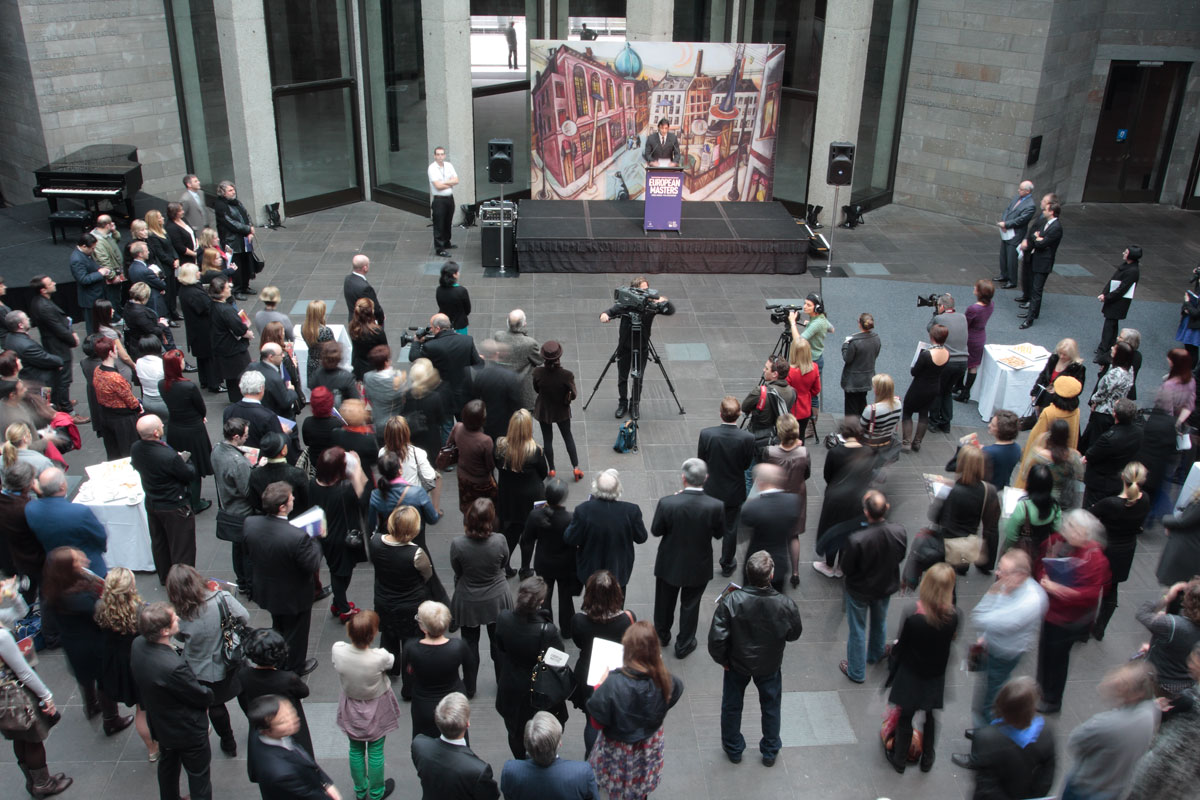
 

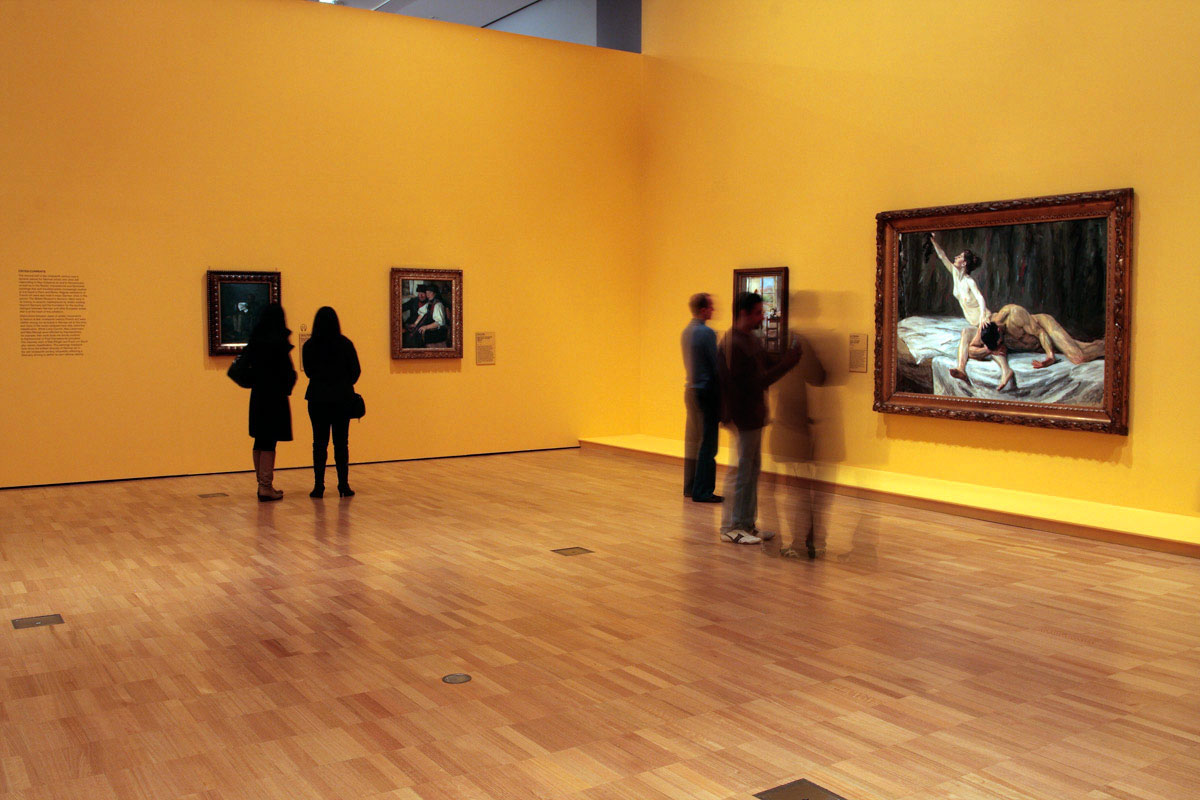
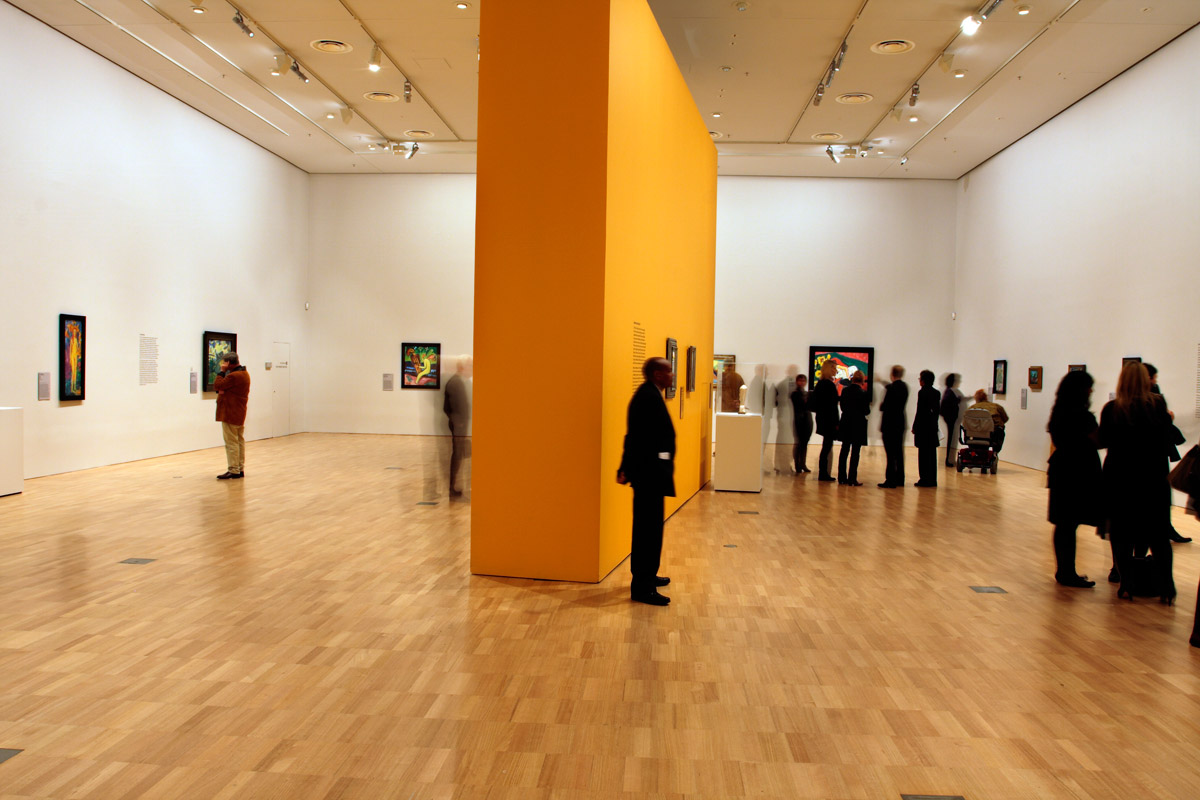
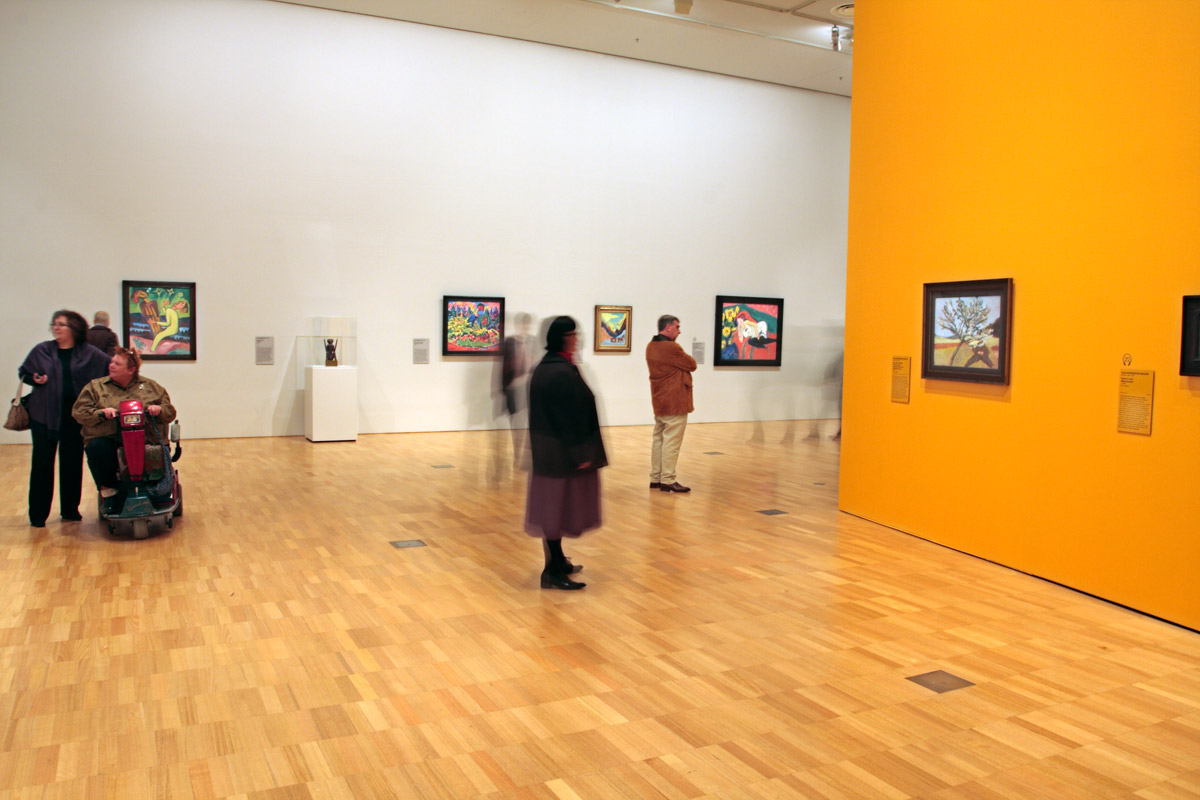
Media opening of 'European Masters: Städel Museum 19th - 20th Century', Winter Masterpieces at the National Gallery of Victoria


Media opening of European Masters: Städel Museum 19th – 20th Century, Winter Masterpieces at the National Gallery of Victoria
Photo: Marcus Bunyan


A huge posting – and another ‘you saw it here first’ on Art Blart!

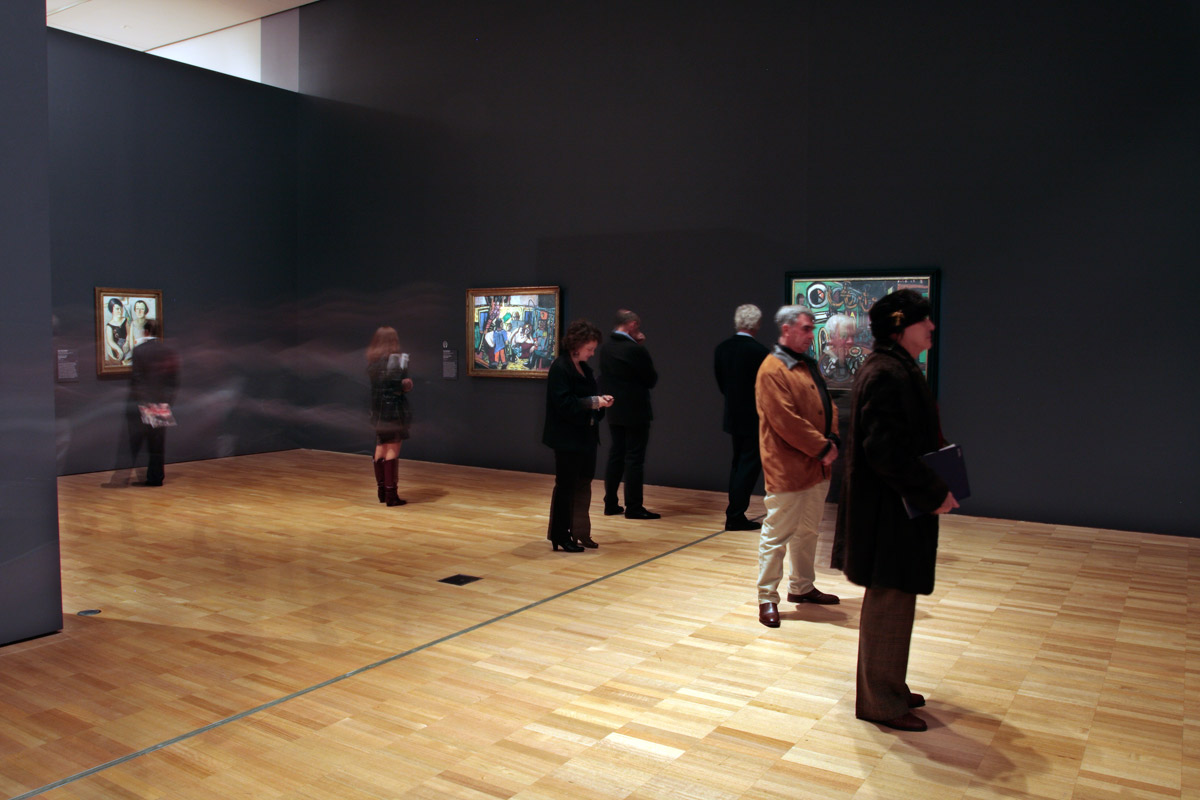
A simple, spacious hang shows off some wonderfully vibrant paintings in the new Winter Masterpieces blockbuster at the NGV. The use of strong yellow and pale grey wall colour compliments the paintings. Conversely, other rooms have a dark brown and very dark grey wall colour. Some people will like the effect but I found the dark grey a little too sombre and heavy in the room dedicated to the work of Max Beckmann. Overall a fantastic range of paintings, especially those by the German Expressionists and a luminous painting by Odilon Redon. To see them in Australia is a joy to behold.

Note on the photographs: All the photographs were taken with a timed exposure with the camera on a tripod. While this leads to ghosting as people walk through the shot it also adds a sense of the exhibition as a living entity. I find it preferable to the use of flash photography as flash destroys any ambience that the rooms possess. The photographs are in chronological order, proceeding from the beginning of the exhibition to the end.

Dr Marcus Bunyan


Many thankx to Dr Ted Gott, Senior Curator of International Art, Sue Coffey and all the media team and the National Gallery of Victoria for allowing me to photograph the exhibition and publish the photographs online. Please click on the photographs for a larger version of the image. All installation photographs © Marcus Bunyan and the National Gallery of Victoria.

PS. Thankx to the many people who have emailed me saying that they love the photographs, especially to Sue Coffey who said the posting looked superb = it makes it all worthwhile!


Media opening of 'European Masters: Städel Museum 19th - 20th Century', Winter Masterpieces at the National Gallery of Victoria


Media opening of European Masters: Städel Museum 19th – 20th Century, Winter Masterpieces at the National Gallery of Victoria
Photo: Marcus Bunyan


Installation view of Johann Heinrich Wilhelm Tischbei's panting 'Goethe in the Roman countryside' 1787 at the exhibition 'European Masters: Städel Museum 19th – 20th Century', Winter Masterpieces at the National Gallery of Victoria

Installation view of Johann Heinrich Wilhelm Tischbei's panting 'Goethe in the Roman countryside' 1787 at the exhibition 'European Masters: Städel Museum 19th – 20th Century', Winter Masterpieces at the National Gallery of Victoria


Installation views of Johann Heinrich Wilhelm Tischbei’s panting Goethe in the Roman countryside 1787 at the exhibition European Masters: Städel Museum 19th – 20th Century, Winter Masterpieces at the National Gallery of Victoria
Photos: Marcus Bunyan


Johann Heinrich Wilhelm Tischbein (German, 1751-1829) 'Goethe in the Roman countryside' (Goethe in der römischen Campagna) 1787 from the exhibition 'European Masters: Städel Museum 19th – 20th Century', Winter Masterpieces at the National Gallery of Victoria, June - October, 2010


Johann Heinrich Wilhelm Tischbein (German, 1751-1829)
Goethe in the Roman countryside (Goethe in der römischen Campagna)
1787
Oil on canvas
161.0 x 197.5cm
Städel Museum, Frankfurt am Main
Acquired in 1878 as a gift by Baroness Salomon von Rothschild


Installation view of 'European Masters: Städel Museum 19th - 20th Century', Winter Masterpieces at the National Gallery of Victoria


Installation view of the exhibition European Masters: Städel Museum 19th – 20th Century, Winter Masterpieces at the National Gallery of Victoria
Photo: Marcus Bunyan

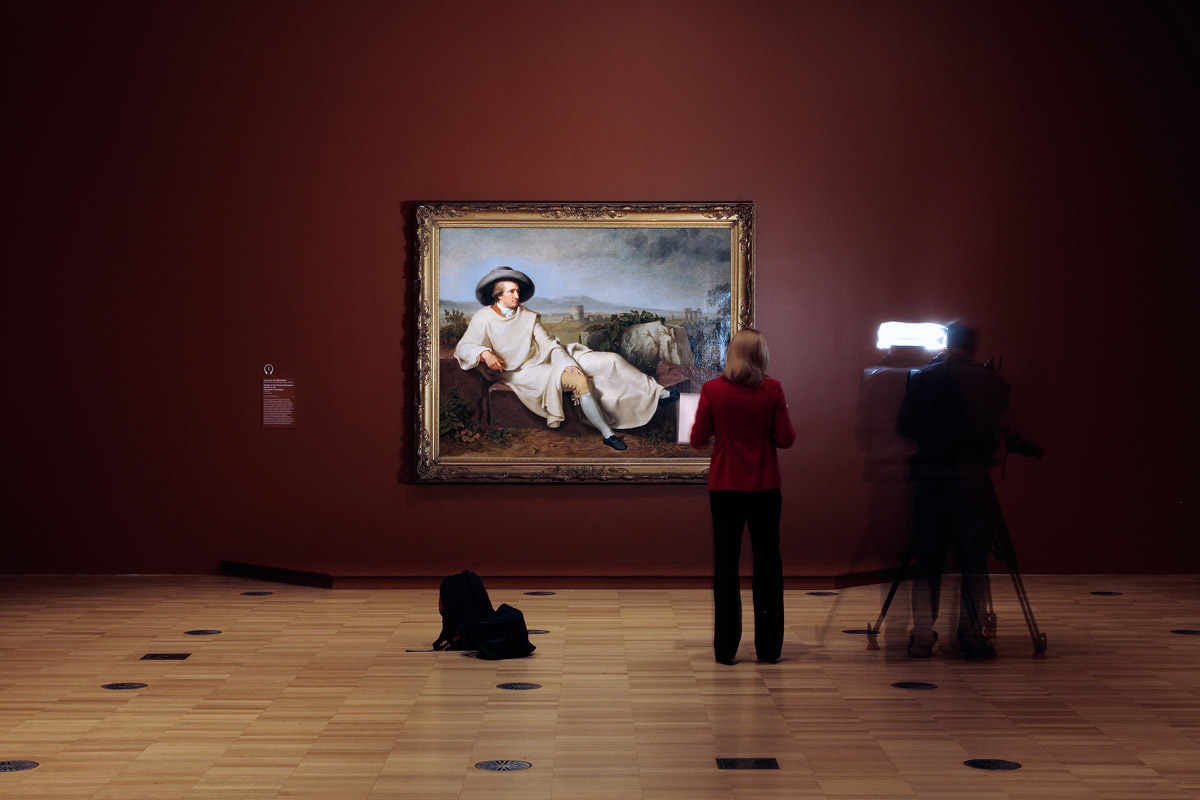
 

Installation view of Johann Heinrich Wilhelm Tischbei's panting 'Goethe in the Roman countryside' 1787 at the exhibition 'European Masters: Städel Museum 19th – 20th Century', Winter Masterpieces at the National Gallery of Victoria

Installation view of Johann Heinrich Wilhelm Tischbei's panting 'Goethe in the Roman countryside' 1787 at the exhibition 'European Masters: Städel Museum 19th – 20th Century', Winter Masterpieces at the National Gallery of Victoria


Installation views of Johann Heinrich Wilhelm Tischbei’s panting Goethe in the Roman countryside 1787 at the exhibition European Masters: Städel Museum 19th – 20th Century, Winter Masterpieces at the National Gallery of Victoria
Photos: Marcus Bunyan
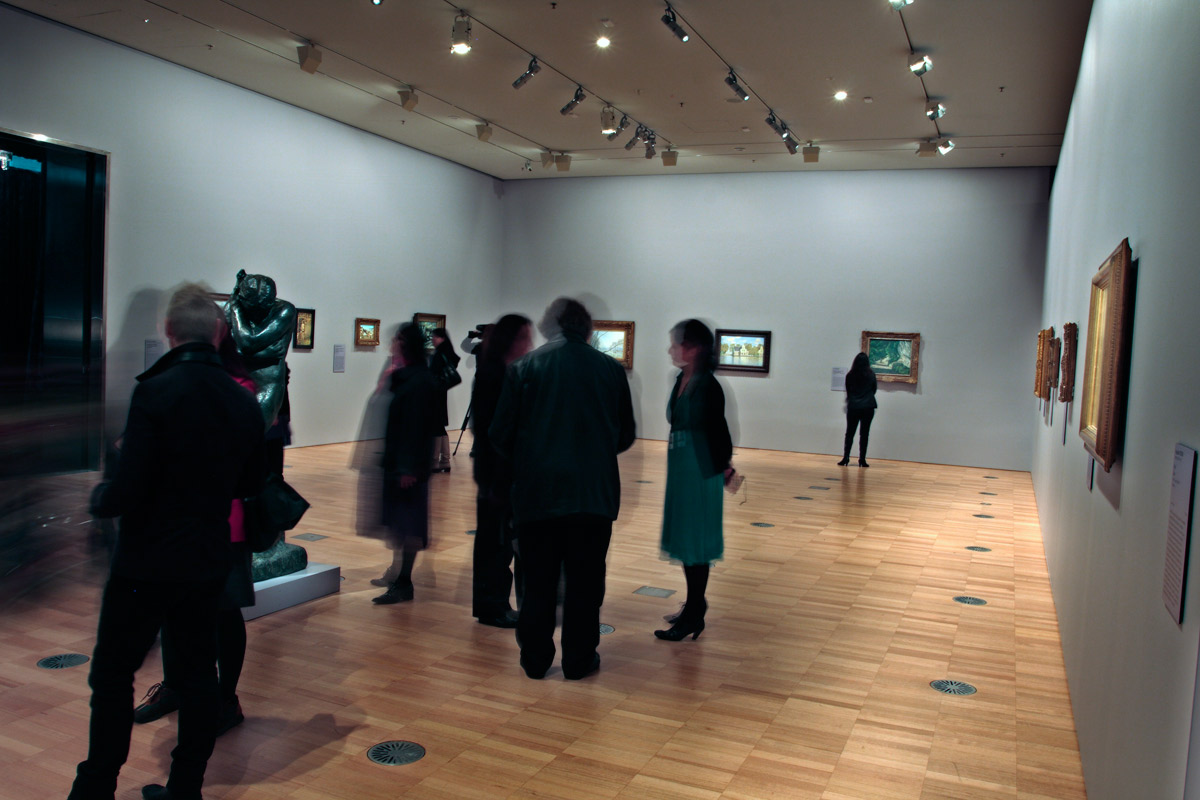
 

Installation view of 'European Masters: Städel Museum 19th - 20th Century', Winter Masterpieces at the National Gallery of Victoria

Installation view of 'European Masters: Städel Museum 19th - 20th Century', Winter Masterpieces at the National Gallery of Victoria


Installation views of the exhibition European Masters: Städel Museum 19th – 20th Century, Winter Masterpieces at the National Gallery of Victoria
Photos: Marcus Bunyan
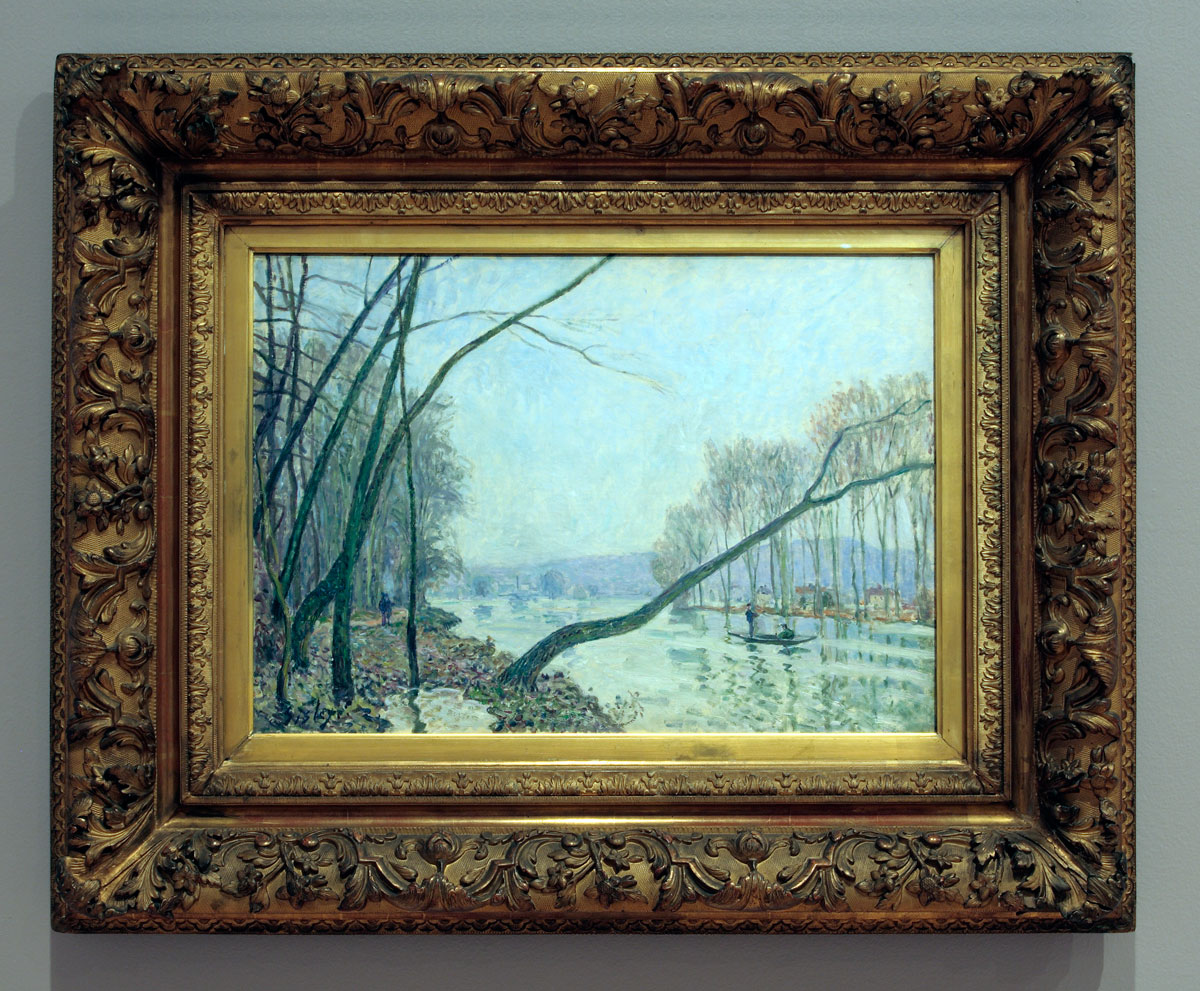
 

Alfred Sisley (English, 1839-1899) 'Banks of the Seine in Autumn' 1879 (installation view) from the exhibition 'European Masters: Städel Museum 19th – 20th Century', Winter Masterpieces at the National Gallery of Victoria, June - October, 2010


Alfred Sisley (English, 1839-1899)
Banks of the Seine in Autumn (installation view)
1879
Oil on canvas
Photo: Marcus Bunyan
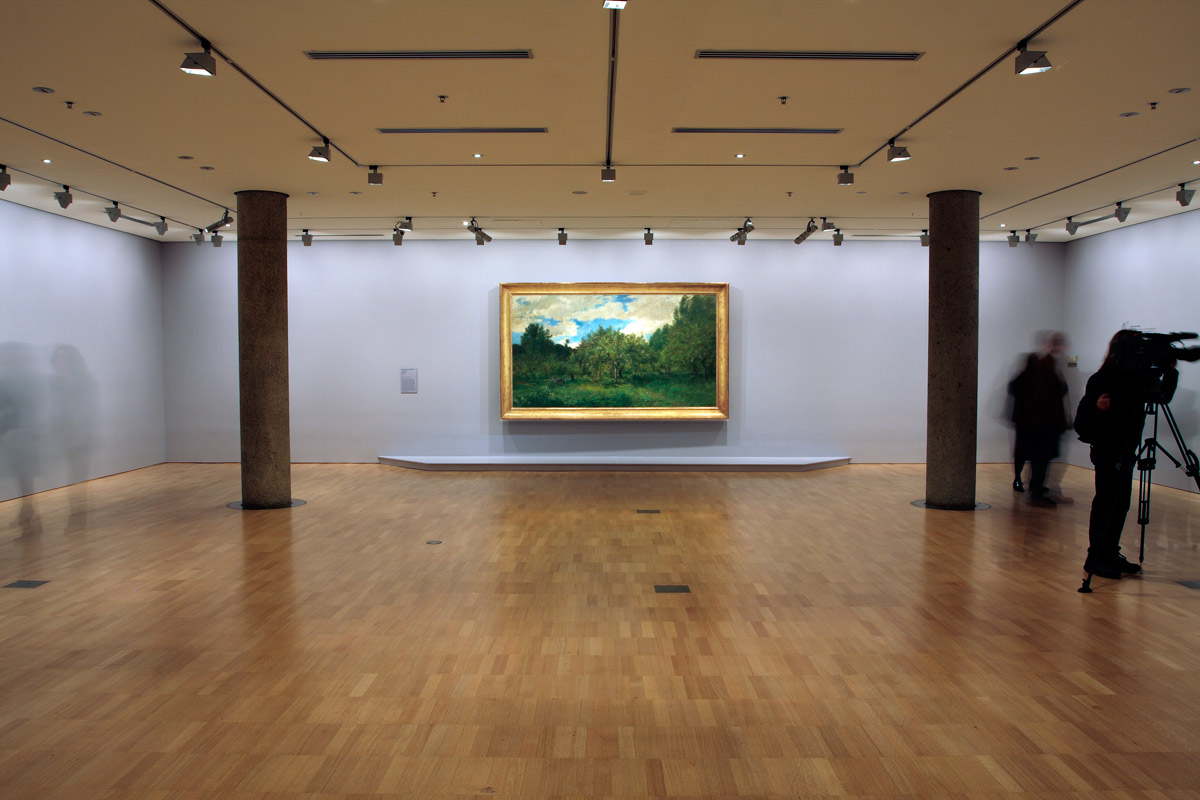
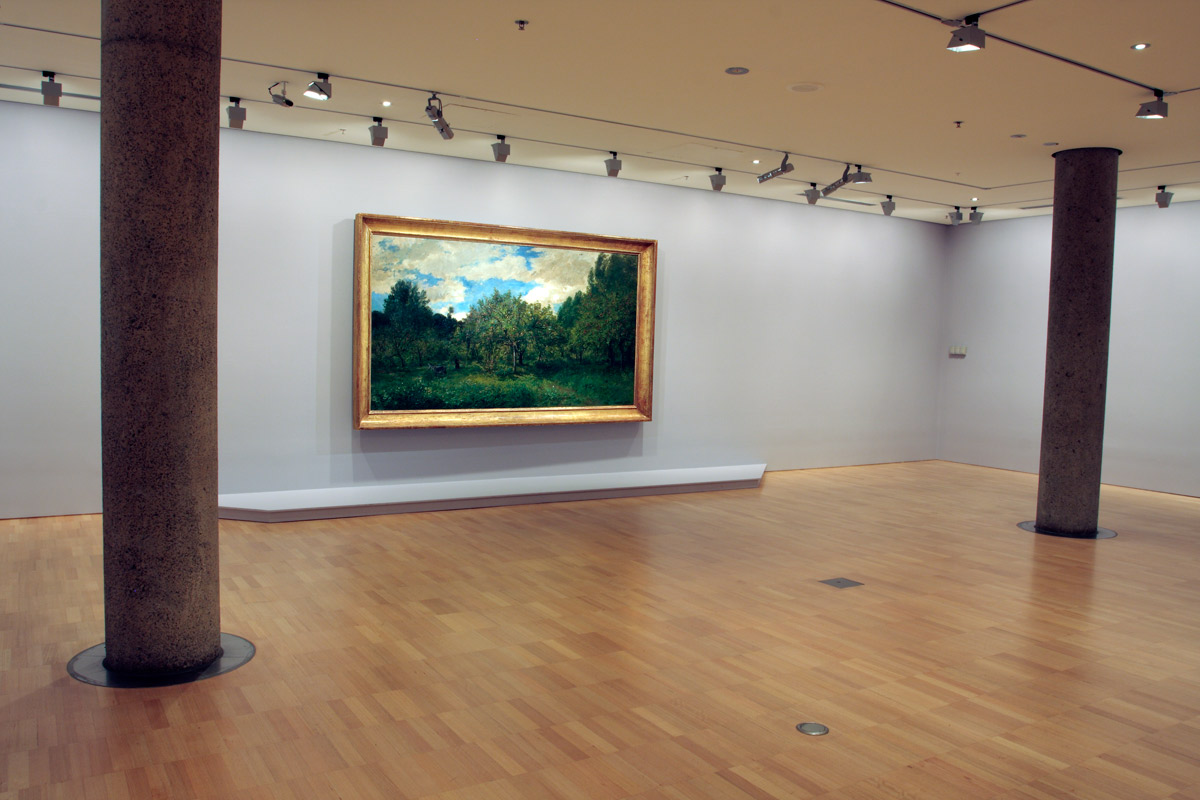
 

Installation view of Charles-Francois Daubigny (French 1817-1878) 'French Orchard at Harvest Time' (Le verger) 1876 at the exhibition 'European Masters: Städel Museum 19th – 20th Century', Winter Masterpieces at the National Gallery of Victoria, June - October, 2010

Installation view of Charles-Francois Daubigny (French 1817-1878) 'French Orchard at Harvest Time' (Le verger) 1876


Installation views of Charles-Francois Daubigny (French 1817-1878) French Orchard at Harvest Time (Le verger) 1876 at the exhibition European Masters: Städel Museum 19th – 20th Century, Winter Masterpieces at the National Gallery of Victoria
Photos: Marcus Bunyan
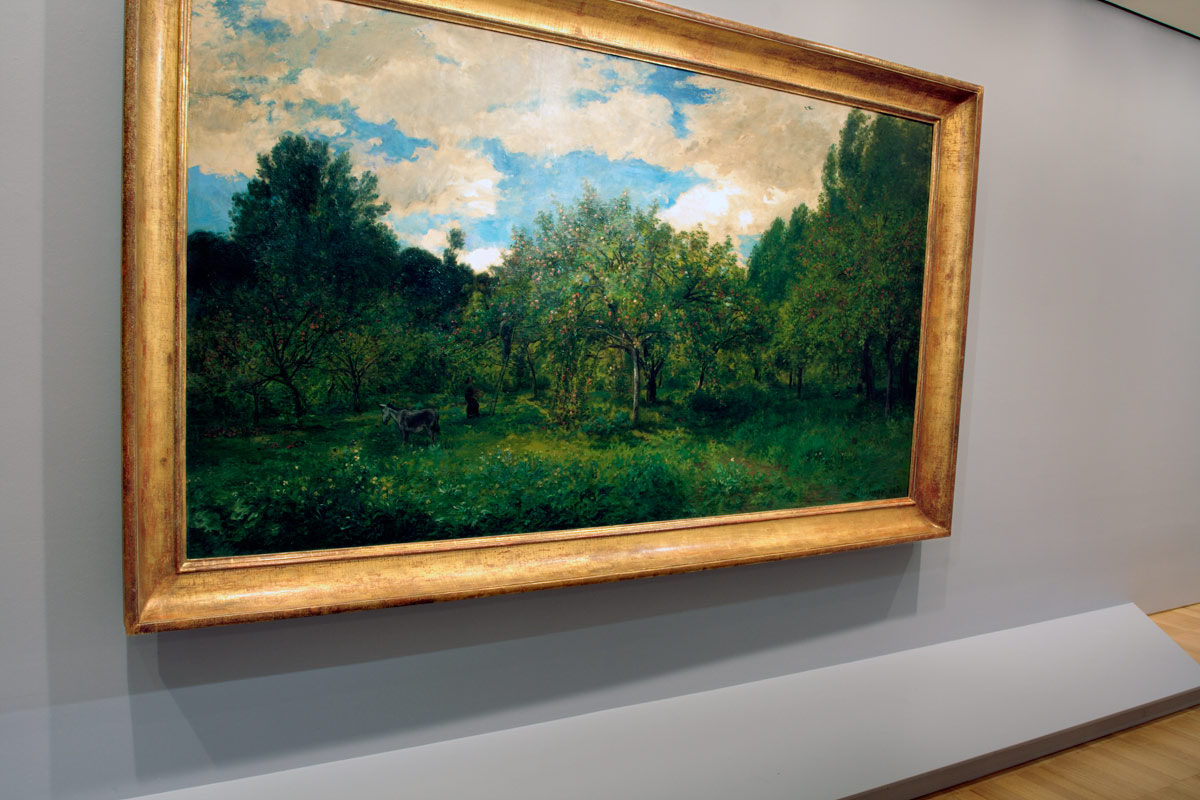
 

Charles-Francois Daubigny (French 1817-1878) 'French Orchard at Harvest Time' (Le verger) 1876 (installation view) from the exhibition 'European Masters: Städel Museum 19th – 20th Century', Winter Masterpieces at the National Gallery of Victoria, June - October, 2010


Charles-Francois Daubigny (French, 1817-1878)
French Orchard at Harvest Time (Le verger) (installation view)
1876
Oil on canvas
Photo: Marcus Bunyan


Pierre Auguste Renoir (French 1841-1919) 'After the luncheon' (La fin du déjeuner) 1879 (installation view) at the exhibition 'European Masters: Städel Museum 19th – 20th Century', Winter Masterpieces at the National Gallery of Victoria, June - October, 2010

Pierre Auguste Renoir (French 1841-1919) 'After the luncheon' (La fin du déjeuner) 1879 (installation view) at the exhibition 'European Masters: Städel Museum 19th – 20th Century', Winter Masterpieces at the National Gallery of Victoria, June - October, 2010


Installation views of Pierre Auguste Renoir (French 1841-1919) After the luncheon (La fin du déjeuner) 1879 at the exhibition European Masters: Städel Museum 19th – 20th Century, Winter Masterpieces at the National Gallery of Victoria
Photos: Marcus Bunyan


Pierre Auguste Renoir (French 1841-1919) 'After the luncheon' (La fin du déjeuner) 1879


Pierre Auguste Renoir (French 1841-1919)
After the luncheon (La fin du déjeuner)
1879
Oil on canvas
100.5 x 81.3cm
Städel Museum, Frankfurt am Main
Acquired in 1910


Odilon Redon (French 1840-1916) 'Christ and the Samaritan Woman' (Le Christ et la Samaritaine) c. 1895 (installation view) at the exhibition 'European Masters: Städel Museum 19th – 20th Century', Winter Masterpieces at the National Gallery of Victoria


Installation view of Odilon Redon (French 1840-1916) Christ and the Samaritan Woman (Le Christ et la Samaritaine) c. 1895 at the exhibition European Masters: Städel Museum 19th – 20th Century, Winter Masterpieces at the National Gallery of Victoria
Photo: Marcus Bunyan


Odilon Redon (French 1840-1916) 'Christ and the Samaritan Woman' (Le Christ et la Samaritaine) c. 1895


Odilon Redon (French, 1840-1916)
Christ and the Samaritan Woman (Le Christ et la Samaritaine)
c. 1895
Oil on canvas
64.8 x 50.0cm
Städel Museum, Frankfurt am Main
Acquired in 1960
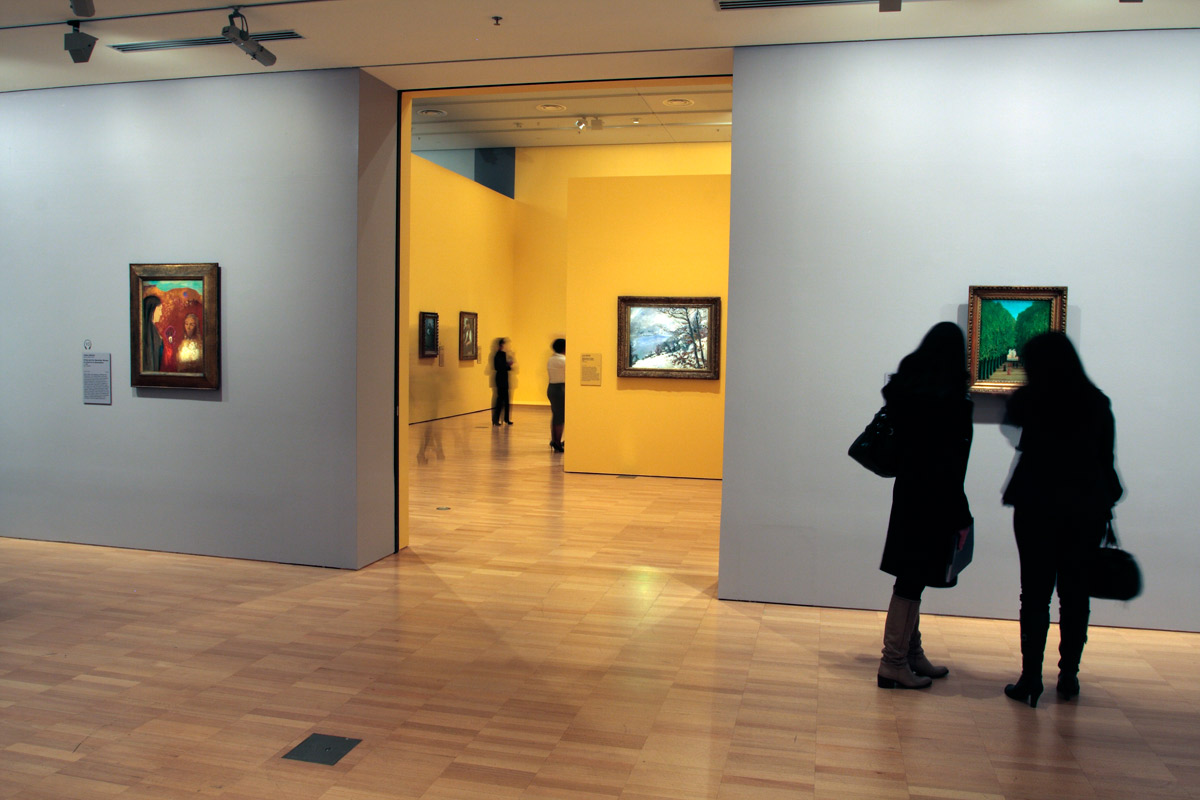
 

Installation view of the exhibition 'European Masters: Städel Museum 19th - 20th Century', Winter Masterpieces at the National Gallery of Victoria


Installation view of the exhibition European Masters: Städel Museum 19th – 20th Century, Winter Masterpieces at the National Gallery of Victoria
Photo: Marcus Bunyan


“The appeal of the Städel Institute lies in the tremendous energy filling that confined space. Virtually all of the great emotions that have lived in the souls of the peoples of Europe are there, and all in superb works.”

Alfred Lichtwark, Director the Hamburg Museum, 1905


One of the world’s finest collections of 19th and 20th century art is showing exclusively in Melbourne as the seventh exhibition in the hugely popular Melbourne Winter Masterpieces series at the National Gallery of Victoria.

European Masters: Städel Museum, 19th-20th Century brings together almost 100 works by 70 artists from one of Germany’s oldest and most respected museums, the Städel Museum in Frankfurt.

Dr Gerard Vaughan, NGV Director, said: “European Masters presents a comprehensive overview of the Städel Museum’s holdings of painting and sculpture from the last two centuries of European art. This blockbuster exhibition provides a superb survey of the key artistic movements of the time, including Realism, Impressionism and Post Impressionism, German Romanticism, Expressionism and Modernism, and French Symbolism.”

The exhibition opens with a series of large-scale romantic German paintings, including Johann H.W. Tischbein’s iconic Goethe in the Roman Campagna from 1787. Visitors will also be treated to magnificent examples of 19th century French art from Corot and Courbet’s Realist landscapes to well-known beautiful Impressionist works by Monet, Renoir, Degas and Cézanne.

European Masters then traces the development of German art, introducing audiences to rarely seen Realist and Symbolist masterpieces from artists such as Max Liebermann and Franz von Stuck.

A major highlight of the exhibition is a powerful selection of German Expressionist paintings, with ten poignant works by Max Beckmann, including The synagogue in Frankfurt am Main and his powerful Double Portrait, all of which have left the Städel for the first time to be shown outside of Europe.

The exhibition also includes a breathtaking selection of Swiss, Belgian and Dutch works by artists such as Arnold Böcklin, Fernand Khnopff and Vincent Van Gogh.

“Exclusive to Melbourne, European Masters provides an unprecedented opportunity to see a spectacular group of masterpieces spanning the dynamic and transformative years of the 19th and 20th centuries. There is something in this exhibition for everyone, from the beauty and immediacy of French Impressionism to the raw power of German Expressionism. This is a once-in-a-lifetime chance to see superb pictures that rarely travel outside of Europe,” said Dr. Vaughan.

Founded in 1816 by the Frankfurt financier Johann Friedrich Städel, the Städel Museum has one of the world’s finest art collections. The collection boasts 2700 paintings, 600 sculptures and over 100,000 prints and drawings documenting the development of European art and culture.

The Melbourne Winter Masterpieces series began in 2004 with The Impressionists: Masterpieces from the Musée d’Orsay, continued in 2005 with Dutch Masters from the Rijksmuseum, Amsterdam, followed by Picasso in 2006, Guggenheim Collection: 1940s to Now in 2007, Art Deco 1910-1939 in 2008 and Salvador Dalí: Liquid Desire in 2009.

This year Melbourne Winter Masterpieces includes European Masters: Städel Museum, 19th-20th Century at the NGV, and Tim Burton at the Australian Centre for the Moving Image.

Press release from the National Gallery of Victoria website
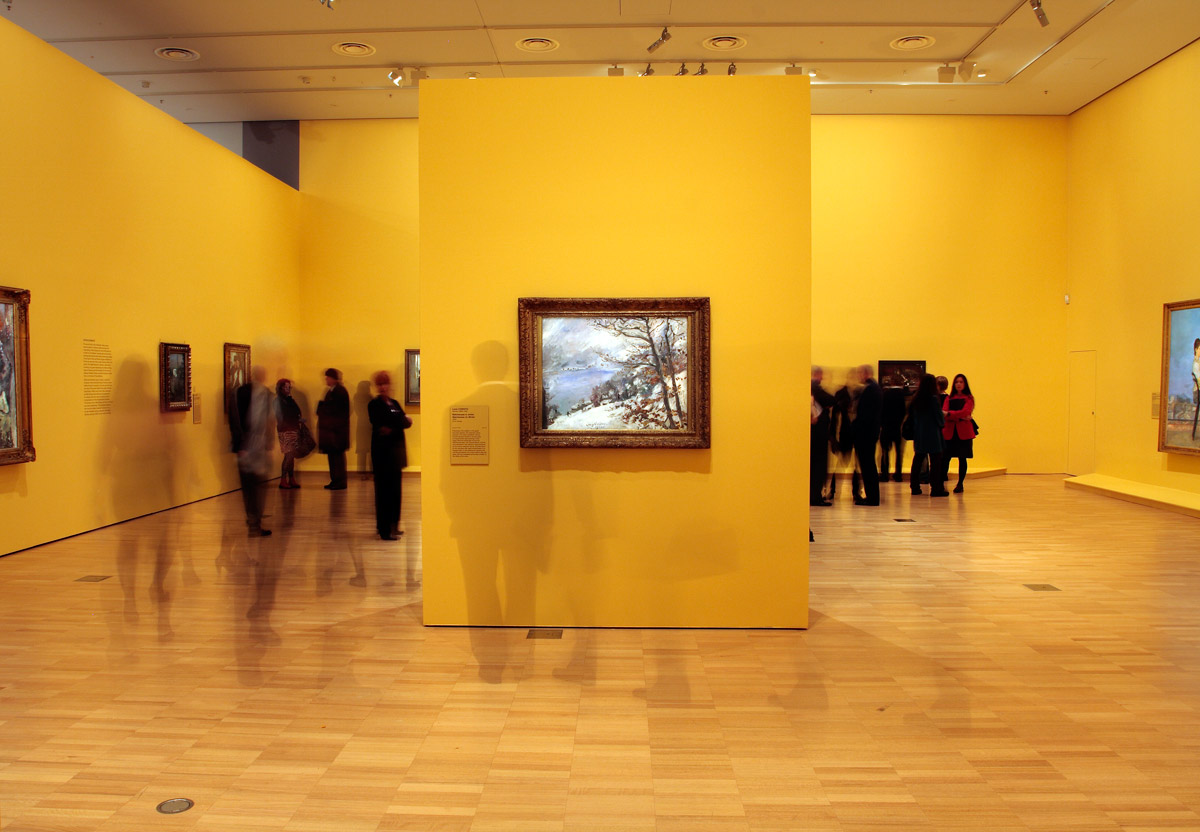
 

Installation view of the exhibition 'European Masters: Städel Museum 19th - 20th Century', Winter Masterpieces at the National Gallery of Victoria

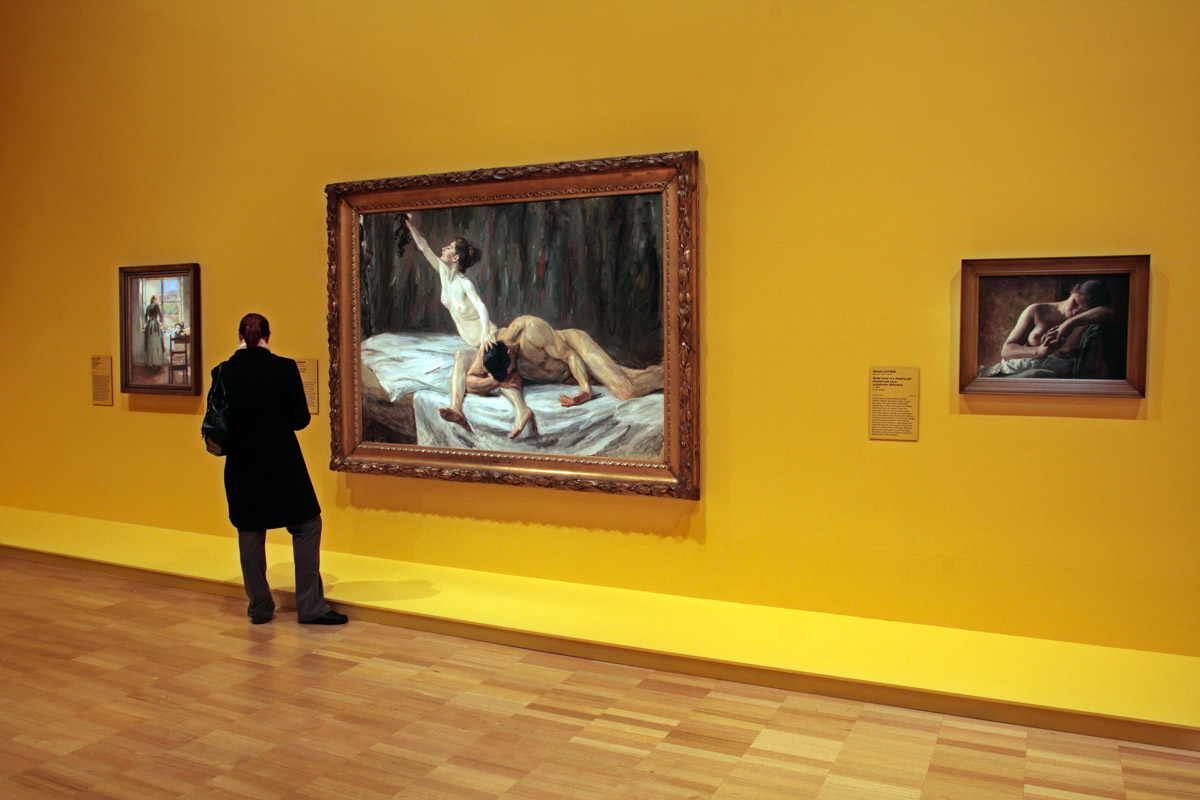
Installation view of Max Liebermann (German 1847-1935, lived in France 1874-78) 'Samson and Delilah' (Simson und Delila) 1901 at the exhibition 'European Masters: Städel Museum 19th – 20th Century', Winter Masterpieces at the National Gallery of Victoria

Installation view of Max Liebermann (German 1847-1935, lived in France 1874-78) 'Samson and Delilah' (Simson und Delila) 1901 at the exhibition 'European Masters: Städel Museum 19th – 20th Century', Winter Masterpieces at the National Gallery of Victoria


Installation views of Max Liebermann (German 1847-1935, lived in France 1874-78) Samson and Delilah (Simson und Delila) 1901 at the exhibition European Masters: Städel Museum 19th – 20th Century, Winter Masterpieces at the National Gallery of Victoria
Photos: Marcus Bunyan


Max Liebermann (German 1847-1935, lived in France 1874-78) 'Samson and Delilah' (Simson und Delila) 1901


Max Liebermann (German, 1847-1935, lived in France 1874-1878)
Samson and Delilah (Simson und Delila)
1901
Oil on canvas
151.2 x 212.0cm
Städel Museum, Frankfurt am Main
Acquired in 1910


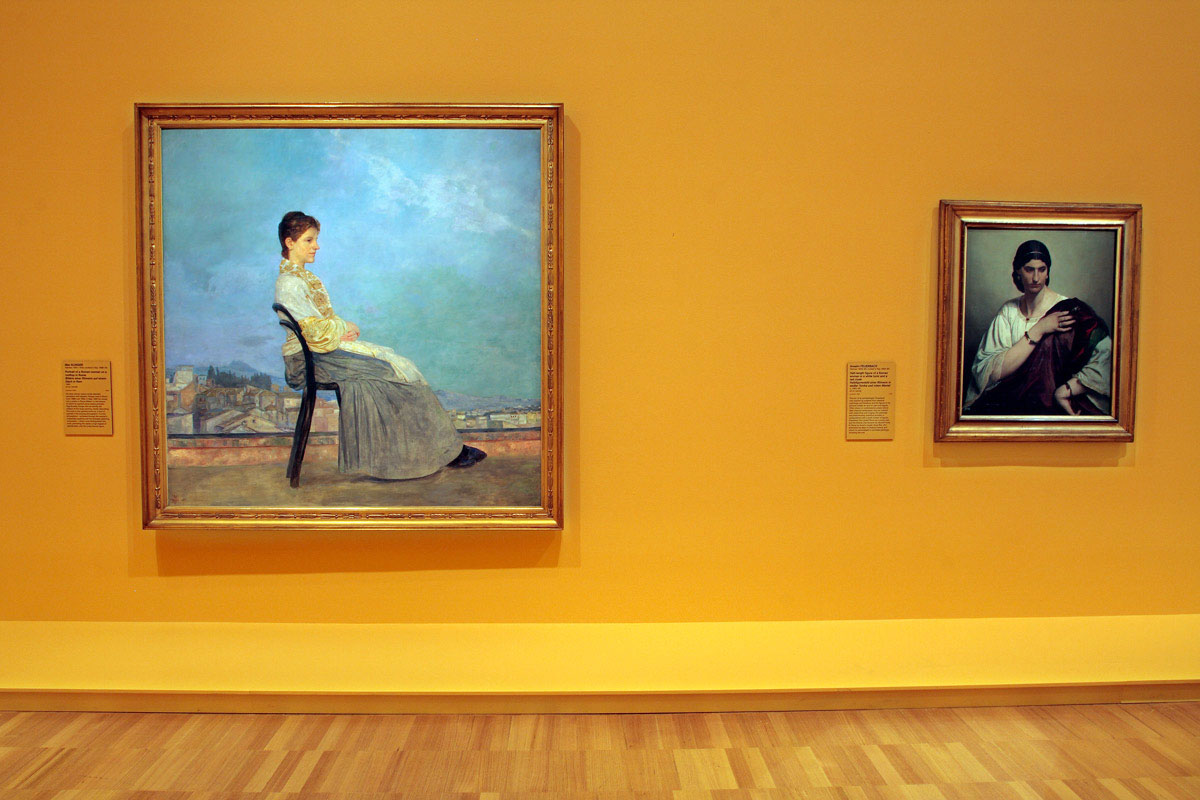
Max Klinger (German 1857-1920) 'Portrait of a Roman woman on a flat roof' (Bildnis einer Römerin auf einem Dach in Rom) 1891


Max Klinger (German, 1857-1920)
Portrait of a Roman woman on a flat roof (Bildnis einer Römerin auf einem Dach in Rom)
1891
Oil on canvas
182 x 182cm
Städel Museum, Frankfurt am Main
Acquired in 1926 as a gift in commemoration of Walther Rathenau


Installation view at left of Max Klinger (German 1857-1920) 'Portrait of a Roman woman on a flat roof' (Bildnis einer Römerin auf einem Dach in Rom) 1891 at the exhibition 'European Masters: Städel Museum 19th – 20th Century', Winter Masterpieces at the National Gallery of Victoria


Installation view at left of Max Klinger (German 1857-1920) Portrait of a Roman woman on a flat roof (Bildnis einer Römerin auf einem Dach in Rom) 1891 at the exhibition European Masters: Städel Museum 19th – 20th Century, Winter Masterpieces at the National Gallery of Victoria
Photo: Marcus Bunyan


Max Beckmann room, installation view of 'European Masters: Städel Museum 19th - 20th Century', Winter Masterpieces at the National Gallery of Victoria

Max Beckmann room, installation view of 'European Masters: Städel Museum 19th - 20th Century', Winter Masterpieces at the National Gallery of Victoria

Max Beckmann room, installation view of 'European Masters: Städel Museum 19th - 20th Century', Winter Masterpieces at the National Gallery of Victoria


Max Beckmann room, installation view of European Masters: Städel Museum 19th – 20th Century, Winter Masterpieces at the National Gallery of Victoria
Photos: Marcus Bunyan


Max Beckmann. 'Female dancer' (Tanzerin) c. 1935 (installation view)


Max Beckmann (German 1884-1950, worked in the Netherlands 1937-1947, United States 1947-1950)
Female dancer (Tanzerin) (installation view)
c. 1935
Bronze
Photo: Marcus Bunyan


Installation view of 'European Masters: Städel Museum 19th - 20th Century', Winter Masterpieces at the National Gallery of Victoria

Installation view of 'European Masters: Städel Museum 19th - 20th Century', Winter Masterpieces at the National Gallery of Victoria

Installation view of 'European Masters: Städel Museum 19th - 20th Century', Winter Masterpieces at the National Gallery of Victoria


Installation views of European Masters: Städel Museum 19th – 20th Century, Winter Masterpieces at the National Gallery of Victoria
Photos: Marcus Bunyan


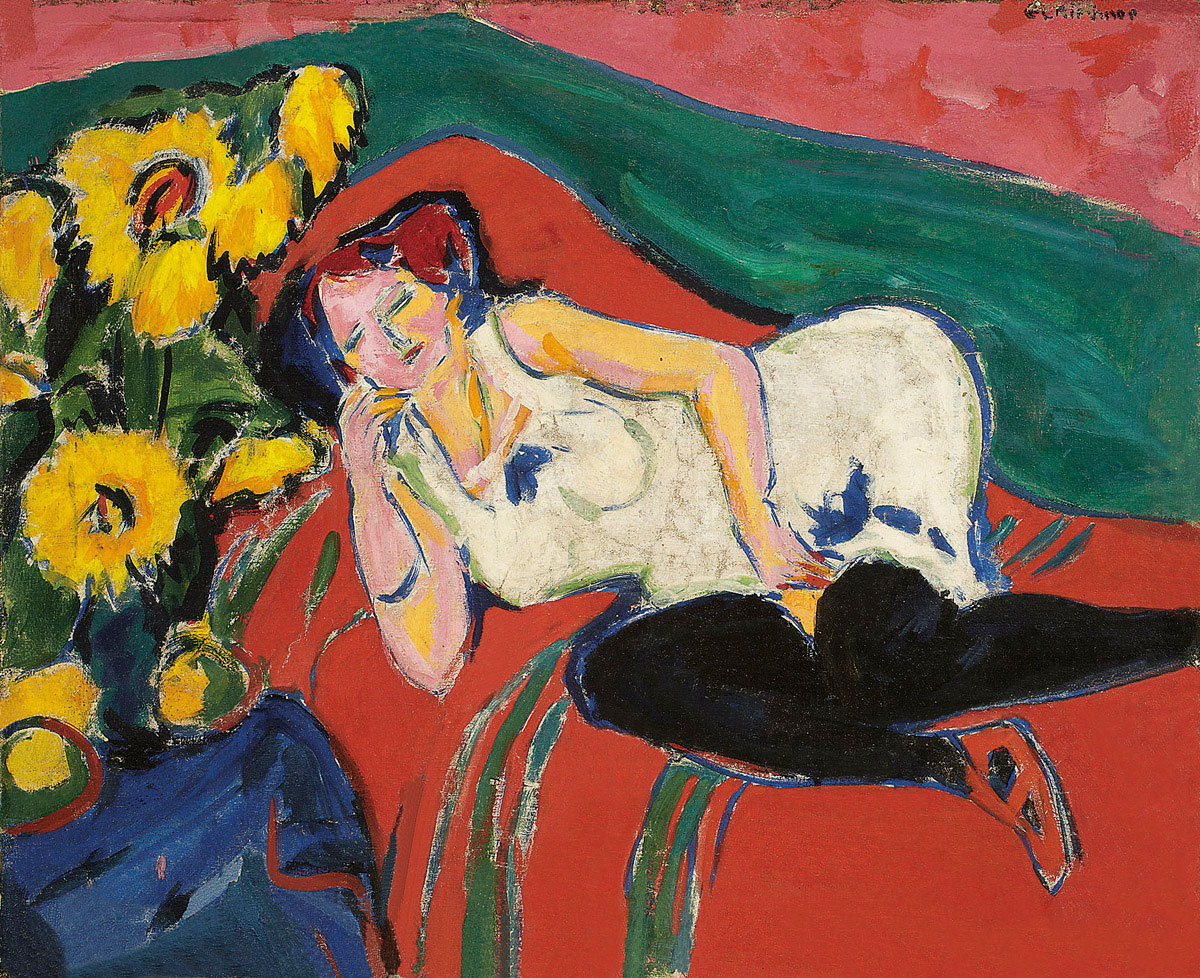
Ernst Ludwig Kirchner (German 1880-1938) 'Reclining woman in a white chemise' (Liegende Frau im weiβen Hemd) 1909


Ernst Ludwig Kirchner (German, 1880-1938)
Reclining woman in a white chemise (Liegende Frau im weiβen Hemd)
1909
Oil on canvas
95.0 x 121.0cm
Städel Museum, Frankfurt am Main
Acquired in 1950


NGV International
180 St Kilda Road

Opening hours:
Daily 10am – 5pm

National Gallery of Victoria website
LIKE ART BLART ON FACEBOOK

Back to top

Review: ‘Cloud’ by Guan Wei at Arc One Gallery, Melbourne

Exhibition dates: 1st June – 29th June, 2010


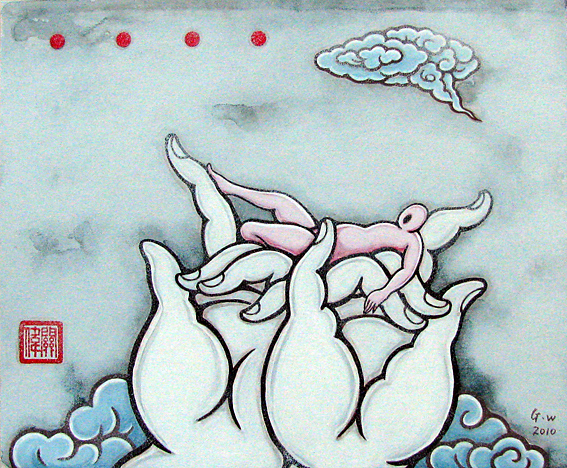
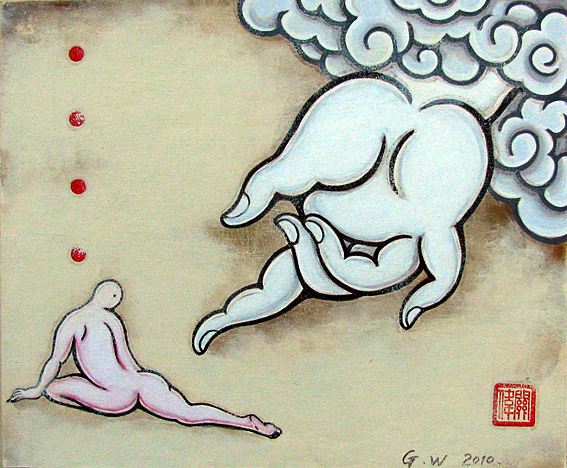
Guan Wei (China, b. 1957) 'Buddha's hand' 2010 from the exhibition 'Cloud' by Guan Wei at Arc One Gallery, Melbourne, June 2010


Guan Wei (China, b. 1957)
Buddha’s hand
2010


The exhibition Cloud by Australian artist Guan Wei at Arc One Gallery in Melbourne contains two bodies of work that are outstanding: the series of paintings on paper titled Buddha’s Hand and the series of five figurative sculptures titled Cloud. Each body of work compliments and informs the other.

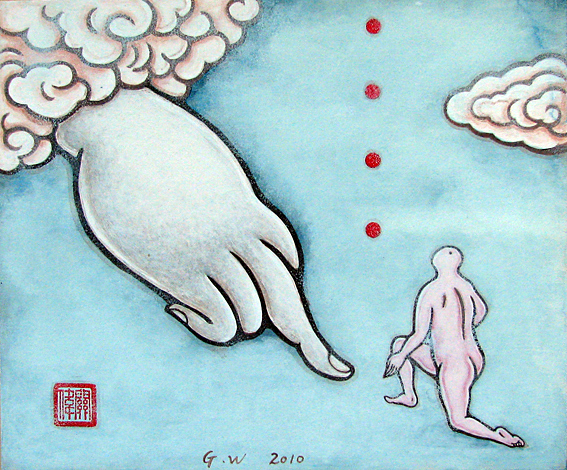
The small Buddha’s Hand paintings (see below) are the most delicate of creatures – sensual, poetic almost fetishistic in their composition and utterly beguiling in their beauty. Referencing the history of cave paintings of the Buddha, Wei updates the ancient allegories expressing his message of harmony and leisure, identity and place through visual symbolic representation. These works are profoundly moving, the figurative compositions balanced masterfully through colour, shape and form, studded with the punctum of red bindi-like energy centres arising from the faceless yogic figures.

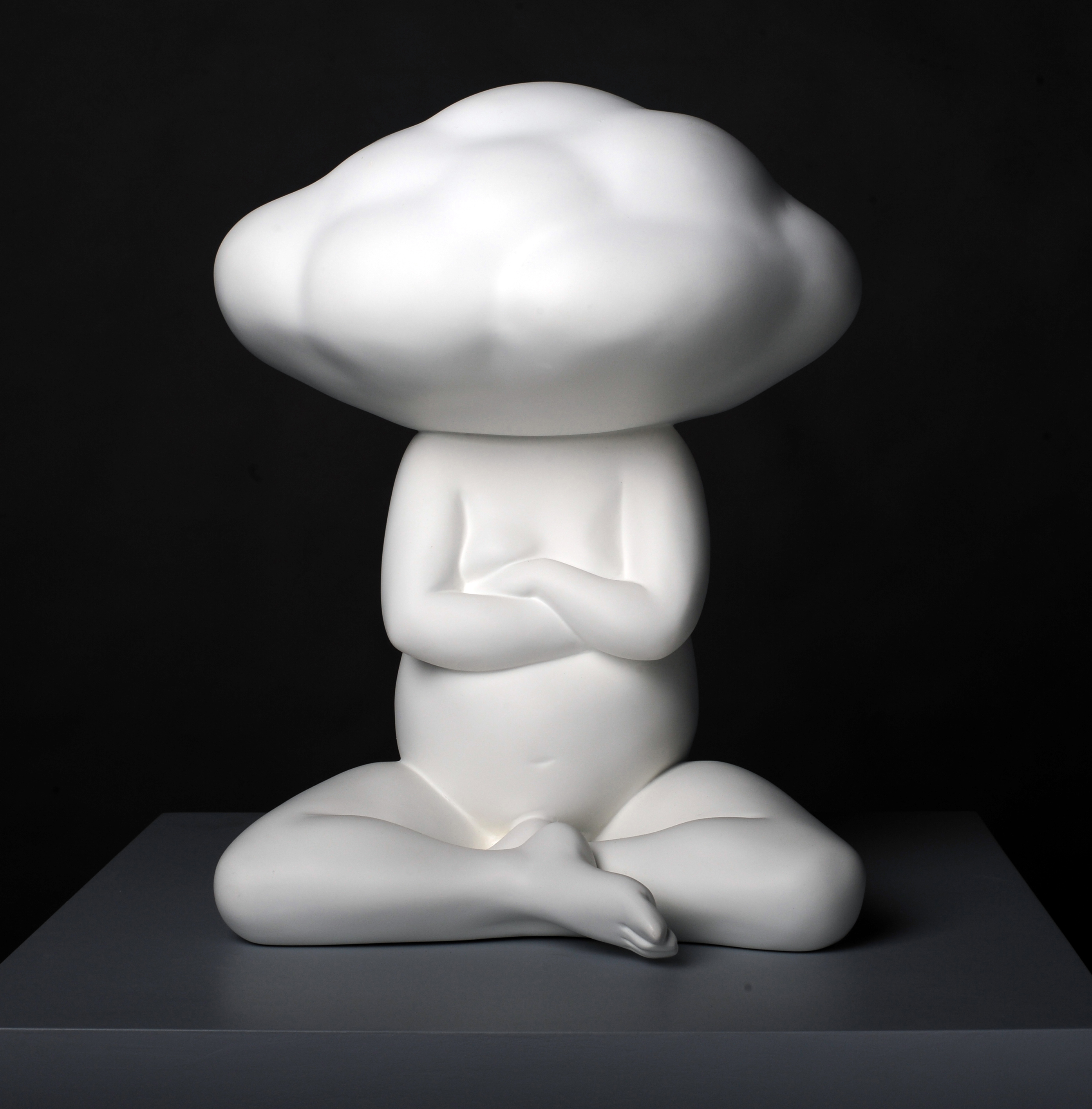
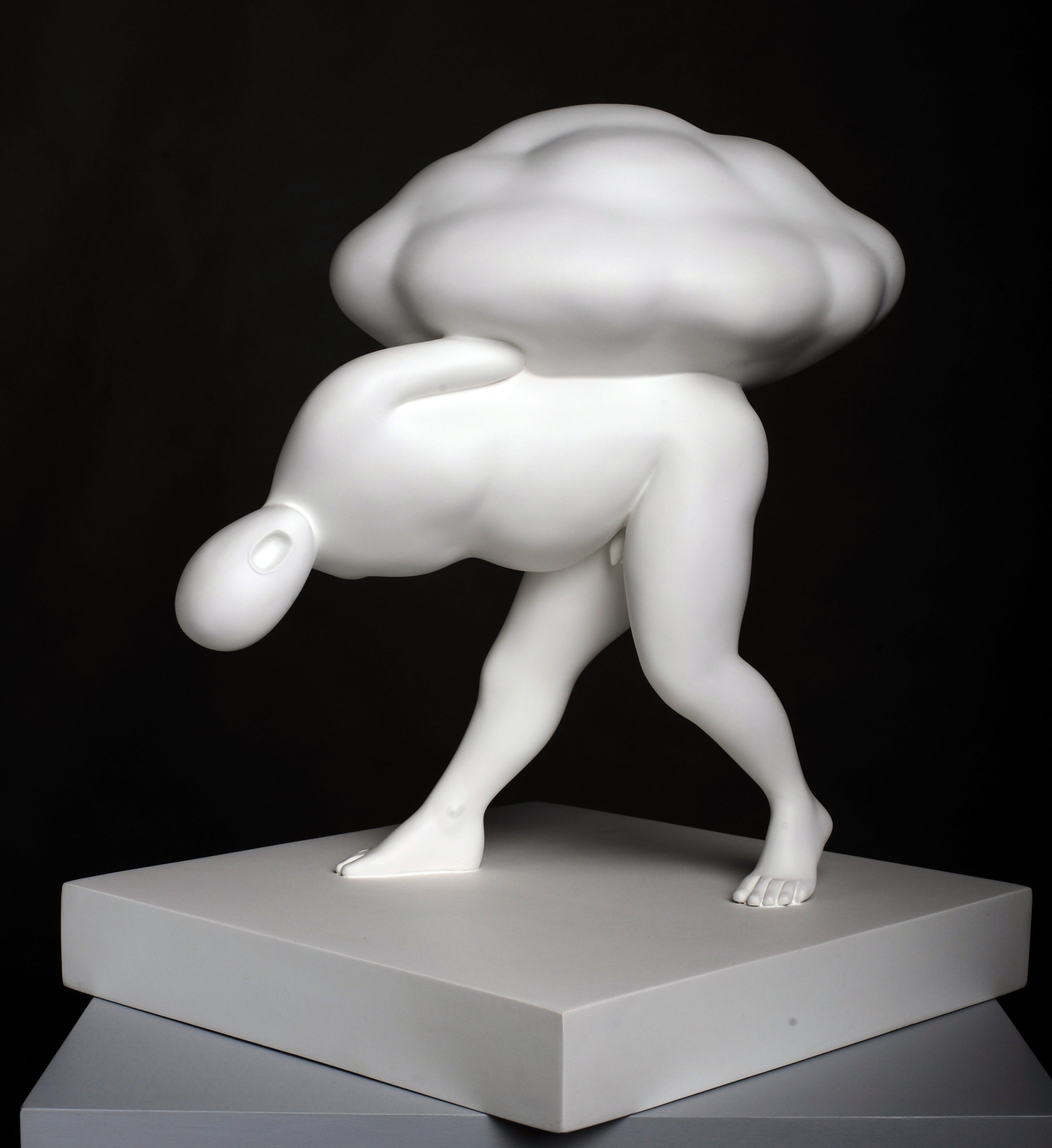
Sitting on white pedestals and positioned close to the Buddha’s Hand paintings in the gallery are the series of five Cloud figures (see below). Made of bronze that has been spray painted white these are wonderful sculptures, full of delicious humour and vibrancy. There is a sensuality and delicacy about the figures that is emphasised by their snowy whiteness, a whiteness that subverts the tactility, colour and weight that one usually associates with the metal bronze. Here the figure has, variously, it’s head in the clouds while pensively crossing arms; bearing the weight of the world on the back while the vacant mouth is open; preparing to throw the cloud as Zeus would a thunderbolt; reclining while balancing the cloud on one foot and with one foot stuck in the earth that is cloud. The cloud becomes a metaphor for thought and action in the world, acting on the world. In these sculptures there is no creed nor race, no ideology or nation and I believe that Wei attains his stated aim to redefine our relationship with one another and nature by transcending both. I am not alone in liking these sculptures – they have proved very popular and all five sculptures in editions of five have already sold out!

Other work in the exhibition is more prosaic – a multi-panelled screen, the On Cloud and Zodiac series never seem to breathe the same rarefied air as the above two bodies of work. They are disappointments that only serve to illuminate how brilliant holding the Buddha’s hand and living your life with your head in the clouds can be.

Dr Marcus Bunyan


Many thankx to Angela Connor and Arc One Gallery for allowing me to reproduce the photographs in the posting. Please click on the photographs for a larger version of the image.


Guan Wei (China, b. 1957) 'Buddha's hand' 2010 from the exhibition 'Cloud' by Guan Wei at Arc One Gallery, Melbourne, June 2010


Guan Wei (China, b. 1957)
Buddha’s hand
2010


Guan Wei (China, b. 1957) 'Buddha's hand' 2010


Guan Wei (China, b. 1957)
Buddha’s hand
2010


“I hope that we will be able to transcend the restrictions imposed on us by such notions as nation, ethnicity, ideology, cultural and history, and redefine our relationship with one another and nature.”


Guan Wei


Guan Wei is an adept storyteller who masterfully engages his audiences. Retaining the humour, wisdom and cross-cultural knowledge that have become characteristics of his ongoing oeuvre, his work breathes an awareness of our current social and environmental dilemmas exploring ideas of immigration, colonisation, identity politics and cultural tolerance.

Flirtatious and aesthetically whimsical, Guan Wei’s works are instantly recognisable. In this latest exhibition, Cloud, Guan Wei fuses sculpture, drawings and paintings to form what is part of his most beguiling trademark – ‘the art of idleness’. For the first time since returning to China, he will present new sculptures that employ his ongoing preoccupation with the figure and the figure in relation to the natural form. These sculptures are Guan Wei’s personal visual symbols of harmony and leisure. They form the thread for the four series of works in this exhibition.

During the past fifteen years, Guan Wei has help change the identity of Australian Art. He draws on his own experience as a Chinese national who migrated to Australia from China in the period following the Tiananmen Square massacre (1989). Guan Wei has spent twenty years living and working as an artist raising the awareness of Australia being a multicultural country. He has had over 40 solo exhibitions, been the recipient of numerous awards and included in every major collection. In 2009, Guan Wei was selected for the prestigious Clemenger Contemporary Art Award at the National Gallery of Victoria.

Press release from the Arc One Gallery website [Online] Cited 10/06/2010 no longer available online


Guan Wei (China, b. 1957) 'Cloud No.4' 2009 from the exhibition 'Cloud' by Guan Wei at Arc One Gallery, Melbourne, June 2010


Guan Wei (China, b. 1957)
Cloud No.4
2009
Bronze statue
edition of 5
39 x 30 x 25cm


Guan Wei (China, b. 1957) 'Cloud No.5' 2009


Guan Wei (China, b. 1957)
Cloud No.5
2009
Bronze statue
edition of 5
47 x 35 x 35cm


Arc One Gallery
45 Flinders Lane
Melbourne, 3000
Phone: +61 3 9650 0589

Opening hours:
Tuesday – Saturday 11am – 5pm

Arc One Gallery website

LIKE ART BLART ON FACEBOOK

Back to top

Photographs: Marcus Bunyan. ‘Missing in action (dark kenosis)’ 2010

May 2010


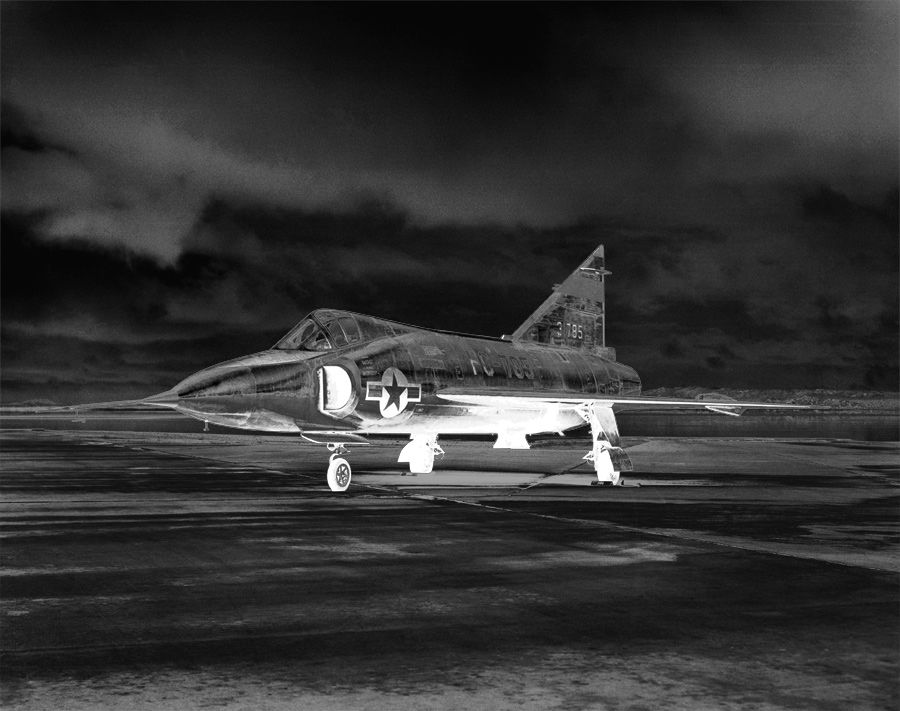
Marcus Bunyan (Australian, b. 1958) 'Missing in Action (dark kenosis) No.11' 2010


Marcus Bunyan (Australian, b. 1958)
Missing in Action (dark kenosis) No.11
2010
Digital photograph


Missing in action (dark kenosis)

A new body of work Missing in Action (dark kenosis) 2010 is now online on my website.

There are eighty-two images in the series which are like a series of variations in music with small shifts in tone and colour. Below are a selection of images from the series. Please click on the photographs for a larger version of the image.

Many thankx to the people who have emailed me saying how much they like the new series of work.

Dr Marcus Bunyan


Photographs are available from this series for purchase. As a guide, a digital colour 16″ x 20″ costs $1000 plus tracked and insured shipping. For more information please see my Store web page.


Kenosis

“In Christian theology, Kenosis is the concept of the ‘self-emptying’ of one’s own will and becoming entirely receptive to God and his perfect will.”


Marcus Bunyan (Australian, b. 1958) 'Missing in Action (dark kenosis) No.19' 2010


Marcus Bunyan (Australian, b. 1958)
Missing in Action (dark kenosis) No.19
2010
Digital photograph


Marcus Bunyan (Australian, b. 1958) 'Missing in Action (dark kenosis) No.35' 2010


Marcus Bunyan (Australian, b. 1958)
Missing in Action (dark kenosis) No.35
2010
Digital photograph


Marcus Bunyan (Australian, b. 1958) 'Missing in Action (dark kenosis) No.46' 2010


Marcus Bunyan (Australian, b. 1958)
Missing in Action (dark kenosis) No.46
2010
Digital photograph


Marcus Bunyan (Australian, b. 1958) 'Missing in Action (dark kenosis) No.49' 2010


Marcus Bunyan (Australian, b. 1958)
Missing in Action (dark kenosis) No.49
2010
Digital photograph


Marcus Bunyan (Australian, b. 1958) 'Missing in Action (dark kenosis) No.67' 2010


Marcus Bunyan (Australian, b. 1958)
Missing in Action (dark kenosis) No.67
2010
Digital photograph


Marcus Bunyan (Australian, b. 1958) 'Missing in Action (dark kenosis) No.71' 2010


Marcus Bunyan (Australian, b. 1958)
Missing in Action (dark kenosis) No.71
2010
Digital photograph


Marcus Bunyan (Australian, b. 1958) 'Missing in Action (dark kenosis) No.76' 2010


Marcus Bunyan (Australian, b. 1958)
Missing in Action (dark kenosis) No.76
2010
Digital photograph


Detail of images


Marcus Bunyan (Australian, b. 1958) 'Missing in Action (dark kenosis) No.76' 2010 (detail)

Marcus Bunyan (Australian, b. 1958) 'Missing in Action (dark kenosis) No.78' 2010 (detail)

Marcus Bunyan (Australian, b. 1958) 'Missing in Action (dark kenosis) No.6' 2010 (detail)

Marcus Bunyan (Australian, b. 1958) 'Missing in Action (dark kenosis) No.9' 2010 (detail)


Detail of images 76, 78, 6 and 9


Marcus Bunyan website

LIKE ART BLART ON FACEBOOK

Back to top

Exhibition: ‘Birthmark’ by Owen Leong at Anna Pappas Gallery, Prahran

Exhibition dates: 13th May – 5th June, 2010


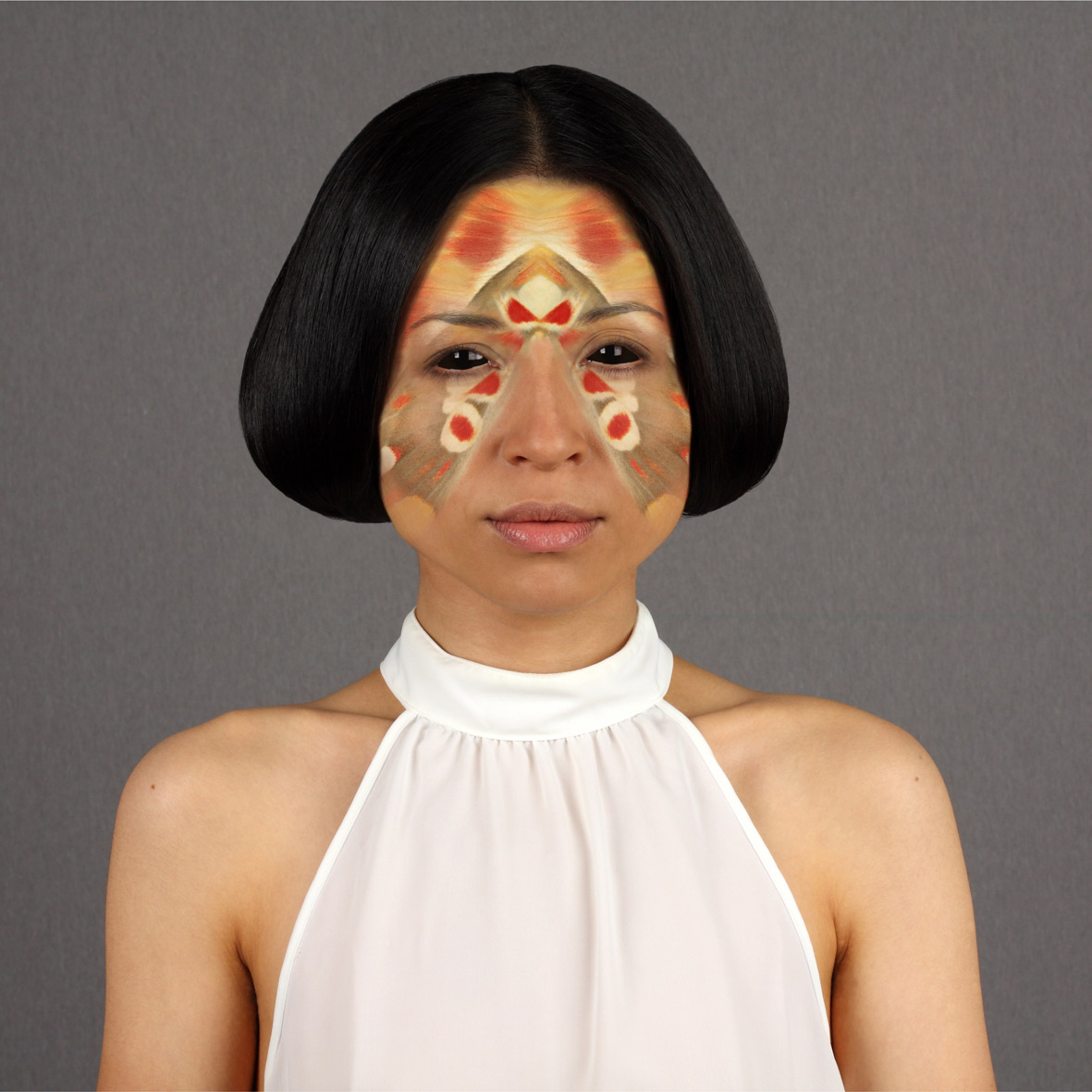
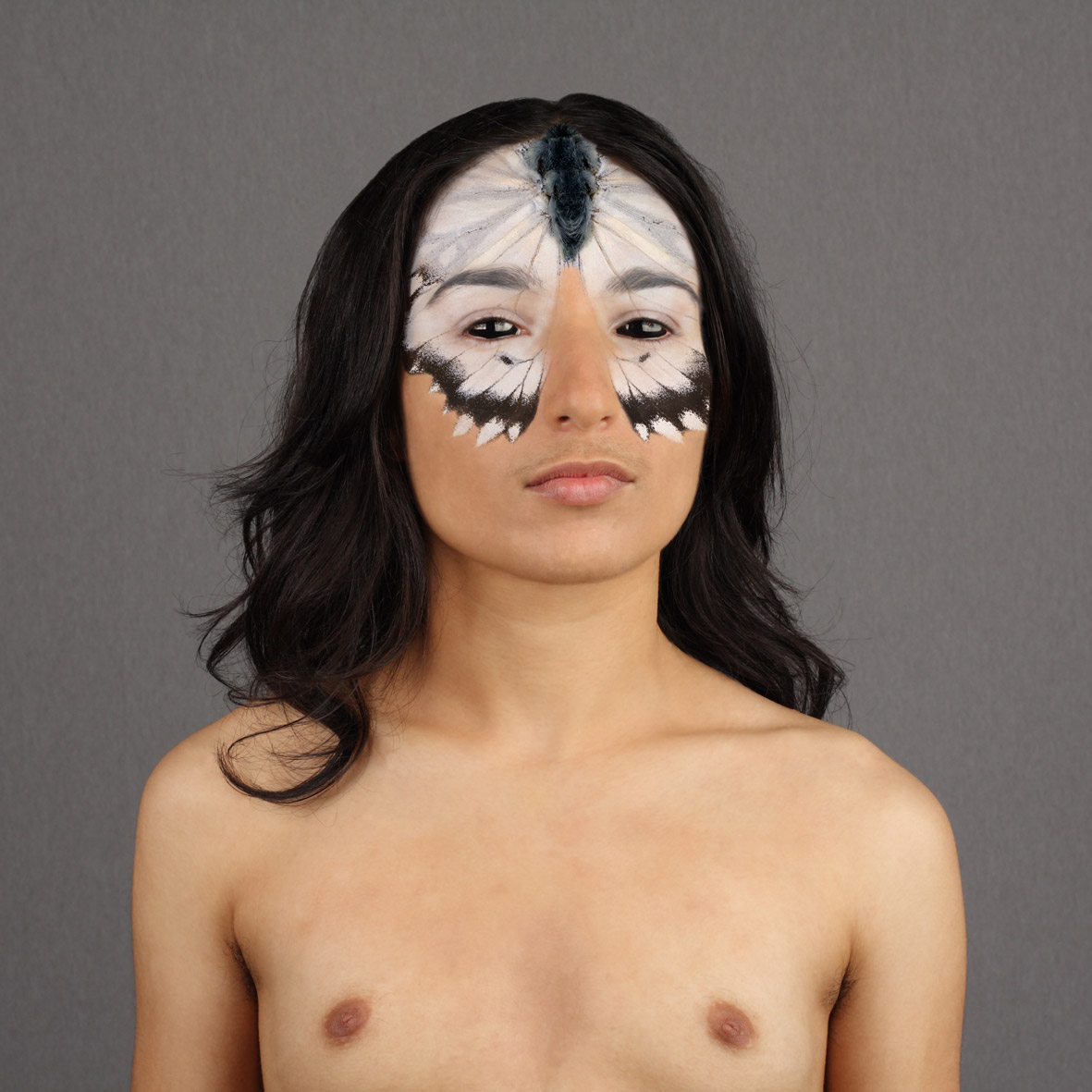
Owen Leong (Australian, b. 1979) 'Chi' 2009-2010 from the exhibition 'Birthmark' by Owen Leong at Anna Pappas Gallery, Prahran, May - June, 2010


Owen Leong (Australian, b. 1979)
Chi
2009-2010
Pigment print on archival paper
73 x 73cm, edition of 5
Courtesy of the artist and Anna Pappas Gallery


Apologies for the late posting on this exhibition but I only received the images for the posting today.

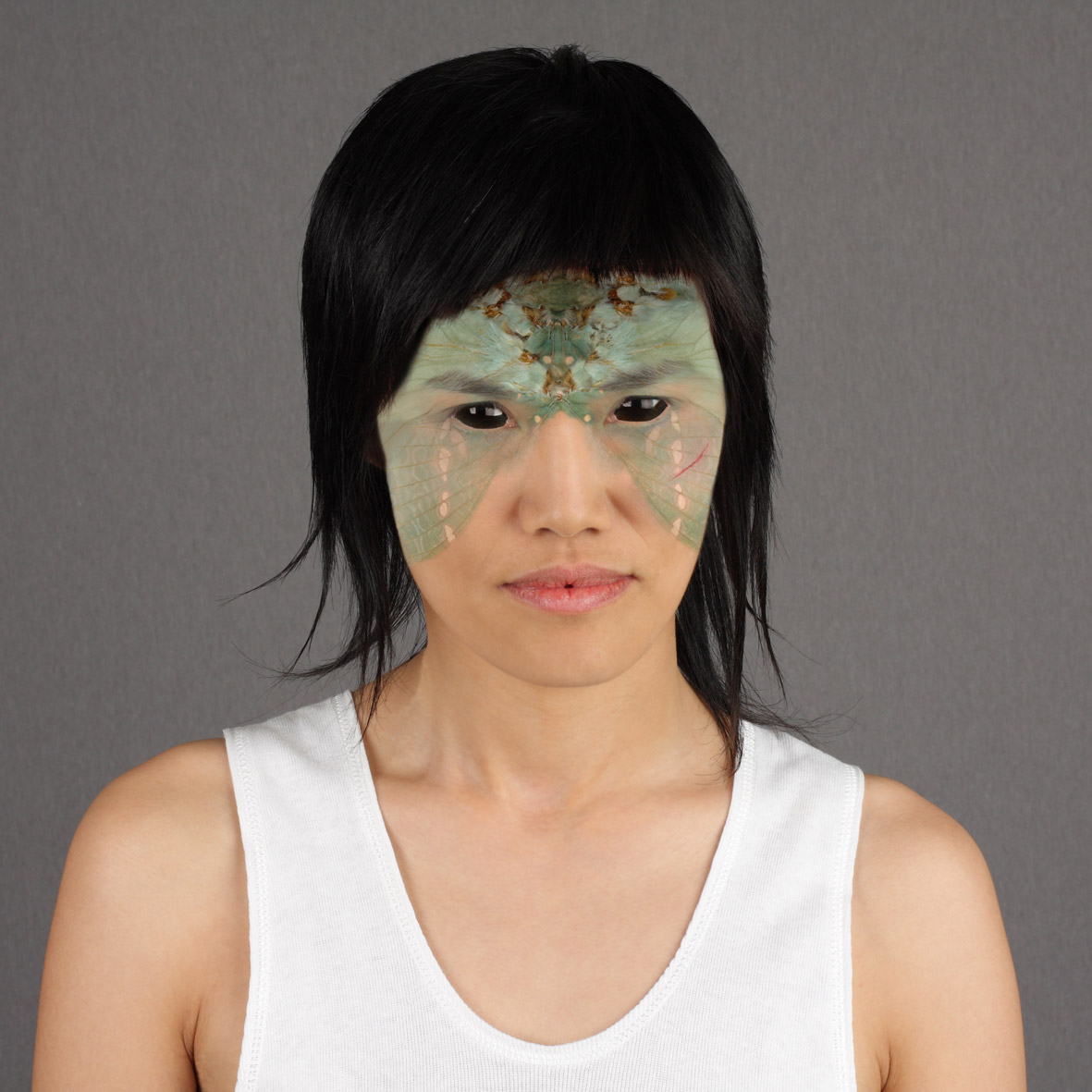
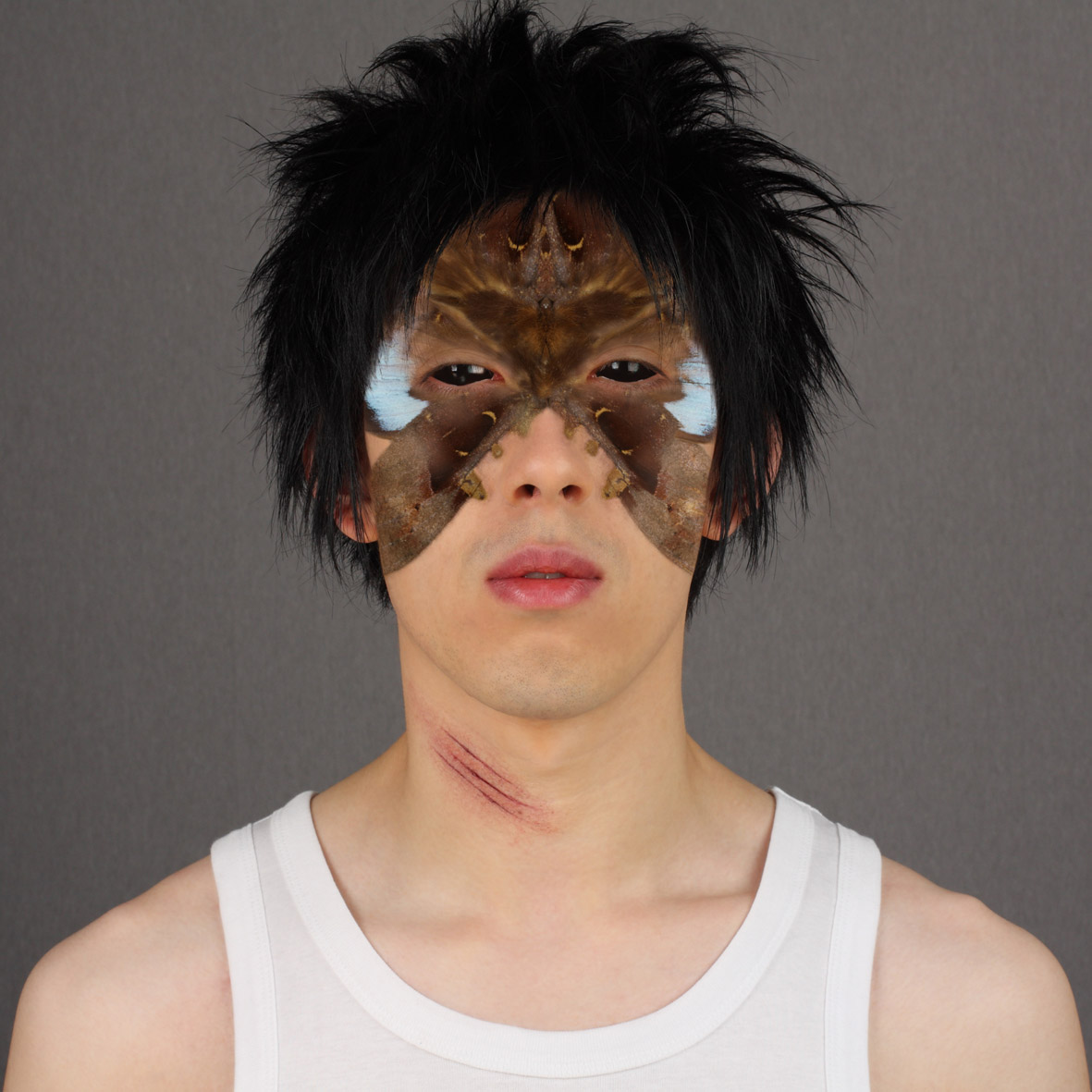
A strong body of work by Owen Leong, twelve portraits of Asian-Australians, their faces digitally overlaid with the unique wing patterns of the Bogong moth, an insect often seen as a pest in Australia. Uniformly lit, of consistent size and presented in modern white frames the series hangs quietly but impressively in the upstairs space of the Anna Pappas Gallery. Here the uniqueness of human physiognomy (and attendant modifications such as scars, piercings and tattoos) is symbiotically paired with that of the moth – it is almost as though one breathes the other – with the eyes of the humans occluded, becoming blackened pits.

The slightly amateurish digital blacking out of some of the eyes is my only point of contention: perhaps this was intentional (?) but sharp shape selections in Photoshop do not make for a good blend between layers of information. Be that as it may, Leong’s practice of selective breeding applied to humans has produced some beautiful, eloquent photographs that promote difference and diversity through a palpable intimacy with the subject matter.

Dr Marcus Bunyan


Many thankx to Anna Pappas, Leah Crossman and the Anna Pappas Gallery for allowing me to use the photographs in the posting. Please click on the photographs for a larger version of the image.


Owen Leong (Australian, b. 1979) 'Jac' 2009-2010 from the exhibition 'Birthmark' by Owen Leong at Anna Pappas Gallery, Prahran, May - June, 2010


Owen Leong (Australian, b. 1979)
Jac
2009-2010
Pigment print on archival paper
73 x 73cm, edition of 5
Courtesy of the artist and Anna Pappas Gallery


Owen Leong (Australian, b. 1979) 'Justin' 2009-2010 from the exhibition 'Birthmark' by Owen Leong at Anna Pappas Gallery, Prahran, May - June, 2010


Owen Leong (Australian, b. 1979)
Justin
2009-2010
Pigment print on archival paper
73 x 73cm, edition of 5
Courtesy of the artist and Anna Pappas Gallery


Owen Leong (Australian, b. 1979) 'Raina' 2009-2010


Owen Leong (Australian, b. 1979)
Raina
2009-2010
Pigment print on archival paper
73 x 73cm, edition of 5
Courtesy of the artist and Anna Pappas Gallery


Anna Pappas Gallery

Open by appointment only
Phone: +613 9521 7300

Anna Pappas Gallery website

LIKE ART BLART ON FACEBOOK

Back to top

Exhibition: ‘The Navigators’ at Karen Woodbury Gallery, Melbourne

Exhibition dates: 5th May – 29th May 2010

Artists: Lionel Bawden, Penny Byrne, Nicholas Folland, Locust Jones, Rhys Lee, Rob McHaffie, Derek O’Connor, Alex Spremberg, Madonna Staunton


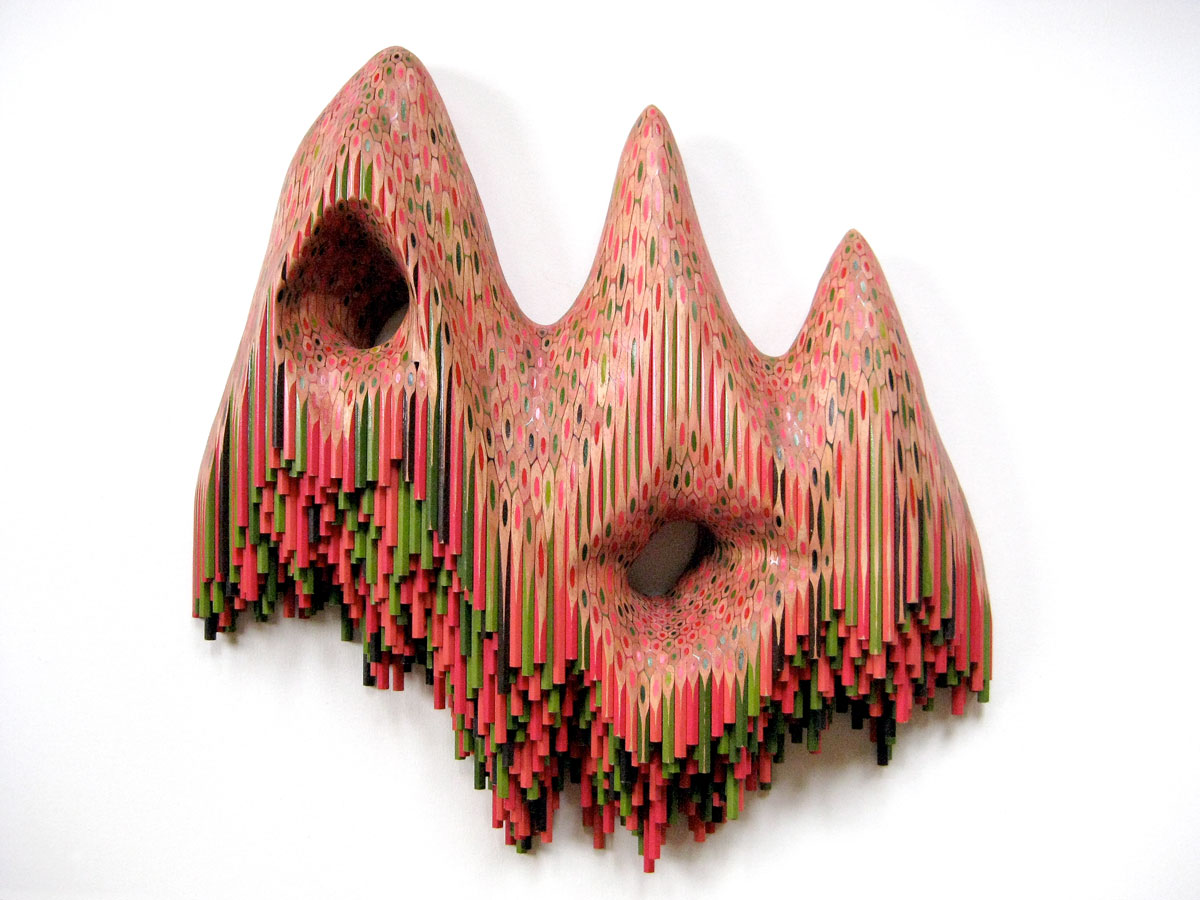
Lionel Bawden (Sydney, b. 1974) 'formless worlds move through me' 2010 from the exhibition 'The Navigators' at Karen Woodbury Gallery, Melbourne, May 2010


Lionel Bawden (Australian, b. 1974)
formless worlds move through me
2010
Coloured Staedtler pencils, epoxy, incralac
51.0 x 51.0 x 9.5cm


Some good work in this exhibition – especially the Staedtler hexagonal coloured pencil constructions by Lionel Bawden. Beautifully crafted by hand they remind me of ghosts, the ‘millefiori’ (thousand flowers) of Italian glass and the inside of caverns with their stalactites.

Dr Marcus Bunyan


Many thankx to the Karen Woodbury Gallery for allowing me to publish the photographs in the posting. Please click on the photographs for a larger version of the image.


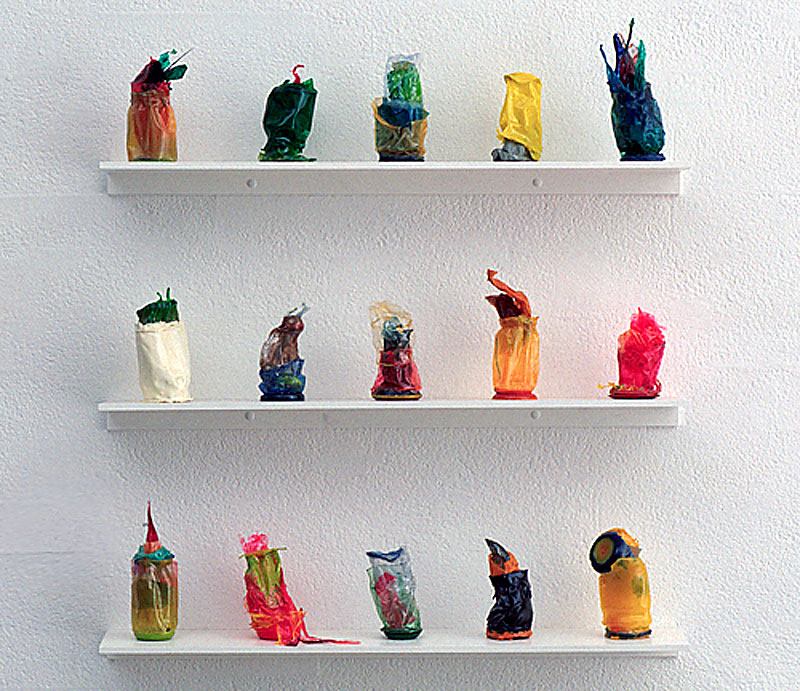
Alex Spremberg (Australian, born Germany 1950) 'Inside skins' 2002 from the exhibition 'The Navigators' at Karen Woodbury Gallery, Melbourne, May 2010


Alex Spremberg (Australian born Germany, b. 1950)
Inside skins
2002


These artists have been selected for their interest in ideas of assemblage and re-use of pre-existing materials. Working across a range of media, each artist in the exhibition employs a process of manipulation to create completely different concepts and forms with their finished works. These works comprise of found objects and assembled from disparate elements, scavenged or foraged by the artists and juxtaposed in inventive ways. All works included in The Navigators take on their own form and imbue a new meaning to the original source materials.

Not originally intended as art materials, yet these artists have seen potential for a new idea in the materials; creating a new thought for the object. The original useful element of the preformed material thus comes under more aesthetic and creative significance. The impetus for such artistic practice is located in a desire by these artists to re-use, re-model, reshape and recycle within their practices. Despite an obvious interest and emphasis in the materiality of the works, the conceptual underpinning are the key motivation within these varying works and pose questions regarding the value of the objects within society. The artists included in The Navigators are continuously surveying and navigating their practice, allowing for deeper exploration in their work.

The exhibition will include various two and three-dimensional objects that interact with each other in unique ways. In the example of Lionel Bawden’s sculptures, his work exploits hexagonal coloured pencils as a sculptural material, reconfiguring and carving into amorphous shapes. Here the rich qualities of colour are explored as pencils are carved, shaped and fused together. Bawden explores themes of flux, transformation, rhythm and repetition as preconditions to our experience of the physical world. Bawden’s wall mounted works ‘the caverns of temporal suspension’ explore shapes within and outside the work as they hover ominously, melting, conjoined, growing, in transformation. These works are at the forefront of his current practice.

Penny Byrne’s work makes use of vintage porcelain sculptures that are adorned with a range of materials. Through this process, Byrne makes the base sculptures appear starkly different to that of the original, taking on new connotations that are often humorous and quirky but also convey political and social issues. In her work Mercury Rising. Hunted, Slaughtered, Eaten vintage porcelain dolphins and new plastic Manga figurines are employed to relate to the annual Japanese slaughter of tens of thousands dolphins as highlighted in the documentary ‘The Cove’. The Japanese eat the dolphins and then suffer mercury poisoning due to the high mercury levels in the dolphins flesh, leading to symptoms of madness.

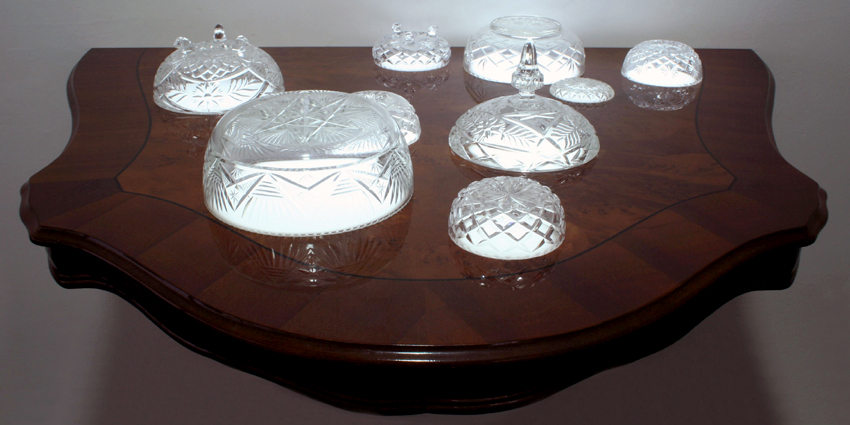
Nicholas Folland’s Navigator sculptures are indicative Folland’s continued interest in utilising, modifying and experimenting with various sourced materials. These sculptures comprise of various upturned intricately detailed crystal objects that sit above a wood panelled shelf. These glass object are lit and act as beacons or floating satellite cities. Folland personifies the intrepid creative explorer via his navigation of various found materials.

Locust Jones’ three-dimensional globes are made from papier mache and pictorially and graphically convey global issues. These works sit on the floor and allow the viewer to orient themselves around the works allowing for a detached, objective perspective on contemporary societal issues. The quickly worked surfaces reflect a stream of consciousness in process. Imagery and themes are taken from various media such as the Internet, photojournalism, film culture and nightly news broadcasts.

The two sculptures in the exhibition by Rhys Lee imbue associations of debris and deal with found objects such as a money box, a dead bird and a clowns face. These trophy-like pieces are decorated by old, worn and found vintage materials that engage with the everyday. The intimate scale of these works do not account for the potency of symbolism and accumulation of collected ideas. The blistered silver patina and bronze sculptures allude to a dark gothic sentiment that extends beyond the morphing forms. The shapes have been smashed, manipulated and stuck back together again resulting in frozen miniature icons that represent a contemporary zest for defiance.

Rob McHaffie’s works comprise a pastiche of painted anonymous unrelated objects and shapes that somehow come together to create unlikely compositions and formations. The highly skilled execution of McHaffie’s paintings attracts the viewer, who is then faced with a banality in subject matter, often of depictions of clothing, crumpled paper, plants and disfigured creatures and figures. These perfectly rendered images of everyday objects are unsettling in their clarity and realism, which are then skewed, moulded and displaced in unlikely relationships. There is a sense of a deliberate haphazard nature to McHaffie’s work that draws upon a range of elements brought together to mimic something else. Humour surfaces through this stylistic creative process.

Derek O’Connor’s re-worked painting collages resemble distorted and fragmented realities and stories via the manipulation and playful technique of alteration and re-use of book covers and record album and EP covers. O’Connor’s characteristic gestural sweeping luscious brushstrokes are employed with precision yet allow for organic spontaneity. The old material takes on new meaning and are given new life via O’Connor’s creations.

Alex Spremberg’s work Inside Skins highlights the artist’s accidental processes at work. This sculptural piece was made as an ancillary to his broader practice – working with acrylic, enamel and varnish on board and canvas. These objects where literally created via chance – an after thought that was noticed to be a finished piece in its own right. Left to dry within their containers these ‘skins’ were extracted and proved to provide aesthetic attraction and conceptual ideas of the ready-made.

The mainstay of Madonna Staunton’s practice surrounds the physicality of assemblage. Essentially she is a collage artist. The components of her two- and three-dimensional assemblages are usually drawn from old, faded and battered discards such as frames and chairs that are carefully put together in new ways and given another life. A play between precision and randomness animates her work. Her sensitivity to tonal and formal arrangement always remains acute during this process and the results are austerely and chaotically beautiful.

Press release from the Karen Woodbury Gallery website [Online] Cited 20/05/2010 no longer available online


Nicholas Folland (Australian, b. 1967) 'Navigators 1' 2008 from the exhibition 'The Navigators' at Karen Woodbury Gallery, Melbourne, May 2010


Nicholas Folland (Australian, b. 1967)
Navigators 1
2008
Glassware, table and lightbox
25.0 x 110.0 x 87.0cm


Nicholas Folland (Australian, b. 1967) 'Navigators 2' 2008


Nicholas Folland (Australian, b. 1967)
Navigators 2
2008
Glassware, table and lightbox
25.0 x 110.0 x 87.0cm


Karen Woodbury Gallery

This gallery has now closed.

LIKE ART BLART ON FACEBOOK

Back to top

Vale Mari Funaki

May 2010


It is with great sadness that I hear of the passing of Mari Funaki on the 13th May 2010.

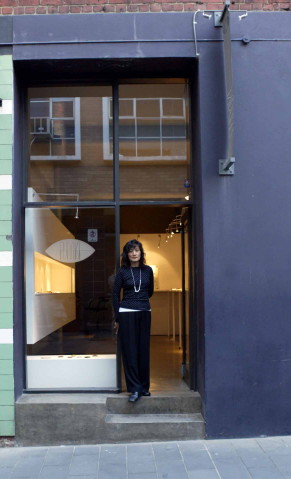
I met Mari many times and she was always wonderfully generous with her energy, knowledge and enthusiasm. She was an amazing artist, I loved her work especially the stunning anamorphic black bracelets and the fact that she used photography of Bernd and Hiller Becher as part of her inspiration. My conversation with Mari in 2006 and photographs of her work can be found on the Notes from a Conversation with Mari Funaki posting.

Vale Mari Funaki


“A memorial will be held on Tuesday June 1st, 2010 at 11.00am in THE GREAT HALL of the National Gallery of Victoria, International.


Mari Funaki outside Gallery Funaki


Mari Funaki outside Gallery Funaki
Photo: Marcus Bunyan


Gallery Funaki website

LIKE ART BLART ON FACEBOOK

Back to top

Monash Gallery of Art Bowness Photography Prize Call For Entries! Closes 30th June 2010

May 2010


Paul Ogier (Australia born New Zealand, b. 1974) 'Saint Stephen' 2009


Paul Ogier (Australia born New Zealand, b. 1974)
Saint Stephen
2009
Courtesy of the artist


Mark Hislop from the Monash Gallery of Art (MGA) has asked me to post details of the William and Winifred Bowness Photography Prize 2010. More than happy too. To see the standard take a look at the 2009 Finalists online. Details on how to enter are posted below. Have a go, get your entries in, you never know who will win!

Many thankx to the MGA for allowing me to publish the photographs in the posting. Please click on the photographs for a large version of the image.


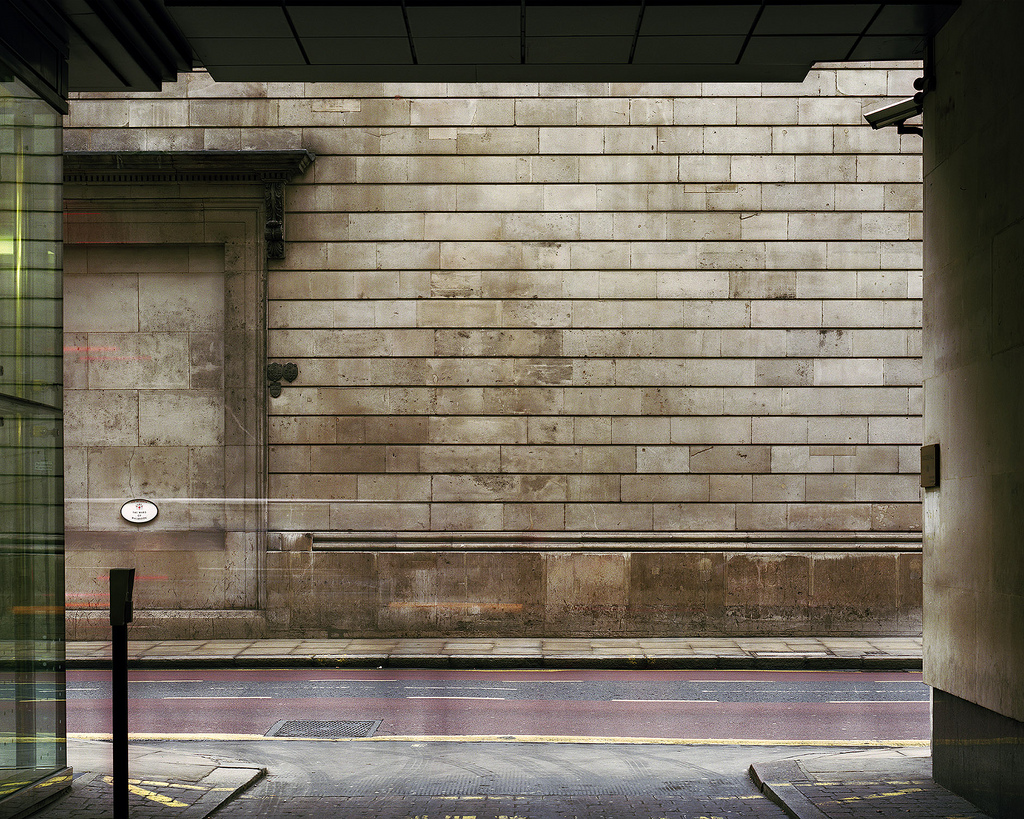
Simon Terrill (Australian, b. 1969) 'Bank of England 9AM' 2009


Simon Terrill (Australian, b. 1969)
Bank of England 9AM
2009
Courtesy of the artist


The Monash Gallery of Art Foundation is pleased to announce the CALL FOR ENTRIES for the William and Winifred Bowness Photography Prize 2010.

The MGA Foundation will once again showcase the work of Australia’s best photographers in Australia’s most coveted photography award. Photographers from all over Australia are encouraged to submit entries to this year’s Bowness Photography Prize. Each year, finalists are drawn from the breadth of Australian photographic practice: editorial, commercial, street and fine art.

In recognition of the support shown the prize by Australian photographers, prize money for this year’s award has increased substantially. Last year, a record 459 photographers submitted entries in anticipation of the $20,000 non-acquisitive first prize. In 2010, photographers will be competing for $25,000 first prize and $1,000 People’s Choice Award.

The winner of the 2010 Bowness Photography Prize and Honourable Mentions will be announced on Thursday night 23 SEP 2010 during a cocktail party held at MGA. Winners and finalists will enjoy unprecedented visibility for their work. All finalists will be published on MGA’s flickr page and included in a substantial catalogue. The winner will receive the $25,000 first prize. And in recognition of the strength of the prize and MGA’s commitment to promoting the best of contemporary Australian photography, Honourable Mentions will have the opportunity to stage an exhibition at MGA.

This year’s entries will be judged by Gael Newton, Senior Curator of Photographs, National Gallery of Australia, Max Pam, Australian photographer, and Shaune Lakin, Director of MGA.

About the BOWNESS Photography Prize

Established in 2006 to promote excellence in photography, the annual non-acquisitive William and Winifred Bowness Photography Prize is an initiative of the MGA Foundation. The Bowness Photography Prize has quickly become Australia’s most coveted photography prize. It is also one of the country’s most open prizes for photography. In the past, finalists have included established and emerging photographers, art and commercial photographers. All film-based and digital work from amateurs and professionals is accepted. There are no thematic restrictions.

The 2009 Bowness Prize recipient was Paul Knight. Since winning the Prize, Knight has received an Australia Council for the Arts Skills and Development Grant and is currently presenting new work at the prestigious international artfair Art Cologne.


Jane Burton (Australian, b. 1966) 'Ivy # 3' 2009


Jane Burton (Australian, b. 1966)
Ivy # 3
2009
Courtesy of the artist and Karen Woodbury Gallery, Melbourne


Owen Leong (Australian, b. 1979) 'Justin' 2009


Owen Leong (Australian, b. 1979)
Justin
2009
Courtesy of the artist and Anna Pappas Gallery, Melbourne


Paul Knight (Australian, b. 1976) '14 months # 01' 2008


Paul Knight (Australian, b. 1976)
14 months # 01
2008
Courtesy of the artist and Neon Parc, Melbourne
Winner of the William and Winifred Bowness Photography Prize 2009


Monash Gallery of Art
860 Ferntree Gully Road
Wheelers Hill Victoria 3150
Phone: +61 3 8544 0503

Monash Gallery of Art website

LIKE ART BLART ON FACEBOOK

Back to top

Review: ‘Safety Zone’ by John Young at Anna Schwartz Gallery, Melbourne

Exhibition dates: 15th April – 22nd May 2010


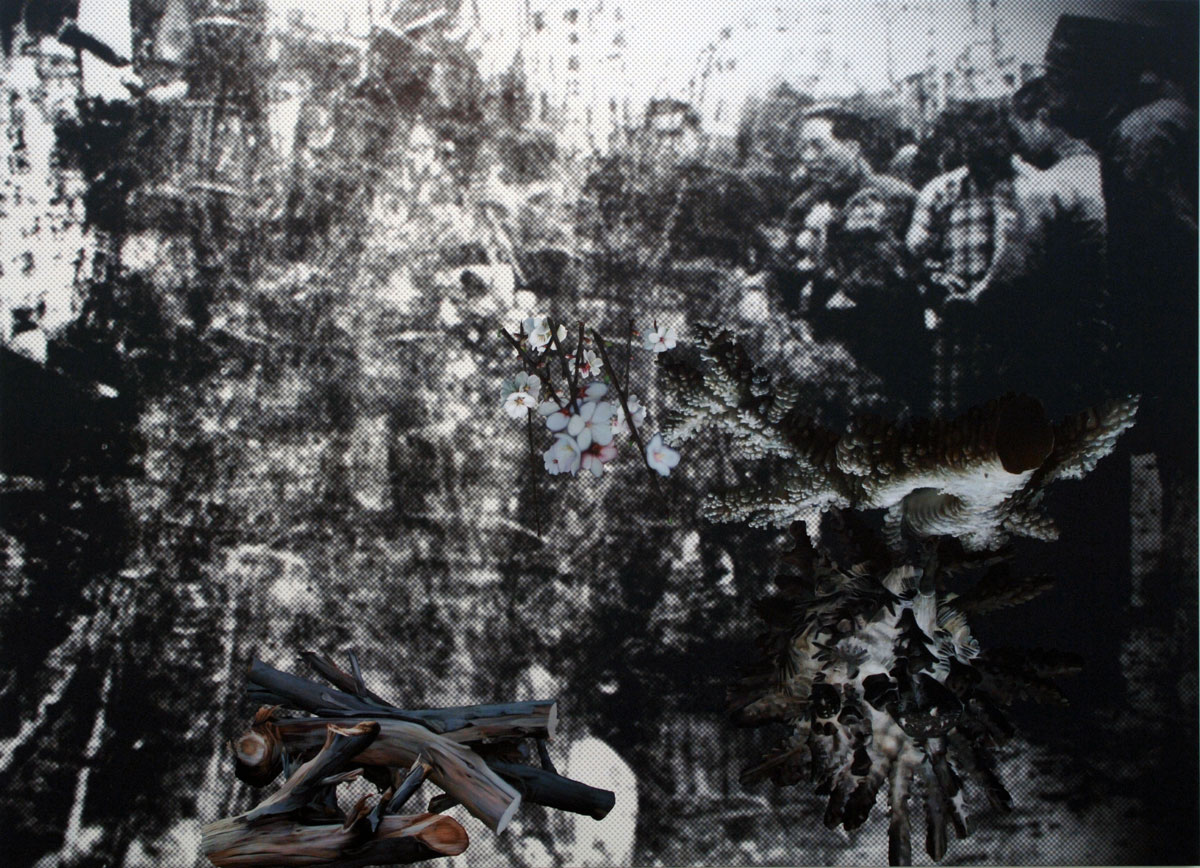
John Young (Australian born Hong Kong, b. 1956) 'Flower Market (Nanjing 1936) #2' 2010 from the exhibition 'Safety Zone' by John Young at Anna Schwartz Gallery, Melbourne, April - May, 2010


John Young (Australian born Hong Kong, b. 1956)
Flower Market (Nanjing 1936) #2
2010
Digital print and oil on Belgian linen
240 x 331cm
image courtesy of the artist and Anna Schwartz Gallery


What can one say about work that is so confronting, poignant and beautiful – except to say that it is almost unbearable to look at this work without being emotionally charged, to wonder at the vicissitudes of human life, of events beyond one’s control.

Simply, this is the best exhibition that I have seen in Melbourne so far this year.

The exhibition tells the story of the massacre of 300,000 people in the city of Nanjing in Jiangsu, China by Japanese troops in December, 1937 in what was to become known as the Nanjing Massacre. It also tells the story of a group of foreigners led by German businessman John Rabe and American missionary Minnie Vautrin who set up a “safety zone” to protect the lives of at least 250,000 Chinese citizens. The work is conceptually and aesthetically well resolved, the layering within the work creating a holistic narrative that engulfs and enfolds the viewer – holding them in the shock of brutality, the poignancy of poetry and the (non)sublimation of the human spirit to the will of others.

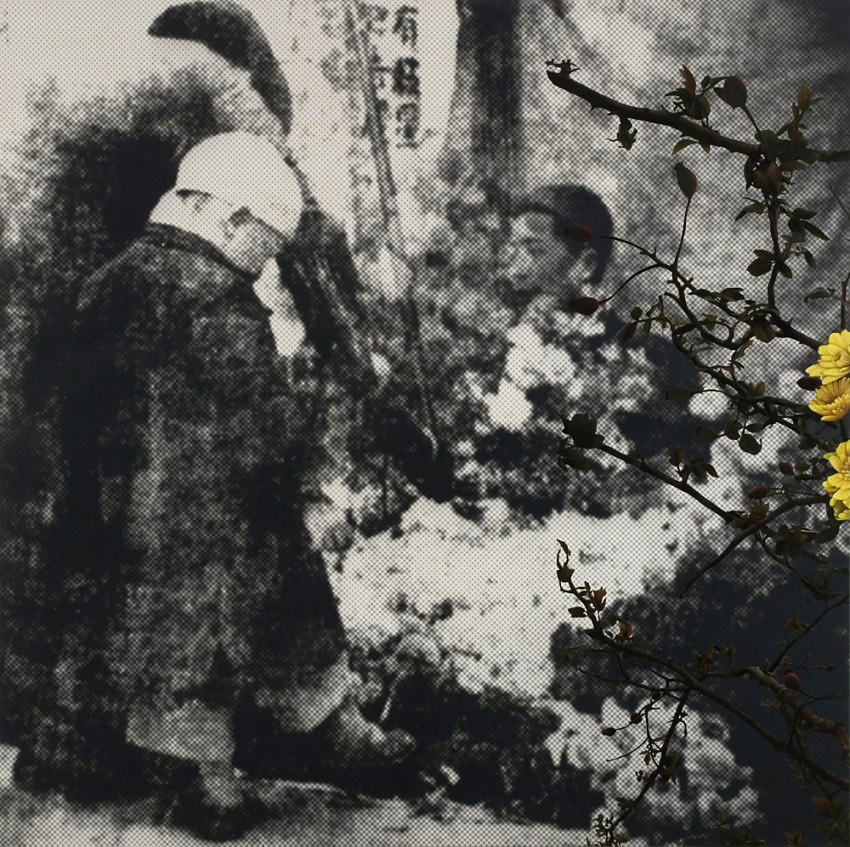
On the left wall of the gallery are three large mixed-media paintings of screen printed photographs of the Nanjing Flower Market taken the year before the massacre (see three images directly below). The printing of the press photographs at such a scale (a la Marco Fusinato) emphasises the dot structure of the photograph, the intensity of a newspaper reality ‘blown up’ to a huge scale. Unfortunately, you cannot see this deconstruction of the image very well in the examples below (clicking on the lower two images to get a larger version will give you a better idea), but believe me it most effective in creating a spatio-temporal distance between the viewer and the image. The dissolution of the image into dots is surmounted by painted cherry blossoms, bleached corals and piles of logs that overlay the photographic text. The reason-ances are sublime. The mind tries to process the distance between the death of the people and the photograph, the knowledge of what is about to happen to them, and the sensuality of the buds and flowers: new life!

To my friend and I the coral in the last painting reminded us both of the emanations of psychic phenomena at a seance, a series of radiations originating in the godhead.

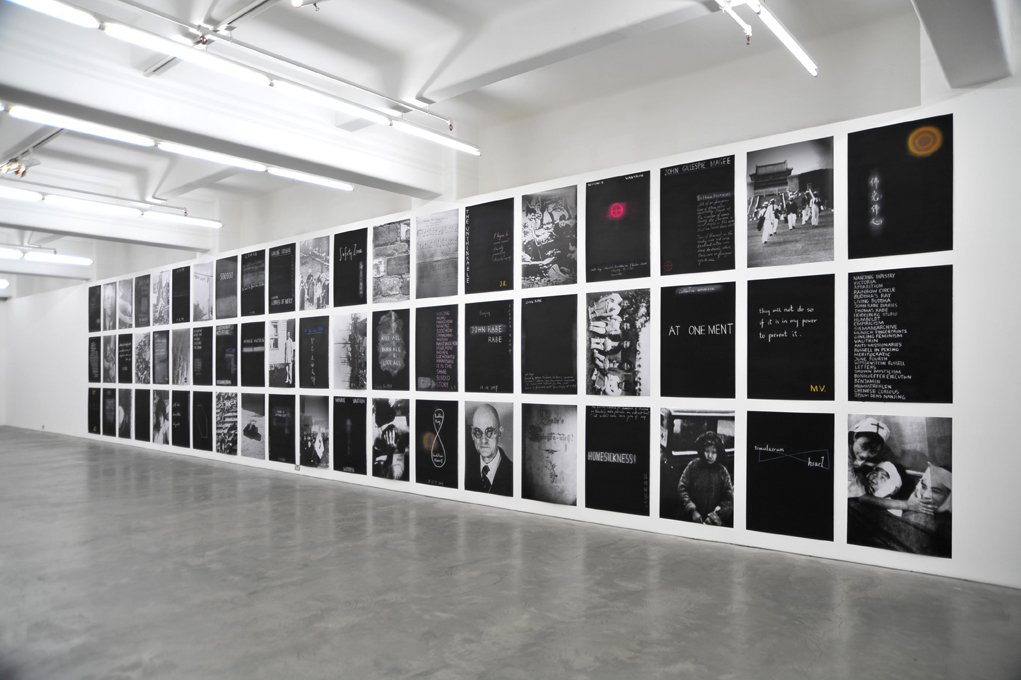
On the right wall of the gallery is a grid of three rows of twenty images that make up the work Safety Zone (2010, see bottom image). Made up of chalk drawings on black paper (a la Rudolf Steiner), writings by the Europeans including Vautrin and Rabe, statistics, gruesome photographs of the massacre and observations by the artist, this is in part both a confronting and benevolent work.

Archival photographs are printed digitally (the dot structure working to less affect here); some vertical photographs are shown horizontally. Text written in chalk is erased with a sweep of the hand. Thoughts of the Buddha, the infinity symbol linked to the Buddha’s Ray and the Buddha’s Heart are a physical presence. Two blue chalk lines intersect and cross over, so poignant and sublime amongst the destruction that surrounds. Golf clubs, beer bottles, bayonets.


‘THERE IS NOTHING LEFT’ 13.12.37 (Robert Wilson)

‘HOME SICKNESS’

‘Simulacrum > Heart’

A simply drawn coffin shape on black ground

‘I began to roam around the city preventing further atrocities myself’

‘They will not do so, if it is in my power to prevent it’ (Minnie Vautrin)

UNSPEAKABLE ACTS OF EVIL … BECOMING BANAL


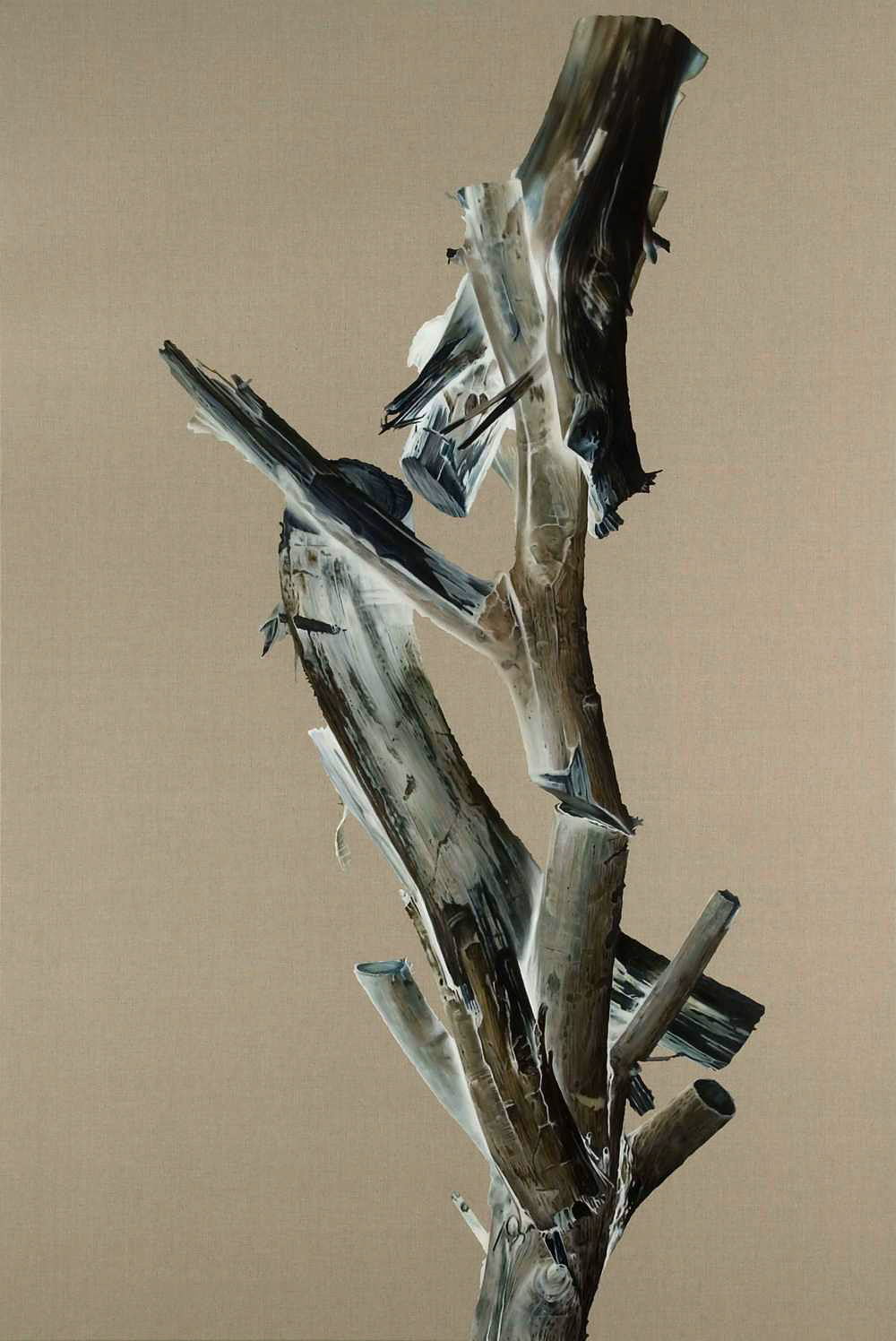
At both ends of the gallery is the last element in this play of hope, mutability and madness. Two large oil-on-linen paintings, titled The Crippled Tree #1 & #2 (see images below) “provide another register to the memory of the event. According to Young, the battered and split logs, painted in the negative, resonate and recollect the violence done to the victims of the massacre.” Unfortunately the two small images below cannot really give you an idea of the metaphorical power of these paintings. Like twisted and broken bodies larger than life size they become the glue that holds the other elements of the exhibition together. Without them there would be no transition from one side of the gallery, one element of the work to another. In their solarisation they emote an energy that flows down the length of the gallery = is this possible? Yes it is!

You feel the cracking of their branches, the amputation of their limbs but their spirit, their efflorescence (which, most appropriately considering the use of the Flower Market photographs, means “to flower out” in French) shines on. Such is the nature of the human spirit. Take the time and see this work. It is well worth the journey.

Dr Marcus Bunyan


Many thankx to the artist, Serena Bentley and Anna Schwartz Gallery for allowing me to reproduce the images in the posting. Please click on the photographs for a larger version of the image.


John Young (Australian born Hong Kong, b. 1956) 'Flower Market (Nanjing 1936) #3' 2010 from the exhibition 'Safety Zone' by John Young at Anna Schwartz Gallery, Melbourne, April - May, 2010


John Young (Australian born Hong Kong, b. 1956)
Flower Market (Nanjing 1936) #3
2010
Digital print and oil on Belgian linen
240 x 331cm
image courtesy of the artist and Anna Schwartz Gallery


John Young (Australian born Hong Kong, b. 1956) 'Flower Market (Nanjing 1936) #1' 2010 from the exhibition 'Safety Zone' by John Young at Anna Schwartz Gallery, Melbourne, April - May, 2010


John Young (Australian born Hong Kong, b. 1956)
Flower Market (Nanjing 1936) #1
2010
digital print and oil on Belgian linen
240 x 331cm
image courtesy of the artist and Anna Schwartz Gallery


Safety Zone, John Young’s latest project presents a series of intricate paintings that reassemble historical reminiscences of human survival by linking experimental contemporary art with investigative visual reports, in historical photographs and documents.

This body of work draws attention to incidents across the city of Nanjing in Jiangsu, China, just moments before the onset of the Nanjing Massacre, which followed the capture of the city by Japanese Imperial Forces on 13 December 1937. In the six weeks following the invasion, a quarter of a million Chinese citizens were killed in what the American historian Iris Chang described as the ‘forgotten holocaust of World War II’.

Through Chang’s book, The Rape of Nanking, the world was introduced to the personal memoirs of foreigners living in Nanjing who had been working on creating a ‘safety zone’ that would protect 250,000 Chinese citizens from the invading Japanese troops. Two of the twenty-one foreigners who stayed in the city to help set up the Nanjing Safety Zone were the American missionary Minnie Vautrin and the German businessman John Rabe. Their experiences have been noted by Young, who travelled to Nanjing, Berlin and Heidelberg, conducting first hand interviews and research for this compelling multi-layered project which exemplifies the transformative function of art.

The installation Safety Zone consists of three series of works which reference acts of resistance by individuals to protect fellow human beings against these atrocities that were underpinned by autocratic regimes and nationalist ideologies.

In the Flower Market (Nanjing 1936) series, carefully painted spring flowers and bleached corals are superimposed over historical photographs taken in Nanjing a year prior to the massacre. The meticulously rendered impressions of logs in The Crippled Tree #1 & #2 provide another register to the memory of the event. According to Young, the battered and split logs, painted in the negative, resonate and recollect the violence done to the victims of the massacre.

The carefully assembled bank of 60 chalk drawings and digital prints that make up the centerpiece of Safety Zone provides an intricate understanding of the humanity that lies beneath this tragic event through the revelation of extraordinary acts of self-sacrifice.

Dr Thomas J. Berghuis
Department of Art History and Film, The University of Sydney

Text from the Anna Schwartz Gallery website


John Young (Australian born Hong Kong, b. 1956) 'The Crippled Tree #1' 2010


John Young (Australian born Hong Kong, b. 1956)
The Crippled Tree #1
2010
Oil on linen
274 x 183cm
image courtesy of the artist and Anna Schwartz Gallery


John Young (Australian born Hong Kong, b. 1956) 'The Crippled Tree #2' 2010


John Young (Australian born Hong Kong, b. 1956)
The Crippled Tree #2
2010
Oil on linen
274 x 183cm
image courtesy of the artist and Anna Schwartz Gallery


John Young (Australian born Hong Kong, b. 1956) 'Safety Zone' 2010 (installation view)


John Young (Australian born Hong Kong, b. 1956)
Safety Zone (installation view)
2010
60 works, digital prints on photographic paper and chalk on blackboard-painted archival cotton paper
Image courtesy of the artist and Anna Schwartz Gallery


Anna Schwartz Gallery
185 Flinders Lane
Melbourne, Victoria 3000

Opening hours:
Tuesday – Friday 12 – 5pm
Saturday 1 – 5pm
Anna Schwartz Gallery website

LIKE ART BLART ON FACEBOOK

Back to top

Review: ‘To hold and be held’ by Kiko Gianocca at Gallery Funaki, Melbourne

Exhibition dates: 20th April – 15th May 2010


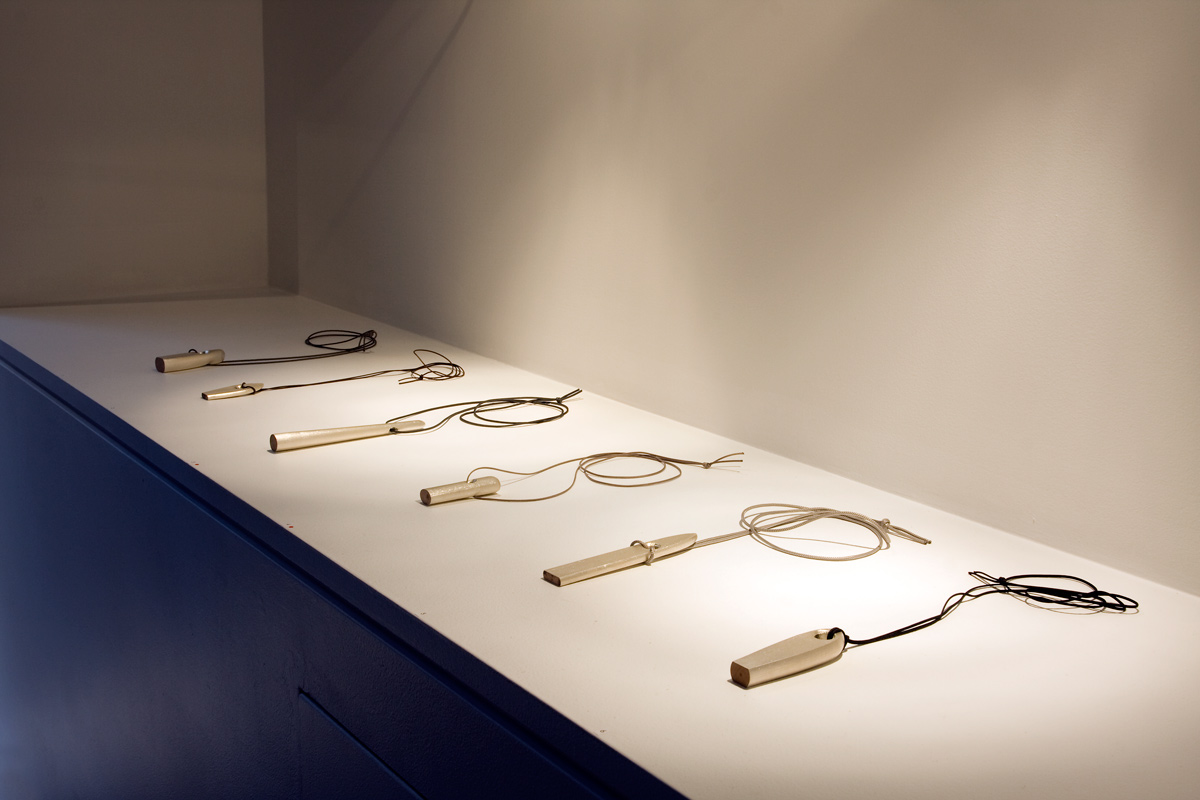
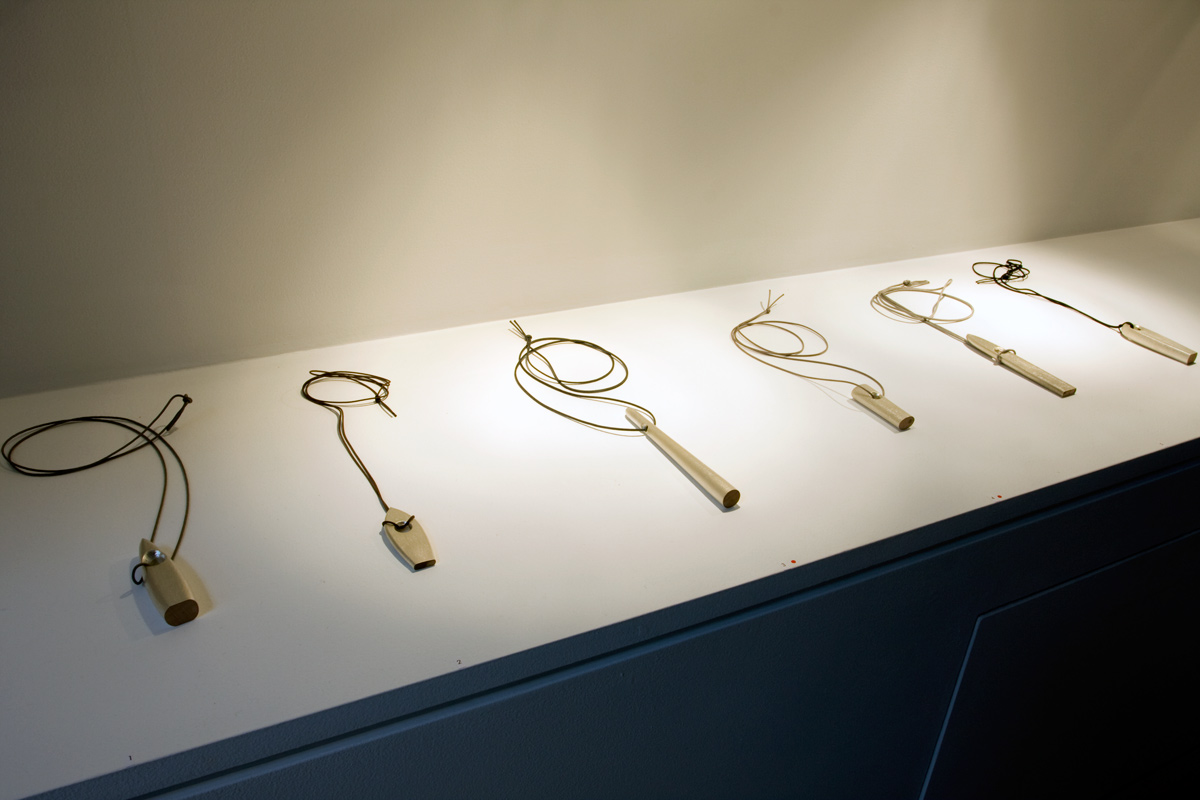
Kiko Gianocca (Swiss, b. 1974) 'Untitled (touch wood)' multiples 2009 (installation view) from the exhibition 'To hold and be held' by Kiko Gianocca at Gallery Funaki, Melbourne, April - May, 2010


Kiko Gianocca (Swiss, b. 1974)
Untitled (touch wood) multiples (installation view)
2009
Burnt wood, resin
Photo: Marcus Bunyan


A beautiful exhibition of objects by Swiss/Italian artist Kiko Gianocca at Gallery Funaki, Melbourne, one full of delicate resonances and remembrances.

Obelisk pendants in blackened and silvered wood, Neolithic standing stones, totemic, silent;
The hole through the object akin to ‘seeing’ through time.
Exposed wood on base (touch wood) as grounding.

The standing stone installation an altar piece, a dark reliquary (see image above)


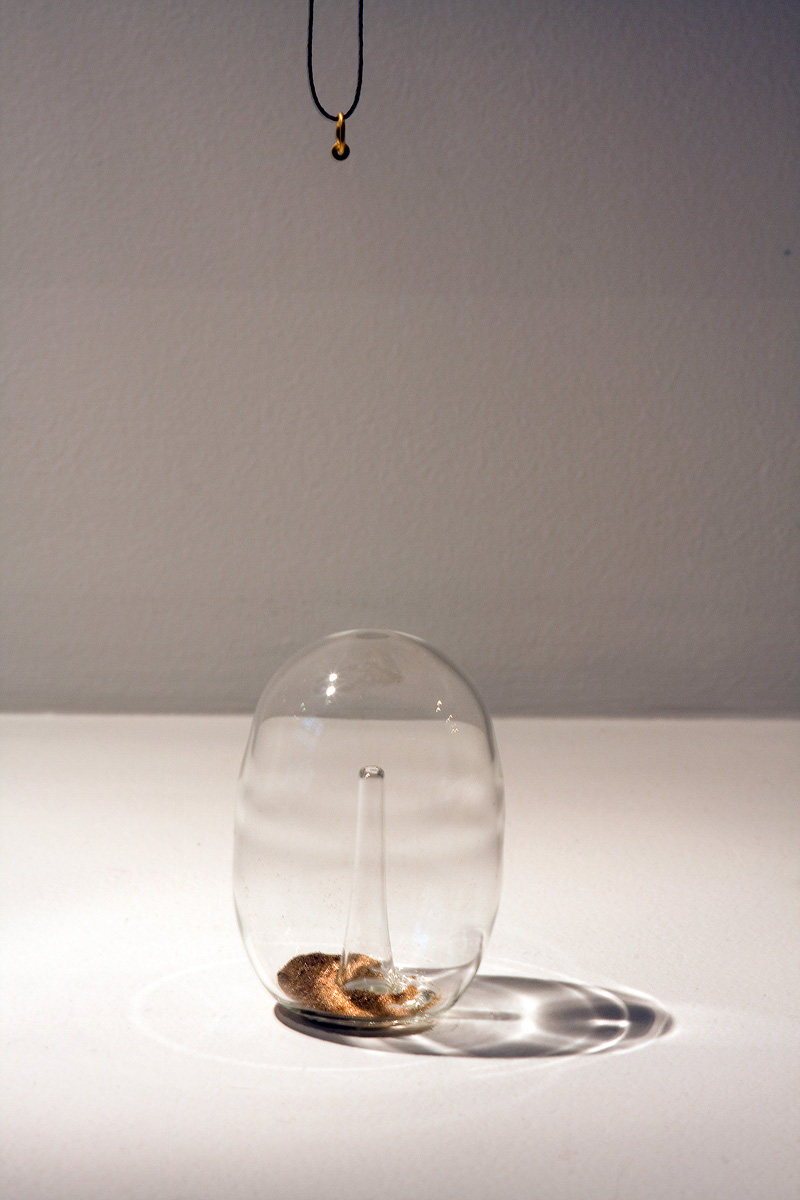
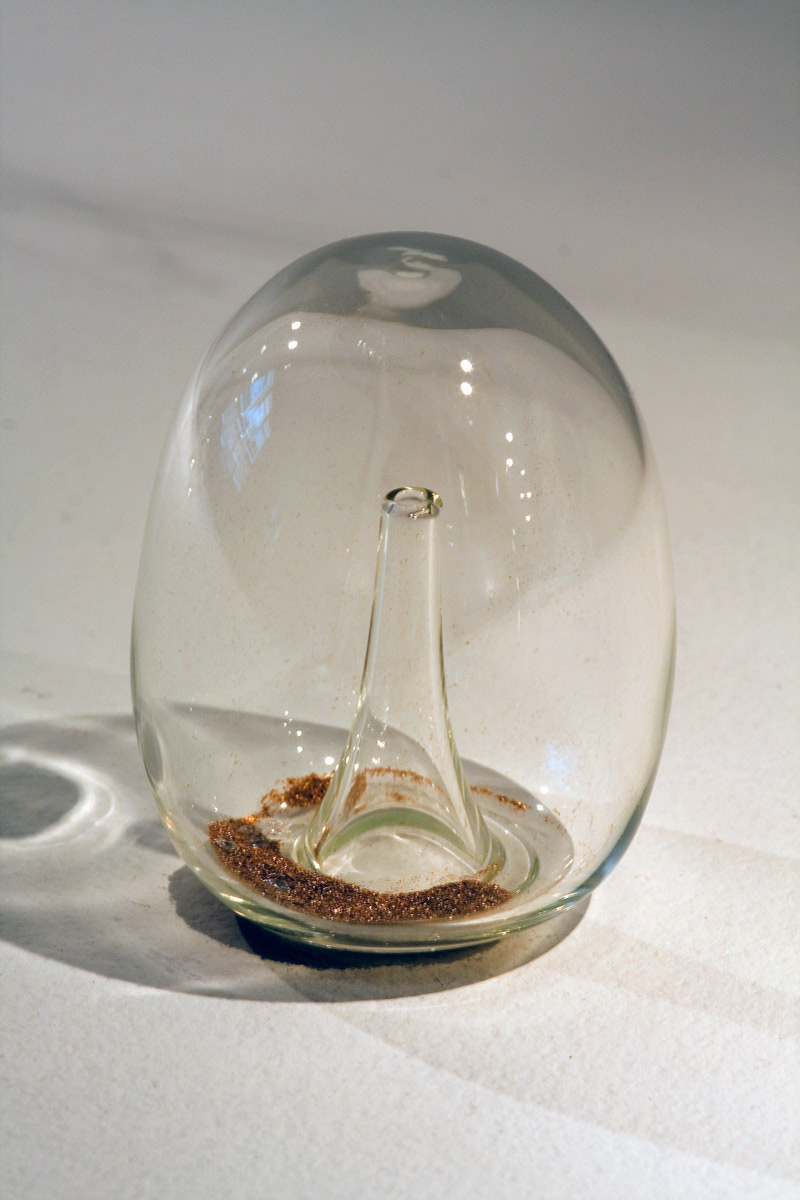
Glass vessels with internal funnels filled with the gold detritus of disassembled objects, found pendants:
Horse, Anchor, Four leaf clover, Swan, Hammer & sickle (see images below)

The distance between the bail – the finding that attaches the pendant to the necklace – and the remainder/reminder of the vessel itself. What a distance!

As Sally Mann would articulate, ‘What remains’1 …

Lives previous to this incarnation; jewels embedded in dust.
The captured potency of displaced objects.
Personal and yet anonymous at one and the same time.


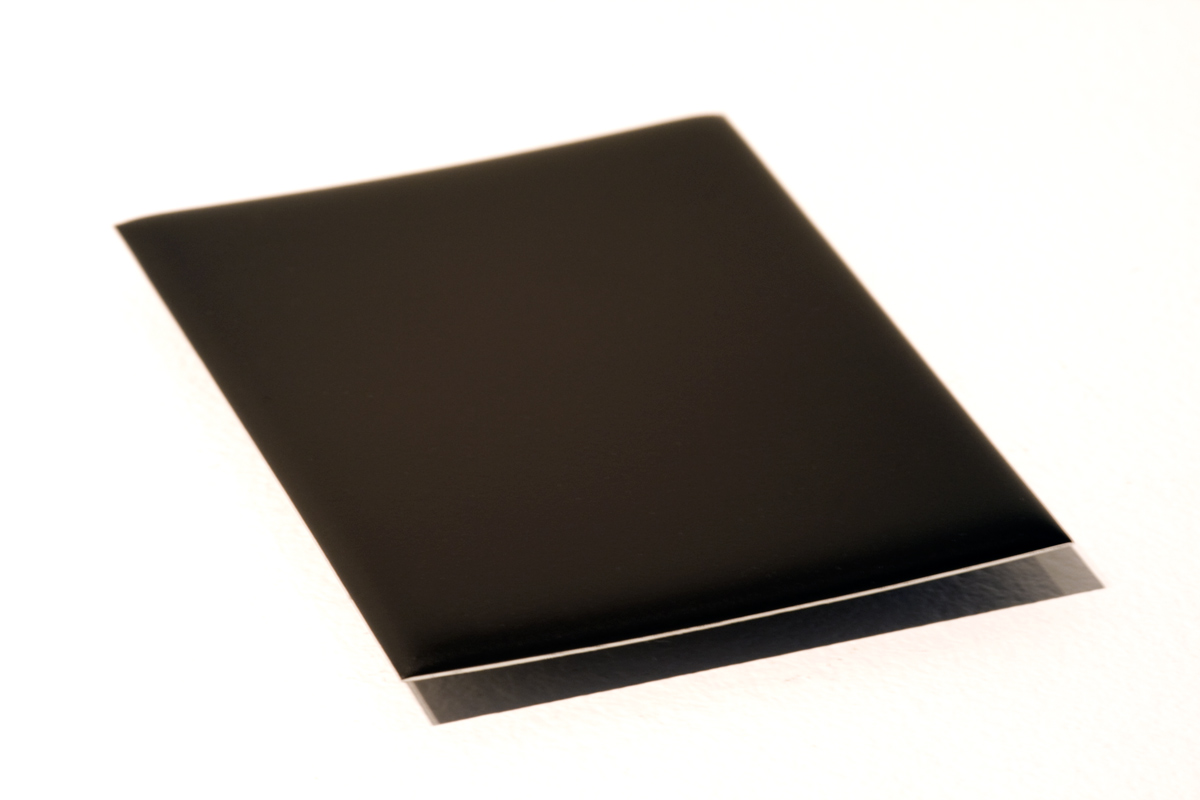
Brooches of gloss and matt black resin plates. A plastic black, almost Rembrandt-esque.

On the reverse images exposed like a photographic plate, found images solidified in resin.

The front: the depths of the universe, navigating the dazzling darkness
The back: memories, forgotten, then remade, worn like a secret against the beating chest. Only the wearer knows!

Here is a territorialization, “a double movement, where something accumulates meanings (re-territorialization), but does so co-extensively with a de-territorialization where the same thing is disinvested of meanings.”2

As Kiki Gianocca asks, “I am not sure if I grasp the memories that sometimes come to mind.
I start to think they hold me instead of me holding them.”

 
Time is the distance between objects. No objects.
Space is the distance between events. No events.

Dr Marcus Bunyan


1/ “Mann’s fifth book, What Remains, published in 2003, is based on the show of the same name at the Corcoran Museum in Washington, DC and is in five parts. The first section contains photographs of the remains of Eva, her greyhound, after decomposition. The second part has the photographs of dead and decomposing bodies at a federal Forensic Anthropology Facility (known as the ‘body farm’). The third part details the site on her property where an armed escaped convict was killed. The fourth part is a study of the grounds of Antietam (the site of the bloodiest single day battle in American history during the Civil War. The last part is a study of close-ups of the faces of her children. Thus, this study of mortality, decay and death ends with hope and love.”
Sally Mann. Wikipedia [Online] Cited 02/05/2010

2/ “For them (Deleuze and Guattari), assemblages are the processes by which various configurations of linked components function in an intersection with each other, a process that can be both productive and disruptive. Any such process involves a territorialization; there is a double movement where something accumulates meanings (re-territorialization), but does so co-extensively with a de-territorialization where the same thing is disinvested of meanings. The organization of a territory is characterized by such a double movement … An assemblage is an extension of this process, and can be thought of as constituted by an intensification of these processes around a particular site through a multiplicity of intersections of such territorializations.”
Wood, Aylish. “Fresh Kill: Information technologies as sites of resistance ” in Munt, Sally (ed.,). Technospaces: Inside the New Media. London: Continuum, 2001, p. 166.


    Many thankx to Katie and Gallery Funaki for allowing me to take the photographs in the gallery and post them online. Please click on the photographs for a larger version of the image. All photographs © Marcus Bunyan except The waterfall.


    “I own a stone that a friend passed to me, and a shackle that Michael gave me.

    I found a curious object in Lisbon at the fleamarket, I paid one euro for it and I still don’t know what it is.

    Yesterday I had a look again at the picture you shot. I am not sure if I grasp the memories that sometimes come to mind.

    I start to think they hold me instead of me holding them.”


    Kiko Gianocca, April 2010


    Installation view of the exhibition 'To hold and be held' by Kiko Gianocca at Gallery Funaki, Melbourne showing 'Untitled (touch wood)' multiples (installation view)

    Installation view of the exhibition 'To hold and be held' by Kiko Gianocca at Gallery Funaki, Melbourne showing 'Untitled (touch wood)' multiples (installation view)


    Kiko Gianocca (Swiss, b. 1974)
    Untitled (touch wood) multiples (installation views)
    2009
    Wood, silver
    Photos: Marcus Bunyan


    Kiko Gianocca (Swiss, b. 1974)
'Horse, Anchor, Four leaf clover and Swan' (left to right) 2009 (installation view)


    Kiko Gianocca (Swiss, b. 1974)
    Horse, Anchor, Four leaf clover and Swan (left to right) (installation view)
    2009
    18k gold, glass
    Photo: Marcus Bunyan


    Kiko Gianocca. 'Horse' 2009 (installation view)


    Kiko Gianocca (Swiss, b. 1974)
    Horse (installation view)
    2009
    18k gold, glass
    Photo: Marcus Bunyan


    Kiko Gianocca (Swiss, b. 1974) 'Anchor' 2009 (installation view) from the exhibition 'To hold and be held' by Kiko Gianocca at Gallery Funaki, Melbourne, April - May, 2010


    Kiko Gianocca (Swiss, b. 1974)
    Anchor (installation view)
    2009
    18k gold, glass
    Photo: Marcus Bunyan


    Kiko Gianocca (Swiss, b. 1974) 'Swan' 2009 (installation view)


    Kiko Gianocca (Swiss, b. 1974)
    Swan (installation view)
    2009
    18k gold, glass
    Photo: Marcus Bunyan


    Installation view of the exhibition 'To hold and be held' by Kiko Gianocca at Gallery Funaki, Melbourne with 'Untitled (touch wood)' burnt wood multiples in distance


    Installation view of exhibition with Untitled (touch wood) burnt wood multiples in distance
    Photo: Marcus Bunyan


    Kiko Gianocca (Swiss, b. 1974) 'Man & dog' 2009 (installation view)


    Kiko Gianocca (Swiss, b. 1974)
    Man & dog (installation view)
    2009
    Found image, resin, silver
    Photo: Marcus Bunyan


    Kiko Gianocca (Swiss, b. 1974) 'The waterfall' 2009 from the exhibition 'To hold and be held' by Kiko Gianocca at Gallery Funaki, Melbourne, April - May, 2010


    Kiko Gianocca (Swiss, b. 1974)
    The waterfall
    2009
    Found image, resin, silver


    Kiko Gianocca (Swiss, b. 1974) 'The dog' 2009 (installation view)


    Kiko Gianocca (Swiss, b. 1974)
    The dog (installation view)
    2009
    Found image, resin, silver
    Photo: Marcus Bunyan


    Kiko Gianocca (Swiss, b. 1974) 'The kiss' (reverse) 2009 (installation view)


    Kiko Gianocca (Swiss, b. 1974)
    The kiss (reverse) (installation view)
    2009
    Found image, resin, silver
    Photo: Marcus Bunyan


    Kiko Gianocca (Swiss, b. 1974) 'The way up' (reverse) 2009 (installation view)


    Kiko Gianocca (Swiss, b. 1974)
    The way up (reverse) (installation view)
    2009
    Found image, resin, silver
    Photo: Marcus Bunyan


    Kiko Gianocca (Swiss, b. 1974) 'The beast' (reverse) 2009 (installation view)


    Kiko Gianocca (Swiss, b. 1974)
    The beast (reverse) (installation view)
    2009
    Found image, resin, silver
    Photo: Marcus Bunyan


    Gallery Funaki
    Sackville House
    Apartment 33
    27 Flinders Lane
    Melbourne 3000
    Australia

    Opening hours:
    Wednesday – Friday 12 – 5pm
    Saturday on occasion (check our socials) or by appointment

    Gallery Funaki website

    LIKE ART BLART ON FACEBOOK

    Back to top

    Review: ‘Autumn Masterpieces: Highlights from the Permanent Collection’ at the Centre for Contemporary Photography (CCP), Fitzroy, Melbourne
    Exhibition dates: 19th March – 18th May 2010

    Curator: Mark Feary

    Featuring Museum Highlights: A Gallery Talk by Andrea Fraser (USA) as well as works from the collections of Hany Armanious, Liv Barrett, Polly Borland (UK), Steve Carr (NZ), Lane Cormick, Chantal Faust, Marco Fusinato, Tony Garifalakis, Matthew Griffin, Irene Hanenbergh, Christopher Hanrahan, Hotham Street Ladies, the Kingpins, Paul Knight, Andrew Liversidge, Rob McLeish, Callum Morton, Nat & Ali, Geoff Newton, Martin Parr (UK), Stuart Ringholt, David Rosetzky, Darren Sylvester, Christian Thompson, Lyndal Walker and Caroline Williams.


    Autumn Masterpieces: Highlights from the Permanent Collection


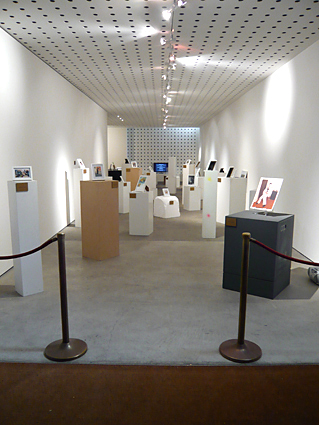
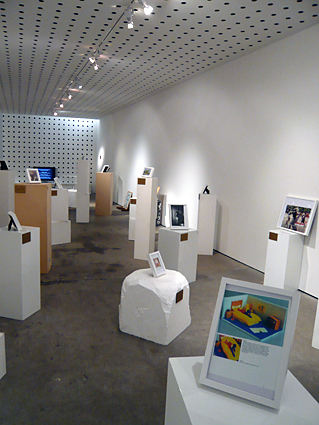
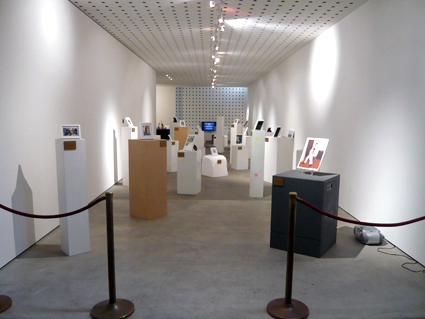
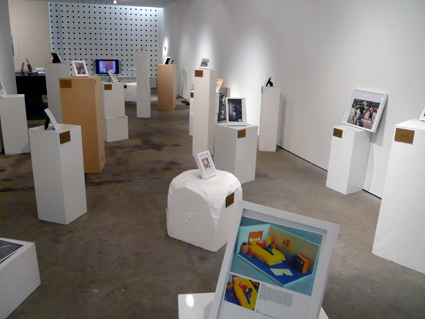
    Curated by Mark Feary, this is a deliciously ironic exhibition that asks the audience to question the social and political construction of the blockbuster exhibitions regularly held by large museums around Australia; to question the role of the curator in assembling such exhibitions; and to question the cultural value of permanent collections of ‘Masterpieces’. Autumn Masterpieces displays work that is anything but permanent and undermines the process whereby museums construct frameworks for social understanding. The work, displayed in a roped off space on plinths of various heights, in cheap frames and at skew-whiff angles, seems ephemeral and transitory all the more to contradict both main tenants of the title of the exhibition: masterpiece and permanence.

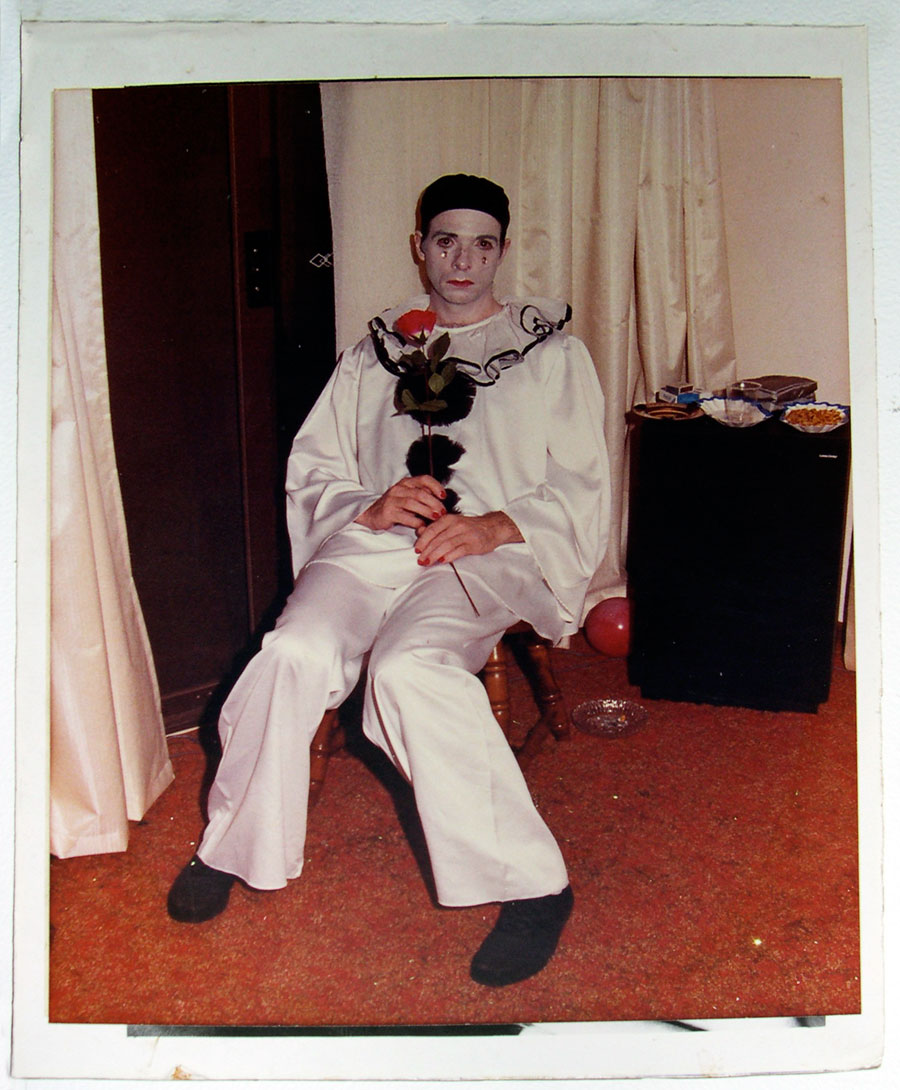
    Sitting on plinths that are adorned with plastic gold name plaques emblazoned with the condition of the possibility of the works existence, “From the collection of …” , the untitled works reinforce the conceptual thrust of the exhibition. In one sense the content of the specific images seemed almost irrelevant; in another the collective dialectical argument of the images deconstructs normative interpretations of the masterpiece. ‘Instructions for the Tourist’ and ‘Rules for How to use the playground’ sit next to photographs of dejected clowns; ‘Confusion & Reversals’ sit next to ambiguous photographs of events and actions: people doing ‘normal’ things displayed though Polaroids, newspaper clippings, snapshots, photographs from albums, black and white and colour, framed and in museological glass cases.

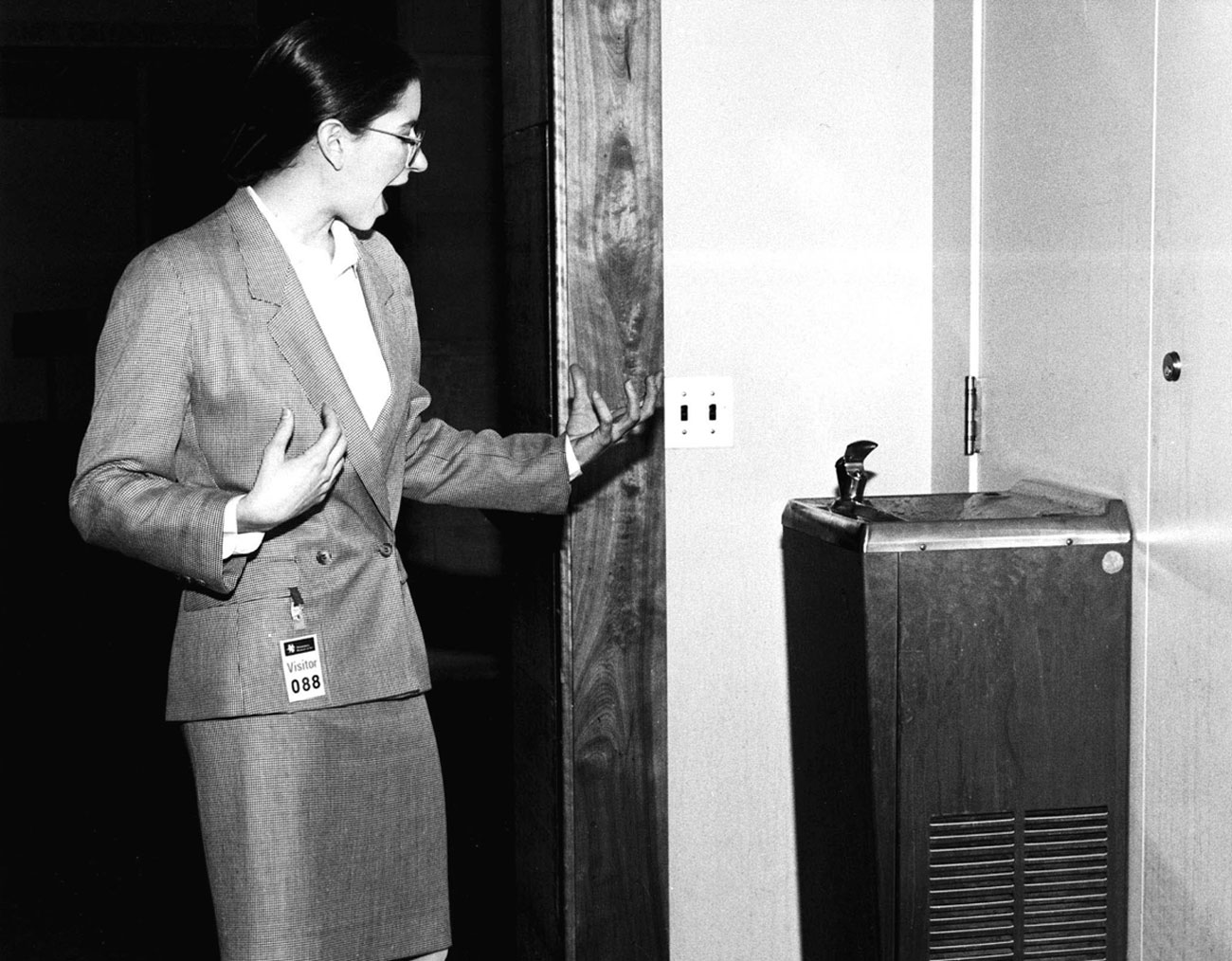
    The highlight of the exhibition for me was the guffaw inducing DVD Museum Highlights: A Gallery Talk (1989) by American artist Andrea Fraser. Where Mark Feary found this post-cultural gem is beyond me but I am so glad he did! I stood transfixed as the narrator / curator takes us on a virtual tour of the Philadelphia Museum of Art, along the way pointing out the magnificence and subliminal beauty of the objects in the museum. She stresses the decorum of the institution, it’s tradition in measured, ordered, dignified arrangements that are fine and simple while addressing a water fountain. Oh the deliciousness! She continues with the exultation of the institution, that is to develop an appreciation of values – true / false, better / worse, right / wrong, what is good for you / what is good for society – standards that should be adopted by a discriminating public, while addressing a broom cupboard. The piece subverts an approach “in which visitors’ individual meanings are only validated by the extent to which they concord with the conclusions intended by exhibition-makers or to which they conform to some predetermined and fixed standard truth.”1 And so it goes in an ever so serious, side-splitting soliloquy, critiquing the functions of art, linking the aspirations of humanity with the highest privileges of wealth and leisure. Wonderful!

    Dr Marcus Bunyan


    1/ Hein, George E. Learning in the Museum. London: Routledge, 1998 quoted in Sandell, Richard. “Reframing conversations,” in Museums, Prejudice and the Reframing of Difference. London and New York: Routledge, p. 179.


    Many thanks to Mark Feary and the CCP for allowing me to use the images in the posting. Please click on the last photographs in the posting for a larger version of the image. All installation photographs © Marcus Bunyan


    Installation view of the exhibition 'Autumn Masterpieces: Highlights from the Permanent Collection' at the Centre for Contemporary Photography, Melbourne

    Installation view of the exhibition 'Autumn Masterpieces: Highlights from the Permanent Collection' at the Centre for Contemporary Photography, Melbourne

    Installation view of the exhibition 'Autumn Masterpieces: Highlights from the Permanent Collection' at the Centre for Contemporary Photography, Melbourne

    Installation view of the exhibition 'Autumn Masterpieces: Highlights from the Permanent Collection' at the Centre for Contemporary Photography, Melbourne

    Installation view of the exhibition 'Autumn Masterpieces: Highlights from the Permanent Collection' at the Centre for Contemporary Photography, Melbourne


    Installation views of the exhibition Autumn Masterpieces: Highlights from the Permanent Collection at the Centre for Contemporary Photography, Melbourne
    Photos: Marcus Bunyan


    Courtesy of the collection of Tony Garifalakis from the exhibition 'Autumn Masterpieces: Highlights from the Permanent Collection' at the Centre for Contemporary Photography (CCP), Fitzroy, Melbourne, March - May, 2010


    Courtesy of the collection of Tony Garifalakis


    Courtesy of the collection of Irene Hanenbergh from the exhibition 'Autumn Masterpieces: Highlights from the Permanent Collection' at the Centre for Contemporary Photography (CCP), Fitzroy, Melbourne, March - May, 2010


    Courtesy of the collection of Irene Hanenbergh


    Courtesy of the collection of Hany Armanious from the exhibition 'Autumn Masterpieces: Highlights from the Permanent Collection' at the Centre for Contemporary Photography (CCP), Fitzroy, Melbourne, March - May, 2010

    Courtesy of the collection of Hany Armanious


    Courtesy of the collection of Hany Armanious


    Andrea Fraser. 'Museum Highlights: A Gallery Talk' 1989 from the exhibition 'Autumn Masterpieces: Highlights from the Permanent Collection' at the Centre for Contemporary Photography (CCP), Fitzroy, Melbourne, March - May, 2010


    Andrea Fraser (American, b. 1965)
    Museum Highlights: A Gallery Talk
    1989
    DVD (colour video with sound. 29′)
    Courtesy of the artist and Friedrich Petzel Gallery, New York


    Centre for Contemporary Photography

    No permanent exhibition space at the moment

    Centre for Contemporary Photography website

    LIKE ART BLART ON FACEBOOK

    Back to top