Exhibition marking the 100th birthday of Kurt Kranz 19th November 2010 – 29th May 2011
Kurt Kranz (German, 1910-1997) Perspective 1931 Ingrid Kranz / Stiftung Bauhaus Dessau Foto: Lars Lohrisch / Abdruck mit Genehmigung der Kunsthalle
One of the great pleasures of publishing this archive is that I get to research the life of an artist whose work I never knew before. Kurt Kranz is one such artist.
Dr Marcus Bunyan
Many thankx to the the Bauhaus Dessau for allowing me to publish the photographs in the posting. Please click on the photograph for a larger version of the image.
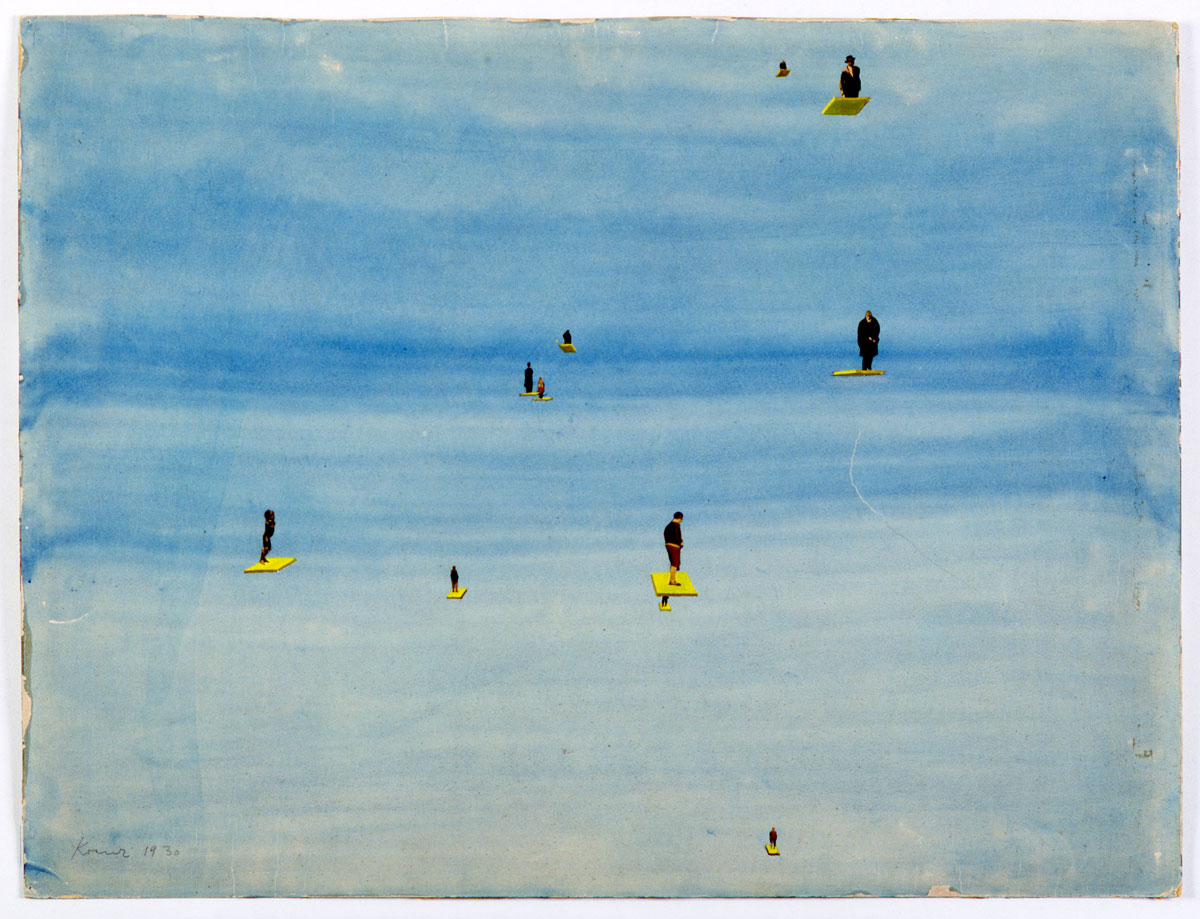
Kurt Kranz (German, 1910-1997) Vereinsamung (Isolation) Dessau 1930 Ingrid Kranz / Stiftung Bauhaus Dessau Leihgeber: Kunsthalle Bremen
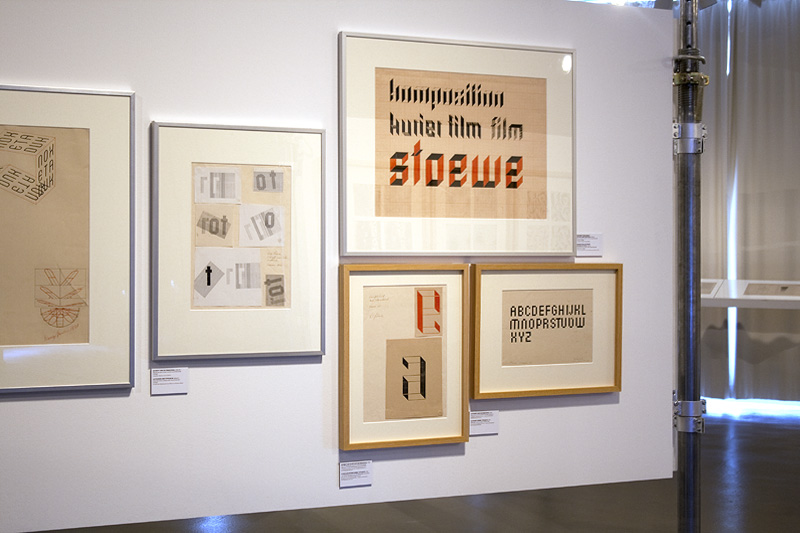
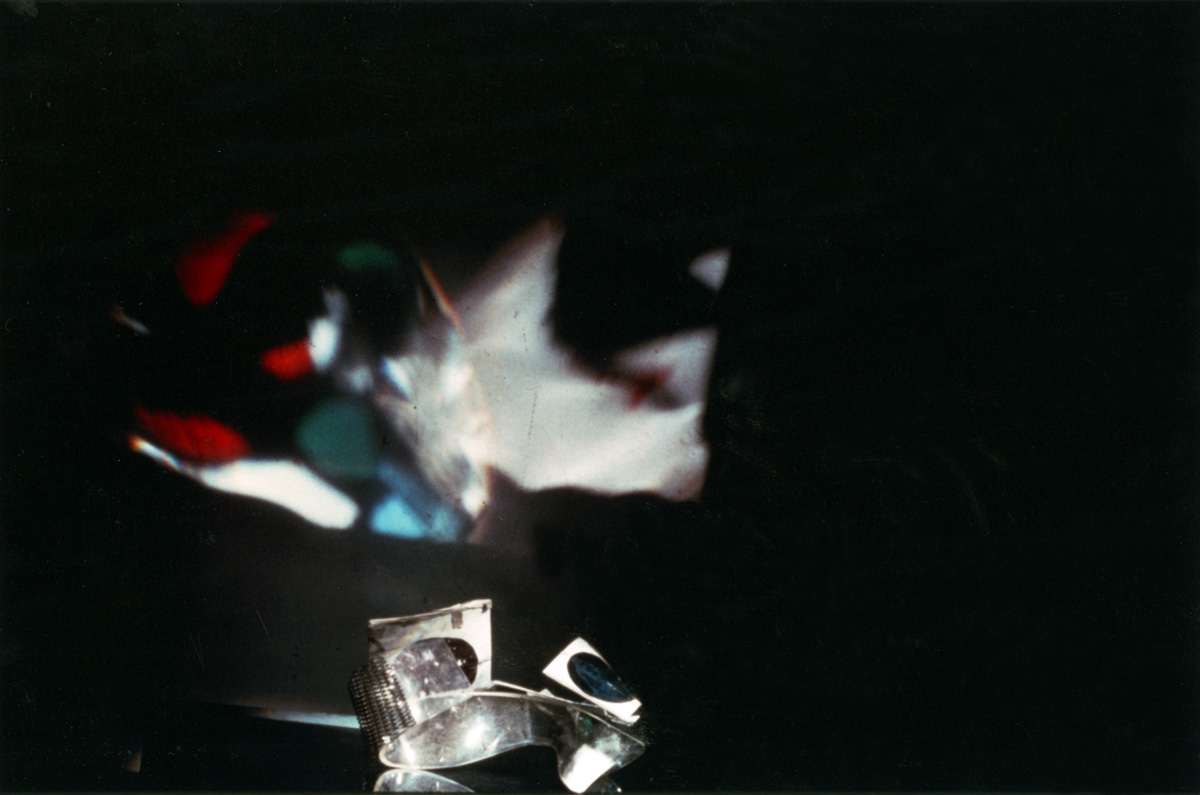
Installation photograph of Programming of Beauty by Kurt Kranz at the Bauhaus Dessau
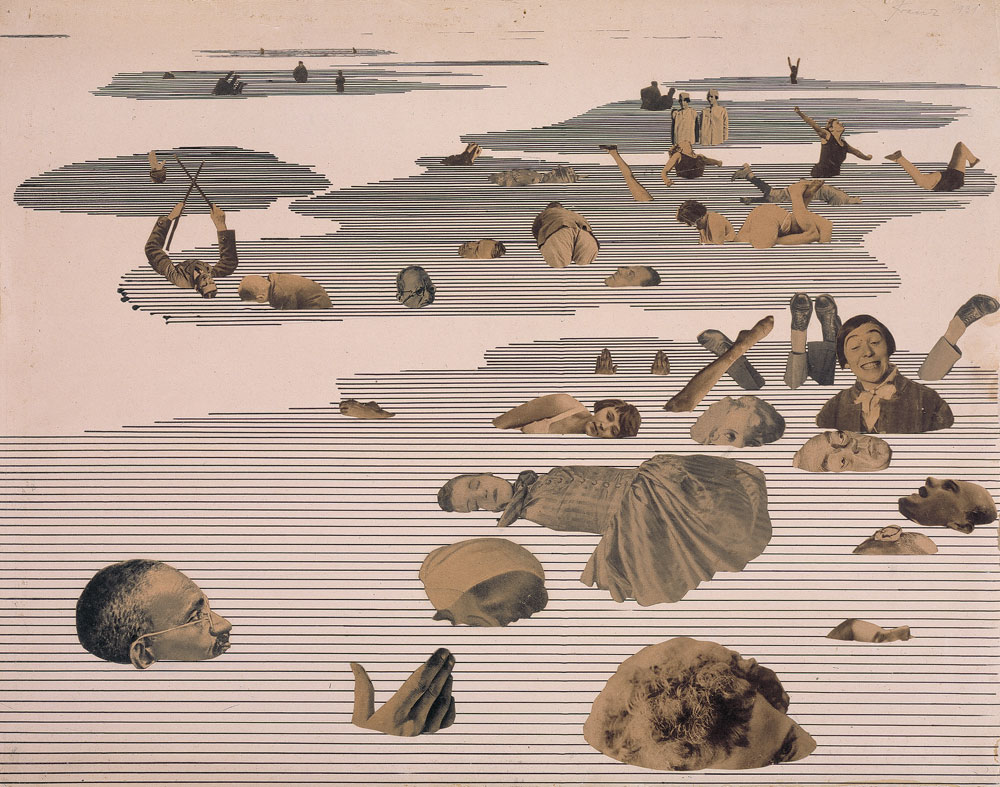
Kurt Kranz (German, 1910-1997) Versinkende (Sinking one) 1931 Ingrid Kranz / Stiftung Bauhaus Dessau
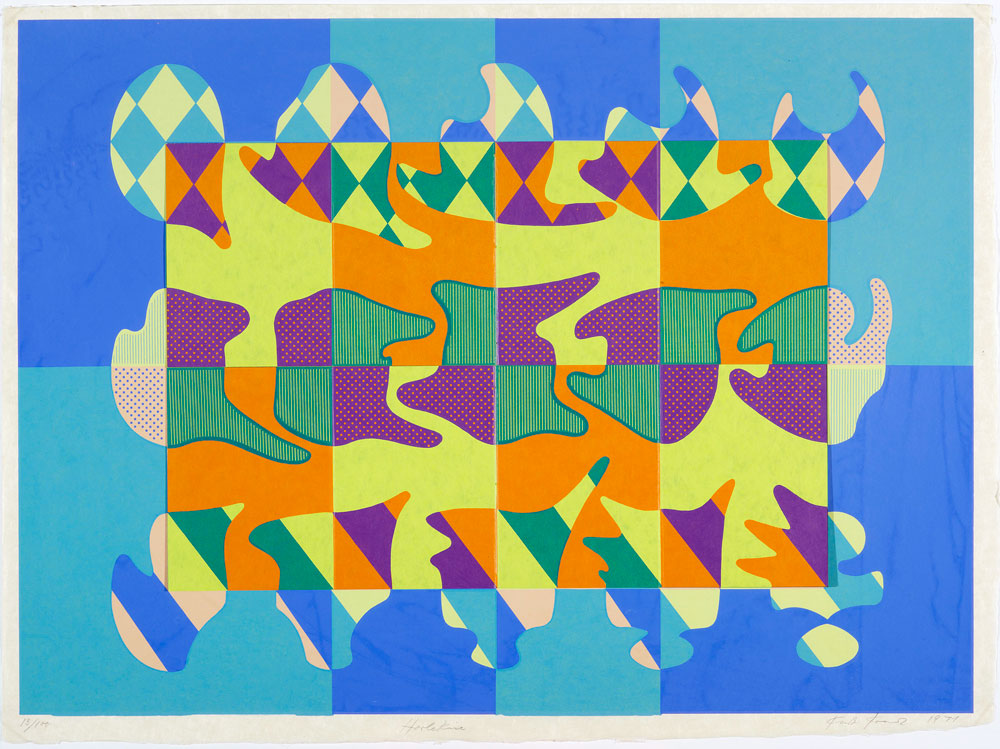
Kurt Kranz (German, 1910-1997) Persischer Garten (Persian garden) 1970 Ingrid Kranz / Stiftung Bauhaus Dessau Foto: Uwe Jacobshagen
The Bauhaus Dessau dedicates a comprehensive exhibition to the painter, graphic designer and photographer Kurt Kranz to mark his 100th birthday. In 1930, the then twenty-year-old lithographer came from Bielefeld to study at the Bauhaus Dessau, where he soon established himself as a pioneer of serial and generative methods. With his avant-garde work, Kranz’s methods anticipated those of later generations.
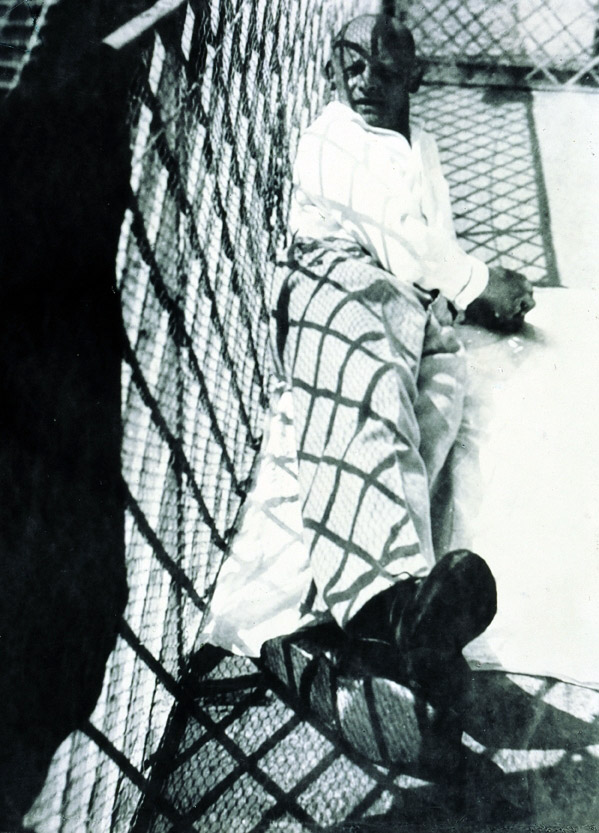
Inspired by a lecture by László Moholy-Nagy, Kurt Kranz came to the Bauhaus Dessau in April 1930. In Walter Peterhans’s photography class, Kranz began to experiment with photographic techniques and created some of the most striking abstract picture series to emerge from the Bauhaus. Alienated and abstracted faces and hands appear repeatedly in his dynamic picture series. These show Kranz’s early affinity for film as, page for page, the abstract forms interact with one another. Kranz drafted his first concepts for abstract films at the Bauhaus, although he was first able to realise these decades later in 1972.
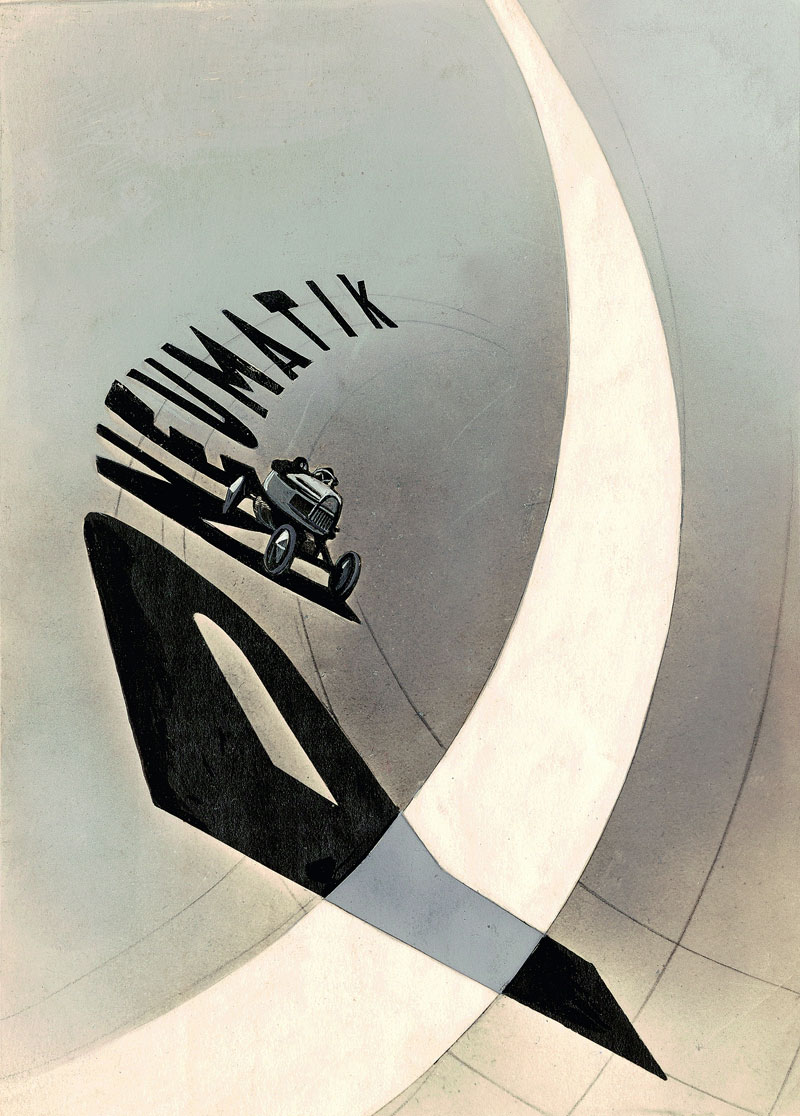
The exhibition to mark the artist’s 100th birthday shows works from Kranz’s Bauhaus years and his later work as an advertising graphic designer, and focuses on a selection of his large picture cycles. Strikingly diverse leporellos dating from the 1960s onwards take centre stage, as do the so-called “Matrix-und Schiebebilder”
Text from the Bauhaus Dessau website
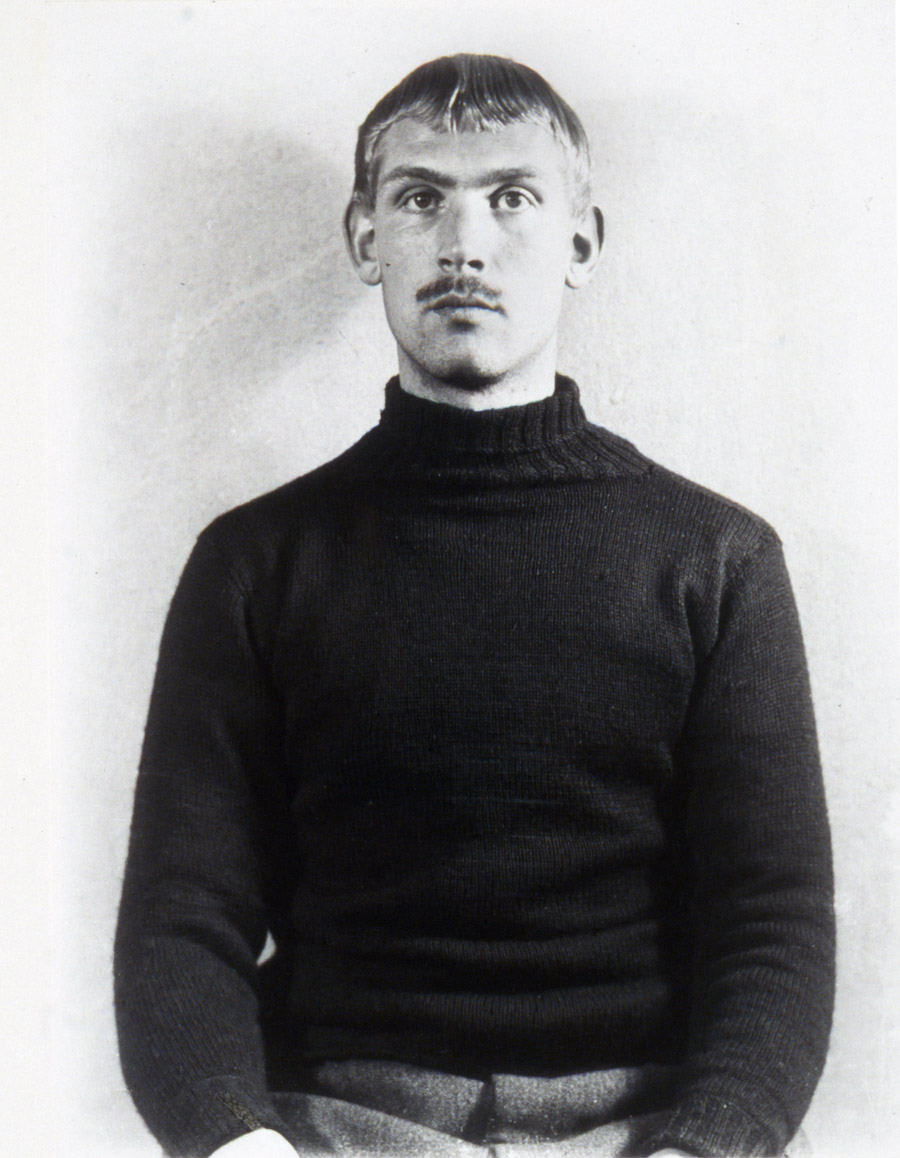
Kurt Kranz (German, 1910-1997) Selbstporträt en face (objektives Foto) (Self-portrait with face (objective photo)) 1931 Ingrid Kranz / Stiftung Bauhaus Dessau
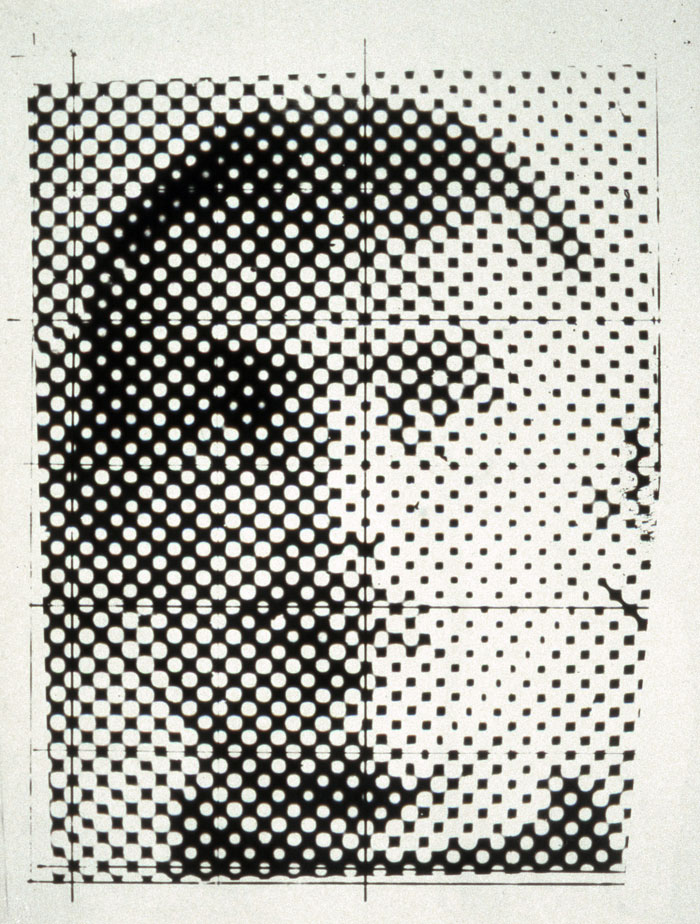
Kurt Kranz (German, 1910-1997) Rasterfoto (Raster photograph) 1932 Ingrid Kranz / Stiftung Bauhaus Dessau
Kurt Kranz (German, 1910-1997) Schwarz: Weiß (Black: White) 1928-1929 Ingrid Kranz / Stiftung Bauhaus Dessau Privatbesitz
Kurt Kranz (German, 1910-1997) Schwarz: Weiß (Black: White) 1928-1929 Ingrid Kranz / Stiftung Bauhaus Dessau Privatbesitz
Kurt Kranz (German, 1910-1997) Schwarz: Weiß (Black: White) 1928-1929 Ingrid Kranz / Stiftung Bauhaus Dessau Privatbesitz
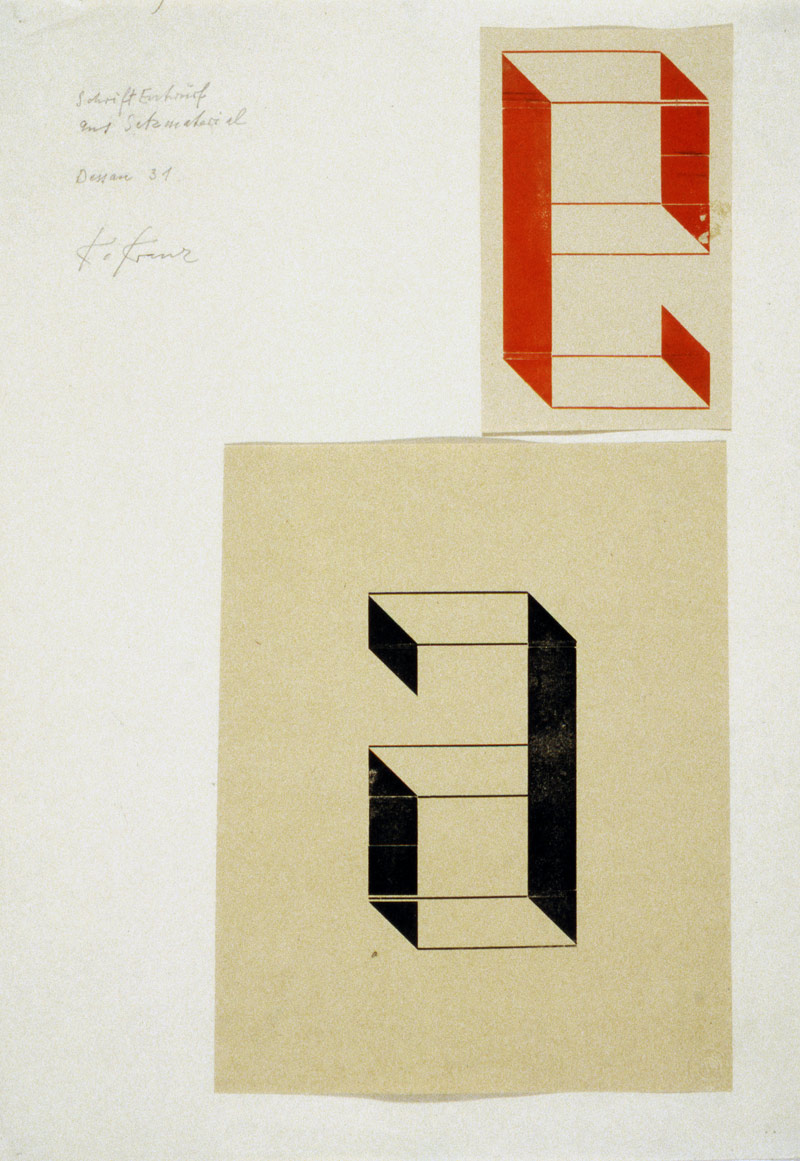
Kurt Kranz (German, 1910-1997) Schrift Entwurf aus Satzmaterial (Writing draft from sentence material) Dessau 1931 Ingrid Kranz / Stiftung Bauhaus Dessau
Kurt Kranz (German, 1910-1997) Aus der Serie “Sieben Schritte zum symmetrischen Oval” (From the series “Seven steps to the symmetrical Oval”) 1982 Ingrid Kranz / Stiftung Bauhaus Dessau Foto: Uwe Jacobshagen
Exhibition dates: 28th September 2010 – 30th January, 2011
Gerhard Gronfeld (German, 1911-2000) Arrival at the transit camp 1942
Female forced labourers from the Soviet Union on their arrival at the Berlin-Wilhelmshagen Transit Camp, December 1942.
Source: Deutsches Historisches Museum, Berlin
This is an emotional and sobering posting.
The photograph of the Liberated forced laborer with tuberculosis by an unknown photographer (1945, below) is as heartbreaking as the photograph of a mother and child, Tomoko Uemura in Her Bath, Minamata (1972) by Eugene Smith. The look on the man’s face when I first saw it made me burst into tears… it is difficult to talk about it now without being overcome. An unknown man photographed by an unknown photographer.
There is something paradoxical about the solidity of the doctor’s steel helmet, his uniform and the fact he is a doctor contrasted with the strength, size and gentleness of his hand as it rests near the elbow of this emaciated man, this human … yet the intimacy and tenderness of this gesture, as the man stares straight into the camera lens – is so touching that to look at this picture, is almost unbearable. Man’s (in)humanity to man.
Some pertinent facts
The Germans abducted about 12 million people from almost twenty European countries; about two thirds of whom came from Eastern Europe. Many workers died as a result of their living conditions, mistreatment or were civilian casualties of the war. They received little or no compensation during or after the war … At the peak of the war, one of every five workers in the economy of the Third Reich was a forced labourer. According to Fried, in January 1944 the Third Reich was relying on 10 million forced labourers. Of these, 6.5 million were civilians within German borders, 2.2 million were prisoners of war, and 1.3 million were located at forced labor camps outside Germany’s borders. Homze reported that civilian forced labourers from other countries working within the German borders rose steeply from 300,000 in 1939 to more than 5 million in 1944.
Examples
Russian Foreign Civilian Forced Labourers in Nazi Germany (total number approximately): 2,000,000
Russian Number of Known and Estimated Survivors Reported by Reconciliation Foundations: 334,500
(Source: Beyer, John C. and Schneider, Stephen A. “Forced Labour under Third Reich – Part 1” (pdf). Nathan Associates Inc.. 1999.)
Russian “volunteer” POW workers
“Between 22 June 1941 and the end of the war, roughly 5.7 million members of the Red Army fell into German hands. In January 1945, 930,000 were still in German camps. A million at most had been released, most of whom were so-called “volunteer” (Hilfswillige) for (often compulsory) auxiliary service in the Wehrmacht. Another 500,000, as estimated by the Army High Command, had either fled or been liberated. The remaining 3,300,000 (57.5 percent of the total) had perished.”
(Source: Streit, Christian. Keine Kameraden: Die Wehrmacht und die Sowjetischen Kriegsgefangenen, 1941-1945, Bonn: Dietz (3. Aufl., 1. Aufl. 1978))
The remaining 3,300,000 had perished. A sobering figure indeed (if you can even imagine such a number of human beings).
Dr Marcus Bunyan
Many thankx to the Jewish Museum in Berlin for allowing me to publish the photographs in the posting. Please click on the photograph for a larger version of the image.
Unknown photographer Liberated forced laborer with tuberculosis 1945
A doctor of the U.S. Army examines a former forced labourer from Russia who was ill with tuberculosis. The Americans had discovered the sick forced labourers in a barrack yard in Dortmund. Dortmund, 30 April 1945.
Source: National Archives, Washington
Gerhard Gronfeld (German, 1911-2000) Registration at the transit camp 1942
Berlin-Wilhelmshagen Transit Camp, December 1942. Labour office staff registered the forced labourers and handed out employment certificates.
Source: Deutsches Historisches Museum, Berlin
Unknown photographer Humiliation of Bernhard Kuhnt in Chemnitz Nd
The inscription, “Always dignified! The naval fleet’s mutineer Bernh. Kuhnt arrives at his new workplace (washing off the dirt),” refers to the myth that mutinous social democratic and communist sailors were responsible for the defeat of the German empire in the First World War.
Source: Bundesarchiv, Koblenz
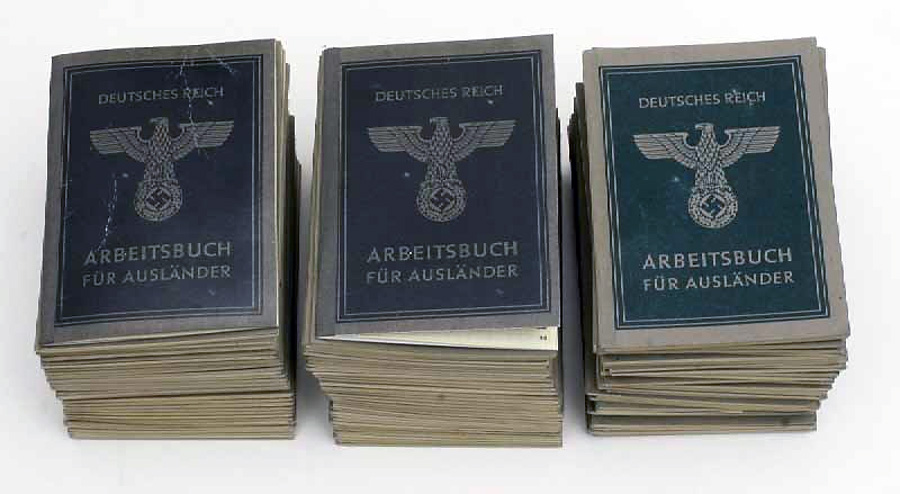
Workbooks issued by the employment office of the German Reich for foreign forced labourers; Buchenwald Concentration Camp Memorial, Weimar
Unknown photographer Selection in a Prisoner of War Camp: Recruitment for Mining 1942
In the summer of 1942, Soviet prisoners of war were selected from the prisoner of war camp Zeithain to perform forced labor in Belgian mines. Source: Gedenkstätte Ehrenhain Zeithain
Selection in a Prisoner of War Camp
In the summer of 1942, Karl Schmitt – head of the Wehrmacht mining division in Liège, Belgium – went to Berlin on vacation with his wife. On the way, he visited the Zeithain prisoner of war camp in Saxony. The Soviet POWs were ordered to present themselves for inspection with the aim of deploying them to Belgian mines under German control. They were accordingly checked for physical fitness. Karl Schmitt decided who was to be transported to Belgium and who was not.
Soviet prisoners of war were frequently put to work in mines. The Reich Security Main Office had ruled that they could be employed only in work gangs kept separate from German workers. The authorities considered the mines particularly suitable in that respect.
Source: Gedenkstätte Ehrenhain Zeithain.
Over 20 million men, women, and children were taken to Germany and the occupied territories from all over Europe as “foreign workers,” prisoners of war, and concentration camp inmates to perform forced labor. By 1942, forced labourers were part of daily life in Nazi Germany. The deported workers from all over Europe and Eastern Europe in particular were exploited in armament factories, on building sites and farms, as craftsmen, in public institutions and private households. Be it as a soldier of the occupying army in Poland or as a farmer in Thuringia, all Germans encountered forced labourers and many profited from them. Forced labor was no secret but a largely public crime.
The exhibition Forced Labor. The Germans, the Forced Laborers, and the War on view at the Jewish Museum in Berlin provides the first comprehensive presentation of the history of forced labor and its ramifications after 1945. The exhibition was curated by the Buchenwald and Mittelbau-Dora Memorials Foundation and initiated and sponsored by the “Remembrance, Responsibility and Future” Foundation. Federal President Christian Wulff has assumed patronage for the exhibition. The exhibition’s first venue on its international tour is the Jewish Museum Berlin, other venues are planned in European capitals and in North America.
Forced labor was without precedent in European history. No other Nazi crime involved so many people – as victims, perpetrators, or onlookers. The exhibition provides the first comprehensive presentation of the history of this ubiquitous Nazi crime and its ramifications after 1945. It shows how forced labor was part of the Nazi regime’s racist social order from the outset: The propagated “Volksgemeinschaft” (people’s community) and forced labor for the excluded belonged together. The German “Herrenmenschen” (superior race) ruthlessly exploited those they considered “Untermenschen” (subhumans). The ordinariness and the broad societal participation of forced labor reflect the racist core of Nazism.
The exhibition pays special attention to the relationships between Germans and forced labourers. Every German had to decide whether to treat forced labourers with a residual trace of humanity or with the supposedly required racist frostiness and implacability of a member of an allegedly superior race. How Germans made use of the scope this framework reveals something not only about the individuals but also about the allure and shaping power of Nazi ideology and practice. Through this perspective, the exhibition goes beyond a presentation of forced labor in the narrow sense to illustrate the extent to which Nazi values had infiltrated German society. Forced labor cannot be passed off as a mere crime of the regime but should rather be considered a crime of society.
Over 60 representative case histories form the core of the exhibition. As is true of the majority of documents on show, they resulted from meticulous investigations in Europe, the USA, and Israel. Moreover the exhibition team viewed hundreds of interviews with former forced labourers that have been carried out in recent years. In terms of content, these case histories range from the degrading work of the politically persecuted in Chemnitz through the murderous slave labor performed by Jews in occupied Poland to daily life as a forced labourer on a farm in Lower Austria.
Among the surprises of the extensive international archival research was discovering unexpectedly broad photographic coverage of significant events. The photos relating to the case histories represent the second pillar of the exhibition. Whole series of photos were traced back to their creator and the scene and people depicted. This presentation, based on well-founded sources, allows quasi dramatic insight into aspects of forced labor. Cinematically arranged photo or photo-detail enlargements form the introduction to the continued inquiry into the history of forced labor.
The exhibition is divided into four sections. The first covers the years from 1933 to 1939 and unveils in particular how the racist ideology of Nazi forced labor struck roots. What was propagated up to the beginning of WWII, partly laid down in laws and widely implemented by society in practice, formed the basis for the subsequent radicalisation of forced labor in occupied Europe culminating in extermination through labor. This escalation and radicalisation is the focus of the second section of the exhibition. The third part covers forced labor as a mass phenomenon in the Third Reich from 1941/1942, ending with the massacre of forced labourers at the end of the war. The fourth section explores the period from the time of liberation in 1945 to society’s analysis and recognition of forced labor as a crime today. Former forced labourers have the last word.
Press release from The Jewish Museum website
Unknown photographer Daimler facility in Minsk 1942
Female forced laborers of the Daimler facility in Minsk, September 1942.
Source: Mercedes-Benz Classic, Archive, Stuttgart
Minsk: German firms in occupied Eastern Europe
In Minsk, a town which had suffered major destruction, Daimler-Benz ran a large repair facility for motorised Wehrmacht vehicles. Together, Daimler and Organisation Todt set up more than thirty repair sheds on the grounds of a ruined military base. With a workforce of five thousand, the facility was soon one of the largest enterprises in occupied Eastern Europe. The management exploited prisoners of war and members of the local population, among them Jews. Labourers were also deported from White Russian villages to the Minsk works as part of the effort to crush the partisan movement.
In the occupied areas of Eastern Europe, many German companies took advantage of the opportunity to take over local firms or establish branch operations. The unlimited availability of labourers was an important factor in their business strategies.
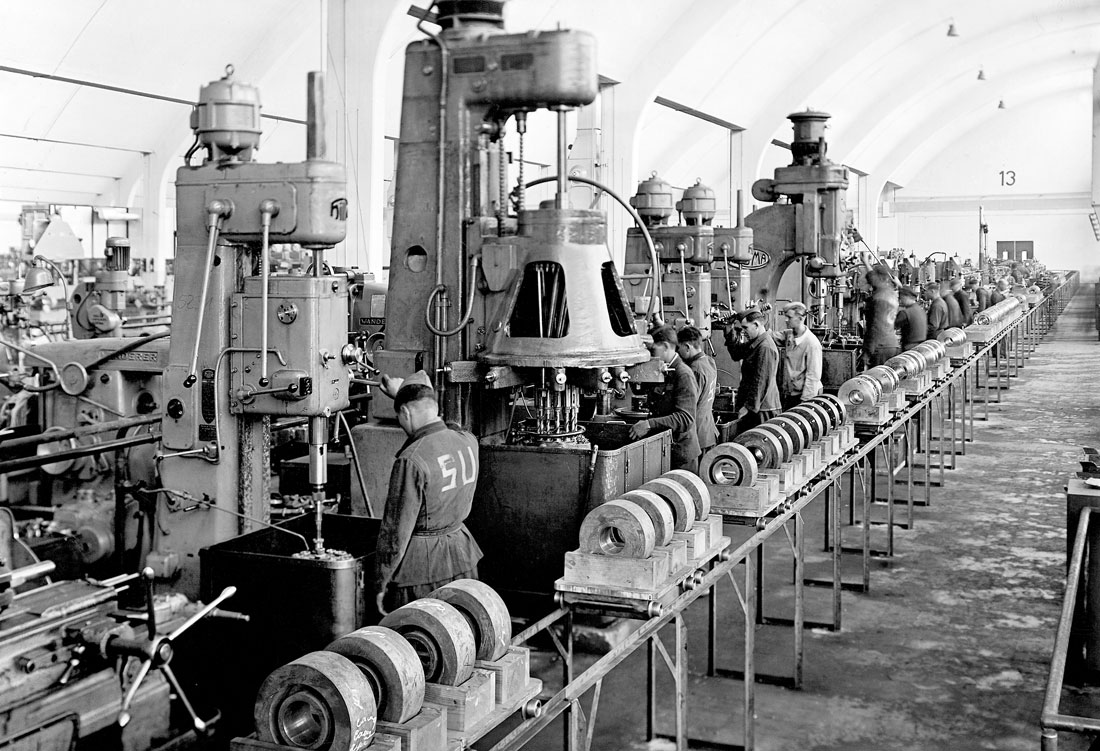
Unknown photographer Foreign workers at BMW in Allach c. 1943
All the foreigners in aircraft engine production had to be visibly identifiable as such. The Soviet prisoners of war had the “SU” symbol on their jackets. Concentration camp inmates could be recognised by their striped uniforms. These photographs were most likely propaganda photos. Munich-Allach, c. 1943.
Source: BMW Group Archiv.
Munich-Allach: Working for BMW
Toward the end of the war ninety percent of the workforce at the largest aircraft engine factory in the German Reich – BMW’s plant in Munich-Allach – consisted of foreign civilian workers, POWs and concentration camp inmates. The number of workers had risen from 1,000 in 1939 to more than 17,000 in 1944.
Forced labourers worked not only in the assembly halls, but also on the factory’s expansion. Due to BMW’s importance to the armament industry, the authorities gave it priority over other companies in the assignment of workers. Nevertheless, its personnel demand was never completely met.
Some of the Western European workers lived in private quarters. For all others, barrack camps were set up all around the factory grounds until 1944, ultimately accommodating 14,000 people. That figure included several thousand concentration camp inmates which the company management had applied for already in 1942.
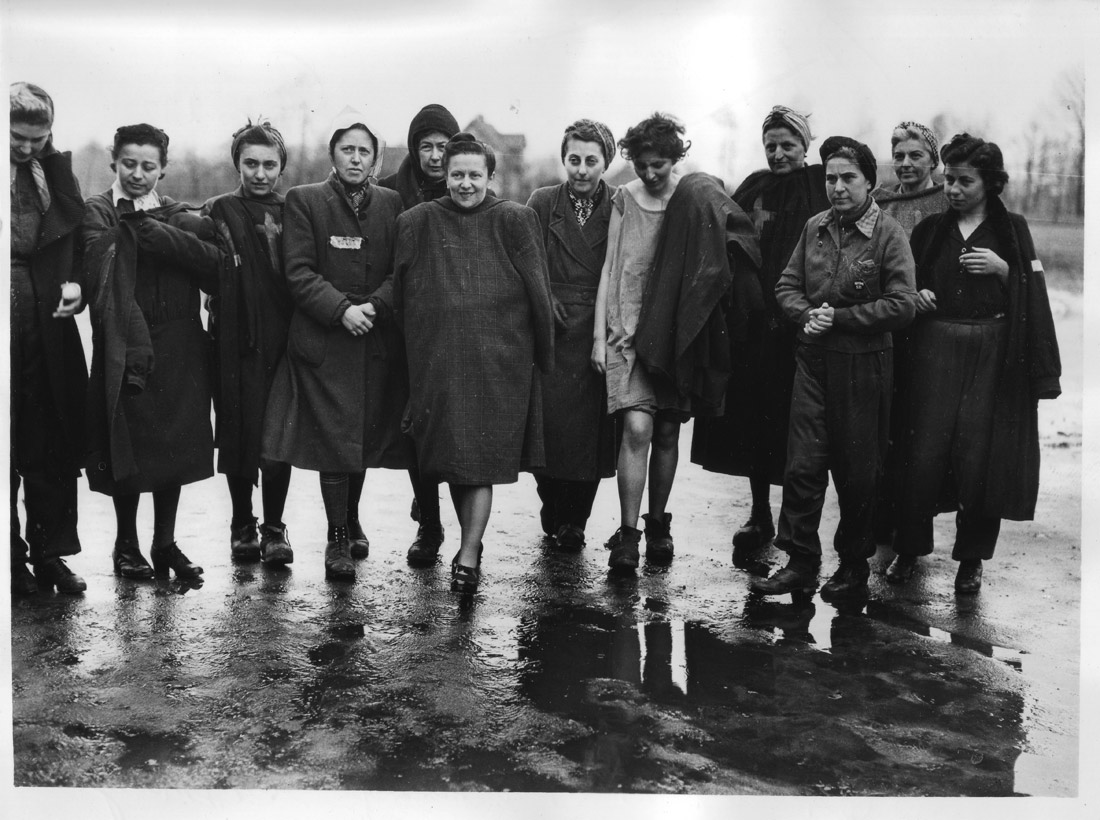
These young Jewish women were released from a forced labor camp at Kauritz (Saxony) by U.S. Army troops in early April, 1945. They are part of a large group removed from homes in France, Holland, Belgium and other occupied areas in Europe.
Source: National Archives, Washington
Unknown photographer Wladyslaw Kolopoleski Nd
“In addition to the hard work, which exceeded my strength, I was beaten on the slightest provocation, sometimes to the point of unconsciousness. Once, for example, I suffered a severe head injury after I was beaten by Max Ewert, an SA officer. I not only lost consciousness, but I had to have head surgery,” wrote Władysław Kołopoleski, a young Pole born in Łódź in 1932. He was deployed in April 1940 on the estate of mayor Max Ewert in Gervin, now Górawino, in Pomerania.
Source: Foundation “Polish-German Reconciliation,” Warsaw
Jewish Museum Berlin Lindenstraße 9-14, 10969 Berlin Phone: +49 (0)30 259 93 300
Many thankx to the Martin-Gropius-Bau, Berlin for allowing me to publish the photographs in the posting. Please click on the photographs for a larger version of the image.
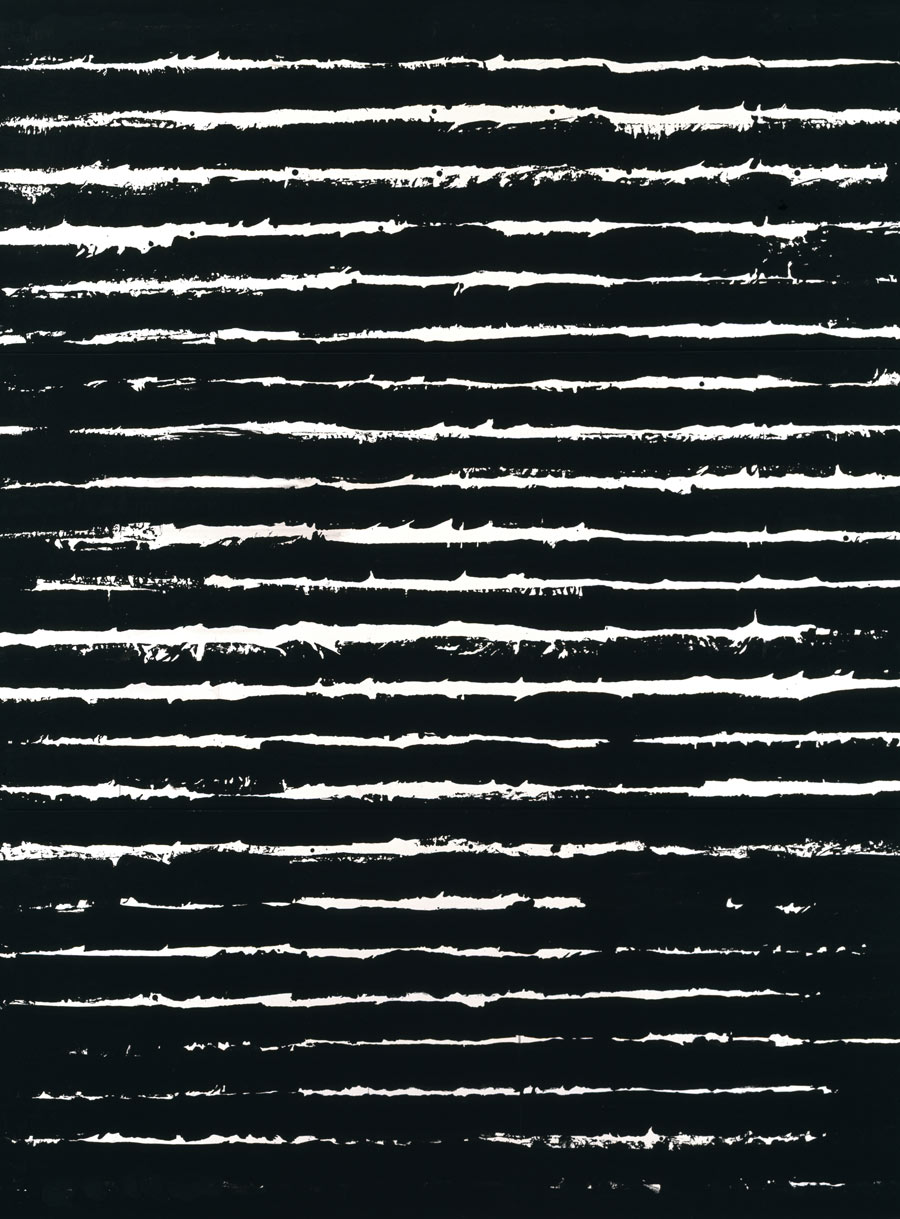
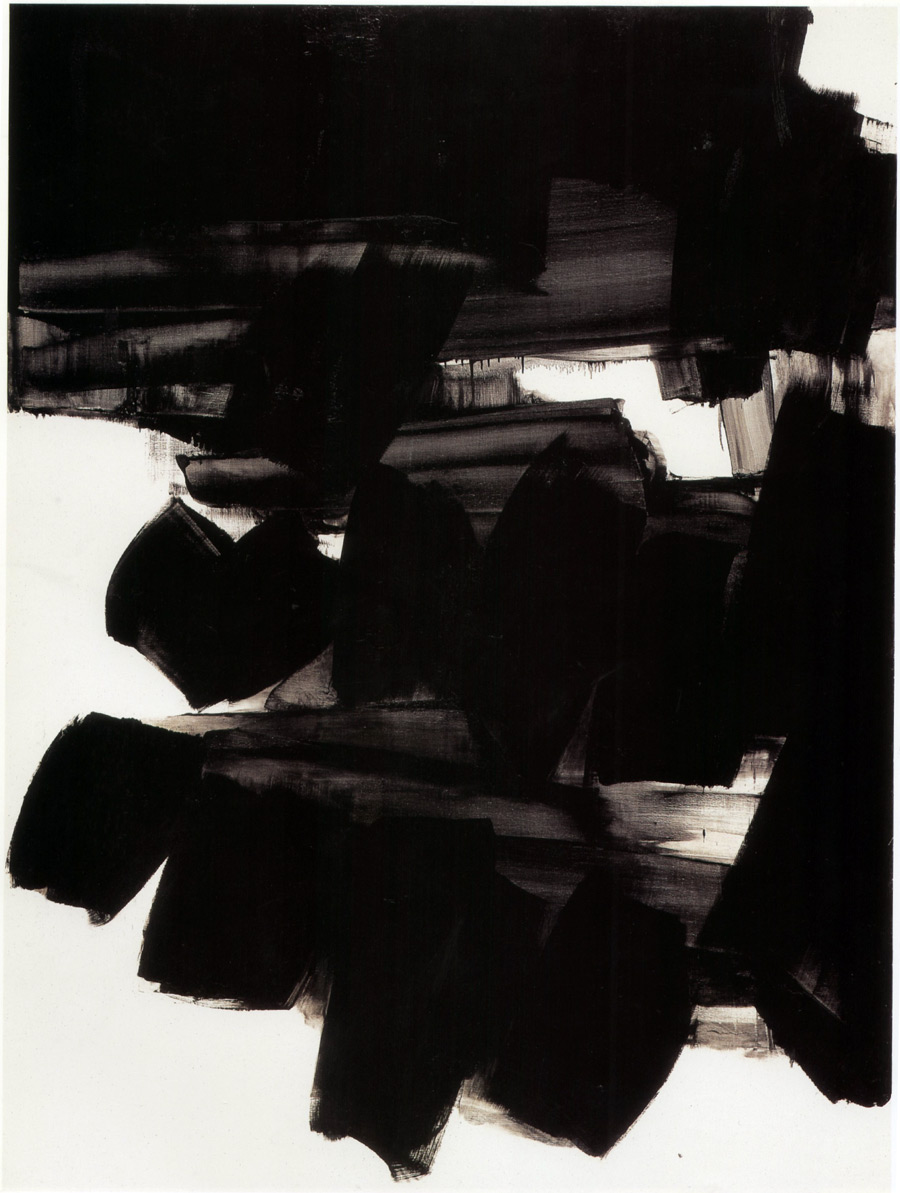
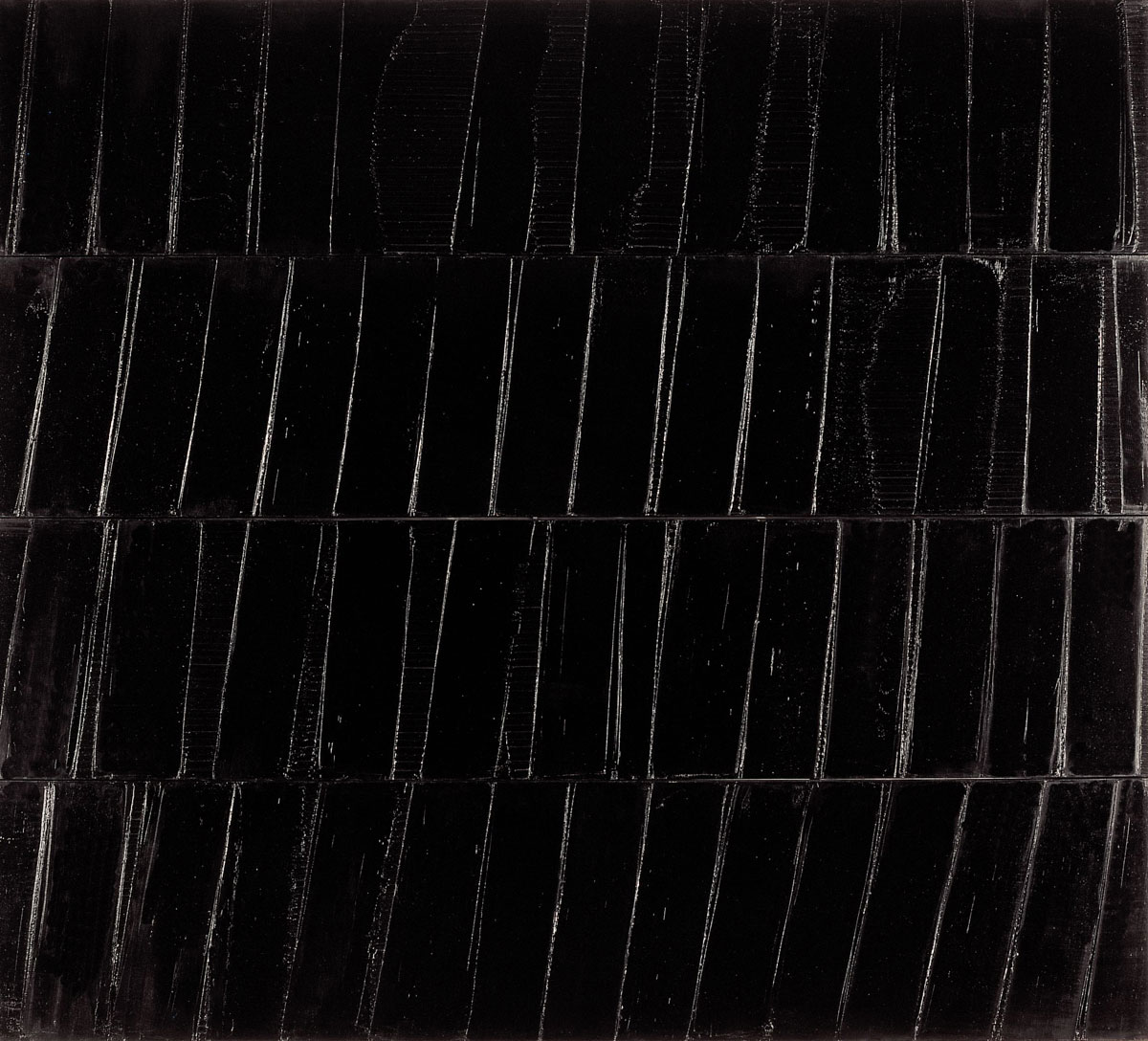
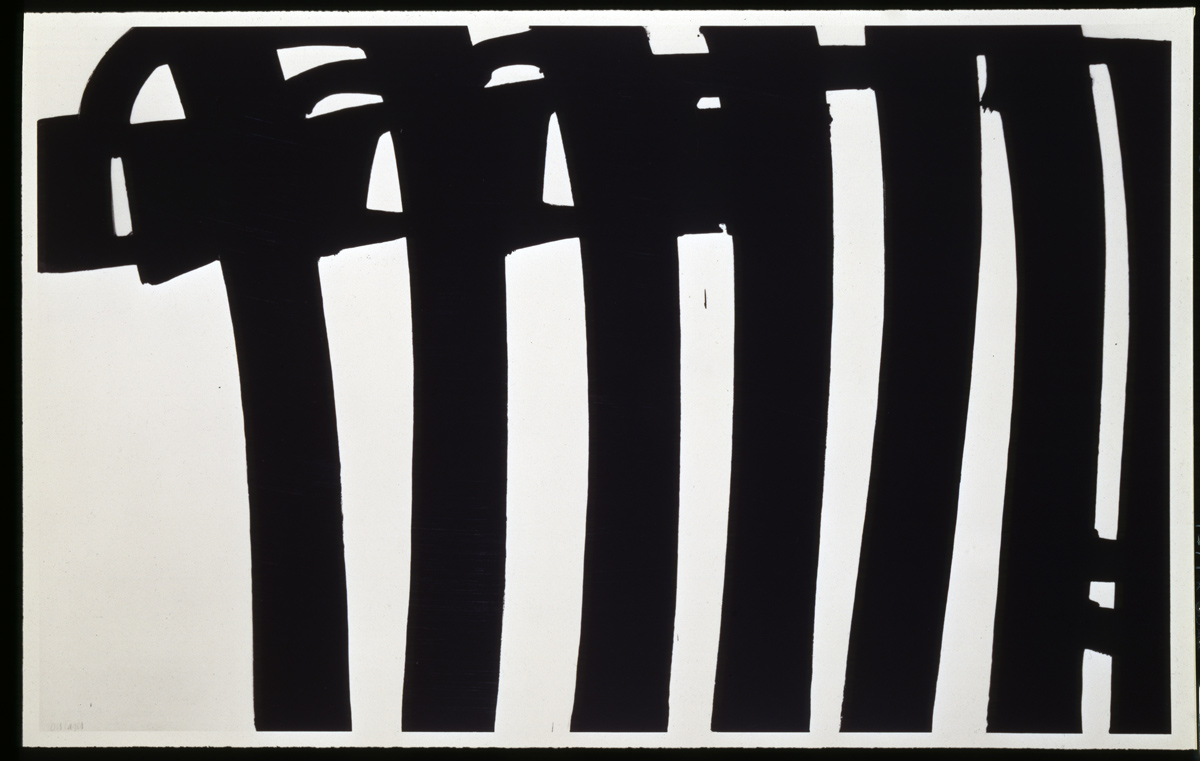
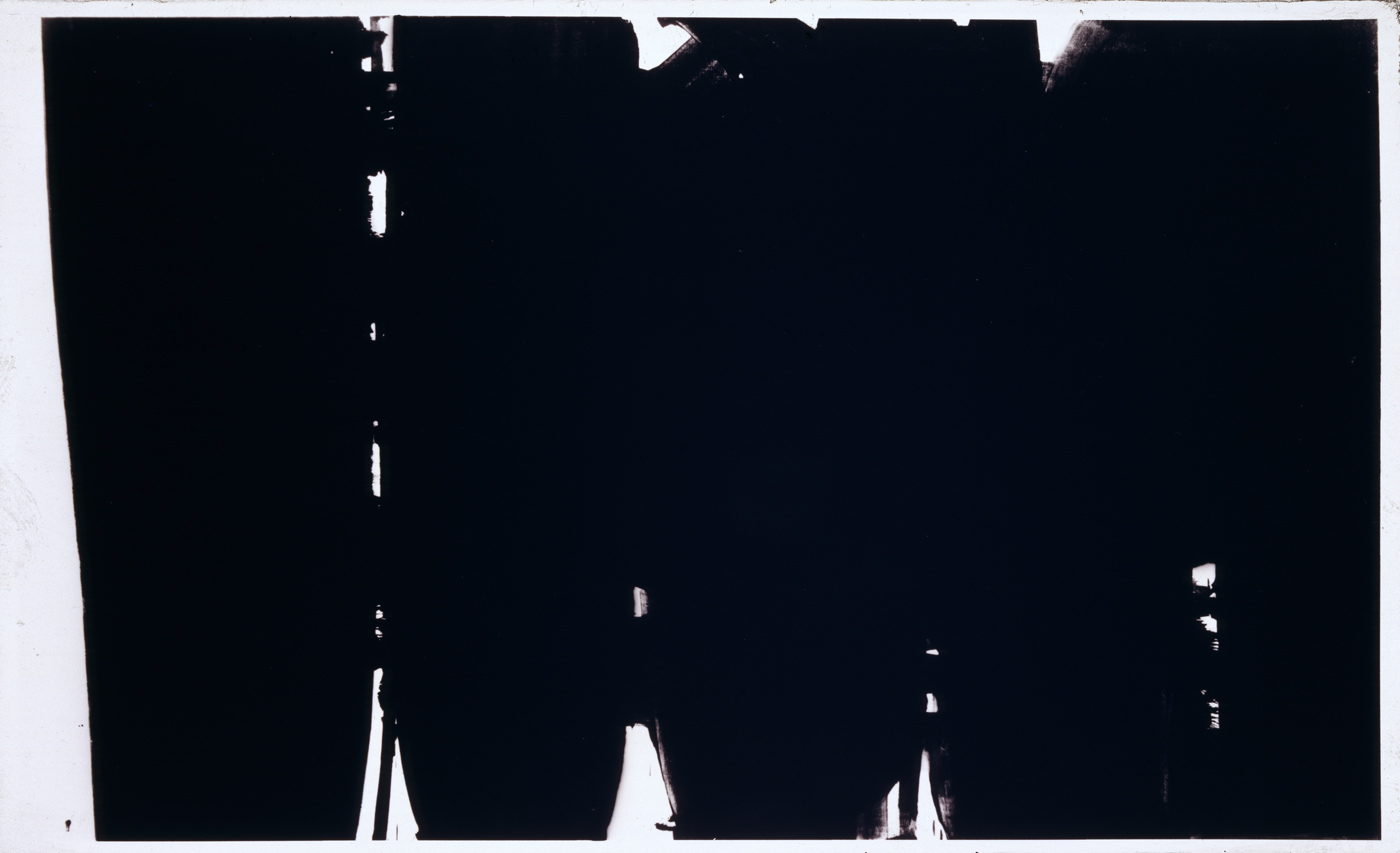
Pierre Soulages is one of the world’s foremost abstract painters of recent decades. On the occasion of his 90th birthday he is being honoured by a retrospective in the Centre Pompidou in Paris. Starting on 2 October 2010 Berlin’s Martin-Gropius-Bau will be showing this exhibition in an altered form.
Over 70 pictures of all his creative periods, from the works with walnut stain (1947 to 1949) to the radically black paintings of recent years measuring up three metres high, are being shown, many of them for the first time in Germany. They illustrate the dynamic artistic development of this most famous of contemporary French artists.
Born on 24 December 1919 in Rodez, a small town located to the north of and roughly equidistant from Toulouse und Montpellier, Pierre Soulages refused to train at the “Ecole nationale superieure des beaux arts” in Paris, being out of sympathy with what he saw as that institution’s retrograde approach to art. Instead he spent the year 1939 visiting exhibitions and familiarising himself with the works of Picasso and Cézanne. But that same year he left Paris and headed south to Montpellier to attend the “Ecole des beaux arts” there. At that time he made the acquaintance of Sonia Delaunay, who showed him catalogues containing what those in power at that time considered to be “degenerate art”. For Soulages this was the justification for working as an abstract artist. After the war he moved to Paris, where he successfully exhibited in the Salon of the Surindépendants. His acquaintanceship with Francis Picabia and Hans Hartung in 1947, and his familiarity with the American scene as represented by such artists as Marc Rothko, Robert Motherwell and Wilhelm de Kooning, show how rapidly he was gaining an international reputation. In 1948, three years after the end of the Second World War, he took part in the then pioneering exhibition “French Abstract Painting”, which was shown in Stuttgart, Hamburg and Düsseldorf. He was the youngest of a group of masters of abstract art, including such names as Kupka, Doméla and Herbin. His participation in Documenta I, II and III brought him recognition in artistic and critical circles.
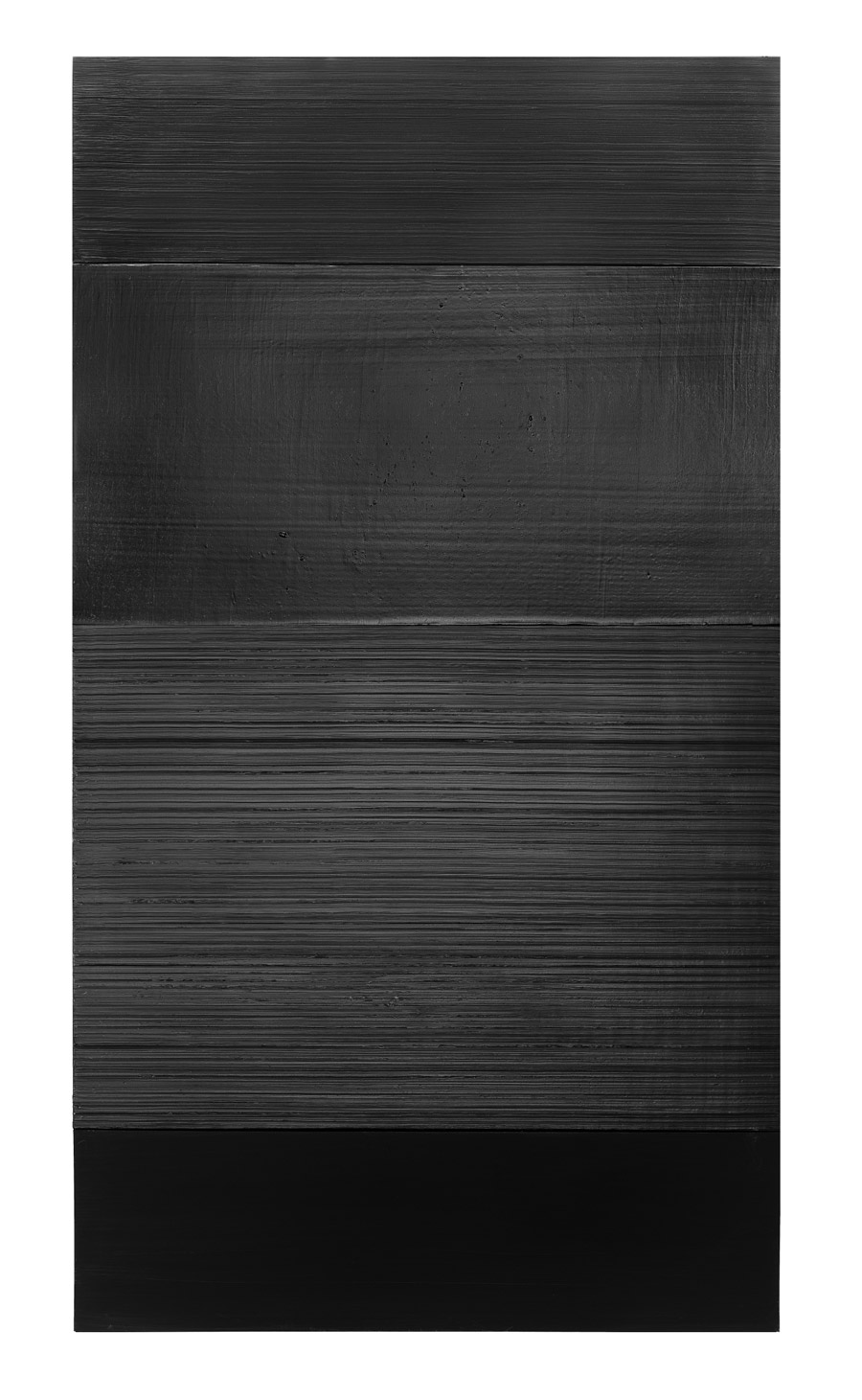
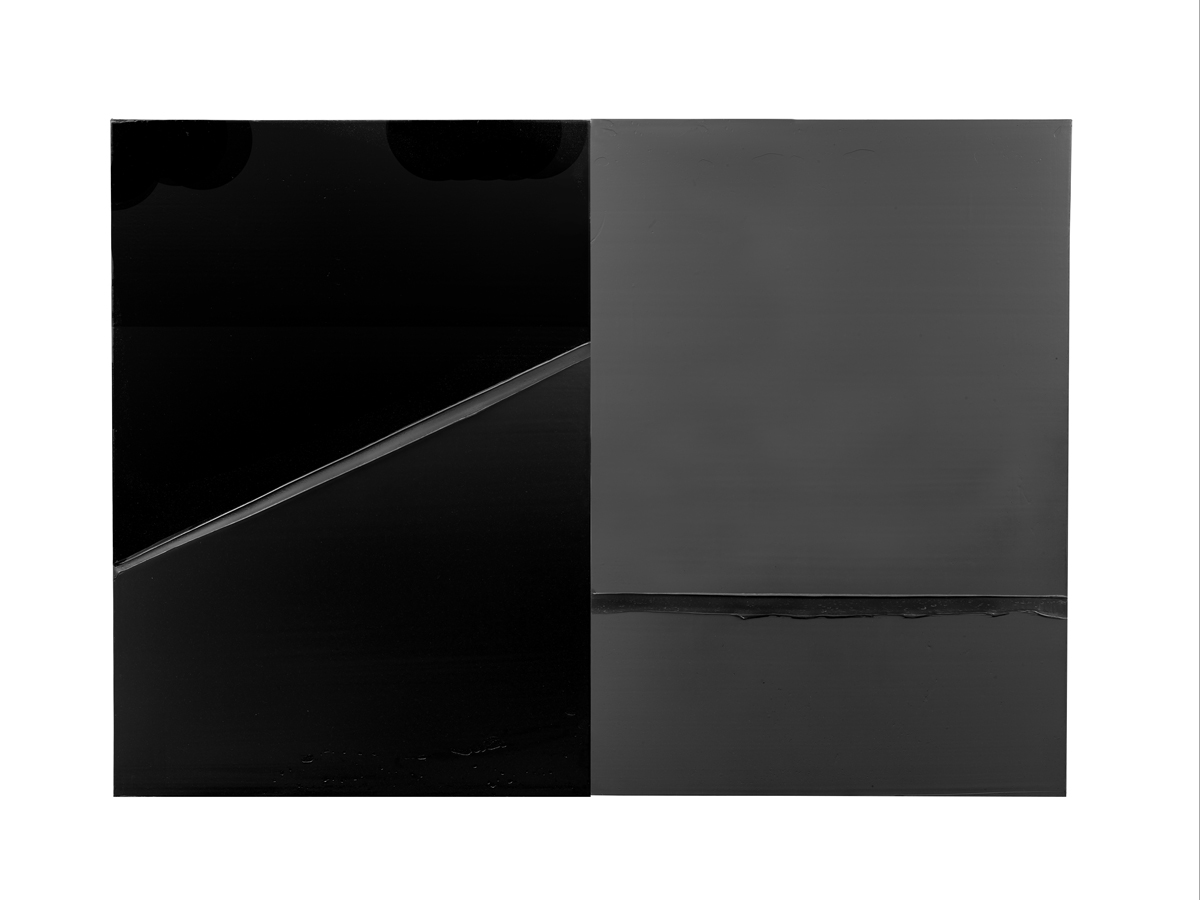
His wayward style, and more specifically his almost exclusive reliance on the colour black, give him a unique place in the world of art, although the American Robert Motherwell produced similar results in some of his works. But only Soulages consistently dedicated his works to the colour black over a period of decades, before finally turning to light.
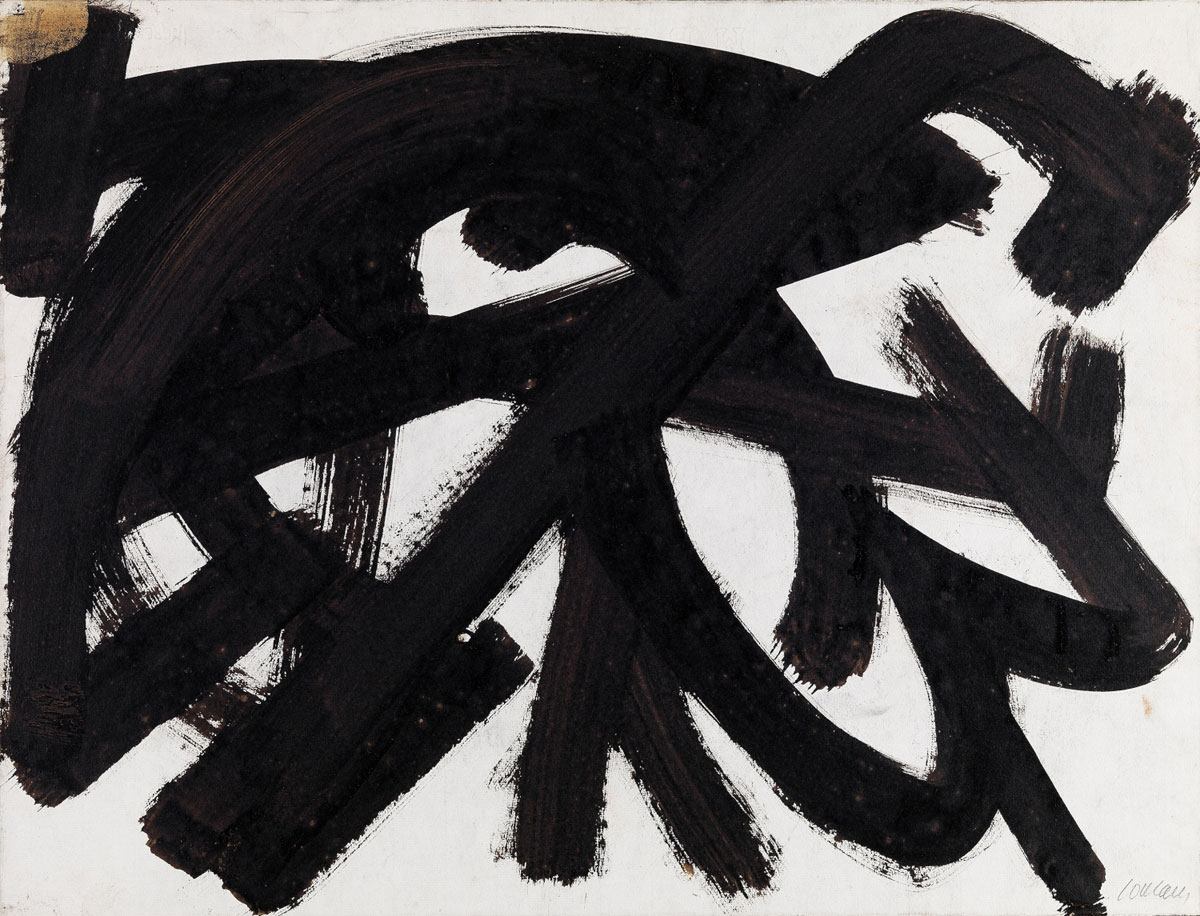
His “outrenoir”, a term coined by Soulages for the use of black in his work, swallows up light, especially in his works on paper, achieving a particular sense of depth. “Outrenoir”, which may be translated as “the other side of black”, or “beyond black”, does not exclude, but draws the observer into the picture, inducing him to make a close and precise examination of the work by holding his gaze.
Like many painters, Pierre Soulages is fascinated by the phenomenon of light. He seeks obsessively for ways of letting light operate in the colour black. Works in which black is accompanied by a second colour such as blue or red remain the exception.
His individual style, characterised by strong bold lines and occasional calligraphic elements, is an important organising principle in his works. “I found small brushes only for the exact work, as was necessary and important in the art of the 19th century and earlier – Picasso himself worked with fine brushes in his early works. But for me there was no question of that. I wanted to try something quite different, so I went into a paint shop in Paris and bought myself broad brushes and rollers of the kind used for house-painting.” By using this technique in combination with a dark walnut stain known as “de noix” he created his first masterpieces, one of which was bought by the Museum of Modern Art in New York as early as 1948.
His paintings are to be found in the collections of over 100 museums worldwide, such as the Solomon R. Guggenheim Museum, New York; the Australian National Gallery, Canberra; the Hermitage, St. Petersburg; the Musée national d’Art moderne, Paris; the Staatsgalerie Stuttgart; the Instituto Valenciano de Arte Moderno, Valencia; the Museum of Modern Art, Toyama; the Tate Gallery, London; the Museum of Fine Arts, Houston; and the Musée d’Art contemporain, Montréal, to name but a few.
Press release from the Martin-Gropius-Bau website [Online] Cited 11/01/2011 no longer available online
My apologies for the paucity of reviews of local exhibitions on the archive recently. It’s not that I haven’t been going to exhibitions far from it, just that nothing has really struck me as worthy of an in depth review!
Recently I went to the new Monash University Gallery of Art (MUMA) and the opening exhibition of the gallery, CHANGE (until 18th December). This is a hotchpotch of an exhibition that showcases the “breadth and depth of the Monash University Collection, reflecting on the changing forms, circumstances and developments in contemporary art practice from the 1960s to the present day – from late modernism to our contemporary situation … the exhibition signals the potential for institutional change that MUMA’s new situation represents.” Avowing an appeal to the senses the exhibition has some interesting works, notably a large canvas by Howard Arkley, Family home – suburban exterior 1993, Daniel von Sturmer’s installation The Field Equation (2006), Mike Parr’s bloody, mesmeric performance Close the Concentration Camps (2002) that you just can’t take your eyes off and part of Tracey Moffatt’s haunting series Up In The Sky (1998), the “part” declamation leaving one unable to decipher the narrative of the work without seeing the whole series on the Roslyn Oxley9 website. This is symptomatic of the whole exhibition – somehow it doesn’t come together, one of the problems of large, non-thematically organised group exhibitions.
The spaces of the new gallery are interesting to wander through but seem a little pokey and confined. A series of smallish intersecting rooms to the left hand side of the gallery leads one around to a big gallery to the right hand side (the best space), before another small front room. Down the spine runs a narrow enclosed area with exposed trusses and ducts that is unimaginative in design and redundant as an exhibiting space. Overall the gallery feels claustrophobic being an almost hermetically sealed environment enclosed by several sliding glass doors at entry points (and yes, I do know that a gallery has to have regulated temperature, light and humidity). This is at odds with the idea of exhibiting fresh, exciting art that breathes life.
I also ventured to Anna Pappas Gallery to see the exhibition of photographic work Endless Days by Vin Ryan (until 23rd December). Nice idea but a disappointment. Featuring grided, colour-coded photographs of the physical artefacts used to plate 20 meals eaten by the Ryan family the information within the prints is almost indecipherable, the selection of plates, cups and objects so small as to become mere colour decoration. I struggled to see what the objects actually were; even in the 5 individual prints of a meal the definition of the objects was weak, the printing not up to standard. The moral of the story is this: if you are going to use the photographic medium for artwork make sure that a/ you know how to construct an image visually using the medium and b/ that you get someone who knows what they are doing to print the photographs for you if you can’t print them well yourself.
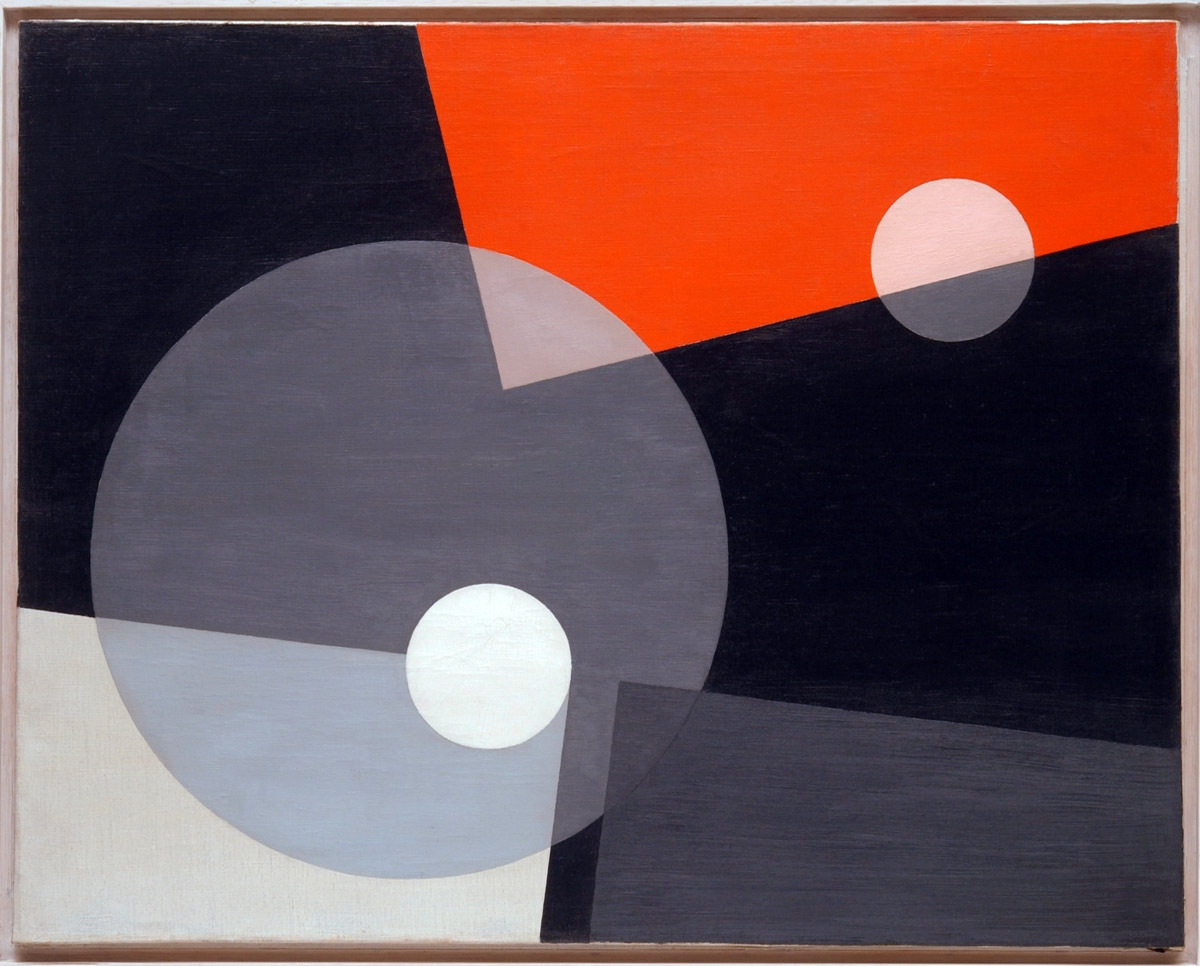
On to better things. In this posting there are some outstanding photographs: the imaginative camera angles of Moholy-Nagy (heavily influenced by Constructivism and Suprematism) where truly ground-breaking at the time. The iconic From the radio tower, Berlin (1928) is simply breathtaking in the photographs ability to flatten the pictorial landscape into abstract shape and form.
Dr Marcus Bunyan
Many thankx to Martin Gropius-Bau, Berlin for allowing me to publish the photographs in the posting. Please click on the photographs for a larger version of the image.
For Moholy-Nagy was always a theoretician and practitioner in equal measure, always wanting to be a holistic artist. He approached his work – painting, photography, commercial and industrial design, film, sculpture, scenography – from a wide variety of aspects and practised it as a radical, extreme experiment, by refusing to place his hugely differing works in any sort of aesthetic hierarchy. He also attached enormous importance to education, which is why, at the request of Walter Gropius, he worked in this field for the Bauhaus in Weimar (1923-1925) and Dessau (1925-1928). In Chicago, where he settled in 1937, he again assumed teaching duties and founded the “New Bauhaus”, which sought to realise the programmes of the German Bauhaus in the United States. Shortly afterwards he founded the Institute of Design in Chicago, where he was to remain active until his death in 1946. The institute was later incorporated in the Illinois Institute of Technology, which offers study courses to this day.
From Weimar to Chicago Moholy-Nagy retained his faith in his pedagogical ideal, which for him meant not only teaching, but the moral education of human beings. He believed in education as a means of developing all the abilities lying dormant in the students and as a means of paving the way to a “new, total human being.”
All of Moholy-Nagy’s theoretical contributions arose out of his artistic and pedagogical work. In his numerous writings he gradually presented his ideas, thus developing a complete artistic and pedagogical aesthetic. In his 1925 landmark essay “Painting, Photography, Film” he developed an aesthetic theory of light – light as a matrix of art and art as light. He applied his aesthetic theory of light not only to painting, photography and film, but also to theatrical and commercial design.
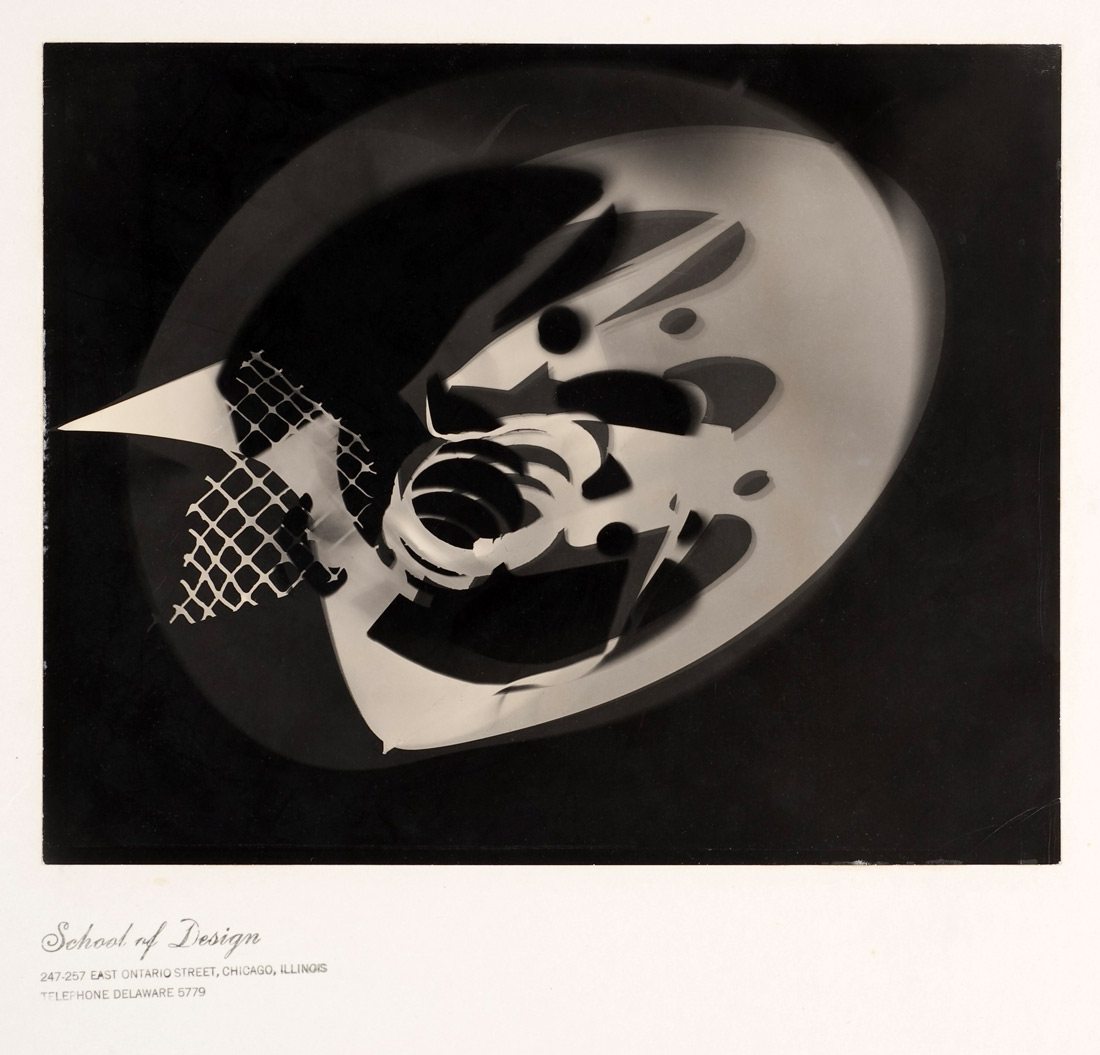
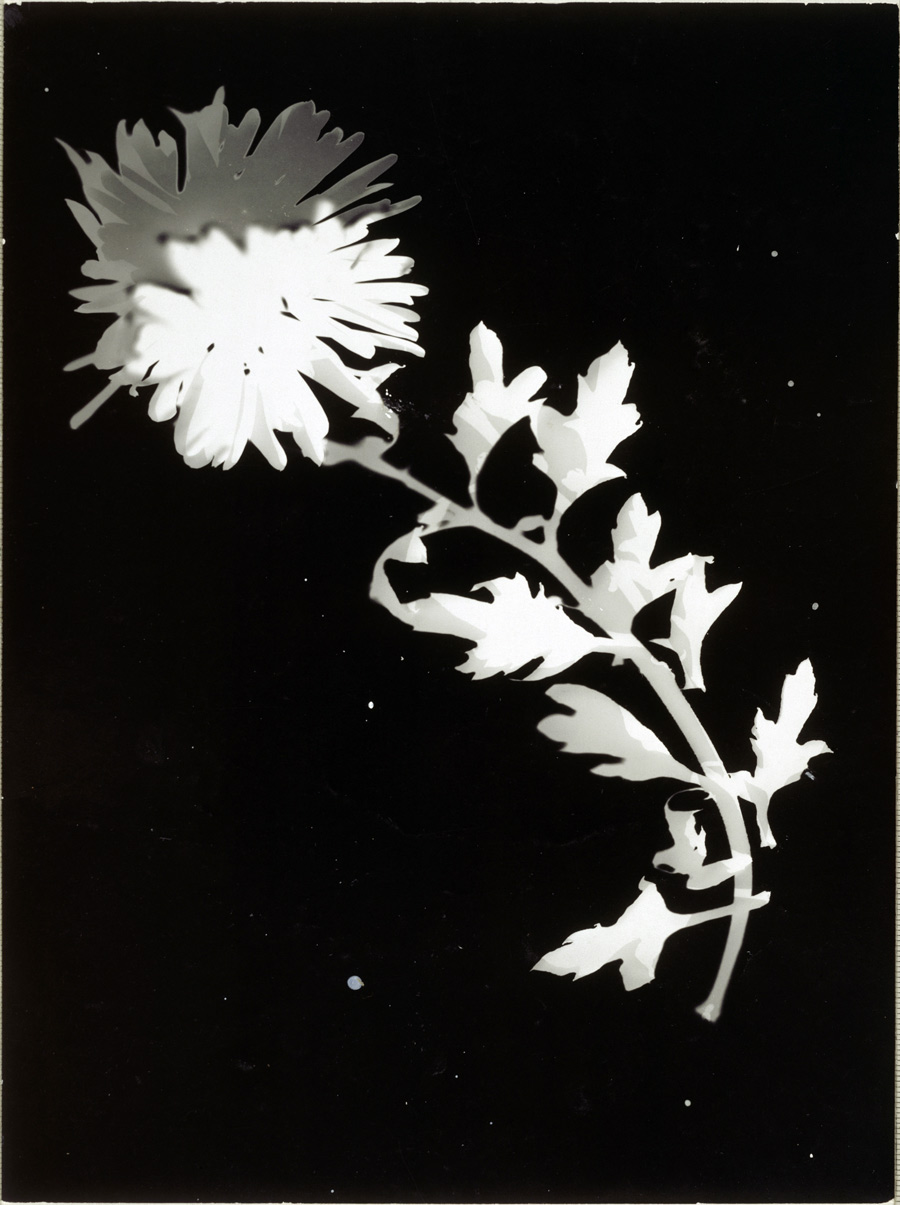
From that point on light became the foundation of Moholy-Nagy’s practical and theoretical work. For him art of whatever kind only acquired meaning when it reflected light. Painting was also reinterpreted on the basis of this criterion. Moholy-Nagy described his development as a painter as a shift away from “painting from transparency” to a painting that was free of any representational constraints and created the possibility of painting “not with colours, but with light.” This theory reached its full potential in photography and film. Etymologically, the word “photography” means “writing with light.” The artistic essence of film consists in the portrayal of “inter-related movements as revealed by light projections.” Although he was not in charge of the photography classes in the Bauhaus, it was there that he wrote Painting, Photography, Film, drawing upon his photographic experience. He invented the “photogram,” a purely light-based form of graphic representation, thus demonstrating an ability to create photographic images without a camera at the same time as the “Rayogram” was invented by Man Ray in Paris. He saw photography as a completely autonomous medium whose potential was still to be discovered. He criticised “pictoriality,” propagating an innovative, creative and productive photography. He regarded seriality as one of the main features of the practice of photography and opposed the “aura” of the one-off work in contrast to the infinite multifariousness of the photographic cliché, thus anticipating one of Walter Benjamin’s theses.
The distinction between production and reproduction is a basic theme of his art. A prominent aspect of every work is its ability to integrate the unknown. Works that only repeat or reproduce familiar relationships, are described as “reproductive,” while those that create or produce new relationships are “productive.” For Moholy-Nagy the ability of a work of art to create something new (a basic feature of Modernism) is a key criterion. He postulated for painting, photography and film a moral and aesthetic imperative – the New. Art had to confront new times and an industrial civilisation. In the systematic implementation of this thesis 1926 turned out to be the year in which his pictorial output was greater than his works in other fields, but 1927 witnessed a positive flood of photographic, scenographic, kinetic and film productions. Painting was something he never abandoned. He decided to drop the representational painting inherited from the past and to devote himself to non-representational or “pure” painting instead. The emergence of photography gave painting the perfect opportunity to free itself from all figurative or representative imperatives. Artists did not have to decide in favour of one medium or another, but should use all media to capture and master an optical creation.
Text from the Martin Gropius-Bau website [Online] Cited 26/11/2010 no longer available online
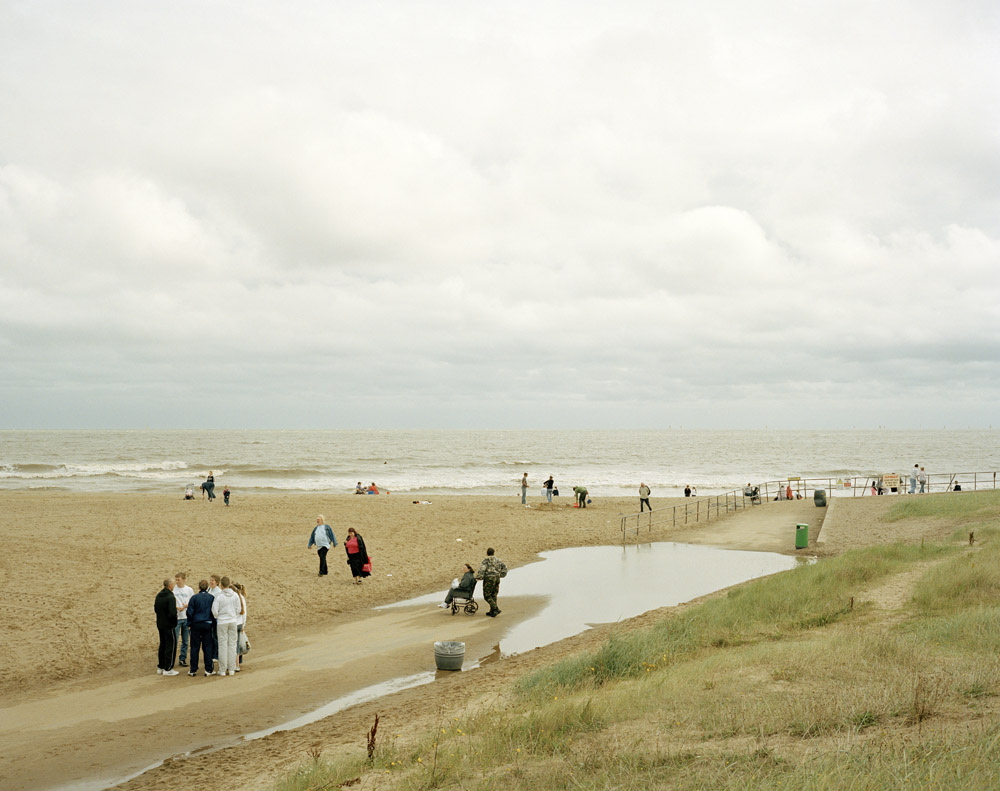
Simon Roberts (British, b. 1974) Skegness Beach, Lincolnshire, 12th August 2007 from the series We English 2007
Being an ex-pat English these photographs have a very special resonance for me. They are beautifully visualised and resolved photographs that do not rely too heavily on the artist’s conceptualisation of landscape (the ever present hand of the artist) in the construction of narrative within the picture plane.
In other words the artist allows the image to speak for itself, “a sensitive, resolved response to scenes of ordinary people and how they inhabit and utilise the spaces around them,” with the layering of meaning, the back stories (boundaries, sites of contestation, notions of identity and colonisation of spaces amongst others) kept in balance with the sublime elements of the constructed landscape.
The photographs work all the better for this restraint and offer the viewer sensual images that are open and receptive, spaces that are invigorating and enlightening, Roberts has created a magical series of photographs that poignantly capture the essence of what it is to be English.
Dr Marcus Bunyan
Many thankx to Simon Roberts for allowing me to publish the photographs in the posting. The permission is much appreciated. Please click on the photographs to view a larger version of the image.
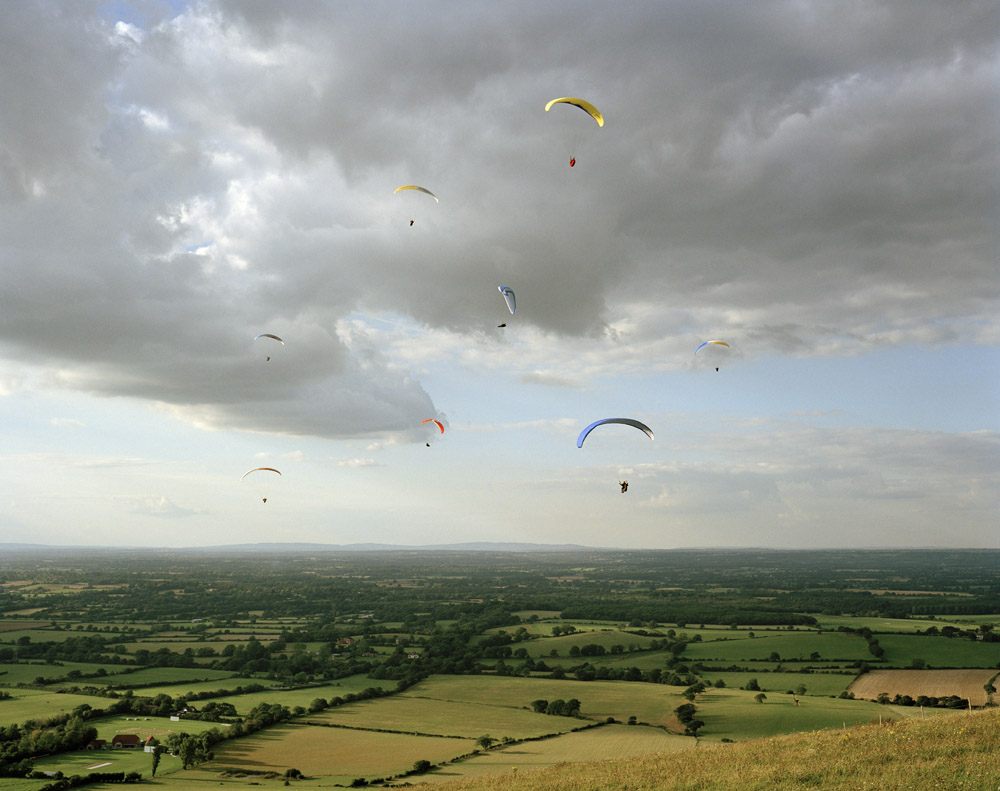
Simon Roberts (British, b. 1974) South Downs Way, West Sussex, 8th October 2007 from the series We English 2007
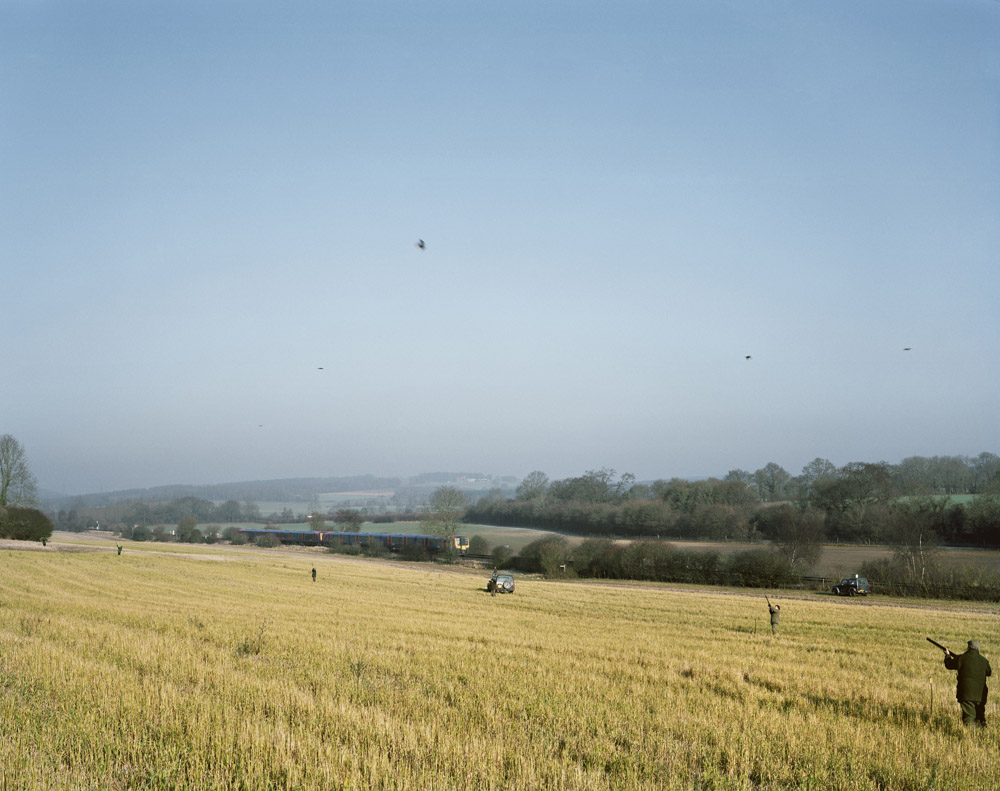
Simon Roberts (British, b. 1974) Heberdens Farm, Finchdean, Hampshire, 20th December 2007 from the series We English 2007
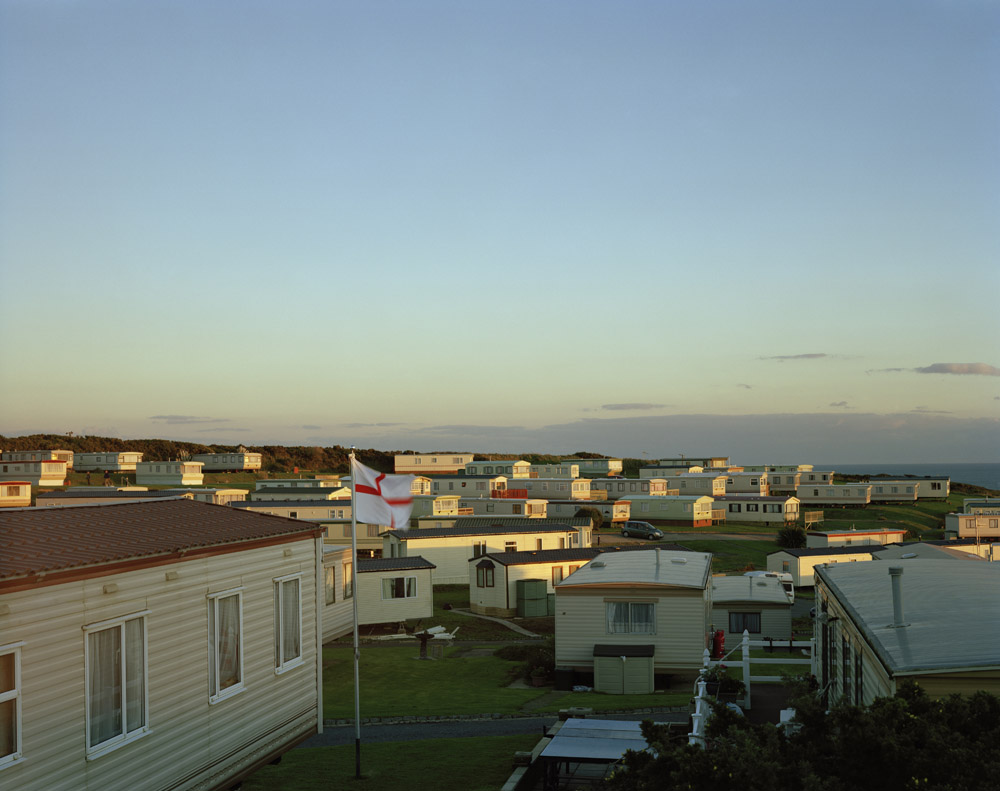
Simon Roberts (British, b. 1974) Rushey Hill Caravan Park, Peacehaven, East Sussex, 21st December 2007 from the series We English 2007
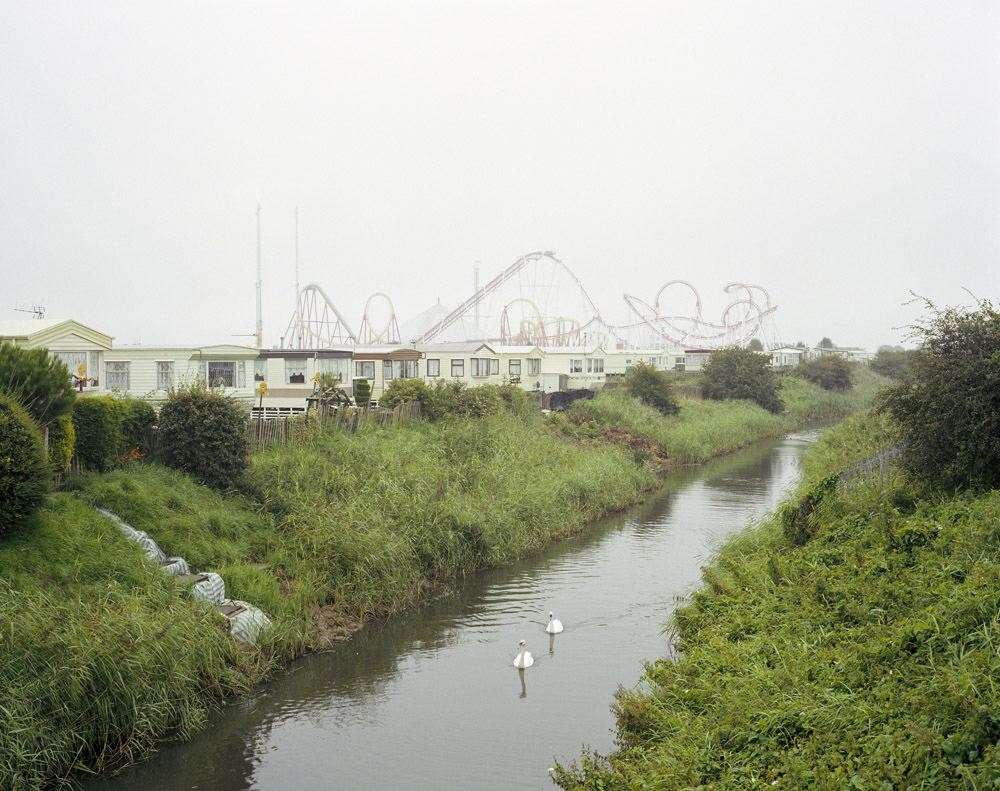
Simon Roberts (British, b. 1974) Fantasy Island, Ingoldmells, Lincolnshire, 28th December 2007 from the series We English 2007
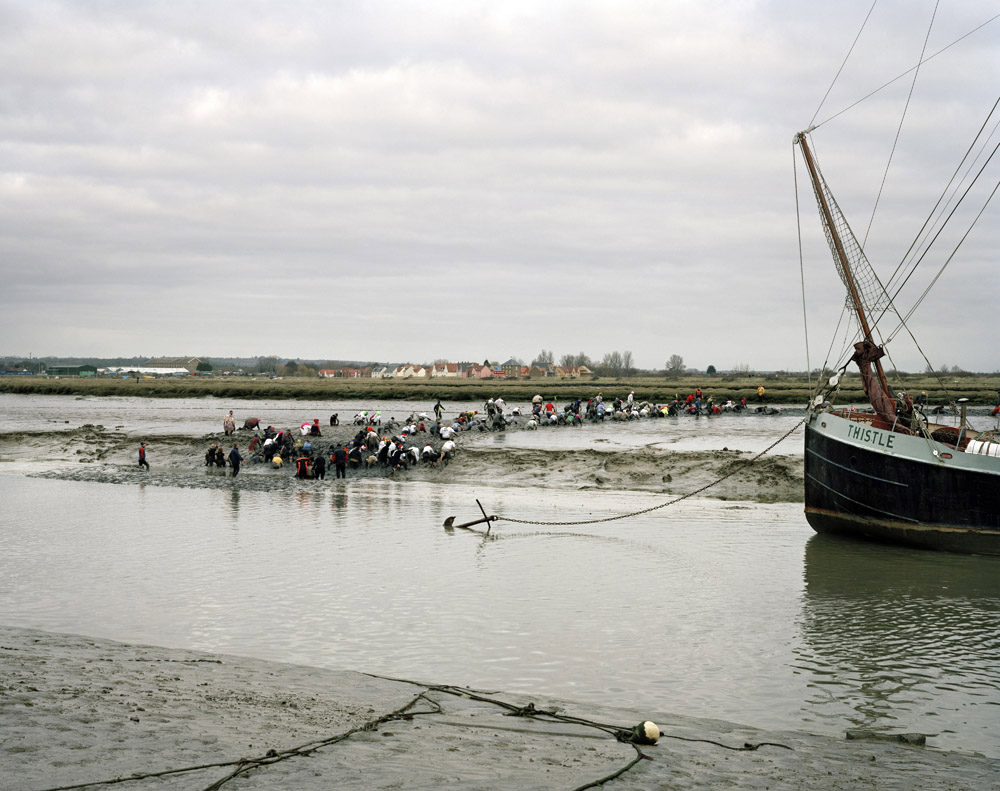
Simon Roberts (British, b. 1974) Mad Maldon Mud Race, River Blackwater, Maldon, Essex, 30th December 2007 from the series We English 2007
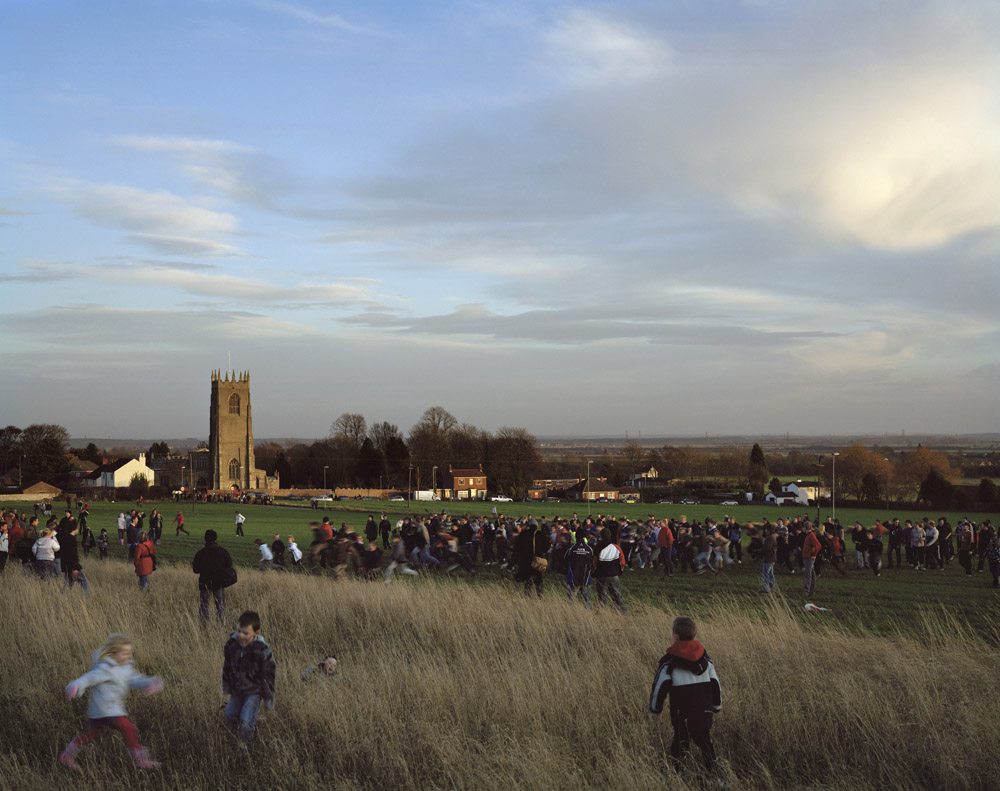
Simon Roberts (British, b. 1974) The Haxey Hood, Haxey, North Lincolnshire, 5th January 2008 from the series We English 2008
“We English is the result of a year’s travel around England by Roberts, in a motorhome, documenting its landscape on a large format 5 x 4 camera. Informed by the photography of his predecessors Tony Ray Jones, John Davies and Martin Parr, and by the romantic tradition of English landscape painting, Roberts depicts the English at leisure within pastoral landscapes in a manner that is entirely his own. The work is beautiful, accessible and often heart-warming. This is the most significant contribution to the photography of England since John Davies’s ‘The British Landscape’.”
Chris Boot, Publisher, 2009
Artist statement
Initially, I was simply thinking about Englishness and how my upbringing had been quintessentially English. How much of this was an intrinsic part of my identity? In what ways was my idea of what constitutes an ‘English life’ or English pastimes (if there are such things) different to those of others’? My own memories of holidays, for example, were infused with very particular landscapes; the lush green-ness around Derwent Water or the flinty grey skies – and pebbles – of Angmering’s beaches. It seemed to me that these landscapes formed an important part of my consciousness of who I am and how I ‘remember’ England.
Seeking out ordinary people engaged in diverse pastimes, I aim to show a populace with a profound attachment to its’ local environments and homeland. We English explores the notion that nationhood – that what it means to be English – is to be found on the surface of contemporary life, encapsulated by banal everyday rituals and activities.
My first major body of work, Motherland, was a study about Russian identity. The images are not clichéd representations of a Russia ground down by poverty and despair, rather, photographs of a land of dignified people empowered by a growing optimism and a deep rooted sense of national esteem.
The same themes of identity, memory, history and attachment to place – of belonging – resonate throughout We English. To access these abstractions, I’ve produced a series of colour landscape photographs, which record places where groups of people congregate for a common purpose and shared experience. Since landscape has long been used as a commodity to be consumed, I focus on leisure activities as a way of looking at England’s shifting cultural and aesthetic identity. The photographs are rooted in a consciousness of my own attachment to my homeland and are an intentionally lyrical rendering of everyday English landscapes. They draw on issues of cultural geography and contemporary landscape theory, together with vestiges of English romanticism.
We English is not just a mode of social and anthropological commentary, although there are important elements of this in the work; more, it aims to constitute a sensitive, resolved response to scenes of ordinary people and how they inhabit and utilise the spaces around them. The photographs also explore the way in which landscapes can become a site of conflict or unease, where perceived notions of nationhood and quintessential Englishness are challenged, as diverse social groups seek to colonise shared public spaces. Notions of limits and boundaries re-appear throughout the work, reflected in the rivers, trees and hedges that create physical divisions, delineating and defining the limits of human interaction. Indeed, leisure activities often occur at boundary points: the edge of towns and cities, next to lakes and reservoirs, alongside footpaths and mountain ridges.
The project derives its title from the suggestion that photographer and subjects – we ‘English’ – are complicit in the act of representation. (During the five months that I travelled around England in a motorhome, people were invited to post their ideas about events I could photograph on a dedicated website and to share their experiences of living in their particular locality).
The project has been supported by Arts Council England, the National Media Museum and the John Kobal Foundation. A monograph of the photographs will be published in September 2009 by Chris Boot Ltd.
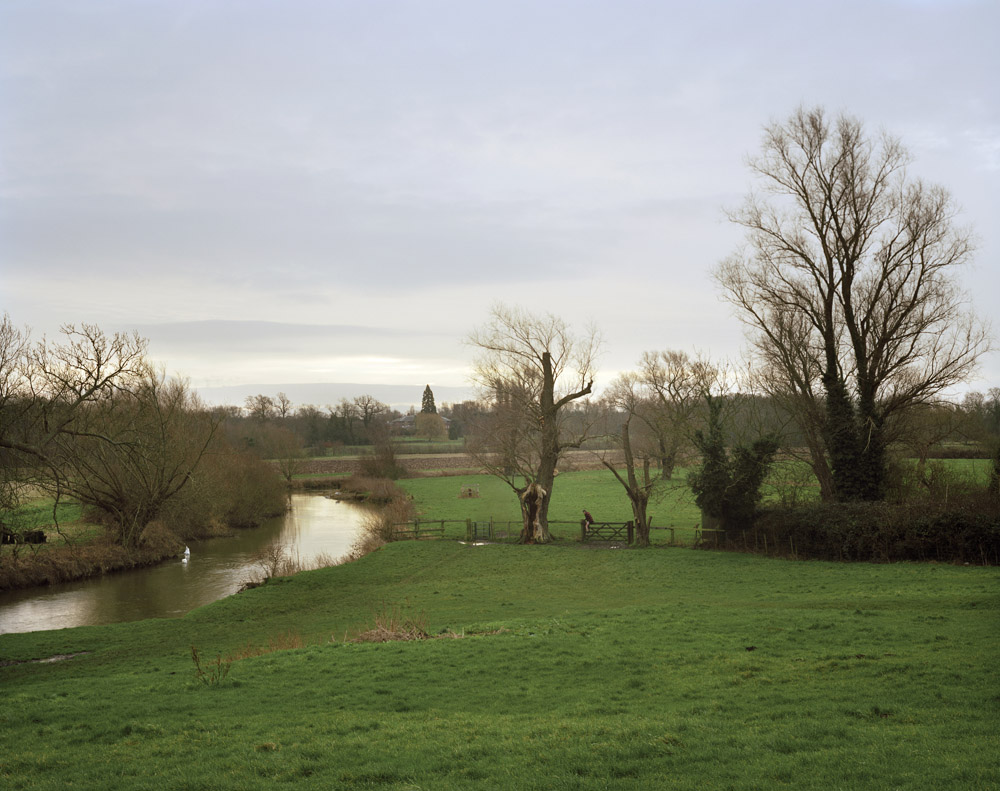
Simon Roberts (British, b. 1974) Grantchester Meadows, Cambridgeshire, 23rd January 2008 from the series We English 2008
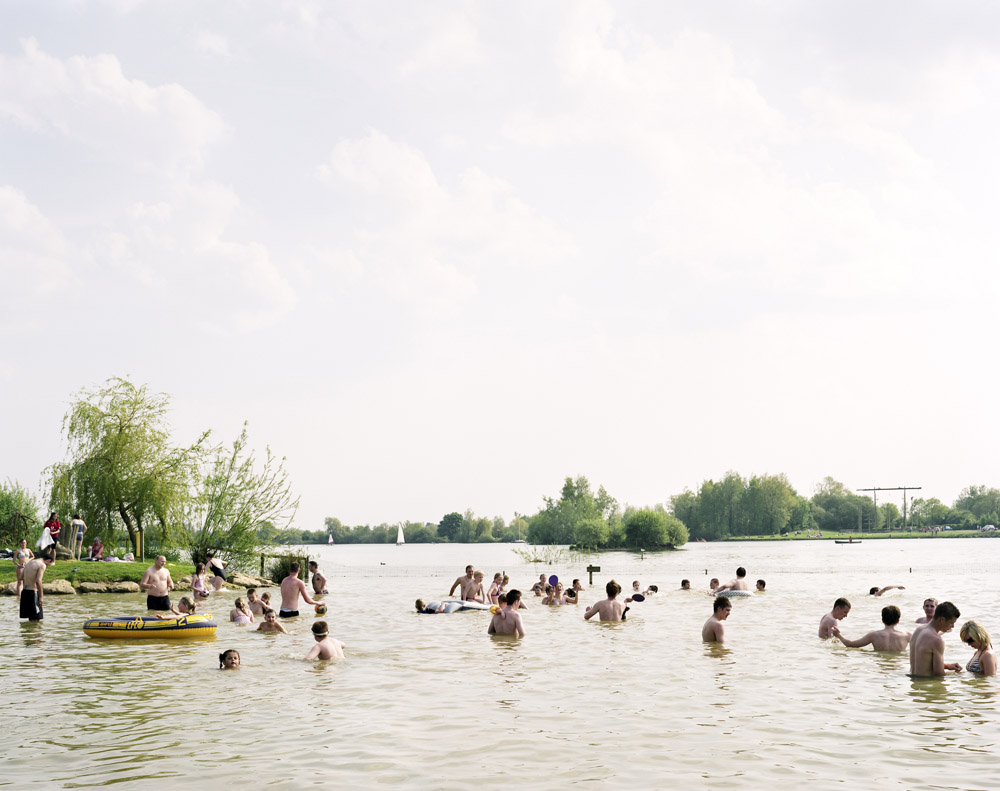
Simon Roberts (British, b. 1974) Cotswold Water Park, Shornecote, Gloucestershire, 11th May 2008 from the series We English 2008
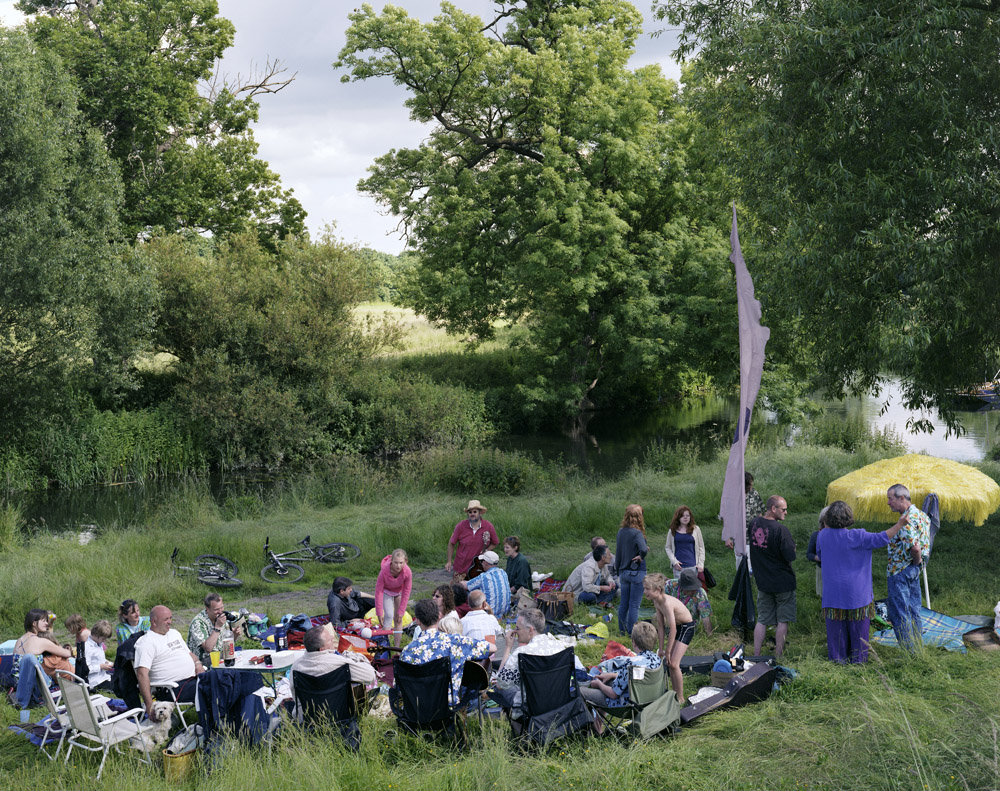
Simon Roberts (British, b. 1974) Paul Herrington’s 50th Birthday, Grantchester, Cambridgeshire, 15th June 2008 from the series We English 2008
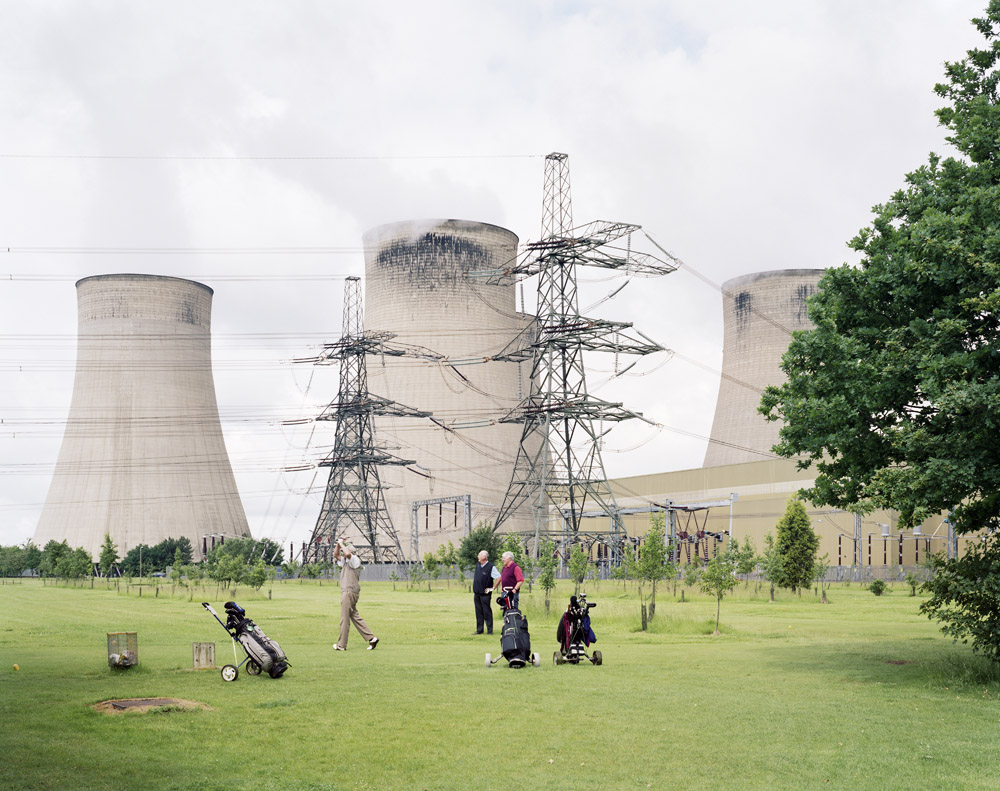
Simon Roberts (British, b. 1974) Ratcliffe-on-Soar Power Station, Nottinghamshire, 16th June 2008 from the series We English 2008
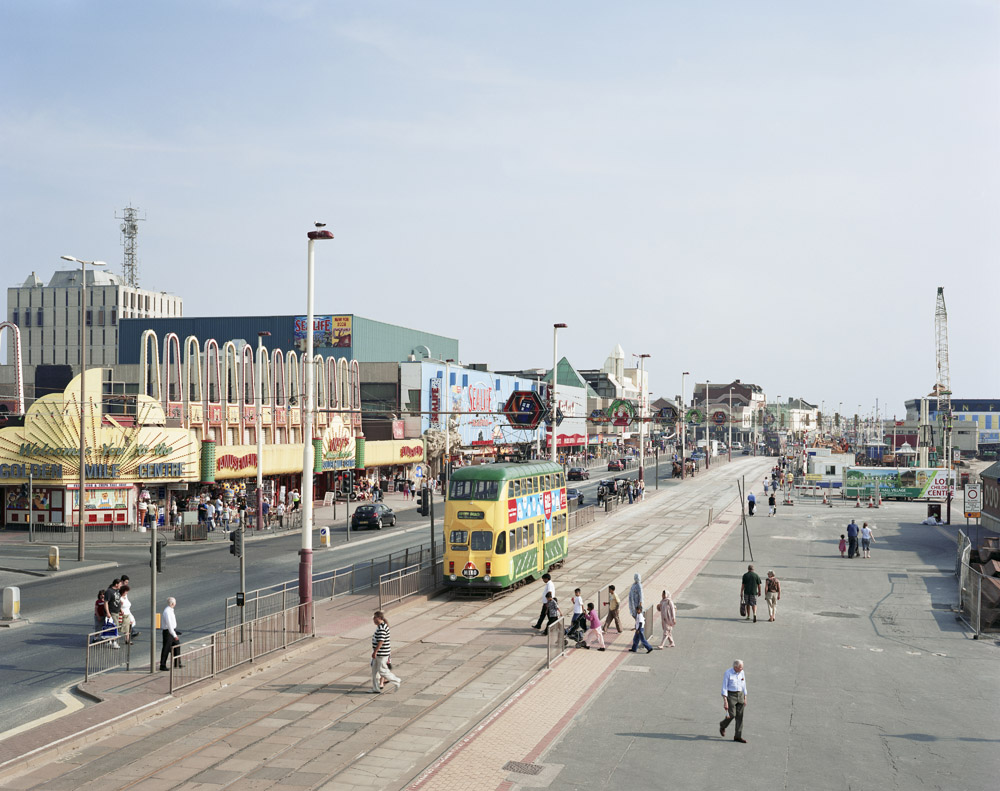
Simon Roberts (British, b. 1974) Blackpool Promenade, Lancashire, 24th July 2008 from the series We English 2008
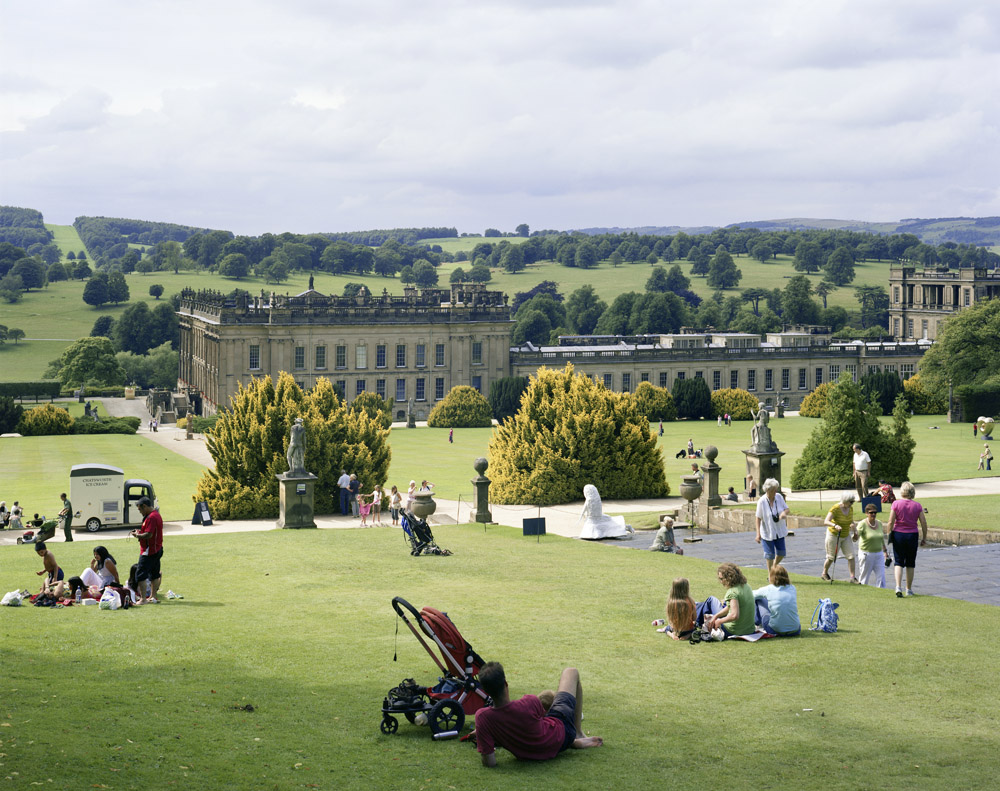
Simon Roberts (British, b. 1974) Chatsworth House, Bakewell, Derbyshire, 7th August 2008 from the series We English 2008
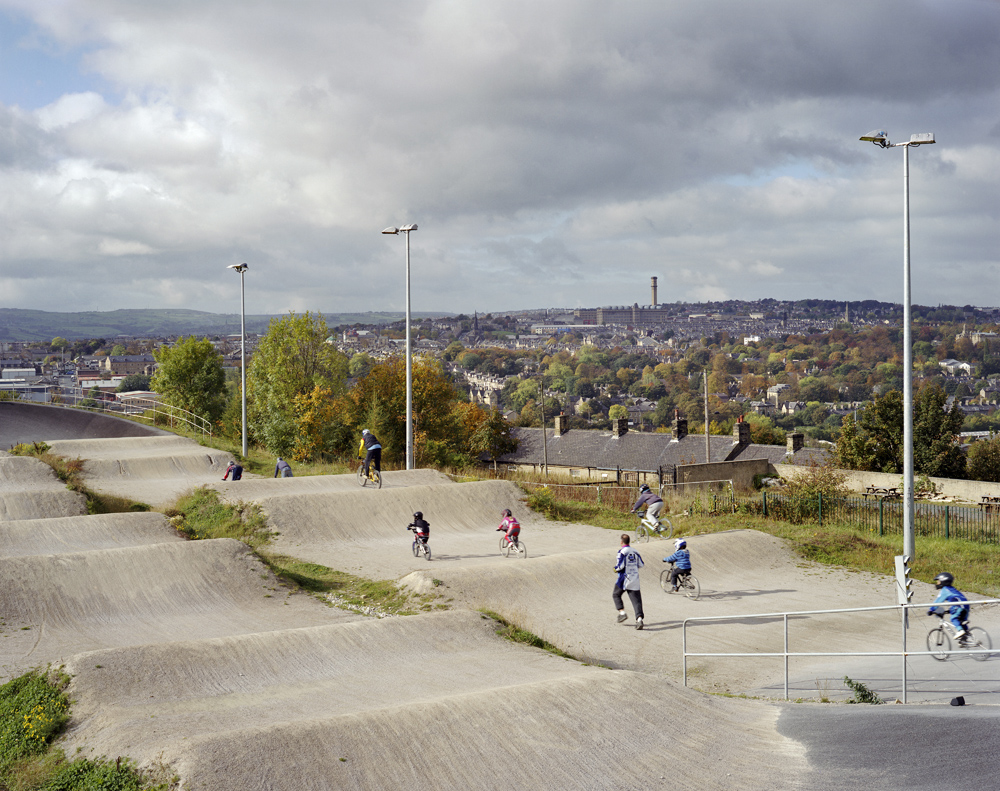
Simon Roberts (British, b. 1974) Bradford Bandits BMX Club, Peel Park, Bradford, West Yorkshire, 17th October 2009 from the series We English 2008
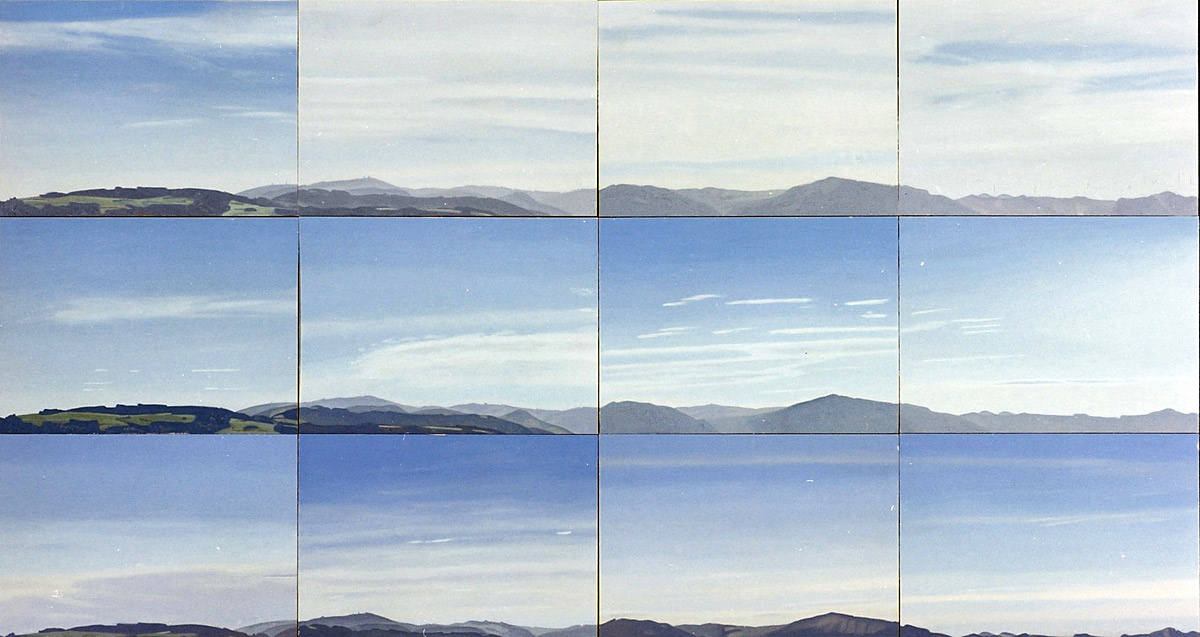
Peter Dreher (German, b. 1932) Schöne Tage im Hochschwarzwald 1999 Oil on canvas
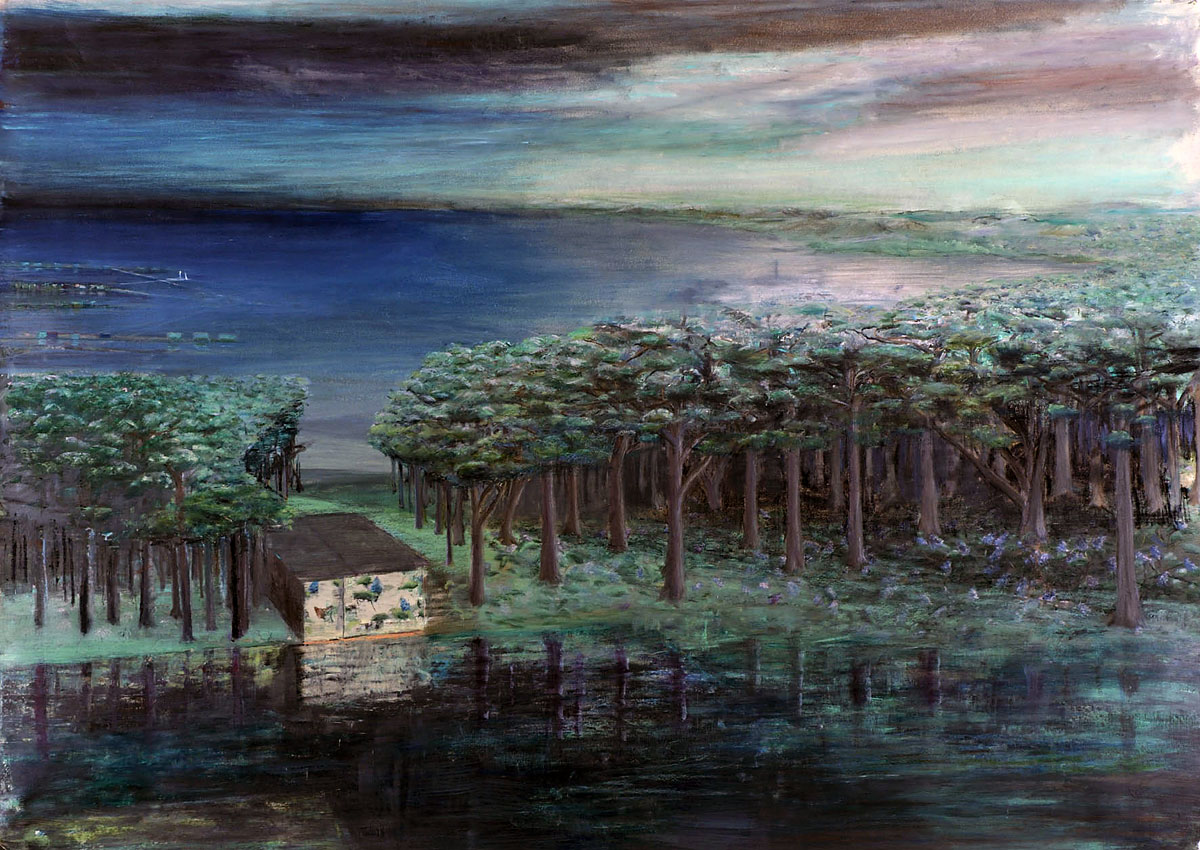
Friederike Jokisch (German, b. 1981) Domizil 2009 Pastel
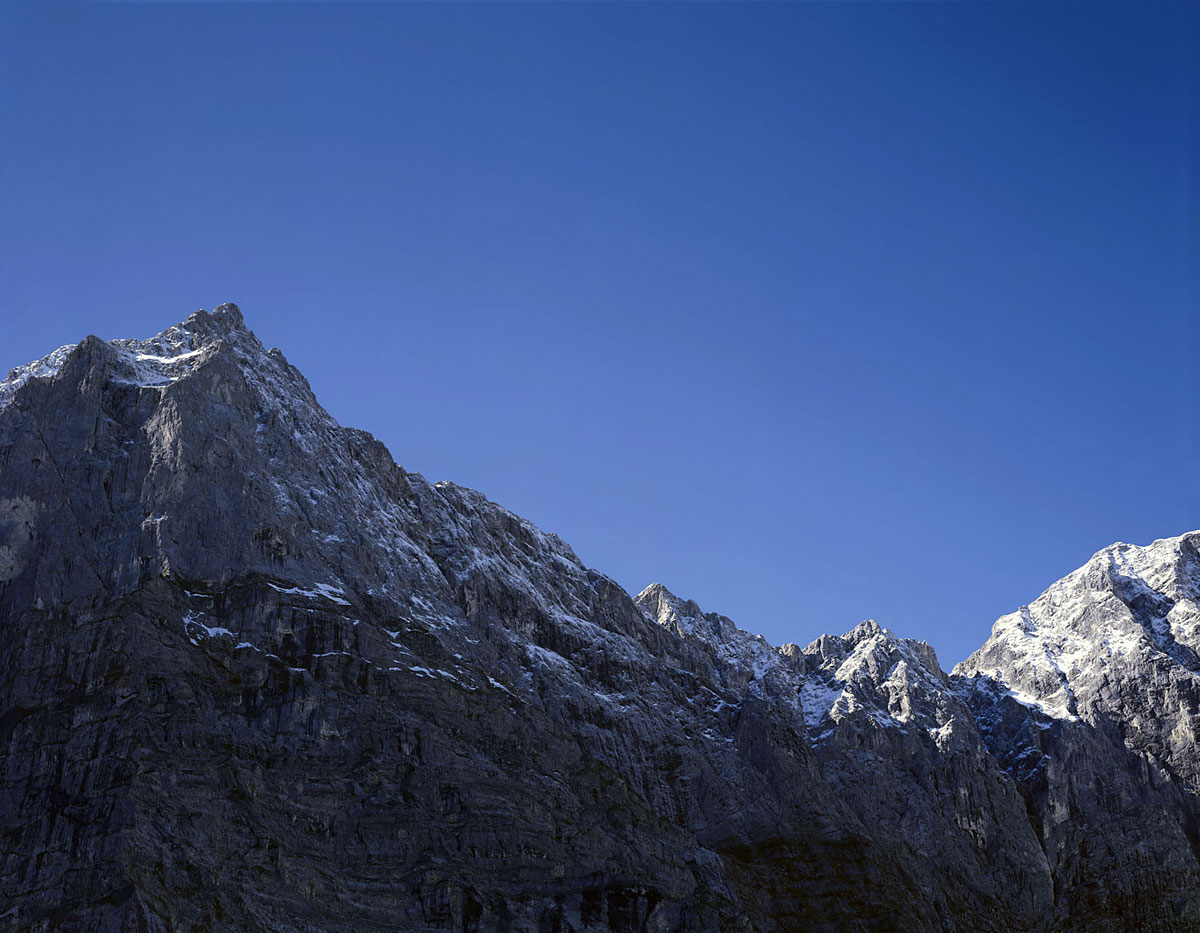
Josef Schulz (Polish, b. 1966) Felswand #3 2008 Type C print Diasec
Nature became landscape long ago. Since the Romantic period landscape has furthermore been an aesthetic position. But what is landscape for the modern human being? The thematic exhibition “Open Landscape” at the Galerie Wagner + Partner provides a juxtaposition of multigenerational photographic and pictorial approaches to this question. The reference point for all participating artists is the real landscape.
The works of Thomas Wrede and Joseph Schulz increase their charm through friction between photorealistic representation extended through staging and intervention. Wrede, in his series entitled “Real Landscapes” combines the natural beauty of landscape with constructed miniature models. The landscapes photographed in this way appear seductively plausible and exaggerate the romantic projection.
Schulz similarly aims for an aesthetic exaggeration and idealisation through digital intervention in his nature photographs of the series “Terraform”. Through the elimination of human traces he reconstructs the lost primordial state of nature and creates people’s “internal” images of the landscape.
Similarly originating from actual landscape, Peter Dreher’s “Schwarzwaldlandschaft” (Black Forest Landscape) appears idealistic. It almost appears to be based on the tradition of “Heimatmalerei” (patriotic landscape painting). Viewed in close proximity however, the picture’s elements are ordered according to days and time. Each single picture documents what the artist saw and captured at precisely this point in time. Only when viewed as a whole an abstract picture of landscape as space-time-construct appears.
The central theme of Neo Rauch-student Friederike Jokisch is the landscape beyond the established idyll. Her large format pastel paintings make the process of transformation from nature to landscape tangible. In striking pictures “landscape” is demystified and instead ruptures and alienations between culture and nature become central themes.
The exhibition consciously poses more questions, attempts to find fewer answers. At the same time it continues the theme of the previous exhibition “The Nightingale’s Secret Garden”.
Text from the Galerie Wagner + Partner website [Online] Cited 14/07/2010 no longer available online
Thomas Wrede (German, b. 1963) Drive In Theatre 2009 Lambda Print Diasec
Thomas Wrede (German, b. 1963) In the Tertiary Valley 2008 Lambda Print Diasec
Open Landscape exhibition view at Galerie Wagner + Partner, 2010
I seen to have become a little smitten by Romy Schneider. What charisma!
Marcus
Many thankx to the Deutsche Kinemathek – Museum for Film and Television for allowing me publish the images in the posting. Please click on the images for a larger version.
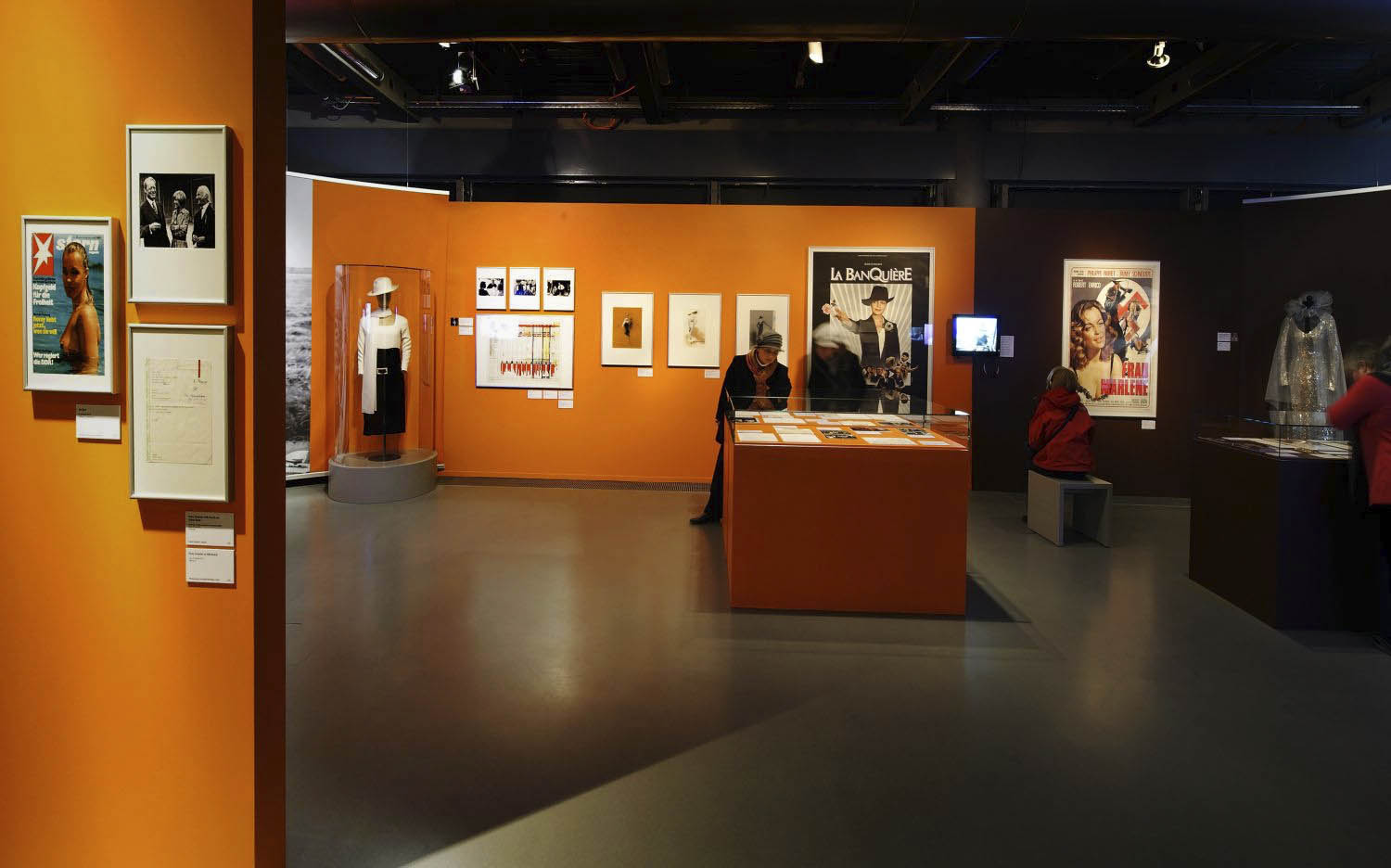
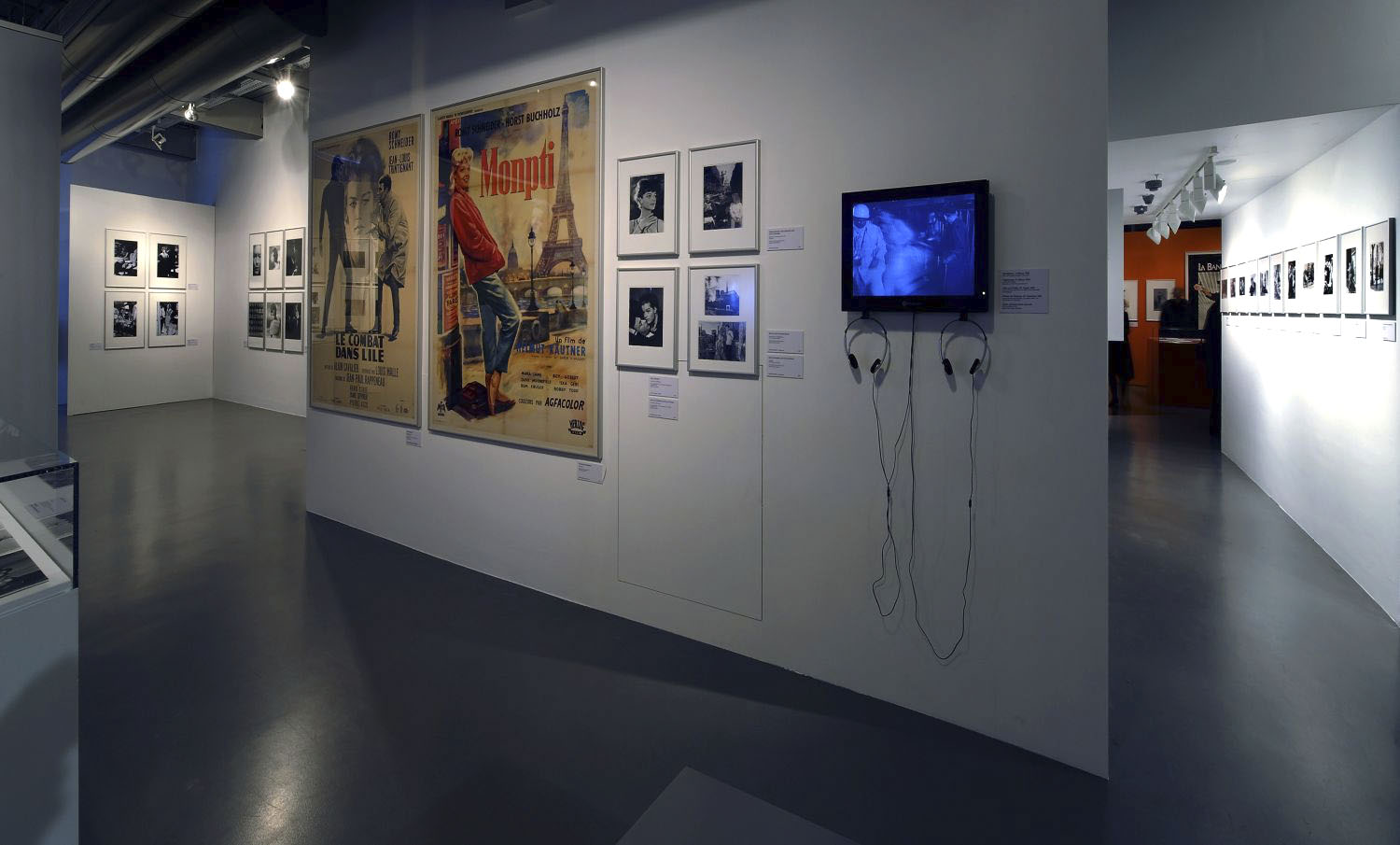
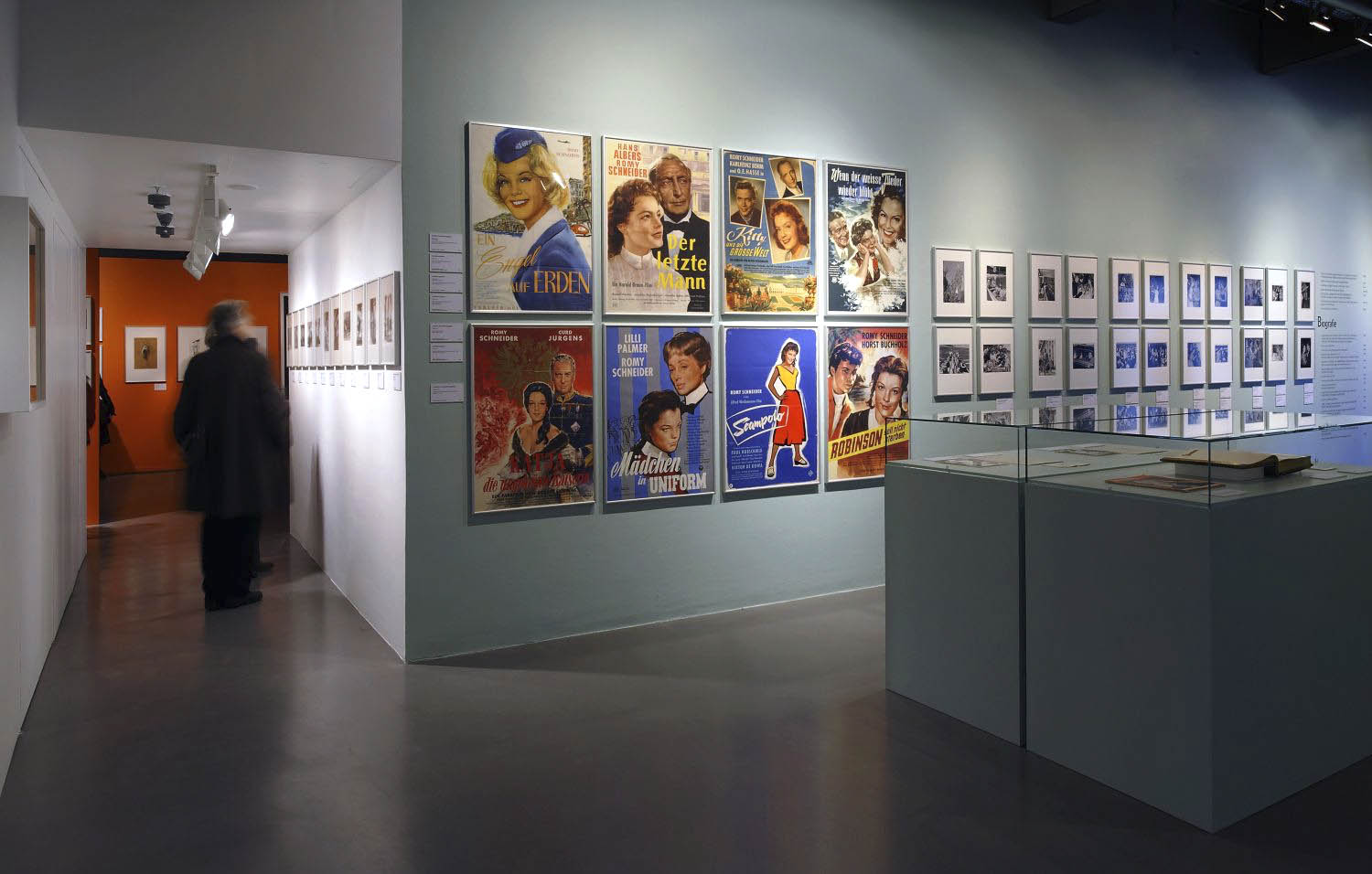
The exhibition documents the eventful career of Romy Schneider, who by the late 1950s no longer wanted to be Sissi, and by the 1970s was a celebrated star of French cinema. A large number of unknown photographs of Romy Schneider, her film partners, and family from the 1950s and 1960s will be on display from the collections of the Deutsche Kinemathek. The exhibition will also present loans from private individuals and institutions from France and Austria …
The exhibition Romy Schneider. Wien – Berlin – Paris, which the Museum für Film und Fernsehen will present beginning on December 5th, documents the varied and wide-ranging career of Romy Schneider, who no longer wanted to be “Sissi” at the end of the 1950s and was celebrated as a star of French cinema in the 1970s.
Romy Schneider publicly bemoaned her roles in Germany and went to Paris to play women who did justice to her acting abilities and her expectations. She settled in France at the beginning of the 1970s, where she advanced to one of the biggest stars of French cinema. She won several awards and made films with nearly all the great directors and actors of that period. The paparazzi followed the actress at every turn, documenting her strokes of fate for the international popular press, and throughout her life Romy Schneider considered herself to be their victim. Romy Schneider died in Paris in May 1982. To this day, she is admired by millions of fans around the world as one of cinema’s international stars.
This homage, which can be seen in 450 sq. m. of exhibition space at the Filmhaus, treats both the diverse roles and changing image of the actress, as well as her representation in the media.
Pictures from films, the press and her private life are grouped according to recurring motifs and combined with film clips. Media installations show the interplay between projection and active self-promotion. Posters, costumes, correspondence and fan souvenirs will augment the presentation.
Numerous photographs from the 1950s and 1960s of Romy Schneider, her film partners and her family, largely unknown until now, originate from the collections of Deutsche Kinemathek. Loans from other institutions and private individuals will also be on view, for instance from the photographers F. C. Gundlach and Robert Lebeck, as well as from the personal archives of the film director Claude Sautet.
Press release from the Museum für Film und Fernsehen website [Online] Cited 25/05/2010 no longer available online
F. C. Gundlach (Franz Christian Gundlach) was a German photographer, gallery owner, collector, curator und founder. In 2000 he created the F.C. Gundlach Foundation, since 2003 he has been founding director of the House of Photography – Deichtorhallen Hamburg.
Alain Delon and Romy Schneider in La Piscine/Der Swimmingpool R- Jacques Deray, F/I 1969 Gelatin silver print Foto/Quelle: Filmarchiv Austria, Wien
Romy Schneider and Alain Delon in La Piscine/Der Swimmingpool R- Jacques Deray, F/I 1969 Gelatin silver print Foto/Quelle: Deutsche Kinemathek
Romy Schneider and Claude Sautet during the shooting of UNE HISTOIRE SIMPLE / A SIMPLE STORY 1978 Gelatin silver print Foto/Quelle: Yves Sautet, Paris
Claude Sautet
Claude Sautet (23 February 1924 – 22 July 2000) was a French author and film director. Born in Montrouge, Hauts-de-Seine, France, Sautet first studied painting and sculpture before attending a film university in Paris where he began his career and later became a television producer. He filmed his first movie, Bonjour Sourire, in 1955.
He earned international attention with Les choses de la vie, which he wrote and directed, like the rest of his later films. It was shown in competition at the 1970 Cannes Festival, where it was well received. The film also revived the career of Romy Schneider; she acted in several of Sautet’s later films. In his next film Max et les Ferrailleurs (1971) she played a prostitute, while in César et Rosalie (1972) she portrayed a married woman who copes with the reappearance of an old flame.
Vincent, Paul, François, et les Autres (1974) is one of Sautet’s most acclaimed films. Four middle-class men meet in the country every weekend mainly to discuss their lives. The film featured a cast of major stars of French cinema: Michel Piccoli, Yves Montand, Gérard Depardieu, and Stéphane Audran. He achieved even further critical success with Mado (1976).
His 1978 film A Simple Story (Une Histoire simple) was nominated for an Academy Award for Best Foreign Language Film. The film featured Schneider again, this time as a dissatisfied working woman in her 40s. She won the César Award for Best Actress for her performance.
Many thankx to Kicken Berlin for allowing me to publish the photographs in this post. Please click on the photographs for a larger version of the image.
Mahler was born in 1949 in Bad Berka, Thuringia. She studied at the School for Graphic and Book Arts in Leipzig and has been a professor at the University of Applied Sciences in Hamburg since 2000. She lives in Hamburg and Lehnitz, near Berlin
Kicken Berlin will devote its first exhibition of 2010 to a selection of East German photographers. Represented in East Side Stories: German Photographs 1950s-1980s are Ursula Arnold, Sibylle Bergemann, Arno Fischer, Ute und Werner Mahler, Roger Melis, Helga Paris, Evelyn Richter as well as Gundula Schulze Eldowy – committed art photographers who achieved their own modes of expression outside the official aesthetic. F.C. Gundlach’s fashion photography from 1950s and 1960s West Berlin will be on view in the exhibition space Kicken II.
Up until the early 1970s, the cultural officers of the German Democratic Republic viewed photography not as an art medium but rather as a means of providing affirmative and idealised images of life. Personal viewpoints were not welcome. Photography that forcefully “grew out of the self-assigned task of documenting what (one) felt was worth capturing,” as Evelyn Richter put it, had to remain secret.
Arno Fischer (1927-2011) and Evelyn Richter (1930-2021) belong to those who pointed the way toward a subjective-narrative, human-centered photography in the 1950s. Key figures in the East German art photography scene, opinion shapers, and teachers at Leipzig’s Hochschule für Grafik und Buchkunst / Academy of Visual Arts, they influenced a form of art photography oriented toward the social-documentary “human interest” tradition. Their stance combined social participation with a commitment to critical observation from a personal point of view – as in Fischer’s series Situation Berlin (1953-1960), with its symbolically dense snapshots of the divided city.
Important influences on the development of independent photography in East Germany included the work of the Magnum agency (from 1947 on), Edward Steichen’s exhibition The Family of Man (1955) as well as Robert Frank’s radically subjective street photography.
Pictures of people and portraits are at the exhibition’s core. Ursula Arnold (1929-2012) observed her sometimes melancholy, sometimes odd contemporaries on the streets of Berlin and Leipzig, and on Berlin’s S-Bahn. She gave up working as a photojournalist early in order to avoid having to make concessions to the dictates for enthusiasm imposed from above. Helga Paris (b. 1938) took portraits of rebellious Berliner Jugendliche / Berlin Youths (1981-1982), approaching her subjects with seriousness and thoughtfulness, and concentrating fully on them as individuals. She, too, had the self-professed goal of depicting people authentically in their everyday contexts.
Sibylle Bergemann (1941-2010) made a name for herself as a sensitive portraitist, fashion photographer, and observer of the urban landscape. Das Denkmal / The Monument (1977-1986), her long-term study of the assembly of the Marx-Engels sculpture, appears, with its hovering, headless sculptural fragments to emblematically anticipate the collapse of communism.
In the Berlin of the late 1970s and early 1980s Gundula Schulze Eldowy (b. 1954) found the setting for scenes that are as drastic as they are quotidian in the series Berlin. In einer Hundenacht / Berlin: in a Dog’s Night (1977-1989) and Aktportraits / Nude Portraits (1983-1986), as no other East German photographer before her, she shows with unsparing frankness the loneliness and vulnerability of her subjects but also their dignity and self confidence. Her early photographs reveal an aesthetic and thematic debt to the work of Diane Arbus.
Independent of each other, Ute and Werner Mahler turned their unpretentious gazes on the East German way of life. Ute Mahler (b. 1949) thematised family arrangements and group dynamics in her series Zusammen Leben / Living Together (1972-1986). Werner Mahler (b. 1950) documented a year in the Thuringian village Berka (1977) – and repeated his studies in the late 1990s after reunification. An additional focus of both photographers was fashion photography (published for the most part in the magazine for fashion and culture Sibylle) that offered opportunities for “productively expanding the genre” (Bernd Lindner).
In the 1950s and 1960s in Berlin and Hamburg, F.C. Gundlach achieved a modern way to stage fashion in pictures. A small selection from the great fashion photographer’s oeuvre, F.C. Gundlach, will be on view in the exhibition space Kicken II and coincides with the comprehensive retrospective at the Martin Gropius Bau.
Press release from the Kicken Berlin website [Online] Cited 04/04/2010 no longer available online
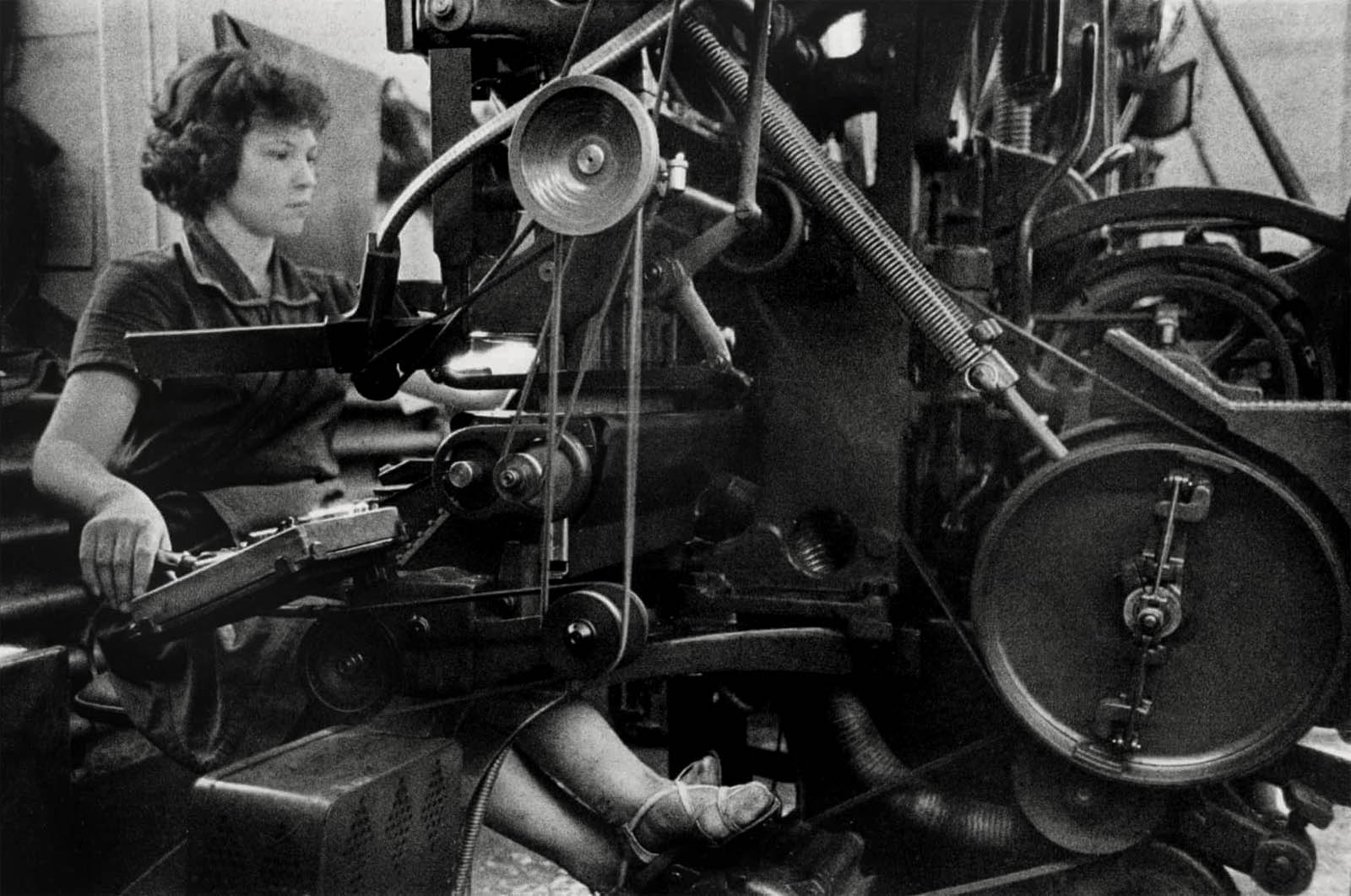
Evelyn Richter (German, 1930-2021) ND (Neues Deutschland) print shop c. 1960-1962 Gelatin silver print Evelyn Richter Archiv der Ostdeutschen
Ursula Arnold (German, 1929-2012) Berlin, S-Bahn 1965 Gelatin silver print
Sibylle Bergemann (German, 1941-2010) Alexanderplatz, Berlin 1967 Gelatin silver print
Sibylle Bergemann (German, 1941-2010) Schöneweide, Berlin 1972 Gelatin silver print, printed c. 1972 22.8 x 34cm
Mahler started her project Zusammenleben (‘living together’) to move away from set photography. She said: ‘I carried out this work freely, at liberty; it was very personal in nature and not commissioned’.
Zusammenleben was started more than 45 years ago. Through it, Mahler intended to depict the unsaid in a subtle way. Zusammenleben subtly depicted the reality of everyday life in the communist state of East Germany.
Evelyn Richter (German, 1930-2021) Pförtnerin im Rathaus, Leipzig (Receptionist in the Town Hall, Leipzig) c. 1975 Gelatin silver print
Sibylle Bergemann (German, 1941-2010) Berlin, Palast der Republik 1978 Gelatin silver print
Gundula Schulze Eldowy (German, b. 1954) Berlin 1989 Gelatin silver print
Exhibition dates: November 20th 2009 – March 14th, 2010
Many thankx to Marie Skov and Martin-Gropius-Bau for allowing me to reproduce the photographs in this posting. Please click on the photographs for a larger version of the image.
Marcus
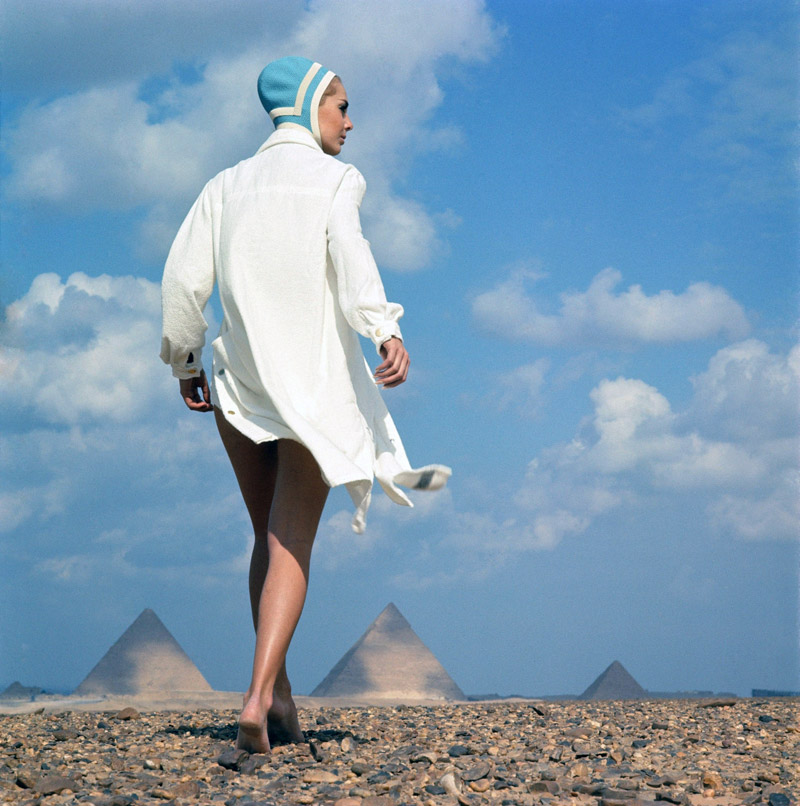
F.C. Gundlach (German, 1926-2021) The Whole Day on the Beach Gizeh/Egypt 1966 in Brigitte, Issue 8/1966
F. C. Gundlach
F. C. Gundlach (Franz Christian Gundlach; 16 July 1926 – 23 July 2021) was a German photographer, gallery owner, collector, curator und founder. In 2000 he created the F.C. Gundlach Foundation, since 2003 he has been founding director of the House of Photography – Deichtorhallen Hamburg.
His fashion photographs of the 1950s, 1960s and 1970s, which in many cases integrated social phenomena and current trends in the visual arts, have left their context of origin behind and found their way into museums and collections. Since 1975 he also curated many internationally renowned photographic exhibitions. On the occasion of the reopening of the House of Photography in April 2005, he curated the retrospective of the Hungarian photographer Martin Munkácsi. Here, the exhibitions A Clear Vision, The Heartbeat of Fashion and Maloney, Meyerowitz, Shore, Sternfeld. New Color Photography of the 1970s from his collection were presented since 2003. Most recently he curated the exhibitions More Than Fashion for the Moscow House of Photography and Vanity for the Kunsthalle Wien 2011.
F.C. Gundlach (German, 1926-2021) Erich von Stroheim during the shooting of “Alraune”, Munich 1952 Gelatin silver print
The Bloody Pit of Horror: Alraune (1952) film poster
Erich von Stroheim
Erich Oswald Hans Carl Maria von Stroheim (born Erich Oswald Stroheim; September 22, 1885 – May 12, 1957) was an Austrian-American director, actor and producer, most noted as a film star and avant garde, visionary director of the silent era. His masterpiece adaptation of Frank Norris’s McTeague titled Greed is considered one of the finest and most important films ever made. After clashes with Hollywood studio bosses over budget and workers’ rights issues, von Stroheim was banned for life as a director and subsequently became a well-respected character actor, particularly in French cinema. For his early innovations as a director, von Stroheim is still celebrated as one of the first of the auteur directors. He helped introduce more sophisticated plots and noirish sexual and psychological undercurrents into cinema. He died in 1957 in France of prostate cancer at the age of 71. Beloved by Parisian neo-Surrealists known as Letterists, he was honoured by Letterist Maurice Lemaitre with a 70-minute 1979 film entitled “Erich von Stroheim.”
Alraune is a 1952 West German science fiction directed by Arthur Maria Rabenalt and starring Hildegard Knef and Erich von Stroheim. The film involves a scientist (von Stroheim), who creates a woman who is beautiful and yet soulless, lacking any sense of morality.
F.C. Gundlach (German, 1926-2021) Cary Grant. A Star goes to the Ball Berlin 1960 in Film und Frau, Issue 16/1960 Gelatin silver print
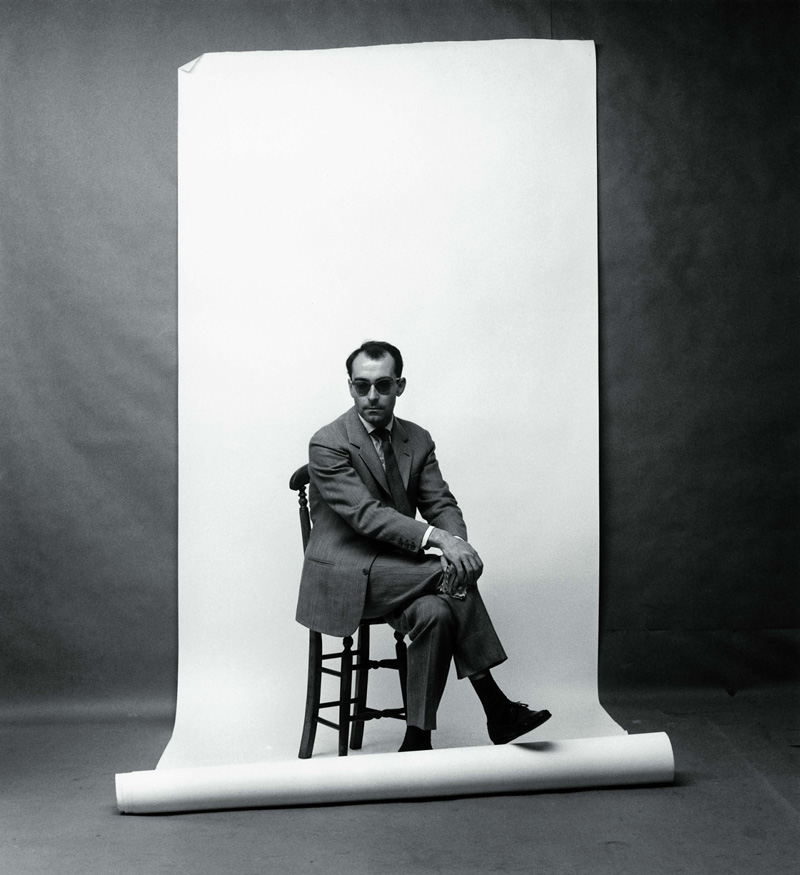
Jean-Luc Godard (born 3 December 1930) is a French-Swiss film director, screenwriter and film critic. He rose to prominence as a pioneer of the 1960s French New Wave film movement.
Like his New Wave contemporaries, Godard criticised mainstream French cinema’s “Tradition of Quality”, which “emphasised craft over innovation, privileged established directors over new directors, and preferred the great works of the past to experimentation.” As a result of such argument, he and like-minded critics started to make their own films. Many of Godard’s films challenge the conventions of traditional Hollywood in addition to French cinema. In 1964, Godard described his and his colleagues’ impact: “We barged into the cinema like cavemen into the Versailles of Louis XV.” He is often considered the most radical French filmmaker of the 1960s and 1970s; his approach in film conventions, politics and philosophies made him arguably the most influential director of the French New Wave. Along with showing knowledge of film history through homages and references, several of his films expressed his political views; he was an avid reader of existential and Marxist philosophy. Since the New Wave, his politics have been much less radical and his recent films are about representation and human conflict from a humanist, and a Marxist perspective.
In a 2002 Sight & Sound poll, Godard ranked third in the critics’ top-ten directors of all time (which was put together by assembling the directors of the individual films for which the critics voted). He is said to have “created one of the largest bodies of critical analysis of any filmmaker since the mid-twentieth century.” He and his work have been central to narrative theory and have “challenged both commercial narrative cinema norms and film criticism’s vocabulary.” In 2010, Godard was awarded an Academy Honorary Award, but did not attend the award ceremony. Godard’s films have inspired many directors including Martin Scorsese, Quentin Tarantino, Brian De Palma, Steven Soderbergh, D. A. Pennebaker, Robert Altman, Jim Jarmusch, Wong Kar-wai, Wim Wenders, Bernardo Bertolucci, and Pier Paolo Pasolini.
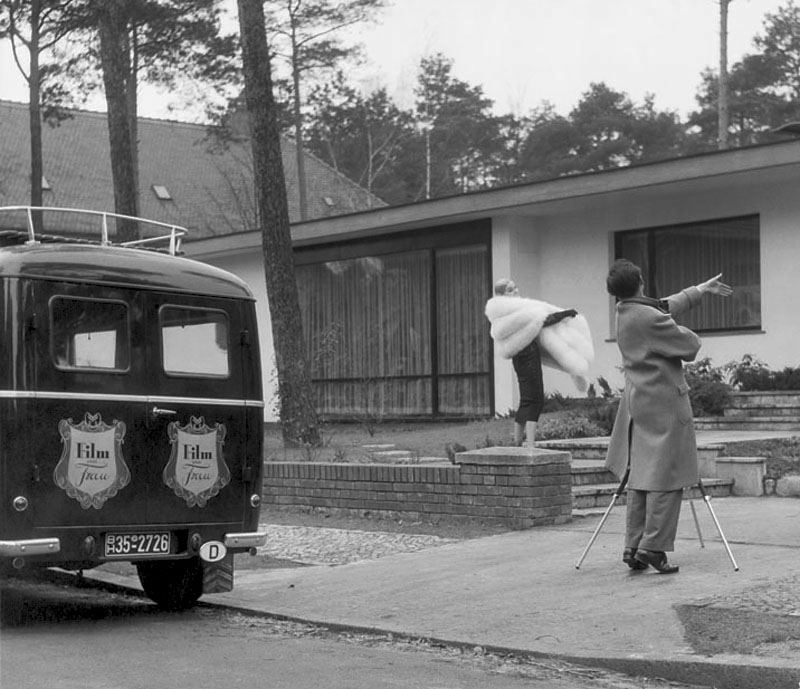
Charlotte Rohrbach (German, 1902-1981) F. C. Gundlach photographing for German magazine Film und Frau (Film and Woman) in Berlin 1955, model Grit Hübscher, stole by Staebe-Seger 1955 Gelatin silver print
F.C. Gundlach (German, 1926-2021) Grit Hübscher. White atlas coat by Sinaida Rudow Berlin 1954
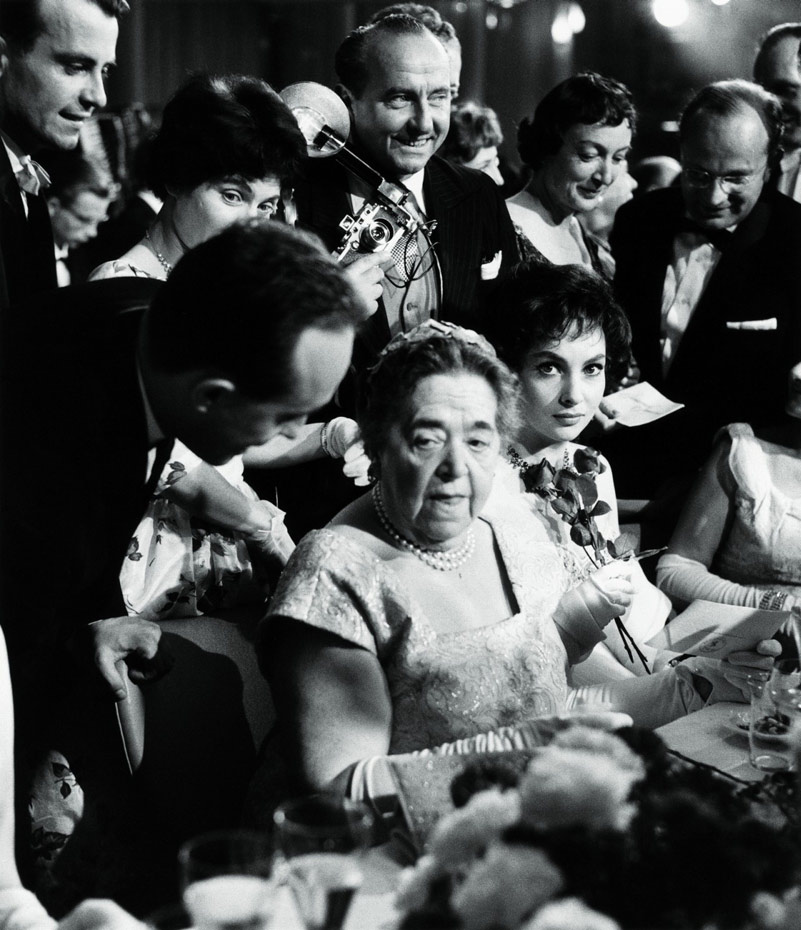
F.C. Gundlach (German, 1926-2021) Berlinale. Elsa Maxwell and Gina Lollobrigida, film ball in the Palais am Funkturm, X Berlinale 1960 in Film und Frau, Issue 16/1960 Gelatin silver print
Elsa Maxwell
Elsa Maxwell (May 24, 1883 – November 1, 1963) was an American gossip columnist and author, songwriter, and professional hostess renowned for her parties for royalty and high society figures of her day.
Maxwell is credited with the introduction of the scavenger hunt and treasure hunt for use as party games in the modern era. Her radio program, Elsa Maxwell’s Party Line, began in 1942; she also wrote a syndicated gossip column. She appeared as herself in the films Stage Door Canteen (1943) and Rhapsody in Blue (1945), as well as co-starring in the film Hotel for Women (1939), for which she wrote the screenplay and a song.
Gina Lollobrigida
Luigina “Gina” Lollobrigida (born 4 July 1927) is an Italian actress, photojournalist and sculptor. She was one of the highest profile European actresses of the 1950s and early 1960s, a period in which she was an international sex symbol. As her film career slowed, she established second careers as a photojournalist and sculptor. In the 1970s, she achieved a scoop by gaining access to Fidel Castro for an exclusive interview.
She has continued as an active supporter of Italian and Italian American causes, particularly the National Italian American Foundation (NIAF). In 2008, she received the NIAF Lifetime Achievement Award at the Foundation’s Anniversary Gala. In 2013, she sold her jewellery collection, and donated the nearly $5 million from the sale to benefit stem cell therapy research.
Texts from the Wikipedia website
F.C. Gundlach (German, 1926-2021) Op Art Silhouette. Jersey coat by Lend Paris 1966 in Brigitte, Issue 4/1966 Gelatin silver print
From November 2009 the Martin-Gropius-Bau presents the definitive retrospective of F.C. Gundlach’s extensive photographic work with the exhibition F.C. Gundlach – Photographic Work. F.C. Gundlach is one of the most famous fashion photographers worked for the most important magazines and publications from the middle of the 1950’s to 1990. Among other many famous pictures the most comprehensive presentation of F.C. Gundlach’s work shows many fameless facets of F.C. Gundlach’s work to date. After years of research, the curators Klaus Honnef, Hans-Michael Koetzle, Sebastian Lux and Ulrich Rüter present for the first time numerous unknown images as vintage prints alongside F.C. Gundlach’s famous photo icons.
The intention of the exhibition is to present the unique aesthetics of F.C. Gundlach’s photography, his roots in photojournalism, his focus on series and sequences, his narrative approach. Furthermore, the exhibition alludes to social and cultural issues over several decades.
The exhibition includes the experimental photography of his early years, especially those from Paris during the 1950’s, his remarkable portraits of German and international movie stars and film-directors as well as F.C. Gundlach’s early photo reportages and photographs of children.
For the first time, F.C. Gundlach’s work for magazines is presented on a larger scale. Magazine covers and a comprehensive collection of double-page spreads show his photographs within the magazines’ context, especially in Film und Frau (1951-1965) and Brigitte (1963-1986). Among photographs, title pages and a comprehensive selection of double pages of his pictures will be shown in context of the magazines. The exhibition illustrates that Gundlach has always been open to technical innovations in photography (35mm cameras, flash or colour photography).
His fashion productions took him both to Paris and New York and to Egypt and Morocco. This multiple printed photographs were been to special motifs in his work. F.C. Gundlach’s impressive travel reportages occurred amongst others in Argentina, Brazil, Peru, Japan, Cambodia, Thailand, Vietnam and will be present in Berlin the first time. Original documents of his vita illustrate the life of the photographer. Moreover, the show illustrates the internationalisation of his work due to extensive traveling. Documents and archival material give a brief outline of the artist’s life and work.
F.C. Gundlach himself has commented his functioning in a 60 min. interview-film, which was exclusively produced for the exhibition by filmmaker Reiner Holzemer. The exhibition presents: a life’s work of photography between documentary representation and staged artificiality, between practical and experimental photography.
F.C. Gundlach, born in 1926 in Heinebach (Hesse), is considered the most significant fashion photographer of the young Federal Republic of Germany. For more than four decades of fashion photography, he wrote fashion history with his work and shaped the perception of fashion in Germany decisively. He set the stage for the ever-changing vogues, defined postures and gestures of models, chose props and locations and thus reflected the ideals of beauty and the history of fashion against a changing social background. F.C. Gundlach worked on assignment for various magazines. His first publications were reportages, theatre- and movie reports. Through his work for the magazine Film und Frau he became a fashion photographer. His photographs have been published in many distinguished magazines such as: Deutsche Illustrierte, Stern, Revue, Quick, Elegante Welt, Film und Frau, Annabelle, Brigitte, Twen and Deutsch. For Brigitte alone F.C. Gundlach photographed more than 5500 pages as well as about 180 magazine covers.
Press release from the Martin-Gropius-Bau website [Online] Cited 05/03/2010. No longer available online
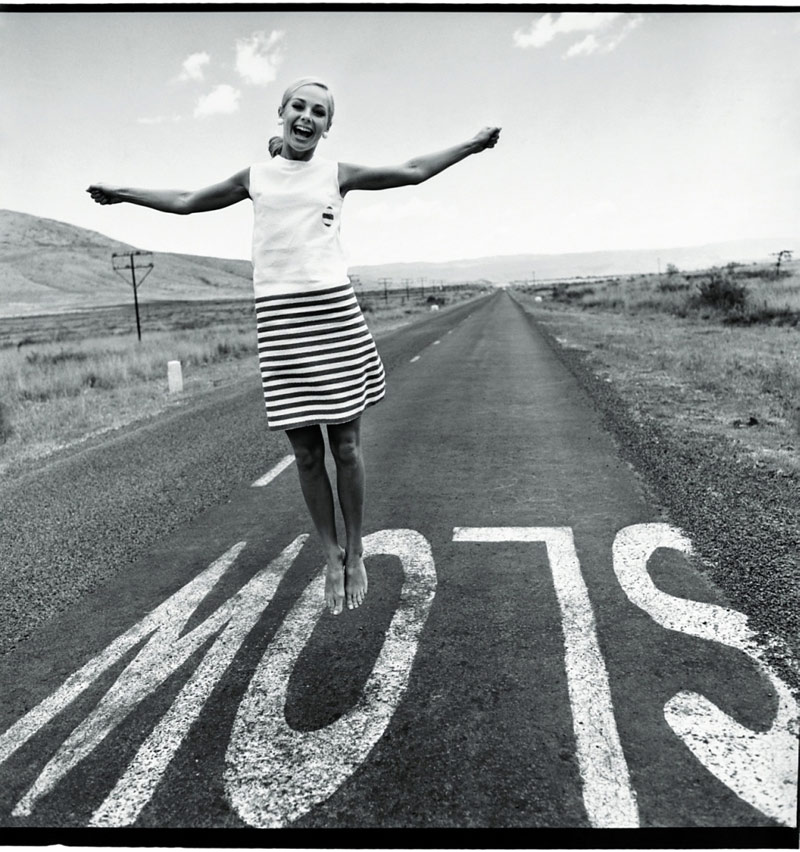
F.C. Gundlach (German, 1926-2021) Slow. Karin Mossberg Nairobi/Kenia 1966 in Brigitte, Issue 9/1966 Gelatin silver print
Karin Mossberg was born on January 1, 1947 in Linkoping, Ostergotland, Sweden as Agneta Anna Karin Mossberg. She is an actress, known for The Big Cube (1969), La vida nueva de Pedrito de Andía (1965) and Les pianos mécaniques (1965).
F.C. Gundlach (German, 1926-2021) Simone d’Aillencourt. Sheath dress by Horn Berlin 1957 in Film und Frau, Issue Spring/Summer 1957 Gelatin silver print
Simone D’Aillencourt
Simone D’Aillencourt or d’Aillencourt (née Daillencourt, born 22 September 1930) is a retired French model. Her career in modelling, during which she achieved significant success, took place from the mid-1950s to the late 1960s. She is best known as the subject of Melvin Sokolsky’s “Bubble” photographic series taken in Paris for Harper’s Bazaar in 1963. She had two daughters during her marriage to José Bénazéraf.
Simone D’Aillencourt was born on 22 September 1930 in Vizille, the daughter of Leon and Anna Daillencourt.
Her activities in the modeling profession began in England. D’Aillencourt began her successful career in Edinburgh in 1954 after a visit by Lucie Clayton. She posed for the British magazine Vogue and then went back and forth between Britain and France. She worked regularly for Pierre Cardin, sometimes for Jacques Heim, and posed for various magazines such as Elle, L’Officiel, Vogue Paris or also Le Jardin des Modes. Due to her job, she traveled many times, posing for William Klein for whom she would become one of his favourites, Irving Penn, John French, Richard Avedon, or also French photographer Georges Dambier or Jeanloup Sieff, who “often photographed” according to him. Independent while the agencies are then little developed, she was contacted by Eileen Ford and invited to New York. She then met the influential Diana Vreeland, which further propelled her career.
In early 1963, D’Aillencourt was selected by Melvin Sokolsky for his “Bubble” series for Harper’s Bazaar. She had her test shot in colour taken in New York, which the staff of Harper’s Bazaar approved. She flew to Paris on 20 January 1963 to have her photos taken by Sokolsky. During the shoot, the Bubble that D’Aillencourt was in was lowered too far into the Seine, which damaged the designer shoes that she was wearing.
D’Aillencourt made her final series of photographs in India, with photographer Henry Clarke, in 1969 after a successful career of 15 years. Throughout her career, she always kept with the trends over time, from the sophistication of the 1950s to the greatest freedom of clothing the following decade. Some time after she stopped modelling, she founded a modelling agency in Paris, Model International, which quickly grew, and then a second agency of a more modest size, Image. She was married to José Bénazéraf, their second daughter Béatrice also having integrated modeling as a booker. In 2008, D’Aillencourt attended the festival at Hyères to celebrate the exhibitions of Sokolsky’s work.
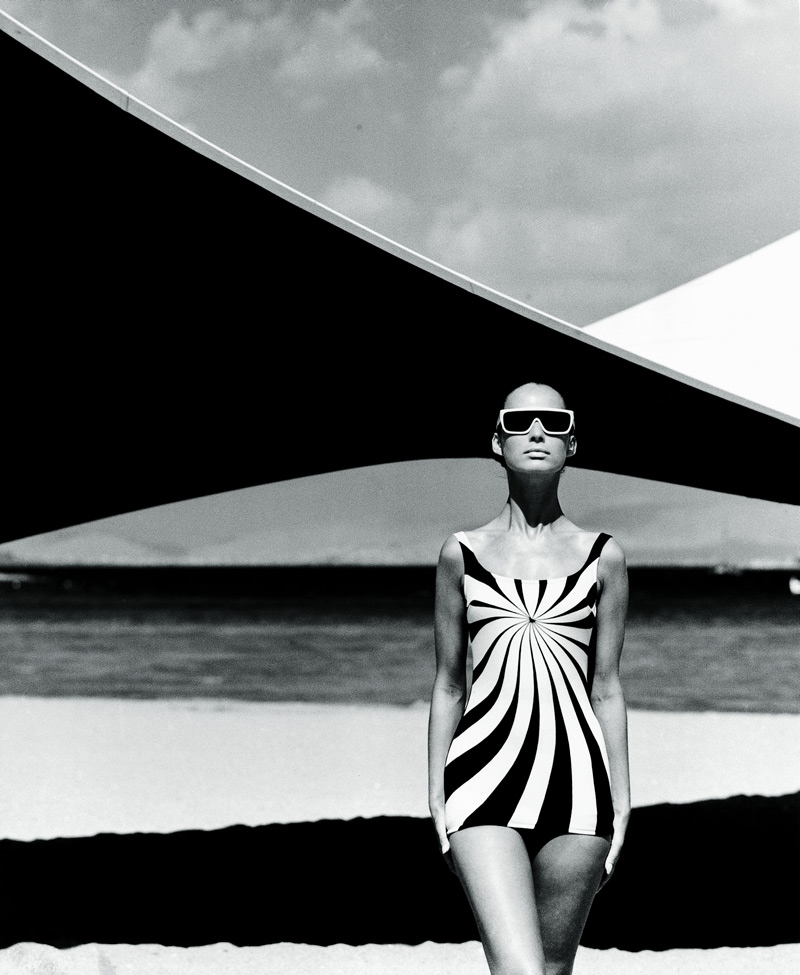
F.C. Gundlach (German, 1926-2021) Op Art Swimsuit. Brigitte Bauer, Op Art swimsuit by Sinz Vouliagmeni Greece 1966 Gelatin silver print
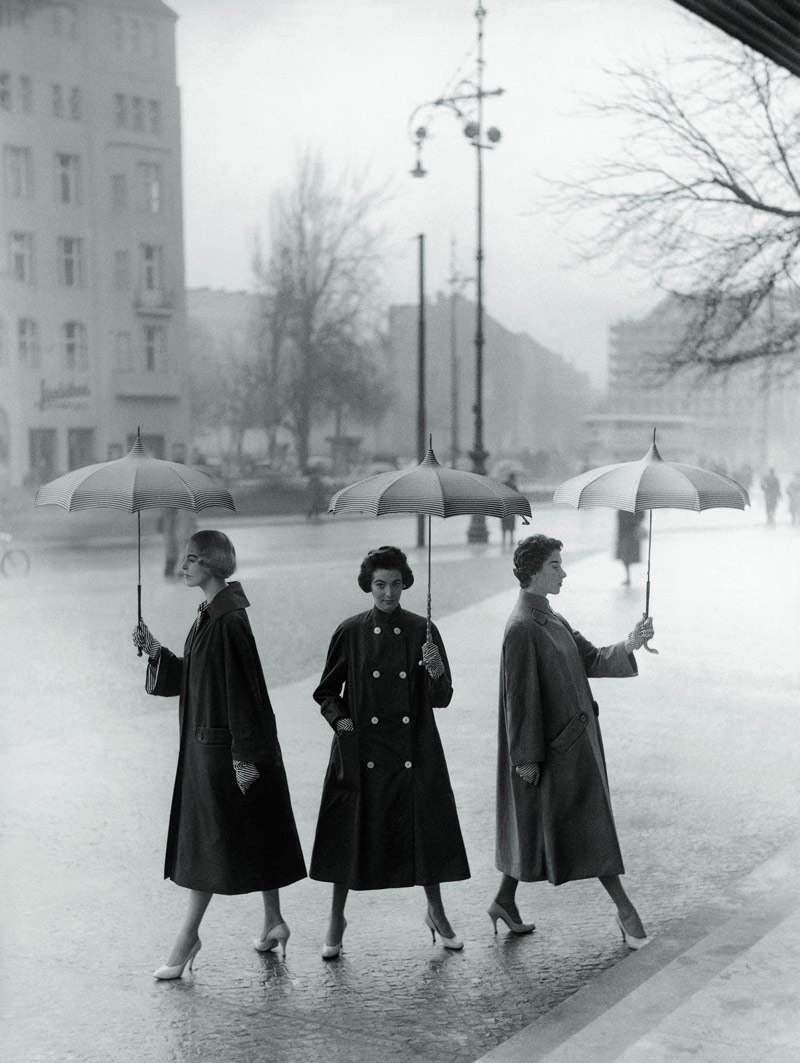
F.C. Gundlach (German, 1926-2021) Rainweather, party sunshiny. Three poplin coats by Staebe-Seger Berlin 1955 Gelatin silver print
F.C. Gundlach (German, 1926-2021) Romy Schneider Hamburg 1961 in Film und Frau, Issue 11/1962 Gelatin silver print
Romy Schneider
Romy Schneider (23 September 1938 – 29 May 1982) was a film actress and voice actress born in Vienna and raised in Germany who held German and French citizenship. She started her career in the German Heimatfilm genre in the early 1950s when she was 15. From 1955 to 1957, she played the central character of Empress Elisabeth of Austria in the Austrian Sissi trilogy, and later reprised the role in a more mature version in Visconti’s Ludwig. Schneider moved to France, where she made successful and critically acclaimed films with some of the most notable film directors of that era.
Many thankx to the Neue Nationalgalerie for allowing me to publish the photographs in the posting. Please click on the photographs for a larger version of the image.
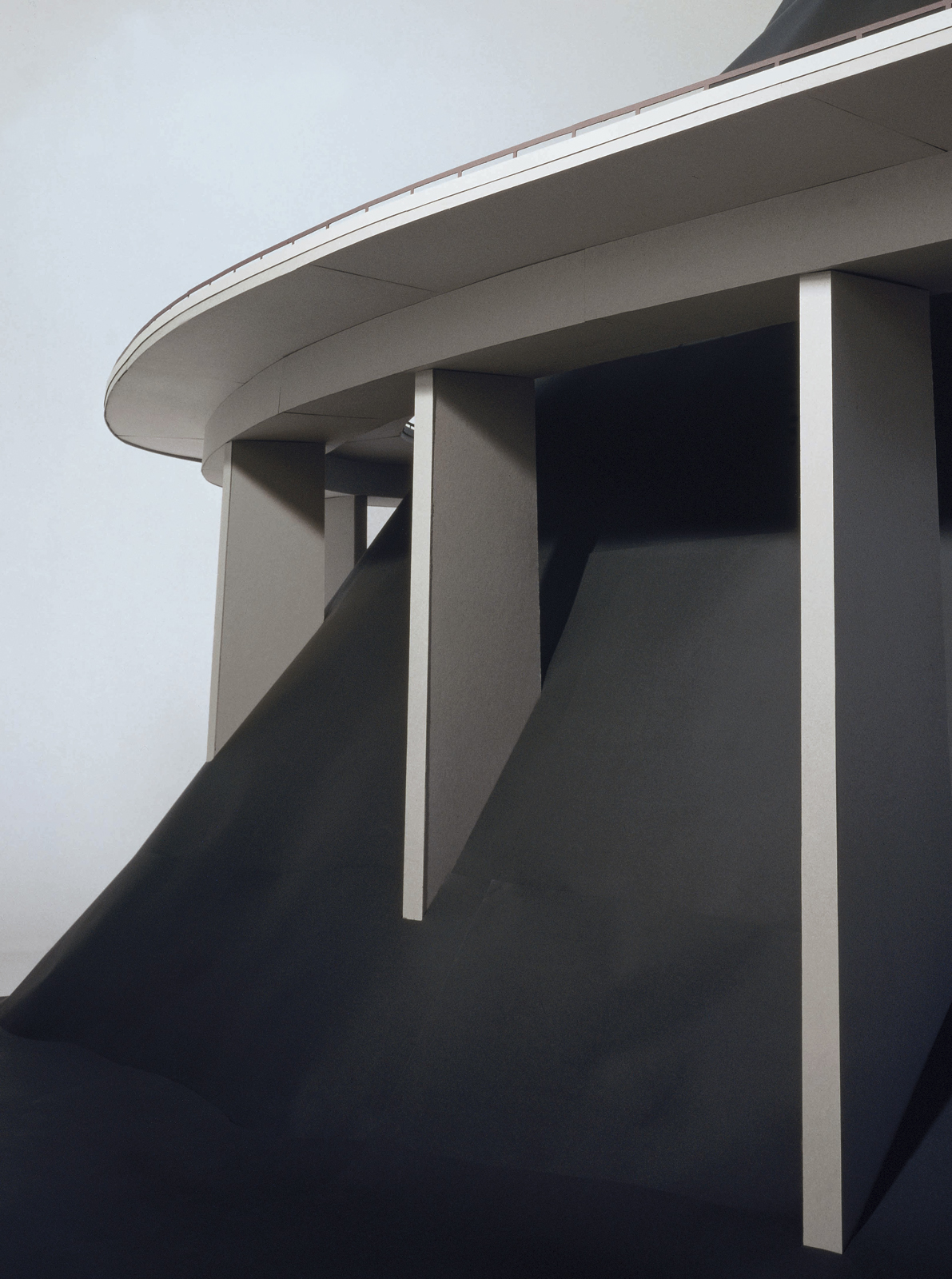
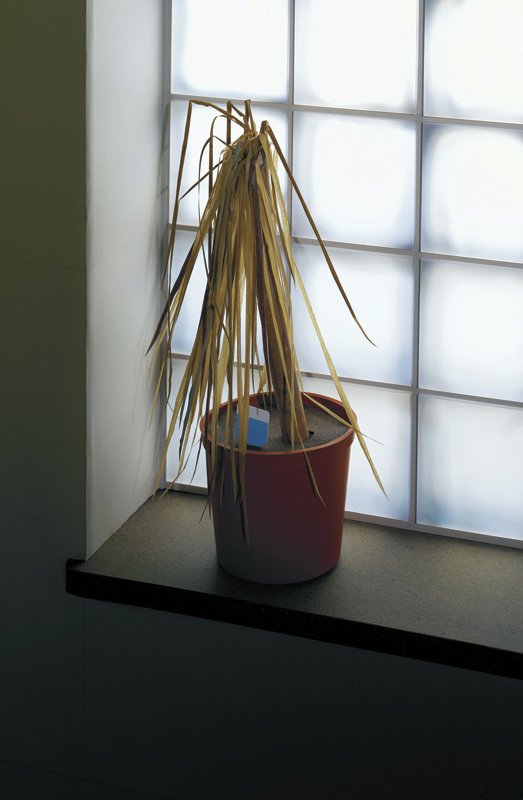
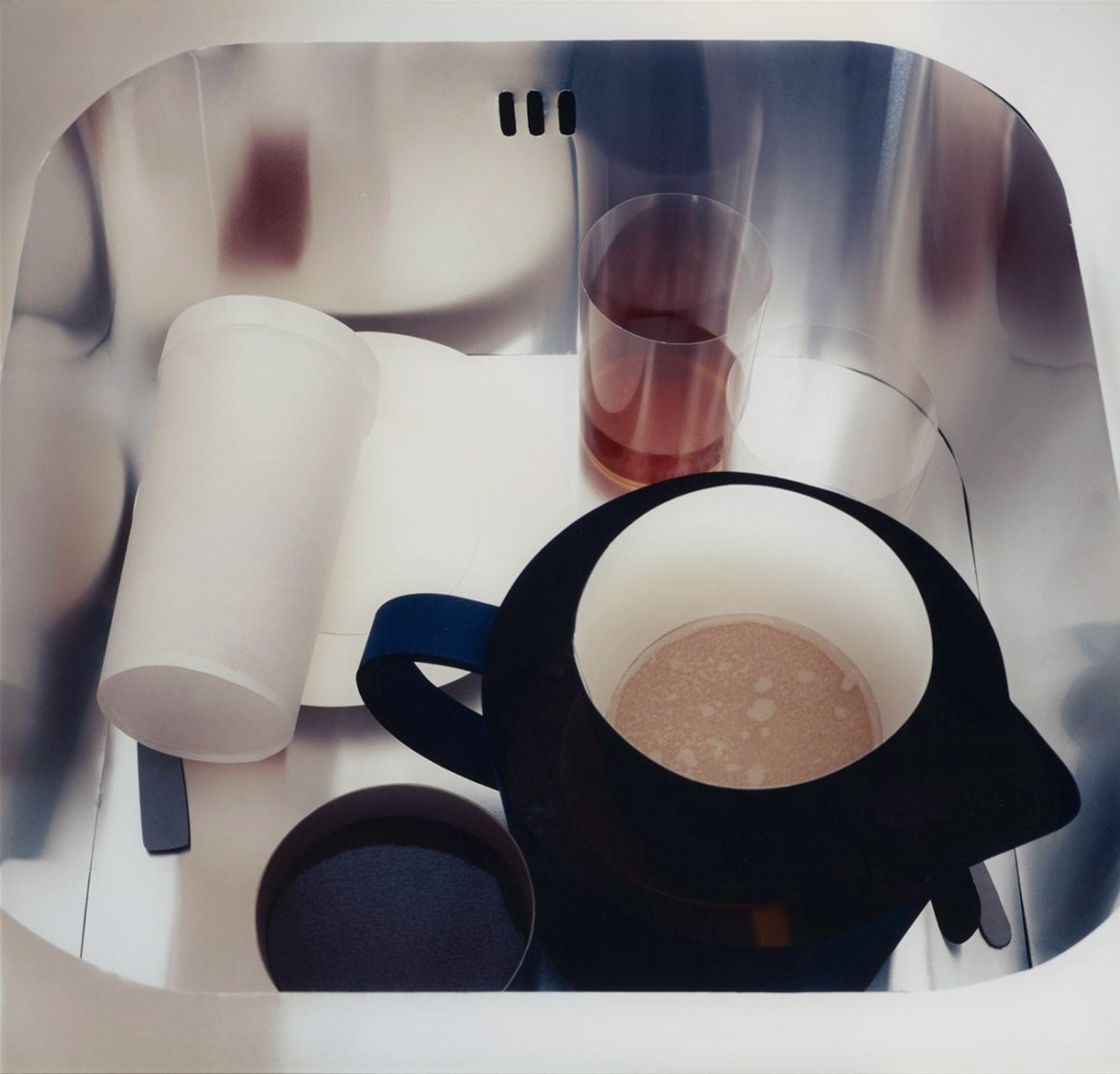
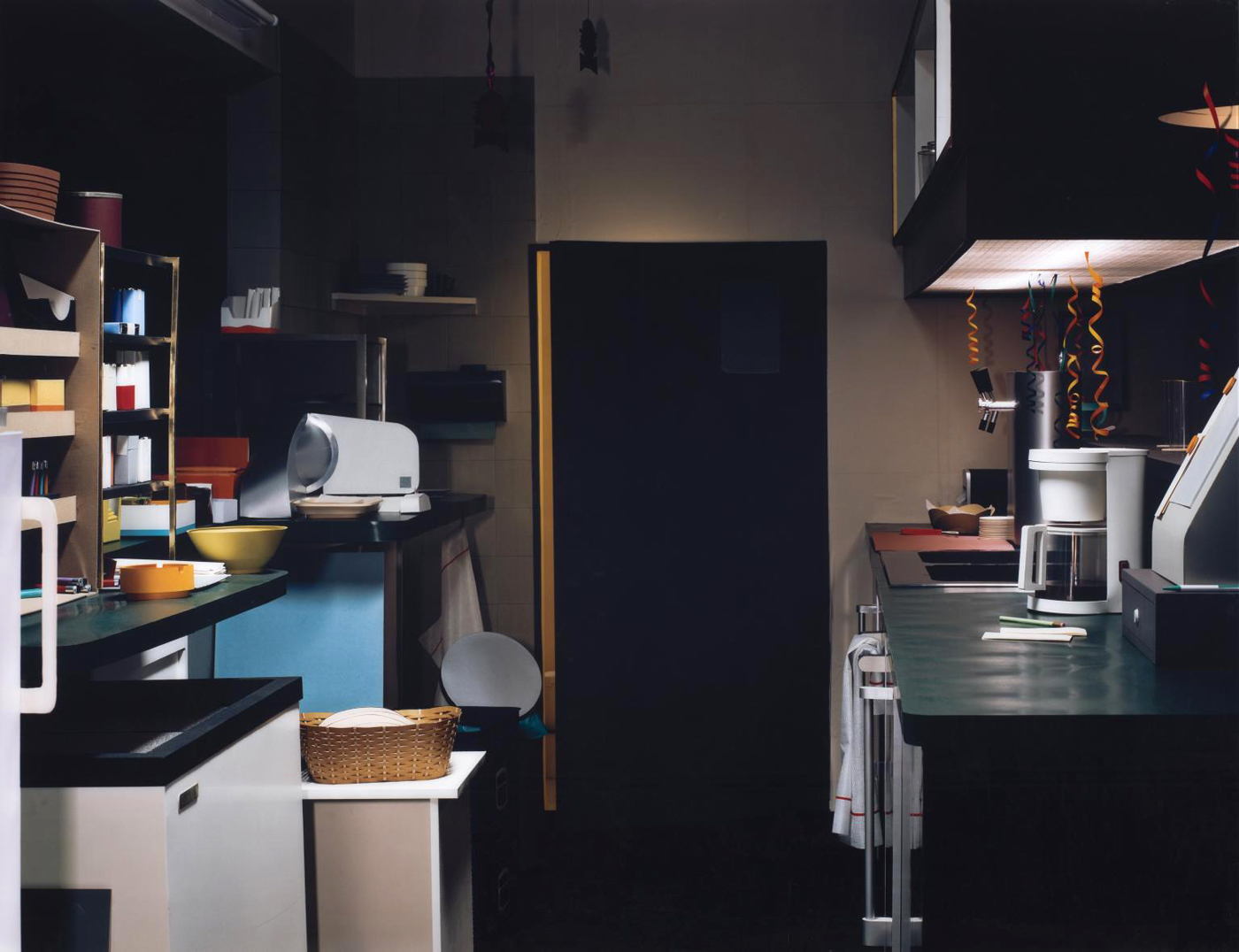
The Nationalgalerie presents Thomas Demand’s show National Gallery Berlin. From September 18, 2009, the Nationalgalerie – Staatliche Museen zu Berlin devotes a comprehensive solo show to one of the internationally most influential artists of our time: Thomas Demand. It is so far the largest presentation of his work in this country. However, the exhibition National Gallery is not designed as an overall retrospective but it is firmly dedicated to only one subject, which is perhaps the most important in Demand’s multi-facetted oeuvre: Germany.
Living in Berlin since 1996 Thomas Demand is an artist known for his large-format photographs, which explore the blank domain between reality and the ways it is being represented. He is undoubtedly regarded as one of the most renowned artists of his generation. Using paper and cardboard he builds three-dimensional, usually life-size models of places which often make references to pictures found in the mass media. By taking photographs of the scenery created in this way, he produces artefacts of a kind of their own which play with the beholder’s ideas of fiction and reality.
Until January, 17, 2010, about 40 works by the artist will be on display in the glass hall of the Neue Nationalgalerie built by Mies van der Rohe. There is hardly a location which is more suitable to convey to the beholder the panorama of a nation’s history than the large glass hall of the Neue Nationalgalerie, which is not only regarded as an incunabulum of post-war architecture but also as a symbol for the self-image of the Federal Republic of Germany at the former border between East and West. The exceptional exhibition architecture of the firm, Caruso St. John, London, forms an ideal link between Demand’s works and Mies van der Rohe’s bright hall.
Each picture shown in the exhibition is accompanied by a specific caption written by Botho Strauß which does not so much explain or define Demand’s work but rather creates a space between the pictures and the texts to allow new versions of interpretation.
Text from the New National Gallery website [Online] Cited 01/11/2009 no longer available online
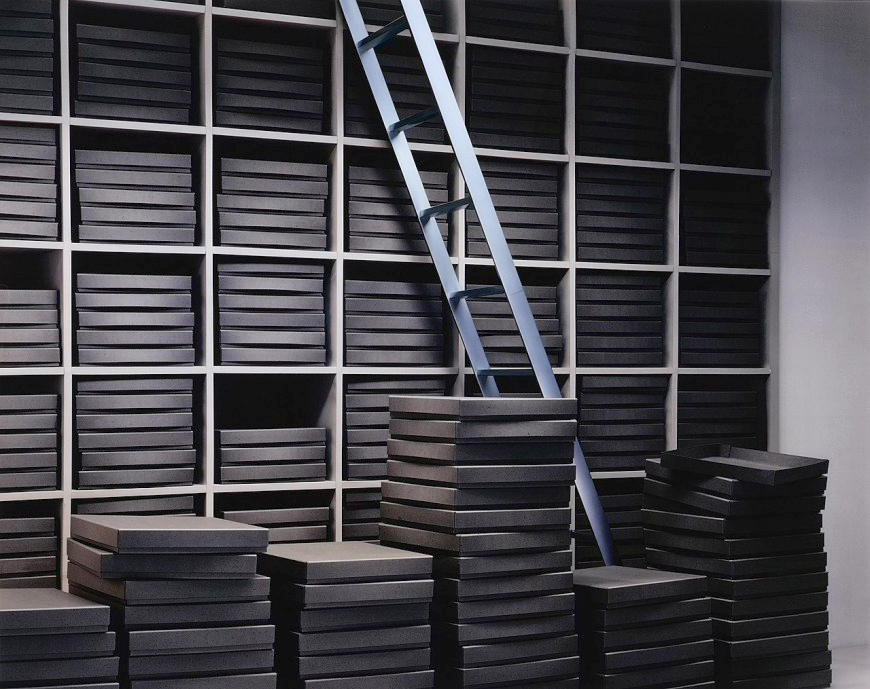
Archiv / Archive, 1995, C-Print/ Diasec, 183,5 x 233 cm Attempt, 2005, C-Print/ Diasec, 166 x 190 cm Badezimmer / Bathroom, 1997, C-Print/ Diasec, 160 x 122 cm Balkone / Balconies, 1997, C-Print/ Diasec, 150 x 128 cm Brennerautobahn, 1994, C-Print/ Diasec, 150 x 118 cm Büro / Office, 1995, C-Print/ Diasec, 183.5 x 240 cm Campingtisch / Camping Table, 1999, C-Print/ Diasec, 85 x 58 cm Copyshop, 1999, C-Print/ Diasec, 183.5 x 300 cm Drei Garagen / Three Garages, 1995, C-Print/ Diasec, 108 x 223 cm Fabrik (ohne Namen), 1994, C-Print/ Diasec, 120 x 185 cm Fassade / Facade, 2004, C-Print/ Diasec, 178 x 250 cm Fenster / Window, 1998, C-Print/ Diasec, 183.5 x 286 cm Fotoecke, 2009, C-Print/ Diasec, 180 x 198 cm Gangway, 2001, C-Print/ Diasec, 225 x 180 cm Grube / Pit, 1999, C-Print/ Diasec, 229 x 167 cm Haltestelle, 2009, C-Print/Diasec, 240 x 330 cm Heldenorgel, 2009, C-Print/Diasec, 240 x 380 cm Hinterhaus, 2005, C-Print/ framed, 26.9 x 21.5 cm Kabine, 2002, C-Print/ Diasec, 180 x 254 cm Kinderzimmer /Nursery, 2009, C-Print/Diasec, 140 x 230 cm Klause 1 / Tavern, 2006, C-Print/ Diasec, 275 x 170 cm Klause 2 / Tavern, 2006, C-Print/ Diasec, 178 x 244 cm Klause 3 / Tavern, 2006, C-Print/ Diasec, 199 x 258 cm Klause 4 / Tavern, 2006, C-Print/ Diasec, 103 x 68 cm Klause 5 / Tavern, 2006, C-Print/ Diasec, 197 x 137 cm Labor (77-E-217), 2000, C-Print/ Diasec, 180 x 268 cm Lichtung / Clearing, 2003, C-Print/ Diasec, 192 x 495 cm Modell / Model, 2000, C-Print/ Diasec, 164,5 x 210 cm Paneel / Peg Board, 1996, C-Print/ Diasec, 160 x 121 cm Parlament / Parliament, 2009, C-Print/ Diasec, 180 x 223 cm Raum / Room, 1994, C-Print/ Diasec, 183.5 x 270 cm Sprungturm / Diving Board, 1994, C-Print/ Diasec, 150 x 118 cm Spüle / Sink, 1997, C-Print/ Diasec, 52 x 56.5 cm Studio, 1997, C-Print/ Diasec, 183.5 x 349.5 cm Rasen / Lawn, 1998, C-Print/ Diasec, 122 x 170 cm Terrasse / Terrace, 1998, C-Print/ Diasec, 183.5 x 268 cm Treppenhaus / Staircase, 1995, C-Print/ Diasec, 150 x 118 cm Wand /Mural, 1999, C-Print/ Diasec, 183.5 x 270 cm Zeichensaal / Drafting Room, 1996, C-Print/ Diasec, 183.5 x 285 cm
Demand’s work is based on pre-existing images from the media, often of sites of political or cultural interest. He translates these images into life-size models using paper and cardboard, and photographs the resulting tableaux. These five photographs [of which the above is just one] depict a tavern in the German village of Burbach where a young boy was kidnapped, held hostage and ultimately murdered in 2001. His body was never recovered. The case was covered extensively in the German press, and images of the tavern became imbued with the public’s horrified imagination of the crime. Demand’s photographs investigate the traces these mediated images leave in the collective memory.




































 Art Blart _ art and cultural memory archive
You must be logged in to post a comment.