
Exhibition dates: 30th January, 2009 – 28th February, 2010
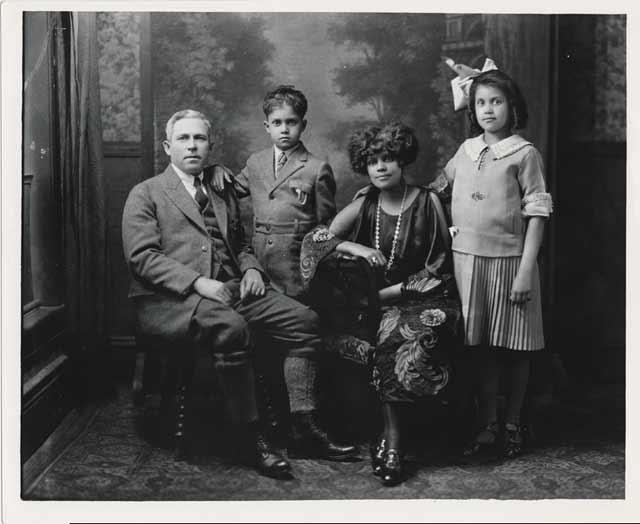
Addison Scurlock (American, 1883-1964)
Family portrait
c. 1925
Gelatin silver print
Courtesy of the Archives Center, National Museum of American History, Smithsonian Institution
© Scurlock
I so wish I was visiting Washington to see this exhibition!
If you get chance have a look through the Smithsonian NMAG Archives Center, ‘Portraits of a City: The Scurlock Photographic Studio’s Legacy to Washington, D.C.’ What a record of cultural and personal history, memory and a wonderful example of how photography can transcend time and space.
Click on the links at the top of the page or use the ‘General Resources: Browse all Scurlock images’ button at the left of page.
Many thankx to the Smithsonian for allowing me to publish the photographs in the posting. Please click on the photographs for a larger version of the image.
For over 80 years, the Scurlock photography studio catalogued the lives of the black middle class of Washington, D.C. (The exhibit, The Scurlock Studio and Black Washington: Picturing the Promise, is on view at the National Museum of American History through November 15, 2009. Thanks to Lonnie Bunch, Director of the National Museum of African American History and Culture, which co-organised the exhibit).
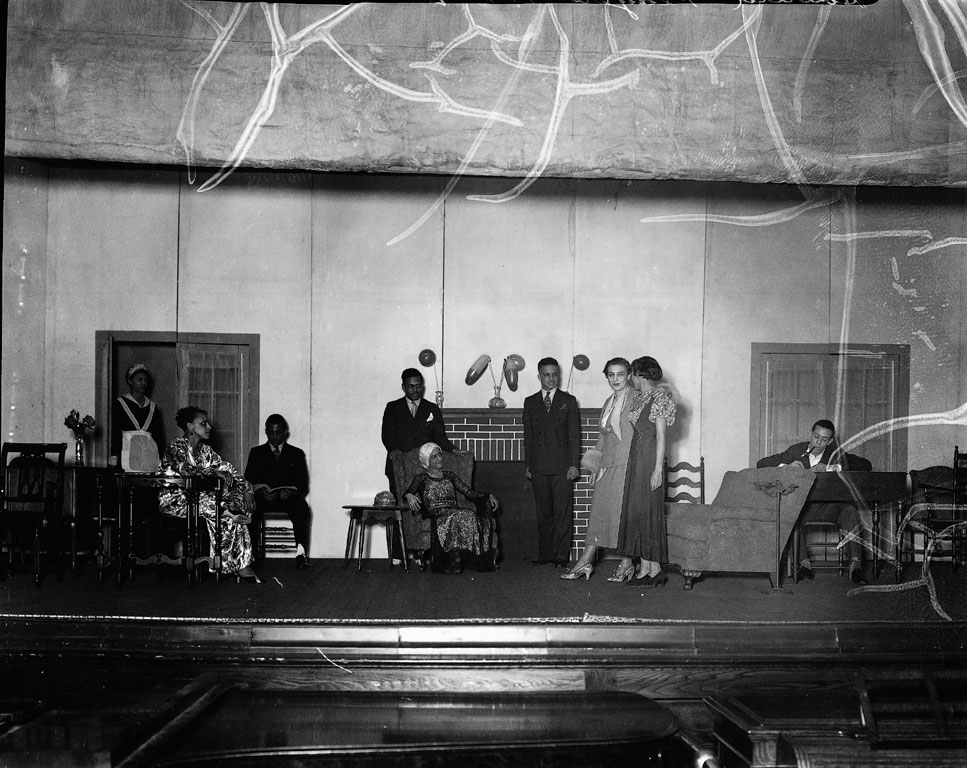
Addison Scurlock (American, 1883-1964)
Howard University Players
c. 1933
Gelatin silver print
Courtesy of the Archives Center, National Museum of American History, Smithsonian Institution
© Scurlock
A Scurlock camera was “present at almost every significant event in the African-American community,” recalls former D.C. Councilwoman Charlene Drew Jarvis, whose father, Howard University physician Charles Drew, was a Scurlock subject many times. Dashing all over town – to baptisms and weddings, to balls and cotillions, to high-school graduations and to countless events at Howard, where he was the official photographer – Addison Scurlock became black Washington’s “photographic Boswell – the keeper of the visual memory of the community in all its quotidian ordinariness and occasional flashes of grandeur and moment,” says Jeffrey Fearing, a historian who is also a Scurlock relative.
The Scurlock Studio grew as the segregated city became a mecca for black artists and thinkers even before the Harlem Renaissance of the 1920s. U Street became known as “Black Broadway,” as its jazz clubs welcomed talents including Duke Ellington (who lived nearby), Ella Fitzgerald and Pearl Bailey. They and other entertainers received the Scurlock treatment, along with the likes of W.E.B. Du Bois and Booker T. Washington; soon no black dignitary’s visit to Washington was complete without a Scurlock sitting. George Scurlock would say it took him a while to realise that his buddy Mercer Ellington’s birthday parties – with Mercer’s dad (a.k.a. the Duke) playing “Happy Birthday” at the piano – were anything special.
At a time when minstrel caricature was common, Scurlock’s pictures captured black culture in its complexity and showed black people as they saw themselves. “The Scurlock Studio and Black Washington: Picturing the Promise,” an exhibition presented through this month by the Smithsonian’s National Museum of African American History and Culture, features images of young ballerinas in tutus, of handsomely dressed families in front of fine houses and couples in gowns and white tie at the NAACP’s winter ball.
Extract from David Zax. “The Scurlock Studio: Picture of Prosperity,” in the Smithsonian Magazine published on Smithsonian.com website February 2010
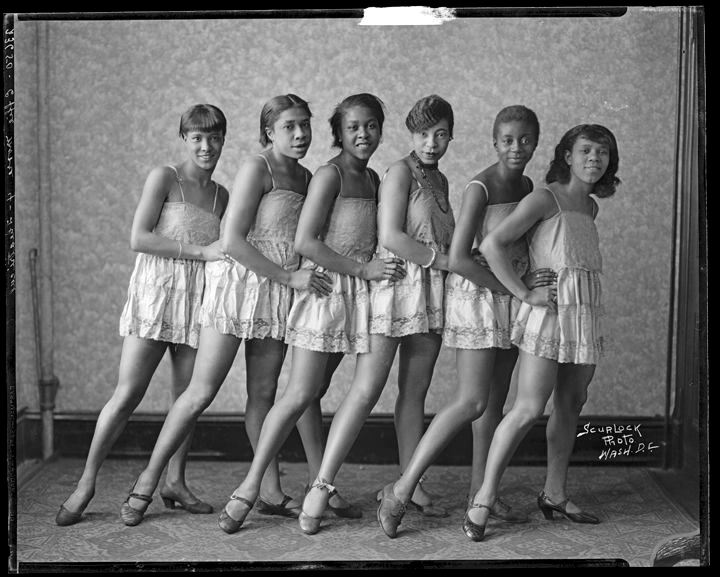
Addison Scurlock (American, 1883-1964)
Effie Moore Dancers
c. 1920s
Gelatin silver print
Courtesy of the Archives Center, National Museum of American History, Smithsonian Institution
© Scurlock
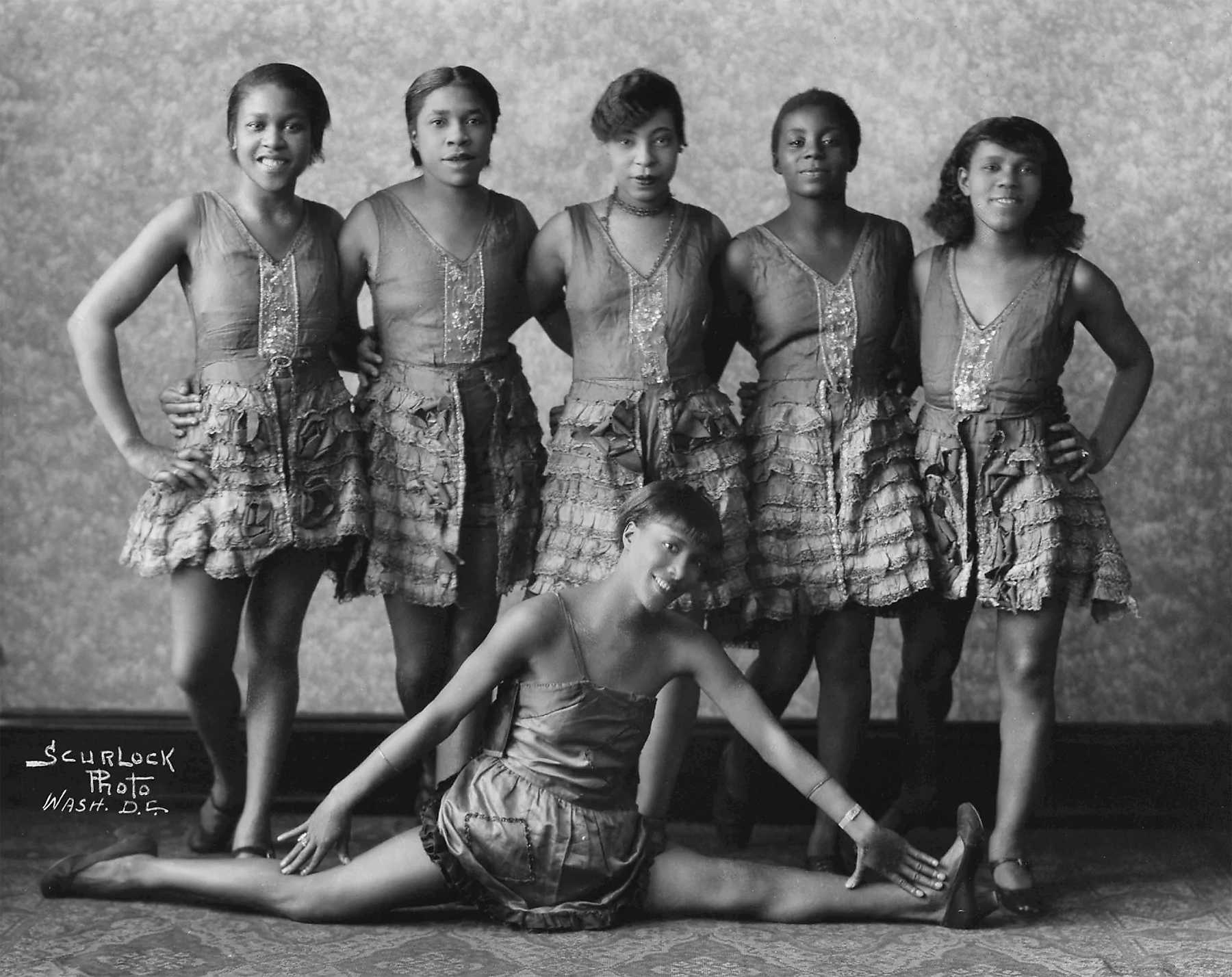
Addison Scurlock (American, 1883-1964)
Effie Moore Dancers
c. 1920s
Gelatin silver print
Courtesy of the Archives Center, National Museum of American History, Smithsonian Institution
© Scurlock
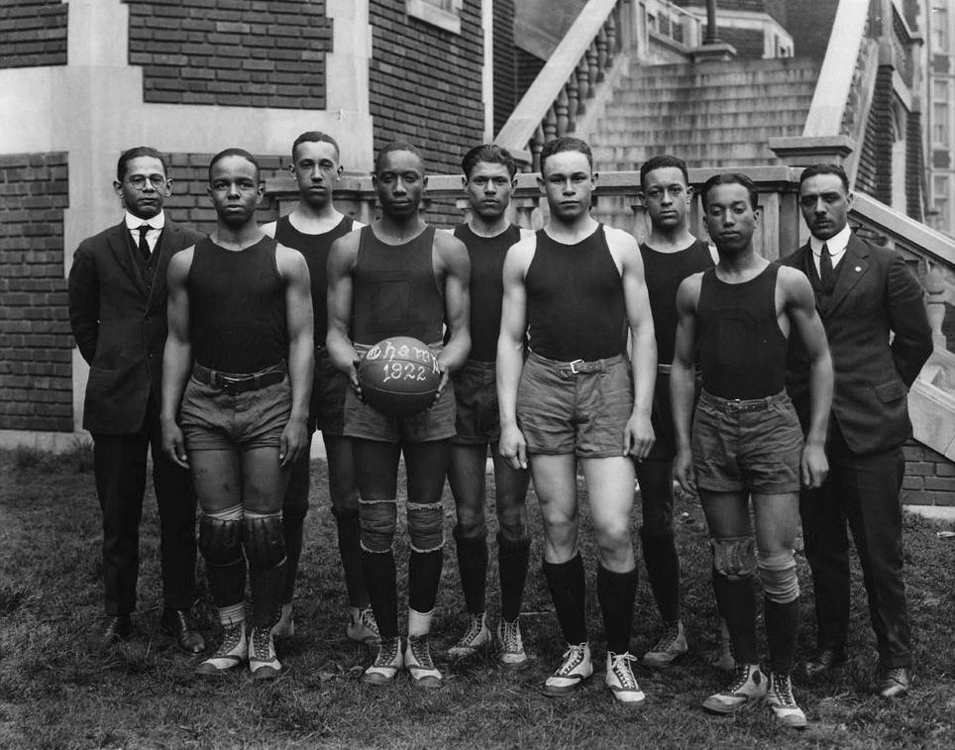
Addison Scurlock (American, 1883-1964)
Dunbar High School Champion Basketball Team
1922
Gelatin silver print
Courtesy of the Archives Center, National Museum of American History, Smithsonian Institution
© Scurlock
The photograph features a young Charles Drew, fourth from the right, before earning his place in history for his pioneering work in developing the blood bank concept
![Addison Scurlock (American, 1883-1964) 'Charles Drew with the first mobile blood collecting unit [Charles Drew and Red Cross Medical Team]' February 1941](https://artblart.com/wp-content/uploads/2009/01/scurlock-red-cross-web.jpg "Addison Scurlock (American, 1883-1964) 'Charles Drew with the first mobile blood collecting unit [Charles Drew and Red Cross Medical Team]' February 1941")
Addison Scurlock (American, 1883-1964)
Charles Drew with the first mobile blood collecting unit [Charles Drew and Red Cross Medical Team]
February 1941
Gelatin silver print
Courtesy of the Archives Center, National Museum of American History, Smithsonian Institution
© Scurlock
Photographed nearly twenty years after his championship basketball season, Dr. Drew had recently been granted his doctorate and was spearheading the “Blood for Britain” program instituted in World War II to save the lives of Allied forces.
Charles Drew
Charles Richard Drew (June 3, 1904 – April 1, 1950) was an American physician, surgeon, and medical researcher. He researched in the field of blood transfusions, developing improved techniques for blood storage, and applied his expert knowledge to developing large-scale blood banks early in World War II. This allowed medics to save thousands of lives of the Allied forces. The research and development aspect of his blood storage work is disputed. As the most prominent African American in the field, Drew protested against the practice of racial segregation in the donation of blood, as it lacked scientific foundation, and resigned his position with American Red Cross, which maintained the policy until 1950.
Early life and education
Drew was born in 1904 into an African-American middle-class family in Washington, D.C. His father, Richard, was a carpet layer and his mother, Nora Burrell, was a teacher. Drew and his siblings grew up in D.C.’s Foggy Bottom neighbourhood and he graduated from Dunbar High School in 1922. Drew won an athletics scholarship to Amherst College in Massachusetts, where he graduated in 1926. An outstanding athlete at Amherst, Drew also joined Omega Psi Phi fraternity. He attended medical school at McGill University in Montreal, Quebec, Canada, receiving his MDCM in 1933, and ranked 2nd in his class of 127 students. A few years later, Drew did graduate work at Columbia University, where he earned his Doctor of Medical Science degree, becoming the first African American to do so.
Academic career
In 1941, Drew’s distinction in his profession was recognised when he became the first African-American surgeon selected to serve as an examiner on the American Board of Surgery. Drew had a lengthy research and teaching career and became a chief surgeon.
Blood plasma for British project
In late 1940, before the U.S. entered World War II and just after earning his doctorate, Drew was recruited by John Scudder to help set up and administer an early prototype program for blood storage and preservation. He was to collect, test, and transport large quantities of blood plasma for distribution in the United Kingdom. Drew went to New York City as the medical director of the United States’ Blood for Britain project. The Blood for Britain project was a project to aid British soldiers and civilians by giving U.S. blood to the United Kingdom.
Drew started what would be later known as bloodmobiles, which were trucks containing refrigerators of stored blood; this allowed for greater mobility in terms of transportation as well as prospective donations.
Drew created a central location for the blood collection process where donors could go to give blood. He made sure all blood plasma was tested before it was shipped out. He ensured that only skilled personnel handled blood plasma to avoid the possibility of contamination. The Blood for Britain program operated successfully for five months, with total collections of almost 15,000 people donating blood, and with over 5,500 vials of blood plasma. As a result, the Blood Transfusion Betterment Association applauded Drew for his work. Out of his work came the American Red Cross Blood Bank.
Text from the Wikipedia website
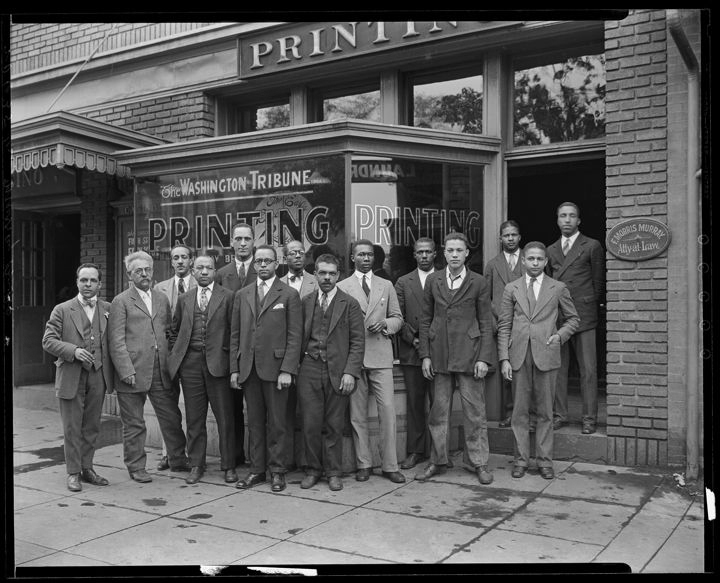
Addison Scurlock (American, 1883-1964)
Murray Brothers Printing Company
1925
Gelatin silver print
Courtesy of the Archives Center, National Museum of American History, Smithsonian Institution
© Scurlock
The Murray Brothers Printing Company, 1925, was home to The Washington Tribune newspaper and steps away from the entrepreneurial F.H.M. Murray’s other business, the Murray Palace Casino.
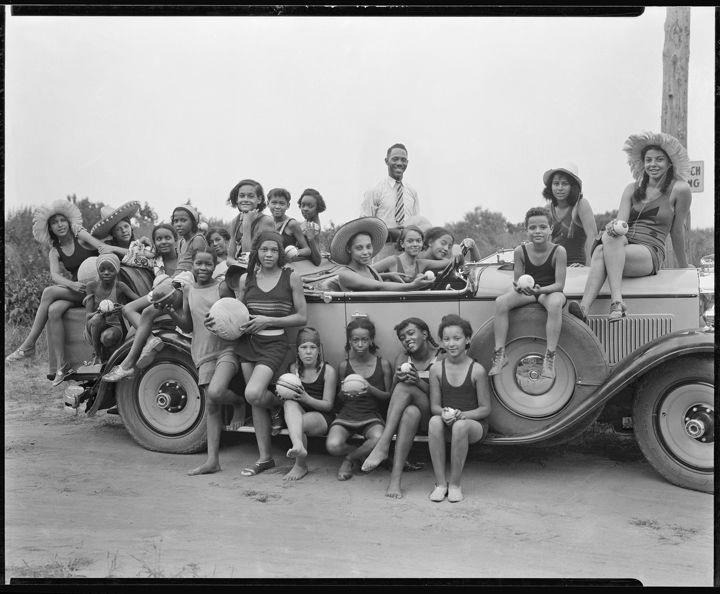
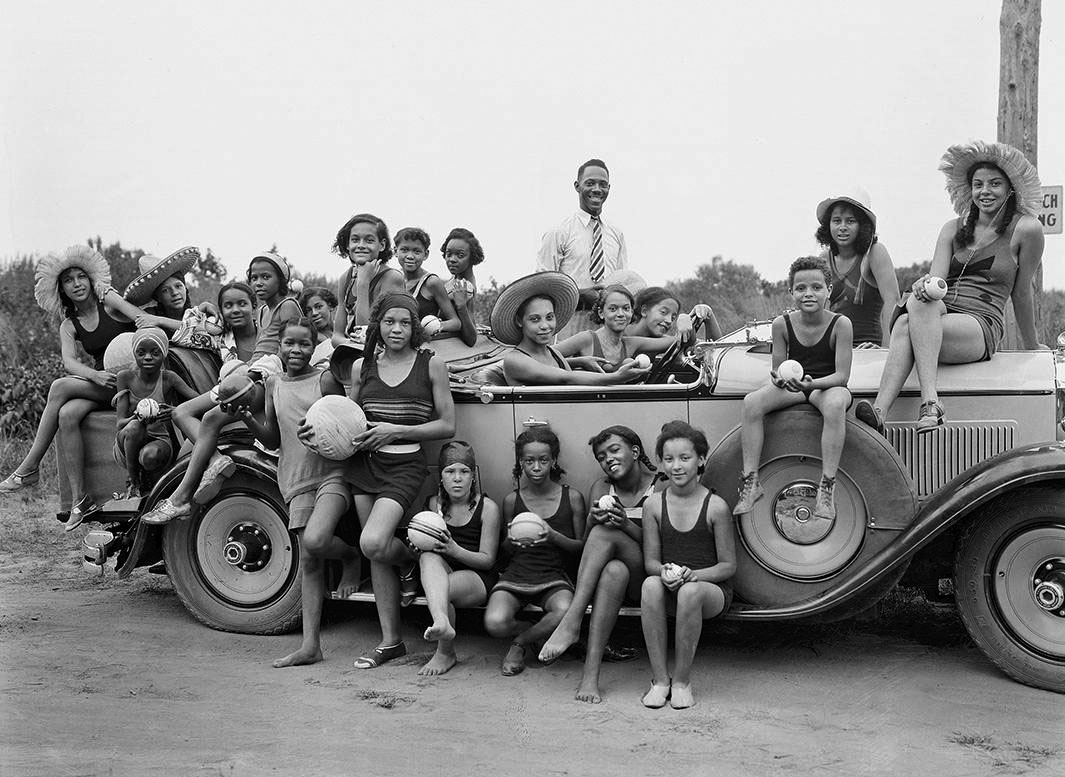
Addison Scurlock (American, 1883-1964)
YWCA camp for girls, Highland Beach Girls, Maryland
1930-1931
Gelatin silver print
Courtesy of the Archives Center, National Museum of American History, Smithsonian Institution
© Scurlock
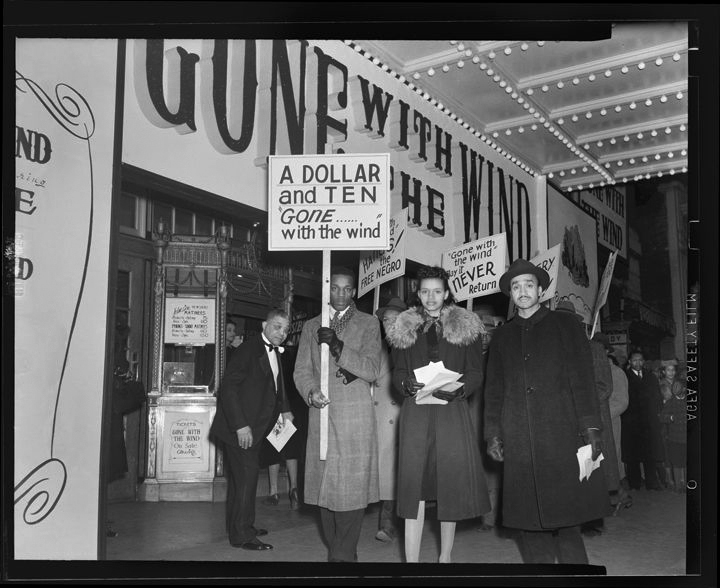
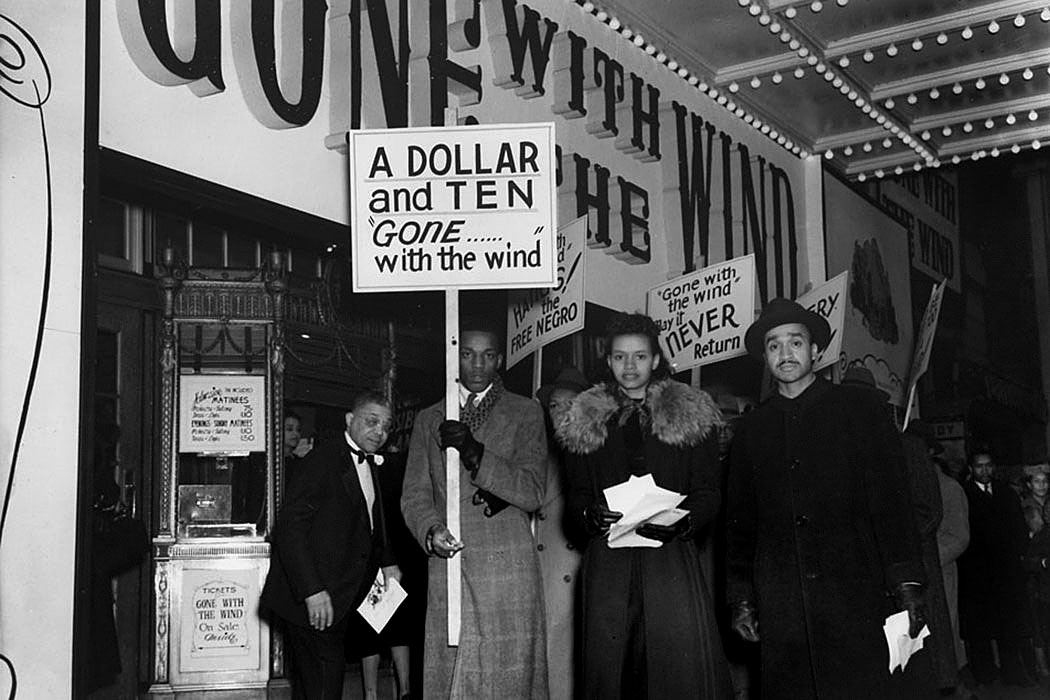
Addison Scurlock (American, 1883-1964)
Picketing Gone with the Wind outside Lincoln Theatre
1947
Gelatin silver print
Courtesy of the Archives Center, National Museum of American History, Smithsonian Institution
© Scurlock
Rufus Byars, minstrel performer and manager of the theatre is the stooped figure to the left.
Nearly a century’s worth of photographs from the Scurlock studio form a vivid portrait of black Washington, D.C., in all its guises – its challenges and its victories, its dignity and its determination. The exhibition features more than 100 images created by one of the premiere African American studios in the country and one of the longest-running black businesses in Washington. Highlights include cameras and equipment from the studio and period artefacts from Washington.
Beginning in the early 20th century and continuing into the 1990s, Addison Scurlock, followed by his sons, Robert and George, used their cameras to document and celebrate a community unique in the world. They captured weddings, baptisms, graduations, sporting events, civil protests, high-society affairs, and visiting dignitaries. It was for portraiture, however, that the Scurlocks became renowned; they continue to be recognised today by scholars and artists as among the very best of 20th-century photographers who recorded the rapid changes in African American urban communities nationwide.
Text from the Smithsonian website

Addison Scurlock (American, 1883-1964)
Miss Vinita Lewis
c. 1940
Courtesy of the Archives Center, National Museum of American History, Smithsonian Institution
© Scurlock
Smithsonian National Museum of American History
14th Street and Constitution Avenue, NW
Washington, DC
Opening hours:
Open 10am – 5.30pm daily






![Carleton Watkins (American, 1829-1916) '[Section Grizzly Giant, Mariposa Grove]' 1861](https://artblart.com/wp-content/uploads/2009/01/watkins-section-grizzly-giant.jpg "Carleton Watkins (American, 1829-1916) '[Section Grizzly Giant, Mariposa Grove]' 1861")


![Carleton Watkins (American, 1829-1916) '[Sugarloaf Islands at Fisherman's Bay, Farallon Islands]' About 1869](https://artblart.com/wp-content/uploads/2009/01/watkins-sugarloaf-islands-at-fishermans-bay-farallon-islands.jpg "Carleton Watkins (American, 1829-1916) '[Sugarloaf Islands at Fisherman's Bay, Farallon Islands]' About 1869")


![Carleton Watkins (American, 1829-1916) '[Thompson's Seedless Grapes]' 1880](https://artblart.com/wp-content/uploads/2009/01/watkins-thompsons-seedless-grapes.jpg "Carleton Watkins (American, 1829-1916) '[Thompson's Seedless Grapes]' 1880")





















 Art Blart _ art and cultural memory archive
You must be logged in to post a comment.