Exhibition: ‘William Eggleston: Democratic Camera, Photographs and Video, 1961-2008’ at The Art Institute of Chicago

Exhibition dates: 27th February – 23rd May, 2010
 

William Eggleston (American, b. 1939) 'Untitled (Memphis, Tennessee)' 1971 from the exhibition 'William Eggleston: Democratic Camera, Photographs and Video, 1961-2008' at The Art Institute of Chicago, February - May, 2010


William Eggleston (American, b. 1939)
Untitled (Memphis, Tennessee)
1971
from 14 Pictures, 1974
Dye transfer print
15 7/8 x 19 15/16 in (40.3 x 50.6cm)
Collection of Adam Bartos
© Eggleston Artistic Trust, courtesy Cheim & Read, New York


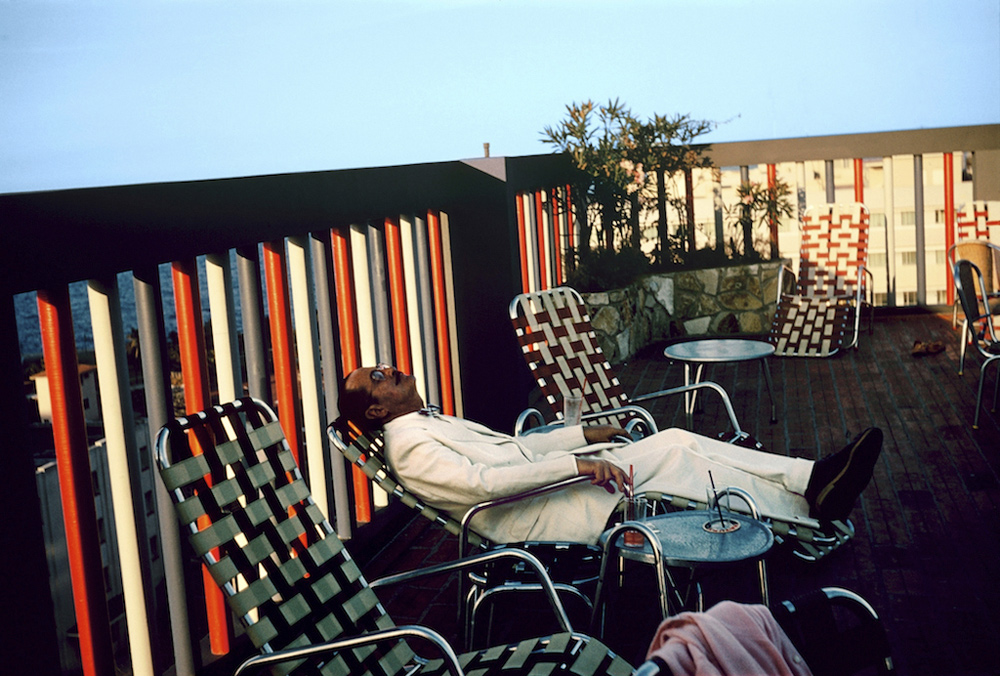
THE classic William Eggleston, the one and only. Feel the heat of sun on body. Look at the construction of the image plane, all angles and fractures. The slight movement of the woman’s hand as she sits on a cracked yellow wall. The distance between her body and the metal pole with wrapped chain and padlock, that ice/fire tension as Minor White would say. Man with gun vs melancholy monochromatic self portrait, the reverie of the lone thinker. Colour and light as emotional sounding board, “colour as a means of discovery and expression, and as a way to highlight aspects of life hidden in plain sight.” This is what Eggleston points his democratic camera at – life hidden in plain sight, revealed in all its intricacies, in all its mundanity and glory.

Dr Marcus Bunyan


Many thankx to Chai Lee and the Art Institute of Chicago for allowing to me reproduce the photographs in this posting. Please click on the photographs for a larger version of the image.
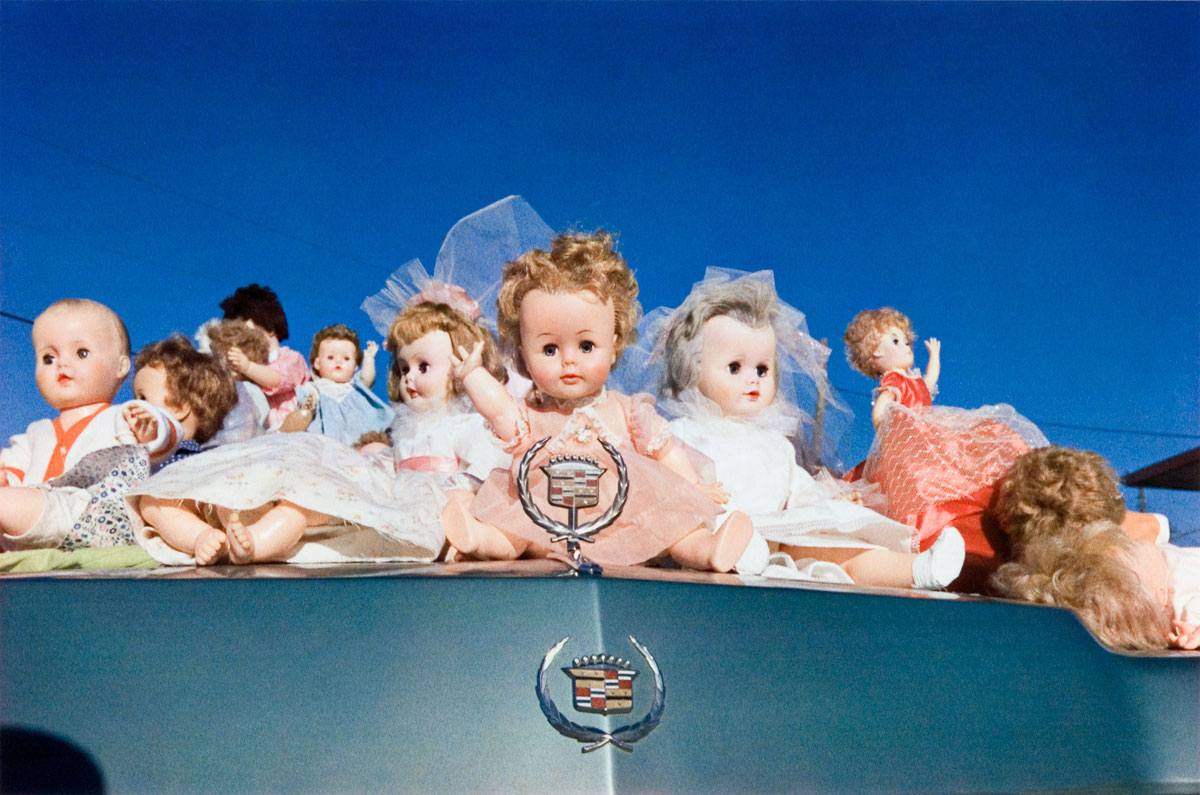


William Eggleston (American, b. 1939) 'Untitled' 1970 from the exhibition 'William Eggleston: Democratic Camera, Photographs and Video, 1961-2008' at The Art Institute of Chicago, February - May, 2010


William Eggleston (American, b. 1939)
Untitled
1970
from Los Alamos, 1965-1974 (published 2003)
Dye transfer print
16 x 20 in (40.6 x 50.8cm)
Whitney Museum of American Art, New York
Purchased with funds from the Photography Committee
© Eggleston Artistic Trust, courtesy Cheim & Read, New York
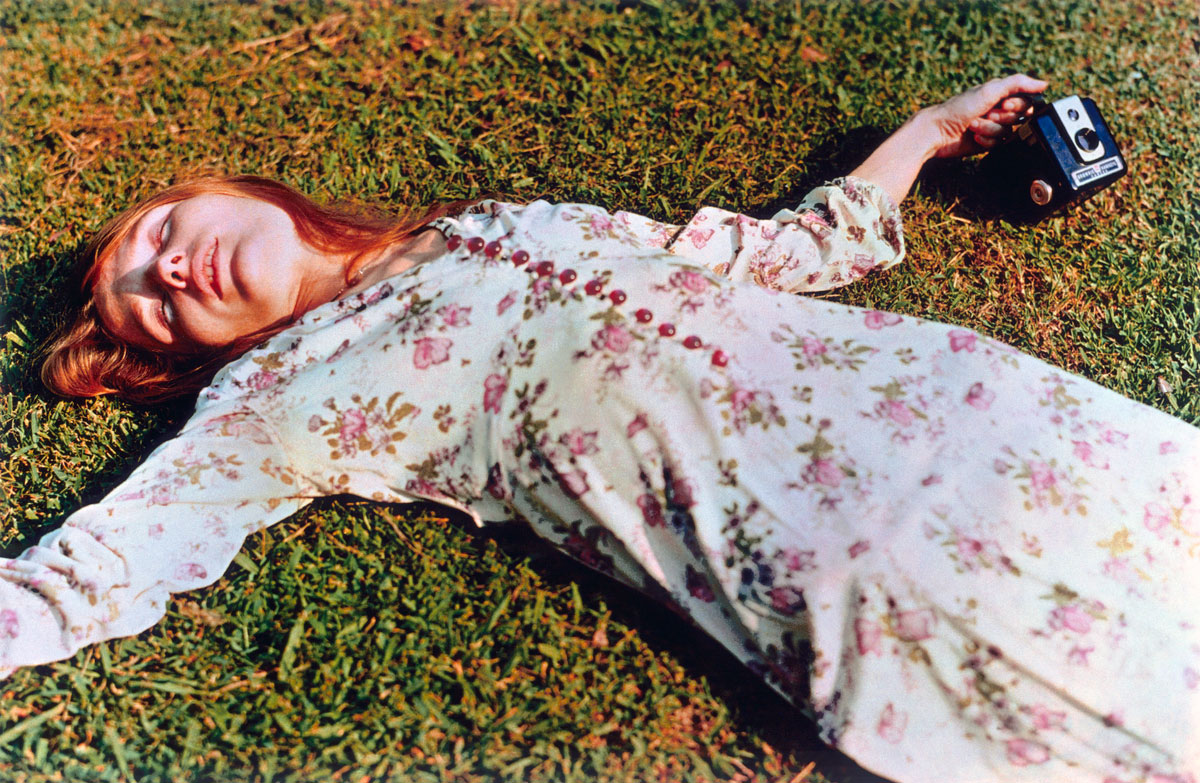
 

William Eggleston (American, b. 1939) 'Untitled' 1975 from the exhibition 'William Eggleston: Democratic Camera, Photographs and Video, 1961-2008' at The Art Institute of Chicago, February - May, 2010


William Eggleston (American, b. 1939)
Untitled
1975
Dye transfer print
16 x 20 in (40.6 x 50.8cm)
Cheim & Read, New York
© Eggleston Artistic Trust, courtesy Cheim & Read, New York


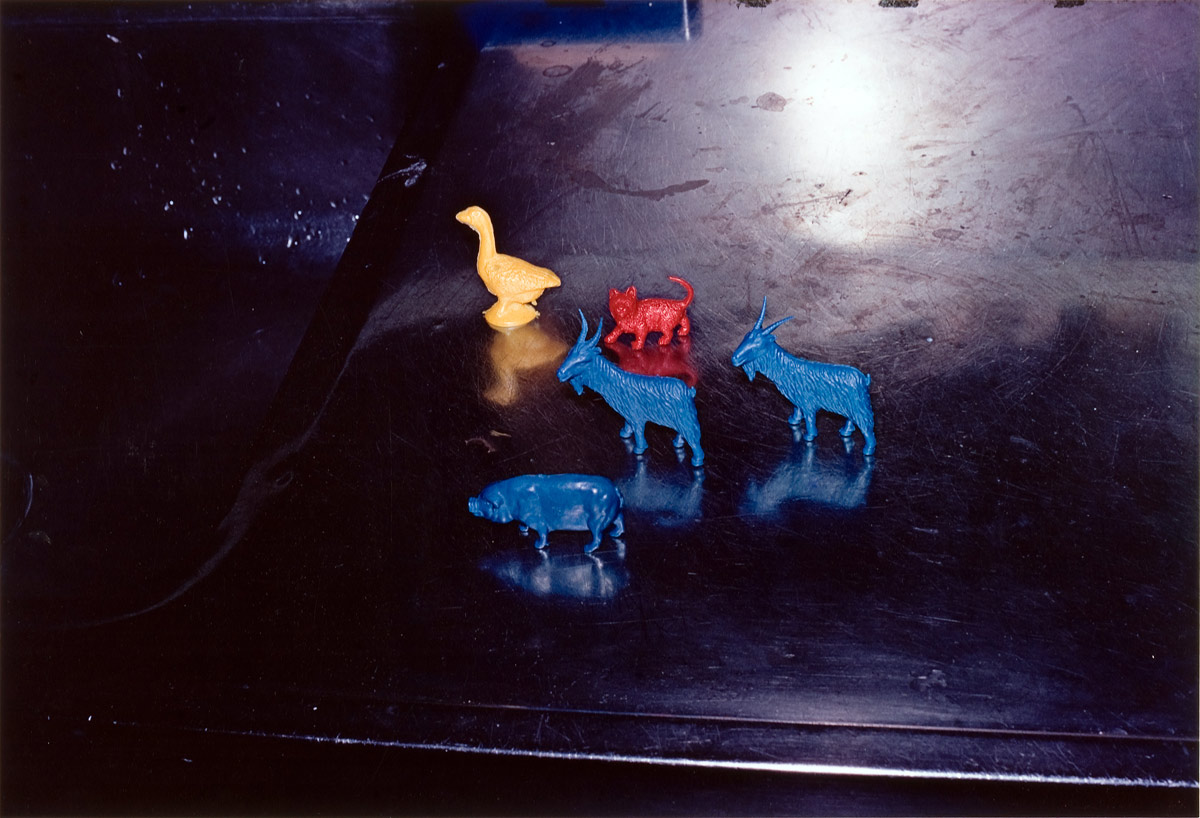
William Eggleston (American, b. 1939) 'Untitled' c. 1971-1973 from the exhibition 'William Eggleston: Democratic Camera, Photographs and Video, 1961-2008' at The Art Institute of Chicago, February - May, 2010


William Eggleston (American, b. 1939)
Untitled
c. 1971-1973
from Troubled Waters, 1980
Dye transfer print
15 7/8 x 19 15/16 in (40.3 x 50.6cm)
Collection Marcia Dunn and Jonathan Sobel
© Eggleston Artistic Trust, courtesy Cheim & Read, New York


William Eggleston (American, b. 1939) 'Untitled' Nd from the exhibition 'William Eggleston: Democratic Camera, Photographs and Video, 1961-2008' at The Art Institute of Chicago, February - May, 2010


William Eggleston (American, b. 1939)
Untitled
Nd
from Los Alamos, 1965-1974 (published 2003)
Dye transfer print
12 x 17 3/4 inches (30.5 x 45.1cm)
Private collection
© Eggleston Artistic Trust, courtesy of Cheim & Read, New York
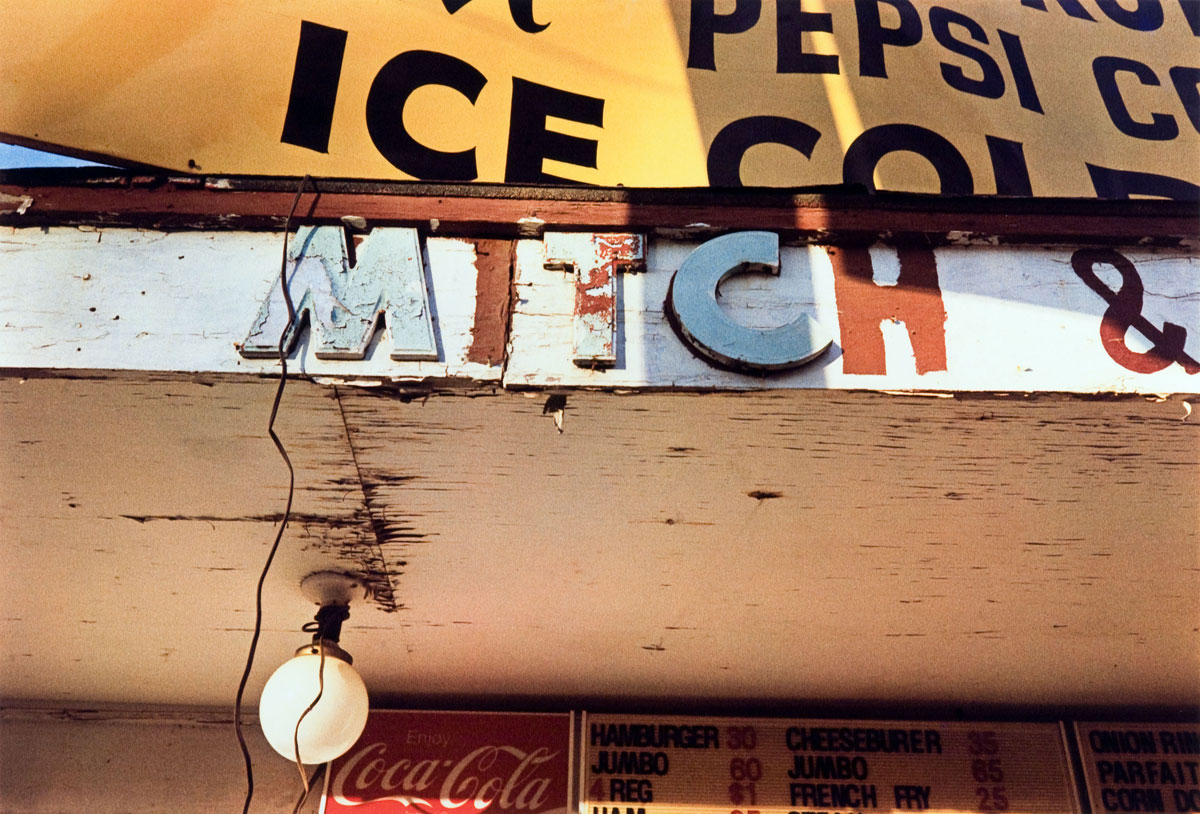
 

William Eggleston (American, b. 1939) 'Untitled' Nd from the exhibition 'William Eggleston: Democratic Camera, Photographs and Video, 1961-2008' at The Art Institute of Chicago, February - May, 2010


William Eggleston (American, b. 1939)
Untitled
Nd
from Los Alamos, 1965-1974 (published 2003)
Dye transfer print
12 x 17 3/4 in (30.5 x 45.1cm)
Private collection
© Eggleston Artistic Trust, courtesy Cheim & Read, New York


The unconventional beauty and artistry of works by photographer William Eggleston will be showcased in a major exhibition opening at the Art Institute of Chicago this winter. William Eggleston: Democratic Camera, Photographs and Video, 1961-2008 – on view from February 27 through May 23, 2010, in the Modern Wing’s Abbott Galleries (G182, G184) and Carolyn S. and Matthew Bucksbaum Gallery (G188) – is the most comprehensive retrospective to date of the Memphis-based contemporary photographer. The exhibition brings together more than 150 extraordinary images of familiar, everyday subjects with lesser-known, early black-and-white prints and provocative video recordings, all produced over a five-decade period.

Born in 1939 in Memphis, Tennessee, and raised on his family’s cotton plantation in Mississippi, William Eggleston held a casual interest in photography until 1959, when he came across photo books by Henri Cartier-Bresson and Walker Evans. Among his earliest pictures, made during stints at universities in Tennessee and Mississippi, were black-and-white scenes found in his native South, as well as portraits of friends and family members.

By the 1960s and early 1970s he had begun experimenting with colour film, and he eventually produced rich, vivid prints through the dye transfer process – prints that are created through the alignment of three separate matrices (cyan, magenta, and yellow) generated from three separate negatives (red, green, and blue filters). The resulting prints are known for the vividness and permanence of their colours. Hence, Eggleston is often credited for single-handedly ushering in the era of colour art photography.

Eager to show his work to a broader audience, Eggleston traveled to New York with a suitcase of slides and prints to meet with Museum of Modern Art (MoMA) curator John Szarkowski. This visit eventually yielded a controversial but revolutionary exhibition in 1976 – MoMA’s first solo show to feature colour photographs – and a classic accompanying book, William Eggleston’s Guide. At this point in his career, Eggleston had already distinguished himself by treating colour as a means of discovery and expression, and as a way to highlight aspects of life hidden in plain sight.

William Eggleston: Democratic Camera, Photographs and Video, 1961-2008 demonstrates Eggleston’s “democratic” approach to his photographic subjects in both colour and black-and-white. Everything that happens in front of the camera is worthy of becoming a picture for the artist – no matter how seemingly circumstantial or trivial. Eggleston finds his motifs in everyday life, resulting in telling portrayals of American culture. His iconic images such as Elvis’s Graceland, a supermarket clerk corralling grocery carts in the afternoon sunlight, and a freezer stuffed with food proves that the photographer points his “democratic camera” at everything. Eggleston’s quiet, thoughtful pictures have profoundly impacted subsequent generations of photographers, filmmakers, and scholars.

The exhibition also includes Eggleston’s cult video work, Stranded in Canton. In the 1960s, Eggleston used film to document Fred McDowell, a well-known Delta blues musician, but ultimately abandoned the film project. Eggleston later acquired a video camera and began using video to shoot in bars and in people’s homes; sometimes he shot monologues friends delivered for his video camera, most often at night. The result, Stranded in Canton, recently restored and re-edited, is a portrait of a woozy subculture that adds dimension and texture to the world of Eggleston’s colour photographs.

Internationally acclaimed, Eggleston has spent the past four decades photographing around the world, responding intuitively to fleeting configurations of cultural signs and specific expressions of local colour. By not censoring, rarely editing, and always photographing even the seemingly banal, Eggleston convinces us completely of the idea of the democratic camera.

Press release from the Art Institute of Chicago website [Online] Cited 15/05/2010 no longer available online
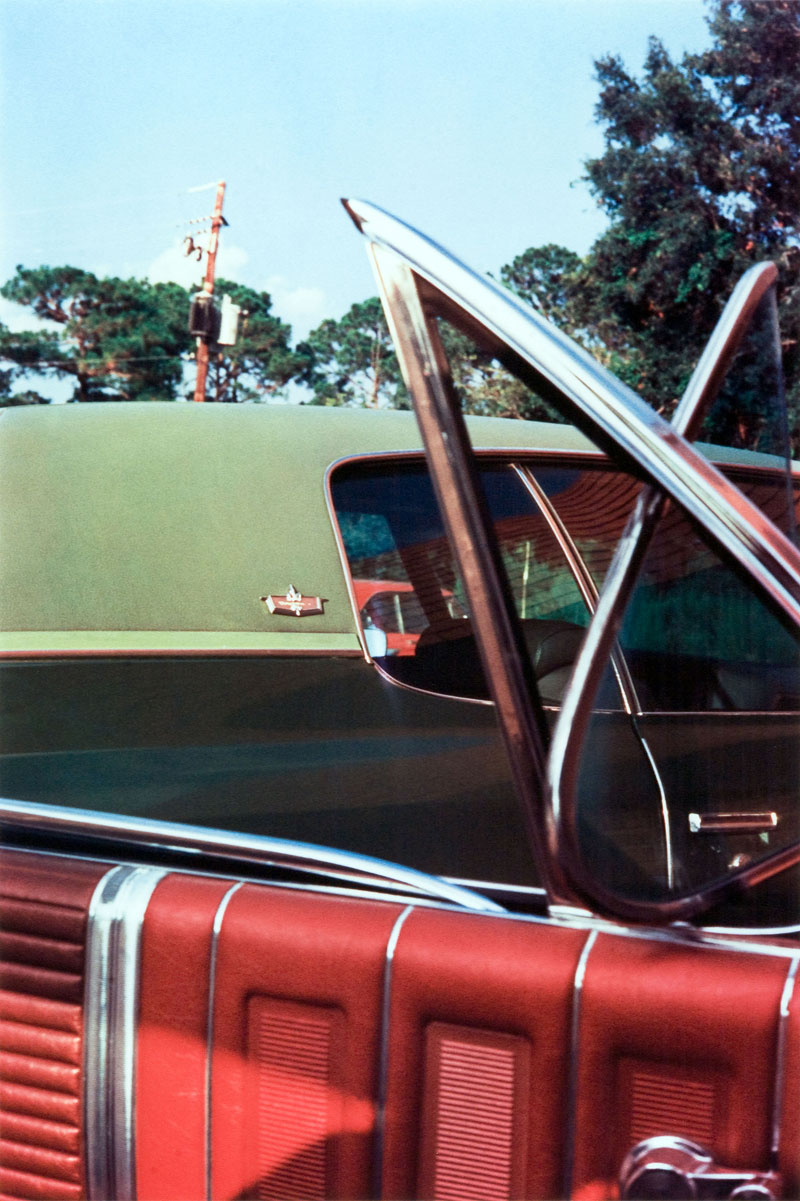
 

William Eggleston (American, b. 1939) 'Untitled' Nd


William Eggleston (American, b. 1939)
Untitled
Nd
from Los Alamos, 1965-1974 (published 2003)
Dye transfer print
17 3/4 x 12 in. (45.1 x 30.5cm)
Private collection.
© Eggleston Artistic Trust, courtesy Cheim & Read, New York


William Eggleston (American, b. 1939) 'Untitled (Memphis Tennessee)' 1965


William Eggleston (American, b. 1939)
Untitled (Memphis Tennessee)
1965
from Los Alamos, 1965-1974 (published 2003)
Dye transfer print
17 ¾ x 12 inches (45.1 x 30.5cm)
Private collection.
© Eggleston Artistic Trust, courtesy of Cheim & Read, New York


William Eggleston (American, b. 1939) 'Memphis' c. 1969-1971


William Eggleston (American, b. 1939)
Memphis
c. 1969-1971
from William Eggleston’s Guide, 1976
Dye transfer print
24 x 20 in (61 x 50.8cm)
Collection of John Cheim
© Eggleston Artistic Trust, courtesy Cheim & Read, New York
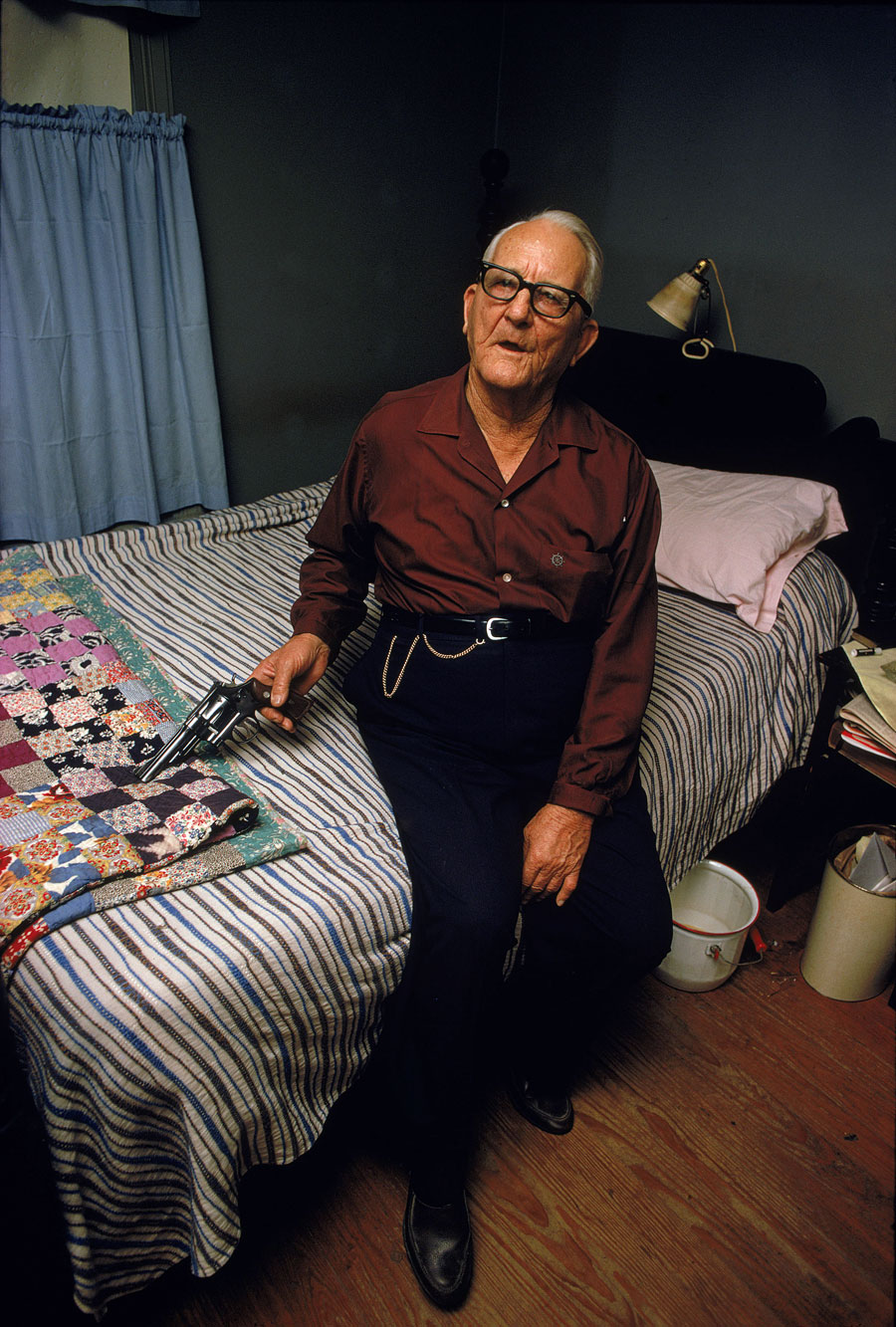
 

William Eggleston (American, b. 1939) 'Morton, Mississippi' c. 1969-1970


William Eggleston (American, b. 1939)
Morton, Mississippi
c. 1969-1970
from William Eggleston’s Guide 1976
Dye transfer print
13 3/8 x 8 11/16 in (34 x 22cm)
Cheim & Read, New York
© Eggleston Artistic Trust, courtesy Cheim & Read, New York
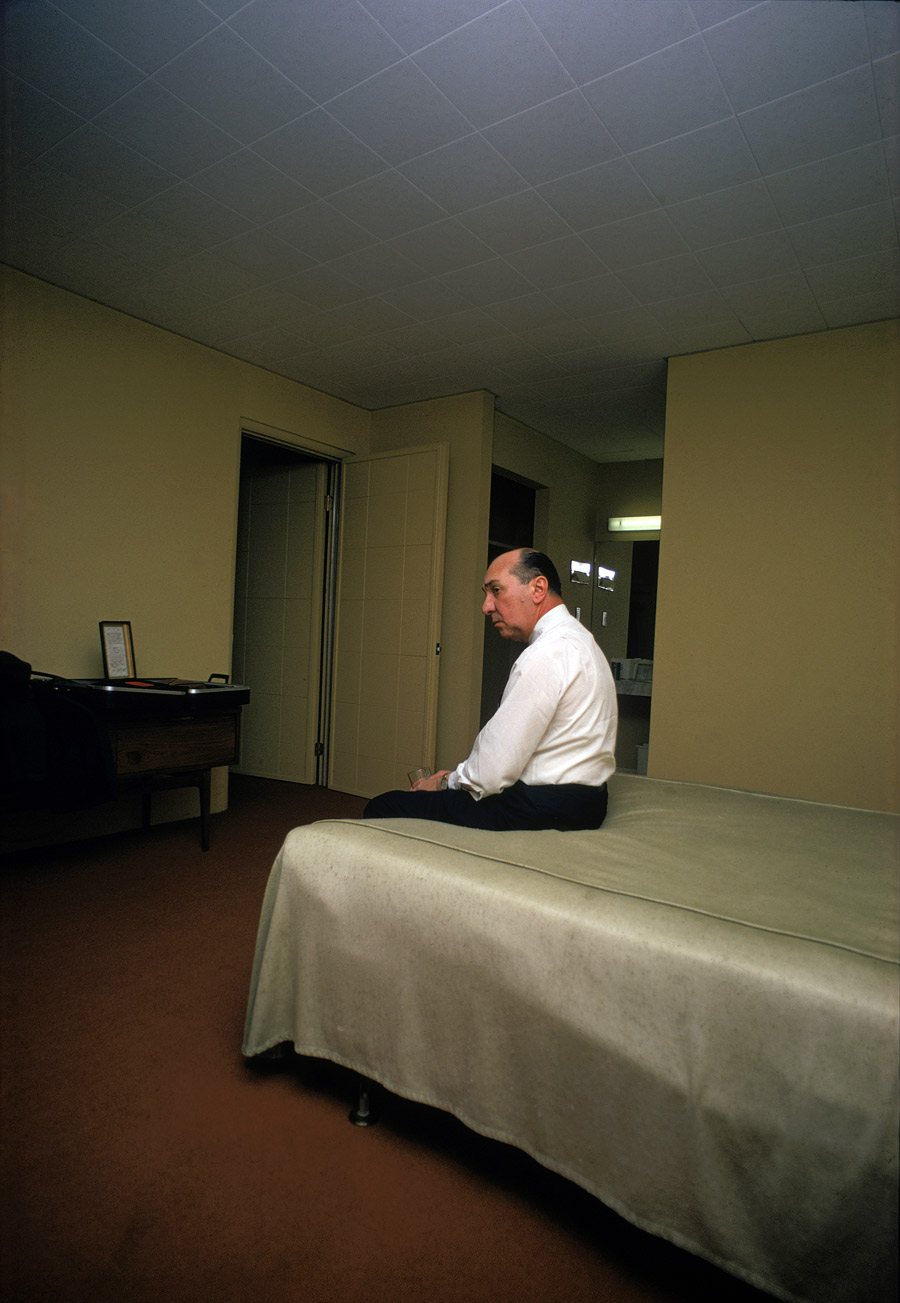
 

William Eggleston (American, b. 1939) 'Huntsville, Alabama' 1971


William Eggleston (American, b. 1939)
Huntsville, Alabama
1971
from William Eggleston’s Guide 1976
Dye transfer print
20 x 15 7/8 in (50.8 x 40.3cm)
University of Mississippi Museum and Historic Houses, Oxford
© Eggleston Artistic Trust, courtesy Cheim & Read, New York
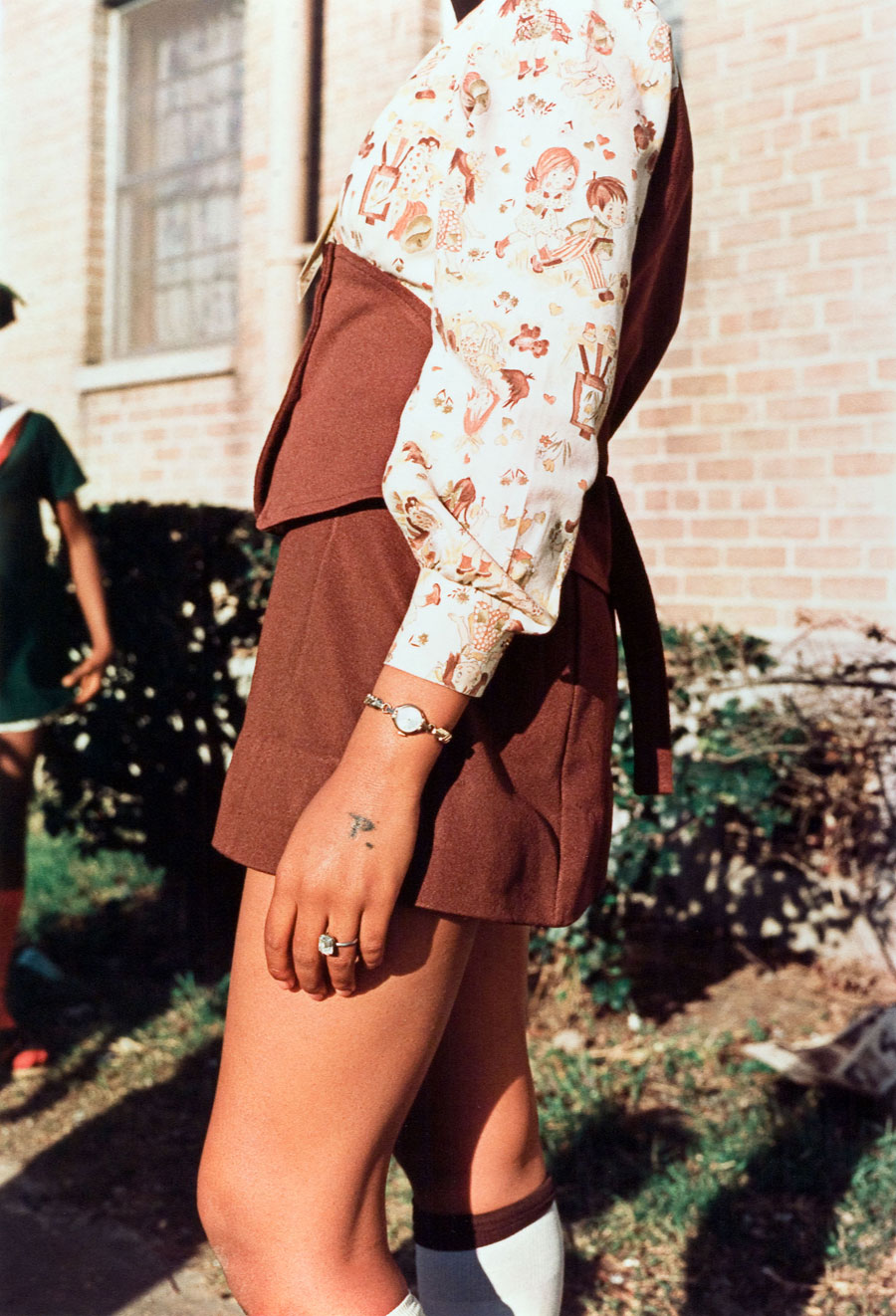
 

William Eggleston (American, b. 1939) 'Untitled' Nd from 'Los Alamos, 1965-1974'


William Eggleston (American, b. 1939)
Untitled
Nd
from Los Alamos, 1965-1974 (published 2003)
Dye transfer print
17 3/4 x 12 in (45.1 x 30.5cm)
Private collection
© Eggleston Artistic Trust, courtesy Cheim & Read, New York


William Eggleston (American, b. 1939) 'En Route to New Orleans' 1971-1974


William Eggleston (American, b. 1939)
En Route to New Orleans
1971-1974
from Los Alamos, 1965-1974 (published 2003)
Dye transfer print
17 3/4 x 12 in. (45.1 x 30.5cm)
Private collection
© Eggleston Artistic Trust, courtesy Cheim & Read, New York


Art Institute of Chicago
111 South Michigan Avenue
Chicago, Illinois 60603-6404
Phone: (312) 443-3600

Opening hours:
Friday – Monday 11am – 5pm
Thursday 11am – 8pm
Closed Tuesday and Wednesday
The Art Institute of Chicago website

LIKE ART BLART ON FACEBOOK

Back to top

Exhibition: ‘In the Darkroom: Photographic Processes before the Digital Age’ at the National Gallery of Art, Washington, D.C.

Exhibition dates: 25th October, 2009 – 14th March, 2010


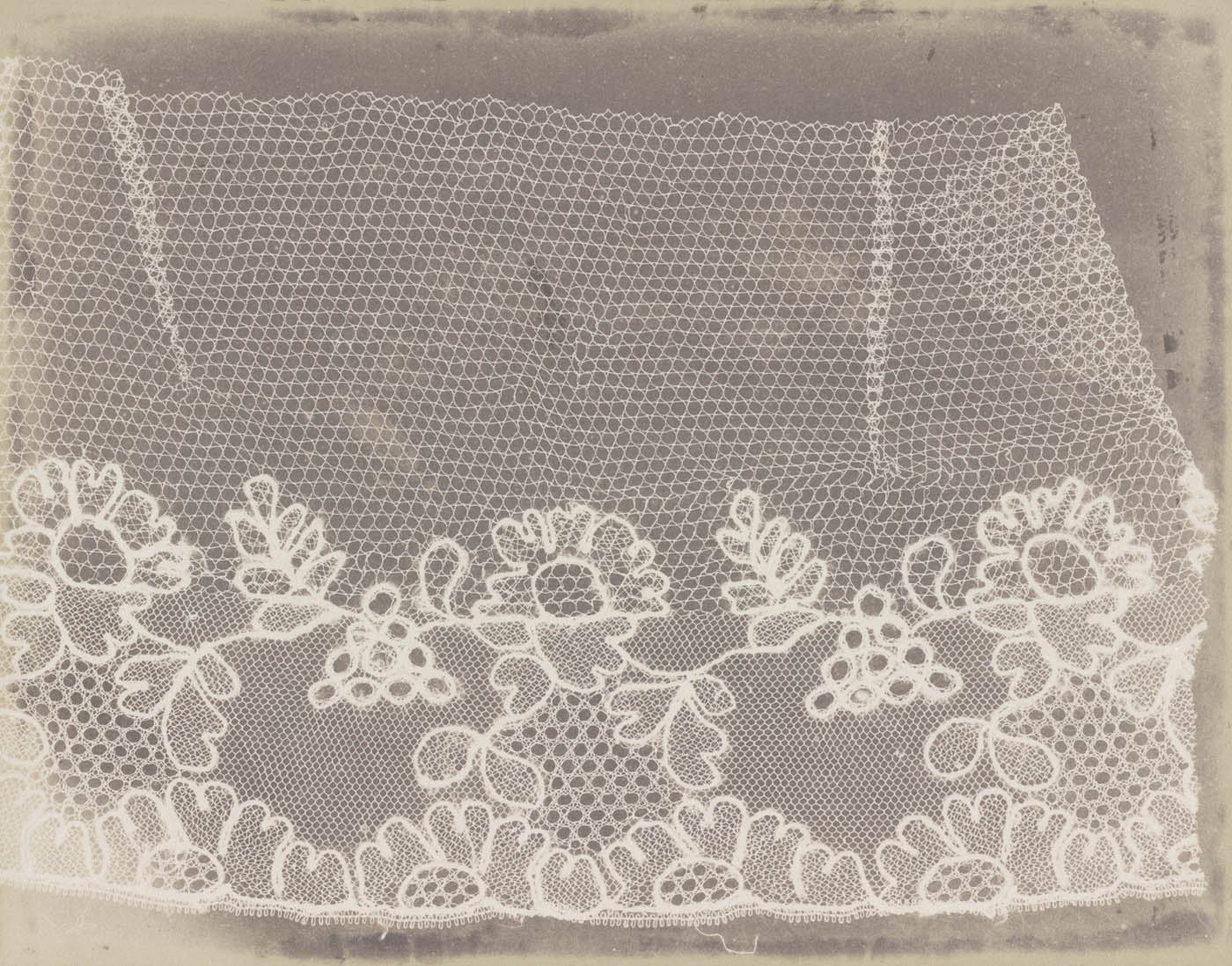
William Henry Fox Talbot (British, 1800-1877) 'Lace' 1839-1844 from the exhibition 'In the Darkroom: Photographic Processes before the Digital Age' at the National Gallery of Art, Washington, D.C., October 2009 - March, 2010


William Henry Fox Talbot (British, 1800-1877)
Lace
1839-1844
Photogenic drawing (salted paper print)
Sheet (trimmed to image): 17.1 x 22cm (6 3/4 x 8 11/16 in.)
Support: 24.8 x 31.1cm (9 3/4 x 12 1/4 in.)
National Gallery of Art, Washington
Patrons’ Permanent Fund
Public domain


Many thankx to Kate Afanasyeva and the National Gallery of Art for allowing me to reproduce the photographs from the exhibition below. Please click on the photographs for a larger version of the image.

Dr Marcus Bunyan


Anna Atkins (British, 1799-1871) 'Ferns, Specimen of Cyanotype' 1840s from the exhibition 'In the Darkroom: Photographic Processes before the Digital Age' at the National Gallery of Art, Washington, D.C., October 2009 - March, 2010


Anna Atkins (British, 1799-1871)
Ferns, Specimen of Cyanotype
1840s
cyanotype
National Gallery of Art, Washington
R.K. Mellon Family Foundation Fund


Albert Sands Southworth and Josiah Johnson Hawes. 'The Letter' c. 1850  from the exhibition 'In the Darkroom: Photographic Processes before the Digital Age' at the National Gallery of Art, Washington, D.C., October 2009 - March, 2010


Albert Sands Southworth and Josiah Johnson Hawes
The Letter
c. 1850
daguerreotype
National Gallery of Art, Washington
Patrons’ Permanent Fund


Southworth and Hawes’ aspirations for their portraits went far beyond those of the average photographer of their day. Whereas most daguerreotypists, simply concerned with rendering a likeness, used stock poses, painted backdrops, and even head restraints to firmly fix their subjects, Southworth and Hawes were celebrated not just for their technical expertise, but also for their penetrating studies, innovative style, and creative use of natural light. They sought to elevate their subjects “far beyond common nature” and embody their “genius and spirit of poetry,” as Southworth wrote in 1871. “What is to be done is obliged to be done quickly. The whole character of the sitter is to be read at first sight; the whole likeness, as it shall appear when finished, is to be seen at first, in each and all its details, and in their unity and combination.”2

Among Southworth and Hawes’ most accomplished studies, The Letter is exceptional in its composition and mood. Most American daguerreotype portraits made in the 1840s and 1850s were frontal, bust-length studies of single figures who rarely show any kind of facial expression because of the often long exposure times. The Letter, however, is a highly evocative study. With its carefully constructed composition and tight pyramidal structure, it presents two thoughtful young women contemplating a letter. Through their posture and expression, these women seem to gain not only physical support from each other, but also emotional strength. Although the identity of the women is unknown, as is the content of the letter, this large and distinguished daguerreotype reflects Southworth and Hawes’ aspiration to capture “the life, the feeling, the mind, and the soul” of their subjects.3

(Text by Sarah Greenough, published in the National Gallery of Art exhibition catalogue, Art for the Nation, 2000)

Text from the National Gallery of Art website


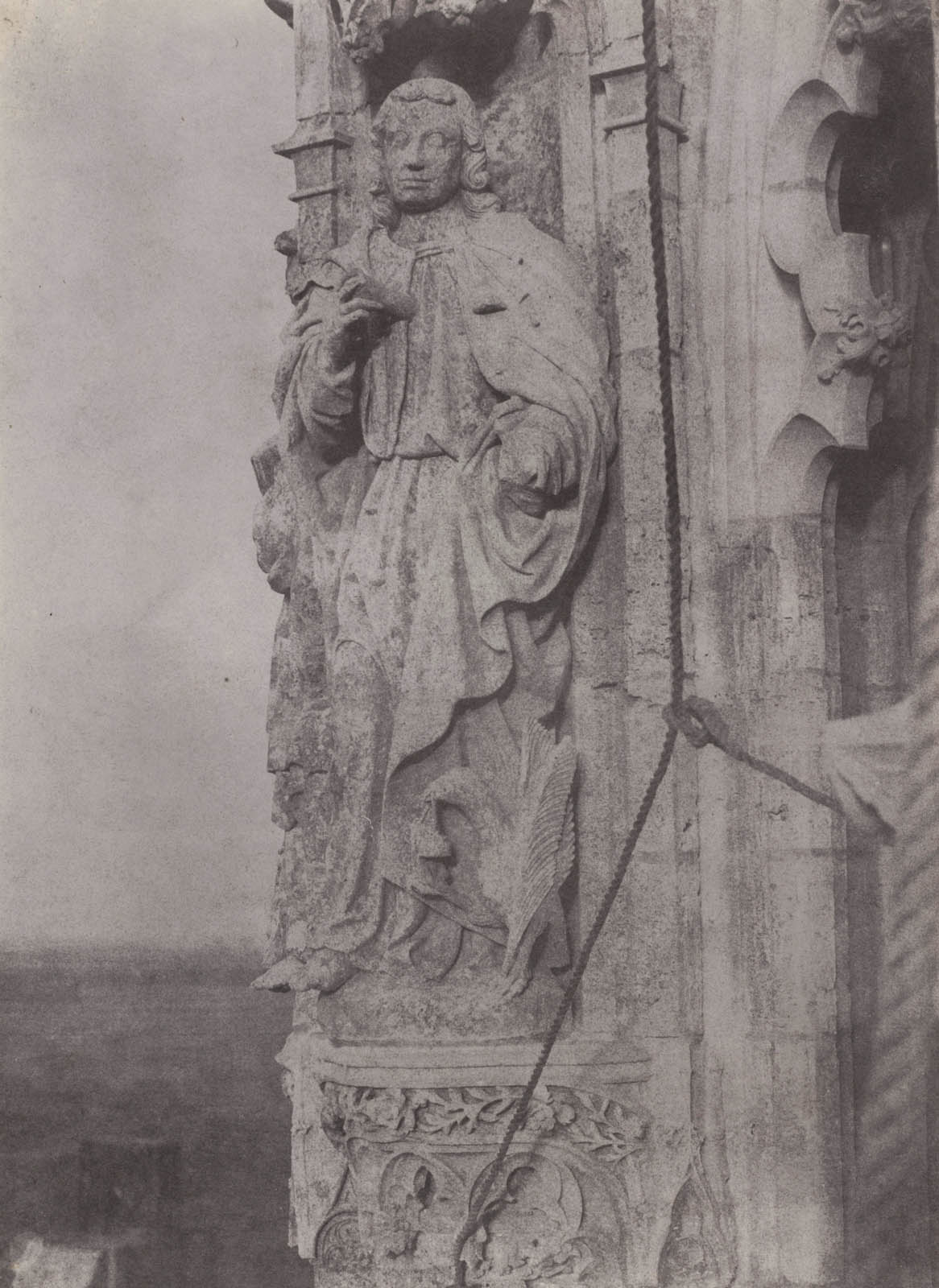
Charles Nègre (French, 1820-1880)
'Saint John the Evangelist, Chartres Cathedral' c. 1854


Charles Nègre (French, 1820-1880)
Saint John the Evangelist, Chartres Cathedral
c. 1854
Salted paper print from a paper negative
National Gallery of Art, Washington
Eugene L. and Marie-Louise Garbaty Fund, Pepita Milmore Memorial Fund and New Century Fund
Public domain


In 1851 the French government’s Commission des Monuments Historiques selected five photographers to document architectural treasures throughout the country. Nègre was not included, perhaps because he was a member of the opposition party, but he took it upon himself to photograph extensively in Marseilles, Arles, Avignon, and Aix-en-Provence in the early 1850s, and in 1854 he made many photographs of Chartres Cathedral.

Nègre applied his growing understanding of light, shadow, line, and form in Saint John the Evangelist, Chartres Cathedral, and the photograph beautifully illustrates his willingness to sacrifice “a few details,” as he wrote, to capture “an imposing effect.” In addition, unlike photographers associated with the Commission des Monuments Historiques, who were asked to provide general studies of a building’s façade, Nègre was free to explore more unusual views. The statue of Saint John the Evangelist is situated high in the north spire of Chartres, several feet above a nearby balcony. Although difficult to see and even harder for Nègre to record (he most likely perched his camera on a platform), the view in his photograph succinctly captured what he called the cathedral’s “real character” and “preserved the poetic charm that surrounded it.”

Text from the National Gallery of Art website


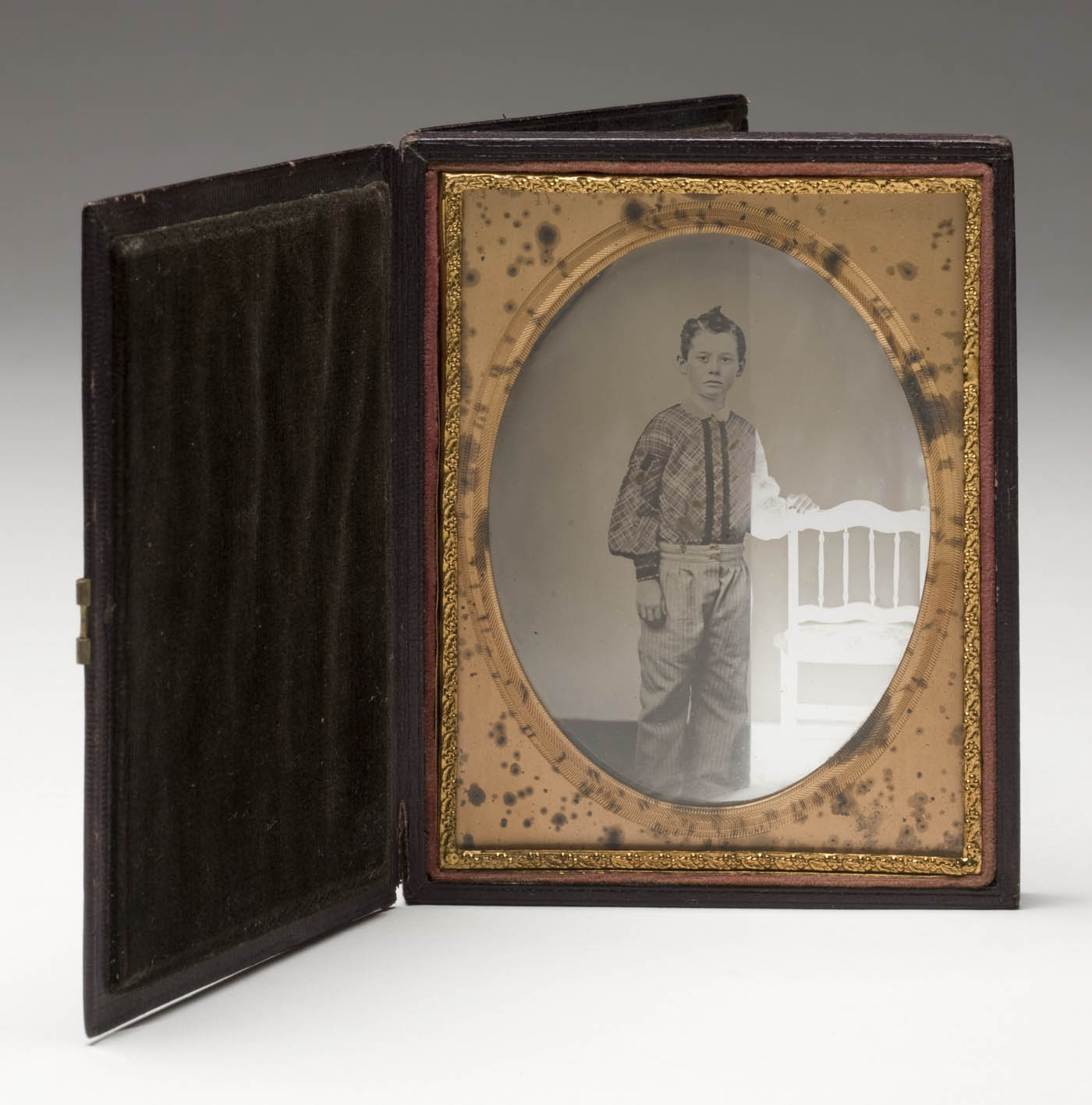
Unknown photographer (American 19th Century) 'George E. Lane, Jr.' c. 1855


Unknown photographer (American 19th Century)
George E. Lane, Jr.
c. 1855
Ambrotype
National Gallery of Art, Washington
Gift of Kathleen, Melissa, and Pamela Stegeman
Public domain


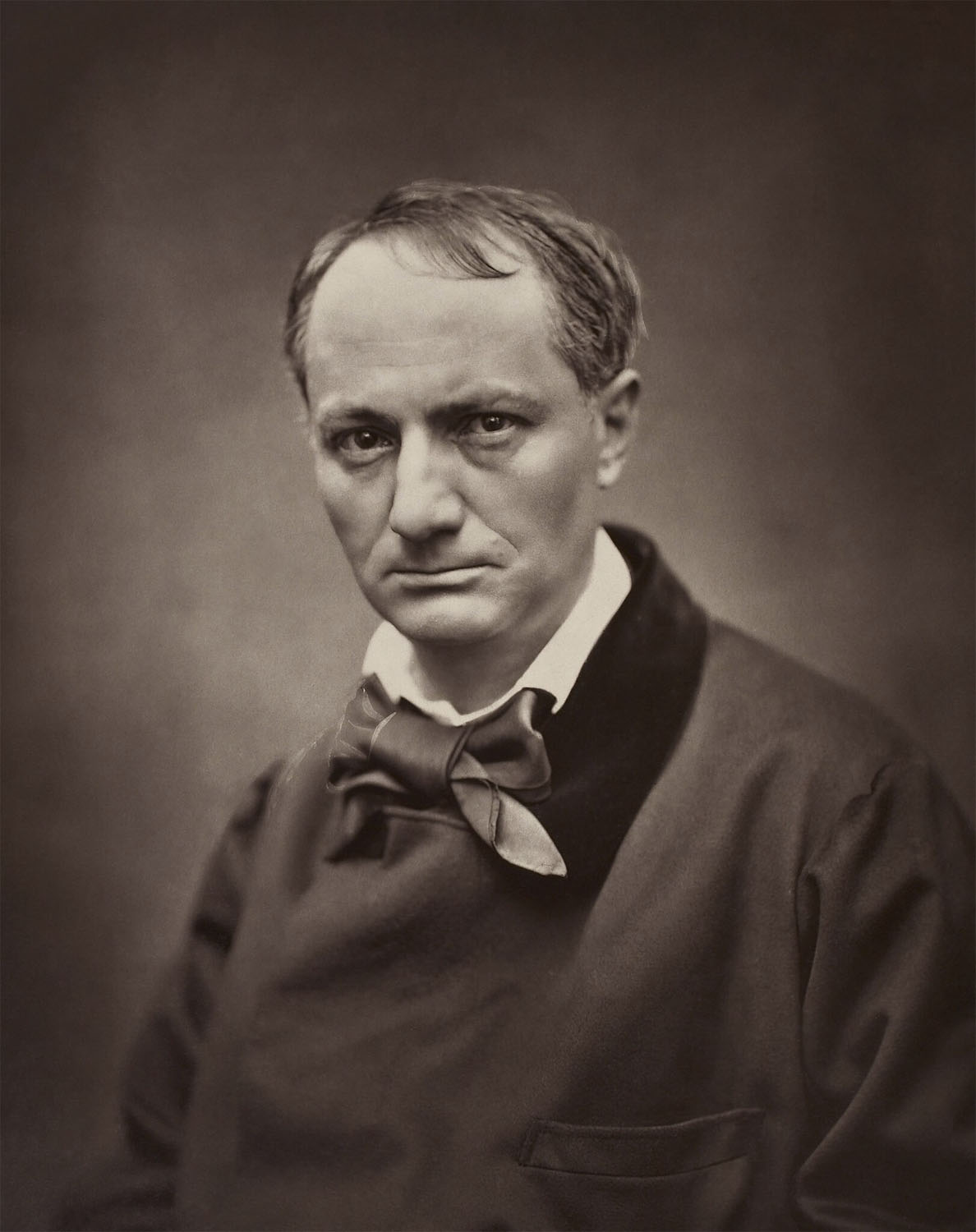
Étienne Carjat (French, 1828-1906)
'Charles Baudelaire' 1861, printed 1877


Étienne Carjat (French, 1828-1906)
Charles Baudelaire
1861, printed 1877
Woodburytype
National Gallery of Art, Washington
Gift of Jacob Kainen
Public domain


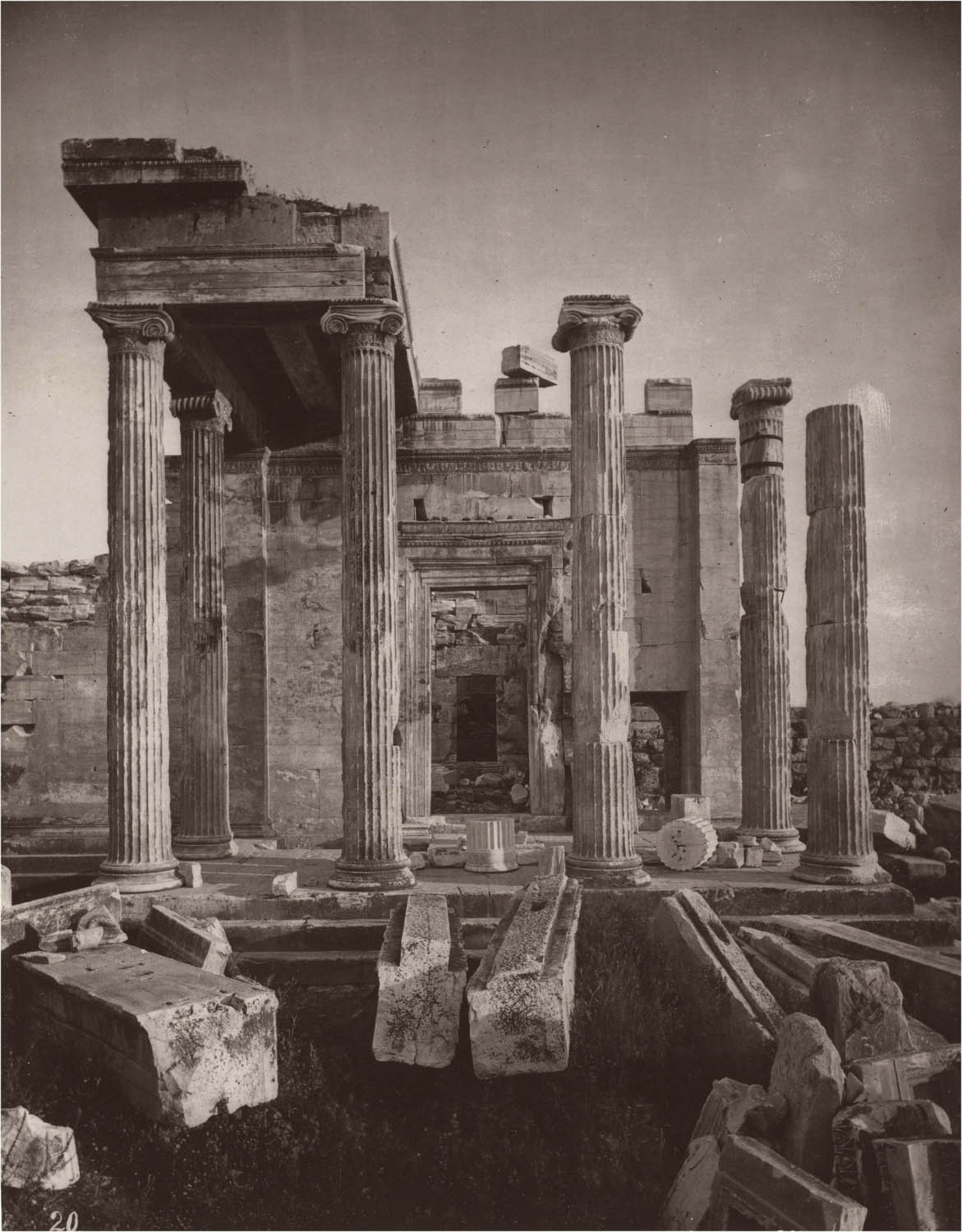
William James Stillman (American, 1828-1901) 'The Acropolis of Athens'
1869/1870


William James Stillman (American, 1828-1901)
The Acropolis of Athens
1869/1870
Carbon print
National Gallery of Art, Washington
Horace W. Goldsmith Foundation through Robert and Joyce Menschel


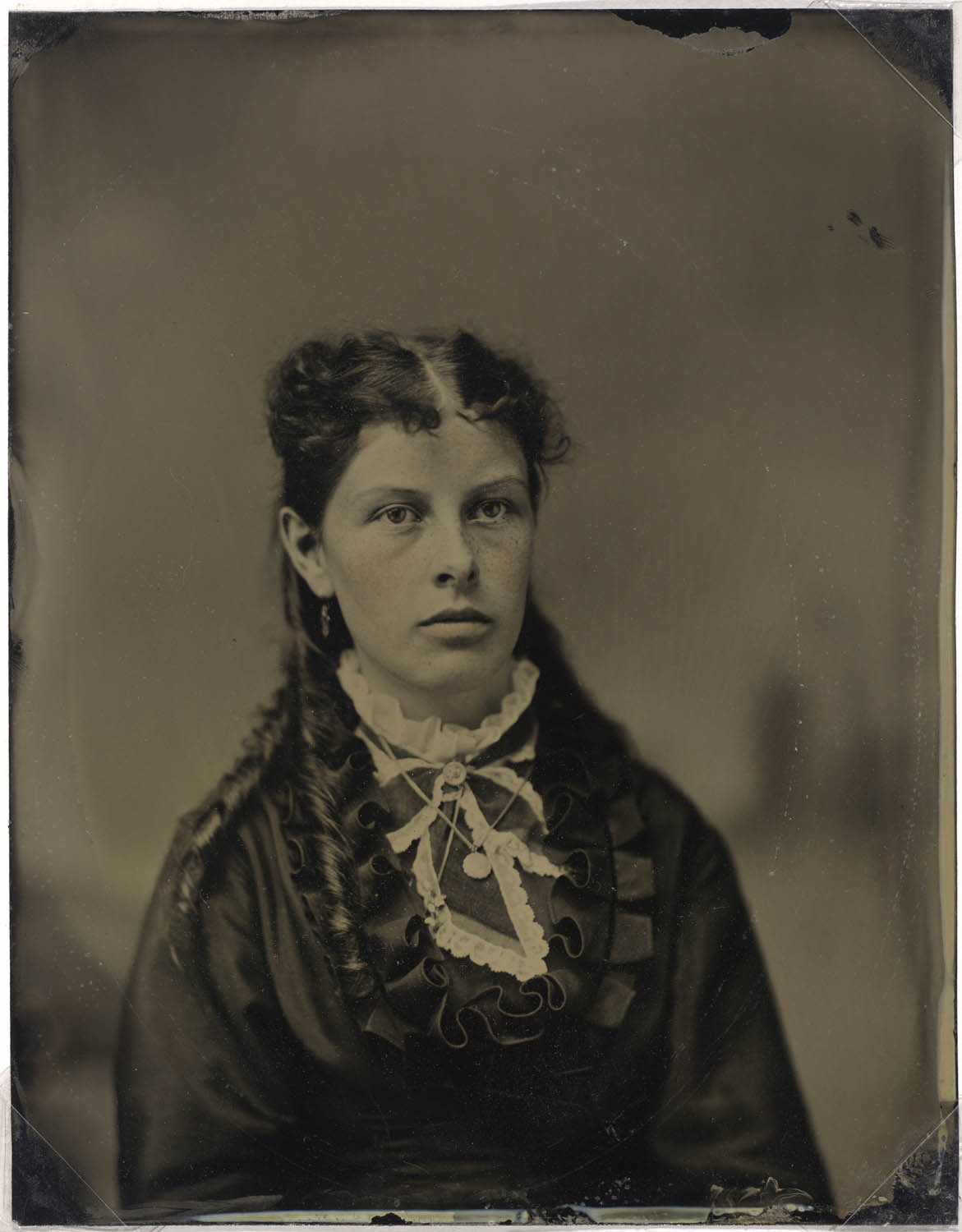
J.G. Ellinwood (American, 1844-1924) 'Portrait of a Woman' c. 1870


J.G. Ellinwood (American, 1844-1924)
Portrait of a Woman
c. 1870
Tintype, hand-coloured
National Gallery of Art, Washington
Mary and Dan Solomon Fund


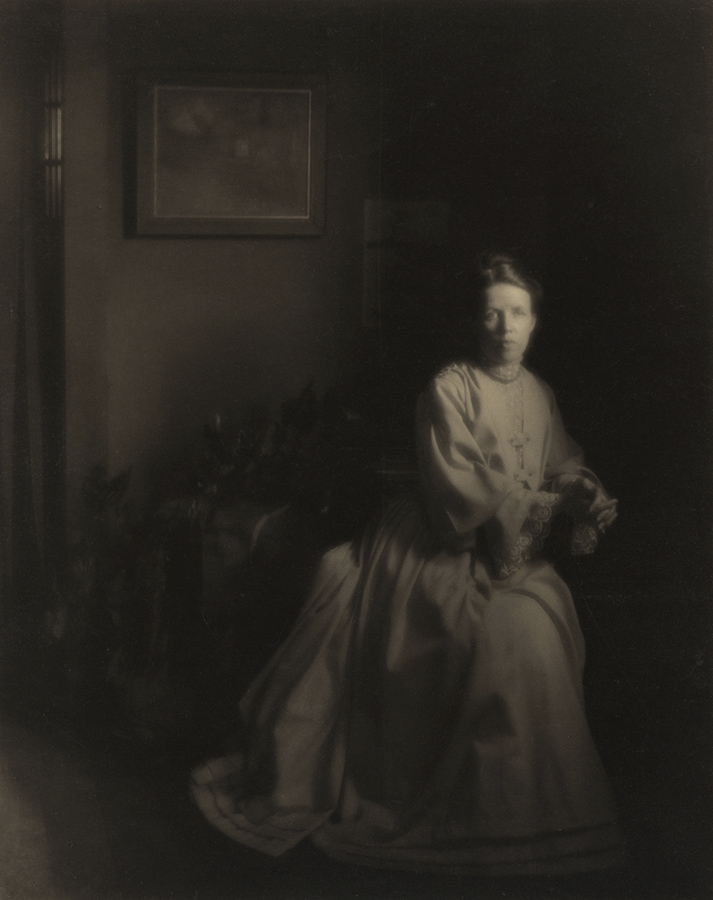
Clarence White (American, 1871-1925) 'Mrs. White - In the Studio' 1907


Clarence White (American, 1871-1925)
Mrs. White – In the Studio
1907
platinum print
National Gallery of Art, Washington
Horace W. Goldsmith Foundation through Robert and Joyce Menschel and R.K. Mellon Family Foundation Fund


Karl Struss (American, 1886-1981) 'Columbia University, Night' 1910


Karl Struss (American, 1886-1981)
Columbia University, Night
1910
Gum dichromate over platinum print
Image: 24.1 × 19.9cm (9 1/2 × 7 13/16 in.)
National Gallery of Art, Washington
Horace W. Goldsmith Foundation through Robert and Joyce Menschel


Laura Gilpin (American, 1891-1979) 'Ghost Rock, Colorado Springs' 1919


Laura Gilpin (American, 1891-1979)
Ghost Rock, Colorado Springs
1919
Platinum print
24.2 x 19.1cm (9 1/2 x 7 1/2 in.)
National Gallery of Art, Washington
Marvin Breckinridge Patterson Fund
© 1979 Amon Carter Museum, Fort Worth, Texas


László Moholy-Nagy (Hungarian, 1895-1946) 'Untitled (Positive)' c. 1922-1924


László Moholy-Nagy (Hungarian, 1895-1946)
Untitled (Positive)
c. 1922-1924
gelatin silver print
National Gallery of Art, Washington
Gift of The Circle of the National Gallery of Art


László Moholy-Nagy (Hungarian, 1895-1946) 'Untitled' c. 1922-1924


László Moholy-Nagy (Hungarian, 1895-1946)
Untitled
c. 1922-1924
gelatin silver print
National Gallery of Art, Washington
New Century Fund


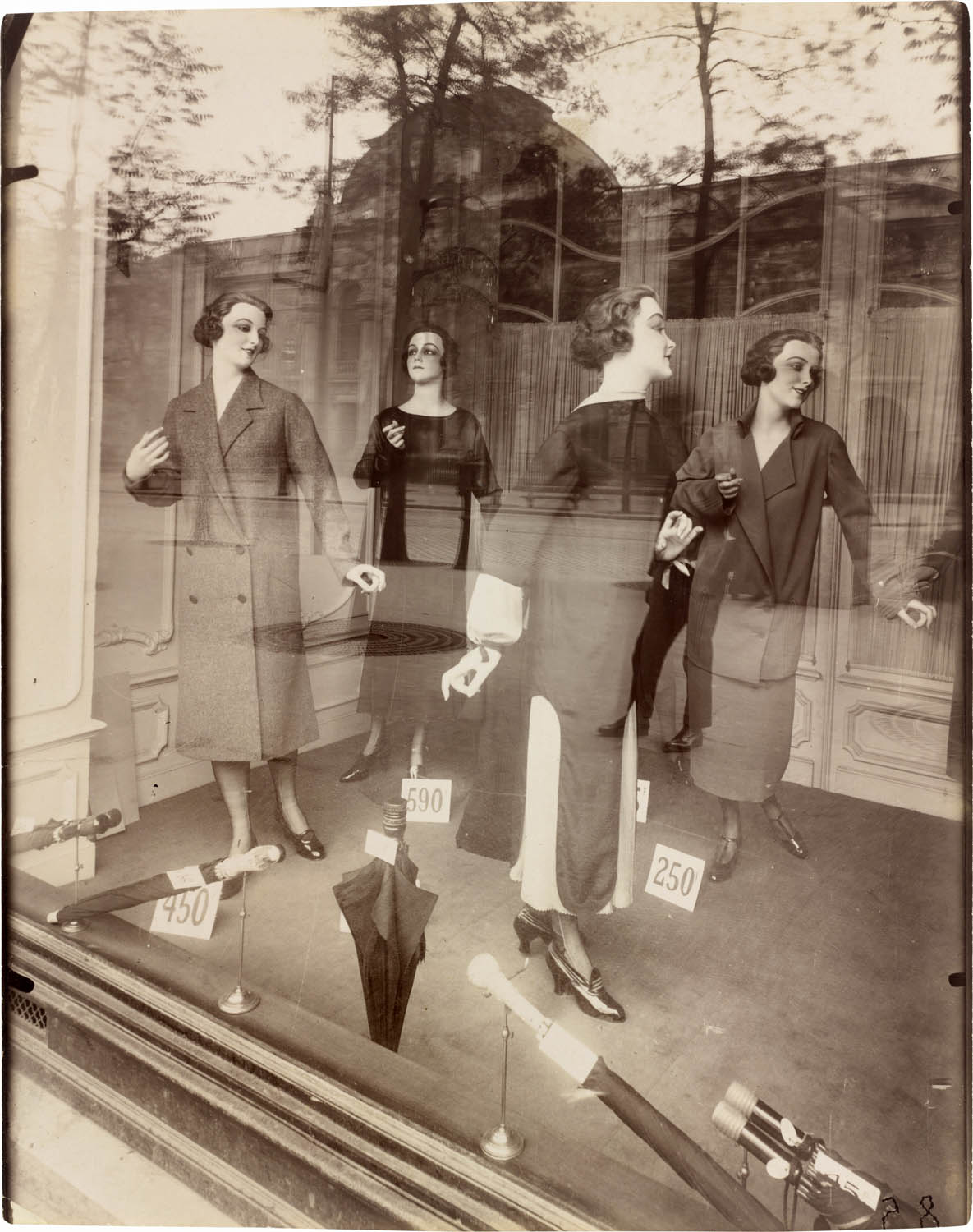
Eugène Atget (French, 1857-1927)
'Magasin, Avenue des Gobelins' 1925


Eugène Atget (French, 1857-1927)
Magasin, Avenue des Gobelins
1925
gelatin silver print, printed-out
National Gallery of Art, Washington
Patrons’ Permanent Fund
Public domain


Aleksandr Rodchenko (Russian, 1891-1956) 'Pioneer with a Bugle' 1930


Aleksandr Rodchenko (Russian, 1891-1956)
Pioneer with a Bugle
1930
Gelatin silver print
National Gallery of Art, Washington
Patrons’ Permanent Fund


Sid Grossman (American, 1913-1955) 'San Gennaro Festival, New York City' 1948


Sid Grossman (American, 1913-1955)
San Gennaro Festival, New York City
1948
gelatin silver print
National Gallery of Art, Washington
Anonymous Gift


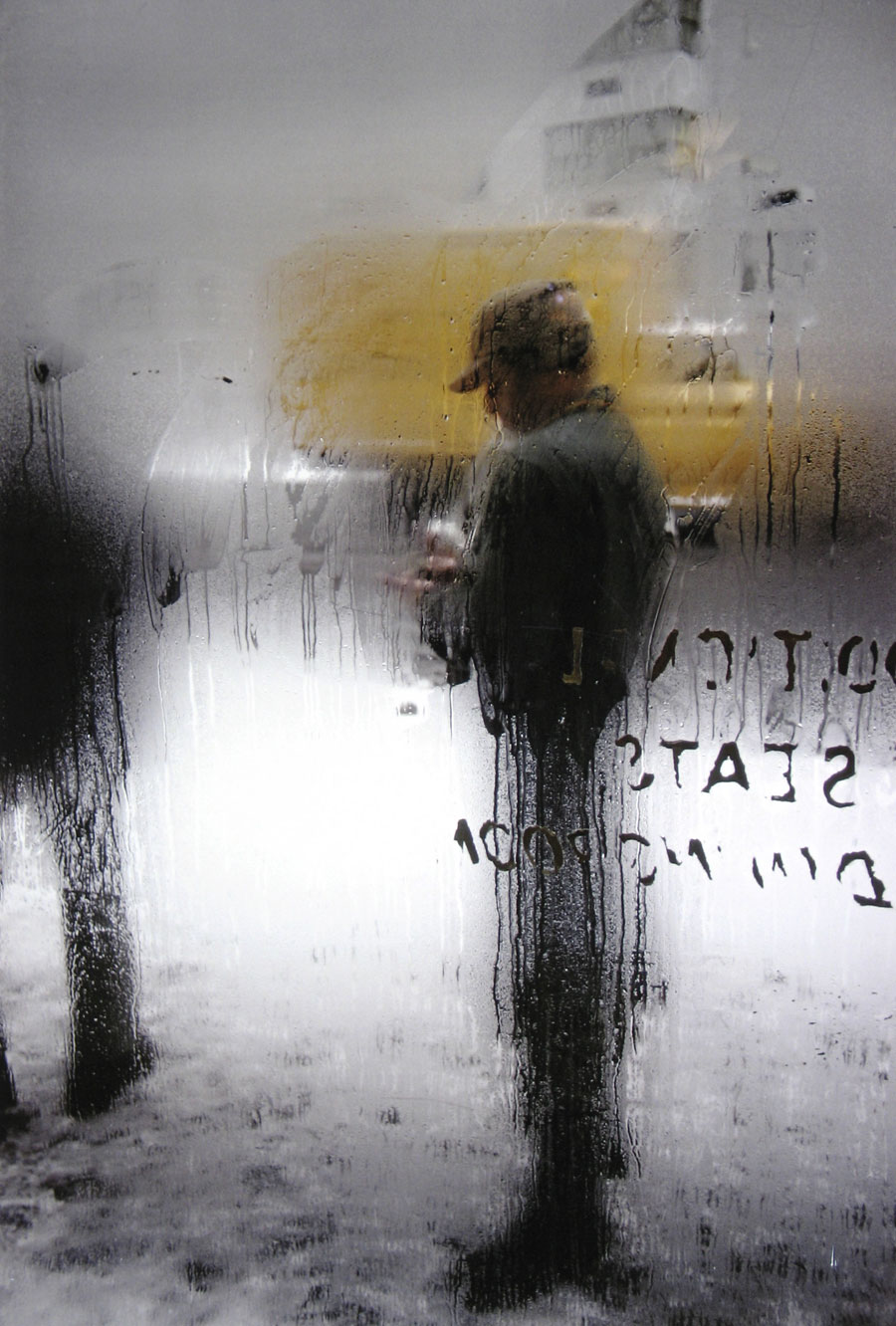
Saul Leiter (American, 1923-2013) 'Snow' 1960


Saul Leiter (American, 1923-2013)
Snow
1960, printed 2005
Chromogenic colour print
National Gallery of Art, Washington
Gift of Saul Leiter


Diane Arbus (American, 1923-1971) 'A young man in curlers at home on West 20th Street, N.Y.C. 1966' 1966


Diane Arbus (American, 1923-1971)
A Young Man in Curlers at Home on West 20th Street, N.Y.C., 1966
1966
Gelatin silver print
National Gallery of Art, Washington
Gift of the Collectors Committee


The extraordinary range and complexity of the photographic process is explored, from the origins of the medium in the 1840s up to the advent of digital photography at the end of the 20th century, in a comprehensive exhibition and its accompanying guidebook at the National Gallery of Art, Washington. On view in the West Building, from October 25, 2009 through March 14, 2010, In the Darkroom: Photographic Processes Before the Digital Age chronicles the major technological developments in the 170-year history of photography and presents the virtuosity of the medium’s practitioners. Drawn from the Gallery’s permanent collection are some 90 photographs – ranging from William Henry Fox Talbot’s images of the 1840s to Andy Warhol’s Polaroid prints of the 1980s.

“In the Darkroom and the accompanying guidebook provide a valuable overview of the medium as well as an introduction to the most commonly used photographic processes from its earliest days,” said Earl A. Powell III, director, National Gallery of Art.

In the Darkroom

Organised chronologically, the exhibition opens with Lace (1839-1844), a photogenic drawing by William Henry Fox Talbot. Made without the aid of a camera, the image was produced by placing a swath of lace onto a sheet of sensitised paper and then exposing it to light to yield a tonally reversed image.

Talbot’s greatest achievement – the invention of the first negative-positive photographic process – is also celebrated in this section with paper negatives by Charles Nègre and Baron Louis-Adolphe Humbert de Molard as well as salted paper prints made from paper negatives by Nègre, partners David Octavius Hill and Robert Adamson, and others.

The daguerreotype, the first publicly introduced photographic process and the most popular form of photography during the medium’s first decade, is represented by a selection of British and American works, including an exquisite large-plate work by the American photographers Albert Sands Southworth and Josiah Johnson Hawes (see photograph above). By the mid-1850s, the daguerreotype’s popularity was eclipsed by two new processes, the ambrotype and the tintype. These portable photographs on glass or metal were relatively inexpensive to produce and were especially popular for portraiture.

The year 1851 marked a turning point in photographic history with the introduction of the collodion negative on glass and the albumen print process. Most often paired together, this negative-print combination yielded lustrous prints with a subtle gradation of tones from dark to light and became the most common form of photography in the 19th century, seen here in works by Julia Margaret Cameron, Roger Fenton, and Gustave Le Gray.

Near the turn of the 20th century, a number of new, complex print processes emerged, such as platinum and palladium, gum dichromate, and bromoil. Often requiring significant manipulation by the hand of the artist, these processes were favoured by photographers such as Gertrude Käsebier, Alfred Stieglitz, and Edward Weston.

One of the most significant developments of the late 19th century was the introduction of gelatin into photographic processes, which led to the invention of the film negative and the gelatin silver print. These became the standard for 20th-century black-and-white photography. A chronological selection of gelatin silver prints, including a contact print made by André Kertész in 1912; a grainy, blurred image of Little Italy’s San Gennaro festival at night by Sid Grossman from 1948 (see photograph above); and a coolly precise industrial landscape by Frank Gohlke from 1975, reveals how the introduction of the film negative and changes in the gelatin silver print process profoundly shaped the direction of modern photography. This section also explores the development of ink-based, photomechanical processes such as photogravure, Woodburytype, and halftone that enabled the large-scale, high-quality reproduction of photographs in books and magazines.

The final section of the exhibition explores the rise of colour photography in the 20th century. Although the introduction of chromogenic colour processes made colour photography commercially viable by the 1930s, it was not widely employed by artists until the 1970s. The exhibition celebrates the pioneers of colour photography, including Harry Callahan and William Eggleston, who made exceptional work using the complicated dye transfer process. The exhibition also explores the range of processes developed by the Polaroid Corporation that provided instant gratification to the user, from Andy Warhol’s small SX-70 prints to the large-scale Polaroid prints represented by the work of contemporary photographer David Levinthal.

Press release from the National Gallery of Art website [Online] Cited 15/02/2010 no longer available online


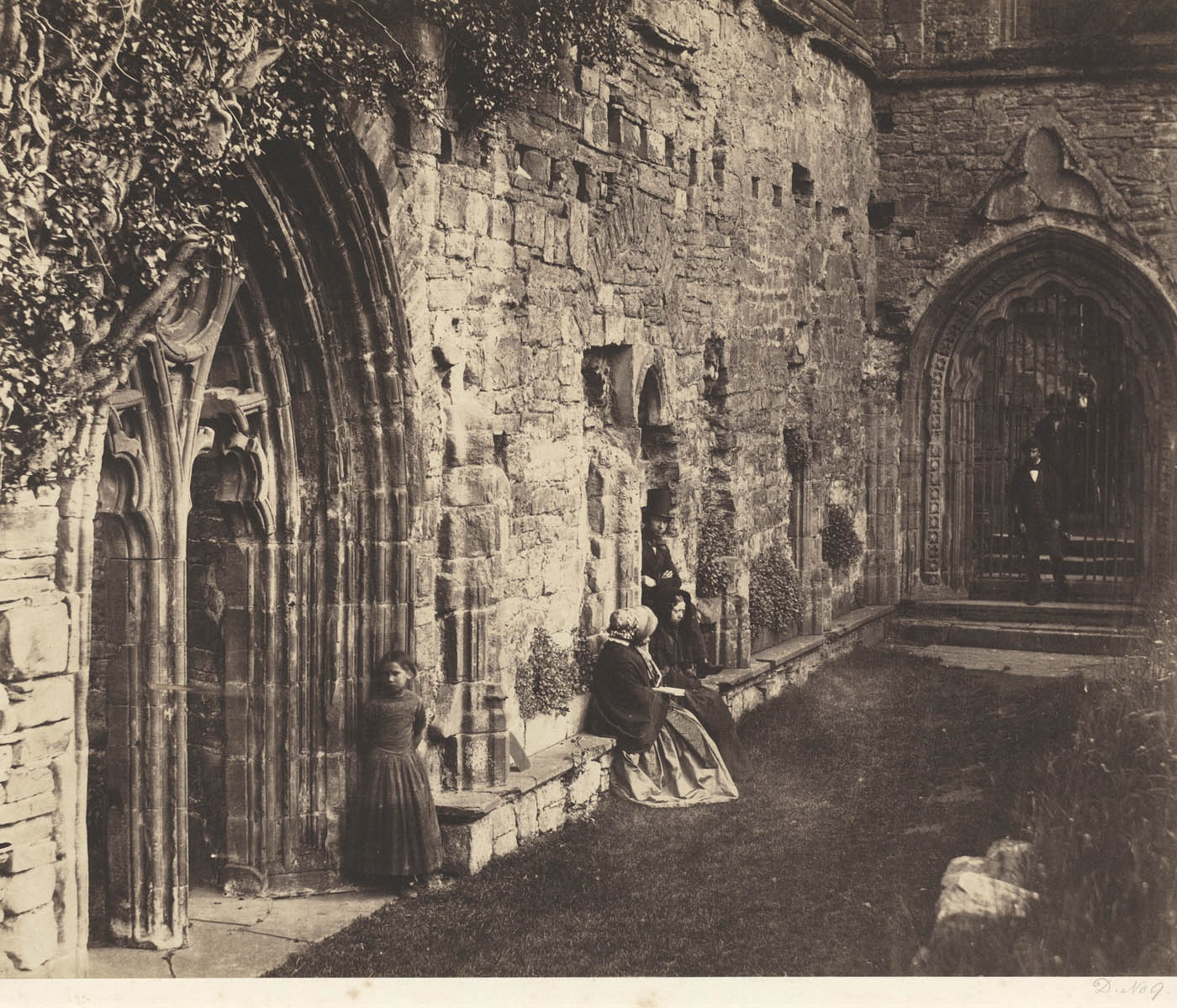
Roger Fenton (British, 1819-1869) 'The Cloisters, Tintern Abbey' 1854  from the exhibition 'In the Darkroom: Photographic Processes before the Digital Age' at the National Gallery of Art, Washington, D.C., October 2009 - March, 2010


Roger Fenton (British, 1819-1869)
The Cloisters, Tintern Abbey
1854
Salted paper print from a collodion negative
18.3 x 22.1cm (7 3/16 x 8 11/16 in.)
National Gallery of Art, Washington
Horace W. Goldsmith Foundation through Robert and Joyce Menschel
Public domain


Although Roger Fenton’s photographic career lasted for only 11 years, he exerted a profound influence on the medium. Trained as a lawyer, he began to paint in the early 1840s, studying in Paris with Michel-Martin Drölling and later in London with Charles Lucy. But in 1851 he took up photography and produced a distinguished and varied body of work. He was a pivotal figure in the formation of the Photographic Society (later known as the Royal Photographic Society), garnering support from Queen Victoria and Prince Albert. He is best known for his 1855 photographs made during the Crimean War, among the first to document war. But he also made ambitious studies of English cathedrals, country houses, and landscapes as well as portraits of the royal family, a series of still lifes, and studies of figures in Asian costume.

When Fenton first began to make photographs, he generally posed figures in a fairly stiff, even anecdotal manner. But in 1854 he began to use figures to create a sense of tension at once intriguing and compelling. The Cloisters, Tintern Abbey shows this more dynamic approach. Fenton placed people in three groups, not interacting with one another but engaging in silent and solitary dialogue with their decaying surroundings. Tintern Abbey had, of course, inspired many artists and poets to reflect on both “the life of things” – as William Wordsworth wrote in his 1798 poem, “Lines Composed a Few Miles above Tintern Abbey” – and on the transitory nature of life itself.

Text from the National Gallery of Art website


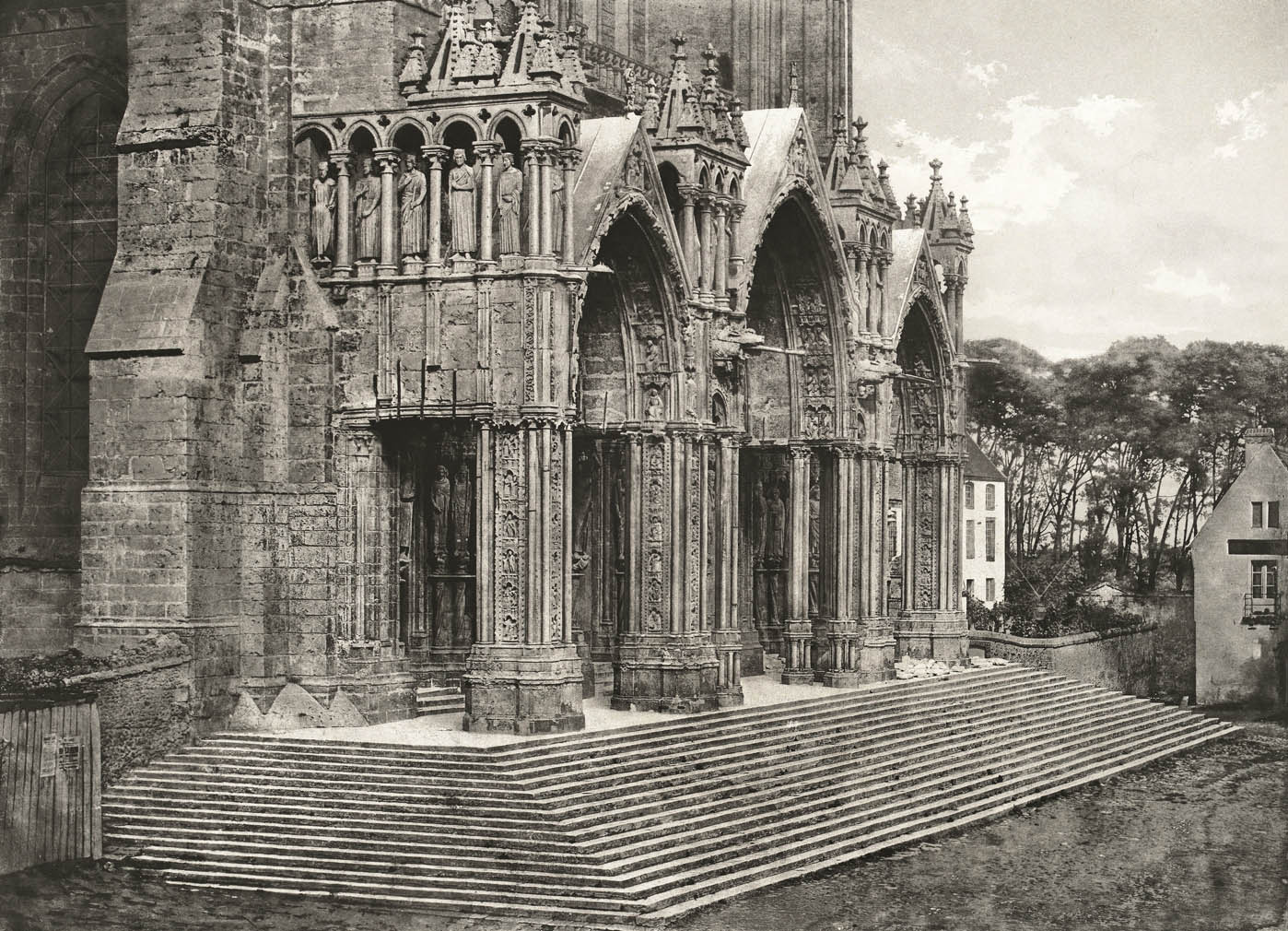
Charles Nègre (French, 1820-1880)
'Cathédrale de Chartres - Portique du Midi XIIe Siècle (Chartres Cathedral, South Portal, 12th Century)' c. 1854, printed c. 1857


Charles Nègre (French, 1820-1880)
Cathédrale de Chartres – Portique du Midi XIIe Siècle (Chartres Cathedral, South Portal, 12th Century)
c. 1854, printed c. 1857
photogravure
National Gallery of Art, Washington
William and Sarah Walton Fund


Roger Fenton (British, 1819-1869)
'Fruit and Flowers' 1860


Roger Fenton (British, 1819-1869)
Fruit and Flowers
1860
Albumen print from a collodion negative
National Gallery of Art, Washington
Paul Mellon Fund
public domain


In the summer of 1860 Fenton made his most deliberate and exacting photographs to date: a series of still lifes. Although the subject obviously had its roots in painting, his densely packed compositions are far removed from the renditions of everyday life by the Dutch masters. Instead, Fenton extravagantly piled luscious fruits and intricately patterned flowers on top of one another and pushed them to the front of his composition so that they seem almost ready to tumble out of the photograph into the viewer’s space. It is that very immediacy – the precarious composition, the lush sensuousness of the objects, and our knowledge of their imminent decay – that makes these photographs so striking.

Text from the National Gallery of Art website


Gustave Le Gray (French, 1820-1884) 'Cavalry Maneuvers behind barrier, Camp de Châlons' 1857


Gustave Le Gray (French, 1820-1884)
Cavalry Maneuvers behind barrier, Camp de Châlons
1857
Albumen silver print from glass negative
National Gallery of Art, Washington


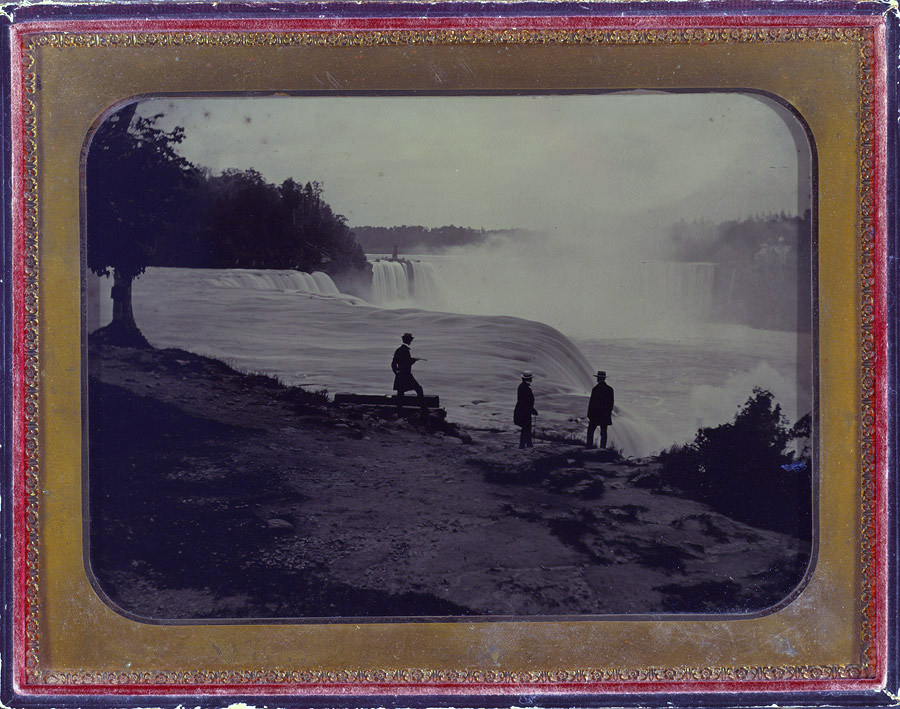
Platt D. Babbitt (American, 1822-1879) 'Niagara Falls' c. 1860


Platt D. Babbitt (American, 1822-1879)
Niagara Falls
c. 1860
Ambrotype
National Gallery of Art, Washington
Vital Projects Fund


Alfred Stieglitz (American, 1864-1946) 'The Terminal' 1893


Alfred Stieglitz (American, 1864-1946)
The Terminal
1893, printed 1920s/1930s
Gelatin silver print
National Gallery of Art, Washington
Alfred Stieglitz Collection


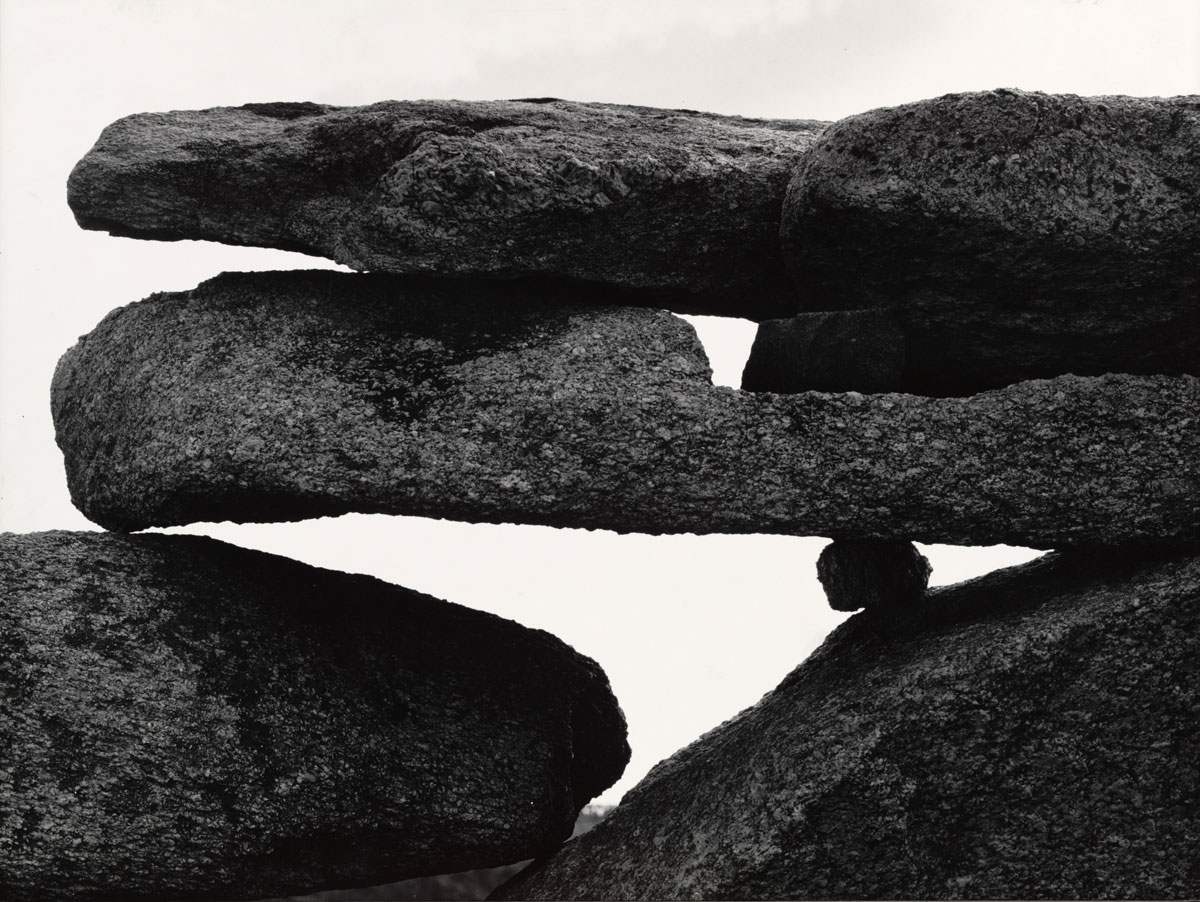
Aaron Siskind (American, 1903-1991) 'Martha's Vineyard 108' 1954


Aaron Siskind (American, 1903-1991)
Martha’s Vineyard 108
1954
Gelatin silver print
National Gallery of Art, Washington
Diana and Mallory Walker Fund


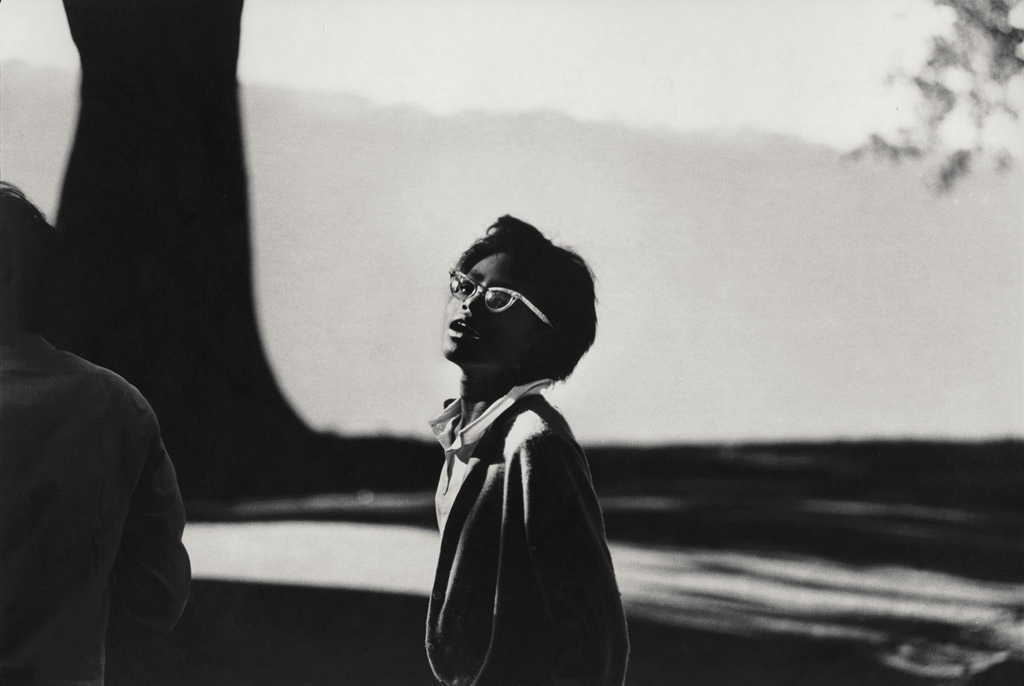
Dave Heath (Canadian, born United States, 1931-2016) 'Hastings-on-Hudson, New York' 1963


Dave Heath (Canadian, born United States, 1931-2016)
Hastings-on-Hudson, New York
1963
Gelatin silver print
National Gallery of Art, Washington
Gift of Howard Greenberg


William Eggleston (American, b. 1939) 'Untitled (Car in Parking Lot)' 1973


William Eggleston (American, b. 1939)
Untitled (Car in Parking Lot)
1973
Dye imbibition print
National Gallery of Art, Washington
Anonymous Gift


Harry Callahan (American, 1912-1999) 'Providence' 1977


Harry Callahan (American, 1912-1999)
Providence
1977
Dye transfer print


Robert Adams (American, b. 1937) 'Summer Nights #2 (Longmont, Colorado)' 1979


Robert Adams (American, b. 1937)
Summer Nights #2 (Longmont, Colorado)
1979
Gelatin silver print
National Gallery of Art, Washington
Gift of Mary and David Robinson


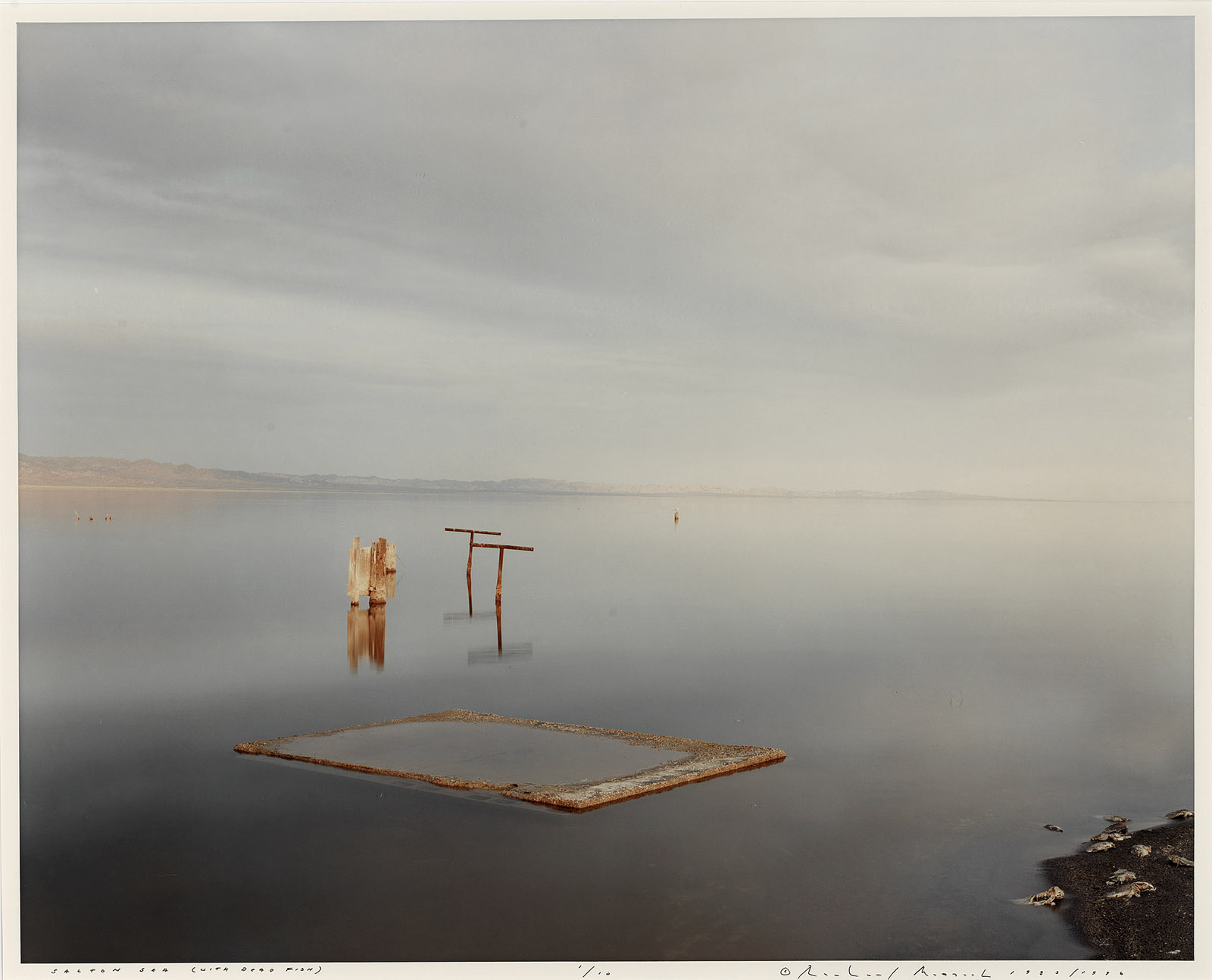
Richard Misrach (American, b. 1949)
'Dead Fish, Salton Sea, California' 1983, printed 1997


Richard Misrach (American, b. 1949)
Dead Fish, Salton Sea, California
1983, printed 1997
Chromogenic colour print
National Gallery of Art, Washington
Anonymous Gift


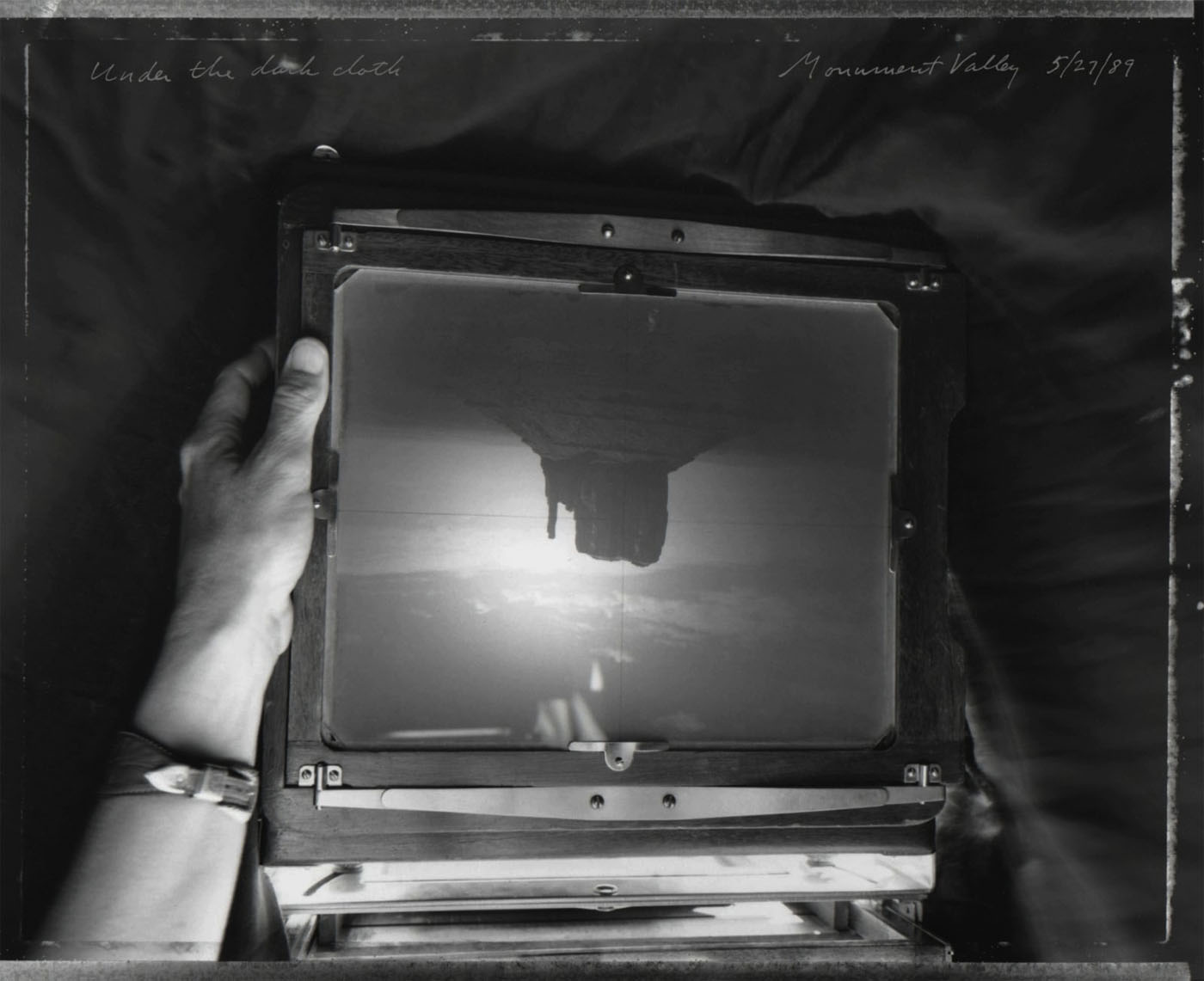
Mark Klett (American, b. 1952) 'Under the Dark Cloth, Monument Valley, May 27' 1989


Mark Klett (American, b. 1952)
Under the Dark Cloth, Monument Valley, May 27
1989
Gelatin silver print from Polaroid instant film negative
National Gallery of Art, Washington
Gift of the Collectors Committee


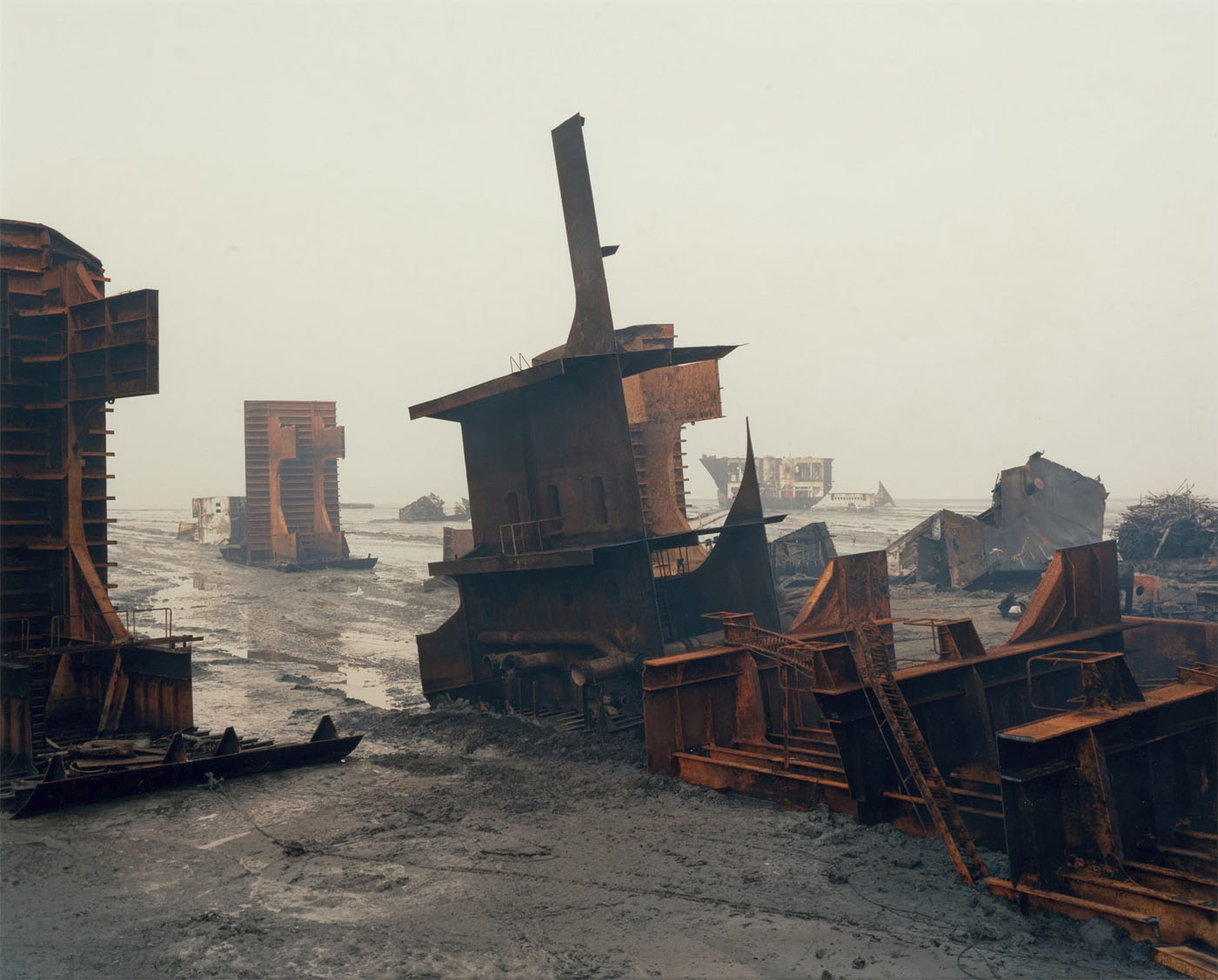
Edward Burtynsky (Canadian, b. 1955) 'Shipbreaking #10, Chittagong, Bangladesh' 2000, printed 2001


Edward Burtynsky (Canadian, b. 1955)
Shipbreaking #10, Chittagong, Bangladesh
2000, printed 2001
Chromogenic colour print
National Gallery of Art, Washington
Fund for Living Photographers


The National Gallery of Art, Washington, DC

The National Gallery of Art, located on the National Mall between 3rd and 7th Streets at Constitution Avenue NW.

Opening hours:
Daily 10.00am – 5.00pm

National Gallery of Art website

LIKE ART BLART ON FACEBOOK

Back to top

Exhibition: ‘William Eggleston, Paris’ at Fondation Cartier, Paris

Exhibition dates: 4th April – 21st June, 2009


William Eggleston (American, b. 1939) 'Untitled', Paris series, 2006-2008 from the exhibition 'William Eggleston, Paris' at Fondation Cartier, Paris, April - June, 2009


William Eggleston (American, b. 1939)
Untitled from the Paris series
2006-2008
Colour print
27.9 x 35.6cm
Series of 32 works: 27 colour prints, 4 diptychs and 1 painting
Commission for the exhibition William Eggleston, Paris, Fondation Cartier pour l’art contemporain, Paris, 2009
Gift of the artist 2009
© Eggleston Artistic Trust, Memphis


Perhaps it’s just me, but I seem to have become a little jaded towards the recent photographs of William Eggleston.

Other than the green reflection of lights in rainwater (above) the photographs seem to have lost their unique voice, the social insight that gave his earlier work it’s zing – provocative images that challenged how we live through a meditation on subject matter, construction of space, and tone of “colour”. How the colour that surrounds us inflects our very being.

In these photographs it feels like there has been little development in his style over the years with a consequent lessening of their visual impact. Now Eggleston’s colour just feels like a party trick, performed by rote with little consequential meaning to either the colour or the image. Perhaps the way we look at the world (and how we picture it) has finally overtaken the director’s prescient creative vision – his auteurship, his authorship.

Dr Marcus Bunyan


Many thankx to the Fondation Cartier for allowing me to publish the photographs in the posting.


“In Eggleston’s best work, the work that made him famous, color is intrinsic to the meaning of the photograph. Its not simply a garnish to draw the eye. His best photographs are not ‘about’ the color; they are about larger issues that the color is used in the service of.  This is whats missing in his Paris pictures. The color here is pure ornament, eye candy to seduce you into forgetting that the picture has nothing to say.”

Anonymous. “William Eggleston Mails It In From Paris,” on the Leicaphilia website April 21, 2014 [Online] Cited 06/02/2019


William Eggleston (American, b. 1939) 'Untitled', Paris series, 2006-2008 from the exhibition 'William Eggleston, Paris' at Fondation Cartier, Paris, April - June, 2009


William Eggleston (American, b. 1939)
Untitled from the Paris series
2006-2008
Colour print
27.9 x 35.6cm
Series of 32 works: 27 colour prints, 4 diptychs and 1 painting
Commission for the exhibition William Eggleston, Paris, Fondation Cartier pour l’art contemporain, Paris, 2009
Gift of the artist 2009
© Eggleston Artistic Trust, Memphis


William Eggleston (American, b. 1939) 'Untitled', Paris series, 2006-2008


William Eggleston (American, b. 1939)
Untitled from the Paris series
2006-2008
Colour print
27.9 x 35.6cm
Series of 32 works: 27 colour prints, 4 diptychs and 1 painting
Commission for the exhibition William Eggleston, Paris, Fondation Cartier pour l’art contemporain, Paris, 2009
Gift of the artist 2009
© Eggleston Artistic Trust, Memphis


William Eggleston (American, b. 1939) 'Untitled', Paris series, 2006-2008


William Eggleston (American, b. 1939)
Untitled from the Paris series
2006-2008
Colour print
27.9 x 35.6cm
Series of 32 works: 27 colour prints, 4 diptychs and 1 painting
Commission for the exhibition William Eggleston, Paris, Fondation Cartier pour l’art contemporain, Paris, 2009
Gift of the artist 2009
© Eggleston Artistic Trust, Memphis


William Eggleston (American, b. 1939) 'Untitled', Paris series, 2006-2008


William Eggleston (American, b. 1939)
Untitled from the Ωris series
2006-2008
Colour print
27.9 x 35.6cm
Series of 32 works: 27 colour prints, 4 diptychs and 1 painting
Commission for the exhibition William Eggleston, Paris, Fondation Cartier pour l’art contemporain, Paris, 2009
Gift of the artist 2009
© Eggleston Artistic Trust, Memphis


For the last three years, American photographer William Eggleston has photographed the city of Paris as part of a commission for the Fondation Cartier pour l’art contemporain. Taken throughout different seasons, these new images by one of the fathers of colour photography portray the local and the cosmopolitan, the glamorous and the gritty, the everyday and the extraordinary.

This exhibition also provides an exceptional occasion to bring together William Eggleston’s distinctive pictures and his recent paintings, an unknown aspect of his work that has never before been presented to the public.

Text from the Fondation Cartier website


William Eggleston (American, b. 1939) 'Untitled', Paris series, 2006-2008


William Eggleston (American, b. 1939)
Untitled from the Paris series
2006-2008
Colour print
35.6 x 27.9cm
Series of 32 works: 27 colour prints, 4 diptychs and 1 painting
Commission for the exhibition William Eggleston, Paris, Fondation Cartier pour l’art contemporain, Paris, 2009
Gift of the artist 2009
© Eggleston Artistic Trust, Memphis


William Eggleston (American, b. 1939) 'Untitled', Paris series, 2006-2008


William Eggleston (American, b. 1939)
Untitled from the Paris series
2006-2008
Colour print
35.6 x 27.9cm
Series of 32 works: 27 colour prints, 4 diptychs and 1 painting
Commission for the exhibition William Eggleston, Paris, Fondation Cartier pour l’art contemporain, Paris, 2009
Gift of the artist 2009
© Eggleston Artistic Trust, Memphis


William Eggleston (American, b. 1939) 'Untitled', Paris series, 2006-2008


William Eggleston (American, b. 1939)
Untitled from the Paris series
2006-2008
Colour print
35.6 x 27.9cm
Series of 32 works: 27 colour prints, 4 diptychs and 1 painting
Commission for the exhibition William Eggleston, Paris, Fondation Cartier pour l’art contemporain, Paris, 2009
Gift of the artist 2009
© Eggleston Artistic Trust, Memphis


William Eggleston’s recent book Paris, published by Steidl and commissioned by Foundation Cartier, is a collective body of work that comprises his oeuvre of color drawings and recent Paris photographs. Similar to Ben Shahn, Charles Scheeler, Diego Rivera, Man Ray, Robert Rauschenberg and Ed Ruscha, Eggleston has reached out beyond photography to express his creative talents.

The photographs and drawings are intertwined throughout the book, creating an interesting visual cadence. The page spreads illustrate various layout designs, including a single image of either a photograph or drawing on a spread, pairs of drawings and photographs and pairs of drawing facing a photograph. All of the drawings and photographs are contained within the boundaries of the page. …

We know mostly of Eggleston’s photographs, but from the dating on one of the drawings included in this book, we can determine that Eggleston has been working with the drawing medium since 1968. It is interesting to speculate as to how one medium may have influenced the other for Eggleston. As an example, the earlier photographs by Shahn and Scheeler seem to have had an influence on how these two artists subsequently worked their framing, pictorial space, mass & line quality in their subsequent paintings.

The Paris photographs that Eggleston made of graffiti or his tight framing in conjunction with a longer lens to compress the pictorial space are visually similar in style to his drawings. The subjects he photographs are framed to create similar vibrant color masses and lines as his drawing, abstracting reality into basic graphic components. …

Eggleston’s photographs are constructed like spontaneous glances; partial views of what might be consider a traditional subject, creating color abstractions of lines, patterns and mass. Trees, pipes, people, walls, garbage, décor, wall paper, display windows are bisected and truncated, with edges and lines following out of the photographs borders. These images seem to be created by a restless and nervous energy.

With these drawings, paintings and photographs, Eggleston shows a interesting handling of these mediums and offers an insight as to how influential the period of Abstract Expressionism is to his photographic process.

Extract from Douglas Stockdale. “William Eggleston – Paris,” on The PhotoBook Journal website September 12, 2009 [Online] Cited 06/02/2019


William Eggleston (American, b. 1939) 'Untitled', Paris series, 2006-2008


William Eggleston (American, b. 1939)
Untitled from the Paris series
2006-2008
Colour print
35.6 x 27.9cm
Series of 32 works: 27 colour prints, 4 diptychs and 1 painting
Commission for the exhibition William Eggleston, Paris, Fondation Cartier pour l’art contemporain, Paris, 2009
Gift of the artist 2009
© Eggleston Artistic Trust, Memphis


William Eggleston (American, b. 1939) 'Untitled', Paris series, 2006-2008


William Eggleston (American, b. 1939)
Untitled from the Paris series
2006-2008
Colour print
35.6 x 27.9cm
Series of 32 works: 27 colour prints, 4 diptychs and 1 painting
Commission for the exhibition William Eggleston, Paris, Fondation Cartier pour l’art contemporain, Paris, 2009
Gift of the artist 2009
© Eggleston Artistic Trust, Memphis


Fondation Cartier
261, Boulevard Raspail
75014 Paris, France

Opening hours:
Open from Tuesday to Sunday, from 11am – 8pm
Closed on Mondays
Late closing on Tuesday, at 10 pm

Fondation Cartier website

LIKE ART BLART ON FACEBOOK

Back to top

Exhibition: ‘Paul Outerbridge: New Color Photographs from Mexico and California’ at the Downtown Central Library, Los Angeles

Exhibition dates: 28th March – 28th June, 2009

Curated by William Ewing and Phillip Prodger


Paul Outerbridge. 'Women by Car, Laguna Beach, California' c. 1950


Paul Outerbridge (American, 1896-1958)
Women by Car, Laguna Beach, California
c. 1950
Pigment dyed digital print
16″ x 20″


“Art is life seen through man’s inner craving for perfection and beauty – his escape from the sordid realities of life into a world of his imagining. Art accounts for at least a third of our civilization, and it is one of the artist’s principal duties to do more than merely record life or nature. To the artist is given the privilege of pointing the way and inspiring towards a better life.”


Paul Outerbridge


If Outerbridge only photographed intermittently after 1943, then what photographs they are. Perhaps some of the most important colour photographs of their generation were made after he moved to California influencing the next generation of colour photographers (as noted below in the press release). What else can one say – his aesthetic sensibility is sensational, so far ahead of his time, so prescient of future colour spaces in photography. I know how “no regular income” feels as an artist, but he still had the courage and vision to make the work. I am in awe of the man: the visual complexity but eloquent simplicity of his photographs is simply amazing, simply… his own.

Dr Marcus Bunyan


Many thankx to the Downtown Central Library for allowing me to publish the photographs in the posting. Please click on the photographs for a larger version of the image.


Recently discovered colour images of California and Mexico taken during the 1940s and 1950s by the late visionary photographer Paul Outerbridge, who was considered “a master of colour photography,” will be exhibited at the Central Library’s First Floor Galleries, 630 W. Fifth St., downtown, from March 28 through June 28 2009.


Paul Outerbridge. 'Balboa Beach, California' c. 1950


Paul Outerbridge (American, 1896-1958)
Balboa Beach, California
c. 1950
Pigment dyed digital print
16″ x 20″


“[Outerbridge] was a designer and illustrator in New York before turning to photography in the 1920s. In 1925, having established himself as an innovative advertising photographer and graphic designer, he moved to Paris and worked for the French edition of Vogue magazine. There he met Edward Steichen, with whom he developed a friendly rivalry. Around 1930, having returned to New York, Outerbridge began to experiment with colour photography, in particular the carbro-colour process. He focused primarily on female nudes – striking, full-colour images that were ahead of their time. The growing popularity of the dye transfer process lead to cheaper color photographs and Outerbridge, who stuck fast to the carbro process as superior in its richness and permanence, saw his commercial work dry up, leaving him without a regular source of income. In 1943 Outerbridge moved to California, where he photographed only intermittently.”

Text from the Getty Museum website [Online] Cited 14/04/2009. No longer available online


Paul Outerbridge (American, 1896-1958) 'Reclining Nude' c. 1937


Paul Outerbridge (American, 1896-1958)
Reclining Nude
c. 1937
Pigment dyed digital print


Paul Outerbridge (American, 1896-1958) 'Motel Bar, Mazatlán, Mexico' c. 1948


Paul Outerbridge (American, 1896-1958)
Motel Bar, Mazatlán, Mexico
c. 1948
Dye transfer print
16″ x 20″


Paul Outerbridge (American, 1896-1958) 'Hotel Lobby, Mazatlán, Mexico' c. 1950


Paul Outerbridge (American, 1896-1958)
Hotel Lobby, Mazatlán, Mexico
c. 1950
Pigment dyed digital print
16″ x 20″


As one of America’s earliest masters of colour photography, Paul Outerbridge established his reputation by making virtuoso carbro-colour prints of nudes and still-lives in the 1930s. As pictures, they are as brilliant and innovative today as when they earned their place as classics in the history of photography.

Outerbridge left New York in the 1940s, choosing to settle in California, and eventually taking up residency in the Mediterranean-style ocean side town of Laguna Beach. Little is known of Outerbridge’s last body of work in the 8 years preceding his death in 1958. But Outerbridge’s recently printed transparencies from the 1950s affirms that he fully understood the possibilities inherent in colour photography despite it being the early days of its use in photographic art. Outerbridge went on to make a body of work that presaged the style and imagery of colour photographers working a full quarter of a century later.

Employing a 35mm camera rather than the large-format equipment of the studio, Outerbridge captured vivid pictures while on the fly. His images were composed using the same precision of form and colour that characterised his 1930s studio work, but, in this series, Outerbridge applied his earlier techniques to the energetic world of the street. This was a new landscape for Outerbridge, who, seeing in the new spectrum of colour, depicted the people and places from his adopted Southern California, and, with great relish and sensitivity, from the Mexican towns just south of the border. In the tradition of such photographers as Edward Weston, Paul Strand, Anton Bruehl, and Henri Cartier-Bresson, all of whom made significant photographic forays into Mexico, Outerbridge ventured south from Laguna. In his 1949 black Cadillac, Outerbridge frequented the seaport towns along the Baja peninsula. One of his favourite stops was Mazatlan, on Mexico’s western coast, where he took particular pleasure in surveying the urban architecture, absorbing – and documenting – the city streets teeming with people, the brightly coloured topography.

Among the scenes Outerbridge etched onto film: carnival carriages with passengers dressed and bound for a grand party; a group of fashionable men relaxing in an outdoor hotel lobby drinking Cokes and beer while a small orchestra plays on in the afternoon sun; and a lone girl in a lime-green dress and white sweater walking past a gas station whose painted-red details add vibrant flourishes to the scene. Outerbridge was keenly aware that the beauty of everyday objects was also tied to the larger meanings anchored in the social landscape, but he cared less for this fact than for the expression of pure colour and form as seen through and by the lens.

These extraordinary pictures recall the 1970s photographs of William Eggleston and Stephen Shore, who strove to codify these same formal and subjective aesthetics into a bold definition of the new colour vocabulary. Paul Outerbridge: New Color Photographs from California and Mexico will bring a heretofore undiscovered and unrecognised sequence of photographs that bridges the formal gap between the past and the present. Outerbridge’s visionary handling of colour confirmed that he had instinctively known the potential of the colour medium, and, luckily for us, he created an astounding body of photographs to prove it.

Text from the Curatorial Assistance website [Online] Cited 19/01/2019


Paul Outerbridge (American, 1896-1958) 'Gas Station, Mazatlán, Mexico' c. 1950


Paul Outerbridge (American, 1896-1958)
Gas Station, Mazatlán, Mexico
c. 1950
Dye transfer print
16″ x 20″


Paul Outerbridge (American, 1896-1958) 'Self-portrait on Lounge, Oceanside Resort, California' c. 1950


Paul Outerbridge (American, 1896-1958)
Self-portrait on Lounge, Oceanside Resort, California
c.1950
Pigment dyed digital print
16″ x 20″


“Outerbridge, who died in 1958, built his reputation in the early 1920s in New York and Paris making elegant black and white photo abstractions primarily of nudes and still lifes that rivalled those of his peers, Alfred Stieglitz, Edward Steichen, and Edward Weston. In the 1930s, Outerbridge mastered the exquisite tri-carbro-colour print process and went on to make some of the most important colour photographs in art and advertising of that time.

Moving to California in 1943 and taking up residence in Laguna Beach, Outerbridge made his last important body of work throughout California and Mexico. Between 1948 and until his death in 1958 he codified a new language in colour photographs that anticipated the work of William Eggleston, Stephen Shore, Joel Sternfeld and others known for their “New Color” work in the 1970s.

“The curious position of prosperous American tourists amid the daily poverty experienced by some Mexicans is one of the recurring themes in the work, but with Outerbridge there is no political polemic,” says co-curator Phillip Prodger. “Outerbridge was thinking of his photographs as jig-saw puzzles made up of many different highly coloured pieces, each placed with meticulous care.”

Among Outerbridge’s subjects are carnival carriages with passengers dressed and headed for a grand party; a group of fashionable men relaxing in an outdoor hotel lobby drinking Coke and beer while a small orchestra plays; a girl in a lime-green dress and white sweater walking past a gas station whose painted-red details add a vibrant flourish to the scene.”

Text from the Downtown Central Library press release [Online] Cited 14/04/2009. No longer available online


Paul Outerbridge (American, 1896-1958) 'Model with Satin Dress, Laguna Beach, California' c. 1950


Paul Outerbridge (American, 1896-1958)
Model with Satin Dress, Laguna Beach, California
c. 1950
Tricolor carbon print
20″ x 16″


Paul Outerbridge (American, 1896-1958) 'Party, Laguna Beach' c. 1950


Paul Outerbridge (American, 1896-1958)
Party, Laguna Beach
c. 1950
Tricolor carbon print
20″ x 16″


Los Angeles Central Library
630 W. 5th St., Los Angeles, CA 90071
Phone: (213) 228-7000

Opening hours:
Monday 10am – 8pm
Tuesday 10am – 8pm
Wednesday 10am – 8pm
Thursday 10am – 8pm
Friday 9.30am – 5.30pm
Saturday 9.30am – 5.30pm
Sunday 1 – 5pm
Los Angeles Central Library website

LIKE ART BLART ON FACEBOOK

Back to top

Exhibition: ‘William Eggleston: Democratic Camera, Photographs and Video, 1961-2008’ at the Whitney Museum of American Art, New York

Exhibition dates: 7th November, 2008 – 25th January, 2009


William Eggleston (American, b. 1939) 'Untitled' c. 1971-1973 from the exhibition Exhibition: 'William Eggleston: Democratic Camera, Photographs and Video, 1961-2008' at the Whitney Museum of American Art, New York, Nov 2008 - Jan 2009


William Eggleston (American, b. 1939)
Untitled
c. 1971-1973
From Troubled Waters 1980
Dye-transfer print
© Eggleston Artistic Trust


One of the most influential photographers of the last half-century, William Eggleston has defined the history of colour photography. This exhibition is the artist’s first retrospective in the United States and includes both his colour and black-and-white photographs as well as Stranded in Canton, the artist’s video work from the early 1970s.

William Eggleston’s great achievement in photography can be described in a straightforward way: he captures everyday moments and transforms them into indelible images. William Eggleston: Democratic Camera, Photographs and Video, 1961-2008 presents a comprehensive selection from nearly fifty years of image-making.

Born in 1939 in Sumner, Mississippi, a small town in the Delta region, Eggleston showed an early interest in cameras and audio technology. While studying at various colleges in the South, he purchased his first camera and came across a copy of Henri Cartier-Bresson’s book The Decisive Moment (1952). In the early 1960s, Eggleston married and moved to Memphis, where he has lived ever since. He first worked in black-and-white, but by the end of the decade began photographing primarily in colour. Internationally acclaimed and widely traveled, Eggleston has spent the past four decades photographing all around the world, conveying intuitive responses to fleeting configurations of cultural signs and moods as specific expressions of local colour. Psychologically complex and casually refined, bordering on kitsch and never conventionally beautiful, these photographs speak principally to the expanse of Eggleston’s imagination and have had a pervasive influence on all aspects of visual culture. By not censoring, rarely editing, and always photographing, Eggleston convinces us of the idea of the democratic camera.

This exhibition was organised by the Whitney Museum of American Art, New York, in association with Haus der Kunst, Munich.

Text from the Whitney Museum of American Art website


Many thankx to the Whitney Museum of American Art for allowing me to publish the photographs in the posting. Please click on the photographs for a larger version of the image.


William Eggleston (American, b. 1939) 'Untitled' 1973 from the exhibition Exhibition: 'William Eggleston: Democratic Camera, Photographs and Video, 1961-2008' at the Whitney Museum of American Art, New York, Nov 2008 - Jan 2009


William Eggleston (American, b. 1939)
Untitled
1973
Dye-transfer print
© Eggleston Artistic Trust


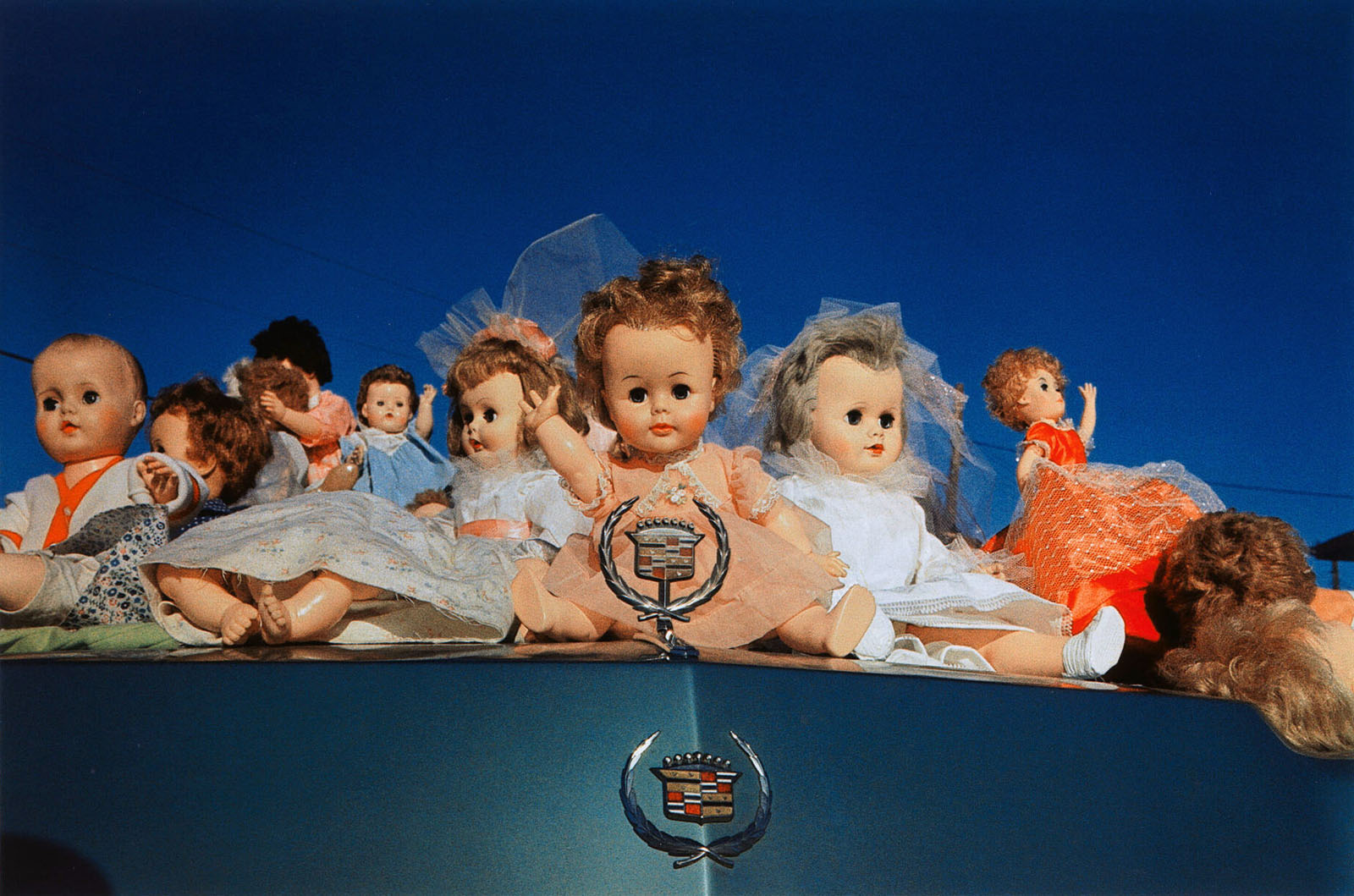
William Eggleston (American, b. 1939) 'Untitled (Baby Doll Cadillac)' 1973, printed 1996


William Eggleston (American, b. 1939)
Untitled (Baby Doll Cadillac)
1973, printed 1996
From the Los Alamos portfolio
Dye transfer print
11 3/4 × 17 11/16in. (29.8 × 44.9cm)
Whitney Museum of American Art, New York; purchase, with funds from the Photography Committee
© Eggleston Artistic Trust, courtesy Cheim & Read, NYC


William Eggleston (America, born July 27, 1939) 'Memphis' c. 1970


William Eggleston (America, b. 1939)
Memphis
c. 1970
Dye-transfer print
© Eggleston Artistic Trust


William Eggleston video

“This candid interview with photographer William Eggleston was conducted by film director Michael Almereyda on the occasion of the opening of Eggleston’s retrospective William Eggleston: Democratic Camera, Photographs and Video, 1961-2008 at the Whitney Museum of American Art. A key figure in American photography, Eggleston is credited almost single-handedly with ushering in the era of colour photography. Eggleston discusses his shift from black and white to colour photography in this video as, “it never was a conscious thing. I had wanted to see a lot of things in colour because the world is in colour”. Also included in this video are Eggleston’s remarks about his personal relationships with the subjects of many of his photographs.”


The Ending of Stranded in Canton

In 1973, photographer William Eggleston picked up a Sony PortaPak and took to documenting the soul of Memphis and New Orleans. Transvestites, geek men biting off chicken heads, classy blues musicians, and crazed men with guns form the backbone of this documentary look at the “Southern Hipsters” of Louisiana and Mississippi.

Stranded in Canton

In 1973, photographer William Eggleston picked up a Sony PortaPak and took to documenting the soul of Memphis and New Orleans.

“These were the Merry Prankster and “Easy Rider” years, when road trips and craziness were cool, and Mr. Eggleston set out on some hard-drinking picture-taking excursions. He also embarked on repeated shorter expeditions closer to home in the form of epic bar crawls, which resulted in the legendary video “Stranded in Canton.”

Originally existing as countless hours of unedited film and recently pared down by the filmmaker Robert Gordon to a manageable 76 minutes, it was shot in various places in 1973 and 1974. (The new version is in the retrospective.) Mr. Eggleston would show up with friends at favourite bars, turn on his Sony Portapak, push the camera into people’s faces and encourage them to carry on.

And they did. Apart from brief shots of his children and documentary-style filming of musicians, the result is like some extreme form of reality television. Your first thought is: Why do people let themselves be seen like this? Do they know what they look like? You wonder if Mr. Eggleston is deliberately shaping some tragicomic Lower Depths drama or just doing his customary shoot-what’s-there thing, the what’s-there in this case being chemical lunacy. For all the film’s fringy charge there’s something truly creepy and deadly going on, as there is in much of Mr. Eggleston’s art. You might label it Southern Gothic; but whatever it is, it surfaces when a lot of his work is brought together.”

Holland Cotter. “Old South Meets New, in Living Color,” on The New York Times website Nov 6, 2008


William Eggleston (America, b. 1939) 'Untitled' c. 1976


William Eggleston (America, b. 1939)
Untitled
c. 1976
From Election Eve
© Eggleston Artistic Trust
Courtesy Cheim & Read Gallery


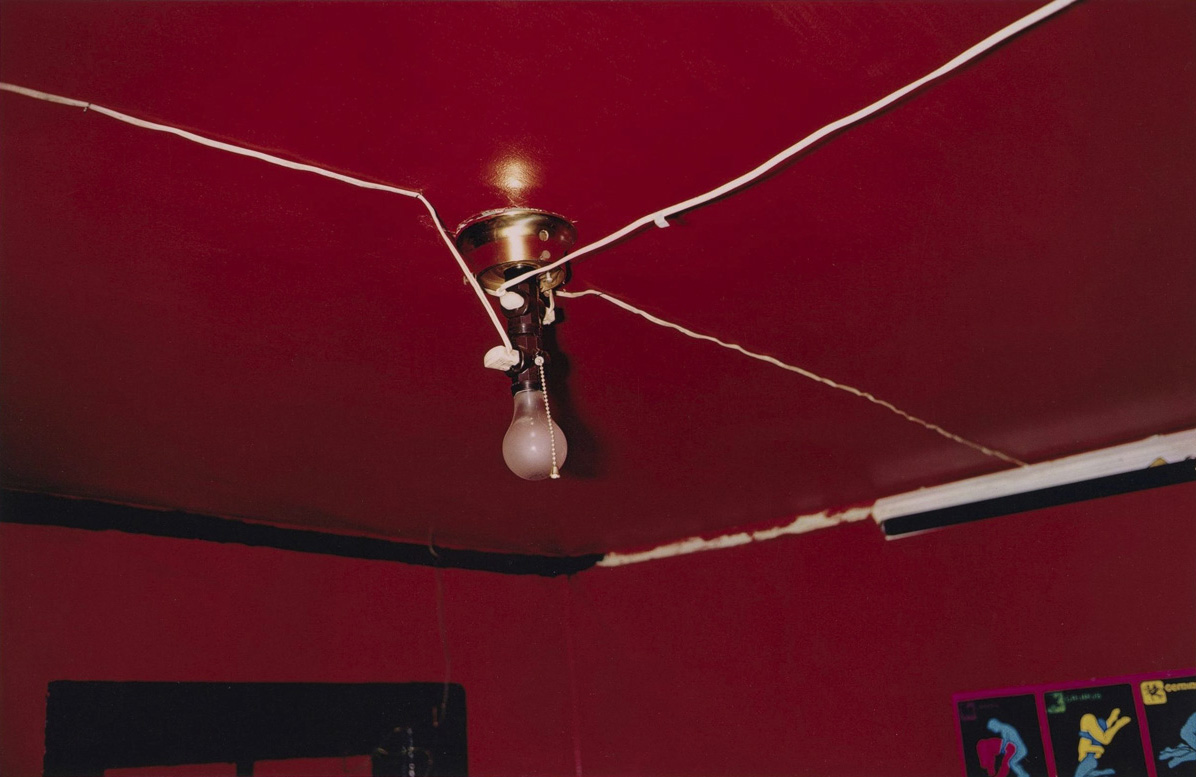
William Eggleston (American, born 1939) 'Untitled (Greenwood, Mississippi)' 1980


William Eggleston (American, born 1939)
Untitled (Greenwood, Mississippi)
1980
Dye-transfer print
29.6 x 45.5cm (11 5/8 x 17 15/16 in.)
The Metropolitan Museum of Art
Purchase, Louis V. Bell, Harris Brisbane Dick, Fletcher, and Rogers Funds and Joseph Pulitzer Bequest, and Jennifer and Philip Maritz Gift, 2012
© Eggleston Artistic Trust


William Eggleston (American, b. 1939) 'Untitled' Nd


William Eggleston (American, b. 1939)
Untitled
Nd
Dye-transfer print
From Los Alamos 1965-1968 and 1972-1974 (published 2003)
© Eggleston Artistic Trust


William Eggleston (American, b. 1939) 'Untitled' c. 1975 (Marcia Hare in Memphis Tennessee) c. 1975


William Eggleston (American, b. 1939)
Untitled (Marcia Hare in Memphis Tennessee)
c. 1975
Dye-transfer print
© Eggleston Artistic Trust


William Eggleston (American, b. 1939) 'Huntsville, Alabama' c. 1971


William Eggleston (American, b. 1939)
Huntsville, Alabama
1971
Dye-transfer print
© Eggleston Artistic Trust


William Eggleston (American, b. 1939) 'Untitled (Memphis Tennessee)' 1965


William Eggleston (American, b. 1939)
Untitled (Memphis Tennessee)
1965
Dye-transfer print
© Eggleston Artistic Trust


William Eggleston (American, b. 1939) 'Untitled (Memphis)' c. 1969-1971


William Eggleston (American, b. 1939)
Untitled (Memphis)
c. 1969-1971
Dye-transfer print
© Eggleston Artistic Trust
Courtesy Cheim & Read Gallery


William Eggleston (American, b. 1939) 'Untitled' 1983


William Eggleston (American, b. 1939)
Untitled
1983
From a series of photographs taken at Graceland
Dye-transfer print
© Eggleston Artistic Trust
Courtesy Whitney Museum of American Art


Whitney Museum of American Art
99 Gansevoort Street
New York, NY 10014
Phone: (212) 570-3600

Opening hours:
Mon: 10.30am – 6pm
Tues: Closed
Wed: 10.30am – 6pm
Thurs: 10.30am – 6pm
Fri: 10.30am – 10pm*
Sat: 11am – 6pm
Sun: 11am – 6pm

Whitney Museum of American Art website

William Eggleston exhibition web page

LIKE ART BLART ON FACEBOOK

Back to top