Exhibition: ‘Image and Space. Candida Höfer in Dialogue with the Photography Collection of the Kunstbibliothek’ at the Museum für Fotografie, Berlin

Exhibition dates: 25th March – 28th August, 2022

Curators: Ludger Derenthal, Head of the Photography Collection of the Kunstbibliothek, and Ralph Goertz, IKS – Institut für Kun-stdokumentation

A special exhibition of the Kunstbibliothek – Staatliche Museen zu Berlin and the IKS – Institut für Kunstdokumentation


Candida Höfer (German, b. 1944) 'Liverpool IIA' 1968


Candida Höfer (German, b. 1944)
Liverpool IIA
1968
Gelatin silver print
35.5 x 35.5cm


Twist of life

I am always fascinated by the journey that artists travel with their practice: where, when and why they started (what was their jumping off point, or point of departure): what were their concerns when they first started making art, what was the path they took, and how did they are arrive at their mature style.

With its blend of old and new – historical photographs by other artists that relate to the German artist Candida Höfer’s mature practice, and photographs from zoological gardens and hitherto little-known series from Höfer’s early work (such as photographs from her Liverpool series) that are archaeological evidence on the path to her current photographs – this intelligently curated and beautifully displayed exhibition investigates the narrative trajectory of discovery that any artist worth their salt takes during the development of their practice.

In Höfer’s art, her earliest photographs are classic black and white socio-documentary, urban landscape images that seek to map out the relationship between human and city, the topographical lay of the land if you like. For example, Höfer’s intensely personal views of Liverpool are full of fractures and half-seen occurrences in the urban landscape, observed with swift assurance by an inquiring mind, caught on the run. A woman peers in the window of a shop (Liverpool IIA, 1968 above), people queue to board a bus (Liverpool VII, 1968 below), men chat in a dingy bar (Liverpool VI, 1968 below), and a man is caught mid-stride legging it across the road while others what not so patiently at a bus stop (Liverpool XXII, 1968 below). Moving closer to the same bus stop (the same buildings in the background), Höfer captures a man standing looking for his bus in the middle of the street oblivious of the photographer (Liverpool III, 1968 below). This documentation of a fractured society continues in her series Türken in Deutschland (Turks in Germany)(1972-1979).

“Images of Turks at work or leisure in the parks, homes, markets, shops, and bars of 1970s West German cities populate Candida Höfer’s large, multiformat series entitled Türken in Deutschland (Turks in Germany, 1972-79). Höfer’s interactions with minority subjects in these images – by turns genial, jarring, and solemn – illuminate the complicated social and cultural milieu of 1970s West Germany… in Türken in Deutschland, Höfer explores the presence of Turkish migrants in 1970s Germany and how that presence was alternately erased and revealed in relationships with the dominant German culture…

Höfer’s Türken in Deutschland defies neat categorization: the images do not gawk at squalid living conditions or exotic cultural practices, or even feature dramatic expressions of emotion that might make particular images appear to symbolize larger issues. Instead, they express the frankness and intimacy of family snapshots, as well as an interest in new aesthetic mediums of the postwar avant-garde.”1


While both bodies of work predate Höfer’s “participation in Bernd and Hilla Becher’s groundbreaking photography course at the Kunstakademie”2, Türken in Deutschland by four years, there are already hints of her later mature style in photographs such as Kino Weidengasse Köln I (1977, below) with its cool frontality and observational, emotional reticence. But what Höfer’s early work possesses – and what I like so much and what has been lost in her mature practice – is that subtle, ironic, twist of life, twist of the knife (point of view) in which the artist focuses on the story and experiences of people living their life in the city.

Höfer is justly famous for her impartial, immaculate and still, large-scale interior views of architectural buildings – the artist frequently focusing “on places that preserve and order knowledge and culture… interested in how humans influence architecture through their culture,” working with light and space to capture the atmosphere and aura of a space through a “consistently calm and questioning archival gaze” – but what happened to the people in these people-less places, what happened to the sideways glance at life that initially inspired the artist, that propelled her forward into the world, that now no longer exists in the cold void of the building. Do I feel the aura of the space as the artist wishes, or do I miss the rupture, the wound, the punctum of dis/order that is the essence of fragmented memory, the essentialness of pattern/randomness.

Dr Marcus Bunyan


1/ Amy A. DaPonte. “Candida Höfer’s Türken in Deutschland as “Counter-publicity”,” in Art Journal 75, no. 4 (Winter 2016) published online January 6, 2017 [Online] Cited 10/07/2022

2/ “In fact, Bernd Becher invited Höfer to join his course after seeing the Türken in Deutschland slide show at the spring 1976 student exhibition at the Kunstakademie. The common desire of scholars to see this project as a slavish pursuit of the Bechers’ methods is clear in Astrid Ihle’s writings. Ihle describes black-and-white prints from the Türken in Deutschland series as primarily occupied with photographing “the order of things” – that is, with the “detached, cool view of an ethnologist” that defines the Bechers’ photographic “objectivity.” Ihle thus bends history to make a cohesive set of pictures taken in 1974, 1975, and 1976 examples of a method Höfer would encounter after starting the Bechers’ first photography course in fall 1976. Ihle, “Photography as Contemporary Document: Comments on the Conceptions of the Documentary in Germany after 1945,” in Art of Two Germanys: Cold War Cultures, ed. Stephanie Barron and Sabine Eckmann, exh. cat. (New York: Abrams, 2009), 186-205.”

Footnote 7 in Amy A. DaPonte. “Candida Höfer’s Türken in Deutschland as “Counter-publicity”,” in Art Journal 75, no. 4 (Winter 2016) published online January 6, 2017 [Online] Cited 10/07/2022


Many thankx to the Museum für Fotografie for allowing me to publish the photographs in the posting. Please click on the photographs for a larger version of the image.


Candida Höfer (German, b. 1944) 'Liverpool XXII' 1968


Candida Höfer (German, b. 1944)
Liverpool XXII
1968
Gelatin silver print
35.5 x 35.5cm


Candida Höfer (German, b. 1944) 'Liverpool III' 1968


Candida Höfer (German, b. 1944)
Liverpool III
1968
Gelatin silver print
35.5 x 35.5cm


Candida Höfer explores built spaces in her photography. Her world-famous interiors focus on libraries, museums, restaurants, theatres, and other public spaces, allowing us to experience architecture in a new way. In comparison with photographic interiors from the Kunst-bibliothek’s Photography Collection, which is over 150 years old, a dialogue develops between applied photography and artistic work.

With approximately 90 works, the exhibition at Berlin’s Museum für Fotografie opens up a broad cross-section of Candida Höfer’s photographs from 1980 to the immediate present. The long tradition of her architectural photographs, however, also extends deep into the classical canon of this field of work. In dialogue with pendants and counter-images from the Kunstbibliothek’s Photography Collection, Höfer’s particular approach to her pictorial motifs is revealed in a particularly impressive way.

Communicative function of constructed spaces

Spaces with communicative functions are paradoxically shown without the people frequenting them: Candida Höfer demonstrates the qualities or deficiencies of the spaces that enable human exchange in terms of the architecture itself, in terms of the atmosphere she specifically captures in each case, in terms of the perspective and the framing she chooses. She does not focus on the thematic groups serially; the respective locations determine the image format as well as the size of the prints. Yet the compilation of the groups offers a variety of possibilities for comparison that impressively confirm the photographer’s longstanding and sustained interest in the specific locations.

Images in dialogue

Some thematic groups exemplify the visually stimulating dialogue of the images: Facades, windows and doors open and close the view into or out of rooms. The dialogue between the pictures unfolds in a particularly attractive way in the photographs of Berlin’s Museumsinsel. While the razor-sharp, large-format contact prints by the Königlich Preußische Messbildanstalt still show the monumental staircase with Wilhelm von Kaulbach’s frescoes, Ryuji Miyamoto in 2000 captures the transitory state of the still ruinous building before the start of interior construction, and Candida Höfer in 2009 shows its completion.

Previously unpublished are Höfer’s colour photographs from her Liverpool series of 1968, from which a thread of development can be drawn to her images of the guest rooms in cafés, hotels, spas, and waiting rooms after 1980. They are brought into conversation with the more journalistically conceived street scenes of Willy Römer and Bernard Larsson, Dirk Alvermann’s images of Spanish bar scenes from around 1960, and Helga Paris’s photographs of Berlin pubs from the mid-1970s from the Photography Collection.

The photographer Candida Höfer

Candida Höfer (b. 1944) has devoted herself ever more and more intensively to architectural photography since her studies with Bernd and Hilla Becher at the Düsseldorf Art Academy towards the end of the 1970s. She has concentrated on this important genre without, however, acting on behalf of architects and art historians as photographers of earlier generations did. She sees her work as artistic photography, and photographing interiors was self-determinedly chosen by her as her main field of activity. She herself set the framework for it: “I photograph in public and semi-public spaces from different eras. This are spaces that are accessible to everyone, places of encounter, communication, knowledge, relaxation, recreation. They are spas, hotels, waiting rooms, museums, libraries, universities, banks, churches and, since a few years, zoological gardens.”

Text from the Museum für Fotografie website Nd [Online] Cited 07/07/2022


Candida Höfer (German, b. 1944) 'Liverpool VI' 1968


Candida Höfer (German, b. 1944)
Liverpool VI
1968
Gelatin silver print
35.5 x 35.5cm


Candida Höfer (German, b. 1944) 'Liverpool VII' 1968


Candida Höfer (German, b. 1944)
Liverpool VII
1968
Gelatin silver print
35.5 x 35.5cm


Candida Höfer (German, b. 1944) 'Liverpool VIII' 1968


Candida Höfer (German, b. 1944)
Liverpool VIII
1968
Gelatin silver print
35.5 x 35.5cm


Candida Höfer (German, b. 1944) 'Liverpool XXVII' 1968


Candida Höfer (German, b. 1944)
Liverpool XXVII
1968
Gelatin silver print
35.5 x 35.5cm


Candida Höfer (German, b. 1944) 'Weidengasse Köln' 1975


Candida Höfer (German, b. 1944)
Weidengasse Köln
1975
From the Türken in Deutschland (Turks in Germany) series (1972-1979)
Gelatin silver print
36.7 x 42.6cm


Candida Höfer (German, b. 1944) 'Weidengasse Köln IV' 1978


Candida Höfer (German, b. 1944)
Weidengasse Köln IV
1978
From the Türken in Deutschland (Turks in Germany) series (1972-1979)
Gelatin silver print
36.2 x 44.1cm
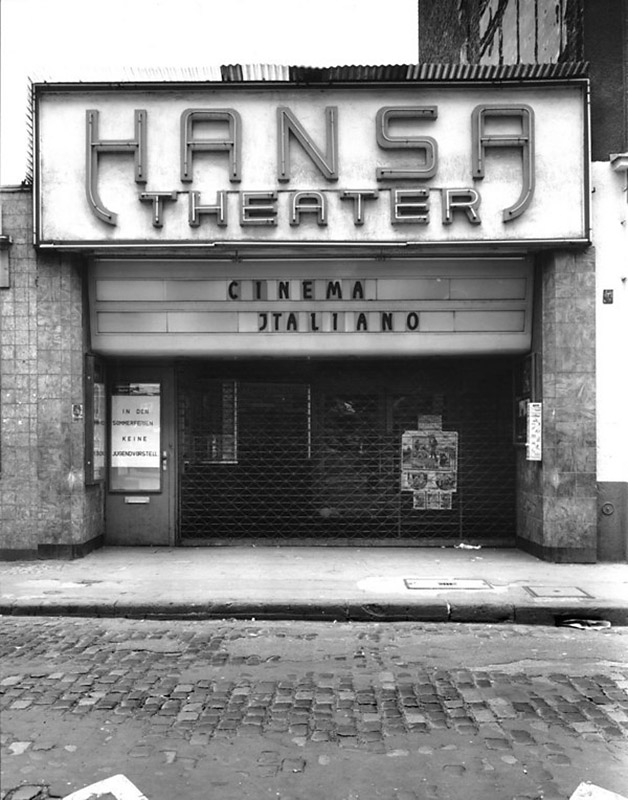
 

Candida Höfer (German, b. 1944) 'Kino Weidengasse Köln I' 1977


Candida Höfer (German, b. 1944)
Kino Weidengasse Köln I
1977
From the Türken in Deutschland (Turks in Germany) series (1972-1979)
Gelatin silver print
43.2 x 36.9cm


Installation view of the exhibition 'Image and Space. Candida Höfer in Dialogue with the Photography Collection of the Kunstbibliothek' at the Museum für Fotografie, Berlin showing at left, Architectural Record 'Shoe shop, Milwaukee' (c. 1910); showing at centre back, Candida Höfer's 'Bolschoi Teatr Moskwa II' (2017); at third right, Reiner Leist's 'September 24, 1996' (1996); and at second right, Florence Henri's 'Parisian Window' (1929)


Installation view of the exhibition Image and Space. Candida Höfer in Dialogue with the Photography Collection of the Kunstbibliothek at the Museum für Fotografie, Berlin showing at left, Architectural Record Shoe shop, Milwaukee (c. 1910, below); showing at centre back, Candida Höfer’s Bolschoi Teatr Moskwa II (2017, below); at third right, Reiner Leist’s September 24, 1996 (1996, below); and at second right, Florence Henri’s Parisian Window (1929, below)
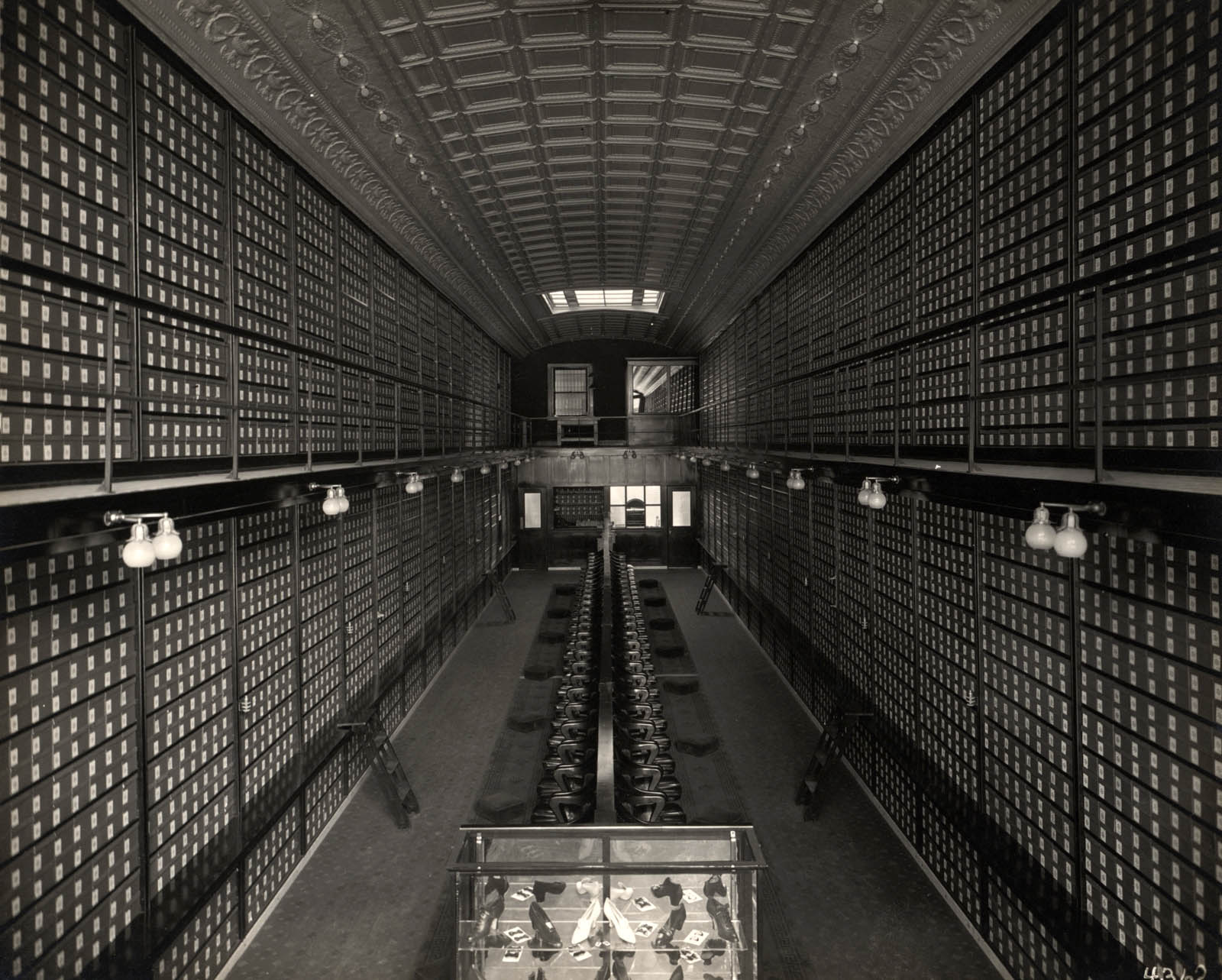
 

Architectural Record. 'Shoe shop, Milwaukee' c. 1910


Architectural Record
Shoe shop, Milwaukee
c. 1910
Gelatin silver paper
18.3 x 22.8 cm


Candida Höfer (German, b. 1944) 'Beinecke Rare Book and Manuscript Library New Haven CT I' 2002


Candida Höfer (German, b. 1944)
Beinecke Rare Book and Manuscript Library New Haven CT I
2002
Colour paper
155 x 189cm


Above all Candida Höfer is famous for her large-scale interior views of libraries devoid of people… The artist frequently focuses on places that preserve and order knowledge and culture. Apart from libraries she also worked on museums or operas. She is interested in how humans influence architecture through their culture. Her photos are always determined by a cool sobriety. This is what they have in common with the photographs of the Bechers. However, Höfer always works with the light and the space present in each situation. She strives to capture the atmosphere and aura of a space.

Anonymous text from the Becher Class at the Städel Museum website [Online] Cited 27/12/2021


Reiner Leist (German-American, b. 1964) 'September 24, 1996' 1996


Reiner Leist (German-American, b. 1964)
September 24, 1996
1996
Gelatin silver paper
161.5 x 121.5cm


Florence Henri (French born America, 1893-1982) 'Parisian Window' 1929


Florence Henri (French born America, 1893-1982)
Parisian Window
1929
Gelatin silver paper
37.3 x 27.5cm


Samuel Bourne (British, 1834-1912) 'Temple, Mount Abu, Rajasthan' c. 1875


Samuel Bourne (British, 1834-1912)
Temple, Mount Abu, Rajasthan
c. 1875
Albumen print
22.4 x 28.1cm


Fratelli Alinari (founded 1852) 'Statue Gallery, Vatican Museums' c. 1880


Fratelli Alinari (founded 1852)
Statue Gallery, Vatican Museums
c. 1880
Albumen print
32 x 41.6cm

This photograph is not in the exhibition, but two others from the series are… unfortunately no reproductions of those are available.


Eugène Atget (French, 1857-1927) '3 rue de L'Arbalète, Paris' 1901


Eugène Atget (French, 1857-1927)
3 rue de L’Arbalète, Paris
1901
Albumen print
21.7 x 17.4cm


Eugène Atget (French, 1857-1927) 'Boutique empire, 21 rue du Faubourg-Saint-Honoré, Paris' 1902


Eugène Atget (French, 1857-1927)
Boutique empire, 21 rue du Faubourg-Saint-Honoré, Paris
1902
Albumen print
21.8 x 17.6cm


Frederick Henry Evans (British, 1853-1943) 'An Open Door (Ely Cathedral)' c. 1903


Frederick Henry Evans (British, 1853-1943)
An Open Door (Ely Cathedral)
c. 1903
Platinum print
25.8 x 17.4cm


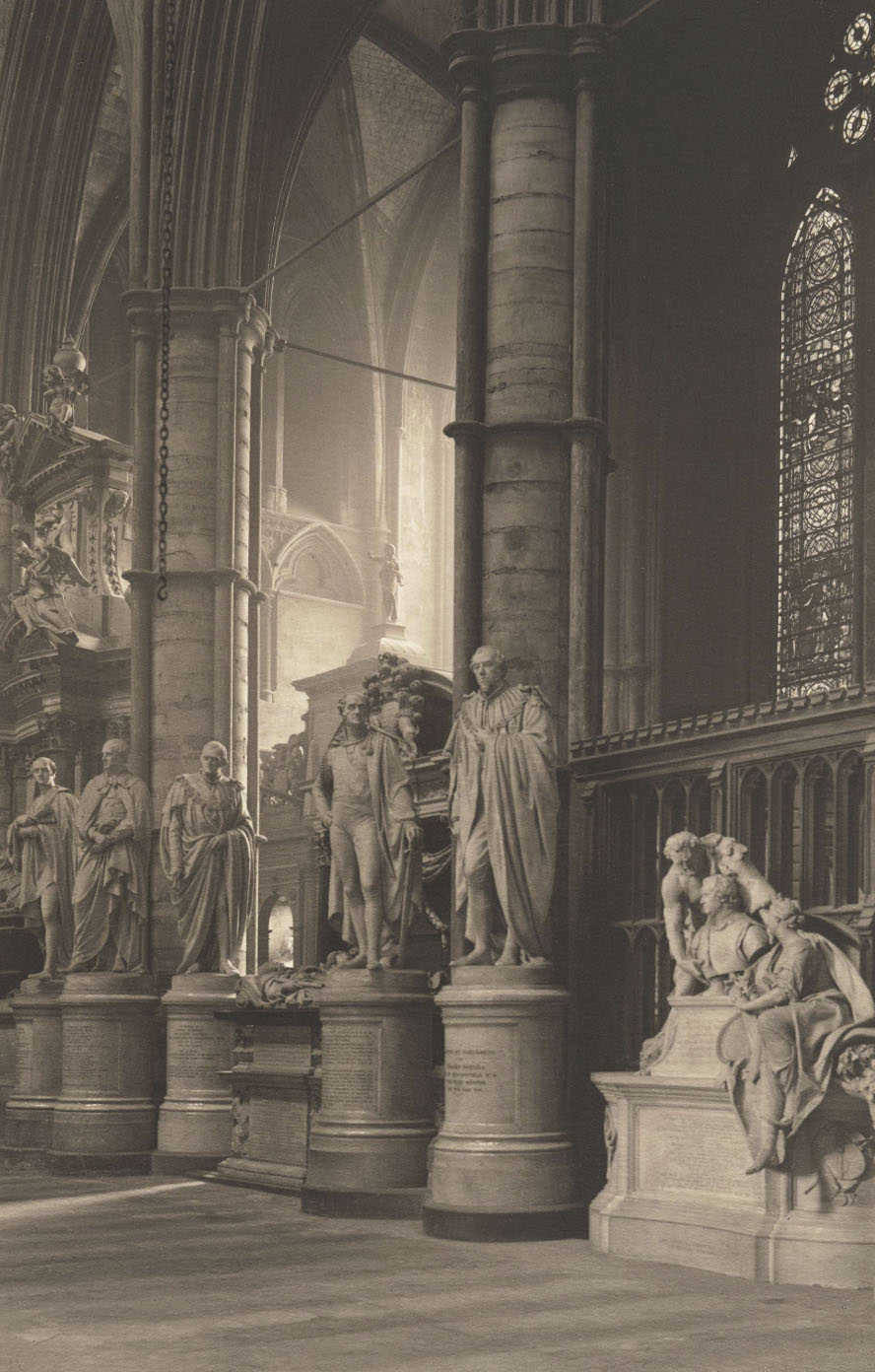
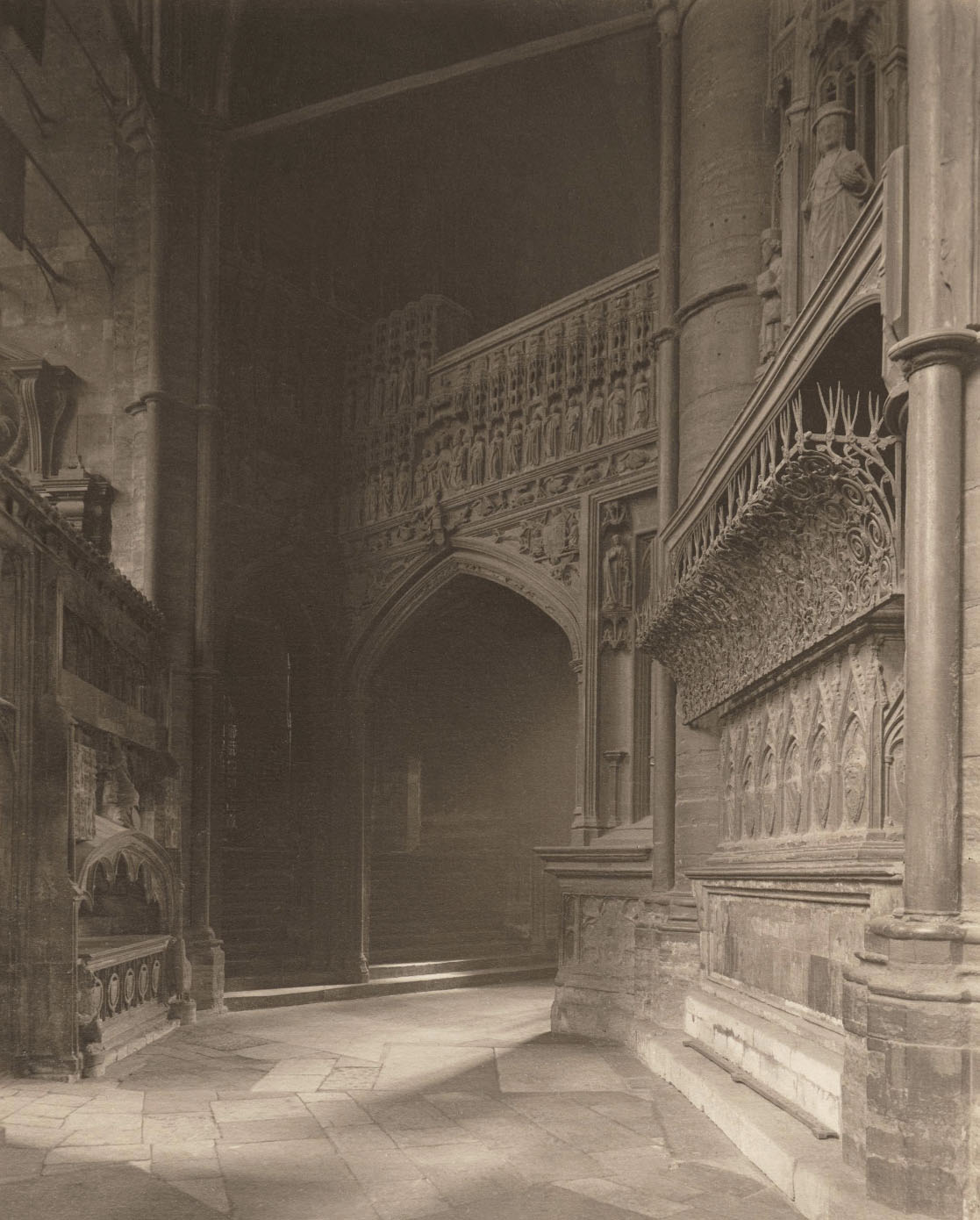
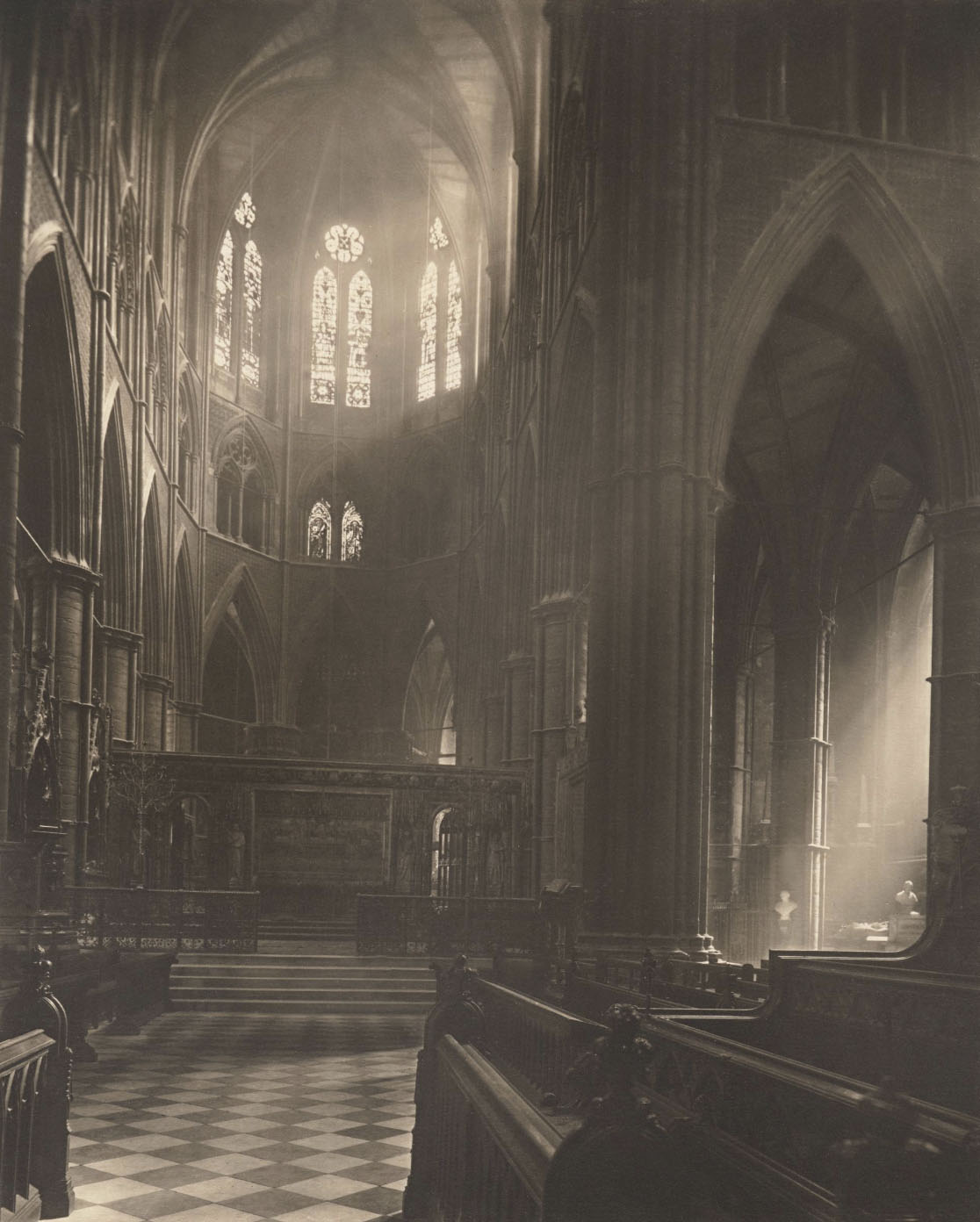
Frederick Henry Evans (British, 1853-1943) 'Westminster Abbey, London' 1911


Frederick Henry Evans (British, 1853-1943)
Westminster Abbey, London
1911
Platinum print
24.3 x 18.7cm


Bruno Reiffenstein (Austrian, 1869-1951) 'Villa colony' Wien-Grinzing c. 1913


Bruno Reiffenstein (Austrian, 1869-1951)
Villa colony
Wien-Grinzing c. 1913
Gelatin silver paper
16.2 x 21.7cm

This photograph is not in the exhibition, but two others from the series are… unfortunately no reproductions of those are available.


Candida Höfer (German, b. 1944) 'Kurmittelhaus Wenningstedt I' 1979


Candida Höfer (German, b. 1944)
Kurmittelhaus Wenningstedt I
1979
Colour paper
40 x 52.4cm


Dirk Alvermann (German, 1937-2013) 'Street café, Spain' 1957-1962


Dirk Alvermann (German, 1937-2013)
Street café, Spain
1957-1962
Gelatin silver paper
20.3 x 28.5cm


Candida Höfer (German, b. 1944) 'Wartesaal Düsseldorf III' 1981


Candida Höfer (German, b. 1944)
Wartesaal Düsseldorf III
1981
Colour paper
40 x 49.3cm


Candida Höfer (German, b. 1944) 'Cafe Seeterasse Bad Salzuflen III' 1981


Candida Höfer (German, b. 1944)
Cafe Seeterasse Bad Salzuflen III
1981
Colour paper
39.8 x 50.3cm


Samuel Bourne (British, 1834-1912) 'Inside view, Dilwara Temple, Mount Abu' 1870-1880


Samuel Bourne (British, 1834-1912)
Inside view, Dilwara Temple, Mount Abu
1870-1880
Albumen print
© Staatliche Museen zu Berlin, Kunstbibliothek


Candida Höfer (German, b. 1944) 'Museum A. Koenig Bonn IV' 1985


Candida Höfer (German, b. 1944)
Museum A. Koenig Bonn IV
1985
Colour paper
63 x 81cm


Candida Höfer (German, b. 1944) 'Institut für Versicherungsrecht der Universität zu Köln I' (Institute for Insurance Law at the University of Cologne I) 1989


Candida Höfer (German, b. 1944)
Institut für Versicherungsrecht der Universität zu Köln I
Institute for Insurance Law at the University of Cologne I
1989
Colour paper
63 x 81cm


Installation view of the exhibition 'Image and Space. Candida Höfer in Dialogue with the Photography Collection of the Kunstbibliothek' at the Museum für Fotografie, Berlin showing photographs from Höfer's 'Zoologischer Gärten' series

Installation view of the exhibition 'Image and Space. Candida Höfer in Dialogue with the Photography Collection of the Kunstbibliothek' at the Museum für Fotografie, Berlin showing photographs from Höfer's 'Zoologischer Gärten' series


Installation views of the exhibition Image and Space. Candida Höfer in Dialogue with the Photography Collection of the Kunstbibliothek at the Museum für Fotografie, Berlin showing photographs from Höfer’s Zoologischer Gärten series
© IKS-Medienarchiv


Candida Höfer (German, b. 1944) 'Zoologischer Garten London III' 1992


Candida Höfer (German, b. 1944)
Zoologischer Garten London III
1992
Colour paper
50 x 66.5cm


Unknown photographer. 'Hagenbecks Tierpark, Hamburg' 1906


Unknown photographer
Hagenbecks Tierpark, Hamburg
1906
Gelatine dry plate reprint
12.9 x 17.9cm
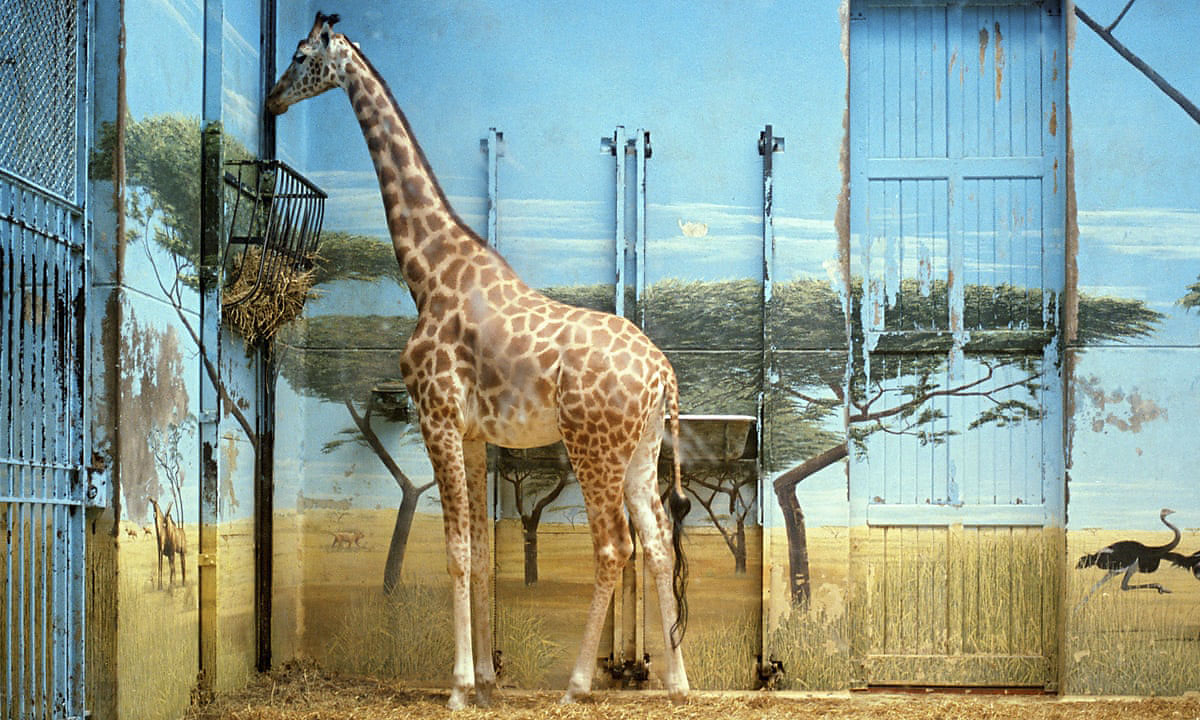
 

Candida Höfer (German, b. 1944) 'Zoologischer Garten Paris II' 1997


Candida Höfer (German, b. 1944)
Zoologischer Garten Paris II
1997
Colour paper
48 x 60cm


Candida Höfer (German, b. 1944) 'Zoologischer Garten Hannover IV' 1997


Candida Höfer (German, b. 1944)
Zoologischer Garten Hannover IV
1997
Colour paper
50 x 60cm


Candida Höfer explores built spaces in her photography. Her world-famous interiors focus on libraries, museums, restaurants, theatres, and other public spaces, allowing us to experience architecture in a new way. In comparison with photographic interiors from the Kunst-bibliothek’s Photography Collection, which is over 150 years old, a dialogue develops between applied photography and artistic work. The total of around 200 works – which also include photographs from zoological gardens and hitherto little-known series from Höfer’s early work, as well as their rarely or never before shown counterparts from the Photography Collection – invite visitors to take a new look at Höfer’s work and the Photography Collection, but also at the medium of photography itself.

Candida Höfer (b. 1944) has devoted herself ever more and more intensively to architectural photography since her studies with Bernd and Hilla Becher at the Düsseldorf Art Academy towards the end of the 1970s. She has concentrated on this important genre without, however, acting on be-half of architects and art historians as photographers of earlier generations did. She sees her work as artistic photography, and photographing interiors was self-determinedly chosen by her as her main field of activity. She herself set the framework for it: “I photograph in public and semi-public spaces from different eras. This are spaces that are accessible to everyone, places of encounter, communication, knowledge, relaxation, recreation. They are spas, hotels, waiting rooms, museums, libraries, universities, banks, churches and, since a few years, zoological gardens.”

This list does not claim to be exhaustive; it refers above all to the communicative functions of the spaces, which, however, are paradoxically shown without the people frequenting them: Candida Höfer demonstrates the qualities or deficiencies of the spaces that enable human exchange in terms of the architecture itself, in terms of the atmosphere she specifically captures in each case, in terms of the perspective and the framing she chooses. She does not focus on the thematic groups serially; the respective locations determine the image format as well as the size of the prints. Yet the compilation of the groups offers a variety of possibilities for comparison that impressively confirm the photographer’s longstanding and sustained interest in the specific locations.

With approximately 90 works, the exhibition at Berlin’s Museum für Fotografie opens up a broad cross-section of Candida Höfer’s photographs from 1980 to the immediate present. The long tradition of her architectural photographs, however, also extends deep into the classical canon of this field of work. In dialogue with pendants and counter-images from the Kunstbibliothek’s Photography Collection, Höfer’s particular approach to her pictorial motifs is revealed in a particularly impressive way.

For the Photography Collection, architectural photographs formed the basis of its collecting activities. Designed as an exemplary collection, it was intended to convey to a broad public the special structural qualities of cur-rent and historical architecture as precisely and vividly as possible in photographic images in large quantities. The names of the photographers are not known in most cases of the many tens of thousands of prints in the collection. However, inventories and image comparisons have made it possible to identify groups of works by important representatives of the field, such as Eugène Atget, Frank Cousins, Samuel Bourne, Fratelli Alinari, Max Krajewsky, Emil Leitner, Felix Alexander Oppenheim, Albert Renger-Patzsch and Karl Hugo Schmölz. In recent years, archives of the Schinkel and Stüler photographer Hillert Ibbeken, the Munich architectural photographer Sigrid Neubert and the Stuttgart industrial photographer Ludwig Windstosser have been added. The Museum für Fotografie dedicated comprehensive retrospectives to the latter two.

Some thematic groups exemplify the visually stimulating dialogue of the images: Facades, windows and doors open and close the view into or out of rooms. Candida Höfer presents the theme in an exemplary manner with two photographs of the Dutch embassy in Berlin. These are joined by a window picture of the classical avant-garde by Florence Henri or the large-format view from a high-rise onto the landscape of buildings of southern Manhattan by Reiner Leist from 1996. The dialogue between the pictures unfolds in a particularly attractive way in the photographs of Berlin’s Museumsinsel. While the razor-sharp, large-format contact prints by the Königlich Preußische Messbildanstalt still show the monumental stair-case with Wilhelm von Kaulbach’s frescoes, Ryuji Miyamoto in 2000 captures the transitory state of the still ruinous building before the start of interior construction, and Candida Höfer in 2009 shows its completion. Previously unpublished are Höfer’s colour photographs from her Liverpool series of 1968, from which a thread of development can be drawn to her images of the guest rooms in cafés, hotels, spas, and waiting rooms after 1980. They are brought into conversation with the more journalistically conceived street scenes of Willy Römer and Bernard Larsson, Dirk Alvermann’s images of Spanish bar scenes from around 1960, and Helga Paris’s photographs of Berlin pubs from the mid-1970s from the Photography Collection.

Press release from the Museum für Fotografie
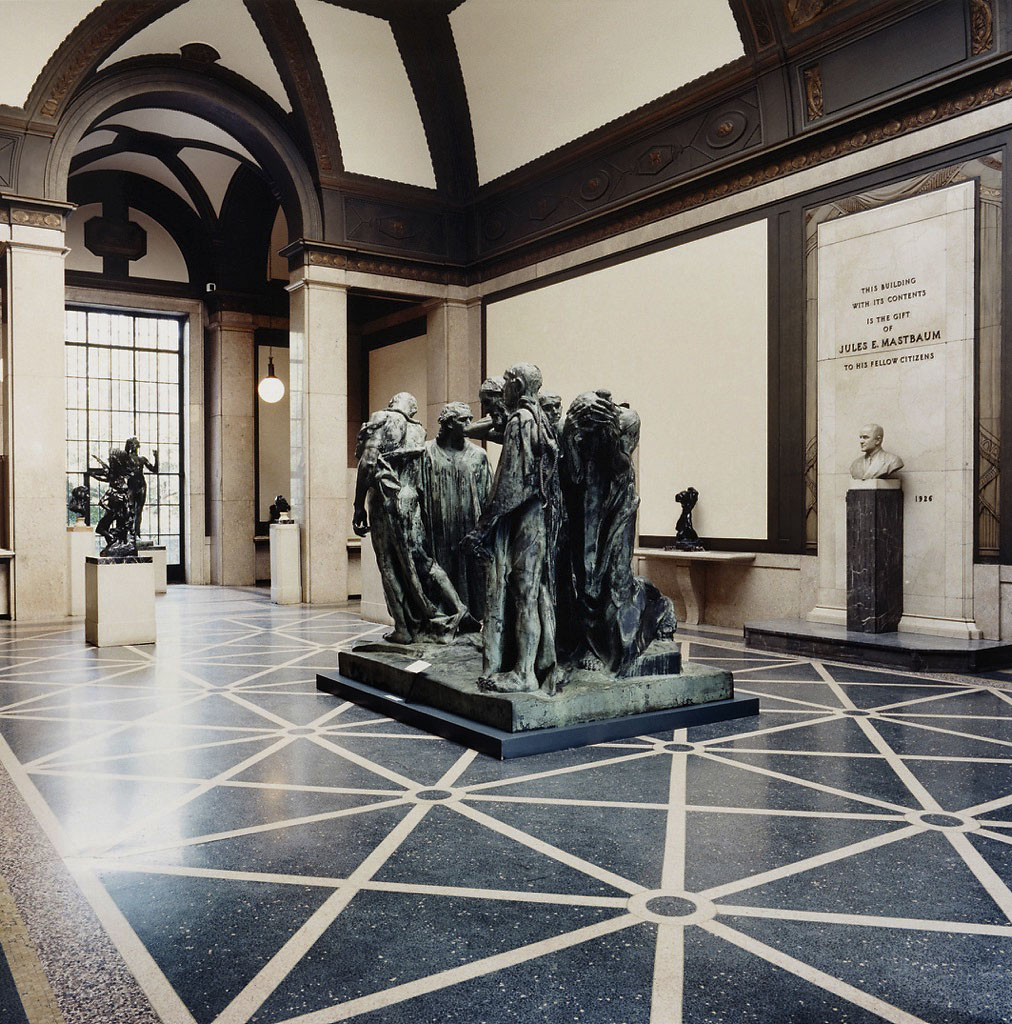
 

Candida Höfer (German, b. 1944) 'Rodin Museum Philadelphia II' 2000


Candida Höfer (German, b. 1944)
Rodin Museum Philadelphia II
2000
Colour paper
88 x 88cm


Installation view of the exhibition 'Image and Space. Candida Höfer in Dialogue with the Photography Collection of the Kunstbibliothek' at the Museum für Fotografie, Berlin showing at right, Höfer's 'Teylers Museum Harlem II' (2003)


Installation view of the exhibition Image and Space. Candida Höfer in Dialogue with the Photography Collection of the Kunstbibliothek at the Museum für Fotografie, Berlin showing at right, Höfer’s Teylers Museum Harlem II (2003, below)
© IKS-Medienarchiv


Candida Höfer (German, b. 1944) 'Teylers Museum Haarlem II' 2003


Candida Höfer (German, b. 1944)
Teylers Museum Haarlem II
2003
Colour paper
186.3 x 155cm


Candida Höfer (German, b. 1944) 'Van Abbemuseum Eindhoven V' 2003


Candida Höfer (German, b. 1944)
Van Abbemuseum Eindhoven V
2003
Colour paper
103.5 x 87.7cm


Eugène Atget (French, 1857-1927) 'Hôtel du Marquis de Lagrange, 4 et 6 rue de Braque, Paris' 1901


Eugène Atget (French, 1857-1927)
Hôtel du Marquis de Lagrange, 4 et 6 rue de Braque, Paris
1901
Albumen print
21.4 x 16.2cm


Candida Höfer (German, b. 1944) 'Van Abbemuseum Eindhoven VI' 2003


Candida Höfer (German, b. 1944)
Van Abbemuseum Eindhoven VI
2003
Colour paper
103.5 x 87.7cm


Unknown photographer (Ernst Wasmuth Verlag) '12 rue de Turin, Brussels' 1899


Unknown photographer (Ernst Wasmuth Verlag)
12 rue de Turin, Brussels
1899
Albumen print
24.5 x 33.7cm


Sigrid Neubert (German, 1927-2018) 'Inner space, BMW Museum, Munich' 1972-1973


Sigrid Neubert (German, 1927-2018)
Inner space, BMW Museum, Munich
1972-1973
Gelatin silver paper
22.1 x 15.9cm
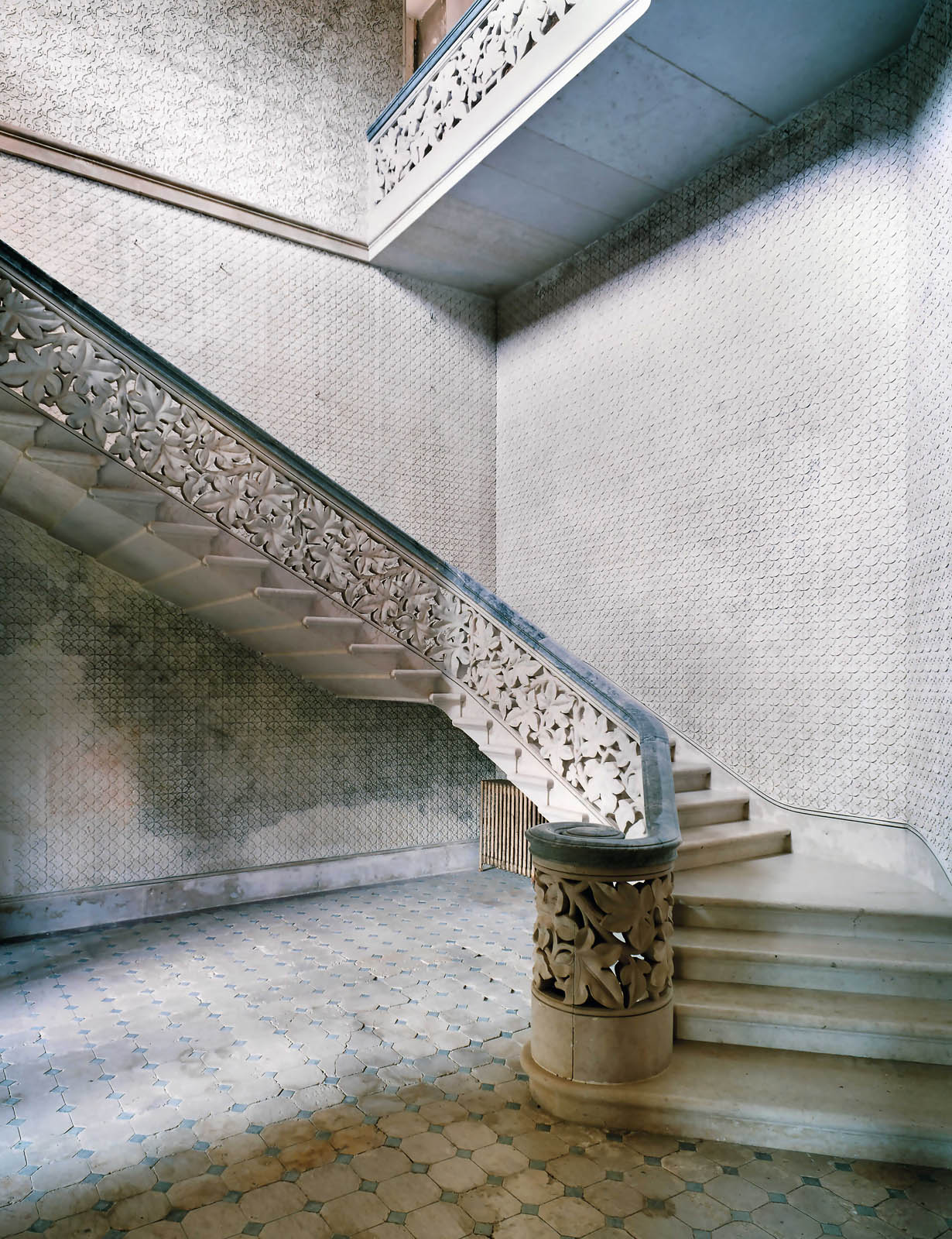
 

Candida Höfer (German, b. 1944) 'Palacio de Monserrat Sintra I' 2006


Candida Höfer (German, b. 1944)
Palacio de Monserrat Sintra I
2006
Colour paper
254.4 x 205cm


Installation view of the exhibition 'Image and Space. Candida Höfer in Dialogue with the Photography Collection of the Kunstbibliothek' at the Museum für Fotografie, Berlin showing at left, Höfer's 'Batalha Monastery I' (2006); and at second left, 'Palacio de Monserrat Sintra I' (2006)


Installation view of the exhibition Image and Space. Candida Höfer in Dialogue with the Photography Collection of the Kunstbibliothek at the Museum für Fotografie, Berlin showing at left, Höfer’s Batalha Monastery I (2006); and at second left, Palacio de Monserrat Sintra I (2006, above)
© IKS-Medienarchiv


Königlich Preußische Messbildanstalt (Royal Prussian Metrology Institute) 'Stair case, Berlin' c. 1890


Königlich Preußische Messbildanstalt (Royal Prussian Metrology Institute)
Stair case, Berlin
c. 1890
Gelatin silver paper
38.5 x 38.6cm


Candida Höfer (German, b. 1944) 'Rossiskaya gosudarstvennaya biblioteka Moskwa II' (Russian State Library Moscow II) 2017


Candida Höfer (German, b. 1944)
Rossiskaya gosudarstvennaya biblioteka Moskwa II
Russian State Library Moscow II
2017
Colour paper
184 x 216.5cm
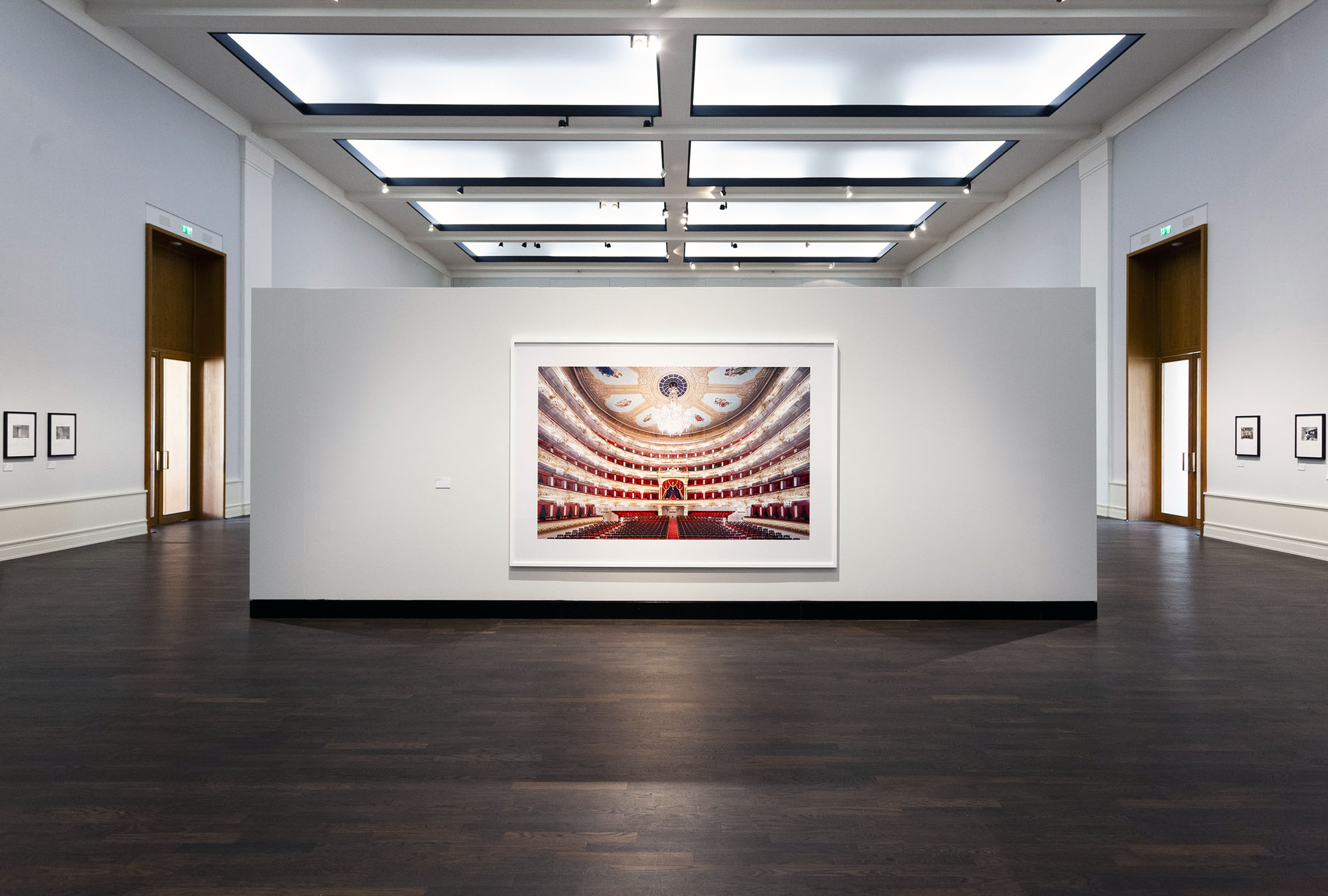
 

Installation view of the exhibition 'Image and Space. Candida Höfer in Dialogue with the Photography Collection of the Kunstbibliothek' at the Museum für Fotografie, Berlin showing at centre, Höfer's 'Bolshoi Teatr Moskwa II' (2017)


Installation view of the exhibition Image and Space. Candida Höfer in Dialogue with the Photography Collection of the Kunstbibliothek at the Museum für Fotografie, Berlin showing at centre, Höfer’s Bolshoi Teatr Moskwa II (2017, below)
© IKS-Medienarchiv


Installation view of the exhibition 'Image and Space. Candida Höfer in Dialogue with the Photography Collection of the Kunstbibliothek' at the Museum für Fotografie, Berlin showing at centre, Höfer's 'Bolshoi Teatr Moskwa II' (2017); and at right, Höfer's 'Malkasten Düsseldorf I' (2011)

Installation view of the exhibition 'Image and Space. Candida Höfer in Dialogue with the Photography Collection of the Kunstbibliothek' at the Museum für Fotografie, Berlin showing at centre, Höfer's 'Bolshoi Teatr Moskwa II' (2017); and at right, Höfer's 'Malkasten Düsseldorf I' (2011)


Installation view of the exhibition Image and Space. Candida Höfer in Dialogue with the Photography Collection of the Kunstbibliothek at the Museum für Fotografie, Berlin showing at centre, Höfer’s Bolshoi Teatr Moskwa II (2017, below); and at right, Höfer’s Malkasten Düsseldorf I (2011)
© IKS-Medienarchiv


Albert Vennemann (1885-1965) 'Auditorium, Capitol cinema, Berlin' 1926


Albert Vennemann (1885-1965)
Auditorium, Capitol cinema, Berlin
1926
Gelatin silver print
© Staatliche Museen zu Berlin, Kunstbibliothek


Hillert Ibbeken (German, 1935-2021) 'Rotunda, Altes Museum, Berlin' 1999


Hillert Ibbeken (German, 1935-2021)
Rotunda, Altes Museum, Berlin
1999
Gelatin silver paper
23.9 x 30.3cm


Hillert Ibbeken (German, 1935-2021) 'Rotunda, Altes Museum, Berlin' 1998


Hillert Ibbeken (German, 1935-2021)
Rotunda, Altes Museum, Berlin
1998
Gelatin silver paper
23.9 x 30.3cm


Hillert Ibbeken (German, 1935-2021) 'Rotunda, Altes Museum, Berlin' 1998


Hillert Ibbeken (German, 1935-2021)
Rotunda, Altes Museum, Berlin
1998
Gelatin silver paper
30.3 x 23.9cm
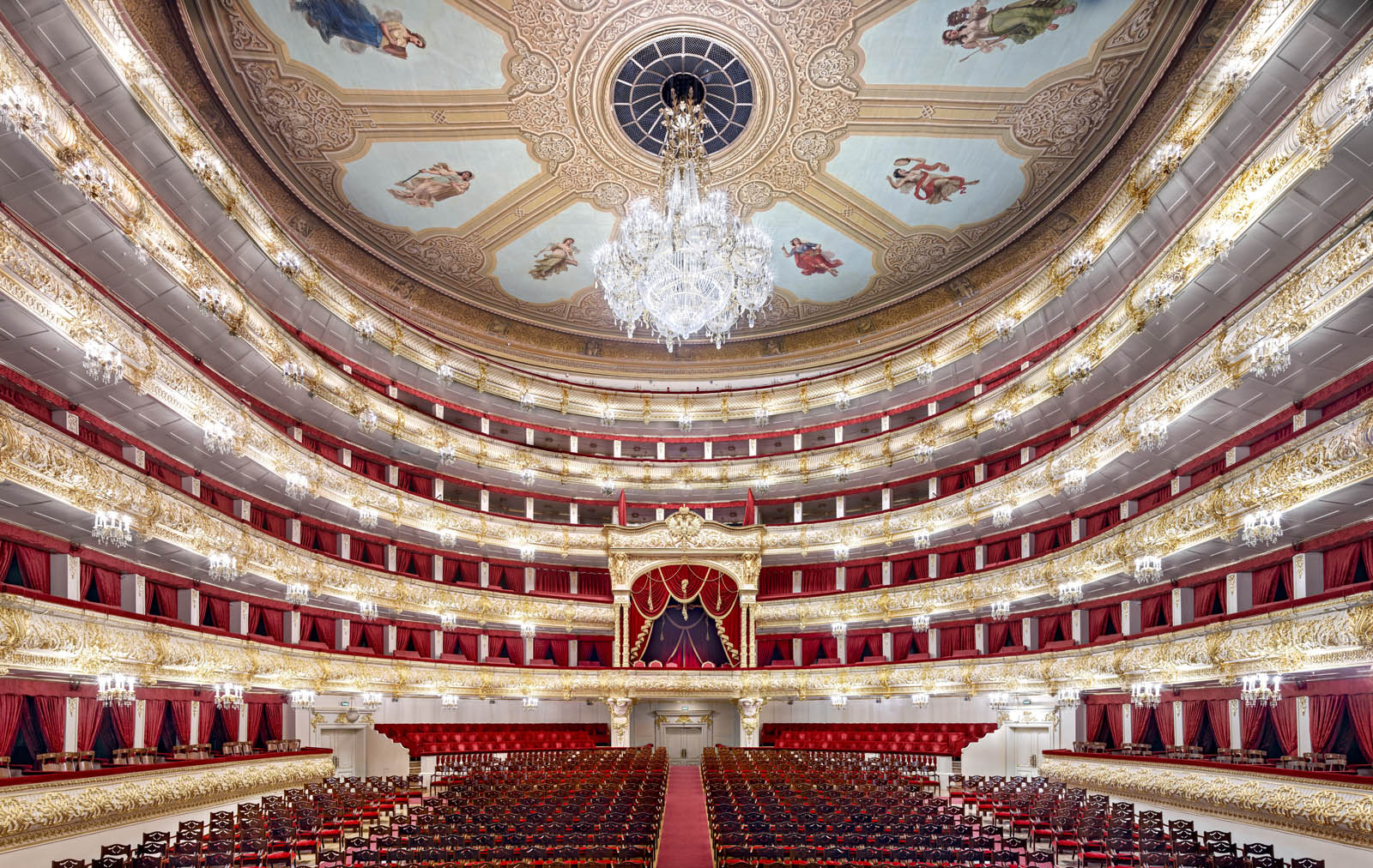
 

Candida Höfer (German, b. 1944) 'Bolshoi Teatr Moskwa II' 2017


Candida Höfer (German, b. 1944)
Bolshoi Teatr Moskwa II
2017
Colour paper
180 x 261cm


Installation view of the exhibition 'Image and Space. Candida Höfer in Dialogue with the Photography Collection of the Kunstbibliothek' at the Museum für Fotografie, Berlin showing at left, Höfer's 'Neues Museum Berlin XL' (2009)


Installation view of the exhibition Image and Space. Candida Höfer in Dialogue with the Photography Collection of the Kunstbibliothek at the Museum für Fotografie, Berlin showing at left, Höfer’s Neues Museum Berlin XL (2009)
© IKS-Medienarchiv


Candida Höfer, Portrait, © IKS-Medienarchiv


Candida Höfer, Portrait, © IKS-Medienarchiv


Museum für Fotografie
Jebensstraße 2, 10623 Berlin

Opening hours:
Tuesday + Wednesday 11am – 7pm
Thursday 11am – 8pm
Friday – Sunday 11am – 7pm
Museum für Fotografie website

LIKE ART BLART ON FACEBOOK

Back to top

Exhibition: ‘WAR/PHOTOGRAPHY: Images of Armed Conflict and Its Aftermath’ at the Museum of Fine Arts, Houston – Posting Part 4

Exhibition dates: 11th November 2012 – 3rd February 2013


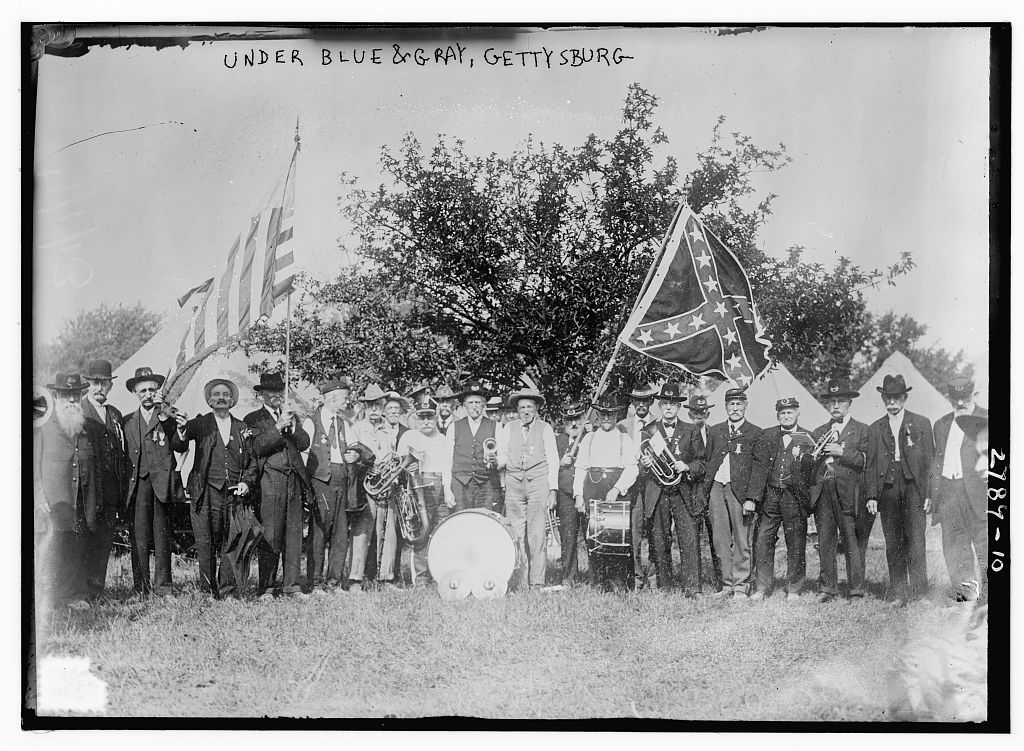
Anonymous photographer. 'Under blue & gray – Gettysburg' July 1913


Anonymous photographer
Under blue & gray – Gettysburg
July 1913
Photo shows the Gettysburg Reunion (the Great Reunion) of July 1913, which commemorated the 50th anniversary of the Battle of Gettysburg
Library of Congress Prints and Photographs Division Washington, D.C.


Part 4 of the biggest posting on one exhibition that I have ever undertaken on Art Blart!

As befits the gravity of the subject matter this posting is so humongous that I have had to split it into 4 separate postings. This is how to research and stage a contemporary photography exhibition that fully explores its theme. The curators reviewed more than one million photographs in 17 countries, locating pictures in archives, military libraries, museums, private collections, historical societies and news agencies; in the personal files of photographers and service personnel; and at two annual photojournalism festivals producing an exhibition that features 26 sections (an inspired and thoughtful selection) that includes nearly 500 objects that illuminate all aspects of WAR / PHOTOGRAPHY.

I have spent hours researching and finding photographs on the Internet to support the posting. It has been a great learning experience and my admiration for photographers of all types has increased. I have discovered the photographs and stories of new image makers that I did not know and some enlightenment along the way. I despise war, I detest the state and the military that propagate it and I surely hate the power, the money and the ethics of big business that support such a disciplinarian structure for their own ends. I hope you meditate on the images in this monster posting, an exhibition on a subject matter that should be consigned to the history books of human evolution.

**Please be aware that there are graphic photographs in all of these postings.** Part 1, Part 2, Part 3

Dr Marcus Bunyan


Many thankx to the Museum of Fine Arts, Houston for allowing me to publish some of the photographs in the posting. Please click on the photographs for a larger version of the image.


Memorials

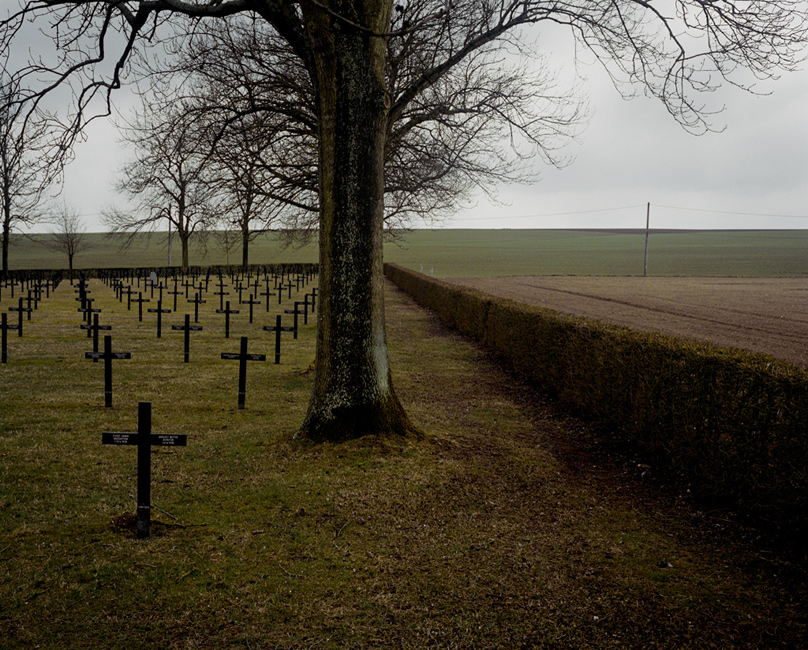
25. Photographs in the “Memorials” section range from the tomb of an unknown World War I soldier in England, by Horace Nicholls; and a landscape of black German crosses throughout a World War II burial site, by Bertrand Carrière; to an anonymous photograph of a reunion scene in Gettysburg of the opposing sides in the Civil War; and Joel Sternfeld’s picture of a woman and her daughter at the Vietnam Veterans Memorial in Washington, DC, in 1986. (8 images)


Horace Nicholls (English, 1867-1941) 'The Unknown Warrior at Westminster Abbey, London, November 1920' 1920


Horace Nicholls (English, 1867-1941)
The Unknown Warrior at Westminster Abbey, London, November 1920
1920
Silver gelatin print
© IWM (Q 31514)


In order to commemorate the many soldiers with no known grave, it was decided to bury an ‘Unknown Warrior’ with all due ceremony in Westminster Abbey on Armistice Day in 1920. The photograph shows the coffin resting on a cloth in the nave of Westminster Abbey before the ceremony at the Cenotaph and its final burial.


Bertrand Carrière (Canadian, b. 1957) 'Untitled' 2005-2009


Bertrand Carrière (Canadian, b. 1957)
Untitled
2005-2009
From the series Lieux Mêmes [Same Places]


Joel Sternfeld (American, b. 1944) 'Vietnam Veterans Memorial, Washington, D.C.,' May 1986


Joel Sternfeld (American, b. 1944)
Vietnam Veterans Memorial, Washington, D.C.,
May 1986
Chromogenic print, ed. #1/25 (printed October 1986)
The Museum of Fine Arts, Houston, the Target Collection of American Photography, gift of the artist
© 1986 Joel Sternfeld


Remembrance

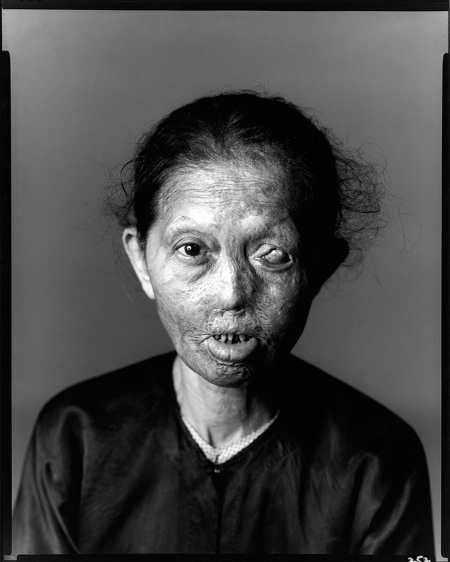
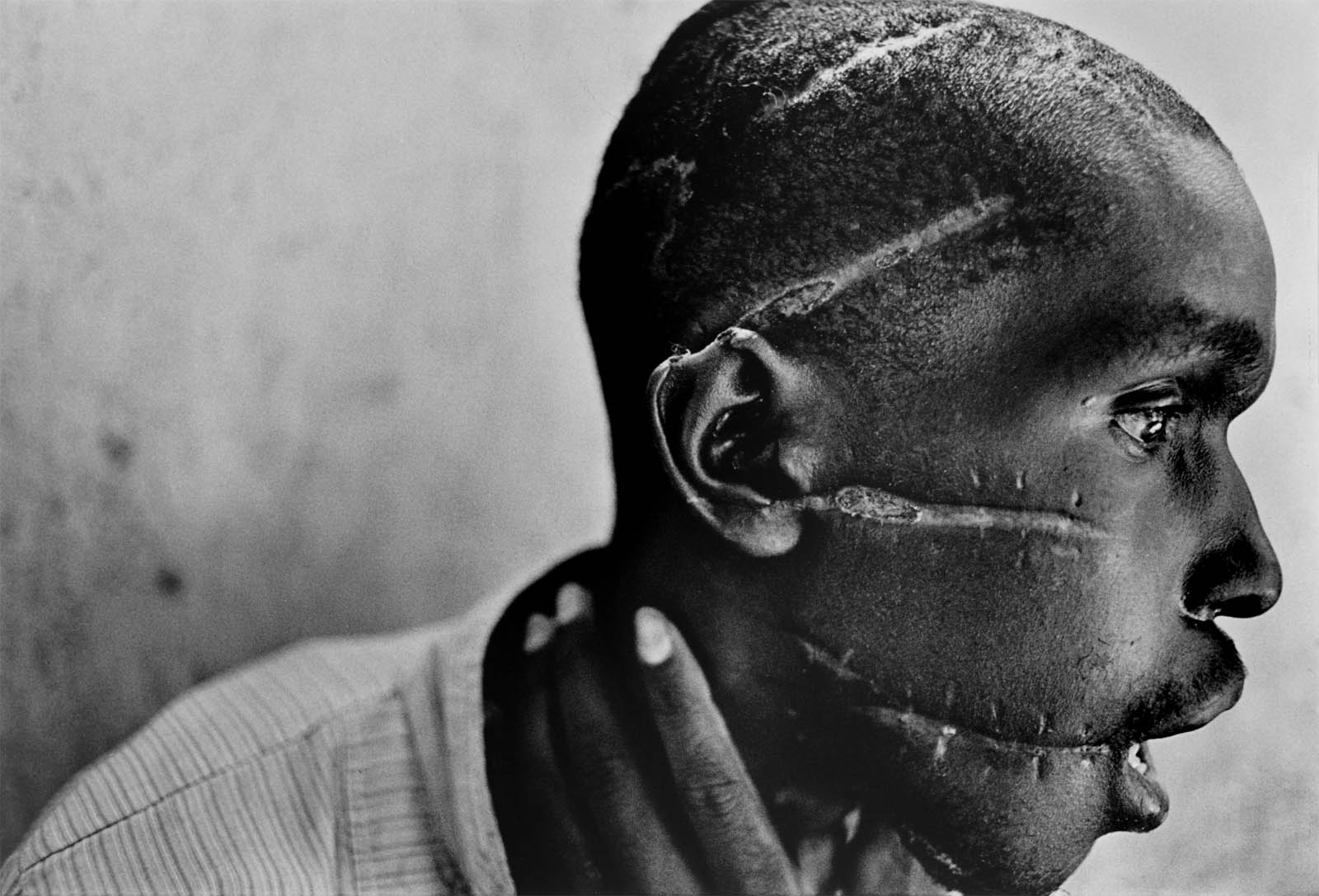
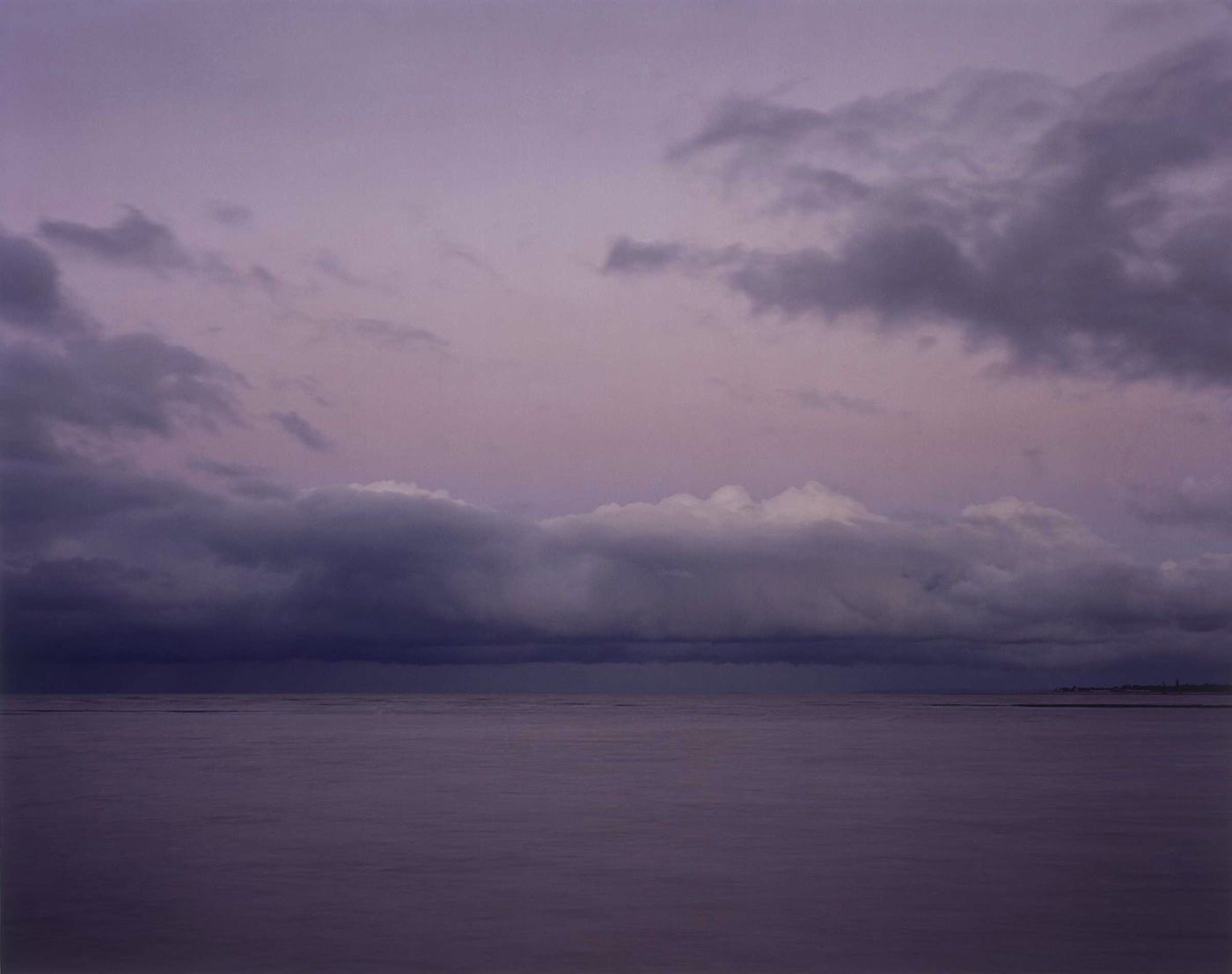
26. The last gallery in the exhibition is “Remembrance.” Most of these images were taken by artists seeking to come to terms with a conflict after fighting had ceased. Included are Richard Avedon’s picture of a Vietnamese napalm victim; a survivor of a machete attack in a Rwandan death camp, by James Nachtwey; a 1986 portrait of a hero who rescued Jews during the Holocaust, by Houston native Gay Block; and Suzanne Opton’s 2004 portrait of a soldier who survived the Iraq War and returned to the United States to work as a police officer, only to be murdered on duty by a fellow veteran. The final wall features photographs by Simon Norfolk of sunrises at the five D-Day beaches in 2004. The only reference to war is the title of the series: The Normandy Beaches: We Are Making a New World. (33 images)


Richard Avedon (American, 1923-2004) 'Napalm Victim #1, Saigon, South Vietnam, April 29, 1971' 1971


Richard Avedon (American, 1923-2004)
Napalm Victim #1, Saigon, South Vietnam, April 29, 1971
1971
Silver gelatin print
© Richard Avedon


Gay Block (American, b.1942) 'Zofia Baniecka, Poland' 1986


Gay Block (American, b. 1942)
Zofia Baniecka, Poland
1986
From the series Rescuers: Portraits of Moral Courage in the Holocaust, a record of non-Jewish citizens from European countries who risked their lives helping to hide Jews from the Nazis
Chromogenic print, printed 1994
Courtesy of Museum of Fine Arts, Houston, gift of Clinton T. Wilour in honour of Eve France


Zofia Baniecka (born 1917 in Warsaw – 1993) was a Polish member of the Resistance during World War II. In addition to relaying guns and other materials to resistance fighters, Baniecka and her mother rescued over 50 Jews in their home between 1941 and 1944.


James Nachtwey (American, b. 1948) 'A Hutu man who did not support the genocide had been imprisoned in the concentration camp, was starved and attacked with machetes. He managed to survive after he was freed and was placed in the care of the Red Cross, Rwanda, 1994' 1994


James Nachtwey (American, b. 1948)
A Hutu man who did not support the genocide had been imprisoned in the concentration camp, was starved and attacked with machetes. He managed to survive after he was freed and was placed in the care of the Red Cross, Rwanda, 1994
1994
Silver gelatin print
© James Nachtwey / TIME

World Press Photo of the Year, prize singles


A Hutu man at a Red Cross hospital in Nyanza, Rwanda. His face was mutilated by the Hutu ‘Interahamwe’ militia, who suspected him of sympathising with the Tutsi rebels.

Liberated from a nearby Hutu camp, where mainly Tutsis were incarcerated, starved, beaten, and killed, this man did not support the genocide and was thus subjected to the same treatment. Starved and attacked with machetes, he had managed to survive, though he was unable to speak and could barely walk or swallow when this photo was made.

Jibran Abbasi. “Mutilated By The Hutu ‘Interahamwe’ by James Nachtwey,” on the Business Recorder website April 5, 2017 [Online] Cited 27/07/2024


Simon Norfolk (British, b. Nigeria, 1963) 'Sword Beach' 2004


Simon Norfolk (British born Nigeria, b. 1963)
Sword Beach
2004
From the series The Normandy Beaches: We Are Making a New World
Chromogenic print, ed. #1/10 (printed 2006)
The Museum of Fine Arts, Houston
Gift of Bari and David Fishel, Brooke and Dan Feather and Hayley Herzstein in honor of Max Herzstein and a partial gift of the artist and Gallery Luisotti, Santa Monica
© Simon Norfolk / Gallery Luisotti


WAR/PHOTOGRAPHY Extended Info


Other photographs from the exhibition


Alexander Gardner (1821-1882) 'Scouts and Guides to the Army of the Potomac, Berlin, MD, October, 1862' October 1862 (detail)


Alexander Gardner (American, 1821-1882)
Scouts and Guides to the Army of the Potomac, Berlin, MD, October, 1862
October 1862
Albumen silver print
Photograph by Alexander Gardner, from “Incidents of the War. Guide to the Army of the Potomac,” from Gardner’s Photographic Sketch Book of the War, Washington
Records of the War Department General and Special Staffs, Record Group 165, National Archives Still Picture Branch, College Park, Maryland


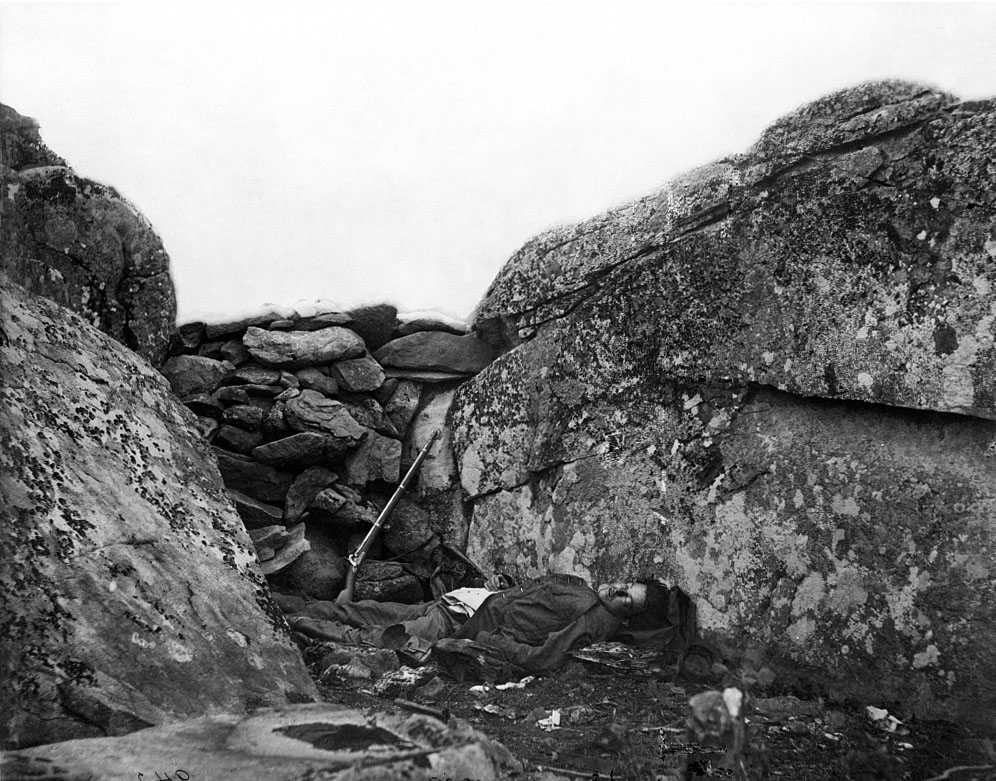
Alexander Gardner (American, 1821-1882) ‘The Home of a Rebel Sharpshooter, Gettysburg, Pennsylvania’. Albumen paper print


Alexander Gardner (American, 1821-1882)
The Home of a Rebel Sharpshooter / Dead Confederate soldier in the devil’s den, Gettysburg, Pennsylvania
July 1863
Albumen paper print copied from glass, wet collodion negative
Library of Congress, Prints and Photographs Division


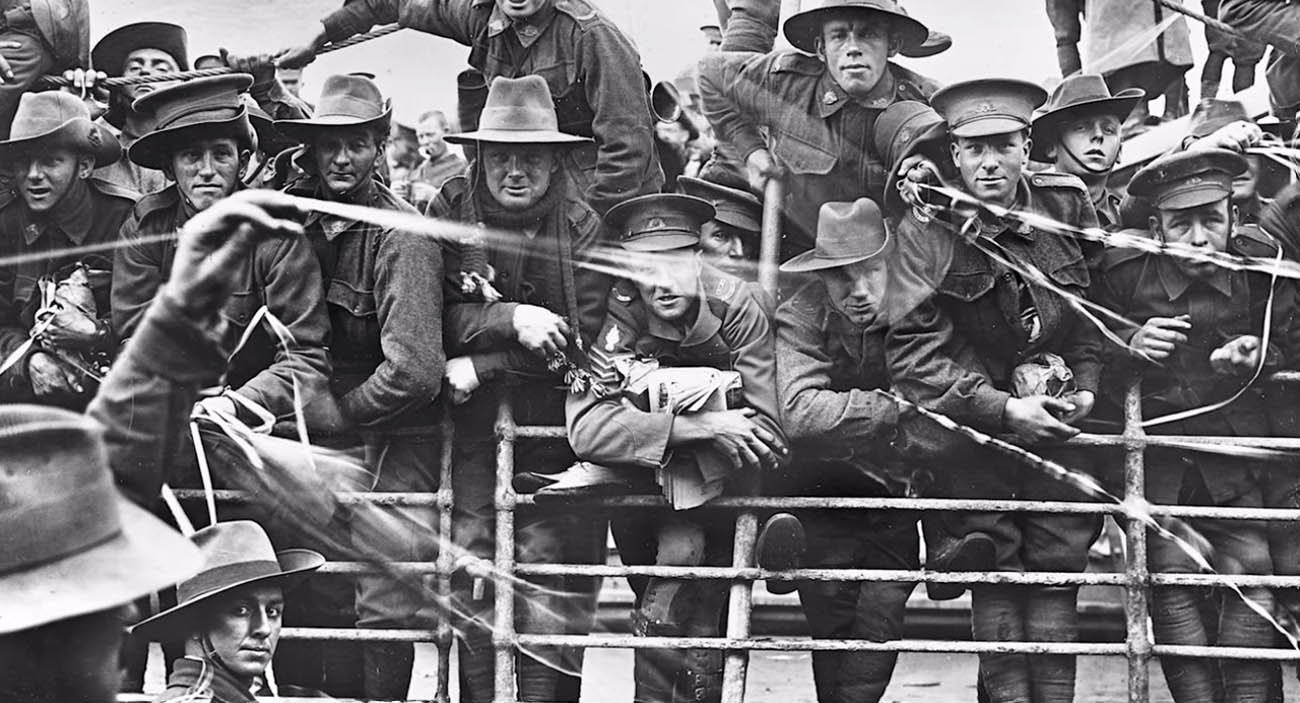
Josiah Barnes (Australian, 1858-1921) 'Embarkation of HMAT Ajana, Melbourne, July 8, 1916' 1916


Josiah Barnes (Australian, 1858-1921)
Embarkation of HMAT Ajana, Melbourne, July 8, 1916
1916
Gelatin silver print from original glass half-plate negative (printed 2012)
On loan from the Australian War Memorial


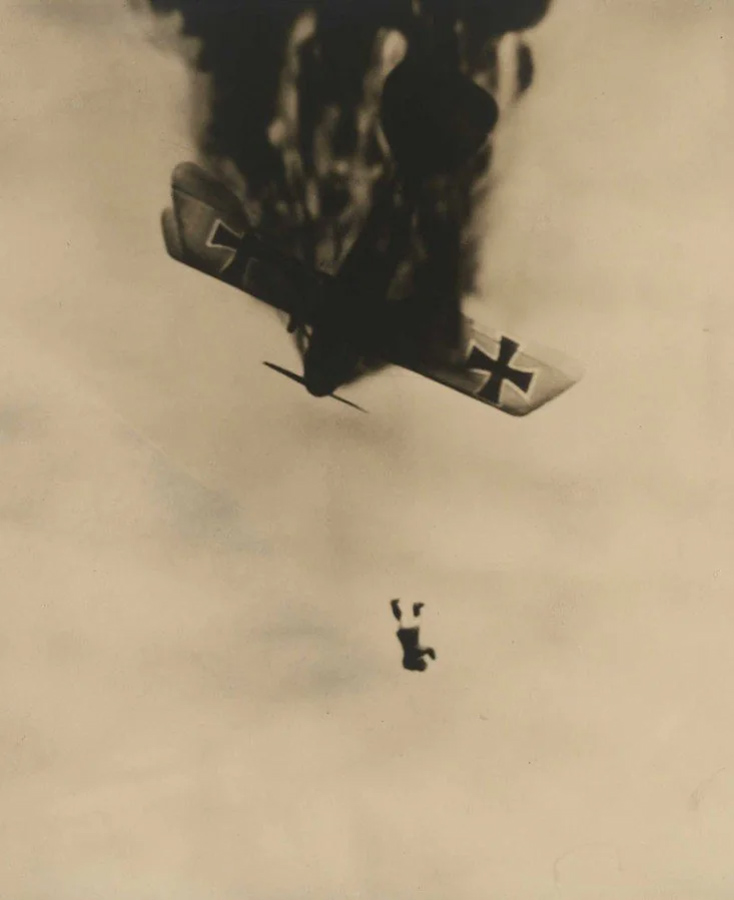
Wesley D. Archer (American, d. 1952) 'Just as he left the burning plane' 1933


Wesley D. Archer (American, d. 1952)
Just as he left the burning plane
1933
From the publication Death in the Air: The War Diary and Photographs of a Flying Corps Pilot


The typewritten script of a First World War pilot’s diary with a large number of photographs was submitted to the publishers William Heinemann and published by them in 1933. Heinemann stated on the book’s jacket that the diary contained no names, dates, or anything that could reveal the identity of the writer or the squadron in which he served. The publishers understood that the diarist was killed in action in 1918 and that it was in deference to the wishes of those who were close to him that his diary should be published.

So remarkable were the photographs that their veracity was immediately questioned, but no proof of their authenticity or otherwise could be ascertained. It was not until 1983 that a collection of documents, photographs and artifacts was presented to the Smithsonian’s National Air and Space Museum. Some of the photographs were recognized as being those of the mystery diarist and the truth was soon revealed.

The author was Wesley Archer, an American with Canadian parents who served with the RFC in the First World War, and the photographs and diary had been faked.

Text from the Google Books website

For more information on the faked photographs see the article “How dramatic images of WWI dogfights in the skies of Europe were FAKED by a conman who was just looking to make some money”.


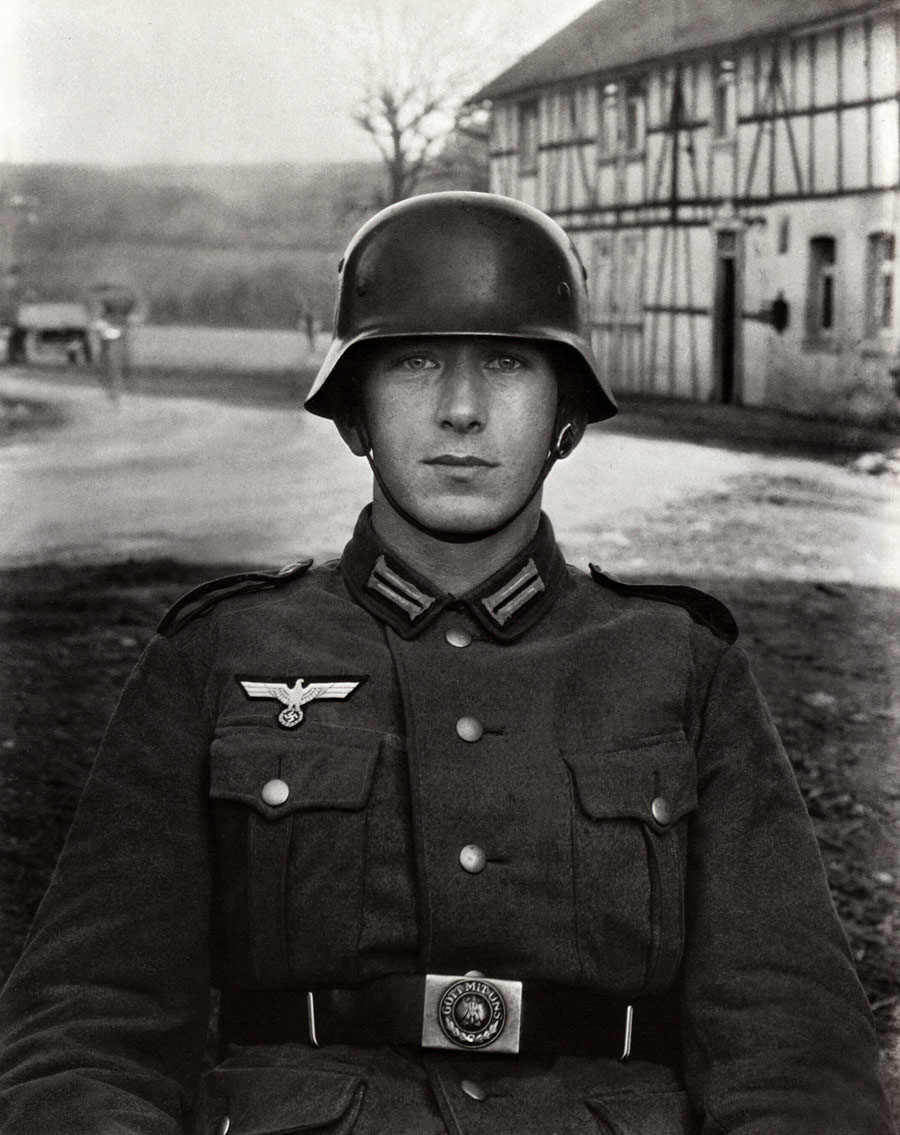
August Sander (German, 1876-1964) 'Soldier' c. 1940


August Sander (German, 1876-1964)
Soldier
c. 1940
Gelatin silver print, printed by Gunther Sander, 1960s
The Museum of Fine Arts, Houston
Gift of John S. and Nancy Nolan Parsley in honour of the 65th birthday of Anne Wilkes Tucker
© Die Photographische Sammlung/SK StiftungKultur – August Sander Archiv, Cologne; DACS, London 2012


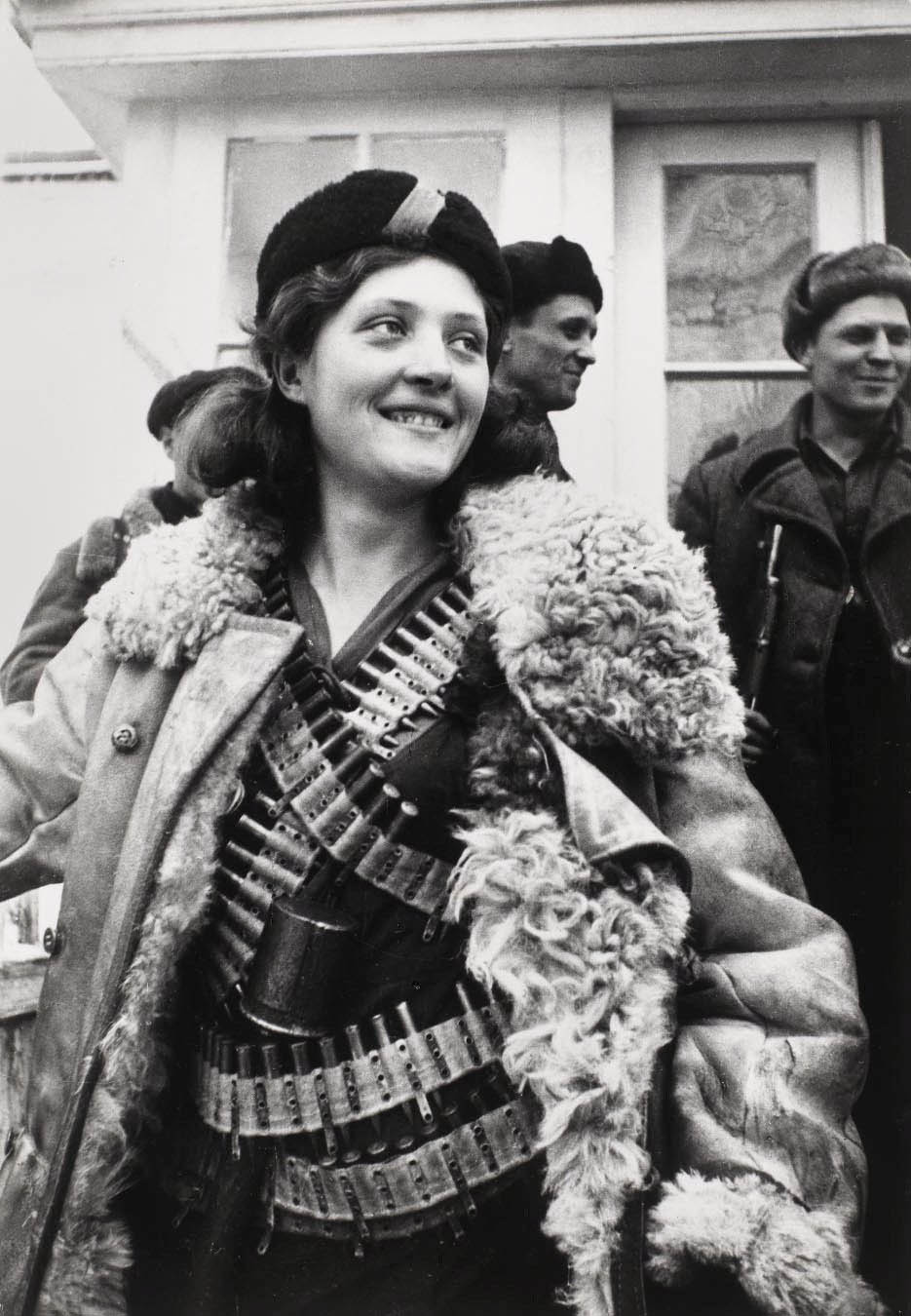
Arkady Shaikhet (Soviet, 1898-1959) 'Partisan Girl' 1942


Arkady Shaikhet (Soviet, 1898-1959)
Partisan Girl
1942
Gelatin silver print
Gift of Marion Mundy
© Arkady Shaikhet Estate, Moscow


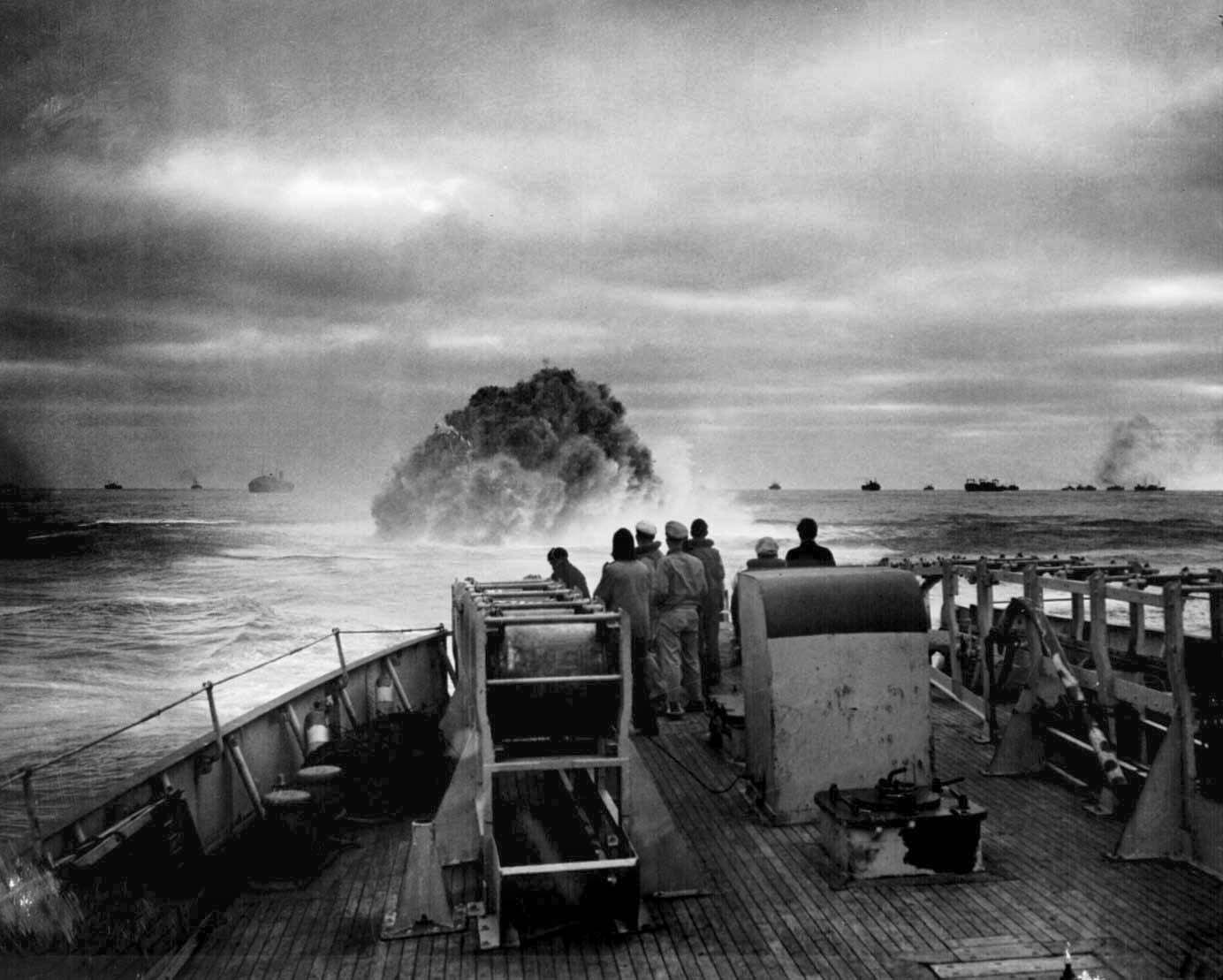
Anonymous photographer / U.S. Department of Defense. 'US Coast Guard crew of cutter Spencer watched as a depth charge exploded near U-175, North Atlantic, 500nm WSW of Ireland, 17 Apr 1943'


Anonymous photographer
U.S. Department of Defense
US Coast Guard crew of cutter Spencer watched as a depth charge exploded near U-175, North Atlantic, 500nm WSW of Ireland, 17 Apr 1943
17 April 1943
Public domain


W. Eugene Smith (American, 1918-1978) 'Wounded, dying infant found by American soldier in Saipan Mountains' June 1944


W. Eugene Smith (American, 1918-1978)
Wounded, dying infant found by American soldier in Saipan Mountains
June 1944
Gelatin silver print
© W. Eugene Smith


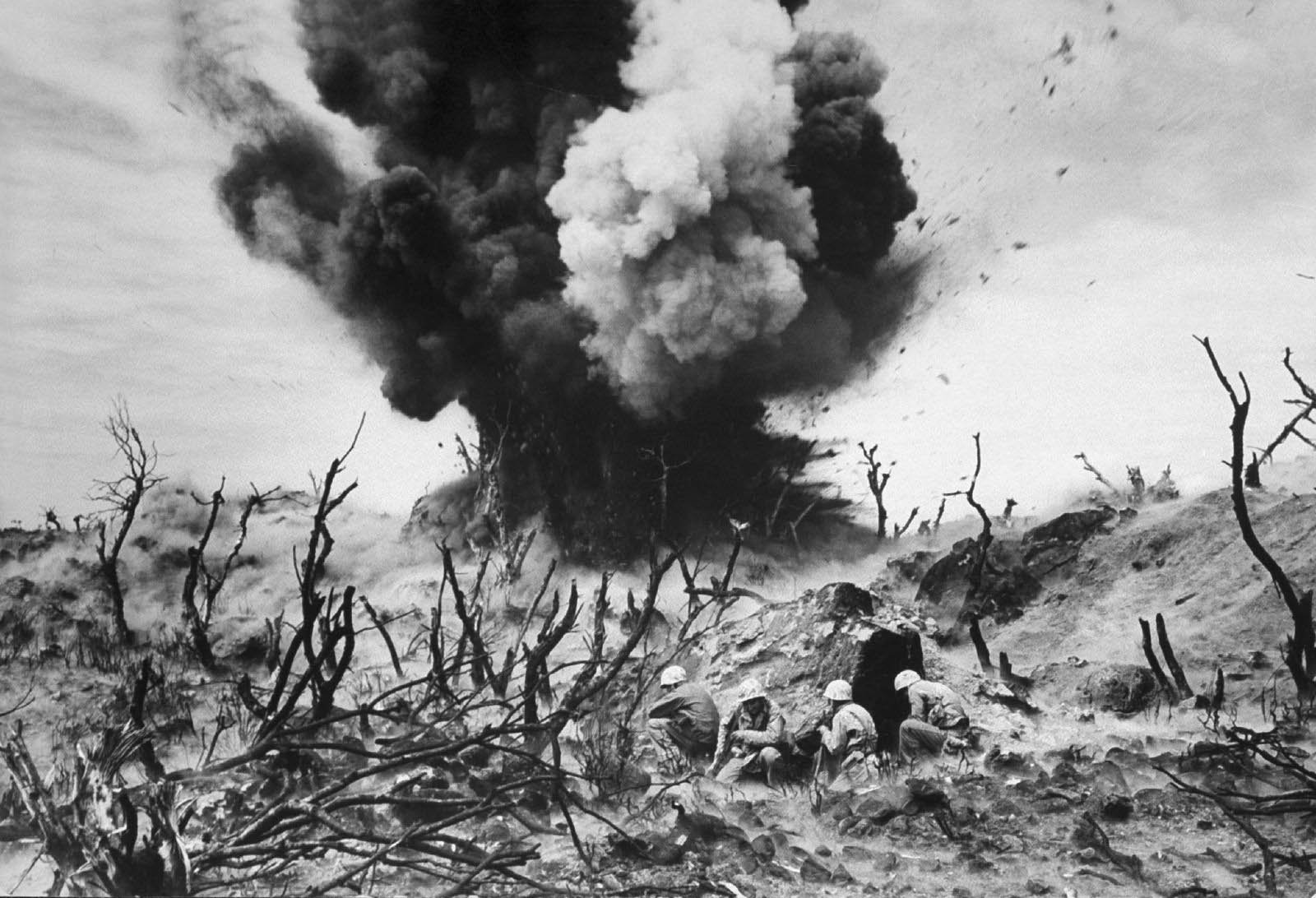
W. Eugene Smith (American, 1918-1978) 'World War II. The Pacific Campaign. The Battle of Iwo Jima (Japanese island). US Marine demolition team blasting out a cave on Hill 382. Iwo Jima. February, 1945' 1945


W. Eugene Smith (American, 1918-1978)
World War II. The Pacific Campaign. The Battle of Iwo Jima (Japanese island). US Marine demolition team blasting out a cave on Hill 382. Iwo Jima. February, 1945
1945
Gelatin silver print
© W. Eugene Smith


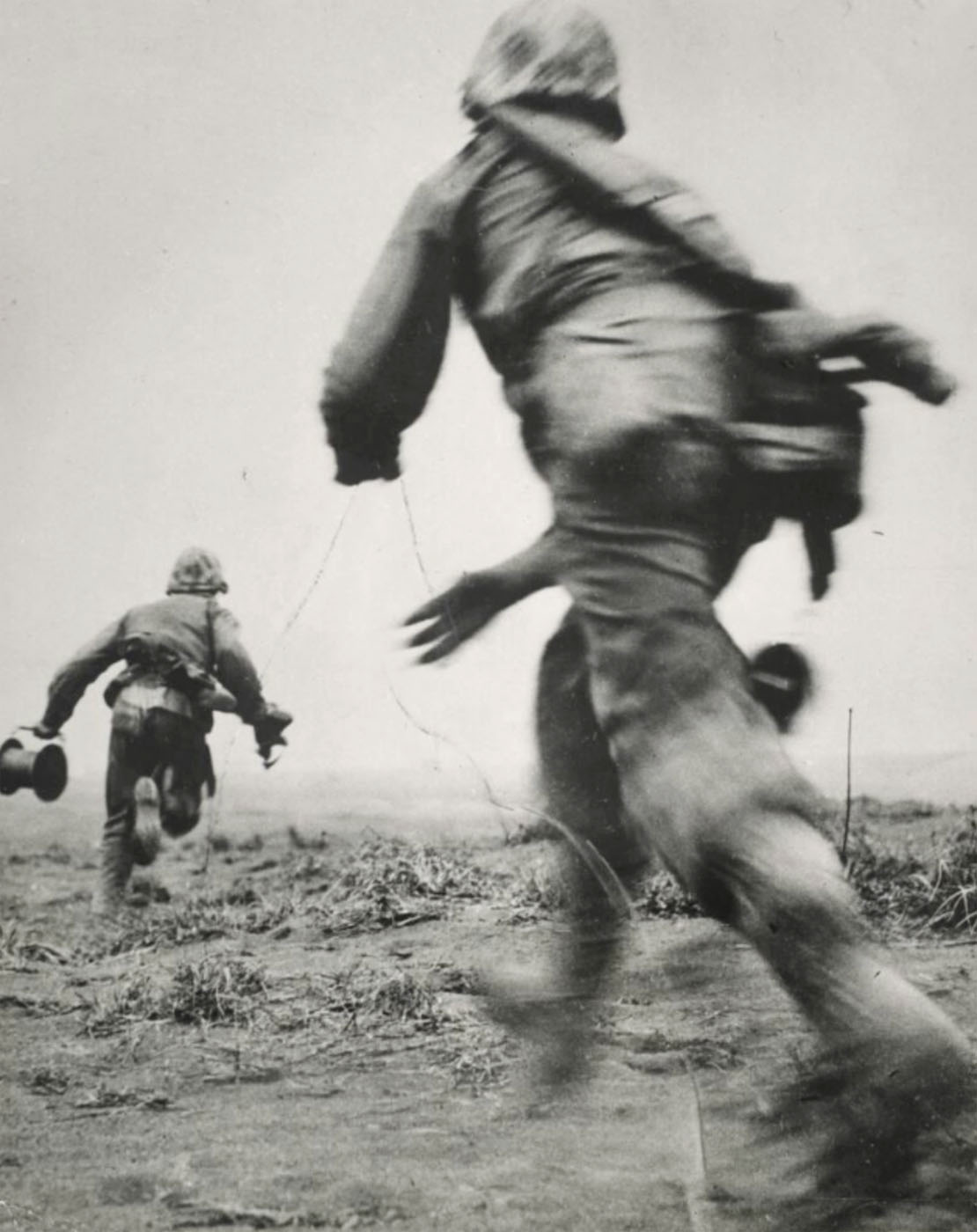
Joseph Schwartz (American, 1913–2013) 'Hold the Phone - Two Marine wiremen on Iwo Jima race across an open field, under heavy enemy fire to establish field telephone contact with the front lines' February 19, 1945, printed early 1950s


Joseph Schwartz (American, 1913–2013)
Hold the Phone – Two Marine wiremen on Iwo Jima race across an open field, under heavy enemy fire to establish field telephone contact with the front lines
February 19, 1945, printed early 1950s
Gelatin silver print mounted on board
18 13/16 × 14 15/16 in. (47.8 × 37.9cm)
The Museum of Fine Arts, Houston
Museum purchase funded by Knox Nunnally at “One Great Night in November, 2009,” in honor of Houston trial lawyer Joe Reynolds, a U.S. Marine who fought on Iwo Jima


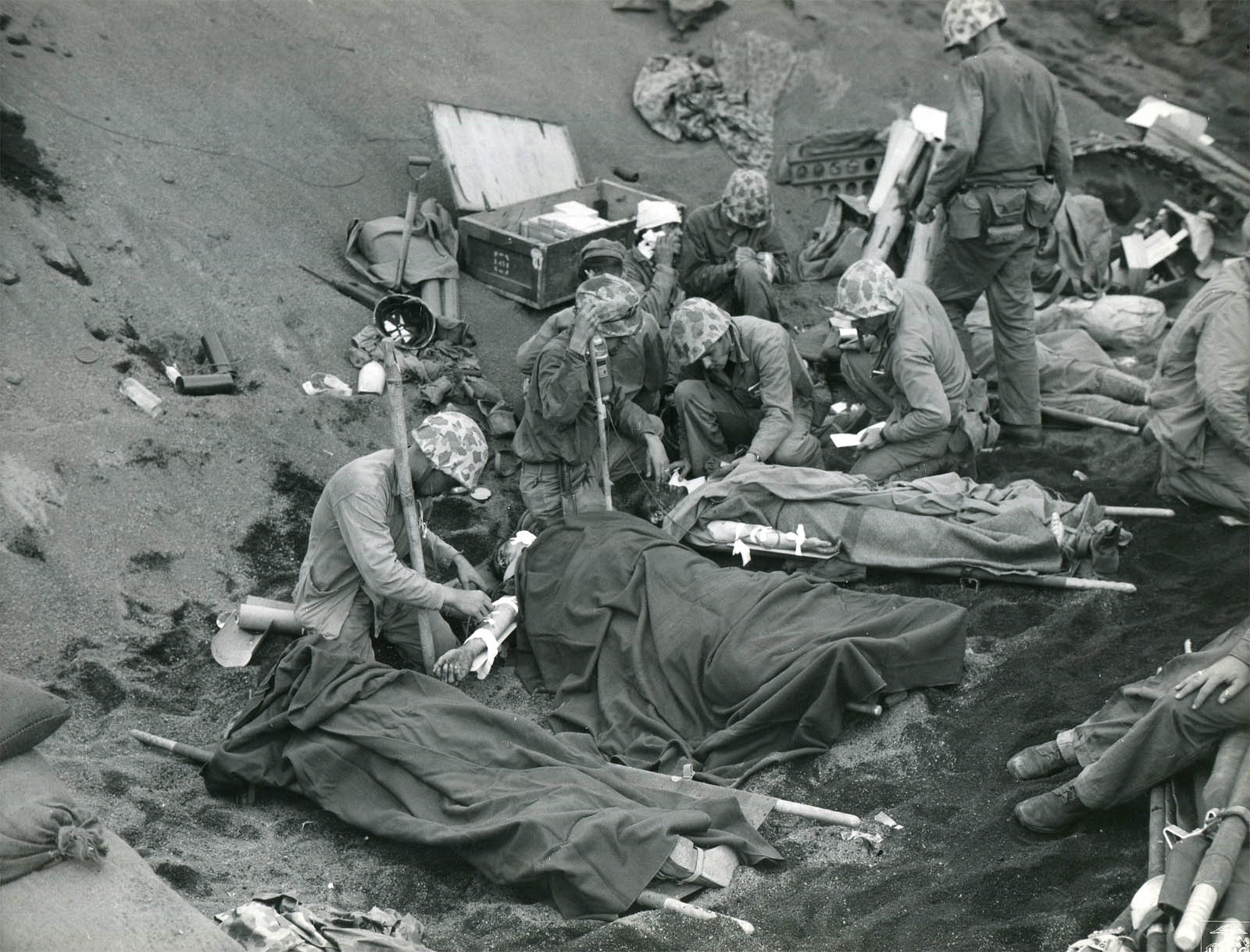
Anonymous photographer. U.S. Department of Defense / USMC Official Photograph 'PLASMA WARD – Navy doctors and corpsmen administer to wounded Marines at an aid station established in a gully on Iwo Jima. The high casualty rate in this operation required the use of gallons of plasma and whole blood sent by air from the West Coast' 1945


Anonymous photographer
U.S. Department of Defense / USMC Official Photograph
PLASMA WARD – Navy doctors and corpsmen administer to wounded Marines at an aid station established in a gully on Iwo Jima. The high casualty rate in this operation required the use of gallons of plasma and whole blood sent by air from the West Coast
1945
Gelatin silver print
Creative Commons Attribution 2.0 Generic


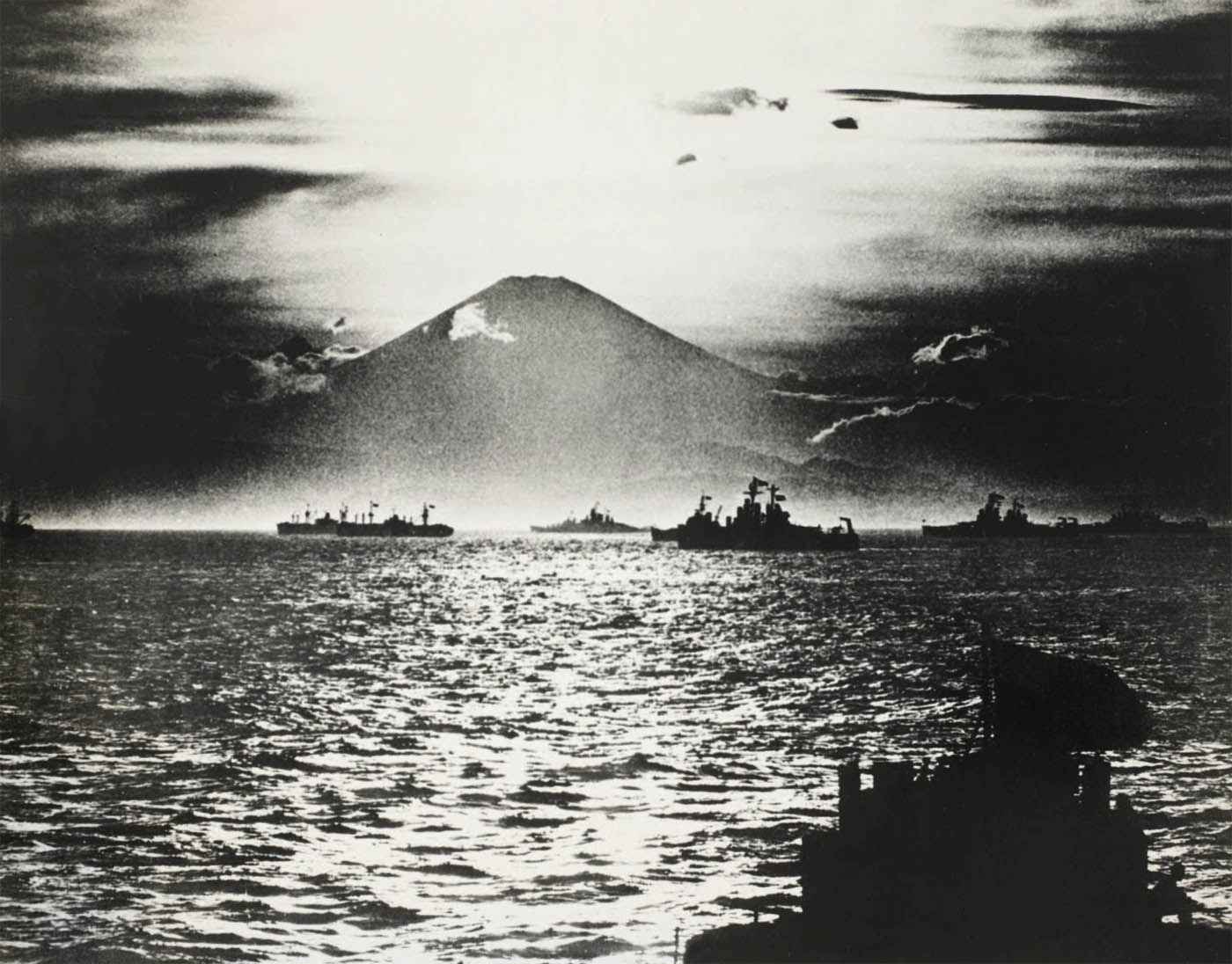
U.S. Navy Photographic Team. 'U.S. and British Warships Anchored in Sagami Wan, Outside of Tokyo Bay, Japan, on the Day the Allied Ships Entered Japanese Waters' 27th August 1945


U.S. Navy Photographic Team
U.S. and British Warships Anchored in Sagami Wan, Outside of Tokyo Bay, Japan, on the Day the Allied Ships Entered Japanese Waters
27th August 1945
Gelatin silver print
The Museum of Fine Arts, Houston, museum purchase funded by Laura and Tony Visage in honor and memory of William A. Visage and his fellow soldiers in Battery “E” of the 2nd Battalion, 131st Field Artillery, U.S. Army Air Corps


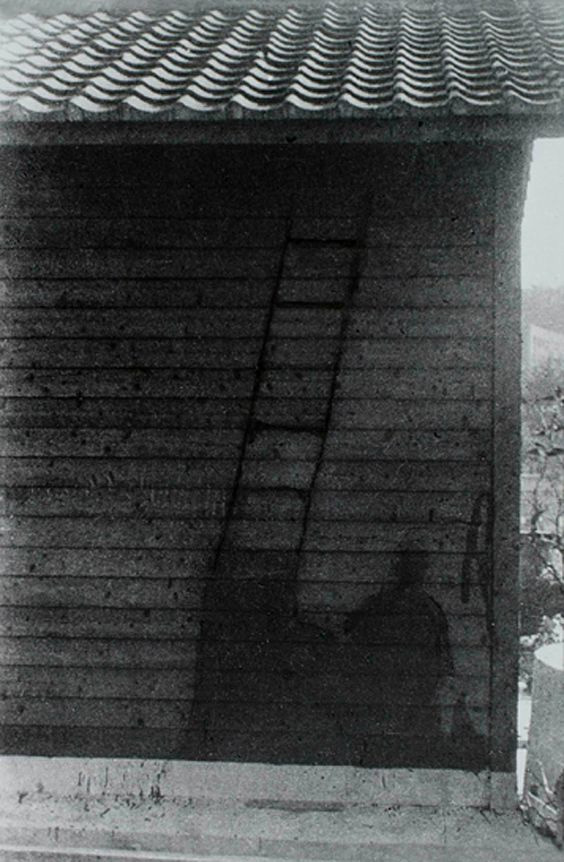
Matsumoto Eiichi (Japanese, 1915-2004) 'Shadow of a soldier remaining on the wooden wall of the Nagasaki military headquarters (Minami-Yamate machi, 4.5km from Ground Zero)' 1945


Matsumoto Eiichi (Japanese, 1915-2004)
Shadow of a soldier remaining on the wooden wall of the Nagasaki military headquarters (Minami-Yamate machi, 4.5km from Ground Zero)
1945
Gelatin silver print
Collection of the Tokyo Metropolitan Museum of Photography
© Matsumoto Eiichi


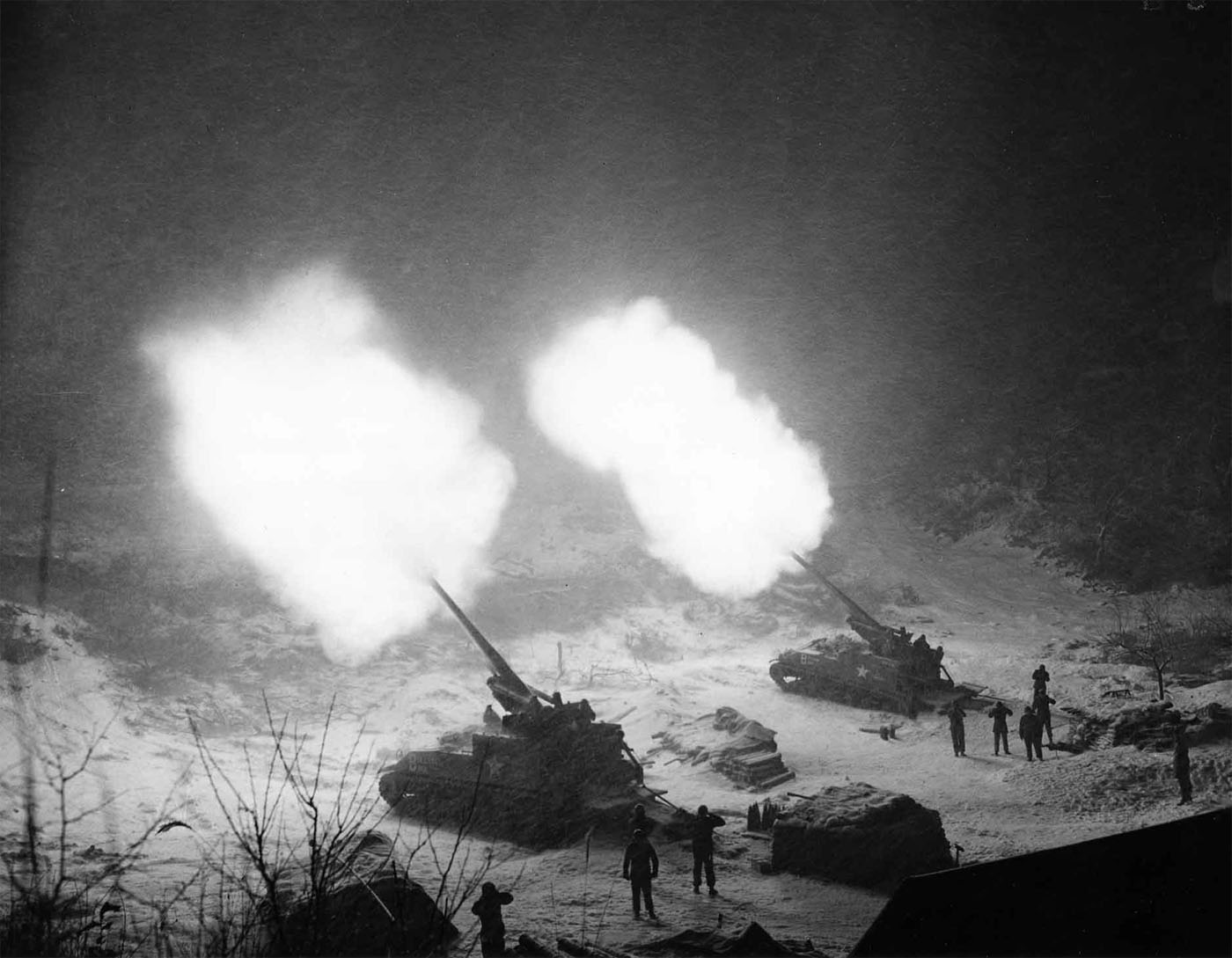
Unknown photographer. 'A pair of M-40 155mm Gun Motor Carriages of Battery B, 937th Field Artillery Battalion, providing fire support to U.S. Army 25th Infantry Division, Munema, Korea' 26 November 1951


Unknown photographer
A pair of M-40 155mm Gun Motor Carriages of Battery B, 937th Field Artillery Battalion, providing fire support to U.S. Army 25th Infantry Division, Munema, Korea
26 November 1951
Gelatin silver print
U.S. Department of Defense


Cathy LeRoy (French, 1944-2006) 'Corpsman In Anguish' 1967


Cathy LeRoy (French, 1944-2006)
Corpsman In Anguish
1967
Gelatin silver print


Her pictures from Vietnam were stunning. Her photos from Battle of Hill 881 evoked “ghosts of Iwo Jima and Pork Chop Hill,” Time magazine wrote in May 1967. Her photos of corpsman Vernon Wike during the battle was a triptych of an all-too-familiar scene: in the first, Wike has two hands on his friend’s chest, trying to staunch the wound; in the second, he tries to find a heartbeat; in the third frame, “Corpsman In Anguish”, he realised the man is dead.

LeRoy herself came very close to death two weeks later. Her Nikon barely stopped a piece of mortar shrapnel that ripped open her chest. She said that she thought the last words she would ever hear were, “I think she’s dead, sarge.” During the Tet offensive in 1968, LeRoy was briefly captured by the North Vietnamese during the battle for Hue. LeRoy’s photos of her captivity later made the cover of Life, ‘A Remarkable Day in Hue: the Enemy Lets Me Take His Picture’. She was the first person to take photos of North Vietnamese Army Regulars behind their lines.

Anonymous. “Corpsman In Anguish | Cathy LeRoy,” on the Iconic Photos website January 13, 2014 [Online] Cited 27/07/2024


A licensed parachutist, Leroy jumped with the U.S. 173rd Airborne Brigade into combat during Operation Junction City in February of 1967. It was in this action, the battle for Hill 881, that Leroy photographed U.S. Navy Corpsman Vernon Wike as he rushed to the aid of a fallen comrade. “Corpsman in anguish” is the third frame of a series that Leroy shot, capturing the unimaginable grief of war. Later, in an interview for the documentary “The Hill Fights”, Wike recounted the moment that Leroy photographed.

“I know there was chaos going on around me, but there was no sound,” she says. “… I knew he didn’t have a chance, but I still got p—–d off when he died.” Leroy describes the aftermath as the corpsman “lost in this nightmare landscape” grabbed the fallen marine’s M16 and charged a Viet bunker alone in a hail of obscenities. The fallen marine was a man called “Rock”, a New Yorker from Puerto Rico. Earlier that day he had told Wike that he only had 60 days left “in country” – his deployment in Vietnam.

Anonymous. “Giving War a Face: Catherine Leroy,” on the Dismal Nitch website September 04, 2020 [Online] Cited 27/07/2024


Arkady Shaikhet (Soviet, 1898-1959) 'Partisan Girl' 1942


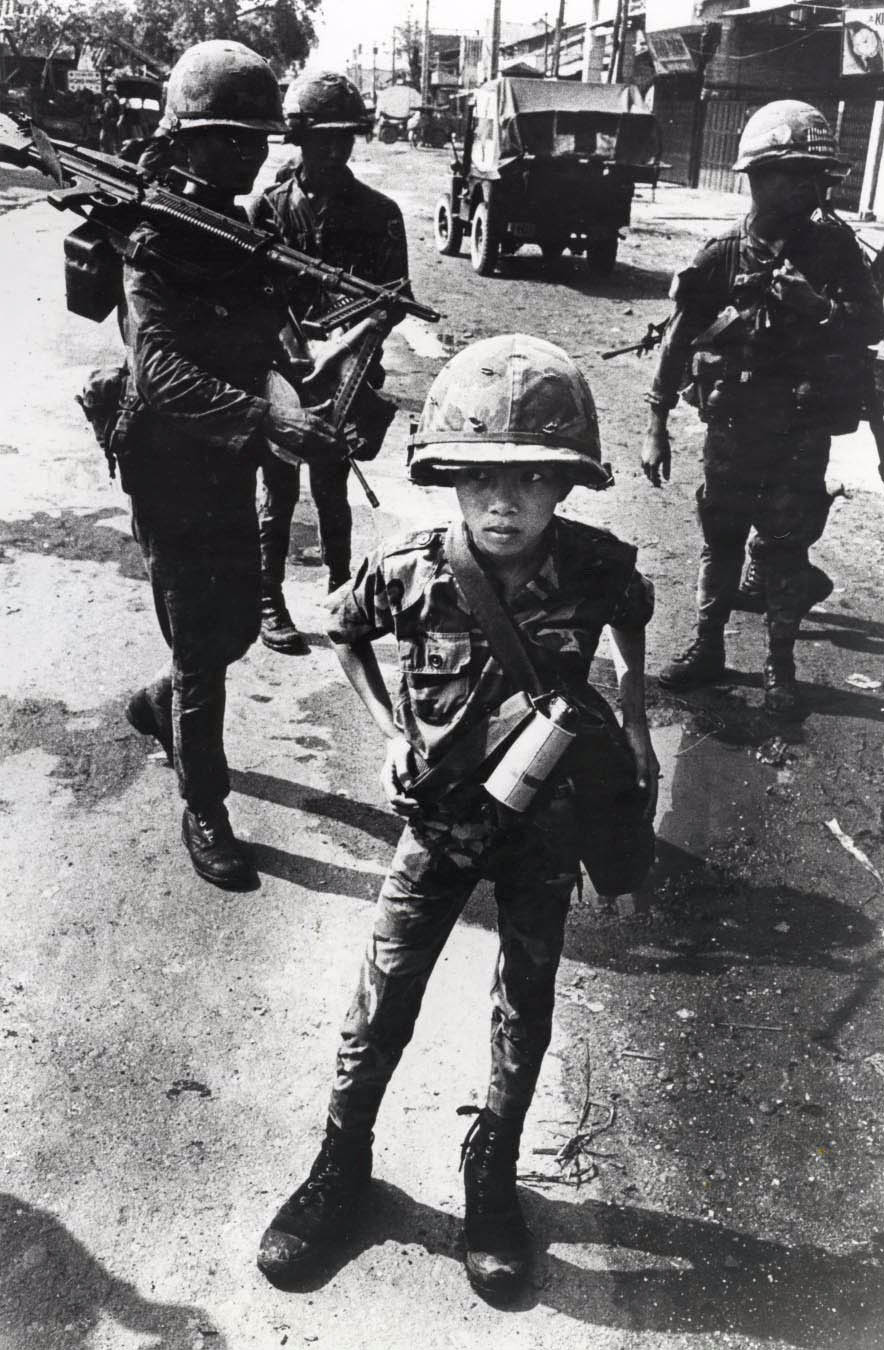
Philip Jones Griffiths (Welsh, 1936-2008)
​Called “Little Tiger” for killing two “Viet Cong women cadre” – his mother and teacher, it was rumored, Vietnam​
1968
Gelatin silver print
The Philip Jones Griffiths Foundation, courtesy of Howard Greenberg Gallery
© Philip Jones Griffiths / Magnum Photos


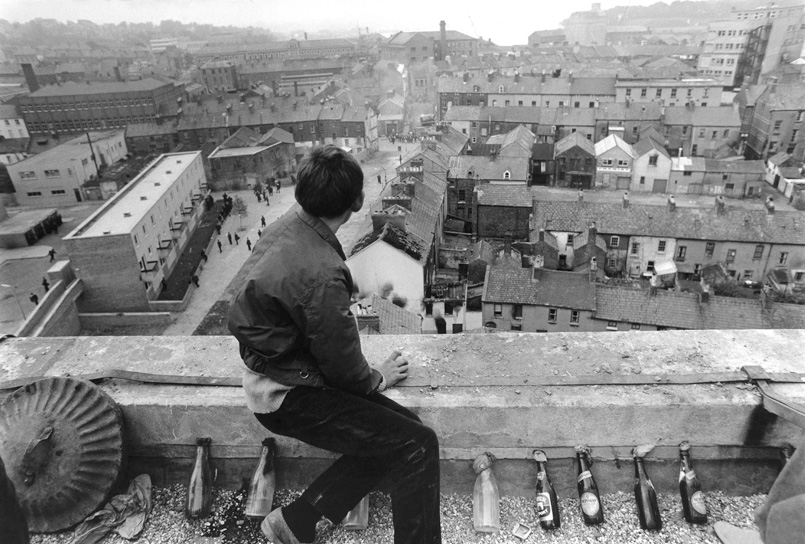
Gilles Caron (French, 1939-1970) 'Young Catholic demonstrator on Londonderry Wall, Northern Ireland' 1969


Gilles Caron (French, 1939-1970)
Young Catholic demonstrator on Londonderry Wall, Northern Ireland
1969
Gelatin silver print
Courtesy of Foundation Gilles Caron and Contact Press Images
© Gilles Caron


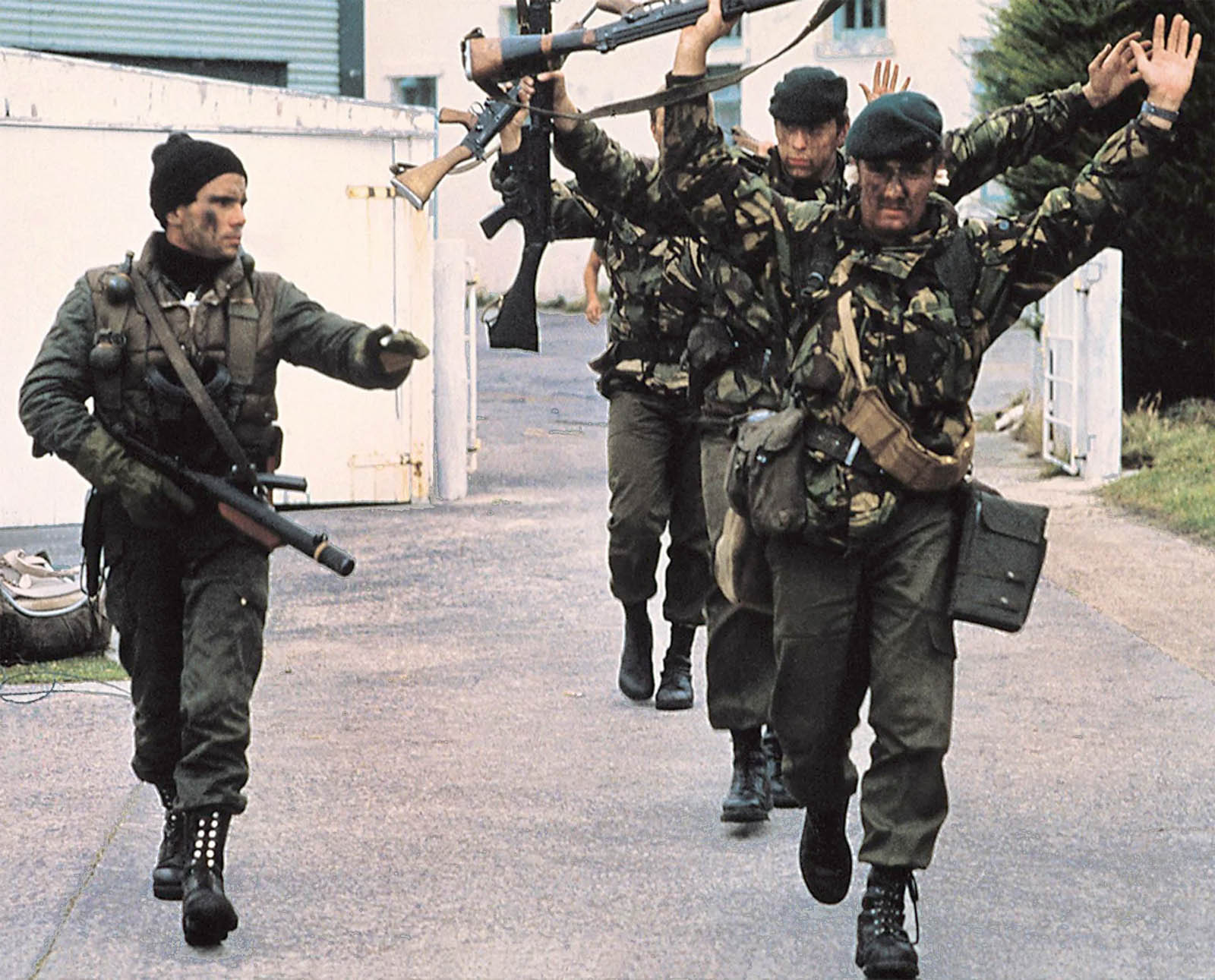
Rafael Wollmann (Argentinian, b. 1958) 'British Marines surrender to Argentinean troops in Malvinas/Falklands' April 2, 1982, printed 2012


Rafael Wollmann (Argentinian, b. 1958)
British Marines surrender to Argentinean troops in Malvinas/Falklands
April 2, 1982, printed 2012
Inkjet print
15 7/8 × 20 in. (40.4 × 50.8cm)
The Museum of Fine Arts, Houston
Gift of Rafael Wollmann


David Leeson (American, b. 1957) 'Death of a Soldier, Iraq' March 24, 2003


David Leeson (American, b. 1957)
Death of a Soldier, Iraq
March 24, 2003
Inkjet print, printed 2012
Courtesy of the artist


Ziv Koren (Israeli, b. 1970) 'A sniper’s-eye view of Rafah, in the Southern Gaza strip, during an Israeli military sweep' 2006


Ziv Koren (Israeli, b. 1970)
A sniper’s-eye view of Rafah, in the Southern Gaza strip, during an Israeli military sweep
2006
Inkjet print, printed 2012
© Ziv Koren/Polaris Images


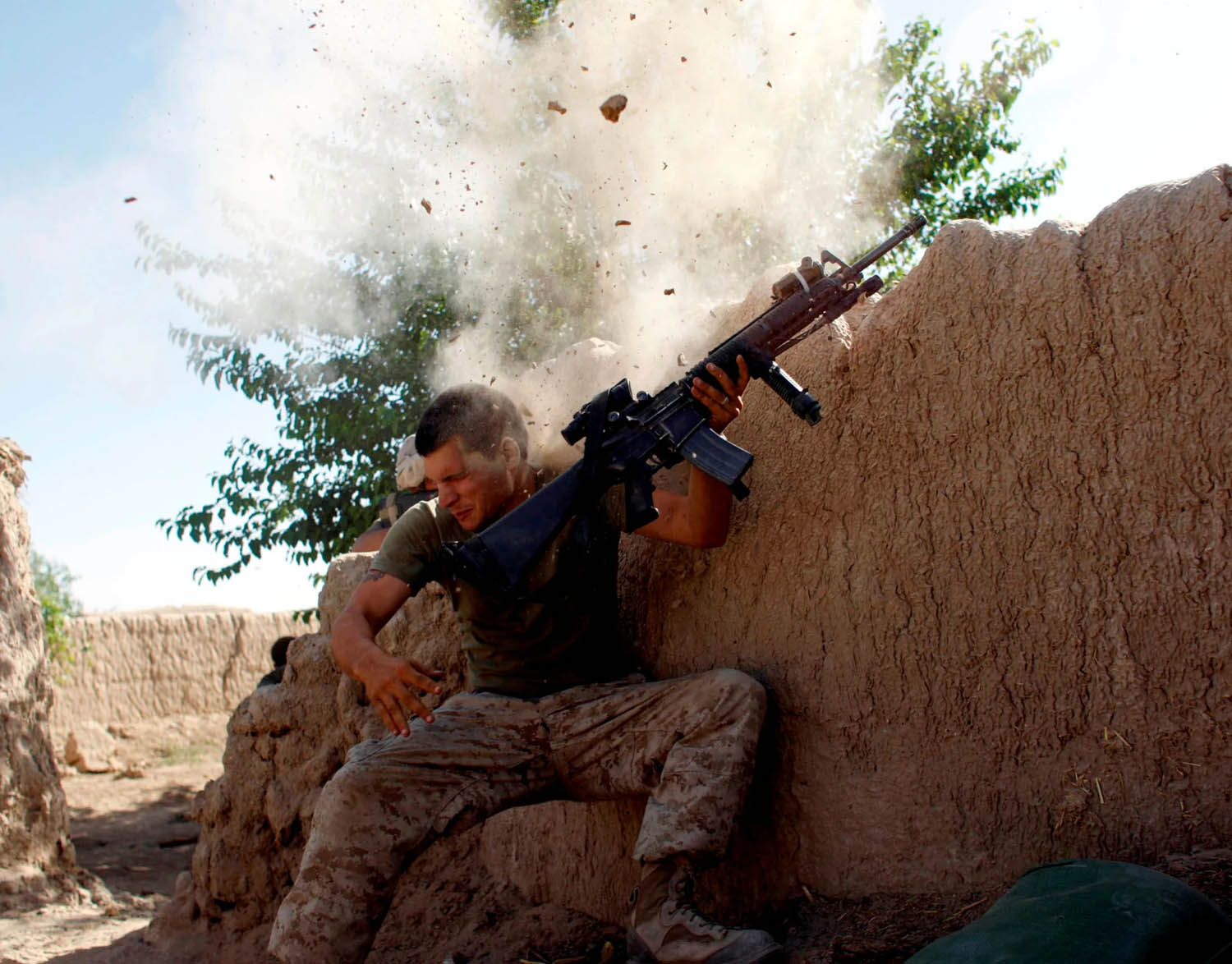
Goran Tomasevic (Serbian, b. 1959) /Reuters. 'SHOOTING. Sgt. William Olas Bee, a US Marine from the 24th Marine Expeditionary Unit, has a close call after Taliban fighters opened fire near Garmser in Helmand Province of Afghanistan May 18, 2008. The Marine was not injured.' 2008


Goran Tomasevic (Serbian, b. 1959) /Reuters
SHOOTING. Sgt. William Olas Bee, a US Marine from the 24th Marine Expeditionary Unit, has a close call after Taliban fighters opened fire near Garmser in Helmand Province of Afghanistan May 18, 2008. The Marine was not injured.
2008


TomaÅ¡ević began photographing the war that followed the breakup of Yugoslavia from 1991 for daily newspaper Politika. In 1996 he joined the world’s largest news agency, Reuters, covering the simmering political tensions in Kosovo and the anti-MiloÅ¡ević demonstrations in his hometown of Belgrade since mid-1990s. During three-month NATO bombing of Yugoslavia in 1999, TomaÅ¡ević was the only photographer working for foreign press to spend the duration of the conflict in Kosovo.

TomaÅ¡ević moved to Jerusalem in 2002, covering the second Palestinian intifada. During the U.S. led invasions of Iraq in 2003, his picture of a U.S. Marine watching the toppling of a Saddam Hussein statue became one of the most memorable images of the war. He often returned to Iraq as sectarian violence escalated and regularly photographed America’s other war in Afghanistan. His sequence of photographs of U.S. Marine Sergeant Bee narrowly escaping Taliban bullets became an iconic image in U.S. war history.

TomaÅ¡ević moved to Cairo in 2006 and was at the heart of Reuters’ coverage of the Arab Springs. In Libya, his image of a fireball that spewed up after an air strike on pro-Gaddafi fighters became an iconic image of the Libyan war, gracing the front pages of more than 100 newspapers around the globe. He stayed in Cairo until 2012. His raw pictures of rebel fighters battling pro-Assad forces among the ruins of Aleppo and Damascus during the Syrian Civil War have won international acclaim, as did his coverage of the bloody siege on a Nairobi shopping mall in Kenya. TomaÅ¡ević worked for Reuters until 2022.

Text from the Wikipedia website


Museum of Fine Arts, Houston
1001 Bissonnet Street
Houston, TX 77005

Opening hours:
Wednesday 11am – 5pm
Thursday 11am – 9pm
Friday 11am – 6pm
Saturday 11am – 6pm
Sunday 12.30pm – 6pm
Closed Monday and Tuesday, except Monday holidays
Closed Thanksgiving Day and Christmas Day

Museum of Fine Arts, Boston website

LIKE ART BLART ON FACEBOOK

Back to top

Exhibition: ‘The Platinum Process: Photographs from the Nineteenth to the Twenty-First Century’ at Philadelphia Museum of Art

Exhibition dates: 27th February – 23rd May, 2010


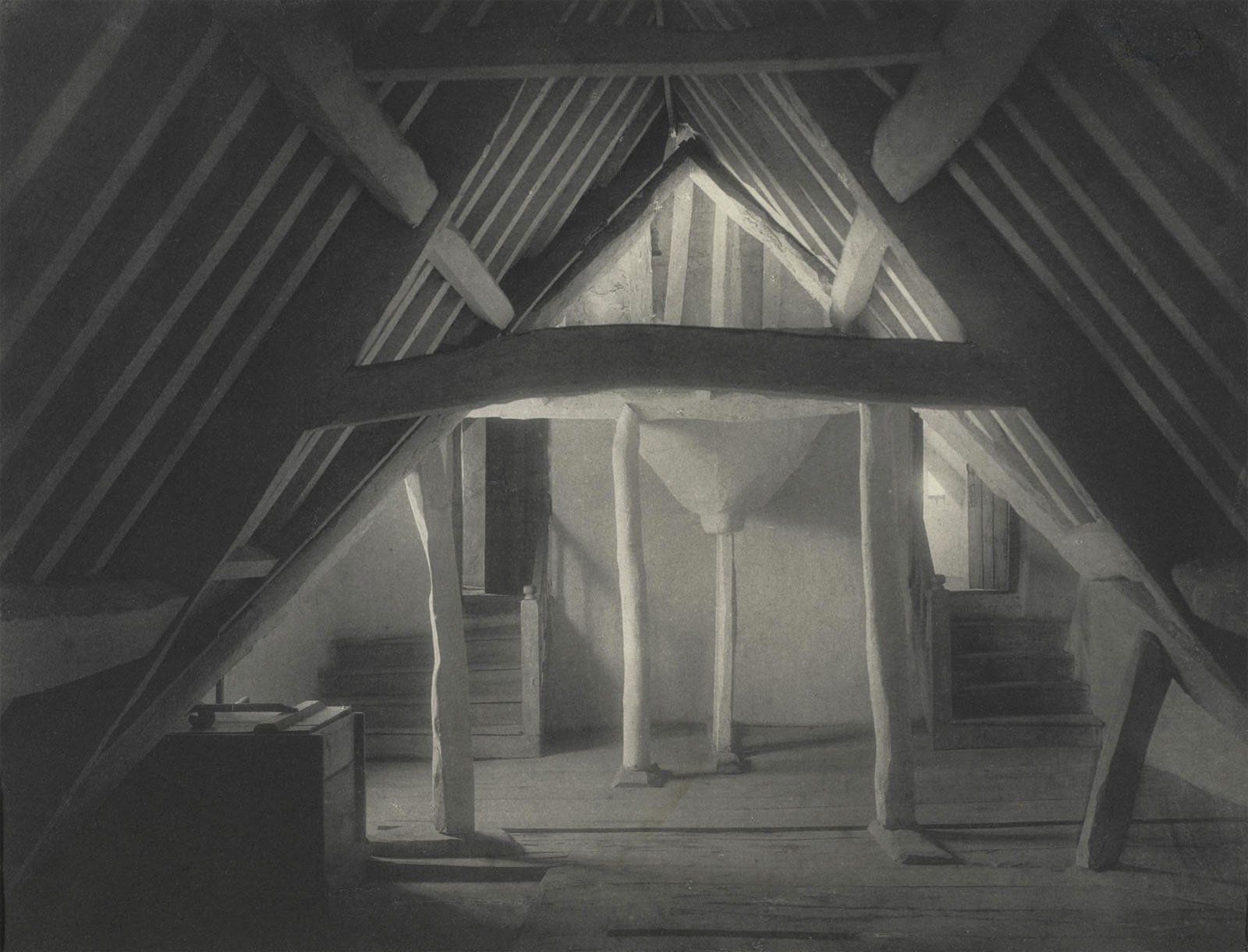
Frederick H. Evans (British, 1853-1943) 'Kelmscott Manor: Attics' 1896 from the exhibition 'The Platinum Process: Photographs from the Nineteenth to the Twenty-First Century' at Philadelphia Museum of Art, February - May, 2010


Frederick H. Evans (British, 1853-1943)
Kelmscott Manor: Attics
1896
Platinum print
Image and sheet: 6 1/16 × 7 7/8 inches (15.4 × 20cm)
Philadelphia Museum of Art
Gift of the artist, 1932


Attics often serve as metaphors for the space where memories reside. Here Frederick Evans captures the warm glow, the simple, rough-hewn timbers, and the striking geometry of the attic at Kelmscott Manor, the beloved summer retreat of designer William Morris (British, 1834-1896).

Morris, the leader of the Arts and Crafts movement – which valued Britain’s craft tradition and rejected its industrial revolution – drew inspiration from the architecture and workmanship of Kelmscott, designed and constructed in the 1500s. In 1896 Morris invited Evans to photograph the home, which he felt embodied the memory of Britain’s aesthetic past.

Text from the Philadelphia Museum of Art website


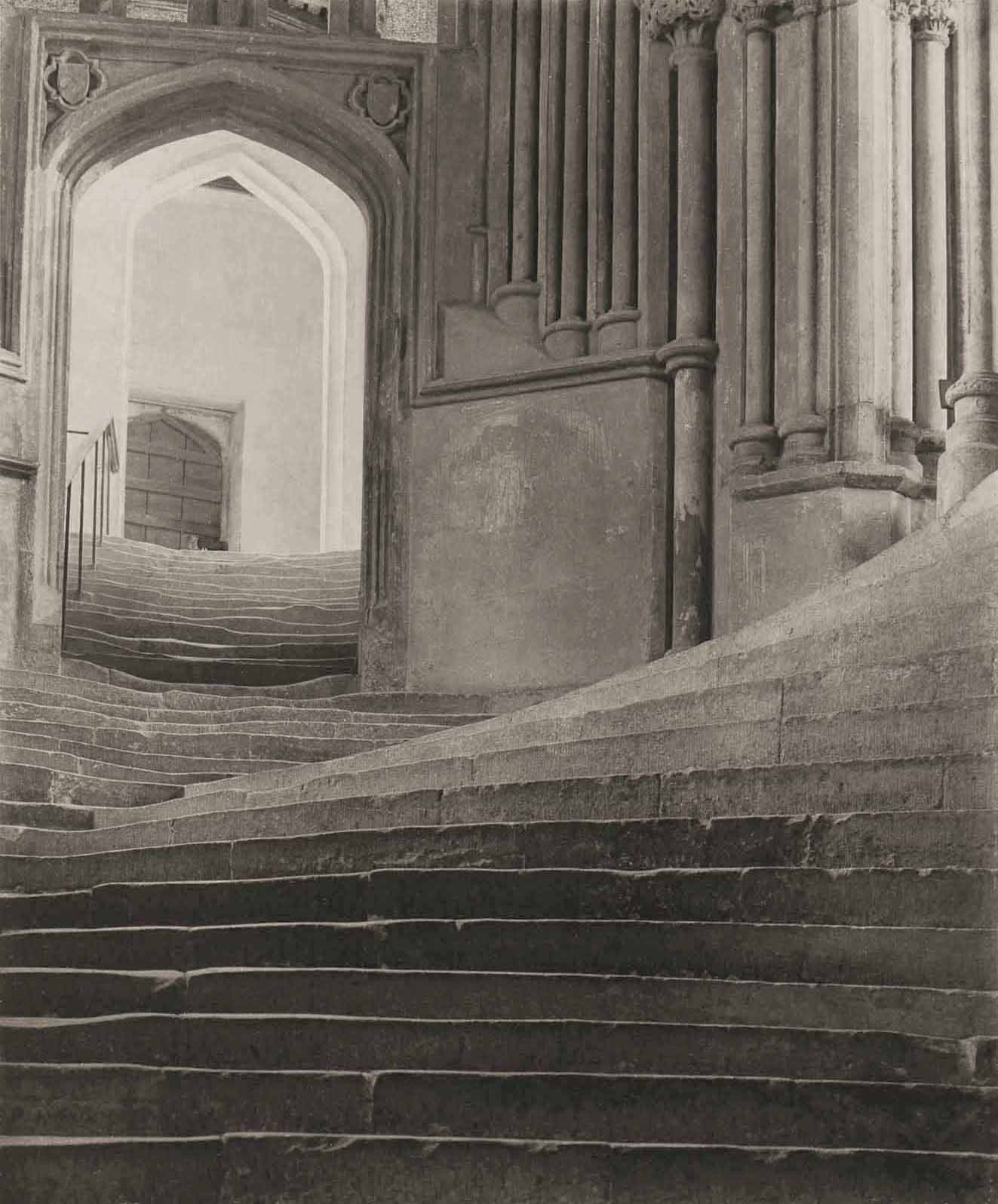
Platinum prints always have such luminosity. A Sea of Steps by Fredrick H. Evans (1903, below) is a knockout. I remember some beautiful platinum prints many years ago (1989) up in Sydney at the Museum of Contemporary Art in the touring exhibition Robert Mapplethorpe: The Perfect Moment that were an absolute knockout as well. Pity he didn’t print them himself but they were still superlative!

Dr Marcus Bunyan


Many thankx to Shen Shellenberger and the Philadelphia Museum of Art for allowing me to publish the last five images in the posting. Please click on the photographs for a larger version of the image.


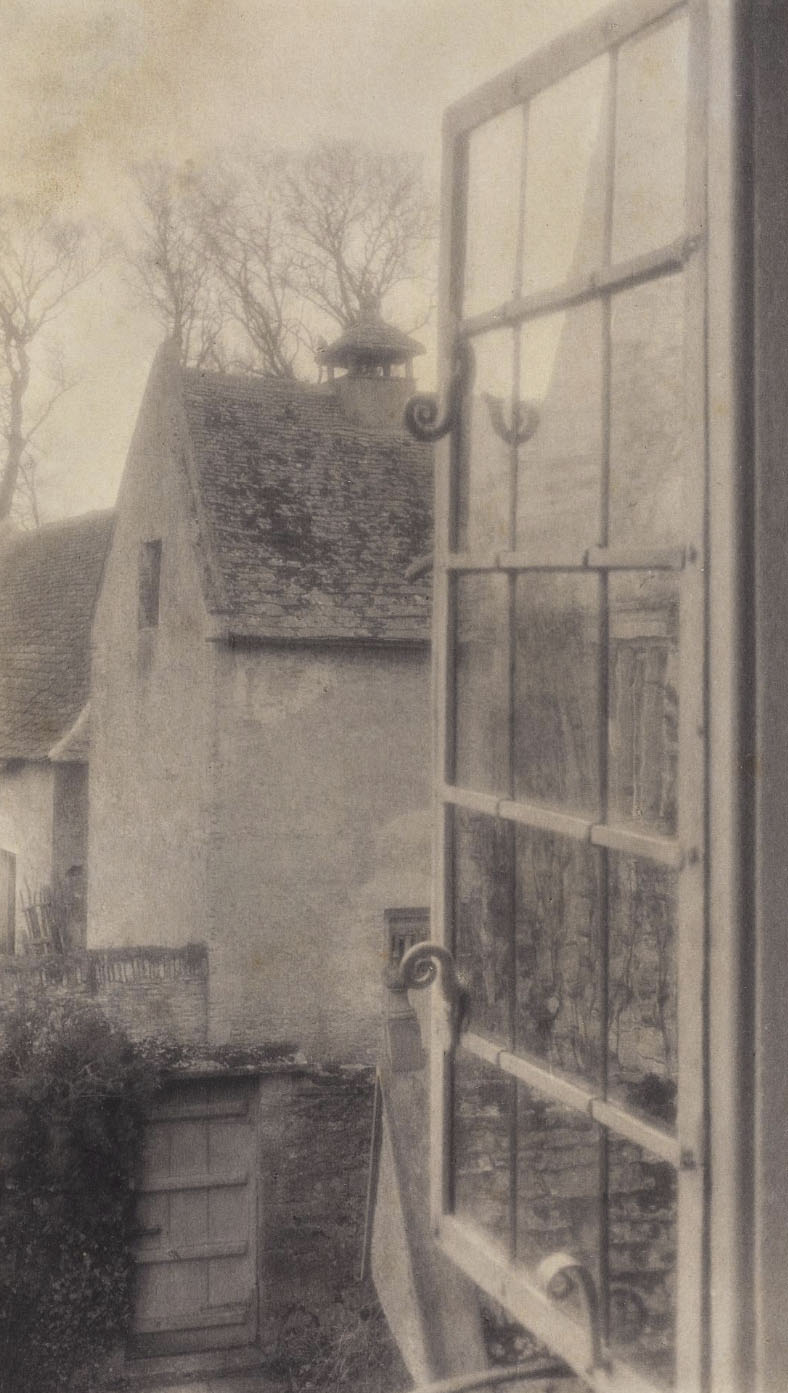
Frederick H. Evans (British, 1853-1943) 'Kelmscott Manor' 1896 from the exhibition 'The Platinum Process: Photographs from the Nineteenth to the Twenty-First Century' at Philadelphia Museum of Art, February - May, 2010


Frederick H. Evans (British, 1853-1943)
Kelmscott Manor
1896
Platinum print
Image and sheet: 7 3/8 × 4 1/4 inches (18.7 × 10.8cm)
Philadelphia Museum of Art
Purchased with funds contributed by Dorothy Norman and with the Director’s Discretionary Fund, 1968


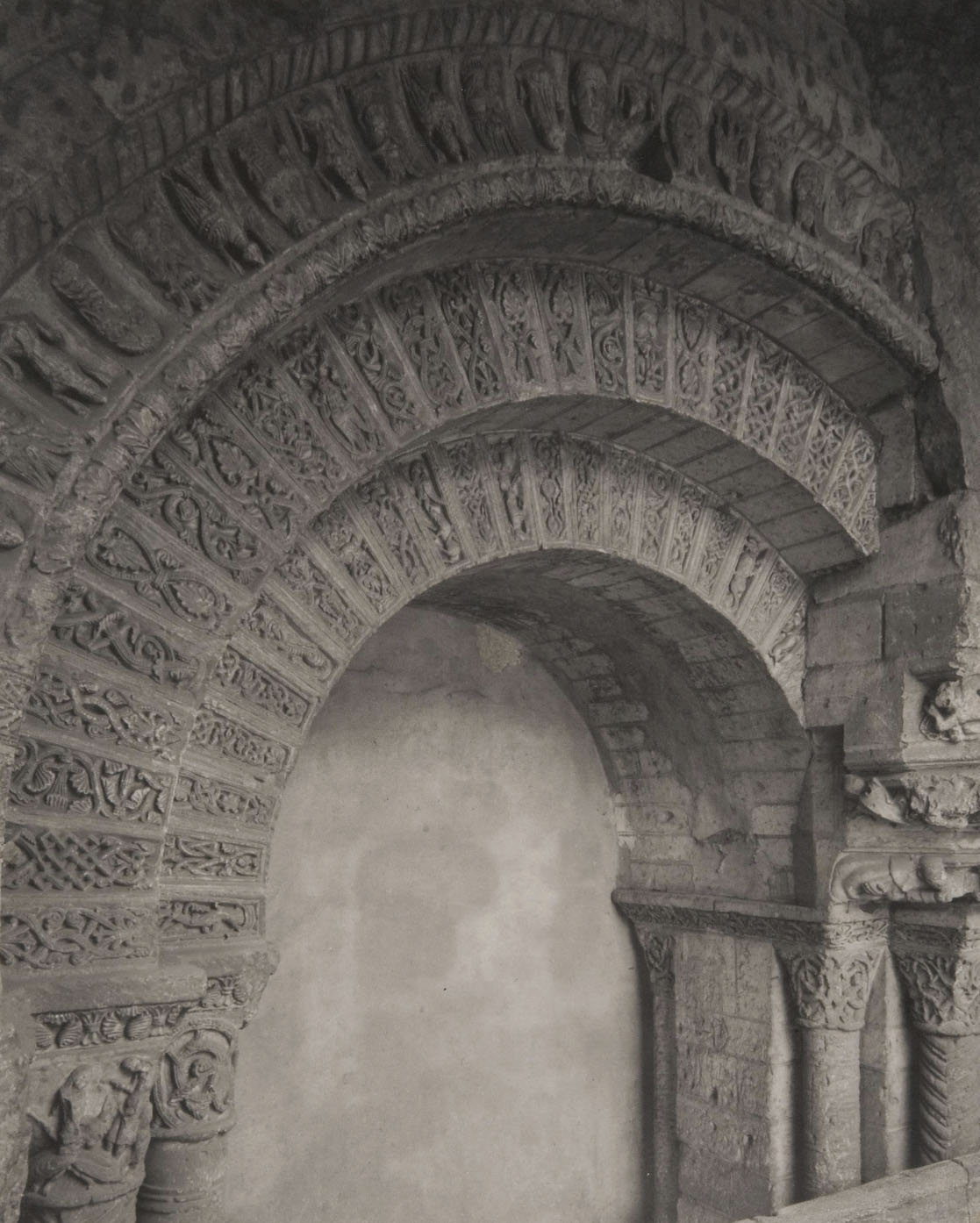
Frederick H. Evans (British, 1853-1943) 'Angers: Prefecture, Sculptured Arches of 11th-12th Century' c. 1906-1907 from the exhibition 'The Platinum Process: Photographs from the Nineteenth to the Twenty-First Century' at Philadelphia Museum of Art, February - May, 2010


Frederick H. Evans (British, 1853-1943)
Angers: Prefecture, Sculptured Arches of 11th-12th Century
c. 1906-1907
Platinum print
Image and sheet: 9 11/16 × 7 7/8 inches (24.6 × 20 cm)
Philadelphia Museum of Art
Purchased with funds contributed by Dorothy Norman and with the Director’s Discretionary Fund, 1968


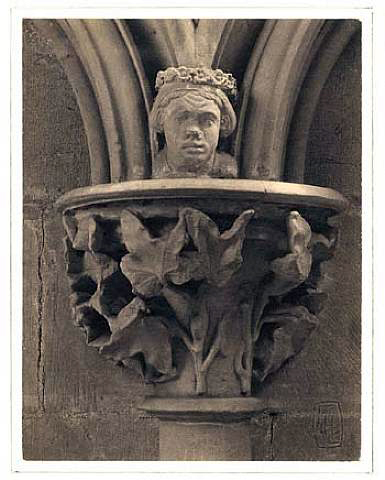
Frederick H. Evans (British, 1853-1943) 'Southwell Cathedral, Chapter House Capital' 1898


Frederick H. Evans (British, 1853-1943)
Southwell Cathedral, Chapter House Capital
1898
Platinum print
Philadelphia Museum of Art


Frederick H. Evans (British, 1853-1943) 'View across the nave to the transept at York Minster' 1901


Frederick H. Evans (British, 1853-1943)
View across the nave to the transept at York Minster
1901
Platinum print
Philadelphia Museum of Art


Frederick H. Evans (British, 1853-1943) 'Durham Cathedral: West End Nave' 1912


Frederick H. Evans (British, 1853-1943)
Durham Cathedral: West End Nave
1912
Platinum print
Image and sheet: 9 1/2 × 4 13/16 inches (24.1 × 12.3cm)
Philadelphia Museum of Art
Purchased with funds contributed by Dorothy Norman, 1973


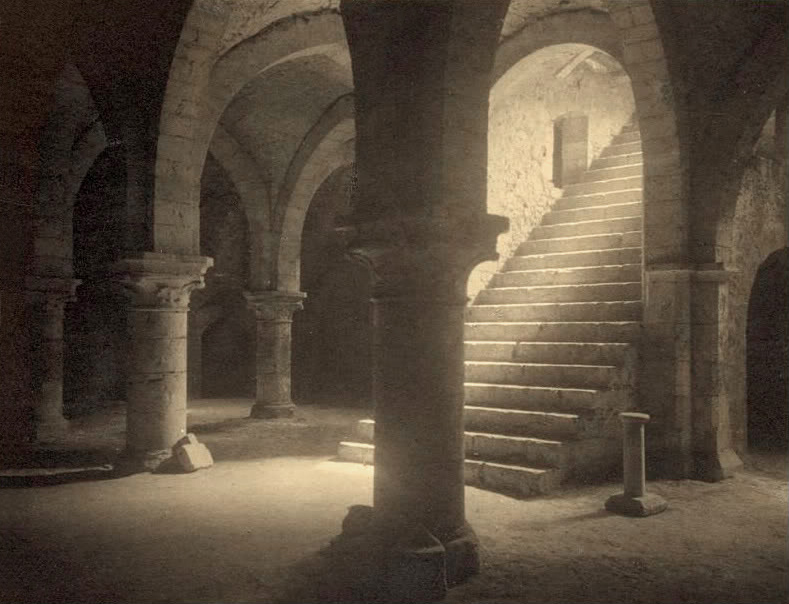
Frederick H. Evans (British, 1853-1943) 'Ancient crypt cellars in Provins' 1910


Frederick H. Evans (British, 1853-1943)
Ancient crypt cellars in Provins
1910
Platinum print
Philadelphia Museum of Art


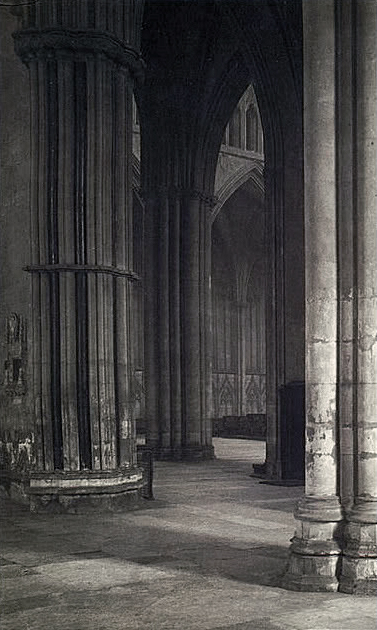
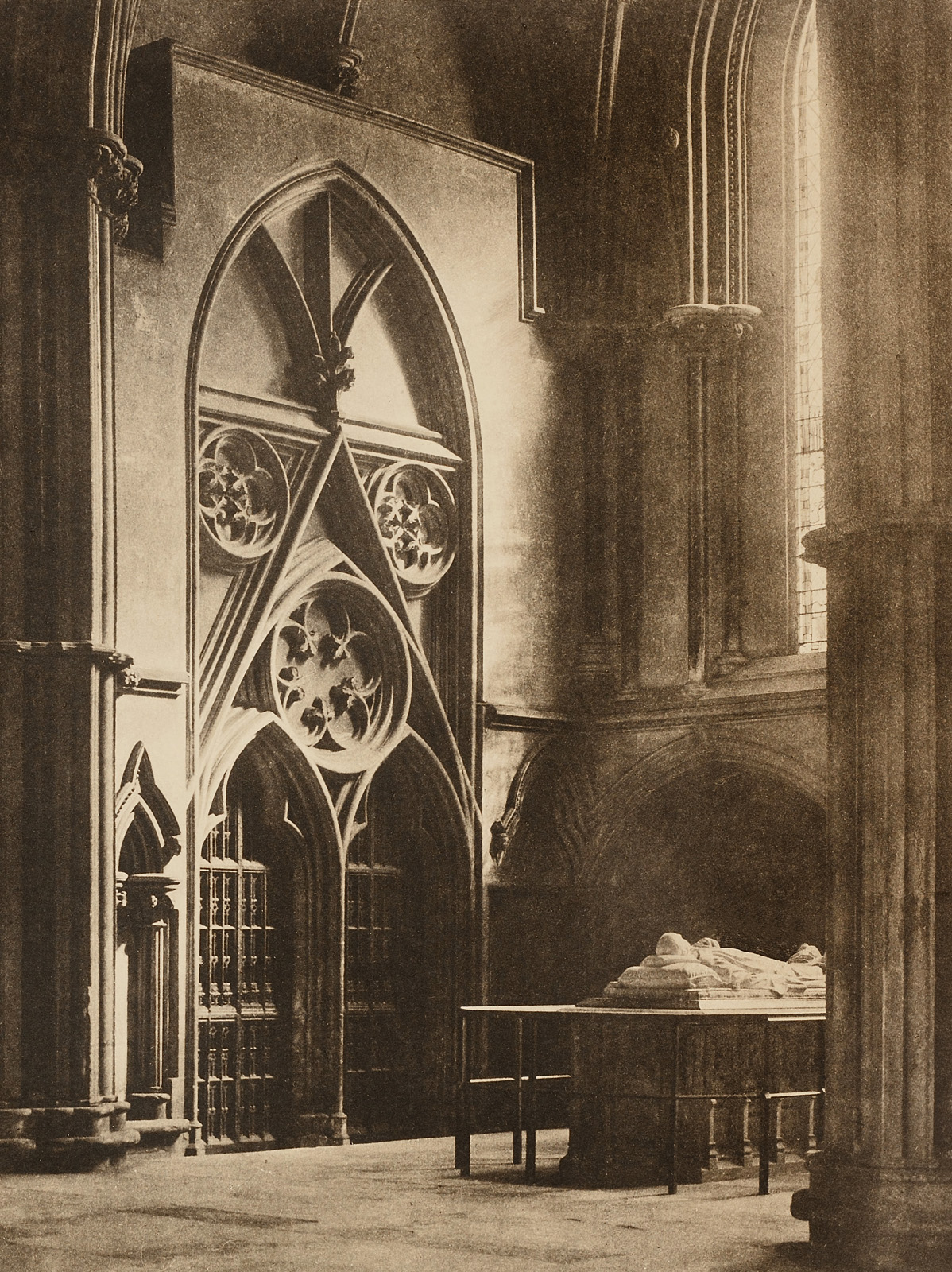
Frederick H. Evans (British, 1853-1943) 'Westminster Abbey: North Transept: East Side' 1911


Frederick H. Evans (British, 1853-1943)
Westminster Abbey: North Transept: East Side
1911
Platinum print
Image and sheet: 9 7/16 × 6 inches (23.9 × 15.3cm)
Philadelphia Museum of Art
Purchased with the Lola Downin Peck Fund, 1969


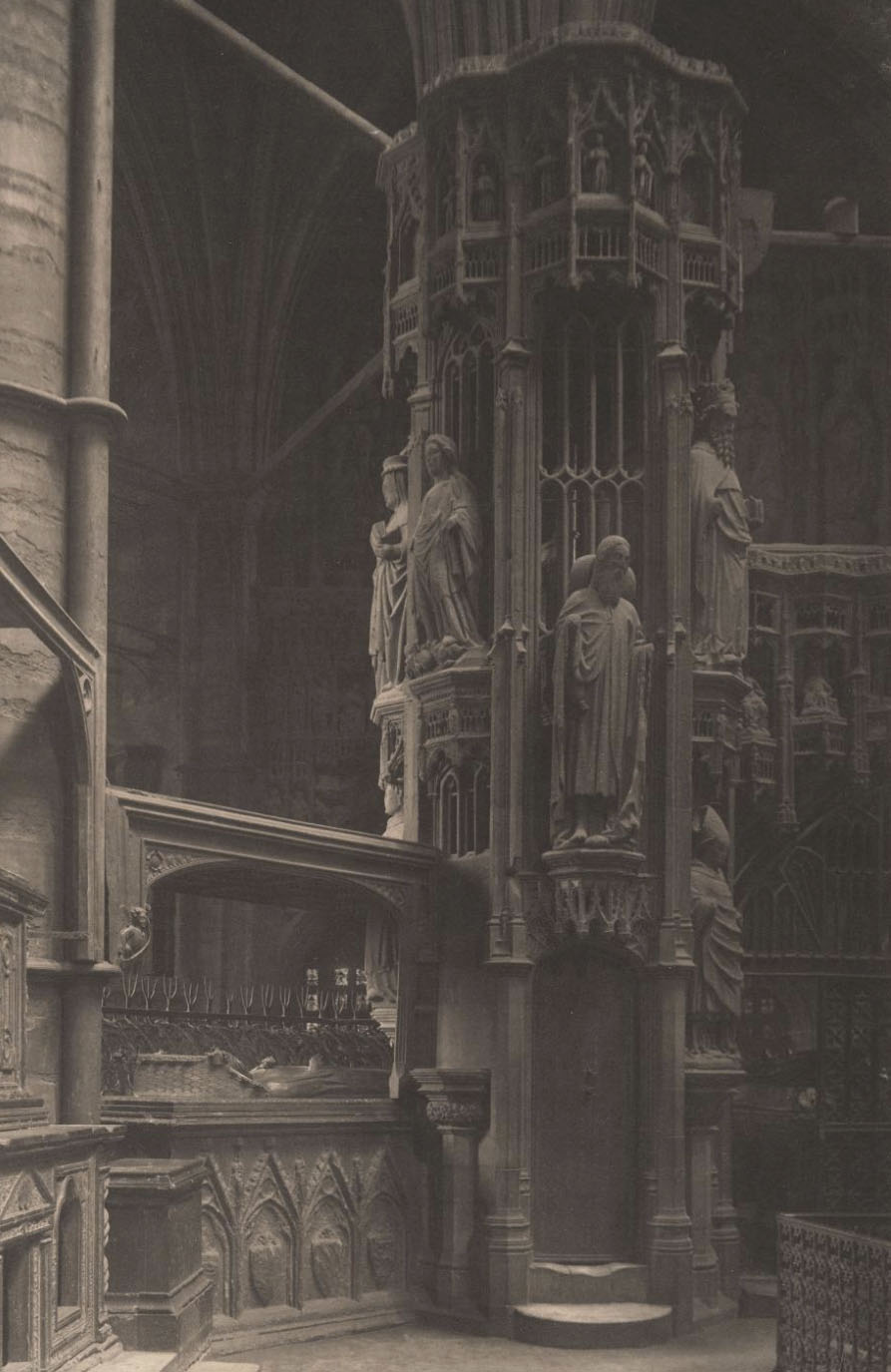
Frederick H. Evans (British, 1853-1943) 'Westminster Abbey: Staircase in Confessor's Chapel' 1911


Frederick H. Evans (British, 1853-1943)
Westminster Abbey: Staircase in Confessor’s Chapel
1911
Platinum print
Image and sheet: 9 1/2 × 6 1/8 inches (24.2 × 15.6cm)
Philadelphia Museum of Art
Purchased with the Lola Downin Peck Fund, 1969


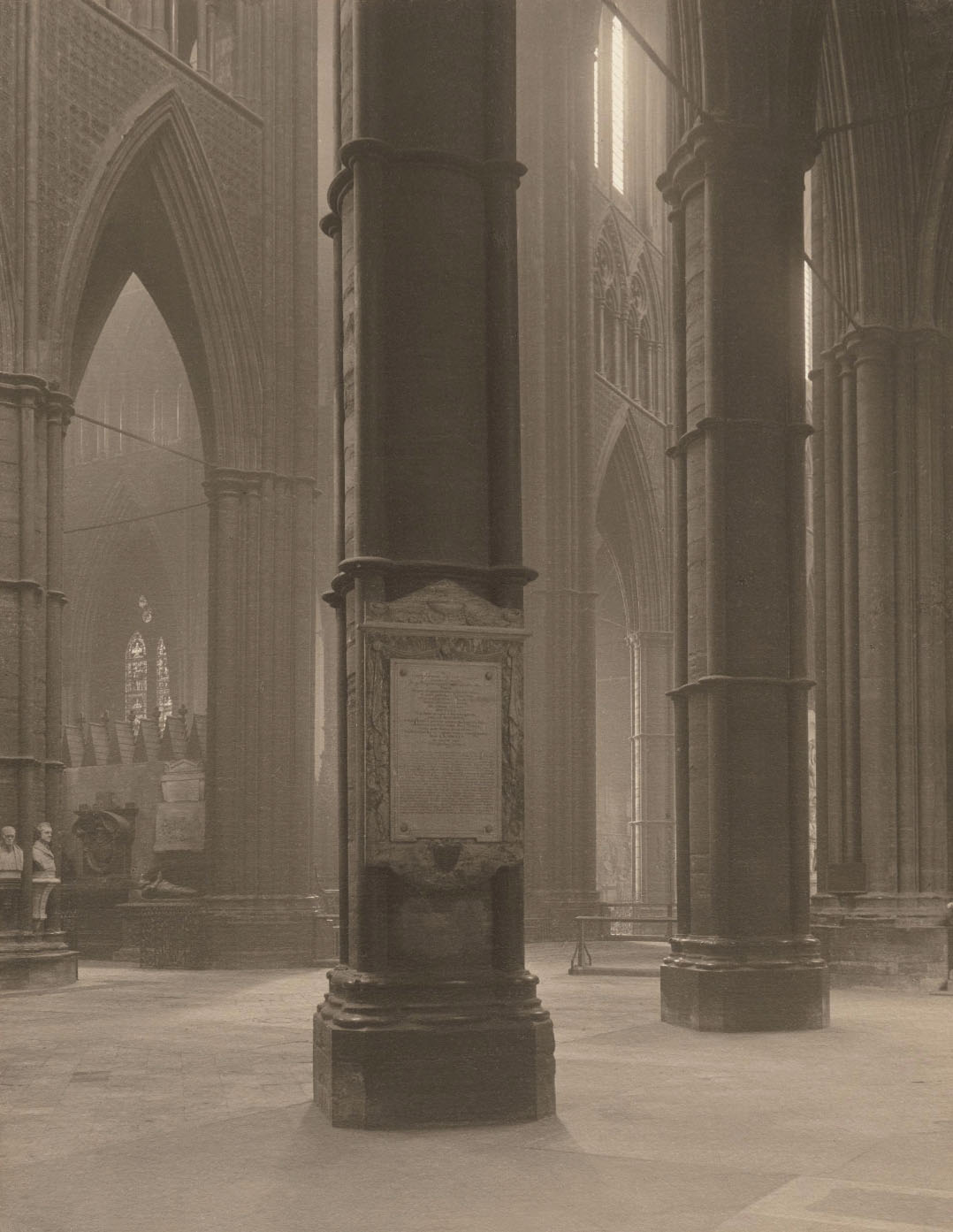
Frederick H. Evans (British, 1853-1943) 'Westminster Abbey: From the South Transept' 1911


Frederick H. Evans (British, 1853-1943)
Westminster Abbey: From the South Transept
1911
Platinum print
Image and sheet: 9 1/2 × 7 7/16 inches (24.2 × 18.9cm)
Philadelphia Museum of Art
Purchased with the Lola Downin Peck Fund, 1969


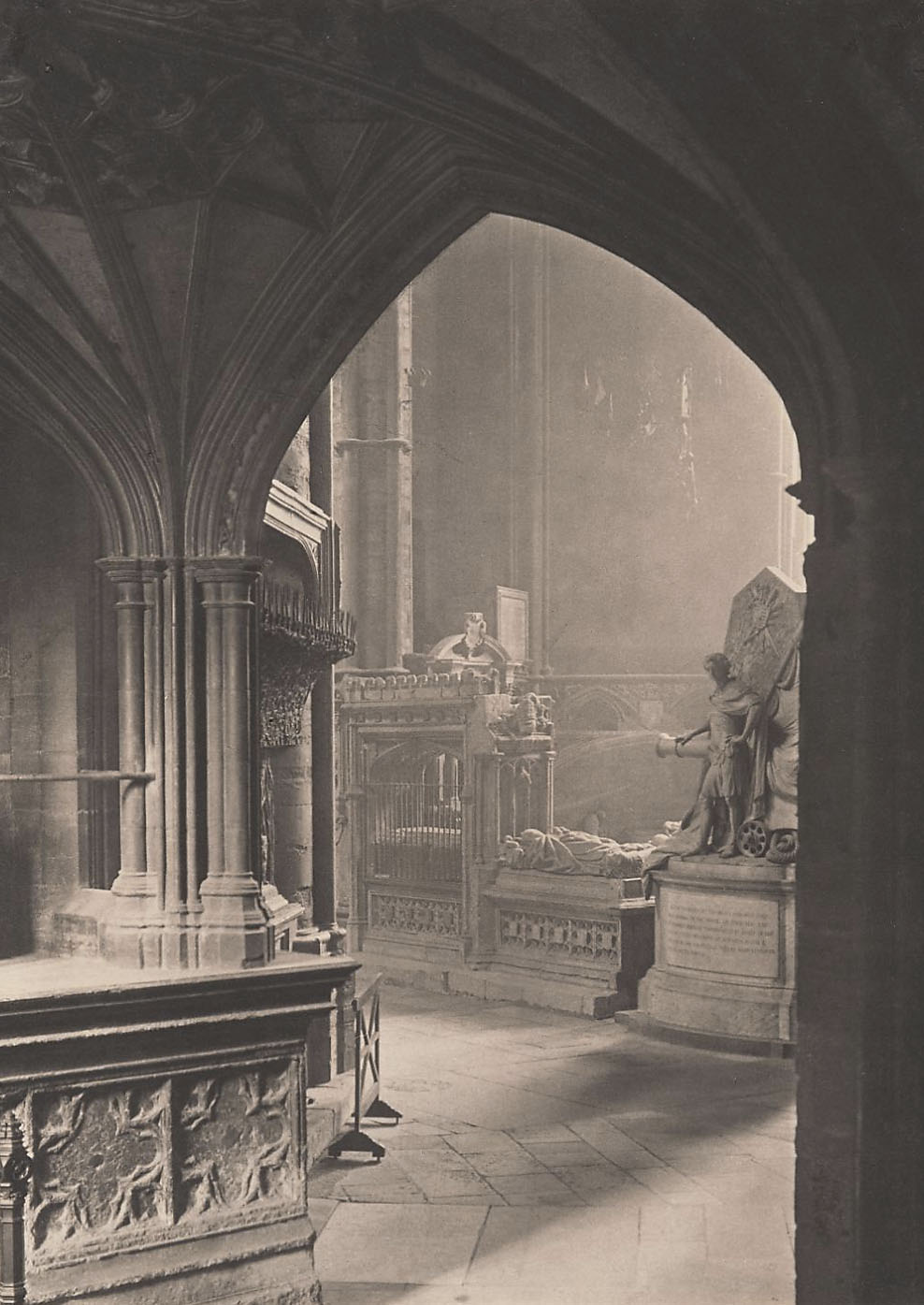
Frederick H. Evans (British, 1853-1943) 'Westminster Abbey: East Ambulatory' 1911


Frederick H. Evans (British, 1853-1943)
Westminster Abbey: East Ambulatory
1911
Platinum print
Image and sheet: 9 5/16 × 6 11/16 inches (23.7 × 17cm)
Purchased with the Lola Downin Peck Fund, 1969


Frederick H. Evans (British, 1853-1943) 'Westminster Abbey: 12th-Century Mosaic Floor at the Sanctuary' 1911


Frederick H. Evans (British, 1853-1943)
Westminster Abbey: 12th-Century Mosaic Floor at the Sanctuary
1911
Platinum print
Image and sheet: 7 5/16 × 8 7/8 inches (18.6 × 22.6 cm)
Philadelphia Museum of Art
Purchased with the Lola Downin Peck Fund, 1969


Although Evans indicated that this mosaic floor was created in the twelfth century, the surface surrounding the High Altar of Westminster Abbey was in fact laid in 1268. King Henry III (1207-1272) commissioned the mosaic from Roman craftsmen who specialised in the opus sectile, or “cut work” technique, commonly called “Cosmati” after a well-known Italian family of mosaic artists. Materials used here include blue, red, and turquoise glass as well as yellow limestone, purple porphyry, green serpentine, and onyx. Evans’s unusual composition privileges the floor, drawing attention to the intricate and abstract design of squares, rectangles, and roundels.

Text from the Philadelphia Museum of Art website


Frederick H. Evans (British, 1853-1943) 'Westminster Abbey: East End, North Ambulatory' 1911


Frederick H. Evans (British, 1853-1943)
Westminster Abbey: East End, North Ambulatory
1911
Platinum print
Image and sheet: 9 3/8 × 7 1/2 inches (23.8 × 19.1cm)
Philadelphia Museum of Art
Purchased with the Lola Downin Peck Fund, 1969


Frederick H. Evans (British, 1853-1943) 'Westminster Abbey: Apse from Choir' 1911


Frederick H. Evans (British, 1853-1943)
Westminster Abbey: Apse from Choir
1911
Platinum print
Image and sheet: 9 7/16 × 7 1/2 inches (23.9 × 19.1cm)
Philadelphia Museum of Art
Purchased with the Lola Downin Peck Fund, 1969


Country Life magazine commissioned Evans to photograph the interior of London’s Westminster Abbey in 1911, while the church was closed to worshipers in preparation for the coronation of King George V (1865-1936) and Queen Mary (1867-1953). Although the construction and removal of temporary facilities relating to the coronation regularly disrupted Evans’s work, the more than fifty photographs in the resulting portfolio reveal only the timeless beauty and grandeur of the Gothic structure that has hosted thirty-eight royal coronations since the year 1066.

Text from the Philadelphia Museum of Art website


Frederick H. Evans (British, 1853-1943) 'Westminster Abbey: Henry VII Chapel, Detail of Henry VII Tomb' 1911


Frederick H. Evans (British, 1853-1943)
Westminster Abbey: Henry VII Chapel, Detail of Henry VII Tomb
1911
Platinum print
Image and sheet: 8 1/16 × 7 3/16 inches (20.4 × 18.2cm)
Philadelphia Museum of Art
Purchased with the Lola Downin Peck Fund, 1969


Frederick H. Evans (British, 1853-1943) 'Westminster Abbey: Tomb of Edward III, Mary and William' 1911


Frederick H. Evans (British, 1853-1943)
Westminster Abbey: Tomb of Edward III, Mary and William
1911
Platinum print
Image and sheet: 8 11/16 × 6 5/8 inches (22.1 × 16.9cm)
Philadelphia Museum of Art
Purchased with the Lola Downin Peck Fund, 1969


Frederick H. Evans (British, 1853-1943) 'York Minster - In Sure and Certain Hope' 1903


Frederick H. Evans (British, 1853-1943)
York Minster – In Sure and Certain Hope
1903
Platinum print
Philadelphia Museum of Art


Frederick H. Evans (British, 1853-1943) 'A Sea of Steps - Stairs to Chapter House - Wells Cathedral' 1903


Frederick H. Evans (British, 1853-1943)
A Sea of Steps – Stairs to Chapter House – Wells Cathedral
1903
Platinum print
Philadelphia Museum of Art


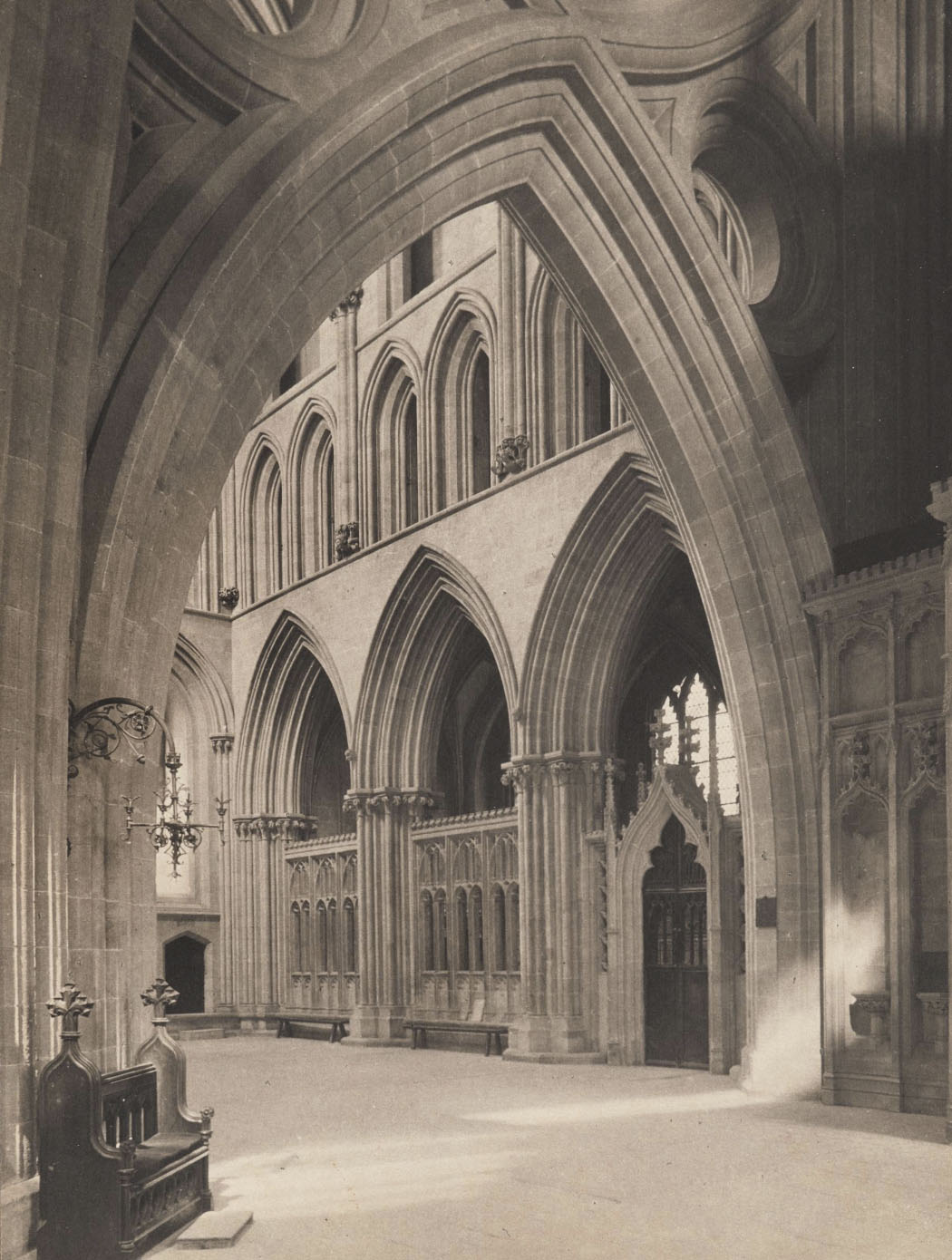
Frederick H. Evans (British, 1853-1943) 'Wells Cathedral: North Transept' c. 1903


Frederick H. Evans (British, 1853-1943)
Wells Cathedral: North Transept
c. 1903
Platinum print
Image and sheet: 7 1/4 × 5 7/16 inches (18.4 × 13.8cm)
Purchased with funds contributed by Dorothy Norman, 1973


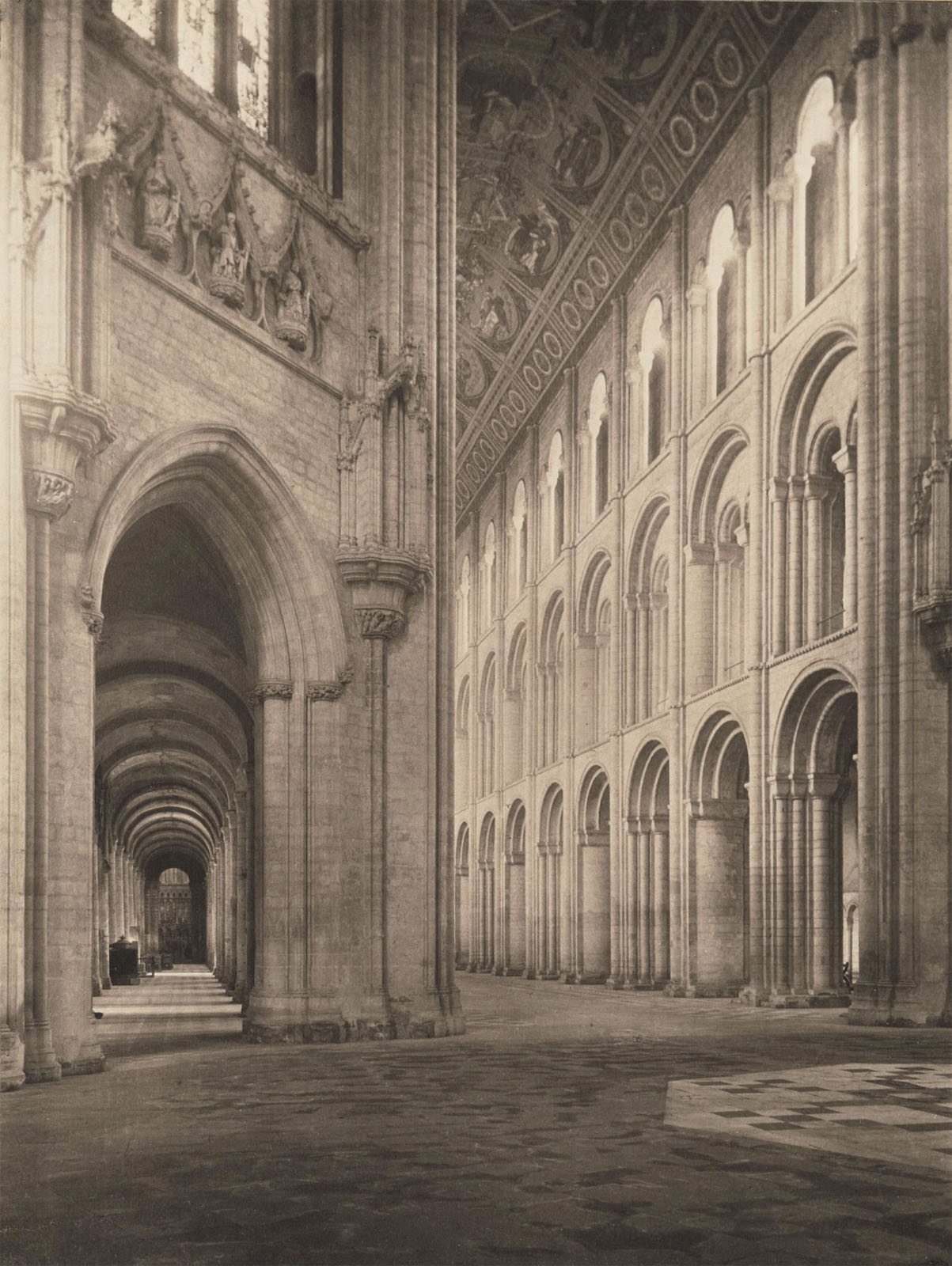
Frederick H. Evans (British, 1853-1943) 'Ely Cathedral: Octagon into Nave Aisle' c. 1899


Frederick H. Evans (British, 1853-1943)
Ely Cathedral: Octagon into Nave Aisle
c. 1899
Platinum print
Image and sheet: 7 15/16 × 6 1/8 inches (20.2 × 15.6cm)
Philadelphia Museum of Art
Purchased with funds contributed by Dorothy Norman, 1973


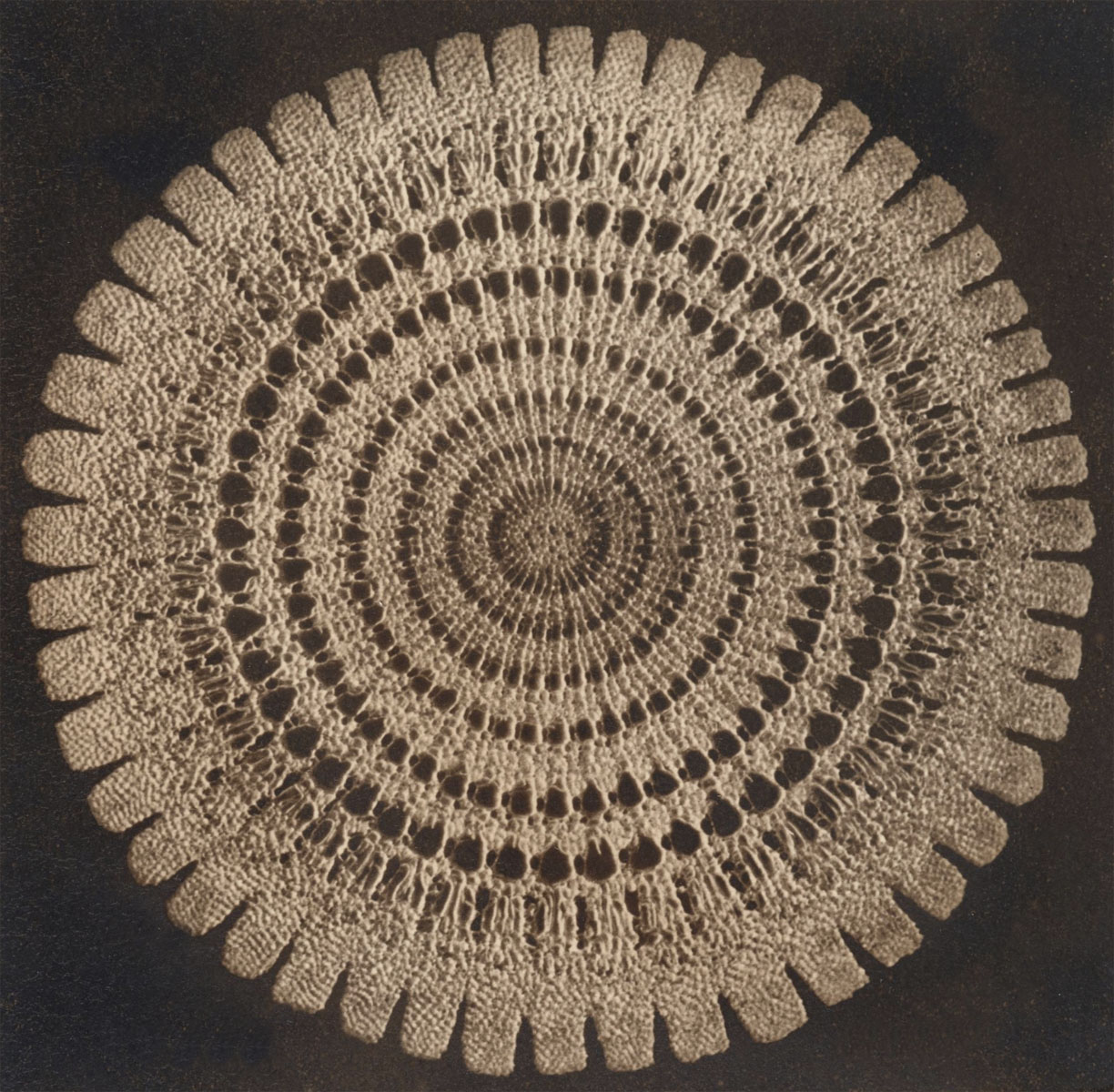
Frederick H. Evans (British, 1853-1943) 'Fr: Sec: Spine of Echinus x. 40' c. 1887


Frederick H. Evans (British, 1853-1943)
Fr: Sec: Spine of Echinus x. 40
c. 1887
Platinum print
Image and sheet: 4 3/4 × 4 5/8 inches (12 × 11.8cm)
Philadelphia Museum of Art
Purchased with funds contributed by Dorothy Norman, 1973


Unlike many beginning photographers of the nineteenth century who experimented with straightforward portrait or landscape compositions, Evans’s earliest trials with photography involved minute organic matter and required the use of a microscope. His complicated “photo-microgram” process allowed him to capture the intricate structures of objects including a water beetle’s eye, tiny sea shells, and this section of a sea urchin’s spine. Although classified as scientific rather than artistic imagery by the Photographic Society of Great Britain, this photo-microgram demonstrates Evans’s ability to delineate the magnificence of organic patterns and presage his photographs that depict the structural beauty of cathedrals.

Text from the Philadelphia Museum of Art website


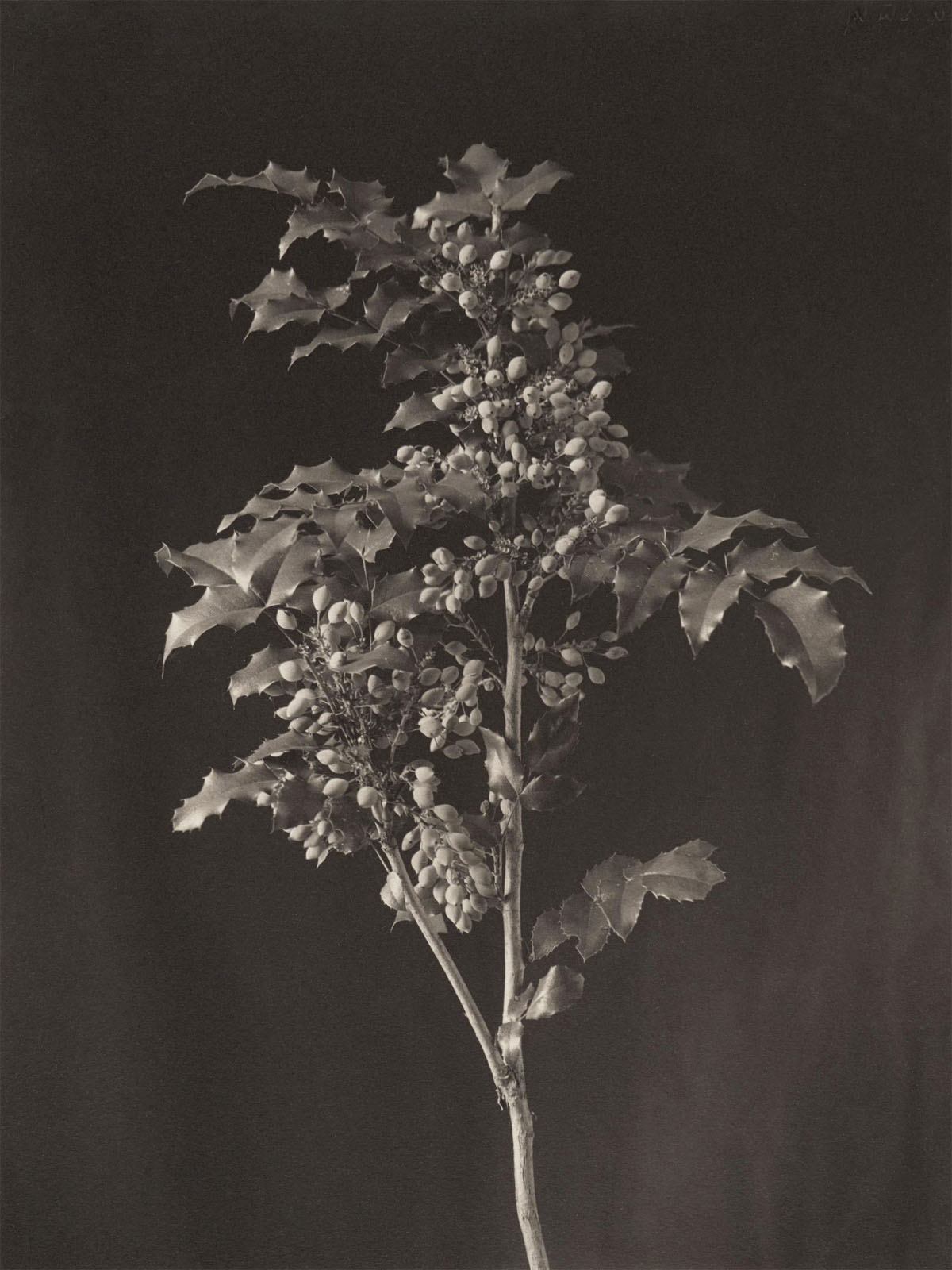
Frederick H. Evans (British, 1853-1943) 'Berberis: Plant Study' c. 1908


Frederick H. Evans (British, 1853-1943)
Berberis: Plant Study
c. 1908
Platinum print
Image and sheet: 9 3/8 × 7 1/16 inches (23.8 × 17.9cm)
Philadelphia Museum of Art
Purchased with funds contributed by Dorothy Norman and with the Director’s Discretionary Fund, 1968


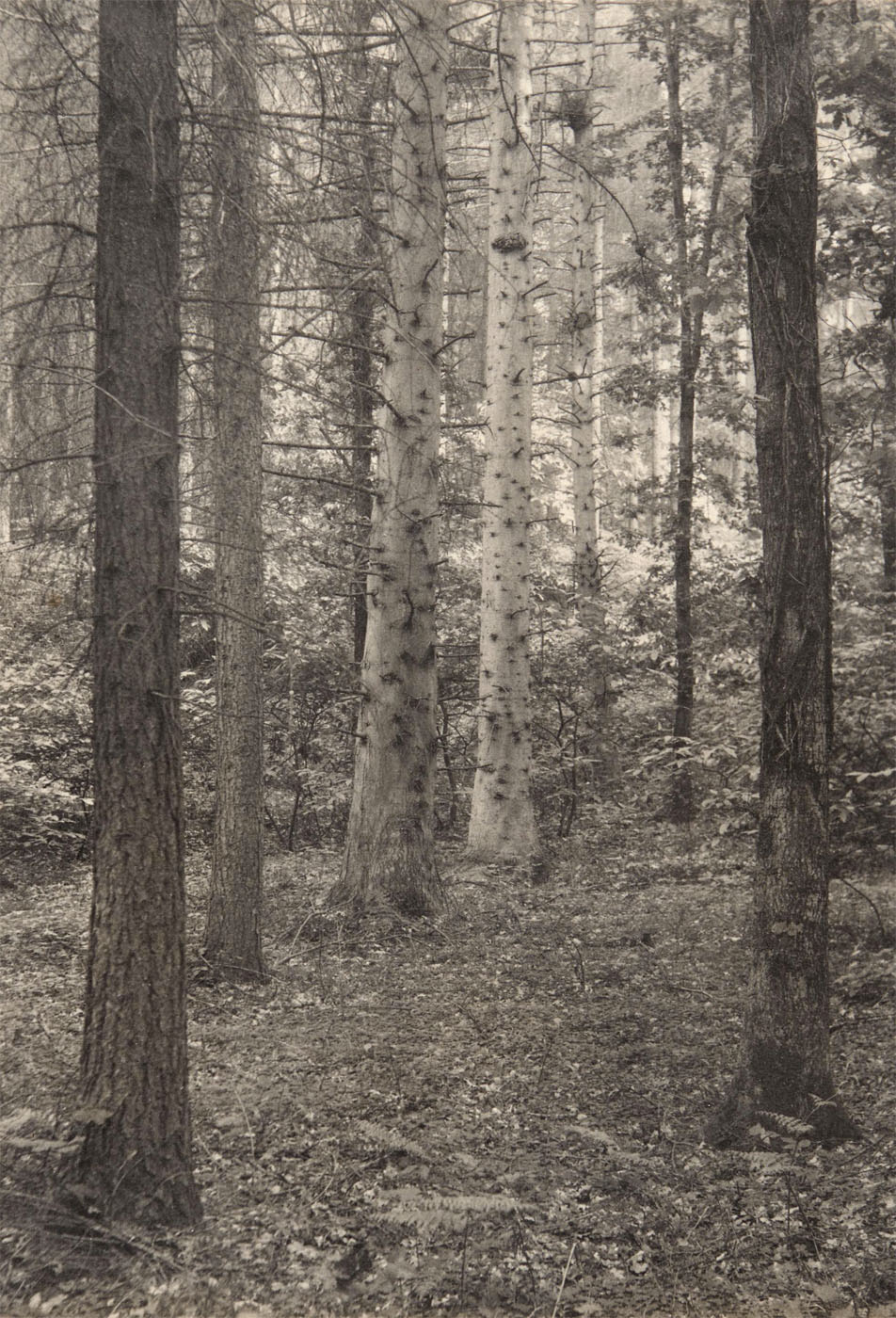
Frederick H. Evans (British, 1853-1943) 'Redlands Woods' c. 1908


Frederick H. Evans (British, 1853-1943)
Redlands Woods
c. 1908
Platinum print
Image and sheet: 6 × 4 3/16 inches (15.3 × 10.6cm)
Philadelphia Museum of Art
Purchased with funds contributed by Dorothy Norman and with the Director’s Discretionary Fund, 1968


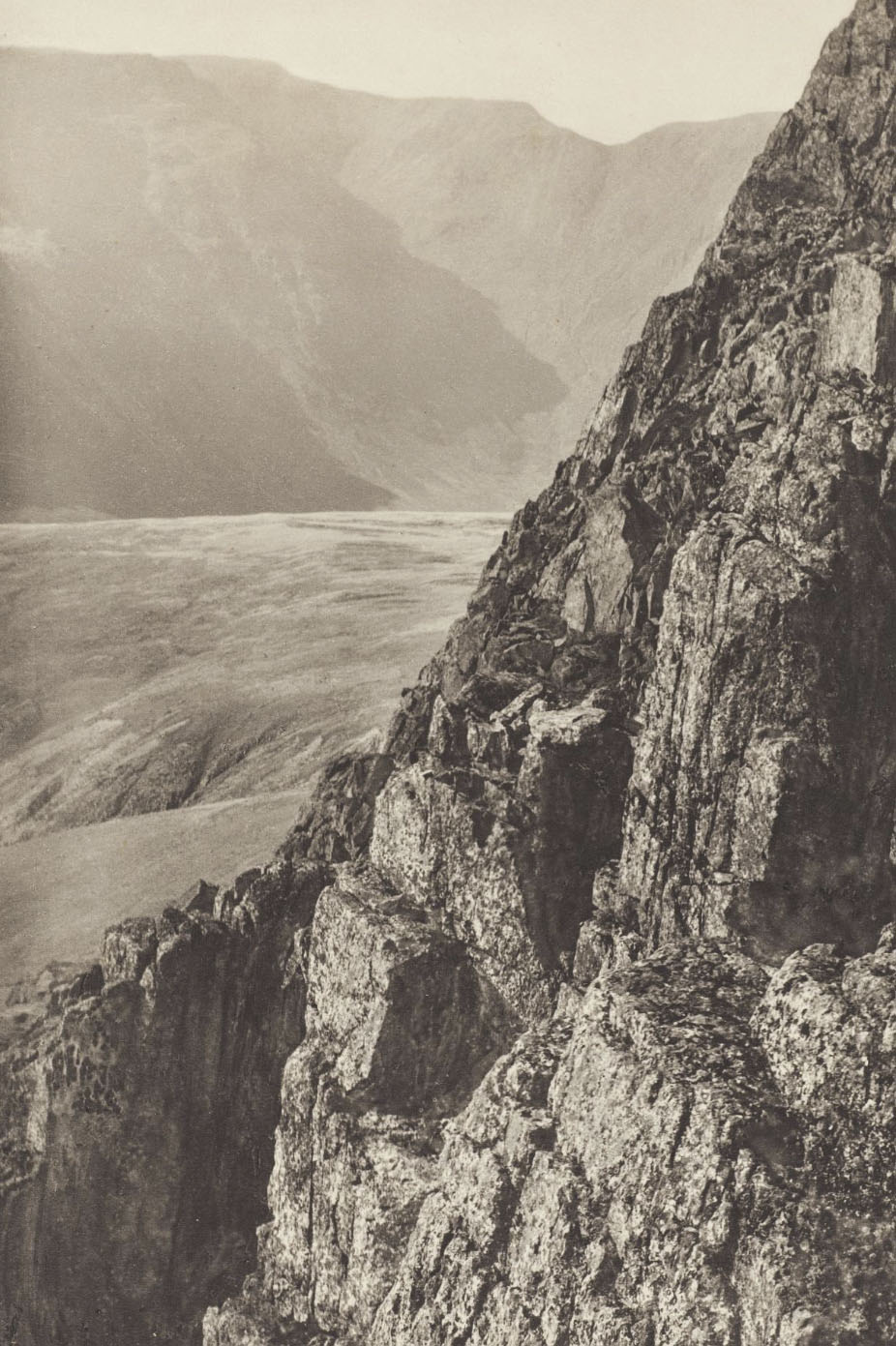
Frederick H. Evans (British, 1853-1943) 'An English Glacier: Near Summit of Scafell' c. 1905


Frederick H. Evans (British, 1853-1943)
An English Glacier: Near Summit of Scafell
c. 1905
Platinum print
Image and sheet: 9 3/4 × 6 1/2 inches (24.8 × 16.5 cm)
Philadelphia Museum of Art
Purchased with funds contributed by Dorothy Norman and with the Director’s Discretionary Fund, 1968


Exhibition Highlights the Exceptional Beauty of the Platinum Process in Photography

A cornerstone of photographic practice during the late nineteenth and early twentieth centuries, the platinum print is revered by photographers and viewers alike as one of the most beautiful forms of photography, with subtle and lustrous shades that range from the deepest blacks to the most delicate whites. The Philadelphia Museum of Art will present an exhibition of more than 50 works from the late 19th century to the present, showcasing outstanding prints largely drawn from the Museum’s collection of photographs. The Platinum Process: Photographs from the Nineteenth to the Twenty-First Century, on view February 27 – May 23 in the Julien Levy Gallery at the Museum’s Perelman Building, will include images by early masters of the process including Frederick H. Evans (British, 1853-1943) and Alfred Stieglitz (American, 1864-1946), as well as works by skilled contemporary practitioners such as Lois Conner (American, born 1951) and Andrea Modica (American, born 1960), who continue to engage in this historic and painstaking process in an era noted for electronic imaging.

“The exhibition offers an opportunity to share this exceptionally beautiful form of photography with our visitors, some of whom may be seeing it for the first time,” Curator of Photographs Peter Barberie said, adding “the Museum is fortunate to have a particularly strong and varied collection of work by some of the truly great practitioners of this process.”

Unlike standard silver printing, in which particles are suspended in gelatin, platinum is brushed directly onto the paper, allowing artists to create a matte image with an exceptionally wide tonal range. Introduced in 1873, the process was enthusiastically embraced by the group of photographers known as the Pictorialists, who believed that fine art photography should emulate the aesthetic values of painting. The group included Evans, whose beautifully rendered images of Britain’s Westminster Abbey, York Minster Abbey and Ely Cathedral are included in the exhibition, and Stieglitz (American, 1876-1946), who is represented in the show by a portrait of his wife, the artist Georgia O’Keeffe (American, 1887-1986), as well as a landscape that foreshadows his Equivalents series.

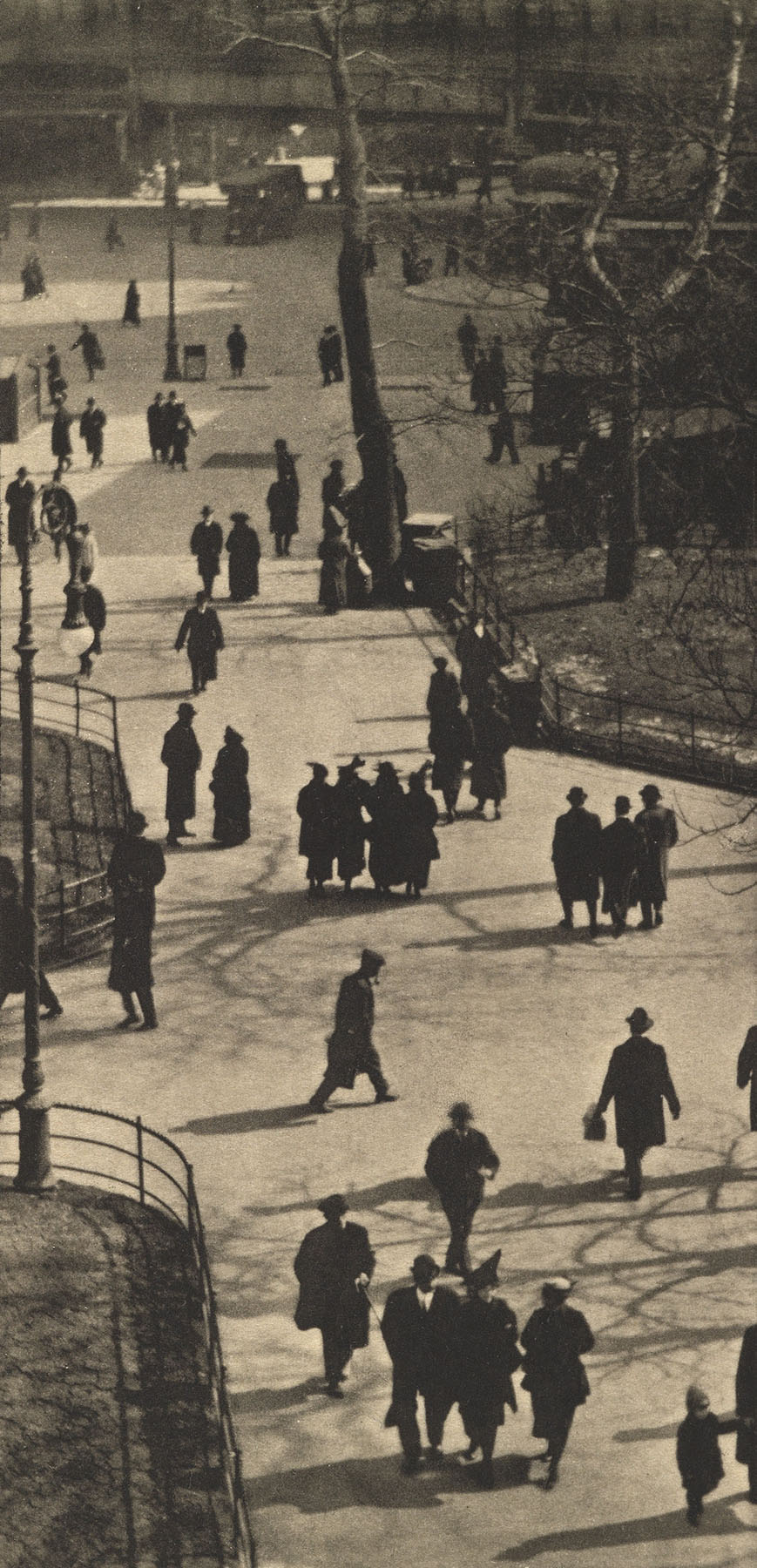
While encompassing works spanning many dates and styles, The Platinum Process highlights one of the Museum’s treasures, the 1915 masterpiece “Wall Street” by Paul Strand (1890-1976, see above), whose work was at the forefront of the modernist aesthetic developing in New York during the early 20th century. Strand used the subtlety of the platinum print in this work to emphasise abstract patterns in the long shadows cast by figures that walk before a succession of monumental windows.

Reserves of platinum were appropriated for military use during World War I, and its high cost led manufacturers to cease production of commercial platinum paper by the 1930s. As photographers became more engaged in social concerns, documentation and realism, the process fell into disuse. It was not until the early 1960s when Irving Penn, then a successful photographer for Vogue magazine, began to experiment with the long-forgotten technique and took the first steps toward its revival. A meticulous craftsman, Penn was delighted by the luminous prints and lavish tonal range he could achieve using platinum and began to make new photographs with this process in the 1970s. Penn and many of the other contemporary artists on view including Thomas Shillea and Jennette Williams followed Strand’s example, using platinum not for idealised pictures, but to capture nuances of modern experience.

Press release from The Philadelphia Museum of Art website [Online] Cited 25/07/2019. No longer available online


Robert S. Redfield (American, 1849-1923) 'Heloise Redfield at Mount Washington' 1889


Robert S. Redfield (American, 1849-1923)
Heloise Redfield at Mount Washington
1889
Platinum print
Image and sheet: 6 5/16 × 8 1/4 inches (16 × 21cm)
Philadelphia Museum of Art
Gift of Alfred G. Redfield, 1985


F. Holland Day (American, 1864-1933) 'Untitled' 1905


F. Holland Day (American, 1864-1933)
Untitled
1905
Platinum prints mounted to paper
Image and sheet (overall): 10 1/16 × 7 1/2 inches (25.6 × 19.1cm)
Philadelphia Museum of Art
From the Collection of Dorothy Norman, 1970


Katharine Steward Stanbery (American, 1870-1928) 'Untitled (Two Girls Playing Jacks)' 1907


Katharine Steward Stanbery (American, 1870-1928)
Untitled (Two Girls Playing Jacks)
1907
Platinum print
Image and sheet: 8 15/16 x 4 11/16 inches (22.7 x 11.9cm)
Philadelphia Museum of Art
125th Anniversary Acquisition. Purchased with the Lola Downin Peck Fund, the Alice Newton Osborn Fund, and with funds contributed by The Judith Rothschild Foundation, 2002


Paul Strand (American, 1890-1976) 'City Hall Park, New York' 1915


Paul Strand (American, 1890-1976)
City Hall Park, New York

1915
Platinum print
Sheet: 13 7/8 x 7 3/4 inches (35.2 x 19.7cm)
Philadelphia Museum of Art
Gift of the artist, 1972


Paul Strand (American, 1890-1976) 'Washington Heights, New York' 1915


Paul Strand (American, 1890-1976)
Washington Heights, New York
1915 (negative); 1915 (print)
Platinum print
Image and sheet: 9 3/8 x 11 7/8 inches (23.8 x 30.2cm)
Philadelphia Museum of Art
The Paul Strand Retrospective Collection, 1915-1975, gift of the estate of Paul Strand, 1980


Paul Strand (American, 1890-1976) 'Wall Street, New York' 1915


Paul Strand (American, 1890-1976)
Wall Street
1915 (negative); 1915 (print)
Platinum print
Image: 9 3/4 × 12 11/16 inches (24.8 × 32.2cm)
Philadelphia Museum of Art
The Paul Strand Retrospective Collection, 1915-1975, gift of the estate of Paul Strand, 1980


Paul Strand (American, 1890-1976) 'Man in a Derby, New York' 1916


Paul Strand (American, 1890-1976)
Man in a Derby, New York
1916
Platinum print
Image: 12 13/16 x 9 15/16 inches (32.5 x 25.2cm)
Mat: 22 11/16 x 19 7/16 inches (57.6 x 49.4cm)
Philadelphia Museum of Art
The Paul Strand Retrospective Collection, 1915-1975, gift of the estate of Paul Strand, 1980


Paul Strand (American, 1890-1976) 'The Italian, New York' 1916


Paul Strand (American, 1890-1976)
The Italian, New York
1916 (negative); 1916 (print)
Platinum print
Image and sheet: 13 × 9 5/16 inches (33 × 23.7cm)
Philadelphia Museum of Art
The Paul Strand Retrospective Collection, 1915-1975, gift of the estate of Paul Strand, 1980


Paul Strand (American, 1890-1976) 'Rebecca, New York' 1922 (negative); 1922 (print)


Paul Strand (American, 1890-1976)
Rebecca, New York
1922 (negative); 1922 (print)
Palladium print
Image: 9 3/4 x 7 13/16 inches (24.8 x 19.8cm)
Philadelphia Museum of Art
The Paul Strand Collection, purchased with funds contributed by Mr. and Mrs. Robert A. Hauslohner (by exchange), 1985


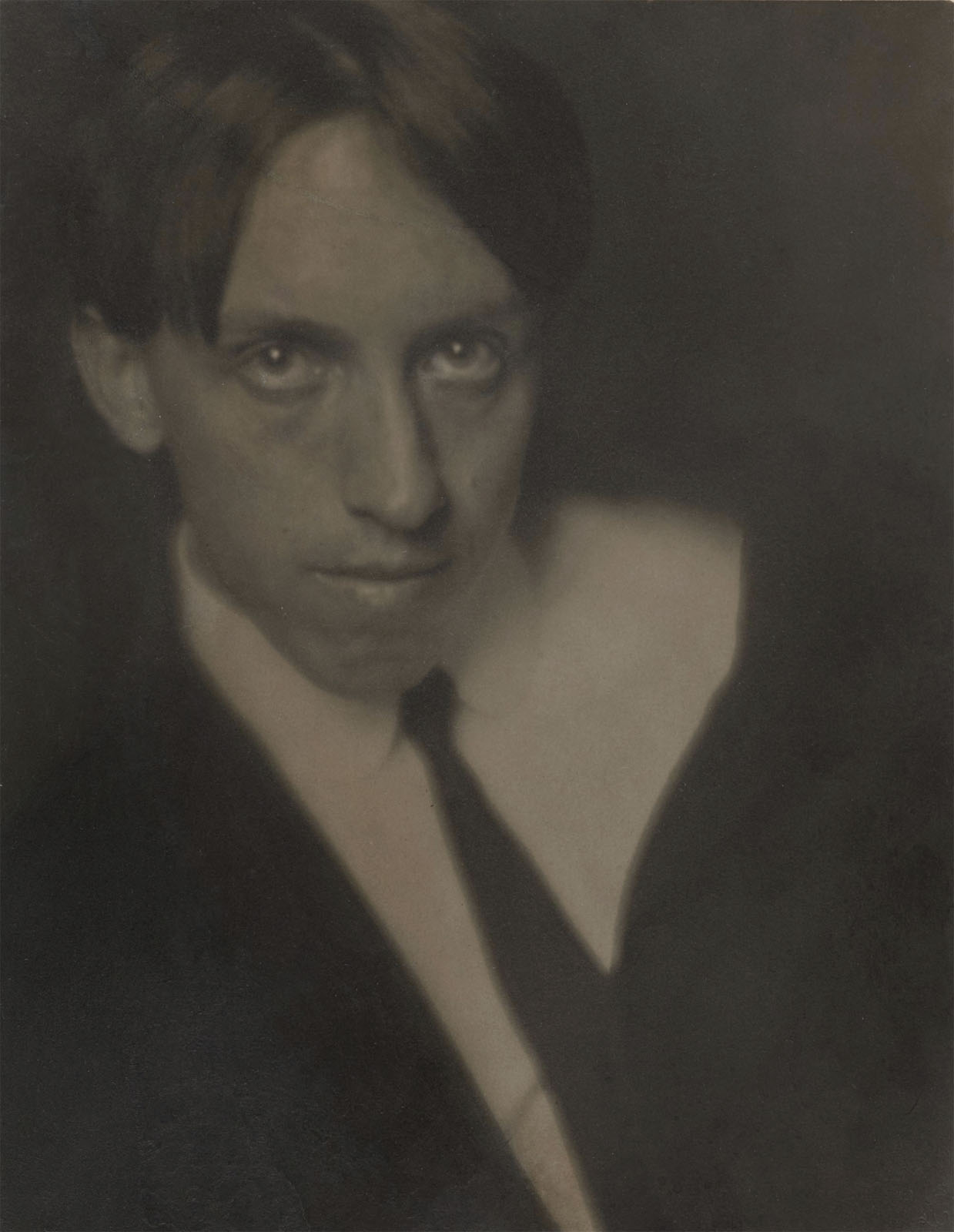
Alvin Langdon Coburn (British, born United States, 1882-1966) 'George Seeley' c. 1902-1903


Alvin Langdon Coburn (British, born United States, 1882-1966)
George Seeley
c. 1902-1903
Platinum print
Image and sheet: 11 x 8 9/16 inches (27.9 x 21.7cm)
Philadelphia Museum of Art
Purchased with the Lola Downin Peck Fund, the Alice Newton Osborn Fund, and with funds contributed by The Judith Rothschild Foundation in honour of the 125th Anniversary of the Museum, 2002


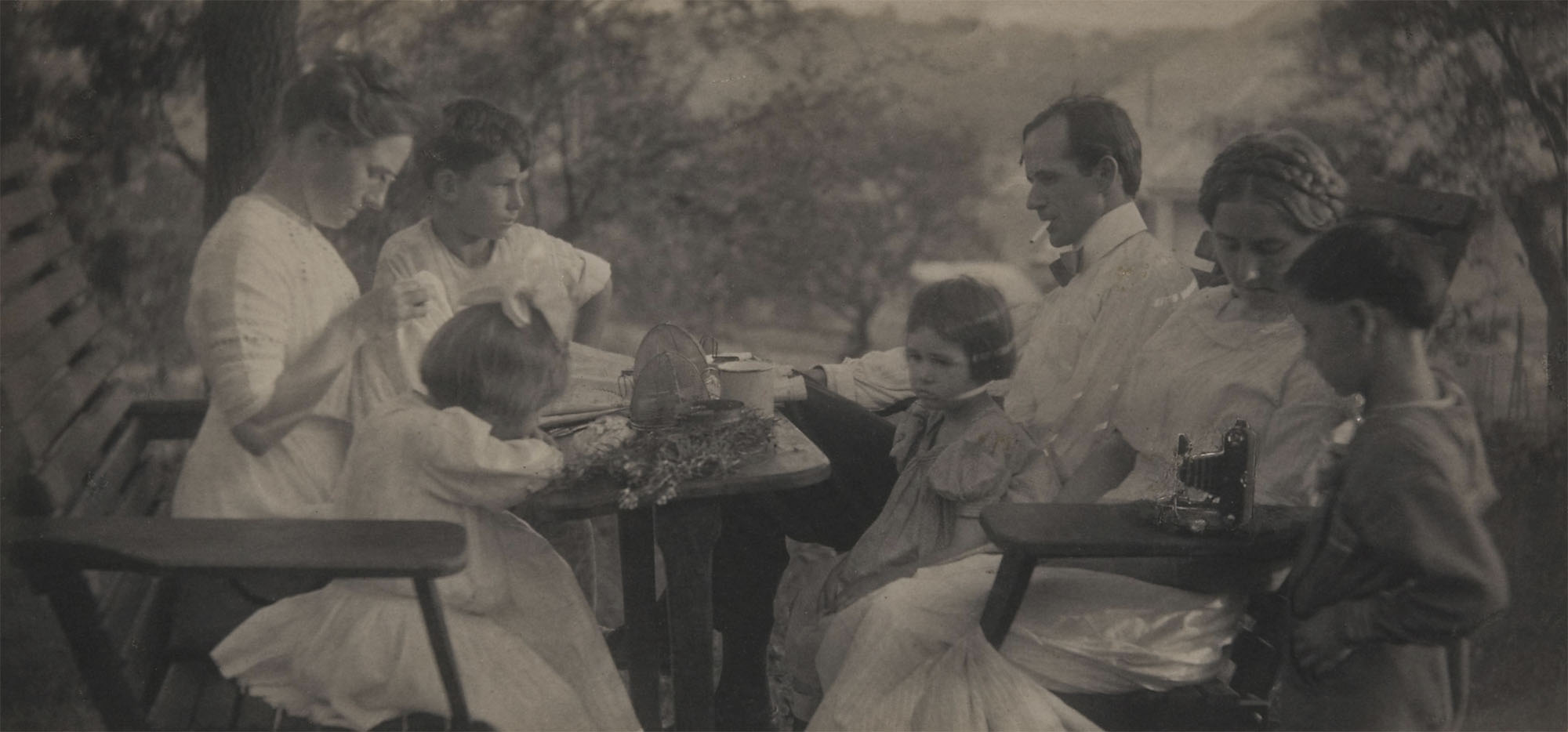
Gertrude Käsebier (American, 1852-1934) 'The Two Families' c. 1910


Gertrude Käsebier (American, 1852-1934)
The Two Families
c. 1910
Platinum print
Image and sheet: 5 3/8 × 11 5/16 inches (13.6 × 28.8cm)
Philadelphia Museum of Art
Gift of William Innes Homer, 1986


Käsebier’s family members and close friends served as her earliest photographic subjects, and familial themes remained paramount in the images she produced throughout her career. This photograph of Käsebier’s two daughters and their families, taken in Woburn, Massachusetts, is a dynamic portrait of a multigenerational gathering. Curiously, Käsebier manipulated this print to emphasise the act of photography. In the original scene, the young boy and seated woman at right look downward at a wire-mesh food cover resting on a plate. These objects have been removed from this print, replaced by the considerably more fascinating camera.

Text from the Philadelphia Museum of Art website


Gertrude Käsebier (American, 1852-1934) 'Mrs. F. H. Evans' c. 1900


Gertrude Käsebier (American, 1852-1934)
Mrs. F. H. Evans
c. 1900
Platinum print
Image and sheet: 7 1/2 × 5 1/4 inches (19.1 × 13.4 cm)
Philadelphia Museum of Art
Purchased with funds contributed by Dorothy Norman, 1973


In 1889, at the age of thirty-seven, Käsebier enrolled at Brooklyn’s Pratt Institute to study portrait painting. Although the art school did not teach photography, Käsebier began using a camera at home to document her growing children, eventually favoring photography over other mediums. She established a commercial portrait studio in New York City in 1897, working to “bring out in each photograph the essential personality that is variously called temperament, soul, humanity.” This portrait features Ada Emily Longhurst, wife of photographer Frederick H. Evans, whom Käsebier befriended while on a trip to England in 1901.

Text from the Philadelphia Museum of Art website


Philadelphia Museum of Art
26th Street and the Benjamin Franklin Parkway
Philadelphia, PA 19130

Opening hours:
Thursday – Monday 10am – 5pm
Closed Tuesdays and Wednesdays

The Philadelphia Museum of Art website

LIKE ART BLART ON FACEBOOK

Back to top