Exhibition: ‘What They Saw: Historical Photobooks by Women, 1843-1999’ at the Museo Nacional Centro de Arte Reina Sofía, Madrid

Exhibition dates: 23rd February – 7th June 2024

Curators: Russet Lederman and Olga Yatskevich
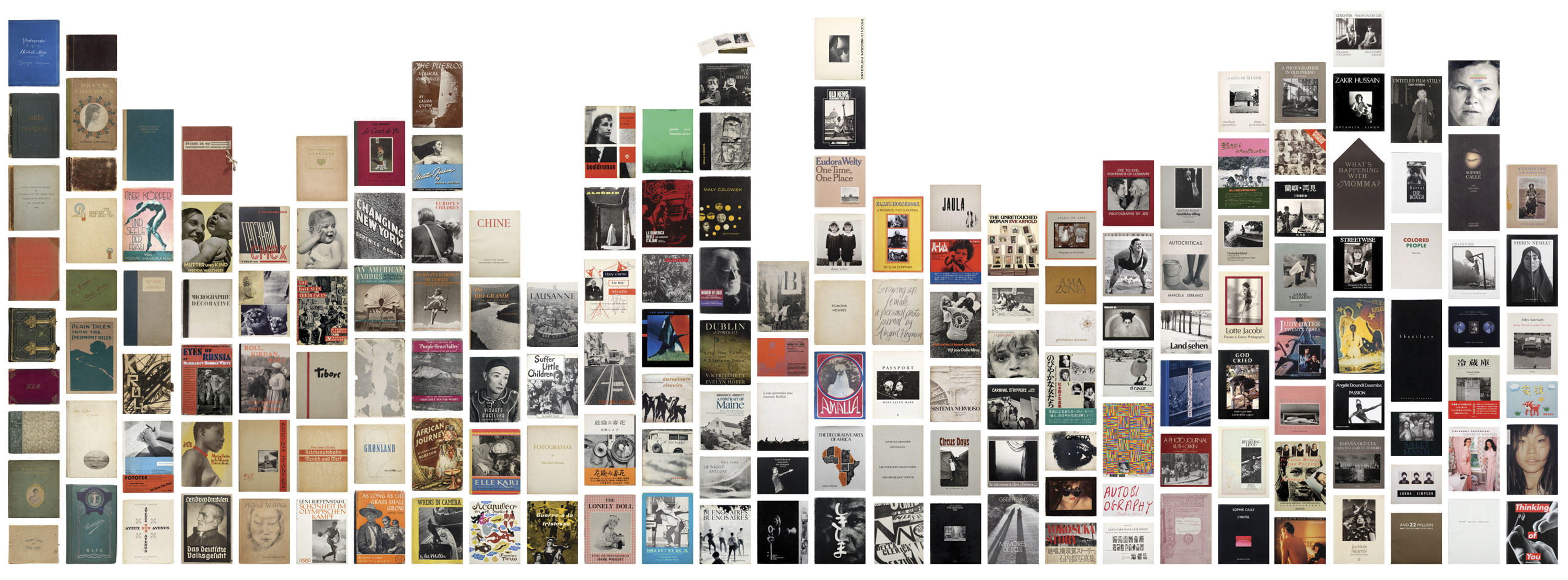
 

'What They Saw: Historical Photobooks by Women, 1843-1999' (Nueva York, 10×10 Photobooks, 2021) cover images


What They Saw: Historical Photobooks by Women, 1843-1999 (Nueva York, 10×10 Photobooks, 2021) cover images
Design: Ayumi Higuchi
Photography: Jeff Gutterman


A mid-week posting!

I wouldn’t have forgiven myself if I had missed this important exhibition about an interesting subject, the “underexposed and undocumented photobooks by women made between 1843 and 1999.”

So I thought I would squeeze it into the posting schedule which stretches a couple of months into the future…

Other than the group photographs of the book covers and installation photographs of the exhibition (below), there were no individual book covers nor details about some of the books in the media images, so I have added a few were it has been possible along with accompanying text.

I have also included photographs from what I think is one of the most iconic photobooks, even though I am not sure it is in the exhibition: Marion Palfi’s There is No More Time: An American Tragedy (1949).

So many important photobooks by so many glorious photographers.

Dr Marcus Bunyan


Many thankx to the Museo Nacional Centro de Arte Reina Sofía for allowing me to publish the photographs in the posting. Please click on the photographs for a larger version of the image.


'What They Saw: Historical Photobooks by Women, 1843-1999' (Nueva York, 10×10 Photobooks, 2021) cover images (detail)


What They Saw: Historical Photobooks by Women, 1843-1999 (Nueva York, 10×10 Photobooks, 2021) cover images (detail)
Design: Ayumi Higuchi
Photography: Jeff Gutterman
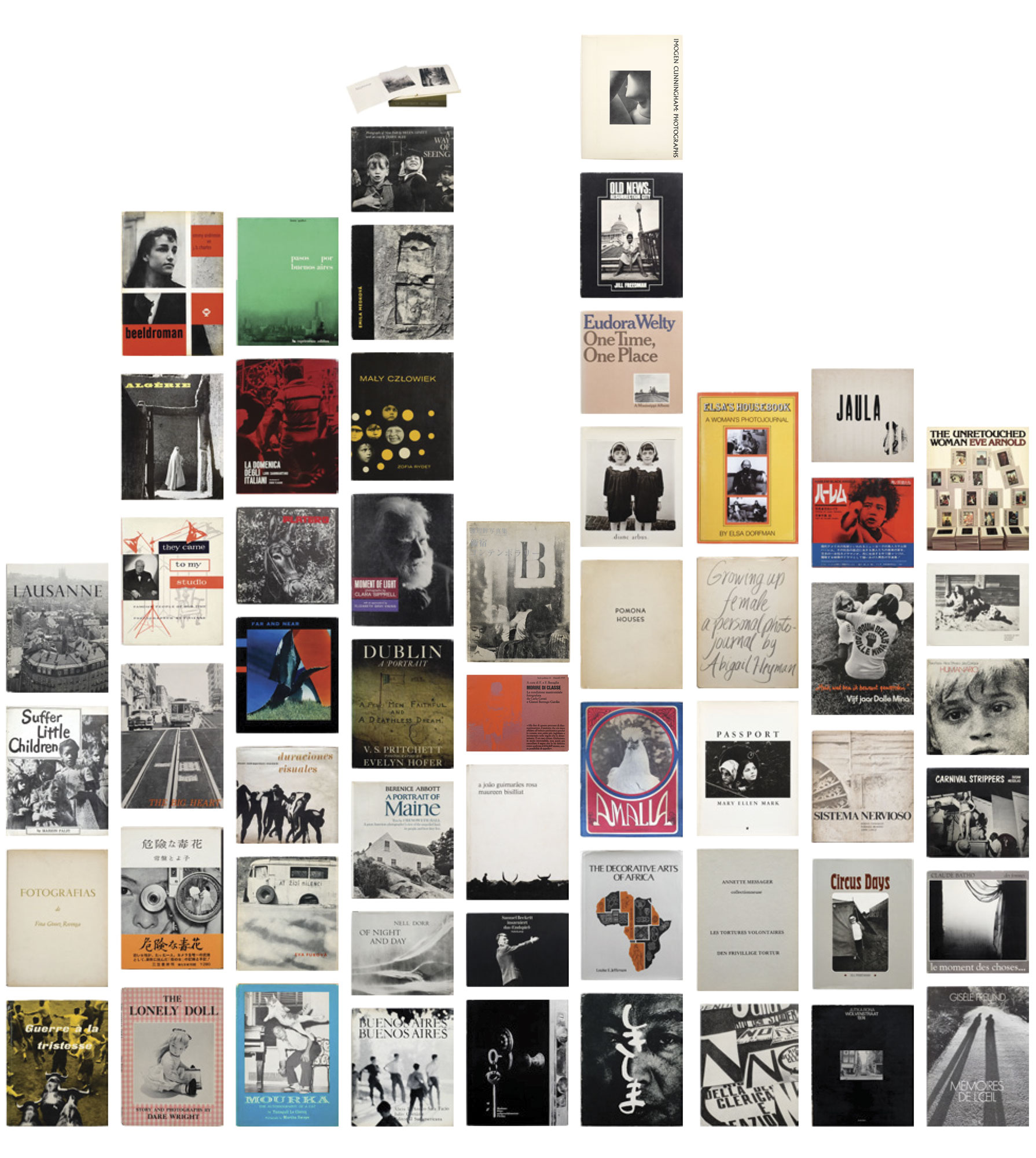
 

'What They Saw: Historical Photobooks by Women, 1843-1999' (Nueva York, 10×10 Photobooks, 2021) cover images (detail)


What They Saw: Historical Photobooks by Women, 1843-1999 (Nueva York, 10×10 Photobooks, 2021) cover images (detail)
Design: Ayumi Higuchi
Photography: Jeff Gutterman
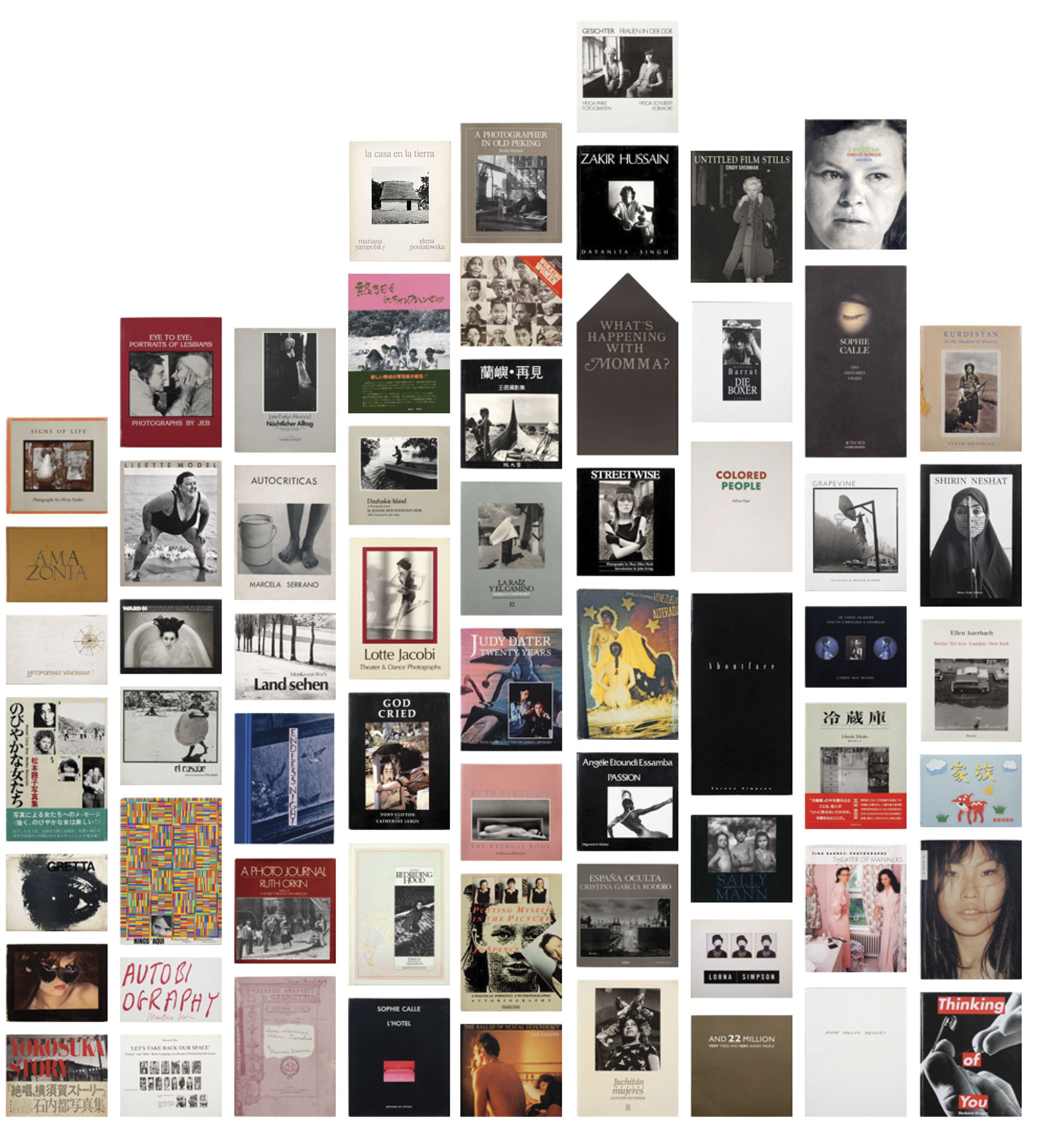
 

'What They Saw: Historical Photobooks by Women, 1843-1999' (Nueva York, 10×10 Photobooks, 2021) cover images (detail)


What They Saw: Historical Photobooks by Women, 1843-1999 (Nueva York, 10×10 Photobooks, 2021) cover images (detail)
Design: Ayumi Higuchi
Photography: Jeff Gutterman


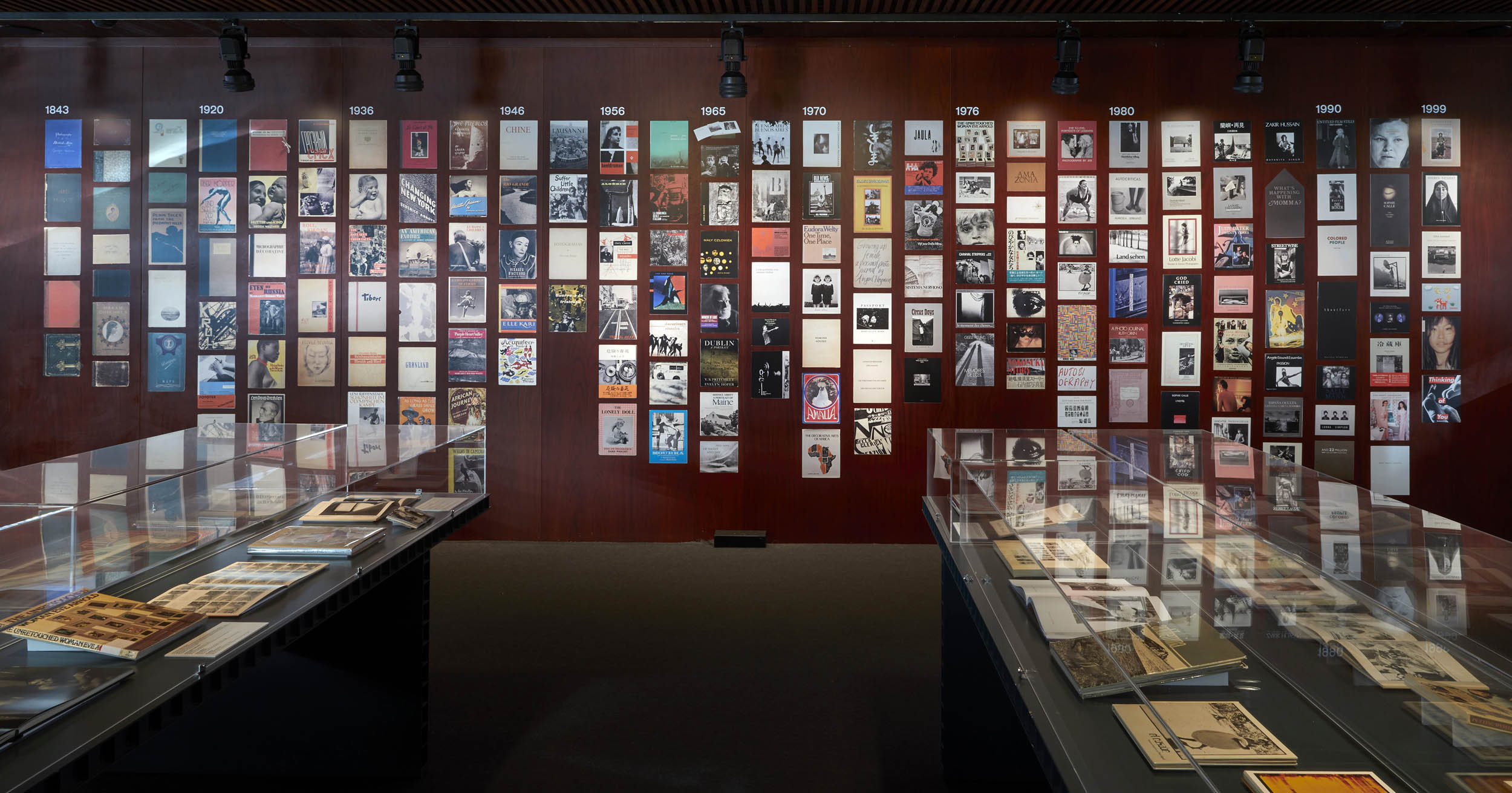
What They Saw project, a touring exhibition accompanied by a publication and series of public programs, is a means to ignite interest in underexposed and undocumented photobooks by women made between 1843 and 1999 and to begin a process of filling in the gaps. The present show is organised in collaboration with 10×10 Photobooks, a nonprofit organisation with a mission to share photobooks globally and encourage their appreciation and understanding.

In seeking out the omissions in photobook history, the standard definition of the photobook: a bound volume with photographic illustrations published by the author, an independent publisher or a commercial publisher, needed to be expanded to incorporate those who do not call themselves photographers or artists but who nevertheless put together a “book” composed of photographs taken by themselves or others: individual albums, slim exhibition pamphlets, scrapbooks, mock-ups, fanzines and artists’ books to be more inclusive.

This iteration of the What They Saw exhibition includes 60 books of the more than 250 volumes highlighted in the associated publication. Most of these publications are from the collection of the Museo Reina Sofía’s Library and Documentation Centre. They are presented chronologically and show examples of books from around the globe. From the pioneers, such as Anna Atkins, who was the first person ever to print and distribute a photobook, or Isabel Agnes Cowper, who used photography to document museum objects, subsequently reproduced in numerous books, to the independent and self-published photobooks of the 1990s, including Colored People: A Collaborative Book Project by Adrian Piper or Twinspotting by Ketaki Seth, this selection allows for greater inclusion of previously marginalised photographic communities, including women, queer communities, people of colour and artists from outside Europe and North America.

Although only twenty-five years old, photobook history has been written primarily by men and has focused on publications authored by men. Very few books by women photographers appear in past anthologies documenting photobook history, and those included are already quite well known. This exhibition of women’s role in the production, dissemination, and authoring of photobooks is a necessary step in unwriting the current photobook history and rewriting an updated photobook history that is more equitable and inclusive.

Text from the Museo Nacional Centro de Arte Reina Sofía website


Anna Atkins, 'Photographs of British Algae: Cyanotype Impressions', 1843


Anna Atkins, Photographs of British Algae: Cyanotype Impressions, 1843
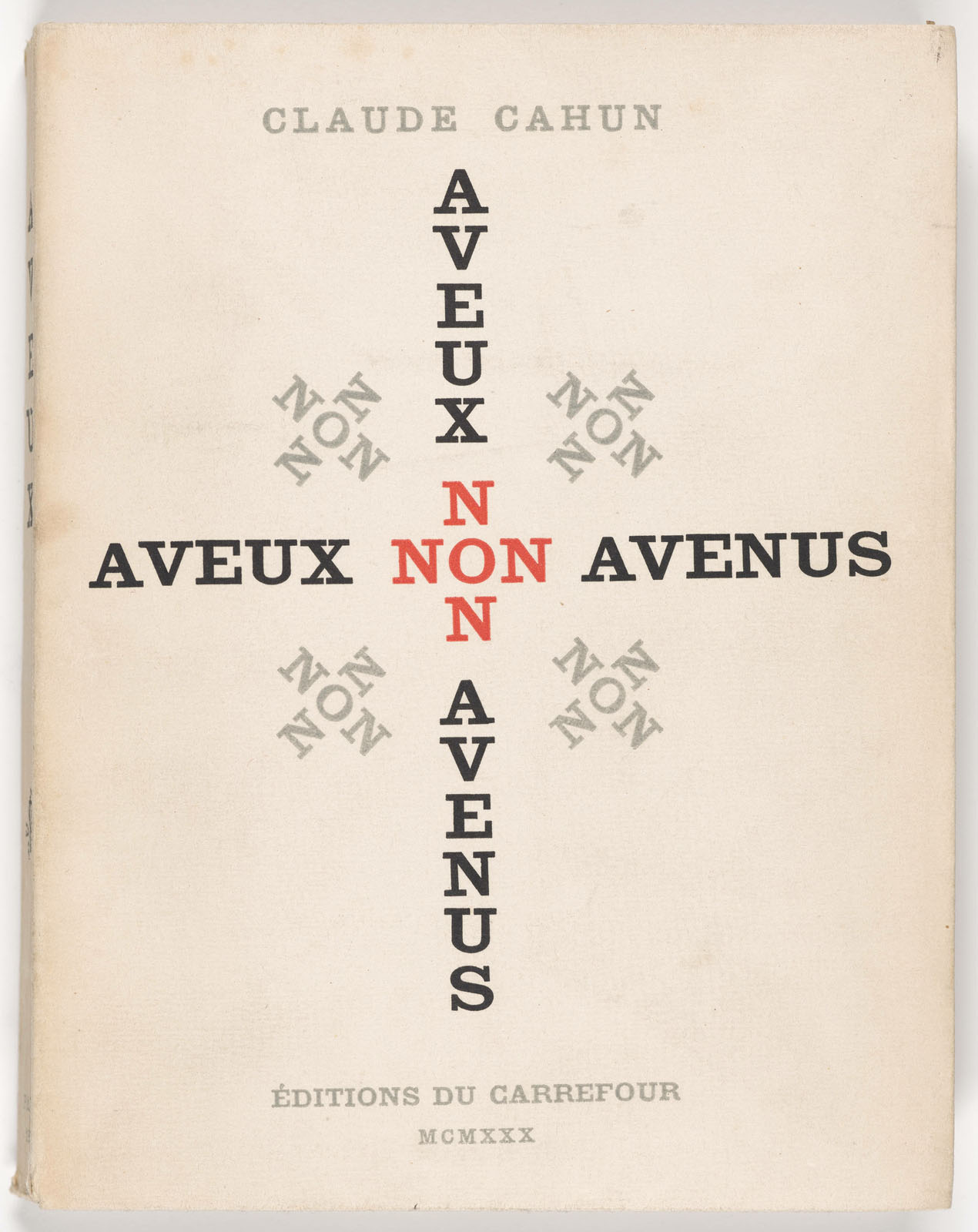
 

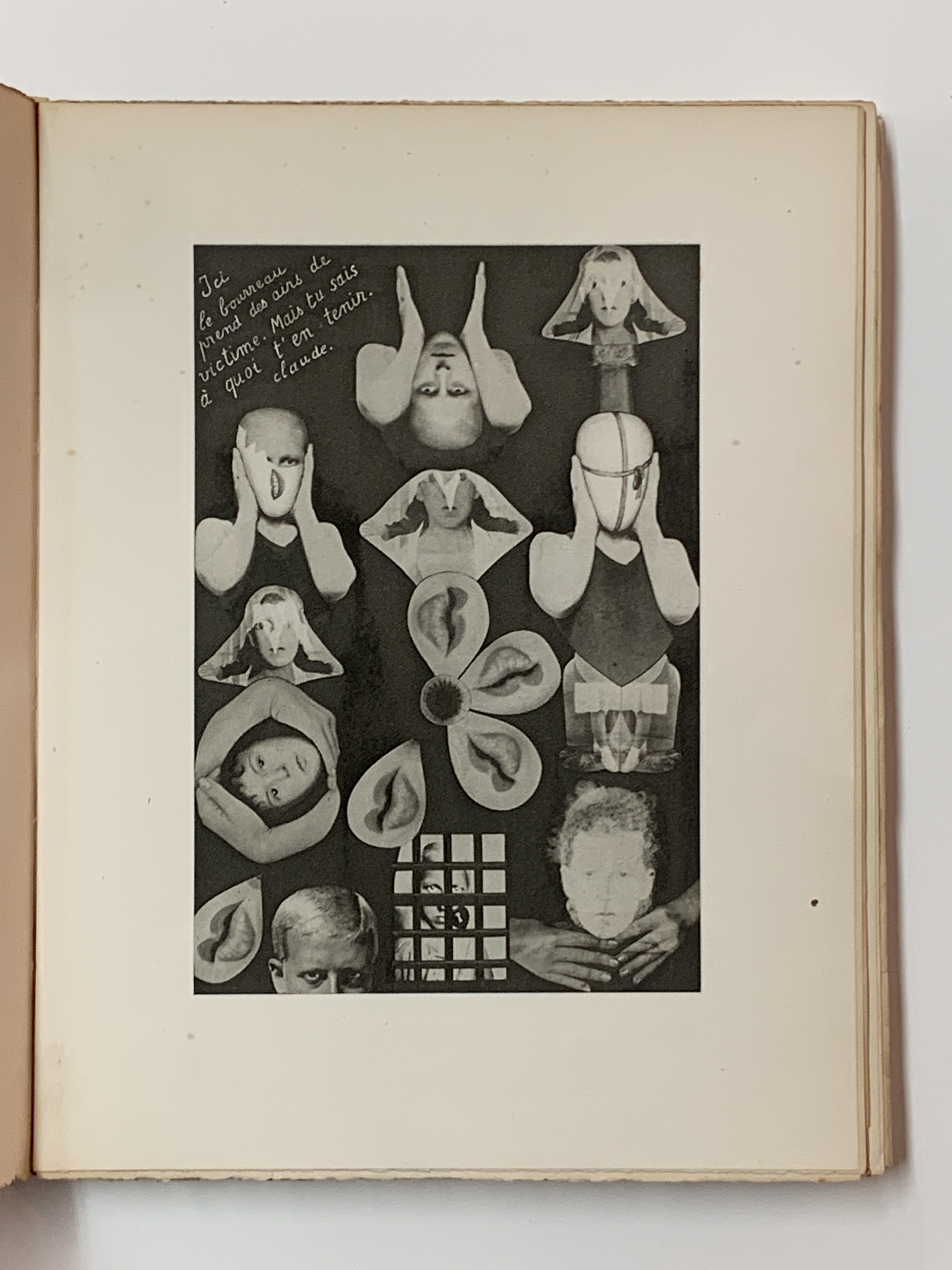
Claude Cahun (Lucy Schwob) (French, 1894-1954) 'Aveux non avenus' (Disavowals or Cancelled Confessions) 1930

Claude Cahun (1894-1954) 'Aveux Non Avenus' Paris- Éditions du Carrefour, 1930

Claude Cahun (1894-1954) 'Aveux Non Avenus' Paris- Éditions du Carrefour, 1930

Claude Cahun (1894-1954) 'Aveux Non Avenus' Paris- Éditions du Carrefour, 1930


Claude Cahun (Lucy Schwob) (French, 1894-1954) Aveux non avenus (Disavowals or Cancelled Confessions) 1930


In her 1930 publication, Aveux non Avenus, Claude Cahun used the relationship between her inwardly focused poetic writing and symbolic photomontages to construct a unique reality for self-expression. This article focuses on three chapters and respective photographic images from the publication to relate Cahun’s, and by association her partner Marcel Moore’s, discussion on sexuality and gender expression. The utopian dreamscape created investigates issues of narcissism and otherness, female homosexuality, dandyism and going beyond gender, individual and social critique, mocking the antiquated views of art and writing, accepting and breaking taboos, while allowing for other departures from the accepted norm. Through analysis of the publication and supporting evidence from early influences, it can be seen that Cahun created a world in Aveux non Avenus where she could exist in a space between the established feminine–masculine binary of 20th-century Europe.

Abstract from Erin F. Pustarfi. “Constructed Realities: Claude Cahun’s Created World in Aveux Non Avenus,” in Journal of Homosexuality, 67(5), pp. 697-711
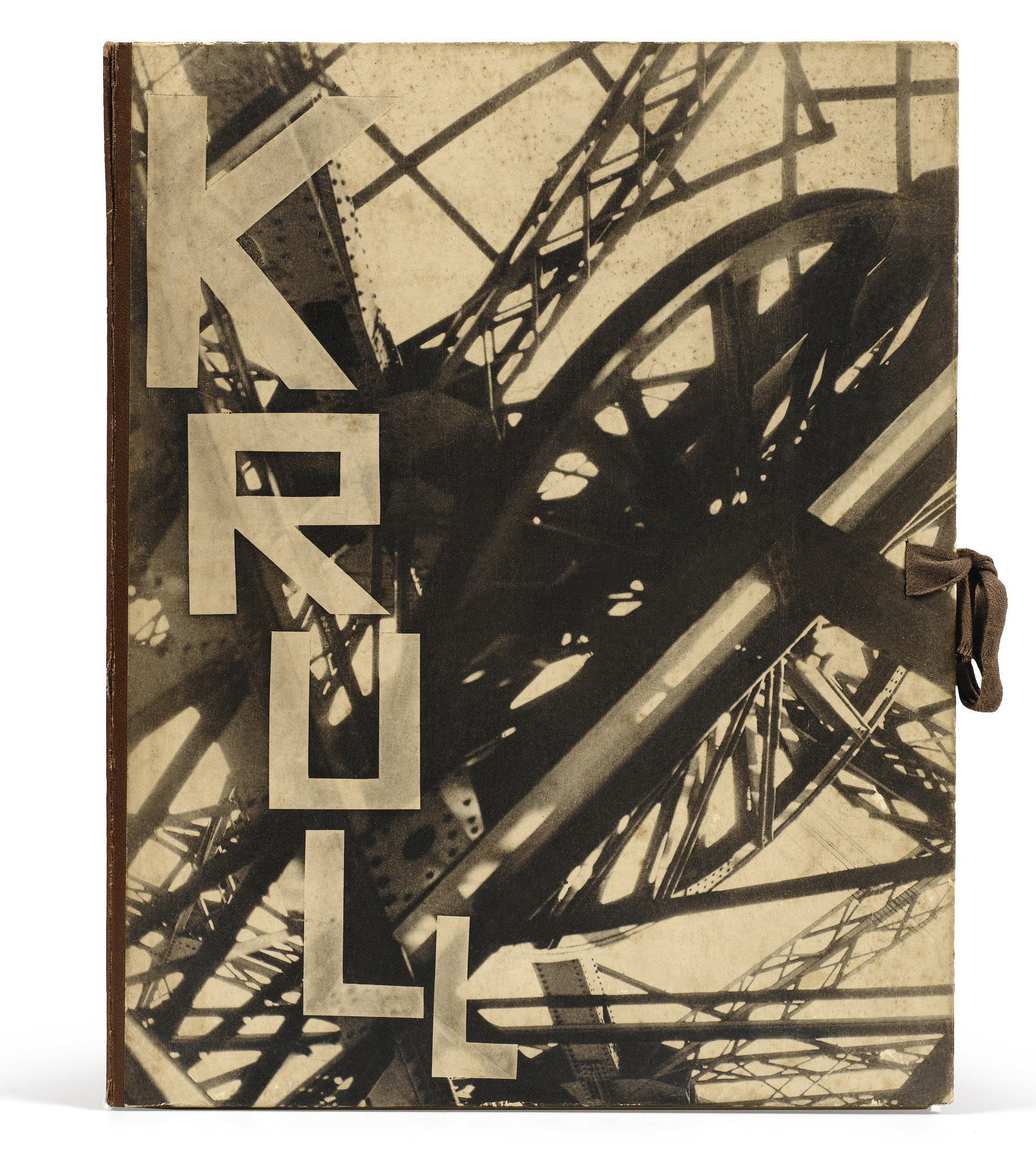
 

Germaine Krull (photographer) Cover design by M. Tchimoukow. 'MÉTAL' cover 1928


Germaine Krull (photographer) Cover design by M. Tchimoukow. MÉTAL cover 1928


Germaine Krull (1897-1985) Image from the portfolio 'MÉTAL' 1928


Germaine Krull (1897-1985) Image from the portfolio MÉTAL 1928, p. 33


I did not have a special intention or design when I took the Iron photographs. I wanted to show what I see, exactly as the eye sees it. ‘MÉTAL’ is a collection of photographs from the time. ‘MÉTAL’ initiated a new visual era and open the way or a new concept of photography. ‘MÉTAL’ was the starting point which allowed photography to become an artisanal trade and which made an artist of the photographer, because it was part of this new movement, of this new era which touched all art.

Germaine Krull. Extract from the Preface to the 1976 edition of ‘MÉTAL’

See my writing on Germaine Krull’s portfolio MÉTAL.
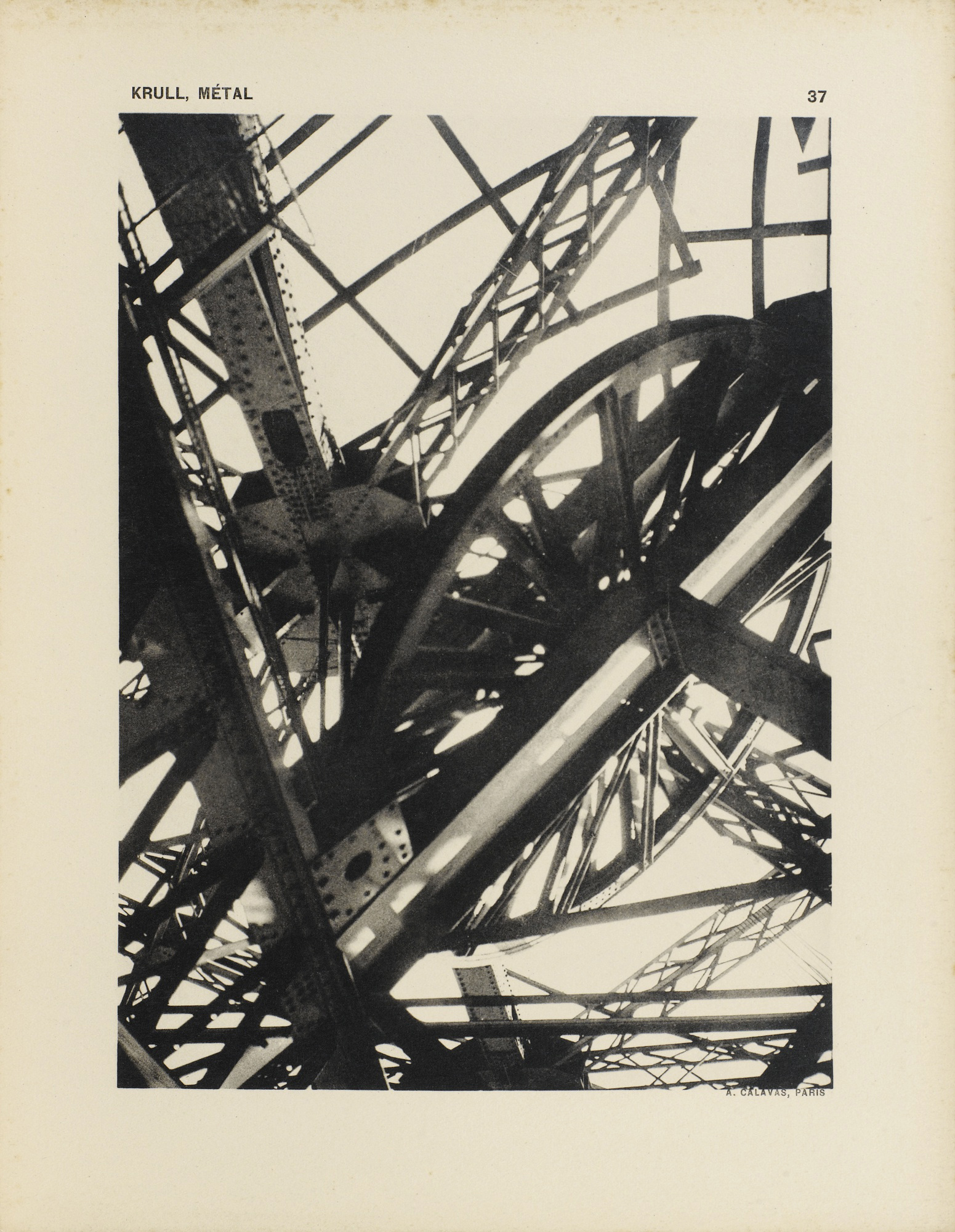
 

Germaine Krull (1897-1985) Image from the portfolio 'MÉTAL' 1928 p. 37


Germaine Krull (1897-1985) Image from the portfolio MÉTAL 1928 p. 37
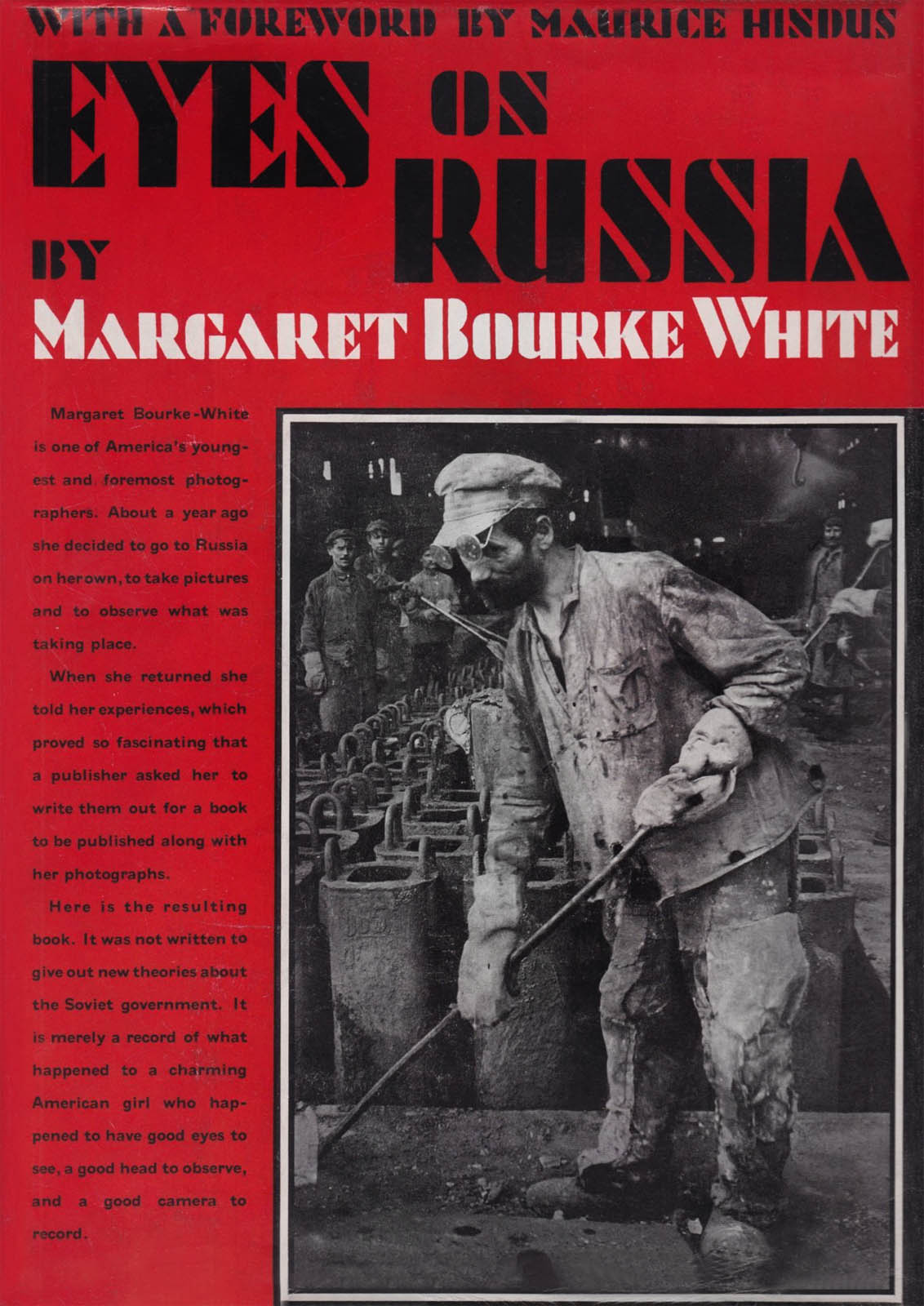
 

'Eyes on Russia' by Margaret Bourke-White. New York: Simon and Schuster, 1931


Eyes on Russia by Margaret Bourke-White. New York: Simon and Schuster, 1931


In 1951, Westbrook Pegler wrote numerous articles attacking Margaret Bourke-White for her associations with leftist politics in the 1930s. It is probably for this reason that in her autobiography, Portrait of Myself, written about ten years later, Bourke-White didn’t mention her first book, Eyes on Russia, published in 1931. And yet, this book is of extraordinary interest, not only as a landmark in Bourke-White’s career but also as a source, both visual and narrative, on the Soviet Union during its first Five Year Plan. With letters of recommendation from influential people, including the Russian film maker, Sergei Eisenstein, Bourke-White arrived in Moscow in the fall of 1930, where she obtained the official endorsement of A.B. Khalatoff, chief of the Soviet publishing house (he was later liquidated in the 1937 purges). Khalatoff supplied her with a thick roll of rubles and a guide. Bourke-White then toured some of the most important industrial and other sites and came back with stellar images of Russia under construction, which she complemented by a spritely and charming narrative of her experiences as the first foreign photographer to photograph in the Soviet Union with official permission. On her trip, she made 800 negatives, of which 40 were published in Eyes on Russia in a sepia tone. This book, along with at least eight related illustrated articles in Fortune, the New York Times Sunday Magazine, and other periodicals, significantly enhanced Bourke-White’s reputation (and commercial business). They also helped initiate relationships she established both with Soviet officials and Americans sympathetic to the U.S.S.R. She returned to Russia in 1931 and 1932 for additional photography, but Eyes on Russia, a fascinating book for a variety of reasons, remains the largest single published collection of her work in that country. It was very well received in numerous book reviews when it appeared. For a more detailed review, see my article, Gary D. Saretzky “Margaret Bourke-White: Eyes on Russia,” The Photo Review, 22: 3-4 (Summer & Fall 1999),

Text from a comment on the Amazon website


'Roll, Jordan, Roll' by Julia Peterkin (text) and Doris Ulmann (photographs) New York: Robert O. Ballo, 1933


Roll, Jordan, Roll by Julia Peterkin (text) and Doris Ulmann (photographs) New York: Robert O. Ballo, 1933


Doris Ulmann’s photographic collaboration with Julia Peterkin focuses on the lives of former slaves and their descendants on a plantation in the Gullah coastal region of South Carolina. Peterkin, who won the Pulitzer Prize in 1929, was born in South Carolina and raised by a black nursemaid who taught her the Gullah dialect before she learned standard English. She married the heir to Lang Syne in today’s Calhoun County, SC, one of the state’s richest plantations, which became the setting for Roll, Jordan, Roll. Ulmann’s soft-focus photos-rendered as tactile as charcoal drawings in the superb gravure reproductions here-straddle Pictorialism and Modernism even as they appear to dissolve into memory.

Text from the Amazon website


Leni Riefenstahl 'Schönheit im olympischen Kampf' [Beauty in the Olympic Games] Berlin: Im Deutschen Verlag, (1937)


Leni Riefenstahl Schönheit im olympischen Kampf [Beauty in the Olympic Games] Berlin: Im Deutschen Verlag, (1937)


'Leni Riefenstahl Schönheit im olympischen Kampf' [Beauty in the Olympic Games] Berlin: Im Deutschen Verlag, (1937) pp. 220-221


Leni Riefenstahl Schönheit im olympischen Kampf [Beauty in the Olympic Games] Berlin: Im Deutschen Verlag, (1937) pp. 220-221
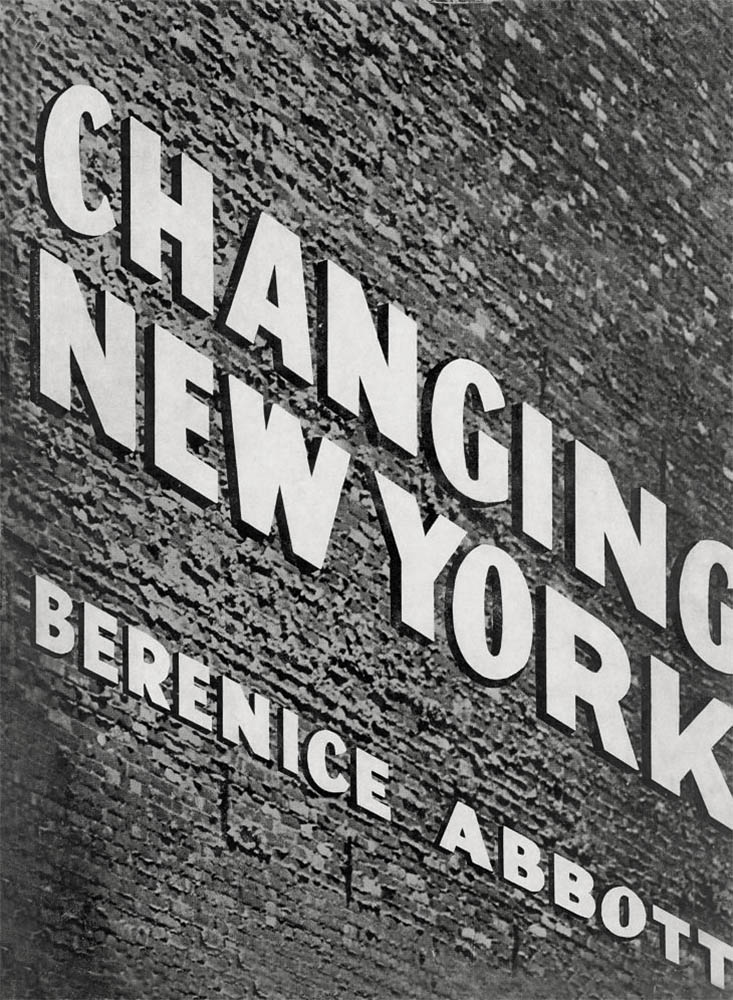
 

Berenice Abbott and Elizabeth McCausland. 'Changing New York'. New York: E. P. Dutton & Company, 1939


Berenice Abbott and Elizabeth McCausland. Changing New York. New York: E. P. Dutton & Company, 1939


“The camera alone can catch
the swift surfaces of the
cities today and speaks a
language intelligible to all.”

~ Berenice Abbott


Abbott’s landmark work on New York, illustrated with 97 halftone plates that display “the historical importance of the documentary model its power as a medium of personal expression” (Parr & Badger).


In January 1929, after eight years in Europe, Abbott boarded an ocean liner to New York City for what was meant to be a short visit. Upon arrival, she was struck by the rapid transformation of the built landscape and saw the city as ripe with photographic potential. “When I saw New York again, and stood in the dirty slush, I felt that here was the thing I had been wanting to do all my life,” she recalled. “Old New York is fast disappearing,” Abbott observed. “At almost any point on Manhattan Island, the sweep of one’s vision can take in the dramatic contrasts of the old and the new and the bold foreshadowing of the future. This dynamic quality should be caught and recorded immediately in a documentary interpretation of New York City. The city is in the making and unless this transition is crystallised now in permanent form, it will be forever lost…. The camera alone can catch the swift surfaces of the cities today and speaks a language intelligible to all.”

On the eve of the Great Depression, she began a series of documentary photographs of the city that, with the support of the Works Progress Administration’s Federal Art Project from 1935 to 1939, debuted in 1939 as the traveling exhibition and publication Changing New York.

With a handheld camera, Abbott traversed the city, photographing its skyscrapers, bridges, elevated trains, and neighbourhood street life. She pasted these “tiny photographic notes” into a standard black-page album, arranging them by subject and locale.

Consisting of 266 small black-and-white prints arranged on thirty-two pages, Abbott’s New York album marks a key turning point in her career – from her portrait work in Paris to the urban documentation that became one of her lasting legacies.

From 1935 to 1965, Berenice Abbott and art critic Elizabeth McCausland (1899-1965) lived and worked in two flats they shared on the fourth floor of the loft building at 50 Commerce Street.

Lannyl Stephens. “Berenice Abbott’s Changing New York,” on the Village Preservation website July 17, 2023 [Online] Cited 26/05/2024


Berenice Abbott and Elizabeth McCausland. 'Changing New York'. New York: E. P. Dutton & Company, 1939


Berenice Abbott and Elizabeth McCausland. Changing New York. New York: E. P. Dutton & Company, 1939


'An American Exodus: A Record of Human Erosion'. Photographs by Dorothea Lange; text by Paul Taylor. New York: Reynal & Hitchcock, 1939


An American Exodus: A Record of Human Erosion. Photographs by Dorothea Lange; text by Paul Taylor. New York: Reynal & Hitchcock, 1939


“We need to be reminded these days about what women have been, and can be. It’s a question of their really deep and fundamental place in society. I have a feeling that women need to be reminded of it. They are needed.”

~ Dorothea Lange


First published in 1939, An American Exodus is one of the masterpieces of the documentary genre. Produced by incomparable documentary photographer Dorothea Lange with text by her husband, Paul Taylor, An American Exodus was taken in the early 1930s while the couple were working for the Farm Security Administration (FSA) The book documents the rural poverty of the depression-era exodus that brought over 300,000 migrants to California in search of farm work, a westward mass migration driven by economic deprivation as opposed to the Manifest Destiny of 19th century pioneers.

Text from the Google Books website


In 1938, Dorothea Lange and her husband Paul Taylor began sorting through the stacks of photographs she had made documenting migrant farmworkers and homeless drought refugees. Their goal was to create a book that would reveal the human dimension of the crisis to the American people and, hopefully, prompt government relief. One of several books released in the late 1930s that made use of the Farm Security Administration photo archive, An American Exodus: A Record of Human Erosion was innovative in several ways. Rather than tell the story from their own perspective, Lange and Taylor used direct quotes from the migrants themselves, which Lange had painstakingly collected in the field. Released as war tensions were building in Europe and Asia, An American Exodus was largely overlooked at the time. In the years since its publication, the book has gained power, presenting an iconic image of the Dust Bowl era that has shaped the way we think of those difficult years.

Text from the Dorothea Lange Digital Archive, Oakland Museum of California website


Eslanda Goode Robeson. 'African Journey'. New York: John Day Company, 1945


Eslanda Goode Robeson. African Journey. New York: John Day Company, 1945


Eslanda Robeson’s 1936 African journal with her own photographs. Africa seen through the eyes of an African American. She went to South Africa, Kenya, Uganda, and Congo, and visited African kings and British governors, villages, gold mines, plantations, herdswomen, and modern African leaders.

Eslanda Goode Robeson (1895-1965) was an American anthropologist, author, actress, and civil rights activist. She was born in Washington, D.C., graduated from Columbia University in 1917 with a degree in chemistry, and in 1921 married the singer and actor Paul Robeson. In 1936, she received her degree in anthropology from the London School of Economics, and in 1946, the year following the publication of African Journal, earned her anthropology Ph.D. from Hartford Seminary where she specialised in African studies and race relations.

Text from the Boyd Books website


'Wrens in Camera' by Lee Miller


Wrens in Camera by Lee Miller (London: Hollis and Carter, 1945)


During the Second World War Lee Miller was the official war photographer for Vogue magazine. The images contained in Wrens in Camera were commissioned by the Admiralty and show the female navy officers and workers fulfilling their war duties. There are signallers, technicians, trainers, housekeepers and transport crews. The whole is an important document of women’s roles in war-time Britain.

Text from the Beaux Books website


'Wrens in Camera' by Lee Miller (London: Hollis and Carter, 1945) p. 47
 

Wrens in Camera by Lee Miller (London: Hollis and Carter, 1945) p. 47


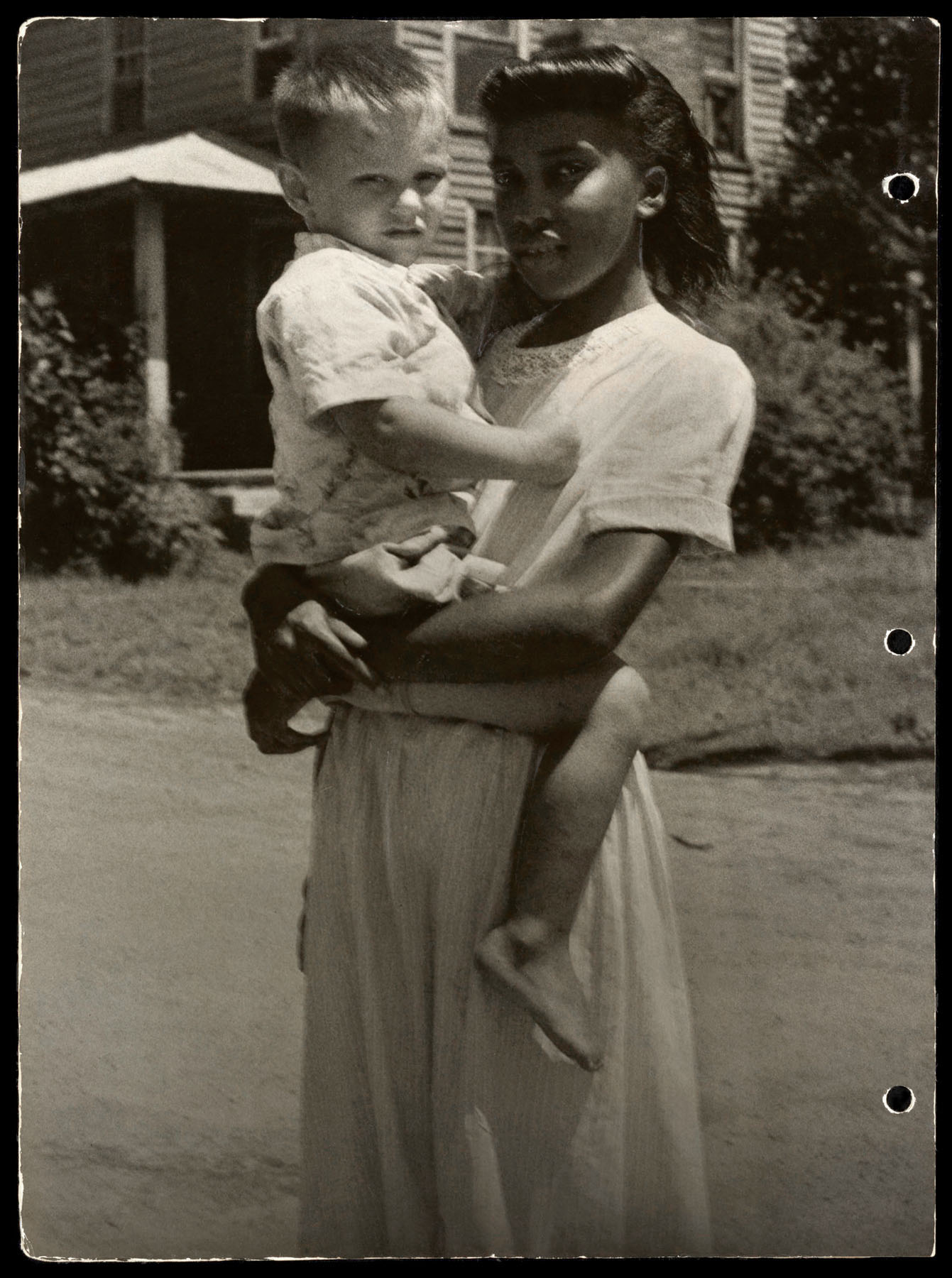
Marion Palfi (American born Germany, 1907-1978) 'Untitled (Black woman with a white child)' 1949


Marion Palfi (American born Germany, 1907-1978)
Untitled (Black woman with a white child)
1949
From the book There Is No More Time: An American Tragedy
Marion Palfi/Center for Creative Photography
© All Rights Reserved
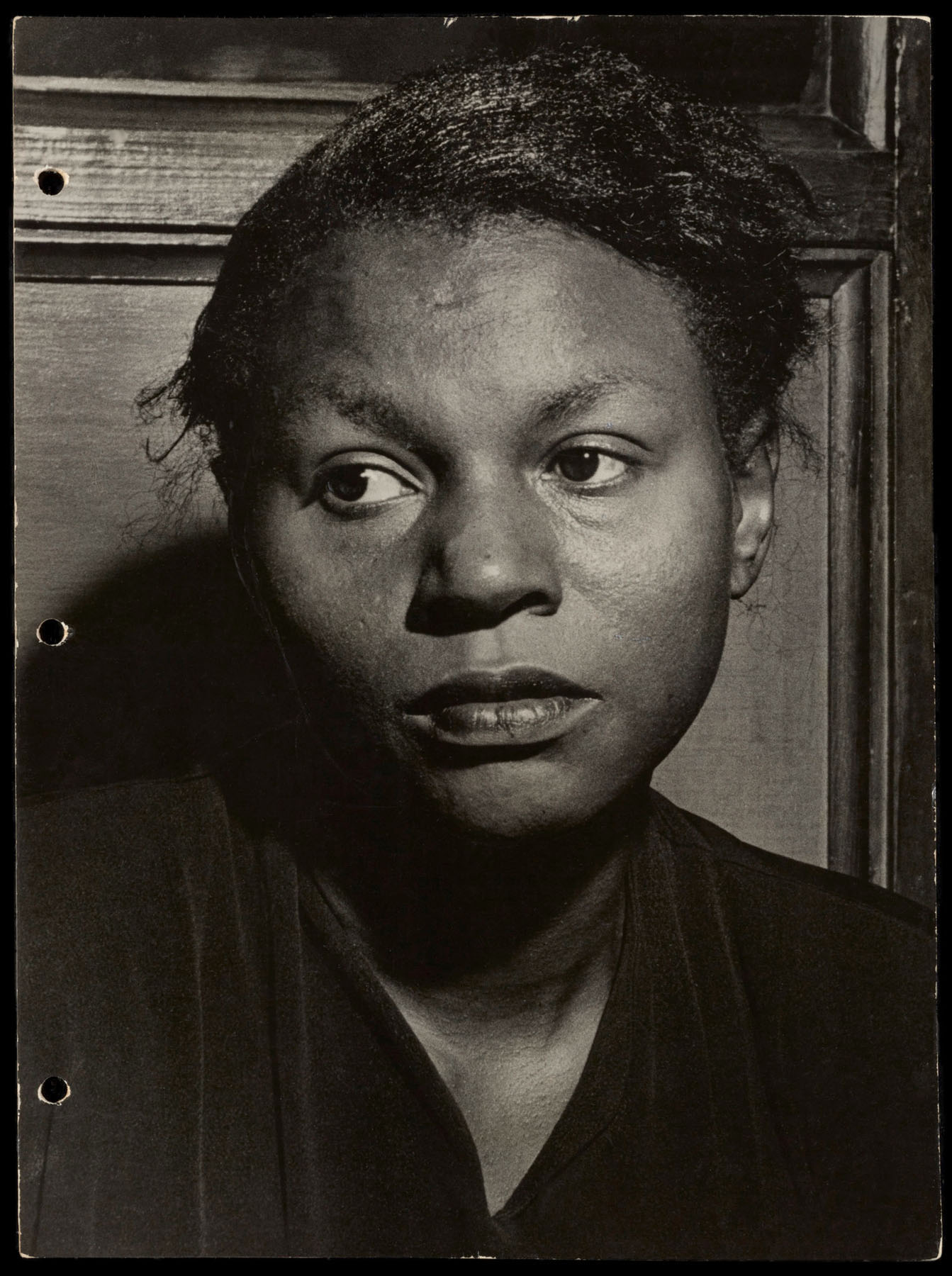
 

Marion Palfi (American born Germany, 1907-1978) 'Untitled (Portrait of Mrs. Caleb Hill, widow of a lynching victim)' 1949


Marion Palfi (American born Germany, 1907-1978)
Untitled (Portrait of Mrs. Caleb Hill, widow of a lynching victim)
1949
From the book There Is No More Time: An American Tragedy
Marion Palfi/Center for Creative Photography
© All Rights Reserved


“As a photographer, she was as interested in the discriminator as in the victims of discrimination. Long before what we tend to think of as the crux of the civil rights struggle in the 1960s, Palfi went to Georgia at a particularly dangerous time. In 1949, she was drawn to do an in-depth portrait of Irwinton, a small community where a young black man had been torn out of jail and shot by a lynch mob. The tremendous public outcry over this barbaric incident included front-page coverage and editorials by the New York Times. Obviously, the presence of a photographer in such a community would attract unwanted attention and might have endangered her life. But by a happy stroke of luck, the Vice-President of the Georgia Power Company was interested in her work. Warning her that she must “photograph the South as it really is, not as the North slanders it,” he wanted her to get to meet the “right” people. As it happened, the “right” people turned out to be the very discriminators she wanted to photograph. Left in the protection of the local postmistress, she proceeded to take terms, objective pictures of overseers and white-suited politicians.

Even if the press had not indicted Irwinton for its racism, the extreme conservatism and tension were evident in the faces of its citizens. She found a white supremacist group, “The Columbians,” whose insignia was a thunderbolt, the symbol of Hitler’s elite guard. “Mein Kampf was their bible,” she believed. Meanwhile, the wife of the lunch victim said, simply, “Caleb was a good man … he believed in his rights and therefore he died.”

Elizabeth Lindquist-Cock. “Marion Palfi: An Appreciation,” in The Archive Research Series Number 19, September 1983, Center for Creative Photography, University of Arizona, pp. 7-8.
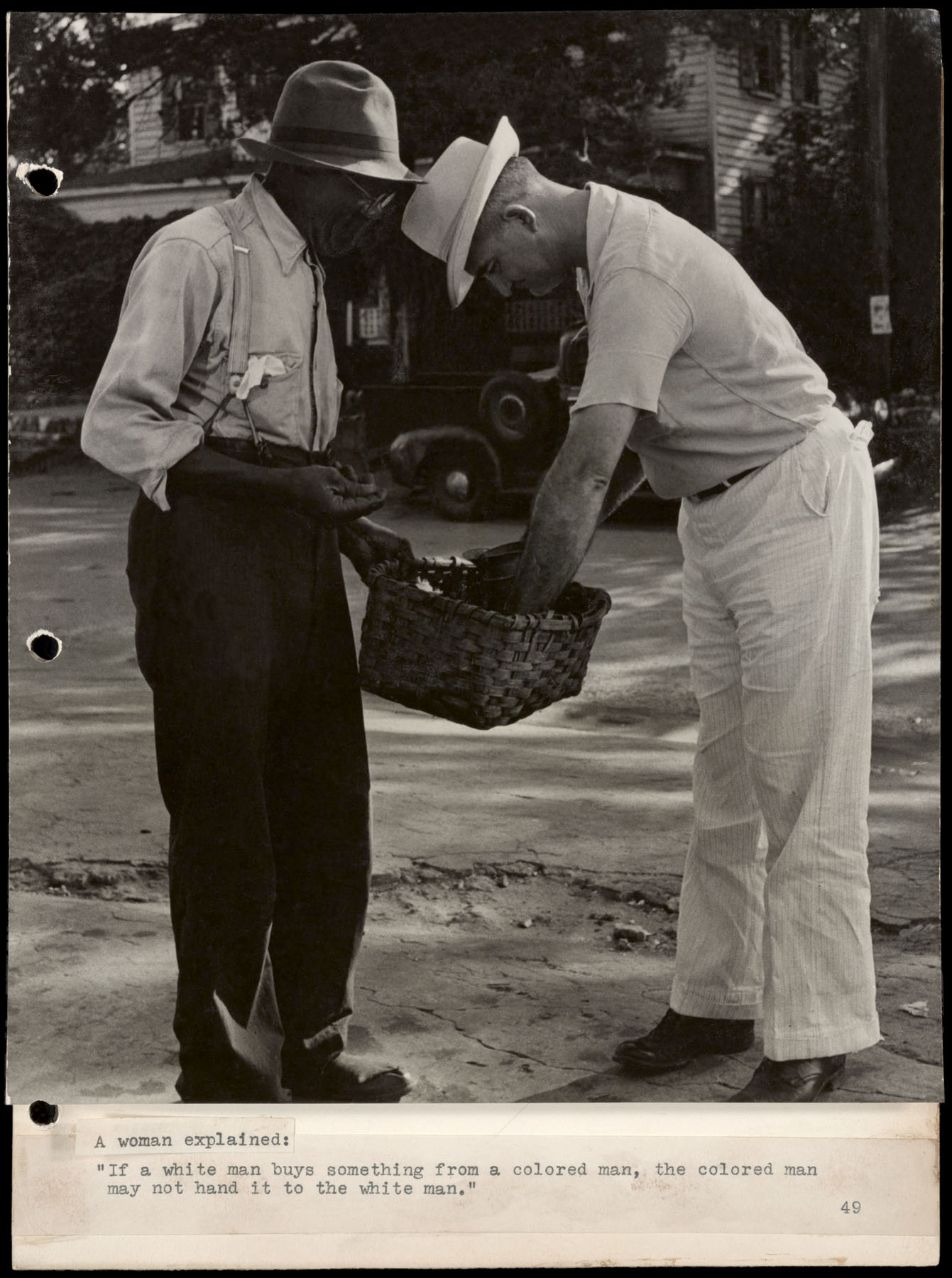
 

Marion Palfi (American born Germany, 1907-1978) 'Untitled (A woman explained: "If a white man buys something...")' 1949


Marion Palfi (American born Germany, 1907-1978)
Untitled (A woman explained: “If a white man buys something…”)
1949
From the book There Is No More Time: An American Tragedy
Marion Palfi/Center for Creative Photography
© All Rights Reserved


'Acapulco en el sueño' by Francisco Tario (text) with photographs by Lola Alvarez Bravo, 1951


Acapulco en el sueño by Francisco Tario (text) with photographs by Lola Alvarez Bravo, 1951


“If my photographs have any meaning, it’s that they stand for a Mexico that once existed.”

~ Lola Alvarez Bravo


Dare Wright. 'The Lonely Doll'. New York: Doubleday & Co, 1957


Dare Wright. The Lonely Doll. New York: Doubleday & Co, 1957


Once there was a little doll. Her name was Edith. She lived in a nice house and had everything she needed except someone to play with. She was lonely! Then one morning Edith looked into the garden and there stood two bears! Since it was first published in 1957, The Lonely Doll has established itself as a unique children’s classic. Through innovative photography Dare Wright brings the world of dolls to life and entertains us with much more than just a story. Edith, the star of the show, is a doll from Wright’s childhood, and Wright selected the bear family with the help of her brother. With simple poses and wonderful expressions, the cast of characters is vividly brought to life to tell a story of friendship.

Text from the Amazon website


'Mourka, the autobiography of a Cat', by Tanaquil Le Clercq and Martha Swope. Stein and Day 1964


Mourka, the autobiography of a Cat, by Tanaquil Le Clercq and Martha Swope. Stein and Day 1964


Le Clercq is the wife of choreographer George Balanchine; she wrote this book after Mourka became famous because of the photograph of Martha Swope in Life magazine, where George Balanchine assists Mourka in his grand jeté. Mourka writes about his exercises in dance and his aspirations to travel in outer space.

Text from the Cats in Books albums Facebook page


'Mourka, the autobiography of a Cat', by Tanaquil Le Clercq and Martha Swope. Stein and Day 1964


Mourka, the autobiography of a Cat, by Tanaquil Le Clercq and Martha Swope. Stein and Day 1964


'A Way of Seeing', 1965. Photographs by Helen Levitt


A Way of Seeing, 1965. Photographs by Helen Levitt


'Dublin: A Portrait' by V.S. Pritchett (text) and Evelyn Hofer (photographs). New York: Harper & Row, 1967


Dublin: A Portrait by V.S. Pritchett (text) and Evelyn Hofer (photographs). New York: Harper & Row, 1967


The starting point for this book is Evelin Hofer’s Dublin: A Portrait, which features an in-depth essay by V. S. Pritchett and photos by Hofer, and enjoyed great popularity upon its original publication in 1967. Dublin: A Portrait is an example of Hofer’s perhaps most important body of work, her city portraits: books that present comprehensive prose texts by renowned authors alongside her self-contained visual essays with their own narratives. Dublin: A Portrait was the last book published in this renowned series. …

In Dublin Hofer repeatedly turned her camera to sights of the city, but mainly to the people who constituted its essence. She made numerous portraits – be they of writers and public figures or unknown people in the streets. Her portraits give evidence of an intense, respectful engagement with her subjects, who participate as equal partners in the process of photographing.

Text from The Eye of Photography Magazine website


'Diane Arbus: An Aperture Monograph', 1972


Diane Arbus: An Aperture Monograph, 1972


When Diane Arbus died in 1971 at the age of forty-eight, she was already a significant influence-even something of a legend-among serious photographers, although only a relatively small number of her most important pictures were widely known at the time. The publication of Diane Arbus: An Aperture Monograph in 1972 – along with the posthumous retrospective at The Museum of Modern Art – offered the general public its first encounter with the breadth and power of her achievements. The response was unprecedented.

The monograph of eighty photographs was edited and designed by the painter Marvin Israel, Diane Arbus’s friend and colleague, and by her daughter Doon Arbus. Their goal in making the book was to remain as faithful as possible to the standards by which Diane Arbus judged her own work and to the ways in which she hoped it would be seen. Universally acknowledged as a classic, Diane Arbus: An Aperture Monograph is a timeless masterpiece with editions in five languages and remains the foundation of her international reputation.

Nearly half of a century has done nothing to diminish the riveting impact of these pictures or the controversy they inspire. Arbus’s photographs penetrate the psyche with all the force of a personal encounter and, in doing so, transform the way we see the world and the people in it.

Text from the Fraenkel Gallery Shop website


Jill Freedman. 'Circus Days'. New York: Harmony Books/Crown, 1975


Jill Freedman. Circus Days. New York: Harmony Books/Crown, 1975


A photographic documentation of the Beatty-Cole Circus, recording and portraying the customs, activities, animals, and singular personalities of an endangered way of life.


Jill Freedman. 'Circus Days'. New York: Harmony Books/Crown, 1975


Jill Freedman. Circus Days. New York: Harmony Books/Crown, 1975


Susan Meiselas (American, b. 1948) 'Carnival Strippers' book cover 1975


Susan Meiselas. Carnival Strippers book cover 1975


From 1972 to 1975, Susan Meiselas spent her summers photographing women who performed striptease for small-town carnivals in New England, Pennsylvania and South Carolina. As she followed the shows from town to town, she captured the dancers on stage and off, their public performances as well as their private lives, creating a portrait both documentary and empathetic: “The recognition of this world is not the invention of it. I wanted to present an account of the girl show that portrayed what I saw and revealed how the people involved felt about what they were doing.” Meiselas also taped candid interviews with the dancers, their boyfriends, the show managers and paying customers, which form a crucial part of the book.

Meiselas’ frank description of these women brought a hidden world to public attention, and explored the complex role the carnival played in their lives: mobility, money and liberation, but also undeniable objectification and exploitation. Produced during the early years of the women’s movement, Carnival Strippers reflects the struggle for identity and self-esteem that characterised a complex era of change.

Text from the Booktopia website [Online] Cited 22/04/2022
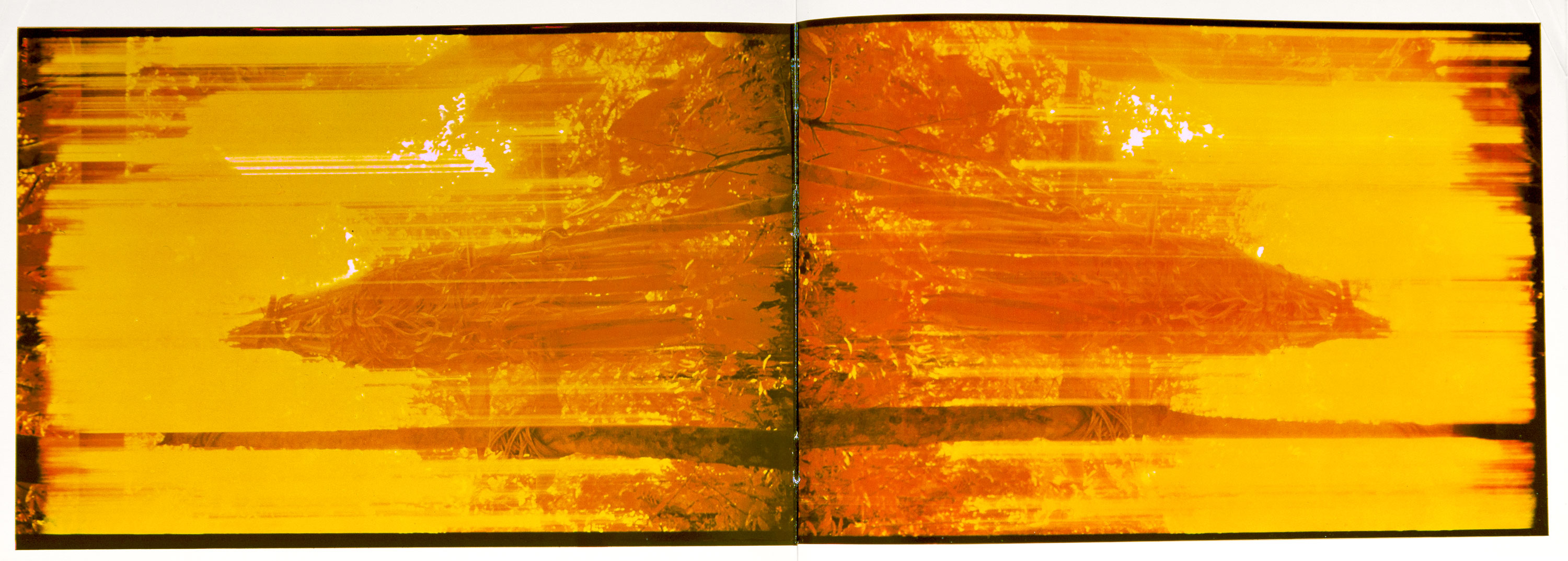
 

Claudia Andujar, 'Amazônia', 1978


Claudia Andujar, Amazônia, 1978


Since the early 1970s, Claudia Andujar has been committed to the cause of the Yanomami Indians living in the heart of the Amazon rainforest and is the author of the most important photographic work dedicated to them to date. A founding member of the Brazilian NGO Comissão Pró Yanomami (CCPY), the photographer has played a fundamental role in the recognition of their territory by the Brazilian government. …

Claudia Andujar first met the Yanomami in 1971 while working on an article about the Amazon for Realidade magazine. Fascinated by the culture of this isolated community, she decided to embark on an in-depth photographic essay on their daily life after receiving a Guggenheim fellowship to support the project. From the very beginning, her approach differed greatly from the straightforward documentary style of her contemporaries. The photographs she made during this period show how she experimented with a variety of photographic techniques in an attempt to visually translate the shamanic culture of the Yanomami. Applying Vaseline to the lens of her camera, using flash devices, oil lamps and infrared film, she created visual distortions, streaks of light and saturated colors, thus imbuing her images with a feeling of the otherworldly.

Text from the Fondation Cartier pour l’art contemporain website
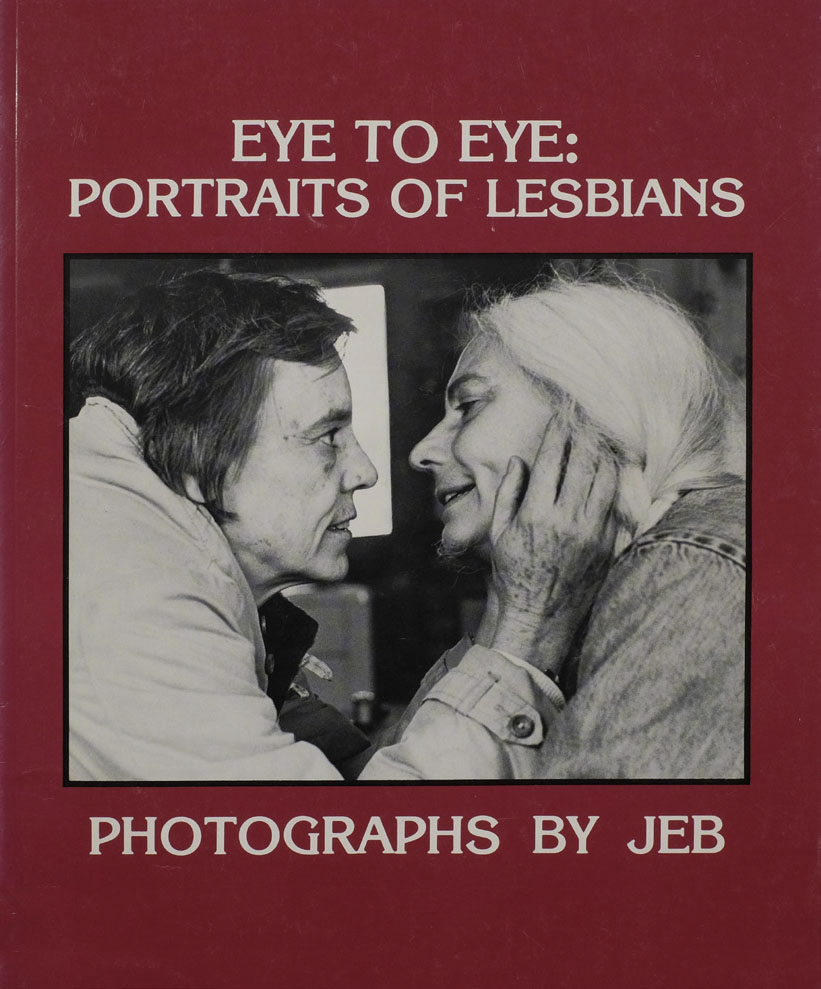
 

Cover image of 'Eye to Eye: Portraits of Lesbians' (1979). Photographs by JEB (Joan E. Biren)


Cover image of Eye to Eye: Portraits of Lesbians (1979). Photographs by JEB (Joan E. Biren)


In 1979, JEB (Joan E. Biren) self-published her first book, Eye to Eye: Portraits of Lesbians. Revolutionary at that time, JEB made photographs of lesbians from different ages and backgrounds in their everyday lives-working, playing, raising families, and striving to remake their worlds. The photographs were accompanied by testimonials from the women pictured in the book, as well as writings from icons including Audre Lorde, Adrienne Rich and a foreword from Joan Nestle. Eye to Eye signalled a radical new way of seeing – moving lesbian lives from the margins to the centre, and reversing a history of invisibility. More than just a book, it was an affirmation of the existence of lesbians that helped to propel a political movement. Reprinted for the first time in forty years and featuring new essays from photographer Lola Flash and former soccer player Lori Lindsey, Eye to Eye is a faithful reproduction of a work that continues to resonate in the queer community and beyond.

Text from the Amazon website
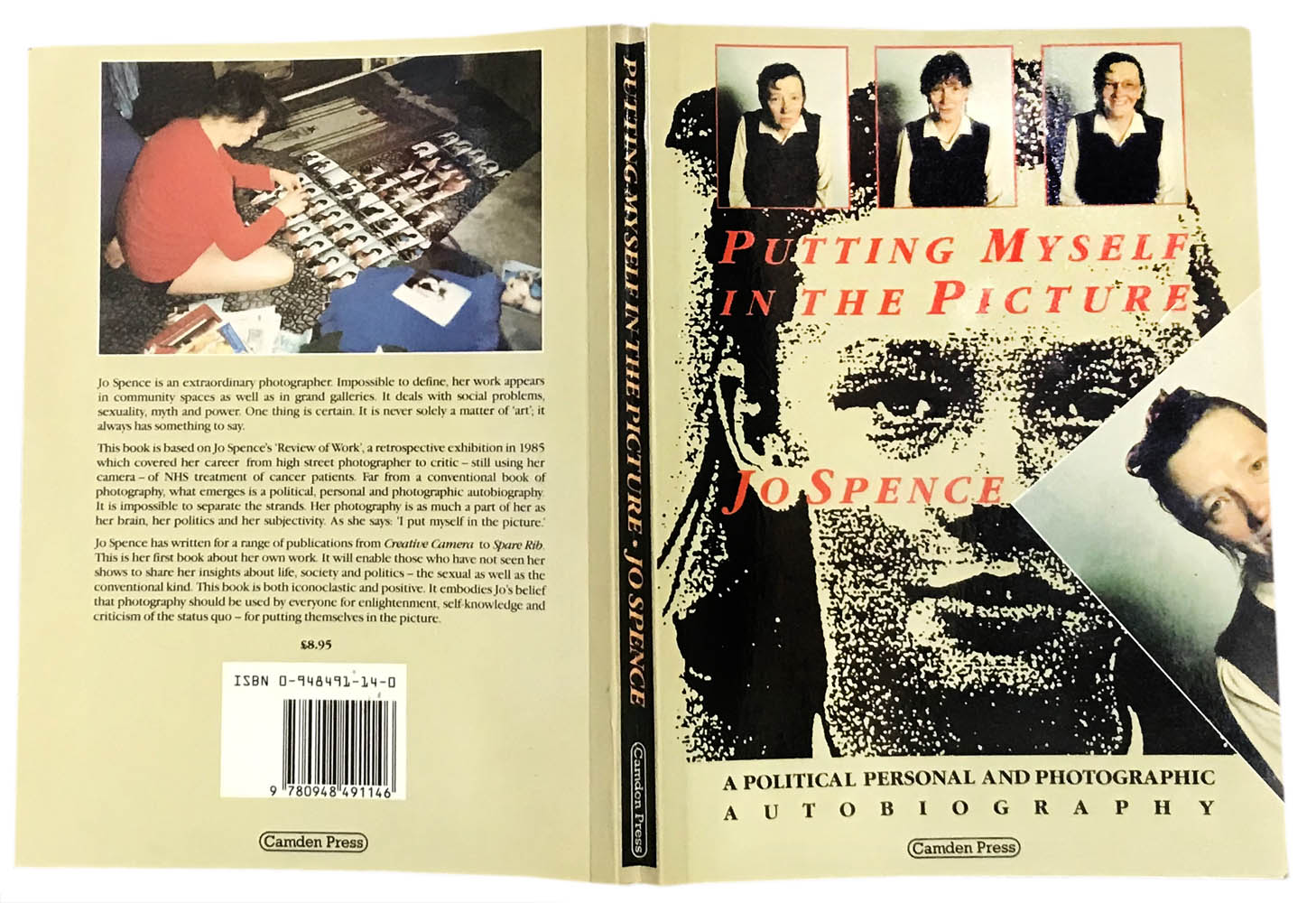
 

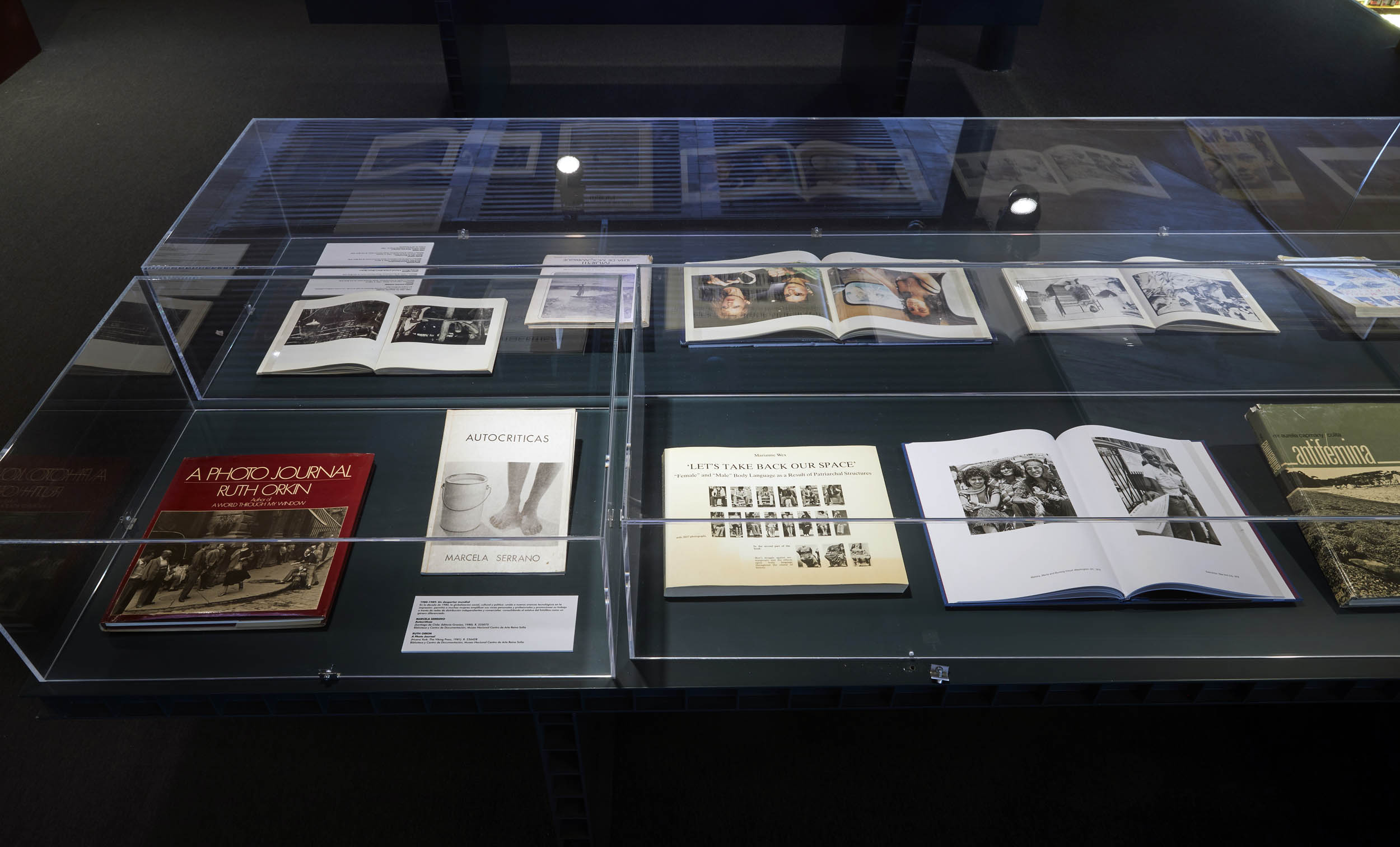
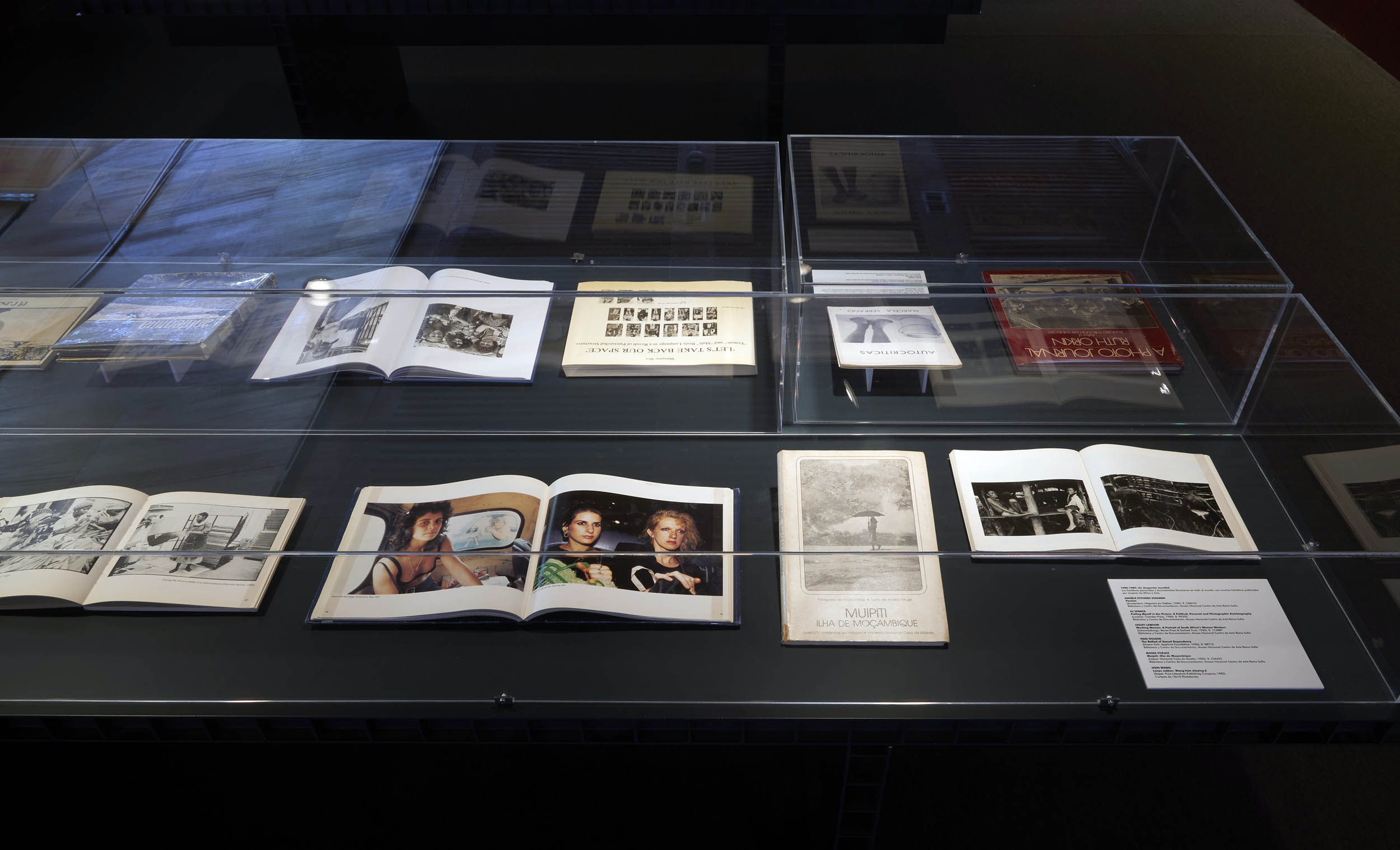
Jo Spence. 'Putting Myself In The Picture: A Political, Personal, and Photographic Autobiography'. London: Camden Press Ltd, 1986


Jo Spence. Putting Myself In The Picture: A Political, Personal, and Photographic Autobiography. London: Camden Press Ltd, 1986


Photographer Jo Spence challenges the assumptions of conventional photography in this groundbreaking visual autobiography, which traces her journey from self-censorship to self-healing.
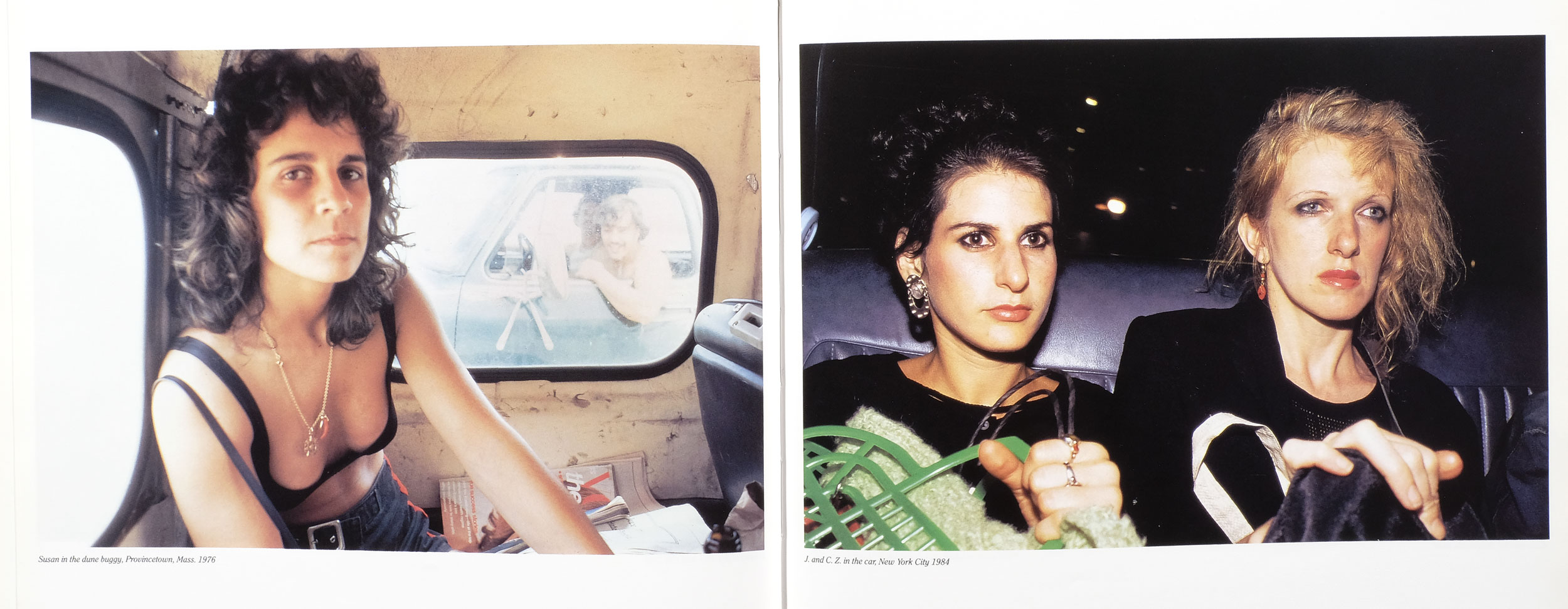
 

Nan Goldin, 'The Ballad of Sexual Dependency', 1986


Nan Goldin, The Ballad of Sexual Dependency, 1986


Cristina García Rodero. 'España Oculta'. 1989


Cristina García Rodero. España Oculta. 1989


When Spanish photographer Cristina Garcia Rodero went to study art in Italy, in 1973, she fully understood the importance of home. Yet her time abroad formented a deeper interest in was happening in her own country and, as a result, at the age of 23, Garcia Rodero returned to Spain and started a project that she hoped would capture the essence of the myriad Spanish traditions, religious practices and rites that were already fading away. What started as a five-year project ended up lasting 15 years and came to be the book España Oculta (Hidden Spain) published in 1989. At 39 years old, Garcia Rodero had managed to compile a kind of anthropological encyclopedia of her country. The work also captured a key moment in Spain’s history – with Spanish dictator Franco dying in 1975, and the country commencing a period of transition – something that would come to have a huge effect on the way the nation’s cultural traditions and rites were experienced and performed from then on.

Text from the Google Books website


'Barbara Kruger: Thinking of You'. The MIT Press & The Museum of Contemporary Art, 1999


Barbara Kruger: Thinking of You. The MIT Press & The Museum of Contemporary Art, 1999


This is the most comprehensive publication ever produced on the work of American artist Barbara Kruger. Kruger, one of the most influential artists of the last three decades, uses pictures and words through a wide variety of media and sites to raise issues of power, sexuality, and representation. Her works include photographic prints on paper and vinyl, etched metal plates, sculpture, video, installations, billboards, posters, magazine and book covers, T-shirts, shopping bags, postcards, and newspaper op-ed pieces.

This book serves as the catalog for the first major one-person exhibition of Kruger’s work to be mounted in the United States. The book, designed by Lorraine Wild in collaboration with the artist, contains texts by Rosalyn Deutsche, Katherine Dieckmann, Ann Goldstein, Steven Heller, Gary Indiana, Carol Squiers, and Lynne Tillman on subjects associated with Kruger’s work, including photography, graphic design, public space, power, and representation, as well as an extensive exhibition history, bibliography, and checklist of the exhibition. The cover features a new piece by Kruger, entitled Thinking of You, created especially for the catalog.

Text from the Amazon website


Graciela Iturbide. 'Juchitán de las Mujeres'. Mexico: Ediciones Toledo, 1991


Graciela Iturbide. Juchitán de las Mujeres. Mexico: Ediciones Toledo, 1991


In 1979 Graciela Iturbide took a series of photographs of the Zapotec culture, published as Juchitán de la mujeres. This is certainly the best known of all her works. It is the result of ten years of work, numerous trips to the Isthmus of Tehuantepec, and a prolonged experience of living among its inhabitants. None of the subjects of these photographs was captured candidly; all were carefully posed.


Photobook history is a relatively recent area of study, with one of the first “book-on-books” anthologies published in 1999 with the release of Fotografía Pública / Photography in Print 1919-1939, a catalogue associated with an exhibition of the same title at the Museo Nacional Centro de Arte Reina Sofía. Over the past two decades, a virtual cottage industry of books-on-photobooks has emerged, documenting photographically illustrated books based on geography or around a theme. Photobooks by women are in short supply in most of these anthologies, which is why 10×10 Photobooks launched the How We See: Photobooks by Women touring reading room and associated publication in 2018. Focusing on contemporary photobooks by women from 2000 to 2018, the project was the first step in 10×10 Photobooks’ ongoing interest in reassessing photobook history as it relates to women. Although only twenty-five years old, photobook history has been written primarily by men and has focused on publications authored by men. Very few books by women photographers appear in past photobook anthologies, and those included are already quite well known.

As a nonprofit organisation with a mission to share photobooks globally and encourage their appreciation and understanding, the 10×10 Photobooks team frequently discusses how photobook history was – and continues to be – written from a skewed perspective and that a “new” history needs to emerge. Early in our discussions, we recognised photobook history as needing to be “rewritten,” but this implied we accepted the partial history already in existence, which we did not. Instead, we concluded that photobook history needs to be “unwritten,” as the existing history is riddled with omissions. What is left out is not by mistake – it indicates bias and incomplete research by the current gatekeepers. To present a more inclusive and diverse vision, we must collectively address these omissions.

What They Saw: Historical Photobooks by Women, 1843-1999, a touring reading room accompanied by a publication and series of public programs, is a means to ignite interest in some of the underexposed and undocumented photobooks by women made between 1843 and 1999 and to begin a process of filling in the gaps. We say “some photobooks” because we are keenly aware that much work is still required, and we have only opened the door a crack. In several cases, particularly for books done before 1900 in regions other than North America and Europe or by women of colour, we heard about an artist who may have produced a photographically illustrated book or album, but we were unable to find any further documentation other than a brief mention before the trail went cold. Other impediments emerged among the cohort of women who collaborated with their husbands. Many of their collaborative books are credited only with their husbands’ names, and their contributions, if mentioned at all, are included as footnotes. In some cases, women authors marked their works with a gender-neutral signature that used only their studio name or first initial and last name. In addition, our initial research was impeded by the standard definition of a photobook: a bound volume with photographic illustrations published by the author, an independent publisher, or a trade publisher.

We found that we had to widen the frame to include individual albums, slim exhibition pamphlets, scrapbooks, maquettes, zines, and artists’ books in order to be more inclusive. This wider frame necessitated redefining a photobook author to incorporate those who may not call themselves a photographer or artist but who nonetheless assembled a “book” composed of photographs taken by themselves or others. Funding was another limitation. Many women photographers who actively exhibited their work either lacked the personal resources to produce a book or could not find anyone willing to underwrite such a venture.

This iteration of the What They Saw reading room includes 60 books of the more than 250 volumes highlighted in the associated publication. Most of these publications are kept in the collection of the Museo Reina Sofía’s Library and Documentation Centre. They are presented chronologically and show examples of books from around the globe. We begin with Anna Atkins, a British botanist, who was the first person ever to print and distribute a photobook. Her simple desire to share images of her algae specimens ushered in a new art form that presents photography in the book format. In the following years, women such as Isabel Agnes Cowper, the Official Museum Photographer at the South Kensington Museum (now the Victoria and Albert Museum), used photography to document museum objects, subsequently reproduced in numerous books. Until recently, her name was forgotten, as none of the South Kensington Museum publications credit her as the photographer.

In the early twentieth-century, women authors of photobooks gained some visibility. Fine-art photographer Germaine Krull published numerous books that approached photography from a creative and inventive perspective. Margaret Bourke-White emerged as a well-regarded photojournalist who traveled worldwide photographing for Fortune and Life magazines and producing countless books. In the 1930s, in Russia, Varvara Stepanova collaborated with her husband, Aleksandr Rodchenko, to create books filled with experimental photomontages. As the century progressed, women in other parts of the world also found their voices in photobooks. African American anthropologist Eslanda Cardozo Goode Robeson traveled to Uganda and South Africa and published African Journey in 1945, one of the earliest books written on Africa by a female scholar of color. In Mexico in 1951, Lola Álvarez Bravo contributed photographs to Acapulco en el sueño, a bold publication created to attract tourism to Acapulco. A few years later, Fina Gómez Revenga, a Venezuelan photographer, worked in Paris with the famed French printing house Draeger Frères to illustrate the poems of Surrealist poet Lise Deharme.

With the arrival of the 1960s, women emerged from the sidelines and began to produce widely distributed, often socially focused, photobooks. A New York City street photographer, Helen Levitt, published A Way of Seeing in 1965, while Carla Cerati collaborated on Morire di classe in 1969, a visually compelling commentary on the appalling conditions in Italian psychiatric hospitals. With the women’s movement finding its full voice in the 1970s, women photographers took center stage in the last three decades of the twentieth-century, releasing a steady flow of photobooks. A year after her death in 1971, Aperture published Diane Arbus’s monograph, a photobook that continues to influence generations of photographers. Barbara Brändli, a Swiss immigrant to Venezuela, documents the energy and rapid transformations of Caracas, while activist-photographer JEB (Joan E. Biren) toured the United States, capturing lesbian pride events. In South Africa, Lesley Lawson, a member of the Afrapix photo agency, combined interviews and her photographs to reveal the working conditions of Black women in Johannesburg. Cameroonian Angèle Etoundi Essamba shares the beauty and spirit of Black women in Passion (1989), while American Donna Ferrato unflinchingly explores domestic violence in Living with the Enemy (1991), and Nan Goldin exposes violent love and loss in her personal narrative, The Ballad of Sexual Dependency (1986). In books centered on cultural explorations, Wang Hsin photographs the fading traditions of Lanyu (Orchid Island) off the coast of Taiwan, Cristina García Rodero records religious festivals and rituals in her native Spain, and Ketaki Sheth documents twins and triplets in the Indian Gujarati community.

In reaching out to the far corners of the world, we uncovered numerous forgotten books, but many remain undiscovered. For example, we learned about a nineteenth-century woman in Iran who kept her husband’s diary and most probably added her photographs to the volume, but no visual documentation of this diary could be found. We also discovered several books that featured the participation of women in collaboration with male photographers where the women’s contributions were ambiguous. There were several “leads” of this nature, and we decided that leaving them out would be a missed opportunity. Therefore, in the associated anthology, we have included a “timeline” that presents several historically significant publishing, magazine, small press, photography, and feminist events that may or may not have produced a photobook, but have undoubtedly influenced its history. To support further exploration of these unresolved “leads,” 10×10 Photobooks has launched a research grant program to encourage scholarship on underexplored topics in photobook history.

From its inception, What They Saw has sought to include a diverse group of photographically illustrated publications by women. For photobook history to become more inclusive, it requires everyone (men, women, nonbinary, white, Black, Asian, African, Latinx, Indigenous, Western, Eastern, etc.) to contribute. We see this reading room of women’s role in the production, dissemination, and authoring of photobooks as a necessary step in the unwriting of the current photobook history and a rewriting of a photobook history that is more equitable and inclusive. We invite future researchers to take the next steps to explore further women and other marginalised people’s historical impact in the realm of photobooks and to expand upon the books we present in this reading room and its associated anthology.

Text from the Museo Nacional Centro de Arte Reina Sofía


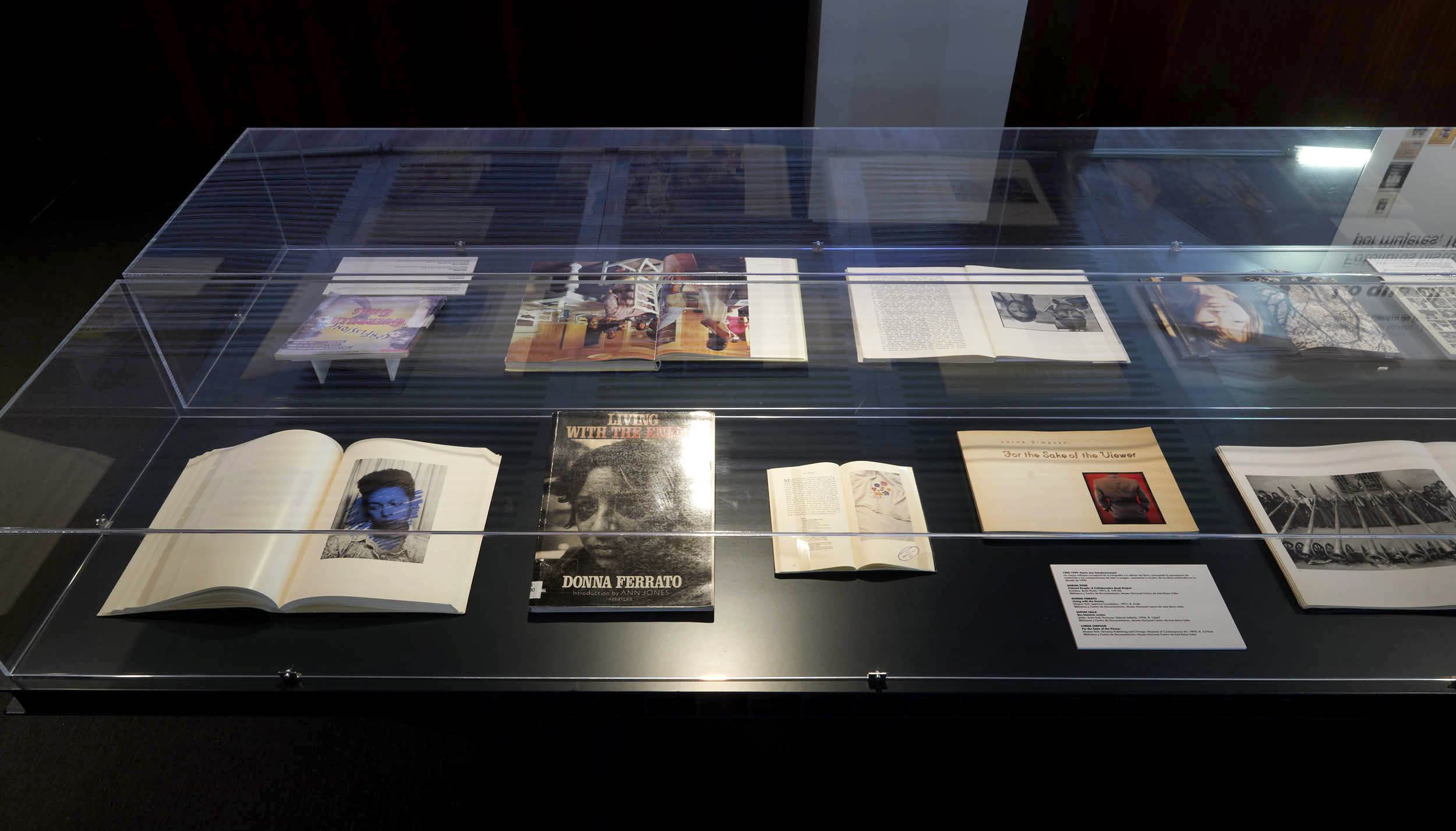
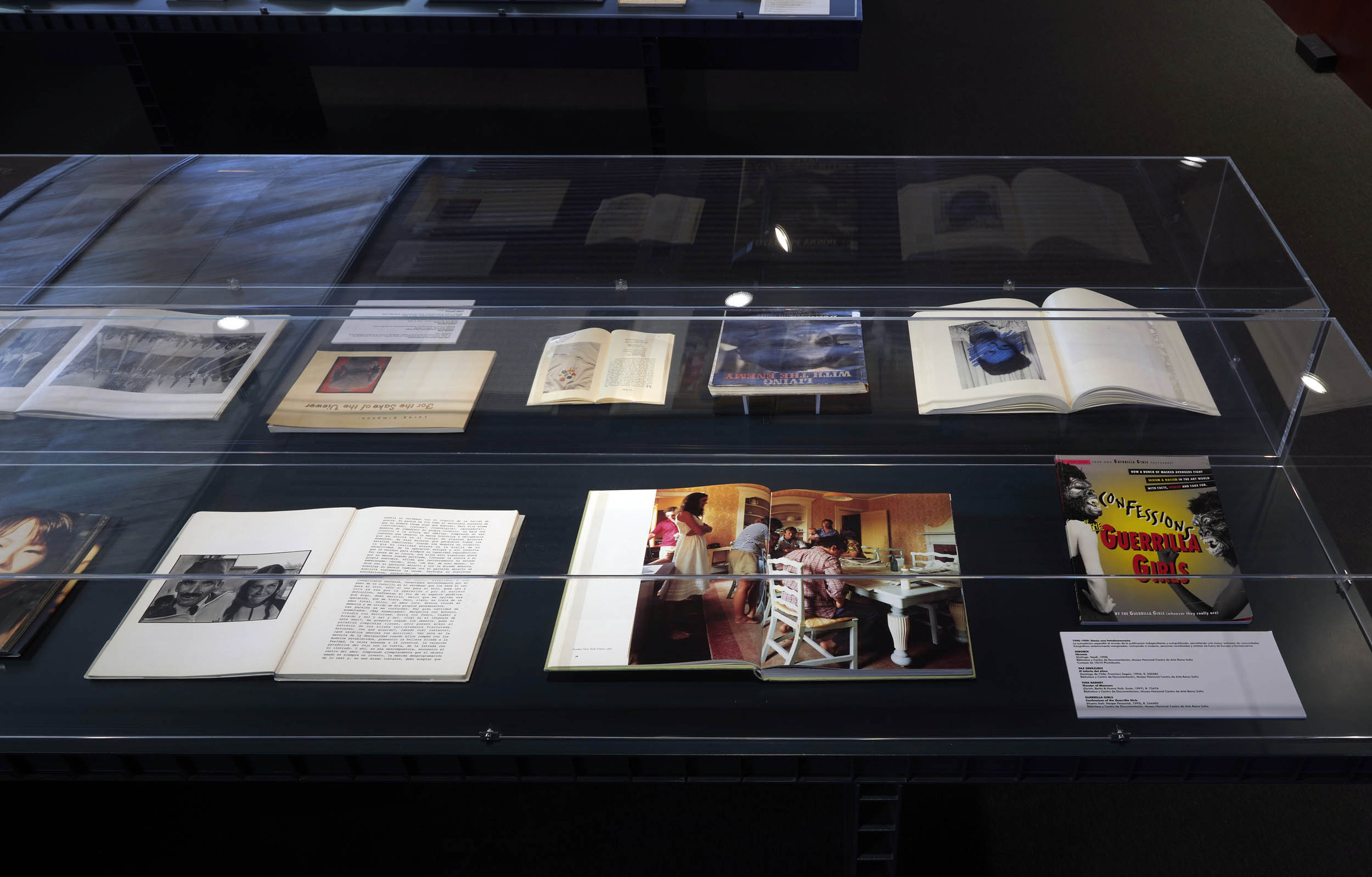
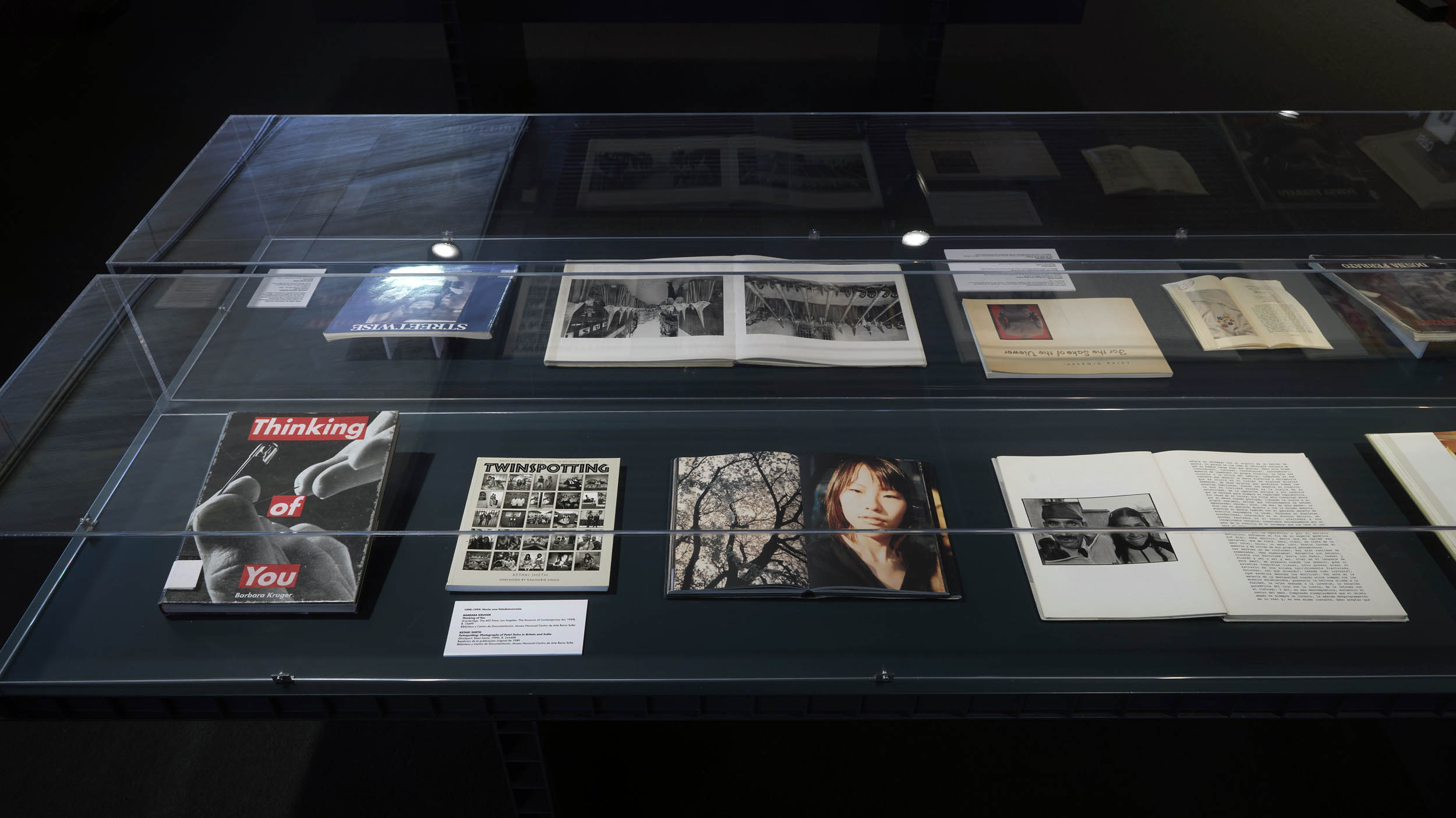
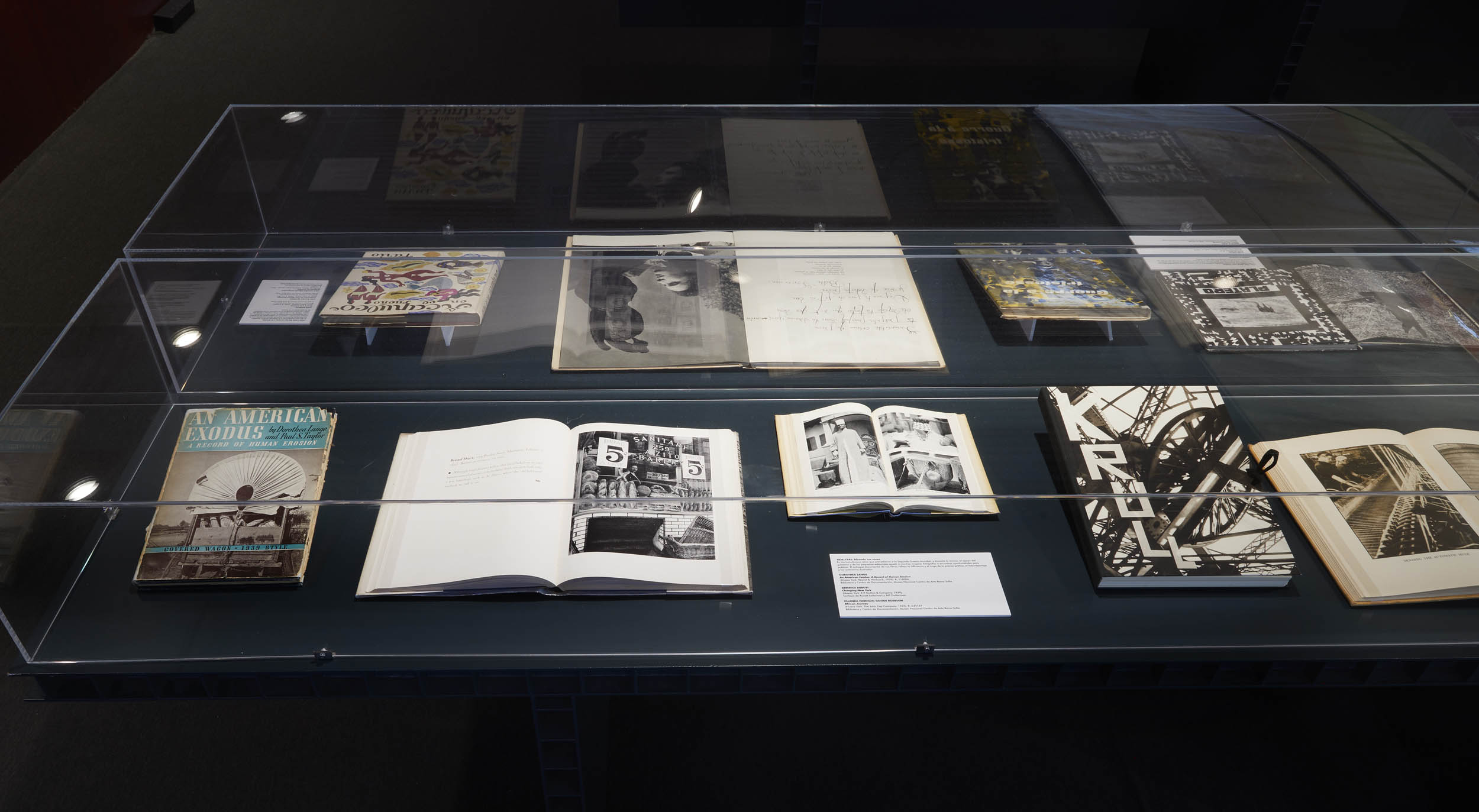
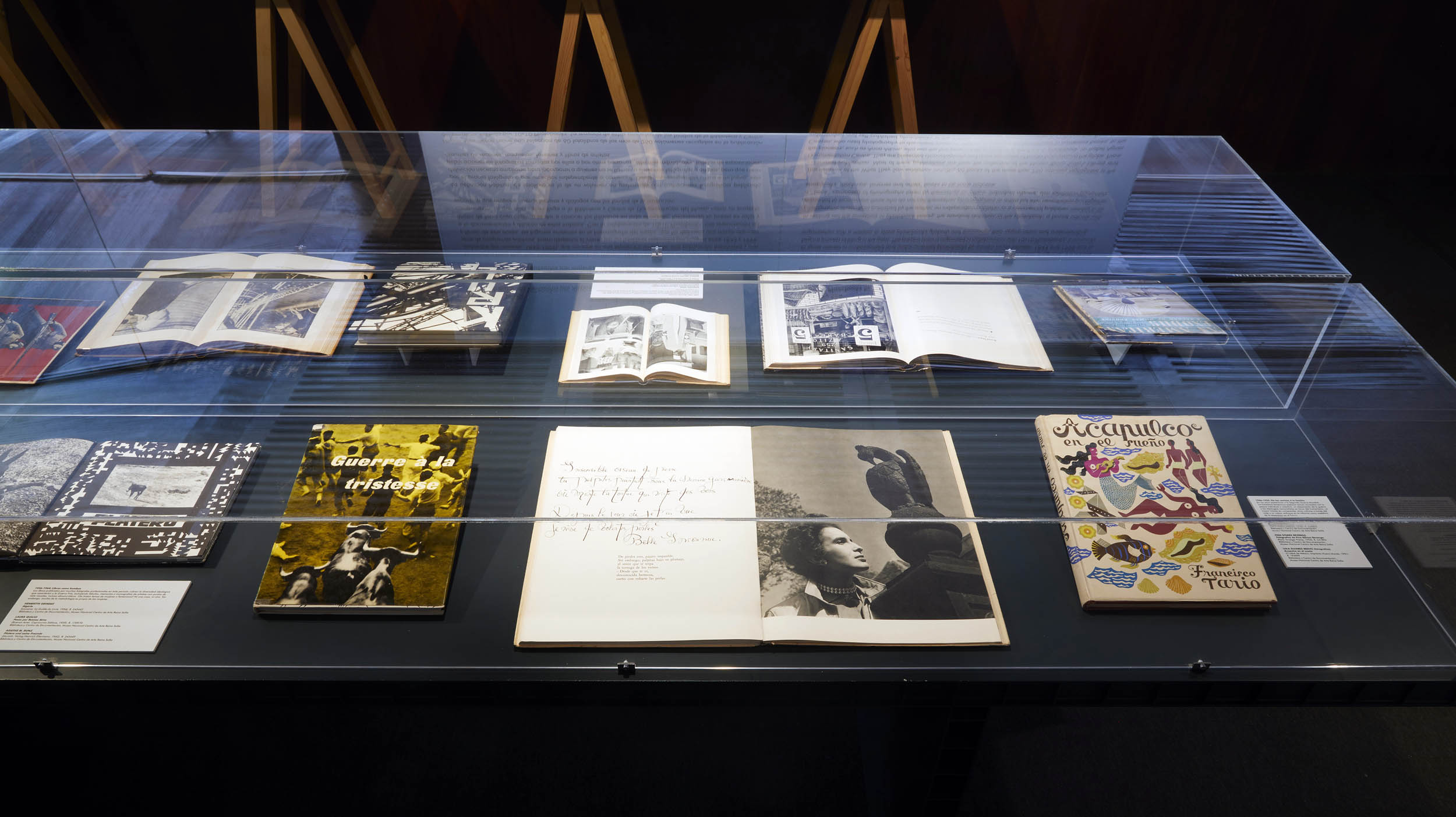
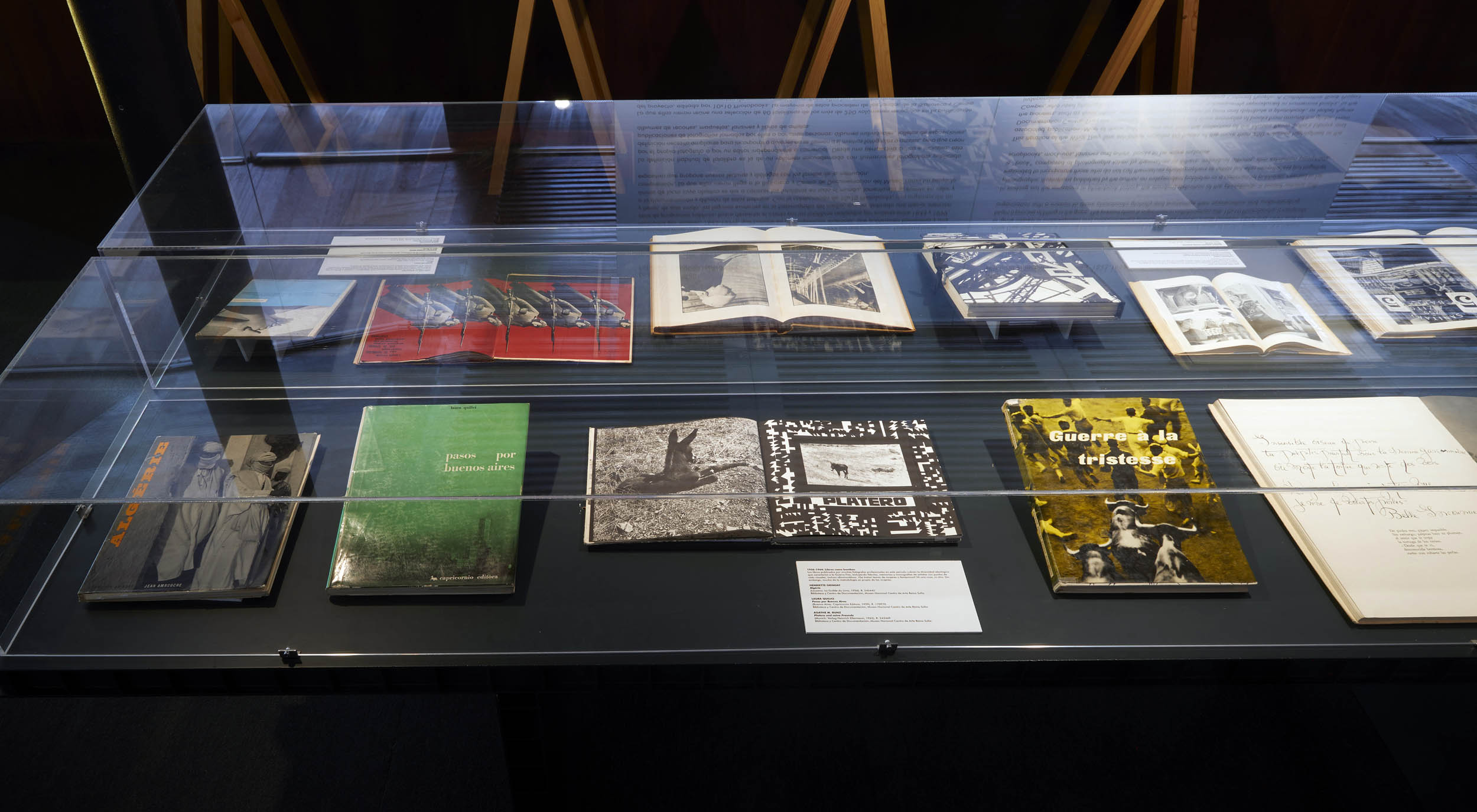
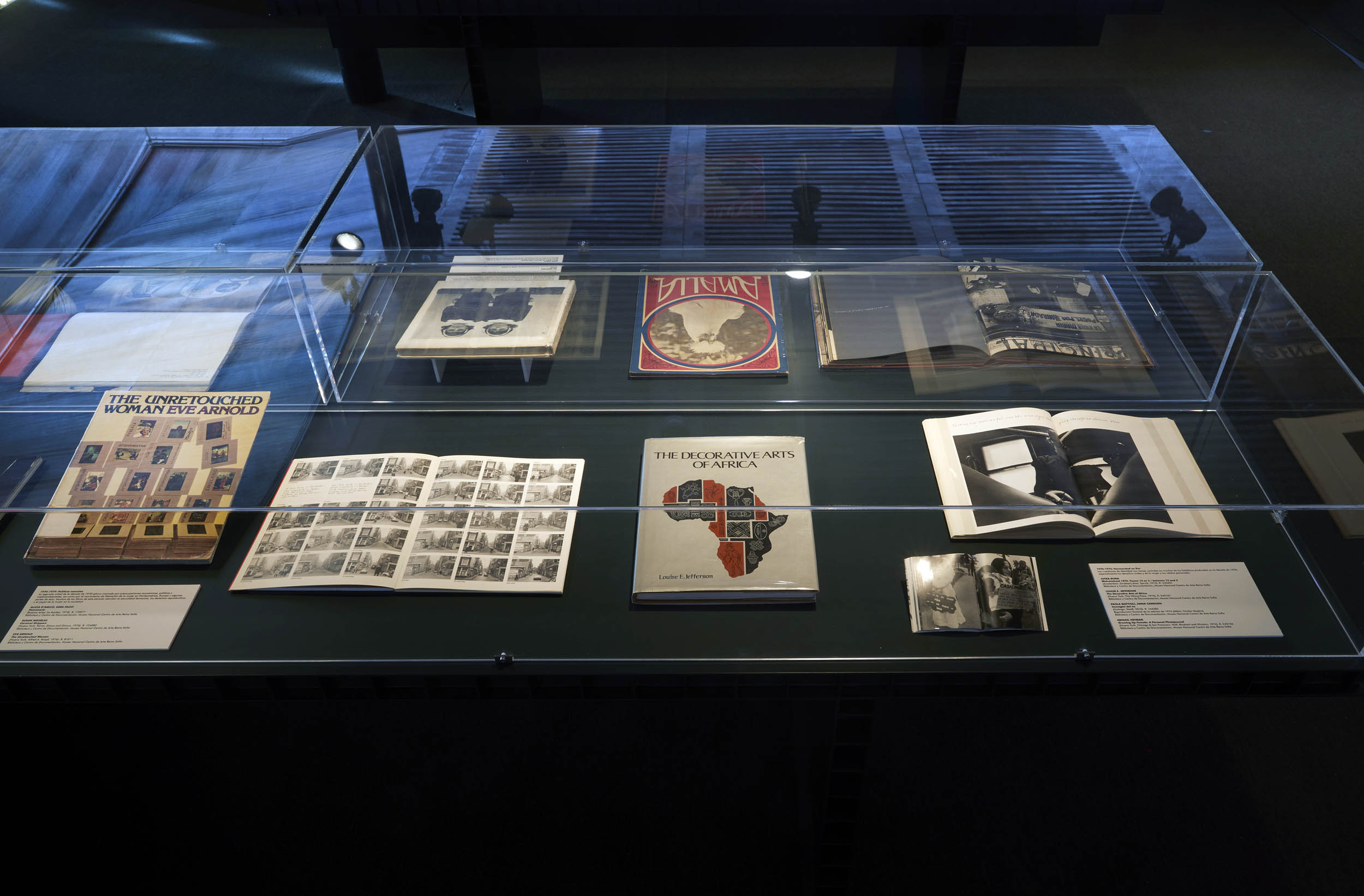
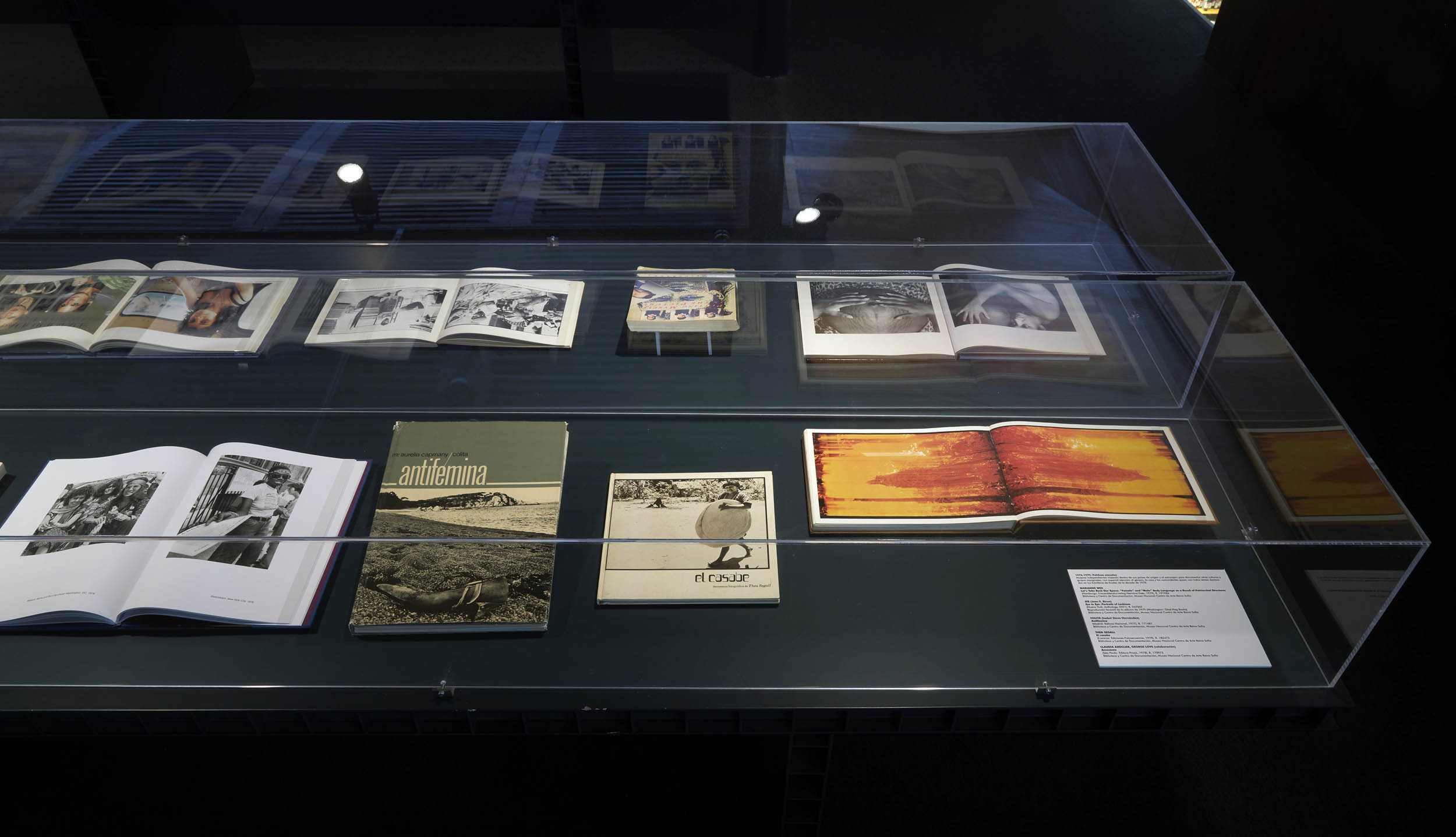
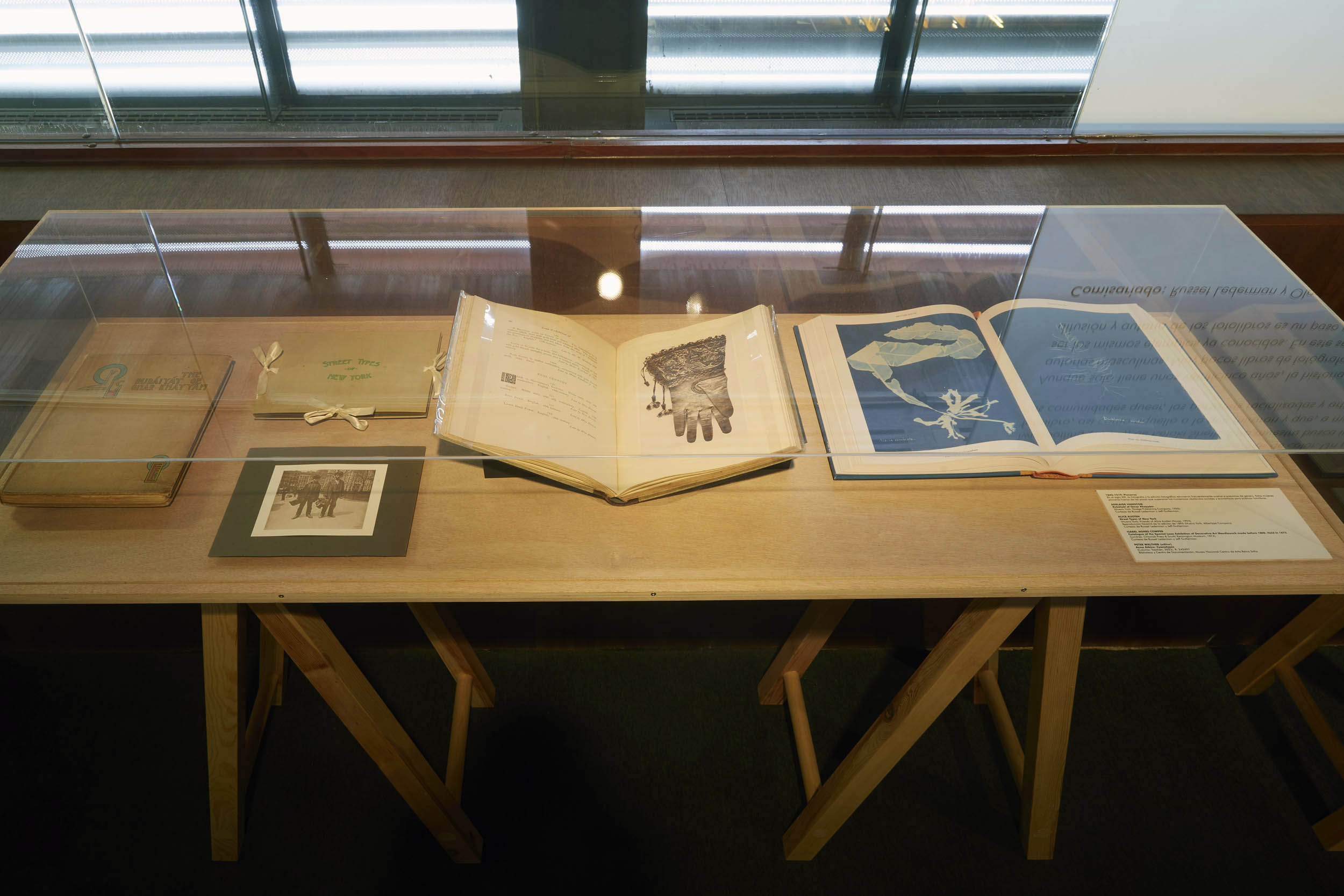
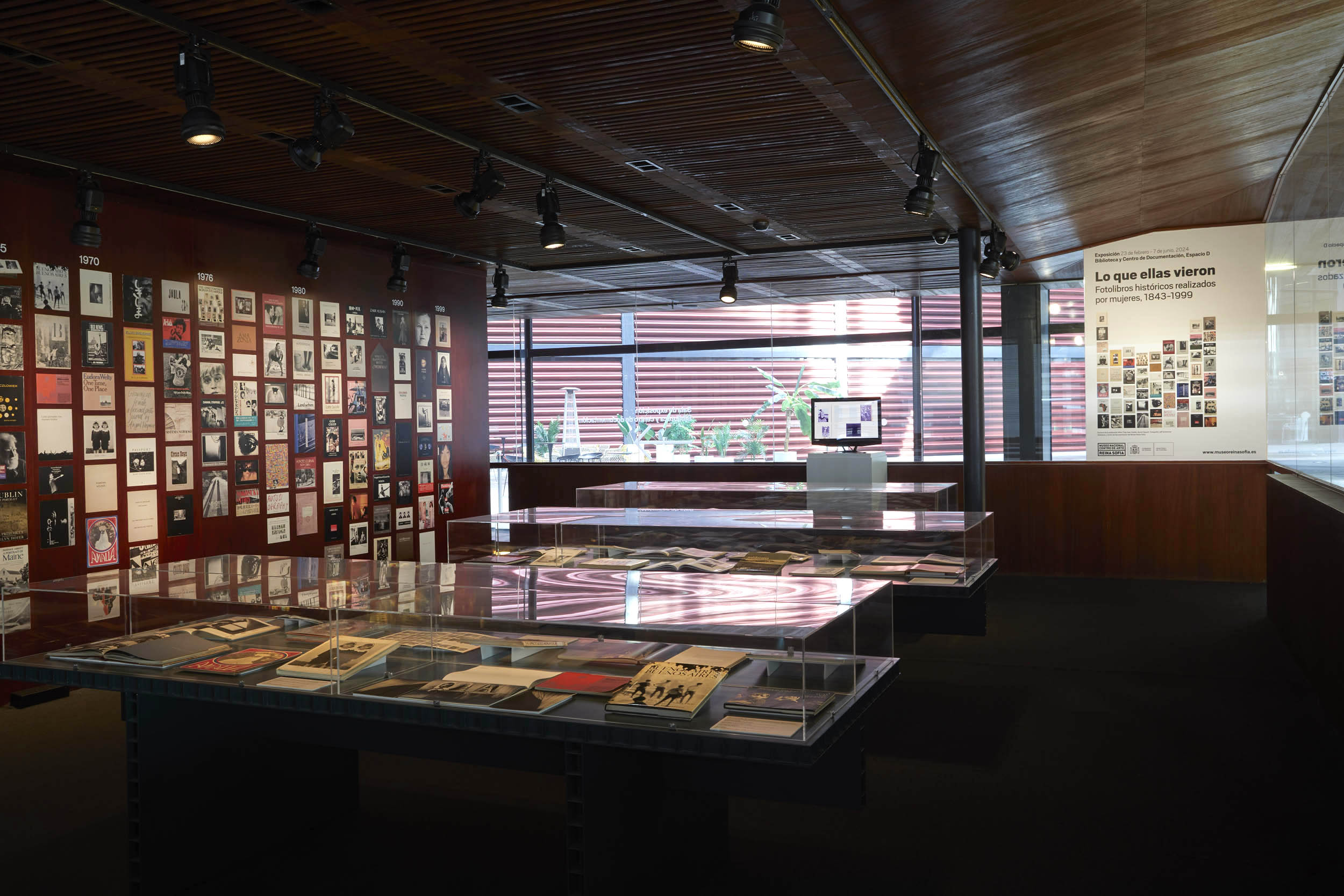
Installation view of the exhibition 'What They Saw: Historical Photobooks by Women, 1843-1999' at the Museo Nacional Centro de Arte Reina Sofía, Madrid

Installation view of the exhibition 'What They Saw: Historical Photobooks by Women, 1843-1999' at the Museo Nacional Centro de Arte Reina Sofía, MadridInstallation view of the exhibition 'What They Saw: Historical Photobooks by Women, 1843-1999' at the Museo Nacional Centro de Arte Reina Sofía, Madrid

Installation view of the exhibition 'What They Saw: Historical Photobooks by Women, 1843-1999' at the Museo Nacional Centro de Arte Reina Sofía, Madrid

Installation view of the exhibition 'What They Saw: Historical Photobooks by Women, 1843-1999' at the Museo Nacional Centro de Arte Reina Sofía, Madrid

Installation view of the exhibition 'What They Saw: Historical Photobooks by Women, 1843-1999' at the Museo Nacional Centro de Arte Reina Sofía, Madrid

Installation view of the exhibition 'What They Saw: Historical Photobooks by Women, 1843-1999' at the Museo Nacional Centro de Arte Reina Sofía, Madrid

Installation view of the exhibition 'What They Saw: Historical Photobooks by Women, 1843-1999' at the Museo Nacional Centro de Arte Reina Sofía, Madrid

Installation view of the exhibition 'What They Saw: Historical Photobooks by Women, 1843-1999' at the Museo Nacional Centro de Arte Reina Sofía, Madrid

Installation view of the exhibition 'What They Saw: Historical Photobooks by Women, 1843-1999' at the Museo Nacional Centro de Arte Reina Sofía, Madrid

Installation view of the exhibition 'What They Saw: Historical Photobooks by Women, 1843-1999' at the Museo Nacional Centro de Arte Reina Sofía, Madrid

Installation view of the exhibition 'What They Saw: Historical Photobooks by Women, 1843-1999' at the Museo Nacional Centro de Arte Reina Sofía, Madrid

Installation view of the exhibition 'What They Saw: Historical Photobooks by Women, 1843-1999' at the Museo Nacional Centro de Arte Reina Sofía, Madrid

Installation view of the exhibition 'What They Saw: Historical Photobooks by Women, 1843-1999' at the Museo Nacional Centro de Arte Reina Sofía, Madrid

Installation view of the exhibition 'What They Saw: Historical Photobooks by Women, 1843-1999' at the Museo Nacional Centro de Arte Reina Sofía, Madrid

Installation view of the exhibition 'What They Saw: Historical Photobooks by Women, 1843-1999' at the Museo Nacional Centro de Arte Reina Sofía, Madrid

Installation view of the exhibition 'What They Saw: Historical Photobooks by Women, 1843-1999' at the Museo Nacional Centro de Arte Reina Sofía, Madrid

Installation view of the exhibition 'What They Saw: Historical Photobooks by Women, 1843-1999' at the Museo Nacional Centro de Arte Reina Sofía, Madrid

Installation view of the exhibition 'What They Saw: Historical Photobooks by Women, 1843-1999' at the Museo Nacional Centro de Arte Reina Sofía, Madrid

Installation view of the exhibition 'What They Saw: Historical Photobooks by Women, 1843-1999' at the Museo Nacional Centro de Arte Reina Sofía, Madrid

Installation view of the exhibition 'What They Saw: Historical Photobooks by Women, 1843-1999' at the Museo Nacional Centro de Arte Reina Sofía, Madrid

Installation view of the exhibition 'What They Saw: Historical Photobooks by Women, 1843-1999' at the Museo Nacional Centro de Arte Reina Sofía, Madrid

Installation view of the exhibition 'What They Saw: Historical Photobooks by Women, 1843-1999' at the Museo Nacional Centro de Arte Reina Sofía, Madrid

Installation view of the exhibition 'What They Saw: Historical Photobooks by Women, 1843-1999' at the Museo Nacional Centro de Arte Reina Sofía, Madrid

Installation view of the exhibition 'What They Saw: Historical Photobooks by Women, 1843-1999' at the Museo Nacional Centro de Arte Reina Sofía, Madrid


Installation views of the exhibition What They Saw: Historical Photobooks by Women, 1843-1999 at the Museo Nacional Centro de Arte Reina Sofía, Madrid


Museo Nacional Centro de Arte Reina Sofía
Sabatini Building
Santa Isabel, 52
Nouvel Building
Ronda de Atocha (with plaza del Emperador Carlos V)
28012 Madrid
Phone: (34) 91 774 10 00

Opening hours:
Monday 10.00am – 9.00pm
Tuesday Closed
Wednesday – Saturday 10.00am – 9.00pm
Sunday 12.30am – 2.30pm

Museo Nacional Centro de Arte Reina Sofía website

LIKE ART BLART ON FACEBOOK

Back to top

Exhibition: ‘Nan Goldin’ at the National Gallery of Australia, Canberra

Exhibition dates: 8th July 2023 – 28th January 2024

Curator: Anne O’Hehir, Curator, Photography


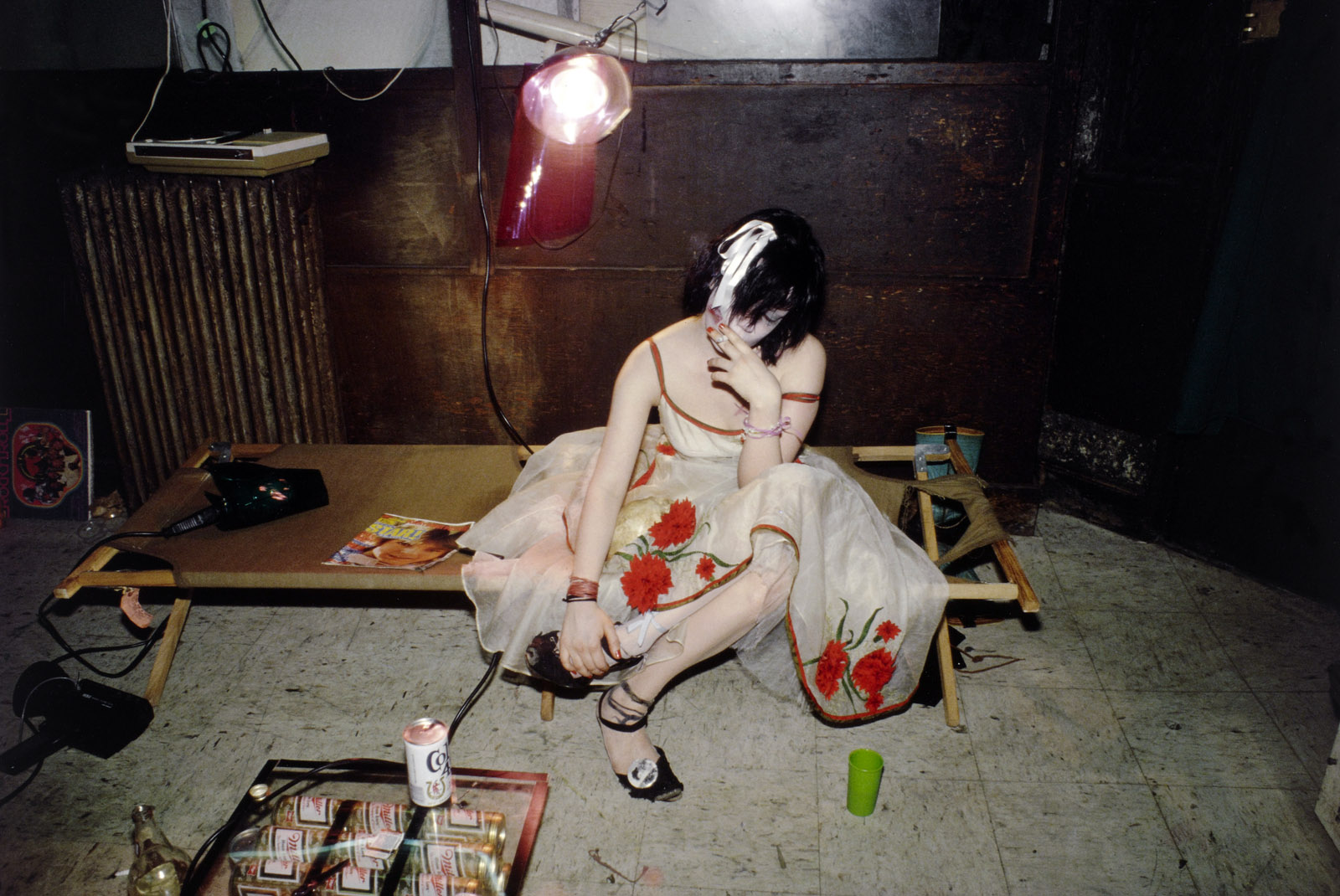
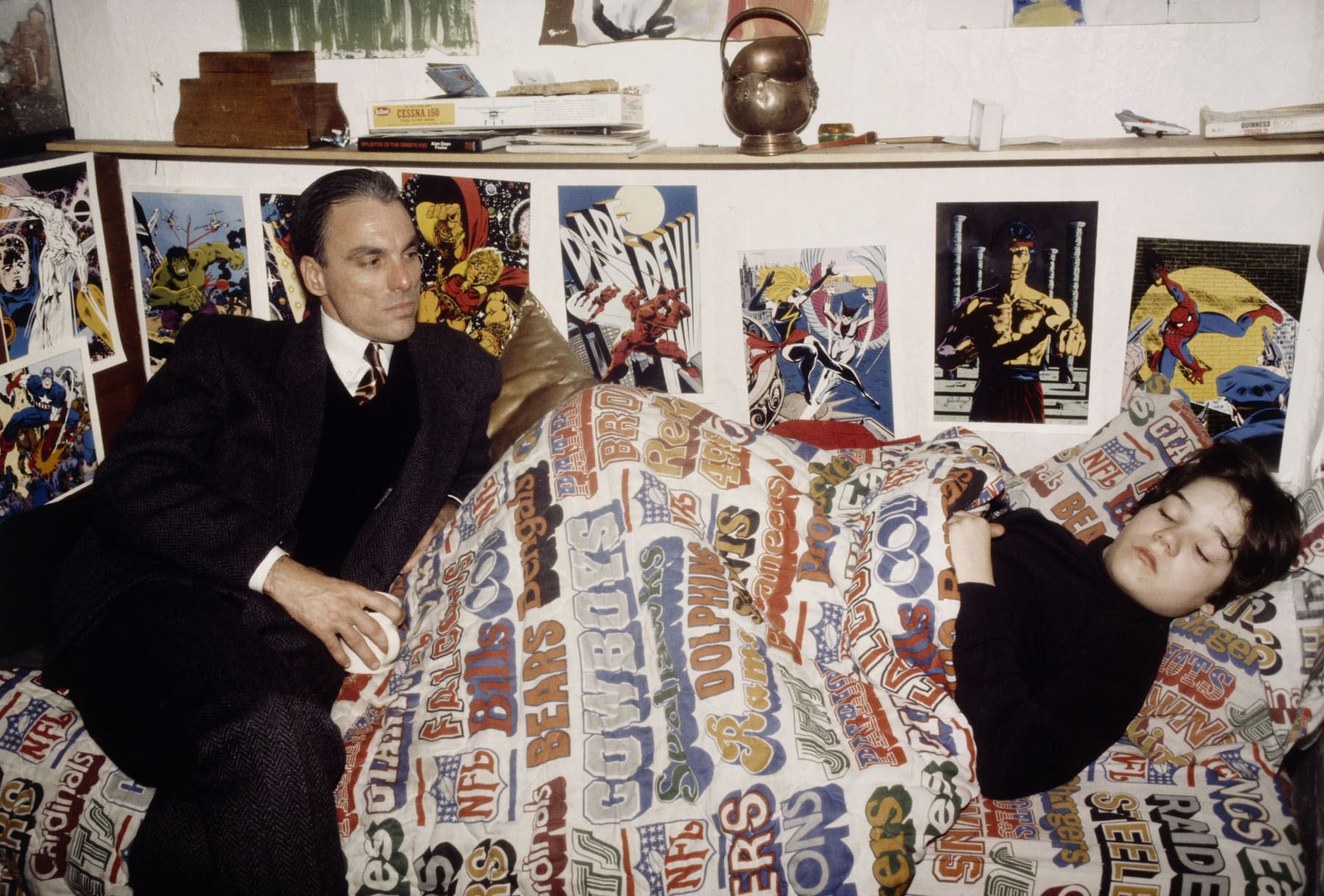
Nan Goldin (American, b. 1953) 'Cookie at Tin Pan Alley, New York City' 1983


Nan Goldin (American, b. 1953)
Cookie at Tin Pan Alley, New York City
1983
From the series The ballad of sexual dependency, 1973-1986
Cibachrome print
National Gallery of Australia, Kamberri/Canberra
Purchased 2021 in celebration of the National Gallery of Australia’s 40th anniversary, 2022
© Nan Goldin


Putting a spell on you

In a February 2017 posting on Art Blart on Goldin’s The ballad of sexual dependency I commented:

“There is little love and tenderness here, little magic or generosity of spirit. Goldin’s attitude to the world at the time seems to be one of hostility and resentment. It’s all very well portraying the underbelly of society – the depravity, violence and degradation – but if your point of departure is one of anger and animosity, this is always going to be reflected in your art. I remember going out with my friends partying in the 1980s, the drugs, the sex, the pushing it to the edge, but you know what – we cared about each other. Nothing could be further from the truth in Goldin’s hedonistic (not heuristic) approach to her aura. …”


Over six years later it was time to reevaluate my feelings towards the work by looking again. Had my feelings changed in the intervening years? Or was I just being an obtuse human at the time who couldn’t see what everyone else could see, the genius of the work?

I have reflected long and hard on my feelings in relation to these photographs. Perhaps I was too close to the subject matter, that the series cut too close to the bone: many years of partying in London taking drugs, so many friends and lovers lost to HIV/AIDS. But that is not the case.

The problem for me with this work is its rather sad detachment from life and a pervading sadness attached to each of these photographs. While Goldin announces that “For me it is not a detachment to take a picture” I feel the opposite is true: Goldin seems uber detached when taking these photographs. The artist goes “diving for pearls” hoping to create some magical, random psychological subtexts where the subconscious is made visible, but she doesn’t ever know whether it’s her or the camera’s subconscious that is revealed or who (the camera or the artist) is doing the work. So much for knowing thyself, being responsible to the world, to others, and to oneself, intellectually, morally, and practically.

While the diaristic photographs of this “seminal” body of work feature intimate moments of love and loss, moments of bohemian sex, transgression, beauty, spontaneity, and suffering captured in photographs of “unflinching candour, rich hues, and a keen sense of empathy and lyricism” where is the real Goldin in all of this observational performance (Goldin says her photographs ‘come out of relationships, not observation’.) I’ll just leave that one there…

What I would really like to see is the full 700 slide sequence, live, with the music that was supposed to go with these slides. I want to feel the context of these photographs and their intimacies in the flesh with the freshness and passion of what was happening at the time in New York:

Images and words and music

the real memory
the real experience

HIV/AIDS
death
life
bitterness
love
anger
immediacy

Mark Morrisroe
David Wojnarowicz
Peter Hujar
Cookie Mueller
Keith Haring
Kiki Smith

addiction
music with the ballad of sexual dependency = I put a spell on you
witness… to life, to the hurt
conformity and denial
rebellion


Each period reframes issues surrounding gender, sex, drug use and death … and what it means to be free. These images would feel totally different in 1980s New York but today, they feel cold, desperate and sad and I can’t identify with them or their photographic pathology, their study of suffering.

Have my feelings changed towards this work six years on. Yes they have. I more fully appreciate their photographic snapshot composition, their colour, their diaristic bravado. But I still don’t like their energy…. nor their masochistic indulgence.

Perhaps I just want to feel the real memory, the real experience (the energy and atmosphere of being in New York at the time) not viewed through the prism of this distanced, distancing monologue.

Dr Marcus Bunyan


Many thankx to the National Gallery of Australia for allowing me to publish the photographs in the posting. Please click on the photographs for a larger version of the image.


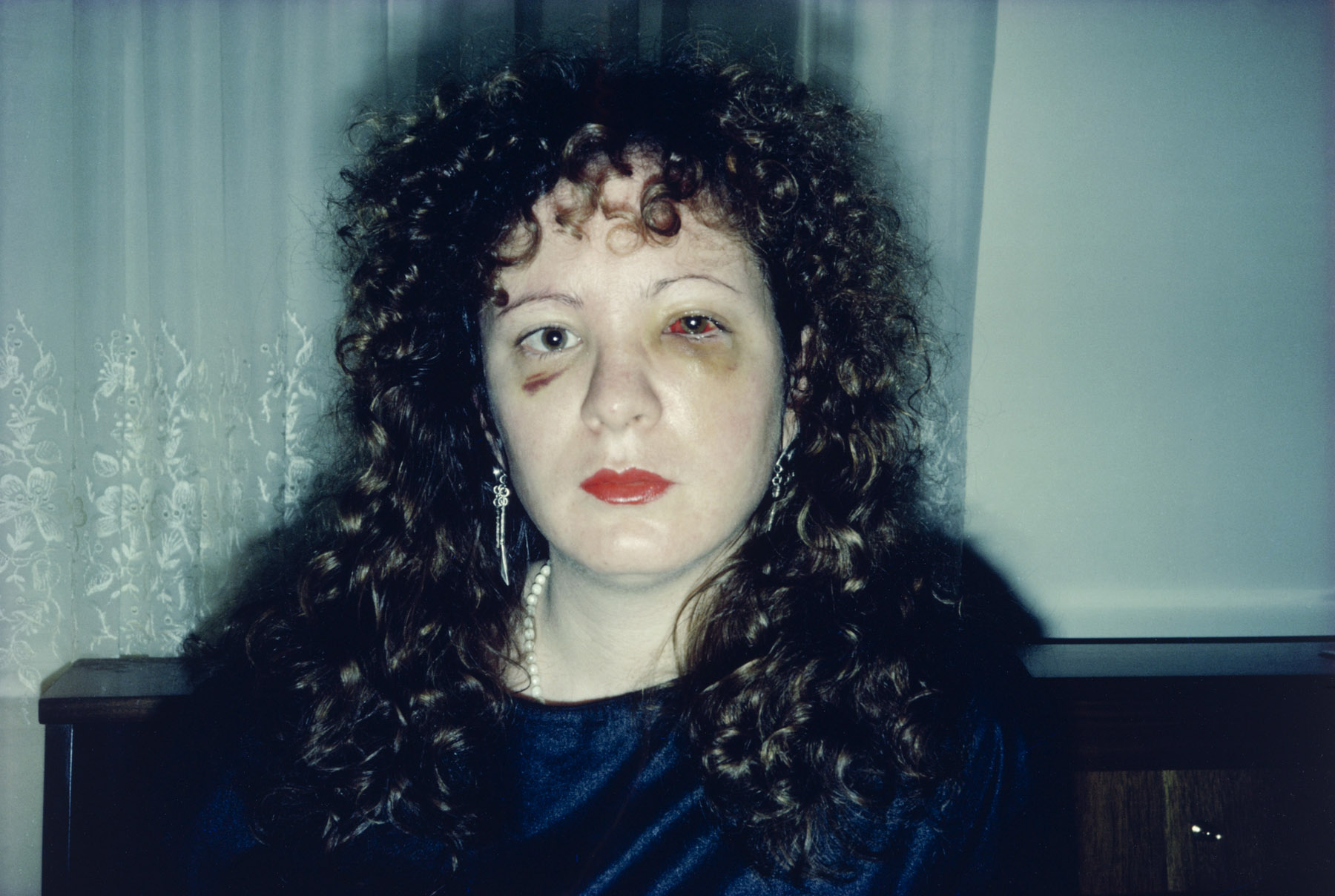
The photographs in Nan Goldin’s The ballad of sexual dependency depict the everyday lives, often in intimate detail, of people in Goldin’s immediate community during the late 1970s and early 1980s. Please be advised that works of art in this exhibition depict explicit nudity, sexual acts, drug use, and the impacts of violence against women. Viewer discretion is advised. This exhibition is not suitable for children under the age of 15.


‘For me it is not a detachment to take a picture. It’s a way of touching somebody – it’s a caress, I think that you can actually give people access to their own soul.’


Nan Goldin


‘The people who have been photographed extensively by me feel that my camera is as much a part of their life as any other aspect of their life with me. It then becomes perfectly natural to be photographed. It ceases to be an external experience and becomes a part of the relationship, which is heightened by the camera, not distanced. The camera connects me to the experience and clarifies what is going on between me and the subject.’


Nan Goldin, wall text from the exhibition


“Since David Armstrong and I were young he always referred to photography as “diving for pearls.” If you took a million pictures you were lucky to come out with one or two gems. … I never learned control over my machines. I made every mistake in the book. But the technical mistakes allowed for magic. … Random psychological subtexts that I never would have thought to intentionally create. The subconscious made visible – though whether mine or the camera’s I don’t know …”

Nan Goldin. “Diving for Pearls,” quoted in Hilton Als. “Nan Goldin’s Life in Progress,” on The New Yorker website, July 4, 2016 [Online] Cited 18/11/2021


‘Nan Goldin’s nostalgic snapshots depict intimate moments of bohemian sex, transgression, beauty, spontaneity, and suffering. Her frames are marked by unflinching candour, rich hues, and a keen sense of empathy and lyricism. Goldin’s most famous work, ‘The Ballad of Sexual Dependency’ (1985), is a slideshow that presents nearly 700 images from her life in New York [and around the world] during the 1970s and ’80s; throughout the reel, the artist lies in bed with her lover, drag queens kiss in bars, and the AIDS epidemic ravages the photographer’s community.’


Anonymous text from the Artsy website


All The Beauty And The Bloodshed Official Trailer

Directed by Academy Award-winning filmmaker Laura Poitras, All the Beauty And The Bloodshed is an epic, emotional and interconnected story about internationally renowned artist and activist Nan Goldin told through her slideshows, intimate interviews, ground-breaking photography, and rare footage of her personal fight to hold the Sackler family accountable for the overdose crisis.


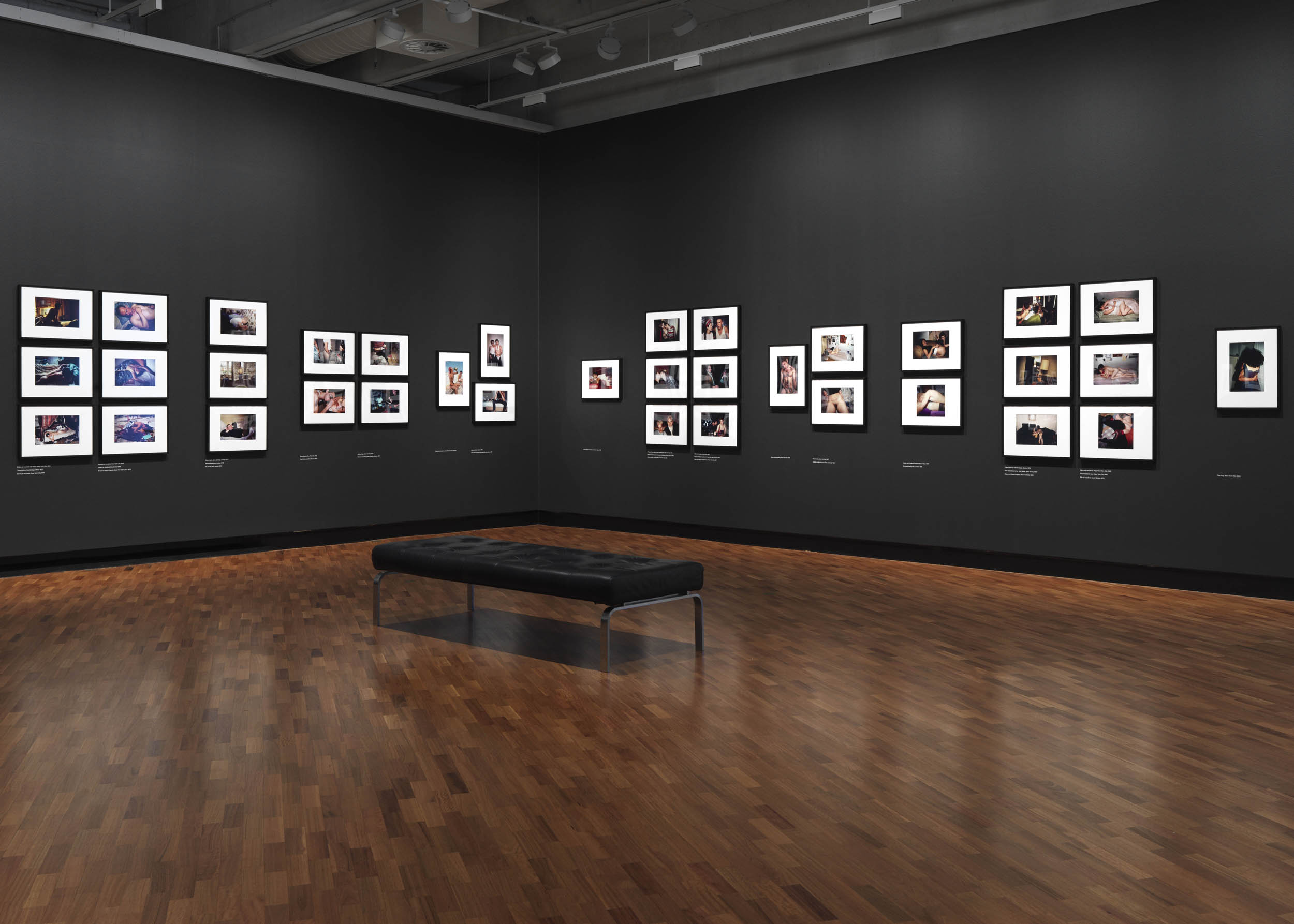
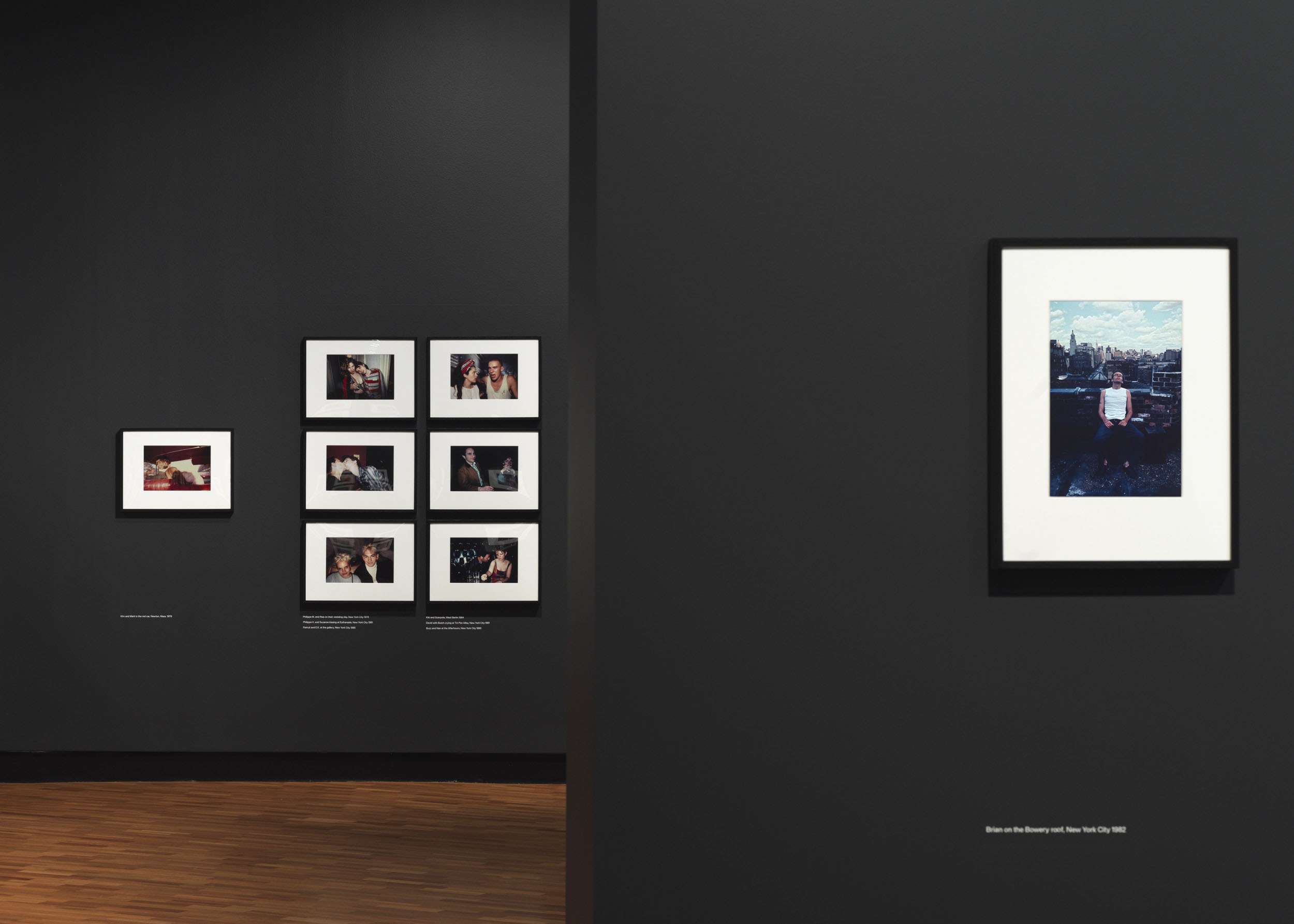
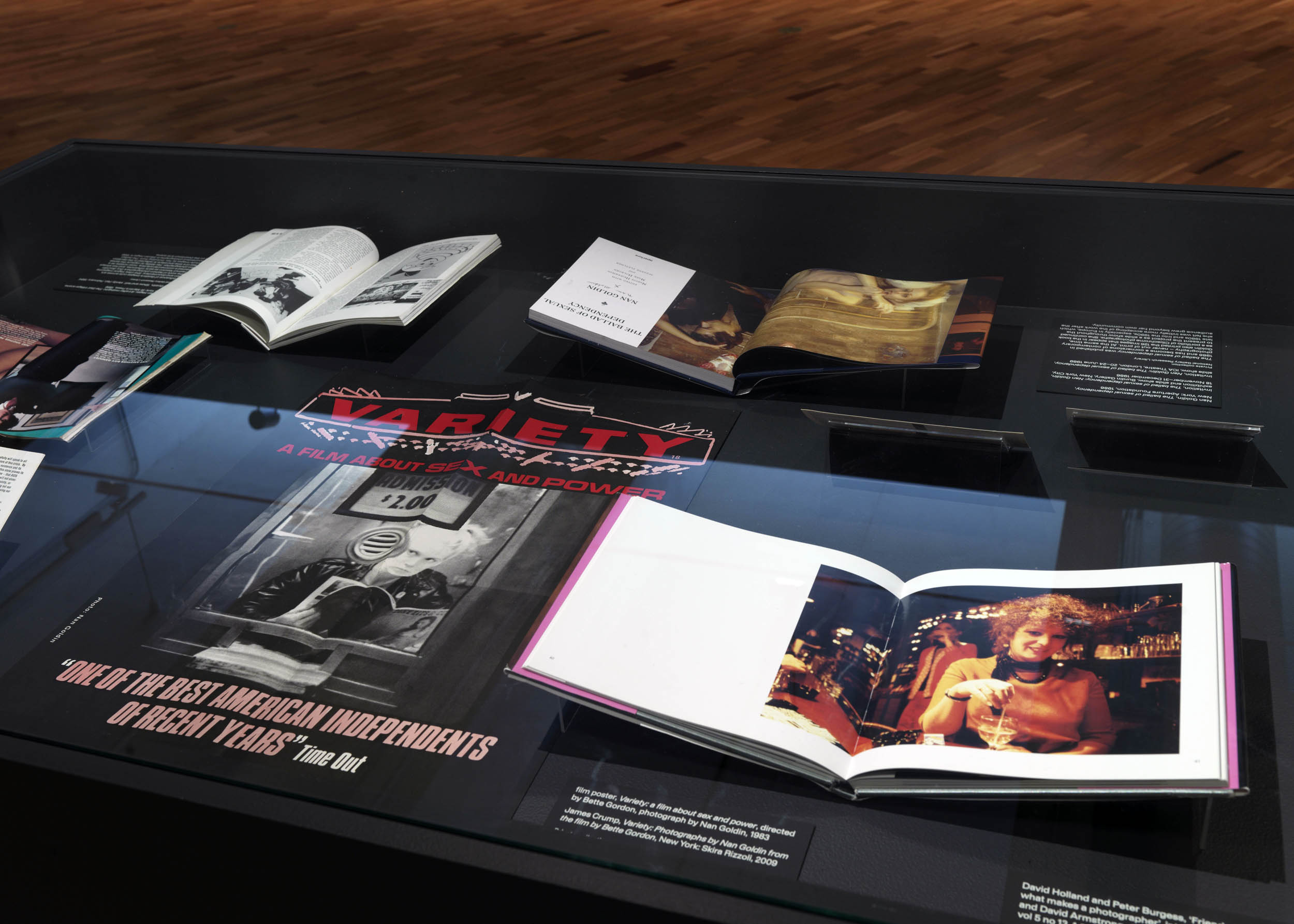
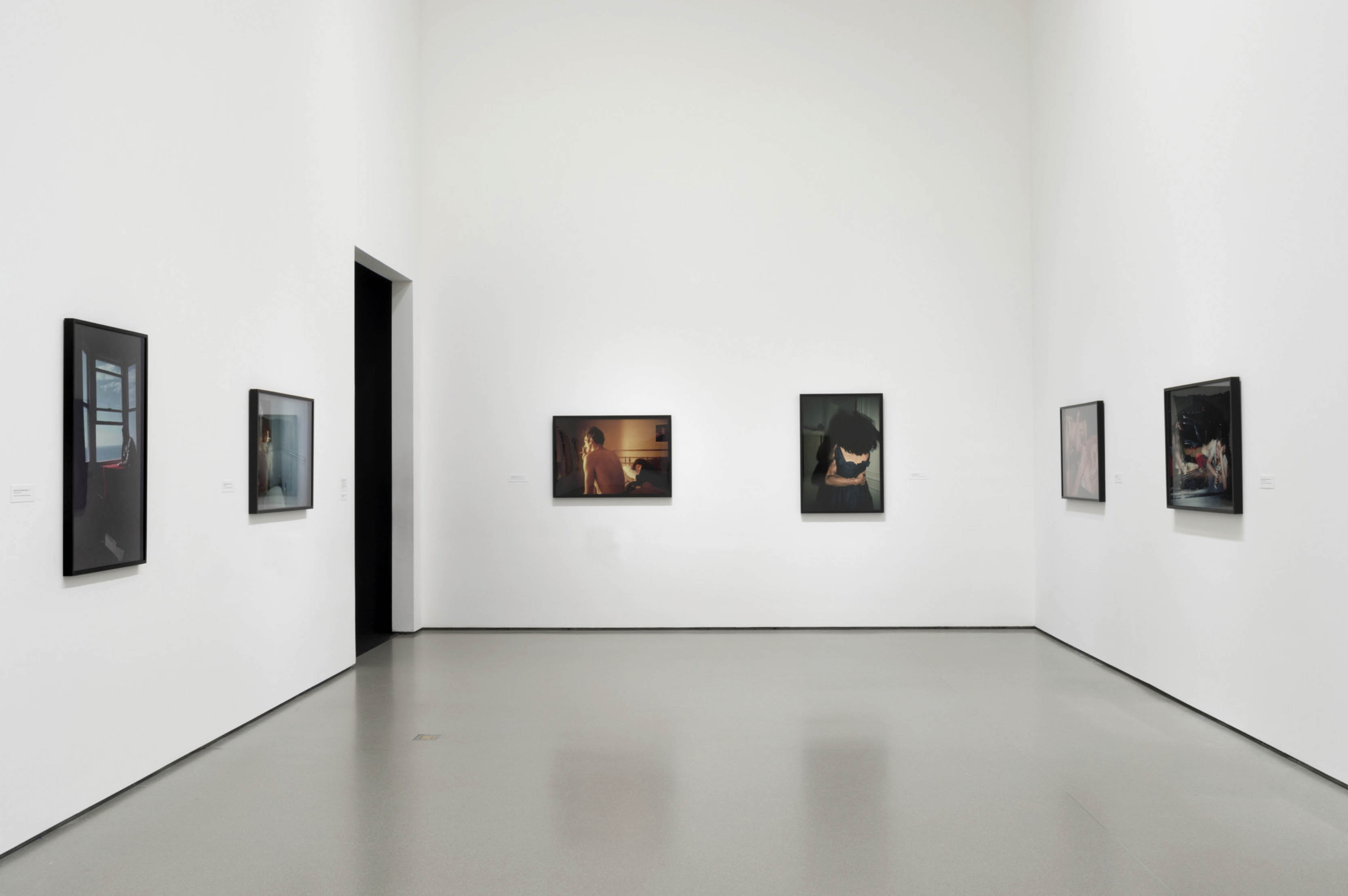
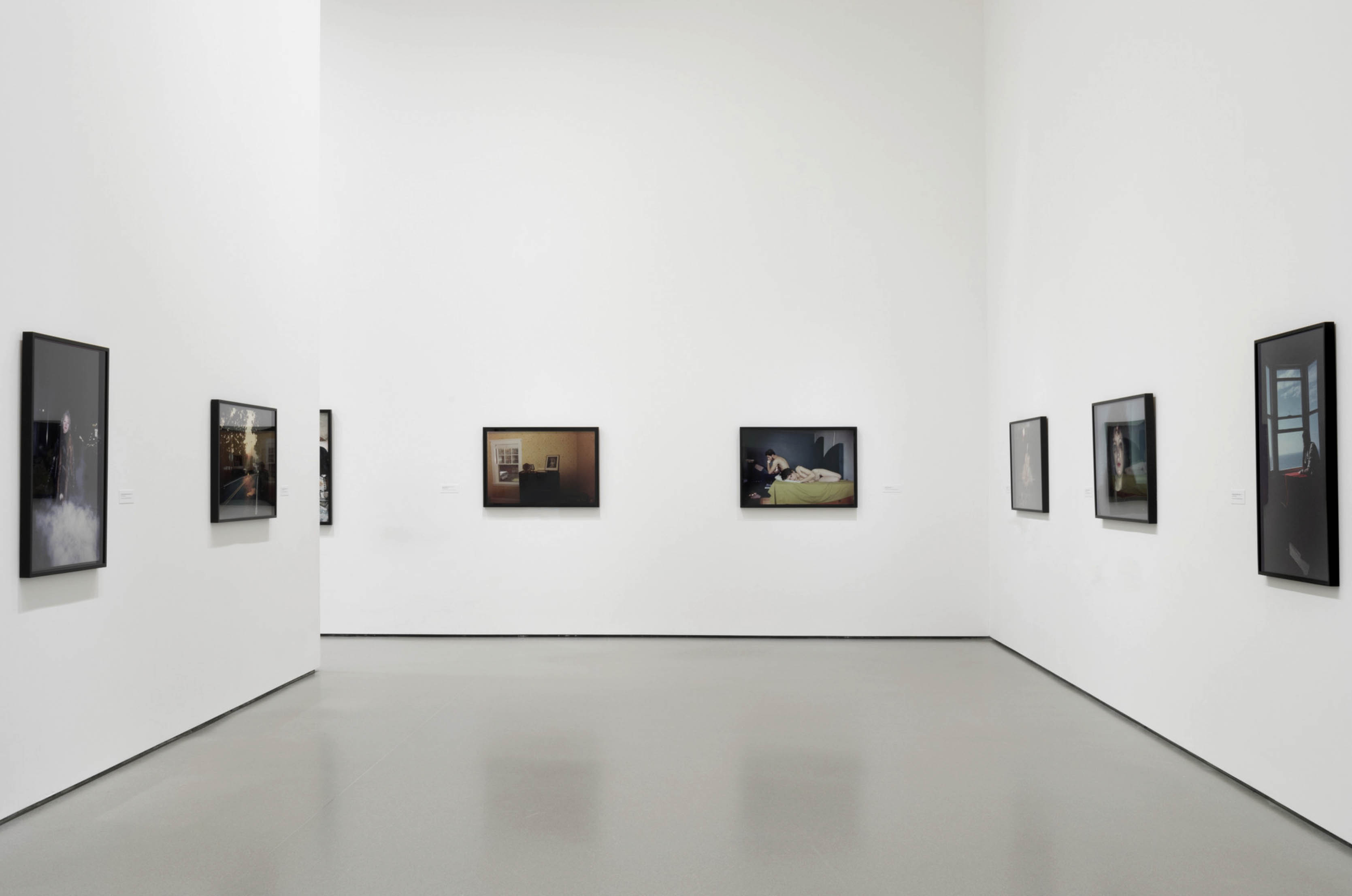
Installation view, 'Nan Goldin: the ballad of sexual dependency', National Gallery of Australia, Kamberri/Canberra, 2023

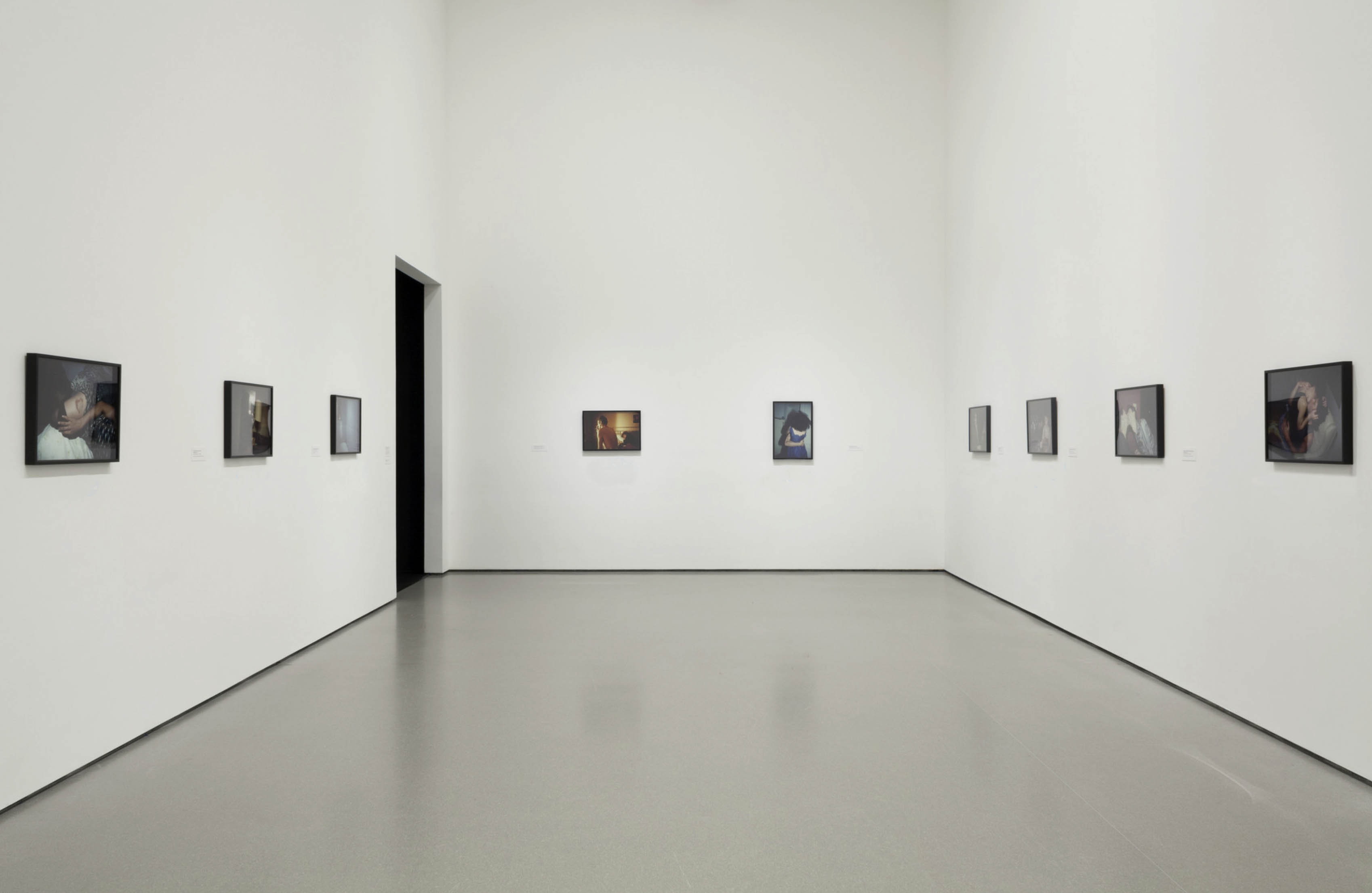
Installation view, 'Nan Goldin: the ballad of sexual dependency', National Gallery of Australia, Kamberri/Canberra, 2023

Installation view, 'Nan Goldin: the ballad of sexual dependency', National Gallery of Australia, Kamberri/Canberra, 2023

Installation view, 'Nan Goldin: the ballad of sexual dependency', National Gallery of Australia, Kamberri/Canberra, 2023

Installation view, 'Nan Goldin: the ballad of sexual dependency', National Gallery of Australia, Kamberri/Canberra, 2023

Installation view, 'Nan Goldin: the ballad of sexual dependency', National Gallery of Australia, Kamberri/Canberra, 2023

Installation view, 'Nan Goldin: the ballad of sexual dependency', National Gallery of Australia, Kamberri/Canberra, 2023

Installation view, 'Nan Goldin: the ballad of sexual dependency', National Gallery of Australia, Kamberri/Canberra, 2023


Installation views, Nan Goldin: the ballad of sexual dependency, National Gallery of Australia, Kamberri / Canberra, 2023
Photos: Karlee Holland


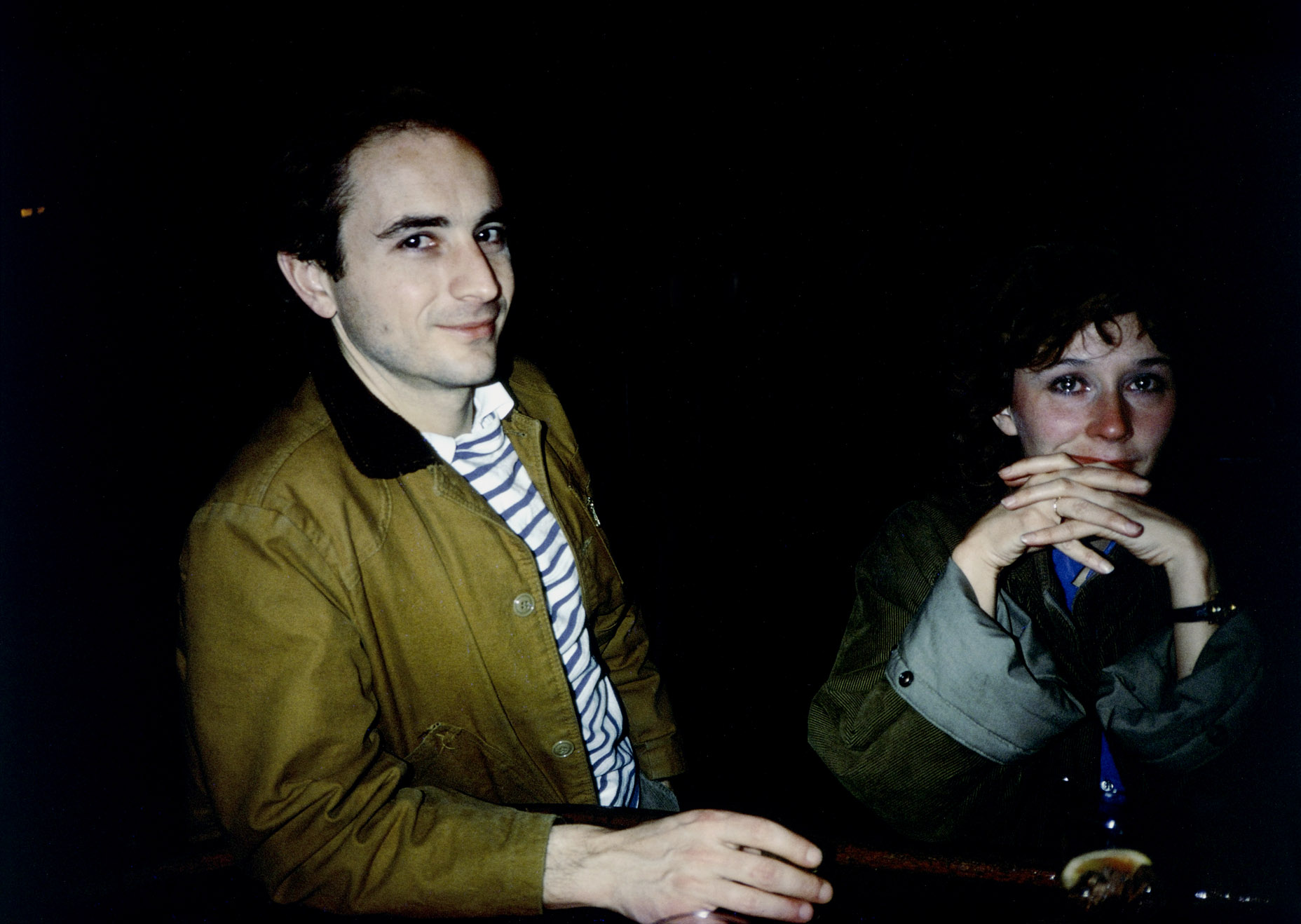
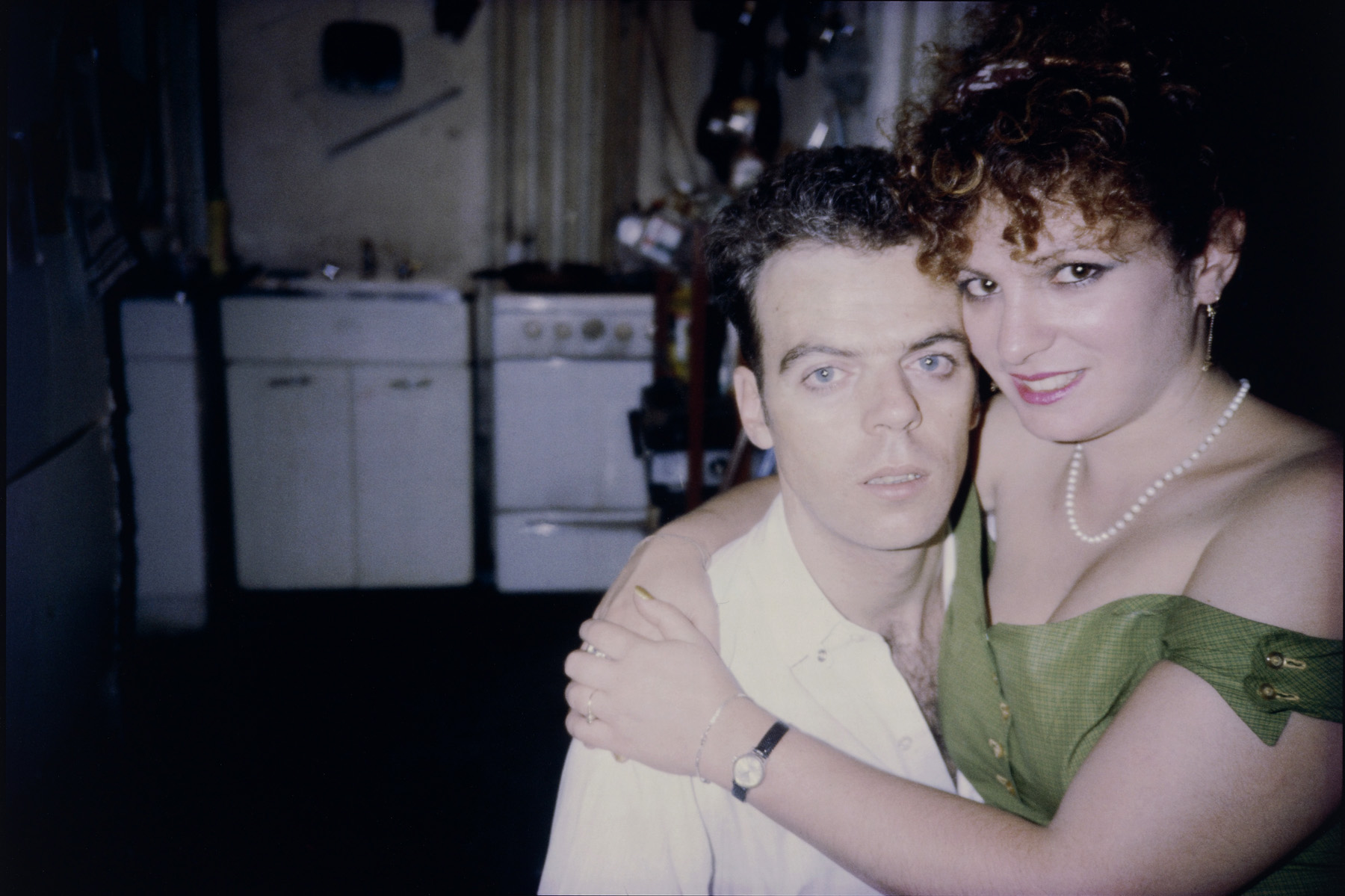
The ballad of sexual dependency is a defining artwork of the 1980s. Nan Goldin’s extended photographic study of her chosen family – her ‘tribe’ – began life as a slide show screened in the clubs and bars of New York where Goldin and her friends worked and played. The slide show was then distilled to a series of 126 photographs, which has recently become part of the National Gallery’s collection.

Goldin takes photographs to connect, to keep the people she loves in her memory. She is committed to the idea that photography can faithfully record a time and place, and do so in a way that has real social purpose. Using a documentary, snapshot style, she lays bare her life in the manner of a family album. We see her alongside her friends and lovers as they live their lives – hanging out, falling in and out of love, having children. But this is a community that would be decimated by HIV / AIDS and drug-related deaths. The ballad has become as much a testament to how much Goldin and her community have lost, as it is a record of the look and feel of a past time.

Goldin refers to The ballad as her ‘public diary’, stating that her photographs ‘come out of relationships, not observation’. The work’s overriding themes, she has stated, are those of love and empathy and the tension between autonomy and interdependence in relationships—relationships in which all genders struggle to find a common language.

Text from the NGA website


Nan Goldin (American, b. 1953) 'Mark tattooing Mark, Boston' 1978


Nan Goldin (American, b. 1953)
Mark tattooing Mark, Boston
1978
From the series The ballad of sexual dependency, 1973-1986
Cibachrome print
National Gallery of Australia, Kamberri/Canberra
Purchased 2021 in celebration of the National Gallery of Australia’s 40th anniversary, 2022
© Nan Goldin


Nan Goldin (American, b. 1953) 'Couple in Bed, Chicago' 1977


Nan Goldin (American, b. 1953)
Couple in Bed, Chicago
1977
From the series The ballad of sexual dependency, 1973-1986
Cibachrome print
National Gallery of Australia, Kamberri/Canberra
Purchased 2021 in celebration of the National Gallery of Australia’s 40th anniversary, 2022
© Nan Goldin


Nan Goldin (American, born 1953) 'Buzz and Nan at the Afterhours, New York City' 1980


Nan Goldin (American, b. 1953)
Buzz and Nan at the Afterhours, New York City
1980
From the series The ballad of sexual dependency, 1973-1986
Cibachrome print
National Gallery of Australia, Kamberri/Canberra
Purchased 2021 in celebration of the National Gallery of Australia’s 40th anniversary, 2022
© Nan Goldin


Nan Goldin (American, b. 1953) 'Flaming car, Salisbury Beach, N.H.' 1979


Nan Goldin (American, b. 1953)
Flaming car, Salisbury Beach, N.H.
1979
From the series The ballad of sexual dependency, 1973-1986
Cibachrome print
National Gallery of Australia, Kamberri/Canberra
Purchased 2021 in celebration of the National Gallery of Australia’s 40th anniversary, 2022
© Nan Goldin


Nan Goldin (American, b. 1953) 'Brian's face, West Berlin' 1984


Nan Goldin (American, b. 1953)
Brian’s face, West Berlin
1984
From the series The ballad of sexual dependency, 1973-1986
Cibachrome print
National Gallery of Australia, Kamberri/Canberra
Purchased 2021 in celebration of the National Gallery of Australia’s 40th anniversary, 2022
© Nan Goldin


Nan Goldin (American, born 1953) 'Nan and Brian in Bed, New York City' 1983


Nan Goldin (American, b. 1953)
Nan and Brian in bed, New York City
1983
From the series The ballad of sexual dependency, 1973-1986
Cibachrome print
National Gallery of Australia, Kamberri/Canberra
Purchased 2021 in celebration of the National Gallery of Australia’s 40th anniversary, 2022
© Nan Goldin


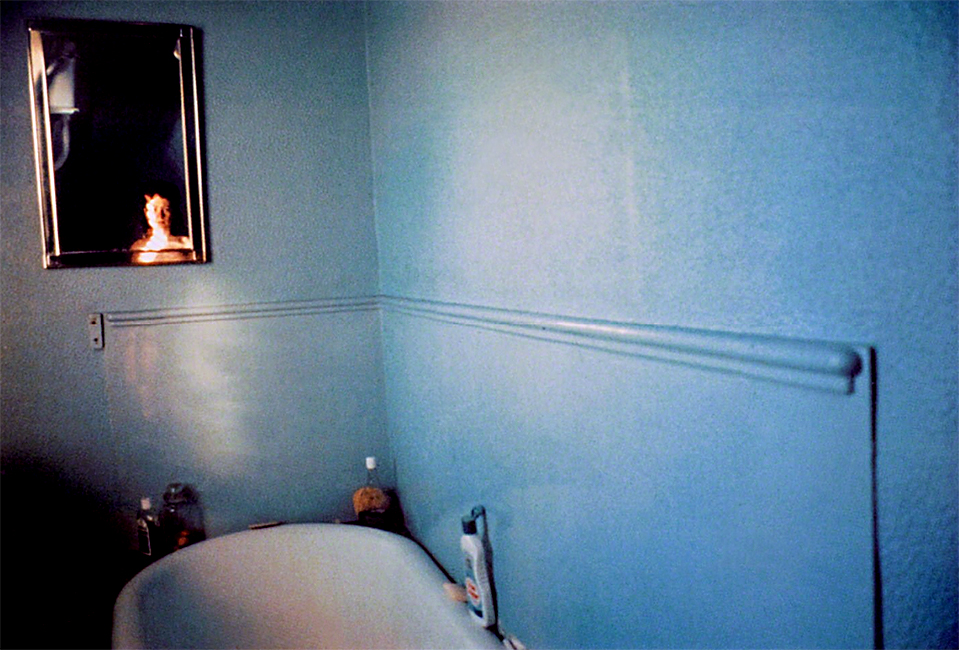
Nan Goldin (American, b. 1953) 'Suzanne in the green bathroom, Pergamon Museum, East Berlin' 1984


Nan Goldin (American, b. 1953)
Suzanne in the green bathroom, Pergamon Museum, East Berlin
1984
From the series The ballad of sexual dependency, 1973-1986
Cibachrome print
National Gallery of Australia, Kamberri/Canberra
Purchased 2021 in celebration of the National Gallery of Australia’s 40th anniversary, 2022
© Nan Goldin


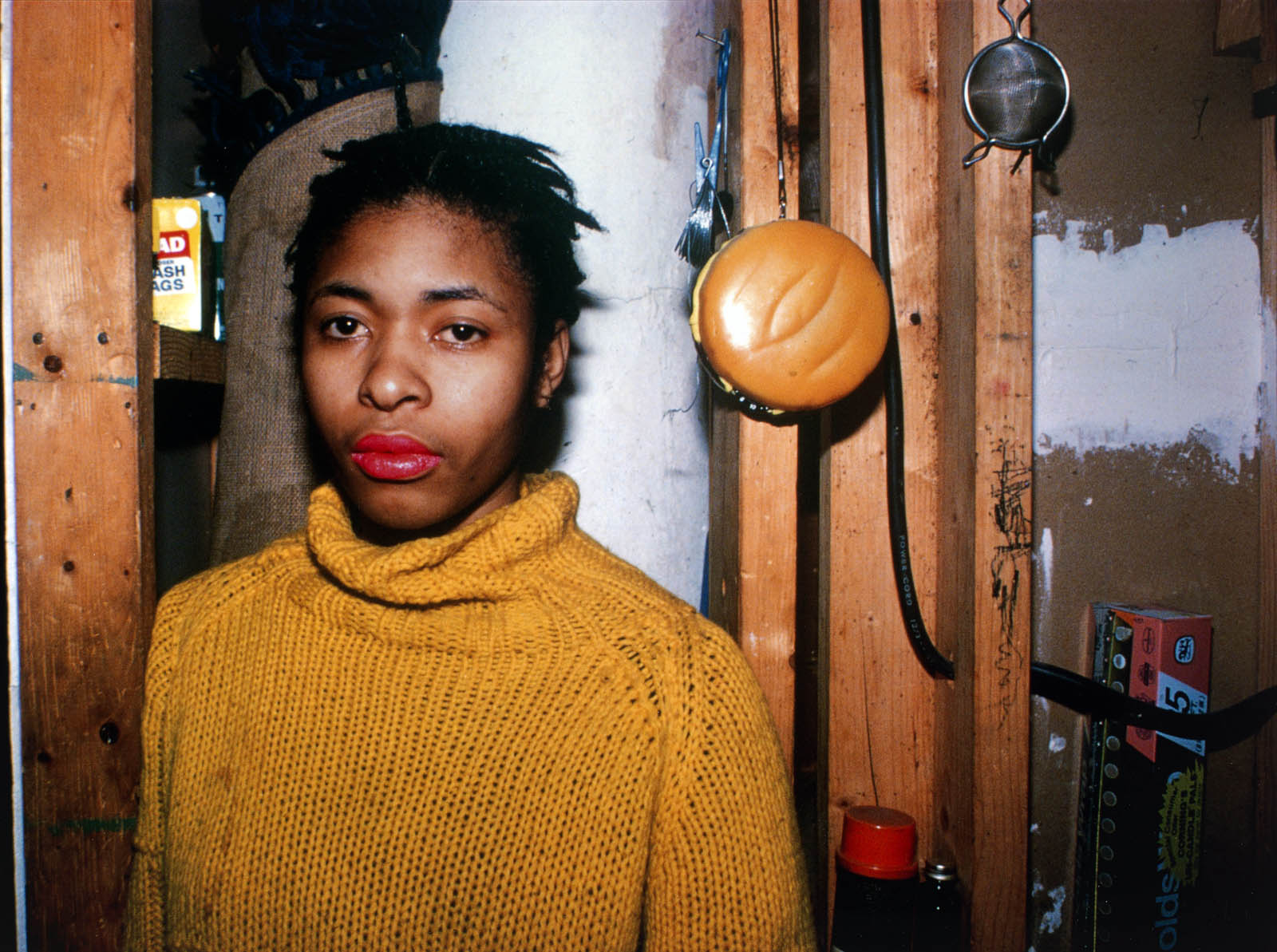
Nan Goldin (American, b. 1953) 'Millie with the cheeseburger radio at home, New York City' 1980


Nan Goldin (American, b. 1953)
Millie with the cheeseburger radio at home, New York City
1980
From the series The ballad of sexual dependency, 1973-1986
Cibachrome print
National Gallery of Australia, Kamberri/Canberra
Purchased 2021 in celebration of the National Gallery of Australia’s 40th anniversary, 2022
© Nan Goldin


Nan Goldin (American, b. 1953) 'Edwidge behind the bar at Evelyne's, New York City' 1985


Nan Goldin (American, b. 1953)
Edwidge behind the bar at Evelyne’s, New York City
1985
From the series The ballad of sexual dependency, 1973-1986
National Gallery of Australia, Kamberri/Canberra
Purchased 2021 in celebration of the National Gallery of Australia’s 40th anniversary, 2022
© Nan Goldin


Nan Goldin (American, b. 1953) 'Greer on the bed, New York City' 1983


Nan Goldin (American, b. 1953)
Greer on the bed, New York City
1983
From the series The ballad of sexual dependency, 1973-1986
Cibachrome print
National Gallery of Australia, Kamberri/Canberra
Purchased 2021 in celebration of the National Gallery of Australia’s 40th anniversary, 2022
© Nan Goldin


Nan Goldin (American, b. 1953) 'Dieter on the train, Sweden' 1984


Nan Goldin (American, b. 1953)
Dieter on the train, Sweden
1984
From the series The ballad of sexual dependency, 1973-1986
Cibachrome print
National Gallery of Australia, Kamberri/Canberra
Purchased 2021 in celebration of the National Gallery of Australia’s 40th anniversary, 2022
© Nan Goldin


Nan Goldin (American, b. 1953) 'Brian with the Flintstones, New York City' 1981


Nan Goldin (American, b. 1953)
Brian with the Flintstones, New York City
1981
From the series The ballad of sexual dependency, 1973-1986
Cibachrome print
National Gallery of Australia, Kamberri/Canberra
Purchased 2021 in celebration of the National Gallery of Australia’s 40th anniversary, 2022
© Nan Goldin


Nan Goldin (American, b. 1953) 'Cookie and Vittorio's wedding, New York City' 1986


Nan Goldin (American, b. 1953)
Cookie and Vittorio’s wedding, New York City
1986
From the series The ballad of sexual dependency, 1973-1986
Cibachrome print
National Gallery of Australia, Kamberri/Canberra
Purchased 2021 in celebration of the National Gallery of Australia’s 40th anniversary, 2022
© Nan Goldin


Nan Goldin (American, b. 1953) 'Twisting at my birthday party, New York City' 1980


Nan Goldin (American, b. 1953)
Twisting at my birthday party, New York City
1980
From the series The ballad of sexual dependency, 1973-1986
Cibachrome print
National Gallery of Australia, Kamberri/Canberra
Purchased 2021 in celebration of the National Gallery of Australia’s 40th anniversary, 2022
© Nan Goldin


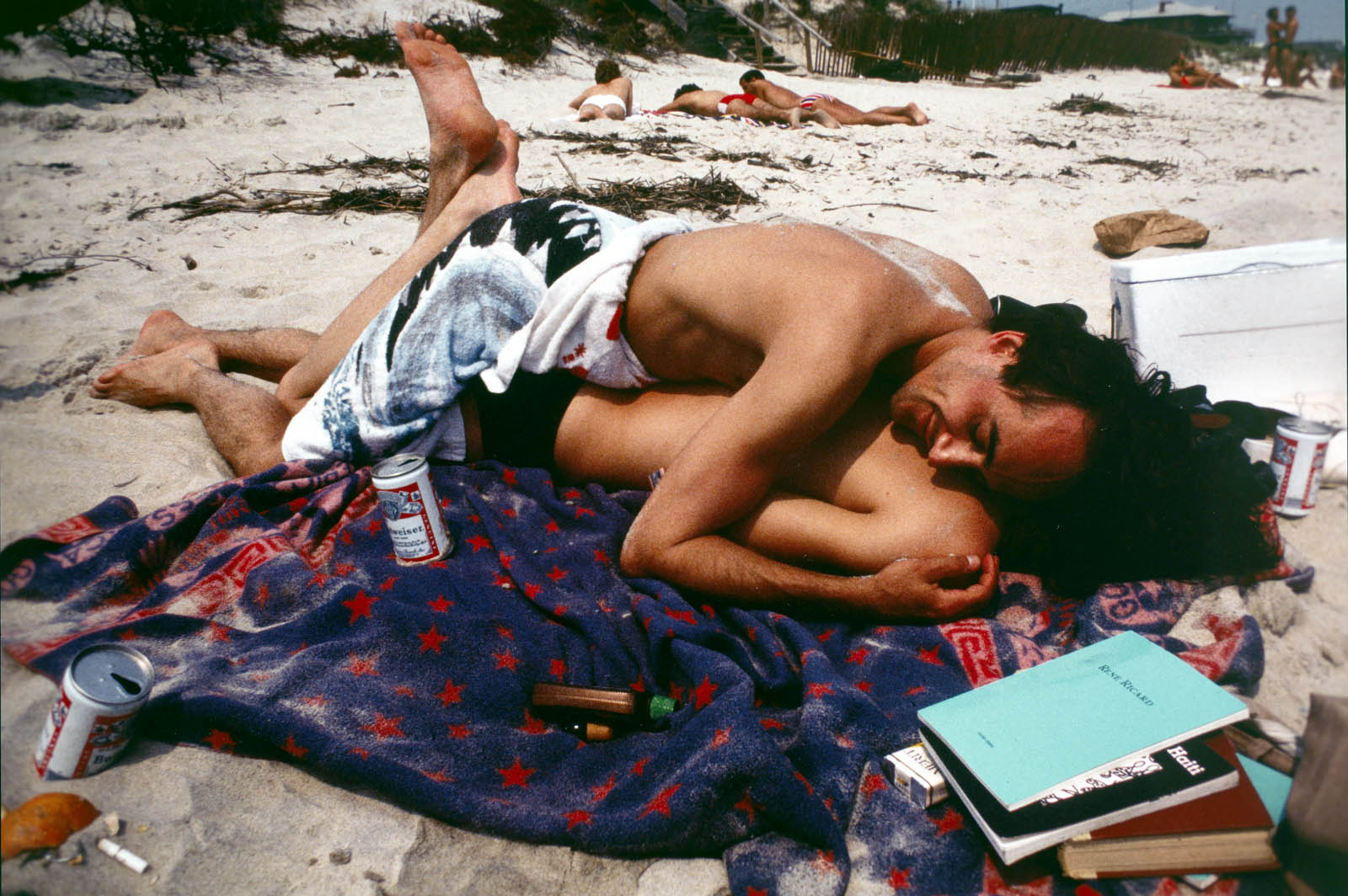
Nan Goldin (American, b. 1953) 'Bruce on top of French Chris, Fire Island, N.Y.' 1979


Nan Goldin (American, b. 1953)
Bruce on top of French Chris, Fire Island, N.Y.
1979
From the series The ballad of sexual dependency, 1973-1986
Cibachrome print
National Gallery of Australia, Kamberri/Canberra
Purchased 2021 in celebration of the National Gallery of Australia’s 40th anniversary, 2022
© Nan Goldin


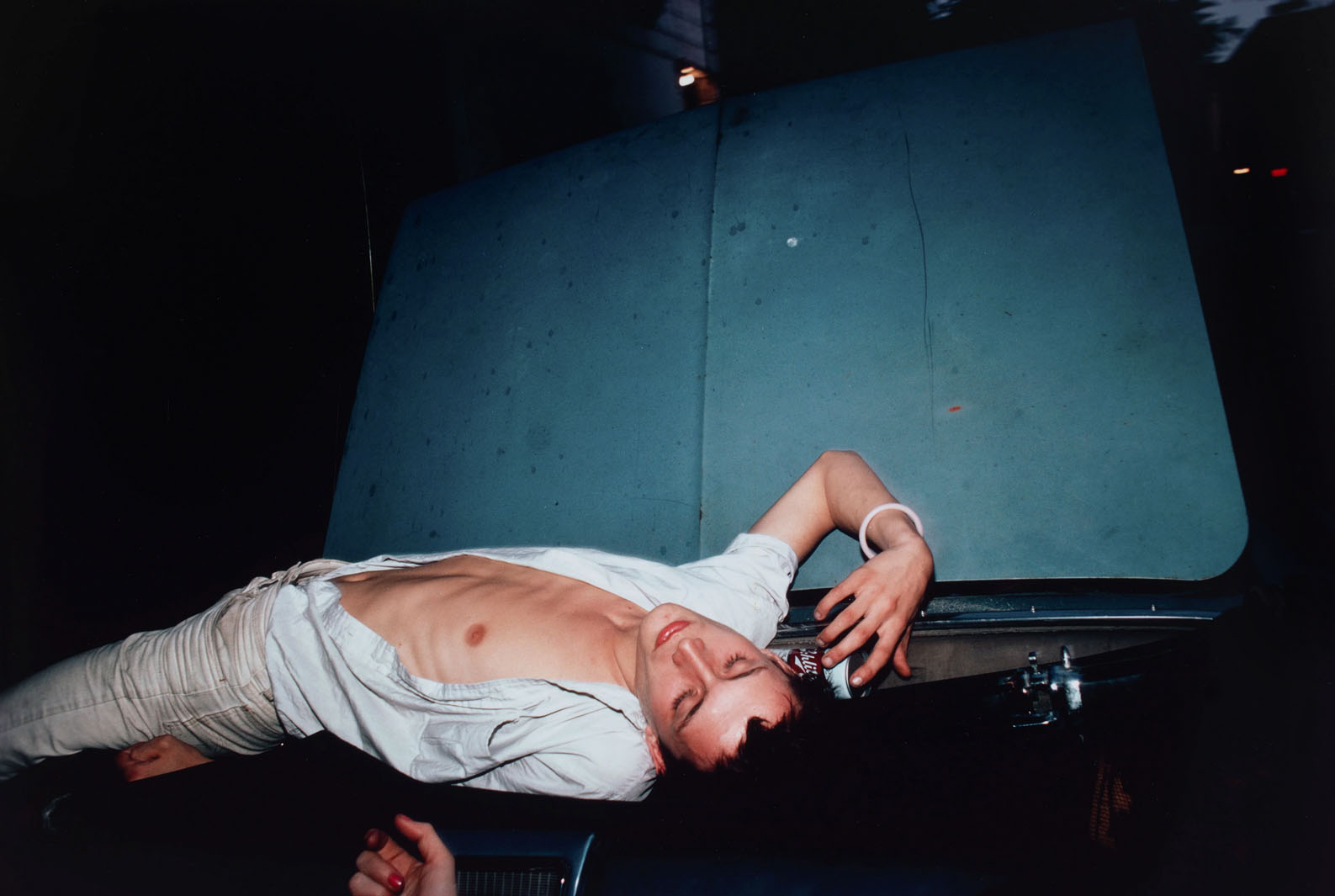
Nan Goldin (American, b. 1953) 'French Chris on the convertible, New York City' 1979


Nan Goldin (American, b. 1953)
French Chris on the convertible, New York City
1979
From the series The ballad of sexual dependency, 1973-1986
Cibachrome print
National Gallery of Australia, Kamberri/Canberra
Purchased 2021 in celebration of the National Gallery of Australia’s 40th anniversary, 2022
© Nan Goldin


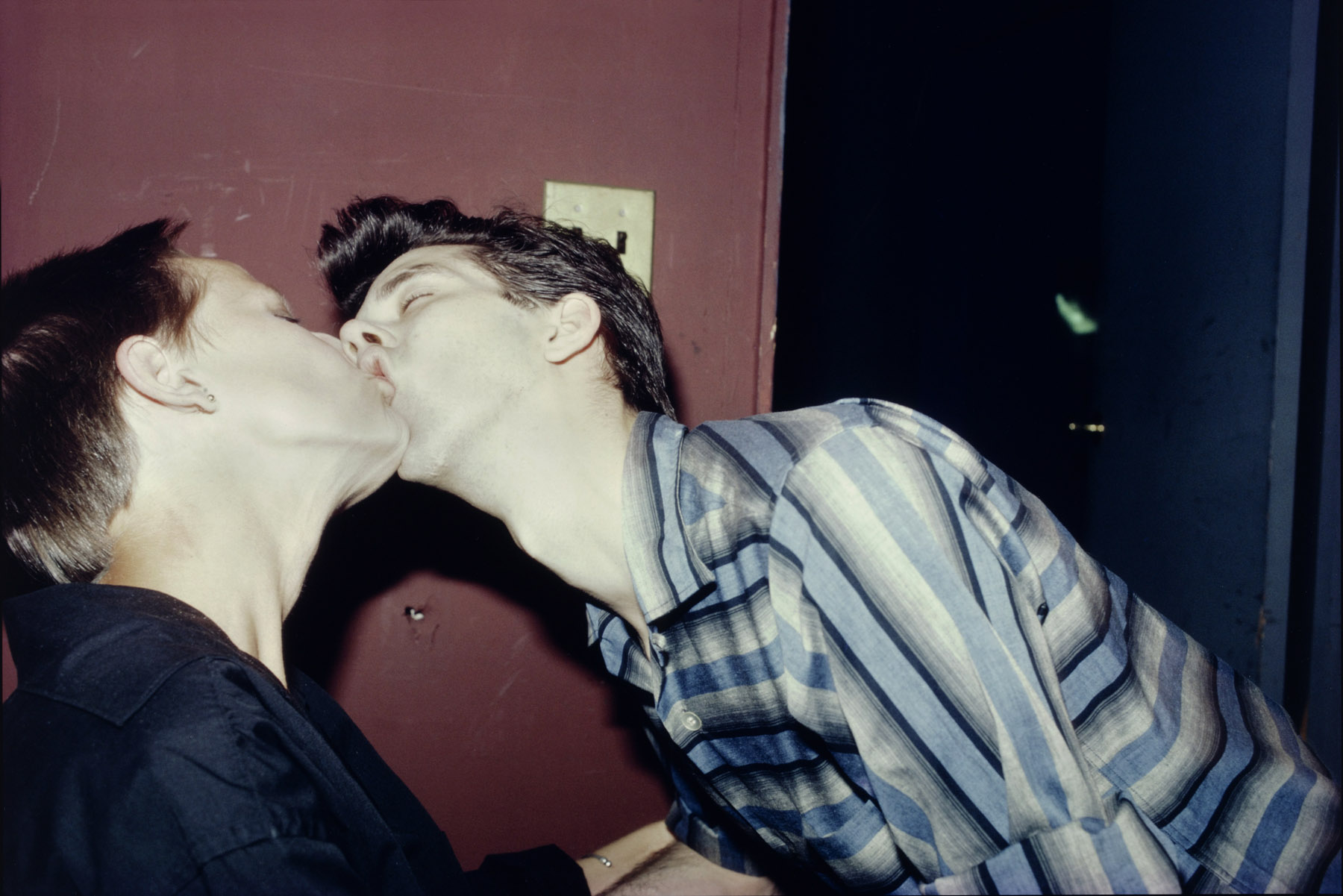
Nan Goldin (American, born 1953) 'Philippe H. and Suzanne Kissing at Euthanasia, New York City' 1981


Nan Goldin (American, b. 1953)
Philippe H. and Suzanne Kissing at Euthanasia, New York City
1981
From the series The ballad of sexual dependency, 1973-1986
Cibachrome print
National Gallery of Australia, Kamberri/Canberra
Purchased 2021 in celebration of the National Gallery of Australia’s 40th anniversary, 2022
© Nan Goldin


Nan Goldin (American, born 1953) 'Rise and Monty Kissing, New York City' 1980


Nan Goldin (American, b. 1953)
Rise and Monty Kissing, New York City
1980
From the series The ballad of sexual dependency, 1973-1986
Cibachrome print
National Gallery of Australia, Kamberri/Canberra
Purchased 2021 in celebration of the National Gallery of Australia’s 40th anniversary, 2022
© Nan Goldin


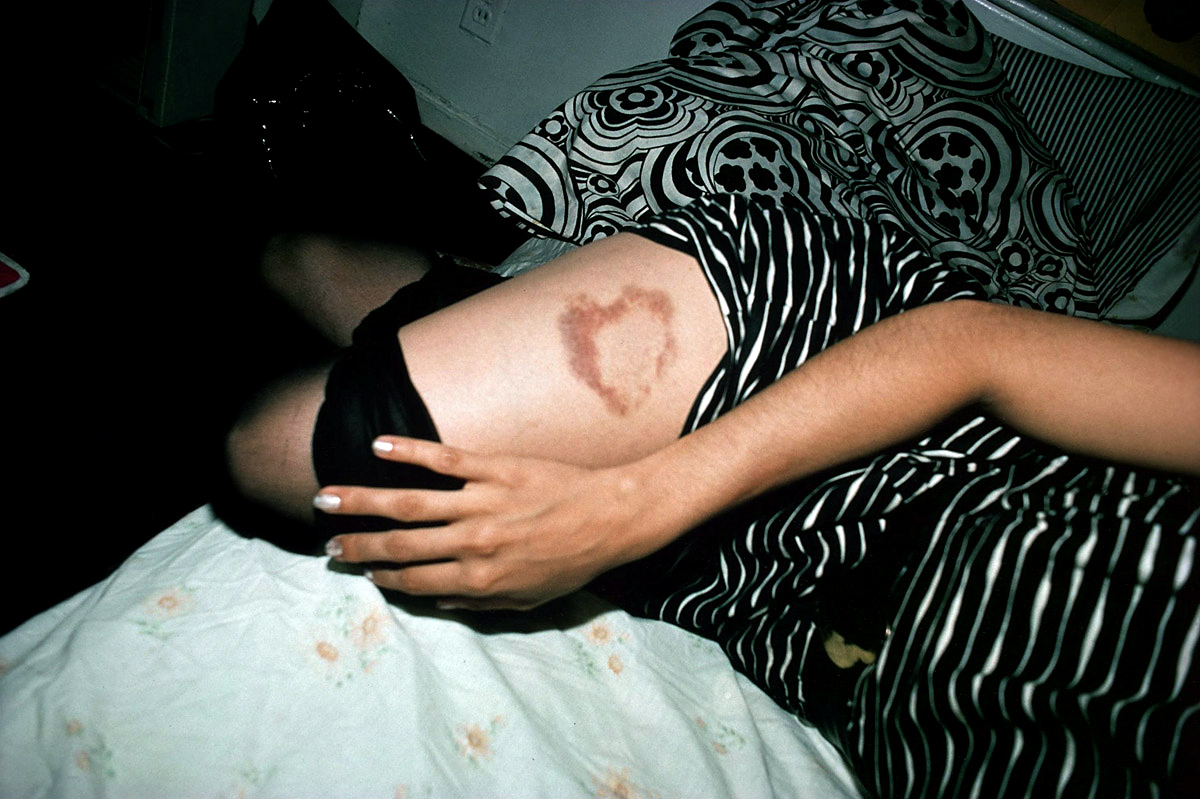
Nan Goldin (American, born 1953) 'Heart-Shaped Bruise, New York City' 1980


Nan Goldin (American, b. 1953)
Heart-Shaped Bruise, New York City
1980
From the series The ballad of sexual dependency, 1973-1986
Cibachrome print
National Gallery of Australia, Kamberri/Canberra
Purchased 2021 in celebration of the National Gallery of Australia’s 40th anniversary, 2022
© Nan Goldin


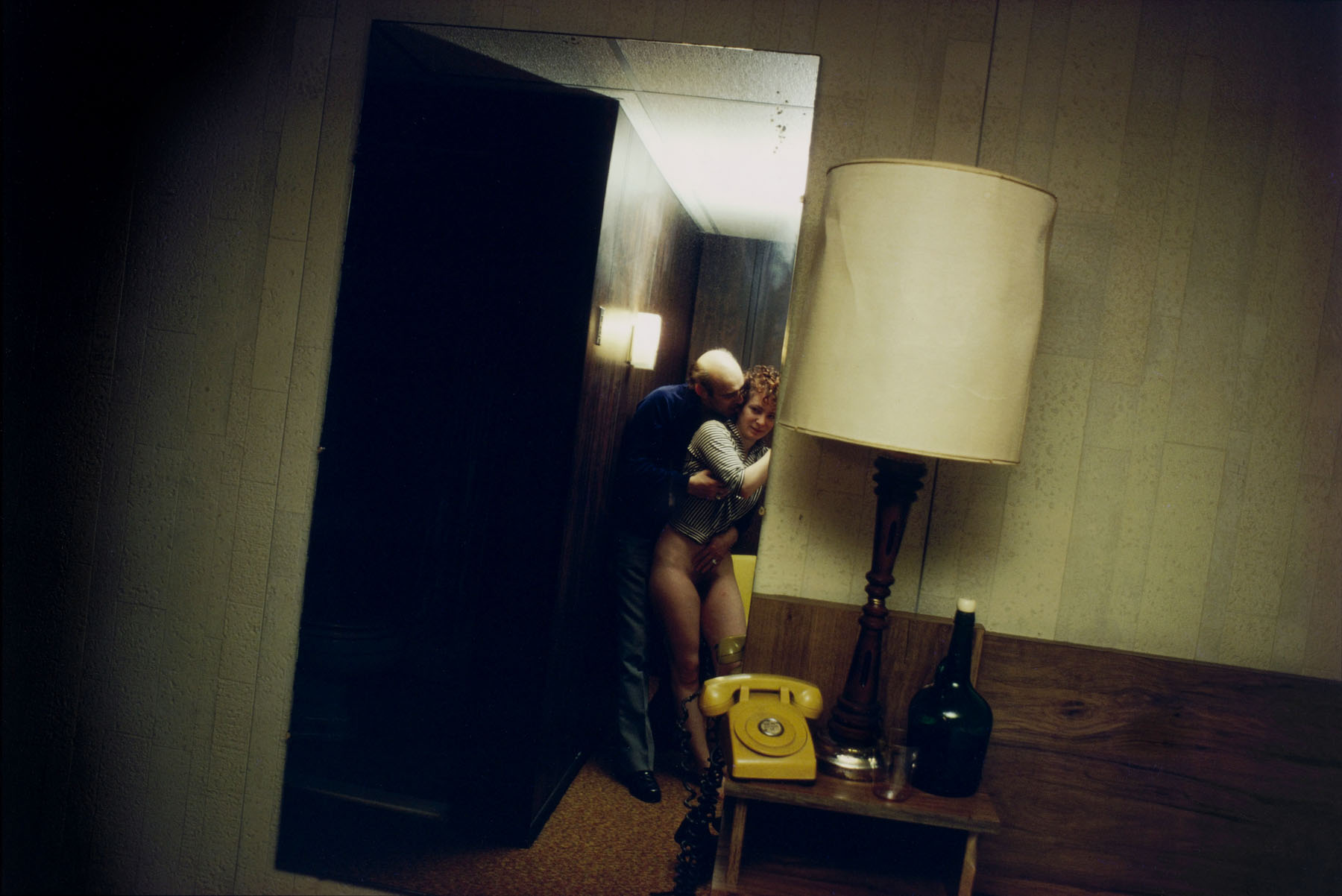
Nan Goldin (American, born 1953) 'Nan and Dickie in the York Motel, New Jersey' 1980


Nan Goldin (American, b. 1953)
Nan and Dickie in the York Motel, New Jersey
1980
From the series The ballad of sexual dependency, 1973-1986
Cibachrome print
National Gallery of Australia, Kamberri/Canberra
Purchased 2021 in celebration of the National Gallery of Australia’s 40th anniversary, 2022
© Nan Goldin


Nan Goldin is one of the world’s most influential photographers and her iconic series of 126 photographs The ballad of sexual dependency is a defining artwork of the 1980s. The National Gallery recently acquired the last, complete edition of this cornerstone work, which will be shown at the Gallery from 8 July.

Decades in the making, Goldin’s extended photographic study of her chosen family – her ‘tribe’ – is a deeply moving portrayal of life in the 1970s and 1980s, as the artist and her loved ones navigate a time of unrelenting energy and extremes.

National Gallery Curator of Photography Anne O’Hehir said Goldin’s rich and evocative series explores themes of sexual identity, community, and love and loss against the backdrop of New York City and has shaped a generation who’ve fallen in love with the unvarnished intimacy of her storytelling.

‘Goldin takes photographs to connect, to keep the people she loves in her memory. She is committed to the idea that photography can faithfully record a time and place and do so in a way that has real social purpose,’ O’Hehir said.

‘Using a documentary, snapshot style, she lays bare her life in the manner of a family album. We see her alongside her friends and lovers as they live their lives – hanging out, falling in and out of love, having children. But this is a community that would soon be decimated by HIV / AIDS and drug-related deaths.

The ballad of sexual dependency has become as much a testament to how much Goldin and her community have lost, as it is a record of the look and feel of a past time.’

O’Hehir said this engaged and at times moving series urges you to empathise with stories and experiences that are rarely depicted. ‘Goldin is committed to making public that which is usually hidden and private, and to the truthful recording of her life,’ O’Hehir said.

Goldin refers to The ballad of sexual dependency as her ‘public diary’, stating that her photographs ‘come out of relationships, not observation’. The work’s overriding themes, she has stated, are those of love and empathy and the tension between autonomy and interdependence in relationships – relationships in which all genders struggle to find a common language.

The ballad of sexual dependency began its life as a slideshow presented by Goldin at parties and in clubs and bars in New York City’s downtown art scene. The slide show was then distilled to a series of 126 photographs, which are now part of the national collection.

The opening of The ballad of sexual dependency at the National Gallery coincides with the release of Goldin’s acclaimed documentary All The Beauty And The Bloodshed on DocPlay. Directed by Academy Award®-winning filmmaker Laura Poitras, All The Beauty And The Bloodshed is an epic, emotional and interconnected story about Goldin’s life, work and activism, focussing on her recent fight to hold the Sackler family accountable for the opioid crisis. The biographical film will also be screened at the National Gallery on Saturday 22 July.

Nan Goldin’s The ballad of sexual dependency is free and will be on display at the National Gallery in Kamberri / Canberra from 8 July 2023 – 28 Jan 2024. This exhibition is part of the National Gallery of Australia’s 40th Anniversary celebrations and continues the Know My Name gender equity initiative. Nan Goldin’s exhibition The ballad of sexual dependency is supported by DocPlay, the streaming home of the world’s best documentaries.

Curator: Anne O’Hehir, Curator, Photography

Press release from the National Gallery of Australia


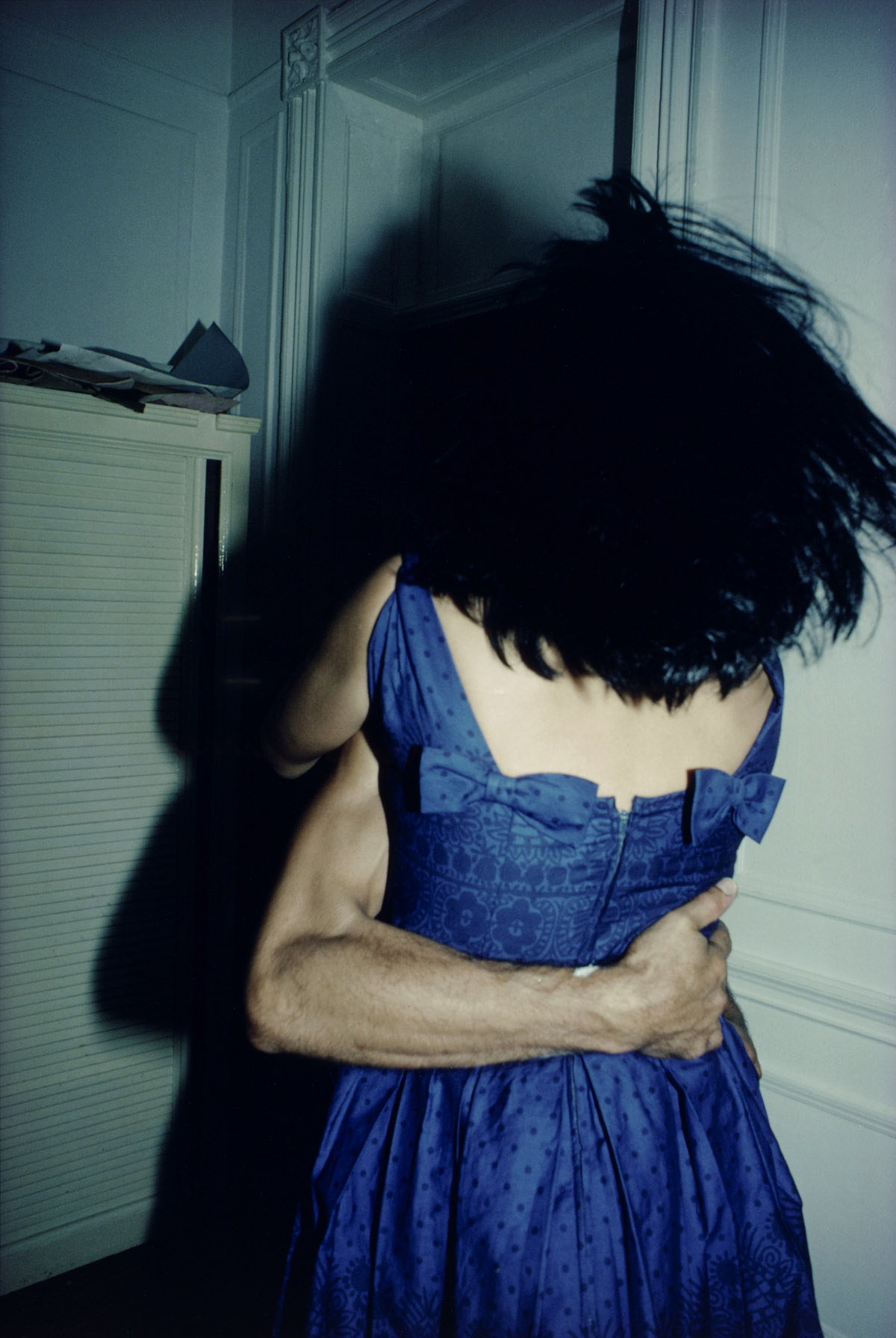
Nan Goldin (American, b. 1953) 'The Hug, New York City' 1980


Nan Goldin (American, b. 1953)
The Hug, New York City
1980
From the series The ballad of sexual dependency, 1973-1986
Cibachrome print
National Gallery of Australia, Kamberri/Canberra
Purchased 2021 in celebration of the National Gallery of Australia’s 40th anniversary, 2022
© Nan Goldin


Nan Goldin (American, b. 1953) 'Mark Dirt, New York City' 1981


Nan Goldin (American, b. 1953)
Mark Dirt, New York City
1981
From the series The ballad of sexual dependency, 1973-1986
Cibachrome print
National Gallery of Australia, Kamberri/Canberra
Purchased 2021 in celebration of the National Gallery of Australia’s 40th anniversary, 2022
© Nan Goldin


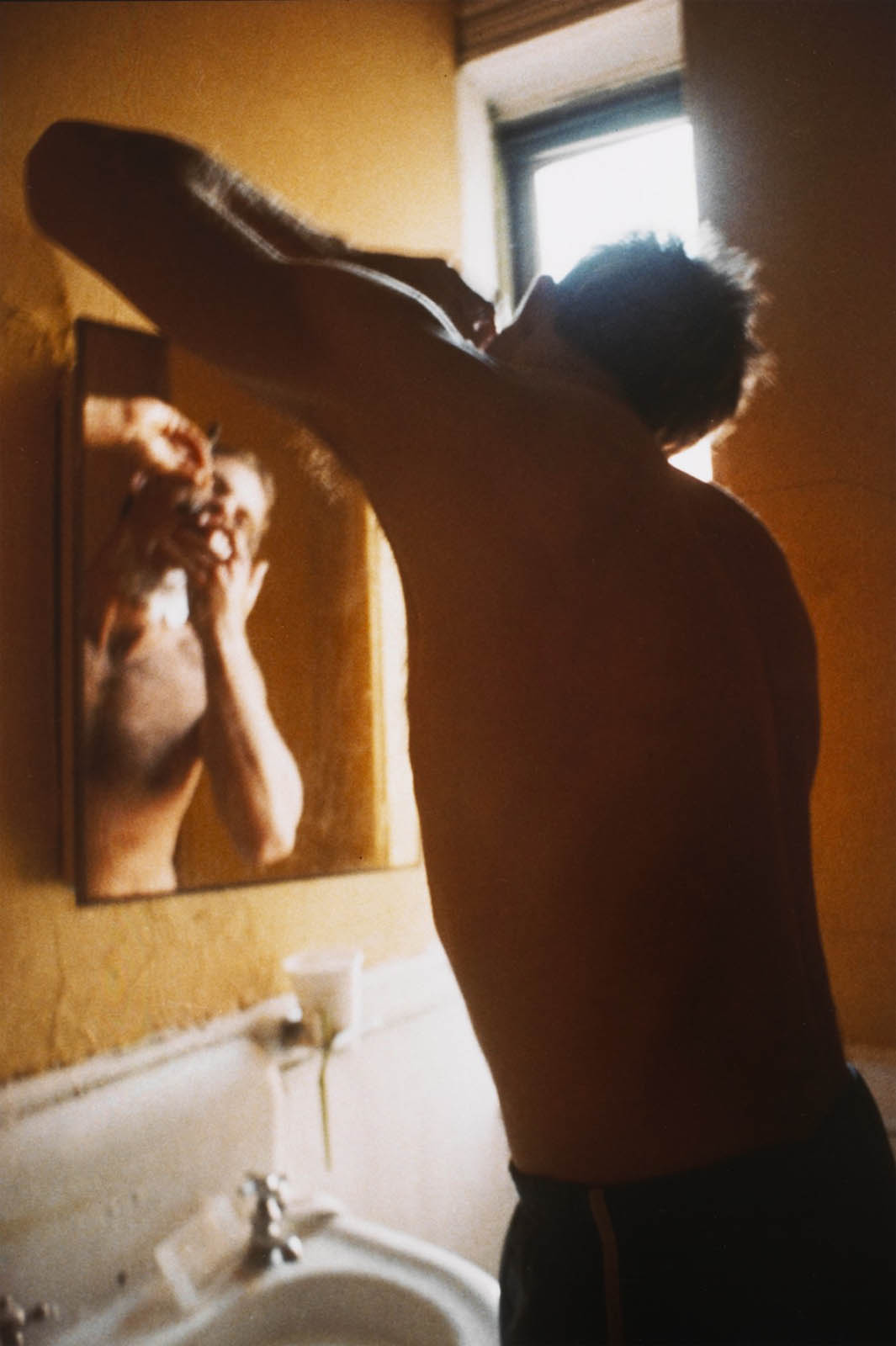
Nan Goldin (American, b. 1953) 'Thomas shaving, Boston' 1977


Nan Goldin (American, b. 1953)
Thomas shaving, Boston
1977
From the series The ballad of sexual dependency, 1973-1986
Cibachrome print
National Gallery of Australia, Kamberri/Canberra
Purchased 2021 in celebration of the National Gallery of Australia’s 40th anniversary, 2022
© Nan Goldin


Nan Goldin (American, b. 1953) 'Scarpota at the Knox bar, West Berlin' 1984


Nan Goldin (American, b. 1953)
Scarpota at the Knox bar, West Berlin
1984
From the series The ballad of sexual dependency, 1973-1986
Cibachrome print
National Gallery of Australia, Kamberri/Canberra
Purchased 2021 in celebration of the National Gallery of Australia’s 40th anniversary, 2022
© Nan Goldin


Nan Goldin (American, b. 1953) 'Brian on the Bowery roof, New York City' 1982


Nan Goldin (American, b. 1953)
Brian on the Bowery roof, New York City
1982
From the series The ballad of sexual dependency, 1973-1986
Cibachrome print
National Gallery of Australia, Kamberri/Canberra
Purchased 2021 in celebration of the National Gallery of Australia’s 40th anniversary, 2022
© Nan Goldin


Nan Goldin (American, b. 1953) 'C.Z. and Max on the beach, Truro, Mass.' 1976


Nan Goldin (American, b. 1953)
C.Z. and Max on the beach, Truro, Mass.
1976
From the series The ballad of sexual dependency, 1973-1986
Cibachrome print
National Gallery of Australia, Kamberri/Canberra
Purchased 2021 in celebration of the National Gallery of Australia’s 40th anniversary, 2022
© Nan Goldin


Nan Goldin (American, b. 1953) 'Vivienne in the green dress, New York City' 1980


Nan Goldin (American, b. 1953)
Vivienne in the green dress, New York City
1980
From the series The ballad of sexual dependency, 1973-1986
Cibachrome print
National Gallery of Australia, Kamberri/Canberra
Purchased 2021 in celebration of the National Gallery of Australia’s 40th anniversary, 2022
© Nan Goldin


Nan Goldin (American, b. 1953) 'Bruce with his portrait, New York City' 1981


Nan Goldin (American, b. 1953)
Bruce with his portrait, New York City
1981
From the series The ballad of sexual dependency, 1973-1986
Cibachrome print
National Gallery of Australia, Kamberri/Canberra
Purchased 2021 in celebration of the National Gallery of Australia’s 40th anniversary, 2022
© Nan Goldin


"Ballads of Sexual Dependency" Nan Goldin poster


“Ballads of Sexual Dependency” Nan Goldin poster


"Ballads of Sexual Dependency" Nan Goldin poster


“Ballads of Sexual Dependency” Nan Goldin poster


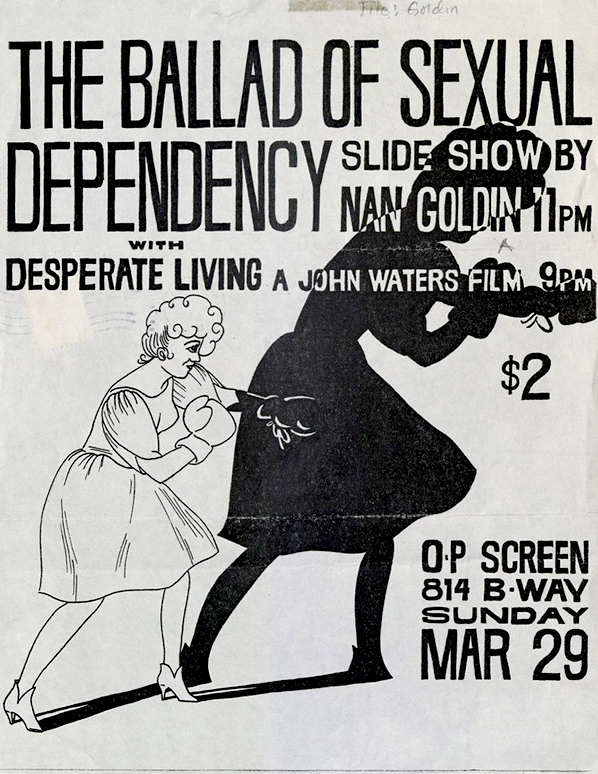
'The Ballad of Sexual Dependency' Slide Show by Nan Goldin poster


The Ballad of Sexual Dependency Slide Show by Nan Goldin poster


National Gallery of Australia
Parkes Place, Canberra
Australian Capital Territory 2600
Phone: (02) 6240 6411

Opening hours:
Open daily 10.00am – 5.00pm
(closed Christmas day)

National Gallery of Australia website

LIKE ART BLART ON FACEBOOK

Back to top

Exhibition: ‘Photography’s Last Century: The Ann Tenenbaum and Thomas H. Lee Collection’ at the Metropolitan Museum of Art, New York

Exhibition dates: 10th March – 30th November, 2020

Curator: Jeff L. Rosenheim, Joyce Frank Menschel Curator in Charge of the Department of Photographs


André Kertész (Hungarian, 1894-1985) 'Underwater Swimmer, Esztergom, Hungary' 1917 from the exhibition 'Photography's Last Century: The Ann Tenenbaum and Thomas H. Lee Collection' at the Metropolitan Museum of Art, New York, March - Nov, 2020


André Kertész (Hungarian, 1894-1985)
Underwater Swimmer, Esztergom, Hungary
1917
Gelatin silver print
1 1/2 in. × 2 in. (3.8 × 5.1cm)
Promised Gift of Ann Tenenbaum and Thomas H. Lee, in celebration of the Museum’s 150th Anniversary
The Metropolitan Museum of Art
© 2020 Estate of André Kertész/Higher Pictures


This tiny but iconic masterpiece of twentieth-century photography is the second earliest work in the exhibition, and a gem in the Tenenbaum and Lee collection. Made while André Kertész was convalescing from a gunshot wound received while serving in the Austro-Hungarian army during World War I, it prefigures by some fifteen years his renowned mirror distortions produced in Paris. Displaying both Cubist and Surrealist influences, the photograph reveals the artist’s commitment to the spontaneous yet analytic observation of fleeting commonplace occurrences – one of the essential and most idiosyncratic qualities of the medium.


It’s a mystery

There are some eclectic photographs in this posting, many of which have remained un/seen to me before.

I have never seen the above version of Kertész’s Underwater Swimmer, Esztergom, Hungary (1917), with wall, decoration and water flowing into the pool at left. The usual image crops these features out, focusing on the distortion of the body in the water, and the lengthening of the figure diagonally across the picture frame. That both images are from the same negative can be affirmed if one looks at the patterning of the water. Even as the exhibition of Kertész’s work at Jeu de Paume at the Château de Tours that I saw last year stated that their version was a contact original… this is not possible unless the image has been cropped.

Other images by Alfred Stieglitz, Paul Outerbridge Jr., Eugène Atget, Walker Evans, Pierre Dubreuil, Ilse Bing, Bill Brandt, Dora Maar, Joseph Cornell, Nan Goldin, Laurie Simmons, Robert Gober, Rachel Whiteread, Zanele Muholi have eluded my consciousness until now.

What I can say after viewing them is this.

I am forever amazed at how deep the spirit, and the medium, of photography is… if you give the photograph a chance. A friend asked me the other day whether photographs had any meaning anymore, as people glance for a nano-second at images on Instagram, and pass on. We live in a world of instant gratification was my answer to him. But the choice is yours if you take / time with a photograph, if it possesses the POSSIBILITY of a meditation from its being. If it intrigues or excites, or stimulates, makes you reflect, cry – that is when the photographs pre/essence, its embedded spirit, can make us attest to the experience of its will, its language, its desire. In our presence.

The more I learn about photography, the less I find I know. The lake (archive) is deep – full of serendipity, full of memories, stagings, concepts and realities. Full of nuances and light, crevices and dark passages. To understand photography is a life-long study. To an inquiring mind, even then, you may only – scratch the surface to reveal – a sort of epiphany, a revelation, unknown to others. Every viewing is unique, every interpretation different, every context unknowable (possible).

Dr Marcus Bunyan

PS. When Minor White was asked, what about photography when he dies? When he is no longer there to influence it? And he simply says – photography will do what it wants to do. This is a magnificent statement, and it shows an egoless freedom on Minor White’s part. It is profound knowledge about photography, about its freedom to change.


Many thankx to the Metropolitan Museum of Art for allowing me to publish the photographs in the posting. Please click on the photographs for a larger version of the image.


This exhibition will celebrate the remarkable ascendancy of photography in the last century, and Ann Tenenbaum and Thomas H. Lee’s magnificent promised gift of over sixty extraordinary photographs in honour of The Met’s 150th anniversary in 2020. The exhibition will include masterpieces by the medium’s greatest practitioners, including works by Paul Strand, Dora Maar, Man Ray, and László Moholy-Nagy; Edward Weston, Walker Evans, and Joseph Cornell; Diane Arbus, Andy Warhol, Sigmar Polke, and Cindy Sherman.

The collection is particularly notable for its breadth and depth of works by women artists, its sustained interest in the nude, and its focus on artists’ beginnings. Strand’s 1916 view from the viaduct confirms his break with the Pictorialist past and establishes the artist’s way forward as a cutting-edge modernist; Walker Evans’s shadow self-portraits from 1927 mark the first inkling of a young writer’s commitment to visual culture; and Cindy Sherman’s intimate nine-part portrait series from 1976 predates her renowned series of “film stills” and confirms her striking ambition and stunning mastery of the medium at the age of twenty-two.

Text from the Metropolitan Museum of Art website


Alfred Stieglitz (American, 1864-1946) 'Georgia O'Keeffe' 1918 from the exhibition 'Photography's Last Century: The Ann Tenenbaum and Thomas H. Lee Collection' at the Metropolitan Museum of Art, New York, March - Nov, 2020


Alfred Stieglitz (American, 1864-1946)
Georgia O’Keeffe
1918
Platinum print
9 1/2 × 7 1/2 in. (24.1 × 19.1cm)
Ann Tenenbaum and Thomas H. Lee Collection
The Metropolitan Museum of Art


This photograph marks the beginning of the romantic relationship between Alfred Stieglitz and Georgia O’Keeffe, which transformed each of their lives and the story of American art. The two met when Stieglitz included O’Keeffe, a then-unknown painter, in her first group show at his gallery 291 in May 1916. A year later, O’Keeffe had her first solo show at the gallery and exhibited her abstract charcoal No. 15 Special, seen in the background here. In the coming months and years, O’Keeffe collaborated with Stieglitz on some three hundred portrait studies. In its physical scope, primal sensuality, and psychological power, Stieglitz’s serial portrait of O’Keeffe has no equal in American art.


Paul Outerbridge Jr. (American, 1896-1958) 'Telephone' 1922 from the exhibition 'Photography's Last Century: The Ann Tenenbaum and Thomas H. Lee Collection' at the Metropolitan Museum of Art, New York, March - Nov, 2020


Paul Outerbridge Jr. (American, 1896-1958)
Telephone
1922
Platinum print
4 1/2 × 3 3/8 in. (11.4 × 8.5cm)
Promised Gift of Ann Tenenbaum and Thomas H. Lee, in celebration of the Museum’s 150th Anniversary
The Metropolitan Museum of Art


A well-paid advertising photographer working in New York in the 1930s, Paul Outerbridge Jr. was trained as a painter and set designer. Highly influenced by Cubism, he was a devoted advocate of the platinum-print process, which he used to create nearly abstract still lifes of commonplace subjects such as cracker boxes, wine glasses, and men’s collars. With their extended mid-tones and velvety blacks, platinum papers were relatively expensive and primarily used by fine-art photographers like Paul Strand, Edward Steichen, and Alfred Stieglitz. This modernist study of a Western Electric “candlestick” telephone attests to Outerbridge’s talent for transforming banal, utilitarian objects into small, but powerful sculptures with formal rigour and startling beauty.


Edward Weston. 'Anita ("Pear-Shaped Nude")' 1925


Edward Weston (American, 1886-1958)
Nude
1925, printed 1930s
Gelatin silver print
8 1/2 × 7 1/2 in. (21.6 × 19cm)
Promised Gift of Ann Tenenbaum and Thomas H. Lee, in celebration of the Museum’s 150th Anniversary
The Metropolitan Museum of Art
© Center for Creative Photography, Arizona Board of Regents


Edward Weston moved from Los Angeles to Mexico City in 1923 with Tina Modotti, an Italian actress and nascent photographer. They were each influenced by, and in turn helped shape, the larger community of artists among whom they lived and worked, which included Diego Rivera, Jean Charlot, and many other members of the Mexican Renaissance. In fall 1925 Weston made a remarkable series of nudes of the art critic, journalist, and historian Anita Brenner. Depicting her body as a pear-like shape floating in a dark void, the photographs evoke the hermetic simplicity of a sculpture by Constantin Brancusi. Brenner’s form becomes elemental, female and male, embryonic, tightly furled but ready to blossom.


Eugène Atget (French, 1857-1927) 'Boulevard de Strasbourg' 1926


Eugène Atget (French, 1857-1927)
Boulevard de Strasbourg
1926
Gelatin silver print
8 7/8 in. × 7 in. (22.5 × 17.8cm)
Ann Tenenbaum and Thomas H. Lee Collection
The Metropolitan Museum of Art


Eugène Atget became the darling of the French Surrealists in the mid-1920s courtesy of Man Ray, his neighbour in Paris, who admired the older artist’s seemingly straight forward documentation of the city. Another American photographer, Walker Evans, also credited Atget with inspiring his earliest experiments with the camera. A talented writer, Evans penned a famous critique of his progenitor in 1930: “[Atget’s] general note is a lyrical understanding of the street, trained observation of it, special feeling for patina, eye for revealing detail, over all of which is thrown a poetry which is not ‘the poetry of the street’ or ‘the poetry of Paris,’ but the projection of Atget’s person.”


Walker Evans (American, 1903-1975) 'Self-portrait, Juan-les-Pins, France, January 1927' 1927


Walker Evans (American, 1903-1975)
Self-portrait, Juan-les-Pins, France, January 1927
1927
Promised Gift of Ann Tenenbaum and Thomas H. Lee, in celebration of the Museum’s 150th Anniversary
The Metropolitan Museum of Art


Walker Evans (American, 1903-1975) 'Shadow, Self-Portrait (Right Profile, Wearing Hat), Juan-les-Pins, France, January 1927' 1927


Walker Evans (American, 1903-1975)
Shadow, Self-Portrait (Right Profile, Wearing Hat), Juan-les-Pins, France, January 1927
1927
Film negative
Promised Gift of Ann Tenenbaum and Thomas H. Lee, in celebration of the Museum’s 150th Anniversary
The Metropolitan Museum of Art, New York


Pierre Dubreuil (French, 1872-1944) 'The Woman Driver' 1928


Pierre Dubreuil (French, 1872-1944)
The Woman Driver
1928
Bromoil print
9 7/16 × 7 5/8 in. (24 × 19.3cm)
Promised Gift of Ann Tenenbaum and Thomas H. Lee, in celebration of the Museum’s 150th Anniversary
The Metropolitan Museum of Art
© 2019 Artists Rights Society (ARS), New York / ADAGP, Paris


Like many other European and American photographers, Pierre Dubreuil was indifferent to the industrialisation of photography that followed the invention and immediate global success of the Kodak camera in the late 1880s. A wealthy member of an international community of photographers loosely known as Pictorialists, he spurned most aspects of modernism. Instead, he advocated painterly effects such as those offered by the bromoil printing process seen here. What makes this photograph exceptional, however, is the modern subject and the work’s title, The Woman Driver. Dubreuil’s wife, Josephine Vanassche, grasps the steering wheel of their open-air car and stares straight ahead, ignoring the attention of her conservative husband and his intrusive camera.


Florence Henri (French, born America 1893-1982) 'Windows' 1929


Florence Henri (French, born America 1893-1982)
Windows
1929
Gelatin silver print
14 1/2 × 10 1/4 in. (36.8 × 26cm)
Promised Gift of Ann Tenenbaum and Thomas H. Lee, in celebration of the Museum’s 150th Anniversary
The Metropolitan Museum of Art


A peripatetic French American painter and photographer, Florence Henri studied with László Moholy-Nagy at the Bauhaus in Germany in summer 1927. Impressed by her natural talent, he wrote a glowing commentary on the artist for a small Amsterdam journal: “With Florence Henri’s photos, photographic practice enters a new phase, the scope of which would have been unimaginable before today… Reflections and spatial relationships, superposition and intersections are just some of the areas explored from a totally new perspective and viewpoint.” Despite the high regard for her paintings and photographs in the 1920s, Henri remains largely under appreciated.


Ilse Bing (German, 1899-1998) '[Rue de Valois, Paris]' 1932


Ilse Bing (German, 1899-1998)
[Rue de Valois, Paris]
1932
Gelatin silver print
11 1/8 × 8 3/4 in. (28.3 × 22.2cm)
Ann Tenenbaum and Thomas H. Lee Collection
The Metropolitan Museum of Art
© Estate of Ilse Bing


Ilse Bing trained as an art historian in Germany and learned photography in 1928 to make illustrations for her dissertation on neoclassical architecture. In 1930 she moved to Paris, supporting herself as a freelance photographer for French and German newspapers and fashion magazines. Known in the early 1930s as the “Queen of the Leica” due to her mastery of the handheld 35 mm camera, Bing found the old cobblestone streets of Paris a rich subject to explore, often from eccentric perspectives as seen here. She moved to New York in 1941 after the German occupation of Paris and remained here until her death at age ninety-eight.


Bill Brandt (British, 1904-1983) 'Soho Bedroom' 1932


Bill Brandt (British, 1904-1983)
Soho Bedroom
1932
Gelatin silver print
8 7/16 × 7 5/16 in. (21.4 × 18.5cm)
Ann Tenenbaum and Thomas H. Lee Collection
The Metropolitan Museum of Art


Bill Brandt challenged the standard tenets of documentary practice by frequently staging scenes for the camera and recruiting family and friends as models. In this intimate study of a couple embracing, the male figure is believed to be either a friend or the artist’s younger brother; the female figure is an acquaintance, “Bird,” known for her beautiful hands. The photograph appears with a different title, Top Floor, along with sixty-three others in Brandt’s second book, A Night in London (1938). After the book’s publication, Brandt changed the work’s title to Soho Bedroom to reference London’s notorious Red Light district and add a hint of salaciousness to the kiss.


Dora Maar (French, 1907-1997) '[Woman and Child in Window, Barcelona]' 1932-1934


Dora Maar (French, 1907-1997)
[Woman and Child in Window, Barcelona]
1932-1934
Gelatin silver print
11 1/8 × 8 3/8 in. (28.2 × 21.2cm)
Promised Gift of Ann Tenenbaum and Thomas H. Lee, in celebration of the Museum’s 150th Anniversary
The Metropolitan Museum of Art
© 2020 Artists Rights Society (ARS), New York / ADAGP, Paris


When Dora Maar first traveled to Barcelona in 1932 to record the effects of the global economic crisis, she was twenty-five and still finding her footing as a photographer. To sustain her practice, she opened a joint studio with the film designer Pierre Kéfer. Working out of his parents’ villa in a Parisian suburb, he and Maar produced mostly commercial photographs for fashion and advertising – projects that funded Maar’s travel to Spain. With an empathetic eye, she documents a mother and her child peering out of a makeshift shelter. Adapting an avant-garde strategy, she chose a lateral angle to monumentalise her subjects.


Edward Weston (American, 1886-1958) 'Nude' 1934


Edward Weston (American, 1886-1958)
Nude
1934
Gelatin silver print
3 5/8 in. (9.2cm)
Promised Gift of Ann Tenenbaum and Thomas H. Lee, in celebration of the Museum’s 150th Anniversary
The Metropolitan Museum of Art
© Center for Creative Photography, Arizona Board of Regents


The nude as a subject for the camera would occupy Edward Weston’s attention for four decades, and it is a defining characteristic of his achievement and legacy. This physically small but forceful, closely cropped photograph is a study of the writer Charis Wilson. Although presented headless and legless, Wilson tightly crosses her arms in a bold power pose. Weston was so stunned by Wilson when they first met that he ceased writing in his diary the day after he made this photograph: “April 22 [1934], a day to always remember. I knew now what was coming; eyes don’t lie and she wore no mask… I was lost and have been ever since.” Wilson and Weston immediately moved in together and married five years later.


The exhibition Photography’s Last Century: The Ann Tenenbaum and Thomas H. Lee Collection celebrates the remarkable ascendancy of photography in the last hundred years through the magnificent promised gift to The Met of more than 60 extraordinary photographs from Museum Trustee Ann Tenenbaum and her husband, Thomas H. Lee, in honour of the Museum’s 150th anniversary in 2020. The exhibition will feature masterpieces by a wide range of the medium’s greatest practitioners, including Diane Arbus, Richard Avedon, Ilse Bing, Joseph Cornell, Walker Evans, Robert Frank, Andreas Gursky, Helen Levitt, Dora Maar, László Moholy-Nagy, Jack Pierson, Sigmar Polke, Man Ray, Laurie Simmons, Alfred Stieglitz, Paul Strand, Cindy Sherman, Andy Warhol, Edward Weston, and Rachel Whiteread.

The exhibition is made possible by Joyce Frank Menschel and the Alfred Stieglitz Society.

Max Hollein, Director of The Met, said, “Ann Tenenbaum brilliantly assembled an outstanding and very personal collection of 20th-century photographs, and this extraordinary gift will bring a hugely important group of works to The Met’s holdings and to the public’s eye. From works by celebrated masters to lesser-known artists, this collection encourages a deeper understanding of the formative years of photography, and significantly enhances our holdings of key works by women, broadening the stories we can tell in our galleries and allowing us to celebrate a whole range of crucial artists at The Met. We are extremely grateful to Ann and Tom for their generosity in making this promised gift to The Met, especially as we celebrate the Museum’s 150th anniversary. It will be an honour to share these remarkable works with our visitors.”

“Early on, Ann recognised the camera as one of the most creative and democratic instruments of contemporary human expression,” said Jeff Rosenheim, Joyce Frank Menschel Curator in Charge of the Department of Photographs. “Her collecting journey through the last century of picture-making has been guided by her versatility and open-mindedness, and the result is a collection that is both personal and dynamic.”

The Tenenbaum Collection is particularly notable for its focus on artists’ beginnings, for a sustained interest in the nude, and for the breadth and depth of works by women artists. Paul Strand’s 1916 view from the viaduct confirms his break with the Pictorialist past and establishes the artist’s way forward as a cutting-edge modernist; Walker Evans’s shadow self-portraits from 1927 mark the first inkling of a young writer’s commitment to visual culture; and Cindy Sherman’s intimate nine-part portrait series from 1976 predates her renowned series of “film stills” and confirms her striking ambition and stunning mastery of the medium at the age of 22.

Ms. Tenenbaum commented, “Photographs are mirrors and windows not only onto the world but also into deeply personal experience. Tom and I are proud to support the Museum’s Department of Photographs and thrilled to be able to share our collection with the public.”

The exhibition will feature a diverse range of styles and photographic practices, combining small-scale and large-format works in both black and white and colour. The presentation will integrate early modernist photographs, including superb examples by avant-garde American and European artists, together with work from the postwar period, the 1960s, and the medium’s boom in the late 1970s and early 1980s, and extend up to the present moment.

Photography’s Last Century: The Ann Tenenbaum and Thomas H. Lee Collection is curated by The Met’s Jeff L. Rosenheim, Joyce Frank Menschel Curator in Charge of the Department of Photographs.

Press release from the Metropolitan Museum of Art


Joseph Cornell (American, 1903-1972) 'Tamara Toumanova (Daguerreotype-Object)' October 1941


Joseph Cornell (American, 1903-1972)
Tamara Toumanova (Daguerreotype-Object)
October 1941
Construction with photomechanical reproduction, mirror, rhinestones or sequins, and tinted glass in artist’s frame
Dimensions: 5 1/8 × 4 3/16 in. (13 × 10.6cm)
Frame: 9 3/4 × 8 3/4 × 1 7/8 in. (24.8 × 22.2 × 4.8cm)
Promised Gift of Ann Tenenbaum and Thomas H. Lee, in celebration of the Museum’s 150th Anniversary
The Metropolitan Museum of Art
© 2020 The Joseph and Robert Cornell Memorial Foundation / Licensed by VAGA at Artists Rights Society (ARS), NY


Joseph Cornell is celebrated for his meticulously constructed, magical shadow boxes that teem with celestial charts, ballet stars, parrots, mirrors, and marbles. Into these tiny theatres he decanted his dreams, obsessions, and unfulfilled desires. Here, his subject is the Russian prima ballerina Tamara Toumanova. Known for her virtuosity and beauty, the dancer captivated Cornell, who met her backstage at the Metropolitan Opera and thereafter saw her as his personal Snow Queen and muse.


Tamara Toumanova (Georgian 2 March 1919 – 29 May 1996) was a Georgian-American prima ballerina and actress. A child of exiles in Paris after the Russian Revolution of 1917, she made her debut at the age of 10 at the children’s ballet of the Paris Opera.

She became known internationally as one of the Baby Ballerinas of the Ballet Russe de Monte Carlo after being discovered by her fellow émigré, balletmaster and choreographer George Balanchine. She was featured in numerous ballets in Europe. Balanchine featured her in his productions at Ballet Theatre, New York, making her the star of his performances in the United States. While most of Toumanova’s career was dedicated to ballet, she appeared as a ballet dancer in several films, beginning in 1944. She became a naturalised United States citizen in 1943 in Los Angeles, California.

Text from the Wikipedia website


Richard Avedon (American, 1923-2004) 'Noto, Sicily, September 5, 1947' September 5, 1947


Richard Avedon (American, 1923-2004)
Noto, Sicily, September 5, 1947
September 5, 1947
Gelatin silver print
6 × 6 in. (15.2 × 15.2cm)
Promised Gift of Ann Tenenbaum and Thomas H. Lee, in celebration of the Museum’s 150th Anniversary
The Metropolitan Museum of Art


Richard Avedon believed this early street portrait of a young boy in Sicily was the genesis of his long fashion and portrait career. On the occasion of The Met’s groundbreaking 2002 exhibition on the artist, curators Maria Morris Hambourg and Mia Fineman described the work as “a kind of projected self-portrait” in which “a boy stands there, pushing forward to the front of the picture. … He is smiling wildly, ready to race into the future. And there, hovering behind him like a mushroom cloud, is the past in the form of a single, strange tree – a reminder of the horror that split the century into a before and after, a symbol of destruction but also of regeneration.”


Lee Friedlander (American, b. 1934) 'Philadelphia' 1961


Lee Friedlander (American, b. 1934)
Philadelphia
1961
Gelatin silver print
12 1/16 × 17 15/16 in. (30.7 × 45.5cm)
Promised Gift of Ann Tenenbaum and Thomas H. Lee, in celebration of the Museum’s 150th Anniversary
The Metropolitan Museum of Art


Philadelphia is the earliest dated photograph from a celebrated series of television sets beaming images into seemingly empty rooms that Lee Friedlander made between 1961 and 1970. The pictures provided a prophetic commentary on the new medium to which Americans had quickly become addicted. Walker Evans published a suite of Friedlander’s TV photographs in Harper’s Bazaar in 1963 and noted: “The pictures on these pages are in effect deft, witty, spanking little poems of hate… Taken out of context as they are here, that baby might be selling skin rash, the careful, good-looking woman might be categorically unselling marriage and the home and total daintiness. Here, then, from an expert-hand, is a pictorial account of what TV-screen light does to rooms and to the things in them.”


Edward Ruscha (American, b. 1937) 'Self-Service – Milan, New Mexico' 1962


Edward Ruscha (American, b. 1937)
Self-Service – Milan, New Mexico
1962
Gelatin silver print
4 11/16 × 4 11/16 in. (11.9 × 11.9cm)
Promised Gift of Ann Tenenbaum and Thomas H. Lee, in celebration of the Museum’s 150th Anniversary
The Metropolitan Museum of Art
© Ed Ruscha


This intentionally mundane work by the Los Angeles–based painter and printmaker, Ed Ruscha, appears in Twentysix Gasoline Stations (1963), the first of sixteen landmark photographic books he published between 1963 and 1978. The volume established the artist’s reputation as a conceptual minimalist with a mastery of typography, an appreciation for seriality and documentary practice, and a deadpan sense of humour. Early on, he was influenced by the photographs of Walker Evans. “What I was after,” said Ruscha, “was no-style or a non-statement with a no-style.”


Nan Goldin (American, b. 1953) 'Ivy in the Boston Garden: Back' 1973


Nan Goldin (American, b. 1953)
Ivy in the Boston Garden: Back
1973
Gelatin silver print
Sheet: 20 × 16 in. (50.8 × 40.6cm)
Ann Tenenbaum and Thomas H. Lee Collection
The Metropolitan Museum of Art
Courtesy of the artist and Marian Goodman Gallery
© Nan Goldin


While still in college, Nan Goldin spent two years recording performers at the Other Side, a Boston drag bar that hosted beauty pageants on Monday nights. This black-and-white study of Ivy, Goldin’s friend from the bar, walking alone through the Boston Common is one of the artist’s earliest photographs. The portrait evokes the glamorous world of fashion photography and hints at its loneliness. In all of her photographs, Goldin explores the natural twinning of fantasy and reality; it is the source of their pathos and rhythmic emotional beat. A decade after this elegiac photograph, she conceived the first iteration of her 1985 breakthrough colour series, The Ballad of Sexual Dependency, which was presented as an ever-changing visual diary using a slide projector and synchronised music.


Laurie Simmons (American, b. 1949) 'Woman/Interior I' 1976


Laurie Simmons (American, b. 1949)
Woman/Interior I
1976
Gelatin silver print
5 3/4 × 7 1/2 in. (14.6 × 19.1cm)
Promised Gift of Ann Tenenbaum and Thomas H. Lee, in celebration of the Museum’s 150th Anniversary
The Metropolitan Museum of Art
© 2020 Laurie Simmons
Courtesy of the artist and Salon 94, New York


Laurie Simmons began her career in 1976 with a series of enchantingly melancholic photographs of toy dolls set up in her apartment. The accessible mix of desire and anxiety in these early photographs resonates with, and provides a useful counterpoint to, Cindy Sherman’s contemporaneous “film stills” such as Untitled Film Still #48 seen nearby. Simmons and Sherman were foundational members of one of the most vibrant and productive communities of artists to emerge in the late twentieth century. Although they did not all see themselves as feminists or even as a unified group of “women artists,” each used the camera to examine the prescribed roles of women, especially in the workplace, and in advertising, politics, literature, and film.


Cindy Sherman (American, b. 1954) 'Untitled Film Still #48' 1979


Cindy Sherman (American, b. 1954)
Untitled Film Still #48
1979
Gelatin silver print
6 15/16 × 9 3/8 in. (17.6 × 23.8cm)
Promised Gift of Ann Tenenbaum and Thomas H. Lee, in celebration of the Museum’s 150th Anniversary
The Metropolitan Museum of Art


A lone woman on an empty highway peers around the corner of a rocky outcrop. She waits and waits below the dramatic sky. Is it fear or self-reliance that challenges the unnamed traveler? Does she dread the future, the past, or just the present? So thorough and sophisticated is Cindy Sherman’s capacity for filmic detail and nuance that many viewers (encouraged by the titles) mistakenly believe that the photographs in the series are reenactments of films. Rather, they are an unsettling yet deeply satisfying synthesis of film and narrative painting, a shrewdly composed remaking not of the “real” world but of the mediated landscape.


Robert Mapplethorpe (American, 1946 - 1989) 'Coral Sea' 1983


Robert Mapplethorpe (American, 1946-1989)
Coral Sea
1983
Platinum print
23 1/8 × 19 1/2 in. (58.8 × 49.5cm)
Promised Gift of Ann Tenenbaum and Thomas H. Lee, in celebration of the Museum’s 150th Anniversary
The Metropolitan Museum of Art


This study of a Midway-class aircraft carrier shows a massive warship not actually floating on the ocean’s surface but seemingly sunken beneath it. The rather minimal photograph is among the rarest and least representative works by Robert Mapplethorpe, who is known mostly for his uncompromising sexual portraits and saturated flower studies, as well as for his mastery of the photographic print tradition. Here, he chose platinum materials to explore the subtle beauty of the medium’s extended mid-grey tones. By rendering prints using the more tactile platinum process, Mapplethorpe hoped to transcend the medium; as he said it is “no longer a photograph first, [but] firstly a statement that happens to be a photograph.”


Robert Gober (American, b. 1954) 'Untitled' 1988 (detail)


Robert Gober (American, b. 1954)
Untitled (detail)
1988
Gelatin silver print
6 1/2 × 9 7/16 in. (16.5 × 24cm)
Promised Gift of Ann Tenenbaum and Thomas H. Lee, in celebration of the Museum’s 150th Anniversary
The Metropolitan Museum of Art
© Robert Gober, Courtesy Matthew Marks Gallery


Although Robert Gober is not often thought of as a photographer, his conceptual practice has long depended on a camera. From the time of his first solo show in 1984 Gober has documented temporal projects in hundreds of photographs, and today many of his site-specific installations survive as images. His photography resists classification, seeming to split the difference between archival record and independent artwork. Here, across three frames, flimsy white dresses advance and recede into a deserted wood. Gober sewed the garments from fabric printed by the painter Christopher Wool in the course of a related collaboration. Seen together, Gober’s staged photographs record an ephemeral intervention in an unwelcoming, almost fairy-tale landscape.


Hiroshi Sugimoto (Japanese, b. 1948) 'Imperial Montreal' 1995


Hiroshi Sugimoto (Japanese, b. 1948)
Imperial Montreal
1995
Gelatin silver print
20 × 24 in. (50.8 × 61cm)
Ann Tenenbaum and Thomas H. Lee Collection
The Metropolitan Museum of Art


A self-taught expert on the history of photography and Zen Buddhism, Hiroshi Sugimoto posed a question to himself in 1976: what would be the effect on a single sheet of film if it was exposed to all 172,800 photographic frames in a feature-length movie? To visualise the answer, he hid a large-format camera in the last row of seats at St. Marks Cinema in Manhattan’s East Village and opened the shutter when the film started; an hour and a half later, when the movie ended, he closed it. The series (now forty years in the making) of ethereal photographs of darkened rooms filled with gleaming white screens presents a perfect example of yin and yang, the classic concept of opposites in ancient Chinese philosophy.


Andreas Gursky (German, b. 1955) 'Prada II' 1996


Andreas Gursky (German, b. 1955)
Prada II
1996
Chromogenic print
65 in. × 10 ft. 4 13/16 in. (165.1 × 317cm)
Promised Gift of Ann Tenenbaum and Thomas H. Lee, in celebration of the Museum’s 150th Anniversary
The Metropolitan Museum of Art
© Andreas Gursky / Courtesy Sprüth Magers / Artists Rights Society (ARS), New York


To produce this quasi-architectural study of a barren luxury store display, Andreas Gursky used newly available software both to artificially stretch the underlying chemical image and to digitally generate the billboard-size print. At ten feet wide, the work is a Frankensteinian glimpse of what would transform the medium of photography over the next two decades. Gursky seems to have fully understood the Pandora’s box he had opened by using digital tools to manipulate his pictures, which put into question their essential realism: “I have a weakness for paradox. For me… the photogenic allows a picture to develop a life of its own, on a two-dimensional surface, which doesn’t exactly reflect the real object.”


Rachel Whiteread (English, b. 1963) 'Watertower Project' 1998


Rachel Whiteread (English, b. 1963)
Watertower Project
1998
Screenprint with applied acrylic resin and graphite
20 in. × 15 15/16 in. (50.8 × 40.5cm)
Promised Gift of Ann Tenenbaum and Thomas H. Lee, in celebration of the Museum’s 150th Anniversary
The Metropolitan Museum of Art
© Rachel Whiteread


How might one solidify water other than by freezing it? In New York in June 1998, a translucent 12 x 9-foot, 4 1/2-ton sculpture created by Rachel Whiteread landed like a UFO atop a roof at the corner of West Broadway and Grand Street. The artist described the work – a resin cast of the interior of one of the city’s landmark wooden water tanks – as a “jewel in the Manhattan skyline.” This print is a poetic trace of the massive sculpture, which was commissioned by the Public Art Fund. The original work of art holds and refracts light just like the acrylic resin applied to the surface of this print.


Gregory Crewdson (American, b. 1962) 'Untitled' 2005


Gregory Crewdson (American, b. 1962)
Untitled
2005
Chromogenic print
57 × 88 in. (144.8 × 223.5cm)
Promised Gift of Ann Tenenbaum and Thomas H. Lee, in celebration of the Museum’s 150th Anniversary
The Metropolitan Museum of Art


Gregory Crewdson describes his highly scripted photographs as single-frame movies; to produce them, he engages teams of riggers, grips, lighting specialists, and actors. The story lines in most of his photographs centre on suburban anxiety, disorientation, fear, loss, and longing, but the final meaning almost always remains elusive, the narrative unfinished. In this photograph something terrible has happened, is happening, and will likely happen again. A woman in a nightgown sits in crisis on the edge of her bed with the remains of a rosebush on the sheets beside her. The journey from the garden was not an easy one, as evidenced by the trail of petals, thorns, and dirt. Even so, the protagonist cradles the plant’s roots with tender regard.


Catherine Opie (American, b. 1961) 'Football Landscape #8 (Crenshaw vs. Jefferson, Los Angeles, CA)' 2007


Catherine Opie (American, b. 1961)
Football Landscape #8 (Crenshaw vs. Jefferson, Los Angeles, CA)
2007
Chromogenic print
48 × 64 in. (121.9 × 162.6cm)
Ann Tenenbaum and Thomas H. Lee Collection
The Metropolitan Museum of Art


High school football is not a conventional subject for contemporary artists in any medium. Neither are freeways nor surfers, each of which are series by the artist Catherine Opie. A professor of photography at the University of California, Los Angeles, Opie spent several years traveling across the United States making close-up portraits of adolescent gladiators as well as seductive, large-scale landscape views of the game itself. Poignant studies of group behaviour and American masculinity on the cusp of adulthood, the photographs can be seen as an extension of the artist’s diverse body of work related to gender performance in the queer communities in Los Angeles and San Francisco.


Zanele Muholi (South African, b. 1972) 'Vukani II (Paris)' 2014


Zanele Muholi (South African, b. 1972)
Vukani II (Paris)
2014
Gelatin silver print
23 1/2 in. × 13 in. (59.7 × 33cm)
Promised Gift of Ann Tenenbaum and Thomas H. Lee, in celebration of the Museum’s 150th Anniversary
The Metropolitan Museum of Art


The South African photographer Zanele Muholi is a self-described visual activist and cultural archivist. In the artist’s hands, the camera is a potent tool of self-representation and self-definition for communities at risk of violence. Muholi has chosen the nearly archaic black-and-white process for most of their portraits “to create a sense of timelessness – a sense that we’ve been here before, but we’re looking at human beings who have never before had an opportunity to be seen.” Challenging the immateriality of our digital age, Muholi has restated the importance of the physical print and connected their work to that of their progenitors. In this recent self-portrait, Muholi sits on a bed, sharing a quiet moment of reflection and self-observation. The title, in the artist’s native Zulu, translates loosely as “wake up.”


The Metropolitan Museum of Art
1000 Fifth Avenue at 82nd Street
New York, New York 10028-0198
Phone: 212-535-7710

Opening hours:
Thursday – Tuesday 10am – 5pm
Closed Wednesday

The Metropolitan Museum of Art website

LIKE ART BLART ON FACEBOOK

Back to top

Exhibition: ‘Nan Goldin: The Ballad of Sexual Dependency’ at the Museum of Modern Art (MoMA), New York

Exhibition dates: 11th June, 2016 – 12th February, 2017


Nan Goldin (American, born 1953) 'Trixie on the Cot, New York City' 1979 from the exhibition 'Nan Goldin: The Ballad of Sexual Dependency' at the Museum of Modern Art (MoMA), New York, June 2016 - Feb 2017


Nan Goldin (American, b. 1953)
Trixie on the Cot, New York City
1979
Silver dye bleach print, printed 2008
15 1/2 x 23 1/8″ (39.4 x 58.7cm)
The Museum of Modern Art, New York
Acquired through the generosity of Marian and James H. Cohen in memory of their son Michael Harrison Cohen
© 2016 Nan Goldin


This “seminal” body of work by Nan Goldin allegedly changed the course of photography. In my opinion, not for the better.

There is little love and tenderness here, little magic or generosity of spirit. Goldin’s attitude to the world at the time seems to be one of hostility and resentment. It’s all very well portraying the underbelly of society – the depravity, violence and degradation – but if your point of departure is one of anger and animosity, this is always going to be reflected in your art. I remember going out with my friends partying in the 1980s, the drugs, the sex, the pushing it to the edge, but you know what – we cared about each other. Nothing could be further from the truth in Goldin’s hedonistic (not heuristic) approach to her aura.

Shooting indiscriminately, hoping to find the rough diamond of an image, cuts both ways. In the arbitrary voyeurism of this work – do I snap now or a second later, what is happening outside of the frame – you never know what you are missing. Often you get nothing, or you get a reflection of yourself that is not very appealing. (Today is a very different world from the 1980s, we just snap and upload everything. These images are very of their time). There is so much more that could have been said other than through this controlling, diaristic approach to the subject matter.

I repeat, there seems to be a less than generous spirit captured in this work, of how Goldin looked at the world at that time, and it is reflected back to us in her images. Nothing to do with HIV / AIDS, nothing to do with bohemianism – everything to do with the spirit of the artist.

Dr Marcus Bunyan

PS. The minimal hang of the exhibition adds nothing to the energy of the photographs, isolated as they are in the white walled gallery spaces.


Many thankx to the Museum of Modern Art for allowing me to publish the photographs in the posting. Please click on the photographs for a larger version of the image.


“Since David Armstrong and I were young he always referred to photography as “diving for pearls.” If you took a million pictures you were lucky to come out with one or two gems. … I never learned control over my machines. I made every mistake in the book. But the technical mistakes allowed for magic. … Random psychological subtexts that I never would have thought to intentionally create. The subconscious made visible – though whether mine or the camera’s I don’t know …”


Nan Goldin. “Diving for Pearls,” quoted in Hilton Als. “Nan Goldin’s Life in Progress,” on The New Yorker website, July 4, 2016 [Online] Cited 18/11/2021


Installation view of the exhibition 'Nan Goldin: The Ballad of Sexual Dependency' at the Museum of Modern Art (MoMA), New York, June 2016 - February 2017


Installation views of the exhibition Nan Goldin: The Ballad of Sexual Dependency at the Museum of Modern Art (MoMA), New York, June 2016 – February 2017


Nan Goldin (American, born 1953) 'Buzz and Nan at the Afterhours, New York City' 1980 from the exhibition 'Nan Goldin: The Ballad of Sexual Dependency' at the Museum of Modern Art (MoMA), New York, June 2016 - Feb 2017


Nan Goldin (American, b. 1953)
Buzz and Nan at the Afterhours, New York City
1980
Silver dye bleach print, printed 2008
15 1/2 x 23 1/4″ (39.4 x 59cm)
The Museum of Modern Art, New York
Purchase
© 2016 Nan Goldin


Nan Goldin (American, born 1953) 'Nan and Dickie in the York Motel, New Jersey' 1980


Nan Goldin (American, b. 1953)
Nan and Dickie in the York Motel, New Jersey
1980
Silver dye bleach print, printed 2008
15 1/2 x 23 1/8″ (39.4 x 58.7cm)
The Museum of Modern Art, New York
Purchase
© 2016 Nan Goldin


Nan Goldin (American, born 1953) 'Self-Portrait in Blue Bathroom, London' 1980


Nan Goldin (American, b. 1953)
Self-Portrait in Blue Bathroom, London
1980
Silver dye bleach print, printed 2016
20 x 24″ (50.8 x 61cm)
The Museum of Modern Art, New York
Gift of Nan Goldin
© 2016 Nan Goldin


Nan Goldin (American, born 1953) 'Heart-Shaped Bruise, New York City' 1980


Nan Goldin (American, b. 1953)
Heart-Shaped Bruise, New York City
1980
Silver dye bleach print, printed 2006
20 x 24″ (50.8 x 61cm)
The Museum of Modern Art, New York
Gift of Nan Goldin
© 2016 Nan Goldin


Nan Goldin (American, born 1953) 'David and Butch Crying at Tin Pan Alley, New York City' 1981


Nan Goldin (American, b. 1953)
David and Butch Crying at Tin Pan Alley, New York City
1981
Silver dye bleach print, printed 2009
15 1/2 x 23 1/8″ (39.4 x 58.7cm)
The Museum of Modern Art, New York
Purchase
© 2016 Nan Goldin


Nan Goldin (American, born 1953) 'Nan on Brian's Lap, Nan's Birthday, New York City' 1981


Nan Goldin (American, b. 1953)
Nan on Brian’s Lap, Nan’s Birthday, New York City
1981
Silver dye bleach print, printed 2008
15 1/2 x 23 1/8″ (39.3 x 58.7cm)
The Museum of Modern Art, New York
Purchase
© 2016 Nan Goldin


Nan Goldin (American, born 1953) 'Rise and Monty Kissing, New York City' 1980


Nan Goldin (American, b. 1953)
Rise and Monty Kissing, New York City
1980
Silver dye bleach print, printed 2008
15 1/2 x 23 1/8″ (39.4 x 58.7cm)
The Museum of Modern Art, New York
Purchase
© 2016 Nan Goldin


Nan Goldin (American, born 1953) 'Philippe H. and Suzanne Kissing at Euthanasia, New York City' 1981


Nan Goldin (American, b. 1953)
Philippe H. and Suzanne Kissing at Euthanasia, New York City
1981
Silver dye bleach print, printed 2008
15 1/2 x 23 1/8″ (39.4 x 58.7cm)
The Museum of Modern Art, New York
Purchase
© 2016 Nan Goldin


Nan Goldin (American, born 1953) 'Max and Richard, New York City' 1983


Nan Goldin (American, b. 1953)
Max and Richard, New York City
1983
Silver dye bleach print, printed 2006
15 9/16 x 23 1/16″ (39.6 x 58.5cm)
The Museum of Modern Art, New York. The Family of Man Fund
© 2016 Nan Goldin


Nan Goldin (American, born 1953) 'Nan and Brian in Bed, New York City' 1983


Nan Goldin (American, b. 1953)
Nan and Brian in Bed, New York City
1983
Silver dye bleach print, printed 2006
15 1/2 x 23 3/16″ (39.4 x 58.9cm)
The Museum of Modern Art, New York
Acquired through the generosity of Jon L. Stryker
© 2016 Nan Goldin


Nan Goldin (American, born 1953) 'Nan One Month After Being Battered' 1984


Nan Goldin (American, b. 1953)
Nan One Month After Being Battered
1984
Silver dye bleach print, printed 2008
15 1/2 x 23 1/8″ (39.4 x 58.7cm)
The Museum of Modern Art, New York
Purchase
© 2016 Nan Goldin


Nan Goldin (American, born 1953) 'The Parents' Wedding Photo, Swampscott, Massachusetts' 1985


Nan Goldin (American, b. 1953)
The Parents’ Wedding Photo, Swampscott, Massachusetts
1985
Silver dye bleach print, printed 2006
15 1/2 x 23 1/8″ (39.4 x 58.7cm)
The Museum of Modern Art, New York
Acquired through the generosity of Richard O. Rieger
© 2016 Nan Goldin


Comprising almost 700 snapshot-like portraits sequenced against an evocative music soundtrack, Nan Goldin’s The Ballad of Sexual Dependency is a deeply personal narrative, formed out of the artist’s own experiences around Boston, New York, Berlin, and elsewhere in the late 1970s, 1980s, and beyond. Titled after a song in Bertolt Brecht and Kurt Weill’s The Threepenny Opera, Goldin’s Ballad is itself a kind of downtown opera; its protagonists – including the artist herself – are captured in intimate moments of love and loss. They experience ecstasy and pain through sex and drug use; they revel at dance clubs and bond with their children at home; and they suffer from domestic violence and the ravages of AIDS.

The Ballad of Sexual Dependency is the diary I let people read,” Goldin wrote. “The diary is my form of control over my life. It allows me to obsessively record every detail. It enables me to remember.”

The Ballad developed through multiple improvised live performances, for which Goldin ran through the slides by hand and friends helped prepare the soundtrack – from Maria Callas to The Velvet Underground – for an audience not unlike the subjects of the pictures. The Ballad is presented in its original 35mm format, along with photographs from the Museum’s collection that also appear as images in the slide show. Introducing the installation is a selection of materials from the artist’s archive, including posters and flyers announcing early iterations of The Ballad. Live performances will periodically accompany The Ballad during the course of the Museum’s presentation; performance details will be announced during the course of the exhibition presentation.

Press release from MoMA


Nan Goldin (American, born 1953) 'C.Z. and Max on the Beach, Truro, Massachusetts' 1976


Nan Goldin (American, b. 1953)
C.Z. and Max on the Beach, Truro, Massachusetts
1976
Silver dye bleach print, printed 2006
23 1/8 x 15 1/2″ (58.7 x 39.4cm)
The Museum of Modern Art, New York
Acquired through the generosity of Jon L. Stryker
© 2016 Nan Goldin


Nan Goldin (American, born 1953) 'The Hug, New York City' 1980


Nan Goldin (American, b. 1953)
The Hug, New York City
1980
Silver dye bleach print, printed 2008
23 1/8 x 15 1/2″ (58.7 x 39.4cm)
The Museum of Modern Art, New York. Purchase
© 2016 Nan Goldin


Janet Stein (designer) 'Poster for 'The Ballad of Sexual Dependency', slide show by Nan Goldin, with 'Desperate Living', a film by John Waters' O.P. Screening Room, New York, March 29, 1982


Janet Stein (designer)
Poster for ‘The Ballad of Sexual Dependency’, slide show by Nan Goldin, with ‘Desperate Living’, a film by John Waters
O.P. Screening Room, New York, March 29, 1982
Photocopy
11 × 8 1/2″ (27.9 × 21.6cm)
Collection Nan Goldin


The Museum of Modern Art
11 West 53 Street
New York, NY 10019
Phone: (212) 708-9400

Opening hours:
10.30am – 5.30pm
Open seven days a week

MoMA website

LIKE ART BLART ON FACEBOOK

Back to top

Exhibition: ‘Telling Tales: Contemporary Narrative Photography’ at the McNay Art Museum, San Antonio TX

Exhibition dates: 28th September, 2016 – 15th January, 2017

Curator: René Paul Barilleaux, Chief Curator/Curator of Contemporary Art at the McNay


Mitch Epstein (American, b. 1952) 'Massachusetts Turnpike' 1973 from the exhibition Exhibition: 'Telling Tales: Contemporary Narrative Photography' at the McNay Art Museum, San Antonio TX, Sept 2016 - Jan 2017


Mitch Epstein (American, b. 1952)
Massachusetts Turnpike
1973
Dye transfer print
Courtesy of the artist and Sikkema Jenkins & Co., New York City
© Black River Productions, Ltd. / Mitch Epstein. Used with permission. All rights reserved


I really, really don’t know what tales I can tell from this disparate group of media images illustrating (and that’s the key word) the exhibition.

Except to say that their stage managed, dead pan style, really, really doesn’t do it for me.

The sensation of loneliness, limited colour palette and total nihilism leaves me as cold as a corpse in a freezer.

The tale that nothing in the world has a real existence, or really matters.

If Norman Rockwell used photographs to compose his painted illustrations, then that is what these are … photographic illustrations.

A perfect example of this composite, stilted painterly overkill is Julie Blackmon’s New Chair (2014, below).

Everything is perfectly posed, poised and positioned in relation to each other: the boy behind the chair; the price on the chair; the pair of legs and two hands lifting the roller door; the children in the background; the blue dress of the child in the forground and her relationship to the horse, baseball, melting icy pole, football and young lad with head wrapped in bubble wrap while another piece lies on the ground. The ramp fills the space delightfully behind these artefacts with the hero splash of colour, the new chair, perched upon its upper reaches.

This, dear friends, is the state of contemporary narrative photography, where “telling tales” – to gossip about or reveal another person’s secrets or wrongdoings – is just this. Gossip about nothing.

Dr Marcus Bunyan


Many thankx to the McNay Art Museum for allowing me to publish the photographs in the posting. Please click on the photographs for a larger version of the image.


Telling Tales: Contemporary Narrative Photography, an introduction with Rene Barilleaux

René Paul Barilleaux, Chief Curator, gives an introduction to Telling Tales: Contemporary Narrative Photography exhibition. Featuring 17 artists, Telling Tales is the McNay’s first large scale photography exhibition. Works such as Nan Goldin’s landmark The Ballad of Sexual Dependency demonstrate some artists’ explorations of the politics of the day – in this case, the onset of the AIDS crisis – while other examples, including photographs by Tina Barney, Justine Kurland, and Paul Graham, investigate class differences, marginalised communities, and social justice. Primarily in colour and often large-scale, the photographs reference everything from classical painting and avant-garde cinema, to science fiction illustration and Alfred Hitchcock.


Nan Goldin (American, b. 1953) 'Cookie at Tin Pan Alley, NYC' 1983 from the exhibition Exhibition: 'Telling Tales: Contemporary Narrative Photography' at the McNay Art Museum, San Antonio TX, Sept 2016 - Jan 2017


Nan Goldin (American, b. 1953)
Cookie at Tin Pan Alley, NYC
1983
Cibachrome
Courtesy of the artist and Matthew Marks Gallery, New York City
© Nan Goldin


Tina Barney (American, b. 1945)
'Beverly, Jill and Polly' 1982


Tina Barney (American, b. 1945)
Beverly, Jill and Polly
1982
Chromogenic print
Courtesy of the artist and Paul Kasmin Gallery, New York City
© Tina Barney


Telling Tales: Contemporary Narrative Photography is a survey of work by artists who record stories through pictures, whether real or imagined. Organised by the McNay’s Chief Curator and Curator of Contemporary Art, René Paul Barilleaux, the exhibition includes approximately fifty photographs from the late 1970s to the present by 17 ground-breaking photographers. Telling Tales is the McNay Art Museum’s first large-scale exhibition of photography and is accompanied by an 88-page illustrated book.

The exhibition presents work such as Nan Goldin’s landmark The Ballad of Sexual Dependency demonstrate some artists’ explorations of the politics of the day – in this case, the onset of the AIDS crisis – while other examples, including photographs by Tina Barney, Justine Kurland, and Paul Graham investigate class differences, marginalised communities, and social justice.

While some contemporary artists explore photographic imagery as it is filtered through and mediated by technology and the internet, others exploit photography’s ability to present a momentary, frozen narrative. Images are staged for the camera or highly manipulated through digital processes, yet they often resemble a casual snapshot or movie still. Primarily in colour and often large-scale, the photographs reference everything from classical painting and avant-garde cinema, to science fiction illustration and Alfred Hitchcock. The exhibition includes examples of these various approaches to image-making.

Telling Tales: Contemporary Narrative Photography features work by Tina Barney, Julie Blackmon, Gregory Crewdson, Philip-Lorca diCorcia, Mitch Epstein, Nan Goldin, Paul Graham, Jessica Todd Harper, Teresa Hubbard and Alexander Birchler, Anna Gaskell, Justine Kurland, Lori Nix, Erwin Olaf, Alex Prager, Alec Soth, and Jeff Wall.

Text from the McNay website


Erwin Olaf (Dutch, 1959-2023) 'Victoria' 2007


Erwin Olaf (Dutch, 1959-2023)
Victoria
2007
Digital chromogenic print
Courtesy of the artist
© Erwin Olaf


Erwin Olaf (Dutch, 1959-2023) 'The Dancing School' 2004


Erwin Olaf (Dutch, 1959-2023)
The Dancing School
2004
Chromogenic print
Courtesy of the artist
© Erwin Olaf


“It all began with the drawings of Norman Rockwell. I like that sort of nostalgic feeling. Originally, I wanted to do something really happy, up-beat, after all the depression of my last series, Separation (2003). So the starting point was that everybody was going to be beautiful, and that I would ask the models to act funny. But then it somehow became terrible. I realised this was a world which has vanished. So instead, I radically simplified the images. Now, everybody is just waiting for nothing, it’s the moment after happiness. I suppose after Separation, comes the well of loneliness. It’s also been a difficult process because for the first time, I have worked without purposely using eroticism or any sexual jokes…

Dancing School is a dreary party which no one attends. The evening has been carefully mapped out, right down to the dance-steps printed on paper and placed neatly on the floor. Sheet music is open on the piano. It is just after six in the evening, but despite the party hats, this is an event reserved for eternal wall-flowers. The mood in this room is in sharp contrast to the antique print of dancing damsels at play, hanging on the wall behind the two isolated guests.”

Erwin Olaf quoted in Jonathan Turner. “Erwin Olaf: Rain,” on the M+B website Nd [Online] Cited 23/02/2023


Erwin Olaf (Dutch, 1959-2023) 'Berlin, Rathaus Schöneberg' 2012


Erwin Olaf (Dutch, 1959-2023)
Berlin, Rathaus Schöneberg
2012
Chromogenic print
47 x 71 in. (119.4 x 180.3cm)
Courtesy of the artist
© Erwin Olaf


Jessica Todd Harper (American, b. 1975) 'Self Portrait with Marshall' 2008


Jessica Todd Harper (American, b. 1975)
Self Portrait with Marshall
2008
Archival pigment print
Courtesy of the artist and Rick Wester Fine Art, New York City
© Jessica Todd Harper


Jessica Todd Harper (American, b. 1975) 'Self Portrait with Marshall' 2008


Jessica Todd Harper (American, b. 1975)
Self Portrait with Marshall
2008
Archival pigment print
Courtesy of the artist and Rick Wester Fine Art, New York City
© Jessica Todd Harper


Teresa Hubbard / Alexander Birchler (Swiss/Irish/American, b. 1965; Swiss, b. 1962) From the series 'Falling Down' 1996


Teresa Hubbard / Alexander Birchler (Swiss/Irish/American, b. 1965; Swiss, b. 1962)
From the series Falling Down
1996
Chromogenic print
Courtesy of the artists; Tanya Bonakdar Gallery, New York City; and Lora Reynolds Gallery, Austin, Texas


Teresa Hubbard / Alexander Birchler (Swiss/Irish/American, b. 1965; Swiss, b. 1962) From the series 'Falling Down' 1996


Teresa Hubbard / Alexander Birchler (Swiss/Irish/American, b. 1965; Swiss, b. 1962)
From the series Falling Down
1996
Chromogenic print
Courtesy of the artists; Tanya Bonakdar Gallery, New York City; and Lora Reynolds Gallery, Austin, Texas


Anna Gaskell (American, b. 1969) 'Untitled #3 (Turns Gravity)' 2010


Anna Gaskell (American, b. 1969)
Untitled #3 (Turns Gravity)
2010
Archival pigment print
Courtesy of the artist and Galerie Gisela Capitain, Cologne
© Anna Gaskell


“Telling Tales: Contemporary Narrative Photography features the work of seventeen artists who interpret stories through pictures, whether real or imagined. Spanning nearly four decades, this survey begins with the art of ground-breaking photographers who emerged during the 1970s and 1980s and continues through today. The images present a wide range of styles and themes – familiar, mysterious, humorous, perplexing – yet they are always compelling to view. Organised by the McNay, the exhibition presents over fifty photographs. Works such as Nan Goldin’s landmark The Ballad of Sexual Dependency demonstrate some artists’ explorations of the politics of the day – in this case, the onset of the AIDS crisis – while other examples, including photographs by Tina Barney, Justine Kurland, and Paul Graham investigate class differences, marginalised communities, and social justice.

“Since 2015 the McNay has focused its contemporary exhibitions on three areas our visitors had not had the opportunity to explore in depth: installation and performance art with Lesley Dill: Performance as Art and now narrative photography with Telling Tales” says René Paul Barilleaux, McNay Art Museum’s Chief Curator / Curator of Contemporary Art and the exhibition’s organiser. “This presentation is the first major contemporary photography exhibition at the McNay as well as the first to examine and expose recent developments in narrative photography.”

Many contemporary artists explore photographic imagery as it is filtered through and mediated by technology and the Internet; others exploit photography’s ability to present a momentary, frozen narrative. And even when the images are staged for the camera or are highly manipulated through digital processes, they often resemble a casual snapshot or movie still. Primarily in colour and frequently large-scale, references found in this work range from classical painting to avant-garde cinema, from science fiction illustration to the films of Alfred Hitchcock.

Quintessential American storyteller Norman Rockwell employed photographs, created in series, to compose his painted illustrations. He staged elaborate vignettes for the camera using detailed props, live models, and at times even himself. Rockwell used photography in his creative process; he did not present photographs as finished works. Many of the photographs in Telling Tales evoke Rockwell’s spirit, and, not surprisingly, several of the artists identify him as an inspiration.”

Press release from the McNay


Lori Nix (American, b. 1969) 'Flood' 1998


Lori Nix (American, b. 1969)
Flood
1998
Archival pigment print
Courtesy of the artist and ClampArt, New York City
© Lori Nix


Alec Soth (American, b. 1969) 'Adelyn, Ash Wednesday, New Orleans, Louisiana' 2003


Alec Soth (American, b. 1969)
Adelyn, Ash Wednesday, New Orleans, Louisiana
2003
From the series Sleeping by the Mississippi
C-print
20 x 24 inches (50.8 x 60.96cm)
© Alec Soth


Lori Nix (American, b. 1969) 'Chinese Take-Out' 2013


Lori Nix (American, b. 1969)
Chinese Take-Out
2013
Archival pigment print
Courtesy of the artist and ClampArt, New York City
© Lori Nix


Julie Blackmon (American, b. 1966) 'Time Out' 2005


Julie Blackmon (American, b. 1966)
Time Out
2005
Archival pigment print
Courtesy of the artist and Robert Mann Gallery, New York City
© Julie Blackmon


Jeff Wall (Canadian, b. 1946) 'In Front of a Nightclub' 2006


Jeff Wall (Canadian, b. 1946)
In Front of a Nightclub
2006
Color transparency and light box, Edition 2 of 3
Collection of the Museum of Contemporary Art Chicago
Gift of Katherine S. Schamberg by exchange


Julie Blackmon (American, b. 1966) 'New Chair' 2014


Julie Blackmon (American, b. 1966)
New Chair
2014
Archival pigment print
Courtesy of the artist and Robert Mann Gallery, New York City
© Julie Blackmon


Tina Barney (American, b. 1945) 'The Tulips' 2001


Tina Barney (American, b. 1945)
The Tulips
2001
Chromogenic print
Courtesy of the artist and Paul Kasmin Gallery, New York City
© Tina Barney


Tina Barney (American, b. 1945) 'Family Commission with Snake' 2007


Tina Barney (American, b. 1945)
Family Commission with Snake
2007
Chromogenic print
Courtesy of the artist and Paul Kasmin Gallery, New York City
© Tina Barney


Alex Prager (American, b. 1979) 'Hollywood Park' 2014


Alex Prager (American, b. 1979)
Hollywood Park
2014
Archival pigment print
Courtesy of the artist and Lehmann Maupin, New York City and Hong Kong
© Alex Prager


Alec Soth (American, b. 1969) 'Charles, Vasa, Minnesota' 2002


Alec Soth (American, b. 1969)
Charles, Vasa, Minnesota
2002
Chromogenic print
Courtesy of the artist
© Alec Soth


McNay Art Museum
6000 N New Braunfels Ave,
San Antonio TX 78209

Opening hours:
Sunday noon – 5pm
Monday Closed
Tuesday Closed
Wednesday, Friday 10am – 6pm
Thursday 10am – 9pm
Saturday 10am – 5pm

McNay Art Museum website

LIKE ART BLART ON FACEBOOK

Back to top

Review: ‘Up Close: Carol Jerrems with Larry Clark, Nan Goldin and William Yang’ at Heide Museum of Modern Art, Melbourne

Exhibition dates: 31st July – 31st October 2010


Carol Jerrems (Australian, 1949-1980) 'Vale Street' 1975 from the exhibition 'Up Close: Carol Jerrems with Larry Clark, Nan Goldin and William Yang' at Heide Museum of Modern Art, Melbourne, July - Oct 2010


Carol Jerrems (Australian, 1949-1980)
Vale Street
1975
Gelatin silver print
National Gallery of Australia, Canberra
Gift of the Philip Morris Arts Grant, 1982
© Ken Jerrems & the Estate of Lance Jerrems


“A face tells the story of what a person is thinking. The eyes reveal the suffering.”


Carol Jerems


Time and Truth: Looking again at the work of Carol Jerrems

This is a solid exhibition of the photographs of Carol Jerrems at Heide Museum of Modern Art, accompanied by small selections of the work of Larry Clark and William Yang and the sequence The Ballad of Sexual Dependency (1979) by Nan Goldin.

I like Jerrems work: it is strong, frontal, direct and truthful. What I dislike is the hagiography that has grown up around this artist, the mythologizing of Saint Jerrems. We don’t need a saint of Australian photography; what we need is an appreciation of the artist, the person and her legacy. While the personal history of this artist is well known – facing depression, putting herself in danger, sexually active, documenting the counter-culture sharps and skinheads and urban indigenous people, the photographing of women and her death at far too young an age – few people actually look at the photographs clearly.

Most of the photographs are 8″ x 10″ prints, mainly portraits, that are usually dark and contrasty, small and emotionally intense. Jerrems images are made full frame (the modernist conceit of filing out a negative carrier, so that if the negative was printed full frame there would be a black border around the picture) to avoid cropping in the darkroom. This shows good previsualisation by the artist, the composition of the image made at the time of the exposure. There is a closeness to the framing of the portraits and a conversant ambiguity about all of her backgrounds – mainly low depth of field, anonymous places (perhaps a brick wall or a close up of a street corner). In fact it is difficult to pin down any actual place in her photographs unless you are told in the title of the work. The contextlessness of her backgrounds allows the viewer to focus on the people placed before her lens and here Jerrems gets up close and personal, trying to capture the truth of her subjects, their soul (in this sense she is like Diane Arbus, thrusting her camera into places it was not supposed to go until something gives – the subject gives up, drops the mask, even if just for a split second, and click, the artist has their image). The mainly head and shoulders photographs of women are most impressive in this regard as Jerrems portrays the women’s strength and vulnerability as are the photographs of the artist herself in hospital fighting her debilitating illness, the most moving, emotional photographs in the exhibition.

Other photographs show constructed intimacies between people, the camera and the artist. In Esben and Dusan, Cronulla (1977, above), Jerrems uses the yin yang black, white background to frame the two protagonists, bringing forward the body of Esben in the right portion of the frame and letting Dusan recede into the darkness. In Boys (1973) two bodies are photographed in a bed, legs and arms entwined but the print is so dark that you would never know they were two boys unless you were told – and this adds to a sense of mystery, the imaging of the most beautiful, sensitive, abstract embrace. Mark Lean with Arms Crossed (1975) shows a cocky, self-assured Lean staring directly at the camera as though it were not there, as though he were conversing directly with Jerrems, the camera an extension of the artist capturing his brave-aura: one camera, one lens, one vision. If you study the contact sheet for the photograph Vale Street (1975, above), Jerrems eventually draws the central luminous figure forward in the frame to create the now iconic image while the two acolytes hover, brooding and menacing in the darkened background.

As Kathy Drayton has observed, “Her photographs engage the viewer in an intimate relationship with her subjects. It’s not always a friendly intimacy – sometimes her subjects look defensive, irritated or even menacing, but you always sense that you’re seeing beyond the mask into the soul.”1


Jerrems saw herself as a serious photographer; if something happened she felt she should be commenting on it. She was also quite naive but always pushed herself and her art into sometimes dangerous places. She would have thought ‘how do I say something that is true’ and her endeavour, which is also constructed, was seeing things in terms of opportunities for a good photograph. Jerrems removed the safeguards; she got right in there among her volatile characters, her potential sexual predators: let’s just see what happens when the safety fence goes down. Although I believe there is a lack of really good photographs that Jerrems made (what I call highlight pieces, namely the iconic Vale Street, Mozart Street, and Mark and Flappers all 1975, see photographs below) there is a consistency to her work and how it exemplifies an exchange that takes place between the artist and the world. What I would call “a good deal.”

When looking at art, one of the best experiences for me is gaining the sense that something is open before you, that wasn’t open before. I don’t mean accessible, I mean open like making a clearing in the jungle, or being able to see further up a road, or just further on. And also like an open marketplace – where there were always good trades. There is the feeling that if you put in a certain amount of honesty, then you would get something back that made some room for you in front – some room that would allow you to look forward, and maybe even walk into that space. Seeing Jerrems work gives you that feeling.

Jerrems had the power to draw themes together, to ramp up the intensity, to empower her photographs and she was possibly on the way to becoming the things that people now say she was, but her early death curtailed this journey. Her photographs have social significance and photographic integrity and evidence time in the visible – the time in which Jerrems took them, the 1970s, and the truthfulness of her self and her style. I would have loved to have seen Jerrem’s response to the film still work of Cindy Sherman, the layering of the Sherman personas and the challenge to the feminist critique. As it is Jerrems photographs are very frontal in today’s terms and, because of her early death, she lacked the opportunity to interact with the development of more complex theories. The layers present at the time are now conflated into seemingly one layer, supported by back stories and obfuscation that clouds the work – it’s naked frontality and boldness. This obfuscation formalises her legacy into mythology.

Jerrems work does not need this. She struggled with her art, to get the best out of herself and her visualisation, to step into those spaces that I mentioned earlier. What we need is an appreciation of the time of her endeavour and the truthfulness of her art. To say that the work achieved fulfilment is to deny the importance of her death.

Dr Marcus Bunyan


1/ Drayton, Kathy quoted in Wilmoth, Peter. “The ’70s stripped bare,” on The Age website. July 17th, 2005. [Online] Cited 05/10/2010


Many thankx to Jade Enge and Heide Museum of Modern Art for allowing me publish the photographs in the posting. Please click on all of the photographs for a larger version of the image.


Carol Jerrems. 'Mozart Street' 1975 from the exhibition 'Up Close: Carol Jerrems with Larry Clark, Nan Goldin and William Yang' at Heide Museum of Modern Art, Melbourne, July - Oct 2010


Carol Jerrems (Australian, 1949-1980)
Mozart Street
1975
Gelatin silver print
National Gallery of Australia, Canberra
Gift of the Philip Morris Arts Grant, 1982
© Ken Jerrems & the Estate of Lance Jerrems


Carol Jerrems (Australian, 1949-1980) 'Mark and Flappers' 1975


Carol Jerrems (Australian, 1949-1980)
Mark and Flappers
1975
Gelatin silver print
National Gallery of Victoria, Melbourne
Gift of James Mollison, 1994
© Ken Jerrems & the Estate of Lance Jerrems


Carol Jerrems (Australian, 1949-1980) 'Sharpies' 1976


Carol Jerrems (Australian, 1949-1980)
Sharpies
1976
Gelatin silver print
© Ken Jerrems & the Estate of Lance Jerrems


Carol Jerrems (Australian, 1949-1980) 'Dusan and Esben' 1977


Carol Jerrems (Australian, 1949-1980)
Dusan and Esben
1977
Gelatin silver print
© Ken Jerrems & the Estate of Lance Jerrems


Carol Jerrems (Australian, 1949-1980) 'Flying Dog' Nd


Carol Jerrems (Australian, 1949-1980)
Flying Dog
Nd
Gelatin silver print
© Ken Jerrems & the Estate of Lance Jerrems


Carol Jerrems (Australian, 1949-1980) 'Butterfly Behind Glass' 1975


Carol Jerrems (Australian, 1949-1980)
Butterfly Behind Glass
1975
Gelatin silver print
National Gallery of Australia, Canberra
Gift of Mrs Joy Jerrems, 1981
© Ken Jerrems & the Estate of Lance Jerrems


Carol Jerrems (Australian, 1949-1980) 'Evonne Goolagong, Melbourne' 1973


Carol Jerrems (Australian, 1949-1980)
Evonne Goolagong, Melbourne
1973
Gelatin silver print
National Gallery of Australia, Canberra
Gift of Mrs Joy Jerrems, 1981
© Ken Jerrems & the Estate of Lance Jerrems


Featuring the exceptional talent of four photographers whose images capture people, places and events with candid intimacy, Up Close traces the significant legacy of Australian photographer Carol Jerrems (1949-1980) alongside that of contemporary artists Larry Clark (USA), Nan Goldin (USA) and William Yang (Sydney). According to Guest Curator Natalie King, ‘Up Close takes its inspiration from the way each artist candidly depicts a social milieu and urban life of the 1970s and early 1980s’. Sharing an interest in sub-cultural groups and individuals on the margins of society, each artist reveals a remarkable capacity to provide an empathetic glimpse into semi-private worlds through intimate depictions of people and their surroundings.

Newly discovered prints by Jerrems are included as well as rare archival material from Jerrems’ family and previously unseen out-takes from Kathy Drayton’s documentary film, ‘Girl in the Mirror.’ It is 30 years since Jerrems’ death and 20 years since the first and only survey of her work was presented. Jerrems’ photographic practice was associated with a feminist and political imperative; as she put it: ‘the society is sick and I must help change it’. This exhibition uncovers Jerrems’ preoccupation with people and their environment, subcultures, forgotten and dispossessed groups, especially Aboriginal communities of the time.

Larry Clark unflinchingly turned the camera onto himself and his amphetamine-shooting coterie to produce Tulsa (1971), a series of photographs repeatedly cited for its raw depiction of marginalized youth. This significant publication and photographic series influenced Goldin and a generation of artists who aspired to break with the more traditional documentary modes. With its grainy shot-from-the-hip style, Tulsa exposes a world of sex, death, violence, anxiety and boredom capturing the aimlessness and ennui of teenagers.

First shown at Frank Zappa’s birthday party in 1979 at the Mudd Club in New York, Nan Goldin’s The Ballad of Sexual Dependency has evolved to be an iconic work of its time. Goldin’s snapshot aesthetic is evident in this immersive installation of close to 700 slides full of saturated colour and intimate framing accompanied by a soundtrack. Mining the emotional depths of her friends, lovers and family, Ballad signals a riveting intimacy whilst uncovering the bohemian life of New York’s Lower East Side. Goldin says, ‘I was documenting my life. It comes directly from the snapshot, which is always about love…’

William Yang’s photographs from the 1970s further the snapshot aesthetic through journeying into the intimate world of his particular social milieu: drag queens, Sydney gay and inner-city culture. Yang’s direct, unpretentious photographs provide a unique chronicle of marginalised groups especially as he put it: “… people who are gay, who were invisible, who were too scared to come out. During gay liberation people became visible, people became politicised, and there was a Mardi Gras that was a symbol of the movement.”

Up Close reveals how photographic practices provide an empathetic glimpse into semi-private worlds with close up depictions of people and their surroundings.

The accompanying publication provides for the first time an in-depth account of Carol Jerrems’ work alongside that of her peers and will feature a number of newly commissioned essays. Edited by Natalie King and co-published by Heide and Schwartz City, it will be available at the Heide Store from 31 July.”

Press release from the Heide Museum of Modern Art website


Carol Jerrems (Australian, 1949-1980) 'Juliet Holding Vale Street' 1976


Carol Jerrems (Australian, 1949-1980)
Juliet Holding Vale Street
1976
Gelatin silver print
National Gallery of Australia, Canberra
Gift of Mrs Joy Jerrems 1981
© Ken Jerrems & the Estate of Lance Jerrems


Carol Jerrems (Australian, 1949-1980) 'Lynn' 1976


Carol Jerrems (Australian, 1949-1980)
Lynn
1976
Gelatin silver print
National Gallery of Australia, Canberra
Gift of the Philip Morris Arts Grant 1982
© Ken Jerrems & the Estate of Lance Jerrems


Larry Clark (American, b. 1943) 'Untitled' 1979


Larry Clark (American, b. 1943)
Untitled
1979
Gelatin silver print
National Gallery of Australia, Canberra
Purchased 1980
© Larry Clark
Image courtesy of the artist and Luhring Augustine, New York


Larry Clark (American, b. 1943) 'No Title (Billy Mann)' 1963 from the portfolio 'Tulsa'


Larry Clark (American, b. 1943)
No Title (Billy Mann)
1963
from the portfolio Tulsa
Gelatin silver print
National Gallery of Australia, Canberra
Purchased 1980
Image courtesy of the artist and Luhring Augustine, New York


William Yang (Australian, b. 1943) 'Peter Tully, Gay & Lesbian Mardi Gras' 1981


William Yang (Australian, b. 1943)
Peter Tully, Gay & Lesbian Mardi Gras
1981
Gelatin silver print
edition 2/10
40.4 x 27cm
National Library of Australia
Courtesy of the artist


Heide Museum of Modern Art
7 Templestowe Road, Bulleen, Victoria 3105

Opening hours:
(Heide II & Heide III)
Tues – Sun 10.00am – 5.00pm

Heide Museum of Art website

LIKE ART BLART ON FACEBOOK

Back to top