Exhibition: ‘Un/Natural Color’ at the Santa Barbara Museum of Art, Santa Barbara, CA

Exhibition dates: 7th July – 29th September 2013


Many thankx to the Santa Barbara Museum of Art for allowing me to publish the photographs in the posting. Please click on the photographs for a larger version of the image.
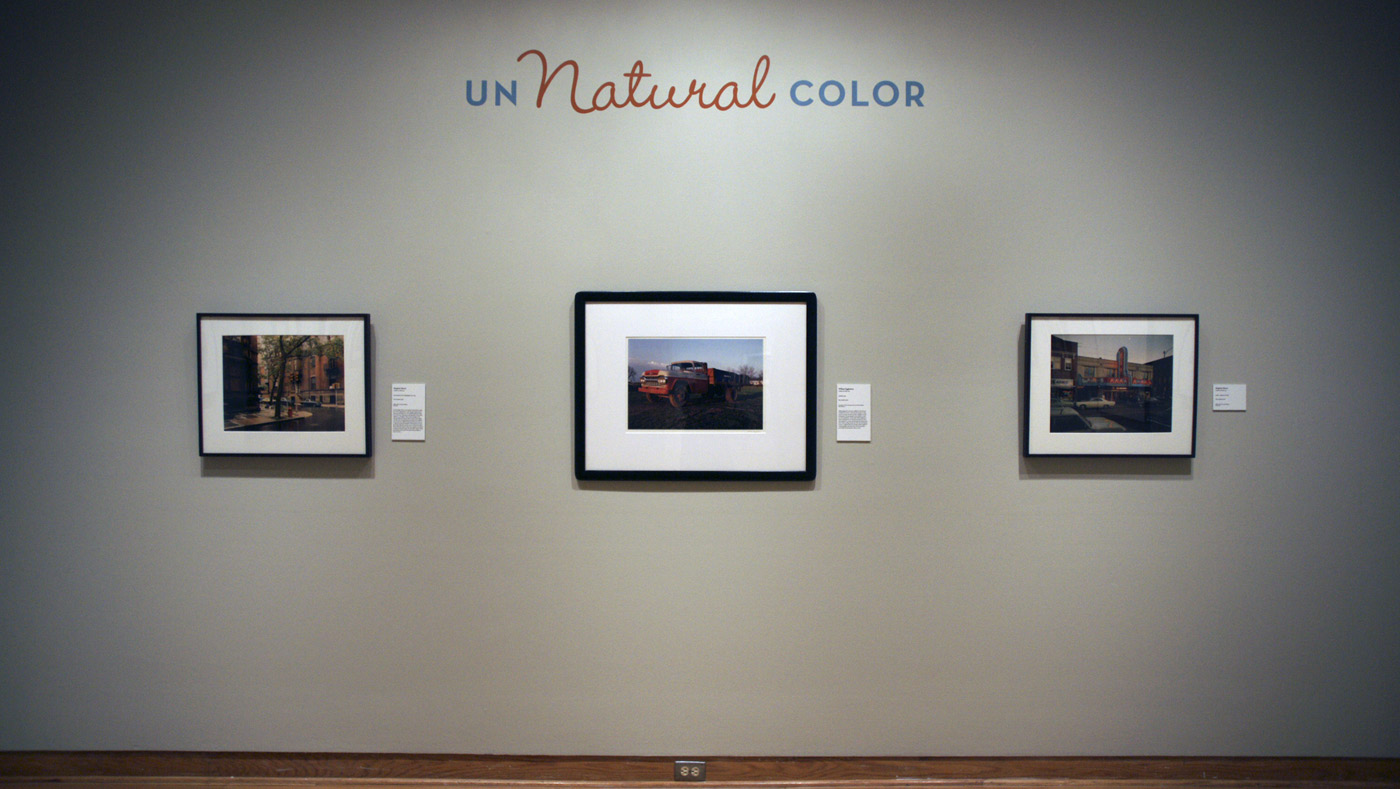
 

Installation photograph of the exhibition 'Un/Natural Color' at the Santa Barbara Museum of Art

Installation photograph of the exhibition 'Un/Natural Color' at the Santa Barbara Museum of Art

Installation photograph of the exhibition 'Un/Natural Color' at the Santa Barbara Museum of Art


Installation photographs of the exhibition Un/Natural Color at the Santa Barbara Museum of Art


This exhibition looks at the powerful relationship between colour and memory by considering photographs and the ways in which their unique colour palettes evoke specific moments of the historical past. From the pastel hues of 19th-century hand-painted portraits, to the vibrant colours of late-1930s Kodachrome transparencies, and the faded, shifted tones of snapshots from the 1970s, different kinds of colour reproduction are closely associated with the time periods that they most frequently represent. Each experiment in colour photography was originally meant to convey a sense of the natural hues of the world, but as our expectations for realistic representation have evolved, these earlier technologies for representing colour have also taken on new meaning. Today, the distinctive colours found in many vintage photographs speak as loudly to contemporary viewers about the period in which they were made as the content that they render visible. The exhibition suggests that the aesthetics of colour are closely related to the evolution of photographic technology over the past 100 years, and encourages visitors to rethink the significance of colour in contemporary photography through the lens of its multi-coloured past. This exhibition was organised by Kim Beil, an art historian who teaches at the University of California, Santa Cruz.

Text from the Santa Barbara Museum of Art website


Jack Delano (American, 1914-1997) 'Barker at the Grounds of the Vermont State Fair, Rutland' 1941, printed 1983


Jack Delano (American, 1914-1997)
Barker at the Grounds of the Vermont State Fair, Rutland
1941, printed 1983
Dye transfer print
Santa Barbara Museum of Art, Gift of the Bruce Berman and Nancy Goliger Berman Collection


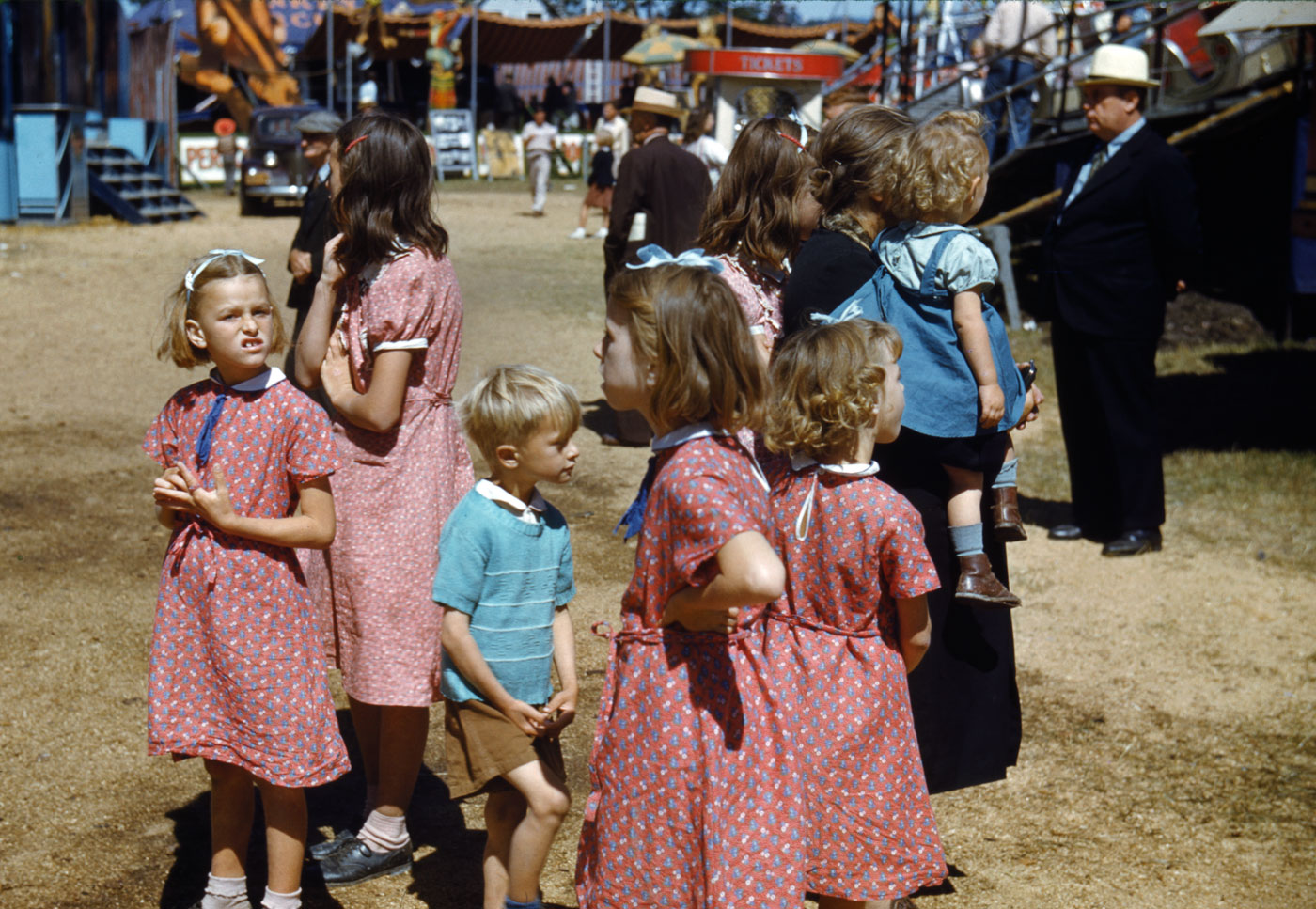
Jack Delano (American, 1914-1997) 'At the Vermont State Fair, Rutland' 1941, printed 1985


Jack Delano (American, 1914-1997)
At the Vermont State Fair, Rutland
1941, printed 1985
Dye transfer print
Santa Barbara Museum of Art, Gift of the Bruce Berman and Nancy Goliger Berman Collection


William Eggleston (American, b. 1939) 'Farm truck, Memphis, Tennessee' 1972


William Eggleston (American, b. 1939)
Farm truck, Memphis, Tennessee
1972
Dye-transfer print


Leroy Grannis (American, 1917-2011) 'Greg Noll Surf Team at Duke Kahanamoku Invitational, Sunset Beach' 1966, printed 2005


Leroy Grannis (American, 1917-2011)
Greg Noll Surf Team at Duke Kahanamoku Invitational, Sunset Beach
1966, printed 2005
C-print, ed. 1/9
Santa Barbara Museum of Art, Museum purchase with funds provided by Janet and Michael G. Wilson


LeRoy “Granny” Grannis (August 12, 1917 – February 3, 2011) was a veteran photographer. His portfolio of photography of surfing and related sea images from the 1960s enjoys a reputation that led The New York Times to dub him “the godfather of surfphotography.”


Un/Natural Color, an exhibition of colour photography from the Santa Barbara Museum of Art’s (SBMA) permanent collection, illustrates the history of colour photography since the 19th century and examines how the shifted or faded colours of old photographs can evoke moments in the historical past. Responding to the widespread use of nostalgic filters in popular photography and social media apps, such as Instagram and Twitter, this presentation enables visitors to see first-hand the historical processes that inspired the aesthetics of these digital manipulations. Despite their reputation for preserving memories and stopping time, photographs themselves are susceptible to material changes over time. These changes are often most visible in the radical colour shifts seen in old photographs, from the characteristic pink hue of snapshots from the 1950s to the yellowed borders and cool cast of prints from the 1970s. These changes also serve to complicate any simple belief in the ability of photography to faithfully represent the natural colours of the world.

While the exhibition includes a number of experimental early processes, including the chromolithographically-derived Photochrom process as well as an early Autochrome, the bulk of the imagery is drawn from the decades following the pivotal invention of Kodachrome, the first colour slide film, which was made commercially available in 1936. Because this film, as well as Kodacolor negative film (1942), was sent back to Eastman-Kodak for processing, photographers’ control over their imagery was greatly reduced, leading many art photographers to resist the transition to colour until decades later.

Un/Natural Color includes rarely-seen colour work by two notable documentary photographers of the Depression era, Jack Delano and Marion Post Wolcott. Both worked for the Farm Security Administration (a government program associated with the New Deal) and made limited use of colour film while on assignment documenting the effects of the Great Depression on rural American. Very few (if any) of these images were reproduced in the popular press, however, owing to the difficulty and cost of reproducing colour photographs, and to colour photography’s overwhelming association with commercial advertising at this time (as in Elmar Ludwig and Edmund Nägele’s image of the popular resort chain, Butlin’s).

The art establishment at large expressed little interest in colour photography until the mid-1970s, following the inclusion of colour work in two groundbreaking exhibitions: Stephen Shore’s vernacular landscapes in New Topographics: Photographs of a Man-Altered Landscape at the George Eastman House in Rochester, NY (1975) and the solo exhibition of William Eggleston’s colour photography at the Museum of Modern Art, NY (1976). Both of these important photographers are represented in Un/Natural Color, as well as work by photographers exploring similar uses of colour to record everyday American scenes, including Jeff Brouws, Jim Dow, and Joel Meyerowitz.

Prior to the 1970s, some tentative forays into colour photography were made by art photographers primarily known for their work in black-and-white (notably Harry Callahan), but colour was more often derided for its populist associations and was typically allied with either snapshot photography or advertising and Hollywood. The negative connotation that colour photography had acquired over the years in the art world was critical to its adoption by photographers like Shore and Eggleston, who used it to challenge conventional expectations for photographic art and to force viewers to look with new eyes at the familiar world around them.

An image such as Greg Noll Surf Team at Duke Kahanamoku Invitational, Sunset Beach by Leroy Grannis highlights the powerful ability of colour photography to summon a unique historical moment. It is not just the classic haircut and short surf trunks sported by the surf legend, Greg Noll, that situates this photograph in the 1960s. Colour photography at this time typically recorded colour in a highly saturated, though fairly uniform manner, leaving some aspects of this photograph looking flat, rather than mimicking the subtle modulation of tone that is more commonly associated with the perception of depth by human vision.

The characteristic manner by which different colour processes represent the colours of the world, as well as the changes that such colour photographs suffer over time, are powerful indicators of the photograph’s history. When we look at colour photographs, all of these markers are brought to bear on our interpretation of their subjects, leading us to question: what is natural colour anyway?

Press release from the Santa Barbara Museum of Art website


Roman Freulich (American born Poland, 1898-1974) 'Gloria Swanson' Nd


Roman Freulich (American born Poland, 1898-1974)
Gloria Swanson
Nd
Dye transfer print
Santa Barbara Museum of Art, Gift of Judith Caditz, Allan M. Caditz, Ellen Joan Abramson and Norman Abramson


Roman Freulich (1898-1974) was a photographer in the United States known for his movie stills and glamour shots. He immigrated from Poland.


William Edwin Gledhill (Canadian, 1888-1976) 'Amanda Duff' 1935


William Edwin Gledhill (Canadian, 1888-1976)
Amanda Duff
1935
Dye transfer print
Santa Barbara Museum of Art, Gift of Keith Gledhill


In 1907, the recently married Carolyn and Edwin Gledhill opened their first portrait studio on Chapala Street [Santa Barbara], one block from the luxurious oceanfront Potter Hotel, a destination for wealthy and prominent visitors at the time. During an era of extensive industrial growth and expansion for many burgeoning California cities, Santa Barbarans instead made the collective choice to focus on the city’s architecture, civic value and pageantry, making it an ideal haven for a diverse and growing community of artists and professionals. This unique social climate allowed the Gledhills access to the cultural elite, both visitors and residents alike, from which they chose the subjects of their portraits.

The Gledhills were fairly radical for their time, which was reflected both in their craft and in their personal life. At the time of their marriage, Edwin was only 19, while Carolyn was already in her 30s. This age disparity, which might be viewed as unorthodox today, was borderline scandalous in the early 20th century.

Carolyn Gledhill also showed a propensity for early feminism in her work. Before her untimely death in 1935, she would pose many of her female subjects in subtly defiant ways, reflecting the fundamental shift in the paradigm of women’s roles in America during the 1920s.

Following Carolyn’s death, Edwin continued his work as a photographer and preservationist of Santa Barbara’s historic resources; he even served for many years as the executive director of the Santa Barbara Historical Museum, helping build it into the cultural institution it is today.

Anonymous. “Portraits in Paradise: The Photography of Carolyn and Edwin Gledhill, 1906-1944,” on the Santa Barbara Historical Museum website Nd [Online] Cited 03/07/2024


Elmar Ludwig and Edmond Nagele. 'The Indoor-Heated Pool, Butlin’s Mosney' Nd


Elmar Ludwig (German, b. 1935) and Edmund Nägele (German, b. 1942)
The Indoor-Heated Pool, Butlin’s Mosney
Nd


Elmar Ludwig (born 1935) is a German photographer. Ludwig was born in Halle in 1935. In 1961, John Hinde recruited two German photographers, Ludwig (as head of photographic department) and Edmund Nägele, and one British, David Noble to expand his eponymous postcard business. Ludwig travelled the world for John Hinde, before establishing his own Munich studio at the end of the 1960s, focused on architecture, product and advertising photography.

Text from the Wikipedia website

Edmund Nägele FRPS is a German photographer. Nägele started his career in a Munich advertising studio, before relocating to Ireland. In 1962, John Hinde recruited two German photographers, Elmar Ludwig and Edmund Nägele and one British, David Noble to expand his eponymous postcard business. John Hinde Ltd. sent Nägele to Cyprus around 1969, where he recorded the life and scenery of this beautiful island. Large format film was used to produce postcard subjects, with colour separation and other post-processing being done in Milan – this included removing telegraph poles, television aerials and adding bright colours to vehicles and peoples clothing. Nägele is remembered for his elaborately staged, colour-saturated images of Butlin’s holiday camps taken in the 1960s.

Text from the Wikipedia website


William Henry Jackson (American, 1843-1942) 'Colorado Railway Mountain View' 1898


William Henry Jackson (American, 1843-1942)
Colorado Railway Mountain View
1898
Photochrom
Santa Barbra Museum of Art, Museum purchase


William Henry Jackson (American, 1843-1942) 'Colorado Grand Canyon of the Arkansas' 1898


William Henry Jackson (American, 1843-1942)
Colorado Grand Canyon of the Arkansas
1898
Photochrom
Santa Barbara Museum of Art, Museum purchase


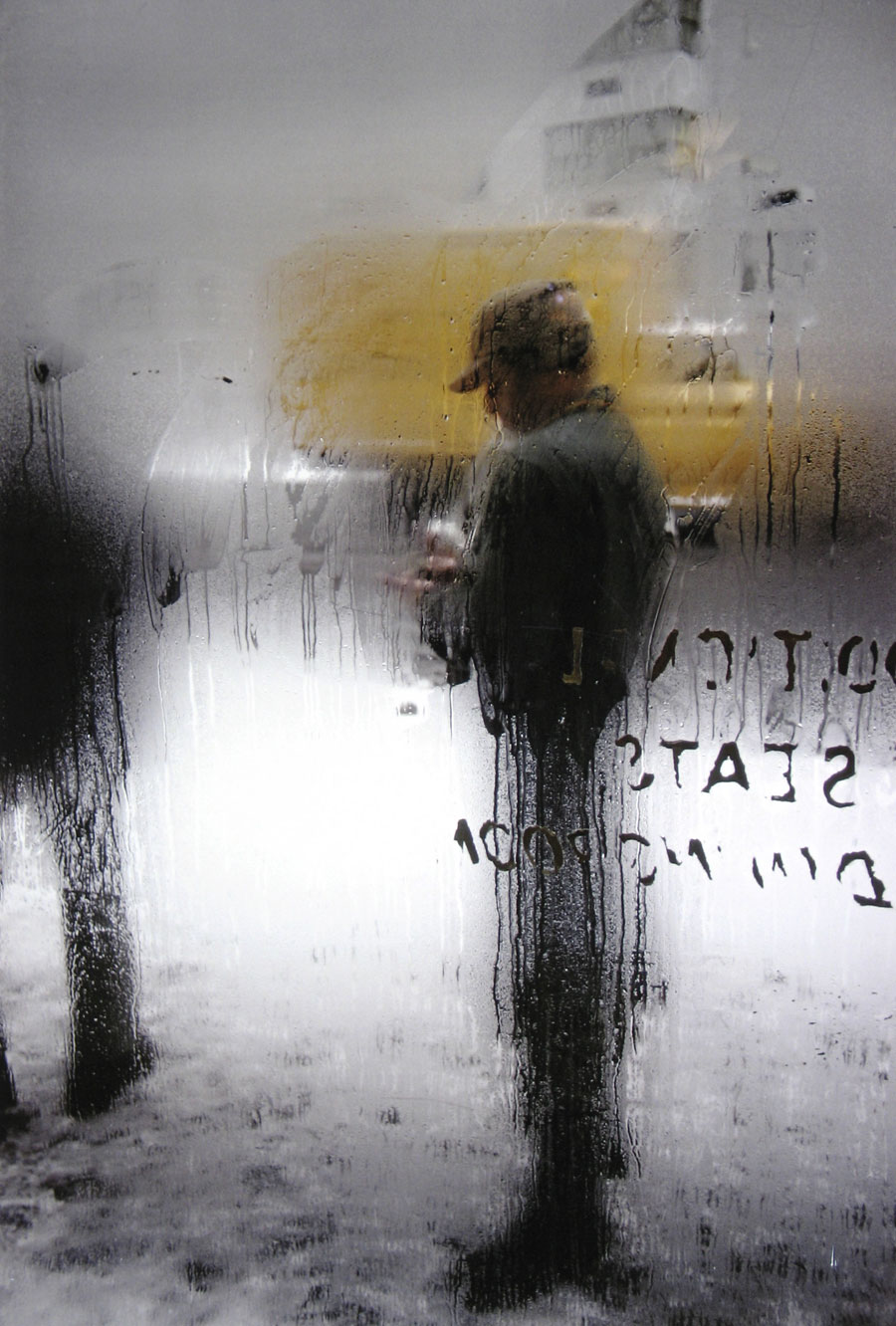
Saul Leiter (American, 1923-2013) 'Snow' 1960


Saul Leiter (American, 1923-2013)
Snow
1960


Santa Barbara Museum of Art
1130 State Street, Santa Barbara, CA

Opening hours:
Tuesday – Sunday 11am – 5pm
Thursday Evenings 5 – 8pm

Santa Barbara Museum of Art website

LIKE ART BLART ON FACEBOOK

Back to top

Exhibition: ‘Saul Leiter Retrospective’ at The House of Photography at Deichtorhallen Hamburg

Exhibition dates: 3rd February – 15th April 2012


Saul Leiter (American, 1923-2013) 'Joanna' c. 1947


Saul Leiter (American, 1923-2013)
Joanna
c. 1947
© Saul Leiter
Courtesy: Saul Leiter, Howard Greenberg Gallery, New York


“I always assumed that I would simply be forgotten and disappear from view.”


Saul Leiter


The second of two postings on the colour photography of Saul Leiter. The first posting was for the exhibition Saul Leiter: New York Reflections at the Jewish Historical Museum, Amsterdam, October 2011 – March 2012. This exhibition is the first major retrospective of his work. At last this artist seems to be getting the recognition he deserves!

The prosaic nature of the titles of the photographs belies their complexity. They remind me of the refractions of Lee Friedlander, the colour fields of Mark Rothko, the emotional intensity of Abstract Expressionism and the impression of spontaneous, subconscious creation that is Surrealism. His photographs are the glorious spirit of the city writ large – unique, atmospheric and with great psychological use of colour and space. I can’t think of any other colour photographer of the era (or for that matter, any era) that occludes the picture plane as much as Leiter does, and to such psychological affect, as in the last two photographs in this posting. The viewer becomes like a Peeping Tom, a voyeur of the world. Leiter deserves to be one of the modern masters of colour photography. I am so glad that he hasn’t disappeared from view. The world would be a poorer place without his visualisation.

Dr Marcus Bunyan


Many thankx to The House of Photography at Deichtorhallen for allowing me to publish the photographs in the posting. Please click on the photographs for a larger version of the image.


Saul Leiter (American, 1923-2013) 'Untitled (Self-portrait)' 1950s


Saul Leiter (American, 1923-2013)
Untitled (Self-portrait)
1950s
© Saul Leiter
Courtesy: Howard Greenberg Gallery, New York


Saul Leiter (American, 1923-2013) 'Phone Call' c. 1957


Saul Leiter (American, 1923-2013)
Phone Call
c. 1957
© Saul Leiter
Courtesy: Saul Leiter, Howard Greenberg Gallery, New York


Saul Leiter (American, 1923-2013) 'Taxi' 1957


Saul Leiter (American, 1923-2013)
Taxi
1957
© Saul Leiter
Courtesy: Saul Leiter, Howard Greenberg Gallery, New York


Saul Leiter (American, 1923-2013) 'Postmen' 1952


Saul Leiter (American, 1923-2013)
Postmen
1952
© Saul Leiter
Courtesy: Saul Leiter, Howard Greenberg Gallery, New York


Saul Leiter (American, 1923-2013) 'Walking' 1956


Saul Leiter (American, 1923-2013)
Walking
1956
© Saul Leiter
Courtesy: Saul Leiter, Howard Greenberg Gallery, New York


Saul Leiter (American, 1923-2013) 'Shopping' c. 1953


Saul Leiter (American, 1923-2013)
Shopping
c. 1953
© Saul Leiter
Courtesy: Saul Leiter, Howard Greenberg Gallery, New York


“Leiter is a rare artist, one whose vision is so encompassing, so refined, so in touch with a certain lyrical undertone, that his best photographs occasionally seem literally to transcend the medium.”


Jane Livingston


House of Photography at Deichtorhallen will from February 3 to April 15, 2012 be highlighting the oeuvre of 88-year-old photographer and painter Saul Leiter in the world’s first major retrospective. The exhibition covers more than 400 works and brings together in marvellous combination his early black-and-white and colour photographs, fashion images, painted-over nude photographs, paintings and his sketchbooks, which have never gone on public view before. Then final chapter in the exhibition is dedicated to Saul Leiter’s most recent photographic works, which he continues to take on the streets in his neighbourhood in New York’s East Village.

 Saul Leiter was born in 1923 in Pittsburgh and it was not until a few years ago that his work received due recognition for its pioneering role in the emergence of colour photography. As early as 1946, and thus well before the representatives of New Color Photography in the 1970s (such as William Eggleston and Stephen Shore) he was one of the first to use colour photography, despite it being despised by artists of the day, for his free artistic shots.

“The older photo-aesthetic views on the hegemony of black-and-white and the dating in photo history of the artistic use of color photography to the early 1970s need to be critically revisited. With Saul Leiter’s oeuvre, the history of photography essentially has to be rewritten,” comments curator Ingo Taubhorn. 

Saul Leiter has always seen himself as both painter and photograph. In his painting and in his photographs he tends clearly to abstraction and a surface feel. Often there are large, deep black surfaces caused by shadows that take up as much as three quarters of the photographs. These are images that do not present passers-by as individuals, but as blurred colour impulses, behind panes of glass or wedges between house walls and traffic signs. He espouses a fluid transition between the abstract and the figurative in his paintings and photographs. Saul Leiter’s street photography, and in this genre his work is quite without precedent, is actually painting that has become photography, as Rolf Nobel writes in the book accompanying the exhibition.

On Saul Leiter

Saul Leiter discovered his passion for art at an early date and started painting as a teenager at the end of the 1940s. His family did not support him in his artistic endeavours as his father, a renowned Talmudic rabbi and scholar, always hoped his son Saul would one day follow him in the family tradition and become a rabbi. Leiter was self-taught, but by no means uneducated. He read and learned a lot about art, such that his knowledge and understanding constantly grew. In this way, he could be certain that his own thought and artistic efforts were duly related to the historical context, as Carrie Springer, curator at the Whitney Museum in New York, points out in the catalog.

 In 1946, shortly after he had moved to New York, Leiter got to know Richard Poussette-Dart, who introduced him to photography, a medium that Leiter found very much to his liking and which he quickly made his own. Leiter soon resolved to make use of photography not only as a means of making art but as a way of earning a living. He started taking fashion photographs and thanks to his good eye, his playful sense of humour, and his pronounced sense of elegance, swiftly emerged as an extraordinary fashion photographer.
 In the 1950s, LIFE magazine brought out the first photo-spreads of Saul Leiter’s first black-and-white images. For example, he took part in the exhibition on Always the young strangers (1953) curated by Edward Steichen at the Museum of Modern Art. From 1958 to 1967, Leiter worked for Harper’s Bazaar. All in all he was to spend some 20 years photographing for both the classic magazines and more recent ones, such as Esquire and Harper’s: Show, Elle, British Vogue, Queen and Nova.

Saul Leiter was born in 1923 in Pittsburgh and has lived since 1946 in New York. For over 40 years, until her death in 2002 New York artist Soames Bantry was his partner. During the preparations for the Hamburg exhibition, Saul Leiter once remarked that he wished that Soames Bantry has received the same attention from the art world as he is now receiving. This spawned the idea of an homage to Soames Bantry, an exhibition in the exhibition at House of Photography that Saul Leiter has himself curated – with over 20 paintings: For Soames with Love Saul. 

In his photographs, the genres of street life, portraiture, still lifes, fashion and architectural photography meld. He comes across his themes, such as shop windows, passers-by, cars, signs and (a recurrent motif) umbrellas, in the direct vicinity of his apartment in New York, where he has now lived for almost 60 years. The lack of clear detail, the blurring of movement and the reduction in depth of field, the compensation for or deliberate avoidance of the necessary light as well as the alienation caused by photographing through windows and by reflections all blend to create a language of colour fuelled by a semi-real, semi-abstract urban space. These are the works of an as good as undiscovered modern master of colour photography of the 1940s and 1950s. The Hamburg exhibition and the major monograph by Kehrer Verlag seek to prevent this happening.

Press release from The House of Photography website


Saul Leiter (American, 1923-2013) 'Red Umbrella' c. 1958


Saul Leiter (American, 1923-2013)
Red Umbrella
c. 1958
© Saul Leiter
Courtesy: Howard Greenberg Gallery, New York


Saul Leiter (American, 1923-2013) 'Snow' 1960


Saul Leiter (American, 1923-2013)
Snow
1960
© Saul Leiter
Courtesy: Saul Leiter, Howard Greenberg Gallery, New York


Saul Leiter (American, 1923-2013) 'Man with Straw Hat' c. 1955


Saul Leiter (American, 1923-2013)
Man with Straw Hat
c. 1955
© Saul Leiter
Courtesy: Howard Greenberg Gallery, New York


Saul Leiter (American, 1923-2013) 'Pizza, Patterson' 1952


Saul Leiter (American, 1923-2013)
Pizza, Patterson
1952
© Saul Leiter
Courtesy: Howard Greenberg Gallery, New York


Saul Leiter (American, 1923-2013) 'Canopy' c. 1957


Saul Leiter (American, 1923-2013)
Canopy
c. 1957
© Saul Leiter
Courtesy: Saul Leiter, Howard Greenberg Gallery, New York


Saul Leiter (American, 1923-2013) 'Through Boards' c. 1957


Saul Leiter (American, 1923-2013)
Through Boards
c. 1957
© Saul Leiter
Courtesy: Saul Leiter, Howard Greenberg Gallery, New York


Deichtorhallen Hamburg
Deichtorstrasse 1-2
20095
Hamburg
Phone: +49 (0)40 32103-0

Opening hours:
Tuesday – Sunday 11am – 6pm
Closed Mondays

Deichtorhallen Hamburg website

LIKE ART BLART ON FACEBOOK

Back to top

Exhibition: ‘In the Darkroom: Photographic Processes before the Digital Age’ at the National Gallery of Art, Washington, D.C.

Exhibition dates: 25th October, 2009 – 14th March, 2010


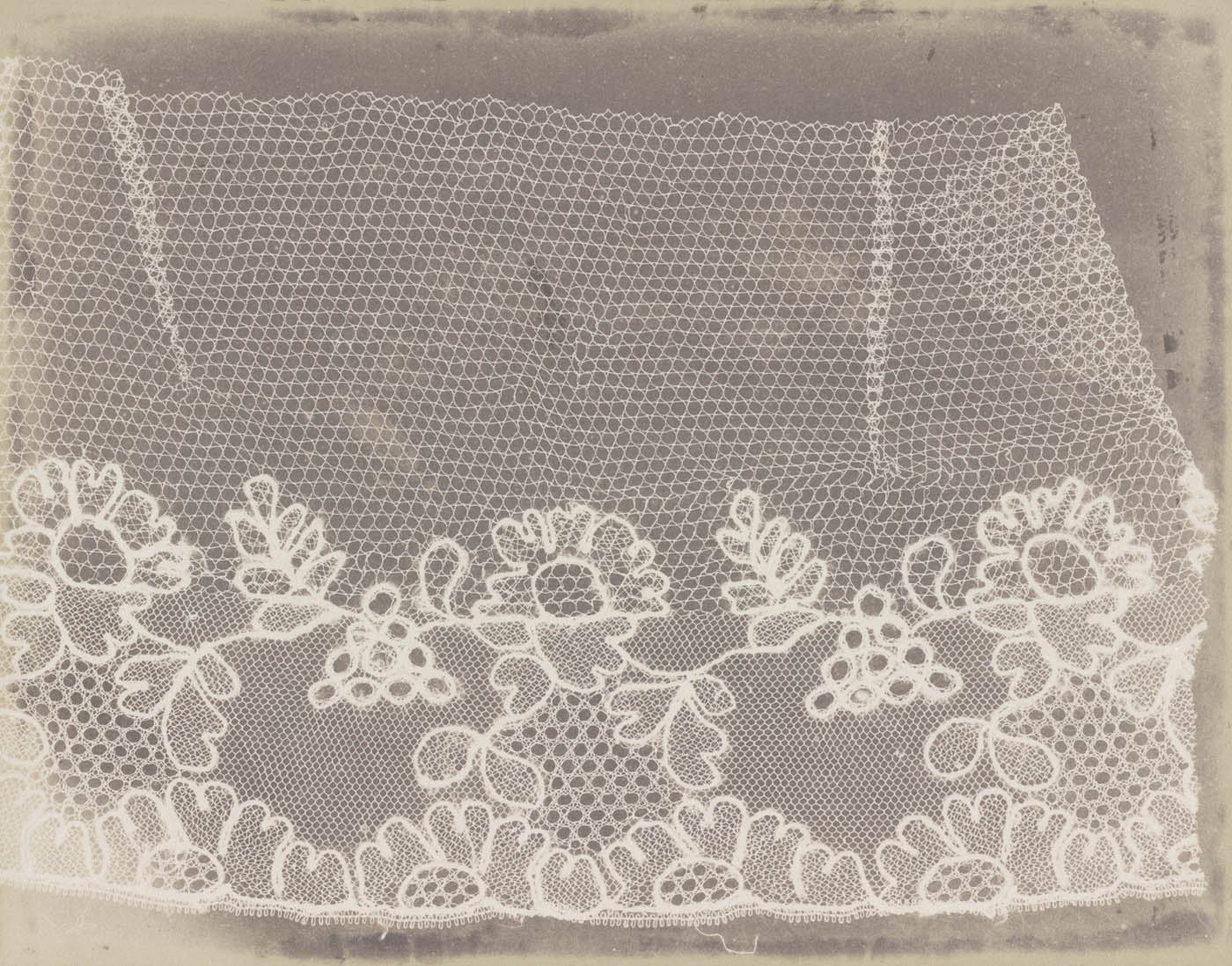
William Henry Fox Talbot (British, 1800-1877) 'Lace' 1839-1844 from the exhibition 'In the Darkroom: Photographic Processes before the Digital Age' at the National Gallery of Art, Washington, D.C., October 2009 - March, 2010


William Henry Fox Talbot (British, 1800-1877)
Lace
1839-1844
Photogenic drawing (salted paper print)
Sheet (trimmed to image): 17.1 x 22cm (6 3/4 x 8 11/16 in.)
Support: 24.8 x 31.1cm (9 3/4 x 12 1/4 in.)
National Gallery of Art, Washington
Patrons’ Permanent Fund
Public domain


Many thankx to Kate Afanasyeva and the National Gallery of Art for allowing me to reproduce the photographs from the exhibition below. Please click on the photographs for a larger version of the image.

Dr Marcus Bunyan


Anna Atkins (British, 1799-1871) 'Ferns, Specimen of Cyanotype' 1840s from the exhibition 'In the Darkroom: Photographic Processes before the Digital Age' at the National Gallery of Art, Washington, D.C., October 2009 - March, 2010


Anna Atkins (British, 1799-1871)
Ferns, Specimen of Cyanotype
1840s
cyanotype
National Gallery of Art, Washington
R.K. Mellon Family Foundation Fund


Albert Sands Southworth and Josiah Johnson Hawes. 'The Letter' c. 1850  from the exhibition 'In the Darkroom: Photographic Processes before the Digital Age' at the National Gallery of Art, Washington, D.C., October 2009 - March, 2010


Albert Sands Southworth and Josiah Johnson Hawes
The Letter
c. 1850
daguerreotype
National Gallery of Art, Washington
Patrons’ Permanent Fund


Southworth and Hawes’ aspirations for their portraits went far beyond those of the average photographer of their day. Whereas most daguerreotypists, simply concerned with rendering a likeness, used stock poses, painted backdrops, and even head restraints to firmly fix their subjects, Southworth and Hawes were celebrated not just for their technical expertise, but also for their penetrating studies, innovative style, and creative use of natural light. They sought to elevate their subjects “far beyond common nature” and embody their “genius and spirit of poetry,” as Southworth wrote in 1871. “What is to be done is obliged to be done quickly. The whole character of the sitter is to be read at first sight; the whole likeness, as it shall appear when finished, is to be seen at first, in each and all its details, and in their unity and combination.”2

Among Southworth and Hawes’ most accomplished studies, The Letter is exceptional in its composition and mood. Most American daguerreotype portraits made in the 1840s and 1850s were frontal, bust-length studies of single figures who rarely show any kind of facial expression because of the often long exposure times. The Letter, however, is a highly evocative study. With its carefully constructed composition and tight pyramidal structure, it presents two thoughtful young women contemplating a letter. Through their posture and expression, these women seem to gain not only physical support from each other, but also emotional strength. Although the identity of the women is unknown, as is the content of the letter, this large and distinguished daguerreotype reflects Southworth and Hawes’ aspiration to capture “the life, the feeling, the mind, and the soul” of their subjects.3

(Text by Sarah Greenough, published in the National Gallery of Art exhibition catalogue, Art for the Nation, 2000)

Text from the National Gallery of Art website


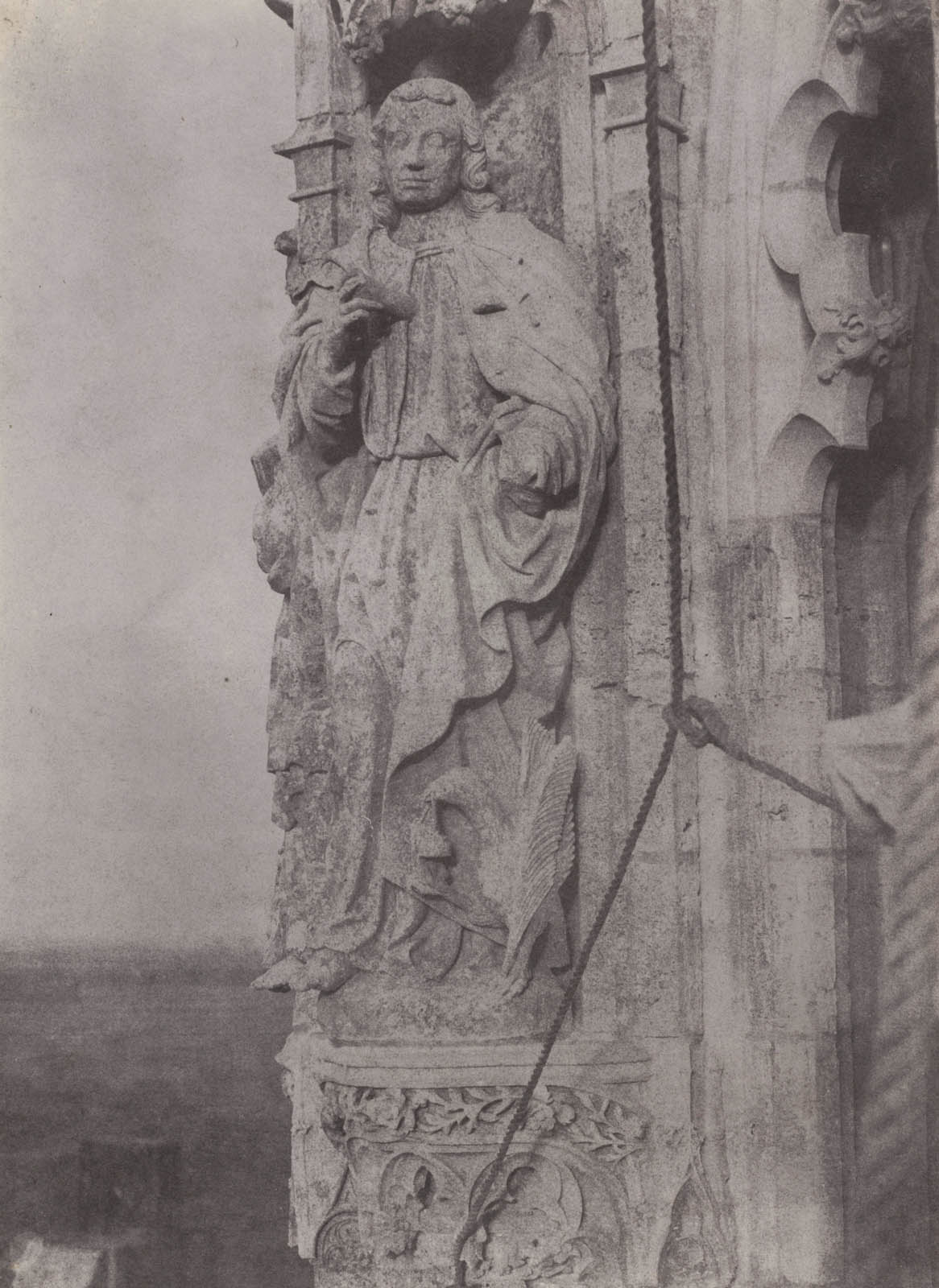
Charles Nègre (French, 1820-1880)
'Saint John the Evangelist, Chartres Cathedral' c. 1854


Charles Nègre (French, 1820-1880)
Saint John the Evangelist, Chartres Cathedral
c. 1854
Salted paper print from a paper negative
National Gallery of Art, Washington
Eugene L. and Marie-Louise Garbaty Fund, Pepita Milmore Memorial Fund and New Century Fund
Public domain


In 1851 the French government’s Commission des Monuments Historiques selected five photographers to document architectural treasures throughout the country. Nègre was not included, perhaps because he was a member of the opposition party, but he took it upon himself to photograph extensively in Marseilles, Arles, Avignon, and Aix-en-Provence in the early 1850s, and in 1854 he made many photographs of Chartres Cathedral.

Nègre applied his growing understanding of light, shadow, line, and form in Saint John the Evangelist, Chartres Cathedral, and the photograph beautifully illustrates his willingness to sacrifice “a few details,” as he wrote, to capture “an imposing effect.” In addition, unlike photographers associated with the Commission des Monuments Historiques, who were asked to provide general studies of a building’s façade, Nègre was free to explore more unusual views. The statue of Saint John the Evangelist is situated high in the north spire of Chartres, several feet above a nearby balcony. Although difficult to see and even harder for Nègre to record (he most likely perched his camera on a platform), the view in his photograph succinctly captured what he called the cathedral’s “real character” and “preserved the poetic charm that surrounded it.”

Text from the National Gallery of Art website


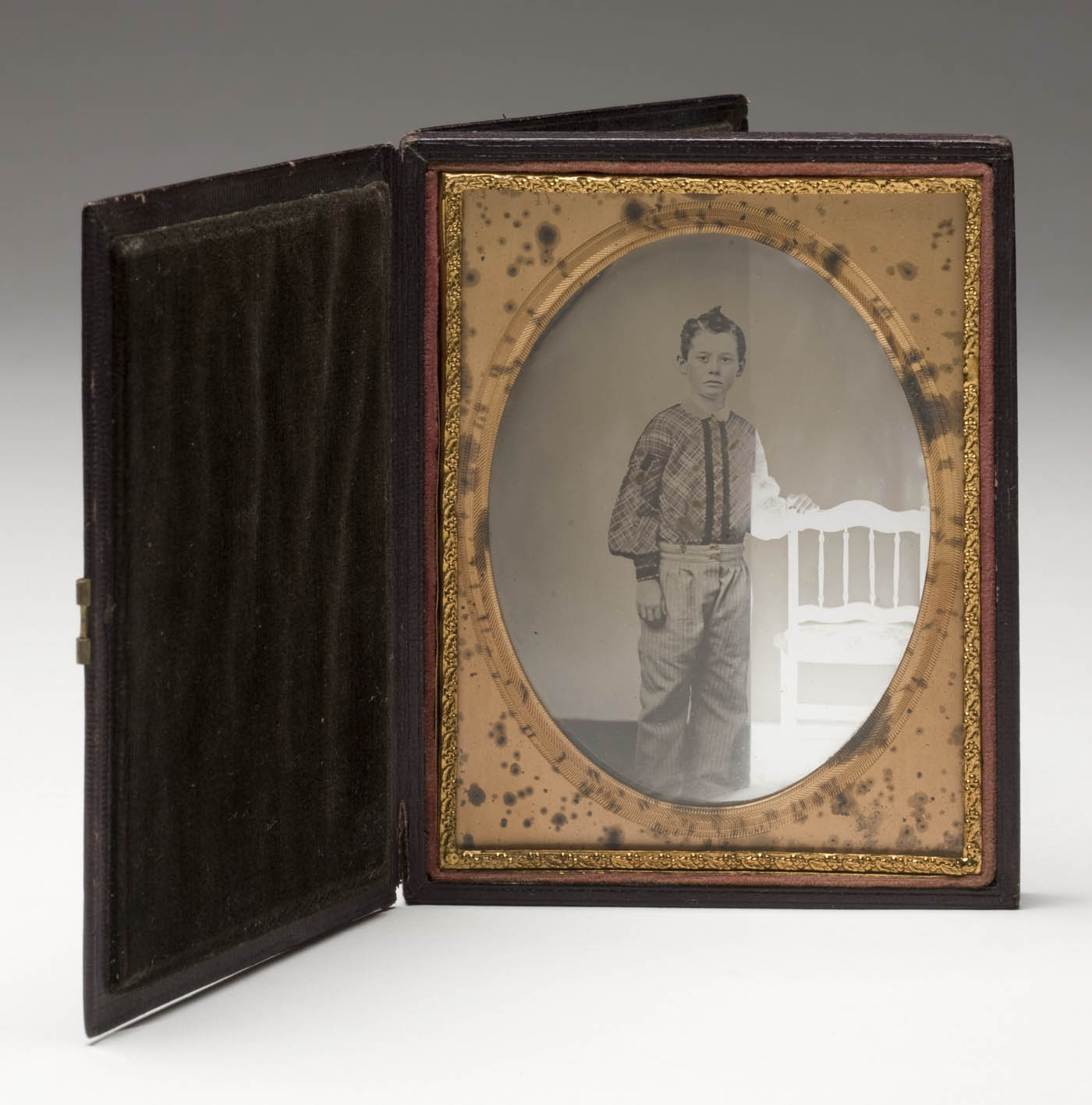
Unknown photographer (American 19th Century) 'George E. Lane, Jr.' c. 1855


Unknown photographer (American 19th Century)
George E. Lane, Jr.
c. 1855
Ambrotype
National Gallery of Art, Washington
Gift of Kathleen, Melissa, and Pamela Stegeman
Public domain


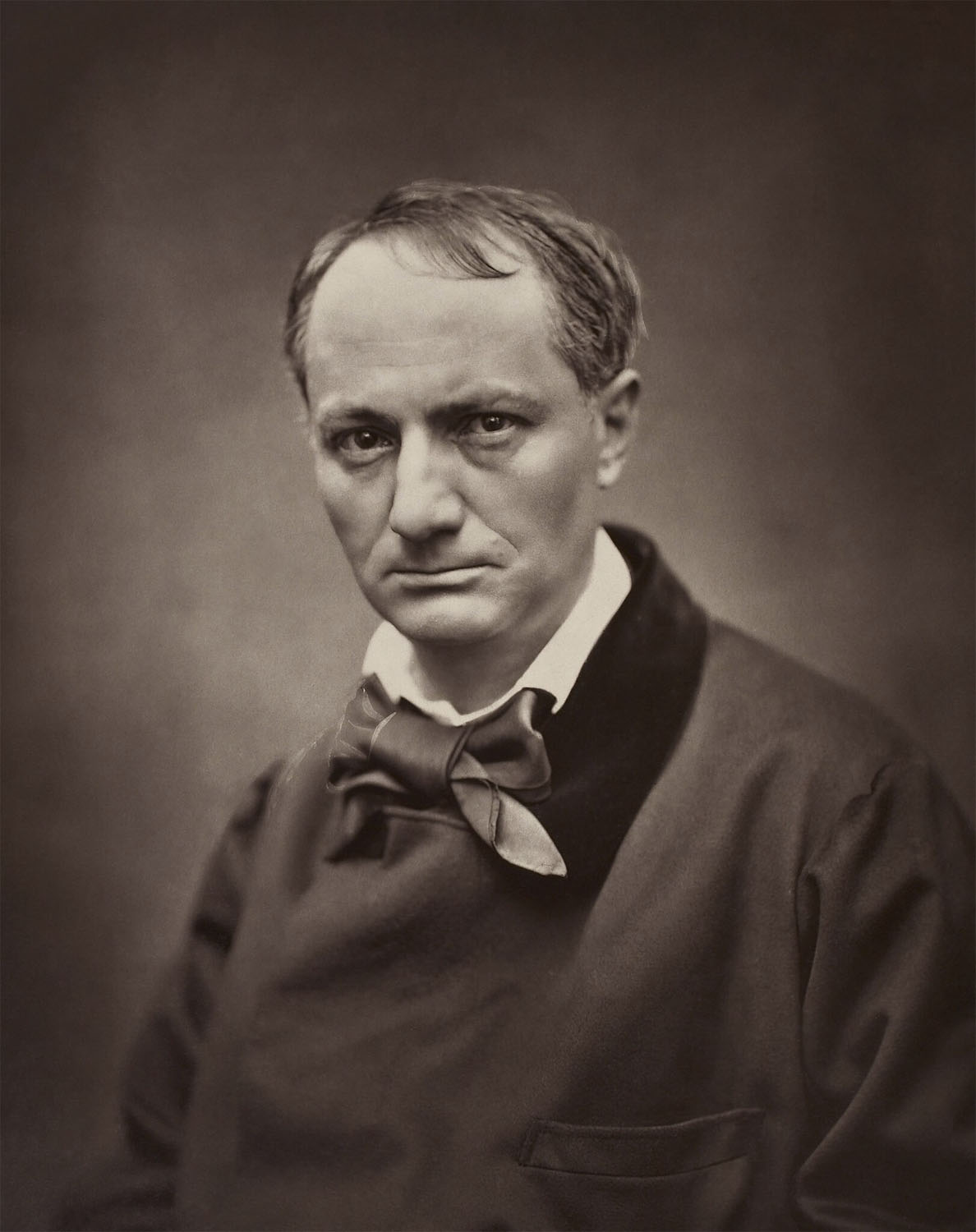
Étienne Carjat (French, 1828-1906)
'Charles Baudelaire' 1861, printed 1877


Étienne Carjat (French, 1828-1906)
Charles Baudelaire
1861, printed 1877
Woodburytype
National Gallery of Art, Washington
Gift of Jacob Kainen
Public domain


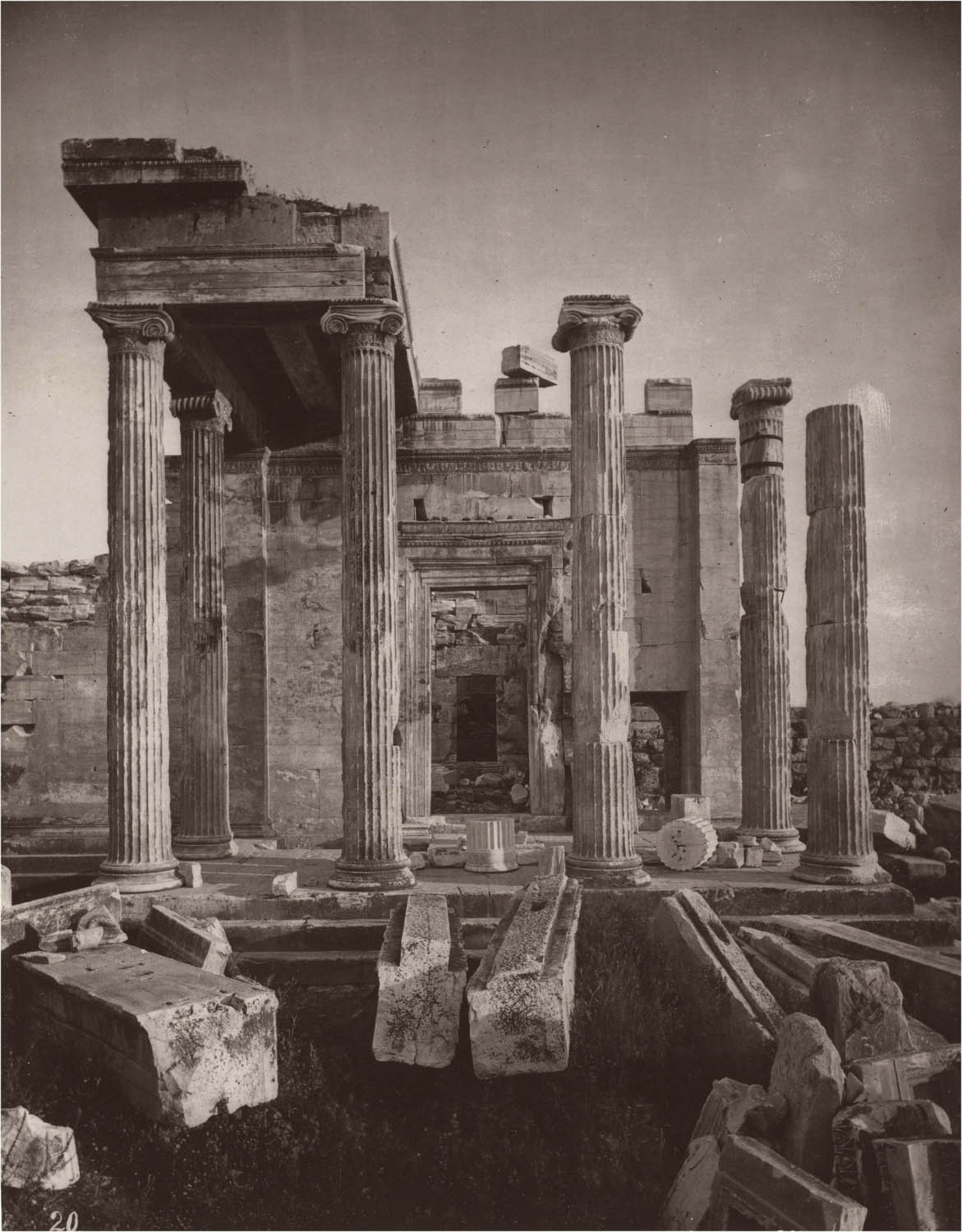
William James Stillman (American, 1828-1901) 'The Acropolis of Athens'
1869/1870


William James Stillman (American, 1828-1901)
The Acropolis of Athens
1869/1870
Carbon print
National Gallery of Art, Washington
Horace W. Goldsmith Foundation through Robert and Joyce Menschel


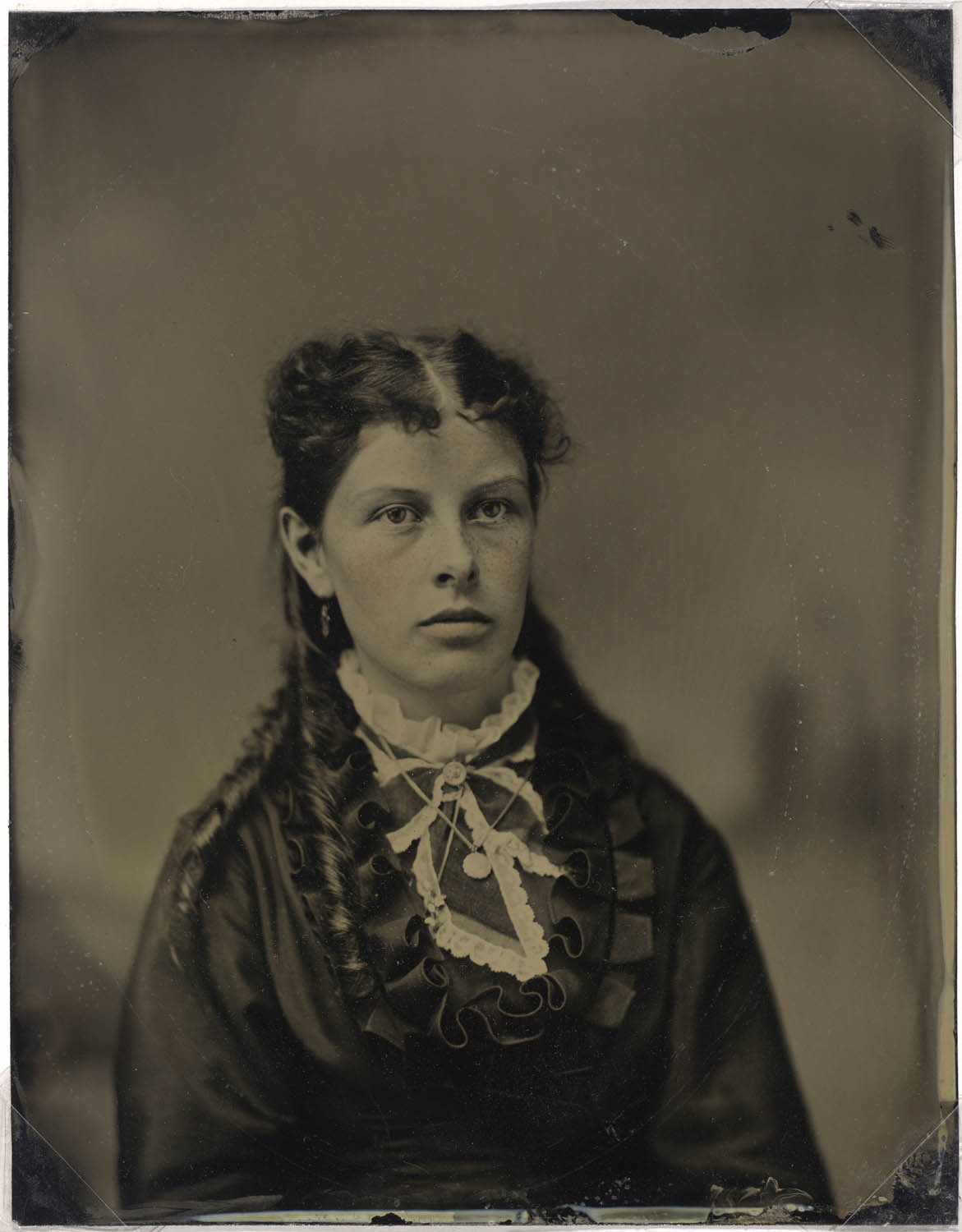
J.G. Ellinwood (American, 1844-1924) 'Portrait of a Woman' c. 1870


J.G. Ellinwood (American, 1844-1924)
Portrait of a Woman
c. 1870
Tintype, hand-coloured
National Gallery of Art, Washington
Mary and Dan Solomon Fund


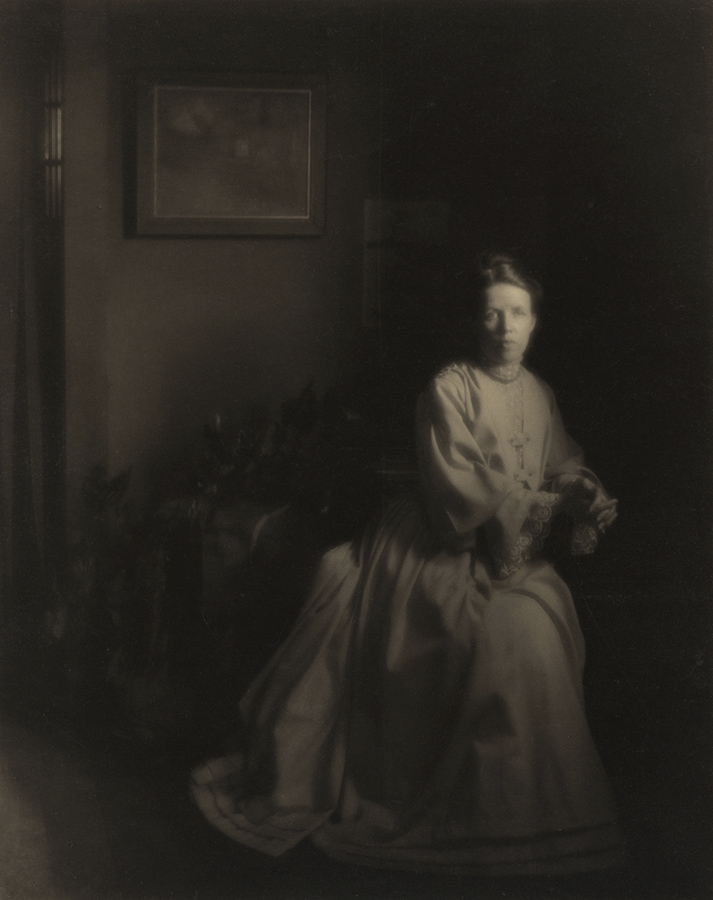
Clarence White (American, 1871-1925) 'Mrs. White - In the Studio' 1907


Clarence White (American, 1871-1925)
Mrs. White – In the Studio
1907
platinum print
National Gallery of Art, Washington
Horace W. Goldsmith Foundation through Robert and Joyce Menschel and R.K. Mellon Family Foundation Fund


Karl Struss (American, 1886-1981) 'Columbia University, Night' 1910


Karl Struss (American, 1886-1981)
Columbia University, Night
1910
Gum dichromate over platinum print
Image: 24.1 × 19.9cm (9 1/2 × 7 13/16 in.)
National Gallery of Art, Washington
Horace W. Goldsmith Foundation through Robert and Joyce Menschel


Laura Gilpin (American, 1891-1979) 'Ghost Rock, Colorado Springs' 1919


Laura Gilpin (American, 1891-1979)
Ghost Rock, Colorado Springs
1919
Platinum print
24.2 x 19.1cm (9 1/2 x 7 1/2 in.)
National Gallery of Art, Washington
Marvin Breckinridge Patterson Fund
© 1979 Amon Carter Museum, Fort Worth, Texas


László Moholy-Nagy (Hungarian, 1895-1946) 'Untitled (Positive)' c. 1922-1924


László Moholy-Nagy (Hungarian, 1895-1946)
Untitled (Positive)
c. 1922-1924
gelatin silver print
National Gallery of Art, Washington
Gift of The Circle of the National Gallery of Art


László Moholy-Nagy (Hungarian, 1895-1946) 'Untitled' c. 1922-1924


László Moholy-Nagy (Hungarian, 1895-1946)
Untitled
c. 1922-1924
gelatin silver print
National Gallery of Art, Washington
New Century Fund


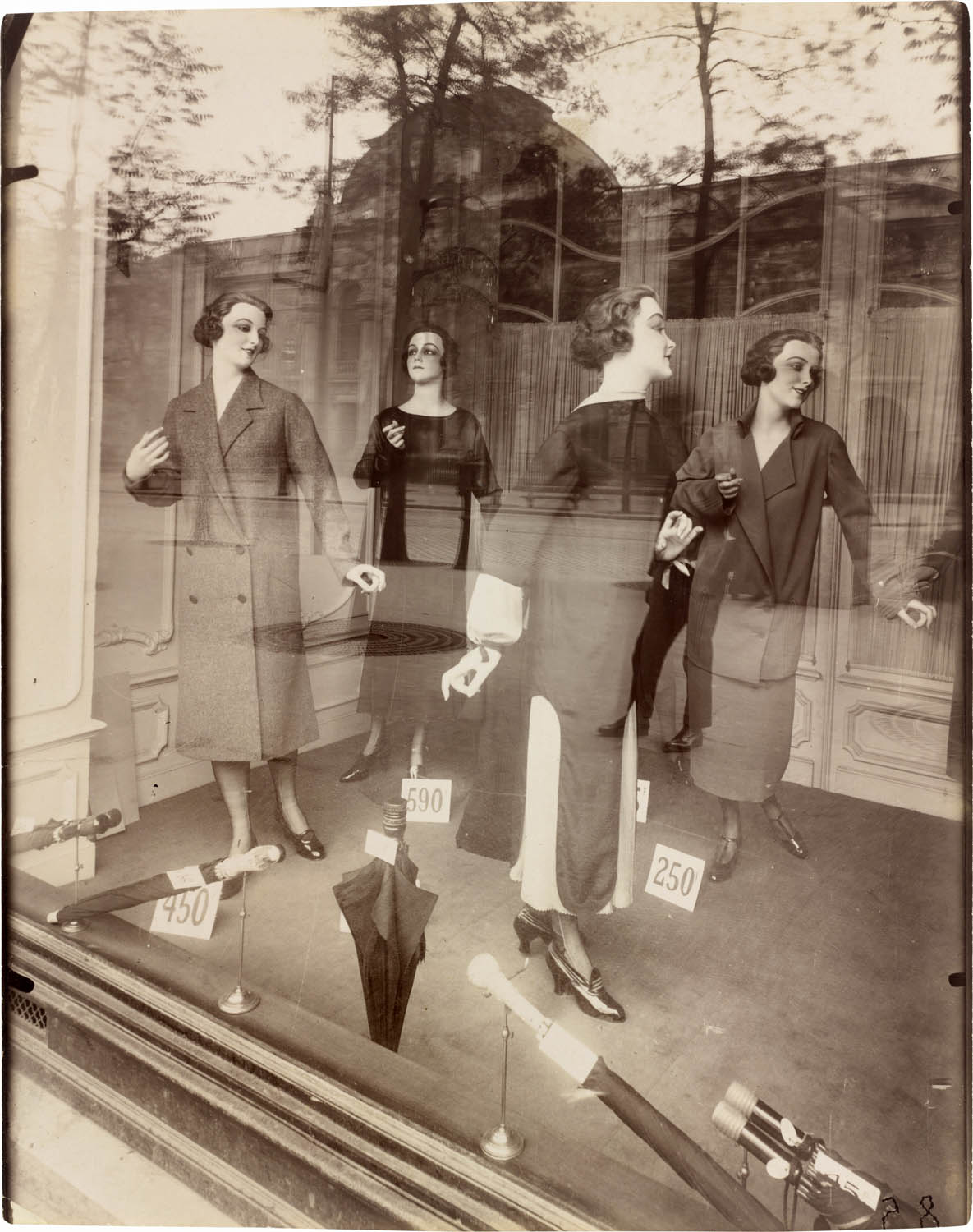
Eugène Atget (French, 1857-1927)
'Magasin, Avenue des Gobelins' 1925


Eugène Atget (French, 1857-1927)
Magasin, Avenue des Gobelins
1925
gelatin silver print, printed-out
National Gallery of Art, Washington
Patrons’ Permanent Fund
Public domain


Aleksandr Rodchenko (Russian, 1891-1956) 'Pioneer with a Bugle' 1930


Aleksandr Rodchenko (Russian, 1891-1956)
Pioneer with a Bugle
1930
Gelatin silver print
National Gallery of Art, Washington
Patrons’ Permanent Fund


Sid Grossman (American, 1913-1955) 'San Gennaro Festival, New York City' 1948


Sid Grossman (American, 1913-1955)
San Gennaro Festival, New York City
1948
gelatin silver print
National Gallery of Art, Washington
Anonymous Gift


Saul Leiter (American, 1923-2013) 'Snow' 1960


Saul Leiter (American, 1923-2013)
Snow
1960, printed 2005
Chromogenic colour print
National Gallery of Art, Washington
Gift of Saul Leiter


Diane Arbus (American, 1923-1971) 'A young man in curlers at home on West 20th Street, N.Y.C. 1966' 1966


Diane Arbus (American, 1923-1971)
A Young Man in Curlers at Home on West 20th Street, N.Y.C., 1966
1966
Gelatin silver print
National Gallery of Art, Washington
Gift of the Collectors Committee


The extraordinary range and complexity of the photographic process is explored, from the origins of the medium in the 1840s up to the advent of digital photography at the end of the 20th century, in a comprehensive exhibition and its accompanying guidebook at the National Gallery of Art, Washington. On view in the West Building, from October 25, 2009 through March 14, 2010, In the Darkroom: Photographic Processes Before the Digital Age chronicles the major technological developments in the 170-year history of photography and presents the virtuosity of the medium’s practitioners. Drawn from the Gallery’s permanent collection are some 90 photographs – ranging from William Henry Fox Talbot’s images of the 1840s to Andy Warhol’s Polaroid prints of the 1980s.

“In the Darkroom and the accompanying guidebook provide a valuable overview of the medium as well as an introduction to the most commonly used photographic processes from its earliest days,” said Earl A. Powell III, director, National Gallery of Art.

In the Darkroom

Organised chronologically, the exhibition opens with Lace (1839-1844), a photogenic drawing by William Henry Fox Talbot. Made without the aid of a camera, the image was produced by placing a swath of lace onto a sheet of sensitised paper and then exposing it to light to yield a tonally reversed image.

Talbot’s greatest achievement – the invention of the first negative-positive photographic process – is also celebrated in this section with paper negatives by Charles Nègre and Baron Louis-Adolphe Humbert de Molard as well as salted paper prints made from paper negatives by Nègre, partners David Octavius Hill and Robert Adamson, and others.

The daguerreotype, the first publicly introduced photographic process and the most popular form of photography during the medium’s first decade, is represented by a selection of British and American works, including an exquisite large-plate work by the American photographers Albert Sands Southworth and Josiah Johnson Hawes (see photograph above). By the mid-1850s, the daguerreotype’s popularity was eclipsed by two new processes, the ambrotype and the tintype. These portable photographs on glass or metal were relatively inexpensive to produce and were especially popular for portraiture.

The year 1851 marked a turning point in photographic history with the introduction of the collodion negative on glass and the albumen print process. Most often paired together, this negative-print combination yielded lustrous prints with a subtle gradation of tones from dark to light and became the most common form of photography in the 19th century, seen here in works by Julia Margaret Cameron, Roger Fenton, and Gustave Le Gray.

Near the turn of the 20th century, a number of new, complex print processes emerged, such as platinum and palladium, gum dichromate, and bromoil. Often requiring significant manipulation by the hand of the artist, these processes were favoured by photographers such as Gertrude Käsebier, Alfred Stieglitz, and Edward Weston.

One of the most significant developments of the late 19th century was the introduction of gelatin into photographic processes, which led to the invention of the film negative and the gelatin silver print. These became the standard for 20th-century black-and-white photography. A chronological selection of gelatin silver prints, including a contact print made by André Kertész in 1912; a grainy, blurred image of Little Italy’s San Gennaro festival at night by Sid Grossman from 1948 (see photograph above); and a coolly precise industrial landscape by Frank Gohlke from 1975, reveals how the introduction of the film negative and changes in the gelatin silver print process profoundly shaped the direction of modern photography. This section also explores the development of ink-based, photomechanical processes such as photogravure, Woodburytype, and halftone that enabled the large-scale, high-quality reproduction of photographs in books and magazines.

The final section of the exhibition explores the rise of colour photography in the 20th century. Although the introduction of chromogenic colour processes made colour photography commercially viable by the 1930s, it was not widely employed by artists until the 1970s. The exhibition celebrates the pioneers of colour photography, including Harry Callahan and William Eggleston, who made exceptional work using the complicated dye transfer process. The exhibition also explores the range of processes developed by the Polaroid Corporation that provided instant gratification to the user, from Andy Warhol’s small SX-70 prints to the large-scale Polaroid prints represented by the work of contemporary photographer David Levinthal.

Press release from the National Gallery of Art website [Online] Cited 15/02/2010 no longer available online


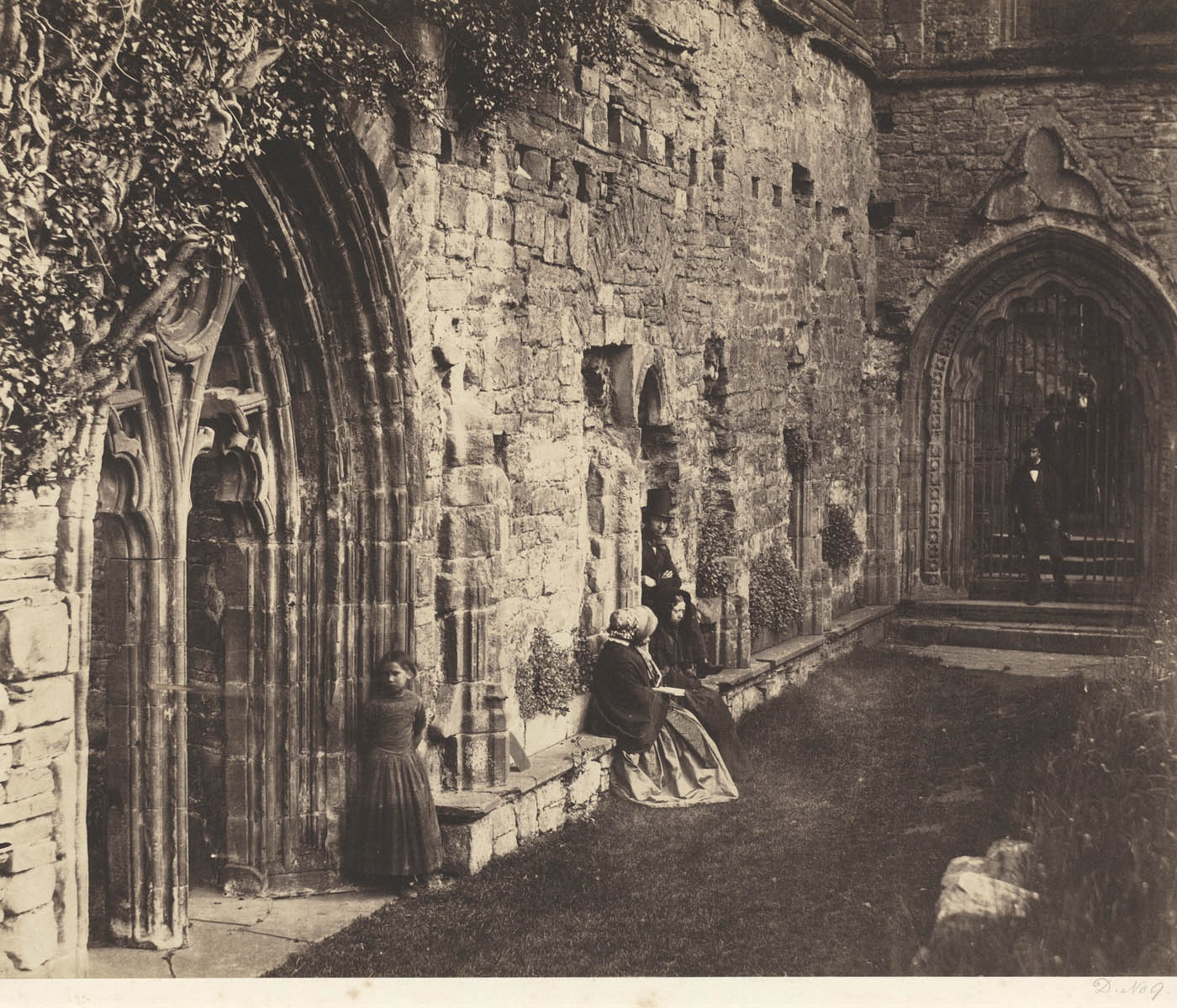
Roger Fenton (British, 1819-1869) 'The Cloisters, Tintern Abbey' 1854  from the exhibition 'In the Darkroom: Photographic Processes before the Digital Age' at the National Gallery of Art, Washington, D.C., October 2009 - March, 2010


Roger Fenton (British, 1819-1869)
The Cloisters, Tintern Abbey
1854
Salted paper print from a collodion negative
18.3 x 22.1cm (7 3/16 x 8 11/16 in.)
National Gallery of Art, Washington
Horace W. Goldsmith Foundation through Robert and Joyce Menschel
Public domain


Although Roger Fenton’s photographic career lasted for only 11 years, he exerted a profound influence on the medium. Trained as a lawyer, he began to paint in the early 1840s, studying in Paris with Michel-Martin Drölling and later in London with Charles Lucy. But in 1851 he took up photography and produced a distinguished and varied body of work. He was a pivotal figure in the formation of the Photographic Society (later known as the Royal Photographic Society), garnering support from Queen Victoria and Prince Albert. He is best known for his 1855 photographs made during the Crimean War, among the first to document war. But he also made ambitious studies of English cathedrals, country houses, and landscapes as well as portraits of the royal family, a series of still lifes, and studies of figures in Asian costume.

When Fenton first began to make photographs, he generally posed figures in a fairly stiff, even anecdotal manner. But in 1854 he began to use figures to create a sense of tension at once intriguing and compelling. The Cloisters, Tintern Abbey shows this more dynamic approach. Fenton placed people in three groups, not interacting with one another but engaging in silent and solitary dialogue with their decaying surroundings. Tintern Abbey had, of course, inspired many artists and poets to reflect on both “the life of things” – as William Wordsworth wrote in his 1798 poem, “Lines Composed a Few Miles above Tintern Abbey” – and on the transitory nature of life itself.

Text from the National Gallery of Art website


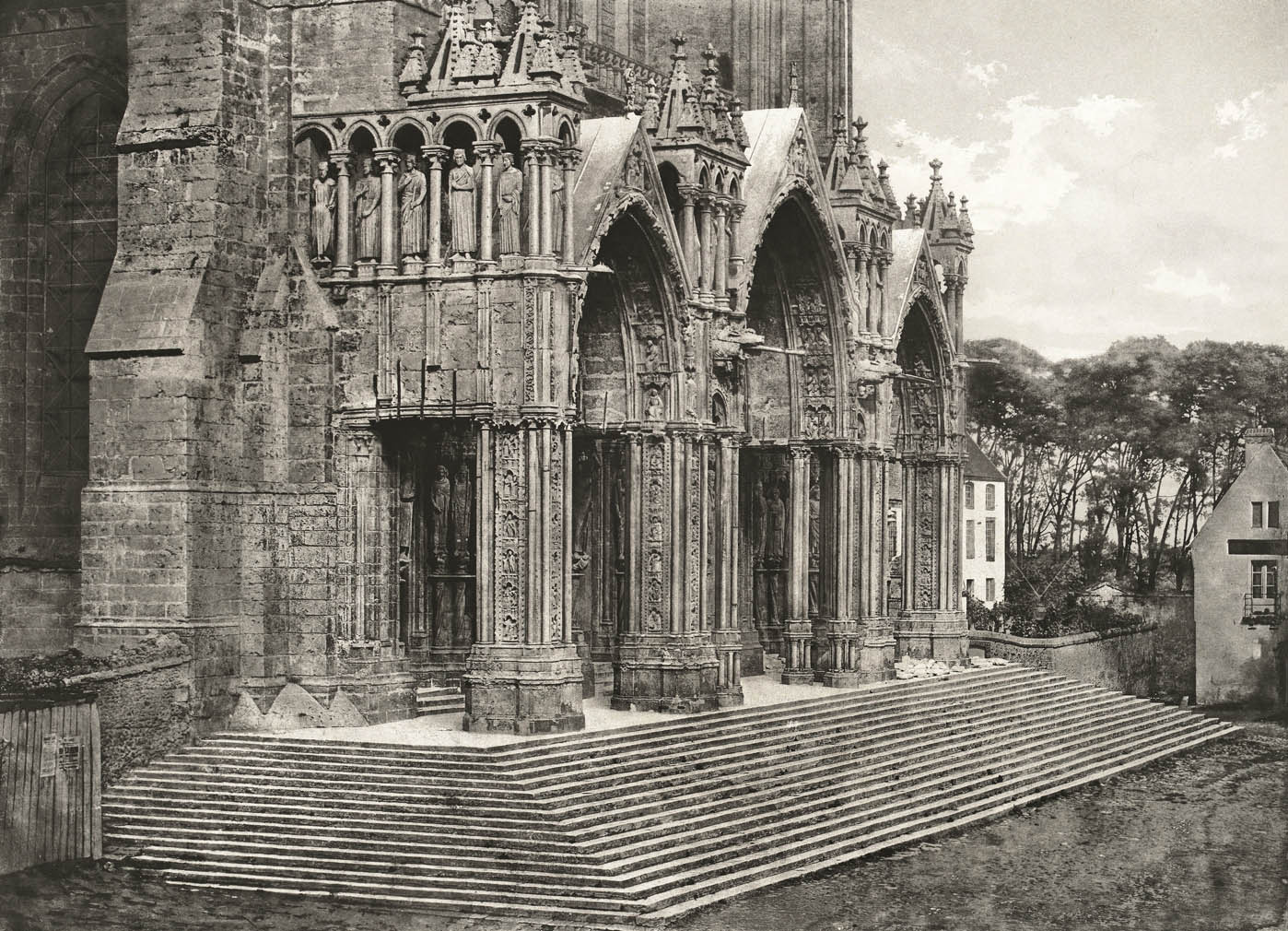
Charles Nègre (French, 1820-1880)
'Cathédrale de Chartres - Portique du Midi XIIe Siècle (Chartres Cathedral, South Portal, 12th Century)' c. 1854, printed c. 1857


Charles Nègre (French, 1820-1880)
Cathédrale de Chartres – Portique du Midi XIIe Siècle (Chartres Cathedral, South Portal, 12th Century)
c. 1854, printed c. 1857
photogravure
National Gallery of Art, Washington
William and Sarah Walton Fund


Roger Fenton (British, 1819-1869)
'Fruit and Flowers' 1860


Roger Fenton (British, 1819-1869)
Fruit and Flowers
1860
Albumen print from a collodion negative
National Gallery of Art, Washington
Paul Mellon Fund
public domain


In the summer of 1860 Fenton made his most deliberate and exacting photographs to date: a series of still lifes. Although the subject obviously had its roots in painting, his densely packed compositions are far removed from the renditions of everyday life by the Dutch masters. Instead, Fenton extravagantly piled luscious fruits and intricately patterned flowers on top of one another and pushed them to the front of his composition so that they seem almost ready to tumble out of the photograph into the viewer’s space. It is that very immediacy – the precarious composition, the lush sensuousness of the objects, and our knowledge of their imminent decay – that makes these photographs so striking.

Text from the National Gallery of Art website


Gustave Le Gray (French, 1820-1884) 'Cavalry Maneuvers behind barrier, Camp de Châlons' 1857


Gustave Le Gray (French, 1820-1884)
Cavalry Maneuvers behind barrier, Camp de Châlons
1857
Albumen silver print from glass negative
National Gallery of Art, Washington


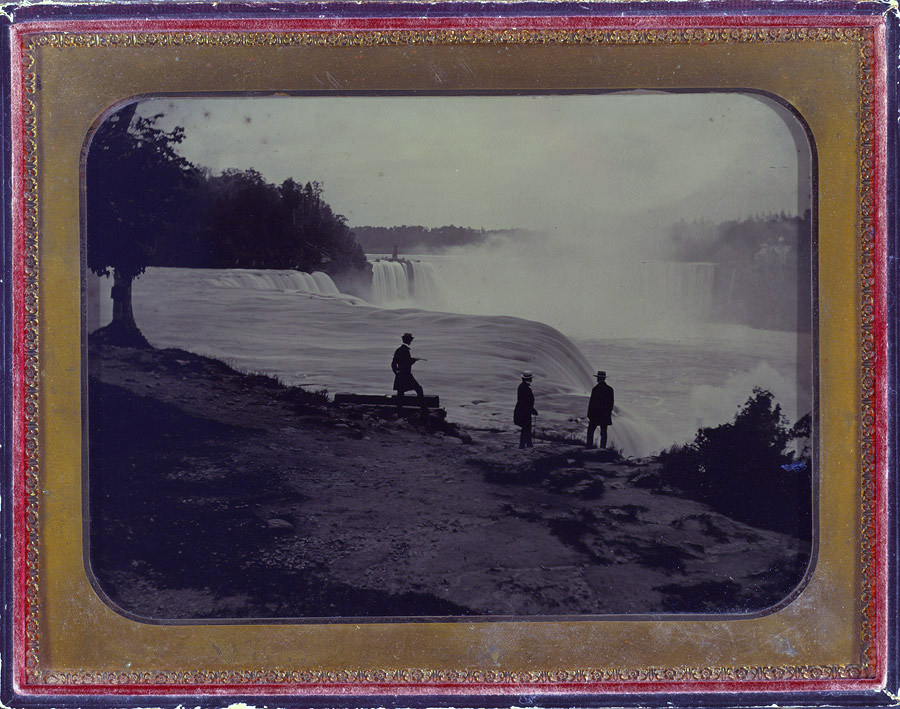
Platt D. Babbitt (American, 1822-1879) 'Niagara Falls' c. 1860


Platt D. Babbitt (American, 1822-1879)
Niagara Falls
c. 1860
Ambrotype
National Gallery of Art, Washington
Vital Projects Fund


Alfred Stieglitz (American, 1864-1946) 'The Terminal' 1893


Alfred Stieglitz (American, 1864-1946)
The Terminal
1893, printed 1920s/1930s
Gelatin silver print
National Gallery of Art, Washington
Alfred Stieglitz Collection


Aaron Siskind (American, 1903-1991) 'Martha's Vineyard 108' 1954


Aaron Siskind (American, 1903-1991)
Martha’s Vineyard 108
1954
Gelatin silver print
National Gallery of Art, Washington
Diana and Mallory Walker Fund


Dave Heath (Canadian, born United States, 1931-2016) 'Hastings-on-Hudson, New York' 1963


Dave Heath (Canadian, born United States, 1931-2016)
Hastings-on-Hudson, New York
1963
Gelatin silver print
National Gallery of Art, Washington
Gift of Howard Greenberg


William Eggleston (American, b. 1939) 'Untitled (Car in Parking Lot)' 1973


William Eggleston (American, b. 1939)
Untitled (Car in Parking Lot)
1973
Dye imbibition print
National Gallery of Art, Washington
Anonymous Gift


Harry Callahan (American, 1912-1999) 'Providence' 1977


Harry Callahan (American, 1912-1999)
Providence
1977
Dye transfer print


Robert Adams (American, b. 1937) 'Summer Nights #2 (Longmont, Colorado)' 1979


Robert Adams (American, b. 1937)
Summer Nights #2 (Longmont, Colorado)
1979
Gelatin silver print
National Gallery of Art, Washington
Gift of Mary and David Robinson


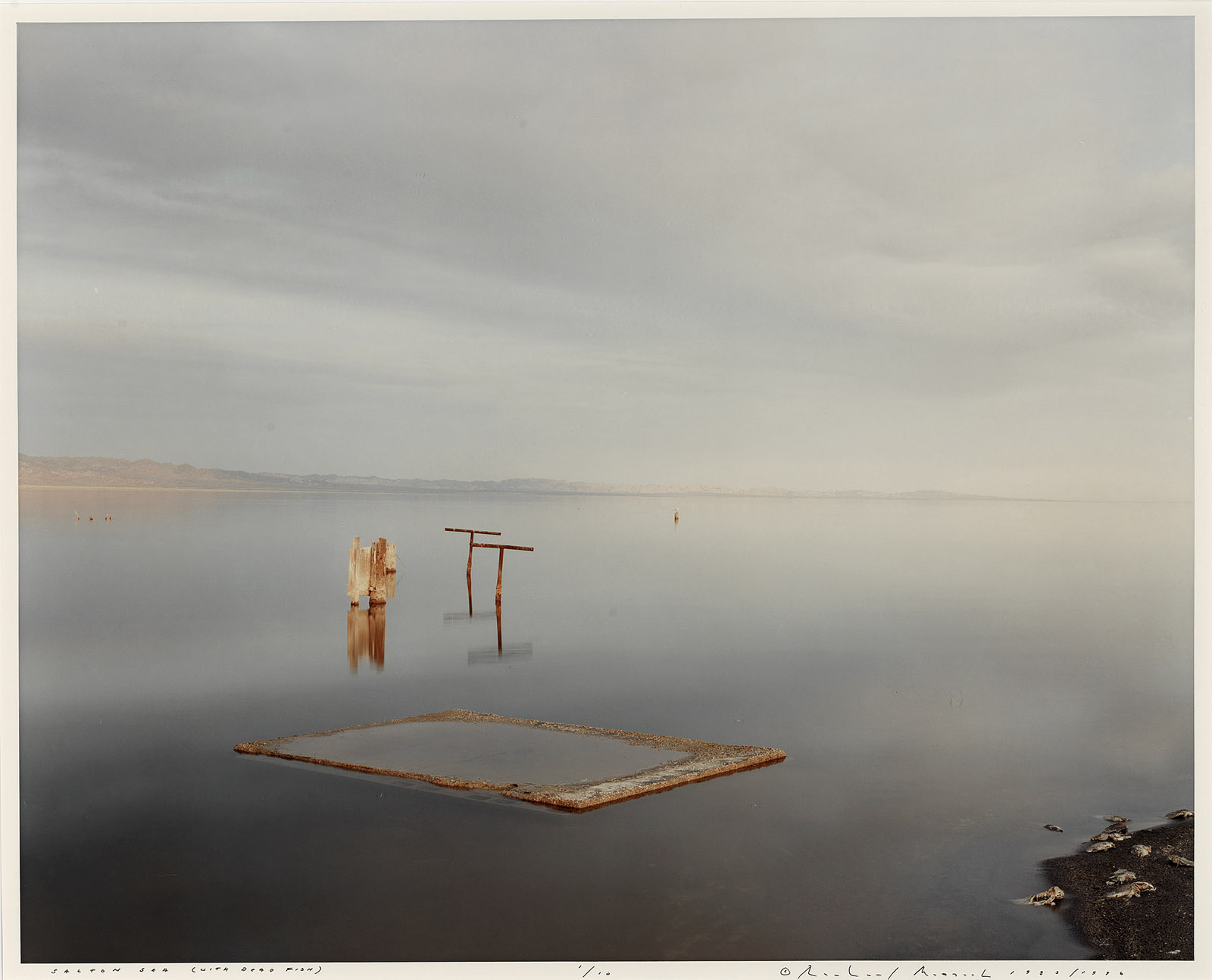
Richard Misrach (American, b. 1949)
'Dead Fish, Salton Sea, California' 1983, printed 1997


Richard Misrach (American, b. 1949)
Dead Fish, Salton Sea, California
1983, printed 1997
Chromogenic colour print
National Gallery of Art, Washington
Anonymous Gift


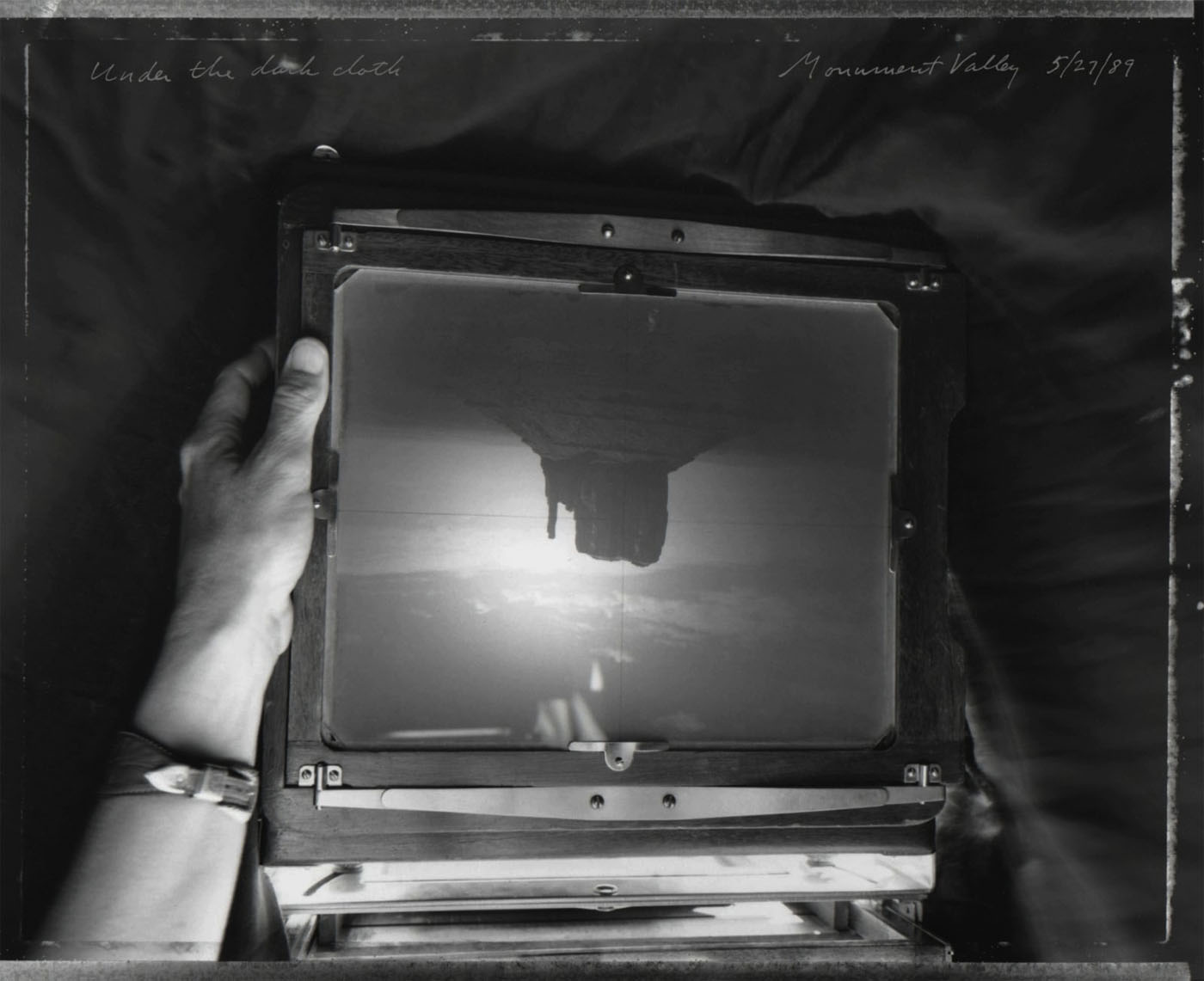
Mark Klett (American, b. 1952) 'Under the Dark Cloth, Monument Valley, May 27' 1989


Mark Klett (American, b. 1952)
Under the Dark Cloth, Monument Valley, May 27
1989
Gelatin silver print from Polaroid instant film negative
National Gallery of Art, Washington
Gift of the Collectors Committee


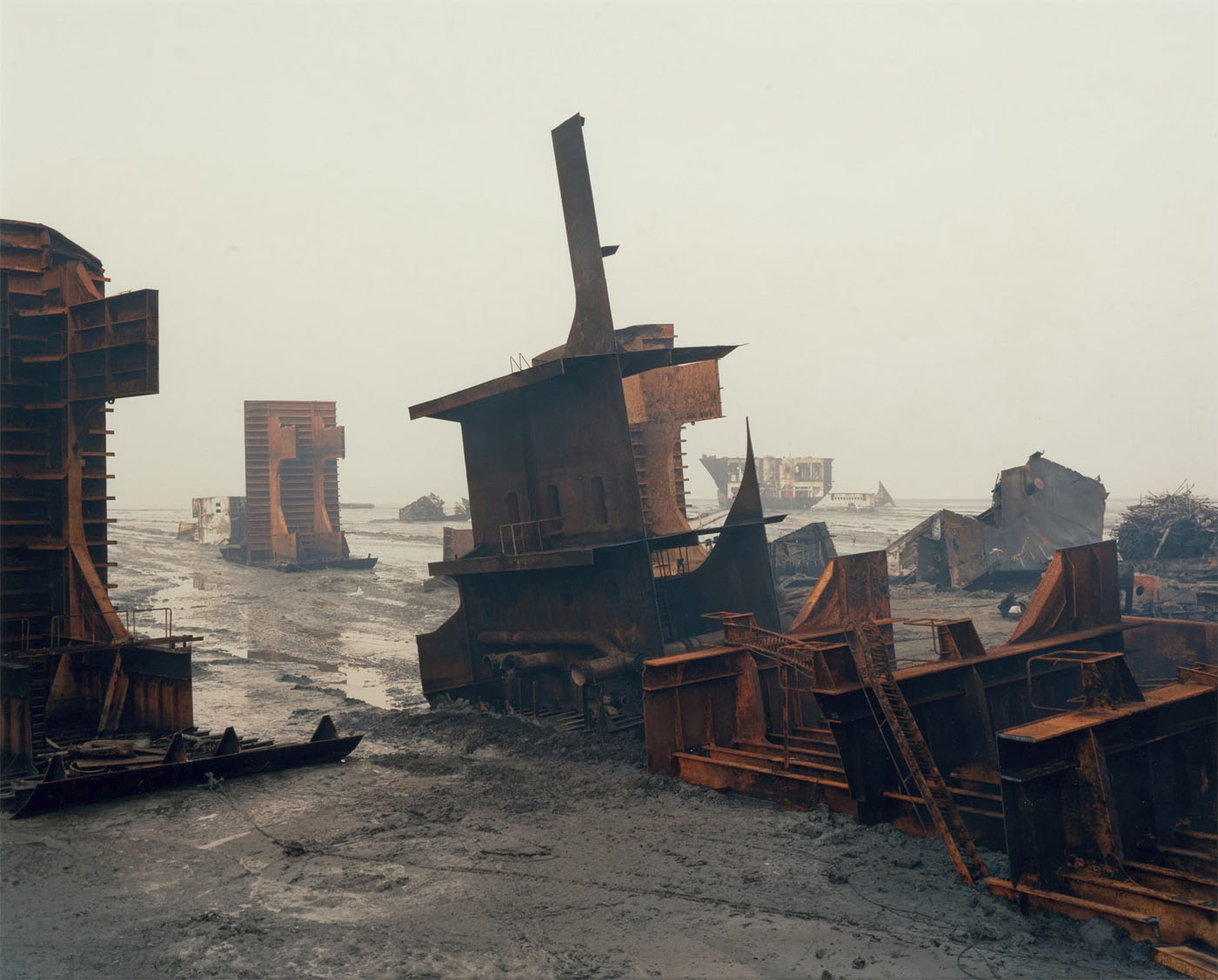
Edward Burtynsky (Canadian, b. 1955) 'Shipbreaking #10, Chittagong, Bangladesh' 2000, printed 2001


Edward Burtynsky (Canadian, b. 1955)
Shipbreaking #10, Chittagong, Bangladesh
2000, printed 2001
Chromogenic colour print
National Gallery of Art, Washington
Fund for Living Photographers


The National Gallery of Art, Washington, DC

The National Gallery of Art, located on the National Mall between 3rd and 7th Streets at Constitution Avenue NW.

Opening hours:
Daily 10.00am – 5.00pm

National Gallery of Art website

LIKE ART BLART ON FACEBOOK

Back to top