Exhibition: ‘Hill & Adamson: The Clarkson Stanfield Album’ at the Harry Ransom Center, Austin, Texas

Exhibition dates: 9th March – 2nd June, 2024
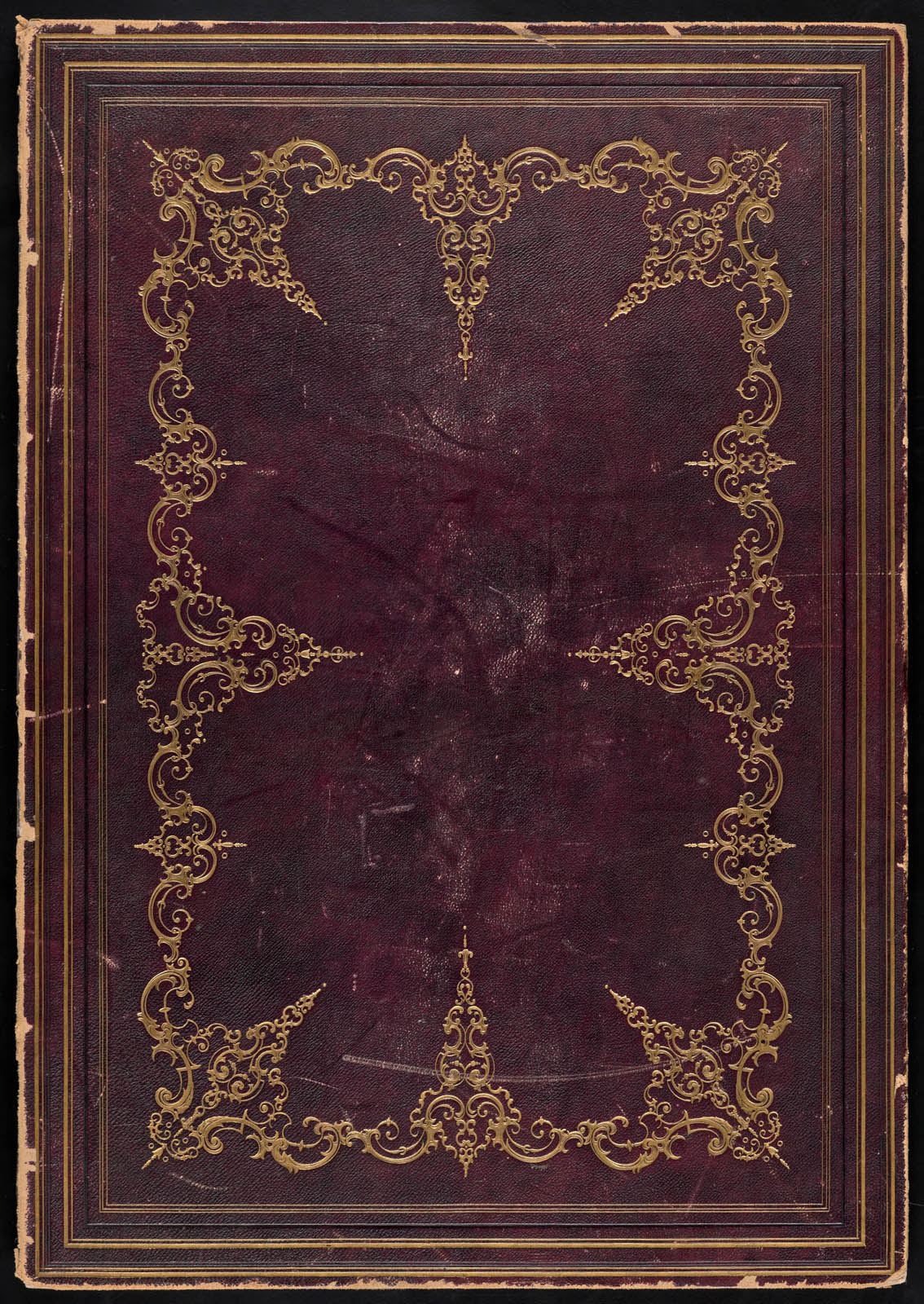
 

Hill & Adamson (Scottish, active 1843-1847) Robert Adamson (Scottish, 1821-1848) David Octavius Hill (Scottish, 1802-1870) '100 Calotypes by D. O. Hill, R.S.A., and R. Adamson album front cover' 1845


Hill & Adamson (Scottish, active 1843-1847)
Robert Adamson (Scottish, 1821-1848)
David Octavius Hill (Scottish, 1802-1870)
100 Calotypes by D. O. Hill, R.S.A., and R. Adamson album front cover
1845
60.9 x 43.1cm
Hill & Adamson Photography Collection
Gernsheim Collection
Harry Ransom Center, The University of Texas at Austin
Public domain


Album of 109 salted paper prints from calotype negatives by Hill & Adamson (Scottish, active 1843-1847). Assembled and sold to marine painter Clarkson Stanfield (English, 1793-1867) in 1845. Six prints tipped in over other prints; these are likely the prints sent by Hill to Stanfield in January 1846.


The Clarkson Stanfield Album: an album of 109 salted paper prints from calotype negatives compiled by Hill & Adamson (Scottish, active 1843-1847), the photographs created by the painter (Hill) and photographer (Adamson) during a four year partnership that only ended with the untimely death of Robert Adamson at the age of 26 years. What a truly beautiful album full of the most meditative portrait photographs that you could ever lay your eyes on.

Reminiscent of the characteristics of Mannerism in the Renaissance, the figures and hands dance in convoluted poses of asymmetrical elegance. Witness the sway of body and sinuousness of hands in James Drummond, Artist, Edinburgh (1843-1845, below) with the oppositional direction of the hands, one pointing up and the other down. Or the directional composition of My Sister (1843-1845, below) where the sitter looks left in profile, the hand clutching a book (probably the bible) points in the other direction, whilst the other hand touches the earth. The use of chiaroscuro is magnificent. Other masterpieces of the photographic art are replete with the sensitivity of both artists: the double profile portrait of Jas & Thomas Duncan; A Study (1843-1844, below), both staring intently out of the pictorial frame, one brother clutching the other’s shoulder and arm along with his spectacles. Wonderfully intense and atmospheric.

“As artistic director, Hill composed each picture, placing his sitters as they might appear in the finished painting. Adamson operated the camera and carried out the chemical manipulations. Hill and Adamson were a perfect team. Hill, twenty years older than Adamson, was trained as a painter and had important connections in artistic and social circles in Edinburgh; he easily attracted a distinguished clientele to the team’s portrait studio at Adamson’s home, Rock House… Both men had a profound understanding of the way the world would translate into monochrome pictures.”1

Hill & Adamson also had a profound understanding of how the spirit of a person could be captured by the camera. The Newhaven portraits of fishermen and fishwives – “part of a social-documentary project, the first in photography, that the team carried out in Newhaven and other small but vital fishing towns near Edinburgh”2 – are still to this day some of the most engaging of the early portrait photographs in the history of photography. They capture the character of these people who after all this time still speak to us of their tough life and work through romantic photographs such as the barefooted boy “King Fisher” with his willow basket on a low table or Jeanie Wilson, Newhaven (1843-1845, below) dressed in traditional striped apron and woollen petticoat.

“Hill and Adamson presented Newhaven as a model community bound by tradition, honest labor, and mutual support – qualities emphasised by the careful posing of figures and by the graphic strength and gritty effect of the medium itself.”2

But as Fraser Linklater observes in his article, “‘They put a creel aroond my back and bid me call my haddies’: The Newhaven Fishwives, Preserving Lost Community History and Cultural Transmission Through Generations,” these were staged photographs: “the fact that the Newhaven fisherwomen were wearing ‘gala-dress’ in these pictures reveals it was not an accurate portrayal of them going about their daily work, but instead a picture of a romanticised and imagined community based on some form of semi-truth… Understanding these small details greatly assists us in, once again, grounding their experiences in reality, avoiding polishing their stories to an image that dissuades further thinking and investigation.”

“Nowadays, the village sits subsumed within it’s larger neighbours, Edinburgh and Leith, both in physicality but also, in the last half century culturally…”3

So all we have left of this culture, much like the romanticised photographs of the “Vanishing Race” of the North American Indian by Edward S. Curtis, or the gritty, realist photographs of Skinningrove by Cris Killip eighty or so years later, are these remembrances of times past.

During their brief but prolific partnership Hill & Adamson captured the spirit of these people living in an Industrial Age, photographs that don’t necessarily represent reality but are a performative view of their life and existence at that time (they were performing for the camera, dressed up in their best, posed for effect). But this romanticisation of the people in Hill & Amadson’s Newhaven portraits doesn’t make them any less valuable as representations of that time and place, for that is now all we have.

Indeed, their photographs “show us today some things that we may no longer have access to and give us a window into eyes of real human beings”4 as they go about their daily lives, however staged the photographs might be. Even as evolution would ultimately destroy that way of life forever, so the spirit of past times echoes down to us through these photographs, ripples in a pond caused by a pebble dropped into water.

Dr Marcus Bunyan


1/ Daniel, Malcolm. “David Octavius Hill (1802-1870) and Robert Adamson (1821-1848).” In Heilbrunn Timeline of Art History. New York: The Metropolitan Museum of Art, 2000–. http://www.metmuseum.org/toah/hd/hlad/hd_hlad.htm (October 2004)

2/ Anonymous. “Newhaven Fishwives,” on The Metropolitan Museum of Art website Nd [Online] Cited 31/05/2024

3/ Fraser Linklater. “‘They put a creel aroond my back and bid me call my haddies’: The Newhaven Fishwives, Preserving Lost Community History and Cultural Transmission Through Generations,” on the Scotland Sounds wdebste, 3 September 2020 [Online] Cited 31/05/2024

4/ Shannon Keller O’Loughlin (Choctaw) of the Association on American Indian Affairs (AAIA) in an email to the author, 1 June 2018


Many thankx to the Harry Ransom Center for allowing me to publish the photographs in the posting. Please click on the photographs for a larger version of the image. The photographs in the posting are in the order they appear in the album. You can view all 109 photographs on the Harry Ransom Center website.

PLEASE NOTE: the photographs in the posting are not necessarily the photographs in the exhibition. I have selected my favourite photographs from the online resources of the complete album which are free to download and are in the public domain.


Hill & Adamson (Scottish, active 1843-1847) Robert Adamson (Scottish, 1821-1848) David Octavius Hill (Scottish, 1802-1870) '100 Calotypes by D. O. Hill, R.S.A., and R. Adamson album endpaper' 1845


Hill & Adamson (Scottish, active 1843-1847)
Robert Adamson (Scottish, 1821-1848)
David Octavius Hill (Scottish, 1802-1870)
100 Calotypes by D. O. Hill, R.S.A., and R. Adamson album endpaper
1845
60.9 x 43.1cm
Hill & Adamson Photography Collection
Gernsheim Collection
Harry Ransom Center, The University of Texas at Austin
Public domain
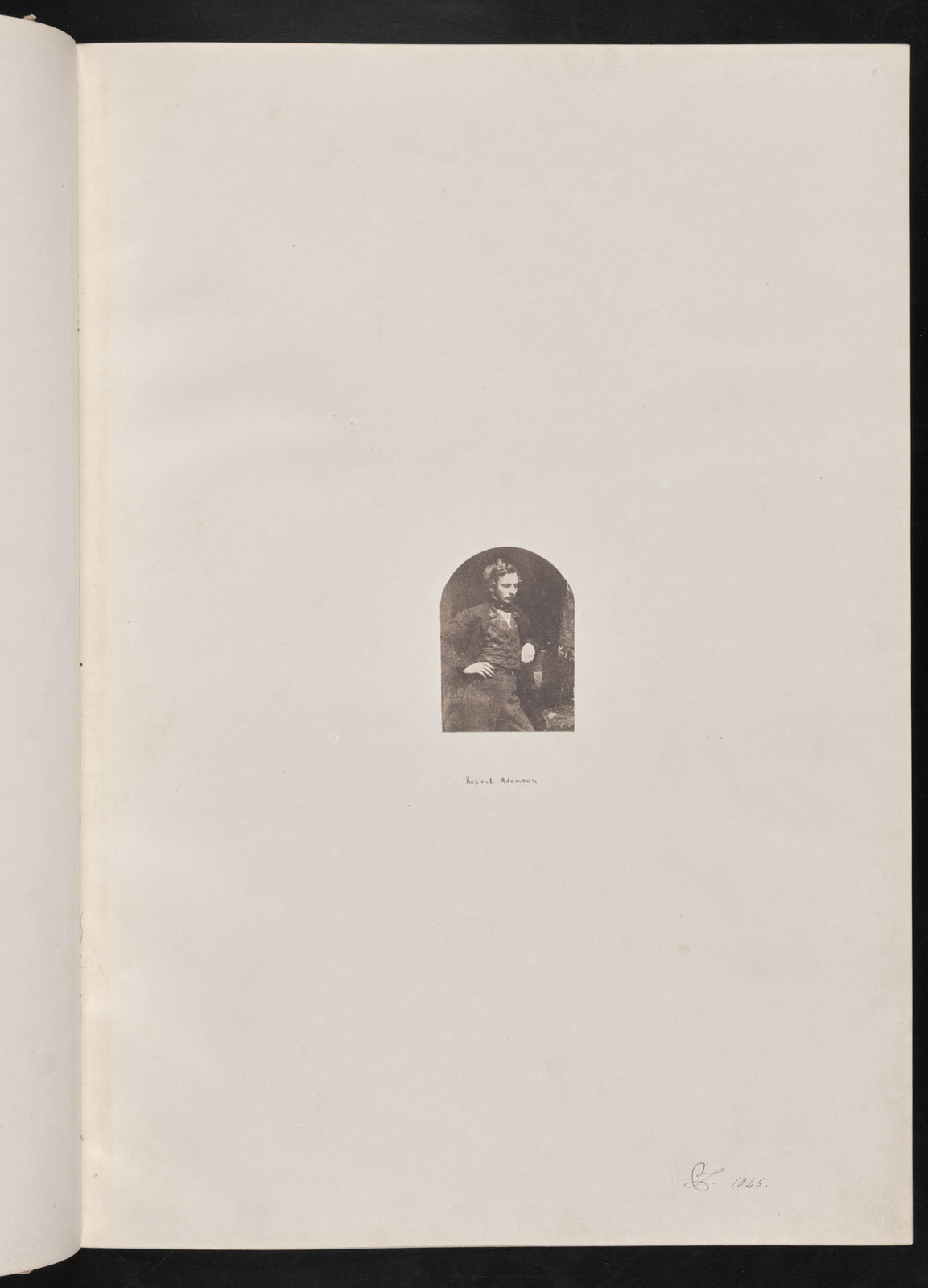
 

Hill & Adamson (Scottish, active 1843-1847) Robert Adamson (Scottish, 1821-1848) David Octavius Hill (Scottish, 1802-1870) 'Robert Adamson' 1843-1844


Hill & Adamson (Scottish, active 1843-1847)
Robert Adamson (Scottish, 1821-1848)
David Octavius Hill (Scottish, 1802-1870)
Robert Adamson
1843-1844
Salted paper print
9 x 6.4cm (arched top)
Hill & Adamson Photography Collection
Gernsheim Collection
Harry Ransom Center, The University of Texas at Austin
Public domain


Robert Adamson (1821-1848), photography pioneer. Page inscribed with Clarkson Stanfield’s initials and date
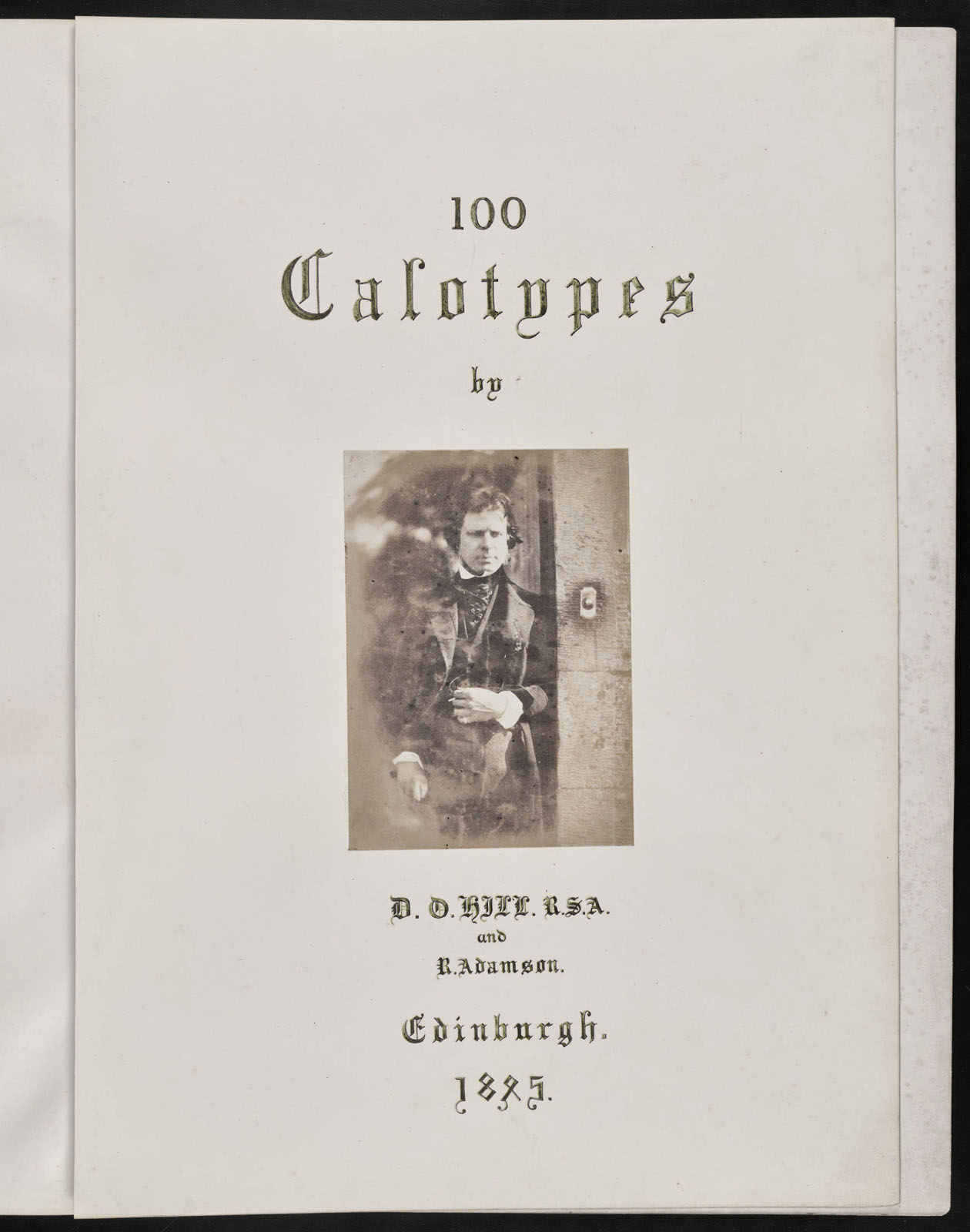
 

Hill & Adamson (Scottish, active 1843-1847) Robert Adamson (Scottish, 1821-1848) David Octavius Hill (Scottish, 1802-1870) 'D. O. Hill, R.S.A.' 1843


Hill & Adamson (Scottish, active 1843-1847)
Robert Adamson (Scottish, 1821-1848)
David Octavius Hill (Scottish, 1802-1870)
D. O. Hill, R.S.A.
1843
Salted paper print
19.8 x 14.1cm
Hill & Adamson Photography Collection
Gernsheim Collection
Harry Ransom Center, The University of Texas at Austin
Public domain


David Octavius Hill (1802-1870), artist and photography pioneer. Mounted on title page with lettering by Hill
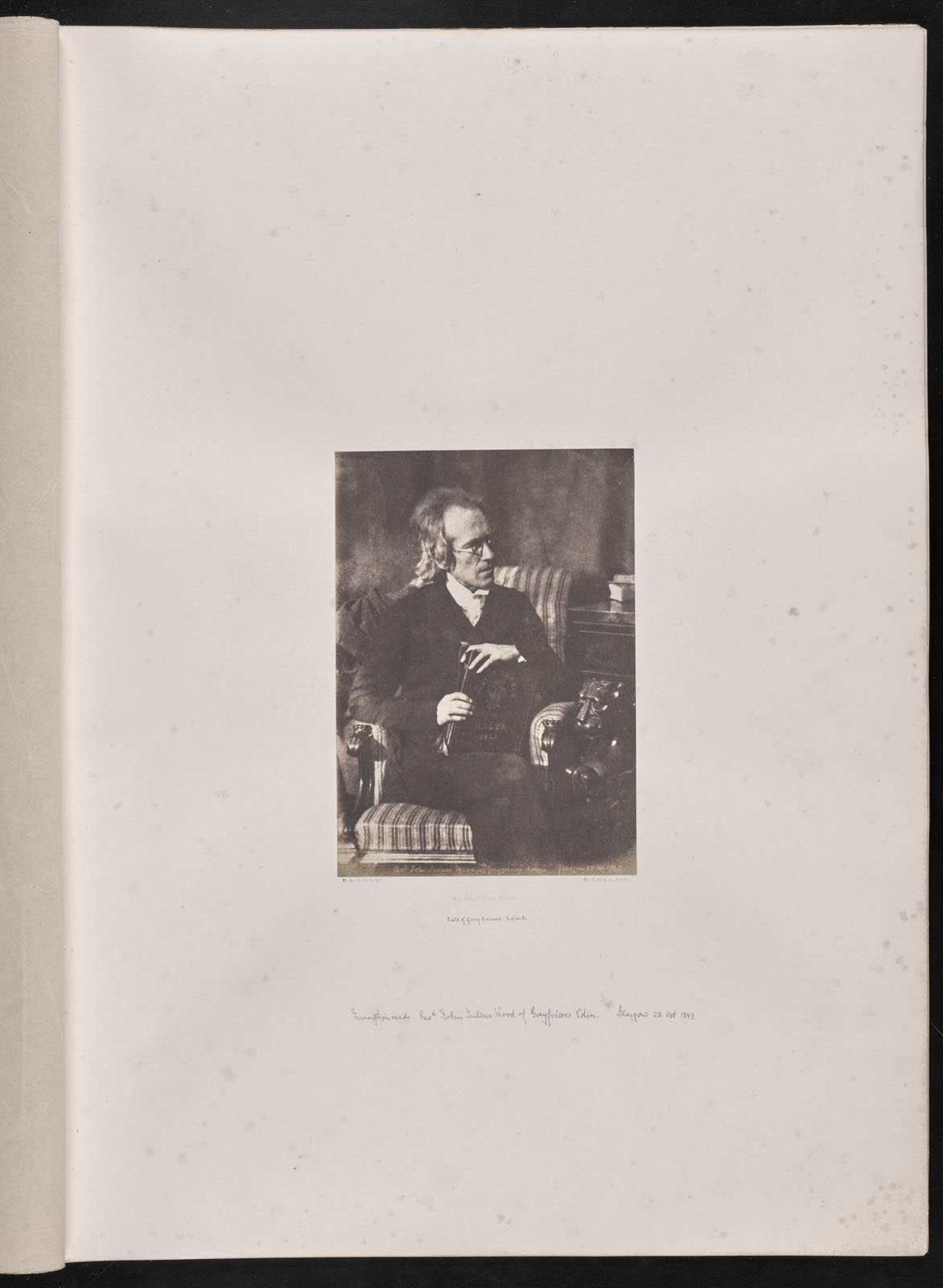
 

Hill & Adamson (Scottish, active 1843-1847) Robert Adamson (Scottish, 1821-1848) David Octavius Hill (Scottish, 1802-1870) 'Rev Jas Julius Wood, Late of Greyfriars, Edinb.' 1843


Hill & Adamson (Scottish, active 1843-1847)
Robert Adamson (Scottish, 1821-1848)
David Octavius Hill (Scottish, 1802-1870)
Rev Jas Julius Wood, Late of Greyfriars, Edinb.
1843
Salted paper print
20 x 14.4cm
Hill & Adamson Photography Collection
Gernsheim Collection
Harry Ransom Center, The University of Texas at Austin
Public domain


Rev. Dr James Julius Wood (1800-1877), Free Church minister. Secondary inscription by Helmut Gernsheim
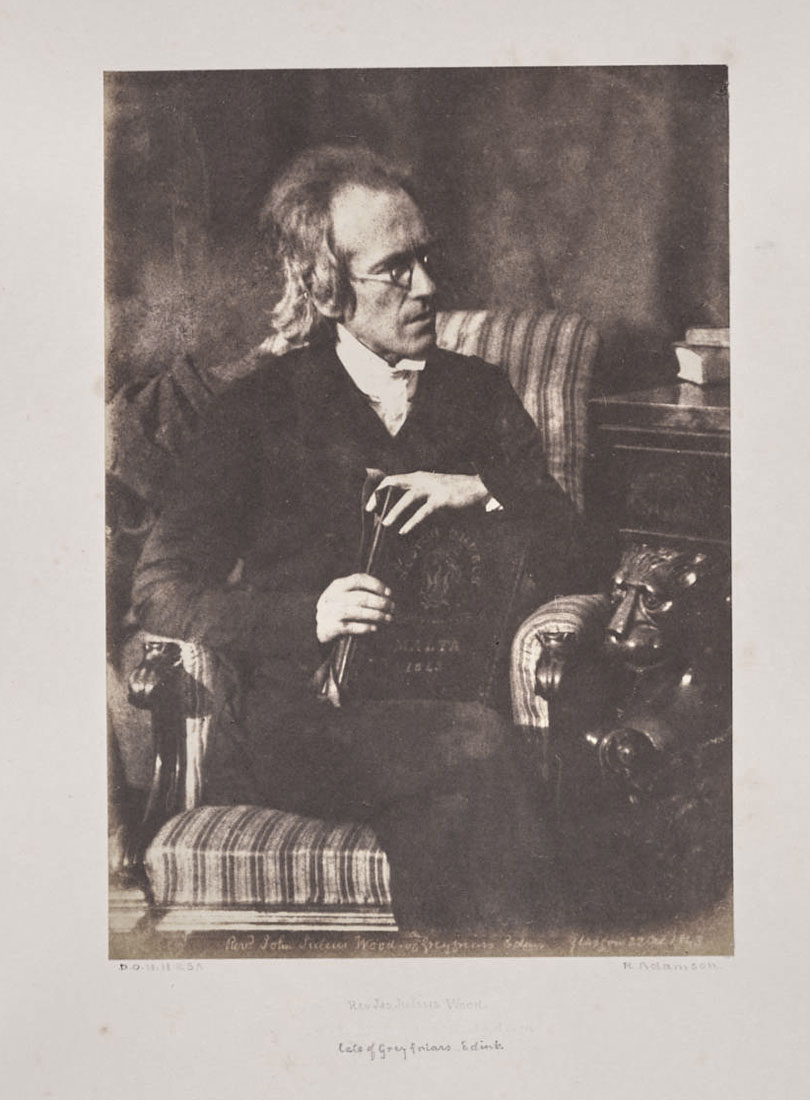
 

Hill & Adamson (Scottish, active 1843-1847) Robert Adamson (Scottish, 1821-1848) David Octavius Hill (Scottish, 1802-1870) 'Rev Jas Julius Wood, Late of Greyfriars, Edinb.' 1843 (detail)


Hill & Adamson (Scottish, active 1843-1847)
Robert Adamson (Scottish, 1821-1848)
David Octavius Hill (Scottish, 1802-1870)
Rev Jas Julius Wood, Late of Greyfriars, Edinb. (detail)
1843
Salted paper print
20 x 14.4cm
Hill & Adamson Photography Collection
Gernsheim Collection
Harry Ransom Center, The University of Texas at Austin
Public domain
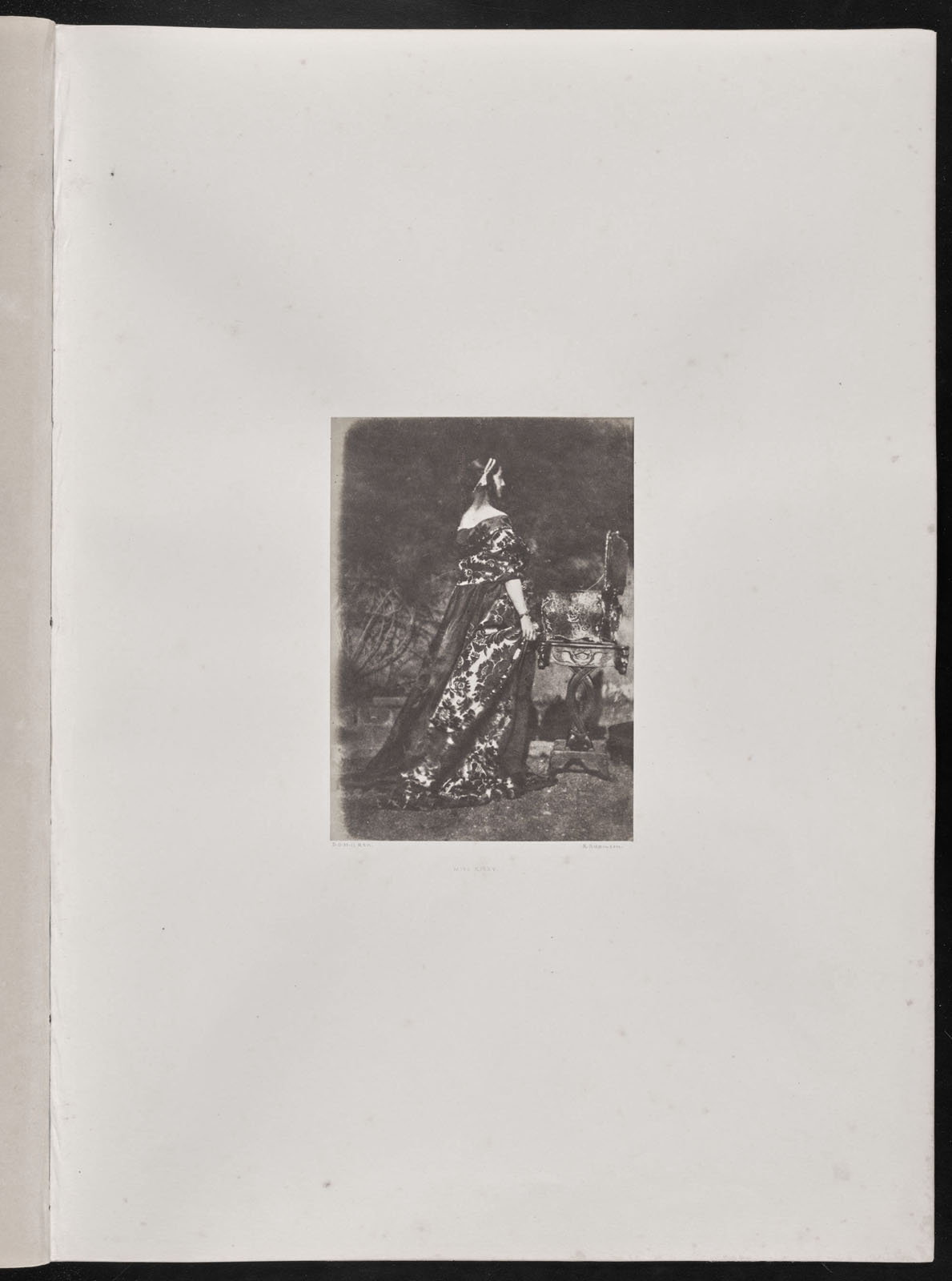
 

Hill & Adamson (Scottish, active 1843-1847) Robert Adamson (Scottish, 1821-1848) David Octavius Hill (Scottish, 1802-1870) 'Miss Rigby' 1843-1845


Hill & Adamson (Scottish, active 1843-1847)
Robert Adamson (Scottish, 1821-1848)
David Octavius Hill (Scottish, 1802-1870)
Miss Rigby
1843-1845
20.3 x 14.4cm
Hill & Adamson Photography Collection
Gernsheim Collection
Harry Ransom Center, The University of Texas at Austin
Public domain


Jane Rigby (1806-1896), sister of Elizabeth, Lady Eastlake (née Rigby)


Don’t miss this unprecedented exhibition of the Clarkson Stanfield Album, a superb volume of early photographs by the celebrated Scottish partnership of Hill & Adamson. Launching their collaboration in Edinburgh in 1843, the established painter David Octavius Hill (1802-1870) and the young photographer Robert Adamson (1821-1848) combined their aesthetic sensitivity and technical brilliance to produce an unparalleled body of portraits, architectural and landscapes scenes, and pioneering social documents. Their work endures today as one of the earliest sustained explorations of photography as an artform.

In the fall of 1845 Hill & Adamson prepared an album of their finest work, arranging over 100 salted paper prints from their calotype negatives into a folio bound in rich purple leather with intricate gold tooling, and sold it to the prominent English marine painter Clarkson Frederick Stanfield (1793-1867). Now known as the Clarkson Stanfield Album, it is one of only a few such unique albums assembled in the years before Adamson’s death at age 26.

More than 175 years later the album is undergoing structural repair, providing the first opportunity since 1845 to view several sections at once before conservators return them to the original binding. The exhibition includes 39 salted paper prints from the Clarkson Stanfield Album, as well as examples of Adamson’s earliest photographic trials and two of Hill’s painted landscapes. The exhibition is drawn entirely from the Gernsheim Collection, acquired by the Ransom Center in 1963.

Text from the Harry Ransom Center website
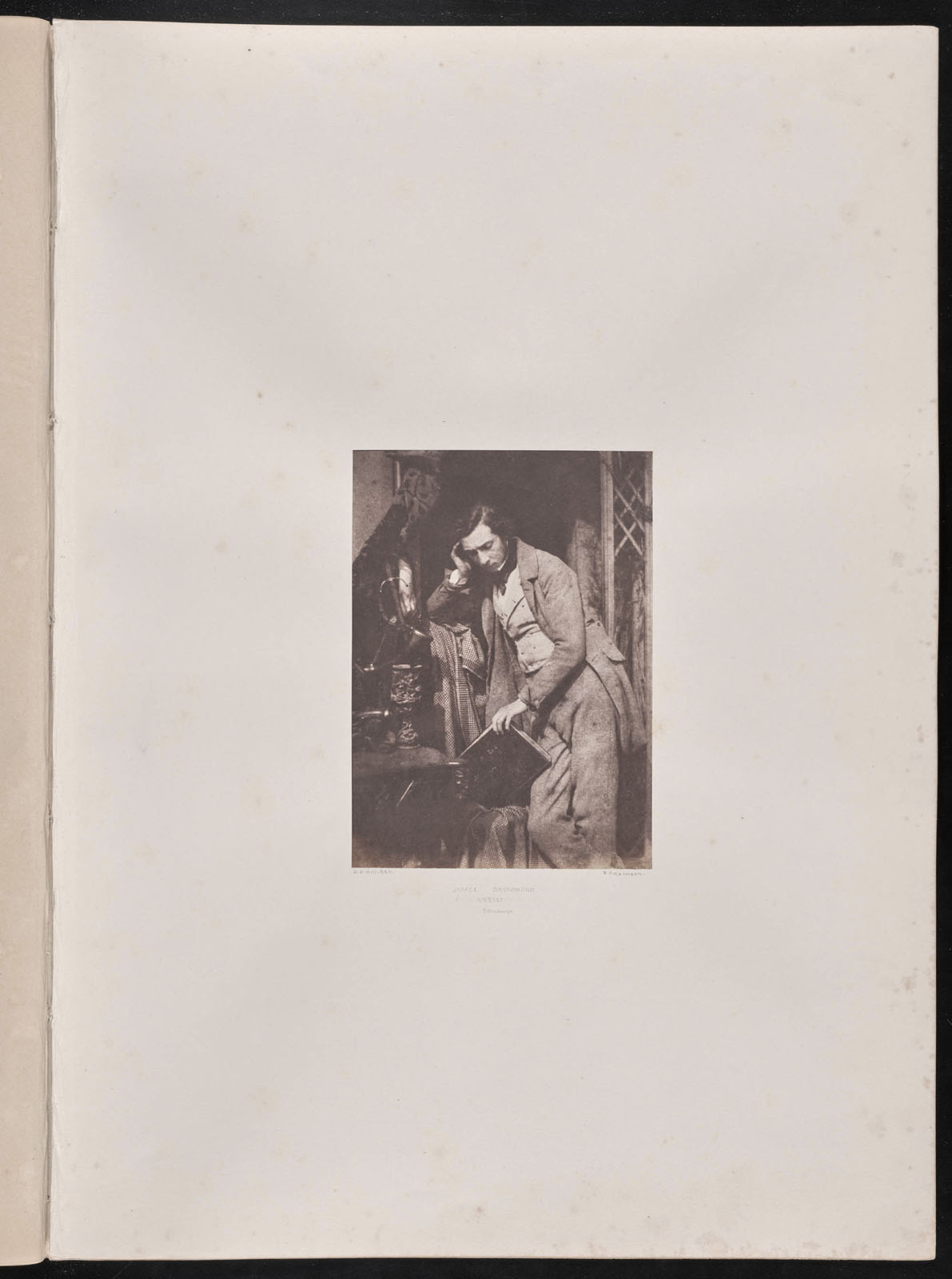
 

Hill & Adamson (Scottish, active 1843-1847) Robert Adamson (Scottish, 1821-1848) David Octavius Hill (Scottish, 1802-1870) 'James Drummond, Artist, Edinburgh' 1843-1845


Hill & Adamson (Scottish, active 1843-1847)
Robert Adamson (Scottish, 1821-1848)
David Octavius Hill (Scottish, 1802-1870)
James Drummond, Artist, Edinburgh
1843-1845
Salted paper print
20 x 14.4cm
Hill & Adamson Photography Collection
Gernsheim Collection
Harry Ransom Center, The University of Texas at Austin
Public domain


James Drummond (1816-1877), history painter, Curator of the National Gallery of Scotland
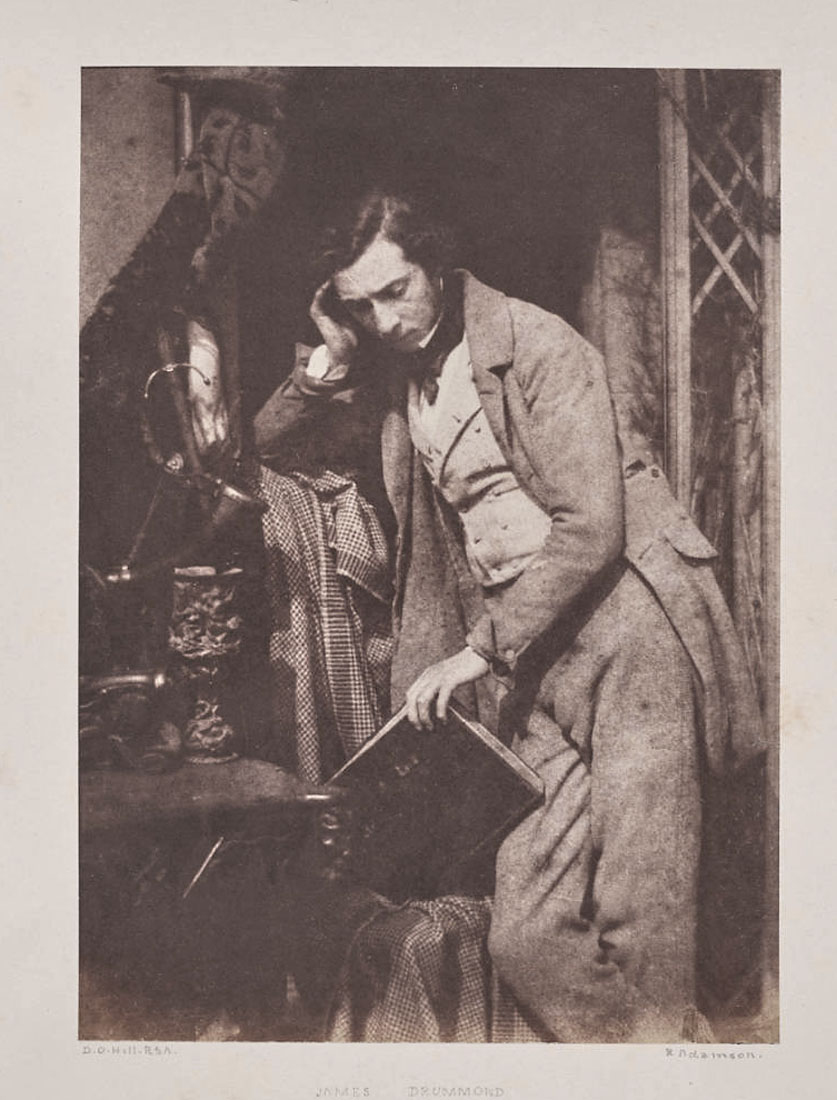
 

Hill & Adamson (Scottish, active 1843-1847) Robert Adamson (Scottish, 1821-1848) David Octavius Hill (Scottish, 1802-1870) 'James Drummond, Artist, Edinburgh' 1843-1845 (detail)


Hill & Adamson (Scottish, active 1843-1847)
Robert Adamson (Scottish, 1821-1848)
David Octavius Hill (Scottish, 1802-1870)
James Drummond, Artist, Edinburgh (detail)
1843-1845
Salted paper print
20 x 14.4cm
Hill & Adamson Photography Collection
Gernsheim Collection
Harry Ransom Center, The University of Texas at Austin
Public domain
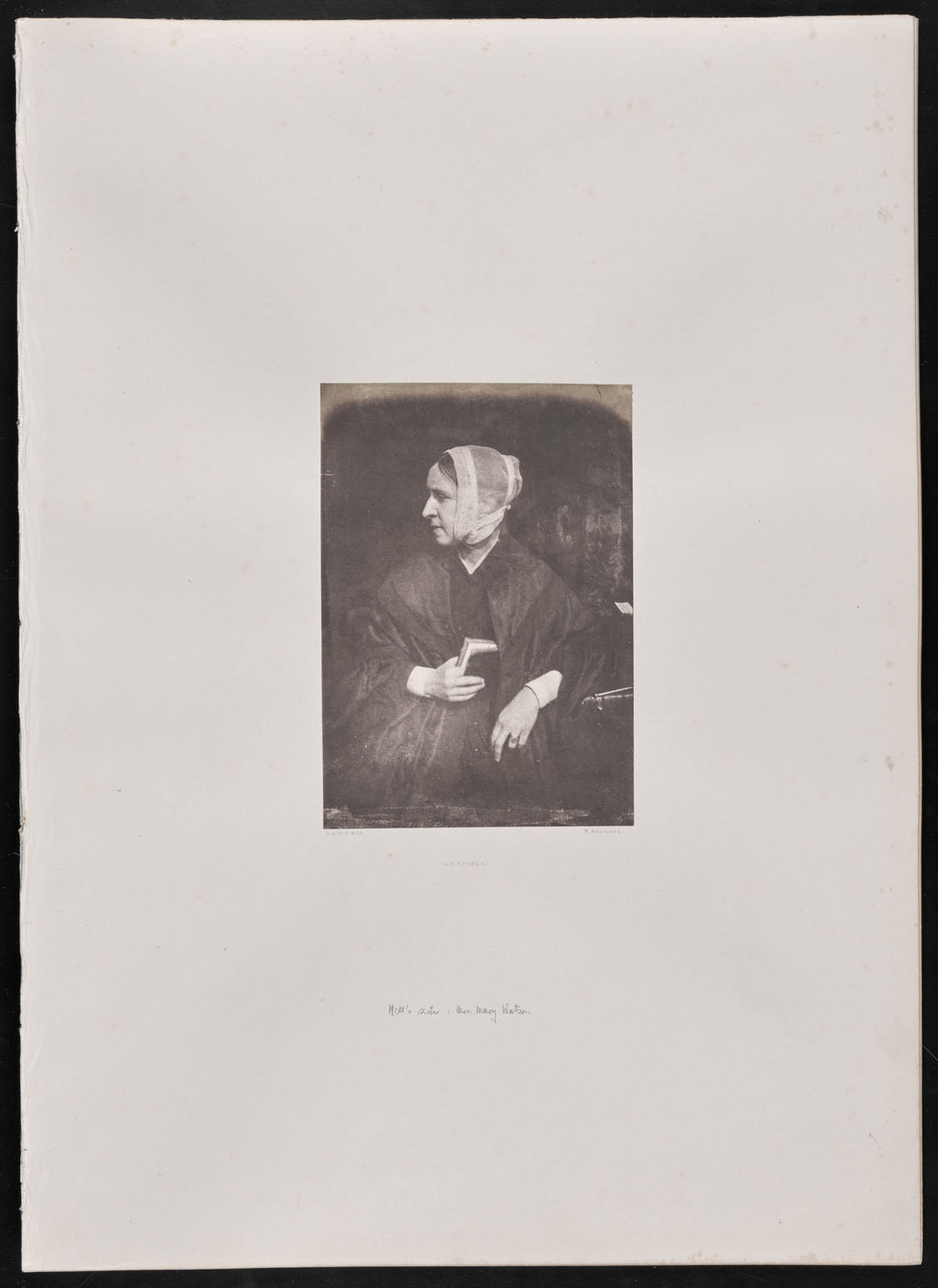
 

Hill & Adamson (Scottish, active 1843-1847) Robert Adamson (Scottish, 1821-1848) David Octavius Hill (Scottish, 1802-1870) 'My Sister' 1843-1845


Hill & Adamson (Scottish, active 1843-1847)
Robert Adamson (Scottish, 1821-1848)
David Octavius Hill (Scottish, 1802-1870)
My Sister
1843-1845
21.1 x 14.8cm
Hill & Adamson Photography Collection
Gernsheim Collection
Harry Ransom Center, The University of Texas at Austin
Public domain


Mary Watson (née Hill), sister of David Octavius Hill. Secondary inscription by Helmut Gernsheim


Hill & Adamson (Scottish, active 1843-1847) Robert Adamson (Scottish, 1821-1848) David Octavius Hill (Scottish, 1802-1870) 'My Sister' 1843-1845 (detail)


Hill & Adamson (Scottish, active 1843-1847)
Robert Adamson (Scottish, 1821-1848)
David Octavius Hill (Scottish, 1802-1870)
My Sister (detail)
1843-1845
21.1 x 14.8cm
Hill & Adamson Photography Collection
Gernsheim Collection
Harry Ransom Center, The University of Texas at Austin
Public domain
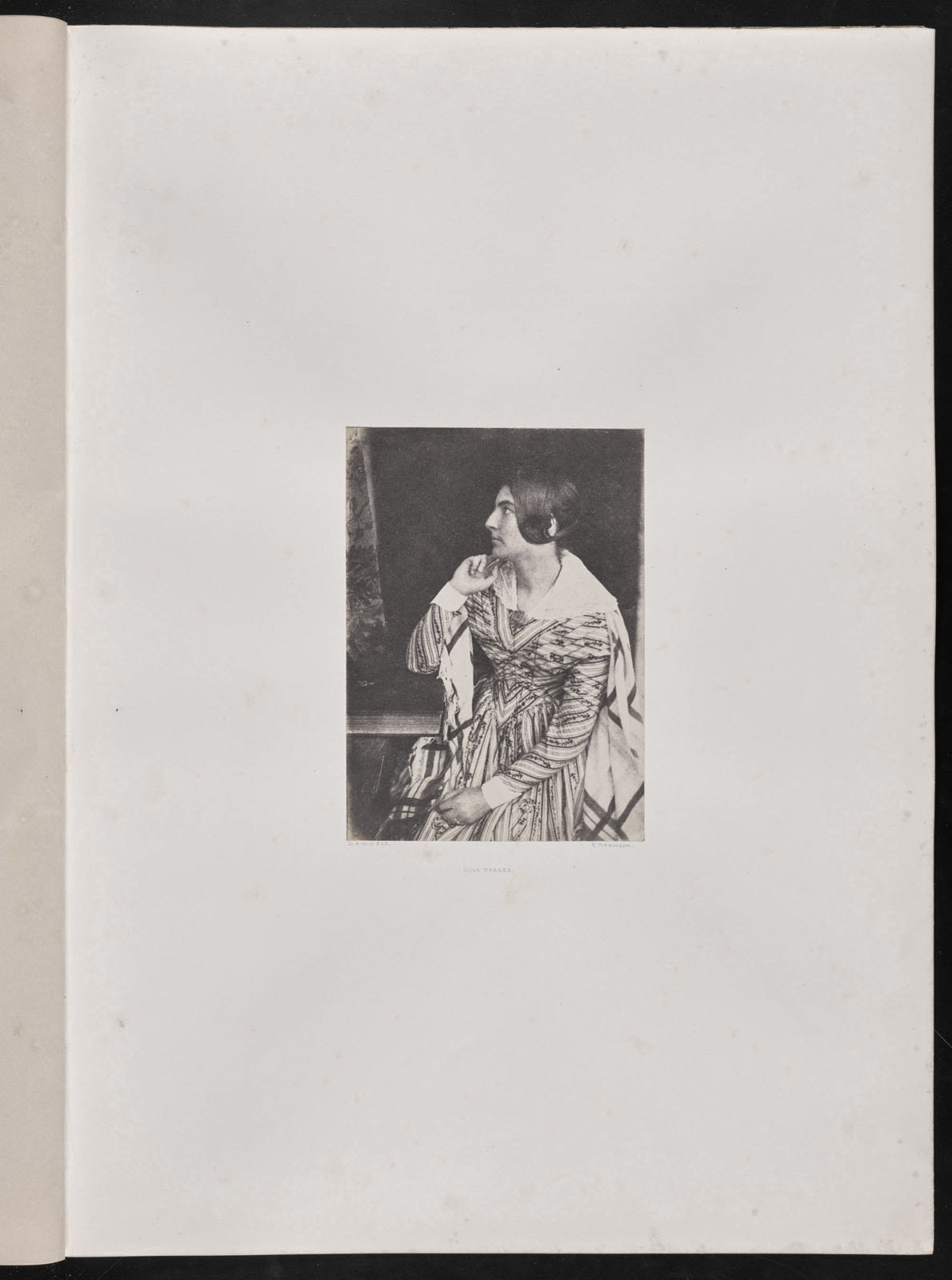
 

Hill & Adamson (Scottish, active 1843-1847) Robert Adamson (Scottish, 1821-1848) David Octavius Hill (Scottish, 1802-1870) 'Miss Parker' 1844-1845


Hill & Adamson (Scottish, active 1843-1847)
Robert Adamson (Scottish, 1821-1848)
David Octavius Hill (Scottish, 1802-1870)
Miss Parker
1844-1845
20 x 14.4cm
Hill & Adamson Photography Collection
Gernsheim Collection
Harry Ransom Center, The University of Texas at Austin
Public domain


Possibly Jane Sophia Barker (née Harden) (1807-1876)
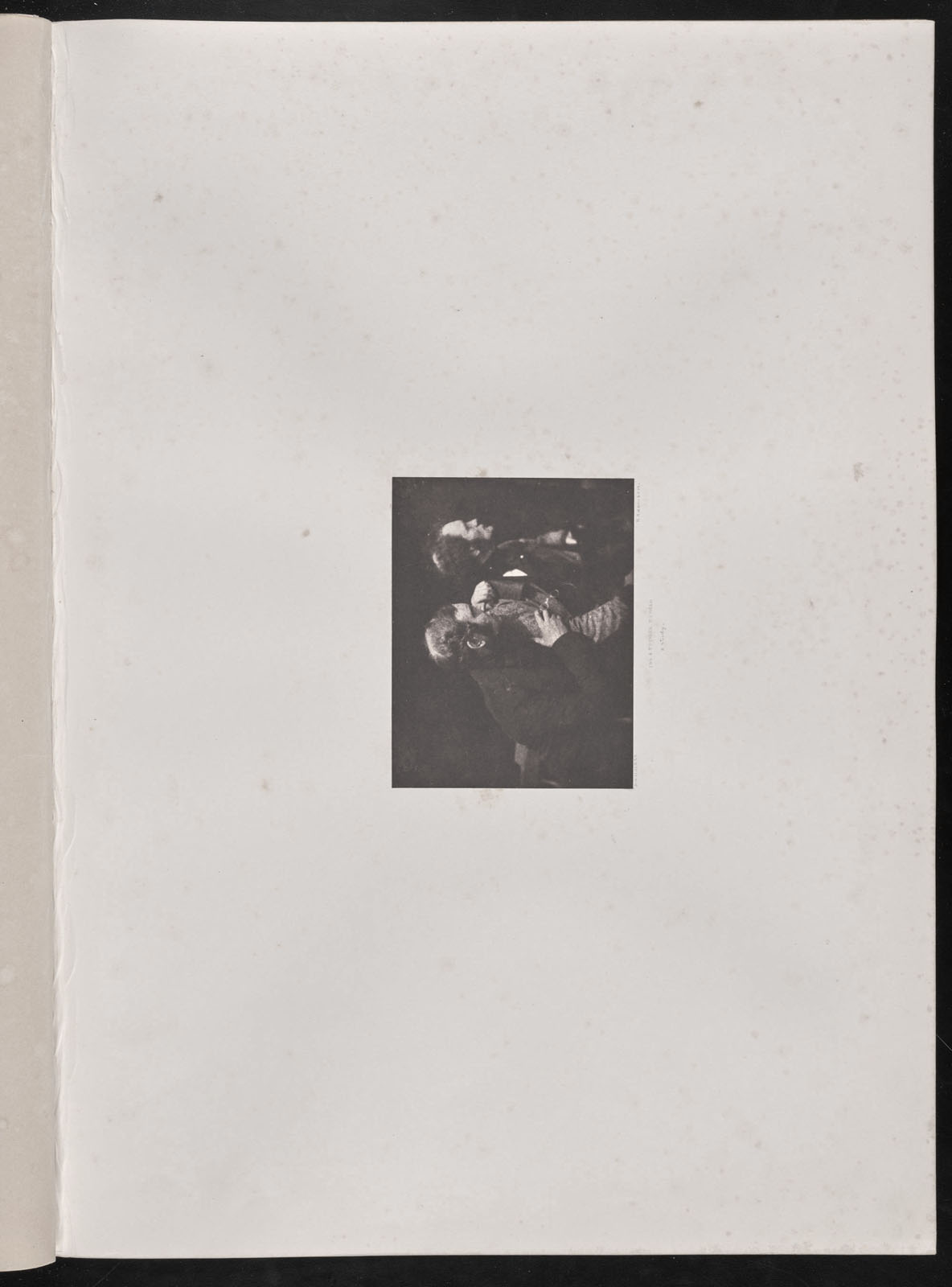
 

Hill & Adamson (Scottish, active 1843-1847) Robert Adamson (Scottish, 1821-1848) David Octavius Hill (Scottish, 1802-1870) 'Jas & Thomas Duncan; A Study' 1843-1844


Hill & Adamson (Scottish, active 1843-1847)
Robert Adamson (Scottish, 1821-1848)
David Octavius Hill (Scottish, 1802-1870)
Jas & Thomas Duncan; A Study
1843-1844
11.5 x 14.9cm
Hill & Adamson Photography Collection
Gernsheim Collection
Harry Ransom Center, The University of Texas at Austin
Public domain


James Duncan; Thomas Duncan (1807-1845), artist


Hill & Adamson (Scottish, active 1843-1847) Robert Adamson (Scottish, 1821-1848) David Octavius Hill (Scottish, 1802-1870) 'Jas & Thomas Duncan; A Study' 1843-1844 (detail)


Hill & Adamson (Scottish, active 1843-1847)
Robert Adamson (Scottish, 1821-1848)
David Octavius Hill (Scottish, 1802-1870)
Jas & Thomas Duncan; A Study (detail)
1843-1844
11.5 x 14.9cm
Hill & Adamson Photography Collection
Gernsheim Collection
Harry Ransom Center, The University of Texas at Austin
Public domain


“100 Calotypes by D. O. Hill, R.S.A., and R. Adamson,” commonly known as the Clarkson Stanfield Album, is a unique album assembled and sold to English marine painter Clarkson Stanfield (1793-1867) before October 1, 1845. The folio, bound in purple leather with gold tooling, contains a total of 109 salted paper prints from calotype negatives made between 1843 and 1845. As originally assembled, the album begins with portraits of Adamson and Hill, followed by 100 plates and a final photograph, perhaps serving as a visual epilogue or postscript. The major themes of Hill & Adamson’s work are represented: the 100 principal plates comprise, in this order, 44 portraits, including two presbytery groups; 10 scenes in Greyfriars churchyard; 2 scenes at Leith; 31 photographs of fisherfolk, mainly at Newhaven; 1 photograph at St. Andrews; and 11 views of monuments and architecture in and around Edinburgh. Titles of most plates are inscribed in Hill’s hand. Six additional salted paper prints were added later; these are likely the prints sent by Hill to Stanfield in January 1846, added to the album by Stanfield. Of these six prints, five are Newhaven photographs and one is a portrait. This is one of Hill & Adamson’s earliest albums, and one of only a few assembled in Adamson’s lifetime. It provides a view into their partnership at its midpoint, and into which images they understood to be some of their strongest thus far. As an object, the album offers a sense of what the partners may have envisioned for other deluxe volumes they announced but never realised. The album is part of the Gernsheim Collection, purchased in 1963.

While the title suggests there are 100 images contained in the album, there are actually 109 salted paper prints, most of which are accompanied by inscriptions provided by either Hill or Adamson. The images are of prominent men and women of the day, friends and acquaintances of Hill and Adamson, and scenes of Edinburgh, Newhaven and St. Andrews, and Scottish architecture and art. The nine additional images can explained in several ways. First, six images cover/originally covered other images. It appears that Hill and Adamson did not like their original choice of several images and later mounted different images over the originals. In most cases, the covered image is very similar to another image in the album (compare 964:0048:0044, a covered image, with 964:0048:0045). Second, the first two images in the book appear on the half-title and title page, and therefore may not have been counted as part of the “100” referred to on the title page. And, a third explanation may be that the cover for the album was printed before Hill and Adamson’s selection of images to be included.

Text from the Harry Ransom Center website
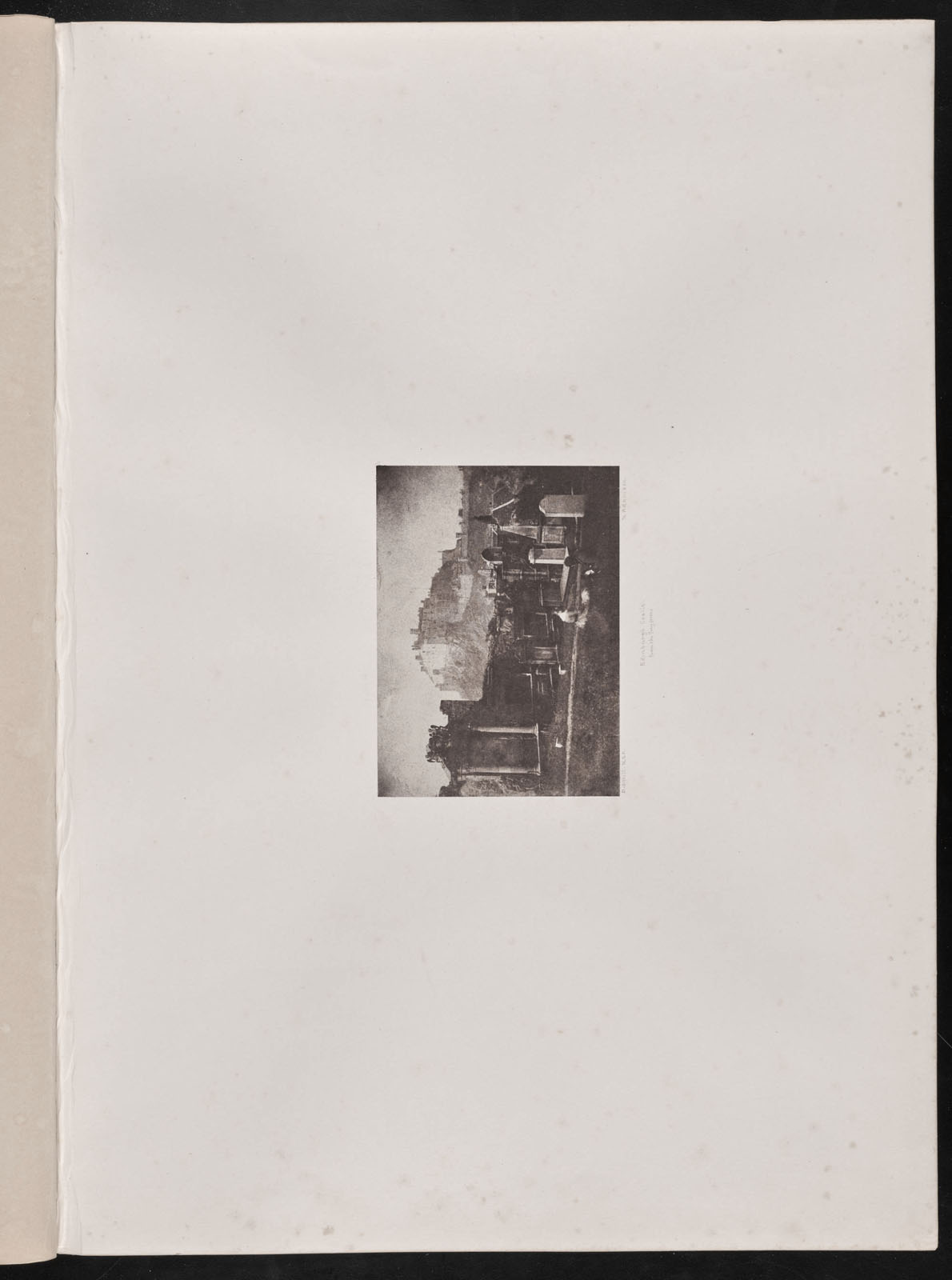
 

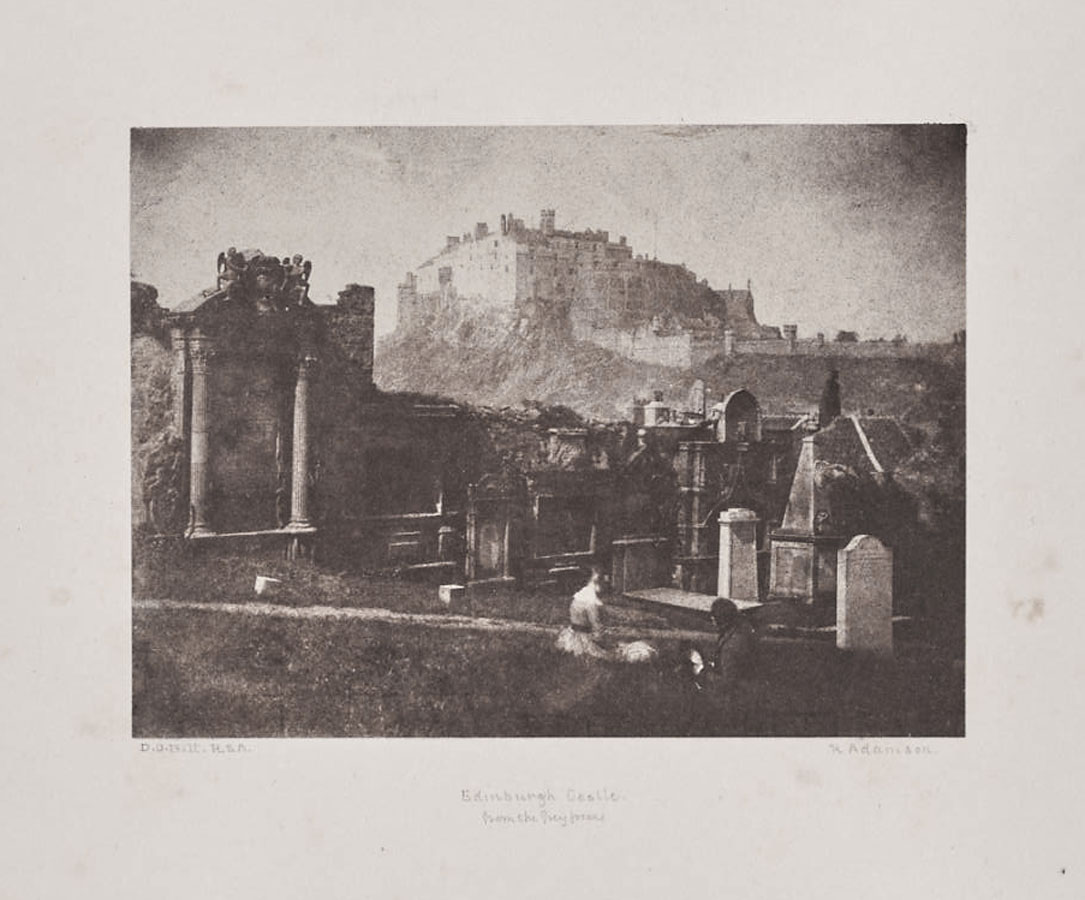
Hill & Adamson (Scottish, active 1843-1847) Robert Adamson (Scottish, 1821-1848) David Octavius Hill (Scottish, 1802-1870) 'Edinburgh Castle from the Greyfriars' 1843-1845


Hill & Adamson (Scottish, active 1843-1847)
Robert Adamson (Scottish, 1821-1848)
David Octavius Hill (Scottish, 1802-1870)
Edinburgh Castle from the Greyfriars
1843-1845
11.6 x 15.9cm
Hill & Adamson Photography Collection
Gernsheim Collection
Harry Ransom Center, The University of Texas at Austin
Public domain


Greyfriars Churchyard; a group of monuments including the Chalmers and Jackson Monuments, with Edinburgh Castle in the background
 

Hill & Adamson (Scottish, active 1843-1847) Robert Adamson (Scottish, 1821-1848) David Octavius Hill (Scottish, 1802-1870) 'Edinburgh Castle from the Greyfriars' 1843-1845 (detail)


Hill & Adamson (Scottish, active 1843-1847)
Robert Adamson (Scottish, 1821-1848)
David Octavius Hill (Scottish, 1802-1870)
Edinburgh Castle from the Greyfriars (detail)
1843-1845
11.6 x 15.9cm
Hill & Adamson Photography Collection
Gernsheim Collection
Harry Ransom Center, The University of Texas at Austin
Public domain


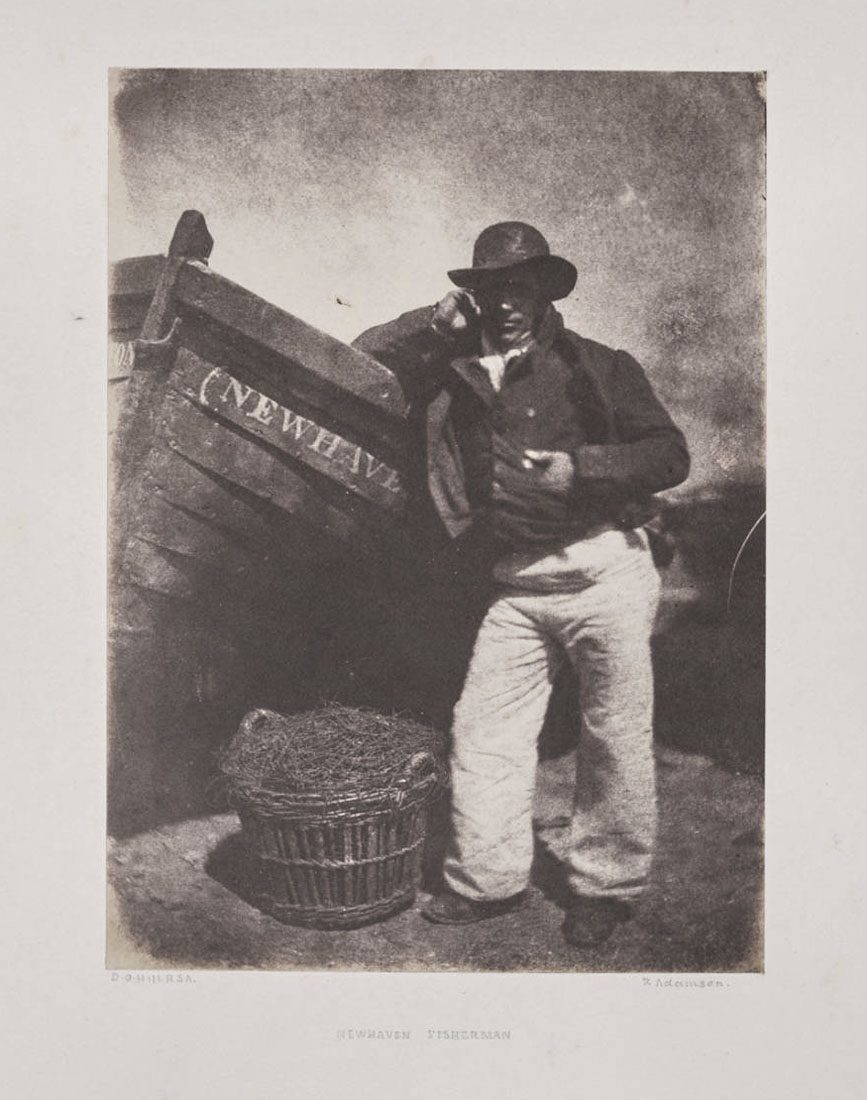
Hill & Adamson (Scottish, active 1843-1847) Robert Adamson (Scottish, 1821-1848) David Octavius Hill (Scottish, 1802-1870) 'Newhaven Fisherman' 1843-1845


Hill & Adamson (Scottish, active 1843-1847)
Robert Adamson (Scottish, 1821-1848)
David Octavius Hill (Scottish, 1802-1870)
Newhaven Fisherman
1843-1845
20.1 x 14.7cm
Hill & Adamson Photography Collection
Gernsheim Collection
Harry Ransom Center, The University of Texas at Austin
Public domain


James or “Sandy” Linton
 

Hill & Adamson (Scottish, active 1843-1847) Robert Adamson (Scottish, 1821-1848) David Octavius Hill (Scottish, 1802-1870) 'Newhaven Fisherman' 1843-1845 (detail)


Hill & Adamson (Scottish, active 1843-1847)
Robert Adamson (Scottish, 1821-1848)
David Octavius Hill (Scottish, 1802-1870)
Newhaven Fisherman (detail)
1843-1845
20.1 x 14.7cm
Hill & Adamson Photography Collection
Gernsheim Collection
Harry Ransom Center, The University of Texas at Austin
Public domain


Hill & Adamson (Scottish, active 1843-1847) Robert Adamson (Scottish, 1821-1848) David Octavius Hill (Scottish, 1802-1870) 'Jeanie Wilson & Annie Linton, Newhaven' 1843-1845


Hill & Adamson (Scottish, active 1843-1847)
Robert Adamson (Scottish, 1821-1848)
David Octavius Hill (Scottish, 1802-1870)
Jeanie Wilson & Annie Linton, Newhaven
1843-1845
19.2 x 14.7cm
Hill & Adamson Photography Collection
Gernsheim Collection
Harry Ransom Center, The University of Texas at Austin
Public domain


Hill & Adamson (Scottish, active 1843-1847) Robert Adamson (Scottish, 1821-1848) David Octavius Hill (Scottish, 1802-1870) 'Jeanie Wilson & Annie Linton, Newhaven' 1843-1845 (detail)


Hill & Adamson (Scottish, active 1843-1847)
Robert Adamson (Scottish, 1821-1848)
David Octavius Hill (Scottish, 1802-1870)
Jeanie Wilson & Annie Linton, Newhaven (detail)
1843-1845
19.2 x 14.7cm
Hill & Adamson Photography Collection
Gernsheim Collection
Harry Ransom Center, The University of Texas at Austin
Public domain


David Octavius Hill (1802–1870) and Robert Adamson (1821-1848)

Malcolm Daniel

In the mid-1840s, the Scottish painter-photographer team of Hill and Adamson produced the first substantial body of self-consciously artistic work using the newly invented medium of photography. William Henry Fox Talbot’s patent restrictions on his “calotype” or “Talbotype” process did not apply in Scotland, and, in fact, Talbot encouraged its use there. Among the fellow scientists with whom he corresponded and to whom he sent examples of the new art, was the physicist Sir David Brewster, principal of the United Colleges of Saint Salvator and Saint Leonard at Saint Andrews University, just north of Edinburgh. By 1841, Brewster and his colleague John Adamson, curator of the College Museum and professor of chemistry, were experimenting with the calotype process, and the following year they instructed Adamson’s younger brother Robert in the techniques of paper photography. By May 1843, Robert Adamson, then just twenty-one years old, was prepared to move to Edinburgh and set up shop as the city’s first professional calotypist.

As important as Brewster’s introduction of Adamson to the calotype was, another introduction proved even more consequential. Just weeks after Adamson had established himself in Edinburgh, Brewster saw an opportunity to send business his way. On May 18, 1843, the Church of Scotland met in General Assembly amid great dispute over the role of the crown and landowners in appointing ministers. As the Assembly opened, the moderator, Rev. Dr. David Welsh, read an Act of Protest and led 155 ministers – more than one-third of those present – from the Assembly and through the streets of Edinburgh to Tanfield Hall, where in the days that followed they signed a Deed of Demission, resigning their positions and livelihoods, and established the Free Church of Scotland. Their act of conscience, at great personal risk and sacrifice, seemed heroic to many who were present, including Sir David Brewster and David Octavius Hill.

Hill was a locally prominent and well-connected painter of romantic landscapes and secretary of the Royal Scottish Academy of Fine Arts in Edinburgh. With the encouragement of the new Free Church, he resolved to paint a large historical painting of the signing of the Deed of Demission and, as was often the case for works of this nature, proposed to finance his painting through the sale of reproductive engravings of the finished work. In his advertisement for the engravings, issued within a week of the Disruption (as the upheaval was called), Hill wrote, “The Picture, the execution of which, it is expected will occupy the greater portion of two or three years, is intended to supply an authentic commemoration of this great event in the history of the Church … will contain Portraits, from actual sittings, in as far as these can be obtained, of the most venerable fathers, and others of the more eminent and distinguished ministers and elders.”

Brewster, sensing that Hill’s intention to sketch each of the several hundred ministers before they returned to the far corners of Scotland would be close to impossible, suggested that the painter use the services of the newly established Adamson to make photographic sketches instead. “I got hold of the artist,” Brewster wrote to Talbot in early June, “showed him the Calotype, & the eminent advantage he might derive from it in getting likenesses of all the principal characters before they were dispersed to their respective homes. He was at first incredulous, but went to Mr. Adamson, and arranged with him preliminaries for getting all the necessary portraits.” Within weeks Hill was completely won over, and the two were working seamlessly in partnership. As artistic director, Hill composed each picture, placing his sitters as they might appear in the finished painting.

Adamson operated the camera and carried out the chemical manipulations. Hill and Adamson were a perfect team. Hill, twenty years older than Adamson, was trained as a painter and had important connections in artistic and social circles in Edinburgh; he easily attracted a distinguished clientele to the team’s portrait studio at Adamson’s home, Rock House. Most of all, he possessed a geniality, a “suavity of manner and absence of all affectation,” that immediately set people at ease and permitted him to pose his sitters without losing their natural sense of posture and expression. Adamson was young but had learned his lessons well. He was a consummate technician, excelling in – and even improving upon – the various optical and chemical procedures developed by Talbot. Both men had a profound understanding of the way the world would translate into monochrome pictures.

If in May Hill had been incredulous, by June he was convinced; by July he was proud to exhibit the first photographs as “preliminary studies and sketches” for his picture, and by the end of the year he and his partner had photographed nearly all the figures who would have a place in his grand painting. Their hundreds of preparatory “sketches” ranged from single portraits to groups of as many as twenty-five ministers posed as Hill envisioned them in his ambitious composition. Some portraits, such as that of Thomas Chalmers, first moderator of the Free Church, were used as direct models for the finished work. However, at each sitting, Hill and Adamson made numerous photographs in various poses, and many photographs of the ministers have no direct correspondence with the painting. Still other portraits, of people who were not present for the signing of the Deed of Demission – but whom Hill apparently thought should have been – were used as models for the painting.

“The pictures produced are as Rembrandt’s but improved,” wrote the watercolorist John Harden on first seeing Hill and Adamson’s calotypes in November 1843, “so like his style & the oldest & finest masters that doubtless a great progress in Portrait painting & effect must be the consequence.” In actuality, though, it was so easy to make the portrait “sketches” by means of photography that Hill’s painting was ultimately overburdened by a surfeit of recognisable faces: 450 names appear on his key to the painting. The final composition – not completed for two decades and as dull a work as one can imagine – lacks not only the fiery dynamism of Hill’s first sketches of the event but also the immediacy and graphic power of the photographs that were meant to serve it.

By August 1844, Hill and Adamson clearly understood the value of their calotypes as works of art in their own right and decided to expand their collaboration far beyond the original mission, announcing a forthcoming series of volumes illustrated with photographs of subjects other than the ministers of the Free Church: The Fishermen and Women of the Firth of Forth; Highland Character and Costume; Architectural Structures of Edinburgh; Architectural Structures of Glasgow, &c.; Old Castles, Abbeys, &c. in Scotland; and Portraits of Distinguished Scotchmen. Although these titles were never issued as published volumes, photographs intended for each survive, and those made in the small fishing town of Newhaven are a particularly noteworthy group.

In a time as pervaded as ours is by photographic imagery, it is difficult to conceive that within the first few weeks of their collaboration, Hill and Adamson made more photographs than the two together had ever seen. In four-and-a-half years and nearly 3,000 images, they pioneered the aesthetic terrain of photography and created a body of work that still ranks among the highest achievements of photographic portraiture. Their collaboration ended not because of any artistic falling out between the partners but rather because Adamson, sickly from childhood, fell ill in late 1847 and returned to Saint Andrews to be cared for by his family. He died in January 1848.

Daniel, Malcolm. “David Octavius Hill (1802-1870) and Robert Adamson (1821-1848).” In Heilbrunn Timeline of Art History. New York: The Metropolitan Museum of Art, 2000–. http://www.metmuseum.org/toah/hd/hlad/hd_hlad.htm (October 2004)
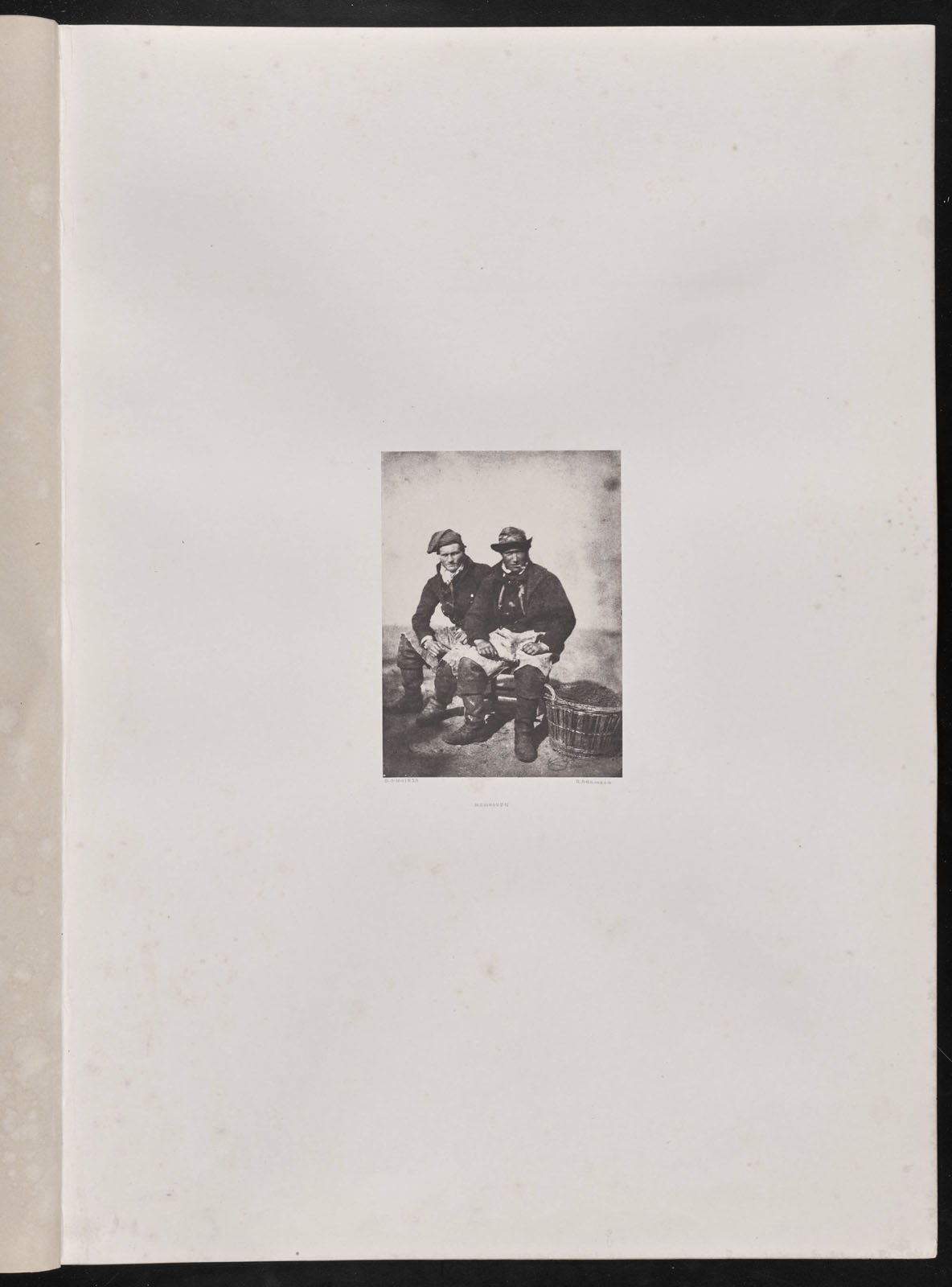
 

Hill & Adamson (Scottish, active 1843-1847) Robert Adamson (Scottish, 1821-1848) David Octavius Hill (Scottish, 1802-1870) 'Newhaven' 1843-1845


Hill & Adamson (Scottish, active 1843-1847)
Robert Adamson (Scottish, 1821-1848)
David Octavius Hill (Scottish, 1802-1870)
Newhaven
1843-1845
15.6 x 11.5cm
Hill & Adamson Photography Collection
Gernsheim Collection
Harry Ransom Center, The University of Texas at Austin
Public domain


David Young (left); unidentified man


Hill & Adamson (Scottish, active 1843-1847) Robert Adamson (Scottish, 1821-1848) David Octavius Hill (Scottish, 1802-1870) 'Newhaven' 1843-1845 (detail)


Hill & Adamson (Scottish, active 1843-1847)
Robert Adamson (Scottish, 1821-1848)
David Octavius Hill (Scottish, 1802-1870)
Newhaven (detail)
1843-1845
15.6 x 11.5cm
Hill & Adamson Photography Collection
Gernsheim Collection
Harry Ransom Center, The University of Texas at Austin
Public domain
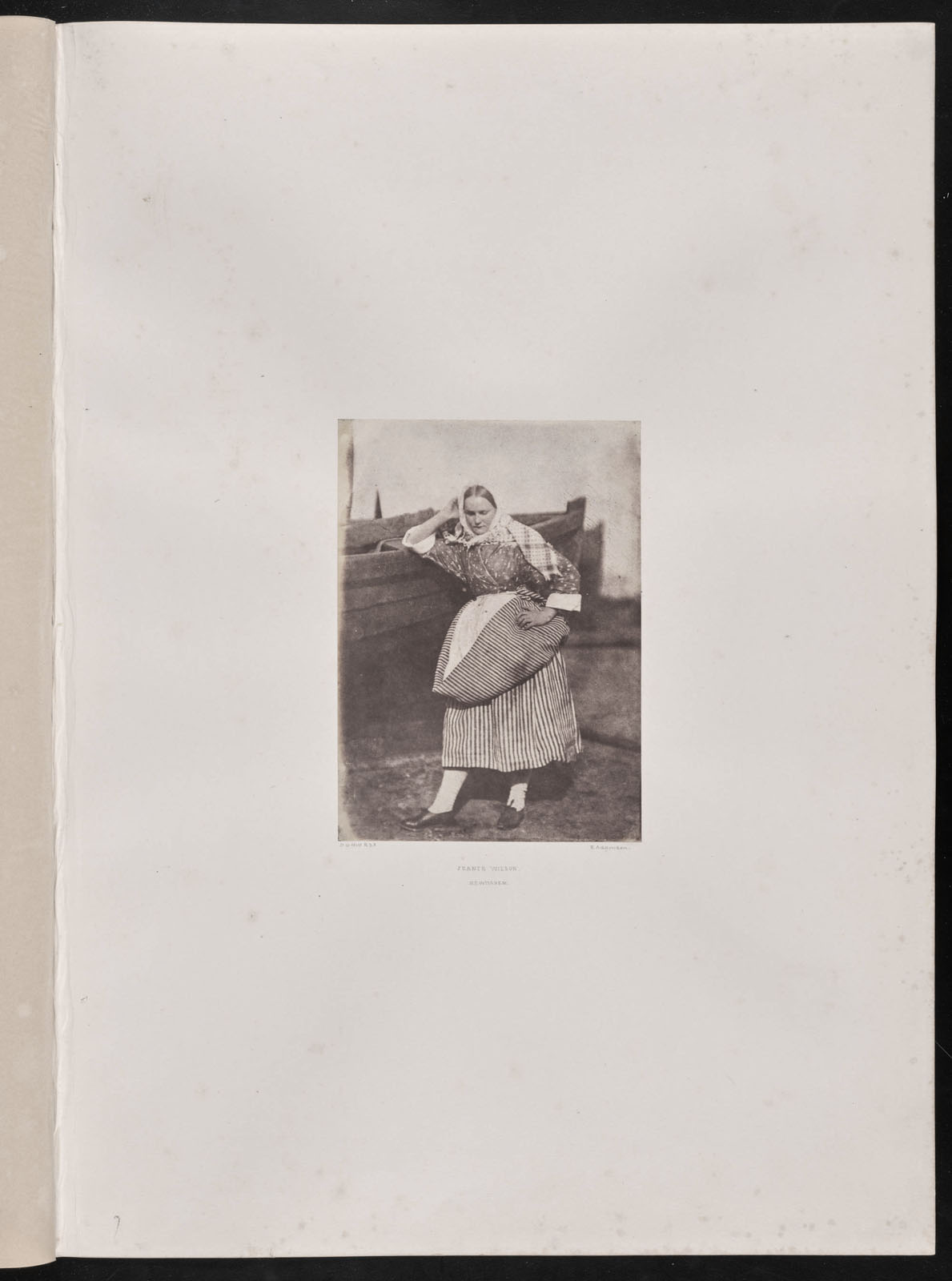
 

Hill & Adamson (Scottish, active 1843-1847) Robert Adamson (Scottish, 1821-1848) David Octavius Hill (Scottish, 1802-1870) 'Jeanie Wilson, Newhaven' 1843-1845


Hill & Adamson (Scottish, active 1843-1847)
Robert Adamson (Scottish, 1821-1848)
David Octavius Hill (Scottish, 1802-1870)
Jeanie Wilson, Newhaven
1843-1845
20.2 x 14.5cm
Hill & Adamson Photography Collection
Gernsheim Collection
Harry Ransom Center, The University of Texas at Austin
Public domain


Hill & Adamson (Scottish, active 1843-1847) Robert Adamson (Scottish, 1821-1848) David Octavius Hill (Scottish, 1802-1870) 'Newhaven' 1843-1845


Hill & Adamson (Scottish, active 1843-1847)
Robert Adamson (Scottish, 1821-1848)
David Octavius Hill (Scottish, 1802-1870)
Newhaven
1843-1845
19.9 x 14.5cm
Hill & Adamson Photography Collection
Gernsheim Collection
Harry Ransom Center, The University of Texas at Austin
Public domain


Unidentified boy; has also been called “King Fisher” or “His Faither’s Breeks”
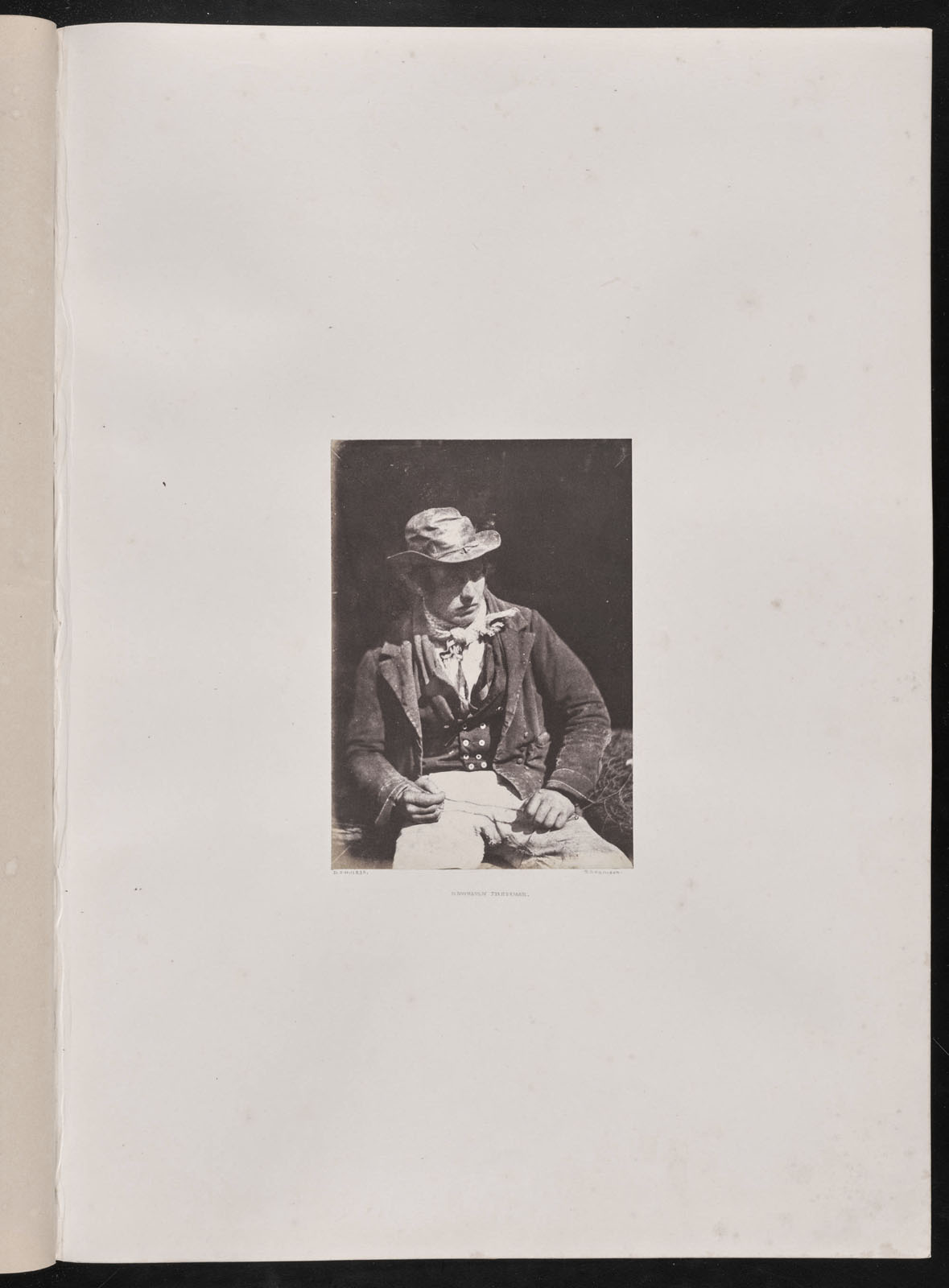
 

Hill & Adamson (Scottish, active 1843-1847) Robert Adamson (Scottish, 1821-1848) David Octavius Hill (Scottish, 1802-1870) 'Newhaven Fisherman' 1843-1845


Hill & Adamson (Scottish, active 1843-1847)
Robert Adamson (Scottish, 1821-1848)
David Octavius Hill (Scottish, 1802-1870)
Newhaven Fisherman
1843-1845
20.6 x 14.4cm
Hill & Adamson Photography Collection
Gernsheim Collection
Harry Ransom Center, The University of Texas at Austin
Public domain


Willie Liston
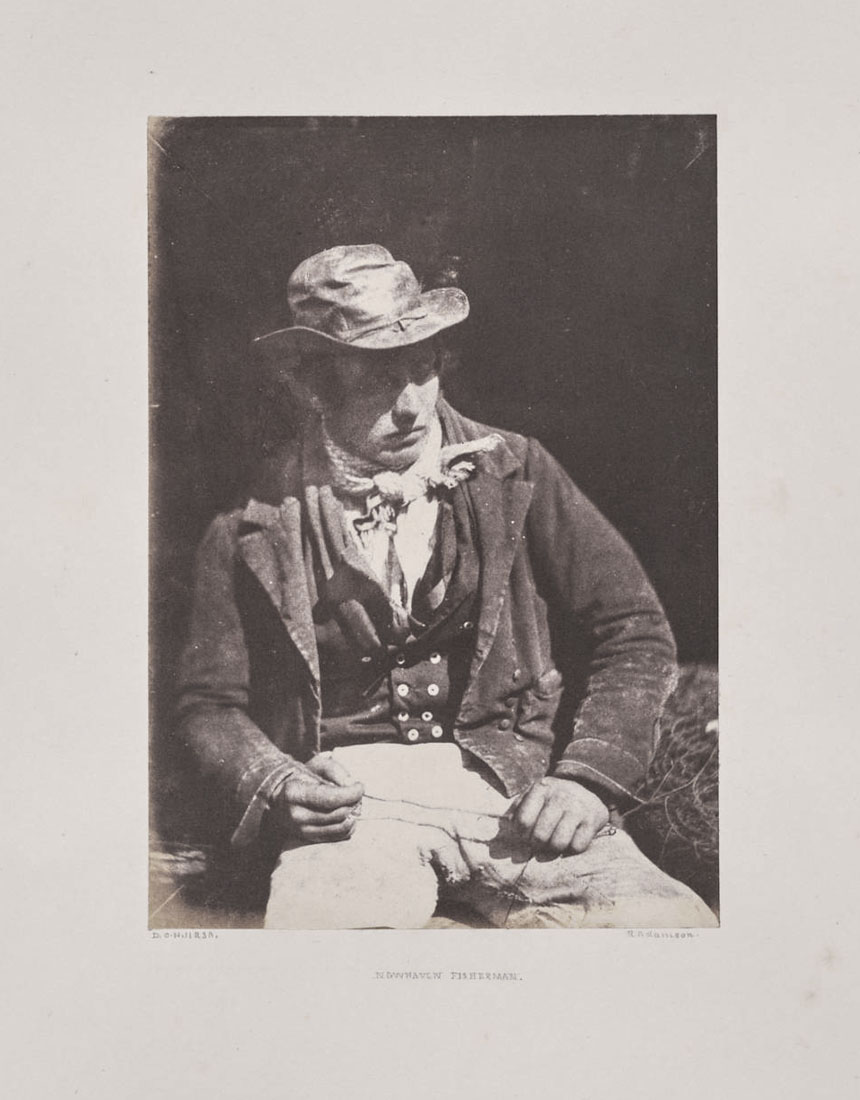
 

Hill & Adamson (Scottish, active 1843-1847) Robert Adamson (Scottish, 1821-1848) David Octavius Hill (Scottish, 1802-1870) 'Newhaven Fisherman' 1843-1845 (detail)


Hill & Adamson (Scottish, active 1843-1847)
Robert Adamson (Scottish, 1821-1848)
David Octavius Hill (Scottish, 1802-1870)
Newhaven Fisherman (detail)
1843-1845
20.6 x 14.4cm
Hill & Adamson Photography Collection
Gernsheim Collection
Harry Ransom Center, The University of Texas at Austin
Public domain
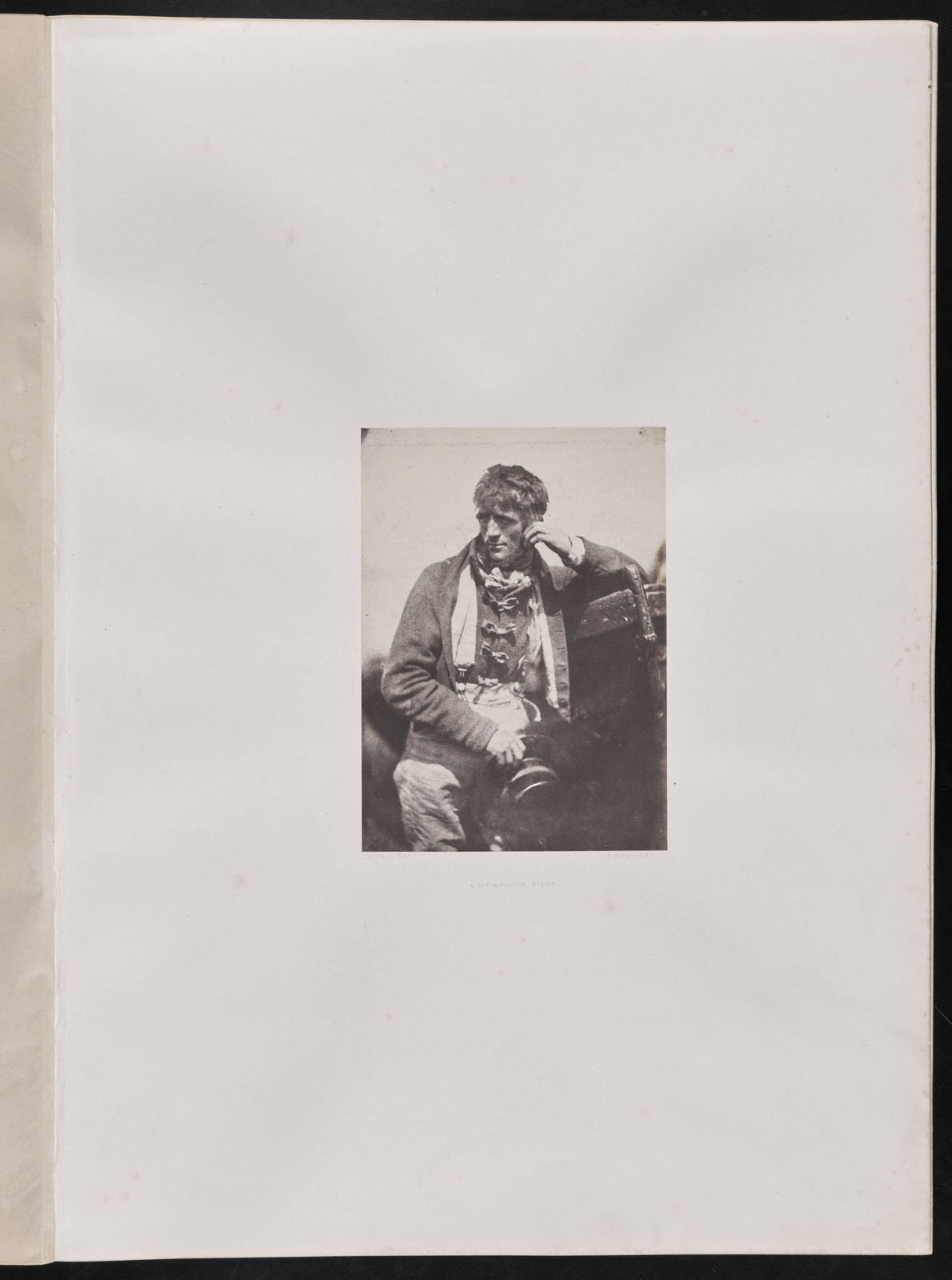
 

Hill & Adamson (Scottish, active 1843-1847) Robert Adamson (Scottish, 1821-1848) David Octavius Hill (Scottish, 1802-1870) 'A Newhaven Pilot' 1843-1845


Hill & Adamson (Scottish, active 1843-1847)
Robert Adamson (Scottish, 1821-1848)
David Octavius Hill (Scottish, 1802-1870)
A Newhaven Pilot
1843-1845
20.3 x 14.6cm
Hill & Adamson Photography Collection
Gernsheim Collection
Harry Ransom Center, The University of Texas at Austin
Public domain
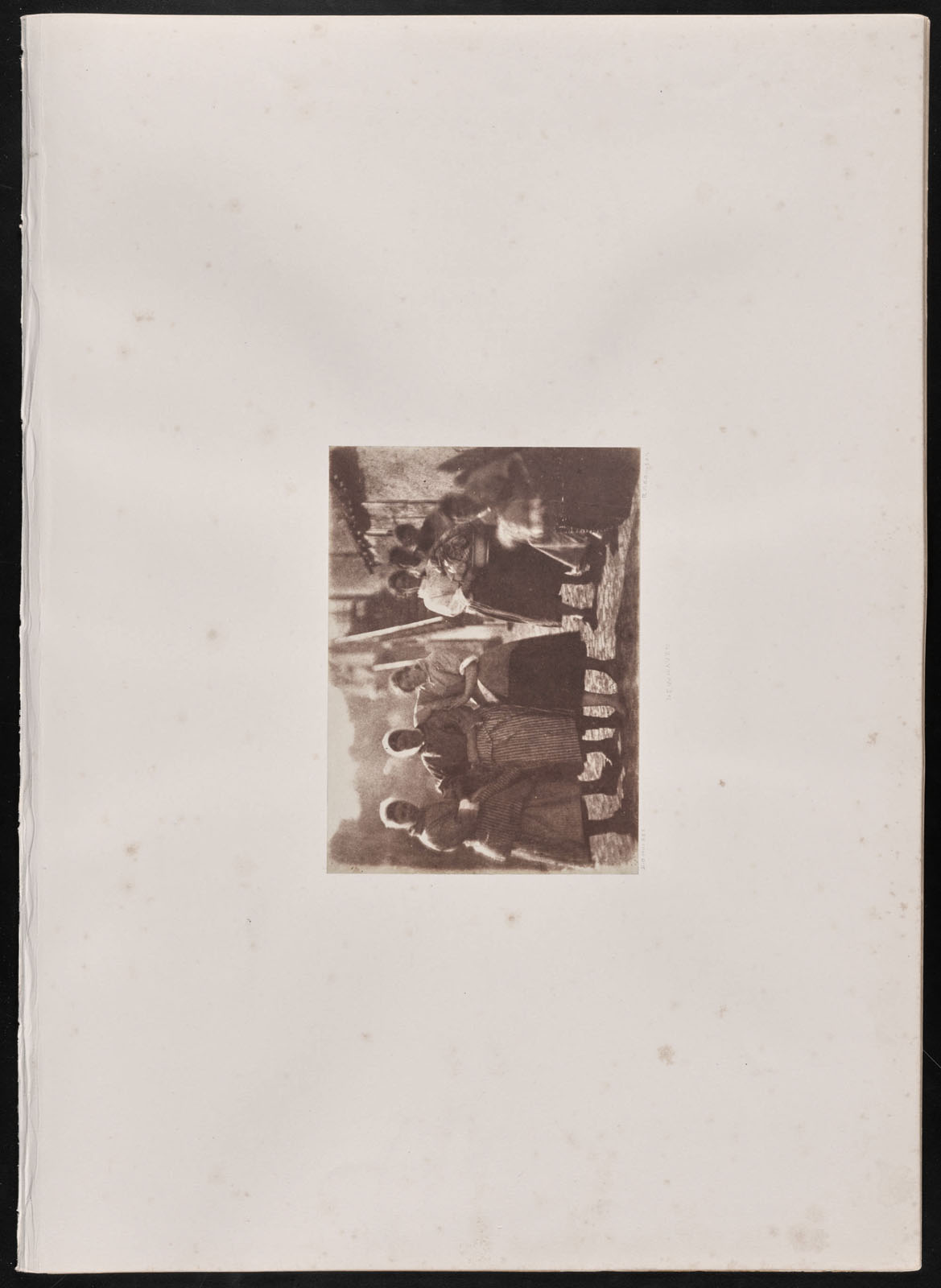
 

Hill & Adamson (Scottish, active 1843-1847) Robert Adamson (Scottish, 1821-1848) David Octavius Hill (Scottish, 1802-1870) 'Newhaven' 1843-1845


Hill & Adamson (Scottish, active 1843-1847)
Robert Adamson (Scottish, 1821-1848)
David Octavius Hill (Scottish, 1802-1870)
Newhaven
1843-1845
14.7 x 20.1cm
Hill & Adamson Photography Collection
Gernsheim Collection
Harry Ransom Center, The University of Texas at Austin
Public domain


Group of unidentified women
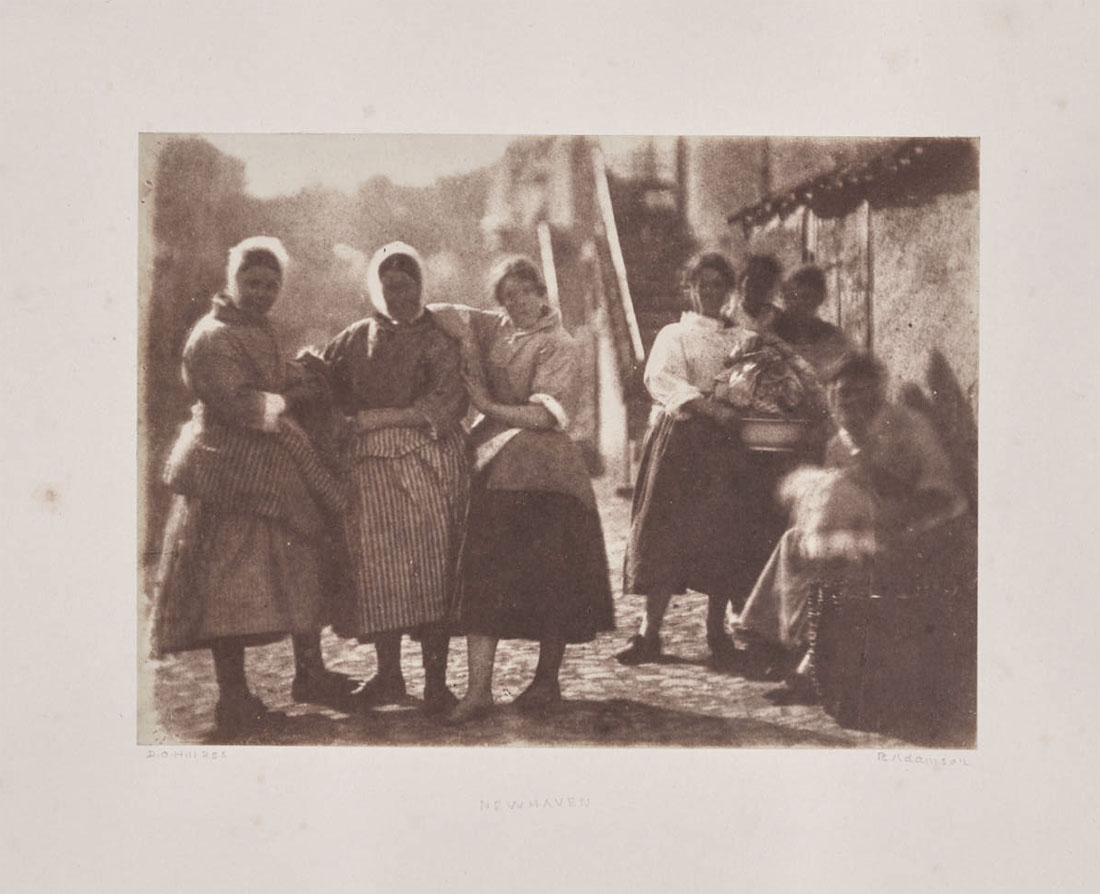
 

Hill & Adamson (Scottish, active 1843-1847) Robert Adamson (Scottish, 1821-1848) David Octavius Hill (Scottish, 1802-1870) 'Newhaven' 1843-1845 (detail)


Hill & Adamson (Scottish, active 1843-1847)
Robert Adamson (Scottish, 1821-1848)
David Octavius Hill (Scottish, 1802-1870)
Newhaven (detail)
1843-1845
14.7 x 20.1cm
Hill & Adamson Photography Collection
Gernsheim Collection
Harry Ransom Center, The University of Texas at Austin
Public domain


Harry Ransom Center
300 West 21st Street
Austin, Texas 78712

Opening hours:
Tuesday – Friday 10am – 5pm
Saturday – Sunday Noon – 5pm
Closed Mondays
Harry Ransom Center website

LIKE ART BLART ON FACEBOOK

Back to top

Exhibition: ‘Sight Reading: Photography and the Legible World’ at the Morgan Library & Museum, New York

Exhibition dates: 19th February – 30th May, 2016

Co-curators: Joel Smith, the Morgan’s Richard L. Menschel Curator and Department Head of Photography, and Lisa Hostetler, Curator in Charge of Photography at the Eastman Museum


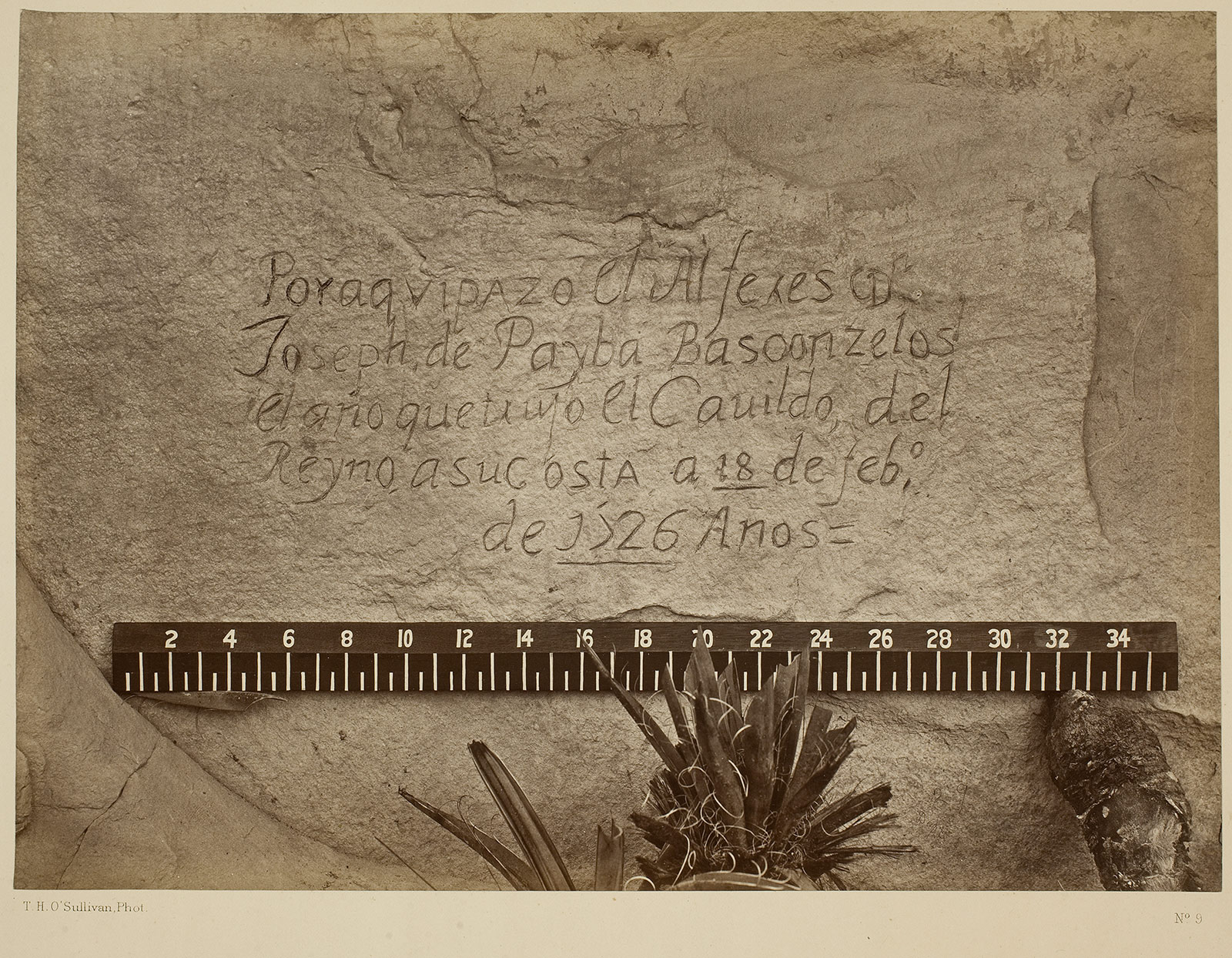
Timothy H. O'Sullivan (American born Ireland, 1840-1882) 'Historic Spanish Record of the Conquest, South Side of Inscription Rock' 1873 from the exhibition 'Sight Reading: Photography and the Legible World' at the Morgan Library & Museum, New York, Feb - May, 2016


Timothy H. O’Sullivan (American born Ireland, 1840-1882)
Historic Spanish Record of the Conquest, South Side of Inscription Rock
1873
From the album Geographical Explorations and Surveys West of the 100th Meridian
Albumen silver print
George Eastman Museum, purchase


In 1873 O’Sullivan joined Lieutenant George Wheeler’s Geographic Survey in New Mexico and Arizona. At El Morro, a sandstone promontory covered with ancient petroglyphs and historic-era inscriptions, the photographer singled out this handsomely lettered sentence to record and measure. It states: By this place passed Ensign Don Joseph de Payba Basconzelos, in the year in which he held the Council of the Kingdom at his expense, on the 18th of February, in the year 1726. Nearby, the rock record now bears another inscription that reads T. H. O’Sullivan.


This looks to be a fascinating exhibition. I wish I could see it.

While Sight Reading cuts across conventional historical and geographic divisions, with the exhibition being organised into nine “conversations” among diverse sets of works, we must always remember that these “themes” are not exclusory to each other. Photographs do cross nominally defined boundaries and themes (as defined by history and curators) so that they can become truly subversive works of art.

Photographs can form spaces called heterotopia, “a form of concept in human geography elaborated by philosopher Michel Foucault, to describe places and spaces that function in non-hegemonic conditions. These are spaces of otherness, which are neither here nor there, that are simultaneously physical and mental, such as the space of a phone call or the moment when you see yourself in the mirror… Foucault uses the term “heterotopia” (French: hétérotopie) to describe spaces that have more layers of meaning or relationships to other places than immediately meet the eye.”1

In photographs, there is always more than meets the eye. There is the association of the photograph to multiple places and spaces (the histories of that place and space); the imagination of the viewer and the memories they bring to any encounter with a photograph, which may change from time to time, from look to look, from viewing to viewing; and the transcendence of the photograph as it brings past time to present time as an intimation of future time. Past, present and future spacetime are conflated in the act of just looking, just being. Positioning this “‘annihilation of time and space’ as a particular moment in a dynamic cycle of rupture and recuperation enables a deliberate focus on the process of transition.”2 And that transition, Doreen Massey argues, ignores often-invisible contingencies that define spaces those relations that have an effect upon a space but are not visible within it.3

Photographs, then, form what Deleuze and Guattari call assemblages4, where the assemblage is “the processes by which various configurations of linked components function in an intersection with each other, a process that can be both productive and disruptive. Any such process involves a territorialization; there is a double movement where something accumulates meanings (re-territorialization), but does so co-extensively with a de-territorialization where the same thing is disinvested of meanings. The organization of a territory is characterized by such a double movement … An assemblage is an extension of this process, and can be thought of as constituted by an intensification of these processes around a particular site through a multiplicity of intersections of such territorializations.”5 In other words, when looking at a photograph by William Henry Fox Talbot or Timothy H. O’Sullivan today, the meaning and interpretation of the photograph could be completely different to the reading of this photograph in the era it was taken. The photograph is a site of both de-territorialization and re-territorialization – it both gains and looses meaning at one and the same time, depending on who is looking at it, from what time and from what point of view.

Photographs propose that there are many heterotopias in the world, many transitions and intersections, many meanings lost and found, not only as spaces with several places of/for the affirmation of difference, but also as a means of escape from authoritarianism and repression. We must remember these ideas as we looking at the photographs in this exhibition.

Dr Marcus Bunyan


Footnotes

1/ Heterotopia (space) on the Wikipedia website [Online] Cited 27/05/2016.

2/ McQuire, Scott. The Media City. London: Sage Publications, 2008, p. 14.

3/ Massey, Doreen. Space, Place and Gender. Cambridge: Polity Press, 1994, p. 5 in Wood, Aylish. “Fresh Kill: Information technologies as sites of resistance,” in Munt, Sally (ed.,). Technospaces: Inside the New Media. London: Continuum, 2001, pp. 163-164.

4/ Deleuze, Gilles and Guattari, Felix. A Thousand Plateaus: Capitalism and Schizophrenia. Minneapolisand London: University of Minneapolis Press, 1987.

5/ Wood, Aylish. “Fresh Kill: Information technologies as sites of resistance,” in Munt, Sally (ed.,). Technospaces: Inside the New Media. London: Continuum, 2001, p.166


Many thankx to the Morgan Library & Museum for allowing me to publish the text and photographs in the posting. Please click on the photographs for a larger version of the image.


'Sight Reading: Photography and the Legible World' exhibition sections


Sight Reading: Photography and the Legible World exhibition sections


As its name declares, photography is a means of writing with light. Photographs both show and tell, and they speak an extraordinary range of dialects.

Beginning February 19 the Morgan Library & Museum explores the history of the medium as a lucid, literate – but not always literal – tool of persuasion in a new exhibition, Sight Reading: Photography and the Legible World. A collaboration with the George Eastman Museum of Film and Photography, the show features more than eighty works from the 1840s to the present and reveals the many ways the camera can transmit not only the outward appearance of its subject but also narratives, arguments, and ideas. The show is on view through May 30.

Over the past 175 years, photography has been adopted by, and adapted to, countless fields of endeavour, from art to zoology and from fashion to warfare. Sight Reading features a broad range of material – pioneering x-rays and aerial views, artefacts of early photojournalism, and recent examples of conceptual art – organised into groupings that accentuate the variety and suppleness of photography as a procedure. In 1936, artist László Moholy-Nagy (1895-1946) defined “the  illiterate of the future” as someone “ignorant of the use of the camera as well as the pen.” The JPEG and the “Send” button were decades away, but Moholy-Nagy was not the first observer to argue that photography belonged to the arts of commentary and persuasion. As the modes and motives of camera imagery have multiplied, viewers have continually learned new ways to read the information, and assess the argument, embodied in a photograph.

“Traditional narratives can be found throughout the Morgan’s collections, especially in its literary holdings,” said Colin B. Bailey, director of the Morgan. “Sight Reading encourages us to use a critical eye to read and discover the stories that unfold through the camera lens and photography, a distinctly modern, visual language. We are thrilled to collaborate with the Eastman Museum, and together unravel a rich narrative, which exemplifies photography’s deep involvement in the stories of modern art, science, and the printed page.”

The exhibition

Sight Reading cuts across conventional historical and geographic divisions. Featuring work by William Henry Fox Talbot (1800-1877), Eadweard Muybridge (1830-1904), John Heartfield (1891-1968), Lewis Hine (1874-1940), Harold Edgerton (1903-1990), John Baldessari (1931-2020), Sophie Calle (b. 1953), and Bernd and Hilla Becher (1931-2007; 1934-2015), among many others, the exhibition is organised into nine “conversations” among diverse sets of works.

I. The Camera Takes Stock

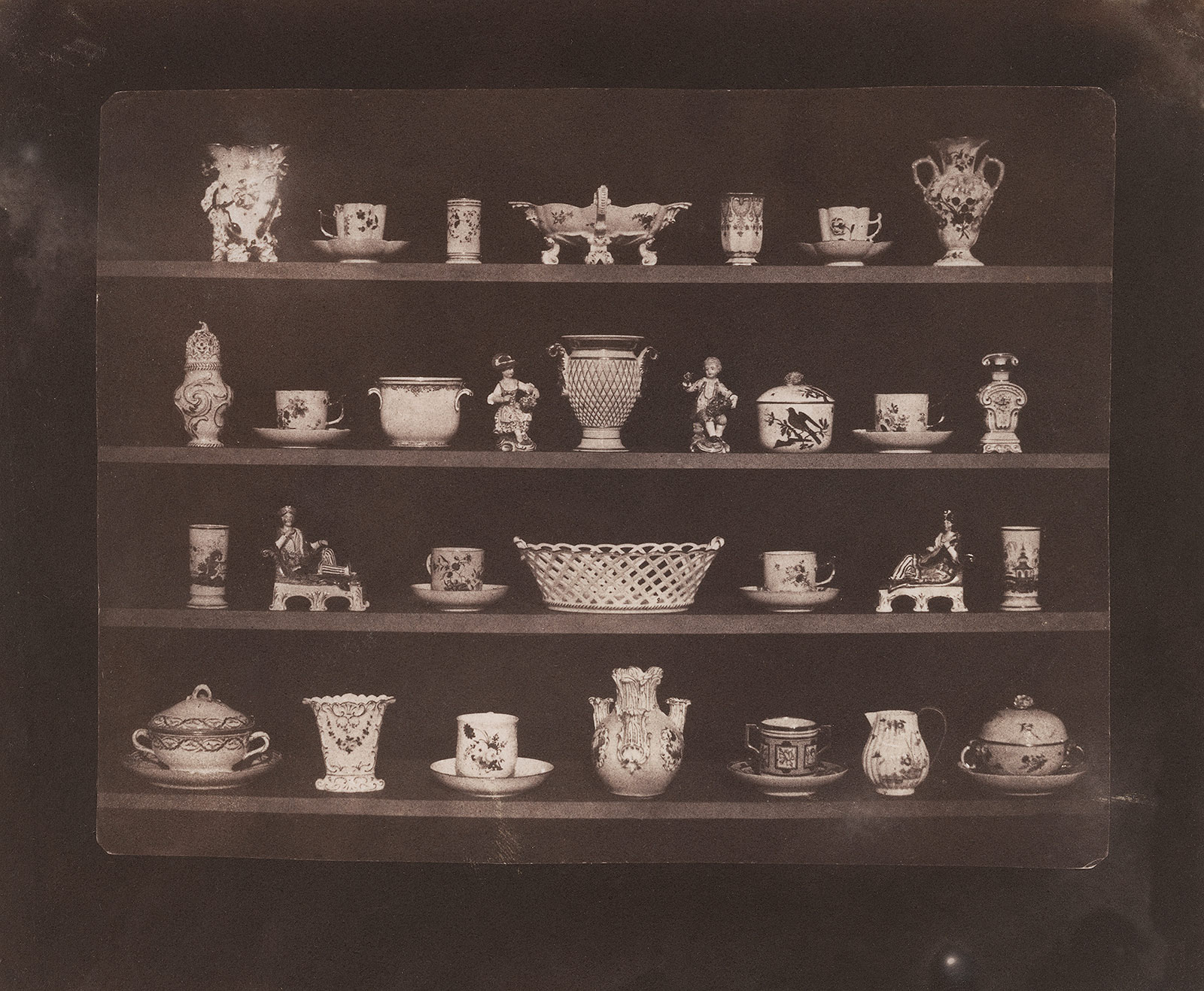
Photography’s practical functions include recording inventory, capturing data imperceptible to the human eye, and documenting historical events. In the first photographically illustrated publication, The Pencil of Nature (1845), William Henry Fox Talbot used his image Articles of China to demonstrate that “the whole cabinet of a … collector … might be depicted on paper in little more time than it would take him to make a written inventory describing it in the usual way.” Should the photographed collection suffer damage or theft, Talbot speculated, “the mute testimony of the picture … would certainly be evidence of a novel kind” before the law.

A century later, Harold Edgerton, an electrical engineer at the Massachusetts Institute of Technology, used the pulsing light of a stroboscope to record states of matter too fleeting for the naked eye. Gun Toss, an undated image of a spinning pistol, is not a multiple exposure: the camera shutter opened and closed just once. But during that fraction of a second, seven bright flashes of light committed to film a seven-episode history of the gun’s trajectory through space.


William Henry Fox Talbot (British, 1800-1877) 'Articles of China' c. 1843, printed c. 1845 from the exhibition 'Sight Reading: Photography and the Legible World' at the Morgan Library & Museum, New York, Feb - May, 2016


William Henry Fox Talbot (British, 1800-1877)
Articles of China
c. 1843, printed c. 1845
Salted paper print from calotype negative
Collection of Richard and Ronay Menschel


In The Pencil of Nature (1845), the first photographically illustrated publication, Talbot used Articles of China to demonstrate that “the whole cabinet of a … collector … might be depicted on paper in little more time than it would take him to make a written inventory describing it in the usual way.” Should the collection suffer damage or theft, Talbot added, “the mute testimony of the picture … would certainly be evidence of a novel kind” before the law.


Harold Edgerton (American, 1903-1990) 'Gun Toss' 1936-1950


Harold Edgerton (American, 1903-1990)
Gun Toss
1936-1950
Gelatin silver print
Collection of Richard and Ronay Menschel


Edgerton, an electrical engineer, used the rapidly pulsing light of a stroboscope to record states of matter too fleeting to be perceived by the naked eye. This image of a spinning pistol is not a multiple exposure: the camera shutter opened and closed just once. But during that fraction of a second, seven bright flashes of light committed to film a seven-episode history of the gun’s trajectory through space.


John Pfahl (American, 1939-2020) 'Wave Theory I–V, Puna Coast, Hawaii, March 1978' 1978


John Pfahl (American, 1939-2020)
Wave Theory I-V, Puna Coast, Hawaii, March 1978
1978
From the series Altered Landscapes
Chromogenic development (Ektacolor) process prints, 1993
George Eastman Museum, purchase


In this sequence, Pfahl twisted the conventions of photographic narrative into a perceptual puzzle. The numbered views appear to chronicle a single event: a wave breaking on the shore. Close inspection, however, reveals that the numeric caption in each scene is made of string laid on the rock in the foreground. The exposures, then, must have been made over a span of at least several minutes, not seconds – and in what order, one cannot say.


II. Crafting A Message

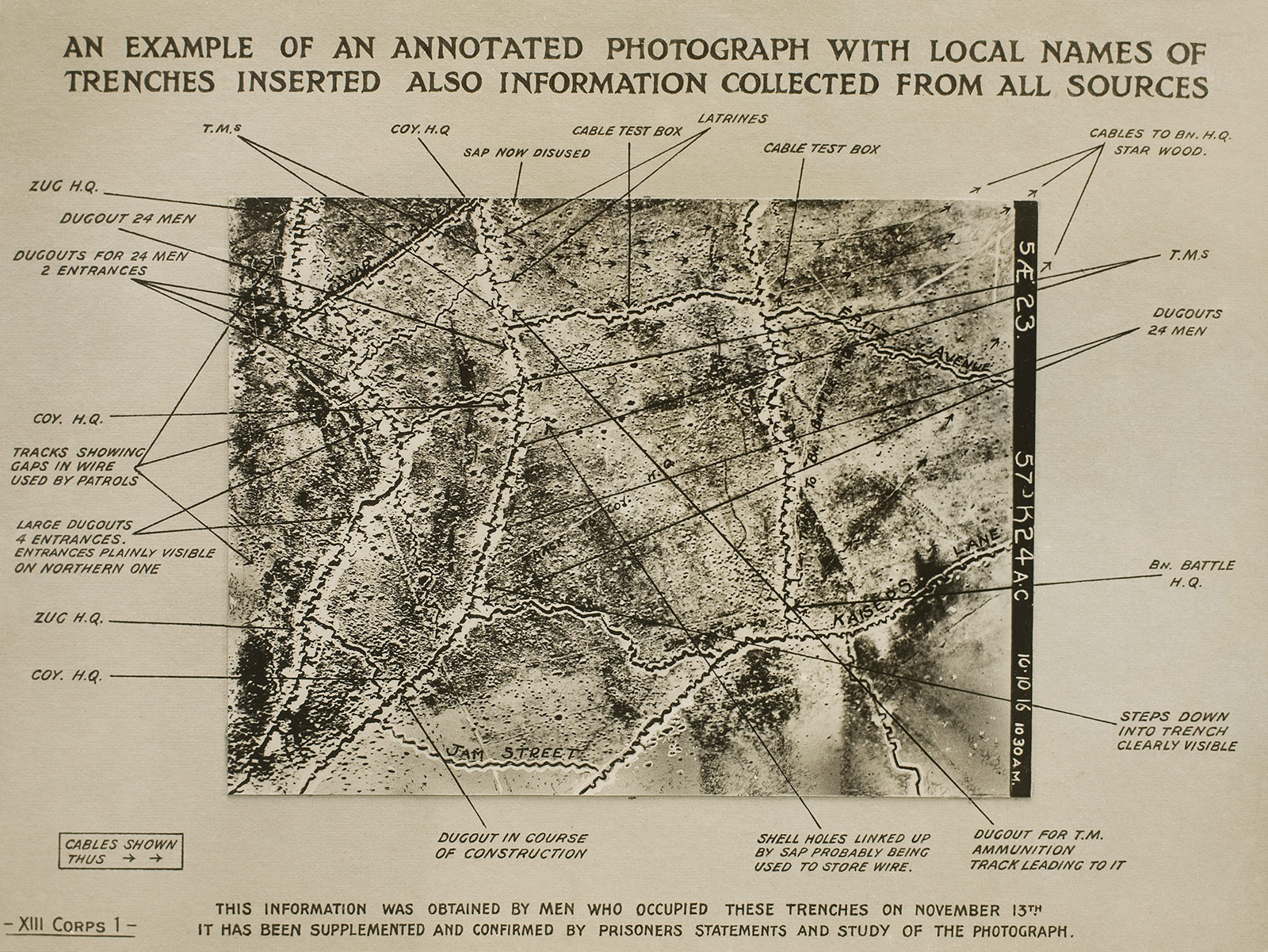
The camera is widely understood to be “truthful,” but what photographs “say” is a product of many procedures that follow the moment of exposure, including page layout, captioning, and cropping of the image. During World War I, military personnel learned to interpret the strange, abstract looking images of enemy territory made from airplanes. Their specialised training fundamentally altered the nature of wartime reconnaissance, even as the unusual perspective unique to aerial photography introduced a new dialect into the expanding corpus of modern visual language. An Example of an Annotated Photograph with Local Names of Trenches Inserted (1916), on view in the exhibition, shows that the tools of ground strategy soon included artificial bunkers and trenches, designed purely to fool eyes in the sky.

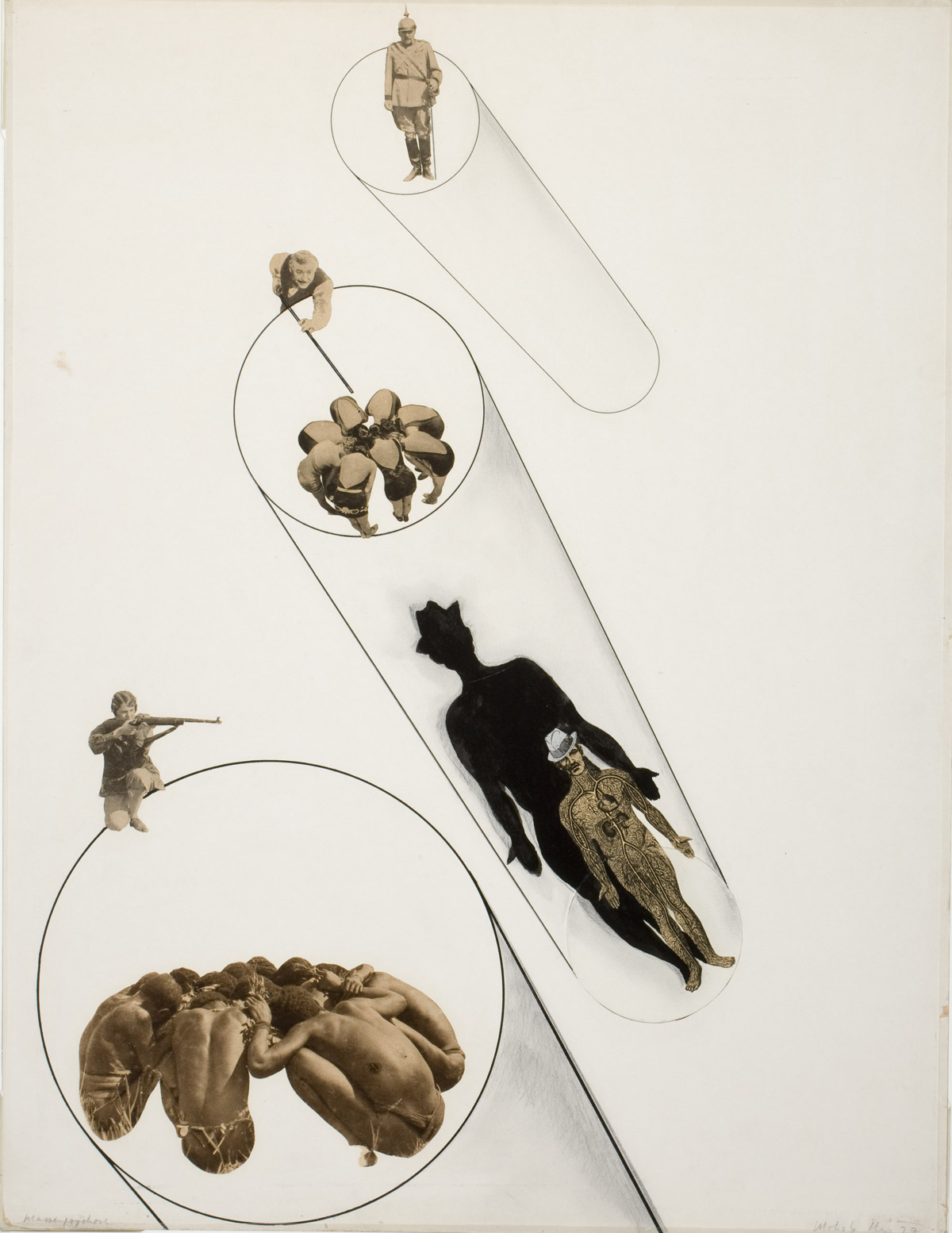
In László Moholy-Nagy’s photocollages of the late 1920s, figures cut out of the plates in mass market magazines appear in new configurations to convey messages of the artist’s devising. Images such as Massenpsychose (Mass Psychosis) (1927) propose a new kind of visual literacy for the machine age. To contemporary eyes, Moholy’s collages seem to foreshadow cut-and-paste strategies that would later characterise the visual culture of cyberspace.


László Moholy-Nagy (American born Hungary, 1895-1946) 'Massenpsychose' (Mass Psychosis) 1927


László Moholy-Nagy (American born Hungary, 1895-1946)
Massenpsychose (Mass Psychosis)
1927
Collage, pencil, and ink
George Eastman Museum, Purchased with funds provided by Eastman Kodak Company


To make his photocollages of the late 1920s, Moholy-Nagy cut figures out of photographs and photomechanical reproductions and arranged them into new configurations that convey messages of his own devising. By extracting the images from their original context and placing them into relationships defined by drawn shapes and volumes, he suggested a new visual literacy for the modern world. In this world – one in which images course through mass culture at a psychotic pace – a two-dimensional anatomical drawing acquires sufficient volume to cast a man’s shadow and a circle of bathing beauties cues up for a pool sharp. To contemporary eyes, the language of Moholy-Nagy’s photo collages seems to foreshadow strategies common to the visual culture of cyberspace.


Unidentified maker. 'An Example of an Annotated Photograph with Local Names of Trenches Inserted' c. 1916


Unidentified maker
An Example of an Annotated Photograph with Local Names of Trenches Inserted
c. 1916
Gelatin silver print
George Eastman Museum


During World War I, aerial photography progressed from a promising technological experiment to a crucial strategic operation. As advances in optics and engineering improved the capabilities of cameras and aircraft, military personnel learned to identify topographic features and man-made structures in the images recorded from above. Such training fundamentally altered the significance and practice of wartime reconnaissance. At the same time, the unusual perspective unique to aerial photography introduced a new dialect into the expanding corpus of modern visual language.


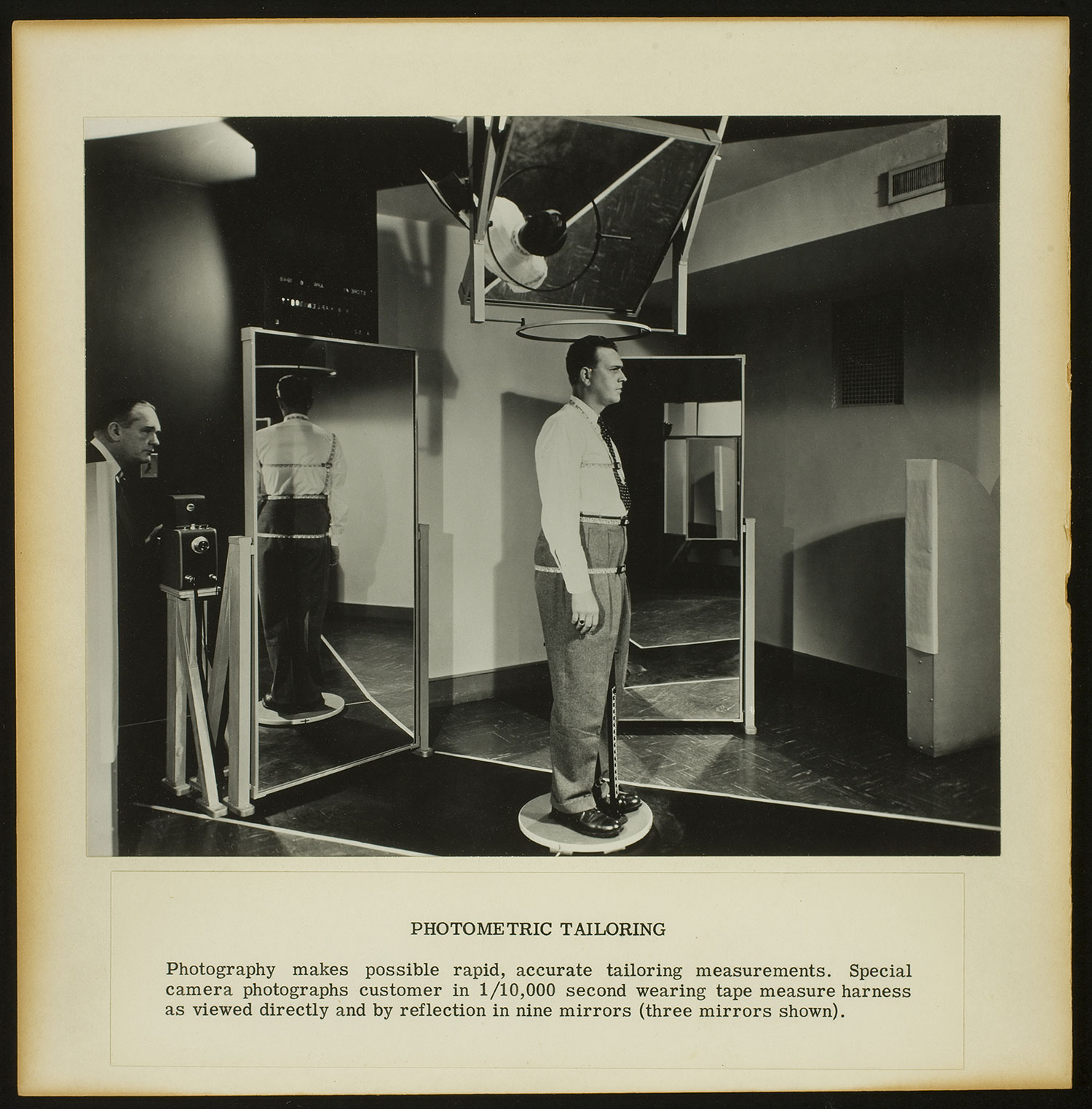
PhotoMetric Corporation, 1942-1974 'PhotoMetric Tailoring' c. 1942-1948


PhotoMetric Corporation, 1942-1974
PhotoMetric Tailoring
c. 1942-1948
Gelatin silver prints
George Eastman Museum


In an effort to streamline the field of custom tailoring, textile entrepreneur Henry Booth devised a method for obtaining measurements by photographing customers with a special camera and angled mirrors. The system was said to be foolproof, making it possible for any sales clerk to operate it. The resulting slides were sent to the manufacturer along with the customer’s order. A tailor translated the images into physical measurements using a geometric calculator, and the company mailed the finished garment to the customer.


III. Photographs in Sequence

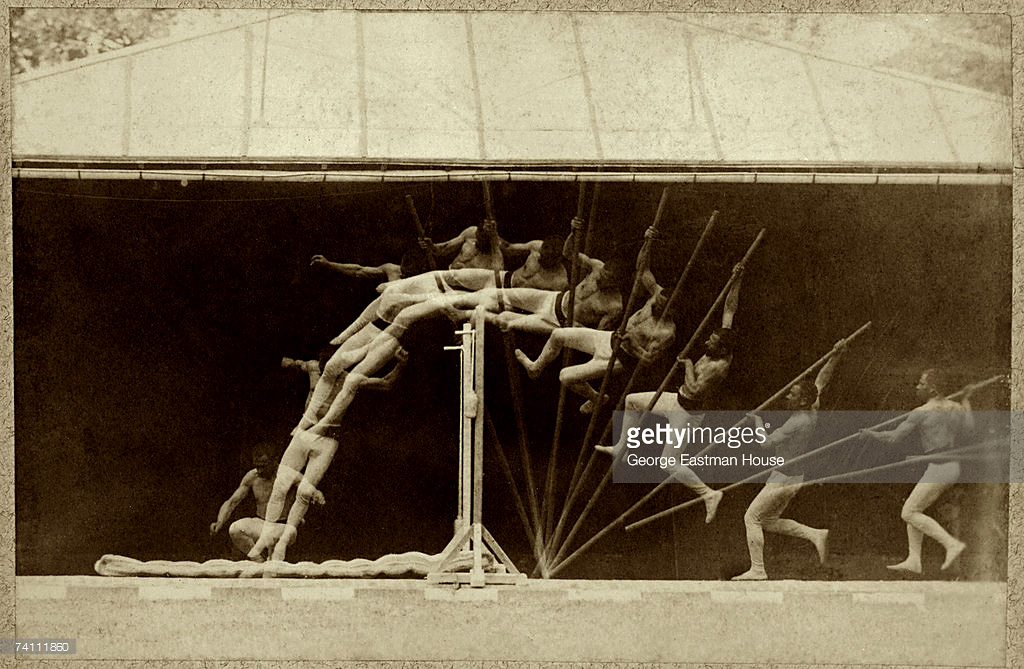
Photography’s debut in the late 1830s happened to coincide with the birth of the modern comic strip. Ultimately the narrative photo sequence would lead to the innovations that gave rise to cinema, another form of storytelling altogether. Exact contemporaries of one another, Eadweard J. Muybridge in the United States and Étienne-Jules Marey (1830-1904) in France both employed cameras to dissect human movement. Muybridge used a bank of cameras positioned to record a subject as it moved, tripping wires attached to the shutters. The result was a sequence of “stop-action” photographs that isolated gestures not otherwise visible in real time. Beginning in 1882, Marey pursued motion studies with a markedly different approach. In the works for which he is best known, he exposed one photographic plate multiple times at fixed intervals, recording the arc of movement in a single image.


Étienne Jules Marey (French, 1830-1904) 'Chronophotographic study of man pole vaulting' c. 1890


Étienne Jules Marey (French, 1830-1904)
Chronophotographic study of man pole vaulting
c. 1890
Albumen silver print
George Eastman Museum, Exchange with Narodni Technical Museum


Exact contemporaries, Muybridge and Marey (the former in the United States, the latter in France) both employed cameras to dissect human movement. Muybridge used a bank of cameras positioned and timed to record a subject as it moved, tripping wires attached to the shutters. The result was a sequence of “stop-action” photographs that isolated gestures not otherwise visible in real time. Beginning in 1882, Marey took a markedly different approach. In the works for which he is best known – such as the image of the man pole-vaulting – he exposed a single photographic plate multiple times at fixed intervals, recording the arc of movement in a single image. In Marey’s chronophotograph of a man on a horse, the action reads from bottom to top. The convention of arranging sequential photographic images from left to right and top to bottom, on the model of written elements on a page, was not yet firmly established.


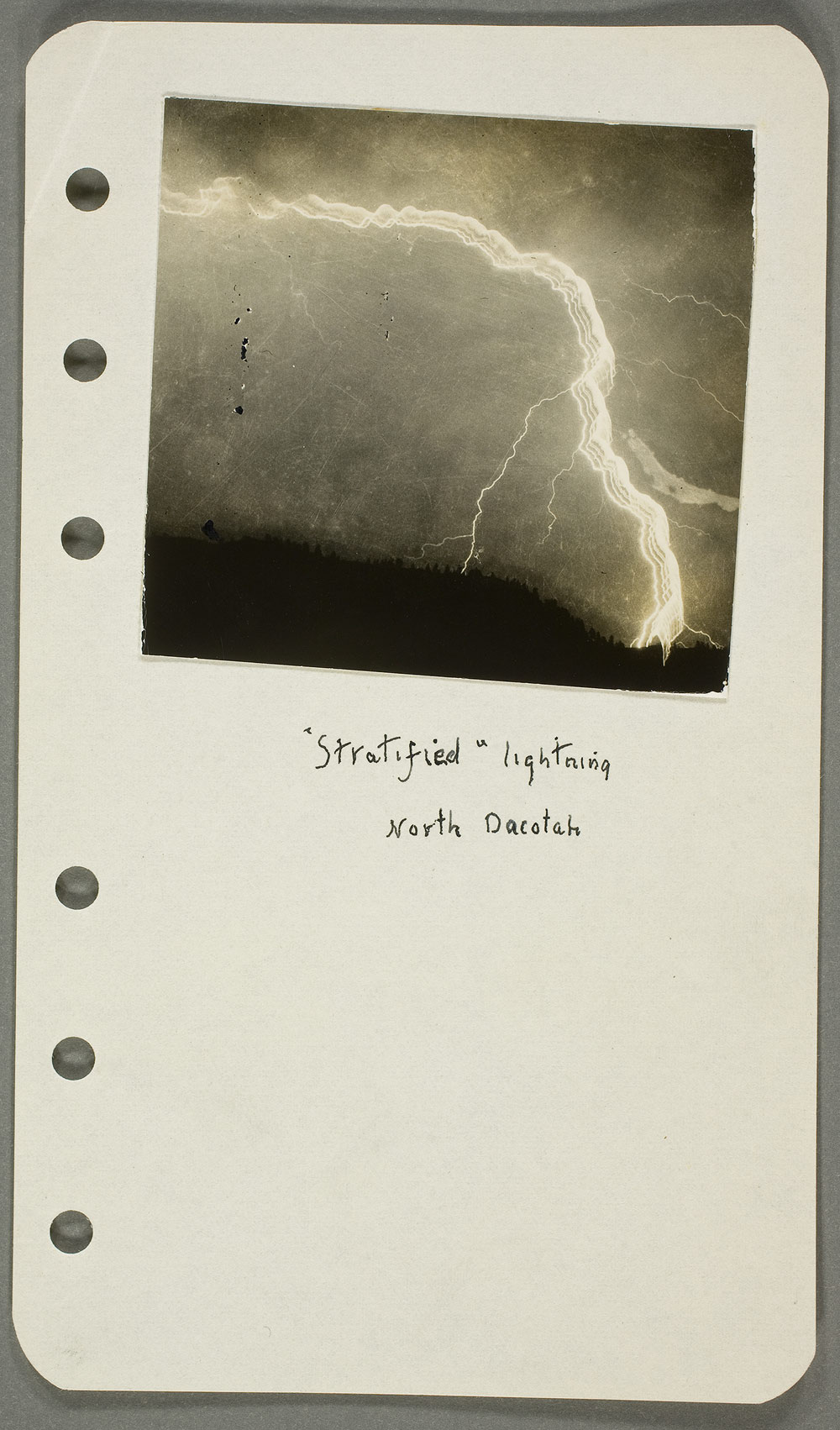
William N. Jennings (American, b. England, 1860-1946) 'Notebook pages with photographs of lightning' c. 1887


William N. Jennings (American, b. England, 1860-1946)
Notebook pages with photographs of lightning
c. 1887
Gelatin silver prints mounted onto bound notepad paper
George Eastman Museum, Gift of 3M Foundation; Ex-collection of Louis Walton Sipley


With his first successful photograph of a lightning bolt on 2 September 1882, Jennings dispelled the then widely held belief – especially among those in the graphic arts – that lightning traveled toward the earth in a regular zigzag pattern. Instead, his images revealed that lightning not only assumed an astonishing variety of forms but that it never took the shape that had come to define it in art.


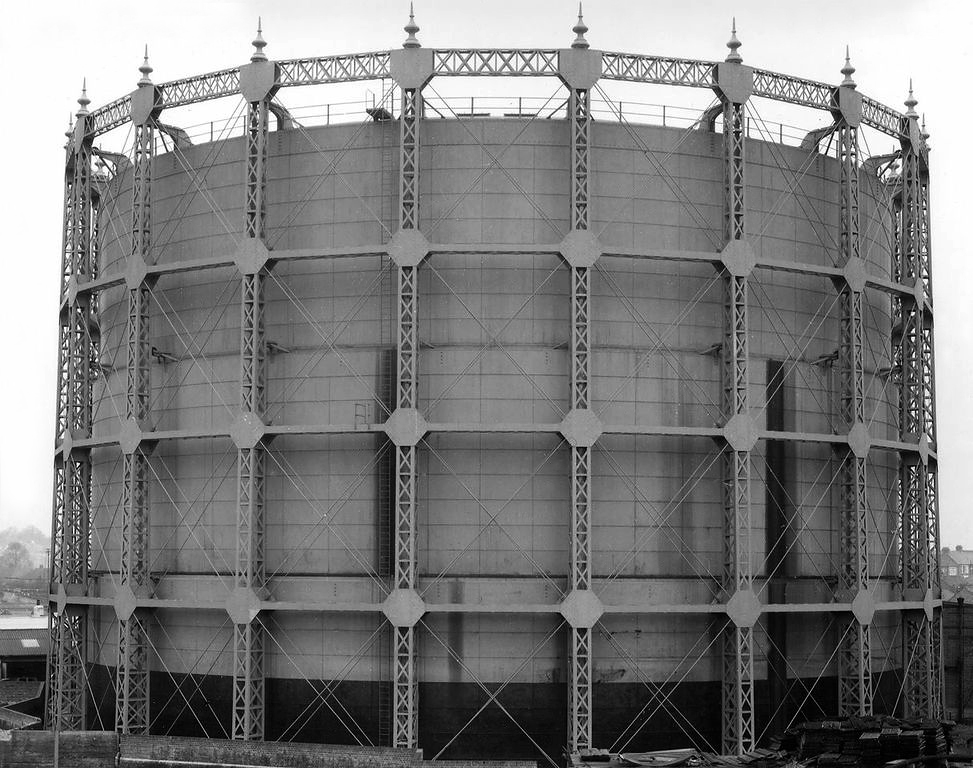
Bernd Becher (German, 1931-2007) Hilla Becher (German, 1934-2015) 'Industriebauten' 1968

Bernd Becher (German, 1931-2007) Hilla Becher (German, 1934-2015) 'Industriebauten' 1968


Bernd Becher (German, 1931-2007)
Hilla Becher (German, 1934-2015)
Industriebauten
1968
Gelatin silver prints in presentation box
George Eastman Museum, Purchase


The photographs in this portfolio were made only a few years into what would become the Bechers’ decades-long project of systematically documenting industrial architecture in Europe and the United States. The straightforward and rigidly consistent style of their work facilitates side-by-side comparison, revealing the singularity of structures that are typically understood to be generic.


IV. The Legible Object

Some photographs speak for themselves; others function as the amplifier for objects that can literally be read through the image. In her series Sorted Books, American artist Nina Katchadourian (b. 1968) composes statements by combining the titles of books drawn from the shelves of libraries and collections. Indian History for Young Folks, 2012, shows three books from the turn of the twentieth century that she found in the Delaware Art Museum’s M.G. Sawyer Collection of Decorative Bindings. The viewer’s eye silently provides punctuation: “Indian history for young folks: Our village; your national parks.” Though at first glance it appears merely to arrange words into legible order, Katchadourian’s oblique statement – half verbal, half visual – would be incomplete if divorced from the physical apparatus of the books themselves.


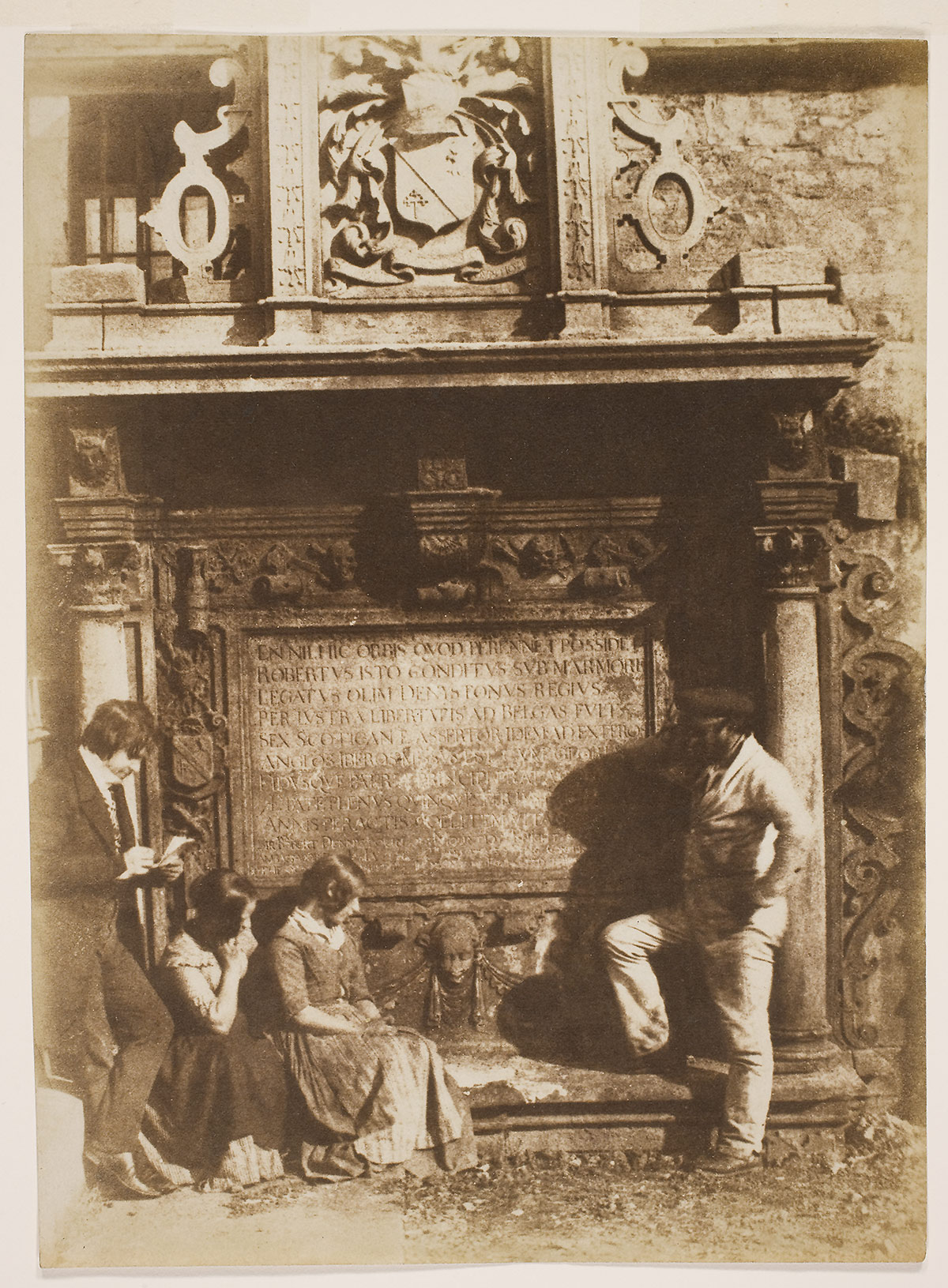
David Octavius Hill (Scottish, 1802-1870) Robert Adamson (Scottish, 1821-1848) 'The Artist and the Gravedigger (Denistoun Monument, Greyfriars Churchyard, Edinburgh)' c. 1845


David Octavius Hill (Scottish, 1802-1870)
Robert Adamson (Scottish, 1821-1848)
The Artist and the Gravedigger (Denistoun Monument, Greyfriars Churchyard, Edinburgh)
c. 1845
Salted paper print from calotype negative
George Eastman Museum, Gift of Alvin Langdon Coburn


Hill, his two nieces, and an unidentified man pose for the camera at the tomb of Robert Denistoun, a seventeenth-century Scottish ambassador. Contemplative poses helped the sitters hold still during the long exposure, even while turning them into sculptural extensions of the monument. Hill puts pen to paper, perhaps playing the part of a graveyard poet pondering mortality. Above him, the monument’s Latin inscription begins: “Behold, the world possesses nothing permanent!”


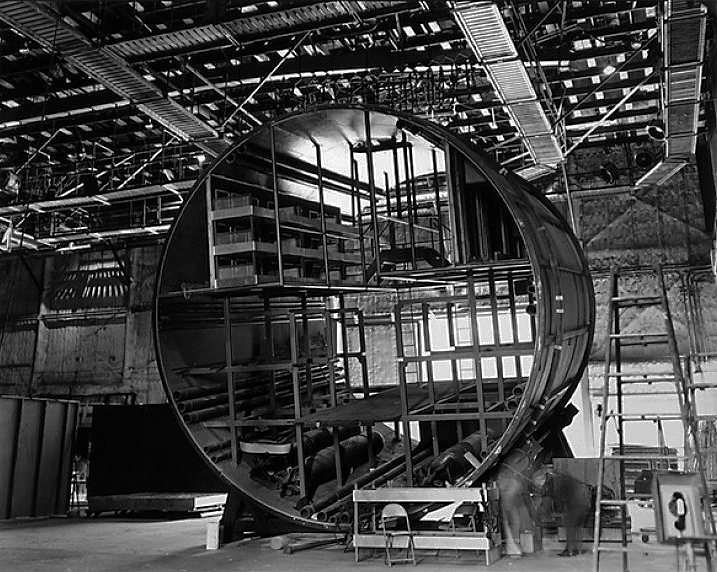
Robert Cumming (American, 1943-2021) 'Submarine cross-section; feature film, "Gray Lady Down" - Stage #12, March 14, 1977' 1977


Robert Cumming (American, 1943-2021)
Submarine cross-section; feature film, “Gray Lady Down” – Stage #12, March 14, 1977
1977
Inkjet print
George Eastman Museum, Gift of Nash Editions


In the Studio Still Lifes he photographed on the backlots of Universal Studios, Cumming sought to portray the mechanisms behind cinema vision “in their real as opposed to their screen contexts.” Admiring yet subversive, his documents use strategies native to the still camera – distance, point of view, and clear-eyed testimony – to translate Hollywood’s familiar illusions into worksites where “marble is plywood, stone is rubber, … rooms seldom have ceilings, and when the sun shines indoors, it casts a dozen shadows.”


Nina Katchadourian (American, b. 1968) 'Indian History for Young Folks' 2012


Nina Katchadourian (American, b. 1968)
Indian History for Young Folks
2012
From Once Upon a Time in Delaware / In Quest of the Perfect Book
Chromogenic print
The Morgan Library Museum, Purchase, Photography Collectors Committee


In her ongoing series Sorted Books, Katchadourian composes statements by combining the titles of books from a given library – in this case, the M. G. Sawyer Collection of Decorative Bindings at the Delaware Art Museum. Though her compositions are driven by the need to arrange words in a legible order, Katchadourian’s oblique jokes, poems, and koans would be incomplete if divorced from the cultural information conveyed by the physical books themselves.


V. The Photograph Decodes Nature

As early as 1840, one year after photography’s invention was announced, scientists sought to deploy it in their analysis of the physical world. Combining the camera with the microscope, microphotographs recorded biological minutiae, leading to discoveries that would have been difficult, if not impossible, to obtain by observing subjects in real time. Similarly, the development of X-ray technology in 1895 allowed scientists to see and understand living anatomy to an unprecedented degree. Such innovations not only expanded the boundaries of the visible world but also introduced graphic concepts that would have a profound impact on visual culture. In other ways, too, nature has been transformed in human understanding through the interpretive filter of the lens, as seen in Sight Reading in the telescopic moon views of astronomers Maurice Loewy (1833-1907) and Pierre Henri Puiseux (1855-1928) and in the spellbinding aerial abstractions of William Garnett (1916-2006).


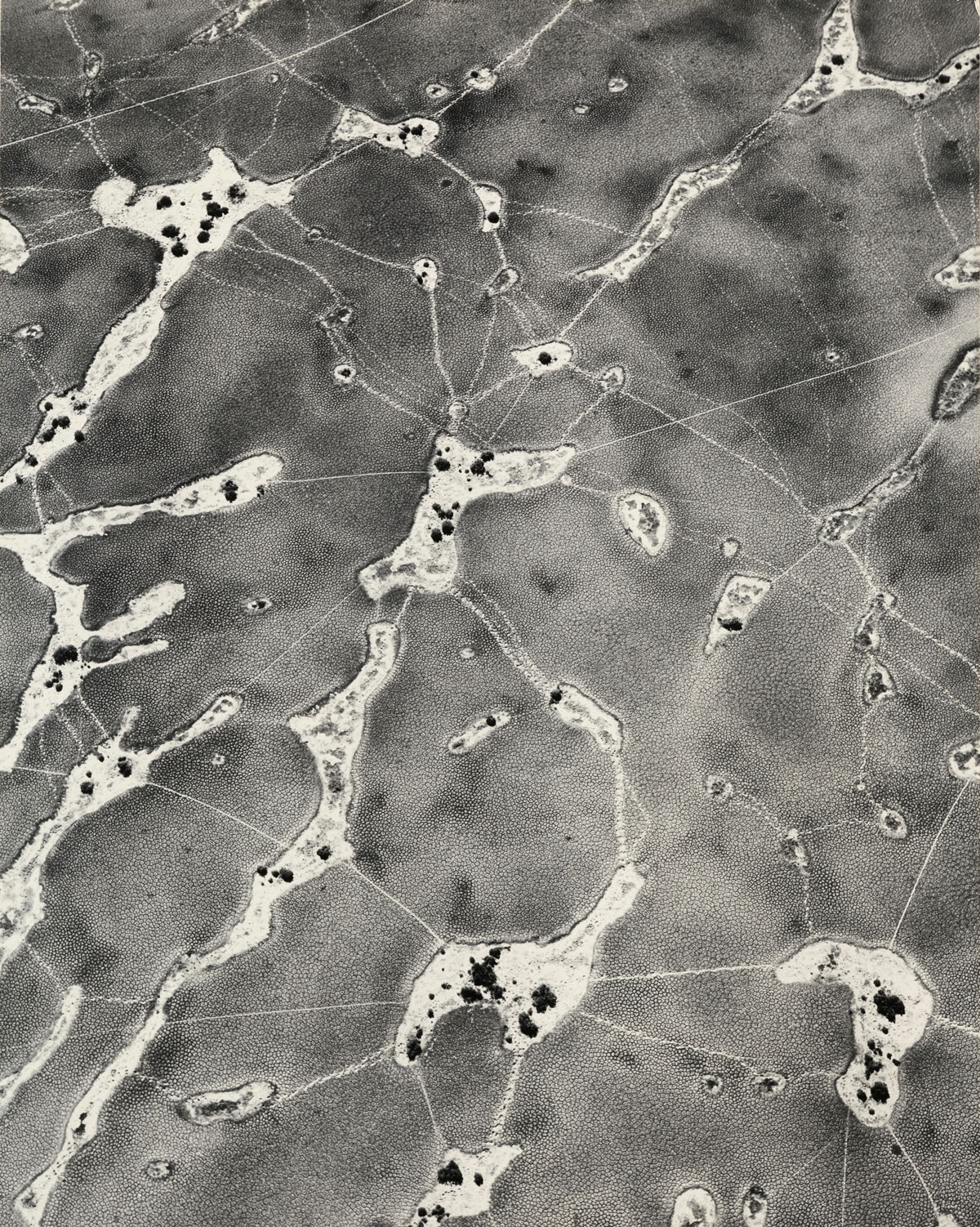
William Garnett (American, 1916-2006) 'Animal Tracks on Dry Lake' 1955


William Garnett (American, 1916-2006)
Animal Tracks on Dry Lake
1955
Gelatin silver print
The Morgan Library & Museum, Purchased on the Charina Endowment Fund


After making films for the U.S. Signal Corps during World War II, Garnett used GI-Bill funding to earn a pilot’s license. By the early 1950s, he had the field of artistic aerial landscape virtually to himself. This print, showing the ephemeral traces of wildlife movement on a dry lake bed, appeared in Diogenes with a Camera IV (1956), one in a series of exhibitions at the Museum of Modern Art that highlighted the great variety of ways in which artists used photography to invent new forms of visual truth.


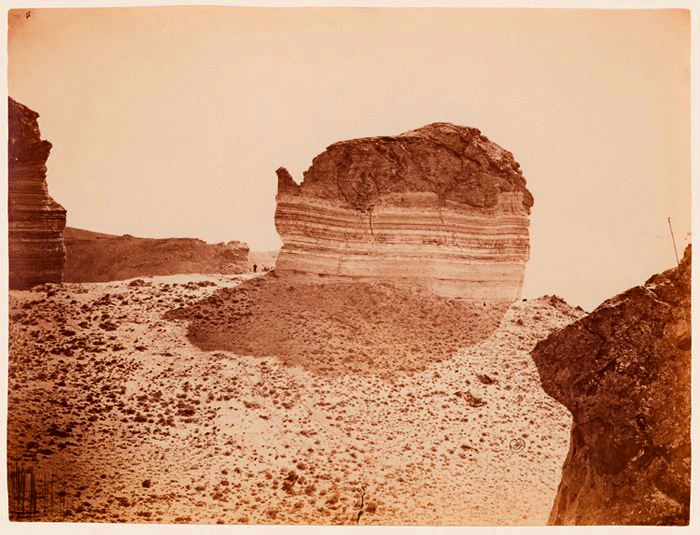
William Henry Jackson (American, 1843-1942) '"Tea Pot" Rock' 1870


William Henry Jackson (American, 1843-1942)
“Tea Pot” Rock
1870
Albumen silver print
George Eastman Museum, Purchase


Jackson made this photograph as a member of the survey team formed by Ferdinand V. Hayden to explore and document the territory now known as Yellowstone National Park. Hayden’s primary goal was to gather information about the area’s geological history, and Jackson’s photographs record with precision and clarity the accumulated layers of sediment that allow this natural landmark to be fit into a geological chronology. The human figure standing at the left of the composition provides information about the size of the rock, demonstrating that photographers have long recognised the difficulty of making accurate inferences about scale based on photographic images.


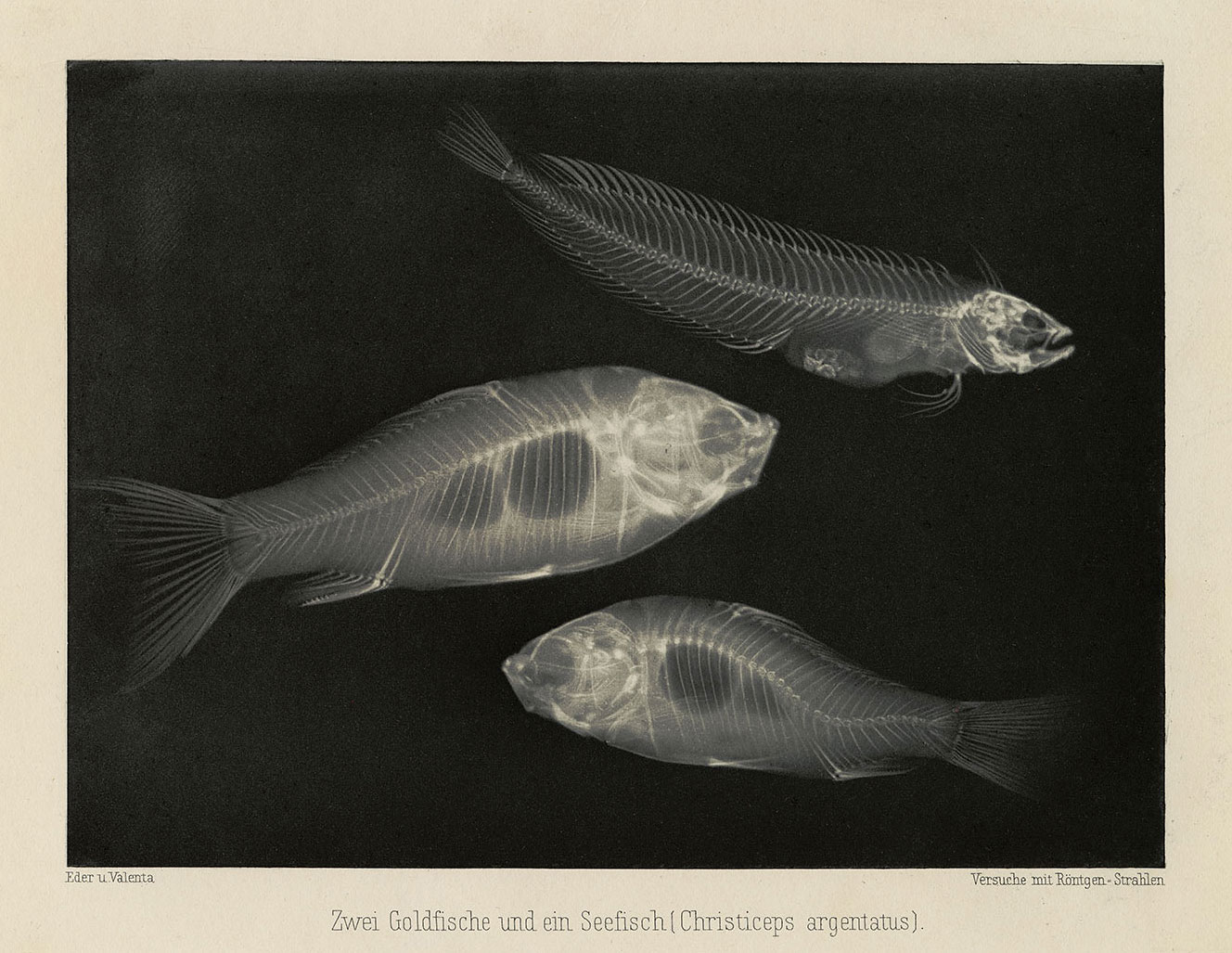
Dr. Josef Maria Eder (Austrian, 1855-1944) Eduard Valenta (Austrian, 1857-1937) 'Zwei Goldfische und ein Seefisch (Christiceps argentatus)' 1896


Dr Josef Maria Eder (Austrian, 1855-1944)
Eduard Valenta (Austrian, 1857-1937)
Zwei Goldfische und ein Seefisch (Christiceps argentatus)
Two goldfish and a sea fish (Christiceps argentatus)
1896
From the book Versuche über Photographie mittelst der Röntgen’schen Strahlen (Experiments on photography using X-rays)
Photogravure
George Eastman Museum, Gift of Eastman Kodak Company; Ex-collection of Josef Maria Eder


As early as 1840 – a year after photography’s invention was announced – scientists sought to deploy it in their analysis of the physical world. Combining the camera with the microscope, microphotographs recorded biological minutiae, leading to discoveries that would have been difficult, if not impossible, to obtain by observing subjects in real time. Similarly, the development of x-ray technology in 1895 allowed doctors to study living anatomy to an unprecedented degree. Such innovations not only expanded the boundaries of the visible world but also introduced graphic concepts that would have a profound impact on visual culture.


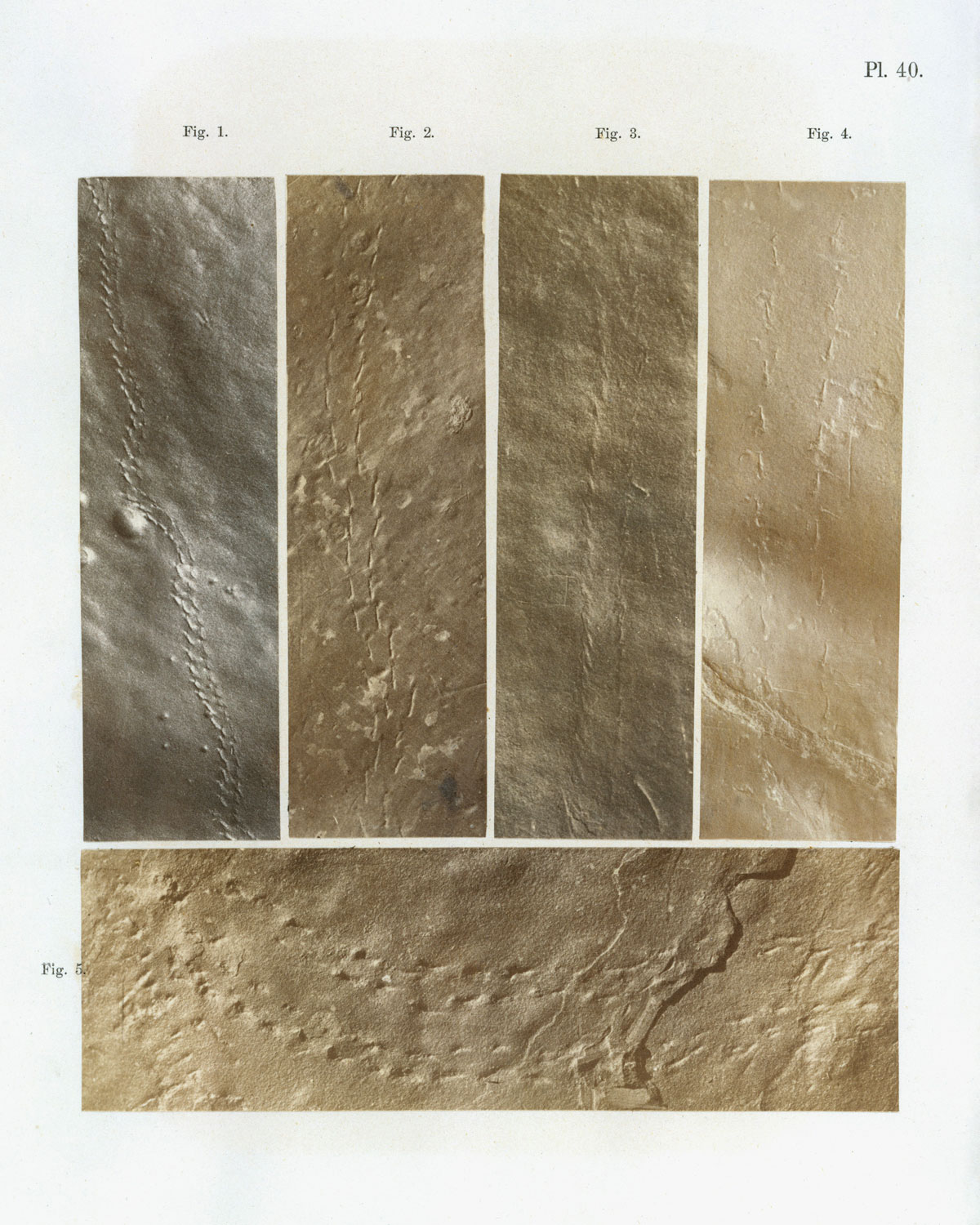
Dr James Deane (American, 1801-1858) 'Ichnographs from the Sandstone of Connecticut River' 1861


Dr James Deane (American, 1801-1858)
Ichnographs from the Sandstone of Connecticut River
1861
Book illustrated with 22 salted paper prints and 37 lithographs
George Eastman Museum, Gift of Alden Scott Boyer


These photographs, which depict traces of fossils discovered in a sandstone quarry, illustrate a book written by Massachusetts surgeon James Deane, who was the author of texts on medicine as well as natural history. Published posthumously using his notes and photographs as a guide, the volume is an early demonstration of photography’s potential as a tool of scientific investigation.


VI. The Photograph Decodes Culture

The photograph not only changed but to a great extent invented the modern notion of celebrity. Modern-age celebrities live apart from the general public, but their faces are more familiar than those of the neighbours next door. Since the mid-nineteenth century, viewers have come to “know” the famous through accumulated photographic sightings, which come in formats and contexts that vary as much as real-life encounters do. In four images that would have communicated instantly to their intended viewers in 1966, Jean-Pierre Ducatez (b. 1970) portrayed the Beatles through closeups of their mouths alone. The graphic shorthand employed by Jonathan Lewis in his series The Pixles is of a more recent variety, but he, too, relies on the visual familiarity conferred by tremendous celebrity. Each print in the series reproduces the iconic art of a Beatles album cover at life size (12 x 12 inches) but extremely low resolution (12 x 12 pixels). Like celebrities themselves, perhaps, the images look more familiar to the eye at a distance than close-up.


Unidentified maker. 'U. S. Grant' c. 1862


Unidentified maker
U. S. Grant
c. 1862
Albumen silver print
George Eastman Museum, Purchase


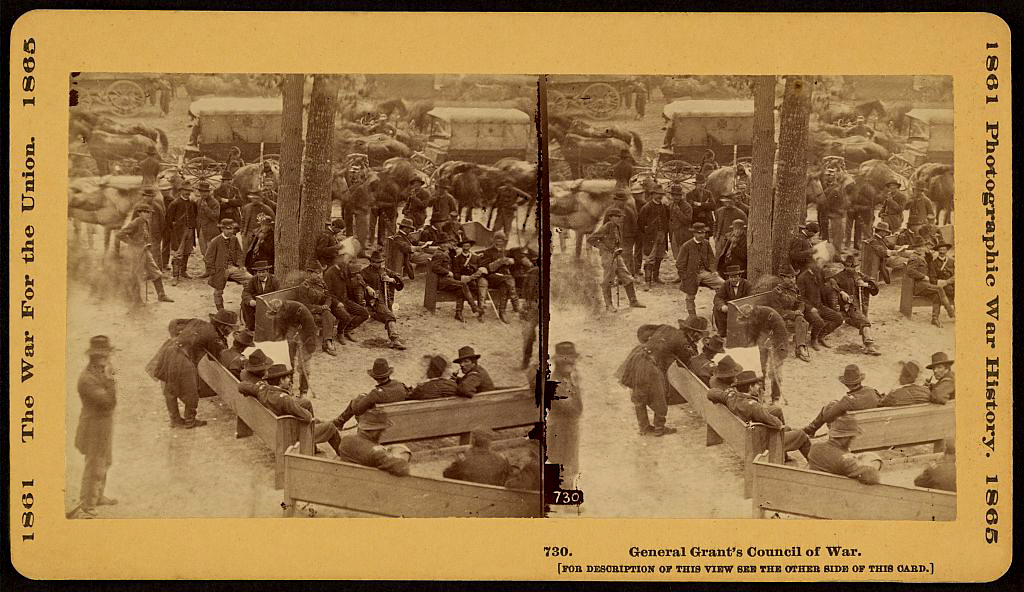
Timothy H. O'Sullivan (American born Ireland, 1840-1882) 'A Council of War at Massaponax Church, Va. 21st May, 1864. Gens. Grant and Meade, Asst. Sec. of War Dana, and Their Staff Officers' 1864


Timothy H. O’Sullivan (American born Ireland, 1840-1882)
A Council of War at Massaponax Church, Va. 21st May, 1864. Gens. Grant and Meade, Asst. Sec. of War Dana, and Their Staff Officers
1864
From the series Photographic Incidents of the War
Albumen silver print stereograph
George Eastman Museum, Gift of Albert Morton Turner


Modern celebrities live apart from the general public, yet their faces are more familiar than those of the neighbors next door. Since the mid-nineteenth century, viewers have come to “know” the famous through accumulated photographic sightings, which come in formats and contexts that vary as much as real-life encounters do. First as a Union hero in the American Civil War and later as president, Ulysses S. Grant (1822-1885) lived in the public imagination through news images, popular stereographs, campaign buttons, and ultimately the (photo-based) face on the $50 bill. Grant was even a subject for Francois Willème’s patented process for generating a sculpted likeness out of photographs made in the round – an early forerunner to the technology of 3-D printing.


Jonathan Lewis (British, b. 1970) 'Abbey Road' 2003


Jonathan Lewis (British, b. 1970)
Abbey Road
2003
From The Pixles
Inkjet print
George Eastman Museum, By exchange with the artist


Jonathan Lewis (British, b. 1970) 'Please Please Me' 2003


Jonathan Lewis (British, b. 1970)
Please Please Me
2003
From The Pixles
Inkjet print
George Eastman Museum, By exchange with the artist


Jonathan Lewis (British, b. 1970) 'Rubber Soul' 2003


Jonathan Lewis (British, b. 1970)
Rubber Soul
2003
From The Pixles
Inkjet print
George Eastman Museum, By exchange with the artist


Synecdoche is a poetic device in which a part stands in for the whole. (In the phrase “three sails set forth,” sails mean ships.) In four images that would have communicated instantly to their intended viewers in 1966, Ducatez portrayed the Beatles solely through close-ups of their mouths. The graphic shorthand Lewis employs in his series The Pixles is of a more recent variety, though he, too, relies on the visual familiarity conferred by tremendous celebrity. Each print in the series reproduces a Beatles album cover at life size (12 x 12 inches) but extremely low resolution (12 x 12 pixels).


VII. Meaning is on the Surface

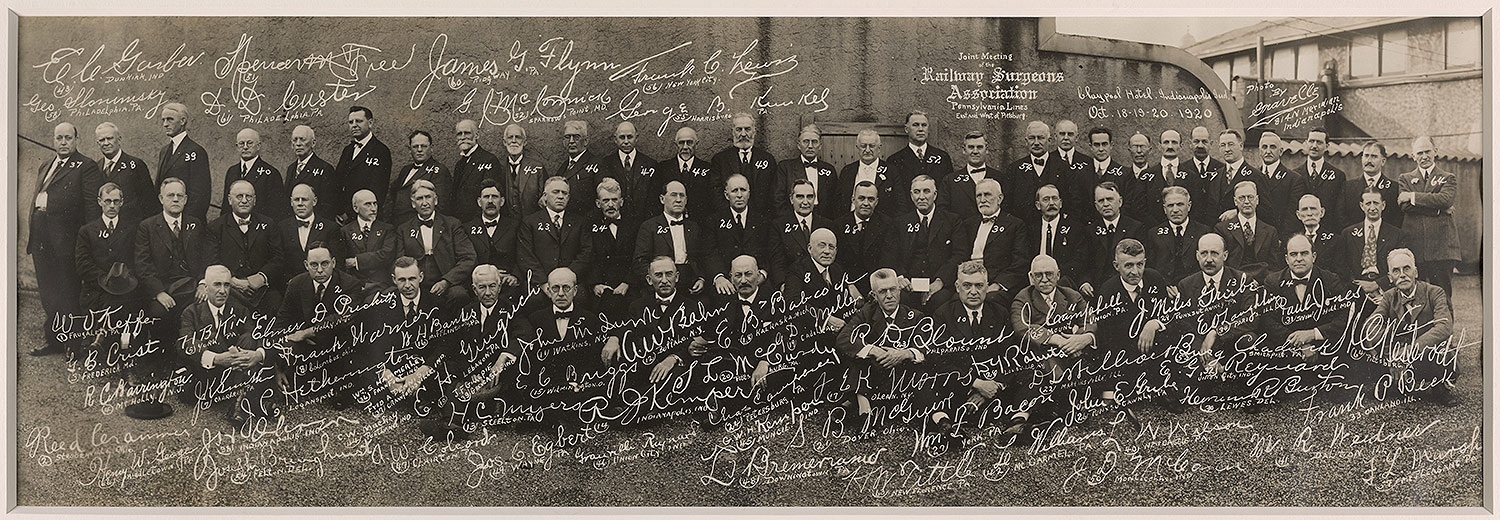
Photographs are not just windows onto the world but pieces of paper, which can themselves be inscribed or otherwise altered in ways that enrich or amend their meaning. The group portrait Joint Meeting of the Railway Surgeons Association, Claypool Hotel, Indianapolis (1920) is contact printed, meaning that the negative was the same size as the print. After the portrait sitting, the photographer appears to have presented the developed film to the sixty-four sitters for signing during the three days they were assembled for their convention. The result is a document that unites two conventional signifiers of character: facial features and the autograph.


Gravelle Studio, Indianapolis (American, active 1920) 'Joint Meeting of the Railway Surgeons Association, Claypool Hotel, Indianapolis' 1920


Gravelle Studio, Indianapolis (American, active 1920)
Joint Meeting of the Railway Surgeons Association, Claypool Hotel, Indianapolis
1920
Gelatin silver print
The Morgan Library & Museum, Purchased as the gift of Peter J. Cohen


Panoramic group portraits such as this are made using a banquet camera, which admits light through a narrow vertical slit while rotating on its tripod. This image was contact printed, meaning the negative was the same size as the print. The photographer appears to have presented the developed film to the sixty-four sitters for signing during the three days they were assembled. The result is a document that unites two conventional signifiers of character: facial features and the autograph.


Keith Smith (American, b. 1938) 'Book 151' 1989


Keith Smith (American, b. 1938)
Book 151
1989
Bound book of gelatin silver prints, thread, and leather
Collection of Richard and Ronay Menschel


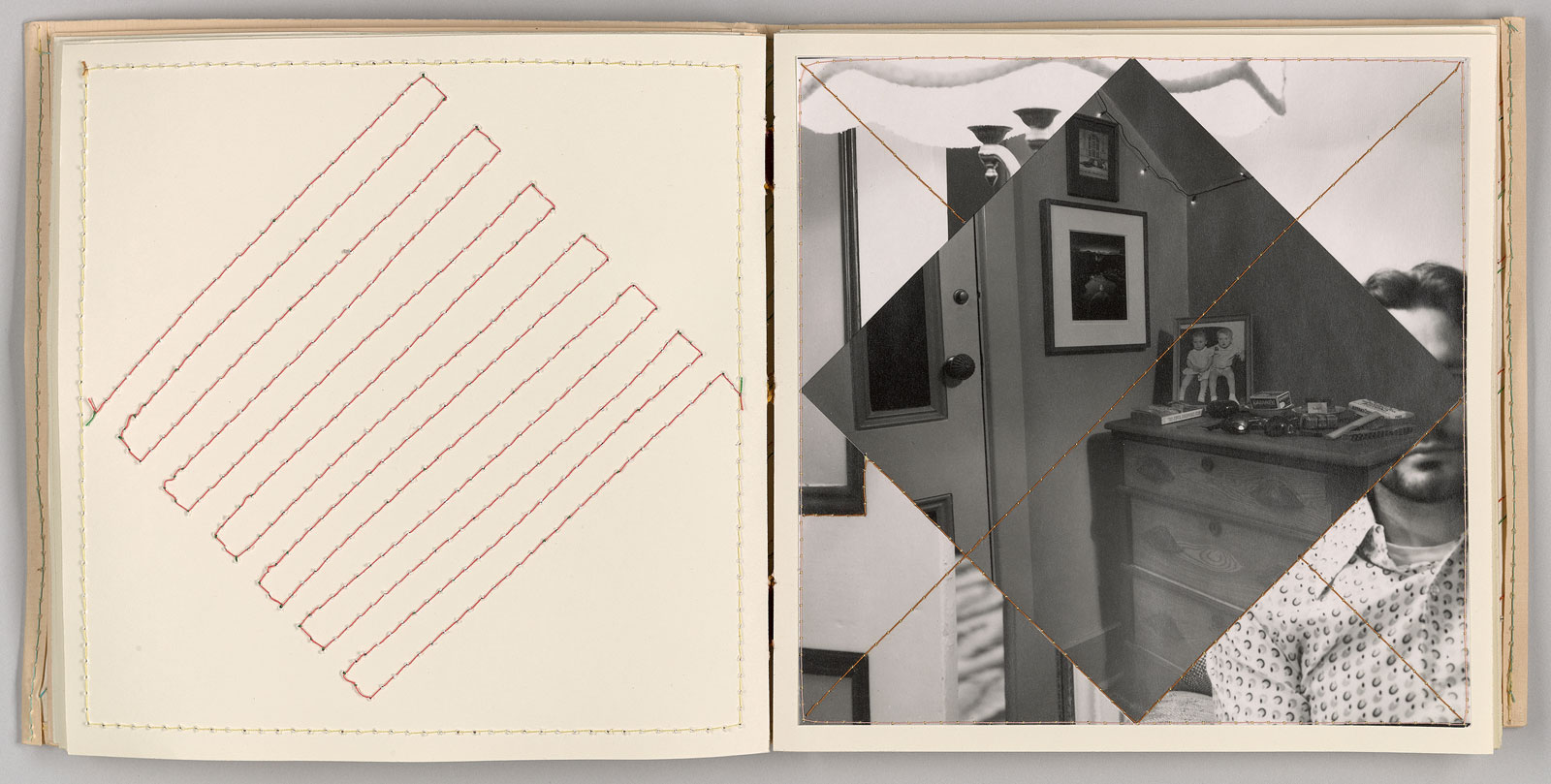
This unique object unites the arts of photography, quilting, and bookmaking. The composite image on each right-hand page appears to be made of prints cut apart and sewn together. In fact, Smith began by printing patchwork-inspired photomontages in the darkroom. He then stitched along many of the borders where abutting images meet, creating the illusion of a photographic crazy quilt.


VIII. Photography and the Page

News of the world took on a newly visual character in the 1880s, when the technology of the halftone screen made it practical, at last, to render photographs in ink on the printed page.

Among the earliest examples of photojournalism is Paul Nadar’s (1820-1910) “photographic interview” with Georges Ernest Boulanger, a once-powerful French politician. The article’s introduction explains that the photographs were printed alongside the text in order to provide evidence of the encounter and to illustrate Boulanger’s dynamic body language during the conversation.


Stephen Henry Horgan (American, 1854-1941) 'Shanty Town' April 1880


Stephen Henry Horgan (American, 1854-1941)
Shanty Town
April 1880
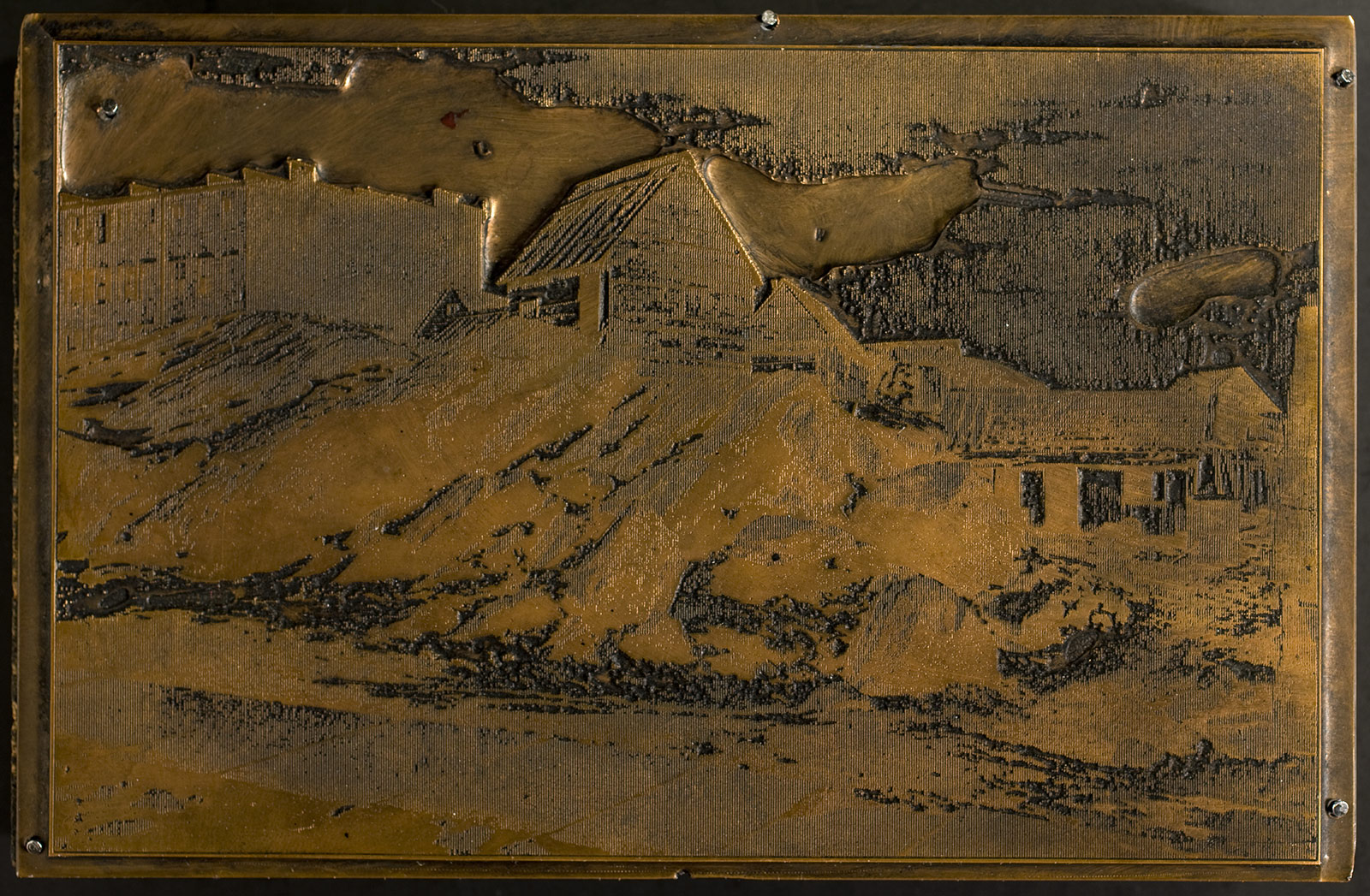
Photomechanical printing plate A Scene in Shantytown, New York, c. 1928
Lithograph
George Eastman Museum, Gift of 3M Foundation; Ex-collection of Louis Walton Sipley


Paul Nadar (French, 1856-1939) 'Interview with Georges Ernest Jean Marie Boulanger' 1889


Paul Nadar (French, 1856-1939)
Interview with Georges Ernest Jean Marie Boulanger
1889
Le Figaro, 23 November 1889
Photomechanical reproduction
George Eastman Museum, gift of Eastman Kodak Company; ex-collection Gabriel Cromer


Among the earliest examples of photojournalism is Nadar’s “photographic interview” with Georges Ernest Boulanger, a once-powerful French politician who had fallen out of public favour by the time this was published. The article’s introduction explains that the photographs were printed alongside the text in order to provide evidence of the encounter and to illustrate Boulanger’s body language during the conversation.


Lewis W. Hine (American, 1874-1940) 'Italian Family Looking for Lost Baggage, Ellis Island' 1905


Lewis W. Hine (American, 1874-1940)
Italian Family Looking for Lost Baggage, Ellis Island
1905
Ellis Island Group, 1905
Gelatin silver print
George Eastman Museum, Gift of Photo League Lewis Hine Memorial Committee


In an effort to counter American xenophobia in the early years of the twentieth century, Hine photographed immigrants as they arrived at Ellis Island, composing his images to stir sympathy and understanding among viewers. He understood the importance of disseminating his photographs and actively sought to publish them in newspapers, magazines, and pamphlets. The white outline in the photograph on the right instructs the designer and printer where to crop the image for a photomontage featuring figures from multiple portraits.


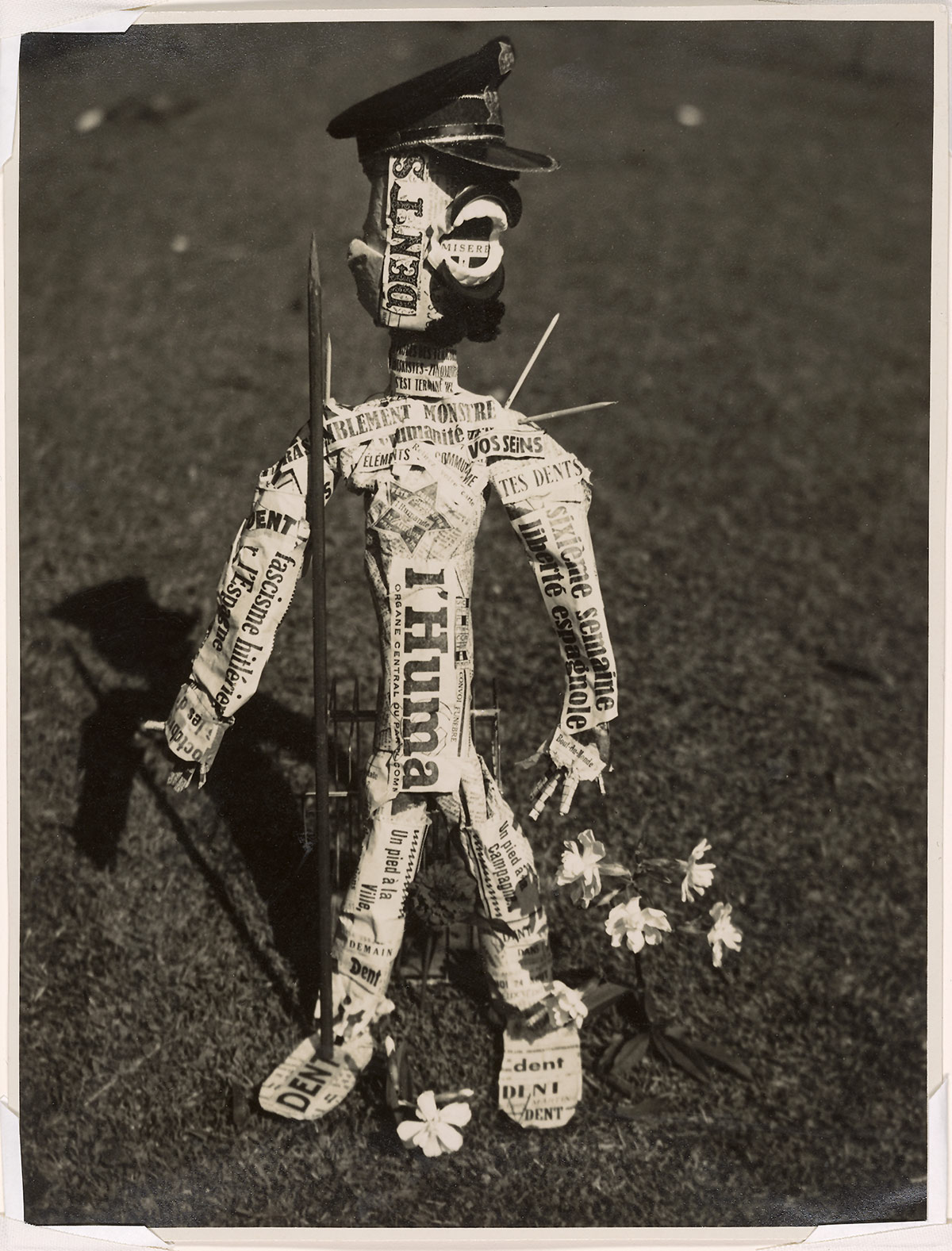
Claude Cahun (French, 1894-1954) 'La Poupée' (Puppet) 1936


Claude Cahun (French, 1894-1954)
La Poupée (Puppet)
1936
Gelatin silver print
Collection of Richard and Ronay Menschel


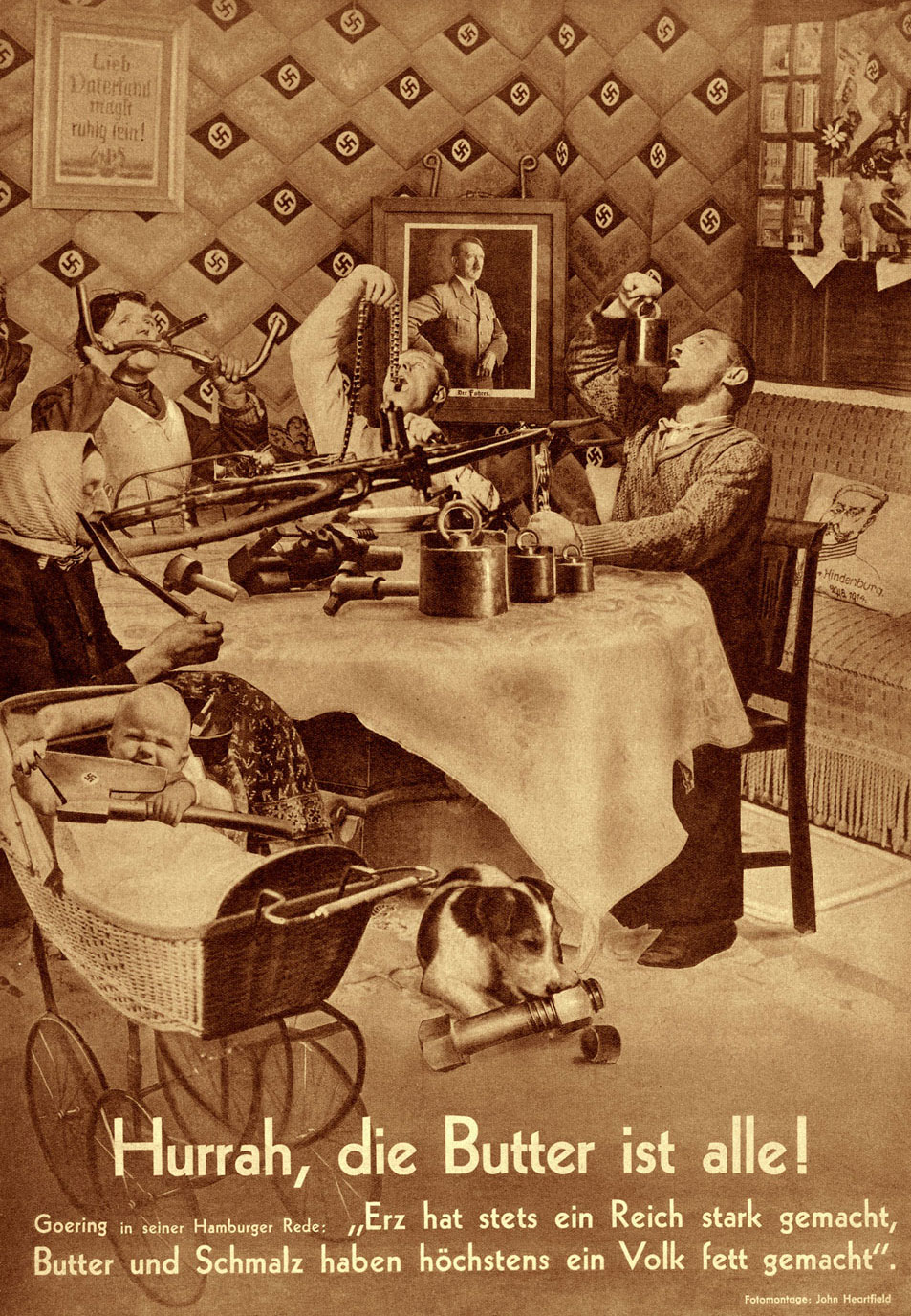
John Heartfield (German, 1891-1968) 'Hurrah, die Butter ist alle!' (Hooray, the Butter Is Finished!) 1935


John Heartfield (German, 1891-1968)
Hurrah, die Butter ist alle! (Hooray, the Butter Is Finished!)
1935
Rotogravure
George Eastman Museum, purchase


This is one of 237 photomontages that Heartfield created between 1930 and 1938 for the antifascist magazine Arbeiter-Illustrierte-Zeitung (Worker’s Pictorial Newspaper). It is a parody of the “Guns Before Butter” speech in which Hermann G.ring exhorted German citizens to sacrifice necessities in order to aid the nation’s rearmament. The text reads: “Iron ore has always made an empire strong; butter and lard have at most made a people fat.” Heartfield combined details from several photographs to conjure the image of a German family feasting on tools, machine parts, and a bicycle in a swastika-laden dining room, complete with a portrait of Hitler, a framed phrase from a popular Franco-Prussian war-era song, and a throw pillow bearing the likeness of recently deceased president Paul von Hindenburg.


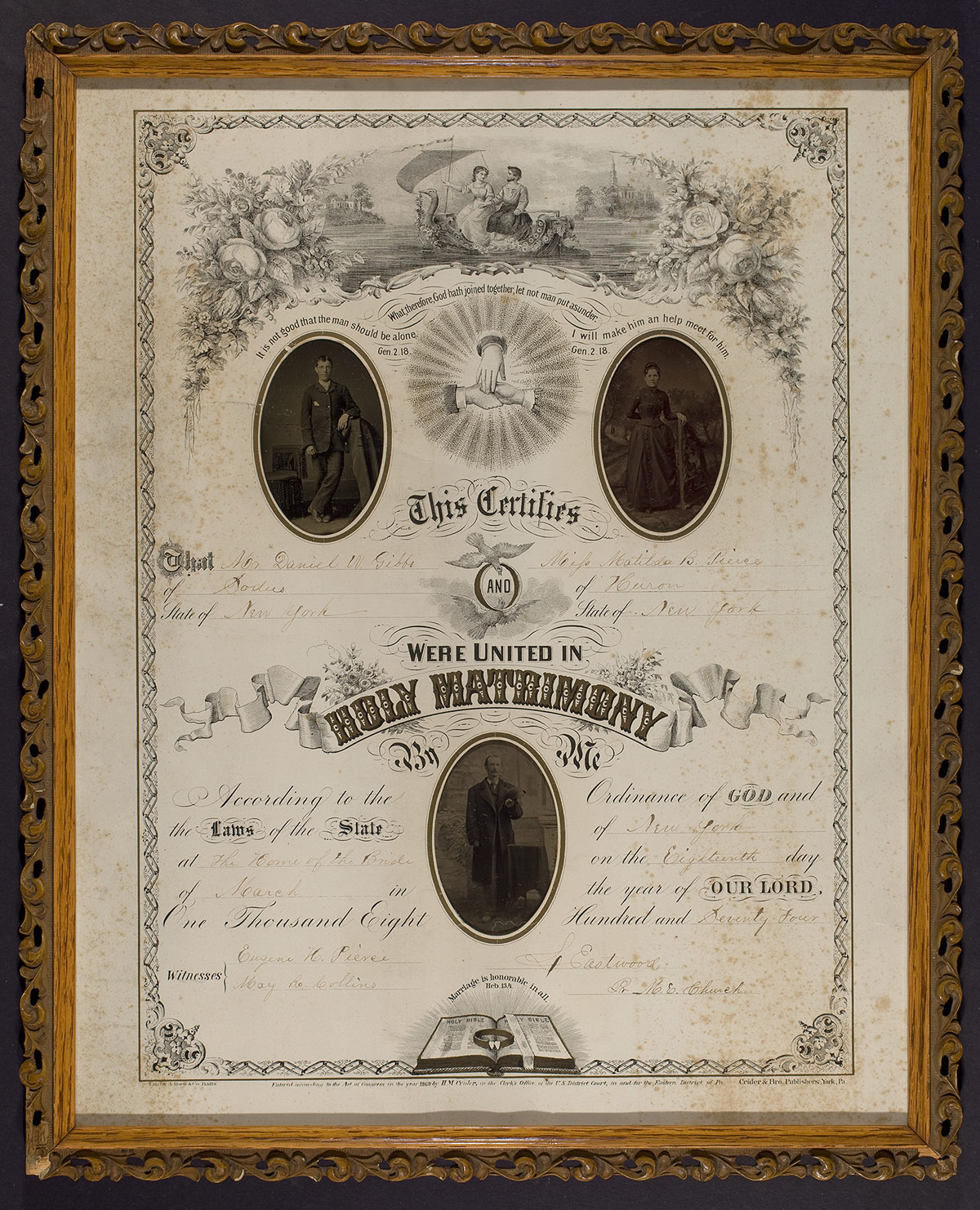
Unidentified maker. 'Certificate of Marriage between Daniel W. Gibbs and Matilda B. Pierce' c. 1874


Unidentified maker
Certificate of Marriage between Daniel W. Gibbs and Matilda B. Pierce
c. 1874
Tintypes in prepared paper mount
George Eastman Museum, Purchase


Graphic cousins to one other, these wedding certificates are equipped with precut windows for photographs of the bride, groom, and officiant. The portraits, in partnership with the printed and inscribed text on the forms, contribute both to the documentary specificity of the certificates and to their value as sentimental souvenirs.


IX. Empire of Signs

The plethora of signs, symbols, and visual noise endemic to cities has attracted photographers since the medium’s invention. Their records of advertisers’ strident demands for attention, shopkeepers’ alluring displays, and the often dizzying architectural density of metropolitan life chronicle sights that are subject to change without notice. The photographer’s perspective on contemporary social life – whether it is anecdotal, as in John Thompson’s (1837-1921) Street Advertising from Street Life in London (1877), or haunting, as in Eugène Atget’s (1857-1927) Impasse des Bourdonnais (c. 1908) – is embedded in each image.


John Thomson (Scottish, 1837-1921) 'Street Advertising' 1877


John Thomson (Scottish, 1837-1921)
Street Advertising
1877
From Street Life in London, 1877
Woodburytype
George Eastman Museum, Gift of Alden Scott Boyer


Eugène Atget (French, 1857-1927) 'Impasse des Bourdonnais' c. 1908


Eugène Atget (French, 1857-1927)
Impasse des Bourdonnais
c. 1908
Albumen silver print
George Eastman Museum, Purchase


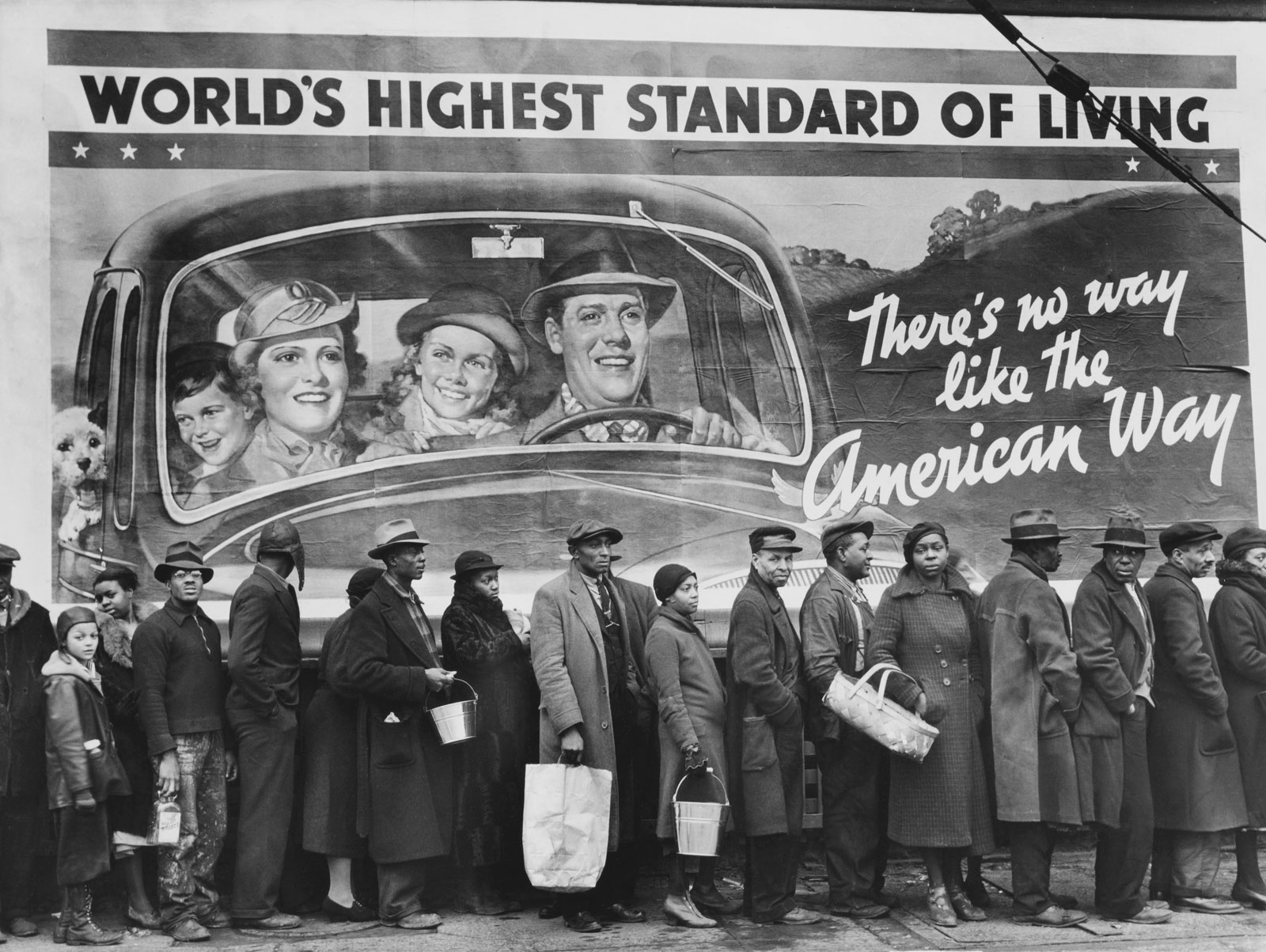
Margaret Bourke-White (American, 1904-1971) 'At the Time of the Louisville Flood' 1937


Margaret Bourke-White (American, 1904-1971)
At the Time of the Louisville Flood
1937
Gelatin silver print
George Eastman Museum


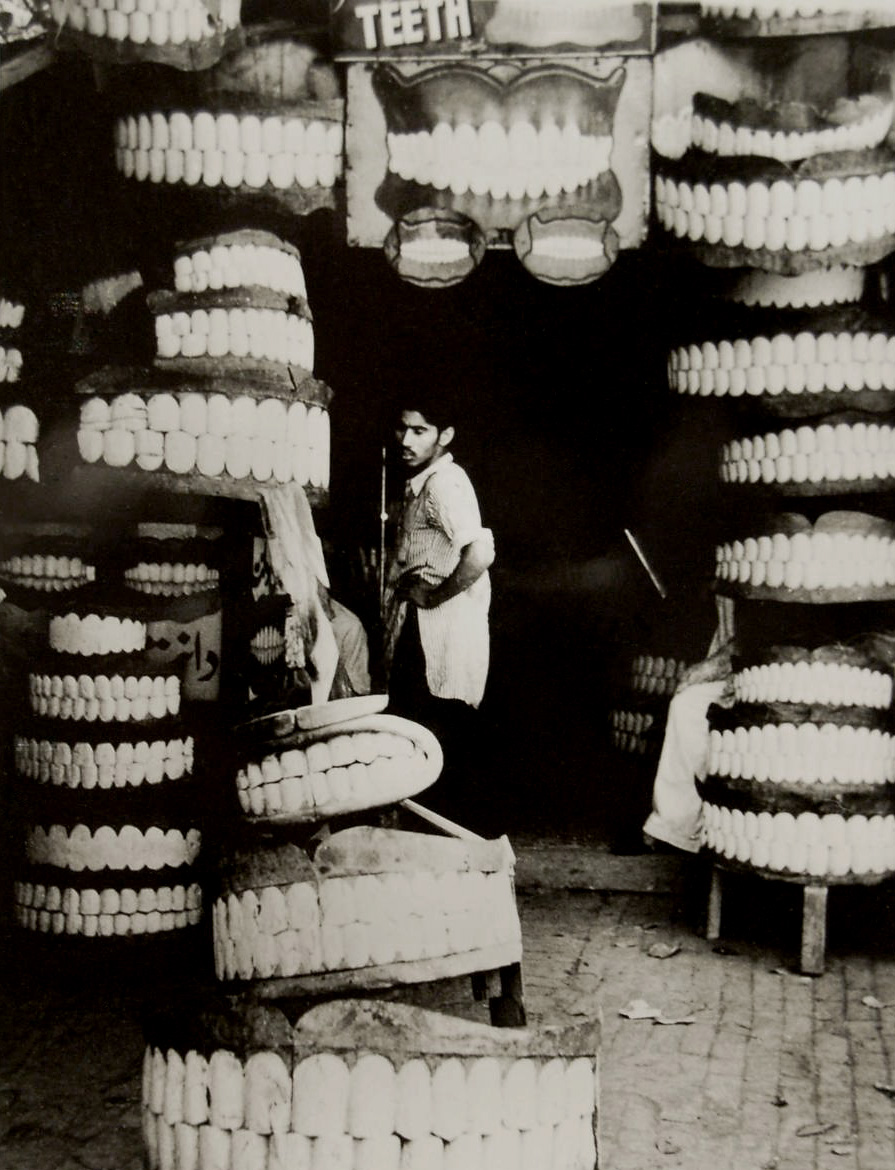
The plethora of signs, symbols, and visual noise endemic to cities has attracted photographers since the medium’s invention. Their records of advertisers’ strident demands for attention, shopkeepers’ alluring displays, and the often dizzying architectural density of metropolitan life chronicle sights that are subject to change without notice. The photographer’s perspective on contemporary social life – whether it is ironic, as in Margaret Bourke-White’s image of a line of flood victims before a billboard advertising middle-class prosperity, or bemused, as in Ferenc Berko’s photograph of columns of oversized artificial teeth on the street – is embedded in each image.


Ferenc Berko (American born Hungary, 1916-2000) 'Rawalpindi, India' 1946


Ferenc Berko (American born Hungary, 1916-2000)
Rawalpindi, India
1946
Gelatin silver print
George Eastman House, Gift of Katharine Kuh


Aaron Siskind (American, 1903-1991) 'New York 6' 1951


Aaron Siskind (American, 1903-1991)
New York 6
1951
Gelatin silver print
The Morgan Library & Museum, Gift of Richard and Ronay Menschel


Alex Webb (American, b. 1952) 'India' 1981


Alex Webb (American, b. 1952)
India
1981
Chromogenic development print
George Eastman Museum, Purchased with funds from Charina Foundation


The Morgan Library & Museum
225 Madison Avenue, at 36th Street
New York, NY 10016-3405
Phone: (212) 685-0008

Opening hours:
Tuesday – Thursday, Saturday – Sunday: 10.30am – 5pm
Friday: 10.30am – 7pm
Closed Mondays

The Morgan Library & Museum website

LIKE ART BLART ON FACEBOOK

Back to top

Exhibition: ‘Salt and Silver: Early Photography 1840-1860’ at Tate Britain, London

Exhibition dates: 25th February – 7th June 2015

Curators: Carol Jacobi, Curator, British Art 1850-1915, Tate Britain, Simon Baker, Curator, Photography and International Art, Tate, and Hannah Lyons, Assistant Curator, 1850-1915, Tate


'Salt and Silver' exhibition at Tate Britain


“Salt prints are the very first photographs on paper that still exist today. Made in the first twenty years of photography, they are the results of esoteric knowledge and skill. Individual, sometimes unpredictable, and ultimately magical, the chemical capacity to ‘fix a shadow’ on light sensitive paper, coated in silver salts, was believed to be a kind of alchemy, where nature drew its own picture.”


These salted paper prints, one of the earliest forms of photography, are astonishing. The delicacy and nuance of shade and feeling; possessing a soft, luxurious aesthetic that is astounding today… but just imagine looking at these images at the time they were taken. The shock, the recognition, the delight and the romance of seeing aspects of your life and the world around you, near and far, drawn in light – having a physical presence in the photographs before your eyes. The aura of the original, the photograph AS referent – unlike contemporary media saturated society where the image IS reality, endlessly repeated, divorced from the world in which we live.

The posting has taken a long time to put together, from researching the birth and death dates of the artists (not supplied), to finding illustrative texts and biographies of each artist (some translated from the French). But the real joy in assembling this posting is when I sequence the images. How much pleasure does it give to be able to sequence Auguste Salzmann’s Terra Cotta Statuettes from Camiros, Rhodes followed by three Newhaven fishermen rogues (you wouldn’t want to meet them on a dark night!), and then the totally different feel of Fenton’s Group of Croat Chiefs. Follow this up with one of the most stunning photographs of the posting, Roger Fenton’s portrait Captain Mottram Andrews, 28th Regiment (1st Staffordshire) Regiment of Foot of 1855 and you have a magnificent, almost revelatory, quaternity/eternity.

Dr Marcus Bunyan


Many thankx to Tate Britain for allowing me to publish the photographs in the posting. Please click on the photographs for a larger version of the image.


Calvert Jones. 'The Fruit Sellers' c. 1843


Calvert Jones (Welsh, December 4, 1804 – November 7, 1877)
The Fruit Sellers
c. 1843
Photograph, salted paper print from a paper negative


David Hill and Robert Adamson. 'Five Newhaven fisherwomen' c. 1844


David Hill (Scottish, 1802-1870) and Robert Adamson (Scottish, 1821-1848)
Five Newhaven fisherwomen

c. 1844
Photograph, salted paper print from a paper negative


David Hill and Robert Adamson. 'The Gowan [Margaret and Mary Cavendish]' c. 1843-1848


David Hill (Scottish, 1802-1870) and Robert Adamson (Scottish, 1821-1848)
The Gowan [Margaret and Mary Cavendish]
c. 1843-1844
Photograph, salted paper print from a paper negative


Salt and Silver: Early Photography 1840-1860 is the first major exhibition in Britain devoted to salt prints, the earliest form of paper photography. The exhibition features some of the rarest and best early photographs in the world, depicting daily activities and historic moments of the mid 19th century. The ninety photographs on display are among the few fragile salt prints that survive and are seldom shown in public. Salt and Silver: Early Photography 1840-1860 opens at Tate Britain on 25 February 2015.

In the 1840s and 50s, the salt print technique introduced a revolutionary new way of creating photographs on paper. It was invented in Britain and spread across the globe through the work of British and international photographers – artists, scientists, adventurers and entrepreneurs of their day. They captured historic moments and places with an immediacy not previously seen, from William Henry Fox Talbot’s images of a modern Paris street and Nelson’s Column under construction, to Linnaeus Tripe’s dramatic views of Puthu Mundapum, India and Auguste Salzmann’s uncanny studies of statues in Greece.

In portraiture, the faces of beloved children, celebrities, rich and poor were recorded as photographers sought to catch the human presence. Highlights include Fox Talbot’s shy and haunting photograph of his daughter Ela in 1842 to Nadar’s images of sophisticated Parisians and Roger Fenton’s shell-shocked soldiers in the Crimean war.

William Henry Fox Talbot unveiled this ground-breaking new process in 1839. He made the world’s first photographic prints by soaking paper in silver iodide salts to register a negative image which, when photographed again, created permanent paper positives. These hand-made photographs ranged in colour from sepia to violet, mulberry, terracotta, silver-grey, and charcoal-black and often had details drawn on like the swishing tail of a horse. Still lifes, portraits, landscapes and scenes of modern life were transformed into luxurious, soft, chiaroscuro images. The bold contrasts between light and dark in the images turned sooty shadows into solid shapes. Bold contrasts between light and dark turned shadows into abstract shapes and movement was often captured as a misty blur. The camera drew attention to previously overlooked details, such as the personal outline of trees and expressive textures of fabric.

In the exciting Victorian age of modern invention and innovation, the phenomenon of salt prints was quickly replaced by new photographic processes. The exhibition shows how, for a short but significant time, the British invention of salt prints swept the world and created a new visual experience.

Salt and Silver: Early Photography 1840 – 1860 is organised in collaboration with the Wilson Centre for photography. It is curated by Carol Jacobi, Curator, British Art 1850-1915, Tate Britain, Simon Baker, Curator, Photography and International Art, Tate, and Hannah Lyons, Assistant Curator, 1850-1915, Tate. ‘Salt and Silver’ – Early Photography 1840-1860 is published by Mack to coincide with the exhibition and will be accompanied by a programme of talks and events in the gallery.

Press release from the Tate website


William Fox Talbot. 'Scene in a Paris Street' 1843


William Henry Fox Talbot (British, 11 February 1800 – 17 September 1877)
Scene in a Paris Street
1843
Photograph, salted paper print from a paper negative


By 1841, Talbot had dramatically reduced, from many minutes to just seconds, the exposure time needed to produce a negative, and on a trip to Paris to publicise his new calotype process he took a picture from his hotel room window, an instinctive piece of photojournalism. The buildings opposite are rendered in precise and exquisite detail, the black and white stripes of the shutters neat alternations of light and shade. In contrast to the solidity of the buildings are the carriages waiting on the street below; the wheels, immobile, are seen in perfect clarity, while the skittish horses are no more than ghostly blurs.

Florence Hallett. “Salt and Silver, Tate Britain: Early photographs that brim with the spirit of experimentation,” on The Arts Desk website, Wednesday, 25 February 2015 [Online] Cited 03/06/2015.


William Henry Fox Talbot. 'Nelson’s Column Under Construction, Trafalgar Square' 1844


William Henry Fox Talbot (British, 11 February 1800 – 17 September 1877)
Nelson’s Column Under Construction, Trafalgar Square
1844
Salted paper print from a glass plate negative


William Henry Fox Talbot. 'Nelson's Column Under Construction, Trafalgar Square' 1844


William Henry Fox Talbot (British, 11 February 1800 – 17 September 1877)
Nelson’s Column Under Construction, Trafalgar Square
1844
Salted paper print from a glass plate negative


This is the first exhibition in Britain devoted to salted paper prints, one of the earliest forms of photography. A uniquely British invention, unveiled by William Henry Fox Talbot in 1839, salt prints spread across the globe, creating a new visual language of the modern moment. This revolutionary technique transformed subjects from still lifes, portraits, landscapes and scenes of daily life into images with their own specific aesthetic: a soft, luxurious effect particular to this photographic process. The few salt prints that survive are seldom seen due to their fragility, and so this exhibition, a collaboration with the Wilson Centre for Photography, is a singular opportunity to see the rarest and best early photographs of this type in the world.

“The technique went as follows: coat paper with a silver nitrate solution and expose it to light, thus producing a faint silver image. He later realised if you apply salt to the paper first and then spread on the silver nitrate solution the resulting image is much sharper. His resulting photos, ranging in colour from sepia to violet, mulberry, terracotta, silver-grey, and charcoal-black, were shadowy and soft, yet able to pick up on details that previously went overlooked – details like the texture of a horse’s fur, or the delicate silhouette of a tree.”

Priscilla Frank. “The First Paper Photographs Were Made With Salt, And They Look Like This,” on the Huffington Post website 03/06/2015 [Online] Cited 03/06/2015.


William Henry Fox Talbot. 'Cloisters, Lacock Abbey' 1843


William Henry Fox Talbot (British, 11 February 1800 – 17 September 1877)
Cloisters, Lacock Abbey
1843


William Henry Fox Talbot (11 February 1800 – 17 September 1877)

William Henry Fox Talbot (11 February 1800 – 17 September 1877) was a British scientist, inventor and photography pioneer who invented the salted paper and calotype processes, precursors to photographic processes of the later 19th and 20th centuries. Talbot was also a noted photographer who made major contributions to the development of photography as an artistic medium. He published The Pencil of Nature (1844), which was illustrated with original prints from some of his calotype negatives. His work in the 1840s on photo-mechanical reproduction led to the creation of the photoglyphic engraving process, the precursor to photogravure. Talbot is also remembered as the holder of a patent which, some say, affected the early development of commercial photography in Britain. Additionally, he made some important early photographs of Oxford, Paris, Reading, and York.


William Henry Fox Talbot. 'Study of China' 1844


William Henry Fox Talbot (British, 11 February 1800 – 17 September 1877)
Study of China
1844
© Wilson Centre for Photography


William Henry Fox Talbot. 'Plaster Bust of Patroclus' before February 1846


William Henry Fox Talbot (British, 11 February 1800 – 17 September 1877)
Plaster Bust of Patroclus
before February 1846
© Wilson Centre for Photography


John Beasly Greene. 'El Assasif, Porte de Granit Rose, No 2, Thébes' 1854


John Beasly Greene (French-American, 1832-1856)
El Assasif, Porte de Granit Rose, No 2, Thébes
1854
Salted paper print from a waxed plate negative


John Beasly Greene (French-American, 1832-1856)

A French-born archeologist based in Paris and a student of photographer Gustave Le Gray, John Beasly Greene became a founding member of the Société Française de Photographie and belonged to two societies devoted to Eastern studies. Greene became the first practicing archaeologist to use photography, although he was careful to keep separate files for his documentary images and his more artistic landscapes.

In 1853 at the age of nineteen, Greene embarked on an expedition to Egypt and Nubia to photograph the land and document the monuments and their inscriptions. Upon his return, Louis Désiré Blanquart-Evrard published an album of ninety-four of these photographs. Greene returned to Egypt the following year to photograph and to excavate at Medinet-Habu in Upper Egypt, the site of the mortuary temple built by Ramses III. In 1855 he published his photographs of the excavation there. The following year, Greene died in Egypt, perhaps of tuberculosis, and his negatives were given to his friend, fellow Egyptologist and photographer Théodule Devéria.

Text from the Getty Museum website


James Robertson and Felice Beato. 'Pyramids at Giza' 1857


James Robertson (British, 1813-1888) and Felice Beato (Italian-British, 1832 – 29 January 1909)
Pyramids at Giza
1857
Photograph, salted paper print from a glass plate negative


James Robertson (British, 1813-1888)

James Robertson (1813-1888) was an English photographer and gem and coin engraver who worked in the Mediterranean region, the Crimea and possibly India. He was one of the first war photographers.

Robertson was born in Middlesex in 1813. He trained as an engraver under Wyon (probably William Wyon) and in 1843 he began work as an “engraver and die-stamper” at the Imperial Ottoman Mint in Constantinople. It is believed that Robertson became interested in photography while in the Ottoman Empire in the 1840s.

In 1853 he began photographing with British photographer Felice Beato and the two formed a partnership called Robertson & Beato either in that year or in 1854 when Robertson opened a photographic studio in Pera, Constantinople. Robertson and Beato were joined by Beato’s brother, Antonio on photographic expeditions to Malta in 1854 or 1856 and to Greece and Jerusalem in 1857. A number of the firm’s photographs produced in the 1850s are signed Robertson, Beato and Co. and it is believed that “and Co.” refers to Antonio.

In late 1854 or early 1855 Robertson married the Beato brothers’ sister, Leonilda Maria Matilda Beato. They had three daughters, Catherine Grace (born in 1856), Edith Marcon Vergence (born in 1859) and Helen Beatruc (born in 1861). In 1855 Robertson and Felice Beato travelled to Balaklava, Crimea where they took over reportage of the Crimean War from Roger Fenton. They photographed the fall of Sevastopol in September 1855. Some sources have suggested that in 1857 both Robertson and Felice Beato went to India to photograph the aftermath of the Indian Rebellion, but it is more probable that Beato travelled there alone. Around this time Robertson did photograph in Palestine, Syria, Malta, and Cairo with either or both of the Beato brothers.

In 1860, after Felice Beato left for China to photograph the Second Opium War and Antonio Beato went to Egypt, Robertson briefly teamed up with Charles Shepherd back in Constantinople. The firm of Robertson & Beato was dissolved in 1867, having produced images – including remarkable multiple-print panoramas – of Malta, Greece, Turkey, Damascus, Jerusalem, Egypt, the Crimea and India. Robertson possibly gave up photography in the 1860s; he returned to work as an engraver at the Imperial Ottoman Mint until his retirement in 1881. In that year he left for Yokohama, Japan, arriving in January 1882. He died there in April 1888.

Text from the Wikipedia website


James Robertson. 'Base of the Obelisk of Theodosius, Constantinople' 1855


James Robertson (British, 1813-1888)
Base of the Obelisk of Theodosius, Constantinople
1855
Salted paper print from a glass plate negative


Exhibition of intriguing images that charts the birth of photography

Another week, another photography show about death. It’s not officially about death, mind you; it’s officially about the years 1840 to 1860, when photographers made their images on paper sensitised with silver salts. The process was quickly superseded, but the pictures created this way have a beautiful artistic softness and subtlety of tone, quite apart from the fact that every single new photograph that succeeded represented a huge leap forward in the development of the medium. You see these early practitioners start to grasp the scope of what might be possible. Their subjects change, from ivy-covered walls and carefully posed family groups to more exotic landscapes and subjects: Egypt, India, the poor, war.

By the time you get to Roger Fenton’s portrait Captain Lord Balgonie, Grenadier Guards of 1855 you have an inkling of how photography is changing how we understand life, for ever. Balgonie is 23. He looks 50. His face is harrowed by his service in the Crimean War, his eyes bagged with fatigue, fear and what the future may hold. He survived the conflict, but was broken by it, dying at home two years after this picture was taken. That is yet to come: for now, he is alive.

This sense of destiny bound within a picture created in a moment is what is new about photography, and you start to see it everywhere, not just in the images of war. It’s in William Henry Fox Talbot’s The Great Elm at Lacock: a huge tree against a mottled sky, battered by storms. It’s in John Beasly Greene’s near-abstract images of Egyptian statuary, chipped, cracked, alien. And it’s in the portraits of Newhaven fisherwomen by DO Hill and Robert Adamson (their cry was ‘It’s not fish, it’s men’s lives’). In a world where death is always imminent, photography arrives as the perfect way to preserve life, and the perfect way to leave your mark, however fleeting.
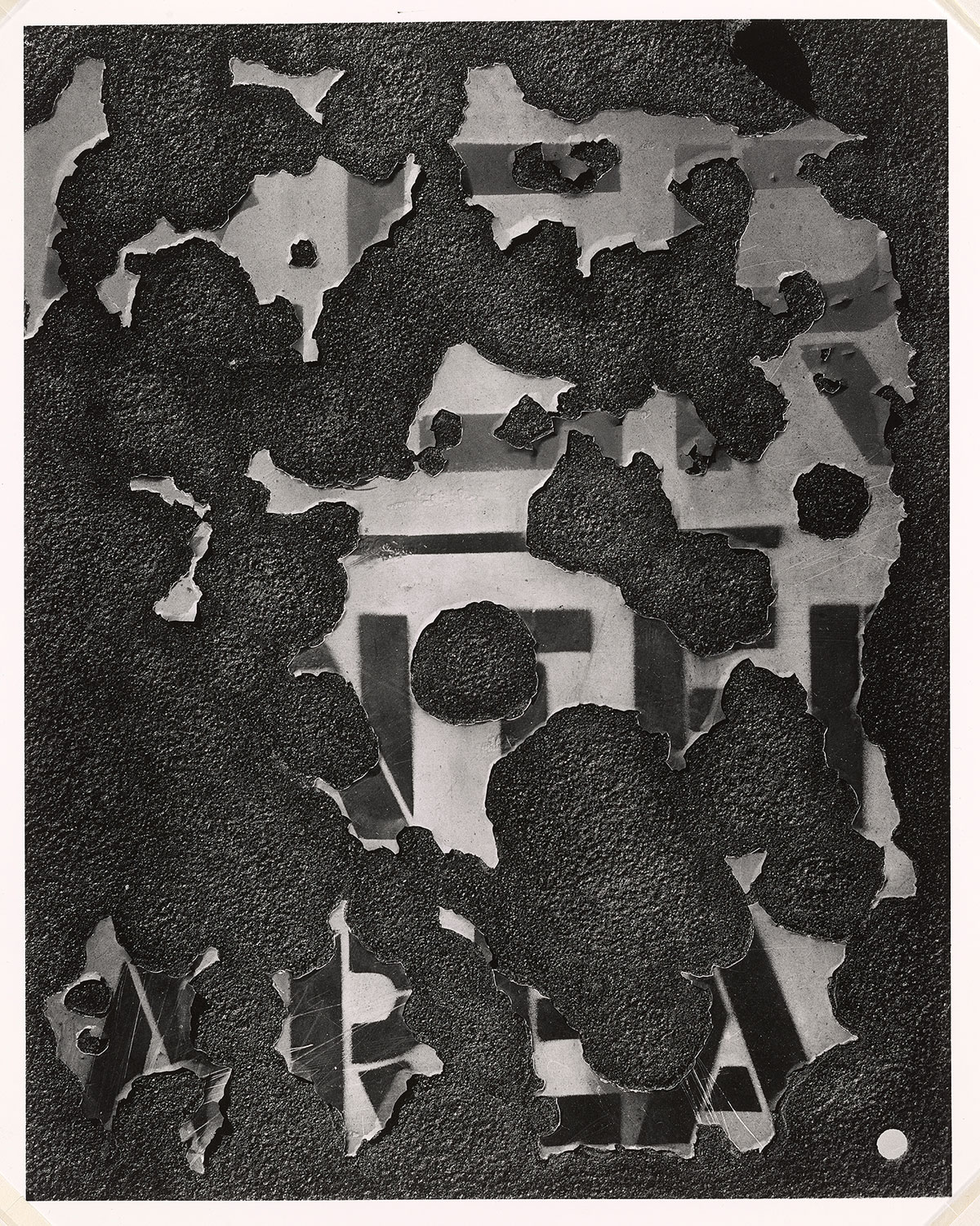
Chris Waywell. “Salt and Silver: Early Photography 1840-1860,” on the Time Out London website 22 July 2015 [Online] Cited 18/12/2022


Eugene Piot. 'Le Parthénon de l'Acropole d'Athens' 1852


Eugene Piot (French, 1812-1890)
Le Parthénon de l’Acropole d’Athens
1852
Photograph, salted paper print from a paper negative
© Wilson Centre for Photography


Eugène Piot was a French journalist, art critic, art collector and photographer. His pen name was Nemo. Piot was born in Paris.


Paul Marés. 'Ox cart in Brittany' c. 1857


Paul Marés (French)
Ox cart in Brittany
c. 1857
Photograph, salted paper print from a paper negative


One of the most beautiful photographs in this exhibition is Paul Marès Ox Cart, Brittany, c. 1857. At first it seems a picturesque scene of bucolic tranquillity, the abandoned cart an exquisite study in light and tone. But on the cottage wall are painted two white crosses, a warning – apparently even as recently as the 19th century – to passers-by that the household was afflicted by some deadly disease. Photography’s ability to indiscriminately aestheticise is a dilemma that has continued to present itself ever since, especially in the fields of reportage and war photography.

Florence Hallett. “Salt and Silver, Tate Britain: Early photographs that brim with the spirit of experimentation,” on The Arts Desk website, Wednesday, 25 February 2015 [Online] Cited 03/06/2015.


Jean-Baptiste Frénet. 'Horse and Groom' 1855


Jean-Baptiste Frénet (French – Lyon, 31 January 1814 – Charly, 12 August 1889)
Horse and Groom
1855
Salted paper print from a glass plate negative
© Wilson Centre for Photography


Around 1850 Frénet meets in Lyon personalities involved in the nascent photography, and he has to discover this technique to reproduce the frescoes he painted in Ainay. Curious, he is passionate about this new medium that offers him a respite space in the setbacks he suffers with his painting.

Frénet applies the stereotyped views taken of the time involving heavy stagings and is one of the first to practice the instant, the familiar and intimate subject. Five years before Nadar he produces psychological portraits and engages in close-up. He sees photography as an art, the opinion which has emerged in the first issue of the magazine La Lumière (The Light), text of the young and ephemeral gravure company founded in 1851. Frénet open a professional practice photography in 1866 and 1867 in Lyon. Unknown to the general public, his photographic work was discovered in 2000 at the sale of his photographic collection, many parts were purchased by the Musée d’Orsay.

Translated from the French Wikipedia website


Edouard Denis Baldus (French, 1813-1889) 'The Floods of 1856, Brotteaux Quarter of Lyon' 1856


Edouard Denis Baldus (French, 1813-1889)
The Floods of 1856, Brotteaux Quarter of Lyon
1856
Photograph, salted paper print from a waxed paper negative
© Wilson Centre for Photography


In June 1856, in the midst of his work at the Louvre, Baldus set out on a brief assignment, equally without precedent in photography, that was in many ways its opposite: to photograph the destruction caused by torrential rains and overflowing rivers in Lyon, Avignon, and Tarascon. From a world of magnificent man-made construction, he set out for territory devastated by natural disaster; from the task of re-creating the whole of a building in a catalogue of its thousand parts, he turned to the challenge of evoking a thousand individual stories in a handful of transcendent images. Baldus created a moving record of the flood without explicitly depicting the human suffering left in its wake. The “poor people, tears in their eyes, scavenging to find the objects most indispensable to their daily needs,” described by the local Courier de Lyon, are all but absent from his photographs of the hard-hit Brotteaux quarter of Lyon, as if the destruction had been of biblical proportions, leaving behind only remnants of a destroyed civilization.
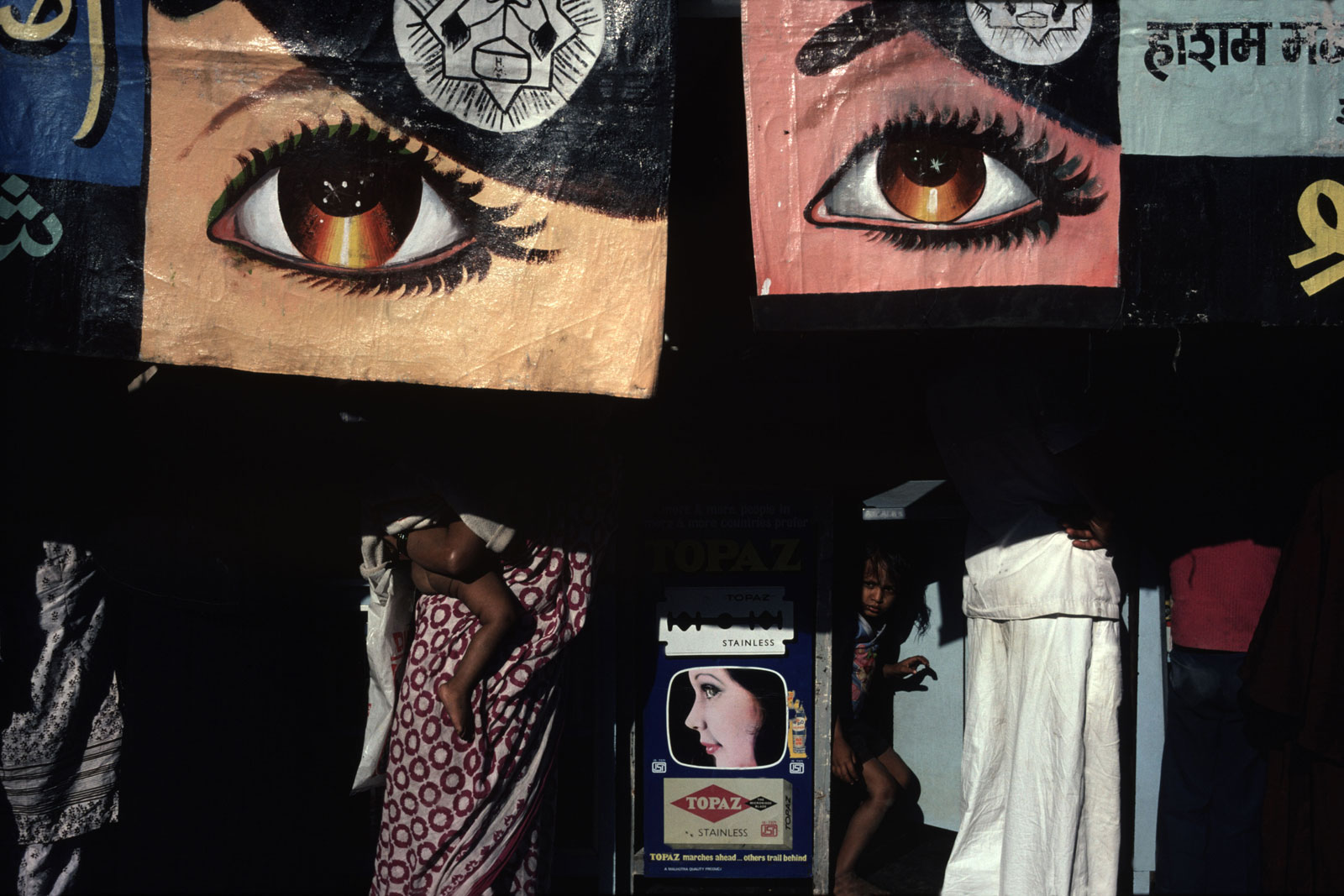
Daniel, Malcolm. “Édouard Baldus (1813-1889),” in Heilbrunn Timeline of Art History. New York: The Metropolitan Museum of Art, 2000 [Online] Cited 16/12/2022


Auguste Salzmann. 'Terra Cotta Statuettes from Camiros, Rhodes' 1863


Auguste Salzmann (French, born April 14, 1824 in Ribeauvillé (Alsace) and died February 24, 1872 in Paris)
Terra Cotta Statuettes from Camiros, Rhodes
1863
© Wilson Centre for Photography


Auguste Salzmann (French, 1824-1872) painter, photographer and archaeologist who pioneered the use of photography in the recording of historic sites. He excavated archaeological material in Rhodes in collaboration with Alfred Biliotti.


David Hill and Robert Adamson. 'Newhaven fishermen' c. 1845


David Hill (Scottish, 1802-1870) and Robert Adamson (Scottish, 1821-1848)
Newhaven fishermen
c. 1845
Photograph, salted paper print from a paper negative
© Wilson Centre for Photography


Roger Fenton. 'Cossack Bay, Balaclava' 1855


Roger Fenton (British, 28 March 1819 – 8 August 1869)
Cossack Bay, Balaclava
1855


It is likely that in autumn 1854, as the Crimean War grabbed the attention of the British public, that some powerful friends and patrons – among them Prince Albert and Duke of Newcastle, secretary of state for war – urged Fenton to go the Crimea to record the happenings. He set off aboard HMS Hecla in February, landed at Balaklava on 8 March and remained there until 22 June. The resulting photographs may have been intended to offset the general unpopularity of the war among the British people, and to counteract the occasionally critical reporting of correspondent William Howard Russell of The Times. The photographs were to be converted into woodblocks and published in the less critical Illustrated London News. Fenton took Marcus Sparling as his photographic assistant, a servant known as William and a large horse-drawn van of equipment…

Despite summer high temperatures, breaking several ribs in a fall, suffering from cholera and also becoming depressed at the carnage he witnessed at Sebastopol, in all Fenton managed to make over 350 usable large format negatives. An exhibition of 312 prints was soon on show in London and at various places across the nation in the months that followed. Fenton also showed them to Queen Victoria and Prince Albert and also to Emperor Napoleon III in Paris. Nevertheless, sales were not as good as expected.

Text from the Wikipedia website


Roger Fenton. 'Group of Croat Chiefs' 1855


Roger Fenton (British, 28 March 1819 – 8 August 1869)
Group of Croat Chiefs
1855
Salted paper print from a glass plate negative


Roger Fenton. 'Captain Mottram Andrews, 28th Regiment (1st Staffordshire) Regiment of Foot' 1855


Roger Fenton (British, 28 March 1819 – 8 August 1869)
Captain Mottram Andrews, 28th Regiment (1st Staffordshire) Regiment of Foot
1855
Salted paper print from a glass plate negative
© Wilson Centre for Photography


Roger Fenton. 'Cantiniére' 1855


Roger Fenton (British, 28 March 1819 – 8 August 1869)
Cantiniére
1855
Salted paper print from a glass plate negative
© Wilson Centre for Photography


A woman who carries a canteen for soldiers; a vivandière.


Roger Fenton. 'Captain Lord Balgonie, Grenadier Guards' 1855


Roger Fenton (British, 28 March 1819 – 8 August 1869)
Captain Lord Balgonie, Grenadier Guards
1855
Photograph, salted paper print from a paper negative


Roger Fenton. 'Captain Lord Balgonie, Grenadier Guards' 1855


Roger Fenton (British, 28 March 1819 – 8 August 1869)
Captain Lord Balgonie, Grenadier Guards
1855
Photograph, salted paper print from a paper negative


If I had to choose a figure it would be the Franco-American, archaeological photographer John Beasly Greene. His career was short and dangerous, he died at 24, but he challenged the trend towards clarity that dominated his field. Instead, he used the limits of the medium – burn-out, shadow, halation and the beautiful grainy texture of the print itself – to explore the poetic ambiguity of Egyptian sites.

This revolutionary photographic process transformed subjects, still lifes, portraits, landscapes and scenes of daily life into images. It brings it’s own luxurious aesthetic, soft textures, matt appearance and deep rich red tones, the variations seen throughout this exhibition is fascinating to observe. It’s also an incredible opportunity to view the original prints in an exhibition format, which has never been done before on a scale like this before.

The process starts with dipping writing paper in a solution of common salt, then partly drying it, coating it with silver nitrate, then drying it again, before applying further coats of silver nitrate, William Henry Fox Talbot pioneered what became known as the salt print and the world’s first photographic print! The specifically soft and luxurious aesthetic became an icon of modern visual language.

The few salt prints that survive are rarely seen due to their fragility. This exhibition is extremely important to recognise this historical process as well as a fantastic opportunity to see the rarest and best up close of early photographs of this type in the world.

Anon. “Salt and Silver: Early Photography 1840-1860,” on the Films not dead website [Online] Cited 03/06/2015. No longer available online.


Félix Nadar. 'Mariette' c. 1855


Félix Nadar (Gaspard Félix Tournachon) (French, 6 April 1820 – 23 March 1910)
Mariette
c. 1855
Photograph, salted paper print from a glass plate negative
© Wilson Centre for Photography


Tournachon’s nickname, Nadar, derived from youthful slang, but became his professional signature and the name by which he is best known today. Poor but talented, Nadar began by scratching out a living as a freelance writer and caricaturist. His writings and illustrations made him famous before he began to photograph. His keenly honed camera eye came from his successful career as a satirical cartoonist, in which the identifying characteristic of a subject was reduced to a single distinct facet; that skill proved effective in capturing the personality of his photographic subjects.

Nadar opened his first photography studio in 1854, but he only practiced for six years. He focused on the psychological elements of photography, aiming to reveal the moral personalities of his sitters rather than make attractive portraits. Bust- or half-length poses, solid backdrops, dramatic lighting, fine sculpturing, and concentration on the face were trademarks of his studio. His use of eight-by-ten-inch glass-plate negatives, which were significantly larger than the popular sizes of daguerreotypes, accentuated those effects.

At one point, a commentator said, “[a]ll the outstanding figures of [the] era – literary, artistic, dramatic, political, intellectual – have filed through his studio.” In most instances these subjects were Nadar’s friends and acquaintances. His curiosity led him beyond the studio into such uncharted locales as the catacombs, which he was one of the first persons to photograph using artificial light.

Text from the Getty Museum website. For more information on this artist please see the MoMA website.


Lodoisch Crette Romet. 'A Lesson of Gustave Le Gray in His Studio' 1854


Lodoisch Crette Romet (1823-1872)
A Lesson of Gustave Le Gray in His Studio [Antoine-Emile Plassan]
1850-1853
24.2 x 17.7cm
Photograph, salted paper print from a paper negative


Jean-Baptiste Frénet. 'Women and girls with a doll' c. 1855


Jean-Baptiste Frénet (French – Lyon, 31 January 1814 – Charly, 12 August 1889)
Women and girls with a doll
c. 1855
© Wilson Centre for Photography


John S. Johnston. 'One of Dr Kane’s Men [possibly William Morton]' c. 1857


John S. Johnston (American, c. 1839 – December 17, 1899)
One of Dr Kane’s Men [possibly William Morton]
c. 1857


John S. Johnston was a late 19th-century maritime and landscape photographer. He is known for his photographs of racing yachts and New York City landmarks and cityscapes. Very little is known about his life. He was evidently born in Britain in the late 1830s, and was active in the New York City area in the late 1880s and 1890s. He died in 1899.


William Morton

“Belief in the Open Polar Sea theory subsided until the mid-1800s, when Elisha Kent Kane set forth on a number of expeditions north with hopes of finding this theorised body of water. On an 1850s expedition organised by Kane, explorer William Morton, believing he discovered the Open Polar Sea, described a body of water containing

“Not a speck of ice… As far as I could discern, the sea was open… The wind was due N(orth) – enough to make white caps, and the surf broke in on the rocks in regular breakers.”


Morton, however, did not find the Open Polar Sea – he found a small oasis of water. Morton’s quote is likely tinged with a desire to raise the spirits of his boss, Kane, who saw the Polar Sea as a possible utopia, an area brimming with life amidst a harsh arctic world.”

Keith Veronese. “The Open Polar Sea, a balmy aquatic Eden at the North Pole?” on the Gizmodo website 4/20/12 [Online] Cited 03/06/2015.


David Hill and Robert Adamson. 'Thought to be Elizabeth Rigby' c. 1844


David Hill (Scottish, 1802-1870) and Robert Adamson (Scottish, 1821-1848)
Thought to be Elizabeth Rigby
c. 1844
Photograph, salted paper print from a paper negative


Jean-Baptiste Frenet. 'Thought to be a Mother and Son' c. 1855


Jean-Baptiste Frénet (French – Lyon, 31 January 1814 – Charly, 12 August 1889)
Thought to be a Mother and Son
c. 1855
Photograph, salted paper print from a collodion negative transferred from glass to paper support


William Fox Talbot. 'The Photographer's Daughter, Ela Theresa Talbot' 1843-1844


William Henry Fox Talbot (British, 11 February 1800 – 17 September 1877)
The Photographer’s Daughter, Ela Theresa Talbot
1843-1844


Roger Fenton. 'Portrait of a Woman' c. 1854


Roger Fenton (British, 28 March 1819 – 8 August 1869)
Portrait of a Woman
c. 1854
Photograph, salted paper print from a glass plate negative


John Wheeley Gough. 'Gutch Abbey Ruins' c. 1858


John Wheeley Gough (British, 1809-1862)
Gutch Abbey Ruins
c. 1858
© Wilson Centre for Photography


John Wheeley Gough (British, 1809-1862)

John Wheeley Gough Gutch (1809-1862) was a British surgeon and editor. He was also a keen amateur naturalist and geologist, and a pioneer photographer.

In 1851, Dr. Gutch gave up his medical practice to become a messenger for Queen Victoria, and he began photographing the many cities he visited on his diplomatic missions. During a trip to Constantinople, he became seriously ill, resulting in permanent partial paralysis that ended his public service career. While undergoing experimental treatments in Malvern, England, Dr. Gutch again turned to photography as a cure for his melancholy. His works were exhibited throughout London and Edinburgh from 1856-1861, and he became a frequent contributor to the Photographic Notes publication. Dr. Gutch’s camera of choice was Frederick Scott Archer’s wet-plate camera because he liked the convenience of developing glass negatives within the camera, which eliminated the need for a darkroom. However, the camera proved too cumbersome for him to handle, and had to be manipulated by one of his photographic assistants. His photographs were printed on salt-treated paper and were placed into albums he painstakingly decorated with photographic collages.

Dr. Gutch’s “picturesque” photographic style was influenced by artist William Gilpin. Unlike his mid-nineteenth century British contemporaries who recorded urban expansion, he preferred focusing on ancient buildings, rock formations, archaeological ruins, and tree-lined streams. In 1857, an assignment for Photographic Notes took him to Scotland, northern Wales, and the English Lake District, where he photographed the lush settings, but not always to his satisfaction. Two years’ later, he aspired to photograph and document the more than 500 churches in Gloucestershire, a daunting and quite expensive task. He fitted his camera with a Ross Petzval wide-angle lens and managed to photograph more than 200 churches before illness forced him to abandon the ambitious project. Fifty-three-year-old John Wheeley Gough Gutch died in London on April 30, 1862.

Anonymous text. “John Wheeley Gough Gutch,” on the Historic Camera website Nd [Online] Cited 03/06/2015.


William Fox Talbot. 'The Great Elm at Lacock' 1843-1845


William Henry Fox Talbot (British, 11 February 1800 – 17 September 1877)
The Great Elm at Lacock
1843-1845
Photograph, salted paper print from a paper negative
© Wilson Centre for Photography


Tate Britain
Millbank, London SW1P 4RG
United Kingdom
Phone: +44 20 7887 8888

Opening hours:
10.00am – 18.00pm daily

Tate Britain website

LIKE ART BLART ON FACEBOOK

Back to top