Exhibition: ‘Consuelo Kanaga. Catch the Spirit’ at the KBr Photography Center KBr Fundación MAPFRE, Barcelona

Exhibition dates: 15th February – 12th May, 2024

Curator: Drew Sawyer


Consuelo Kanaga (American, 1894-1978) 'Self-portrait' Nd


Consuelo Kanaga (American, 1894-1978)
Self-portrait
Nd
Gelatin silver print
20 1/16 × 15 1/16 × 1 1/2 in. (51 × 38.3 × 3.8cm) framed
Brooklyn Museum, Gift of Wallace B. Putnam from the Estate of Consuelo Kanaga
© Brooklyn Museum
Photo: Brooklyn Museum


What have you got to say?

We must acknowledge the importance of the Consuelo Kanaga, a strong, compassionate human being, an under recognised photographer. What a trailblazer for future female and male photographers such as Dorothea Lange, Imogen Cunningham, Berenice Abbott and Milton Rogovin.

Kanaga is a story teller. Her photographs are strongly modernist, realist compositions. The portraits are direct and revealing, no external flourishes necessary in capturing the essence of the person; her landscapes, dark and brooding atmospheric iterations of land and spirit.

Consuelo Kanaga:

~ one of the pioneers of modern American photography

~ one of the first women photojournalists on staff at a newspaper (1918)

~ a great supporter and a confidant for Imogen Cunningham, Louise Dahl-Wolfe, Dorothea Lange, Alma Lavenson, Tina Modotti, and Eiko Yamazawa, among many others

~ passionate about social justice … social marginalisation, poverty, racial harassment, inequality… especially in relation to the African-American population in the United States.

~ maintained a close relationship with avant-garde circles, in San Francisco with the f.64 Group and in New York with the Photo League

~ focused on marginal day to day and political motifs, including workers, African Americans, objects, and buildings that were often in a state of disrepair

~ interested in worker’s rights and the worker movement

~ became very active in civil rights and took part in and photographed many demonstrations and marches in the 1960s


Whatever type of photograph Kanaga took (and there are many) her photographs are always perceptive = having or showing sensitive insight.

The sensitivity of Hands (1930, below); the tired eyes and clasped hands of the Widow Watson (1922-1924 below) contrasting with the mannerist hands of the boy staring off camera; the stoicism of the mother in Tree of Life (1950, below) with her children’s faces in deep shadow coupled with the subconscious symbology of the unyielding, white brick wall behind; and the dark mesa of Landscape Near Taos, New Mexico (Nd, below) hello Georgia O’Keeffe … all reflect Kanaga’s superb handling of shadow and light, of energy and spirit.

“Her body of work, though comparatively small, is consistently exceptional.”1

Dr Marcus Bunyan

1/ Barbara Head Millstein. “A Pioneer of Realism,” in The New York Times October 9, 1993 on the New York Times website [Online] Cited 04/05/2024


Many thankx to the Fundación MAPFRE for allowing me to publish the photographs in the posting. Please click on the photographs for a larger version of the image.


“One of America’s most transcendent yet, surprisingly, least-known photographers.”


Barbara Head Millstein and Sarah M. Lowe (1992). Consuelo Kanaga, An American Photographer. Seattle: University of Washington Press. pp. 21-40.


“I could have done lots more, put in much more work and developed more pictures, but I had also a desire to say what I felt about life. Simple things like a little picture in the window or the corner of the studio or an old stove in the kitchen have always been fascinating to me. They are very much alive, these flowers and grasses with the dew on them. Stieglitz always said, “What have you got to say?” I think in a few small cases I’ve said a few things, expressed how I felt, trying to show the horror of poverty or the beauty of black people. I think that in photography what you’ve done is what you’ve had to say. In everything this has been the message of my life. A simple supper, being with someone you love, seeing a deer come around to eat or drink at the barn – I like things like that. If I could make one true, quiet photograph, I would much prefer it to having a lot of answers.”


Margaretta K. Mitchell (1979). Recollections: Ten Women of Photography. NY: Viking Press. pp. 158–160.


Consuelo Kanaga: Catch the Spirit is the first exhibition in Europe to present a comprehensive retrospective of the entire career of the American Consuelo Kanaga (Astoria, Oregon, 1894 – Yorktown Heights, New York, 1978). The exhibition covers six decades of her professional dedication to photography.

Passionate about social justice, Kanaga was more interested in people and their problems than in photography: social marginalisation, poverty, racial harassment, inequality…, especially in relation to the African-American population in the United States.

Consuelo Kanaga was one of the few women who became a professional photojournalist, and as early as the 1910s in the United States. She was also one of the few who maintained a close relationship with avant-garde circles, both in San Francisco and in New York, and whose friendship and professional support opened the way for important women photographers such as Imogen Cunningham and Dorothea Lange, among others.

Despite the fame she achieved during her lifetime, her work is still surprisingly little known. This exhibition aims to make a conclusive contribution to the recognition that Kanaga’s work undoubtedly deserves.

Exhibition organised by the Brooklyn Museum in New York in collaboration with Fundación MAPFRE and the San Francisco Museum of Modern Art.

Text from the Fundación MAPFRE website
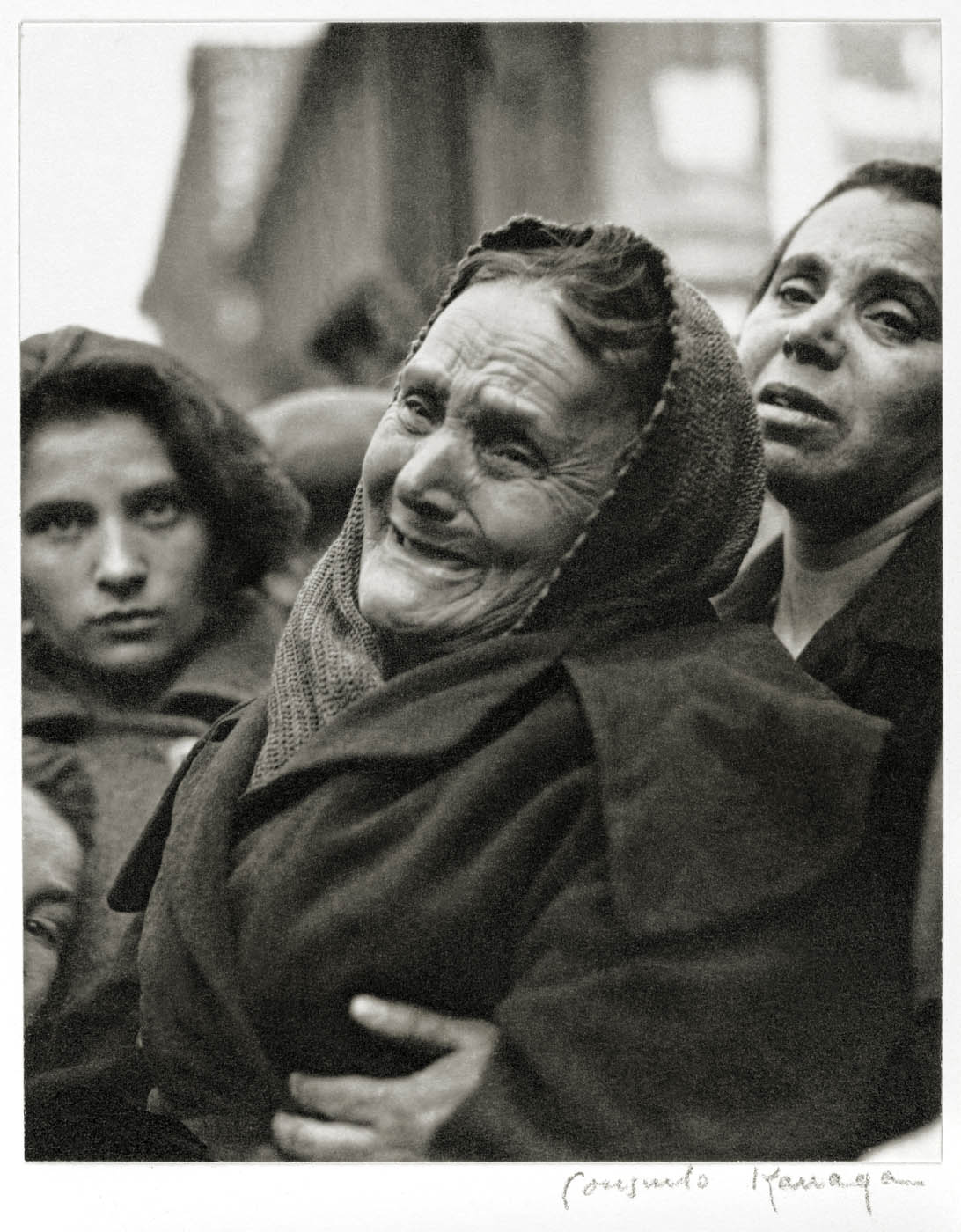
 

Consuelo Kanaga (American, 1894-1978) 'Fire, New York' 1922


Consuelo Kanaga (American, 1894-1978)
Fire, New York
1922
Gelatin silver print
20 1/16 × 15 1/16 × 1 1/2 in. (51 × 38.3 × 3.8cm) framed
Brooklyn Museum, Gift of Wallace B. Putnam from the Estate of Consuelo Kanaga
© Brooklyn Museum
Photo: Brooklyn Museum
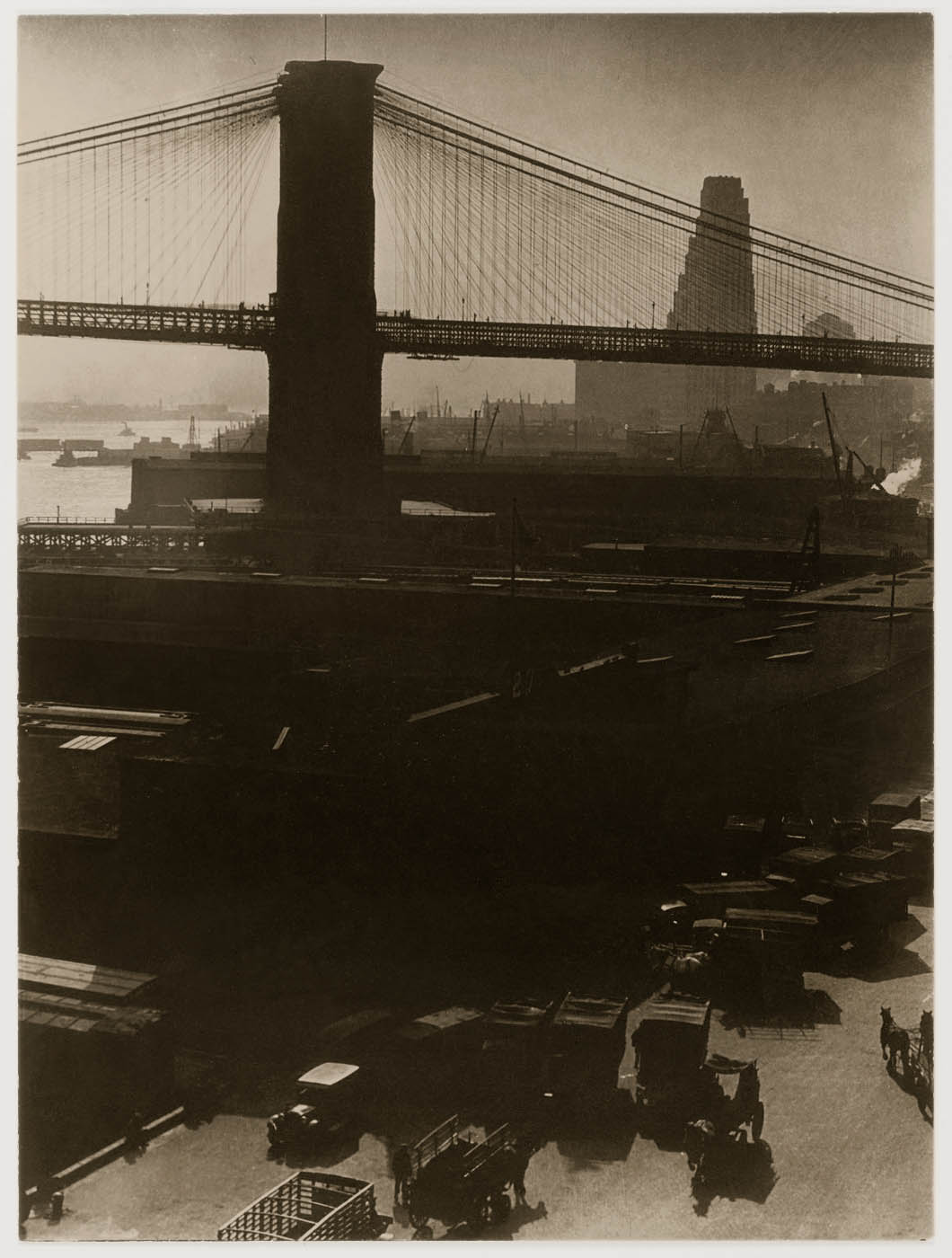
 

Consuelo Kanaga (American, 1894-1978) 'Untitled (Downtown New York)' 1922-1924


Consuelo Kanaga (American, 1894-1978)
Untitled (Downtown New York)
1922-1924
Gelatin silver print
20 1/16 × 15 1/16 × 1 1/2 in. (51 × 38.3 × 3.8cm) framed
Brooklyn Museum, Gift of Wallace B. Putnam from the Estate of Consuelo Kanaga
© Brooklyn Museum
Photo: Brooklyn Museum


Consuelo Kanaga (American, 1894-1978) 'Untitled' 1920s


Consuelo Kanaga (American, 1894-1978)
Untitled
1920s
Gelatin silver print
20 1/16 × 15 1/16 × 1 1/2 in. (51 × 38.3 × 3.8cm) framed
Brooklyn Museum, Gift of Wallace B. Putnam from the Estate of Consuelo Kanaga
© Brooklyn Museum
Photo: Brooklyn Museum
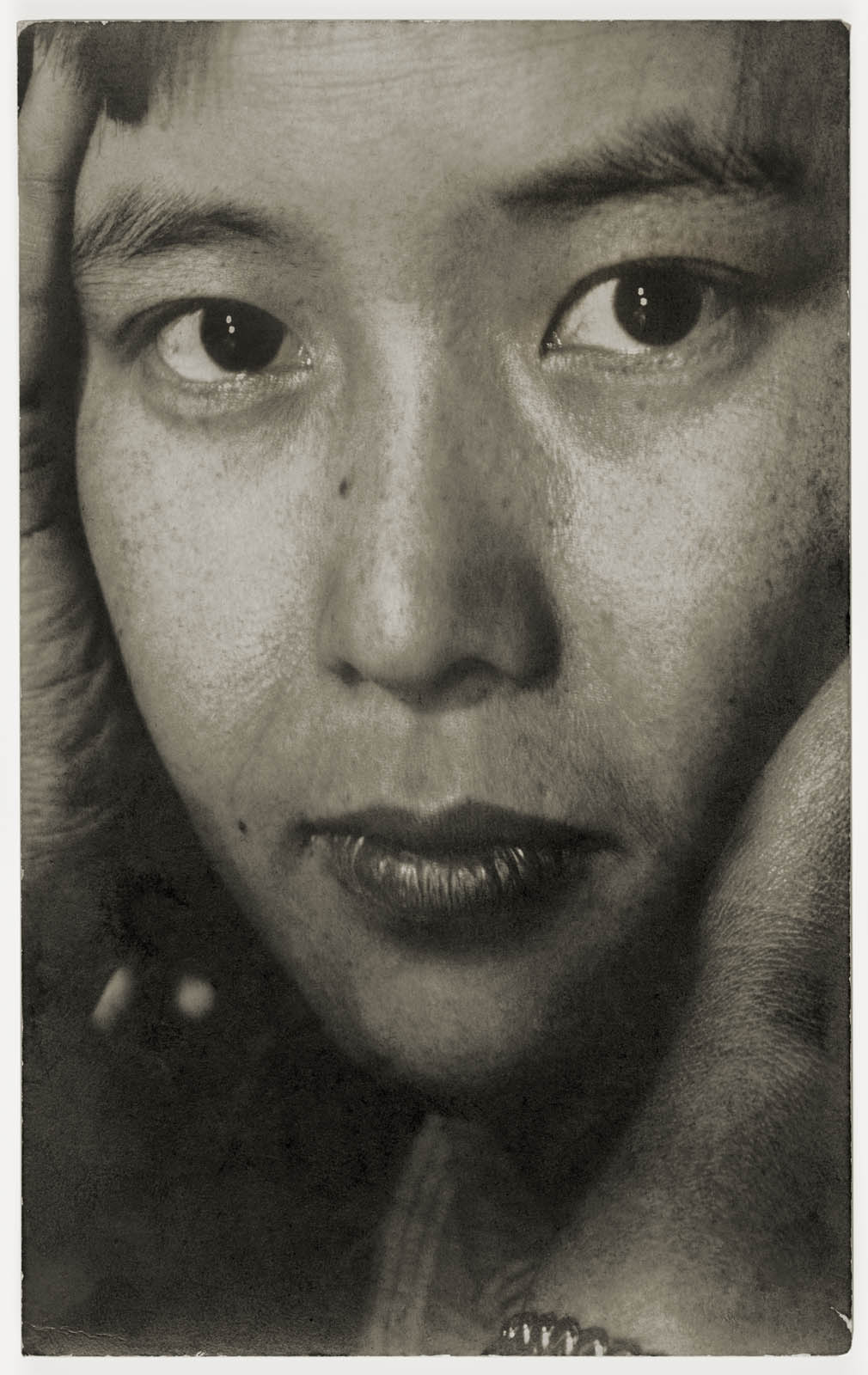
 

Consuelo Kanaga (American, 1894-1978) 'Untitled' c. 1925


Consuelo Kanaga (American, 1894-1978)
Untitled
c. 1925
Toned gelatin silver print with graphite
20 1/16 × 15 1/16 × 1 1/2 in. (51 × 38.3 × 3.8cm) framed
Brooklyn Museum, Gift of Wallace B. Putnam from the Estate of Consuelo Kanaga
© Brooklyn Museum
Photo: Brooklyn Museum
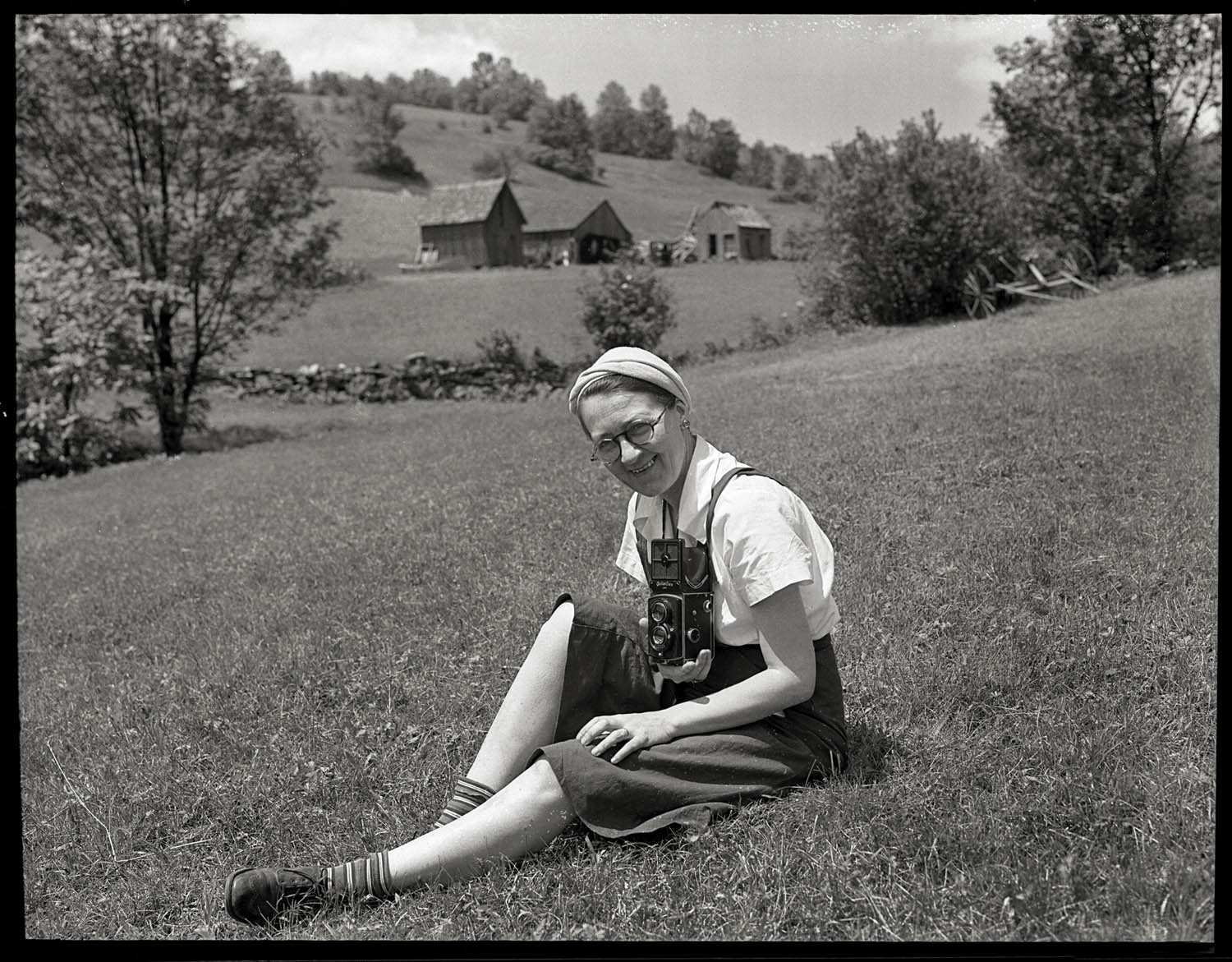
 

Consuelo Kanaga (American, 1894-1978) 'Louise Dahl-Wolfe' c. 1928


Consuelo Kanaga (American, 1894-1978)
Louise Dahl-Wolfe
c. 1928
Gelatin silver print, printed 2023
4 × 5 in. (10.2 × 12.7cm)
Brooklyn Museum, Gift of Wallace B. Putnam from the Estate of Consuelo Kanaga
© Brooklyn Museum
Photo: Brooklyn Museum


Louise Emma Augusta Dahl-Wolfe (November 19, 1895 – December 11, 1989) was an American photographer. She is known primarily for her work for Harper’s Bazaar, in association with fashion editor Diana Vreeland. At Harper’s Bazaar she pioneered a new standard in colour photography. …

Among the celebrated fashion photographers of the 20th century, Louise Dahl-Wolfe was an innovator and influencer who significantly contributed to the fashion world. She was most widely known for her work with Harper’s Bazaar. Dahl-Wolfe was considered a pioneer of the ‘female gaze’ in the fashion industry and credited for creating a new image of strong, independent American women during World War II.

From 1943, Dahl-Wolfe introduced the “New American Look” to fashion photography, which Vicki Goldberg describes as “all clean hair, glowing skin and a figure both lithe and strong”. Dahl-Wolfe was known for taking photographs outdoors, with natural light in distant locations from South America to Africa in what became known as “environmental” fashion photography. The outdoor settings helped to evoke “a mood of freedom and optimism” associated with women’s liberation. Her photographs brought a new naturalism to fashion photography which had previously been dominated by a stiff and haughty “European” or “Germanic” studio style. Dahl-Wolfe described it as “that heavy, heavy look, with everybody looking very clumsy”. Her methodology in using natural sunlight and shooting outdoors became the industry standard even now.

Her models appear to pose candidly, almost as if Dahl-Wolfe had just walked in on them. In fact the poses are highly, constructed with an “almost abstract formal perfection” which she credited partly to the influence of Diaghilev’s Ballets Russes. Dahl-Wolfe innovatively used colour in photography and mainly concerned with the qualities of natural lighting, composition, and balance. Compared to other photographers at the time who were using red undertones, Dahl-Wolfe opted for cooler hues and also corrected her own proofs, with one example of her pulling proofs repeatedly to change a sofa’s colour from green to a dark magenta.

Text from the Wikipedia website
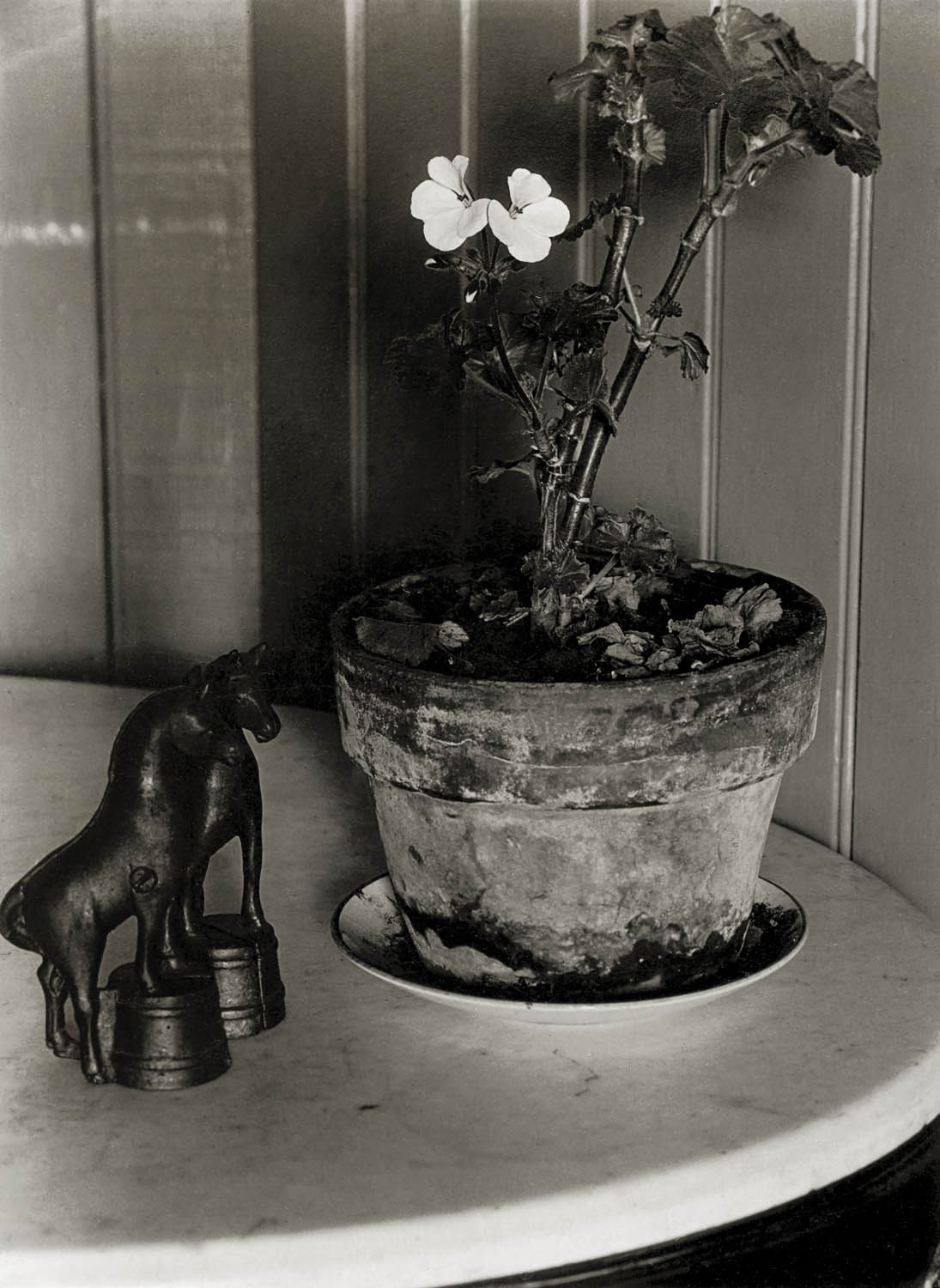
 

Consuelo Kanaga (American, 1894-1978) 'House Plant' 1930


Consuelo Kanaga (American, 1894-1978)
House Plant
1930
Bromide print
20 1/16 × 15 1/16 × 1 1/2 in. (51 × 38.3 × 3.8cm) framed
Brooklyn Museum, Gift of Wallace B. Putnam from the Estate of Consuelo Kanaga
© Brooklyn Museum
Photo: Brooklyn Museum
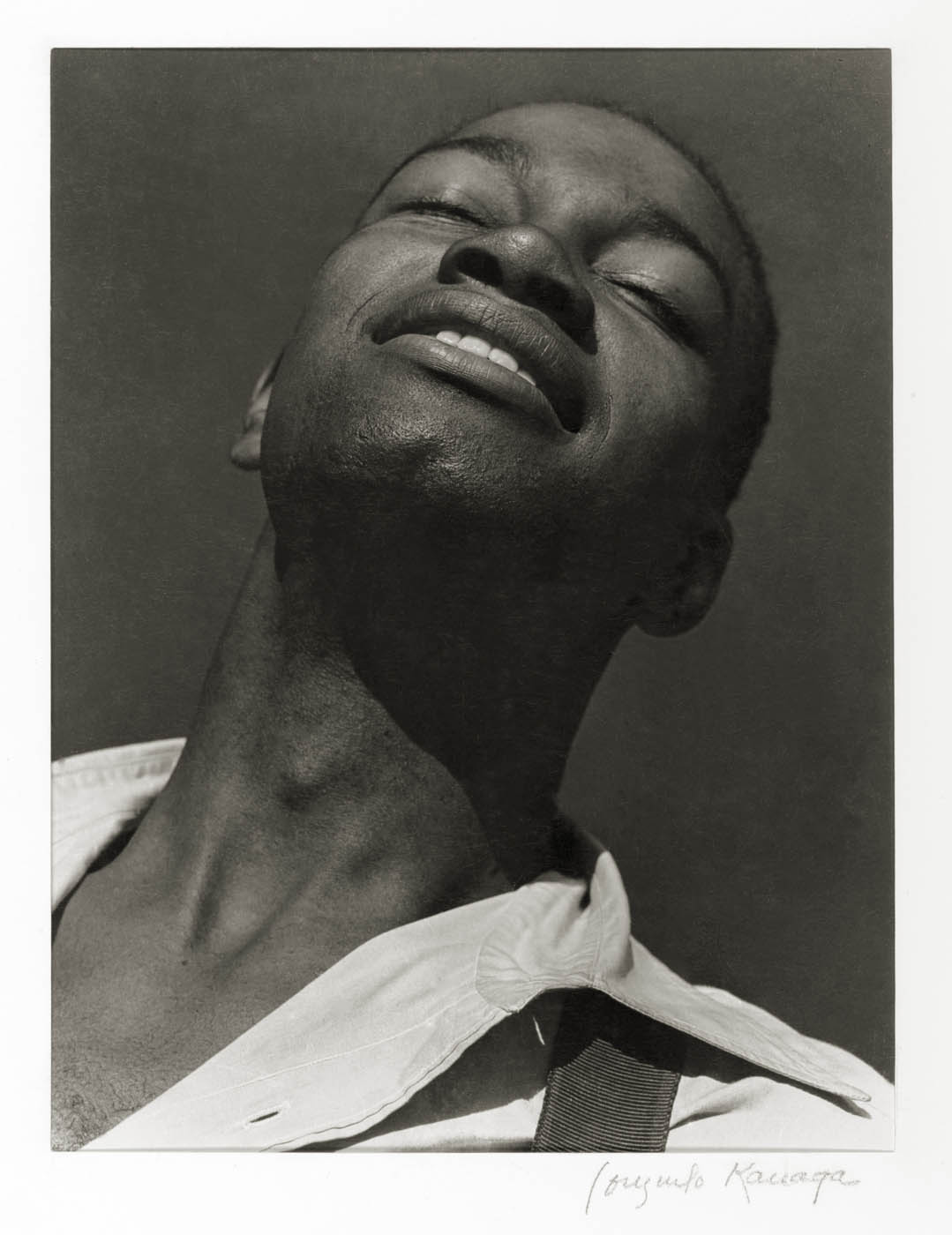
 

Consuelo Kanaga (American, 1894-1978) 'Kenneth Spencer' 1933


Consuelo Kanaga (American, 1894-1978)
Kenneth Spencer
1933
Gelatin silver print
20 1/16 × 15 1/16 × 1 1/2 in. (51 × 38.3 × 3.8cm) framed
Brooklyn Museum, Gift of Wallace B. Putnam from the Estate of Consuelo Kanaga
© Brooklyn Museum
Photo: Brooklyn Museum


Kenneth Spencer (25 April 1913 – 25 February 1964), was an American operatic singer and actor. Spencer starred in a few Broadway musicals and musical films in the United States during the 1940s. Frustrated with the racial prejudice he experienced in the United States as a black man, Spencer moved to West Germany in 1950 where he had a successful singing career. He also appeared in a number of German films. His career was cut short when he died in the crash of Eastern Air Lines Flight 304.

Text from the Wikipedia website
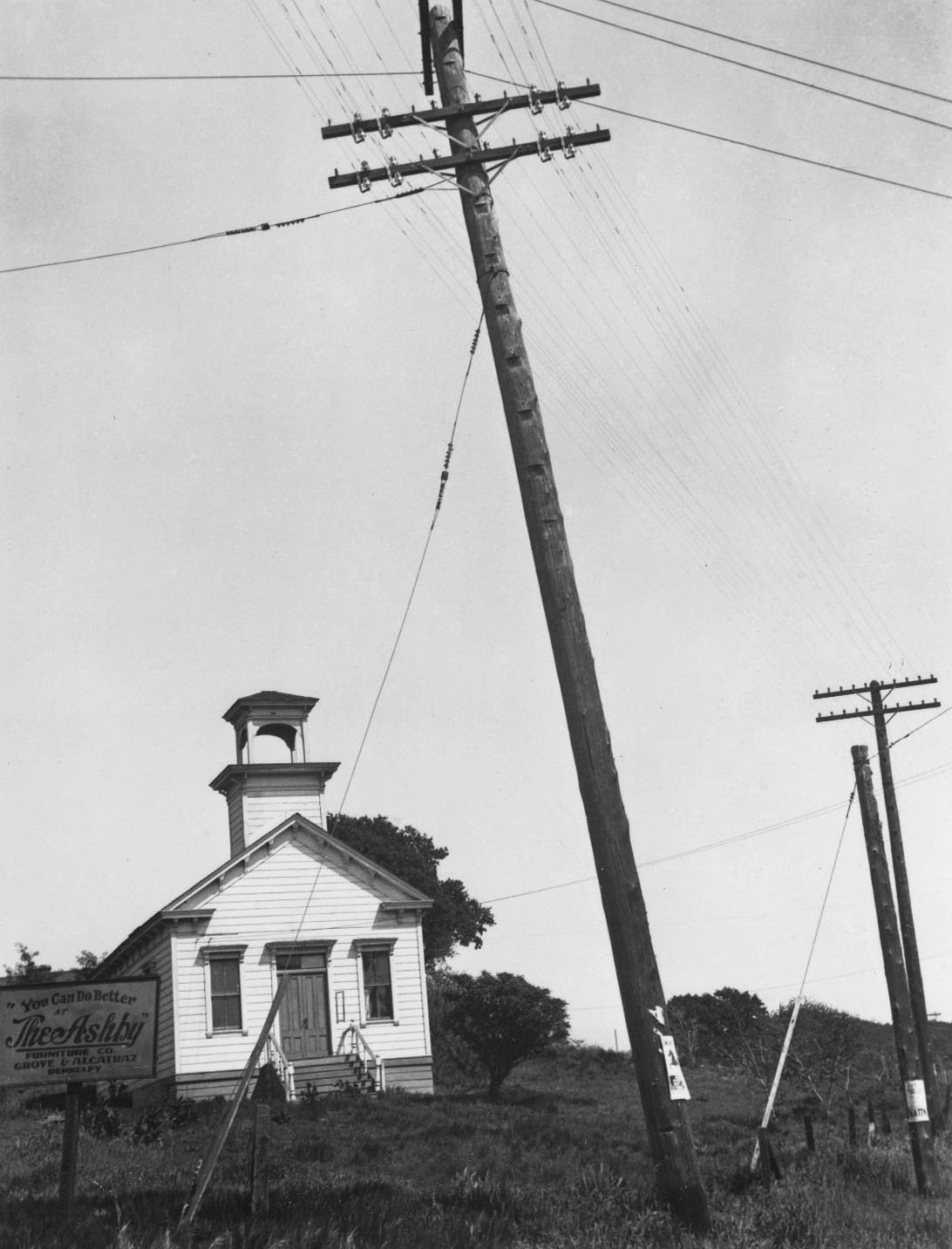
 

Consuelo Kanaga (American, 1894-1978) 'Clapboard Schoolhouse' 1930s


Consuelo Kanaga (American, 1894-1978)
Clapboard Schoolhouse
1930s
Gelatin silver print
20 1/16 × 15 1/16 × 1 1/2 in. (51 × 38.3 × 3.8cm) framed
Brooklyn Museum, Gift of Wallace B. Putnam from the Estate of Consuelo Kanaga
© Brooklyn Museum
Photo: Brooklyn Museum


A Pioneer of Realism

Consuelo Kanaga (1894-1978) was one of America’s most important photographers. Yet largely because she disdained wealth, fame and self-promotion, her transcendent images have never received the acclaim they deserve. The photographs on this page appear in the first major retrospective of her work, “Consuelo Kanaga: An American Photographer,” which will open Friday at the Brooklyn Museum.

Born in Astoria, Ore., Kanaga was hired in 1915 as a reporter at The San Francisco Chronicle but quickly became more interested in the work of the paper’s photographers. She took a job in the darkroom and was eventually named a staff photographer.

Inspired by the images in Alfred Stieglitz’s magazine, Camera Work, she left the newspaper and moved to New York in 1922. She soon became closely associated with such photographers as Edward Weston, Imogen Cunningham, Dorothea Lange and Louise Dahl. In 1932, Miss Kanaga was represented in the landmark “f.64” exhibition in San Francisco, the first major photography show that stressed realism over romanticism.

Her talent was rooted in an almost mystical belief that photography was a sacred trust — she felt obligated to capture the true essence of her subject. Her drive to fulfill this trust helped Kanaga, who was white, to understand the lives of blacks and to produce some of the most moving works ever done in African-American portraiture. She was equally talented in still-life and landscape photography, and her feeling for urban architecture was stimulated by her involvement with the socially committed New York Photo League during the 1930’s.

She continued to work into her 70’s, despite suffering from emphysema and cancer, which were probably caused by the chemicals used in creating her prints. Her body of work, though comparatively small, is consistently exceptional. Consuelo Kanaga died virtually unknown in 1978, but her talent endures.

Barbara Head Millstein. “A Pioneer of Realism,” in The New York Times October 9, 1993 on the New York Times website [Online] Cited 04/05/2024
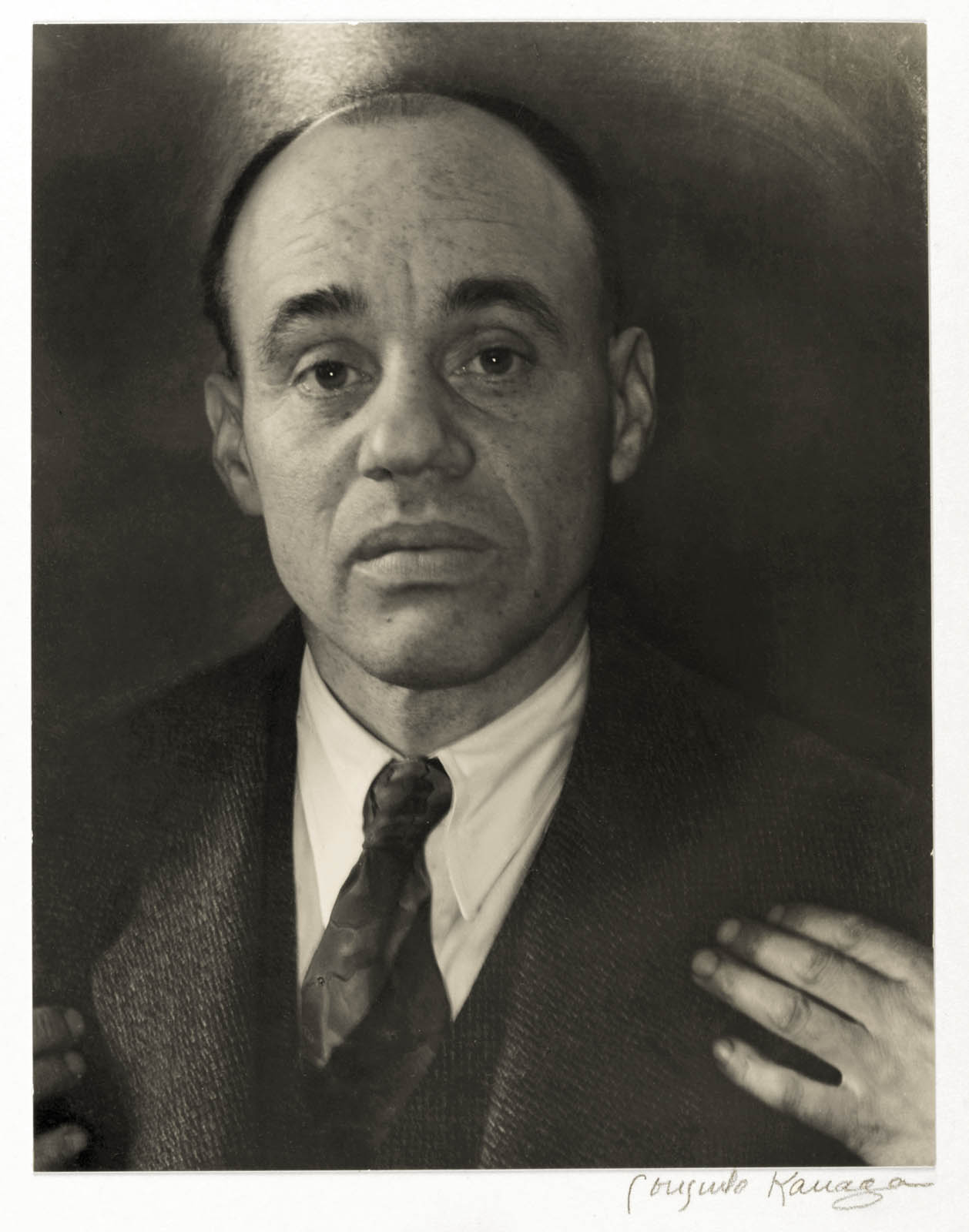
 

Consuelo Kanaga (American, 1894-1978) 'Sargent Johnson' 1934


Consuelo Kanaga (American, 1894-1978)
Sargent Johnson
1934
Gelatin silver print
20 1/16 × 15 1/16 × 1 1/2 in. (51 × 38.3 × 3.8cm) framed
Brooklyn Museum, Gift of Wallace B. Putnam from the Estate of Consuelo Kanaga
© Brooklyn Museum
Photo: Brooklyn Museum


Sargent Claude Johnson (November 7, 1888 – October 10, 1967) was one of the first African-American artists working in California to achieve a national reputation. He was known for Abstract Figurative and Early Modern styles. He was a painter, potter, ceramicist, printmaker, graphic artist, sculptor, and carver. He worked with a variety of media, including ceramics, clay, oil, stone, terra-cotta, watercolour, and wood.

Text from the Wikipedia website
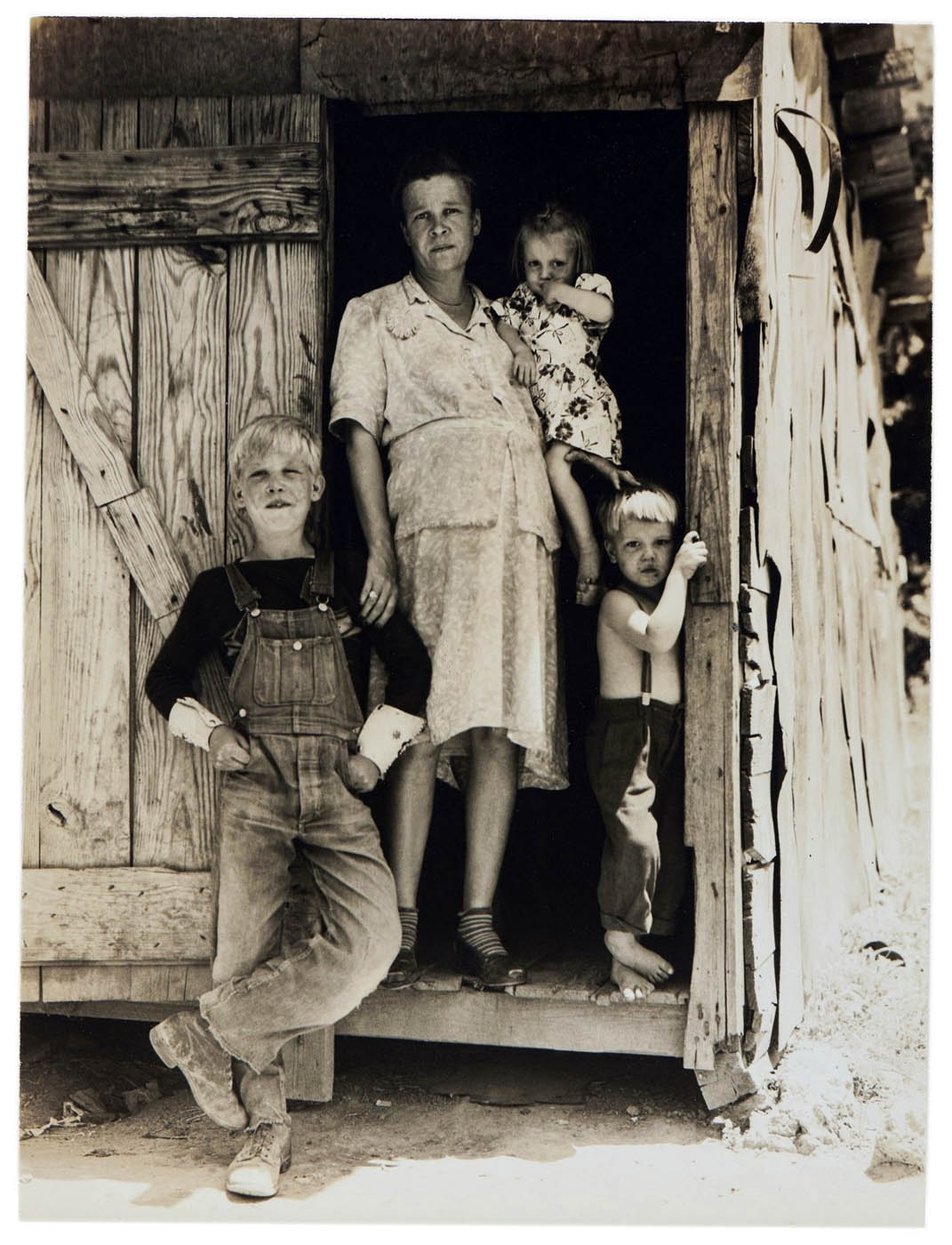
 

Consuelo Kanaga (American, 1894-1978) 'Untitled' 1930s


Consuelo Kanaga (American, 1894-1978)
Untitled
1930s
Toned gelatin silver print
20 1/16 × 15 1/16 × 1 1/2 in. (51 × 38.3 × 3.8cm) framed
Brooklyn Museum, Gift of Wallace B. Putnam from the Estate of Consuelo Kanaga
© Brooklyn Museum
Photo: Brooklyn Museum
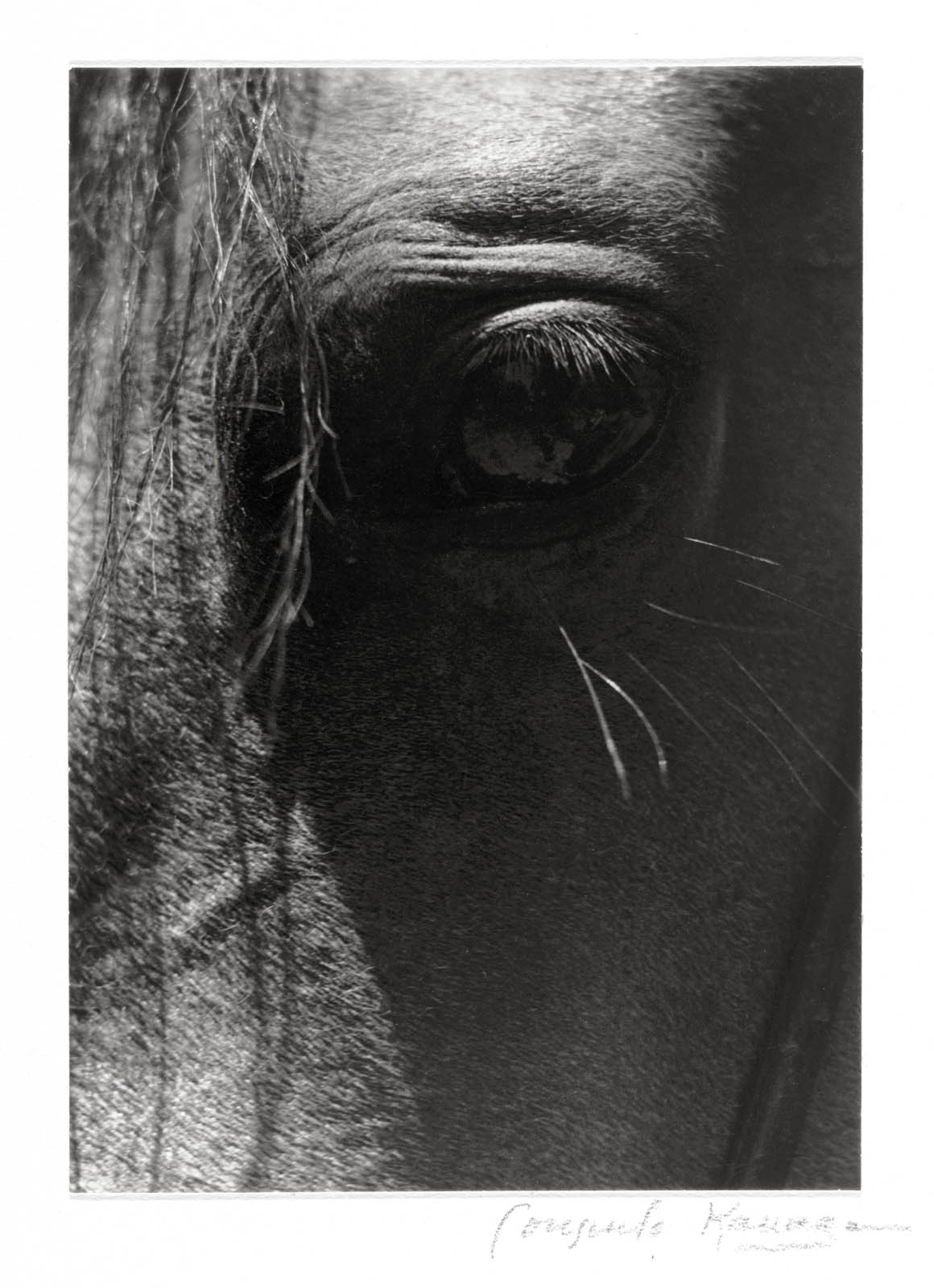
 

Consuelo Kanaga (American, 1894-1978) 'Horse's Eye' 1930s


Consuelo Kanaga (American, 1894-1978)
Horse’s Eye
1930s
Gelatin silver print
4 × 3 1/2 in. (10.2 × 8.9cm)
Brooklyn Museum, Gift of Wallace B. Putnam from the Estate of Consuelo Kanaga
© Brooklyn Museum
Photo: Brooklyn Museum


Consuelo Kanaga (American, 1894-1978) 'The Bowery' 1935


Consuelo Kanaga (American, 1894-1978)
The Bowery
1935
Toned gelatin silver print
22 13/16 × 16 13/16 × 1 1/2 in. (57.9 × 42.7 × 3.8cm) framed
Brooklyn Museum, Gift of Wallace B. Putnam from the Estate of Consuelo Kanaga
© Brooklyn Museum
Photo: Brooklyn Museum


Consuelo Kanaga (American, 1894-1978) 'Angelo Herndon' 1936


Consuelo Kanaga (American, 1894-1978)
Angelo Herndon
1936
Gelatin silver print
20 1/16 × 15 1/16 × 1 1/2 in. (51 × 38.3 × 3.8cm) framed
Brooklyn Museum, Gift of Wallace B. Putnam from the Estate of Consuelo Kanaga
© Brooklyn Museum
Photo: Brooklyn Museum


Angelo Braxton Herndon (May 6, 1913 – December 9, 1997) was an African-American labor organiser arrested and convicted of insurrection after attempting to organise black and white industrial workers in 1932 in Atlanta, Georgia. The prosecution case rested heavily on Herndon’s possession of “communist literature”, which police found in his hotel room.

Herndon was defended by the International Labor Defense, the legal arm of the Communist Party of America, which hired two young local attorneys, Benjamin J. Davis Jr. and John H. Geer, and provided guidance. Davis later became prominent in leftist circles. Over a five-year period, Herndon’s case twice reached the United States Supreme Court, which ruled that Georgia’s insurrection law was unconstitutional, as it violated First Amendment rights of free speech and assembly. Herndon became nationally prominent because of his case, and Southern justice was under review. By the end of the 1940s he left the Communist Party, moved to the Midwest, and lived there quietly.

Text from the Wikipedia website


Consuelo Kanaga (American, 1894-1978) 'Untitled' 1936


Consuelo Kanaga (American, 1894-1978)
Untitled
1936
Gelatin silver print, printed 2023
4 × 5 in. (10.2 × 12.7cm)
Brooklyn Museum, Gift of Wallace B. Putnam from the Estate of Consuelo Kanaga
© Brooklyn Museum
Photo: Brooklyn Museum
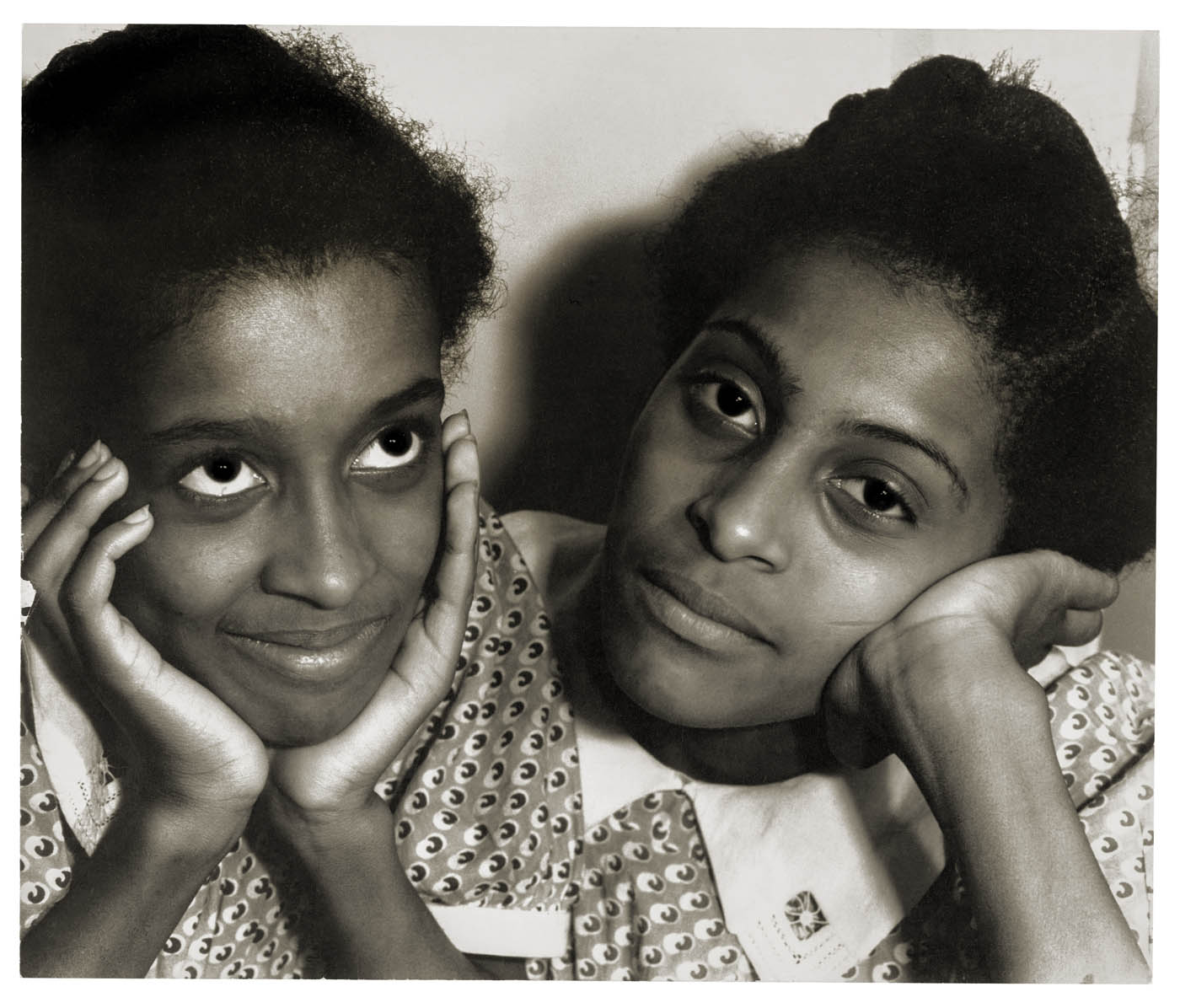
 

Consuelo Kanaga (American, 1894-1978) 'Two Women, Harlem' c. 1938


Consuelo Kanaga (American, 1894-1978)
Two Women, Harlem
c. 1938
Toned gelatin silver print
22 13/16 × 16 13/16 × 1 1/2 in. (57.9 × 42.7 × 3.8cm) framed
Brooklyn Museum, Gift of Wallace B. Putnam from the Estate of Consuelo Kanaga
© Brooklyn Museum
Photo: Brooklyn Museum


Consuelo Kanaga (American, 1894-1978) 'Untitled (New York)' c. 1940


Consuelo Kanaga (American, 1894-1978)
Untitled (New York)
c. 1940
Gelatin silver print
20 1/16 × 15 1/16 × 1 1/2 in. (51 × 38.3 × 3.8cm) framed
Brooklyn Museum, Gift of Wallace B. Putnam from the Estate of Consuelo Kanaga
© Brooklyn Museum
Photo: Brooklyn Museum


For the first time in Spain and Europe, Consuelo Kanaga. Catch the Spirit features the work of this North American photographer spanning her entire career. Kanaga (1894-1978) is considered today a key figure in the history of contemporary photography, both for her contribution toward the recognition of women in this field and for the intensity with which her images confront the spectator with the great social issues of our time, particularly the conditions of African Americans in the United States.

The exhibition

Consuelo Kanaga. Catch the Spirit features six decades of work by this key figure in the history of modern Photography. With this new project, Fundación MAPFRE renews its commitment to promote the work of women photographers. On this occasion, despite having garnered much notoriety in life, the artist’s work is today surprisingly little known. This exhibition aims to contribute conclusively toward the recognition that Kanaga’s oeuvre undoubtedly deserves.

Consuelo Kanaga (Astoria, Oregon, 1894 – Yorktown Heights, New York, 1978) was truly passionate about social justice. She was most interested in people and issues such as marginalisation, poverty, racial harassment, and inequality, particularly in relation to African Americans in the United States. These were some of the fundamental matters she addressed through her work. Likewise, she also defended the formal and poetic possibilities of photography as an art form.

An unconventional figure, Kanaga was able to become a professional photojournalist in the United States as early as the 1910s. She was also one of the few women involved in the avant-garde circles both in San Francisco with the f.64 Group and in New York with the Photo League, whose friendship and professional support paved the way for other important women photographers. However, gender inequalities and social conventions limited her ability to dedicate herself completely to her artistic work. Kanaga worked full time jobs during many years and was only able to practice her art on weekends. She repeatedly put her career on hold for her partners; these are but a few reasons why her work is not more recognised today.

Organised around the Brooklyn Museum’s collection – the institution that has preserved the artist’s archive – the exhibition features nearly 180 photographs and a wide range of documentary material; contextualising Consuelo Kanaga’s work while focusing on some of her most iconic images and her portrayal of African American life in the 1930s through her photography.

Exhibition organised by the Brooklyn Museum in New York in collaboration with Fundación MAPFRE and the San Francisco Museum of Modern Art. Curated by Drew Sawyer, former Phillip Leonian and Edith Rosenbaum Curator of Photography, Brooklyn Museum.

Keys

New Negro Movement: From the late 19th century, magazines and novels published by black men and women began to emerge as a response to the prevailing racism in cities such as San Francisco, Washington, and New York. This literary explosion was the precedent of what became known as the New Negro Movement, which developed in Harlem, New York, between 1920 and 1930; a movement that also lent its name to the most comprehensive anthology dedicated to said cultural renaissance, written by Alain Locke and considered at the time as “the fundaments of the black canon”. Not only did black artists flourish during this time, white artists were also encouraged to join this movement in defence of the freedom, rights, and equality of African Americans through culture.

Kanaga Photojournalist: In 1915, when she was only 21 years old, Consuelo Kanaga began to write for the San Francisco Chronicle, where she learned photography in order to illustrate her assignments: “For my articles requiring photographs, I went with the photographer to help make the pictures more interesting,” she later recalled. “The editor liked the results and encouraged me to learn photography, ‘from scratch’.” In 1918 she began to work as a photographer for the newspaper and was also hired by the Daily News the following year. Kanaga was undoubtedly one of the first women photojournalists on staff at a newspaper; as her friend Dorothea Lange remarked: “she was the first newspaper photographer I’d ever met. She was a person way ahead of her time.”

Kanaga and Women Photographers: Kanaga’s career was interwoven with a solid and broad circle of women photographers who she cultivated special relationships with over the course of five decades. She was a great supporter and a confidant for Imogen Cunningham, Louise Dahl-Wolfe, Dorothea Lange, Alma Lavenson, Tina Modotti, and Eiko Yamazawa, among many others, who she advised and shared her company and connections in the art world with. These women inspired her and likewise she was an inspiration for them. Despite the fact her accomplishments were as relevant as those of her colleagues, her oeuvre received much less attention. Kanaga spent little time self-promoting since she was always more interested in cultivating the affective bonds with the people closest to her.

Biography

Consuelo Delesseps Kanaga was born on May 15th, 1894, in Astoria, Oregon. The daughter of a lawyer who was interested in agriculture and of the writer Mathilda Carolina Hartwing, she helped her parents with tasks related to editing from a very young age, eventually leading her to study journalism. In 1915 she began writing for the San Francisco Chronicle. Three years later, she became staff photographer. Kanaga met Imogen Cunningham, Edward Weston, and Dorothea Lange at the California Camera Club and became interested in artistic photography thanks to Alfred Stieglitz’s Camera Work. Between 1927 and 1928 she travelled through Europe and northern Africa. Throughout her adult life, she lived both in San Francisco and New York, was married three times, and established her first portrait studio in San Francisco in 1932. She also participated in the f.64 Group and her images were exhibited for the first time at the M.H. de Young Memorial Museum in San Francisco in 1932. Kanaga participated in West Coast liberal politics. After returning from New York in 1935, she became associated with the Photo League in 1938. Edward Steichen defended her photography and included her work in the renowned exhibition The Family of Man in 1955. In 1974 Kanaga held a solo exhibition at the Lerner-Heller gallery in New York and in 1976 she produced a small yet relevant retrospective at the Brooklyn Museum. In 1977 she exhibited her work at Wave Hill in Riverdale, New York. She passed away at her Yorktown Heights (New York) home in 1978. One year later, Kanaga’s work was included in the exhibition Recollections: Ten Women of Photography at the ICP and was the subject of a retrospective at the Brooklyn Museum of Art in 1992, where most of her work is currently preserved.

Press release from the Fundación MAPFRE


Consuelo Kanaga (American, 1894-1978) 'After Years of Hard Work (Tennessee)' 1948


Consuelo Kanaga (American, 1894-1978)
After Years of Hard Work (Tennessee)
1948
Toned gelatin silver print
20 1/16 × 15 1/16 × 1 1/2 in. (51 × 38.3 × 3.8cm) framed
Brooklyn Museum, Gift of Wallace B. Putnam from the Estate of Consuelo Kanaga
© Brooklyn Museum
Photo: Brooklyn Museum
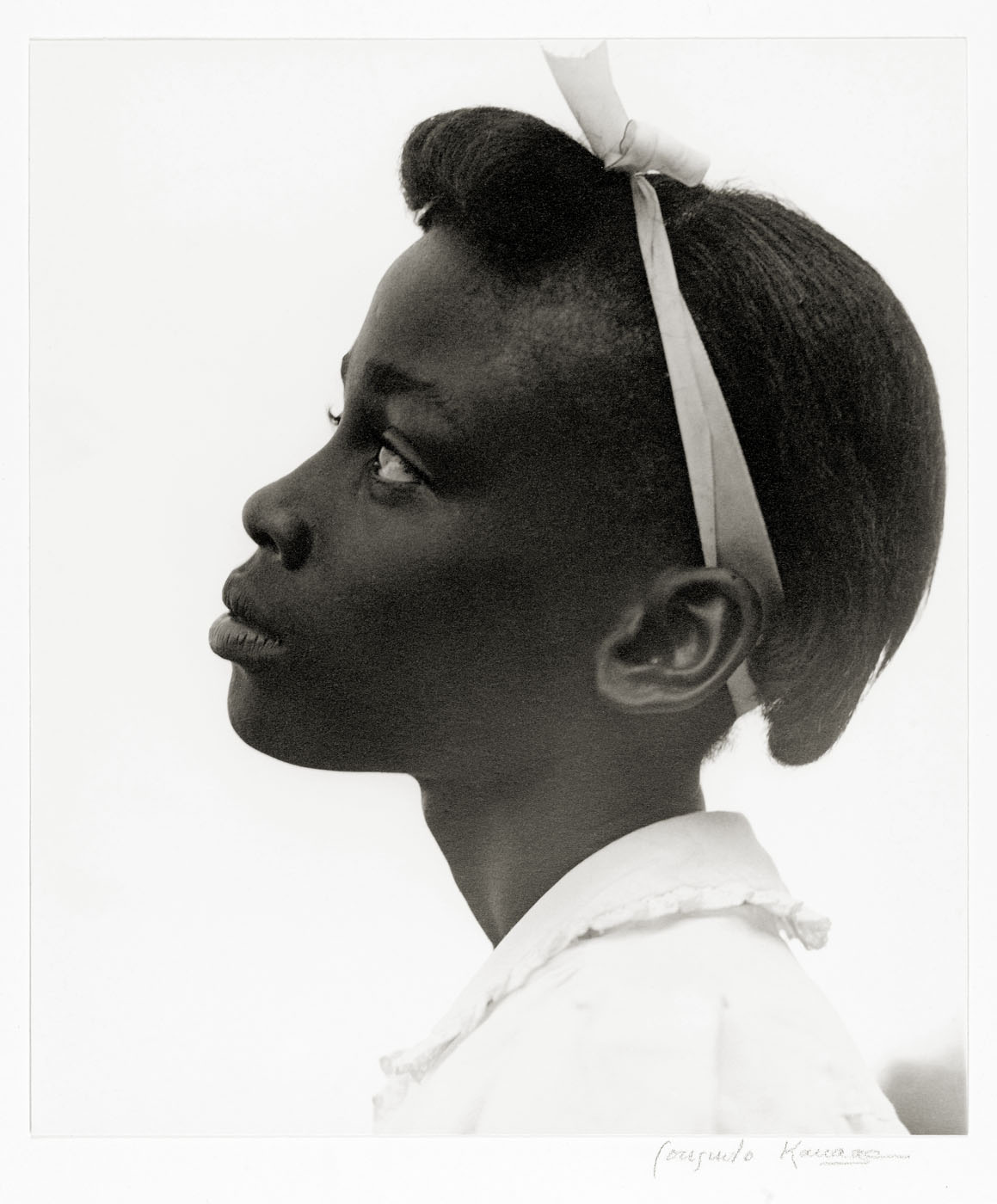
 

Consuelo Kanaga (American, 1894-1978) 'Young Girl in Profile' 1948


Consuelo Kanaga (American, 1894-1978)
Young Girl in Profile
1948
Toned gelatin silver print
22 13/16 × 16 13/16 × 1 1/2 in. (57.9 × 42.7 × 3.8cm) framed
Brooklyn Museum, Gift of Wallace B. Putnam from the Estate of Consuelo Kanaga
© Brooklyn Museum
Photo: Brooklyn Museum


Consuelo Kanaga (American, 1894-1978) 'Tennessee' 1950


Consuelo Kanaga (American, 1894-1978)
Tennessee
1950
Gelatin silver print
20 1/16 × 15 1/16 × 1 1/2 in. (51 × 38.3 × 3.8cm) framed
Brooklyn Museum, Gift of Wallace B. Putnam from the Estate of Consuelo Kanaga
© Brooklyn Museum
Photo: Brooklyn Museum
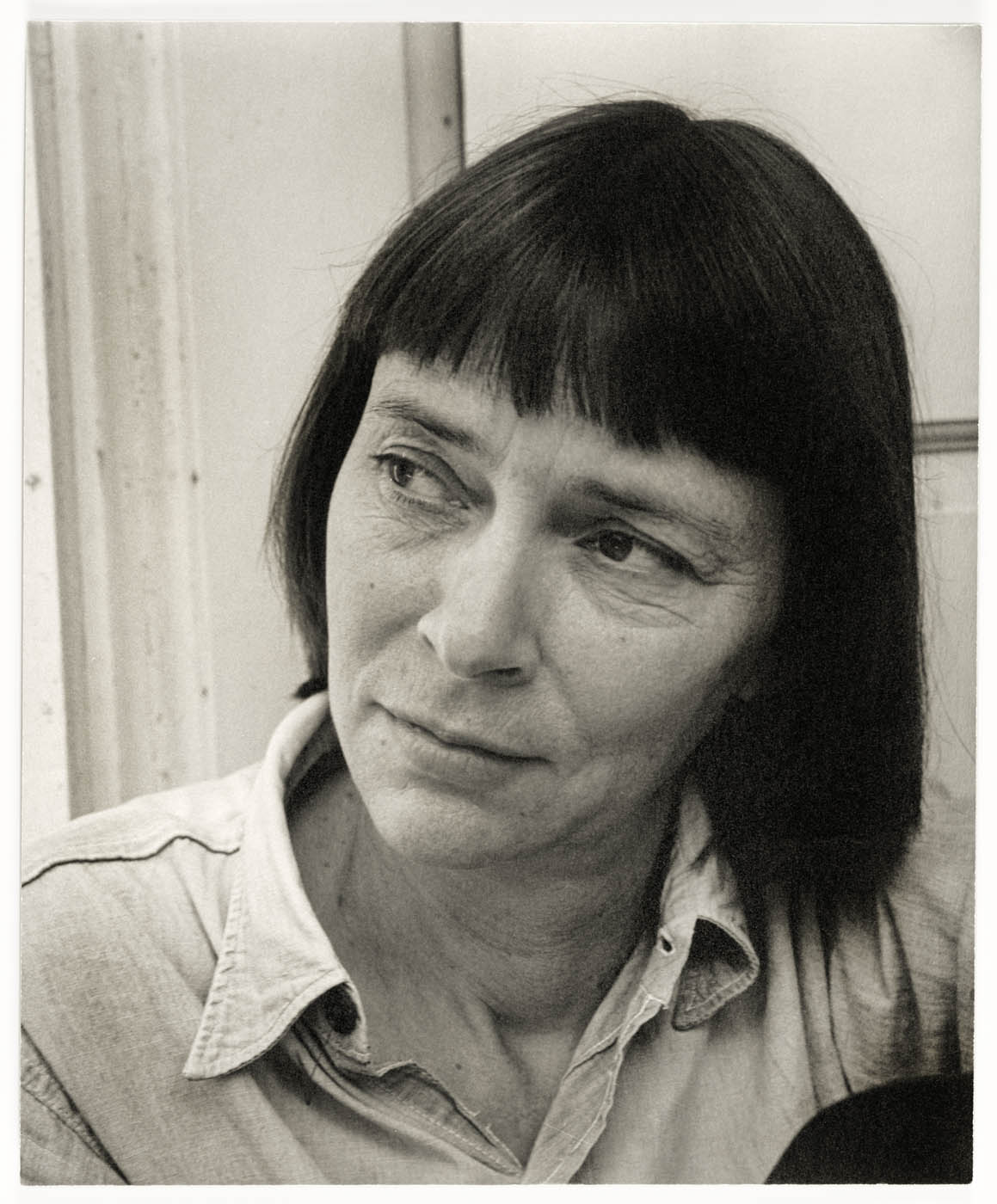
 

Consuelo Kanaga (American, 1894-1978) 'Barbara Deming' c. 1964


Consuelo Kanaga (American, 1894-1978)
Barbara Deming
c. 1964
Gelatin silver print
20 1/16 × 15 1/16 × 1 1/2 in. (51 × 38.3 × 3.8cm) framed
Brooklyn Museum, Gift of Wallace B. Putnam from the Estate of Consuelo Kanaga
© Brooklyn Museum
Photo: Brooklyn Museum


Barbara Deming (1917-1984) was one of the most dearly loved civil rights and feminist activists of her time. Born in New York City in 1917 and educated there at the Friends Meeting House Quaker School, she later studied literature and drama at Bennington College and earned a master’s degree in drama from Case Western Reserve University in 1941.

Deming began her career as a poet, professional writer, and film critic, and turned to political writing and human rights activism in the middle of her life. …

In the 1960s Deming joined demonstrations against Polaris submarines, took part in the 1962 San Francisco-to-Moscow walk for peace, and attended the International Peace Brigade in Europe. Protesting nuclear-weapons testing at the Atomic Energy Commission led to her first experience with being jailed for civil disobedience, this time at the Women’s House of Detention in New York City.

Acting on her belief that the struggles for racial equality and for peace were one effort, Deming marched in the bi-racial Nashville-to-DC walk for peace alongside SNCC members. In 1963 she joined black activists protesting segregation in Alabama and Georgia as well as attended the House Un-American Activities Committee hearings. In 1964 she participated in the 2800-mile Quebec-Guantanamo walk for peace and freedom, a racially integrated protest over US actions in Cuba. During this march, she was arrested and jailed in Albany, Georgia, an experience she describes in her book Prison Notes.

Deming participated in political actions whenever and wherever individual rights and human dignity were being threatened. In 1965-1967 Deming traveled to North and South Vietnam to protest the war. In the 1970s she demonstrated for gay rights and feminist causes. In 1983 she was arrested on the march through Seneca Falls, organised by the Women’s Peace Encampment to protest the deployment of cruise missiles in Europe. Despite failing health, she was once again jailed.

Anonymous. “Barbara Deming,” on the Barbara Deming Memorial Fund website Nd [Online] Cited 03/04/2024


Photojournalism and the City

After having opted for journalism, influenced perhaps by her parents, Kanaga began to write for the San Francisco Chronicle in 1915, where she learned to produce photographs for her articles encouraged by the newspaper editor. In 1918 she became staff photographer, and the following year was hired by the Daily News, another San Francisco newspaper.

Between 1920 and 1950 she worked for newspapers and magazines in Denver and New York, capturing scenes of urban life and images of economic and racial inequality; as in The Widow Watson (1922-1924 below), which was taken while she was working for the newspaper New York American and depicts a woman suffering from tuberculosis next to her son.

Photojournalism led Kanaga to become aware of photography’s potential as an art form. Around 1918 she joined the California Camera Club in San Francisco. Not only did she gain access to a dark room and photographic equipment, but also books and magazines on the medium. The publication Camera Work by Alfred Stieglitz and the works of New York and San Francisco photographers, such as Arnold Genthe, who portrayed street scenes and urban architecture in their images, influenced her greatly.


Consuelo Kanaga (American, 1894-1978) 'The Widow Watson' 1922-1924


Consuelo Kanaga (American, 1894-1978)
The Widow Watson
1922-1924
Gelatin silver print
20 1/16 × 15 1/16 × 1 1/2 in. (51 × 38.3 × 3.8cm) framed
Brooklyn Museum, Gift of Wallace B. Putnam from the Estate of Consuelo Kanaga
© Brooklyn Museum
Photo: Brooklyn Museum


Portrait Gallery

Kanaga began to produce portraits for additional income as a complement to her journalistic work, initially in San Francisco and later in New York. She opened her first studio in the early 1920s and was able to support herself and her partners financially for the rest of her life by taking photographs of wealthy clients and friends who were part of the avant-garde movements in San Francisco and New York. Thus, the portrait became the main focus of Kanaga’s creative production. It is also important to note that while most of her work as a photojournalist was lost, her portraits remain well represented among the negatives and prints that have been preserved.

Influenced by Stieglitz, in her portraits Kanaga experimented with poses, cropping, lighting, and printing in order to highlight the expressive capabilities of her images. Aside from flash, she used dark room techniques such as over-and underexposure, manipulating exposure times in specific parts of a photographic print to accentuate the contrast between light and shade, which generated a theatrical effect. The artist also frequently toned her prints with metals such as gold, adding pencil or graphite to highlight certain features.


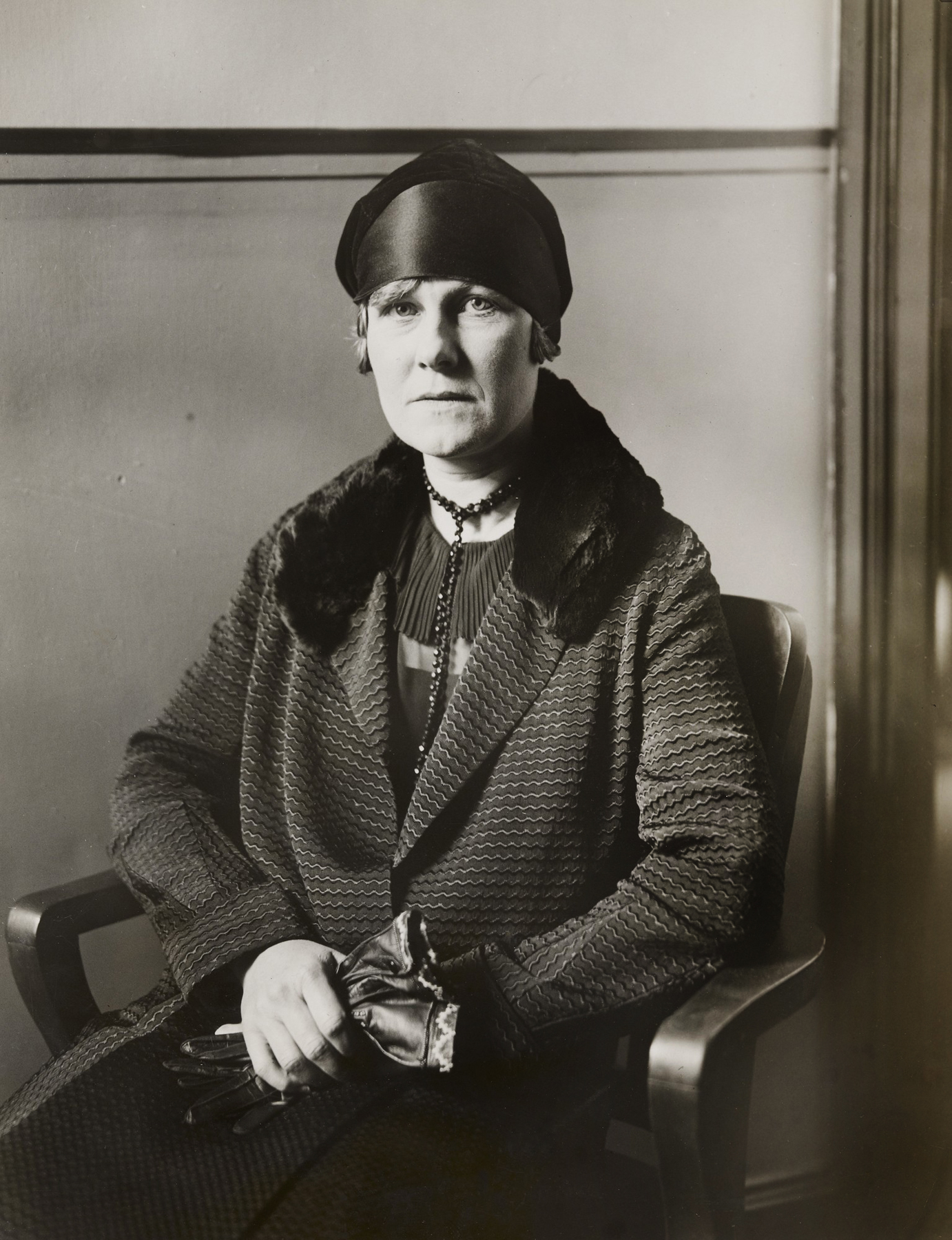
Consuelo Kanaga (American, 1894-1978) 'Portrait of a Woman' c. 1925


Consuelo Kanaga (American, 1894-1978)
Portrait of a Woman
c. 1925
Gelatin silver print
20 1/16 × 15 1/16 × 1 1/2 in. (51 × 38.3 × 3.8cm)
Brooklyn Museum, Gift of Wallace B. Putnam from the Estate of Consuelo Kanaga
© Brooklyn Museum
Photo: Brooklyn Museum


North Americans Abroad

One of the fundamental experiences in Kanaga’s formative development was her time in Europe and northern Africa between 1927 and 1928, made possible through the financial support of the patron Albert M. Bender. Kanaga spent close to a year travelling through France, Germany, Italy, Hungary, and Tunisia, taking photographs and visiting museums, monuments, and churches. The artist also sought opportunities to learn modern photographic techniques. In Kairouan (Tunisia) she came into contact with a community of ex-pat artists and produced three photo albums portraying the city and its people, consolidating her interest in portraiture.

Consuelo Kanaga began to express her opinions on racism in the United States during these trips. A subject she would explore in more depth through photography during the 1930s. “I am sick of seeing colored men and women abused by stupid white people.”

Photography and the American Scene

Beyond portraiture, Kanaga practiced numerous genres and styles throughout her career. Like other North American artists, she was attracted to what she encountered in the “American Scene”; naturalist and descriptive representations of national and regional heritage and everyday life. Kanaga mostly focused on marginal day to day and political motifs, including workers, African Americans, objects, and buildings that were often in a state of disrepair.

Her first portraits of African Americans were aligned with the New Negro Movement that arose in the 1920s and 30s. Black intellectuals and artists tried to redefine and celebrate African American identities through cultural self-expression, economic independence, and progressive policies. Likewise, they advocated for the creation of inspiring images of their community and of negritude at a time when lynchings and racial terror were some of the most pressing legal and ethical issues. Within this context, Kanaga’s photographs can be considered a true statement of intent: Hands (1930 below) is the first preserved photograph that captures her anti-racist ideals. She also portrayed the singer Kenneth Spencer, the poet Langston Hughes, and the painter and ceramist Sargent Johnson, among others.

Along with her interest in African American communities, Kanaga became interested in worker’s rights and the worker movement that emerged in the Soviet Union and Germany during the 1920s. After moving to New York in 1935, she took photographs for leftist publications and became involved with the Photo League. At a time marked by the will to promote solidarity among workers beyond race and gender, Kanaga focused on the experiences of African Americans and Workers in particular.


Consuelo Kanaga (American, 1894-1978) 'Hands' 1930


Consuelo Kanaga (American, 1894-1978)
Hands
1930
Gelatin silver print
23 1/16 × 29 1/16 × 1 1/2 in. (58.6 × 73.8 × 3.8cm) framed
Brooklyn Museum, Gift of Wallace B. Putnam from the Estate of Consuelo Kanaga
© Brooklyn Museum
Photo: Brooklyn Museum


Portraits of Artists

Throughout the 1930s and 40s, Kanaga produced portraits of artists, writers, actors, and musicians. She met many of them thanks to her relationship with several photography clubs and collectives, as well as during her trips through the United States and Europe. Her images include portraits of the photographers Alfred Stieglitz and W. Eugene Smith, the painters Milton Avery and Mark Rothko, and of designers such as Wharton Esherick.

Conversely, Kanaga’s career was especially linked to a solid and broad circle of women photographers whose relationships she cultivated throughout her time as an artist. She was a great supporter and confidant for a series of photographers who often photographed each other, such as Berenice Abbott, Imogen Cunningham, Louse Dahl-Wolfe, Dorothea Lange, Alma Lavenson, Tina Modotti, and Eiko Yamazawa.
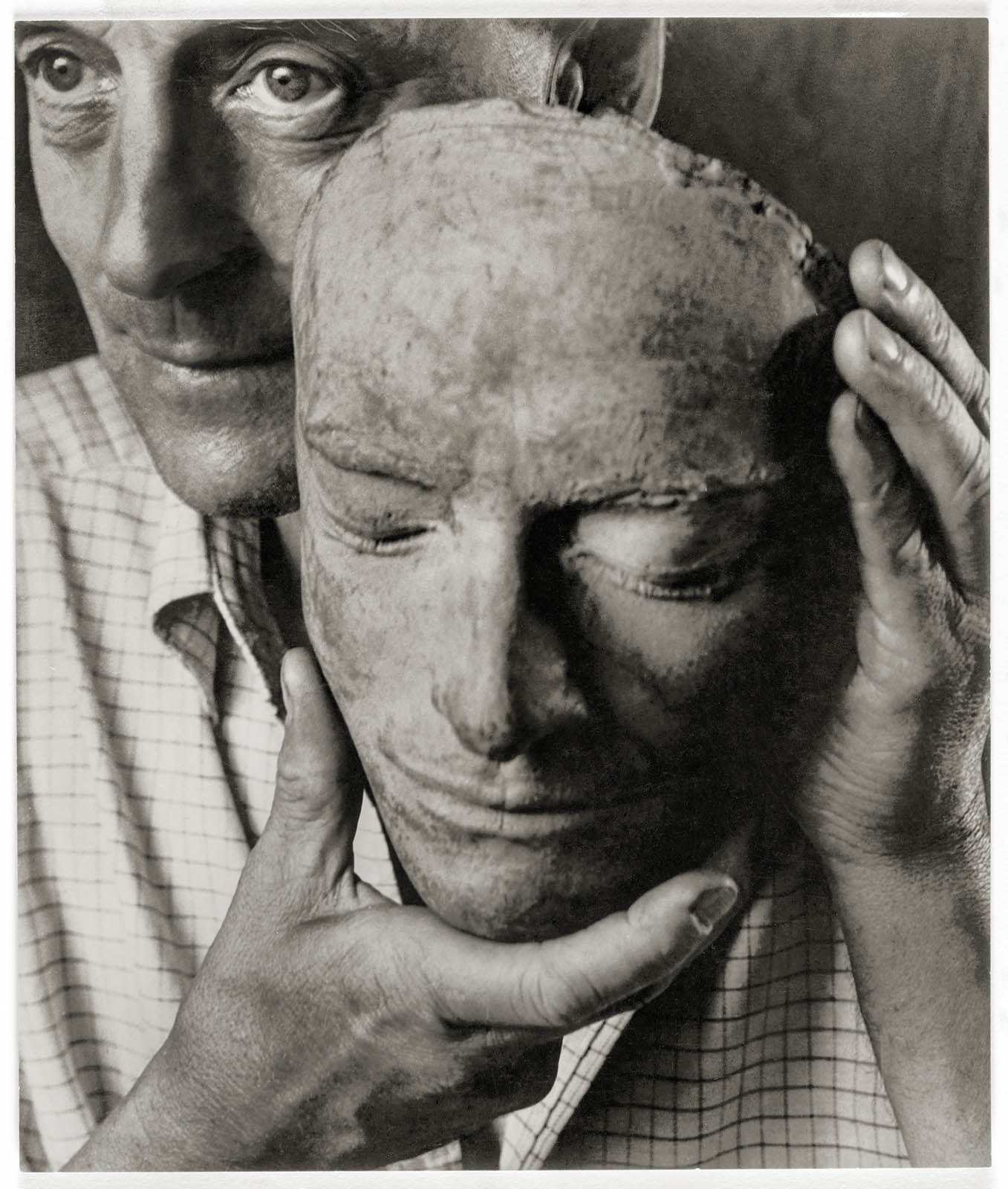
 

Consuelo Kanaga (American, 1894-1978) 'Wharton Esherick' 1940


Consuelo Kanaga (American, 1894-1978)
Wharton Esherick
1940
Bromide print
20 1/16 × 15 1/16 × 1 1/2 in. (51 × 38.3 × 3.8cm) framed
Brooklyn Museum, Gift of Wallace B. Putnam from the Estate of Consuelo Kanaga
© Brooklyn Museum
Photo: Brooklyn Museum


Wharton Esherick (July 15, 1887 – May 6, 1970) was an American sculptor who worked primarily in wood, especially applying the principles of sculpture to common utilitarian objects. Consequently, he is best known for his sculptural furniture and furnishings. Esherick was recognised in his lifetime by his peers as the “dean of American craftsmen” for his leadership in developing nontraditional designs and for encouraging and inspiring artists and artisans by example. Esherick’s influence is evident in the work of contemporary artisans, particularly in the Studio Craft Movement. His home and studio in Malvern, Pennsylvania, are part of the Wharton Esherick Museum, which has been listed as a National Historic Landmark since 1993.

Text from the Wikipedia website


Trips to the Southern United States

Between the late 1940s and early 60s, Kanaga went on numerous trips through the southern United States where she continued to photograph black children and workers. While in Florida, she produced a series of photographs dedicated to black families and farmhands working in recovered swamp lands known as mucklands. During those trips, she took one of her most renowned photographs titled She is a Tree of Life (1950 below), which depicts a stoic mother with her son and daughter on either side. In 1950 she also photographed self-taught black artist William Edmondson next to his carved stone sculptures.

In 1964, amidst the struggle for freedom of Black Americans in the United States, the activist and writer Barbara Deming invited Kanaga to photograph the Quebec-Washington-Guantanamo Walk for Peace in protest of United States actions against Cuba. During the march, Deming and other activists were arrested for demanding that all demonstrators be allowed to walk together on a “white only” sidewalk. The book Prison Notes, published by Deming in 1966, includes photographs by Kanaga.
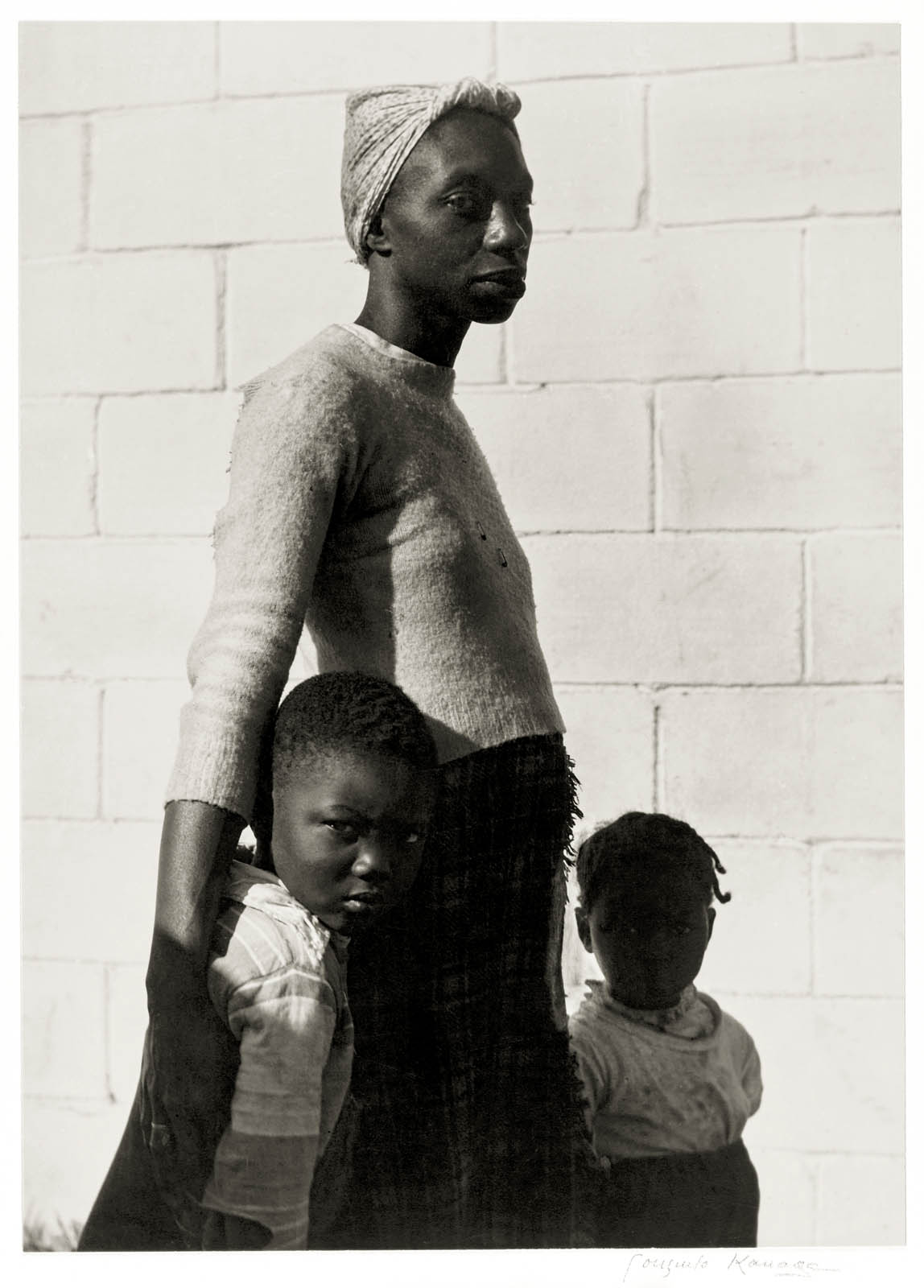
 

Consuelo Kanaga (American, 1894-1978) 'She is a Tree of Life' 1950


Consuelo Kanaga (American, 1894-1978)
She is a Tree of Life
1950
Gelatin silver print
22 13/16 × 16 13/16 × 1 1/2 in. (57.9 × 42.7 × 3.8cm) framed
Brooklyn Museum, Gift of Wallace B. Putnam from the Estate of Consuelo Kanaga
© Brooklyn Museum
Photo: Brooklyn Museum


Studies of Nature

In 1940 Kanaga and her husband, the painter Wallace Putnam, purchased a house outside the city, in Yorktown Heights, seventy kilometres north of Manhattan. They moved there permanently in 1950. Meanwhile, Kanaga continued taking photographs for household magazines in order to support herself and her husband financially. Perhaps this is one of the reasons why, after having her work exhibited in important exhibitions during the 1940s, Kanaga’s artistic output decreased during the following two decades. Nevertheless, she photographed the natural environment surrounding her house and in 1948 one of the pictures she took of the pond in their back yard was included in the exhibition In and Out of Focus: A Survey of Today’s Photography, held at the Museum of Modern Art in New York.

Catalogue

The catalogue that accompanies this exhibition has been published in English, Spanish, and Catalan by Fundación MAPFRE and the Brooklyn Museum. It features an essay by the show’s curator Drew Sawyer and texts by Shalon Parker, Ellen Macfarlane, and Shana Lopes. The publication includes a complete overview of the artist’s life and work.

Press release from the Fundación MAPFRE


Consuelo Kanaga (American, 1894-1978) '[Untitled] (Landscape Near Taos, New Mexico)' Nd


Consuelo Kanaga (American, 1894-1978)
[Untitled] (Landscape Near Taos, New Mexico)
Nd
Gelatin silver print
4 3/4 x 7 3/4 in. (12.1 x 19.7cm)
Brooklyn Museum, Gift of Wallace B. Putnam from the Estate of Consuelo Kanaga
© Brooklyn Museum
Photo: Brooklyn Museum


Consuelo Kanaga (American, 1894-1978) '[Untitled] (Landscape with Farmhouse)' Nd


Consuelo Kanaga (American, 1894-1978)
[Untitled] (Landscape with Farmhouse)
Nd
Gelatin silver print
3 5/8 x 4 3/4 in. (9.2 x 12.1cm)
Brooklyn Museum, Gift of Wallace B. Putnam from the Estate of Consuelo Kanaga
© Brooklyn Museum
Photo: Brooklyn Museum


KBr Photography Center
Avenida Litoral, 30 – 08005 Barcelona
Phone: +34 93 272 31 80

(Attention only during the opening hours of the exhibition hall)

Opening hours:
Mondays (except holidays): Closed
Tuesday to Sundays (and holidays): 11am – 8pm

Fundación MAPFRE website

LIKE ART BLART ON FACEBOOK

Back to top

Exhibition: Gordon Parks and “The Atmosphere of Crime” at the Museum of Modern Art (MoMA), New York

Collection 1940s-1970s, Room 409
From ‘New art from wall to wall’ ongoing

Please note: this posting contains disturbing images of murder and death. Please do not look if you are of a sensitive nature.


Gordon Parks (American, 1912-2006) 'Shooting Victim in Cook County Morgue, Chicago, Illinois' 1957 from the exhibition 'Gordon Parks and "The Atmosphere of Crime"' at the Museum of Modern Art (MoMA), New York, ongoing


Gordon Parks (American, 1912-2006)
Shooting Victim in Cook County Morgue, Chicago, Illinois
1957
Pigmented inkjet print, printed 2019
11 7/8 × 17 15/16″ (30.1 × 45.6cm)
The Museum of Modern Art, New York
The Family of Man Fund
© 2021 Gordon Parks Foundation


As you can imagine, with the tragic situation of the ongoing COVID-19 pandemic around the world at the moment, there are few photography exhibitions on view.

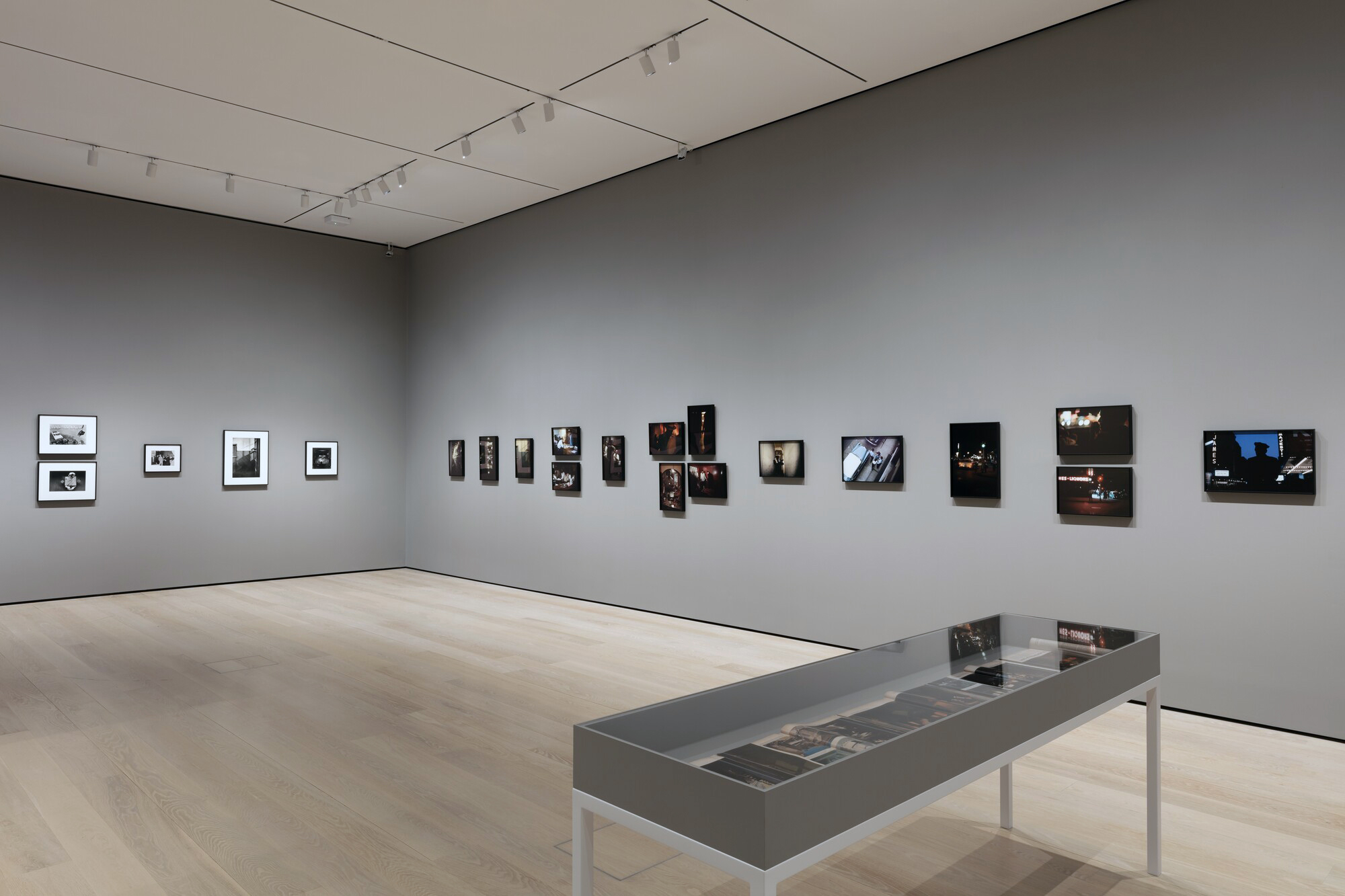
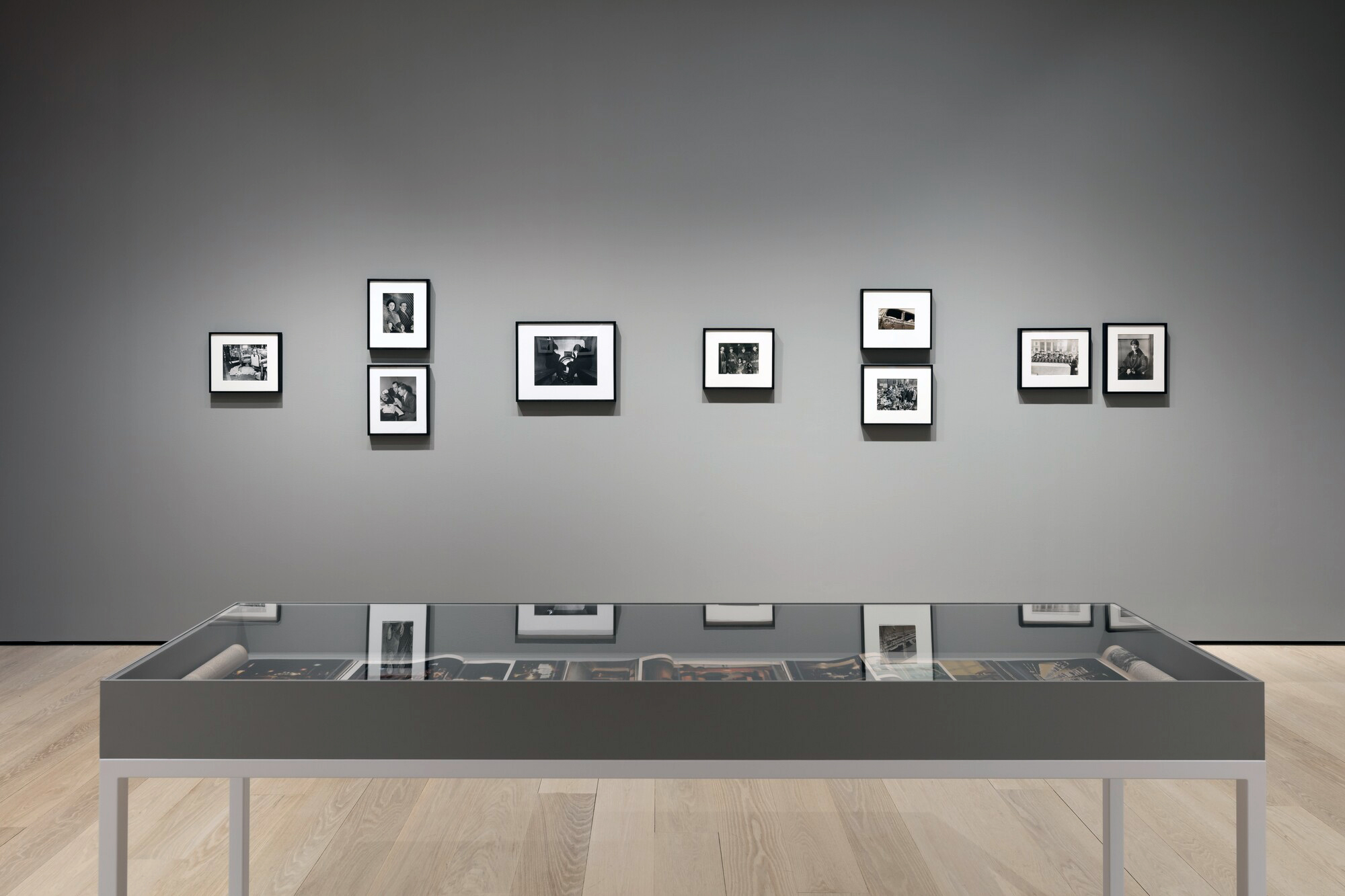
This selection of images comes from the collection 1940s-1970s at the Museum of Modern Art (MoMA) in an ongoing display. Please note that not all Gordon Parks photographs shown here are on display, but I include them to give the viewer an overview, a greater understanding of the breadth of photographs included in Parks’ cinematic photo-essay.

Can you imagine the fortitude of this man: “born into poverty and segregation in Fort Scott, Kansas, in 1912. An itinerant labourer, he worked as a brothel pianist and railcar porter, among other jobs, before buying a camera at a pawnshop, training himself and becoming a photographer. He evolved into a modern-day Renaissance man, finding success as a film director, writer and composer.” “The first Black member of the Farm Security Administration’s storied photo corps; the first Black photographer for the U.S. Office of War Information; the first Black photographer for Vogue; the first Black staff photographer at the weekly magazine Life; and, years later, the first Black filmmaker to direct a motion picture (Shaft) for a major Hollywood studio.” As a photographer he learnt his craft shooting dresses for department stores, taking portraits of society women in Chicago, and studying “the Depression-era images of photographers like Dorothea Lange”. Before joining them as a member of the FSA.

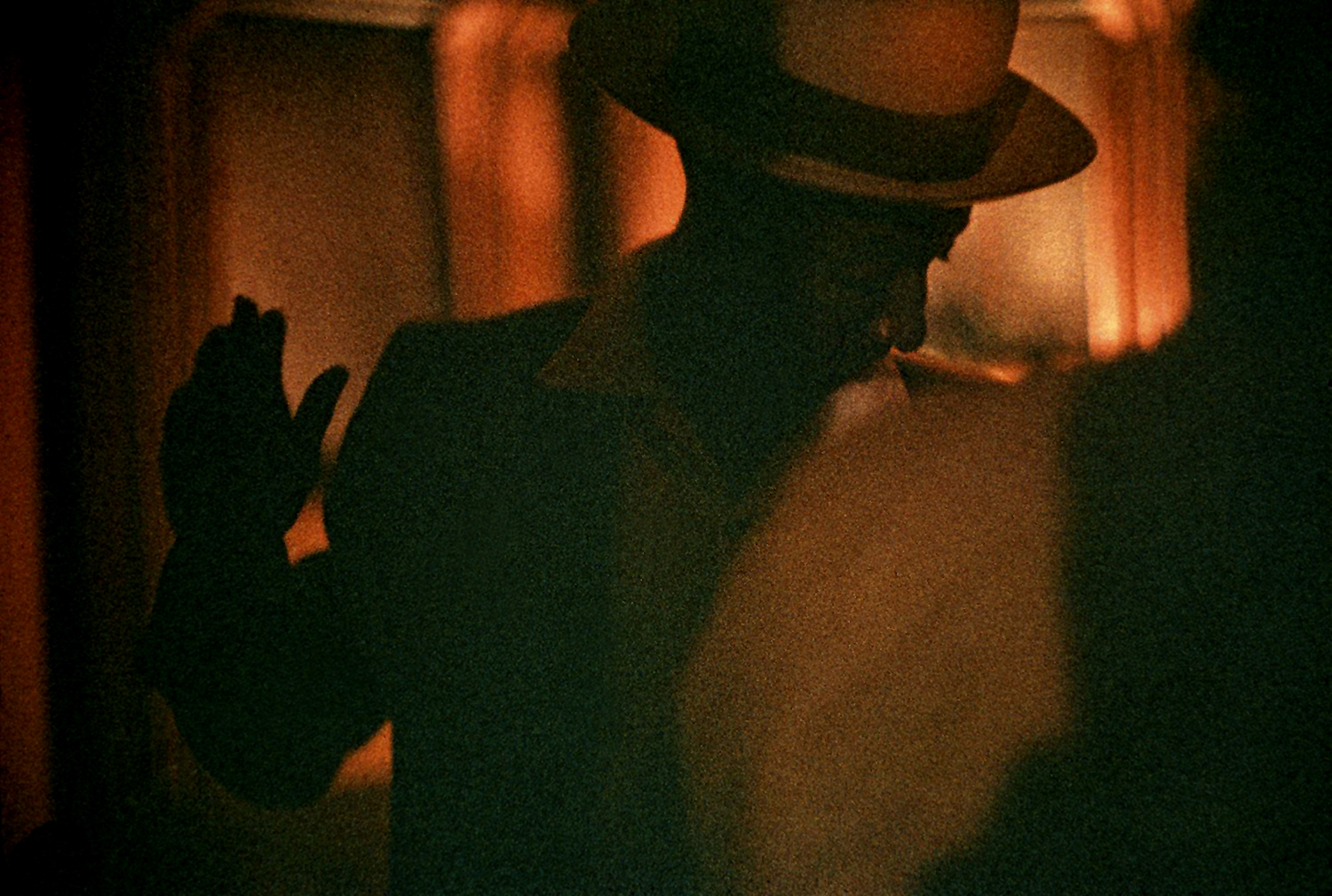
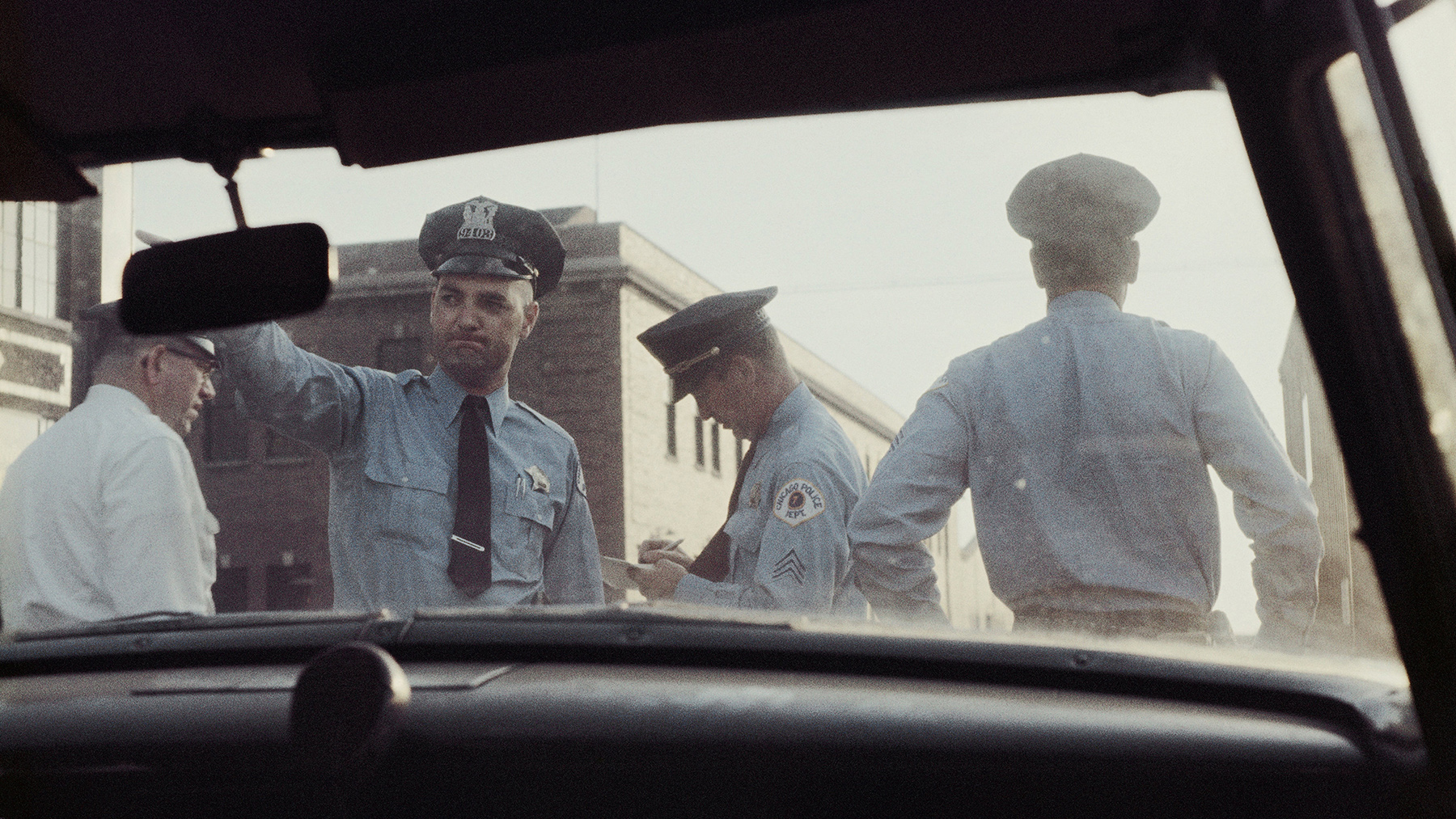
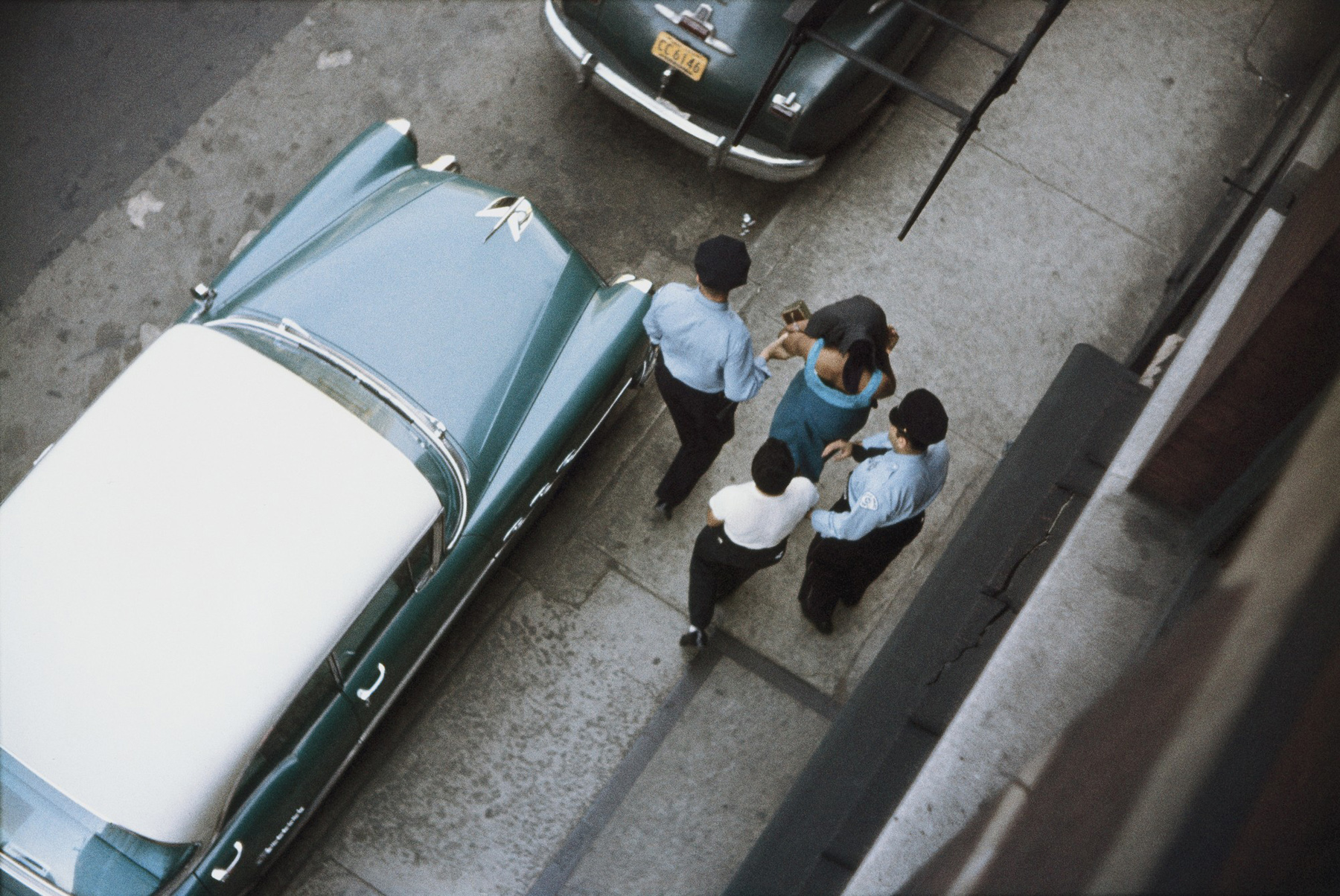
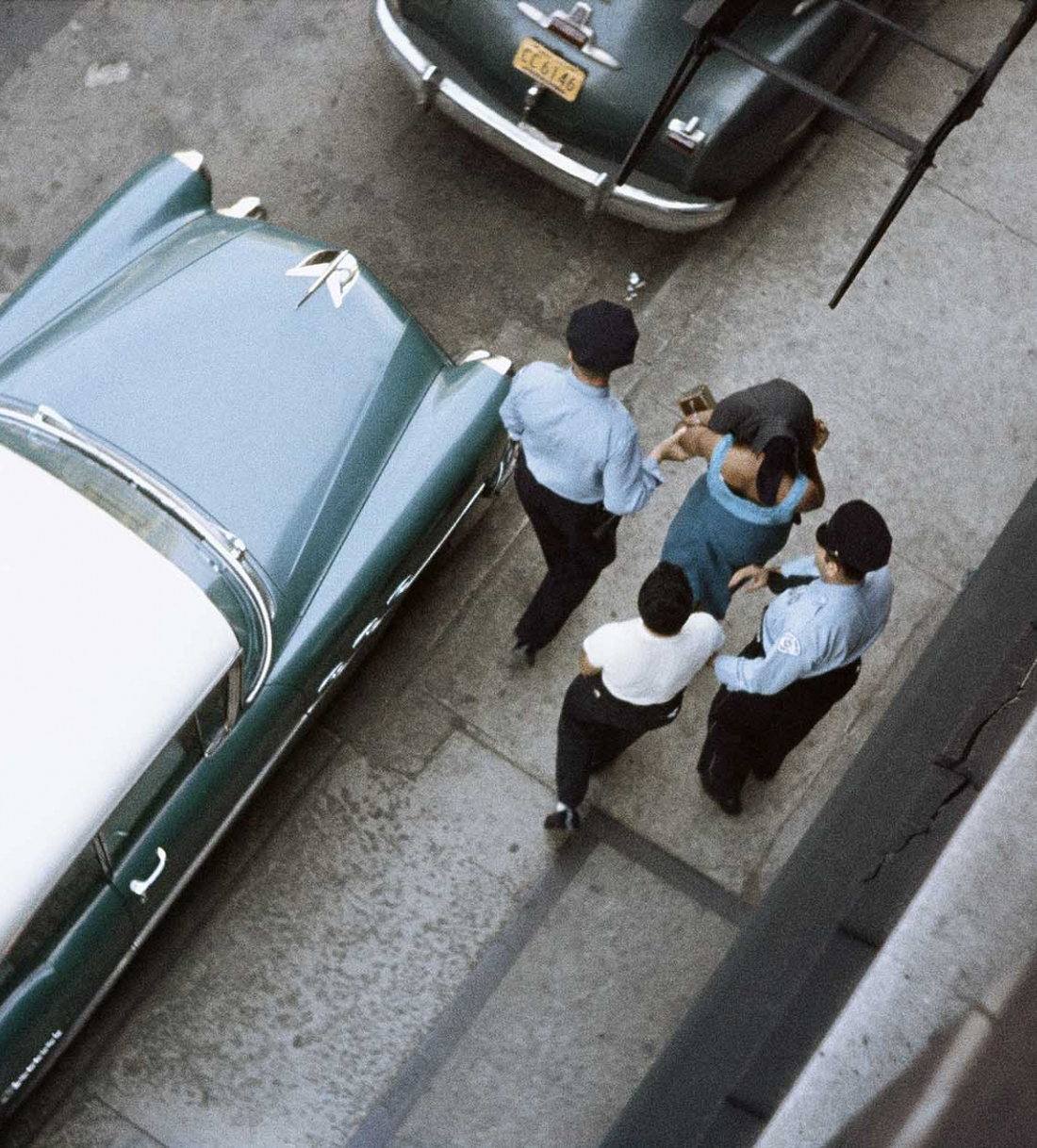
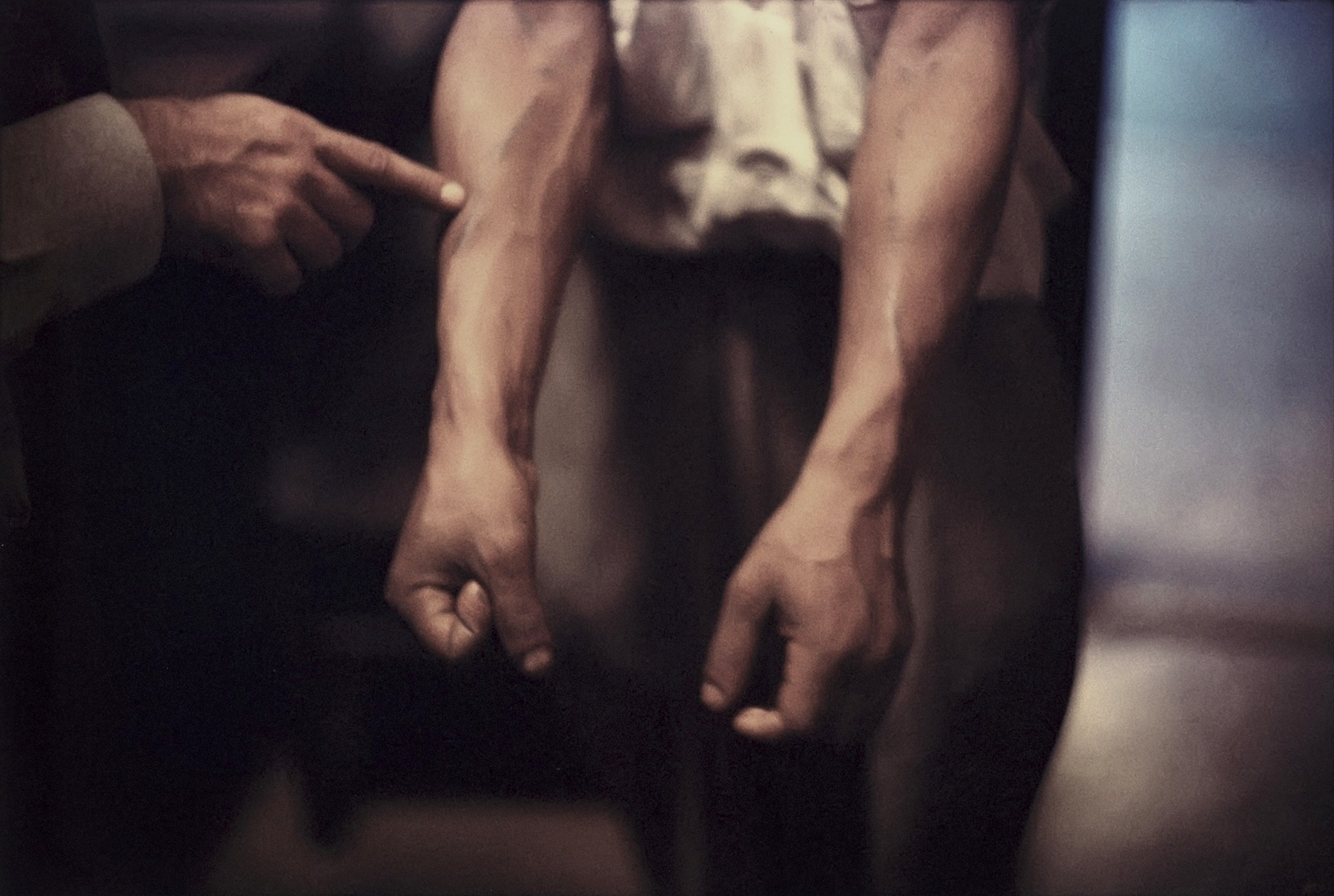
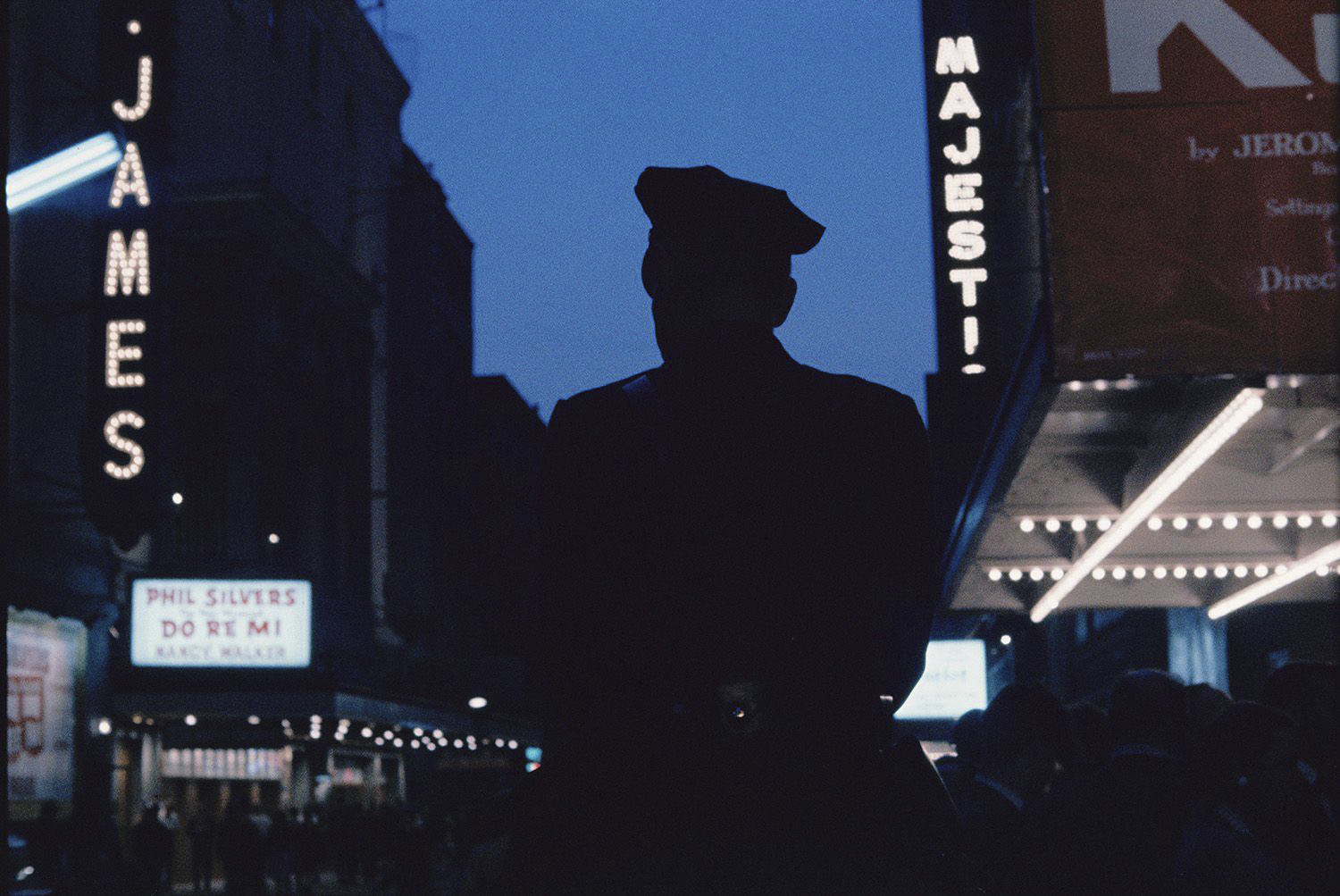
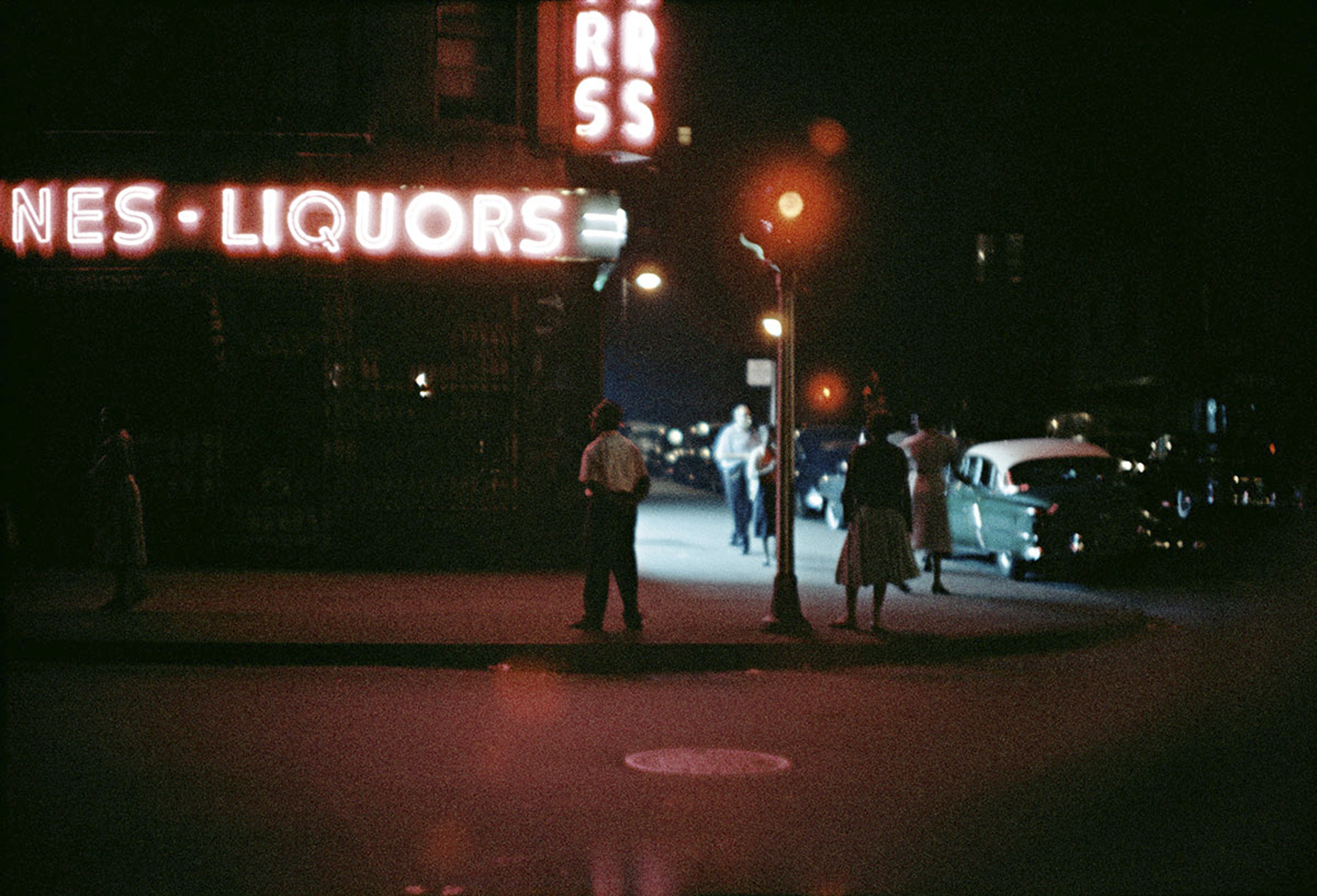
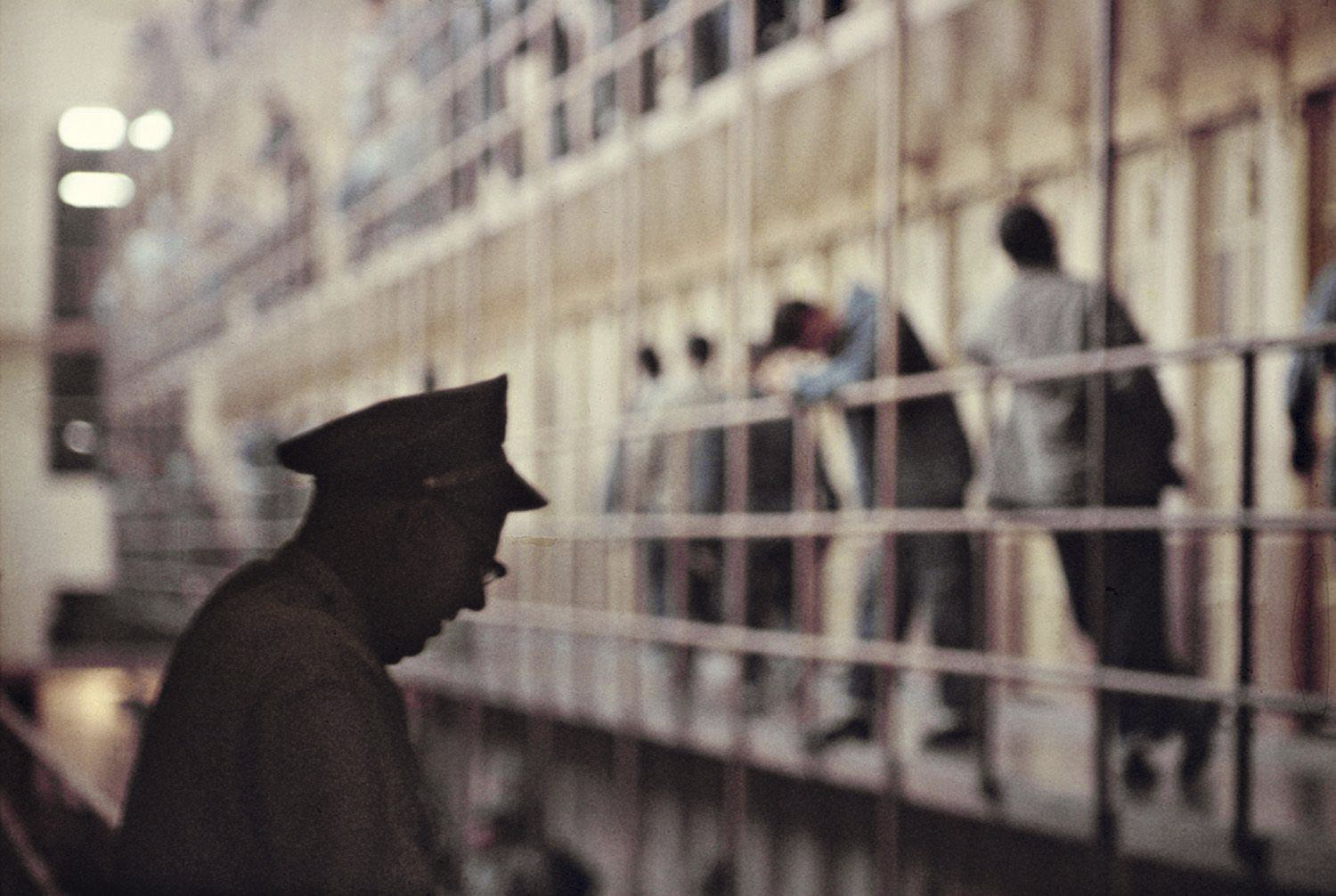
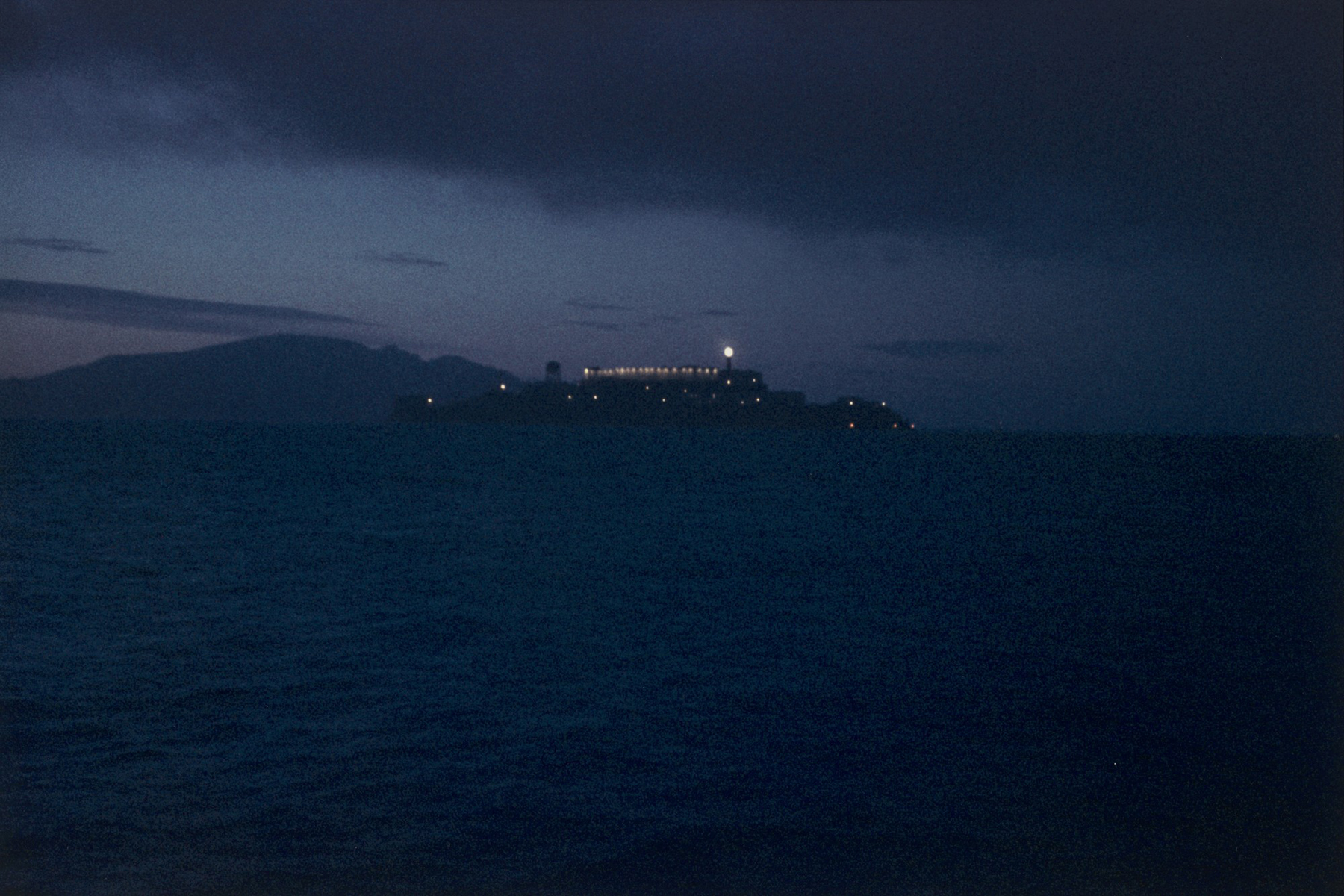
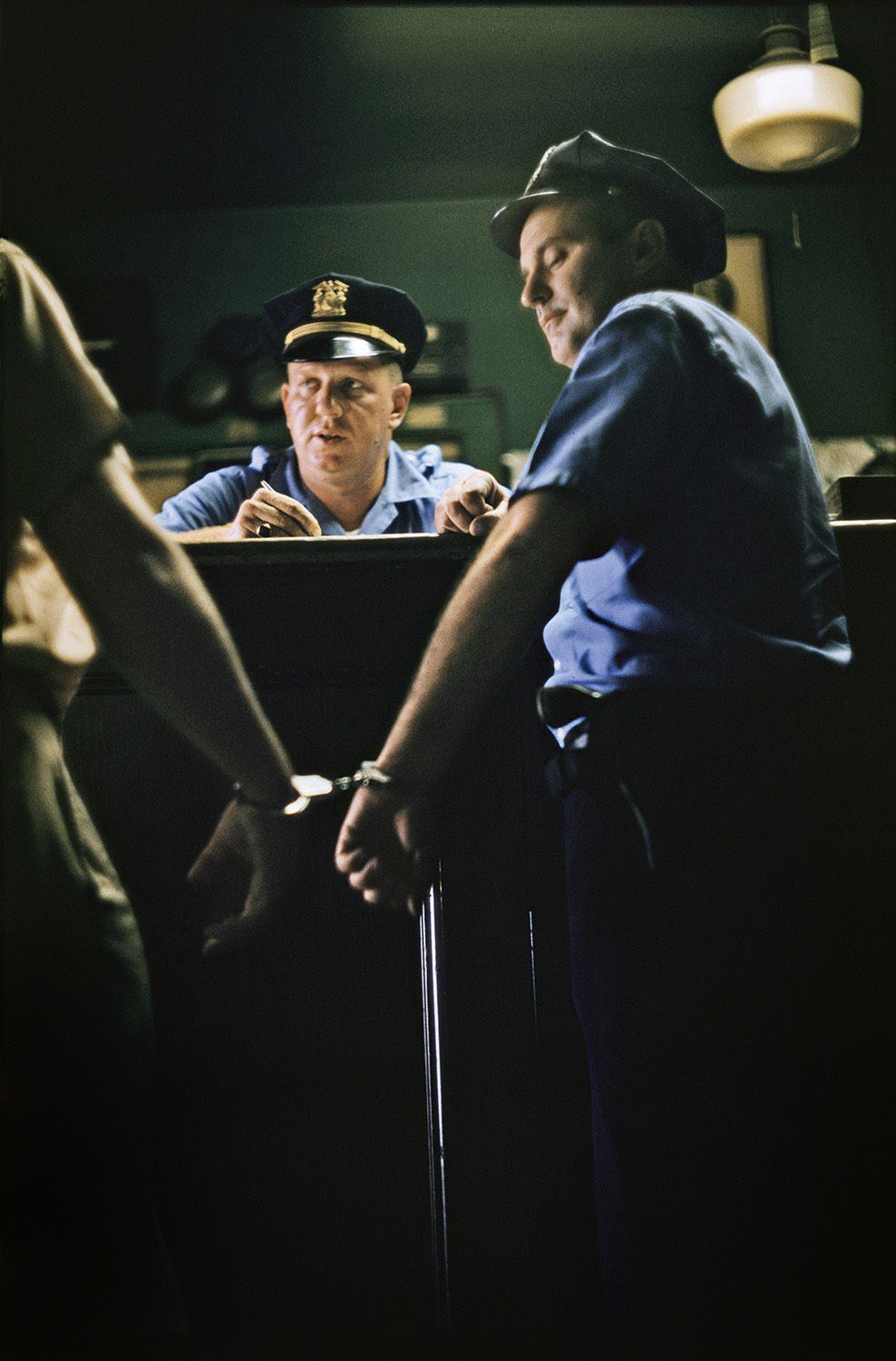
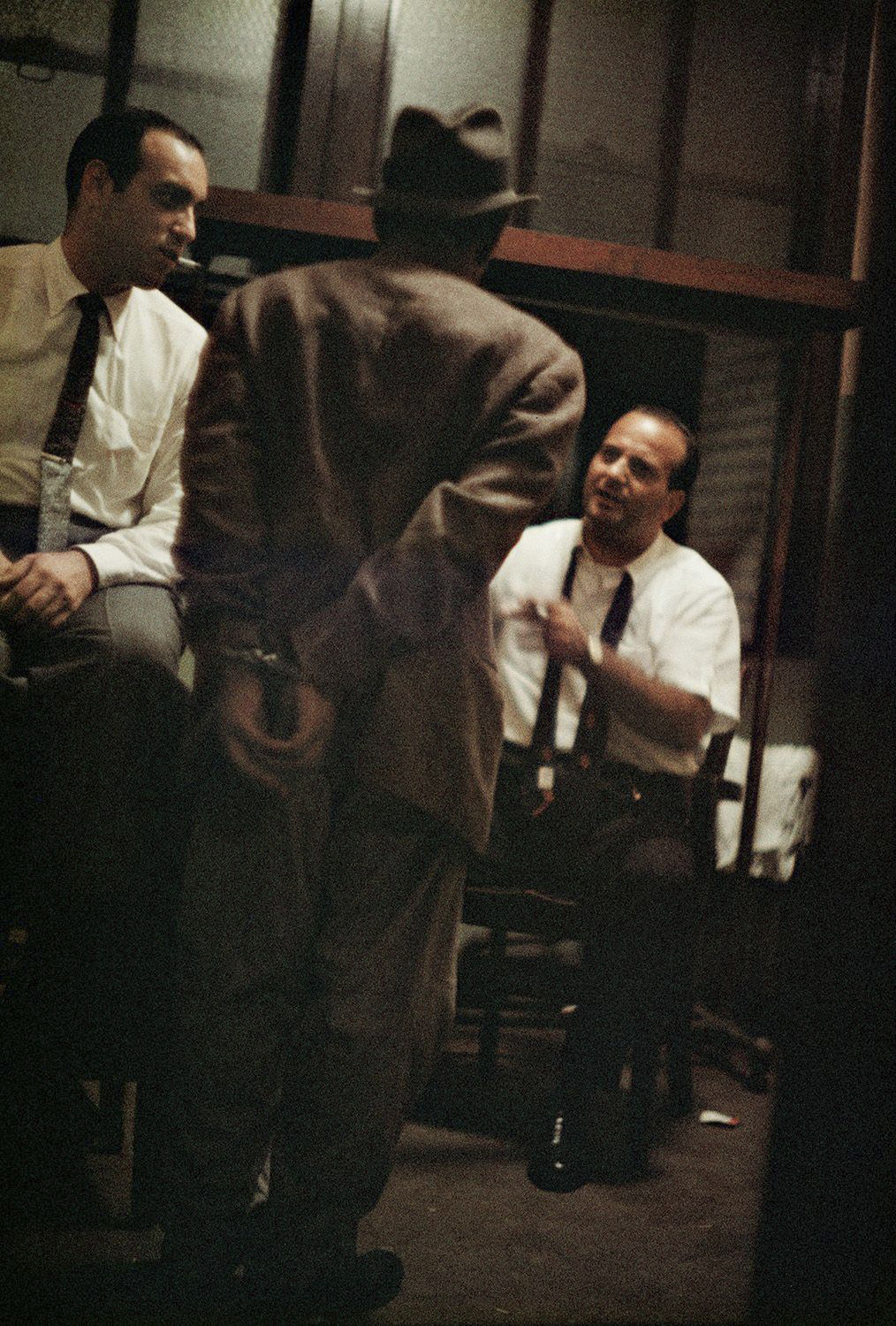
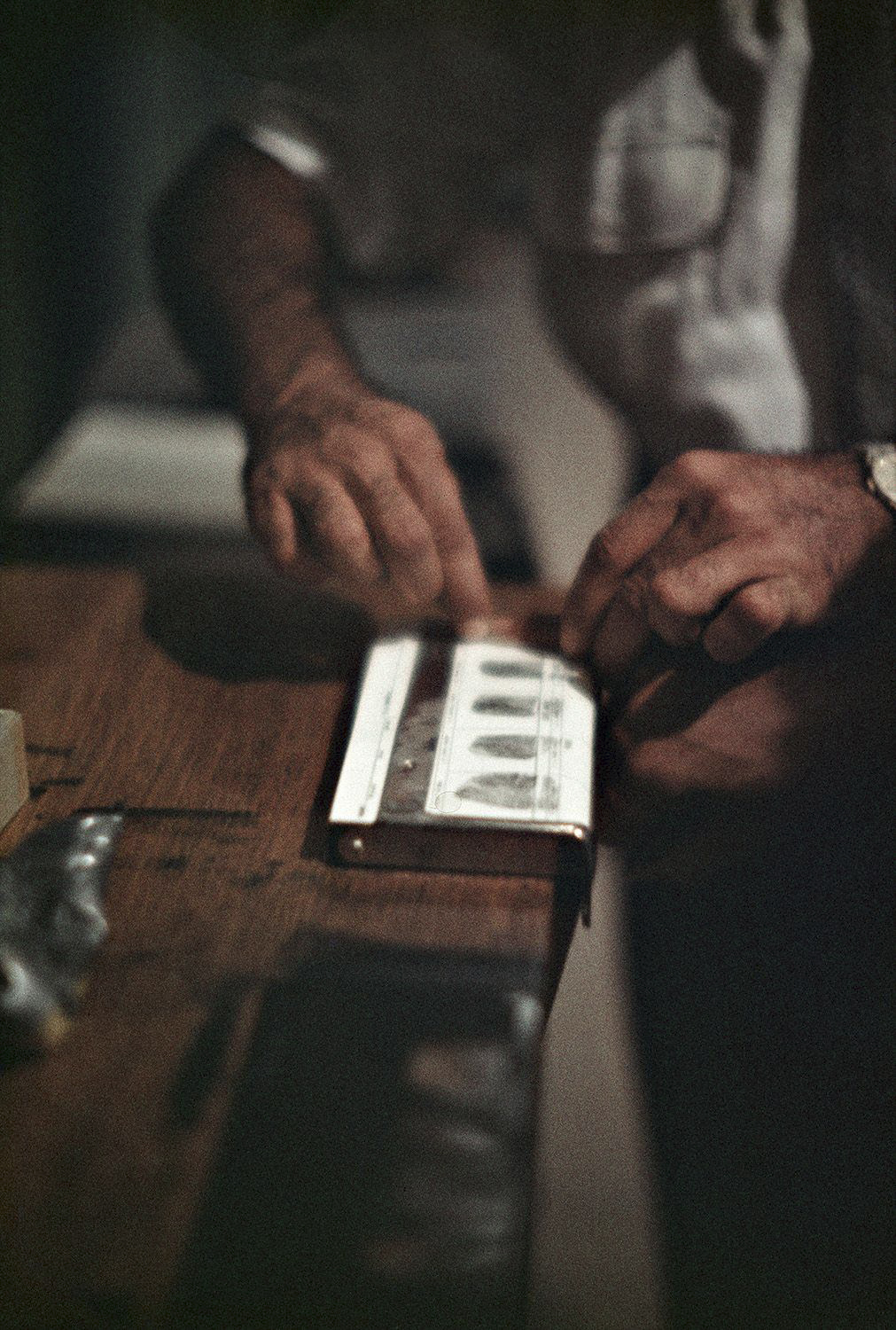
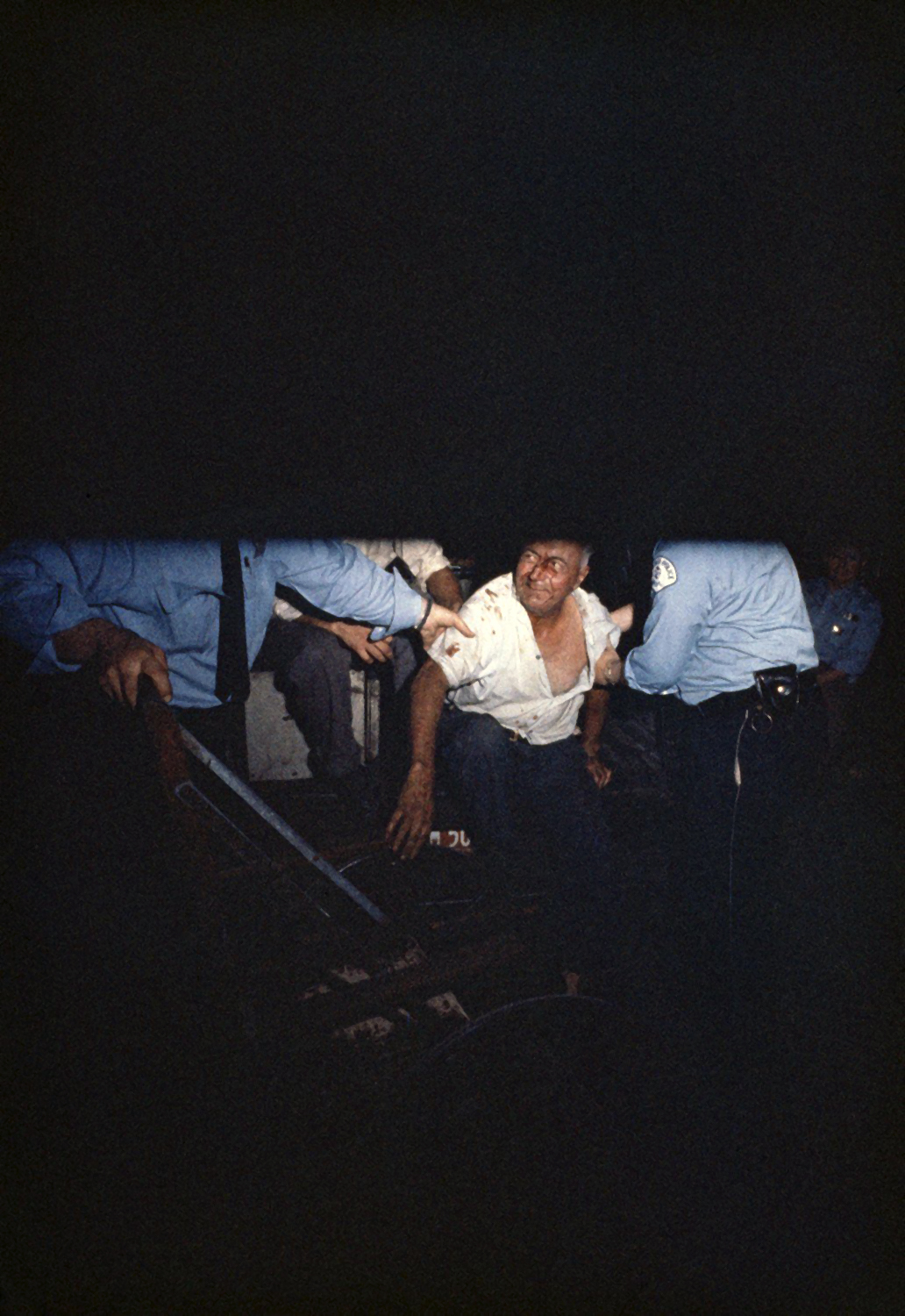
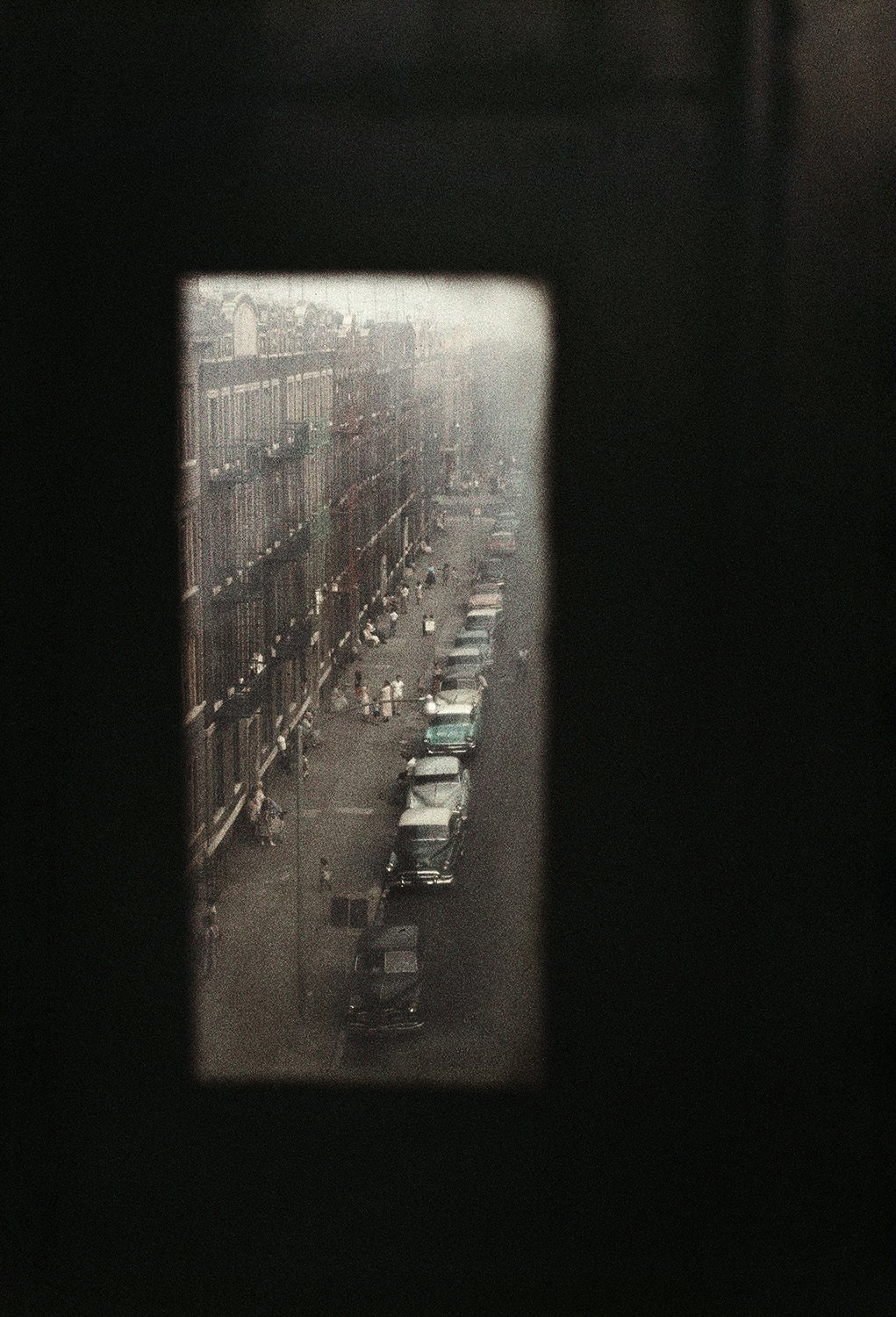
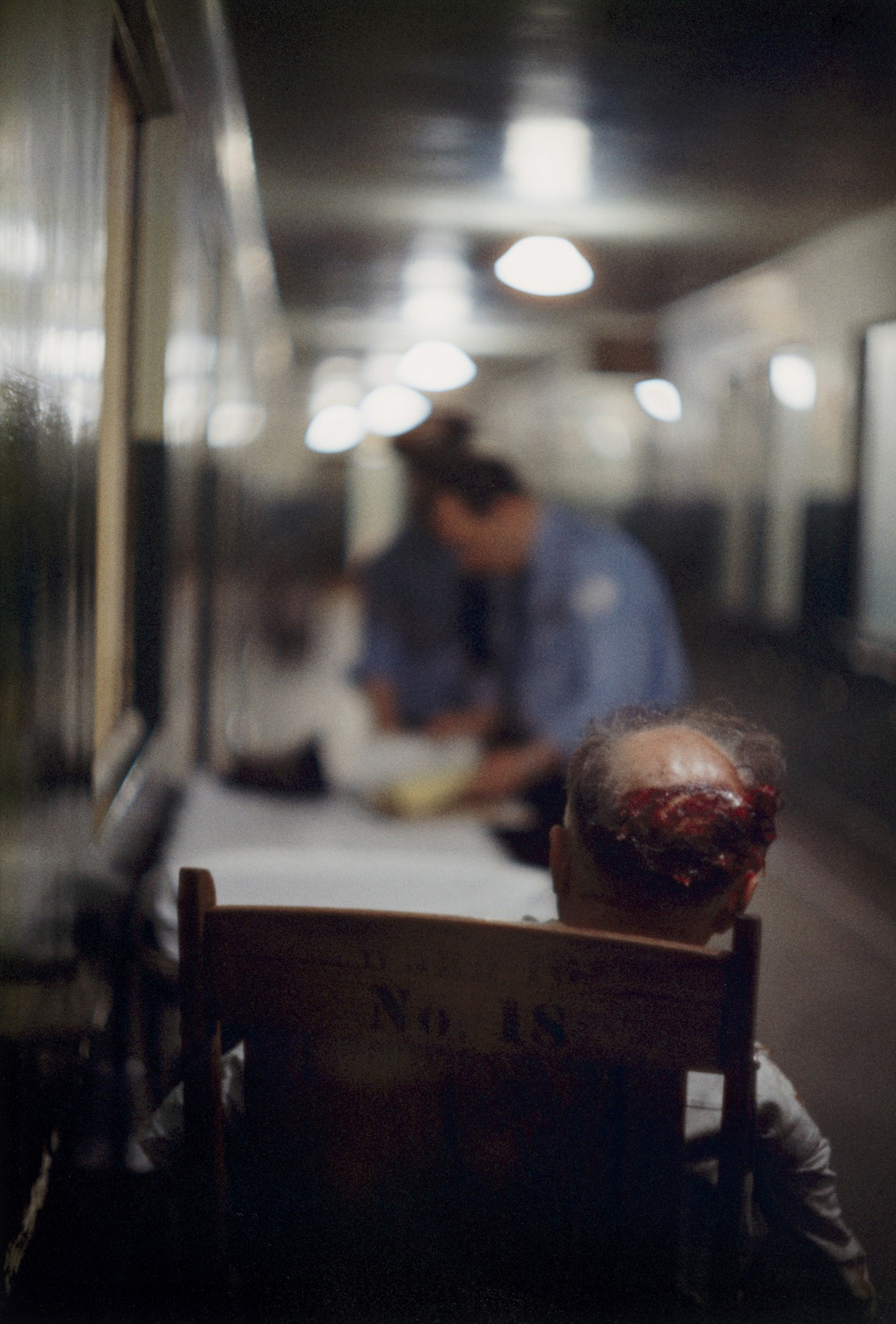
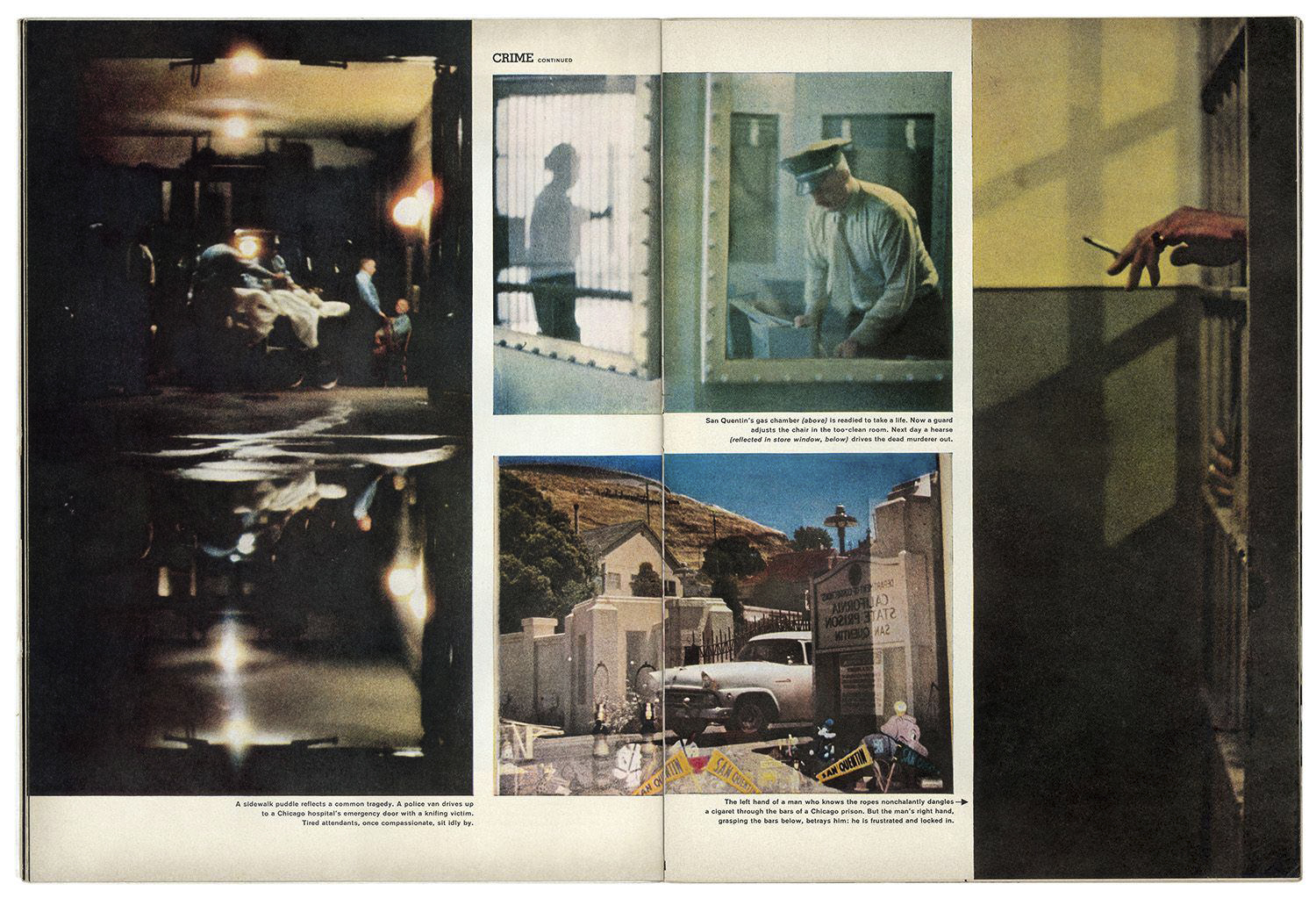
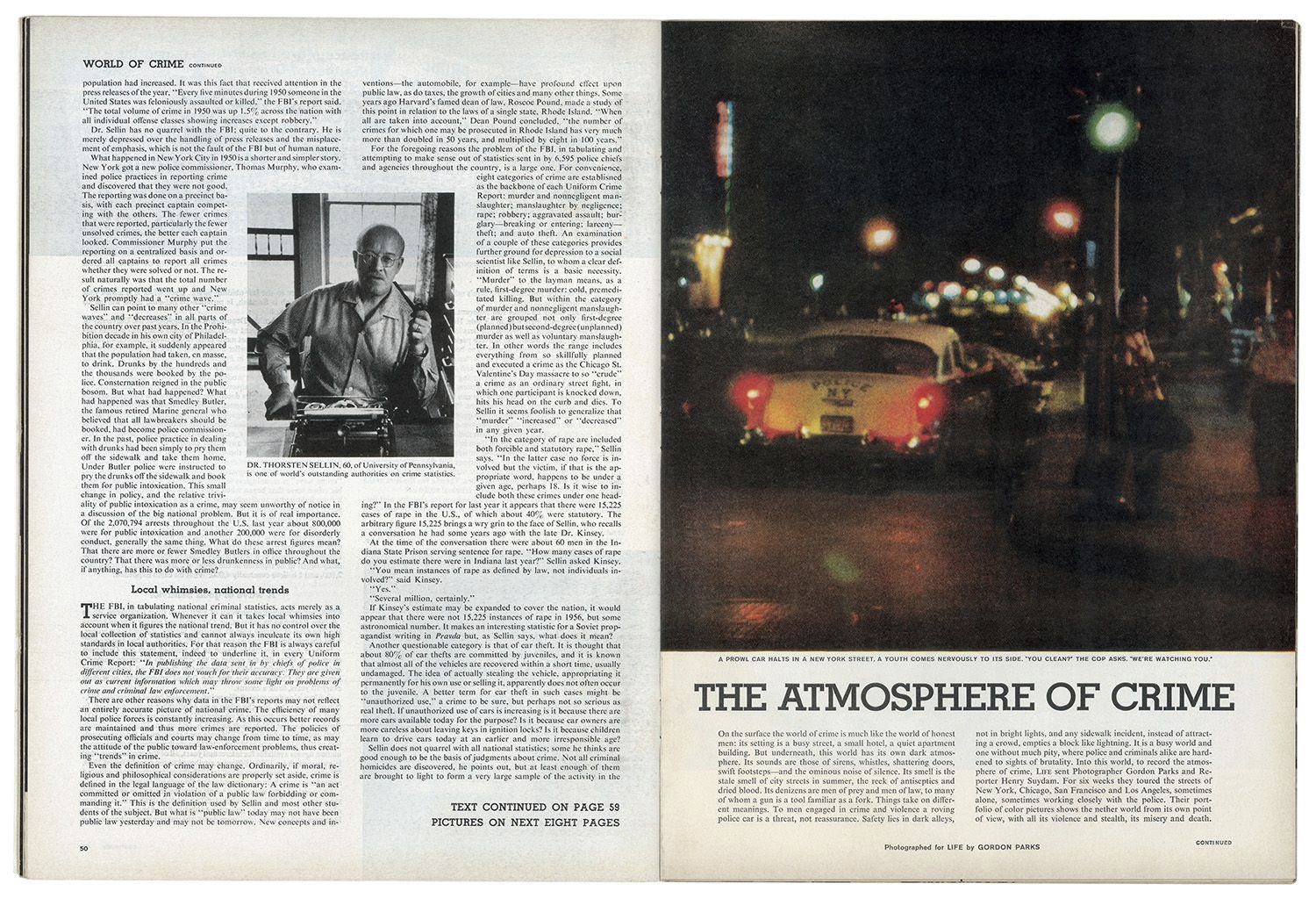
This body of work is remarkable for its non-judgemental gaze, a felt response to a subject which was an assignment for LIFE magazine: an objective reporter with a subjective heart as Parks proclaimed, one who had a certain kind of empathy, “expressing things for people who can’t speak for themselves… the underdogs… in that way I speak for myself.” Park’s photographic strategy was to use colour (rare and expensive in those days), and to close in on detail. Rarely if at all are there any mid to long shots in the photo-essay, placing the photograph in a particular location, the exception being the Untitled street scene under the Chicago “L” (short for “elevated”) rapid transit system and the night-time shot of an illuminated Alcatraz Island – remote, forbidding, isolated.

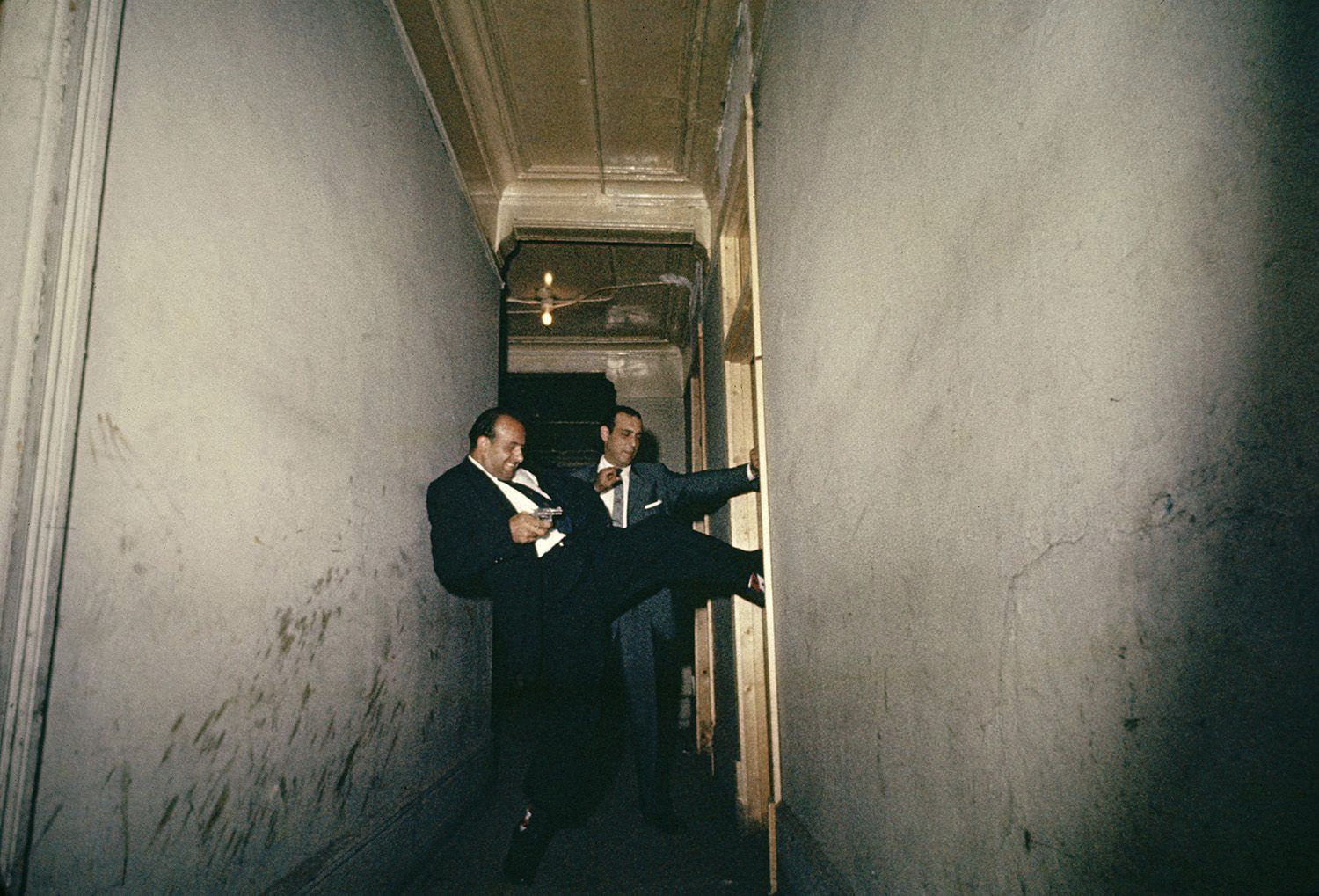
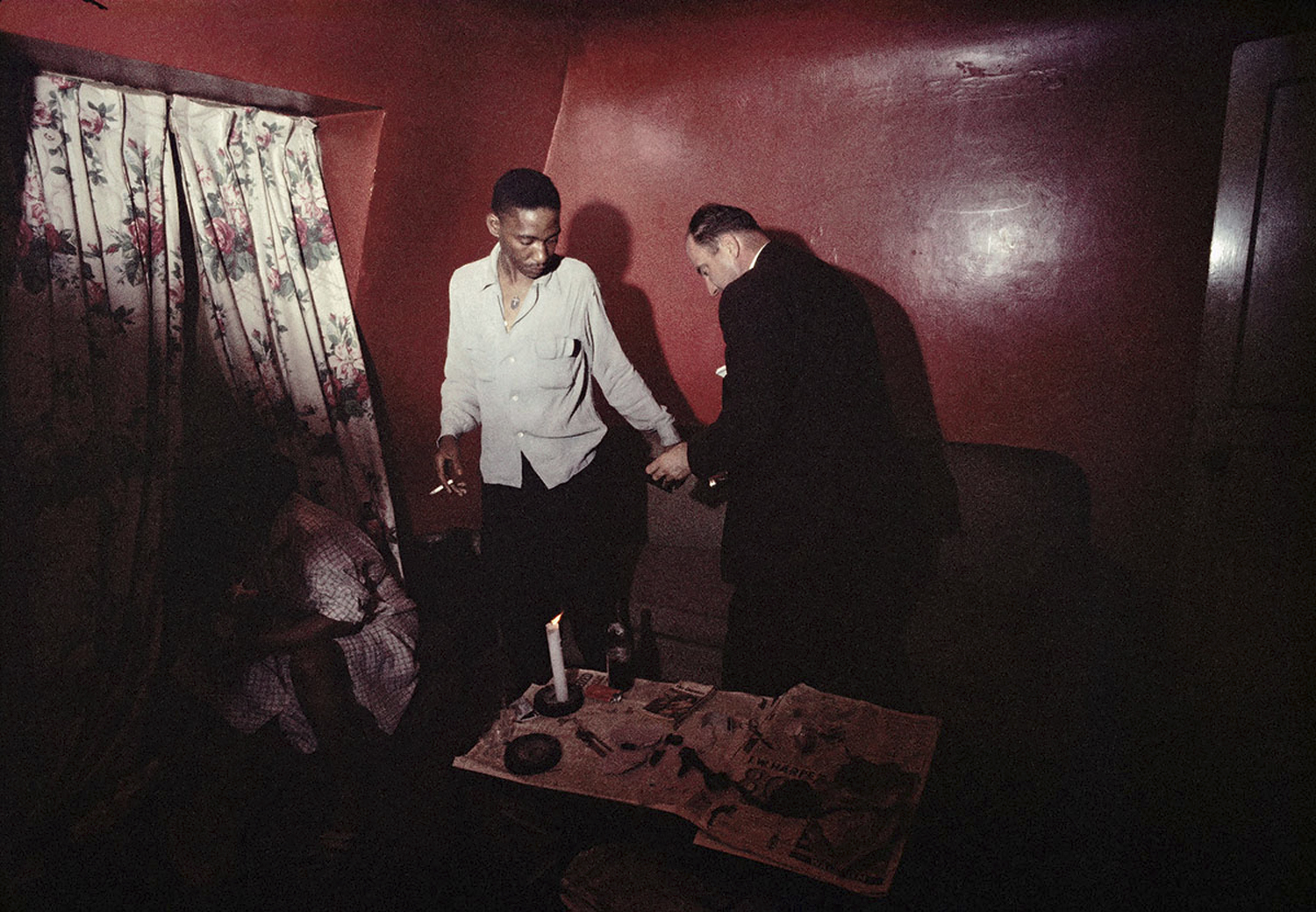
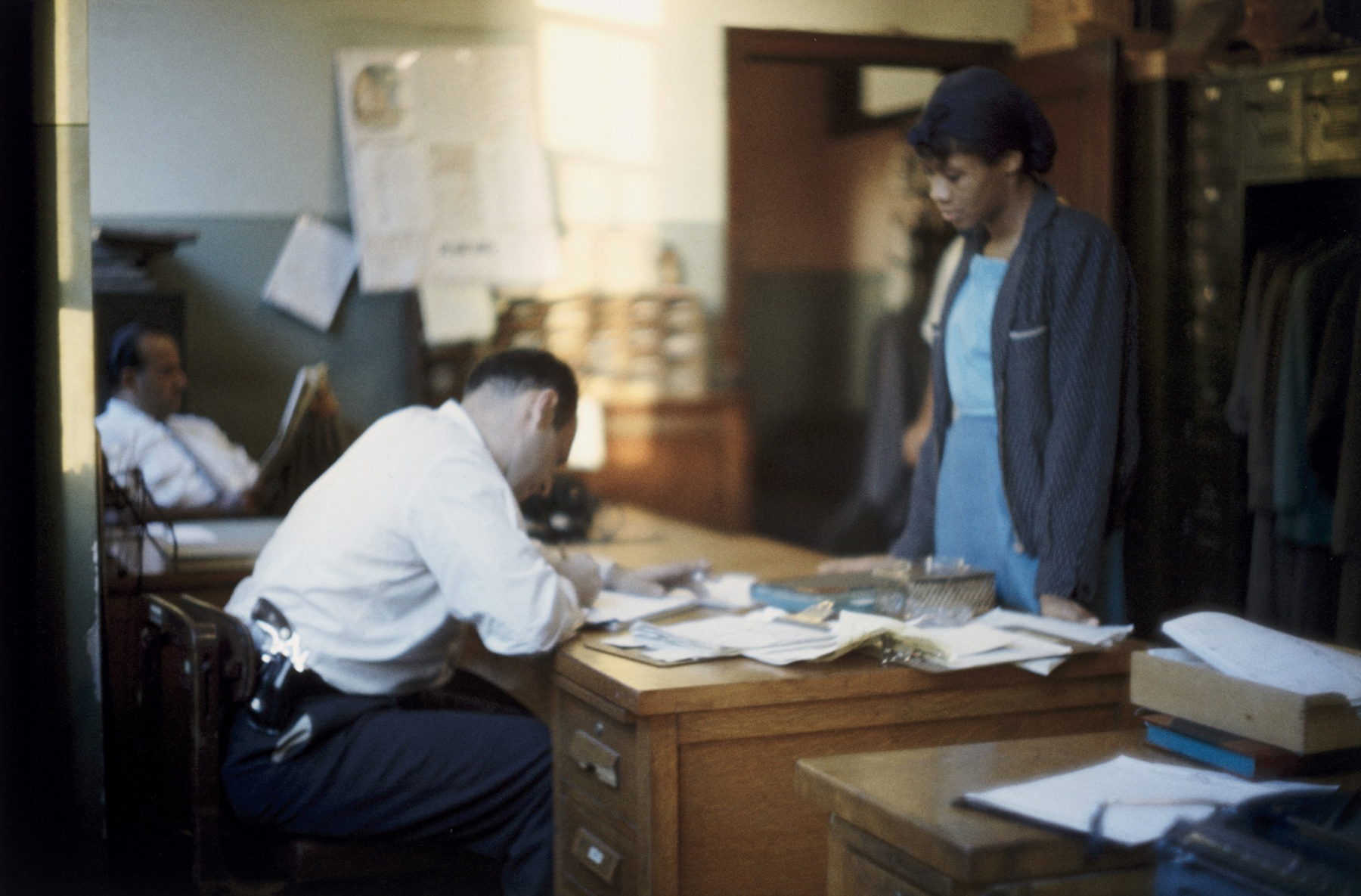
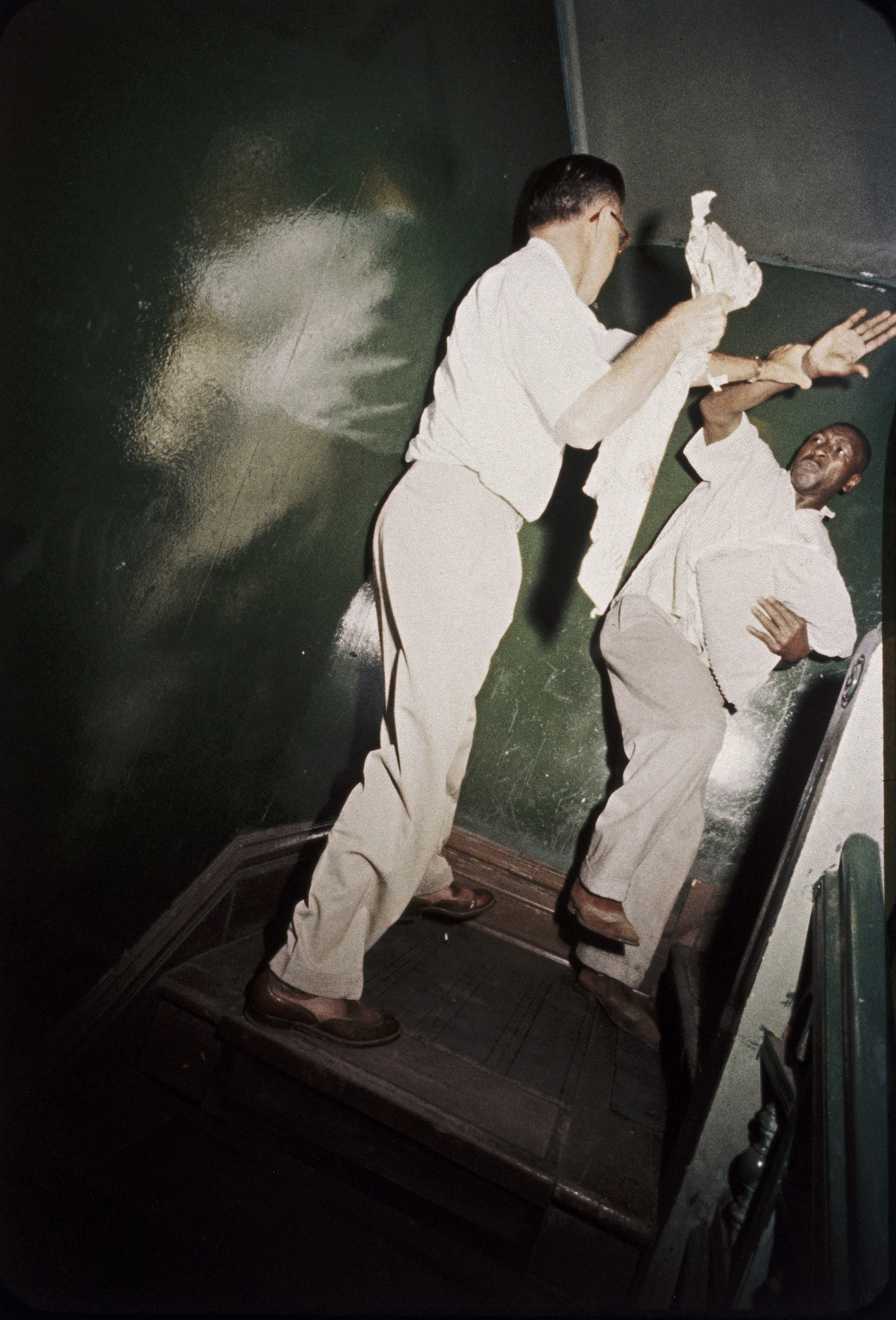
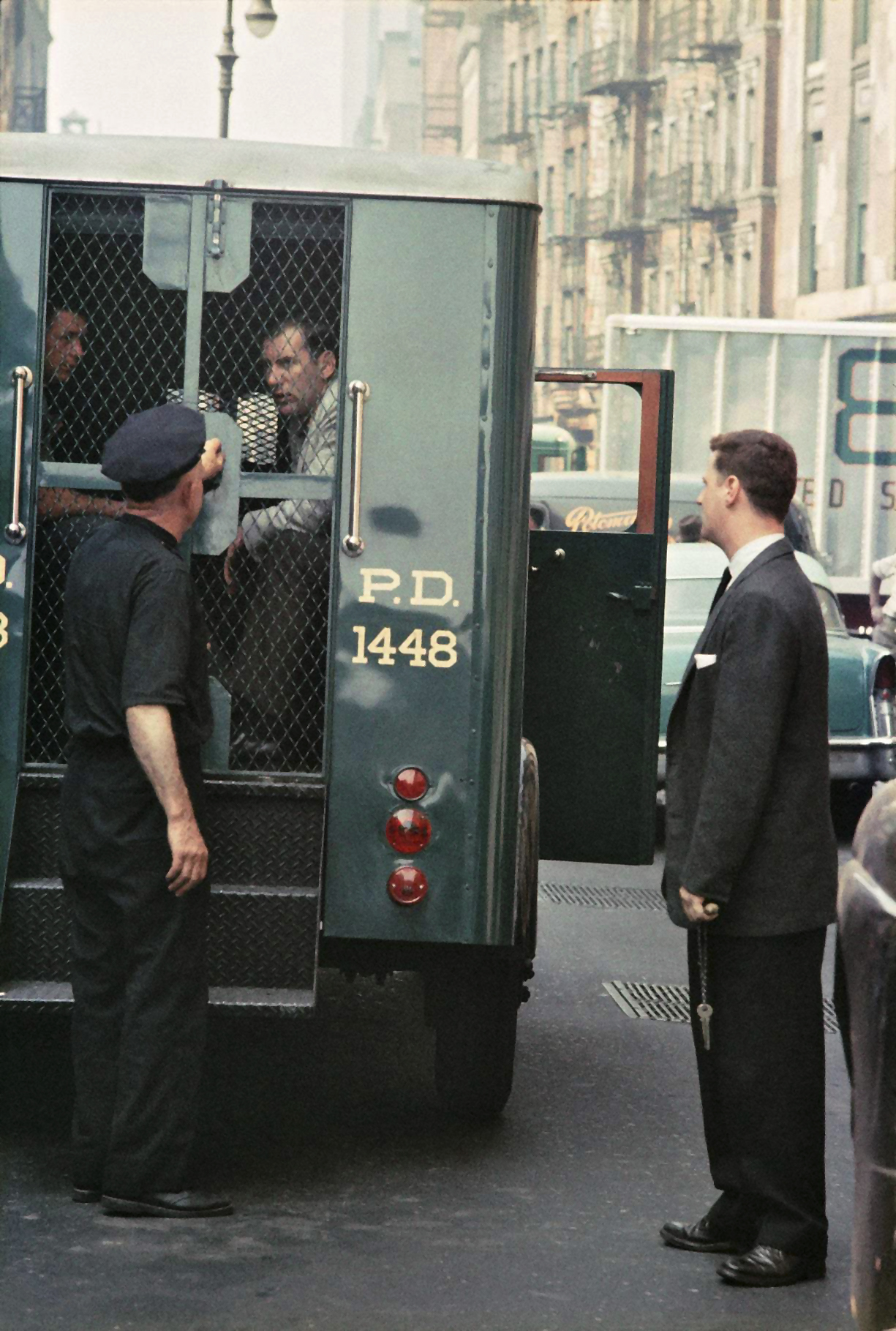
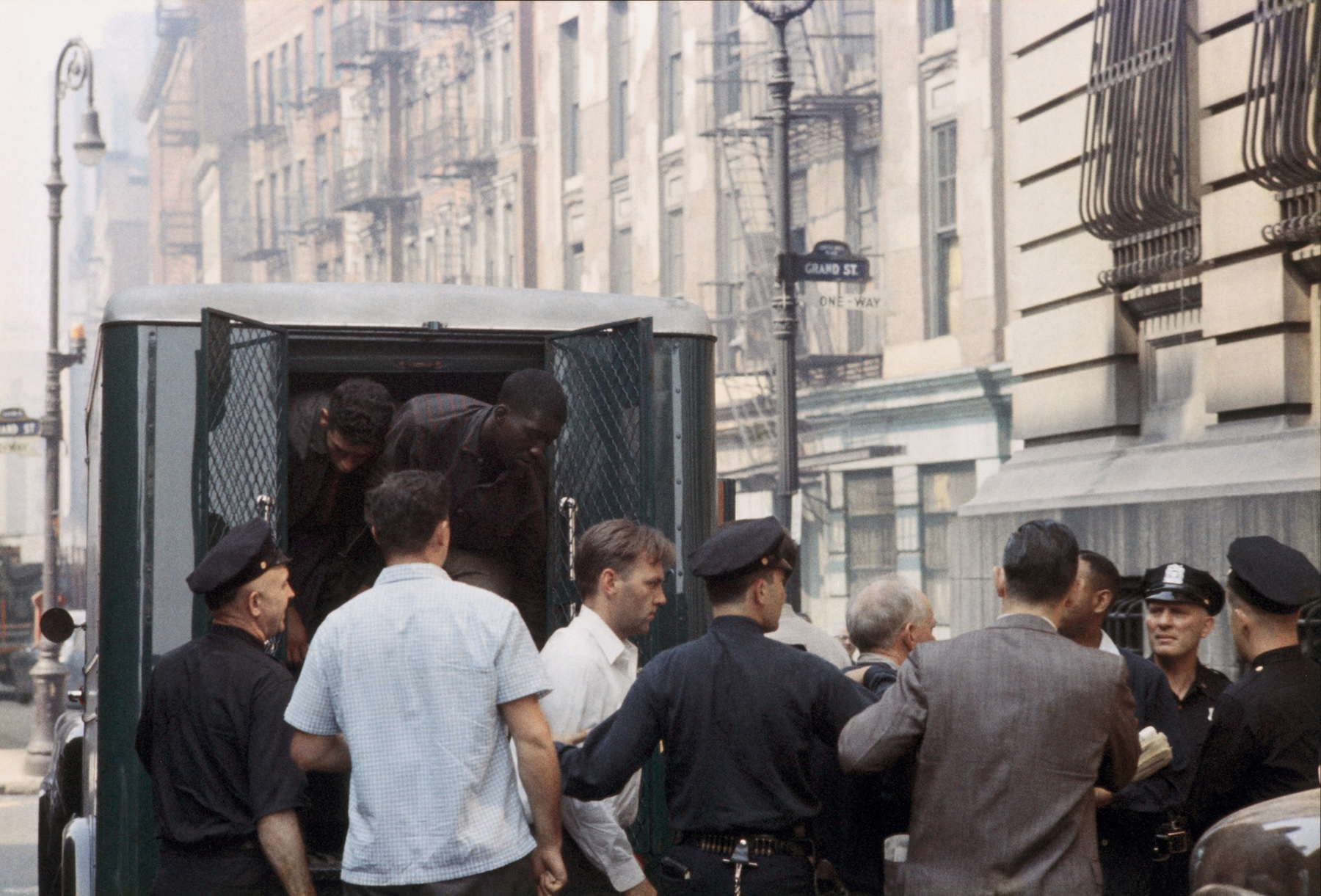
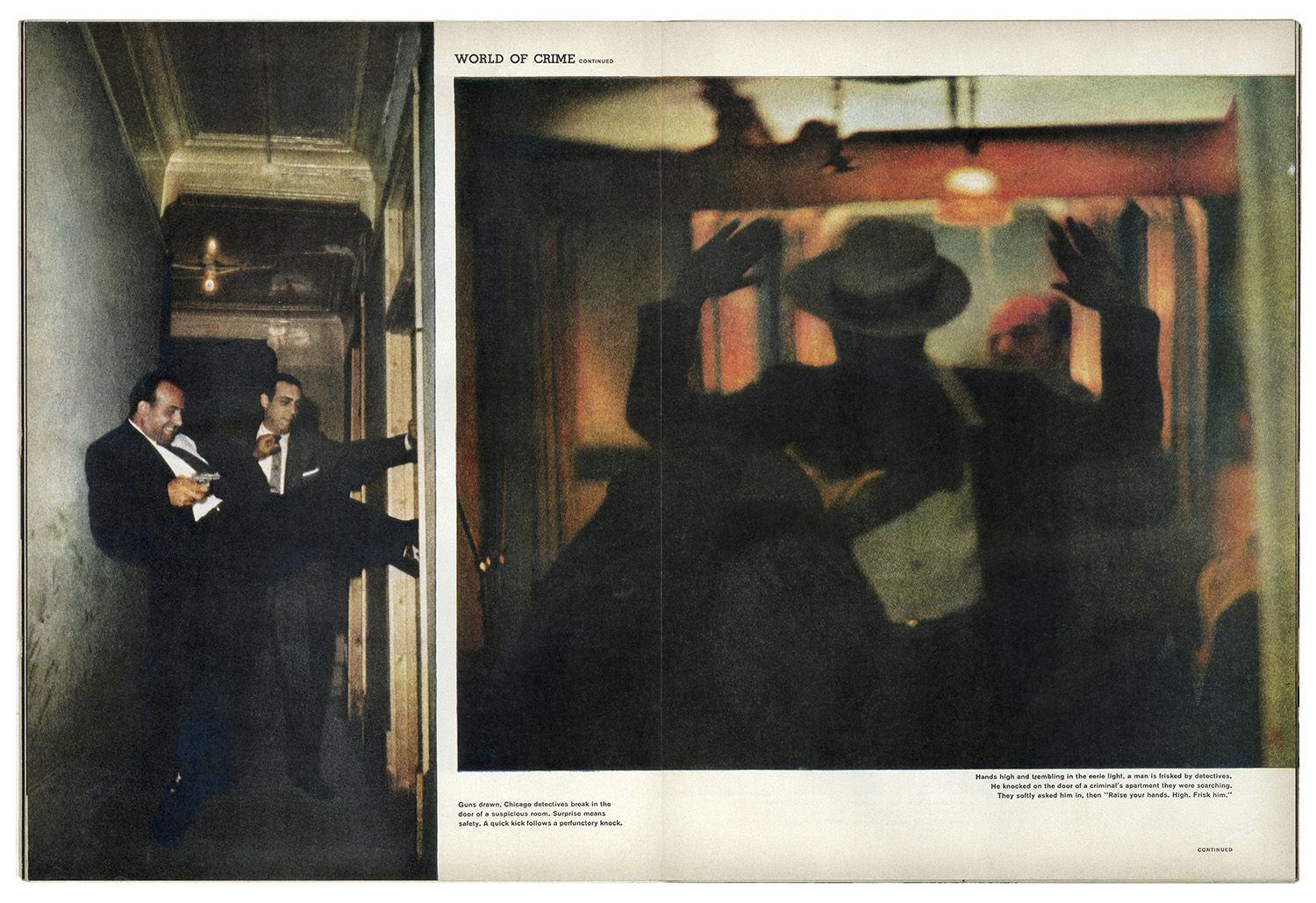
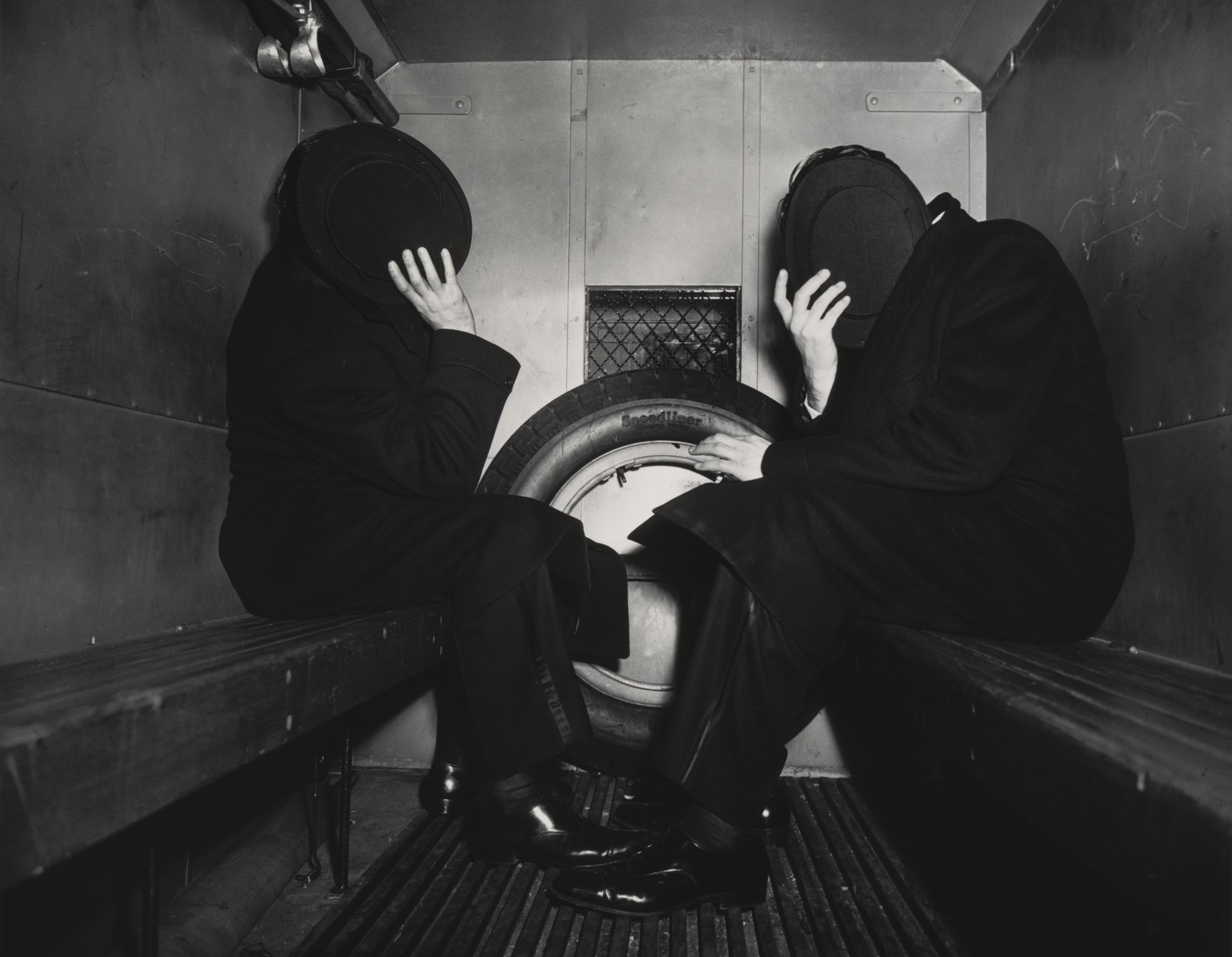
Photographed with candour – using low depth of field, silhouette, chiaroscuro, natural light, low light, night photography, no blur, little flash and challenging perspective, aesthetically a mixture of Dorothea Lange, Weegee and the colour images of Saul Leiter – other intimate images in the series create an “atmosphere” of everyday life on the streets and in the prisons, capturing how the disenfranchised, the desperate and the destitute are controlled and processed by force. “Parks coaxed his camera to record reality so vividly and compellingly that it would allow Life’s readers to see the complexity of these chronically oversimplified situations.” In Raiding Detectives, Chicago, Illinois (1957) we see two detectives of Italian descent raiding a dingy run-down tenement, busting the door open unannounced, guns drawn. In the photograph underneath in the posting, taken inside the oh so red room with floral curtains, one of the detectives questions a black suspect smoking a cigarette, while on the table covered with newspapers sits a burning candle probably providing the only illumination. Cowering in the shadows is a black women, almost unnoticed until you really look at the photograph. This is what abject poverty looks like. In another photograph, Untitled, New York, New York (1957), black and white men emerge from a police van – about the only time black and white men would have sat together in the segregated society of the time (other than being in prison). Can you imagine the atmosphere inside the paddy wagon, the looks, the conversation or lack of it?

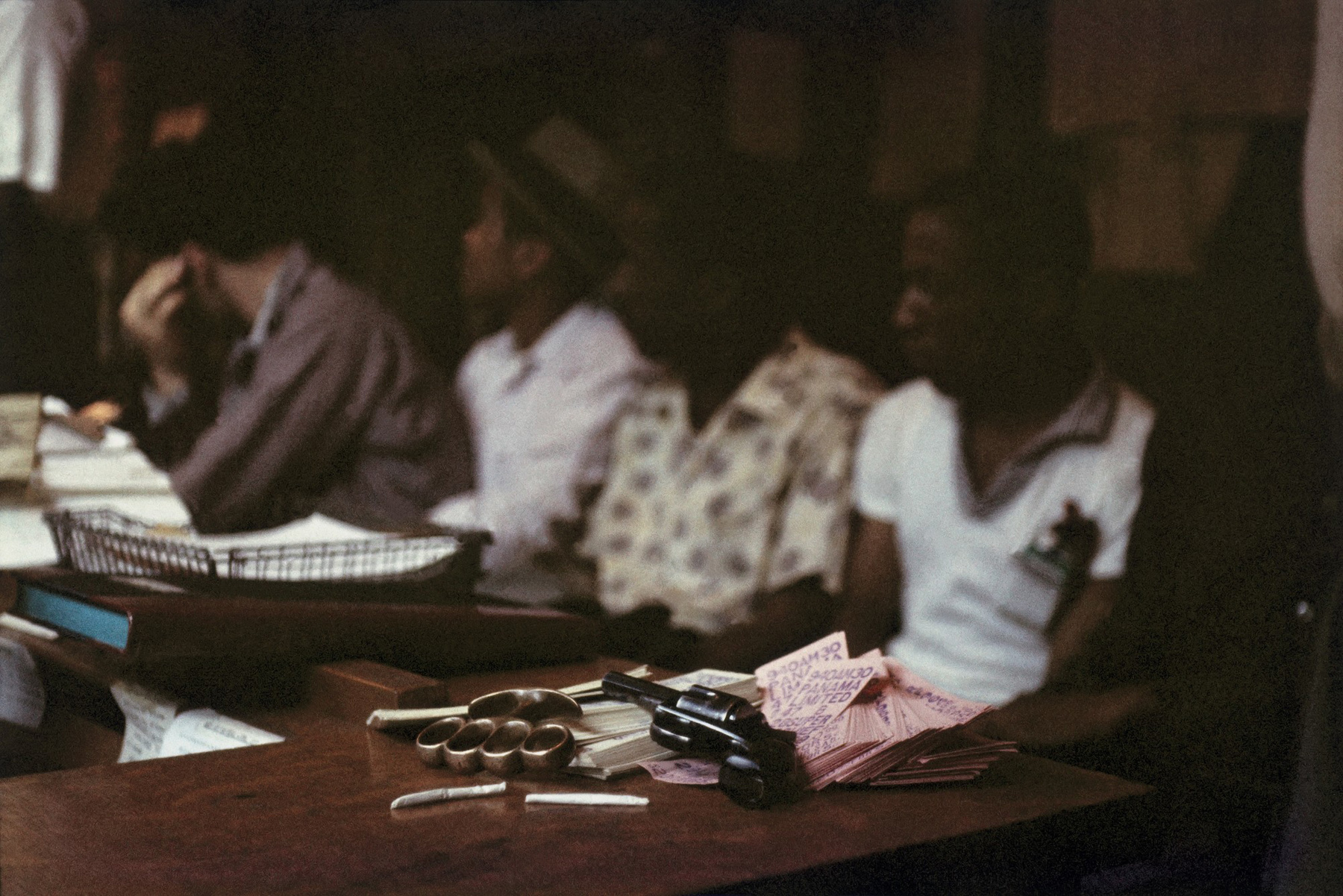
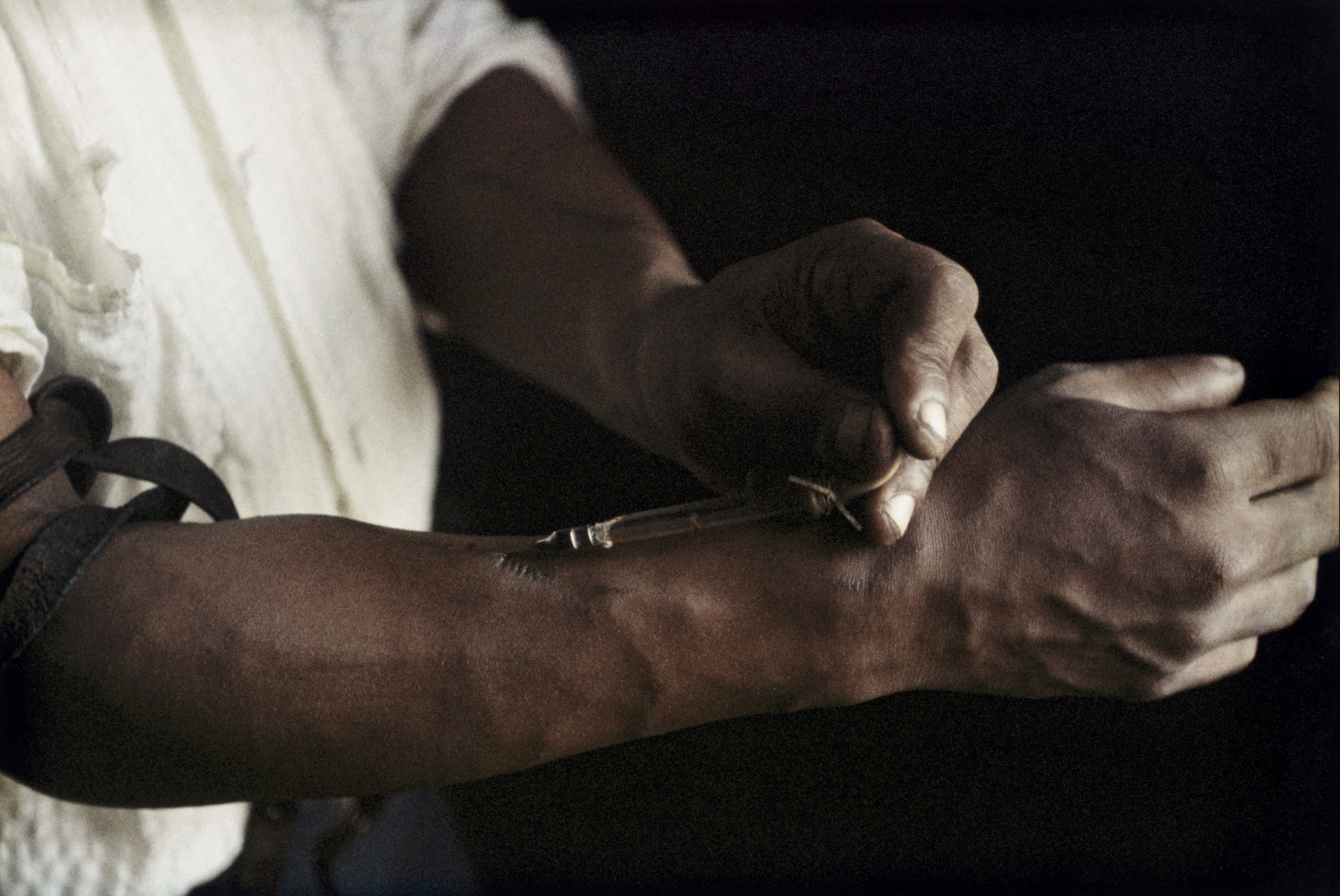
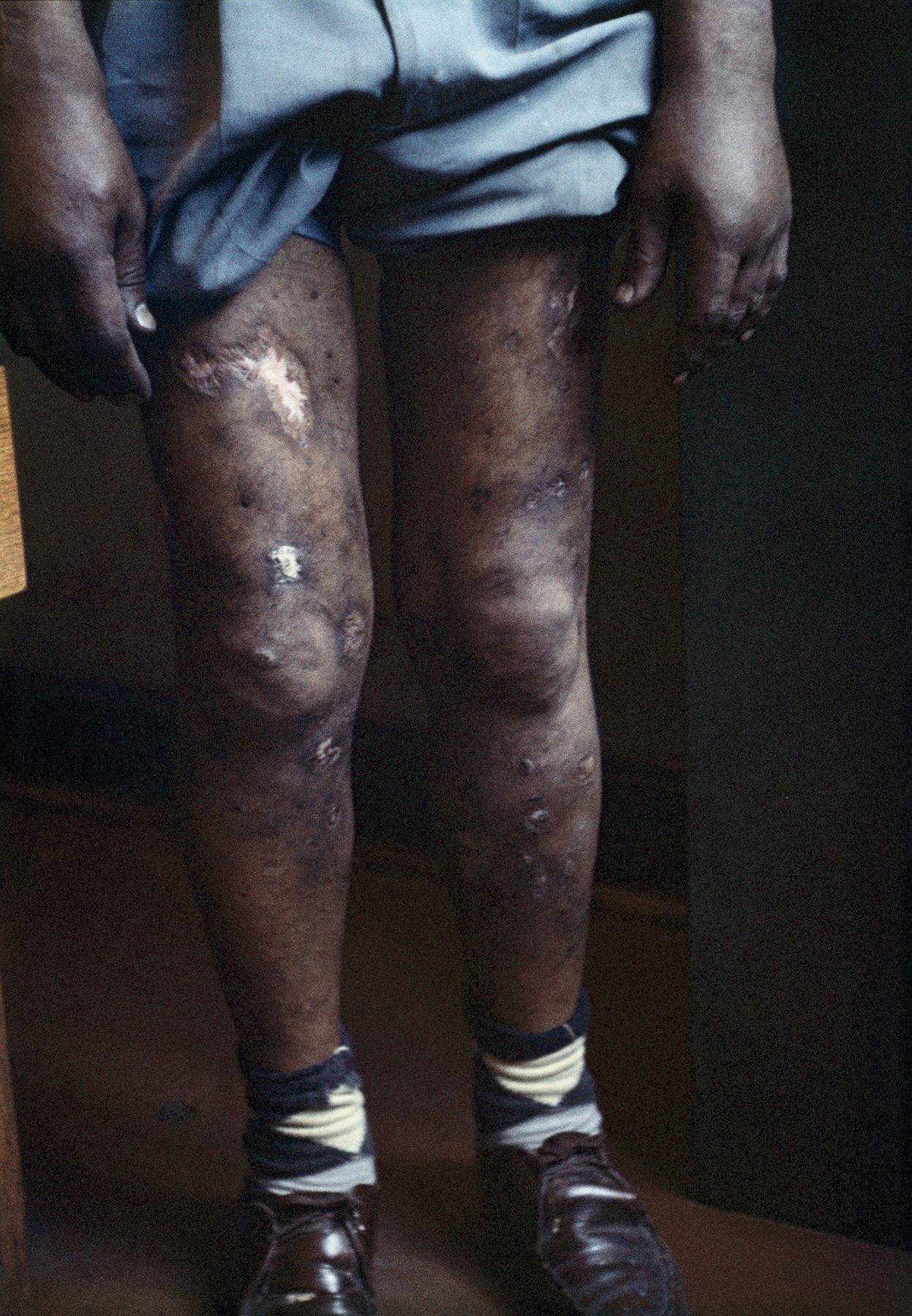
Parks’ beautiful photographs, for they are that, include challenging depictions of death, drug use and nonchalantly displayed items such as guns and knuckledusters. Violence and the outcomes of it are an ever present theme in Parks’ documentation of the policing and criminalisation of marginalised people and communities. The photographs are frequently heartbreaking, such as the scars on the legs of a Black American; or devastating, such as the photograph Knifing Victim I (1957). Park’s compresses the space of the action, attacking the nitty gritty of the mise en scène but with no rush to judgement, just telling it how it is. As Sebastian Smee so eloquently observes, “If all of this were mere history – a series of episodes confined to the past – it would be one thing. But Parks’s photographs are alive to the many ways in which crime in the 1950s was a continuation of this legacy [of slavery, of lynching]. Sixty years after he took these photographs, it’s difficult to deny the conclusion that today’s crime-related inequities, from mass incarceration to police brutality, are likewise an extension of this racist legacy.”

And so it goes, both for the marginalised in America and for Indigenous Australians. “According to the U.S. Bureau of Justice Statistics (BJS) in 2018 Black males accounted for 34% of the total male prison population, white males 29%, and Hispanic males 24%” (Wikipedia) while the percentage of US population that is black is 14%. “As of September 2019, Aboriginal and Torres Strait Islander prisoners represented 28% of the total adult prisoner population, while accounting for 3.3% of the general population.” (Wikipedia)

Dr Marcus Bunyan


Many thankx to MoMA for allowing me to publish the photographs in posting. Please click on the photographs for a larger version of the image. All photographs are used for the purposes of education and research under fair use conditions.


“I’m an objective reporter with a subjective heart,” proclaimed Gordon Parks. “I can’t help but have a certain kind of empathy… It’s more or less expressing things for people who can’t speak for themselves… the underdogs… in that way I speak for myself.” For over half a century, from the 1940s to the 2000s, Gordon Parks captured American life with his powerful photographs. After getting his first camera at the age of 25, he used this “weapon of choice” to attack issues including racism, poverty, urban life, and injustice. He became the first African American staff photographer at Life magazine – an immensely influential platform in the golden age of photo-illustrated magazines that not only allowed his art to be seen by many but also brought a critical, nuanced and, importantly, a Black perspective to the stories and depictions that he shared. For a 1957 assignment, he crisscrossed the streets of New York, Chicago, Los Angeles, and San Francisco, producing vivid colour images addressing the perceived rise in crime in the US. This series, “The Atmosphere of Crime,” challenged stereotypical images of delinquency, drug use, and corruption.


Text from the Gordon Parks Foundation website


“I don’t know that there is any one thing called “the Black experience,” but the way ‘Life magazine’ used Gordon Parks’ photographs for me actually reinscribed some of those notions of Black pathology, such as a story about a gang member (who was actually a pretty normal young man) or extreme poverty and social disenfranchisement. Parks was a much more complex photographer than that, as we came to fully know after his death, but that’s how we came to know him through ‘Life magazine’.”


Dawoud Bey quoted in Gail O’Neill. “Q&A: How Dawoud Bey uses photography to amplify his voice in the world,” on the ‘ARTS ATL’ website November 6, 2020 [Online] Cited 01/03/2021


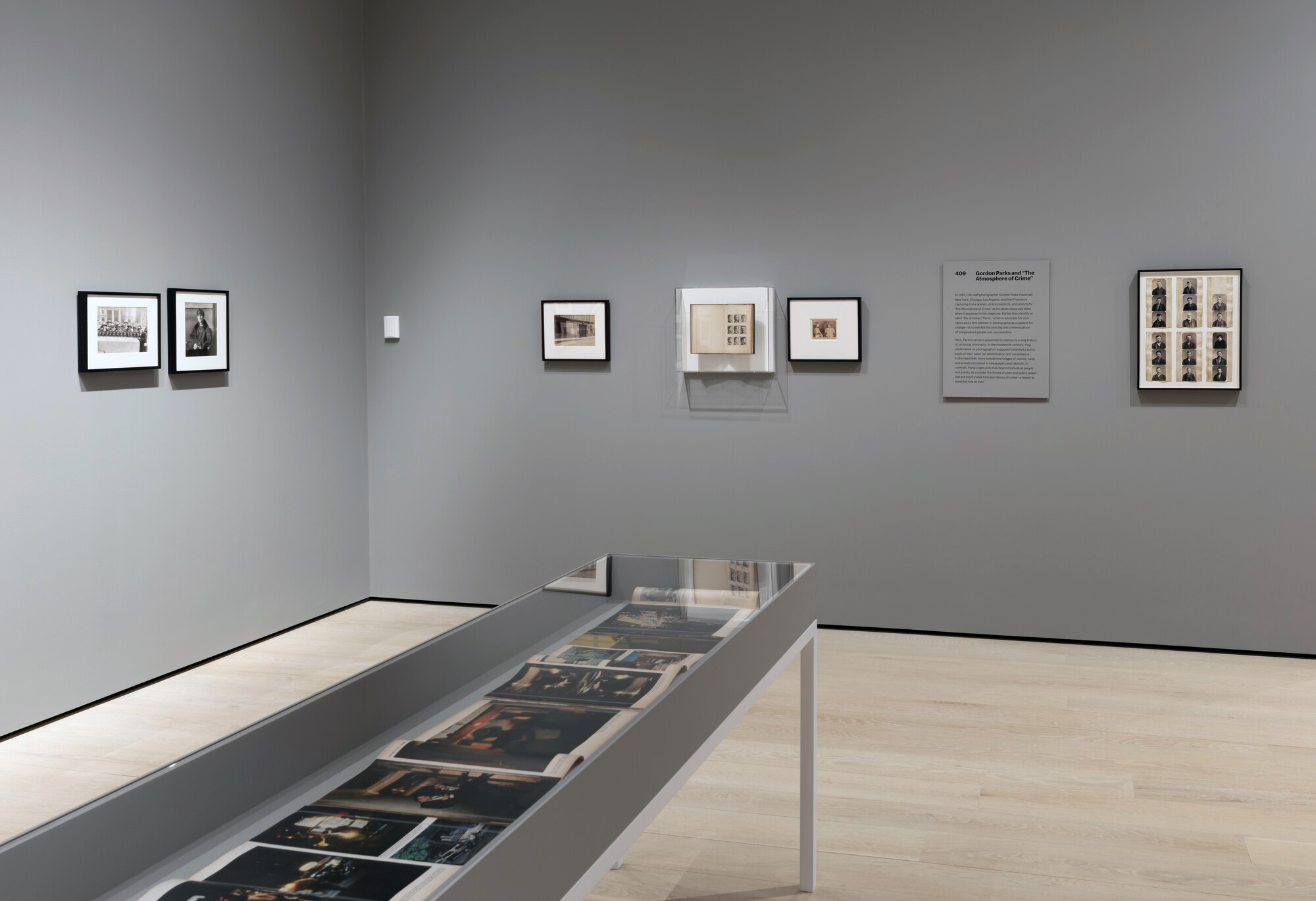
In 1957, Life staff photographer Gordon Parks traversed New York, Chicago, Los Angeles, and San Francisco capturing crime scenes, police precincts, and prisons for “The Atmosphere of Crime,” as his photo essay was titled when it appeared in the magazine. Rather than identify or label “the criminal,” Parks – a fierce advocate for civil rights and a firm believer in photography as a catalyst for change – documented the policing and criminalisation of marginalised people and communities.

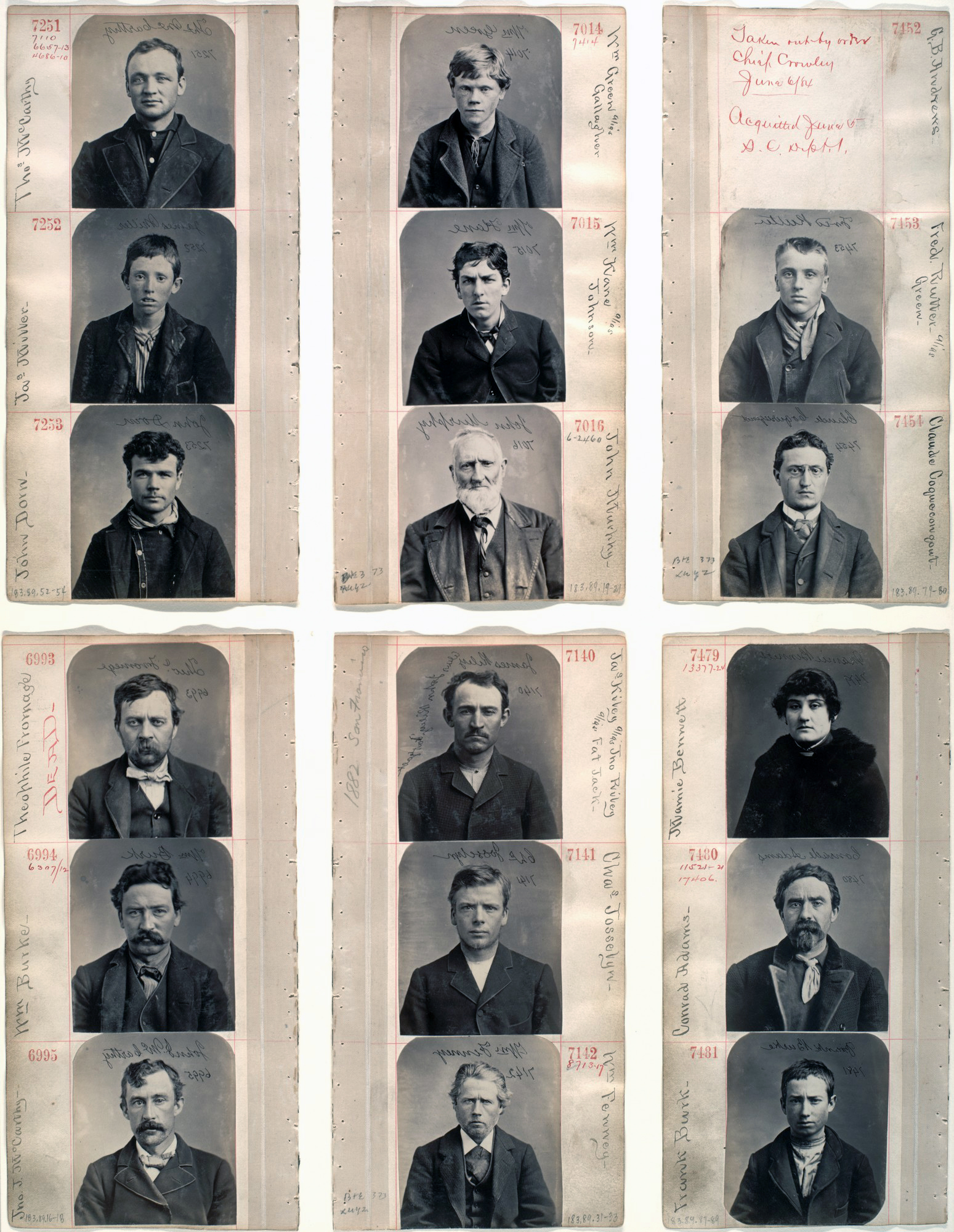
Here, Parks’s series is presented in relation to a long history of picturing criminality. In the nineteenth century, mug shots relied on photography’s supposed objectivity as the basis of their value for identification and surveillance. In the twentieth, more sensational images of victims, raids, and arrests circulated in newspapers and tabloids. In contrast, Parks urges us to look beyond individual people and events, to consider the forces of state and police power that are inextricable from any history of crime – a lesson as essential now as ever.

Text from the MoMA website


Sarah Meister, curator in the Department of Photography, looks at images from Gordon Parks’s 1957 photo essay “The Atmosphere of Crime” (1957) and is moved by the power (and, sadly, continued relevance) of his ability to confront “the great social evils of his time” with an “incredible artistic sensibility.”


Gordon Parks (American, 1912-2006) 'Untitled, Chicago, Illinois' 1957 from the exhibition 'Gordon Parks and "The Atmosphere of Crime"' at the Museum of Modern Art (MoMA), New York, ongoing


Gordon Parks (American, 1912-2006)
Untitled, Chicago, Illinois
1957
Pigmented inkjet print, printed 2019
11 7/8 × 17 15/16″ (30.1 × 45.6cm)
The Museum of Modern Art, New York
The Family of Man Fund
© 2021 Gordon Parks Foundation


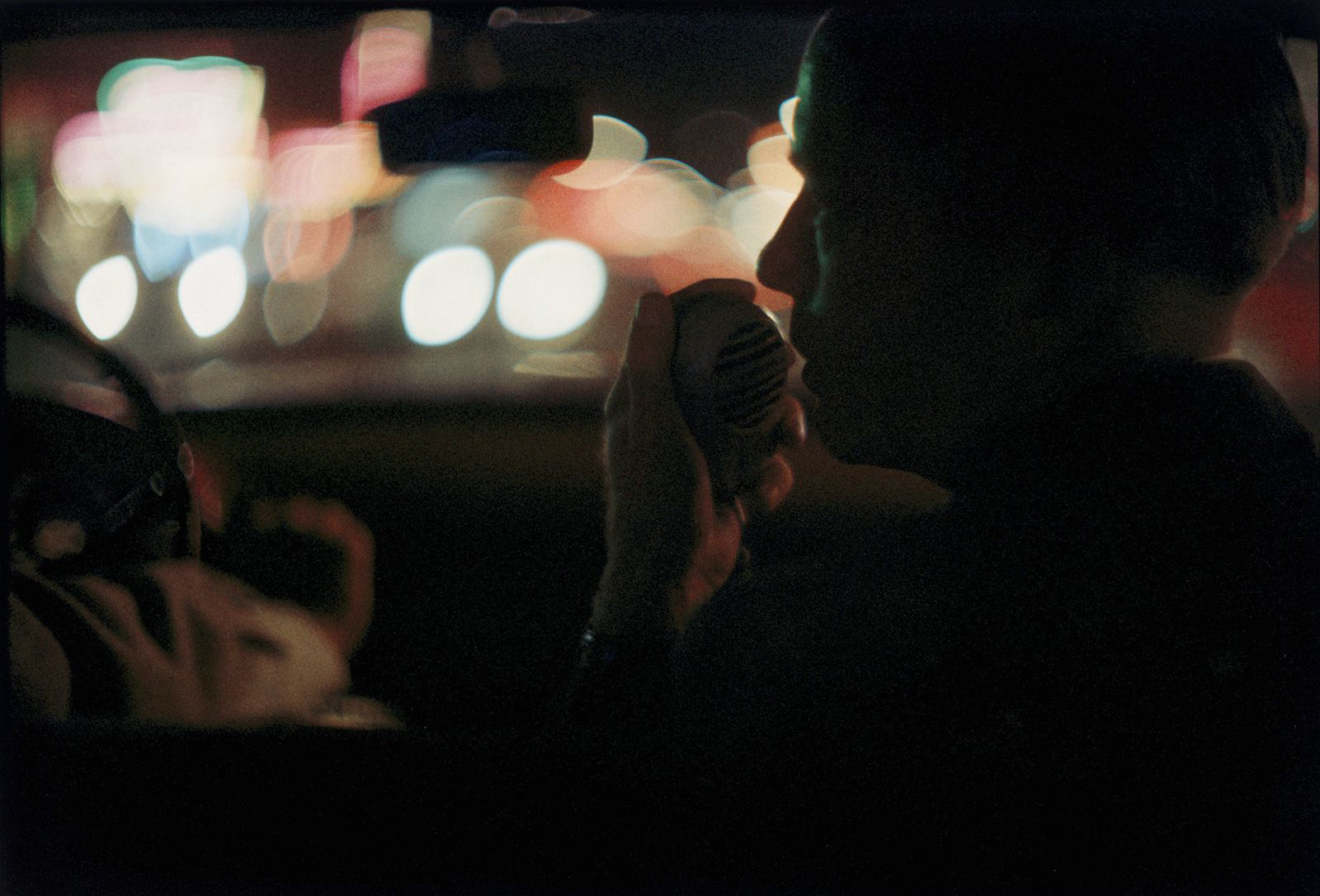
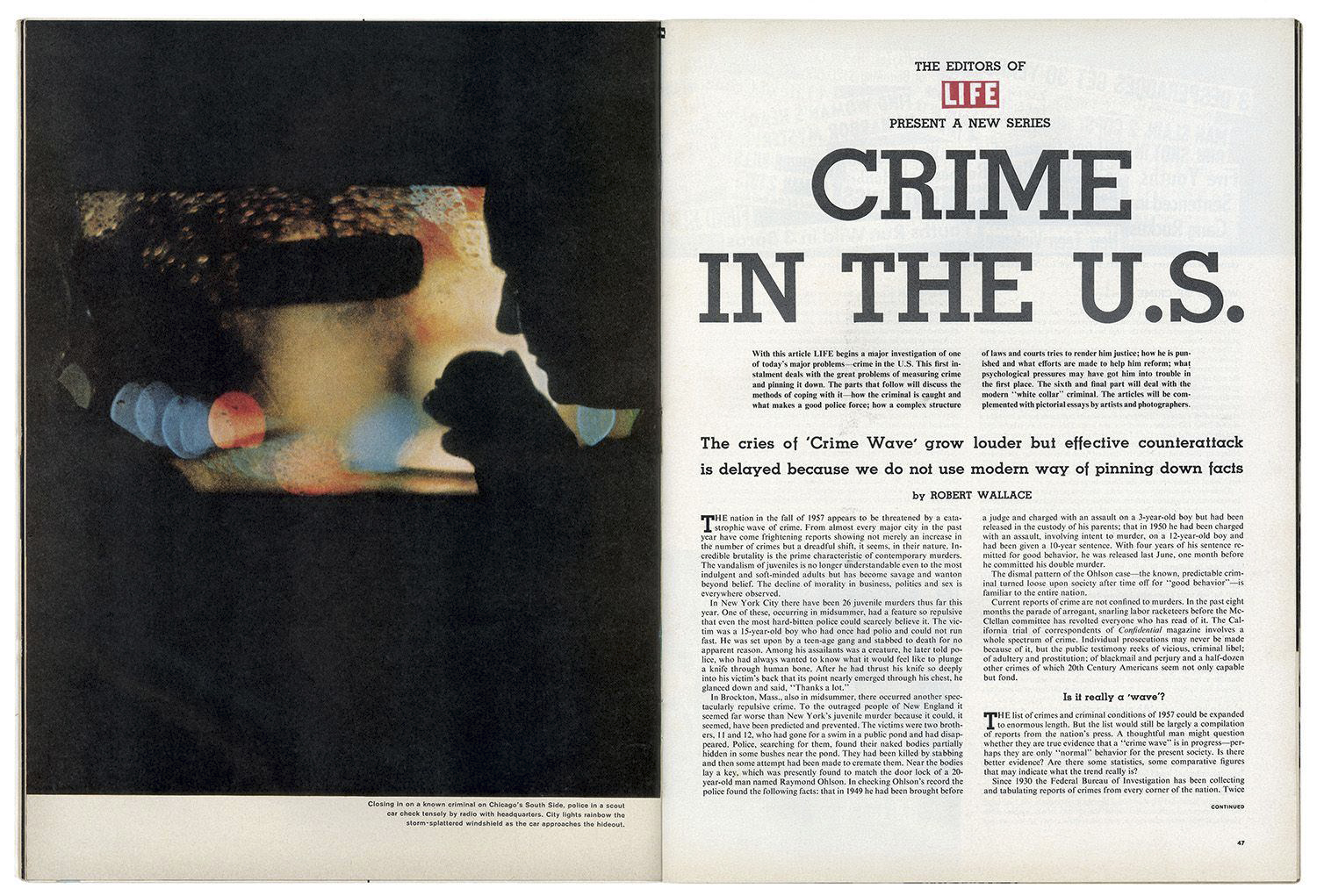
Closing in on a known criminal on Chicago’s South Side, police in a scout car check tensely by radio with headquarters. City lights rainbow the storm-splattered windshield as the car approaches the hideout.

Text from LIFE magazine, September 9, 1957, p. 46.


Gordon Parks (American, 1912-2006) 'Raiding Detectives, Chicago, Illinois' 1957


Gordon Parks (American, 1912-2006)
Raiding Detectives, Chicago, Illinois
1957
Pigmented inkjet print, printed 2019
11 7/8 × 17 15/16″ (30.1 × 45.6cm)
The Museum of Modern Art, New York
The Family of Man Fund
© The Gordon Parks Foundation


Gordon Parks (American, 1912-2006) 'Untitled, Chicago, Illinois' 1957


Gordon Parks (American, 1912-2006)
Untitled, Chicago, Illinois
1957
Pigmented inkjet print, printed 2019
11 7/8 × 17 15/16″ (30.1 × 45.6cm)
The Museum of Modern Art, New York
The Family of Man Fund
© 2021 Gordon Parks Foundation


Gordon Parks (American, 1912-2006) 'Drug Search, Chicago, Illinois' 1957


Gordon Parks (American, 1912-2006)
Drug Search, Chicago, Illinois
1957
Pigmented inkjet print, printed 2019
11 7/8 × 17 15/16″ (30.1 × 45.6cm)
The Museum of Modern Art, New York
The Family of Man Fund
© 2021 Gordon Parks Foundation


Gordon Parks (American, 1912-2006) 'Drug Search, Chicago, Illinois' 1957


Gordon Parks (American, 1912-2006)
Drug Search, Chicago, Illinois
1957
Pigmented inkjet print, printed 2019
11 7/8 × 17 15/16″ (30.1 × 45.6cm)
The Museum of Modern Art, New York
The Family of Man Fund
© 2021 Gordon Parks Foundation


Gordon Parks (American, 1912-2006) 'Untitled, Chicago, Illinois' 1957


Gordon Parks (American, 1912-2006)
Untitled, Chicago, Illinois
1957
Pigmented inkjet print, printed 2019
11 7/8 × 17 15/16″ (30.1 × 45.6cm)
The Museum of Modern Art, New York
The Family of Man Fund
© 2021 Gordon Parks Foundation


Gordon Parks (American, 1912-2006) 'Untitled, Chicago, Illinois' 1957


Gordon Parks (American, 1912-2006)
Untitled, Chicago, Illinois
1957
Pigmented inkjet print, printed 2019
13 3/4 × 21″ (35 × 53.3cm)
The Museum of Modern Art, New York
The Family of Man Fund
© 2021 Gordon Parks Foundation


Gordon Parks (American, 1912-2006) 'Untitled, Chicago, Illinois' 1957 (detail)


Gordon Parks (American, 1912-2006)
Untitled, Chicago, Illinois (detail)
1957
Pigmented inkjet print, printed 2019
13 3/4 × 21″ (35 × 53.3cm)
The Museum of Modern Art, New York
The Family of Man Fund
© 2021 Gordon Parks Foundation


Gordon Parks (American, 1912-2006) 'Untitled, Chicago, Illinois' 1957


Gordon Parks (American, 1912-2006)
Untitled, Chicago, Illinois
1957
Pigmented inkjet print, printed 2019
11 7/8 × 17 15/16″ (30.1 × 45.6cm)
The Museum of Modern Art, New York
The Family of Man Fund
© 2021 Gordon Parks Foundation


Gordon Parks (American, 1912-2006) 'Untitled, Chicago, Illinois' 1957


Gordon Parks (American, 1912-2006)
Untitled, Chicago, Illinois
1957
Pigmented inkjet print, printed 2019
11 7/8 × 17 15/16″ (30.1 × 45.6cm)
The Museum of Modern Art, New York
The Family of Man Fund
© 2021 Gordon Parks Foundation


Gordon Parks (American, 1912-2006) 'Untitled' 1957


Gordon Parks (American, 1912-2006)
Untitled, Chicago, Illinois
1957
Pigmented inkjet print, printed 2019
11 7/8 × 17 15/16″ (30.1 × 45.6cm)
The Museum of Modern Art, New York
The Family of Man Fund
© 2021 Gordon Parks Foundation


Gordon Parks (American, 1912-2006) 'Untitled, Chicago, Illinois' 1957


Gordon Parks (American, 1912-2006)
Untitled, Chicago, Illinois
1957
Pigmented inkjet print, printed 2019
11 7/8 × 17 15/16″ (30.1 × 45.6cm)
The Museum of Modern Art, New York
The Family of Man Fund
© 2021 Gordon Parks Foundation


Gordon Parks (American, 1912-2006) 'Narcotics Addict, Chicago, Illinois' 1957


Gordon Parks (American, 1912-2006)
Narcotics Addict, Chicago, Illinois
1957
Pigmented inkjet print, printed 2019
11 7/8 × 17 15/16″ (30.1 × 45.6cm)
The Museum of Modern Art, New York
The Family of Man Fund
© 2021 Gordon Parks Foundation


Gordon Parks (American, 1912-2006) 'Untitled, New York, New York' 1957


Gordon Parks (American, 1912-2006)
Untitled, New York, New York
1957
Pigmented inkjet print, printed 2019
13 3/4 × 21″ (35 × 53.3cm)
The Museum of Modern Art, New York
The Family of Man Fund
© 2021 Gordon Parks Foundation


Gordon Parks (American, 1912-2006) 'Untitled' 1957


Gordon Parks (American, 1912-2006)
Untitled
1957
Pigmented inkjet print, printed 2019
11 7/8 × 17 15/16″ (30.1 × 45.6cm)
The Museum of Modern Art, New York
The Family of Man Fund
© 2021 Gordon Parks Foundation


Gordon Parks (American, 1912-2006) 'San Quentin, California' 1957


Gordon Parks (American, 1912-2006)
San Quentin, California
1957
Pigmented inkjet print, printed 2019
11 7/8 × 17 15/16″ (30.1 × 45.6cm)
The Museum of Modern Art, New York
The Family of Man Fund
© 2021 Gordon Parks Foundation


Gordon Parks (American, 1912-2006) 'Untitled (Alcatraz Island), San Francisco, California' 1957


Gordon Parks (American, 1912-2006)
Untitled (Alcatraz Island), San Francisco, California
1957
Pigmented inkjet print, printed 2019
11 7/8 × 17 15/16″ (30.1 × 45.6cm)
The Museum of Modern Art, New York
The Family of Man Fund
© 2021 Gordon Parks Foundation


Gordon Parks: The Atmosphere of Crime 1957

Gordon Parks’ ethically complex depictions of crime in New York, Chicago, San Francisco, and Los Angeles, with previously unseen photographs.

When Life magazine asked Gordon Parks to illustrate a recurring series of articles on crime in the United States in 1957, he had already been a staff photographer for nearly a decade, the first African American to hold this position. Parks embarked on a six-week journey that took him and a reporter to the streets of New York, Chicago, San Francisco, and Los Angeles.

Unlike much of his prior work, the images made were in colour. The resulting eight-page photo-essay The Atmosphere of Crime was noteworthy not only for its bold aesthetic sophistication but also for how it challenged stereotypes about criminality then pervasive in the mainstream media. They provided a richly hued, cinematic portrayal of a largely hidden world: that of violence, police work and incarceration, seen with empathy and candour.

Parks rejected clichés of delinquency, drug use, and corruption, opting for a more nuanced view that reflected the social and economic factors tied to criminal behaviour and afforded a rare window into the working lives of those charged with preventing and prosecuting it. Transcending the romanticism of the gangster film, the suspense of the crime caper and the racially biased depictions of criminality then prevalent in American popular culture, Parks coaxed his camera to record reality so vividly and compellingly that it would allow Life‘s readers to see the complexity of these chronically oversimplified situations. The Atmosphere of Crime, 1957 includes an expansive selection of never-before-published photographs from Parks’ original reportage.

Anonymous. “Gordon Parks: The Atmosphere of Crime 1957,” on the Exibart Street website [Online] Cited 07/02/2021


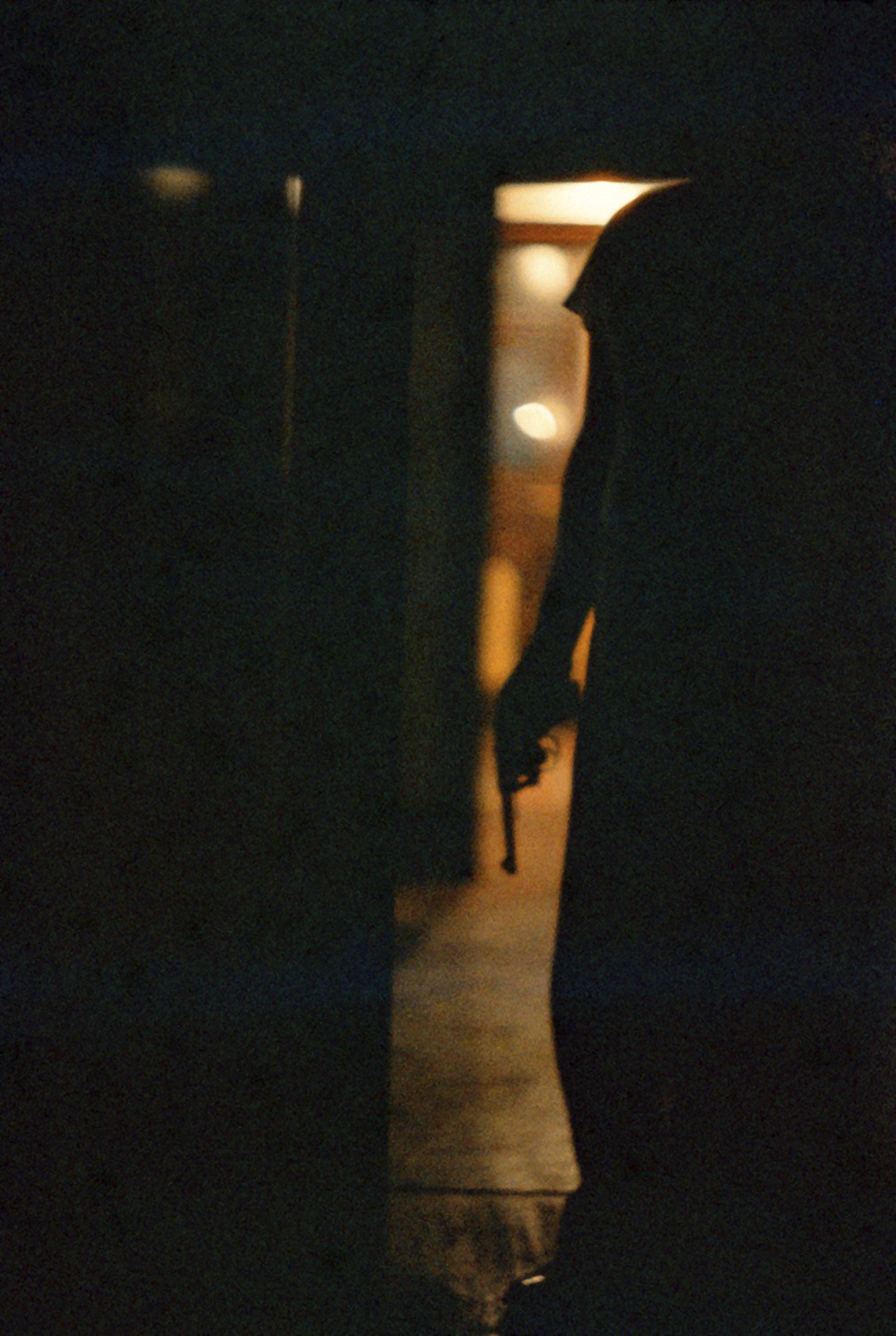
Gordon Parks (American, 1912-2006) 'Crime Suspect with Gun, Chicago, Illinois' 1957


Gordon Parks (American, 1912-2006)
Crime Suspect with Gun, Chicago, Illinois
1957
Pigmented inkjet print, printed 2019
17 15/16 × 11 7/8″ (45.6 × 30.1cm)
The Museum of Modern Art, New York
The Family of Man Fund
© 2021 Gordon Parks Foundation


Gordon Parks (American, 1912-2006) 'Police Raid, Chicago, Illinois' 1957


Gordon Parks (American, 1912-2006)
Police Raid, Chicago, Illinois
1957
Pigmented inkjet print, printed 2019
17 15/16 × 11 7/8″ (45.6 × 30.1cm)
The Museum of Modern Art, New York
The Family of Man Fund
© 2021 Gordon Parks Foundation


Gordon Parks (American, 1912-2006) 'Untitled, Chicago, Illinois' 1957


Gordon Parks (American, 1912-2006)
Untitled, Chicago, Illinois
1957
Pigmented inkjet print, printed 2019
17 15/16 × 11 7/8″ (45.6 × 30.1cm)
The Museum of Modern Art, New York
The Family of Man Fund
© 2021 Gordon Parks Foundation


Gordon Parks (American, 1912-2006) 'Untitled' 1957


Gordon Parks (American, 1912-2006)
Untitled
1957
Pigmented inkjet print, printed 2019
17 15/16 × 11 7/8″ (45.6 × 30.1cm)
The Museum of Modern Art, New York
The Family of Man Fund
© 2021 Gordon Parks Foundation


Gordon Parks (American, 1912-2006) 'Untitled, New York, New York' 1957


Gordon Parks (American, 1912-2006)
Untitled, New York, New York
1957
Pigmented inkjet print, printed 2019
17 15/16 × 11 7/8″ (45.6 × 30.1cm)
The Museum of Modern Art, New York
The Family of Man Fund
© 2021 Gordon Parks Foundation


Gordon Parks (American, 1912-2006) 'Untitled, New York, New York' 1957


Gordon Parks (American, 1912-2006)
Untitled, New York, New York
1957
Pigmented inkjet print, printed 2019
11 7/8 × 17 15/16″ (30.1 × 45.6cm)
The Museum of Modern Art, New York
The Family of Man Fund
© 2021 Gordon Parks Foundation


Gordon Parks (American, 1912-2006) 'Untitled' 1957


Gordon Parks (American, 1912-2006)
Untitled
1957
Pigmented inkjet print, printed 2019
17 15/16 × 11 7/8″ (45.6 × 30.1cm)
The Museum of Modern Art, New York
The Family of Man Fund
© 2021 Gordon Parks Foundation


Gordon Parks (American, 1912-2006) 'Checking In Suspect, Chicago, Illinois' 1957


Gordon Parks (American, 1912-2006)
Checking In Suspect, Chicago, Illinois
1957
Pigmented inkjet print, printed 2019
17 15/16 × 11 7/8″ (45.6 × 30.1cm)
The Museum of Modern Art, New York
The Family of Man Fund
© 2021 Gordon Parks Foundation


Gordon Parks (American, 1912-2006) 'Detectives Grilling a Suspect, Chicago, Illinois' 1957


Gordon Parks (American, 1912-2006)
Detectives Grilling a Suspect, Chicago, Illinois
1957
Pigmented inkjet print, printed 2019
17 15/16 × 11 7/8″ (45.6 × 30.1cm)
The Museum of Modern Art, New York
The Family of Man Fund
© 2021 Gordon Parks Foundation


Gordon Parks (American, 1912-2006) 'Fingerprinting Addicts for Forging Prescription, Chicago, Illinois' 1957


Gordon Parks (American, 1912-2006)
Fingerprinting Addicts for Forging Prescription, Chicago, Illinois
1957
Pigmented inkjet print, printed 2019
17 15/16 × 11 7/8″ (45.6 × 30.1cm)
The Museum of Modern Art, New York
The Family of Man Fund
© 2021 Gordon Parks Foundation


Gordon Parks (American, 1912-2006) 'Untitled, Chicago, Illinois' 1957


Gordon Parks (American, 1912-2006)
Untitled, Chicago, Illinois
1957
Pigmented inkjet print, printed 2019
17 15/16 × 11 7/8″ (45.6 × 30.1cm)
The Museum of Modern Art, New York
The Family of Man Fund
© 2021 Gordon Parks Foundation


Gordon Parks (American, 1912-2006) 'Untitled' 1957


Gordon Parks (American, 1912-2006)
Untitled
1957
Pigmented inkjet print, printed 2019
The Museum of Modern Art, New York
The Family of Man Fund
© 2021 Gordon Parks Foundation


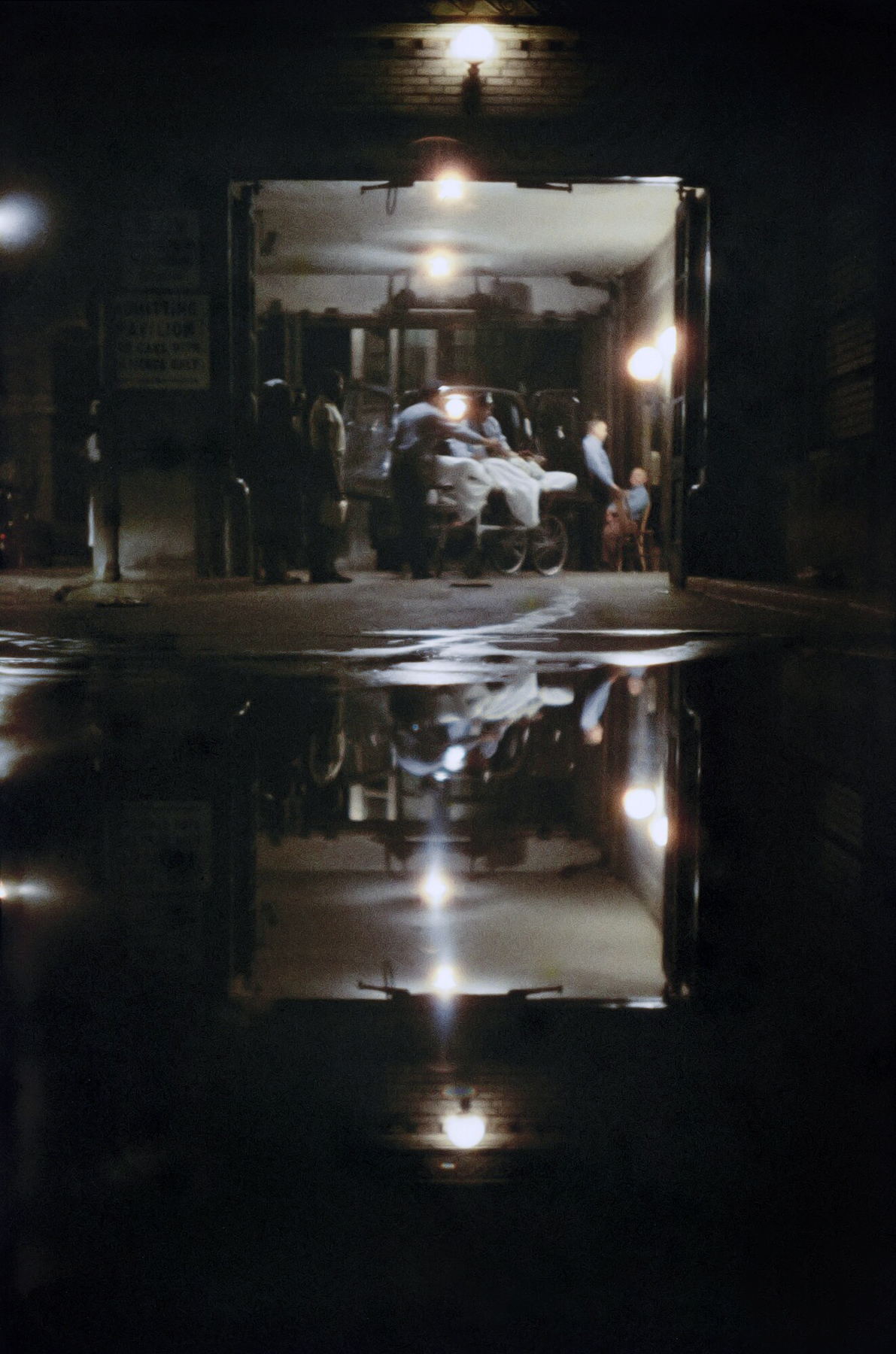
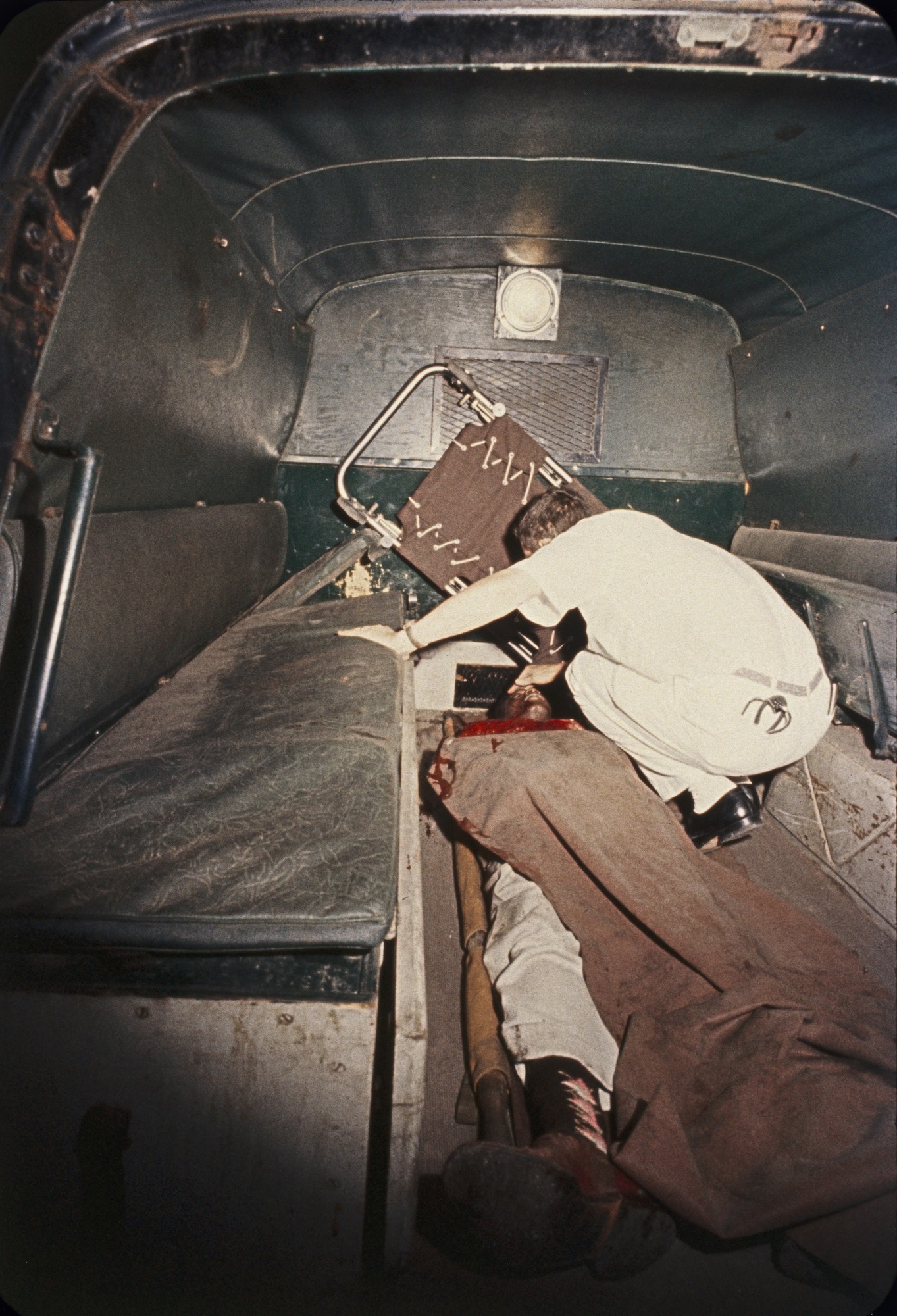
Gordon Parks (American, 1912-2006) 'Cops Bring In Knifing Victim, Chicago, Illinois' 1957


Gordon Parks (American, 1912-2006)
Cops Bring In Knifing Victim, Chicago, Illinois
1957
Pigmented inkjet print, printed 2019
21 × 13 3/4″ (53.3 × 35cm)
The Museum of Modern Art, New York
The Family of Man Fund
© 2021 Gordon Parks Foundation


A sidewalk puddle reflects a common tragedy. A police van drives up to a Chicago hospital’s emergency door with a knifing victim. Tired attendants, once compassionate, sit idly by.

Text from LIFE magazine, September 9, 1957


Gordon Parks (American, 1912-2006) 'Police Bring in Victim, Chicago, Illinois' 1957


Gordon Parks (American, 1912-2006)
Police Bring in Victim, Chicago, Illinois
1957
Pigmented inkjet print, printed 2019
The Museum of Modern Art, New York
The Family of Man Fund
© 2021 Gordon Parks Foundation


Gordon Parks (American, 1912-2006) 'Untitled, New York, New York' 1957


Gordon Parks (American, 1912-2006)
Untitled, New York, New York
1957
Pigmented inkjet print, printed 2019
21 × 13 3/4″ (53.3 × 35cm)
The Museum of Modern Art, New York
The Family of Man Fund
© 2021 Gordon Parks Foundation


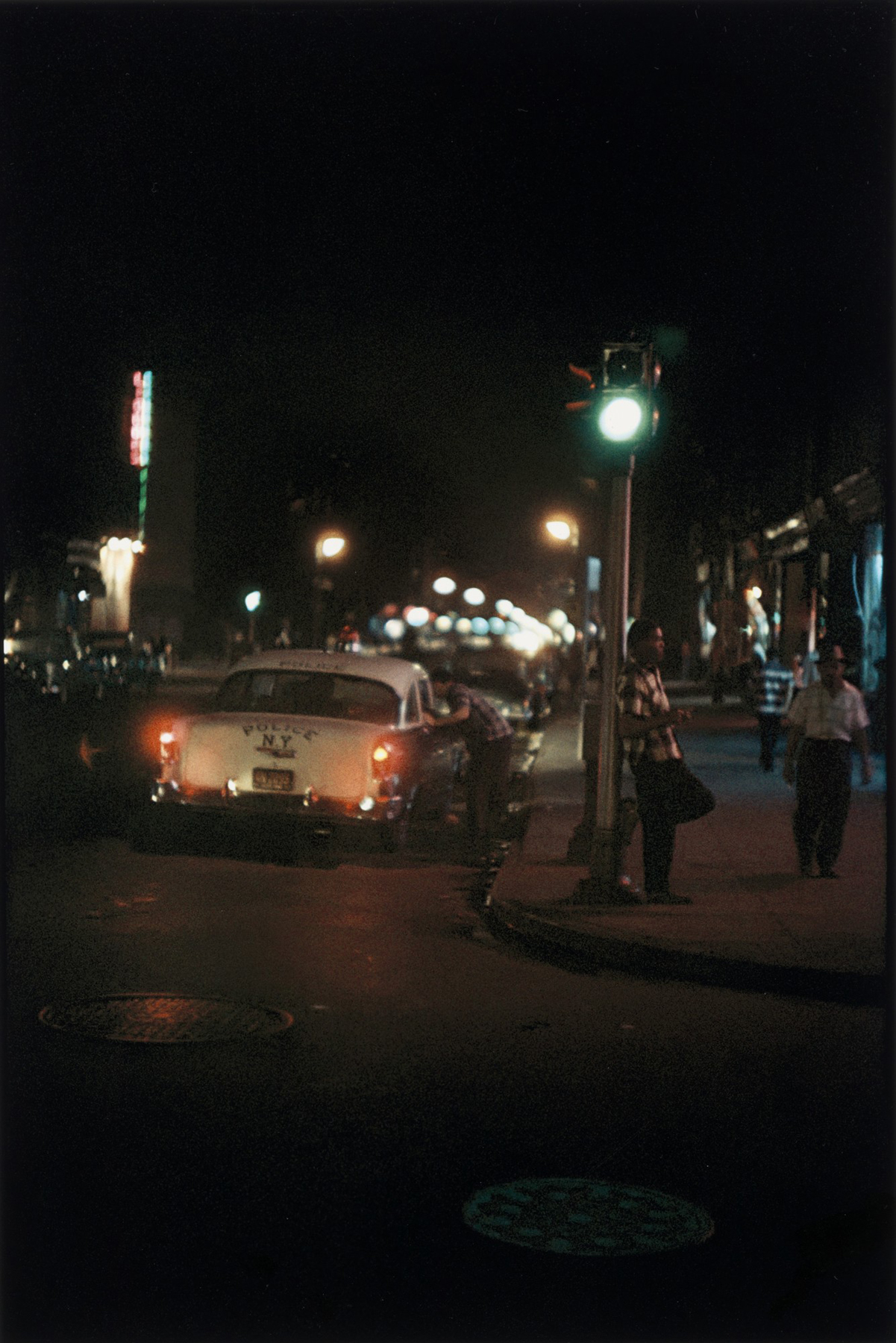
Gordon Parks (American, 1912-2006) 'Untitled, New York, New York' 1957


Gordon Parks (American, 1912-2006)
Untitled, New York, New York
1957
Pigmented inkjet print, printed 2019
The Museum of Modern Art, New York
The Family of Man Fund
© 2021 Gordon Parks Foundation


A prowl car halts in a New York street, a youth comes nervously to its side. “You clean?” the cop asks. “We’re watching you.”

Text from “The Atmosphere of Crime” photographed for LIFE by Gordon Parks. LIFE magazine, September 9, 1957, p. 50.


Gordon Parks (American, 1912-2006) 'Knifing Victim I, Chicago, Illinois' 1957


Gordon Parks (American, 1912-2006)
Knifing Victim I, Chicago, Illinois
1957
Pigmented inkjet print, printed 2019
17 15/16 × 11 7/8″ (45.6 × 30.1cm)
The Museum of Modern Art, New York
The Family of Man Fund
© 2021 Gordon Parks Foundation


Gordon Parks (American, 1912-2006) 'Untitled, Chicago, Illinois' 1957


Gordon Parks (American, 1912-2006)
Untitled, Chicago, Illinois
1957
Pigmented inkjet print, printed 2019
17 15/16 × 11 7/8″ (45.6 × 30.1cm)
The Museum of Modern Art, New York
The Family of Man Fund
© 2021 Gordon Parks Foundation


Gordon Parks (American, 1912-2006) 'Untitled, Chicago, Illinois' 1957


Gordon Parks (American, 1912-2006)
Untitled, Chicago, Illinois
1957
Pigmented inkjet print, printed 2019
17 15/16 × 11 7/8″ (45.6 × 30.1cm)
The Museum of Modern Art, New York
The Family of Man Fund
© 2021 Gordon Parks Foundation


Gordon Parks (American, 1912-2006) 'Morgue Photos of Dope Peddler Killed by Cops, Chicago, Illinois' 1957


Gordon Parks (American, 1912-2006)
Morgue Photos of Dope Peddler Killed by Cops, Chicago, Illinois
1957
Pigmented inkjet print, printed 2019
17 15/16 × 11 7/8″ (45.6 × 30.1cm)
The Museum of Modern Art, New York
The Family of Man Fund
© 2021 Gordon Parks Foundation


Gordon Parks (American, 1912-2006) 'Untitled, San Quentin, California' 1957


Gordon Parks (American, 1912-2006)
Untitled, San Quentin, California [Pre-execution report]
1957
Pigmented inkjet print, printed 2019
17 15/16 × 11 7/8″ (45.6 × 30.1cm)
The Museum of Modern Art, New York
The Family of Man Fund
© 2021 Gordon Parks Foundation


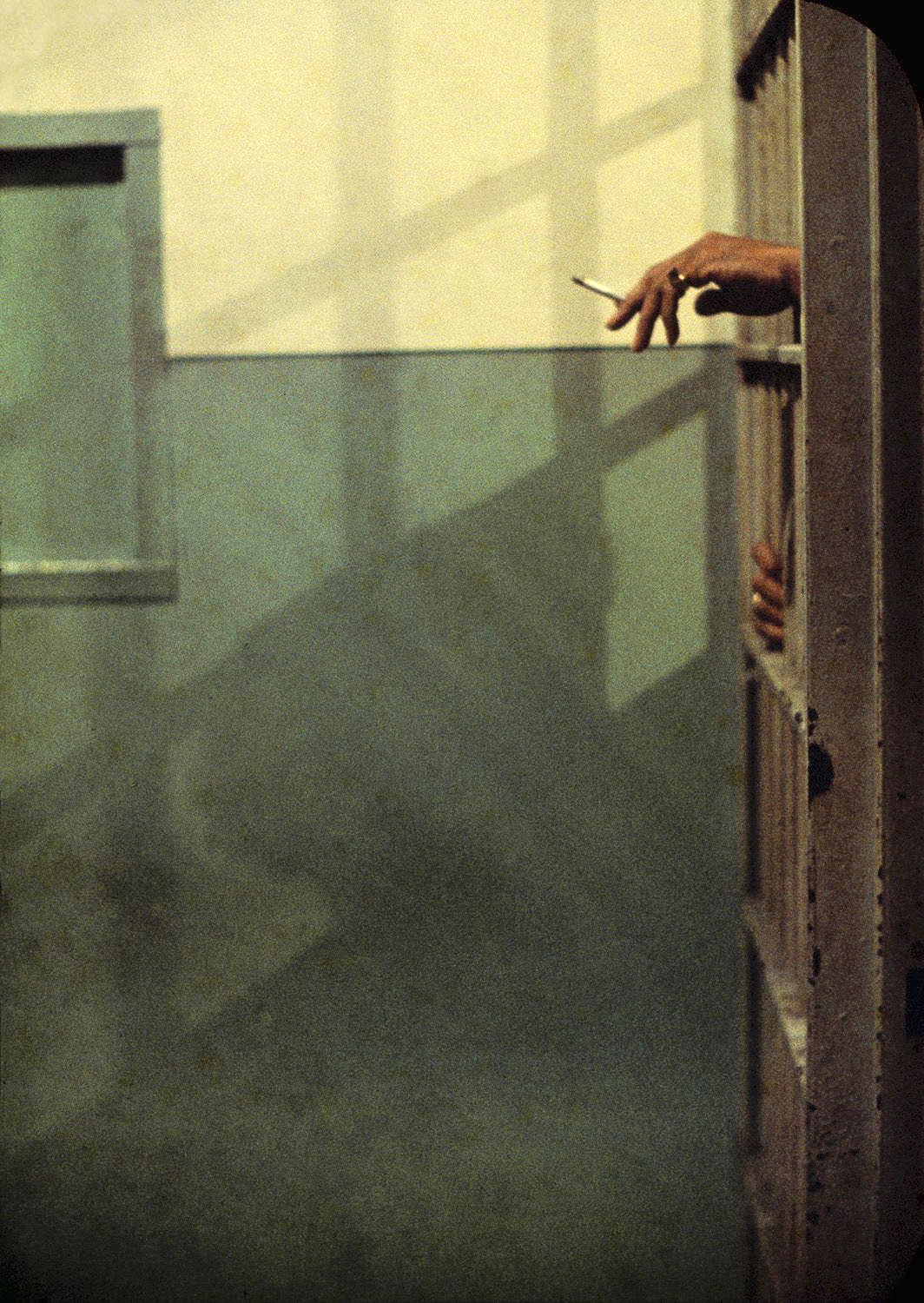
Gordon Parks (American, 1912-2006) 'Untitled, Chicago, Illinois' 1957


Gordon Parks (American, 1912-2006)
Untitled, Chicago, Illinois
1957
Pigmented inkjet print
16 × 20″ (40.6 × 50.8 cm)
Gift of The Gordon Parks Foundation


The left hand of a man who knows the ropes nonchalantly dangles a cigaret through the bars of a Chicago prison. But the man’s right hand, grasping the bars below, betrays him: he is frustrated and locked in.

Text from LIFE magazine, September 9, 1957


MoMA acquires historic Gordon Parks series The Atmosphere of Crime

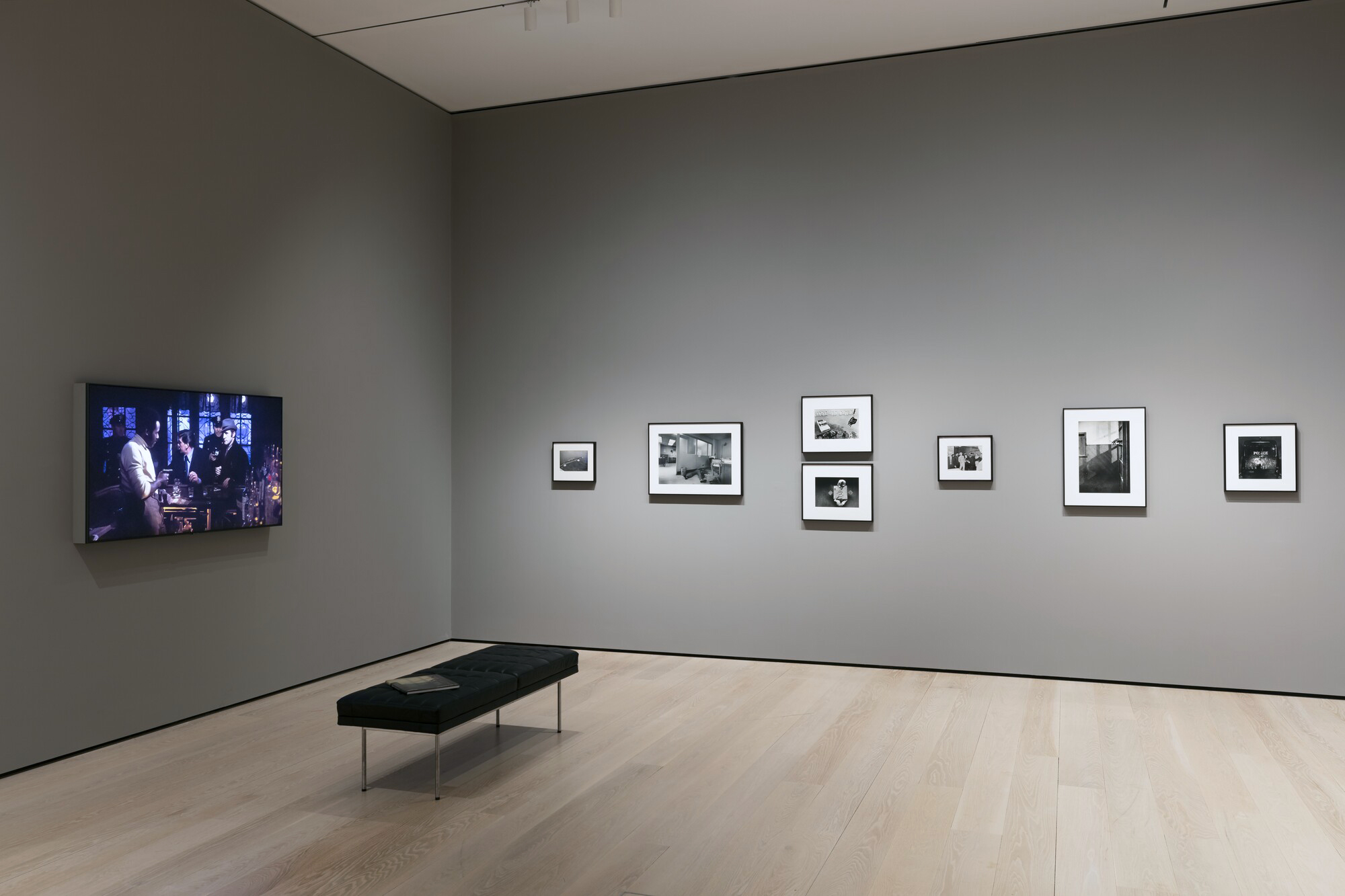
The photographs will go on view in the New York museum’s permanent collection galleries in May, along with a selection of works by other artists and a clip from the classic 1971 film Shaft

The Museum of Modern Art (MoMA) in New York has acquired a full set of photographs by Gordon Parks from The Atmosphere of Crime series, a photographic essay examining crime in America he created on assignment with Life magazine in 1957. Along with 55 modern colour inkjet prints created from Parks’s transparencies, selected and bought in consultation with the Gordon Parks Foundation, the foundation has gifted a vintage gelatin silver print that matches a work already in MoMA’s collection, given by the photographer in 1993. Around 15 pieces from the series will go on view in a dedicated gallery on the fourth floor in May, along with an excerpt from his classic 1971 film Shaft and works by other artists from the collection, as part of the next reinstallation of the permanent galleries.

The acquisition comes through years of conversations with the Gordon Parks Foundation, which has been organising in-depth exhibitions of the photographer’s work at major museums since his death in 2006. “When Sarah Meister [MoMA’s curator of photography] and I began speaking a few years ago about how the museum could make a major acquisition, it was about what body of work would really have the most impact to what’s going on in the current world,” says Peter Kunhardt, Jr, the foundation’s executive director. “And we both felt that The Atmosphere of Crime was so relevant, not only because so much hasn’t changed today in our criminal justice system and with police brutality and violence, but also because the work is in colour.”

Colour photography was prohibitively expensive to produce outside of commercial projects at the time Parks first shot the series, Meister explains, and only a selection of images from the series were printed in colour in Life. “The transparencies that Gordon Parks made have been held back for a number of years for the right institution to thoughtfully put together an exhibition and book,” Kunhardt adds. The catalogue, published by Steidl with essays by Meister, Bryan Stevenson, the founder of the Equal Justice Initiative, and the art historian Nicole Fleetwood, who also wrote Marking Time: Art in the Age of Mass Incarceration, includes all the images from the acquisition.

Extract from Helen Stoilas. “MoMA acquires historic Gordon Parks series The Atmosphere of Crime,” on The Art Newspaper website 11 February 2020 [Online] Cited 07/02/2021


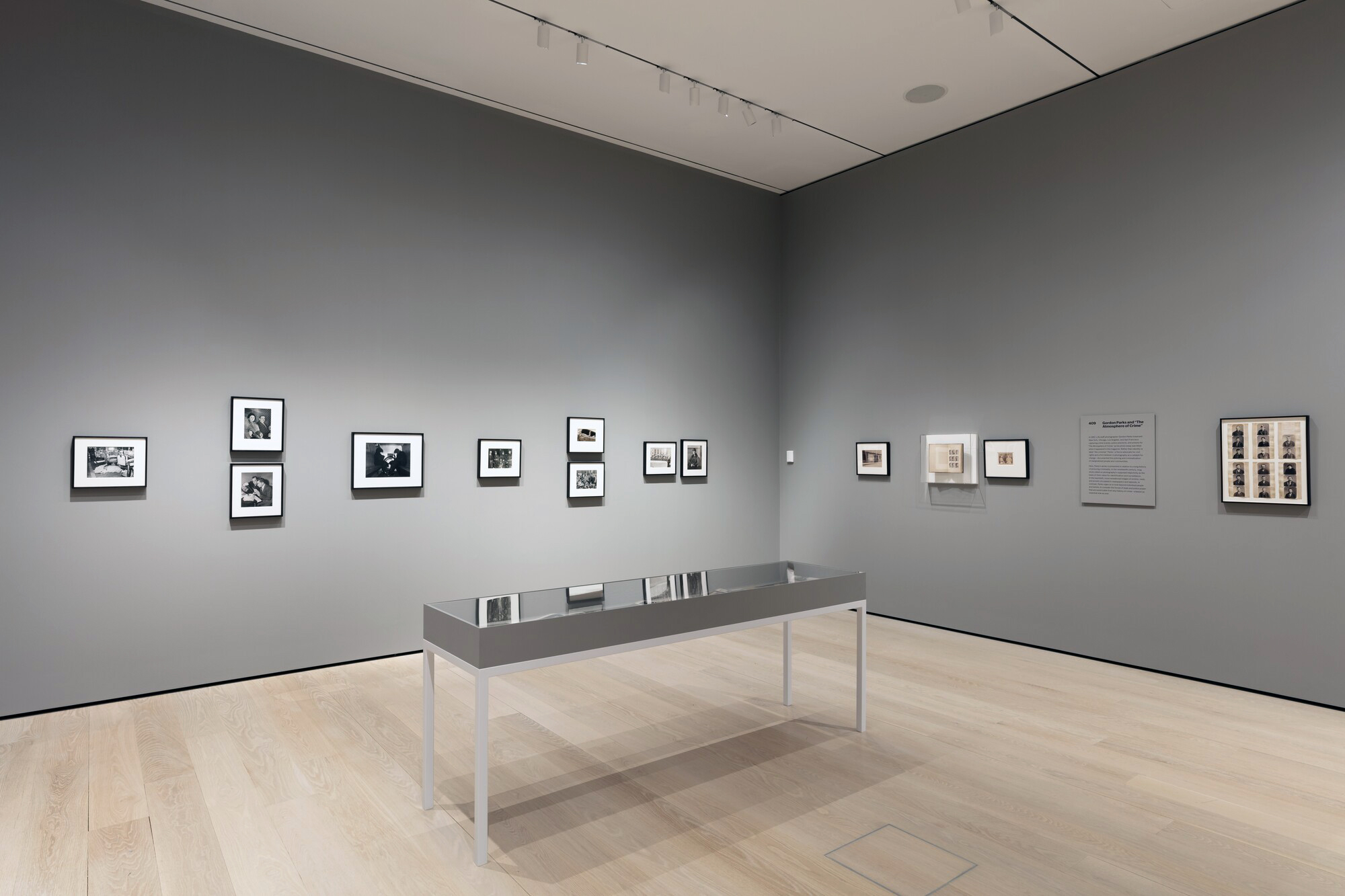
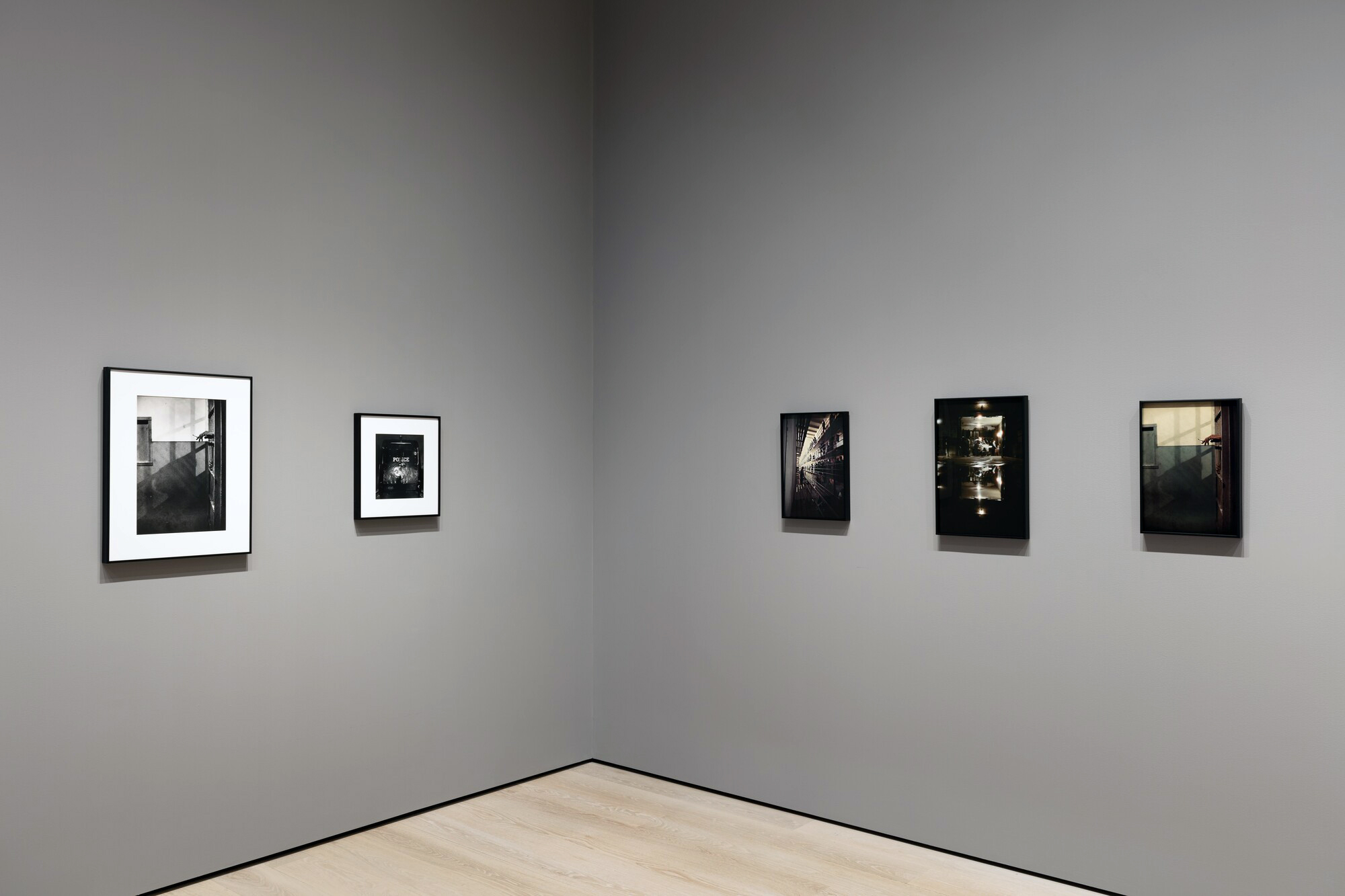
Installation view of the Collection 1940s-1970s, Room 409: 'Gordon Parks and "The Atmosphere of Crime"' at the Museum of Modern Art (MoMA), New York

Installation view of the Collection 1940s-1970s, Room 409: 'Gordon Parks and "The Atmosphere of Crime"' at the Museum of Modern Art (MoMA), New York

Installation view of the Collection 1940s-1970s, Room 409: 'Gordon Parks and "The Atmosphere of Crime"' at the Museum of Modern Art (MoMA), New York

Installation view of the Collection 1940s-1970s, Room 409: 'Gordon Parks and "The Atmosphere of Crime"' at the Museum of Modern Art (MoMA), New York

Installation view of the Collection 1940s-1970s, Room 409: 'Gordon Parks and "The Atmosphere of Crime"' at the Museum of Modern Art (MoMA), New York

Installation view of the Collection 1940s-1970s, Room 409: 'Gordon Parks and "The Atmosphere of Crime"' at the Museum of Modern Art (MoMA), New York


Installation views of the Collection 1940s-1970s, Room 409: Gordon Parks and “The Atmosphere of Crime” at the Museum of Modern Art (MoMA), New York


None of these images is crude or cliched. A few, it’s true, are brutally direct, in the spirit of Robert Lowell (“Yet why not say what happened?”) or Walker Evans (“If the thing is there, why there it is.”). But others are oddly – and arrestingly – tentative. They’re optically blurred, obscured by visual impediments, as if filtered through the artist’s melancholy, his pity, his black-of-night bewilderment. Looking at them, you feel that something others might rush to – judgment, sentencing, finality – has been deliberately withheld. …

The presence of the word “atmosphere” in the title is apt. It captures both the cumulative impact of the imagery and the complexity of crime’s causes and effects. Park’s use of blur, his unexpected vantage points and his embrace of pooling darkness all elevate his feeling for complication and suffering over the usual simplistic story lines that crowd to the subject of crime. …

Between 1880 and 1950, lynchings were committed in open defiance of the law, terrorising a Black population that proceeded to escape to the ghettos of the North in massive numbers.

If all of this were mere history – a series of episodes confined to the past – it would be one thing. But Parks’s photographs are alive to the many ways in which crime in the 1950s was a continuation of this legacy. Sixty years after he took these photographs, it’s difficult to deny the conclusion that today’s crime-related inequities, from mass incarceration to police brutality, are likewise an extension of this racist legacy.

Big-city street crime has been in steady decline for three decades now. And yet the complexities and inequities of American crime still hinge on race and are still crudely narrated in the media.

Extract from Sebastian Smee. “With his camera, Gordon Parks humanized the Black people others saw as simply criminals,” on The Washington Post website August 5, 2020 [Online] Cited 07/02/2021


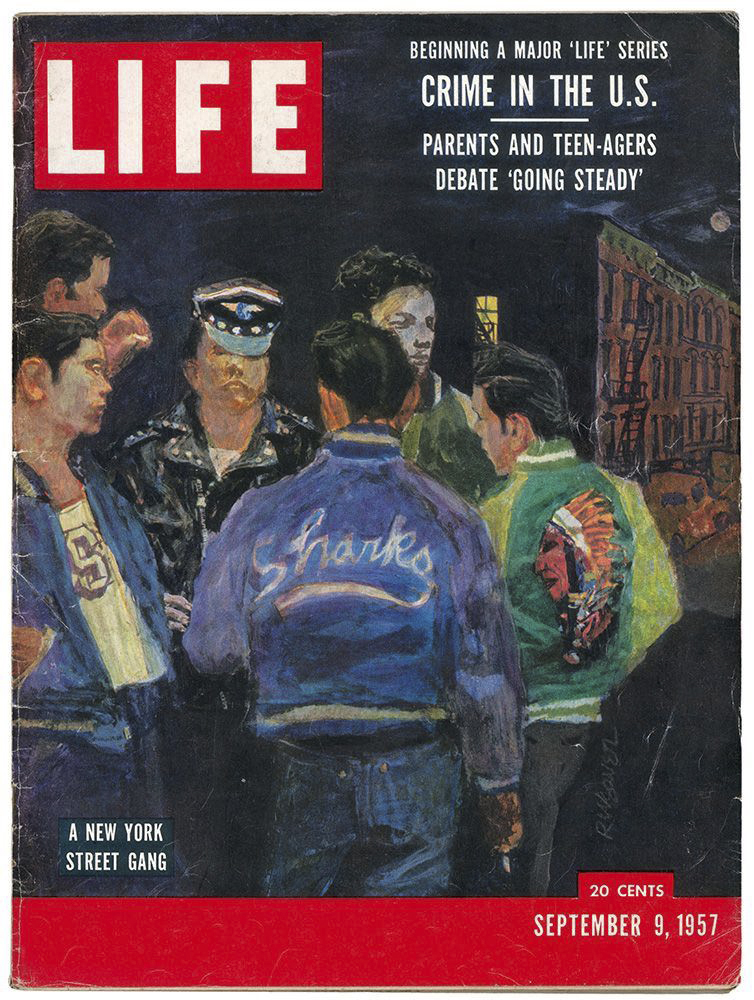
LIFE magazine, September 9, 1957


LIFE magazine, September 9, 1957 front cover


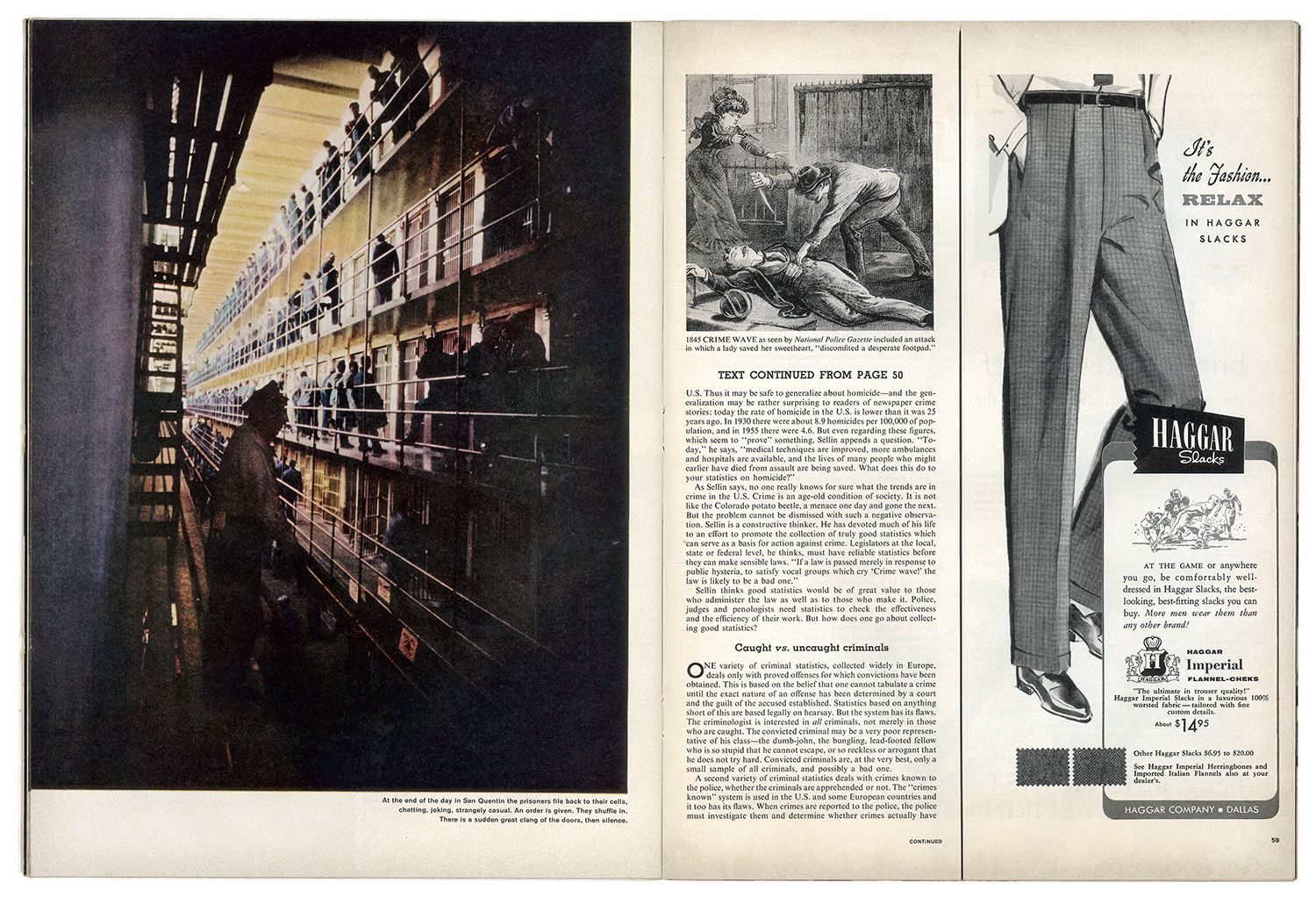
Robert Wallace. "Crime in the U.S." LIFE magazine, September 9, 1957, pp. 46-47.


Robert Wallace. “Crime in the U.S.” LIFE magazine, September 9, 1957, pp. 46-47. Photograph by Gordon Parks.


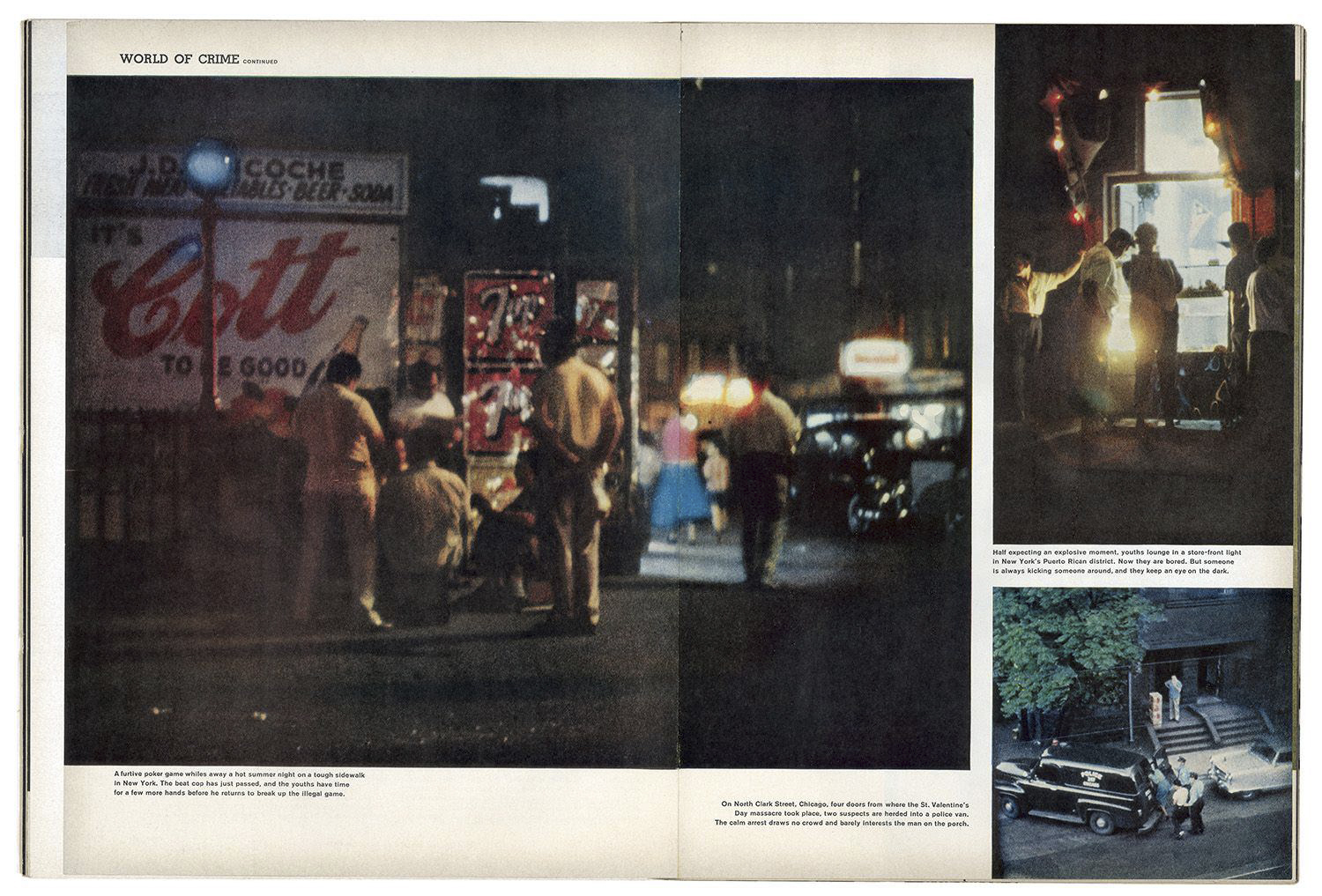
LIFE magazine 'Crime in the U.S.'

Robert Wallace. "Crime in the U.S." LIFE magazine, September 9, 1957

Robert Wallace. "Crime in the U.S." LIFE magazine, September 9, 1957


Robert Wallace. “Crime in the U.S.” LIFE magazine, September 9, 1957. Photographs by Gordon Parks.


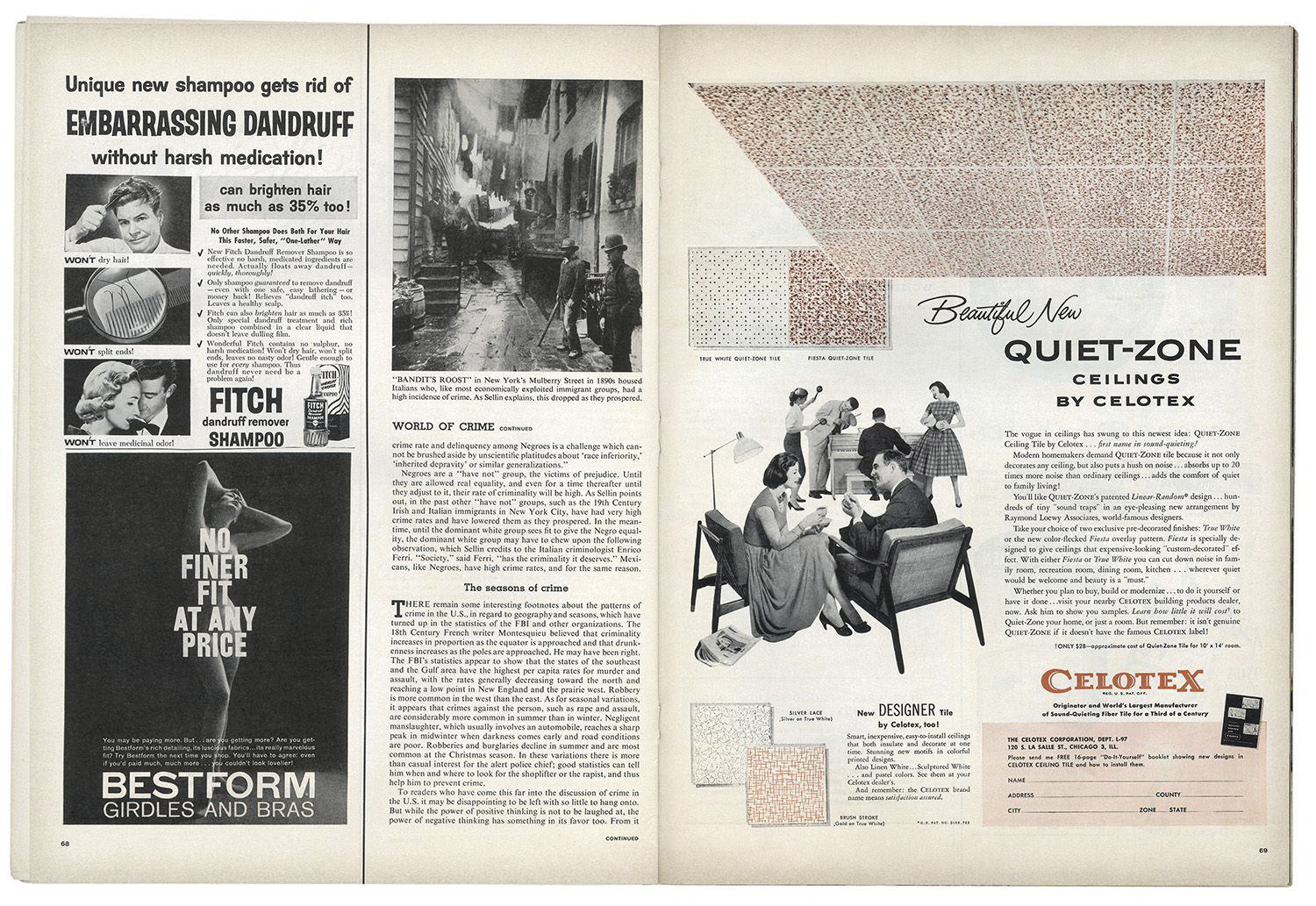
Robert Wallace. "Crime in the U.S." LIFE magazine, September 9, 1957, pp. 68-69.


Robert Wallace. “Crime in the U.S.” LIFE magazine, September 9, 1957, pp. 68-69.


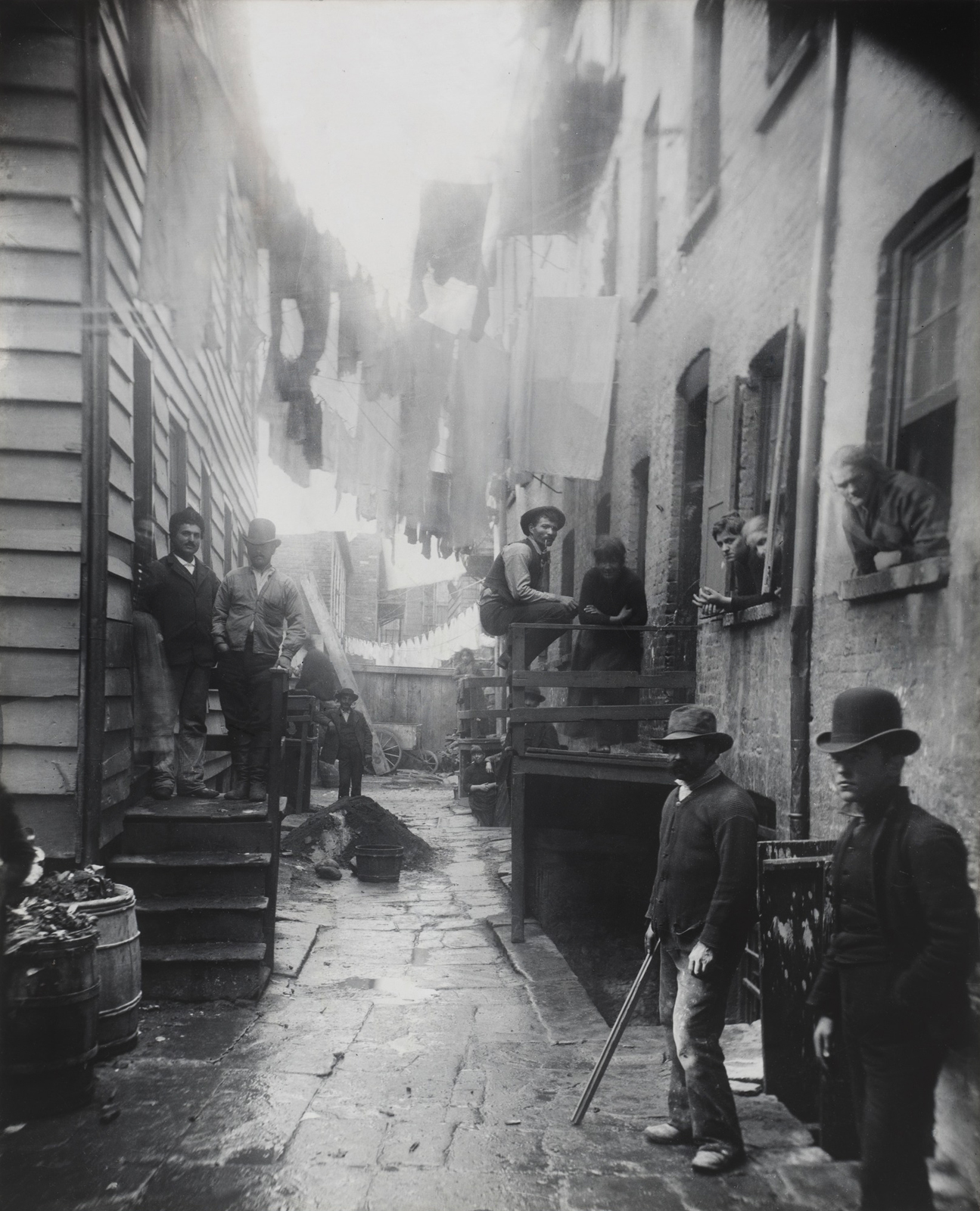
“BANDIT’S ROOST” in New York’s Mulberry Street in 1890s housed Italians who, like most economically exploited immigrant groups, had a high incidence of crime. As Sellin explains, this dropped as they prospered.

Unattributed photograph by Jacob Riis (see below).


Jacob Riis (Danish-American, 1849-1914) 'Bandit's Roost at 59½ Mulberry Street' 1888


Jacob Riis (American born Denmark, 1849-1914)
Bandit’s Roost at 59½ Mulberry Street
1888
From How the Other Half Lives


This image is Bandit’s Roost at 59½ Mulberry Street, considered the most crime-ridden, dangerous part of New York City.


Jacob Riis (American born Denmark, 1849-1914)

Jacob August Riis (1849-1914) was a Danish-American social reformer, “muckraking” journalist and social documentary photographer. He contributed significantly to the cause of urban reform in America at the turn of the twentieth century. He is known for using his photographic and journalistic talents to help the impoverished in New York City; those impoverished New Yorkers were the subject of most of his prolific writings and photography. He endorsed the implementation of “model tenements” in New York with the help of humanitarian Lawrence Veiller. Additionally, as one of the most famous proponents of the newly practicable casual photography, he is considered one of the fathers of photography due to his very early adoption of flash in photography.

While living in New York, Riis experienced poverty and became a police reporter writing about the quality of life in the slums. He attempted to alleviate the bad living conditions of poor people by exposing their living conditions to the middle and upper classes. …

Photography

Bandit’s Roost (1888) by Jacob Riis, from How the Other Half Lives. This image is Bandit’s Roost at 59½ Mulberry Street, considered the most crime-ridden, dangerous part of New York City. Riis had for some time been wondering how to show the squalor of which he wrote more vividly than his words could express. He tried sketching, but was incompetent at this. Camera lenses of the 1880s were slow as was the emulsion of photographic plates; photography thus did not seem to be of any use for reporting about conditions of life in dark interiors. In early 1887, however, Riis was startled to read that “a way had been discovered to take pictures by flashlight. The darkest corner might be photographed that way.” The German innovation, by Adolf Miethe and Johannes Gaedicke, flash powder was a mixture of magnesium with potassium chlorate and some antimony sulfide for added stability; the powder was used in a pistol-like device that fired cartridges. This was the introduction of flash photography.

Recognising the potential of the flash, Riis informed a friend, Dr. John Nagle, chief of the Bureau of Vital Statistics in the City Health Department who was also a keen amateur photographer. Nagle found two more photographer friends, Henry Piffard and Richard Hoe Lawrence, and the four of them began to photograph the slums. Their first report was published in the New York newspaper The Sun on February 12, 1888; it was an unsigned article by Riis which described its author as “an energetic gentleman, who combines in his person, though not in practice, the two dignities of deacon in a Long Island church and a police reporter in New York”. The “pictures of Gotham’s crime and misery by night and day” are described as “a foundation for a lecture called ‘The Other Half: How It Lives and Dies in New York.’ to give at church and Sunday school exhibitions, and the like.” The article was illustrated by twelve line drawings based on the photographs.

Riis and his photographers were among the first Americans to use flash photography. Pistol lamps were dangerous and looked threatening, and would soon be replaced by another method for which Riis lit magnesium powder on a frying pan. The process involved removing the lens cap, igniting the flash powder and replacing the lens cap; the time taken to ignite the flash powder sometimes allowed a visible image blurring created by the flash.

Riis’s first team soon tired of the late hours, and Riis had to find other help. Both his assistants were lazy and one was dishonest, selling plates for which Riis had paid. Riis sued him in court successfully. Nagle suggested that Riis should become self-sufficient, so in January 1888 Riis paid $25 for a 4×5 box camera, plate holders, a tripod and equipment for developing and printing. He took the equipment to the potter’s field cemetery on Hart Island to practice, making two exposures. The result was seriously overexposed but successful.

For three years, Riis combined his own photographs with others commissioned of professionals, donations by amateurs and purchased lantern slides, all of which formed the basis for his photographic archive.

Because of the nighttime work, he was able to photograph the worst elements of the New York slums, the dark streets, tenement apartments, and “stale-beer” dives, and documented the hardships faced by the poor and criminal, especially in the vicinity of notorious Mulberry Street. …

Social attitudes

Riis’s concern for the poor and destitute often caused people to assume he disliked the rich. However, Riis showed no sign of discomfort among the affluent, often asking them for their support. Although seldom involved with party politics, Riis was sufficiently disgusted by the corruption of Tammany Hall to change from being an endorser of the Democratic Party to endorse the Republican Party. The period just before the Spanish-American War was difficult for Riis. He was approached by liberals who suspected that protests of alleged Spanish mistreatment of the Cubans was merely a ruse intended to provide a pretext for US expansionism; perhaps to avoid offending his friend Roosevelt, Riis refused the offer of good payment to investigate this and made nationalist statements.

Riis emphatically supported the spread of wealth to lower classes through improved social programs and philanthropy, but his personal opinion of the natural causes for poor immigrants’ situations tended to display the trappings of a racist ideology. Several chapters of How the Other Half Lives, for example, open with Riis’ observations of the economic and social situations of different ethnic and racial groups via indictments of their perceived natural flaws; often prejudices that may well have been informed by scientific racism.

Criticism

Riis’s sincerity for social reform has seldom been questioned, but critics have questioned his right to interfere with the lives and choices of others. His audience comprised middle-class reformers, and critics say that he had no love for the traditional lifestyles of the people he portrayed. Stange (1989) argues that Riis “recoiled from workers and working-class culture” and appealed primarily to the anxieties and fears of his middle-class audience. Swienty (2008) says, “Riis was quite impatient with most of his fellow immigrants; he was quick to judge and condemn those who failed to assimilate, and he did not refrain from expressing his contempt.” Gurock (1981) says Riis was insensitive to the needs and fears of East European Jewish immigrants who flooded into New York at this time.

Libertarian economist Thomas Sowell (2001) argues that immigrants during Riis’s time were typically willing to live in cramped, unpleasant circumstances as a deliberate short-term strategy that allowed them to save more than half their earnings to help family members come to America, with every intention of relocating to more comfortable lodgings eventually. Many tenement renters physically resisted the well-intentioned relocation efforts of reformers like Riis, states Sowell, because other lodgings were too costly to allow for the high rate of savings possible in the tenements. Moreover, according to Sowell, Riis’s own personal experiences were the rule rather than the exception during his era: like most immigrants and low-income persons, he lived in the tenements only temporarily before gradually earning more income and relocating to different lodgings.

Riis’s depictions of various ethnic groups can be harsh. In Riis’s books, according to some historians, “The Jews are nervous and inquisitive, the Orientals are sinister, the Italians are unsanitary.”

Riis was also criticised for his depiction of African Americans. He was said to portray them as falsely happy with their lives in the “slums” of New York City. This criticism didn’t come until much later after Riis had died. His writing was overlooked because his photography was so revolutionary in his early books.

Text from the Wikipedia website


"The Atmosphere of Crime" photographed for LIFE by Gordon Parks. LIFE magazine, September 9, 1957, p. 50.


“The Atmosphere of Crime” photographed for LIFE by Gordon Parks. LIFE magazine, September 9, 1957, p. 50.


Gordon Parks' photo essay 'The Atmosphere of Crime' in 'Life Magazine', September 9, 1957


Gordon Parks’ photo essay “The Atmosphere of Crime” in Life Magazine, September 9, 1957, pp. 58-59.


Because this year marks the 50th anniversary of his groundbreaking 1971 film, “Shaft”; because two fine shows of his pioneering photojournalism are on view at the Jack Shainman galleries in Chelsea; because a suite from his influential 1957 series, “The Atmosphere of Crime,” is a highlight of “In and Around Harlem,” on view at the Museum of Modern Art; and because, somehow, despite the long shadow cast by a man widely considered the preeminent Black American photographer of the 20th century, he is too little known, the time seems right to revisit some elements of the remarkable life, style and undimmed relevance of Gordon Parks.


Last born of 15 children, he made a career of firsts

Born Gordon Roger Alexander Buchanan Parks in Fort Scott, Kansas, on Nov. 30, 1912, he attended segregated schools where he was prohibited from playing sports and was advised not to aim for college because higher education was pointless for people destined to be porters and maids.

Once, he was beaten up for walking with a light-skinned cousin. Once, he was tossed into the Marmaton River by three white boys fully aware that he could not swim. Once, he was thrown out of a brother-in-law’s house where he was sent to live after his mother’s death. This was in St. Paul, at Christmas. He rode a trolley all night to keep warm.

The road to fame had plenty of detours

At various points in his early years, Parks played the piano in a brothel, was a janitor in a flophouse and was a dining car waiter on the cross-country railroad. He survived these travails to become, following a route that was anything but direct, the first Black member of the Farm Security Administration’s storied photo corps; the first Black photographer for the U.S. Office of War Information; the first Black photographer for Vogue; the first Black staff photographer at the weekly magazine Life; and, years later, the first Black filmmaker to direct a motion picture for a major Hollywood studio. By the standards of a Jim Crow era, Parks’ perseverance rose to the level of the biblical.

He got his break shooting dresses

As passengers have done everywhere and always, those on the North Coast Limited between Chicago and Seattle tossed their onboard reading when they were done. Parks scavenged the well-thumbed magazines and, taking them home, discovered both the Depression-era images of photographers like Dorothea Lange and the exotic spheres depicted in Vogue.

He bought his first camera at a pawnshop in Seattle in 1937 and taught himself how to use it. Returning to the Minneapolis area where he had lived for a time, he scouted work shooting for local department stores. All except one rebuffed him.

This, as it happened, was Frank Murphy, the most fashionable boutique in the city, a shop with a running fountain, a resident parrot and a clientele that ran to women from the Pillsbury, Ordway and Dayton dynasties and who relied on the buyers there to supply them with things like “telephone dresses,” for those who considered it unseemly to take calls in dishabille.

By legend, it was the owner’s wife, Madeleine, who insisted that her husband hire the fledgling photographer despite his inexperience, for reasons never made clear. The bet paid off, though, since the images Parks produced promptly resulted in more work, a local exhibition and a telephone call from Marva Louis, then the wife of the world heavyweight boxing champion, Joe Louis, who encouraged him to relocate to Chicago, where he began taking portraits of society women. It was a career transit compressed in a sequence of events so implausible as to seem cinematic. Yet, for Parks, it was just a beginning.

“From the start, Parks knew how to make a beautiful picture,” photography critic Vince Aletti said. And it is true that, long after Parks established his reputation with unflinching photographic series on the civil rights movement, Harlem gangs, the Black Panthers, Malcolm X and the Nation of Islam, he continued to move easily between photojournalism and the fashion work for which he maintained a lifelong regard – and which, along with his access to elements of Black life largely invisible to white readers, was among the reasons he was hired in the first place by Life.

© 2021 The New York Times Company


Unknown photographer. 'Untitled (Pages from an album of mugshots)' 1870s-1880s


Unknown photographer
Untitled (Pages from an album of mugshots)
1870s-80s
Albumen silver prints
Each 9 1/8 × 4 7/16″ (23.2 × 11.2cm)


Times Wide World Photos. "Ms. Ruth Snyder as She Looks Today" April 1927


Times Wide World Photos
“Ms. Ruth Snyder as She Looks Today”
April 1927
Gelatin silver print
9 7/8 × 7 1/2″ (25.1 × 19.1cm)
The New York Times Collection
© 2021 Times Wide World Photos


Ruth Brown Snyder (March 27, 1895 – January 12, 1928) was an American murderer. Her execution in the electric chair at New York’s Sing Sing Prison in 1928 for the murder of her husband, Albert Snyder, was recorded in a well-publicised photograph.


Associated Press. "Mob Foiled in Attempted Lynching" 1934


Associated Press
“Mob Foiled in Attempted Lynching”
1934
Gelatin silver print
6 1/2 × 8 3/8″ (16.5 × 21.3cm)
The New York Times Collection
© 2021 Associated Press


Weegee (Arthur Fellig) (American, 1899-1968) 'Charles Sodokoff and Arthur Webber Use Their Top Hats to Hide Their Faces' 1942


Weegee (Arthur Fellig) (American, 1899-1968)
Charles Sodokoff and Arthur Webber Use Their Top Hats to Hide Their Faces
1942
Gelatin silver print
10 5/16 × 13 3/16″ (26.2 × 33.5cm)
The Family of Man Fund
© 2021 Weegee/ICP/Getty Images


Associated Press, Roger Higgins. 'Ethel and Julius Rosenberg on Their Way to Jail in New York' March 29, 1951


Associated Press, Roger Higgins
Ethel and Julius Rosenberg on Their Way to Jail in New York
March 29, 1951
Gelatin silver print
6 1/2 × 8 7/16″ (16.5 × 21.4cm)
The New York Times Collection
© 2021 Associated Press


Julius Rosenberg and Ethel Rosenberg were American citizens who were convicted of spying on behalf of the Soviet Union. The couple was accused of providing top-secret information about radar, sonar, jet propulsion engines, and valuable nuclear weapon designs; at that time the United States was the only country in the world with nuclear weapons. Convicted of espionage in 1951, they were executed by the federal government of the United States in 1953 in the Sing Sing correctional facility in Ossining, New York, becoming the first American civilians to be executed for such charges and the first to suffer that penalty during peacetime.

Other convicted co-conspirators were sentenced to prison, including Ethel’s brother, David Greenglass (who had made a plea agreement), Harry Gold, and Morton Sobell. Klaus Fuchs, a German scientist working in Los Alamos, was convicted in the United Kingdom.

For decades, the Rosenbergs’ sons (Michael and Robert Meeropol) and many other defenders maintained that Julius and Ethel were innocent of spying on their country and were victims of Cold War paranoia. After the fall of the Soviet Union, much information concerning them was declassified, including a trove of decoded Soviet cables (code-name: Venona), which detailed Julius’s role as a courier and recruiter for the Soviets. Ethel’s role was as an accessory who helped recruit her brother David into the spy ring and she worked in a secretarial manner typing up documents for her husband that were given to the Soviets. In 2008, the National Archives of the United States published most of the grand jury testimony related to the prosecution of the Rosenbergs.

Text from the Wikipedia website


Dorothea Lange (American, 1895-1965) 'Black Maria, Oakland' 1957


Dorothea Lange (American, 1895-1965)
Black Maria, Oakland
1957
Gelatin silver print
10 15/16 × 9 13/16″ (27.9 × 24.9cm)
Gift of the artist


Meyer Liebowitz (American, 1906-1976) / The New York Times. 'Umberto (Albert) Anastasia Shot to Death in Barber's Chair' October 25, 1957


Meyer Liebowitz (American, 1906-1976) / The New York Times
Umberto (Albert) Anastasia Shot to Death in Barber’s Chair
October 25, 1957
Gelatin silver print
7 5/8 × 8 7/16″ (19.4 × 21.4cm)
The New York Times Collection
© 2021 The New York Times


Umberto “Albert” Anastasia (1902-1957) was an Italian-American mobster, hitman, and crime boss. One of the founders of the modern American Mafia and a co-founder and later boss of the Murder, Inc. criminal collective, Anastasia eventually rose to the position of boss in what became the modern Gambino crime family. He was also in control of the New York waterfront for most of his criminal career, including the dockworker unions. He was murdered on October 25, 1957, on the orders of Vito Genovese and Carlo Gambino; Gambino subsequently became boss of the family.

Anastasia was one of the most ruthless and feared organised crime figures in American history; his reputation earned him the nicknames “The One-Man Army”, “Mad Hatter” and “Lord High Executioner”. …

Assassination

On the morning of October 25, 1957, Anastasia entered the barber shop of the Park Sheraton Hotel, at 56th Street and 7th Avenue in Midtown Manhattan. Anastasia’s driver parked the car in an underground garage and then took a walk outside, leaving him unprotected. As Anastasia relaxed in the barber’s chair, two men – scarves covering their faces – rushed in, shoved the barber out of the way, and fired at Anastasia. After the first volley of bullets, Anastasia reportedly lunged at his killers. However, the stunned Anastasia had actually attacked the gunmen’s reflections in the wall mirror of the barber shop. The gunmen continued firing until Anastasia finally fell dead on the floor.

The Anastasia homicide generated a tremendous amount of public interest and sparked a high-profile police investigation. Per The New York Times journalist and Five Families author Selwyn Raab, “The vivid image of a helpless victim swathed in white towels was stamped in the public memory”. However, no one was charged in the case. Speculation on who killed Anastasia has centred on Profaci crime family mobster Joe Gallo, the Patriarca crime family of Providence, Rhode Island, and certain drug dealers within the Gambino family. Initially, the NYPD concluded that Anastasia’s homicide had been arranged by Genovese and Gambino and that it was carried out by a crew led by Gallo. At one point, Gallo boasted to an associate of his part in the hit, “You can just call the five of us the barbershop quintet”. Elsewhere, Genovese had traditionally strong ties to Patriarca boss Raymond L. S. Patriarca.

Anastasia’s funeral service was conducted at a Brooklyn funeral home; the Roman Catholic Diocese of Brooklyn had refused to sanction a church burial. Anastasia was interred in Green-Wood Cemetery in Greenwood Heights, Brooklyn, attended by a handful of friends and relatives. It is marked “Anastasio”. In 1958, his family emigrated to Canada, and changed the name to “Anisio”.

Text from the Wikipedia website


Danny Lyon (American, b. 1942) 'Dominoes, Walls Unit, Texas' 1967-1969


Danny Lyon (American, b. 1942)
Dominoes, Walls Unit, Texas
1967-1969
Gelatin silver print
11 × 14″ (28 × 35.6cm)
Gift of Mr. and Mrs. James Hunter
© 2021 Danny Lyon


John Hubbard / Black Star Publishing Company. "Kennedy Car off Bridge to Chappaquiddick Island, Massachusetts" July 19, 1969


John Hubbard / Black Star Publishing Company
“Kennedy Car off Bridge to Chappaquiddick Island, Massachusetts”
July 19, 1969
Gelatin silver print
6 13/16 × 9 15/16″ (17.3 × 25.2cm)
The New York Times Collection
© 2021 John Hubbard/Black Star Publishing Co.


The Chappaquiddick incident (popularly known as Chappaquiddick) was a single-vehicle car crash that occurred on Chappaquiddick Island in Massachusetts some time around midnight between Friday, July 18, and Saturday, July 19, 1969. The crash was caused by Senator Edward M. (Ted) Kennedy’s negligence and resulted in the death of his 28-year-old passenger Mary Jo Kopechne, who was trapped inside the vehicle.

Kennedy left a party on Chappaquiddick at 11:15 p.m. Friday, with Kopechne. He maintained his intent was to immediately take Kopechne to a ferry landing and return to Edgartown, but that he accidentally made a wrong turn onto a dirt road leading to a one-lane bridge. After his car skidded off the bridge into Poucha Pond, Kennedy swam free, and maintained he tried to rescue Kopechne from the submerged car, but he could not. Kopechne’s death could have happened any time between about 11:30 p.m. Friday and 1 a.m. Saturday, as an off-duty deputy sheriff maintained he saw a car matching Kennedy’s at 12:40 a.m. Kennedy left the scene and did not report the crash to police until after 10 a.m. Saturday. Meanwhile, a diver recovered Kopechne’s body from Kennedy’s car shortly before 9 a.m. Saturday.

At a July 25, 1969, court hearing, Kennedy pled guilty to a charge of leaving the scene of an accident and received a two-month suspended jail sentence. In a televised statement that same evening, he said his conduct immediately after the crash “made no sense to me at all”, and that he regarded his failure to report the crash immediately as “indefensible”. A January 5, 1970, judicial inquest concluded Kennedy and Kopechne did not intend to take the ferry, and that Kennedy intentionally turned toward the bridge, operating his vehicle negligently, if not recklessly, at too high a rate of speed for the hazard which the bridge posed in the dark. The judge stopped short of recommending charges, and a grand jury convened on April 6, 1970, returning no indictments. On May 27, 1970, a Registry of Motor Vehicles hearing resulted in Kennedy’s driver’s license being suspended for a total of sixteen months after the crash.

The Chappaquiddick incident became national news that influenced Kennedy’s decision not to run for President in 1972 and 1976, and it was said to have undermined his chances of ever becoming President. Kennedy ultimately decided to enter the 1980 Democratic Party presidential primaries, but earned only 37.6% of the vote and lost the nomination to incumbent President Jimmy Carter.

Text from the Wikipedia website


Leonard Freed (American, 1929-2006) 'New York: Woman killed by her boyfriend at her place of employment' 1972


Leonard Freed (American, 1929-2006)
New York: Woman killed by her boyfriend at her place of employment
1972
Gelatin silver print
15 5/8 × 23 9/16″ (39.7 × 59.8cm)
Acquired through the generosity of Thomas L. Kempner, Jr.
© 2021 Leonard Freed/Magnum Photos


The Museum of Modern Art
11 West 53 Street
New York, NY 10019
Phone: (212) 708-9400

Opening hours:
10.30am – 5.30pm
Open seven days a week

MoMA website

LIKE ART BLART ON FACEBOOK

Back to top

Exhibition: ‘Gordon Parks: The Flávio Story’ at the J. Paul Getty Museum, Getty Center, Los Angeles

Exhibition dates: 9th July – 10th November, 2019

Curators: Amanda Maddox, associate curator of photographs at the J. Paul Getty Museum and Paul Roth, director of the Ryerson Image Centre


Gordon Parks (American, 1912-2006) 'Flavio' 1978


Gordon Parks (American, 1912-2006)
Flavio
1978
Paper Closed: 21.6 × 15.1cm (8 1/2 × 5 15/16 in.)
Collection of the Ryerson Image Centre
© The Gordon Parks Foundation


Playing God can be a tricky business


“Playing God can be a tricky business”

There are some heartbreaking images (in particular by French/Brazilian photographer Henri Ballot), but in Parks photographs we never seem to hear Flavio’s voice – just his representation through the image. Despite Parks coming from a similar background of poverty and disenfranchisement and wanting the best for the boy, one can only wonder about the psychological effects of showing him the promised land and then having it all taken away.

The only time we come close to hearing Flavio’s wishes and his voice is in a snippet: “In spite of his wish to remain in the United States, Flávio was sent back to Brazil in 1963. Now 70 years old, he has never returned to the United States.”

Dr Marcus Bunyan


Many thankx to the J. Paul Getty Museum for allowing me to publish the photographs in the posting. Please click on the photographs for a larger version of the image.


On assignment to document poverty in Brazil for Life magazine, American photographer Gordon Parks encountered one of the most important subjects of his career: Flávio da Silva. Parks featured the resourceful, ailing boy from an impoverished Rio favela (Portuguese for shantytown) and his family in the heart-rending 1961 photo essay “Freedom’s Fearful Foe.” It resulted in donations from Life readers but sparked controversy in Brazil. This exhibition explores the celebrated photo essay, tracing the extraordinary chain of events it triggered and Parks’ representation of Flávio over several decades.


Gordon Parks (American, 1912-2006) 'Untitled (Flávio da Silva), Rio de Janeiro, Brazil' 1961 from the exhibition Exhibition: 'Gordon Parks: The Flávio Story' at the J. Paul Getty Museum, Getty Center, Los Angeles, July - Nov, 2019


Gordon Parks (American, 1912-2006)
Untitled (Flávio da Silva), Rio de Janeiro, Brazil
1961
Gelatin silver print
Image (approx.): 35.6 × 27.9cm (14 × 11 in.)
The Gordon Parks Foundation
© The Gordon Parks Foundation


Gordon Parks (American, 1912-2006) 'Family's Day Begins, Rio de Janeiro, Brazil' Negative 1961, printed later from the exhibition Exhibition: 'Gordon Parks: The Flávio Story' at the J. Paul Getty Museum, Getty Center, Los Angeles, July - Nov, 2019


Gordon Parks (American, 1912-2006)
Family’s Day Begins, Rio de Janeiro, Brazil
Negative 1961, printed later
Gelatin silver print
Image: 27.3 × 35.6cm (10 3/4 × 14 in.)
The J. Paul Getty Museum, Los Angeles, Purchased with funds provided by the Photographs Council
© The Gordon Parks Foundation


Gordon Parks (American, 1912-2006) 'Untitled (The da Silva Children Climbing the Hillside), Rio de Janeiro, Brazil' 1961 from the exhibition Exhibition: 'Gordon Parks: The Flávio Story' at the J. Paul Getty Museum, Getty Center, Los Angeles, July - Nov, 2019


Gordon Parks (American, 1912-2006)
Untitled (The da Silva Children Climbing the Hillside), Rio de Janeiro, Brazil
1961
Gelatin silver print
Image: 33.7 × 23.2cm (13 1/4 × 9 1/8 in.)
The J. Paul Getty Museum, Los Angeles, Purchased in part with funds provided by the Photographs Council, Trish and Jan de Bont, Daniel Greenberg and Susan Steinhauser, Manfred Heiting, Lyle and Lisi Poncher, and Devon Susholtz and Stephen Purvis
© The Gordon Parks Foundation


Gordon Parks (American, 1912-2006) 'Mário da Silva, Crying after Being Bitten by Dog, Rio de Janeiro, Brazil' Negative 1961, printed later


Gordon Parks (American, 1912-2006)
Mário da Silva, Crying after Being Bitten by Dog, Rio de Janeiro, Brazil
Negative 1961, printed later
Gelatin silver print
Image: 20 × 13.3cm (7 7/8 × 5 1/4 in.)
The J. Paul Getty Museum, Los Angeles, Purchased with funds provided by the Photographs Council
© The Gordon Parks Foundation


Gordon Parks (American, 1912-2006) 'Catacumba Favela, Rio de Janeiro, Brazil' Negative 1961, printed later


Gordon Parks (American, 1912-2006)
Catacumba Favela, Rio de Janeiro, Brazil
Negative 1961, printed later
Gelatin silver print
Image: 17.9 × 18.7cm (7 1/16 × 7 3/8 in.)
The J. Paul Getty Museum, Los Angeles, Purchased with funds provided by the Photographs Council
© The Gordon Parks Foundation


Gordon Parks (American, 1912-2006) 'Flávio da Silva, Rio de Janeiro, Brazil' 1961


Gordon Parks (American, 1912-2006)
Flávio da Silva, Rio de Janeiro, Brazil
1961
Gelatin silver print
Image: 33.7 × 22.2cm (13 1/4 × 8 3/4 in.)
The J. Paul Getty Museum, Los Angeles, Purchased with funds provided by the Photographs Council
© The Gordon Parks Foundation


Gordon Parks (American, 1912-2006) 'Isabel da Silva, Rio de Janeiro, Brazil' Negative 1961, printed later


Gordon Parks (American, 1912-2006)
Isabel da Silva, Rio de Janeiro, Brazil
Negative 1961, printed later
Gelatin silver print
Image: 32.7 × 22.2cm (12 7/8 × 8 3/4 in.)
The J. Paul Getty Museum, Los Angeles, Purchased with funds provided by the Photographs Council
© The Gordon Parks Foundation


Gordon Parks (American, 1912-2006) 'Abia and Isabel da Silva, Rio de Janeiro, Brazil' Negative 1961, printed later


Gordon Parks (American, 1912-2006)
Abia and Isabel da Silva, Rio de Janeiro, Brazil
Negative 1961, printed later
Gelatin silver print
Image: 23 × 29.9cm (9 1/16 × 11 3/4 in.)
The J. Paul Getty Museum, Los Angeles, Purchased with funds provided by the Photographs Council
© The Gordon Parks Foundation


Gordon Parks (American, 1912-2006) 'Untitled (Nair da Silva, Holding Zacarias), Rio de Janeiro, Brazil' Negative 1961, printed later


Gordon Parks (American, 1912-2006)
Untitled (Nair da Silva, Holding Zacarias), Rio de Janeiro, Brazil
Negative 1961, printed later
Gelatin silver print
Image: 30.5 × 22.9cm (12 × 9 in.)
The J. Paul Getty Museum, Los Angeles, Purchased with funds provided by the Photographs Council
© The Gordon Parks Foundation


Paulo Muniz (Brazilian, 1918-1994) 'Untitled (Gordon Parks and Flávio da Silva at Airport, Soon to Fly to United States), Rio de Janeiro, Brazil' Negative July 5, 1961, printed later


Paulo Muniz (Brazilian, 1918-1994)
Untitled (Gordon Parks and Flávio da Silva at Airport, Soon to Fly to United States), Rio de Janeiro, Brazil
Negative July 5, 1961, printed later
Gelatin silver print
Framed: 72.9 × 57.6cm (28 11/16 × 22 11/16 in.)
The Gordon Parks Foundation Courtesy of the artist’s estate/IMS


Unknown maker. 'Untitled (Four Officials Inspect Catacumba Favela)' August 7, 1967


Unknown maker
Untitled (Four Officials Inspect Catacumba Favela)
August 7, 1967
Gelatin silver print
Image: 18.1 × 24cm (7 1/8 × 9 7/16 in.)
Diários Associados Collection-Rio de Janiero/Instituto Moreira Salles


Unknown maker. 'Untitled (Removal of Residents' Possessions, Catacumba Hill, Avenida Epitácio Pessoa)' October 15, 1970


Unknown maker
Untitled (Removal of Residents’ Possessions, Catacumba Hill, Avenida Epitácio Pessoa)
October 15, 1970
Gelatin silver print
Image: 24.1 × 18cm (9 1/2 × 7 1/16 in.)
Diários Associados Collection-Rio de Janiero/Instituto Moreira Salles


José Gonçalves (American, b. 1927) 'Flávio Catches His First Fish, Denver, Colorado' Negative about 1962, print about 1977


José Gonçalves (American, b. 1927)
Flávio Catches His First Fish, Denver, Colorado
Negative about 1962, print about 1977
Gelatin silver print
Sheet: 25.4 × 20.3cm (10 × 8 in.)
The Gordon Parks Foundation
© José Gonçalves


José Gonçalves (American, b. 1927) 'Untitled (Snapshot of Flávio da Silva and the Gonçalves Family)' Negative 1961-63; printed 1976


José Gonçalves (American, b. 1927)
Untitled (Snapshot of Flávio da Silva and the Gonçalves Family)
Negative 1961-1963; printed 1976
Chromogenic print
Sheet: 12.7 × 8.9cm (5 × 3 1/2 in.)
The Gordon Parks Foundation
© José Gonçalves


José Gonçalves (American, b. 1927) 'Untitled (Snapshot of Flávio da Silva and the Gonçalves Family)' Negative 1961-63; printed 1976


José Gonçalves (American, b. 1927)
Untitled (Snapshot of Flávio da Silva and the Gonçalves Family)
Negative 1961-1963; printed 1976
Chromogenic print
Sheet: 8.9 × 12.4cm (3 1/2 × 4 7/8 in.)
The Gordon Parks Foundation
© José Gonçalves


José Gonçalves (American, b. 1927) 'Flávio Waves Goodbye to the Gonçalves Family from the Train That Will Take Him to New York, Denver, Colorado' Negative July 27, 1963, print about 1977


José Gonçalves (American, b. 1927)
Flávio Waves Goodbye to the Gonçalves Family from the Train That Will Take Him to New York, Denver, Colorado
Negative July 27, 1963, print about 1977
Gelatin silver print
Sheet: 20.3 × 25.4cm (8 × 10 in.)
The Gordon Parks Foundation
© José Gonçalves


The J. Paul Getty Museum announced today an exhibition of photographs by celebrated artist Gordon Parks (American, 1912-2006). On view July 9-November 10, 2019 at the J. Paul Getty Museum, Getty Center, Gordon Parks: The Flávio Story explores one of the most important photo essays Parks produced for Life magazine and traces how its publication prompted an extraordinary sequence of events over several decades. The exhibition is co-organised by the Getty and the Ryerson Image Centre in Toronto, Canada in partnership with Instituto Moreira Salles, Brazil, and The Gordon Parks Foundation, New York.

“Gordon Parks’ photographs chronicling social justice, civil rights, and the African-American experience in the United States are both a vital historical document and a compelling body of artistic work,” says Timothy Potts, director of the J. Paul Getty Museum. “And, of all his varied projects, Parks considered the photographs of Flávio among his most important achievements. The great impact that it had, and still has today, can only be appreciated by presenting these photographs in their full socio-political context, which is what this exhibition does for the first time.”

An accomplished filmmaker, composer, writer and poet, Parks is best remembered for his prolific career as a photographer. He became the first African-American photographer on staff at Life magazine, where he covered subjects ranging from fashion to social injustice. In 1961 the magazine sent him to Brazil with a specific assignment: to document poverty in Rio de Janeiro for a special series on Latin America. Told to photograph the hardworking father of a large, impoverished household, Parks all but disregarded these instructions and turned his attention instead to one resident in particular – an industrious, severely asthmatic twelve-year-old boy named Flávio da Silva who lived in Catacumba, one of Rio’s working class neighbourhoods known as favelas.

Over the course of several weeks Parks photographed Flávio as he performed household chores and entertained his seven brothers and sisters – daily activities that were often interrupted by debilitating asthma attacks. Having himself grown up in abject poverty in Kansas, Parks felt deep sympathy for his subject and forged an emotional bond with him. Ultimately Parks advocated for a comprehensive photo essay dedicated to Flávio’s story in the pages of Life; editors responded by publishing a twelve-page piece, titled “Freedom’s Fearful Foe: Poverty,” in June 1961. The exhibition will include images from this spread, as well as outtakes from the assignment.

Within days of its publication in the magazine, Flávio’s story emerged as a blockbuster. Moved by Parks’ heartbreaking coverage, Life‘s readers wrote thousands of letters and spontaneously donated money to support the da Silva family and the revitalisation of the favela. Upon seeing the images, the president of the Children’s Asthma Research Institute and Hospital (CARIH) in Denver, Colorado offered to treat Flávio as a patient, free of charge. In July 1961, Life sent Parks back to Rio as part of the magazine’s follow-up efforts. After helping to move the da Silva family from Catacumba, Parks accompanied Flávio from Rio to the United States. For the next two years Flávio lived and received treatment at CARIH but spent most weekends with a Portugeuse-speaking host family who introduced him to various aspects of American culture.

Anticipating a compelling story about Flávio’s medical progress and experience in the U.S., Life assigned a local photographer, Hikaru “Carl” Iwasaki, to document the boy’s arrival in Denver, admission to the hospital, and acclimation at school. A selection of these images will be on view in the exhibition, including some that Life never published, alongside snapshots made by Flávio’s host father in Denver, José Gonçalves. In spite of his wish to remain in the United States, Flávio was sent back to Brazil in 1963. Now 70 years old, he has never returned to the United States.

When published in 1961, “Freedom’s Fearful Foe: Poverty” was also met with criticism, particularly within the Brazilian press. Outraged and determined to retaliate against Life‘s negative portrayal of the Catacumba favela and its residents, the Brazilian magazine O Cruzeiro sent staff photographer Henri Ballot to report on poverty in New York, where Life was headquartered. While exploring the Lower East Side in Manhattan, Ballot documented an immigrant family from Puerto Rico – Felix and Esther Gonzalez and their children – who lived in a derelict one-bedroom apartment. Arguing that poverty was equally endemic in the United States, O Cruzeiro published Ballot’s photographs in October 1961 in the photo essay “Nôvo recorde americano: Miséria” (New American Record: Misery). Photographs from this story, as well as from an investigative exposé on Parks’ reportage also published in O Cruzeiro in 1961, will be on view in the exhibition.

Over the years Parks periodically returned to Flávio as a subject. In 1976 he published Flávio, which recounted and updated the story through words and pictures. In the book’s introduction, Parks provided insight into his own conflicted engagement with certain photographic assignments that focused on people like the da Silva family, acknowledging that he “was perhaps playing God” by digging “deeper and deeper into the privacy of these lives, hoping … to reshape their destinies into something much better.” Following this admission, Parks returned to Brazil only once in the 1990s; it marked the last time Parks and Flávio saw each other prior to Parks’ death in 2006.

“Parks regarded poverty as ‘the most savage of all human afflictions,’ in no small part because he was born into destitution,” says Amanda Maddox, co-curator of the exhibition and an associate curator at the Getty Museum. “As a photographer he consciously wielded his camera as a weapon – his chosen term – in an attempt to combat economic and racial inequality. Viewed in this context, his documentation of Flávio da Silva – for Life and beyond – reveals the complexity of his empathetic approach and the inherent difficulties of representing someone else’s personal story – a story that resonated with many people over many years – in any form.”

In addition to more than 100 photographs, the exhibition will also include original issues of Life that featured Flávio’s story, previously unseen ephemera related to Flávio’s time in Denver, and private memos, correspondence, and records held by Life and Parks.

Gordon Parks: The Flávio Story is on view July 9-November 10, 2019 at the J. Paul Getty Museum, Getty Center. The exhibition is co-curated by Amanda Maddox, associate curator of photographs at the J. Paul Getty Museum, and Paul Roth, director of the Ryerson Image Centre. An accompanying book is available, published by Steidl Verlag, with essays by Maddox and Roth, as well as Sergio Burgi, curator at Instituto Moreira Salles; Beatriz Jaguaribe, professor of comparative communications, School of Communications, Universidade Federal do Rio de Janeiro; and Maria Alice Rezende de Carvalho, professor of sociology, Catholic University of Rio de Janeiro.

Press release from the J. Paul Getty Museum Cited 27/10/2019


Henri Ballot (French / Brazilian, 1921-1997) 'Ely-Samuel Gonzalez on His Bed, Manhattan, New York' 1961


Henri Ballot (French / Brazilian, 1921-1997)
Ely-Samuel Gonzalez on His Bed, Manhattan, New York
1961
Gelatin silver print
Image: 23.5 × 15.8cm (9 1/4 × 6 1/4 in.)
Henri Ballot/Instituto Moreira Salles Collection


Henri Ballot (French/Brazilian, 1921-1997) 'Apartment Building Where the Gonzalez Family lives, Manhattan, New York' 1961


Henri Ballot (French/Brazilian, 1921-1997)
Apartment Building Where the Gonzalez Family lives, Manhattan, New York
1961
Gelatin silver print
Image: 16 × 23.9cm (6 5/16 × 9 7/16 in.)
Henri Ballot/Instituto Moreira Salles Collection


Henri Ballot (French/Brazilian, 1921-1997) 'Child Playing Surrounded by Trash, Manhattan, New York' 1961


Henri Ballot (French/Brazilian, 1921-1997)
Child Playing Surrounded by Trash, Manhattan, New York
1961
Gelatin silver print
Image: 16 × 24cm (6 5/16 × 9 7/16 in.)
Henri Ballot/Instituto Moreira Salles Collection


Henri Ballot (French/Brazilian, 1921-1997) 'Bedroom in the Gonzalez Family Apartment, Manhattan, New York' 1961


Henri Ballot (French/Brazilian, 1921-1997)
Bedroom in the Gonzalez Family Apartment, Manhattan, New York
1961
Gelatin silver print
Image: 18.3 × 24cm (7 3/16 × 9 7/16 in.)
Henri Ballot/Instituto Moreira Salles Collection


Henri Ballot (French/Brazilian, 1921-1997) 'Child Crying at the Window, Manhattan, New York' 1961


Henri Ballot (French/Brazilian, 1921-1997)
Child Crying at the Window, Manhattan, New York
1961
Gelatin silver print
Image: 24.2 × 18cm (9 1/2 × 7 1/16 in.)
Henri Ballot/Instituto Moreira Salles Collection


Henri Ballot (French/Brazilian, 1921-1997) 'Photographer Henri Ballot with Ely-Samuel (on the Left) and His Brothers, Manhattan, New York' 1961


Henri Ballot (French/Brazilian, 1921-1997)
Photographer Henri Ballot with Ely-Samuel (on the Left) and His Brothers, Manhattan, New York
1961
Gelatin silver print
Image: 17.8 × 24.4cm (7 × 9 5/8 in.)
Henri Ballot/Instituto Moreira Salles Collection


Henri Ballot (French/Brazilian, 1921-1997) 'Maria Penha da Silva, Flávio's Grandmother, and Her Other Grandchildren, Reading 'Life', Guadalupe, Rio de Janeiro, Brazil' 1961


Henri Ballot (French/Brazilian, 1921-1997)
Maria Penha da Silva, Flávio’s Grandmother, and Her Other Grandchildren, Reading ‘Life’, Guadalupe, Rio de Janeiro, Brazil
1961
Gelatin silver print
Image: 16 × 24cm (6 5/16 × 9 7/16 in.)
Henri Ballot/Instituto Moreira Salles Collection


Henri Ballot (French/Brazilian, 1921-1997) 'Aracy, a Neighbour of the da Silva Family, Pointing out Where the Photographs for Gordon Parks's Reportage Were Taken in the da Silvas' Former Home, Catacumba Hill, Rio de Janeiro, Brazil' 1961


Henri Ballot (French/Brazilian, 1921-1997)
Aracy, a Neighbour of the da Silva Family, Pointing out Where the Photographs for Gordon Parks’s Reportage Were Taken in the da Silvas’ Former Home, Catacumba Hill, Rio de Janeiro, Brazil
1961
Gelatin silver print
Image: 23.8 × 15.9cm (9 3/8 × 6 1/4 in.)
Henri Ballot/Instituto Moreira Salles Collection


Gordon Parks (American, 1912-2006) 'Untitled (The da Silva Family), Rio de Janeiro, Brazil' Negative 1976, printed later


Gordon Parks (American, 1912-2006)
Untitled (The da Silva Family), Rio de Janeiro, Brazil
Negative 1976, printed later
Gelatin silver print
Image: 22.9 × 34cm (9 × 13 3/8 in.)
The J. Paul Getty Museum, Los Angeles, Purchased with funds provided by the Photographs Council
© The Gordon Parks Foundation


Gordon Parks (American, 1912-2006) 'Untitled (Flávio da Silva), Rio de Janeiro, Brazil' Negative 1976, printed later


Gordon Parks (American, 1912-2006)
Untitled (Flávio da Silva), Rio de Janeiro, Brazil
Negative 1976, printed later
Gelatin silver print
Image: 34.3 × 23.5cm (13 1/2 × 9 1/4 in.)
The J. Paul Getty Museum, Los Angeles, Purchased with funds provided by the Photographs Council
© The Gordon Parks Foundation


Gordon Parks (American, 1912-2006) 'Untitled (Flávio da Silva), Rio de Janeiro, Brazil' 1976


Gordon Parks (American, 1912-2006)
Untitled (Flávio da Silva), Rio de Janeiro, Brazil
1976
Gelatin silver print
Sheet: 35.6 × 27.9cm (14 × 11 in.)
The Gordon Parks Foundation
© The Gordon Parks Foundation


Gordon Parks (American, 1912-2006) 'Flávio da Silva Looking at Gordon Parks's Book 'Moments Without Proper Names', Rio de Janeiro, Brazil' 1976


Gordon Parks (American, 1912-2006)
Flávio da Silva Looking at Gordon Parks’s Book ‘Moments Without Proper Names’, Rio de Janeiro, Brazil
1976
Gelatin silver print
Sheet: 35.6 × 27.9cm (14 × 11 in.)
The Gordon Parks Foundation
© The Gordon Parks Foundation


Gordon Parks (American, 1912-2006) 'Untitled (Flávio and Cleuza da Silva), Rio de Janeiro, Brazil' 1976


Gordon Parks (American, 1912-2006)
Untitled (Flávio and Cleuza da Silva), Rio de Janeiro, Brazil
1976
Gelatin silver print
Sheet: 35.6 × 27.9cm (14 × 11 in.)
The Gordon Parks Foundation
© The Gordon Parks Foundation


Gordon Parks (American, 1912-2006) 'Untitled (Flávio da Silva), Rio de Janeiro, Brazil' 1999


Gordon Parks (American, 1912-2006)
Untitled (Flávio da Silva), Rio de Janeiro, Brazil
1999
Gelatin silver print
Image: 20.3 × 25.4cm (8 × 10 in.)
The Gordon Parks Foundation
© The Gordon Parks Foundation


Gordon Parks (American, 1912-2006) 'Untitled (Flávio da Silva), Rio de Janeiro, Brazil' 1999


Gordon Parks (American, 1912-2006)
Untitled (Flávio da Silva), Rio de Janeiro, Brazil
1999
Gelatin silver print
Sheet: 25.4 × 20.3cm (10 × 8 in.)
The Gordon Parks Foundation
© The Gordon Parks Foundation


The J. Paul Getty Museum
1200 Getty Center Drive
Los Angeles, California 90049

Opening hours:
Tuesday – Friday, Sunday 10am – 5.30pm
Saturday 10am – 8pm
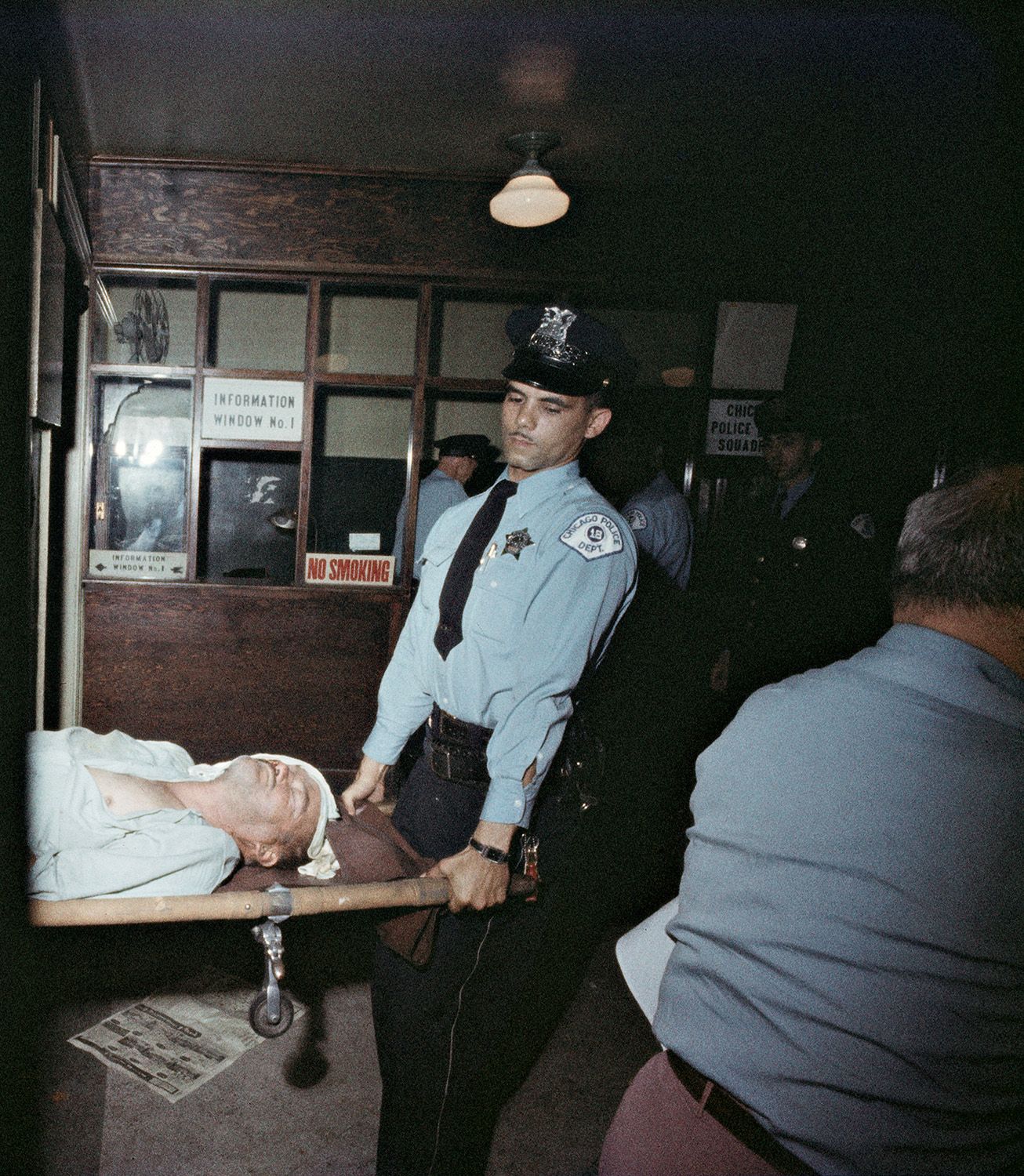
Monday Closed

The J. Paul Getty Museum website

LIKE ART BLACK ON FACEBOOK

Back to top

Exhibition: ‘The young Picasso – Blue and Rose Periods’ at Fondation Beyeler, Riehen, Switzerland

Exhibition dates: 3rd February – 26th May, 2019

Curator: Dr Raphaël Bouvier


Pablo Picasso (Spanish, 1881-1973) 'Yo Picasso' 1901 from the exhibition 'The young Picasso – Blue and Rose Periods' at Fondation Beyeler, Riehen, Switzerland, Feb - May, 2019


Pablo Picasso (Spanish, 1881-1973)
Yo Picasso (I Picasso)
1901
Oil on canvas
73.5 x 60cm
Private collection
© Succession Picasso / 2018, ProLitteris, Zurich


Room 1

The young artist gazes defiantly over his shoulder at the viewer. His white shirt, painted with bold brushstrokes, glows against the dark background; in his right hand he holds a palette with traces of paint which, together with the lively orange and yellow in his cravat and face, create marked contrasts. The aspiring artist produced this self-portrait for his first exhibition at Ambroise Vollard’s gallery in Paris. Picasso painted himself here in a style reminiscent of Henri de Toulouse-Lautrec or Vincent van Gogh. The palette alone identifies the subject as an artist. The expressively applied colours, their brushstrokes clearly visible, carry significance: here the painter is not portrayed working, but through his work itself. The painting is a bold statement by the artist newly arrived in Paris – something that Picasso underscores with the inscription ‘Yo’ (Engl.: I) besides his signature in the upper left corner of the canvas. From this point on, he would sign his works simply ‘Picasso’ – his mother’s surname.


And now for something completely different…

My favourite periods of Picasso, probably because her tries to depict the feelings of the people he is portraying.

I love the painting’s disrupted humanism, the monumental, twisted, isolated figures placed against a colourful, pictorially flattened, sometimes contextless ground. The spirit these paintings call forth – the intense gaze in the 1901 self-portrait; the sad introspection, depression of the Melancholy Women (1901); the existential themes of death, suffering and love in La Vie (Life) (1903) – show a 21 year old artist mature beyond his years, wizened in wisdom and understanding through the death of his sister and his friend Casagemas: “poverty, dejection, creative anguish, and grief for those lost.”

“In the most emotional, emotionally expressive pictures of this phase, the artist looks into the depths of human misery and relies on expressive topics such as life, love, sexuality and death.”

The circus and acrobat paintings continue the theme of melancholy, disenchanted figures of the commedia dell’arte intertwined in the transformation of bodies in space (Henri Lefebvre).

Call me an old romantic, but the attitude and the touch of the emaciated blind man’s hand as he reaches for his flagon of wine totally does it for me in a way that the more brutish, primitivist paintings of his later raw style never can.

Dr Marcus Bunyan


Many thankx to the Fondation Beyeler for allowing me to publish the images in the posting. Please click on the images for a larger version of the art.


“I was a painter and became Picasso.”

 “The Blue Period was not a question of light and colour. It was an inner necessity to paint like that.


Pablo Picasso


At the age of just twenty, the aspiring genius Picasso (1881-1973) was already engaged in a restless search for new themes and forms of expression, which he immediately brought to perfection. One artistic revolution followed another, in a rapid succession of changing styles and visual worlds. The exhibition at the Fondation Beyeler places the focus on the Blue and Rose periods (1901-1906), and thus on a central phase in Picasso’s work. It also sheds fresh light on the emergence, from 1907 onward, of Cubism, as an epochal new movement that was nevertheless rooted in the art of the preceding period.

In these poignant and magical works, realised in Spain and France, Picasso – the artist of the century – creates images that have a universal evocative power. Matters of existential significance, such as life, love, sexuality, fate, and death, find their embodiment in the delicate beauty of young women and men, but also in depictions of children and old people who carry within them happiness and joy, accompanied by sadness.

Text from the Fondation Beyeler website [Online] Cited 19/04/2019


Unknown photographer. 'Pablo Picasso, Pere Mañach and Antonio Torres Fuster, Boulevard de Clichy 130, Paris' 1901 from the exhibition 'The young Picasso – Blue and Rose Periods' at Fondation Beyeler, Riehen, Switzerland, Feb - May, 2019


Unknown photographer
Pablo Picasso, Pere Mañach and Antonio Torres Fuster, Boulevard de Clichy 130, Paris
1901
Photo: © NMR-Grand Palace (Picasso-Paris National Museum) / Daniel Arnaudet


Pablo Picasso (Spanish, 1881-1973) 'Buveuse d'absinthe' (The Absinthe Drinker) 1901 from the exhibition 'The young Picasso – Blue and Rose Periods' at Fondation Beyeler, Riehen, Switzerland, Feb - May, 2019


Pablo Picasso (Spanish, 1881-1973)
Buveuse d’absinthe (The Absinthe Drinker)
1901
Oil on canvas
73 x 54cm
The State Hermitage Museum, St. Petersburg


Room 2

In his early years, Picasso reused his canvases multiple times, mostly due to a lack of money. He often overpainted his own pictures or – as in Femme dans la loge and Buveuse d’absinthe – used both the front and back sides. Femme dans la loge was done at the time of Picasso’s first exhibition at Ambroise Vollard’s gallery. While the figure of the ageing dancer or courtesan, along with the setting, showcase a colouristic firework, the woman’s face is carefully modelled, revealing individualised features. The work Buveuse d’absinthe, today known as the front side, was created only shortly thereafter, and marks the transition from Picasso’s early pictures to those of the Blue Period. Here, flat, opaquely applied colours extend over large areas, with individual fields of colour clearly delineated from one another by dark contours. The absinthe drinker sits away from the small table, alone, her gaze blank, self-absorbed. The scene emanates an atmosphere of melancholy and other-worldliness that would later come to typify the works of the Blue Period.

“… the images created by the young artist are sharply dramatic. For example, in this painting, the most striking detail is a giant right hand of a woman, who is absorbed in her thoughts and tries to embrace and protect herself with this hand.”


Pablo Picasso (Spanish, 1881-1973) 'Arlequin assis' (Harlequin sitting) 1901


Pablo Picasso (Spanish, 1881-1973)
Arlequin assis (Harlequin sitting)
1901
Oil on canvas
83.2 x 61.3cm
New York, Metropolitan Museum of Art, Purchase Mr. and Mrs. John L. Loeb, Gift 1960
© Succession Picasso / 2018, ProLitteris, Zurich
Photo: © The Metropolitan Museum of Art / Art Resource / Scala, Florence


Room 2

Arlequin assis is one of the earliest Harlequin depictions in Picasso’s oeuvre. In an unnaturally twisted pose, the Harlequin sits at a table and turns his head in the opposite direction to the rest of his body. The table jutting diagonally into the picture space offers him a support on which to rest his elbow. As in Picasso’s female portraits of 1901, here, too, the hands attract the viewer’s attention due to their large size and elongated shape. Surprisingly, the Harlequin with his melancholy posture in fact bears the facial features of Pierrot. Although Picasso was perfectly familiar with the differences between Harlequin and Pierrot, he often mixed up their distinguishing features. At that time, the two commedia dell’arte figures were part of popular culture, be it in magazine illustrations, the circus or in the opera.


Introduction of the exhibition

Pablo Picasso’s pioneering works of the Blue and Rose Periods, which characterise his oeuvre from 1901 to 1906, ushered in the art of the twentieth-century and at the same time constitute one of its outstanding achievements. In fact, Picasso’s pictures from these years include some of the subtlest examples of modern painting and are now among the most valuable and sought-after art treasures of all.

Extensive presentations of these works are accordingly rare. The exhibition “The Young Picasso: Blue and Rose Periods” at the Fondation Beyeler thus represents a milestone in the history of the museum. The show traces the unparalleled artistic development that began with the works of the early months of 1901, when Picasso was not yet twenty, and continued until 1907. In the course of these six years, the young Pablo Ruiz Picasso developed his own personal style and became “Picasso,” as he began to sign his works in 1901. The compelling images of the Blue and Rose Periods, characterised by a unique emotional power and depth, show the artist from an exceptionally sensitive side and thus offer a nuanced picture of his work and personality.

The exhibition begins with works from the early months of 1901, created initially in Madrid and then above all during Picasso’s second stay in Paris. These exuberantly colourful paintings, which clearly exhibit the influence of Vincent van Gogh and Henri de Toulouse-Lautrec, reveal Picasso’s personal view of Paris and the elegant world of the Belle Époque. From the late summer of 1901 onward, following the tragic suicide of his artist-friend Carles Casagemas, who had accompanied him during his first visit to Paris, in 1900, Picasso began work on a series of pictures in which the colour blue became the dominant expressive element, announcing the start of the so-called Blue Period. He created these works, pervaded by an atmosphere of melancholy and spirituality, in the following years, up to 1904, as he moved back and forth between Paris and Barcelona. They owe at least part of their inspiration to Symbolism and the singular Mannerist style of El Greco and show Picasso engaging with existential questions of life, love, sexuality, fate, and death, movingly embodied by fragile, introverted figures of all ages. The pictures of the Blue Period are mainly concerned with marginalised victims of society, in situations of extreme vulnerability – beggars, people with disabilities, prostitutes, and prisoners, living in poverty and misery, whose despair is mitigated, however, by an aura of dignity and grace. This also reflects Picasso’s own precarious circumstances before his breakthrough as an artist.

His final relocation to Paris, in 1904, when he set up his studio at the Bateau-Lavoir, marked the beginning of a new phase in his life and work. It is at this point that Picasso met Fernande Olivier, his first longer-term companion and muse. The pictures gradually break free from the limited palette dominated by blue, which gives way to warmer rose and ochre tones, although the underlying mood of melancholy still persists. Picasso’s works are increasingly populated by jugglers, performers, and acrobats, in group or family configurations, personifying the anti-bourgeois, bohemian life of the circus and the art world. In 1906 the artist achieved his first major commercial success, when the dealer Ambroise Vollard bought nearly the entire stock of new pictures in his studio. This enabled Picasso, with Olivier, to leave Paris and spend several weeks in the Catalonian mountain village of Gósol. Under the impression of the rugged landscape and the villagers’ simple way of life, Picasso painted mainly pictures of human figures in idyllic, primordial settings, combining classical and archaic elements.

In the fall of 1906, after his return to Paris, he spent some time absorbing the impressions from his recent encounters with ancient Iberian sculpture and the visual world of Paul Gauguin, and began, in his quest for a new artistic authenticity, to formulate a Primitivist pictorial language. This found expression in an innovative reduction and simplification of the human figure. In sharp contrast to the fine-limbed creatures of the circus world, Picasso’s figures from this phase are bulky and heavy, with impressive female nudes whose bodies take on almost geometric form. This new conception of the figure took a further, radical turn in 1907, in the works that would lead – also under the growing influence of African and Oceanic art – to Picasso’s revolutionary painting Les Demoiselles d’Avignon, proclaiming the advent of Cubism.

The development of the Blue and Rose Periods makes it clear that the young Picasso managed, within just six years, to achieve a preternaturally early aesthetic perfection, incorporating artistic mannerisms and archaisms into the articulation of new principles for the depiction of the human body through deformation and deconstruction. In a process that only appears contradictory, Picasso’s striving for new aesthetic possibilities advanced through several forms of refinement, and in a gradual emancipation from classical ideals of beauty, to the realisation of a groundbreaking form of artistic authenticity and autonomy. Cubism, in this light, no longer appears as a radical hiatus in Picasso’s oeuvre, but rather as the logical extension of the artistic ideas of the Blue and Rose Periods.

The exhibition at the Fondation Beyeler, which has been organised in collaboration with the Musées d’Orsay et de l’Orangerie and the Musée national Picasso-Paris, differs from the first presentation in Paris in one important respect: its prospective extension of the view of Picasso’s Blue and Rose Periods by the inclusion of the artist’s first proto-Cubist pictures from 1907, created in the context of Les Demoiselles d’Avignon. One of the preliminary studies for the latter work, titled Femme (époque des “Demoiselles d’Avignon”), forms the spectacular starting point of the Fondation Beyeler’s extensive Picasso collection, and at the same time marks the finale of this exhibition. Whereas the presentation in Paris supplemented the finished works with numerous preliminary studies and copious archive material, the exhibition at the Fondation Beyeler places the focus firmly on Picasso’s painting and sculpture in the period concerned. With some seventy-five masterpieces from renowned museums and outstanding private collections across the globe, the show presents the quintessence of Picasso’s oeuvre from 1901 to 1907, illuminating a chief phase of transition in the multifaceted work of the young artist. Many central works from this period now count among the major attractions in the collections of leading international museums. Yet, several key works are still in private hands – a number of which are on public display in Riehen for the first time in many decades.

Text from the Fondation Beyeler website [Online] Cited 19/04/2019


Pablo Picasso (Spanish, 1881-1973) 'Arlequin et sa compagne' (Harlequin and his companion) 1901


Pablo Picasso (Spanish, 1881-1973)
Arlequin et sa compagne (Harlequin and his companion)
1901
Oil on canvas
73 x 60cm
Moscow, Pushkin State Museum of Fine Arts
© Succession Picasso / 2018, ProLitteris, Zurich


Pablo Picasso (Spanish, 1881-1973) 'Casagemas dans cercueil' (Casagemas in His Coffin) 1901


Pablo Picasso (Spanish, 1881-1973)
Casagemas dans cercueil (Casagemas in His Coffin)
1901
Oil on cardboard
72.5 x 57.8cm
Private collection


Room 3

This impressive work was one of a series of paintings with which Picasso dealt with the tragic loss of his artist-friend Carles Casagemas, who committed suicide on 17 February 1901. In the vertical-format picture only part of the lifeless figure is depicted. The body, diagonally fixed into the composition, is cropped by the coffin and the picture edge. Rendered in profile, the face with its yellow-green colouration and prominent facial contours stands out against the blue-white shroud. The image represents a variation of the painting La Mort de Casagemas (below) from the same period, which is also on view in the present exhibition. In it, the subject’s head has been moved close to the viewer and a huge candle emits multicoloured light. By contrast, most of the other works in the Casagemas cycle are rendered in a range of mainly blue tones. Picasso retrospectively remarked: ‘The thought that Casagemas was dead led to me painting in blue’.


Pablo Picasso (Spanish, 1881-1973) 'La Mort de Casagemas' 1901


Pablo Picasso (Spanish, 1881-1973)
La Mort de Casagemas (The Death of Casagemas)
1901
Oil on wood
27 x 35cm
Musée national Picasso-Paris
© Succession Picasso / 2018, ProLitteris, Zurich
Photo: © RMN-Grand Palais (Musée national Picasso-Paris) / Mathieu Rabeau


Pablo Picasso (Spanish, 1881-1973) 'Le Mort (la mise au tombeau)' (Death (The Burial)) 1901


Pablo Picasso (Spanish, 1881-1973)
Le Mort (la mise au tombeau) (Death (The Burial))
1901
Oil on canvas
© Succession Picasso / 2018, ProLitteris, Zurich


Pablo Picasso (Spanish, 1881-1973) 'Courtesan with necklace of gems' 1901


Pablo Picasso (Spanish, 1881-1973)
Courtesan with necklace of gems (Courtesan avec collier de pierres précieuses)
1901
Oil on canvas
© Succession Picasso / 2018, ProLitteris, Zurich


Pablo Picasso (Spanish, 1881-1973) 'Femme en bleu' 1901


Pablo Picasso (Spanish, 1881-1973)
Femme en bleu (Woman in blue)
1901
Oil on canvas
133 x 100cm
Madrid, Museo Nacional Centro de Arte Reine Sofía
© Succession Picasso / 2018, ProLitteris, Zurich


Pablo Picasso (Spanish, 1881-1973) 'Autoportrait' 1901


Pablo Picasso (Spanish, 1881-1973)
Autoportrait (Self-portrait)
1901
Oil on canvas
81 x 60cm
Musée national Picasso-Paris
© Succession Picasso / 2018, ProLitteris, Zurich
Photo: © RMN-Grand Palais (Musée national Picasso-Paris) / Mathieu Rabeau


Room 3

Picasso painted this self-portrait at the end of his second stay in Paris. Compared with the work Yo Picasso, exhibited at the Galerie Vollard in the summer of 1901, a clear shift has taken place the following winter. The artist portrays himself bearded and pale-faced, with hollow cheeks, aged and wrapped in a heavy overcoat, making his body appear like a dense mass. The imposing, self-assured pose of the first portrait has given way to a posture conveying uncertainty. Yet here, too, Picasso’s intense gaze casts its spell on the viewer. The self-portrait is one of Picasso’s first works that emphasise the rich variety of his range of blue tones. As a means to express melancholy, blue pervades the entire composition, which is divided into blue-green and midnight blue fields of colour. Picasso kept the painting throughout his life.


Pablo Picasso (Spanish, 1881-1973) 'Femme assise au fichu' 1901


Pablo Picasso (Spanish, 1881-1973)
Femme assise au fichu (Melancholy Woman)
1901
Oil on canvas
100 x 69.2cm
The Detroit Institute of Arts, Bequest of Robert H. Tannahill
© Succession Picasso / 2018, ProLitteris, Zurich
Photo: © Bridgeman Images


Room 3

Femme assise au fichu presents a seated woman in profile, introspectively withdrawn, her arms folded and legs crossed. Her brightly illuminated face lends her an appearance both profound and monumental. She is situated in a bare room, probably a cell in the Saint-Lazare women’s prison in Paris, which Picasso visited several times in the autumn and winter of 1901-02 to make drawings for his portraits of women. The prison also housed numerous prostitutes, many of whom suffered from sexually transmitted diseases. In paintings such as this one, Picasso found a universal means of representing the social themes of poverty, misery and isolation.


Pablo Picasso (Spanish, 1881-1973) 'La Buveuse assoupie' (The Drinker dozing) 1902


Pablo Picasso (Spanish, 1881-1973)
La Buveuse assoupie (The Drinker dozing)
1902
Oil on canvas
Kunstmuseum Bern, Stiftung Othmar Huber, Berne
© Succession Picasso/ 2018, ProLitteris, Zurich


View of the installation of the painting 'La Vie' (1903) for the exhibition 'The young Picasso - Blue and Rose Periods' at Fondation Beyeler


View of the installation of the painting La Vie (1903) for the exhibition The young Picasso – Blue and Rose Periods at Fondation Beyeler, Riehen, Switzerland


Pablo Picasso (Spanish, 1881-1973) 'La Vie' 1903


Pablo Picasso (Spanish, 1881-1973)
La Vie (Life)
1903
Oil on canvas
197 x 127.3cm
The Cleveland Museum of Art, Donation Hanna Fund
© Succession Picasso / ProLitteris, Zurich 2018
Photo: © The Cleveland Museum of Art


Room 3

In La Vie, the allegorical masterpiece of the Blue Period, Picasso brings together existential themes such as death, suffering and love in a complexity suffused with melancholy. When the then twenty-one-year-old artist began with the preparatory drawings for this monumental painting in Barcelona in May 1903, he had already been painting primarily blue pictures for over two years. Although Picasso had originally planned the work as a self-portrait, his deceased friend Carles Casagemas appears here once again (and for the final time). Accompanied by a naked woman who nestles against his body, he stands in the left half of the picture, wearing only a white loincloth. He points his index finger at a clad woman, who carries an infant swaddled in a cloth. Appearing in the background as pictures within a picture are further figures, cowering. They lend the work an additional symbolic and enigmatic dimension.

In Picasso’s most celebrated painting from the Blue Period, however, he returns to the plight of the artist. La Vie (Life) (1903) brings us into an artist’s studio. While earlier versions of the painting, locked beneath the final work and revealed by X-rays, show Picasso as the central figure, in the end he depicted Casagemas as his subject. He is naked except for a loincloth as a nude woman clutches him, and the two look over at a mother and child. Behind them sit two canvases covered with crouching bodies.

Every element of the scene conveys vulnerability. The artist brings different facets of his troubles into a single canvas: poverty, dejection, creative anguish, and grief for those lost, like Casagemas. Interestingly, those X-rays have also revealed that the painting was executed on top of an earlier work called Last Moments, inspired by his sister’s death.

Perhaps, in bringing these various instances of heartbreak together, Picasso was also in the final stages of processing his grief. Indeed, soon after the artist finished La Vie, he moved to Paris and emerged from his Blue Period – into a palette of soft, joyful pinks. “Colours, like features, follow the changes of the emotions,” Picasso later explained.

Extract from Alexxa Gotthardt. “The Emotional Turmoil behind Picasso’s Blue Period,” on the Artsy website Dec 13, 2017 [Online] Cited 19/04/2019


Pablo Picasso (Spanish, 1881-1973) 'Le Repas de l'aveugle' (The Blind Man's Meal) 1903


Pablo Picasso (Spanish, 1881-1973)
Le Repas de l’aveugle (The Blind Man’s Meal)
1903
Oil on canvas
95.3 x 94.6cm
New York, The Metropolitan Museum of Art, Purchase Mr. and Mrs. Ira Haupt, Gift 1950
© Succession Picasso / 2018, ProLitteris, Zurich
Photo: © 2017, The Metropolitan Museum of Art / Art Resource / Scala, Florence


Room 3

Painted in Barcelona in 1903, the picture Le Repas de l’aveugle depicts an emaciated blind man sitting before a frugal meal. The man’s whole suffering is conveyed by the exaggeration of his body with his bony shoulders, hollow-cheeked face and thin fingers. He is one of those miserable and solitary figures that appear like modern martyrs in Picasso’s pictures. The depicted provisions – the bread and wine – could be interpreted as Christian symbols. The starkly reduced range of colours and the dramatic effect of the scene created by the light lend the image a mystical quality. Here we feel the influence of El Greco’s paintings and Spanish religious art of the sixteenth and seventeenth centuries.


This exhibition, the most ambitious ever staged by the Fondation Beyeler, is devoted to the paintings and sculptures of the young Pablo Picasso from the so-called Blue and Rose periods, between 1901 and 1906. For the first time in Europe, the masterpieces of these crucial years, most of them a milestone on Picasso’s path to preeminence as the twentieth century’s most famous artist, are presented together, in a concentration and quality that are unparalleled. Picasso’s pictures from this phase of creative ferment are some of the finest and most emotionally compelling examples of modern painting, and are counted among the most valuable and sought-after works in the entire history of art. It is unlikely that they will be seen again in such a selection in a single place.

At the age of just twenty, the rising genius Picasso (1881-1973) embarked on a quest for new themes and forms of expression, which he immediately refined to a pitch of perfection. One artistic revolution followed another, in a rapid succession of changing styles and visual worlds. The focus of the exhibition is on the Blue and Rose periods, and thus on the six years in the life of the young Picasso that can be considered central to his entire oeuvre, paving the way for the epochal emergence of Cubism, which developed from Picasso’s previous work, in 1907. Here, the exhibition converges with the Fondation Beyeler’s permanent collection, whose earliest picture by Picasso is a study, dating from this pivotal year, for the Demoiselles d’Avignon.

In the chronologically structured exhibition, Picasso’s early painting career is explored through examples of his treatment of human subjects. Journeying back and forth between Paris and Barcelona, he addressed the human figure in a series of different approaches. In the phase dominated by the colour blue, from 1901, he observed the material deprivation and the psychological suffering of people on the margins of society, before turning – in 1905, when he had settled in Paris – to the themes of the Rose period, conferring the dignity of art on the hopes and yearnings of circus performers: jugglers, acrobats and harlequins. In his search for a new artistic authenticity, Picasso stayed for several weeks in mid-1906 in the village of Gósol, in the Spanish Pyrenees, and created a profusion of paintings and sculptures uniting classical and archaic ideals of the body. Finally, the increasing deformation and fragmentation of the figure, apparent in the “primitivist” pictures, especially of the female nude, which were painted subsequently in Paris, heralds the emergence of the new pictorial language of Cubism.

Press release from Fondation Beyeler website [Online] Cited 19/04/2019


Pablo Picasso (Spanish, 1881-1973) 'Femme en chemise (Madeleine)' 1904-1905


Pablo Picasso (Spanish, 1881-1973)
Femme en chemise (Madeleine) (Young Woman in a Chemise (Madeleine))
1904-1905
Oil on canvas
72.7 x 60cm
London, Tate, Bequeathed by C. Frank Stoop 1933
© Succession Picasso / 2018, ProLitteris, Zurich
Photo: © Tate, London 2018


Room 4

A young woman, depicted in profile, stands isolated in an empty, dark-blue space. Her slender body is draped in a white blouse. Her left breast, its curve emphasised, is simultaneously concealed and revealed by the flimsily thin cloth. The woman’s pale skin and distinct facial features, as well as the delicately defined contours of her body, set her apart from the background. The colour scheme, suffused with light and depth, hints at Picasso’s gradual turn to warm pink and brown tones. The identity of the model long remained unclear because Picasso had overpainted the figure of a boy here with the slender silhouette of his first muse and lover, Madeleine. The artist first met Madeleine in 1904, after moving into his studio at the Bateau-Lavoir in Paris. She posed repeatedly for Picasso’s paintings in the transitional phase from the Blue to the Rose Period, until the spring of 1905.


Pablo Picasso (Spanish, 1881-1973) 'Fillette nue au panier de fleurs' (Le panier fleuri) (Girl with a Basket of Flowers) 1905


Pablo Picasso (Spanish, 1881-1973)
Fillette nue au panier de fleurs (Le panier fleuri) (Girl with a Basket of Flowers)
1905
Oil on canvas
155 x 66 cm
Private collection, New York


The painting Fillette au panier de fleurs is surprising in many respects. First of all, because of the extended vertical format, which also makes the girl appear elongated. The adolescent stands quite naked before us, with her body turned to the side and a serious expression on her face. A slight counter-movement is suggested in the transition from her feet to her torso. The girl’s face is turned towards the viewer and carefully modelled in the manner of a portrait. The body, by contrast, appears somewhat withdrawn, almost unreal. The radiant red flowers in the woven basket create a strong accent against the pale skin, black hair and light blue background. The art dealer Clovis Sagot purchased the picture from Picasso for the modest sum of seventy-five francs. It was one of the first works that the American writer and art collector Gertrude Stein acquired together with her brother Leo, as early as 1905. The Stein siblings subsequently built up a significant Picasso collection


Pablo Picasso (Spanish, 1881-1973) 'Le Marchand de gui' (The Mistletoe Seller) 1902-1903


Pablo Picasso (Spanish, 1881-1973)
Le Marchand de gui (The Mistletoe Seller)
1902-03
Oil on Canvas
55 x 38cm
© Succession Picasso / 2018 ProLitteris, Zurich 2018


Room 5

With an empathetic eye, Picasso concentrates here on the representation of two poverty-stricken people who together go about their hard, daily work – the selling of mistletoe. The wrinkled yet gentle face of the bearded old man contrasts with the smooth, fresh, yet serious visage of the boy, for whom the companion is at once antithesis and role model. While the two figures do not look at one another, their physical closeness and the old man’s affectionate gesture nevertheless suggest the greatest tenderness. With the subtle play of colours, Picasso succeeds in generating a mystical atmosphere. In his dignified appearance, the mistletoe vendor with the child comes here to symbolise a life of poverty endured without resignation and at the same time the hope of happiness.


Pablo Picasso (Spanish, 1881-1973) 'Tête d'un arlequin' (Head of a harlequin) 1905


Pablo Picasso (Spanish, 1881-1973)
Tête d’un arlequin (Head of a harlequin)
1905
Oil on canvas
40.7 x 31.8cm
The Detroit Institute of Arts, Bequest of Robert H. Tannahill
© Succession Picasso / 2018, ProLitteris, Zurich
Photo: © Bridgeman Images


Pablo Picasso (Spanish, 1881-1973) 'Femme de l'ÃŽle de Majorque' (Woman from Mallorca) 1905


Pablo Picasso (Spanish, 1881-1973)
Femme de l’ÃŽle de Majorque (Woman from Mallorca)
1905
Gouache and watercolour on cardboard
67 x 51cm
Moscow, Pushkin State Museum of Fine Arts
© Succession Picasso / 2018, ProLitteris, Zurich


Pablo Picasso (Spanish, 1881-1973) 'Femme à l'éventail' (Woman with a fan) 1905


Pablo Picasso (Spanish, 1881-1973)
Femme à l’éventail (Woman with a fan)
1905
Oil on canvas
100.3 x 81cm
Washington, National Gallery of Art, Gift of the W. Averell Harriman Foundation in memory of Marie N. Hariman
© Succession Picasso / 2018, ProLitteris, Zurich


Pablo Picasso (Spanish, 1881-1973) 'Famille de saltimbanques avec un singe' (Family of acrobats with a monkey) 1905


Pablo Picasso (Spanish, 1881-1973)
Famille de saltimbanques avec un singe (Family of acrobats with a monkey)
1905
Oil on canvas
© Succession Picasso/2018, ProLitteris, Zurich
Photo: © Göteborg Konstmuseum


Une vie pas tout à fait en rose: A life not quite in pink

Regarding the pink period, Apollinaire preferred to call it the “period of acrobats”, which would be more accurate as the works are not only pink. In 1905, without actually adopting this colour, Picasso moved away from cold nocturnal tonalities for a semblance of serenity, as if the colours corresponded indeed to a state of mind. The tones are earthy, pastels. The unit is more likely to come from the circus theme and in particular from the Circus Medrano, not far from the Bateau-Lavoir, which Picasso frequents as many painters and poets of his time. It’s less about the circus, like Seurat’s, than about his backstage, like a family of acrobats with a monkey. The characters of the commedia dell’arte are intertwined, the figure of the buffoon and the figure of the madman who will be the subject of a sculpture. This one, exposed to the Foundation, was the portrait of the poet Max Jacob, to whom Picasso then added the cap which completed the analogy between the madman and the artist. Picasso liked to be assimilated to this strange, wandering, unattached, somewhat marginalised person who, like the artist, can afford a critical look at the world. There is still a lot of blue and melancholy. The same misery permeates the scene of the couple watching an empty plate, the clumsy and lonely pink acrobat or the sickly Harlequin. No acrobatic scenes under the applause of the public. Here we find the same disenchantment. Apollinaire always speaks of “pulmonary” rose. The blue / pink partition therefore remains relative.

Extract from Geneviève Nevejan. “Picasso jeune et mélancolique,” on the Choisir website 31 January 2019 [Online] Cited 19/04/2019. No longer available online


Pablo Picasso (Spanish, 1881-1973) 'Acrobate et jeune arlequin' 1905


Pablo Picasso (Spanish, 1881-1973)
Acrobate et jeune arlequin (Acrobat and Young Harlequin)
1905
Gouache on cardboard
105 x 76cm
Private collection
© Succession Picasso / 2018, ProLitteris, Zurich


Room 5

Acrobate et jeune arlequin is among Picasso’s most impressive pictures from the world of the circus. Two performers of delicate appearance sit in front of a tattered looking blue backdrop. On the left is an androgynous boy in Harlequin costume with a chalk-white face, gazing to the right, towards the young man in acrobat’s clothing. The latter is depicted with arms clasped and eyes closed. At the transition point between the worlds of blue and pink, both the space and the figures seem to be in a state of transformation. Can the diamond pattern of the Harlequin’s costume and the geometric shape of the acrobat’s arms be seen as anticipating a ‘Cubification’ of the body? As the first-ever museum purchase of a work by Picasso, Acrobate et jeune arlequin was acquired for the municipal museum in Elberfeld near Wuppertal in 1911; today it is privately owned.


Pablo Picasso (Spanish, 1881-1973) 'Arlequin assis sur fond rouge' 1905


Pablo Picasso (Spanish, 1881-1973)
Arlequin assis sur fond rouge (Seated Harlequin on Red Background)
1905
Watercolour and ink on cardboard
57.5 x 41.2cm
Staatliche Museen zu Berlin, Nationalgalerie, Museum Berggruen
© Succession Picasso / 2018 ProLitteris, Zurich 2018
Photo: bpk / Nationalgalerie, SMB, Museum Berggruen / Jens Ziehe


Room 6

Picasso never presents his Harlequins as tricksters or buffoons entertaining the audience with wild leaps, but rather as passive, melancholy figures. In Arlequin assis au fond rouge the Harlequin sits, motionless, his mouth closed. His naked, slightly splayed legs dangle from a wall. He appears bare, exposed, even though he wears a thin, washed-out costume and a hat. Despite his conspicuously frontal pose, his gaze is not directed exactly at the viewer. Picasso aims at capturing the essence of the figure, his great solitude, which is further accentuated by the vibrant, pulsating red background. The Harlequin figure may also embody the creative, sensitive artist, who must stand his ground in modern society


Installation view of the exhibition 'The young Picasso - Blue and Rose Periods' at Fondation Beyeler, Riehen, Switzerland


Installation view of the exhibition The young Picasso – Blue and Rose Periods at Fondation Beyeler, Riehen, Switzerland showing at left, La toilette (1906) and at right, Les Deux Frères (The Two Brothers) (1906)


Room 7

In Deux Frères a boy carries his younger brother on his back; the two appear to merge together. The elder boy’s facial features are finely modelled, whereas those of the younger one are somewhat blurred and reduced to a few shapes. Both figures are naked, and place and time are uncertain. Only the edge of the floor and dark shadows indicate the room in which they are located. The artist makes it seem here that the figures are made of the same material as the space surrounding them. The painting was produced in Gósol, a Catalan mountain village in the eastern Pyrenees, where Picasso retreated for several weeks in the early summer of 1906. Far from urban life, he began developing a new pictorial language characterised by simplicity and earthiness. Here, Picasso drew inspiration notably from the naked body, initially from the male and then the female one.


Pablo Picasso (Spanish, 1881-1973) 'La toilette' 1906


Pablo Picasso (Spanish, 1881-1973)
La toilette
1906
Oil on canvas
59 1/2 x 39 inches (151.13 x 99.06cm)
Collection Albright-Knox Art Gallery, Buffalo, New York
Fellows for Life Fund, 1926
© Succession Picasso / 2018 ProLitteris, Zurich 2018


Room 7

In the summer of 1904 Picasso met Fernande Olivier, who would become his most important model and was also his companion until 1912. She shared with him a desperately poor life at the run-down Bateau-Lavoir studio building, in Montmartre, Paris. In 1906 she accompanied him to the Pyrenean village of Gósol in Spain. Olivier posed for Picasso, and to an extent her figure became a field for artistic experimentation. In La Toilette, Picasso’s search for a new archaic formal language still manifests itself in predominantly classical figures. In a bare interior, a naked young woman stands to the left, turned towards the viewer, arranging her hair in a mirror held by a black-haired woman dressed in blue and seen in profile. It is possible that the depictions of both women are portraits of Olivier, highlighting different, contrasting facets of the same person.


Pablo Picasso (Spanish, 1881-1973) 'Autoportrait' (Self-portrait) 1906


Pablo Picasso (Spanish, 1881-1973)
Autoportrait (Self-portrait)
1906
Oil on canvas
65 x 54cm
Musée national Picasso-Paris
© Succession Picasso / 2018, ProLitteris, Zurich
Photo: © RMN-Grand Palais (Musée national Picasso-Paris) / Mathieu Rabeau


Room 8

In his early years Picasso frequently portrayed himself. Although not identified by obvious attributes, this image is also a self-portrait of the artist in which he illustrates his most recent achievements as a painter. The stocky man’s solid torso, his greyish skin tone and mask-like face exemplify the Primitivist pictorial language that Picasso developed in 1906. The artist was seeking new means of expression, painting almost exclusively nudes and in the process moving noticeably away from his earlier work. He was no longer interested in depicting feelings, wanting rather to experiment with new forms and render his subjects with new pictorial means. Picasso’s facial features in this painting appear formulaic, stereotypical – and he has moved quite some distance from the aesthetic of the Blue and Rose Periods.


Pablo Picasso (Spanish, 1881-1973) 'Femme nue assise, les jambes croisées' (Seated Female Nude with Crossed Legs) 1906


Pablo Picasso (Spanish, 1881-1973)
Femme nue assise, les jambes croisées (Seated Female Nude with Crossed Legs)
1906
Oil on canvas


Room 8

Picasso’s discovery of centuries-old Iberian sculpture flowed, in the autumn of 1906, into numerous female nudes in which a new, raw style emerged. Among them is this imposing representation of a seated woman in which the artist limited himself to brown and grey tones. The schematically rendered robust body composed of geometric volumes and the ossified, mask-like face with its empty eyes are typical of Picasso’s Primitivism in this period. Thus, the artist introduced here, within a classical picture theme, a new image of the body, aimed at reduction. This was to prove seminal for his artistic development in subsequent years culminating in the painting Les Demoiselles d’Avignon.


Pablo Picasso (Spanish, 1881-1973) 'Nu sur fond rouge (Jeune femme nue à la chevelure)' 1906


Pablo Picasso (Spanish, 1881-1973)
Nu sur fond rouge (Jeune femme nue à la chevelure) (Nude on red background (Young nude woman with hair)
1906
Oil on canvas
81 x 54cm
Paris, Musée de l’Orangerie, Collection Jean Walter and Paul Guillaume
© Succession Picasso / 2018, ProLitteris, Zurich
Photo: © RMN-Grand Palais (Musée de l’Orangerie) / Hervé Lewandowski


Pablo Picasso (Spanish, 1881-1973) 'Femme' (Epoque des "Demoiselles d’Avignon") 1907


Pablo Picasso (Spanish, 1881-1973)
Femme (Epoque des “Demoiselles d’Avignon”) (Woman (‘Demoiselles d’Avignon’ Period))
1907
Oil on canvas
119 x 93.5cm
Fondation Beyeler, Riehen / Basel
© Succession Picasso / 2018 ProLitteris, Zurich Photo: Robert Bayer, Basel


Room 9

Femme, from 1907, also originated in the context of Picasso’s seminal picture Les Demoiselles d’Avignon and is the earliest work in the extensive Picasso collection assembled by Ernst and Hildy Beyeler. The sketch-like painting shows a naked female figure with raised arms, depicted in a pose that remains ambivalent. Wearing the cap of a sailor or ship’s captain (perhaps her hair is also set in a chignon), she is presented next to a yellow curtain drawn to the side and in front of a blue and green background. The face, whose features recall those of African masks, clearly reveals the great influence that non-European sculpture had on Picasso in this phase of his career. Whereas the figure’s face, arms and breasts are fully painted and bordered with clear contours, the lower body is sketched with just a few lines. In Femme Picasso seems to be deliberately playing with an aesthetic of incompletion – yet in light of its expressive power and manner of composition, the work is unquestionably finished.


Anonymous photographer. 'Pablo Picasso on Place Ravignan, Montmartre, Paris' 1904


Anonymous photographer
Pablo Picasso on Place Ravignan, Montmartre, Paris
1904
Silver gelatin print on paper
12 x 8.9cm
Musée national Picasso-Paris


Fondation Beyeler
Beyeler Museum AG
Baselstrasse 77, CH-4125
Riehen, Switzerland

Opening hours:
10am – 6pm daily, Wednesdays until 8pm
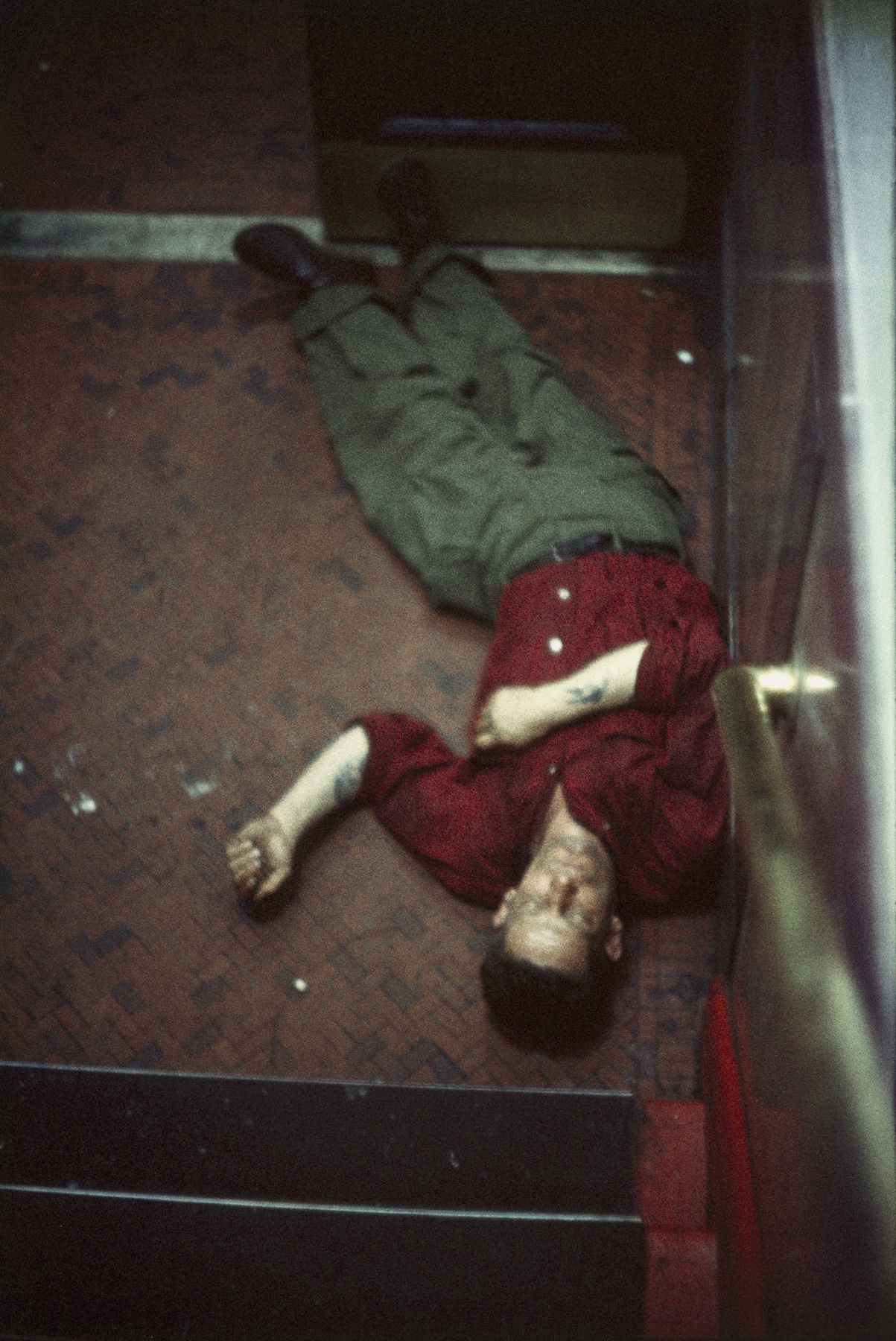
Fondation Beyeler website

LIKE ART BLART ON FACEBOOK

Back to top

Exhibition: ‘Edith Tudor-Hart: In the Shadow of Tyranny’ at the Scottish National Portrait Gallery, Edinburgh

Exhibition dates: 2nd March – 26th May 2013


Edith Tudor-Hart (Austrian-British, 1908-1973) 'Untitled (Unemployed Workers' Demonstration, Vienna)' 1932


Edith Tudor-Hart (Austrian-British, 1908-1973)
Untitled (Unemployed Workers’ Demonstration, Vienna)
1932
Modern silver gelatine print from archival negative
30.3 x 30cm
Scottish National Portrait Gallery: Archive presented by Wolfgang Suschitzky 2004
© The Estate of Edith Tudor-Hart


Another photographer unknown to me, who “attempted to use the camera as a political weapon, aligning her practice with the wider worker photography movement” and produced “images that show a sophisticated realism, marked by their directness and capacity to communicate issues of inequality and deprivation.” In other words she was using photography to fight the good fight, producing photographs that interrogate issues of poverty, unemployment and slum housing.

But there is more to Tudor-Hart’s photographs than just social realism otherwise they would not hold us so. Beyond a perceptive understanding of light and the formal elements of the picture plane there is that ineffable something that a good photographer always has – the ability to transcend the scene, to capture the chance encounter – be it the look on a woman’s face, the ensemble of children preparing vegetables or the untitled man ‘In Total Darkness’ (with traces of Eugene Atget). The aesthetic of engagement, the ability of her photographs to speak directly to the viewer in a vital, dynamic way, also speaks to the life of the photographer: studied at the Bauhaus, an agent for the Communist party, I would have liked to have met this artist.

Dr Marcus Bunyan


Many thankx to the Scottish National Portrait Gallery for allowing me to publish the photographs in the posting. Please click on the photographs for a larger version of the image.


Edith Tudor-Hart (Austrian-British, 1908-1973) 'Demonstration, South Wales' 1935


Edith Tudor-Hart (Austrian-British, 1908-1973)
Demonstration, South Wales
1935
Printed 2004 from original negatives held in the Edith Tudor Hart Archive
Gelatin silver print
Framed: 50.80 x 40.64cm
© The Estate of Edith Tudor-Hart


Edith Tudor Hart was in South Wales in the 1930s following her husband’s appointment as a GP there. As communists they would have sympathised with the economic hardship of the miners in the Rhondda valley. During the industrial depression following the First World War, unemployment figures in the area soared. With the help of other unions, the National Unemployed Workers’ Movement (NUWM) organised Hunger Marches, which demanded more fair unemployment legislation. This photograph was taken during one such demonstration, with the photographer perched on a post opposite the crowd of men.

Text from the National Galleries of Scotland website


Edith Tudor-Hart (Austrian-British, 1908-1973) 'Members of the Social-Democratic Youth Movement Marching Past the Opera House, Opernring, Vienna' c. 1928


Edith Tudor-Hart (Austrian-British, 1908-1973)
Members of the Social-Democratic Youth Movement Marching Past the Opera House, Opernring, Vienna
c. 1928
Printed 2004 from original negatives held in the Edith Tudor Hart Archive
Gelatin silver print
28 x 30cm
Scottish National Portrait Gallery
© Copyright held jointly by Peter Suschitzky, Julia Donat & Misha Donat


This is a very dynamic image showing members of the Social-Democratic Youth Movement marching in Vienna. In the wake of the First World War, the Austrian political parties had a youthful membership – it is estimated that up to sixty per cent of the Viennese Social Democrats were under forty years of age. The limits of teenagers’ political engagement was a particular source of controversy, with many arguing that the youth movement should be more educational than political. Memoirs of the period reveal that political identification was often fluid. A common joke amongst young activists was that you went to bed a Social Democrat and woke up a Communist!

Text from the National Galleries of Scotland website


Edith Tudor-Hart (Austrian-British, 1908-1973) 'Untitled (Man Selling Fruit, Vienna)' c. 1930


Edith Tudor-Hart (Austrian-British, 1908-1973)
Untitled (Man Selling Fruit, Vienna)
c. 1930
Modern silver gelatine print from archival negative
30.3 x 30.1cm
Scottish National Portrait Gallery: Archive presented by Wolfgang Suschitzky 2004
© The Estate of Edith Tudor-Hart


Edith Tudor-Hart (Austrian-British, 1908-1973) 'Untitled (Caledonian Market, London)' c. 1931


Edith Tudor-Hart (Austrian-British, 1908-1973)
Untitled (Caledonian Market, London)
c. 1931
Modern silver gelatine print from archival negative
27.7 x 27.5cm
Scottish National Portrait Gallery: Archive presented by Wolfgang Suschitzky 2004
© The Estate of Edith Tudor-Hart


Edith Tudor-Hart (Austrian-British, 1908-1973) 'Ferris Wheel, Vienna' c. 1931


Edith Tudor-Hart (Austrian-British, 1908-1973)
Ferris Wheel, Vienna
c. 1931
Printed 2004 from original negatives held in the Edith Tudor Hart Archive
Gelatin silver print
29.3 x 29.2cm
Scottish National Portrait Gallery: Archive presented by Wolfgang Suschitzky 2004
© The Estate of Edith Tudor-Hart


Before marrying Edith Tudor Hart had studied photography at the Bauhaus in Dessau. The concerns of this school are obvious in the geometries and startling perspective of this image. Note the exaggerated size of the steel supports of the wheel and the minute figures of the people standing on the ground. The photographer’s eagerness to document the dynamism of urban life suggests she was aware of developments in Soviet avant-garde photography.

Text from the National Galleries of Scotland website


Edith Tudor-Hart (Austrian-British, 1908-1973) 'Karl-Marx-Hof, Vienna' c. 1932


Edith Tudor-Hart (Austrian-British, 1908-1973)
Karl-Marx-Hof, Vienna
c. 1932
Printed 2004 from original negatives held in the Edith Tudor Hart Archive
Gelatin silver print
30.2 x 30cm
Scottish National Portrait Gallery
© Copyright held jointly by Peter Suschitzky, Julia Donat & Misha Donat


The Karl-Marx-Hof was a fortress-like housing estate built by the Social Democrats between 1927 and 1930. A kilometre in length, its huge walls contained nearly 1400 apartments for Viennese workers. In her photograph of the building Tudor-Hart summons both its strength and sense of modernity. However, the permanence evoked by the architecture soon proved to be more apparent than real. In February 1934, during the short-lived Austrian civil war, the building was shelled by Austro-fascist forces. Out-gunned, and concerned about women and children still in their homes, the Karl-Marx-Hof’s defenders surrendered. The first mass movement against European fascism was easily defeated and the Austrian Social Democrats were driven into illegality and exile.

Text from the National Galleries of Scotland website


Edith Tudor-Hart (Austrian-British, 1908-1973) 'Family Group, Stepney, London' c. 1932


Edith Tudor-Hart (Austrian-British, 1908-1973)
Family Group, Stepney, London
c. 1932
Printed 2004 from original negatives held in the Edith Tudor Hart Archive
Gelatin silver print
Scottish National Portrait Gallery
© Copyright held jointly by Peter Suschitzky, Julia Donat & Misha Donat


Tudor-Hart worked extensively amongst working-class communities in East and North London, photographing children on the streets and families in their homes. She was part of a larger movement on the left concerned about the effect of widespread slum housing. However, Tudor-Hart’s imagery is rarely merely propaganda and her ability to connect with those she photographs – often women and children – is evident. This complex photograph explores the photographer’s relationship to her subjects. Shot deliberately through the window it emphasises her voyeurism, thus limiting the sentimental impact of the image.

Text from the National Galleries of Scotland website


Edith Tudor-Hart (Austrian-British, 1908-1973) 'Untitled (Ultraviolet Light Treatment, South London Hospital for Women and Children)' c. 1935


Edith Tudor-Hart (Austrian-British, 1908-1973)
Untitled (Ultraviolet Light Treatment, South London Hospital for Women and Children)
c. 1935
Modern silver gelatine print from archival negative
30.3 × 30cm
Scottish National Portrait Gallery: Archive presented by Wolfgang Suschitzky 2004


This photograph was taken for a booklet promoting the work of the South London Hospital for Women and Children, produced in collaboration with the German exile photographer, Grete Stern. It shows light treatment for children suffering from vitamin deficiencies, a standard cure at the time. The South London Hospital was founded in 1912 “to meet the growing demand of women for medical treatment by members of their own sex.” Tudor-Hart campaigned throughout her life for health reforms for women and children, part of a wider movement of women whose activity was vital to the formation of the National Health Service in 1948.

Text from the National Galleries of Scotland website


Edith Tudor-Hart (Austrian-British, 1908-1973) 'Untitled (Drying Room, Pit-head Baths, Ashington Colliery, Northumberland)' c. 1937


Edith Tudor-Hart (Austrian-British, 1908-1973)
Untitled (Drying Room, Pit-head Baths, Ashington Colliery, Northumberland)
c. 1937
Modern silver gelatine print from archival negative
30.3 x 30.1cm
Scottish National Portrait Gallery: Archive presented by Wolfgang Suschitzky 2004
© The Estate of Edith Tudor-Hart


The life and work of one of the most extraordinary photographers in Britain during the 1930s and 1940s is the subject of a major new exhibition at the Scottish National Portrait Gallery. Based on extensive new research, Edith Tudor-Hart: In the Shadow of Tyranny, is the first full presentation of the Austrian-born photographer’s work. The exhibition presents over 80 photographs, many of which have never been shown before, and includes film footage, Tudor-Hart’s scrapbook and a selection of her published stories in books and magazines.

During the 1930s, photography became implicated in the vital political and social questions of the era as never before. The enhanced technological capacities of the camera and faster printing processes offered left-wing political activists new techniques for popular mobilisation. The medium took on a sharper social purpose, breaking down the traditional divisions of culture through its quality of immediacy and capacity for self-representation.

Edith Tudor-Hart was a key exponent of this aesthetic of engagement, with images that show a sophisticated realism, marked by their directness and capacity to communicate issues of inequality and deprivation. In a turbulent decade, she attempted to use the camera as a political weapon, aligning her practice with the wider worker photography movement. Tudor-Hart’s photography dealt with many of the major social issues of the day, including poverty, unemployment and slum housing. Her imagery is a vital record of the politically-charged atmosphere of inter-war Vienna and Britain during the Great Slump of the 1930s. After 1945, Tudor-Hart concentrated on questions of child welfare, producing some of the most psychologically penetrating imagery of children of her era.

Tudor-Hart’s life story as a photographer is inextricably tied to the great political upheavals of the twentieth century. Born Edith Suschitzky in Vienna in 1908, she grew up in radical Jewish circles in a city ravaged by the impact of the First World War. Her childhood was dominated by social issues in a culture acutely aware of the impact of the Russian Revolution. After training as a Montessori teacher, she studied photography at the Bauhaus in Dessau and pursued a career as a photojournalist. However, her life was turned upside down in May 1933 when she was arrested whilst working as an agent for the Communist Party of Austria. She escaped long-term imprisonment by marrying an English doctor, Alexander Tudor-Hart, and was exiled to London shortly afterwards. Notoriously, Tudor-Hart continued to combine her practice as a photographer with low-level espionage for the Soviet Union and was pursued by the security services until her death in 1973.

Tudor-Hart’s photography introduced into Britain formal and narrative features that derived from her training on the Continent. Her method initiates a dialogue with those she photographs, very different from the more distancing imagery of the photojournalists. Along with thirty or so German-speaking exile photographers, many of Jewish origin, Tudor-Hart helped transform British photography. After the Second World War, rejected by Fleet Street and the British establishment, Tudor-Hart turned to documenting issues of child welfare. Her photographs were published in Picture Post and a range of other British magazines. By the late 1950s she had abandoned photography altogether.

Commenting on the exhibition, Director of the Scottish National Portrait Gallery, Christopher Baker, said, ‘We are really pleased to be staging this thrilling retrospective of Tudor-Hart’s photography. It combines stunning images with an intriguing life-story and illuminates a turbulent period in European history. Tudor-Hart was one of the great photographers of her era.’ Edith Tudor-Hart: In the Shadow of Tyranny is drawn largely from the photographer’s negative archive, which was donated to the National Galleries of Scotland by her family in 2004. The exhibition travels to the Wien Museum in September and will form the first complete presentation of her work in Austria.

Press release from the Scottish National Portrait Gallery


Edith Tudor-Hart (Austrian-British, 1908-1973) 'Untitled (Children Preparing Vegetables, North Stoneham Camp, Hampshire)' 1937


Edith Tudor-Hart (Austrian-British, 1908-1973)
Untitled (Children Preparing Vegetables, North Stoneham Camp, Hampshire)
1937
Modern silver gelatine print from archival negative
30.2 x 29.8cm
Scottish National Portrait Gallery: Archive presented by Wolfgang Suschitzky 2004
© The Estate of Edith Tudor-Hart


Edith Tudor-Hart (Austrian-British, 1908-1973) 'Untitled (Basque Refugee Children, North Stoneham Camp, Hampshire)' 1937


Edith Tudor-Hart (Austrian-British, 1908-1973)
Untitled (Basque Refugee Children, North Stoneham Camp, Hampshire)
1937
Modern silver gelatine print from archival negative
30.2 x 30cm
Scottish National Portrait Gallery: Archive presented by Wolfgang Suschitzky 2004
© The Estate of Edith Tudor-Hart


The children are giving the Spanish anti-fascist Republican salute.


Edith Tudor-Hart (Austrian-British, 1908-1973) 'Untitled (Child Staring into Bakery Window)' c. 1935


Edith Tudor-Hart (Austrian-British, 1908-1973)
Untitled (Child Staring into Bakery Window)
c. 1935
Modern silver gelatine print from archival negative
35.30 x 30.00cm
Scottish National Portrait Gallery: Archive presented by Wolfgang Suschitzky 2004
© The Estate of Edith Tudor-Hart


Edith Tudor-Hart (Austrian-British, 1908-1973) 'Untitled (In Total Darkness, London)' c. 1935


Edith Tudor-Hart (Austrian-British, 1908-1973)
Untitled (In Total Darkness, London)
c. 1935
Modern silver gelatine print from archival negative
27.70 x 27.50cm
Scottish National Portrait Gallery: Archive presented by Wolfgang Suschitzky 2004
© The Estate of Edith Tudor-Hart


Scottish National Portrait Gallery
1 Queen Street, Edinburgh EH2 1JD
Phone: +44 131 624 6200

Opening hours:
Daily 10am – 5pm
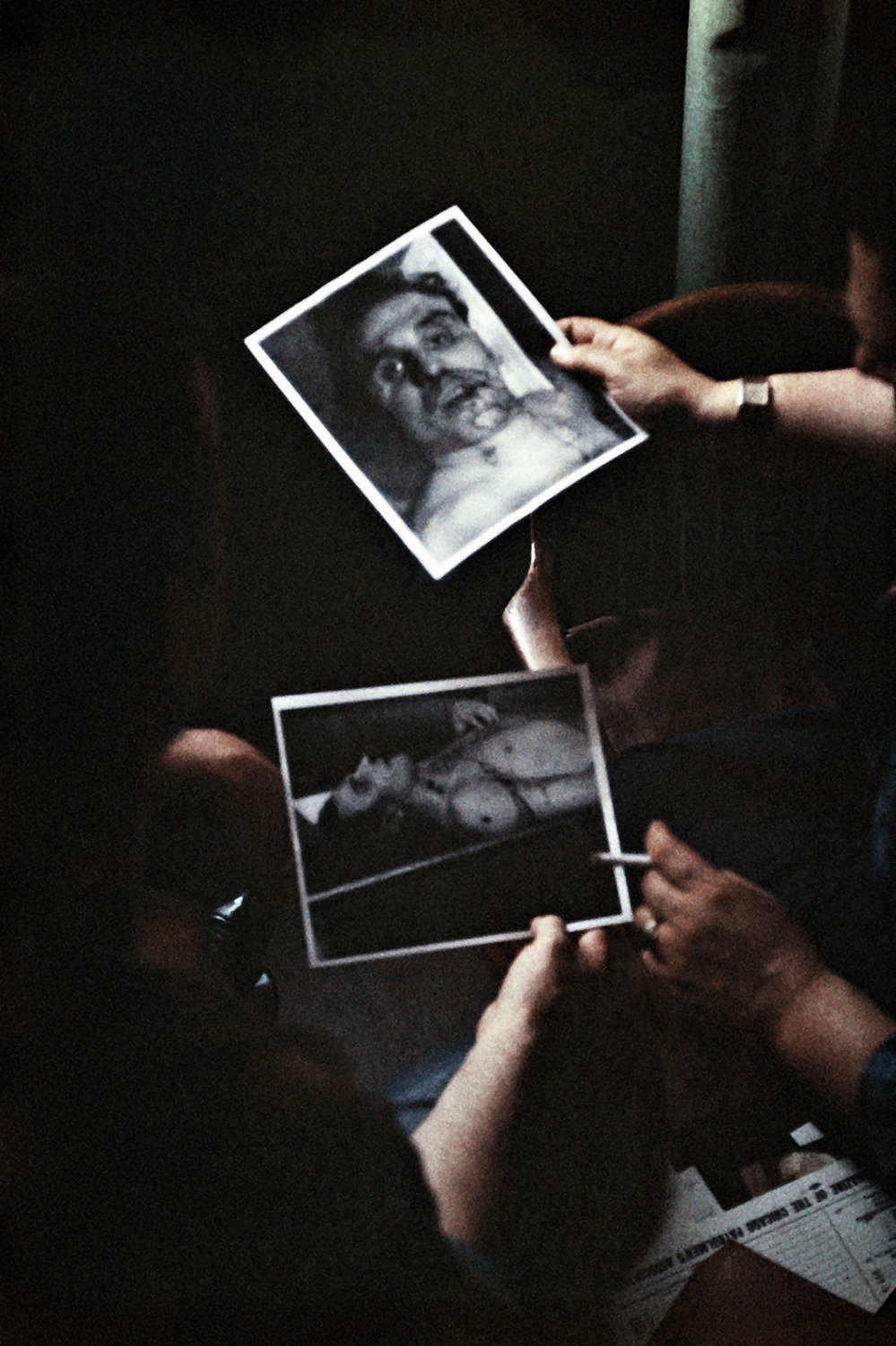
Scottish National Portrait Gallery website

LIKE ART BLART ON FACEBOOK

Back to top

Exhibition: ‘Gordon Parks: Centennial’ at Jenkins Johnson Gallery, San Francisco

Exhibition dates: 21st February – 27th April 2013


Gordon Parks (American, 1912-2006) 'Ondria Tanner and Her Grandmother Window-shopping, Mobile, Alabama' 1956


Gordon Parks (American, 1912-2006)
Ondria Tanner and Her Grandmother Window-shopping, Mobile, Alabama
1956
Edition 19 of 25
Pigment print
14 x 14 inches
Modern print
© The Gordon Parks Foundation


What an admirable photographer Gordon Parks was. It is a joy to see five of his colour photographs in this posting because I have never seen any before. They are glorious, complex compositions that ebb and flow like music whilst at the same time they are also damning indictments of the racially segregated society that was America in the 1950s (and still is today). Bitterness, discrimination and racism have deep roots in any country – just look at contemporary Australia. The little girl looks on in Ondria Tanner and Her Grandmother Window-shopping (1956, above), her left index finger bent upward on the pane of glass as the prettily dressed white, automaton mannequins march on, oblivious to her gaze; Mr. and Mrs. Albert Thornton, Mobile, Alabama  (1956, below) are surrounded by photographs, their pose mimicking that of their parents hanging behind them, while before them on the coffee table (under glass) are other, younger members of their extended family. Past, present and future coalesce in this one poignant image.
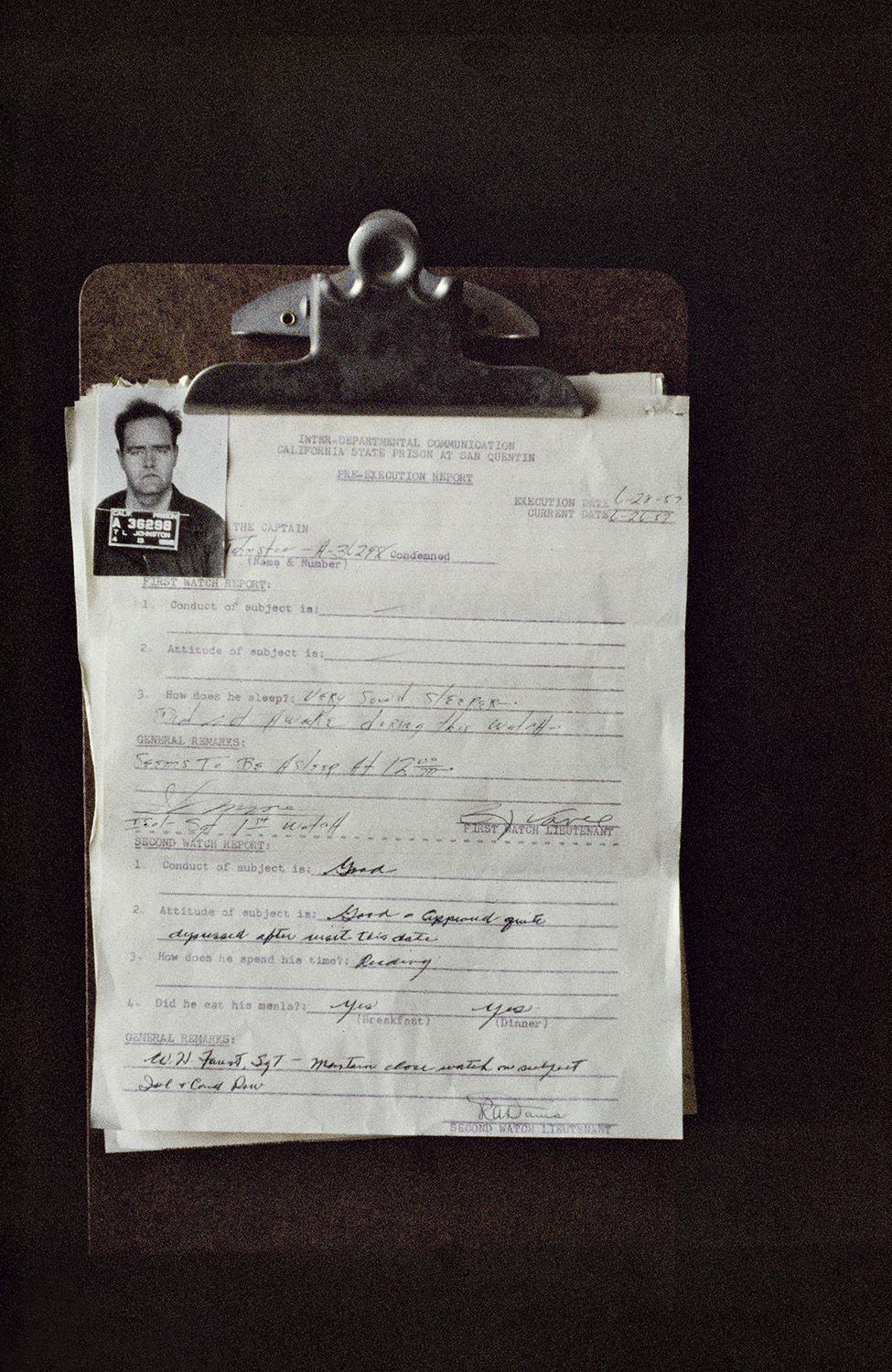
“Sensibility” is based on personal impressions of pleasure or pain. The sensibility of Parks photographs is a refined sensitivity based on experience – his experience of the discrimination of human beings toward each other. These hard-wired responses toward such a situation will vary from person to person.

These photographs were his hard-wired response. This was his feeling towards subject matter and that is why these insightful photographs still matter to us today.

Dr Marcus Bunyan


Many thankx to the Jenkins Johnson Gallery for allowing me to publish the photographs in the posting. Please click on the photographs for a larger version of the image.


Gordon Parks is the most important black photographer in the history of photojournalism. Long after the events that he photographed have been forgotten, his images will remain with us, testaments to the genius of his art, transcending time, place and subject matter.


Dr Henry Louis Gates


Gordon Parks (American, 1912-2006) 'At Segregated Drinking Fountain, Mobile, Alabama' 1956


Gordon Parks (American, 1912-2006)
At Segregated Drinking Fountain, Mobile, Alabama
1956
Edition 19 of 25
Pigment print
14 x 14 inches
Modern print
© The Gordon Parks Foundation


Gordon Parks (American, 1912-2006) 'Department Store, Mobile, Alabama' 1956


Gordon Parks (American, 1912-2006)
Department Store, Mobile, Alabama
1956
Edition 20 of 25
Pigment print
14 x 14 inches
Modern print
© The Gordon Parks Foundation


Gordon Parks (American, 1912-2006) 'Mother and Children, Mobile, Alabama' 1956


Gordon Parks (American, 1912-2006)
Mother and Children, Mobile, Alabama
1956
Edition 17 of 25
Pigment print
13 7/8 x 14 inches
Modern print
© The Gordon Parks Foundation


Gordon Parks (American, 1912-2006) 'Mr. and Mrs. Albert Thornton, Mobile, Alabama' 1956


Gordon Parks (American, 1912-2006)
Mr. and Mrs. Albert Thornton, Mobile, Alabama
1956
Edition 17 of 25
Pigment print
14 1/8 x 14 inches
Modern print
© The Gordon Parks Foundation


In celebration of the 100th birthday of Gordon Parks, one of the most influential African American photographers of the 20th century, Jenkins Johnson Gallery in collaboration with The Gordon Parks Foundation presents Gordon Parks: Centennial, on view from February 21 through April 27, 2013. Gordon Parks, an iconic photographer, writer, composer, and filmmaker, would have turned 100 on November 30, 2012. This will be the first solo exhibition for Parks on the West Coast in thirteen years. The exhibition will survey works spanning six decades of the artist’s career starting in 1940. The exhibition consists of more than seventy-five gelatin silver and pigment prints, including selections from Life magazine photo essays: Invisible Man, 1952; Segregation Story, 1956; The Black Panthers, 1970; and Flavio, 1960, about favelas in Brazil. Also included in the exhibition is his reinterpretation of American Gothic and his elegant depictions of artists like Alexander Calder, fashion models, and movie stars.

Noteworthy highlights include groundbreaking prints from the Invisible Man series which unfolds a visual narrative based on Ralph Ellison’s award winning novel. The images capture the essence of social isolation and the struggle of a black man who feels invisible to the outside world. Also on view will be a number of colour prints from Segregation Story, 1956, which are a part of a limited edition portfolio of twelve colour photographs with an essay by Maurice Berger. Newly released, these images were produced from transparencies found in early 2012, discovered in a storage box at The Gordon Parks Foundation. In the late 1960s Life magazine asked Gordon Parks to report on the Oakland, California-based Black Panther Party, including Eldridge Cleaver. Parks’ striking image of Eldridge Cleaver and His Wife, Kathleen, Algiers, Algeria, 1970 depicts Cleaver recovering from gun wounds after being ambushed by the Oakland police as well as an insert of Huey P. Newton, co-founder of the party along with Bobby Seale.

About Gordon Parks

Parks was born into poverty in Fort Scott, Kansas in 1912, the youngest of fifteen children. He worked several odd jobs until he bought a camera at a Pawn Shop in 1937 in Seattle and was hired to photograph fashion at a department store in Minneapolis. In 1942 Parks received a photography fellowship from the Farm Security Administration, succeeding Dorothea Lange among others. While at the F.S.A., Parks created American Gothic, now known as one of his signature images, in which he shows Ella Watson, a cleaning women, holding a mop and broom, standing in front of an American flag. The image makes a poignant commentary on social injustice whilst referencing Grant Wood’s celebrated painting American Gothic which it is also named after. He became a freelance photographer working for Vogue as well as publishing two books, Flash Photography (1947) and Camera Portraits: Techniques and Principles of Documentary Portraiture (1948). In 1948 Parks was hired by Life magazine to do a photographic essay on Harlem gang leader, Red Jackson, which led to a permanent position at Life, where he worked for twenty years. Parks developed his skills as a composer and author and in 1969 he became the first African American to direct a major motion picture, The Learning Tree based on his best selling novel and in 1971 he directed Shaft. A true Renaissance man, Gordon Parks passed away in 2006.

As Philip Brookman, curator of photography and media arts at the Corcoran, states, “Gordon Parks’ art has now changed the way we perceive and remember chronic issues, such as race, poverty, and crime, just as it has influenced our understanding of beauty: of nature, landscape, childhood, fashion, and memory.”

Press release from the Jenkins Johnson Gallery website


Gordon Parks (American, 1912-2006) 'Mary Machado, Mother of Isabell Lopez, and Family, Gloucester, Massachusetts' 1943


Gordon Parks (American, 1912-2006)
Mary Machado, Mother of Isabell Lopez, and Family, Gloucester, Massachusetts
1943
Gelatin silver print
© The Gordon Parks Foundation


Gordon Parks (American, 1912-2006) 'Drugstore Cowboys, Turner Valley, Canada' 1945


Gordon Parks (American, 1912-2006)
Drugstore Cowboys, Turner Valley, Canada
1945
Gelatin silver print
9 7/8 x 12 7/8 inches
Modern print
© The Gordon Parks Foundation


Gordon Parks (American, 1912-2006) 'Untitled' 1950


Gordon Parks (American, 1912-2006)
Untitled
1950
Gelatin silver print
© The Gordon Parks Foundation


Gordon Parks (American, 1912-2006) 'Tenement Dwellers, Chicago, Illinois' 1950


Gordon Parks (American, 1912-2006)
Tenement Dwellers, Chicago, Illinois
1950
Gelatin silver print
7 x 9 inches
Modern print
© The Gordon Parks Foundation


Gordon Parks (American, 1912-2006) 'Mysticism, Harlem, New York' 1952


Gordon Parks (American, 1912-2006)
Mysticism, Harlem, New York
1952
Gelatin silver print
10 5/8 x 10 3/8 inches
Vintage print
© The Gordon Parks Foundation


Gordon Parks (American, 1912-2006) 'Harlem Neighborhood, Harlem, New York' 1952


Gordon Parks (American, 1912-2006)
Harlem Neighborhood, Harlem, New York
1952
Gelatin silver print
10 3/8 x 13 1/2 inches
Vintage print
© The Gordon Parks Foundation


Gordon Parks (American, 1912-2006) 'The Invisible Man, Harlem, New York' 1952


Gordon Parks (American, 1912-2006)
The Invisible Man, Harlem, New York
1952
Edition 1 of 10
Pigment print
14 1/8 x 14 inches
Modern print
© The Gordon Parks Foundation


Gordon Parks (American, 1912-2006) 'Muhammad Ali' 1966


Gordon Parks (American, 1912-2006)
Muhammad Ali
1966
Gelatin silver print
© The Gordon Parks Foundation


Gordon Parks (American, 1912-2006) 'Ellen's Feet, Harlem, New York' 1967


Gordon Parks (American, 1912-2006)
Ellen’s Feet, Harlem, New York
1967
Gelatin silver print
6 1/4 x 9 3/8 inches
Modern print
© The Gordon Parks Foundation


Gordon Parks (American, 1912-2006) 'Norman Fontenelle, Sr., Harlem, New York' 1967


Gordon Parks (American, 1912-2006)
Norman Fontenelle, Sr., Harlem, New York
1967
Gelatin silver print
13 x 9 1/8 inches
Modern print
© The Gordon Parks Foundation


Gordon Parks (American, 1912-2006) 'Bessie and Little Richard the Morning After She Scalded Her Husband, Harlem, New York, 1968' 1968


Gordon Parks (American, 1912-2006)
Bessie and Little Richard the Morning After She Scalded Her Husband, Harlem, New York, 1968
1968
Gelatin silver print
© The Gordon Parks Foundation


Jenkins Johnson Gallery
1275 Minnesota Street, #200
San Francisco, CA 94107
Phone: 415.677.0770

Opening hours:
Tuesday – Saturday 11am – 5pm

Jenkins Johnson Gallery website

LIKE ART BLART ON FACEBOOK

Back to top