Exhibition: ‘Joyce Evans’ at the National Library of Australia, Canberra

Exhibition dates: 4th April – 5th November 2023

Curators: Dr Grace Blakeley-Carroll and Shelly McGuire
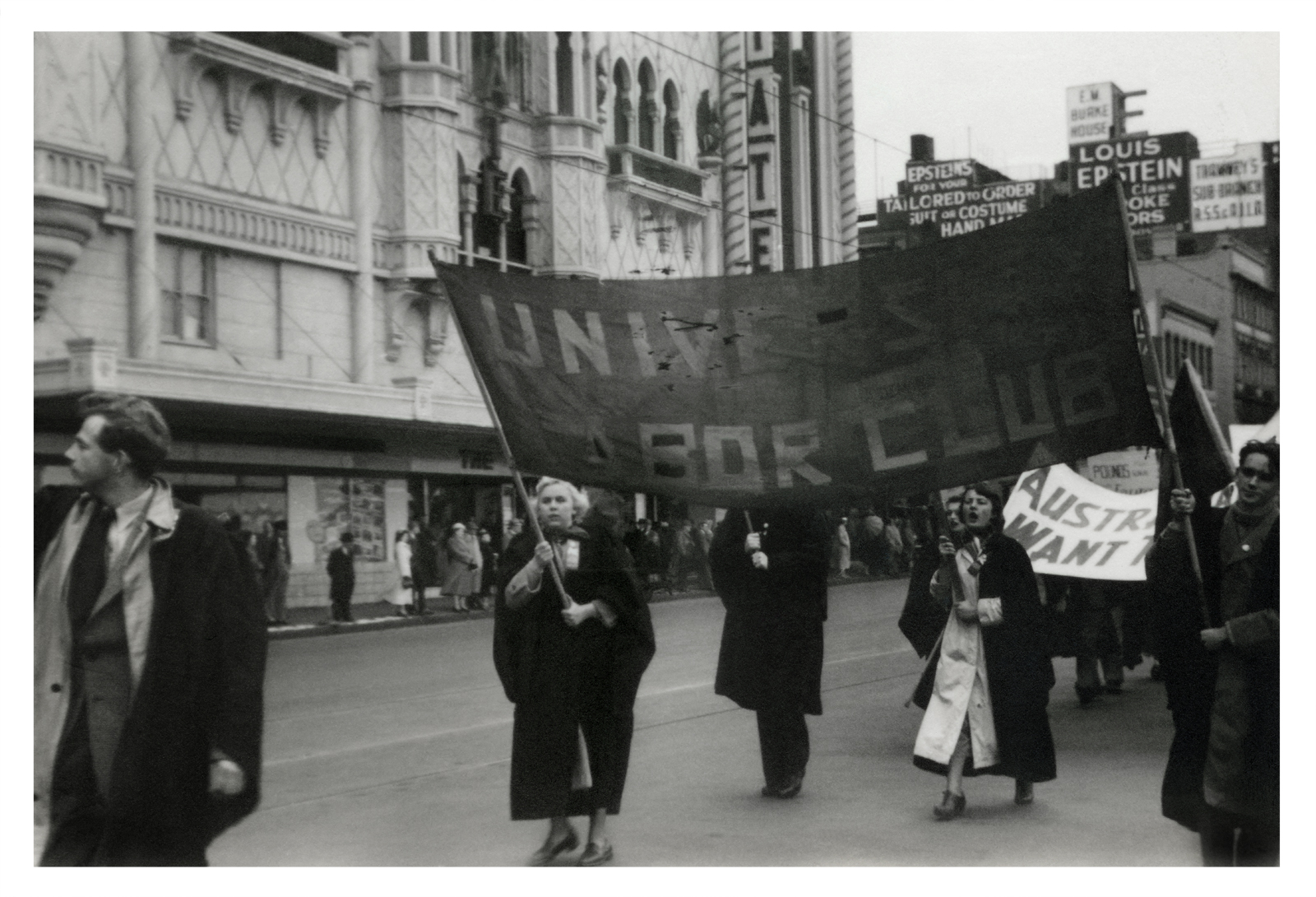
 

Joyce Evans (Australian, 1929-2019) 'May Day University Labour Club banner, May Day March, Flinders Street, Melbourne' 1951 from the exhibition 'Joyce Evans' at the National Library of Australia, April - Nov 2023


Joyce Evans (Australian, 1929-2019)
Students Protesting during a May Day March on Flinders Street, Melbourne
1951
Photograph
Joyce Evans Archive
National Library of Australia


At far-left, John Clendenin, philosopher and president of University of Melbourne SRC. Banner-bearer Jill Warwick, later a TV Producer, vice-president UniMelb SRC. The Forum Theatre on Flinders Street in the background.


That bohemian force of nature who was Australian artist, curator, teacher, writer, philanthropist, poet, gallery owner and collector Joyce Evans OAM (1929-2019) would have been the first to admit that she was not the most naturally gifted photographer the world has ever known. But Joyce worked assiduously at her craft for over 70 years and became a very fine image maker, picturing her beloved Australia through landscape, documentary and portrait photographs for many a decade.

Her early and historically important photographs of the late 1940s and early 1950s (of which three are in this posting) represent the post Second World War flowering of an Australian civil right movement. Further images from this period can be seen in the book We Had Such High Hopes: Student Activism and the Peace Movement 1949-1952, A Photographic Memoir by Joyce Evans published by Australian Scholarly Publishing in 2019; and you can read my foreword to the book and see more images from it in the Art Blart posting “Nothing emerges from nothing” (2019).

Joyce had an innate knack of putting people at their ease when having their photograph taken. Never without a camera close at hand, she would approach complete strangers anywhere and ask them whether she could take their portrait… and she was never refused. She had the most gracious way about her, as though she was speaking in communion with her subject: whether that be the contemplation of the Australian landscape, Indigenous Australians, or up close and personal portraits of the ordinary or famous. As author Professor Sasha Grishin observes in his book Joyce Evans (National Library of Australia, 2022) she “was an artist who possessed a definite photographic personality… [who] pursued an agenda that shone a light on racism, social inequality and environmental degradation.”

Joyce worked hard at her craft and it rewarded her soul in so many unconditional ways. Her energy for life and photography was full of unbridled enthusiasm. It is therefore a blessing that this passion has now found a permanent home: her complete photographic archive, the Joyce Evans Archive, is now housed at the National Library of Australia in Canberra, an institution for which she did much work over the years. And it is wonderful that they have staged this small exhibition of 27 of her photographs. My only quibble would be the lack of photographs of Indigenous Australians in the exhibition. Other than the portrait of Aboriginal activist Faith Bandler (1951, below) there are no other photographs of her immense engagement with Aboriginal communities and peoples in this exhibition – which is a great shame. Joyce was very proud of her photography of and relationship with remote Aboriginal communities and their people and it would have been nice to see that energy reflected in the photographs in this exhibition.

Dr Marcus Bunyan

Joyce Evans was a cherished friend of Marcus Bunyan.


Many thankx to the National Library of Australia for allowing me to publish the photographs in the posting. Please click on the photographs for a larger version of the image.


The career of Joyce Evans OAM (1929-2019) spans more than six decades of landscape, documentary, and portrait photography. Her work is preserved through the Library’s Joyce Evans Archive, one of our largest collections of images by a contemporary Australian photographer, and contains images which capture essential aspects of Australian life.


“We believed we had an obligation, neither social nor political, to make a difference. We were brought up as children to believe that we had an obligation to make that difference.

If we can find out what we are… that is the artist. This goes to the core element of your being, and the core element of your enquiry remains the same.

If the core part of your life is the search for the truth then that becomes a core part of your identity for the rest of your life. It becomes embedded in your soul.”


Joyce Evans
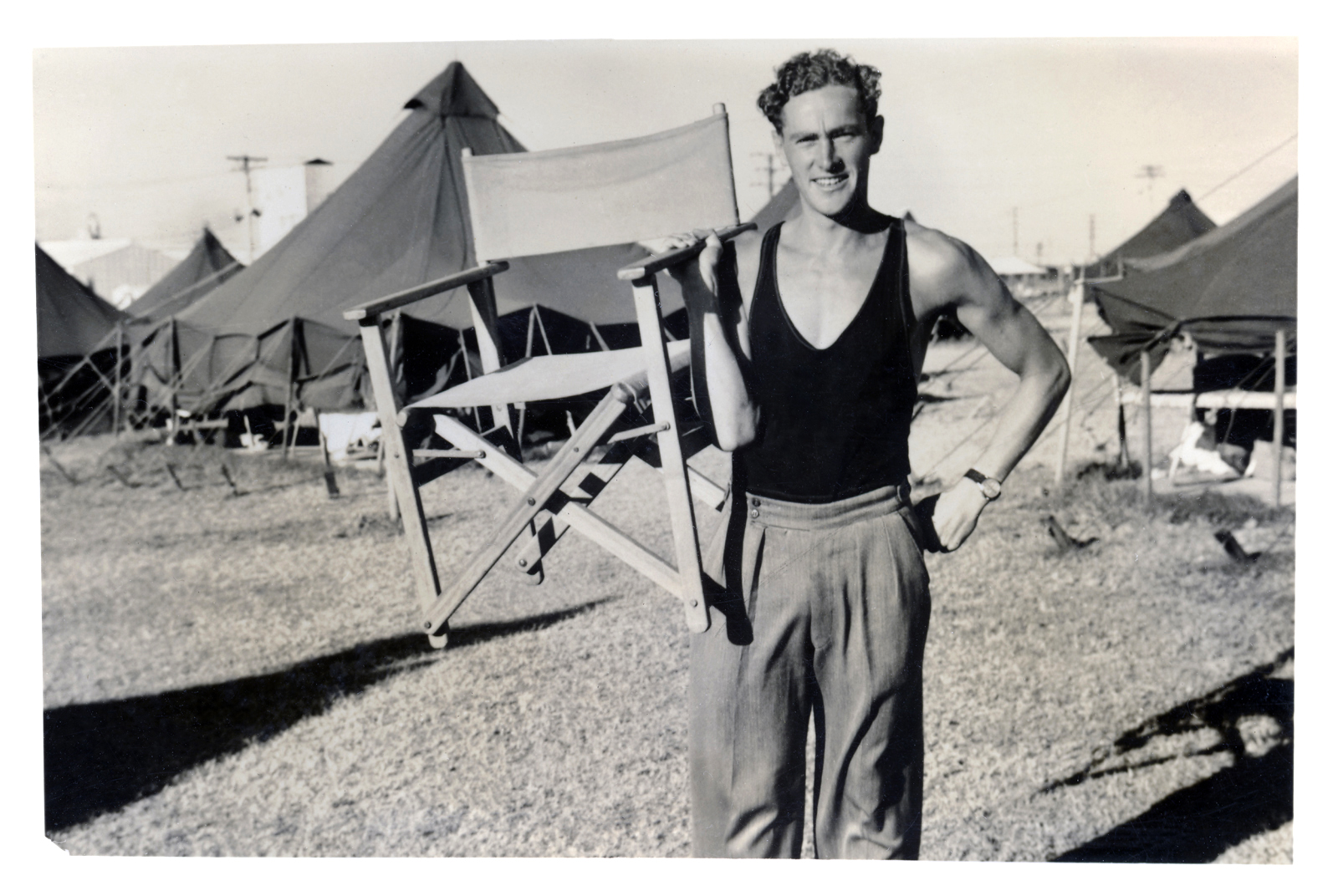


Joyce Evans (Australian, 1929-2019) 'Richard 'Dicky' Woolcott, delegate to conference, at NUAUS encampment' 1951 from the exhibition 'Joyce Evans' at the National Library of Australia, April - Nov 2023


Joyce Evans (Australian, 1929-2019)
Richard Woolcott AC at NUAUS Conference, Largs Bay, S.A.
1951, printed by David Chisolm and Joyce Evans, 2013
Photograph
Joyce Evans Archive
National Library of Australia


Richard Arthur Woolcott AC (11 June 1927 – 2 February 2023) was an Australian public servant, diplomat, author, and commentator.


The [photographic] form that Joyce found so early in her life was the music and poetry of humanist photographs, images that are subjective, lyrical, and reveal a state-of-mind. Here is passion and belief in the life of human beings, and the exquisiteness, beauty (and death) of the lived moment. You could label them “social documentary photography” if you were so inclined, but labels don’t capture the frisson of the creative process nor the joyous outcome of Joyce’s portraits. It’s as though Joyce, in a mixture of consciousness and unconsciousness, is making love to the world through her images: neither rational nor cerebral they evoke sensations and feelings, of being here and there, in that past space and time, now, all these years later. These were epic days of change and transformation – of nations, of continents, of cultures and of people. There was death and destruction but there was also such happiness, hope and joy.

Further, what her photographs also depict is the rise of an informed Australian social consciousness after the Second World War. Her important historical and personal photographs shine a light on forgotten people, times, places and actions, such as the broad based youth movements opposition to the atomic bomb, associations and friendships which eventually form the basis for the progressive social and political protest movements of the 1960s. The voices raised later in support of feminism, gay liberation, free love and Vietnam anti-war protests did not appear fully formed, for there was a history of activism… a slow build, a groundswell of public opinion that was the basis for such emerging actions. Nothing ever emerges from nothing.

Marcus Bunyan. “Nothing emerges from nothing,” foreword from the book We Had Such High Hopes: Student Activism and the Peace Movement 1949-1952, A Photographic Memoir by Joyce Evans. Melbourne: Australian Scholarly Publishing, 2019

Read the full text and see more early photographic images by Joyce Evans
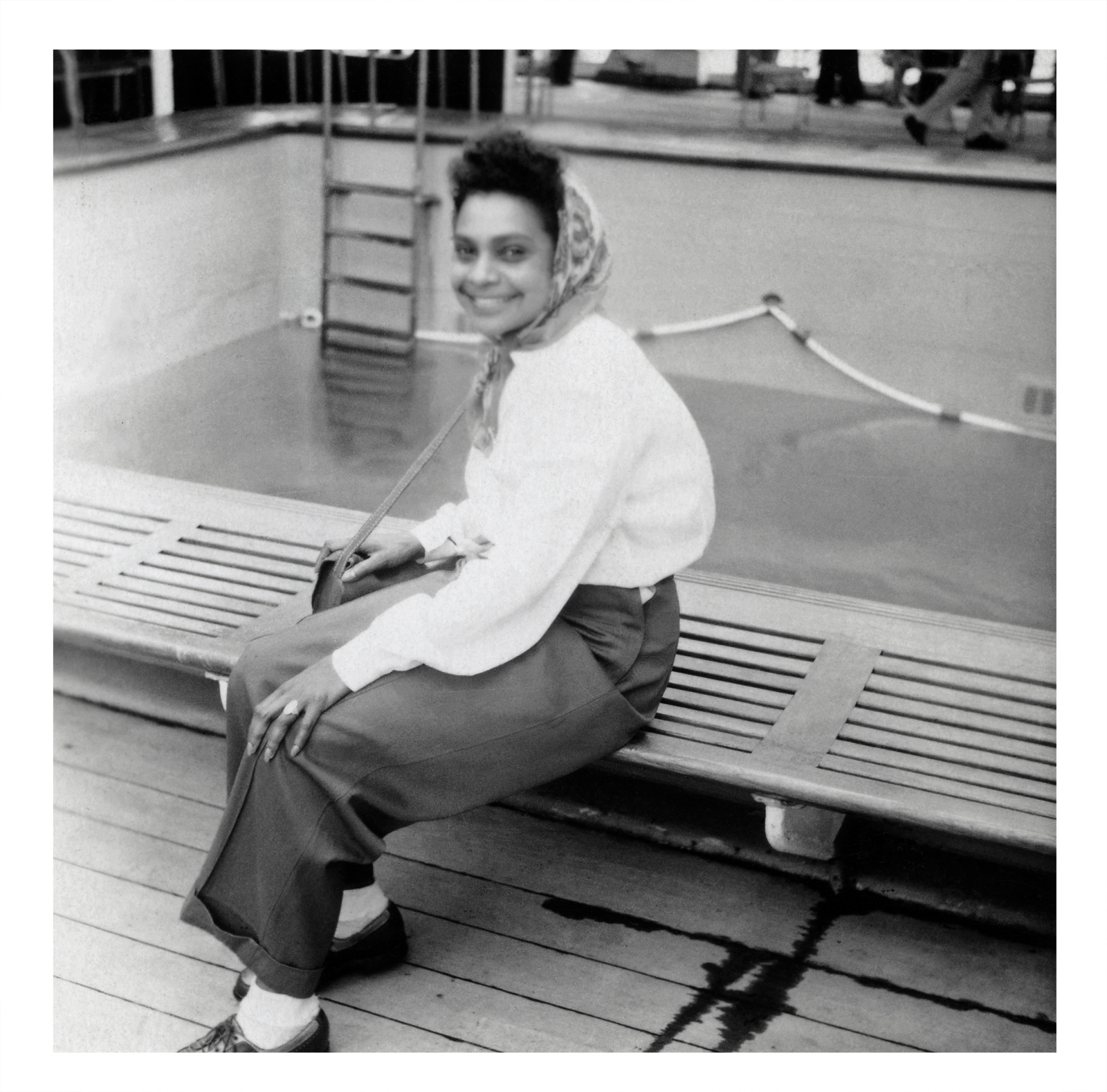
 

Joyce Evans (Australian, 1929-2019) 'Faith Bandler' 1951 from the exhibition 'Joyce Evans' at the National Library of Australia, April - Nov 2023


Joyce Evans (Australian, 1929-2019)
Faith Bandler
1951, printed 2012
Photograph
Joyce Evans Archive
National Library of Australia


Faith Bandler AC MBE (27 September 1918 – 13 February 2015; née Ida Lessing Faith Mussing) was an Australian civil rights activist of South Sea Islander and Scottish-Indian heritage. A campaigner for the rights of Indigenous Australians and South Sea Islanders, she was best known for her leadership in the campaign for the 1967 referendum on Aboriginal Australians.


‘I don’t know what sort of photographer I am, but I try to be an honest one.’ ~ Joyce Evans.

The career of Joyce Evans OAM (1929-2019) spans more than six decades of landscape, documentary, and portrait photography. Her work is preserved through the Library’s Joyce Evans Archive, one of our largest collections of images by a contemporary Australian photographer, and contains images which capture essential aspects of Australian life.

This collection-in-focus display contains highlights from the Library’s Joyce Evans Archive, and can be seen in our Treasures Gallery from Tuesday 4 April 2023. Entry to the Gallery is free and no bookings are required.

You can read more about Evans’ life in the NLA Publishing title, Joyce Evans by Sasha Grishin.

Text from the National Library of Australia website.
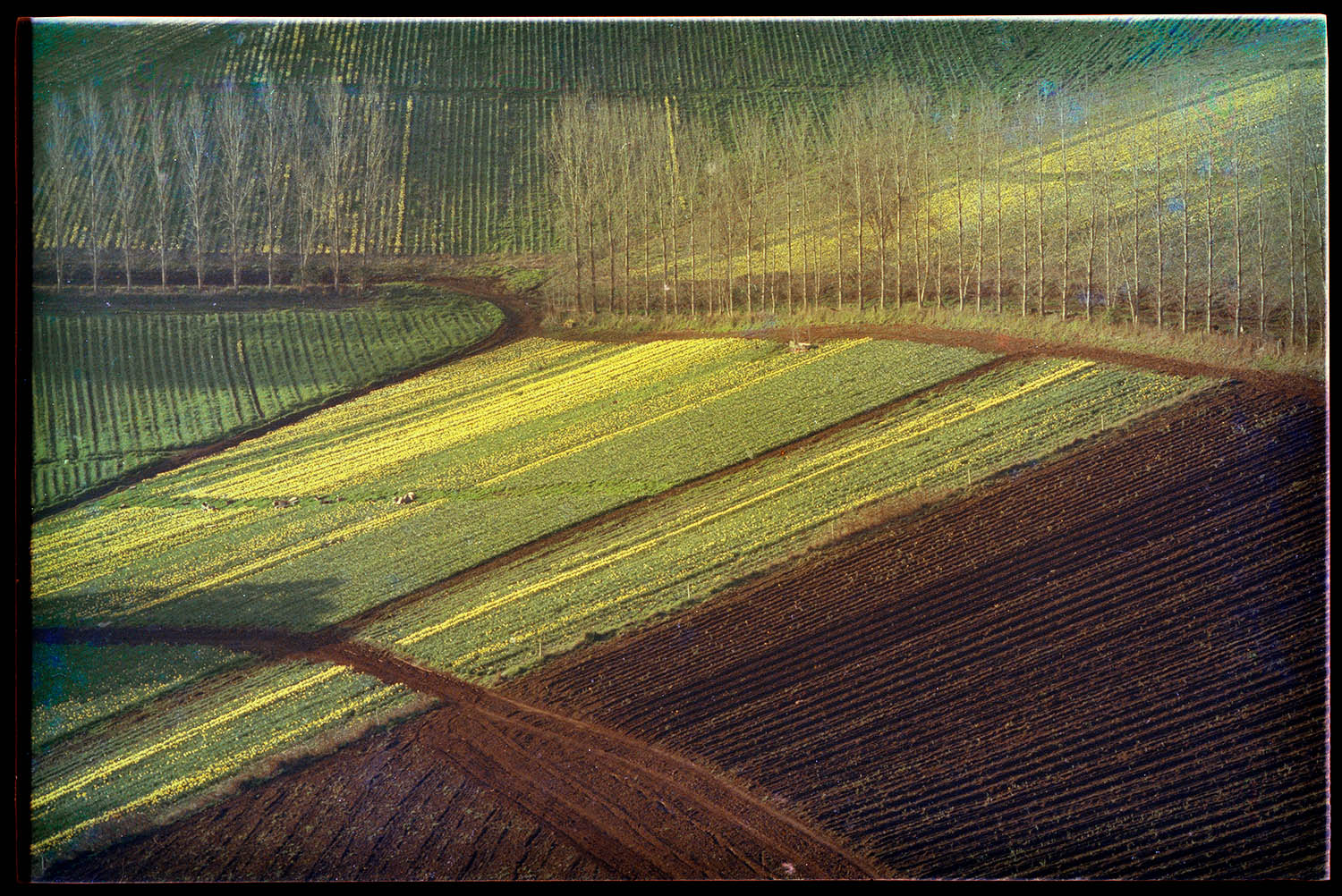
 

Joyce Evans (Australian, 1929-2019) 'Cotswold Farm, Menzies Creek, Victoria' 1982


Joyce Evans (Australian, 1929-2019)
Cotswold Farm, Menzies Creek, Victoria
1982
Colour photograph
Joyce Evans Archive
National Library of Australia
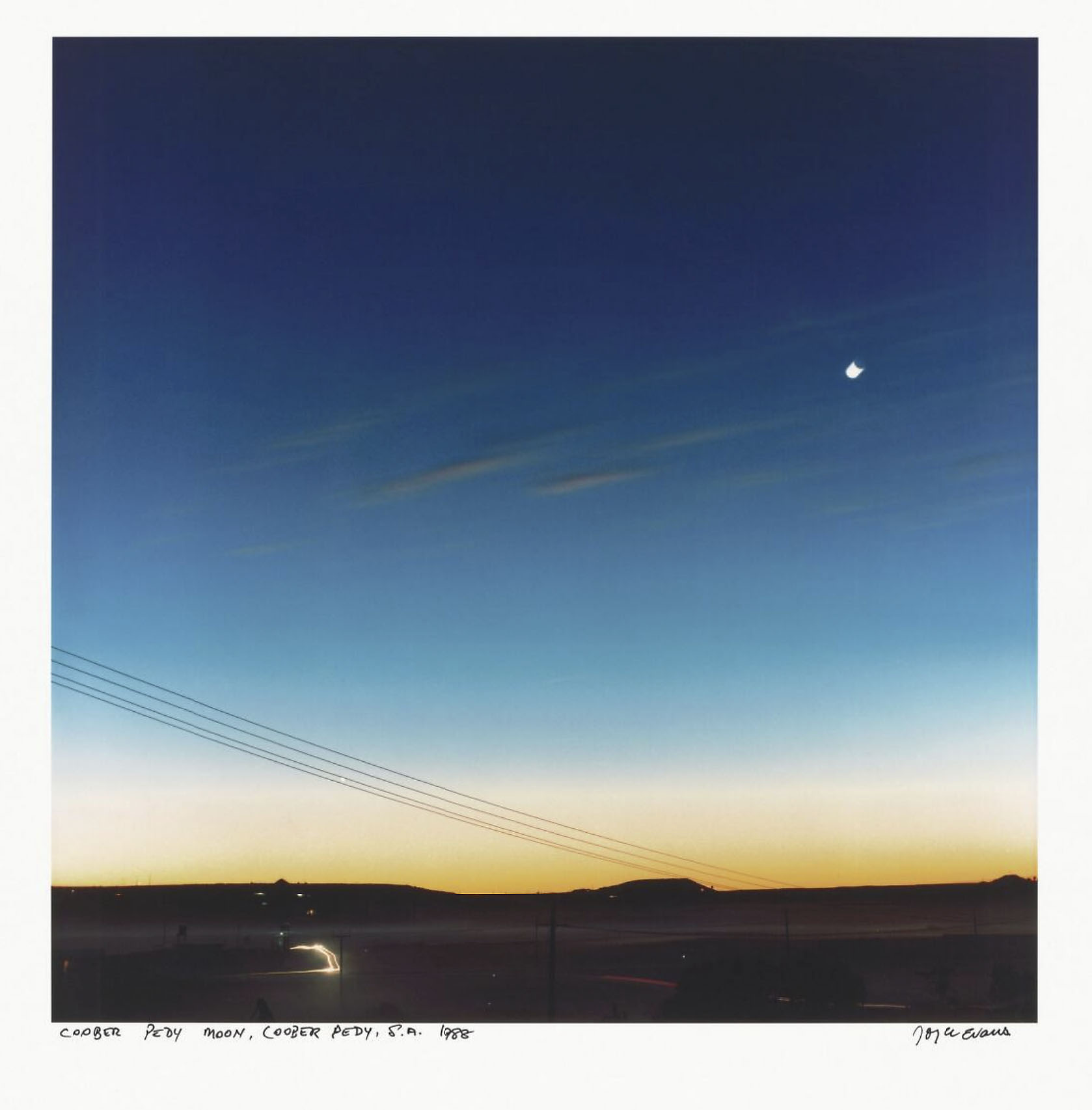
 

Joyce Evans (Australian, 1929-2019) 'Moon over Coober Pedy, South Australia' 1988


Joyce Evans (Australian, 1929-2019)
Moon over Coober Pedy, South Australia
1988, printed by David Chisolm and Joyce Evans, 2013
Colour photograph
35.2 x 35cm
Joyce Evans Archive
National Library of Australia
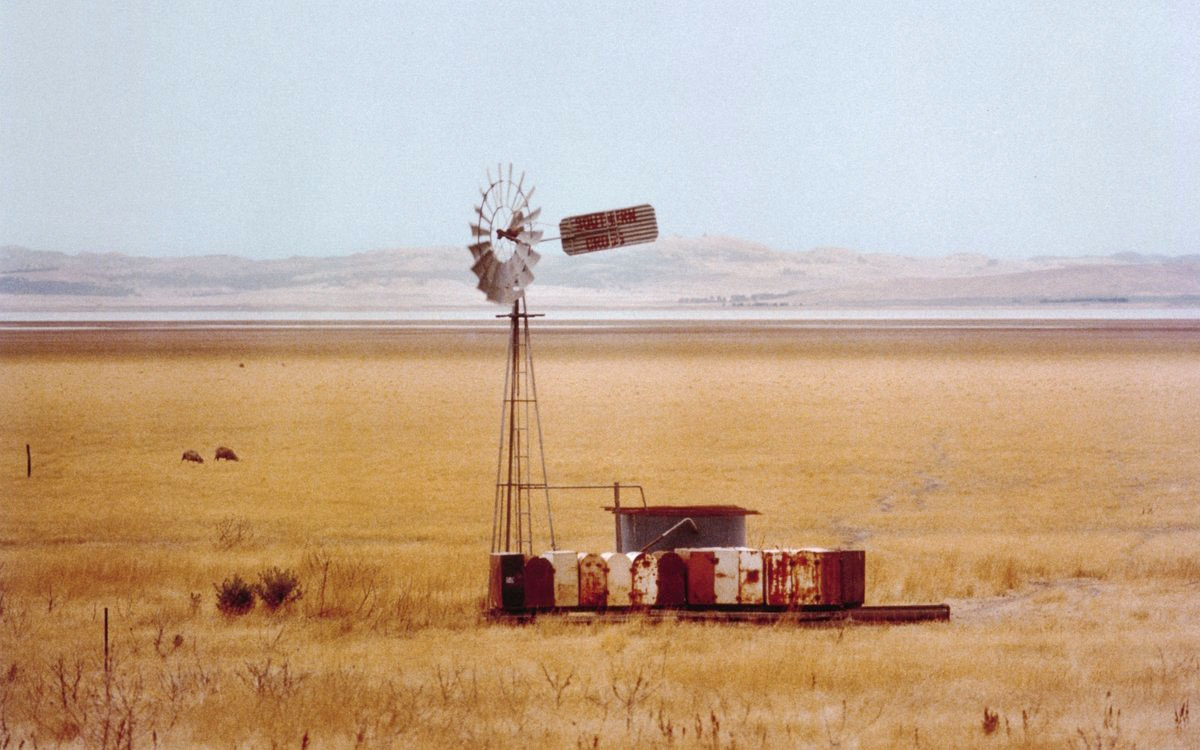
 

Joyce Evans (Australian, 1929-2019) 'Windmill on Weerewa/Lake George, New South Wales' c. 1983-2012


Joyce Evans (Australian, 1929-2019)
Windmill on Weerewa/Lake George, New South Wales
c. 1983-2012
Colour photograph
35.6 x 37.2cm
Joyce Evans Archive
National Library of Australia
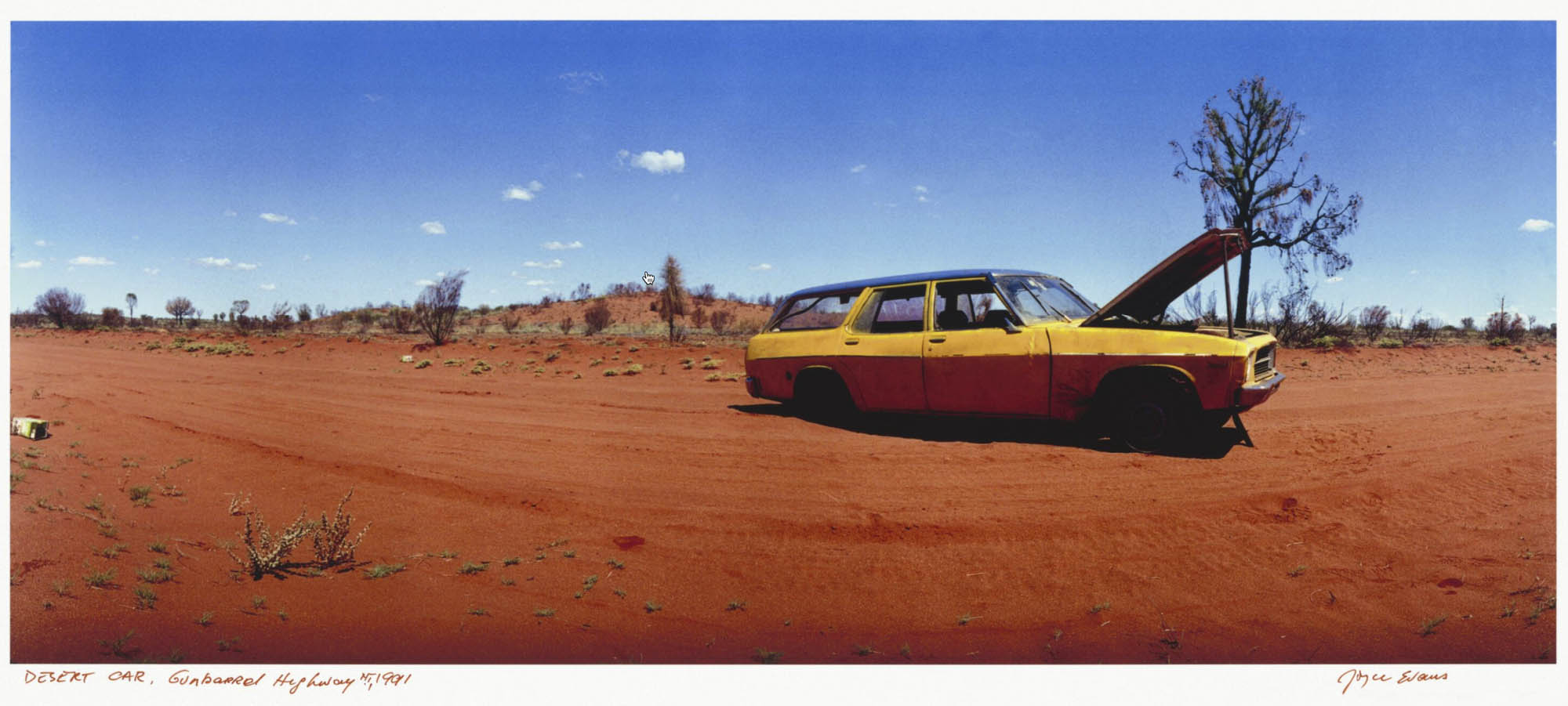
 

Joyce Evans (Australian, 1929-2019) 'Desert Car on Gunbarrel Highway, Northern Territory' 1991


Joyce Evans (Australian, 1929-2019)
Desert Car on Gunbarrel Highway, Northern Territory
1991
Colour photograph
21 x 50.6cm
Joyce Evans Archive
National Library of Australia
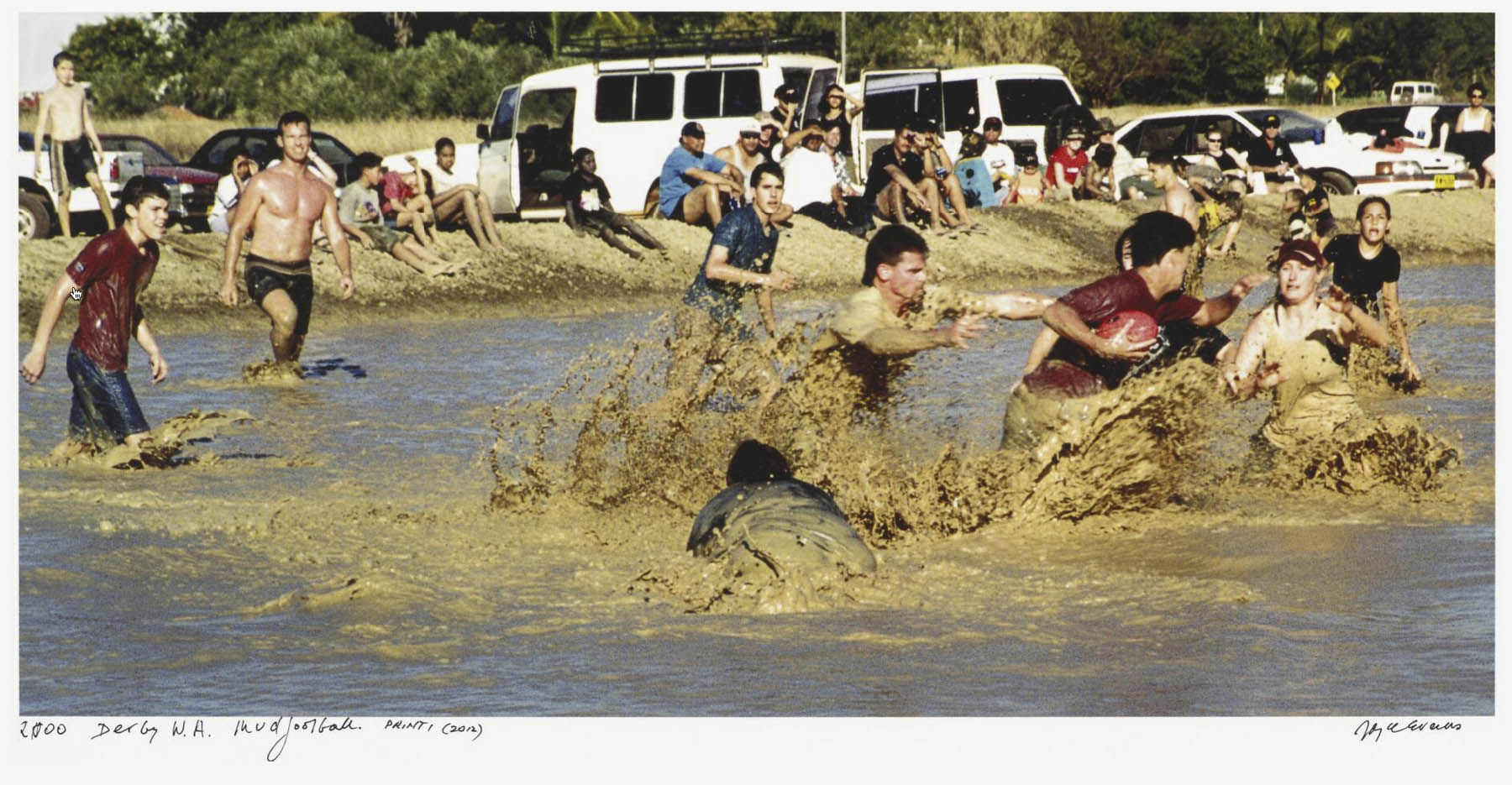
 

Joyce Evans (Australian, 1929-2019) 'Mud Football, Derby, Western Australia' 2000, printed 2012


Joyce Evans (Australian, 1929-2019)
Mud Football, Derby, Western Australia
2000, printed 2012
Inkjet on Hahnemuhle photo rag paper
34.3 x 41cm
Joyce Evans Archive
National Library of Australia
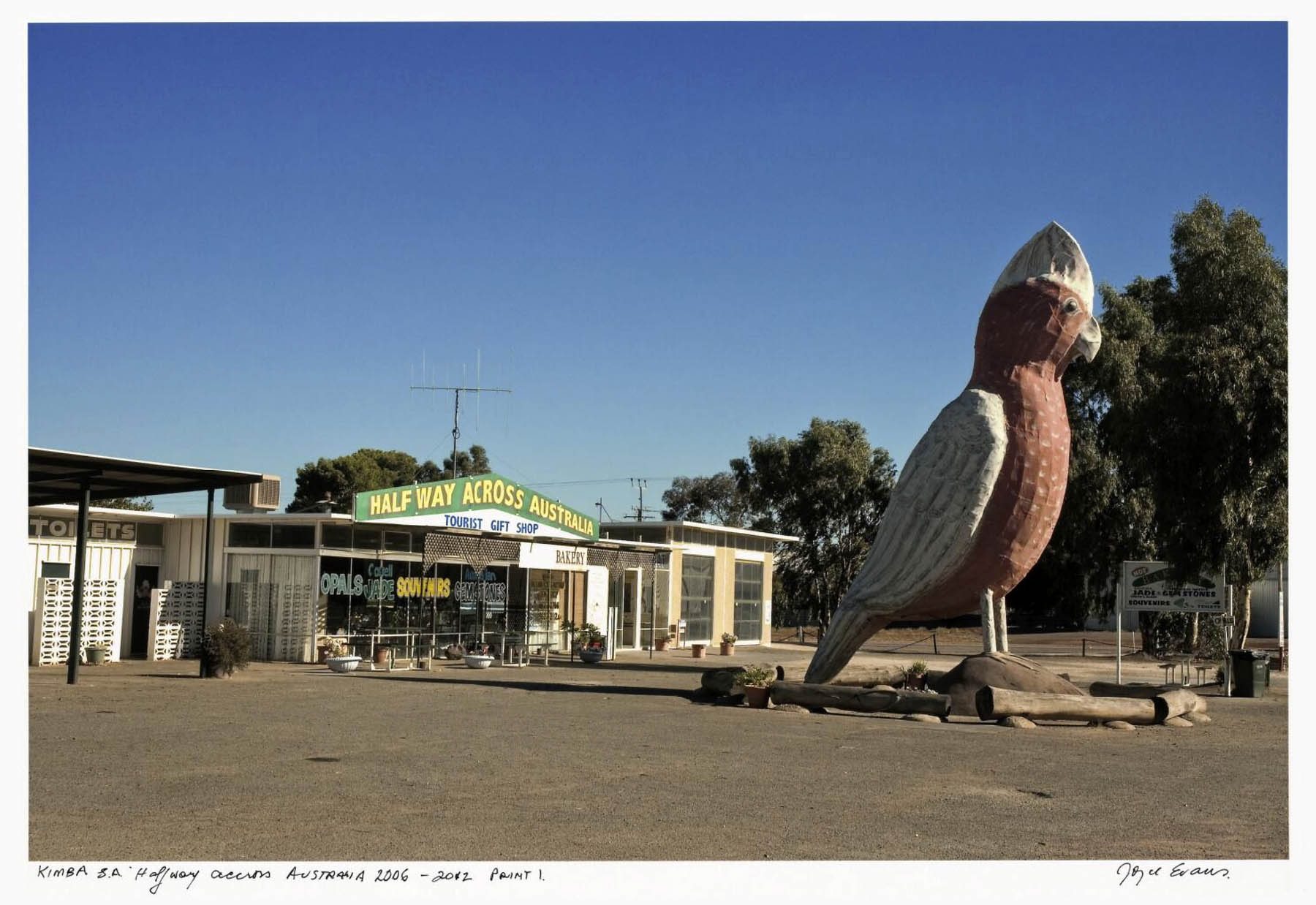
 

Joyce Evans (Australian, 1929-2019) 'The Big Galah and Tourist Gift Shop, Kimba, South Australia' c. 2006-2012


Joyce Evans (Australian, 1929-2019)
The Big Galah and Tourist Gift Shop, Kimba, South Australia
c. 2006-2012
Colour photograph
33.6 x 50.7cm
Joyce Evans Archive
National Library of Australia
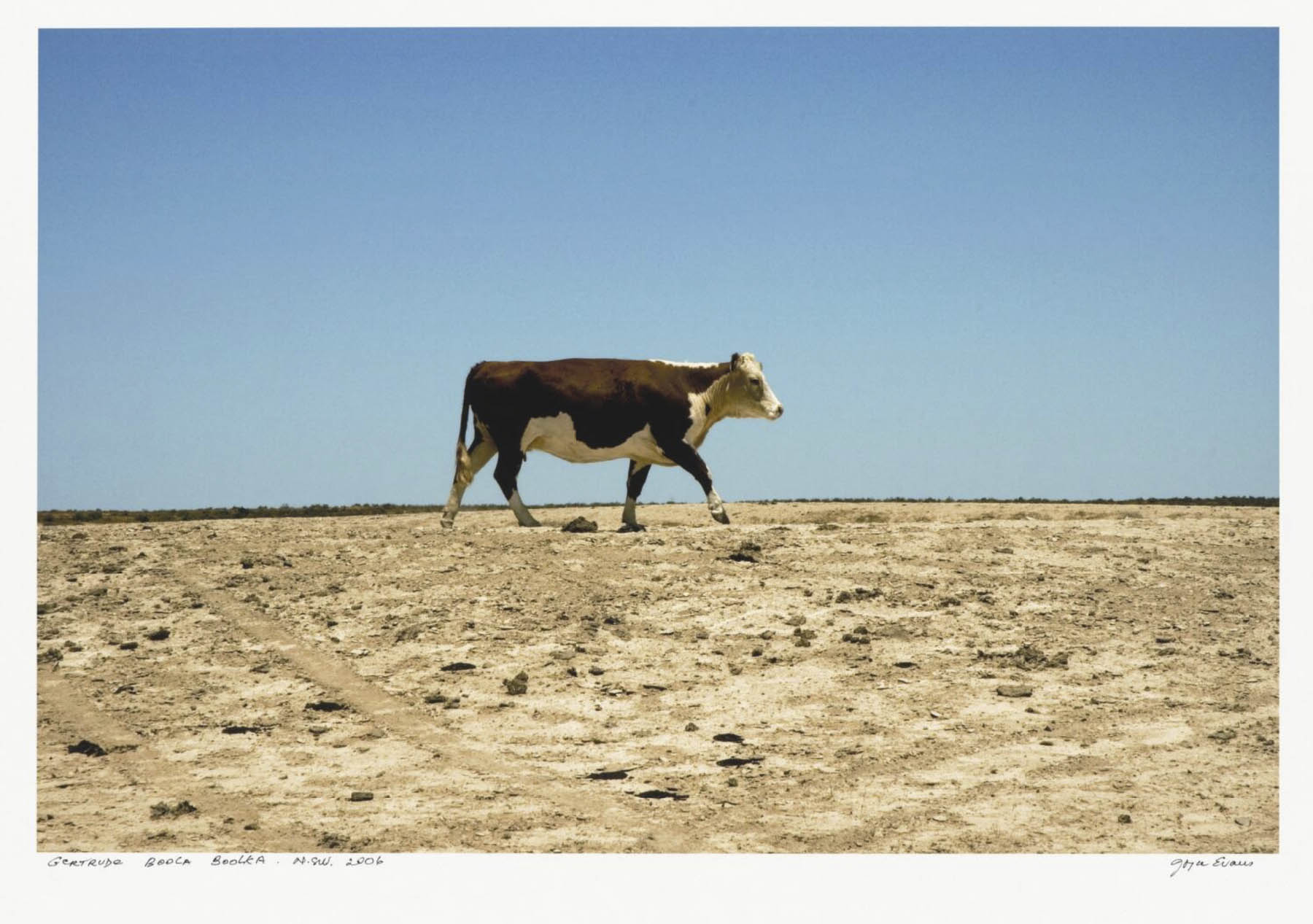
 

Joyce Evans (Australian, 1929-2019) 'Gertrude, Boola Boolka Station, New South Wales' 2006


Joyce Evans (Australian, 1929-2019)
Gertrude, Boola Boolka Station, New South Wales
2006
Colour photograph
33.9 x 50.7cm
Joyce Evans Archive
National Library of Australia
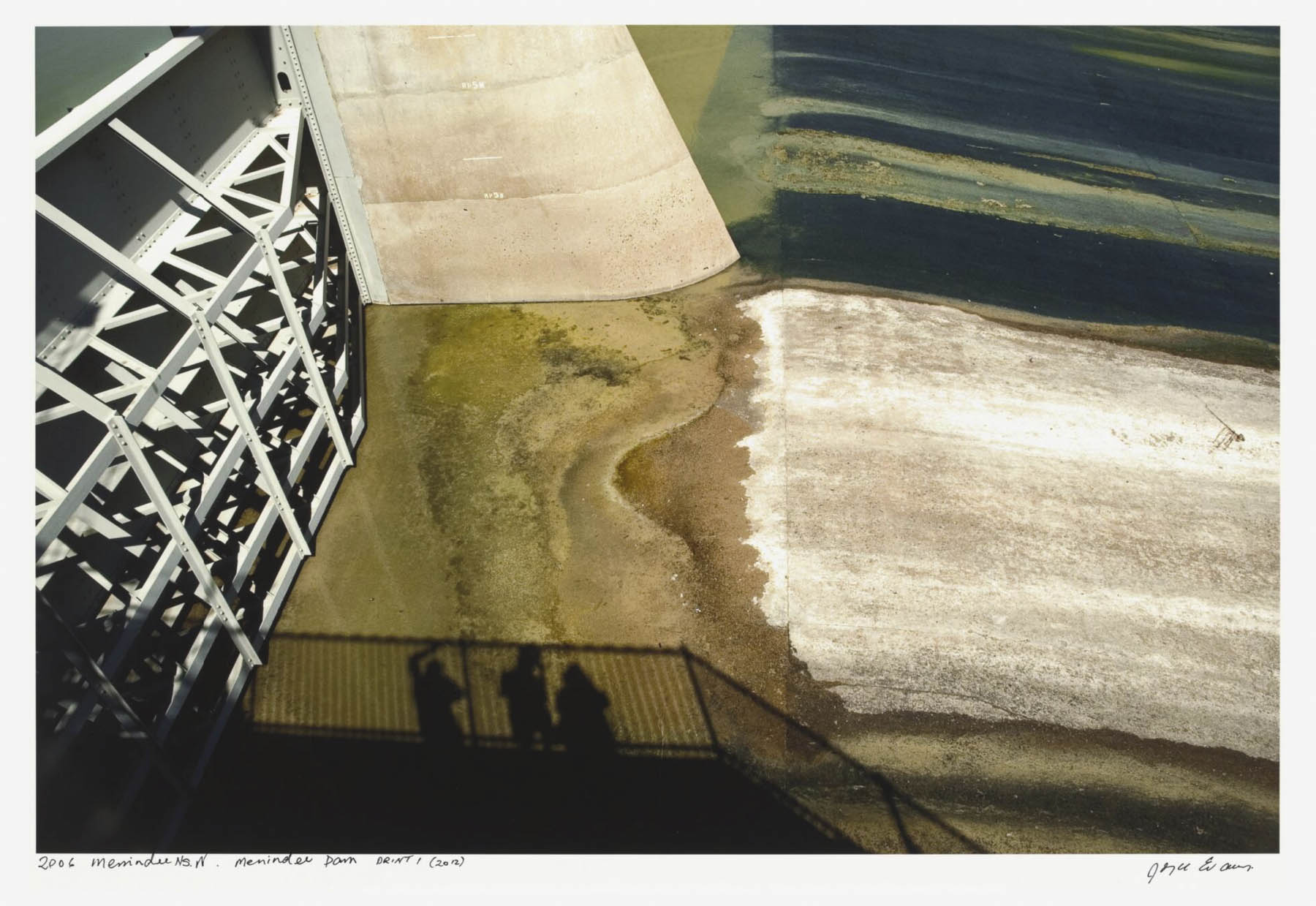
 

Joyce Evans (Australian, 1929-2019) 'Evidence of Severe Drought at Menindee Dam, Menindee, New South Wales' 2006


Joyce Evans (Australian, 1929-2019)
Evidence of Severe Drought at Menindee Dam, Menindee, New South Wales
2006
Colour photograph
Joyce Evans Archive
National Library of Australia
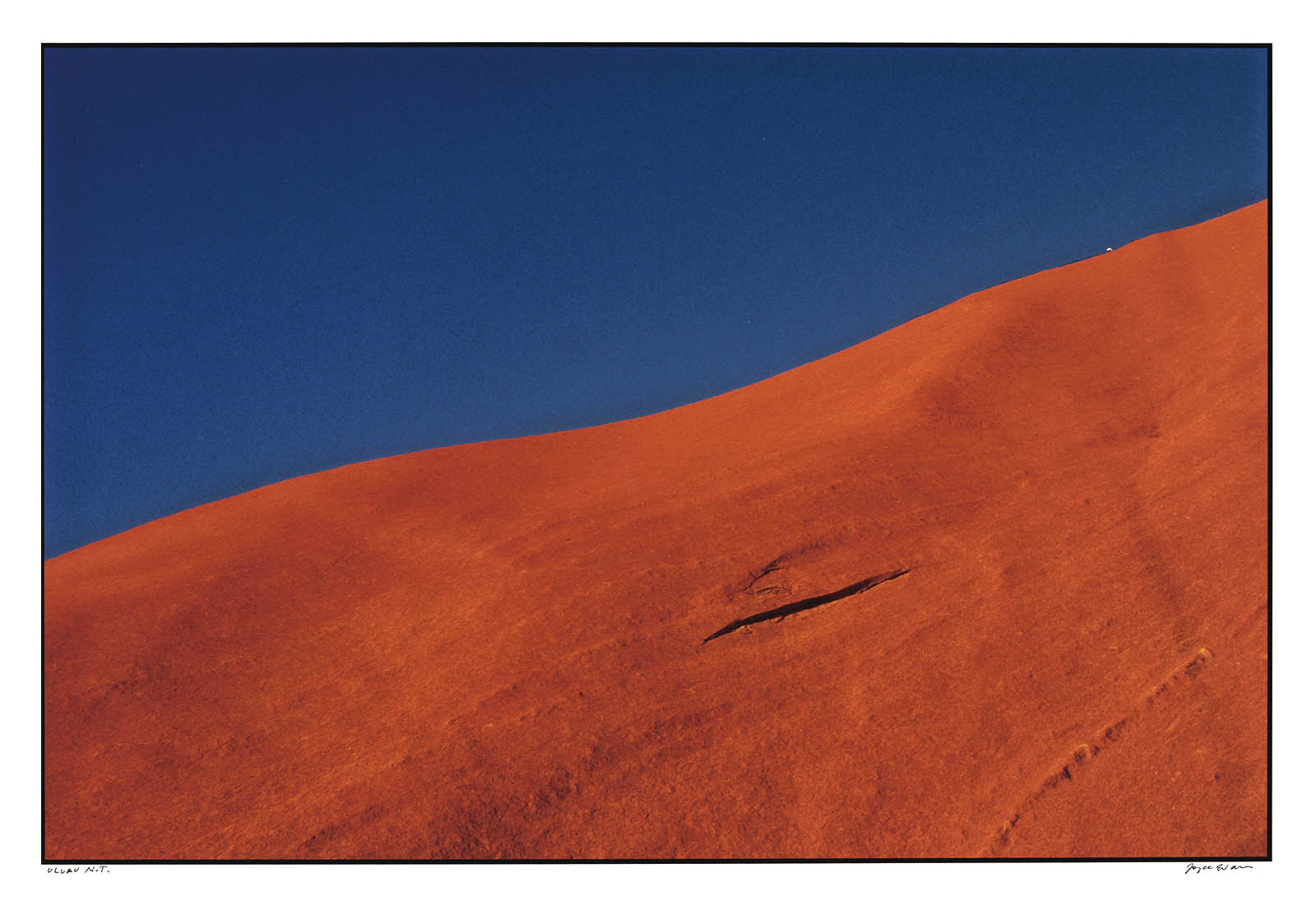
 

Joyce Evans (Australian, 1929-2019) 'Uluru, Northern Territory' 1987


Joyce Evans (Australian, 1929-2019)
Uluru, Northern Territory
1987
Colour photograph
Joyce Evans Archive
National Library of Australia


Joyce Evans was an unusual phenomenon in the Australian photography scene. Her conversion to photography did not occur until she was already in her 40s, while her engagement in professional photography had to wait until she was 50. She never developed a signature style, nor had she become a template photographer, but she possessed a definite photographic personality. …

As a documentary photographer, Evans considered herself a hunter and gatherer waiting to find the image. She remarked, “as an artist, you channel the energy of the place – the image comes to you as a gift.”

Her oeuvre is remarkable for its diversity and includes landscapes, roadkill, portraiture, social documentation, brothels and erotica – all brought together through a unifying sensibility, the Evans photographic moment. She was also an artist with a social conscience and pursued an agenda that shone a light on racism, social inequality and environmental degradation.

Many of Evans’s photographs demand slow viewing and open up gradually. Uluru, Northern Territory, 1987 (above), shows the rock as if carved by nature. In one sense, it is a very simple photograph in which two colours meet – the brilliant red ochre of the rock and the fathomless blue of the sky. It is also an immensely complex photograph with the mysterious slit – like the womb of the earth – in the centre of the composition and galvanising the viewer’s attention.

Gradually, as you focus into the image, there are signs of human presence at the top of the rock: two climbers on the chain pathway, contrasted with organic shapes created through centuries of erosion – a contrast between the temporal and the eternal. Despite the sense of stillness and silence, there is also considerable movement as the light plays over the textured surfaces.

The photograph is rare in that it defines a space but also distils the spiritual essence of the place and asserts an atmosphere of mystery and contemplative presence.

In 2016, when I was working on a monograph on Evans’s work, she noted: “As a photographer – I have a voice – it is an Australian voice, as I do not know intimately any other culture. It comes at a time when you say: ‘This is my country’. One of the sub-texts, when I pick up a camera, is that I always try to identify the stereotypical that is always defined by that which is on the edge.”

Sasha Grishin. “Joyce Evans, an unheralded icon of photography, the focus of the National Library of Australia,” on the Riotact website 8 October 2023 [Online] Cited 16/10/2023
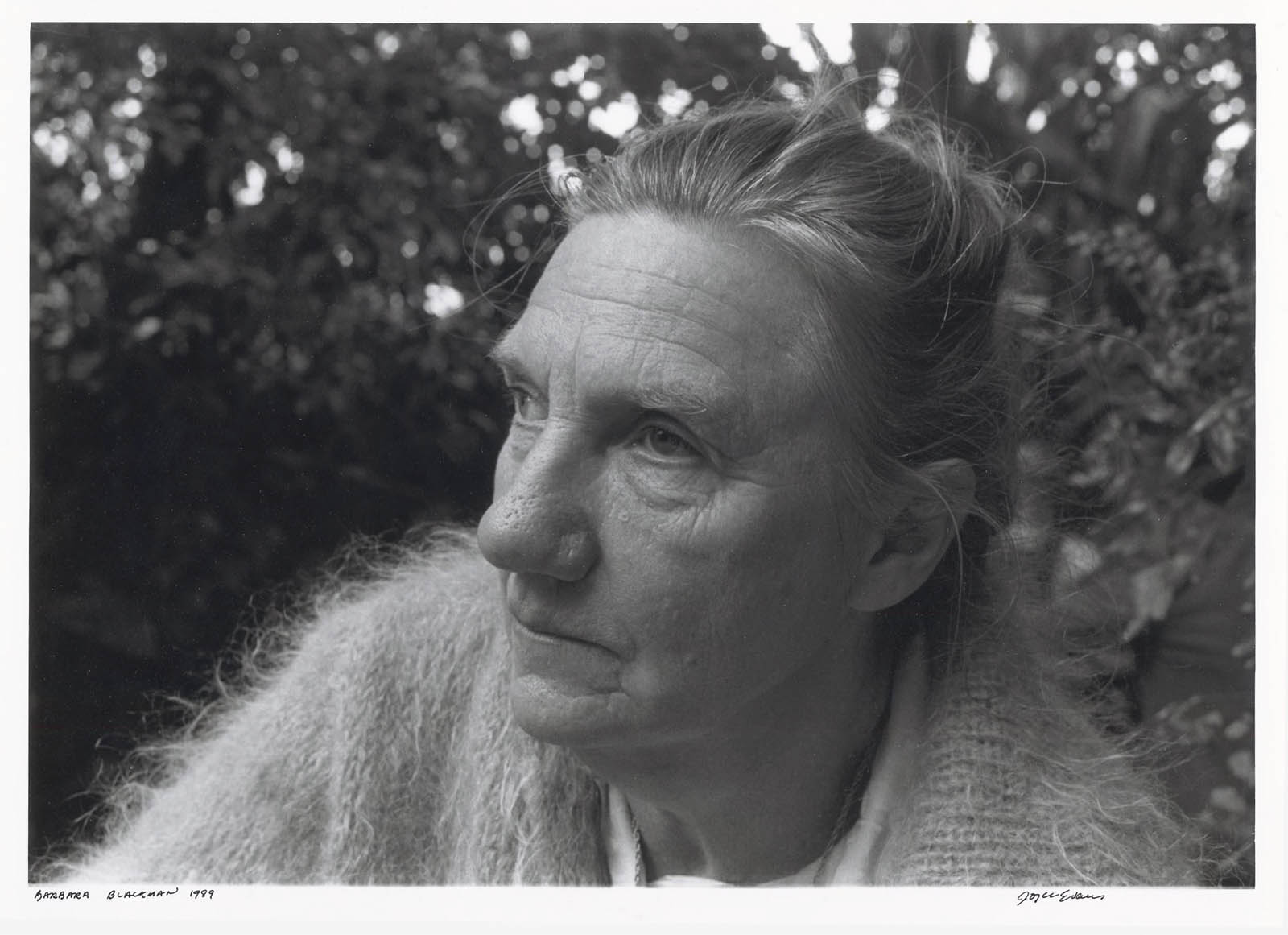
 

Joyce Evans (Australian, 1929-2019) 'Barbara Blackman' 1989


Joyce Evans (Australian, 1929-2019)
Barbara Blackman
1989
Photograph
30 x 40.7cm
Joyce Evans Archive
National Library of Australia


Barbara Blackman AO (née Patterson; born 22 December 1928) is an Australian writer, poet, librettist, broadcaster, model and patron of the arts. In 2004, she donated $1 million to a number of Australian music organisations, including Pro Musica, the Australian Chamber Orchestra, the Australian National University’s School of Music and the Stopera Chamber Opera Company. In 2006, she was awarded the Australian Contemporary Music Award for Patronage. Barbara Blackman was married for 27 years to renowned Australian artist Charles Blackman.
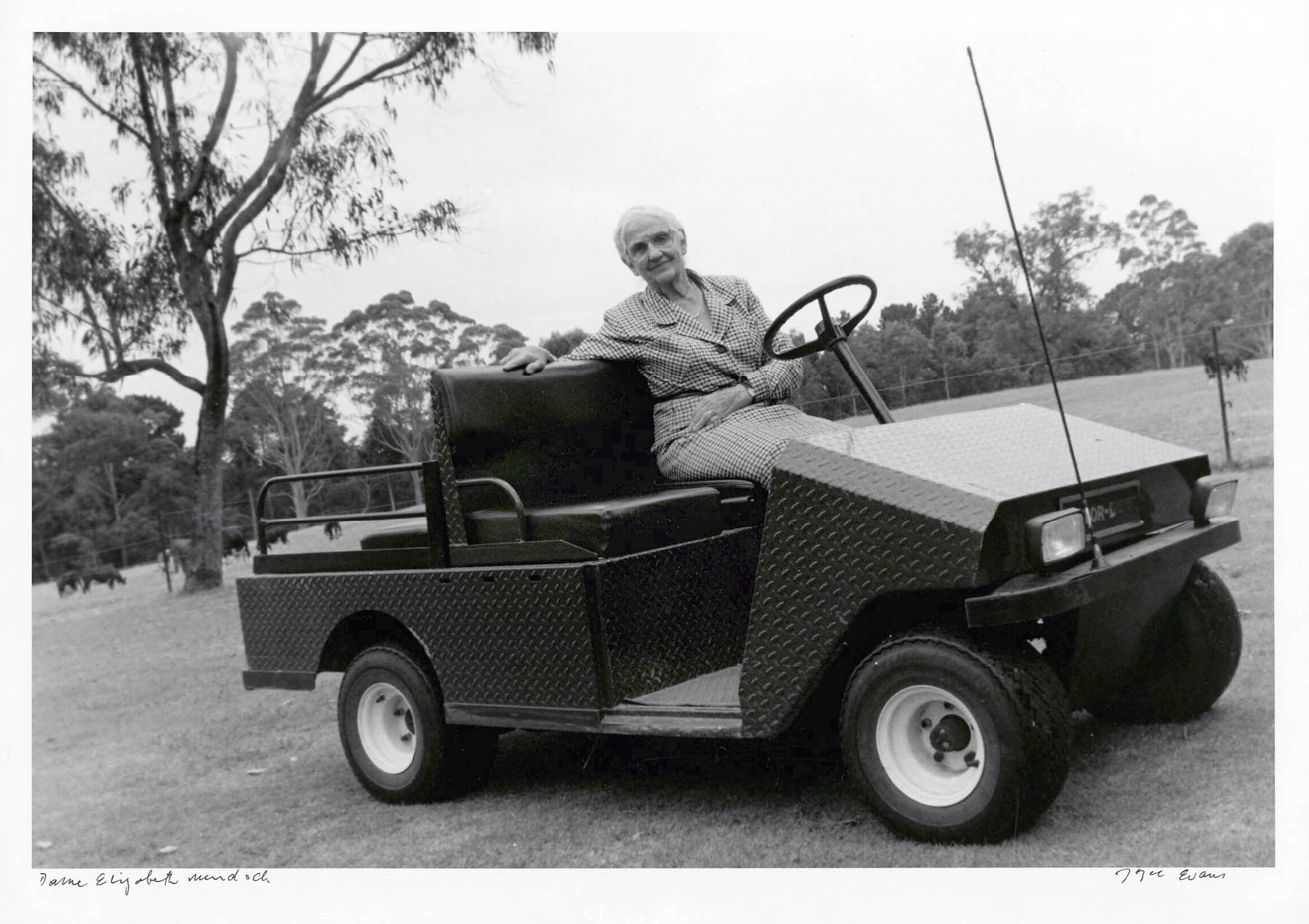
 

Joyce Evans (Australian, 1929-2019) 'Philanthropist Dame Elisabeth Murdoch, Langwarrin, Victoria' 1995


Joyce Evans (Australian, 1929-2019)
Philanthropist Dame Elisabeth Murdoch, Langwarrin, Victoria
1995
Photograph
24.9 x 37.0cm
Joyce Evans Archive
National Library of Australia


Dame Elisabeth Joy Murdoch, Lady Murdoch AC DBE (née Greene; 8 February 1909 – 5 December 2012), also known as Elisabeth, Lady Murdoch, was an Australian philanthropist and matriarch of the Murdoch family. She was the wife of Australian newspaper publisher Sir Keith Murdoch and the mother of international media proprietor Rupert Murdoch. She was appointed a Dame Commander of the Order of the British Empire (DBE) in 1963 for her charity work in Australia and overseas.
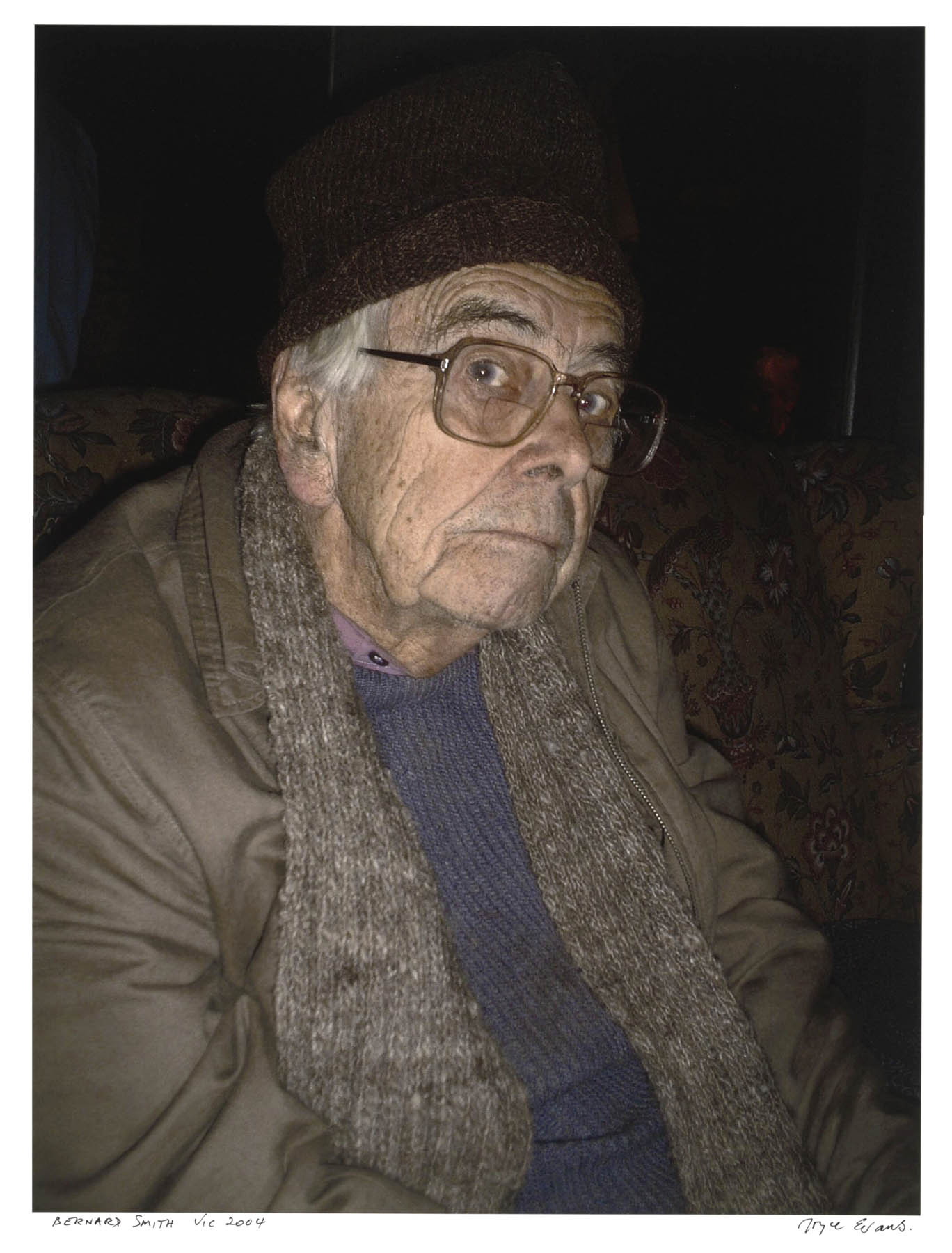
 

Joyce Evans (Australian, 1929-2019) 'Bernard Smith, Victoria' 2004, printed 2013


Joyce Evans (Australian, 1929-2019)
Bernard Smith, Victoria
2004, printed 2013
Colour photograph
47.5 x 37.5cm
Joyce Evans Archive
National Library of Australia


Bernard William Smith (3 October 1916 – 2 September 2011) was an Australian art historian, art critic and academic, considered the founding father of Australian art history, and one of the country’s most important thinkers. His book Place, Taste and Tradition: a Study of Australian Art Since 1788 (1945) is a key text in Australian art history, and influence on Robert Hughes. Smith was associated with the Communist Party of Australia, and after leaving the party remained a prominent left-wing intellectual and Marxist thinker.
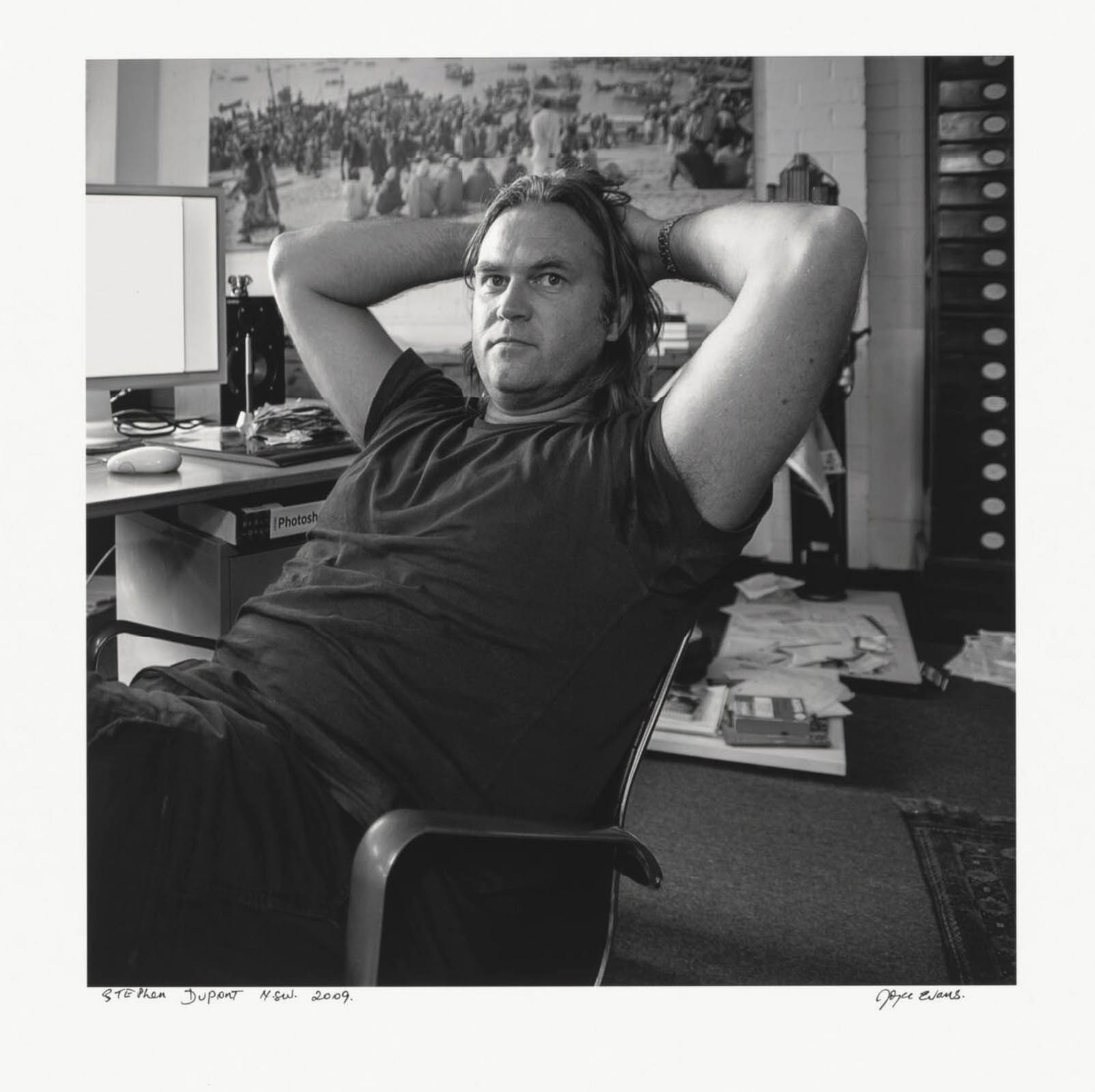
 

Joyce Evans (Australian, 1929-2019) 'Stephen Dupont' 2009


Joyce Evans (Australian, 1929-2019)
Stephen Dupont
2009, printed by David Chisolm and Joyce Evans, 2013
Photograph
35.6 x 35.6cm
Joyce Evans Archive
National Library of Australia


Stephen Dupont (b. 1967) is an Australian photographer and director working on films, commercials, magazine and newspaper assignments and long term personal projects.
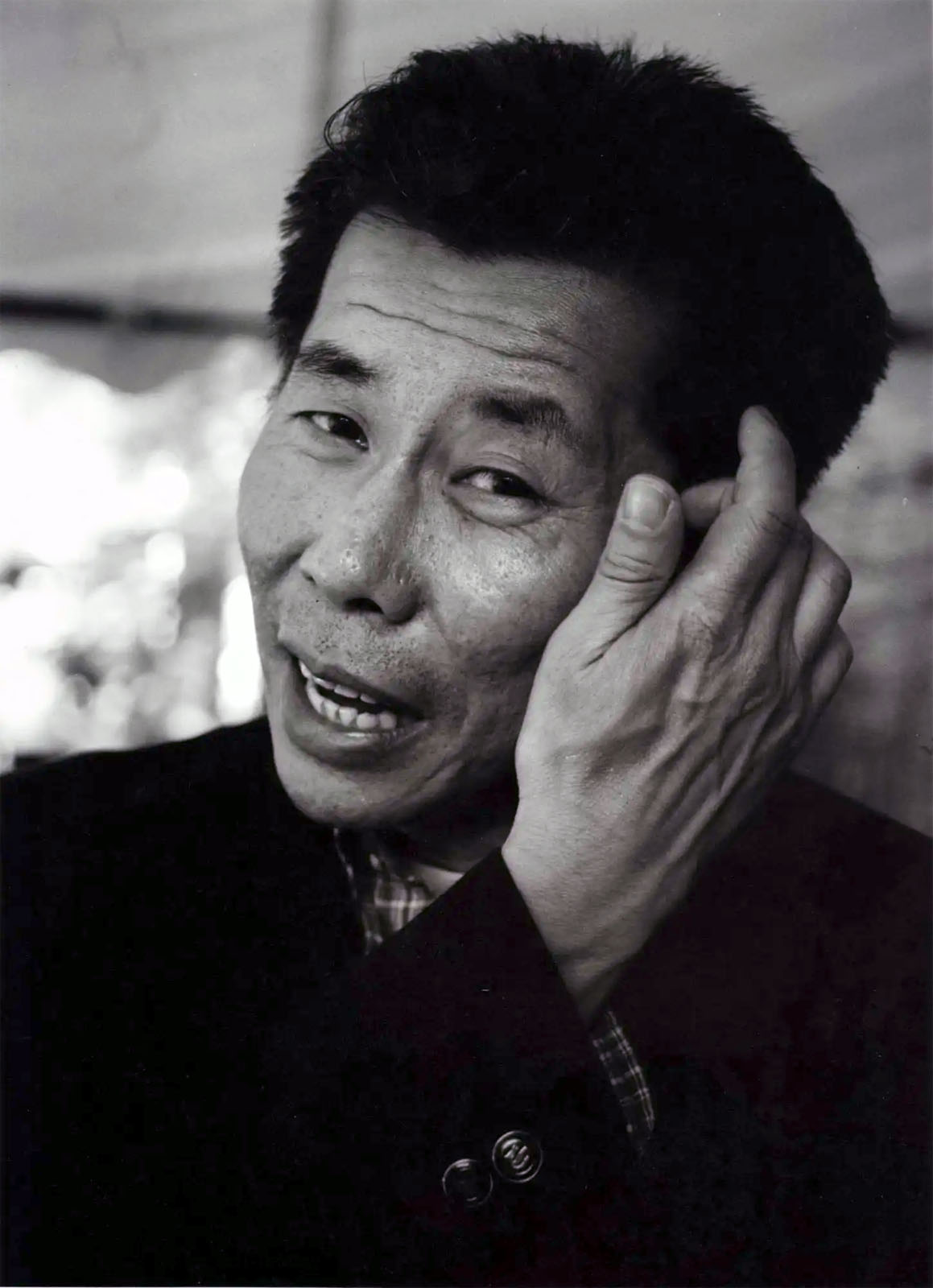
 

Joyce Evans (Australian, 1929-2019) 'William Yang' 1996


Joyce Evans (Australian, 1929-2019)
William Yang
1996
Photograph
Joyce Evans Archive
National Library of Australia


“William Yang [Aust., b.1943] belongs to a generation of artists who used photography to document alternative lifestyles and celebrate social diversity during the latter decades of the 20th century…Yang is the type of social documentary photographer who carries a camera around his neck, ready to capture things with a certain immediacy, as they happen around him.” ~ Museum of Contemporary Art


Joyce Evans was an unusual phenomenon in the Australian photography scene. Her conversion to photography did not occur until she was already in her forties, while her engagement in professional photography had to wait until she was fifty. She never developed a signature style, nor did she become a template photographer, but she possessed a sensibility that has become characteristic of her work, so that you can quickly recognise a Joyce Evans photograph. She was an artist who possessed a definite photographic personality.

Evans combined documentary photography, social photography, landscape photography and studio practice. She also had a social conscience. Although avoiding didactic images or illustrative propaganda, in her documentary work and in her choice of subjects, she had pursued an agenda that shone a light on racism, social inequality and environmental degradation.

This stylish and generously-illustrated monograph shows how Evans’ photography was about capturing not only the surface appearances, but ultimately the essences, of her subjects. It illustrates the Evans’ belief that in silence and stillness you come to feel the spirit of the subject, and that capturing this spirit was the photographer’s goal.

About the author

Professor Sasha Grishin AM, FAHA established the academic discipline of Art History at the ANU and was the Sir William Dobell Professor of Art History and Head of Art History and Curatorship at the ANU until December 2013. He works internationally as an art historian, art critic and curator. In 2005 he was awarded the Order of Australia (AM) for services to Australian art and art history. He has published over 25 books and over 2,000 articles and catalogue essays dealing with various aspects of art.

Text from the National Library of Australia website.
Purchase the book


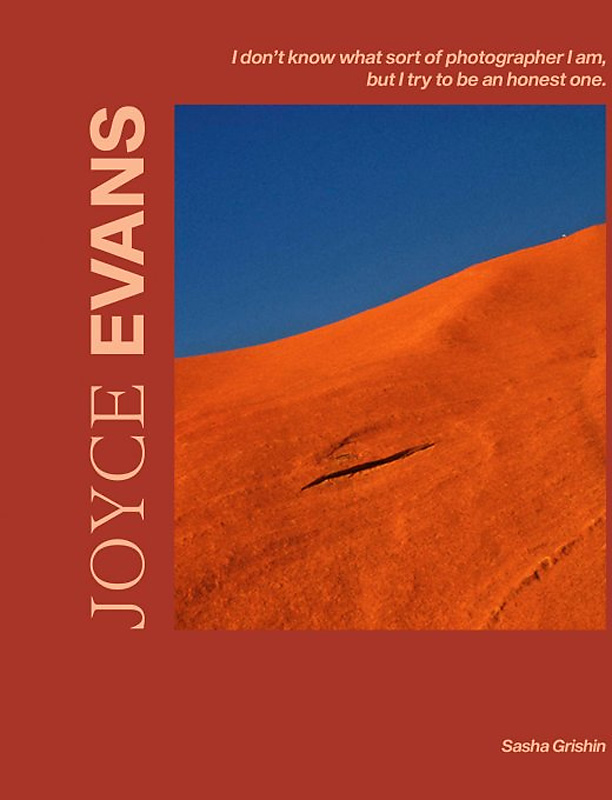
Cover of the book 'Joyce Evans' by Sasha Grishin


Cover of the book Joyce Evans by Sasha Grishin


National Library of Australia
Parkes Place
Canberra ACT 2600
Australia

Opening hours:
Daily 9am – 5pm

National Library of Australia website

LIKE ART BLART ON FACEBOOK

Back to top

Exhibition: ‘Hildegard Heise: Photographer’ at Museum fur Kunst und Gewerbe Hamburg

Exhibition dates: 17th September, 2021 – 20th March, 2022


Hildegard Heise (German, 1897-1979) 'Karussellpferde, Halle a. d. Saale' (Carousel Horses, Halle a. d. Saale) 1929 from the exhibition 'Hildegard Heise: Photographer' at Museum fur Kunst und Gewerbe Hamburg, Sept 2021 - March 2022


Hildegard Heise (German, 1897-1979)
Karussellpferde, Halle a. d. Saale (Carousel Horses, Halle a. d. Saale)
1929
Gelatin silver paper
29 x 38.7cm
Museum für Kunst und Gewerbe Hamburg
© Nachlass Hildegard Heise, MK&G


Here is another woman photographer with an strong, passionate, objective but sensitive eye who seems to have slipped through the cracks of time, history and recognition. Would you believe it, this is the first comprehensive survey of the work of photographer Hildegard Heise (German, 1897-1979).

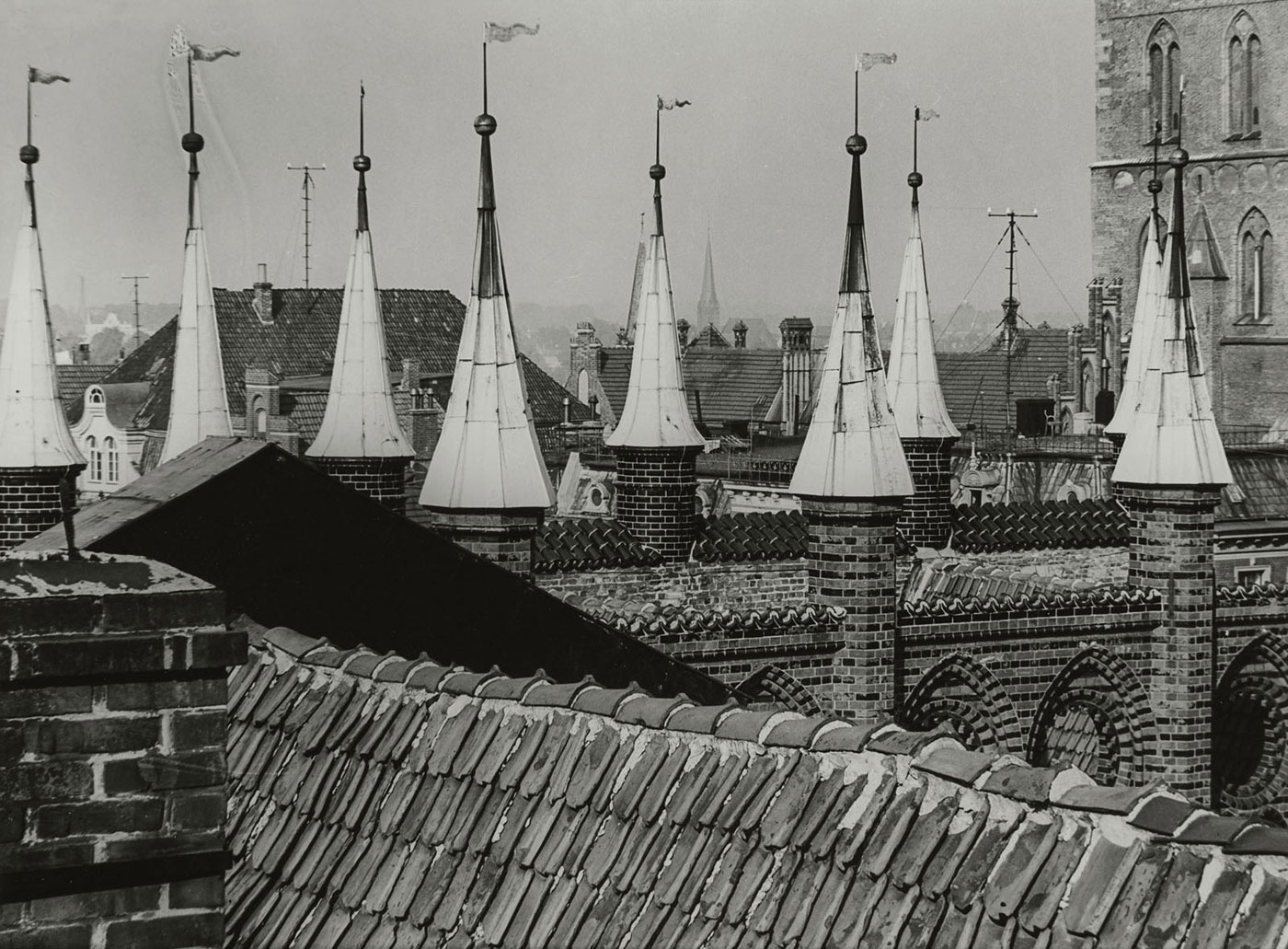
At first New Objectivity, New Vision to the fore… multiples, rows and grids. Carousel horses shot from below, town hall towers as a medieval encampment, and a mass of herring barrels so perfect in their unity higher than the surrounding buildings. An then my favourite, the mass and floating weight of the leaves of the Victoria Regia… the rigour of the composition, its cadences, and the tonality and feeling of the image are just superb. I could go on: the cactus, the crystal, the china – so pure and clean. Followed by glorious almost breathless landscape photographs – Wintry trees, Hamburg (1955, below) and Blossoming apple trees (1961, below). Where has this woman been?

The star of the show has to be her portrait photography. THIS is how you take a portrait, unlike those modestly proficient evocations we saw from Man Ray in the last posting. In these portraits Heise shows her strength and understanding of subject matter, she grasps the essence of the person she is photographing… the whimsy of Alfred Mahlau with film strips (1928-1933, below); the sensitivity of the hands of Carpet weaver Alen Müller-Hellwig at work (1930, below); the windswept bravura of Siegfried Leber, cow hand in Neuendorf on Hiddensee (1934-1938, below); and the composure of the mother in Mother and child on the inter-island steamer (1938, below) with the shadow of the hat covering her face, and the placement of the hands of both mother and child. You could almost pick these people out of the photo and shake them, ask them about their lives, empathise with them. They have true presence. Call me an old romantic, but I could rave on and on about this photographer’s work.

And to top it all off, we have a self-knowing, all-knowing self-portrait where Hildegard (which is a female name derived from the Old High German hild (‘war’ or ‘battle’) and gard (‘enclosure’ or ‘yard’), and means ‘battle enclosure’) appears as if a Sander archetype, staring directly at the camera like a Wagnerian god/ess, both masculine and feminine at the same time. A true enunciation of Gesamtkunstwerk, where art, design, creative process and life combine to create a single cohesive whole.

I take a lovely enjoyment, finally, in her success (Freudenfreude).

Dr Marcus Bunyan


Many thankx to the Museum fur Kunst und Gewerbe Hamburg for allowing me to publish the photographs in the posting. Please click on the photographs for a larger version of the image.


Hildegard Heise (German, 1897-1979) 'Lübeck, Rathaustürme' (Lübeck, town hall towers) 1932 from the exhibition 'Hildegard Heise: Photographer' at Museum fur Kunst und Gewerbe Hamburg, Sept 2021 - March 2022


Hildegard Heise (German, 1897-1979)
Lübeck, Rathaustürme (Lübeck, town hall towers)
1932
Gelatin silver paper
17.2 x 23.3cm
Museum für Kunst und Gewerbe Hamburg
© Estate Hildegard Heise, MK&G


It was in the 1920s, a decade when new career prospects were opening up for women, that Hildegard Heise discovered her passion for photography.

Photography during this period reflected the upheavals and transformation of society in the wake of the First World War. Heise found innovative ways to picture these developments, often choosing unusual perspectives. In line with the “new” genre of object photography, which showcased the world of things, she emphasised the structure, surfaces and form of her subjects. Heise for example shot the “bathing machines” in the French beach town of Carolles from a plunging angle to highlight their graphic structures, and focused in on the shiny surfaces of technical vessels produced by a Berlin porcelain manufactory.

Heise found portrait models all around her, photographing mainly children and artists. In 1937 she took a long trip through the Caribbean, portraying people in their communities, their home settings and landscapes. A precise observer, she succeeded in painting a multifaceted picture of a foreign, still little-travelled region. Even at an advanced age, Heise was still capturing landscapes with her camera; her last pictures show the view out her window of passing cloud formations.


Hildegard Heise (German, 1897-1979) 'Emden, Heringstonnen auf dem Gelände einer Heringsfischerei AG im Hafen' (Emden, herring barrels on the premises of a herring fishing company in the port) c. 1934


Hildegard Heise (German, 1897-1979)
Emden, Heringstonnen auf dem Gelände einer Heringsfischerei AG im Hafen (Emden, herring barrels on the premises of a herring fishing company in the port)
c. 1934
Gelatin silver paper
17.3 x 23.3cm
Museum für Kunst und Gewerbe Hamburg
© Estate Hildegard Heise, MK&G


Hildegard Heise (German, 1897-1979) 'Blätter der Victoria Regia im Botanischen Garten in Berlin' (Leaves of the Victoria Regia in the Botanical Garden in Berlin) 1934-1945


Hildegard Heise (German, 1897-1979)
Blätter der Victoria Regia im Botanischen Garten in Berlin (Leaves of the Victoria Regia in the Botanical Garden in Berlin)
1934-1945
Gelatin silver paper
16.7 x 22.7cm
Museum für Kunst und Gewerbe Hamburg
© Estate Hildegard Heise, MK&G


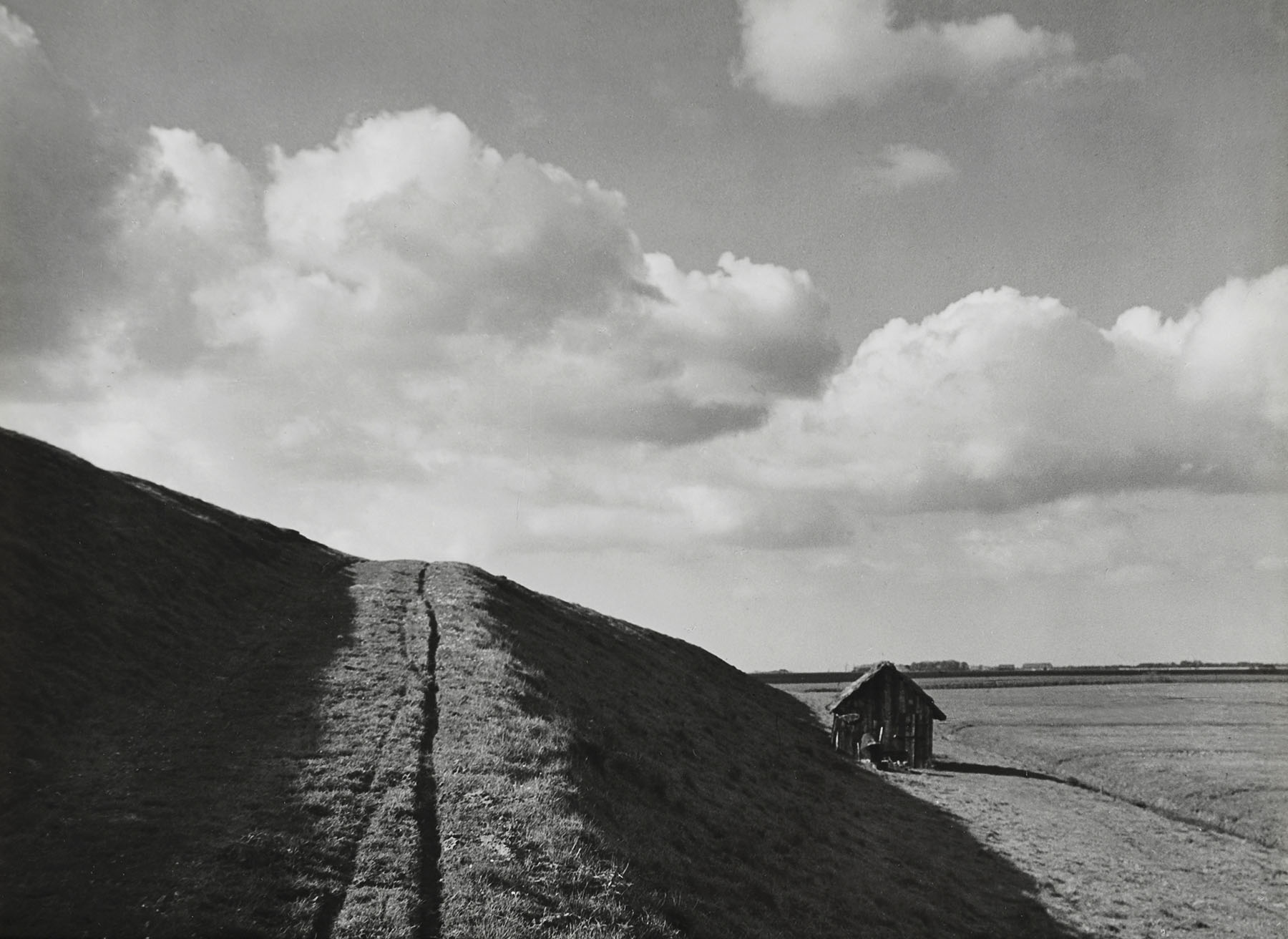
Hildegard Heise (German, 1897-1979) 'Deichlandschaft bei Emden' (Dike landscape near Emden) Before 1937


Hildegard Heise (German, 1897-1979)
Deichlandschaft bei Emden (Dike landscape near Emden)
Before 1937
Gelatin silver paper
17 x 23cm
Museum für Kunst und Gewerbe Hamburg
© Nachlass Hildegard Heise, MK&G


Hildegard Heise (German, 1897-1979) 'Haus mit Garten, Christiansted, Insel St. Croix' (House with garden, Christiansted, Island of St Croix) 1937-1938


Hildegard Heise (German, 1897-1979)
Haus mit Garten, Christiansted, Insel St. Croix (House with garden, Christiansted, Island of St Croix)
1937-1938
Gelatin silver paper
18.3 x 16.8cm
Museum für Kunst und Gewerbe Hamburg
© Nachlass Hildegard Heise, MK&G


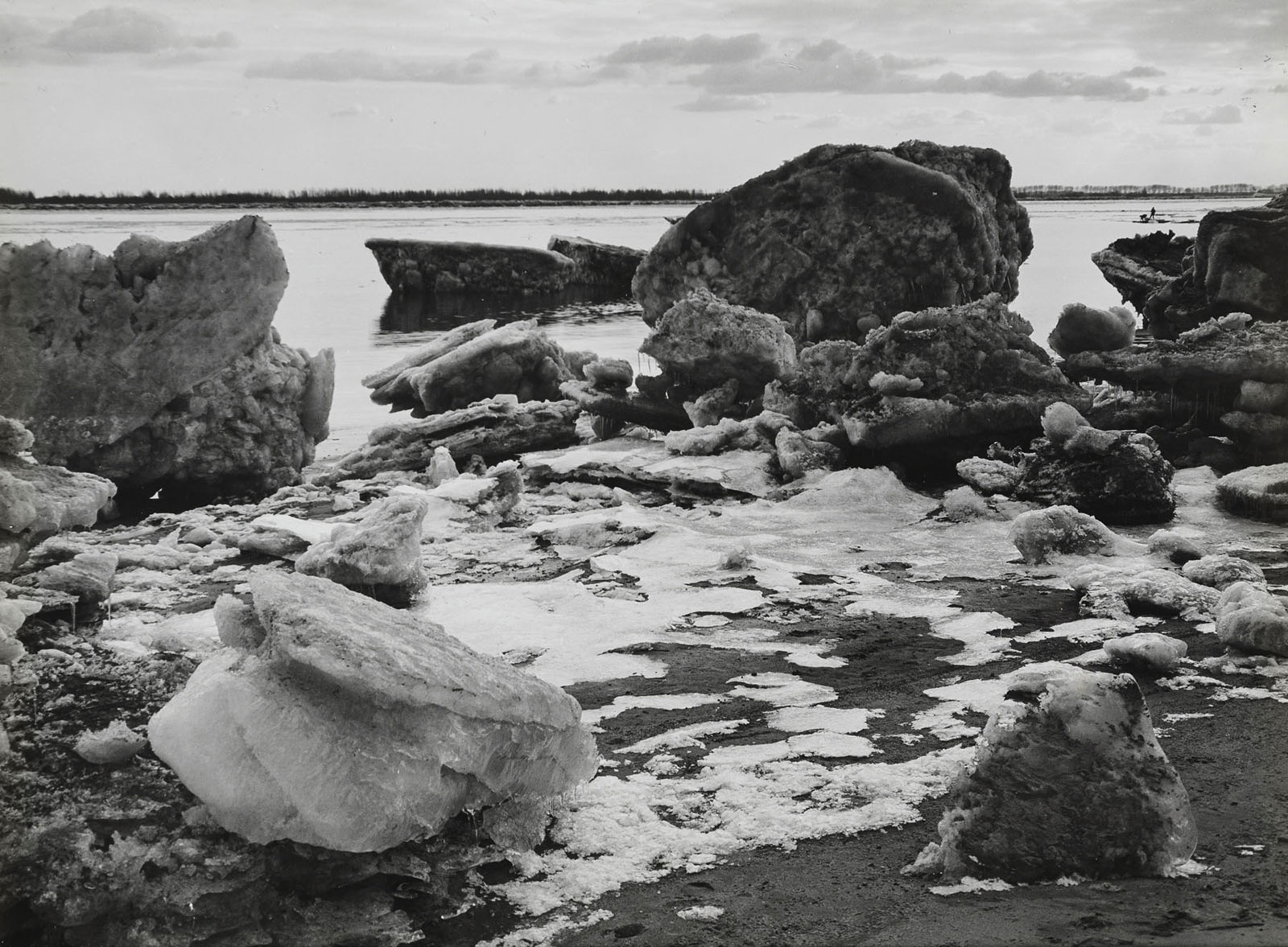
Hildegard Heise (German, 1897-1979) 'Eisschollen am Elbstrand, Hamburg' (Ice floes on the Elbe beach, Hamburg) 1956


Hildegard Heise (German, 1897-1979)
Eisschollen am Elbstrand, Hamburg (Ice floes on the Elbe beach, Hamburg)
1956
Gelatin silver paper
17.1 x 23cm
Museum für Kunst und Gewerbe Hamburg
© Nachlass Hildegard Heise, MK&G


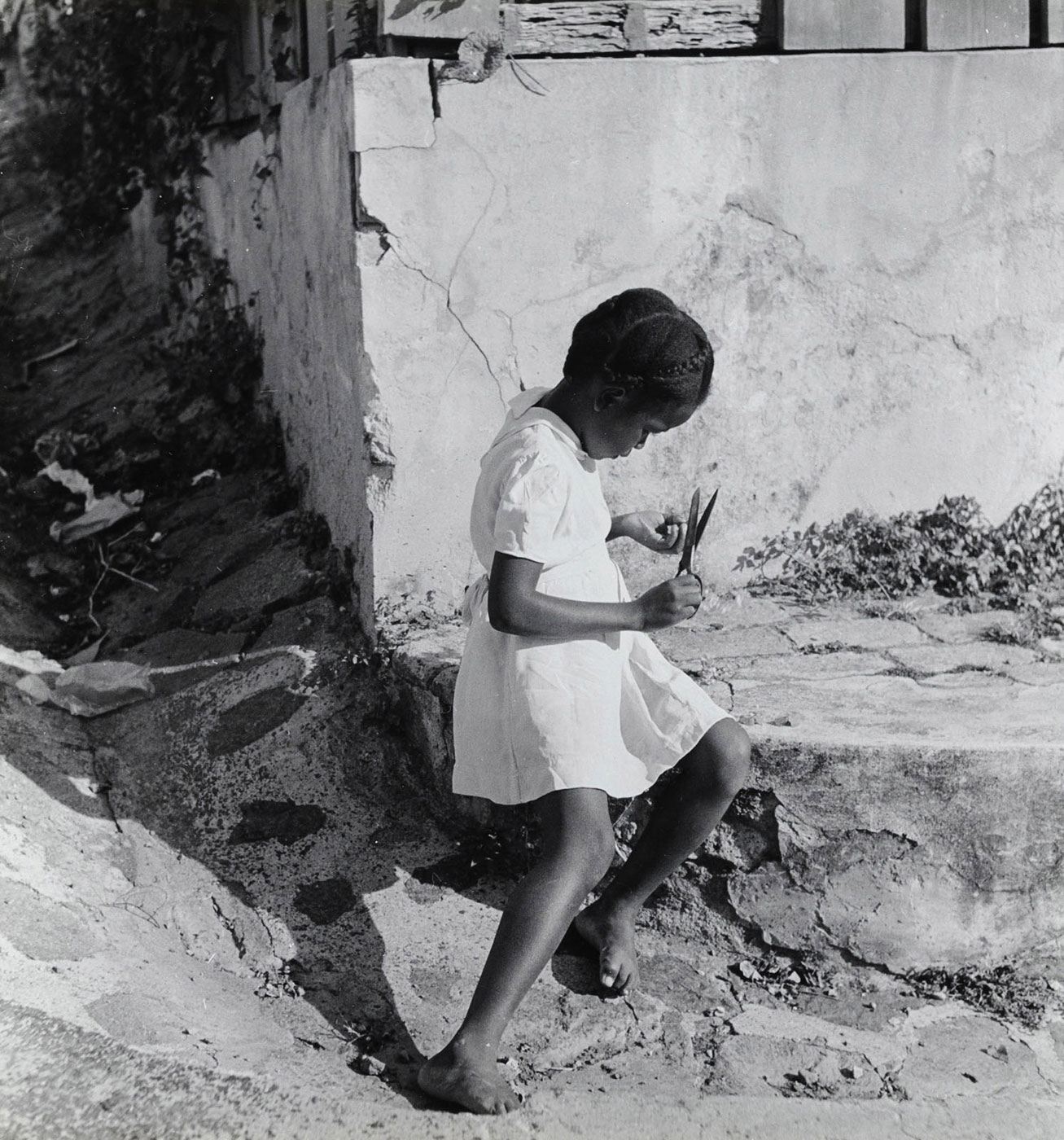
Hildegard Heise (German, 1897-1979) 'A Young Girl Cuts Her Nails' 1937-1938


Hildegard Heise (German, 1897-1979)
A Young Girl Cuts Her Nails
1937-1938
from the series A Journey through the West Indies
Gelatin silver paper
17.2 x 16.2cm
Museum für Kunst und Gewerbe Hamburg
© Estate Hildegard Heise, MK&G


Hildegard Heise (German, 1897-1979) 'Bergkette, Nußdorf am Inn' (Mountain range, Nußdorf am Inn) 1961


Hildegard Heise (German, 1897-1979)
Bergkette, Nußdorf am Inn (Mountain range, Nußdorf am Inn)
1961
Gelatin silver paper
23 x 17cm
Museum für Kunst und Gewerbe Hamburg
© Nachlass Hildegard Heise, MK&G


Hildegard Heise (German, 1897-1979) 'Adolescents on the shore, Central Park, New York' 1970


Hildegard Heise (German, 1897-1979)
Adolescents on the shore, Central Park, New York
1970
C-Print
7.8 x 7.8cm
Museum für Kunst und Gewerbe Hamburg
© Estate Hildegard Heise, MK&G


Hildegard Heise (German, 1897-1979) 'Städter auf der Parkbank schlafend, Central Park, New York' (Townsfolk asleep on park bench, Central Park, New York) 1970


Hildegard Heise (German, 1897-1979)
Städter auf der Parkbank schlafend, Central Park, New York (Townsfolk asleep on park bench, Central Park, New York)
1970
C-Print
11.8 x 12cm
Museum für Kunst und Gewerbe Hamburg
© Estate Hildegard Heise, MK&G


The Museum für Kunst und Gewerbe Hamburg (MK&G) is proud to present the first comprehensive survey of the work of photographer Hildegard Heise (1897-1979). The photographs she produced between 1928 and the early 1970s are nothing less than a revelation. In 1930, Heise exhibited alongside avant-garde photographers such as Max Burchartz, Andreas Feininger, Hans Finsler, Hein Gorny and Anneliese Kretschmer at the “Internationale Ausstellung – Das Lichtbild” in Munich. But this buoyant period of bright prospects was followed after 1945 by a systematic side-lining of women artists. Heise continued to privately pursue photography, but her work fell into oblivion and was little researched. With around 160 images on view, the exhibition now pays delayed tribute to this important photographer. As an exponent of the New Objectivity, Heise often focused in closely on details and emphasised the structure, surfaces and form of her subjects. Her images span the areas of object photography, portrai­ture, in particular portraits of children, city scenes, travel photography and landscapes. Heise lived in Lübeck until 1933 and in Hamburg from 1945 to 1959, where she helped shape the city’s cultural life together with her husband, Carl Georg Heise, director of the Hamburger Kunsthalle from 1945. The couple counted among their close friends the painter Anita Rée, the graphic artist and painter Alfred Mahlau, and the photographer Albert Renger-Patzsch. Heise did a number of portraits while in Hamburg, for example of Oskar Kokoschka, Karl Schmidt-Rottluff and the weaver Alen Müller-Hellwig. Hildegard Heise’s estate, comprising around 3000 photographs and 2500 negatives, is housed at MK&G.

The exhibition is organised along Heise’s major areas of focus. In her OBJECT PHOTOGRAPHY she highlighted graphic structures and the formal qualities of the objects depicted. In 1930, for example, she photographed the “bathing machines” in the French town of Carolles from an unusual camera angle and showed the turrets lined up atop Lübeck’s town hall. She devoted the same attention to the worn surfaces of Much-Loved Dolls (1928) as she did to the immaculate exteriors of technical vessels produced by a Berlin porcelain manufactory [see below].

Heise found models for her PORTRAITS all around her, for example among her friends or artists such as Oskar Kokoschka, Karl Schmidt-Rottluff and Alfred Mahlau. These are often half-length portraits concentrating on the sitter’s face, manifesting the great preoccupation during this period with physiognomy. Children’s portraiture – mainly the realm of women photo­graphers at the time – became a specialty that Heise continued to pursue over the years. She did such portraits on commission but also in her circle of friends, where she proved to be an attentive observer, seemingly capturing candid moments.

From 1934 to 1936 Heise created an extensive CITY PORTRAIT of Emden that interweaves photographs of people, the cityscape and the northern German dike landscape. Her study of Emden combines shots of boatmen, carters and other occupational groups with scenes of the harbour with its herring factory and views of the Hanseatic city’s architecture and cultural monuments. Heise would continue in the following decades to work with the stylistic device of linking varied perspectives.

In 1937-1938, Heise and her husband took an extended trip to the islands of St. Thomas, St. Croix, Jamaica and Hispaniola in search of traces of her Caribbean grandmother. The PHOTOGRAPHIC TRAVEL REPORTAGE she created during the journey conjoins portraits with scenes of the landscape and built environment. In addition to the sea, exotic vegetation and architecture, she evinced a keen interest in the people she encountered and the different ways of life of the various social classes. Her subjects include the wife of a priest, an elegantly dressed Caribbean lady she spied on a ferry as well as a chambermaid in a grand hotel and the children of market vendors. By addressing everyday human experiences, Heise’s work thus anticipates the humanist photography of the post-war period. After the war, Heise’s travel photography became even more spontaneous and situational. In Naples in the 1960s, she captured the colourful comings and goings at the harbour, and in 1969 she observed the process of wood being loaded onto ships at a port in Finland. The photographer’s pronounced interest in painting a broad portrait of society with its different classes and cultures is in evidence once more in her images of New York’s Central Park (1970).

Another consistent theme in Heise’s work is LANDSCAPE PHOTO­GRAPHY. Until an advanced age, she engaged in an almost meditative contemplation of trees and their root systems, remaining true to her matter-of-fact, objective approach. Her nature observations intensified even further after she moved to Nußdorf am Inn, where starting in 1960 she produced extensive series of scenes of the Upper Bavarian winter landscape surrounding her new home. Photography would remain an important means of expression for her until the very last; she was still photographing passing clouds from the window of the residential home where she spent her final years.

Hildegard Heise, born in Lübeck in 1897, initially trained during the First World War as a kindergarten teacher, baby nurse and social worker, unusual occupations for a woman from the upper middle class that testify to her social commitment. After marrying Carl Georg Heise in 1922, she gave up these activities and took up photography, studying in 1928 with her contemporary Albert Renger-Patzsch, a friend of the couple who was at the time a museum director in Lübeck. She accompanied Renger-Patzsch to Holland and Alsace as his assistant. From 1929 to 1930 she continued her training with Hans Finsler (head of the photography class at the Burg Giebichenstein School of Art in Halle) and spent three months working in Grete Kolliner’s portrait studio in Vienna. In 1930 Heise exhibited at the “Internationale Ausstellung – Das Lichtbild” in Munich. Thereafter she participated in a showing of the “Kurt Kirchbach Collection” at the Hamburger Kunstverein in 1932 and in an exhibition on “Contemporary German Photography” at Mills College in California around 1934. Her photographs were featured in magazines including Atlantis, Das Deutsche Familienblatt and the Allgemeiner Wegweiser. Heise sold her pictures through the photography agencies Bavaria and kind-foto and accepted commissions to document works of art and decorative art and architecture, including for the publication Das Lübecker Orgelbuch (1931). From 1945 until the early 1970s, Heise continued to pursue her artistic activities in private.

Press release from the Museum fur Kunst und Gewerbe Hamburg


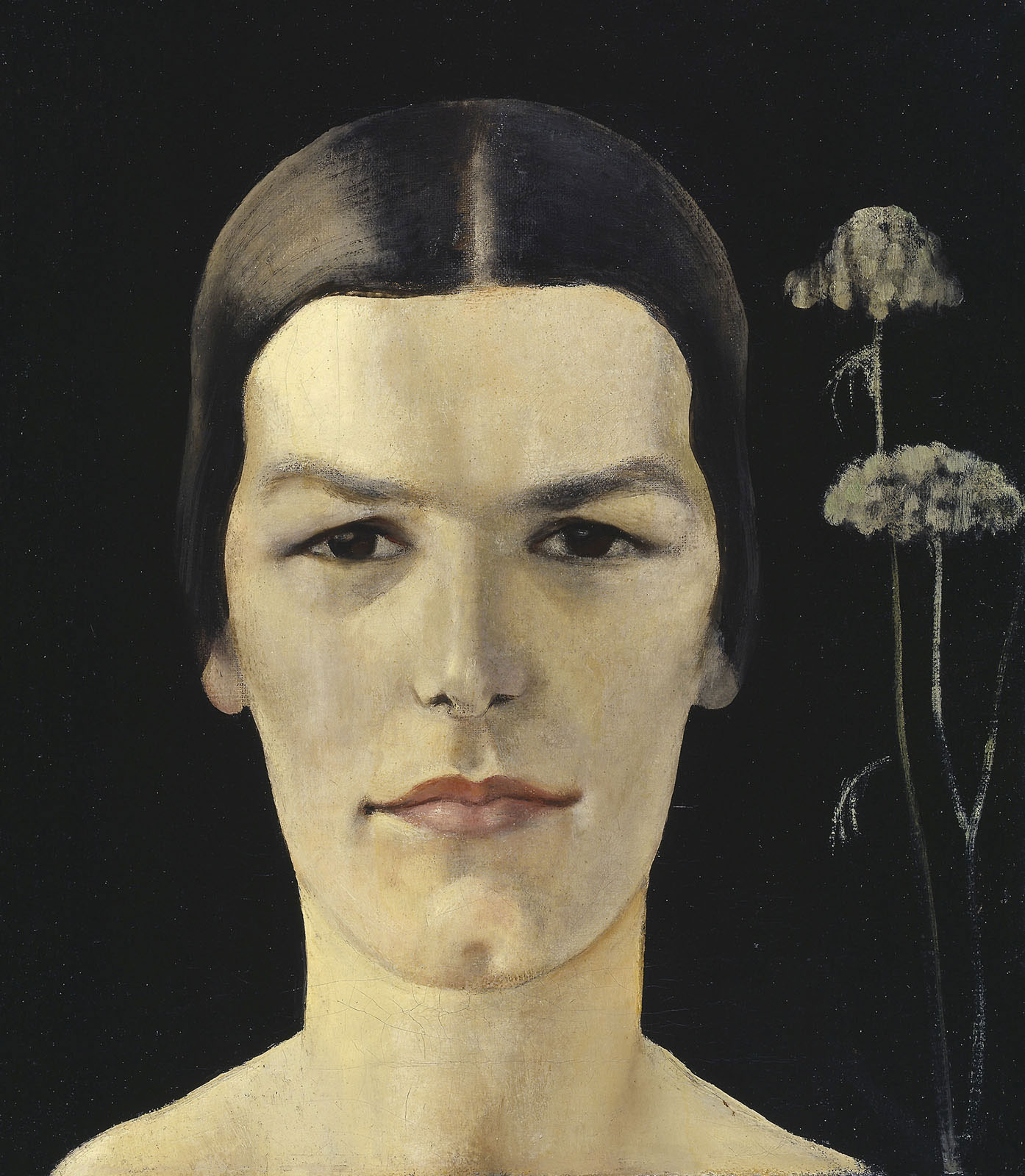
Anita Rée (German, 1885-1933) 'Portrait of Hildegard Heise' 1927


Anita Rée (German, 1885-1933)
Portrait of Hildegard Heise
1927
Oil on canvas
40.6 x 35.6cm
Hamburger Kunsthalle
© Hamburger Kunsthalle / bpk
Foto: Elke Walford


“I can no longer find my way in such a world, to which I no longer belong and I have no desire but to leave it. What is the point – without a family, without the once loved art and without any people – to continue to vegetate alone in such an indescribable, madness-riddled world … ?”


Anita Rée in her farewell letter to her sister before committing suicide in 1933


Anita Clara Rée (born 9 February 1885 in Hamburg, died 12 December 1933 in Kampen) was a German avant-garde painter during the Weimar Republic. After she took her own life the anti-Semitic government declared her work degenerate. Her works were saved by a groundskeeper. …

In 1930, she received a commission to create a triptych for the altar at the new Ansgarkirche in Langenhorn. The church fathers were not happy with her designs, however, and the commission was withdrawn in 1932 over “religious concerns”. Meanwhile, the Nazis had denounced her as a Jew and the Hamburg Art Association called her an “alien”. Shortly after, she moved to Sylt.

She was a suicide in 1933, partly as a result of having been subjected to such hostility and continuing harassment by antisemitic forces, partly due to disappointments on the personal level. In a note to her sister, she decried the insanity of the world. In 1937, the Nazis designated Rée’s work as “Degenerate art” and began purging it from museum collections. Wilhelm Werner, a groundskeeper at the Kunsthalle Hamburg preserved many of Rée’s paintings by hiding them in his apartment.

Text from the Wikipedia website


Anita Rée is one of the most fascinating and enigmatic artist of the 1920s. In many respects she lived a life in between worlds: as an independent woman in an art world on the verge between tradition and Modernism, as a regional artist with international aspirations, as a native from Hamburg brought up as a Protestant, with South American and Jewish roots. The works of Anita Rée (1885-1933) also reflect the at times radical changes in modern society at the beginning of the 20th century. Yet their main focus lies on the search for one’s own identity that is still highly topical and existential.

In hauntingly intense paintings, Rée depicts both people of different origins and the self as a foreign being. Her intimate female nudes continue to touch us today. Portraits of society gentlemen, the southern landscape as a place of yearning, worldly figure paintings with religious overtones or lone animals in stark dunes mirror the wide variety of her motives.

Text from the Hamburger Kunsthalle website [Online] Cited 12/02/2022. No longer available online


Hildegard Heise (1897–1979) 'Self-portrait' 1930s


Hildegard Heise (German, 1897-1979)
Self-portrait
1930s
Gelatin silver paper
22.7 x 16.8cm
Museum für Kunst und Gewerbe Hamburg
© Estate Hildegard Heise, MK&G


Hildegard Heise (German, 1897-1979) 'Alfred Mahlau mit Filmstreifen' (Alfred Mahlau with film strips) 1928-1933


Hildegard Heise (German, 1897-1979)
Alfred Mahlau mit Filmstreifen (Alfred Mahlau with film strips)
1928-1933
Gelatin silver paper
23.2 x 17.4cm
Private collection
© Nachlass Hildegard Heise, MK&G


Alfred Mahlau (German, 1894-1967)

Alfred Mahlau (21 June 1894 – 22 January 1967) German painter, illustrator and teacher.

Alfred Mahlau was born in Berlin on 21 June 1894. He was best known for his graphical work and illustrations, and for the large stained glass window, Dance of Death, in the Lübeck Marienkirche (St. Mary’s Church in Lübeck), which paid homage to a famous mural of the Dance of Death in the church that was destroyed in the bombing of Lübeck during World War II. His books include a number of works with paintings and drawings of Hamburg and the Hamburg port. In the 1920s Mahlau created packaging design for Niederegger, and in 1927 he created the company profile that it still uses today.

During the Third Reich he was a celebrated artist, and was drafted only at a very late stage, to Berlin in April of 1945. He was captured by the Soviets, and held in custody for a couple of months. After the war he became a professor in 1946 at the Hamburg Academy of Fine Arts in Lerchenfeld.

He died in Hamburg on 22 January 1967.

Text from the Wikipedia website


Hildegard Heise (1897-1979) 'Ulrike von Borries in a deck chair' 1928-1933


Hildegard Heise (German, 1897-1979)
Ulrike von Borries in a deck chair
1928-1933
Gelatin silver paper
39.2 x 29.3cm
Museum für Kunst und Gewerbe Hamburg
© Estate Hildegard Heise, MK&G


Hildegard Heise (German, 1897-1979) 'Badekarren, Carolles' (Bathing carts, Carolles) 1928-1933


Hildegard Heise (German, 1897-1979)
Badekarren, Carolles (Bathing carts, Carolles)
1928-1933
Gelatin silver paper
17.2 x 23.1cm
Museum für Kunst und Gewerbe Hamburg
© Estate Hildegard Heise, MK&G


Hildegard Heise (German, 1897-1979) 'Diwandecke von Alen Müller-Hellwig' (Divan corner of Alen Müller-Hellwig) c. 1930


Hildegard Heise (German, 1897-1979)
Diwandecke von Alen Müller-Hellwig (Divan corner of Alen Müller-Hellwig)
c. 1930
Gelatin silver paper
23.5 x 17.5cm
Museum für Kunst und Gewerbe Hamburg
© Nachlass Hildegard Heise, MK&G


Alen Müller-Hellwig (German, 1901-1993)

Alen Müller-Hellwig, née Müller ( October 7, 1901 in Lauenburg in Pomerania – December 9, 1993 in Lübeck) was a German weaver.

Alen Müller learned hand weaving and embroidery, first at the Hamburg School of Applied Arts as a student of Paul Helms and Maria Brinckmann, then at the Munich School of Applied Arts with Else Jaskolla. In 1925 she passed the master’s examination as an embroiderer and in 1928 as a hand weaver.

From 1926 to 1991 she had a workshop for hand weaving in Lübeck. In 1934 she was given the castle gate (tower and the customs officer’s house to the east ) as a place to work and live. She had been married to the violin maker Günther Hellwig (1903-1985) since 1937, who also moved his workshop here and devoted himself specifically to building the viola da gamba .

As one of the first weavers, she created a tapestry using only undyed sheep’s wool, working solely with the natural shades and material appeal of the undyed and partially unwashed wool. When Der Baum, her first work of this kind, was exhibited in the Grassi Museum in Leipzig in autumn 1927, it caused a sensation. She was then invited to all major exhibitions of German arts and crafts abroad.

Her style came close to the ideas of the Bauhaus. She “invented constructive motifs from the technique of warp and weft.” With the exhibition Handwoven Carpets from the Best German Weaving Mills in the Behnhaus, Carl Georg Heise offered her the first great opportunity to present herself in Lübeck and showed her work again in the Hallway of the Behnhaus on the occasion of the major Lübeck Carl Milles exhibition in 1929. From 1929, Mies van der Rohe and Lilly Reich ordered a series of monochrome, hand-knotted sheep’s wool carpets from her for the Villa Tugendhat, the Barcelona pavilionand buildings in Paris and Milan. In 1931 she received the honorary award of the city of Berlin. She took part in the world exhibitions in Chicago in 1933 and in Paris in 1937. In Paris she received a gold medal.

Alfred Mahlau, Robert Pudlich and Ervin Bossányi, among others, provided designs for their carpets. A template by Bossányi was her first figurative weaving motif. In 1932 she was the only woman to co-found the artist group Werkgruppe Lübeck with the painters Curt Stoermer and Hans Peters, the graphic artist Alfred Mahlau, the garden architect Harry Maasz and the architects Wilhelm Bräck and Emil Steffann.

From 1934 to 1939, 70 carpets were made based on designs by Alfred Mahlau, mainly on behalf of the Reich Air Ministry, but also for municipalities and private individuals. This kept the growing workshop busy. In 1935 it comprised ten looms, a wool washer, a spinning mill with nine spinning wheels, a showroom and an office and sales room and employed three journeymen, four apprentices, two clerks, three unskilled workers, nine homeworkers and two interns. The first carpet in this series was the curtain Drei Möwen for Kiel-Holtenau Airport. Most of the works from this period have been destroyed or lost. Some examples including the cycle However, the four elements from 1939 have been preserved because they were acquired by Walter Passarge for the Kunsthalle Mannheim. The cooperation with Mahlau ended in 1940 because Alen Müller-Hellwig wanted to support Hildegard Osten, who had worked for many years, after opening her own workshop. In March 1942, during the German occupation, an exhibition was held in the Reichsmuseum Amsterdam under the title Exhibition of modern tapestries based on designs by Alfred Mahlau and Alen Müller-Hellwig Lübeck. fabrics and embroidery. Alfred Mahlau Lübeck. Cardboard boxes for tapestries from the workshop of Alen Müller Hellwig.

Alen Müller-Hellwig turned back to her own designs and created until 1942 a series of tapestries with plant motifs such as Foxglove Meadow (1940), Spiraea, Bear’s Hogweed and Mullein. Also after the air raid on Lübeck on March 29, 1942, where her workshop remained undamaged, she continued to run it in the Lübeck Burgtor (she brought her two children Friedemann and Barbara to safety in Timmendorfer Strand). After the end of the war, the work was expanded to include textiles for everyday use (bed linen, towels, tablecloths) and employed numerous women, especially from East Germany, e.g. Spinners from East Prussia. After the industrial production of textiles got going again, she limited her work to decorative pieces and floor carpets. In 1954 she received the Art Prize of the State of Schleswig-Holstein. Alen Müller-Hellwig ran her workshop until 1990.

Her last trainee Ruth Löbe (1959-2016) took over the workshop in 1992 and continued it until her death in January 2016.

Text translated by Google Translate from the German Wikipedia website


Hildegard Heise (German, 1897-1979) 'Die Teppich-Weberin Alen Müller-Helwig bei der Arbeit' (Carpet weaver Alen Müller-Hellwig at work) 1930


Hildegard Heise (German, 1897-1979)
Die Teppich-Weberin Alen Müller-Helwig bei der Arbeit (Carpet weaver Alen Müller-Hellwig at work)
1930
Gelatin silver paper
23.3 x 17.3cm
Museum für Kunst und Gewerbe Hamburg
© Nachlass Hildegard Heise, MK&G


Hildegard Heise (German, 1897-1979) 'Blick in das Kakteenhaus in Bonn/Rhein' (View of the cactus house in Bonn/Rhein) c. 1935


Hildegard Heise (German, 1897-1979)
Blick in das Kakteenhaus in Bonn/Rhein (View of the cactus house in Bonn/Rhein)
c. 1935
Gelatin silver paper
23.4 x 17.4cm
Museum für Kunst und Gewerbe Hamburg
© Nachlass Hildegard Heise, MK&G


Hildegard Heise (German, 1897-1979) 'Bergkristall' (Rock Crystal) c. 1935


Hildegard Heise (German, 1897-1979)
Bergkristall (Rock Crystal)
c. 1935
Gelatin silver paper
23.8 x 17.8cm
Museum für Kunst und Gewerbe Hamburg
© Nachlass Hildegard Heise, MK&G


Hildegard Heise (German, 1897-1979) 'Technisches Porzellan, Berliner Manufaktur, Berlin 1935' (Technical porcelain, Berlin manufacturer, Berlin 1935) 1935


Hildegard Heise (German, 1897-1979)
Technisches Porzellan, Berliner Manufaktur, Berlin 1935 (Technical porcelain, Berlin manufacturer, Berlin 1935)
1935
Gelatin silver paper
39.3 x 29.1cm
Museum für Kunst und Gewerbe Hamburg
© Nachlass Hildegard Heise, MK&G


Hildegard Heise (German, 1897-1979) 'Rathaus Stadtseite, Emden' (Town hall city side, Emden) Before 1937


Hildegard Heise (German, 1897-1979)
Rathaus Stadtseite, Emden (Town hall city side, Emden)
Before 1937
Gelatin silver paper
23 x 17cm
Museum für Kunst und Gewerbe Hamburg
© Nachlass Hildegard Heise, MK&G


Hildegard Heise (German, 1897-1979) 'Siegfried Leber, cow hand in Neuendorf on Hiddensee, Pomerania' 1934-1938


Hildegard Heise (German, 1897-1979)
Siegfried Leber, cow hand in Neuendorf on Hiddensee, Pomerania
1934-1938
Gelatin silver paper
22.7 x 16.7cm
Museum für Kunst und Gewerbe Hamburg
© Estate Hildegard Heise, MK&G


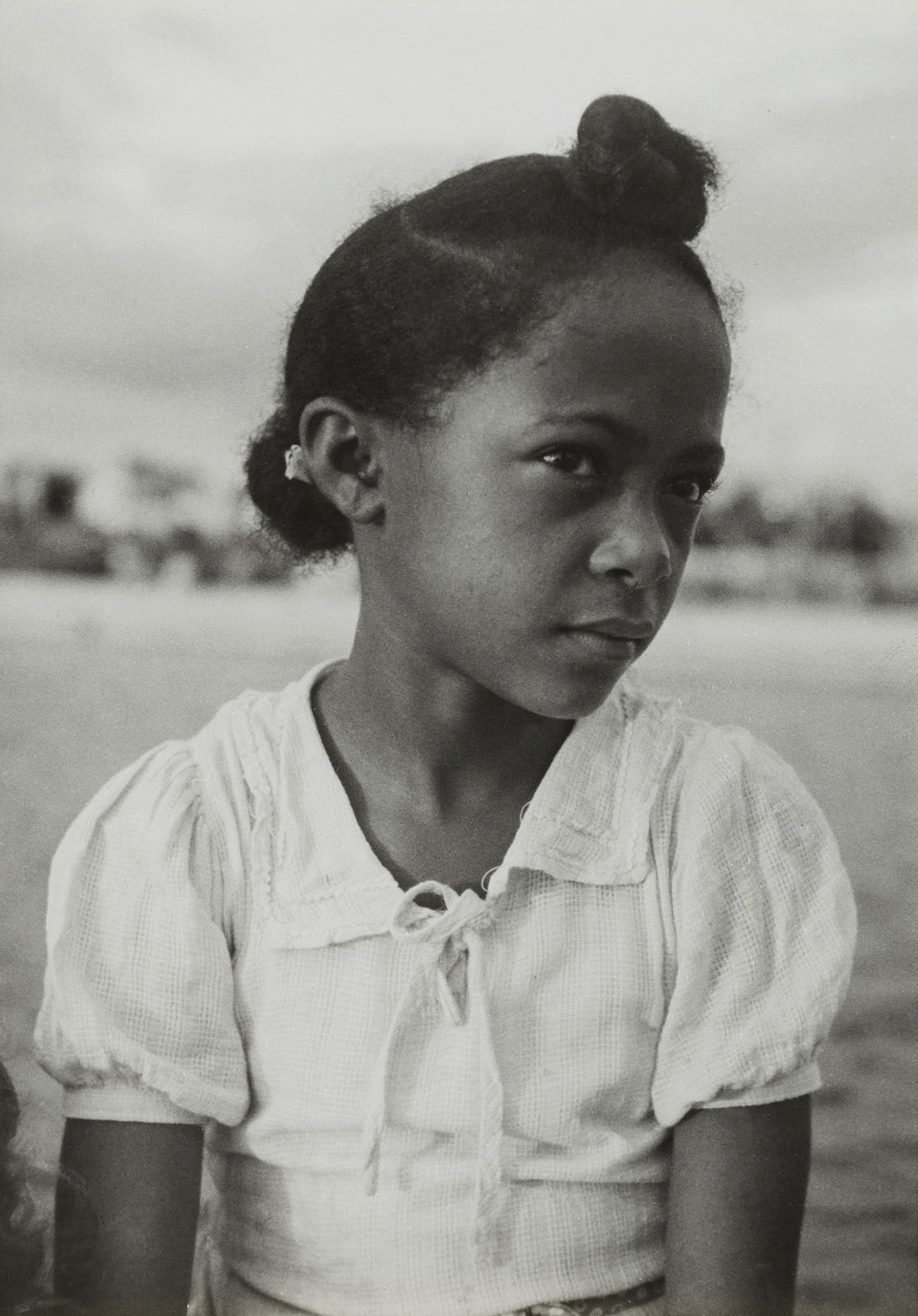
Hildegard Heise (German, 1897-1979) 'Portrait of a Girl, Hispaniola' 1937-1938


Hildegard Heise (German, 1897-1979)
Portrait of a Girl, Hispaniola
1937-1938
Gelatin silver paper
17.3 x 12.4cm
Museum für Kunst und Gewerbe Hamburg
© Estate Hildegard Heise, MK&G


Hildegard Heise (German, 1897-1979) 'Mutter und Kind auf dem Dampfer zwischen den Inseln' (Mother and child on the inter-island steamer) 1938


Hildegard Heise (German, 1897-1979)
Mutter und Kind auf dem Dampfer zwischen den Inseln (Mother and child on the inter-island steamer)
1938
From the series A journey through the West Indies
Gelatin silver paper
22 x 17cm
Museum für Kunst und Gewerbe Hamburg
© Nachlass Hildegard Heise, MK&G


Hildegard Heise (German, 1897-1979) 'Albert Renger-Patzsch mit Zylinder' (Albert Renger-Patzsch with top hat) After 1950


Hildegard Heise (German, 1897-1979)
Albert Renger-Patzsch mit Zylinder (Albert Renger-Patzsch with top hat)
After 1950
Gelatin silver paper
23.3 x 17.3cm
Museum für Kunst und Gewerbe Hamburg
© Nachlass Hildegard Heise, MK&G


Hildegard Heise (German, 1897-1979) 'Arnold Küstermann' 1951


Hildegard Heise (German, 1897-1979)
Arnold Küstermann
1951
Gelatin silver paper
23.2 x 17.1cm
Museum für Kunst und Gewerbe Hamburg
© Nachlass Hildegard Heise, MK&G


Hildegard Heise (German, 1897-1979) 'Winterliche Bäume, Hamburg' (Wintry trees, Hamburg) 1955


Hildegard Heise (German, 1897-1979)
Winterliche Bäume, Hamburg (Wintry trees, Hamburg)
1955
Gelatin silver paper
23 x 17.3cm
Museum für Kunst und Gewerbe Hamburg
© Nachlass Hildegard Heise, MK&G


A consistent theme in Hildegard Heise’s work is landscape photography. Up until old age, the photographer repeatedly dealt with trees and roots in an almost meditative repetition, while remaining true to her objective, sober approach. After moving to Nußdorf am Inn, she intensified her engagement with nature observation, where from 1960 extensive series about the Upper Bavarian winter landscape in the vicinity of her new place of residence were created. Photography remained Heise’s most important means of expression until the end of her life. From around 1965, Hildegard Heise photographed simultaneously in black and white and with colour slides. Heise photographed the passing clouds from the window of the residential home where she lived between 1973 and 1975.

Esther Ruelfs on the Museum fur Kunst und Gewerbe Hamburg website Nd [Online] Cited 11/02/2022


Hildegard Heise (German, 1897-1979) 'Blühende Apfelbäume, Nußdorf am Inn' (Blossoming apple trees, Nußdorf am Inn) 1961


Hildegard Heise (German, 1897-1979)
Blühende Apfelbäume, Nußdorf am Inn (Blossoming apple trees, Nußdorf am Inn)
1961
Gelatin silver paper
23 x 17.1cm
Museum für Kunst und Gewerbe Hamburg
© Nachlass Hildegard Heise, MK&G


Hildegard Heise (German, 1897-1979) 'Städter im Park, New York' (Townsfolk in the Park, New York) 1970


Hildegard Heise (German, 1897-1979)
Städter im Park, New York (Townsfolk in the Park, New York)
1970
Gelatin silver paper
19.3 x 17.4cm
Museum für Kunst und Gewerbe Hamburg
© Nachlass Hildegard Heise, MK&G


Museum für Kunst und Gewerbe Hamburg
Steintorplatz, 20099 Hamburg

Opening hours:
Tuesday to Sunday 10am – 6pm
Thursday 10am – 9pm
Closed Mondays

Museum fur Kunst und Gewerbe Hamburg website

LIKE ART BLART ON FACEBOOK

Back to top

Exhibition: ‘Oscar Rejlander: Artist Photographer’ at the J. Paul Getty Museum, Getty Center, Los Angeles

Exhibition dates: 12th March – 9th June, 2019

Curators: Lori Pauli, curator of photographs at the National Gallery of Canada, and Karen Hellman, assistant curator of photographs at the J. Paul Getty Museum


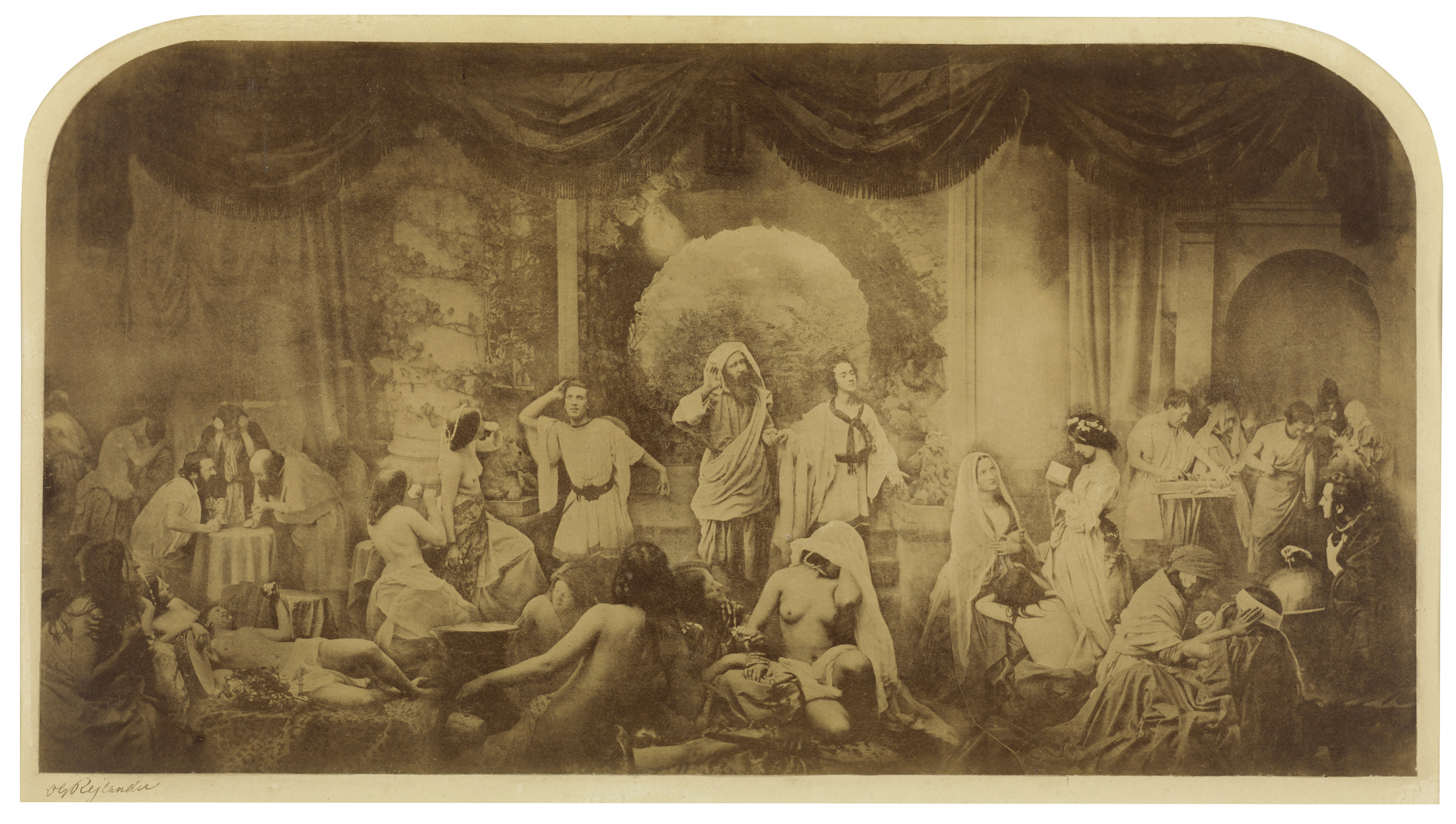
Oscar G. Rejlander (British born Sweden, 1813-1875) 'The Two Ways of Life' 1856-1857 from the exhibition 'Oscar Rejlander: Artist Photographer' at the J. Paul Getty Museum, Getty Center, Los Angeles, March - June, 2019


Oscar G. Rejlander (British born Sweden, 1813-1875)
Two Ways of Life (Hope in Repentance)
1857
Albumen silver print
21.8 x 40.8cm (8 9/16 x 16 1/16 in.)
Moderna Museet, Stockholm


Oscar Rejlander, the father of photography, sets in motion many of the later developments of photographic art.

I could wax lyrical about the light, staging and humour of the images; the allegorical, religious and emotional portraits; the influence of photography on painting; the spontaneous act caught on film (Eh!); the combination printing, precursor to digital manipulation (Two Ways of Life); the costume dramas (The Comb Seller); or the presaging of the work of August Sander (The Juggler). But I won’t.

Instead, I just want you to think about the period in which these photographs were made – that Dickensian era of archetypal humanity, intricate narrative. I want you to feel that these reality pictures are alive and how they transcend the time of their creation through the lyricism of the print.

From the mind of the artist to works of art that stare down that cosmic time shift, from cradle to grave.

Marcus


Many thanks to the J. Paul Getty Museum for allowing me to publish the photographs in the posting. Please click on the photographs for a larger version of the image.


“It is the mind of the artist, and not the nature of his materials which makes his production a work of art.”


Oscar G. Rejlander


Oscar Gustav Rejlander is best known for his work “Two Ways of Life,” a masterpiece for which he used over 32 different negatives. It took him around six weeks to create it and over 3 days to produce a final print.


Oscar G. Rejlander (British born Sweden, 1813-1875) 'The Infant Photography Giving the Painter an Additional Brush' c. 1856 from the exhibition 'Oscar Rejlander: Artist Photographer' at the J. Paul Getty Museum, Getty Center, Los Angeles, March - June, 2019


Oscar G. Rejlander (British born Sweden, 1813-1875)
The Infant Photography Giving the Painter an Additional Brush
c. 1856
Albumen silver print
6 × 7.1cm (2 3/8 × 2 13/16 in.)
Courtesy The J. Paul Getty Museum, Los Angeles


After emigrating from Sweden to England in 1839 and taking up photography in 1852, he became one of the first to recognise photography’s potential as a “handmaid of art” – exemplified by early photographs like “The Infant Photography Giving the Painter an Additional Brush.” This tiny print served to demonstrate how photography could preserve an allegorical scene for a painter’s extended study. It also functioned as a self-portrait and hinted at Rejlander’s hidden ambitions: reflected in the convex mirror, he presents himself as a modern-day Jan van Eyck.

Extract from Dana Ostrander. “The Overlooked Legacy of Oscar Rejlander, Who Elevated Photography to an Art,” on the Hyperallergic website April 2, 2019 [Online] Cited 06/06/2019


Oscar G. Rejlander (British born Sweden, 1813-1875) 'Non Angeli sed Angli (Not Angels but Anglos), after Raphael’s Sistine Madonna' c. 1854-1856


Oscar G. Rejlander (British born Sweden, 1813-1875)
Non Angeli sed Angli (Not Angels but Anglos), after Raphael’s Sistine Madonna
c. 1854-1856
Albumen silver print
20.5 x 26.3cm (8 1/16 x 10 3/8 in.)
Princeton University Art Museum
Museum purchase, David H. McAlpin, Class of 1920, Fund


Oscar G. Rejlander (British born Sweden, 1813-1875) 'Mary Constable and Her Brother' 1866


Oscar G. Rejlander (British born Sweden, 1813-1875)
Mary Constable and Her Brother
1866
Albumen silver print
16.8 x 22.1cm (6 5/8 x 8 11/16 in.)
The Metropolitan Museum of Art, Gilman Collection
Purchase, Harriette and Noel Levine Gift, 2005


Oscar G. Rejlander (British born Sweden, 1813-1875) 'The Bachelor's Dream' c. 1860


Oscar G. Rejlander (British born Sweden, 1813-1875)
The Bachelor’s Dream
c. 1860
Albumen silver print
13.9 x 19.6cm (5 1/2 x 7 11/16 in.)
George Eastman Museum, purchase
Photo: Courtesy of the George Eastman Museum


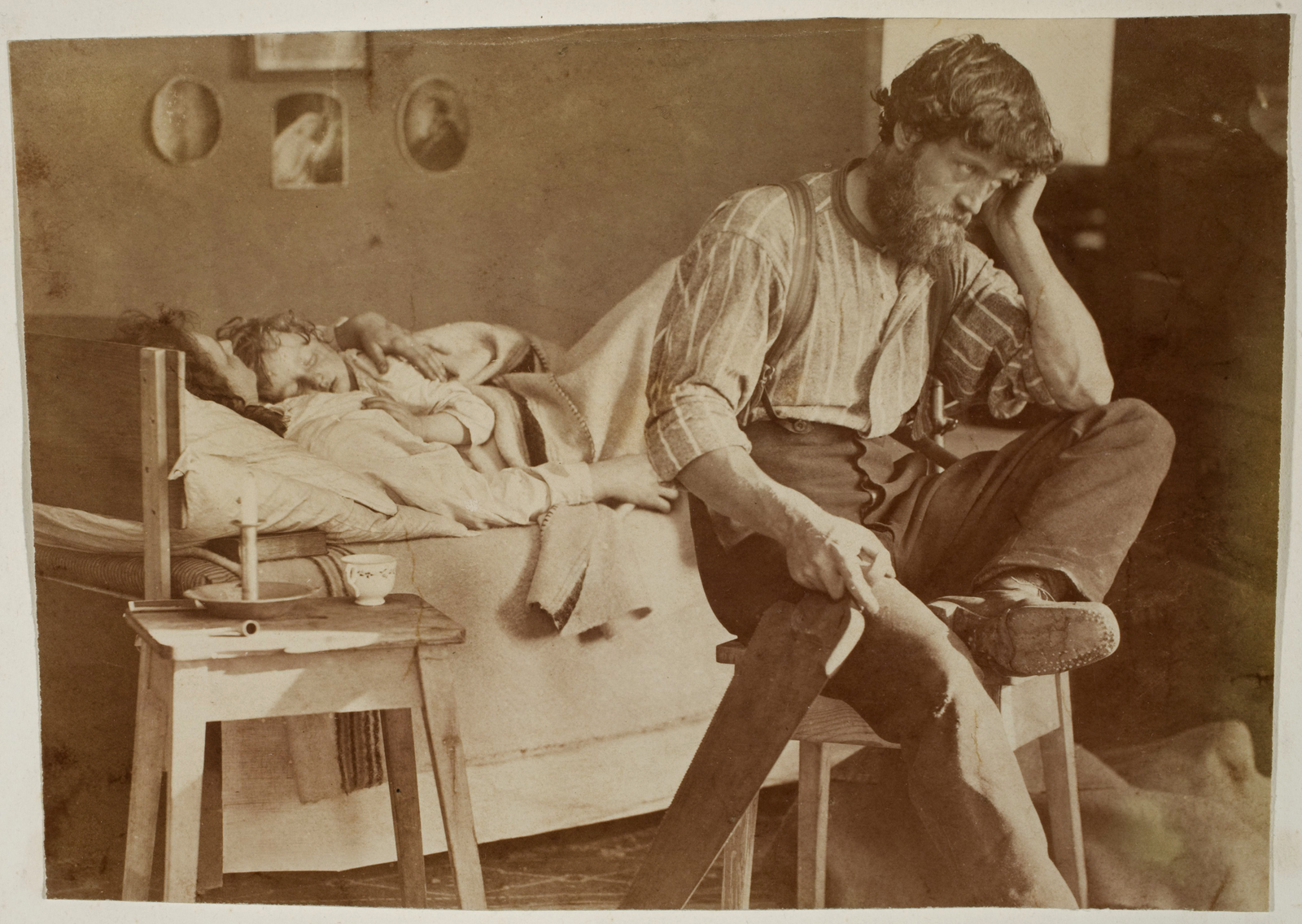
Oscar G. Rejlander (British born Sweden, 1813-1875) 'Hard Times (The Out of Work Workman's Lament)' 1860


Oscar G. Rejlander (British born Sweden, 1813-1875)
Hard Times (The Out of Work Workman’s Lament)
1860
Albumen silver print
13.8 x 19.7cm (5 7/16 x 7 3/4 in.)
George Eastman Museum, purchase
Photo: Courtesy of the George Eastman Museum


Oscar G. Rejlander (British born Sweden, 1813-1875) 'Head of St. John the Baptist in a Charger' c. 1860


Oscar G. Rejlander (British born Sweden, 1813-1875)
Head of St. John the Baptist in a Charger
c. 1860
Albumen silver print
14.1 x 17.8cm (5 9/16 x 7 in.)
George Eastman Museum, purchase
Photo: Courtesy of the George Eastman Museum


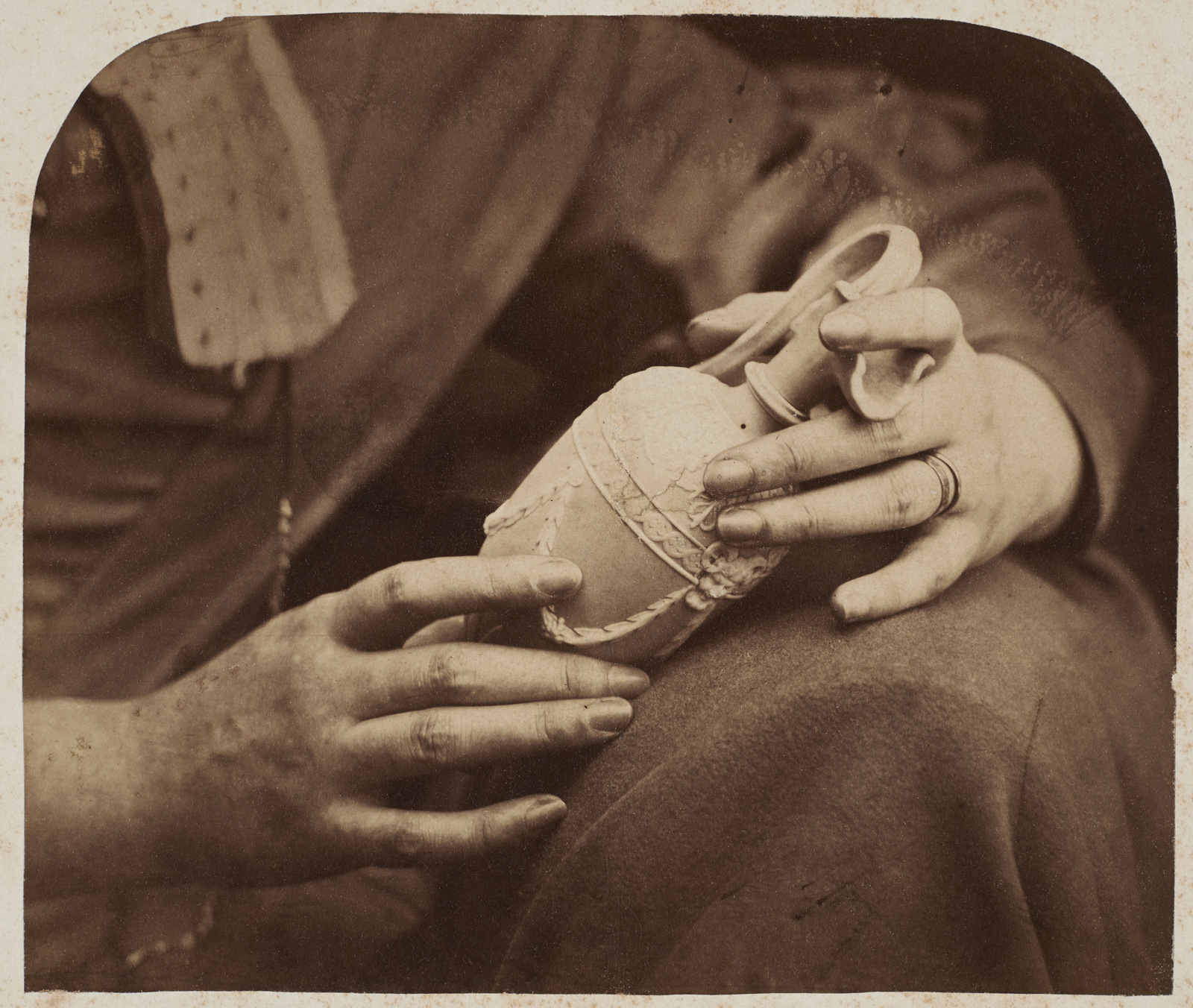
Oscar G. Rejlander (British born Sweden, 1813-1875) 'Study of Hands' 1856


Oscar G. Rejlander (British born Sweden, 1813-1875)
Study of Hands
1856
Albumen silver print
14.8 x 17.6cm (5 13/16 x 6 15/16 in.)
National Gallery of Canada, Ottawa
Purchased 2014


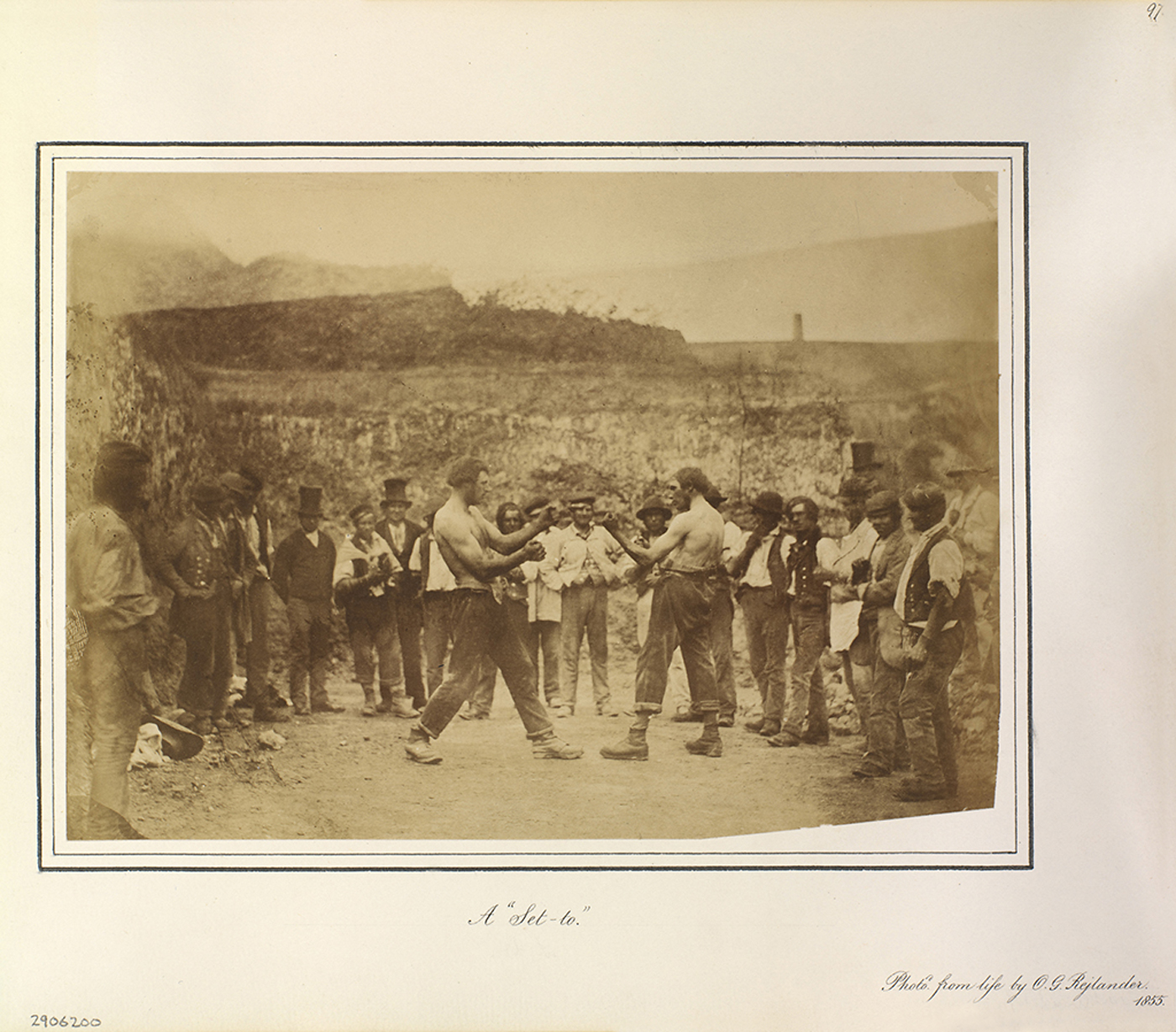
Oscar G. Rejlander (British born Sweden, 1813-1875) 'A "Set To"' 1855


Oscar G. Rejlander (British born Sweden, 1813-1875)
A “Set To”
1855
In “Prince Albert’s Calotype Album,” vol. 2, about 1860
Salted paper print
15 x 21cm (5 7/8 x 8 1/4 in.)
Royal Collection Trust
© Her Majesty Queen Elizabeth II 2019


Oscar G. Rejlander (British, born Sweden, 1813-1875) was one of the 19th century’s greatest innovators in the medium of photography, counting Queen Victoria, Prince Albert, Charles Darwin, Lewis Carroll and Julia Margaret Cameron among his devotees. Nevertheless, the extent of Rejlander’s work and career has often been overlooked. Oscar Rejlander: Artist Photographer, on view March 12 – June 9, 2019 at the J. Paul Getty Museum, Getty Center, Los Angeles, is the first exhibition to explore the prolific career of the artist who became known as “the father of art photography,” and whose bold experimentation with photographic techniques early in the medium’s development and keen understanding of human emotion were ahead of their time.

The exhibition features 150 photographs that demonstrate Rejlander’s remarkable range, from landscapes and portraits to allegories and witty commentaries on contemporary society, alongside a selection of his early paintings, drawings, and prints.

“Rejlander tells us in his writings that ‘It is the mind of the artist, and not the nature of his materials, which makes his production a work of art’,” says Timothy Potts, director of the J. Paul Getty Museum. “While technologies have dramatically changed, some of the fundamental issues that Rejlander grappled with in his photographs still resonate with photographic practice today. His photographs, though made a century and a half ago, are both meticulously of their time and timeless, foreshadowing many later achievements of the medium through to the digital age.”

Oscar G. Rejlander was born in Sweden and moved to England in 1839, working first as a painter before turning to photography in 1852. He made a living as a portrait photographer while experimenting with photographic techniques, most notably combination printing, in which parts of multiple negatives were exposed separately and then printed to form a single picture. Rejlander moved to London in 1862, where his business continued to grow and where his wife, Mary Bull, worked alongside him in his photography studios.

Portraits and Images of Everyday Life

Portraiture, particularly of members of the higher ranks of London society, was Rejlander’s main professional activity and supported his livelihood. Art critics and clients alike admired his skill with lighting as well as the natural and seemingly spontaneous expressions he was able to capture. Rejlander photographed some of the most important figures of the day, including the English scientist Charles Darwin, known for his theory of evolution, and poets Alfred Lord Tennyson and Henry Taylor. He also guided the first photographic efforts of the writer and mathematician Charles Lutwidge Dodgson (known as Lewis Carroll), the creator of Alice’s Adventures in Wonderland, as well as photographer Julia Margaret Cameron.

From the beginning of his career as a photographer, Rejlander was keenly interested in depicting the activities of ordinary people, particularly the middle and lower classes of society. It was through his staged domestic images that he illustrated familial relationships with tenderness and humour, often using models and props to re-create in his studio the scenes he had witnessed in the streets, from young boys who swept up dirt and debris in exchange for tips, to street vendors such as “flower girls” who offered bouquets for sale to passersby. Like a modern street photographer, Rejlander chose his compositions and subjects based on what he saw and heard, realising the final images in the studio.

In 1863 Rejlander constructed a unique iron, wood, and glass “tunnel studio,” where the sitter, positioned in the open, light-filled part of the studio, would look into the darker part of the room where the camera and operator were situated, nearly invisible. The pupils of the sitters’ eyes expanded, allowing for “more depth and expression,” as a writer observed in Photographic News. In addition to this technique, Rejlander often exploited his own unique ability to enact exaggerated emotions to assist his subjects. Charles Darwin illustrated many of Rejlander’s expressive photographs in The Expression of the Emotions in Man and Animals, published in 1872.

Combination Printing and Two Ways of Life

Rejlander holds an important place in the history of photography primarily because of the groundbreaking way he applied the technique of combination printing. On view in the exhibition is the most ambitious example of the artist’s pioneering experimentation, the epic photograph, Two Ways of Life, or Hope in Repentance (1857). It attracted immediate attention upon its exhibition both for its large size and the ambition of its production, which included the combination printing of over 30 separate wet collodion on glass negatives, a process that took more than three days.

The work represents an intricate allegory of two opposing philosophies of life: Vice and Virtue. In the centre of the picture, a wise man guides a younger man to the right, toward a life of virtue – work, study, and religion. To the left, a second young man is tempted by the call of desire, gambling, idleness, and vice. Prince Albert may have worked with Rejlander on the overall conception of the picture, and he and Queen Victoria purchased three versions for their art collection.

Despite this support from the Royal Family, Two Ways of Life divided the photographic community, with professional photographers considering it a technical tour de force, and amateurs seeing it as not only artificial in production but also immoral in its subject. However, it remains one of finest examples of combination printing to come from this period.

Art and Photography

Today, the debate about photography’s status as an art may be obsolete, but the arts community in 19th-century Britain was passionately divided over Rejlander’s chosen medium. Rejlander strongly advocated the view that photography was an independent art, while he was also convinced that a photograph could help artists by providing an effective substitute for working from live models. He was possibly the first to provide artists with visual references for their work in photographs, creating figure studies in a range of poses and costumes, including close-ups of hands, feet, drapery, and even fleeting facial expressions. Although many painters were reluctant to disclose their reliance on photography, several collected Rejlander’s photographs, including George Frederic Watts (English, 1817-1904) and Henri Fantin-Latour (French, 1836-1904).

Paintings also strongly influenced Rejlander’s choice of subjects, leading him not only to imitate the styles of artists but also to re-create the figures found in their compositions. He frequently photographed actors or models posing as a “Madonna,” a “Devotee,” a “Disciple,” or specific Christian figures such as John the Baptist. He may have intended these studies, as well as others showing figures in classical robes, for artists to consult as well.

“What we hope comes through in the exhibition is Rejlander’s humanity and humour, as well as his humble nature, particularly evident in the fact that he often sent his work to exhibitions under the name ‘amateur’,” says Karen Hellman, assistant curator of photographs at the Getty Museum. “His explanation: ‘When I compare what I have done with what I think I ought to do, and some day hope I shall do, I think of myself as only an amateur, after all – that is to say, a beginner’.”

Oscar Rejlander: Artist Photographer, is on view March 12 – June 9, 2019 at J. Paul Getty Museum, Getty Center. The exhibition is curated by Lori Pauli, curator of photographs at the National Gallery of Canada, and Karen Hellman, assistant curator of photographs at the J. Paul Getty Museum.

Press release from the J. Paul Getty Museum


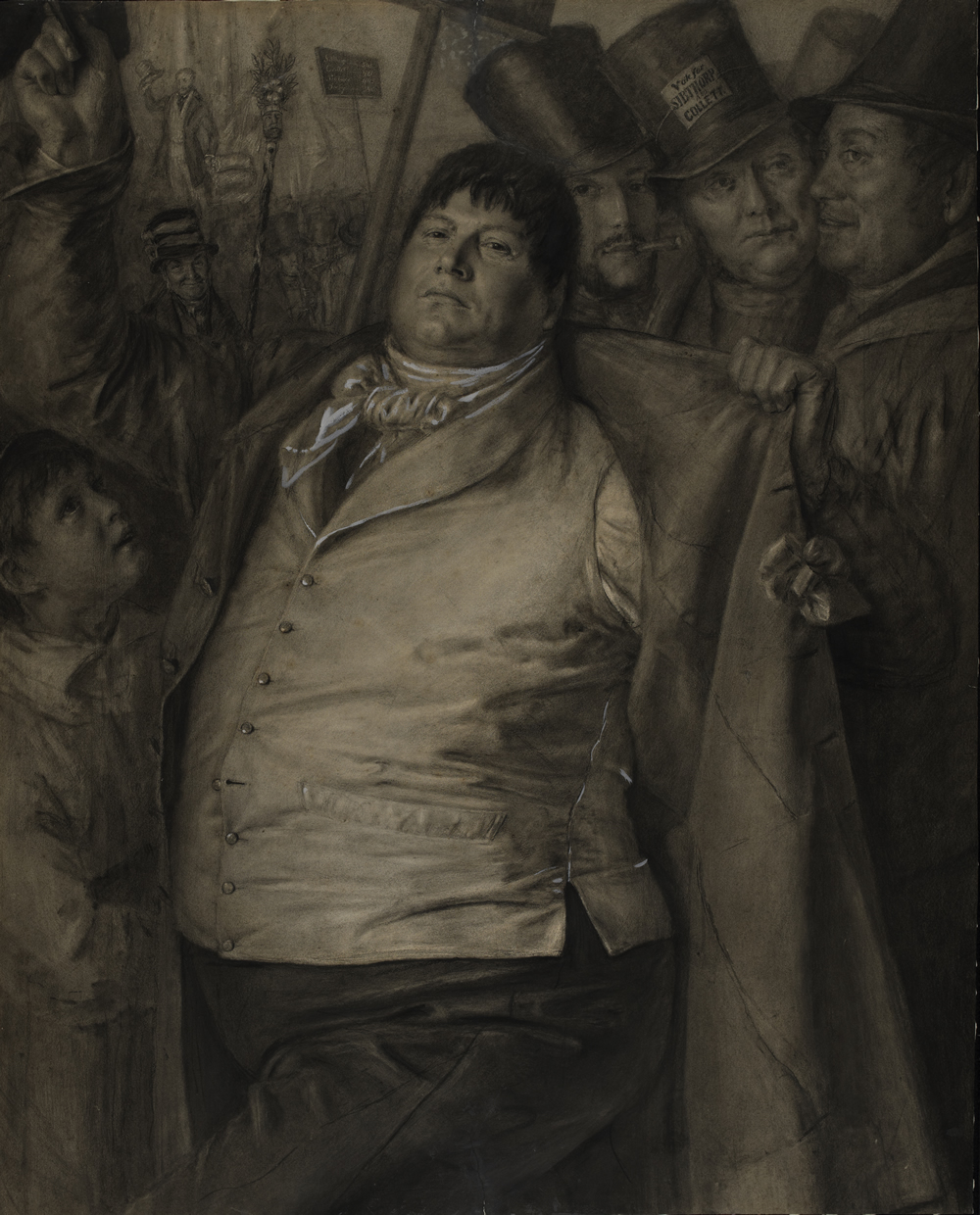
Oscar G. Rejlander (British born Sweden, 1813-1875) 'Mr. Collett's Return' 1841


Oscar G. Rejlander (British born Sweden, 1813-1875)
Mr. Collett’s Return
1841
Black chalk, charcoal and white wash highlights on paper (backed)
92.8 × 74.4cm
The Collection: Art and Archaeology in Lincolnshire (Usher Gallery, Lincoln)


Attributed to Oscar G. Rejlander (British born Sweden, 1813-1875) '[Landscape]' c. 1855


Attributed to Oscar G. Rejlander (British born Sweden, 1813-1875)
[Landscape]
c. 1855
Salted paper print
22.3 × 19.7cm
National Gallery of Canada, Ottawa
Purchased 2014


Oscar G. Rejlander (British born Sweden, 1813-1875) 'The Sailor Boy' 1855, printed 1873


Oscar G. Rejlander (British born Sweden, 1813-1875)
The Sailor Boy
1855, printed 1873
Carbon print
19 x 16cm (7 1/2 x 6 5/16 in.)
Royal Collection Trust
© Her Majesty Queen Elizabeth II 2019


Oscar G. Rejlander (British born Sweden, 1813-1875) 'Ariadne' 1857


Oscar G. Rejlander (British born Sweden, 1813-1875)
Ariadne
1857
Albumen print from a wet collodion negative
Paul Mellon Fund
Courtesy National Gallery of Art, Washington


“I believe photography will make painters better artists and more careful draughtsmen. You may test their figures by photography. In Titian’s Venus and Adonis, Venus has her head turned in a manner that no female could turn it and at the same time shows so much of her back. Her right leg also is too long. I have proved the correctness of this opinion by photography with variously shaped female models.” ~ Oscar G. Rejlander 1863

“He was perhaps the first to market photographic nude studies to artists, and he even used them to test the anatomical accuracy of the Old Masters. His photograph “Ariadne” was created, in part, to expose the unnatural pose and elongated feminine proportions in Titian’s “Venus and Adonis.” Many of Rejlander’s contemporaries came to rely on these nude studies, and the exhibition contains at least three originally owned by the painter Henri Fantin-Latour.”

Extract from Dana Ostrander. “The Overlooked Legacy of Oscar Rejlander, Who Elevated Photography to an Art,” on the Hyperallergic website April 2, 2019 [Online] Cited 06/06/2019


Oscar G. Rejlander (British born Sweden, 1813-1875) 'Madonna and Child with St. John the Baptist' c. 1860


Oscar G. Rejlander (British born Sweden, 1813-1875)
Madonna and Child with St. John the Baptist
c. 1860
Albumen silver print
17.8 × 12.4cm (7 × 4 7/8 in.)
Courtesy The J. Paul Getty Museum, Los Angeles


Oscar G. Rejlander (British born Sweden, 1813-1875) 'Young Lady in a Costume' c. 1860


Oscar G. Rejlander (British born Sweden, 1813-1875)
Young Lady in a Costume
c. 1860
Albumen silver print
Courtesy National Gallery of Canada, Ottawa


Oscar G. Rejlander (British born Sweden, 1813-1875) 'Eh!' negative about 1854-1855; print about 1865


Oscar G. Rejlander (British born Sweden, 1813-1875)
Eh!
negative about 1854-1855; print about 1865
Albumen silver print
8.9 x 5.9cm (3 1/2 x 2 5/16 in.)
The J. Paul Getty Museum, Los Angeles


Oscar G. Rejlander (British born Sweden, 1813-1875) 'The First Negative' 1857


Oscar G. Rejlander (British born Sweden, 1813-1875)
The First Negative
1857
Albumen silver print
29 x 15cm (11 7/16 x 5 7/8 in.)
Musée d’Orsay, Paris Photo
© RMN-Grand Palais / Art Resource, NY / Patrice Schmidt


In “The First Negative,” Rejlander restages Pliny’s account of the origins of painting, boldly suggesting that the act of tracing a shadow is more akin to creating a photographic negative than a painting.


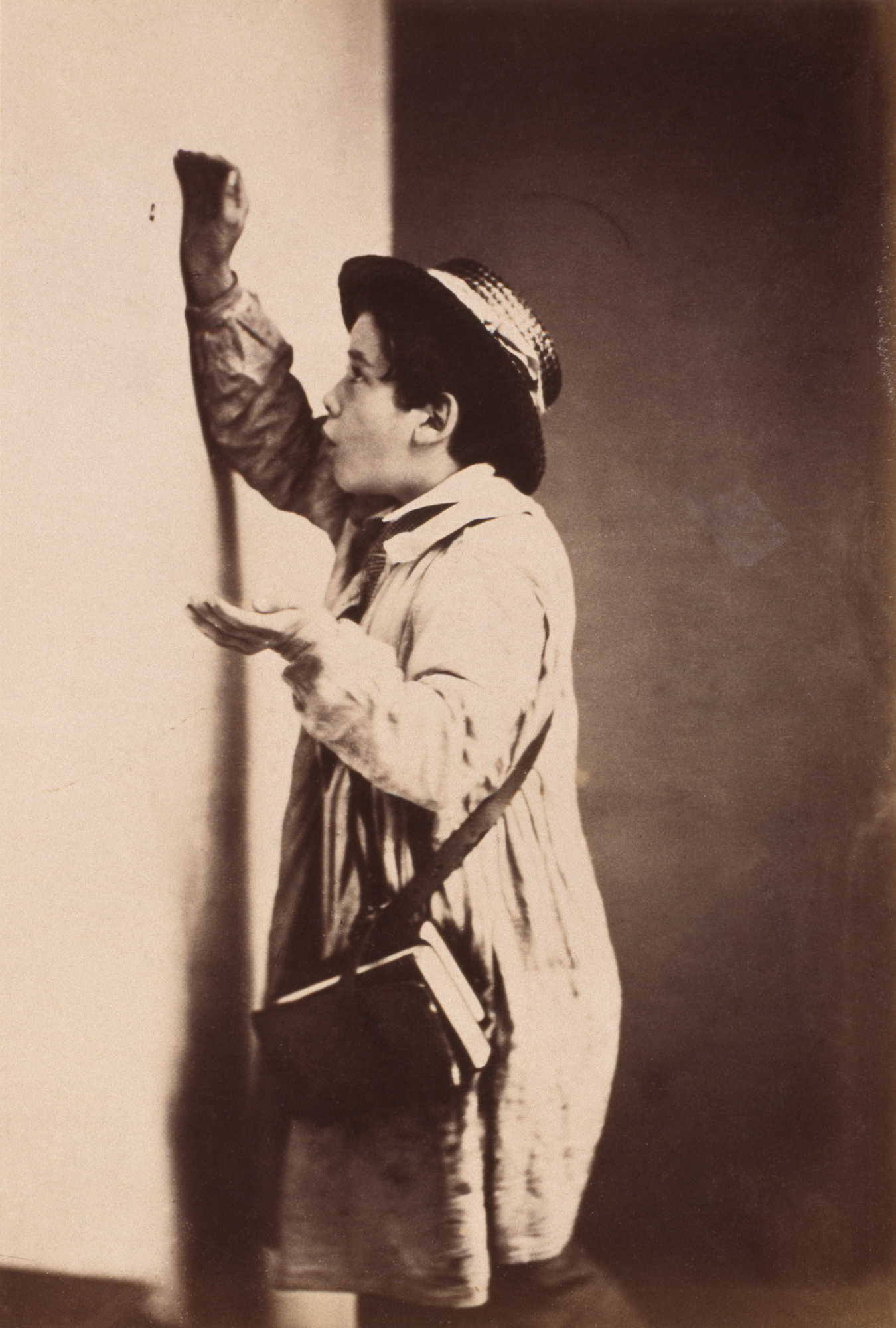
Oscar G. Rejlander (British born Sweden, 1813-1875) 'The Participles, or Grammar for Little Boys: Catching' 1857


Oscar G. Rejlander (British born Sweden, 1813-1875)
The Participles, or Grammar for Little Boys: Catching
1857
Albumen silver print
18.7 x 12.7cm (7 3/8 x 5 in.)
Moderna Museet, Stockholm


Oscar G. Rejlander (British born Sweden, 1813-1875) 'The Participles, or Grammar for Little Boys: Caught' 1857


Oscar G. Rejlander (British born Sweden, 1813-1875)
The Participles, or Grammar for Little Boys: Caught
1857
Albumen silver print
20.3 x 15.7cm (8 x 6 3/16 in.)
The J. Paul Getty Museum, Los Angeles


Oscar G. Rejlander (British born Sweden, 1813-1875) 'Mr. Coleman as Belphegor' c. 1857, printed later


Oscar G. Rejlander (British born Sweden, 1813-1875)
Mr. Coleman as Belphegor
c. 1857, printed later
Platinum print
18.2 x 14.4cm (7 3/16 x 5 11/16 in.)
The Royal Photographic Society Collection at the V&A, acquired with the generous assistance of the Heritage Lottery Fund and Art Fund Image
© Victoria & Albert Museum, London


Oscar G. Rejlander (British born Sweden, 1813-1875) 'Please Give Us a Copper' c. 1866-1868


Oscar G. Rejlander (British born Sweden, 1813-1875)
Please Give Us a Copper
c. 1866-1868
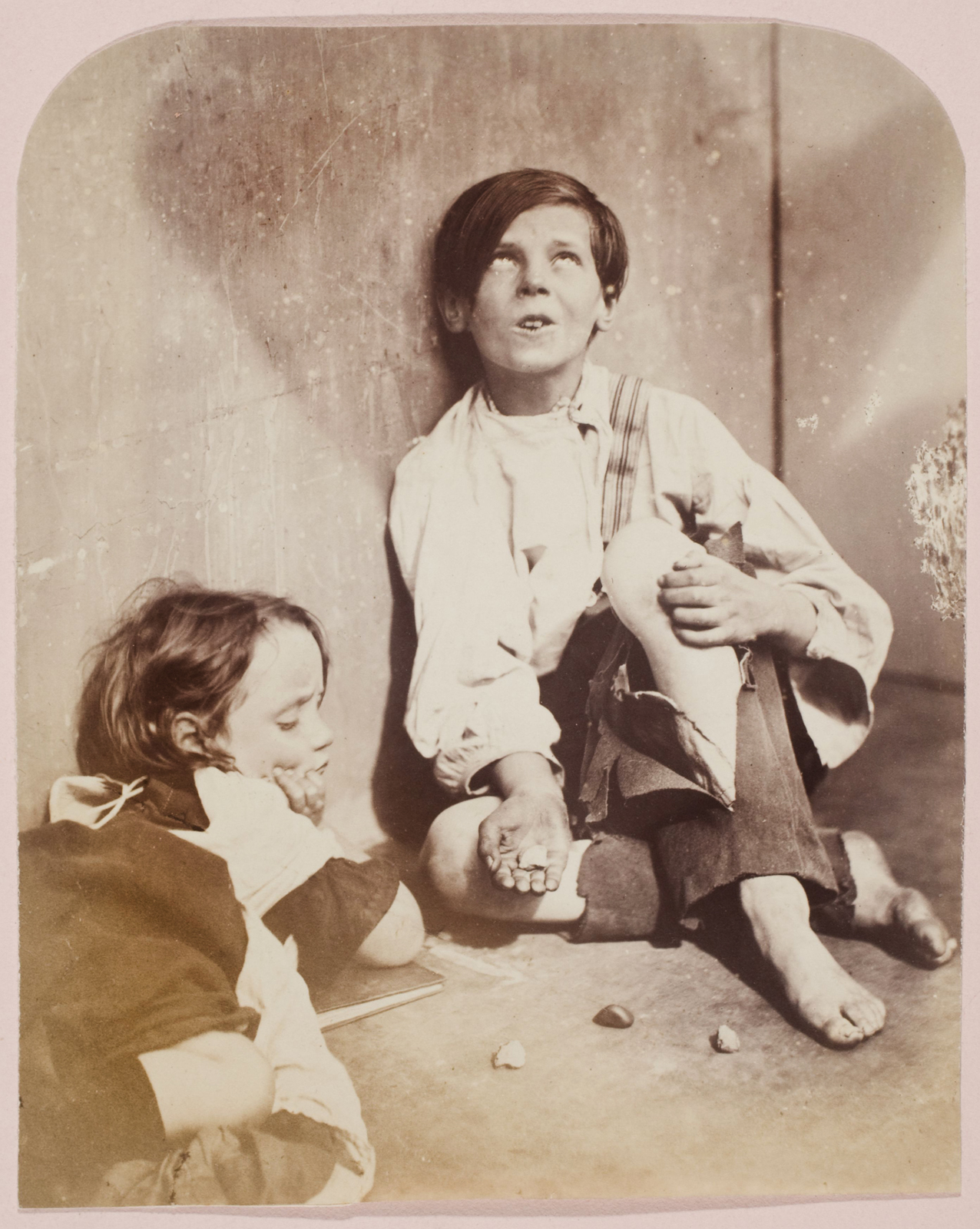
Albumen silver print
17.9 x 12.6cm (7 1/16 x 4 15/16 in.)
Princeton University Art Museum. Museum purchase


A copper is a brown coin of low value made of copper or bronze.


Oscar G. Rejlander (British born Sweden, 1813-1875) 'The Juggler' c. 1865, printed later


Oscar G. Rejlander (British born Sweden, 1813-1875)
The Juggler
c. 1865, printed later
Platinum print
19.5 x 14.6cm (7 11/16 x 5 3/4 in.)
The Royal Photographic Society Collection at the V&A, acquired with the generous assistance of the Heritage Lottery Fund and Art Fund Image
© Victoria and Albert Museum, London


Oscar G. Rejlander (British born Sweden, 1813-1875) 'Enchanted by a Parrot (Mary Rejlander?)' c. 1860


Oscar G. Rejlander (British born Sweden, 1813-1875)
Enchanted by a Parrot (Mary Rejlander?)
c. 1860
Albumen silver print
Image (approx.): 50 x 30cm (19 11/16 x 11 13/16 in.)
William Talbott Hillman Collection
Photo: Hans P. Kraus, Jr., New York


Oscar G. Rejlander (British born Sweden, 1813-1875) 'The Cup that Cheers' c. 1860


Oscar G. Rejlander (British born Sweden, 1813-1875)
The Cup that Cheers
c. 1860
Albumen silver print
19.9 x 15cm (7 13/16 x 5 7/8 in.)
Princeton University Art Museum
Museum purchase, gift of Mr. and Mrs. Max Adler


Oscar G. Rejlander (British born Sweden, 1813-1875) 'Knuckle Bones' 1860


Oscar G. Rejlander (British born Sweden, 1813-1875)
Knuckle Bones
1860
Albumen silver print
15.4 x 12.5cm (6 1/16 x 4 15/16 in.)
George Eastman Museum, purchase
Photo: Courtesy of the George Eastman Museum


Knucklebones

Knucklebones, also known as TaliFivestones, or Jacks, is a game of ancient origin, usually played with five small objects, or ten in the case of jacks. Originally the “knucklebones” (actually the astragalus, a bone in the ankle, or hock) were those of a sheep, which were thrown up and caught in various manners. Modern knucklebones consist of six points, or knobs, projecting from a common base, and are usually made of metal or plastic. The winner is the first player to successfully complete a prescribed series of throws, which, though similar, differ widely in detail. The simplest throw consists in either tossing up one stone, the jack, or bouncing a ball, and picking up one or more stones or knucklebones from the table while it is in the air. This continues until all five stones or knucklebones have been picked up. Another throw consists in tossing up first one stone, then two, then three and so on, and catching them on the back of the hand. Different throws have received distinctive names, such as “riding the elephant”, “peas in the pod”, “horses in the stable”, and “frogs in the well”.

Text from the Wikipedia website


Oscar G. Rejlander (British born Sweden, 1813-1875) '"Father Times" (Where's the Cat?)' c. 1860


Oscar G. Rejlander (British born Sweden, 1813-1875)
“Father Times” (Where’s the Cat?)
c. 1860
Albumen paper print
16.5 x 14.2cm (6 1/2 x 5 9/16 in.)
Wilson Centre for Photography


Oscar G. Rejlander (British born Sweden, 1813-1875) 'Night in Town (Poor Jo, Homeless)' before 1862; print after 1879


Oscar G. Rejlander (British born Sweden, 1813-1875)
Night in Town (Poor Jo, Homeless)
before 1862; print after 1879
Carbon print
20.3 x 15.7cm (8 x 6 3/16 in.)
National Gallery of Canada, Ottawa
Purchased 1993


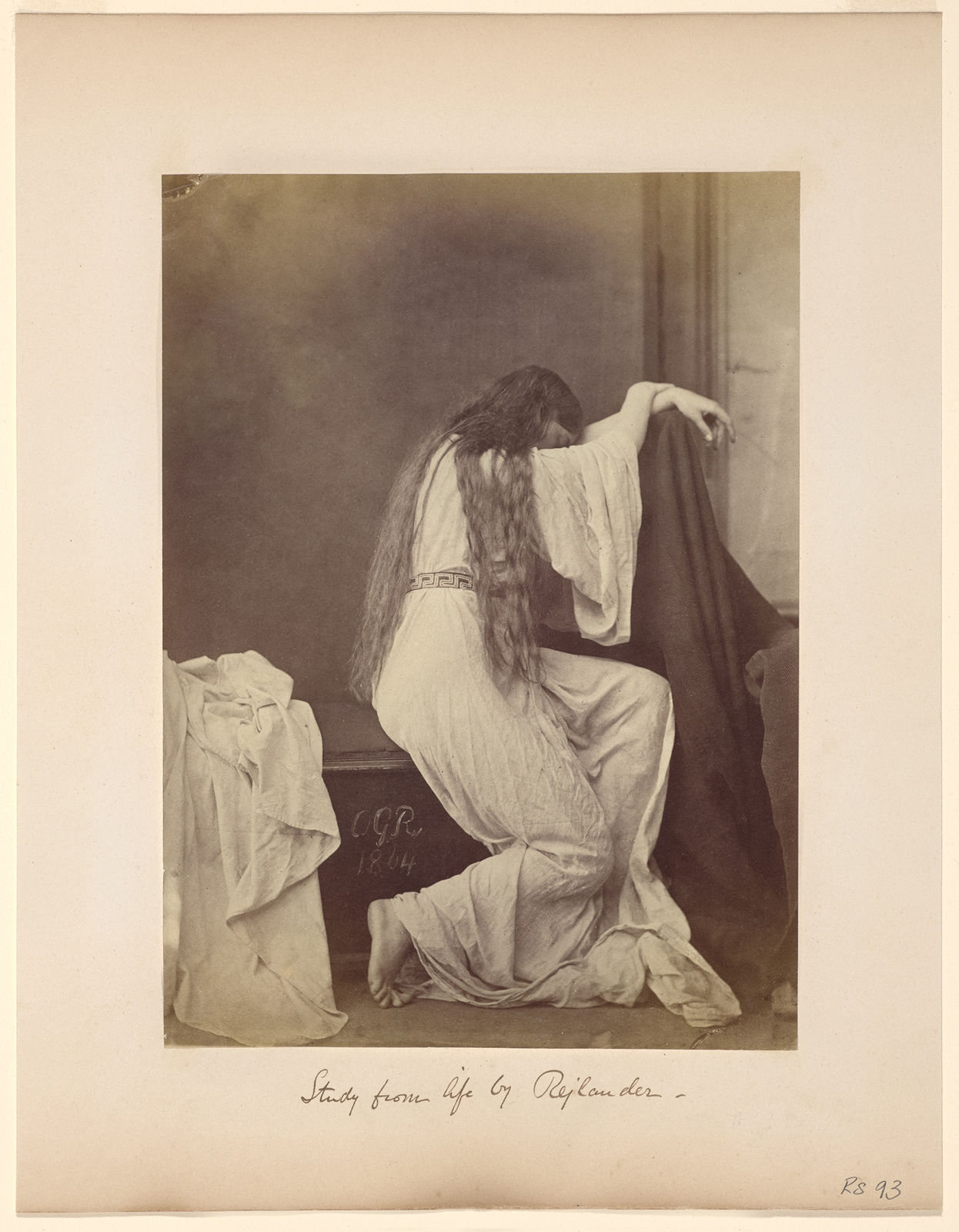
Oscar G. Rejlander (British born Sweden, 1813-1875) 'Grief (Hidden Her Face, Yet Visible Her Anguish)' 1864


Oscar G. Rejlander (British born Sweden, 1813-1875)
Grief (Hidden Her Face, Yet Visible Her Anguish)
1864
Albumen silver print
19.6 x 14cm (7 11/16 x 5 1/2 in.)
Fine Arts Museums of San Francisco, M. H. de Young Memorial Museum. Gift of John H. Rubel


Oscar G. Rejlander (British born Sweden, 1813-1875) 'The Comb Seller (Oscar and Mary Rejlander)' c. 1860


Oscar G. Rejlander (British born Sweden, 1813-1875)
The Comb Seller (Oscar and Mary Rejlander)
c. 1860
Albumen silver print
20 x 14.9cm (7 7/8 x 5 7/8 in.)
University of New Mexico Art Museum, Albuquerque. Gift of Eleanor and Van Deren Coke


Oscar G. Rejlander (British born Sweden, 1813-1875) 'Lionel Tennyson' c. 1863


Oscar G. Rejlander (British born Sweden, 1813-1875)
Lionel Tennyson
c. 1863
Albumen print from a wet collodion negative
Image (oval): 18.3 x 14.3cm (7 3/16 x 5 5/8 in.)
National Gallery of Art, Washington, Paul Mellon Fund


Oscar G. Rejlander (British born Sweden, 1813-1875) 'Mental Distress (Mother's Darling)' 1871


Oscar G. Rejlander (British born Sweden, 1813-1875)
Mental Distress (Mother’s Darling)
1871
Carbon print of a polychrome drawing from a photograph
54 x 43.2cm (21 1/4 x 17 in.)
The Royal Photographic Society Collection at the V&A, acquired with the generous assistance of the Heritage Lottery Fund and Art Fund Image
© Victoria & Albert Museum, London


Oscar G. Rejlander (British born Sweden, 1813-1875) 'Lewis Carroll (Charles Lutwidge Dodgson)' 1863


Oscar G. Rejlander (British born Sweden, 1813-1875)
Lewis Carroll (Charles Lutwidge Dodgson)
1863
Albumen silver print
8.9 x 5.9cm (3 1/2 x 2 5/16 in.)
The Metropolitan Museum of Art, Gilman Collection
Purchase, Sam Salz Foundation Gift, 2005


Oscar G. Rejlander (British born Sweden, 1813-1875) 'Allegorical Study (Sacred and Profane Love)' c. 1860


Oscar G. Rejlander (British born Sweden, 1813-1875)
Allegorical Study (Sacred and Profane Love)
c. 1860
Albumen paper print
12 x 17.5cm (4 3/4 x 6 7/8 in.)
Wilson Centre for Photography


Oscar G. Rejlander (British born Sweden, 1813-1875) 'Bad Temper' Negative about 1865; print later


Oscar G. Rejlander (British born Sweden, 1813-1875)
Bad Temper
Negative about 1865; print later
Albumen paper print
The Royal Photographic Society Collection at the V&A, acquired with the generous assistance of the Heritage Lottery Fund and Art Fund, Image
© Victoria & Albert Museum, London


Oscar G. Rejlander (British born Sweden, 1813-1875) 'Henry Taylor' 1863


Oscar G. Rejlander (British born Sweden, 1813-1875)
Henry Taylor
1863
Albumen silver print
20.2 x 15cm (7 15/16 x 5 7/8 in.)
Spencer Museum of Art, University of Kansas
Gift of Dr. and Mrs. William D. Paden


Sir Henry Taylor KCMG (18 October 1800 – 27 March 1886) was an English dramatist and poet, Colonial Office official, and man of letters.


Oscar G. Rejlander (British born Sweden, 1813-1875) 'Self-Portrait with Parrot' c. 1865


Oscar G. Rejlander (British born Sweden, 1813-1875)
Self-Portrait with Parrot
c. 1865
In “Album of Photographs by Oscar G. Rejlander,” 1856-72
Albumen silver print
Closed: 37.4 x 27.6 x 0.3cm (14 3/4 x 10 7/8 x 1/8 in.)
Sir Nicholas Mander Collection


The J. Paul Getty Museum
1200 Getty Center Drive
Los Angeles, California 90049

Opening hours:
Daily 10am – 5.30pm
Monday closed

The J. Paul Getty Museum website

LIKE ART BLACK ON FACEBOOK

Back to top

Exhibition: ‘Wols’ Photography: Images Regained’ at the Kupferstich-Kabinett, Staatliche Kunstsammlungen Dresden

Exhibition dates: 17th May – 26th August 2013


Otto Wols (Alfred Otto Wolfgang Schulze) (German, 1913-1951) 'Nicole Bouban, Autumn 1932 - October 1933 / january 1935-1937' 1937


Otto Wols (Alfred Otto Wolfgang Schulze) (German, 1913-1951)
Nicole Bouban, Autumn 1932 – October 1933 / january 1935-1937
1937, vintage print 1937
Gelatin silver print
300 x 240mm
Cabinet of Prints, Dresden State Art Collections


Another little known photographer (to me at least) that this archive likes promoting. Unfortunately the gallery did not supply many media images and there are few available online.

Dr Marcus Bunyan


Many thankx to the Staatliche Kunstsammlungen for allowing me to publish the photographs in the posting. Please click on the photographs for a larger version of the image.


Otto Wols (Alfred Otto Wolfgang Schulze) (German, 1913-1951) 'Untitled (Still life - wicker and birds)' 1938 - August, 1939


Otto Wols (Alfred Otto Wolfgang Schulze) (German, 1913-1951)
Untitled (Still life – wicker and birds)
1938 – August 1939, modern print 1970s
Gelatin silver paper (Agfa paper)
200 x 137 / 239 x 178mm
Cabinet of Prints, Dresden State Art Collections


Otto Wols (Alfred Otto Wolfgang Schulze) (German, 1913-1951) 'Untitled (Still life - Grapefruit)' 1938 - August, 1939


Otto Wols (Alfred Otto Wolfgang Schulze) (German, 1913-1951)
Untitled (Still life – Grapefruit)
1938 – August 1939, early modern print without year
Gelatin silver paper (Agfa Brovira paper)
174 x 120 / 180 x 131mm
Cabinet of Prints, Dresden State Art Collections


Otto Wols (Alfred Otto Wolfgang Schulze) (German, 1913-1951) 'Untitled (The Swiss Pavilion - Drahtfigurine)' 1937


Otto Wols (Alfred Otto Wolfgang Schulze) (German, 1913-1951)
Untitled (The Swiss Pavilion – Drahtfigurine)
1937, vintage print 1936-1937
Gelatin silver paper (Agfa Brovira paper)
242 x 180mm
Cabinet of Prints Dresden State Art Collections


Otto Wols (Alfred Otto Wolfgang Schulze) (German, 1913-1951) 'Untitled (Paris - Eiffel Tower)' 1937


Otto Wols (Alfred Otto Wolfgang Schulze) (German, 1913-1951)
Untitled (Paris – Eiffel Tower)
1937, modern printed 1970s
Gelatin silver print
205 x 139 / 240 x 178mm
Cabinet of Prints, Dresden State Art Collections


On the Occasion of the 100th Birthday of the Epochal Photographer, Painter and Graphic Artist. 
An exhibition by the Kupferstich-Kabinett, Staatliche Kunstsammlungen Dresden 
17 May to 26 August 2013

Wols (1913-1951) is a key figure of post-war modernism. However, as this exhibition of his photography demonstrates, there are still aspects of his work which can come as a surprise and which amount to a remarkable discovery. Wols’ Photography: Images Regained, a retrospective marking the centenary of his birth, is the first exhibition to be devoted to a comprehensive exploration of his photographic work. It runs from 17 May to 26 August in the Dresden Kupferstich-Kabinett, and presents around 740 works, including modern prints from original negatives, contact prints and rare vintage prints made by Wols himself. The exhibition and its accompanying catalogue look beyond the myths surrounding Wols to focus on his artistic achievements, providing new insights based on recent art-historical reappraisal of works held in the Dresden collection.

In 1932 the artistically ambitious young nonconformist Wolfgang Schulze, alias Wols, left Dresden for Paris, where in 1951, at the age of 38, he was to die. Paris, at that time the undisputed metropolis of modernity and the avant-garde, held a magical attraction for young artists from all over the world intent on establishing themselves as photographers. In the brief period between 1932 and 1939 Wols created an impressive body of photographic work, a medium that he abandoned after 1945, when his attention turned to drawing and painting; after his death, this important aspect of his oeuvre was largely forgotten.

This presentation of Wols’ photography in the Dresden Kupferstich-Kabinett will later also be shown in Berlin, at the Martin-Gropius-Bau (15 March to 22 June 2014), a venue renowned for important photographic exhibitions, and a further showing in Paris is planned for autumn 2014. This means that this previously little-known, but central, body of work can be explored to an unprecedented extent in places which were of great significance at various stages in the artist’s life. Wols was born in Berlin, and briefly returned there as a young man, drawn to the creative force field of the Bauhaus, by then already in the process of dissolution; it was here that he received what was to be artistically crucial advice to move to Paris. In Dresden, in the intellectual circle of Ida Bienert, he had already become acquainted while still in his teens with facets of international modernism. Paris was where he ultimately achieved artistic fulfilment and recognition.

The exhibition draws on the important resources preserved in the estate of the artist’s sister, Elfriede Schulze-Battmann, now held in the Kupferstich-Kabinett. In addition to correspondence, this archive contains more than 1,000 works, most of which are modern prints made in the 1960s and 1970s, and is the world’s most extensive collection of Wols’ photographic work. The importance of Wols as a major figure of post-war modernism is underlined in two further exhibitions marking the 100th anniversary of his birth: 
Kunsthalle Bremen: Wols: Die Retrospektive (Wols. The Retrospective) (13 April – 11 August 2013); 
Museum Wiesbaden: Wols: Das große Mysterium (Wols. The Great Mystery) (17 October 2013 – 26 January 2014).

As a photographer (1913-1951) Wols continues to this day to be a discovery. The young, artistically ambitious, non-conformist left Dresden for Paris in 1932, where he began his artistic career as a portrait photographer. At that time, Paris, undisputedly the metropolis of the avant-garde and modern life, attracted free spirits from all over the world to seek their fortune. From 1932 to 1939 Wols created his impressive photographic oeuvre, which after 1945 he abandoned as a result of adverse circumstances and a shift in his interest to drawing and painting. In the years following his early death, the few preserved photos and negatives were nearly forgotten.

Today the Dresdener Kupferstich-Kabinett (Collection of Prints, Drawings and Photographs) holds the internationally most important collection of his photographic oeuvre, which was preserved in the estate of his sister, Elfriede Schulze-Battmann. It contains rare modern prints, produced from the original negatives in the 1960s and 1970s, and a small number of valuable vintage prints made by Wols himself.

Press release from the Staatliche Kunstsammlungen Dresden website


Otto Wols (Alfred Otto Wolfgang Schulze) (German, 1913-1951) 'Plate with soup and conch' 1936-1939


Otto Wols (Alfred Otto Wolfgang Schulze) (German, 1913-1951)
Plate with soup and conch
1936-1939
© VG Bild-Kunst, Bonn 2009


Otto Wols (Alfred Otto Wolfgang Schulze) (German, 1913-1951) 'Doll with Robe' 1937


Otto Wols (Alfred Otto Wolfgang Schulze) (German, 1913-1951)
Doll with Robe
1937
From the series of studies Exposition Internationale de Paris. Pavillon de l’Elegance
Gelatin silver print on photo paper
26.3 x 17.8cm


Otto Wols (Alfred Otto Wolfgang Schulze) (German, 1913-1951) 'Jean Sendy (Abelson) with monocle' c. 1930


Otto Wols (Alfred Otto Wolfgang Schulze) (German, 1913-1951)
Jean Sendy (Abelson) with monocle
c. 1930
Gelatin silver photograph
23.8 x 17.4cm (irreg.)


Jean Sendy (French, 1910-1978) is a French writer and translator, author of works on esoterica and UFO phenomena. He was also an early proponent of the ancient astronaut hypothesis.

He wrote the 1968 book The moon: The key to the Bible in which he claimed the God mentioned in Genesis of the Bible should be translated in plural as “Gods”, and that the “Gods” were actually space travellers (an alien race of humanoids). Sendy believed that Genesis was factual history of ancient astronauts colonising earth who became “angels in human memory”. The book contains similar ideas to that of the UFO religion Raëlism.

In his 1969 book Those Gods who made Heaven and Earth, Sendy claimed that space travellers 23,500 years ago arrived in the solar system in a large hollow sphere and seeded humanity.

Text from the Wikipedia website


Otto Wols (Alfred Otto Wolfgang Schulze) (German, 1913-1951) 'Po Pol' 1935


Otto Wols (Alfred Otto Wolfgang Schulze) (German, 1913-1951)
Po Pol
1935
Gelatin silver print on photo paper
23 x 17.2cm


Otto Wols (Alfred Otto Wolfgang Schulze) (German, 1913-1951) 'Untitled (Paris - Palisade) Fall 1932 - October 1933 / January 1935 - August 1939' 1930


Otto Wols (Alfred Otto Wolfgang Schulze) (German, 1913-1951)
Untitled (Paris – Palisade) Fall 1932 – October 1933 / January 1935 – August 1939
1930, vintage print (Contact), 1930
Gelatin silver print
77 x 46mm
Cabinet of Prints, Dresden State Art Collections


Otto Wols (Alfred Otto Wolfgang Schulze) (German, 1913-1951) 'Self Portrait' c. 1932-33


Otto Wols (Alfred Otto Wolfgang Schulze) (German, 1913-1951)
Self Portrait
c. 1932-1933
© VG Bild-Kunst, Bonn 2013


Otto Wols (Alfred Otto Wolfgang Schulze) (German, 1913-1951) 'Self-portrait' 1938


Otto Wols (Alfred Otto Wolfgang Schulze) (German, 1913-1951)
Self-portrait
1938


Staatliche Kunstsammlungen Dresden
Postfach 12 05 51
01006 Dresden
Phone: +49-351-49 14 2643

Opening hours:
Daily 10am – 6pm
Closed on Tuesdays

Staatliche Kunstsammlungen Dresden website

LIKE ART BLART ON FACEBOOK

Back to top

Exhibition: ‘Frida Kahlo: Through the Lens of Nickolas Muray’ at the Albright-Knox Art Gallery, Buffalo NY

Exhibition dates: 8th May – 5th July, 2009


Nickolas Muray (American, 1892-1965) 'Frida with Olmeca Figurine, Coyoacan' 1939 from the exhibition 'Frida Kahlo: Through the Lens of Nickolas Muray' at the Albright-Knox Art Gallery, Buffalo NY, May - July, 2009


Nickolas Muray (American, 1892-1965)
Frida with Olmeca Figurine, Coyoacan
1939
Colour print, assembly (Carbro) process


Forty-seven exquisite colour and black-and-white photographs of the Mexican artist Frida Kahlo by the American photographer Nickolas Muray are featured in this exhibition organised and circulated by Smith Kramer Fine Art Services. Muray and Kahlo first met in Mexico in 1931 and soon began a love affair that lasted ten years and continued as an enduring friendship throughout their lives. The photographs, selected from the Nickolas Muray Archives, capture the exotic mystery and proud beauty of Frida Kahlo through the eyes of this accomplished portrait photographer, who loved her deeply. Organised at the Albright-Knox by Associate Curator Holly E. Hughes, the exhibition will also include reproductions of Kahlo’s letters to Muray, explanatory wall texts, and an educational brochure.

Text from the Albright-Knox Art Gallery website [Online] Cited 01/05/2009. No longer available online


Many thankx to the Albright-Knox Art Gallery for allowing me to publish the photographs in the posting. Please click on the photographs for a larger version of the image.


Nickolas Muray (American, 1892-1965) 'Frida, Mexico, 1940' c. 1940 from the exhibition 'Frida Kahlo: Through the Lens of Nickolas Muray' at the Albright-Knox Art Gallery, Buffalo NY, May - July, 2009


Nickolas Muray (American, 1892-1965)
Frida, Mexico, 1940
c. 1940
Colour print, assembly (Carbro) process


Nickolas Muray (American, 1892-1965) 'Frida with her sister Cristina, Nickolas Muray, and Rosa Covarrubias, Coyoacán' 1939


Nickolas Muray (American, 1892-1965)
Frida with her sister Cristina, Nickolas Muray, and Rosa Covarrubias, Coyoacán
1939
Colour print, assembly (Carbro) process


Nickolas Muray (American, 1892-1965) 'Frida Painting the Two Fridas, Coyoacan' 1939


Nickolas Muray (American, 1892-1965)
Frida Painting the Two Fridas, Coyoacan
1939
Silver gelatin print


Nickolas Muray (American, 1892-1965) 'Frida with Nick in her Studio, Coyoacán' 1941


Nickolas Muray (American, 1892-1965)
Frida with Nick in her Studio, Coyoacán
1941
Silver gelatin print


Nickolas Muray (American, 1892-1965) 'Frida with Granizo, Coyoacán' 1939


Nickolas Muray (American, 1892-1965)
Frida with Granizo, Coyoacán
1939
Silver gelatin print


Nickolas Muray (American, 1892-1965) 'Frida in the Dining Area, Coyoacán' 1941


Nickolas Muray (American, 1892-1965)
Frida in the Dining Area, Coyoacán
1941
Gelatin silver print


Nickolas Muray (American, 1892-1965) 'Frida and Diego, San Angel' 1941


Nickolas Muray (American, 1892-1965)
Frida and Diego, San Angel
1941
Gelatin silver print


Nickolas Muray (American, 1892-1965) 'Frida Kahlo' c. 1940


Nickolas Muray (American, 1892-1965)
Frida Kahlo
c. 1940
Colour print, assembly (Carbro) process


Nickolas Muray (American, 1892-1965) 'The Breton Portrait' 1939


Nickolas Muray (American, 1892-1965)
The Breton Portrait
1939
Silver gelatin print


Nickolas Muray (American, 1892-1965) 'Frida with Magenta Rebozo, New York' 1939


Nickolas Muray (American, 1892-1965)
Frida with Magenta Rebozo, New York
1939
Colour print, assembly (Carbro) process


Nickolas Muray (American, 1892-1965) 'Frida with Magenta Rebozo, New York' 1939


Nickolas Muray (American, 1892-1965)
Frida with Magenta Rebozo, New York
1939
Colour print, assembly (Carbro) process


Nickolas Muray

In 1913, with the threat of war in Europe, Muray sailed to New York City, and was able to find work as a colour printer in Brooklyn.

By 1920, Muray had opened a portrait studio at his home in Greenwich Village, while still working at his union job as an engraver. In 1921 he received a commission from Harper’s Bazaar to do a portrait of the Broadway actress Florence Reed; soon after he was having photographs published each month in Harper’s Bazaar, and was able to give up his engraving job. In 1922 he also made a portrait of the dancer Desha Delteil.

Muray quickly became recognised as an important portrait photographer, and his subjects included most of the celebrities of New York City. In 1926, Vanity Fair sent Muray to London, Paris, and Berlin to photograph celebrities, and in 1929 hired him to photograph movie stars in Hollywood. He also did fashion and advertising work. Muray’s images were published in many other publications, including Vogue, Ladies’ Home Journal, and The New York Times.

Between 1920 and 1940, Muray made over 10,000 portraits. His 1938 portrait of Frida Kahlo, made while Kahlo sojourned in New York, attending her exhibit at the Julien Levy Gallery, became the best known and loved portrait made by Muray. Muray and Kahlo were at the height of a ten-year love affair in 1939 when the portrait was made. Their affair had started in 1931, after Muray was divorced from his second wife and shortly after Kahlo’s marriage to Mexican muralist painter Diego Rivera. It outlived Muray’s third marriage and Kahlo’s divorce and remarriage to Rivera by one year, ending in 1941. Muray wanted to marry, but when it became apparent that Kahlo wanted Muray as a lover, not a husband, Muray took his leave for good and married his fourth wife, Peggy Muray. He and Kahlo remained good friends until her death, in 1954.

After the market crash, Muray turned away from celebrity and theatrical portraiture, and become a pioneering commercial photographer, famous for his creation of many of the conventions of colour advertising. He was considered the master of the three-color carbro process. His last important public portraits were of Dwight David Eisenhower in the 1950s.

Text from the Wikipedia website


Nickolas Muray (American, 1892-1965) 'Frida With Hand at Her Throat, Mexico City' 1940


Nickolas Muray (American, 1892-1965)
Frida With Hand at Her Throat, Mexico City
1940
Colour print, assembly (Carbro) process


Nickolas Muray (American, 1892-1965) 'Frida leaning on a sculpture by Mardonio Magaña, Coyoacán, Mexico' 1940


Nickolas Muray (American, 1892-1965)
Frida leaning on a sculpture by Mardonio Magaña, Coyoacán, Mexico
1940
Colour print, assembly (Carbro) process


Nickolas Muray (American, 1892-1965) 'Frida in Pink and Green Blouse, Coyoacán' 1938


Nickolas Muray (American, 1892-1965)
Frida in Pink and Green Blouse, Coyoacán
1938
Colour print, assembly (Carbro) process


Nickolas Muray (American, 1892-1965) 'Friday on White Bench, New York' 1939


Nickolas Muray (American, 1892-1965)
Frida on White Bench, New York
1939
Colour print, assembly (Carbro) process


An exhibition of photographs of the acclaimed Mexican artist Frida Kahlo taken by her friend and lover, the internationally renowned portrait photographer Nickolas Muray (1892-1965), will be on view at the Albright-Knox Art Gallery from May 8 through July 5, 2009. Frida Kahlo: Through the Lens of Nickolas Muray, From the Collection of the Nickolas Muray Archives celebrates Kahlo’s life and work and comprises approximately fifty colour and black-and-white photographs, along with archival material, including excerpts from letters between Kahlo and Muray. The installation in Buffalo will feature Frida Kahlo’s Self- Portrait with Monkey, 1938, from the Albright-Knox Art Gallery’s Permanent Collection.

Born in Hungary in 1892, Nickolas Muray came to the United States in 1913, marking the beginning of his forty-five-year career living and working in New York City. Originally hired by Condé Nast Publications to prepare illustrations for magazines, in 1920 Muray set up a photography studio at his home in Greenwich Village. Following an assignment in 1921 for Harper’s Bazaar magazine to photograph the Broadway star Florence Reed, Muray’s career as a portrait and celebrity photographer took off. Soon he was photographing “everybody who was anybody” and his work was regularly featured in such publications as Vanity Fair, Vogue, and Ladies’ Home Journal.

Nickolas Muray and Frida Kahlo first met in Mexico in 1931 and soon began a love affair that lasted ten years and continued as a friendship that endured all their lives. The images included in this exhibition, dating from 1937 to 1940, were taken during the height of the couple’s on-again, off-again, ten-year love affair. The photographs included were selected from the Nickolas Muray Archives and capture the exotic mystery and proud beauty of Frida Kahlo through the eyes of this accomplished portrait photographer who loved her deeply.

Text from the Artdaily.org website


Frida Kahlo (Mexican, 1907-1954) 'Self-Portrait with Monkey' 1938


Frida Kahlo (Mexican, 1907-1954)
Self-Portrait with Monkey
1938
Oil on masonite
40.6 cm × 30.5cm (16.0 in × 12.0 in)
Albright-Knox Art Gallery, Buffalo, New York


Of her 143 self-portraits, 55 include Kahlo’s pets. It is as though she saw them as an extension of her own self and being. Spider monkeys are known to have long, spindly legs and arms that look almost disproportionate to their body. Their strange appearance may have reflected Kahlo’s own discomfort with her physical body. Having contracted polio at an early age, she had one leg that was thinner than the other. She used colourful, large skirts to cover the disfigurement.

Kahlo doted on her pet monkeys. In her self-portraits, they are often shown sitting close to her, physically enfolding or grasping her in some way. They appear to be protective, friendly and gentle.

In many cultures, monkeys are used to symbolise lascivious, or primal behaviour. They are a mirror image of man, reminding him of his animal nature and close proximity to the natural world. Through monkeys, man sees his own connection to the animal kingdom with its uncontrollable, primal urges. In renaissance art, fettered monkeys were often used to symbolise men who are entrapped or bound by their desires.

In Kahlo’s paintings, monkeys do not appear in this way. They are more gentle, child-like and tender. Partially due to their wild natures, monkeys are often associated with fertility or lust in Mexican mythology. Kahlo’s trust and connection with her pets may have been in part due to her own feelings of inadequacy and frustration around her inability to carry to children. One of the reasons feminists celebrate Kahlo’s work is her unabashed claim to her own sexuality. She was not afraid to acknowledge her own sexual feelings or desires.

In Kahlo’s painting, the monkeys appear loyal. It feels as though Kahlo is connected with the creatures in some way. There is a bond there. Never the less, the monkeys also often appear by Kahlo’s shoulder or back, reflecting the image of a ‘monkey on your back’, a phrase commonly used to describe a problem or burden of some kind. With their association with animal nature, disfigured or primal humanity and lascivious primal urges, Kahlo may have felt at once supported by and burdened by her connection to her animal ancestors.

Extract from Kitty Jackson. “Symbolism in Art: Frida Kahlo – Self Portrait with Monkey,” on the ArtDependence Magazine website, September 4, 2017 [Online] Cited 20/01/2019


Nickolas Muray (American, 1892-1965) 'Frida in Front of the Cactus Organ Fence, San Angel' 1938


Nickolas Muray (American, 1892-1965)
Frida in Front of the Cactus Organ Fence, San Angel
1938
Colour print, assembly (Carbro) process


Nickolas Muray (American, 1892-1965) 'Frida with Blue Satin Blouse, New York' 1939


Nickolas Muray (American, 1892-1965)
Frida with Blue Satin Blouse, New York
1939
Colour print, assembly (Carbro) process


Nickolas Muray (American, 1892-1965) 'Frida on Rooftop, New York' 1946


Nickolas Muray (American, 1892-1965)
Frida on Rooftop, New York
1946
Colour print, assembly (Carbro) process


Nickolas Muray (American, 1892-1965) 'Cristina and Frida, New York' 1946


Nickolas Muray (American, 1892-1965)
Cristina and Frida, New York
1946
Colour print, assembly (Carbro) process


Albright-Knox Art Gallery
1285 Elmwood Avenue
Buffalo, New York 14222-1096

Opening hours:
Tuesday – Sunday 10am – 5pm
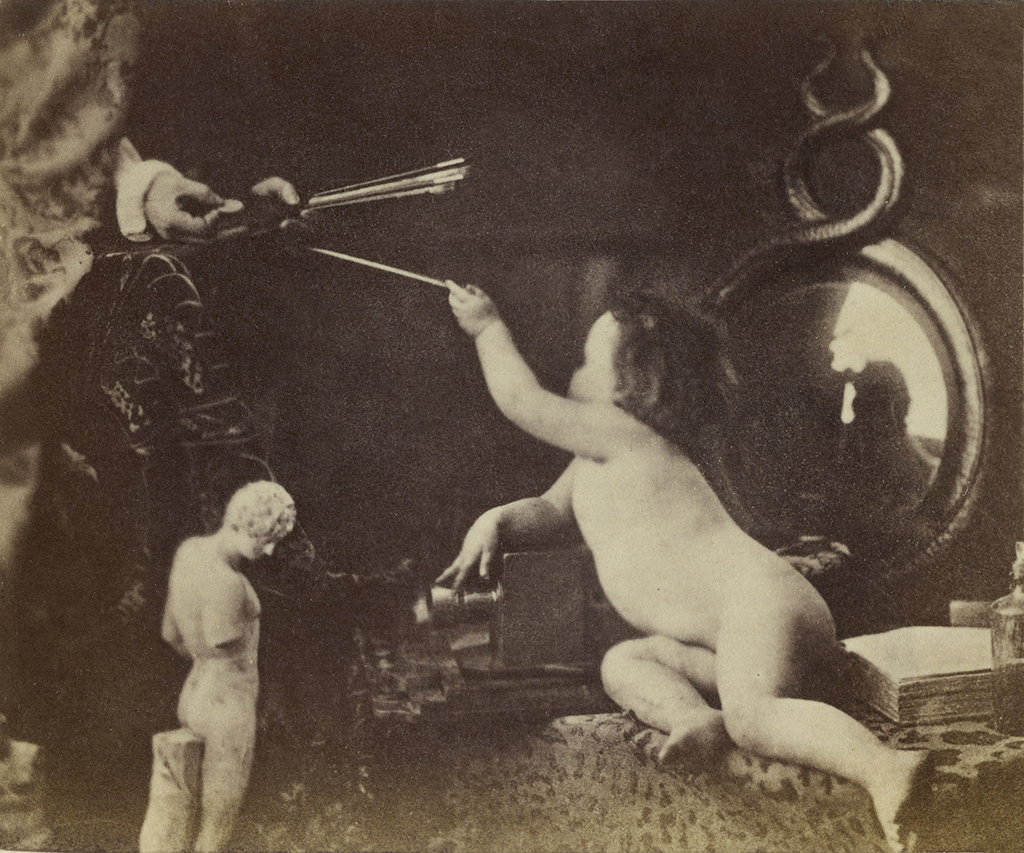
Closed Mondays, Tuesdays, and Independence, Thanksgiving, Christmas, and New Year’s Days

Albright-Knox Art Gallery website

LIKE ART BLART ON FACEBOOK

Back to top