Exhibition: ‘Still Performing: Costume, Gesture, and Expression in 19th Century European Photography’ at the Nelson-Atkins Museum of Art, Kansas City

Exhibition dates: 24th August, 2024 – 12th January, 2025
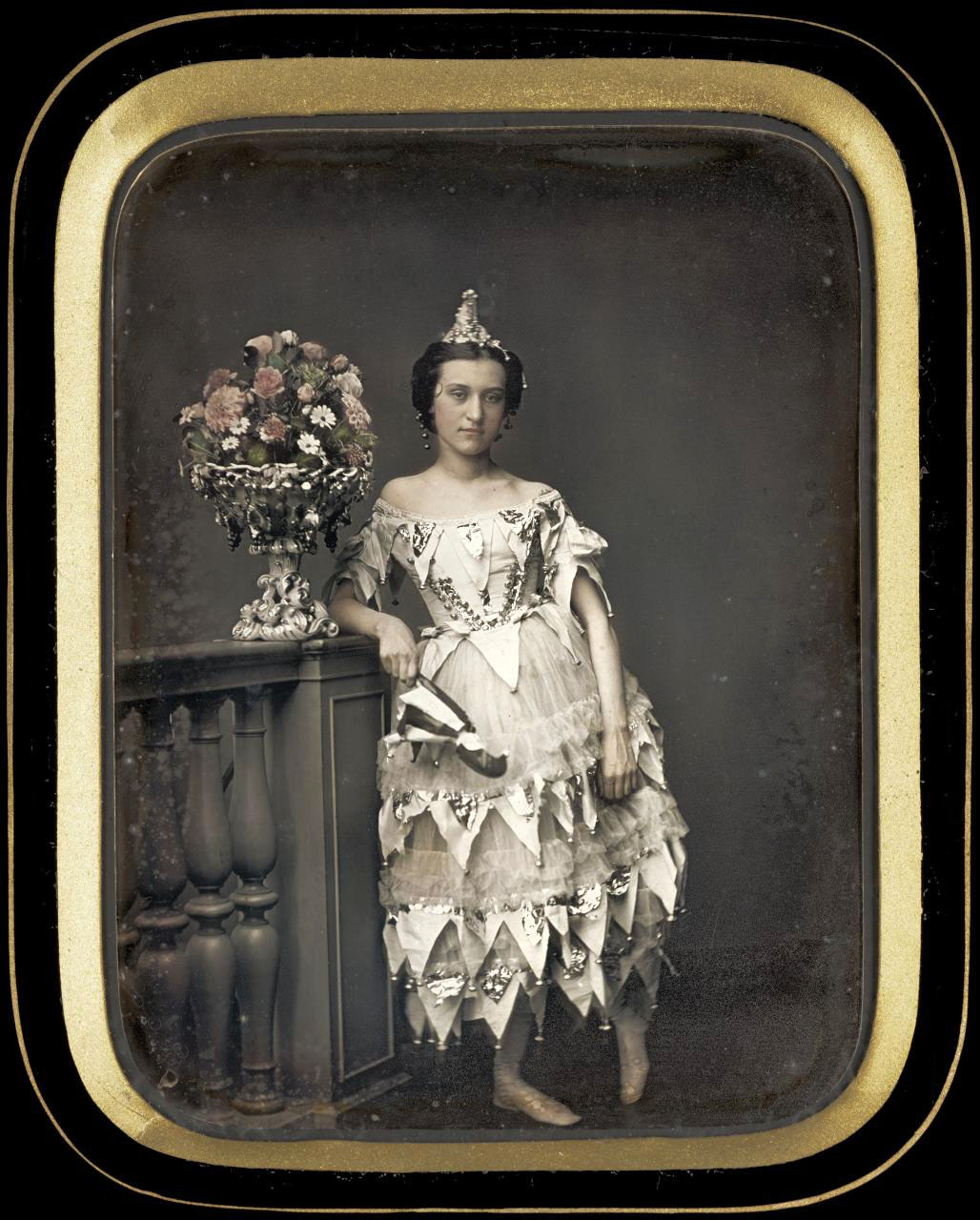
 

Victor Plumier (Belgian, 1820-1878) 'Lady in Costume' About 1850 from the exhibition 'Still Performing: Costume, Gesture, and Expression in 19th Century European Photography' at the Nelson-Atkins Museum of Art, Kansas City


Victor Plumier (Belgian, 1820-1878)
Lady in Costume
About 1850
Daguerreotype, half plate
5 1/2 × 4 1/2 inches
The Nelson-Atkins Museum of Art
Gift of the Hall Family Foundation


Past present

Magnificent photographs that bring past presence into present consciousness.

Costume. variedly, the term “costume,” indicating clothing exclusively from the eighteenth century onward, can be traced back to the Latin consuetudo, meaning “custom” or “usage.”

Gesture. late Middle English: from medieval Latin gestura, from Latin gerere ‘bear, wield, perform’. The original sense was ‘bearing, deportment’, hence ‘the use of posture and bodily movements for effect in oratory’.

Expression. the action of making known one’s thoughts or feelings. a look on someone’s face that conveys a particular emotion. late Middle English: from Latin expressio(n- ), from exprimere ‘press out, express’.


The emotions and the sentiments, the gestures and the expressions.

The actor and the stage, the photographer and the sitter.

The staged photograph and the tableaux vivant.

The Self and the Other.


Today, something happens when we look at these photographs. Today, the social spaces, gestures and expressions in these photographs are not fixed, monological re-presentations or presences. Our experience of the photographs enables them to be seen as nodes within a network caught up in a system of social and cultural references, whose unity is variable and relative.1

Thus,

” …in my reading (of the photograph), I relied upon a number of semiological systems, each one being a social / cultural construct: the sign language of clothes, of facial expressions, of bodily gestures, of social manner, etc. Such semiological systems do indeed exist and are continually being used in the making and reading of images. Nevertheless the sum total of these systems cannot exhaust, does not begin to cover, all that can be read in appearances.”2

The intertextuality of images.

Dr Marcus Bunyan


1/ Roland Barthes. “From Work to Text” and Michel Foucault. The Order of Things: An Archeology of the Human Sciences in Kurt Thumlert. Intervisuality, Visual Culture, and Education. [Online] Cited 10/08/2006. No longer available online

2/ John Berger and Jean Mohr. Another Way of Telling. New York: Pantheon Books, 1982, p. 112


Many thankx to the Nelson-Atkins Museum for allowing me to publish the photographs in the posting. Please click on the photographs for a larger version of the image.


“There is no perfection, no infinite completeness. But always, there is a way to move toward being whole. The capital letter, the Self is a wholeness that does not and will never exist. It is a direction that I move toward no matter the meanders of my feet.”


Kendrick VanZant
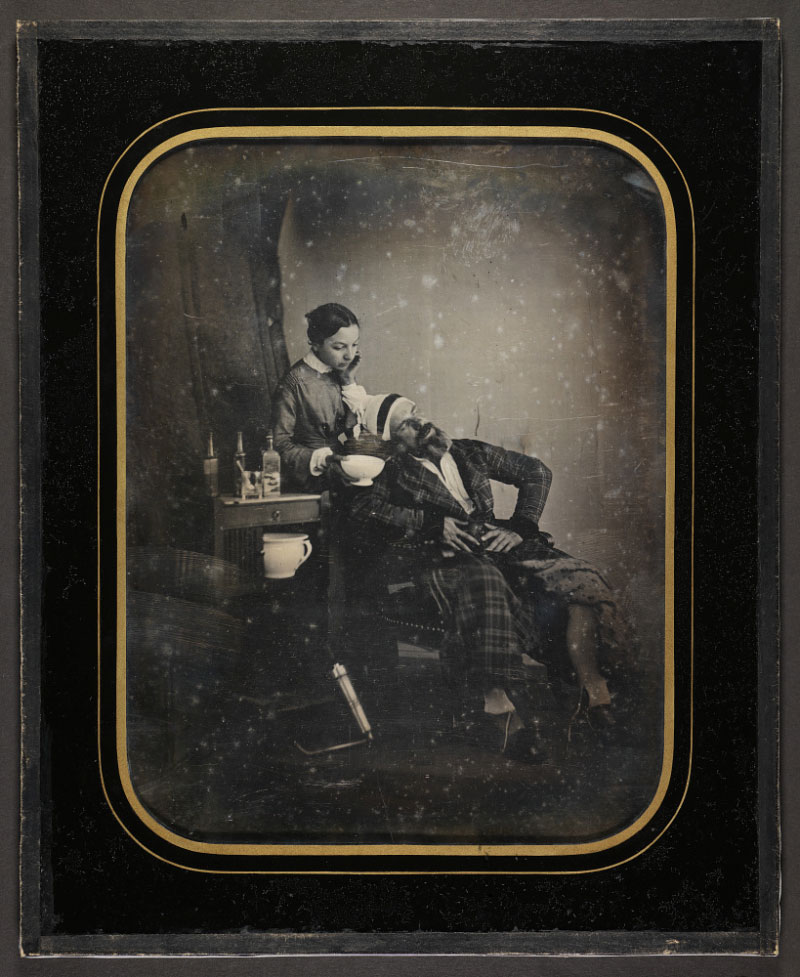


Camille Dolard (French, 1810-1884) 'Self-portrait as ailing man' c. 1843-1845


Camille Dolard (French, 1810-1884)
Self-portrait as ailing man
c. 1843-1845
Daguerreotype
Plate (whole): 8 1/2 × 6 1/2 inches (21.59 × 16.51cm)
Mat: 10 3/8 × 8 3/8 inches (26.37 × 21.29cm)
The Nelson-Atkins Museum of Art
Gift of the Hall Family Foundation


French painter Camille Dolard briefly embraced photography in the 1840s as an innovative creative tool. This daguerreotype, and the one in the next case, are from a group of three theatrical self-portraits created by Dolard in his studio. Here, the artist performs for the camera, posing with props and costumes as a patient in the care of his attentive wife. In the other plate, he uses a similarly theatrical approach, depicting himself smoking a hookah (a water pipe used to smoke tobacco) while lounging on a patterned rug.

Text from the Nelson-Atkins Museum website
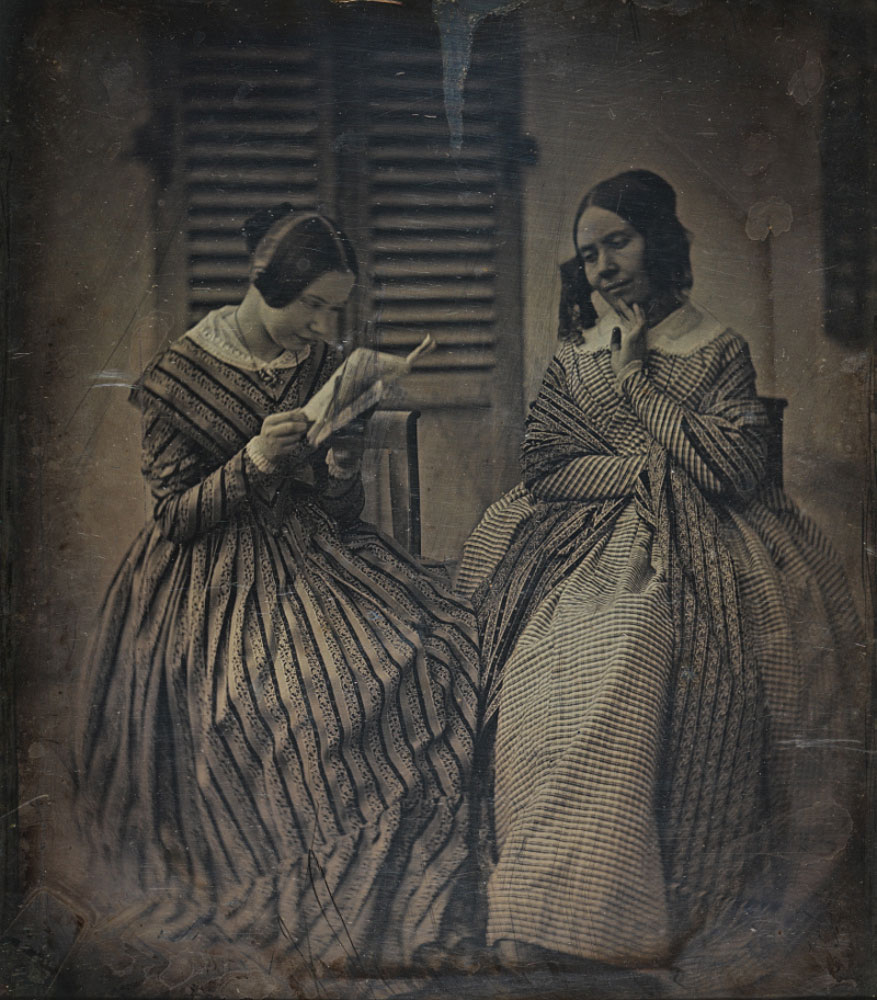
 

Jean-Pierre Thierry (French, 1810-1870) 'Two ladies reading a letter' c. 1845


Jean-Pierre Thierry (French, 1810-1870)
Two ladies reading a letter
c. 1845
Daguerreotype
Plate (quarter): 4 1/4 × 3 1/4 inches (10.8 × 8.26 cm)
Mat: 6 1/16 × 5 1/8 inches (15.39 × 13.03 cm)
The Nelson-Atkins Museum of Art
Gift of the Hall Family Foundation
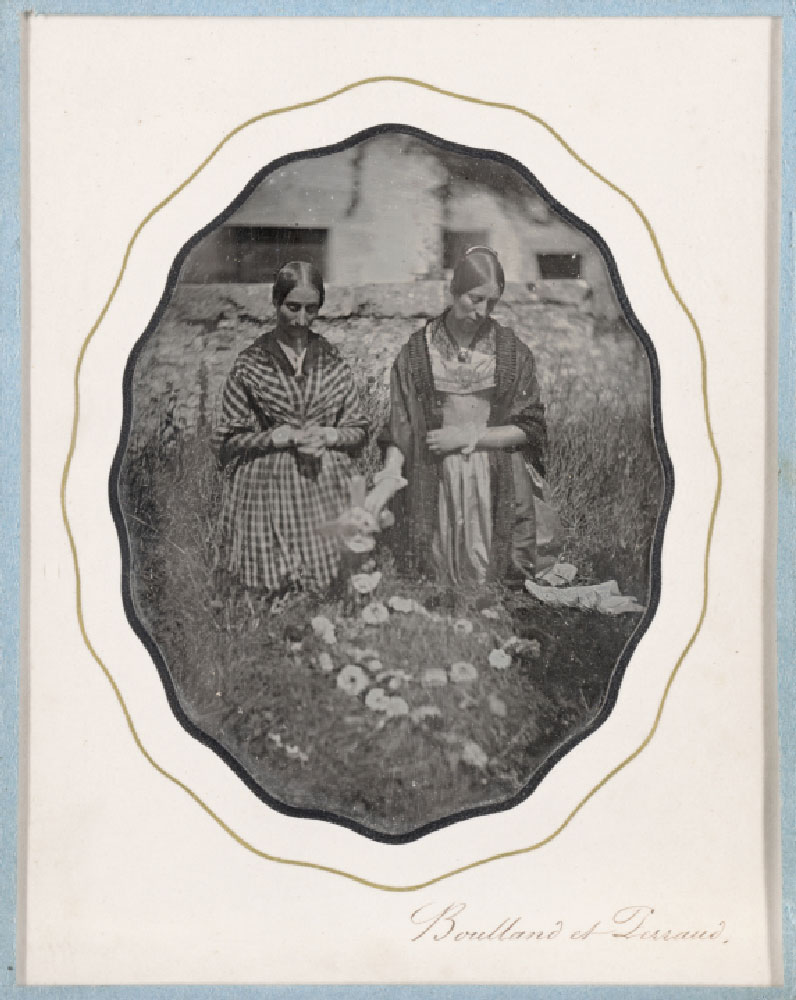
 

Philibert Perraud (French, 1815 - after 1863) 'Deux femmes se recueillent sur la tombe d'une etre cher ...' (Two women at the grave of a loved one) c. 1845


Philibert Perraud (French, 1815 – after 1863)
Deux femmes se recueillent sur la tombe d’une etre cher … (Two women at the grave of a loved one)
c. 1845
Daguerreotype
Plate (quarter): 4 1/4 × 3 1/4 inches (10.8 × 8.26cm)
 Mount: 5 1/8 × 4 1/8 inches (13.02 × 10.48cm)
The Nelson-Atkins Museum of Art
Gift of the Hall Family Foundation
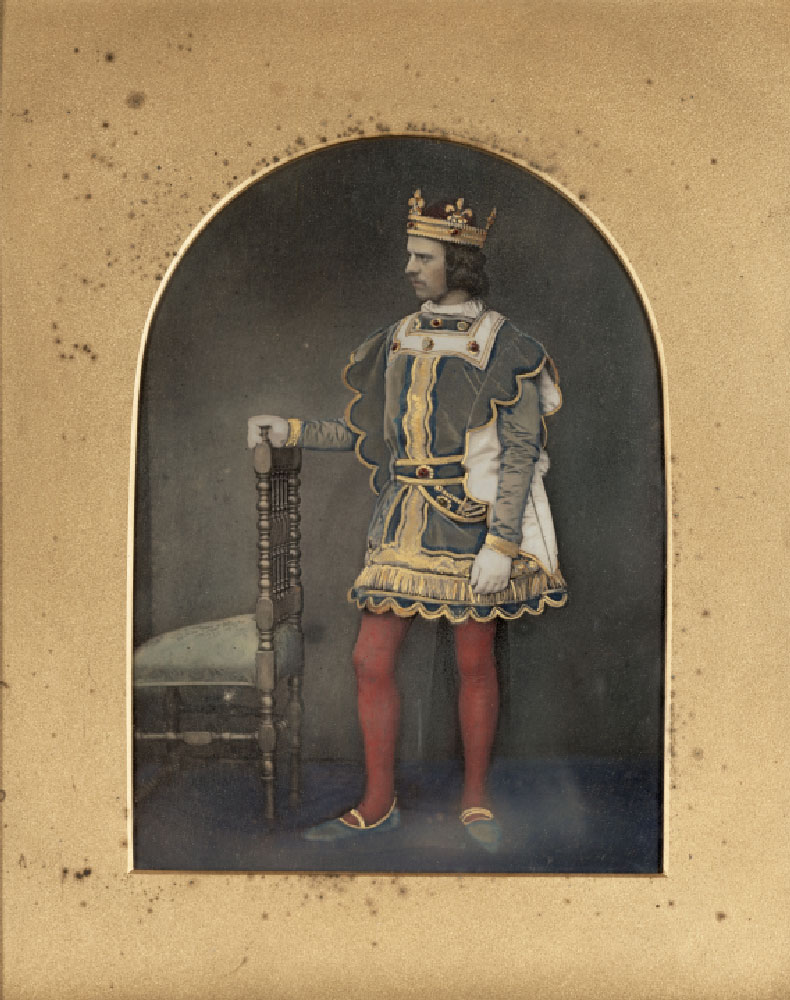
 

Unknown photographer. 'Actor in Costume' c. 1850 from the exhibition 'Still Performing: Costume, Gesture, and Expression in 19th Century European Photography' at the Nelson-Atkins Museum of Art, Kansas City


Unknown photographer
Actor in Costume
c. 1850
Daguerreotype
Plate (three-quarter): 6 × 4 1/2 inches (15.24 × 11.43 cm)
Case (open): 8 1/8 × 13 1/4 × 3/8 inches (20.64 × 33.66 × 0.95 cm)
Case (closed): 8 1/8 × 6 5/8 × 5/8 inches (20.64 × 16.83 × 1.59 cm)
The Nelson-Atkins Museum of Art
Gift of the Hall Family Foundation


Though the pose and expression in this photograph are stiff, the extensive hand-colouring enlivens the portrait, drawing attention to the fine details in the actor’s costume. Sitting for a daguerreotype portrait in the 1850s required patience and a certain degree of stamina. Photographic exposure times – which varied according to plate sensitivity and studio lighting – typically ranged from three to 30 seconds. Studio props, such as chairs and head braces, were used to help sitters remain as motionless as possible for the duration of the exposure.

Text from the Nelson-Atkins Museum website
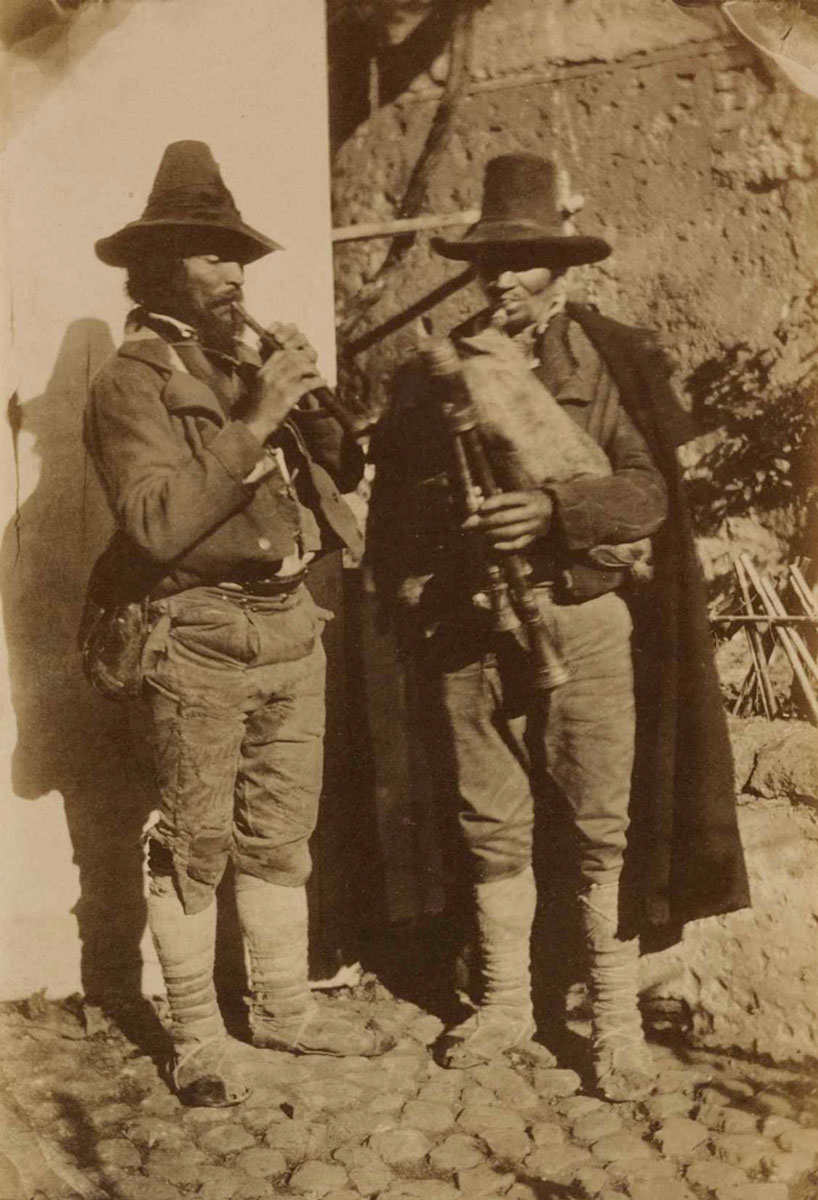
 

Giacomo Caneva (Italian, 1813-1865) 'Two Pifferari' c. 1850s


Giacomo Caneva (Italian, 1813-1865)
Two Pifferari
c. 1850s
Salt print
Image: 8 3/8 × 5 11/16 inches (21.27 × 14.45cm)
Sheet: 11 3/16 × 5 11/16 inches (28.42 × 14.45cm)
The Nelson-Atkins Museum of Art
Gift of the Hall Family Foundation


Nothing summed up picturesque modern Italy as well as the Pifferari; described by Hector Berlioz (1803-1869) in 1832: ‘These are strolling musicians who, towards Christmas, come down from the mountains in groups of four or five, armed with bagpipes and ‘pifferi’ (a sort of oboe), to play in homage before statues of the Madonna. They are generally dressed in large brown woollen coats and the pointed hats that brigands sport, and their whole appearance is instinct with a kind of mystic savagery that is most striking’. He admits that close to the music is ‘overpoweringly loud, but at a certain distance the effect of this strange ensemble of instruments is haunting and few are unmoved by it’.

Text from the Royal Collection Trust website
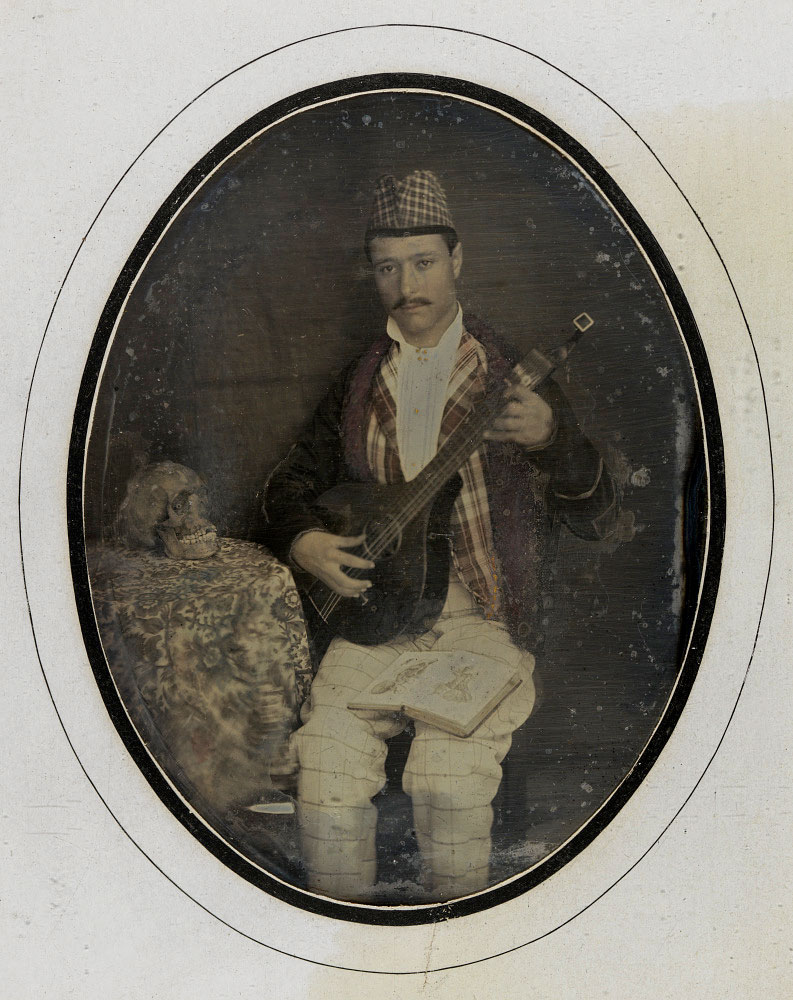
 

José Maria Blanco (Spanish, active c. 1850) 'Man with mandolin' 1851 from the exhibition 'Still Performing: Costume, Gesture, and Expression in 19th Century European Photography' at the Nelson-Atkins Museum of Art, Kansas City


José Maria Blanco (Spanish, active c. 1850)
Man with mandolin
1851
Daguerreotype
Plate (quarter): 4 × 3 1/4 inches (10.16 × 8.26cm)
Mat: 5 5/8 × 4 7/8 inches (14.29 × 12.38cm)
The Nelson-Atkins Museum of Art
Gift of the Hall Family Foundation
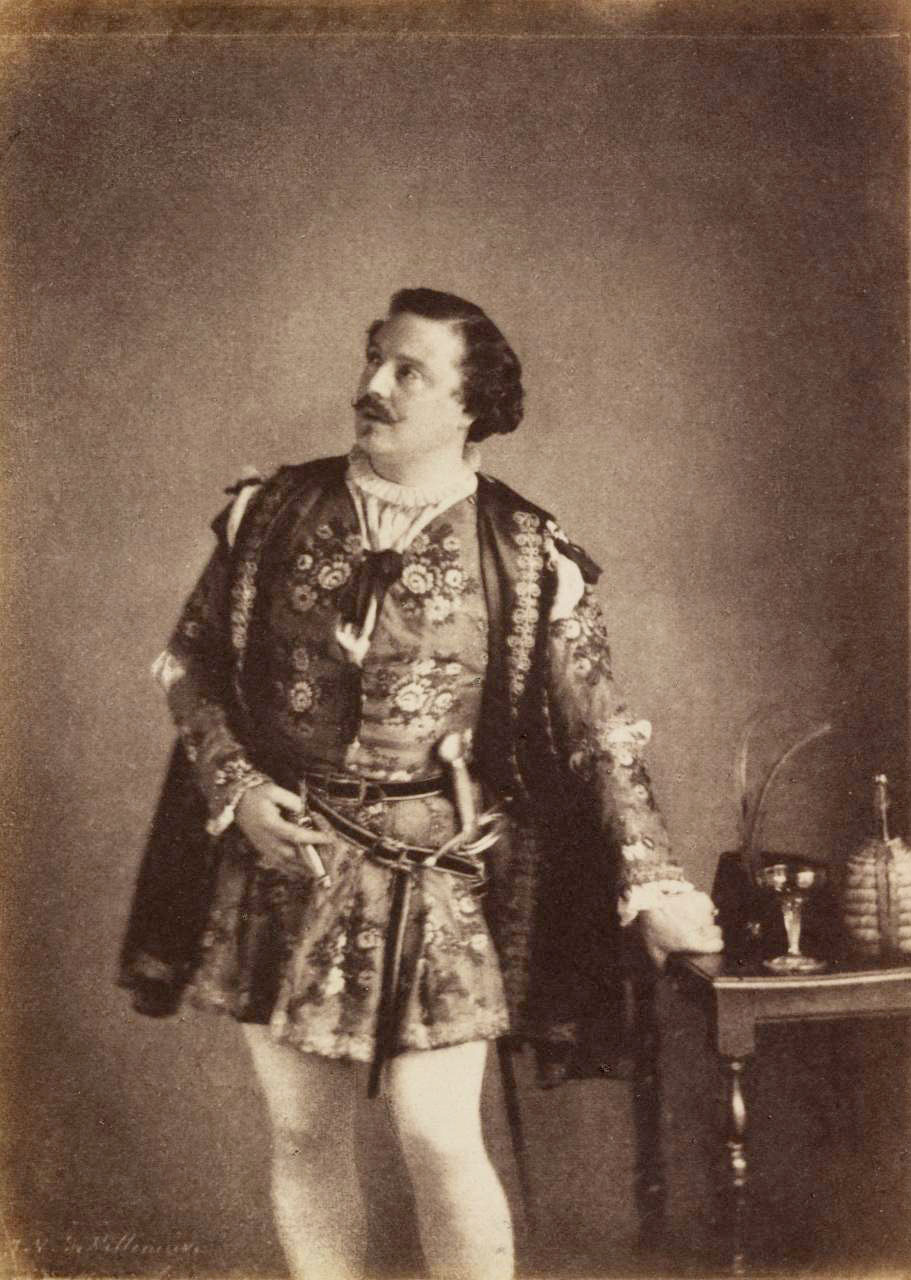
 

Julien Vallou de Villeneuve (French, 1795-1866) 'Portrait of Edouard Brindeau' 1853


Julien Vallou de Villeneuve (French, 1795-1866)
Portrait of Edouard Brindeau
1853
Salt print
6 1/4 × 4 5/8 inches
The Nelson-Atkins Museum of Art
Gift of the Hall Family Foundation
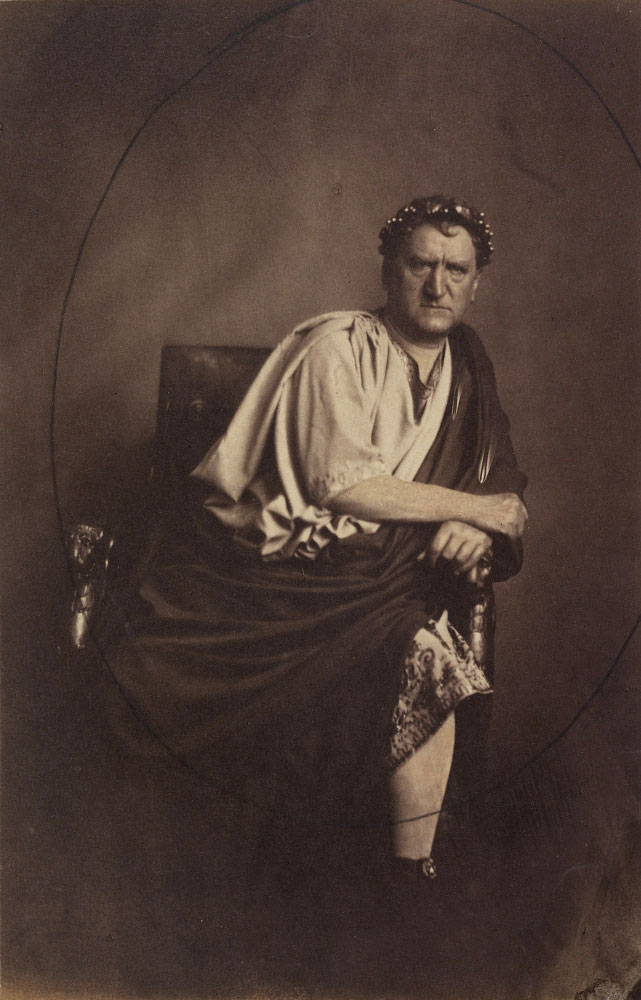
 

Julien Vallou de Villeneuve (French, 1795-1866) 'Portrait of Jean-Baptiste Provost, in the role of the emperor Claude in the play Valeria' 1853


Julien Vallou de Villeneuve (French, 1795-1866)
Portrait of Jean-Baptiste Provost, in the role of the emperor Claude in the play Valeria
1853
Portraits of Actors from the Comédie Française
Salt print
Image and sheet: 6 7/16 × 4 1/8 inches (16.35 × 10.48cm)
The Nelson-Atkins Museum of Art
Gift of the Hall Family Foundation
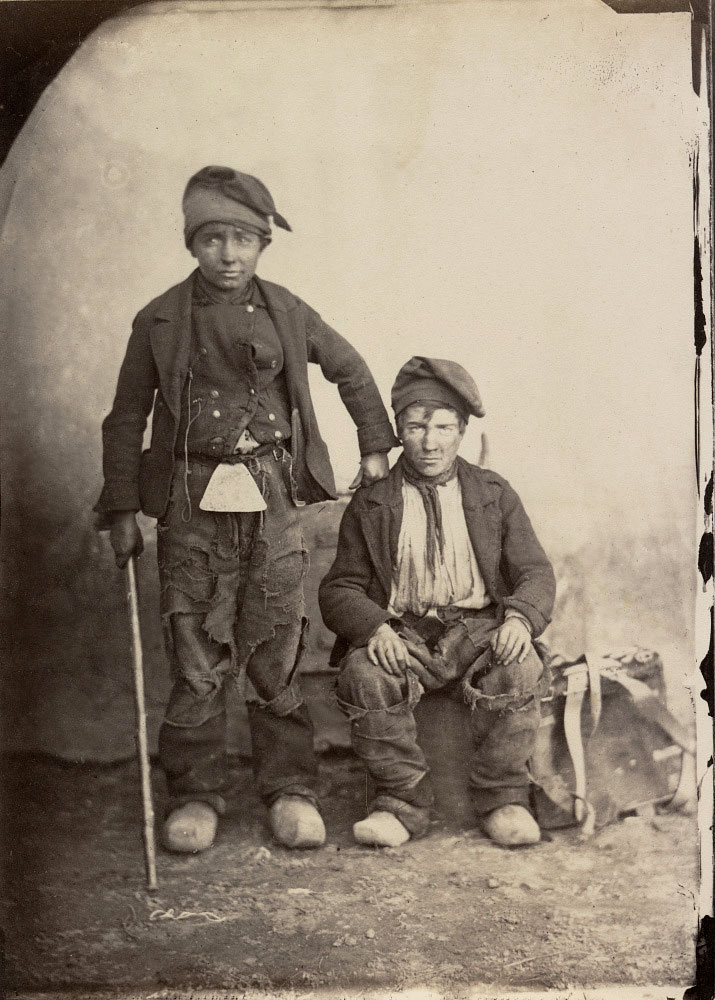
 

Charles Nègre (French, 1820-1880) 'Two Small Savoyards' c. 1853 from the exhibition 'Still Performing: Costume, Gesture, and Expression in 19th Century European Photography' at the Nelson-Atkins Museum of Art, Kansas City


Charles Nègre (French, 1820-1880)
Two Small Savoyards
c. 1853
Albumen print
Image and sheet: 7 × 5 3/16 inches (17.78 × 13.12cm)
Mount: 17 × 15 inches (43.18 × 38.1cm)
The Nelson-Atkins Museum of Art
Gift of the Hall Family Foundation


Charles Nègre refers to the threadbare young men in this photograph as “Savoyards” (originating from the Savoy region of France). Impoverished, migrant Savoyards have appeared in European art since the 1700s, and Nègre’s title could be shorthand for a certain type of person seen in the streets of Paris, regardless of the two boys’ actual place of origin. A painter and a photographer, Nègre practiced the two mediums side-by-side. Like other artists of his time, he ascribed nobility to the poor, seeking to convey their “truth, warmth, and life.”

Text from the Nelson-Atkins Museum website


Alban-Adrien Tournachon (French , 1825-1903) and Nadar [Gaspard Félix Tournachon] (French, 1820-1910) 'Pierrot Yawning' 1854 from the exhibition 'Still Performing: Costume, Gesture, and Expression in 19th Century European Photography' at the Nelson-Atkins Museum of Art, Kansas City


Alban-Adrien Tournachon (French , 1825-1903) and Nadar [Gaspard Félix Tournachon] (French, 1820-1910)
Pierrot Yawning
1854
Salt print
11 1/4 × 8 1/2 inches
The Nelson-Atkins Museum of Art
Gift of the Hall Family Foundation
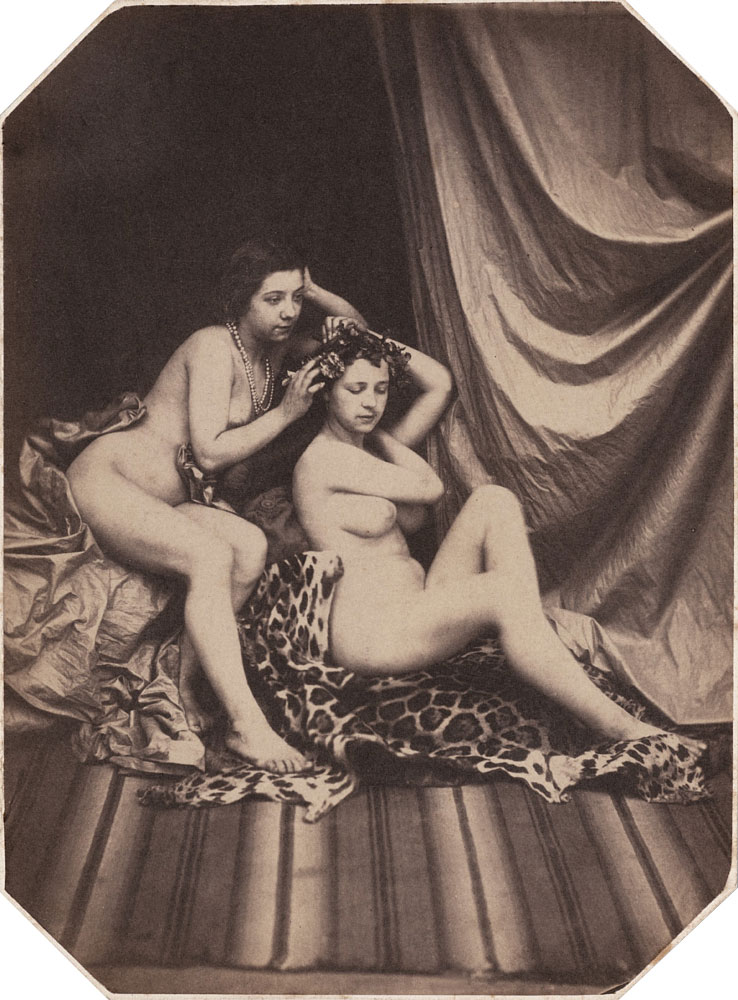
 

Auguste Belloc (French, 1805 -1873) 'Une étude de nu de deux femmes' c. 1855


Auguste Belloc (French, 1805 -1873)
Une étude de nu de deux femmes
c. 1855
Salt print
Image and sheet: 8 5/16 × 6 1/8 inches (21.11 × 15.56cm)
The Nelson-Atkins Museum of Art
Gift of the Hall Family Foundation


A masterful printer, Auguste Belloc created nudes that surpassed the typical erotic fare found in Parisian markets. In this scene, Belloc strategically positions the models and surrounding drapery to make the photograph appear more artistic than pornographic. Though nude paintings, drawings, and sculptures were immensely common, at this time photography was treated far more harshly by censors. In October 1860, the French government seized some 5,000 of Belloc’s photographs, declaring them obscene, and by 1868 he had abandoned his photographic studio.

Text from the Nelson-Atkins Museum website
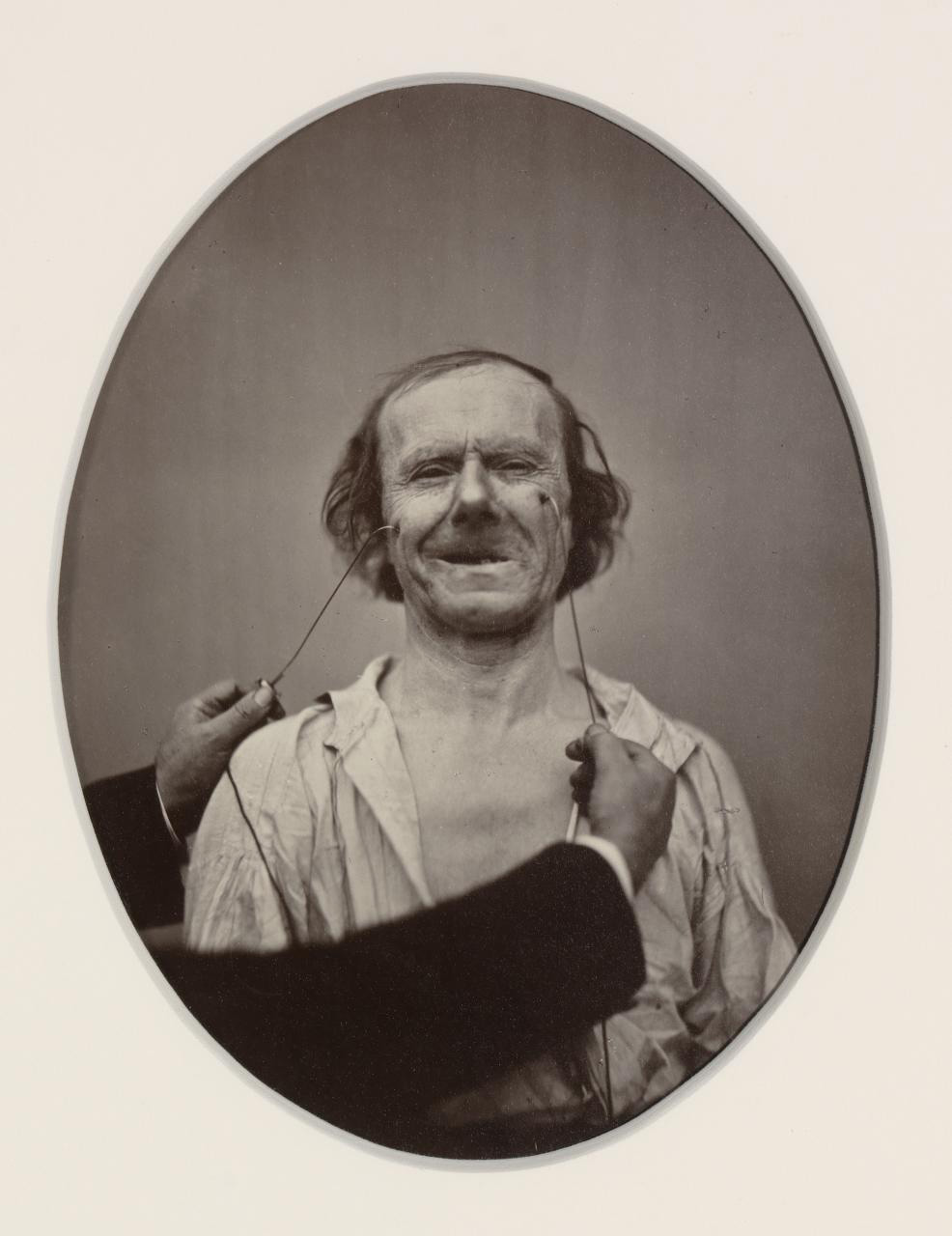
 

Guillaume-Benjamin-Amand Duchenne de Boulogne (French, 1806-1875) and Alban-Adrien Tournachon (French, 1825-1903) 'The Muscles of Weeping and Whimpering' About 1855-1857


Guillaume-Benjamin-Amand Duchenne de Boulogne (French, 1806-1875) and Alban-Adrien Tournachon (French, 1825-1903)
The Muscles of Weeping and Whimpering
About 1855-1857
Albumen print
9 1/16 × 6 15/16 inches
The Nelson-Atkins Museum of Art
Gift of the Hall Family Foundation


Facial expressions and their corresponding emotions have been studied by artists for centuries. In the 1850s, Dr. Guillaume-Benjamin-Amand Duchenne de Boulogne used photography to document the facial expressions produced by localised electric shock. Working in partnership with photographer Adrien Alban Tournachon, Duchenne felt these photographs truthfully recorded his experiments and that “none shall doubt the facts presented here.” Praising photography for its accurate rendering of the subject’s deep wrinkles, he wrote, “the distribution of light is in perfect harmony with the passions represented by these expressive lines. Thus, the face depicting the dark, concentric passions – aggression, wickedness, suffering, pain, dread, torture mixed with fear – gain an uncommon amount of energy.”

Text from the Nelson-Atkins Museum website
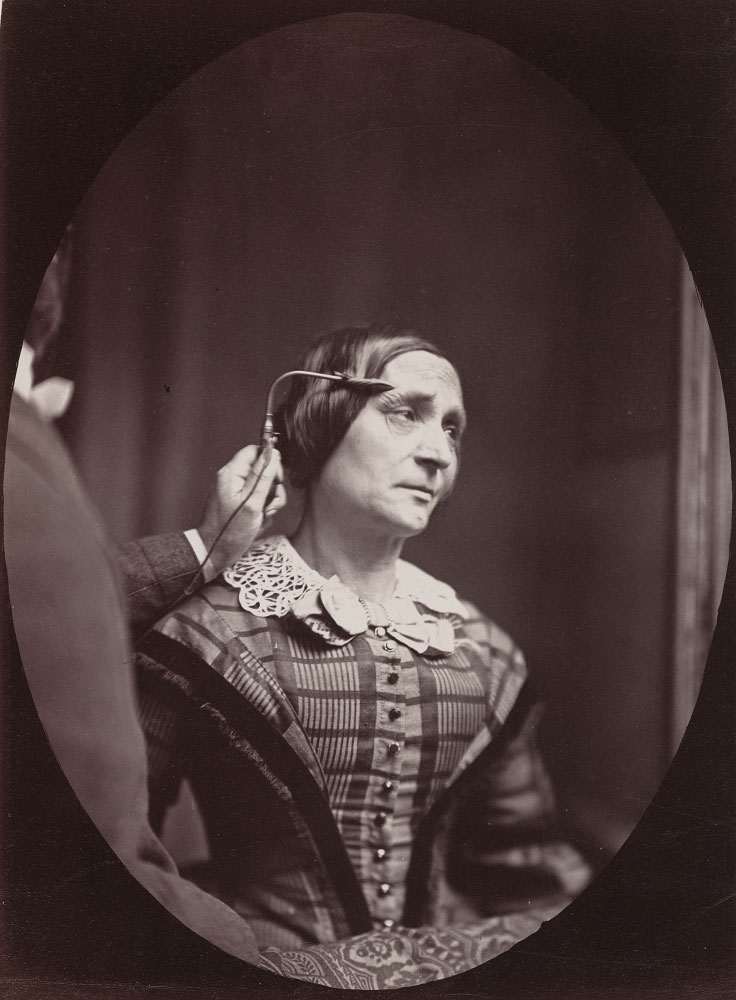
 

Guillaume-Benjamin-Amand Duchenne de Boulogne (French, 1806-1875) and Alban-Adrien Tournachon (French, 1825-1903) 'The Muscle of Pain' c. 1854-1857


Guillaume-Benjamin-Amand Duchenne de Boulogne (French, 1806-1875) and Alban-Adrien Tournachon (French, 1825-1903)
The Muscle of Pain
c. 1854-1857
Figure 27, plate 63 from The Mechanism of Human Facial Expression
Albumen print
Image and sheet: 9 1/16 × 6 5/8 inches (23.01 × 16.84cm)
Mount: 16 1/16 × 10 13/16 inches (40.79 × 27.51cm)
The Nelson-Atkins Museum of Art
Gift of the Hall Family Foundation


In this uncanny double portrait, the physiologist Dr. Guillaume-Benjamin-Amand Duchenne de Boulogne holds a mechanical device to the face of a 52-year-old, Italian-born woman believed to have been institutionalised in a Parisian asylum. Duchenne asserted that localised electric shock could force facial muscles to “contract to speak the language of the emotions and the sentiments.” “Armed with electrodes,” he wrote, “one would be able, like nature herself, to paint the expressive lines of the emotions of the soul on the face of man.”

Text from the Nelson-Atkins Museum website


Roger Fenton (English, 1819-1869) 'Self-portrait as a Zouave' 1855


Roger Fenton (English, 1819-1869)
Self-portrait as a Zouave
1855
Salt print:
Image and sheet: 7 13/16 × 6 7/16 inches (19.84 × 16.35cm)
Mount: 22 1/8 × 16 1/8 inches (56.2 × 40.96cm)
The Nelson-Atkins Museum of Art
Gift of the Hall Family Foundation


Cocking a rifle and smoking a pipe, with alcohol by his side, Roger Fenton poses for his camera with bravado. Wearing the distinctive baggy uniform of a Zouave (skilled infantry soldiers from the French army in Algeria), Fenton fashions himself as a hardened, glowering soldier, though he never fought in any war. Fenton did, however, photograph the Crimean War (1853-1856) from a great distance. The war brought together an alliance of soldiers from England, Croatia, Algeria, Turkey, Egypt, and France whom Fenton encountered while photographing the conflict.

Text from the Nelson-Atkins Museum website
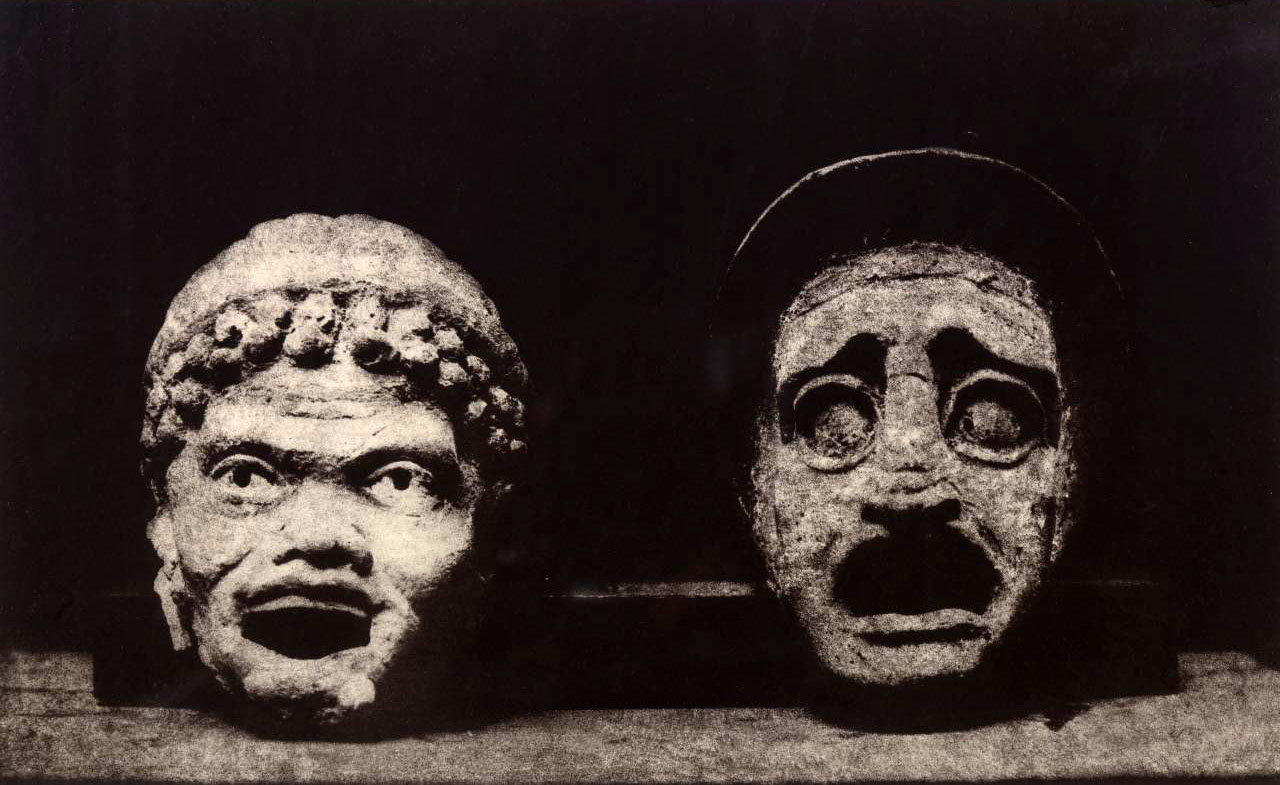
 

Marcel Gustave Laverdet (French, 1816-1886) 'Masks from the album Selection of Ancient Terra Cotta from the Collection of M. Le Vicomte H. de Janzé' 1857


Marcel Gustave Laverdet (French, 1816-1886)
Masks from the album Selection of Ancient Terra Cotta from the Collection of M. Le Vicomte H. de Janzé
1857
Photolithograph
8 15/16 × 14 9/16 inches
The Nelson-Atkins Museum of Art
Gift of the Hall Family Foundation
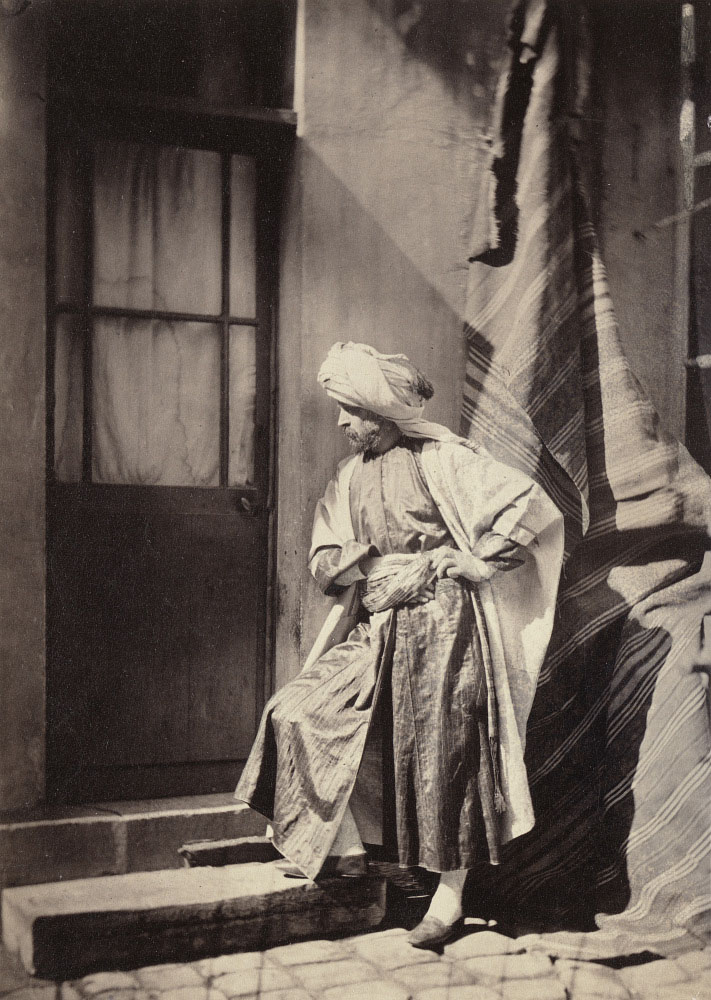
 

Charles Nègre (French, 1820-1880) 'Self-portrait' About 1855-1860


Charles Nègre (French, 1820-1880)
Self-portrait
About 1855-1860
Salt print
7 5/8 × 5 7/16 inches
The Nelson-Atkins Museum of Art
Gift of the Hall Family Foundation


Early photography is ripe with creative fictions. Actors, children, aristocrats, models, artists, psychiatric patients, maids, and all manner of the working class posed in front of cameras and were transformed into figures from history, literature, the Bible, or into an idealised version of themselves. Still Performing: Costume, Gesture, and Expression in 19th Century European Photography, which opens at The Nelson-Atkins Museum of Art in Kansas City Aug. 24, celebrates the unique and compelling ways 19th century European photographers used the medium to explore and document performance, transforming the photographer’s studio into a theatrical stage. The exhibition runs through Jan. 12, 2025.

“The subjects in this exhibition were highly influenced by popular entertainment – live theatre, tableaux vivant, and dioramas – as well as tastes and trends in painting, drawing, and sculpture,” said Julián Zugazagoitia, Director & CEO of the Nelson-Atkins. “These works were made in a time of anxiety about photography’s relationships to the fine arts and reflect a close intermingling between the worlds of the ‘high’ and the ‘low’.”

Visiting a photographer’s studio in Europe in the mid to late 1800s was like going behind the scenes of a theatrical production. Props, backdrops, costumes, curtains, and controlled lighting converted otherwise ordinary portrait sessions into staged productions. Whether working in their homes or commercial studios, photographers cast themselves, friends, actors, models, and strangers in their photographs, transforming them into all types of characters, from young pickpockets to ancient Greek gods.

“These portraits are so fascinating, and I think our guests are going to be amazed at the rich creative complexity found in European photography’s first 50 years,” said Marijana Rayl, Assistant Curator, Photography.

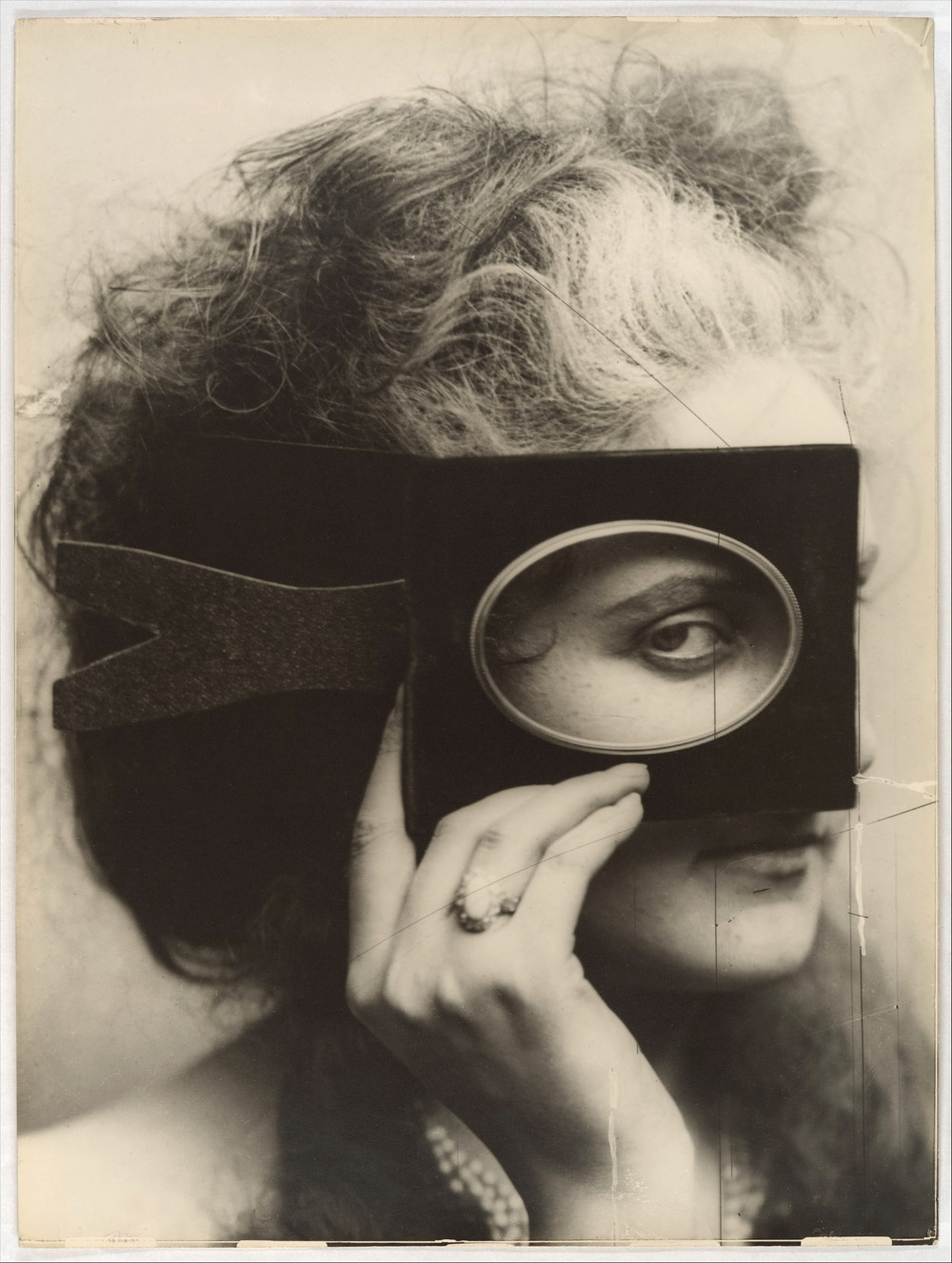
Deliberately made, not casually taken, these staged photographs are often the result of collaborative efforts between photographer and sitter, such as with a series of portraits of Virginia Oldoini, the Countess of Castiglione. A prodigious narcissist, or perhaps just ahead of her time, the countess collaborated with the photographer Pierre-Louis Pierson to produce hundreds of portraits, directing every aspect of the picture-making process. Included in Still Performing is a very rare, hand-coloured portrait of the countess.

The resulting photographs are an outstanding array of complex and compelling fictions showcasing the medium’s early creative potential.

Press release from the Nelson-Atkins Museum
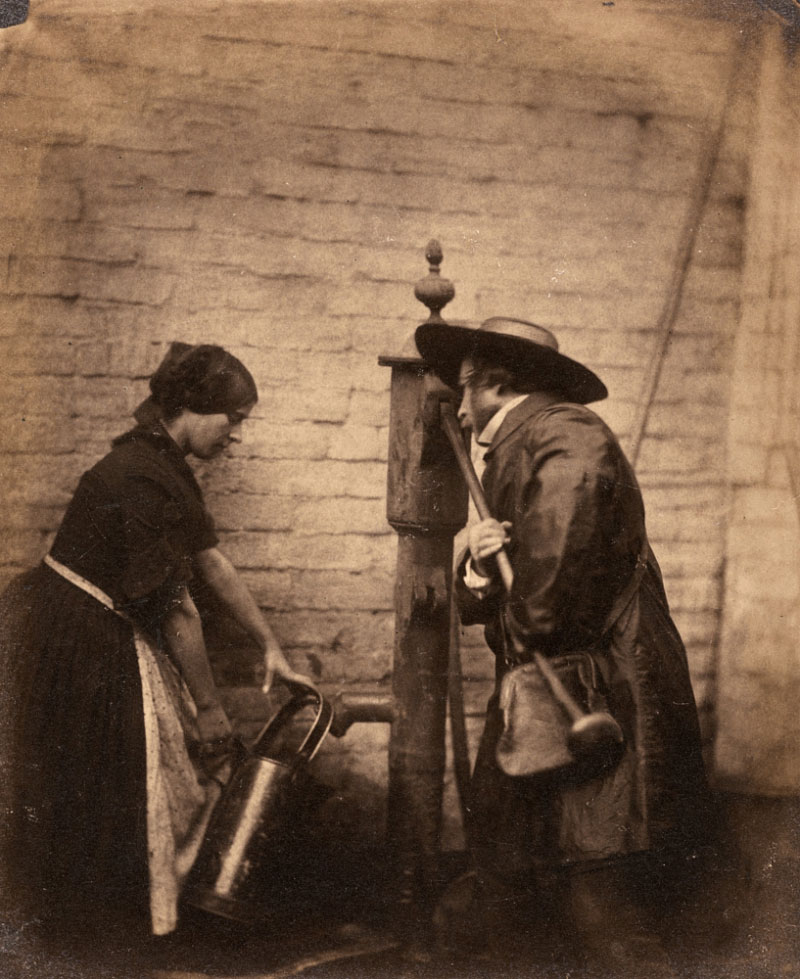
 

Oscar Gustav Rejlander (English born Sweden, 1813-1875) 'Drawing Water from a Well (O.G. Rejlander and model)' c. 1858


Oscar Gustav Rejlander (English born Sweden, 1813-1875)
Drawing Water from a Well (O.G. Rejlander and model)
c. 1858
Salt print
Image and sheet: 7 15/16 × 6 1/2 inches (20.16 × 16.51cm)
Mount: 14 1/16 × 11 5/16 inches (35.72 × 28.73cm)
The Nelson-Atkins Museum of Art
Gift of the Hall Family Foundation


Oscar Rejlander occasionally cast himself in staged photographs like this one, which was made to appear like a candid image of ordinary people going about their daily lives. Here he poses, turned away from the camera, as though he is helping a peasant woman retrieve water from a well. These kinds of genre scenes were immensely popular in the 1800s across painting, drawing, printmaking, and photography. Rejlander passionately advocated for photography to be treated as a fine art, believing that it must emulate painting.

Text from the Nelson-Atkins Museum website
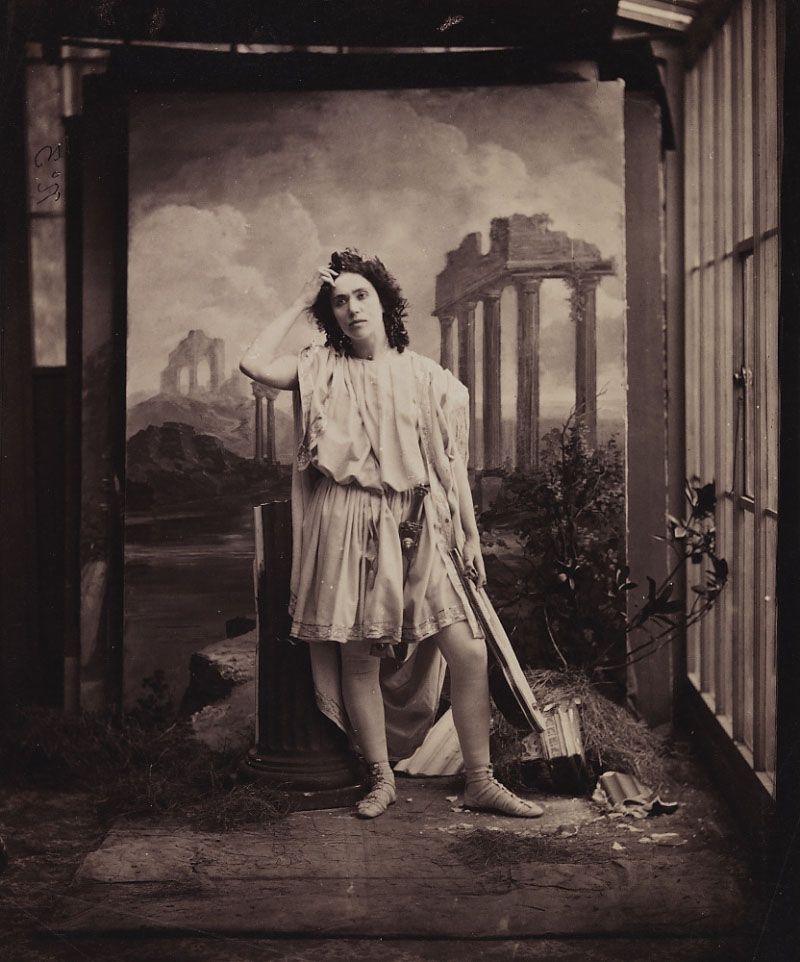
 

Camille Silvy (French, 1834-1910) 'Actress Rosa Csillag in the Role of Orpheus' 1860


Camille Silvy (French, 1834-1910)
Actress Rosa Csillag in the Role of Orpheus
1860
Albumen print
9 3/16 × 7 5/8 inches
The Nelson-Atkins Museum of Art
Gift of the Hall Family Foundation
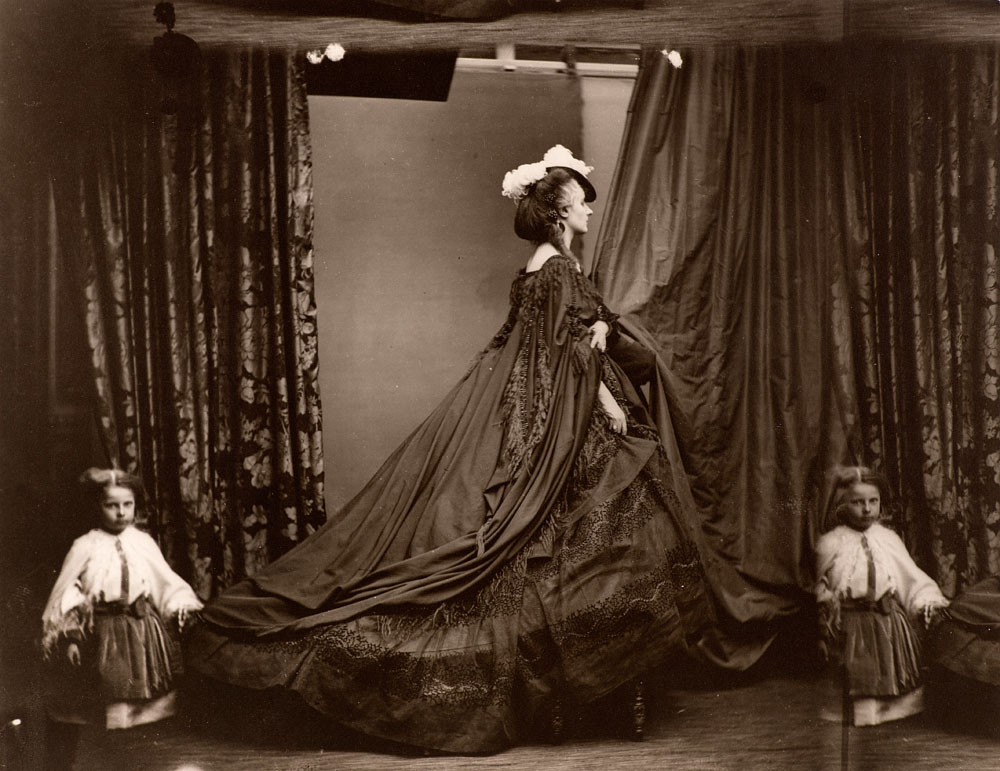
 

Pierre-Louis Pierson (French, 1822-1913) 'The Countess de Castiglione' 1860s


Pierre-Louis Pierson (French, 1822-1913)
The Countess de Castiglione
1860s
Gelatin silver print (printed about 1930)
10 15/16 x 14 1/8 inches
The Nelson-Atkins Museum of Art
Gift of the Hall Family Foundation
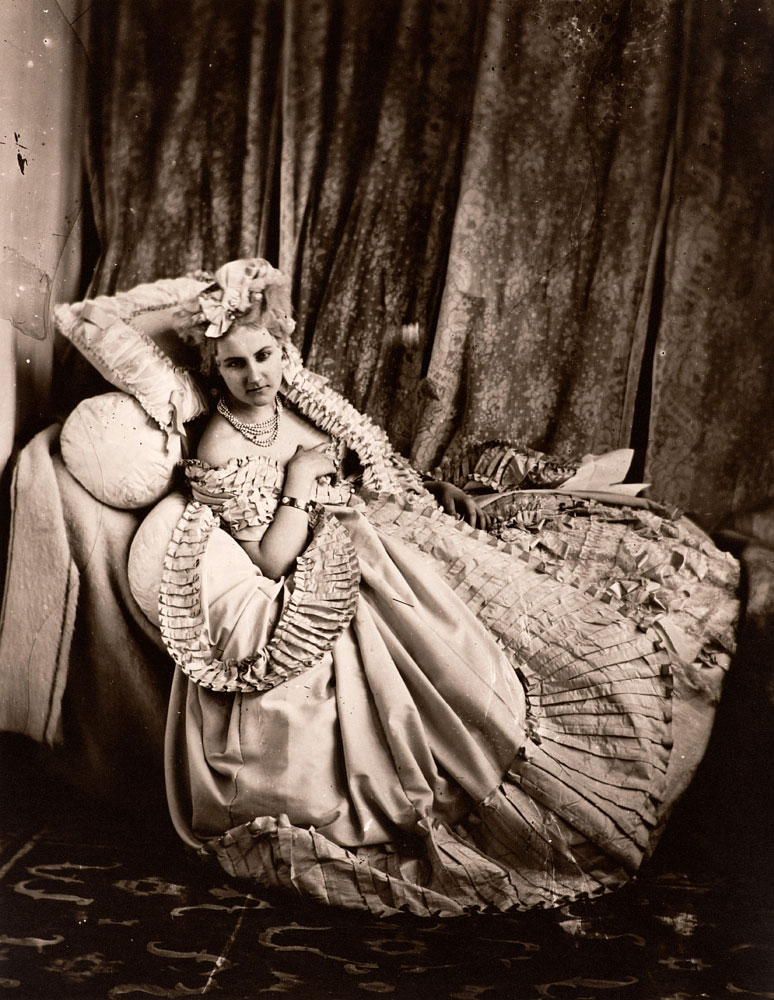
 

Pierre-Louis Pierson (French, 1822-1913) 'The Countess de Castiglione' 1860s


Pierre-Louis Pierson (French, 1822-1913)
The Countess de Castiglione
1860s
Gelatin silver print (printed about 1930)
Image: 14 3/16 x 11 inches (36.04 x 27.94cm)
Sheet: 14 3/16 x 11 inches (36.04 x 27.94cm)
The Nelson-Atkins Museum of Art
Gift of the Hall Family Foundation
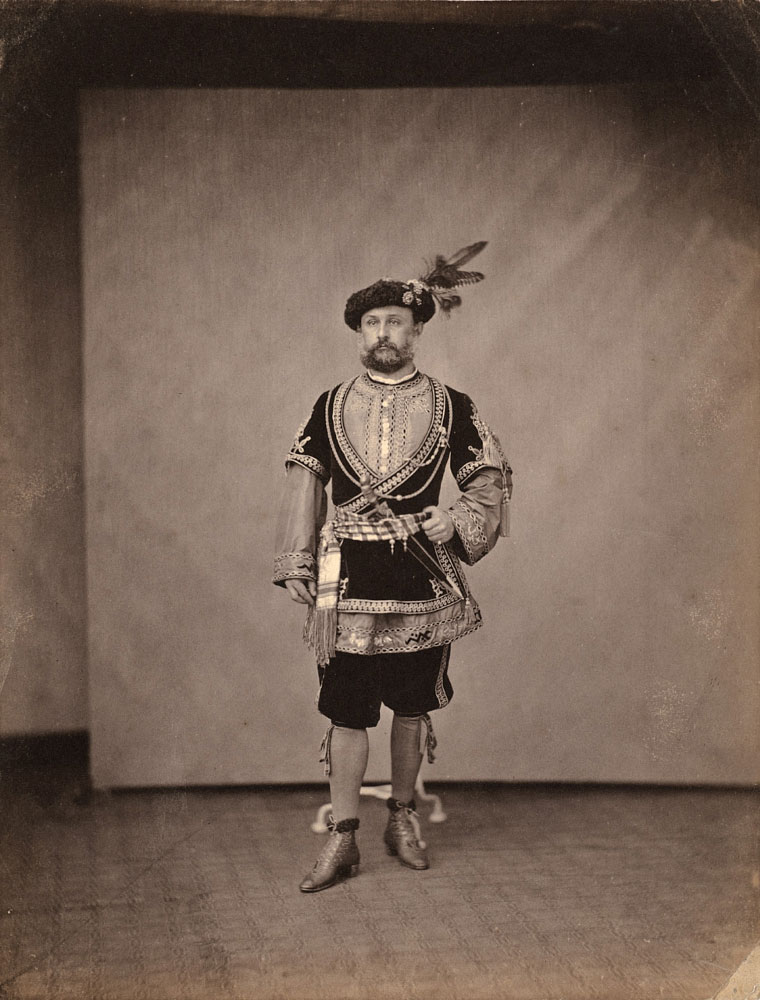
 

Pierre-Louis Pierson (French, 1822-1913) 'Bal en Costume, Royaume de Belgique' c. 1860


Pierre-Louis Pierson (French, 1822-1913)
Bal en Costume, Royaume de Belgique
c. 1860
Salt print
Image and sheet: 11 1/2 × 8 3/4 inches (29.21 × 22.23cm)
The Nelson-Atkins Museum of Art
Gift of the Hall Family Foundation
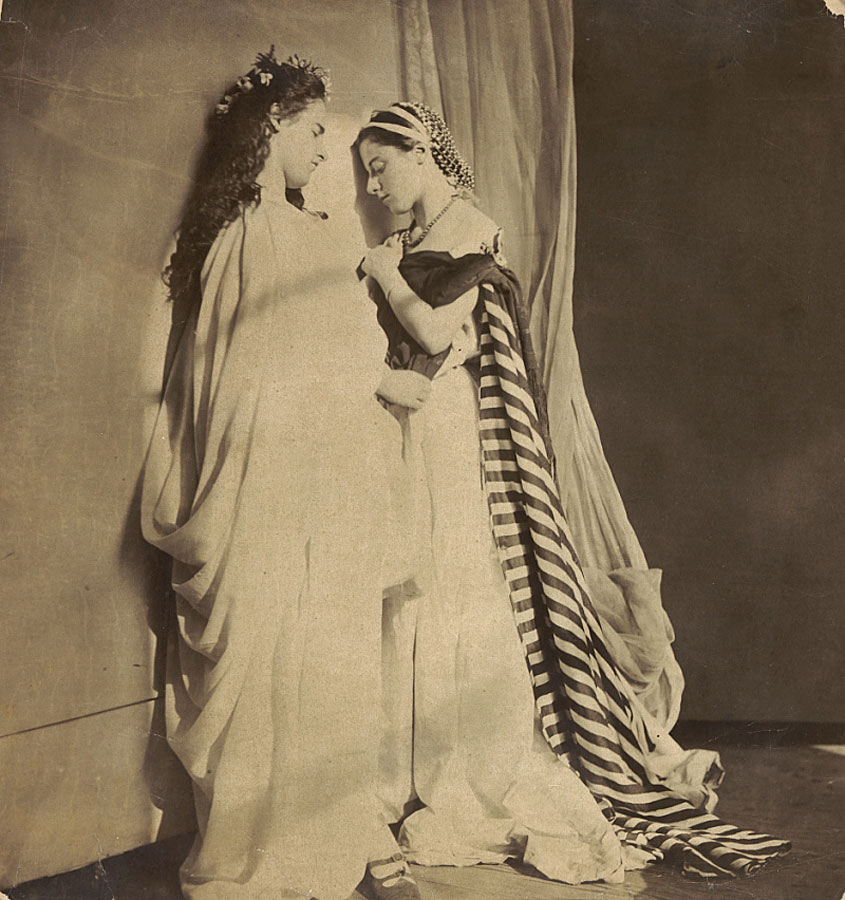
 

Lady Clementina Hawarden (English, born Scotland, 1822-1865) 'Clementina Maude and Isabella Grace' c. 1863


Lady Clementina Hawarden (English, born Scotland, 1822-1865)
Clementina Maude and Isabella Grace
c. 1863
Albumen print
Image and sheet: 9 13/16 × 9 11/16 inches (24.97 × 24.61cm)
The Nelson-Atkins Museum of Art
Gift of the Hall Family Foundation
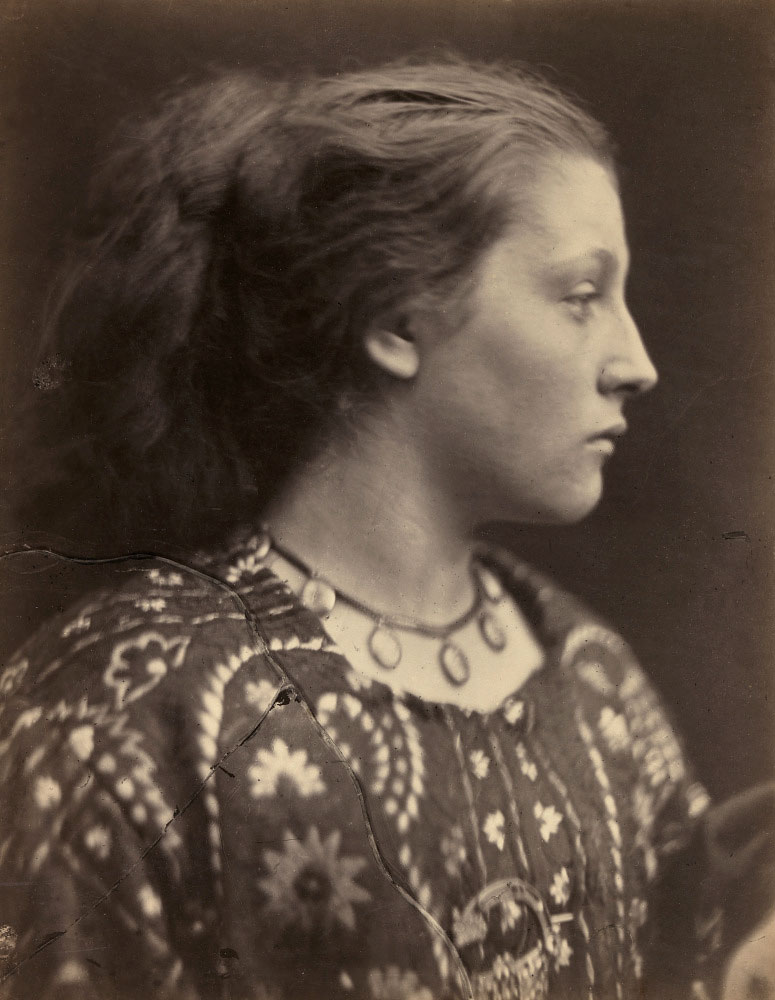
 

Julia Margaret Cameron (English, born India, 1815-1879) 'Sappho (Mary Hillier)' 1865


Julia Margaret Cameron (English, born India, 1815-1879)
Sappho (Mary Hillier)
1865
Albumen print
Image and sheet: 12 15/16 × 10 1/8 inches (32.86 × 25.72cm)
Mount: 20 13/16 × 16 13/16 inches (52.86 × 42.7cm)
The Nelson-Atkins Museum of Art
Gift of the Hall Family Foundation
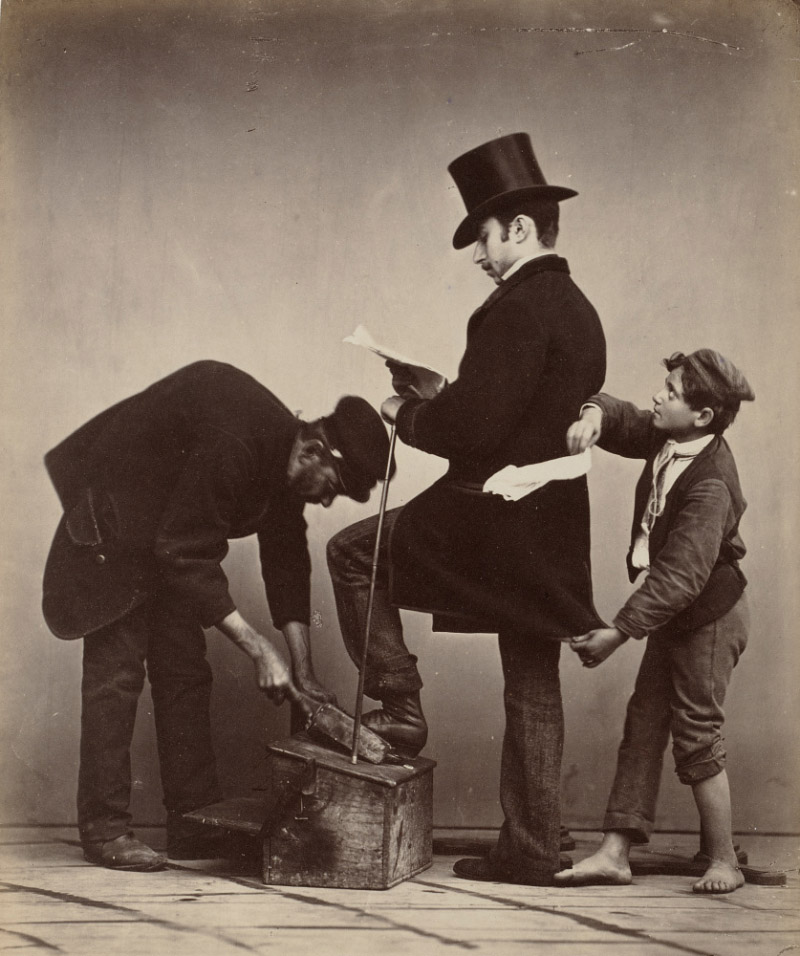
 

Giorgio Sommer (Italian born Germany, 1834-1914) 'The Pickpocket' About 1865


Giorgio Sommer (Italian born Germany, 1834-1914)
The Pickpocket
About 1865
Albumen print
9 3/8 × 7 5/8 inches
The Nelson-Atkins Museum of Art
Gift of the Hall Family Foundation
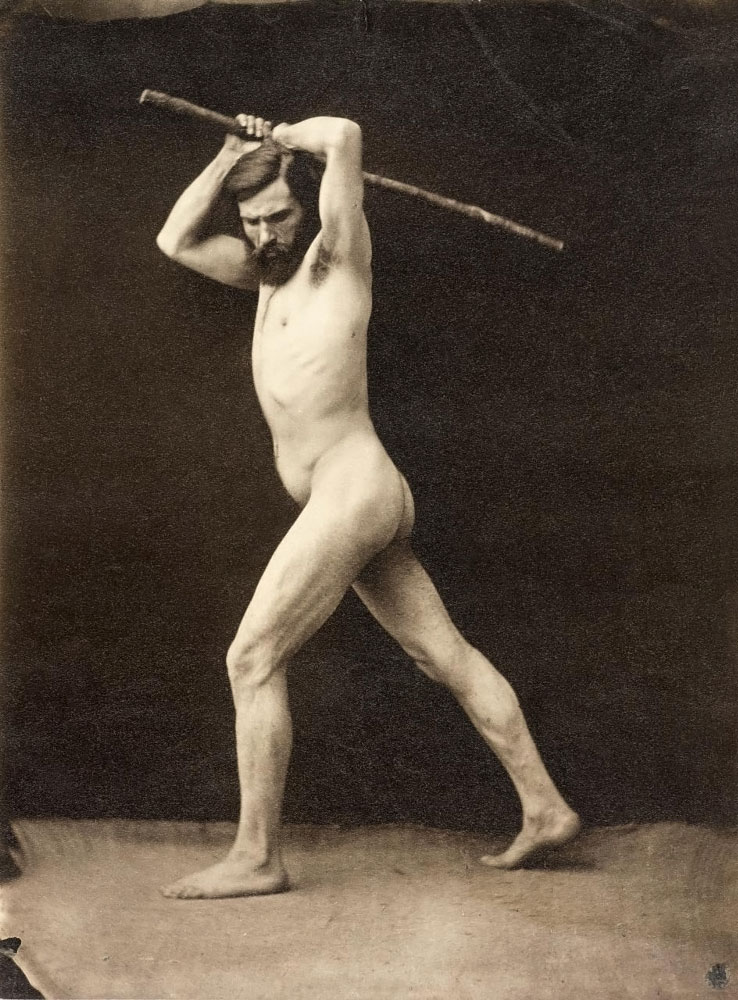
 

Gaudenzio Marconi (French born Switzerland, 1842-1885) 'Male nude for artist' c. 1870


Gaudenzio Marconi (French born Switzerland, 1842-1885)
Male nude for artist
c. 1870
Albumen print
Image and sheet: 8 5/8 × 6 3/8 inches (21.91 × 16.19cm)
Mount: 12 9/16 × 9 3/4 inches (31.91 × 24.77cm)
The Nelson-Atkins Museum of Art
Gift of the Hall Family Foundation
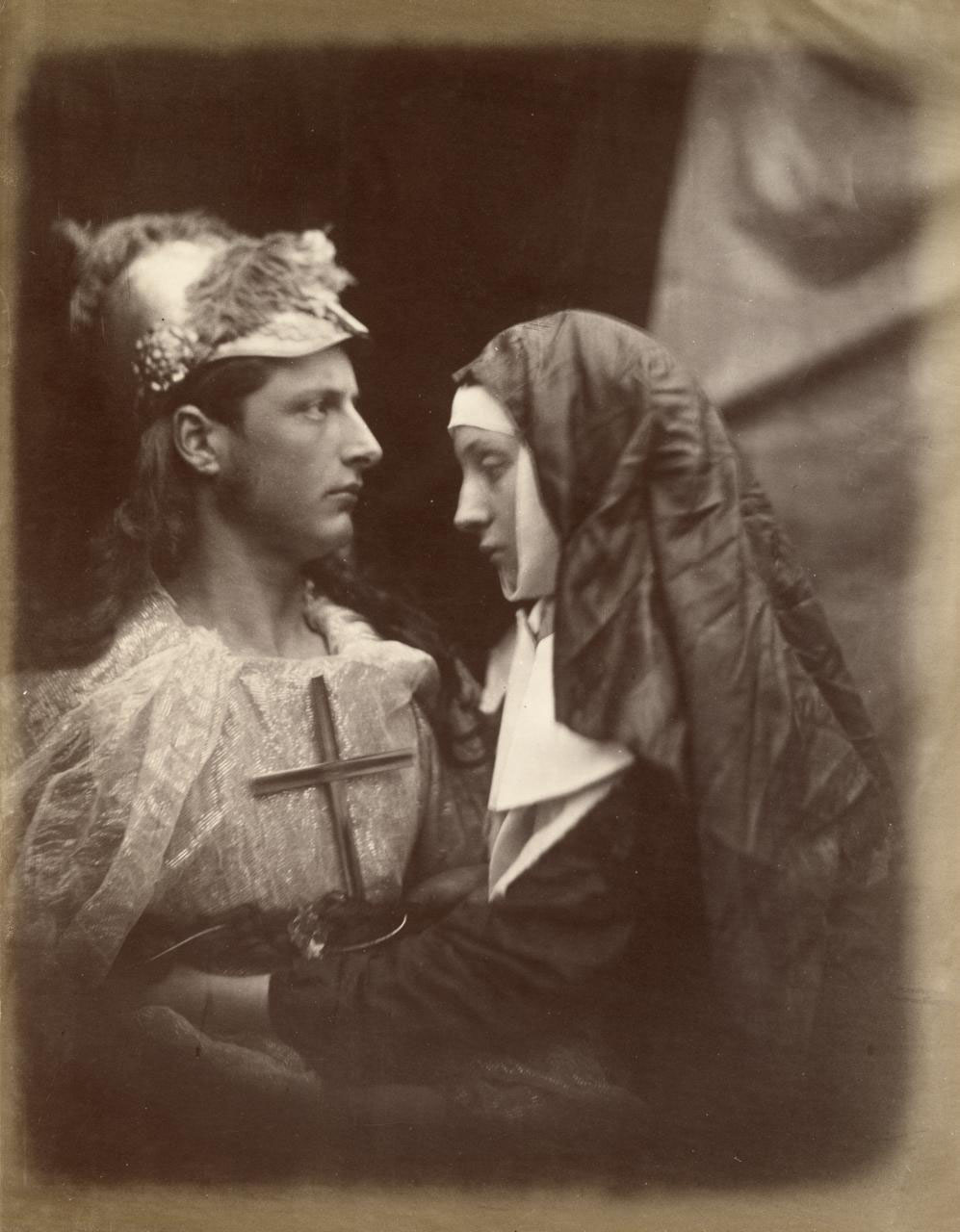
 

Julia Margaret Cameron (English born India, 1815-1879) 'Sir Galahad and the Pale Nun' 1874


Julia Margaret Cameron (English born India, 1815-1879)
Sir Galahad and the Pale Nun
1874
Albumen print
13 7/16 × 10 1/2 inches
The Nelson-Atkins Museum of Art
Gift of the Hall Family Foundation
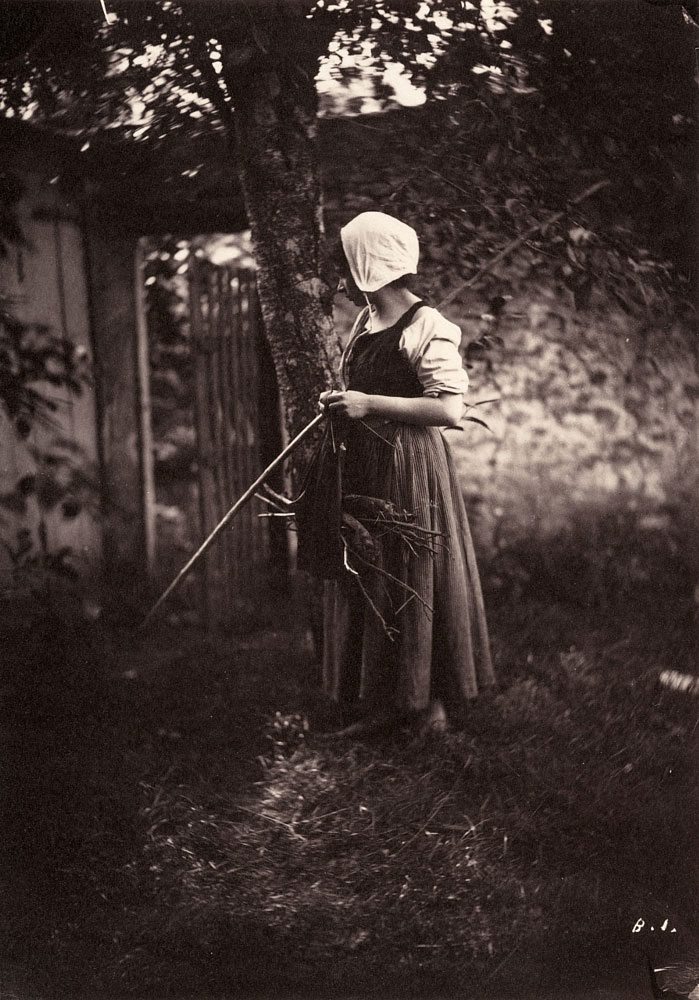
 

Giraudon's Artist (French, active c. 1875) 'Woman with bundle of twigs' c. 1875-1880


Giraudon’s Artist (French, active c. 1875)
Woman with bundle of twigs
c. 1875-1880
Albumen print
Image and sheet: 6 5/8 × 4 11/16 inches (16.83 × 11.91cm)
The Nelson-Atkins Museum of Art
Gift of the Hall Family Foundation
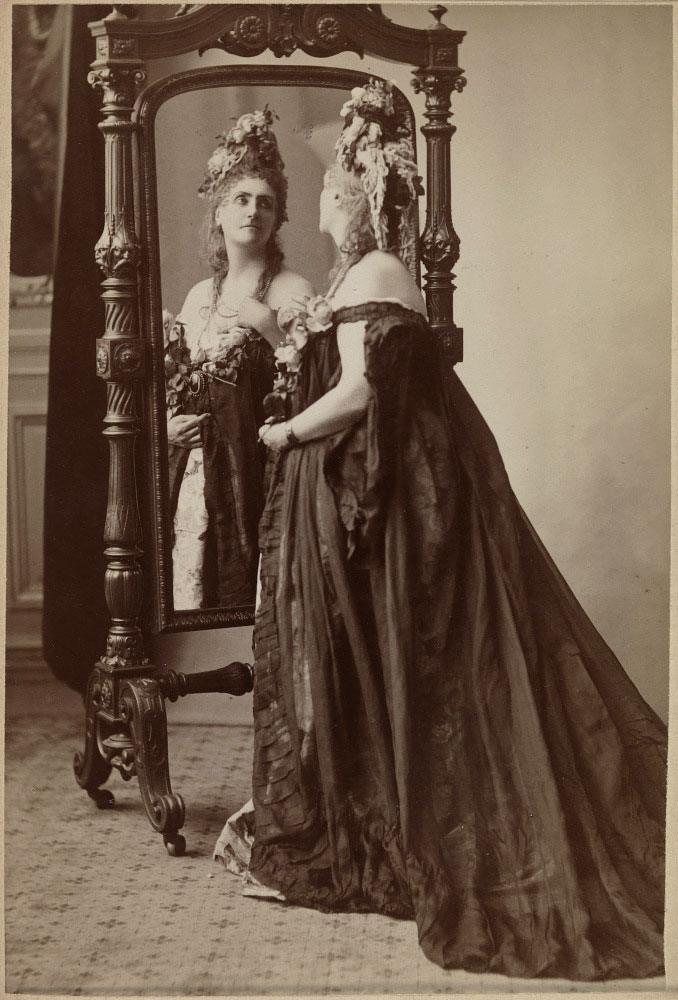
 

Pierre-Louis Pierson (French, 1822-1913) 'Portrait of the Countess of Castiglione from Série des Roses' 1895


Pierre-Louis Pierson (French, 1822-1913)
Portrait of the Countess of Castiglione from Série des Roses
1895
Albumen cabinet card
Image and sheet: 5 15/16 × 3 15/16 inches (15.06 × 9.98cm)
Mount: 6 3/8 × 4 1/4 inches (16.21 × 10.8cm)
The Nelson-Atkins Museum of Art
Gift of the Hall Family Foundation


The Countess of Castiglione became reclusive with age, rumored to only leave her home at night, hidden behind veils. Social chroniclers of the time claimed that she removed all mirrors from her home to avoid her appearance; however, this portrait seems to contradict her alleged displeasure. Taken toward the end of her life, the countess admires her reflection in the mirror, donning a youthful blond wig elaborately decorated with roses.

Text from the Nelson-Atkins Museum website


The Nelson-Atkins Museum of Art
4525 Oak Street
Kansas City, MO 64111

Opening hours:
Thursday – Monday 10am – 5pm
Closed Tuesdays and Wednesdays
The Nelson-Atkins Museum of Art website

LIKE ART BLART ON FACEBOOK

Back to top

Exhibition: ‘Now You See It: Photography and Concealment’ at the Metropolitan Museum of Art, New York

Exhibition dates: 31st March – 1st September 2014


Many thankx to the Metropolitan Museum of Art for allowing me to publish the photographs in the posting. Please click on the photographs for a larger version of the image.


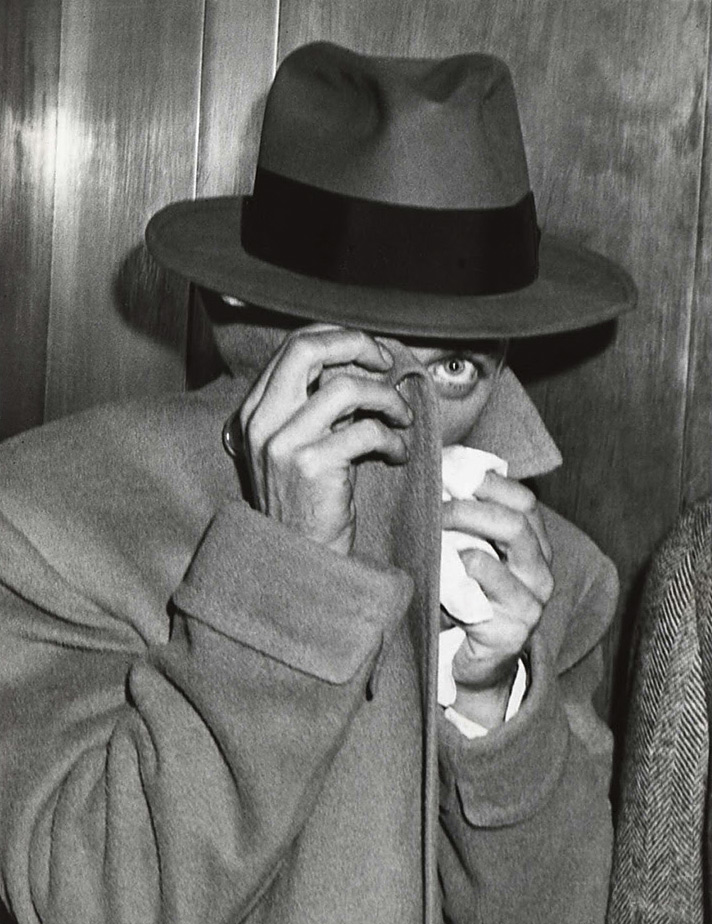
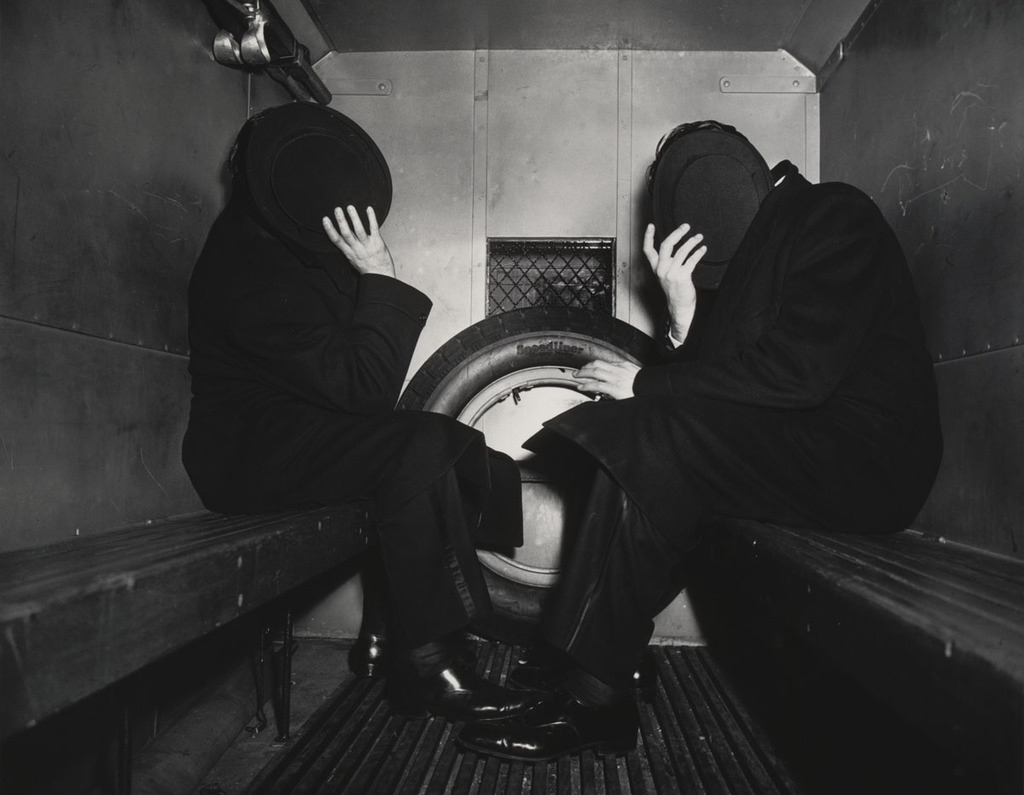
Weegee (American, born Ukraine (Austria), Złoczów (Zolochiv) 1899-1968 New York) 'Charles Sodokoff and Arthur Webber Use Their Top Hats to Hide Their Faces' January 27, 1942, printed c. 1983


Weegee (American born Ukraine (Austria), Złoczów (Zolochiv) 1899-1968 New York)
Charles Sodokoff and Arthur Webber Use Their Top Hats to Hide Their Faces
January 27, 1942, printed c. 1983
Gelatin silver print
31.8 x 41.4cm (12 1/2 x 16 5/16 in.)
Gift of Aaron and Jessica Rose, 1983
Rights and Reproduction: © Weegee / International Center of Photography


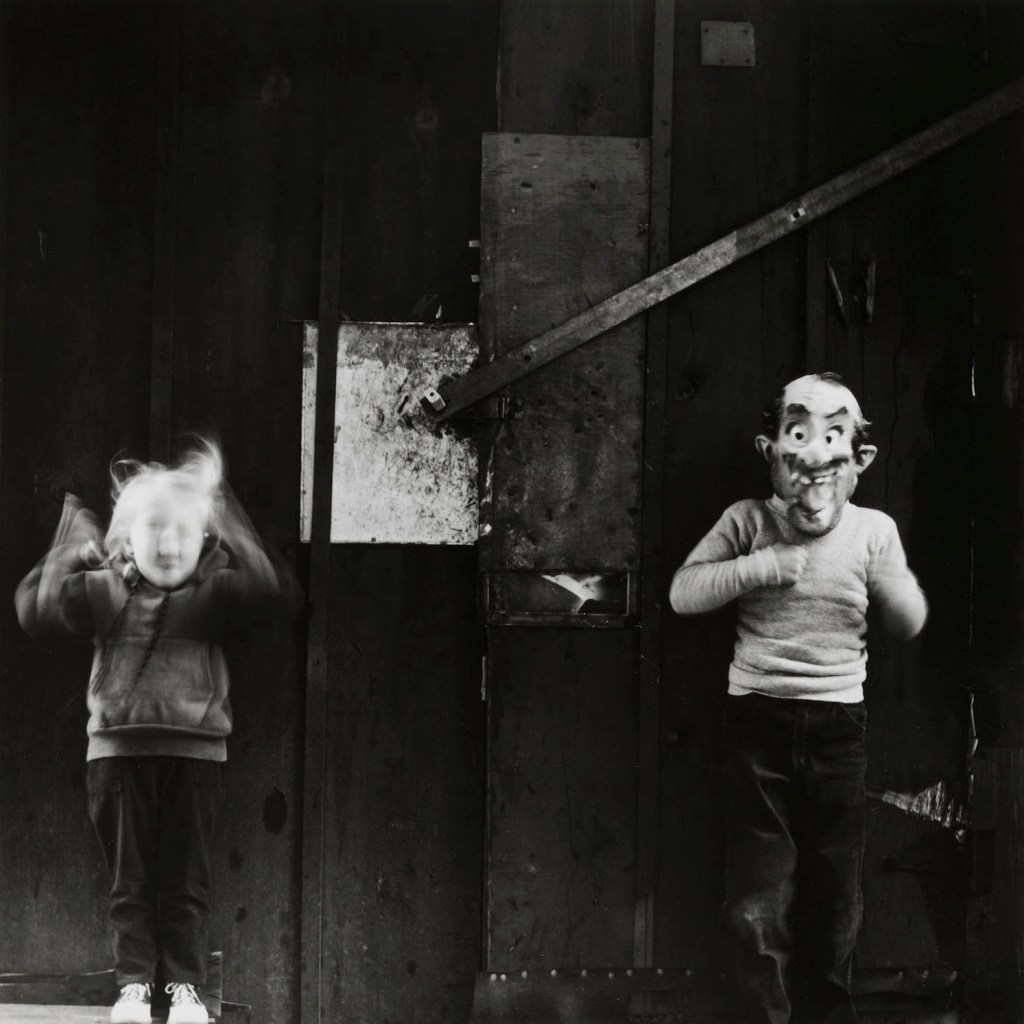
Ralph Eugene Meatyard (American, 1925-1972) 'Occasion for Diriment' 1962


Ralph Eugene Meatyard (American, 1925-1972)
Occasion for Diriment
1962
Gelatin silver print
18.0 x 18.7cm (7 1/16 x 7 3/8 in.)
Rogers Fund, 1967
© The Estate of Ralph Eugene Meatyard, Courtesy Fraenkel Gallery, San Francisco


Ralph Eugene Meatyard was a photographer and optician who spent the last two decades of his life in Lexington, Kentucky, producing an eccentric body of work at some remove from the photographic mainstream. He often posed his family and friends in enigmatic tableaux with props such as dolls and rubber masks, imbuing his images with a haunting Surrealist sensibility. The curious title of this photograph stems from Meatyard’s passion for odd names, puns, and peculiar words and phrases. Diriment is a made-up word, a Lewis Carroll-like compound of “dire” and “merriment” that suggests a mood of high-spirited fun and hilarity fraught with anxious undertones.


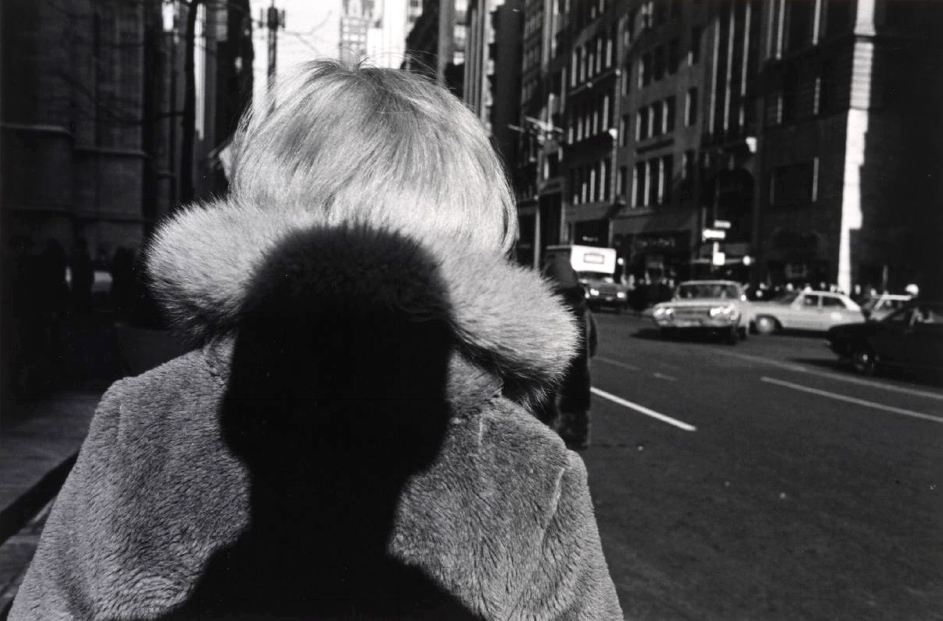
Lee Friedlander (American, born Aberdeen, Washington, 1934) 'Shadow, New York City' 1966, printed 1973


Lee Friedlander (American born Aberdeen, Washington, 1934)
Shadow, New York City
1966, printed 1973
Gelatin silver print
16.0 x 24.1cm (6 5/16 x 9 1/2 in.)
Purchase, The Horace W. Goldsmith Foundation Gift, through Joyce and Robert Menschel, 1990


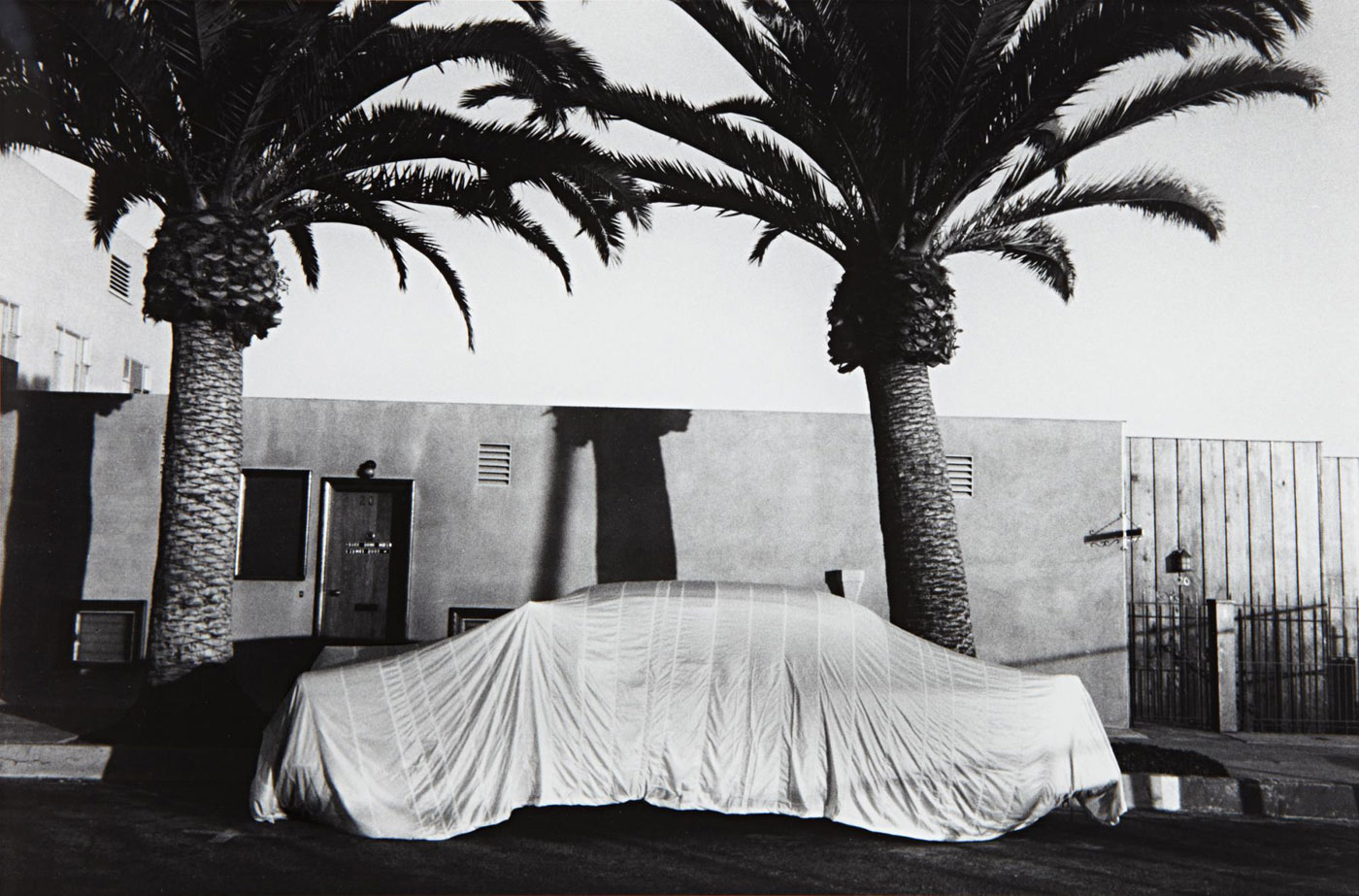
Robert Frank (American, born Zurich, 1924) 'Covered Car - Long Beach, California' 1955


Robert Frank (American born Zurich, 1924-2019)
Covered Car – Long Beach, California
1955
Gelatin silver print
21.4 x 32.7cm (8 7/16 x 12 7/8 in.)
Gilman Collection, Purchase, Ann Tenenbaum and Thomas H. Lee Gift, 2005


Photography is a medium prized for its capacity to expose, lay bare, make visible. For many artists, the camera is, above all, a tool for revealing what would otherwise remain unnoticed. As Diane Arbus once said: “I really believe there are things which nobody would see unless I photographed them.” At the root of this artistic impulse is a keen fascination with that which is hidden, obscure, or hitherto unseen. This exhibition presents a selection of contemporary photographs and video from the permanent collection that variously explores the medium’s dynamic interplay between concealment and revelation.

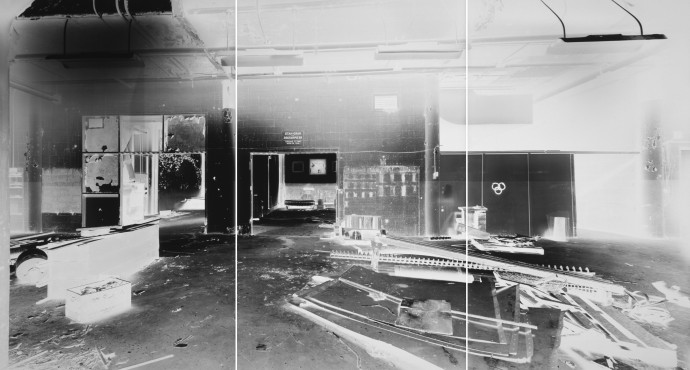
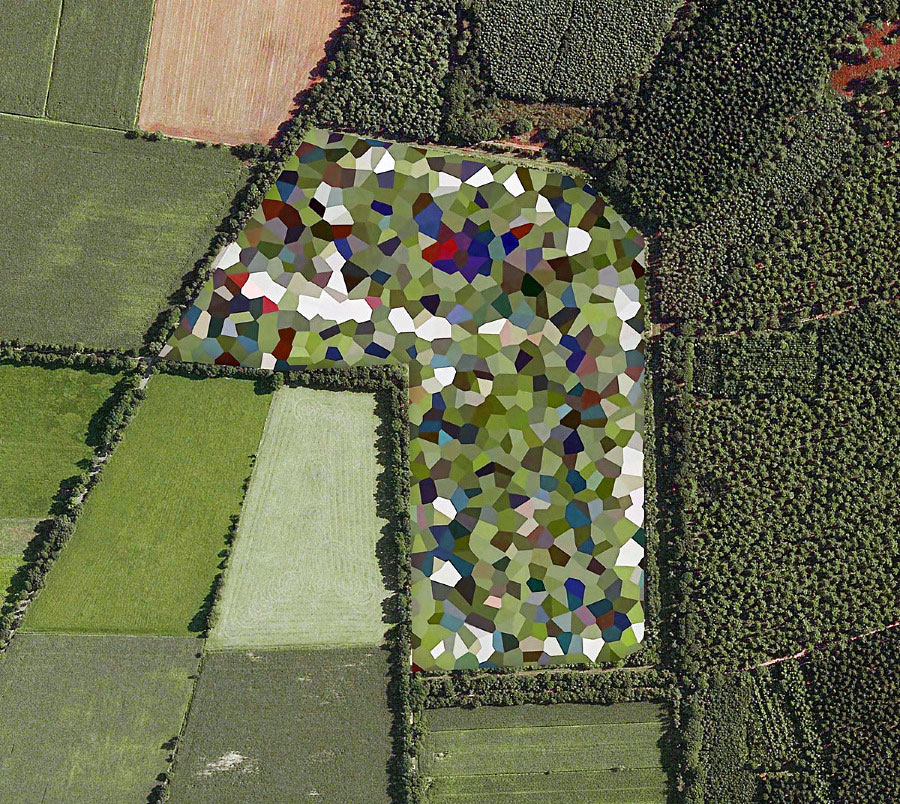
Some of the artists featured here use the camera to reveal subjects or places ordinarily hidden, as in Vera Lutter’s majestic view of the interior of a Pepsi-Cola bottling plant or Miguel Rio Branco’s lush image of a tapestry’s seamy underside. Others address instances of geopolitical obfuscation: Fazal Sheikh’s aerial photographs of the Negev desert in southern Israel record the traces of Bedouin villages that have been transformed into forests or farmland, while Mishka Henner collects images of stylishly censored high-security sites on Google Earth. In Vault (2011), Thomas Demand takes his inspiration from current events, meticulously re-creating a storeroom in which thirty missing works of art were discovered during a recent police raid.

The tension between publicity and privacy – the simultaneous desire to be looked at and to evade the merciless gaze of the camera – animates the work of artists as diverse as Arbus, Lutz Bacher, Jack Pierson, and Taryn Simon. In her video, The Nightingale (2003), Grace Ndiritu explores the tradition of the veil and its complex poetics of exposure and effacement. Complementing the contemporary works on view is a selection of earlier photographs in which the primary subject is hidden or obscured – a brief anthology of playfulness, shame, and seduction.


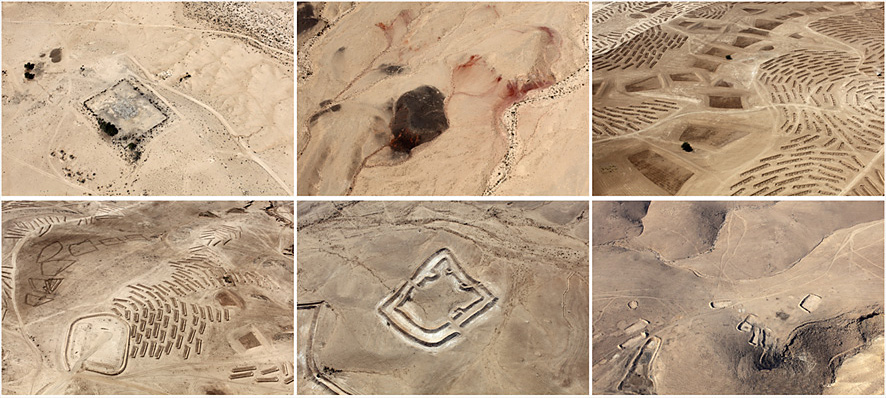
Fazal Sheikh (American, born 1965) 'Desert Bloom' (various numbers) 2011


Fazal Sheikh (American, b. 1965)
Desert Bloom (various numbers)
2011
Excerpt from the Erasure Trilogy
Inkjet print
Image: 40 × 60cm (15 3/4 × 23 5/8 in.) Sheet: 52.1 × 72.1cm (20 1/2 × 28 3/8 in.)
Frame: 73.7 × 53.3cm (29 × 21 in.)
Purchase, Jane P. Watkins Gift, 2013


In 2011 the French photographer Frederic Brenner invited eleven prominent photographers to spend six months in residence in Israel and the Occupied Territories, or West Bank, to explore the area’s complexity and to create bodies of work that might broaden and reframe the conversation about the region. Among those invited was Sheikh, an artist best known for his sensitive black-and-white portraits of people living in displaced and marginalised communities around the world. Sheikh’s project takes the form of a trilogy titled Erasure, of which Desert Bloom is the central part. The images were made during several months of flying above the Negev desert and are intended to articulate the rapid transformation of the region. On the one hand, they invoke the Israeli endeavour to “make the desert bloom,” and on the other, they reveal traces of the Negev’s history: the construction of towns for the Bedouin, the natural erosion of the land, the demolition of local dwellings, the remains of military installations, the afforestation campaigns of the Jewish National Fund (JNF), and the transformation of nomadic desert regions into farmland.


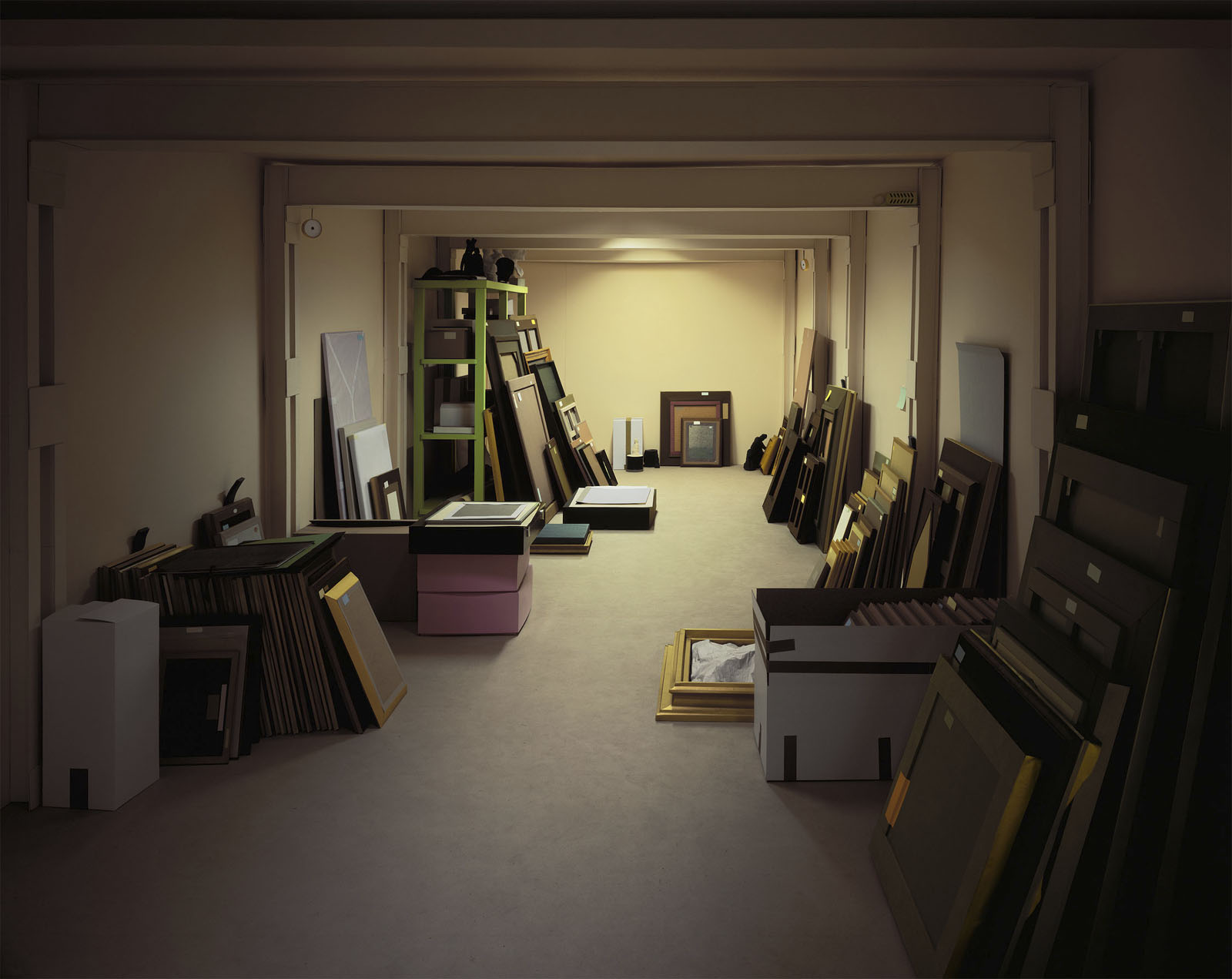
Thomas Demand (German, b. 1964) 'Vault' 2012


Thomas Demand (German, b. 1964)
Vault
2012
Chromogenic print
220 x 276.9cm (86 5/8 x 109 in.)
Purchase, Louis V. Bell Fund; Alfred Stieglitz Society, The Fledgling Fund, through Diana Barrett and Robert Vila, Joseph M. and Barbara Cohen Foundation Inc. and Hideyuki Osawa Gifts, 2013
© Thomas Demand / Artist’s Rights Society (ARS), New York


Demand’s photographs of the paper constructions he builds in his studio are typically based on photographs related to politically charged real-world events. He begins with an existing image, usually culled from the news media, which he translates into a three-dimensional life-sized model made of coloured paper and cardboard. The models are then carefully lit and photographed, after which they are destroyed. Three times removed from the scenes they depict, Demand’s works are masterpieces of pictorial ambiguity that occupy a mesmerising middle ground between reality and artifice.

Vault is based on a police photograph of a storeroom at the Wildenstein Institute in Paris, where thirty paintings and sculptures that had been missing for decades were discovered during a police raid in 2011. The missing artworks belong to the heirs of a French Jewish family displaced during the Holocaust. In Demand’s picture, as in the photograph on which it is based, the framed paintings – which include works by Degas, Manet, and Morisot – are turned to face the walls and remain tantalisingly hidden from view.


Vera Lutter (German, born Kaiserslautern, 1960) 'Pepsi Cola Interior II: July 6-13, 2000' 2000


Vera Lutter (German, b. 1960)
Pepsi Cola Interior II: July 6-13, 2000
2000
Gelatin silver print
Overall installation: 90 3/4 in. × 14 ft. 3/4 in. (230.5 × 428.6cm)
Sheet (A): 90 in. × 55 3/4 in. (228.6 × 141.6cm)
Sheet (B): 90 in. × 55 3/4 in. (228.6 × 141.6cm)
Sheet (C): 90 in. × 55 3/4 in. (228.6 × 141.6cm)
Frame (each): 90 3/4 × 56 1/4 in. (230.5 × 142.9cm)
Purchase, Joseph M. and Barbara Cohen Foundation Inc. Gift, 2001
© Vera Lutter


While the basis for Lutter’s technique – the camera obscura – is older than photography itself, her images and subject matter are wholly modern. This enormous negative print was made inside a room-sized pinhole camera that Lutter built in a derelict Pepsi-Cola bottling plant on the East River in Hunters Point, Queens. After pinning three huge sheets of photographic paper opposite the camera’s pinhole aperture, she worked inside the camera to monitor and manipulate the light during the weeklong exposure. The bottling plant itself closed in 1999 and was later demolished.


Mishka Henner (British, b. 1976) 'Staphorst Ammunition Depot, Overijssel' 2011, printed 2014


Mishka Henner (British, b. 1976)
Staphorst Ammunition Depot, Overijssel
2011, printed 2014
From the series Dutch Landscapes
Inkjet print
31 1/2 × 35 7/16 in. (80 × 90cm)
Purchase, Vital Projects Fund Inc. Gift, through Joyce and Robert Menschel, 2014
© Mishka Henner


In his “Dutch Landscapes” series, Henner selects and reproduces images of the Netherlands found on Google Earth. The multicoloured shapes punctuating these landscapes were created not by the artist but at the behest of the Dutch government. When Google Earth was introduced in 2005, satellite imagery of the entire planet became freely accessible to anyone with an Internet connection. This sudden visibility created concerns among many governments, who required Google – or its image suppliers – to obscure the details of sites deemed vital to national security. While most nations employed standard techniques, such as blurring, pixilation, or digital cloning, the Dutch chose to conceal hundreds of sites – including royal palaces, army barracks, and fuel depots – with bold, multicoloured polygons. “There is of course an absurdity to these censored images,” Henner has written, “since their overt, bold and graphic nature only draws attention to the very sites that are meant to be hidden. Yet this contradiction seems perfectly apt for the absurd fear of terror that has come to dominate the cultural landscape of the last decade.”


Now You See It: Photography and Concealment, an installation of 25 works at The Metropolitan Museum of Art, focuses on the dynamic interplay between concealment and revelation in contemporary photography and video art. The featured works, all from the Museum’s Department of Photographs, range from a late 19th-century photograph by Pierre-Louis Pierson to a recently acquired work by Thomas Demand.

The installation presents works by artists who use the camera to reveal subjects or places ordinarily hidden from view, as well as works that explore broader themes of secrecy and obscured or partial vision. A highlight of Now You See It is Thomas Demand’s photograph Vault (2012). The image is based on a police photograph of a storeroom at the Wildenstein Institute in Paris, where 30 paintings and sculptures that had been missing for decades were discovered during a police raid in 2011. In Demand’s picture, as in the photograph on which it is based, the framed art works are turned to face the walls, remaining tantalisingly hidden from view. Other highlights include Vera Lutter’s haunting view of the seldom seen interior of the Pepsi Cola bottling plant in Queens, New York, Pepsi Cola Interior II: July 6-13 (2000), and Fazal Sheikh’s Desert Bloom (2011), a series of aerial photographs of the Negev desert. In Grace Nditru’s acclaimed video The Nightingale (2003), the artist explores the tradition of the veil and its complex associations of exposure and effacement. Accompanied by a recording of the Senegalese singer Baaba Maal, Ndiritu evokes a rapid-fire series of cultural references as she performs a hypnotic, Scheherazade-like series of gestures and movements with a piece of fabric, swiftly transforming it from turban to blindfold, and do-rag to noose to niqab. The tension between publicity and privacy, inherent in the field of photography, is explored in works by artists as diverse as Diane Arbus, Lutz Bacher, Jack Pierson, and Taryn Simon. The 20th-century photographs on view present the theme of concealment in a literal way and include Weegee’s Charles Sodokoff and Arthur Webber Use Their Top Hats to Hide Their Faces (January 27, 1942) and Helen Levitt’s Kids in a Box, on the Street, New York City (c. 1942).

Now You See It: Photography and Concealment is organised by Mia Fineman, Associate Curator in the Department of Photographs at The Metropolitan Museum of Art.


Helen Levitt (American, 1913-2009) [Kids in a Box, on the Street, New York City] c. 1942


Helen Levitt (American, 1913-2009)
[Kids in a Box, on the Street, New York City]
c. 1942
Gelatin silver print
Image approx.: 9 × 6 in. (22.9 × 15.2cm)
Promised Gift of Mrs. Robert O. Levitt
© Estate of Helen Levitt


Helen Levitt (American, 1913-2009) [Kids on the Street Playing Hide and Seek, New York City] c. 1942


Helen Levitt (American, 1913-2009)
[Kids on the Street Playing Hide and Seek, New York City]
c. 1942
Gelatin silver print
9 3/4 × 6 3/4 in. (24.8 × 17.1cm)
Promised Gift of Mrs. Robert O. Levitt
© Estate of Helen Levitt


Attributed to Juliette Alexandre-Bisson (French, 1861-1956) [Birth of Ectoplasm During Séance with the Medium Eva C.] 1919-1920


Attributed to Juliette Alexandre-Bisson (French, 1861-1956)
[Birth of Ectoplasm During Séance with the Medium Eva C.]
1919-1920
Gelatin silver print
11.8 x 8.9cm (4 5/8 x 3 1/2 in.)
Gilman Collection, Purchase, The Howard Gilman Foundation Gift, 2001


Bill Wasilevich (American, active 1940s) 'Jimmy "One Eye" Collins After Arraignment' 1946


Bill Wasilevich (American, active 1940s)
Jimmy “One Eye” Collins After Arraignment
1946
Gelatin silver print
18.6 x 14.4cm (7 5/16 x 5 11/16 in.)
Twentieth-Century Photography Fund, 2008
© Steve Schapiro/Corbis


Grace Ndiritu (British, born 1976)
The Nightingale
2003
Video
Gift of the artist, 2009
© 2003 Grace Ndiritu, Courtesy Grace Ndiritu and LUX, London


Before a camera fixed on her face and neck and accompanied by a recording of the Senegalese singer Baaba Maal, Ndiritu performs a hypnotic, Scheherazade-like series of gestures and movements with a piece of fabric, swiftly transforming it from turban to blindfold, from do-rag to noose to niqab. Both jubilant and unsettling, the video evokes a rapid-fire series of cultural references, counterposing the enforced modesty of the Islamic world with Western fantasies of exoticism. Ndiritu, who studied textiles at the Winchester School of Art, acquired this simple red-and-white scarf while traveling in India and carried it with her as a talisman through years of global exploration.


Jack Pierson (American, b. 1960) 'The Lonely Life' 1992


Jack Pierson (American, b. 1960)
The Lonely Life
1992
Chromogenic print
Frame: 76.2 × 101.6cm (30 × 40 in.)
Purchase, The Horace W. Goldsmith Foundation Gift, through Joyce and Robert Menschel, 2000
© Jack Pierson


In 1994, Pierson was invited by the Whitney Museum of American Art to show his photographs alongside a group of works by Edward Hopper (1882-1967) that the artist selected from their vast holdings. Like Hopper, Pierson creates works that are inherently cinematic in their scope and effects; both are primarily concerned with mood, atmosphere, and exhibit a particularly urban kind of melancholy. His greatest asset, however, is an almost overwhelmingly lush palette, which he uses to depict objects of desire or scenes that are unabashedly sensual and emotional. An excellent example of the artist’s high-key chromaticism, The Lonely Life describes the unique brand of loneliness shared by the performer and the fan, both of whom (like Pierson) are doomed to experience existence solely through the intoxications of art.


Pierre-Louis Pierson (French, 1822-1913) 'Scherzo di Follia' 1861-1867, printed c. 1930


Pierre-Louis Pierson (French, 1822-1913)
Scherzo di Follia
1861-1867, printed c. 1930
Gelatin silver print from glass negative
39.8 x 29.8cm (15 11/16 x 11 3/4 in.)
Gilman Collection, Gift of The Howard Gilman Foundation, 2005


Virginia Oldoini, Countess Verasis de Castiglione (1837-1899), created a sensation when she appeared on the social scene in Paris in 1855, having been sent by the Italian statesman Cavour to secretly win Napoleon III over to the cause of Italian unity by “any means she chose.” Within months, the statuesque beauty was the mistress of Napoleon III and a much-talked-about ornament of the lavish balls so prevalent during the period. After the fall of the Second Empire in 1870, she led an increasingly secluded existence, which gave rise to fantastic speculation about her affairs. As the years went by, her mental stability declined and she ventured out only at night, shrouded in veils.

The countess’s raging narcissism found in photography the perfect ally; Pierre-Louis Pierson produced over seven hundred different images of her. In a reversal of roles, the sitter would direct every aspect of the picture, from the angle of the shot to the lighting, using the photographer as a mere tool in her pursuit of self-promotion and self-expression.


The Metropolitan Museum of Art
1000 Fifth Avenue at 82nd Street
New York, New York 10028-0198
Phone: 212-535-7710

Opening hours:
Sunday – Tuesday and Thursday 10am – 5pm
Friday and Saturday 10am – 9pm
Closed Wednesday

The Metropolitan Museum of Art website

LIKE ART BLART ON FACEBOOK

Back to top

Exhibition: ‘Portraits of Renown: Photography and the Cult of Celebrity’ at the J. Paul Getty Museum, Los Angeles

Exhibition dates: 3rd April – 26th August 2012


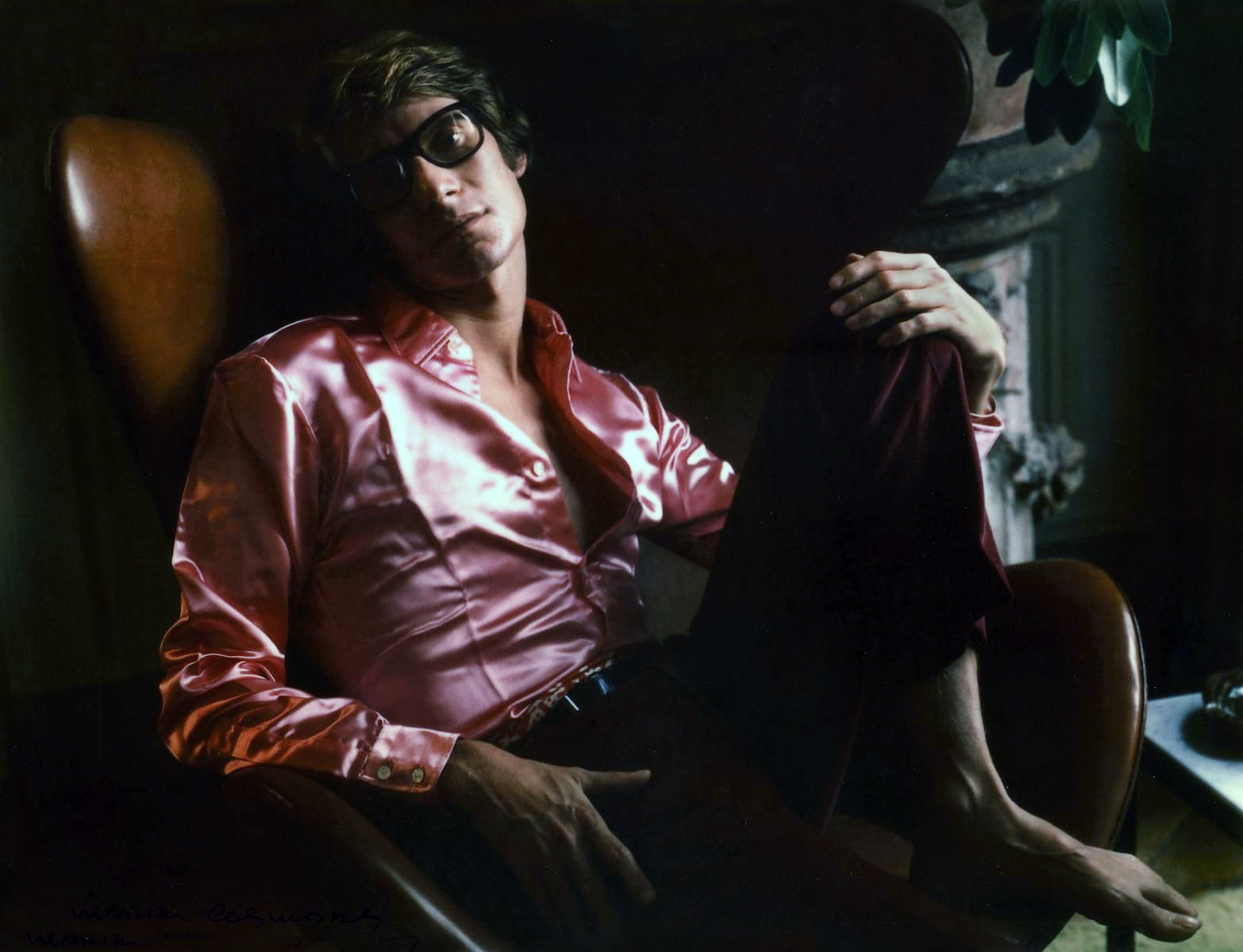
Marie Cosindas (American, 1925-2017) 'Yves Saint Laurent, Paris' 1968


Marie Cosindas (American, 1925-2017)
Yves Saint Laurent, Paris
1968
Dye colour diffusion [Polaroid ®] print
The J. Paul Getty Museum, Los Angeles
© Marie Cosindas


On the Nature of Photography


“To get from the tangible to the intangible (which mature artists in any medium claim as part of their task) a paradox of some kind has frequently been helpful. For the photographer to free himself of the tyranny of the visual facts upon which he is utterly dependent, a paradox is the only possible tool. And the talisman paradox for unique photography is to work “the mirror with a memory” as if it were a mirage, and the camera is a metamorphosing machine, and the photograph as if it were a metaphor… Once freed of the tyranny of surfaces and textures, substance and form [the photographer] can use the same to pursue poetic truth.”


Minor White quoted in Beaumont Hewhall (ed.,). The History of Photography. Boston: Little, Brown, and Co., 1982, p. 281


“Carol Jerrems and I taught at the same secondary school in the 1970’s. In a classroom that was unused at that time, I remember having my portrait taken by her. She held her Pentax to her eye. Carols’ portraits all seemed to have been made where the posing of her subjects was balanced by an incisive naturalness (for want of a better description). As a challenge to myself I tried to look “natural”, but kept in my consciousness that I was having my portrait taken. Minutes passed and neither she nor her camera moved at all.

Then the idea slipped from my mind for just a moment, and I was straightaway bought back by the sound of the shutter. What had changed in my face? – probably nothing, or 1 mm of muscle movement. Had she seen it through the shutter? Or something else – I don’t know.”


Australian artist Ian Lobb on being photographed by the late Carol Jerrems


There is always something that you can’t quite put your finger on in an outstanding portrait, some ineffable other that takes the portrait into another space entirely. I still haven’t worked it out but my thoughts are this: forget about the pose of the person. It would seem to me to be both a self conscious awareness by the sitter of the camera and yet at the same time a knowing transcendence of the visibility of the camera itself. In great portrait photography it is almost as though the conversation between the photographer and the person being photographed elides the camera entirely. Minor White, in his three great mantras, the Three Canons, observes:


Be still with yourself
Until the object of your attention
Affirms your presence

Let the Subject generate its own Composition

When the image mirrors the man
And the man mirrors the subject
Something might take over


Freed from the tyranny of the visual facts something else emerges.

Celebrities know only too well how to “work” the camera but the most profound portraits, even of celebrities, are in those moments when the photographer sees something else in the person being photographed, some unrecognised other that emerges from the shadows – a look, a twist of the head, the poignancy of the mouth, the vibrancy of the dancer Josephine Baker, the sturdiness of the gaze of Walt Whitman with hands in pockets, the presence of the hands (no, not the gaze!) of Picasso. I remember taking a black and white portrait of my partner Paul holding a wooden finial like a baby among some trees, a most beautiful, revealing photograph. He couldn’t bear to look at it, for it stripped him naked before the lens and showed a side of himself that he had never seen before: vulnerable, youthful, beautiful.

Why do great portrait photographers make so many great portraits? Why can’t this skill be shared or taught? Why can’t Herb Ritts (for example) make a portrait that goes beyond a caricature? Why is it that what can be taught is so banal that it has no value?

In photography, maybe we edit out what is expected and then it seems that photography does something that goes beyond language; it goes beyond function that can be described as a part of speech, metonym or metaphor. When this something else takes over I think it is truly “unrecognised” in the best portraits (and landscape / urban photographs) – and it is fantastic and wonderful.

This is my understanding, then, of perception and vision (when spirit takes over) – [which is] the ability to see this certain something in the mind (previsualisation) before seeing it through the viewfinder and to then be able to reveal it in the physicality of the print. It is a liminal moment in time and space.

I believe this is the reality of photography itself in its absolute essential form – and here I am deliberately forgetting about post-photography, post-modernism, modernism, pictorialism, ism, ism – getting down to why I really like photography:

the BEYOND visualisation of a world, the transcendence of time and space that leads, in great photographs, to a recognition of the discontinuous nature of life but in the end, to its ultimate persistence.

This is as close as I have got so far…

Dr Marcus Bunyan
August 2012


Many thankx to the J. Paul Getty Museum for allowing me to publish the photographs in the posting. Please click on the photograph for a larger version of the image.


Mariana Cook (American, b. 1955) 'Barack and Michelle Obama, Chicago' May 26, 1996


Mariana Cook (American, b. 1955)
Barack and Michelle Obama, Chicago
May 26, 1996
Selenium-toned gelatin silver print
The J. Paul Getty Museum, Los Angeles


Marie Cosindas (American, 1925-2017) 'Andy Warhol' 1966


Marie Cosindas (American, 1925-2017)
Andy Warhol
1966
Dye colour diffusion [Polaroid ®] print
11.4 x 8.9cm
The J. Paul Getty Museum, Los Angeles
© Marie Cosindas


Marie Cosindas (American, 1925-2017) 'Yves St Laurent' 1968


Marie Cosindas (American, 1925-2017)
Yves St Laurent
1968
Dye colour diffusion [Polaroid ®] print
11.4 x 8.9cm
The J. Paul Getty Museum, Los Angeles
© Marie Cosindas


Andy Warhol (American, 1928-1987) 'Grace Jones' 1984


Andy Warhol (American, 1928-1987)
Grace Jones
1984
Polaroid Polacolor print
9.5 x 7.3cm
The J. Paul Getty Museum, Los Angeles
© 2011 The Andy Warhol Foundation for the Visual Arts / Artists Rights Society (ARS), New York


Edward Weston (American, 1889-1958) 'Igor Stravinsky' 1935


Edward Weston (American, 1889-1958)
Igor Stravinsky
1935
Gelatin silver print
The J. Paul Getty Museum, Los Angeles


Coy Watson Jr. (American, 1912-2009) 'Joe Louis – “The Brown Bomber”, Los Angeles, February 1935'


Coy Watson Jr. (American, 1912-2009)
Joe Louis – “The Brown Bomber”, Los Angeles, February 1935
1935
Gelatin silver print
The J. Paul Getty Museum, Los Angeles


Edward Steichen (American, 1879-1973) 'Gloria Swanson' 1924


Edward Steichen (American, 1879-1973)
Gloria Swanson
1924
Gelatin silver print
27.8 x 21.6cm (10 15/16 x 8 1/2 in.)
The J. Paul Getty Museum, Los Angeles
© Permission Joanna T. Steichen


Portraits of Renown surveys some of the visual strategies used by photographers to picture famous individuals from the 1840s to the year 2000. “This exhibition offers a brief visual history of famous people in photographs, drawn entirely from the Museum’s rich holdings in this genre,” says Paul Martineau, curator of the exhibition and associate curator of photographs at the J. Paul Getty Museum. “It also provides a broad historical context for the work in the concurrent exhibition Herb Ritts: L.A. Style, which includes a selection of Ritts’s best celebrity portraits.”

Photography’s remarkable propensity to shape identities has made it the leading vehicle for representing the famous. Soon after photography was invented in the 1830s, it was used to capture the likenesses and accomplishments of great men and women, gradually supplanting other forms of commemoration. In the twentieth century, the proliferation of photography and the transformative power of fame have helped to accelerate the desire for photographs of celebrities in magazines, newspapers, advertisements, and on the Internet. The exhibition is arranged chronologically to help make visible some of the overarching technical and stylistic developments in photography from the first decade of its invention to the end of the twentieth century.

A wide range of historical figures are portrayed in Portraits of Renown. A photograph by Alexander Gardner of President Lincoln documents his visit to the battlefield of Antietam during the Civil War. Captured by Nadar, a portrait of Alexander Dumas, best known for his novels The Count of Monte Cristo and The Three Musketeers, shows the author with an energetic expression, illustrating the lively personality that made his writing so popular. Baron Adolf De Meyer’s portrait of Josephine Baker, an American performer who became an international sensation at the Folies Bergère in Paris, showcases her comedic charm, a trait that proved central to her popularity as a performer. An iconic portrait of the silent screen actress, Gloria Swanson, created by Edward Steichen for Vanity Fair reveals both the intensity of its sitter and the skill of the artist. A picture of Pablo Picasso by his friend Man Ray portrays the master of Cubism with a penetrating gaze.

Yves St. Laurent, Andy Warhol, and Grace Jones are among the contemporary figures included in the exhibition. Fashion designer Yves St. Laurent was photographed by Marie Cosindas using instant color film by Polaroid. The photograph, made the year his first boutique in New York opened, graced the walls of the store for ten years. A Cosindas portrait of Andy Warhol shows the artist wearing dark sunglasses, which partially conceal his face. Warhol, who was fascinated by celebrity, delighted in posing public personalities like Grace Jones for his camera.

Press release from the J. Paul Getty Museum website


Man Ray (American, 1890-1976) 'Pablo Picasso' 1934


Man Ray (American, 1890-1976)
Pablo Picasso
1934
Gelatin silver print
25.2 x 20cm
The J. Paul Getty Museum, Los Angeles
© Man Ray Trust ARS-ADAGP


Berenice Abbott (American, 1898-1991) 'James Joyce' 1928


Berenice Abbott (American, 1898-1991)
James Joyce
1928
Gelatin silver print
The J. Paul Getty Museum, Los Angeles


Baron Adolf De Meyer (American born France, 1868-1946) 'Portrait of Josephine Baker' 1925


Baron Adolf De Meyer (American born France, 1868-1946)
Portrait of Josephine Baker
1925
Collotype print
39.1 x 39.7cm
The J. Paul Getty Museum, Los Angeles


In 1925 Josephine Baker, an American dancer from Saint Louis, Missouri, made her debut on the Paris stage in La Revue nègre (The Black Review) at the Théâtre des Champs-Elysées, wearing nothing more than a skirt of feathers and performing her danse sauvage (savage dance). She was an immediate sensation in Jazz-Age France, which celebrated her perceived exoticism, quite the opposite of the reception she had received dancing in American choruses. American expatriate novelist Ernest Hemingway called Baker “the most sensational woman anybody ever saw – or ever will.”

Baron Adolf de Meyer, a society and fashion photographer, took this playful portrait in the year of Baker’s debut. Given the highly sexual nature of her stage persona, this portrait is charming and almost innocent; Baker’s personality is suggested by her face rather than her famous body.

Text from the J. Paul Getty website


Edward Steichen (American, 1879-1973) 'John Barrymore as Hamlet' 1922


Edward Steichen (American, 1879-1973)
John Barrymore as Hamlet
1922
Gelatin silver print
The J. Paul Getty Museum, Los Angeles


Alfred Stieglitz (American, 1964-1946) 'Georgia O'Keeffe: A Portrait' 1918


Alfred Stieglitz (American, 1964-1946)
Georgia O’Keeffe: A Portrait
1918
Gelatin silver print
The J. Paul Getty Museum, Los Angeles


Arnold Genthe (American born Germany, 1869-1942) 'Anna Pavlowa' about 1915


Arnold Genthe (American born Germany, 1869-1942)
Anna Pavlowa
about 1915
Gelatin silver print
33.5 × 25.2cm (13 3/16 × 9 15/16 in.)
The J. Paul Getty Museum, Los Angeles


The Russian ballerina Anna Pavlowa (or Pavlova) so greatly admired Arnold Genthe’s work that she made the unusual decision to visit his studio, rather than have him come to her rehearsals. The resulting portrait of the prolific dancer, leaping in mid-air, is the only photograph to capture Pavlowa in free movement. Genthe regarded this print as one of the best dance photographs he ever made.

Text from the J. Paul Getty website


Alvin Langdon Coburn (British born United States, 1882-1966) 'Mark Twain (Samuel Langhorne Clemens)' Negative December 21, 1908; print 1913


Alvin Langdon Coburn (British born United States, 1882-1966)
Mark Twain (Samuel Langhorne Clemens)
Negative December 21, 1908; print 1913
Photogravure
20.6 × 14.8cm (8 1/8 × 5 13/16 in.)
The J. Paul Getty Museum, Los Angeles


Alfred Stieglitz (American, 1864-1946) '[Self-Portrait]' Negative 1907; print 1930


Alfred Stieglitz (American, 1864-1946)
[Self-Portrait]
Negative 1907; print 1930
Gelatin silver print
24.8 × 18.4cm (9 3/4 × 7 1/4 in.)
The J. Paul Getty Museum, Los Angeles


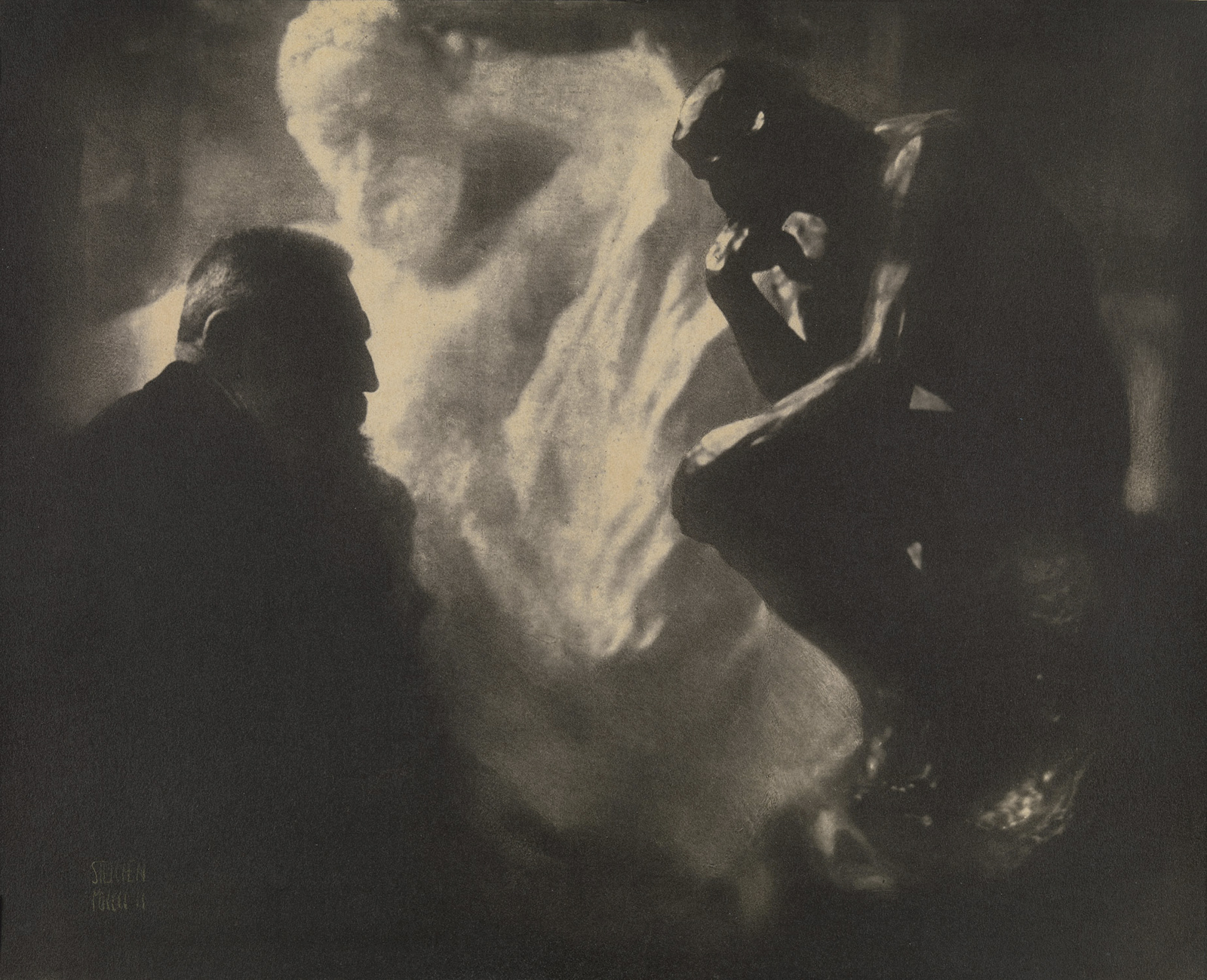
Edward Steichen (American 1879-1973) 'Rodin The Thinker' 1902


Edward Steichen (American, 1879-1973)
Rodin – Le Penseur (The Thinker)
1902
Gelatin-carbon print
The J. Paul Getty Museum, Los Angeles


Sarah Choate Sears (American, 1858-1935) '[Julia Ward Howe]' about 1890


Sarah Choate Sears (American, 1858-1935)
[Julia Ward Howe]
about 1890
Platinum print
23.5 × 18.6cm (9 1/4 × 7 5/16 in.)
The J. Paul Getty Museum, Los Angeles


Julia Ward Howe (May 27, 1819 – October 17, 1910) was an American poet and author, known for writing “The Battle Hymn of the Republic” and the original 1870 pacifist Mother’s Day Proclamation. She was also an advocate for abolitionism and a social activist, particularly for women’s suffrage.


Sarah Choate Sears (American, 1858-1935) 'John Singer Sargent' about 1890


Sarah Choate Sears (American, 1858-1935)
John Singer Sargent
about 1890
Gelatin silver print
The J. Paul Getty Museum, Los Angeles


Although John Singer Sargent was the most famous American portrait painter of his time, he apparently did not like to be photographed. The few photographs that exist show him at work, as he is here, sketching and puffing on a cigar. His friend Sarah Choate Sears, herself a painter of some note, drew many of her sitters for photographs from the same aristocratic milieu as Sargent did for his paintings.

Text from the J. Paul Getty website


Nadar [Gaspard Félix Tournachon] (French, 1820-1910) '[Sarah Bernhardt as the Empress Theodora in Sardou's "Theodora"]' Negative 1884; print and mount about 1889


Nadar (Gaspard Félix Tournachon) (French, 1820-1910)
[Sarah Bernhardt as the Empress Theodora in Sardou’s “Theodora”]
Negative 1884; print and mount about 1889
Albumen silver print
14.6 × 10.5 cm (5 3/4 × 4 1/8 in.)
The J. Paul Getty Museum, Los Angeles


J. Wood (American, active New York, New York 1870s-1880s) 'L.P. Federmeyer' 1879


J. Wood (American, active New York, New York 1870s-1880s)
L.P. Federmeyer
1879
Albumen silver print
14.8 × 10 cm (5 13/16 × 3 15/16 in.)
The J. Paul Getty Museum, Los Angeles


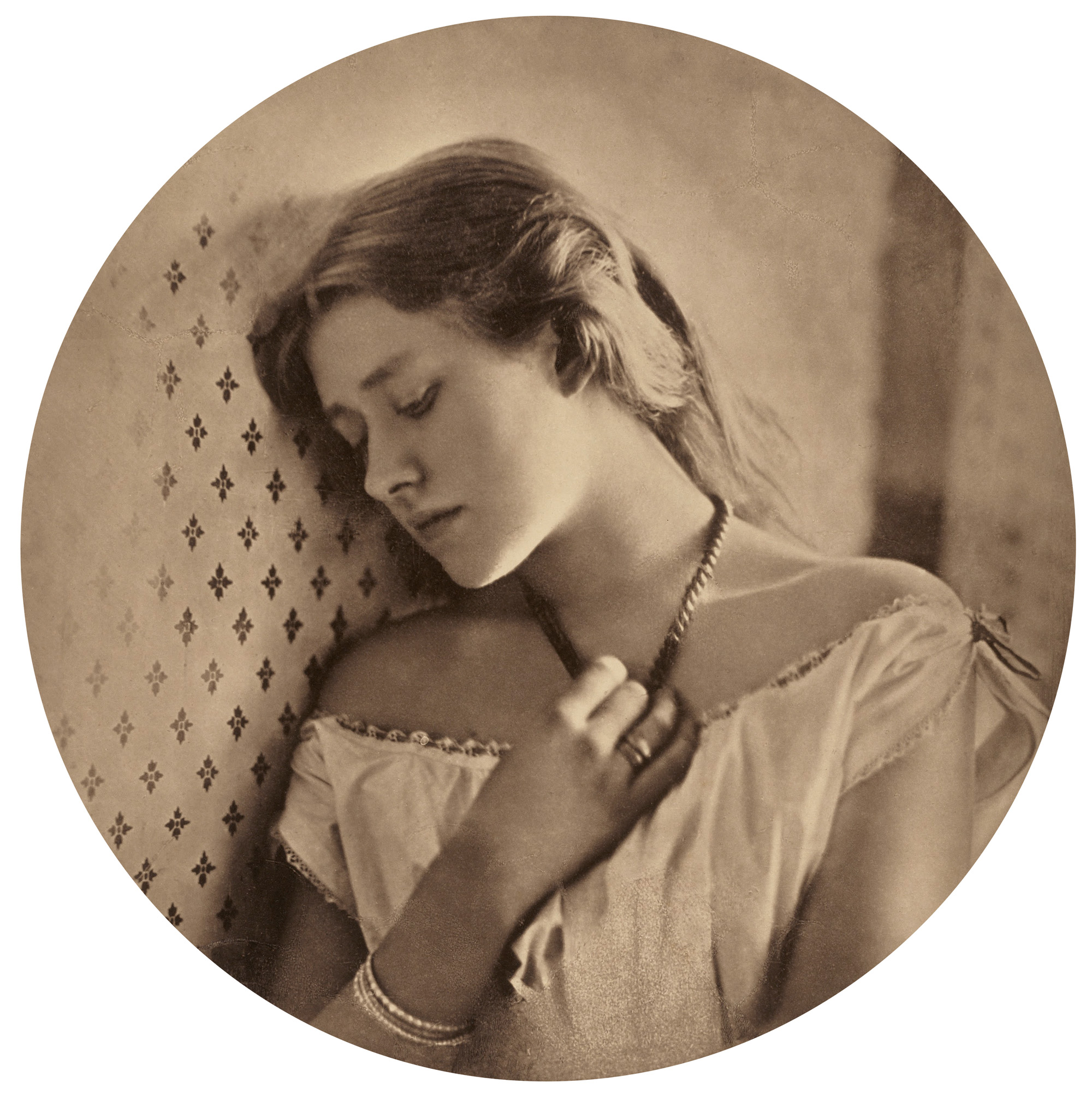
Julia Margaret Cameron (British born India, 1815-1879) 'Ellen Terry at Age Sixteen' 1864


Julia Margaret Cameron (British born India, 1815-1879)
Ellen Terry at Age Sixteen
Negative 1864; print about 1875
Carbon print
24.1cm (9 1/2 in.)
The J. Paul Getty Museum, Los Angeles


This image of Ellen Terry (1847-1928) is one of the few known photographs of a female celebrity by Julia Margaret Cameron. Terry, the popular child actress of the British stage, was sixteen years old when Cameron made this image. This photograph was most likely taken just after she married the eccentric painter, George Frederick Watts (1817-1904), who was thirty years her senior. They spent their honeymoon in the village of Freshwater on the Isle of Wight where Cameron resided.

Cameron’s portrait echoes Watt’s study of Terry titled Choosing (1864, National Portrait Gallery, London). As in the painting, Terry is shown in profile with her eyes closed, an ethereal beauty in a melancholic dream state. In this guise, Terry embodies the Pre-Raphaelite ideal of womanhood rather than appearing as the wild boisterous teenager she was known to be. The round (“tondo”) format of this photograph was popular among Pre-Raphaelite artists.

Cameron titled another print of this image Sadness (see 84.XZ.186.52), which may suggest the realisation of a mismatched marriage. Terry’s anxiety is plainly evident – she leans against an interior wall and tugs nervously at her necklace. The lighting is notably subdued, leaving her face shadowed in doubt. In The Story of My Life (1909), Terry recalls how demanding Watts was, calling upon her to sit for hours as a model and giving her strict orders not to speak in front of distinguished guests in his studio.

This particular version was printed eleven years after Cameron first made the portrait. In order to distribute this image commercially, the Autotype Company of London rephotographed the original negative after the damage had been repaired. The company then made new prints using the durable, non-fading carbon print process. Thus, this version is in reverse compared to Sadness. Terry’s enduring popularity is displayed by the numerous photographs taken of her over the years. Along with the two portraits by Cameron, the Getty owns three more of Terry by other photographers.

Adapted from Julian Cox. Julia Margaret Cameron, In Focus: Photographs from the J. Paul Getty Museum (Los Angeles: J. Paul Getty Museum, 1996), 12. ©1996 The J. Paul Getty Museum; with additions by Carolyn Peter, J. Paul Getty Museum, Department of Photographs, 2019.


Charles DeForest Fredricks (American, 1823-1894) '[Mlle Pepita]' 1863


Charles DeForest Fredricks (American, 1823-1894)
[Mlle Pepita]
1863
Albumen silver print
9 × 5.4cm (3 9/16 × 2 1/8 in.)
The J. Paul Getty Museum, Los Angeles


André Adolphe-Eugène Disdéri (French, 1819-1889) '[Rosa Bonheur]' 1861-1864


André Adolphe-Eugène Disdéri (French, 1819-1889)
[Rosa Bonheur]
1861-1864
Albumen silver print
8.4 × 5.2cm (3 5/16 × 2 1/16 in.)
The J. Paul Getty Museum, Los Angeles


Rosa Bonheur, born Marie-Rosalie Bonheur (16 March 1822 – 25 May 1899), was a French artist, mostly a painter of animals (animalière) but also a sculptor, in a realist style. Her best-known paintings are Ploughing in the Nivernais, first exhibited at the Paris Salon of 1848, and now at the Musée d’Orsay in Paris, and The Horse Fair (in French: Le marché aux chevaux), which was exhibited at the Salon of 1853 (finished in 1855) and is now in the Metropolitan Museum of Art, in New York City. Bonheur was widely considered to be the most famous female painter of the nineteenth century.

Text from the Wikipedia website


Mathew B. Brady (American, about 1823-1896) 'Walt Whitman' about 1870


Mathew B. Brady (American, about 1823-1896)
Walt Whitman
about 1870
Albumen silver print
14.6 x 10.3cm
The J. Paul Getty Museum, Los Angeles


Mathew B. Brady (American, about 1823-1896) 'Robert E. Lee' 1865


Mathew B. Brady (American, about 1823-1896)
Robert E. Lee
1865
Albumen silver print
The J. Paul Getty Museum, Los Angeles


John Robert Parsons (British, about 1826-1909) '[Portrait of Jane Morris (Mrs. William Morris)]' Negative July 1865; print after 1900


John Robert Parsons (British, about 1826-1909)
[Portrait of Jane Morris (Mrs. William Morris)]
Negative July 1865; print after 1900
Gelatin silver print
22.9 × 19.2cm (9 × 7 9/16 in.)
The J. Paul Getty Museum, Los Angeles


Nadar [Gaspard Félix Tournachon] (French, 1820-1910) 'George Sand (Amandine-Aurore-Lucile Dupin), Writer' c. 1865


Nadar (Gaspard Félix Tournachon) (French, 1820-1910)
George Sand (Amandine-Aurore-Lucile Dupin)
about 1865
Albumen silver print
The J. Paul Getty Museum, Los Angeles


Amandine-Aurore-Lucile Dudevant, née Dupin, took the pseudonym George Sand in 1832. She was a successful Romantic novelist and a close friend of Nadar, and during the 1860s he photographed her frequently. Her writing was celebrated for its frequent depiction of working-class or peasant heroes. She was also a woman as renowned for her romantic liaisons as her writing; here she allowed Nadar to photograph her, devoid of coquettish charms but nevertheless a commanding presence.

This portrait is a riot of textural surfaces. The sumptuous satin of Sand’s gown and silken texture of her hair have a rich tactile presence. Her shimmering skirt melts into the velvet-draped support on which she leans, creating a visual triangle with the careful centre part of her wavy hair. The portrait details the exquisite laces, beads, and buttons of her gown, but her face, the apex of the triangle, is out of focus. Sand was apparently unable to remain perfectly still throughout the exposure, and the slight blurring of her facial features erases the unforgiving details that the years had drawn upon her.

Text from the J. Paul Getty website


Alexander Gardner (American born Scotland, 1821-1882) 'President Lincoln, United States Headquarters, Army of the Potomac, near Antietam, October 4, 1862'


Alexander Gardner (American born Scotland, 1821-1882)
President Lincoln, United States Headquarters, Army of the Potomac, near Antietam, October 4, 1862
1862
Albumen silver print
21.9 x 19.7cm (8 5/8 x 7 3/4 in.)
The J. Paul Getty Museum, Los Angeles


Twenty-six thousand soldiers were killed or wounded in the Battle of Antietam on September 17, 1862, after which Confederate General Robert E. Lee was forced to retreat to Virginia. Just two weeks after the victory, President and Commander-in-Chief Abraham Lincoln conferred with General McClernand and Allan Pinkerton, Chief of the nascent Secret Service, who had organised espionage missions behind Confederate lines.

Lincoln stands tall, front and centre in his stovepipe hat, his erect and commanding posture emphasised by the tent pole that seems to be an extension of his spine. The other men stand slightly apart in deference to their leader, in postures of allegiance with their hands covering their hearts. The reclining figure of the man at left and the shirt hanging from the tree are a reminder that, although this is a formally posed picture, Lincoln’s presence did not halt the camp’s activity, and no attempts were made to isolate him from the ordinary circumstances surrounding the continuing military conflict.

Text from the J. Paul Getty website


Alexander Gardner (American born Scotland, 1821-1882) 'President Lincoln, United States Headquarters, Army of the Potomac, near Antietam, October 4, 1862' (detail)


Alexander Gardner (American born Scotland, 1821-1882)
President Lincoln, United States Headquarters, Army of the Potomac, near Antietam, October 4, 1862 (detail)
1862
Albumen silver print
21.9 x 19.7cm (8 5/8 x 7 3/4 in.)
The J. Paul Getty Museum, Los Angeles


Pierre Louis Pierson (French, 1822-1913) 'Napoleon III and the Prince Imperial' about 1859


Pierre Louis Pierson (French, 1822-1913)
Napoleon III and the Prince Imperial
about 1859
Albumen silver print from a wet collodion glass negative
21 × 16cm (8 1/4 × 6 5/16 in.)
The J. Paul Getty Museum, Los Angeles


The Prince Imperial, son of Napoleon III, sits strapped securely into a seat on his horse’s back, a model subject for the camera. An attendant at the left steadies the horse so that the little prince remains picture-perfect in the centre of the backdrop erected for the photograph. The horse stands upon a rug that serves as a formalising element, making the scene appear more regal. The Emperor Napoleon III himself stands off to the right in perfect profile, supervising the scene with his dog and forming a framing mirror-image of the horse and attendant on the other side.

Pierre-Louis Pierson placed his camera far enough back from the Prince to capture the entire scene and all the players, but this was not the version sold as a popular carte-de-visite. The carte-de-visite image was cropped so that only the Prince upon his horse was visible.

Text from the J. Paul Getty website


Nadar [Gaspard Félix Tournachon] (French, 1820-1910) 'Alexander Dumas [père] (1802-1870) / Alexandre Dumas' 1855


Nadar (Gaspard Félix Tournachon) (French, 1820-1910)
Alexander Dumas [père] (1802-1870) / Alexandre Dumas
1855
Salted paper print
Image (rounded corners): 23.5 x 18.7cm (9 1/4 x 7 3/8 in.)
The J. Paul Getty Museum, Los Angeles
Public domain


The writer Alexander Dumas was Nadar’s boyhood idol. Nadar’s father had published Dumas’s first novel and play, and a portrait of Dumas hung in young Nadar’s room. The son of a French revolutionary general and a black mother, Dumas arrived in Paris from the provinces in 1823, poor and barely educated. Working as a clerk, he educated himself in French history and began to write. In 1829 he met with his first success; with credits including The Three Musketeers and The Count of Monte Cristo, published in 1844 and 1845, respectively, his fame and popularity were assured.

Nadar was the first photographer to use photography to enhance the sitter’s reputation. Given Dumas’s popularity, this mounted edition print, signed and dedicated by him, was likely intended for sale.

Dumas is represented as a lively, vibrant man. The self-restraint of his crossed hands, resting on a chair that disappears into the shadows, seems like an attempt to contain an undercurrent of boundless energy that threatened to ruin the necessary stillness of the pose and appears to have found an outlet through Dumas’s hair. Around the time of this sitting, the prolific Dumas and Nadar were planning to collaborate on a theatrical spectacle, which was ultimately never staged.

Text from the J. Paul Getty website


Unknown maker (American) 'Portrait of Edgar Allan Poe' late May - early June 1849


Unknown maker (American)
Portrait of Edgar Allan Poe
1849
Daguerreotype
The J. Paul Getty Museum, Los Angeles
Public domain


“A noticeable man clad in black, the fashion of the times, close-buttoned, erect, forward looking, something separate in his bearing … a beautifully poetic face.” ~ Basil L. Gildersleeve to Mary E. Phillips, 1915 (his childhood recollection of Poe)


Many of Edgar Allan Poe’s contemporaries described him as he appears in this portrait: a darkly handsome and intelligent man who possessed an unorthodox personality. Despite being acknowledged as one of America’s greatest writers of poetry and short stories, Poe’s life remains shrouded in mystery, with conflicting accounts about poverty, alcoholism, drug use, and the circumstances of his death in 1849. Like his life, Poe’s poems and short stories are infused with a sense of tragedy and mystery. Among his best-known works are: The RavenAnnabel Lee, and The Fall of the House of Usher.

This daguerreotype was made several months before Poe’s death at age 40. After his wife died two years earlier in 1847, Poe turned to two women for support and companionship. He met Annie Richmond at a poetry lecture that he gave when visiting Lowell, Massachusetts. Although she was married, they developed a deep, mutual affection. Richmond is thought to have arranged and paid for this portrait sitting. Poe is so forcibly portrayed that historians have described his appearance as disheveled, brooding, exhausted, haunted, and melancholic.

For reasons that are not entirely clear, relatively few daguerreotypes of notable poets, novelists, or painters have survived from the 1840s, and some of the best we have are by unknown makers. The art of the daguerreotype was one in which the sitter’s face usually took priority over the maker’s name, and many daguerreotypists failed to sign their works. This is the case with the Getty’s portrait of Poe.

Adapted from getty.edu, Interpretive Content Department, 2009; and Weston Naef, The J. Paul Getty Museum Handbook of the Photographs Collection (Los Angeles: J. Paul Getty Museum, 1995), 35. © 1995 The J. Paul Getty Museum.


Charles Richard Meade (American, 1826-1858) 'Portrait of Louis-Jacques-Mandé Daguerre' 1848


Charles Richard Meade (American, 1826-1858)
Portrait of Louis-Jacques-Mandé Daguerre
1848
Daguerreotype, hand-coloured
The J. Paul Getty Museum, Los Angeles
Public domain


By New Year’s Day of 1840 – little more than one year after William Henry Fox Talbot had first displayed his photogenic drawings in London and just four to five months after the first daguerreotypes had been exhibited in Paris at the Palais d’Orsay in conjunction with a series of public demonstrations of the process – Daguerre’s instruction manual had been translated into at least four languages and printed in at least twenty-one editions. In this way, his well-kept secret formula and list of materials quickly spread to the Americas and to provincial locations all over Europe. Photography became a gold rush-like phenomenon, with as much fiction attached to it as fact.

Nowhere was the daguerreotype more enthusiastically accepted than in the United States. Charles R. Meade was the proprietor of a prominent New York photographic portrait studio. He made a pilgrimage to France in 1848 to meet the founder of his profession and while there became one of the very few people to use the daguerreotype process to photograph the inventor himself.

A daguerreotype was (and is) created by coating a highly polished silver plated sheet of copper with light sensitive chemicals such as chloride of iodine. The plate is then exposed to light in the back of a camera obscura. When first removed from the camera, the image is not immediately visible. The plate must be exposed to mercury vapours to “bring out” the image. The image is then “fixed” (or “made permanent on the plate”) by washing it in a bath of hyposulfite of soda. Finally it is washed in distilled water. Each daguerreotype is a unique image; multiple prints cannot be made from the metal plate.

Adapted from Weston Naef, The J. Paul Getty Museum Handbook of the Photographs Collection (Los Angeles: J. Paul Getty Museum, 1995), 33, © 1995 The J. Paul Getty Museum; with additions by Carolyn Peter, J. Paul Getty Museum, Department of Photographs, 2019.


The J. Paul Getty Museum
1200 Getty Center Drive
Los Angeles, California 90049

Opening hours:
Daily 10am – 5pm

The J. Paul Getty Museum website

LIKE ART BLART ON FACEBOOK

Back to top