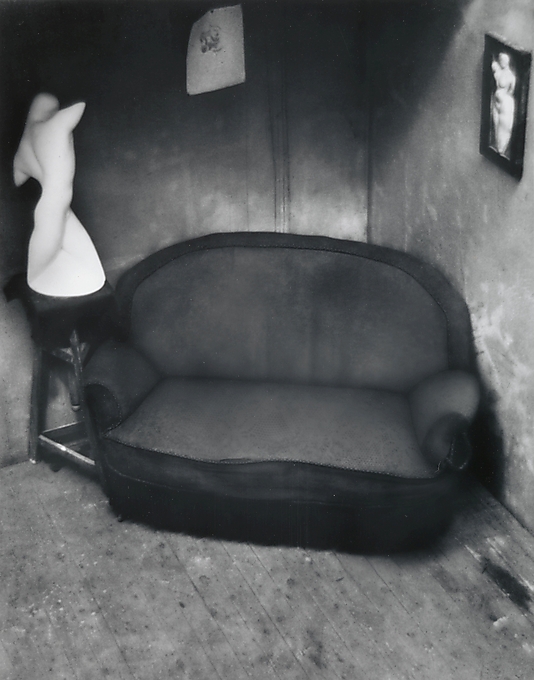
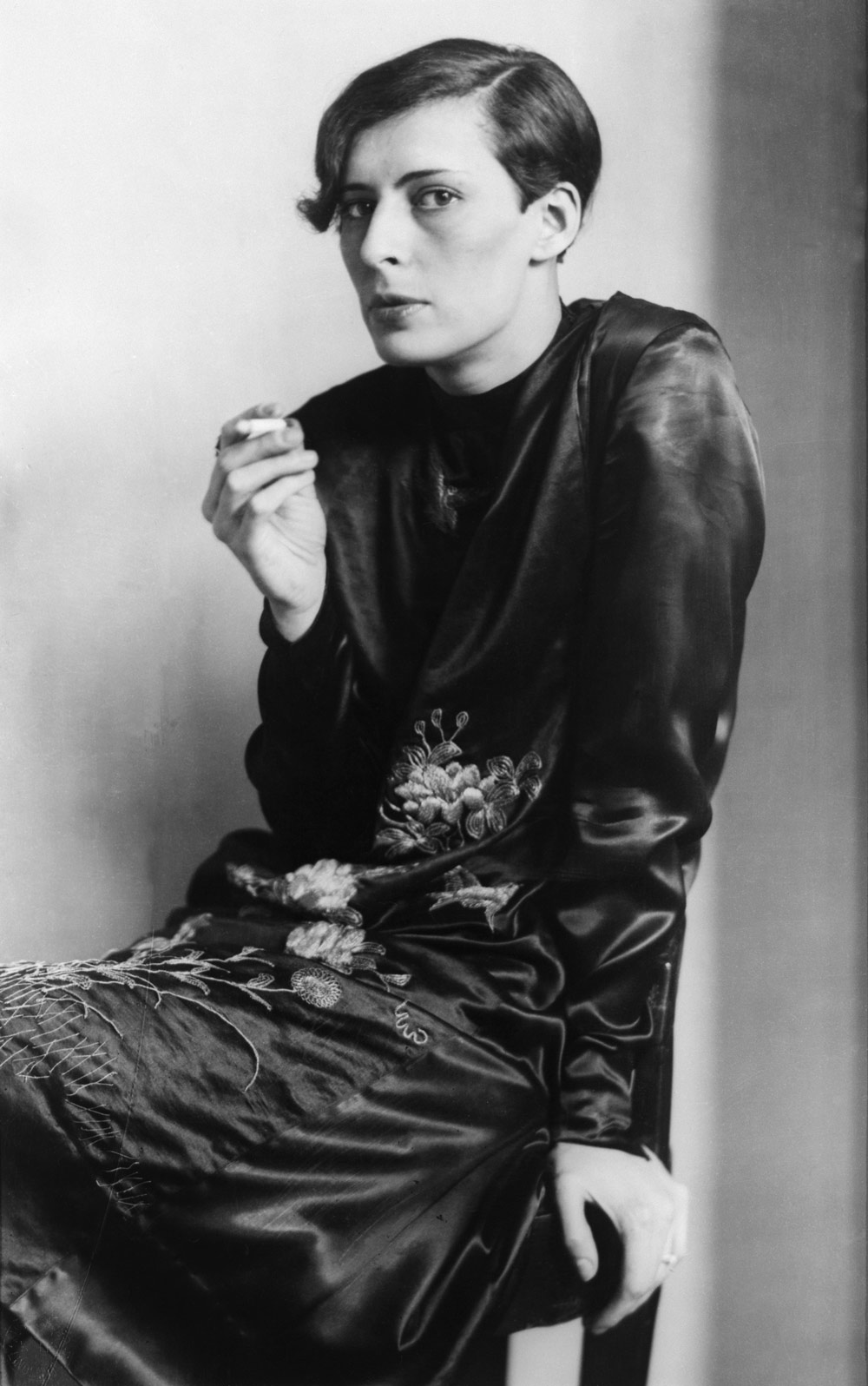
Exhibition: ‘The Catalonia of Jules Ainaud (1871-1872)’ at Fundación MAPFRE Photography Center (Barcelona)

Exhibition dates: 8th June – 3rd September 2023

Curator: Jep Martí


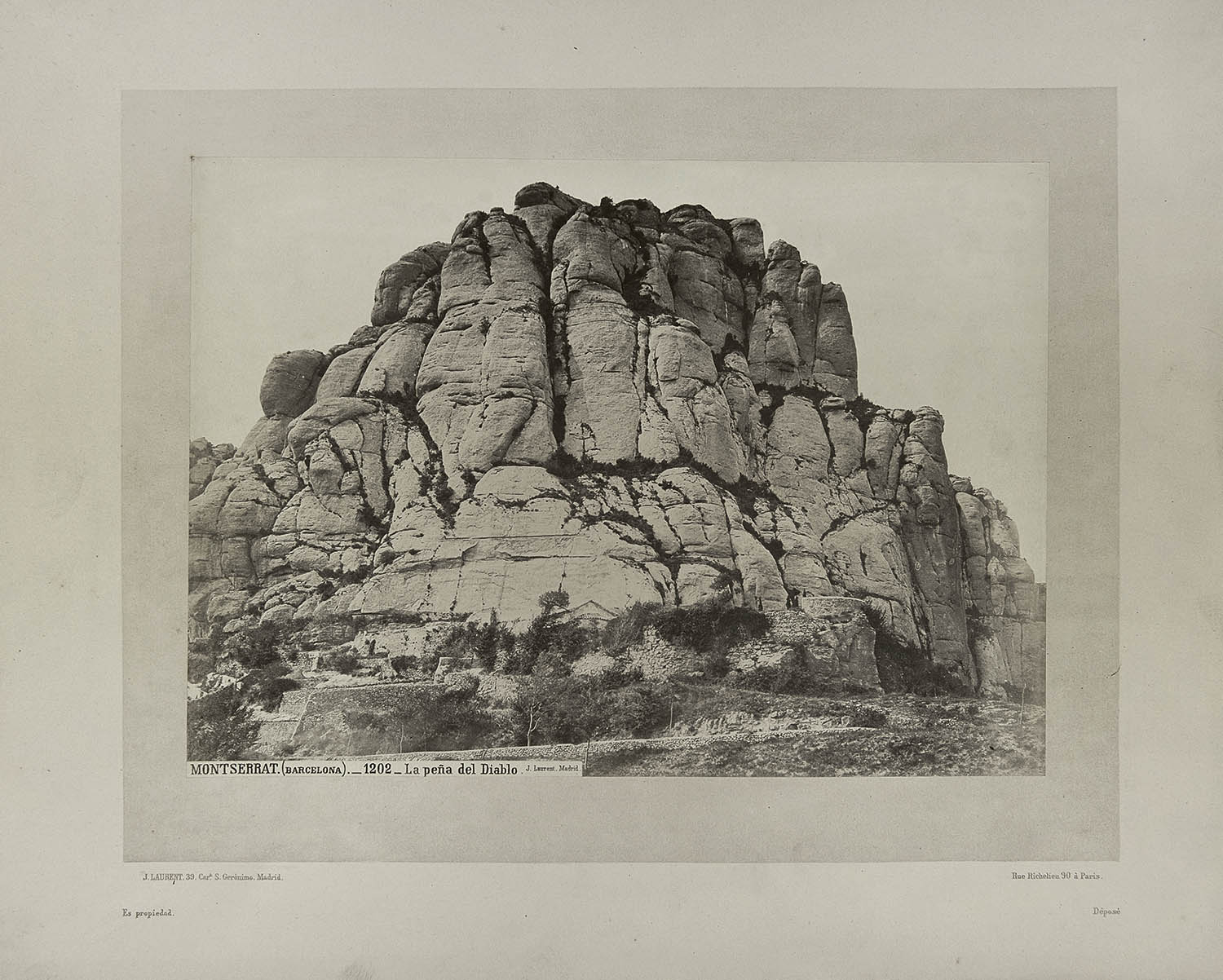
Jules Ainaud (French, 1837-1900) 'Montserrat (Barcelona). The Devil's Rock' September 1871


Jules Ainaud (French, 1837-1900)
Montserrat (Barcelona). The Devil’s Rock
September 1871
Arxiu Fotogràfic de Barcelona


I’ve assembled five photography exhibitions before they all finish around the 3rd of September, so let’s have a posting on a Monday!

After the recent Louis Stettner posting, this is the second of three fine photography exhibitions at Fundación MAPFRE.

The third of the trio, an exhibition on the revolutionary (in more ways than one) Italian photographer Tina Modotti, will be posted this weekend – to be followed in quick succession by the exhibitions Conditions of Living (photographs of the housing in the East End of London), Images of Italy (19th century views of Italy) and Berenice Abbott’s New York Album.

As usual, an eclectic mix if ever there was one.

As also with this exhibition which “brings to light” the Spanish views of the Levante peninsula and Catolonia by the long forgotten photographer Jules Ainaud, acknowledging his place in photographic history.

Dr Marcus Bunyan


Many thankx to Fundación MAPFRE for allowing me to publish the photographs in the posting. Please click on the photographs for a larger version of the image.


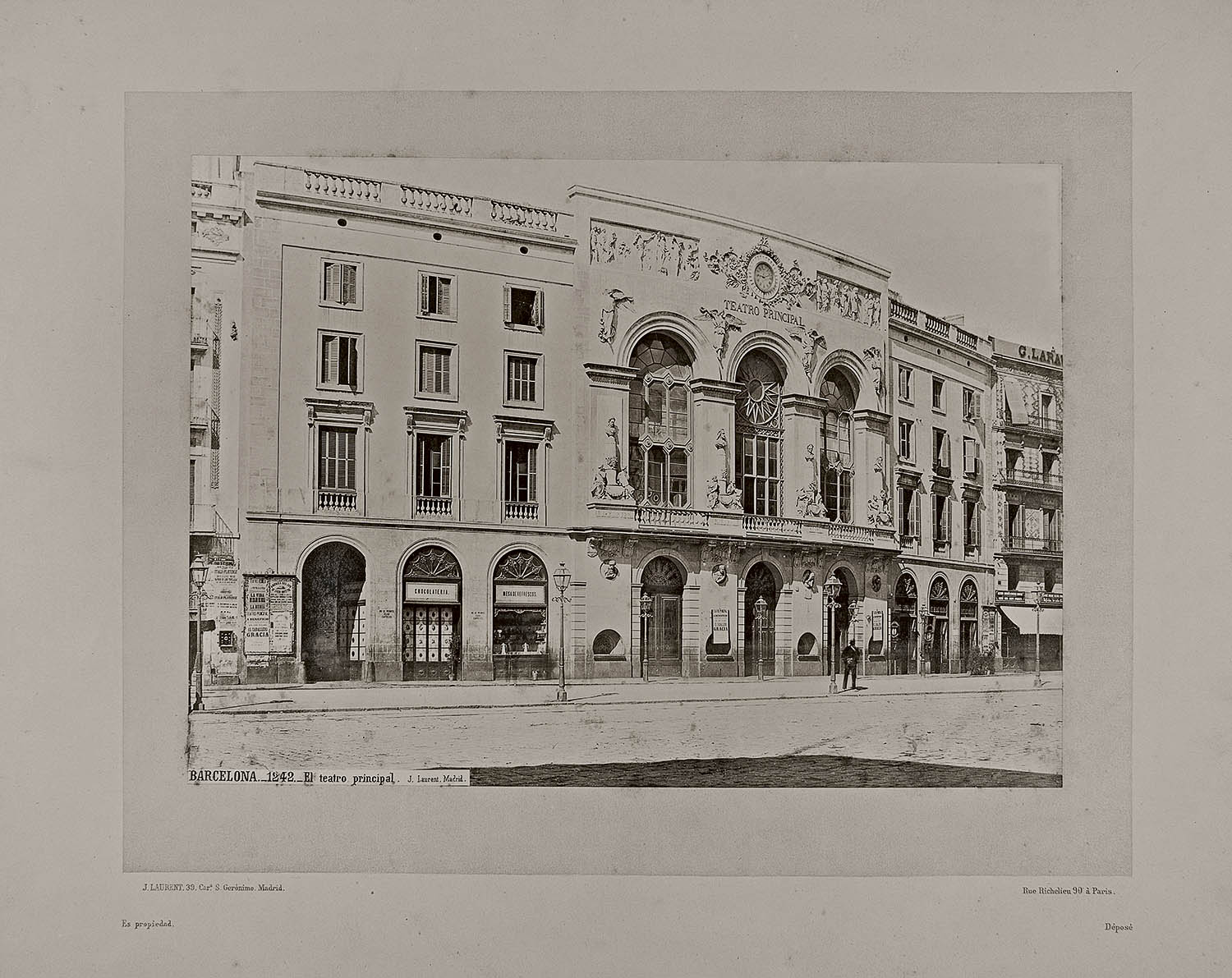
Jules Ainaud (French, 1837-1900) 'Barcelona. The Main Theater' 1872


Jules Ainaud (French, 1837-1900)
Barcelona. The Main Theater
1872
Arxiu Fotogràfic of Barcelona


Jules Ainaud has been a practically unknown photographer, until his work is now exhibited today one hundred and fifty years after it was first seen in Barcelona. ​​Ainaud always worked for Jean Laurent, whose studio was, as is well known, was one of the great centres for the production of photographs in Spain in the middle decades of the 19th century and up to 1885.

Ainaud was one of the photographers that Laurent “commissioned” to obtain images of some provinces and thus complete his catalogue. In his case, the Levante peninsula and a large part of Catalonia, in an activity that as a whole lasted between 1870 and 1872. The exhibition recovers practically all the images corresponding to Catalonia, in an exhibition that wants to give Ainaud his proper place in photographic history.

Text from the Fundación MAPFRE website


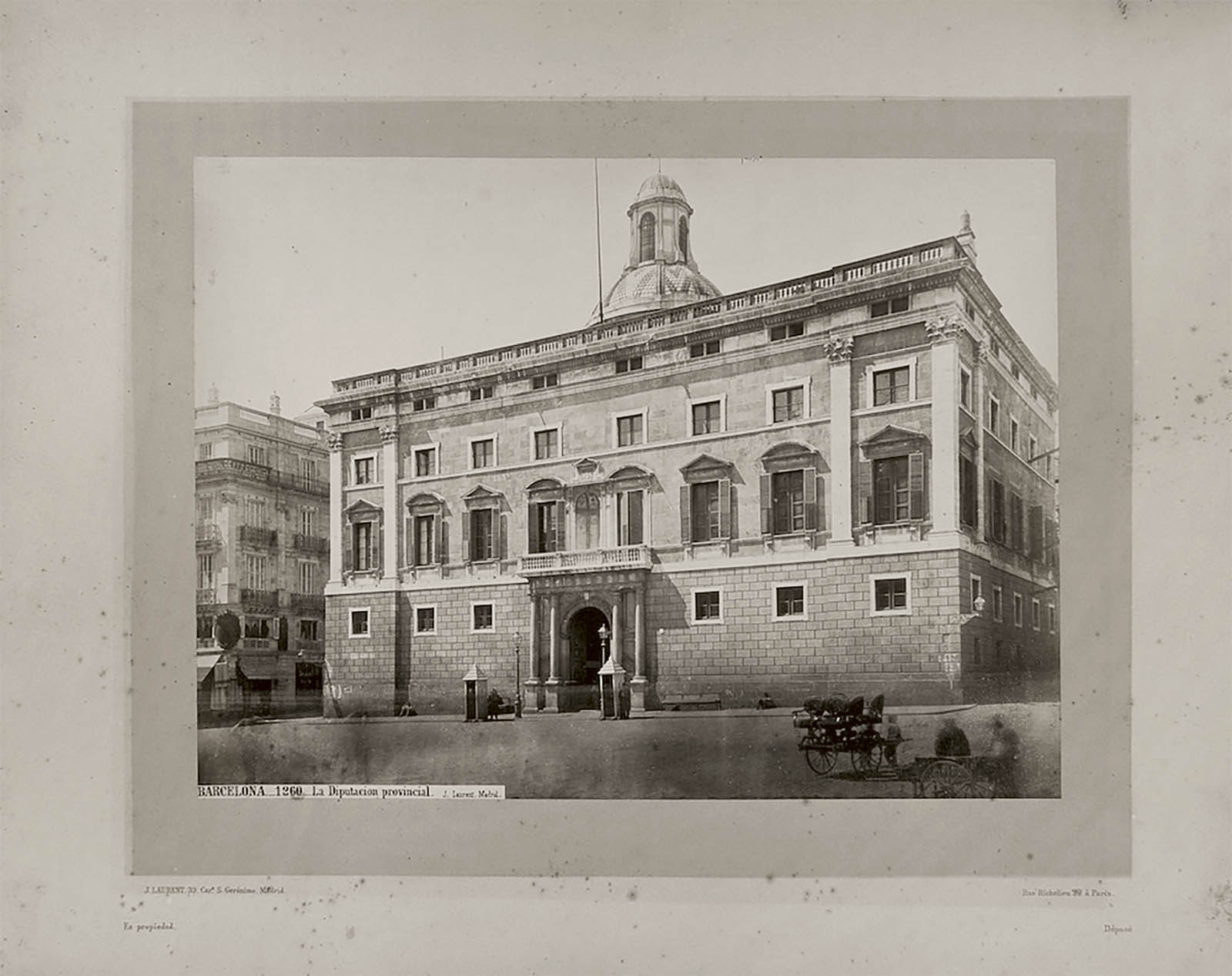
Jules Ainaud (French, 1837-1900) 'Barcelona. The Provincial Council' 1872


Jules Ainaud (French, 1837-1900)
Barcelona. The Provincial Council
1872
Arxiu Fotogràfic de Barcelona


Jules Ainaud’s Catalonia (1871-1872)

This exhibition, which continues the line of exhibition programming started by Fundación MAPFRE with the desire to deepen the knowledge of photographic archives and funds, presents the photographic work that Jules Ainaud made during his trip through Catalonia between 1871 and 1872. The exhibition restores the legitimate authorship of this photographer and makes his work known.

It has been more than 150 years since the set of photographs that Jules Ainaud took in Catalonia between 1871 and 1872 on behalf of the J. Laurent house were exhibited at the Ateneu Barcelonès for the first and only time. Like the photographs of the Levant area that this house marketed, for a long time these images had been considered to be the work of Jean Laurent himself. “today (…) with the documentary evidence on the table, it can be affirmed that Jules Ainaud was the effective author of these shots taken in this area that the J. Laurent house used for marketing between 1872 and 1879”, says the curator of the exhibition, Jep Martí Baiget.

The firm J. Laurent, for which Ainaud worked, was founded in Madrid in 1856 by the Frenchman Jean Laurent, and represents the main example in Spain of the emergence and development, since the middle of the 19th century, of companies destined to satisfy the increasingly intense demand for photographic images, for private portraits, but also for reproductions of works of art, landscapes and views of cities and monuments.

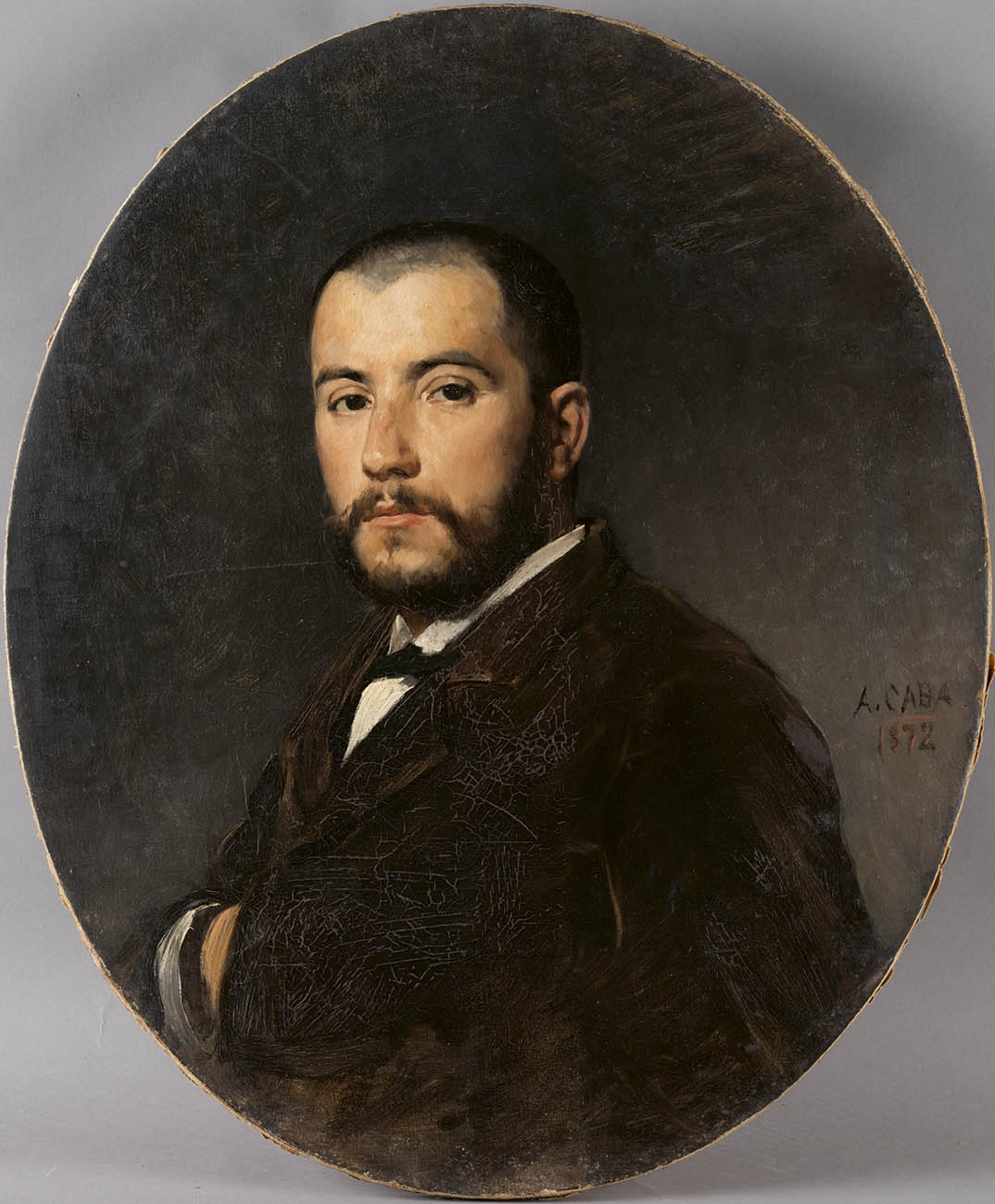
The exhibition presents one hundred vintage copies on albumen paper from wet collodion glass negatives. In addition, it includes fourteen stereoscopic views and thirteen reproductions of the glass plate negatives of these views, which allow one to appreciate the richness of image detail compared to works on paper. All these photographs were part of the catalogs that the Laurent company used for marketing between 1872 and 1879. The tour is completed with an oil portrait of Ainaud, the only one that is preserved, documentation and four letters that talk about the author’s trip to Catalonia in 1871 and 1872.

Text from the Fundación MAPFRE website


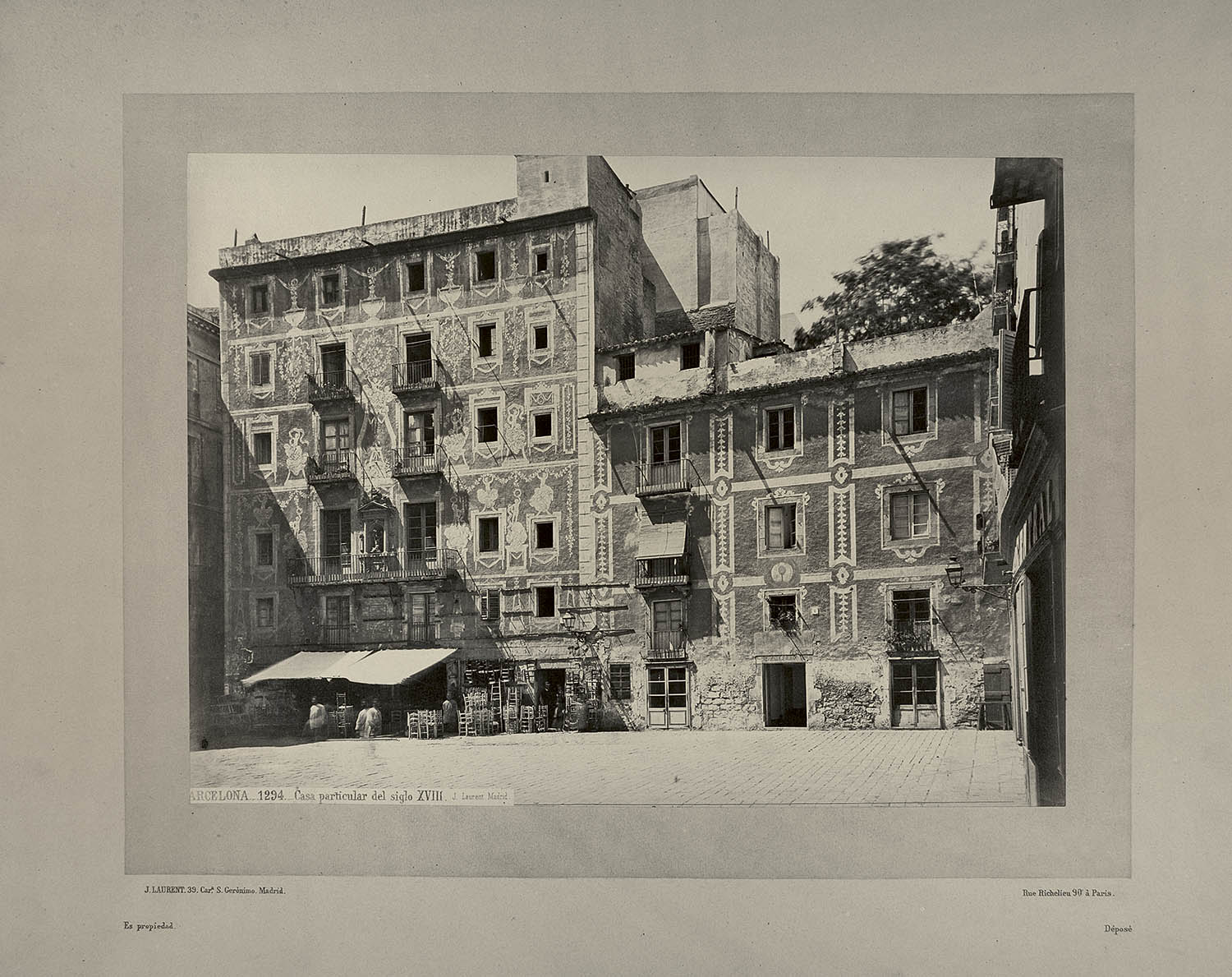
Jules Ainaud (French, 1837-1900) 'Barcelona. Private house of the 17th century' 1872


Jules Ainaud (French, 1837-1900)
Barcelona. Private house of the 17th century
1872
Arxiu Fotogràfic de Barcelona


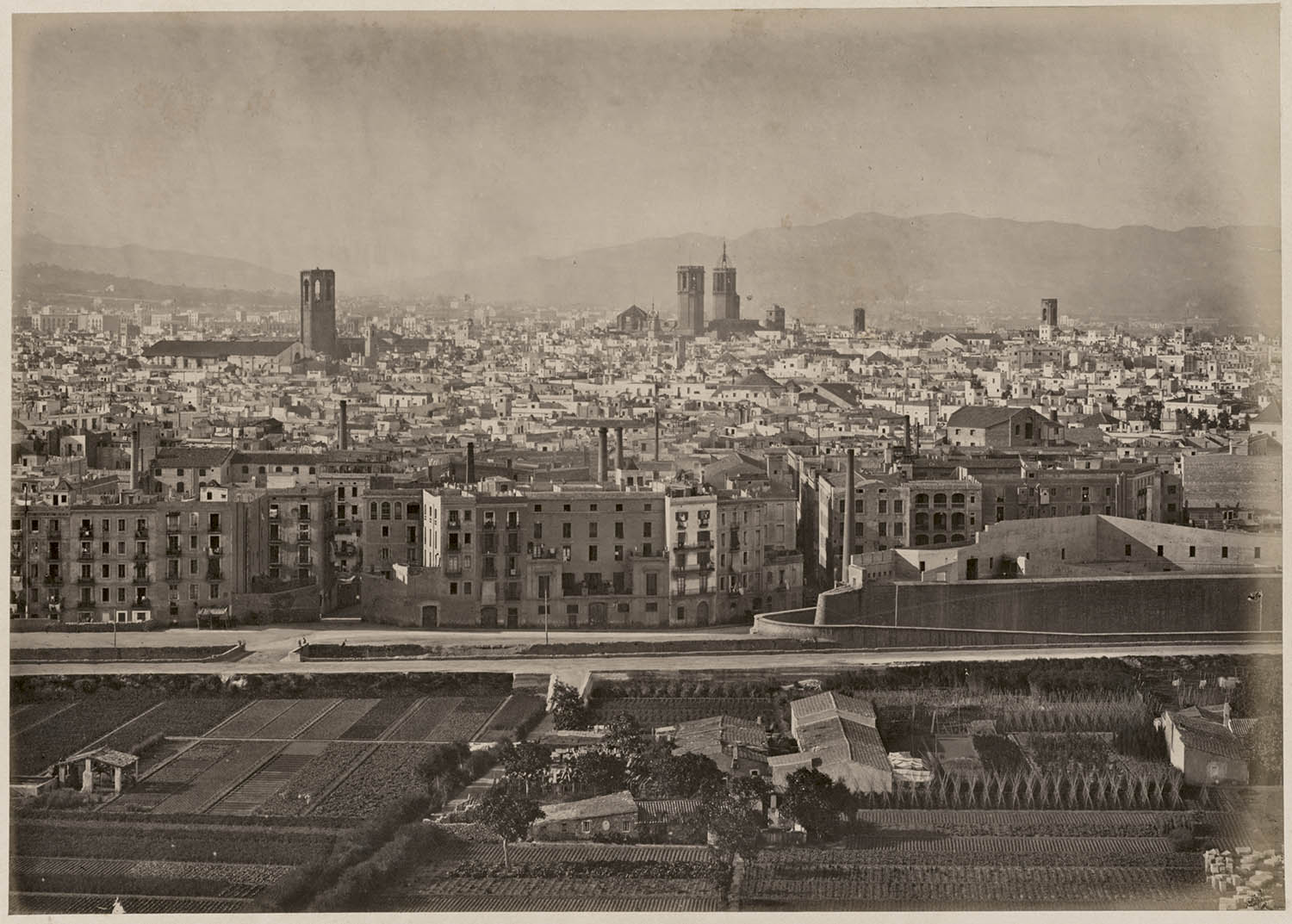
Jules Ainaud (French, 1837-1900) 'Barcelona. Panoramic view of Barcelona, from Montjuïc' 1872


Jules Ainaud (French, 1837-1900)
Barcelona. Panoramic view of Barcelona, from Montjuïc
1872
Arxiu Fotogràfic de Barcelona


Jules Ainaud (French, 1837-1900) 'Barcelona. Panoramic view of Barcelona, from Montjuïc 1872' Arxiu Fotogràfic de Barcelona


Jules Ainaud (French, 1837-1900)
Barcelona. Panoramic view of Barcelona, from Montjuïc
1872
Arxiu Fotogràfic de Barcelona


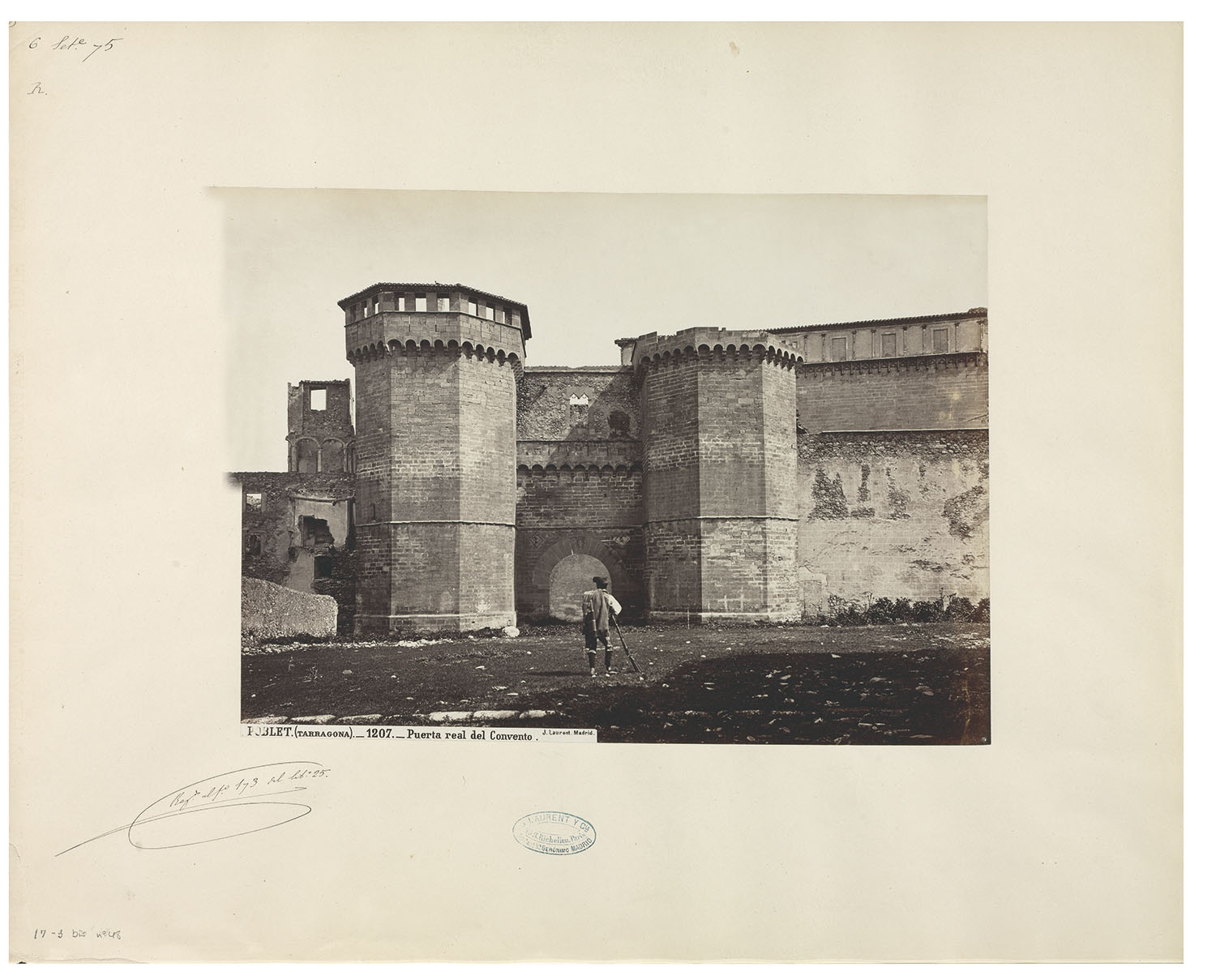
Jules Ainaud (French, 1837-1900) 'Poblet (Tarragona). Royal Gate of the convent' September 1871


Jules Ainaud (French, 1837-1900)
Poblet (Tarragona). Royal Gate of the convent
September 1871
National Library of Spain, Madrid


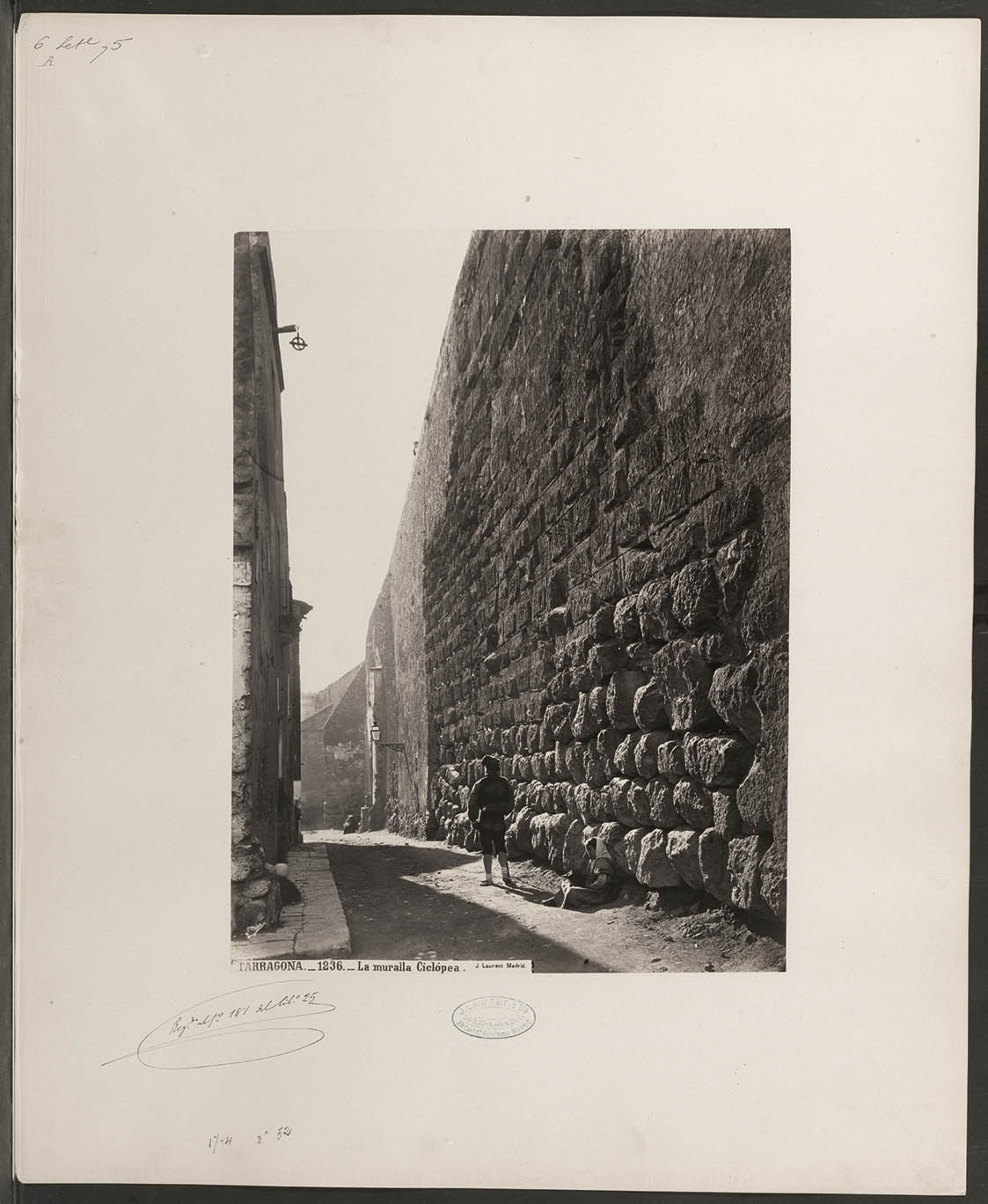
Jules Ainaud (French, 1837-1900) 'Tarragona. The Cyclopean Wall' 1871-1872


Jules Ainaud (French, 1837-1900)
Tarragona. The Cyclopean Wall
1871-1872
National Library of Spain, Madrid


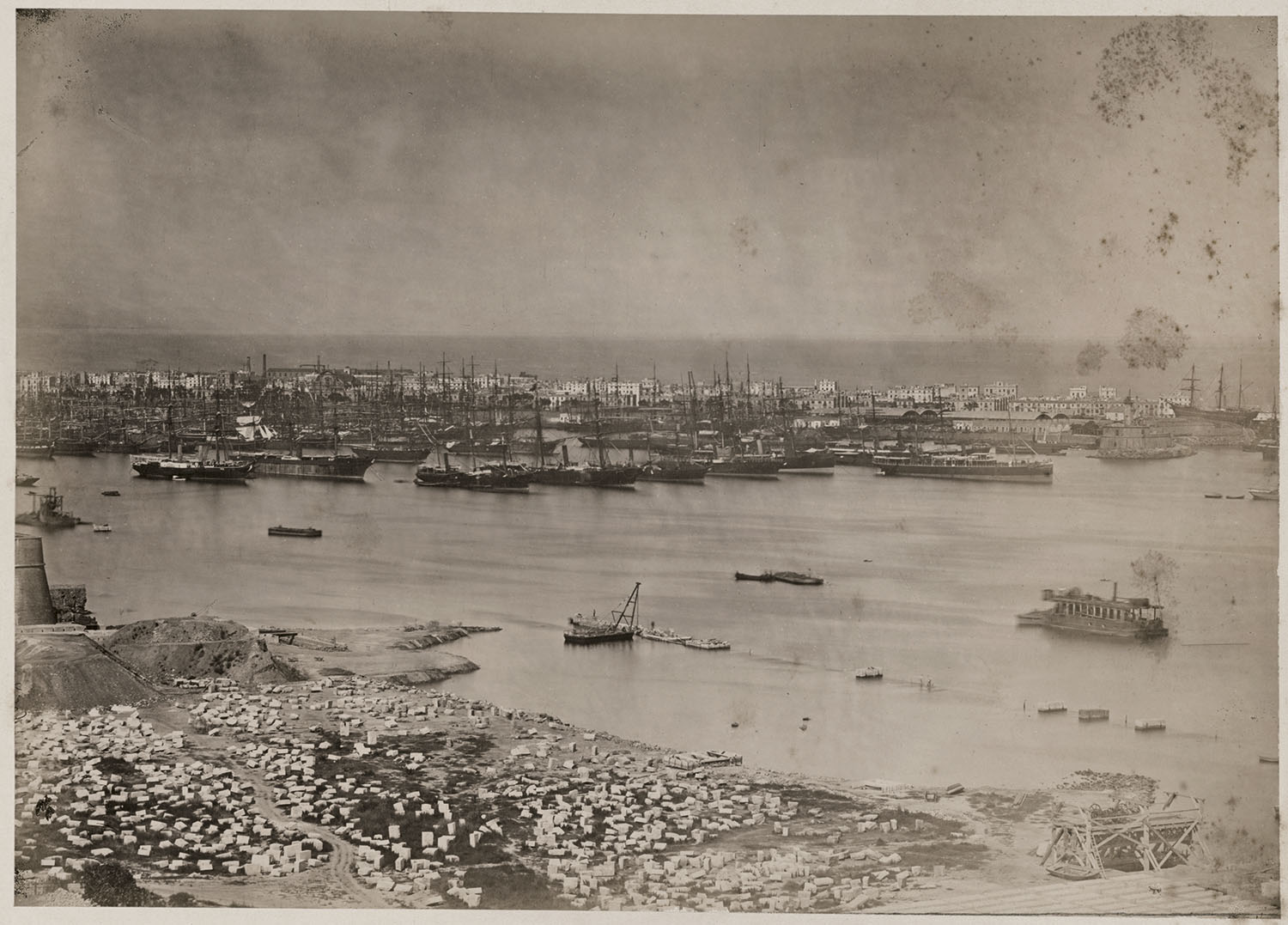
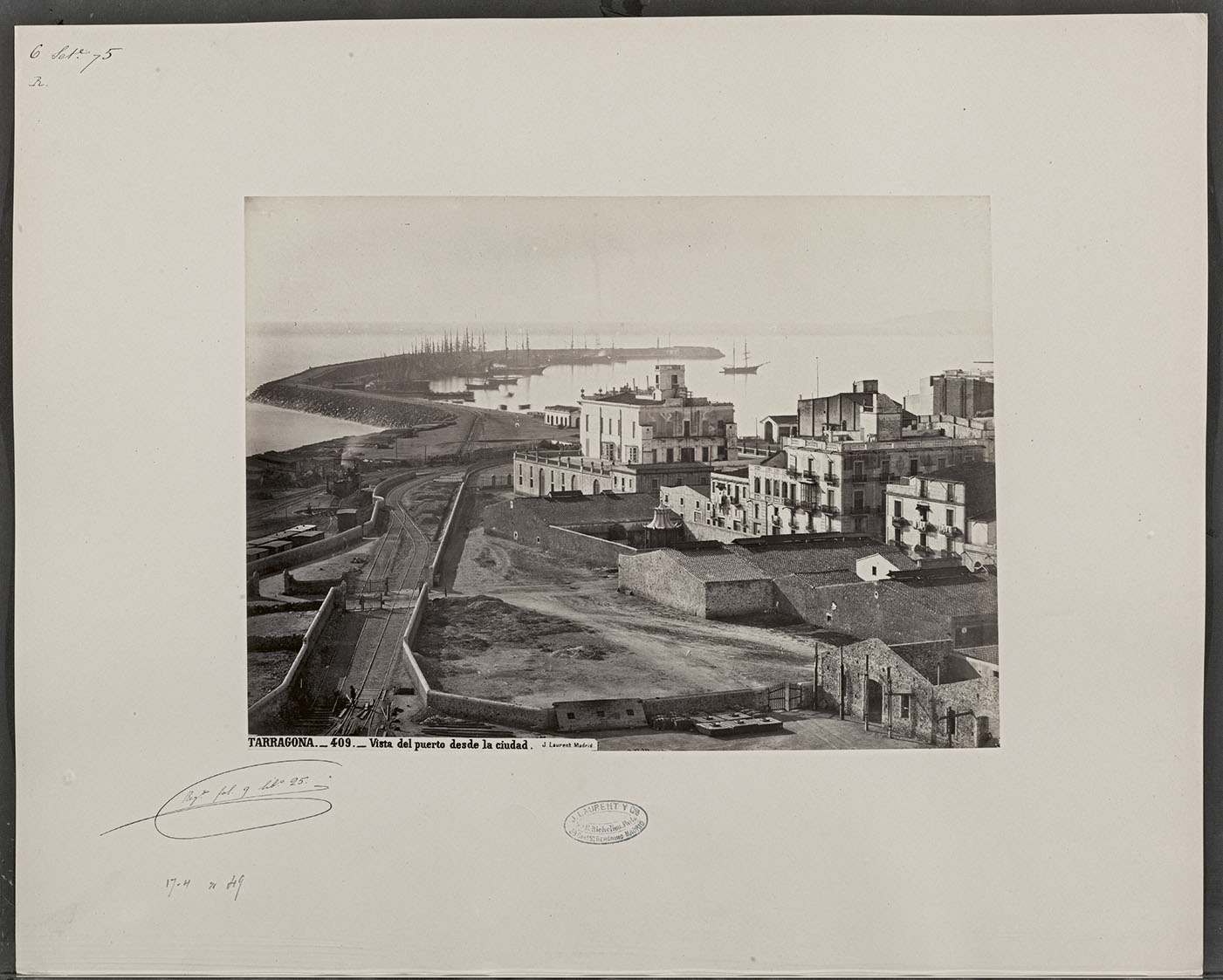
Jules Ainaud (French, 1837-1900) 'Tarragona. View of the port from the city' 1871-1872


Jules Ainaud (French, 1837-1900)
Tarragona. View of the port from the city
1871-1872
National Library of Spain, Madrid


It is now over one hundred and fifty years since the set of photographs Jules Ainaud took in Catalonia between 1871 and 1872, commissioned by the Laurent house, were exhibited for the first and only time to date at the Ateneo Barcelonés. Like the pictures of the Levante area marketed by that firm, this interesting set of images was long considered to be the work of Jean Laurent himself.

Jules Ainaud’s Catalonia (1871-1872) is the first public presentation that restores his legitimate authorship and highlights his contribution to the history of our photography.

The firm “J. Laurent & Cía.” for which Ainaud worked had been founded in Madrid in 1856 by the Frenchman Juan Laurent and represents the main example in Spain of the appearance and development, from the mid-19th century onwards, of companies aimed at satisfying the increasingly intense demand for photographic images, initially of private portraits, but soon also of reproductions of works of art, landscapes and views of cities and monuments.

This exhibition brings together around a hundred period prints on albumen paper from wet collodion glass negatives and is completed by fourteen stereoscopic views and thirteen reproductions of the glass plate negatives of these views, which allow the richness of the image details to be appreciated in comparison with the works on paper. All the prints were included in the catalogues that the Laurent company used to market them between 1872 and 1879.

Text from the Fundación MAPFRE website


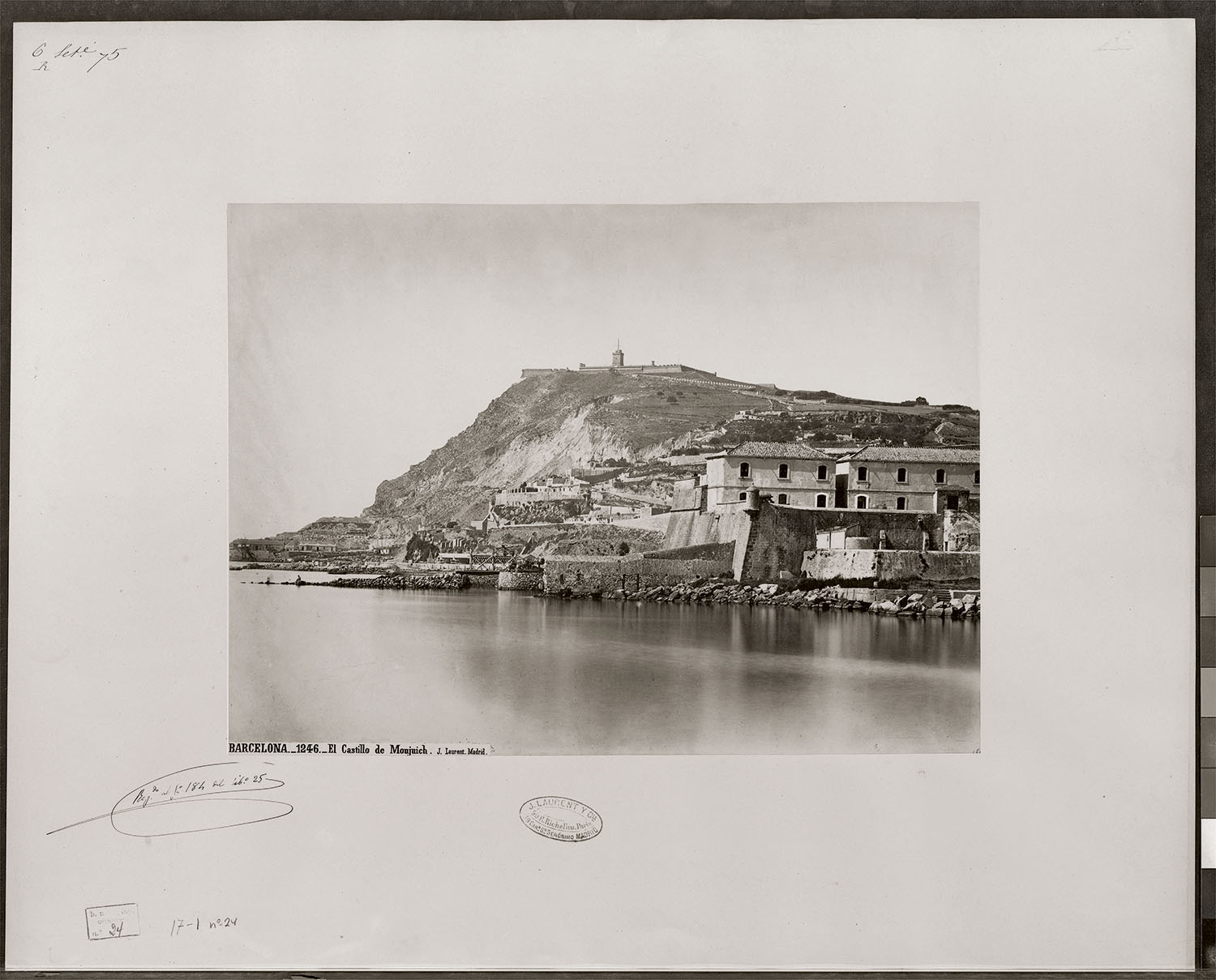
Jules Ainaud (French, 1837-1900) 'Barcelona. The castle of Montjuïc' 1872


Jules Ainaud (French, 1837-1900)
Barcelona. The castle of Montjuïc
1872
National Library of Spain, Madrid


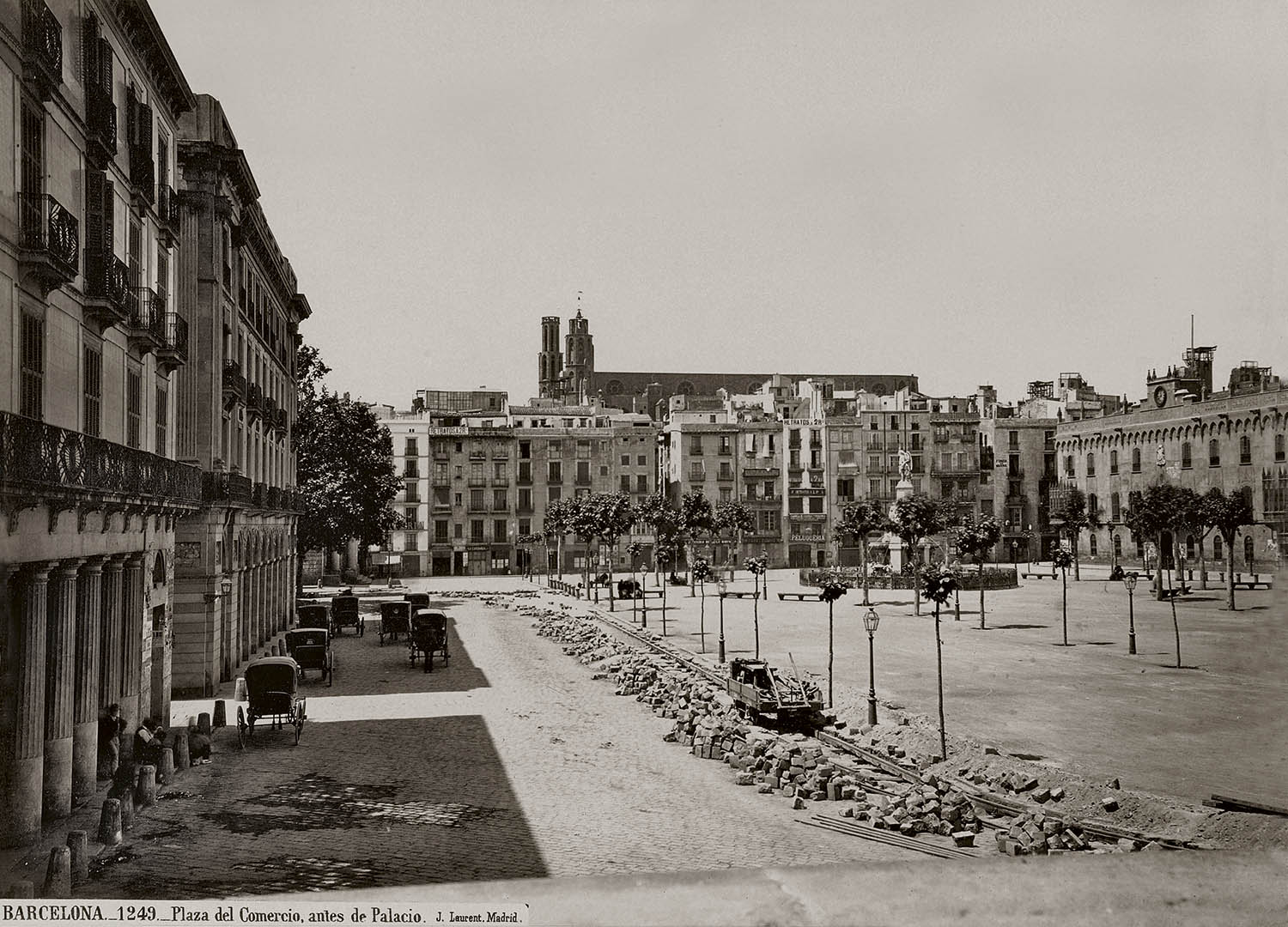
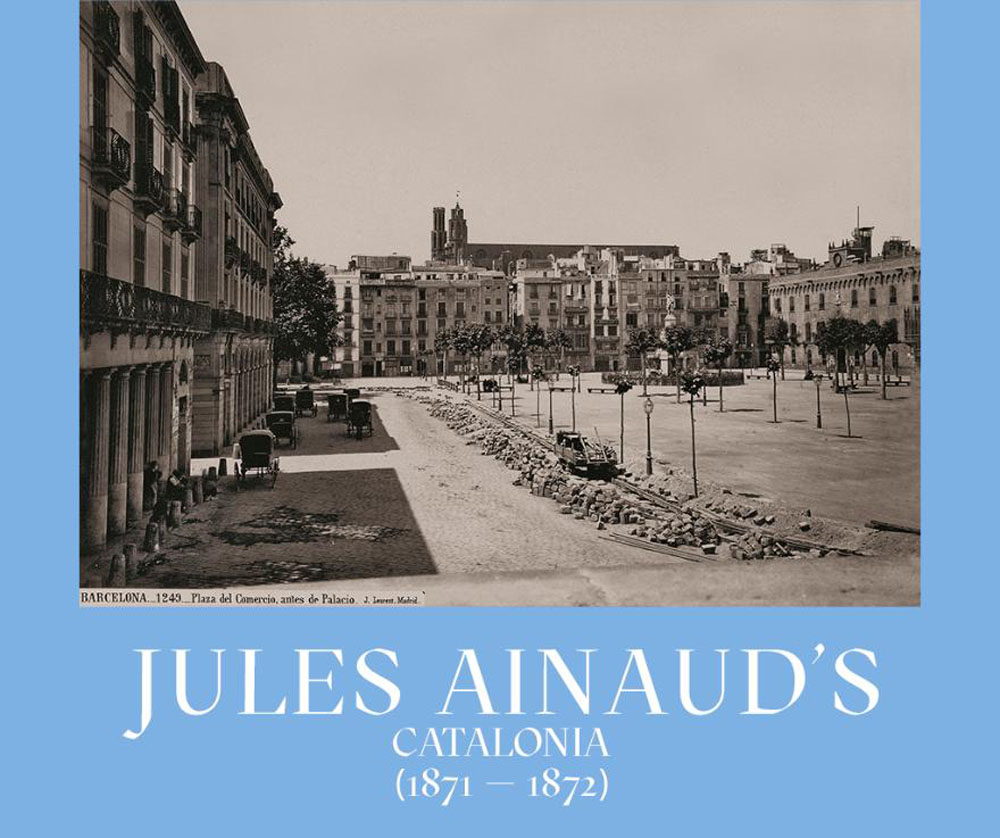
Jules Ainaud (French, 1837-1900) 'Barcelona. Plaza del Comercio, before the Palace' June 4, 1872


Jules Ainaud (French, 1837-1900)
Barcelona. Plaza del Comercio, before the Palace
June 4, 1872
National Library of Spain, Madrid


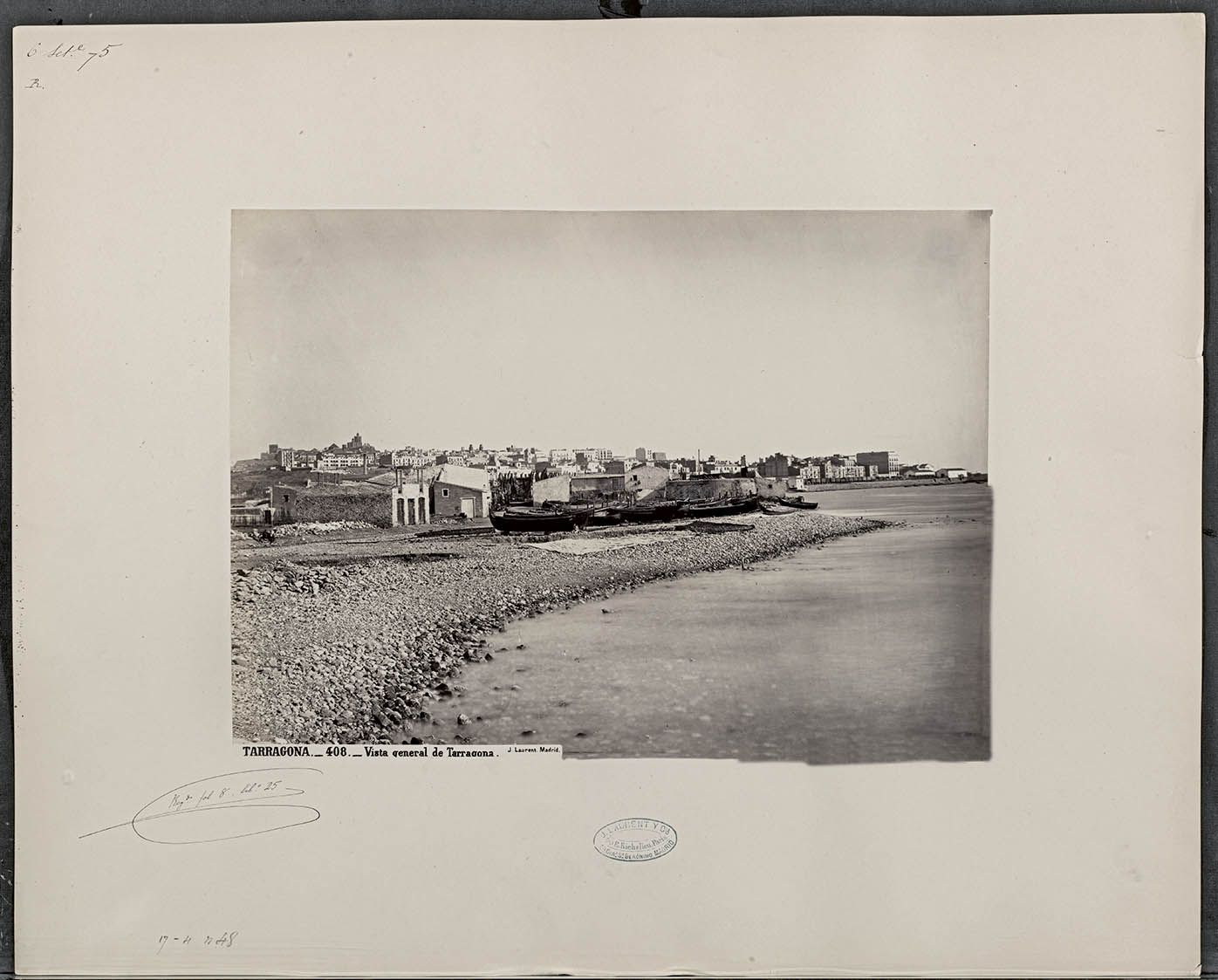
Jules Ainaud (French, 1837-1900) 'Tarragona. General view of Tarragona' 1871-1872


Jules Ainaud (French, 1837-1900)
Tarragona. General view of Tarragona
1871-1872
National Library of Spain, Madrid


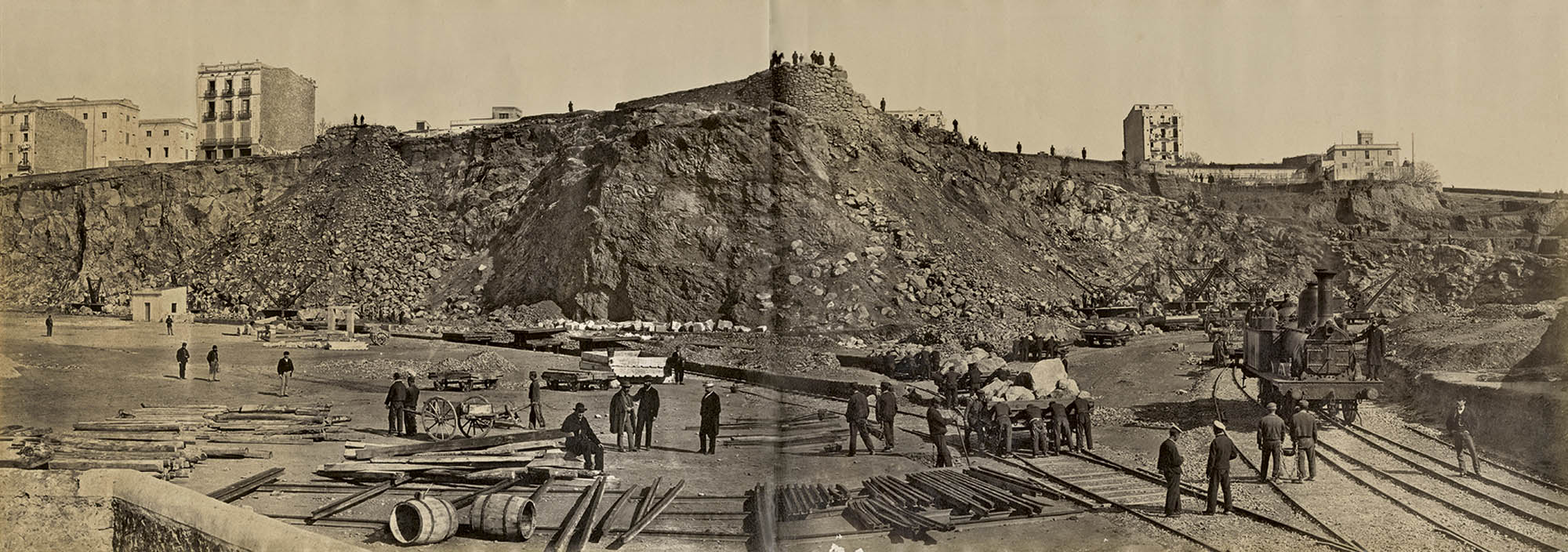
Jules Ainaud (French, 1837-1900) 'Tarragona. Quarries of Tarragona' February 8, 1872


Jules Ainaud (French, 1837-1900)
Tarragona. Quarries of Tarragona
February 8, 1872
National Archaeological Museum of Tarragona


Antoni Caba (Spanish, 1838-1907) 'Portrait of Jules Ainaud Escande' 1872


Antoni Caba (Spanish, 1838-1907)
Portrait of Jules Ainaud Escande
1872
Oil on canvas
National Museum of Art of Catalonia, Barcelona
Donated by the relatives of Carmen de Lasarte, 1965
© National Museum of Art of Catalonia, Barcelona


'The Catalonia of Jules Ainaud (1871-1872)'


‘The Catalonia of Jules Ainaud (1871-1872)’


KBr Fundación MAPFRE
Av. del Litoral, 30 08005 Barcelona
Phone: +34 932 723 180

Opening hours:
Tuesdays – Sundays (and public holidays) 11am – 8pm

Fundación MAPFRE website

LIKE ART BLART ON FACEBOOK

Back to top

Photographs: ‘F. Holland Day (1864-1933) – The Seven Last Words’ 1898

April 2019


F. Holland Day (American, 1864-1933) 'The Seven Last Words' 1898


F. Holland Day (American, 1864-1933)
The Seven Last Words
1898
Seven platinum prints in original frame
H x W (overall with frame): 8 1/2 x 35 1/2 in. (21.6 x 90.2cm)
Barbara M. Marshall Fund, Frank B. Bemis Fund, Otis Norcross Fund, William E. Nickerson Fund, Lucy Dalbiac Luard Fund, and funds by exchange from a Gift of James Lawrence, Dorothy Mackenzie and John E. Lawrence, and funds donated by Michael and Elizabeth Marcus, Charles W. Millard III, and Scott Nathan and Laura DeBonis
Photo: © Museum of Fine Arts, Boston


Where Do We Come From / What Are We / Where Are We Going

I went to see one of my best friends for the last time in hospital today.

Joyce Evans has been like a surrogate mother to me for the last eight years. She has been wise counsel, friend, support, teacher, reconciler, adventurer and philosopher to this sometimes lost man. We had many adventures to exhibitions and openings, to our favourite restaurant Caffe e Cucina to have dinner, or going to see “Our Julia”, an exhibition of her favourite photographer Julia Margaret Cameron at the Art Gallery of New South Wales in Sydney. It is so sad in this life that we have to loose the wisdom of age only for the mistakes of past generations to be repeated over and over again.

Both Joyce and I do not believe in traditional, dogmatic religion. Both of us cannot stand the hypocrisy, baloney and proselytising that religion undertakes in the name of an “imaginary friend.” Religion is a crutch for the dogmatic who then impose their beliefs, and discrimination, on others.

But we both believe in spirit, that ineffable quality of experience where you obtain communion with the energy of the cosmos. A feeling, an emotional energy of connection to body, spirit and soul. Something noumenal, something that we have knowledge of, but that we can’t completely describe.

Strip away the baggage of religion from these photographs and you are left with a man being tortured and his spirit suffering. I wonder what this man was like when he was a baby? Who did he talk to growing up, what did he say, who did he meet. What was his essential journey to get to this place? Imagine Pontius Pilate not washing his hands of him, but sitting down with him and having a philosophical discussion on the nature of existence and being.

I felt immense love and sadness, hope and sorrow when I saw Joyce for the last time on this earth. I wished her a good journey and told her that I would see her soon.

I will miss her strength, intelligence, and beautiful spirit. But above all I will miss her love.

Dr Marcus Bunyan


These photographs are used under fair use conditions for the purpose of education and research. Please click on the photographs for a larger version of the image.


If we can find out what we are… that is the artist.

And then, this goes to the core element of your being:

If the core part of your life is the search for the truth then that becomes a core part of your identity for the rest of your life,

and the core element of your enquiry remains the same.

It becomes embedded in your soul.


Joyce Evans


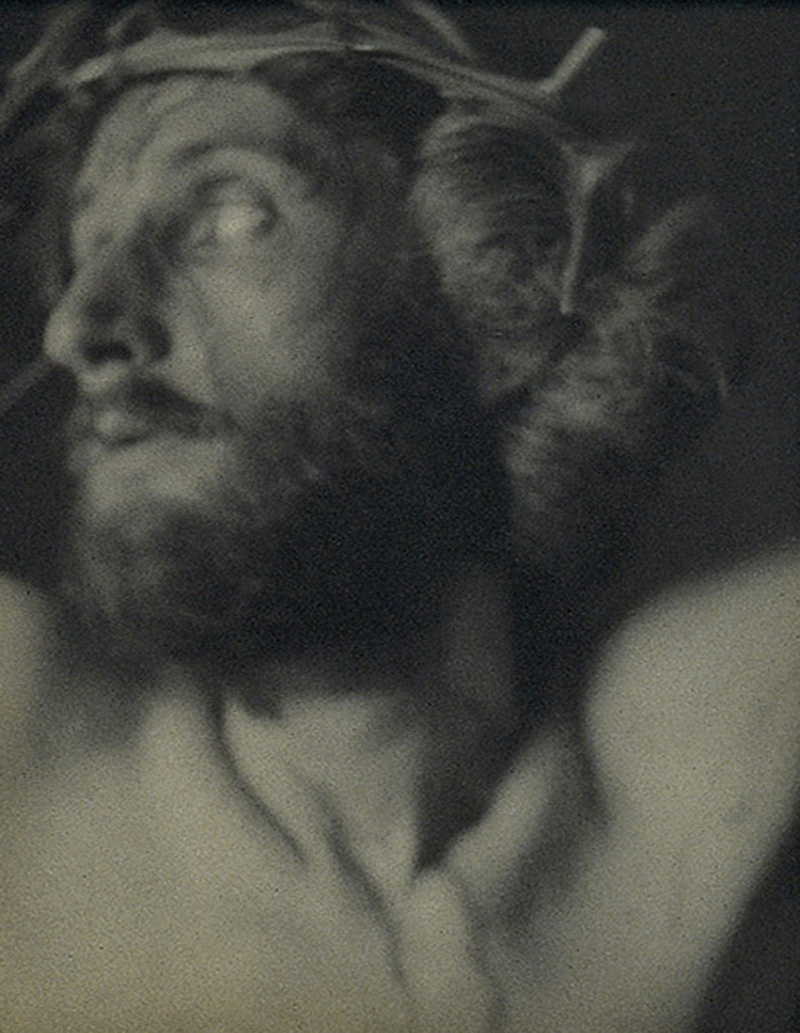
F. Holland Day (American, 1864-1933) 'The Seven Last Words' 1898 (detail)

Father forgive them they know not what they do


F. Holland Day (American, 1864-1933) 'The Seven Last Words' 1898 (detail)

Today thou shalt be with me in Paradise


F. Holland Day (American, 1864-1933) 'The Seven Last Words' 1898 (detail)

Woman behold thy son: Son thy mother


F. Holland Day (American, 1864-1933) 'The Seven Last Words' 1898 (detail)

My God my God why hast thou forsaken me


F. Holland Day (American, 1864-1933) 'The Seven Last Words' 1898 (detail)

I thirst


F. Holland Day (American, 1864-1933) 'The Seven Last Words' 1898 (detail)

Into thy hands I commend my spirit


F. Holland Day (American, 1864-1933) 'The Seven Last Words' 1898 (detail)

It is finished


From 1895 to 1898 Day undertook a project that was without precedent: an extended series – some 250 negatives – showing scenes of the life of Christ, from the Annunciation to the Resurrection, in which he played the title role. In 1890 Day had traveled to Oberammergau to see the famous once-a-decade Passion Plays and may well have seen a similar multimedia presentation that toured the East Coast, including Boston, later in the 1890s. For his own production, Day starved himself, let his beard grow long, and imported cloth and a cross from Syria. Just prior to the reenacted Crucifixion, he made this series of close-up self-portraits – the most powerful images in his entire series – which represent Christ’s seven last words:

FATHER FORGIVE THEM; THEY KNOW NOT WHAT THEY DO.

TODAY THOU SHALT BE WITH ME IN PARADISE.

WOMAN, BEHOLD THY SON; SON, THY MOTHER

MY GOD, MY GOD, WHY HAST THOU FORSAKEN ME?

I THIRST.

INTO THY HANDS I COMMEND MY SPIRIT.

IT IS FINISHED.


For many people, Day’s self-portraits as Christ were – and remain – unsettling, as one tries to reconcile their fact and fiction. Day defended the use of photography for sacred subjects as a matter of artistic freedom, and Steichen wrote, “Few paintings contain as much that is spiritual and sacred in them as do the ‘Seven Words’ of Mr. Day. … If we knew not its origin or its medium how different would be the appreciation of some of us, and if we cannot place our range of vision above this prejudice the fault lies wholly with us. If there are limitations to any of the arts, they are technical; but of the motif to be chosen the limitations are dependent on the man – if he is a master he will give us great art and ever exalt himself.”

Text from The Metropolitan Museum of Art website [Online] Cited 26/03/2019


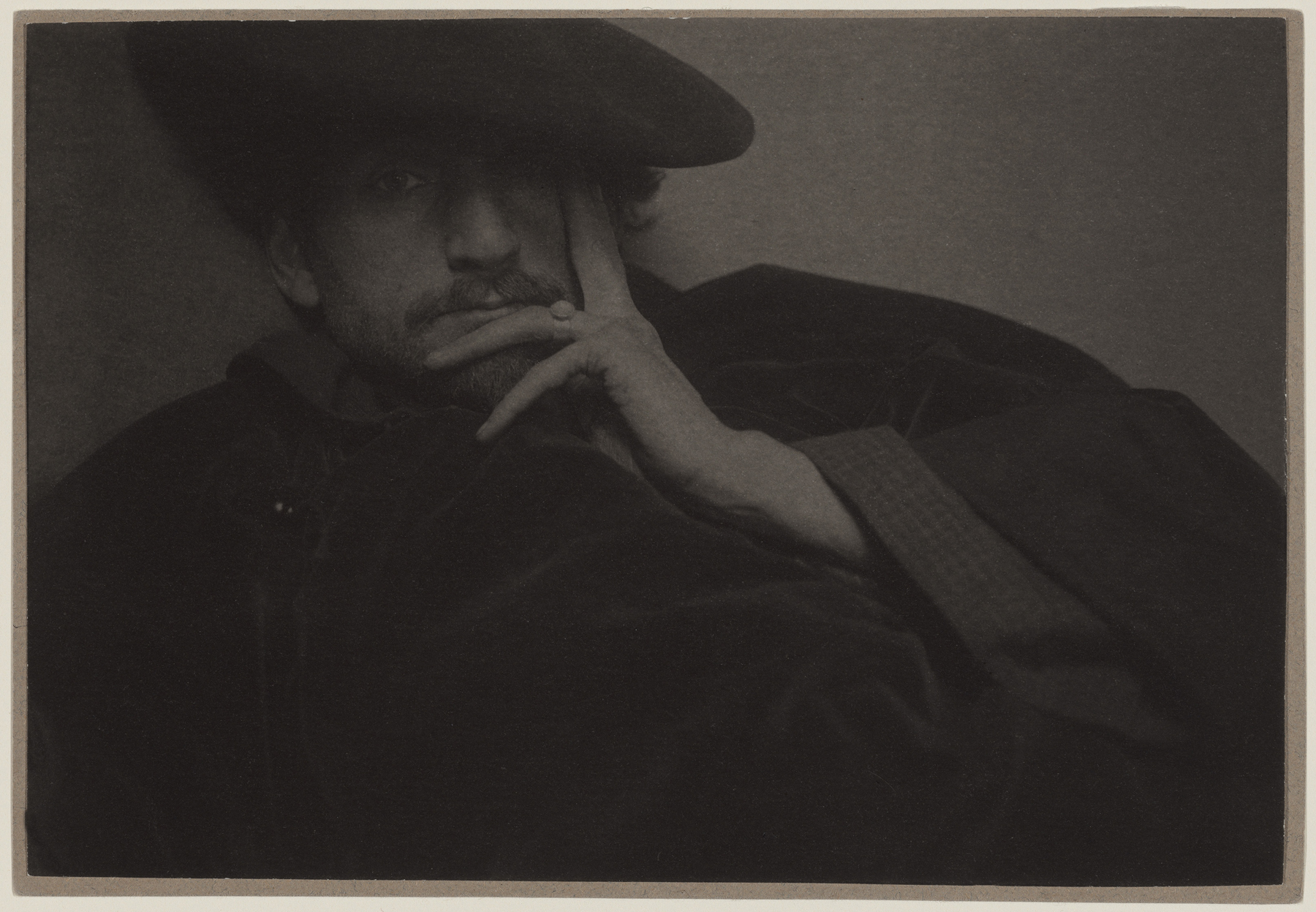
Edward Steichen (American born Luxembourg, 1879-1973) 'Solitude (Portrait of F. Holland Day)' 1901


Edward Steichen (American born Luxembourg, 1879-1973)
Solitude (Portrait of F. Holland Day)
1901
Platinum print
Barbara M. Marshall Fund, Frank B. Bemis Fund, Otis Norcross Fund, William E. Nickerson Fund, Lucy Dalbiac Luard Fund, and funds by exchange from a Gift of James Lawrence, Dorothy Mackenzie and John E. Lawrence, and funds donated by Michael and Elizabeth Marcus, Charles W. Millard III, and Scott Nathan and Laura DeBonis
Photo: © Museum of Fine Arts, Boston


Widely considered one of the masterpieces of photographic history, the monumental self portrait depicts Day as Christ in a series of seven platinum prints set in a frame designed by the artist. The work is a high point of Pictorialism – the turn-of-the-century movement advocating the artistic merit of photography. With few prints ever made by the artist and a tragic fire destroying his studio, Day’s photographs are tremendously rare. The Museum also acquired the crown of thorns worn by Day in The Seven Last Words and three important portraits of Day taken by photographers Edward Steichen, James Craig Annan and Clarence H. White. They were kept by the artist as part of his personal archive.

“The Seven Last Words is one of the most significant images in the history of photography, a work that reverberates with iconic importance and one that influenced subsequent artists significantly,” said Anne E. Havinga, Estrellita and Yousuf Karsh Senior Curator of Photographs at the MFA.

Born into an affluent family in Norwood, F. Holland Day was a turn-of-the-century Bostonian with an ultra-refined aesthetic sensibility and a multitude of interests, particularly in art and literature. He was a member of the “Boston Bohemians,” a circle of friends with whom he shared a love for the Arts and Crafts movement, sophisticated wit and Symbolist literature and art. He was also an admirer of old master painting and classical sculpture, and collected Japanese decorative arts and drawings. His interests led him into a career as a fine book publisher and photographer.

Day became interested in photography in the mid 1880s, joining the Pictorialist crusade to prove that photography could be a fine art, and within a decade he had become one of the most important figures in the international movement. While Day championed the same goals promoted by fellow photographers, he also defended religious imagery and the male nude – subjects that had previously been the domain of painting and sculpture. The seriousness of Day’s approach to artistic photography and his heightened sense of symbolism, enhanced by the subtle, low-keyed tonalities of his prints, were an inspiration to other photographers of the time.

In 1898, Day began exploring religious themes in his photographs. His “Sacred Studies,” as he called them, were widely acclaimed for their high-art aspirations – as seen in their relation to old master religious painting – and their unquestionable daring. The Seven Last Words was one of Day’s most expressive and best-known pieces and continues to be admired by many contemporary artists, especially those who explore identity, role play and staged photography in their work. Each of the seven photographs in the work, set in a frame designed by the artist, represents one of the last phrases spoken by Christ:

Father forgive them they know not what they do.
Today thou shalt be with me in Paradise.
Woman behold thy son: Son thy mother.
My God my God why hast thou forsaken me.
I thirst.
Into thy hands I commend my spirit.
It is finished.


Only two other versions of the work exist today: one is in the Metropolitan Museum of Art (without the artist-designed frame) and a third is owned by a private collector (with an altered frame). The MFA’s version is in tremendous condition and is in its original, un-altered frame.

Text from the Museum of Fine Arts Boston website [Online] Cited 26/03/2019


LIKE ART BLART ON FACEBOOK

Back to top

Exhibition: ‘Faking It: Manipulated Photography Before Photoshop’ at The National Gallery of Art, Washington

Exhibition dates: 17th February – 5th May 2013


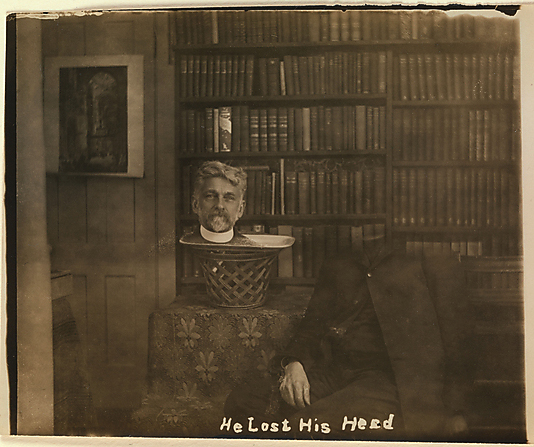
Unknown photographer (American). 'He Lost His Head' Nd


Unknown photographer (American)
He Lost His Head
Nd


Further images from this impressive exhibition devoted to the art of photographic manipulation before the advent of digital imagery from its second stop, at The National Gallery of Art, Washington.

See the first posting on this exhibition.

Dr Marcus Bunyan


Many thankx to the National Gallery of Art for allowing me to publish the photographs in the posting. Please click on the photographs for a larger version of the image.


Henry Peach Robinson (English, 1830-1901) 'Fading Away' 1858


Henry Peach Robinson (English, 1830-1901)
Fading Away
1858
Albumen silver print from glass negatives


“I am far from saying that a photograph must be an actual, literal, and absolute fact … but it must represent truth. Truth and fact are not only two words, but, in art at least, they represent two things. A fact is anything done or that exists – a reality. Truth is conformity to fact or reality – absence of falsehood. So that truth in art may exist without an absolute observance of facts.”

~ Henry Peach Robinson


Henry Peach Robinson (British, 1830-1901) 'She Never Told Her Love' 1857


Henry Peach Robinson (British, 1830-1901)
She Never Told Her Love
1857
Albumen silver print from glass negative
18 x 23.2cm (7 1/16 x 9 1/8in.)
Gilman Collection, Purchase, Jennifer and Joseph Duke Gift, 2005


Consumed by the passion of unrequited love, a young woman lies suspended in the dark space of her unrealised dreams in Henry Peach Robinson’s illustration of the Shakespearean verse “She never told her love, / But let concealment, like a worm i’ the bud, / Feed on her damask cheek” (Twelfth Night II, iv, 111-13). Although this picture was exhibited by Robinson as a discrete work, it also served as a study for the central figure in his most famous photograph, Fading Away, of 1858.

Purportedly showing a young consumptive surrounded by family in her final moments, Fading Away was hotly debated for years. On the one hand, Robinson was criticised for the presumed indelicacy of having invaded the death chamber at the most private of moments. On the other, those who recognised the scene as having been staged and who understood that Robinson had created the picture through combination printing (a technique that utilised several negatives to create a single printed image) accused him of dishonestly using a medium whose chief virtue was its truthfulness.

Text from the Metropolitan Museum of Art website


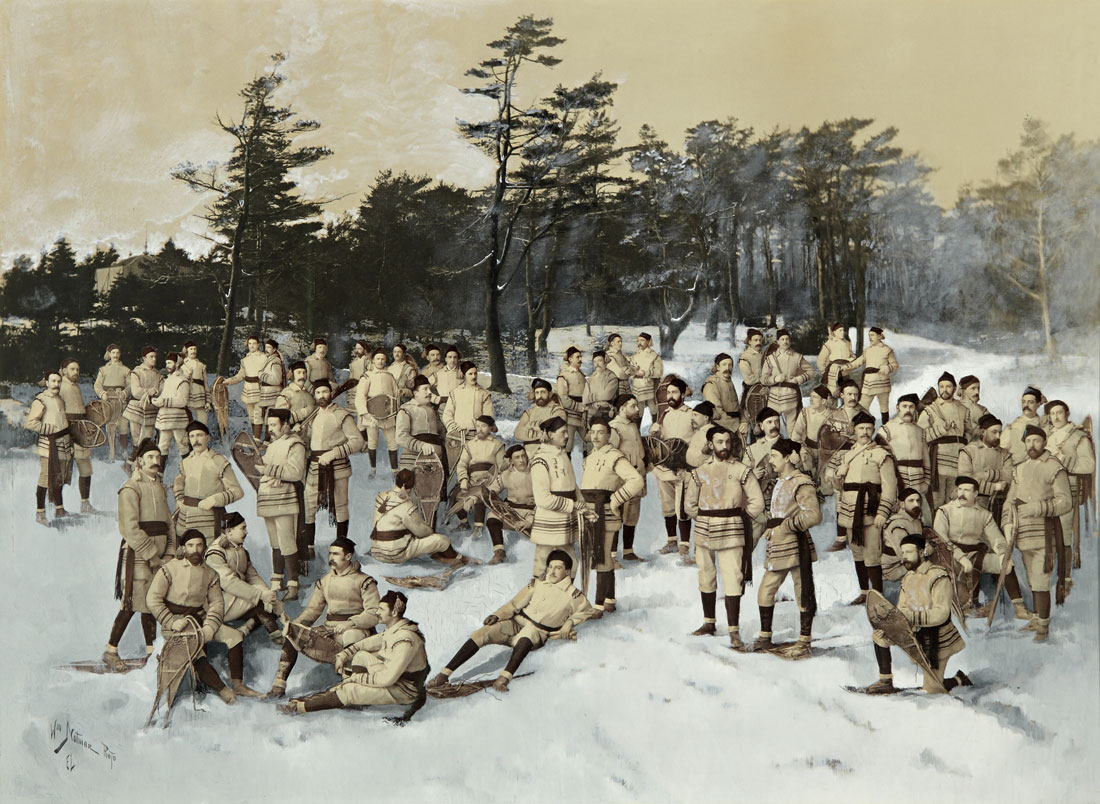
Wm. Notman & Son, Montreal, Eugène L'Africain, William Notman. 'Red Cap Snow Shoe Club, Halifax, Nova Scotia' c. 1888


Wm. Notman & Son, Montreal, Eugène L’Africain, William Notman
Red Cap Snow Shoe Club, Halifax, Nova Scotia
c. 1888
Collage of albumen prints with applied media
71.1 x 83.8cm (28 x 33 in.)
McCord Museum, Montreal


Notman established his first photography studio in Montreal in 1856 and relentlessly expanded his operations over the next two decades. At its peak, his company had twenty-four branches throughout Canada and New England, making it the most successful photographic enterprise in North America at the time. Notman specialised in composite portraits of large groups, including sporting clubs, trade associations, family gatherings, clergymen, and college graduates, some featuring more than four hundred figures. Each figure in a group was photographed separately in the studio then printed at the proper scale and pasted onto a painted background, as in this portrait of a Nova Scotia snowshoe club. The entire collage was then re-photographed. The final, relatively seamless tableau could then be printed and sold in a variety of sizes and formats.

Text from the Metropolitan Museum of Art website


Edward Steichen (American, 1879-1973) 
'The Pond – Moonrise' 1904


Edward Steichen (American, 1879-1973)

The Pond – Moonrise
1904
Platinum print with applied colour
 image
39.7 x 48.2cm (15 5/8 x 19 in.)
Lent by The Metropolitan Museum of Art, Alfred Stieglitz Collection, 1933
© The Metropolitan Museum of Art/ Permission Estate of Edward Steichen. All rights reserved


Using a painstaking technique of multiple printing, Steichen achieved prints of such painterly seductiveness they have never been equaled. This view of a pond in the woods at Mamaroneck, New York is subtly coloured as Whistler’s Nocturnes, and like them, is a tone poem of twilight, in-distinction, and suggestiveness. Commenting on such pictures in 1910, Charles Caffin wrote in Camera Work: “It is in the penumbra, between the clear visibility of things and their total extinction into darkness, when the concreteness of appearances becomes merged in half-realised, half-baffled vision, that spirit seems to disengage itself from matter to envelop it with a mystery of soul-suggestion.”

Text from the Metropolitan Museum of Art website


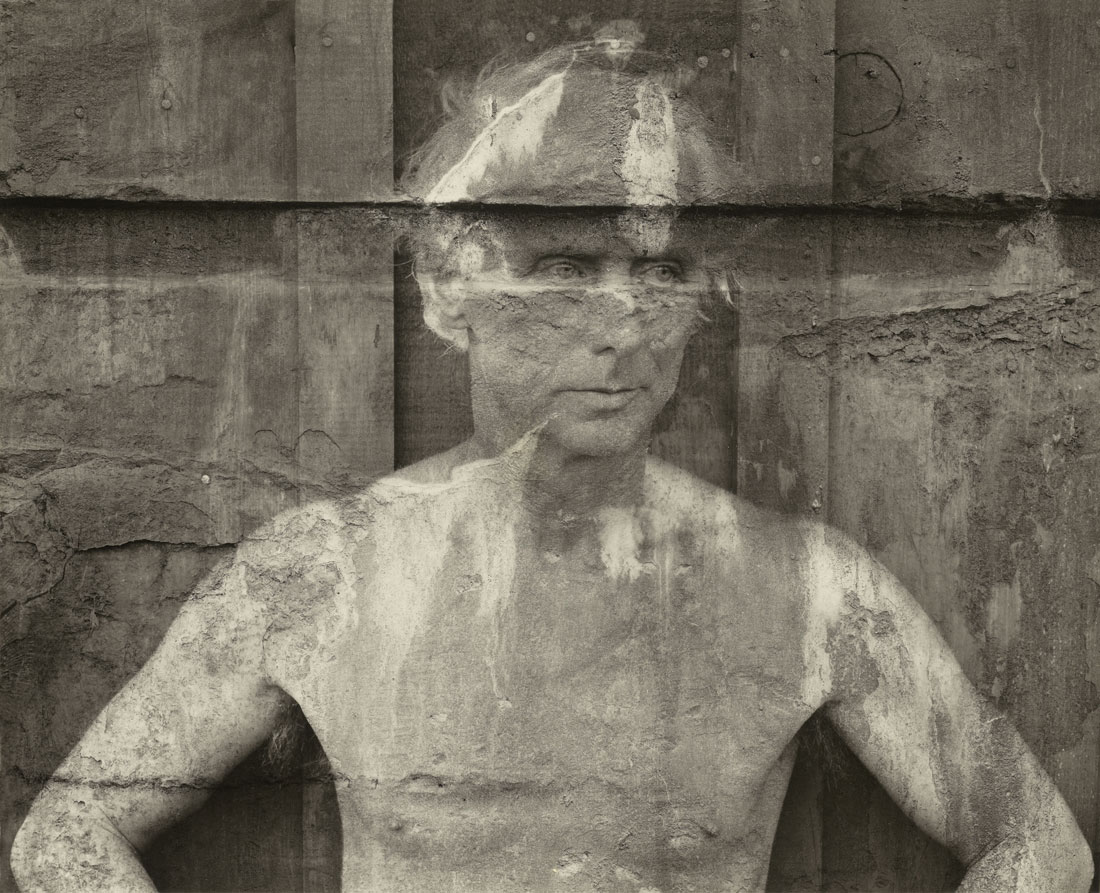
Frederick Sommer (American, 1905-1999) 'Max Ernst' 1946


Frederick Sommer (American, 1905-1999)
Max Ernst
1946
Gelatin silver print
19.2 x 23.97cm (7 9/16 x 9 7/16 in.)
The J. Paul Getty Museum, Los Angeles
© Frederick and Frances Sommer Foundation


The National Gallery of Art presents the first major exhibition devoted to the art of photographic manipulation before the advent of digital imagery. Faking It: Manipulated Photography before Photoshop will be on view in the West Building’s Ground Floor galleries from February 17 through May 5, 2013, following its debut at the Metropolitan Museum of Art (from October 11, 2012, through January 27, 2013). In June it travels to the Museum of Fine Arts, Houston.

“Following in its tradition of exhibiting and collecting the finest examples of photography, the Gallery is pleased to present some 200 photographs from the 1840s through the 1980s demonstrating the medium’s complicated relationship to truth in representation,” said Earl A. Powell III, director, National Gallery of Art. “We are grateful to the many lenders, both public and private, who have generously shared works from their collections – especially the Metropolitan Museum of Art, the largest lender and the organiser of this fascinating exhibition.”

The Exhibition

This is the first major exhibition devoted to the history of manipulated photography before the digital age. While the widespread use of Adobe® Photoshop® software has brought about an increased awareness of the degree to which photographs can be doctored, photographers – including such major artists as Gustave Le Gray, Edward Steichen, Weegee, and Richard Avedon – have been fabricating, modifying, and otherwise manipulating camera images since the medium was first invented. This exhibition demonstrates that today’s digitally manipulated images are part of a continuum that extends back to photography’s first decades. Through visually captivating pictures created in the service of art, politics, news, entertainment, and commerce, Faking It not only traces the medium’s complex and changing relationship to visual truth, but also significantly revises our understanding of photographic history.

Organised thematically, the exhibition begins with some of the earliest instances of photographic manipulation – those attempting to compensate for the new medium’s technical limitations. In the 19th century, many photographers hand tinted portraits to make them appear more vivid and lifelike. Others composed large group portraits by photographing individuals separately in the studio and creating a collage by pasting them onto painted backgrounds depicting outdoor scenes. As the art and craft of photography grew increasingly sophisticated, photographers devised a staggering array of techniques with which to manipulate their images, including combination printing, photomontage, overpainting, ink and airbrush retouching, sandwiched negatives, multiple exposures, and other darkroom magic.

The exhibition presents a superb selection of manually altered photographs created under the mantle of art, including 19th-century genre scenes composed of multiple negatives, stunning Pictorialist landscapes from the turn of the 19th century, and the pre-digital dreamscapes of surrealist photographers in the 1920s and 1930s. A section of doctored images made for political or ideological ends includes faked composite photographs of the 1871 Paris Commune massacres, anti-Nazi photomontages by John Heartfield, and falsified images from Stalin-era Soviet Russia. The show also explores popular uses of photographic manipulation such as spirit photography, tall-tale and fantasy postcards, advertising and fashion spreads, and doctored news images.

The final section features the work of contemporary artists – including Duane Michals, Jerry Uelsmann, and Yves Klein – who have reclaimed earlier techniques of image manipulation to creatively question photography’s presumed objectivity. By tracing the history of photographic manipulation from the 1840s to the present, Faking It vividly demonstrates that photography is – and always has been – a medium of fabricated truths and artful lies.

Press release from the National Gallery of Art website


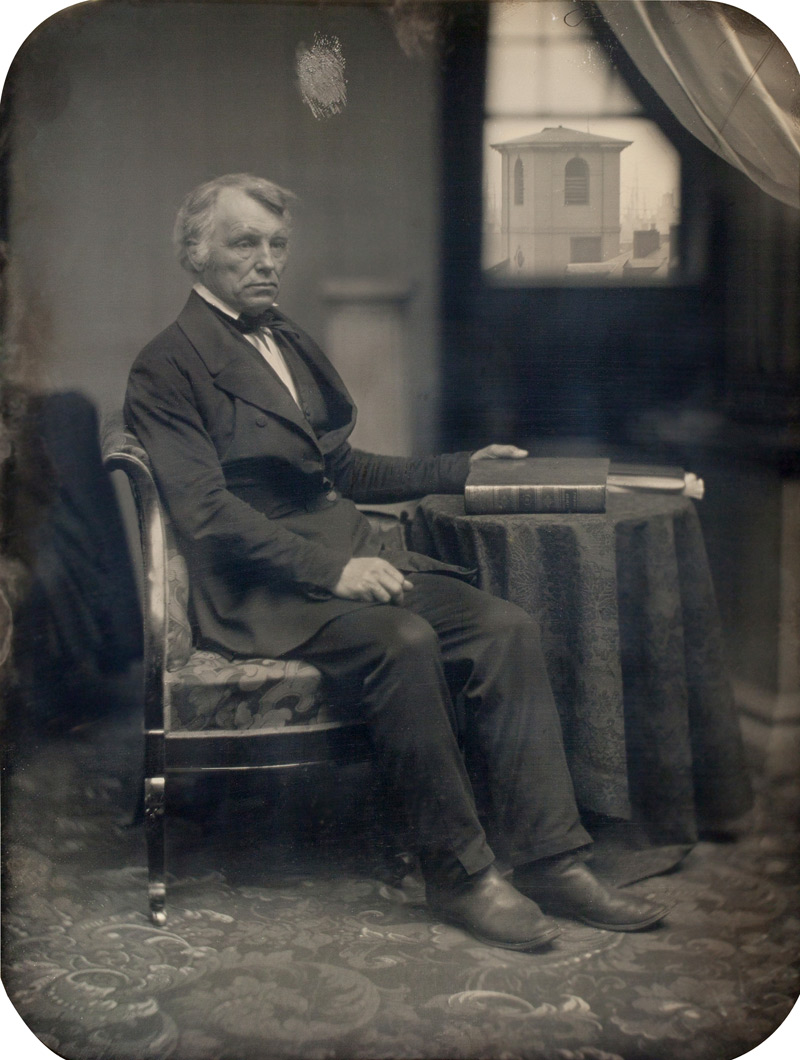
Albert Sands Southworth (American, 1811-1894) and Josiah Johnson Hawes (American, 1808-1901) 'Seated man with Brattle Street Church seen through window' 1850s


Albert Sands Southworth (American, 1811-1894) and Josiah Johnson Hawes (American, 1808-1901)
Seated man with Brattle Street Church seen through window
1850s
Daguerreotype
21.6 x 16.5cm (8 1/2 x 6 1/2 in.)
The Isenburg Collection at AMC Toronto


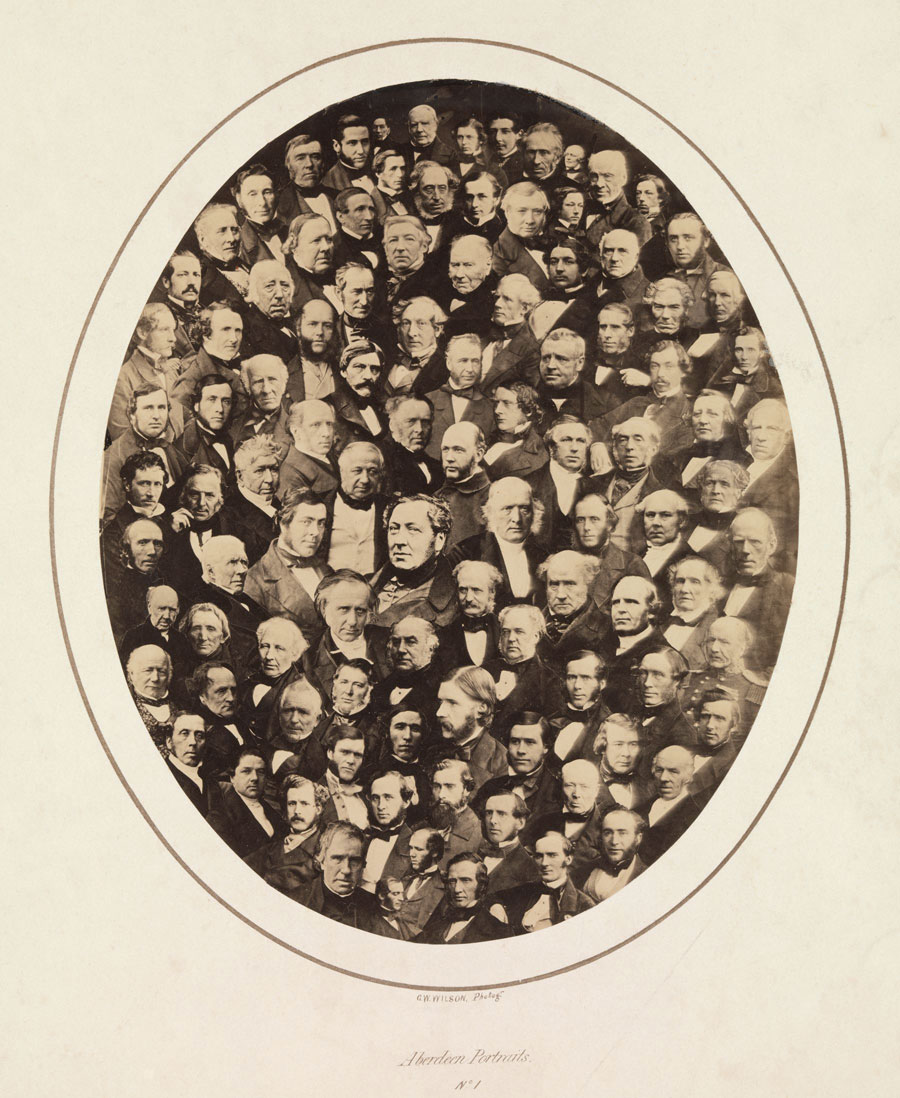
George Washington Wilson. 'Aberdeen Portraits No. 1' 1857


George Washington Wilson (Scottish, 1823-1893)
Aberdeen Portraits No. 1
1857
Albumen silver print from glass negative


Unknown (American) '[Decapitated Man with Head on a Platter]' c. 1865


Unknown (American)
[Decapitated Man with Head on a Platter]
c. 1865
Tintype with applied colour
8.4 x 6cm (3 5/16 x 2 3/8 in.)
© International Center of Photography, Gift of Steven Kasher and Susan Spungen Kasher, 2008


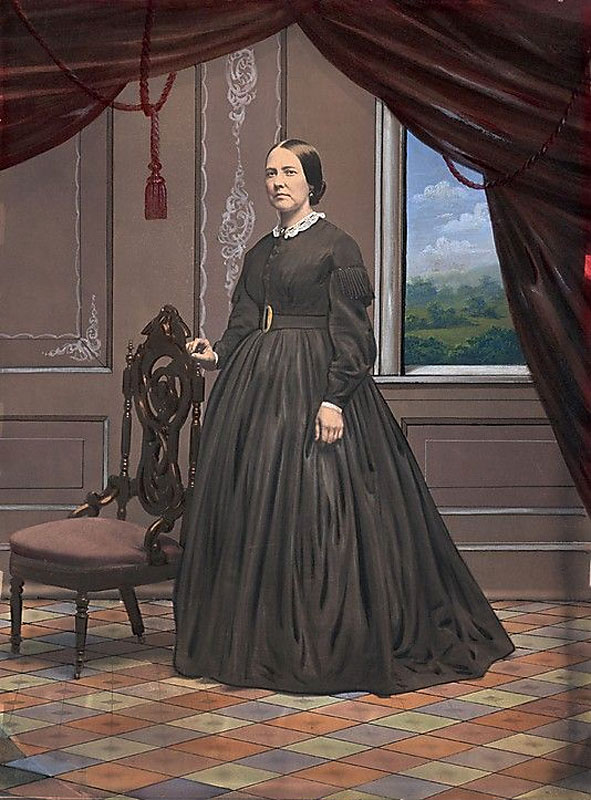
Unidentified photographer (American) 'Susan M. Davis' 1865


Unidentified photographer (American)
Susan M. Davis
1865
Salted paper print from glass negative, with applied color


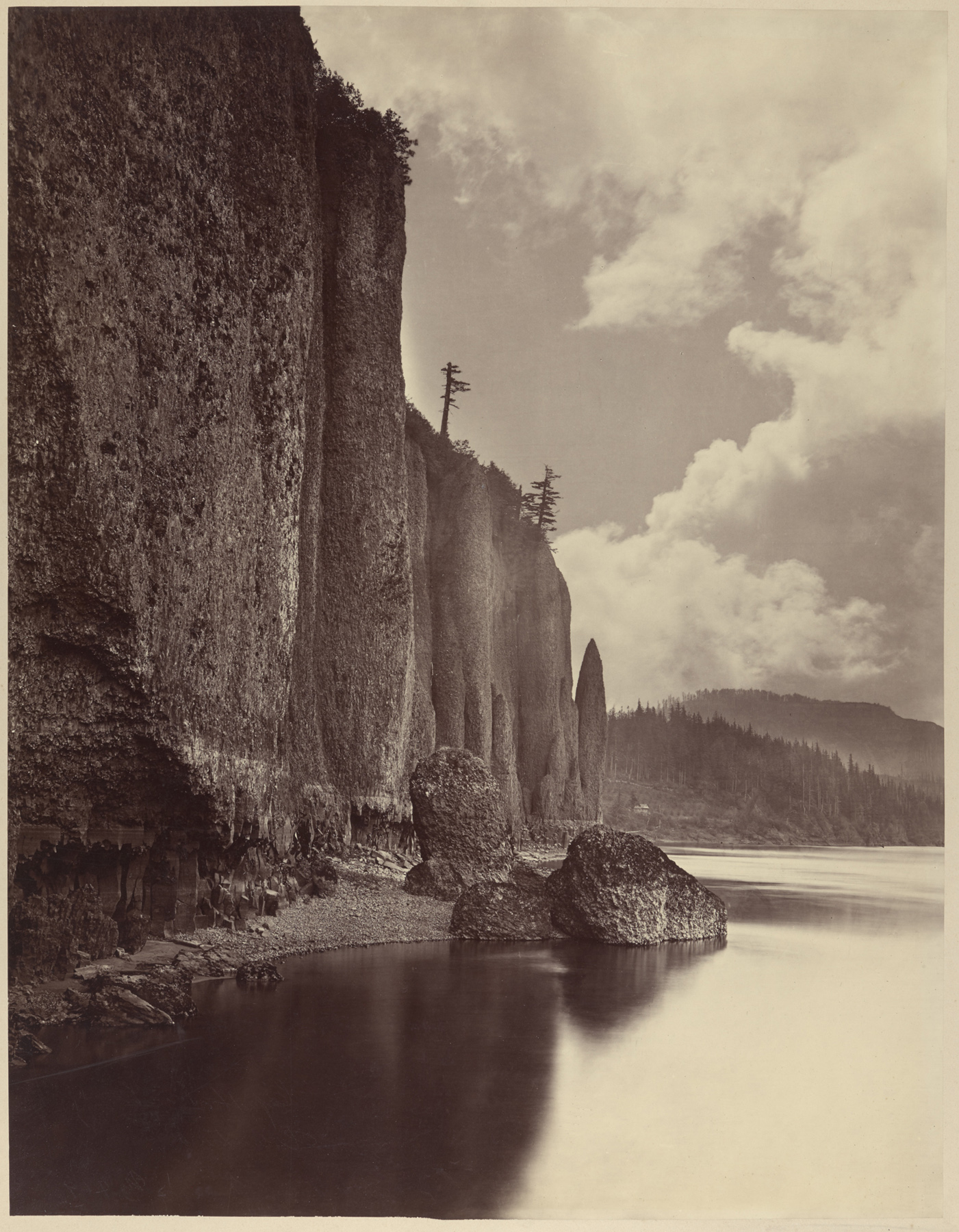
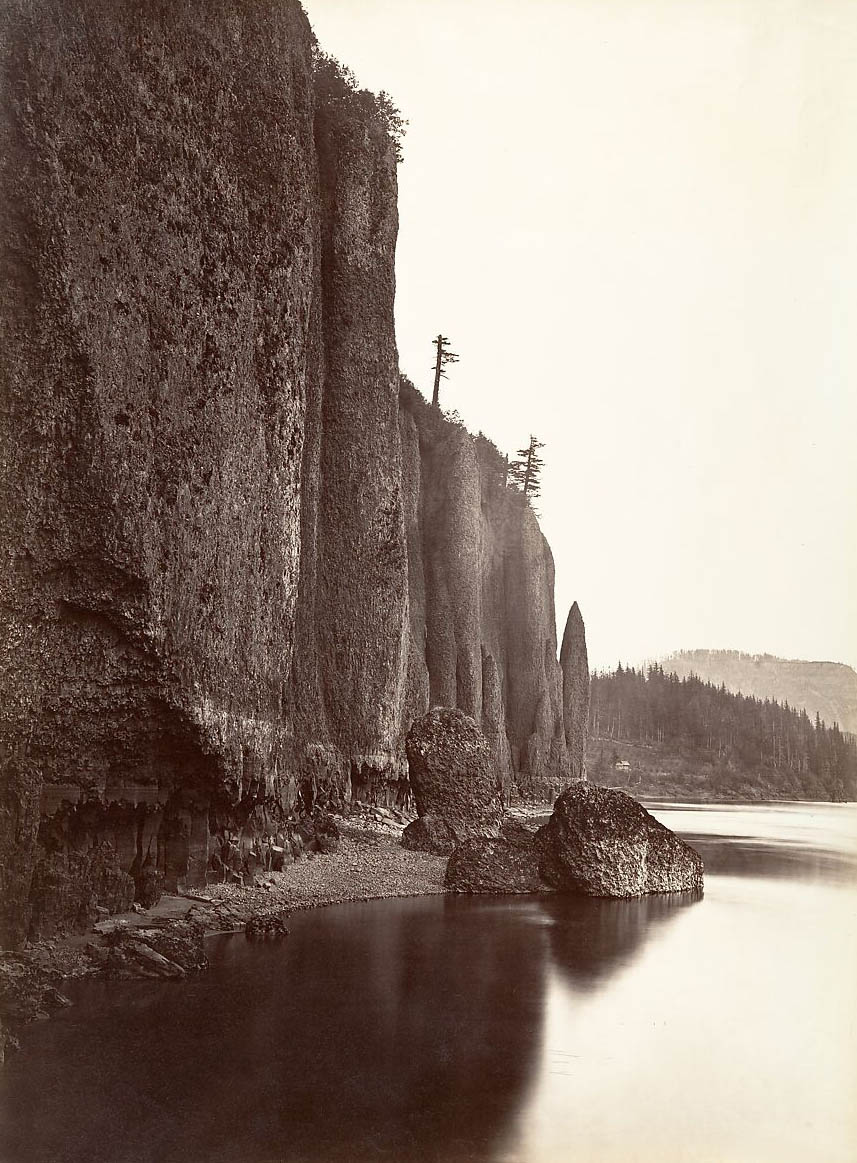
Carleton E. Watkins (American, 1829-1916) 'Cape Horn, Columbia River, Oregon' 1867


Carleton E. Watkins (American, 1829-1916)
Cape Horn, Columbia River, Oregon
1867, printed 1880-1890
Albumen silver print from glass negatives
52.3 x 40.4cm (20 9/16 x 15 7/8 in.)
© George Eastman House, International Museum of Photography and Film, Rochester


Watkins, the consummate photographer of the American West, combined a virtuoso mastery of the difficult wet plate negative process with a rigorous sense of pictorial structure. For large-format landscape work such as Watkins produced along the Columbia River in Oregon, the physical demands were great. Since there was as yet no practical means of enlarging, Watkins’s glass negatives had to be as large as he wished the prints to be, and his camera large enough to accommodate them. Furthermore, the glass negatives had to be coated, exposed, and developed while the collodion remained tacky, requiring the photographer to transport a traveling darkroom as he explored the rugged virgin terrain of the American West. The crystalline clarity of Watkins’s remarkable “mammoth” prints is unmatched in the work of any of his contemporaries and is approached by few artists working today. Here the clouds have been printed in (compare to the work below)

Text from the Metropolitan Museum of Art website


Carleton E. Watkins (American, 1829-1916) 'Cape Horn, Columbia River, Oregon' 1867


Carleton E. Watkins (American, 1829-1916)
Cape Horn, Columbia River, Oregon
1867
Albumen silver print from glass negative
52.1 x 39cm (20 1/2 x 15 3/8 in.)


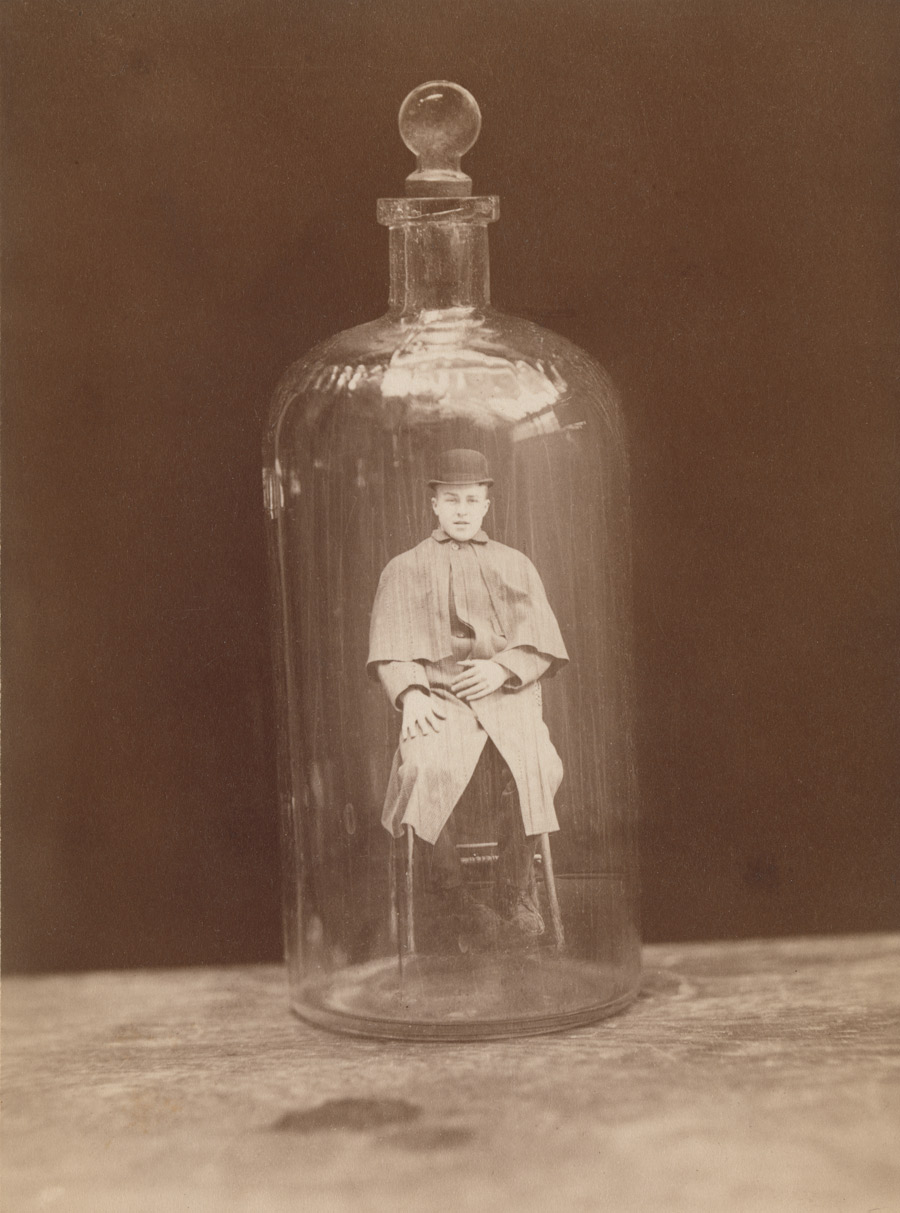
J.C. Higgins and Son (American) 'Man in bottle' c. 1888


J.C. Higgins and Son (American)
Man in bottle
c. 1888
Albumen print
13.5 x 10cm (5 5/16 x 3 15/16 in.)
Lent by The Metropolitan Museum of Art, Purchase, Susan and Thomas Dunn Gift, 2011


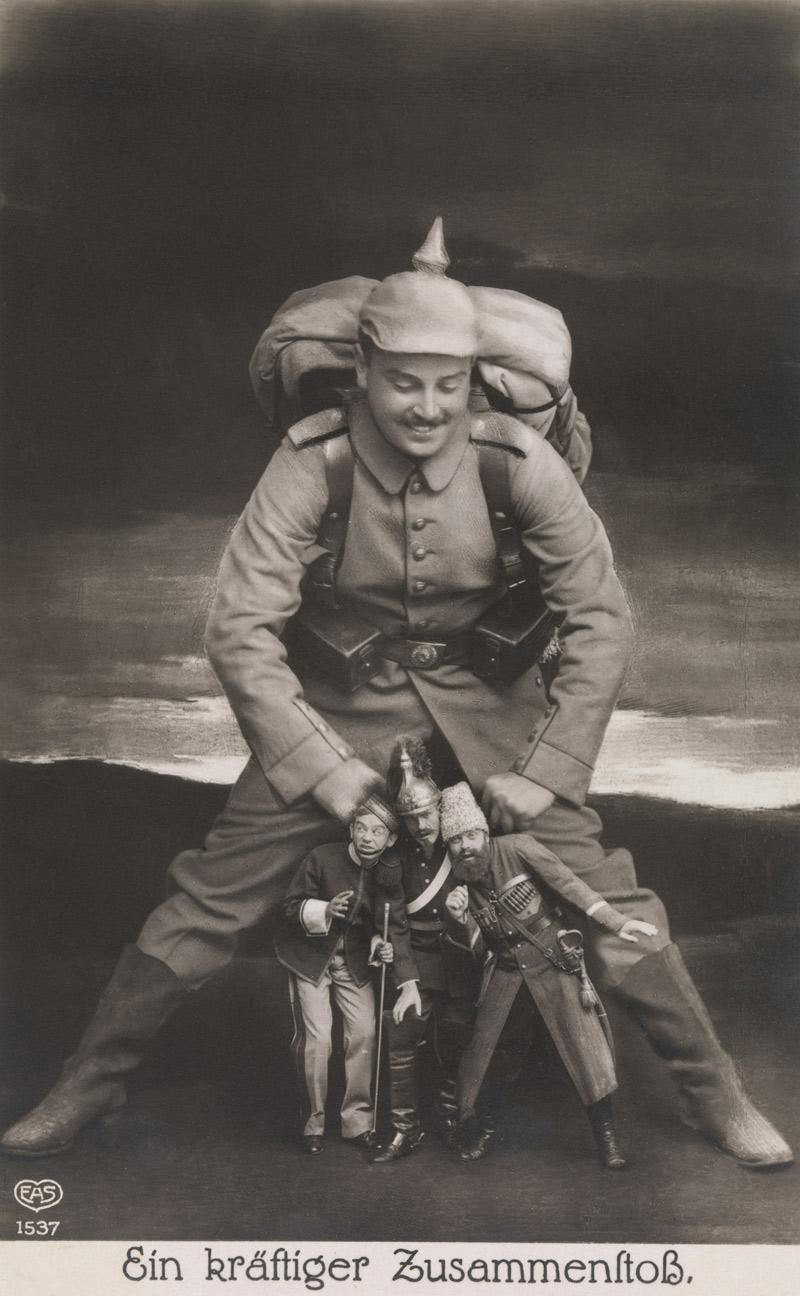
Unknown Photographer (German) 'Ein kräftiger Zusammenstoss (A Powerfull Collision)' 1914


Unknown Photographer (German)
Ein kräftiger Zusammenstoss (A Powerfull Collision)
1914
Gelatin silver print
8.7 x 13.7cm (3 7/16 x 5 3/8 in.)
Lent by The Metropolitan Museum of Art, Twentieth-Century Photography Fund, 2010


Dora Maar (French, 1907-1997) 'The Simulator' 1936


Dora Maar (French, 1907-1997)
Le simulateur
1936
Gelatin silver print
29.2 x 22.9cm (11 1/2 x 9 in.)
Collection of The Sack Photographic Trust for the San Francisco Museum of Modern Art


Maar’s haunting photomontages of the mid-1930s evoke a mood of oneiric ambiguity. Here, the world is turned literally upside-down: a boy bends sharply backward, echoing the curve of the vaulted ceiling on which he stands. On the print, Maar scratched out the figure’s eyes, exploiting Surrealism’s strong association of blindness with inner sight.


Bill Brandt (English born Germany, 1904-1983) 'London (Multiple Exposure Nude)' 1956


Bill Brandt (English born Germany, 1904-1983
London (Multiple Exposure Nude)
1956
Gelatin silver print with applied media


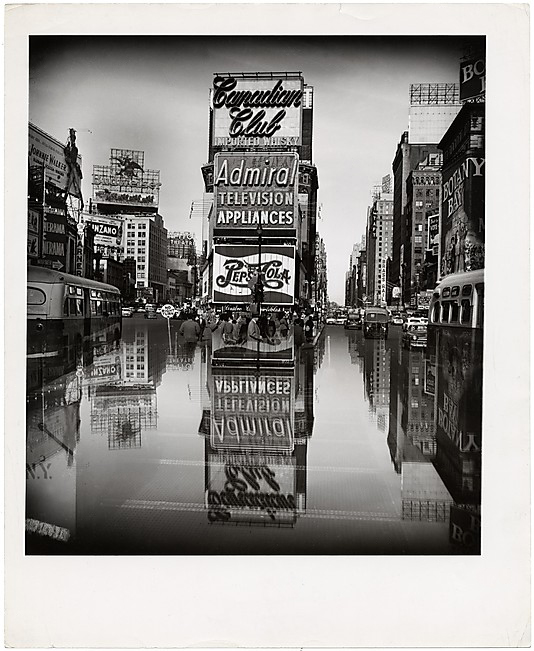
Arthur Felig - Weegee (American born Hungary, 1899-1968) 'Times Square, New York' 1952-1959


Weegee (Arthur Felig) (American born Hungary, 1899-1968)
Times Square, New York
1952-1959
Gelatin silver print
20.3 x 17.8cm (8 x 7 in.)
© International Center of Photography, Bequest of Wilma Wilcox, 1993


Famous for his gritty tabloid crime photographs, Weegee devoted the last twenty years of his life to what he called his “creative work.” He experimented prolifically with distorting lenses and comparable darkroom techniques, producing photo caricatures of politicians and Hollywood celebrities, novel variations on the man-in-the-bottle motif, and uncanny doublings and reflections, such as this striking image, which he described as “Times Square under 10 feet of water on a sunny afternoon.”


Jerry N. Uelsmann (American, 1934-2022) 'Untitled' 1976


Jerry N. Uelsmann (American, 1934-2022)
Untitled
1976
Gelatin silver print
49.3 x 36cm (19 7/16 x 14 3/16 in.)
Lent by The Metropolitan Museum of Art, David Hunter McAlpin Fund, 1981
© The Metropolitan Museum of Art/ © Jerry N. Uelsmann


Jerry Norman Uelsmann (June 11, 1934 – April 4, 2022) was an American photographer.

As an emerging artist in the 1960s, Jerry Uelsmann received international recognition for surreal, enigmatic photographs (photomontages) made with his unique method of composite printing and his dedication to revealing the deepest emotions of the human condition. Over the next six decades, his contributions to contemporary photography were firmly established with important exhibitions, prestigious awards and numerous publications. Among his awards were a Guggenheim Fellowship, National Endowment, Royal Photographic Society Fellowship, and Lucie Award.

Uelsmann described his creative process as a journey of discovery in the darkroom (visual research laboratory). Going against the established practice of previsualization (Ansel Adams, Edward Weston and others), he coined a new term, post-visualization. He decided the contents of the final print after rather than before pressing the shutter button. Uelsmann constructed his dreams like a visual poet with results that often seemed emotionally more real than the factual world. By the 1980s he became one of the most collected photographers in America. His work influenced generations of both analog and digital photographers. Although he admired digital photography, he remained completely dedicated to the alchemy of film photography in the black and white darkroom.

Text from the Wikipedia website


Kathy Grove (American, b. 1948) 'The Other Series (After Kertész)' 1989-90


Kathy Grove (American, b. 1948)
The Other Series (After Kertész)
1989-1990
Gelatin silver print
19.7 x 15.2cm (7 3/4 x 6 in.)
Purchase, Charina Foundation Inc. Gift, 2010
© Kathy Grove


In the late 1980s Grove, an artist who supports herself as a professional photo retoucher, began seamlessly altering images of famous works of art, using bleach, dyes, and airbrush to remove the female figure from each image and leaving the rest of the scene intact. Her cunning excisions mimic the process by which art historians, echoing the culture at large, have erased the achievements of actual women while enshrining Woman as a blank screen upon which the ideas and desires of both artist and viewer are projected. If photographs are presumed to represent the truth, Grove’s pictures remind us to ask: Whose truth?


National Gallery of Art
National Mall between 3rd and 7th Streets
Constitution Avenue NW, Washington

Opening hours:
Daily 10am – 5pm

National Gallery of Art website

LIKE ART BLART ON FACEBOOK

Back to top

Exhibition: ‘Another Story. Photography from the Moderna Museet Collection’ at Moderna Museet, Stockholm

Exhibition dates: 1st February, 2011 – 19th February, 2012
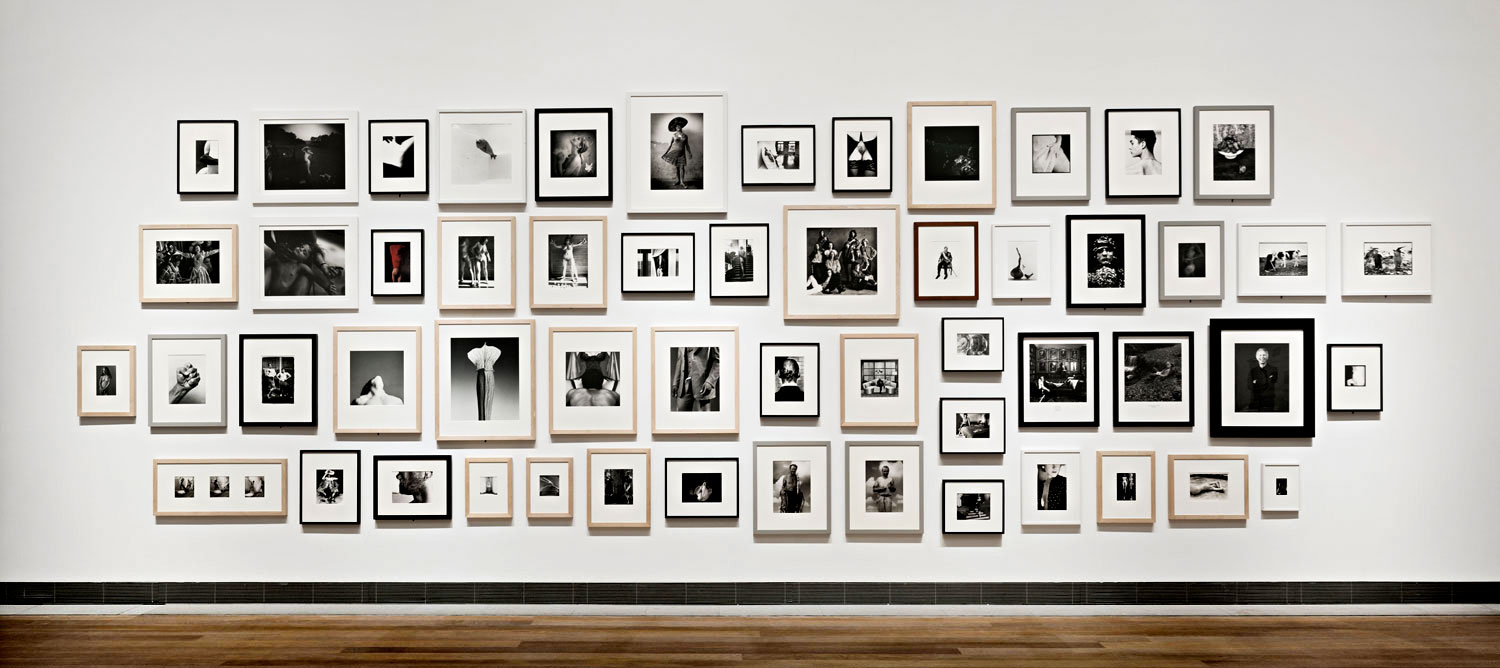
 

Installation view of the exhibition 'Another Story' at Moderna Museet, Stockholm


Installation view of the exhibition Another Story at Moderna Museet, Stockholm
Photo: Albin Dahlström/Moderna Museet


A posting from an exhibition highlighting a collection of over 100,000 photographs – how lucky are they!

Dr Marcus Bunyan


Many thankx to the Moderna Museet for allowing me to publish the photographs in the posting. Please click on the photographs for a larger version of the image.


Annika von Hausswolff (Swedish, b. 1967) 'I Am the Runway of Your Thoughts' 2008


Annika von Hausswolff (Swedish, b. 1967)
I Am the Runway of Your Thoughts
2008
Moderna Museet
© Annika von Hausswolff


In 2011, all the galleries will be successively rehung exclusively with photographic art. The chronology will be the same, but the 20th century will be presented from a partly new perspective. Moderna Museet will take a radical step, with Another Story – Photography from the Moderna Museet Collection. …

There is a growing interest in photography today, as proven by the panoply of exhibitions, fairs and festivals throughout the world. And this is hardly surprising. Nowadays, practically everyone is a photographer, at the very least snapping pictures with the camera built into most mobiles.

Moderna Museet’s collection of photography, ranging from 1840 to the present day, is one of the finest in Europe, featuring many of the most prominent names in photo history and comprising more than 100,000 photographs. The collection provides a historic background to the art of photography, and now we are sharing this with all our visitors. Moreover, several magnificent private donations have recently enriched the collection with works by famous artists practising in the field of photography.

Text from the Moderna Museet website


Another Story: Possessed by the Camera

1970-2010

Another Story: Possessed by the Camera highlighting contemporary photo-based art 1970-2010

From the 1970s, people have challenged the notion that the purpose of art is to show authentic identities. Instead, the camera is used to emphasise the potential of role-play and how identity can be constructed.

The reproduction of reality in the mass media has radically changed the conditions for our lives. The camera became an especially useful artistic tool in exploring the role-play of existence. The veracity of photography was called into question. By manipulating images and presenting them as authentic depictions, artists warned viewers to be critical and on their guard against how images are used in general.

These changes generated a broad range of photographic practices. Traditionally oriented photographers refined their aesthetic methods towards exquisitely artificial images. Robert Mapplethorpe, for instance, revived classical notions of beauty to undermine social prejudices against homosexuality.

Others experimented with digital manipulations and created new realities out of existing worlds. In the 1980s, the artistic use of photography went even further, in veritably philosophical studies of the many levels of meaning in representation. Since the late 1970s, Cindy Sherman has portrayed herself in stereotypical female disguises as a means of exploring the complexity of specific identities.

As a consequence of the dramatic innovations of the digital era, information and entertainment from far and wide are intermingled. Our formerly distinct notions of time and space have become fuzzier.

Annika von Hausswolff’s I Am the Runway of Your Thoughts from 2008 captures the feeling of trying to grasp and control something that is perceived as a vague threat. The concept of identity is no longer only linked to ethnicity, gender and class. Instead, it can be constructed out of surprising mixtures of given conditions and chosen ideals.

Text from the Moderna Museet website


Annika von Hausswolff (Swedish, b. 1967) 'I Am the Runway of Your Thoughts' 2008 (detail)


Annika von Hausswolff (Swedish, b. 1967)
I Am the Runway of Your Thoughts (detail)
2008
Moderna Museet
© Annika von Hausswolff


Andreas Gursky (German, b. 1955) 'Bibliothek' 1999


Andreas Gursky (German, b. 1955)
Bibliothek
1999
Moderna Museet
© Andreas Gursky/BUS 2011


Candida Höfer (German, b. 1944) 'The Louvre in Paris X 2005 - the caryatid hall' 2005


Candida Höfer (German, b. 1944)
The Louvre in Paris X 2005 – the caryatid hall
2005
Moderna Museet
© Candida Höfer/BUS 2011
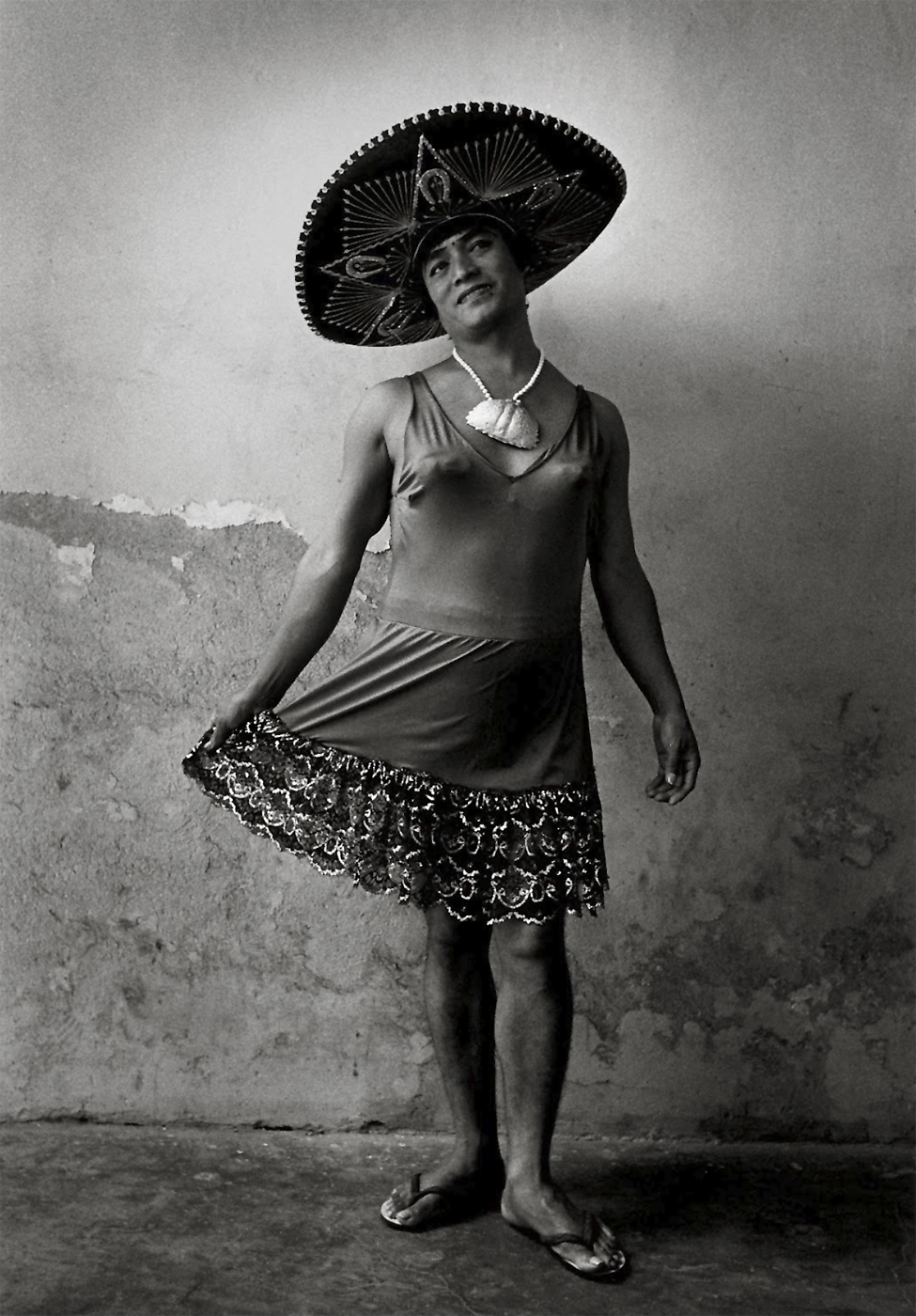
 

Graciela Iturbide (Mexican, b. 1942) 'Magnolia (2), Juchitán, México' (Magnolia with Sombrero / Magnolia con sombrero) 1986


Graciela Iturbide (Mexican, b. 1942)
Magnolia (2), Juchitán, México (Magnolia with Sombrero / Magnolia con sombrero)
1986
Gelatin silver print
Moderna Museet
© Graciela Iturbide
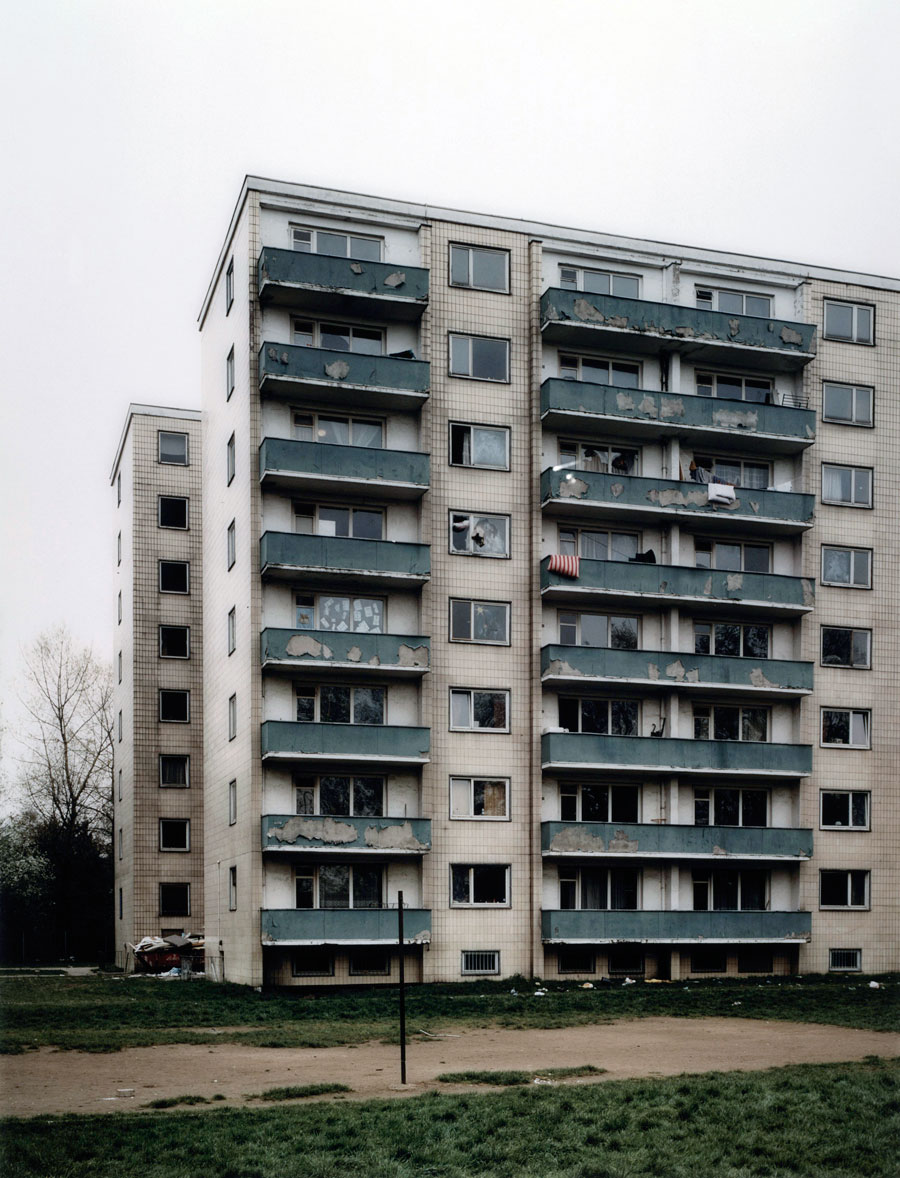
 

Thomas Ruff (German, b. 1958) 'Häuser Nummer 9' 1989


Thomas Ruff (German, b. 1958)
Häuser Nummer 9
1989
Moderna Museet
© Thomas Ruff/BUS 2011


Cindy Sherman (American, b. 1954) 'Untitled' 2008


Cindy Sherman (American, b. 1954)
Untitled
2008
Moderna Museet
© Courtesy of the Artist and Metro Pictures


In 2011, Moderna Museet’s new directors, Daniel Birnbaum and Ann-Sofi Noring, will launch a new presentation of the collection. Another Story gives a fresh angle on art history, based on works from the Moderna Museet collection. We will start by focusing on photography, which will gradually be given a more prominent position, only to fill the entire exhibition of the permanent collection this autumn.

If you want an art collection to develop and stay alive, it can’t remain static. You need to present it in new ways and look at it from new angles. That may sound obvious, but it is not that common. In 2011, Moderna Museet will take a radical step, with Another Story. Photography from the Moderna Museet Collection. This is possibly the most extreme re-hanging of the collection undertaken in the history of the museum.

There is a growing interest in photography today, as proven by the panoply of exhibitions, fairs and festivals throughout the world. And this is hardly surprising. Nowadays, practically everyone is a photographer, at the very least snapping pictures with the camera built into most mobiles.

Moderna Museet’s collection of photography, ranging from 1840 to the present day, is one of the finest in Europe, featuring many of the most prominent names in photo history and comprising more than 100,000 photographs. The collection provides a historic background to the art of photography, and now we are sharing this with all our visitors. Moreover, several magnificent private donations have recently enriched the collection with works by famous artists practising in the field of photography.

Moderna Museet has one of Europe’s finest collections of photography, ranging from 1840 to the present day. Many of the most famous names in photographic history are represented, and the collection comprises more than 100,000 works. The re-hanging of the permanent collection exhibition will be done in three stages. In February, we will open the first part, Another Story: Possessed by the Camera, which presents contemporary photography-based art. Just before summer, we open Another Story: See the World!, presenting the period 1920-1980. This autumn, finally, we look at the early days of photography. Another Story: Written in Light presents the pioneers of photography from 1840 to the first three decades of the 20th century. In autumn 2011 and for the rest of the year, the entire permanent collection exhibition will consist of photography and photo-based art.

Text from the Moderna Museet website [Online] Cited 22/07/2011 no longer available online


Aleksandr Rodchenko (1891-1956) 'Sjukov-masten, radiomast i Moskva' 1929


Aleksandr Rodchenko (Russian, 1891-1956)
Sjukov-masten, radiomast i Moskva
1929
Gelatin silver print
Moderna Museet
© Aleksandr Rodtjenko


Another Story: See the World!

1920-1980

Another Story: See the World! focuses on the period 1920-1980.

Many documentary photographers are driven by a strong urge to portray events, places and people in their everyday surroundings. For some, it has been a life-long commitment to uncover and reveal social injustices. For others, it has represented a way of sharing experiences and developing documentary photography in a more personal and artistic direction.

The camera give photographers opportunities to approach vulnerable, sometimes hidden or forgotten, groups and environments. This presentation includes Larry Clark’s intimate and controversial photographs of his drugabusing friends in their hometown, Tulsa. The same theme is found in Nan Goldin’s raw colour portraits.

Amalias Street 5a is on the outskirts of old Riga, a wooden house with 37 inhabitants, documented by the photographer Inta Ruka since 2004. Together with Antanas Sutkus, she is a prominent figure on the Baltic photography scene that commented on and adapted itself to the Soviet Union in the 1980s and 90s, and then documented the changes in the post-Soviet era.

Christer Strömholm and his students also worked in the documentary tradition. Anders Petersen is perhaps the photographer who has most distinctly followed in Strömholm’s footsteps, as in his legendary series from Café Lehmitz in Hamburg (1967-70). Other photographers who have developed individual perspectives in their portrayals of Swedish society are JH Engström, Catharina Gotby and Lars Tunbjörk.

Throughout the history of photography, photographers have ventured for long periods into other people’s worlds and lives. To do that, however, and to earn their living while doing it, many photographers have worked simultaneously on independent projects, and on various commercial assignments. This has led to interesting links and shifts between socially oriented reportage, documentary projects, portrait photography and photographic art.

Text from the Moderna Museet website


August Sander (German, 1876-1964) 'Die elegante Frau - Sekrutärin beine WDR' 1927 /c. 1975


August Sander (German, 1876-1964)
Die elegante Frau – Sekrutärin beine WDR
1927 / c. 1975
Gelatin silver print
Moderna Museet
© August Sander/BUS 2011
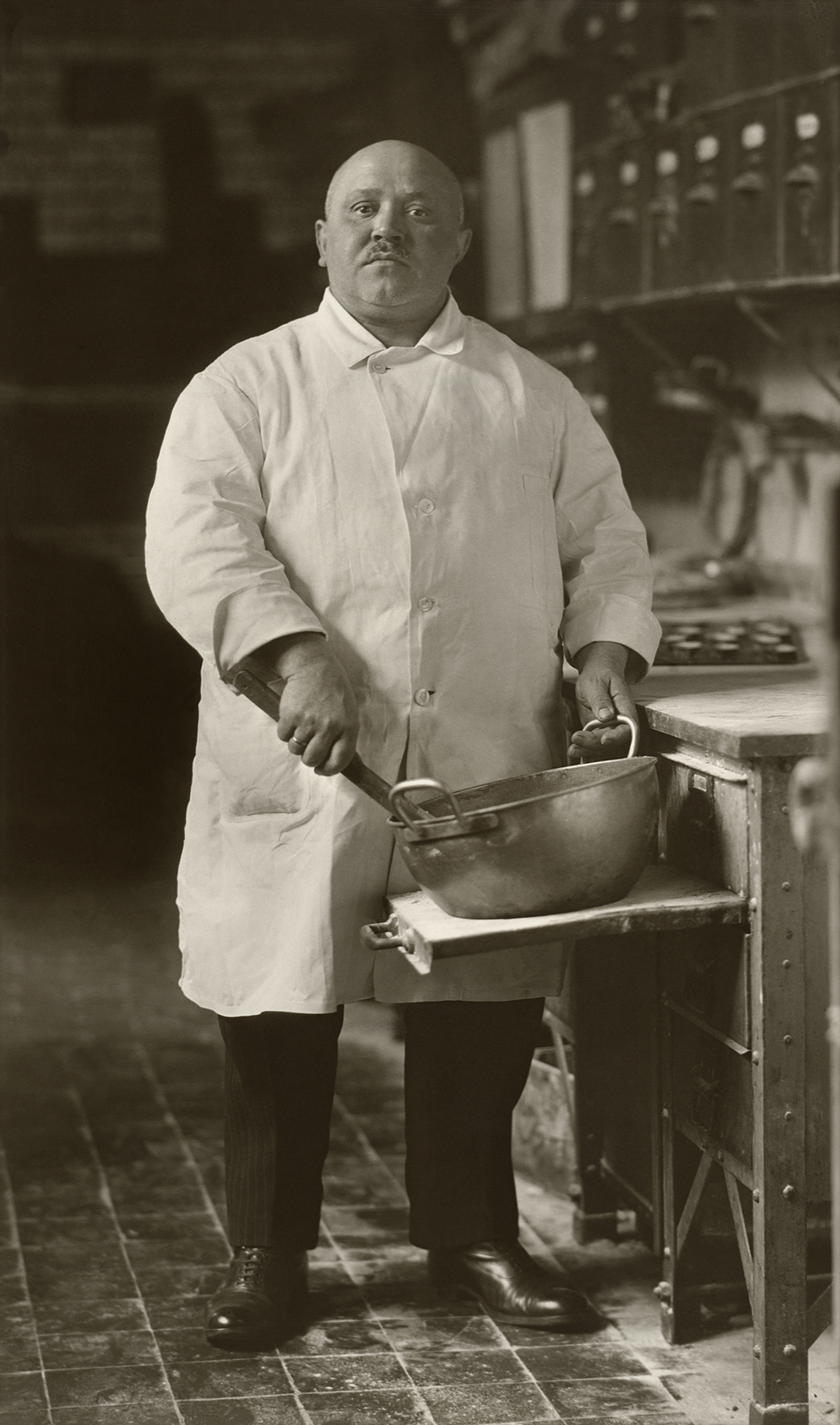
 

August Sander (German, 1876-1964) 'Konditor' (Pastry Cook) 1928


August Sander (German, 1876-1964)
Konditor (Pastry Cook)
1928
Gelatin silver print
Moderna Museet
© August Sander/BUS 2011
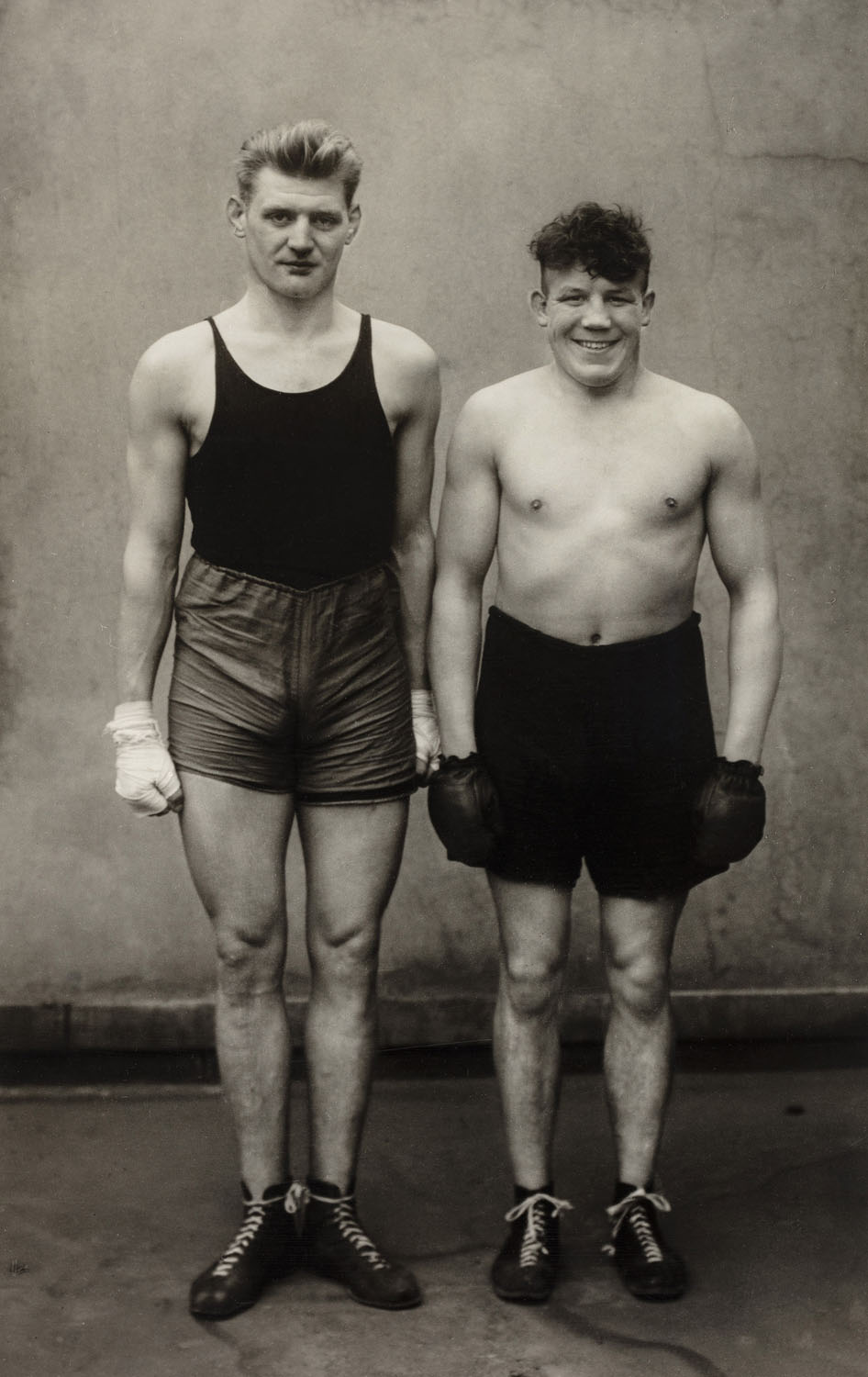
 

August Sander (German, 1876-1964) 'Boxers. Paul Röderstein and Hein Hesse. Köln' c. 1928


August Sander (German, 1876-1964)
Boxers
1929
Gelatin silver print
Moderna Museet
© August Sander/BUS 2011
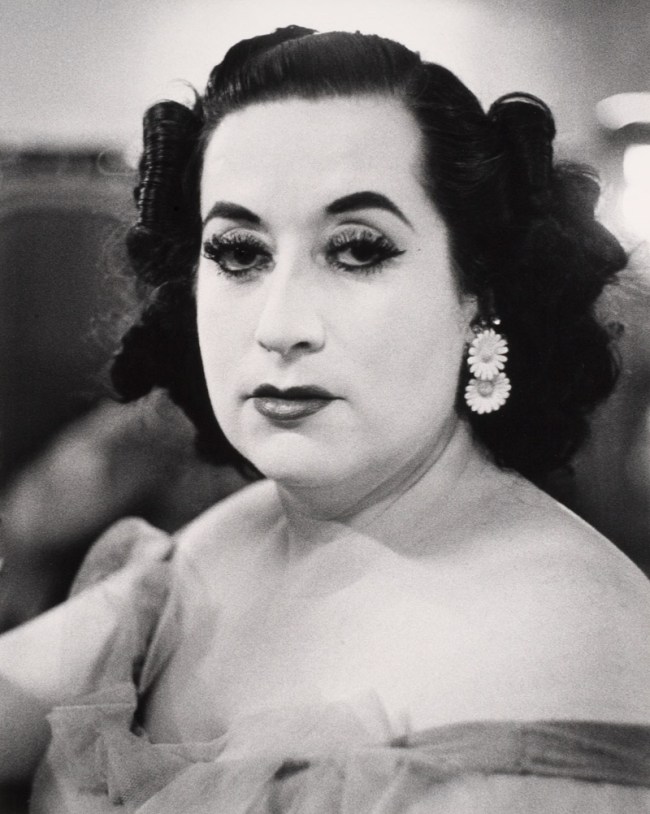
 

Christer Strömholm (Swedish, 1918-2002) 'Barcelona' 1959


Christer Strömholm (Swedish, 1918-2002)
Barcelona
1959
Gelatin silver print
Moderna Museet
© Christer Strömholm/Bildverksamheten Strömholm
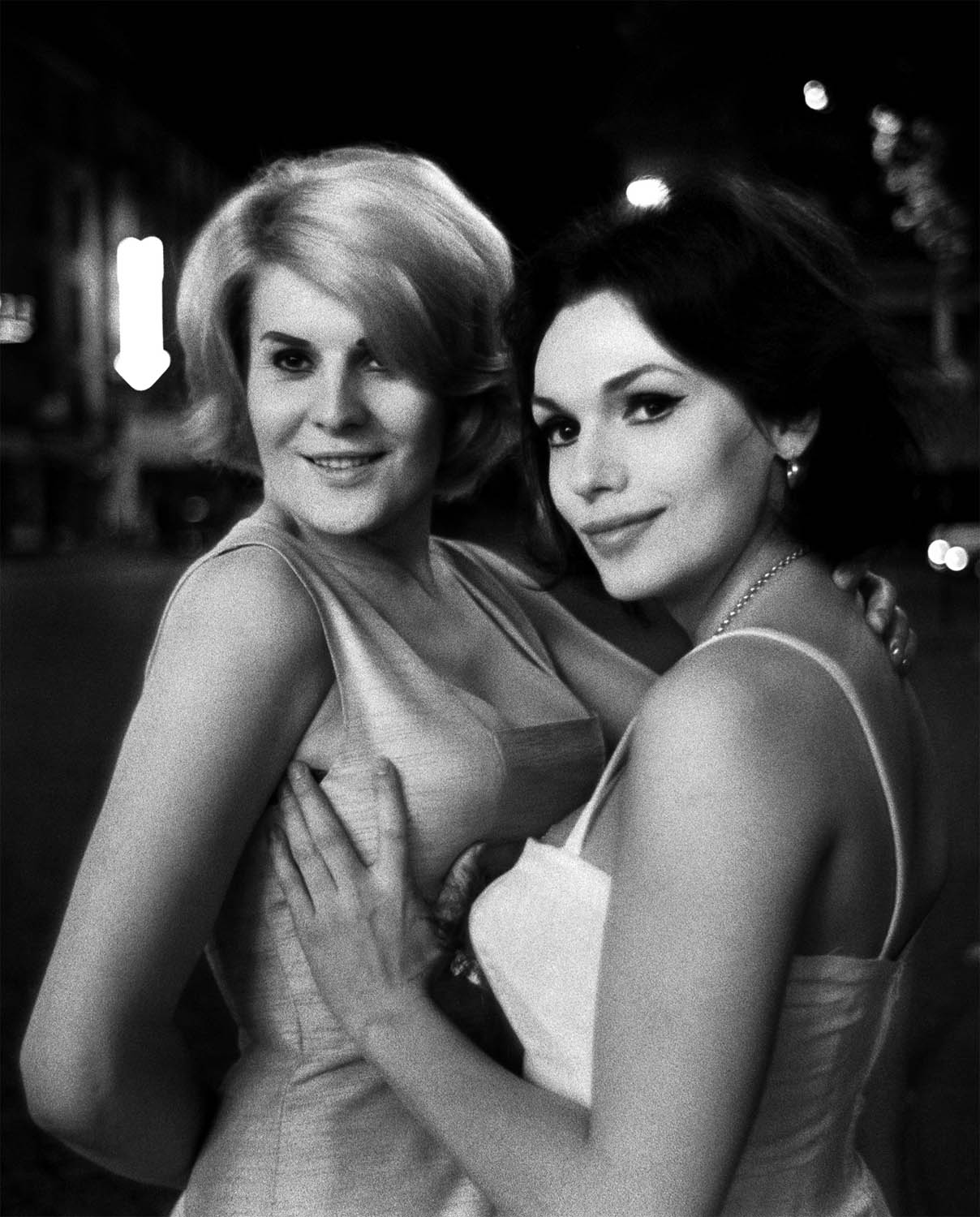
 

Christer Strömholm (Swedish, 1918-2002) 'Gina and Nana' 1960


Christer Strömholm (Swedish, 1918-2002)
Gina and Nana
1960
Gelatin silver print
Moderna Museet
© Christer Strömholm/Bildverksamheten Strömholm
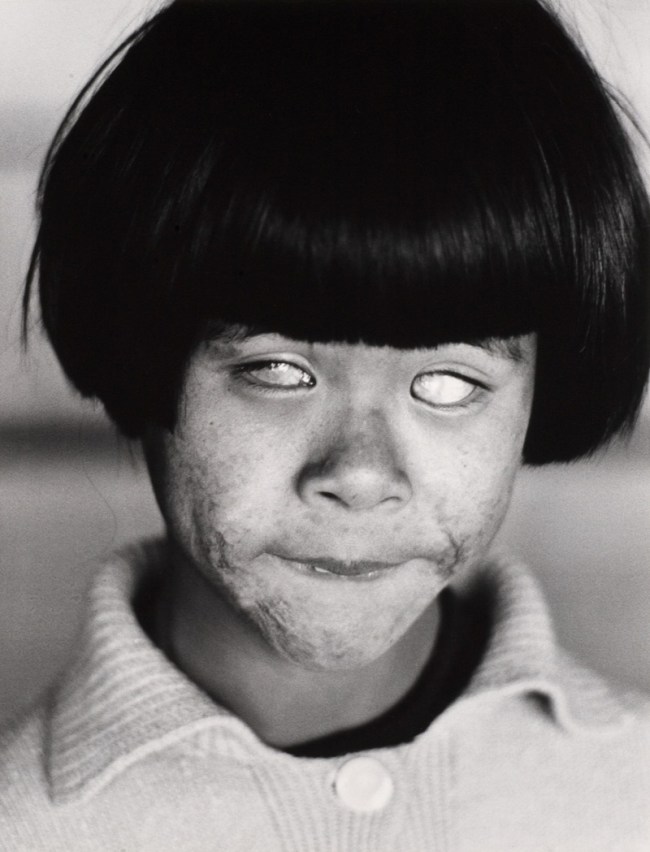
 

Christer Strömholm (Swedish, 1918-2002) 'Hiroshima' 1963/1981


Christer Strömholm (Swedish, 1918-2002)
Hiroshima
1963/1981
Gelatin silver print
Moderna Museet
© Christer Strömholm/Bildverksamheten Strömholm
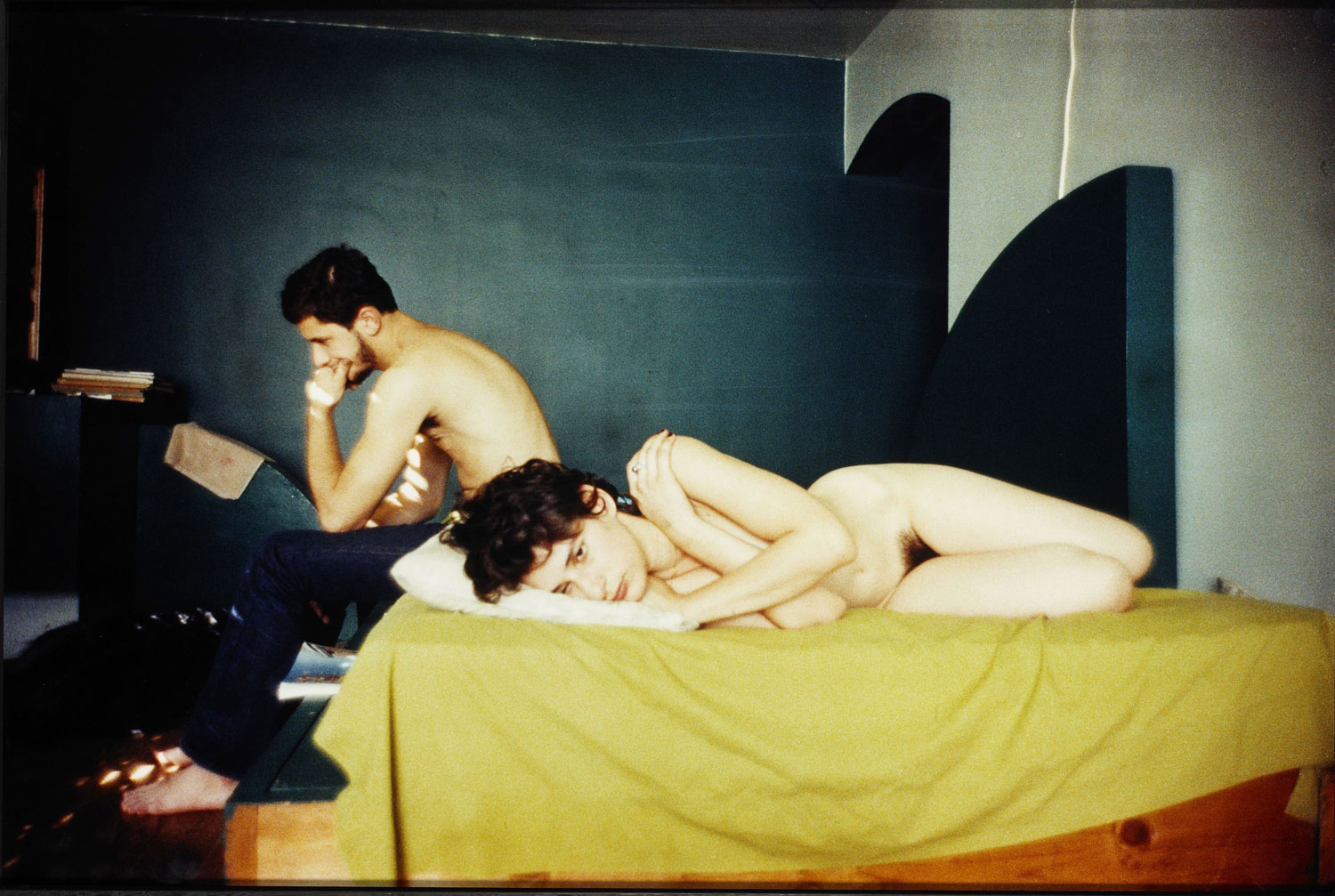
 

Nan Goldin (American, b. 1953) 'Couple in bed, Chicago' 1977


Nan Goldin (American, b. 1953)
Couple in bed, Chicago
1977
Dye destruction print, Cibachrome
Moderna Museet
© Nan Goldin
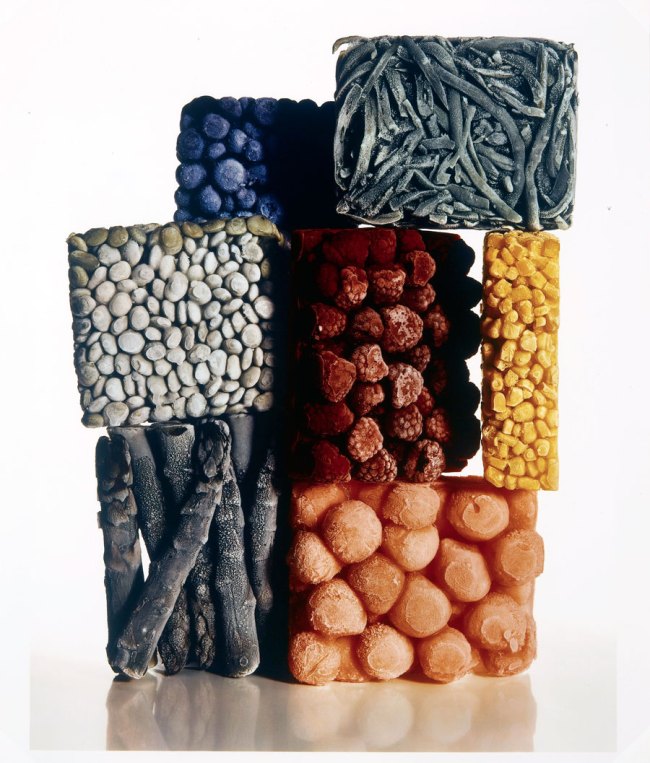
 

Irving Penn (American, 1917-2009) 'Frozen Foods with String Beans, New York, 1977'


Irving Penn (American, 1917-2009)
Frozen Foods with String Beans, New York, 1977
1977
Moderna Museet
© Irving Penn Foundation
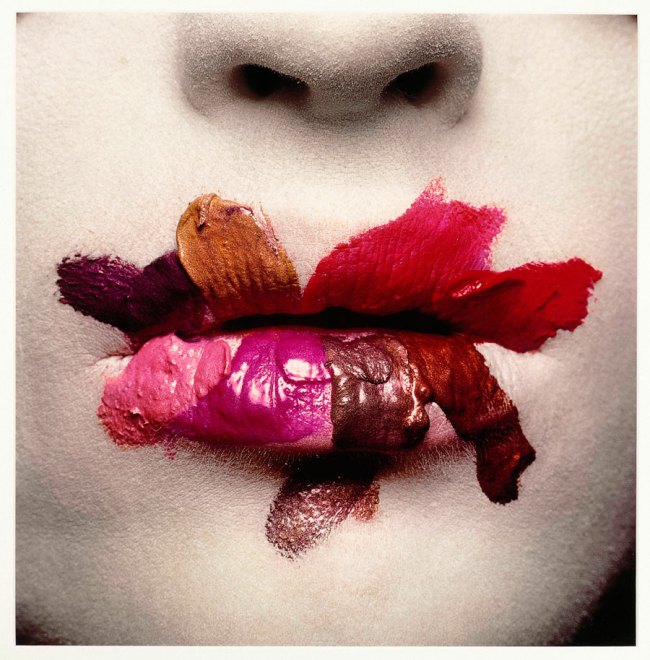
 

Irving Penn (American, 1917-2009) 'Mouth (for L'Oréal), New York, 1986'


Irving Penn (American, 1917-2009)
Mouth (for L’Oréal), New York, 1986
1986
Moderna Museet
© Irving Penn Foundation
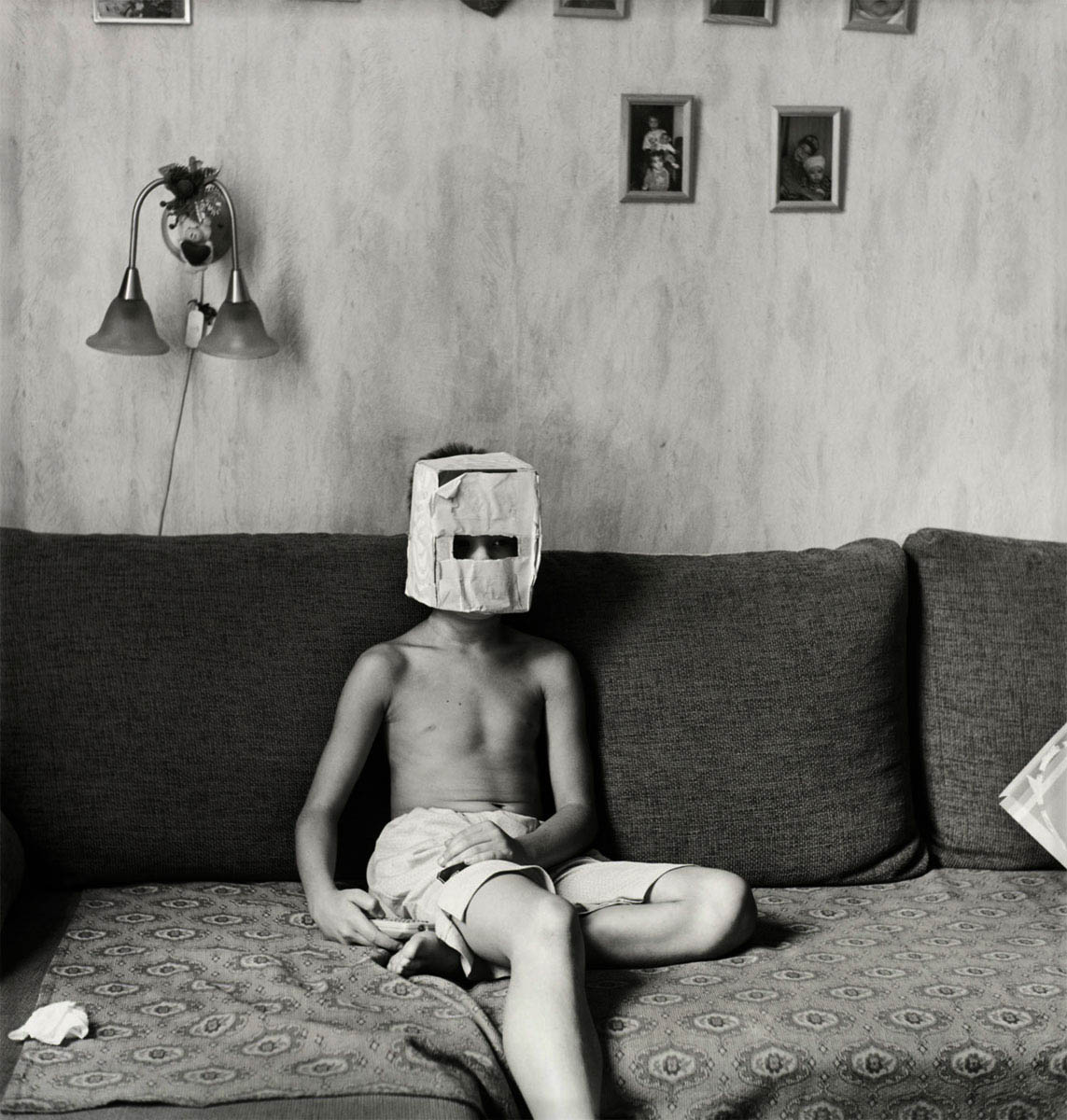
 

Inta Ruka (Latvia, b. 1958) 'Rihards Stibelis' 2006


Inta Ruka (Latvia, b. 1958)
Rihards Stibelis
2006
From the series Amãlija’s street 5a
Gelatin silver print
Moderna Museet
© Inta Ruka
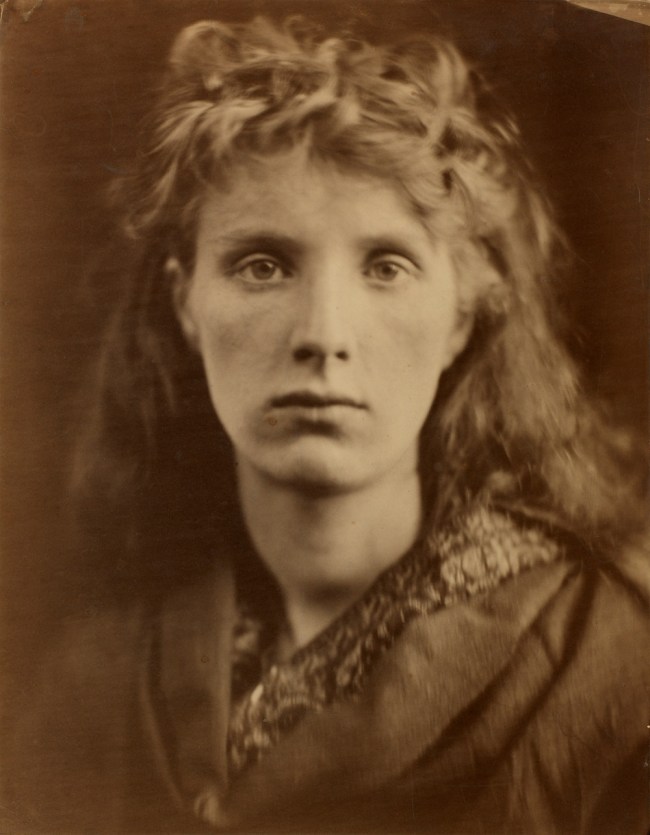
 

Julia Margaret Cameron (British born India, 1815-1879) 'The Mountain Nymph, Sweet Liberty' 1866


Julia Margaret Cameron (British born India, 1815-1879)
The Mountain Nymph, Sweet Liberty
1866
Albumen print
Moderna Museet


Another Story: Written in Light

1840-1930

Another Story: Written in Light focuses on the pioneers from 1840 and up to the first three decades of the 20th century

The third part of Another Story. Photography from the Moderna Museet Collection has the subtitle Written in Light. It delineates the infancy of photography, from the moment when the Frenchman Louis Jacques Mandé Daguerre developed the photographic process of the daguerreotype in 1839, to August Sander’s fascinating project People of the Twentieth Century, black-and-white portraits of German citizens from the first half of the 20th century.

In six rooms we present several pioneering feats of photography, unique works that contribute to Moderna Museet’s exceptional position among photography-collecting institutions. The section includes Julia Margaret Cameron, who portrayed famous Brits in the 1860s, revealing both their inner and outer character.

Guillaume Berggren’s photographs from 1880s Constantinople are legendary, as are Carleton E. Watkins’ documentation of the American West a few decades earlier. In addition to portraits, landscapes, nature and architecture were typical subjects for the early photographers. A few examples of present-day photography are interspersed, for instance Tom Hunter’s series in which he explored the urban landscape in the wake of industrialism around the turn of the millennium.

What does pictorialism stand for? In one of the larger rooms, we show photographs from the late 1800s up to the outbreak of the First World War, by photographers who were primarily fascinated by optical and visual issues. A seminal figure in the field of art photography is Henry B. Goodwin, famous for his striking artist portraits, painterly nudes and softly hazy Stockholm views.

Photography literally means “written in light”. The various experiments and remarkable documentations shown here encompass Nils Strindberg’s photographs from a disastrous balloon expedition to the North Pole in 1897. Three decades later, his negatives were developed, and the resulting prints are now in the Moderna Museet collection of photography.

Text from the Moderna Museet website
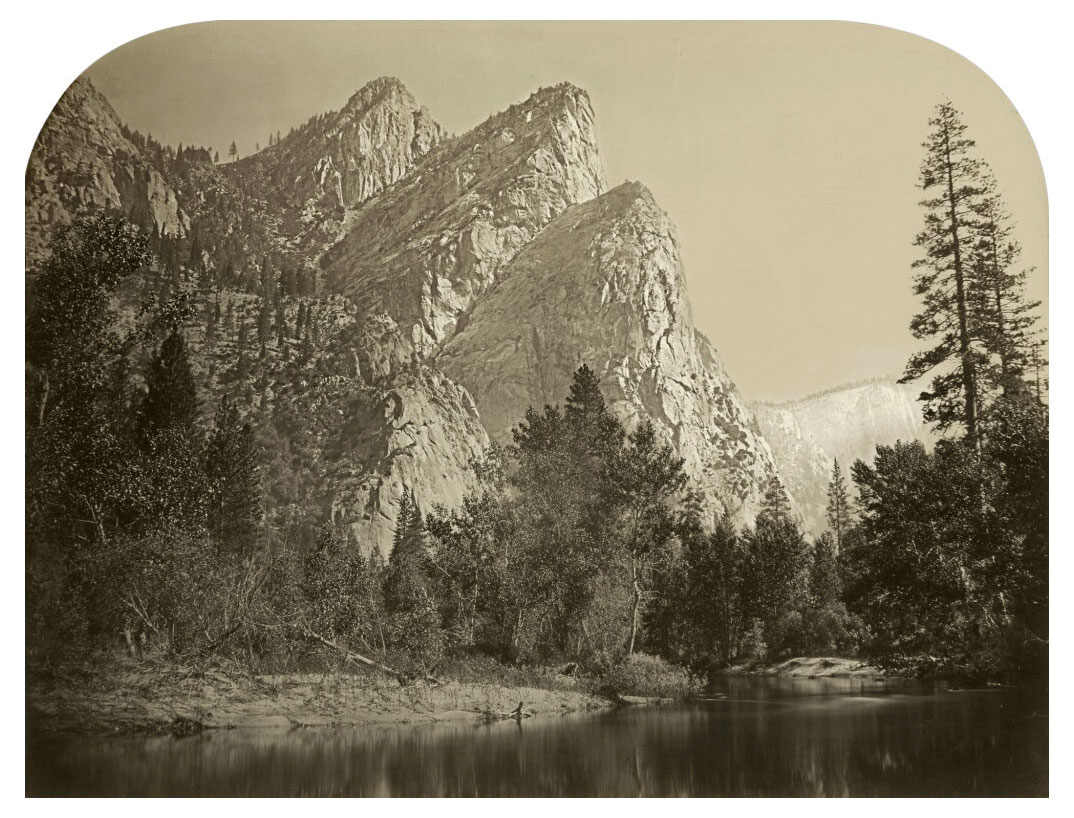
 

Carleton Watkins (American, 1829-1916) 'The Three Brothers' 1861


Carleton Watkins (American, 1829-1916)
The Three Brothers
1861
Moderna Museet
Albumen print
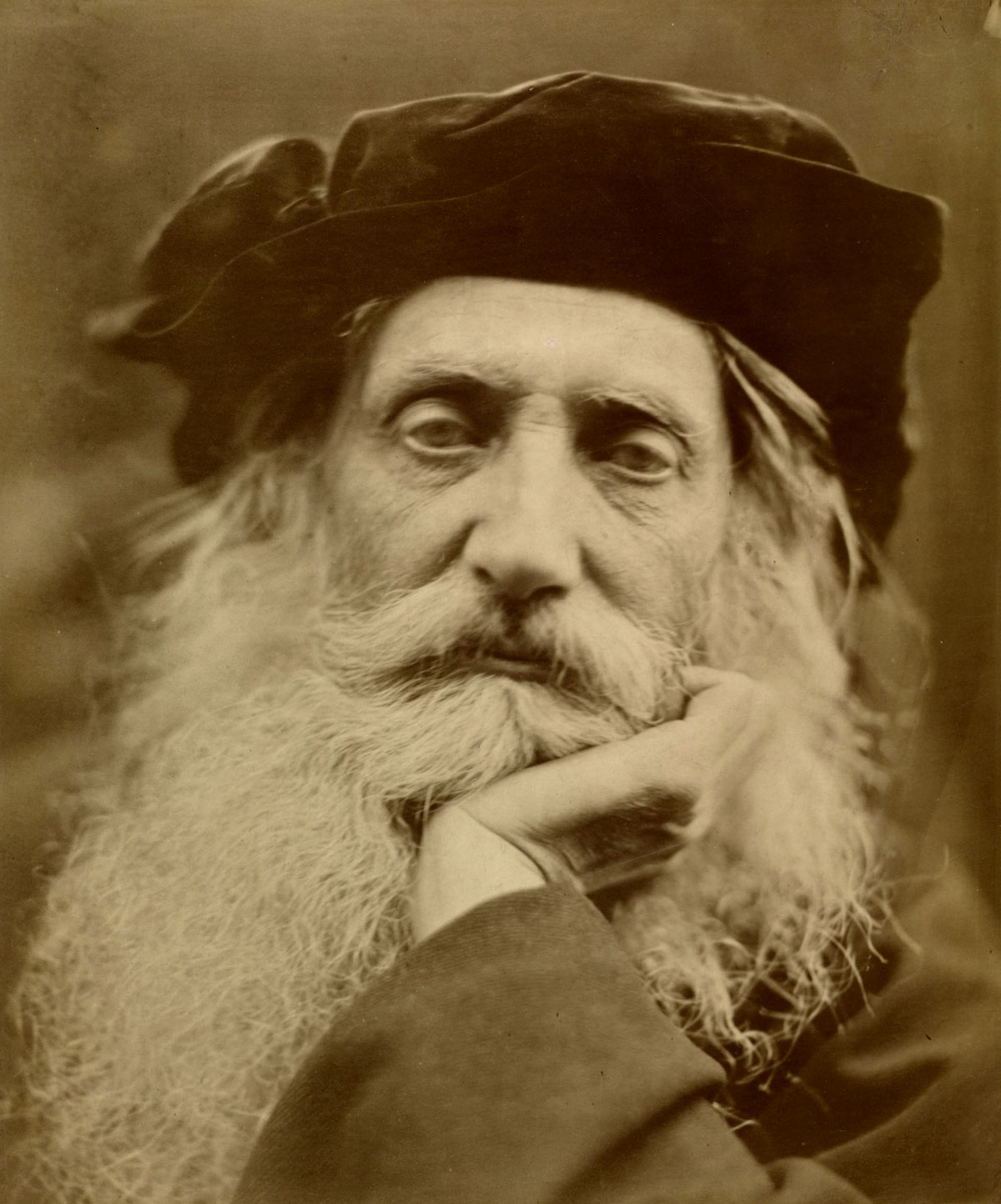
 

Julia Margaret Cameron (British born India, 1815-1879) 'Henry Taylor' October 10, 1867


Julia Margaret Cameron (British born India, 1815-1879)
Henry Taylor
October 10, 1867
Albumen print
Moderna Museet
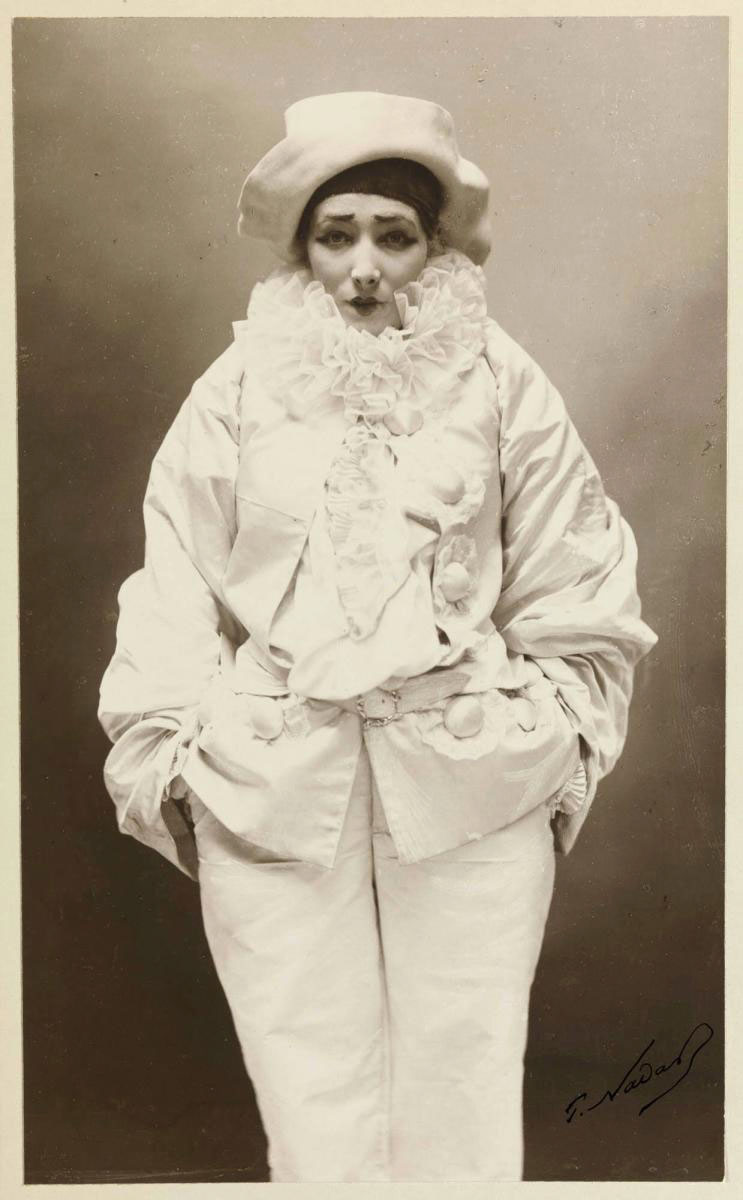
 

G Félix T Nadar (France, 1820-1910) and Paul Nadar (France, 1856-1939) 'Sarah Bernhardt in Pierrot, Murder of His Wife' 1883/1938


G Félix T Nadar (France, 1820-1910) and Paul Nadar (France, 1856-1939)
Sarah Bernhardt in Pierrot, Murder of His Wife (Sarah Bernhardt dans Pierrot, assassin de sa femme)
1883/1938
Gelatin silver photograph from wet collodion negative mounted on cardboard
29.8 × 18.1cm
Moderna Museet
Purchase 1965


Nils Strindberg (Swedish, 1872-1897) '14/7 1897. The Eagle Balloon after landing' 1897/1930


Nils Strindberg (Swedish, 1872-1897)
Örnen efter landningen. Ur serien Ingenjör Andrées luftfärd, 14/7 1897
The Eagle after landing. From the series Engineer Andrée’s flight, 14/7 1897 
1897/1930
Moderna Museet
Gelatin silver print


Nils Strindberg (4 September 1872 – October 1897) was a Swedish photographer and scientist. He was one of the three members of S. A. Andrée’s ill-fated Arctic balloon expedition of 1897. …

Strindberg was invited to the Arctic balloon expedition of 1897 to create a photographic aerial record of the arctic. Before perishing on Kvitøya (White Island) with Andrée and Knut Frænkel, Strindberg recorded on film their long-doomed struggle on foot to reach populated areas. When the remains of the expedition were discovered by the Norwegian Bratvaag Expedition in 1930, five exposed rolls of film were found, one of them still in the camera. Docent John Hertzberg of the Royal Institute of Technology in Stockholm managed to save 93 of the theoretically 240 frames. A selection of these photos were published along with the diaries of the expedition as Med Örnen mot Polen (Stockholm: Bonnier (1930); British edition The Andrée diaries (1931); American edition Andrée’s Story (1932). The book credited the three explorers as its authors. In an article from 2004, Tyrone Martinsson published some digitally enhanced versions of Strindberg’s photos of the expedition, while lamenting the lack of care with which the original negatives were stored from 1944.

Text from the Wikipedia website
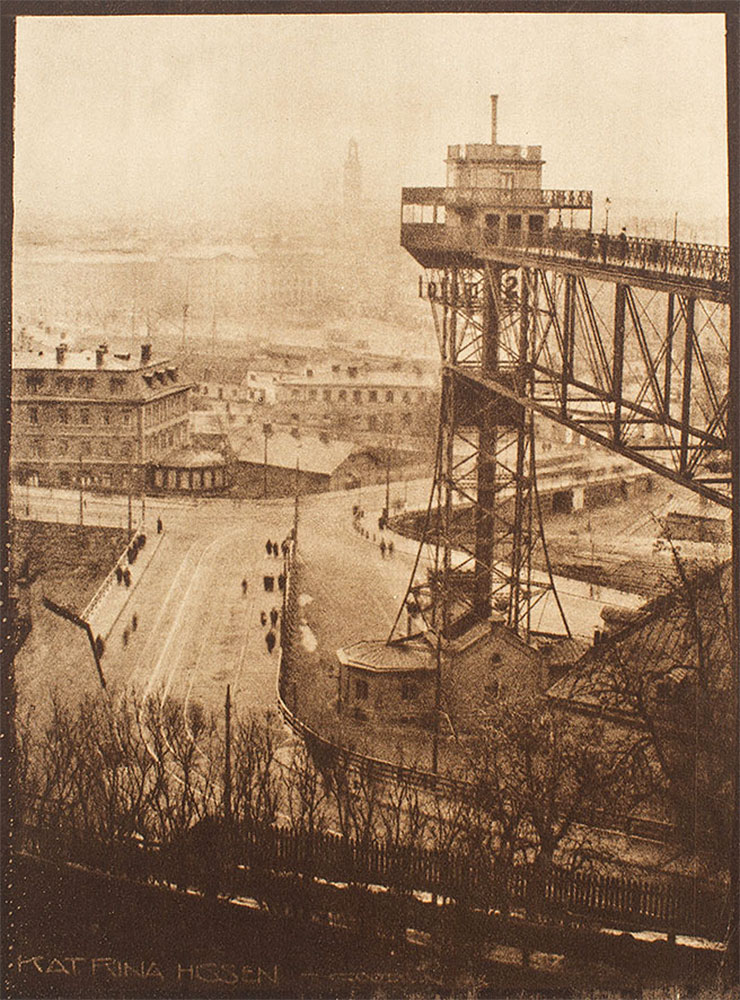
 

Henry B. Goodwin (Swedish, 1878-1971) 'Katarina Lift (Katarinahissen), Slussen, Stockholm, Sweden' 1918


Henry B. Goodwin (Swedish, 1878-1971)
Katarina Lift (Katarinahissen), Slussen, Stockholm, Sweden
1918
Moderna Museet
Public domain


Moderna Museet, Stockholm

Moderna Museet is ten minutes away from Kungsträdgården, and twenty minutes from T-Centralen or Gamla Stan. Walk past Grand Hotel and Nationalmuseum on Blasieholmen, opposite the Royal Palace. After crossing the bridge to Skeppsholmen, continue up the hill. The entrance to Moderna Museet and Arkitekturmuseet is on the left-hand side.

Opening hours:
Tuesday – Sunday 10am – 6pm
Closed Mondays

Moderna Museet website

LIKE ART BLART ON FACEBOOK

Back to top