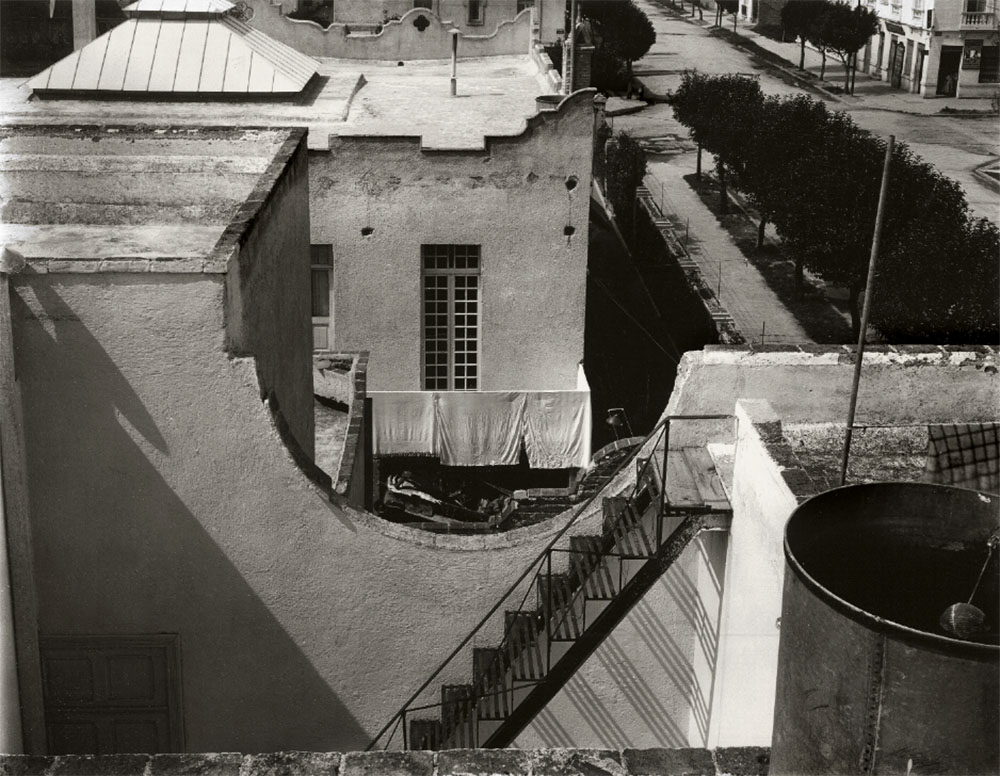
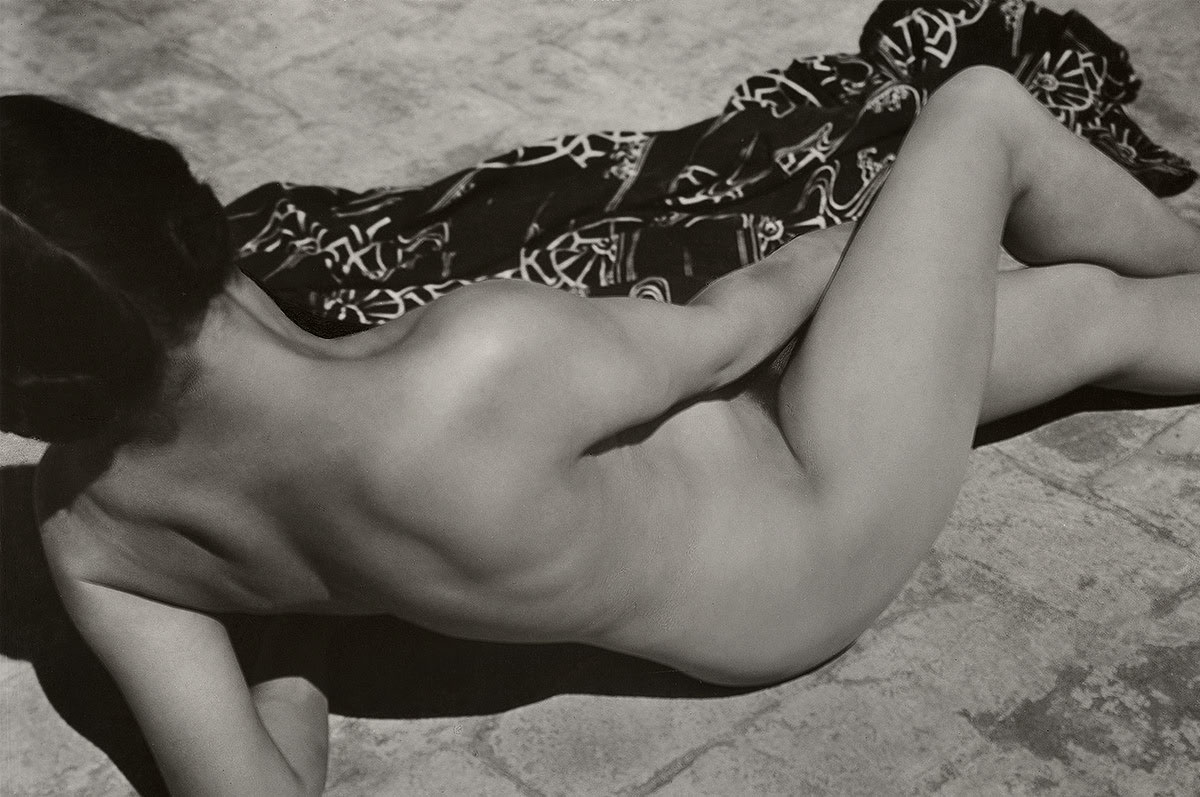
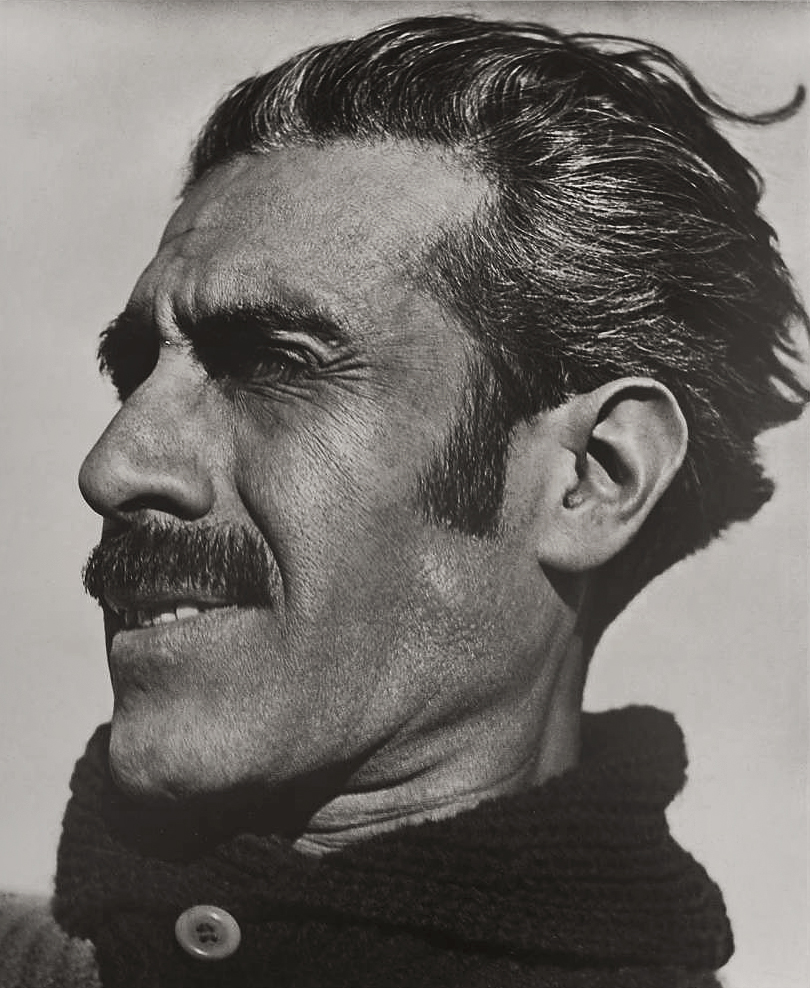
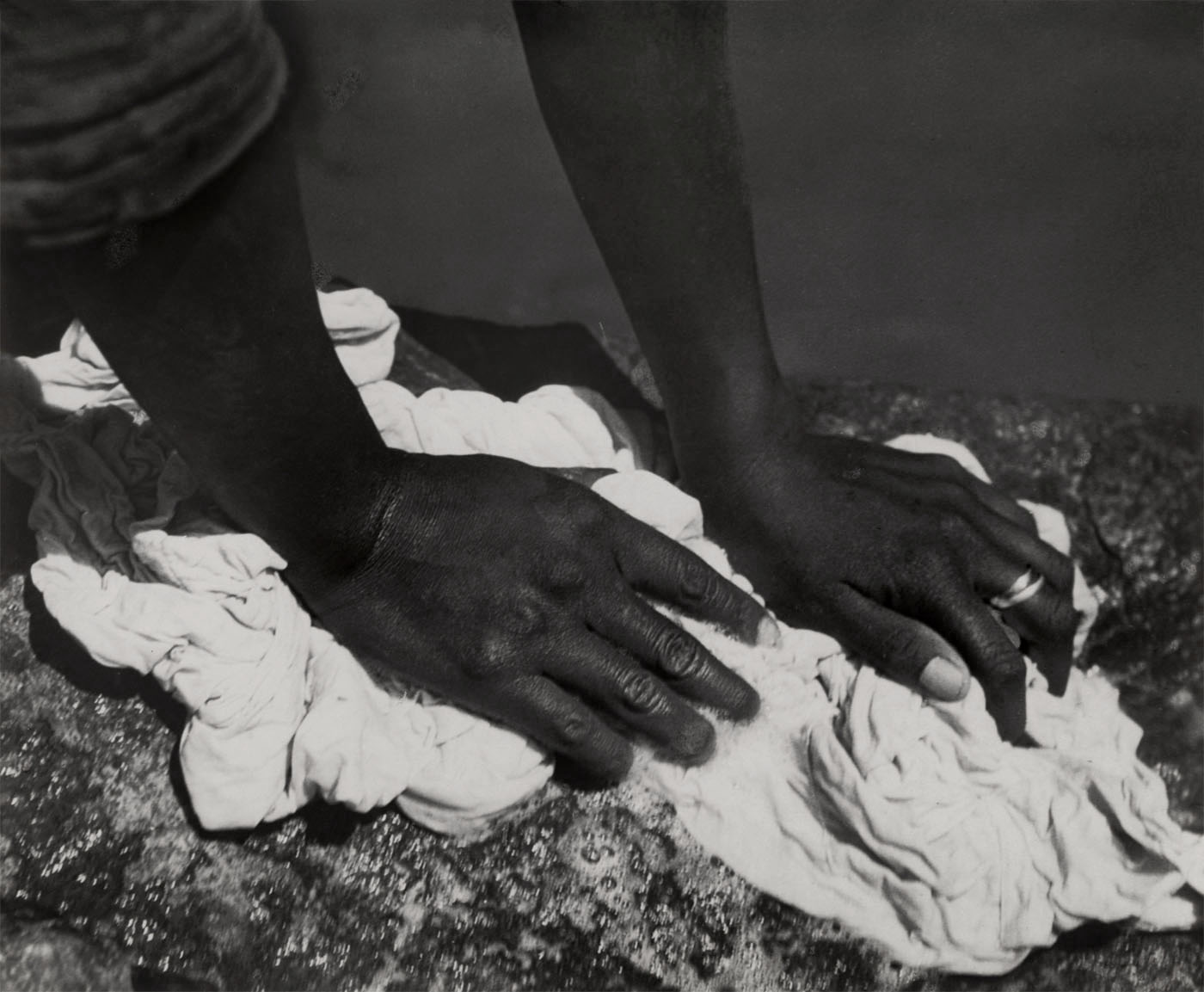
Exhibition: ‘Edward Weston. La matèria de les formes’ at Centro de Fotografía KBr Fundación MAPFRE, Barcelona

Exhibition dates: 12th June – 31st August, 2025

Curator: Sérgio Mah
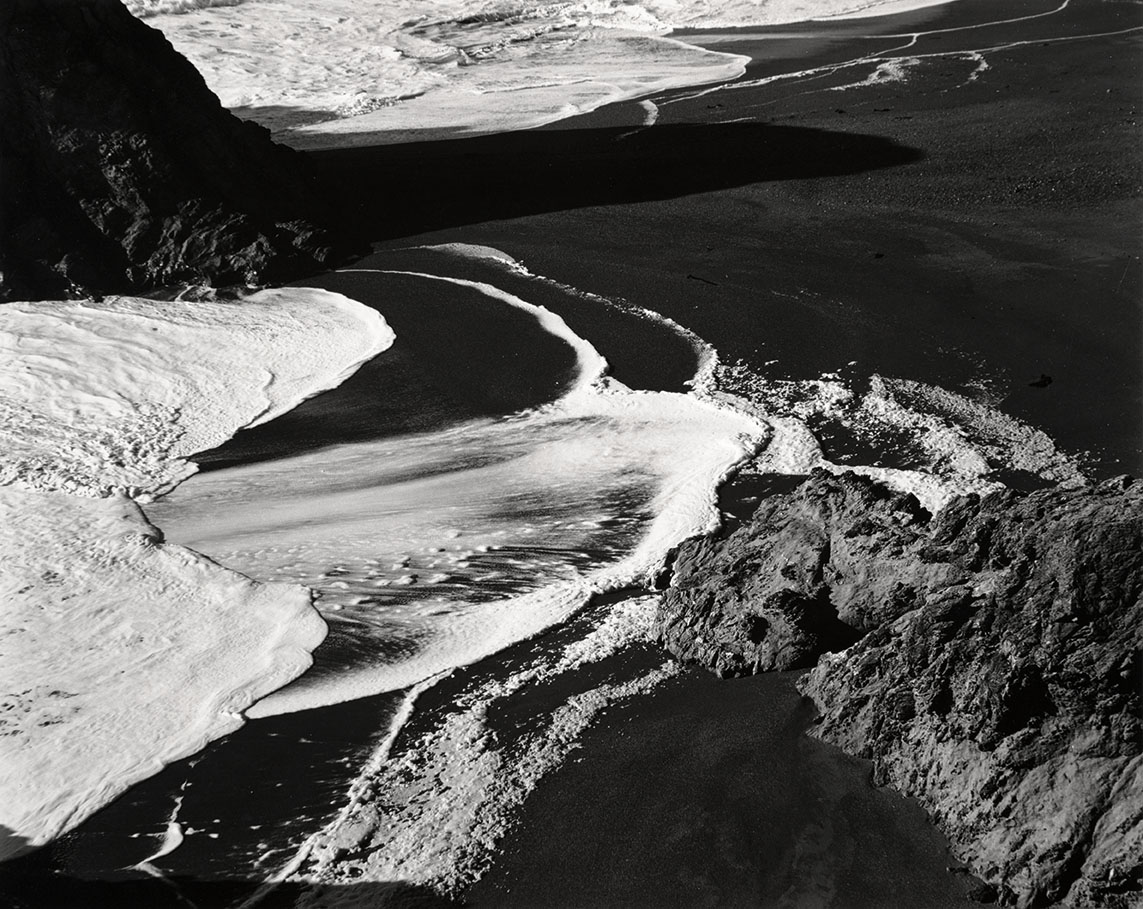
 

Edward Weston (American, 1886-1958)
'Surf, Bodega' 1937


Edward Weston (American, 1886-1958)
Surf, Bodega
1937
19 x 24cm
Gelatin silver print
Center for Creative Photography, The University of Arizona. Edward Weston Archive


Three week’s to the day since my hip replacement operation and I’m still in pain. I know, slowly slowly but it’s very frustrating…

Thus, I just have two words for you about this exhibition –

GREAT WESTERN!


Dr Marcus Bunyan


Many thankx to the Fundación MAPFRE for allowing me to publish the photographs in the posting. Please click on the photographs for a larger version of the image.


“Not I, nor anyone else can travel that road for you,
You must travel it for yourself.

It is not far, It is within reach,
Perhaps you have been on it since you were born, and did not know,
Perhaps it is every where on water and land.”


Walt Whitman. Part of Song of Myself from Leaves of Grass. 1855


I never try to limit myself by theories, I do not question right or wrong approach when I am interested or amazed – impelled to work. I do not fear logic, I dare to be irrational, or really never consider whether I am or not. This keeps me fluid, open to fresh impulse, free from formulae; and precisely because I have no formulae – the public who know my work is often surprised, the critics, who all, or most of them, have their pet formulae are disturbed. And my friends distressed.

I would say to any artist – don’t be repressed in your work – dare to experiment – Consider any urge – if in a new direction all the better – as a gift from the Gods not to be lightly denied by convention or a priori concept. Our time is becoming more and more bound by logic, absolute rationalism; this is a straitjacket I – it is the boredom and narrowness which rises directly from mediocre mass thinking.

The great scientist dares to differ from accepted ‘facts’ -think irrationally – let the artist do likewise.


Edward Weston 28 January, 1932 from The Daybooks of Edward Weston. Vol. ll Horizon Press, New York 1966
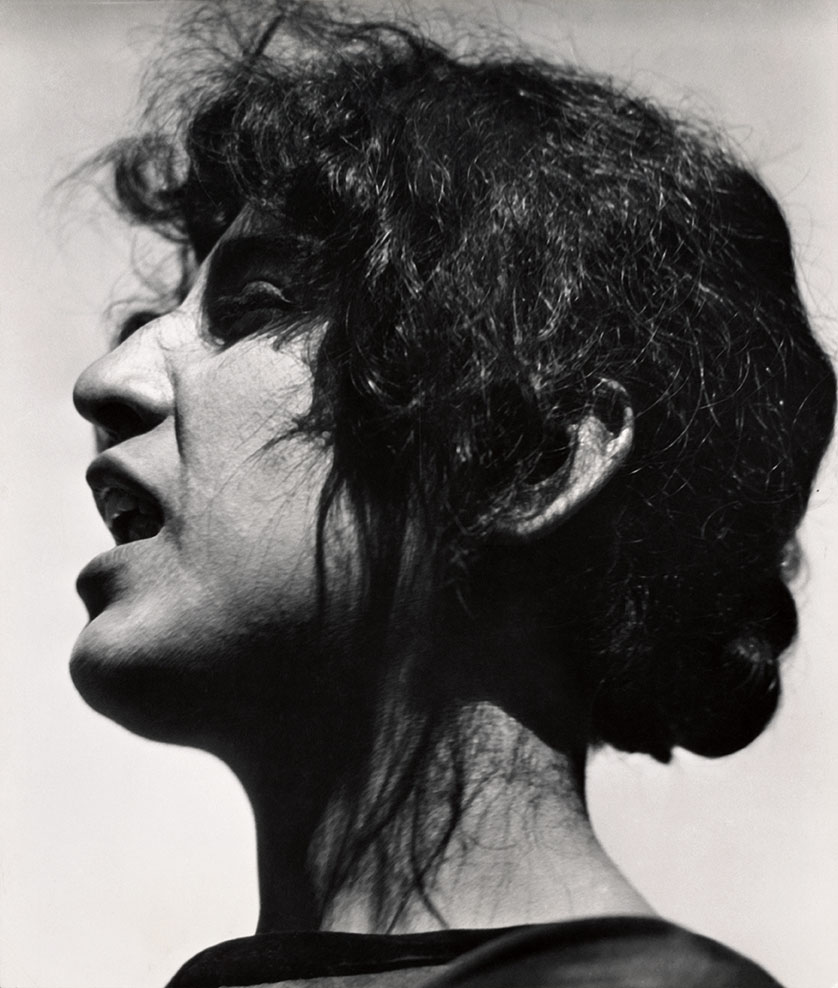


Edward Weston (American, 1886-1958)
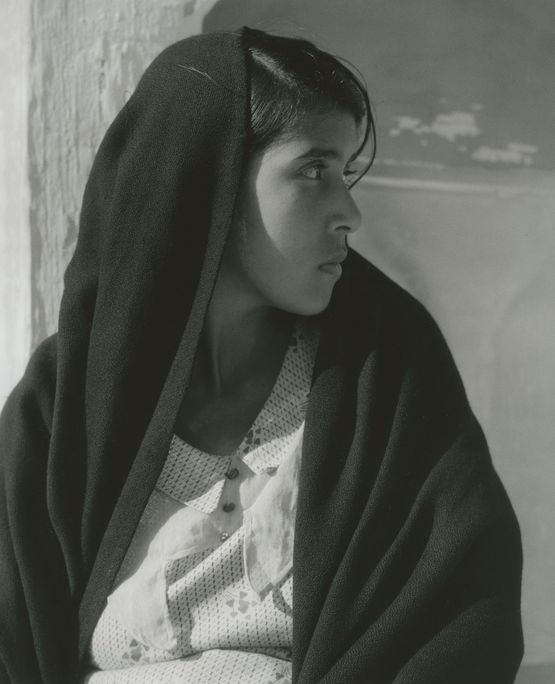
'Guadalupe Marín de Rivera' 1924


Edward Weston (American, 1886-1958)
Guadalupe Marín de Rivera
1924
20.8 x 17.9cm
Gelatin silver print
Center for Creative Photography, The University of Arizona. Gift of Ansel and Virginia Adams


Strongly linked to the landscape and to North American cultural history, Edward Weston’s work, in its extreme simplicity and originality, allows us to appreciate a unique perspective on the process of consolidation of photography as an artistic medium and its relevant role in the context of modernity in the visual arts. The exhibition Edward Weston. La matèria de les formes (Edward Weston. The Matter of Forms) is conceived as an anthology that covers the different phases of the artist’s photographic production.

A pioneer in the use of a modern photographic style, his use of the large-format camera gives rise to richly detailed black and white images of extraordinary clarity. His technical expertise and his affection for nature and form led to the development of a body of work in which iconic images of still lifes, nudes, landscapes and portraits stand out. His images are essential for understanding the new aesthetic and new American lifestyle that emerged in the United States between the wars.

The exhibition, curated by Sergio Mah, consists of around two hundred photographs grouped into seven sections. The exhibition tour is completed with numerous documentary material and is conceived from a European perspective on the legacy of modern American photography. An aesthetic and conceptual counterpoint to the photographic modernism in Europe that emerged with the first avant-garde of the 20th century.

The emancipation of photography

Edward Weston was one of the pioneers, along with Alfred Stieglitz and Paul Strand, in defending the emancipation of photography from other artistic disciplines. In this sense, his work contributed decisively to demonstrating, in this early period of photography, the aesthetic and perceptual dimension of the medium, the capacity to express aesthetic qualities in the same way as painting or sculpture.

Figuration and abstraction

The technical mastery of the photographic medium leads Weston to a formalism in which framing becomes one of the most relevant elements of his work. Weston eliminates any anecdotal aspect and focuses on the motif that interests him, and does so with such realism and exaltation of the two-dimensional nature of photography, which often results in an abstract image. In this way, the artist shows that figuration and abstraction do not exempt one from the other, but are perfectly compatible.

Exhibition organised with the support of the Center for Creative Photography at the University of Arizona, Tucson.

Text from the Fundación MAPFRE website translated from the Spanish by Google Translate
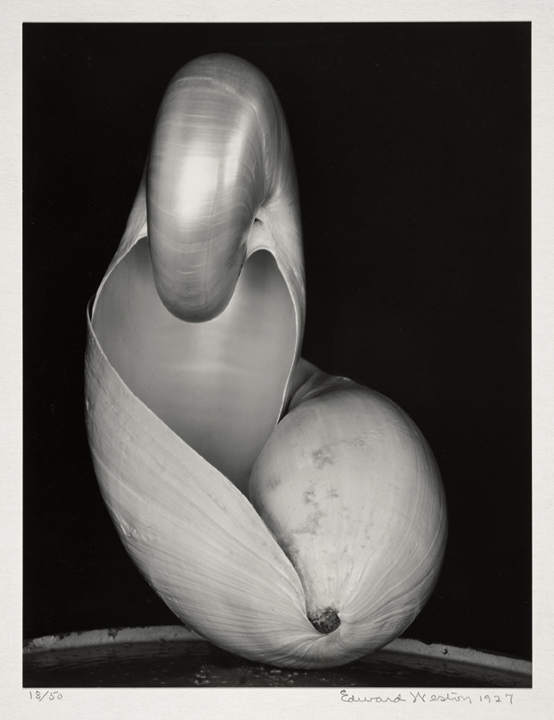
 

Edward Weston (American, 1886-1958) 'Two Shells' 1927, print about 1933


Edward Weston (American, 1886-1958)
Two Shells
1927, print about 1933
24.1 x 18.4cm
Gelatin silver print
The J. Paul Getty Museum, Los Angeles


Edward Weston (American, 1886-1958) 'Pepper No. 30' 1930


Edward Weston (American, 1886-1958)
Pepper No. 30
1930
22.8 x 17.7cm
Gelatin silver print
Courtesy by Trockmorton Fine Art


Highlights

Fundación MAPFRE presents the exhibition Edward Weston. The Matter of Forms, dedicated to the five decades of the career of this North American artist, one of the most important figures in modern photography. In addition, through the work of the artist himself, the exhibition aims to offer a pedagogical reflection on the history of the medium and its relevance as an aesthetic and perceptive discipline, apart from the more traditional plastic arts; specifically, painting.

Key points

The emancipation of photography

Edward Weston was one of the pioneers, along with Alfred Stieglitz and Paul Strand, in defending the emancipation of photography from other artistic disciplines. In this sense, his work is essential to understanding the aesthetic and perceptive capacity of the medium in its beginnings. This capacity allows photography to express aesthetic qualities such as beauty, pain or ugliness at the same level as painting or sculpture.

Figuration and abstraction

The technical mastery of the photographic medium leads Weston to a formalism where framing becomes one of the most relevant elements of his work. In this sense, he eliminates any anecdotal aspect and focuses on the motif that interests him, and he does so with such realism and with such exaltation of the two-dimensional character of photography that he ends up obtaining an abstract image as a result. In this way, the artist shows that figuration and abstraction do not exclude each other, but are perfectly compatible.

Pepper No. 30

Edward Weston took this photograph, one of the most representative of his entire career, at the beginning of August 1930. It was not the first time he had photographed a vegetable, nor a pepper. The artist himself spoke about this image: “It is a fully satisfactory classic: a pepper, but more than a pepper. It is abstract, in the sense that it exists completely outside the subject. It has no psychological attributes, it does not awaken human emotions: this new pepper takes us beyond the world we know in the conscious mind.” In the light of this photograph and the artist’s words, the innovative character of his work can be distinguished, which transcended not only modern American photography, but also European photography.

The exhibition

Weston’s work, strongly linked to the landscape and to North American cultural history, in its extreme simplicity and originality, reveals a unique perspective on the process of consolidation of photography as an artistic medium and its relevant role in the context of modernity in the visual arts. The exhibition Edward Weston. The Matter of Forms is conceived as an anthology that covers the different phases of the artist’s photographic production. From his initial interest in Pictorialist approaches to his consolidation as one of the central figures in the affirmation of the poetic and speculative value of direct photography. A pioneer in the use of a modern photographic style, his work is characterised by the use of a large-format camera, which allows him to offer richly detailed black and white images of extraordinary clarity. His mastery of technique, together with his love of nature and form, led him to develop a photographic production in which iconic images of still lifes, nudes, landscapes and portraits stand out. As a co-founder of the photography collective Group f/64, his images are key to understanding the new North American aesthetic and lifestyle that emerged in the United States between the wars.

The exhibition, grouped into seven sections and curated by Sérgio Mah, consists of around 200 photographs and a large amount of documentary material. The exhibition is conceived as a European look at the legacy of modern North American photography. An aesthetic and conceptual counterpoint to the modern photography that emerged in Europe with the first avant-garde of the 20th century.
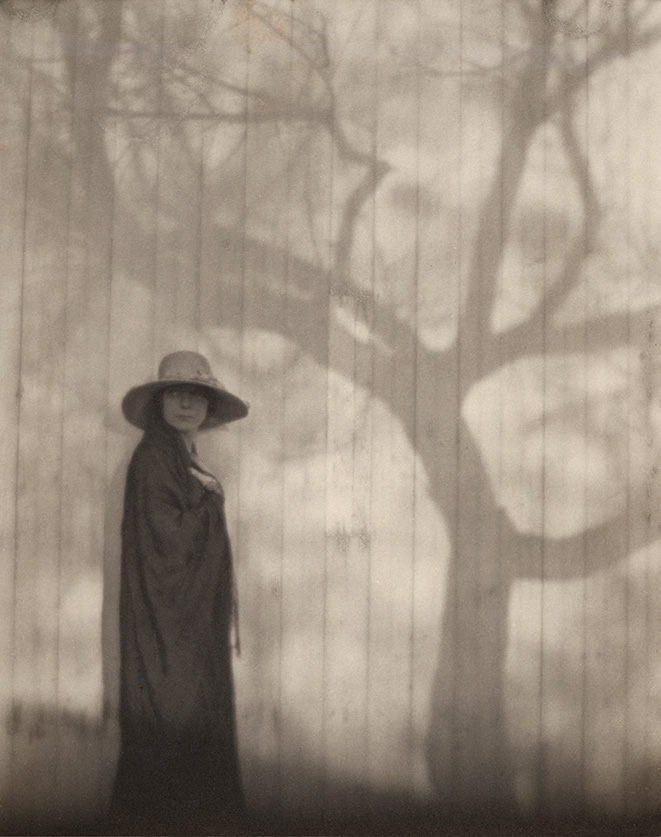
 

Edward Weston (American, 1886-1958) 'Prologue to a Sad Spring' 1920


Edward Weston (American, 1886-1958)
Prologue to a Sad Spring
1920
23.8 x 18.7cm
Platinum print
Center for Creative Photography, The University of Arizona. Johan Hagemeyer Collection/Purchase


1 /

Edward Weston began photography very early, thanks to a Kodak Bulls-Eye No. 2 camera that his father gave him when he was just sixteen. Although he was practically self-taught, in 1911 he opened his first photographic establishment in a suburb of Los Angeles. His early works reveal the influence of the Pictorialist atmosphere of the time: impressionistic views and pastoral subjects with soft or slightly blurred focus, scenography and expressive poses.
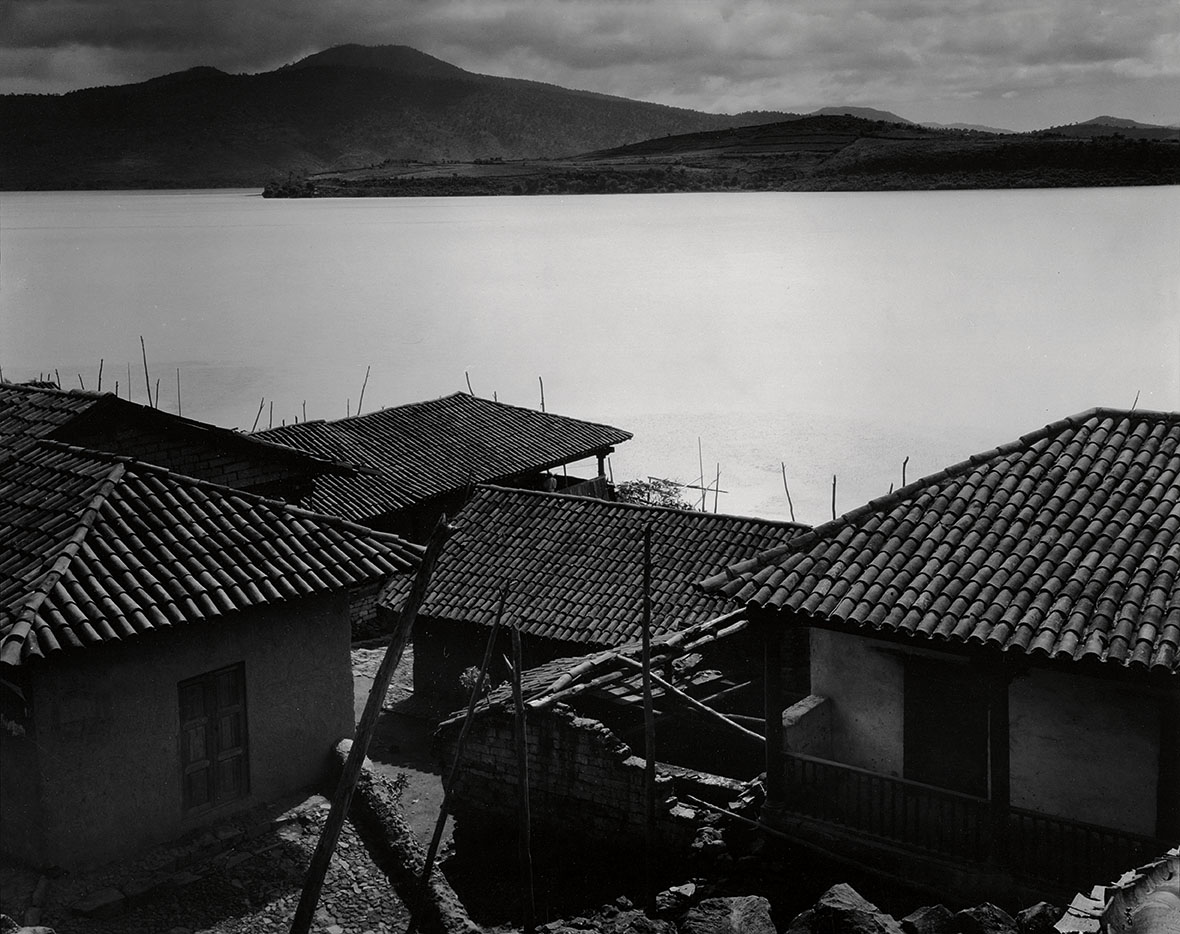
 

Edward Weston (American, 1886-1958) 'Janitzio, Mexico' 1926


Edward Weston (American, 1886-1958)
Janitzio, Mexico
1926
20.4 x 25.2cm
Gelatin silver print
Center for Creative Photography, The University of Arizona. Edward Weston Archive/Gift of the Heirs of Edward Weston


2 /

Weston’s dissatisfaction with this artistic approach to photography, which sought to assimilate itself to painting, coincided with the appearance of other photographers with similar ideas, such as Alfred Stieglitz and Paul Strand, whom he met in New York in 1922. In 1923 he set sail for Mexico accompanied by one of his sons and the photographer Tina Modotti. There he found a true renaissance of the arts and culture, and he came into contact with artists such as Diego Rivera, Frida Kahlo and Rafael Sala. He expanded his visual horizon and tackled new themes, photographing objects, figures and motifs far from their original context, turning them into suggestive and extraordinary elements. It was then that he realised that true photographic art is intuitive and immediate, that the elimination of everything that is accessory constitutes the essence of his creative talent.
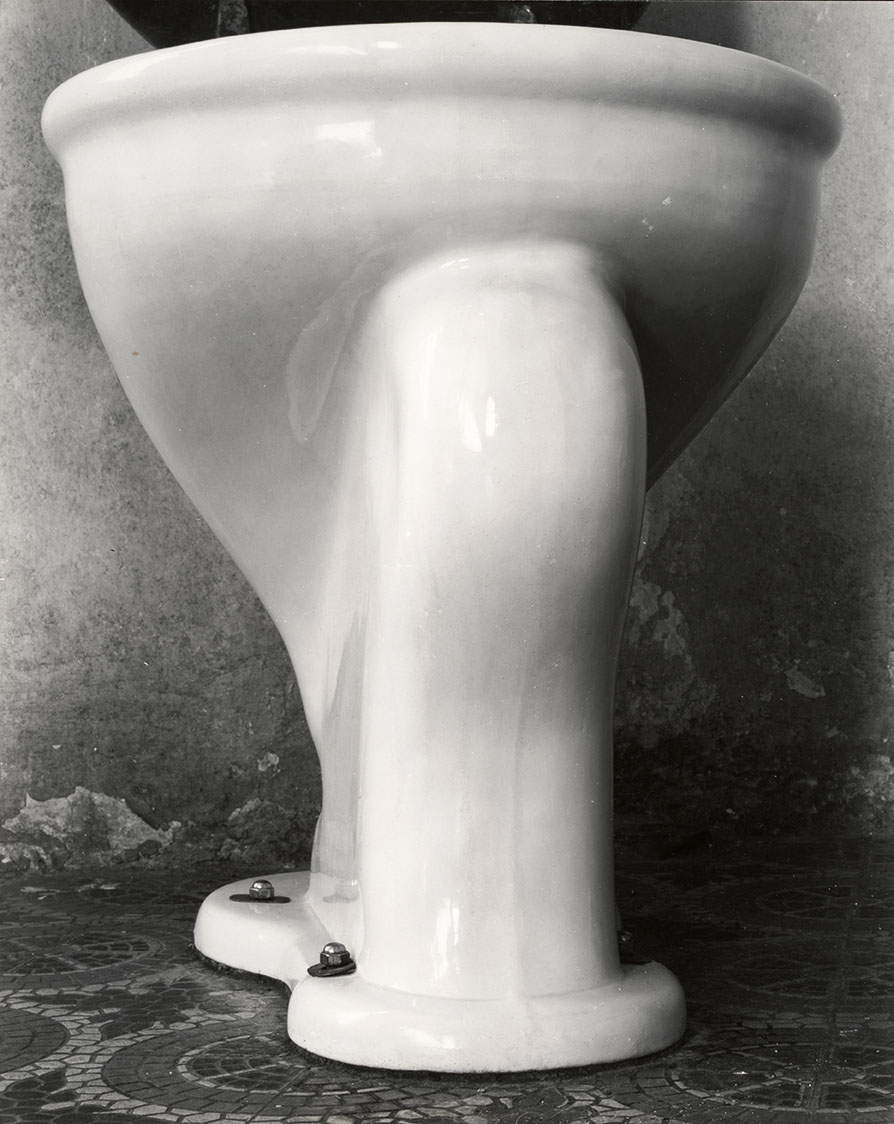
 

Edward Weston (American, 1886-1958) 'Excusado, Mexico' October 1925


Edward Weston (American, 1886-1958)
Excusado, Mexico
October 1925
24.1 x 19.1cm
Gelatin silver print
Center for Creative Photography, The University of Arizona. Edward Weston Archive


3 /

From 1927, influenced by the humanism of Walt Whitman and his work Leaves of Grass, he felt attracted, in the words of Sérgio Mah, by “the extraordinariness of banality”. Fruits, shells and vegetables became the protagonists of his works, and he made one of his most famous photographs: a toilet, an unusual object as an artistic subject, with the title Excused. In these images, Weston accentuated the two-dimensionality of the motifs, since it was one of the characteristics of photography that interested him. He looked for details as a way of fragmenting, isolating and approximating the photographed object, eliminating the sense of depth, a technique particularly notable in still lifes with dark backgrounds, as is the case with his photographs of peppers.
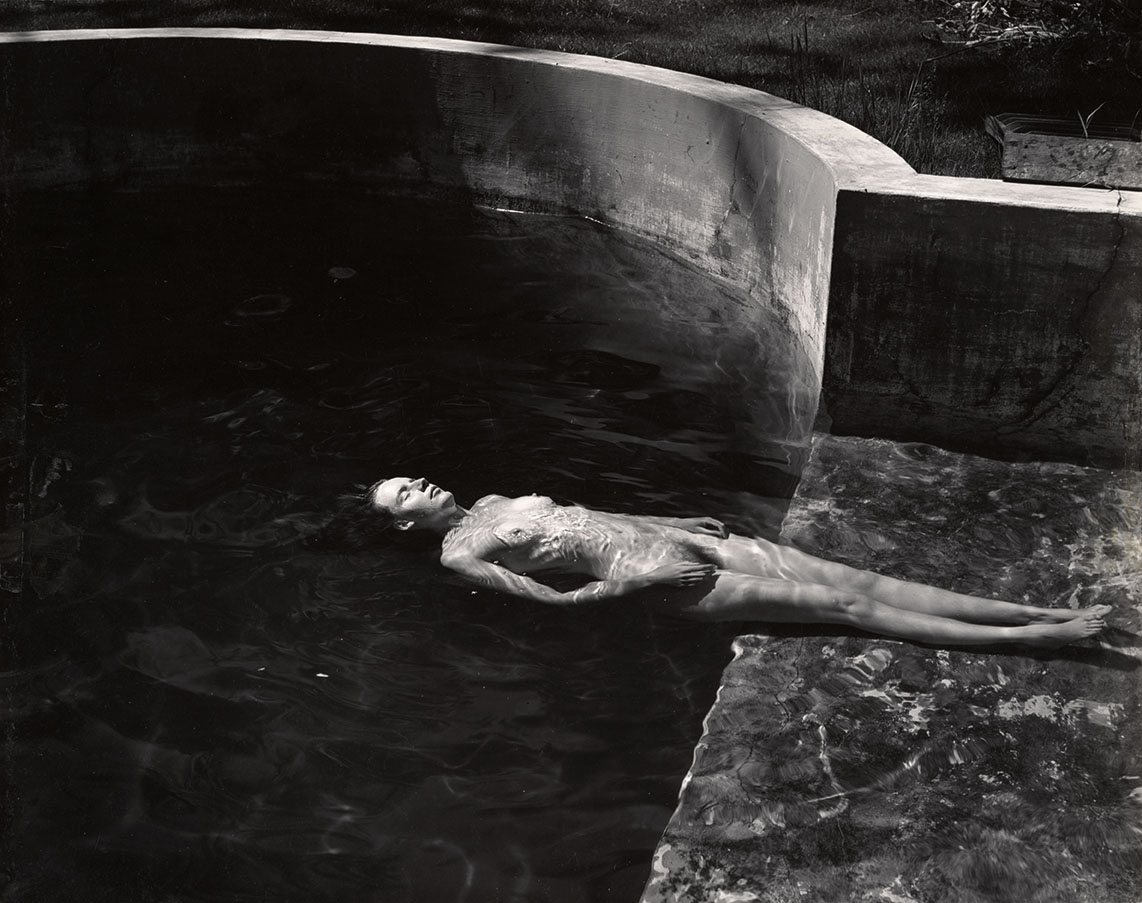
 

Edward Weston (American, 1886-1958) 'Floating Nude' 1939


Edward Weston (American, 1886-1958)
Floating Nude
1939
19.3 x 24.2cm
Gelatin silver print
Center for Creative Photography, The University of Arizona. Edward Weston Archive


4 /

From 1926, after leaving Mexico, Weston photographed several sets of nudes. In these nudes, the photographer’s gaze varies depending on the model. In some cases, the frame is wide and even shows the face, while in others the gaze is more segmented and focuses on parts of the body as a way of cutting out and accentuating the shapes within the frame. It must be recognized that eroticism is a quality present in some of these photographs. However, it is incorrect to conclude that this type of gaze prevails in most of the nudes he photographed. Above all, Weston observes the body as a formal reality. The beauty and sensuality that these bodies suggest is reflected in the play of lines, shadows and contours they offer.
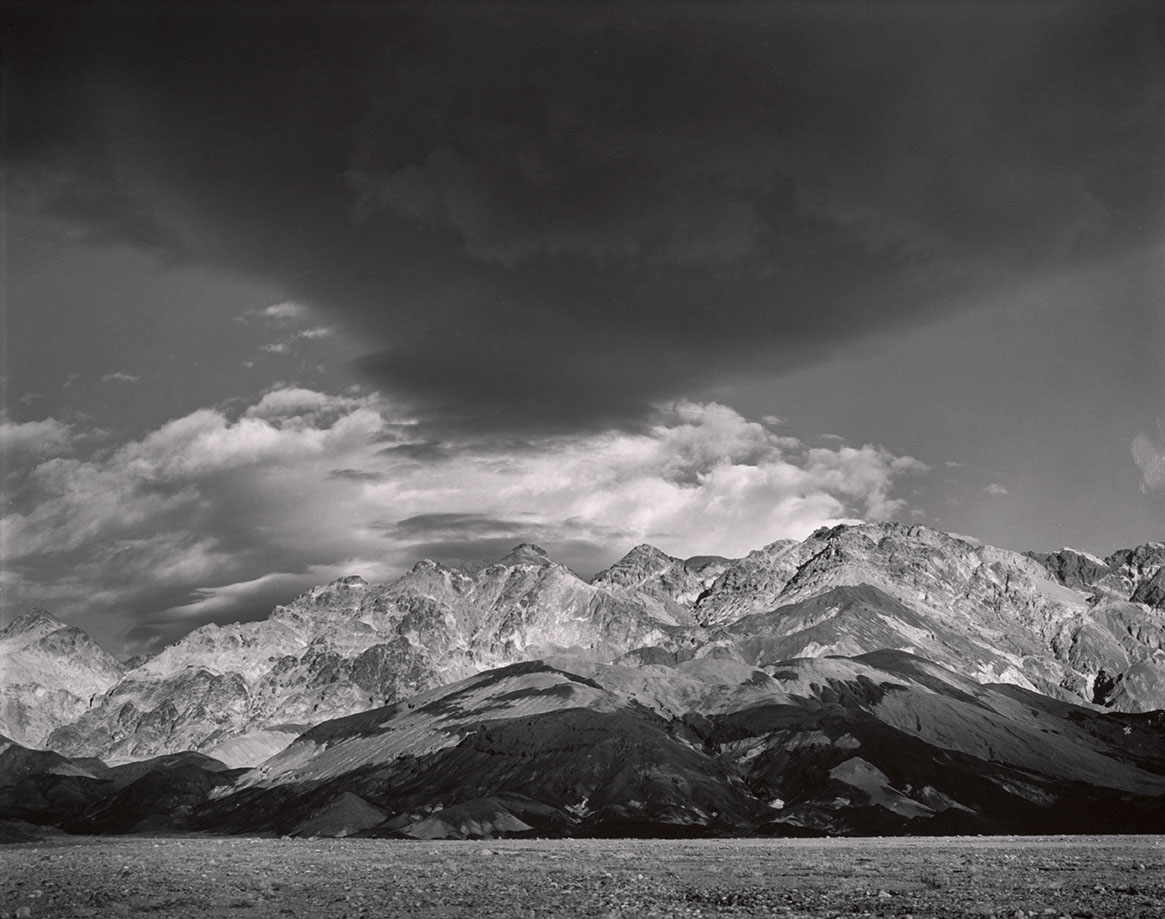
 

Edward Weston (American, 1886-1958) 'Clouds, Death Valley'
1939


Edward Weston (American, 1886-1958)
Clouds, Death Valley
1939
20.4 x 25.2cm
Gelatin silver print
Center for Creative Photography, The University of Arizona. Edward Weston Archive


5 /

From the late 1920s and into the following decades, landscape became a central element in Weston’s work. The artist photographed in the desert near Palm Springs, California, as well as in New Mexico, Arizona, and other Californian areas near his home in Carmel. In these works, the horizon and the depth of the background become a structural part of his works: the panoramic shots highlight the sublime character of the landscape. It was also during this period that Weston began to be interested in meteorological phenomena such as rain, the configuration of clouds, and the aridity of the territory.
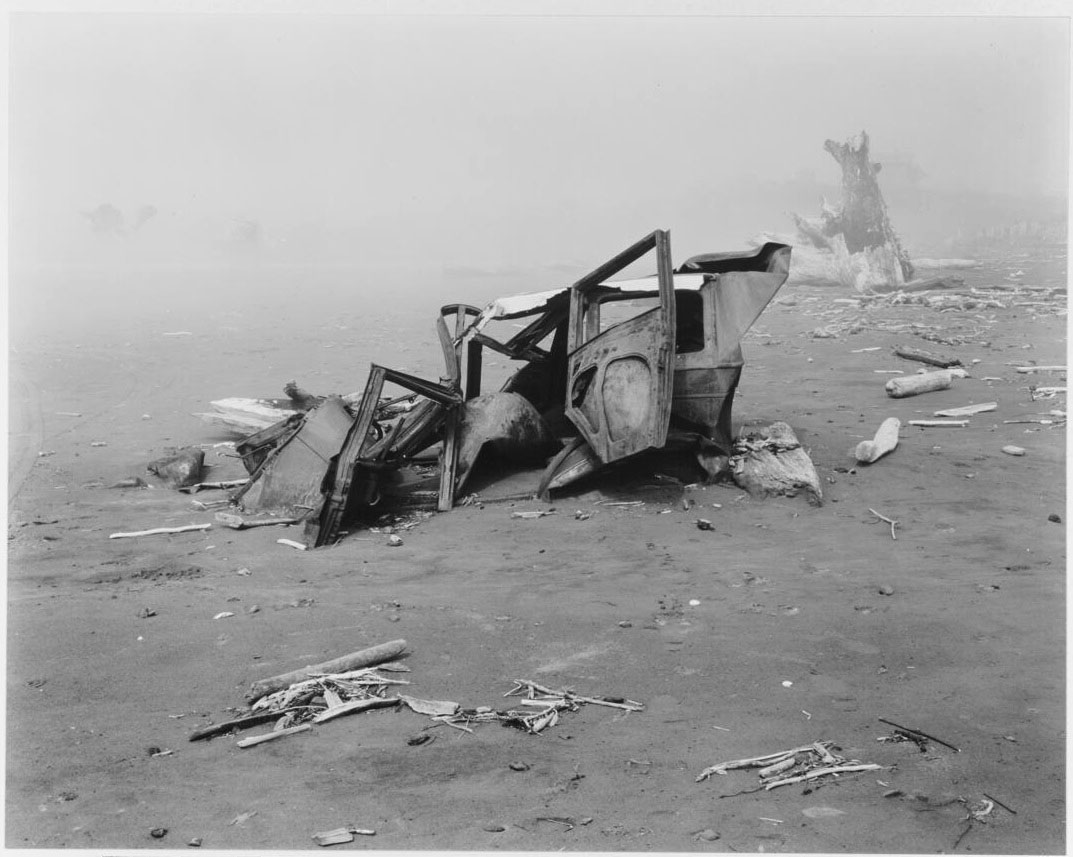
 

Edward Weston (American, 1886-1958) 'Crescent Beach, North Coast' 1939


Edward Weston (American, 1886-1958)
Crescent Beach, North Coast
1939
24.3 x 19.2cm
Silver print mounted on board
The Huntington Library, Art Museum, and Botanical Gardens


6 /

Over the years, Weston’s work increasingly acquired a “dense and melancholic” patina, an aspect that is accentuated by the tones that the images acquire. This characteristic is particularly evident in the photographs he took in 1941 to illustrate Leaves of Grass, a project for which he traveled throughout much of the United States for nearly two years. The images he captured in cemeteries in Louisiana and Georgia stand out, as well as those of abandoned, destroyed and burned buildings where the interest in formal aspects predominates and in which a critical and disillusioned commentary on reality and American society can already be seen.
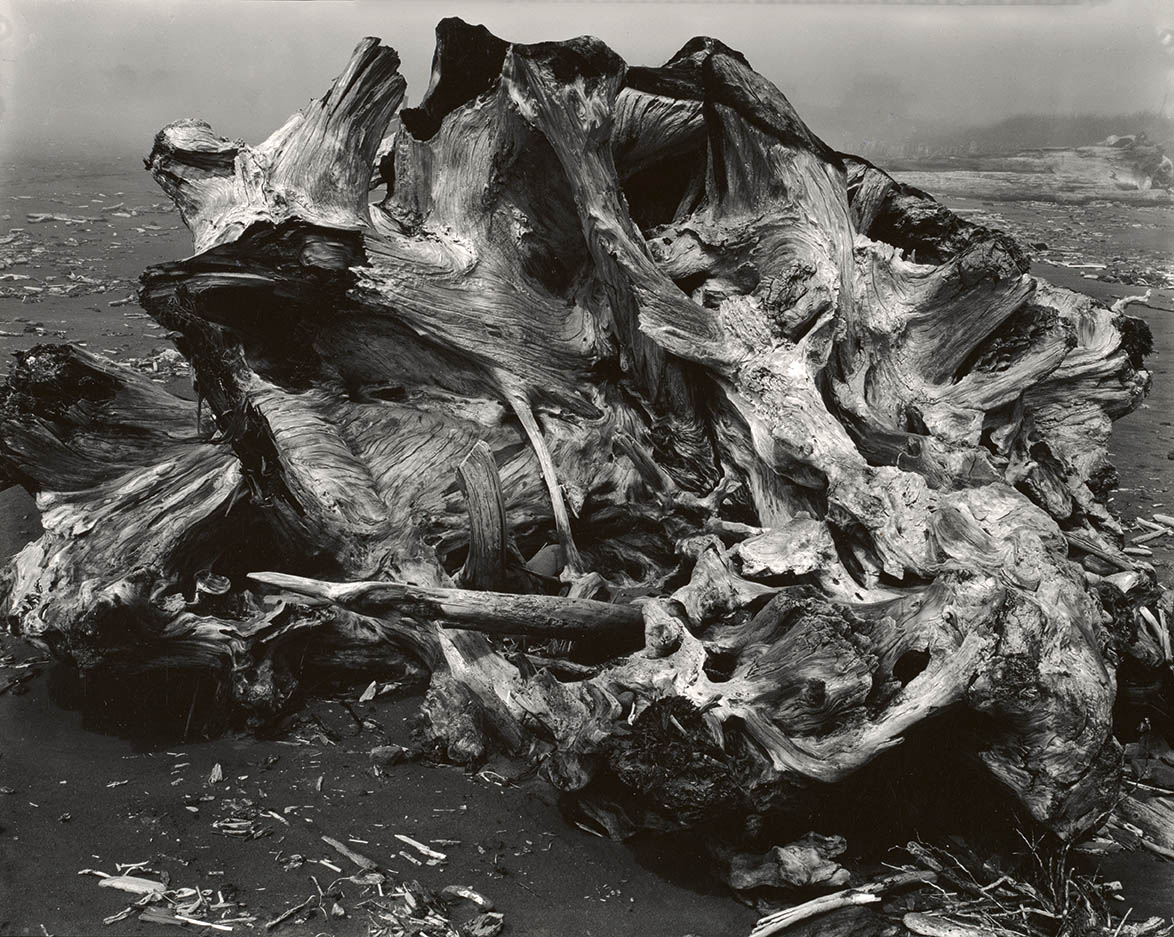
 

Edward Weston (American, 1886-1958) 'Drift Stump, Crescent Beach' 1937


Edward Weston (American, 1886-1958)
Drift Stump, Crescent Beach
1937
20.3 x 25.2cm
Gelatin silver print
Center for Creative Photography, The University of Arizona. Edward Weston Archive


7 /

In the vicinity of Point Lobos, California, was the log cabin built by his son Neil on Wildcat Hill, where Weston moved in 1938. In this area of ​​California, the artist found the wild nature that he had sought in distant places. His images from this period denote less compositional and formal rigidity and show the cycles of nature in the territory, the wild beauty, the trees, stones and rocky landscapes that seem to arise and remain in a time that is stopped. These images express a certain melancholy and solitude, while allowing the viewer to rediscover nature in all its splendour.


Edward Weston (American, 1886-1958) 'Dunes, Death Valley' 1938


Edward Weston (American, 1886-1958)
Dunes, Death Valley
1938
20.4 x 25.1cm
Gelatin silver print
Center for Creative Photography, The University of Arizona. Edward Weston Archive


Catalogue

The catalogue accompanying this exhibition reproduces all the photographs on display. In addition, it includes essays by Sérgio Mah, its curator, by Rebecca Senf, who discusses the artist’s relationship with Mexico, and by Jason Weems, who focuses on Weston’s landscapes and vegetable photographs. It also includes a series of reflections by the artist himself on photography taken from his diaries.

The publication of the catalogue, published in Spanish and Catalan by Fundación MAPFRE, also has a co-edition in Italian published by Dario Cimorelli Editore.

Text from Fundación MAPFRE translated from the Spanish by Google Translate
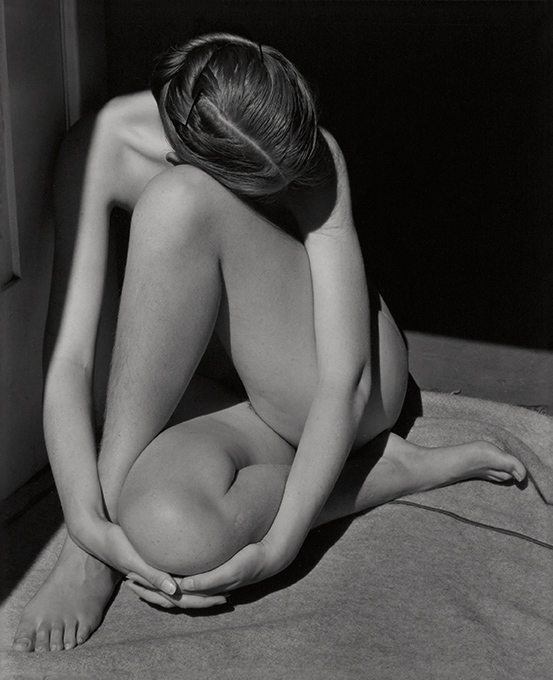
 

Edward Weston (American, 1886-1958) 'Nude' 1936


Edward Weston (American, 1886-1958)
Nude
1936
23.4 x 19.1cm
Gelatin silver print
Center for Creative Photography, The University of Arizona. Gift of the Estate of A.Richard Diebold, Jr.


Author of a vast and diverse body of work spanning five and a half decades, Edward Weston (1886-1958) is one of the great figures in the history of modern photography, partly because his work allows us to reflect on the distinctive qualities of photography as a technical, aesthetic and perceptual category.

His first creative experiments reveal a momentary adherence to the pictorialist tendencies of the time, but he would later stand out as one of the protagonists of a new generation of American photographers who sought to refocus the artistic axis of photography based on its exceptional capacity to represent the most diverse subjects in the world with rigor, clarity and sobriety.

With their extreme simplicity and originality, the exceptional quality of Weston’s images also lies in the way in which he was able to rethink and articulate the extraordinary realistic and objective capacity of photography with its aesthetic, poetic and phenomenological potential, contributing to expanding the horizon of the subjective experience of the image. In this way, Weston enunciated the unique role of photography in the panorama of the visual arts of his time.

Weston was an immensely prolific photographer and his work brings together a whole series of photographic themes, types and genres: portraits, nudes, still lifes, natural and urban landscapes, object photography, architecture… This anthological exhibition aims to cover the entirety of Weston’s photographic career, which began at the beginning of the 20th century and was uninterrupted until the end of the 1940s. The selection of works aims to go well beyond the period in which Weston took most of the images that gave him wide critical and institutional recognition. The truth is that a more complete and heterogeneous approach to his work allows us to summon other layers of aesthetic appreciation, broadening the understanding of the depth and articulations that Weston developed in the various fields he explored. Furthermore, it offers the opportunity to point out the aspects and affinities (in the gaze, in the construction of the image or in its peculiar relationship with certain themes) present throughout his career, emphasizing the coherence of his imagery, as well as the nuances and moments of transition that occurred in it.

Sérgio Mah
Curator

Text from Fundación MAPFRE translated from the Spanish by Google Translate
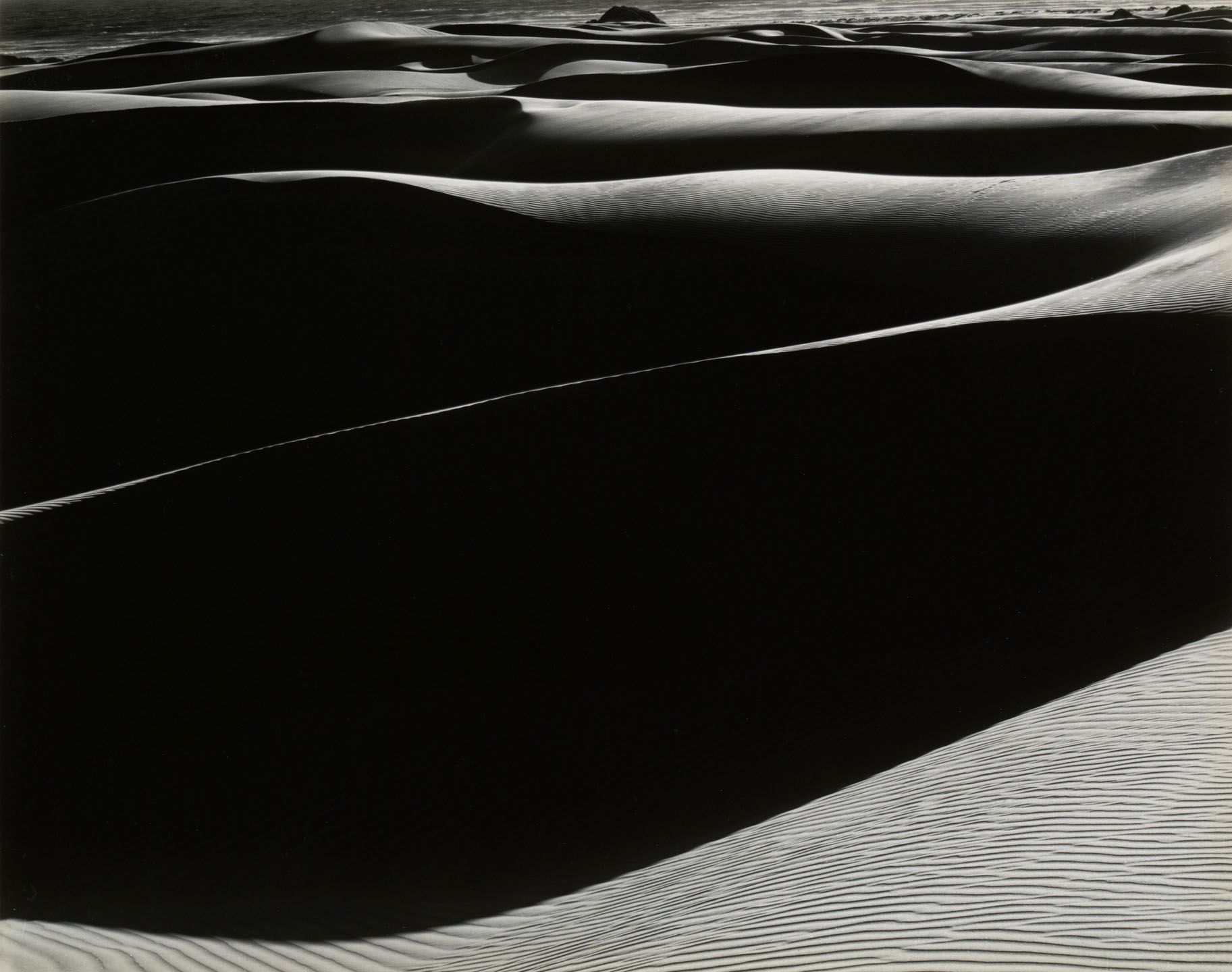
 

Edward Weston (American, 1886-1958) 'Dunes, Oceano' 1936


Edward Weston (American, 1886-1958)
Dunes, Oceano
1936
24.1 x 18.9cm
Silver print mounted on board
The Huntington Library, Art Museum, and Botanical Gardens


From an early age, Edward Weston showed an interest in developing a creative side of photography apart from his commercial work. His early experiments show the influence of painting and reveal his attention and attachment to the pictorialist atmosphere of the time. These photographs include impressionistic views, pastoral subjects with soft or slightly blurred focus, numerous staged portraits that explore expressive poses and combinations with shadows and graphic elements of the environment.

The two periods he spent in Mexico, between 1923 and 1924 and then between 1925 and 1926, were decisive in Edward Weston’s creative career. There he began to explore new themes and genres and his visual horizon expanded significantly. He covered a wide variety of subjects, types of places, figures and things, parts of things, appropriate objects, motifs taken from their original context and repositioned in another interpretative framework. At the same time, his visual style completely sheds any reminiscence of the Pictorialist phase. A photography of great technical, formal and compositional rigour was consolidated. Weston realised that he had the capacity to transform trivial things into suggestive and extraordinary. He was clear that the art of photography lies fundamentally in the moment of making the image, in the way in which the photographer contemplates the subject and makes decisions according to the variables inherent in the photographic device. For him, the process is instinctive. This way of seeing – intuitive, intense and immediate – which seeks to isolate the subject, eliminating the accessory, the unnecessary, anything that could divert or attenuate the intensity of the photographic vision, constitutes the essence of Weston’s creative talent.

From 1927, Weston began a series of still life photographs. In these images he fully reveals the principles and characteristics of his work: the desire to represent the timeless essence of a natural object and, correlatively, to emphasise the duplicative and perceptive capacities of the photographic medium.

The compositions are carefully conceived. In the space of the image, there is a calculated conformity between the dimension of the forms and the format of the image. Here it is important to reiterate the focus on detail as a defining aspect of Weston’s imagery, evident in these still lifes and also in other aspects of his work. Weston understands the vision of detail as a way of fragmenting, isolating and bringing our gaze closer to certain things, accentuating the two-dimensional character of the image, its closed and opaque nature, without depth or horizon, evident above all in still lifes with dark backgrounds, such as photographs of peppers, but also in the various images of plants, trees, rocks and stones that he has been making since the early 1930s.

Weston left Mexico in 1926. In the following years, he made several series of nudes. This is not a new subject. He had already made some important ones before, including one of Anita Brenner’s back and another of her son Neil, whose torso is cut out in an image that evokes ancient Greek statues. In the nudes, the photographer’s gaze varies depending on the model. In some cases, the framing is wide and even shows the face, while in others the gaze is more segmented and focuses on parts of the body as a way of cutting out and accentuating the shapes within the frame. We can recognise that eroticism is a quality present in some of these photographs. It is incorrect, however, to conclude that this gaze prevails in most of his nudes. Weston observes the body mainly as a formal reality. The beauty and sensuality that these bodies suggest are based above all on the play of lines, shadows and contours that they provide.

From the late 1920s, and with greater intensity in the following decades, the landscape genre occupies a central place in Weston’s photographic production. In 1927, the artist takes photos in the Californian desert near Palm Springs. In the following years, he travels through New Mexico, Arizona and other areas of California, such as Oceano, Death Valley, Yosemite, the Mojave Desert and Point Lobos, near his home in Carmel. In these various places, he captures wide views of inhospitable territories in which there are no signs of human presence or intervention. The horizon line and the breadth of the territory become structuring motifs in his work. The impetus for these images is a feeling of admiration for the epic and immeasurable nature of these natural landscapes. Beyond his choice of panoramic shots, the images reveal other aspects and elements of nature, such as meteorological phenomena, rain, cloud formations and variations in sunlight, often in conjunction with their visual effect on the arid land or the vegetation and unique morphology of these territories. It is a vision sensitive to the transformative nature of the landscape, subject to environmental and geological changes.

Gradually, and with greater intensity from the 1940s onwards, Edward Weston’s imagery became denser and more melancholic, not only in terms of the selection of subjects, but also in the tonalities of the images. This tendency is particularly evident in the photographs he takes for an edition of Leaves of Grass, the masterpiece of the poet Walt Whitman. He travels throughout the United States for two years. He revisits many of the recurring themes in his work, but the large number of images he takes of cemeteries in Louisiana and Georgia stand out. These are photographs in which his interest in formal aspects, texture and light predominates. All the subjects are seen as an integral part of a geography that is at once physical, social and mental. On the other hand, there are a lot of images of abandoned, destroyed and burnt buildings, of rubbish and things destined to disappear. We can identify that the themes of finitude and death contribute to an imagery increasingly characterised by loneliness, melancholy, and decadence. For the first time in his work, the images suggest a disillusioned and critical commentary on American reality, on the relationship between nature and culture, continuity and change, alienation and social tension.

In 1938, Weston moved with Charis Wilson to the wooden house built by his son Neil on Wildcat Hill, near Point Lobos, California. The artist spent long periods taking photos in this coastal region. He wandered through areas that he knew well. The images show a nature permeated with cycles, rhythms and forces, a macrocosm where Weston found the material to continue his work. At Point Lobos, Weston encountered a wild, dazzling and ineffable beauty that he had always sought in distant places. In the trees, forests, stones and rocky landscapes, the photographer found a vital energy that led perception towards a diffuse time, contrary to the linearity of history, alien to modernity. Nature then emerged as a theme and setting that allowed him to think and experience a renewed gaze (spontaneous, intuitive, aesthetic), a gaze that was both concrete and metaphysical that allowed him to rediscover nature.

Text from Fundación MAPFRE translated from the Spanish by Google Translate


Edward Weston (American, 1886-1958) 'Charis, Lake Ediza' 1937


Edward Weston (American, 1886-1958)
Charis, Lake Ediza
1937
19.1 x 24.1cm
Silver print mounted on board
The Huntington Library, Art Museum, and Botanical Gardens


KBr Fundación MAPFRE
Av. del Litoral, 30 08005 Barcelona
Phone: +34 932 723 180

Opening hours:
Tuesdays – Sundays (and public holidays) 11am – 8pm

Fundación MAPFRE website

LIKE ART BLART ON FACEBOOK

Back to top

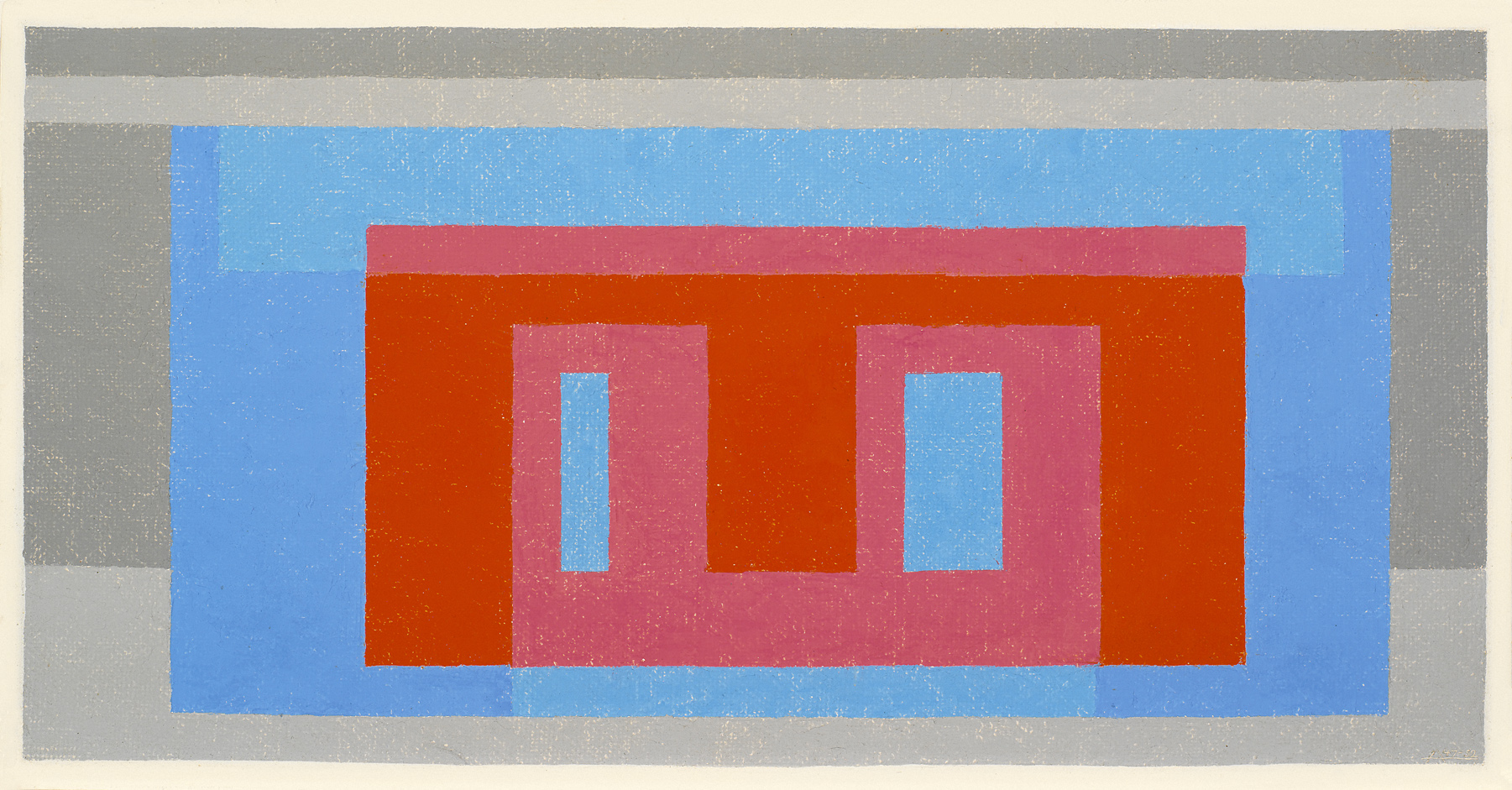
Exhibition: ‘Josef Albers in Mexico’ at the Heard Museum, Phoenix, Arizona

Exhibition dates: 1st February – 27th May, 2019

Curator: Lauren Hinkson, Associate Curator of Collections at the Guggenheim Museum in New York

Organised by The Solomon R. Guggenheim Foundation, New York


Josef Albers (American born Germany, 1888-1976) 'Study for Homage to the Square, Closing' 1964 from the exhibition 'Josef Albers in Mexico' at the Heard Museum, Phoenix, Arizona, Feb - May, 2019


Josef Albers (American born Germany, 1888-1976)
Study for Homage to the Square, Closing
1964
Acrylic on Masonite
Solomon R. Guggenheim Museum, New York, Gift, The Josef Albers Foundation, Inc., 1996


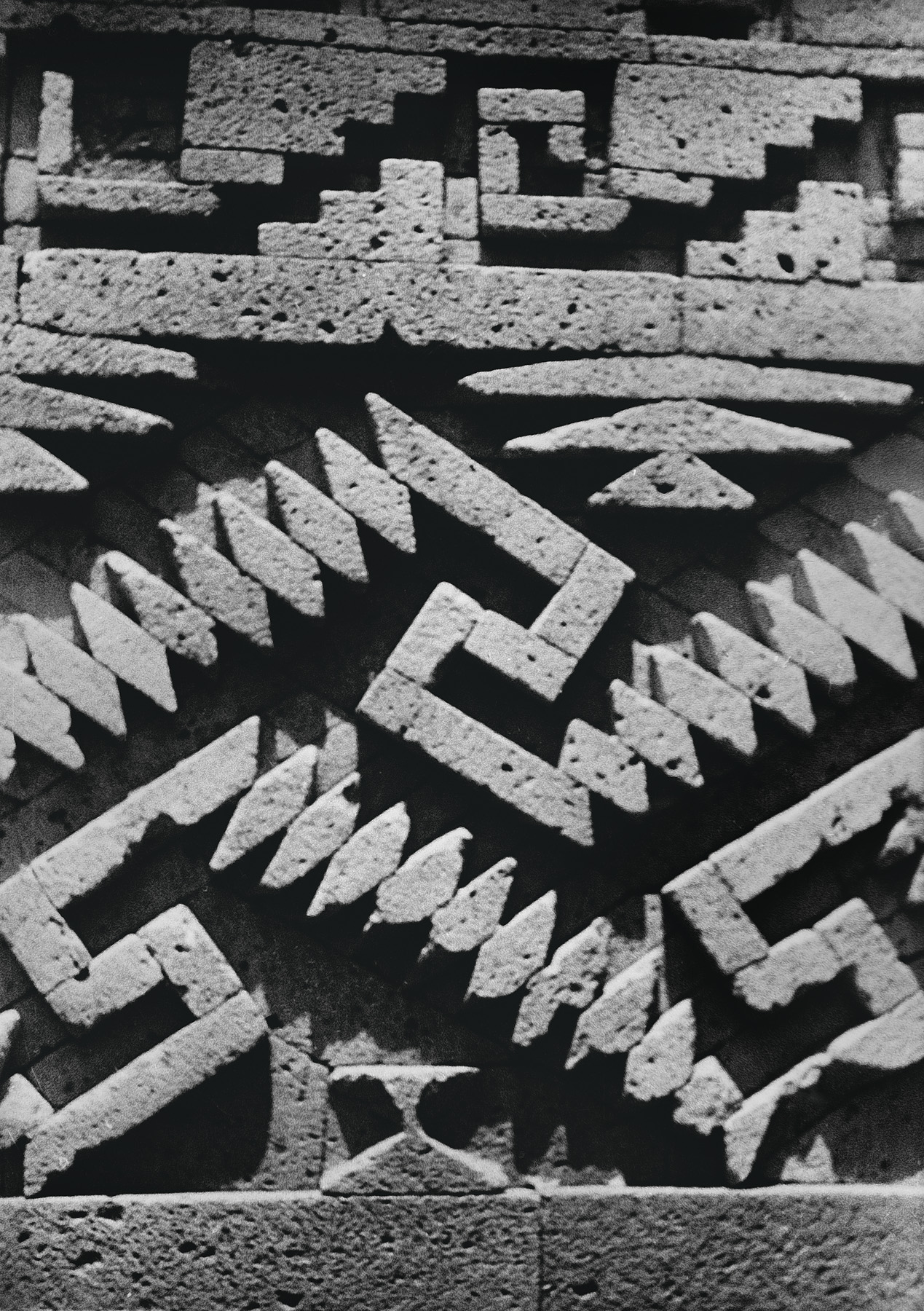
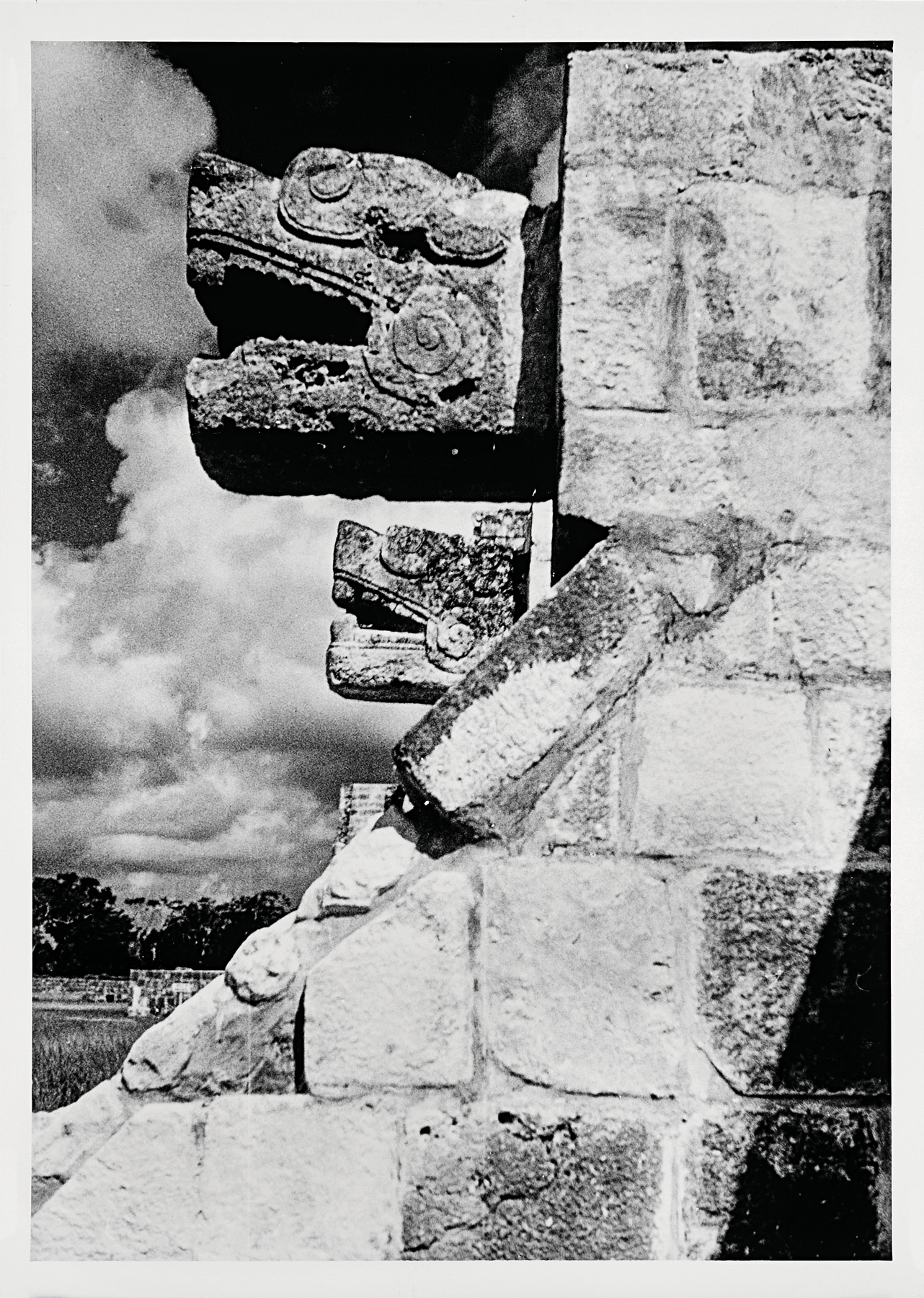
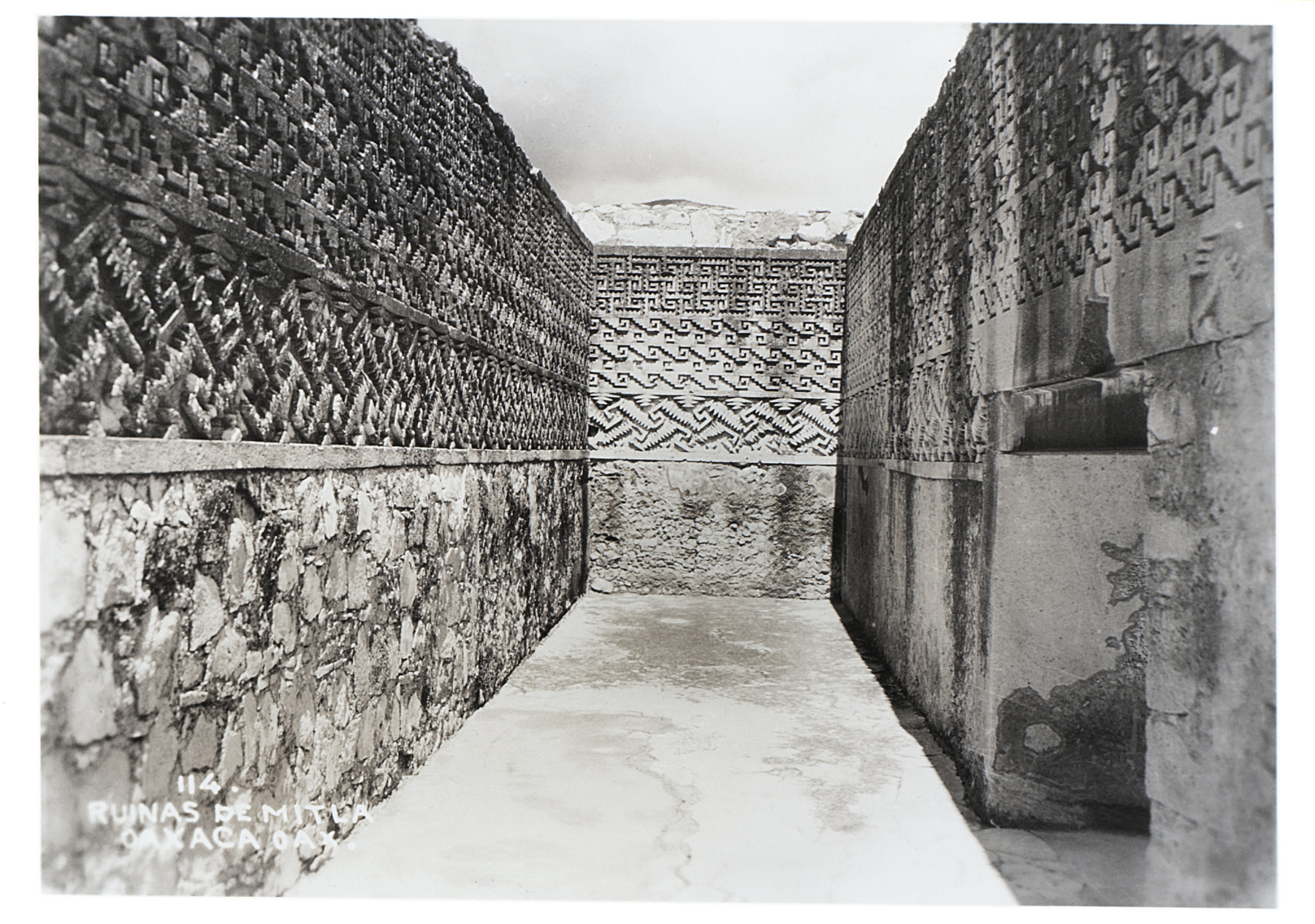
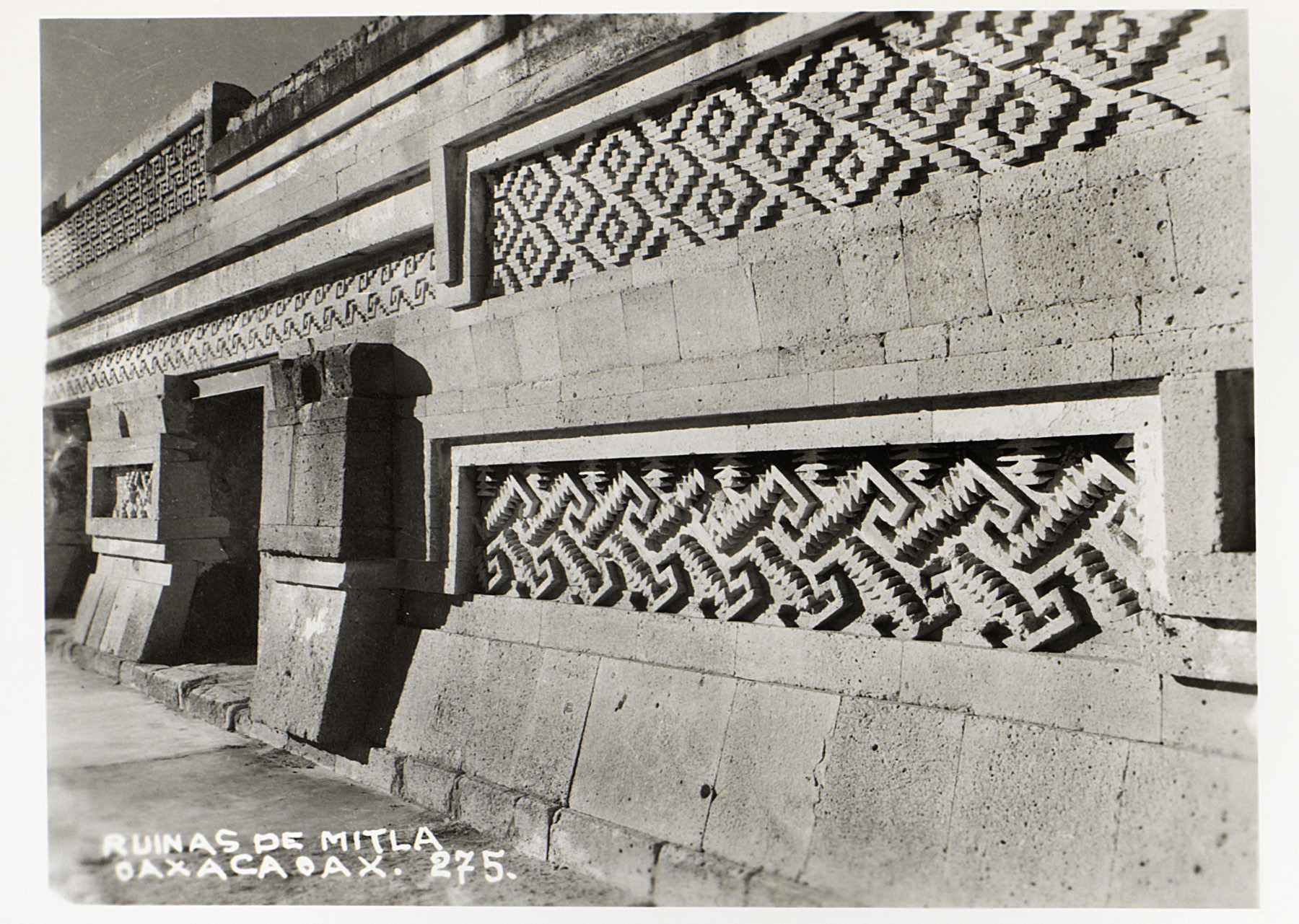
It is fascinating to see “the influence and connectivity between the work of Josef Albers and the abstracted geometric vocabulary of pre-Columbian art, architecture and material culture” … and the press release might add, between Albers, architecture and the flattened, geometric vocabulary of his photographs.

The lesser-known photographs and collages are “a visual conversation Albers created in response to his frequent visits to Mexico to view archaeological sites as early as the 1930s, illustrating the nuanced relationship between the geometry and design elements of pre-Columbian monuments and the artist’s iconic abstract canvases and works on paper.”

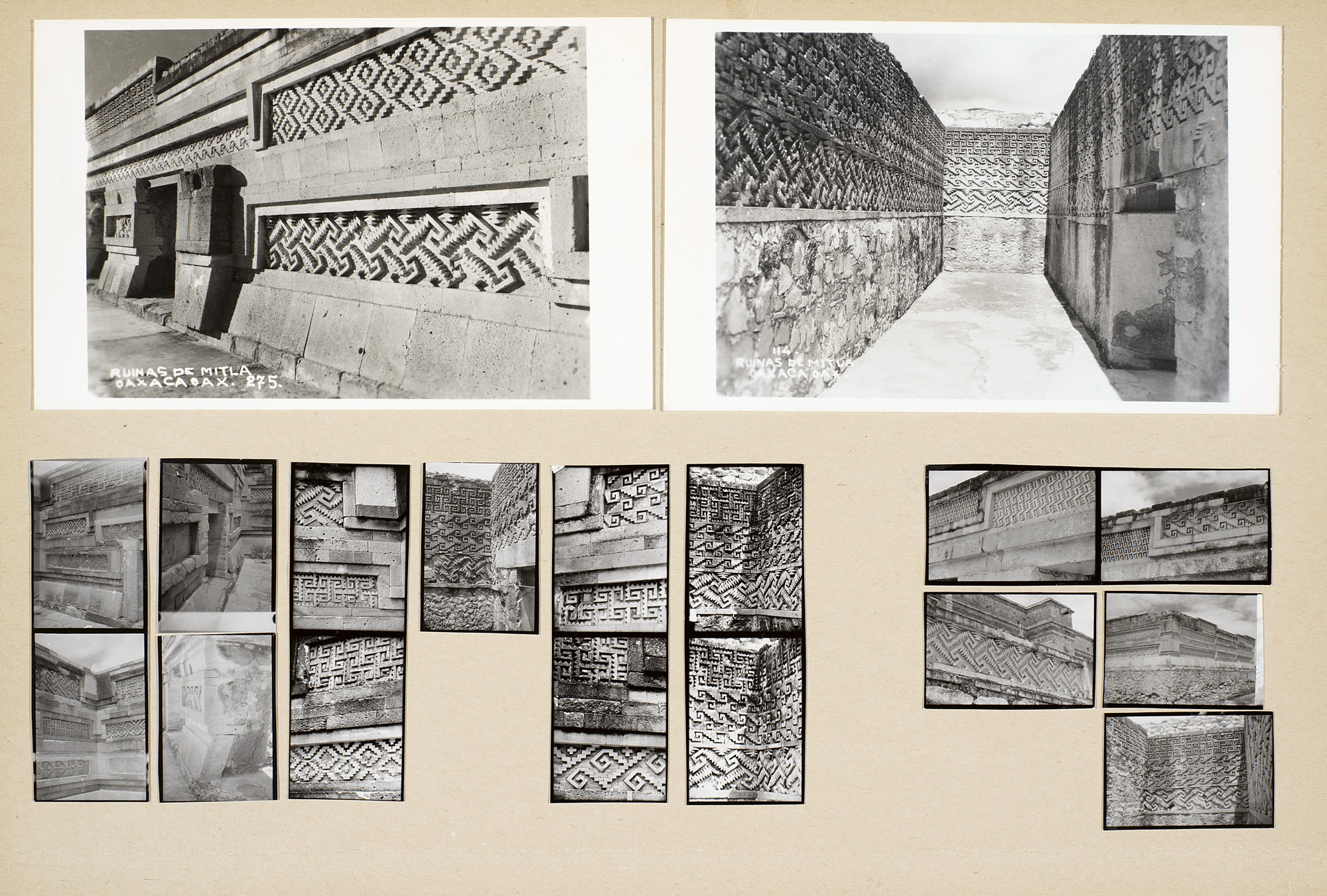
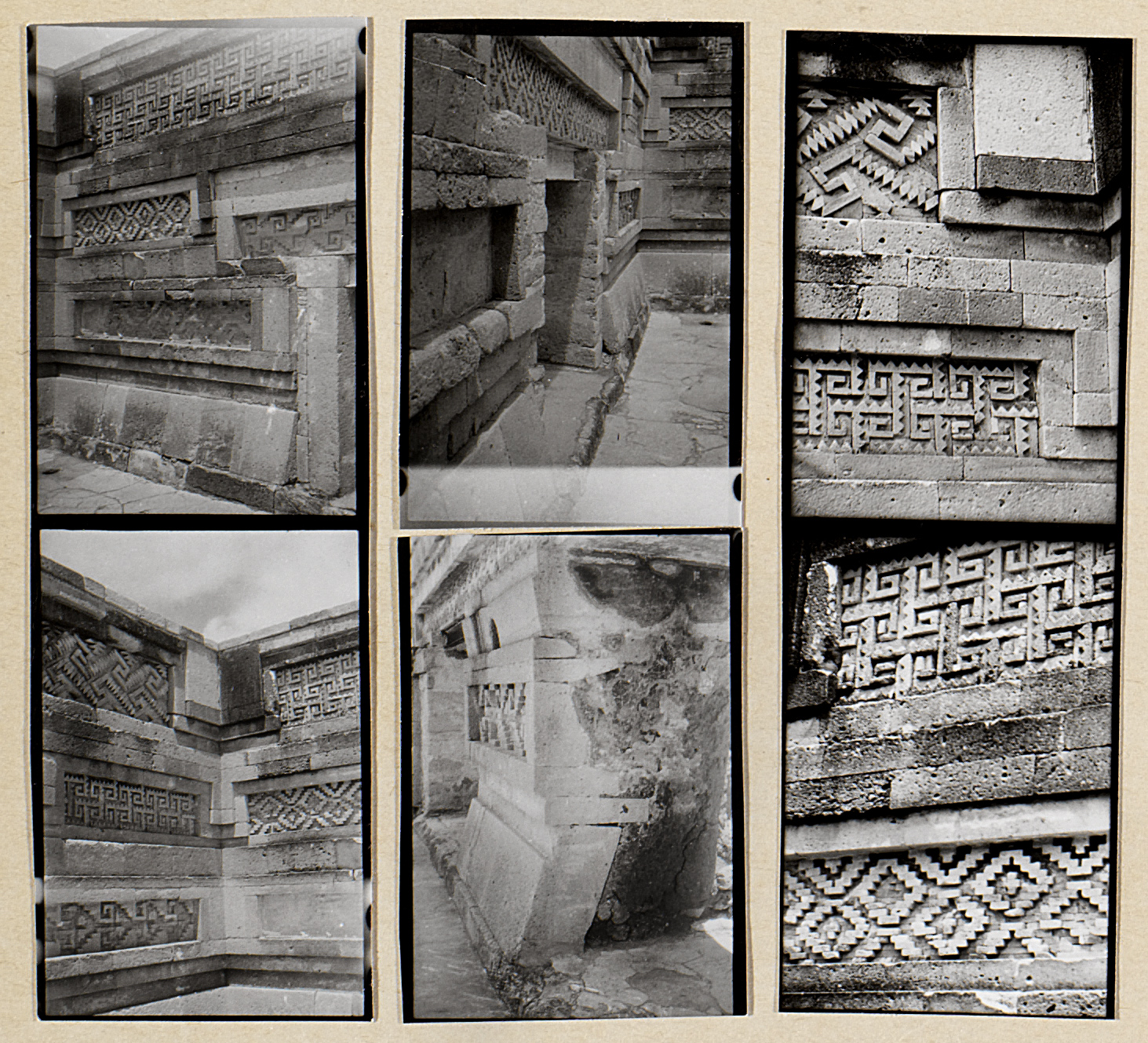
But these photographic collages stand as works of art in their own right, for they are music not just notation. Just look at the elegance and tension between the lower images in Mitla (1956, below). You don’t group photographs together like this so that they sing, so that the ‘ice-fire’ as Minor White would say (that space between each image that acts as tension between two or more images), enacts powerful attractors of light, form and energy (or spirit, if you like) … without knowing what you are doing, without feeling the presence of what you are photographing.

While artists have used photographs as “models” for other forms of art for years (for example Atget’s “documents for artists”), and we acknowledge that purpose, these images stand on their own two feet as visually nuanced, cerebral and finished works of art.

Dr Marcus Bunyan


Many thankx to the Heard Museum for allowing me to publish the photographs in the posting. Please click on the photographs for a larger version of the image.


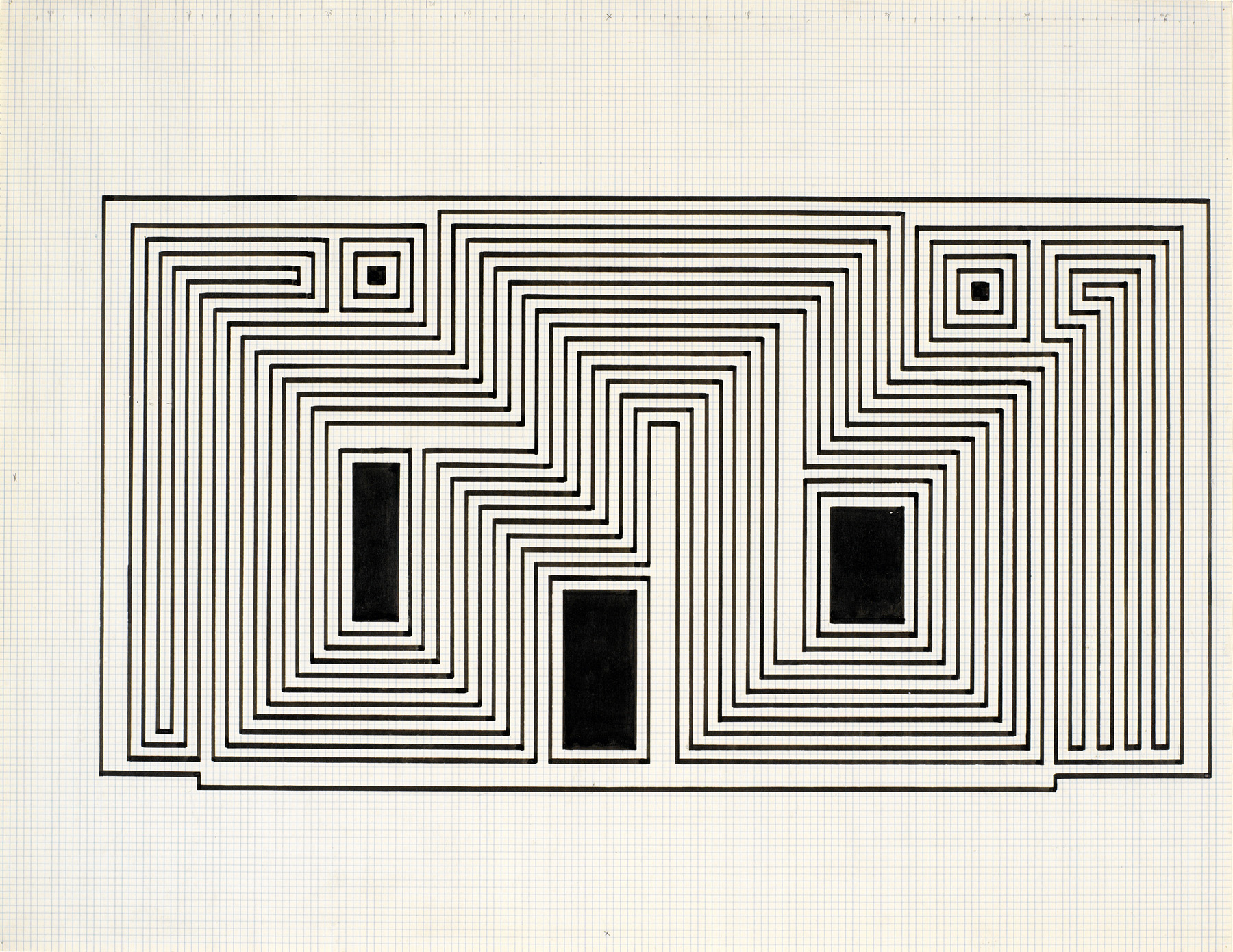
Josef Albers (American born Germany, 1888-1976) 'Study for Sanctuary' 1941-1942 from the exhibition 'Josef Albers in Mexico' at the Heard Museum, Phoenix, Arizona, Feb - May, 2019


Josef Albers (American born Germany, 1888-1976)
Study for Sanctuary
1941-1942
Ink on paper
The Josef and Anni Albers Foundation, Bethany, Connecticut, 1976


Josef Albers (American born Germany, 1888-1976) 'Ballcourt at Monte Alban, Mexico' c. 1936-1937


Josef Albers (American born Germany, 1888-1976)
Ballcourt at Monte Alban, Mexico
c. 1936-1937
Gelatin silver print
The Josef and Anni Albers Foundation, Bethany, Connecticut, 1976


Josef Albers (American born Germany, 1888-1976) 'Tenayuca' 1942


Josef Albers (American born Germany, 1888-1976)
Tenayuca I
1942
Oil on Masonite
The Josef and Anni Albers Foundation, Bethany, Connecticut, 1976


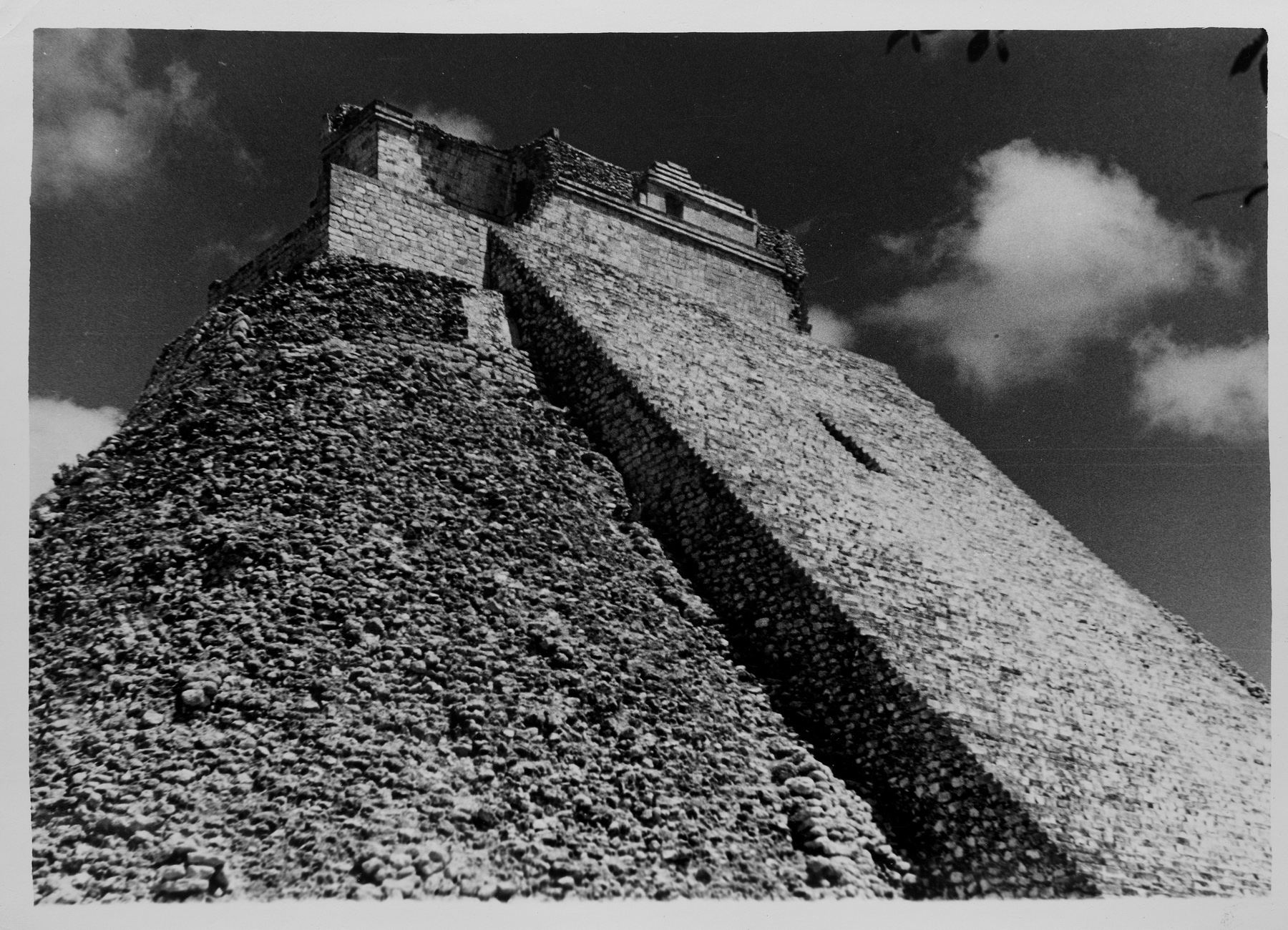
Josef Albers (American born Germany, 1888-1976) 'The Pyramid of the Magician, Uxmal' 1950


Josef Albers (American born Germany, 1888-1976)
The Pyramid of the Magician, Uxmal
1950
Gelatin silver print
Solomon R. Guggenheim Museum, New York, Gift, The Josef Albers Foundation, Inc., 1996


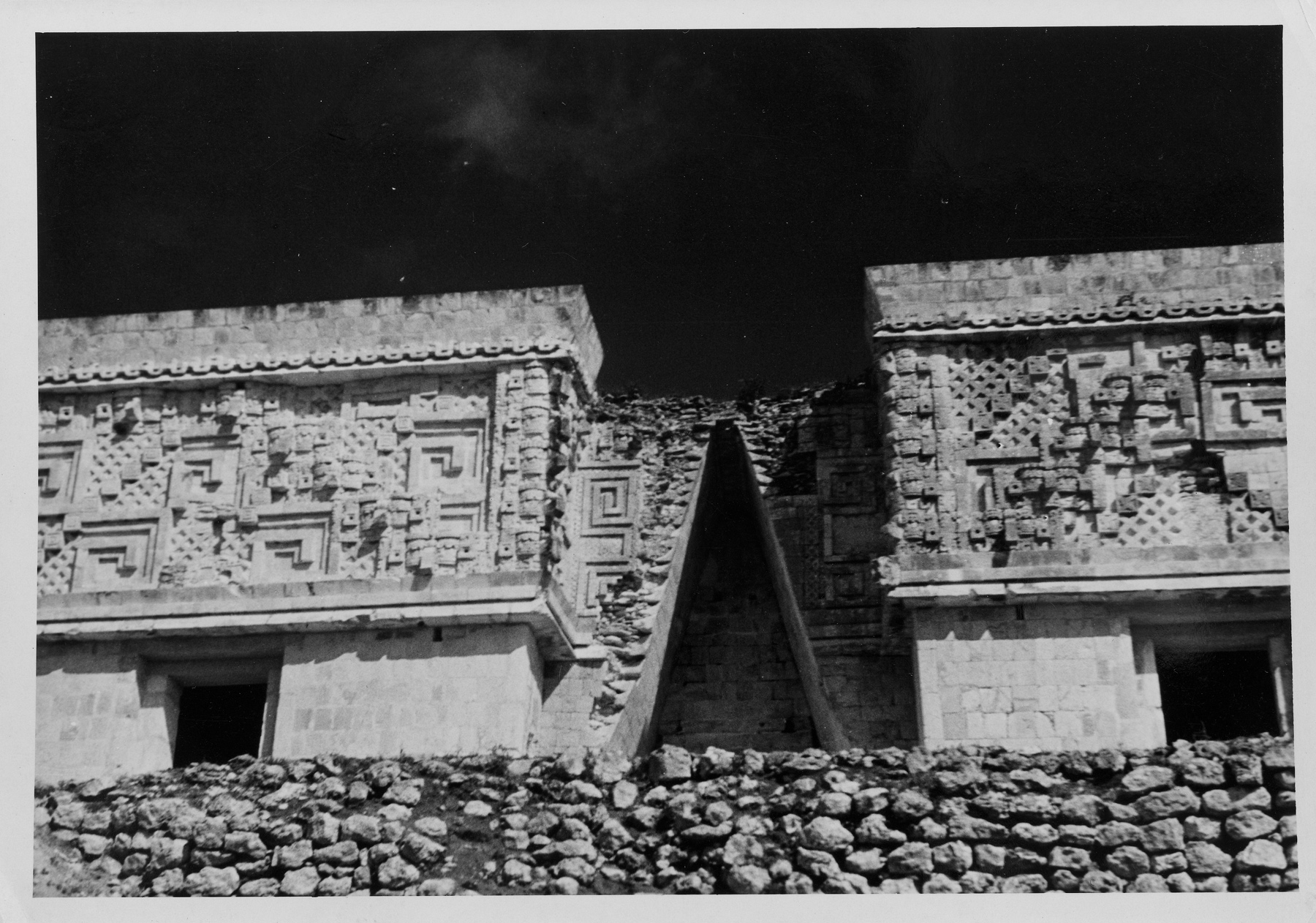
Josef Albers (American born Germany, 1888-1976) 'Governor’s Palace, Uxmal' 1952


Josef Albers (American born Germany, 1888-1976)
Governor’s Palace, Uxmal
1952
Gelatin silver print
Solomon R. Guggenheim Museum, New York, Gift, The Josef Albers Foundation, Inc., 1996


Josef Albers (American born Germany, 1888-1976) 'Luminous Day' 1947-1952


Josef Albers (American born Germany, 1888-1976)
Luminous Day
1947-1952
Oil on Masonite
The Josef and Anni Albers Foundation, Bethany, Connecticut, 1976


Josef Albers (American born Germany, 1888-1976) 'Platform of the Eagles, Chichen Itza' 1952


Josef Albers (American born Germany, 1888-1976)
Platform of the Eagles, Chichen Itza
1952
Gelatin silver print
The Josef and Anni Albers Foundation, Bethany, Connecticut, 1976


The Heard Museum is presenting Josef Albers in Mexico. The exhibition demonstrates the influence and connectivity between the work of Josef Albers (German, 1888-1976) and the abstracted geometric vocabulary of pre-Columbian art, architecture and material culture. The Heard Museum is the third and final stop of the exhibition which opened in New York in 2017 then traveled to the Peggy Guggenheim Collection in Venice in 2018.

Josef Albers in Mexico is organised by the Solomon R. Guggenheim Foundation, and curated by Lauren Hinkson, Associate Curator of Collections at the Guggenheim Museum in New York. Drawing from the collections of the Solomon R. Guggenheim Museum and the Josef and Anni Albers Foundation, Josef Albers in Mexico presents an opportunity to learn about a little-known aspect of the artist’s practice and the influences he absorbed in his travels.

“Through his close attention to ancient architecture, Josef Albers developed new modes of seeing the modern world,” says Lauren Hinkson. “This exhibition of his celebrated paintings, along with lesser-known photographs and collages, reveals the complex and often surprising roles of place, time, and spirituality in Albers’s body of work.”

Included in the exhibition are rarely seen early paintings by Albers, including Homage to the Square and Variant / Adobe series, works on paper, and a rich selection of photographs and photocollages, many of which have never before been on view. The photographic works reveal a visual conversation Albers created in response to his frequent visits to Mexico to view archaeological sites as early as the 1930s, illustrating the nuanced relationship between the geometry and design elements of pre-Columbian monuments and the artist’s iconic abstract canvases and works on paper. Accompanying the artworks are a series of letters, personal photographs, studies and other ephemera.

Josef Albers was born in Bottrop, Germany in 1888 and was a fixture at the pioneering school of art, architecture, and design, the Bauhaus, until its forced closure by the Nazis. Albers and his wife, Anni Albers (1899-1994), an accomplished artist and textile designer, relocated to the United States in 1933, where he first accepted a position as head of the department of art at Black Mountain College outside of Asheville, North Carolina, a position he held until 1949. He then went on to be the head of the design department at Yale University in New Haven, Connecticut. Josef and Anni Albers traveled often to Latin America with particular interest in Mexico – visiting the country more than a dozen times from the 1930s to the 1960s. Albers’ fascination with the visual culture of Mexico left an indelible mark on his own artistic production and methodology, with sites like Teotihuacán, Chichén Itza, Monte Albán, and Mitla resonating within his paintings and stimulating new experiments in his photography.

The Heard also produced a series of public programs co-curated by the Heard Museum’s Fine Arts Curator, Erin Joyce. Topics include explorations of colour theory with some of todays’ leading artists, designers, and architects; the influence of Indigenous art and aesthetics on broader visual art, the role it has on informing artistic production and investigations into formalism and politics. Josef Albers in Mexico runs through Monday, May 27, 2019 at the Heard Museum.

Press release from the Heard Museum website [Online] Cited 25/02/2019


Josef Albers (American born Germany, 1888-1976) 'Mitla' 1956


Josef Albers (American born Germany, 1888-1976)
Mitla
1956
Gelatin silver prints and postcards, mounted to paperboard
The Josef and Anni Albers Foundation, Bethany, Connecticut, 1976


Josef Albers (American born Germany, 1888-1976) 'Mitla' 1956 (detail)


Josef Albers (American born Germany, 1888-1976)
Mitla (detail)
1956
Gelatin silver prints and postcards, mounted to paperboard
The Josef and Anni Albers Foundation, Bethany, Connecticut, 1976


Josef Albers (American born Germany, 1888-1976) 'Mitla' 1956 (detail)


Josef Albers (American born Germany, 1888-1976)
Mitla (detail)
1956
Gelatin silver prints and postcards, mounted to paperboard
The Josef and Anni Albers Foundation, Bethany, Connecticut, 1976


Josef Albers (American born Germany, 1888-1976) 'Mitla' 1956 (detail)


Josef Albers (American born Germany, 1888-1976)
Mitla (detail)
1956
Gelatin silver prints and postcards, mounted to paperboard
The Josef and Anni Albers Foundation, Bethany, Connecticut, 1976


Josef Albers (American born Germany, 1888-1976) 'Mitla' 1956 (detail)


Josef Albers (American born Germany, 1888-1976)
Mitla (detail)
1956
Gelatin silver prints and postcards, mounted to paperboard
The Josef and Anni Albers Foundation, Bethany, Connecticut, 1976


Josef Albers (American born Germany, 1888-1976) 'Josef Albers, Mitla' 1935-1939


Anni Albers (American born Germany, 1899-1994)
Josef Albers, Mitla
1935-1939
The Josef and Anni Albers Foundation, Bethany, Connecticut, 1976


Heard Museum
2301 N. Central Avenue
Phoenix, Arizona 85004

Opening hours:
Monday – Sunday 10am – 4pm

Heard Museum website

LIKE ART BLART ON FACEBOOK

Back to top

Exhibition: ‘Graciela Iturbide’s Mexico’ at the Museum of Fine Arts, Boston

Exhibition dates: 19th January – 12th May, 2019

Curator: Kristen Gresh, Estrellita and Yousuf Karsh Curator of Photographs


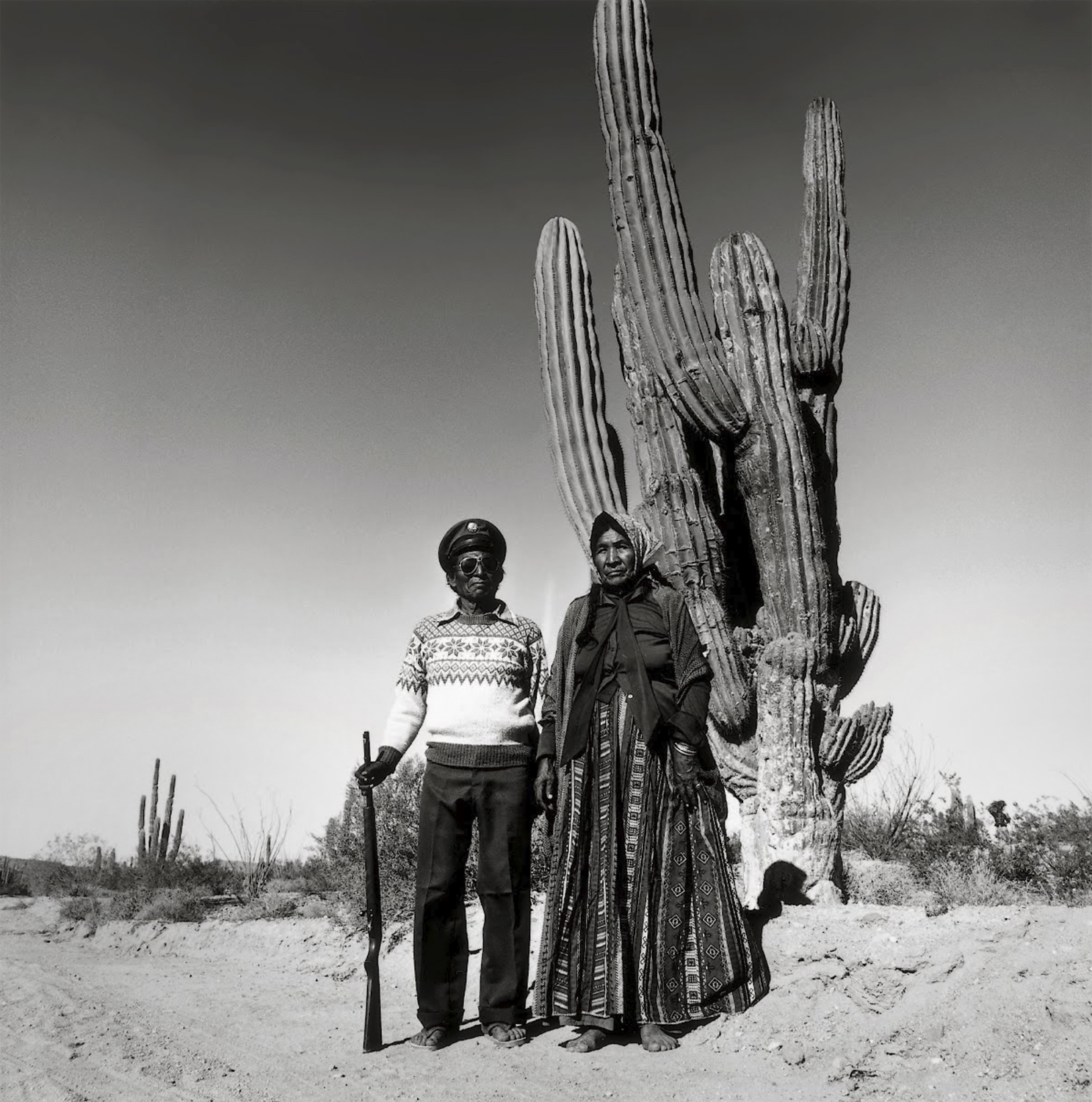
Graciela Iturbide (Mexican, b. 1942) 'Desierto de Sonora, México' 1979 from the exhibition 'Graciela Iturbide's Mexico' at the Museum of Fine Arts, Boston, Jan - May, 2019


Graciela Iturbide (Mexican, b. 1942)
Desierto de Sonora, México
1979
Gelatin silver print
35.6 x 35.4cm
Courtesy of the Museum of Fine Arts, Boston
© Graciela Iturbide


From a different world

There’s something consistently awesome about Mexican photography that is so grounded, so essential, and yet at the same time so spiritual.

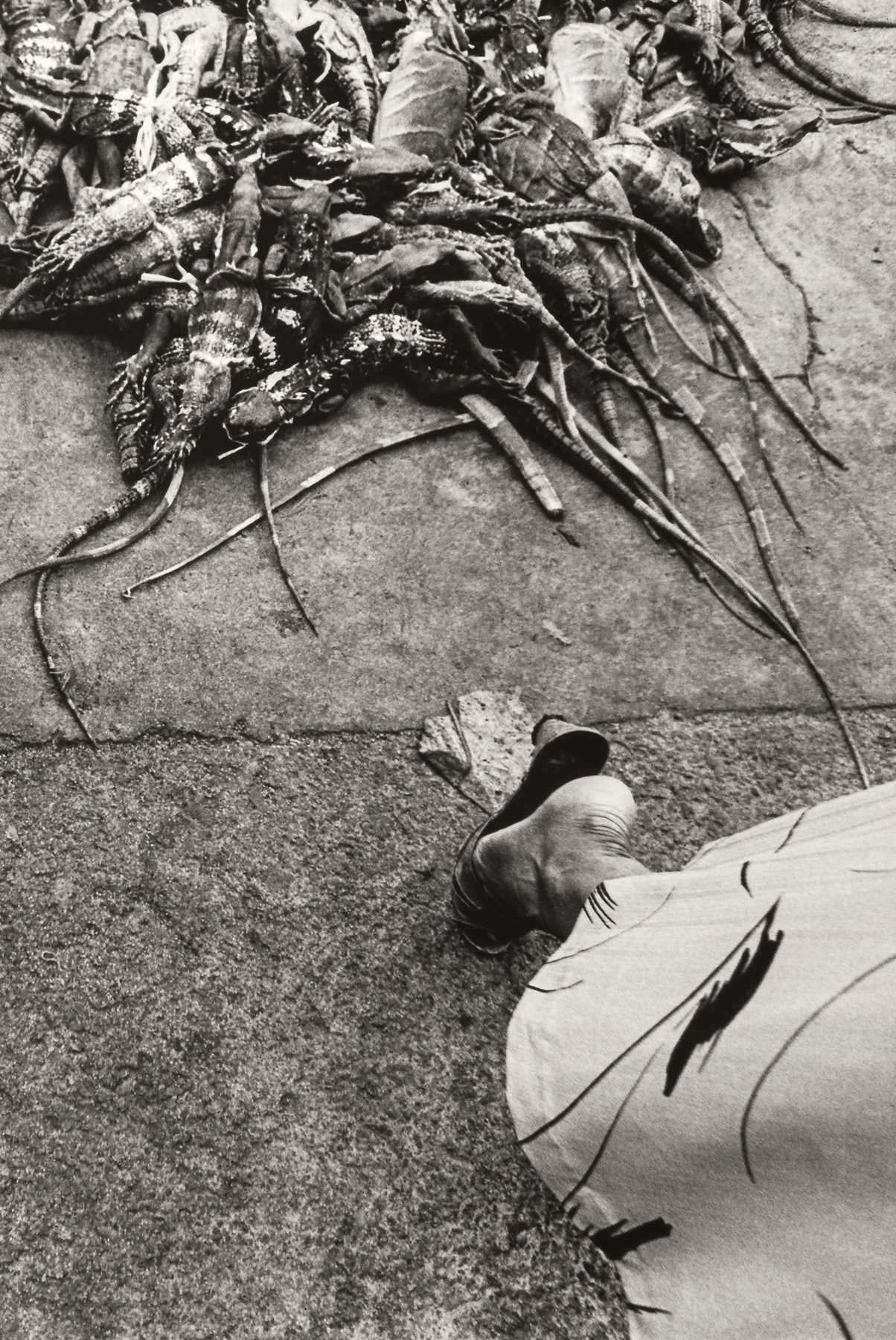
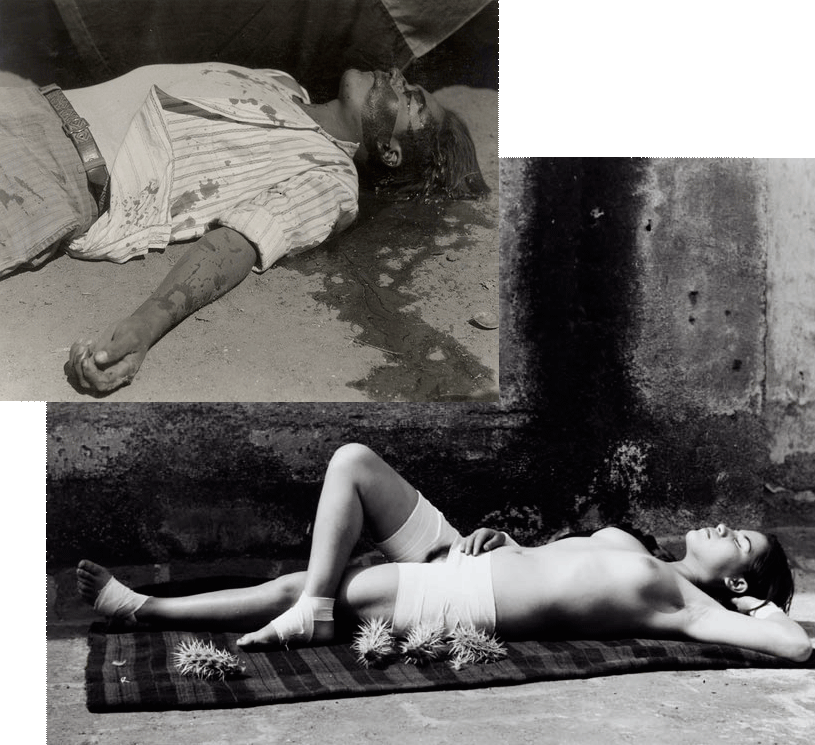
One of my favourite photographic artists of all time is Manuel Alvarez Bravo, he of the lyrical narrative, the sensual body, the assassinated worker. Iturbide seems to be cut from the same cloth – she was his assistant for two years; he her teacher about photography and life – and his influence is telling in Iturbide’s imaginative and sometimes incongruous images, such as the skull in Mexico… I want to get to know you! (1975, below) or Our Lady of the Iguanas, Juchitán, Mexico (1979, below).

Life, death, violence, sacrifice, beauty, identity and place, mixed with daubs of Surrealism, are constant themes of Mexican photography and this symbology can be seen in Iturbide’s unusual urban geometries and her eye for the unexpected. She is a visionary ethnographer who paints in black and white a story of magical literary realism… seeing through her camera something different than she sees with her eyes directly. She sees, and then feels, a different world.

Octavio Paz, the great Mexican poet, writing about the great Mexican photographer Manuel Alvarez Bravo, said that, “Reality exists, but it is more real in black and white.” And so here. Iturbide feels that black and white is more real than colour – and that reality is in black and white. It is in this tonal space that Graciela Iturbide’s Mexico pictures a place of beauty and contradiction, a place of transformations and interstitial spaces (intermediate, indeterminate spaces), an amalgamation of Indigenous and Spanish traditions. “I always shoot what surprises me,” she says. “My eyes see them, and my heart shoots them.”

Gracia Graciela, oh Graceful Beauty, for your gift to us.

Dr Marcus Bunyan


Many thankx to the Museum of Fine Arts Boston for allowing me to publish the photographs in the posting. Please click on the photographs for a larger version of the image.


“Photography is also like life, right? … I think in my case, taking photos as therapy has a lot to do with death with everything I do, with Frida Kahlo, because I like to photograph things in therapy, things that are healing, which is powerful, right?”


Graciela Iturbide


Hear from the Artist | Museum of Fine Arts, Boston


Graciela Iturbide (Mexican, b. 1942) 'Mexico City' 1969 from the exhibition 'Graciela Iturbide's Mexico' at the Museum of Fine Arts, Boston, Jan - May, 2019


Graciela Iturbide (Mexican, b. 1942)
Mexico City
1969
Gelatin silver print
Courtesy of the Museum of Fine Arts, Boston
© Graciela Iturbide


Graciela Iturbide (Mexican, b. 1942) 'Chalma' 1974


Graciela Iturbide (Mexican, b. 1942)
Chalma
1974
Gelatin silver print
Museum purchase with funds donated by John and Cynthia Reed, Charles H. Bayley Picture and Painting Fund, Barbara M. Marshall Fund, Lucy Dalbiac Luard Fund, Horace W. Goldsmith Foundation Fund for Photography, Francis Welch Fund, and Jane M. Rabb Fund for Film and Photography
Courtesy of the Museum of Fine Arts, Boston
© Graciela Iturbide


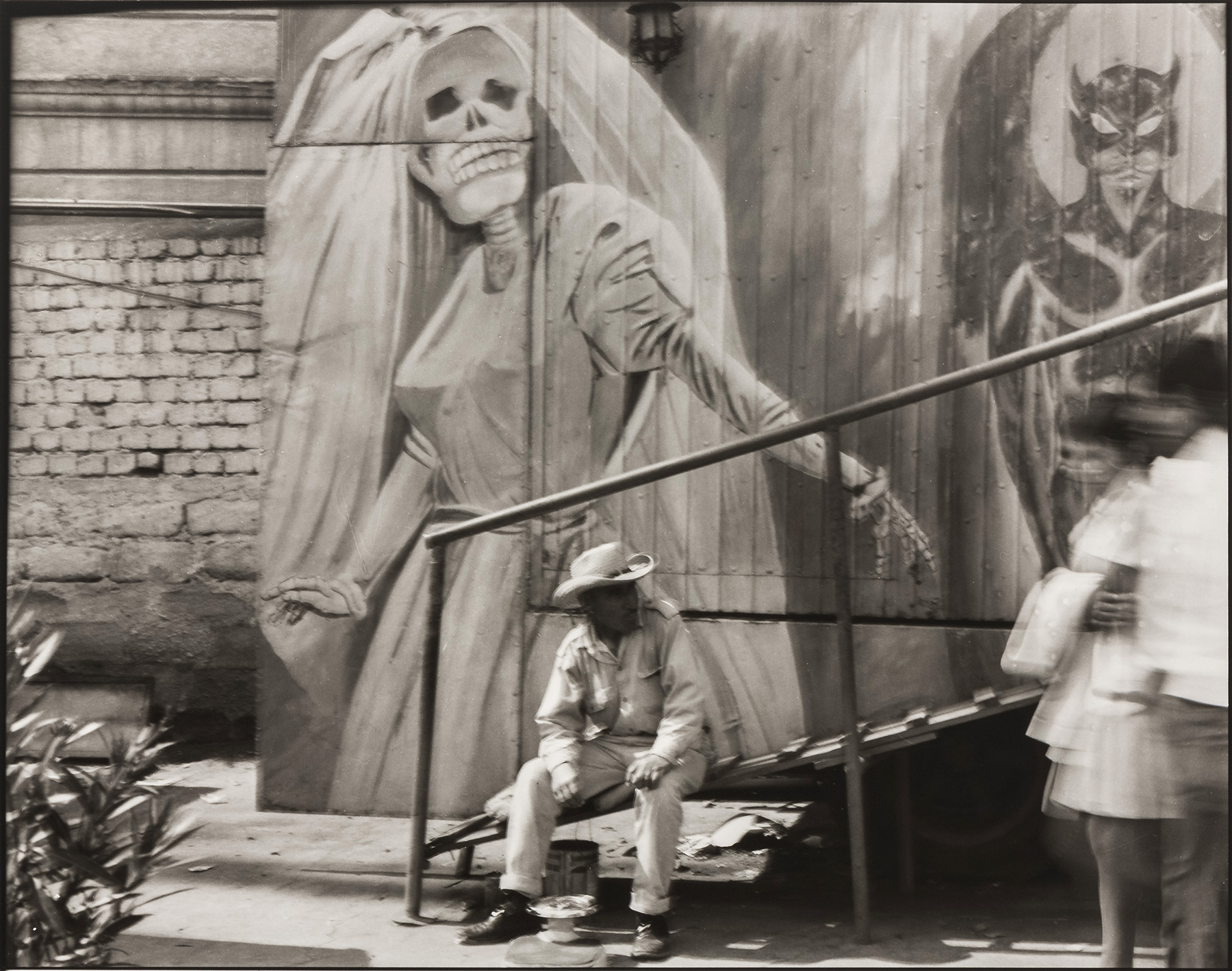
Graciela Iturbide (Mexican, b. 1942) 'Casa de la Muerte, Ciudad de México' 1975


Graciela Iturbide (Mexican, b. 1942)
Casa de la Muerte, Ciudad de México
1975
Gelatin silver print
Museum purchase with funds donated by John and Cynthia Reed, Charles H. Bayley Picture and Painting Fund, Barbara M. Marshall Fund, Lucy Dalbiac Luard Fund, Horace W. Goldsmith Foundation Fund for Photography, Francis Welch Fund, and Jane M. Rabb Fund for Film and Photography
Courtesy of the Museum of Fine Arts, Boston
© Graciela Iturbide


Graciela Iturbide (Mexican, b. 1942) 'Volantín, San Martin Tilcajete, Oaxaca, Mexico' (Merry-Go-Round, San Martín Tilcajete, Oaxaca, Mexico) 1976


Graciela Iturbide (Mexican, b. 1942)
Volantín, San Martín Tilcajete, Oaxaca, Mexico (Merry-Go-Round, San Martín Tilcajete, Oaxaca, Mexico)
1976
Gelatin silver print
Museum purchase with funds donated by John and Cynthia Reed, Charles H. Bayley Picture and Painting Fund, Barbara M. Marshall Fund, Lucy Dalbiac Luard Fund, Horace W. Goldsmith Foundation Fund for Photography, Francis Welch Fund, and Jane M. Rabb Fund for Film and Photography
Courtesy of the Museum of Fine Arts, Boston
© Graciela Iturbide


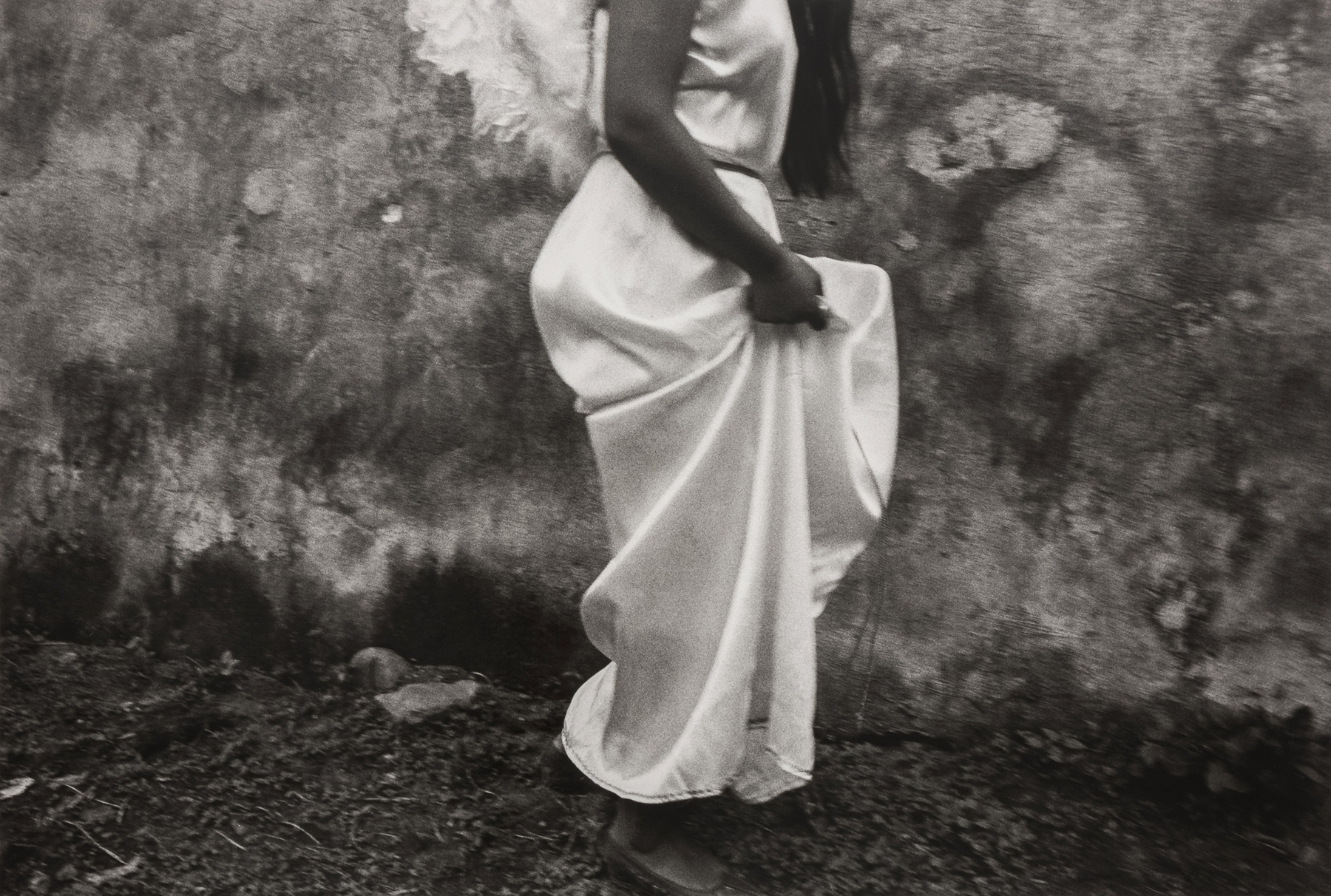
Graciela Iturbide (Mexican, b. 1942) 'Mujer ángel, Desierto de Sonora, México' (Angel Woman, Sonora Desert, Mexico) 1979


Graciela Iturbide (Mexican, b. 1942)
Mujer Ángel, Desierto de Sonora, México (Angel Woman, Sonora Desert, Mexico)
1979
Gelatin silver print
Courtesy of the Museum of Fine Arts, Boston
© Graciela Iturbide


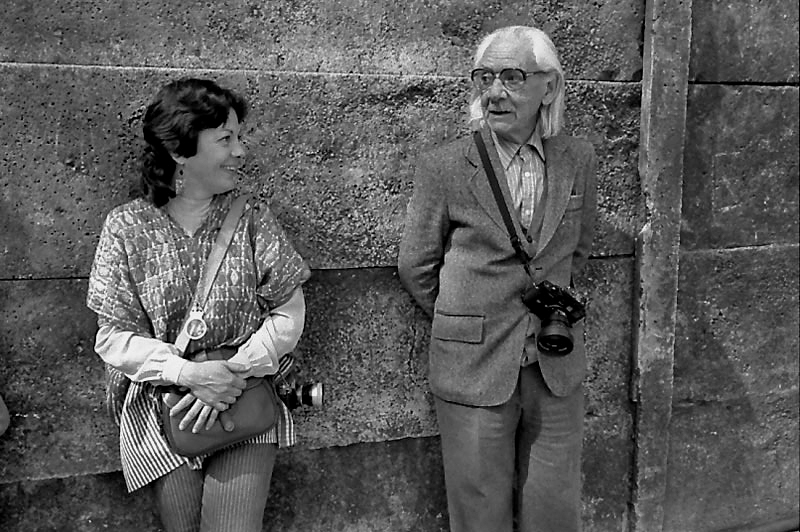
Pedro Meyer. 'Manuel Álvarez Bravo and Graciela Iturbide, Coyoacán (Mexico)' 1983


Pedro Meyer (Spanish, b. 1935)
Manuel Álvarez Bravo and Graciela Iturbide, Coyoacán (Mexico)
1983
Gelatin silver print


When I went to study at the university he was teaching at the university as well and I attended one of his courses; that’s how I got to know him. Then, after a couple of weeks I became his assistant. At that time he was not that famous in Mexico, he was very famous in Europe and the United States. He was known in Mexico but he was not really a big star. So, what I really need to make clear is that he was not just a teacher of photography; he was a teacher about life for me. Because he taught me about everything, he talked about literature, cinematography… so he was more of a teacher of life… he never said this picture is good or this picture is bad, he would never say that flat out. Instead, he would always say something to guide you in the right direction. Yet he would never say, “This is good or this is bad”.

With Álvarez I went to certain little towns but I was only his assistant for two years. After that I made the decision to cut the umbilical cord and make my own way.

Extract from Munem Wasif. “An Interview with Graciela Iturbide,” on the Chobi Mela website, November 24, 2014 [Online] Cited 06/04/2019


Graciela Iturbide (Mexican, b. 1942) 'Festival del Lagarto' 1985


Graciela Iturbide (Mexican, b. 1942)
Festival del Lagarto (Lizard Festival)
1985
Gelatin silver print
Museum purchase with funds donated by John and Cynthia Reed, Charles H. Bayley Picture and Painting Fund, Barbara M. Marshall Fund, Lucy Dalbiac Luard Fund, Horace W. Goldsmith Foundation Fund for Photography, Francis Welch Fund, and Jane M. Rabb Fund for Film and Photography
Courtesy of the Museum of Fine Arts, Boston
© Graciela Iturbide


Graciela Iturbide (Mexican, b. 1942) 'Dance, Juchitán, México' 1986


Graciela Iturbide (Mexican, b. 1942)
Dance, Juchitán, México
1986
Gelatin silver print
Courtesy of the Museum of Fine Arts, Boston
© Graciela Iturbide


Graciela Iturbide (Mexican, b. 1942) 'Pajaros en el poste, carretera a Guanajuato, Mexico' 1990


Graciela Iturbide (Mexican, b. 1942)
Pajaros en el poste, carretera a Guanajuato, Mexico (Birds on a post, road to Guanajuato, Mexico)
1990
Gelatin silver print
Museum purchase with funds donated by John and Cynthia Reed, Charles H. Bayley Picture and Painting Fund, Barbara M. Marshall Fund, Lucy Dalbiac Luard Fund, Horace W. Goldsmith Foundation Fund for Photography, Francis Welch Fund, and Jane M. Rabb Fund for Film and Photography
Courtesy of the Museum of Fine Arts, Boston
© Graciela Iturbide


Graciela Iturbide (Mexican, b. 1942) 'Cayó del Cielo, Chalma, México' 1989


Graciela Iturbide (Mexican, b. 1942)
Cayó del Cielo, Chalma, México
1989
Gelatin silver print
Museum purchase with funds donated by John and Cynthia Reed, Charles H. Bayley Picture and Painting Fund, Barbara M. Marshall Fund, Lucy Dalbiac Luard Fund, Horace W. Goldsmith Foundation Fund for Photography, Francis Welch Fund, and Jane M. Rabb Fund for Film and Photography
Courtesy of the Museum of Fine Arts, Boston
© Graciela Iturbide


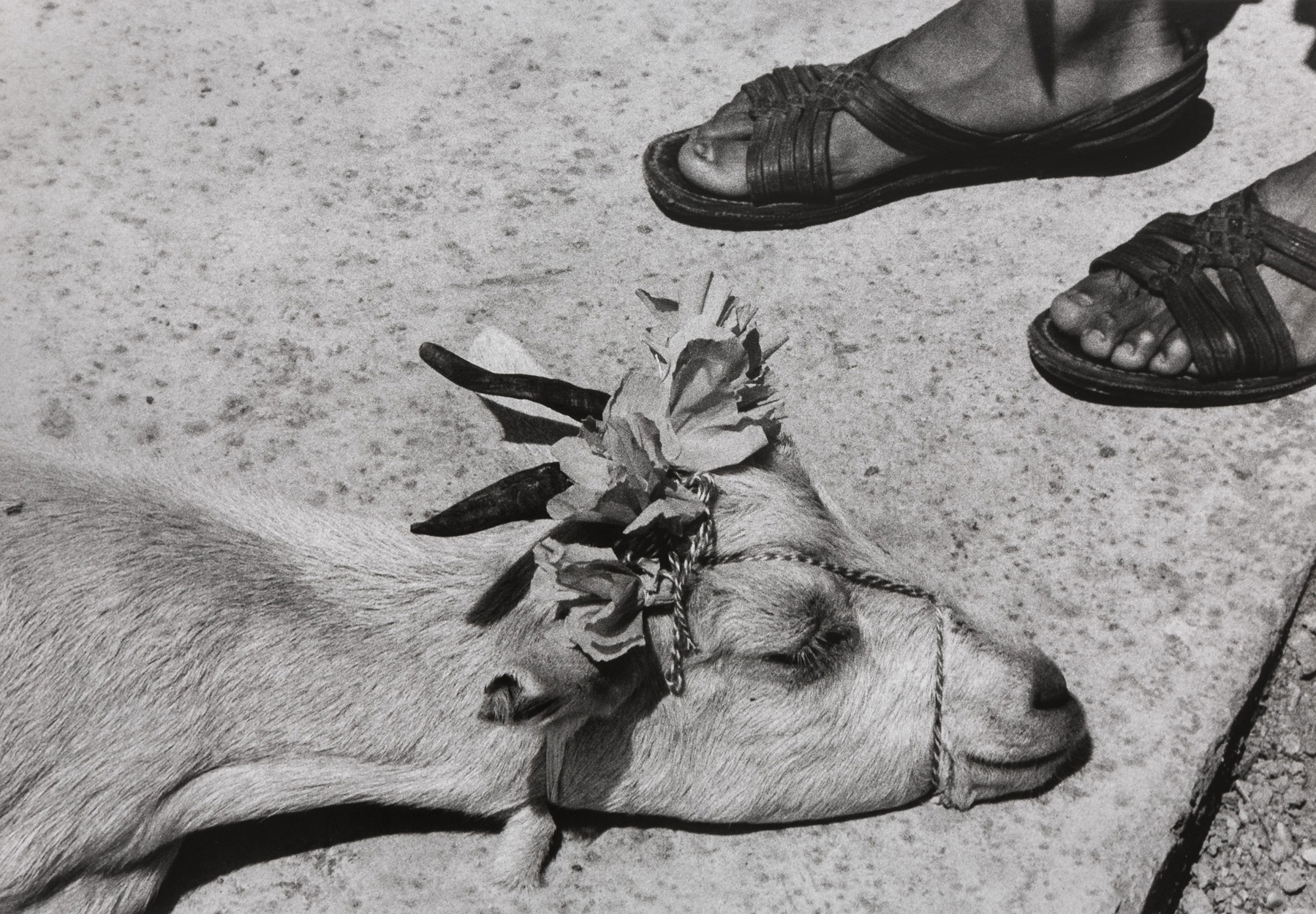
Graciela Iturbide (Mexican, b. 1942) 'La danza de la cabrita, antes de la matanza, La Mixteca, Oaxaca, Mexico' (The Little Goat's Dance, Before the Slaughter, La Mixteca, Oaxaca, Mexico) 1992


Graciela Iturbide (Mexican, b. 1942)
La danza de la cabrita, antes de la matanza, La Mixteca, Oaxaca, Mexico (The Little Goat’s Dance, Before the Slaughter, La Mixteca, Oaxaca, Mexico)
1992
Gelatin silver print
Museum purchase with funds donated by John and Cynthia Reed, Charles H. Bayley Picture and Painting Fund, Barbara M. Marshall Fund, Lucy Dalbiac Luard Fund, Horace W. Goldsmith Foundation Fund for Photography, Francis Welch Fund, and Jane M. Rabb Fund for Film and Photography
Courtesy of the Museum of Fine Arts, Boston
© Graciela Iturbide


A way of life, a way of seeing

The photographs of Graciela Iturbide not only bear witness to Mexican society but express an intense personal and poetic lyricism about her native country. One of the most influential photographers active in Latin America today, Iturbide captures everyday life and its cultures, rituals, and religions, while also raising questions about paradoxes and social injustice in Mexican society. Her photographs tell a visual story of Mexico since the late 1970s – a country in constant transition, defined by the coexistence of the historical and modern as a result of the culture’s rich amalgamation of cultures. For Iturbide, photography is a way of life and a way of seeing and understanding Mexico and its beauty, challenges, and contradictions.

This is the first major East Coast presentation of Iturbide’s work, featuring approximately 125 photographs that span her five-decade-long career. Organised into nine sections, the exhibition opens with early photographs, followed by three series focused on three of Mexico’s many indigenous cultures: Juchitán captures the essential role of women in Zapotec culture; Los que viven en la arena (Those Who Live in the Sand) concentrates on the Seri people living in the Sonoran Desert; and La Mixteca documents elaborate goat-slaughtering rituals in Oaxaca, serving as critical commentary on the exploitation of workers. Thematic groupings highlight Iturbide’s explorations of various aspects of Mexican culture, including fiestas, death and mortality, and birds and their symbolism. Her more recent work is presented in two series related to Mexico’s cultural and artistic heritage, featuring plants – mainly cacti – in “intensive care” at the Oaxaca Ethnobotanical Gardens, as well as El baño de Frida (Frida’s Bathroom), depicting personal belongings in Frida Kahlo’s bathroom at the Casa Azul that had been locked away for 50 years after the artist’s death.

Iturbide’s powerful and provocative photographs are anti-picturesque, anti-folkloric. Her work embodies her empathetic approach to photography and her deep connection with her subjects, asking questions through its capacity for imaginary associations. Drawn primarily from Iturbide’s own collection, “Graciela Iturbide’s Mexico” also includes the Museum’s recent acquisition of 37 works by the artist, as well as loans from museums and private collections throughout the US and Mexico. The exhibition is accompanied by an illustrated catalogue produced by MFA Publications.

Text from the Museum of Fine Arts, Boston website [Online] Cited 05/04/2019


Graciela Iturbide (Mexican, b. 1942) 'Cementerio de Dolores Hidalgo, Guanajuato, México' 1978


Graciela Iturbide (Mexican, b. 1942)
Cementerio de Dolores Hidalgo, Guanajuato, México (Cemetery of Dolores Hidalgo, Guanajuato, México)
1978
Gelatin silver print
11.3 x 11.3cm
Courtesy of the Museum of Fine Arts, Boston
© Graciela Iturbide


Graciela Iturbide (Mexican, b. 1942) 'Jardín Botánico, Oaxaca, México' 1998-1999


Graciela Iturbide (Mexican, b. 1942)
Jardín Botánico, Oaxaca, México
1998-1999
Gelatin silver print
Courtesy of the Museum of Fine Arts, Boston
© Graciela Iturbide


Graciela Iturbide (Mexican, b. 1942) 'Jardín Botánico de Oaxaca, México' 2002


Graciela Iturbide (Mexican, b. 1942)
Jardín Botánico de Oaxaca, México
2002
Gelatin silver print
35.7 x 32.8cm
Museum purchase with funds donated by John and Cynthia Reed, Charles H. Bayley Picture and Painting Fund, Barbara M. Marshall Fund, Lucy Dalbiac Luard Fund, Horace W. Goldsmith Foundation Fund for Photography, Francis Welch Fund, and Jane M. Rabb Fund for Film and Photography
Courtesy of the Museum of Fine Arts, Boston
© Graciela Iturbide


Graciela Iturbide (Mexican, b. 1942) 'El Baño de Frida, Coyoacán, Ciudad de México' (Frida's Bathroom, Coyoacán, Mexico City) 2005


Graciela Iturbide (Mexican, b. 1942)
El Baño de Frida, Coyoacán, Ciudad de México (Frida’s Bathroom, Coyoacán, Mexico City)
2005
Gelatin silver print
35.7 x 35.5cm
Courtesy of the Museum of Fine Arts, Boston
© Graciela Iturbide


Graciela Iturbide (Mexican, b. 1942) 'El Baño de Frida, Coyoacán, Ciudad de México' (prosthetic leg against wall) 2006


Graciela Iturbide (Mexican, b. 1942)
El Baño de Frida, Coyoacán, Ciudad de México (Prosthetic leg against wall, Frida’s Bathroom, Coyoacán, Mexico City)
2006
Gelatin silver print
Museum purchase with funds donated by John and Cynthia Reed, Charles H. Bayley Picture and Painting Fund, Barbara M. Marshall Fund, Lucy Dalbiac Luard Fund, Horace W. Goldsmith Foundation Fund for Photography, Francis Welch Fund, and Jane M. Rabb Fund for Film and Photography
Courtesy of the Museum of Fine Arts, Boston
© Graciela Iturbide


Graciela Iturbide (Mexican, b. 1942) 'El Baño de Frida, Coyoacán, Ciudad de México' (Frida's Bathroom, Coyoacán, Mexico City) 2006


Graciela Iturbide (Mexican, b. 1942)
El Baño de Frida, Coyoacán, Ciudad de México (Frida’s Bathroom, Coyoacán, Mexico City)
2006
Gelatin silver print
Courtesy of the Museum of Fine Arts, Boston
© Graciela Iturbide


Nearly 140 Images in Graciela Iturbide’s Mexico Portray Photographer’s Native Country through Her Eyes

Throughout a five-decade-long career, photographer Graciela Iturbide (born 1942) has focused on capturing and understanding the beauty, rituals, challenges and contradictions of her native Mexico. Graciela Iturbide’s Mexico is the first major East Coast presentation of the artist’s work, featuring nearly 140 photographs that tell the visual story of her country since the late 1970s. Going beyond documentary photography, Iturbide’s work reveals Mexico’s complexities through her personal explorations. Focused on the tensions between urban and rural life, human presence and nature, and indigenous and Spanish cultures, her photographs have contributed to Mexico’s visual identity while calling attention to the rich syncretism, diversity and inequalities of Mexican society. The exhibition is drawn primarily from Iturbide’s own collection and also highlights a recent acquisition of her photographs, the first major group of works by the artist to enter the Museum’s collection – 35 purchased by the MFA and two donated by Iturbide. Loans from museums and private collections throughout the U.S., Mexico and France are also included. On view from January 19 through May 12, 2019 in the Henry and Lois Foster Gallery, the exhibition features interpretation in English and Spanish, as well as a documentary video of the artist, produced by the Museum and shot at Iturbide’s studio in Mexico City. Graciela Iturbide’s Mexico is accompanied by an illustrated catalogue produced by MFA Publications, which features more than 100 striking tritone reproductions of evocative photographs alongside essays that invite readers to share in Iturbide’s personal artistic journey. This beautiful volume with a three-piece cloth and printed binding with foil stamping teases out key ideas and visual relationships across different moments in the photographer’s storied career. The exhibition is supported by the Leigh and Stephen Braude Fund for Latin American Art, The Bruce and Laura Monrad Fund for Exhibitions, and the Diane Krane Family and Jonathan and Gina Krane Family Fund. Generous support for the publication was provided by the Andrew W. Mellon Publications Fund.

“I am thrilled to present Graciela’s groundbreaking images to our global audiences, and it has been a pleasure and honour to work closely with her in preparation for this exhibition,” said Kristen Gresh, Estrellita and Yousuf Karsh Curator of Photographs. “Her work has successfully and beautifully brought to the forefront the many untold stories of Mexican culture and history – from the eyes of an insider.”

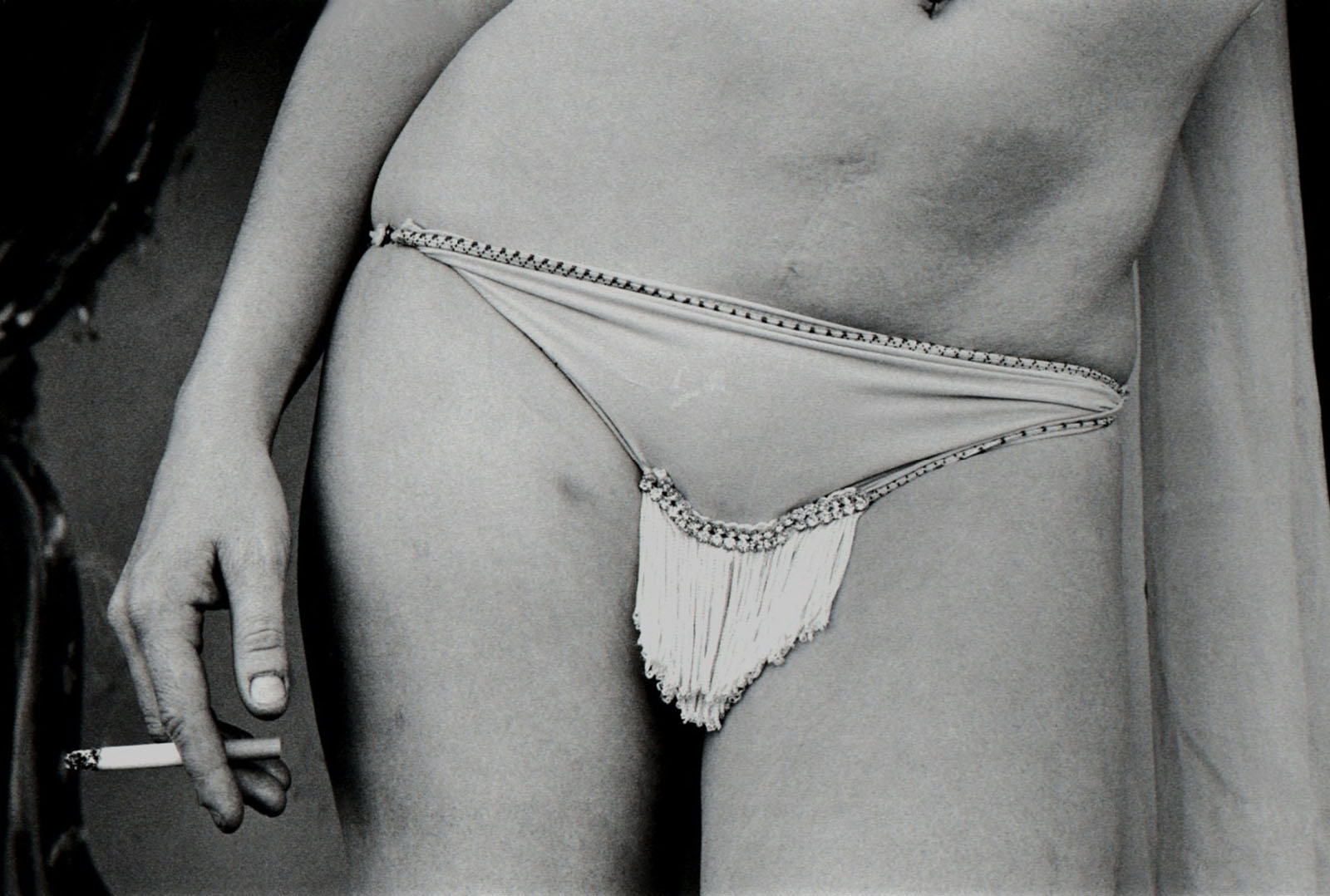
The exhibition is organised thematically into nine sections and opens with early photographs. One of her first works, Zihuatanejo, México (1969, Collection of Les and Sandy Nanberg), is a pensive portrait of a young girl that marks the beginning of Iturbide’s forays into photographing the diverse peoples of Mexico. Shot during the same year, Mexico City (1969, Collection of Daniel Greenberg and Susan Steinhauser) portrays a sex worker in what appears to be a cantina or pulquería. In fact, the subject is a figure in a wax museum. The photograph’s graphic background – a mural of a large skull painted on a wall – alludes to both Mexico’s long history of muralism and the country’s fascination with death. Works such as Little Bull / Torito (1982, Collection of Galeria Lopez Quiroga) and Juchitán (1975, MFA) reveal Iturbide’s attraction to unusual urban geometries and her eye for the unexpected. Together, these early images attest to the photographer’s keen observation of Mexican contemporary culture in the 1970s and early 1980s.

The next three sections of the exhibition focus on Iturbide’s deep commitment to photographing different populations throughout Mexico. One of her early projects was to document the way of life of the Seri Indians, a formerly nomadic group of fisherfolk living in the Sonoran Desert in northwestern Mexico. In 1978, Iturbide and anthropologist Luis Barjau immersed themselves within the community, staying for a month and a half on their first trip and another month on the second. The result of their collaboration was the 1981 book Los que viven en la arena ( Those Who Live in the Sand) and a selection of additional photographs that Iturbide printed and exhibited years later. The exhibition features two prints of one of Iturbide’s most well-known works, Angel Woman / Mujer ángel (1979, Collection of Elizabeth and Michael Marcus and Collection of Galeria Lopez Quiroga ), an ethereal image that captures a woman in traditional dress carrying a boom box as she heads down to the empty desert plain. The photograph exemplifies a theme running through the series: the impact of capitalism on the Seri people’s otherwise minimalist culture. This early project confirmed Iturbide’s interests in working thematically, raising her awareness of Mexico’s diversity and building close relationships with her subjects.

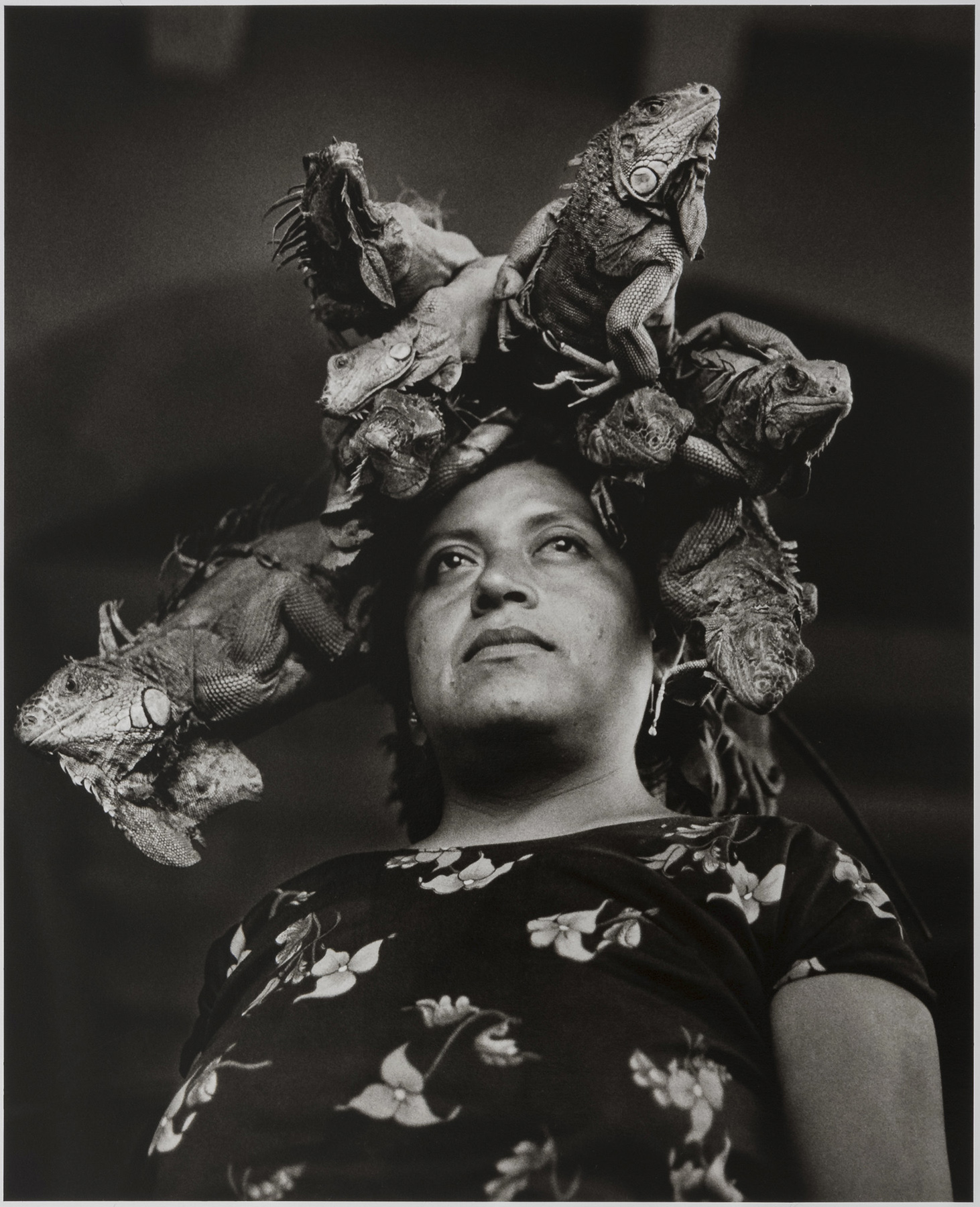
Over the course of a decade beginning in 1979, Iturbide traveled regularly to Juchitán, a city in southern Oaxaca. Juchitán is home to the Zapotec culture, in which women are known for their economic, political and sexual independence. Iturbide’s iconic photograph Our Lady of the Iguanas / Nuestra Señora de las Iguanas (1979, Brooklyn Museum) portrays a woman, Zobeida Diaz, wearing a wreath of iguanas on her head as she makes her way to sell them at the market. The iguana has historical importance in Zapotec society, both as a gastronomic delicacy and as an animal believed to have healing properties. Our Lady of the Iguanas, reproduced today on everything from municipal offices to highway signs and murals, has become a symbol for the community of Juchitán and for Zapotec womanhood. Original contact sheets displayed alongside the photograph show a cinematic sequence of Diaz interacting with Iturbide as she poses for the camera. She appears to be overtaken by laughter at certain points – an indication of the artist’s empathetic way of connecting with her subjects. Yellow grease-pencil marks also reveal Iturbide’s working method and creative process, highlighting the image she had chosen to print and how she envisioned cropping it. In her final selection, the iguanas themselves appear to be posing for the camera – an idea that corresponds to Iturbide’s search for the unexpected and the symbolic.

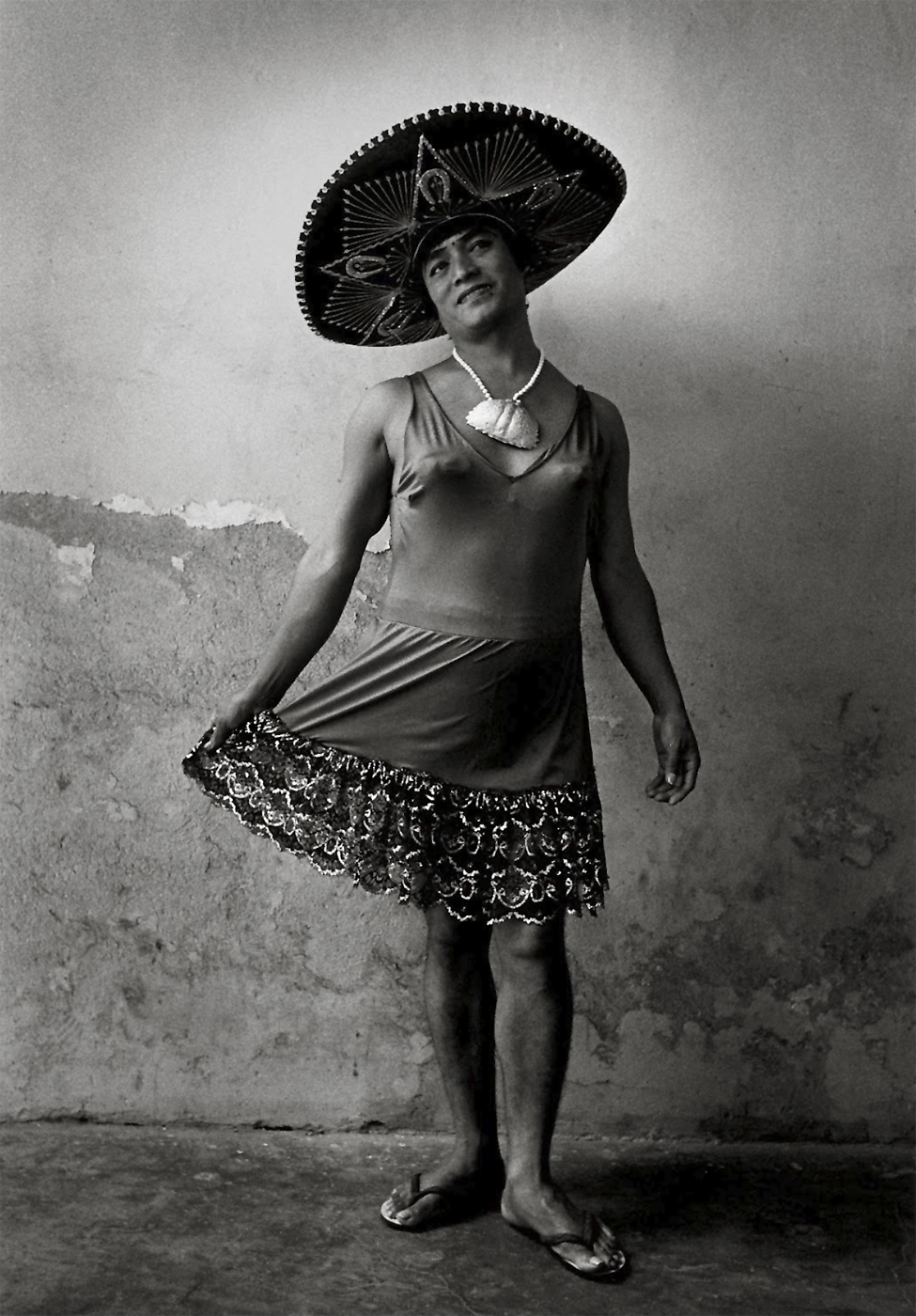
In addition to highlighting the importance of women in Juchitán, Iturbide also captured the society’s openness to muxes – men who dress as women, sometimes referred to as a Zapotec third gender. Her photographs of a muxe named Magnolia – Magnolia with Mirror / Magnolia con espejo (1986, J. Paul Getty Museum) and Magnolia with Sombrero / Magnolia con sombrero (1986, MFA) – demonstrate her ability to connect intimately with the community. Immersing herself in Zapotec culture, Iturbide also recorded the enduring legacy of native traditions – from an annual two-day festival and pilgrimage celebrating an alligator deity to el rapto, a premarital ritual practiced by those in lower and middle classes. Her strong and poetic images of Juchitán not only gained her international recognition, but also became a point of departure for a new vision of Juchitec society that has since been integrated into Mexico’s identity.

Following the Juchitán section are Iturbide’s photographs of the annual goat-slaughtering ritual in the Oaxacan region of La Mixteca, in south-central Mexico. The tradition dates back to colonial times, when Spanish landowners contracted Mixtec workers to butcher animals for sale, and carries on today. Tens of thousands of goats are killed during the month-long festival, which involves ritualistic aspects such as saving a lone animal every year as an act of repentance before the slaughter. Iturbide’s photographs from this series also highlight the exploitation of workers in one of Mexico’s poorest regions, who have created a ritual out of their harsh working conditions as a way of coping with the violence and pain. This experience had a tremendous impact on Iturbide, marking a personal turning point. Her wrenching experience in La Mixteca became the last time she spent extended amounts of time with an indigenous community.

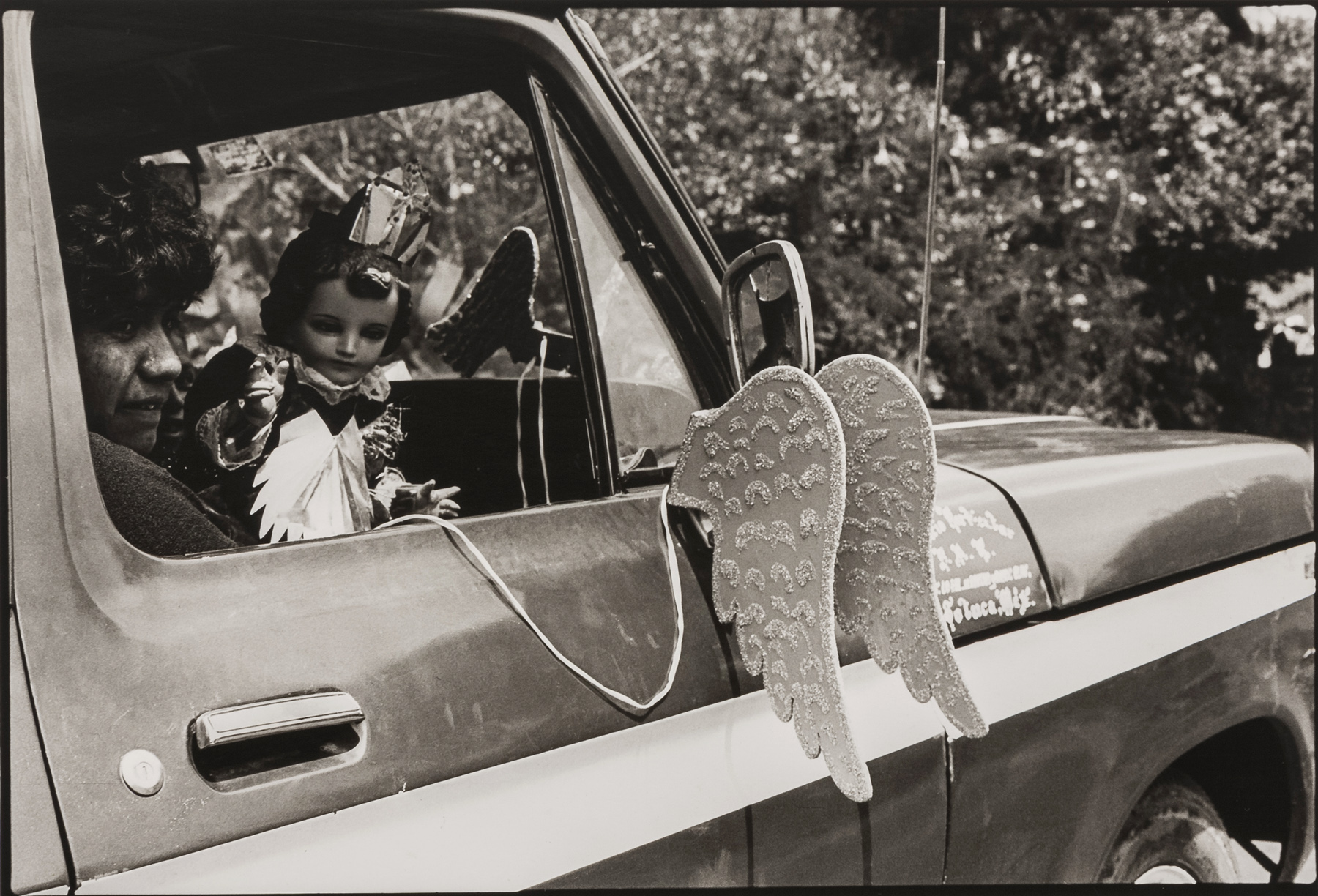
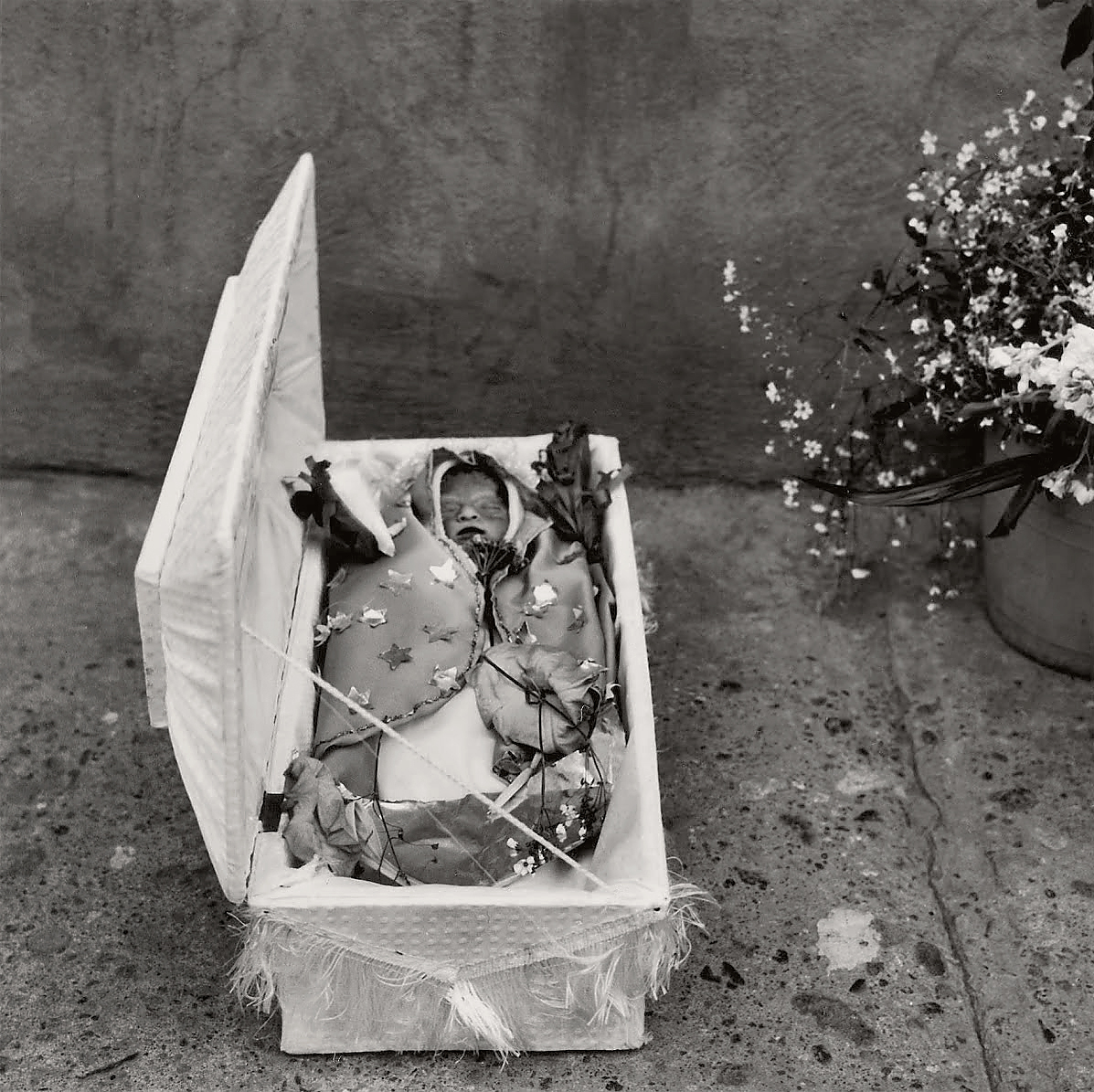
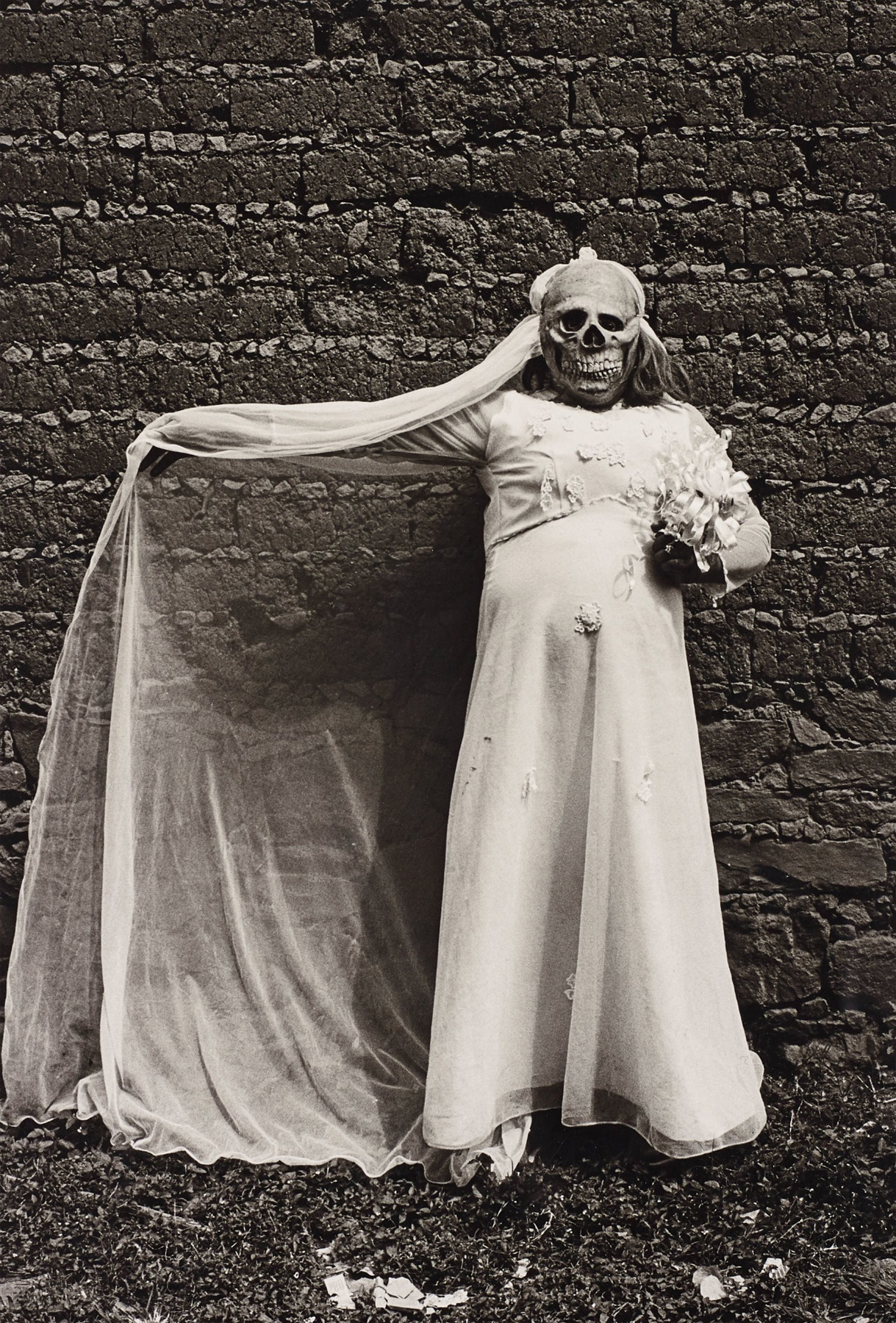
The next three sections focus on themes that recur throughout Iturbide’s oeuvre: fiestas, death and birds. Since the mid-1970s, Iturbide has traveled throughout the country, including Chalma, Oaxaca and Tlaxcala, to observe and record a variety of fiestas – lavish and visually stimulating celebrations, which often include elaborate costumes or disguises. Death is another dominant element of Mexican culture, and Iturbide’s photographs related to the subject reflect both a personal experience and larger cultural manifestations. Her works range from depictions of signs of mortality in everyday life, as seen in the early photograph Mexico… I want to get to know you! / México… Quiero Conocerte! (1975, MFA), to representations of surreal-like funerary rituals and celebrations like the annual Día de los Muertos (Day of the Dead). Iturbide’s fascination with birds is intimately linked to her own emotional journey toward overcoming a personal loss. Her photographs of the subject – ranging from spectacular and sublime skies full of birds to close-up portraits of birds in trees and even self-portraits with birds – show her interest in the rites and cycles of the natural world, while also evoking the spiritual world.

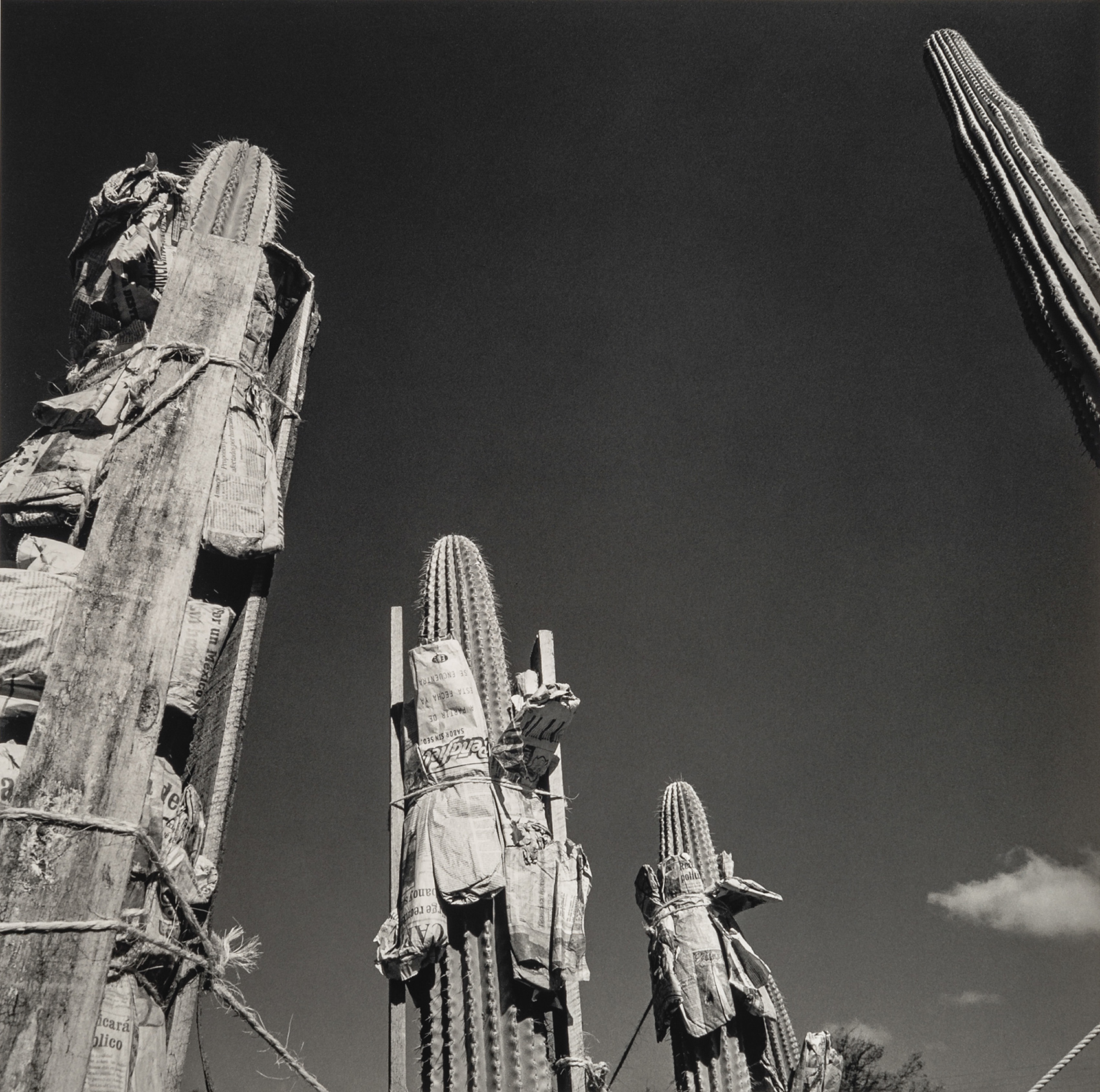
In 1998, Iturbide was invited by Francisco Toledo to photograph the newly opened Ethnobotanical Garden of Oaxaca. By design, the garden tells the story of the relationship between the people of Oaxaca and their native plants, which are arranged by ecological and cultural themes. The next section of the exhibition presents these photographs, particularly of cacti undergoing therapeutic treatment. The images, published in her 2004 book Naturata, reflect the caretaking aspect of the garden. A startling view of the tops of several columnar cacti in Botanical Garden / Jardín Botánico (1998-1999) shows them with bundles of newspaper padding and wooden boards as splints, all bound around the plants with rope. In another photograph, Botanical Garden / Jardín Botánico (2002) a thorny treelike plant receives an intravenous treatment as two bags of a cream-coloured liquid drip into lines connected to its limbs.

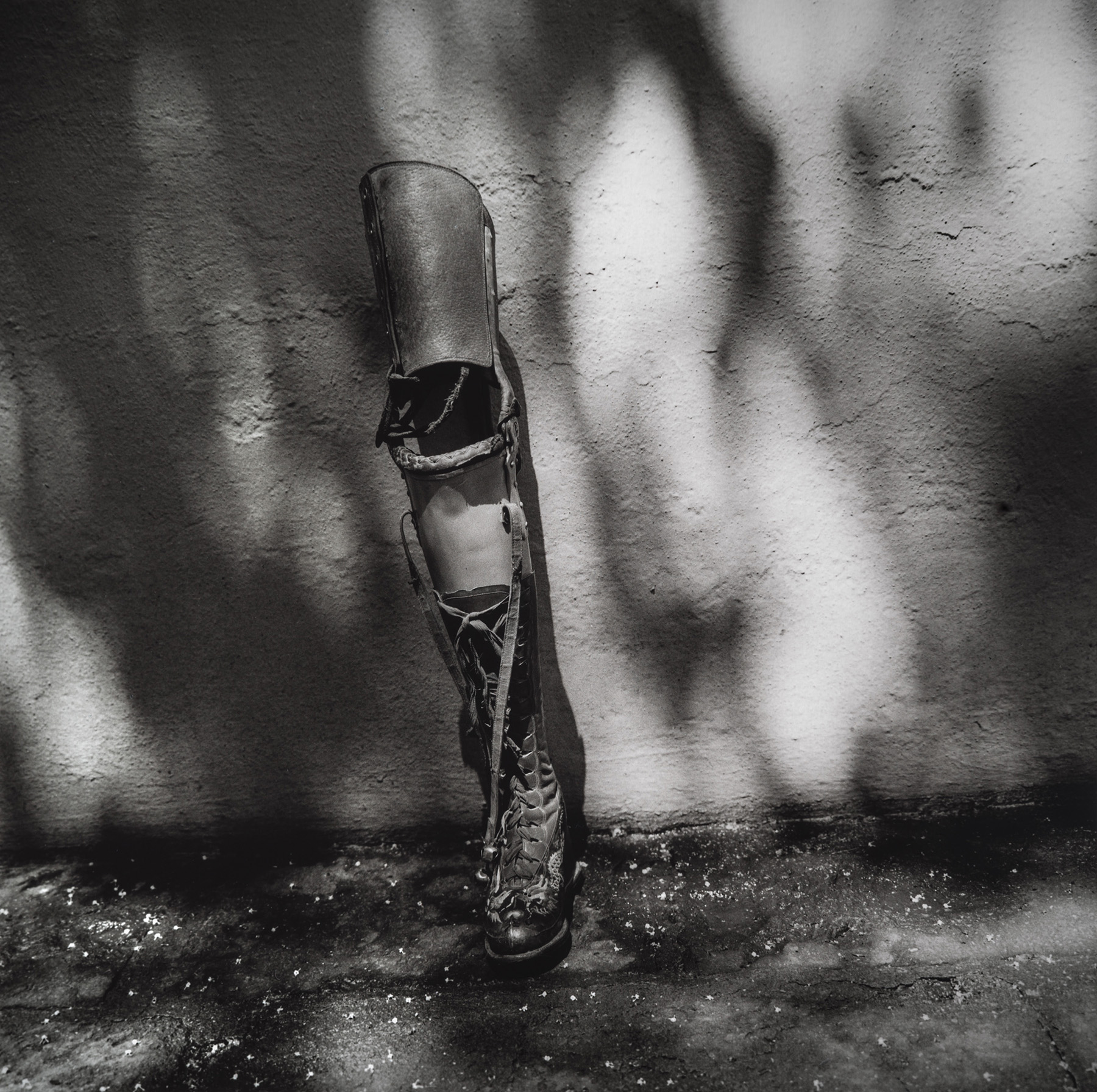
The final section features the most recent series in the exhibition, El baño de Frida (Frida’s Bathroom), which will be on view from February 27, 2019 through June 16, 2019 in the Museum’s Art of the Americas Wing, alongside another MFA exhibition, Frida Kahlo and Arte Popular. In 2005, Iturbide was commissioned to photograph personal belongings in Frida Kahlo’s bathroom at the Casa Azul, which had been locked away for 50 years following the artist’s death. Iturbide’s stark images provide an emotional narrative about the intimate space within the “Blue House,” where Kahlo was born and died, and the mystery of the objects. Iturbide’s photographs focus primarily on objects related to Kahlo’s pain – from a box of Demerol, an opioid pain medication, to a prosthetic leg. In one photograph, a hospital gown – stained by blood or paint – hangs ominously against the tiled wall, serving as a reminder of Kahlo’s many operations. In another, a self-portrait that depicts Iturbide’s bare feet in Kahlo’s bathtub, the photographer puts herself in the artist’s place and evokes one of Kahlo’s famous paintings, What the Water Gave Me (1938). Iturbide’s images reveal a side of Kahlo that is dramatically different from the colourful magical realist portrayed by her clothes and paintings. In photographing Kahlo’s private space, Iturbide grapples not only with the cultural and symbolic legacy of the painter, but with her own legacy as well. The series reveals a silent dialogue between the two women, two artists of Mexico, who have seen their art as a form of therapy and escape from everyday life.

About Graciela Iturbide

Iturbide was born in 1942 in Mexico City. In 1969, at the age of 27, she enrolled at the film school Centro de Estudios Cinematográficos at the Universidad Nacional Autónoma de México to become a film director. However, she was soon drawn to the art of still photography as practiced by the Mexican modernist master Manuel Álvarez Bravo, who was teaching at the University. From 1970 to 1971 she worked as Bravo’s assistant, accompanying him on various photographic journeys throughout Mexico. In the early half of the 1970s, Iturbide traveled widely across Latin America – in particular to Cuba and Panama. In 1978, she was commissioned by the Ethnographic Archive of the National Indigenous Institute of Mexico to photograph Mexico’s indigenous population. Iturbide decided to document and record the way of life of the Seri people along the country’s border with Arizona. In 1979, she was invited by the artist Francisco Toledo to photograph the Juchitán people who form part of the Zapotec culture native to Oaxaca in southern Mexico. This series resulted in the publication of her book Juchitán de las Mujeres in 1989. Between 1980 and 2000, Iturbide was invited to work in Cuba, Germany, India, Madagascar, Hungary, France and the U.S., producing a number of important projects. She has enjoyed solo exhibitions at the Centre Pompidou (1982), San Francisco Museum of Modern Art (1990), J. Paul Getty Museum (2007), MAPFRE Foudation, Madrid (2009), Photography Museum Winterthur (2009) and Barbican Art Gallery (2012), among others. Iturbide is the recipient of the W. Eugene Smith Memorial Foundation Award (1987); the Grand Prize Mois de la Photo, Paris (1988); a Guggenheim Fellowship for the project Fiesta y Muerte (1988); the Hugo Erfurth Award, Leverkusen, Germany (1989); the International Grand Prize, Hokkaido, Japan (1990); the Rencontres Internationales de la Photographie Award, Arles (1991); the Hasselblad Award (2008); the National Prize of Sciences and Arts in Mexico City (2008); an Honorary Degree in photography from Columbia College Chicago (2008); and an Honorary Doctorate of Arts from the San Francisco Art Institute (2009).

Press release from the Museum of Fine Arts, Boston website [Online] Cited 05/04/2019


Graciela Iturbide (Mexican, b. 1942) 'Señor Enmarcado, Ciudad de México' (Framed Man, Mexico City) 1970


Graciela Iturbide (Mexican, b. 1942)
Señor Enmarcado, Ciudad de México, (Framed Man, Mexico City)
1970
Gelatin silver print
Courtesy of the Museum of Fine Arts, Boston
© Graciela Iturbide


Graciela Iturbide (Mexican, b. 1942) '¡Mexico, Quiero Conocerte!, Chiapas, Mexico' (Mexico... I want to get to know you!) 1975


Graciela Iturbide (Mexican, b. 1942)
¡Mexico, Quiero Conocerte!, Chiapas, Mexico (Mexico… I want to get to know you!)
1975
Gelatin silver print
Gift of the artist
Courtesy of the Museum of Fine Arts, Boston
© Graciela Iturbide


Graciela Iturbide (Mexican, b. 1942) 'Los Pollos, Juchitán, México' (Chickens, Juchitán, Mexico) 1979


Graciela Iturbide (Mexican, b. 1942)
Los Pollos, Juchitán, México (Chickens, Juchitán, Mexico)
1979
Gelatin silver print
Courtesy of the Museum of Fine Arts, Boston
© Graciela Iturbide


“For her, the camera is an instrument of sharing, making visible what, to many, is invisible,” Ms. Gresh said. Ms. Iturbide’s photos, she added, provide “a poetic vision of contemporary culture informed by a sense of life’s surprises and mysteries.”


Graciela Iturbide (Mexican, b. 1942) 'Nuestra Señora de las Iguanas, Juchitán, México' (Our Lady of the Iguanas, Juchitán, Mexico) 1979


Graciela Iturbide (Mexican, b. 1942)
Nuestra Señora de las Iguanas, Juchitán, México (Our Lady of the Iguanas, Juchitán, Mexico)
1979
Gelatin silver print
Courtesy of the Museum of Fine Arts, Boston
© Graciela Iturbide


Graciela Iturbide (Mexican, b. 1942) 'Iguanas, Juchitán, México' 1984


Graciela Iturbide (Mexican, b. 1942)
Iguanas, Juchitán, México
1984
Gelatin silver print
Museum purchase with funds donated by John and Cynthia Reed, Charles H. Bayley Picture and Painting Fund, Barbara M. Marshall Fund, Lucy Dalbiac Luard Fund, Horace W. Goldsmith Foundation Fund for Photography, Francis Welch Fund, and Jane M. Rabb Fund for Film and Photography
Courtesy of the Museum of Fine Arts, Boston
© Graciela Iturbide


Graciela Iturbide (Mexican, b. 1942) 'Serafina, Juchitán, México' 1984


Graciela Iturbide (Mexican, b. 1942)
Serafina, Juchitán, México
1984
Gelatin silver print
Courtesy of the Museum of Fine Arts, Boston
© Graciela Iturbide


Graciela Iturbide (Mexican, b. 1942) 'Magnolia with Mirror, Juchitán, México' 1986


Graciela Iturbide (Mexican, b. 1942)
Magnolia with Mirror, Juchitán, México
1986
Gelatin silver print
Courtesy of the Museum of Fine Arts, Boston
© Graciela Iturbide


Graciela Iturbide (Mexican, b. 1942) 'Magnolia (2), Juchitán, México' (Magnolia with Sombrero / Magnolia con sombrero) 1986


Graciela Iturbide (Mexican, b. 1942)
Magnolia (2), Juchitán, México (Magnolia with Sombrero / Magnolia con sombrero)
1986
Gelatin silver print
30 x 47.2cm
Courtesy of the Museum of Fine Arts, Boston
© Graciela Iturbide


“The dark ballast of Iturbide’s photography is a deep knowledge of predation: how humans prey on animals; how multinational corporations subsume developing economies; how modern industry exploits a largely indigenous underclass; how artists wrangle life from their subjects in the name of creation. In one haunting early photograph, a young Cuna woman walks through an open field in Panama, Pepsi-Cola’s logo embroidered on her shirt. The pernicious creep of capitalism, yes, but also its corollary: a vivid reminder that indigenous people, often relegated to an imagined antiquity, are full participants in contemporary life. …

In 1979, the painter Francisco Toledo invited Iturbide to visit his native Juchitán, in southeastern Oaxaca, a town known for its fierce independence and long-standing leftist sympathies. She returned frequently over the next decade, chronicling the public and private life of its largely Zapotec population. As a perpetual guest, Iturbide became a master of the threshold, of doorways and frames, storefront windows and cemeteries, masks and carnival, of the moments preceding and following transformation.

Contact sheets enclosed in glass vitrines accompany select images, often annotated with grease pencil. According to Iturbide, there are – pace Cartier-Bresson – two “decisive moments” in photography: “One, when you take the photo; and two, when you discover it in the contact sheet, because you often think you took one photo, and another comes out.” In the sheet for Magnolia with Mirror (1986, above), a livewire thread of intimacy is palpable in the sense of giddy experimentation between artist and subject. In the proofs for Our Lady of the Iguanas, Zobeida Díaz shakes the hand of a passerby, adjusts her crown of iguanas, suppresses laughter. The sheets underscore the contingency and providence of any image’s origins, how a slightly upturned lip or shifted frame catapults one into the pantheon while another slips into obscurity.”

Extract from Christopher Alessandrini. “Graciela Iturbide, Visionary Ethnographer,” on The New York Review of Books website [Online] Cited 06/04/2019


Graciela Iturbide (Mexican, b. 1942) 'Novia Muerte, Chalma, Mexico' 1986


Graciela Iturbide (Mexican, b. 1942)
Novia Muerte, Chalma, Mexico
1986
Gelatin silver print
30.5 x 20.5cm (12 x 8 1/8 in.)
Courtesy of the Museum of Fine Arts, Boston
© Graciela Iturbide


Graciela Iturbide (Mexican, b. 1942) 'Cuatro Pescaditos, Juchitán, México' (Four Little Fishes, Juchitán, Mexico) 1986


Graciela Iturbide (Mexican, b. 1942)
Cuatro Pescaditos, Juchitán, México (Four Little Fishes, Juchitán, Mexico)
1986
Gelatin silver print
Courtesy of the Museum of Fine Arts, Boston
© Graciela Iturbide


Graciela Iturbide (Mexican, b. 1942) 'El gallo, Juchitán, México' 1986


Graciela Iturbide (Mexican, b. 1942)
El gallo, Juchitán, México
1986
Gelatin silver print
32 x 47.8cm
Courtesy of the Museum of Fine Arts, Boston
© Graciela Iturbide


Graciela Iturbide (Mexican, b. 1942) 'El sacrificio, La Mixteca, Oaxaca, México' 1992


Graciela Iturbide (Mexican, b. 1942)
El sacrificio, La Mixteca, Oaxaca, México
1992
Gelatin silver print
35.9 x 64.3cm
Courtesy of the Museum of Fine Arts, Boston
© Graciela Iturbide


Graciela Iturbide (Mexican, b. 1942) 'Torito' (Little Bull) 1982


Graciela Iturbide (Mexican, b. 1942)
Torito (Little Bull)
1982
Gelatin silver print
Collection of Galeria Lopez Quiroga
Courtesy of the Museum of Fine Arts, Boston
© Graciela Iturbide


Iturbide studied photography at universities in Mexico, where she met her mentor, the teacher, cinematographer, and photographer Manuel Álvarez Bravo. Inspired by Bravo, she developed her particular interest in the daily life of Mexico’s indigenous cultures. Iturbide has photographed things and people found in Mexico City, in her native Juchitán, in Oaxaca, and on the Mexico-U.S. border. Her camera lens often traces Mexico’s rich life of religion and rituals. Torito represents an assemblage of a bicycle frame and a cow’s skull and horn, found in Mexico City, and shows the photographer’s exploration of the relationship between the individual and the broader culture.


Museum of Fine Arts, Boston
Avenue of the Arts
465 Huntington Avenue
Boston, Massachusetts

Opening hours:
Saturday – Monday, Wednesday 10am – 5pm
Closed Tuesday
Thursday – Friday 10am – 10pm

Museum of Fine Arts, Boston website

LIKE ART BLART ON FACEBOOK

Back to top

Exhibition: ‘Edward Burtynsky: Water’ presented by The New Orleans Museum of Art and the Contemporary Arts Center

Exhibition dates: 5th October 2013 – 19th January 2014


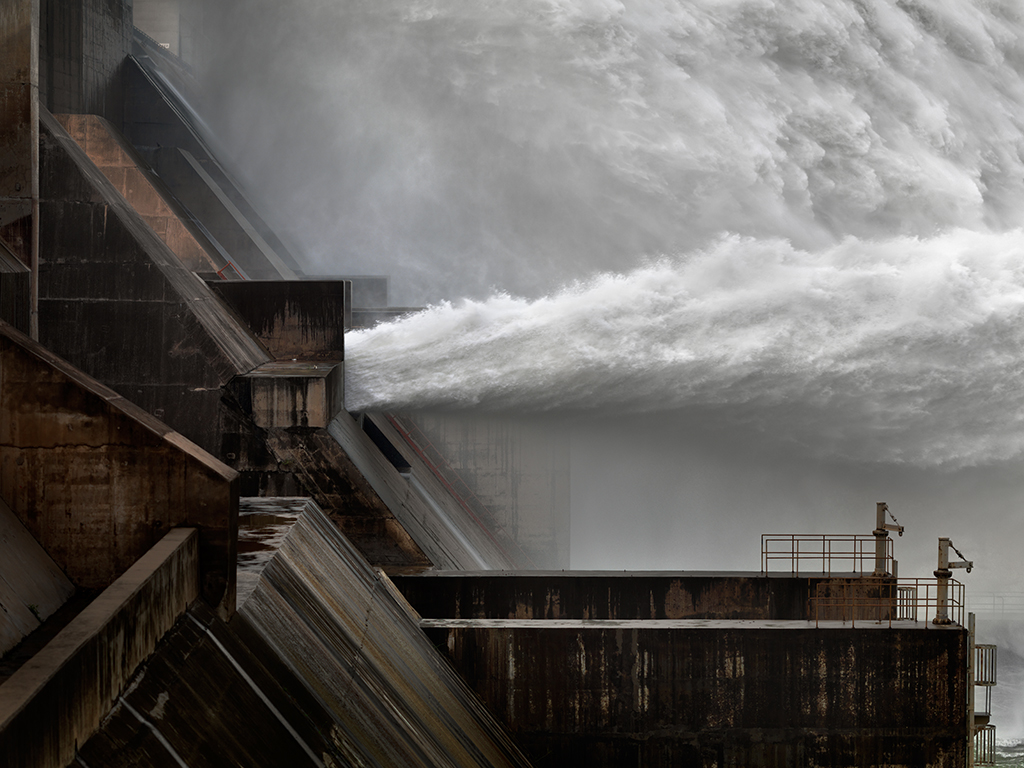
Edward Burtynsky (Canadian, b. 1955) 'Xiaolangdi Dam #1, Yellow River, Henan Province, China' 2011


Edward Burtynsky (Canadian, b. 1955)
Xiaolangdi Dam #1, Yellow River, Henan Province, China
2011


“Now with the assistance of the web and being able to look at things in a bit more depth before I go there, I can actually predetermine my pictures…”


Edward Burtynsky


Predetermined weather music

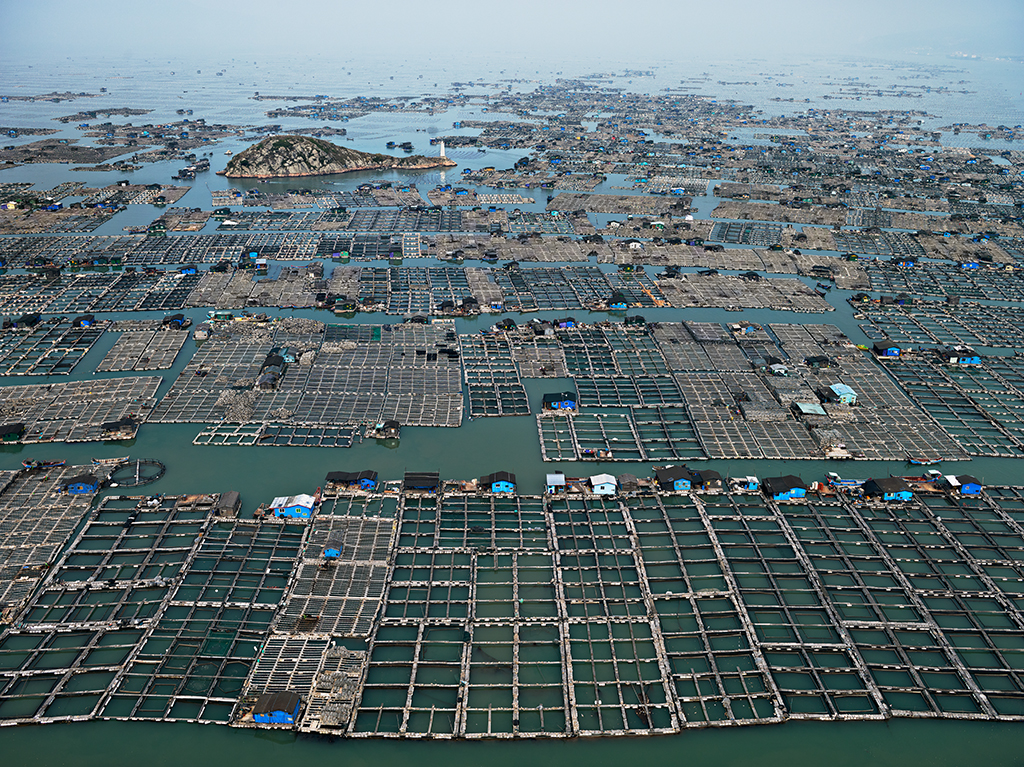
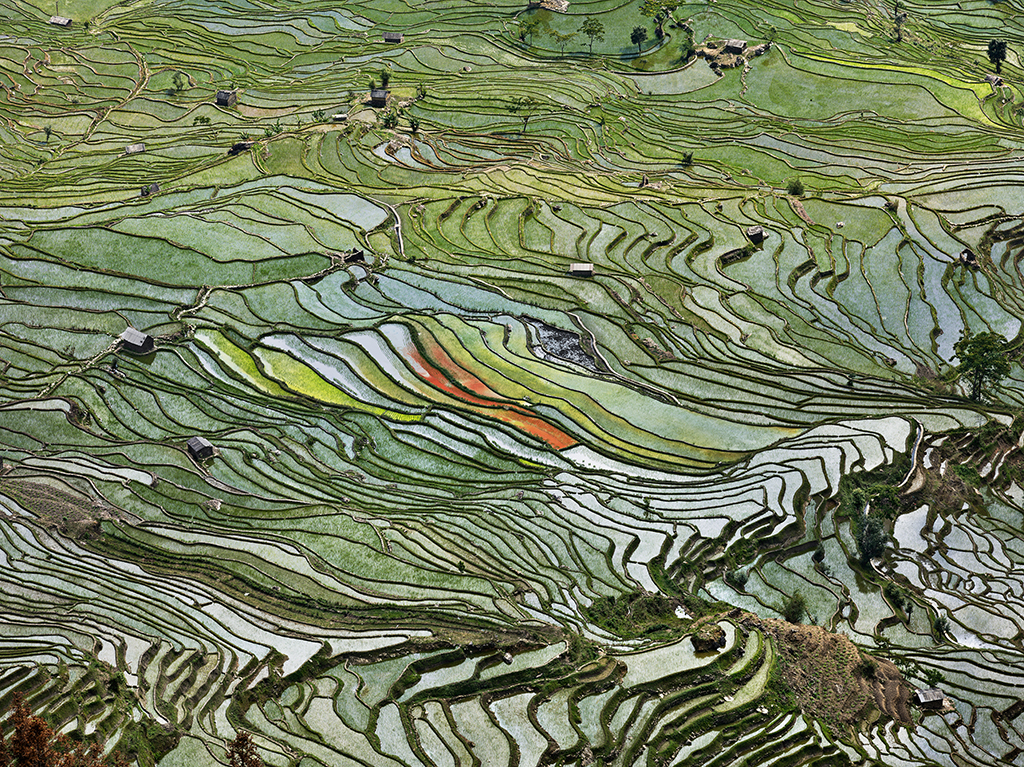
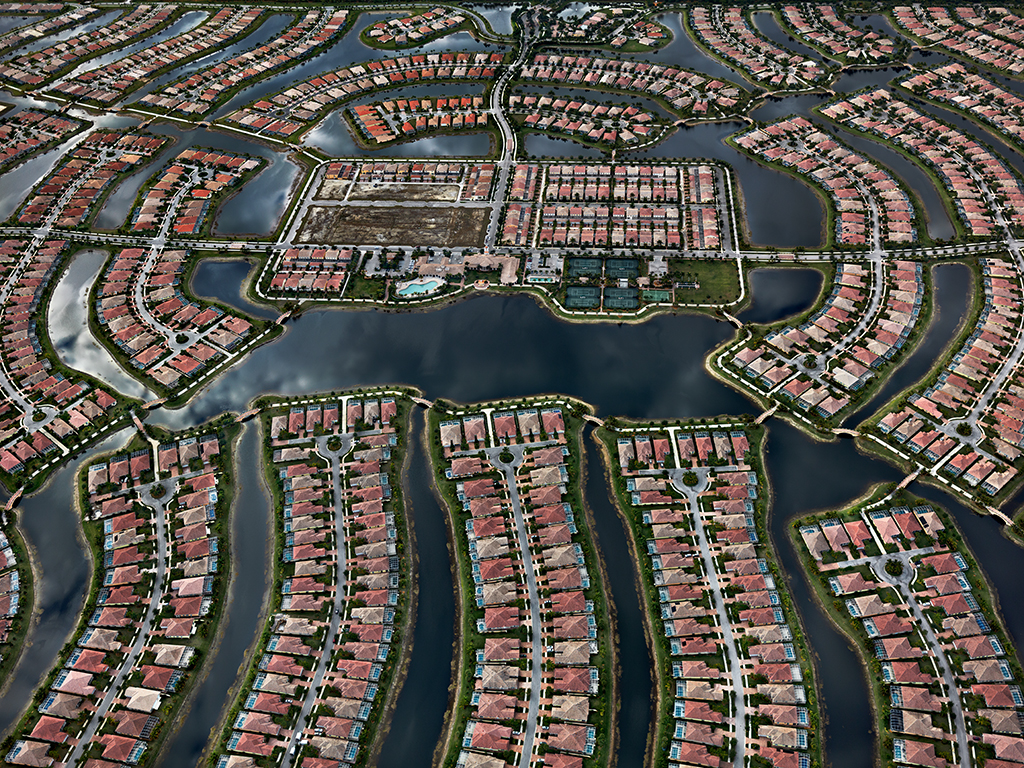
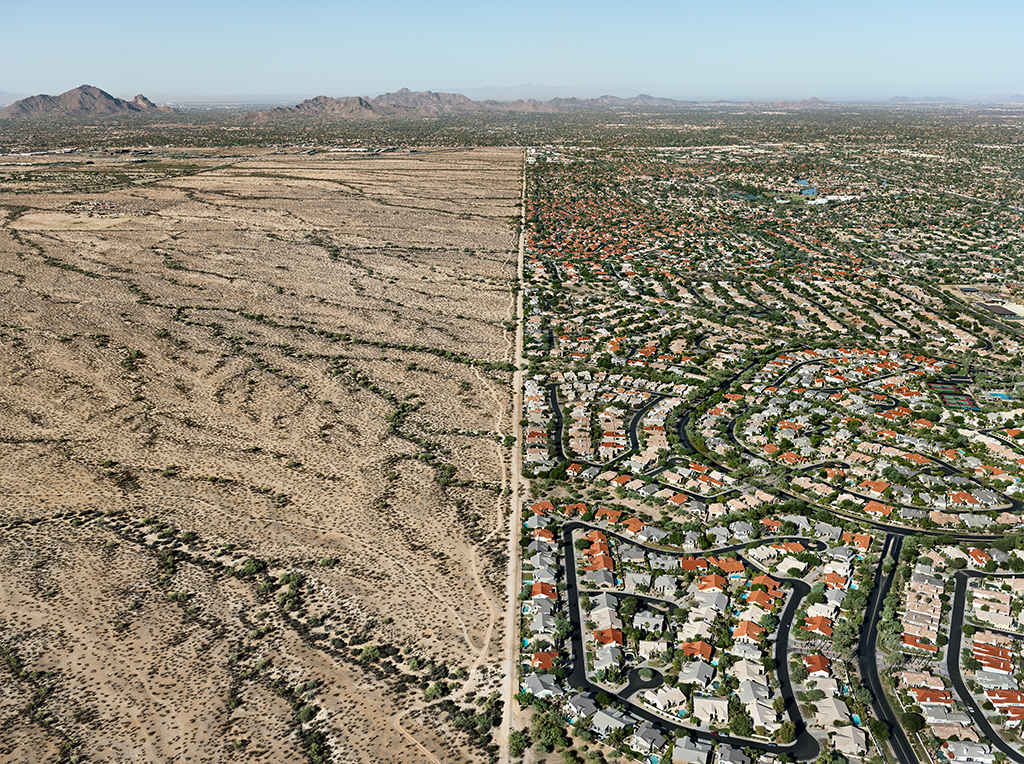
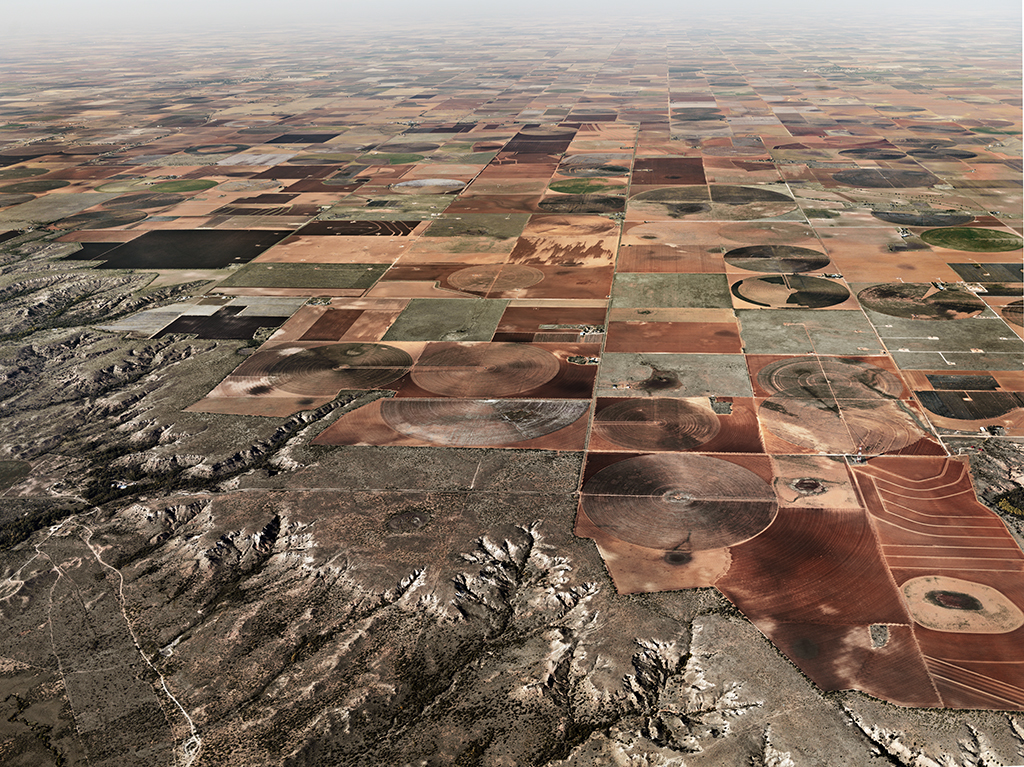
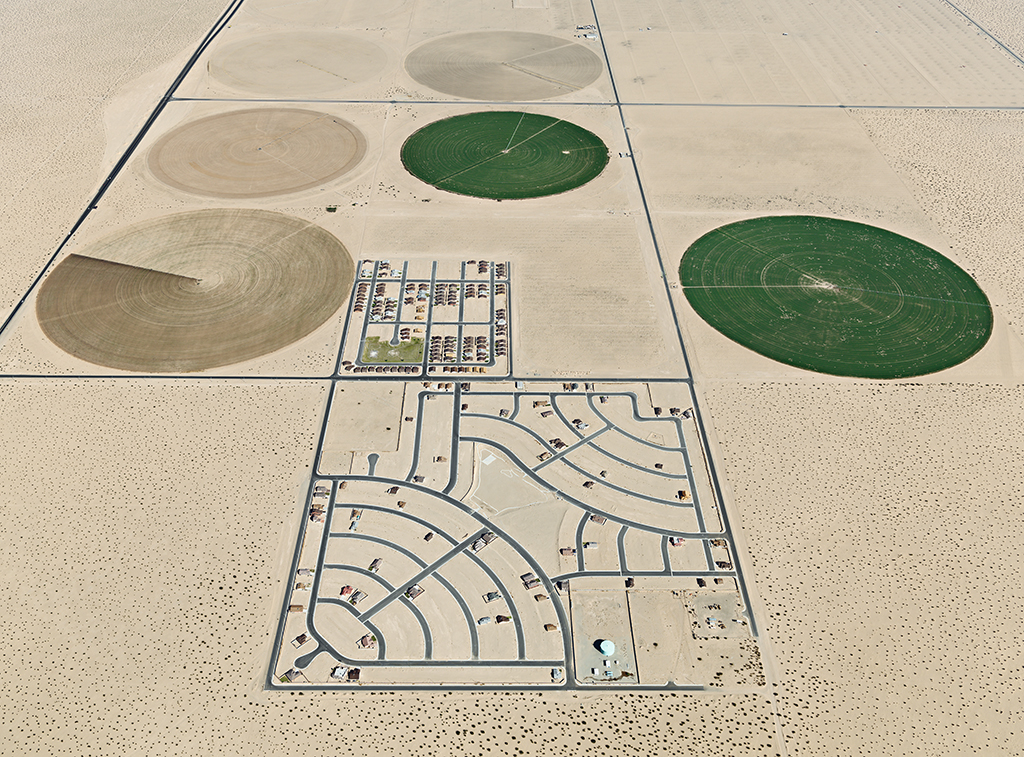
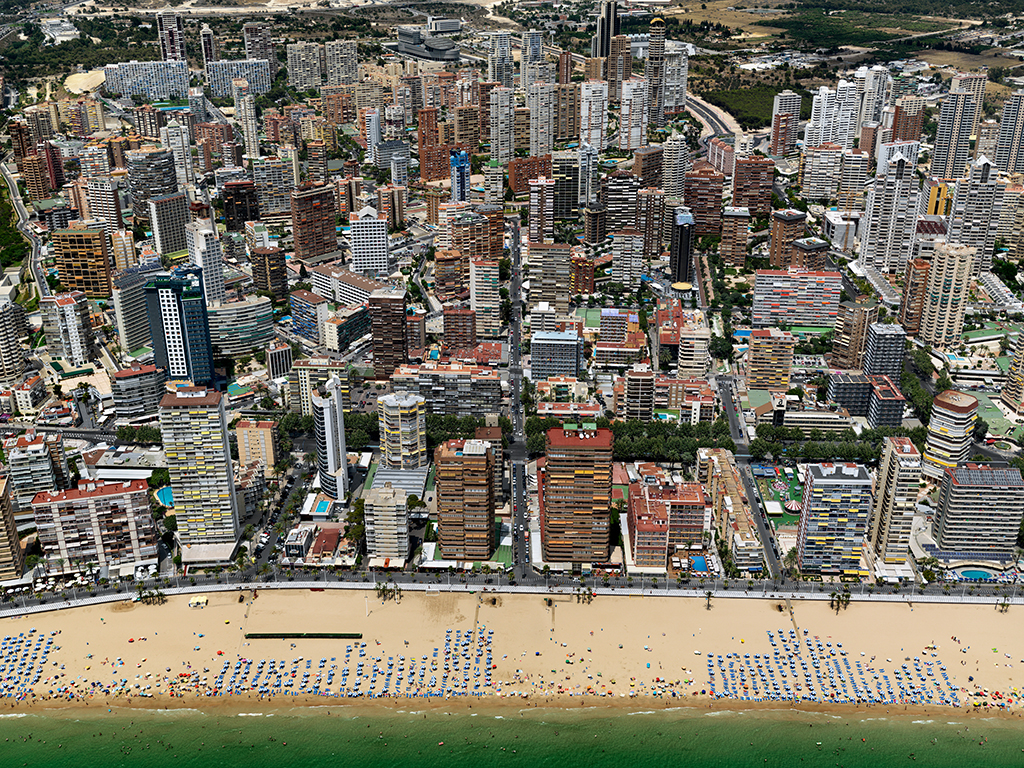
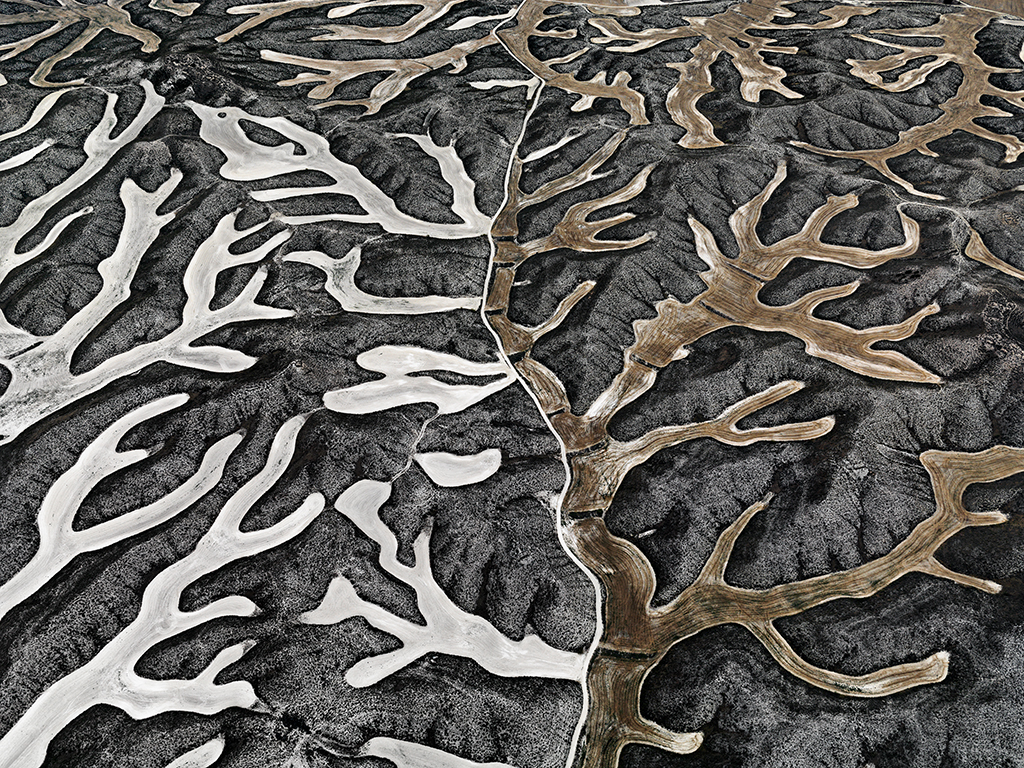
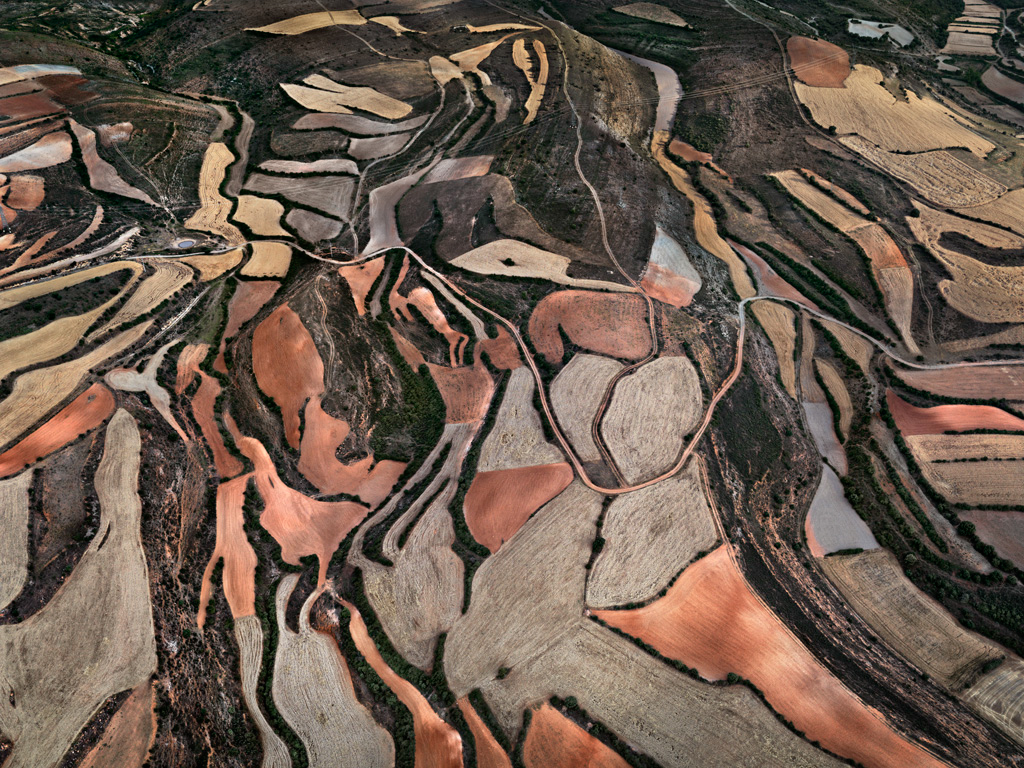
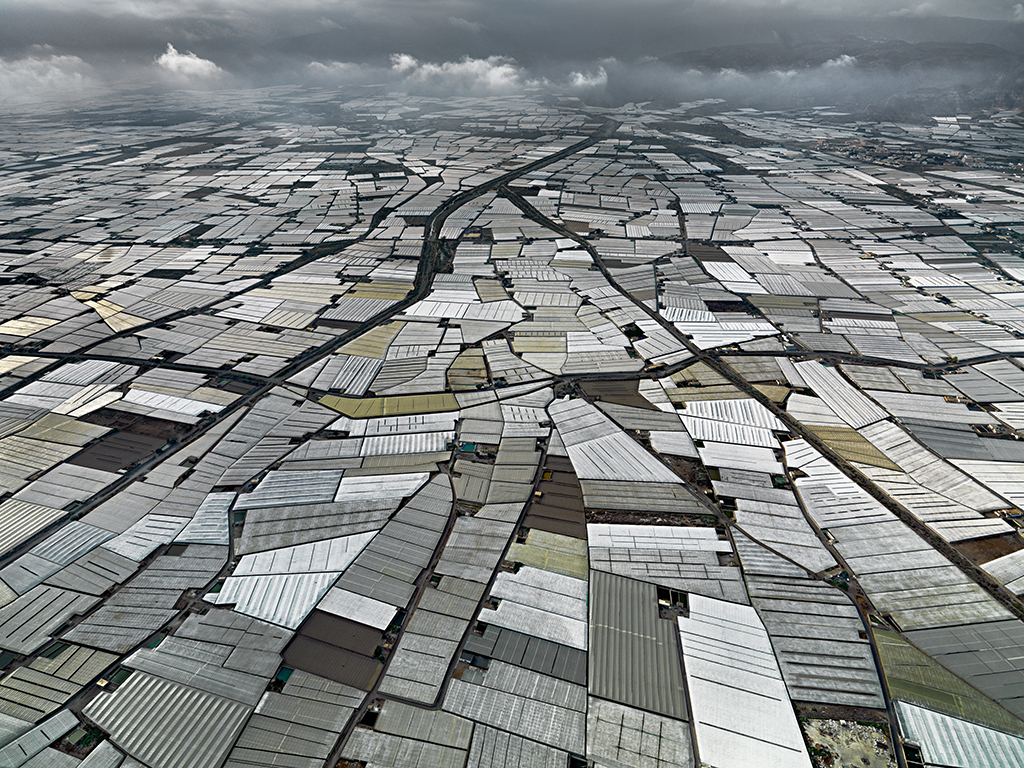
The geometric images such as Navajo Reservation / Suburb (2011), Pivot Irrigation #11 (2011) and Pivot Irrigation / Suburb (2011) are of more interest here, with their juxtaposition of irrigation/habitation/nature. I especially like the Andreas Gursky-esque patterning of Benidorm #2 (2010) but I’m really over the abstract pattern of rivers, rice terraces and greenhouses covering the plane of view, mainly because so many photographers have done it and all in the same way. You only have to type in ‘Australian aerial landscape photographer’ into Google Images to see what I mean. Australia even has its own version in the West Australian photographer Richard Woldendorp. Bet you can’t tell the difference between the two photographers in a blind taste test!

These images are a bit like elevator music (also known as Muzak, piped music, weather music or lift music). Quite a nice analogy, weather music, as these photographs are generic, middle of the road easy listening abstraction, beauty, and formality – images with a simple melody that constantly loop back to the beginning, commonly played through speakers (in this case the institutions that laud such repetitive work).

While Burtynsky’s work seeks to explore the relationship between art and environment, “focusing on all the facets of people’s relationship with water, including ritual and leisure,” he offers evidence without argument. And there is the crux of the problem. When an artist promulgates an objective point of view without comment, they run the risk of saying very little with the work for they have nothing to say themselves.

There is nothing passionate, weak, decadent and impure here. Perhaps the artist needs to change the angle of attack for me to sit up and take notice. Otherwise the motion of the train has a somewhat soporific effect.

Dr Marcus Bunyan


Many thankx to The New Orleans Museum of Art and the Contemporary Arts Center for allowing me to publish the photographs in the posting. Please click on the photographs for a larger version of the image.


NOMA CAC

NOMA CAC is an ongoing exhibition and programming partnership between two of the most significant cultural institutions of New Orleans: the New Orleans Museum of Art and the Contemporary Arts Center. Edward Burtynsky: Water is the second initiative of this unique collaboration, which will draw on the strengths of both institutions to provide thought-provoking exhibitions and programming for a cross section of the community. The exhibition is presented in the second floor Lupin Foundation Gallery of the Contemporary Arts Center (CAC).


Where I Stand: A Behind the Scenes Look at Edward Burtynsky’s Photographic Essay, Water


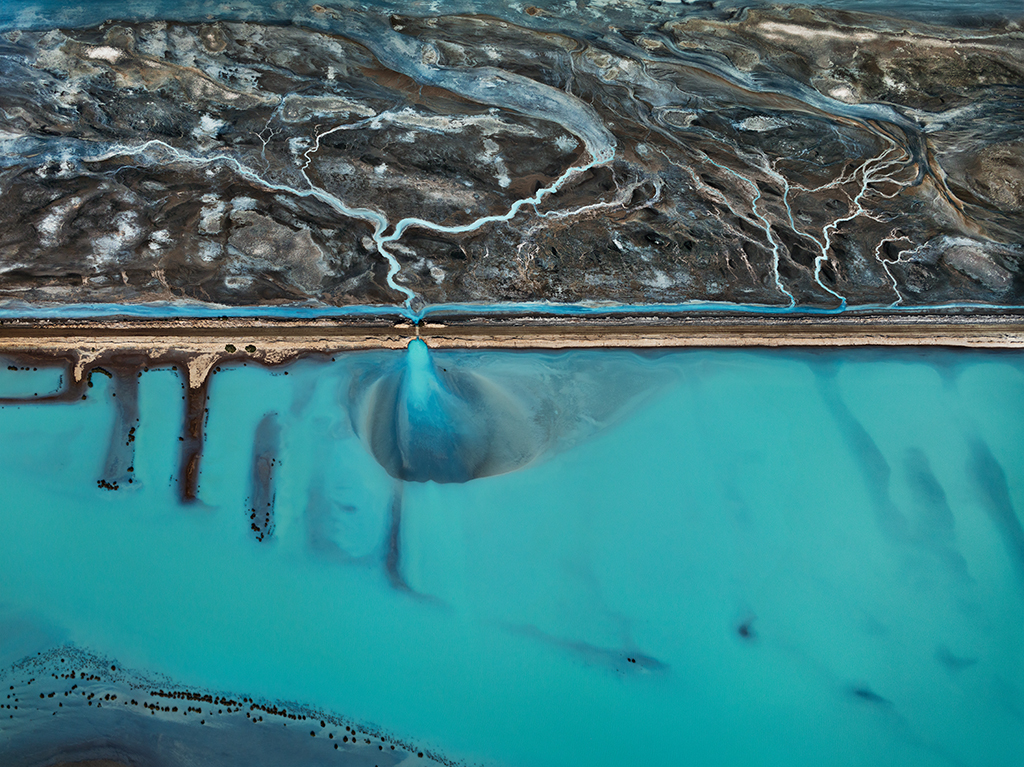
Edward Burtynsky (Canadian, b. 1955) 'Cerro Prieto Geothermal Power Station, Baja, Mexico' 2012


Edward Burtynsky (Canadian, b. 1955)
Cerro Prieto Geothermal Power Station, Baja, Mexico
2012


Edward Burtynsky (Canadian, b. 1955) 'Marine Aquaculture #1, Luoyuan Bay, Fujian Province, China' 2012


Edward Burtynsky (Canadian, b. 1955)
Marine Aquaculture #1, Luoyuan Bay, Fujian Province, China
2012


Edward Burtynsky (Canadian, b. 1955) 'Rice Terraces #2, Western Yunnan Province, China' 2012


Edward Burtynsky (Canadian, b. 1955)
Rice Terraces #2, Western Yunnan Province, China
2012


Edward Burtynsky (Canadian, b. 1955) 'Verona Walk, Naples, Florida, USA' 2012


Edward Burtynsky (Canadian, b. 1955)
Verona Walk, Naples, Florida, USA
2012


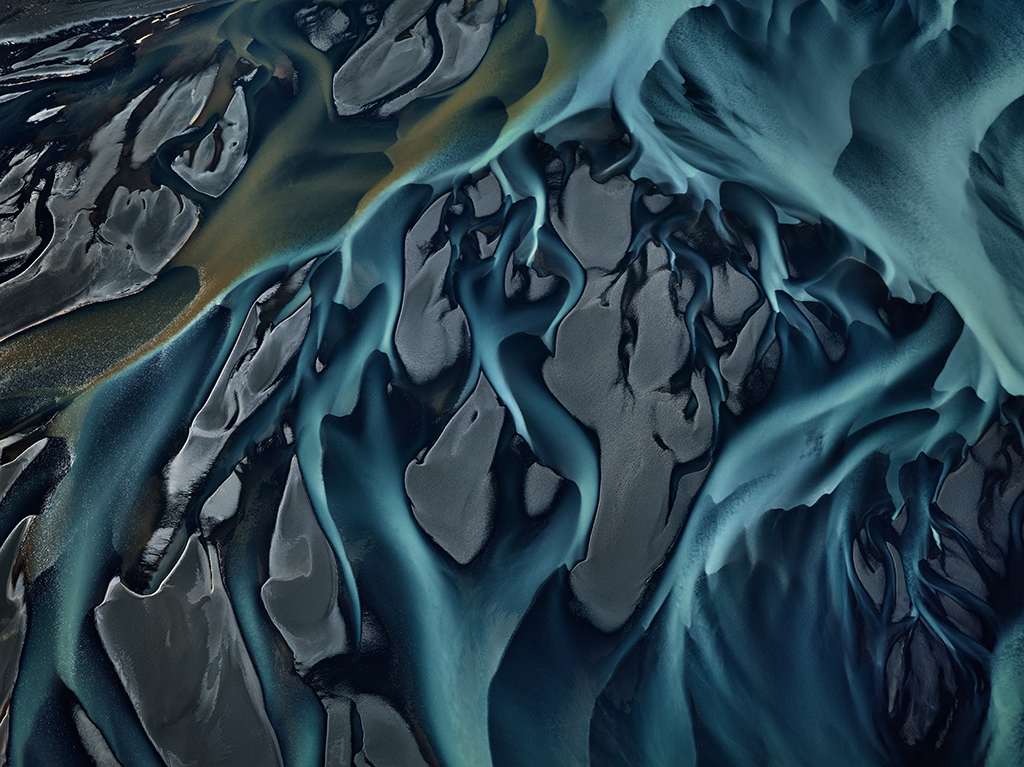
Edward Burtynsky (Canadian, b. 1955) 'Thjorsá River #1, Iceland' 2012


Edward Burtynsky (Canadian, b. 1955)
Thjorsá River #1, Iceland
2012


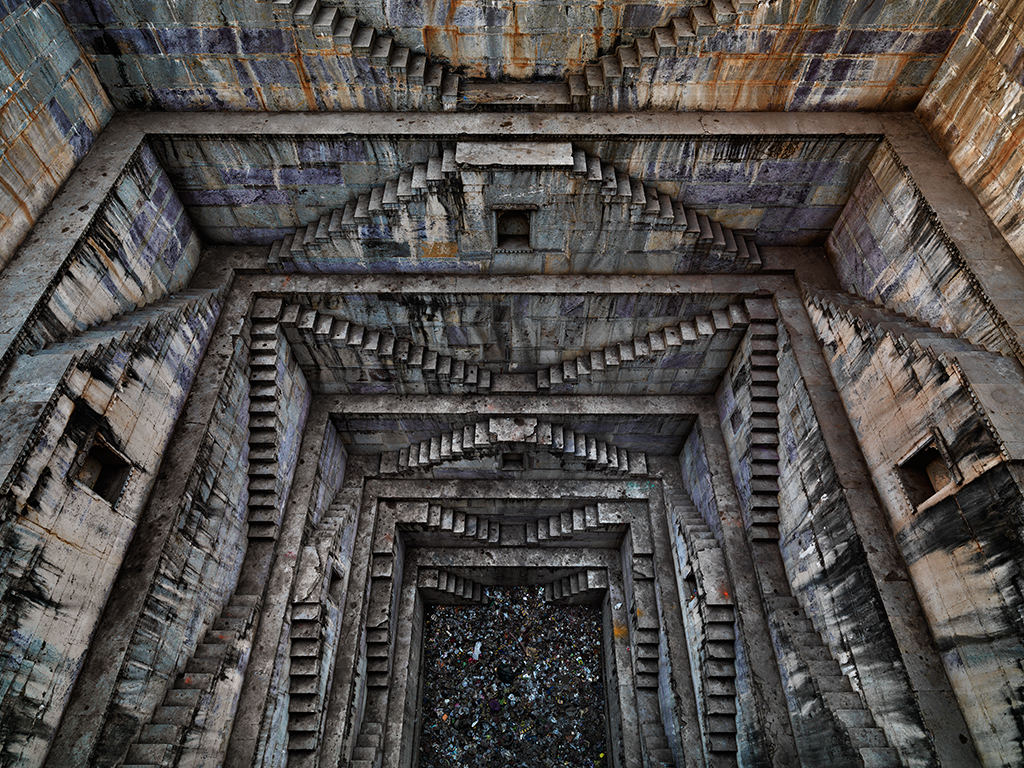
Edward Burtynsky (Canadian, b. 1955) 'Stepwell #4, Sagar Kund Baori, Bundi, Rajasthan, India' 2010


Edward Burtynsky (Canadian, b. 1955)
Stepwell #4, Sagar Kund Baori, Bundi, Rajasthan, India
2010


NOMA CAC is proud to present Edward Burtynsky: Water, the world premiere of the latest body of work by internationally renowned photographer Edward Burtynsky, opening Saturday, October 5 in the second floor Lupin Foundation Gallery of the Contemporary Arts Center (CAC). This second initiative of the ongoing NOMA CAC programming partnership includes over 50 large-scale colour photographs that form a global portrait of humanity’s relationship to water. Burtynsky’s images address several facets of the world’s vital resource, exploring the source, collection, control, displacement, and depletion of water. The exhibition opens on October 5, 2013 and runs through January 19, 2014.

Edward Burtynsky (born 1955, St. Catharines, Ontario, Canada) has long been recognised for his ability to combine vast and serious subject matter with a rigorous, formal approach to picture making. The results are images that are part abstraction, part architecture, and part raw data. In producing Water, Burtynsky has worked across the globe – from the Gulf of Mexico to the shores of the Ganges – weaving together an ambitious representation of water’s increasingly fragmented lifecycle.

“The CAC is thrilled to be able to premiere an exhibition of this scale and quality through our partnership with NOMA,” said Neil Barclay, Executive Director of the Contemporary Arts Center. “Burtynsky’s work has long served as a commentary on the relationship between art and environment, and I believe the subject of these works will be of keen interest to anyone who has experienced life in New Orleans over the past decade.”

“Five years in the making, Water is at once Burtynsky’s most detailed and expansive project to date, with images of the 2010 Gulf oil spill, step wells in India, dam construction in China, aquaculture, farming, and pivot irrigation systems,” said Susan M. Taylor, Director of the New Orleans Museum of Art. In addition Water includes some of the first pure landscapes that Burtynsky has made since the early 1980s. These archaic, almost primordial looking images of British Columbia place the structures of water control in a historical context – tracing the story of water from the ancient to the modern, and back again.

While the story of water is certainly an ecological one, Burtynsky is more interested in presenting the facts on the ground than in declaring society’s motives good or bad. In focusing on all the facets of people’s relationship with water, including ritual and leisure, Burtynsky offers evidence without an argument. “Burtynsky’s work functions as an open ended question about humanity’s past, present, and future,” said Russell Lord, Freeman Family Curator of Photographs at the New Orleans Museum of Art. “The big question is: do these pictures represent the achievement of humanity or one of its greatest faults, or both? Each visitor might find a different answer in this exhibition, depending upon what they bring to it.”

The exhibition, organised by Russell Lord, is accompanied by a catalogue published by Steidl with over 100 colour plates from Burtynsky’s water series. It includes essays by Lord and Wade Davis, renowned anthropologist and Explorer-in-Residence at the National Geographic Society.

Press release from NOMA CAC


Edward Burtynsky (Canadian, b. 1955) 'Navajo Reservation / Suburb, Phoenix, Arizona, USA' 2011


Edward Burtynsky (Canadian, b. 1955)
Navajo Reservation / Suburb, Phoenix, Arizona, USA
2011


Edward Burtynsky (Canadian, b. 1955) 'Pivot Irrigation #11, High Plains, Texas Panhandle, USA' 2011


Edward Burtynsky (Canadian, b. 1955)
Pivot Irrigation #11, High Plains, Texas Panhandle, USA
2011


Edward Burtynsky (Canadian, b. 1955) 'Pivot Irrigation / Suburb, South of Yuma, Arizona, USA' 2011


Edward Burtynsky (Canadian, b. 1955)
Pivot Irrigation / Suburb, South of Yuma, Arizona, USA
2011


Edward Burtynsky (Canadian, b. 1955) 'Benidorm #2, Spain' 2010


Edward Burtynsky (Canadian, b. 1955)
Benidorm #2, Spain
2010


Edward Burtynsky (Canadian, b. 1955) 'Dryland Farming #2, Monegros County, Aragon, Spain' 2010


Edward Burtynsky (Canadian, b. 1955)
Dryland Farming #2, Monegros County, Aragon, Spain
2010


Edward Burtynsky (Canadian, b. 1955) 'Dryland Farming #24, Monegros County, Aragon, Spain' 2010


Edward Burtynsky (Canadian, b. 1955)
Dryland Farming #24, Monegros County, Aragon, Spain
2010


Edward Burtynsky (Canadian, b. 1955) 'Greenhouses, Almira Peninsula, Spain' 2010


Edward Burtynsky (Canadian, b. 1955)
Greenhouses, Almira Peninsula, Spain
2010


Contemporary Arts Center
900 Camp Street
New Orleans, LA 70130-3908

Opening hours:
Wednesday – Monday 11am – 5pm
Closed Tuesdays

Contemporary Arts Center website

LIKE ART BLART ON FACEBOOK

Back to top

Exhibition: ‘Cartier-Bresson: A Question of Colour’ at Somerset House, London

Exhibition dates: 8th November 2012 – 27th January 2013

Curator: William E. Ewing


Henri Cartier-Bresson (French, 1908-2004) 'Harlem, New York' 1947


Henri Cartier-Bresson (French, 1908-2004)
Harlem, New York, 1947
1947
Gelatin silver print / printed 1970s
Image: 29.1 x 19.6cm
Paper: 30.4 x 25.4cm
© Henri Cartier-Bresson/Magnum Photos, Courtesy Fondation Henri Cartier-Bresson


They may be channelling the master, but none does it like Cartier-Bresson. There is a spareness and spatial intensity to Cartier-Bresson’s work that is absolutely his own. Look at the photograph directly above (Harlem, New York, 1947). A railing leads the eye in bottom right, echoed by the bottom jamb of the window. The opening is set for the old man to perform complete with curtains, talking stage right. The jamb zig zags above a trilby-wearing, cigarette-smoking man’s head leading to a wire mesh fence that takes the eye out of the frame on the left. The two men, lower than the old man in the framed window, look in a completely different direction to him.

Counterpoise. The image pulls in two directions. Above their head a series of cantilevered staircases ascends to the heavens, thought ascending. A masterpiece.

So many of the other photographers in this posting crowd the plane with people looking in all directions, closed off foregrounds or tensionless images. Images that are too complex or too simple. There is an opposition to Cartier-Bresson’s images that is difficult for the viewer to resolve neatly, yet they appear as if in perfect balance. Look at Brooklyn, New York, 1947 towards the bottom of the posting. Nothing in this still life is out of place (from the light to the multiple, overlapping shadows and the out of focus elements of the composition) yet there is humbling agony about the whole thing. It is almost is if he is saying, “cop a load of this, this is what I can see.” And what a fabulous eye it is.

Dr Marcus Bunyan


Many thankx to Somerset House for allowing me to publish the photographs in the posting. Please click on the photographs for a larger version of the image.


Ernst Haas (Austrian-American, 1921-1986) 'New Orleans, USA' 1960


Ernst Haas (Austrian-American, 1921-1986)
New Orleans, USA,
1960
Chromogenic archival print
50 x 35cm
© Ernst Haas Estate, New York


Saul Leiter (American, 1923-2013) 'Snow' 1960


Saul Leiter (American, 1923-2013)
Snow
1960
© Saul Leiter
Courtesy: Saul Leiter, Howard Greenberg Gallery, New York


Helen Levitt (American, 1913-2009) 'Cat next to red car, New York' 1973


Helen Levitt (American, 1913-2009)
Cat next to red car, New York,
1973
Type C prints
18 x 12 inches
© Estate of Helen Levitt


Alex Webb (American, b. 1952) 'Tehuantepec, Mexico' 1985


Alex Webb (American, b. 1952)
Tehuantepec, Mexico
1985
71 x 47cm
Digital Type C print
© Alex Webb


“I only know how to approach a place by walking. For what does a street photographer do but walk and watch and wait and talk, and then watch and wait some more, trying to remain confident that the unexpected, the unknown, or the secret heart of the known awaits just around the corner.”

~ Alex Webb


Jeff Mermelstein (American, b. 1957) 'Untitled (Package Pile Up, New York City)' 1995


Jeff Mermelstein (American, b. 1957)
Untitled (Package Pile Up, New York City)
1995
Chromogenic print
© Jeff Mermelstein
Courtesy Rick Wester Fine Art, New York


Carolyn Drake (American, b. 1971) 'Birthday party at Olympia, a gated community, Wellington, Florida' 2005


Carolyn Drake (American, b. 1971)
Birthday party at Olympia, a gated community, Wellington, Florida
2005
Digital Pigment Print
© Carolyn Drake / Magnum Photos


Carolyn Drake (American, b. 1971) 'Hotel room. Zhetisay, Kazakhstan. Carolyn Drake' 2009


Carolyn Drake (American, b. 1971)
Hotel room. Zhetisay, Kazakhstan. Carolyn Drake
2009
Digital Pigment Print
© Carolyn Drake/Magnum Photos


Andy Freeberg (American, b. 1958) 'Sean Kelly, Art Basel Miami' 2010


Andy Freeberg (American, b. 1958)
Sean Kelly, Art Basel Miami
2010
From the series Art Fare
Artist: Kehinde Wiley
63 x 43cm
Pigment ink print
© Andy Freeberg
Courtesy Kopeikin Gallery


Carolyn Drake (American, b. 1971) 'New Kashgar. Kashgar, China'  2011


Carolyn Drake (American, b. 1971)
New Kashgar. Kashgar, China  
2011
30.48 x 20.32cm
Digital Light Jet print
© Carolyn Drake 2012


Positive View Foundation announces its inaugural exhibition Cartier-Bresson: A Question of Colour, to be held at Somerset House, 8 November 2012 – 27 January 2013. Curated by William A. Ewing, the exhibition will feature 10 Henri Cartier-Bresson photographs never before exhibited in the UK alongside over 75 works by 15 international contemporary photographers, including: Karl Baden (US), Carolyn Drake (US), Melanie Einzig (US), Andy Freeberg (US), Harry Gruyaert (Belgium), Ernst Haas (Austrian), Fred Herzog (Canadian), Saul Leiter (US), Helen Levitt (US), Jeff Mermelstein (US), Joel Meyerowitz (US), Trent Parke (Australian), Boris Savelev (Ukranian), Robert Walker (Canadian), and Alex Webb (US).

The extensive showcase will illustrate how photographers working in Europe and North America adopted and adapted the master’s ethos famously known as  ‘the decisive moment’ to their work in colour. Though they often departed from the concept in significant ways, something of that challenge remained: how to seize something that happens and capture it in the very moment that it takes place.

It is well-known that Cartier-Bresson was disparaging towards colour photography, which in the 1950s was in its early years of development, and his reasoning was based both on the technical and aesthetic limitations of the medium at the time. Curator William E. Ewing has conceived the exhibition in terms of, as he puts it, ‘challenge and response’. “This exhibition will show how Henri Cartier-Bresson, in spite of his skeptical attitude regarding the artistic value of colour photography, nevertheless exerted a powerful influence over photographers who took up the new medium and who were determined to put a personal stamp on it. In effect, his criticisms of colour spurred on a new generation, determined to overcome the obstacles and prove him wrong. A Question of Colour simultaneously pays homage to a master who felt that black and white photography was the ideal medium, and could not be bettered, and to a group of photographers of the 20th and 21st centuries who chose the path of colour and made, and continue to make, great strides.”

Cartier-Bresson: A Question of Colour will feature a selection of photographers whose commitment to expression in colour was – or is – wholehearted and highly sophisticated, and which measured up to Cartier-Bresson’s essential requirement that content and form were in perfect balance. Some of these artists were Cartier-Bresson’s contemporaries, like Helen Levitt, or even, as with Ernst Haas, his friends; others, such as Fred Herzog in Vancouver, knew the artist’s seminal work across vast distances; others were junior colleagues, such as Harry Gruyaert, who found himself debating colour ferociously with the master; and others still, like Andy Freeberg or Carolyn Drake, never knew the man first-hand, but were deeply influenced by his example.

Press release from Somerset House website


Fred Herzog (Canadian born Germany, 1930-2019)
'Man with Bandage, Vancouver, Canada'
1968


Fred Herzog (Canadian born Germany, 1930-2019)
Man with Bandage, Vancouver, Canada
1968


Joel Meyerowitz (American, b. 1938) 'Madison Avenue, New York City 1975


Joel Meyerowitz (American, b. 1938)
Madison Avenue, New York City
1975
Archival Pigment Print
© Joel Meyerowitz 2012
Courtesy Howard Greenberg Gallery, NYC


Joel Meyerowitz (American, b. 1938) Camel Coats, Fifth Avenue, New York 1975


Joel Meyerowitz (American, b. 1938)
Camel Coats, Fifth Avenue, New York
1975
Archival Pigment Print
© Joel Meyerowitz 2012
Courtesy Howard Greenberg Gallery, NYC


Ernst Haas (American, 1921-1986) 'New York City, US' 1981


Ernst Haas (American, 1921-1986)
New York City, US
1981


Fred Herzog (Canadian born Germany, 1930-2019) 'Crossing Powell 2' 1984


Fred Herzog (Canadian born Germany, 1930-2019)
Crossing Powell 2
1984
Ink jet print


Harry Gruyaert (Belgian, b. 1941) 'Morocco, town of Duarzazte' 1986


Harry Gruyaert (Belgian, b. 1941)
Morocco, town of Duarzazte
1986
© 2015 Harry Gruyaert / Magnum Photos


Harry Gruyaert (Belgian, b. 1941) 'Province of Brabant, Flanders region, Belgium' 1988


Harry Gruyaert (Belgian, b. 1941)
Province of Brabant, Flanders region, Belgium
1988
© 2015 Harry Gruyaert / Magnum Photos


Harry Gruyaert is known for his extraordinary photographic work with color. Born in Antwerp in 1941, he originally dreamed of becoming a film director. In the late 1970s, Pop art and a trip to Morocco inspired him to become one of the first photographers in Europe to devote his work entirely to color photography. Gruyaert’s cinematographic background instilled in him an aesthetic conception of photography. Rather than telling stories or documenting the world through his lens, he searches for beauty in everyday elements. His images are simply snapshots of magical moments in which different visual aspects, primarily color, form, light and movement, spontaneously come together in front of his lens.

Text from the Magnum website


Jeff Mermelstein (American, b. 1957) 'Unitled ($10 bill in mouth) New York City' 1992


Jeff Mermelstein (American, b. 1957)
Unitled ($10 bill in mouth) New York City, 1992
1992
Chromogenic print
20 x 16 in.
© Jeff Mermelstein
Courtesy Rick Wester Fine Art, New York


“My process is linked to everyday life. Only on rare occasions do I go out specifically to ‘shoot’. My best photographs were taken going to or from work, or some other destination. Sometimes a picture appears that helps me sum up a strange mood or thought that I’ve struggled with for weeks. Other times my work is more documentary in nature.

Photographing in public keeps me awake and aware, always looking around, in awe at what we humans are up to. In a time when staged narratives and rendered images are popular, I am excited by the fact that life itself offers situations far more strange and beautiful than anything I could set up.”

~ Jeff Mermelstein


Jeff Mermelstein (American, b. 1957) 'Run #9, New York' 1999-2000


Jeff Mermelstein (American, b. 1957)
Run #9, New York
1999-2000
© Jeff Mermelstein


Trent Parke (Australian, b. 1971) 'Man Vomiting, Gerald #1' 2006


Trent Parke (Australian, b. 1971)
Man Vomiting, Gerald #1
2006
Type C print
© Trent Parke
Courtesy Magnum Photos


Karl Baden (American, b. 1952) 'Chestnut Hill, Massachusetts' 2009


Karl Baden (American, b. 1952)
Chestnut Hill, Massachusetts
2009
Archival Inkjet
40.64 x 54.19cm
© Karl Baden


Boris Savelev (Russian, b. 1947) 'Cafe Ion, Moscow' 2009


Boris Savelev (Russian, b. 1947)
Cafe Ion, Moscow
2009
© Boris Savelev


Andy Freeberg (American, b. 1958) 'Nina Menocal, Armory Show' 2011


Andy Freeberg (American, b. 1958)
Nina Menocal, Armory Show
2011
From the series Art Fare
Pigment ink print
© Andy Freeberg
Courtesy Kopeikin Gallery


Henri Cartier-Bresson (French, 1908-2004) 'Brooklyn, New York' 1947


Henri Cartier-Bresson (French, 1908-2004)
Brooklyn, New York, 1947
1947
Gelatin silver print / printed in 2007
Image: 19.8 x 29.8cm
Paper: 22.9 x 30.4cm
© Henri Cartier-Bresson/Magnum Photos, Courtesy Fondation Henri Cartier-Bresson


Melanie Einzig (American, b. 1967) 'September 11th, New York' 2001


Melanie Einzig (American, b. 1967)
September 11th, New York 2001
2001
21 x 33cm
Inkjet print
© Melanie Einzig 2012


Terrace Rooms & Courtyard Rooms, Somerset House
Strand, London, WC2R 1LA

Opening hours:
10am – 6pm daily

Somerset House website

LIKE ART BLART ON FACEBOOK

Back to top

Exhibition: ‘Photography in Mexico: Selected Works from the Collections of SFMOMA and Daniel Greenberg and Susan Steinhauser’ at the San Francisco Museum of Modern Art (SFMOMA)

Exhibition dates: 10th March – 8th July 2012

List of Photographers Included: Katya Brailovsky, Lola Alvarez Bravo, Manuel Alvarez Bravo, Manuel Carrillo, Alejandro Cartagena, Eduardo del Valle and Mirta Gomez, Pia Elizondo, Dave Gatley, Oscar Fernando Gomez, Héctor Garcia, Lourdes Grobet, Graciela Iturbide, Geoffrey James, Mark Klett, Pablo Lopez Luz, Elsa Medina, Susan Meiselas, Enrique Metinides, Pedro Meyer, Tina Modotti, Rodrigo Moya, Pablo Ortiz Monasterio, Paolo Pellegrin, Antonio Reynoso, Daniela Rossell, Mark Ruwedel, Victoria Sambunaris, Alec Soth, Paul Strand, Yvonne Venegas, Brett Weston, Edward Weston, and Mariana Yampolsky.


Manuel Alvarez Bravo (Mexican, 1902-2002) 'Obrero en huelga, asesinado' (Striking Worker, Assassinated) 1934 and 'La buena fama durmiendo' (The Good Reputation Sleeping) 1939


Manuel Alvarez Bravo (Mexican, 1902-2002)
Obrero en huelga, asesinado (Striking Worker, Assassinated)
1934
Gelatin silver print
19.2 x 23.8cm

Manuel Alvarez Bravo (Mexican, 1902-2002)
La buena fama durmiendo (The Good Reputation Sleeping)
1939
Gelatin silver print
20.3 x 25.4cm

Compilation by Dr Marcus Bunyan


“There is no one ‘Mexican photography,’ but one strand that runs throughout is a synthesis of aesthetics and politics. We see that with Manuel Alvarez Bravo, and we still see it in work made decades later.”


Jessica S. McDonald


One of my early heroes in photography was Manuel Alvarez Bravo whom I rate as one of the best photographers that has ever lived, up there with Atget and Sudek. His photograph Parabola optica (Optical Parable, 1931, below) lays the foundation for an inherent language of Mexican photography: that of a parable, a short allegorical story designed to illustrate or teach some truth, religious principle, or moral lesson. Many Mexican photographs tell such stories based on the mythology of the country: there are elements of the absurd, surrealism, macabre, revolution, political and socio-economic issues, also of death, violence, beauty, youth, sexuality and religion to name but a few – a search for national identity that is balanced in the photographs of Bravo by a sense of inner peace and redemption. This potent mix of issues and emotions is what makes Mexican photography so powerful and substantive. In the “presence” (or present, the awareness of the here and now) of Mexican photography there is a definite calligraphy of the body in space in most of the work. This handwriting is idiosyncratic and emotive; it draws the viewer into an intimate narrative embrace.

Two famous photographs by Bravo illustrate some of these themes (Apollonian / Dionysian; utopian / dystopian). When placed together they seem to have a strange attraction one to the other (see photographs above).

Unlike most Australian documentary photography where there is an observational distance present in the photographs – a physical space between the camera/photographer and the subject – Mexican documentary photography is imbued with a revolutionary spirit and validated by the investment of the photographer in the subject itself, as though the image is the country is the photographer. There is an essence and energy to the Mexican photographs that seems to turn narrative on its head, unlike the closed loop present in the tradition of Australian story telling. The intimate, swirling narratives of Mexican photography could almost be termed lyrical socio-realist. The halo of the golden child of Yvonne Venegas’ Nirvana (2006, below) menaced by the upturned forks is a perfect example.

Some of the themes mentioned above are evidenced in the photographs in this posting. Not the placid nude or heroic pyramid of Weston but the howl of the masked animal and surrealism of Our Lady of the Iguanas demands our close engagement. I only wish Australian photographers could be as forthright in their investigation of the morals and ethics of this country and our seemingly never ending search for a national identity (other than war, mateship, the beach, sport and the appropriation of Aboriginal painting exported as the Australian art “identity”).

Dr Marcus Bunyan


Many thankx to SFMoMA for allowing me to publish the photographs in the posting. Please click on the photographs for a larger version of the image.


Enrique Metinides (Mexican, 1934-2022) 'Retrieval of a drowned body from Lake Xochimilco with the public reflected in the water' 1960


Enrique Metinides (Mexican, 1934-2022)
Rescate de un ahogado en Xochimilco con público reflejado en el agua (Retrieval of a drowned body from Lake Xochimilco with the public reflected in the water)
1960
Gelatin silver print
13 3/4 x 20 3/4 in
San Francisco Museum of Modern Art, Anonymous Fund purchase
© Enrique Metinides


Pablo Ortiz Monasterio (Mexican, b. 1952) 'Y es plata, cemento o brisa' c. 1985


Pablo Ortiz Monasterio (Mexican, b. 1952)
Y es plata, cemento o brisa
c. 1985
Gelatin silver print
8 9/16 x 12 3/4 in (21.75 cm x 32.39cm)
Collection of Daniel Greenberg and Susan Steinhauser
© Pablo Ortiz Monasterio

Yvonne Venegas (American, b. 1970) 'Nirvana' from the series 'Maria Elvia De Hank' 2006


Yvonne Venegas (American, b. 1970)
Nirvana from the series Maria Elvia De Hank
2006
Inkjet print
19 1/2 x 24 in (49.53 cm x 60.96cm)
Collection of the San Francisco Museum of Modern Art
© Yvonne Venegas


Oscar Fernando Gómez (Mexican, b. 1970) 'Untitled' from 'The Windows Series' 2008-2010


Oscar Fernando Gómez (Mexican, b. 1970)
Untitled from the series The Windows
2008-2010
Inkjet print
17 1/4 x 24 in (43.82 cm x 60.96cm)
Collection of the San Francisco Museum of Modern Art
© Oscar Fernando Gómez


Paolo Pellegrin (Italian, b. 1964) 'USA. El Paso, Texas. May 17, 2011. Two men, who illegally attempted to enter the U.S., run across the dry Rio Grande river back to Juarez, Mexico after being spotted by the US Border Patrol' 2011


Paolo Pellegrin (Italian, b. 1964)
USA. El Paso, Texas. May 17, 2011. Two men, who illegally attempted to enter the U.S., run across the dry Rio Grande river back to Juarez, Mexico after being spotted by the US Border Patrol
2011
Inkjet print
15 3/16 x 22 3/4 in (38.58 cm x 57.79cm)
Collection of the San Francisco Museum of Modern Art
© Paolo Pellegrin


From March 10 through July 8, 2012, the San Francisco Museum of Modern Art (SFMOMA) will present the exhibition Photography in Mexico: Selected Works from the Collections of SFMOMA and Daniel Greenberg and Susan Steinhauser. Exploring the distinctively rich and diverse tradition of photography in Mexico from the 1920s to the present, the exhibition showcases works by important Mexican photographers as well as major American and European artists who found Mexico to be a place of great artistic inspiration.

Organised by SFMOMA Assistant Curator of Photography Jessica S. McDonald, the selection of more than 150 works draws from SFMOMA’s world-class photography holdings and highlights recent major gifts and loans from collectors Daniel Greenberg and Susan Steinhauser. The presentation reflects the collections’ particular strengths, featuring photographs made in Mexico by Tina Modotti, Paul Strand, and Edward Weston, along with works by key Mexican photographers including Lola Alvarez Bravo, Manuel Alvarez Bravo, Manuel Carrillo, Héctor Garcia, Lourdes Grobet, Graciela Iturbide, Enrique Metinides, Pedro Meyer, Pablo Ortiz Monasterio, and Mariana Yampolsky.

The exhibition begins with the first artistic flowering of photography in Mexico after the Mexican Revolution (1910-1920) and goes on to look at the explosion of the illustrated press at midcentury; the documentary investigations of cultural traditions and urban politics that emerged in the 1970s and 1980s; and more recent considerations of urban life, globalisation, and issues particular to the U.S.-Mexico border region. Rather than attempting to define a national style, the exhibition considers the range of approaches and concerns that photographers in Mexico have pursued over time. As McDonald notes, “There is no one ‘Mexican photography,’ but one strand that runs throughout is a synthesis of aesthetics and politics. We see that with Manuel Alvarez Bravo, and we still see it in work made decades later.”

As arts and culture flourished in Mexico after the Revolution, many European and American artists were drawn to the country. Among them were Edward Weston and Tina Modotti, who arrived in Mexico in 1923. Inspired by what they saw there, Weston and Modotti in turn motivated Mexican photographers to pursue the medium’s artistic possibilities; their influence helped “give Mexican photographers confidence that art photography was a viable path,” says McDonald. Hence, the exhibition opens with a selection of works made in Mexico by Modotti, Weston, his son Brett Weston, and Paul Strand during the 1920s and 1930s.

One of the Mexican photographers encouraged by Modotti and Weston was Manuel Alvarez Bravo, who went on to become one of the most influential photographers and teachers in the country’s history as well as a key figure in the broader international history of the medium. The exhibition features a substantial number of major works by the photographer, many of them donated or loaned to SFMOMA by Daniel Greenberg and Susan Steinhauser. In considering Alvarez Bravo’s career, the exhibition illuminates the birth and development of a tradition of art photography in Mexico. The presentation also includes a selection of works by Alvarez Bravo’s first wife, Lola Alvarez Bravo, an important photographer in her own right who established a successful commercial and artistic practice.

In mid-20th-century Mexico, as in the United States and Europe, earning an adequate income as an art photographer was an unlikely proposition. Instead, many photographers made a living through photojournalism, contributing to the numerous illustrated publications in circulation during this period. In the decades following the Revolution, there was great interest in traditional ways of life and in defining what it meant to be Mexican. Some photographers, such as Manuel Carrillo, created images documenting the nation’s traditions and celebrating its common people. Others, like Hector Garcia and Rodrigo Moya, rejected this sentimental approach, focusing instead on contemporary concerns and the political and social turbulence that continued to influence post-revolutionary Mexican life.

The late 1960s and 1970s saw the rise of critical theory and a new interest in investigating the nature of photography as a medium; in Mexico as elsewhere, there were more opportunities to study photography and to pursue noncommercial projects. A number of Mexican photographers, such as Lourdes Grobet, Graciela Iturbide, Pedro Meyer, and Pablo Ortiz Monasterio, created extended documentary series. Iturbide lived among indigenous people and recorded the details of their daily lives; Grobet focused on wrestling and the cultural concept of the mask; Ortiz Monasterio captured gritty, dystopian views of Mexico City. The exhibition draws extensively on gifts from Daniel Greenberg and Susan Steinhauser to represent directions in Mexican photography of the 1970s and 1980s.

Since the 1990s, the attention of many Mexican photographers has turned away from cultural traditions and rural landscapes and toward the cities and suburbs where many Mexicans now live. Works by Katya Brailovsky, Alejandro Cartagena, Pablo Lopez Luz, Daniela Rossell, and Yvonne Venegas reflect this interest in the changing social landscape, looking at issues of wealth and class, urbanization and land use, and the effects of the globalised economy. The exhibition closes with contemporary international photographers’ perspectives on U.S.-Mexico border issues. Images by Mark Klett, Victoria Sambunaris, and Alec Soth consider the border as landscape, while works by Elsa Medina, Susan Meiselas, and Paolo Pellegrin document the experiences of migrant workers and people trying, successfully or unsuccessfully, to cross into the United States.

About Daniel Greenberg and Susan Steinhauser

Based in Los Angeles, Daniel Greenberg and Susan Steinhauser have a deep and longstanding interest in Mexican photography, which they have been collecting since 1995. The photography department at SFMOMA has benefited greatly from their generosity: they have donated more than 175 works to the museum over the last six years. Their recent major gift of Mexican work, including over 50 photographs by Manuel Alvarez Bravo, Graciela Iturbide, and others, has created an ideal opportunity for SFMOMA to present this exhibition exploring photography in Mexico.

Press release from SFMOMA website


Edward Weston (American, 1886-1958) 'Pirámide del Sol, Teotihuacán' 1923


Edward Weston (American, 1886-1958)
Pirámide del Sol, Teotihuacán
1923
Gelatin silver print
7 9/16 x 9 1/2 in
San Francisco Museum of Modern art, gift of Brett Weston
© 1981 Center for Creative Photography, Arizona Board of Regents


Edward Weston (American, 1886-1958) 'Tina Modotti, Half-Nude in Kimono' 1924


Edward Weston (American, 1886-1958)
Tina Modotti, Half-Nude in Kimono
1924
Gelatin silver print
9 5/8 x 4 11/16 in
San Francisco Museum of Modern Art, Albert M. Bender Collection, Albert M. Bender Bequest Fund purchase
© 1981 Center for Creative Photography, Arizona Board of Regents


Manuel Alvarez Bravo (Mexican, 1902-2002) 'Parabola optica (Optical Parable)' 1931


Manuel Alvarez Bravo (Mexican, 1902-2002)
Parabola optica (Optical Parable)
1931
Gelatin silver print
9 3/4 x 7 1/4 in. (24.77 x 18.42cm)
Collection of Daniel Greenberg and Susan Steinhauser
© Colette Urbajtel / Asociación Manuel Álvarez Bravo


Lola Álvarez Bravo (Mexican, 1907-1993) 'Los gorrones' c. 1955


Lola Álvarez Bravo (Mexican, 1907-1993)
Los gorrones
c. 1955, printed later
Gelatin silver print
9 5/8 x 11 3/4 in (24.45 cm x 29.85cm)
Collection of Daniel Greenberg and Susan Steinhauser
© 1995 Center for Creative Photography, The University of Arizona Foundation


Hector Garcia (Mexican, 1923-2012) 'Aquelarre Cargadores con Diablos' 1971


Hector Garcia (Mexican, 1923-2012)
Aquelarre Cargadores con Diablos
1971
Gelatin silver print


Hector Garcia Cobo (August 23, 1923 – June 2, 2012) was a Mexican photographer and photojournalist who had a sixty-year career chronicling Mexico’s social classes, Mexico City and various events of the 20th century, such as the 1968 student uprising. He was born poor but discovered photography in his teens and early 20s, deciding to study it seriously after his attempt to photograph the death of a co-worker failed. He was sent to the Academia Mexicana de Artes y Ciencias Cinematográficas by magazine director Edmundo Valdés who recognised García’s talent. Most of García’s career was related to photojournalism, working with publications both inside and outside of Mexico. However, a substantial amount of his work had more artistic and critical qualities. Many of these were exhibited in galleries and museums, with sixty five individual exhibitions during his lifetime. This not only included portraits of artists and intellectuals (including a famous portrait of David Alfaro Siqueiros at Lecumberri Prison) but also portraits of common and poor people. He was also the first photojournalist to explicitly criticise Mexico’s elite, either making fun of them or contrasting them to the very poor.

Text from the Wikipedia website


Lourdes Grobet (Mexican, 1940-2022) 'Ponzoña, Arena Coliseo' c. 1983


Lourdes Grobet (Mexican, 1940-2022)
Ponzoña, Arena Coliseo
c. 1983
Gelatin silver print
14 x 11 in
San Francisco Museum of Modern Art, gift of Jane and Larry Reed
© Lourdes Grobet


Lourdes Grobet Argüelles (1940-2022)

Lourdes Grobet Argüelles (25 July 1940 – 15 July 2022) was a Mexican contemporary photographer, known for her photographs of Mexican lucha libre wrestlers.

Grobet spent some time as a painter before focussing on photography. Her photography led her to explore lucha libre, and she spent a lot of time getting to know the luchadores (wrestlers). Grobet did some theatre and video, and published several books. Grobet’s work has been the subject of numerous exhibitions, and she received many grants and awards for her work.

Career

Kati Horna introduced Grobet to the world of photography, though the main influences in her early career were Mathias Goeritz, Gilberto Aceves Navarro, El Santo and others. Grobet studied as a painter in Mexico for some time and then took a trip to Paris in 1968; it changed her life and the way that she viewed the art world.

While she was in Paris, Grobet visited many art galleries and discovered kinetic art; because of this, she liked working with multimedia. She spent some time working at a jazz concert, controlling lighting and kinetic projections. When Grobet returned to Mexico, she decided that she wanted to focus on photography; after she got back home, she decided to burn all of her old work and start over.

In 1981 Grobet released her first set of photographs. At the beginning of her career in photography, she was part of a group called Consejo Mexicano de Fotografía (Mexican Council of Photography), formed by Pedro Meyer in 1977. With her participation in this group, she was able to revitalise photography in Mexico,[citation needed] which led to a movement called the Grupos. Grobet was focused on establishing a community-based perspective.

Grobet spent some time with indigenous people during a time of great struggle for them. She took the time to learn more about them and photograph them in a theatrical way. She wanted to relate to indigenous people using her artistic initiative, so they made costumes and scenery of their own and she then took their photos. Later on, Grobet took interest in the Mayan culture. Wanting to learn more about the Mayans she went to the suburbs; while this was not a common thing to do, she wanted to steer clear of any tourists. She wanted to get accurate information about the people she documented and explore an area less traveled. She discovered temples that were made by an unknown civilisation and she decided they were to be called the Olmayazetec.

After her education and her travels, Grobet came back to México City. She once again started to explore her childhood interest of luchadores. She found that there was very little information pertaining to the luchadores, and so she decided that she wanted to make them more known to the world.

Grobet spent thirty years devoted to taking pictures of the luchadores and studying their way of life. She spent time photographing lucha libre wrestlers inside and outside of the ring, both in their masks, but also in their own homes. Grobet wanted to show that they lived normal lives, just like everyone else. She got very close with well known Lucha Libre wrestlers such as: El Santo, Blue Demon, Mil Mascaras, Sagrada, Octagon, Misioneros de la Muerte, Los Perros del Mal, and Los Brazos. Influenced greatly by Mathias Goeritz, the Polish sculptor from Gdańsk, and by Gilberto Aceves Navarro, a Mexican master of art murals, who were her teachers, Grobet worked on pictures of El Santo, one of the most important Mexican wrestlers, and a hero of lucha libre who starred in more than 50 films. Since 1975, she has published more than 11,000 photographs of the sport, including those on the sport in the United States since the 1930s, and as an important part of Mexican popular culture, adopting a sociological attitude. The sport involves many costumes and masks, leading it to a sport-carnival air which is much appreciated by Mexicans.

She also ventured into cinema. In her 2013 movie Bering. Balance and Resistance, Grobet questions the political separation between the Big Diomede Island (Russia) and the Little Diomede Island (USA) in the Bering Strait, a border between the United States and Russia. Showing the consequences of the separation between both Islands. After the American-Soviet conflict of the 21st century, the Beringia region was divided in two, which caused the separation of complete Nanook families and also, paradoxically, separated the place where the first human beings that populated the American continent crossed.

Grobet has had over one hundred exhibitions of her photographs, both group and solo exhibitions. She had her work exhibited at the London Mexfest festival in 2012. She won an award at the Second Biennal in Fine Art Photography. In 1975, for the exhibition Hora y media, she transformed a gallery into a photographic laboratory. She developed the photographs, but without fixing them, and displayed them on three walls. While the public looked at the photographs, the lights from the gallery made it look like they disappeared.

In 1977, Grobet presented Travelling, an exhibition of photography on an escalator. Among her other works were Paisajes pintados, Teatro campesino, Strip Tease.

Text from the Wikipedia website


Graciela Iturbide (Mexican, b. 1942) 'La Nuestra Senora de las Iguanas, Juchitan, Oaxaca, Mexico' (Our Lady of the Iguanas, Juchitan, Oxaca, Mexico) 1979


Graciela Iturbide (Mexican, b. 1942)
La Nuestra Senora de las Iguanas, Juchitan, Oaxaca, Mexico (Our Lady of the Iguanas, Juchitan, Oxaca, Mexico)
1979
Gelatin silver print
17 5/16 x 14 7/16 in
San Francisco Museum of Modern Art, gift of the artist
© Graciela Iturbide


Graciela Iturbide (Mexican, b. 1942) '¿Ojos para volar?, Coyoacán, Ciudad de México' (Eyes to Fly With?, Coyoacan, Mexico City) 1991


Graciela Iturbide (Mexican, b. 1942)
¿Ojos para volar?, Coyoacán, Ciudad de México (Eyes to Fly With?, Coyoacan, Mexico City)
1991
Platinum print
19.5 × 19.5cm
© Graciela Iturbide


Mariana Yampolsky (Mexican, 1925–2002) 'Caricia' (Caress) 1989


Mariana Yampolsky (Mexican, 1925–2002)
Caricia (Caress)
1989
Gelatin silver print
13 3/8 × 17 1/2 in (34 × 44.5cm)
San Francisco Museum of Modern Art


Susan Meiselas (American, b. 1948) 'Shortie on the Bally, Barton, VT' 1974


Susan Meiselas (American, b. 1948)
Shortie on the Bally, Barton, VT
1974
Gelatin silver print


The exhibition closes with contemporary international photographers’ perspectives on U.S.-Mexico border issues. Images by Mark Klett, Victoria Sambunaris, and Alec Soth consider the border as landscape, while works by Elsa Medina, Susan Meiselas, and Paolo Pellegrin document the experiences of migrant workers and people trying, successfully or unsuccessfully, to cross into the United States.

Anonymous. “Major Mexican Photographers at the SFMOMA,” on the Literal, Latin American Voices magazine website 15th November 2011 [Online] Cited 18/09/2024


Alejandro Cartagena (Mexican, b. 1977) 'Fragmented Cities, Juarez #2' from the series 'Suburbia Mexicana' 2007


Alejandro Cartagena (Mexican, b. 1977)
Fragmented Cities, Juarez #2
2007
From the series Suburbia Mexicana
Inkjet print
20 x 24 in
San Francisco Museum of Modern Art, Accessions Committee Fund purchase
© Alejandro Cartagena


San Francisco Museum of Modern Art (SFMOMA)
151 Third Street (between Mission + Howard)
San Francisco CA 94103

Opening hours:
Monday – Tuesday: 10am – 5pm
Wednesday: Closed
Thursday: 1 – 8pm
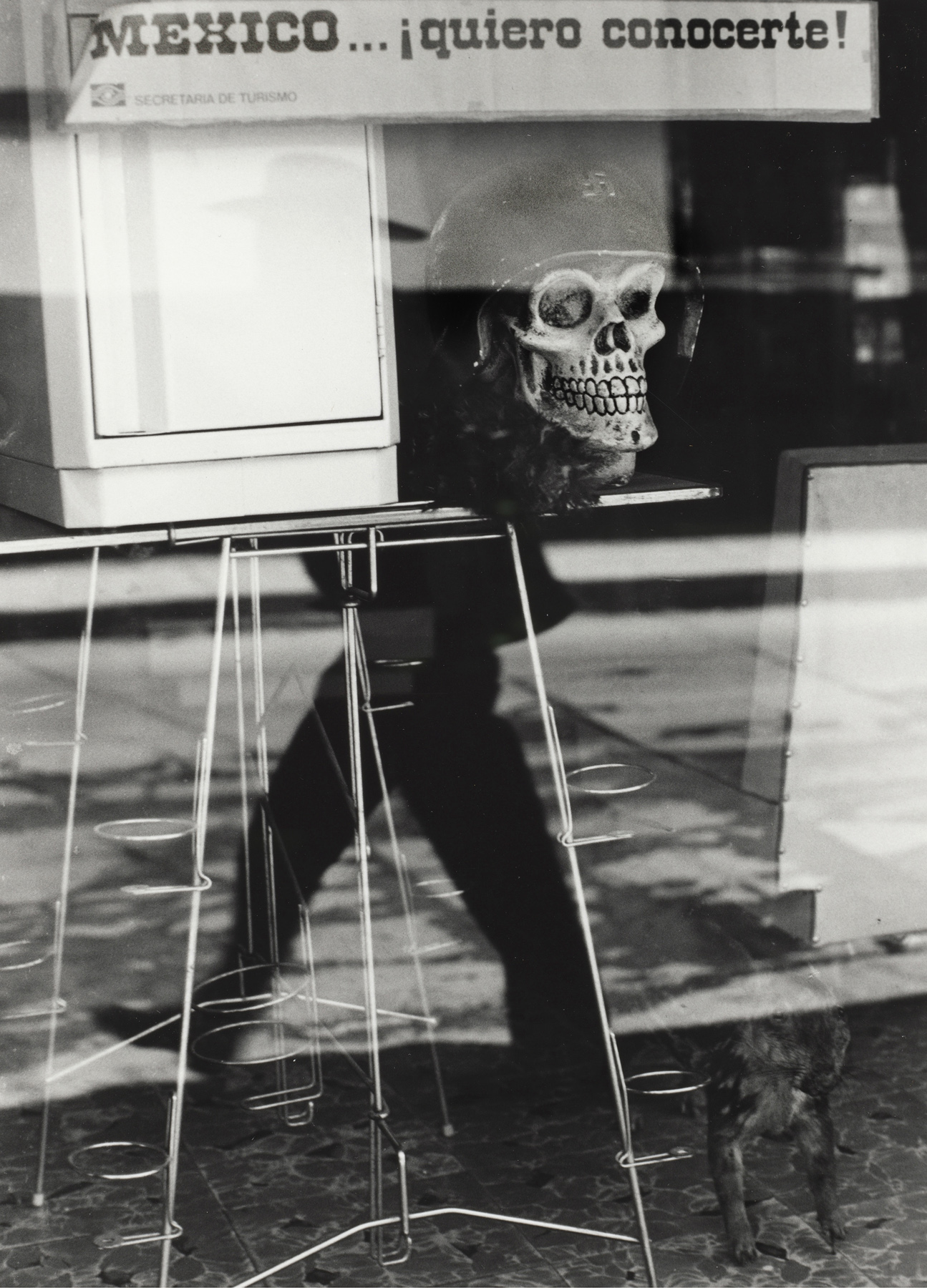
Fri – Sun: 10am – 5pm

San Francisco Museum of Modern Art website

LIKE ART BLART ON FACEBOOK

Back to top

Exhibition: ‘Henri Cartier-Bresson / Paul Strand, Mexico 1932-1934’ at HCB Foundation, Paris

Exhibition dates: 11th January – 22nd April 2012


Henri Cartier-Bresson (French, 1908-2004) 'Mexico' 1934


Henri Cartier-Bresson (French, 1908-2004)
Mexico
1934
Gelatin silver print
© Magnum, Henri Cartier-Bresson Foundation


“The American’s immobility contrasts with [the] Frenchman’s fluidity.”

Press releases should be very careful when making such sweeping generalisations. Personally I find the photographs of Cartier-Bresson the more static (both physical and psychological) of the two photographers. The compartmentalisation of space in Bresson’s photographs – the use of diagonals and verticals – is more fixed than in the sensuous Strand, the emotions more didactic and formalised even as they seek the spontaneity of photojournalism. The placement of the two figures in Strand’s Men of Santa Ana (1933, below) is superlative, with the central dividing column and combination of tones and textures, father and son(?), stares and postures. Cartier-Bresson’s Prostitute (1934, below) is simpler in pose and purpose but we must remember this was a twenty-six year old photographer still finding his voice in the world, whereas Strand was a much older person and a more experienced photographer.

Dr Marcus Bunyan


Many thankx to the Henri Cartier-Bresson Foundation for allowing me to publish the photographs in the posting. Please click on the photographs for a larger version of the image.


Henri Cartier-Bresson (French, 1908-2004) 'Natcho Aguirre, Santa Clara, Mexico' 1934


Henri Cartier-Bresson (French, 1908-2004)
Natcho Aguirre, Santa Clara, Mexico
1934
Gelatin silver print
© Magnum, Henri Cartier-Bresson Foundation


Henri Cartier-Bresson (French, 1908-2004) 'Calle Cuauhtemoctzin (two prostitutes), Mexico City' 1934


Henri Cartier-Bresson (French, 1908-2004)
Calle Cuauhtemoctzin (two prostitutes), Mexico City
1934
Gelatin silver print
© Magnum, Henri Cartier-Bresson Foundation


Henri Cartier-Bresson (French, 1908-2004) 'The Spider of Love, Mexico City' 1934


Henri Cartier-Bresson (French, 1908-2004)
The Spider of Love, Mexico City
1934
Gelatin silver print
© Magnum, Henri Cartier-Bresson Foundation


Henri Cartier-Bresson (French, 1908-2004) 'Mexico' 1934


Henri Cartier-Bresson (French, 1908-2004)
Mexico
1934
Gelatin silver print
© Magnum, Henri Cartier-Bresson Foundation


Henri Cartier-Bresson (French, 1908-2004) 'Juchitan' 1934


Henri Cartier-Bresson (French, 1908-2004)
Juchitan
1934
Gelatin silver print
© Magnum, Henri Cartier-Bresson Foundation


Paul Strand (American, 1890-1976) 'Nets, Michoacan' 1933


Paul Strand (American, 1890-1976)
Nets, Michoacan
1933
Gelatin silver print
© Paul Strand


Paul Strand (American, 1890-1976) 'Near Saltillo' 1932


Paul Strand (American, 1890-1976)
Near Saltillo
1932
Gelatin silver print
© Paul Strand


Bringing together such different works by two great masters in the history of photography is not self-evident. There are many points of convergence, but their styles are profoundly different. The American’s immobility contrasts with Frenchman’s fluidity. They both travelled to Mexico during the same period and they crossed paths in New York in 1935 when they joined the political filmmakers’ group Nykino (which later became Frontier Films) in order to explore filmmaking at a critical point in their respective careers.

In autumn 1932, Paul Strand (1890-1976) set out for Mexico by car at the invitation of the Mexican Ministry of Education. He exhibited his photographs there and had the pleasure of witnessing the popular success of his images. It was in the course of working in the streets of Mexico, a practice which he had abandoned for many years, that Strand took up a different documentary style. At that point, he received a proposal to make a series of films. In 1934, he shot Redes (released in English as The Wave), a ‘docu-fiction’ about the oppression of the fishermen in the village of Alvarado. The film was screened in Mexico in 1936, and subsequently in the United States and France. In 1950, fleeing the climate of McCarthyism in the United States, he came to France and ultimately settled in the village of Orgeval, where he remained until the end of his life.

In 1934, Henri Cartier-Bresson (1908-2004), who was eighteen years younger than Strand, signed up for a French ethnographic mission which was supposed to take him to Argentina. In the end, the mission was suspended and the twenty-six-year-old photographer spent a year in Mexico, literally fascinated by the country. He worked for several newspapers there, moved in intellectual and artistic circles together with his sister and worried about his future. In March 1935, he exhibited his work at the Palacio de Bellas Artes with Mexican photographer Manuel Álvarez Bravo. The local press reacted favourably and the young Frenchman contacted New York art dealer Julien Levy – who had already exhibited him in 1933 – to suggest a show of his recent work. He left Mexico with the firm intention of becoming a filmmaker and thus headed straight for the Nykino group. Strand’s prints come from various international collections; those of Cartier-Bresson belong to the Fondation HCB archives.

Press release from the HCB Foundation website


Henri Cartier-Bresson (French, 1908-2004) 'Prostitute, Calle Cuauhtemoctzin, Mexico' 1934


Henri Cartier-Bresson (French, 1908-2004)
Prostitute, Calle Cuauhtemoctzin, Mexico
1934
Gelatin silver print
© Magnum, Henri Cartier-Bresson Foundation


Henri Cartier-Bresson (French, 1908-2004) 'Men of Santa Ana, Lake Patzcuaro Michoacan' 1933


Paul Strand (American, 1890-1976)
Men of Santa Ana, Lake Patzcuaro Michoacan
1933
Gelatin silver print
© Paul Strand


From January 11 to April 22, 2012, the HCB Foundation will pay tribute to two great masters of photography: Henri Cartier-Bresson and Paul Strand. The perspective of their work on Mexico between 1932 and 1934 will be an opportunity for the public to discover two visions of the same country and especially two approaches to photography.

In the fall of 1932, Paul Strand (1890-1976) left the United States and a personal life in crisis for Mexico. It was at the invitation of Carlos Chavez, whom he had met a little earlier and now responsible for culture at the Ministry of Education, that Strand discovered this country of which he said “I thought of Mexico as something mysterious, dark and dangerous, inhospitable.” However, Strand remained in Mexico for two years until his return to New York in December 1934.

The support of Carlos Chavez proved to be very important and enabled Strand to exhibit for the first time in Mexico at the Sala de Arte of the Ministry of Education in February 1933. After this first success, he left in the spring of 1933 to investigate Mexican arts and crafts in the state of Michoacán. Fascinated by the indigenous culture and the piety of the inhabitants, he brought back from this mission portraits of religious statues, men, women and children in the streets, landscapes and architecture.

He was then appointed director of photographic and cinematographic activities for the Ministry of Education and was entrusted with the production of a series of films on Mexico. He then worked on the script for his first feature film Redes, which is intended as a docu-fiction based on the struggle of a group of men, fishermen, against a corrupt society. The actors of the film are mainly the inhabitants of the village of Alvarado. The realisation is complex but the film is finally screened at the Juarez de Alvarado theatre on June 4, 1936. Barely a year later, it is under the title The Wave that the American public discovers this film very largely influenced by Russian cinema. Unfortunately, the new Mexican government set up in 1934 with the election of Lazaro Cardenas abandoned the film series project and Strand therefore decided to return to New York. He then abandoned photography, joined the association of filmmakers Nykino, devoted himself to political cinema and became president of Frontier Film, Nykino’s new name.

In 1940, thanks to the financial support of Virginia Stevens, his new wife, he published “Photographs of Mexico”, a portfolio, published in 250 copies, of 20 carefully assembled photogravures. A copy will be presented in the exhibition.

In 1951, when the witch hunt was launched in the United States by McCarthy, Strand decided to settle in Orgeval, France, where he would spend the end of his life.

Henri Cartier-Bresson (1908-2004) landed in Mexico City in July 1934. He was part of an ethnographic mission led by Doctor Julio Brandan and supported by the Trocadéro Museum to follow the construction of a major Pan-American road. The mission got off to a bad start because the funding promised by the Mexican government was not forthcoming. The majority of the members of the expedition then returned to France, disappointed to see the project abandoned. But HCB decides to stay because “he feels a real crush on this country”. Nicknamed “the little Frenchman with shrimp cheeks” by Lupe Cervantes, his Mexican “fiancée”, Cartier-Bresson travels the country with his Leica. He therefore manages to survive in this country, befriends poets like Langston Hugues, Tonio Salazar or Natcho Aguirre, is passionate about muralists and their revolutionary frescoes, works for the press like Todo. He exhibited at the Palacio de Bellas Artes in March 1935 with the Mexican photographer Manuel Alvarez Bravo. “When he left, he declared himself a Frenchman from Mexico.”

During his stay, Henri Cartier-Bresson maintains frequent contact with the New York gallery owner Julien Levy and invites him to exhibit his recent photographs. This project will be carried out in April 1935 under the title “Documentary and Antigraphic photographs”. On this occasion, he will find the Mexican Manuel Alvarez Bravo and meet Walker Evans whom he deeply esteems. As soon as he arrived in New York, Henri Cartier-Bresson turned to cinema, “I stopped photographing in 1935, when I was in New York. Photography has always been for me only one of the different means of visual expression. […] I therefore started, with Paul Strand and with others, to learn cinema. I changed tools. Thanks to financial help from his parents, he bought a 35mm camera and joined the Nykino group. He learned a lot from this group of committed filmmakers and on his return to France, he assisted Jean Renoir on several of his films (La vie est à nous [Life is ours], Une partie de campagne [A country party]). It was not until 1937 that he left for Spain to make documentaries on the Spanish front. (Spain Will Live, Victory of Life, and With the Abraham Lincoln Brigade in Spain)

Putting these two photographers into perspective is not easy. The convergences are numerous but the styles vary profoundly. The fluidity of the French contrasts with the immobility of the American. Both travel to Mexico at the same time, both meet in New York in 1935, when they join the group of committed filmmakers Nykino, to try a cinematic experience in a key phase of their two careers.

The exhibition presents 90 black and white prints: the works of Paul Strand come from Spanish, American and Mexican collections; those of Cartier-Bresson, some of which are unpublished, come from the collection of the HCB Foundation. The exhibition will be presented from May 13 to September 2, 2012 at the Point du Jour Center d’art in Cherbourg.

The exhibition is accompanied by a catalogue, published by Steidl, with a preface by Agnès Sire and an essay by Clément Chéroux.

Press dossier from HCB Foundation website translated from the French by Google Translate


Paul Strand (American, 1890-1976) 'Woman of Alvarado, Veracruz' 1933


Paul Strand (American, 1890-1976)
Woman of Alvarado, Veracruz
1933
Gelatin silver print
© Paul Strand


Paul Strand (American, 1890-1976) 'Cristo with Thorns, Huexotla' 1933, printed 1940


Paul Strand (American, 1890-1976)
Cristo with Thorns, Huexotla
1933, printed 1940
Gelatin silver print
© Paul Strand


Paul Strand (American, 1890-1976) 'Boy – Hidalgo' 1933


Paul Strand (American, 1890-1976)
Boy – Hidalgo
1933
Gelatin silver print
© Paul Strand


Paul Strand (American, 1890-1976) 'Man with Hoe – Los Remedios' 1933


Paul Strand (American, 1890-1976)
Man with Hoe – Los Remedios
1933
Gelatin silver print
© Paul Strand


Paul Strand (American, 1890-1976) 'Man – Tenancingo' 1933


Paul Strand (American, 1890-1976)
Man – Tenancingo
1933
Gelatin silver print
© Paul Strand


Paul Strand (American, 1890-1976) 'Boy – Uruapan' 1933


Paul Strand (American, 1890-1976)
Boy – Uruapan
1933
Gelatin silver print
© Paul Strand


Paul Strand (American, 1890-1976) 'Church, Coapiaxtla' 1933, printed 1940


Paul Strand (American, 1890-1976)
Church, Coapiaxtla
1933, printed 1940
Gelatin silver print
© Paul Strand


Henri Cartier-Bresson (French, 1908-2004) 'Mexico' 1934


Henri Cartier-Bresson (French, 1908-2004)
Mexico
1934
Gelatin silver print
© Magnum, Henri Cartier-Bresson Foundation


Fondation Henri Cartier-Bresson
79 rue des Archives
75003 Paris

Opening hours:
Tuesday – Sunday 11am – 7pm
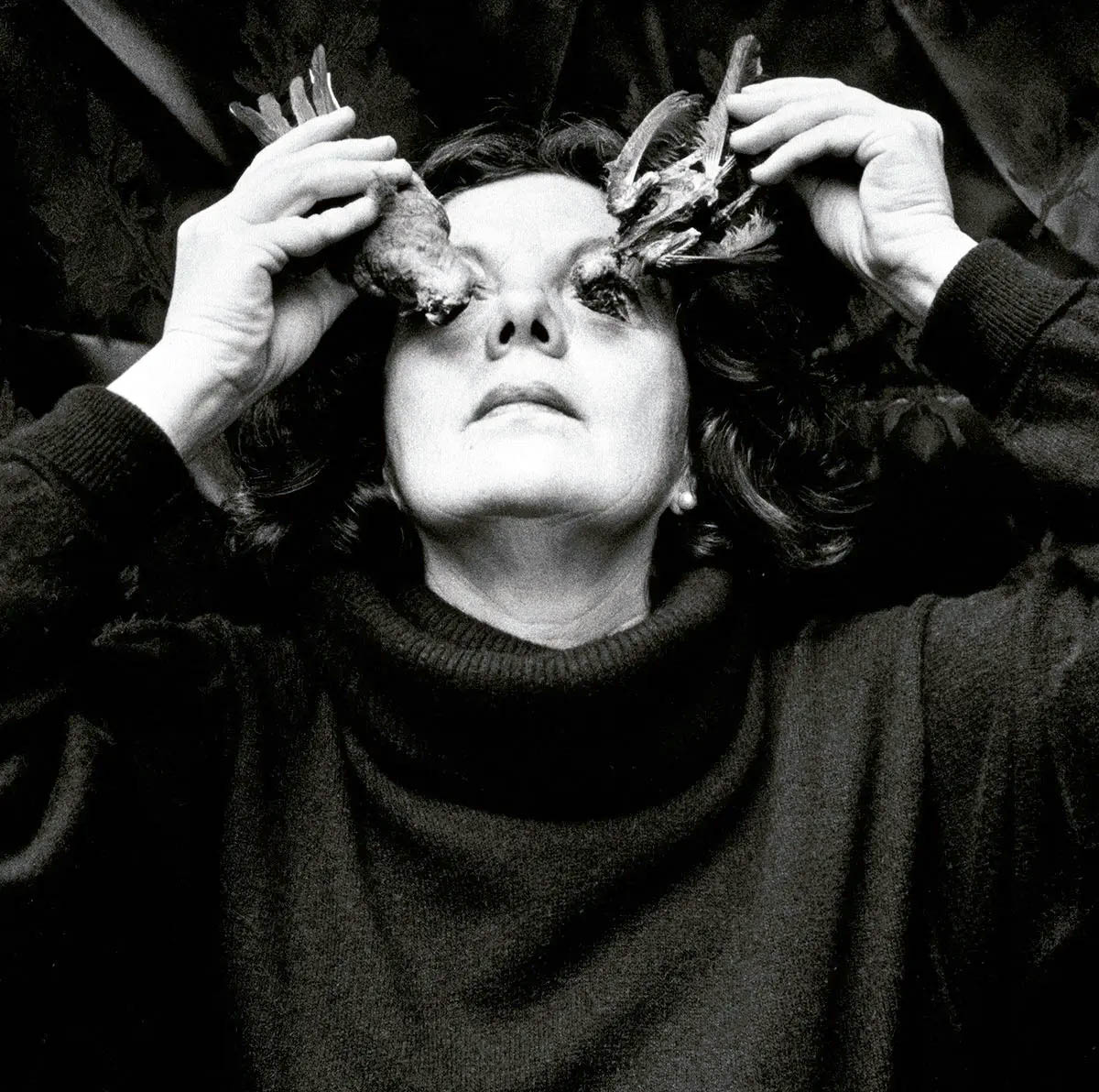
Closed Mondays

Henri Cartier-Bresson Foundation website

LIKE ART BLART ON FACEBOOK

Back to top

Exhibition: ‘What’s in a face? aspects of portrait photography’ at the Art Gallery of New South Wales, Sydney

Exhibition dates: 24th September 2011 – 5th February 2012


Many thankx to the Art Gallery of New South Wales for allowing me to publish the photographs in the posting. Please click on the photographs for a larger version of the image.


Glaister studio (Australia 1855-1870) 'Untitled (portrait of a man and three girls)' 1855-1870


Glaister studio (Australian, 1855-1870)
Untitled (portrait of a man and three girls)
1855-1870
Ambrotype, colour dyes
6.5 x 9cm sight; 9.3 x 11.9cm case
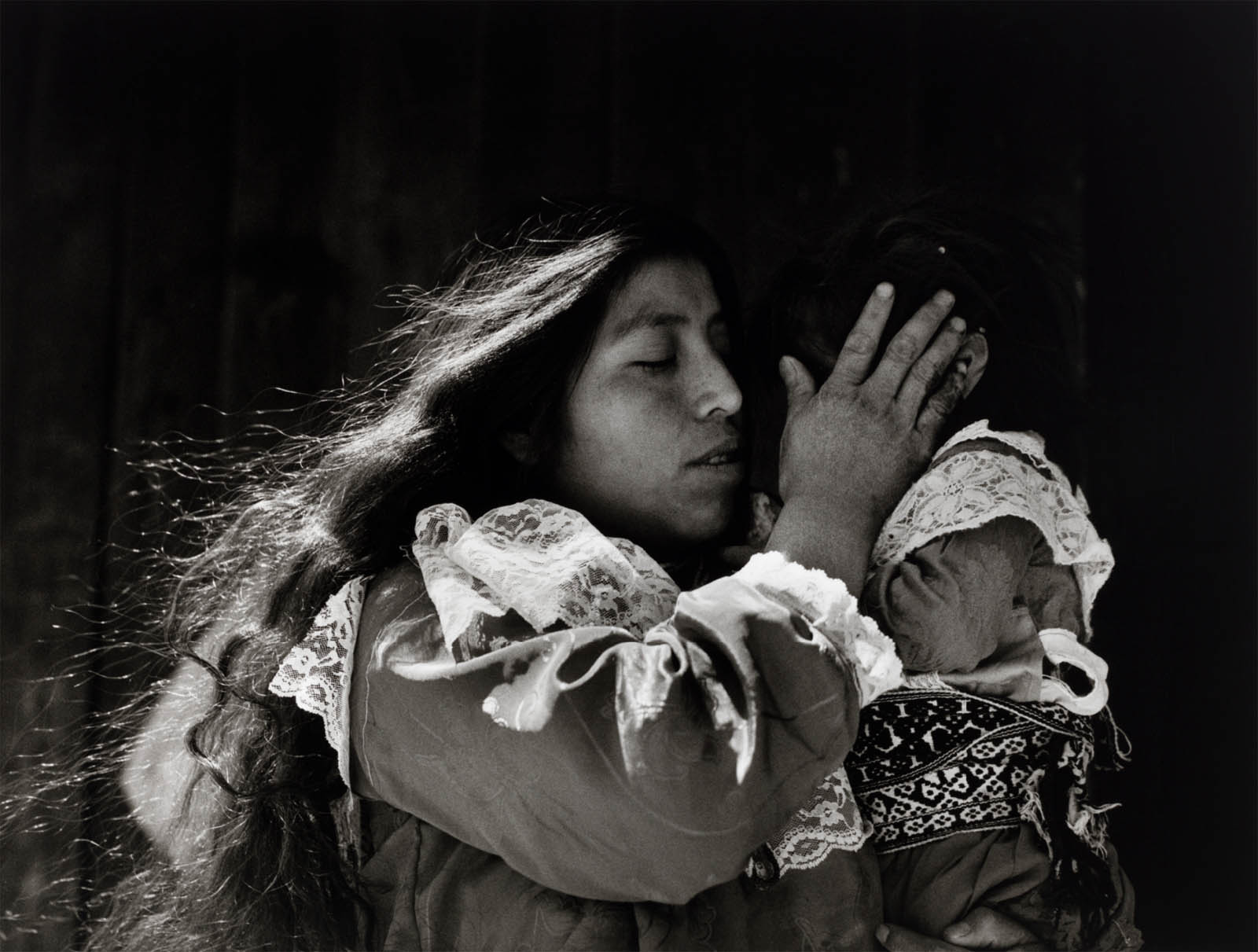
Purchased 1989


This charming ambrotype was thought to have been produced by one of Australia’s most important early photographers, Thomas Glaister, owning to the presence of the Glaister stamp on the case. However, superb varnish was one of Glaister’s hallmarks and this ambrotype is not varnished. In addition, the hand-colouring is not considered to be to Glaister’s standard. As such, it is possible that the ambrotype was inserted into this case at a later date, not least because there is no form of blackening behind the image. This was standard practice to prevent the viewer seeing through to the inside of the case. The Eichmeyer ‘book’ case, patented in 1855 by Henry A Eichmeyer of Philadelphia, were made of fine leather and beautifully put together. Glaister certainly used these but the ambrotype is probably not his specifically and could have been made by one of his sons in the 1860s when they worked as travelling photographers. Regardless of who took the image, it is a charming colonial portrait which in size is typical of the period – it can easily be held in the hand.

Ambrotypes were developed in the 1850s. They were faster and cheaper to make than daguerreotypes, yet were still unique objects.

1. 1989, ‘Masterpieces of Australian photography’, Josef Lebovic Gallery, Sydney p. 25

© Art Gallery of New South Wales Photography Collection Handbook, 2007


Olive Cotton (Australian, 1911-2003) 'Only to taste the warmth, the light, the wind' c. 1939


Olive Cotton (Australian, 1911-2003)
Only to taste the warmth, the light, the wind
c. 1939
Gelatin silver print
Image/sheet: 33.2 x 30.0cm
Purchased with funds provided by John Armati 2006
Art Gallery of NSW Collection


Only to taste the warmth, the light, the wind appears to have been the only print Cotton made of this image. It was found in the late 1990s and has been shown only once, in an exhibition at the AGNSW in 2000 where it was also used on the catalogue cover. It was unusual for Cotton to print so large, yet it is entirely fitting that this monumental head and shoulder shot of a beautiful young woman should be presented in this way. The subject was a model on a fashion shoot at which Cotton was probably assisting. Cotton often took her own photographs while on such shoots and used them for her private portfolio. The photograph transcends portraiture, fashion and time to become a remarkable image of harmony with the elements.

Cotton took the title for this photograph from an 1895 poem by English poet Laurence Binyon, ‘O summer sun’:

O summer sun, O moving trees!
O cheerful human noise, O busy glittering street!
What hour shall Fate in all the future find,
Or what delights, ever to equal these:
Only to taste the warmth, the light, the wind,
Only to be alive, and feel that life is sweet?1


A photographer whose work straddles pictorialism, modernism and documentary, Cotton maintained an independent vision throughout her working life, based on the close observation of nature. Her understanding of the medium of photography was not to do with capture, but rather ‘drawing with light’.

1/ 1915, ‘Poems of today’, English Association, London p. 96.

© Art Gallery of New South Wales Photography Collection Handbook, 2007


Destiny Deacon (Australian / Kuku/Erub, 1957-2024) 'Portrait: Janet Burchill & Jennifer McCamley, Artists' 1998


Destiny Deacon (Australian / Kuku/Erub, 1957-2024)
Portrait: Janet Burchill & Jennifer McCamley, Artists
1998
Colour bubble jet print from Polaroid photograph
57.9 x 71cm
Purchased 1998
© Destiny Deacon. Licensed by Viscopy, Sydney


Deacon is widely recognised for her staged photographs which employ various props, including souvenirs and kitsch, in satirical tableaus that critique notions of Aboriginality. Initially, in 1991, she employed dolls and since then they have become a signature motif. This use of non-living models informed her practice when she began to photograph people. As Deacon states, ‘I’ve never been one for “live action” shots… I’ve got to rule the roost. It’s no different dealing with inanimate objects or people, except with people I’m more terrified.’1

This method can be seen in Deacon’s Portrait: Janet Burchill & Jennifer McCamley, artists 1998. Burchill and McCamley, Melbourne and Mildura based collaborative artists, have been arranged in a re-enactment of Henri Matisse’s Conversation 1908-1912. The photograph echoes the deep blue background of the original painting. The two artists hold the stiff positions of Matisse and his seated wife gazing across at each other. This is one of a number of Deacon’s works that feature Australian writers, artists and other notable figures re-enacting iconic paintings. Other examples include artist Fiona Hall in a 2004 retake of Grace Cossington-Smith’s The sock knitter 1915 and a portrait of Gary Foley inspired by William Dobell’s The boy at the basin 1932.

1/ Destiny Deacon, ‘Interview with Virginia Fraser’ in Destiny Deacon: walk & don’t look blak, Museum of Contemporary Art, Sydney, 2004, p. 109.


Ilse Bing (United States of America, Germany 1899-1998) 'Self portrait with Leica' 1931 printed 1941


Ilse Bing (United States of America/Germany, 1899-1998)
Self portrait with Leica
1931 printed 1941
Gelatin silver photograph
26.7 x 31.2cm
Alistair McAlpine Photography Fund 2005
© Ilse Bing Estate. Courtesy Edwynn Houk Gallery, New York


Self portrait with Leica is a complex image in which the artist has photographed herself and her trademark Leica in one mirror, while the profile of both is reflected in another. The large button on her cuff disturbs the play between full face and profile, while the objects at the bottom of the frame lend a certain informality to an otherwise highly contrived set-up. The soft velvety curtain behind introduces a further element of rich tactility. The play between black, white and shades of grey softens and enriches the overall image.

Although Bing avoided becoming part of any specific movement of the 1920s or 1930s – for example, constructivism, the Bauhaus or surrealism, describing herself as being ‘on the edge of the periphery of the Bauhaus’ only – she was fully cognisant of the range of experimentation which was taking place across Europe. She forged her own path, combining an abiding belief in the importance of intuition and poetry with rigorous composition and superb technical skills.

Inspired by the work of Florence Henri, and with increasing confidence in her ability to marry naturalism with geometric formalism, Bing worked extensively as a press, fashion, portrait and documentary photographer in Paris until she was interned as an enemy alien in 1940. Late in her life Bing wrote:

‘I didn’t choose photography; it chose me. I didn’t know it at the time. An artist doesn’t think first and then do it, he [sic] is driven. Now over fifty years later, I can look back and explain it. In a way, it was the trend of the time; it was the time when you started to see differently … And the camera, that was, in a way, the beginning of the mechanical device penetrating into the field of art.’1

1/ Barrett N C 1985, Ilse Bing: three decades of photography, New Orleans Museum of Art, New Orleans pp. 13-14.

© Art Gallery of New South Wales Photography Collection Handbook, 2007


Robert Rooney (Australian, 1937-2017) 'Portrait of Maria Kozic and Philip Brophy II' 1981


Robert Rooney (Australian, 1937-2017)
Portrait of Maria Kozic and Philip Brophy II
1981
Cibachrome photograph
Image/sheet: 20.1 x 30cm
Purchased 1996
© Robert Rooney


The four portraits in the Art Gallery of New South Wales collection reflect a particular period in Australian art, when the now established artists were beginning their careers. They depict members of the contemporary art scene of the late 1970s to mid 1980s associated with Art + Text, an Australian art magazine published from 1981-2000.

Philip Brophy formed the experimental group Tsk Tsk Tsk in 1977. The group produced experimental music, films, videos, and live theatrical performances. Brophy involved his friends in the group, including partner Maria Kozic on synthesiser. Kozic was also producing her own multimedia work. In this photograph, Kozic and Brophy are standing in a suburban backyard complete with Hills Hoist. This is reflective of Tsk Tsk Tsk’s suburban beginnings, based as it was at Clifton Hill’s Community Music Centre. After the group’s dissolution in the early 1980s, Brophy made several experimental films and curated numerous programs for the Melbourne international film festival as well as exhibitions such as Tezuka: the marvel of manga for the National Gallery of Victoria. Kozic moved to New York where she continued her artistic career. Her work has been exhibited widely throughout Australia and overseas and been collected by many museums including the Art Gallery of New South Wales.


Loretta Lux (Germany b. 1969) 'The waiting girl' 2006


Loretta Lux (Germany, b. 1969)
The waiting girl
2006
Ilfochrome photograph
38 × 53cm
Purchased with funds provided by the Photography Collection Benefactors’ Program 2007
© Loretta Lux/Bild-Kunst. Licensed by Viscopy, Sydney


Lux’s portraits are by no means traditional, ‘I call them imaginary portraits. They are not really about the children that I photographed’, commented the artist in interview with Wim van Sinderen (Loretta Lux: new work 2004). In relation to The waiting girl, Lux has said: ‘It’s a picture about time, and timelessness. For me they are sitting on the sofa as if they are waiting for eternity.’ (The Guardian 23 November 06)

Through subtle digital manipulation of the body and facial features of her subjects, Lux creates eerie doll-like creatures with glazed eyes, porcelain smooth skin and subtly ill-proportioned forms. The resulting portraits contain an uncanny blend of mute childish innocence and the self-contained stoicism of adulthood.

Lux’s images of children recall those of the old masters, such as Veláquez, Runge and Bronzino whom she cites as main inspirations alongside German photographer August Sander. Lux has stated in an interview with Louise Baring for the Telegraph (UK) that she uses children ‘as a metaphor for a lost paradise’. Dressing her young models in past fashions (often of the era of her own childhood) suggests the child’s game of ‘dress ups’ in order to be an adult yet somehow played out in reverse. That is, Lux’s children do not seem like children at all, but rather like serious world-weary adults manifested in childish forms.


Spanning over a century, What’s in a face? aspects of portrait photography is an exhibition of 45 photographs from the Art Gallery of NSW collection. The exhibition focuses on crucial points in the history of photographic depictions of the human face ranging from studio portraiture in the late 19th century to contemporary practices today.

Works by Australian photographers, such as Paul Foelsche, Olive Cotton, Max Dupain, Carol Jerrems, Destiny Deacon, Patrina Hicks, Darren Sylvester and others, are placed in an international context, represented by Man Ray, Edward Weston, Iwao Yamawaki, Nan Goldin, Ben Cauchi and Loretta Lux, amongst others.

All portraits reveal something of the sitter, the photographer and also of us as viewers, but none reveal a whole and complete being. This is part of the enduring fascination with the photographic portrait which purports to be an exact likeness but operates more accurately as a metaphor for the self and how that self might exist in the world at a particular point in time.

Judy Annear, senior curator photographs, Art Gallery of NSW


Using photography to depict the face and figure was initially a time-consuming and expensive business. However, the drive to document all things in the world, and rapid technological advances, meant that by the 1880s most people, willing or not and regardless of the photographer’s or their own desires, were documented in some way.

Spurious 19th century ideas to do with what a face could represent exploded in the early 20th century when identity came to be seen as a psychological rather than social phenomenon. Theatricality and performing for the camera, which had existed in photography since its inception, also became much more evident in this period.

In the post-WWII era representations of the face and the body quickly acquired a political and socially aware edge. More recently the face has tended to stand less as an expression of personal experience and more a statement that may signify a set of ideas, whether about the individual, the group or the society at large. Many of these highly constructed images acknowledge and play upon the problematics of the photographic portrait.”

Text from the AGNSW website


Petrina Hicks (Australian, b. 1972) 'Shenae and Jade' 2005


Petrina Hicks (Australian, b. 1972)
Shenae and Jade
2005
From the series Untitled 2005
Lightjet print
85.5 x 80cm
Courtesy the artist and Michael Reid Gallery


Shenae and Jade is typical of Hicks’ unconventional portraits. The young model holds the budgie’s head in her mouth. It’s the kind of slightly dangerous behaviour which can be unnerving to observe. The freckled nose of the model is in tension with her smooth pale temples, heavily lashed closed eyes and soft white top. The luminescent background and generally pale colouration throw the headless body of the brightly coloured budgie into high relief.


Darren Sylvester (Australia, b. 1974) 'They return to you in song' 2001


Darren Sylvester (Australian, b. 1974)
They return to you in song
2001
Lambda print
Image/sheet: 100 x 100cm
Purchased with funds provided by the Photography Collection Benefactors’ Program 2002
© Darren Sylvester


Informed by the slick stylistic conventions of high-end consumer images, Darren Sylvester’s body of work suggests the existential dilemma of living in an overtly consumerist society – one that promises fulfilment but fails to truly satisfy even the most ardent consumer. Perpetually tantalised with glossy images of affluence, ‘must-have’ products and brochure living, our ‘real’ lives can at times seem unfulfilling by comparison, sometimes painful and often a little pathetic. Sylvester’s work seems to suggest that even in our most personal heartfelt moments, our lives are just like everybody else’s, not so special or unique. Our lives could equally be a series of advertising moments.

Yet the nature of this work is resolutely ambiguous, alternately offering intimacy and emotion with cool detachment. Photo-shopped clean of incidental detail and anomaly, and featuring youthful agency models, Sylvester’s evenly lit, tightly focused images still tap a nerve despite their polished finish. Perhaps this is because they are precisely ‘generic’ (and emotive) experiences to which we can all relate. The same principles underpin a good pop song and in Sylvester’s work this is no coincidence – he strives to produce images that carry the same directness and lasting impact. Commenting on the music of the Carpenters, ‘their lyrics were always sad and about emotional relationships but sealed beneath glossy west coast melodies’, Sylvester reveals the pop-music strategies he employs in his work.1

Based on short stories written by the artist prior to composing the scene, his images carry their own inherent narrative. Yet we don’t need to read Sylvester’s story to understand the drama, nor do we need to hear the tune to recognise the song – it’s an old one, and a shared one, that each of us remembers well.

1/ Colless E 2006, ‘Darren Sylvester: the right stuff’, Australian Art Collector, no 36, Apr-Jun p. 102.

© Art Gallery of New South Wales Photography Collection Handbook, 2007


Hans Hasenpflug (Australia, Germany 1907-1977) 'Untitled (head of a woman)' 1940-1941


Hans Hasenpflug (Australia/Germany 1907-1977)
Untitled (head of a woman)
1940-1941
Gelatin silver photograph
Image: 28.8 x 24.3cm
Gift of Mr Christopher Hamilton, the artist’s son 1984


Hans Hasenpflug arrived in Australia in 1927 aged 20. He had been born into an educated Stuttgart family but it does not appear that he became involved in photography until 1932 when he was employed by Leica Photo Service, Sydney. Hasenpflug went on to work for prominent photographer Russell Roberts from 1935 to 1937 before moving to Melbourne and working with Athol Shmith and other Melbourne studios from 1937 to 1942. As an enemy alien Hasenpflug was not allowed to work on industrial assignments during World War Two but he was not interned and was naturalised in 1945. Hasenpflug exhibited in photography salons in the 1930s and his work appeared in the Sydney Morning Herald, Australian Woman’s Weekly and the Sunday Telegraph.

Hasenpflug was a versatile advertising photographer. He specialised in fashion and product advertising and some portraiture. Despite his apparent lack of photographic training until the 1930s, he seems to be have been strongly influenced by the European avant-garde. Many of his photographs, regardless of genre or subject matter, depend on diagonals through the picture plane and on raking light.

This is true of Untitled. Strong light has created deep shadows across the subject, a closely cropped image of a woman’s face. This, combined with the oblique camera angle, creates a vivid and disconcerting image. The woman is staring directly into the camera, yet a band of strong shadow across the centre of the image creates a blank eyed effect. The pupil free eyes seem inhuman; mask-like or alien. This is in stark contrast to the woman’s open smile that dominates the bottom of the work. The strong, full light on this area highlights her lips, gums and teeth to an almost hyper real extent. These contradictions create an image that on the surface seems friendly and intimate, yet contains an undertone of threat. The inherent strangeness of the image makes it unlikely that this was a commissioned photograph, but rather the artist’s experiment with his medium, and indeed is probably a portrait of his fiancee, Elizabeth Hamilton Crouch.


Edward Weston (American, 1886-1956) 'Guadalupe de Rivera, Mexico' 1924


Edward Weston (American, 1886-1956)
Guadalupe de Rivera, Mexico
1924, printed later
Gelatin silver photograph
20.7 × 17.8cm
Gift of Patsy W. Asch 2000
© Centre for Creative Photography, Arizona Board of Regents


Edward Weston’s Mexican years were of great importance to him and allowed for the maturing of his vision in relation to photography. Accompanied by Tina Modotti, whose own work developed at this time, Weston experimented with pure form through monumental portraits (of which Guadalupe de Rivera, Mexico is a classic example), images of landscapes and buildings, still-lifes and nudes.

Weston’s portraits of those he encountered in Mexico are uniformly compelling. Often taken with a hand-held camera against a plain background and with strong lighting, these images emphasise individuality, modernity and dynamism.

Guadalupe de Rivera was Diego Rivera’s wife at the time and both were among the group of people Weston and Modotti associated with. Weston described Guadalupe in his ‘Daybooks’ as ‘tall, proud of bearing, almost haughty; her walk like a panther’s, her complexion almost green, with eyes to match’.1 As he worked on the portrait, Weston wrote: ‘I am finishing the portrait of Lupe. It is a heroic head, the best I have done in Mexico; with the Graflex, in direct sunlight I caught her, mouth open, talking, and what could be more characteristic of Lupe! Singing or talking I must always remember her’.2

This later print by Weston emphasises, through the dramatic effect of light and shade, the strong lines of the face. The shape of the open mouth is echoed by the shadowed eye above and the jawline below. The diagonal of jaw to ear which runs in parallel to the nose also adds to the dynamism of this image. Outdoors, with the sun shining on her hair, this is a portrait of a remarkable woman.

1/ Newhall N ed 1981, ‘The daybooks of Edward Weston 1 Mexico’, Aperture, New York p. 26.
2/ Ibid p. 42.

© Art Gallery of New South Wales Photography Collection Handbook, 2007


Carol Jerrems (Australian, 1949-1980) 'Vale Street' 1975


Carol Jerrems (Australian, 1949-1980)
Vale Street
1975
Gelatin silver print
20.1 x 30.4cm
Purchased 1979
© Ken and Lance Jerrems


A quintessential image of the 1970s, Vale Street has lost none of its capacity to enchant and disturb in the intervening years. In one sense it can be read as a sociological document; in another as a wholly subjective work of art. Like the mediumistic spirit-photographs of the nineteenth century, Jerrems’s photo seems to disclose the very souls of its subjects. As they respond, each in their individual fashion, to the regarding presence of the camera lens, the figures compose themselves, without theatrics, into telling attitudes. The prominence and bodily confidence of the open-faced young woman is set against the reticence of her boyish companions. As a portrait of relationships as well as individuals, Vale Street speaks of gender relations, adolescent sexuality, suburban mores and the photographer’s own subtly partisan demeanour in regard to these themes.

Art Gallery Handbook, 1999


Carol Jerrems (Australian, 1949-1980) 'Juliet Holding Vale Street' 1976


Carol Jerrems (Australian, 1949-1980)
Juliet Holding Vale Street
1976
Gelatin silver print
30.4 x 20.1cm
Purchased 1979
© Ken and Lance Jerrems


Carol Jerrems (Australian, 1949-1980) 'Lynn Gailey' 1976


Carol Jerrems (Australian, 1949-1980)
Lynn Gailey
1976
Gelatin silver print
30.3 x 20.1cm
Purchased 1979
© Ken and Lance Jerrems


Max Dupain (Australia 1911-1992) 'Untitled (self portrait)' 1930s


Max Dupain (Australia, 1911-1992)
Untitled (self portrait)
1930s
Gelatin silver photograph
19.3 x 14cm
Art Gallery of NSW Collection


This engaging self-portrait by Max Dupain was kept by the artist in an album of photographs from the 1930s. The album was possibly a workbook which would enable Dupain and his clients to review his career as a young modernist photographer. Dupain had opened his own studio in 1934 at the age of 23 having previously been apprenticed to Cecil Bostock and studying painting and drawing at the Julian Ashton Art School in Sydney. In his teens, through the Photographic Society of New South Wales, Dupain had also had contact with Harold Cazneaux whom he later described as ‘the father of modern Australian photography’.1 Both Cazneaux and Bostock provided Dupain with a solid technical and aesthetic base from which to work.

The young working photographer has chosen to depict himself in Untitled (self portrait) with rolled-up sleeves and a furrowed brow. The image is bisected into light in the upper half and dark below with the photographer’s right hand pressing the cable release. Looking away, in three-quarter profile, Dupain is engaged with something out of the frame. The dynamism of the image is further enhanced by the bent arms and the strong shadow of Dupain’s profile.

The 1930s was a period of intense experimentation for Dupain as he applied the lessons learned from Bostock and Cazneaux and absorbed the material in international publications. He mastered solarisation, montage, portraiture, interiors and advertising photography. His interest in form and composition matured. His dedication to his work is manifested in this image.

1/ Dupain M 1978, Cazneaux: photographs by Harold Cazneaux 1878-1953, National Library of Australia, Canberra p. xi.

© Art Gallery of New South Wales Photography Collection Handbook, 2007


Art Gallery of New South Wales
Art Gallery Road, The Domain
Sydney NSW 2000, Australia

Opening hours:
Open every day 10am – 5pm
except Christmas Day and Good Friday

Art Gallery of New South Wales website

LIKE ART BLART ON FACEBOOK

Back to top

Exhibition: ‘Frida Kahlo: Through the Lens of Nickolas Muray’ at the Albright-Knox Art Gallery, Buffalo NY

Exhibition dates: 8th May – 5th July, 2009


Nickolas Muray (American, 1892-1965) 'Frida with Olmeca Figurine, Coyoacan' 1939 from the exhibition 'Frida Kahlo: Through the Lens of Nickolas Muray' at the Albright-Knox Art Gallery, Buffalo NY, May - July, 2009


Nickolas Muray (American, 1892-1965)
Frida with Olmeca Figurine, Coyoacan
1939
Colour print, assembly (Carbro) process


Forty-seven exquisite colour and black-and-white photographs of the Mexican artist Frida Kahlo by the American photographer Nickolas Muray are featured in this exhibition organised and circulated by Smith Kramer Fine Art Services. Muray and Kahlo first met in Mexico in 1931 and soon began a love affair that lasted ten years and continued as an enduring friendship throughout their lives. The photographs, selected from the Nickolas Muray Archives, capture the exotic mystery and proud beauty of Frida Kahlo through the eyes of this accomplished portrait photographer, who loved her deeply. Organised at the Albright-Knox by Associate Curator Holly E. Hughes, the exhibition will also include reproductions of Kahlo’s letters to Muray, explanatory wall texts, and an educational brochure.

Text from the Albright-Knox Art Gallery website [Online] Cited 01/05/2009. No longer available online


Many thankx to the Albright-Knox Art Gallery for allowing me to publish the photographs in the posting. Please click on the photographs for a larger version of the image.


Nickolas Muray (American, 1892-1965) 'Frida, Mexico, 1940' c. 1940 from the exhibition 'Frida Kahlo: Through the Lens of Nickolas Muray' at the Albright-Knox Art Gallery, Buffalo NY, May - July, 2009


Nickolas Muray (American, 1892-1965)
Frida, Mexico, 1940
c. 1940
Colour print, assembly (Carbro) process


Nickolas Muray (American, 1892-1965) 'Frida with her sister Cristina, Nickolas Muray, and Rosa Covarrubias, Coyoacán' 1939


Nickolas Muray (American, 1892-1965)
Frida with her sister Cristina, Nickolas Muray, and Rosa Covarrubias, Coyoacán
1939
Colour print, assembly (Carbro) process


Nickolas Muray (American, 1892-1965) 'Frida Painting the Two Fridas, Coyoacan' 1939


Nickolas Muray (American, 1892-1965)
Frida Painting the Two Fridas, Coyoacan
1939
Silver gelatin print


Nickolas Muray (American, 1892-1965) 'Frida with Nick in her Studio, Coyoacán' 1941


Nickolas Muray (American, 1892-1965)
Frida with Nick in her Studio, Coyoacán
1941
Silver gelatin print


Nickolas Muray (American, 1892-1965) 'Frida with Granizo, Coyoacán' 1939


Nickolas Muray (American, 1892-1965)
Frida with Granizo, Coyoacán
1939
Silver gelatin print


Nickolas Muray (American, 1892-1965) 'Frida in the Dining Area, Coyoacán' 1941


Nickolas Muray (American, 1892-1965)
Frida in the Dining Area, Coyoacán
1941
Gelatin silver print


Nickolas Muray (American, 1892-1965) 'Frida and Diego, San Angel' 1941


Nickolas Muray (American, 1892-1965)
Frida and Diego, San Angel
1941
Gelatin silver print


Nickolas Muray (American, 1892-1965) 'Frida Kahlo' c. 1940


Nickolas Muray (American, 1892-1965)
Frida Kahlo
c. 1940
Colour print, assembly (Carbro) process


Nickolas Muray (American, 1892-1965) 'The Breton Portrait' 1939


Nickolas Muray (American, 1892-1965)
The Breton Portrait
1939
Silver gelatin print


Nickolas Muray (American, 1892-1965) 'Frida with Magenta Rebozo, New York' 1939


Nickolas Muray (American, 1892-1965)
Frida with Magenta Rebozo, New York
1939
Colour print, assembly (Carbro) process


Nickolas Muray (American, 1892-1965) 'Frida with Magenta Rebozo, New York' 1939


Nickolas Muray (American, 1892-1965)
Frida with Magenta Rebozo, New York
1939
Colour print, assembly (Carbro) process


Nickolas Muray

In 1913, with the threat of war in Europe, Muray sailed to New York City, and was able to find work as a colour printer in Brooklyn.

By 1920, Muray had opened a portrait studio at his home in Greenwich Village, while still working at his union job as an engraver. In 1921 he received a commission from Harper’s Bazaar to do a portrait of the Broadway actress Florence Reed; soon after he was having photographs published each month in Harper’s Bazaar, and was able to give up his engraving job. In 1922 he also made a portrait of the dancer Desha Delteil.

Muray quickly became recognised as an important portrait photographer, and his subjects included most of the celebrities of New York City. In 1926, Vanity Fair sent Muray to London, Paris, and Berlin to photograph celebrities, and in 1929 hired him to photograph movie stars in Hollywood. He also did fashion and advertising work. Muray’s images were published in many other publications, including Vogue, Ladies’ Home Journal, and The New York Times.

Between 1920 and 1940, Muray made over 10,000 portraits. His 1938 portrait of Frida Kahlo, made while Kahlo sojourned in New York, attending her exhibit at the Julien Levy Gallery, became the best known and loved portrait made by Muray. Muray and Kahlo were at the height of a ten-year love affair in 1939 when the portrait was made. Their affair had started in 1931, after Muray was divorced from his second wife and shortly after Kahlo’s marriage to Mexican muralist painter Diego Rivera. It outlived Muray’s third marriage and Kahlo’s divorce and remarriage to Rivera by one year, ending in 1941. Muray wanted to marry, but when it became apparent that Kahlo wanted Muray as a lover, not a husband, Muray took his leave for good and married his fourth wife, Peggy Muray. He and Kahlo remained good friends until her death, in 1954.

After the market crash, Muray turned away from celebrity and theatrical portraiture, and become a pioneering commercial photographer, famous for his creation of many of the conventions of colour advertising. He was considered the master of the three-color carbro process. His last important public portraits were of Dwight David Eisenhower in the 1950s.

Text from the Wikipedia website


Nickolas Muray (American, 1892-1965) 'Frida With Hand at Her Throat, Mexico City' 1940


Nickolas Muray (American, 1892-1965)
Frida With Hand at Her Throat, Mexico City
1940
Colour print, assembly (Carbro) process


Nickolas Muray (American, 1892-1965) 'Frida leaning on a sculpture by Mardonio Magaña, Coyoacán, Mexico' 1940


Nickolas Muray (American, 1892-1965)
Frida leaning on a sculpture by Mardonio Magaña, Coyoacán, Mexico
1940
Colour print, assembly (Carbro) process


Nickolas Muray (American, 1892-1965) 'Frida in Pink and Green Blouse, Coyoacán' 1938


Nickolas Muray (American, 1892-1965)
Frida in Pink and Green Blouse, Coyoacán
1938
Colour print, assembly (Carbro) process


Nickolas Muray (American, 1892-1965) 'Friday on White Bench, New York' 1939


Nickolas Muray (American, 1892-1965)
Frida on White Bench, New York
1939
Colour print, assembly (Carbro) process


An exhibition of photographs of the acclaimed Mexican artist Frida Kahlo taken by her friend and lover, the internationally renowned portrait photographer Nickolas Muray (1892-1965), will be on view at the Albright-Knox Art Gallery from May 8 through July 5, 2009. Frida Kahlo: Through the Lens of Nickolas Muray, From the Collection of the Nickolas Muray Archives celebrates Kahlo’s life and work and comprises approximately fifty colour and black-and-white photographs, along with archival material, including excerpts from letters between Kahlo and Muray. The installation in Buffalo will feature Frida Kahlo’s Self- Portrait with Monkey, 1938, from the Albright-Knox Art Gallery’s Permanent Collection.

Born in Hungary in 1892, Nickolas Muray came to the United States in 1913, marking the beginning of his forty-five-year career living and working in New York City. Originally hired by Condé Nast Publications to prepare illustrations for magazines, in 1920 Muray set up a photography studio at his home in Greenwich Village. Following an assignment in 1921 for Harper’s Bazaar magazine to photograph the Broadway star Florence Reed, Muray’s career as a portrait and celebrity photographer took off. Soon he was photographing “everybody who was anybody” and his work was regularly featured in such publications as Vanity Fair, Vogue, and Ladies’ Home Journal.

Nickolas Muray and Frida Kahlo first met in Mexico in 1931 and soon began a love affair that lasted ten years and continued as a friendship that endured all their lives. The images included in this exhibition, dating from 1937 to 1940, were taken during the height of the couple’s on-again, off-again, ten-year love affair. The photographs included were selected from the Nickolas Muray Archives and capture the exotic mystery and proud beauty of Frida Kahlo through the eyes of this accomplished portrait photographer who loved her deeply.

Text from the Artdaily.org website


Frida Kahlo (Mexican, 1907-1954) 'Self-Portrait with Monkey' 1938


Frida Kahlo (Mexican, 1907-1954)
Self-Portrait with Monkey
1938
Oil on masonite
40.6 cm × 30.5cm (16.0 in × 12.0 in)
Albright-Knox Art Gallery, Buffalo, New York


Of her 143 self-portraits, 55 include Kahlo’s pets. It is as though she saw them as an extension of her own self and being. Spider monkeys are known to have long, spindly legs and arms that look almost disproportionate to their body. Their strange appearance may have reflected Kahlo’s own discomfort with her physical body. Having contracted polio at an early age, she had one leg that was thinner than the other. She used colourful, large skirts to cover the disfigurement.

Kahlo doted on her pet monkeys. In her self-portraits, they are often shown sitting close to her, physically enfolding or grasping her in some way. They appear to be protective, friendly and gentle.

In many cultures, monkeys are used to symbolise lascivious, or primal behaviour. They are a mirror image of man, reminding him of his animal nature and close proximity to the natural world. Through monkeys, man sees his own connection to the animal kingdom with its uncontrollable, primal urges. In renaissance art, fettered monkeys were often used to symbolise men who are entrapped or bound by their desires.

In Kahlo’s paintings, monkeys do not appear in this way. They are more gentle, child-like and tender. Partially due to their wild natures, monkeys are often associated with fertility or lust in Mexican mythology. Kahlo’s trust and connection with her pets may have been in part due to her own feelings of inadequacy and frustration around her inability to carry to children. One of the reasons feminists celebrate Kahlo’s work is her unabashed claim to her own sexuality. She was not afraid to acknowledge her own sexual feelings or desires.

In Kahlo’s painting, the monkeys appear loyal. It feels as though Kahlo is connected with the creatures in some way. There is a bond there. Never the less, the monkeys also often appear by Kahlo’s shoulder or back, reflecting the image of a ‘monkey on your back’, a phrase commonly used to describe a problem or burden of some kind. With their association with animal nature, disfigured or primal humanity and lascivious primal urges, Kahlo may have felt at once supported by and burdened by her connection to her animal ancestors.

Extract from Kitty Jackson. “Symbolism in Art: Frida Kahlo – Self Portrait with Monkey,” on the ArtDependence Magazine website, September 4, 2017 [Online] Cited 20/01/2019


Nickolas Muray (American, 1892-1965) 'Frida in Front of the Cactus Organ Fence, San Angel' 1938


Nickolas Muray (American, 1892-1965)
Frida in Front of the Cactus Organ Fence, San Angel
1938
Colour print, assembly (Carbro) process


Nickolas Muray (American, 1892-1965) 'Frida with Blue Satin Blouse, New York' 1939


Nickolas Muray (American, 1892-1965)
Frida with Blue Satin Blouse, New York
1939
Colour print, assembly (Carbro) process


Nickolas Muray (American, 1892-1965) 'Frida on Rooftop, New York' 1946


Nickolas Muray (American, 1892-1965)
Frida on Rooftop, New York
1946
Colour print, assembly (Carbro) process


Nickolas Muray (American, 1892-1965) 'Cristina and Frida, New York' 1946


Nickolas Muray (American, 1892-1965)
Cristina and Frida, New York
1946
Colour print, assembly (Carbro) process


Albright-Knox Art Gallery
1285 Elmwood Avenue
Buffalo, New York 14222-1096

Opening hours:
Tuesday – Sunday 10am – 5pm
Closed Mondays, Tuesdays, and Independence, Thanksgiving, Christmas, and New Year’s Days

Albright-Knox Art Gallery website

LIKE ART BLART ON FACEBOOK

Back to top