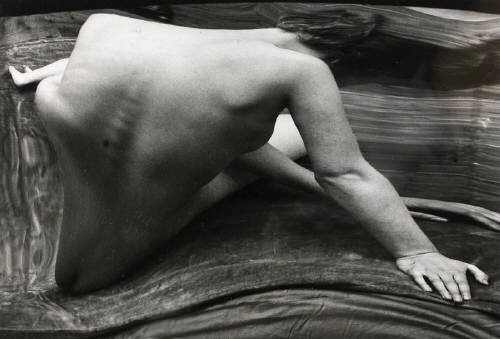
Exhibition: ‘FOTOGAGA: Max Ernst and Photography. A Visit from the Würth Collection’ at Museum für Fotografie, Staatliche Museen zu Berlin

Exhibition dates: 18th October, 2024 – 27th May, 2025

Curators: Katja Böhlau and Ludger Derenthal, Kunstbibliothek – Staatliche Museen zu Berlin


Max Ernst (German, 1891-1976) 'Frontispiece' 1921 From 'Paul Éluard: Répétitions' from the exhibition 'FOTOGAGA: Max Ernst and Photography. A Visit from the Würth Collection' at Museum für Fotografie, Oct 2024 - May 2025


Max Ernst (German, 1891-1976)
Frontispiece
1921
From Paul Éluard: Répétitions
Print from collage
5.5 x 10.3cm
Sammlung Würth
© VG Bild-Kunst, Bonn 2024


“Although these artists were explicitly not dealing with mundane reality but instead with what lies beneath, behind and in-between, the still relatively new medium of photography was of great importance for many. Last but not least, they also used it to make visible what remains hidden to the naked eye without technical means: the distant, the tiny, the moving.” (Press release)

Expressing the unconscious mind through illogical, dreamlike imagery and ideas, exploring the irrational, challenging notions of reality through a technical instrument – the camera – to create “a rich and multifarious cosmos of idiosyncratic realities that radically transcended traditional aesthetics.”

In the dream of the mind and the camera’s eye. Over and above the real.

Dr Marcus Bunyan


Many thankx to the Museum für Fotografie for allowing me to publish the photographs in the posting. Please click on the photographs for a larger version of the image.


“The invention of modern photomontage in the early twentieth century by Max Ernst with his Dada colleagues Hannah Höch, John Heartfield, George Grosz and Raoul Hausmann established new history in a variety of ways. Expanding modern art with multimedia as well as placing found photographs into art cut from printed magazines, rather than chemical made prints from the darkroom. Redefining final works of art without the paint brush or canvas. Ernst freed imagery into the unconscious by self-made combinations of drawing with torn and pasted photographic fragments, evoking memories and other responses by viewers that continue today.”


Steve Yates, Fulbright scholar, photographic artist, author and curator


Max Ernst (German, 1891-1976)
Die chinesische Nachtigall / Le rossignol chinois / The Chinese Nightingale 1920 from the exhibition 'FOTOGAGA: Max Ernst and Photography. A Visit from the Würth Collection' at Museum für Fotografie, Oct 2024 - May 2025


Max Ernst (German, 1891-1976)
Die chinesische Nachtigall / Le rossignol chinois / The Chinese Nightingale
1920
Collage and ink on paper
15.5 x 9cm
Musée de Grenoble
© VG Bild-Kunst, Bonn 2024
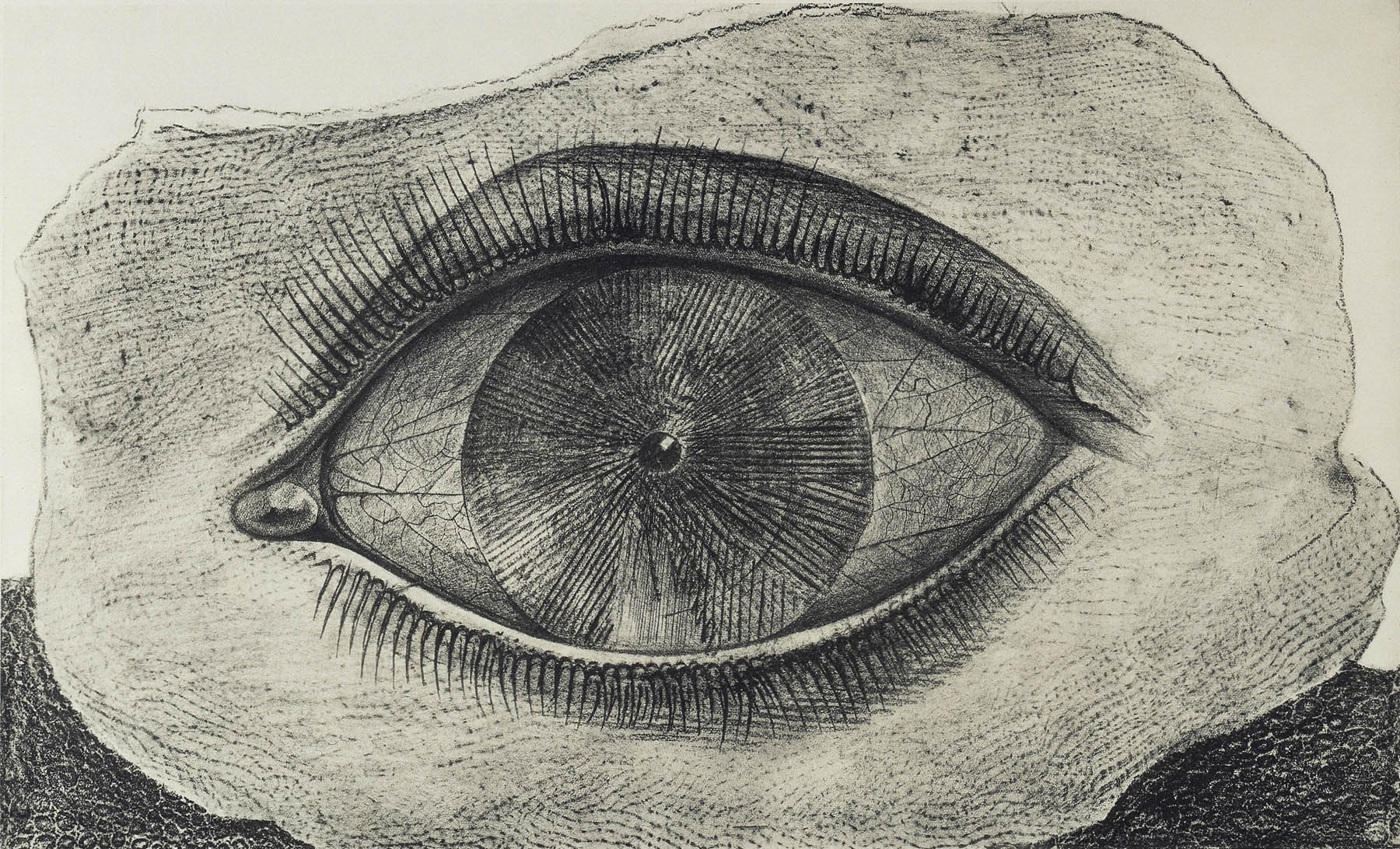
 

Max Ernst (German, 1891-1976) Lichtrad / la roue de la lumière / The wheel of light 1926 from the exhibition 'FOTOGAGA: Max Ernst and Photography. A Visit from the Würth Collection' at Museum für Fotografie, Oct 2024 - May 2025


Max Ernst (German, 1891-1976)
Lichtrad / la roue de la lumière / The wheel of light
1926
From Histoire Naturelle, sheet 29
Photogravure after frottage
32.5 x 50cm
Sammlung Würth
© VG Bild-Kunst, Bonn 2024


Max Ernst (German, 1891-1976) Max Ernst, Marie-Berthe Aurenche und Jean Aurenche / Max Ernst, Marie-Berthe Aurenche and Jean Aurenche, Photomaton c. 1929


Max Ernst (German, 1891-1976)
Max Ernst, Marie-Berthe Aurenche und Jean Aurenche / Max Ernst, Marie-Berthe Aurenche and Jean Aurenche, Photomaton
c. 1929
Silver gelatin paper
20.9 x 3.7cm
Sammlung Würth
© VG Bild-Kunst, Bonn 2024


Max Ernst (German, 1891-1976) "…unter meinem weißen Gewand, in meinem Taubenhaus, werdet ihr nicht mehr arm sein, ihr tonsurierten Tauben. Ich werde euch zwölf Tonnen Zucker bringen. Aber berührt nicht mein Haar“ / "…sous mon blanc vêtement, dans mon colombodrôme, vous ne serez plus pauvres, pigeons tonsurés. Je vous apporterai douze tonnes de sucre. Mais ne touchez pas à mes cheveux!" / "…you won't be poor anymore, head-shaven pigeons, under my white dress, in my columbarium. I'll bring you a dozen tons of sugar. But don't you touch my hair!" 1930


Max Ernst (German, 1891-1976)
“…unter meinem weißen Gewand, in meinem Taubenhaus, werdet ihr nicht mehr arm sein, ihr tonsurierten Tauben. Ich werde euch zwölf Tonnen Zucker bringen. Aber berührt nicht mein Haar“ / “…sous mon blanc vêtement, dans mon colombodrôme, vous ne serez plus pauvres, pigeons tonsurés. Je vous apporterai douze tonnes de sucre. Mais ne touchez pas à mes cheveux!” / “…you won’t be poor anymore, head-shaven pigeons, under my white dress, in my columbarium. I’ll bring you a dozen tons of sugar. But don’t you touch my hair!”
1930
From Das Karmelienmädchen. Ein Traum / Rêve d’une petite fille qui voulut entrer au Carmel / Dream of a little girl who wanted to enter Carmel
Print from collage
7.7 x 11.3cm
Sammlung Würth
© VG Bild-Kunst, Bonn 2024


Max Ernst (German, 1891-1976) Das Innere der Sicht 3 / A l'intérieur de la vue 3 / Inside View 3 1931/1947


Max Ernst (German, 1891-1976)
Das Innere der Sicht 3 / A l’intérieur de la vue 3 / Inside View 3
1931/1947
From Paul Éluard : A l’intérieur de la vue. 8 Poèmes visibles
Collage
22.3 x 15.5cm
Sammlung Würth
© VG Bild-Kunst, Bonn 2024


Max Ernst (German, 1891–1976) …des vollständig auf sie beschränkten, des vom Rest der Welt isolierten / … d'absolument limité à eux, d'isolant du reste du monde / of the one who is completely confined to them, isolated from the rest of the world 1936


Max Ernst (German, 1891–1976)
…des vollständig auf sie beschränkten, des vom Rest der Welt isolierten / … d’absolument limité à eux, d’isolant du reste du monde / of the one who is completely confined to them, isolated from the rest of the world
1936
From André Breton: Le château étoilé
Photogram after frottage
25 x 20cm
Sammlung Würt
© VG Bild-Kunst, Bonn 2024


Max Ernst (German, 1891-1976) Eine weitere Laune der Venus / Un autre caprice de Venus / Another whim of Venus 1961


Max Ernst (German, 1891-1976)
Eine weitere Laune der Venus / Un autre caprice de Venus / Another whim of Venus
1961
Oil on canvas
27 x 22cm
Sammlung Würth
© VG Bild-Kunst, Bonn 2024


Max Ernst holds a prominent position within Dada and Surrealist Art. His name stands for genre-bending works that combine dream and reality. The exhibition FOTOGAGA: Max Ernst and Photography. A Visit from the Würth Collection is the first to search for points of intersection between his work and photography. Commemorating Surrealism’s centenary, the Museum für Fotografie (Museum of Photography) is showing a representative overview of Max Ernst’s artworks from the Würth Collection. These are complemented by works from the Kunstbibliothek, Kupferstichkabinett, Sammlung Scharf-Gerstenberg and the Staatsbibliothek zu Berlin, and other exceptional loans from museums and private collections in France and Germany.

Max Ernst and Photography – A Special Connection

The art of Max Ernst (1891-1976) was created at a time characterised by a new, creative approach to photography. Snapshots, scientific photographs and images of war machinery inspired him and served as working materials, especially for his collages. Technical and artistic developments in the medium of photography significantly influenced his work. He used photographic reproduction techniques to increase the visual impact of his works: enlargements allowed his small-format collages to hold their own alongside paintings in exhibitions; the production of photo postcards of the collages ensured that the works could be distributed quickly and easily; and the inversion of the tonal values in a photogram enhanced the effect of his frottages.

Max Ernst himself never used a camera for his art, but he liked to pose for the camera, whether for images taken by well-known photographers or made in photo booths. At times serious, at times a little “gaga”, the portraits illustrate not just the artist’s love for playfulness but also an occasionally strategic use of photography to promote his artistic agenda. The title of the exhibition – “FOTOGAGA” – is derived from a group of works by Hans Arp and Max Ernst, which they called “FATAGAGA”: the “FAbrication de TAbleaux GAsométriques Garantis (Fabrication of Guaranteed Gasometric Images)”. One of these photocollages, in which the two artists address their relationship as friends, can be seen in the exhibition.

A Century of Surrealism

Some 270 works will be exhibited, primarily works on paper but also paintings by Max Ernst and photographs, photograms, collages, and illustrated books by his Surrealist contemporaries. Although these artists were explicitly not dealing with mundane reality but instead with what lies beneath, behind and in-between, the still relatively new medium of photography was of great importance for many. Last but not least, they also used it to make visible what remains hidden to the naked eye without technical means: the distant, the tiny, the moving.

Max Ernst’s works are framed within the context of both contemporary and historical references. There are numerous and surprising parallels to photographs by other artists. An avid delight in experimentation and a creative game played with chance characterise the works selected for the exhibition. Their originators reflected on forgotten photographic processes from the 19th century and developed new techniques using light-sensitive materials. Semi-automatic methods, working with found objects, unusual combinations, and the blurring of traces have equally shaped the work of Max Ernst and the photographic oeuvres of many of his contemporaries and other artists that followed. Even a century after André Breton published the first Surrealist Manifesto on 15 October 1924, they have not lost any of their fascination.

A cooperation with tradition

The Staatliche Museen zu Berlin look back on a longstanding cooperation with the Würth Collection. FOTOGAGA: Max Ernst and Photography is the fourth exhibition in a series that began in 2019‒2020 with Anthony Caro: The Last Judgement Sculpture from the Würth Collection at the Gemä-ldegalerie. It was followed in 2021‒2022 by Illustrious Guests: Treasures from the Kunstkammer Würth in the Kunstgewerbemuseum and David Hockney – Landscapes in Dialogue. “The Four Seasons” from the Würth Collection in 2022, also shown at the Gemäldegalerie. The exhibition at the Museum für Fotografie draws on the Würth Collection’s extensive holdings, especially of Max Ernst’s graphic works, which are now being shown in Berlin for the first time.

Press release from the Museum für Fotografie


Max Ernst (German, 1891-1976) 'Above the Clouds Midnight Passes' 1920


Max Ernst (German, 1891-1976)
Above the Clouds Midnight Passes
1920
Photographic enlargement of a collage and ink, facsimile, 2024
73 x 55cm
Kunsthaus Zürich
Public domain


László Moholy-Nagy (Hungarian, 1895-1946) 'The broken marriage' 1925


László Moholy-Nagy (Hungarian, 1895-1946)
The broken marriage
1925
Photomontage
16.5 x 12.2cm
Sammlung Siegert, München
Public domain


Max Ernst (German, 1891-1976) 'The Stall of the Sphinx' 1925


Max Ernst (German, 1891-1976)
The Stall of the Sphinx
1925
Pencil on paper
16.4 x 15.2cm
Sammlung Ulla und Heiner Pietzsch, Berlin


Max Ernst (German, 1891-1976) 'Little Tables around the Earth' (Petites tables autour de la terre) 1926


Max Ernst (German, 1891-1976)
Little Tables around the Earth (Petites tables autour de la terre)
1926
From Natural History (Histoire naturelle)
Collotype of a frottage
50 x 32.5 cm (sheet)
Paris: Éditions Jeanne Bucher
Portfolio with 34 collotypes of frottages
51.7 x 35 x 1cm


Jean Painlevé (French, 1902-1989)
Hummerschere / Pince d'homard, Port-Blanc, Bretagne / Lobster claw, Port-Blanc, Brittany 1929


Jean Painlevé (French, 1902-1989)
Hummerschere / Pince d’homard, Port-Blanc, Bretagne / Lobster claw, Port-Blanc, Brittany
1929
Silver gelatin paper
23 x 16.7cm
Sammlung Dietmar Siegert
© Archives Jean Painlevé/Les Documents cinématographiques, Paris
Repro: Christian Schmieder


Aenne Biermann (German, 1898-1933) 'Cactus' 1929


Aenne Biermann (German, 1898-1933)
Cactus
1929
Silver gelatin paper
12.4 x 17.3cm


“The object, which, in its surroundings, is never seen other than in its most mundane aspect, is given new life when isolated in the lens of the viewfinder. […] It seemed to me that the clarity of a constructed form, when removed from its overly distracting surroundings, could be depicted convincingly through the use of photography.”

~ Aenne Biermann


Max Ernst (German, 1891–1976) 'Quiétude' from 'The Hundred-Headless Woman' 1929


Max Ernst (1891–1976)
Quiétude from The Hundred-Headless Woman
1929
Collage novel with 147 reproductions of collages
Paris: Éditions du Carrefour
25 x 19cm


The Hundred Headless Woman is Ernst’s first collage novel. It features a loosely narrative sequence of uncanny Surrealist collages, made by cutting up and reassembling nineteenth-century illustrations, accompanied by Ernst’s equally strange captions. Ernst’s French title, La Femme 100 têtes, is a double entendre; when read aloud it can be understood as either “the hundred-headed woman” or “the headless woman.” Along with this enigmatic title character, the book marks the introduction of Ernst’s favourite alter ego, Loplop, “the Bird Superior.” Ernst was deeply engaged with illustrated books during the 1930s; in addition to collage novels, he created many etchings and lithographs to complement the poems and stories of Surrealist writers with whom he was closely associated.

Gallery label from Max Ernst: Beyond Painting, September 23, 2017-January 1, 2018 on the MoMA website Nd [online] Cited 31/03/2025


Max Ernst (German, 1891-1976) 'Loplop presents the members of the Surrealist group' 1931


Max Ernst (German, 1891-1976)
Loplop presents the members of the Surrealist group
1931
Reproduction of a collage in Le Surréalisme au service de la revolution, No. 4
27.4 x 19.9cm
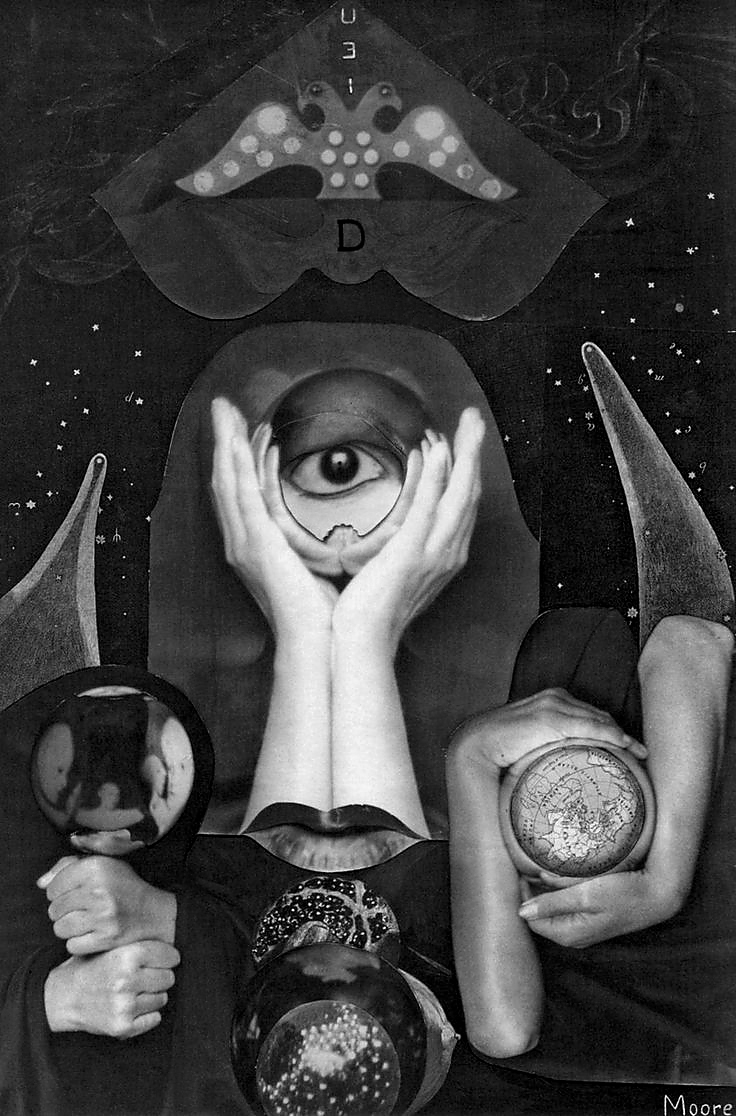
 

Claude Cahun (French, 1894-1954) / Marcel Moore (French, 1892-1972)
'Aveux non avenus' / Disavowals (frontispiece) 1930 Paris: Éditions du Carrefour


Claude Cahun (French, 1894-1954) / Marcel Moore (French, 1892-1972)
Aveux non avenus / Disavowals (frontispiece)
1930
Paris: Éditions du Carrefour
Book with 11 heliogravures of collages
22 x 17 x 2.8cm
Sammlung Siegert, München


Man Ray (American, 1890-1976) 'Untitled'
1931 from 'Électricité. Dix rayogrammes de Man Ray et un texte de Pierre'


Man Ray (American, 1890-1976)
Untitled
1931
From Électricité. Dix rayogrammes de Man Ray et un texte de Pierre
Bost, Paris: La Compagnie Parisienne de Distribution d’Électricité
Heliogravure after photogram
Collotype
38.8 x 29.3cm
Kunstbibliothek – Staatliche Museen zu Berlin
© Man Ray Trust / VG Bild-Kunst, Bonn 2024
Repro: Dietmar Katz
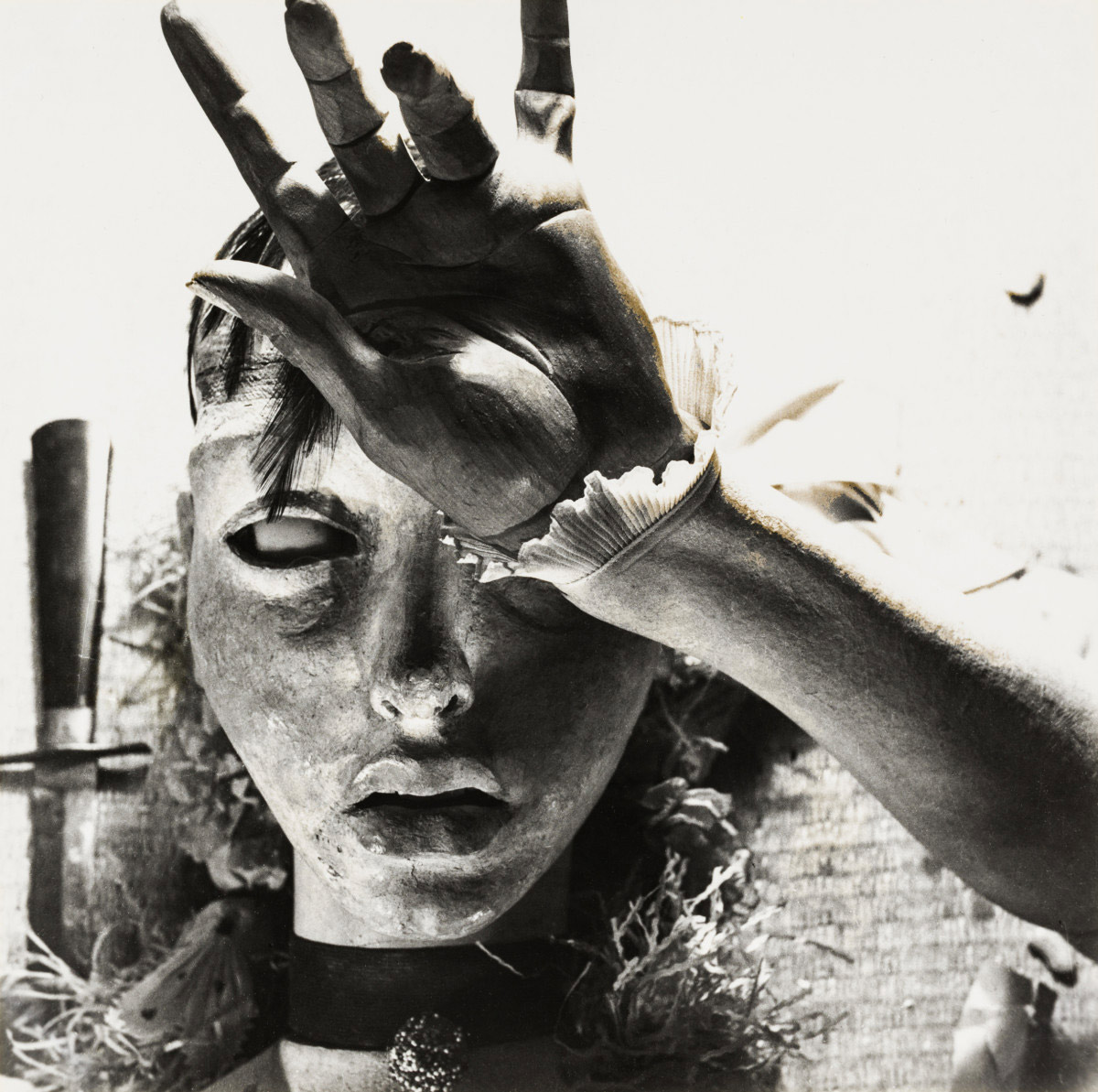
 

Hans Bellmer (German, 1902-1975) 'The Doll' 1935


Hans Bellmer (German, 1902-1975)
The Doll
1935
Silver gelatin paper
17.5 x 16 cm
Sammlung Siegert, München


Brassaï (British born Germany, 1899-1984) 'Night Moth' 1935


Brassaï (British born Germany, 1899-1984)
Night Moth
1935
Reproduction in Minotaure No. 7
31.6 x 24.8cm
Kunstbibliothek


Joseph Breitenbach (German, 1896-1984) 'Max Ernst, Paris' 1936


Joseph Breitenbach (German, 1896-1984)
Max Ernst, Paris
1936
Silver gelatin paper
35.3 x 27.8cm
Sammlung Würth
© The Josef and Yaye Breitenbach Charitable Foundation


Raoul Ubac (Belgian, 1910-1985) 'The Battle of the Penthesilea II' 1937


Raoul Ubac (Belgian, 1910-1985)
The Battle of the Penthesilea II
1937
Photomontage, silver gelatin paper
18 x 24.2cm
Sammlung Siegert, München


Max Ernst (1891-1976) is one of the most important representatives of Dadaism and Surrealism, two artistic movements that turned traditional norms on their head from the 1920s onwards. His boundary-crossing works combine dream and reality. His art also was created at a time characterized by a new, creative approach to photography. Snapshots, scientific photographs and images of war machinery inspired him and served as working materials, especially for his collages. Although he never used a camera for his art himself, technical and artistic developments in the medium of photography significantly influenced his work. Last but not least, Max Ernst liked to pose for the camera, whether for images taken by well-known photographers or made in photo booths. 

Some 270 works will be exhibited, primarily works on paper but also paintings by Max Ernst and photographs, photograms, collages, and illustrated books by his Surrealist contemporaries. Although these artists were explicitly not dealing with mundane reality but instead with what lies beneath, behind and in-between, the still relatively new medium of photography was of great importance for many. Last but not least, they also used it to make visible what remains hidden to the naked eye without technical means: the distant, the tiny, the moving. 

Max Ernst’s works are framed within the context of both contemporary and historical references. There are numerous and surprising parallels to photographs by other artists. Semi-automatic methods, working with found objects, unusual combinations, and the blurring of traces have equally shaped the work of Max Ernst and the photographic oeuvres of many of his contemporaries and other artists that followed. Even a century after André Breton published the first Surrealist Manifesto on 15 October 1924, they have not lost any of their fascination.

Gazes and Visions 

The Motif of the Eye as a Surrealist Symbol

For the Surrealists, free, wild seeing opened up perspectives on an untamed world beyond reality – provided that the eyes were used in the right way or equipped with appropriate devices. Thus the motif of the eye symbolizes the translation of visions into perceptible images. Max Ernst’s frottages show radically enlarged, wide-open eyes hovering over a flat horizon. Visionary seeing can also be assisted by various instruments. In a coloured collage for Les malheurs des immortels, a young man gazes through two pipes, cheeks flushed with excitement: what might he be looking at? 

The focus on inner vision becomes the theme of a 1929 collage, in which the portrait photos of the Surrealists, all shown with eyes closed, are arranged around the reproduction of a nude painting by René Magritte. In so doing, a very masculinely connoted group activity is simulated in which sexual desire makes possible the liberation of thought. A violent variation – a blinding, likewise understood as liberation – appears in the famous eyeball-slicing scene in the prologue of the 1928 film Un chien andalou by Luis Buñuel and Salvador Dalí. 

Flora, fauna, firmament 

Frottage, Nature Printing, and Plant Photography

Plantlike animals, seashell flowers, fishbone forests, crocheted stars – the visual world of Max Ernst is full of fantastic forms. For him, nature served as both inspiration and material. In his frottages, he used wood, leaves and much more for rubbings on paper. This is how the portfolio Histoire naturelle (Natural History) was created in 1926. The frottages were reproduced as collotype prints, photomechanically produced prints using an exposed glass plate as a printing block. 

With Histoire Naturelle, Max Ernst drew on natural history encyclopaedias, but reworked the originals to create his own natural history. In so doing he dissected nature, showed the tiny and the distant, and created planar structures rather than views. This interest in the formal language of nature also resonates in the photography of the New Objectivity from around the same time, which reveal the aesthetic power of natural forms. That also made them interesting to the Surrealist movement. 

In his artist’s book Maximiliana or the Illegal Practice of Astronomy from 1964, Max Ernst devoted himself entirely to celestial phenomena. As in photograms, Ernst used objects here like spirals or gears as stencils to evoke comets and nebulas.

Between Positive and Negative 

Photogram, Cliché Verre, and Other Darkroom Experiments

The play of positive and negative effects is a recurring theme in Max Ernst’s oeuvre. Early works created using fine lines incised on a black ground show motifs that appear fragile and vague. He also used photographic techniques for some of his works and transformed his frottages into negative forms in Man Ray’s studio. In 1931, for example, he created dark photograms as illustrations for René Crevel’s text Mr. Knife, Miss Fork

Max Ernst’s use of manually produced prototypes relates to a technique borrowed from the early days of photography: cliché verre, or glass printing. In this hybrid process, an etching is created on a glass plate coated with paint or ink, which then serves as a negative for the print. The twentieth century witnessed a rediscovery of cliché verre and the further amalgamation of photographic and drawing processes. The growing interest in camera-less photography led to a wide range of experiments using light and unconventional materials in various avant-garde circles.

Invisible Cuts 

(Photo-) Collages, Collage Novels, and Surrealist Photography

For Max Ernst, collage is the fundamental mode of artistic production. It encompasses a colorful variety of methods for combining materials of all kinds, initiating an open-ended artistic process. Max Ernst had already experimented with collages of printed photographs during his Dada years. The combination of the most diverse illustrations and their fusion into a new image by painting and drawing over them all took place within the working process. 

For his wood engraving collages, Max Ernst made use of old-fashioned illustrations from popular scientific magazines of the nineteenth century. Many of these images were also based on photographs; at that time, however, photos could not yet be reproduced and thus had to be rendered as wood engravings. His three collage novels featured visions and hallucinations alongside blasphemy, the critique of bourgeois morals, and the glorification of free love and revolution. 

Photographers of the Surrealist movement from Claude Cahun to Karel Teige, from Georges Hugnet to Emila Medková created with the help of camera and darkroom as well as scissors and glue, a rich and multifarious cosmos of idiosyncratic realities that radically transcended traditional aesthetics. 

Max Ernst in Front of the Camera 

From Studio Portrait to Photo Booth

Max Ernst is one of the most frequently photographed artists of the twentieth century. He posed for the cameras of important photographers such as Berenice Abbott, Arnold Newman, Lee Miller, Irving Penn, and Man Ray. Their portraits demonstrate just how individual the view of a person can be. A whole series of photographs shows the artist at work, with his art, or in the studio. Whether in focused concentration wearing his painter’s smock, in the midst of creative chaos, or in intimate relation to his sculptures – such photographs reinforce or even create the iconic conception of the artist. 

Another group of images shows Max Ernst with female companions such as the artists Leonora Carrington or Dorothea Tanning, which convey the intensity of their relations. As a member of the Surrealists Max Ernst frequently appears in group portraits. These images bear witness to the various stations of the movement – its beginnings in Paris or exile in America – as well as to constellations of fashion and gender. Whether individually or in a group, pensive, playful, joyful or serious, the photographs tell of Max Ernst’s delight in self-representation and in theatrical play.

Text from the Museum für Fotografie


George Platt Lynes (American, 1907-1955) 'Max Ernst, New York' 1941


George Platt Lynes (American, 1907-1955)
Max Ernst, New York
1941
Silver gelatin paper, new print
25.1 x 20.1cm


Josef Breitenbach (German, 1896-1984) 'Max Ernst and the seahorse, New York' 1942


Josef Breitenbach (German, 1896-1984)
Max Ernst and the seahorse, New York
1942
Silver gelatin paper
24 x 19cm


Arnold Newman (American, 1918-2006) 'Max Ernst, New York' 1942


Arnold Newman (American, 1918-2006)
Max Ernst, New York
1942
Silver gelatin paper
24.2 x 18.6cm
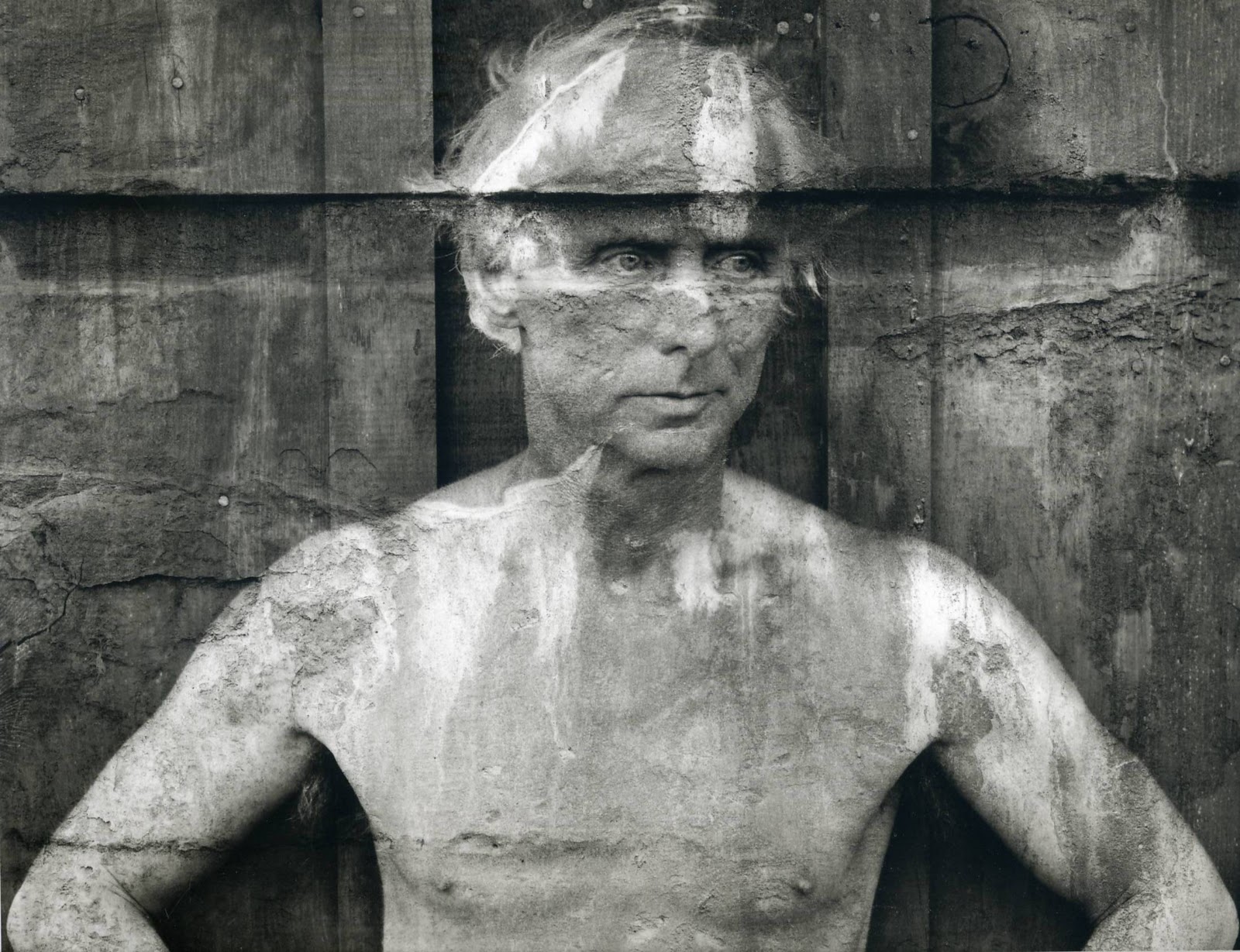
 

Frederick Sommer (American, 1905-1999) 'Max Ernst' 1946


Frederick Sommer (American, 1905-1999)
Max Ernst
1946
Gelatin silver print

A reproduction of this image on postcard for the Max Ernst retrospective: 30 Years of his Work – A Survey, Copley Galleries, Beverly Hills 1949 is included in the exhibition.


John Kasnetzis. 'Dorothea Tanning and Max Ernst with the sculpture Capricorne, Arizona' 1948


John Kasnetzis
Dorothea Tanning and Max Ernst with the sculpture Capricorne, Arizona
1948
Silver gelatin print, later print
23.6 x 18.8cm


In the summer of 1947, Max Ernst, exuberant and inspired by the arrival of water piped to our house (up to then we had hauled it daily from a well 5 miles away), began playing with cement and scrap iron with assists from box tops, eggshells, car springs, milk cartons and other detritus, The result: Capricorn, a monumental sculpture of regal but benign deities that consecrated our “garden” and watched over its inhabitants. Years later, when we had gone, a sculptor friend made molds and sent them to their creator in Huismes, France where he reassembled his Capricorn for casting in bronze. The above photo is a one-shot, spur-of-the-moment caper made after taking a people-less documentary photo.

Dorothea Tanning from Birthday, Santa Monica: The Lapis Press, 1986


Emila Medková (Czech, 1928-1985)
Schwarz / Black 1949


Emila Medková (Czech, 1928-1985)
Schwarz / Black
1949
Silver gelatin paper
17.7 x 23cm
Sammlung Dietmar Siegert
© Eva Kosakova Medkova
Repro: Christian Schmieder


Denise Colomb (French, 1902-2004) 'Max Ernst on the roof terrace on the Quai Saint-Michel in Paris' 1953


Denise Colomb (French, 1902-2004)
Max Ernst on the roof terrace on the Quai Saint-Michel in Paris
1953
Silver gelatin paper, later print
28 x 22cm


Fritz Kempe (German, 1909-1988) 'Max Ernst, Hamburg' 1964


Fritz Kempe (German, 1909-1988)
Max Ernst, Hamburg
1964
Silver gelatin print
12.8 x 17.7cm


Max Ernst (German, 1891-1976) 'Seen at the Neuilly fair' 1971


Max Ernst (German, 1891-1976)
Seen at the Neuilly fair
1971
Colour reproduction of a collage, sheet 3 from the portfolio: Commonplaces. Eleven Poems and Twelve Collages
49 x 34.5cm


Museum für Fotografie
Jebensstraße 2, 10623 Berlin

Opening hours:
Tuesday + Wednesday 11am – 7pm
Thursday 11am – 8pm
Friday – Sunday 11am – 7pm

Museum für Fotografie website

LIKE ART BLART ON FACEBOOK

Back to top

Exhibition: ‘Etched by Light: Photogravures from the Collection, 1840-1940’ at the National Gallery of Art, Washington

Exhibition dates: 15th October, 2023 – 4th February, 2024

Curators: The exhibition is curated by Sarah Greenough, senior curator and head of the department of photographs, with Andrea Coffman, collection manager in the department of photographs, both at the National Gallery of Art.


Charles Nègre (French, 1820-1880) 'Cathédrale de Chartres – Portique du Midi XIIe Siècle' c. 1854, printed c. 1857


Charles Nègre (French, 1820-1880)
Cathédrale de Chartres – Portique du Midi XIIe Siècle
c. 1854, printed c. 1857
Photogravure
Image: 53 x 73cm (20 7/8 x 28 3/4 in.)
Sheet: 59.3 x 80cm (23 3/8 x 31 1/2 in.)
National Gallery of Art, Washington, The Sarah and William L Walton Fund


The under appreciated photogravure process, which prints photographs in ink on paper, produces images of luscious lucidity.

In the “photomechanical process, which came to be called photogravure, a photographic image is etched into a printmaking plate, ink is rubbed into the etched surface, a damp sheet of paper is laid on top of the plate, and both are put through a printing press to transfer the ink to paper.” (Press release)

The prints are tonally rich and have a smooth, continuous tonal range and, depending on the choice of paper and inks, can be produced in a variety of colours and textures. While the process is time-consuming and labour-intensive nothing – except perhaps a platinum print developed in Amidol or alike whose negative has been developed in Pyro developer – comes close to the beauty and tonality of the gravure. “This intricate, painstaking and time-consuming method produces images with rich tones and a sense of light, depth, and realism.”

“The process offers the most sophisticated photomechanical means to reproduce large editions while still retaining the warm blacks and subtle shades of gray. It thrived into the 1930s, but World War II brought an end to its popularity due to costs and availability. As the spirit of hands-on experimentation returned to photography in the 1960s, Jon Goodman (b. 1953) is credited with its revival, and is lauded for creating sumptuous portfolios of the works of famed photographers Paul Strand (1890-1976) and Edward Steichen (1879-1973).”1


Some of the most beautiful photographs ever made are printed in the photogravure process. Alfred Stieglitz (American, 1864-1946), that pioneering artist, publisher and teacher, used them extensively in his influential quarterly photographic journal Camera Work (1903-1917).

One of my favourite photographs of all time, Paul Strand’s Wall Street (1915) is known only in two vintage platinum palladium prints, but is more commonly seen in reproduction as a photogravure print, notably in Stieglitz’s Camera Work Number 48 October 1916 (see below). “Wall Street became one of his most famous images because of his willingness to reproduce it in various photographic media and at different periods throughout his career.” (Philadelphia Museum of Art website)

Thus the reproducibility of the photogravure process led to the wider distribution of beautiful photographs. Crucially these hand printed photomechanical prints still retain an aura – of reality, presence and the hand of the artist, spirit if you like – unlike many reproductions in later photography books.

Dr Marcus Bunyan


1/ Robin O’Dell. “The Photogravure Process,” on the Florida Museum of Photographic Arts website Nov 15, 2020 [Online] Cited 26/01/2024


Many thankx to the National Gallery of Art for allowing me to publish the photographs in the posting. Please click on the photographs for a larger version of the image.


Paul Strand (American, 1890-1976) 'New York [Wall Street]' Negative 1915; print 1916 Photogravure

Paul Strand (American, 1890-1976) 'New York [Wall Street]' Negative 1915; print 1916 Photogravure


Paul Strand (American, 1890-1976)
New York [Wall Street]
Negative 1915; print 1916
Photogravure
From Camera Work. Number 48. Alfred Stieglitz (American, 1864-1946) publisher
Image: 13 × 16.2 cm (5 1/8 × 6 3/8 in.)
Sheet: 27.8 × 19.7 cm (10 15/16 × 7 3/4 in.)
The J. Paul Getty Museum, Los Angeles
Public domain

Please note: As far as I know, this photograph is not in the exhibition.


Discover an intriguing chapter in the history of photography, as innovative practitioners searched for and perfected a method to produce identical photographic prints in ink. The process, which came to be called photogravure, yielded some of the most beautiful photographs ever made – featuring delicate highlights, lush blacks, a remarkably rich tonal range, and a velvety matte surface. Etched by Light: Photogravures from the Collection, 1840-1940 tells the story of the first 100 years of this process. Artists and scientists working across Europe from the 1840s through the 1870s were dismayed to discover that identical silver-based photographic prints were not only difficult to make but also faded quickly. Building on one another’s discoveries, innovators such as William Henry Fox Talbot, Hippolyte Fizeau, and Charles Nègre perfected a way to etch a photographic image into a copperplate and print it in ink. In the late 19th and early 20th centuries, photographers such as James Craig Annan and Peter Henry Emerson utilised this process to demonstrate the artistic nature of photography while somewhat later photographers such as Alfred Stieglitz, Man Ray, and Laure Albin-Guillot used the technique to create large, bold pictures that they disseminated widely. Including 46 photogravures and 5 bound volumes illustrated with photogravures, many never before exhibited, Etched by Light shows how these works, through their proliferation, have helped shape our collective visual experience.


Bisson Frères. Louis-Auguste Bisson (French, 1814-1876) and Auguste-Rosalie Bisson (French, 1826-1900) 'Notre-Dame' 1850s


Bisson Frères. Louis-Auguste Bisson (French, 1814-1876) and Auguste-Rosalie Bisson (French, 1826-1900)
Notre-Dame
1850s
Heliogravure on chine colle
Sheet: 35.7 x 27.3cm (14 1/16 x 10 3/4 in.)
National Gallery of Art, Washington, Alfred H. Moses and Fern M. Schad Fund
Public domain


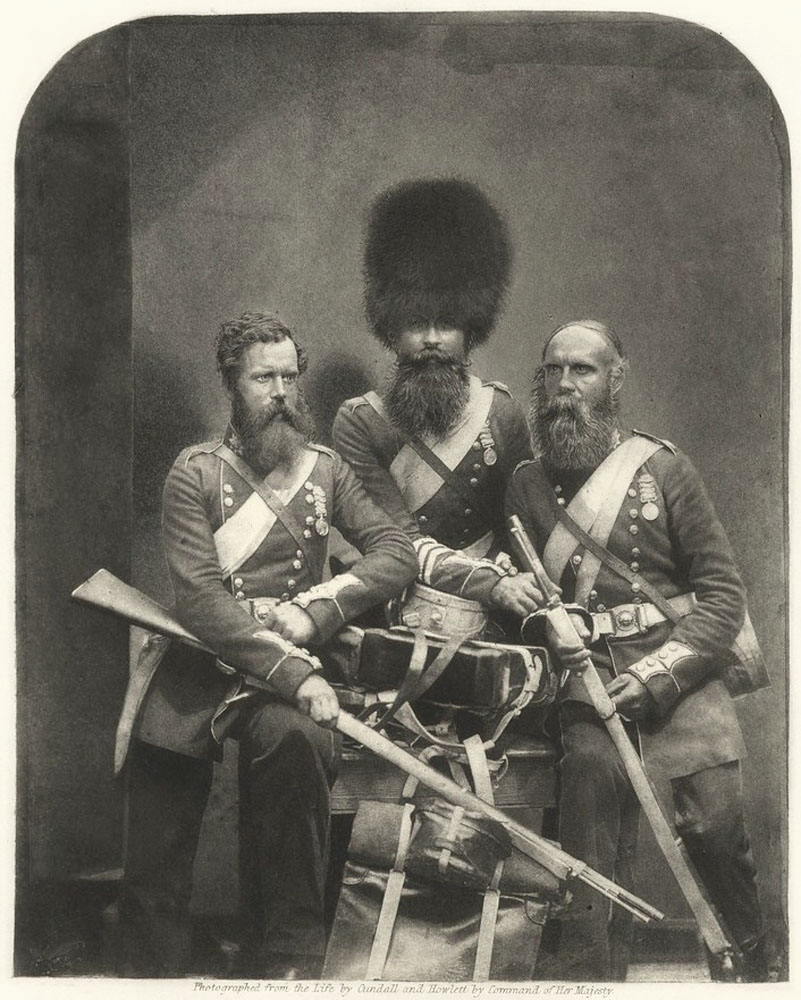
Joseph Cundall (British, 1818-1895) and Robert Howlett (British, 1831-1858) 'Crimean Braves – Men of the Trenches and Battlefields in the Crimea' 1856


Joseph Cundall (British, 1818-1895) and Robert Howlett (British, 1831-1858)
Crimean Braves – Men of the Trenches and Battlefields in the Crimea
1856
Photogalvanograph proof on chine collé
Plate: 31 x 25cm (12 3/16 x 9 13/16 in.)
Sheet: 55.8 x 38cm (21 15/16 x 14 15/16 in.)
National Gallery of Art, Washington, Alfred H. Moses and Fern M. Schad Fund
Public domain


Peter Henry Emerson (British, 1856-1936) 'A Winter's Morning' 1887


Peter Henry Emerson (British, 1856-1936)
A Winter’s Morning
1887
Photogravure
Image: 17.7 x 28.7cm (6 15/16 x 11 5/16 in.)
Sheet: 21.5 x 32.4cm (8 7/16 x 12 3/4 in.)
Mount: 40 x 50.8cm (15 3/4 x 20 in.)
National Gallery of Art, Washington, Carolyn Brody Fund and Robert B. Menschel and the Vital Projects


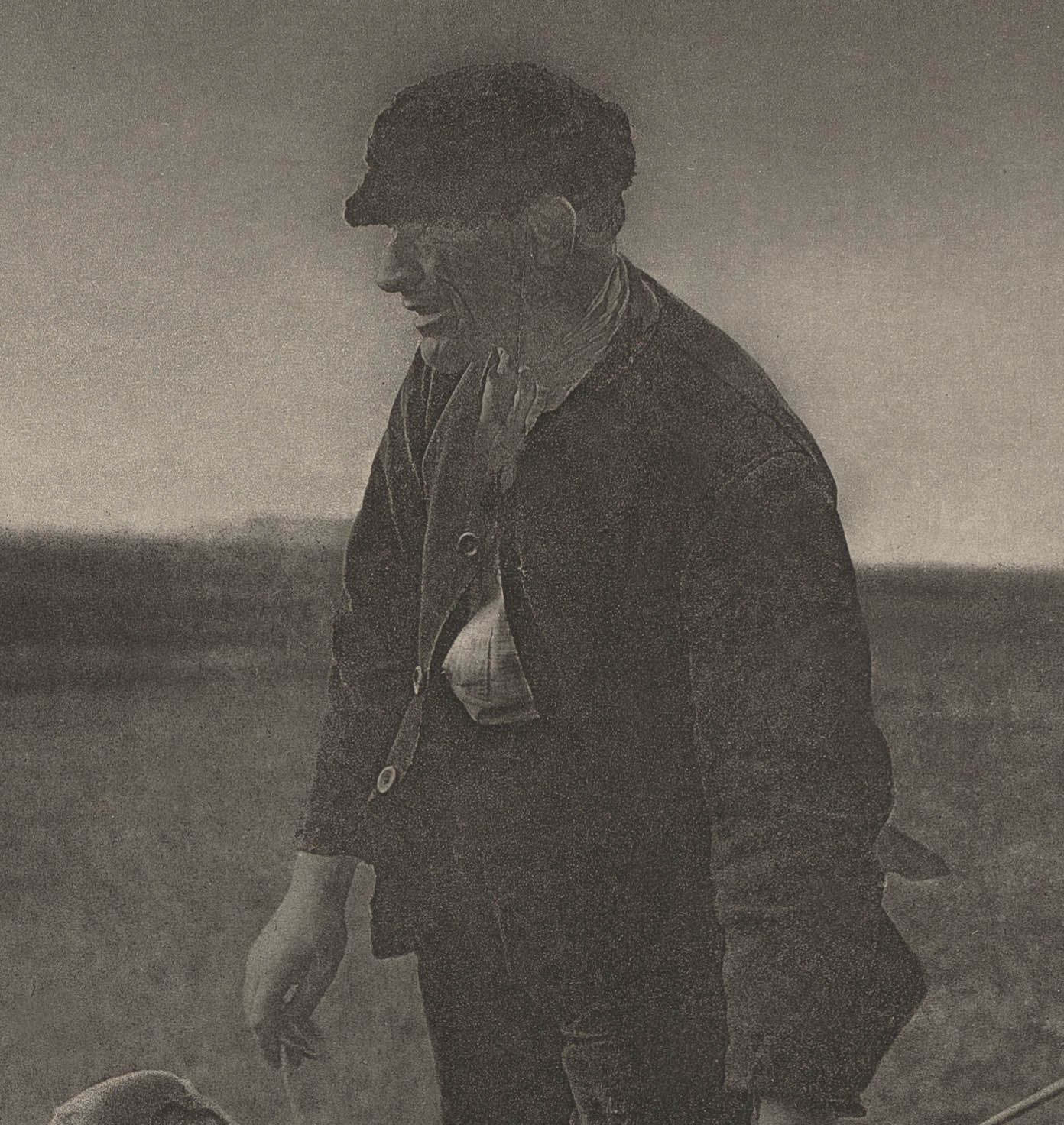
Peter Henry Emerson (British born Cuba, 1856-1936) 'The Poacher – A Hare in View' 1888


Peter Henry Emerson (British born Cuba, 1856-1936)
The Poacher – A Hare in View
1888
Photogravure
Image: 28.5 x 23.7cm (11 1/4 x 9 5/16 in.)
Sheet: 30.5 x 25.7cm (12 x 10 1/8 in.)
National Gallery of Art
Gift of Mary and Dan Solomon and Patrons’ Permanent Fund
Public domain


Peter Henry Emerson (British born Cuba, 1856-1936) 'The Poacher – A Hare in View' 1888 (detail)


Peter Henry Emerson (British born Cuba, 1856-1936)
The Poacher – A Hare in View (detail)
1888
Photogravure
Image: 28.5 x 23.7cm (11 1/4 x 9 5/16 in.)
Sheet: 30.5 x 25.7cm (12 x 10 1/8 in.)
National Gallery of Art
Gift of Mary and Dan Solomon and Patrons’ Permanent Fund
Public domain


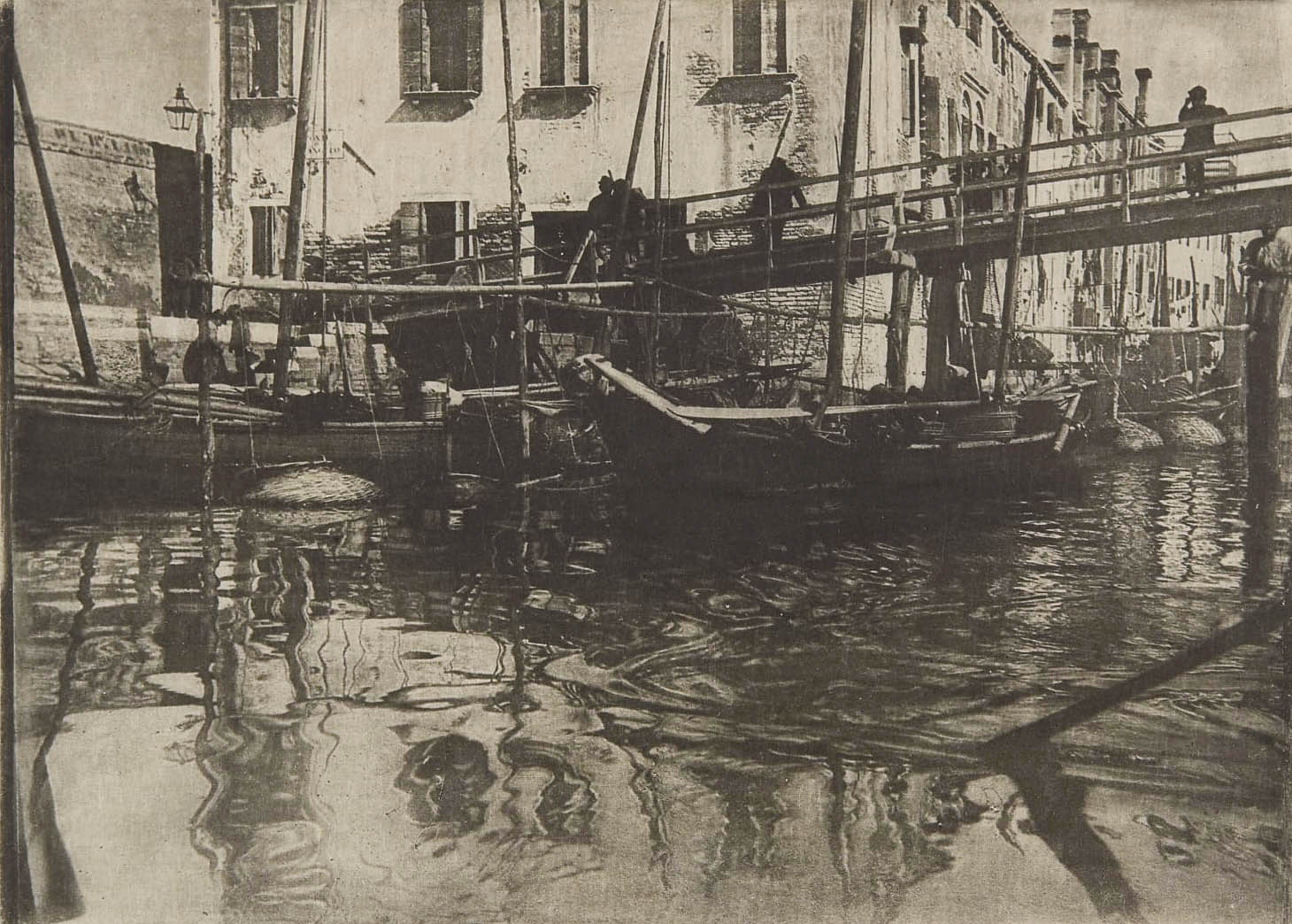
James Craig Annan (British, 1864-1946) 'A Black Canal' 1894


James Craig Annan (British, 1864-1946)
A Black Canal
1894
Photogravure
Image: 9.1 x 12.6cm (3 9/16 x 4 15/16 in.)
Sheet: 9.6 x 12.8cm (3 3/4 x 5 1/16 in.)
National Gallery of Art
Pepita Milmore Memorial Fund and Robert B. Menschel and the Vital Projects Fund


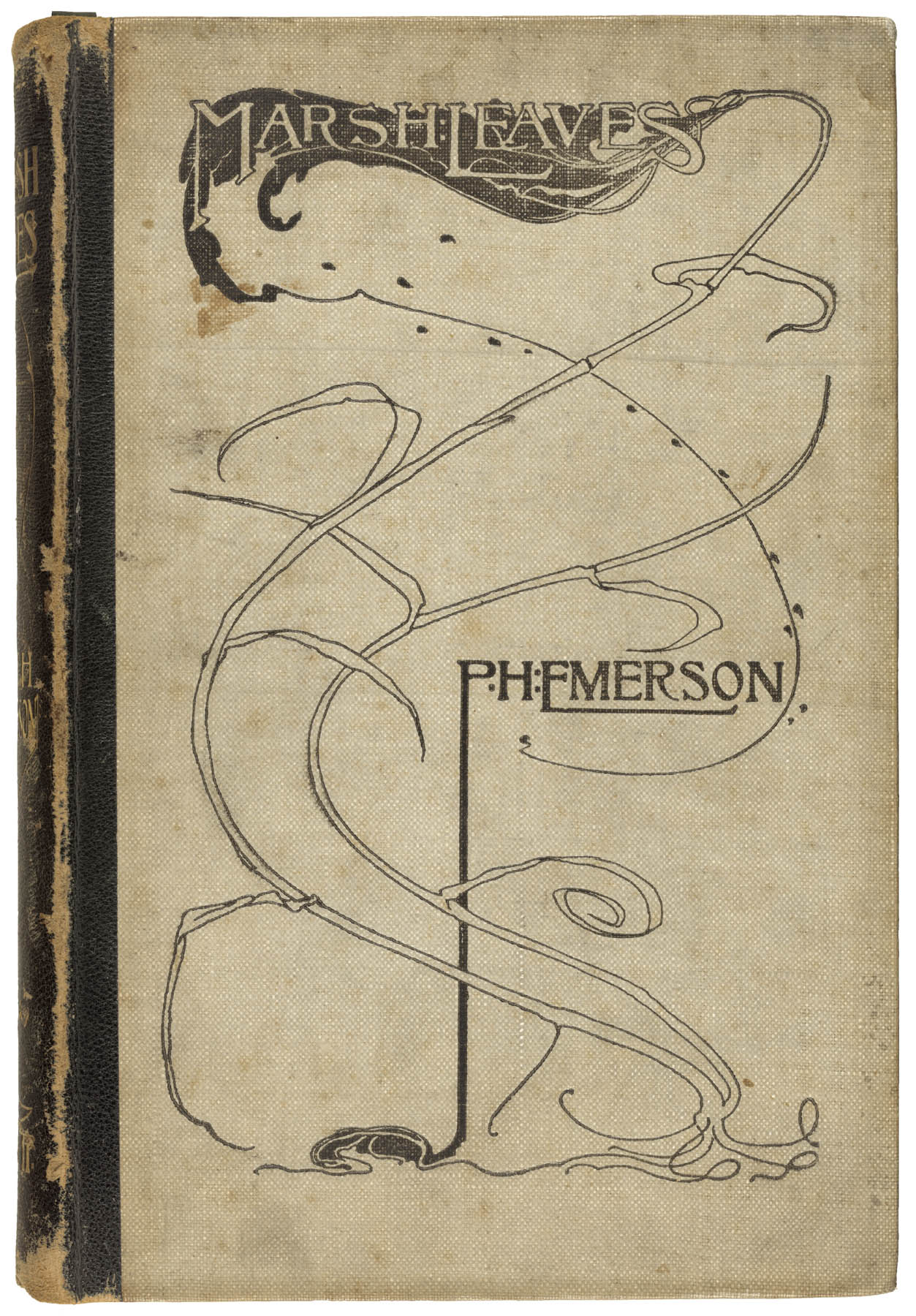
Peter Henry Emerson (British born Cuba, 1856-1936) 'Marsh Leaves' Published 1895


Peter Henry Emerson (British born Cuba, 1856-1936)
Marsh Leaves
Published 1895
1 vol: ill: 16 photogravures on wove paper
Page size: 28.4 x 18.4cm (11 3/16 x 7 1/4 in.)
National Gallery of Art, Washington, Gift of Harvey S. Shipley Miller and J. Randall Plummer, in Honor of the 50th Anniversary of the National Gallery of Art


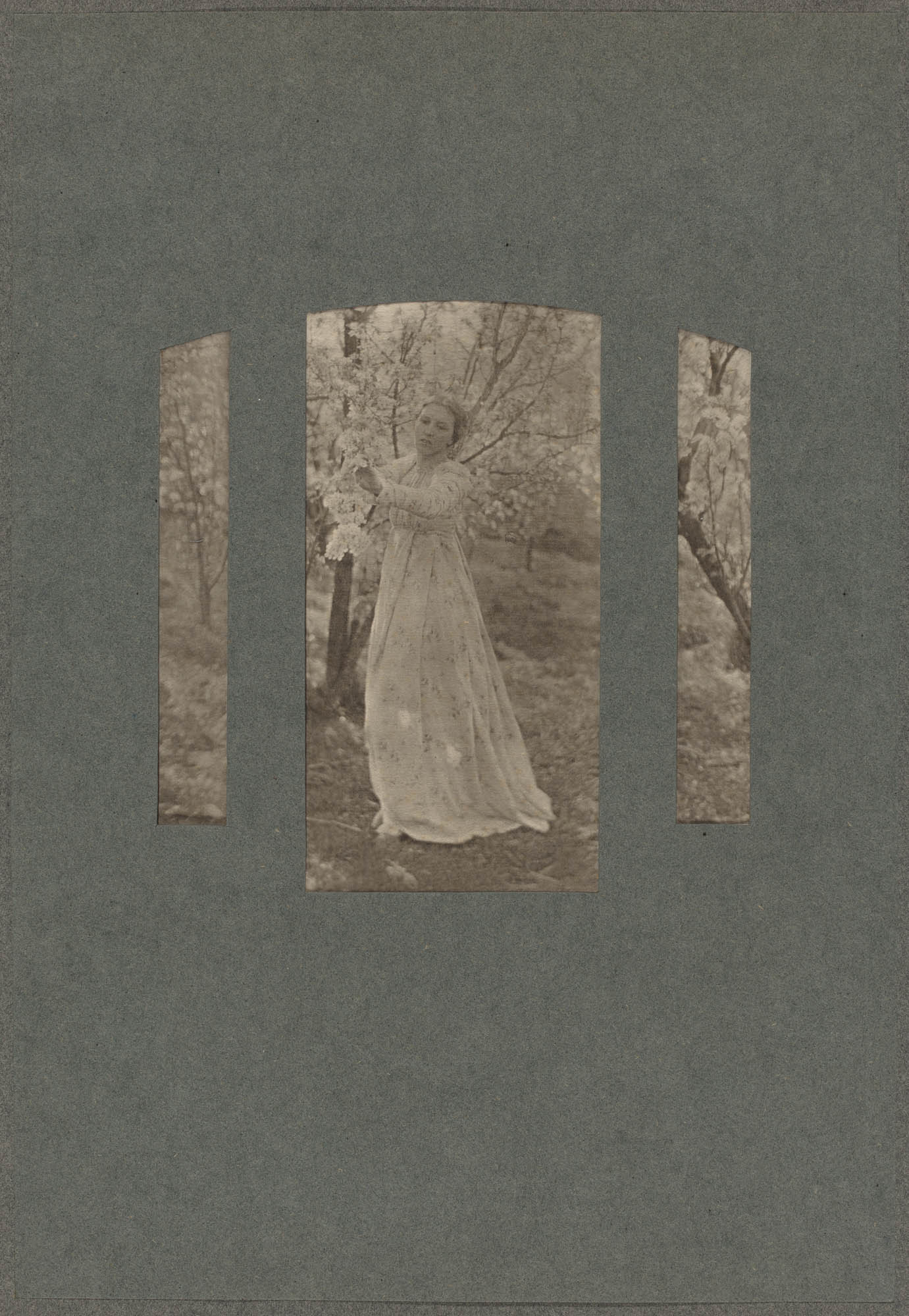
Clarence H. White (American, 1871-1925) 'Spring' 1899


Clarence H. White (American, 1871-1925)
Spring
1899
Photogravure overmatted and mounted on gray wove paper
Image (sight): 12.9 x 13cm (5 1/16 x 5 1/8 in.)
Mat: 28.5 x 19.5cm (11 1/4 x 7 11/16 in.)
Mount: 38 x 27.8cm (14 15/16 x 10 15/16 in.)
National Gallery of Art, Washington, Anonymous Gift
Public domain


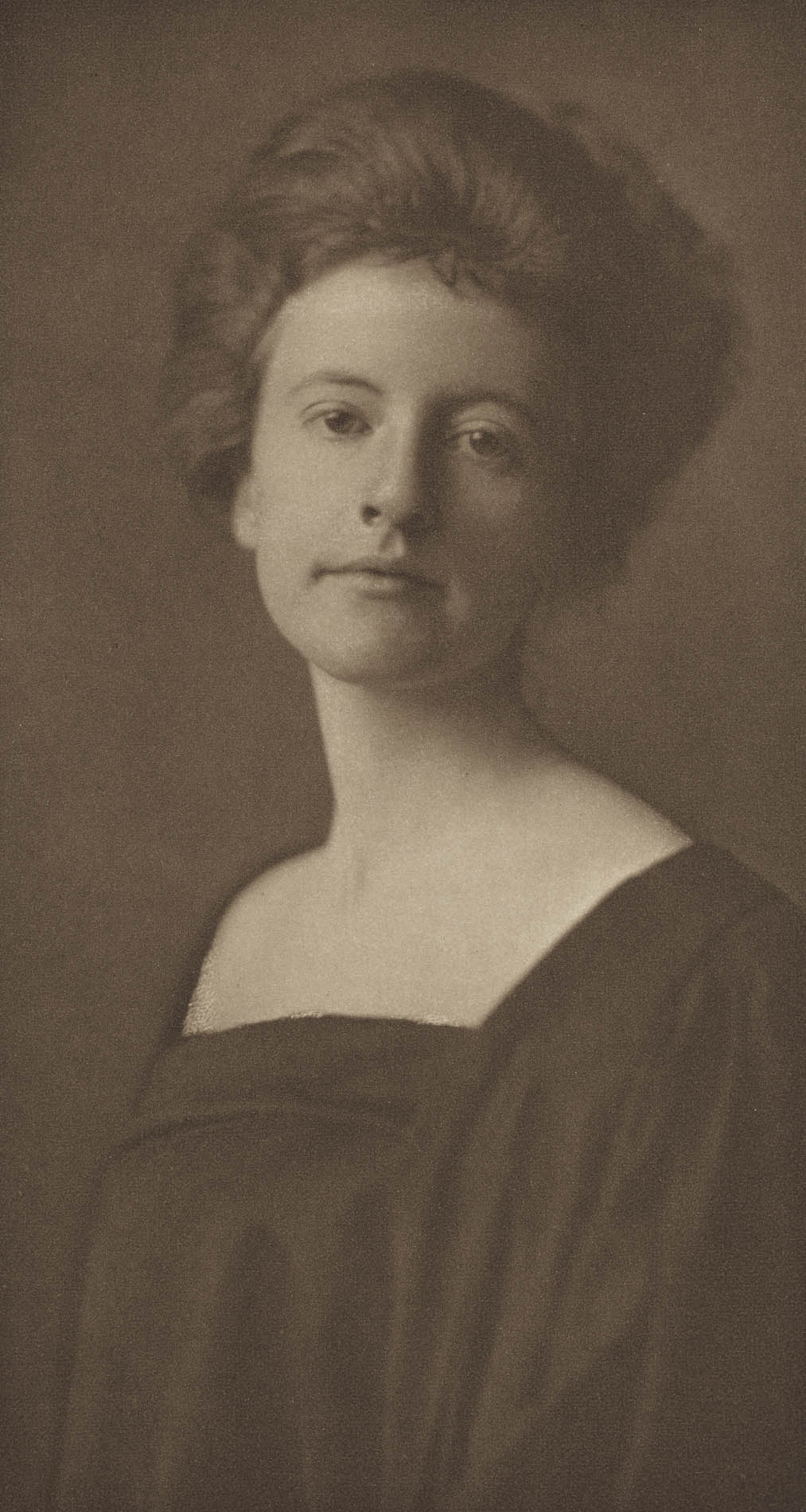
Mathilde Weil (American, 1872-1942) 'Beatrice' 1899


Mathilde Weil (American, 1872-1942)
Beatrice
1899
Photogravure in sepia on chine collé mounted on cream wove paper
Image: 16.7 x 9cm (6 9/16 x 3 9/16 in.)
Sheet: 18.8 x 10.4cm (7 3/8 x 4 1/8 in.)
Mount: 37.8 x 27.8cm (14 7/8 x 10 15/16 in.)
National Gallery of Art, Washington, Anonymous Gift


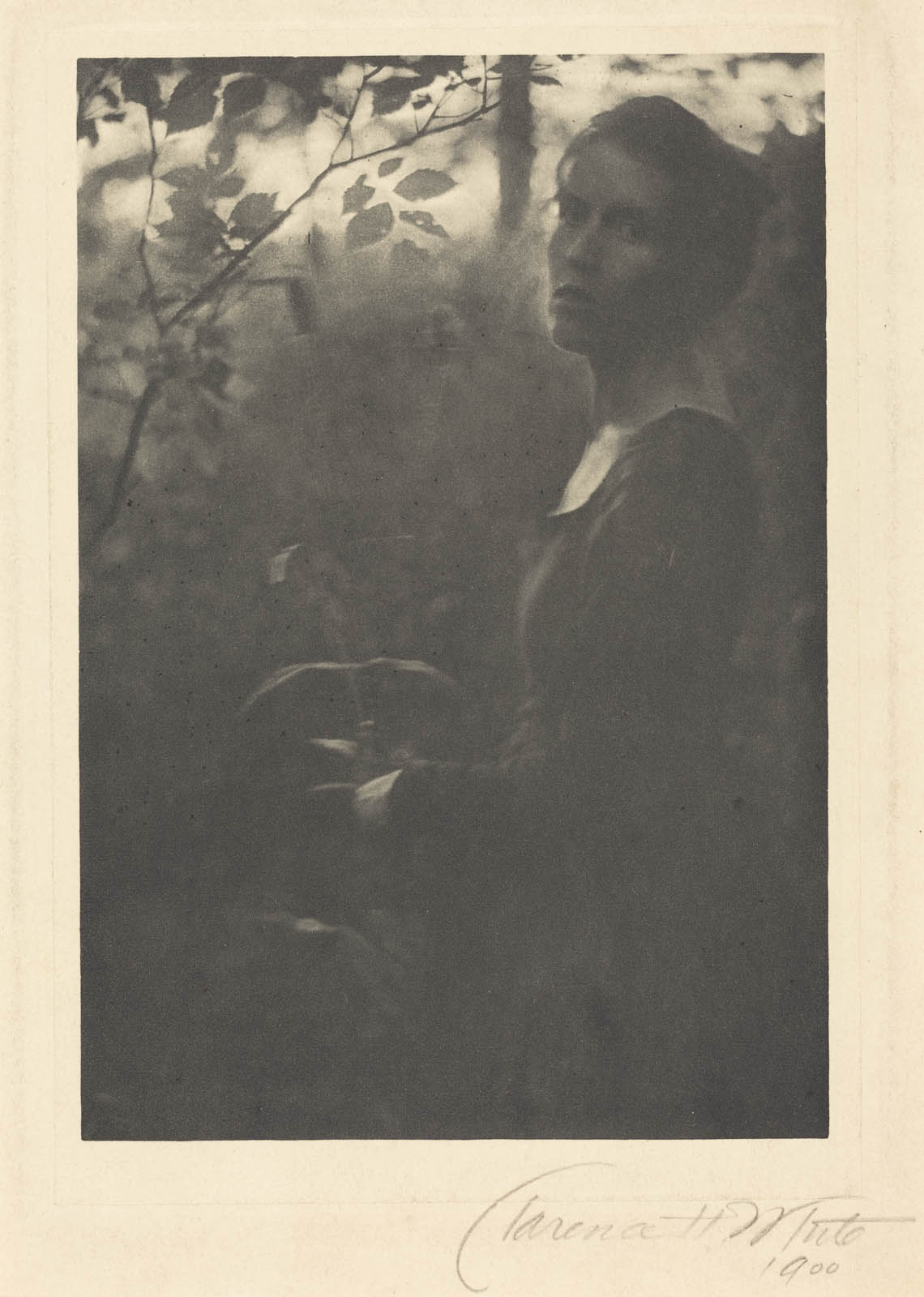
Clarence H. White (American, 1871-1925) 'Edge of the Woods, Evening' 1900


Clarence H. White (American, 1871-1925)
Edge of the Woods, Evening
1900
Photogravure
Image: 14.5 x 10.1cm (5 11/16 x 4 in.)
Sheet: 28.5 x 19.8cm (11 1/4 x 7 13/16 in.)
National Gallery of Art
Robert B. Menschel and the Vital Projects Fund
Public domain


Clarence H. White (American, 1871-1925) 'Morning' 1905


Clarence H. White (American, 1871-1925)
Morning
c. 1905
Photogravure
Image: 20.2 x 15.5cm (7 15/16 x 6 1/8 in.)
Mount: 20.7 x 16.2cm (8 1/8 x 6 3/8 in.)
National Gallery of Art Washington, Robert B. Menschel and the Vital Projects Fund
Public domain


Etched by Light: Photogravures from the Collection, 1840-1940 tells the fascinating story of the search to find and perfect a way to print photographs in ink. The process, which came to be called photogravure, resulted in some of the most beautiful photographs ever made – featuring delicate highlights, lush blacks, a remarkably rich tonal range, and a velvety matte surface. Presenting 40 photogravures and 4 bound volumes illustrated with them (many recently acquired and exhibited here for the first time), Etched by Light shows how this process enabled photographs to circulate widely and help shape our collective visual experience. The exhibition is on view from October 15, 2023, through February 4, 2024, in the West Building of the National Gallery of Art.

“Discover an intriguing chapter in the history of photography, as innovative practitioners developed a method to produce photographic prints in ink,” said Sarah Greenough, senior curator and head of the department of photographs at the National Gallery of Art. “Including photogravures from the National Gallery’s collection, this exhibition shows the pivotal role photogravures played in the history of photography by enabling the creation and widespread dissemination of tonally rich and lasting prints.”


About the Exhibition

From its very beginnings, photography revolutionised the way pictures were made and knowledge about the visual world was disseminated. But in the early 1840s, artists and scientists working across Europe discovered that it had drawbacks. The daguerreotype process, developed by Louis-Jacques-Mandé Daguerre, created astonishingly vivid images, but each one was unique and could only be copied by making another photograph. William Henry Fox Talbot’s negative / positive process held more promise, but his silver-chloride prints faded when exposed to light. Early practitioners also learned that it was hard to make numerous identical prints that could be tipped into books or journals, owing to variabilities in the paper and chemicals that were used to make prints. Such obstacles, at least initially, frustrated their hopes of fully realising the potential of this new medium.

Divided into three sections, Etched by Light traces the search – unfolding across 100 years – for a process to print photographs in ink, which were more stable than traditional silver-based photographic prints. It moves from the experiments in the 1840s and 1850s by French and British photographers such as Armand-Hippolyte-Louis Fizeau, Charles Nègre, and Talbot, who discovered the chemical and technical components necessary to print photographs in ink, to the successful solution invented by Talbot in the 1850s and perfected by Karl Klíč in 1879. In their photomechanical process, which came to be called photogravure, a photographic image is etched into a printmaking plate, ink is rubbed into the etched surface, a damp sheet of paper is laid on top of the plate, and both are put through a printing press to transfer the ink to paper. Favoured from the mid-1880s through the 1930s, revived in the 1980s and 1990s, and still popular today, photogravures have a smooth, continuous tonal range, although an extremely fine grain is evident under magnification.

The exhibition also shows how photographers working in the late 19th and early 20th centuries, including Peter Henry Emerson and Alfred Stieglitz, exploited the photogravure process for its artistic potential. They highlighted the individuality of their pictures through their choice of paper and inks, and even manipulated the photographic image itself. They also utilised the reproducibility of the process, inserting their photogravures into limited edition books, portfolios, and journals that they circulated in an effort to prove the artistic merit of photography.

The exhibition concludes with the work of modernist photographers, such as Alvin Langdon Coburn, Laure Albin Guillot, Man Ray, and Margaret Bourke-White, who used the process to enlarge small negatives, creating big, bold, and sometimes colourful photogravures. Circulating their photogravures widely in books and portfolios, as well as commercial advertisements, these artists demonstrated that photography could tackle new subjects, revitalising our view of life, art, and science, and in the process revealing critical new insights about the world around us.

The exhibition is organised by the National Gallery of Art, Washington

Press release from the National Gallery of Art


Alvin Langdon Coburn (British born United States, 1882-1966) 'Trafalgar Square' 1909


Alvin Langdon Coburn (British born United States, 1882-1966)
Trafalgar Square
1909
Photogravure
Image: 21.2 x 16.2cm (8 3/8 x 6 3/8 in.)
Sheet: 21.7 x 16.7cm (8 9/16 x 6 9/16 in.)
National Gallery of Art
Robert B. Menschel and the Vital Projects Fund


Alvin Langdon Coburn (British born United States, 1882-1966) 'Brooklyn Bridge' c. 1910


Alvin Langdon Coburn (British born United States, 1882-1966)
Brooklyn Bridge
c. 1910
Photogravure
Image: 19.9 x 14.7cm (7 13/16 x 5 13/16 in.)
Sheet: 21.2 x 15.3cm (8 3/8 x 6 in.)
National Gallery of Art
Robert B. Menschel and the Vital Projects Fund


Alvin Langdon Coburn (British born United States, 1882-1966) 'The Battery' c. 1909


Alvin Langdon Coburn (British born United States, 1882-1966)
The Battery
c. 1909
Photogravure
Image: 16 x 15.56cm (6 5/16 x 6 1/8 in.)
Sheet: 17.3 x 16.4cm (6 13/16 x 6 7/16 in.)
National Gallery of Art
Robert B. Menschel and the Vital Projects Fund


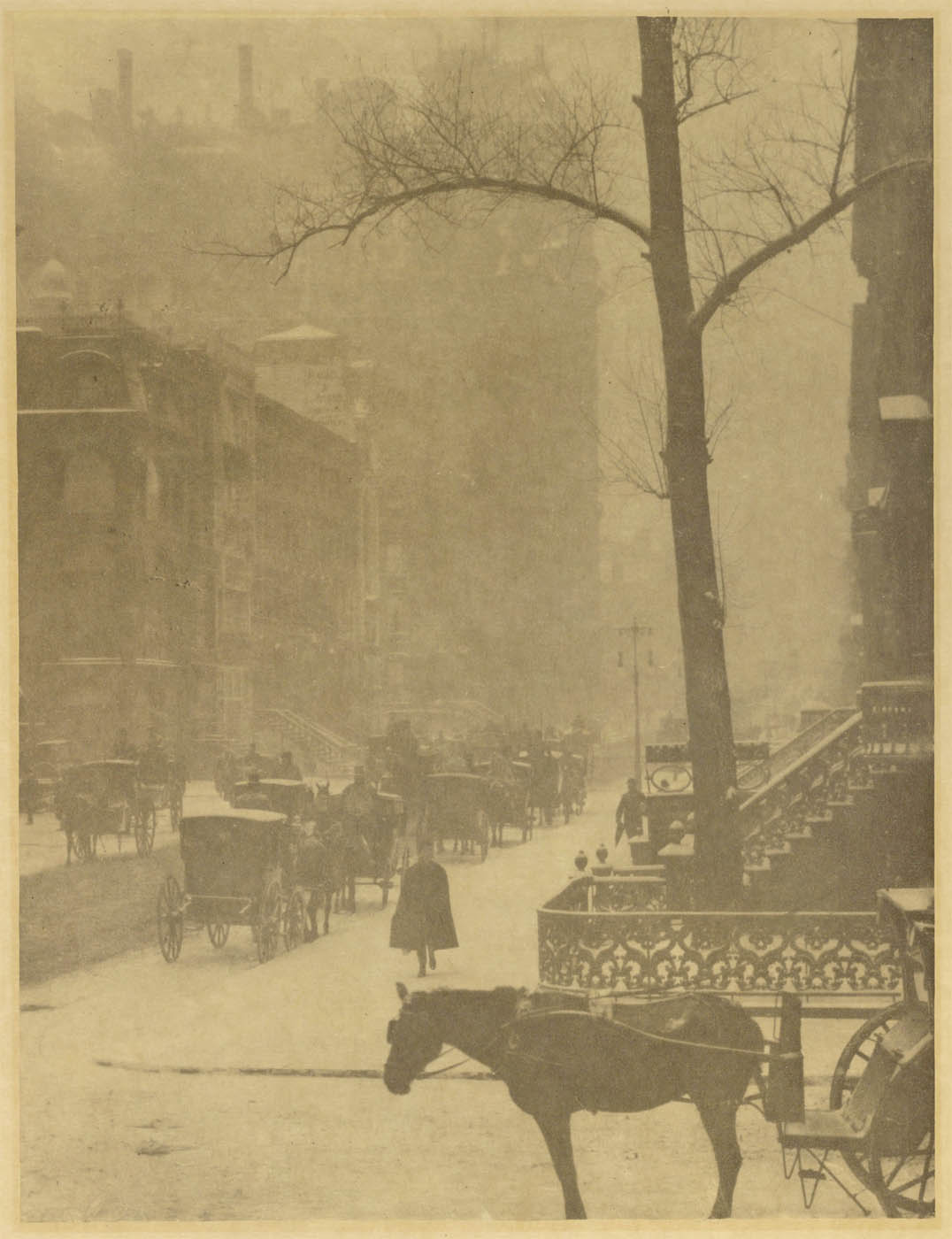
Alfred Stieglitz (American, 1864-1946) 'The Street - Design for a Poster / The Street – Fifth Avenue' 1896? / 1901-1902?, printed 1903


Alfred Stieglitz (American, 1864-1946)
The Street – Design for a Poster / The Street – Fifth Avenue
1896? / 1901-1902?, printed 1903
Photogravure
National Gallery of Art
Public domain


Alfred Stiegitz (American, 1864-1946) 'The Steerage' 1907


Alfred Stieglitz (American, 1864-1946)
The Steerage
1907, printed in or before 1913
Photogravure on cream moderately thick smooth wove Japanese paper
Image: 33.2 x 26.4cm (13 1/16 x 10 3/8 in.)
Sheet: 46.3 x 31.9cm (18 1/4 x 12 9/16 in.)
National Gallery of Art
Alfred Stieglitz Collection


Alfred Stieglitz (American, 1864-1946) 'Old and New New York' 1910, printed in or before 1913


Alfred Stieglitz (American, 1864-1946)
Old and New New York
1910, printed in or before 1913
Photogravure on beige thin slightly textured laid Japanese paper
Image: 33.3 x 25.7cm (13 1/8 x 10 1/8 in.)
Sheet: 40.3 x 28.3cm (15 7/8 x 11 1/8 in.)
National Gallery of Art
Alfred Stieglitz Collection


Alfred Stieglitz (American, 1864-1946) 'After Working Hours – The Ferry Boat' 1910, printed in or before 1913


Alfred Stieglitz (American, 1864-1946)
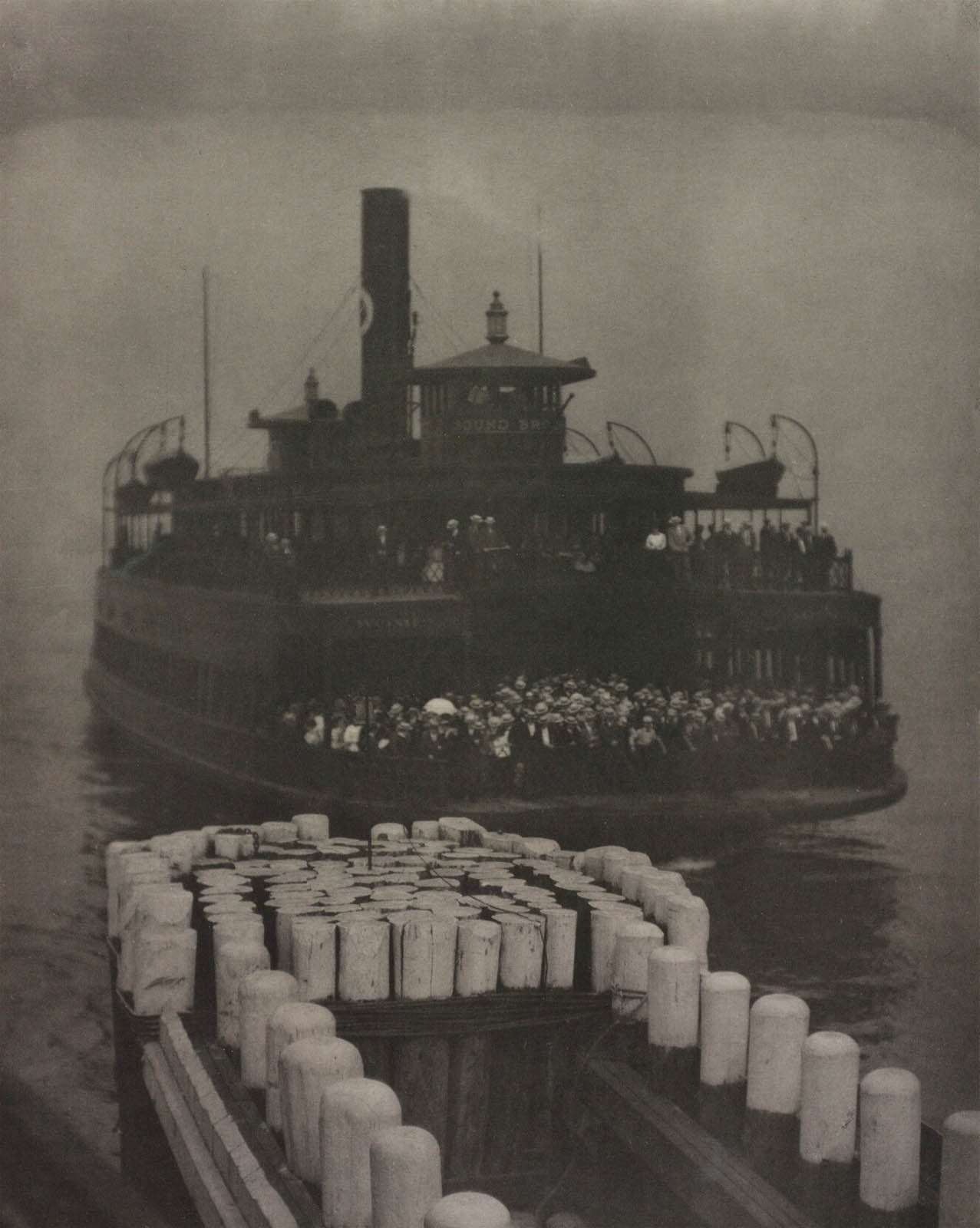
After Working Hours – The Ferry Boat
1910, printed in or before 1913
Photogravure
Image: 33.6 x 25.9cm (13 1/4 x 10 3/16 in.)
Sheet: 40.4 x 28.1cm (15 7/8 x 11 1/16 in.)
National Gallery of Art
Alfred Stieglitz Collection


Alfred Stieglitz (American, 1864-1946) 'The City of Ambition' 1910, printed in or before 1913


Alfred Stieglitz (American, 1864-1946)
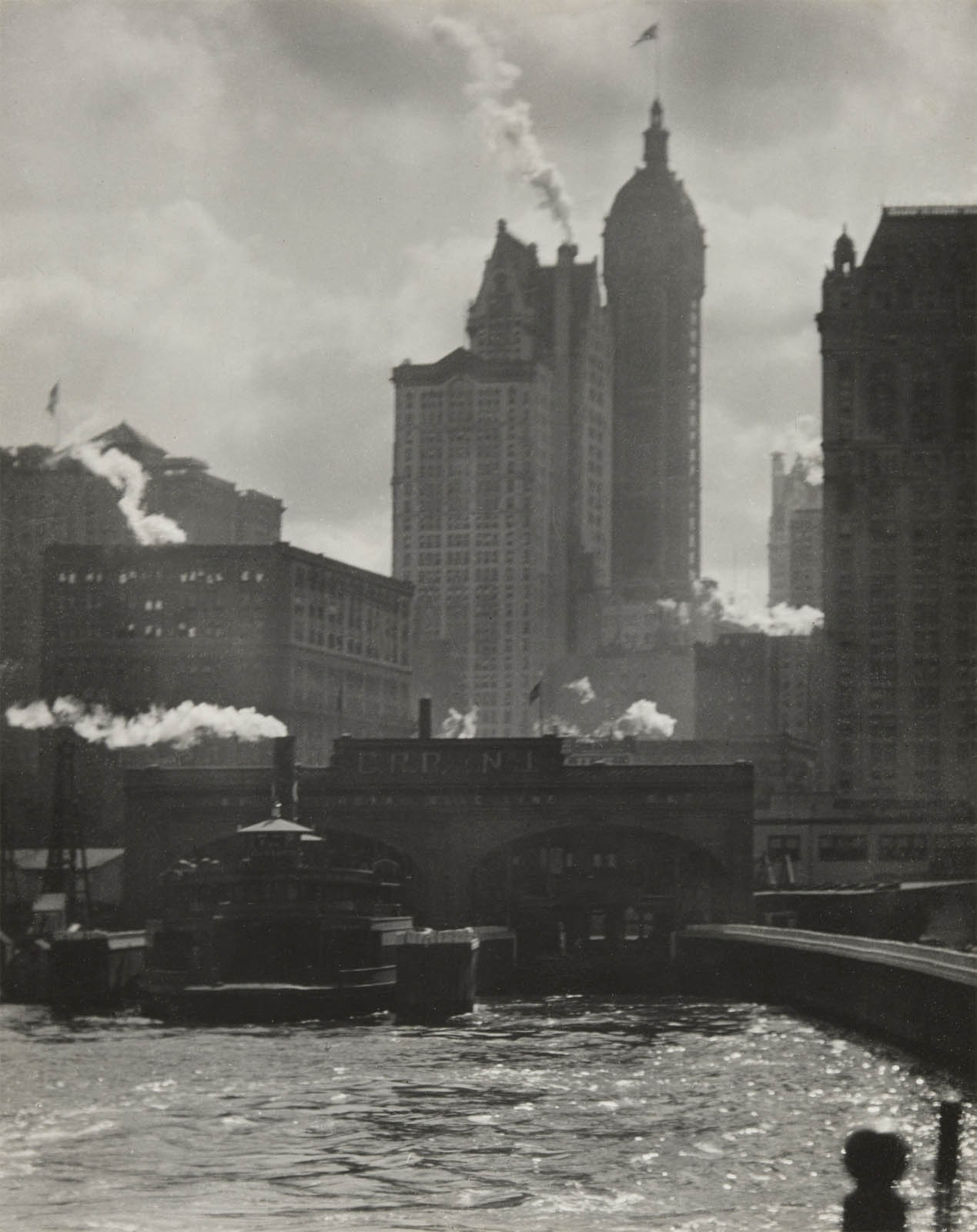
The City of Ambition
1910, printed in or before 1913
Photogravure on beige thin slightly textured laid Japanese paper
Sheet (trimmed to image): 34 x 26cm (13 3/8 x 10 1/4 in.)
Mount: 43.3 x 32 cm (17 1/16 x 12 5/8 in.)
National Gallery of Art, Washington, Alfred Stieglitz Collection


Anne Brigman (American, 1859-1960) 'The Cleft of the Rock' 1912


Anne Brigman (American, 1859-1960)
The Cleft of the Rock
1912
Photogravure
Image: 21 x 16cm (8 1/4 x 6 5/16 in.)
National Gallery of Art, Washington, Gift of Mark Katzman and Hilary Skirboll


Alvin Langdon Coburn (British born United States, 1882-1966) 'The Tunnel Builders' 1913


Alvin Langdon Coburn (British born United States, 1882-1966)
The Tunnel Builders
1913
Photogravure
Image: 21 x 17cm (8 1/4 x 6 11/16 in.)
National Gallery of Art, Washington, Gift of Funds from John S. Parsley and Nancy Nolan Parsley


Man Ray (American, 1890-1976) 'Électricité' 1931


Man Ray (American, 1890-1976)
Électricité
1931
Photogravure
Image: 26 x 20.5cm (10 1/4 x 8 1/16 in.)
Mount: 37.5 x 27.5cm (14 3/4 x 10 13/16 in.)
National Gallery of Art, Washington, Gift of Robert B. Menschel


Man Ray (American, 1890-1976) 'Le Monde' 1931


Man Ray (American, 1890-1976)
Le Monde
1931
Photogravure
Image: 26 x 20.5cm (10 1/4 x 8 1/16 in.)
Mount: 37.5 x 27.5cm (14 3/4 x 10 13/16 in.)
National Gallery of Art, Washington, Gift of Robert B. Menschel


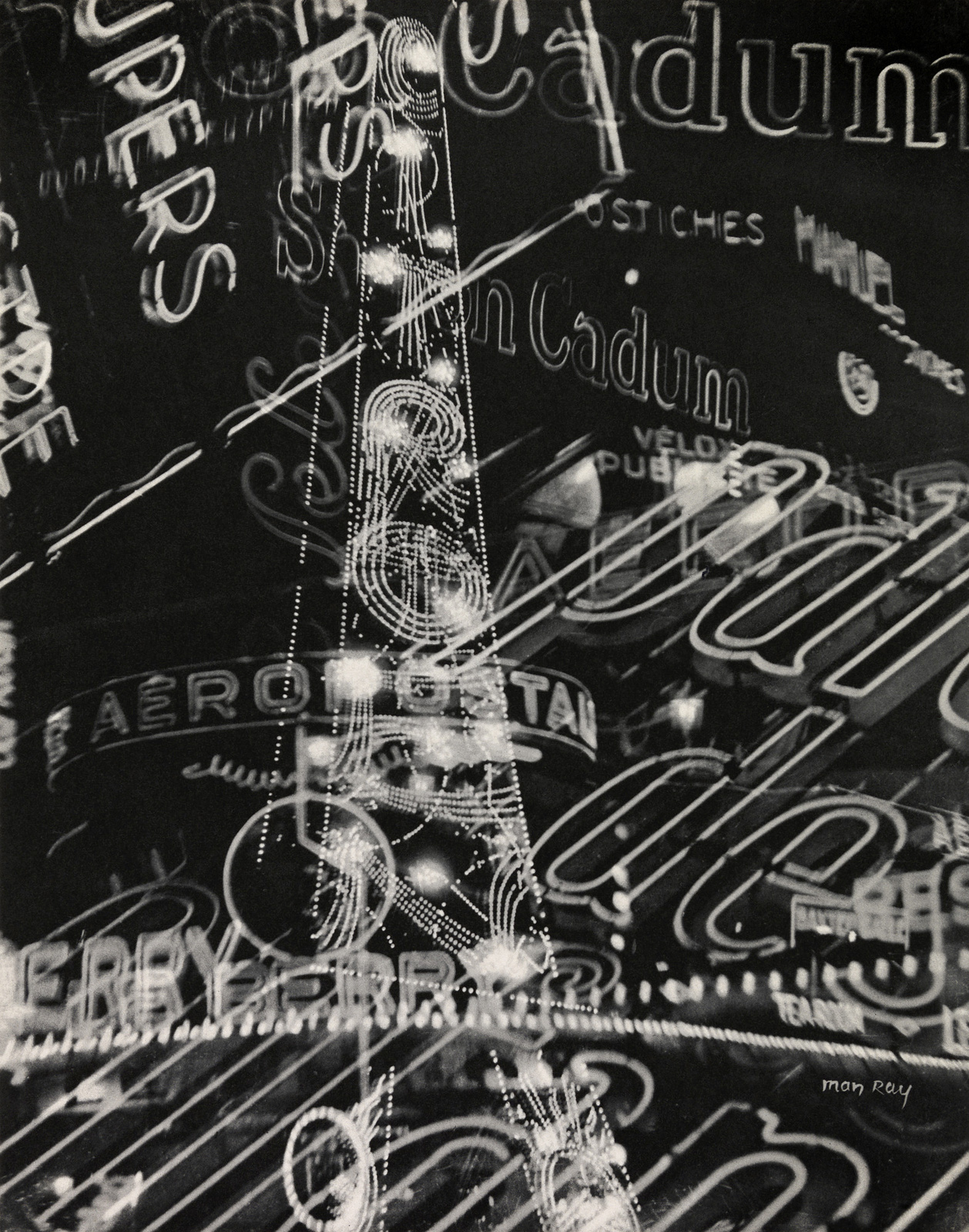
Man Ray (American, 1890-1976) 'The City' (Èlectricité - La Ville) 1931


Man Ray (American, 1890-1976)
La Ville (The City)
1931
Photogravure
Image: 26 x 20.5cm (10 1/4 x 8 1/16 in.)
Mount: 37.5 x 27.5cm (14 3/4 x 10 13/16 in.)
National Gallery of Art, Washington, Gift of Robert B. Menschel


Man Ray (American, 1890-1976) 'Le Souffle' (Breeze) 1931


Man Ray (American, 1890-1976)
Le Souffle (Breeze)
1931
Photogravure
Image: 26 x 20.2cm (10 1/4 x 7 15/16 in.)
Mount: 37.5 x 27.5cm (14 3/4 x 10 13/16 in.)
National Gallery of Art, Washington, Gift of Robert B. Menschel


Paul Strand (American, 1890-1976) 'Virgin San Felipe, Oaxaca, Mexico' (Virgen San Felipe, Oaxaca, Mexico) 1933


Paul Strand (American, 1890-1976)
Virgin, Sand Felipe, Oaxaca
1933, printed 1940
Photogravure
Image: 26.4 x 20.7cm (10 3/8 x 8 1/8 in.)
Sheet: 40.4 x 31.7cm (15 7/8 x 12 1/2 in.)
National Gallery of Art, Washington, Alfred H. Moses and Fern M. Schad Fund


Paul Strand. 'Men of Santa Ana, Lake Patzcuaro, Michoacan' 1933


Paul Strand (American, 1890-1976)
Men of Santa Anna, Michoacan
1933, printed 1940
Photogravure
Image: 16.1 x 12.7cm (6 5/16 x 5 in.)
Sheet: 40.4 x 31.7cm (15 7/8 x 12 1/2 in.)
National Gallery of Art, Washington, Alfred H. Moses and Fern M. Schad Fund


Paul Strand (American, 1890-1976) 'Boy, Uruapan, Michoacán, Mexico' (Niño, Uruapan, Michoacán, México) 1933


Paul Strand (American, 1890-1976)
Boy, Uruapan
1933, printed 1940
Photogravure
Image: 25.7 x 20.5cm (10 1/8 x 8 1/16 in.)
Sheet: 40.4 x 31.7cm (15 7/8 x 12 1/2 in.)
National Gallery of Art, Washington, Alfred H. Moses and Fern M. Schad Fund


Paul Strand. 'Cristo - Oaxaca' 1933


Paul Strand (American, 1890-1976)
Cristo, Tiacochoaya, Oaxaca
1933, printed 1940
Photogravure
Image: 26 x 20.4cm (10 1/4 x 8 1/16 in.)
Sheet: 40.4 x 31.7cm (15 7/8 x 12 1/2 in.)
National Gallery of Art, Washington, Alfred H. Moses and Fern M. Schad Fund


Paul Strand (American, 1890-1976) 'Cristo with Thorns, Huexotla' 1933, printed 1940


Paul Strand (American, 1890-1976)
Cristo with Thorns, Huexotla
1933, printed 1940
Photogravure
Image: 26 x 20.5cm (10 1/4 x 8 1/16 in.)
Sheet: 40.4 x 31.7cm (15 7/8 x 12 1/2 in.)
National Gallery of Art, Washington, Alfred H. Moses and Fern M. Schad Fund


Paul Strand (American, 1890-1976) 'Church, Coapiaxtla' 1933, printed 1940


Paul Strand (American, 1890-1976)
Church, Coapiaxtla
1933, printed 1940
Photogravure
Image: 16.2 x 12.7cm (6 3/8 x 5 in.)
Sheet: 40.4 x 31.7cm (15 7/8 x 12 1/2 in.)
National Gallery of Art, Washington, Alfred H. Moses and Fern M. Schad Fund


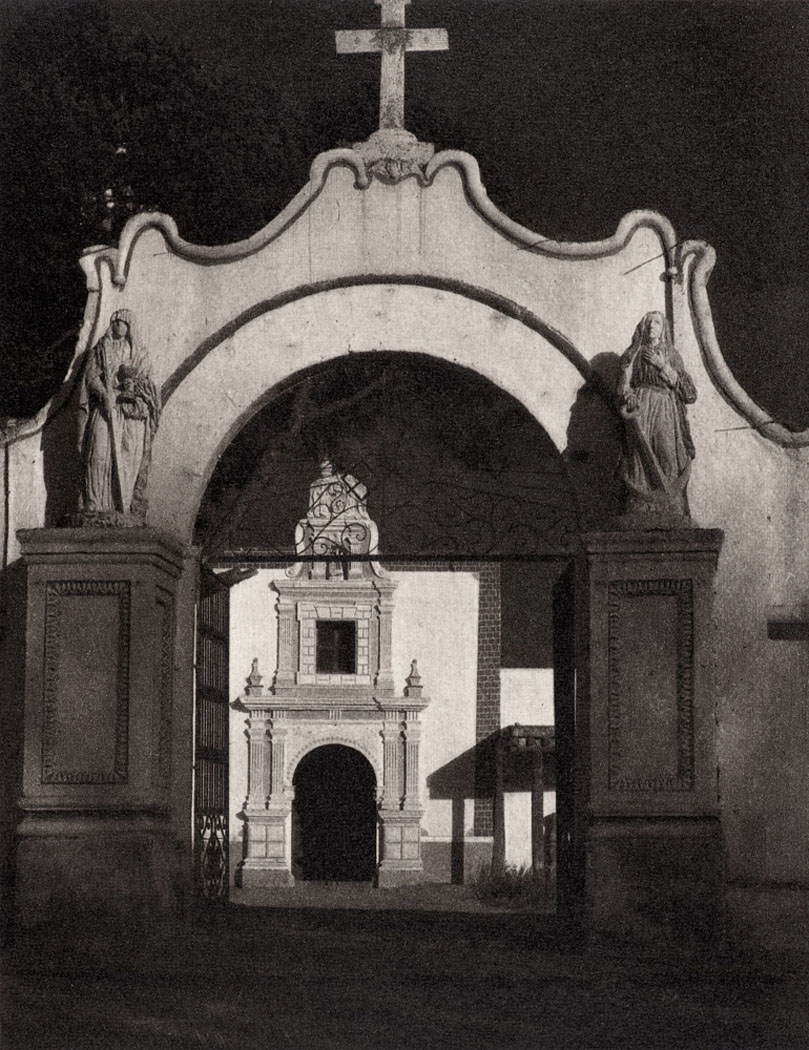
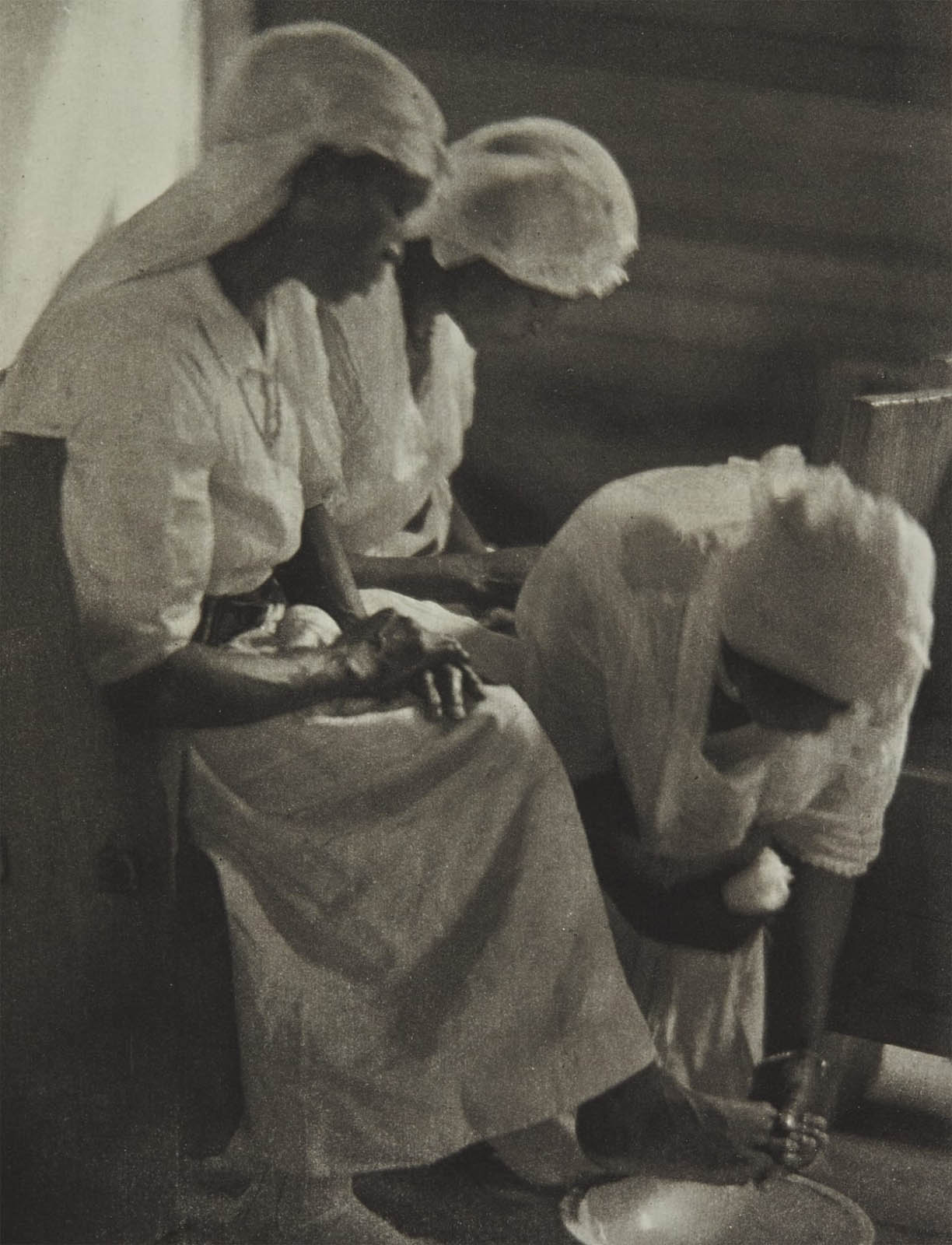
Doris Ulmann (American, 1882-1934) 'Plate 35' 1933


Doris Ulmann (American, 1882-1934)
Plate 35
1933
Photogravure
Image: 21 x 16cm (8 1/4 x 6 5/16 in.)
National Gallery of Art, Washington, Gift of Mary and Dan Solomon


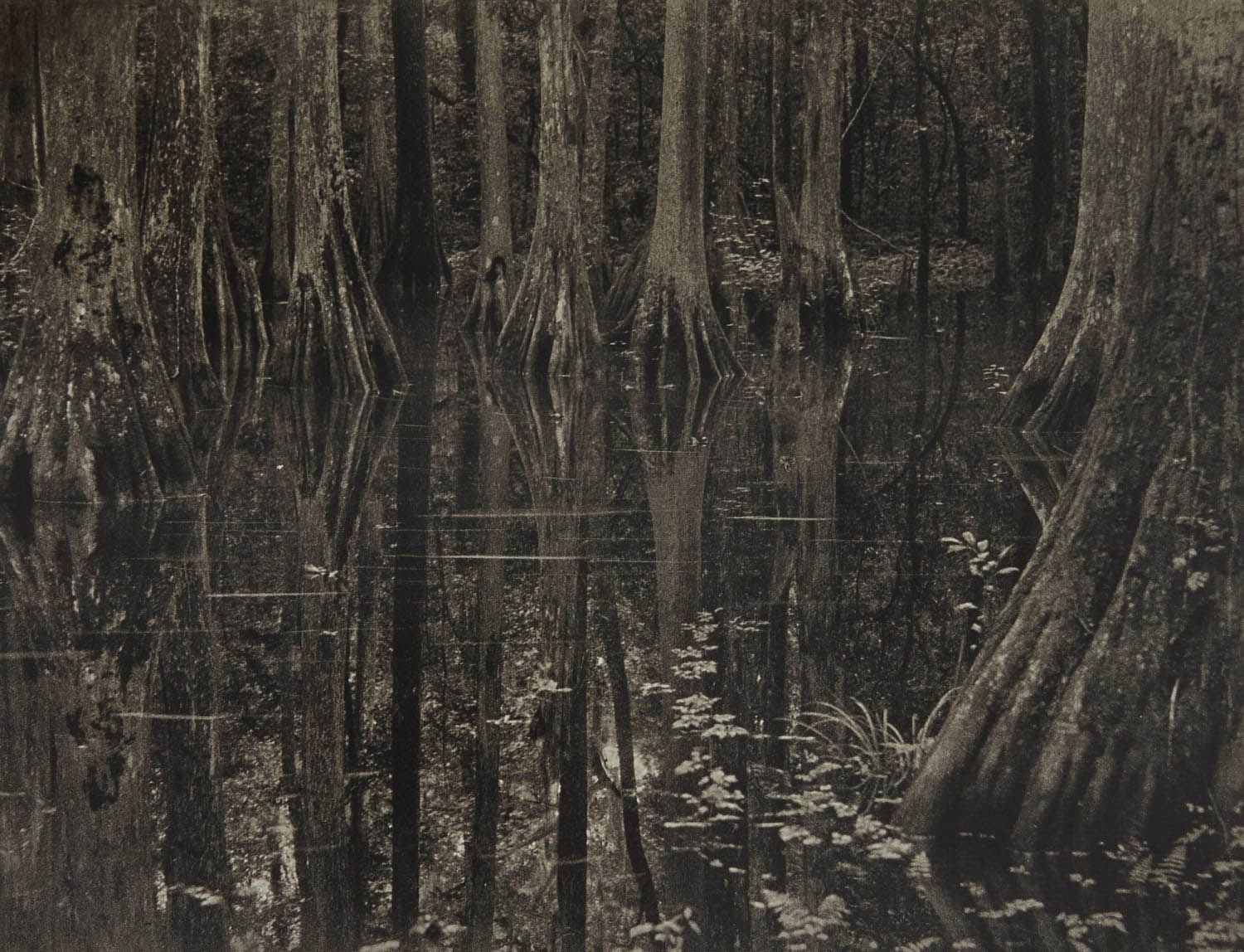
Doris Ulmann (American, 1882-1934) 'Plate 47' 1933


Doris Ulmann (American, 1882-1934)
Plate 47
1933
Photogravure
Image: 16 x 21cm (6 5/16 x 8 1/4 in.)
National Gallery of Art, Washington, Pepita Milmore Memorial Fund


National Gallery of Art
National Mall between 3rd and 7th Streets
Constitution Avenue NW, Washington

Opening hours:
Daily 10am – 5pm

National Gallery of Art website

LIKE ART BLART ON FACEBOOK

Back to top

Exhibition: ‘Man Ray: The Paris Years’ at the Virginia Museum of Fine Arts, Richmond, Virginia

Exhibition dates: 30th October, 2021 – 20th February, 2022

Curator: Dr. Michael Taylor, VMFA’s Chief Curator and Deputy Director for Art and Education


Man Ray (American, 1890-1976) 'Self-Portrait with Camera' 1930 from the exhibition 'Man Ray: The Paris Years' at the Virginia Museum of Fine Arts, Richmond, Virginia, Oct 2021 - Feb 2022


Man Ray (American, 1890-1976)
Self-Portrait with Camera
1930
Solarised gelatin silver print
The Jewish Museum, New York, Photography Acquisitions Committee Fund, Horace W. Goldsmith Fund, and Judith and Jack Stern Gift
© Man Ray 2015 Trust/Artists Rights Society (ARS), NY/ADAGP, Paris 2021


I remember many many years ago (2004) the National Gallery of Victoria held a major exhibition of the work of Man Ray, the first large-scale exhibition of Man Ray’s photography to have been presented in Australia. The exhibition was organised by the Art Gallery of New South Wales where it set an attendance record for photography exhibitions, with over 52,000 visitors, before travelling to Brisbane and Melbourne – which exhibitions did in those days between state capitals, alas no longer.

All these years later I still remember being impressed by the technical, almost scientific element – and elemental – aspect of Man Ray’s photography, the sheer intensity of his images, and their small, jewel-like size. I was less impressed by the lack of feeling the photographs gave me, as though the photographs were scientific experiments which emphasised “his techniques of framing, cropping, solarising and use of the photogram in order to present a new, ‘surreal’ way of seeing” and which, to my young photographic eyes, saw their lush and enigmatic beauty subsumed in an unemotional technical exercise.

Concentrating on his portrait photographs during his Paris years, this exhibition includes more than 100 portrait photographs made by the artist in Paris between 1921 and 1940. “In choosing portraits for the exhibit, the curator’s objective was to present the complete picture of Man Ray’s pantheon of cultural luminaries… “Since this exhibition is all about storytelling, we wanted to highlight the femme moderne and tell the public of their fierce individuality and creativity,” [Michael] Taylor says, explaining that the women’s inclusion makes for a more dynamic and meaningful exhibition. “These are musicians, models and performers whose contributions have been marginalized due to the legacy of colonialism and racism.” … The portraits chosen for “Man Ray: the Paris Years” reflect not only the staggering range of techniques Ray employed during his Parisian years, but also the fascinating people who inhabited his world. “Innovative, groundbreaking, experimental and completely original, Ray’s portraits are unlike the work of any of his contemporaries,” Taylor says.”1

But to my mind Man Ray’s other photography during this period, such as his 1922 album Champs Délicieux which contained 12 Dada inspired Rayographs (some of his first), his surreal photographic solarisations and his portfolio, Électricité (Electricity) (1931) are more expressive and revolutionary avant-garde statements of the creative power of photography than ever his portraits are.

And while his portrait photographs may be experimental and groundbreaking – all about technique – are they good portraits? That’s the key question. To my eyes his portraits have a “lumpy” quality to them, a kind of enigmatic blankness that never reveals much of the sitters personality. The doll-like beauty of Kiki de Montparnasse (c. 1924, below) becomes a later abstract wistfulness both photographs revealing nothing; a tough, shielded Gertrude Stein (at Home) (1922, below) is not a patch on Imogen Cunningham’s engaging, challenging portrait of 1934; and the portrait of Elsie Houston (1933, below) is just plain uncomfortable in its placement of the bandaged head and hand in the pictorial frame.

Apparently, Man Ray “was in league with the surrealists and, in even his most classical-seeming portraits, revealed a predilection for unexpected juxtapositions, visual rhymes and piercing expressions that can transport you instantaneously to the lip of a volcanic unconscious.” Allegedly.

A volcanic unconscious. Who writes this stuff? I often feel I am looking at different photographs than the ones other people are writing about. Again, “Man Ray’s photography doesn’t simply capture the image of a person, or the ghost that inhabits them. It captures the whole of creative expression – the surreal and sorrowful, the conflict and music, the desperation and freedom that comprise the human narrative.” No it doesn’t… I don’t even think he is a very good portrait photographer! Compared to a Weston, Sander or Lange, a Stieglitz, Arbus or Julia Margaret Cameron, Man Ray’s portraits are modestly proficient evocations at best.

“To be ‘done’ by Man Ray and Berenice Abbott meant that you rated as somebody,” wrote Sylvia Beach, owner of Shakespeare and Company, the legendary bookstore and lending library established in Paris after World War I by the American expatriate. You had made it… immortalised in the negative, promoted in the positive. There is the key. To be worthy, to be “fashion” able. After all, Man Ray was running a commercial photographic studio with Berenice Abbott as his assistant in order to make a living. After Man Ray fired her in 1926 Abbott set up her own studio and they became business rivals.

The two most enticing portrait photographs in the posting are both wistful visages of the female: the slightly out of focus, low depth of field beauty of the direct Lee Miller, an ex-lover of Man Ray, staring down the desiring male gaze, like the most glamorous and scientifically symmetrically perfect “mug shot” you have ever seen; and the soft sfumato (which translated literally from Italian means “vanished or evaporated”) background to the contemporary Mona Lisa that is the vulnerable, tender Berenice Abbott surrounded by vanished shadows and evaporated space. “Leonardo has studied the sky, the elements, the atmosphere, and the light. He takes the approach of a scientist, but translates it into the painting with superb delicacy and finesse. For him the painting doesn’t count. What counts is the knowledge,” observes Louvre Curator Jean-Pierre Cuzin.2

Science, knowledge and atmosphere. Only in this portrait of Berenice Abbott does Man Ray take his love of science and knowledge and approach what Preston Duncan observes: “It is through this aperture that we find the abiding sense that, in all the weight, the struggle, the limitations of our physical form, is an ongoing moment of release.”

A final thought emerges in my consciousness. I wondered whether there is a photograph of Man Ray by Berenice Abbott? Not that I can find…

Dr Marcus Bunyan


1/ Karen Newton. “Storytelling Portraits,” on the Style Weekly website August 31, 2021 [Online] Cited 20/02/2022

2/ Anonymous text. “…Leonardo’s masterful technique,” on the PBS Treasures of the World website [Online] Cited 20/02/2022


Many thankx to the Virginia Museum of Fine Arts for allowing me to publish the photographs in the posting. Please click on the photographs for a larger version of the image.


“The story of Man Ray and Paris has been told, but it’s usually been told through the lens – pardon the pun, it’s a photography show – of Man Ray’s innovations; the Rayograph, Solarization, his friendships, and his network. But what about the subjects?” says Chief Curator, Dr. Michael Taylor. “We took inspiration from the photograph on the cover of this show. It’s the first work you see in the exhibition. This is actually Man Ray taking your portrait. In other words, […] even though it’s called a self-portrait, a camera is photographing him, but he is looking at you with his camera. So we started to think about not just telling Man Ray’s story, which is fascinating, but the story of the sitters, the subjects, the models. …

While the primary focus of the exhibit is on portraiture and the radical expressiveness of his subjects – from the vanguards of femme moderne culture to aerialists in drag – there are some detours into avant-garde Rayography and cinema. This diversity of expression is resonant with Man Ray’s professional dedication to dismantling boundaries – those of gender, race, and national identity, as well as artistic traditionalism and aesthetic philosophy. …

Man Ray’s photography doesn’t simply capture the image of a person, or the ghost that inhabits them. It captures the whole of creative expression – the surreal and sorrowful, the conflict and music, the desperation and freedom that comprise the human narrative. It is through this aperture that we find the abiding sense that, in all the weight, the struggle, the limitations of our physical form, is an ongoing moment of release. It confronts us with the fact we are all winging this strange dance, contributing our solitary note to an overture that is entirely improvised, sharing in the simple hope that we may, for an instant, hear the enormity of the score.”


Preston Duncan. “The View From Paris,” on the RVA website November 3, 2021 [Online] Cited 02/02/2022


All the men of the age are there: Igor Stravinsky, James Joyce, Andre Breton, Picasso and Braque. Equally present are the era’s modern women, including Bernice Abbott, the rarely-as-well-photographed Gertrude Stein, Lee Miller and Virginia Woolf. The real stars, however, are the unknowns. Or rather, those unknown-to-us. “Man Ray used photography to challenge the artistic traditions and break boundaries, including fixed gender roles and racial barriers,” says Michael Taylor, the museum’s chief curator, who conceived the exhibition.


Daniel Cassady. “‘Paris’s glowing milieu spills onto every corner’: Virginia show theatrically tells the story of Man Ray’s fruitful time in the City of Lights,” on The Art Newspaper website 11 November 2021 [Online] Cited 03/02/2022


Man Ray (American, 1890-1976) 'Kiki de Montparnasse' c. 1924 from the exhibition 'Man Ray: The Paris Years' at the Virginia Museum of Fine Arts, Richmond, Virginia, Oct 2021 - Feb 2022


Man Ray (American, 1890-1976)
Kiki de Montparnasse
c. 1924
Gelatin silver print
Francis M. Naumann Fine Art, New York
© Man Ray 2015 Trust/Artists Rights Society (ARS), NY/ADAGP, Paris 2021


Man Ray (American, 1890-1976) 'Kiki de Montparnasse' c. 1929


Man Ray (American, 1890-1976)
Kiki de Montparnasse
c. 1929
Gelatin silver print
© Man Ray 2015 Trust/Artists Rights Society (ARS), NY/ADAGP, Paris 2021


Alice Ernestine Prin (French, 1901-1953)

Alice Ernestine Prin (2 October 1901 – 29 April 1953), nicknamed the Queen of Montparnasse, and often known as Kiki de Montparnasse, was a French artist’s model, literary muse, nightclub singer, actress, memoirist and painter. She flourished in, and helped define, the liberated culture of Paris in the 1920s.

Alice Prin was born in Châtillon-sur-Seine, Côte d’Or. An illegitimate child, she was raised in abject poverty by her grandmother. At age twelve, she was sent to live with her mother in Paris in order to find work. She first worked in shops and bakeries, but by the age of fourteen, she was posing nude for sculptors, which created discord with her mother.

Adopting a single name, “Kiki”, she became a fixture in the Montparnasse social scene and a popular artist’s model, posing for dozens of artists, including Sanyu, Chaïm Soutine, Julian Mandel, Tsuguharu Foujita, Constant Detré, Francis Picabia, Jean Cocteau, Arno Breker, Alexander Calder, Per Krohg, Hermine David, Pablo Gargallo, Mayo, and Tono Salazar. Moïse Kisling painted a portrait of Kiki titled Nu assis, one of his best known.

Her companion for most of the 1920s was Man Ray, who made hundreds of portraits of her. She can be considered his muse at the time and the subject of some of his best-known images, including the surrealist image Le violon d’Ingres and Noire et blanche (see below).

She appeared in nine short and frequently experimental films, including Fernand Léger’s Ballet mécanique without any credit.

A painter in her own right, in 1927 Prin had a sold-out exhibition of her paintings at the Galerie au Sacre du Printemps in Paris. Signing her work with her chosen single name, Kiki, she usually noted the year. Her drawings and paintings comprise portraits, self-portraits, social activities, fanciful animals, and dreamy landscapes composed in a light, slightly uneven, expressionist style that is a reflection of her easy-going manner and boundless optimism. …

A symbol of bohemian and creative Paris and of the possibility of being a woman and finding an artistic place, at the age of twenty-eight she was declared the Queen of Montparnasse. Even during difficult times, she maintained her positive attitude, saying “all I need is an onion, a bit of bread, and a bottle of red [wine]; and I will always find somebody to offer me that.”

She left Paris to avoid the occupying German army during World War II, which entered the city in June 1940. …

Prin died in 1953 after collapsing outside her flat in Montparnasse, at the age of fifty-one, apparently of complications of alcoholism or drug dependence. A large crowd of artists and fans attended her Paris funeral and followed the procession to her interment in the Cimetière parisien de Thiais. Her tomb identifies her as “Kiki, 1901-1953, singer, actress, painter, Queen of Montparnasse.” Tsuguharu Foujita has said that, with Kiki, the glorious days of Montparnasse were buried forever.

Long after her death, Prin remains the embodiment of the outspokenness, audacity, and creativity that marked that period of life in Montparnasse. She represents a strong artistic force in her own right as a woman. In 1989, biographers Billy Klüver and Julie Martin called her “one of the century’s first truly independent women.” In her honour, a daylily has been named Kiki de Montparnasse.

Text from the Wikipedia website


Man Ray (American, 1890-1976) 'Noire et Blanche' 1926


Man Ray (American, 1890-1976)
Noire et Blanche
1926
Gelatin silver print
6 7/8 x 8 1/4 in. (17.5 x 21cm)
© Man Ray 2015 Trust/Artists Rights Society (ARS), NY/ADAGP, Paris 2021

As far as I know this photograph is NOT in the exhibition


Man Ray (American, 1890-1976) 'Gertrude Stein (at Home)' 1922


Man Ray (American, 1890-1976)
Gertrude Stein (at Home)
1922
Gelatin silver print
7 15/16”H × 6 1/16”W (20.16 × 15.4cm)
Virginia Museum of Fine Arts, Arthur and Margaret Glasgow Endowment
© Man Ray 2015 Trust/Artists Rights Society (ARS), NY/ADAGP, Paris 2021


Imogen Cunningham (American, 1883-1976) 'Gertrude Stein, Writer' 1934


Imogen Cunningham (American, 1883-1976)
Gertrude Stein, Writer
1934
Gelatin silver print
Image: 7 9/16 × 6 11/16 in.
Frame: 22 5/8 x 16 5/8 x 1 3/8 in.
The J. Paul Getty Museum, Los Angeles


Man Ray (American, 1890-1976) 'Berenice Abbott' 1921, printed later


Man Ray (American, 1890-1976)
Berenice Abbott
1921, printed later
Gelatin silver print
Virginia Museum of Fine Arts, Arthur and Margaret Glasgow Endowment
© Man Ray 2015 Trust/Artists Rights Society (ARS), NY/ADAGP, Paris 2021


In 1926 Peggy Guggenheim, who often lent her financial support to the Paris colony of artists and writers, telephoned Man Ray to arrange a studio appointment to have her portrait taken, not by Man Ray himself, but by Berenice. Afterwards Man Ray was livid, he now realised that Berenice had become a serious business rival, and the next day he fired her. Berenice immediately made plans to have a studio of her own and friends of Berenice stepped forward to help her. When she made arrangements to purchase a view camera – Peggy Guggenheim lent her the money to pay for it. As partial repayment, Berenice later photographed Peggy’s children. In 1926, she had her first solo exhibition (in the gallery “Au Sacre du Printemps”) and started her own studio on the rue du Bac.


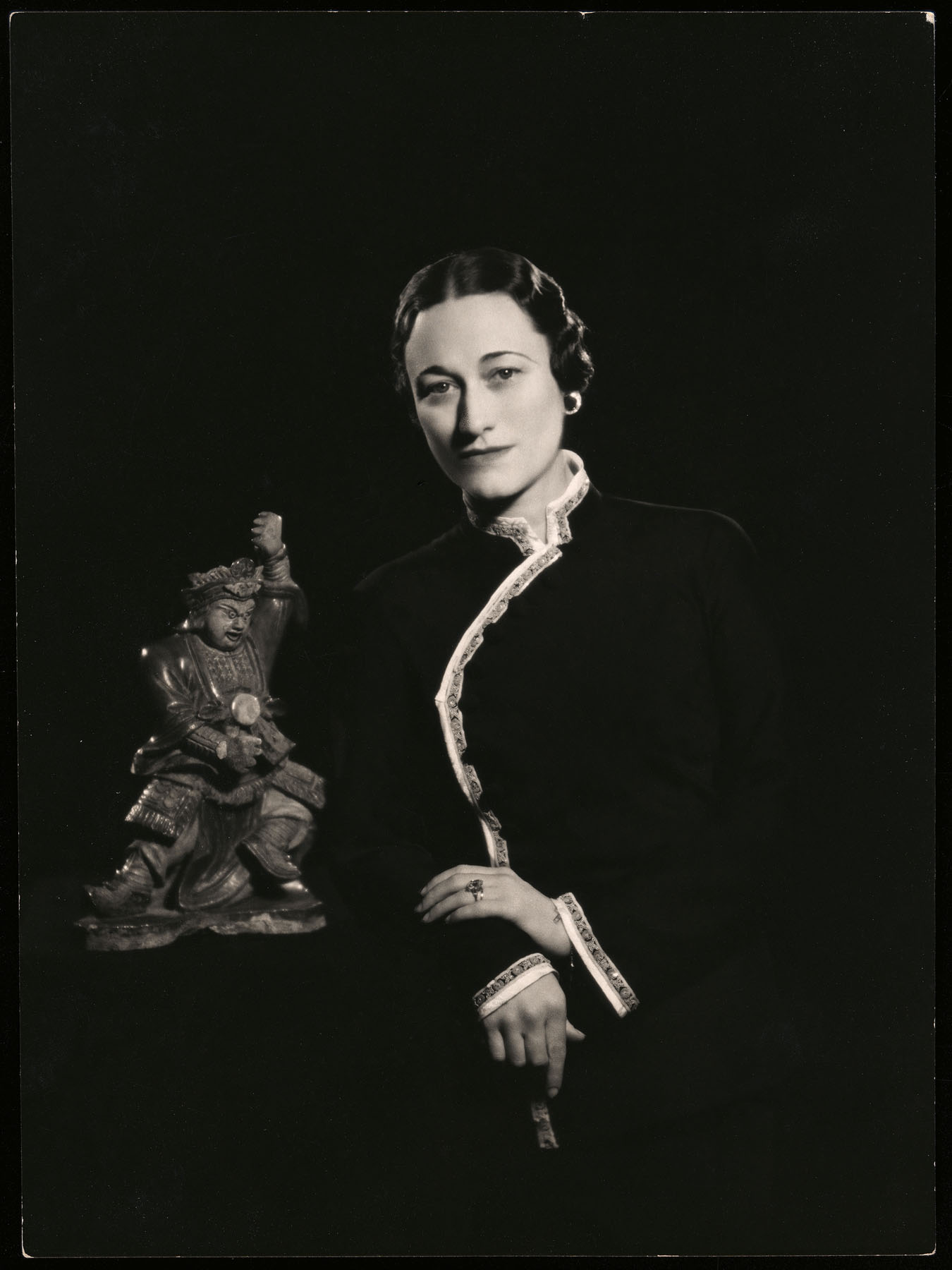
Man Ray (American, 1890-1976) 'Wallis Simpson with Chinese Sculpture' 1936


Man Ray (American, 1890-1976)
Wallis Simpson with Chinese Sculpture
1936
Gelatin silver print
Virginia Museum of Fine Arts, Arthur and Margaret Glasgow Endowment
© Man Ray 2015 Trust/Artists Rights Society (ARS), NY/ADAGP, Paris 2021


Photographed during the year in which her liaison with Edward VIII became public and he abdicated the throne of the British Empire.


The Virginia Museum of Fine Arts announces its upcoming exhibition, Man Ray: The Paris Years, on view in Richmond from October 30, 2021, through February 21, 2022. Organised by Dr. Michael Taylor, VMFA’s Chief Curator and Deputy Director for Art and Education, the exhibition includes more than 100 compelling portrait photographs made by the artist in Paris between 1921 and 1940, featuring cultural luminaries such as Barbette, André Breton, Jean Cocteau, Marcel Duchamp, Ernest Hemingway, Miriam Hopkins, James Joyce, Henri Matisse, Méret Oppenheim, Alice Prin (Kiki de Montparnasse), Elsa Schiaparelli, Erik Satie, Wallis Simpson and Gertrude Stein.

The son of Russian-Jewish immigrants, Emmanuel “Manny” Radnitzky grew up in New York and adopted the pseudonym Man Ray around 1912. A timely sale of paintings to Ferdinand Howald, an art collector from Columbus, Ohio, provided Man Ray with funds for a trip to Paris, and he arrived in the French capital on July 22, 1921. Although the artist worked in a variety of media over the next two decades, including assemblage, film, sculpture and painting, photography would be his primary means of artistic expression in Paris.

Shortly after moving to France, Man Ray embarked on a sustained campaign to document the international avant-garde in a series of remarkable portraits that established his reputation as one of the leading photographers of his era. Man Ray’s portraits often reflect a dialogue or negotiation between the artist’s vision and the self-fashioning of his subjects. Whether they had their portrait taken to promote their work, affirm their self-image, project their desires, fulfil their dreams or create a new identity, Man Ray’s sitters were not inanimate objects, like blocks of marble to be shaped and coerced, but were instead highly creative cultural and thought leaders who were active participants in the creative act. By telling the stories of his respective sitters and the innovative techniques he used to create their portraits, Man Ray: The Paris Years empowers the subjects portrayed in these photographs and gives them an agency and voice that is not typically realised in monographic accounts of modern artists.

“Timed to coincide with the 100th anniversary of the artist’s arrival in the French capital and, coincidentally, the near-centennial anniversary of the Spanish flu pandemic, Man Ray: The Paris Years will prove to be a visually provocative and especially relevant exhibition,” said Alex Nyerges, VMFA’s Director and CEO. “This is an opportunity to better understand the lives of his subjects and see Man Ray in a different light.”

“Man Ray used photography to challenge artistic traditions and break boundaries, including fixed gender roles and racial barriers,” said Taylor. “His portraits went beyond recording the mere outward appearance of the person depicted and aimed instead to capture the essence of his sitters as creative individuals, as well as the collective nature and character of Les Années folles (the crazy years) of Paris between the two world wars.”

Man Ray’s radical portraits also capture an important constituency of the avant-garde at this time, namely the femme moderne (modern woman). Adventurous, ambitious, assertive, daring, enterprising and self-assured modern women like American photographers Berenice Abbott and Lee Miller, French artist Suzanne Duchamp and American sculptor Janet Scudder took full advantage of their unprecedented freedom and access to educational and professional opportunities to participate as equals to their male counterparts in the Parisian avant-garde. Although these women came from different classes and economic backgrounds, they shared a collective goal in the 1920s and 1930s to be creatively, financially and intellectually independent.

“Rejecting traditional gender roles and expectations, modern women were interested in erasing sexual differences,” said Taylor. “They often embraced the symbolic trappings and autonomy of their male counterparts including wearing men’s clothes, driving fast cars, smoking cigarettes and sporting tightly cropped ‘bobbed’ haircuts.”

The exhibition also tells the important stories of Black subjects such as Henry Crowder, Adrienne Fidelin and Ruby Richards, whose contributions have often been unfairly relegated to the margins of modernism due to the legacy of colonialism and racism. The artist’s series of portraits of the dancer and singer Ruby Richards, who was born in St. Kitts in the British West Indies and grew up in Harlem, New York, brings to light an important performer whose work with Man Ray has never been acknowledged in previous accounts of his work. Richards moved to Paris in 1938 to replace the legendary African American performer Josephine Baker as the star attraction at the Folies Bergère, and the famous cabaret music hall commissioned Man Ray to help introduce her to French audiences through his portrait photographs.

Many of the subjects portrayed in Man Ray’s photographs were born in Spanish-speaking countries such as Argentina, El Salvador, Peru and Spain, including famous modern artists like Salvador Dalí and Pablo Picasso, as well as the flamenco dancer Prou del Pilar and the pianist Ricardo Viñes. As a state art museum that has free general admission and is open 365 days a year, VMFA is committed to representing the cultural and linguistic diversity of our community. According to recent data from the U.S. Census Bureau, more than 7 percent of Virginia’s 8.5 million residents speak Spanish at home. This data has informed the museum’s decision to incorporate dual-language labels throughout the Man Ray: The Paris Years exhibition, as well as the audio tour and gallery guide. Recognising that English is not the native language of everyone who visits the exhibition, VMFA is offering content in both Spanish and English to create a more accessible, inclusive and welcoming experience for all of our visitors.

Informed by extensive archival research, this exhibition and accompanying catalogue offers a more complete account of Man Ray’s Paris years by focusing not just on his achievement as a photographer and his superb gifts as a portraitist, but also on the friendships and exchange of ideas that took place between the artist and his subjects in Paris between the two world wars.

Press release from VMFA


Man Ray (American, 1890-1976) 'Nusch Éluard and Sonia Mossé' 1937


Man Ray (American, 1890-1976)
Nusch Éluard and Sonia Mossé
1937
Gelatin silver print
© Man Ray 2015 Trust/Artists Rights Society (ARS), NY/ADAGP, Paris 2021


Mossé was a surrealist artist and performer in a lesbian cabaret.


Ray’s double portraits are among his most spellbinding. Two feature Nusch Éluard, the actress, acrobat and hypnotist’s assistant who married the surrealist poet Paul Éluard. One shows Nusch with the openly bisexual actress, singer, surrealist and model Sonia Mossé. Taken in 1937, the photograph trembles with the intimacy and uncanniness of the culminating scenes in Ingmar Bergman’s “Persona,” where the face of Bibi Andersson begins to merge with that of Liv Ullmann. …

To try to square Man Ray’s magical, tender double portrait with Mossé’s subsequent life, as sketched in by Taylor in the catalogue, is to feel the 20th century – stretched to breaking point by the contrary forces of personal liberation and vicious repression – suddenly snap, like the shutter of a camera taking a photograph no one can bear to look at.

Mossé, writes Taylor, was romantically involved with the French dramatist Antonin Artaud. Best known for conceptualising the Theater of Cruelty movement, Artaud had tried to break off their relationship in 1939 “via handwritten malediction” (a letter in which he wrote curses – e.g., “You will live dead” – in an envelope containing drawings and burned holes).

But Mossé would never receive it. War had broken out. And on Feb. 11, 1943, Mossé and her stepsister Esther were denounced as Jews to the Gestapo. They were taken to the Drancy internment camp in a northeastern suburb of Paris and then to the Sobibór extermination camp in occupied Poland, where Mossé was murdered in a gas chamber.

Sebastian Smee. “Glamour, gossip, sex, scandal: Man Ray’s portraits captured Paris between the wars,” on The Washington Post website November 9, 2021 [Online] Cited 03/02/2022


Man Ray (American, 1890-1976) 'Igor Stravinsky' 1925


Man Ray (American, 1890-1976)
Igor Stravinsky
1925
Gelatin silver print
© Man Ray 2015 Trust/Artists Rights Society (ARS), NY/ADAGP, Paris 2021


Man Ray (American, 1890-1976) 'Picasso in His Studio on the rue de La Boëtie, Paris' 1922


Man Ray (American, 1890-1976)
Picasso in His Studio on the rue de La Boëtie, Paris
1922
Gelatin silver print
© Man Ray 2015 Trust/Artists Rights Society (ARS), NY/ADAGP, Paris 2021


The American Surrealist Man Ray made a number of portraits of Picasso over the years, beginning with this photograph that appeared in the July 1922 issue of Vanity Fair. It was taken on the second floor of Picasso’s apartment at 23 rue de La Boëtie in Paris, where he established a studio in November 1918 and completed many of the Cubist paintings that form the background of this portrait. Man Ray’s portrait brilliantly captures both sides of Picasso’s personality at this time, since the proud and successful artist is also shown to be emotionally distant and seemingly uncomfortable with his newfound wealth and fame.

Text from the Philadelphia Museum of Art website


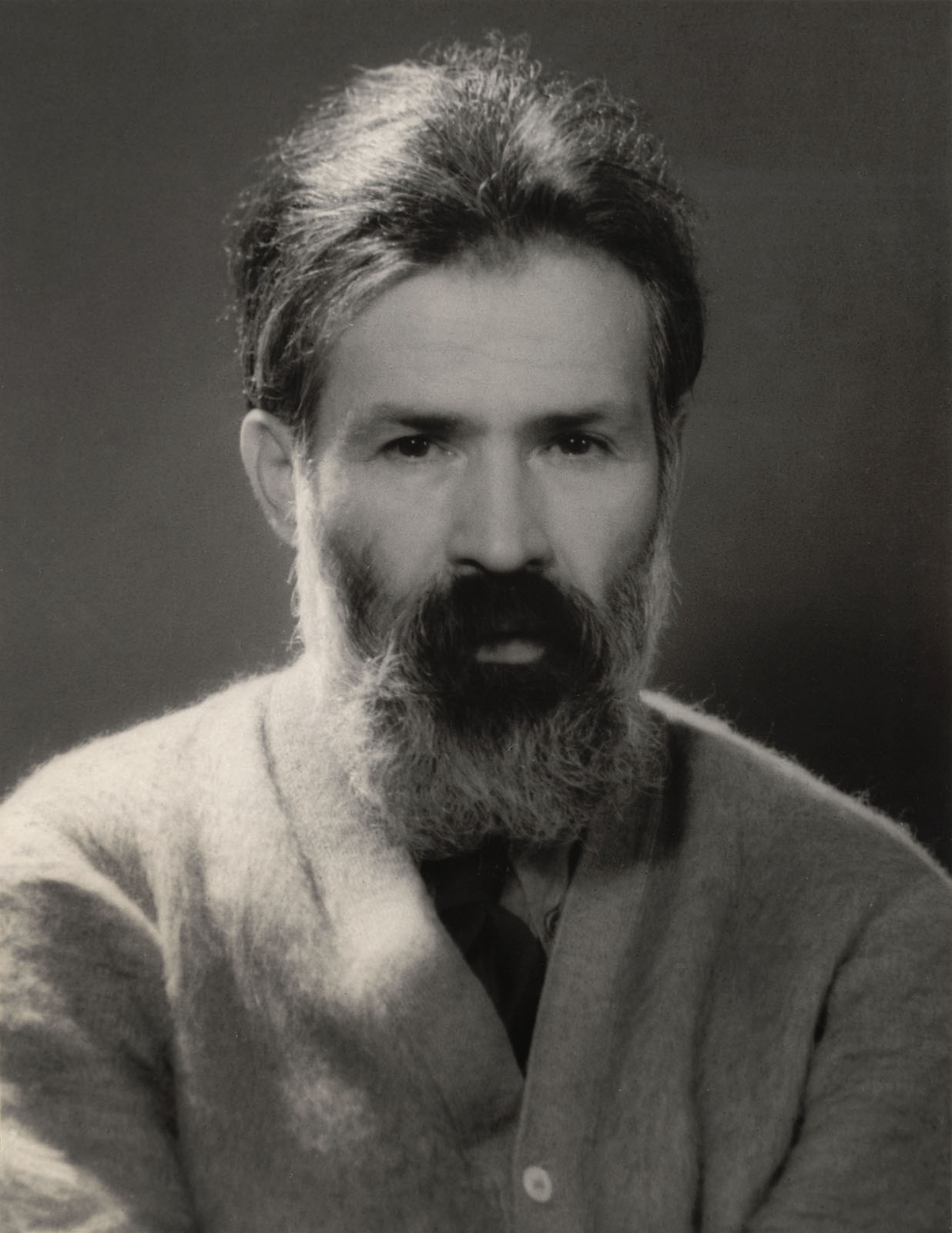
Man Ray (American, 1890-1976) 'Constantin Brancusi' 1925


Man Ray (American, 1890-1976)
Constantin Brancusi
1925
Gelatin silver print
9 1/4 x 10 1/4″ (23.5 x 26cm)
© Man Ray 2015 Trust/Artists Rights Society (ARS), New York/ADAGP, Paris


Man Ray (American, 1890-1976) 'Ruby Richards with Feathers' 1938


Man Ray (American, 1890-1976)
Ruby Richards with Feathers (installation view)
1938
Gelatin silver print


Ruby Richards (aka The Black Pearl) was a singer and dancer born in Saint Christopher Island (Saint Kitts) in the West Indies.

In 1938 the dancer and singer moved to Paris to replace Josephine Baker as the star attraction at the Folies Bergère. The famous cabaret music hall commissioned Man Ray to help introduce Richards to French audiences through his innovative portrait photographs.


Louis Jordan Soundie: Fuzzy Wuzzy

Featuring Louis Jordan and His Tympany Band with dancer Ruby Richards (recorded on New Year’s Eve 1942).


Man Ray (American, 1890-1976) 'Ruby Richards' 1938


Man Ray (American, 1890-1976)
Ruby Richards (installation view)
1938
Gelatin silver print


Man Ray (American, 1890-1976) 'Ruby Richards with Diamonds' c. 1938


Man Ray (American, 1890-1976)
Ruby Richards with Diamonds
c. 1938
Gelatin silver print
Collection of Michael and Jacky Ferro, Miami
© Man Ray 2015 Trust/Artists Rights Society (ARS), NY/ADAGP, Paris 2021)


Man Ray (American, 1890-1976) 'Self-Portrait With Adrienne Fidelin' 1937


Man Ray (American, 1890-1976)
Self-Portrait With Adrienne Fidelin
1937
Virginia Museum of Fine Arts
© Man Ray 2015 Trust/Artists Rights Society, New York/ADAGP, Paris 2021


He called her his “little black sun.” Born in Guadeloupe, Adrienne Fidelin was the American artist’s partner in Paris before World War II tore them apart. She appears in almost 400 of the renowned artist’s photographs, and in 1937 became the first Black model to be featured in a leading U.S. fashion magazine. However, she was pushed to the sidelines of history. …

Man Ray himself only mentions Fidelin fleetingly in his autobiography. This marginalisation continues today, despite current efforts to recognise the stories of people of colour throughout history…

Adrienne Fidelin was born on March 4, 1915, in Pointe-à-Pitre. At the age of 13, she lost her mother in a hurricane that devastated Guadeloupe, and her father died a few years later. The orphaned teenager joined other members of her family living in Paris in the early 1930s. At the time, the French capital was under the thrall of the Colonial Exposition and obsessed with France’s far-flung colonies. At the Bal Blomet, a cabaret in the 15th arrondissement, the West Indian diaspora and the artistic avant-garde partied to the sounds of Creole biguine music, and Fidelin joined a Guadeloupean dance company.

This is most likely where she and Man Ray first set eyes on each other. She was 19, he was 44. In a diary entry dated December 29, 1934, the artist simply wrote “Ady.” Wendy Grossman discovered this valuable evidence of their first meeting in the Man Ray archives at the Getty Center in Los Angeles. The following year, he wrote down her number (“Odéon 79-95”) and photographed her wearing a simple white tank top. The artist and the dancer were inseparable. On May 13, 1937, Man Ray combined their names in a tender Surrealist pairing, writing “Manady” and “Adyman” in his diary. …

On September 15, 1937, a full-page portrait photo of Fidelin taken by Man Ray was published in the U.S. magazine Harper’s Bazaar – a first in segregated America. However, captured “wearing a tiger-tooth necklace, an ivory arm bracelet, and a Belgian Congo headdress, and adopting a seductive pose, Fidelin was presumed to represent the sensual African ‘native’ identified in the article’s title,” writes Wendy Grossman. “The article shows how the Surrealist movement exoticised ‘the other.'”

Man Ray found a partner in Fidelin, but their relationship was asymmetrical. “She stops me from sinking into pessimism,” he wrote. “She does everything: shining my shoes, making me breakfast, and painting the backdrops on my large canvases.” Fidelin also danced in the “negro clubs” on the Champs-Elysées and worked with photographers and directors looking for “exotic girls.” …

The couple was torn apart when the Wehrmacht entered Paris in June 1940. After trying – and failing – to flee to the Côte d’Azur together, Man Ray returned to the United States alone. The lovers continued writing each other for a few months, but the war severely impacted the postal service and Man Ray soon fell in love with another dancer in Hollywood. Fidelin remained in Paris, married another man in 1957, and died in a retirement home a few miles outside Albi in Southern France [February 5, 2004].

Clément Thiery. “Adrienne Fidelin, Man Ray’s Forgotten Muse,” on the Fance-Amérique website February 2, 2022 [Online] Cited 03/02/2022


Man Ray (American, 1890-1976) 'Adrienne Fidelin with washboard' 1937


Man Ray (American, 1890-1976)
Adrienne Fidelin with washboard
1937
Gelatin silver print
29.8 x 23cm
Collection Musée Picasso
© Man Ray 2015 Trust / Artists Rights Society (ARS), New York

As far as I know this photograph is NOT in the exhibition


Man Ray (American, 1890-1976) 'James Joyce' 1922


Man Ray (American, 1890-1976)
James Joyce
1922
Gelatin silver print
Virginia Museum of Fine Arts, Arthur and Margaret Glasgow Endowment
© Man Ray 2015 Trust/Artists Rights Society (ARS), NY/ADAGP, Paris 2021


Man Ray (American, 1890-1976) 'James Joyce' (portrait for "Ulysses") 1922


Man Ray (American, 1890-1976)
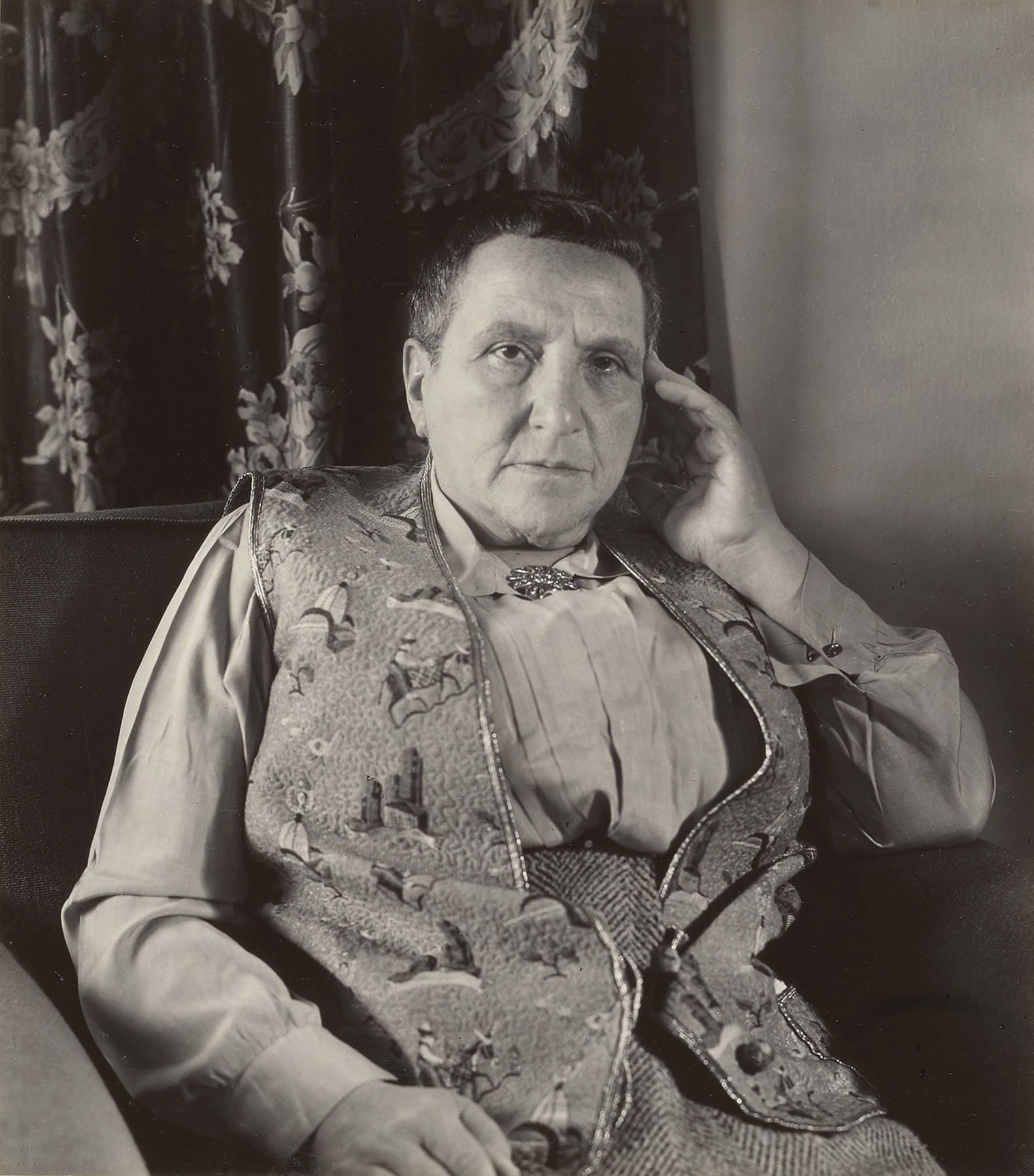
James Joyce (portrait for “Ulysses”)
1922
Gelatin silver print
Virginia Museum of Fine Arts, Arthur and Margaret Glasgow Endowment
© Man Ray 2015 Trust/Artists Rights Society (ARS), NY/ADAGP, Paris 2021


If, in the early 1920s, you happened to walk into Shakespeare and Company, the legendary bookstore and lending library established in Paris after World War I by the American expatriate Sylvia Beach, you would have noticed that the walls were covered with photographic portraits by Man Ray and Berenice Abbott.

“To be ‘done’ by Man Ray and Berenice Abbott meant that you rated as somebody,” wrote Beach. The habitues of Shakespeare and Company famously included such somebodies as Ernest Hemingway, Gertrude Stein, Djuna Barnes, T.S. Eliot, Ezra Pound, Hilda Doolittle and F. Scott Fitzgerald.

In 1922, Beach commissioned Ray (1890-1976) to make a publicity photograph of James Joyce, the Irish novelist whose book “Ulysses” she was about to publish (to her everlasting glory). That same year, Ray photographed Marcel Proust on his deathbed (below).

Sebastian Smee. “Glamour, gossip, sex, scandal: Man Ray’s portraits captured Paris between the wars,” on The Washington Post website November 9, 2021 [Online] Cited 03/02/2022


Man Ray (American, 1890-1976) 'Marcel Proust on His Deathbed' 1922


Man Ray (American, 1890-1976)
Marcel Proust on His Deathbed
1922
Gelatin silver print
Mark Kelman, New York
© Man Ray 2015 Trust/Artists Rights Society (ARS), NY/ADAGP, Paris 2021


“It comes so soon, the moment when there is nothing left to wait for.”

~ Marcel Proust


Ravaged by bronchitis and pneumonia, Marcel Proust spent the last night of his life dictating manuscript changes for a section of his famous novel Remembrance of Things Past.

Man Ray did not know Proust, but he had become such an important photographer that mutual friends dispatched him to the celebrated French author’s bedside to make a final portrait two days after his death. The side view associates Man Ray’s photograph with a tradition of postmortem photography dating back to the inception of the medium.

Text from the J. Paul Getty Museum website


At the urging of his friend Jean Cocteau, Man Ray rushed to photograph the author of Remembrance of Things Past on his deathbed. In the October / November issue of Les Nouvelles Littéraires, Cocteau wrote:

Those who have seen this profile of calm, of order, of plenitude, will never forget the spectacle of an unbelievable recording device come to a stop, becoming an art object: a masterpiece of repose next to a heap of notebooks where our friend’s genius continues to live on like the wristwatch of a dead soldier.

Text from the Metropolitan Museum of Art website


Man Ray (American, 1890-1976) 'Elsie Houston' 1933


Man Ray (American, 1890-1976)
Elsie Houston
1933
Gelatin silver print
Virginia Museum of Fine Arts, Arthur and Margaret Glasgow Endowment
© Man Ray 2015 Trust/Artists Rights Society (ARS), NY/ADAGP, Paris 2021


“Houston sang Brazilian folk songs by candlelight in Paris. She moved to New York in 1939, where she performed as a possessed woman muttering “voodoo” incantations and playing the drums. She died in her home in 1943, an empty vial of sleeping pills by her bedside. In Ray’s photograph, her smile is soft. Her head tilts in line with her elongated hand. That hand is adorned with a piece of jewellery in the shape of a spotted disc, which rhymes with her hoop earring and the arches of her eyebrows. The cool, clean contrasts of her white turban and dark clothes make the portrait one of Ray’s finest.”

Sebastian Smee. “Glamour, gossip, sex, scandal: Man Ray’s portraits captured Paris between the wars,” on The Washington Post website November 9, 2021 [Online] Cited 03/02/2022


Elsie Houston (Brazilian, 1902-1943)

Elsie Houston (22 April 1902 – 20 February 1943) was a Brazilian singer.

Houston figured in the Brazilian literary/art/music scene during a critical time in its history. It was an era of tremendous creative energy. In addition to Mário de Andrade and Pagu, Houston knew others famous members of this artists movement, including the composer Heitor Villa-Lobos, the painters Flavio de Carvalho, Anita Malfatti and Tarsila do Amaral, and the leader of Brazilian modernism, Oswald de Andrade.

Houston moved to Germany and studied with Lilli Lehmann a renowned voice teacher. She then studied with another famed soprano, Ninon Vallin, first in Argentina and then in Paris. Houston’s relationship with Heitor Villa Lobos began in her teens. Houston was definitely a soloist at Villa Lobos’s 1927 Paris concerts. In 1928 she married Benjamin Péret, French surrealist poet, with whom she lived in Brazil from 1929 to 1931. Their son, Geyser, was born in Rio de Janeiro in 1931.

By the late 1930s, Houston had moved to New York City. She was a brilliant singer, particularly skilled in the interpretation of Brazilian songs. The New York Times during this era praised for her performances. She was also an active supporter of young Latin American composers, performing early pieces by composers such as Jayme Ovalle and Camargo Guarnieri.

She died in 1943. Her death was listed as an apparent suicide.

Text from the Wikipedia website


Ravel – Sur l’herbe – Elsie Houston (1930s)


Man Ray (American, 1890-1976) 'Lee Miller' 1929


Man Ray (American, 1890-1976)
Lee Miller
1929
Gelatin silver print
Virginia Museum of Fine Arts, Arthur and Margaret Glasgow Endowment
© Man Ray 2015 Trust/Artists Rights Society (ARS), NY/ADAGP, Paris 2021


Ray learned from the history of painting as much as from other photographers. He borrowed from Rembrandt’s tenebrism (his dramatic use of engulfing shadow), the slanting light and perspectival structure in Vermeer’s interiors, and the directness of Hans Holbein (strong light on the face, minimal backgrounds). But of course, he was in league with the surrealists and, in even his most classical-seeming portraits, revealed a predilection for unexpected juxtapositions, visual rhymes and piercing expressions that can transport you instantaneously to the lip of a volcanic unconscious.

Ray’s 1929 portrait of Lee Miller is a good example – surely one of the most mesmerising photographic portraits ever taken. What is the source of its uncanny power? It’s not just that Miller – herself a great photographer who for several years was Ray’s lover – is so beautiful; or that her direct gaze is simultaneously so trusting and challenging; or even that her unblemished skin and the symmetry of the whole composition suggest something impossibly pristine and inviolate. It’s because the image is slightly out of focus. The effect of the blur is to slow one’s response, as smoke rings slow the mind – and to trigger a dream state.

Sebastian Smee. “Glamour, gossip, sex, scandal: Man Ray’s portraits captured Paris between the wars,” on The Washington Post website November 9, 2021 [Online] Cited 03/02/2022


Man Ray (American, 1890-1976)
Emak Bakia (Leave Me Alone)
1926


But you may be less familiar with some of Ray’s other subjects, including Germaine Tailleferre, the female composer who changed her name from Taillefesse, Taylor writes, “partly to spite her father, who refused to support her musical studies, but also because she disliked the connotations of the name Taillefesse, which translates as buttock in English”; Janet Scudder, an American sculptor, whose partner was the children’s author and suffragist Marion Cothren; and Barbette (below), the high-wire performer who presented as a graceful woman, but at the end of her act removed her wig and revealed herself as a man.

Personae like these – and Ray’s always inventive approach to their portraits – make this show more than just a roll call of famous names. They make it revelatory. The show is further enhanced by the inclusion of Ray’s wonderful 1926 film, “Emak-Bakia” (he called it a “cinépoème”), and a portfolio of semiabstract photographs he made for a Paris Electricity Co. marketing campaign. Both are remarkable.

Sebastian Smee. “Glamour, gossip, sex, scandal: Man Ray’s portraits captured Paris between the wars,” on The Washington Post website November 9, 2021 [Online] Cited 03/02/2022


Man Ray (American, 1890-1976) 'Barbette' 1926


Man Ray (American, 1890-1976)
Barbette
1926
Gelatin silver print
Virginia Museum of Fine Arts, Arthur and Margaret Glasgow Endowment
© Man Ray 2015 Trust/Artists Rights Society


Vander Clyde Broadway (American, 1899-1973)

Vander Clyde Broadway (December 19, 1899 – August 5, 1973), stage name Barbette, was an American female impersonator, high-wire performer, and trapeze artist born in Texas. Barbette attained great popularity throughout the United States but his greatest fame came in Europe and especially Paris, in the 1920s and 1930s.

Barbette began performing as an aerialist at around the age of 14 as one-half of a circus act called The Alfaretta Sisters. After a few years of circus work, Barbette went solo and adopted his exotic-sounding pseudonym. He performed in full drag, revealing himself as male only at the end of his act.

Following a career-ending illness or injury (the sources disagree on the cause), which left him in constant pain, Barbette returned to Texas but continued to work as a consultant for motion pictures as well as training and choreographing aerial acts for a number of circuses. After years of dealing with chronic pain, Barbette committed suicide on August 5, 1973. Both in life and following his death, Barbette served as an inspiration to a number of artists, including Jean Cocteau and Man Ray. …

“Barbette,” writes Cocteau,

“transforms effortlessly back and forth between man and woman. His female glamour and elegance Cocteau likens to a cloud of dust thrown into the eyes of the audience, blinding it to the masculinity of the movements he needs to perform his acrobatics. That blindness is so complete that at the end of his act, Barbette does not simply remove his wig but instead plays the part of a man. He rolls his shoulders, stretches his hands, swells his muscles… And after the fifteenth or so curtain call, he gives a mischievous wink, shifts from foot to foot, mimes a bit of an apology, and does a shuffling little street urchin dance – all of it to erase the fabulous, dying-swan impression left by the act.”


Cocteau calls upon his fellow artists to incorporate deliberately this effect that he believes for Barbette is instinctive.

Cocteau commissioned a series of photographs of Barbette by the Surrealist artist Man Ray, which captured not only aspects of Barbette’s performance but also his process of transformation into his female persona.

Text from the Wikipedia website


Man Ray (American, 1890-1976) 'Ernest Hemingway' 1928


Man Ray (American, 1890-1976)
Ernest Hemingway
1928
Gelatin silver print
National Portrait Gallery, Smithsonian Institution
© Man Ray 2015 Trust/Artists Rights Society (ARS), NY/ADAGP, Paris 2021


Man Ray (American, 1890-1976) 'Aldous Huxley' 1934


Man Ray (American, 1890-1976)
Aldous Huxley
1934
Gelatin silver print
© Man Ray 2015 Trust/Artists Rights Society (ARS), NY/ADAGP, Paris 2021


This photograph was taken two years after the publication of Huxley’s novel Brave New World, a nightmarish vision of the future.


Man Ray (American, 1890-1976) 'La Ville' (The City) 1931


Man Ray (American, 1890-1976)
La Ville (The City)
1931
From the portfolio Èlectricité
Photogravure, printed 1931
© Man Ray 2015 Trust/Artists Rights Society (ARS), NY/ADAGP, Paris 2021


In 1931, Man Ray was commissioned by the Compagnie Parisienne de Distribution d’Electricite (CPDE) to produce a series of pictures promoting the private consumption of electricity. The resulting portfolio, Électricité (Electricity), comprises rayographs reproduced as photogravures. Le Monde (The World), a picture of the moon above an electrical cord, suggests that even celestial bodies rely on the CPDE for their illumination; the photogravure Électricité equates the electric charge of the electron with the erotic beauty of a nude female figure; and Le Souffle (Breeze) combines spinning fan blades with the weblike stimuli of electrical current.

Gallery label from The Shaping of New Visions: Photography, Film, Photobook, April 16, 2012 – April 29, 2013 on the MoMA website [Online] Cited 03/02/2022


Man Ray. 'Électricité' 1931


Man Ray (American, 1890-1976)
Électricité
1931
From the portfolio Èlectricité
Photogravure, printed 1931
© Man Ray 2015 Trust/Artists Rights Society (ARS), NY/ADAGP, Paris 2021


Man Ray’s innovations are not excluded. A whole section of the exhibition is devoted to his light-bending portfolio Électricité (1931), a commercial project commissioned by the Paris Electric Company to promote the use of electrically powered household appliances. Comprised of ten “Rayographs” (another name for photograms), the portfolio pulses with kinetic energy. Fans spin with an otherworldly force, a fowl is perfectly cooked as by magic rays, and the Eiffel Tower swims in hi-wattage advertisements.

Daniel Cassady. “‘Paris’s glowing milieu spills onto every corner’: Virginia show theatrically tells the story of Man Ray’s fruitful time in the City of Lights,” on The Art Newspaper website 11 November 2021 [Online] Cited 03/02/2022


Man Ray (American, 1890-1976) 'Le Souffle' (Breeze) 1931


Man Ray (American, 1890-1976)
Le Souffle (Breeze)
1931
From the portfolio Èlectricité
Photogravure, printed 1931
© Man Ray 2015 Trust/Artists Rights Society (ARS), NY/ADAGP, Paris 2021


Man Ray (American, 1890-1976) 'Le Monde' (The World) 1931


Man Ray (American, 1890-1976)
Le Monde (The World)
1931
From the portfolio Èlectricité
Photogravure, printed 1931
© Man Ray 2015 Trust/Artists Rights Society (ARS), NY/ADAGP, Paris 2021


Virginia Museum of Fine Arts
200 N. Boulevard
Richmond, Virginia USA

Opening hours:
Daily 10am – 5pm and until 9 pm Wed, Thu, Fri

Virginia Museum of Fine Arts website

LIKE ART BLART ON FACEBOOK

Back to top