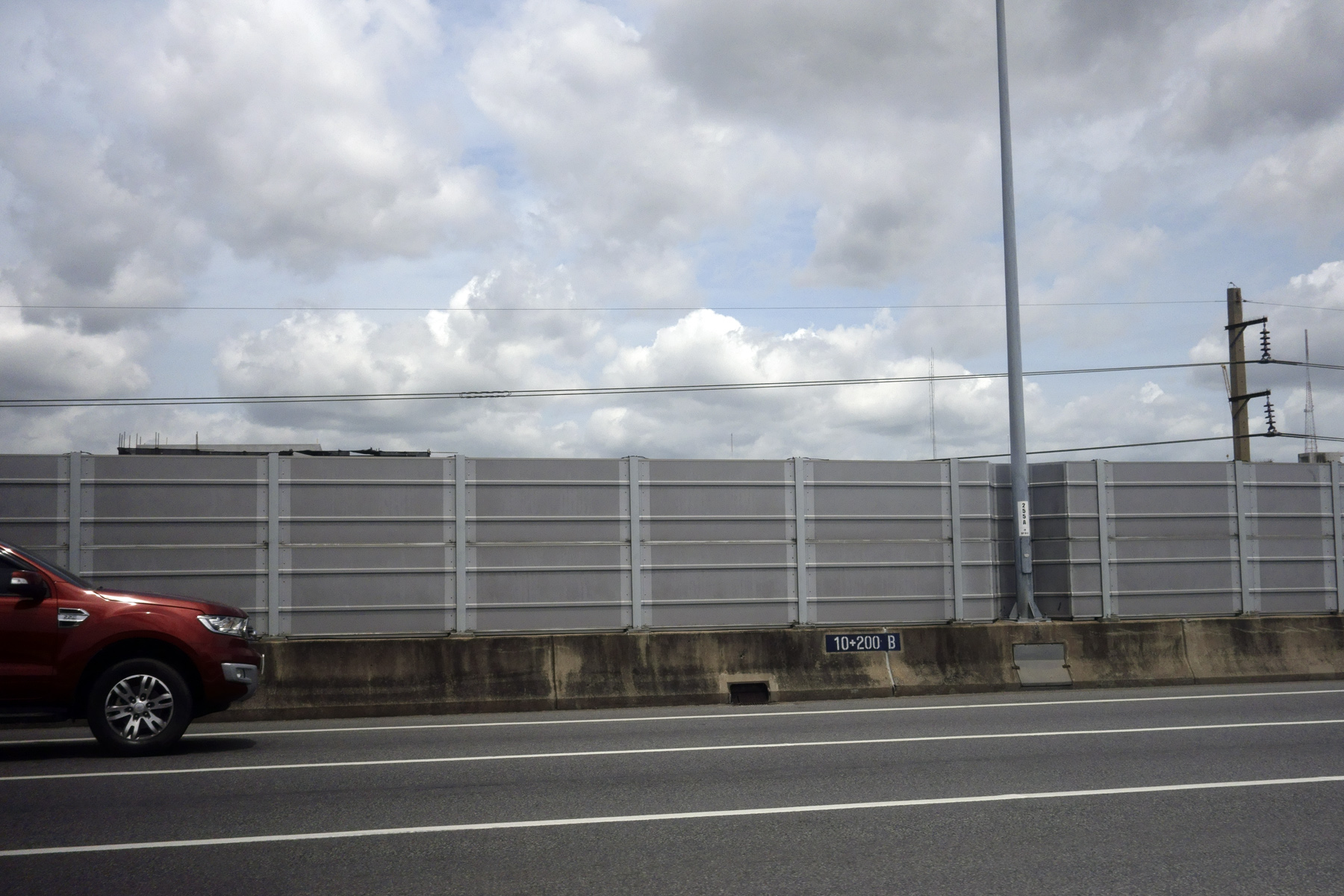
Marcus Bunyan (Australian born England, b. 1958) Untitled 2019 From the series Oblique Digital colour photograph
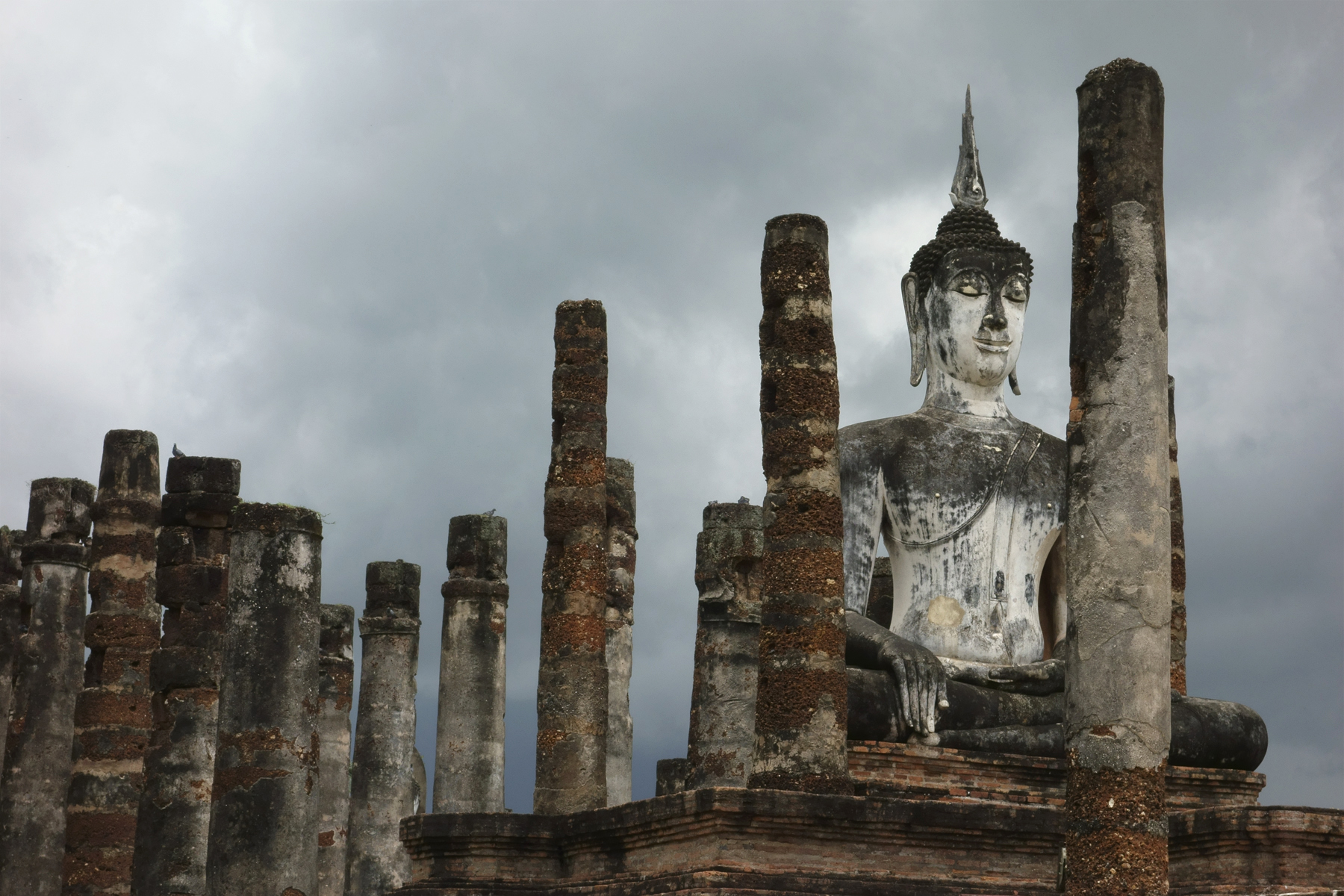
Here is a body of work shot mainly from moving taxi windows in Bangkok and surrounds, interspersed with still, Zen-like images.
With the moving images, you have to anticipate by a couple of seconds the movement of the taxi and the release of the shutter so you have no idea what the image will actually be. Your sense of previsualisation is completed on feel and instinct. You trust the world to provide the image which you are looking for. I enjoy them, they give me pleasure and contentment in their creation.
Oblique
In terms of defining the concept of the oblique we can say that: “The oblique is fundamentally interested in how a body physically experiences a space.”
In this case, both physically and spiritually.
The series investigates the concept through images of movement and stillness, fleeting glimpses of urban life intertwined with Zen-like images. The series is constructed not as a sequence, but as a “volume” where there is no beginning, no middle and no end. It is like a jewel that can be turned around and looked at from different perspectives, where no one perspective is the correct interpretation. Each volume has its own validity, its own uniqueness.
The images can also be read as a protest against death – no beginning, no middle, no end – where everything is connected to everything else. As Goethe observes in his Conversations with Eckermarm (5 June 1825):
“In nature we never see anything isolated, but everything in connection with something else which is before it, beside it, under it, and over it.”
Please note: the series is best viewed on a desktop computer with a large screen. Please click on the photographs to see a larger version of the image.
Photographs are available from this series for purchase. As a guide, a digital colour 16″ x 20″ costs $1000 plus tracked and insured shipping. For more information please see my Store web page.
The 66 images of Oblique (2019). Please click on the photograph to see a larger version of the work
Marcus Bunyan (Australian born England, b. 1958) Untitled 2019 From the series Oblique Digital colour photograph
Exhibition dates: 18th November, 2017 – 22nd April, 2018
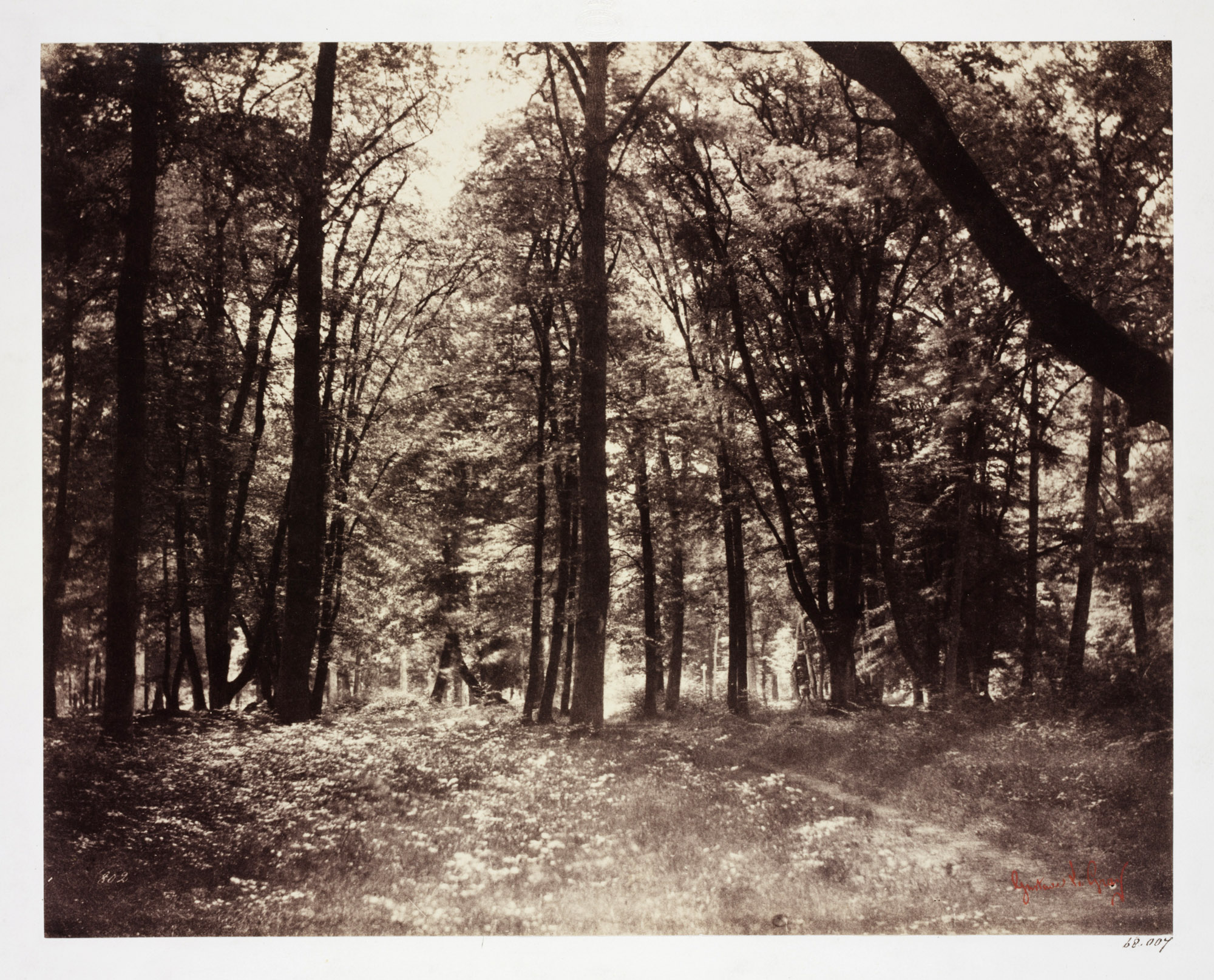
Gustave Le Gray (French, 1820-1884) In the Forest of Fontainbleau (Bas-Bréau) 1852 Gold-toned albumen print from waxed paper negative Chauncey Hare Townshend Bequest 1868
Gustave Le Gray trained as a painter in the 1840s but took up photography soon after. He followed the Barbizon School painters to the French forest of Fontainebleau, where he made enchanting photographic studies. Combining technical knowledge with artistic flair, Le Gray rapidly became one of the most renowned photographers of his day.
I grew up on a farm for the first thirteen years of my life. I played in the fields and forests of England, and wandered the cart paths with my brother. I saw him for the first time in thirty years last August, after the passing of my father. We went back and walked those very same paths where we grew up and looked at the magnificent trees planted along the edge of the fields. After all that had happened, it was an emotional and healing journey for both of us…
The innocence of being a child growing up on the land returned, the innocence of something that is never really forgotten. I still am a country boy at heart; I still love the land and the trees. I always will.
It’s a pity then, that this seems to be just a “filler” exhibition from the V&A. No press release, two sentences on the website (see below) and no information about the images such as details of process etc… I had to dig into the collection to find the information you read here, including the text descriptions beneath the images. For such a magical and mythical subject that has fascinated human beings since the beginning of time, you might have expected a more in depth investigation.
As an addendum I have included my favourite tree images. You will have your own. The last image in particular has that element of threat and wonder that makes the forest such a rich, fluid and evocative space.
Dr Marcus Bunyan
Many thankx to the V&A for allowing me to publish the photographs in the posting. Please click on the photographs for a larger version of the image.
Trees have long been a source of inspiration for artists. This display explores the diverse representation of trees in photography – as botanical subjects and poetic symbols, in the context of the natural and human worlds.
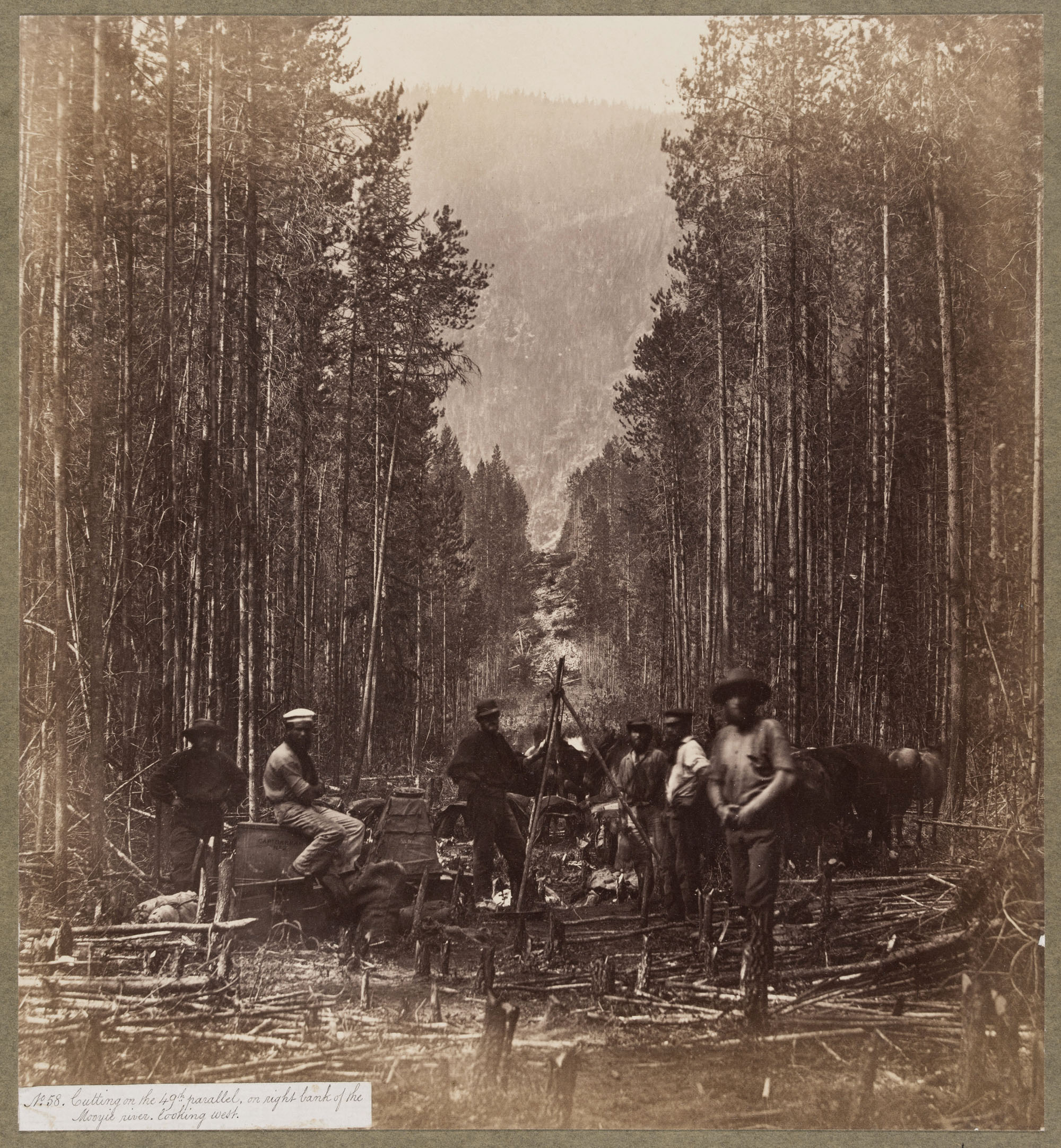
Royal Engineers Cutting on the 49th Parallel, on the Right Bank of the Mooyie River Looking West about 1860 Albumen print from wet collodion-on-glass negative Photographed by a Royal Engineers photographer on a U.S.-Canada Border Survey Received from the Foreign Office 1863
In 1856 the War Department appointed the South Kensington Museum photographer Charles Thurston Thompson to teach photography to the Royal Engineers. On one expedition these soldier-photographers documented the border between the USA and Canada. From the crest of the Rockies westwards along the 49th Parallel to the coast, they painstakingly recorded everything that crossed their path, producing ‘one of the earliest significant bodies of photographs made in the Pacific Northwest’.
Samuel Bourne (British, 1834-1912) Poplar Avenue, Srinuggur, Kashmir, from the end 1864 Albumen print from wet collodion negative
In 1863 Samuel Bourne (1834-1912) arrived in India. He had left his job as a Nottingham bank clerk in order to develop his new career as a photographer. Bourne undertook three treks to Kashmir and the western Himalayas in 1863, 1864 and 1866, during which he photographed his surroundings extensively.
He began his second trip to India, during which this photograph was taken, in March 1864. It was to be a nine-month expedition through the Kashmir region. Throughout his travels Bourne wrote about his first impressions of the places he visited and these writings were published in the British Journal of Photography. Of his first impressions of the poplar avenues at Srinagar he noted: “The next day was devoted to an ascent of the Takht Hill and a stroll among the poplar avenues, of which, as I before stated, there are several about Srinugger. One of them is known as the “poplar avenue,” and is a mile long and quite straight. This is a fine walk and is almost perfect-hardly a tree is wanting, and the effect on looking down it is very striking. It is carpeted with grassy turf and a level grassy plain stretches on each side of it; at right angles to this are the three or four smaller avenues extending to the river, a walk down which when the grapes are ripe is by no means an enjoyable exercise, if one be a good climber. Running up, and entwining themselves among the poplars to a height of ninety or a hundred feet, are numbers of vines, whose tempting clusters hanging at this elevation only mock the wistful, watery eyes cast up to them.” Bourne, S. “Narrative of a Photographic Trip to Kashmir (Cashmere) and the Adjacent Districts,” in The British Journal of Photography, 23 January 1867, p. 38.
Towards the end of the 1860s, Bourne established a partnership with fellow photographer and Englishman Charles Shepherd (fl. 1858-1878) and in the space of a few years Bourne & Shepherd became the pre-eminent photographic firm in India. By the end of 1870 they had three branches, in Simla, Calcutta and Bombay.
Samuel Bourne’s ability to combine technical skill and artistic vision has led to him being recognised today as one of the most outstanding photographers working in India in the nineteenth century.
Lake George was the family estate where Stieglitz spent his summers, often with his wife, the painter Georgia O’Keefe. However, he took this photograph when O’Keefe was away in New Mexico. The loneliness of separation led Stieglitz to contemplate his own mortality, a theme reflected in this representation of poplars. Perhaps he identified with the trees’ dwindling vitality, as he photographed them repeatedly that summer, almost as one might check one’s pulse.
Ansel Adams (American, 1902-1984) Aspens, Northern New Mexico 1958 Gelatin silver print Given by Virginia and Ansel Adams
Ansel Adams is well-known for his portrayal of the mountain ranges, deserts, rivers and skies of the western United States. Adams was a passionate lover of the vast American wilderness and an active conservationist. He commented, “my approach to photography is based on my belief in the vigour and values of the world of nature – in the aspects of grandeur and of the minutiae all about us.” Having trained as a pianist before turning to photography in 1927, Adams often discussed his process of composition in musical terms.
Gerhard Stromberg is one of the foremost contemporary photographers working with the subject of the British landscape. His images demonstrate how constructed this landscape can be. The subtle, large format prints (5 x 6 ft approx.) allow the viewer to contemplate details that reveal the photographers’ intimacy and familiarity with the subject. This piece is one of the most representative of his works.
A C-type print, such as Ektachrome, is a colour print in which the print material has at least three emulsion layers of light sensitive silver salts. Each layer is sensitised to a different primary colour – either red, blue or green – and so records different information about the colour make-up of the image. During printing, chemicals are added which form dyes of the appropriate colour in the emulsion layers. It is the most common type of colour photograph.
This image of apples lying rotten on a peacock blue carpet was taken in a family garden on a Norfolk nature reserve. The owners use pieces of old carpet, often donated by a neighbouring Buddhist retreat, as weed control. The decorative juxtaposition of the natural with the man-made moved Mark Edwards to record the carpet as it became integrated into the fabric of the garden. The photograph hints at ideas of contemplation and the passage of time.
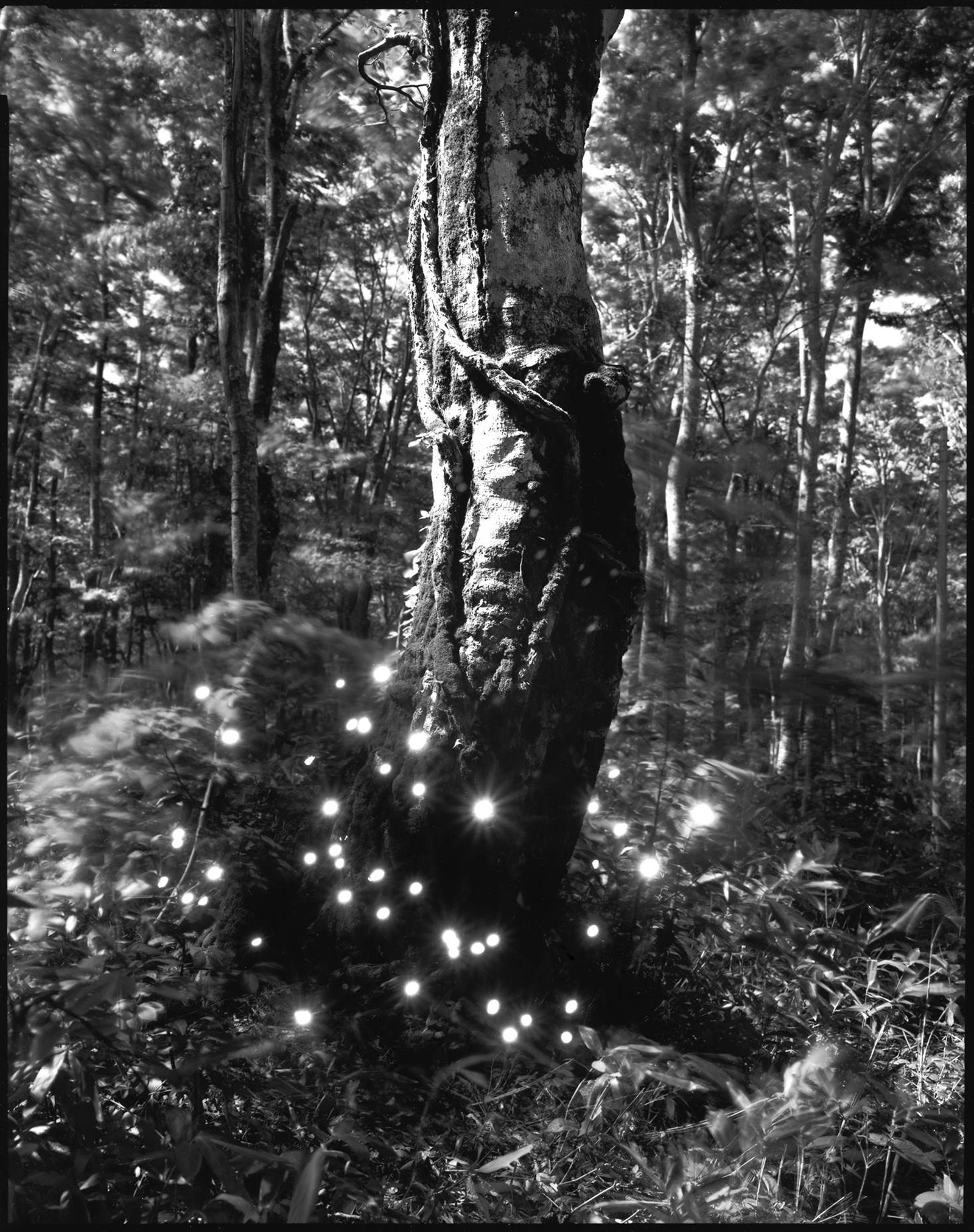
This photograph embodies Sato’s ephemeral imagination. It was made in the primeval Hakkoda forest, in northern Honshu on the main island of Japan. The image reveals a long fascination with the sculptural form of the Japanese Beech tree. Sato has said that to him ‘these trees suggest the ancient continental origins of the Japanese people while representing masculine strength and feminine sensitivity’. To make the picture, he exposed large-format film, during which he moved in front of the camera with a mirror reflecting the sun’s rays. The power of the sun momentarily ‘blinds’ the camera, creating an area that registers on film as an intense flare of light. Although we know that Sato is standing somewhere in the scene, we struggle to locate precisely where. While his traces are like pinpoint coordinates on a map, all we can do is estimate his continually moving location and follow the possible connecting trails. In this way, his photographs can be seen as enigmatic sculptural or physical performances. Knowing how Sato makes his images, we recognise there is not a multiplicity of presences indicated by the lights, but instead a multiplicity of one presence: the artist’s. His omnipresence might be a hint of some kind of divinity: the ever-present force of an invisible creator. Or it may simply be a record of the movement of one human force. However it is interpreted, human or divine, the light is a kind of mark that asserts both transcendence and specificity: “I was here,” even if, as in life, it is only momentarily.
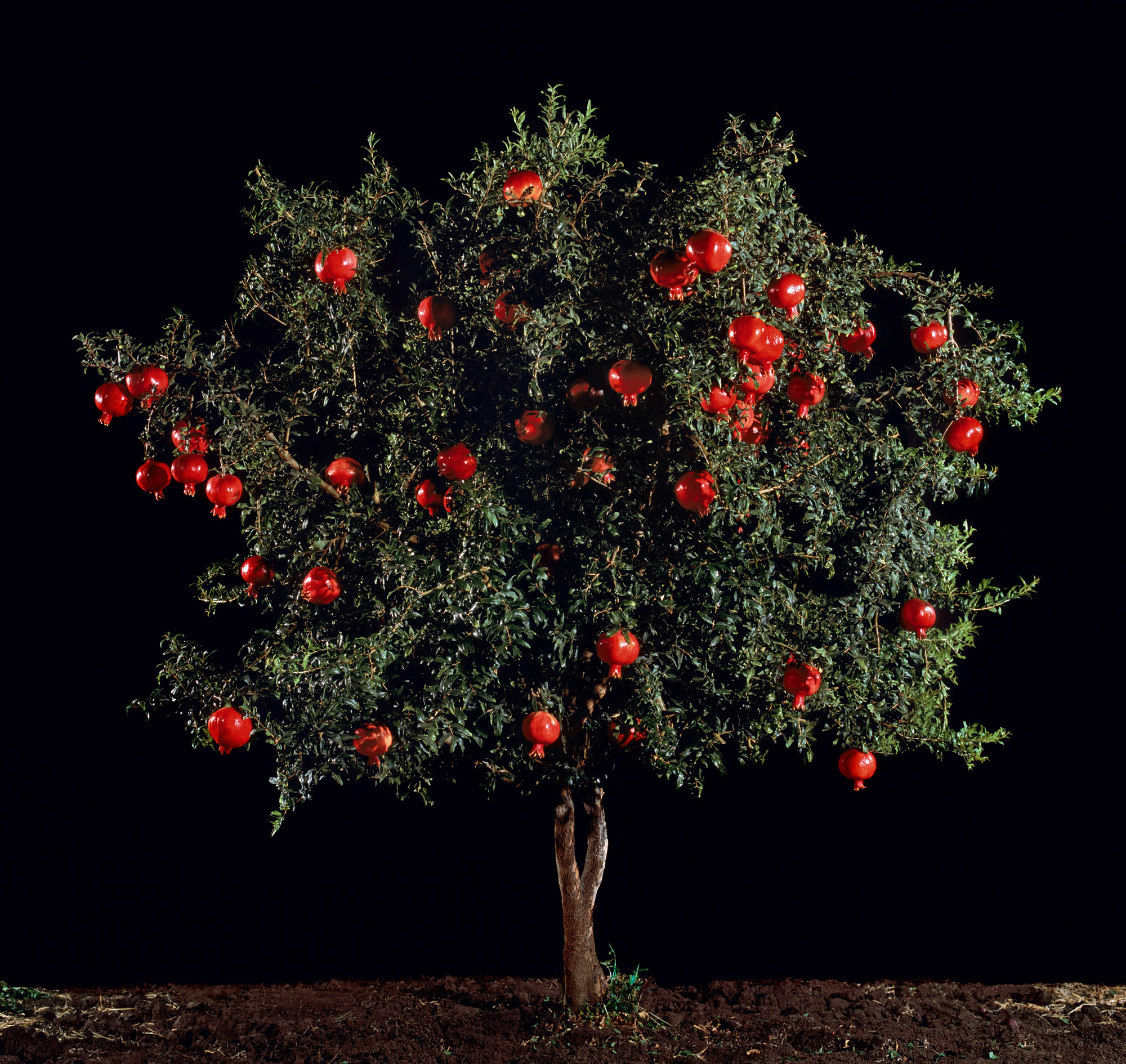
Shochat applies the conventions of studio portraiture to photographing trees. The first stage in her meticulous process is to identify the perfect specimen of a particular type of tree. When the fruit is at the height of maturity, she cleans the dust off the branches, leaves and fruit. Finally, Shochat photographs the tree, artificially lit and isolated against a black cloth background. The photographs present a view of nature that would never actually exist in a natural environment. The work highlights the tensions in photography between reality and artifice.
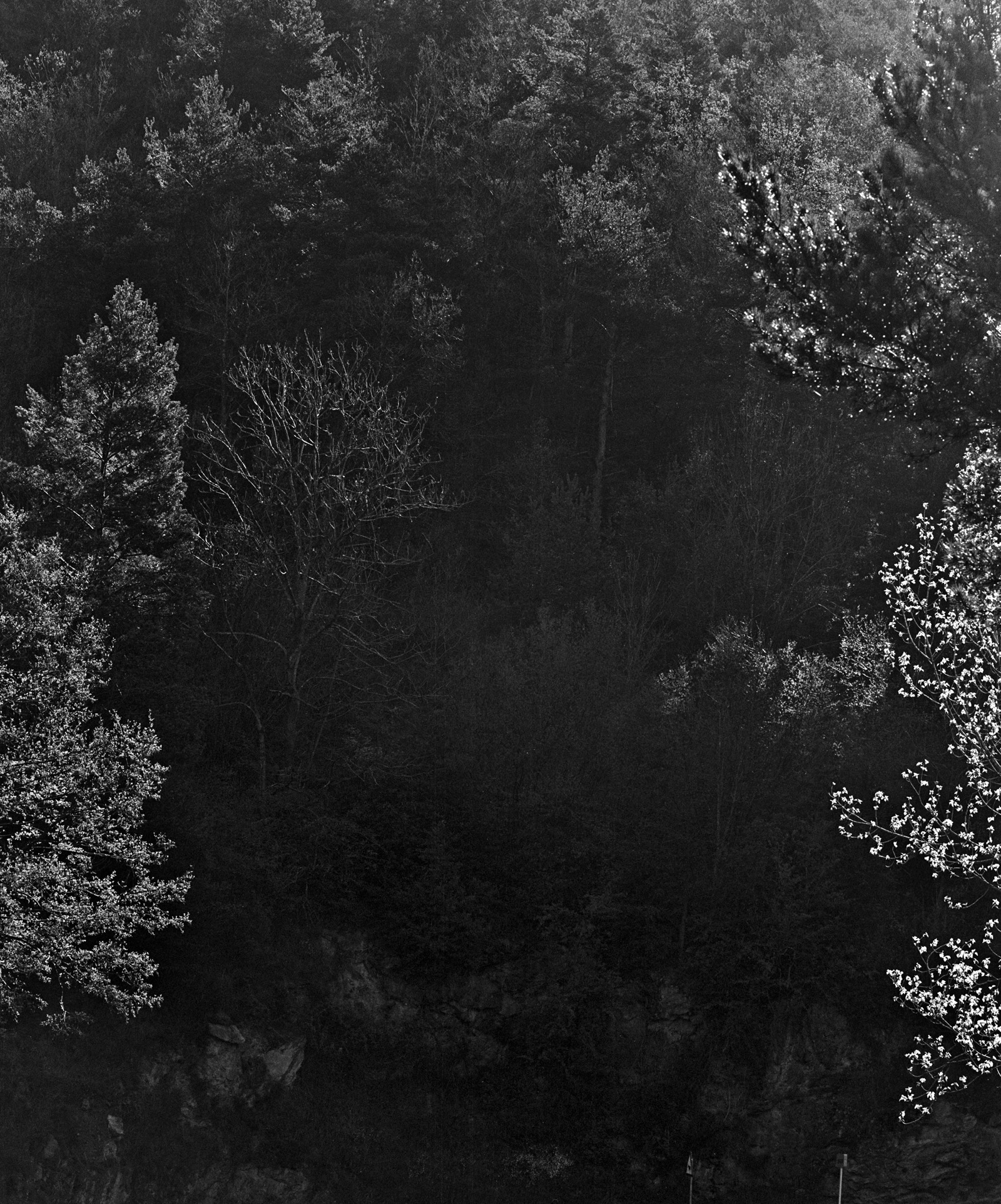
Awoiska van der Molen (b. 1972, Groningen, Netherlands) is a Dutch photographer based in Amsterdam. She studied architecture and photography at the Academy of Fine Arts Minerva in Groningen. In 2003 she graduated from the St. Joost Academy of Art and Design in the Netherlands with an MFA in Photographic Studies. Her work is borne out of an immersion in nature and is concerned with the untamed landscape and the sense of solitude that can be experienced in isolated locations. She works with analogue technology and explains that her pictures should be ‘understood as a metaphysical quest, a journey to the essence of being.’
For the project Sequester, van der Molen walked alone in the Canary Islands, seeking to ‘gain access to the stoic nature of the landscape’, as she describes it. She made long exposure black-and-white pictures of the dramatic volcanic terrain and dense forests at dawn and dusk. The exposures could be as long as thirty minutes and result in photographs of great intensity and ambiguity.
Van der Molen’s photographs go beyond the long tradition of black and white landscape photography, exemplified by photographers in the V&A collection such as Gustave Le Gray, Samuel Bourne, Ansel Adams, and Edward Weston. Rather than emulating the visual approaches of past masters, she seeks to portray the inner condition that uninhabited natural spaces engender.
Her interest in psychological states in relation to landscape can be aligned with that of numerous contemporary practitioners, including Chrystel Lebas and Nicholas Hughes, whose landscape photographs are also created using long exposures and convey a similar atmosphere of primeval power and solitude.
The collotype process is a screenless photomechanical process that allows high-quality prints from continuous-tone photographic negatives. Collotypes are comprised of many layers of ink and have a velvety matte appearance; the process has the power to produce the depth and detail of these works faithfully. Other examples of collotypes in the collection largely date from the 19th century and include works by Eadweard Muybridge and Julia Margaret Cameron. Once a widespread process, today, there are only two professional collotype studios remaining, both of which are in Kyoto.
In 2014, van der Molen received the Japanese Hariban Award, which gave her the opportunity to collaborate with the master printmakers of the Benrido Collotype Atelier in Kyoto to produce this set of 8 collotypes from the Sequester project.
Addendum
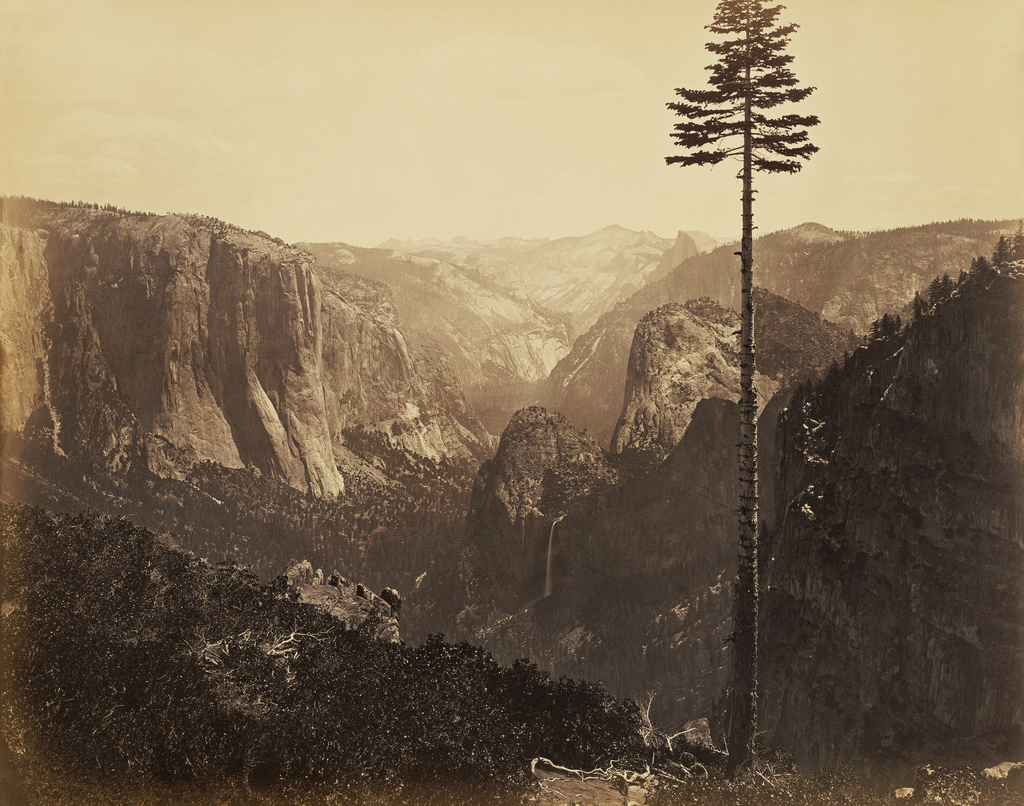
Carleton Watkins (American, 1829-1916) Yosemite Valley from the “Best General View” 1866 From the album Photographs of the Yosemite Valley Albumen print Lent by Department of Special Collections, Stanford University Libraries
Carleton Watkins had the ability to photograph a subject from the viewpoint that allowed the most information to be revealed about its contents. In this image, he captured what he considered the best features of Yosemite Valley: Bridalveil Falls, Cathedral Rock, Half Dome, and El Capitan. By positioning the camera so that the base of the slender tree appears to grow from the bottom edge of the picture, Watkins composed the photograph so that the canyon rim and the open space beyond it seem to intersect. Although he sacrificed the top of the tree, he was able to place the miniaturised Yosemite Falls at the visual centre of the picture. To alleviate the monotony of an empty sky, he added the clouds from a second negative. This image was taken while Watkins was working for the California Geological Survey. His two thousand pounds of equipment for the expedition, which included enough glass for over a hundred negatives, required a train of six mules.
Tom Goldner (Australian, b. 1984) Valley 2015-2016 Silver gelatin print
It is such a pleasure to be able to walk into a gallery – in this case, one located in the recently restored Young Husband Wool Store in Kensington: a building originally built in the late 1800s which is now home to a vibrant community of artists, musicians, designers and makers – to view strong, fibre-based analogue black and white photographs printed by the artist from medium format negatives. No worrying about crappy, digital ink-jet prints which don’t do the tableau justice. Just the pure pleasure of looking at the wondrous landscape.
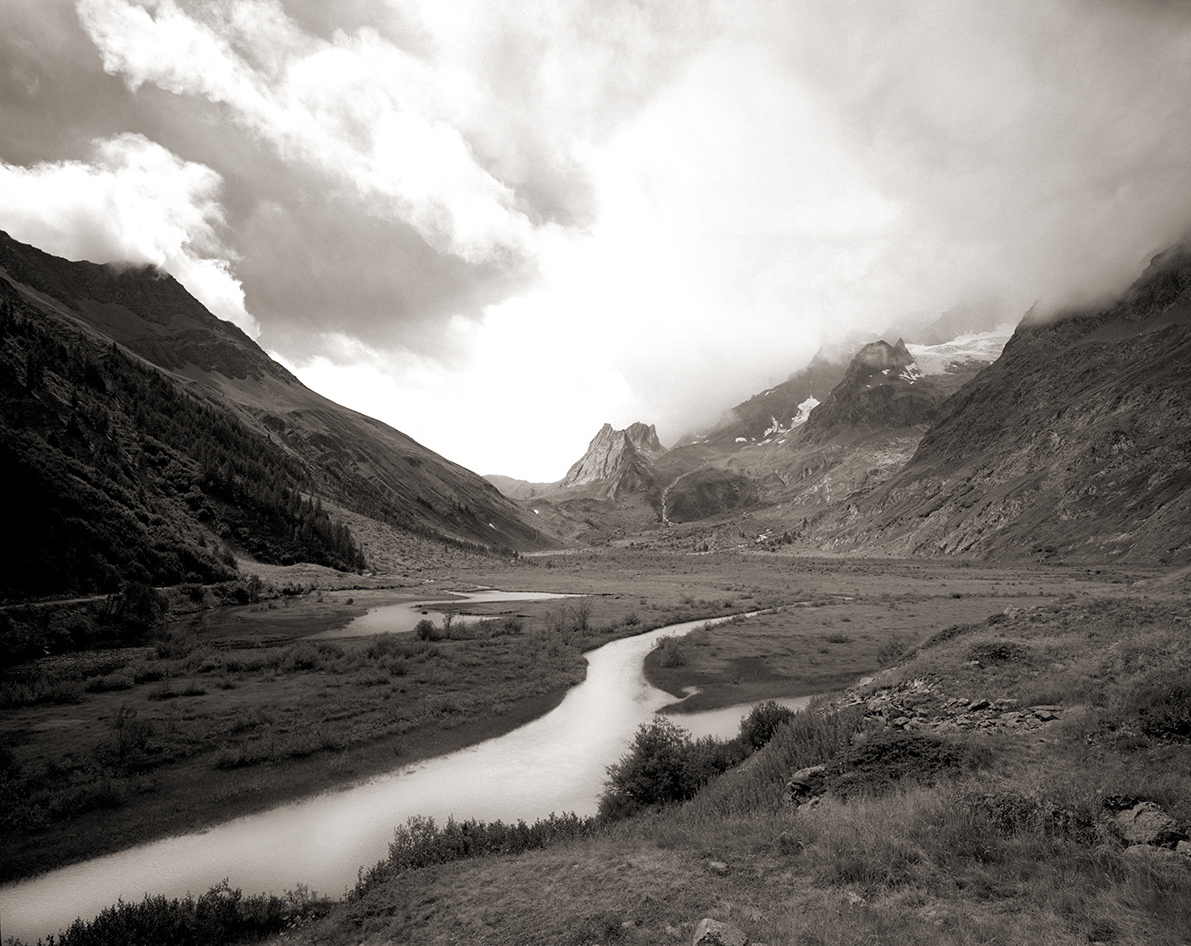
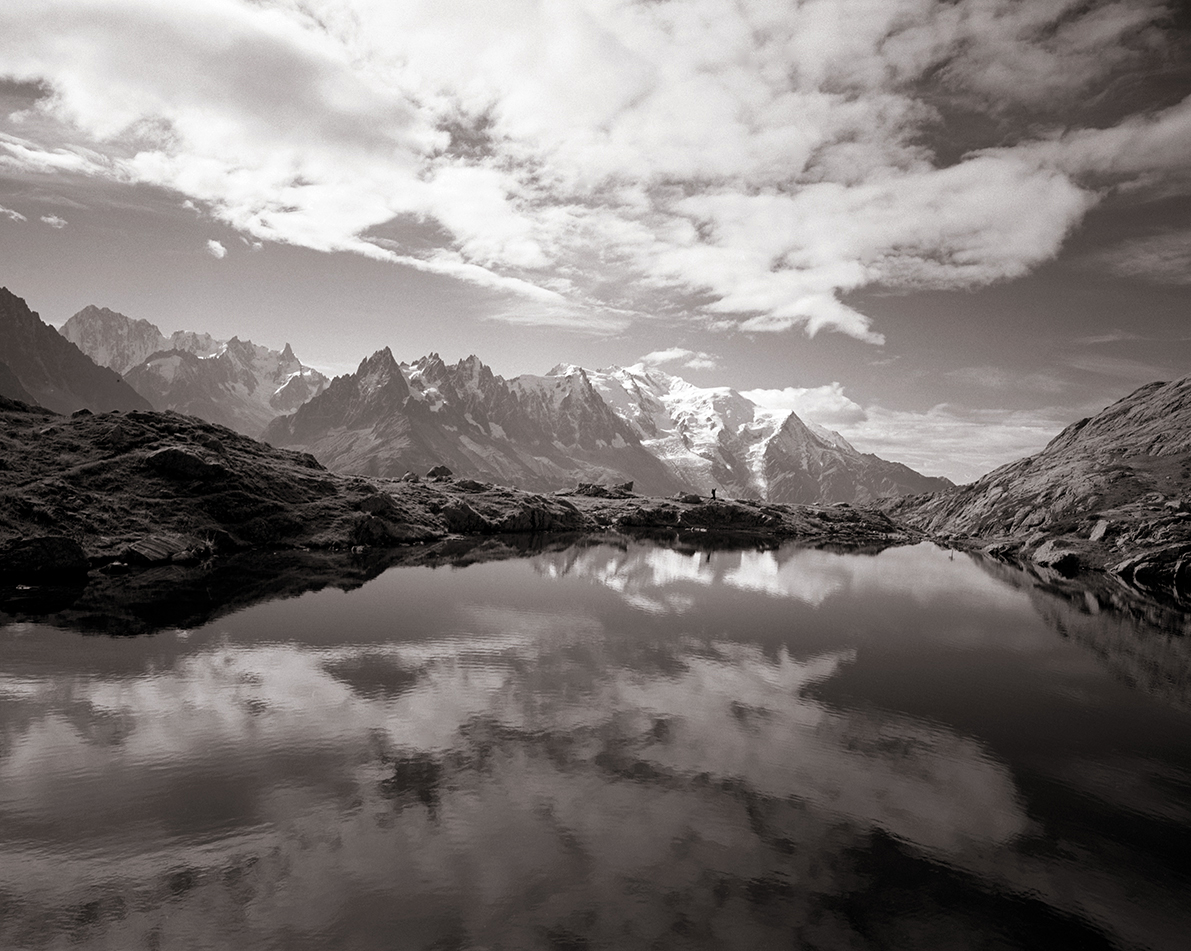
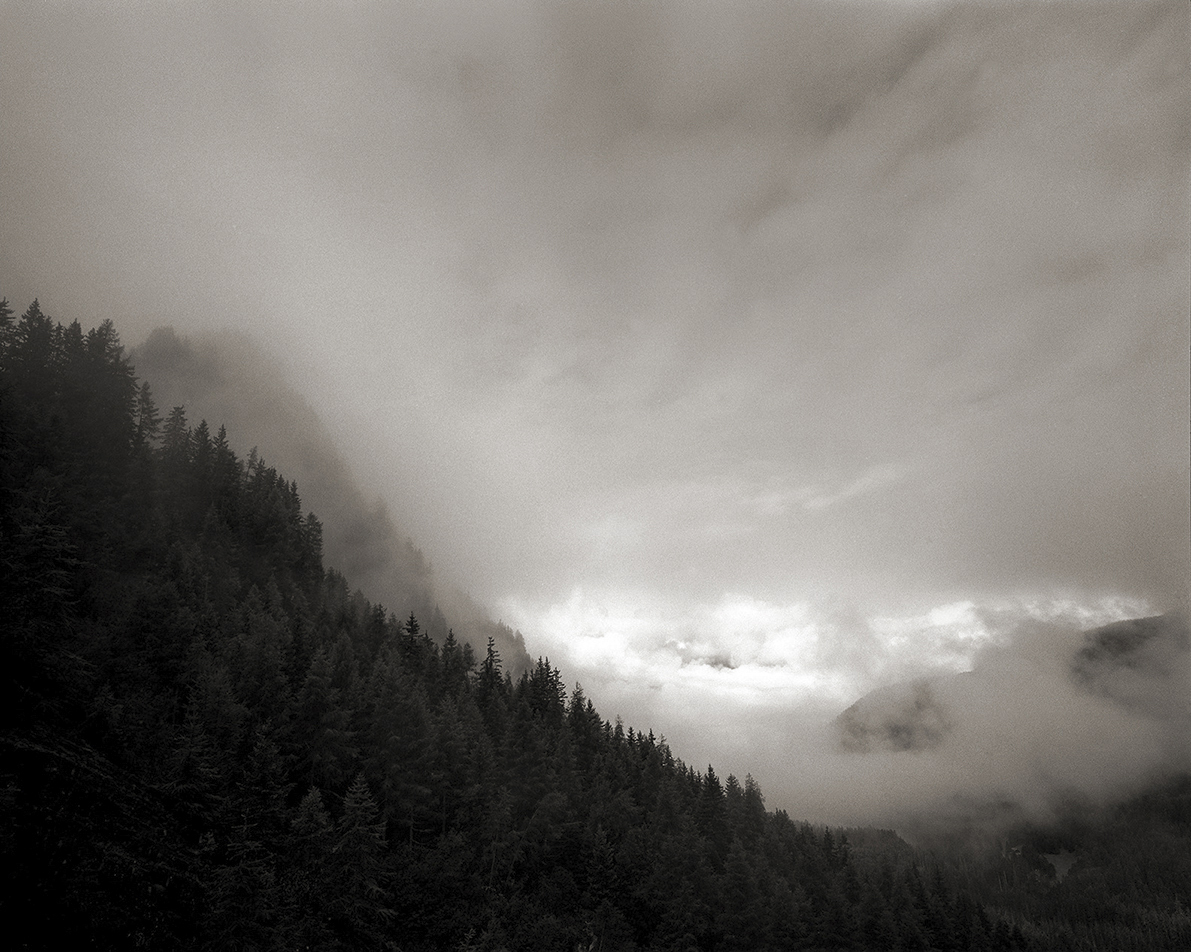
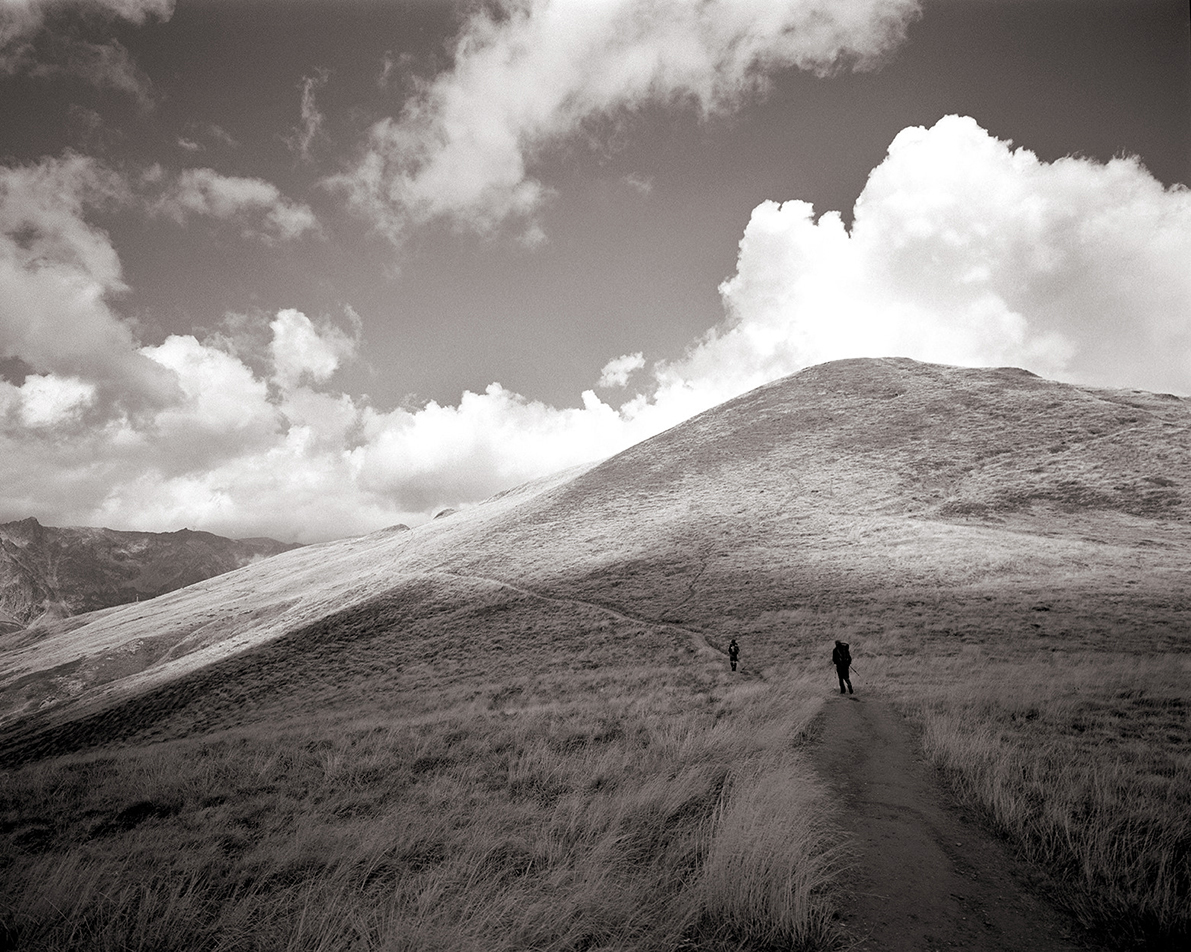
Goldner is working in the formalist way of modernist photographers and in a long tradition of mountain photography – a combination of travel, mountaineering and fine-art photography. As the text from the recent exhibition at the Musée de l’Elysée Vertical No Limit: Mountain Photography observes: “… photography invented the mountain landscape by revealing it to the eyes of the world. Photography is heir to a certain idea of the mountains and of the sublime, closely linked to pictorial romanticism.” In Goldner’s work, this romanticism is subdued but still present: reflection in lake, mist over treetop, and the capture of human figures in the landscape to give scale to the great beyond, a feature of Victorian landscape photography, mountain or otherwise.
However, the photographs contain a certain innocence: not the romantic, isn’t the world grand BUT this is the world. Goldner celebrates photography by allowing the camera to do what it does best – capture reality. He takes things as they are. There is no waiting for a particularly dramatic sky, the artist just takes what he sees. In this sense his everyday skies undercut the dramatic romanticism of place by allowing the possibility that these images (or variations of them) could be taken day after day, year after year. This is the natural state of being of these places and he pushes no further.
This is where the title of the exhibition and words supporting it are confusing. There is nothing transitional, transnational, or transient about these images – no movement from one state to another as in a “passage” – and certainly no discernible difference from one year to the next. Goldner’s photographs show the everyday, just how it is. That is their glorious strength: their clarity of vision, their ability to celebrate the here and now, which can be witnessed every day in the passes and peaks around the Mont Blanc regions of France, Italy and Switzerland. And then I ask, is that innocence enough?
Dr Marcus Bunyan
Many thankx to Tom Goldner for allowing me to publish the photographs in the posting. Please click on the photographs for a larger version of the image.
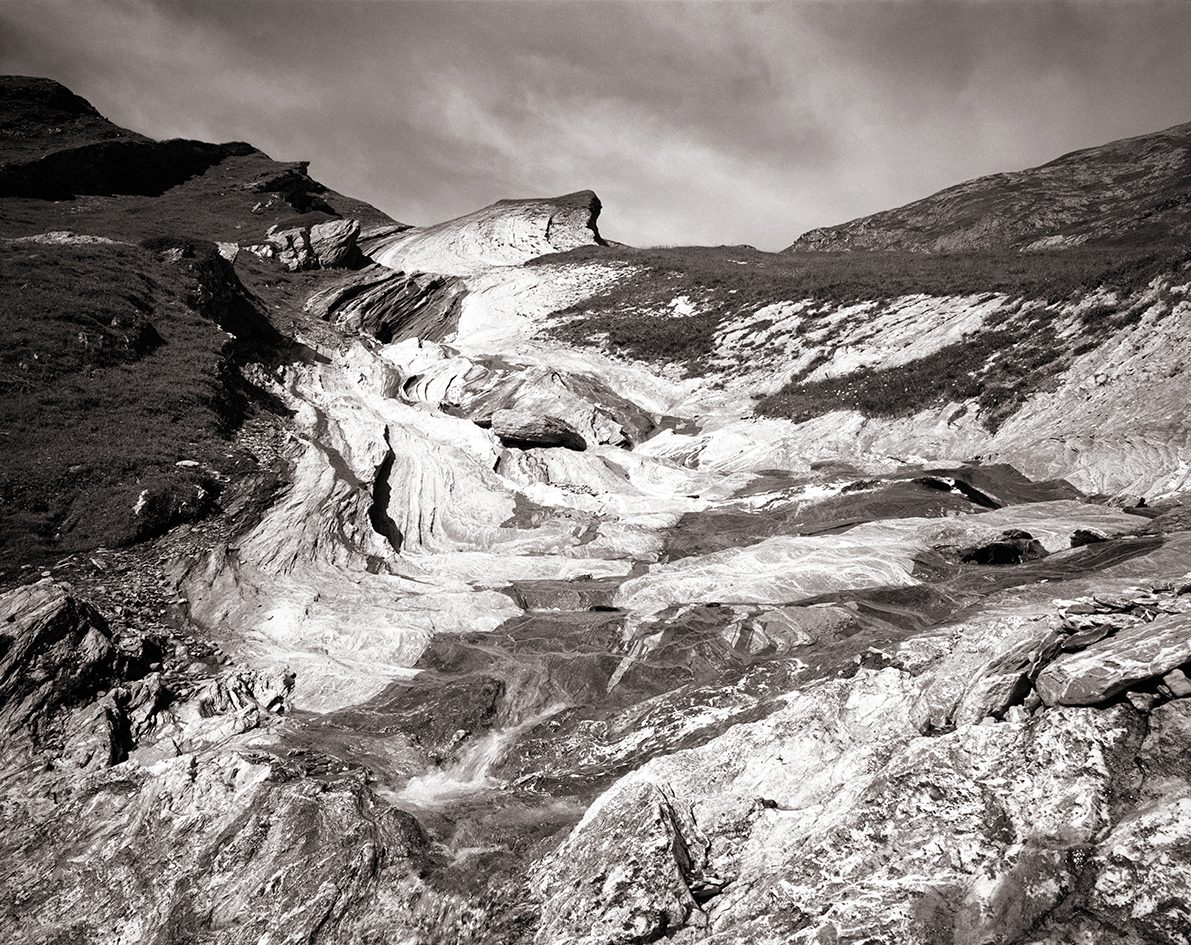
Tom Goldner (Australian, b. 1984) Passage 2015-2016 Silver gelatin print
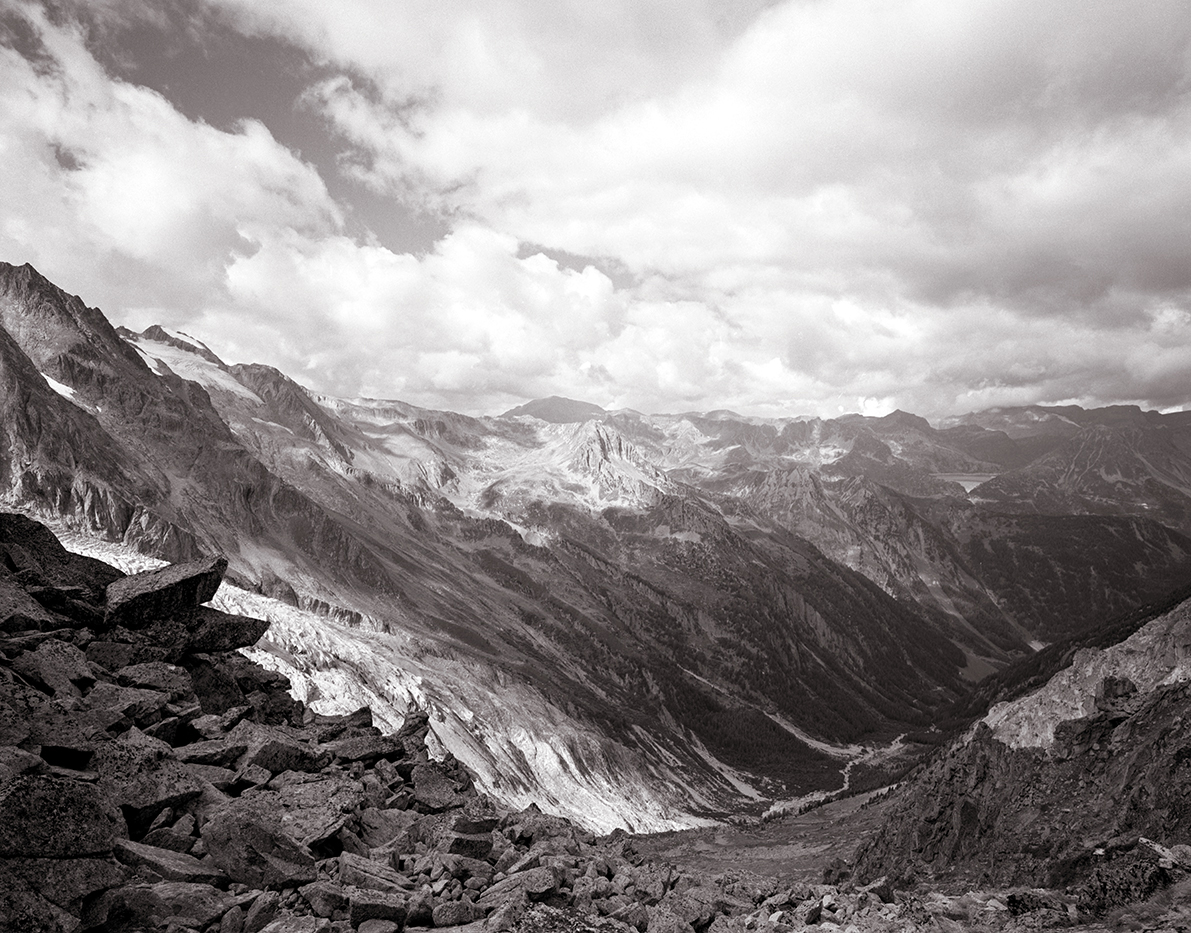
Tom Goldner (Australian, b. 1984) Lake 2015-2016 Silver gelatin print
The world around us is perpetually changing – ice melts, glaciers shift, weather changes and time passes. Nowhere stays the same, and neither do we.
Passage captures a transitional time in Tom Goldner’s photography practice. In 2015 and 2016, Tom made two physical expeditions around the Mont Blanc regions of France, Italy and Switzerland. Ever-conscious of the changing nature of the landscape – the fact that you could stand in the same spot one year later and find everything had changed – he shot fleeting moments on medium format film.
Back in Melbourne, Tom painstakingly developed and printed each photograph by hand in his darkroom. The experience reawakened his love of manual photography, and he saw parallels between the physical exertion of actually taking the pictures and the intense concentration needed in producing the series of atmospheric silver gelatin prints.
Artist’s statement
Tom Goldner (Australian, b. 1984) Pines 2015-2016 Silver gelatin print
Tom Goldner (Australian, b. 1984) Rocks 2015-2016 Silver gelatin print
Tom Goldner (Australian, b. 1984) Window (a) 2015-2016 Silver gelatin print
Tom Goldner (Australian, b. 1984) Window (b) 2015-2016 Silver gelatin print
Tom Goldner (Australian, b. 1984) Hill 2015-2016 Silver gelatin print
Tom Goldner (Australian, b. 1984) Col de la Seigne 2015-2016 Silver gelatin print
Tom Goldner (Australian, b. 1984) Aiguille du Midi 2015-2016 Silver gelatin print
HAND-COLOURED NEW ZEALAND: THE PHOTOGRAPHS OF WHITES AVIATION by Peter Alsop cover
A beautiful book by my New Zealand friend Peter Alsop about that countries hand coloured scenic photos. Whites Aviation changed the way New Zealanders viewed their country. Take a look inside this book.
Dr Marcus Bunyan
“A magical cocktail of aviation and photography … painted with cotton wool.”
“Nothing can change the authenticity and aesthetic of a hand-made craft.”
“This beautiful book follows Marcus King: Painting New Zealand for the World in providing another significant step towards understanding New Zealand’s art and design. However, for me, reading this book has been a transformational experience. In my youth, a Whites Aviation photograph, whether in a living room or office, represented the absence of other art in everyday Kiwi lives. Having read this book, I’ve come to realise that Whites’ hand-coloured photos were instead a harbinger; a forerunner, an object of contemporary art in thousands of New Zealand homes.”
Douglas Lloyd Jenkins, Art & Design Historian
Book blurb
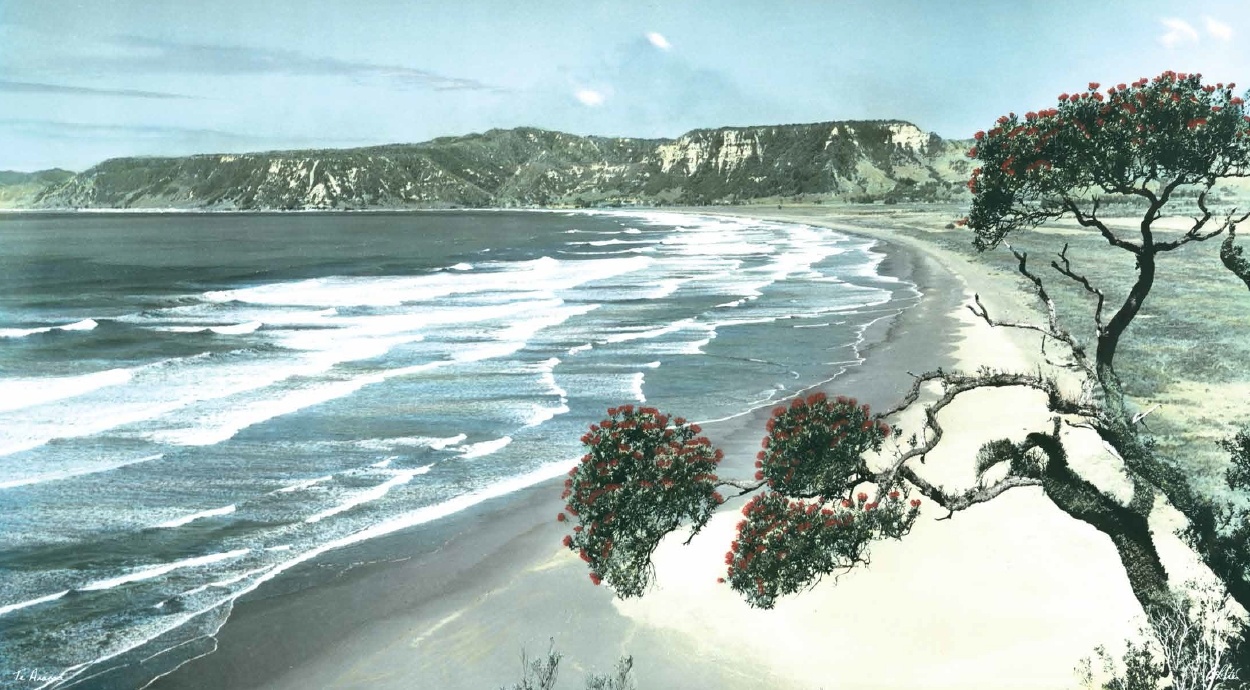
Every single photo coloured by hand? Using cotton wool? Yes, such was the era of hand-coloured photography – a painting and photograph in one – the way you got a high-quality colour photo before colour photography became mainstream.
Some of New Zealand’s best hand-coloured photos were produced by Whites Aviation from 1945. For over 40 years, the glorious scenic vistas were a sensation, adorning offices and lounges around the land; patriotic statements within New Zealand’s emerging visual arts. Now, despite massive changes in society and photography, the stunning scenes and subtle tones still enchant, as coveted collectibles; decorations on screen; and as respected pieces of photographic art.
But, until now, this inspirational story has not been told; nor the full stories of Leo White (company founder); Clyde Stewart (chief photographer and head of colouring); and the mission-critical ‘colouring girls’. New Zealand’s first published collection of hand-coloured photography is also now enshrined, ready to enchant for decades more. Nothing, it seems, can change the appeal of an alluring hand-made craft.
The Colourist
Lovely 3 min doco on hand-coloured photography and Whites Aviation. Every photo coloured by hand.
HAND-COLOURED NEW ZEALAND: THE PHOTOGRAPHS OF WHITES AVIATION by Peter Alsop pages 31, 41 and 50.
Exhibition dates: 3rd September – 3rd October, 2009
Many thankx to the Gagosian Gallery for allowing me to publish the photographs in the posting.
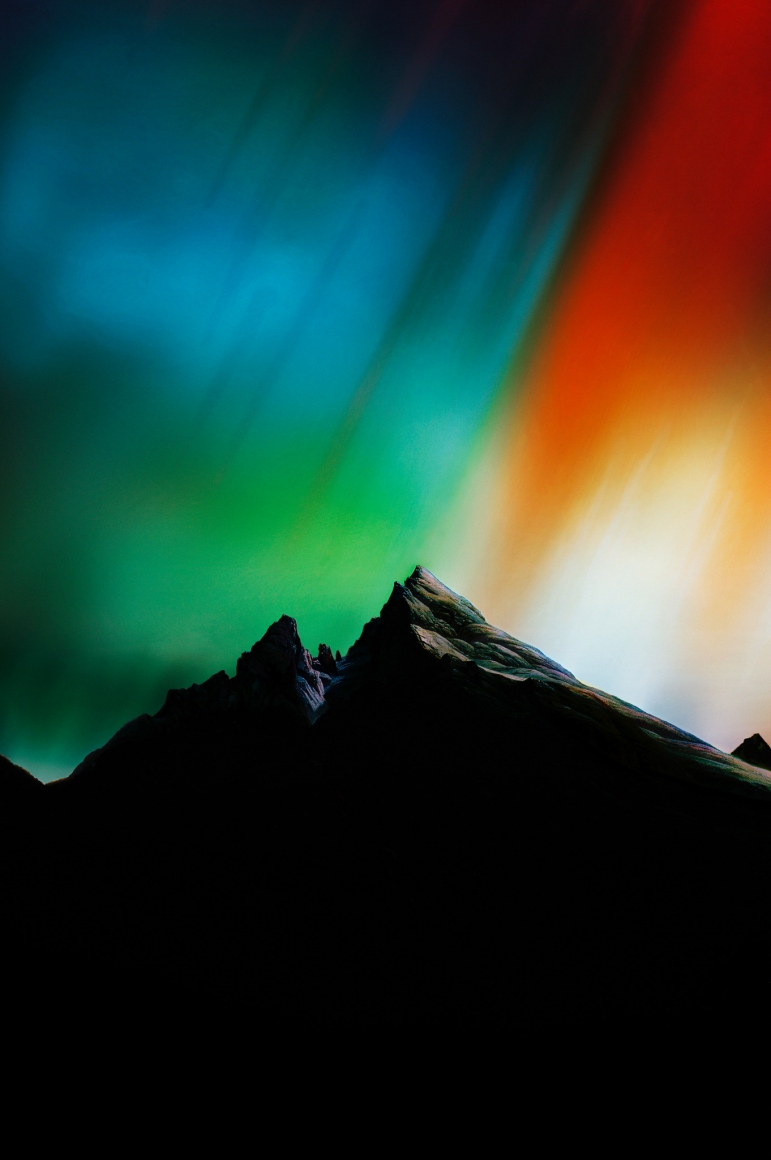
Florian Maier-Aichen (German, b. 1973) Der Watzmann 2009
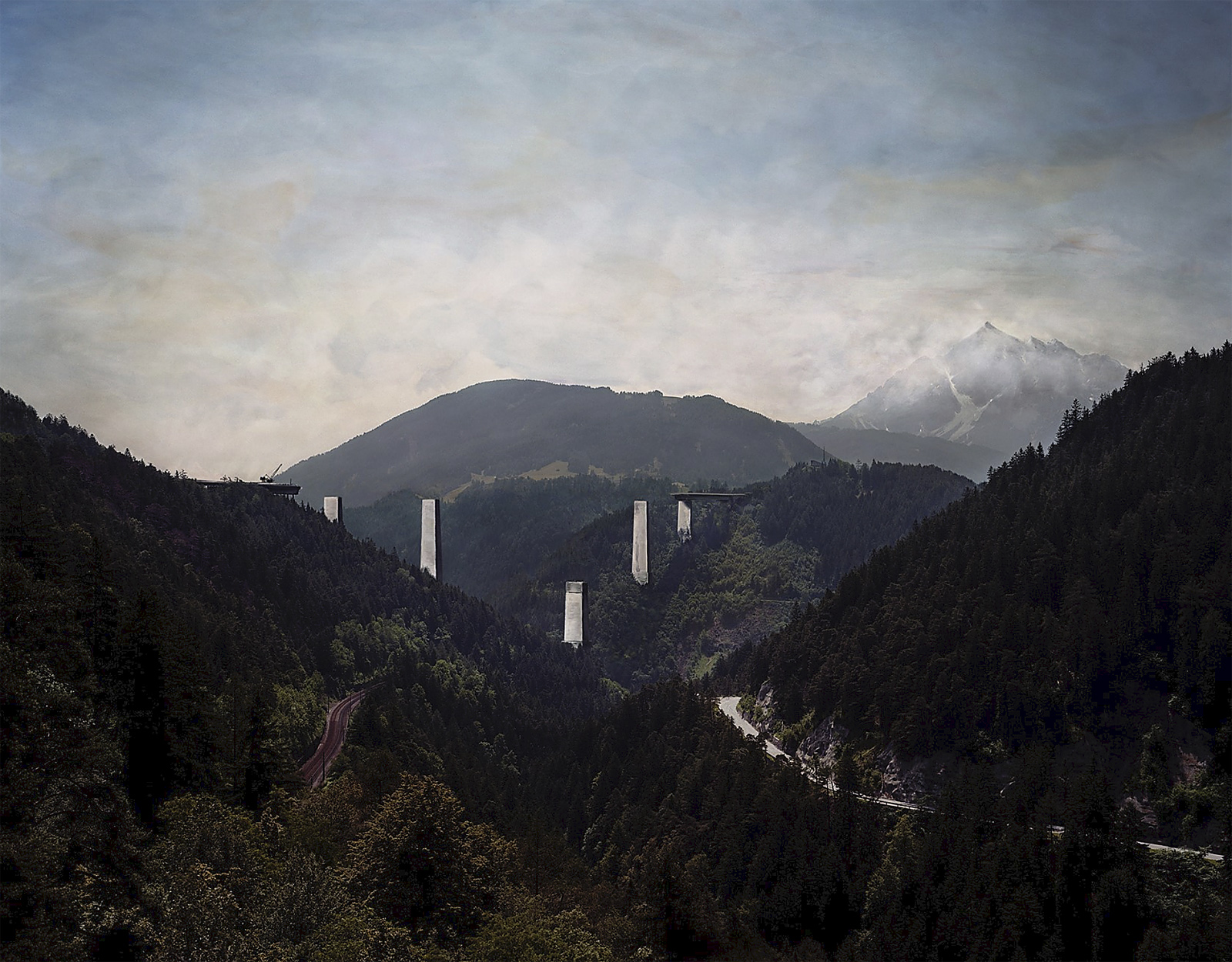
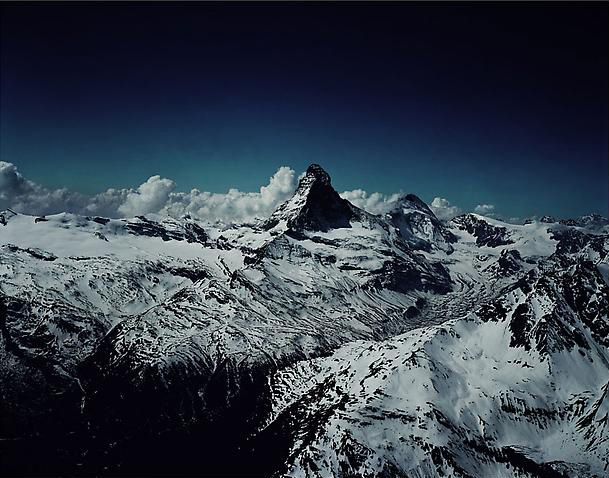
Florian Maier-Aichen brings a contemporary sensibility to bear on a range of historical references, from German Romantic painting to 19th-century photographs of the American West. The German-born photographer shoots images with a large-format camera then alters them digitally by combining negatives, adding computer-drawn elements or otherwise changing the originals. The effects are painterly and the works large-scale (the biggest one in this show, all but one of them C-prints, was around 8 by 71⁄3 feet). In one untitled print (2009), a digitally created brushstroke cuts diagonally across a snowy mountainside. Alluding to the trails ploughed across mountains to prevent avalanches, the photograph also suggests the black-and-white paintings of Abstract Expressionist Franz Kline. The sky above a dark mountainous outcropping in Der Watzmann (2009) references the Caspar David Friedrich painting of the same name (Maier-Aichen appropriated the image of the peak from the painting itself), while the sky suggests an airbrush version of the aurora borealis in red-orange and blue-green.
Der Watzmann may be the most direct reference to 19th-century German Romanticism and the sublime, but these are themes that Maier-Aichen frequently evokes, only to upend them.
Jean Dykstra. “Florian Maier-Aichen,” on the Art in America website May 4, 2009 [Online] Cited 24/09/2019
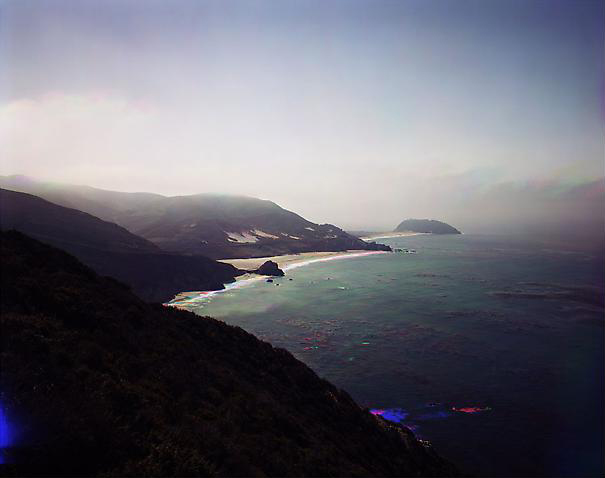
Florian Maier-Aichen (German, b. 1973) Untitled 2008
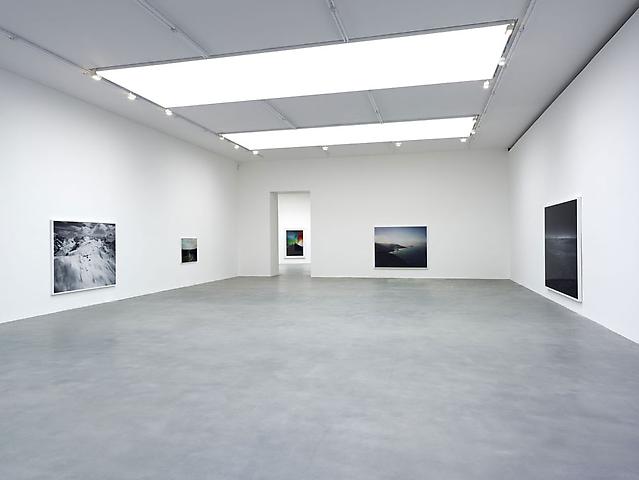
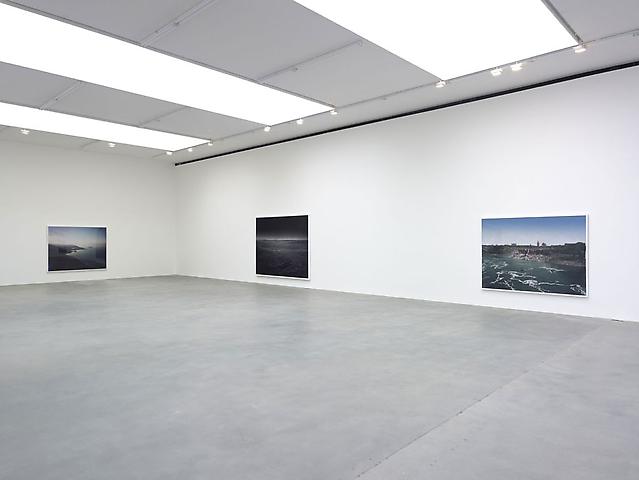
Snow Machine by Florian Maier-Aichen installation views at Gagosian Gallery, Britannia Street, London
“Florian Maier-Aichen’s images reinterpret landscape photography for the 21st century. Often shot at obscure angles or from aerial views, his estranged vantage points are both alien and familiar; a sensation enhanced by his subtle manipulation of the images. Conceiving the representation of sites with a sense of dislocation, Maier-Aichen’s work addresses issues of globalisation and virtual perception. In Untitled, Maier-Aichen’s coastline is far from postcard perfect: a virgin beach lined with superhighway and luxury homes expanding into the misty distance. Tinting the surrounding forest in an unnatural shade of red, he casts an apocalyptic glow over the seascape, framing wilderness and human intervention as a scene of science fiction portent.”
Florian Maier-Aichen (German, b. 1973) Untitled 2009
“I have always been interested in the making of things. Most products and materials conceal their process of manufacture. It’s the same with photography, which turned from a discipline that was subject to the mastery of the few (alchemists) into a readily available industrial mass product, too transparent and too technical.”
Florian Maier-Aichen
Gagosian Gallery is pleased to present an exhibition of recent photographs by Florian Maier-Aichen. This is the artist’s first solo exhibition in London.
A photographer schooled on both sides of the Atlantic, Maier-Aichen’s work reflects on the dual influences of the history of photography and the history of painting, whether drawing on such dichotomies as German Romantic painting and the pioneers of German “objective” photography, or applying his post-factum experience of American frontier art – from the Hudson River School and Abstract Expressionism to Land Art and West Coast conceptualism – to his own topographical depictions of landscape subjects. He focuses on the camera’s consummate power to establish typologies of thought, perception, and feeling, producing images that, in mining the past, come to embody a matrix of issues salient to recent photographic practice.
Approaching the photographic field like a painter approaches a canvas, Maier-Aichen does for the contemporary image-world what pictorial photographers attempted in the nineteenth and early twentieth centuries, using the strategies and motifs of Romantic and Luminist painting. Unnaturally high-keyed or delicately tinted images of soaring mountain ranges, moody seas, and the industrial architecture of bridges, waterways, and dams carving through the natural landscape are all emanations of a rich and diverse imagination where a keen and critical grasp of art history coexists with more pronounced literary and cinematic conceits.
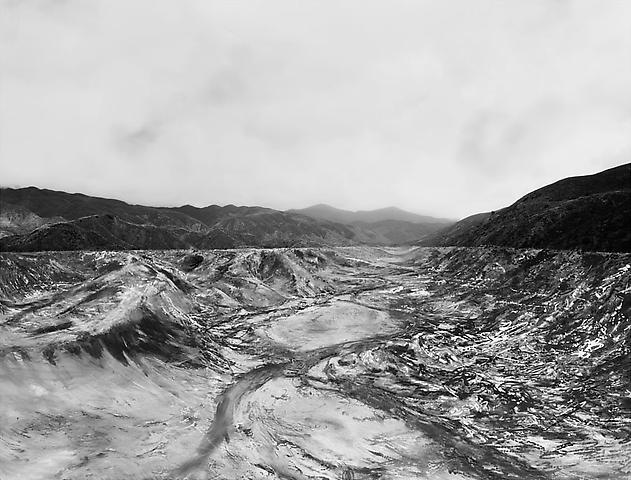
In a creative process that is as intensive as it is subtle and opaque, Maier-Aichen combines an exhaustive range of staged effects and traditional photographic techniques – albumen, silver-gelatin, and c-printing – with drawing and current computer-imaging processes. Weaving together often disparate elements from distinct sources, he applies myriad creative adjustments to each in order to produce seamless photographs that do not betray their intricate and layered compositions. Multiple negatives, digital manipulation, and elaborate studio techniques are employed to produce seemingly straightforward photographic landscape subjects while other images that engage the most conventional photographic techniques may themselves be subjects of pure fabrication.”
Text from the Gagosian Gallery website [Online] Cited 20/09/2009. No longer available online
Florian Maier-Aichen (German, b. 1973) Untitled 2009
Florian Maier-Aichen (German, b. 1973) Untitled 2009
Florian Maier-Aichen (German, b. 1973) Untitled (St. Francis Dam) 2009
Gagosian Gallery 6-24 Britannia Street London WC1X 9JD Phone: 44.207.841.9960




![Albert Renger-Patzsch (German, 1897-1966) 'Das Bäumchen [Sapling]' 1928](https://artblart.com/wp-content/uploads/2018/01/renger-patzsch-das-bacc88umchen.jpg "Albert Renger-Patzsch (German, 1897-1966) 'Das Bäumchen [Sapling]' 1928")








 Art Blart _ art and cultural memory archive
You must be logged in to post a comment.