Julia deVille (New Zealand, b. 1982) Ruby Heart Starling 2008 Starling, sterling silver, black rhodium & gold plate, rubies, antique frame 30 x 35 x 18cm
This is an itsy-bitsy show by Julia deVille at Sophie Gannon Gallery in Richmond, Melbourne. Offering a menagerie of macabre stuffed animals and conceptual ideas the exhibition fails to coalesce into a satisfying vision. It features many ideas that are not fully investigated and incorporated into the corporeal body of the work.
We have, variously, The Funerary Urn/Cinerarium, The Ossuary, Skeletons, Black, Victorian Funerary Customs, Feathers, Taxidermy, Time, Eggs and Religion. We also have stuffed animals, cigar boxes, lace and silver, pelts and columns, jet necklaces and Victorian glass domes, glass eyes and ruby hearts to name but a few. The viewer is overwhelmed by ideas and materials.
When individual pieces excel the work is magical: the delicate and disturbing Stillborn Angel (2009, below) curled in a foetal position with appended sparrows wings is a knockout. The large suspended raven of Night’s Plutonian Shore (2009, above) effectively evinces the feeling of the shores of the underworld that the title, taken from an Edgar Allan Poe poem, reflects on.
Other pieces only half succeed. Piglet (2009, below) is a nice idea with its lace snout and beaded wings sitting on a bed of feathers awaiting judgement but somehow the elements don’t click into place. Further work are just one shot ideas that really lead nowhere. For example Cat Rug (2008, below) features black crystals in the mouth of a taxidermied cat that lies splayed on a plinth on the gallery floor. And, so … Silver Rook (2008, below) is a rook whose bones have been cast in silver, with another ruby heart, suspended in mid-air in the gallery space. Again an interesting idea that really doesn’t translate into any dialogue that is substantial or interesting.
Another problem with the work is the technical proficiency of some of the pieces. The cast silver front legs and ribs of The Anatomy of a Rabbit (2008, below) are of poor quality and detract from what should have been the delicacy of the skeletal bones of the work. The bronze lion cartouche on the egg shaped Lion Urn (2009) fails to fit the curved shape of the egg – it is just attached at the top most point and sits proud of the egg shape beneath. Surely someone with an eye for detail and a sense of context, perfection and pride in the work they make would know that the cartouche should have been made to fit the shape underneath.
Despite its fashionable position hovering between craft, jewellery and installation this is ‘art’ in need of a good reappraisal. My suggestion would be to take one idea, only one, and investigate it fully in a range of work that is thematically linked and beautifully made. Instead of multiplying the ideas and materials that are used, simplify the conceptual theme and at the same time layer the work so it has more complexity, so that it reveals itself over time. You only have to look at the work of Mari Funaki in the previous post or the simple but conceptually complex photographs of Matthias Koch in the German photography review to understand that LESS IS MORE!
There are positive signs here and I look forward to seeing the development of the artist over the next few years.
Dr Marcus Bunyan
Many thankx to Sophie Gannon Gallery for allowing me to publish the photographs in the posting. Please click on the photographs for a larger version of the image.
Julia deVille (New Zealand, b. 1982) Night’s Plutonian Shore 2009 Tasmanian Forest Raven, black garnets, cotton, sterling silver, amethyst
Julia deVille (New Zealand, b. 1982) L’enfant (Infant Funerary Urn) 2009 Ostrich egg, sterling silver, ostrich plumes and black garnet 35 x 12 x 12cm
Julia deVille Cineraria installation views at Sophie Gannon Gallery, Melbourne Photos: Marcus Bunyan
Julia deVille (New Zealand, b. 1982) Piglet 2009 Piglet, antique lace, pins and feathers 25 x 23 x 13cm
Julia deVille (New Zealand, b. 1982) Cat Rug 2008 Cat, glitter and fibreglass 100 x 60 x 8cm
Julia deVille (New Zealand, b. 1982) Sympathy 2008
Julia deVille (New Zealand, b. 1982) Silver Rook 2008 Sterling silver, rubies 30 x 25 x 35cm
Cinerarium
n. pl. Cineraria A place for keeping the ashes of a cremated body.
Cineraria n. any of several horticultural varieties of a composite plant, Senecio hybridus, of the Canary Islands, having clusters of flowers with white, blue, purple, red, or variegated rays.
Origin: 1590-1600; < NL, fem. of cinerarius ashen, equiv. to L ciner- (s. of cinis ashes) + -rius -ary; so named from ash-coloured down on leaves.
CINERARIA is a study of the ritual and sentiment behind funerary customs from various cultures and eras.
Notes on inspirations
The Funerary Urn/Cinerarium: Funerary Urns have been used since the times of the ancient Greeks and are still used today. After death, the body is cremated and the ashes are collected in the urn.
The Ossuary: An ossuary is a chest, building, well, or site made to serve as the final resting place of human skeletal remains. They are frequently used where burial space is scarce. A body is first buried in a temporary grave, then after some years the skeletal remains are removed and placed in an ossuary. The greatly reduced space taken up by an ossuary means that it is possible to store the remains of many more people in a single tomb than if the original coffins were left as is. This was a common practice in post plague Europe in the 14th-16th Centuries.
Skeletons: Human skeletons and sometimes non-human animal skeletons and skulls are often used as blunt images of death. The skull and crossbones (Death’s Head) motif has been used among Europeans as a symbol of piracy, poison and most commonly, human mortality.
Black: In the West, the colour used for death and mourning is black. Black is associated with the underworld and evil. Kali, the Hindu god of destruction, is depicted as black.
Victorian Funerary Customs:
~ A wreath of laurel, yew or boxwood tied with crape or black ribbons would be hung on the front door to alert passers by that a death had occurred
~ The use of flowers and candles helped to mask unpleasant odours in the room before embalming became common
~ White was a popular colour for the funeral of a child. White gloves, ostrich plumes and a white coffin were the standard
Feathers: In Egyptian culture a recently deceased persons soul had to be as light as a feather to pass the judgment of Ma’at. Ma’at (Maet, Mayet) is the Egyptian goddess of truth, justice and the underworld. She is often portrayed as wearing a feather, a symbol of truth, on her head. She passed judgment over the souls of the dead in the Judgment Hall of Osiris. She also weighted up the soul against a feather. The “Law of Ma’at” was the basis of civil laws in ancient Egypt. If it failed, the soul was sent into the underworld. Ma’at’s symbol, an ostrich feather, stands for order and truth.
Taxidermy: Taxidermy to me is a modern form of preservation, a way for life to continue on after death, in a symbolic visual form.
The Raven: In many cultures for thousands of years, the Raven has been seen symbol of death. This is largely due to the Raven feeding on carrion. Edgar Allan Poe has used this symbolism in his poem, “The Raven”.
Time: Less blunt symbols of death frequently allude to the passage of time and the fragility of life. Clocks, hourglasses, sundials, and other timepieces call to mind that time is passing. Similarly, a candle both marks the passage of time, and bears witness that it will eventually burn itself out. These sorts of symbols were often incorporated into vanitas paintings, a variety of early still life.
Eggs: The egg has been a symbol of the start of new life for over 2,500 years, dating back to the ancient Persians. I have chosen egg shapes and even one Ostrich egg to represent the cycle of life, the beginning and the end.
Religion: Religion has played a large part in many funerary customs and beliefs. I am particularly interested in the Memento Mori period of the 16th-18th centuries. In a Calvinistic Europe, when the plague was a not too distant memory, a constant preoccupation with death became a fashionable devotional trend.
Julia deVille
Julia deVille (New Zealand, b. 1982) Stillborn Angel 2009 Stillborn puppy, sparrow wings and sterling silver 13 x 10 x 5cm
Julia deVille (New Zealand, b. 1982) The Anatomy of a Rabbit 2008 Rabbit, sterling silver, rubies, glitter and mahogany 30 x 30 x 30cm
Julia deVille Cineraria installation view at Sophie Gannon Gallery, Melbourne Photo: Marcus Bunyan
Sophie Gannon Gallery 2, Albert Street, Richmond, Melbourne
Photographs from the exhibition are in the chronological order that they appear.
Tacita Dean (English, b. 1965) Grobsteingrab (floating) 2009
“The subjects are connected to the medium I use. It’s all about light and time and phenomena to some extent, like a rainbow or a gust of wind or even an eclipse or a green ray, things like that. And this is the language of light. It’s not the language of binary pixels.”
Tacita Dean1
“The value of her [Dean’s] work, writes Winterson, is one of the virtues of art itself: it is an intervention into the rush of everyday life, holding up time and space for contemplation.”
Jeanette Winterson2
This is a dense, ‘thick’ exhibition by Tacita Dean at the Australian Centre for Contemporary Art (ACCA), Melbourne that rewards repeat viewing. The theatricality of each work and the theatricality of the journey through ACCA’s dimmed galleries (an excellent installation of the work!) makes for an engrossing exhibition as Dean explores the minutiae of memory and the significance of insignificant events: a contemplation on the space, time and materiality of the everyday.
The exhibition starts with 3 very large floating rocks (Grobsteingrab (floating), Hunengrab (floating) and Riesenbelt (floating) all 2009) printed on multiple pieces of photographic paper, the surrounds of the rocks painted out with matt black blackboard paint (see image at top of this posting). The rocks look like mountain massif and are printed at different levels to each other; they move up and down, earthed in the sense that the viewer feels their heavy weight but also buoyant in their surface shininess, seeming to float into the void. The textuality of the rocks is incredible, the suspension of the rocks fragmented by the fact that they are printed on multiple pieces of photographic paper, the edges of the paper curling up to dislocate the unity of form.
Opposite is the large multi-panelled T + I (Tristan + Isolde), a tour de force of Romantic landscape meets mythological journey (see image second from top). Sunshine searing through cloud lights the 25 Turner-esque black and white gravure panels that feature an inlet, fjord and ravine. Semi-legible words dot the landscape, reflecting on the legendary story: ‘undergrowth’, ‘dispute’, ‘brightening up’, ‘BLIND FOLLY’ and ‘the union involved in a manifestation(?)’ for example. Each panel is beautifully rendered and a joy to behold – my friend and I stood transfixed, examining each panel in minute detail, trying to work out the significance and relation between the writing and image. As with most of the work in the exhibition the piece engages the viewer in a dialogue between reality, story and memory, between light, space, time and phenomena.
After the small rear projected film Totality (2000) that shows the extraordinary event of a total eclipse of the sun by the moon for a period of two minutes and six seconds the viewer takes a short darkened passage to experience the major installation in the exhibition Merce Cunningham Performs ‘Stillness’ (in three movements) to John Cage’s composition 4’33” with Trevor Carlson, New York City, 28 April 2007 (six performances; six films) 2007 (see images below).
The first thing you see is one image projected onto a small suspended screen, the rest of the installation blocked by a short gallery wall to the right. The dancer Merce Cunningham sits in studious calm and observes us. This in itself is magical but as we round the corner other screens of different sizes and heights come into view, all portraying Cunningham’s dance studio and him sitting in it from different angles, heights and distances (including close-ups of Cunningham himself). In the six screen projection the performances of Cunningham are sometimes in synch, sometimes not. The director Trevor Carlson, holding a stop watch, times the 3 movements of Cage’s musical piece 4’33” and directs Cunningham to change position at the end of every movement; his hands move, he crosses his legs and the performance continues.
The work is projected into the sculptural space using old 16mm film projectors and their sound mixes with the studied silence of the Cage work and white noise. The mirrors in the studio make spaces of infinite recess, showing us the director with the stop watch, the windows, the floor, the markings of the dancers hands on the mirrors surface adding another echo of past presences. As a viewer their seems to be an ‘openness’ around as you are pulled into a spatial and sound vortex, a phenomena that transcends normal spatio-temporal dimensionality. As people pass through the installation their shadows fall on the screens and become part of the work adding to the multi-layered feeling of the work. This is sensational stuff – you feel that you transcend reality itself as you observe and become immersed within this amazing work – almost as though space and time had split apart at the seams and you are left hanging, suspended in mid-air.
The next two films are my favourite pieces in the exhibition. Darmstädter Werkblock (2007) shows us the significance of insignificant markings – edges and intersections, textures, blends and bleeds, the minutiae of existence in the markings on the fabric of an internal wall (see photograph below). Here is light, wood panelling, texture and again the sound of the whirring of the film projector. Usually I am not a fan of this kind of work having seen enough ‘Dead Pan’ photography and photography of empty yet supposedly important spaces in my life, but here Dean’s film makes the experience come alive and actually mean something. Her work transcends the subject matter – and matter is at the point where these interstitial spaces have been marked by the abstract signs of human existence that constantly surround us.
In Michael Hamburger (2007) Dean reaches the empito-me of these personal narratives that inhabit everyday life. Film of an orchard with wind rustling through the trees, clouds drifting across the sky, rotting apples on the branches, fallen fruit on the ground and a clearing with a man looking up at the trees is accompanied by the industrial sounds of clicks and pops like that of an old radio (see photograph above). The swirling sound of the wind surrounds you in the darkened gallery space much as the panoramic screen of the projection seems to enfold you. The scene swaps to an interior of a house and shows the man, has face mainly in shadow, the film focusing on the different type of apples in front of him or on the aged wrinkles of his hands holding the apples. He talks intelligently and knowingly about the different types of apples and their rarity and qualities. This is Michael Hamburger (now dead which adds poignancy to the film) – poet, critic, memoirist and academic notable for his translations of the work of W. G. Sebald, one of Tacita Dean’s main influences (and also an author that I love dearly).
One can see echoes of Sebald’s work in that of Tacita Dean – the personal narratives accompanied by mythical and historical stories and pictures. The tactility of Hamburger’s voice and hands, his caressing of the apples with the summary justice of the tossing away of rotten apples to stop them ruining the rest of the crop is arresting and holds you transfixed. Old varieties and old hands mixed with the old technology of film make for a nostalgic combination. As John Matthews of ArtKritique has so insightfully observed in his review of this work Dean implicitly understands how objects can be elegies for fleeting lives.
After this work one should have a break – go to the front of the gallery and have a coffee and relax because this is an exhausting show!
The rest of the exhibition tends to tail off slightly, with less engaging but still interesting works.
In Die Regimentstochter (2005) (the name of a Donizetti opera) Dean uses a pile of 36 found and mutilated old opera and theatre programs from the 1930s and 1940s such as Staats Theatre, Berlin, Der Tanz and Deutsche Openhaus. These programs have had portions of their front covers roughly but clinically cut to reveal the inner pages beneath (see image below) and Dean uses them to comment on the politicisation of culture in Berlin’s mid-20th century history. The top of a powdered wigged head or the face of Beethoven has been revealed when the title of the work has been neatly removed along with something else:
“Each programme gives a tantalising glimpse of a title or a face through a small window cut into the embossed cover; we recognise Beethoven, Rossini, the face of a singer perhaps. When and by whom this incision in the cover was made, very neatly one might add, even more why these disfigured programmes were kept remains a mystery. A swift search in an archive would easily show what has been removed; most likely an embossed swastika, for these performances all happened during the Third Reich. Why they were removed is left to our imaginations; perhaps an avid theatre-goer livid at the co-option of culture by the regime, perhaps someone afraid they might be misinterpreted as fascist memorabilia, while wishing to retain the memories these performances triggered.”3
High up on a wall opposite these programs is the film Palast (2004) in which Dean reflects Berlin’s divided history in the jaded façade of the once iconic Palast, the government building of the former German Democratic Republic.4 Shards of light hit glass and reflections are fractured in their gridded panes (see images below). A bird is seen flying, viewed through the window and we see the stains on that window but in this film things feel a bit forced. Unlike the earlier Darmstädter Werkblock there is little magic here.
Again the minutiae of existence is examined in the final two films Noir et Blanc (2006), made on the last 5 rolls of Dean’s black and white double-sided 16mm film stock and Kodak (2006), both made at the Kodak factory in Chalon-sur-Saône before it closed it’s film production facilities (see images below). With the demise of the medium that she feels closest to Dean sought permission to film at the factory itself and both films examine that medium by turning it on itself.
“Dean became acutely aware of the threat to her chosen medium when she was unable to obtain standard 16mm black-and-white film for her camera. Upon discovering that the Kodak factory in Chalon-sur-Saône, France, was closing its film production facility, Dean obtained permission to document the manufacture of film at the factory, where cameras have never before been invited. The resulting rear-screen projection ‘Noir et Blanc’, filmed on the final five rolls Dean acquired, turns the medium on itself. The 44-minute-long work ‘Kodak’ constitutes a contemplative elegy for the approaching demise of a medium specific to Dean’s own practice. Kodak’s narrative follows the making of celluloid as it runs through several miles of machinery and explores the abandoned corners of the factory. On the day of filming, the factory also ran a test through the system with brown paper, providing a rare opportunity to see the facilities fully illuminated, without the darkness needed to prevent exposure, and underscoring the luster of the celluloid as the dull brown strips contrast with the luminous, transparent polyester.”5
As writer Tony Lloyd has commented, “The film “Kodak” documenting the manufacturing of film was as solemn and reverent as a Catholic mass and equally as dull and inexplicable.”6 I wouldn’t go that far but by the end of the exhibition the nostalgia for old technologies, the brown paper programs and the film strip as relic were starting to wear a bit thin, like the sprockets of an old film camera failing to take up the film.
At her best Tacita Dean is a fantastic artist whose work examines the measure of things, the vibrations of spirit in the FLUX of experience. Her work has a trance-like quality that is heavy with nostalgia and memory and reflects the machine-ations of contemporary life. In her languorous (thank you Tony Lloyd for that word, so appropriate I had to use it!) and dense work Dean teases out the significance of insignificant actions/events and imparts meaning and life to them. This is no small achievement.
As an exhibition this is an intense and moving experience. Go, take your time and enjoy!
Dr Marcus Bunyan
Footnotes
1/ Dean, Tacita quoted in Bunbury, Stephen.“Still Lives,” in The Age. Melbourne: Fairfax Publishing, A2 section, Saturday June 6th, 2009, p. 20
2/ Winterson, Jeanette, quoted in Bunbury, Stephen.“Still Lives,” in The Age. Melbourne: Fairfax Publishing, A2 section, Saturday June 6th, 2009, p. 20
3/ Anonymous. Product synopsis from Tacita Dean Die Regimentstochter [Paperback] on the Amazon website [Online] Cited 19/07/2009
4/ Anonymous. Description of Tacita Dean: ‘Palast’ on the Tate St. Ives website [Online] Cited 19/07/2009 no longer available online
5/ Anonymous. “The Hugo Boss Prize: Tacita Dean”, on the Guggenheim Museum website [Online] Cited 19/07/2009. No longer available online
6/ Lloyd, Tony. “Opnion: Tacita Dean at ACCA,” on the ArtInfo.com.au website [Online] Cited 19/07/2009. No longer available online
Many thankx to ACCA for allowing me to publish the photographs and art work in the posting. Please click on the photographs for a larger version of the image
Tacita Dean (English, b. 1965) T & I (Tristan & Isolde) 2006 Photogravure on twenty-five sheets Sheet (each): 26 3/4 x 33 7/8″ (68 x 86cm) Installation: 134 x 170″ (340.4 x 431.8cm) Niels Borch Jensen Gallery and Edition, Berlin and Copenhagen
Through drawings and films, Dean makes work that is frequently characterised by a poetic sensibility and fragmented narratives exploring past and present, fact and fiction. In this monumental printed work, she addresses themes of collective memory and lost history by combining the romantic legend of ill-fated medieval lovers Tristan and Isolde (whose initials give this piece its title) with the real-life tragedy of British sailor Donald Crowhurst. Dean often uses the sea and other maritime themes in her work, including the tale of Crowhurst, which has appeared in several of her projects.
In 1968 Crowhurst sailed from England for a solo, round-the-world yacht race and never returned. In T & I Dean connects the tale of this lost sailor to the story of Tristan and Isolde – whose tragic love story also hinges on sea voyages – through her majestic depiction of a barren, rocky coastline looking seaward. This work, based on a found postcard, includes the white, cryptic notes that Dean often scribbles on her prints and drawings. Here the musings include “start” and “stage 4,” clear theatrical directions, as well as fragments of a poem by “WSG” about an artist killed in an accident. The twenty-five-sheet composition suggests a cinematic narrative sequence, while reading it as a unified image has a breathtaking, visionary impact. The rich velvety texture of the photogravure medium contributes a nineteenth-century patina that is ideally suited to the intensity and foreboding melancholy of the subject.
Publication excerpt from The Museum of Modern Art, MoMA Highlights since 1980, New York: The Museum of Modern Art, 2007, p. 269
Tacita Dean (English, b. 1965) Totality 16mm colour film 2000
16mm film projector used by Tacita Dean to project Merce Cunningham Performs ‘Stillness’
Tacita Dean (English, b. 1965) Merce Cunningham Performs ‘Stillness’ (in three movements) to John Cage’s composition 4’33” with Trevor Carlson, New York City, 28 April 2007 (six performances; six films) (stills) 2007
Tacita Dean (English, b. 1965) Darmstädter Werkblock (stills) 16mm colour film, optical sound 18 minutes, continuous loop 2007
Take one of her best pieces, Darmstädter Werkblock 2007, which looks for most of its long eighteen minutes like an exploration of an empty room, which it is. The camera pans the space, exploring the frayed fringes of its empty, textile-clad, burnt brown walls. It settles on holes, tears, seams and faded spots marking where placards used to hang. We are formally intrigued, but also curious why we should care so much about this particular empty room in what we can vaguely sense is a museum. Perhaps we are even a little bored. Only later – not in the film itself, but in the accompanying materials – are we told that these rooms usually house the “Block Beuys”, a section of the Hessisches Landesmuseum in Darmstadt arranged by Beuys himself over the decade and a half between its opening and the artist’s death. The Block is mired in controversy now that the walls, which are actually left over from when the rooms showed medieval artefacts, but which evoke and mirror Beuys’s own work, are slated for renovation.
Text from Philip Tinari. “Meditations on time,” in Tate Etc. issue 23: Autumn 2011 on the Tate website 1 September 2011 [Online] Cited 18/03/2019
Stills taken from the 16mm film Darmstädter Werkblock (2007) filmed in the seven rooms that make up Block Beuys, Joseph Beuys’s installation in Darmstadt’s Hessisches Landesmuseum. In September 2007, the museum announced that they intended to renovate the rooms, and to remove the brown jute wall coverings and gray carpet that had become such a feature of the installation. The decision caused much upset in Germany and beyond. Unable to document the rooms for copyright reasons, Dean requested that instead she might document the walls and carpet and the details of the space that surround Beuys’s work without making any visual reference to the work itself. The resulting film concentrated on the patches and the stains and the labor of those who have been maintaining the space over the last four decades – the parallel entropy of the museum space with the ageing of the work itself.
Text from Google Books
Tacita Dean (English, b. 1965) Michael Hamburger (stills) 16mm colour anamorphic, optical sound 28 minutes 2007
Continuing her recent collection of film portraits, Tacita Dean’s Michael Hamburger is a moving portrayal of the poet and translator, a resident of Middleton in Suffolk and great friend of W.G. Sebald. It represented Dean’s first commission in Britain since 1999.
For its 28 minutes, the film quietly observes the poet in his study and among the apple trees in his garden. Sunlight dissolves the frames of the windows, the most insubstantial of thresholds between this home, only one-room-deep, and what lies outdoors; a rainbow marks its watery geometry in the sky; and the apples age upon the ground, shrunken, and yet somehow becoming more intensely themselves.
Although Hamburger is said to have despaired of reviews of his poetry which declared that he is ‘better known as a translator’, we might detect a similar deprecation of his self, by himself, in the film which shares his name. Unwilling, perhaps unable, to talk of his past and his migrations, most especially fleeing Nazism in 1933, he talks poignantly, instead, of his apple trees, of where they have come from, and of their careful cross-breeding. Purity is dismissed, and one senses with an awkward pathos that the poet is translating himself.
Tacita Dean’s portrait of the poet and translator Michael Hamburger was filmed, at his home in rural Suffolk, in the last year of his life. Set against muted autumn colours, and with Hamburger performing an evocative, anecdotal inventory of the harvest from his apple orchard, the piece is a bittersweet reminder of time’s passing that deftly captures, and quietly honours, an exemplary 20th century literary figure.
Tacita Dean (English, b. 1965) Die Regimentstochter (The Daughter of the Regiment) 2005
Die Regimentstochter is the latest in a series of projects made from material turned up in flea markets, in this case, a series of 36 antique opera programs from the 30s and 40s found in the flea markets of Berlin. Like the found photographs in Dean’s 2001 FLOH, these souvenirs remain unexplained by text. They retain the silence of the lost object, and they share a riddle: each program gives a tantalising glimpse of a title or a face through a small window cut into the embossed cover. Readers will recognise Beethoven, Rossini, or perhaps a singer. A swift search in an archive would easily confirm what has been removed, but it seems likely that the missing piece is a swastika. These performances all happened during the Third Reich. When and by whom the incision was made, and why these programs were both worth disfiguring and worth keeping, remains a mystery.
Text from the Amazon website
“Things no longer visible thus enhance our view of the past, and gaps, paradoxically, become memorials that engage the beholder’s imagination more actively than a didactic demonstration could. Merely by showing what remains, Tacita Dean not only calls up in our mind’s eye a specific historical situation and its abysses, but also erects an anti-monument to the forms customarily taken by the culture of memory.”
Andreas Kaernbach
Tacita Dean (English, b. 1965) Die Regimentstochter (The Daughter of the Regiment) 2005
They look lined up like a modern art object. The 36 opera program books are not considered as works of art. Nevertheless, the British and Berlin-based artist Tacita Dean turned them into a work of art.
“An incidental finding inspired Tacita Dean to her artwork,” tells the House of History. “At a Berlin flea market she discovered in the year 2000 36 opera program booklets from the years 1934 to 1942. Conspicuous were the title pages: from each of the booklets was a part cut out, including from the program of the eponymous opera “The Regimental Daughter” by Gaetano Donizetti (world premiere 1840). “Said part of the title pages of those notebooks was reserved for the swastika symbol. This was cut off by the previous owners. Why, that can only be speculated, continues the house of history. “Was it shame, the fear of being punishable or even a “private” act of resistance before the end of National Socialism? The program books in any case seem to have been of great cultural value to the former owner. “
“Whatever the motives that made the owner or the owner of the program booklets of the Berlin opera from 1934 to 1942 come to shears in order to remove the Nazi swastikas from the cover pages of the booklets: The voices speak of the desire to conclude with a time that one does not want to be reminded of – a basic motive of German post-war history that stood in the way of an honest confrontation with the era of National Socialism for a long time, “said the Minister of Culture.
With her work, Tacita asks Dean questions about dealing with the Nazi past. Which motive behind it and who had heard the booklets remains open until today. Tacita Dean has created a work of art from these finds, which poses subtle questions about the examination of the Nazi past – but in a way that goes beyond purely historical reflection and awakens additional associations. What does that object, created by the artist from Canterbury, say about the relationship between art and politics? “Can the opera narratives be separated from the political environment in which they were performed and played?” asks the President of the Foundation for the History of the Federal Republic of Germany, Prof. Dr Hans Walter Hütter.
Monika Grütters continues: “The fact that the dark part of our identity does not disappear through concealment and suppression, and that it becomes visible again even where it was attempted to be eradicated, impressively shows Tacita Dean’s work Regimentstochter. That is why I very much welcome the fact that this unique work of art has a place in the collection which, in view of its significance in contemporary history, necessarily belongs to it – a place in the House of History which, unlike any other museum in Germany, presents German history from 1945 in all its facets illustrated and also devoted to the effects of National Socialism on the political and cultural life in post-war Germany.”
Tacita Dean (English, b. 1965) Three stills from the film Palast 2004
A major survey of work by the internationally acclaimed British artist Tacita Dean will open at the Australian Centre for Contemporary Art (ACCA) on June 6th, 2009.
In a great coup for Melbourne, fourteen recent projects by this celebrated contemporary artist will come together in what is the largest survey of Dean’s work to ever be shown outside of Europe.
Tacita Dean is one of Britain’s most accomplished and celebrated contemporary artists. She won the New York Guggenheim’s Hugo Boss award in 2007, was a Turner Prize nominee in 1998, and has had numerous solo exhibitions in Europe – at the Schaulager in Basel, DIA Beacon in New York, the de Pont Museum in the Netherlands, the Tate Britain, UK, the Musee d’art Moderne in Paris, France and the Villa Oppenheim in Berlin, to mention just a few.
Dean was also recently given the highly prestigious title of Royal Academician, awarded sparingly to alumni’s of the revered London art school who have achieved greatness in their work.
Tacita Dean was born in Canterbury in 1965, and moved to Berlin in 2000 after being awarded a DAAD residency. Early works focused on the sea – most famously she explored the tragic maritime misadventures of amateur English sailor Donald Crowhurst. Since moving to Berlin she has devoted her attention to the architecture and cultural history of Germany, a recurring theme also being the salvaging, saving and collecting of things lost. Many of her works rest on the icons of modernism, heroic failures and forgotten utopian ideals.
Dean is best known for her work with 16mm film, although she also works with photography, print and drawing. The qualities of filmmaking itself play a central role in her works – which hauntingly capture the passing of time, space and the mysteries of the natural world.
Her work occupies a place between fact and fiction. As British author Jeanette Winterson says, “Her genius, with her slow, steady, held frames, is to allow the viewer to dream; to enter without hurry, without expectation, and to accept, as we do in a dream, a different experience of time, and a different relationship to everyday objects.”
Included in this exhibition is Dean’s revered film installation, Merce Cunningham Performs STILLNESS (in three movements) to John Cage’s composition 4’33” with Trevor Carlson, New York City, 28 April 2007, which was recently presented at the DIA Beacon in New York, and the 2007 work Michael Hamburger. Two new wall-based works especially created for this exclusive ACCA exhibition will also feature.
Dean is also known for creating ‘asides’ – totally absorbing texts on the subjects explored in her work. She will contribute texts on all the projects included in the exhibition for a catalogue which will be published to coincide with this unique ACCA survey.
The exhibition has been curated by ACCA’s Artistic Director, Juliana Engberg and follows an early 2002 exhibition of Dean’s work curated by Engberg for the Melbourne International Arts Festival.
“Tacita’s works continue to enthral and inspire me. Not only has she rescued relics from history and restored them with a visual dignity and affection in her wonderful film projects, but increasingly she rescues the traditional art forms of drawing, print making, painting, photography and film from a digital abyss,” says Juliana Engberg. “Her works have a truth and quiddity about them, but also a playful artifice and technical tactic to bring out the tactile and material in all she deals with. Tacita is a sublime story-teller, a narrator of odysseys and attempts. She is a true artist sojourner.
In this selection of works made since 2004 we grasp the breadth of her practice and her pursuit of the time-honoured landscape, portrait and abstract genres,” she says.”
Text from the press release from the ACCA website [Online] Cited 17/07/2009. No longer available online
Tacita Dean (English, b. 1965) Noir et Blanc [Still] 16mm black-and-white Kodak film 2006
Tacita Dean (English, b. 1965) Kodak (still) 16mm colour and b/w film optical sound 44 minutes loop system 2006
Tacita Dean (English, b. 1965) Kodak (still) 16mm colour and b/w film optical sound 44 minutes loop system 2006
As Dean said in a Guardian article back in February: “Digital is not better than analogue, but different. What we are asking for is coexistence: that analogue film might be allowed to remain an option for those who want it, and for the ascendency of one not to have to mean the extinguishing of the other.”
In the same text, she wrote of the difference between film and digital as “not only emulsion versus pixels, or light versus electronics, but something deeper – something to do with poetry.” This poetry is exactly what she explored in one of her landmark films, Kodak (2006), a 45-minute examination of the production process of celluloid itself at a French factory fated for early closure because of a lack of demand. A film about the making of film, it hinged on the sort of super-aestheticised conceit that has become her staple. This is a tactic which allows her to turn even time itself into a structural device, as she did in 2008 with a film called Amadeus, which depicts a 50-minute crossing of the English Channel in a small fishing boat of the same name.
Philip Tinari. “Meditations on time,” in Tate Etc. issue 23: Autumn 2011 on the Tate website 1 September 2011 [Online] Cited 18/03/2019
Tacita Dean (English, b. 1965) Kodak (still) 16mm colour and b/w film optical sound 44 minutes loop system 2006
Australia Centre for Contemporary Art (ACCA) 111 Sturt Street, Southbank Victoria 3006, Australia Phone: 03 9697 9999
Opening hours: Tuesday – Friday 10am – 5pm Weekends & Public Holidays 11am – 5pm Monday closed Open all public holidays except Christmas Day and Good Friday
Emma Davies (Australian, b. 1968) Sekai (meaning ‘be humorous’) 2009
A stimulating exhibition by Emma Davies at Craft Victoria of polypropylene industrial netting and packaging that has been heated, moulded, sculpted and literally morphed into these fantastical sculptures, inspired by the artist’s experiences when visiting Johannesburg in South Africa as part of the South Project. Davies evokes the mysterious and the bizarre in her figures, making the commonplace into something uncommon, taking her themes from the relics of bush medicine present in the street markets: the medicine market of Johannesburg full of dried animal bones, skulls, skins and bottles of alchemistic objects.
Despite their comforting South African names (translated into English as ‘hope’, ‘faith’, ‘quiet, tranquil’, ‘lady’, ‘chief’, ‘prince’ for example) these extremely individual figurative ‘presences’ have a powerful melancholic affect on the viewer. Their elongated long legged and armed, no necked forms create dark eyeless creatures that crouch in rusted boxes or sit on wooden posts with their legs and arms hanging, folded. They seem lonely and sad despite their titles, perhaps reflecting the harsh realities of a life of poverty on the streets of Soweto.
Two figures on wooden blocks seem to walk aimlessly, placed on large rough industrial tables with huge wheels while another figure sits up a rusted ladder propped against the wall. A group of figures are clustered together on top of large wooden posts of different heights, some with arms round each other for comfort, others with black or red feathers sprouting from shoulders, legs or wearing a red feathered skirt. These creatures create a marvellous group of contemplative wandering minstrels while behind them their eerie shadows fall on the gallery wall.
The crystalline nature to the surface of the creatures, like sparkling coal, reminds me of the work of William Kentridge, his white industrial protagonist Felix haunted by images of black workers deep underground mining coal (see Mine (1991) where his coffee plunger goes down into the ground through the bodies of black people). Some of the figures bat like ears also bring to mind the work of Francisco de Goya and specifically his work Los Caprichos (The Whims), plate 43 from the series of 80 etchings published in 1799 titled The Dream of Reason Produces Monsters. The artist described the collection as an exposé of “the innumerable foibles and follies to be found in any civilised society, and from the common prejudices and deceitful practices which custom, ignorance, or self-interest have made usual.”
As Goya began to sympathise with the suffering of the peasants so Davies seems to have been transformed by what she saw around her during her visit, trying to make sense of a foreign culture, dreaming the sleep of reason but surrounded and invaded by a world in which the natural and unnatural has fused and morphed.
I really liked this exhibition and the presence of these figures. I am obviously not alone as the show is almost sold out. A visit to these disturbing, enfolding creatures is recommended.
Dr Marcus Bunyan
All photographs courtesy of Craft Victoria (thankyou Amy Brand!) and taken by their photographer Alexia Skok. Please click on the photographs for a larger version of the image.
Emma Davies (Australian, b. 1968) Tariro (meaning ‘hope’) 2009
Emma Davies (Australian, b. 1968) Rutendo (detail – meaning ‘faith’) 2009
Francisco de Goya (Spanish, 1746-1828) Los Caprichos plate 43 from the series El sueño de la razón produce monstros 1799 Etching and aquatint Height: 21.3cm (8.3″) Width: 15.1cm (5.9″) Museo del Prado, Madrid
Emma Davies (Australian, b. 1968) Zola (detail – meaning ‘quiet, tranquil’) 2009
Emma Davies (Australian, b. 1968) Group with from left to right: Enitan (person of story), Ntombi (lady), Kgosi (chief), Nkosana (prince), Lucky and Alaba (second child after twins) 2009
Emma Davies (Australian, b. 1968) Nkosana (detail – meaning ‘prince’) 2009
Craft Victoria Watson Place, off Flinders Lane, Melbourne 3000 Phone: 03 9650 7775
ACCA’s annual commissions exhibition – this year curated by Charlotte Day with new works from eight contemporary Australian artists including Justine Khamara, Brodie Ellis, Marco Fusinato, Simon Yates, Matthew Griffin, Benjamin Armstrong and Pat Foster and Jen Berean.
Simon Yates (Australian, b. 1973) Rhabdomancy Tissue paper, wood, fishing rods, tape, string, electrical components, helium balloons dimensions variable 2009 Photo: Marcus Bunyan
“That’s what art is, he said, the story of a life in all its particularity. It’s the only thing that really is particular and personal. It’s the expression and, at the same time, the fabric of the particular. And what do you mean by the fabric of the particular? I asked, supposing he would answer: Art. I was also thinking, indulgently, that we were pretty drunk already and that it was time to go home. But my friend said: What I mean is the secret story … The secret story is the one we’ll never know, although we’re living it from day to day, thinking we’re alive, thinking we’ve got it all under control and the stuff we overlook doesn’t matter. But every damn thing matters! It’s just that we don’t realise. We tell ourselves that art runs on one track and life, our lives, on another, we don’t even realise that’s a lie.”
From the story “Dentist” from the book ‘Last Evenings on Earth’ by Roberto Bolaño1
“A work of art reminds you of who you are now”
Kepesh from the film ‘Elegy’
The curator Charlotte Day has assembled an interesting selection of artists for New 09 at ACCA, Melbourne. It is an exhibition whose ‘presences’ challenge through dark and light, sound and light, contemplation and silence. The journey is one of here and now moments that transport the viewer to states of being that address the fabric of the particular: doubt, anxiety and enlightenment crowd every corner. The particularities of the experience (material, social, psychological and imaginative) impinge on the viewers interior states of being transcending the very physicality and symbolic realism of the works.2
On entering the gallery you are greeted by Simon Yates self-propelled figures that make up the work Rhabdomancy (2009, above). Suspended, tethered, floating just above the floor the figures move eerily about the entrance to the gallery, startling people who have not seen them move before. They stand silent witness, a simulation of self in tissue paper searching for meaning by using a dowsing rod. The word rhabdomancy has as one of it’s meanings ‘the art or gift of prophecy (or the pretence of prophecy) by supernatural means’. Here the figures are divining and divination rolled into one: grounded they seek release through the balloons but through augury they become an omen or portent from which the future is foretold.
“… cutting and slicing in order to see them better, willing them into three dimensions; an attempt to cheat death, or rather, to ward off forgetting of them as they are/were and as I was when the work was made.”
~ Justine Khamara
In the first gallery, a very minimal installation by Justine Khamara of two fractured faces stare out at you from the wall, my favourite work of the show. These are unsettling faces, protruding towards you like some topographical map, one eyes screwed shut the other beadily following you as you walk around the gallery space. Here the images of brother and sister presence anterior, already formed subjects not through memory (as photographs normally do) but through the insistence of the their multiple here and now planes of existence. Rather than ‘forgetting’ the images authenticate their identity through their ongoing presence in an ever renewing present.3 Their dissection of reality, the affirmation of their presence (not the photographic absence of a lost subject) embodies their secret story on the viewer told through psychological and imaginative processes: how do they make me feel – about my life, my death and being, here, now.
The pathos of the show is continued with the next work Noosphere (2008) by Brodie Ellis (the noosphere is best described as a sort of collective consciousness of human-beings).4 In this work a video above the clouds is projected onto a circular shape on the ceiling in a darkened room. The emotional and the imaginative impact of the message on the audience is again disorientating and immediate. The images look across the clouds to vistas of setting suns, look down on the clouds and the sea and land below. The images first move one way and then another, disorientating the viewer and changing their perspective of the earth; these are alien views of the earth accompanied by heart beat like ambient music. The perspective of the circle also changes depending on where the viewer stands like some anamorphic distortion of reality. On a stand a beaded yoke for a horse adds to the metaphorical allegory of the installation.
In the next gallery is the literal climax to the exhibition, Marco Fusinato’s Aetheric Plexus (2009). (Aether: medium through which light propagates; Plexus: in vertebrates, a plexus is an area where nerves branch and rejoin and is also a network of blood vessels).
Consisting of scaffolding that forms a cross and supports large numbers of silver spotlights with visible wiring and sound system the installation seems innocuous enough at first. Walking in front of the work produces no effect except to acknowledge the dull glow of red from the banks of dormant lights trained on the viewer. The interaction comes not in random fashion but when the viewer walks to the peripheries of the gallery corners triggering the work – suddenly you are are blasted with white light and the furious sound of white noise for about 15 seconds: I jumped half out of my skin! Totally disorientated as though one has been placed in a blast furnace or a heavenly irradiated crematorium one wonders what has just happened to you and it takes some time to reorientate oneself back in the afterlife of the here and now. Again the immediacy of the work, the particularities of the experience affect your interior states of being.
After a video installation by Matt Griffin you wander into the next gallery where two works by Benjamin Armstrong inhabit the floor of the gallery. And I do mean inhabit. Made of blown glass forms and wax coated tree branches the works have a strange affect on the psyche, to me seemingly emanations from the deep subconscious. Twin glass hemispheres of what look like a brain are surrounded by clasping synaptic nerve endings that support an egg like glass protrusion – a thought bubble? a spirit emanation? These are wonderful contemplative but slightly disturbing objects that have coalesced into shape only in another form to melt and disappear: molten glass and melted wax dissipating the very form of our existence.
Finally we come to the three part installation by Pat Foster and Jen Berean (below). On the right of the photograph you can see three aluminium and glass doors, closed, sealed leading to another gallery. What you can’t see in the photograph is the three pieces of gaffer tape stretched across the glass doors, like they do on the building sites of new homes. No entry here. Above your head is a suspended matrix of aluminium and glass with some of the glass planes smashed. Clean, clinical, safe but smashed, secure but threatening the matrix presses down on the viewer. It reminded me of the vertical standing shards of the World Trade Centre set horizontal suspended overhead. Only the steel cable seemed to ruin the illusion and seemed out of place with the work. It would have been more successful if the matrix was somehow suspended with fewer tethers to increase the sense of downward pressure. Finally you sit on the aluminium benches and contemplate in silence all that has come before and wonder what just hit you in a tidal wave of feelings, immediacies and emotions. The Doing and Undoing of Things.
An interesting journey then, one to provoke thought and emotion. The fabric of the particular. The pathos of the art-iculate.
My only reservations are about the presence, the immediacy, the surface of it all. How persistent will these stories be? Will the work sustain pertinent inquiry above and beyond the here and now, the shock and awe. Or will it be like a meal one eats and then finds one is full but empty at the same time. A journey of smoke and mirrors.
Dr Marcus Bunyan
1/ Bolano, Robert. Last Evenings on Earth. New Directions, 2007. Available on Amazon.
2/ Blair, French. The Artist, The Body. [Online] Cited on 12/04/2009. No longer available online
3/ Ibid.,
4/ “For Teilhard, the noosphere is best described as a sort of ‘collective consciousness’ of human-beings. It emerges from the interaction of human minds. The noosphere has grown in step with the organisation of the human mass in relation to itself as it populates the earth. As mankind organizes itself in more complex social networks, the higher the noosphere will grow in awareness.” From the concept of Nooshpere on Wikipedia.
Justine Khamara (Australian, b. 1971) Dilated Concentrations 2009 UV print on laser cut stainless steel Photos: Marcus Bunyan
Benjamin Armstrong (Australian, b. 1975) Hold Everything Dear I 2008 Photo: Marcus Bunyan
Pat Foster (Australian, b. 1981) and Jen Berean (Canadian, b. 1981) Untitled from the series The Doing and Undoing of Things 2009 Aluminium, safety glass, steel cable Photo: Marcus Bunyan
Pat Foster (Australian, b. 1981) and Jen Berean (Canadian, b. 1981) Untitled from the series The Doing and Undoing of Things (detail) 2009 Aluminium, safety glass, steel cable Photo: Marcus Bunyan
Australian Centre for Contemporary Art (ACCA) 111 Sturt Street Southbank Victoria 3006 Australia
In a mad dash around town I managed to see the Derek O’Connor and Peter Cole exhibitions before they finished and also the Siri Hayes En Plein Air exhibition of photographs at Gallerysmith (see next post).
Marcus
Please click on the art work for a larger version of the image.
Derek O’Connor paintings at Karen Woodbury Gallery
An intense show of small oil paintings that really draw you into their composition. They are paintings of tremendous energy and layering, the surface being in a constant state of flux. The paintings become metaphors for the bodies existence in space, corporeal landscapes full of sensation ‘neither rational nor cerebral’. They become a mediation and a meditation upon life itself – complex, convulsive, concentrated energy that focuses the viewers attention so that they cannot look away.
Derek O’Connor (Australian born England, b. 1959) Horizontal 2008
Derek O’Connor (Australian born England, b. 1959) Horizontal 2008
“Working with his tools of palette knives and brushes, he sets into motion a train of repetitions, of speeds and slowness1 applying and scrapping paint away in an attempt to move from a position of not knowing towards knowing. He brings … an intense physical and mental awareness to the rhythms of his own movements, his own body. At such moments time seems to expand – to become infinite.
In erasing from his project the world of appearances, Derek O’Connor embraces something else – the realm of ‘sensation’. Sensation is an open painterly expression which resists definition. The Modernist painter Paul Cezanne described sensation as a “logic of the senses” which is neither rational nor cerebral2 … For Derek, the subject of his painting appears to be the act of making itself. Here subject and object collapse (folding into itself) so that sensation is experienced through the materiality of paint, via the movements of the artists’ body to affect the bodies of others.”
Paul Uhlmann from the catalogue essay
1/ Deleuze, G. and Guattari, F. A Thousand Plateaus. London: Continuum, 1987, pp. 292-300 2/ Deleuze, G. The Logic of Sensation. London: Continuum, 2003, p. 42
Derek O’Connor (Australian born England, b. 1959) Irregular 2008
Karen Woodbury Gallery
This gallery has closed.
Peter Cole ‘Elements + Memories’ at John Buckley Gallery 18th March – 9th April 2009
A decidedly underwhelming show by Peter Cole at John Buckley Gallery only redeemed by the amazing Elemental Landscape series of 64 small sculptural pieces displayed as a frieze (see below). The large free standing sculptural works fail to impress with their minimalist Ikea-esque cut out style – especially when viewed from the rear of the work. One would have thought that a sculptor, making several free standing pieces that are going to be walked around in a gallery space, would have designed the work to be viewed ‘in the round’. As it is all the perfection of the clinical front of the works is undone by brackets and screws holding the whole thing together when viewed from the flattened rump. This is pretty, surface work that lacks substance and insight, pretty shapes and cut outs and targets that allude to memory but are just stylised glossy magazine representations of it.
On the other hand the Elemental Landscape series of sculptures is just magical – playful, ever inventive, wonderfully contemporary, beautifully resolved in concept and manufacture, in their use and bending of geometric shapes, the sculptures really are fantastic when seen ‘in situ’ as a whole. Visit the exhibition just to see this work – buy some pieces and make your own elemental landscape!
Dr Marcus Bunyan
Peter Cole (Australian, b. 1947) Elements + Memories installation views at John Buckley Gallery, Melbourne (first and second image) Bar 4 – Shibuya 2009 (third image) Garden – Yoyogi 2009 (fourth image)
In Peter D Cole’s stunning and ambitious exhibition Elements + Memories he creates a playful interactive work titled Elemental Landscape. Utilising his highly stylised modernist and reductionist technique – influenced at an early age by studies of Miro and Calder – Cole presents 64 small sculptural pieces of varying colour and shape of which the audience is encouraged to create their own compositions. Cole also presents three large-scale sculptures drawing on memories of his times in Japan.
Cole’s distinct skill of distilling the landscape and architecture into separate elements and symbols is in itself evocative of traditional minimal Japanese aesthetic and he has created a series of works which draw upon Japanese interiors and streetscapes and the gardens of the Sakura Matsuri (Cherry Blossom festival).
Text from John Buckley Gallery website [Online] Cited 01/04/2009. No longer available online
Peter Cole (Australian, b. 1947) Elemental Landscape 2009
Curators: Jaap Guldemond (Museum Boijmans Van Beuningen), Franck Gautherot & Seungduk Kim (Le Consortium, Dijon)
MCA Curatorial Liaison: Judith Blackall
“Discover the work of internationally acclaimed Japanese artist Yayoi Kusama with this major exhibition that spans decades of her artistic practice.
Yayoi Kusama: Mirrored Years demonstrates the enduring force of Yayoi Kusama. Renowned early installations such as Infinity Mirror Room – Phalli’s Field (1965) along with recent immersive environments including Fireflies on the Water (2000) and Clouds (2008) provide insight into the creative energy of this extraordinary artist and her lifelong preoccupation with the perceptual, visual and physical worlds.
Working across different media and forms that include painting, collage, sculpture, installation and film, as well as performance and its documentation, Kusama creates works that reveal a fixation with repetition, pattern and accumulation. Describing herself as an “obsessive artist”, her work is intensely sensual, infused with autobiographical, psychological and sexual content.”
Text from the MCA website [Online] Cited 12/03/2009. No longer available online
Many thanks to Ed Jansen for the use of his installation photographs of this exhibition at Museum Boijmans Van Beuningen, Rotterdam in 2008. See the whole set of his photographs on Flickr. Please click on the photographs for a larger version of the image.
Yayoi Kusama (Japanese, b. 1929) Infinity Mirror Room – Phalli’s Field 1965
Yayoi Kusama (Japanese, b. 1929) Infinity Mirror Room – Phalli’s Field 1965 Museum Boijmans Van Beuningen, Rotterdam, 2008 Photo: Ed Jansen
Rewind 1960
Visual hallucinations of polka dots since childhood have inspired the most significant works of this avant-gardist, who says creating art “saved” her during her lifelong battle with mental illness.
Interview by Natalie Reilly
This photograph [see above, top, for the image of her in 1965] shows a creative work that I made in New York in 1960. I was 31 years old at the time and my inspiration was the inundation and proliferation of polka dots. The work represents the evolution of my original formative process. Of all the pieces I have made, I like this one the best. It was my intention to create an interminable image by using mirrors and multiplying red polka dots.
I was born in Nagano Prefecture , a mountainous region in Japan. The youngest of four children, I have one sister and two brothers.
Since childhood, I have loved to paint pictures and create art forms. [Kusama has suffered from obsessive thinking and visual hallucinations since early childhood. the hallucinations – often of polka dots, or “nets” as she calls them – have become the inspiration for much of her work.] I did many artworks in great numbers in my younger days.
I went to Seattle in 1957 where I had my first solo exhibition in the US. I moved to New York in 1958. Japan in those days was too conservative for avant-garde art to be accepted. [By 1961, Kusama was an active participant in the avant-garde movement in New York. Her art, which often included performance and controversial themes such as nudity and protests against the Vietnam War, drew acclaim for art critics and other artists such as Andy Warhol and Claes Oldenburg.]
I was deeply moved by the efforts the artists in New York were making then to develop a new history for art. I owe what I am today to many people in the art circles in Japan, the US and Europe who enthusiastically supported my art and gave me a boost into the international art scene.
Artists Georgia O’Keefe and Joseph Cornell were among the many friends who helped me, including Donald Judd and [writer and activist] Lucy Lippard who appreciated the originality of my art. [In 1962 at the height of her success in New York, Kusama’s mental health began to suffer as she grew more paranoid about other artists copying her work. Late that year, she covered up all the windows in her studio in an attempt to “shut out the world”, and by November she was hospitalised after suffering a nervous breakdown.]
I came back to Japan in 1973, because my health had deteriorated. I wanted to create art in a quiet atmosphere. I once said, “if it were not for art, I would have killed myself a long time ago” an that’s still true. I do art in order to pursue my philosophy of life seeking truth in art.
Reilly, Natalie. “Rewind 1960,” in Boleyn, Alison (ed.,). Sunday Life: The Sunday Age Magazine. Melbourne: Fairfax Magazines. February 15th 2009, p. 30.
Yayoi Kusama (Japanese, b. 1929) Clouds 1999 and Love Forever 2005 Museum Boijmans Van Beuningen, Rotterdam, 2008 Photo: Ed Jansen
This exhibition explored the extraordinary work of Japanese artist Yayoi Kusama. It revealed the coherence of her practice over many years and highlighted the freshness and innovation she brings to themes investigated throughout her life. Describing herself as an ‘obsessive artist’, her work is intensely sensual, infused with autobiographical, psychological and sexual content.
Kusama was born in 1929, in Matsumoto City, Nagano Prefecture, Japan. She demonstrated a passion for art from an early age and went on to study Nihonga painting, a formal Japanese technique using ground pigment and animal glues. Excited by the promise of the post-war international art scene, Kusama moved to New York in 1958. Her first New York solo exhibition a year later was an outstanding success and she became renowned as an innovative and adventurous young artist with her large Infinity Net canvases; Accumulation sculptures of everyday objects completely covered with soft, sewn and stuffed protuberances; environments such as the Infinity Mirror Room-Phalli’s Field (1965) and performances and Happenings. In 1966 she exhibited Narcissus Garden, a field of mirrored spheres in the gardens of the Venice Biennale, creating a sensation with an extraordinarily beautiful and compelling new version of her accumulations.
Kusama was energetic, talented, strategic and courageous at a time of fervent development in the art world, in a city that was exciting and notoriously competitive. During the ‘60s and ‘70s she was an active presence in Europe as well – in 1962 she was the only female artist to take part in the widely acclaimed Nul (Zero) international group exhibition at the Stedelijk Museum in Amsterdam. She returned to Tokyo in 1973.
Yayoi Kusama: Mirrored Years juxtaposed seminal works from the 1960s with more recent installations, films, paintings, floor pieces and silkscreen prints on canvas, and included major new works. The exhibition reflected Kusama’s lifelong obsession with repetition, pattern and aggregation, and her perceptions – visual, physical and sensory. It demonstrated her originality, creativity and uncompromising vision across many different techniques. Her work has been highly influential to new generations of artists and designers and she remains one of the most respected artists working today.
Organised by Museum Boijmans Van Beuningen, Rotterdam, Netherlands. Presented in association with City Gallery, Wellington, New Zealand.
Dale Chihuly (American, b. 1941) Palazzo Ducale Chandelier 1998
Visit the Dale Chihuly website and click on the “Work” link to see a truly remarkable artist at work!
Marcus
Please click on the photographs for a larger version of the image.
Dale Chihuly (American, b. 1941) Chiostro di Sant’apollonia Chandelier 1996
Dale Chihuly is most frequently lauded for revolutionising the Studio Glass movement by expanding its original premise of the solitary artist working in a studio environment to encompass the notion of collaborative teams and a division of labor within the creative process. However, Chihuly’s contribution extends well beyond the boundaries both of this movement and even the field of glass: his achievements have influenced contemporary art in general. Chihuly’s practice of using teams has led to the development of complex, multipart sculptures of dramatic beauty that place him in the leadership role of moving blown glass out of the confines of the small, precious object and into the realm of large-scale contemporary sculpture. In fact, Chihuly deserves credit for establishing the blown glass form as an accepted vehicle for installation and environmental art beginning in the late twentieth century and continuing today.
Stylistically over the past forty years, Chihuly’s sculptures in glass have explored colour, line, and assemblage. Although his work ranges from the single vessel to indoor/outdoor site-specific installations, he is best known for his multipart blown compositions. These works fall into the categories of mini-environments designed for the tabletop as well as large, often serialised forms that are innovatively displayed in groupings on a wide variety of surfaces ranging from pedestals to bodies of natural water. Masses of these blown forms also have been affixed to specially engineered structures that dominate large exterior or interior spaces.
Over the years Chihuly and his teams have created a wide vocabulary of blown forms, revisiting and refining earlier shapes while at the same time creating exciting new elements, such as his Fiori, all of which demonstrate mastery and understanding of glassblowing techniques. Earlier forms, such as the Baskets, Seaforms, Ikebana, Venetians, and Chandeliers, from the late 1970s through the 1990s have been augmented since the early to mid-1990s with new blown elements. Chihuly and his teams primarily developed these while working in glass factories in France, Finland, Ireland, and Mexico. The resulting Reeds, Saguaros, Herons, Belugas, Seal Pups, and other forms are now juxtaposed with the earlier series, including Macchia, Niijima Floats, and Persians in lively new contexts.
“Since the early 1980s, all of Chihuly’s work has been marked by intense, vibrant colour and by subtle linear decoration. At first he achieved patterns by fusing into the surface of his vessels “drawings” composed of prearranged glass threads; he then had his forms blown in optic moulds, which created ribbed motifs. He also explored in the Macchia series bold, colourful lip wraps that contrasted sharply with the brilliant colours of his vessels. Finally, beginning with the Venetians of the early 1990s, elongated, linear blown forms, a product of the glassblowing process, have become part of his vocabulary, resulting in highly baroque, writhing elements. In recent years Chihuly has experimented with Polyvitro to create new interpretations of some of his glass forms.
Óscar Muñoz (Colombian, b. 1951) Biografías (installation views) 2002 5 video projections, 7 ‘, loop, without sound, DVD, mdf support, metal grids, variable dimensions
“How can one construe a notion of time in this immemorial setting? How can one assimilate and articulate in one’s memory all these events that have been happening for so many years now?”
“My work today … is based on my endeavour to understand the mechanism developed by a society which has ultimately suffered the routinisation of war… A past, a present and in all likelihood a future full of violent events on a daily basis, which are stubbornly repeated, in a practically identical fashion.”
Óscar Muñoz
Óscar Muñoz is something of a gentle magician. His ‘disappearing’ drawings are poignant and beautiful, combining consummate skill with conceptual subtlety and rigour.
Muñoz is a senior Colombian artist. He plays an important role in mentoring younger artists but his own work is very focused on a personal language that is closely tied to the body and its disappearance. His work has always combined traditional drawing skills with video in a completely original and surprising way.
Although Muñoz is not assertively political, his work is more about mortality than specific acts of violence but it is impossible not to look at it in the context of Colombian life. A common technique for social control has become the ‘disappearing’ of people. The work shown in this exhibition, Biografías 2002 is structured to reflect this pervasive theme of disappearance.
Biografías is one of a series of works in which portraits slowly disappear, reflecting the disappearance of people on a regular basis in Colombia. Muñoz has made silk screen portraits of people but instead of forcing ink through the screen onto paper he has dusted fine coal dust through the screen onto a flat basin of water. The portrait in coal is then transferred to float on the surface of the water. After a while the water starts to drain out of a plug hole in the basin causing the image to begin to distort. Eventually the image is compressed becomes unrecognisable and finally disappears down the drain.
Five such portraits are shown in Biografías by projecting video of the performed drawings onto screens on the floor complete with plug holes beneath which you hear the sound of water running down the drain.
Text from the Art Gallery of New South Wales website [Online] Cited 22/02/2009 (no longer online)
Many thankx to Art Gallery of New South Wales for allowing me to publish the art work in the posting. Please click on the art work for a larger version of the image.
Óscar Muñoz (Colombian, b. 1951) Biografías (stills) 2002 5 video projections, 7 ‘, loop, without sound, DVD, mdf support, metal grids, variable dimensions
Óscar Muñoz Biografías
The work refers to the idea of death, disappearance and transience of memory, linked to acts of violence.
Muñoz is also known for his use of ephemeral materials, in poetic reflections upon memory and mortality.
Art Gallery of New South Wales Art Gallery Road, The Domain Sydney NSW 2000, Australia
Opening hours: Open every day 10am – 5pm except Christmas Day and Good Friday
Bill Viola’s video installation, Ocean Without a Shore, is presented in the atmospheric setting of the church of San Gallo, Venice. Monitors positioned on three stone altars in the church show a succession of individuals slowly approaching out of darkness and moving into the light, as if encountered at the intersection between death and life. Viola talks about his artistic intentions and the technical challenges of the piece.
Originally installed inside the intimate 15th century Venetian church of San Gallo as part of the 2007 Venice Biennale (see above) incorporating its internal architecture into the piece using the three existing stone altars as support for the video screens, the installation has been recreated in a small darkened room at The National Gallery of Victoria in Melbourne. What an installation it is.
Deprived of the ornate surroundings of the altars of the Venetian chapel – altars of which Viola has said that, “… as per the original development of the origins of Christianity these alters actually are a place where the dead kind of reside and connect with those of us, the living, who are here on earth. And they really are a connection between a cross, between a tomb and an alter – a place to pray,”1 – the viewer is forced to concentrate on the images themselves. This is no bad thing, stripping away as it does a formalised, religious response to mortality.
In the work Viola combines the use of a primitive twenty five year old security black and white analogue video surveillance camera with a high definition colour video camera through the use of a special mirror prism system. This technology allows for the seamless combination of both inputs: the dead appear far off in a dark obscure place as grey ghosts in a sea of pulsating ‘noise’ and gradually walk towards you, crossing the invisible threshold of a transparent water wall that separates the dead from the living, to appear in the space transformed into a detailed colour image. As they do so the sound that accompanies the transformation grows in intensity reminding me of a jet aircraft. You, the viewer, are transfixed watching every detail as the ghosts cross-over into the light, through a water curtain.
The performances of the actors (for that is what they are) are slow and poignant. As Viola has observed, “I spent time with each person individually talking with them and you know when you speak with people, you realise then that everybody has experienced some kind of loss in their life, great and small. So you speak with them, you work with them, you spend time and that comes to the surface while we were working on this project together, you know? I didn’t want to over-direct them because I knew that the water would have this kind of visual effect and so they were able to, I think, use this piece on their own and a lot of them had their own stories of coming back and visiting a relative perhaps, who had died.”1
The resurrected are pensive, some wringing the hands, some staring into the light. One offers their hands to the viewer in supplication before the tips of the fingers touch the wall of water – the ends turning bright white as they push through the penumbrae of the interface. As they move forward the hands take on a stricken anguish, stretched out in rigour. Slowly the resurrected turn and return to the other side. We watch them as we watch our own mortality, life slipping away one day after another. Here is not the distraction of a commodified society, here is the fact of every human life: that we all pass.
The effect on the viewer is both sad but paradoxically uplifting. I cried.
A friend who I went with said that the images reminded her not of the dead temporarily coming back to life, but the birth of a new life – the breaking of water at the birth of a child. The performers seemed to her to behave like children brought anew into the world. One of my favourite moments was when the three screens were filled with just noise and a figure then appears out of the beyond, a dim and distant outline creating a transcendental moment. Unfortunately there are no images of these grainy figures. As noted below Viola uses a variety of different ethnic groups and cultures for his performers but the one very small criticism I have is they have no real individuality as people – there are no bikers with tattoos, no cross dressers, no punks because these do not serve his purpose. There is the black woman, the old woman, the middle aged man, the younger 30s man in black t-shirt: these are generic archetypes of humanity moulded to Viola’s artistic vision.
Viola has commented, “I think I have designed a piece that’s open ended enough, where the people and the range of people, the kind of people we chose are from various ethnic groups and cultures. And I think that the feeling of more this is a piece about humanity and it’s about the fragility of life, like the borderline between life and death is actually not a hard wall, it’s not to be opened with a lock and key, its actually very fragile, very tenuous.
You can cross it like that in an instant and I think religions, you know institutions aside, I think just the nature of our awareness of death is one of the things that in any culture makes human beings have that profound feeling of what we call the human condition and that’s really something I am really interested in. I think this piece really has a lot to do with, you know, our own mortality and all that that means.”1
These series of encounters at the intersection of life and death are worthy of the best work of this brilliant artist. He continues to astound with his prescience, addressing what is undeniable in the human condition.
Long may he continue.
Dr Marcus Bunyan
1/ TateShots. Venice Biennale: Bill Viola. 30 June 2007 [Online] Cited 23/09/2009. No longer available online
“The unfolding of consciousness, the revelation of beauty, present even after death, the moment of awe, the space without words, the emptiness that builds mountains, the joy of loving, the sorrow of loss, the gift of leaving something behind for the next traveler.”
Bill Viola
Bill Viola (American, 1951-2024) Ocean Without A Shore (excerpt) 2007 Installation in the church of San Gallo, Venice
Bill Viola (American, 1951-2024) Ocean Without A Shore (excerpt) 2007
“Ocean Without a Shore is about the presence of the dead in our lives. The three stone altars in the church of San Gallo become portals for the passage of the dead to and from our world. Presented as a series of encounters at the intersection between life and death, the video sequence documents a succession of individuals slowly approaching out of darkness and moving into the light. Each person must then break through an invisible threshold of water and light in order to pass into the physical world. Once incarnate however, all beings realise that their presence is finite and so they must eventually turn away from material existence to return from where they came. The cycle repeats without end.”
The work was inspired by a poem by the twentieth century Senegalese poet and storyteller Birago Diop:
Hearing things more than beings, listening to the voice of fire, the voice of water. Hearing in wind the weeping bushes, sighs of our forefathers.
The dead are never gone: they are in the shadows. The dead are not in earth: they’re in the rustling tree, the groaning wood, water that runs, water that sleeps; they’re in the hut, in the crowd, the dead are not dead.
The dead are never gone, they’re in the breast of a woman, they’re in the crying of a child, in the flaming torch.
The dead are not in the earth: they’re in the dying fire, the weeping grasses, whimpering rocks, they’re in the forest, they’re in the house, the dead are not dead.
Text from the Ocean Without A Shore website [Online] Cited 23/09/2009. No longer available online
Installation photographs of Ocean Without A Shore at the National Gallery of Victoria, Melbourne Photos: Marcus Bunyan
Bill Viola (American, 1951-2024) Ocean Without A Shore (still) 2007 Original installation at church of San Gallo
Exhibition dates: 6th February – 22nd November, 2009
Qui Anxiong (Chinese, b. 1972) Staring into Amnesia (detail) 2008
A dream has come true. ARKEN has opened the first of three contemporary art exhibitions under the heading UTOPIA.
The first UTOPIA artist is Chinese Qiu Anxiong (b. 1972). His work Staring into Amnesia (2008), an enormous original Chinese train carriage from the 1960s, is the principal work in ARKEN’s exhibition. Documentary video clips and poetic silhouettes have been added to the carriage taking us on a journey into China’s past, present and future.
In recent years Qiu Anxiong has received great international attention with his poetic and moving video works which span from big and complex installations to hand painted animated films. The exhibition is the first presentation of Qiu Anxiong’s works in Denmark.
Utopia and dystopia
Qiu Anxiong belongs to a new generation of Chinese artists who bridge Chinese culture and history and today’s globalised contemporary art. Cultures arise and perish, and the yearning for the perfect society is closely followed by the utopia’s antithesis: an oppressed, conflicted dystopia. In a poetic and sensual idiom Qiu Anxiong raises the issue of which new utopias may provide the clue for today’s globalised reality.
Text from the Arken Musem of Modern Art website
ARKEN Museum of Modern Art
Chinese artist Qiu Anxiong talks about his work Staring into Amnesia – the main part of ARKEN’s UTOPIA – exhibition.
Qui Anxiong (Chinese, b. 1972) Staring into Amnesia (detail) 2008
Qui Anxiong (Chinese, b. 1972) Staring into Amnesia (detail) 2008
A 25 metres long, 42 tons heavy Chinese train carriage stops in Arken Museum of Modern Art‘s unique exhibition space The Art Axis, ready to take the museum’s visitors on a journey unlike any other. A journey into China’s past, presence and future. Into deliberations of the good life and the good society. Of the dreams we have today – for ourselves and for the world.
In the 1960s and ’70s it ran in northeastern China. Ordinary Chinese people sat on the hard wooden seats and were transported to and from work, on family visits, tours and holidays. Now it stops in ARKEN’s Art Axis with the purpose of making Danish museum visitors think about the dreams and values that drive them and the world they live in.
The train carriage is the principal work of the first exhibition in the museum’s large-scale UTOPIA project. A project that is to raise the issue of the grand shared notion of the perfect society. Whatever happened to it? Does it still exist today? Have the international financial crisis and the American presidential election made it more topical? And if it does not exist, what has taken its place? Individual dreams of the good life, notions of globalisation, small enclaves of communities?
Opening on 6 February 2009, the UTOPIA exhibition is the first of three exhibitions of contemporary art shown in ARKEN’s Art Axis in the period 2009-2011 – one per year. Each exhibition presents a significant, international contemporary artist who explores art’s potential with regards to the notions of “the good life.” The first artist is the Chinese Qui Anxiong (b. 1972).
Qui Anxiong gave the train carriage an artistic makeover after it had ended its career as a means of public transportation, transforming it into the work Staring into Amnesia (2007). A work of art which invites us on a journey even though the carriage is motionless. A journey into China’s past, presence and future. For when the guests come aboard the train and sit down on the hard wooden seats, they journey through China’s history. Video clips of documentary and propaganda films from China from 1910 until today pass by the windows as fragments of memories alternating with silhouettes of everyday scenes: a girl waiting by a ventilator, two people playing chess, groups of people in processions, riots, struggles or celebration. What has been is juxtaposed with what is. And with the train as metaphor for movement in time, it raises the question of which destinations await us up ahead. Is the next stop Utopia? What do we hope will come, what do we dream of?
6,000 drawings – one movie – Staring into Amnesia is the chief work of the UTOPIA exhibition. It explores how humankind’s endeavours to create the perfect society through political and religious overall solutions, both historically and today, often result in the utopia’s antithesis: an oppressed, conflicted dystopia.
Another work in the exhibition is the animated film The New Book of Mountains and Seas (2006). The film consists of 6,000 drawings created by Qiu Anxiong in his small one bedroom apartment in Shanghai. It presents us with a mythologised version of the world today in which modern technology and nature merge: helicopters hover in the air like big birds, and black clad people fly like planes, crashing the Twin Towers in a drawn version of 9/11. In a poetic and dreamlike idiom, sharply contrasting with the depicted reality, the work explores the themes of religious and political conflicts characterising the global reality of our time. UTOPIA is supported by the Nordea Foundation.
Text from the Artdaily.org website
Qui Anxiong (Chinese, b. 1972) Staring into Amnesia 2008
Images courtesy of Boers-Li Gallery and ArtShortCut
Arken Museum of Modern Art Skovvej 100, 2635 Ishøj Phone: +45 43 54 02 22



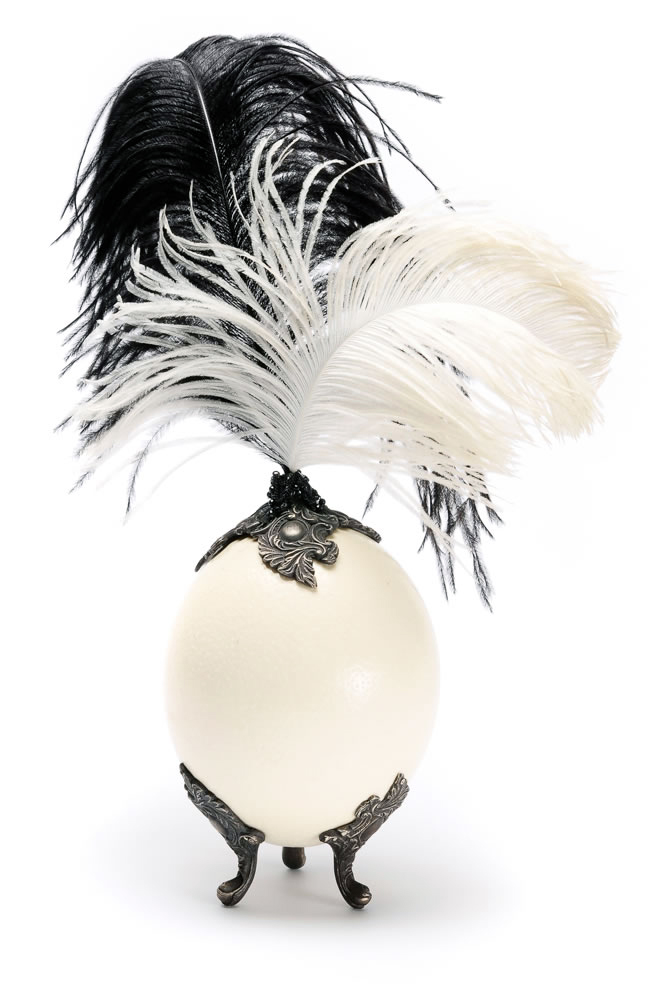

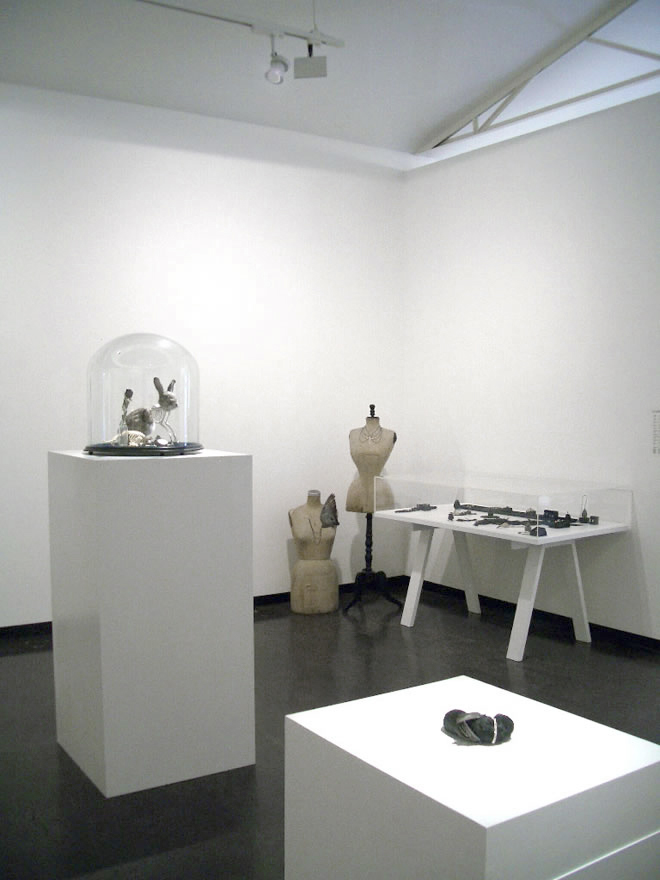


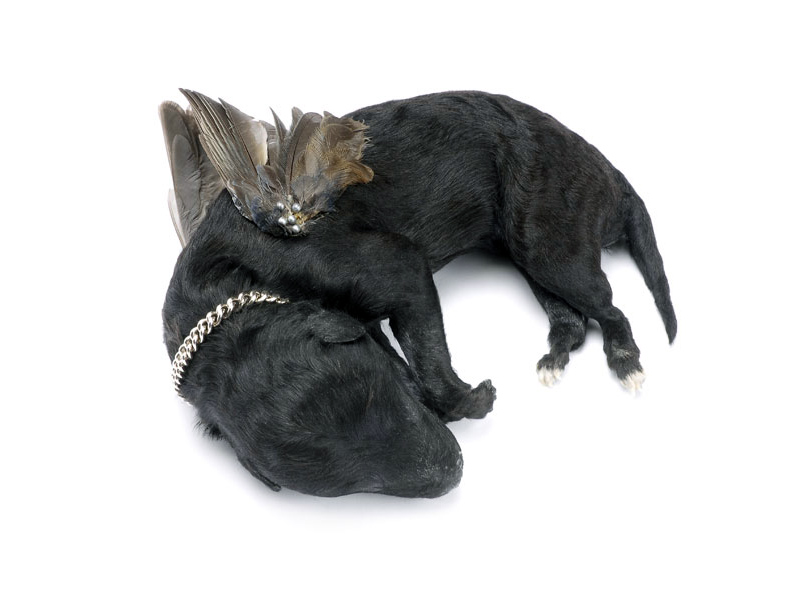


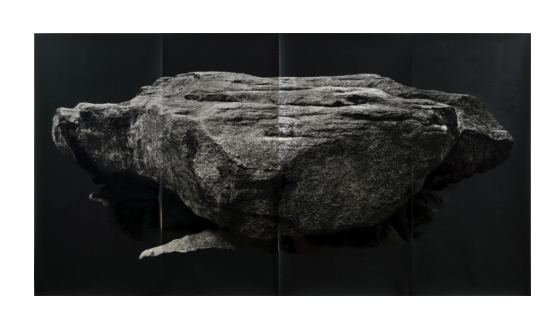
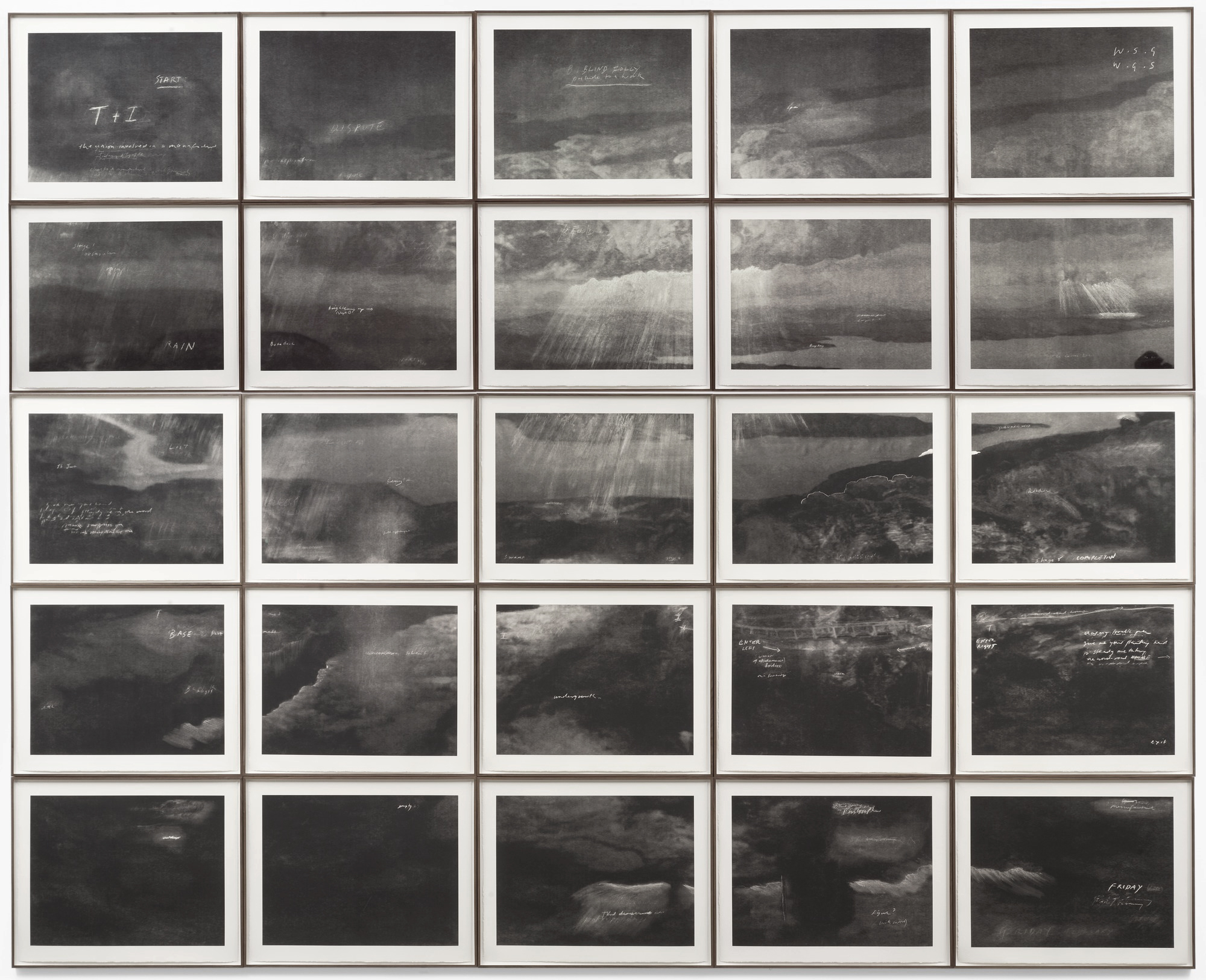
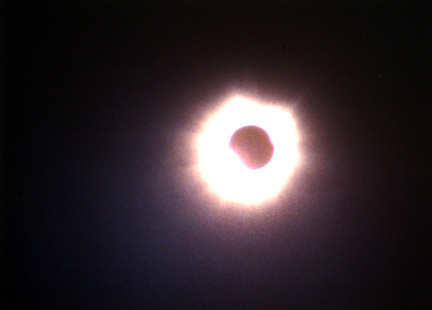
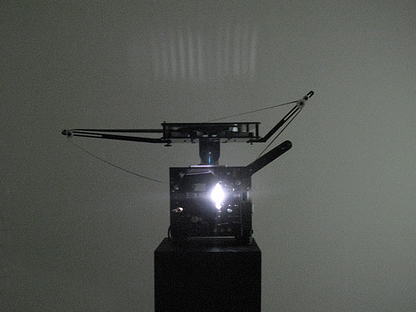
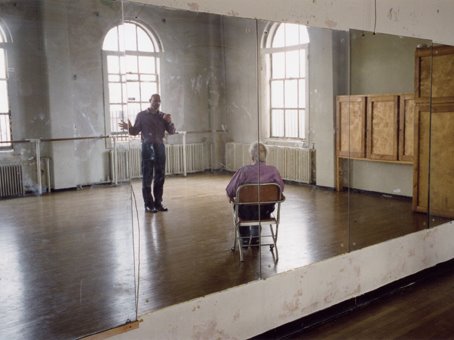
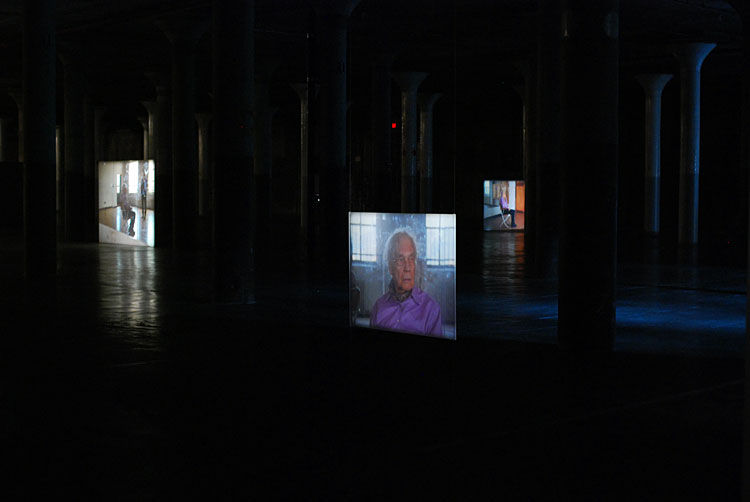
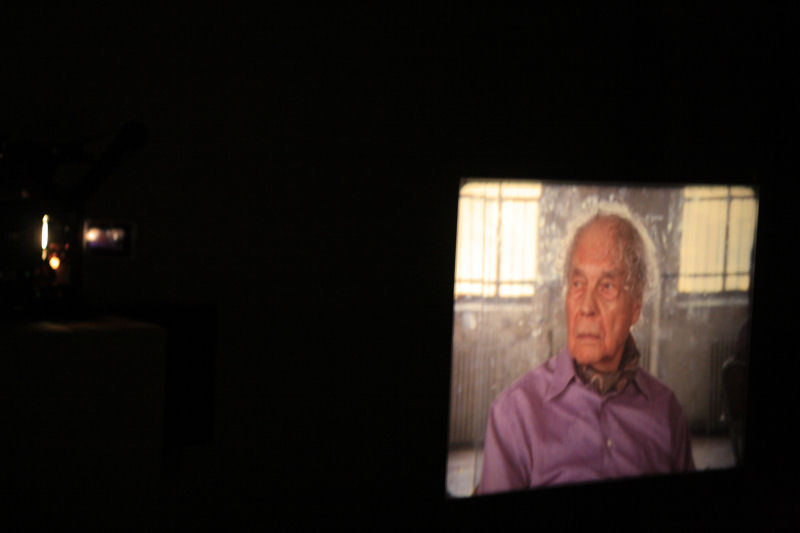
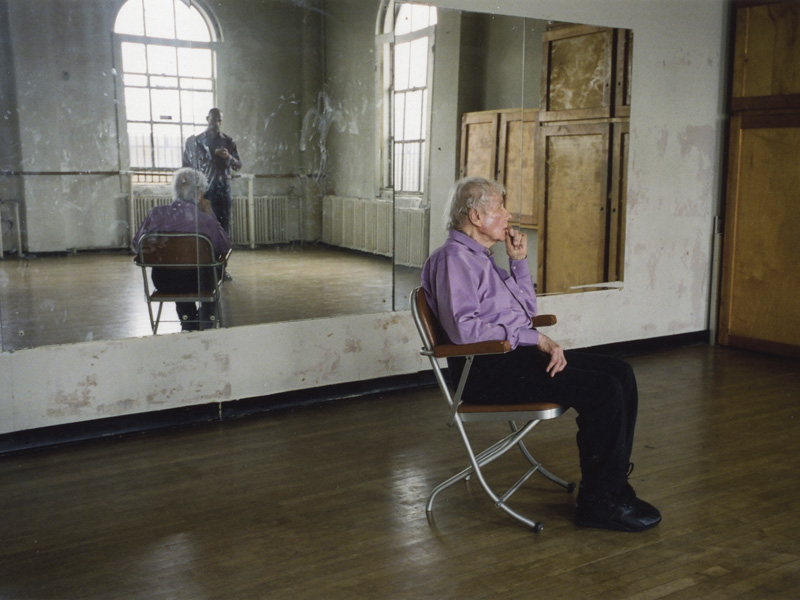
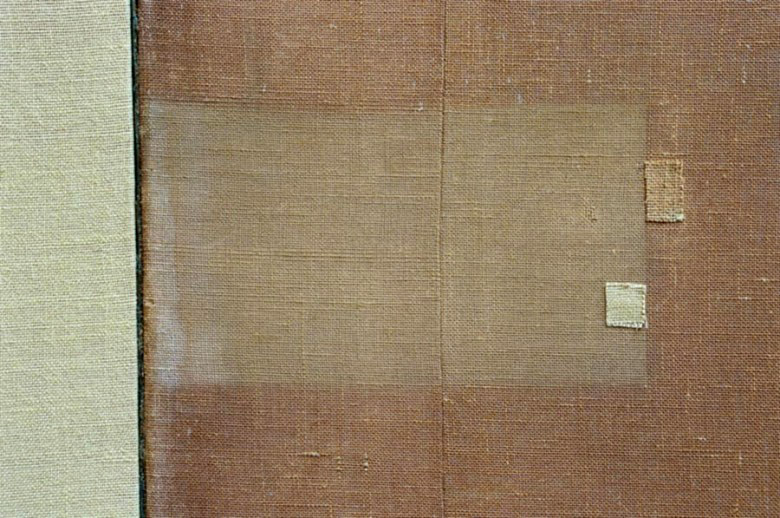

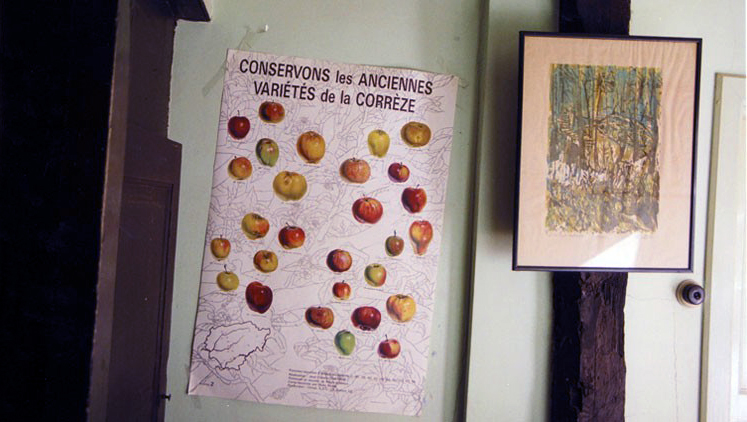
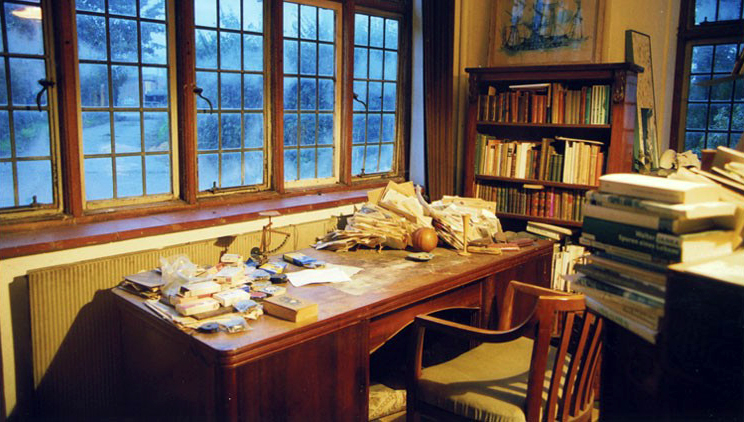
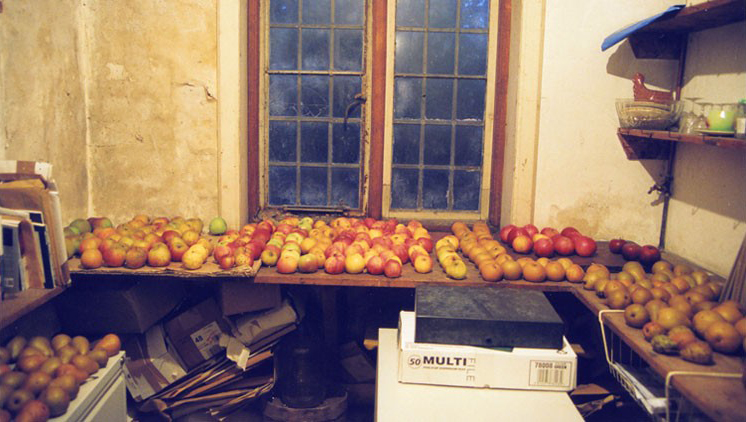
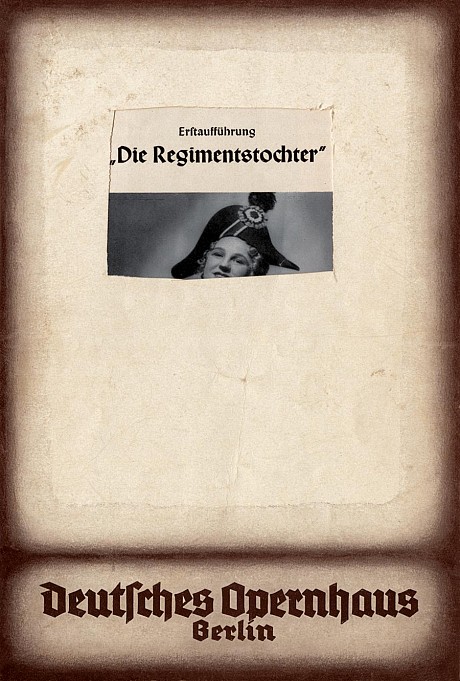
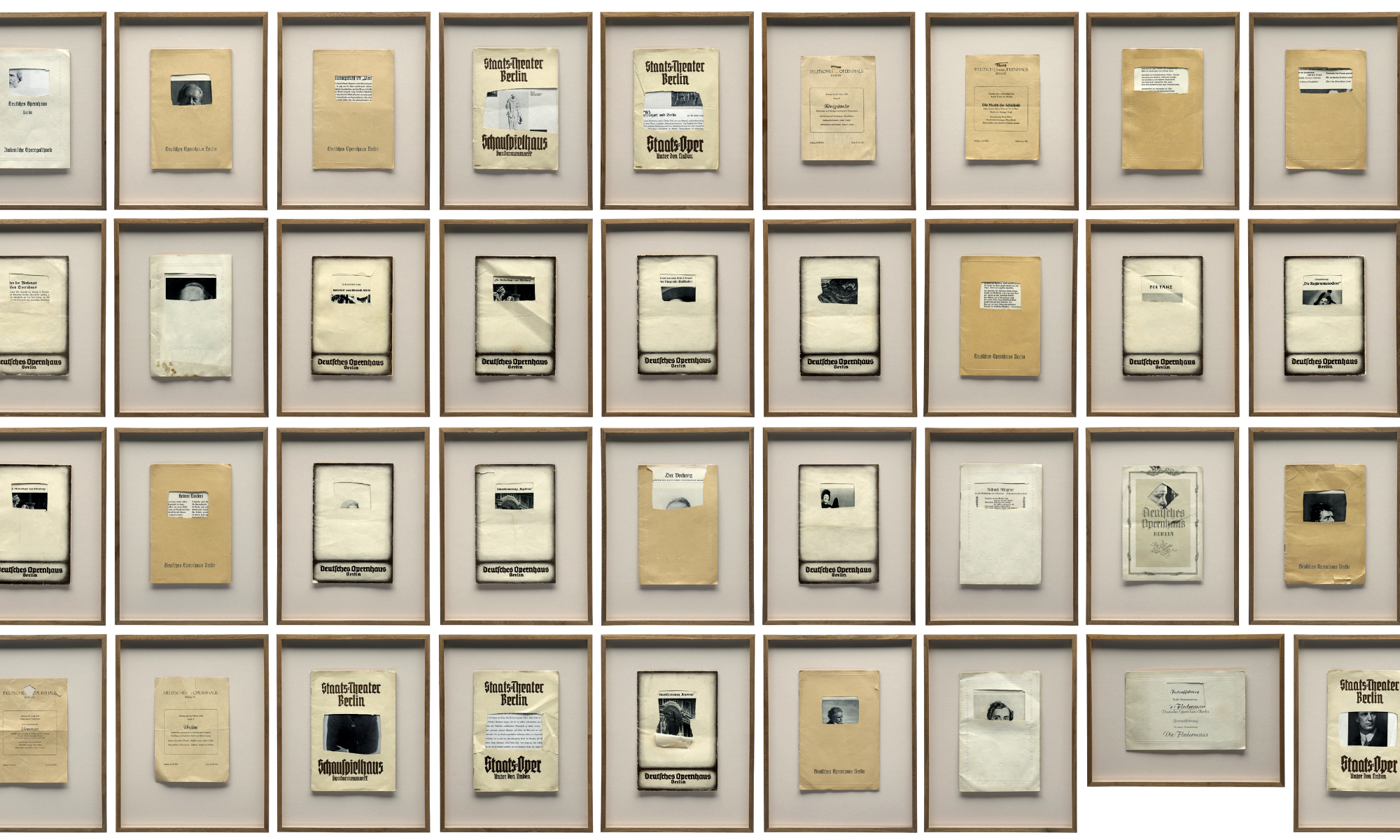
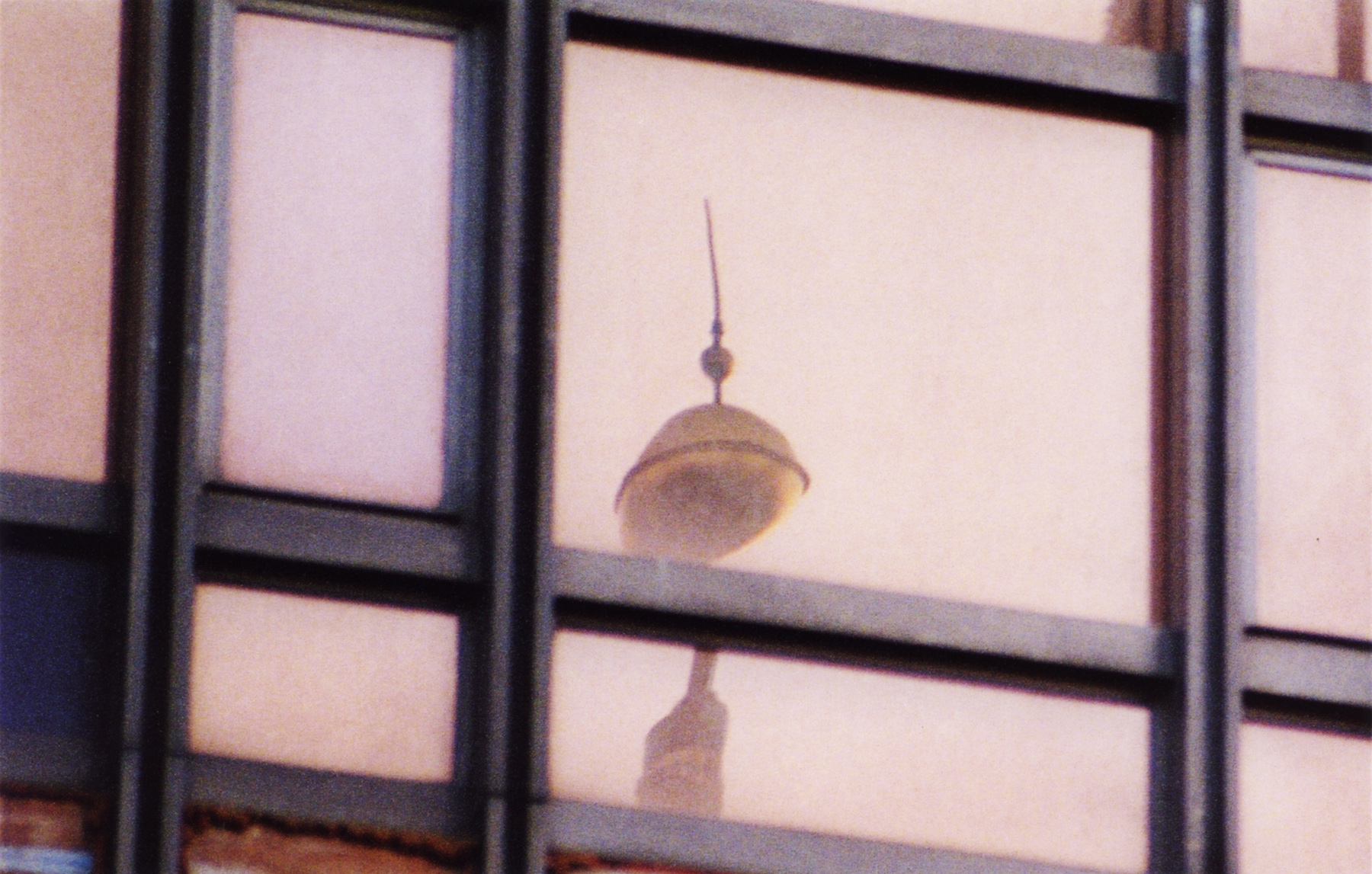
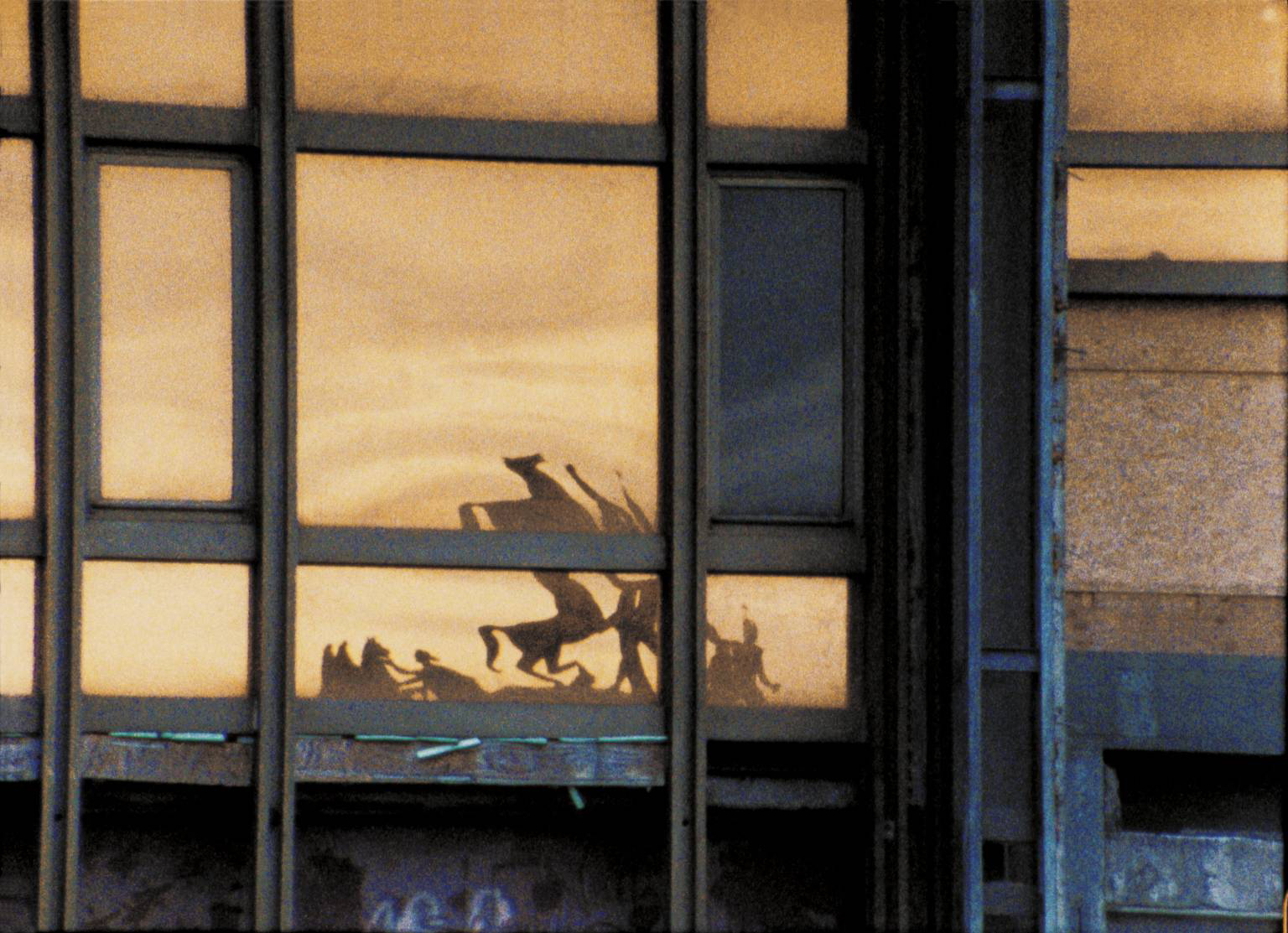
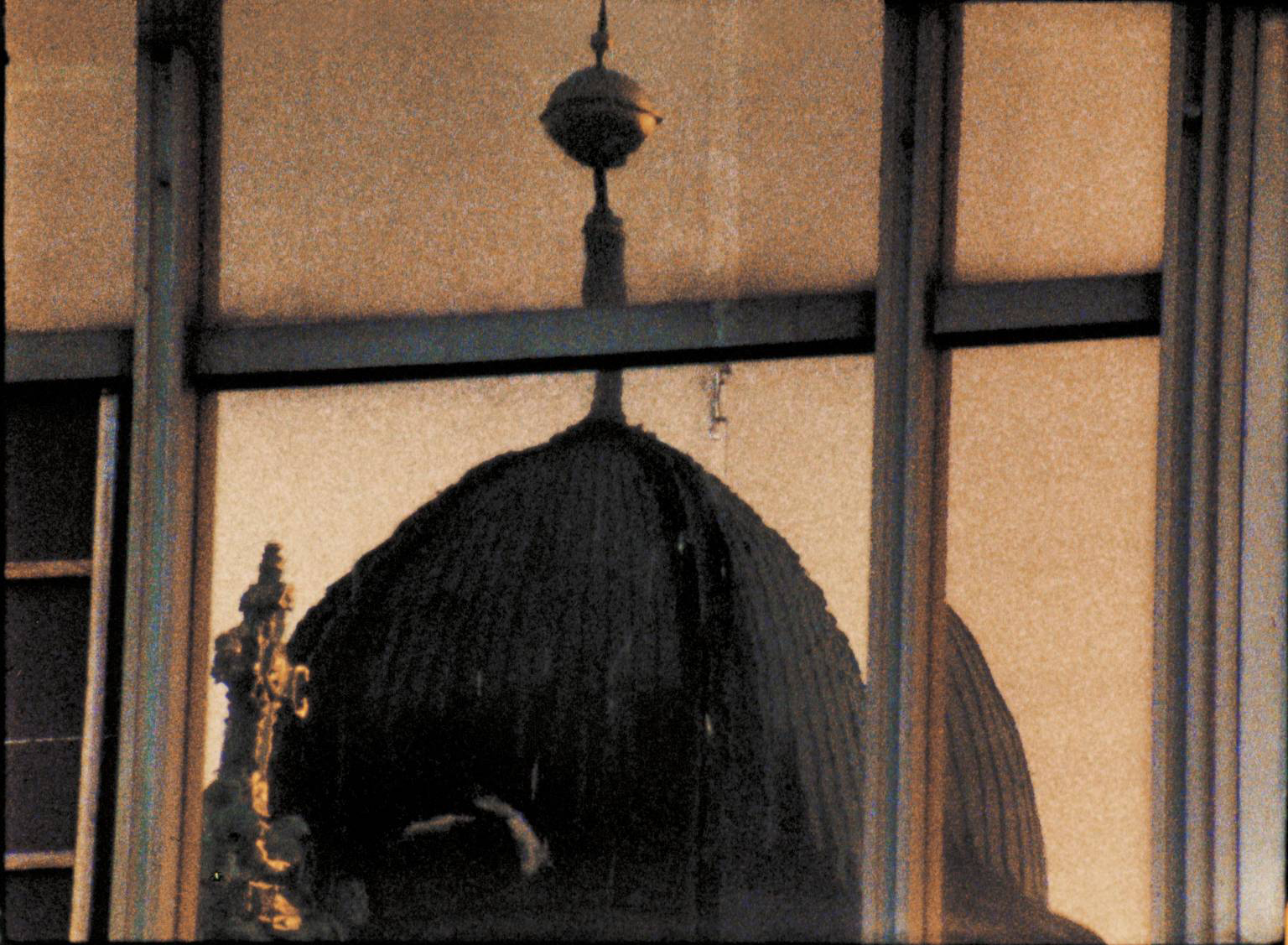
![Tacita Dean. 'Noir et Blanc [Still]' 2006](https://artblart.com/wp-content/uploads/2009/07/noir_et_blanc-2006.jpg "Tacita Dean. 'Noir et Blanc [Still]' 2006")
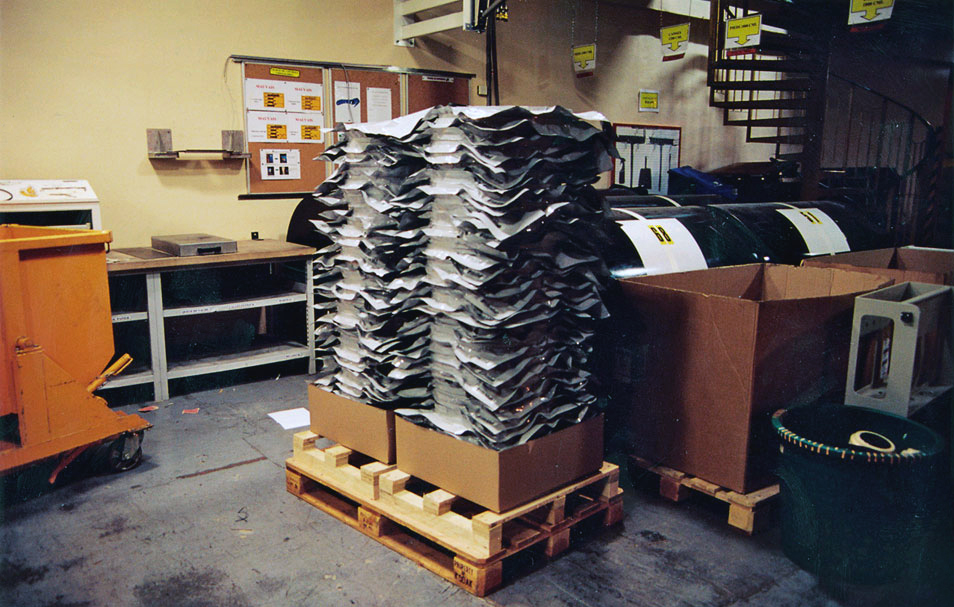
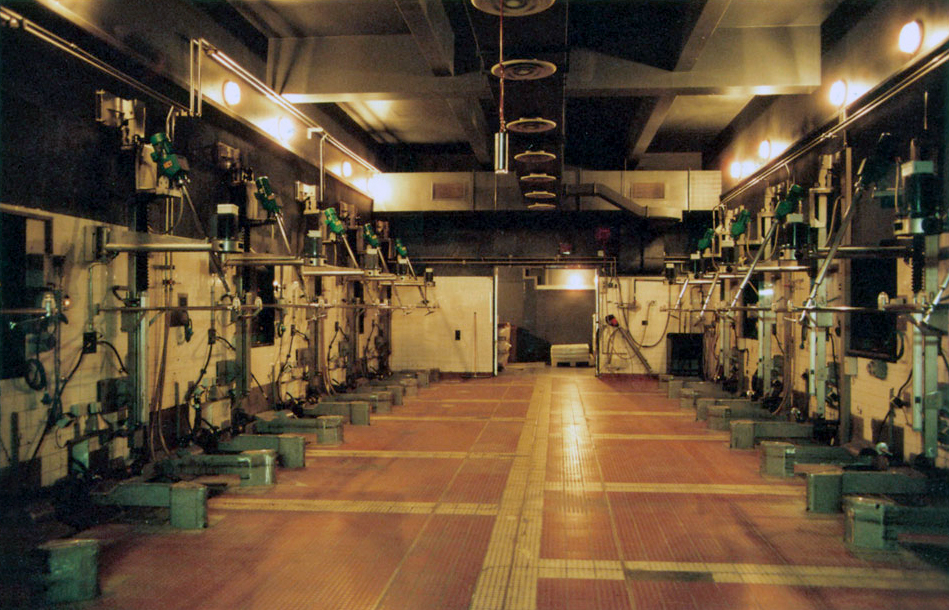
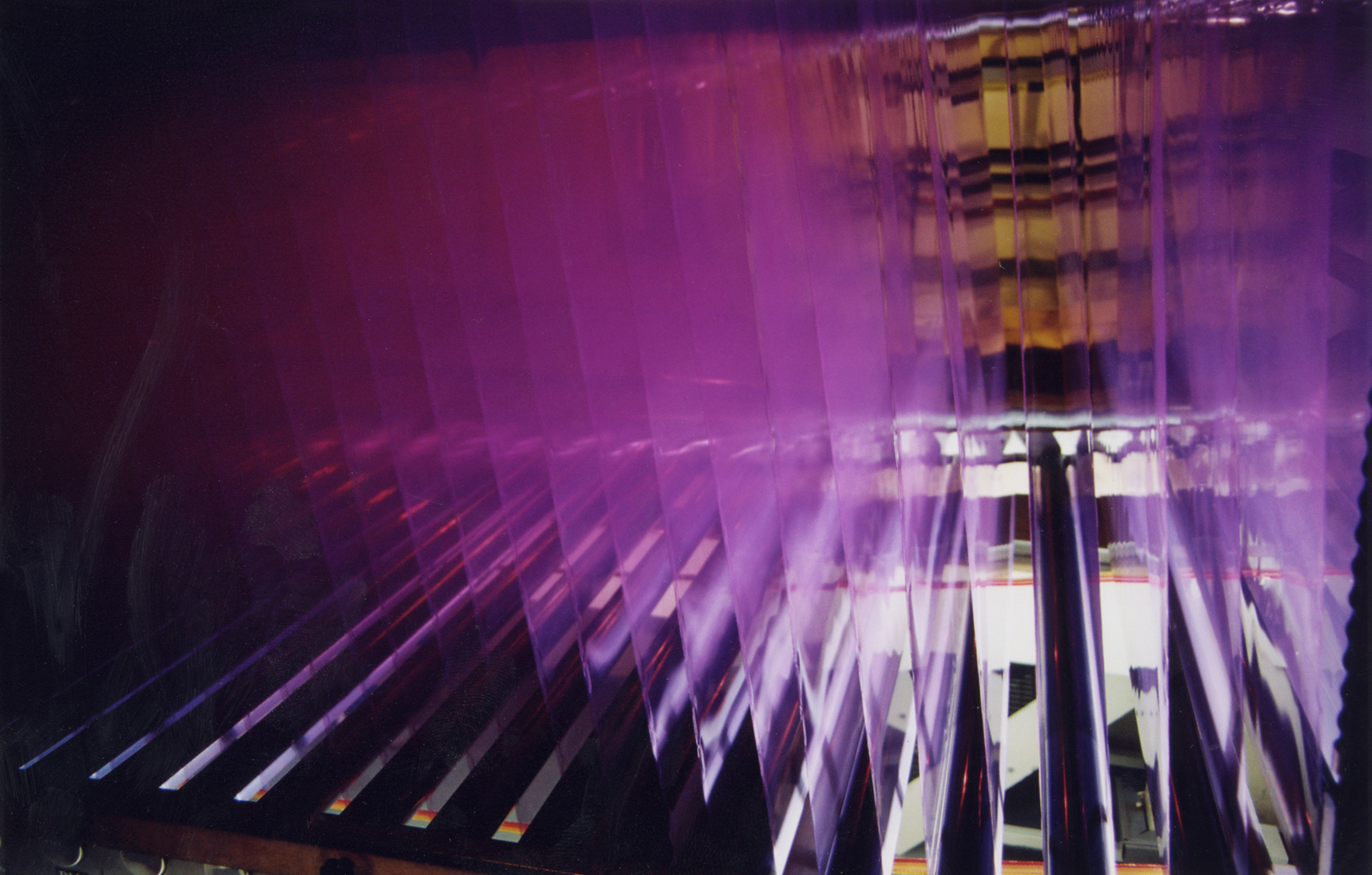


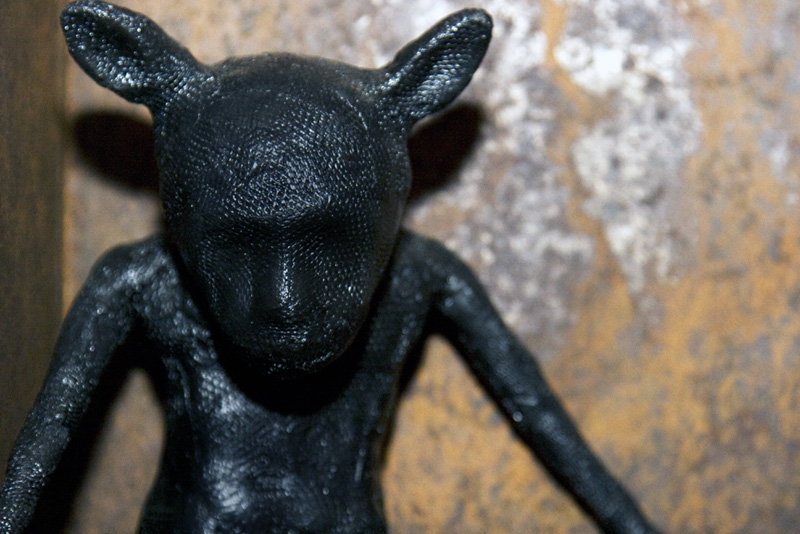


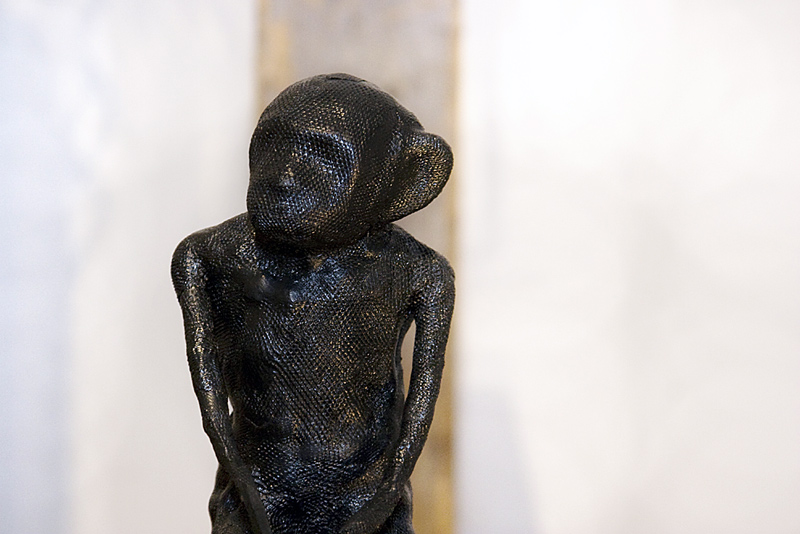


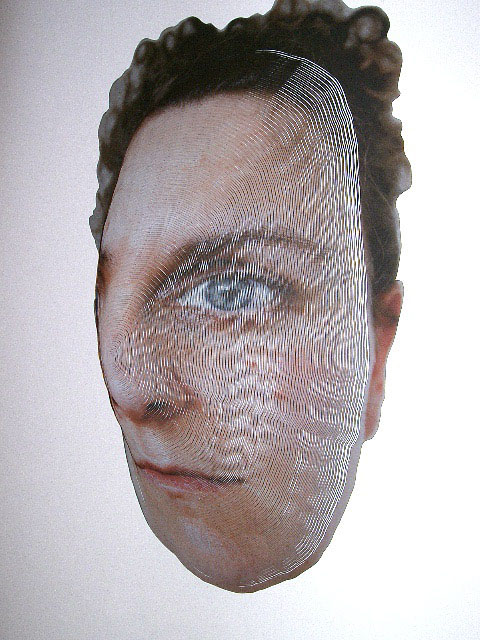
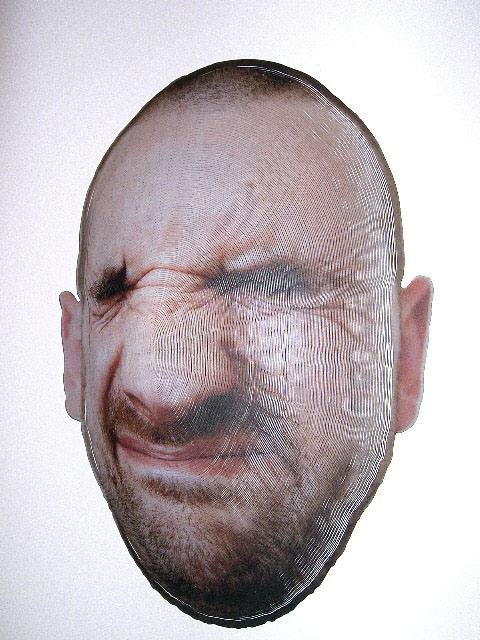
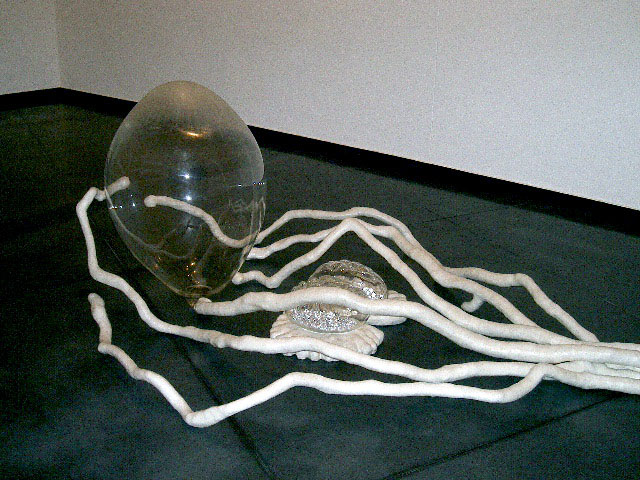
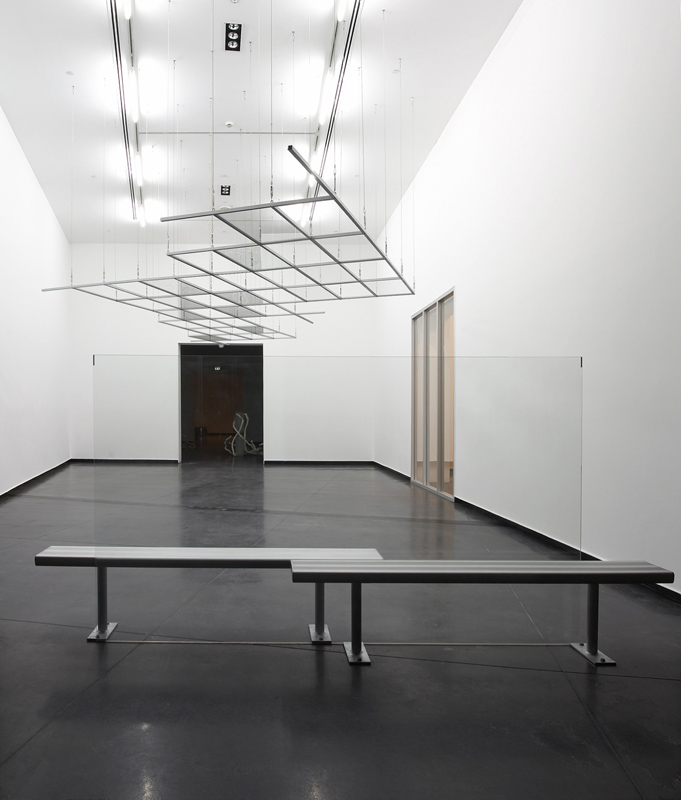

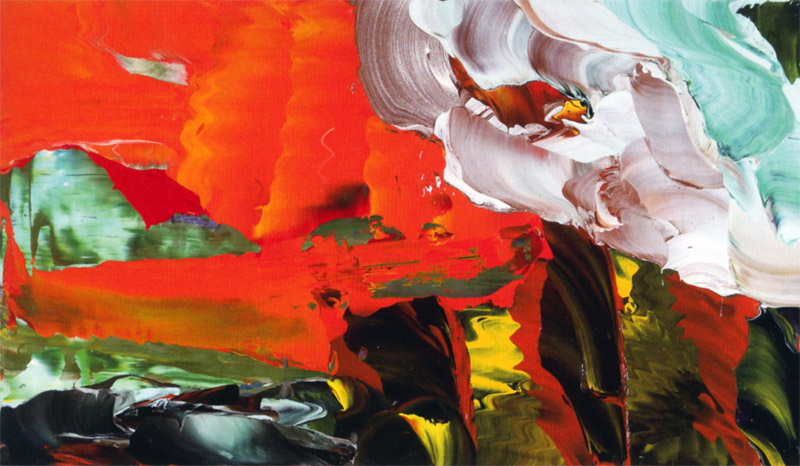


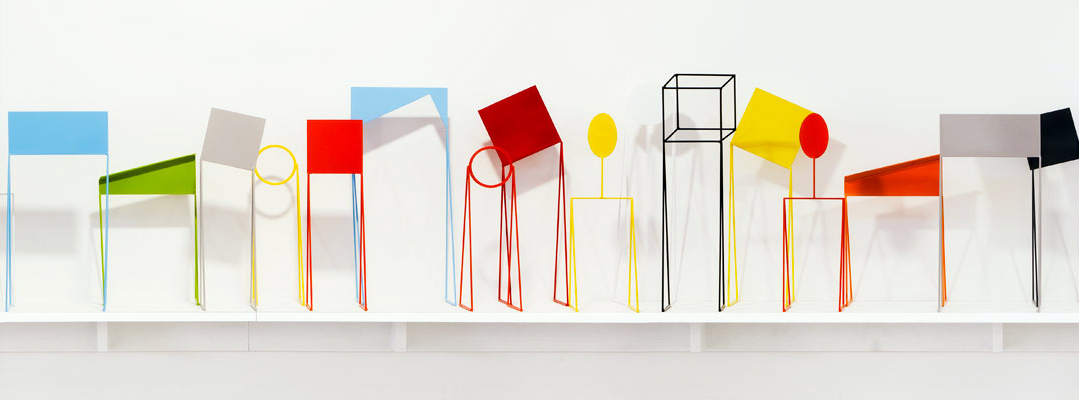


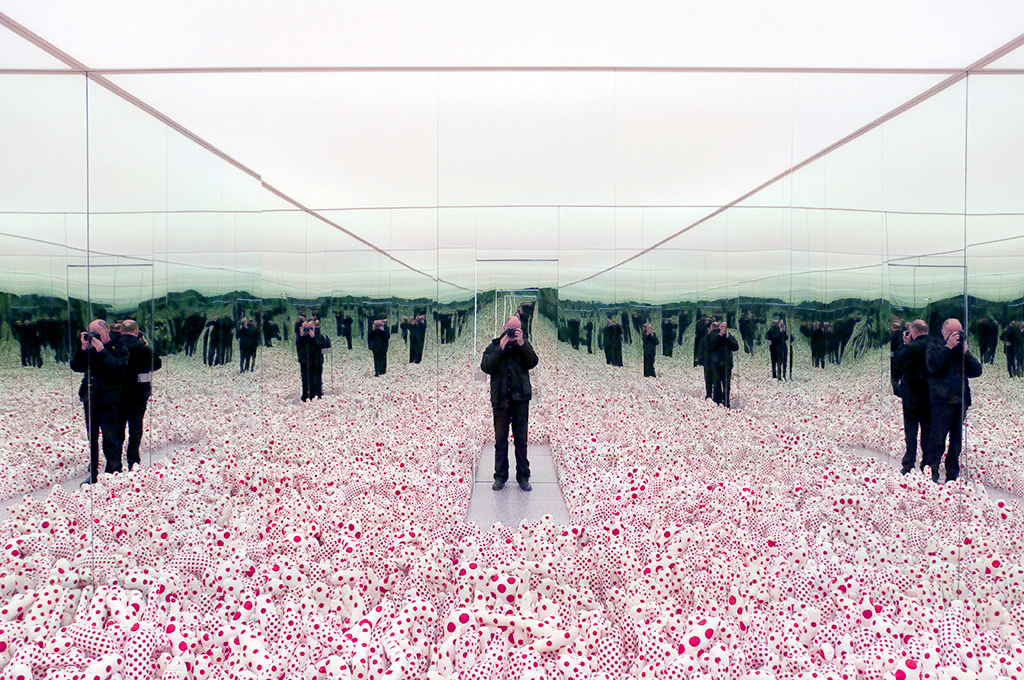


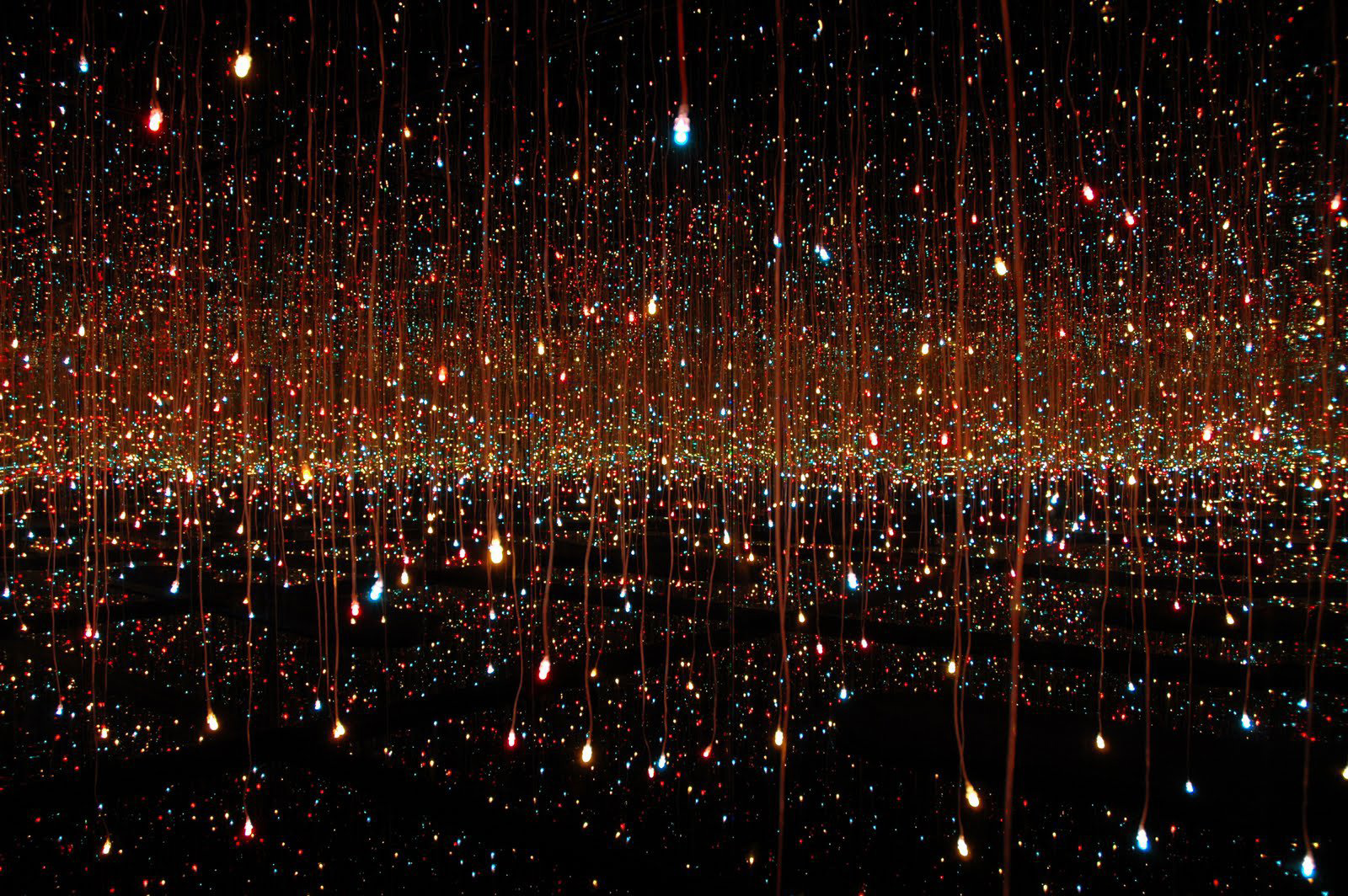
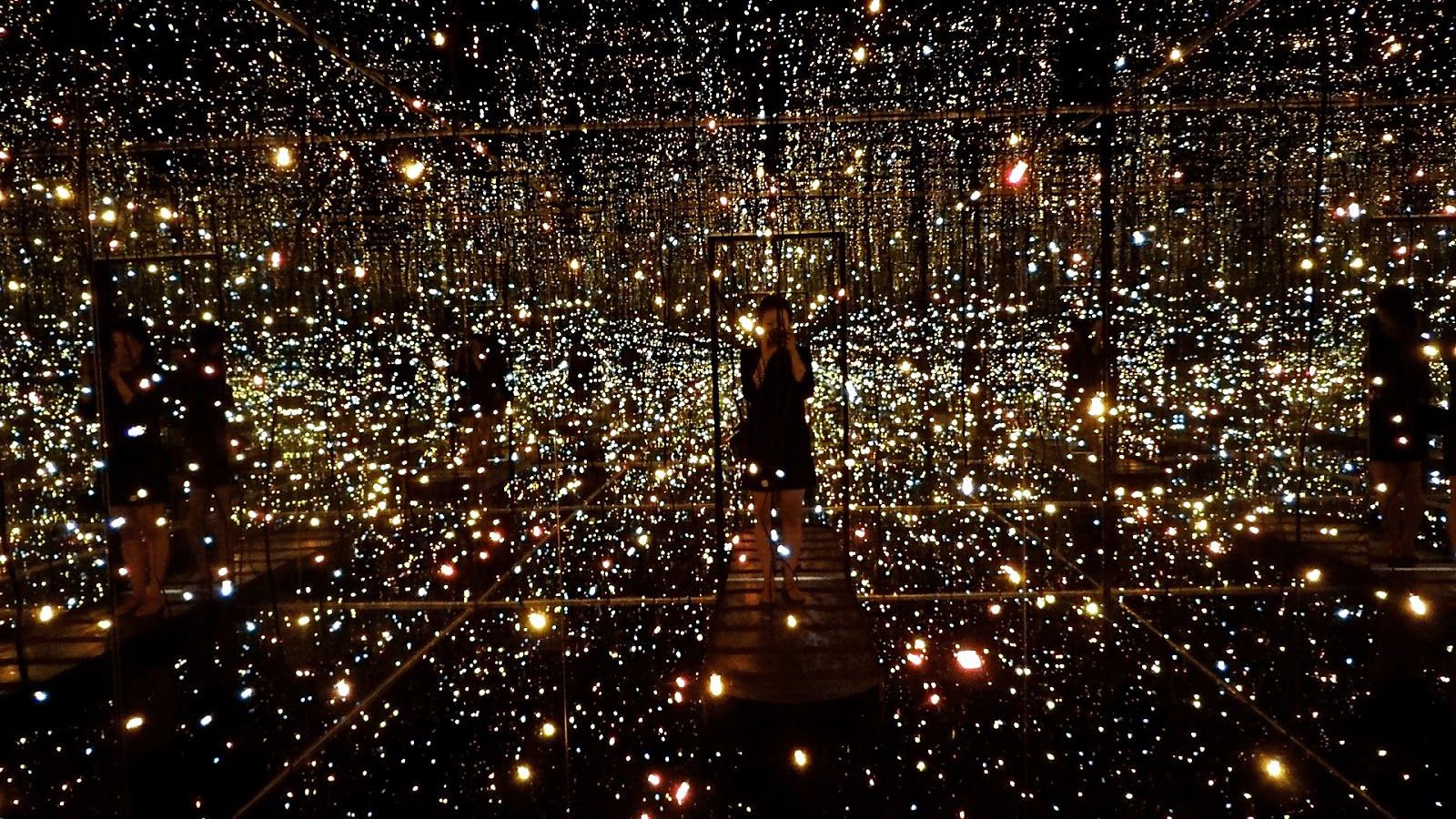


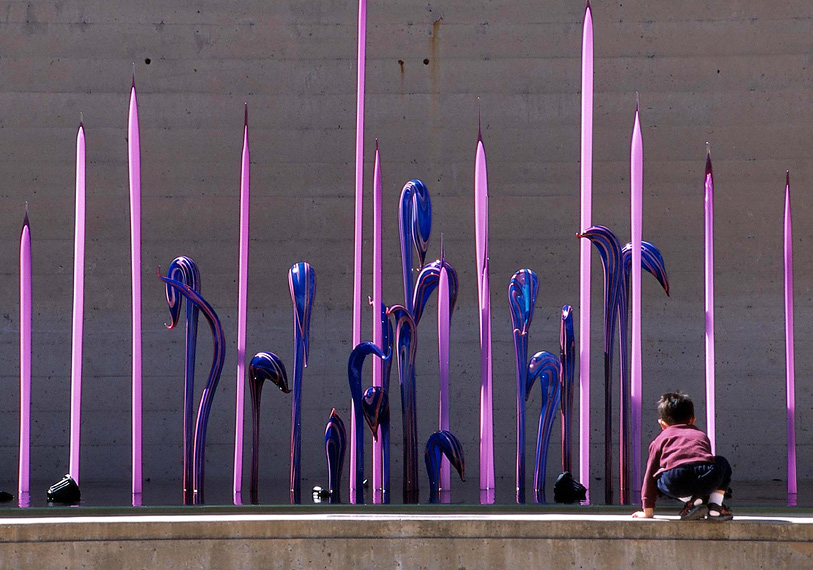

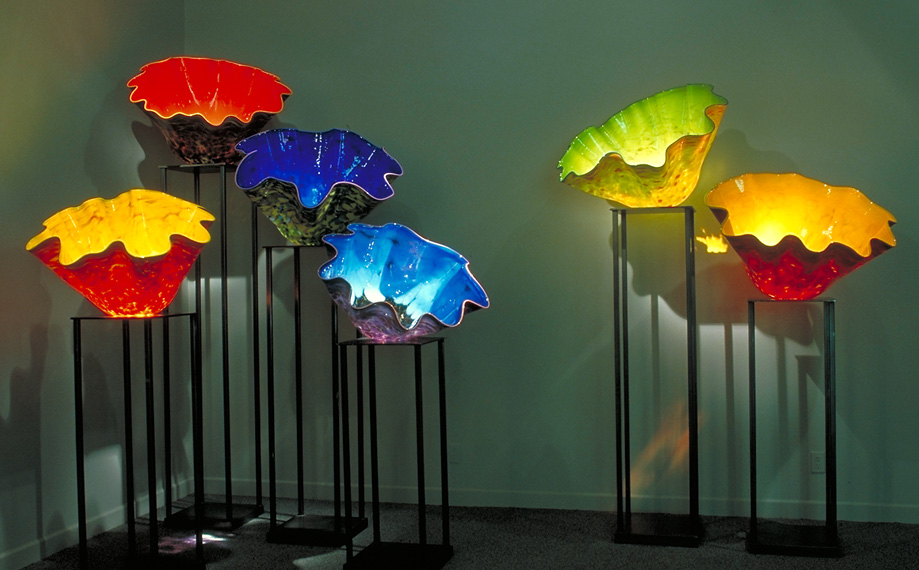
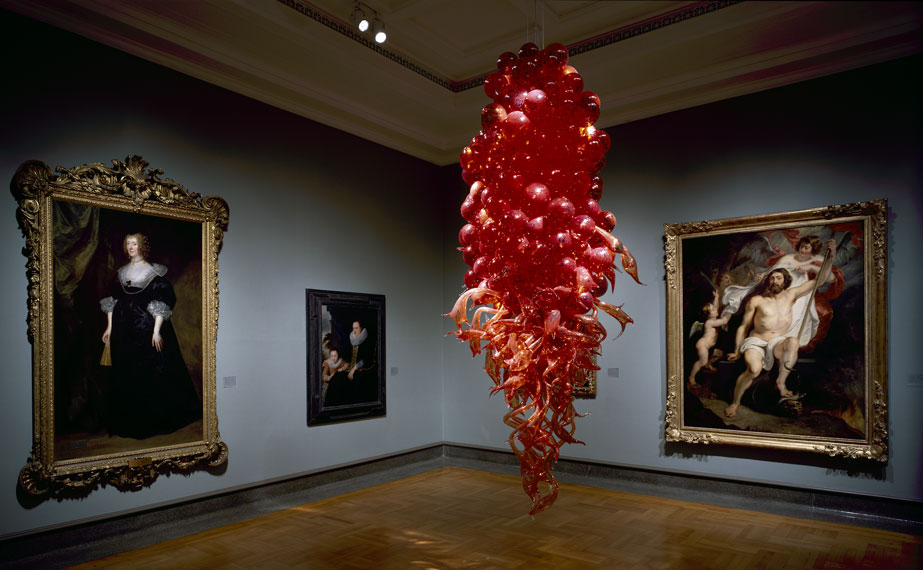
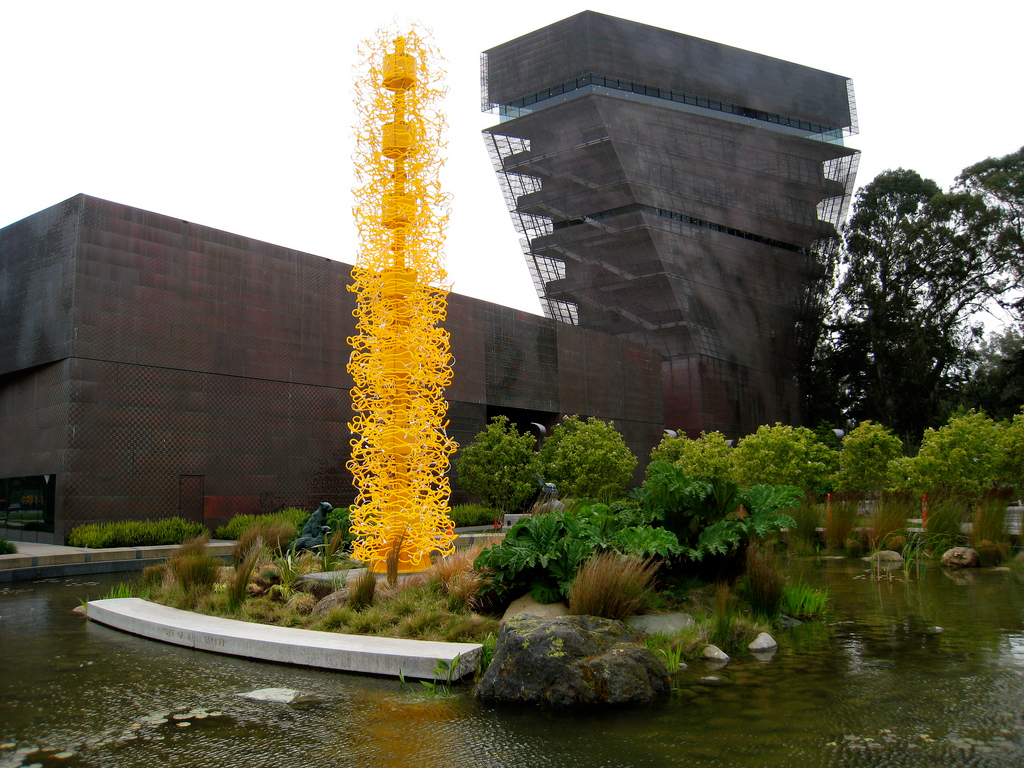
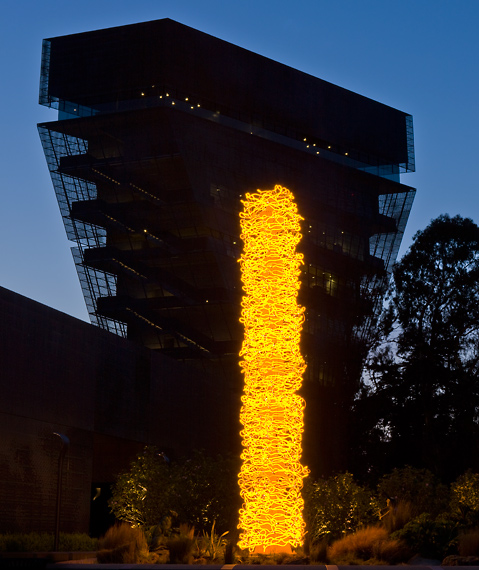
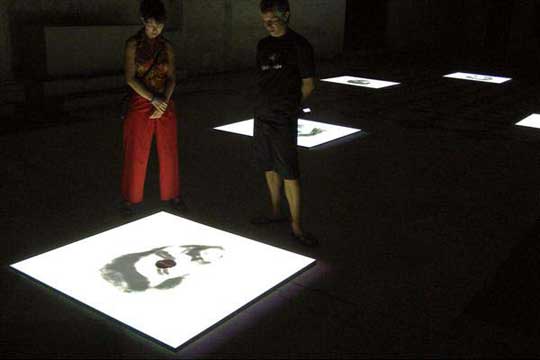
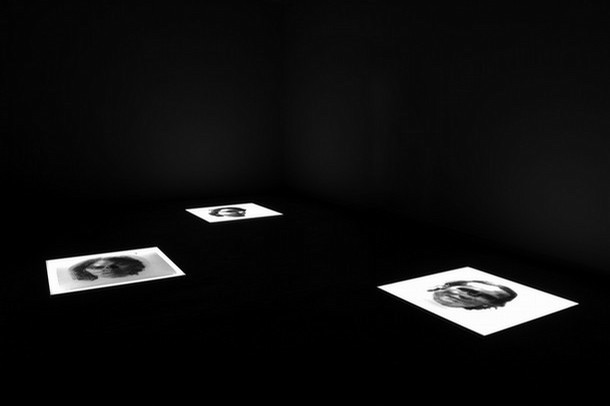
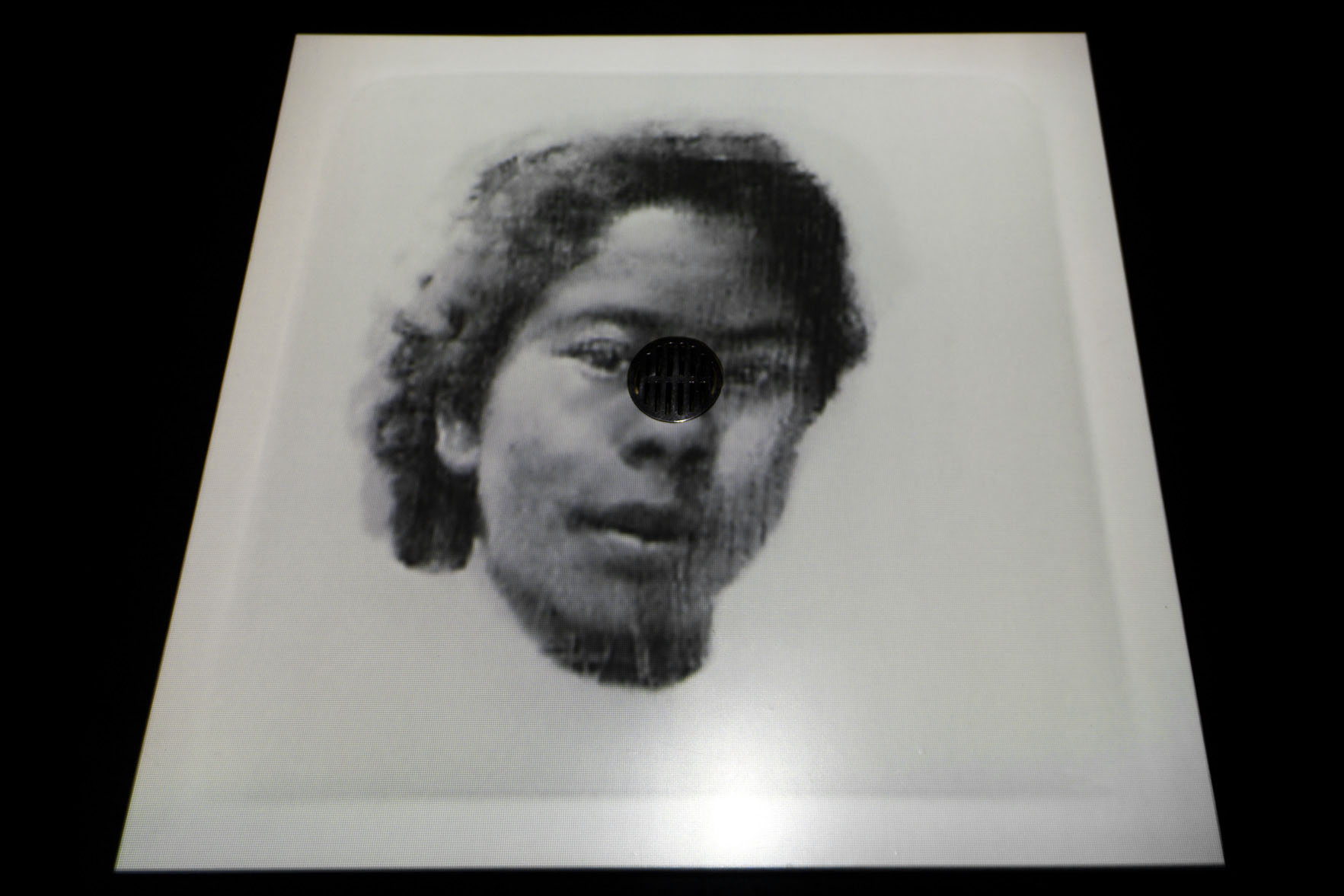
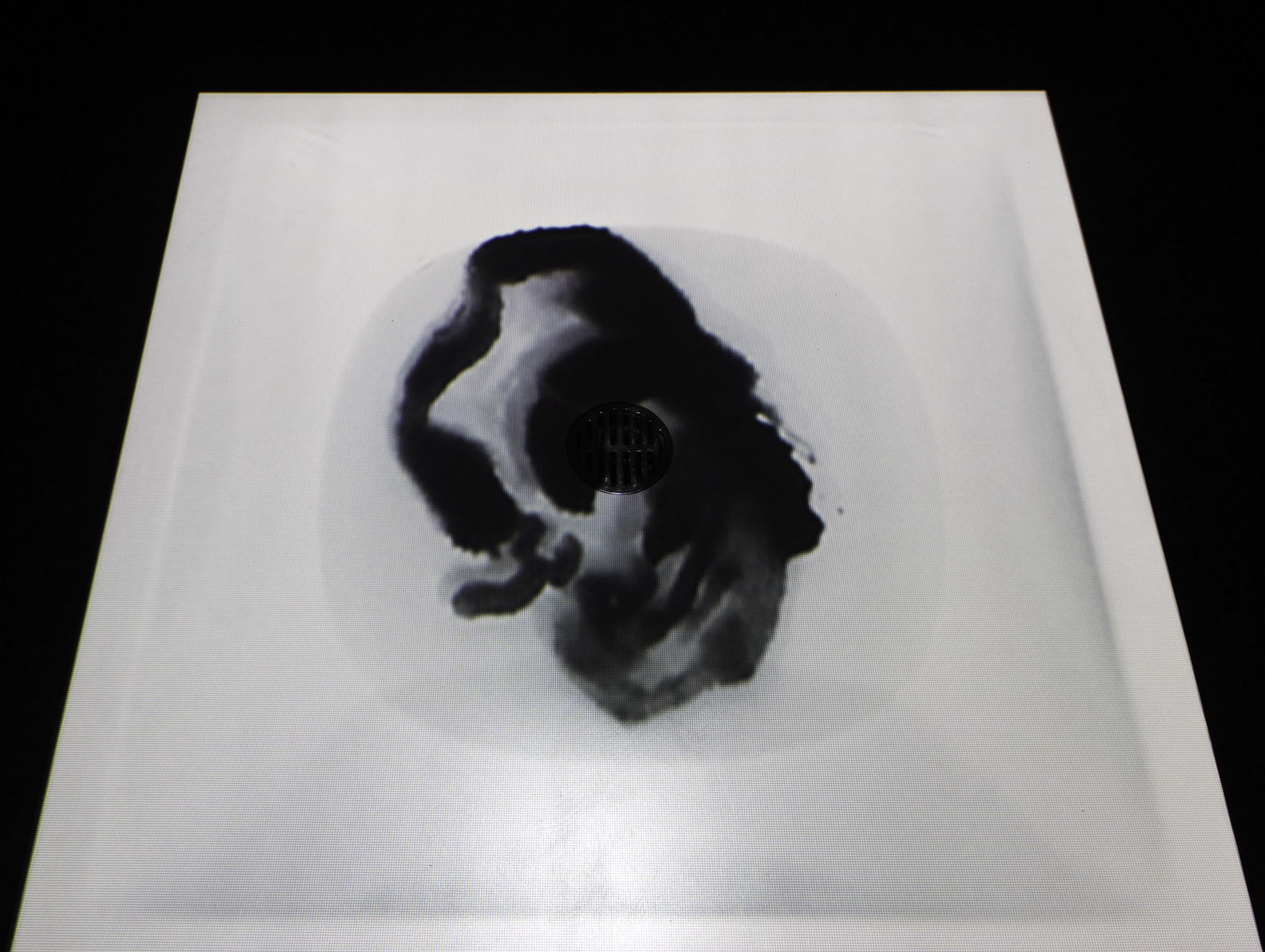
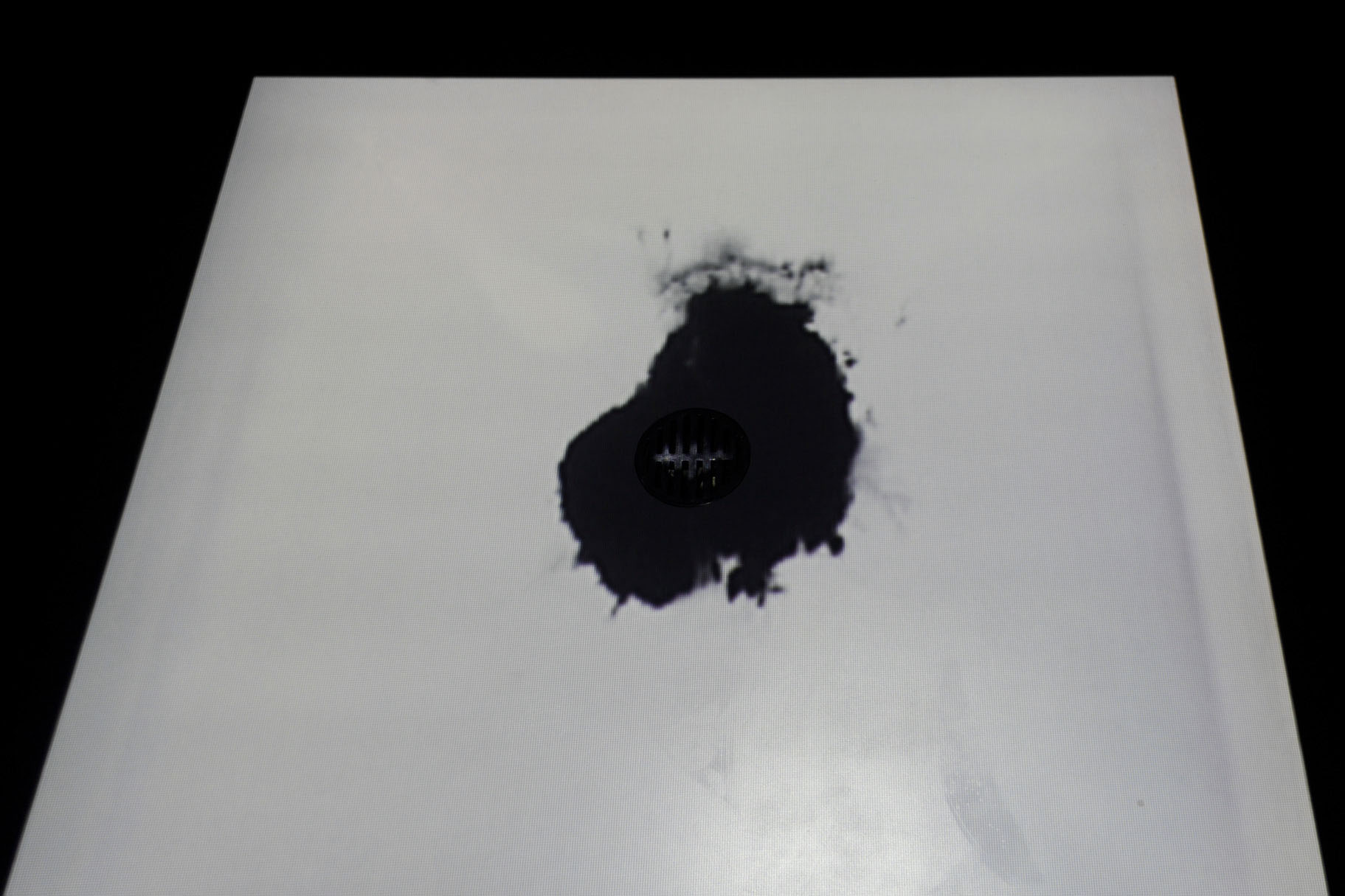
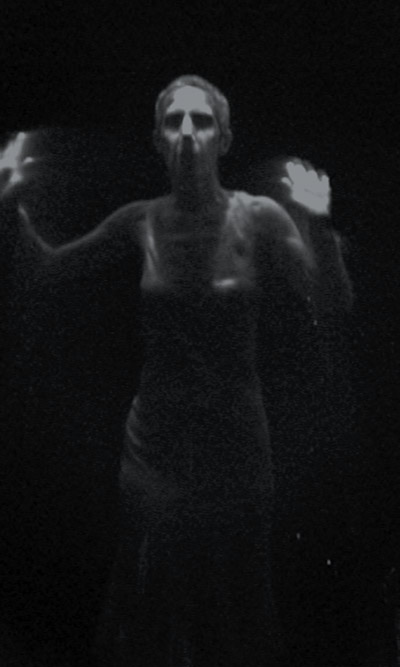

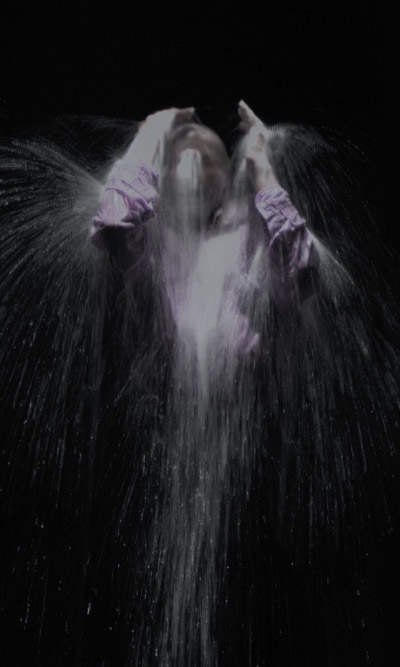


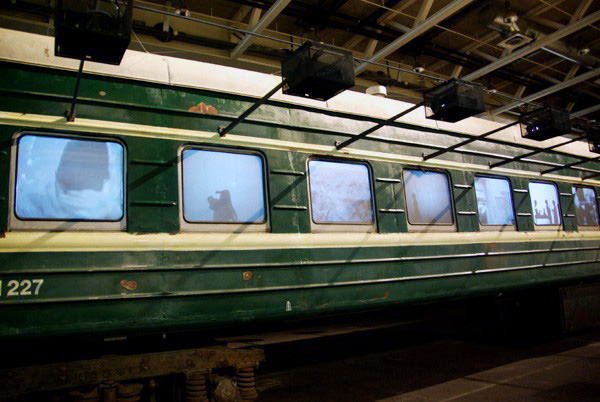
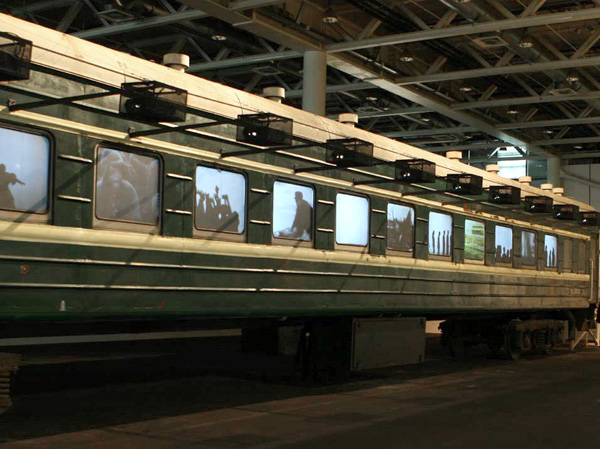


 Art Blart _ art and cultural memory archive
You must be logged in to post a comment.