Curator: Jeff L. Rosenheim, Joyce Frank Menschel Curator in Charge of the Department of Photographs at The Met
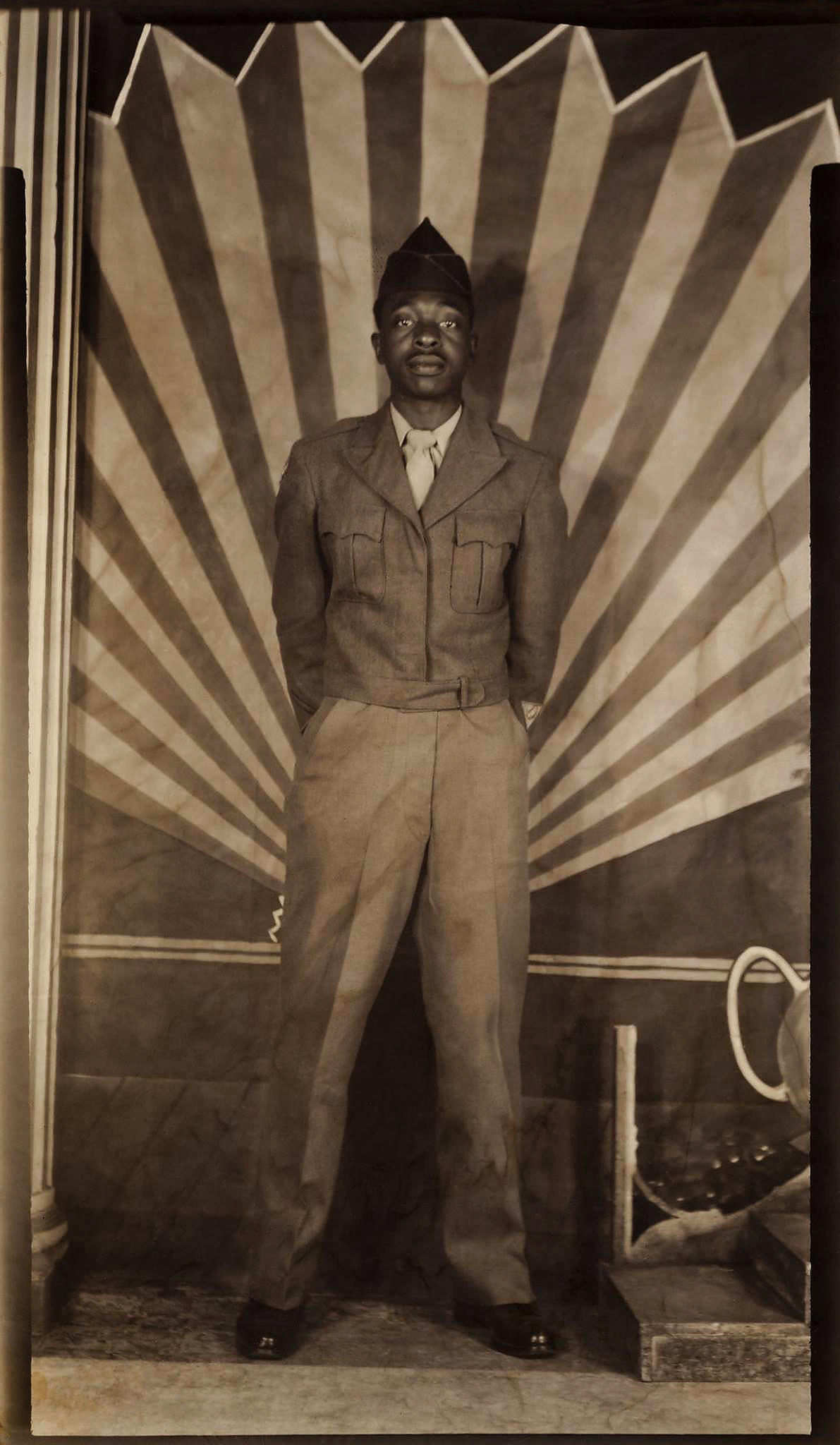
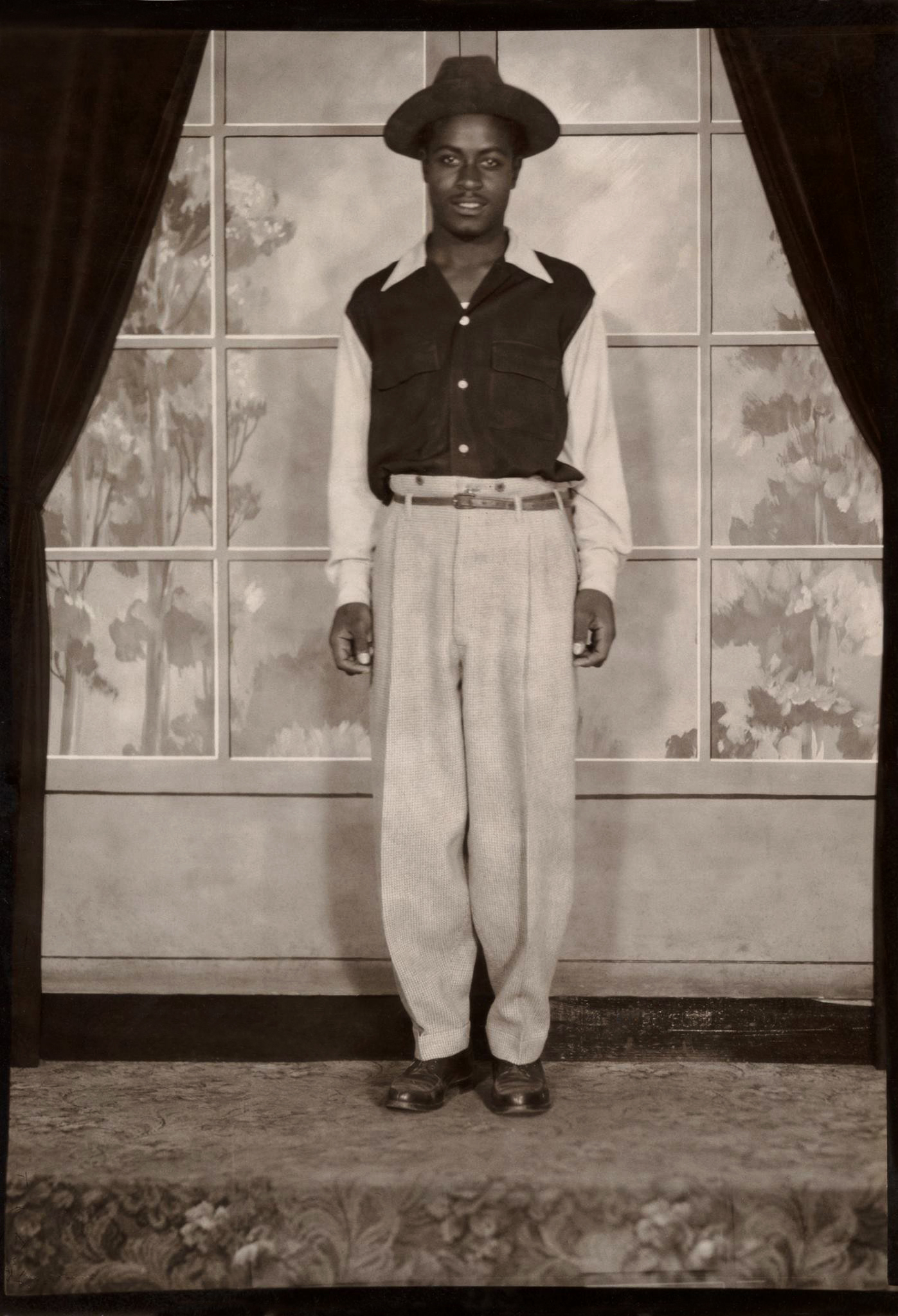
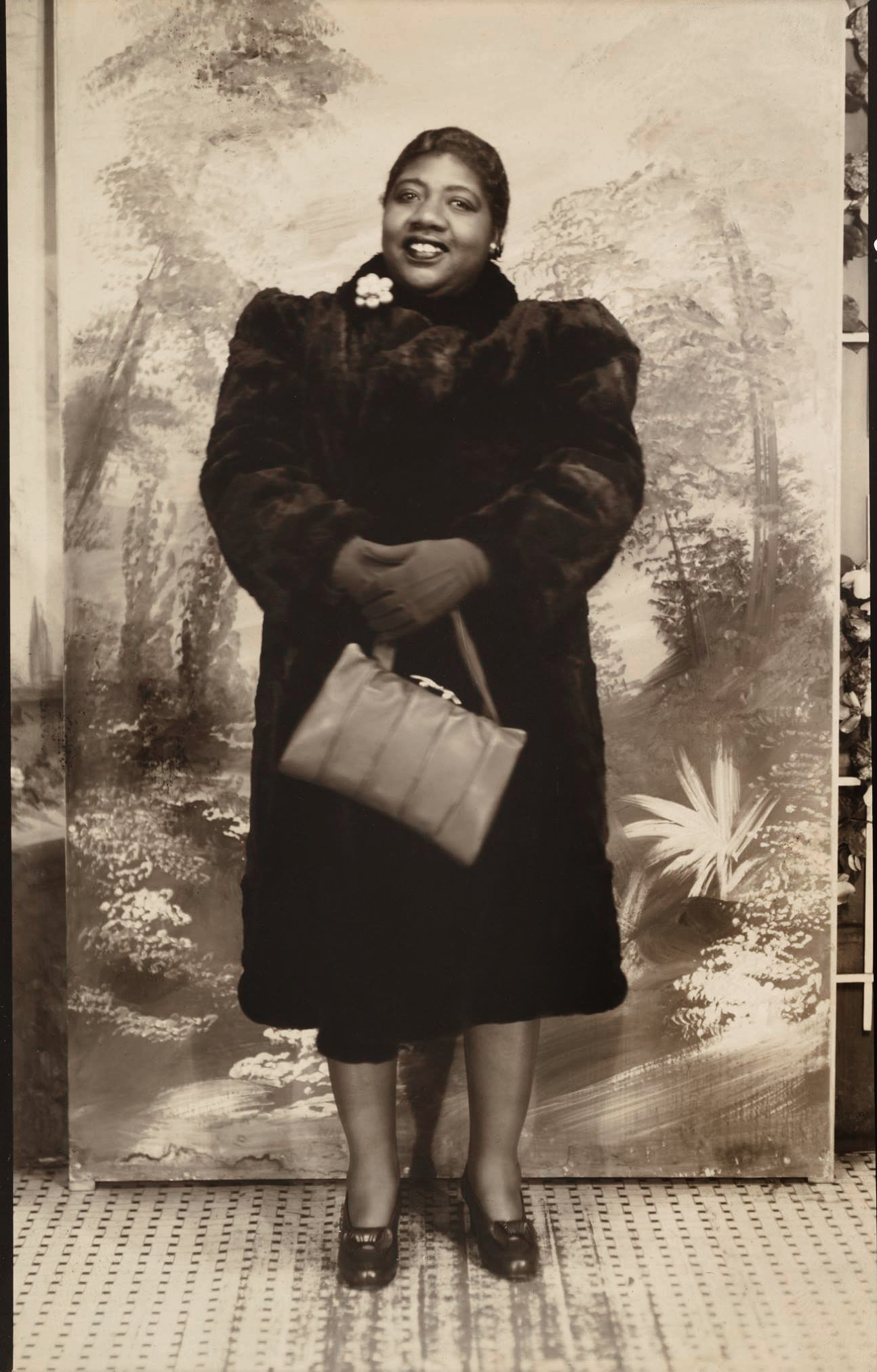
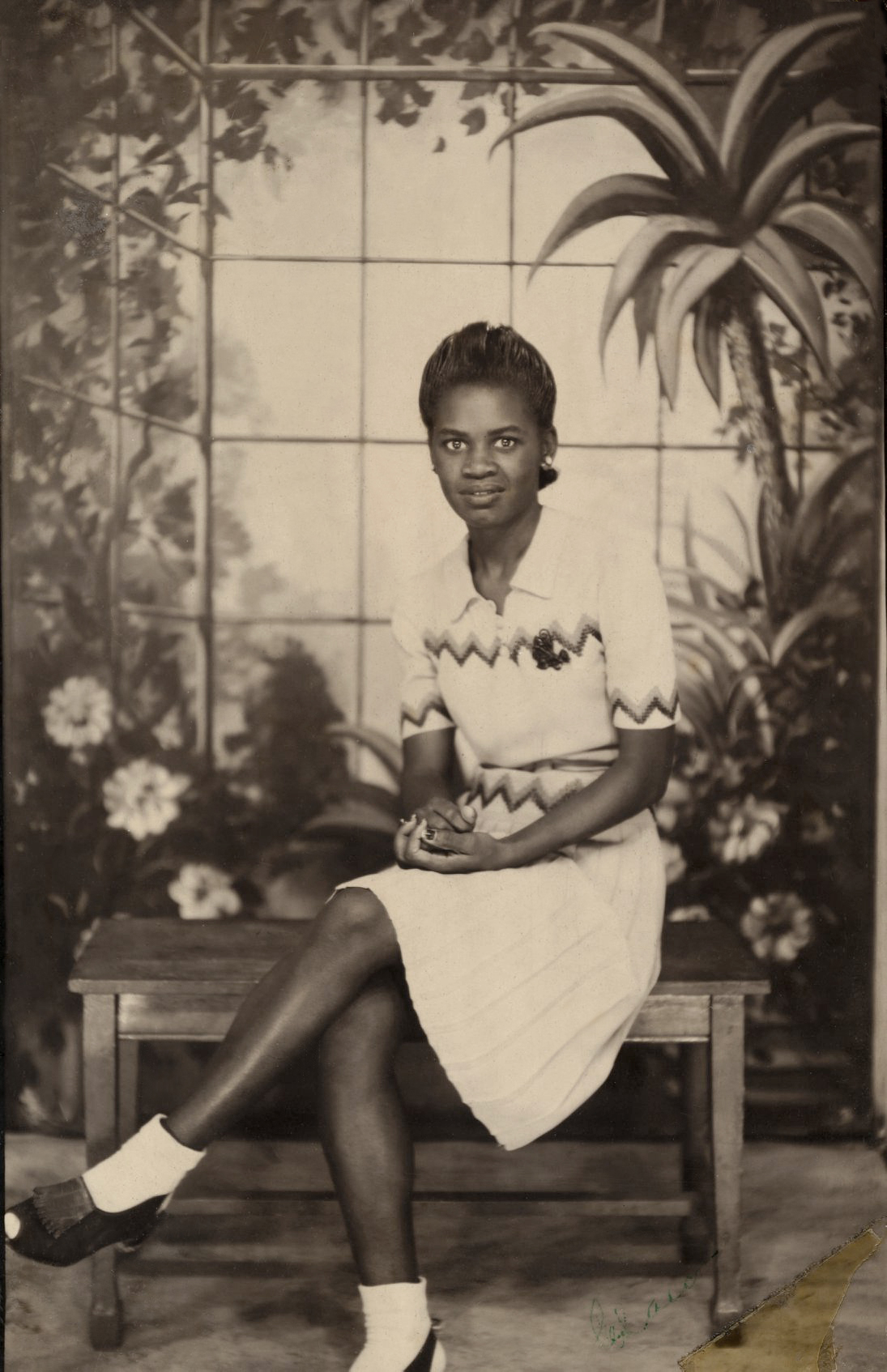
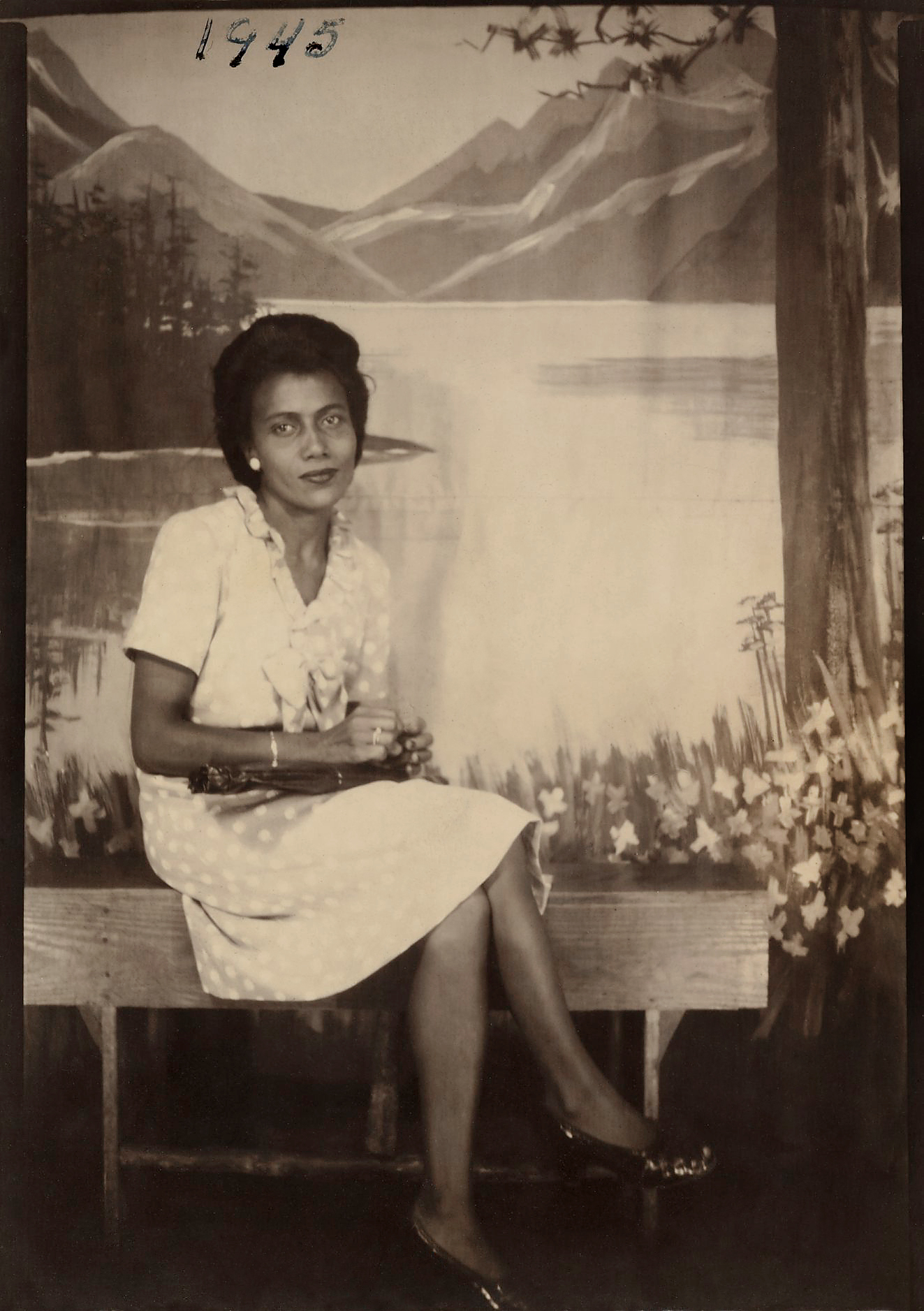
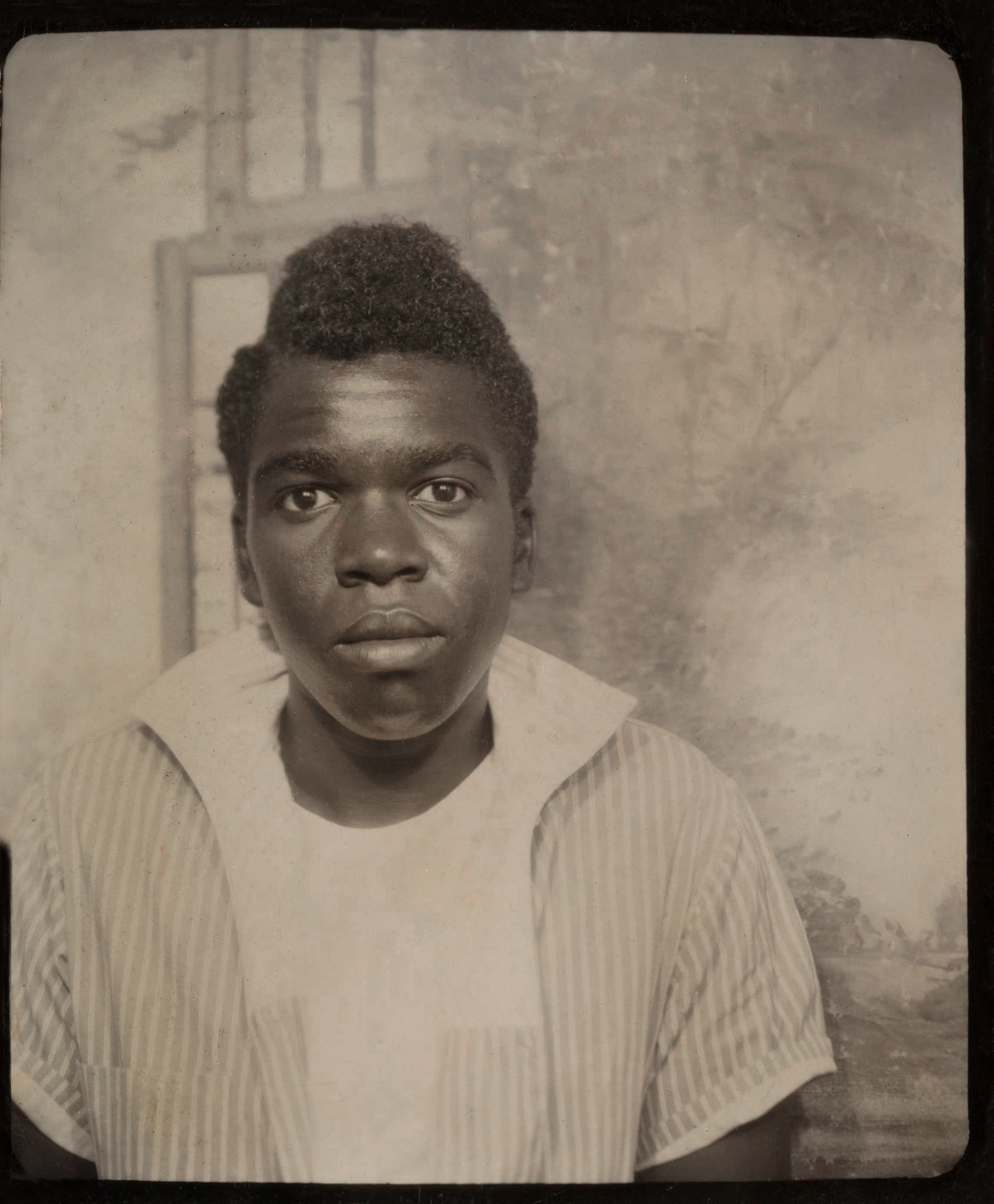
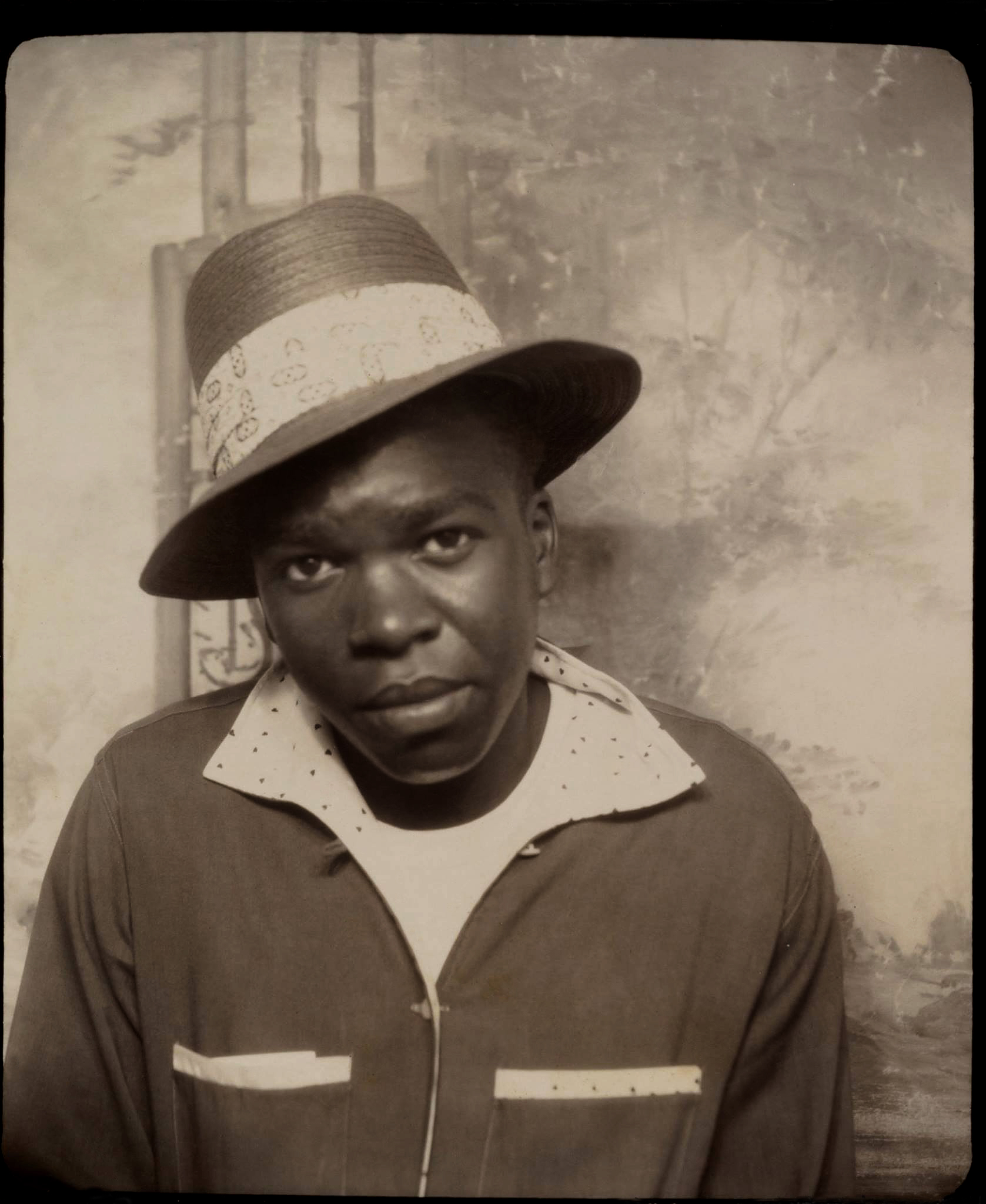
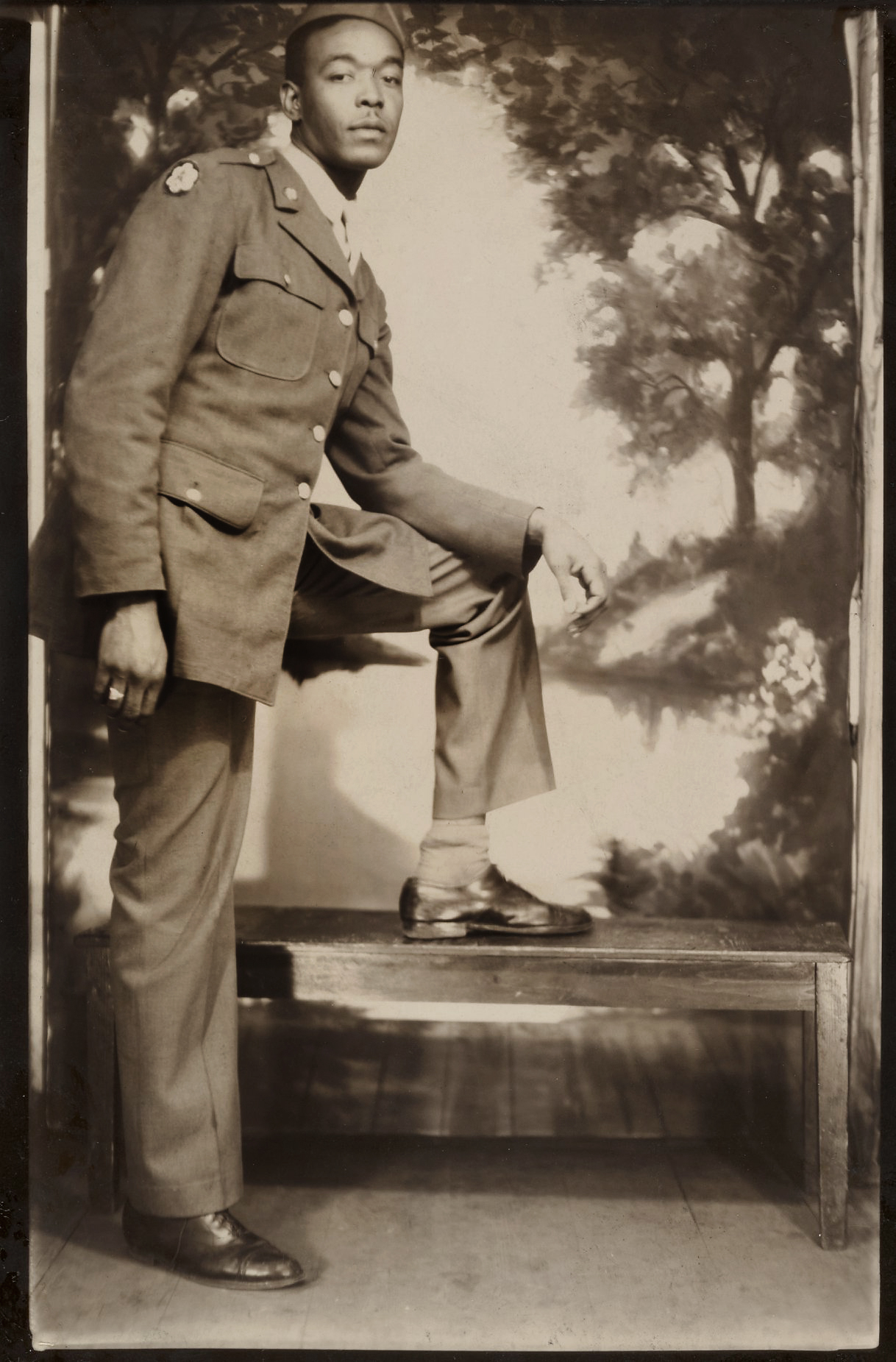
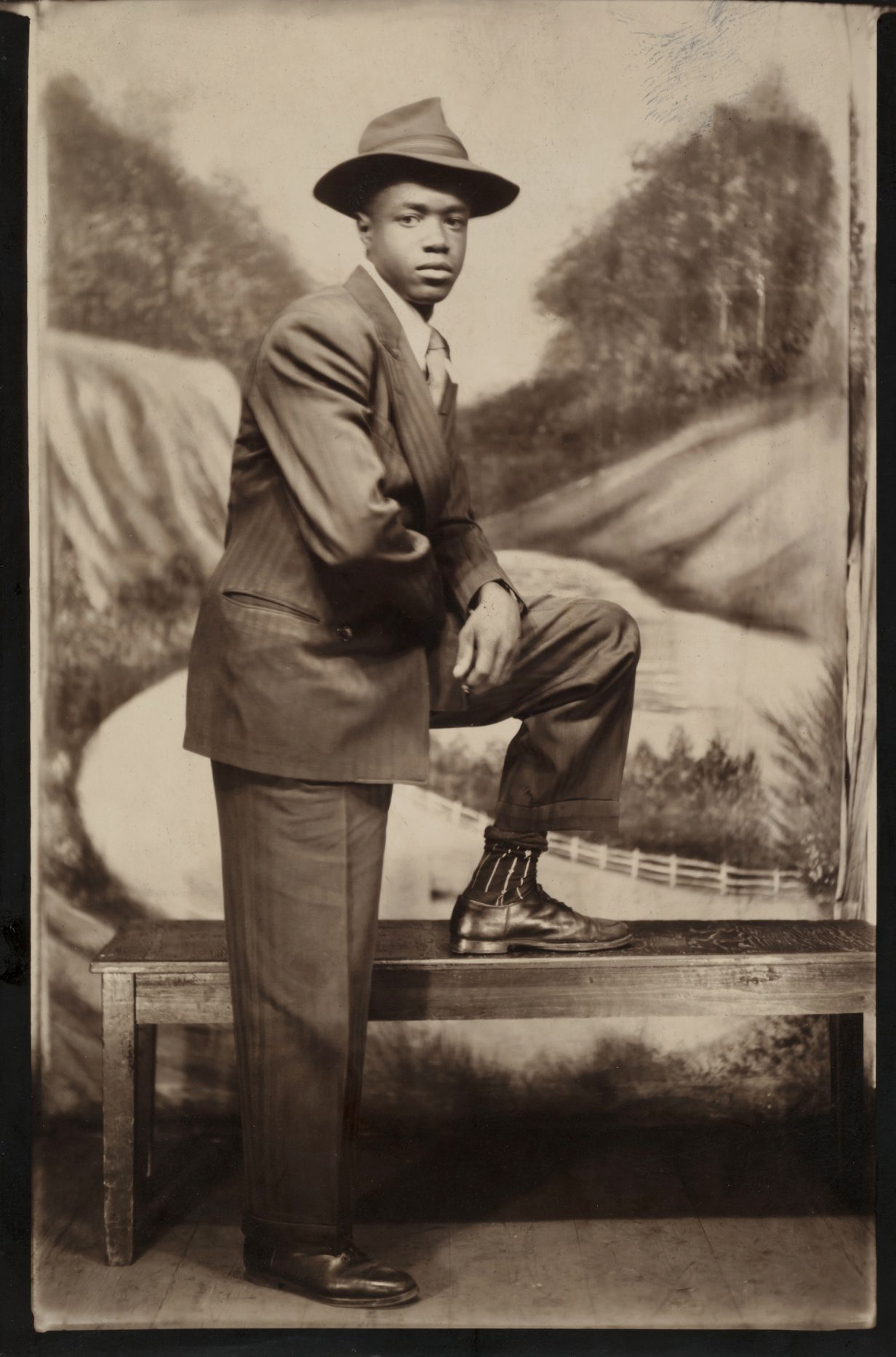
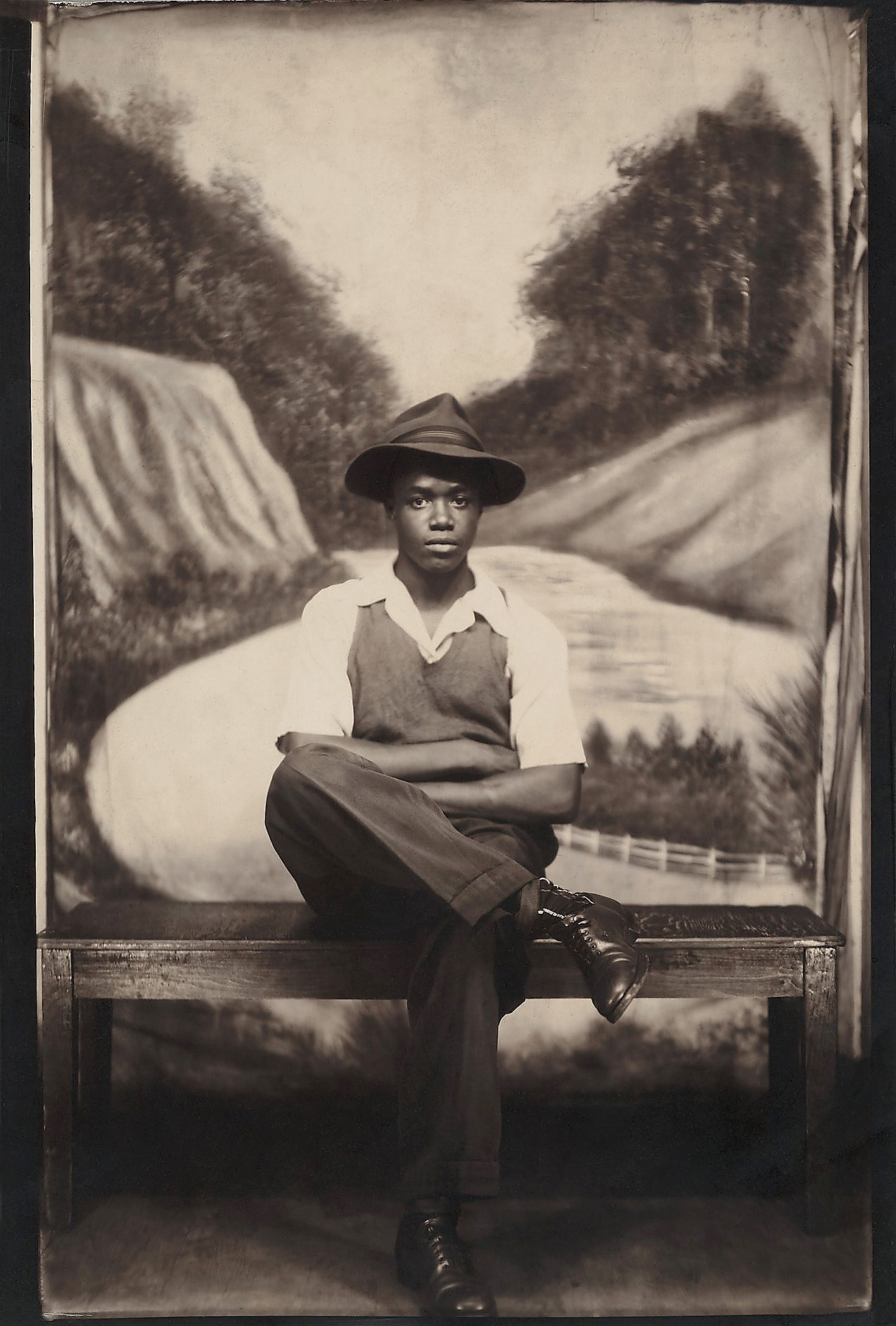
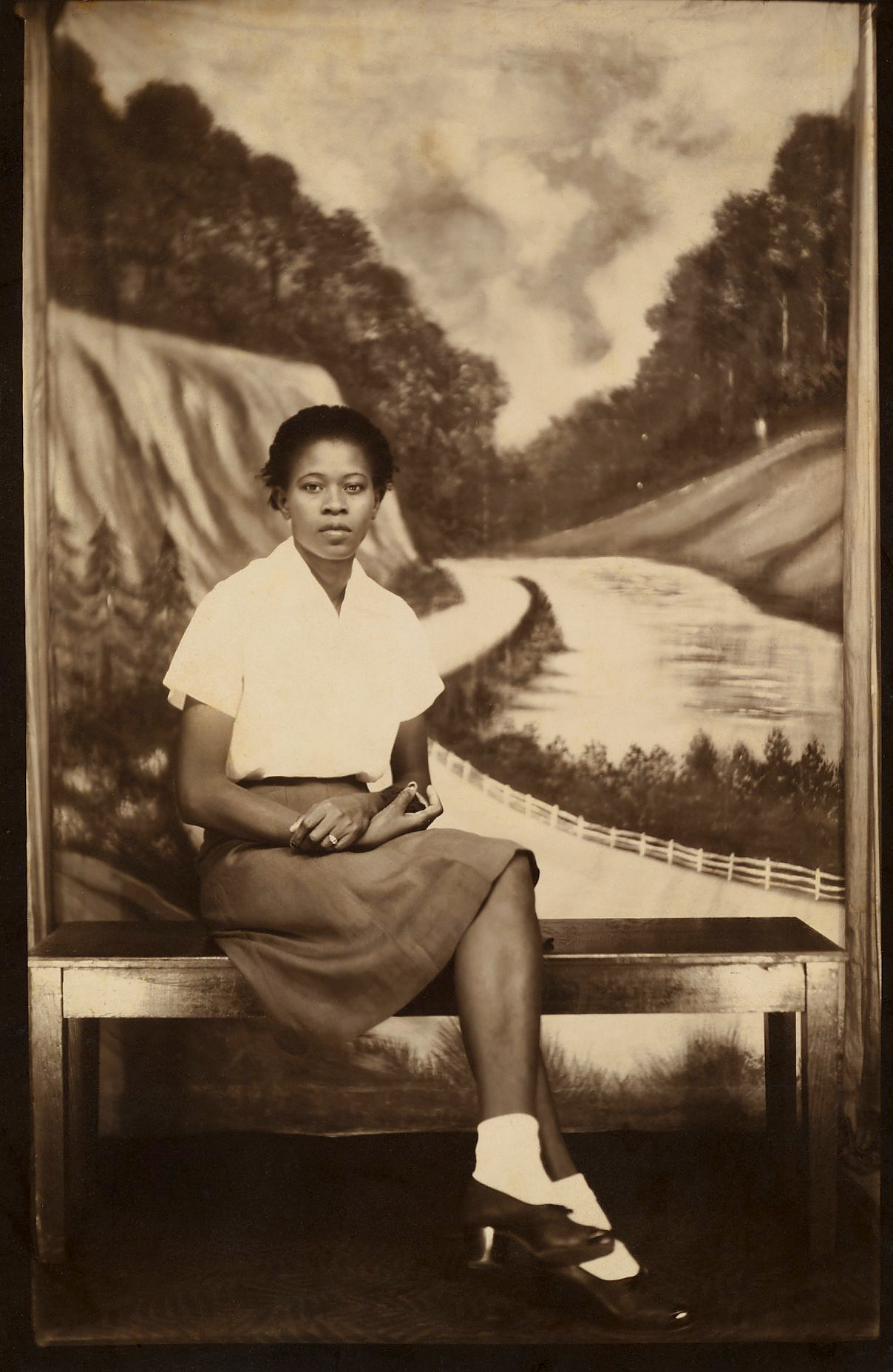
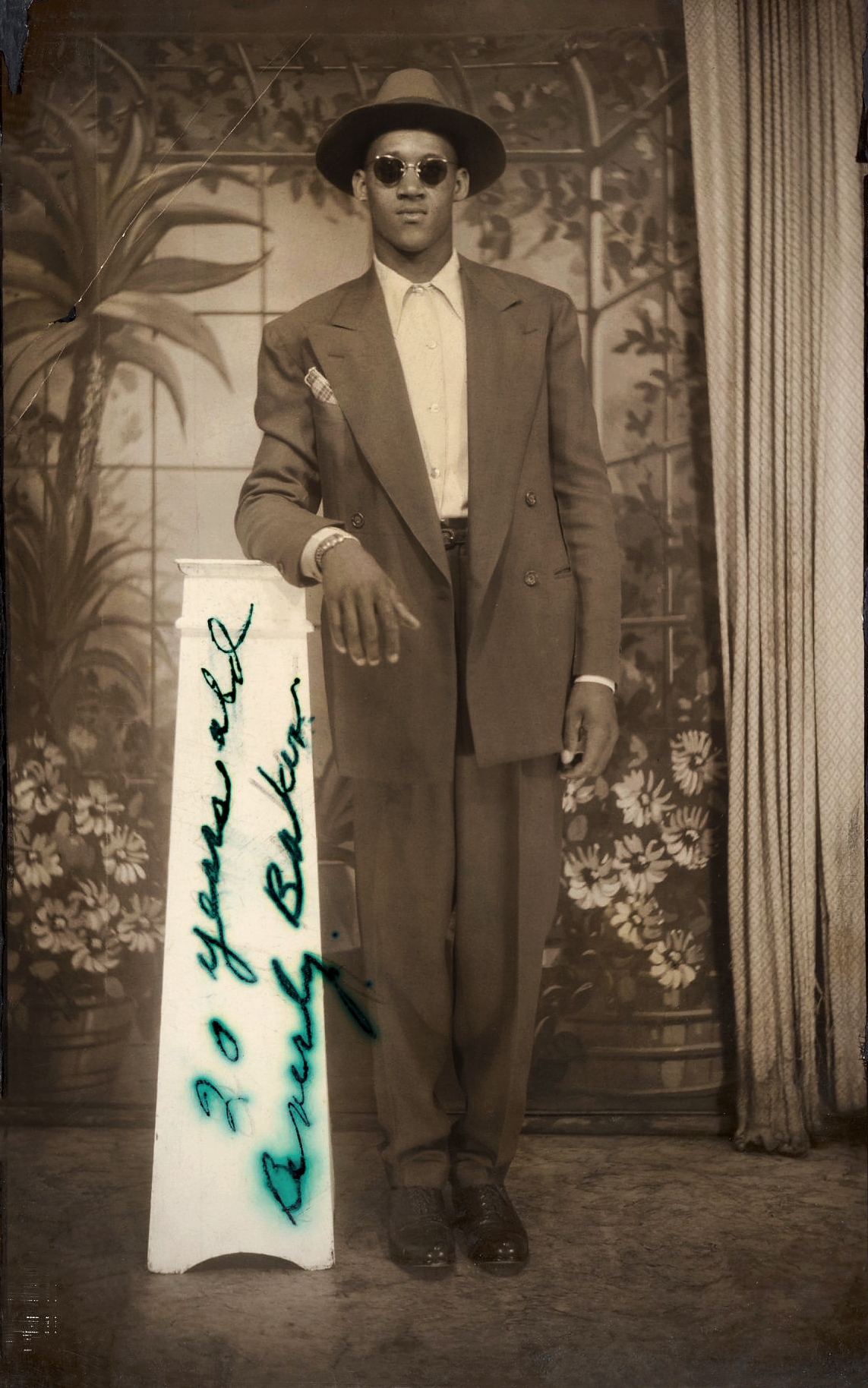
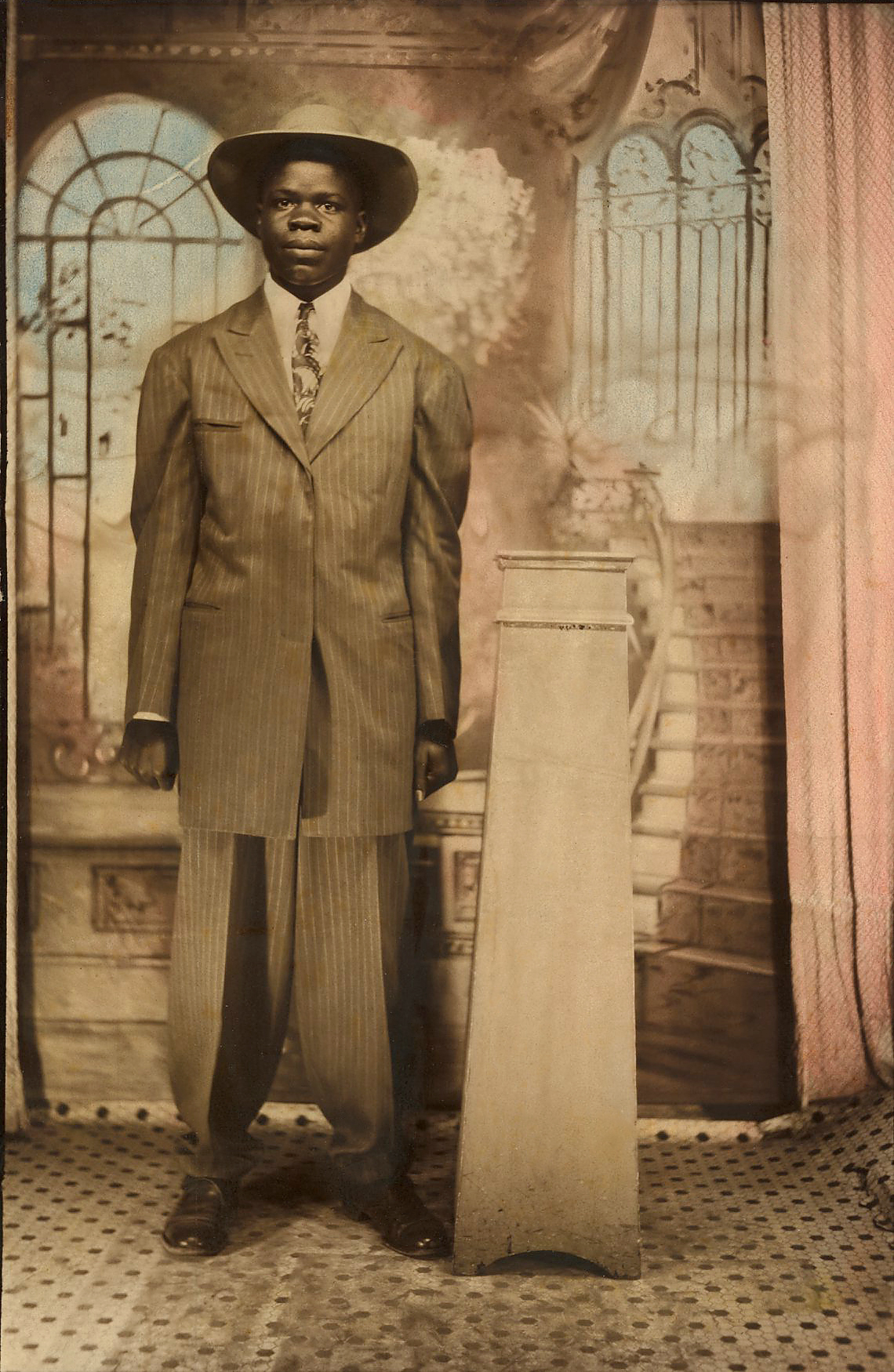
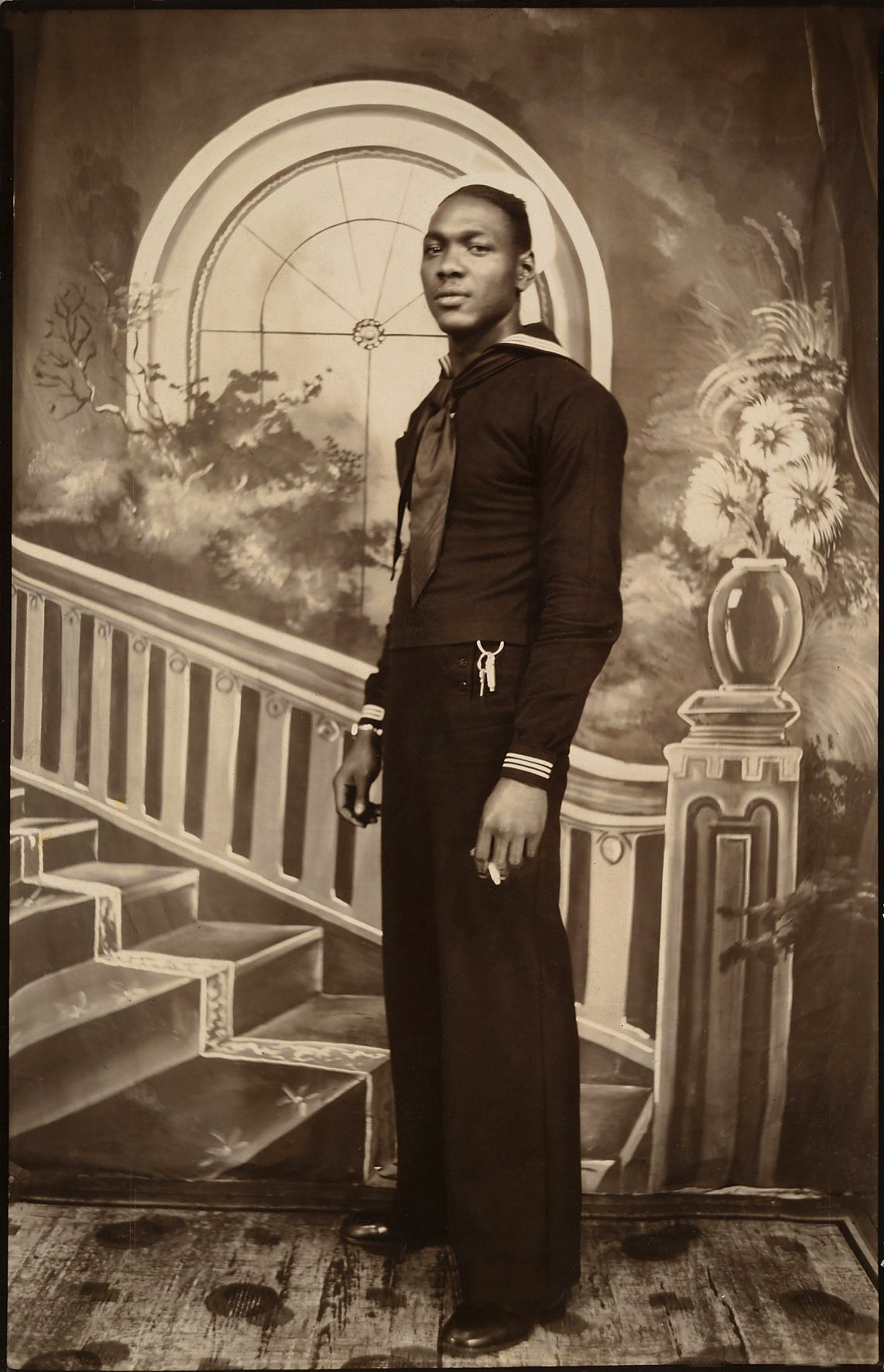
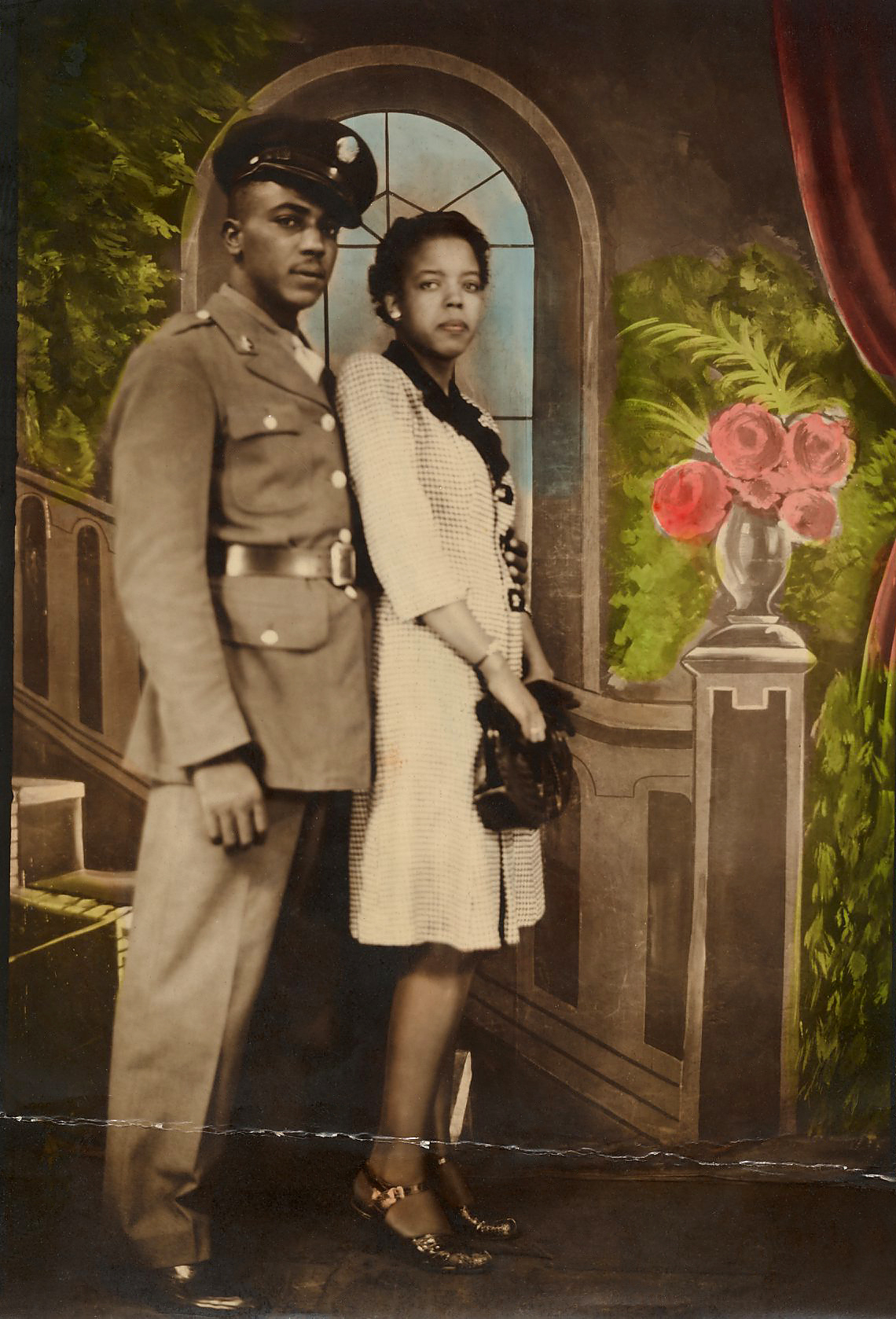
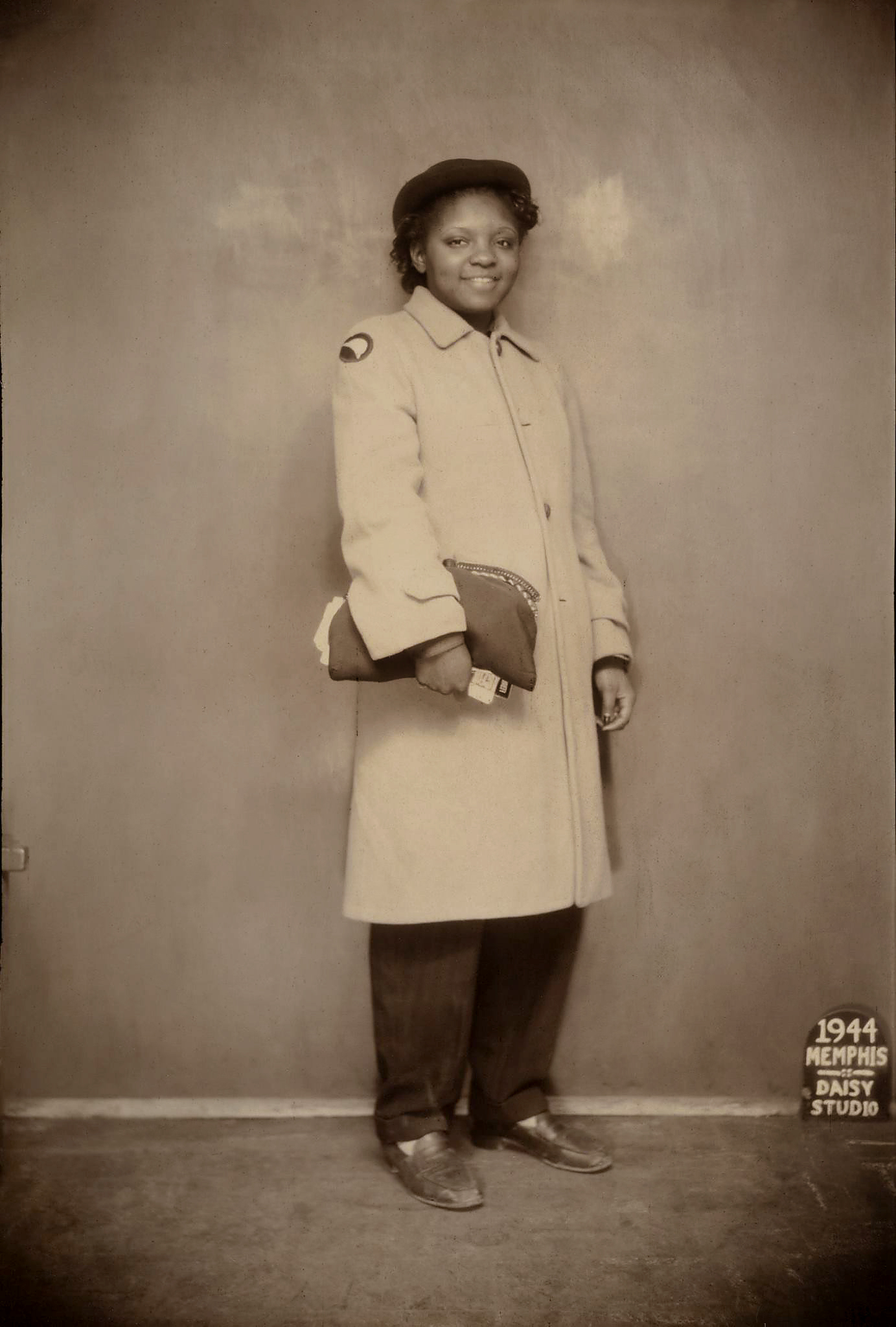
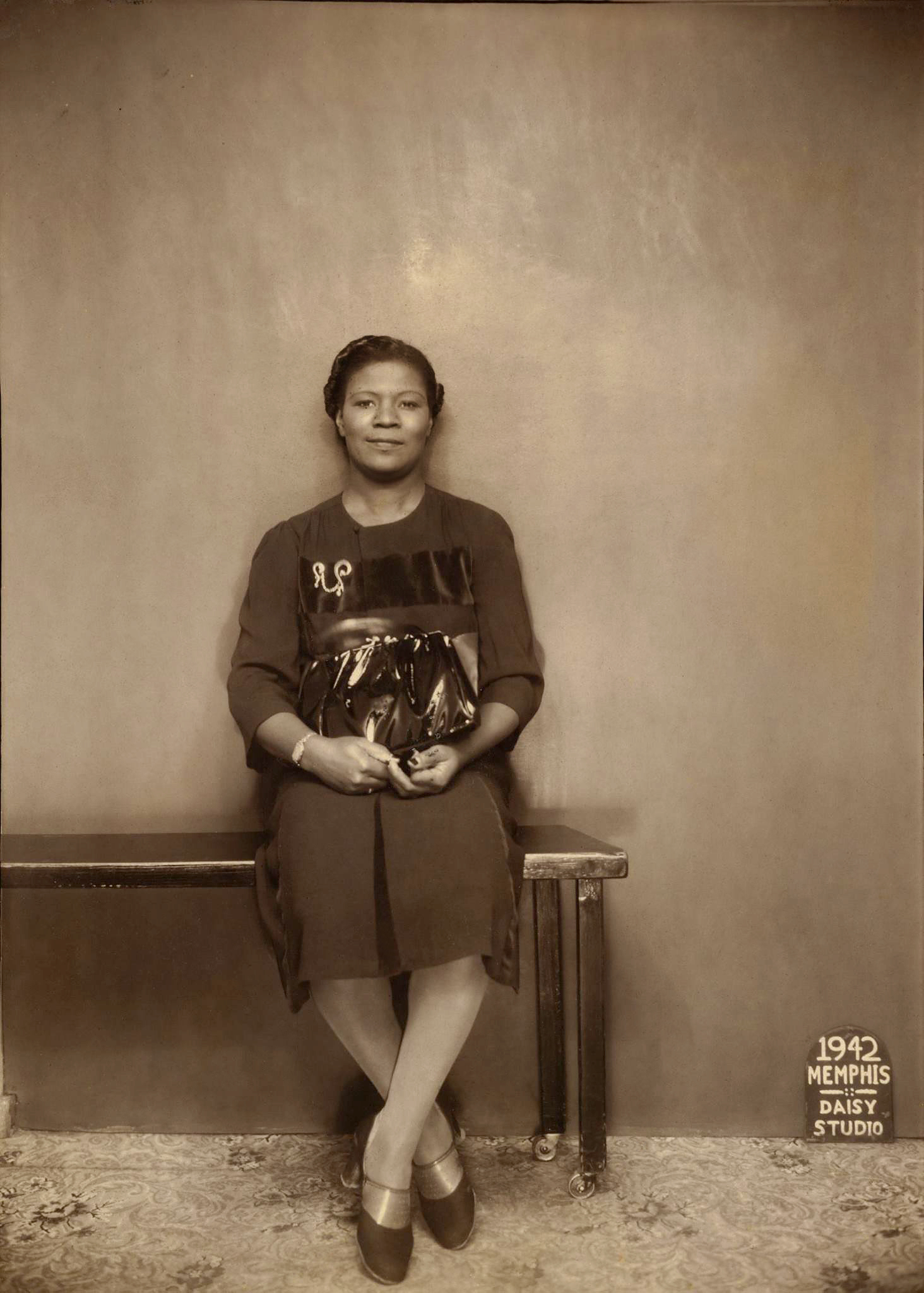
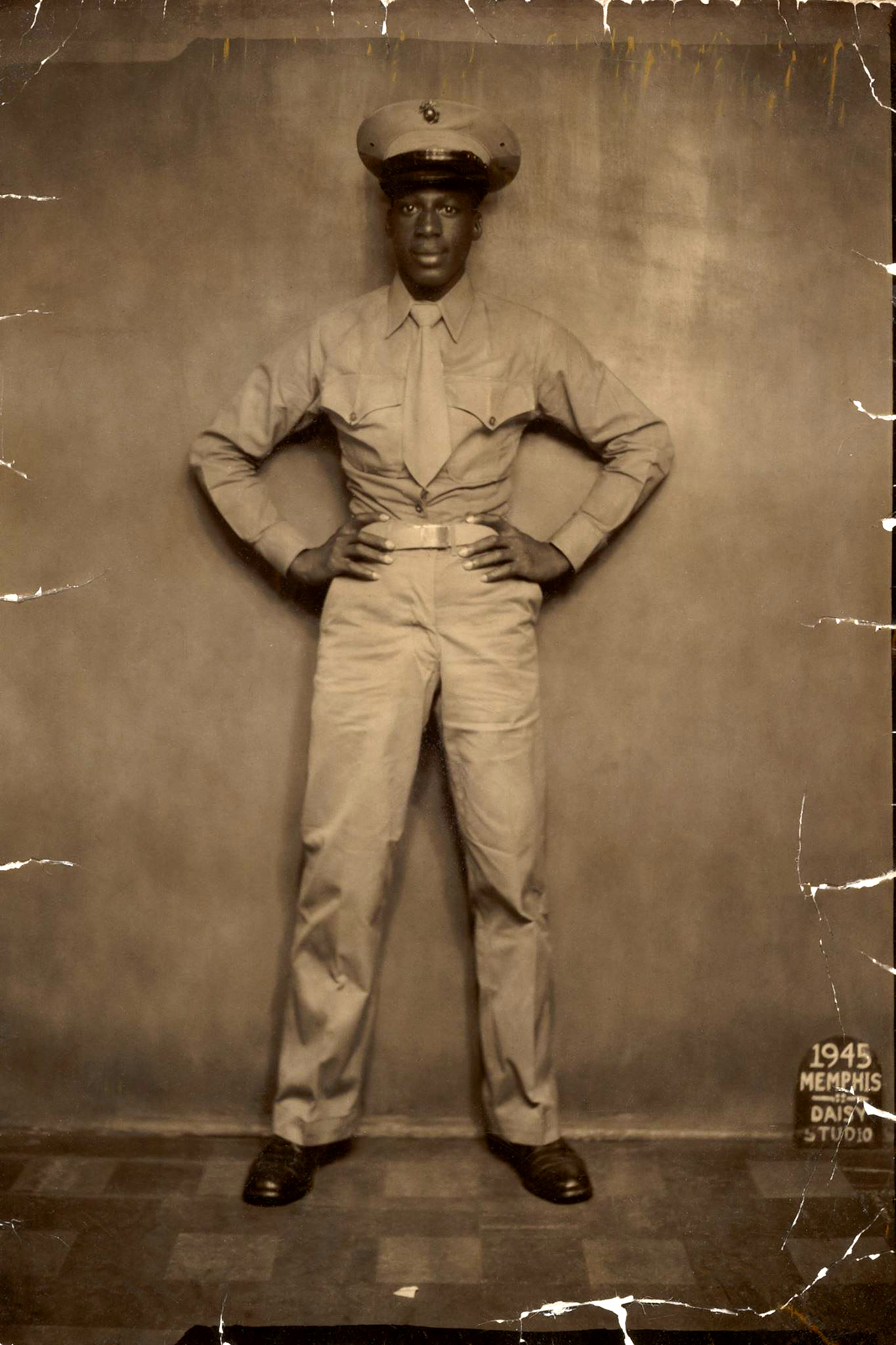
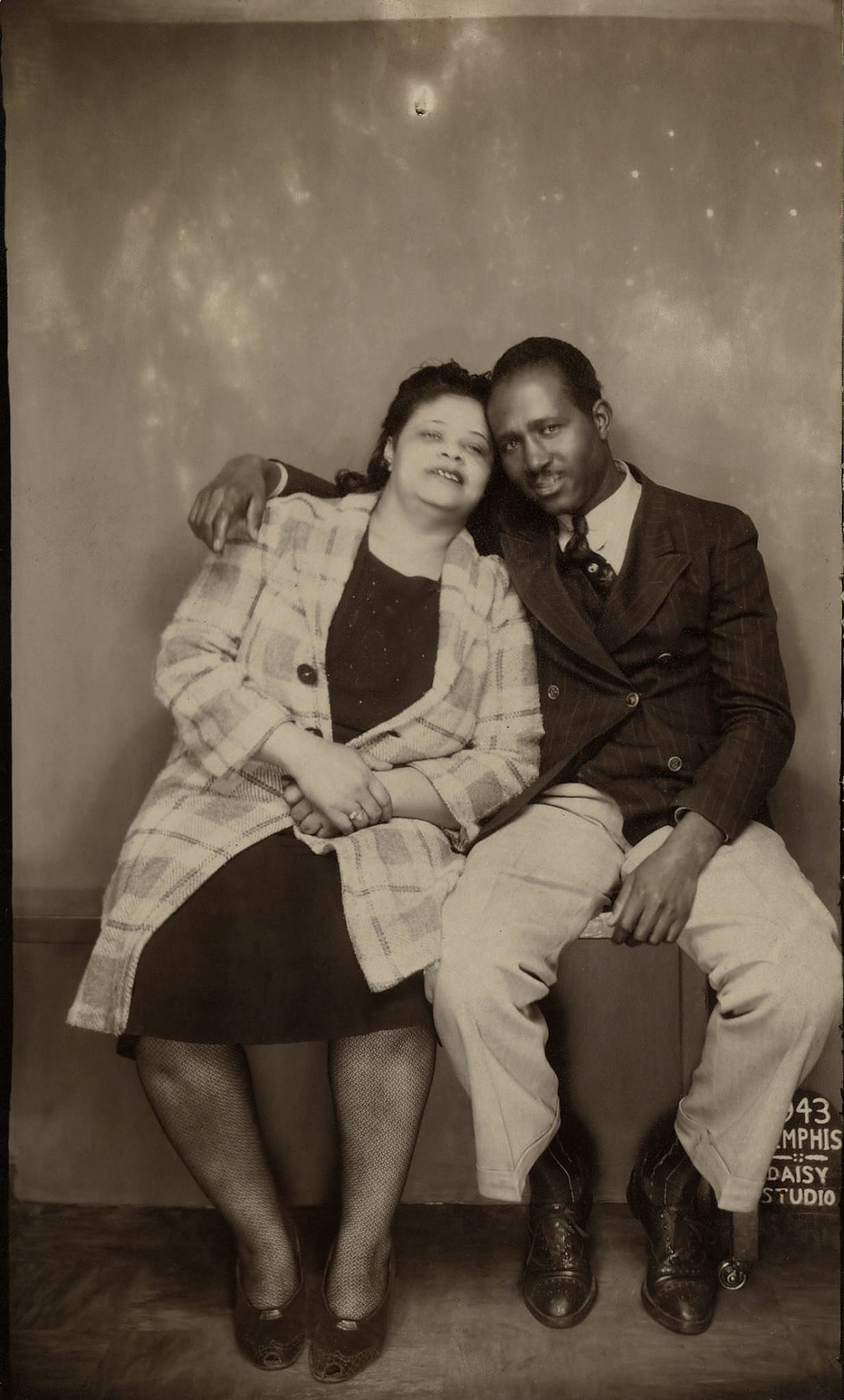
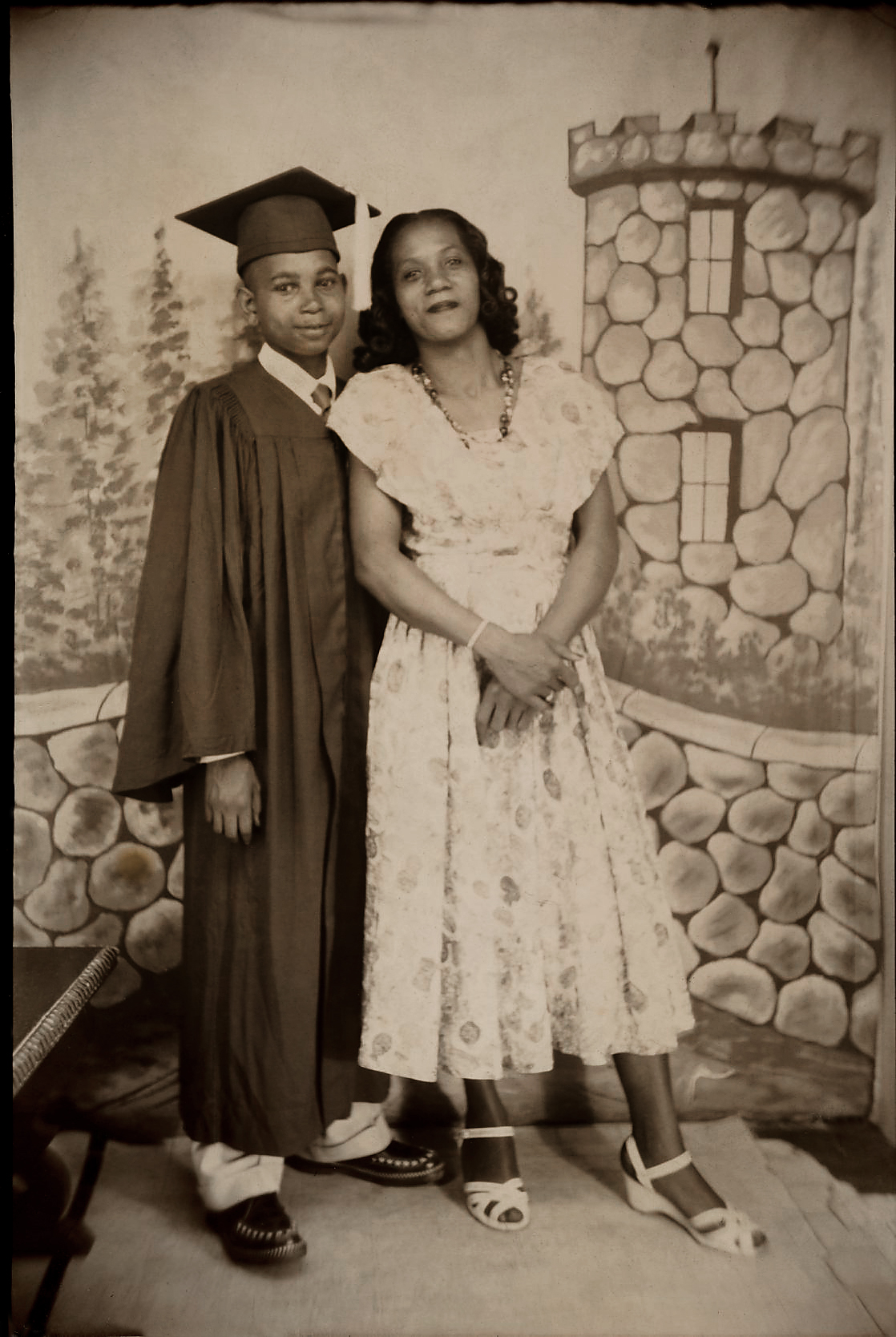
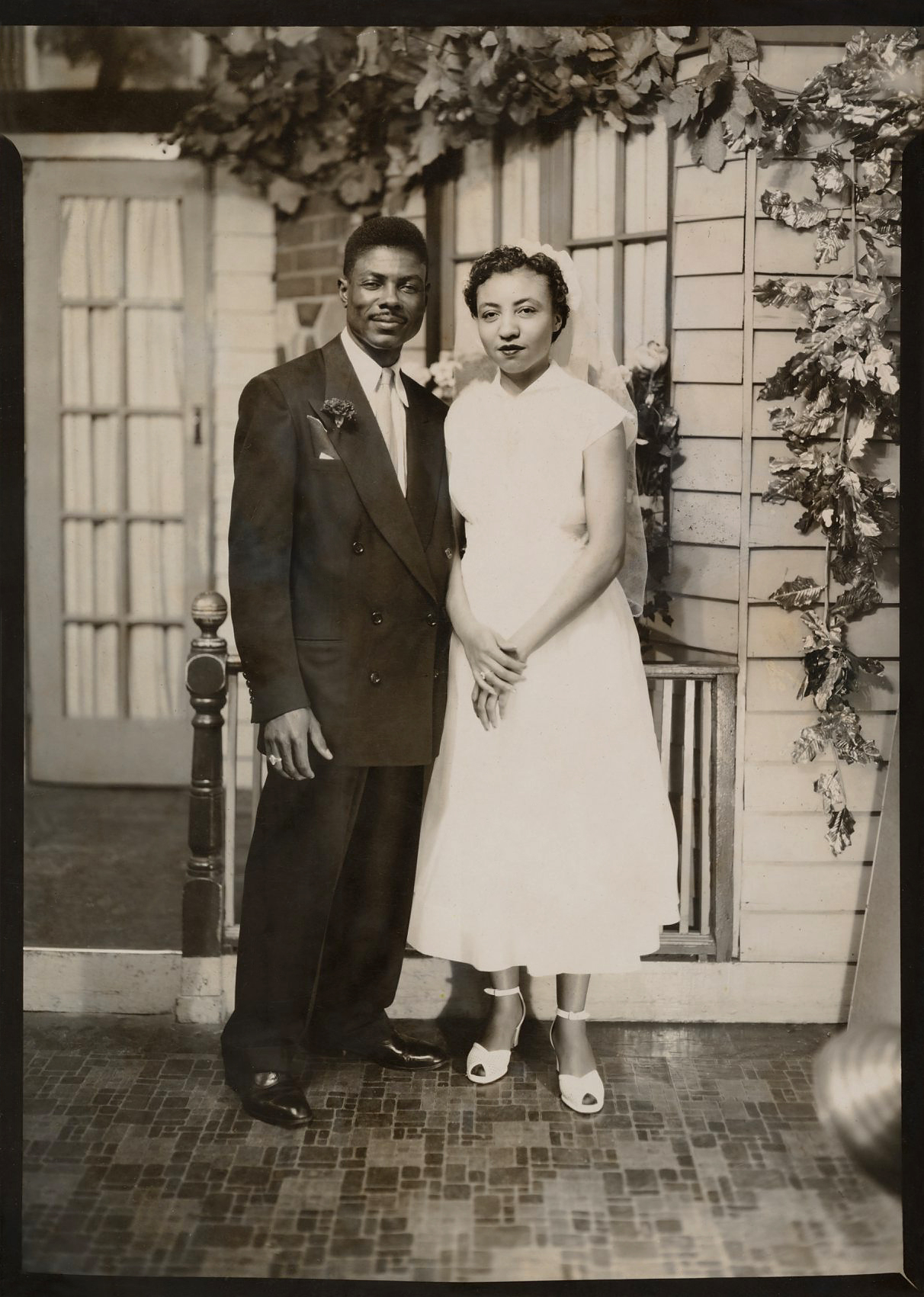
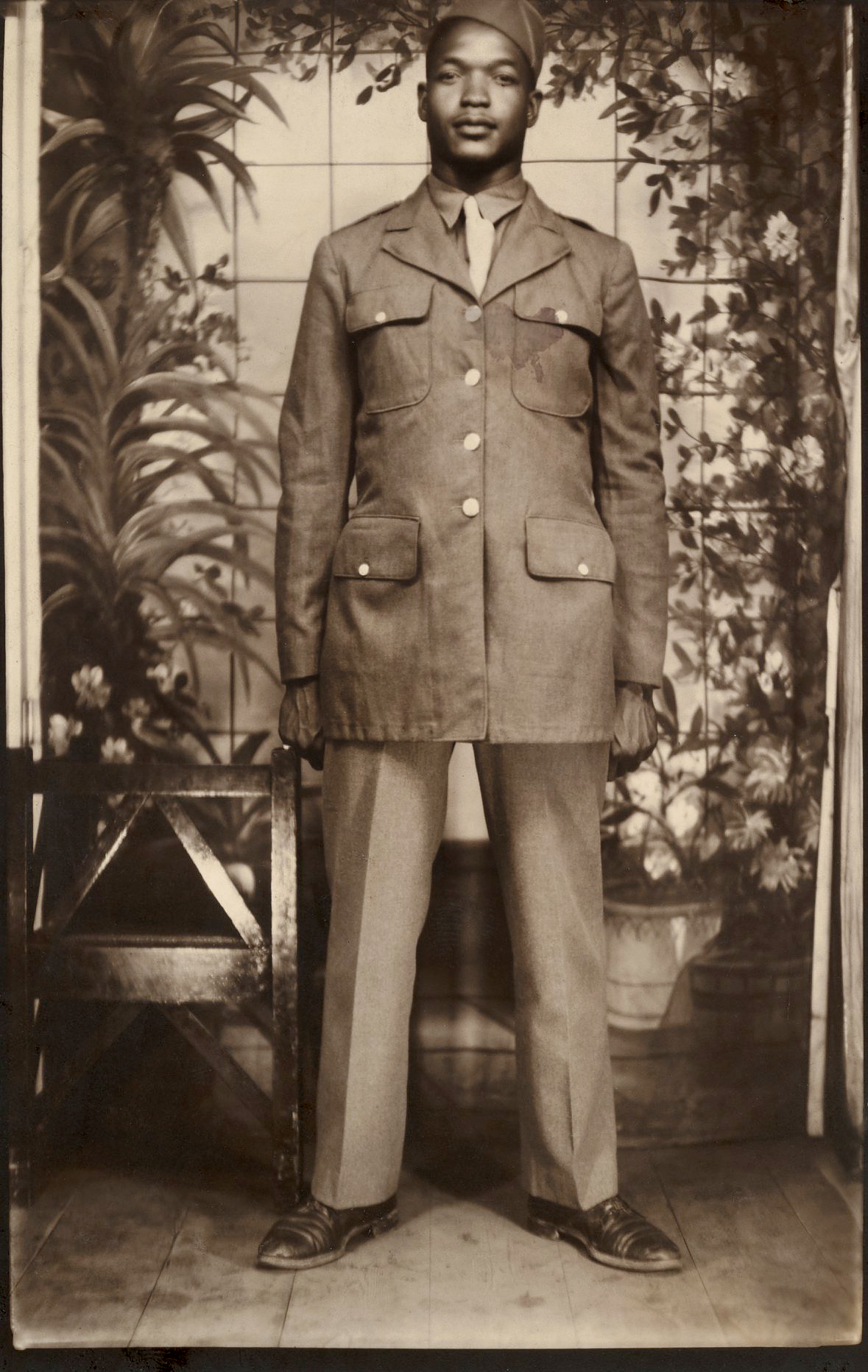
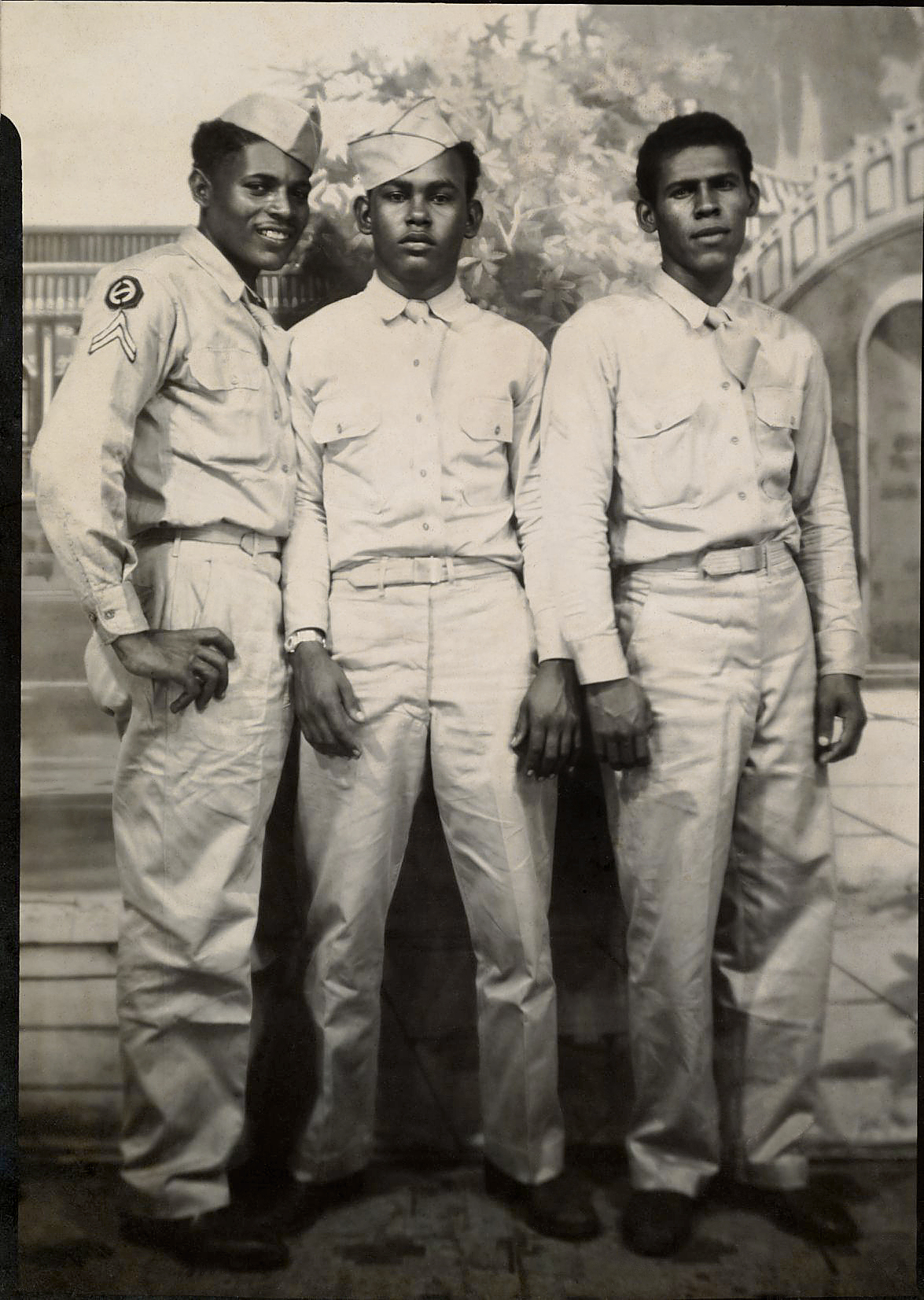
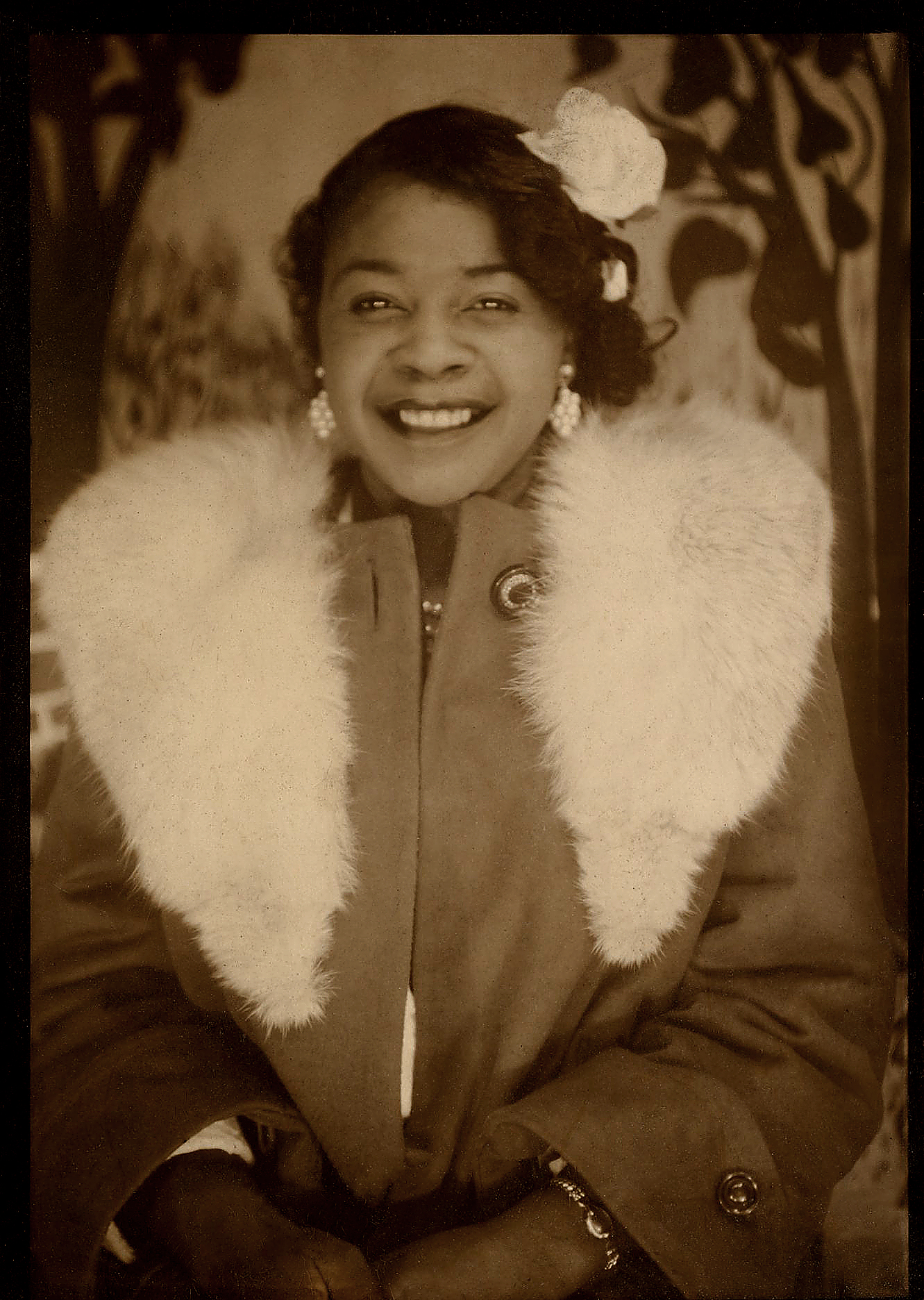
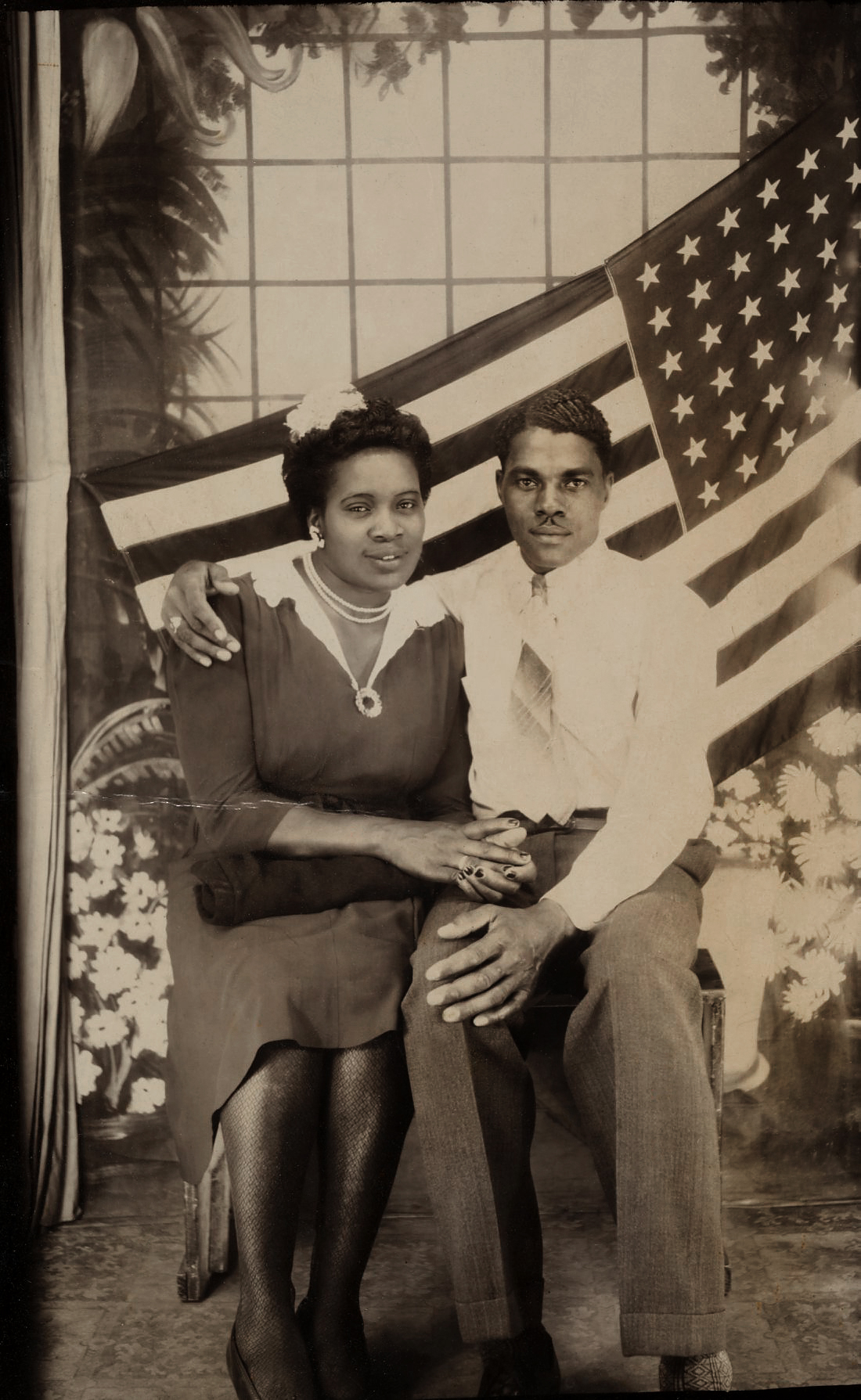
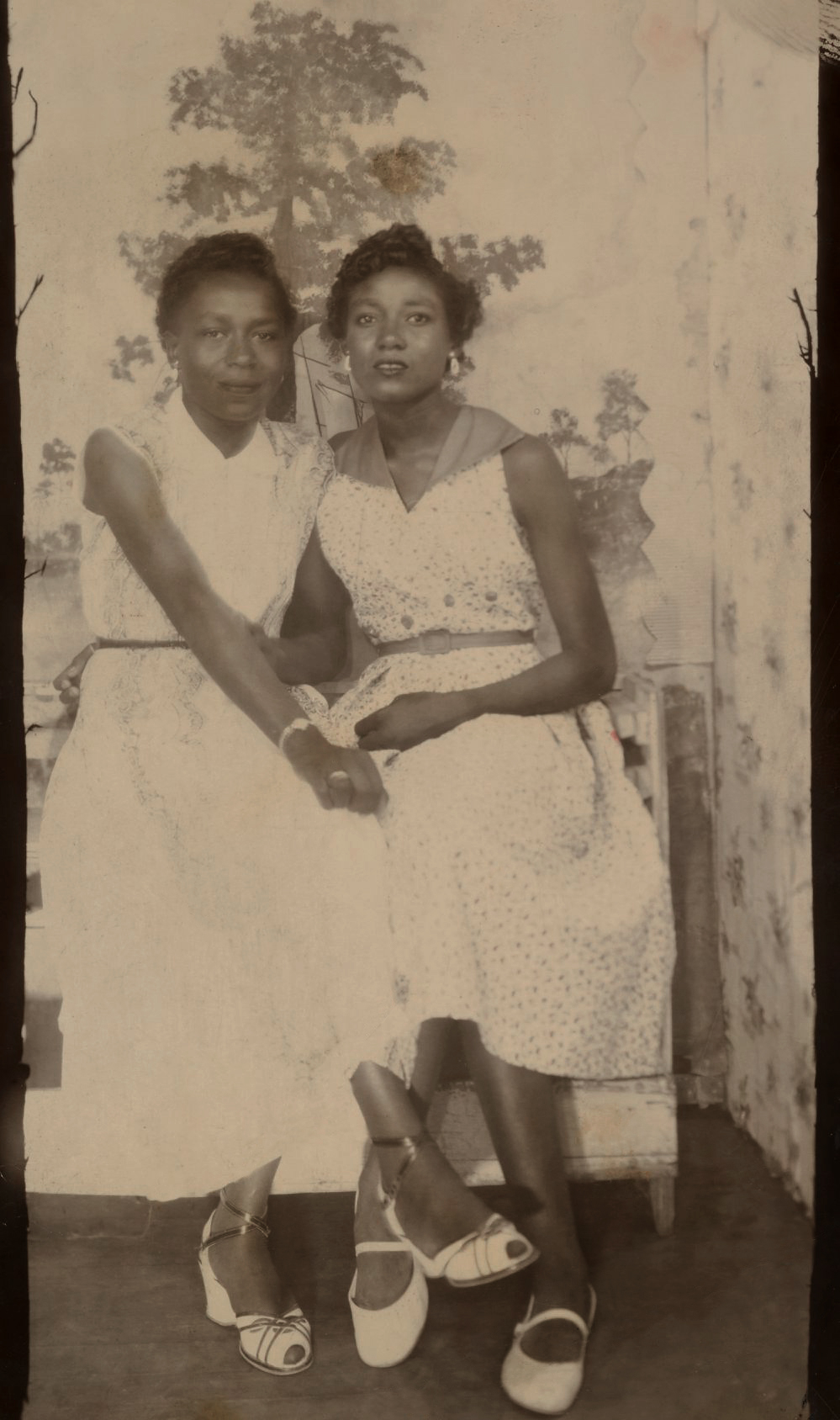
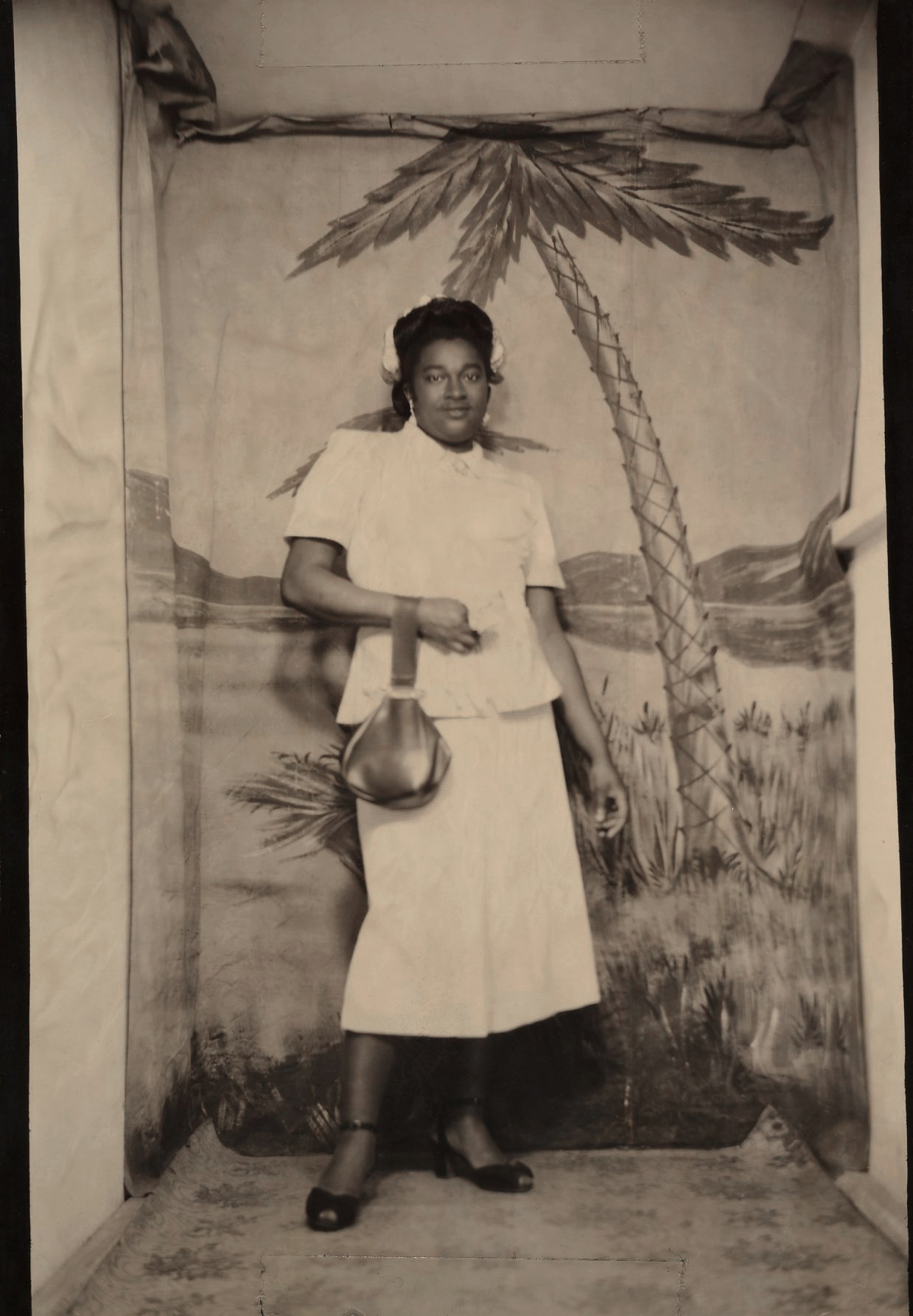
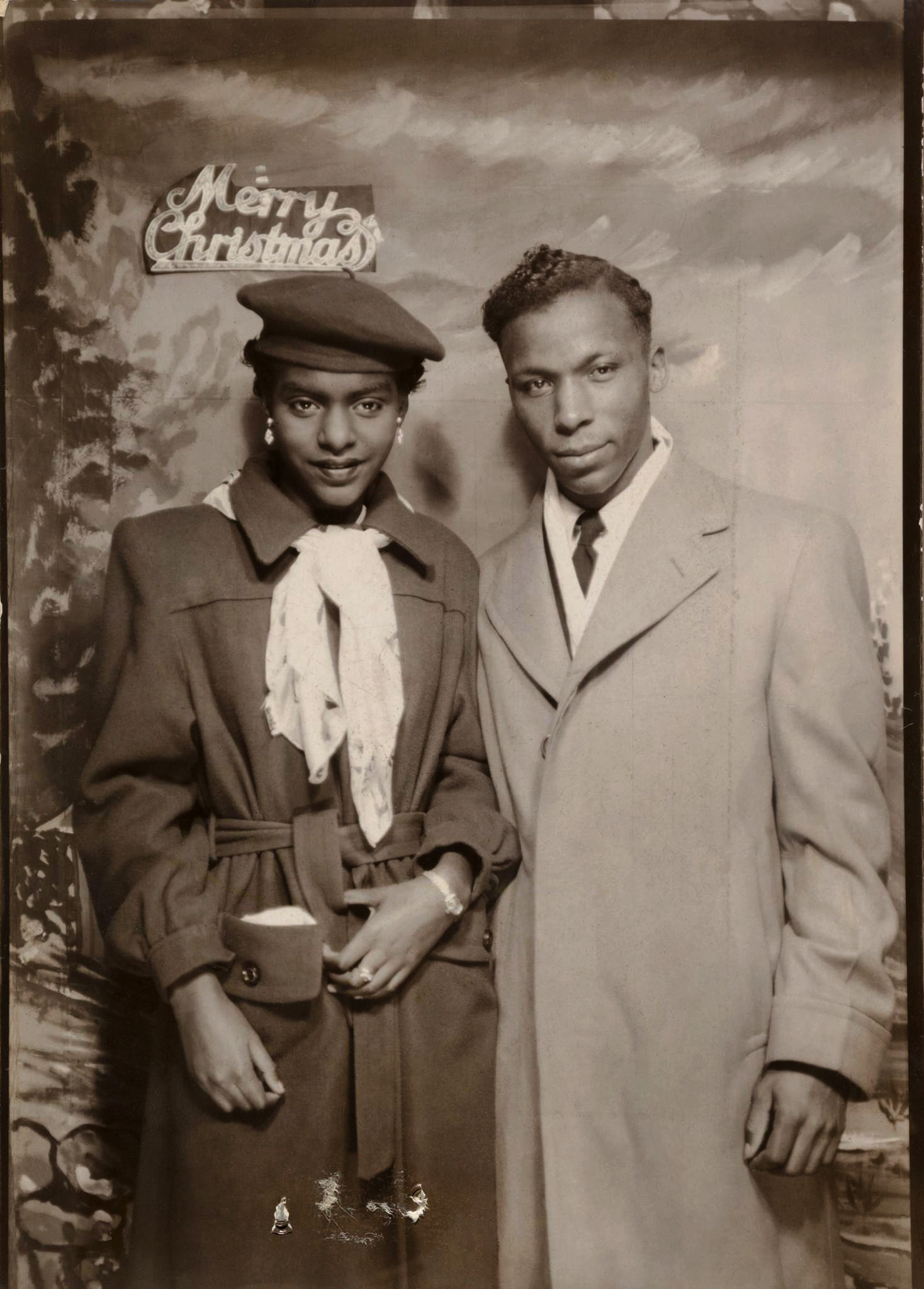
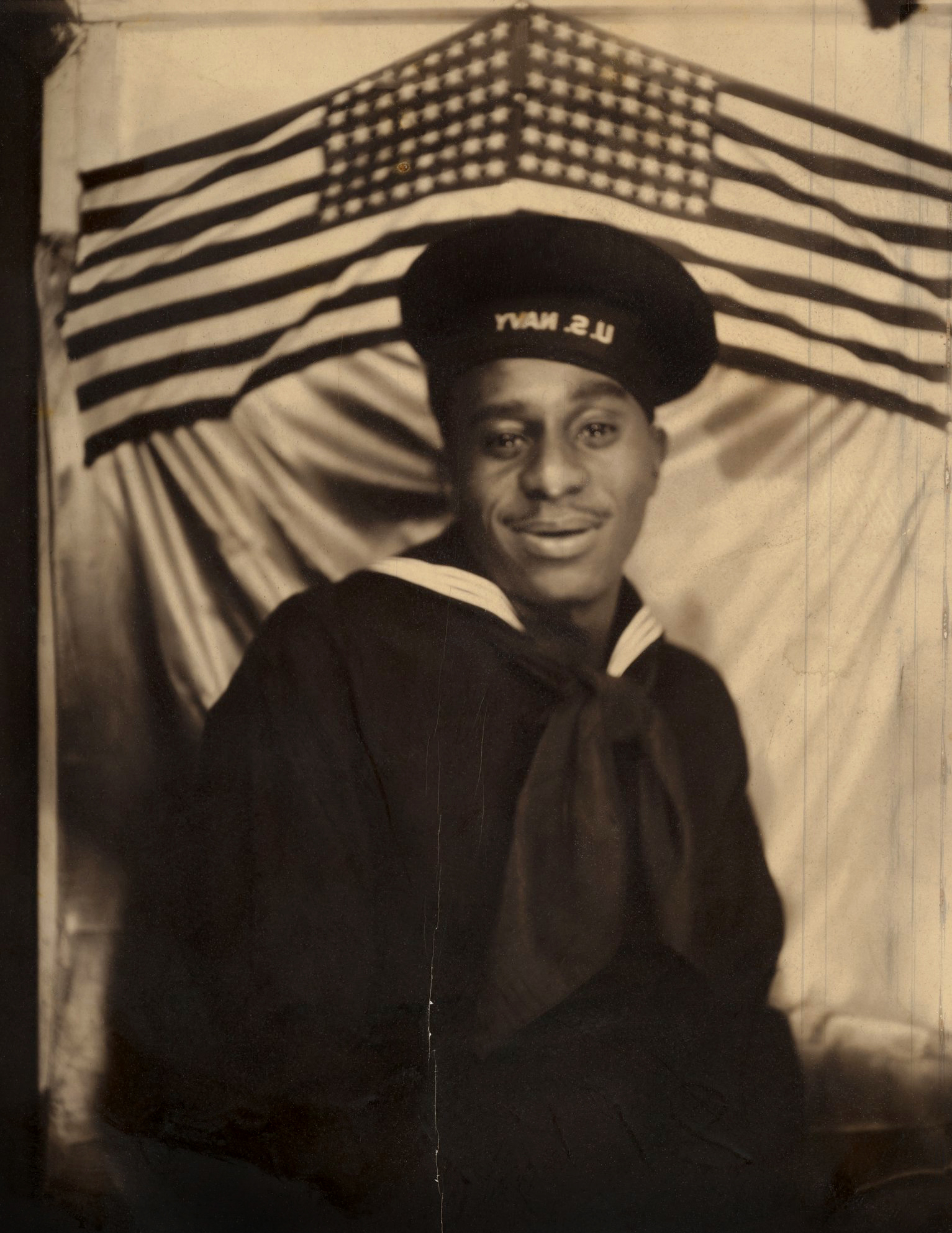
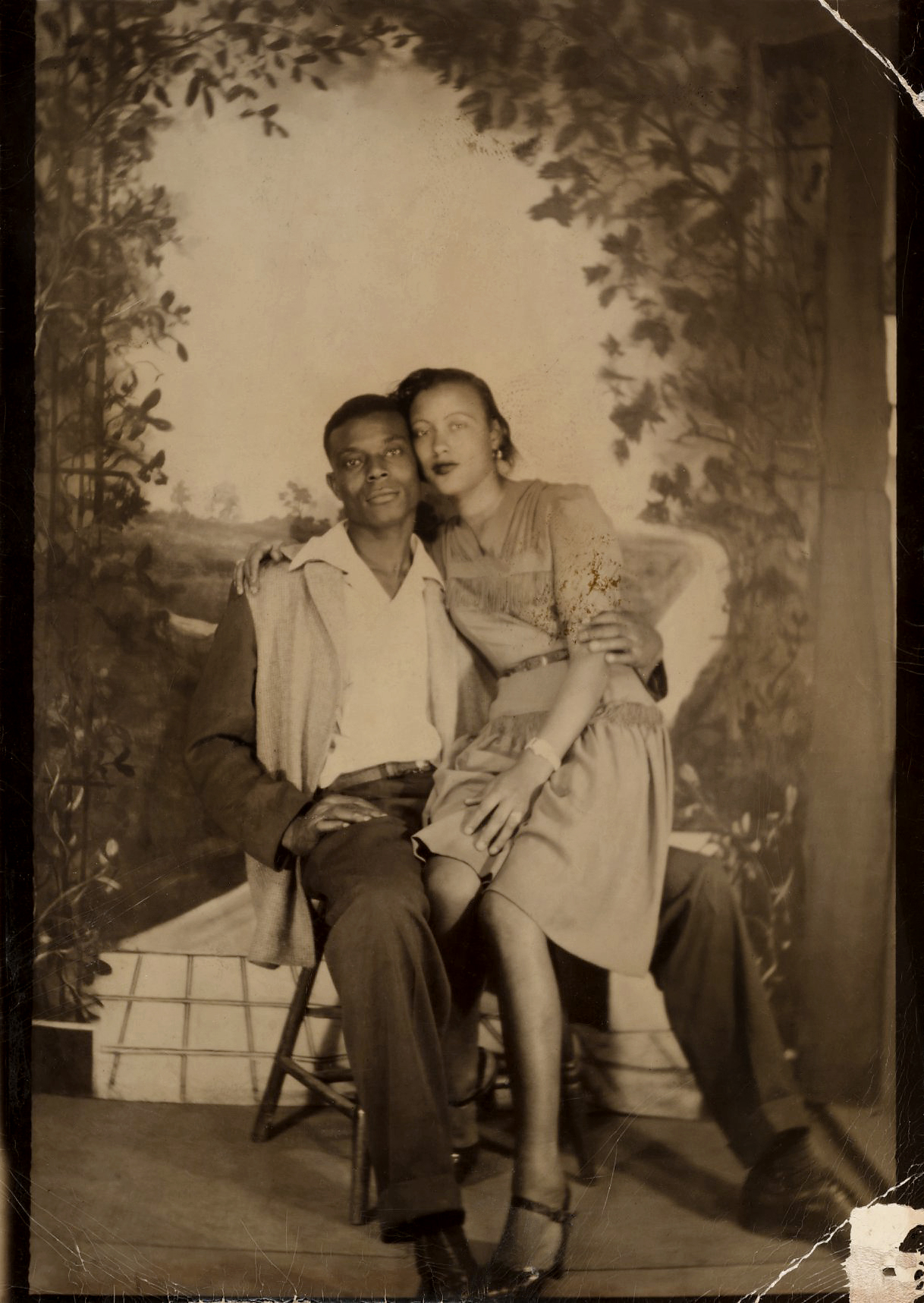
Unknown American photographers and Daisy Studio (American, active 1940s) Studio Portraits 1940s-1950s Gelatin silver prints The Metropolitan Museum of Art, New York, Twentieth-Century Photography Fund, 2015, 2017
First of a two-part posting on these mostly 1940s living expressions of past but present people and the African American experience.
In one photograph, I just love the hearts on the pockets of the jeans of one of the young men. Wonderful style and a touching intimacy are evident in many of the images.
“The poignancy of these small photographs lies in the essential respect the camera offers its subjects, who sit for their portraits as an act of self-expression.”
Many thankx to the Metropolitan Museum of Art for allowing me to publish the photographs in the posting. Please click on the photographs for a larger version of the image.
“To the eye and spirit, pictures are just what poetry and music are to the ear and heart.”
“With the clear perception of things as they are, must stand the faithful rendering of things as they seem. The dead fact is nothing without the living expression.”
Frederick Douglass. “Pictures and Progress”
“True art, when it happens to us, challenges the ‘I’ that we are.”
Jeanette Winterson. “Art Objects,” in Art Objects: Essays on Ecstasy and Effrontery, 1996
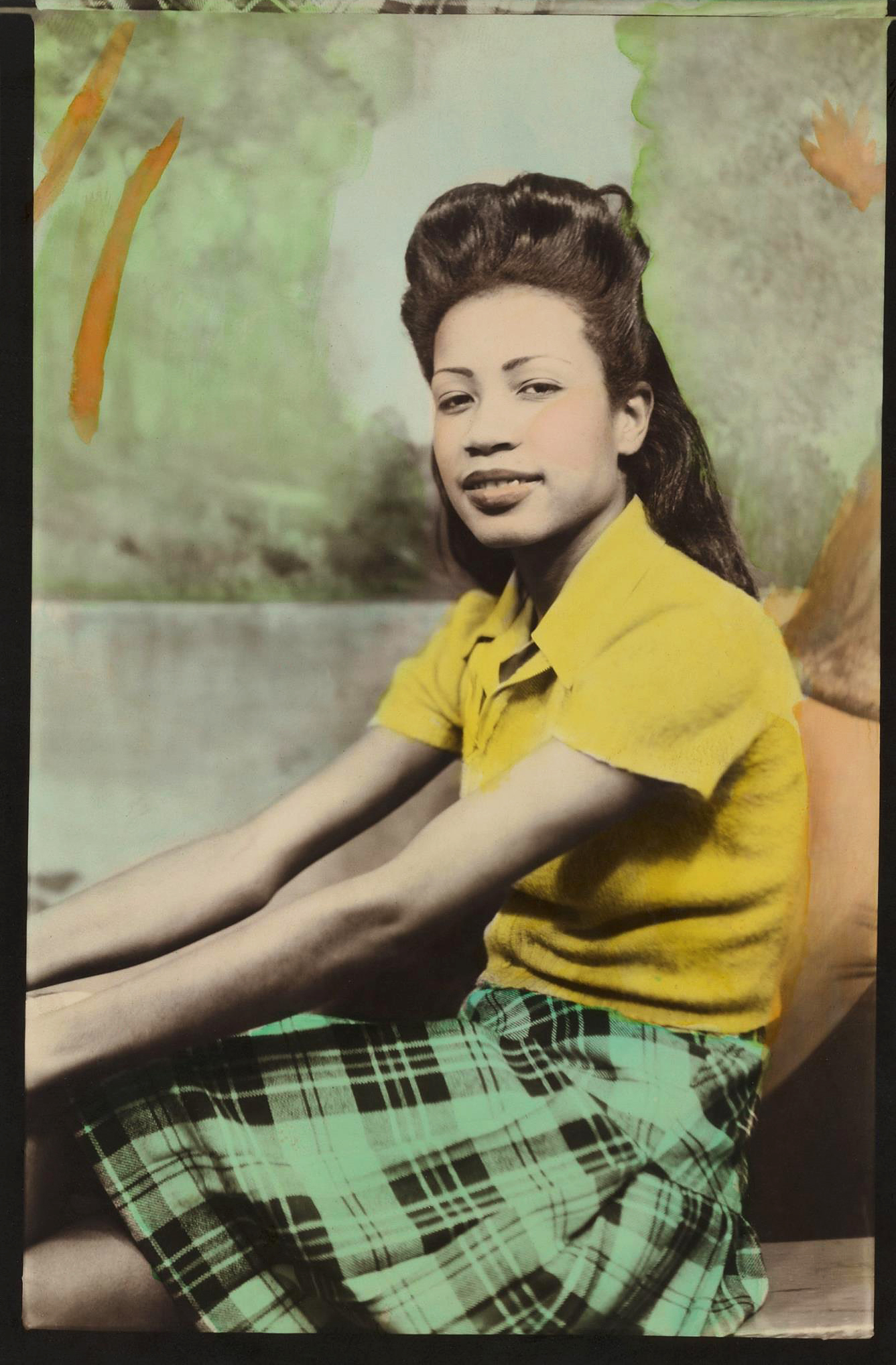
This exhibition will present more than one hundred and fifty studio portraits of African Americans from the mid-twentieth century, part of an important recent acquisition by The Met. Produced by mostly unidentified makers, the photographs are a poignant, collective self portrait of the African American experience during the 1940s and 1950s – a time of war, middle-class growth, and seismic cultural change.
Unknown American photographer Studio Portrait 1940s-1950s Gelatin silver print with hand colouring The Metropolitan Museum of Art, New York, Twentieth-Century Photography Fund, 2015, 2017 Image courtesy The Metropolitan Museum of Art
Unknown American maker Studio Portrait 1940s-1950s Gelatin silver print The Metropolitan Museum of Art, New York, Twentieth-Century Photography Fund, 2015, 2017 Image courtesy The Metropolitan Museum of Art
Unknown American photographer Studio Portrait 1940s-1950s Gelatin silver print The Metropolitan Museum of Art, New York, Twentieth-Century Photography Fund, 2015, 2017 Image courtesy The Metropolitan Museum of Art
Unknown American photographer Studio Portrait 1940s-1950s Gelatin silver print with hand colouring The Metropolitan Museum of Art, New York, Twentieth-Century Photography Fund, 2015, 2017 Image courtesy The Metropolitan Museum of Art
Unknown American photographer Studio Portrait 1940s-1950s Gelatin silver print The Metropolitan Museum of Art, New York, Twentieth-Century Photography Fund, 2015, 2017 Image courtesy The Metropolitan Museum of Art
African American Portraits: Photographs from the 1940s and 1950s, on view June 26 through October 8, 2018,will present more than 150 studio portraits from the mid-20th century. The exhibition offers a seldom seen view of the African American experience in the United States during World War II and the following decade – a time of war, middle-class growth, and seismic cultural change. Part of an important acquisition made by The Met in 2015 and 2017, these photographs build on and expand the Museum’s strong holdings in portraiture from the beginning of photography in the 1840s to the present. The exhibition is made possible by the Alfred Stieglitz Society.
The portraits on view generally feature sitters in a frontal pose against a painted backdrop – soldiers and sailors model their uniforms, graduates wear their caps and gowns, lovers embrace, and new parents cradle their infants. Both photographers and subjects remain mostly unidentified.
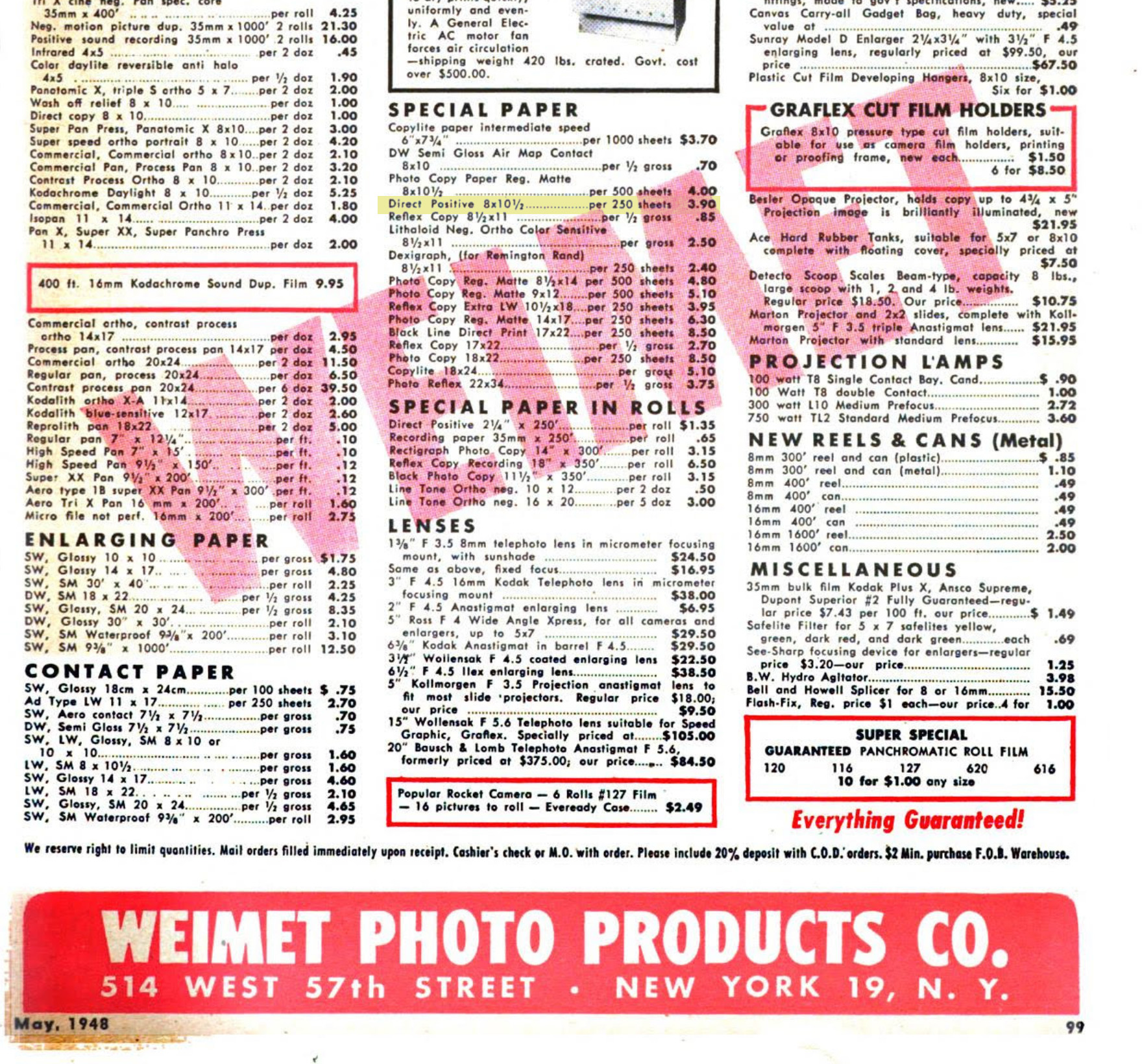
In the wartime economy, photographic studios became hubs of activity for local and regional communities. Some studios were small and transient, others more established and identifiable, such as the Daisy Studio in Memphis, Tennessee. Using waterproof direct positive paper rather than film, the studios were able to offer their clientele high quality, inexpensive portraits in a matter of minutes. The poignancy of these small photographs lies in the essential respect the camera offers its subjects, who sit for their portraits as an act of self-expression.
African American Portraits: Photographs from the 1940s and 1950s is organised by Jeff L. Rosenheim, Joyce Frank Menschel Curator in Charge of the Department of Photographs at The Met.
Press release from the Metropolitan Museum of Art
The Billboard December 4 , 1948 p. 72
Popular Photography May 1948 p. 99
Direct positive paper is primarily suited for use in pinhole cameras where exposure and processing in conventional black and white photo chemistry achieves a unique positive print – without the need for a film negative or inter-negative. The paper can also be successfully used in other applications such as direct exposure in large format cameras or by cutting small sheets for exposure in LOMO type cameras.
Unknown American photographer Studio Portrait 1940s-1950s Gelatin silver print The Metropolitan Museum of Art, New York, Twentieth-Century Photography Fund, 2015, 2017 Image courtesy The Metropolitan Museum of Art
Unknown American photographer Studio Portrait 1940s-1950s Gelatin silver print with hand colouring The Metropolitan Museum of Art, New York, Twentieth-Century Photography Fund, 2015, 2017 Image courtesy The Metropolitan Museum of Art
Unknown American photographer Studio Portrait 1940s-1950s Gelatin silver print The Metropolitan Museum of Art, New York, Twentieth-Century Photography Fund, 2015, 2017 Image courtesy The Metropolitan Museum of Art
The Metropolitan Museum of Art 1000 Fifth Avenue at 82nd Street New York, New York 10028-0198 Phone: 212-535-7710
Opening hours: Sunday – Tuesday and Thursday: 10am – 5pm Friday and Saturday: 10am – 9pm Closed Wednesday
Robert B. Talfor (American born Britain) Nitroglycerine works at station between Raft Nos. 26 and 27. Plate B of the photographic album Photographic Views of Red River Raft (detail) 1873 Hand-coloured albumen print, mounted recto only to pages with a stylised U.S. Corps of Engineers printed border 7 x 9 1/4 inches (17.8 x 23.5cm)
“In May Lieutenant Woodruff’s careful plans for using “tri-nitro-glycerine” to hasten the removal process, were put into operation and proved quite successful. It continued to be used on a half dozen of the rafts the last of May and through the month of June as the main channel of the river was widened.”
Hubert Humphreys. “Photographic Views of the Red River Raft, 1873,” p. 107
One of the great privileges of writing and researching for this website is the ability to pull disparate sources together from all over the world, so that the some of the most valuable information can be stored in one place – a kind of meta-posting, with informed comment, upon the context of place, time, identity and image. This is one such posting.
I had never known of these photographs before, nor of their photographer R.B. Talfor of whom I can find little information. I never knew the story of the Great Raft of the Red River, nor the heroism of Lieutenant Eugene A. Woodruff, in charge of the clearing operations, who sacrificed his life to look after others in the yellow fever epidemic in Shreveport in 1873. These stories deserve to be told, deserve a wider audience, for it is all we have left of this time and place.
The 113 photographic views, hand coloured albumen prints “are remarkable for both their historical narrative and aesthetic integrity.” They document not only the landscape but the lives of the crews working on the river. As Woodruff notes in his report of July 1, 1873, “With the view is a photographic map of the raft region, with location and axis of the camera for each view marked upon it and numbered to correspond with the number on the view. This album full of photographs, affording a complete and truthful panorama of the raft, will give a better idea of the nature of the work performed and of the character of the country than could be obtained form the most elaborate description.”
In other words, the photographs and accompanying map are a scientific and objective ordering of life and nature, “affording a complete and truthful panorama of the raft”, the nature of the work performed and the character of the country. Truth, panorama, nature, character. And yet, when you look at the whole series of photographs, they become something much more than just objective rendition.
Firstly, while Talfor maps out his “points of view” he resists, but for a few occasions, the 19th century axiom of placing a man in the landscape… to give the landscape scale by including a human figure. In their aesthetic integrity he lets the landscape speak for itself. But if you look at the sequencing of the plates in the album you observe that he alternates between photographs of open stretches of river taken in overcast / end of day light, and plates filled with a dark, mysterious, chthonic atmosphere, as though we the viewer are inhabiting a nightmarish underworld. Into this dark romanticism, this American Gothic, he throws great tree stumps being hauled out of the water, wind whipping through the trees (seen in the length of exposure of the images) and men with cable and plunger standing stock still in front of a tent full of NITROGLYCERIN! DANGER! KEEP AWAY!
Secondly, Talfor’s hand colouring of the photographs seems to add to this almost William Blake-esque, melancholy romanticism. While the light of the setting sun and its reflection over water add to the sublime nature of the scene, the clouds, in particular in plates such as XCVL and XXVI (note the tiny man among the logs), seem to roil in the sky, like mysterious wraiths of a shadowy atmosphere. It is as though Talfor was illustrating a poem of extreme complexity, not just an objective, social documentary enterprise of time and place, but a rendition of the light and darkness of nature as seen through the eyes of God. A transcendent liminality inhabits these images, one in which we cross the threshold into a transitional state between one world and the next, where the photographs proffer a ‘releasement toward things’ which, as Heidegger observes, grant us the possibility of dwelling in the world in a totally different way.
Dr Marcus Bunyan
These images are published under fair use on a non-commercial basis for educational and research purposes only. Please click on the photographs for a larger version of the image.
“We stand at once within the realm of that which hides itself from us, and hides itself just in approaching us. That which shows itself and at the same time withdraws is the essential trait of what we call the mystery… Releasement towards things and openness to the mystery belong together. They grant us the possibility of dwelling in the world in a totally different way…”
MartinHeidegger. ‘Discourse on Thinking’. New York: Harper & Row, 1966, pp. 55-56
Photographic Views of the Red River Raft
U.S. Army Corps of Engineers operation to remove obstacles from the Red River in Louisiana, 1873
113 hand coloured photographic views of the Red River made in April and May 1873, under the direction of C. W. Howell, U. S. Capt.; Corps of Engineers, and E. A. Woodruff, 1st Lieut. U. S. Corps of Engineers; to accompany the annual report on operations for the removal of the Raft; during the year ending June 30, 1873. The photographer was Robert B. Talfor. The portion of the Red River affected reached from Natchitoches Parish through north Caddo Parish, Louisiana. Hand-coloured albumen prints, the images measuring 7 x 9 1/4 inches (17.8 x 23.5cm), mounted recto only to pages with a stylised U.S. Corps of Engineers printed border, some with Talfor’s credit and plate number in the negative, and each with his credit again, the series title, and a plate number (I-CVII and A-F) on mount recto.
Only three extant copies are known to exist, with one in the Louisiana State University Libraries (which also, apparently, houses Talfor’s “photographic outfit” and correspondence associated with the Talfor family) and the other at the Library of Congress, Washington, D.C.
An extraordinary photographic record by the British-born Robert B. Talfor, who founded a photography studio in Greenport, New York in 1867. The pictures, which were shot in April and May 1873, are remarkable for both their historical narrative and aesthetic integrity. The photographs depict crews improving waterway navigation. But while these labourers were removing organic matter from the Red River to facilitate riverboat transport, the railroad industry was dominating the commercial landscape, dynamically shrinking geographic distances and improving transportation of goods.
Talfor’s career as a photographer apparently began during the Civil War, when he was a topographic engineer responsible for mapping battlefields. The transition to the Louisiana project is unclear but his prints capture the haunting beauty of the landscape and the pride of labourers.
Text from the Swann Auction Galleries website [Online] Cited 19 September 2018. No longer available online
Cover the photographic album Photographic Views of Red River Raft 1873
Robert B. Talfor U.S. Steamer Aid at work, Raft No. 5, bow view. Plate A of the photographic album Photographic Views of Red River Raft 1873 Hand-coloured albumen print, mounted recto only to pages with a stylised U.S. Corps of Engineers printed border 7 x 9 1/4 inches (17.8 x 23.5cm)
Robert B. Talfor The snagboat U.S. Aid. Plate C of the photographic album Photographic Views of Red River Raft 1873 Hand-coloured albumen print, mounted recto only to pages with a stylised U.S. Corps of Engineers printed border 7 x 9 1/4 inches (17.8 x 23.5cm)
Robert B. Talfor Plate CI of the photographic album Photographic Views of Red River Raft 1873 Hand-coloured albumen print, mounted recto only to pages with a stylised U.S. Corps of Engineers printed border 7 x 9 1/4 inches (17.8 x 23.5cm)
Robert B. Talfor Plate CII of the photographic album Photographic Views of Red River Raft 1873 Hand-coloured albumen print, mounted recto only to pages with a stylised U.S. Corps of Engineers printed border 7 x 9 1/4 inches (17.8 x 23.5cm)
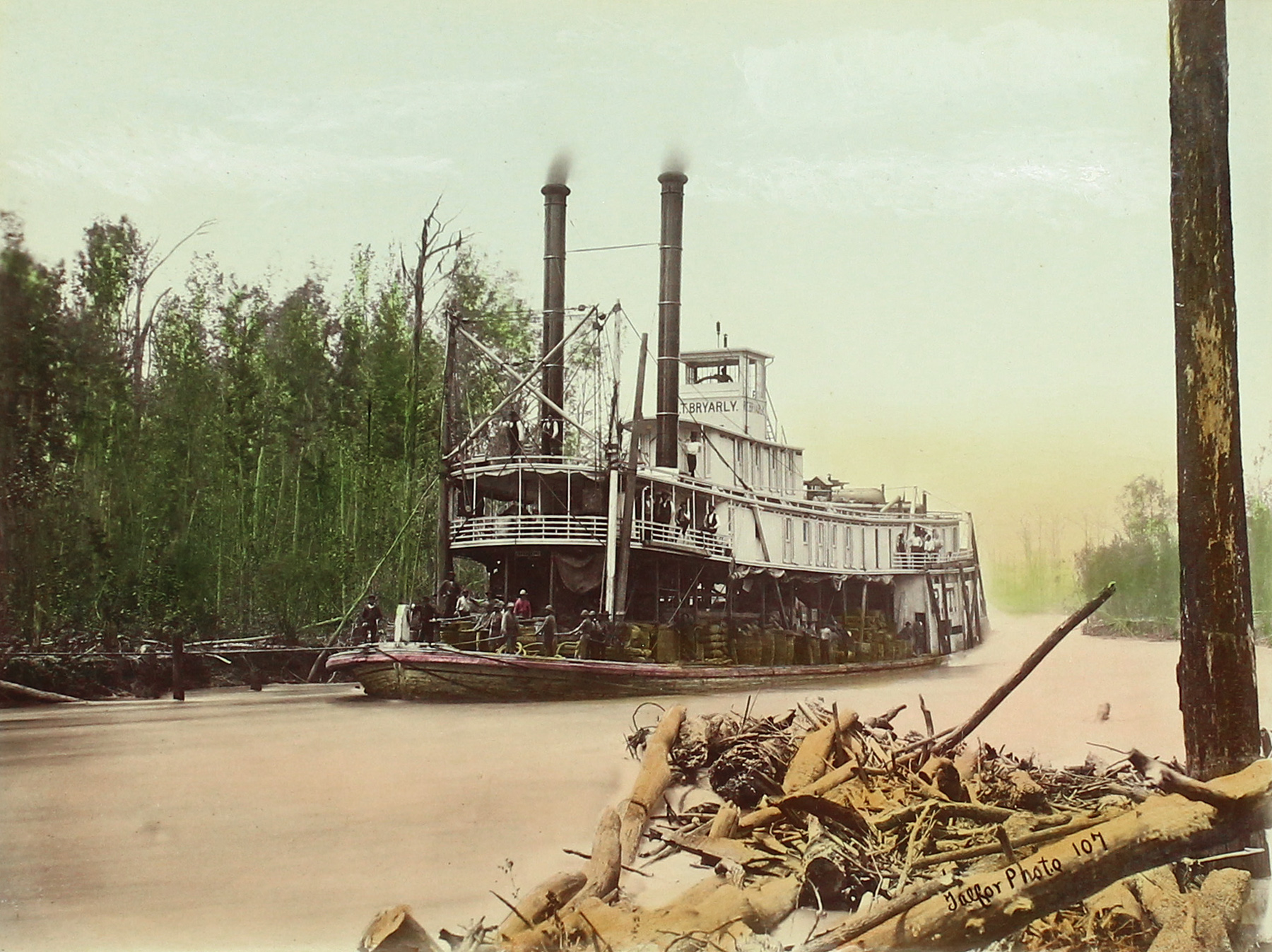
Robert B. Talfor Plate CVII of the photographic album Photographic Views of Red River Raft 1873 Hand-coloured albumen print, mounted recto only to pages with a stylised U.S. Corps of Engineers printed border 7 x 9 1/4 inches (17.8 x 23.5cm)
Plate CVII: Steamer Bryerly entering Red River through Sale & Murphy’s Canal (detail)
On May 16, 1873, R.B. Talfor photographed the R.T. Bryarly as she passed trough the channel opened by Lt. Eugene Woodruff’s crew. The R.T. Bryarly, on that day, became the first steamboat to enter the upper reaches of the Red River unhindered by the Great Raft at any point. For the next several months, until April 1874, the Corps of Engineers continued to work to ensure that the Raft would not re-form. The passage up the river by the the R.T. Bryarly, however, signalled that the work begun by Captain Shreve in 1833 had been successfully completed. The R.T. Bryarly sank at Pecan Point on the Red River on September 19, 1876.
Text from the book Red River Steamboats by Eric J. Brock, Gary Joiner. Charleston, SC: Arcadia Publishing, 1999, p. 22 [Online] Cited 17/09/2018
Robert B. Talfor Plate D of the photographic album Photographic Views of Red River Raft 1873 Hand-coloured albumen print, mounted recto only to pages with a stylised U.S. Corps of Engineers printed border 7 x 9 1/4 inches (17.8 x 23.5cm)
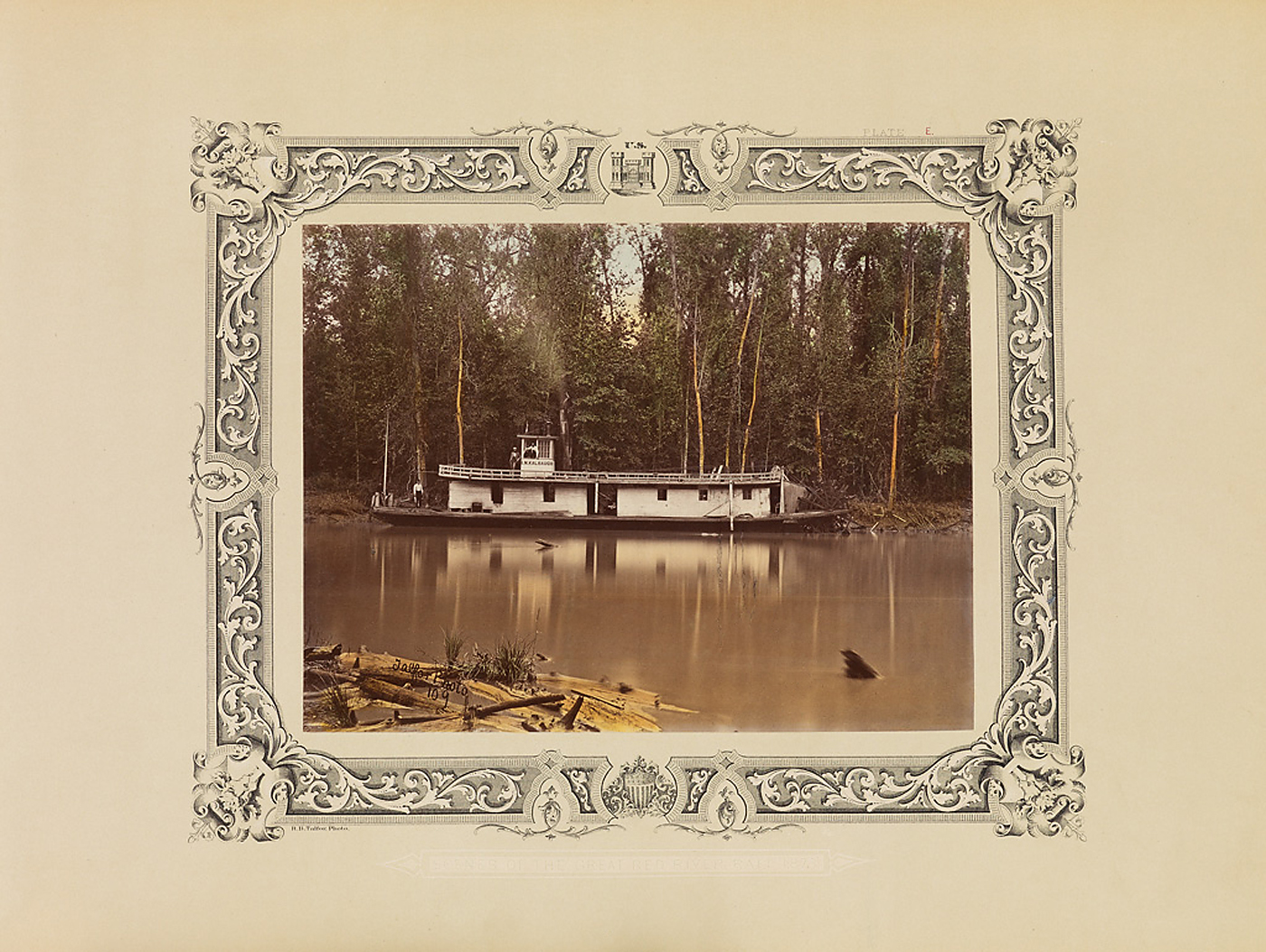
Robert B. Talfor I.N. Kalbaugh on the Red River. Plate E of the photographic album Photographic Views of Red River Raft 1873 Hand-coloured albumen print, mounted recto only to pages with a stylised U.S. Corps of Engineers printed border 7 x 9 1/4 inches (17.8 x 23.5cm)
Plate E: I.N. Kalbaugh on the Red River. Steamer Kalbaugh between Raft Nos. 47 and 48 (detail)
Robert B. Talfor Plate LIV of the photographic album Photographic Views of Red River Raft 1873 Hand-coloured albumen print, mounted recto only to pages with a stylised U.S. Corps of Engineers printed border 7 x 9 1/4 inches (17.8 x 23.5cm)
Robert B. Talfor Plate LXXXVII of the photographic album Photographic Views of Red River Raft 1873 Hand-coloured albumen print, mounted recto only to pages with a stylised U.S. Corps of Engineers printed border 7 x 9 1/4 inches (17.8 x 23.5cm)
Driftwood log jams obstructing the river in Louisiana before their elimination with the aid of nitroglycerine.
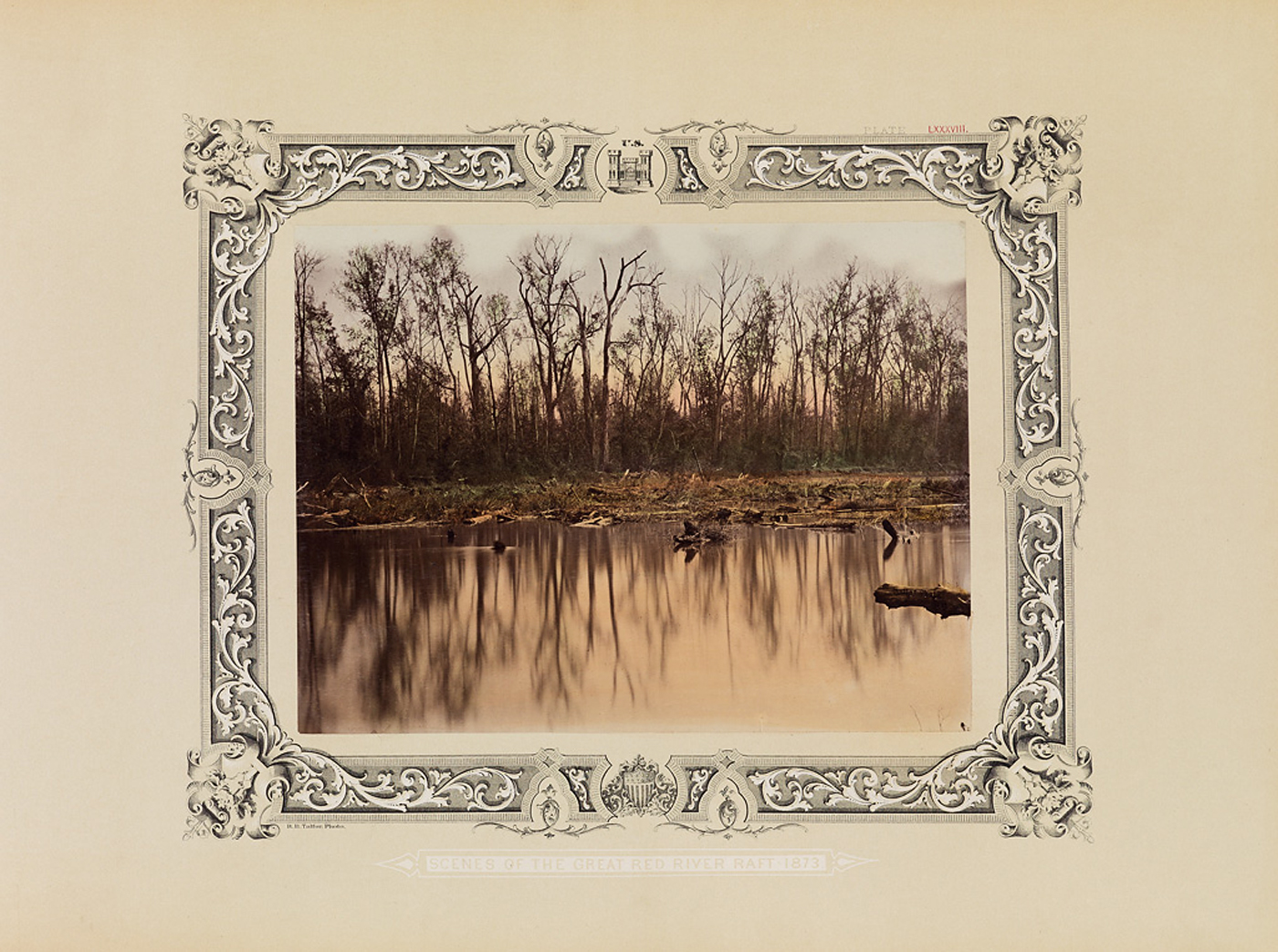
Robert B. Talfor Plate LXXXVIII of the photographic album Photographic Views of Red River Raft 1873 Hand-coloured albumen print, mounted recto only to pages with a stylised U.S. Corps of Engineers printed border 7 x 9 1/4 inches (17.8 x 23.5cm)
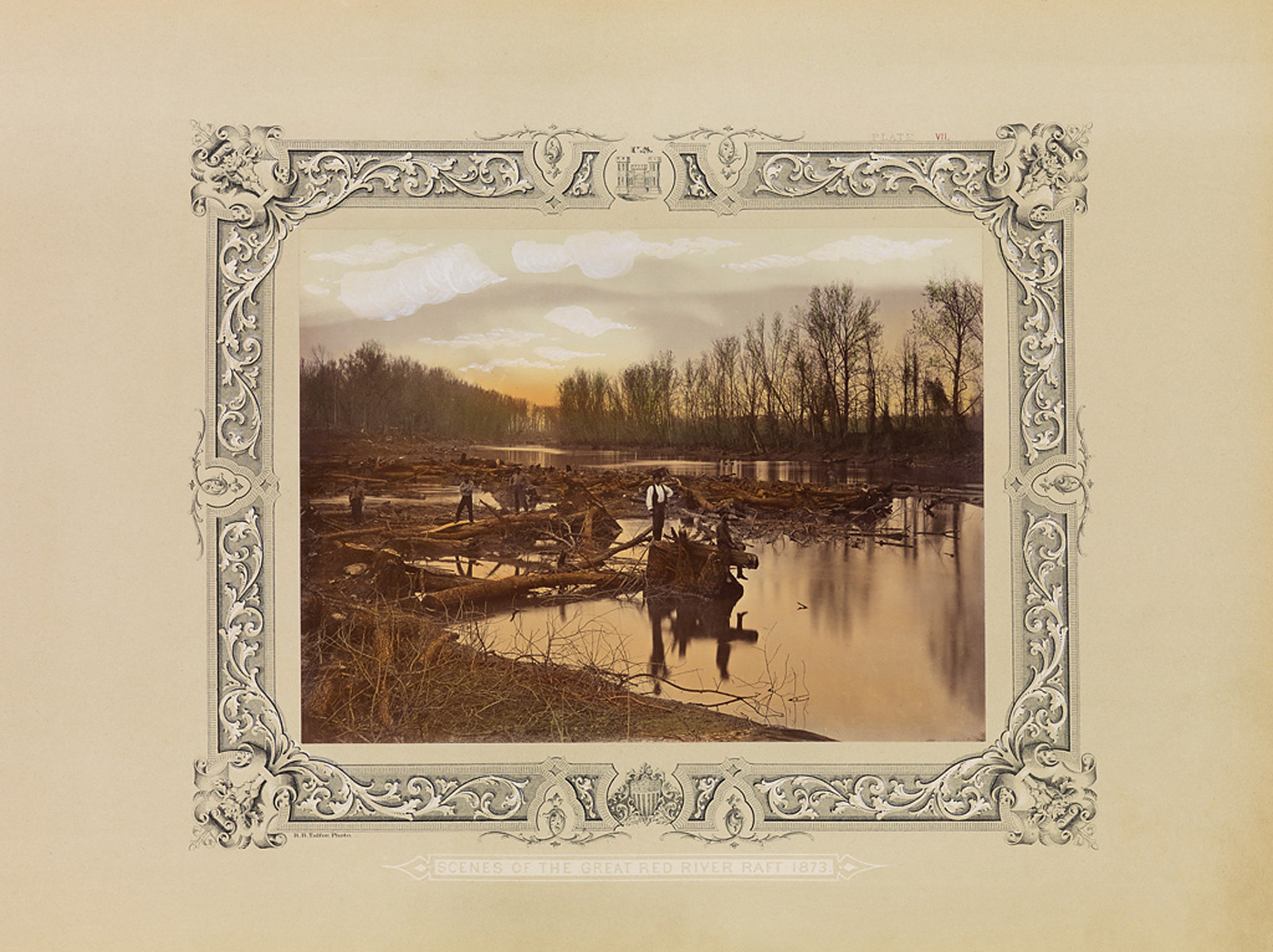
Robert B. Talfor Plate VII of the photographic album Photographic Views of Red River Raft 1873 Hand-coloured albumen print, mounted recto only to pages with a stylised U.S. Corps of Engineers printed border 7 x 9 1/4 inches (17.8 x 23.5cm)
Foot of Raft No. 2. One of the several shore work parties that were under the direction of the U.S. Corps of Army Engineers.
Robert B. Talfor Plate XCVL of the photographic album Photographic Views of Red River Raft 1873 Hand-coloured albumen print, mounted recto only to pages with a stylised U.S. Corps of Engineers printed border 7 x 9 1/4 inches (17.8 x 23.5cm)
Robert B. Talfor Plate XLV of the photographic album Photographic Views of Red River Raft 1873 Hand-coloured albumen print, mounted recto only to pages with a stylised U.S. Corps of Engineers printed border 7 x 9 1/4 inches (17.8 x 23.5cm)
Plate XLV of the photographic album Photographic Views of Red River Raft 1873 (detail)
Robert B. Talfor U.S. Aid, clearing logjam in the Red River, Louisiana. Plate XV of the photographic album Photographic Views of Red River Raft 1873 Hand-coloured albumen print, mounted recto only to pages with a stylised U.S. Corps of Engineers printed border 7 x 9 1/4 inches (17.8 x 23.5cm)
U.S. Steamer Aid at work. Raft No. 5, side view. Photograph showing the steam snag boat, US Aid, clearing logjam in the Red River, Louisiana
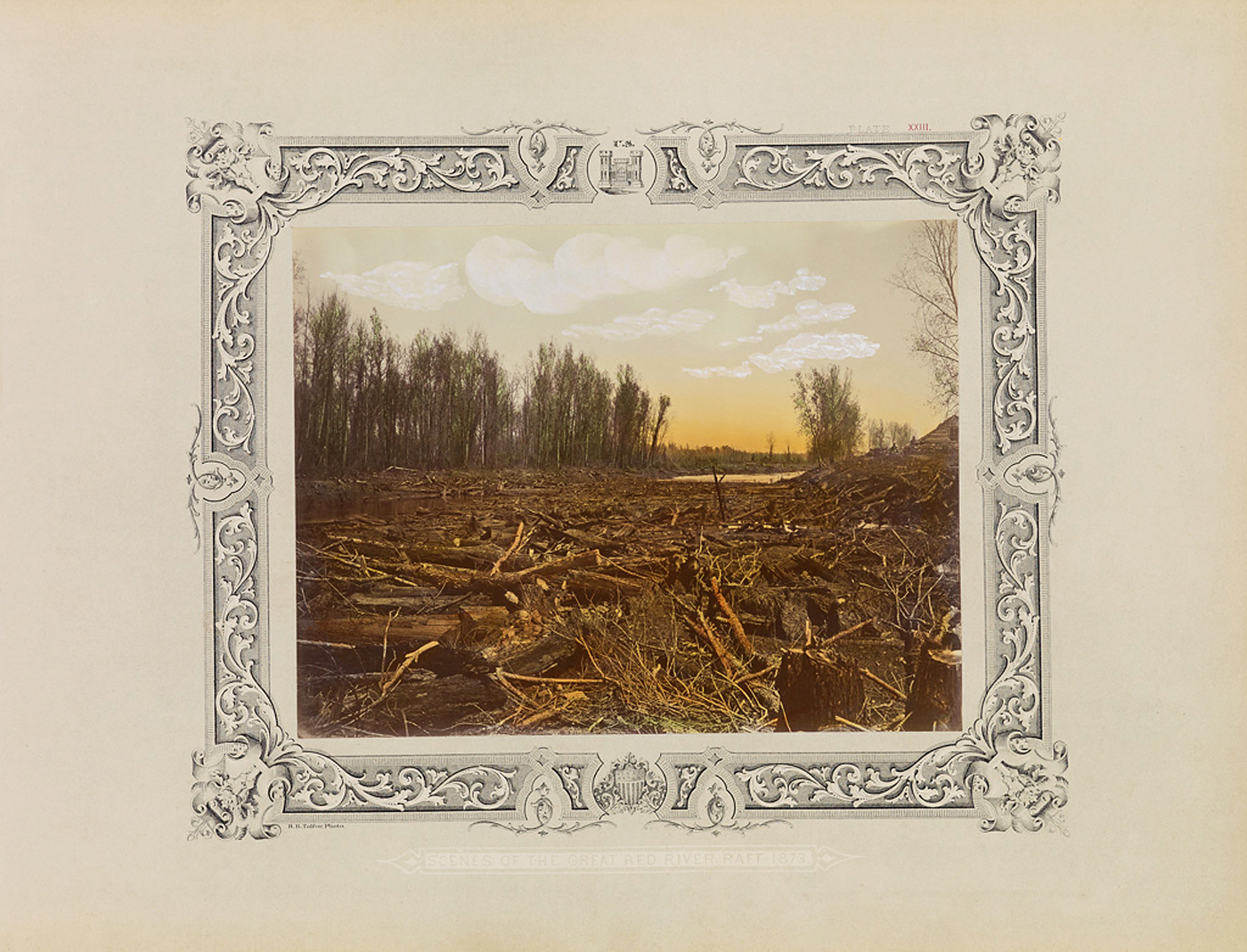
Robert B. Talfor Plate XXIII of the photographic album Photographic Views of Red River Raft 1873 Hand-coloured albumen print, mounted recto only to pages with a stylised U.S. Corps of Engineers printed border 7 x 9 1/4 inches (17.8 x 23.5cm)
Preparation for the work began in August, 1872. On November 25, “the small-pox infection being no longer feared,” the steamboat Aid, with two months provisions and two craneboats in tow, started up Red River. They had been outfitted and supplied in New Orleans. Shore parties had already been organized in Shreveport and work itself begun on December 1, a month before the arrival of the Aid. The details of this work, from the preparation in August to the opening of the upper river in May of the next year, are covered in the report dated July 1, 1873, from Lieutenant Woodruff to Captain Howell. The last page of this report included specific comments on the value of the previously discussed Photographic Views of Red River to Lieutenant Woodruff’s total report. The importance of these photographs in understand in the scope and nature of the raft removal is reflected in the following statement:
To accompany this I have prepared a series of photographic views showing every portion of the raft, parties at work, (etc). With the view is a photographic map of the raft region, with location and axis of the camera for each view marked upon it and numbered to correspond with the number on the view. This album full of photographs, affording a complete and truthful panorama of the raft, will give a better idea of the nature of the work performed and of the character of the country than could be obtained form the most elaborate description. [The map is in the Library of Congress]
Extract from Hubert Humphreys. “Photographic Views of the Red River Raft, 1873,” in Louisiana History: The Journal of the Louisiana Historical Association Vol. 12, No. 2 (Spring, 1971) pp. 101-108 (16 pages with photographs)
Robert B. Talfor Steam saws on flat, foot Raft No. 23. Plate L of the photographic album Photographic Views of Red River Raft (detail) 1873 Hand-coloured albumen print, mounted recto only to pages with a stylised U.S. Corps of Engineers printed border 7 x 9 1/4 inches (17.8 x 23.5cm)
Robert B. Talfor Plate VI of the photographic album Photographic Views of Red River Raft (detail) 1873 Hand-coloured albumen print, mounted recto only to pages with a stylised U.S. Corps of Engineers printed border 7 x 9 1/4 inches (17.8 x 23.5cm)
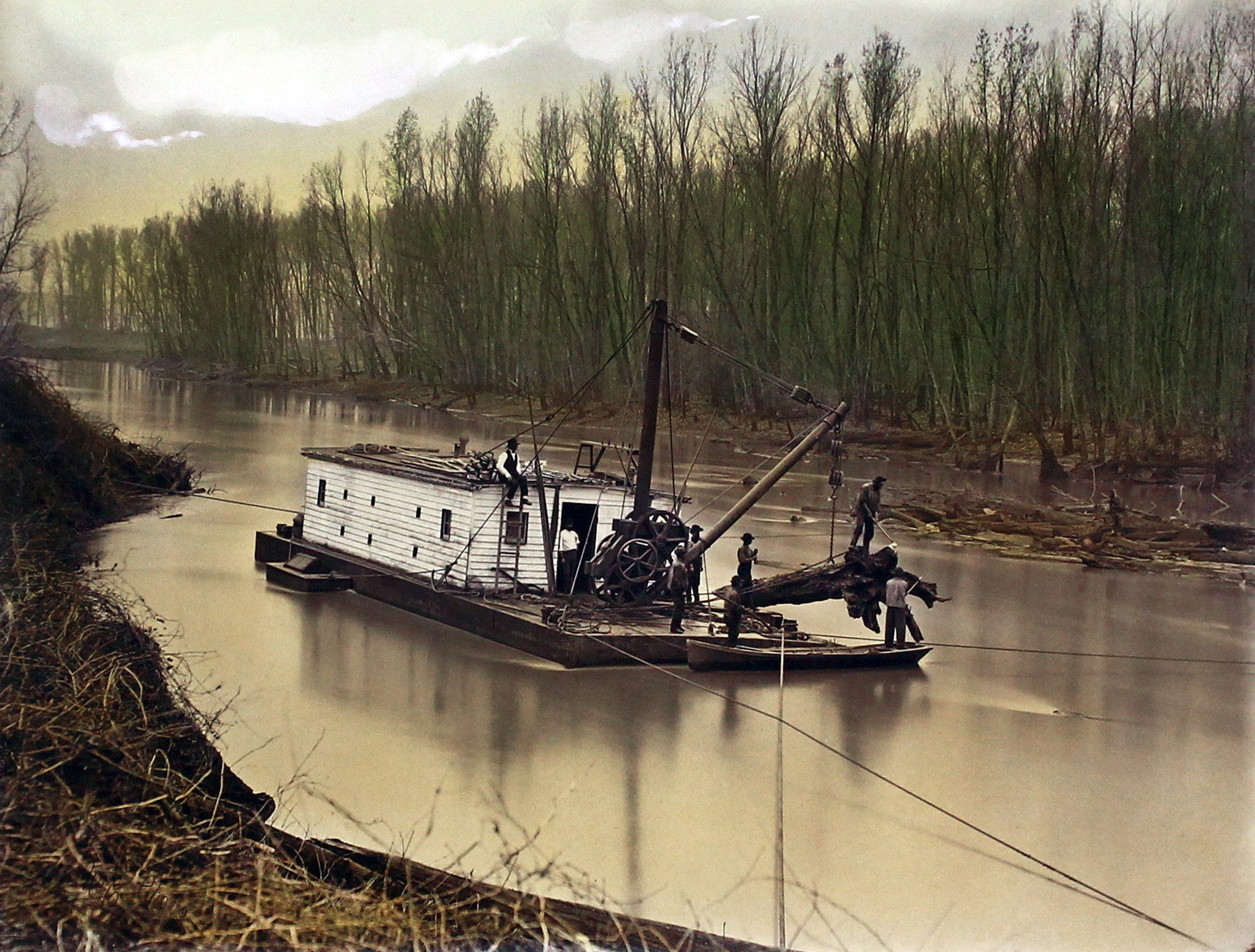
Robert B. Talfor Raft No. 4 partially removed. Plate X of the photographic album Photographic Views of Red River Raft(detail) 1873 Hand-coloured albumen print, mounted recto only to pages with a stylised U.S. Corps of Engineers printed border 7 x 9 1/4 inches (17.8 x 23.5cm)
Raft No. 4 partially removed. Crane boat at work (removing dead tree)
Robert B. Talfor Plate XVII of the photographic album Photographic Views of Red River Raft (detail) 1873 Hand-coloured albumen print, mounted recto only to pages with a stylised U.S. Corps of Engineers printed border 7 x 9 1/4 inches (17.8 x 23.5cm)
Crane boat at work
Robert B. Talfor Plate XXV of the photographic album Photographic Views of Red River Raft (detail) 1873 Hand-coloured albumen print, mounted recto only to pages with a stylised U.S. Corps of Engineers printed border 7 x 9 1/4 inches (17.8 x 23.5cm)
Robert B. Talfor Plate XXVI of the photographic album Photographic Views of Red River Raft (detail) 1873 Hand-coloured albumen print, mounted recto only to pages with a stylised U.S. Corps of Engineers printed border 7 x 9 1/4 inches (17.8 x 23.5cm)
Robert B. Talfor Plate XXII of the photographic album Photographic Views of Red River Raft (detail) 1873 Hand-coloured albumen print, mounted recto only to pages with a stylised U.S. Corps of Engineers printed border 7 x 9 1/4 inches (17.8 x 23.5cm)
Robert B. Talfor Plate XXVIII of the photographic album Photographic Views of Red River Raft(detail 1873 Hand-coloured albumen print, mounted recto only to pages with a stylised U.S. Corps of Engineers printed border 7 x 9 1/4 inches (17.8 x 23.5 cm)
Red River of the South
Schell and Hogan (illustration) U.S. Snagboat ‘Helliopolis’ Nd Engraving
The Heliopolis raised a one hundred and sixty foot tree in 1829, according to Captain Richard Delafield of the Corps of Engineers. By 1830 Shreve’s Snag Boats, or “Uncle Sam’s Tooth Pullers” as they were called, had improved navigation to the point that only one flatboat was lost on a snag during that year. During the 1830s Shreve set about cutting back trees on the banks of the Mississippi and Ohio Rivers to prevent the recurrence of snags.
“One of Uncle Sam’s Tooth Pullers”
The snag boats operated by the U.S. Army Corps of Engineers were sometimes called “Uncle Sam’s Tooth Pullers,” referring to how the vessels extracted whole trees and logs that hindered navigation. U.S. Snag Boat No. 2 is shown pulling stumps from the river bottom.
From Harper’s Weekly, Nov. 2, 1889
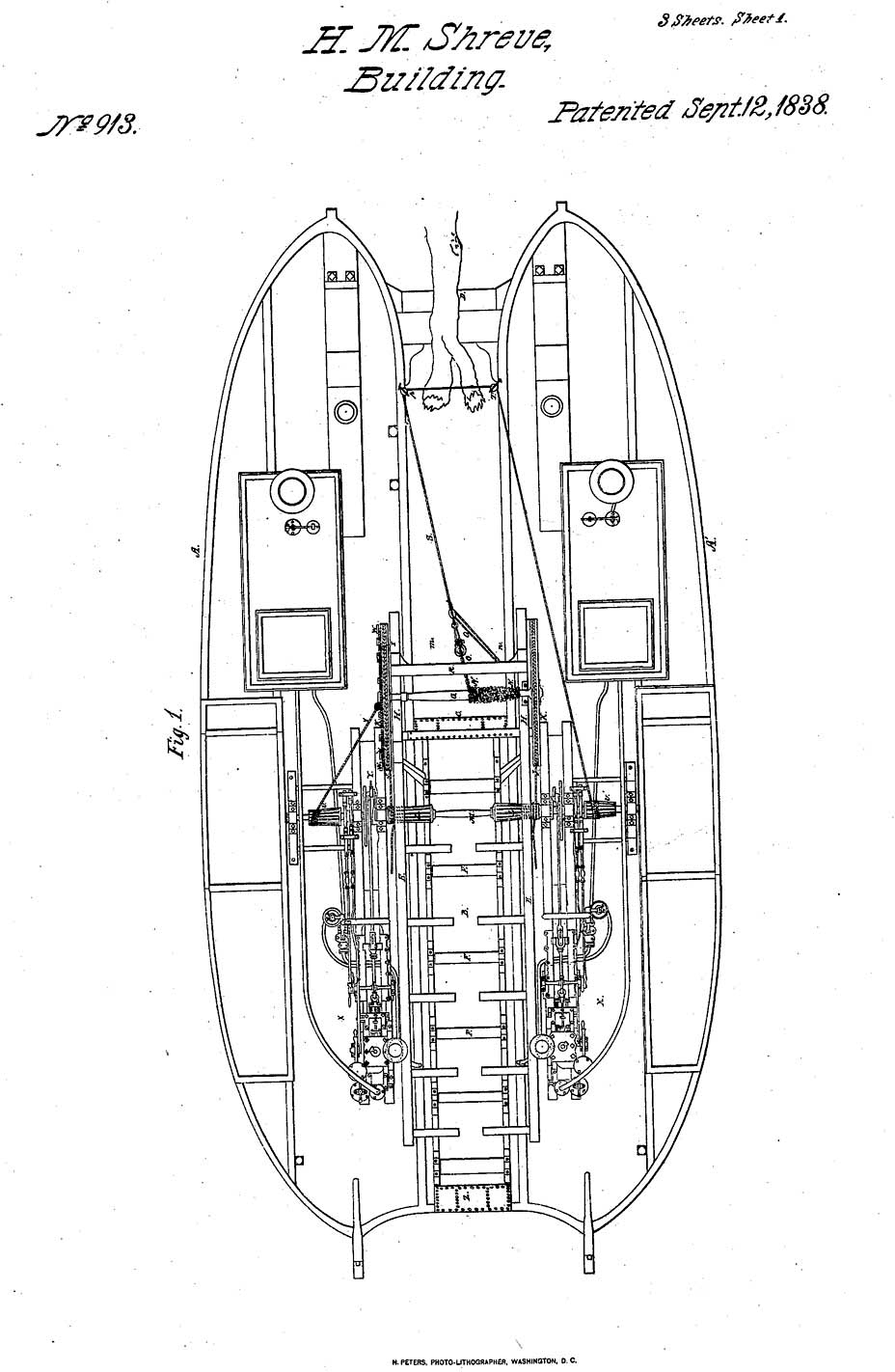
Plan for Henry Shreve’s snag boat. Patent No. 913, September 12, 1838
Shreveport, the Great Raft and Eugene Augustus Woodruff
Shreveport is located on the Red River in northwestern Louisiana, positioned on the first sustainable high ground in the river valley north of the old French settlement of Natchitoches. When the town as incorporated in 1839, it was, for a short period, the westernmost municipality in the United States. Four years prior to this, the settlement began as Shreve Town. Hugging a one-square-mile diamond-shaped bluff and plateau, Shreveport seemed an ideal place for a town. The northern edge of the plateau rested against Cross Bayou. The combined water frontage of the bayou and the Red River afforded the town ample room for commercial growth. However, a major obstacle stood in its way.
Captain Henry Miller Shreve, the man for whom Shreveport is named, received a contract from the U.S. Army to remove a gain logjam known as the “Great Raft.” Shrove was widely acclaimed as the most knowledgeable expert in raft removal… The upstream portion of the raft at times extended in Oklahoma. Since the Red River had many meandering curves, a straight-line mile might have as many as 3 river miles within it. At its largest, the raft closed over 400 miles of river. By the time Shreve examined it, in about 1830, the raft extended about 110 miles.
Shrove bought in large vessels that he modified for the job. Some of these ripped the jam apart with grappling hooks. Others rammed the raft to loosen individual trees. Some of the vessels were built by taking two steamboats and joining them side by side into a catamaran. The captain built a small sawmill on the common deck. The most famous of these hybrid snag boats, as they were called, were the Archimedes and the Heliopolis. His crews consisted of slave labor and Irish immigrants. The work was very difficult and extremely dangerous. …
Shreve’s efforts did not end the problem with the raft. Periodic work was needed to clear the river as the raft formed again. The Civil War interrupted this work, but by 1870, Congress had realised that the rived must be opened. Appropriations were again made, and the U.S. Army Corps of Engineers sent an engineering unit to deal with the issue. The team arrived in late 1871 under the command of First Lieutenant Eugene Augustus Woodruff. Woodruff, his brother, George, and their men set to work. They recorded their actions with maps and photographs. R.B. Talfor was the photographer assigned the duty of recording the work, and this may have been the first instance of an imbedded photographer assigned to a specific unit. Talfor and the Woodruff brothers took over one hundred images of the raft clearing. Today, their records remain the standard chronicle for a project of this type.
The unit’s primary snagboat was the U.S. Aid, a modern version of Henry Shreve’s Archimedes. This elegant stern-wheel vessel was the most advanced of its type in the late nineteenth century. Another technology used as a test bed for river clearing was the newly created explosive nitroglycerin. Because nitroglycerin was extremely dangerous to use and volatile to make, the nitroglycerin lab occasionally blew up – thankfully, with almost no casualties.
The Woodruffs found areas of clear water, appearing as a strong of lakes, and when the broke up the logs around them, the loosened trees and logs would sometimes form snags downstream. One of the unfortunate steamboats was the R.T. Bryarly, photographed by Talfor in 1873. Talker took his photograph from a recently cleared section of the rived. Piles of debris could clearly be seen on both banks as the steam picked its was up the river. The Bryarly plied the rived until September 19, 1876, when it hit a snag and was lost. The use of explosives and the improved snagboats finally conquered the river. …
… In mid-August 1873, an epidemic [of yellow fever] broke out it Shreveport. Everyone who could leave town did, and the population dwindled to about four thousand people before other towns sealed of the roads, railroads and streams to protect their residents. A quarter of the population who remained died within the first two weeks, and another 50 percent contracted yellow fever within the next six weeks. Most of the doctors and nurses died in the first month. …
In early September 1873, the army ordered its raft-clearing engineers out of the city, indicating that they should relocate farther south. Lieutenant Eugene Augustus Woodruff set his men, including his brother, George, to safety. He remained to help care for the residents of Shreveport. With most of the doctors dead or ill, Woodruff and six Roman Catholic priest ministered to the victims. By the end of September, all of these good men had died from yellow fever.
Lt. Eugene A. Woodruff (1843-1873), Red River Hero, died age 31
“He died because too brave to abandon his post even in the face of a fearful pestilence and too humane to let his fellow beings perish without giving all the aid in his power to save them,” wrote Capt. Charles W. Howell, responsible for Corps of Engineers works in Louisiana, in 1873. “His name should be cherished, not only by his many personal friends,” he continued, “but by the Army, as one who lived purely, labored faithfully, and died in the path of duty.”
Captain Howell penned that tribute to his deputy, Lt. Eugene A. Woodruff, a young officer whom Howell sent from New Orleans to the Red River of Louisiana as supervisor of the project to clear the great log raft, a formidable obstruction to navigation. Henry M. Shreve first cleared the Red River raft in the 1830s, but the raft formed again during years of inadequate channel maintenance resulting from meager congressional appropriations and neglect during the Civil War.
Lieutenant Woodruff left his workboats and crew on the Red River in September 1873 to visit Shreveport and recruit a survey party. When he arrived, he found Shreveport in the grip of a yellow-fever epidemic. Fearing he might carry the disease to his workmen if he returned to camp, he elected to stay in Shreveport and tend to the sick. He volunteered his services to the Howard Association, a Louisiana disaster-relief charity, and traveled from house to house in his carriage, delivering food, medicine, and good cheer to the sick and dying. He contracted the disease himself and died in late September, “a martyr,” reported the Shreveport newspaper, “to the blessed cause of charity.”
“His conduct of the great work on which he was engaged at the time of his death,” said the New Orleans District Engineer, “will be a model for all similar undertakings and the completion of the work a monument to his memory.” Captain Howell assigned responsibility for finishing the job on the Red River to Assistant Engineer George Woodruff, brother of the lieutenant.
Woodruff’s selfless actions not only eased the suffering of Shreveport residents, but his decision to remain in the town no doubt lessened the threat to his crew. Spared from the disease, the engineers successfully broke through the raft, clearing the river for navigation on 27 November 1873. An Ohio River snagboat built the following year received the name E. A. Woodruff in recognition of the lieutenant’s sacrifice. The vessel served until 1925. More than a century later the people of Shreveport continue to honor the memory of Lieutenant Woodruff.
Anonymous text and image from “Lt. Eugene A. Woodruff, Red River Hero,” on the U.S. Army Corps of Engineers website 2000 revised July 2021 [Online] Cited 22/02/2022
Unknown photographer Untitled [Members of a Cavalry unit at Fort Grant, A.T. in 1876 showing the variety of both clothing and headgear in use by the Army in the mid-1870s] 1876
Yellow fever
Yellow fever is a viral disease that is transmitted by mosquitoes. Yellow fever can lead to serious illness and even death. It is called ‘yellow fever’ because in serious cases, the skin turns yellow in colour. This is known as ‘jaundice’. Symptoms of yellow fever may take 3 to 6 days to appear. Some infections can be mild but most lead to serious illness characterised by two stages. In the first stage fever, muscle pain, nausea, vomiting, headache and weakness occur. About 15 to 25 per cent of those with yellow fever progress to the second stage also known as the ‘toxic’ stage, of which half die within 10 to 14 days after onset of illness. Visible bleeding, jaundice, kidney and liver failure can occur during the second stage.
Although yellow fever is most prevalent in tropical-like climates, the northern United States were not exempted from the fever. The first outbreak in English-speaking North America occurred in New York City in 1668, and a serious one afflicted Philadelphia in 1793. English colonists in Philadelphia and the French in the Mississippi River Valley recorded major outbreaks in 1669, as well as those occurring later in the 18th and 19th centuries. The southern city of New Orleans was plagued with major epidemics during the 19th century, most notably in 1833 and 1853. Its residents called the disease “yellow jack”…
The yellow fever epidemic of 1793 in Philadelphia, which was then the capital of the United States, resulted in the deaths of several thousand people, more than 9% of the population. The national government fled the city, including President George Washington. Additional yellow fever epidemics struck Philadelphia, Baltimore, and New York City in the 18th and 19th centuries, and traveled along steamboat routes from New Orleans. They caused some 100,000-150,000 deaths in total.
In 1853, Cloutierville, Louisiana, had a late-summer outbreak of yellow fever that quickly killed 68 of the 91 inhabitants. A local doctor concluded that some unspecified infectious agent had arrived in a package from New Orleans. 650 residents of Savannah, Georgia died from yellow fever in 1854. In 1858, St. Matthew’s German Evangelical Lutheran Church in Charleston, South Carolina, suffered 308 yellow fever deaths, reducing the congregation by half. A ship carrying persons infected with the virus arrived in Hampton Roads in southeastern Virginia in June 1855. The disease spread quickly through the community, eventually killing over 3,000 people, mostly residents of Norfolk and Portsmouth. In 1873, Shreveport, Louisiana, lost almost a quarter of its population to yellow fever. In 1878, about 20,000 people died in a widespread epidemic in the Mississippi River Valley. That year, Memphis had an unusually large amount of rain, which led to an increase in the mosquito population. The result was a huge epidemic of yellow fever. The steamship John D. Porter took people fleeing Memphis northward in hopes of escaping the disease, but passengers were not allowed to disembark due to concerns of spreading yellow fever. The ship roamed the Mississippi River for the next two months before unloading her passengers. The last major U.S. outbreak was in 1905 in New Orleans.
In forest ecology, a snag refers to a standing, dead or dying tree, often missing a top or most of the smaller branches. In freshwater ecology it refers to trees, branches, and other pieces of naturally occurring wood found sunken in rivers and streams; it is also known as coarse woody debris. …
Maritime hazard
Also known as deadheads, partially submerged snags posed hazards to early riverboat navigation and commerce. If hit, snags punctured the wooden hulls used in the 19th century and early 20th century. Snags were, in fact, the most commonly encountered hazard, especially in the early years of steamboat travel. In the United States, the U.S. Army Corps of Engineers operated “snagboats” such as the W. T. Preston in the Puget Sound of Washington State and the Montgomery in the rivers of Alabama to pull out and clear snags. Starting in 1824, there were successful efforts to remove snags from the Mississippi and its tributaries. By 1835, a lieutenant reported to the Chief of Engineers that steamboat travel had become much safer, but by the mid-1840s the appropriations for snag removal dried up and snags re-accumulated until after the Civil War.
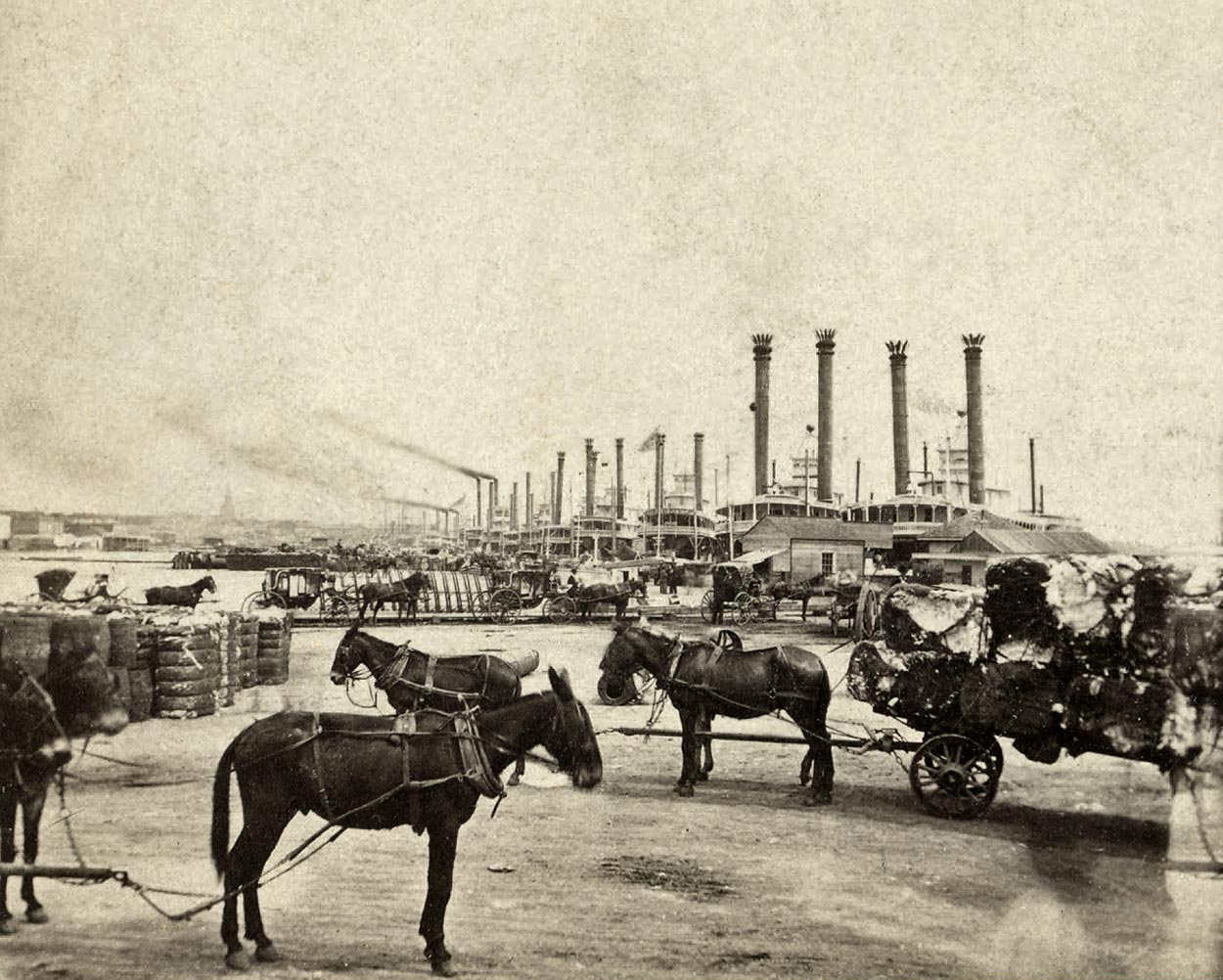
S.T. (Samuel Tobias) Blessing (American, b. 1830-1897) New Orleans Levee c. 1866-1870 From a stereographic view, on wet or dry plate glass negative
Samuel Tobias Blessing (1830-1897) was a successful daguerreotypist, ambrotypist, photographer, daguerrean, and photographic stock dealer. He was active in La Grange, Texas in 1856, and Galveston, Texas 1856 c.-1861, and in New Orleans 1861-1890s. From 1856, Blessing partnered with Samuel Anderson, operating bi-state studios and stock depots in Trenton Street, Galverston, and at 120 Canal Street, New Orleans, moving to 137 Canal Street in 1856. Their partnership was dissolved in 1863. After the Civil War, Blessing turned his attention to making stereographs, publishing New Orleans in Stereoscope in 1866. Other stereographic series included Views of New Orleans & Vicinity, and Public Buildings in New Orleans.
Text and image from the Steamboat Times website
Unknown photographer New Orleans Levee c. 1867-1868 Wet plate negative on glass, or Tintype positive
Four boats in this New Orleans scene have been positively identified. They are from right to left, B.L. HODGE (No.2), MONSOON, ST. NICHOLAS, and CUBA. The remaining boats, also right to left, are not confirmed but may be the BART ABLE, GEORGE D. PALMER, and the FLICKER.
The B.L. HODGE No.2 was built in 1867, and the MONSOON was lost to a snag on the Red River on Dec. 21, 1868, heavily loaded with cotton. Therefore the photograph was taken sometime during 1867-1868. The PALMER was lost after hitting the Quincy bridge on Oct. 2, 1868, which would further narrow the timeframe for this scene.
Hermann Kummler (compiler) (Swiss, 1863-1949) (Portrait of Indigenous Brazilian tradeswoman) 1861-1862 From Ethnographic portraits of indigenous women of Pernambuco and Bahia Salt paper print, hand-painted
Art Blart has been mining a rich vein of (anti-)colonial art and photography over the past few months, and the next two posts continue this trend.
Tonight we have Ethnographic portraits of Indigenous women of Pernambuco and Bahia (Brazil, 1861-1862) by unknown local photographers, collected and compiled by the Swiss photographer Hermann Kummler in 1888-1891 into an album. These were vintage prints when he purchased them and already had significant historical interest.
Thus, we have unknown sitters photographed by unknown photographers, removed from their original context(s) – the family, business or photographers album perhaps – to be annotated in a foreign hand, the machinations of (colonial, male) power evidenced through the gaze of the camera. And text. Mulatto; Mestizo; Negress.
The underprivileged of society being punished in their men/iality: servile; submissive: menial attitudes; pertaining to or suitable for domestic servants. Mistress punishing a native child. Teacher with a schoolgirl in Bahia in one picture, becomes Native Brazilian lady-in-waiting and young child attend to a veiled aristocrat in another (note the same background curtain).
None of the sitters look happy. Most scowl at the camera, unsmiling at their lot, probably being forced to have their photograph taken. The hand-coloured photographs are even more absurd, the lurid colours creating caricatures of human beings, cut out figures with all semblance of humanity removed. Rather than reinforcing “the sense of individual style associated with these remarkable figures”, the photographs become pure representation of figurative form. The camera enacts the shaping of disputed, contested identities into a particular figure, a particular palatable form.
Why it is valuable to show these photographs is that we must be ever vigilant in understanding the networks of power, dispossession and enslavement that patriarchal societies use to marginalise the poor, the weak, the different for their gain. For it is men that are looking.
“The category of “masculinity” should be seen as always ambivalent, always complicated, always dependent on the exigencies (necessary conditions and requirements) of personal and institutional power … [masculinity is] an interplay of emotional and intellectual factors – an interplay that directly implicates women as well as men, and is mediated by other social factors, including race, sexuality, nationality, and class … Far from being just about men, the idea of masculinity engages, inflects, and shapes everyone.”1
Dr Marcus Bunyan
PS. “two of the Indigenous women (one of whom wears a cross), simply pose in the studio” – they are not in a studio, a curtain has been drawn over a back wall.
1/ Berger, Maurice; Wallis, Brian and Watson, Simon. Constructing Masculinity. Introduction. New York: Routledge, 1995, pp. 3-7.
These digitally cleaned photographs are published under “fair use” for the purposes of academic research and critical commentary. Please click on the photographs for a larger version of the image.
Overview
Group of 19 ethnographic portraits of Indigenous women of Pernambuco and Bahia that were compiled by the Swiss photographer Hermann (Ermano) Kummler (1863-1949). With subjects of Indian and mixed-race descent, including vendors, wet nurses, maids, mothers and children, and merchants, including a mistress punishing a native child. Salted paper prints with trimmed corners, the images measuring 7 x 3 3/8 to 7 1/4 x 4 1/2 inches (17.8 x 8.4 to 18.4 x 11.4 cm).
7 are hand-coloured with gouache; the original mounts, 9 bright blue or green, 6 double mounted, measuring 9 1/4 x 7 to 8 1/4 x 11 1/4 inches (24.1 x 17.8 to 21 x 29.8 cm), most with Kummler’s caption notations, in ink, and each with his red hand stamp on prints (one) or mounts recto. 1861-1862
Kummler was a Swiss photographer who accompanied Als Kaufmann to Brazil, where they traveled extensively from 1888-91. Kummler apparently purchased vintage prints by local photographers (which he stamped and annotated), and eventually set up his own commercial studio in the town of Aarau. During the three year period he was in Brazil with Kaufmann, Kummler apparently made more than 130 photographs. Their journey was the subject of a monograph entitled Als Kaufmann in Pernambuco, Ein Reisebericht mit Bildern aus Brasiilien von Hermann Kummler (Als Kaufmann in Pernambuco 1888-1891. A travelogue with pictures from Brazil by Hermann Kummler), copiously illustrated with his images.
Tradeswomen are depicted with a teapot on a table, a comb, a basket laden with bottles or wares carefully balanced on their heads; maids hold embroidered cloth and a wet nurse is shown with an infant. A native lady-in-waiting (and a young child) attend to a gorgeously dressed aristocrat, who wears a long veil. The hand-coloured prints reinforce the sense of individual style associated with these remarkable figures; two of the Indigenous women (one of whom wears a cross), simply pose in the studio with trade womens objects.
Text from an auction house website
Pernambuco and Bahia
Pernambuco is a state of Brazil, located in the Northeast region of the country. Bahia is one of the 26 states of Brazil and is located in the Northeastern part of the country on the Atlantic coast.
Charles Darwin visited Bahia in 1832 on his famous voyage on the Beagle. In 1835, Bahia was the site of an urban slave revolt, particularly notable as the only predominately-Muslim slave rebellion in the history of the Americas. Under the Empire, Bahia returned 14 deputies to the general assembly and 7 senators; its own provincial assembly consisted of 36 members. In the 19th century, cotton, coffee, and tobacco plantations joined those for sugarcane and the discovery of diamonds in 1844 led to large influx of “washers” (garimpeiros = an independent prospector for minerals) until the still-larger deposits in South Africa came to light.
Hermann Kummler (compiler) (Swiss, 1863-1949) Mullatin (Portrait of a Indigenous Brazilian woman wearing a cross) 1861-1862 From Ethnographic portraits of indigenous women of Pernambuco and Bahia Salt paper print, hand-painted
Mulatto
Mulatto is a term used to refer to people born of one white parent and one black parent or to people born of a mulatto parent or parents. In English, the term is today generally confined to historical contexts. English speakers of mixed white and black ancestry seldom choose to identify themselves as “mulatto.” …
Mulattoes represent a significant part of the population of various Latin American and Caribbean countries: Brazil (49.1% mixed-race, Gypsy and Black, Mulattoes (20.5%), Mestiços, Mamelucos or Caboclos (21.3%), Blacks (7.1%) and Eurasian (0.2%).
In colonial Latin America, mulato could also refer to an individual of mixed African and Native American ancestry. In the 21st century, persons with indigenous and black African ancestry in Latin America are more frequently called zambos in Spanish or cafuzo in Portuguese.
According to the IBGE 2000 census, 38.5% of Brazilians identified as pardo, i.e. of mixed ancestry. This figure includes mulatto and other multiracial people, such as people who have European and Amerindian ancestry (called caboclos), as well as assimilated, westernised Amerindians, and mestizos with some Asian ancestry. A majority of mixed-race Brazilians have all three ancestries: Amerindian, European, and African. According to the Brazilian Institute of Geography and Statistics census 2006, some 42.6% of Brazilian identify as pardo, an increase over the 2000 census.
Hermann Kummler (compiler) (Swiss, 1863-1949) Mestize (Portrait of a Brazilian woman) 1861-1862 From Ethnographic portraits of indigenous women of Pernambuco and Bahia Salt paper print, hand-painted
Mestizo: (in Latin America) a person of mixed race, especially one having Spanish and American Indian parentage.
Mixed-race Brazilian
Brazilian censuses do not use a “multiracial” category. Instead, the censuses use skin colour categories. Most Brazilians of visibly mixed racial origins self-identify as pardos. However, many white Brazilians have distant non-white ancestry, while the group known as pardos likely contains non-mixed acculturated Amerindians. According to the 2010 census, “pardos” make up 82.277 million people, or 43.13% of Brazil’s population. …
History
Before the arrival of the Portuguese in 1500, Brazil was inhabited by nearly five million Amerindians. The Portuguese colonisation of Brazil started in the sixteenth century. In the first two centuries of colonisation, 100,000 Portuguese arrived in Brazil (around 500 colonists per year). In the eighteenth century, 600,000 Portuguese arrived (6,000 per year). Another race, Blacks, were brought from Africa as slaves, starting around 1550. Many came from Guinea, or from West African countries – by the end of the eighteenth century many had been taken from Congo, Angola and Mozambique (or, in Bahia, from Benin). By the time of the end of the slave trade in 1850, around 3.5 million slaves had been brought to Brazil – 37% of all slave traffic between Africa and the Americas.
In the late nineteenth and early twentieth centuries, a considerable influx of mainly European immigrants arrived in Brazil. According to the Memorial do Imigrante, Brazil attracted nearly 5 million immigrants between 1870 and 1953. Most of the immigrants were from Italy or Portugal, but also significant numbers of Germans, Spaniards, Japanese and Syrian-Lebanese.
The Portuguese settlers were the ones to start the intensive race-mixing process in Brazil. Miscegenation in Brazil… was not a pacific process as some used to believe: it was a form of domination from the Portuguese against the Native Brazilian and African populations. …
White/Amerindian
Most of the first colonists from Portugal who arrived in Brazil were singles or did not bring their wives. For that reason the first interracial marriages in Brazil occurred between Portuguese males and Amerindian females.
In Brazil, people of White/Indian ancestry are historically known as caboclos or mamelucos. They predominated in many regions of Brazil. One example are the Bandeirantes (Brazilian colonial scouts who took part in the Bandeiras, exploration expeditions) who operated out of São Paulo, home base for the most famous bandeirantes.
Indians, mostly free men and mamelucos, predominated in the society of São Paulo in the 16th and early 17th centuries and outnumbered Europeans. The influential families generally bore some Indian blood and provided most of the leaders of the bandeiras, with a few notable exceptions such as Antonio Raposo Tavares (1598-1658), who was European born.
White/Black
According to some historians, Portuguese settlers in Brazil used to prefer to marry Portuguese-born females. If not possible, the second option were Brazilian-born females of recent Portuguese background. The third option were Brazilian-born women of distant Portuguese ancestry. However, the number of White females in Brazil was very low during the Colonial period, causing a large number of interracial relationships in the country.
White/Black relationships in Brazil started as early as the first Africans were brought as slaves in 1550 where many Portuguese men starting marrying black women. The Mulattoes (people of White/Black ancestry) were also enslaved, though some children of rich aristocrats and owners of gold mines were educated and became important people in Colonial Brazil. Probably, the most famous case was Chica da Silva, a mixed-race Brazilian slave who married a rich gold mine owner and became one of the richest people in Brazil.
Other mulattoes largely contributed to Brazil’s culture: Aleijadinho (sculptor and architect), Machado de Assis (writer), Lima Barreto (writer), Chiquinha Gonzaga (composer), etc. In 1835, Blacks would have made up the majority of Brazil’s population, according to a more recent estimate quoted by Thomas Skidmore. In 1872, their number was shown to be much smaller according to the census of that time, outnumbered by pardos and Whites. …
Black/Amerindian
People of Black African and Native Brazilian ancestry are known as Cafuzos and are historically the less numerous group. Most of them have origin in black women who escaped slavery and were welcomed by indigenous communities, where started families with local amerindian men.
Modesto Brocos (Brazilian born Spain, 1853-1936) A Redenção de Cam (Ham’s Redemption) 1895 Oil on canvas 199cm (78.3 in) x 166cm (65.3 in) Public domain / Museu Nacional de Belas Artes
The painting shows a Brazilian family each generation becoming “whiter” (black grandmother, mulatto mother and white baby).
Hermann Kummler (compiler) (Swiss, 1863-1949) (Portrait of Indigenous Brazilian tradeswoman) 1861-1862 From Ethnographic portraits of indigenous women of Pernambuco and Bahia Salt paper print, hand-painted
Hermann Kummler (compiler) (Swiss, 1863-1949) (Portrait of a maid holding an embroidered cloth) 1861-1862 From Ethnographic portraits of indigenous women of Pernambuco and Bahia Salt paper print, hand-painted
Hermann Kummler (compiler) (Swiss, 1863-1949) (Portrait of wet nurse with infant) 1861-1862 From Ethnographic portraits of indigenous women of Pernambuco and Bahia Salt paper print, hand-painted
Indigenous peoples in Brazil
Indigenous peoples in Brazil (Portuguese: povos indígenas no Brasil), or Indigenous Brazilians (Portuguese: indígenas brasileiros), comprise a large number of distinct ethnic groups who have inhabited what is now the country of Brazil since prior to the European contact around 1500. Unlike Christopher Columbus, who thought he had reached the East Indies, the Portuguese, most notably Vasco da Gama, had already reached India via the Indian Ocean route when they reached Brazil.
Nevertheless, the word índios (“Indians”) was by then established to designate the people of the New World and continues to be used today in the Portuguese language to designate these people, while a person from India is called indiano in order to distinguish the two.
At the time of European contact, some of the indigenous people were traditionally mostly semi-nomadic tribes who subsisted on hunting, fishing, gathering, and migrant agriculture. Many of the estimated 2,000 nations and tribes which existed in the 16th century suffered extinction as a consequence of the European settlement, and many were assimilated into the Brazilian population.
The indigenous population was largely killed by European diseases, declining from a pre-Columbian high of millions to some 300,000 (1997), grouped into 200 tribes. However, the number could be much higher if the urban indigenous populations are counted in all the Brazilian cities today. A somewhat dated linguistic survey found 188 living indigenous languages with 155,000 total speakers.
The rubber trade
The 1840s brought trade and wealth to the Amazon. The process for vulcanising rubber was developed, and worldwide demand for the product skyrocketed. The best rubber trees in the world grew in the Amazon, and thousands of rubber tappers began to work the plantations. When the Indians proved to be a difficult labor force, peasants from surrounding areas were brought into the region. In a dynamic that continues to this day, the indigenous population was at constant odds with the peasants, who the Indians felt had invaded their lands in search of treasure.
Urban Rights Movement
The urban rights movement is a recent development in the rights of indigenous peoples. Brazil has one of the highest income inequalities in the world, and much of that population includes indigenous tribes migrating toward urban areas both by choice and by displacement. Beyond the urban rights movement, studies have shown that the suicide risk among the indigenous population is 8.1 times higher than the non-indigenous population.
Many indigenous rights movements have been created through the meeting of many indigenous tribes in urban areas. For example, in Barcelos, an indigenous rights movement arose because of “local migratory circulation.” This is how many alliances form to create a stronger network for mobilisation. Indigenous populations also living in urban areas have struggles regarding work. They are pressured into doing cheap labor. Programs like Oxfam have been used to help indigenous people gain partnerships to begin grassroots movements. Some of their projects overlap with environmental activism as well.
Many Brazilian youths are mobilising through the increased social contact, since some indigenous tribes stay isolated while others adapt to the change. Access to education also affects these youths, and therefore, more groups are mobilising to fight for indigenous rights.
Hermann Kummler (compiler) (Swiss, 1863-1949) (Portrait of Indigenous Brazilian tradeswoman) 1861-1862 From Ethnographic portraits of indigenous women of Pernambuco and Bahia Salt paper print
Hermann Kummler (compiler) (Swiss, 1863-1949) (Kellnerinnen im Grand Hotel / Waitresses in Grand Hotel) 1861-1862 From Ethnographic portraits of indigenous women of Pernambuco and Bahia Salt paper print
Hermann Kummler (compiler) (Swiss, 1863-1949) (Lehrerin mit Schülerin im Bahia / Teacher with a schoolgirl in Bahia) 1861-1862 From Ethnographic portraits of indigenous women of Pernambuco and Bahia Salt paper print
Hermann Kummler (compiler) (Swiss, 1863-1949) (Native Brazilian lady-in-waiting and young child attend to a veiled aristocrat) 1861-1862 From Ethnographic portraits of indigenous women of Pernambuco and Bahia Salt paper print
Hermann Kummler (compiler) (Swiss, 1863-1949) (Negerin mit dem Knaben in schlechter Stimmung / Negress with a boy in a bad mood) 1861-1862 From Ethnographic portraits of indigenous women of Pernambuco and Bahia Salt paper print
Hermann Kummler (compiler) (Swiss, 1863-1949) (Portrait of Brazilian woman servant and child) 1861-1862 From Ethnographic portraits of indigenous women of Pernambuco and Bahia Salt paper print
Hermann Kummler (compiler) (Swiss, 1863-1949) (Portrait of a young Brazilian woman) 1861-1862 From Ethnographic portraits of indigenous women of Pernambuco and Bahia Salt paper print
Hermann Kummler (compiler) (Swiss, 1863-1949) (Portrait of a Brazilian woman) 1861-1862 From Ethnographic portraits of indigenous women of Pernambuco and Bahia Salt paper print
Hermann Kummler (compiler) (Swiss, 1863-1949) (Portrait of a Brazilian woman with two children) 1861-1862 From Ethnographic portraits of indigenous women of Pernambuco and Bahia Salt paper print
Hermann Kummler (compiler) (Swiss, 1863-1949) (Portrait of a Brazilian mother and child) 1861-1862 From Ethnographic portraits of indigenous women of Pernambuco and Bahia Salt paper print
Hermann Kummler (compiler) (Swiss, 1863-1949) (Mistress punishing a native child) 1861-1862 From Ethnographic portraits of indigenous women of Pernambuco and Bahia Salt paper print
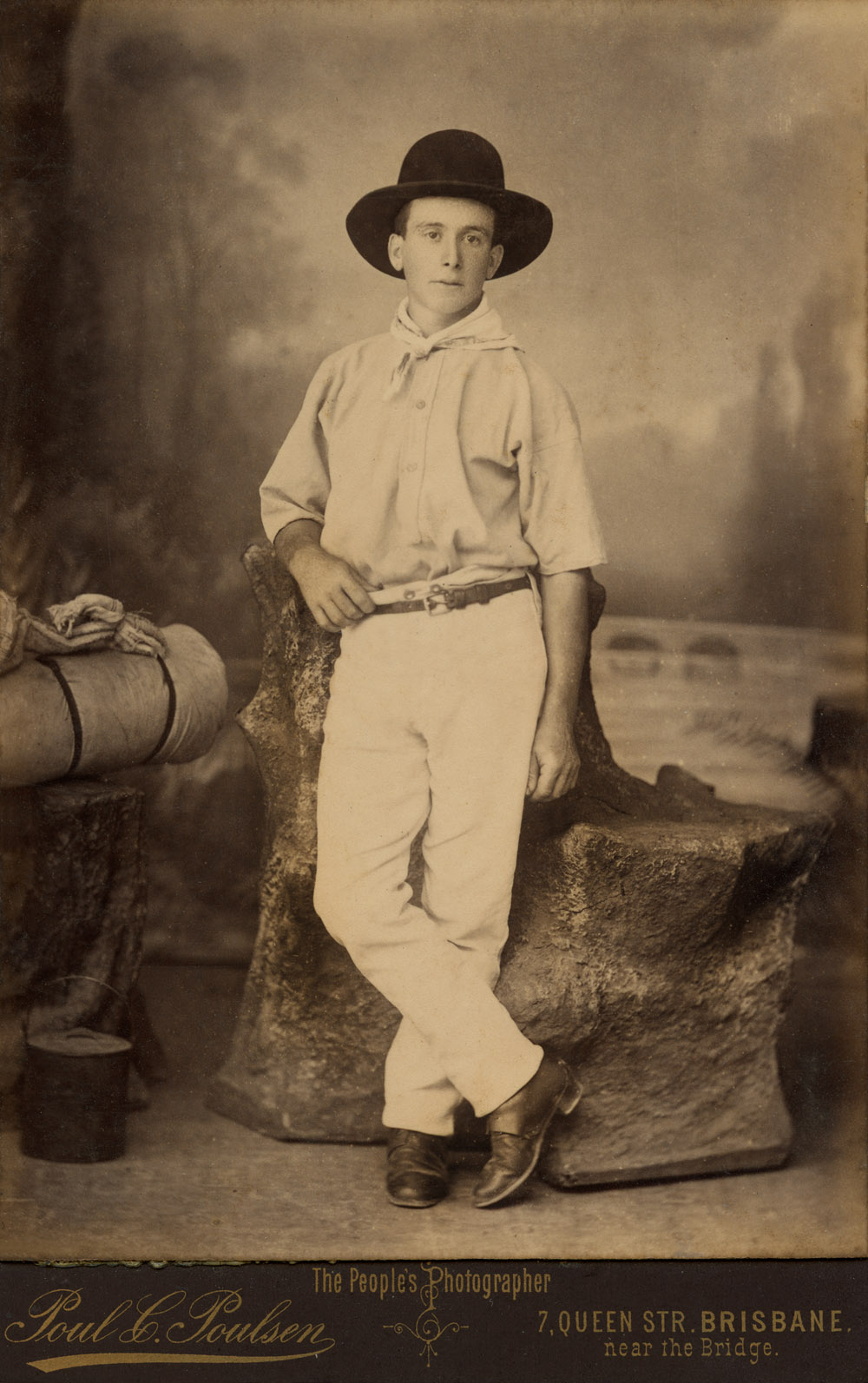
Poul C Poulsen (Australian born Denmark, 1857-1925) Bushman with a swag c. 1885 Cabinet photograph
This exhibition looks fascinating. I wish I could have seen it!
Information about some photographers is included in the posting, as much as I could find through research online. Also included is a beautiful photograph of the Cloudland Ballroom (not in the exhibition) which I digitally restored.
I tried to work out the height of the young man in Bushman with a swag (c. 1885, above). If you take the billy can at his feet (bottom left) at about 24cm, measured by my ankles, then his height is around 180cm or 5’9″. What was his name, what did he do in his life?
Also notice the covers on his shoes that hide the laces, and the idyllic, painted pastoral backdrop with bridge. These are the details that fascinate. The studio prop of a rock outcrop against which he stands also appears in another image by the same photographer, Queensland policeman (c. 1885, below). How many days or months were these photographs taken apart? Did they know each other, being of similar age?
The presence of the people in these photographs is incredible. Even though they are posed, they stare back at us from across time and reach out to us to speak of their lives in that moment, in that studio in Brisbane, Australia.
Dr Marcus Bunyan
Many thankx to the Museum of Brisbane for allowing me to publish the photographs in the posting. Please click on the photographs for a larger version of the image.
Poul C Poulsen (Australian born Denmark, 1857-1925) Bushman with a swag (detail) c. 1885 Cabinet photograph
The Poulsen Studio was a very important establishment recording Queensland’s development for a considerable period of time.
Poul C. Poulsen, founder of the Poulsen Studios in Brisbane, was born in Denmark in 1857 and arrived in Sydney in 1876. In 1882, he moved to Queensland and was later joined by his sisters and brothers from Denmark. He opened his own studio at no 7 Queen Street in 1885 and later opened branches, run by his brothers in other Queensland towns. Poulsen vigorously advertised constant improvements and modernisation in his studio and in the service he provided. His sons and grandson followed in his footsteps.
Text from the State Library of Queensland website
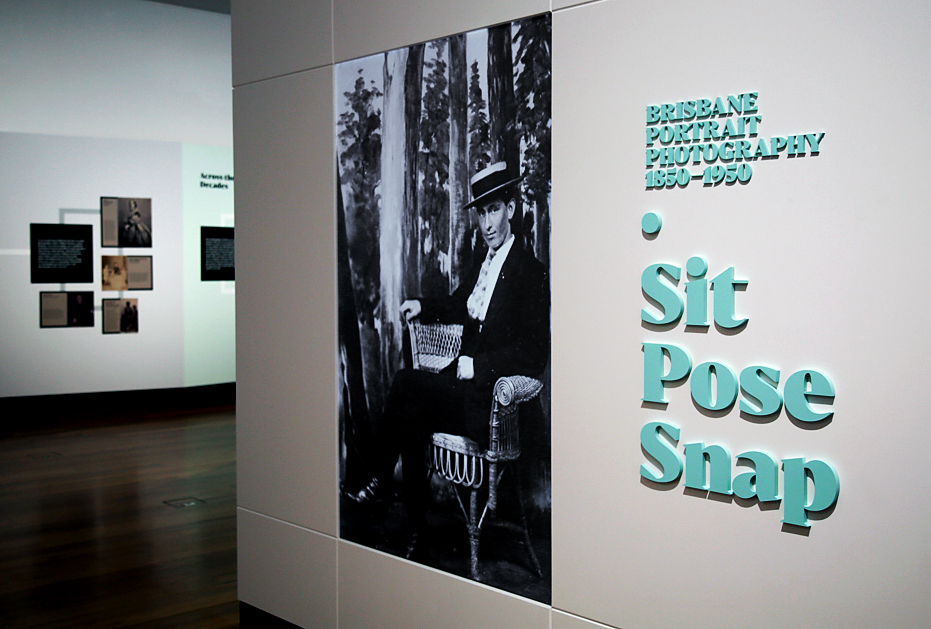
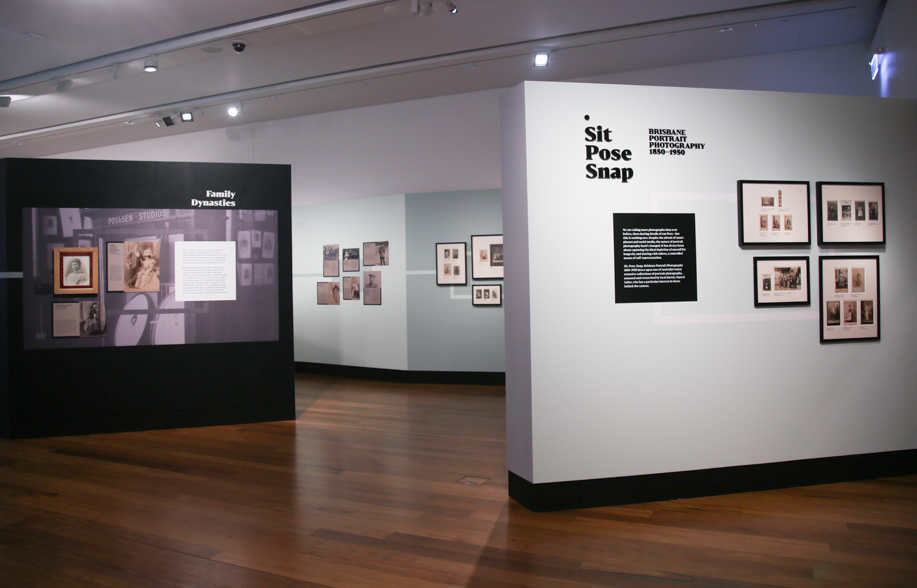
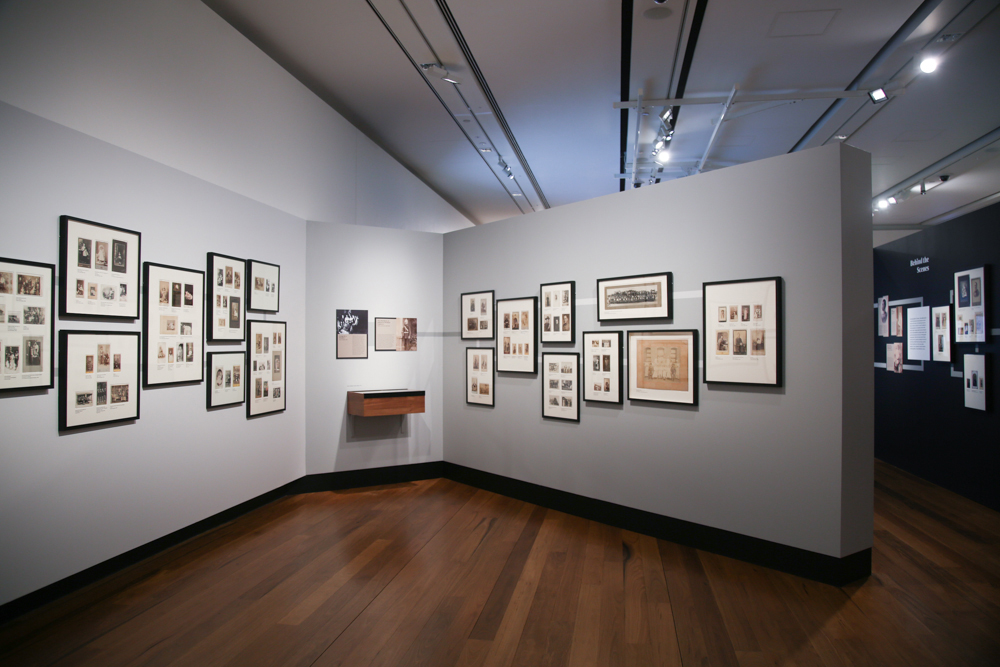
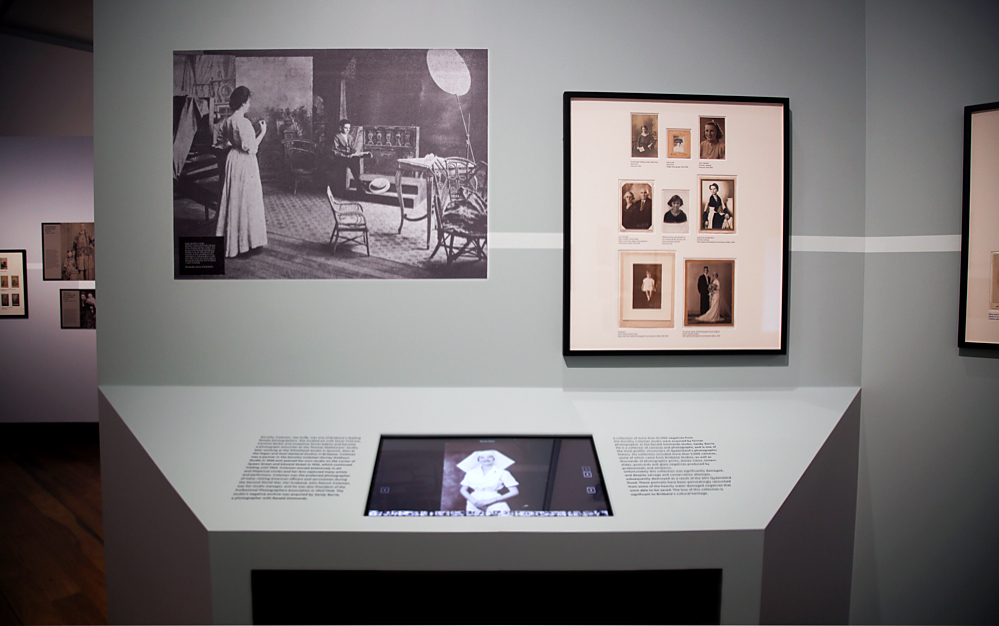
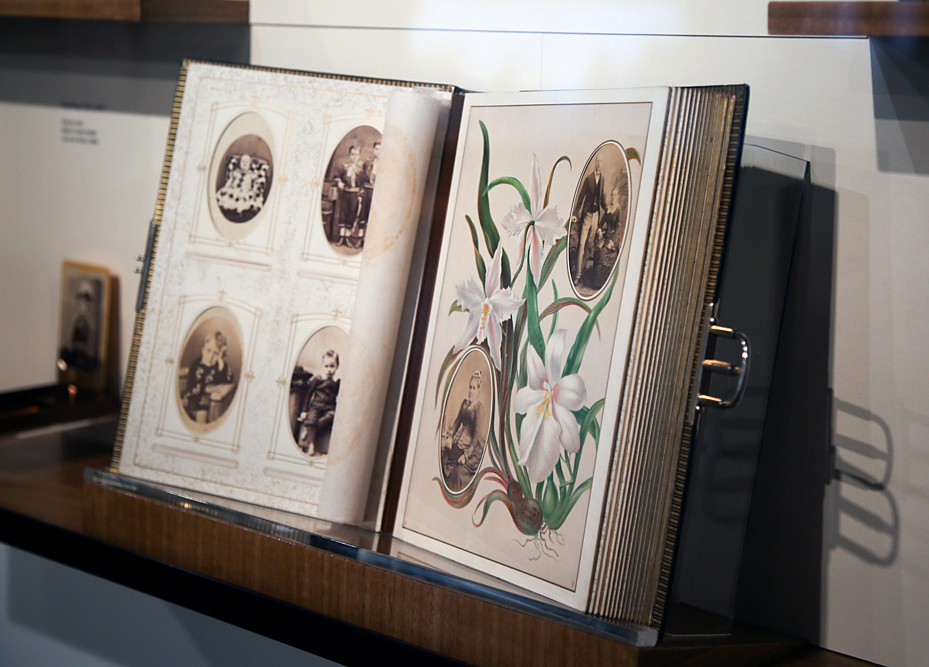
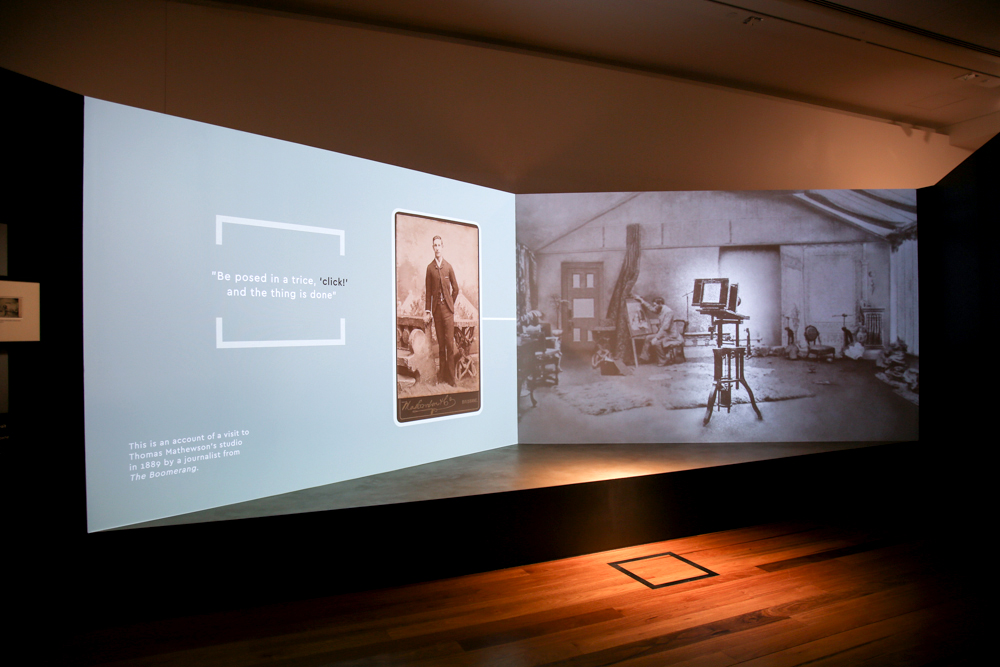
Installation views of the exhibition Sit. Pose. Snap. Brisbane Portrait Photography 1850-1950 at the Museum of Brisbane
Sit. Pose. Snap. Brisbane Portrait Photography 1850-1950 explores the phenomenon of studio portrait photography in Brisbane, and shows how the process of capturing and sharing a portrait evolved from the formal studio sittings of the 19th century through to candid and relaxed photographs of the mid-20th century.
With the introduction of commercial photography in the mid 1850s, dozens of photographic studios popped up in and around Brisbane capitalising on this popular new technology. Interest in this novel sensation was high, and profitable – with photographers increasingly savvy when it came to selling their service and products.
Featuring hundreds of Brisbane residents captured in original photographs from local studios between 1850-1950, this exhibition draws from the extensive private collection of Marcel Safier – one of Australia’s most significant collectors of portrait photography. Discover the variety, trends and historical progression of photographic types through this period, from the early forms of daguerreotypes through to carte-de-visites and postcards. Woven into the exhibition is an examination of photographic techniques and technologies; the popularisation of photography; and the ever-increasing control that subjects have over their portrayal.
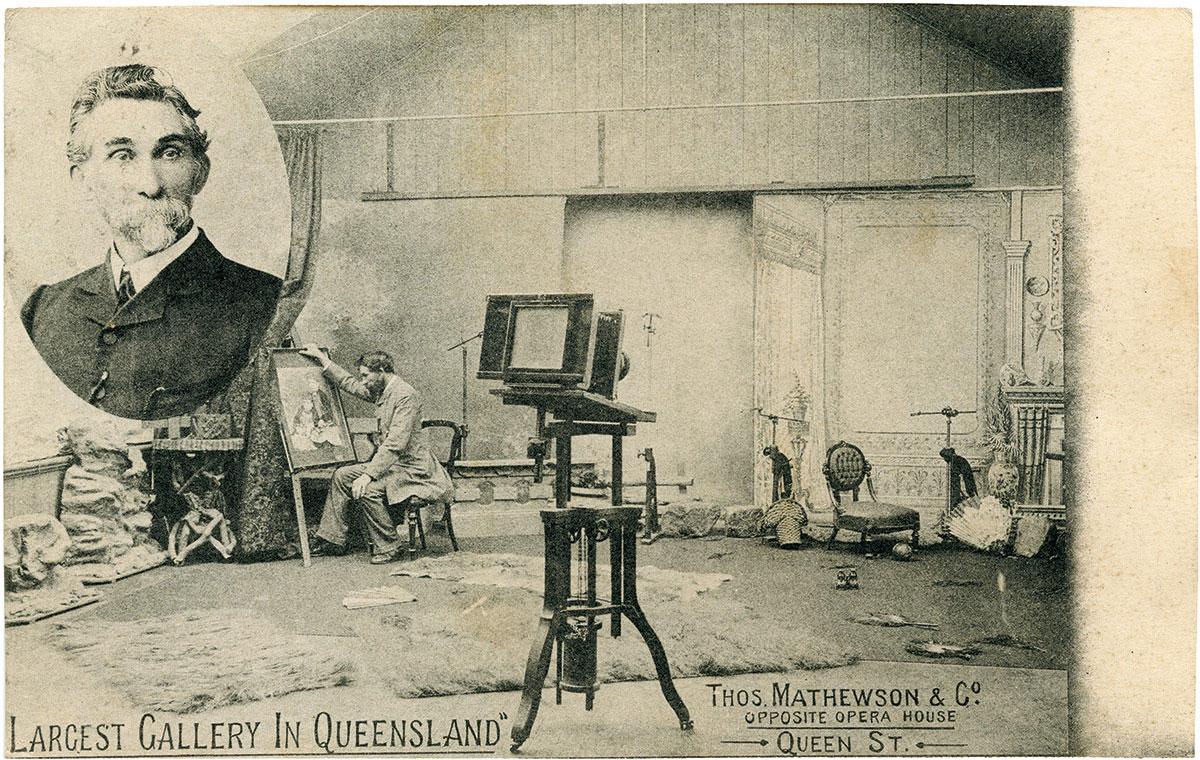
Significant Brisbane photographic houses of the period and their legacies are also featured. Visitors will have the chance to experience what it felt like to visit Mathewson & Co., one of the leading studios of the time, through an immersive Victorian backdrop and a journalist’s account from 1889. They will also have a chance to take a selfie in this recreated 19th century studio space.
From personal portraits capturing life’s most significant milestones, to the curious and often humorous ways in which people presented themselves, Sit. Pose. Snap. is a charming and nostalgic glimpse into a 19th century photographic studio.
Press release from the Museum of Brisbane
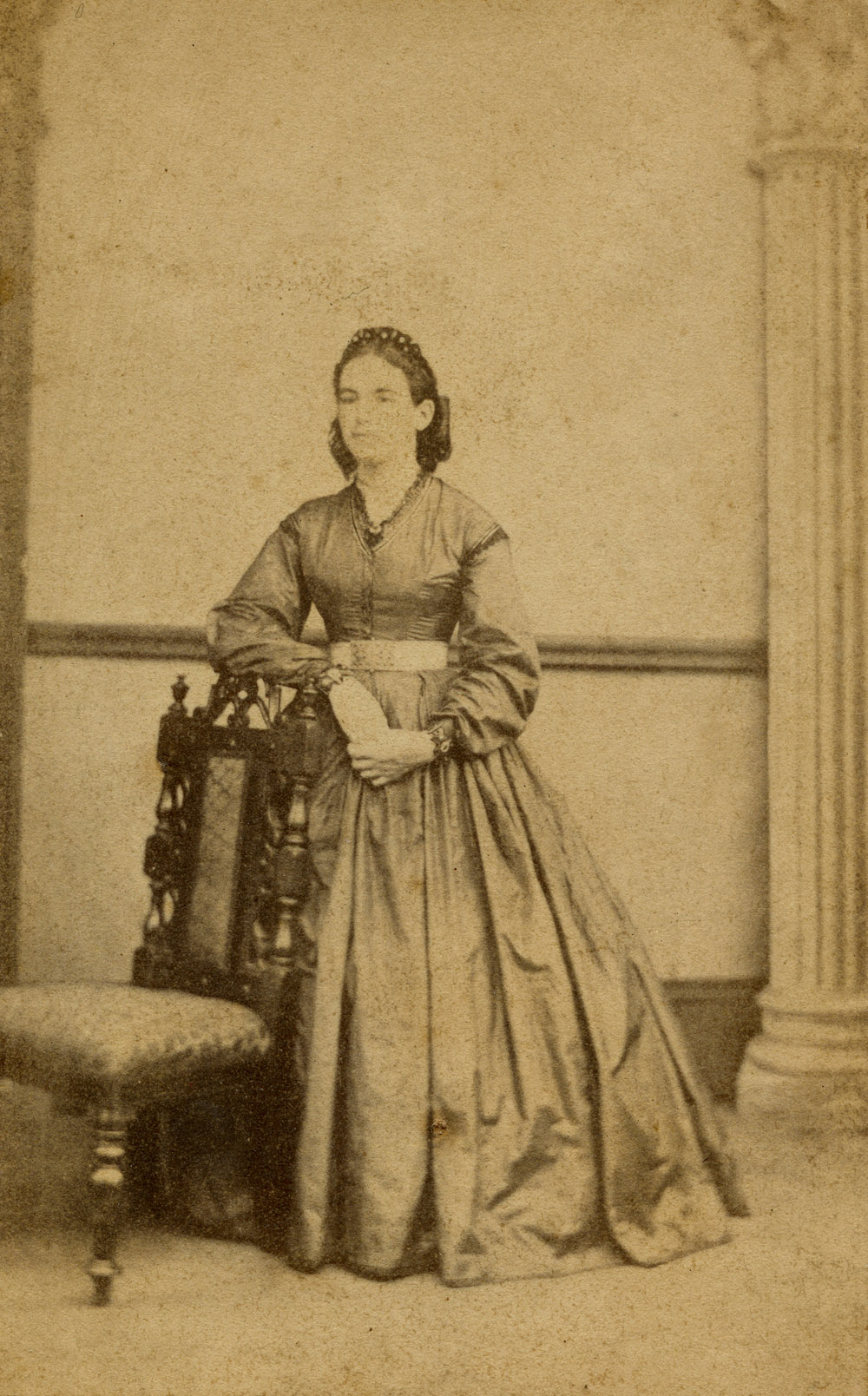
Daniel Marquis (Australian born Scotland, 1829-1879) The same woman in a crinoline dress posing with a chair, then a pedestal 1865-1870 Carte de visite
Daniel Marquis (1829-1879) was an early portrait photographer in Brisbane, Australia. Marquis was born in Glasgow, Scotland, where he had a studio as a professional photographer at 32 King Street, Stirling. Marquis travelled to Australia in 1865 and was given a land grant at Kangaroo Point, Queensland. He set up his photographic studio in 82 George Street, Brisbane, from 1866 to 1880.
Marquis was one of the earliest portrait photographers in Brisbane, working there exclusively until his death in 1879. Marquis had commissions to photograph leading members of society, for example the Governor of Queensland, Samuel Wensley Blackall, and Judge Alfred Lutwyche.
Alan Davies and Peter Stanbury. The mechanical eye in Australia: photography 1841-1900.
“Oscar [Friström] was soon involved in the business of photography, a popular artistic and cultural pursuit of the time; and it was also a ready source of income. By 1885 he had gone into partnership with the established photographer D Hutchison, and later Edward TB Hutchison. The business operated under various names, including Hutchison, Fristrom and Company and Elite Photographic Company.”
Julie K Brown, Versions of reality, PhD thesis, University of Queensland, 1984, pp. 37, 274 cited in W Ross Johnston. “Reviving Oscar Friström: his Aboriginal paintings,” in the Queensland History Journal Volume 22, No. 4, February 2014, p. 272.
Elite Photo Co’s dates and locations from Alan Davies’ and Peter Stanbury’s book The mechanical eye in Australia: photography 1841-1900:
1894-1895: Charters Towers Brisbane (Eddie T B Hutchison) Brisbane (John S Wiley) Brisbane (S E Hill) Brisbane (J Brame & Co)
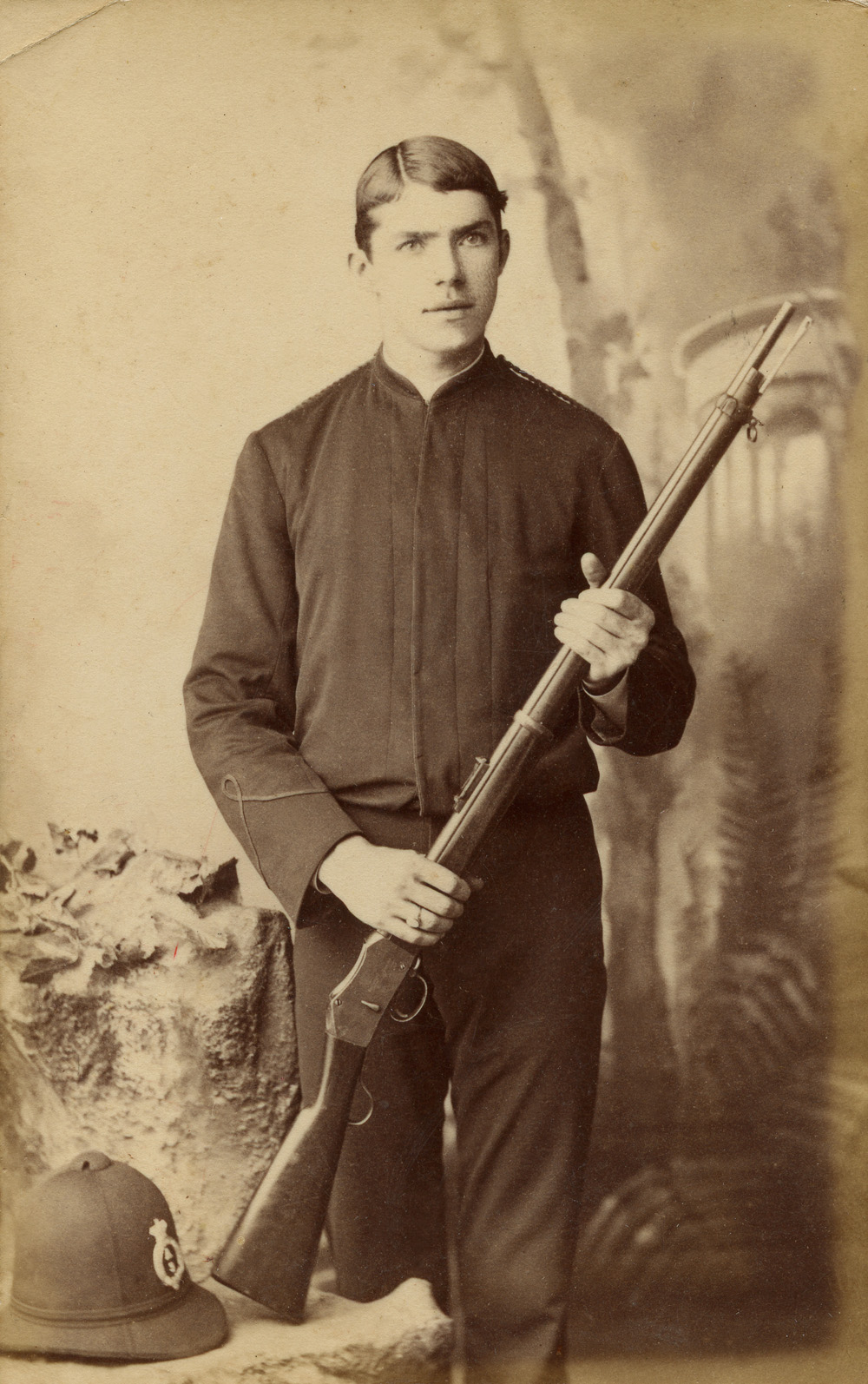
Poul C Poulsen (Australian born Denmark, 1857-1925) Queensland policeman c. 1885 Carte de visite
In 1885, Poul C. Poulsen opened his photographic studio at No.7 Queen Street in Brisbane and over time established himself as an important and longstanding early Queensland photographer. State Library of Queensland is fortunate to hold a large collection of photographs taken by the Poulsen Studios.
Polsen was born in Denmark in 1857 and travelled to Sydney in 1876. In 1882 he travelled to Brisbane and in 1885 opened the studio in Queen Street, previously occupied by Gove and Allen, photographers. Via advertisements in local newspapers that year Poulsen proclaimed himself “the people’s favourite photographer” and offered “high class work at moderate charges.” Poulsen’s success enabled him to expanded his business, opening studios in regional centres including Gympie, Maryborough and Laidley as well as additional studios in Brisbane. Poulsen retired to Cooran in 1915, passing away in 1925. He is interred at Bulimba Cemetery. His sons and grandsons continued the family business after his death.
Hundreds of images taken by Poulsen Studios have been digitised and can be viewed online. These photographs range from individual or group portraits to external street views. The quality of these images are superb, most likely due to Poulsen’s desire to use the latest photographic equipment available at the time.
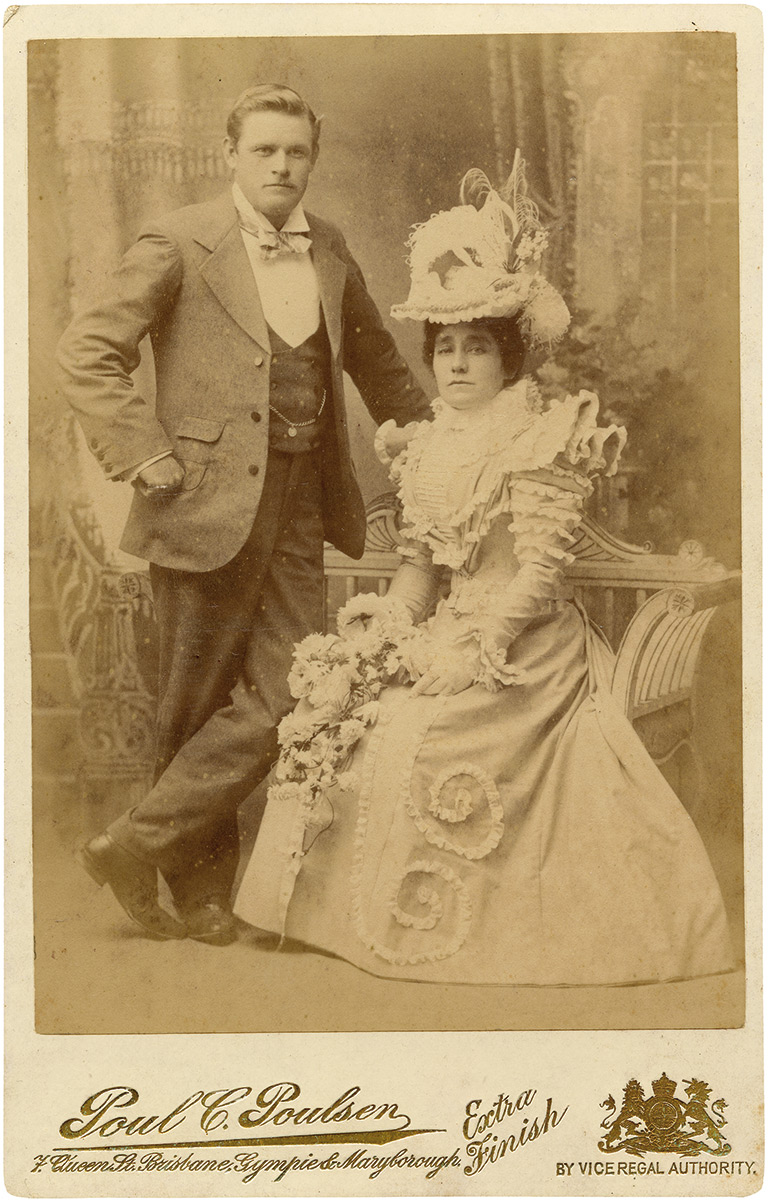
Poul C Poulsen (Australian born Denmark, 1857-1925) Unknown couple c. 1897 Cabinet photograph Marcel Safier collection
Directly opposite Fegan Studios on Queen Street was the studio of Ada Driver. Driver was one of the successful female photographers in Brisbane in the early 20th century, along with Elsie and Trissie Deazeley, Mary Lambert and Dorothy Coleman.
Before starting her own studio, Coleman had gained experience as a camera operator with Thomas Mathewson. Mathewson, along with Poul C Poulsen, set the standard of quality for portrait photography in Brisbane; between them they trained and inspired future generations of photographers.
Poulsen moved to Brisbane in 1882 and opened a branch of Gove and Allen opposite the Treasury Building on Queen Street.
This studio was later known as the American Photo Co, and then Poulsen Studios (below), and remained at this location until 1918. The studio was considered the major ‘society’ studio in Brisbane; Poulsen established a reputation for taking fine portraits of stars of the stage, including Dame Nellie Melba in 1903, and he secured the patronage of several Queensland governors.
Phil Manning. “Northern Exposure,” in Portrait 57 Winter 2017 on the National Portrait Gallery website 25 July 2017 [Online] Cited 13/12/2021
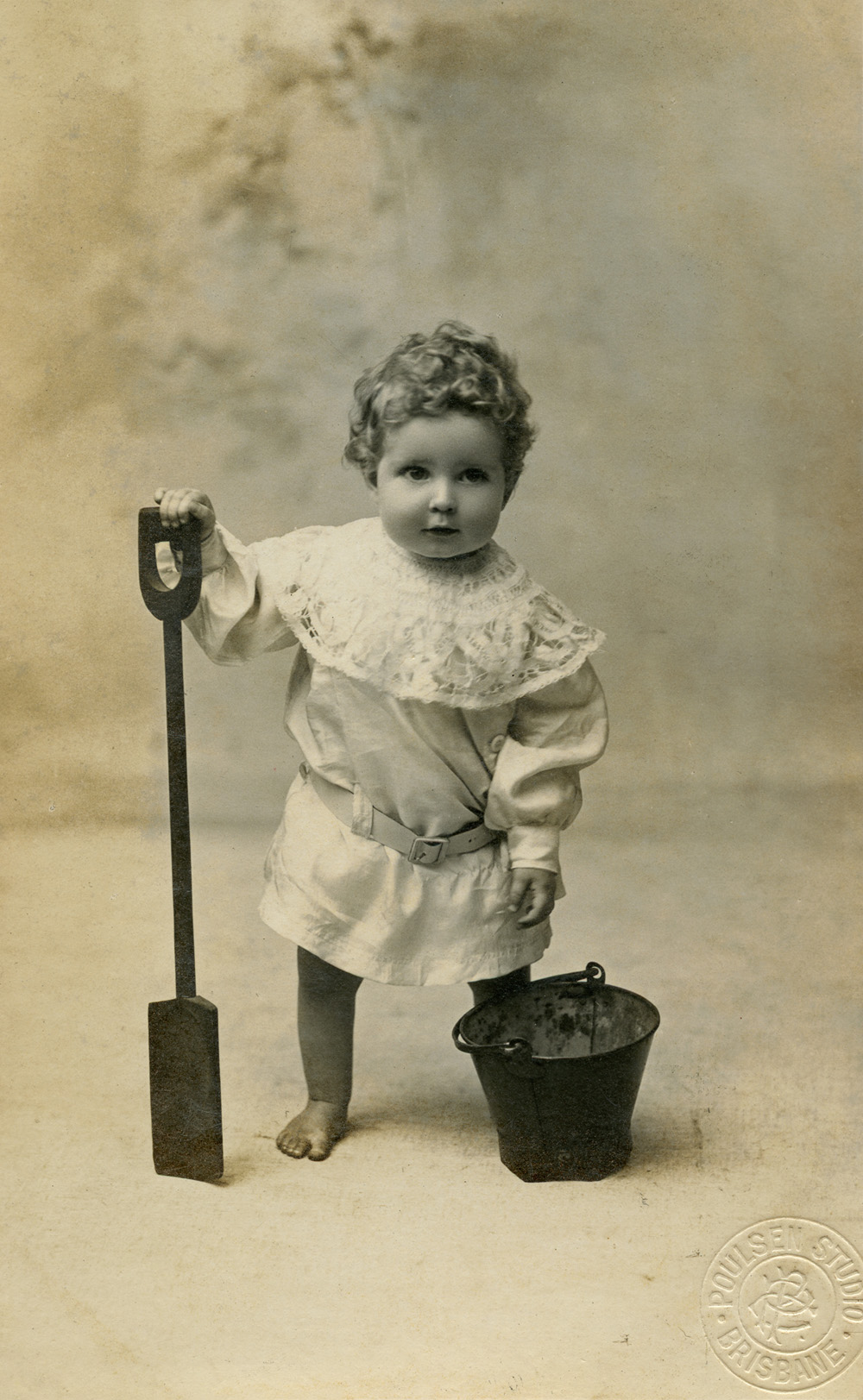
Poulsen Studio Child with bucket and spade 1920s Postcard
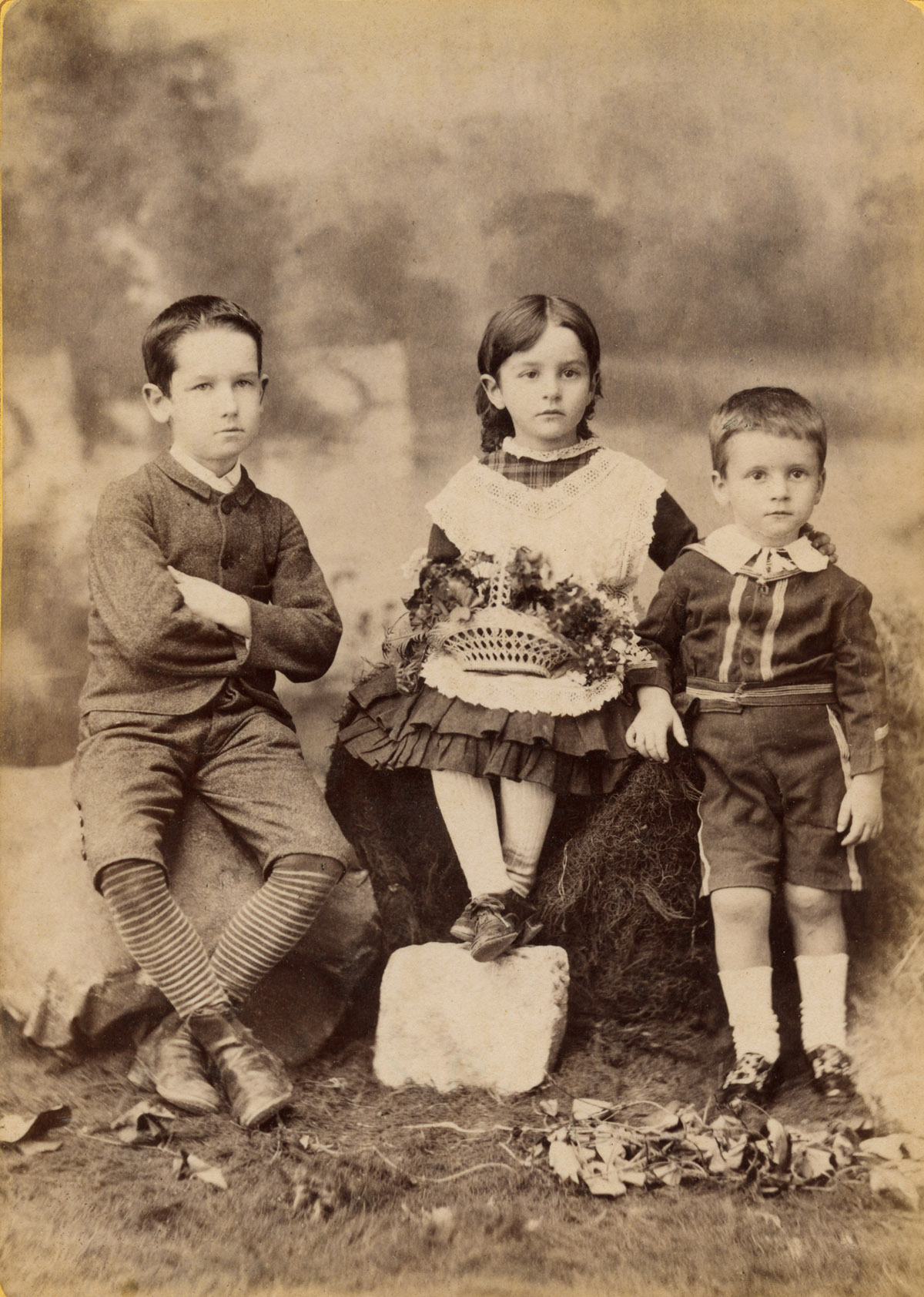
Albert Lomer & Co., (Albert Lomer Australian, 1862-1899, active c. 1865 – c. 1895) Three children c. 1885 Cabinet photograph
Professional photographer and colourist of Brisbane, Sydney and Queensland who worked throughout the mid to late 19th century. A one-time partner of Andrew Chandler, Lomer’s later clients included the painter Samuel Elyard.
Lomer worked in Melbourne before 1865 when he opened a studio at Sydney in partnership with Andrew Chandler. They advertised as being from W. Davies & Co. of Melbourne, where both had presumably trained. Their studio, The London Photographic Company, was at 419 George Street, next door to Lassetter’s ironmongery store. By February 1867 Lomer was continuing alone but promising that ‘the business will be conducted in the same efficient manner and under the same liberal principles as hitherto’. He had reduced the old price for cartes-de-visite to two for 5s or 15s a dozen and sold cabinet and other portrait photographs ‘beautifully coloured (on the premises) in oil or water’. Lomer appears to have been his own colourist, regularly advertising as both ‘artist and photographer’ (which this normally signified). In 1872-73 Lomer was working at 57 Bourke Street, Melbourne. He then established a very successful Brisbane studio at 158 Queen Street which lasted from 1874 until 1905, although he apparently no longer ran it after 1880. Branch studios were opened in various parts of the colony: the Lomer studio at Mackay in 1887 (managed by J.P. Kemp), a studio at Toowoomba (1893-96) and one at Ipswich (1898-99). Lomer was again in Sydney in 1880-95. In April 1881 Albert Lomer’s Parlour Studios at 805 George Street opposite the railway terminus,’The Really Popular (and Cheap) Photographer’, was selling cartes-de-visite for 7s 6d a dozen.
1862: Brisbane 1865-1870: 417-419 George Street, Sydney 18??: 775 George Street, Sydney 1872-1873: 57 Bourke Street East, Melbourne 1874-1900: 158 Queen Street, Brisbane 1887: Mackay, Queensland ( J P Kemp) 1893-1896: Toowoomba, Queensland 1894-1895: 158 Queen Street, Brisbane (G A Collins & F T E Keogh) 1896-1897: 158 Queen Street, Brisbane (G A Collins) 1898-1899: Brisbane Street, Ipswich, Queensland
Alan Davies and Peter Stanbury. The mechanical eye in Australia: photography 1841-1900.
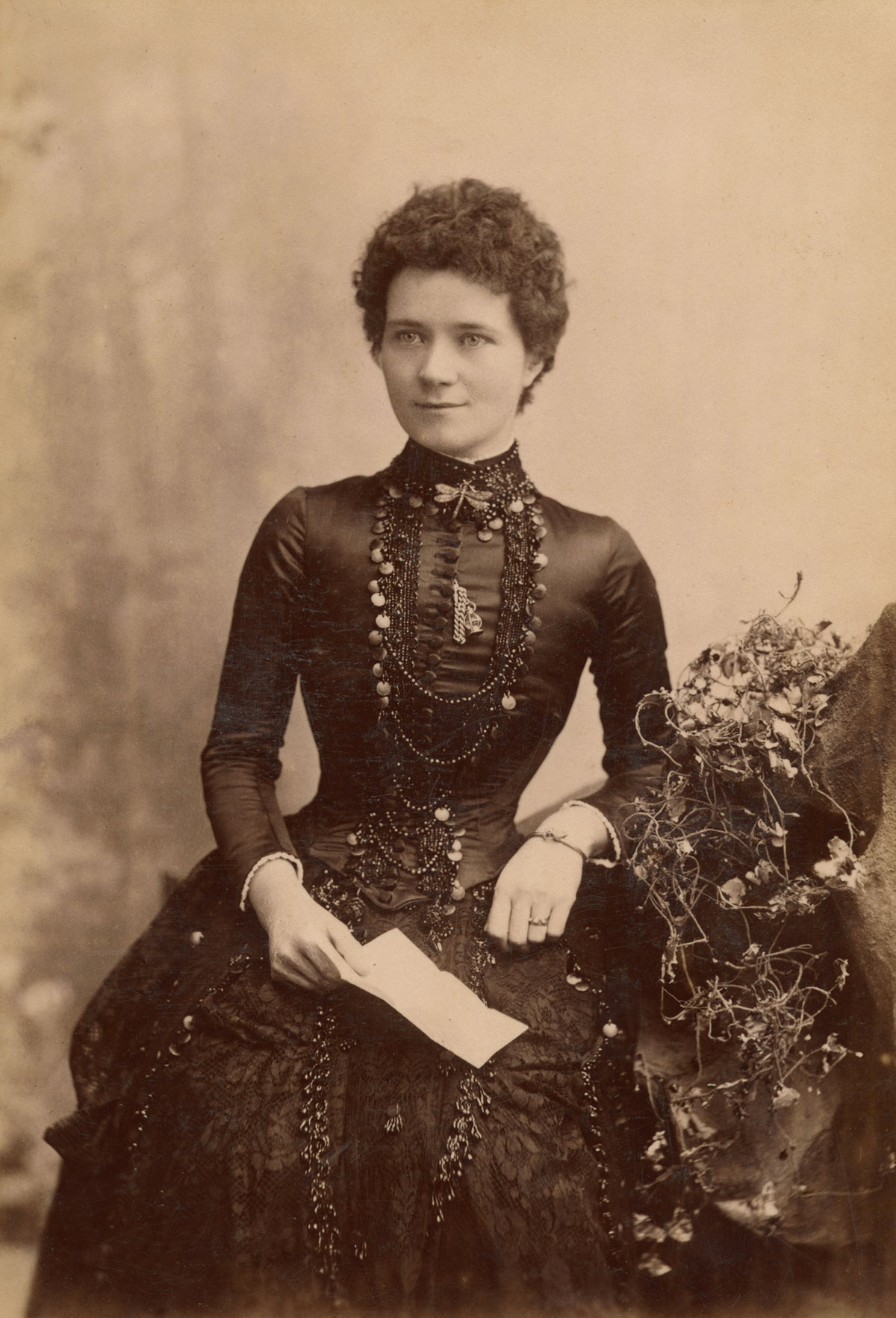
Tuttle & Co., Lady in a heavily beaded bodice and skirt 1885-1894 Cabinet photograph
William Nutting Tuttle died 7 April 1895 at Sydney Hospital, Macquarie Street, Sydney buried Waverley Cemetery, Sydney
William Nutting Tuttle and Co. was a commercial photographic firm active in Australia in the 1880s and 1890s. The firm had various studios and were active in a variety of areas: Sydney 1883-91; Goulburn 1895; Brisbane 1885-95; Charters Towers 1888; Adelaide 1882-89; Melbourne 1881-94; Hawthorn 1888-89; Perth 1892, Fremantle 1892; Coolgardie 1895-96 (Davies and Stanbury 1985, p. 244).
“The enterprising gentlemen comprising the firm of Tuttle & Co. took the people of Melbourne by surprise some five years ago [1880]. Since then they have established studios and galleries in the principal cities of Australia. By careful attention to, and despatch of business, the elegance and attractiveness of their rooms, and the splendid finish of their work, they have earned a wide-spread reputation on the island continent, and lead the van there in the photographic art.”
Alan Davies and Peter Stanbury. The mechanical eye in Australia: photography 1841-1900, p. 244.
Tosca Studio Couple with child 1896-1900 Cabinet photograph
The management of the “Tosca” studios in Brisbane make it their proud boast that they are thoroughly up to date in every detail, and in this they challenge comparison with any photographic establishment in the Australian colonies. Their head studios, at 67 Queen-street, Brisbane, are known to all local residents, and since the commencement of their business a reputation has been established for high class work not only in the city of Brisbane, but throughout Queensland. Mr. W. T. Farrell, in whose hands is the sole control of the business, is a man of the widest range of experience in his particular line. He has gained his knowledge in the leading studios of Australasia. The high character of the work produced is vouched for by the fact that the chief operator, Mr. Stuart MacQee, was for many years under engagement to Messrs. W. and D. Downoy, Imperial Court photographers, of Ebury street, London, and was also five years with Messrs. Falle and Co., of Sydney. Branches of the “Tosca” studios have already been established at Gympie, Rockhampton, Charters Towers, and Townsville. It is also contemplated to establish branches in other country towns in the near future. As indicating the amount of business transacted, it may be mentioned that during the present year no fewer than 200,000 cabinet mounts have been imported by the firm. This is exclusive of mounts required for Paris panels, for which there is a very large demand. In the head studio alone, as much as £88 has been taken in one day from sitters.
Anonymous text. “The Tosca Portrait Studios,” in The Brisbane Courier Sat 11 Dec 1897, p. 6 on the Trove website [Online] Cited 13/12/2021
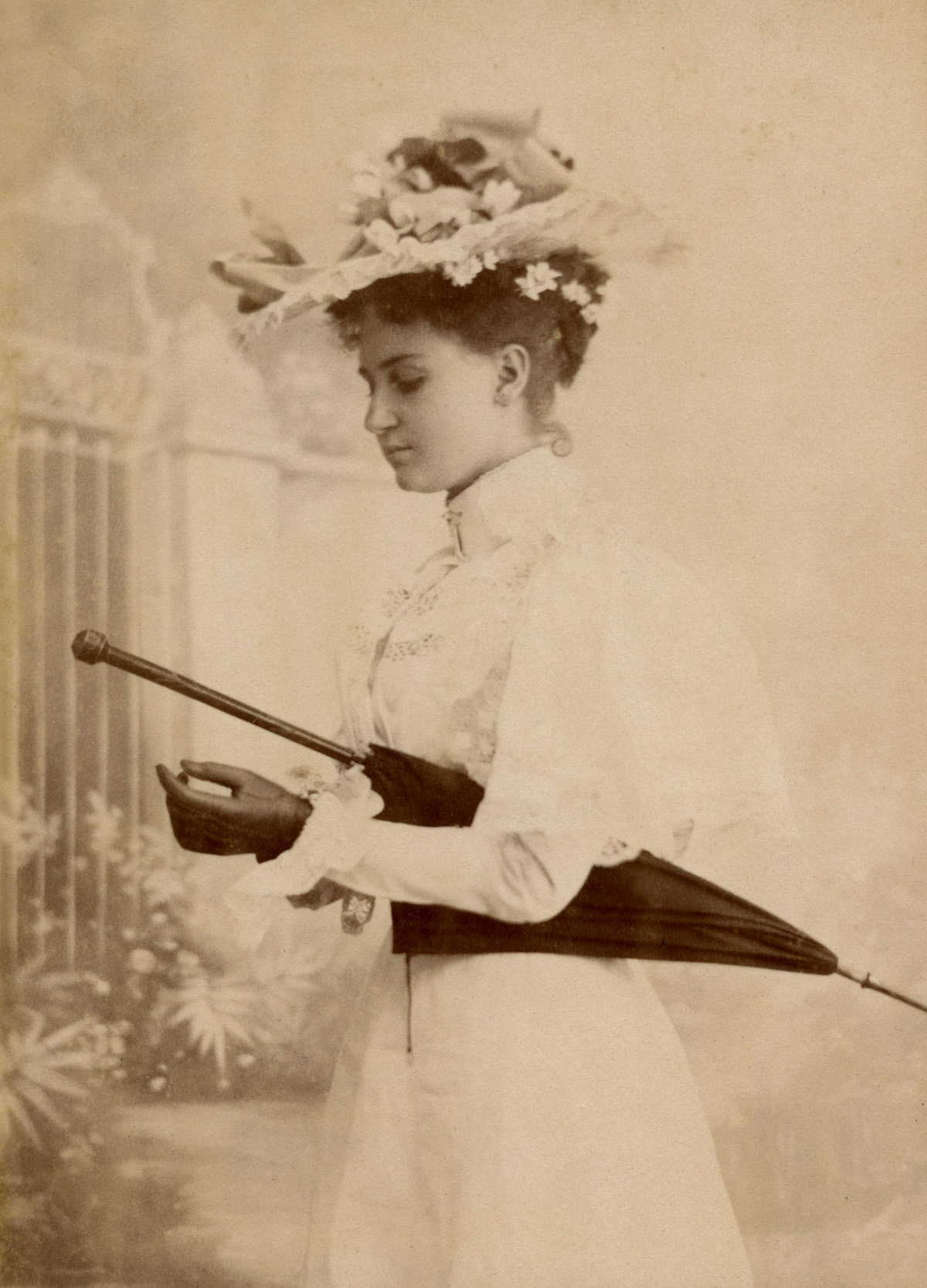
Dana Studio Lady wearing gloves with parasol 1897-1898 Cabinet photograph
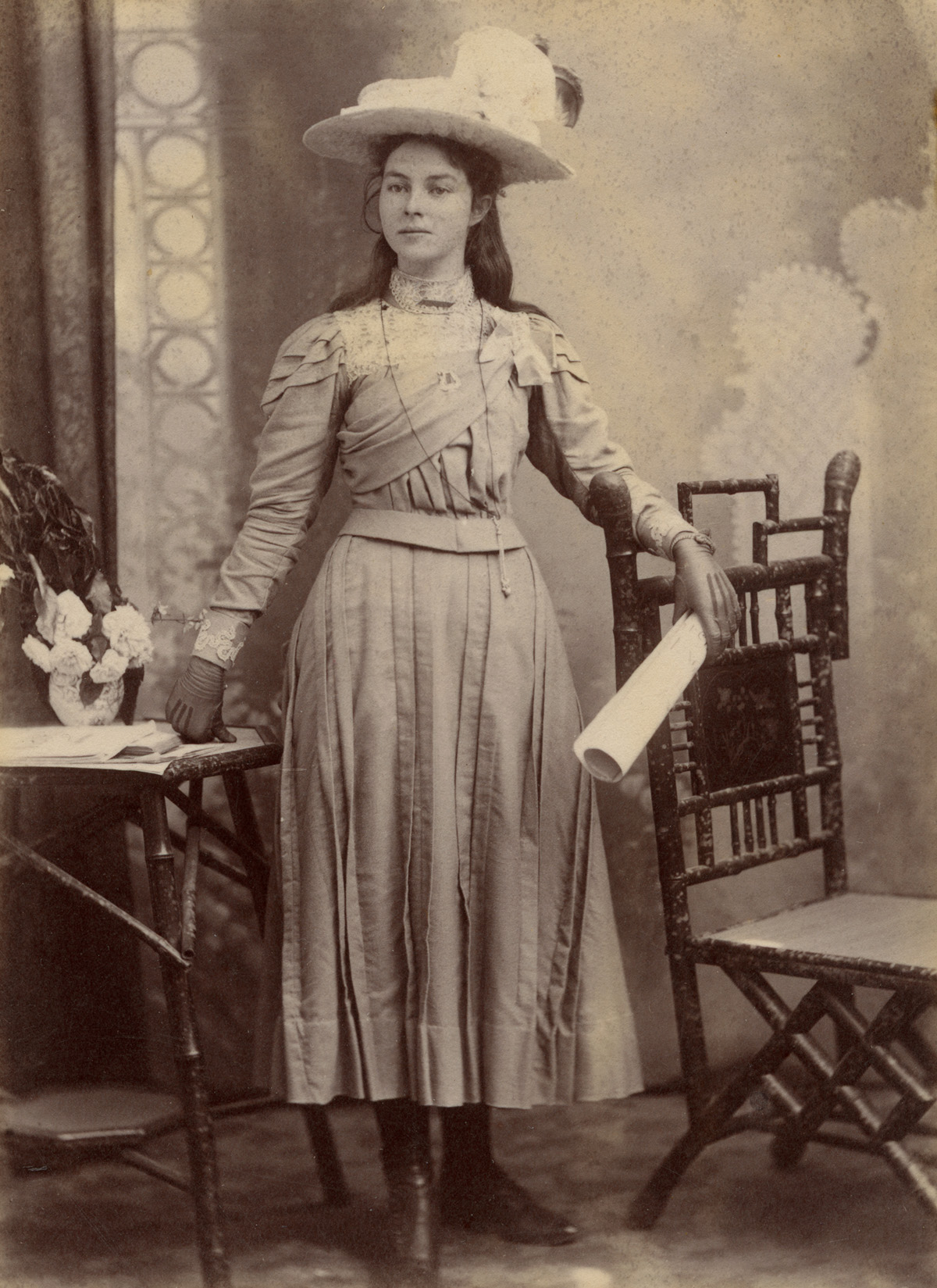
James Patching & Co., Young lady in feathered hat leaning on bamboo furniture 1897-1901 Cabinet photograph
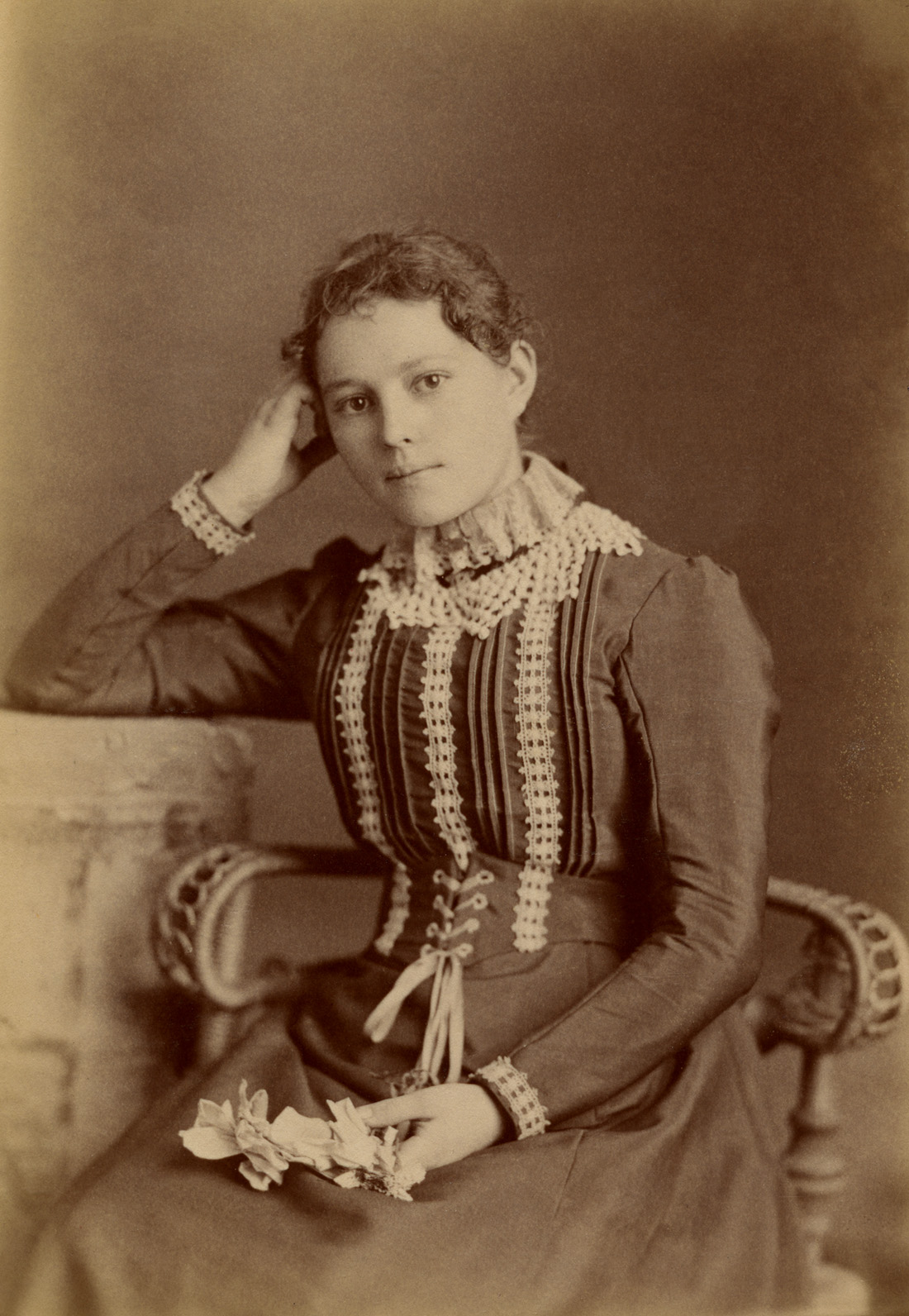
John Wiley (active 1880s – 1890s) Seated lady holding flowers 1899-1901 Cabinet photograph
John S Wiley’s dates and locations from Alan Davies’ and Peter Stanbury’s book The mechanical eye in Australia: photography 1841-1900:
Thomas Mathewson & Co., (active c. 1854 – c. 1934) Two Salvation Army girls 1910-1915 Postcard
Thomas Mathewson (born Helensburgh, Dumbartonshire, Scotland, UK, 1842 – died Brisbane 12 May 1934; arrived Australia 1853) was a professional photographer, was born in Helensburgh, Dumbartonshire, Scotland. He was orphaned in early adolescence, shortly after his family migrated to Moreton Bay, Queensland, in 1853. For a few months in 1854 he attended the Anglican Church School in Nicholas Street, Ipswich run by Alfred Hazelton, then learnt photography from Rev. Theophilus Beazeley in evening self-improvement classes at Ipswich. After practising as an amateur Mathewson set up as a professional photographer at Toowoomba in 1861. In 1865 he worked his way through the Darling Downs, via Roma, St George and the Gwydir River, reaching Sydney by late 1867. Travelling northwards, he took photographs at Gympie (1868-72), Rockhampton, Bowen, Charters Towers and Townsville.
Thomas’s brother Peter joined him in 1876 and the firm became Mathewson & Co. until the 1890s, operating mainly from Queen Street, Brisbane, but making regular tours to country towns and rural districts. Thomas, the senior partner, was said in 1894 to have made a speciality ‘of children and other pets’. Peter set up on his own in the late 1890s and his son Thomas eventually took over the firm, so the name Thomas Mathewson was associated with two separate Brisbane photographic studios. Thomas senior eventually renamed his business the Regent Studios, where he was assisted by his son Jack. Thomas junior called his father’s business the Austral Studio when he inherited it.
Thomas Mathewson senior died in Brisbane on 12 May 1934, aged ninety-three. Recognised as the ‘Grand Old Man’ of Queensland photography, he was said in 1894 to have left the ‘tracks of his tripod’ in every inhabited place from the Great Barrier Reef to the South Australian border. Before his death he wrote his recollections, depicting the excitement, initiative and hardships of an early cameraman as he trekked through the countryside ‘fully equipped with tents, one in which to photograph sitters, and another in which to live, together with all the needful paraphernalia of wet-plate photography, all packed in a two-wheeled vehicle drawn by two horses’.
Rod Fisher and Joan Kerr. “Thomas Mathewson,” on the Design & Art Australia Online website 1992 last updated 2011 [Online] Cited 13/12/2021
c. 1854: Ipswich, Qld c. 1853 – c. 1854: Moreton Bay, Qld c. 1867: Sydney, NSW c. 1865 – c. 1867: Gwydir River, NSW c. 1865 – c. 1867: St George, Qld c. 1865 – c. 1867: Roma, NSW c. 1868 – c. 1872: Townsville, Qld c. 1868 – c. 1872: Charters Towers, Qld c. 1868 – c. 1872: Bowen, Qld c. 1868 – c. 1872: Rockhampton, Qld c. 1868 – c. 1872: Gympie, Qld c. 1865 – c. 1867: Darling Downs, NSW c. 1861 – c. 1865: Toowoomba, Qld c. 1876 – c. 1900: Queen Street, Brisbane, Qld
Thomas Mathewson & Co., (active c. 1854 – c. 1934) Thomas Mathewson (inset) and his studio on Queen Street c. 1908 Sandy Barrie collection
Thomas Mathewson is regarded as the father of photography in Queensland, having begun his business in 1864 (the Mathewson family would go on to have a presence in Brisbane’s photographic community until 1940). It is said that Mathewson left the tracks of his tripod in every inhabited place from the Great Barrier Reef to the South Australian border. He returned to Brisbane in 1876, going into partnership with his brother, Peter, in a studio on Queen Street. In 1895 they ended the partnership and Thomas continued on his own, establishing Regent Studios, while Peter established Austral Studios. Both brothers established branches of their respective operations throughout Queensland.
Phil Manning. “Northern Exposure,” in Portrait 57 Winter 2017 on the National Portrait Gallery website 25 July 2017 [Online] Cited 13/12/2021
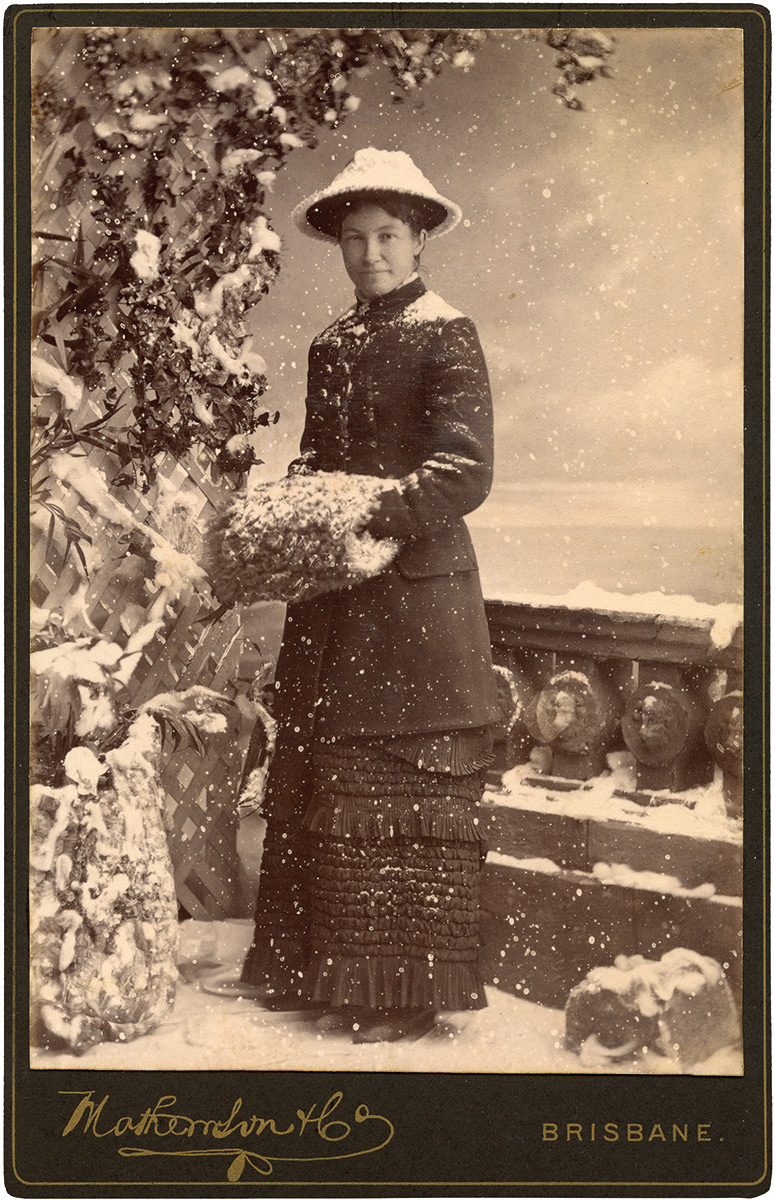
Thomas Mathewson & Co., (active c. 1854 – c. 1934) Lady in ‘snow’ c. 1880-1885 Cabinet photograph Marcel Safier collection
Regent Studios (Thomas Mathewson) Jane and Thomas Mathewson 1920s Card-mounted sepia-toned silver gelatin photograph
Talma Studios (Ferdinand Sturgess) (Brisbane, 1866-1939) Arthur Kean playing a flute 1915 Postcard
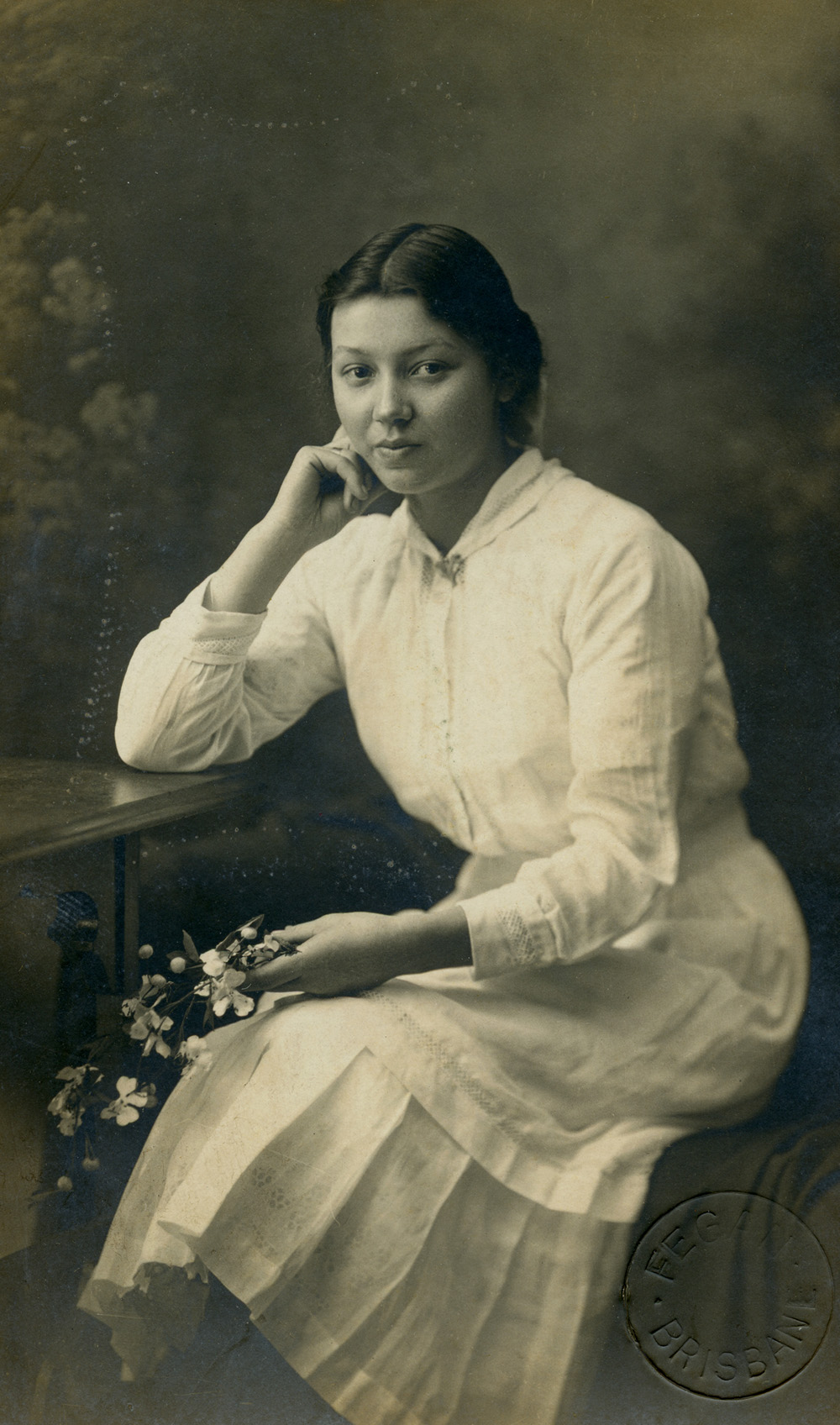
John ‘Jack’ Fegan (Australian, 1839-1919) Lady holding flowers c. 1915 Postcard
Jack Fegan was born John James William Rolling Fegan in 1839 and died in 1919. He operated photographic studios in Gympie and Brisbane. He was the first president of the Professional Photographers of Queensland.
Fegan & Ruddle 1902-1904: Brunswick St. Fortitude Valley 1918-1920: 126 Queen St. Brisbane Fegan Ltd. 126 Queen St. Bris. 1918 -1920. Fegan Studios Mrs Fegan (wife of “Jack”, manager after Jack’s death in 1922) 126 Queen st,. Bris.
John ‘Jack’ Fegan (Australian, 1839-1919) Family portrait before the father left for the First World War 1914-1918 Postcard
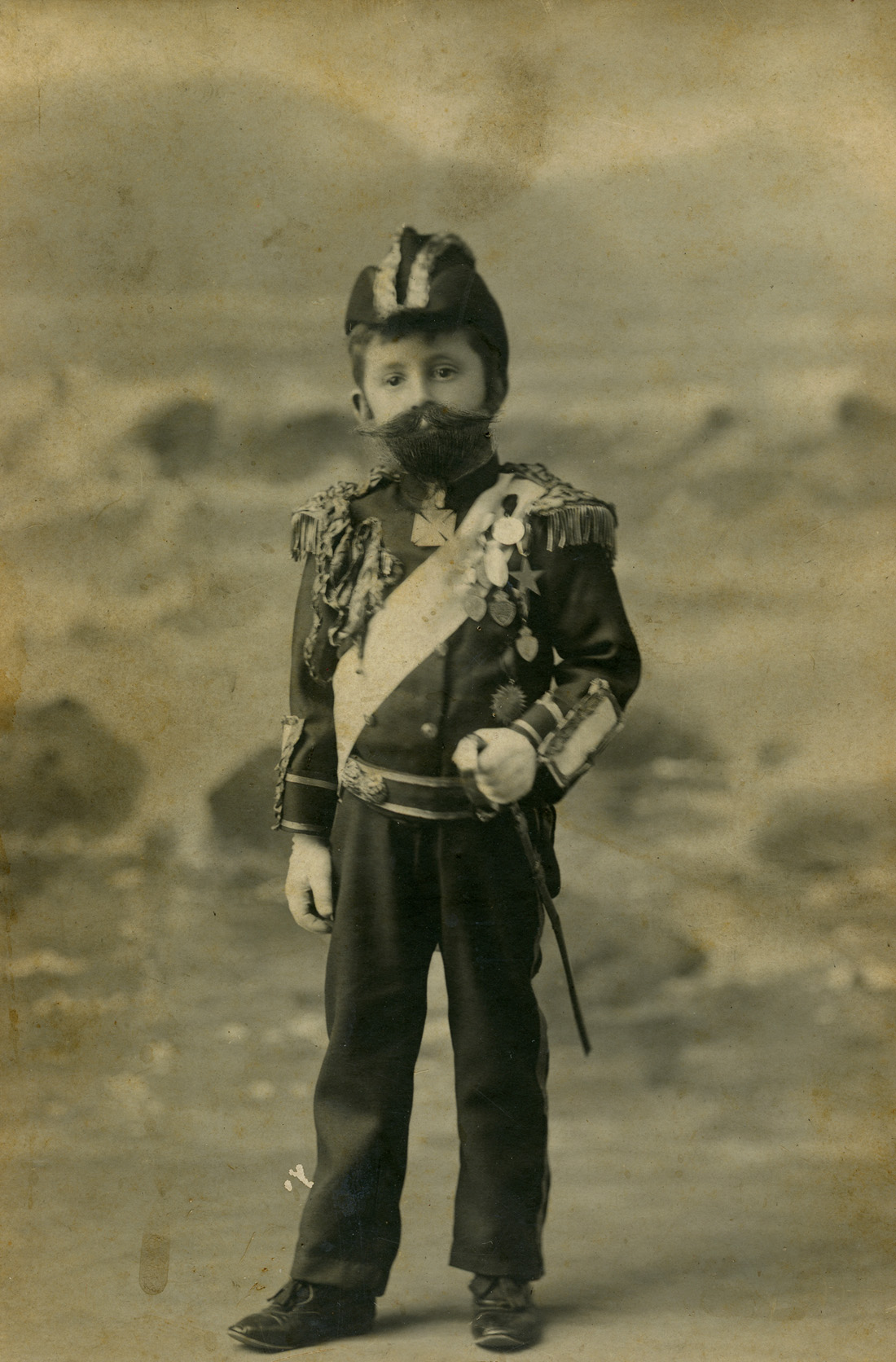
Fegan & Ruddle (1866-1939, Brisbane) Harry Smith Jr dressed as Duke of York for Children’s Hospital Ball 1902 Cabinet photograph
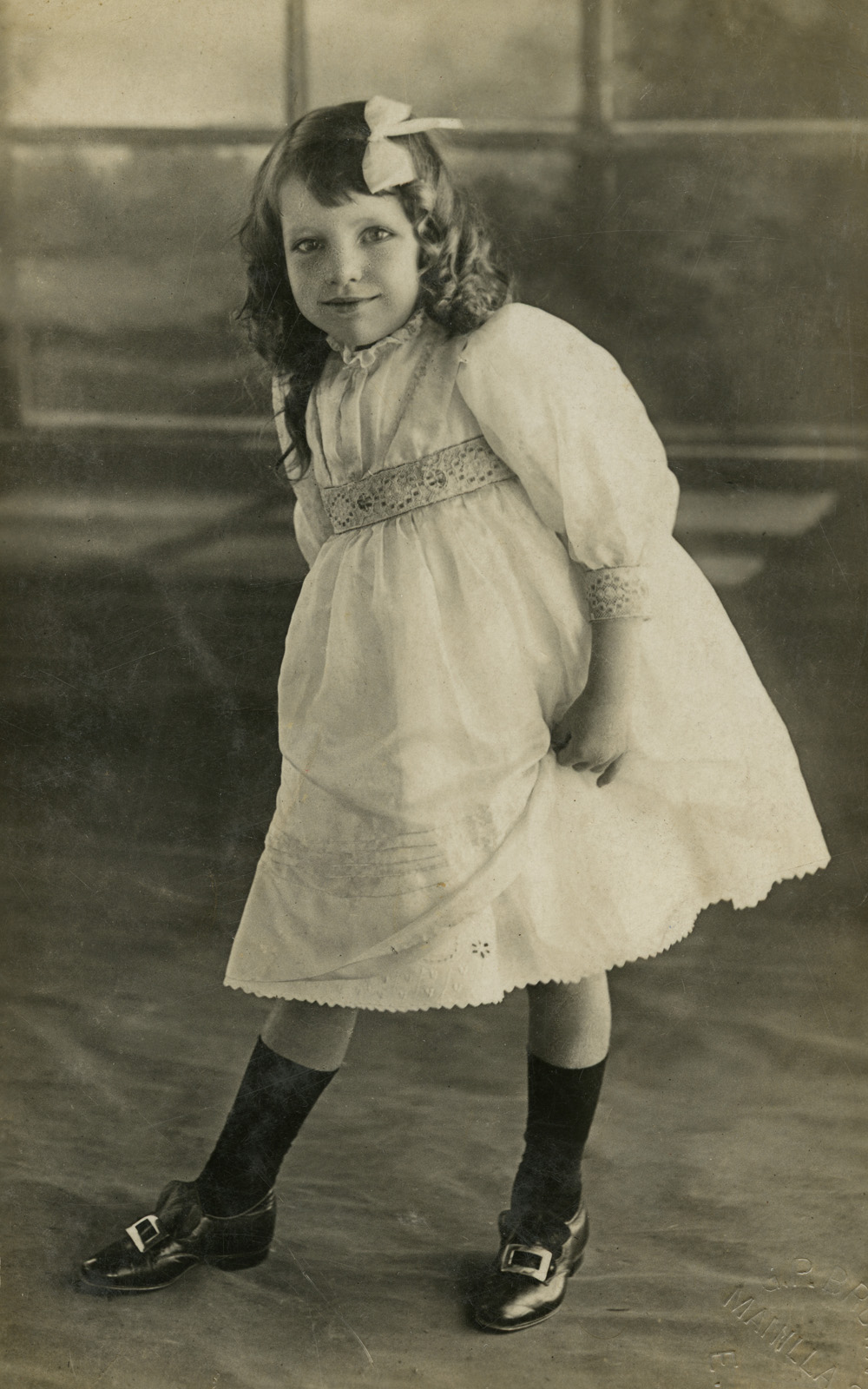
George Brown Girl with fancy buckled shoes 1912-1928 Postcard
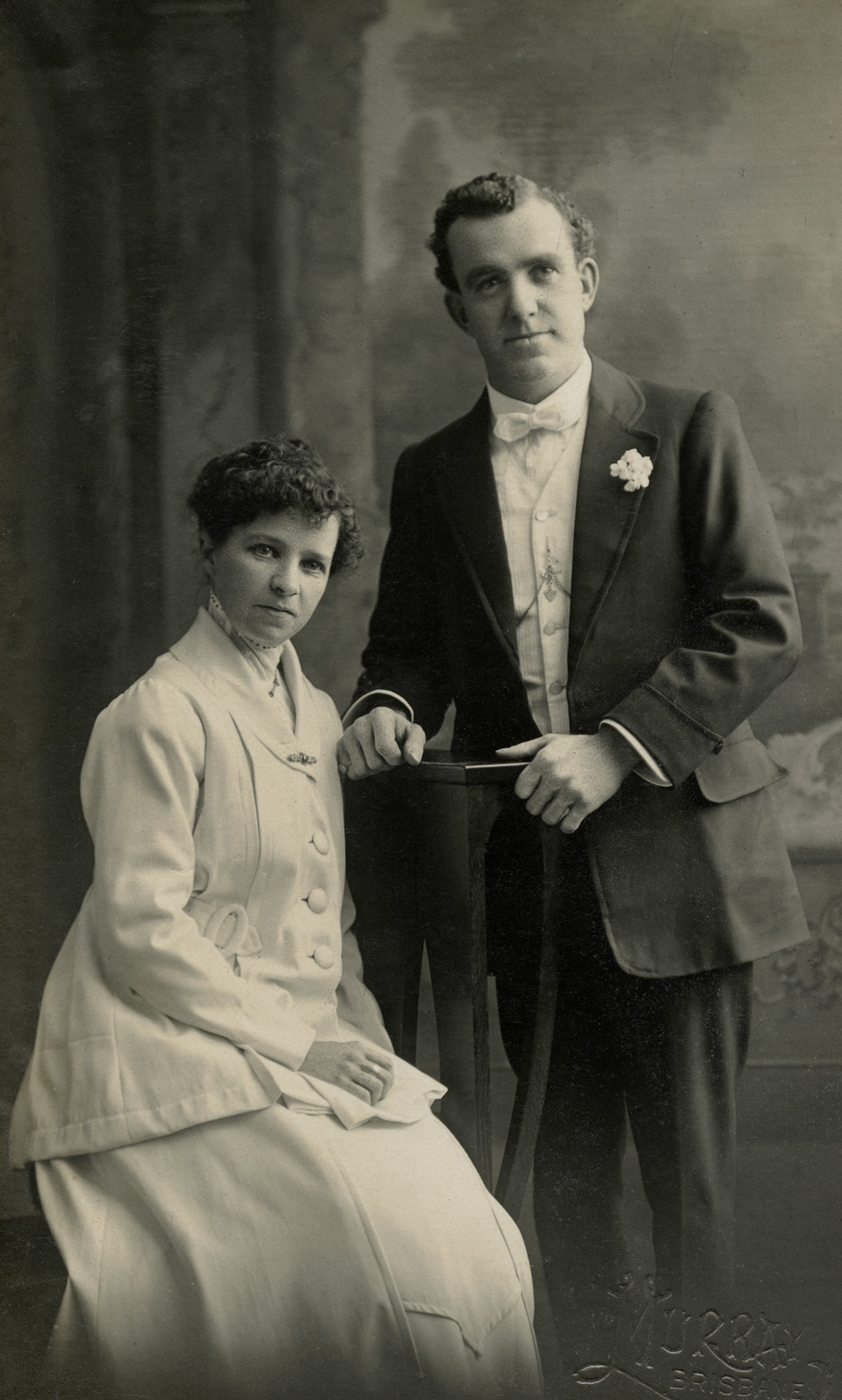
Murray Studios (Brisbane & Gympie) The Noonans 1916-1919 Postcard
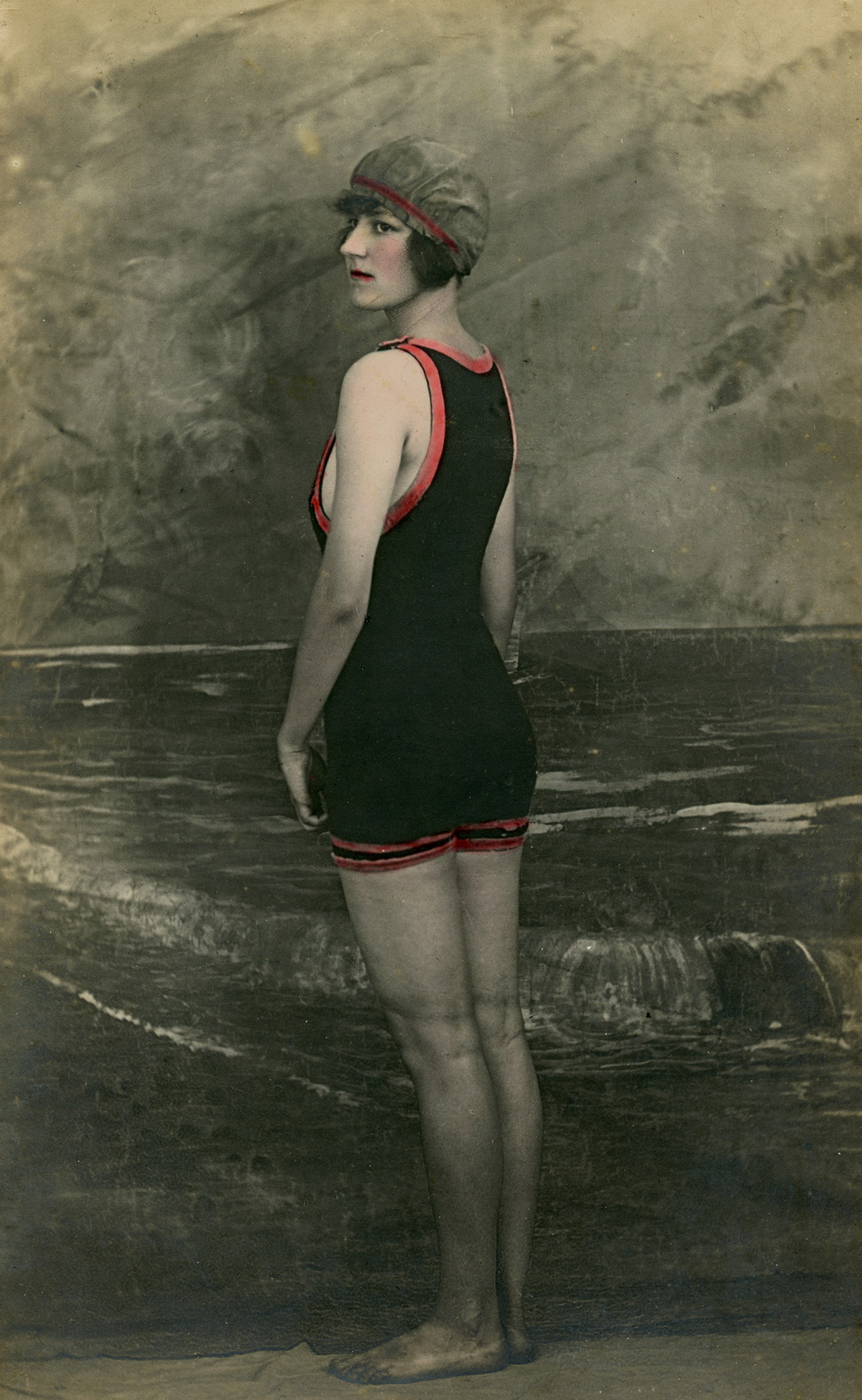
George Hendry Norma Horniblow in a bathing costume c. 1920 Parisian Studio Postcard
Norma Gwendoline Horniblow (1904-1977)
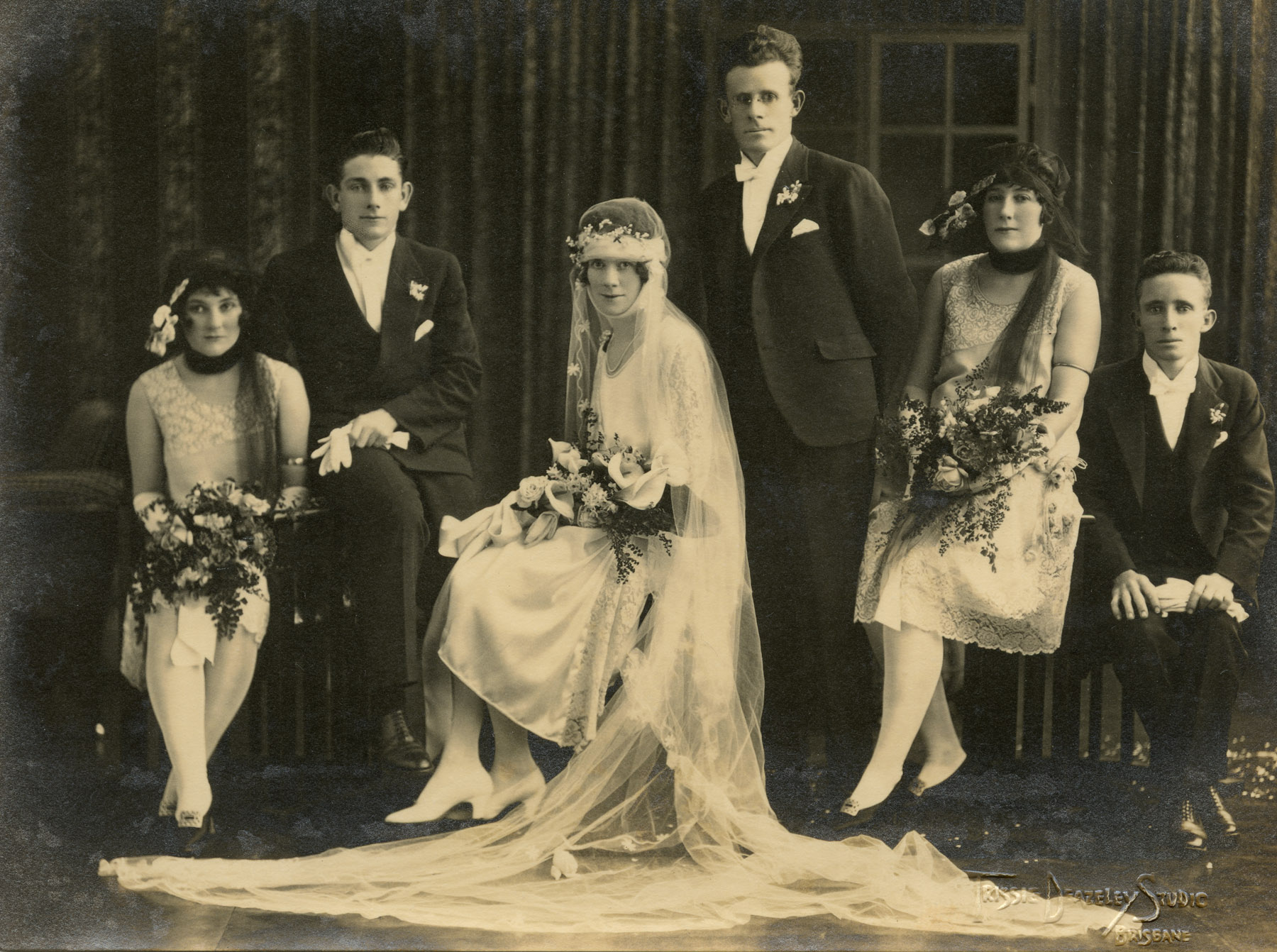
Trissie Deazeley Studio (active c. 1924 – c. 1928) Wedding party c. 1925 Silver gelatin photograph
Trissie Deazeley (active c. 1924 – c. 1928) was an early 20th century Queensland photographer.
One of the first female photographers in Brisbane was Ada Driver, whose Brisbane studio was right in Queen Street Mall along with other female photographers Trissie Deazeley, Dorothy Coleman and Mary Lambert.
c. 1927 – c. 1928: Brisbane, Qld c. 1924 – c. 1927: Toowoomba, Qld
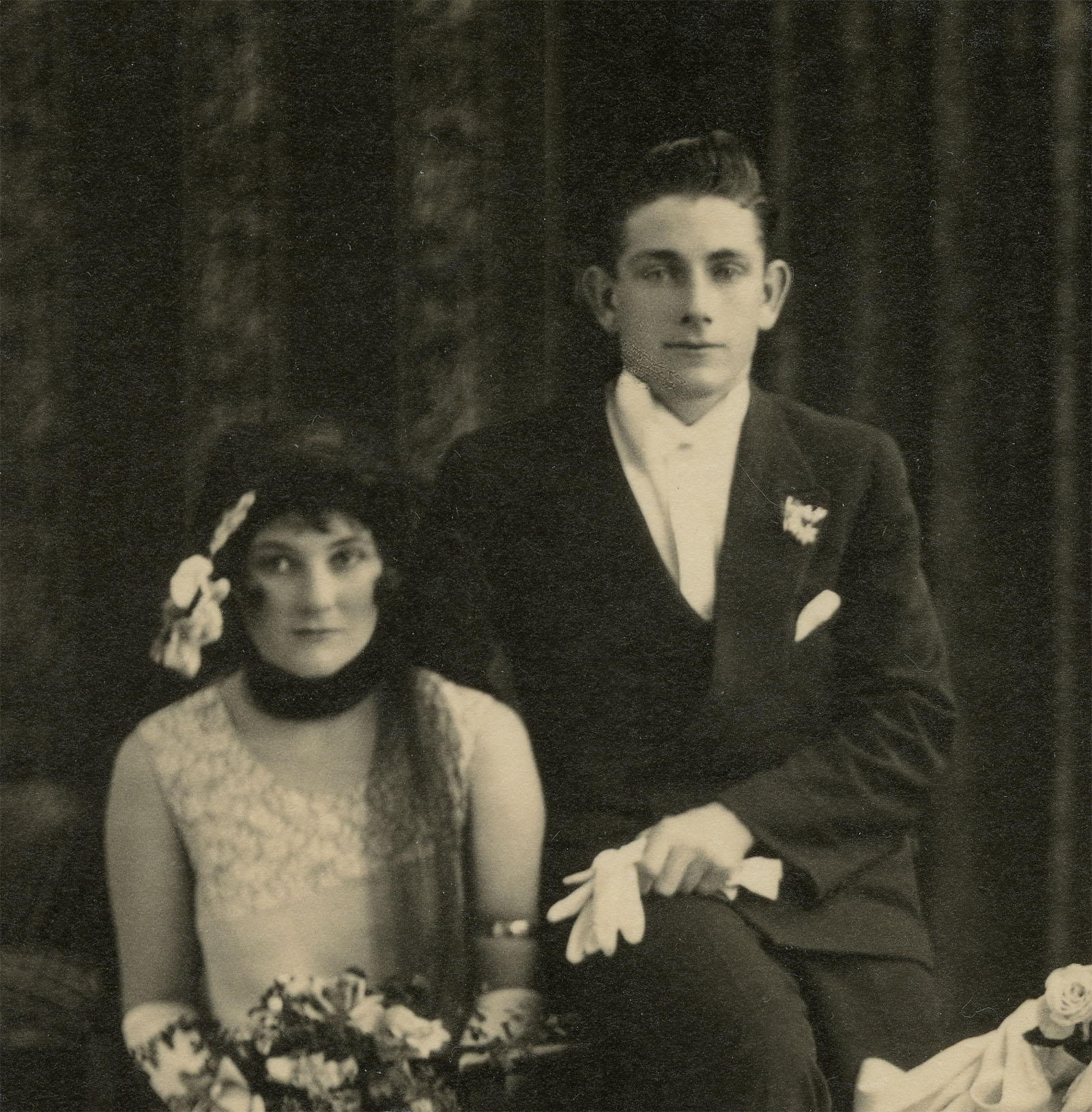
Trissie Deazeley Studio (active c. 1924 – c. 1928) Wedding party (details) c. 1925 Silver gelatin photograph
Regent Studios (Fred Cherry) Girl holding a toy koala and boy holding a toy car 1940s Sepia-toned silver gelatin photograph in presentation folder
Anna Lee Group of friends at Cloudland Ballroom, including Mrs Hobson (front left) 1947-1950 Salon Postcard
Read the fascinating history of Brisbane’s most iconic building, the big arch on the hill that was the Cloudland Ballroom.
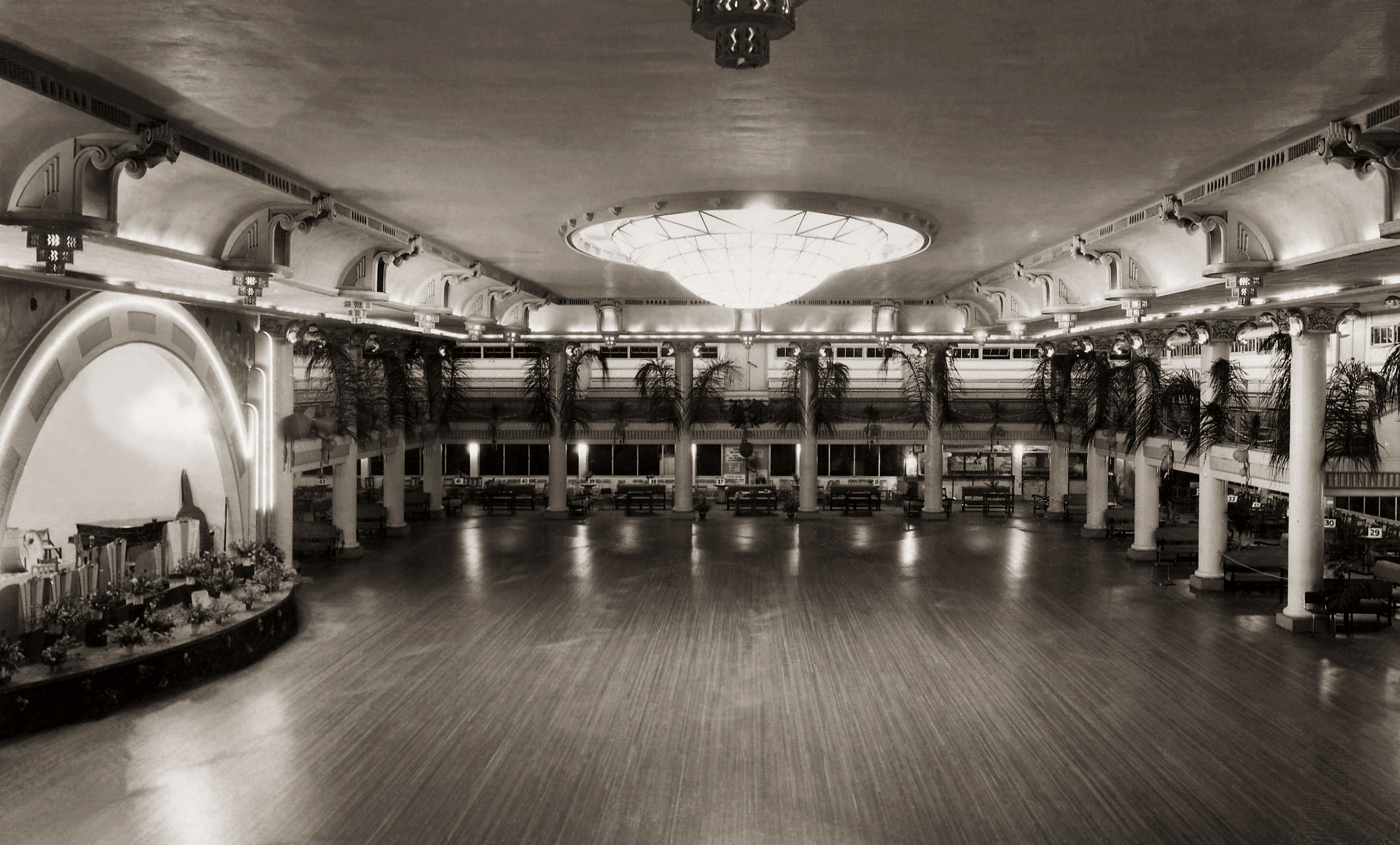
“Cloudland Dance Hall” at the time, builders declared, “With its private alcoves, upholstered seating, dressing rooms, and perfect ventilation… the ballroom will be the finest of its kind in Australia.” It was no exaggeration, and Cloudland was without doubt one of the best dance and concert venues in the country. The venue was a classic World War II structure. Inside it had hard timber floors, decorative columns, sweeping curtains, domed skylights and chandeliers. Cloudland also had an upper circle of tiered seating which overlooked the floor and stage.
On a commanding hilltop site in the Bowen Hills above Brisbane, Cloudland’s distinctive parabolic laminated roof arch, nearly 18 meters high, was visible for miles, and was illuminated at night. Inside, as the photo clearly shows, it was famed for elegant decoration and its sprung dance floor, reputed to be the best in Australia. Cloudland was significant as a landmark, and as a place where generations of Brisbane residents went for entertainment. It was illegally demolished in 1982.
Unknown photographer Cloudland Ballroom (digitally restored by MB) Nd
Paragon Portraits Tim, nearly 4 years-old, and Darryl, 2 years-old, at the Caldwell Christmas party 1949 Hand-coloured postcard
Museum of Brisbane Level 3, Brisbane City Hall King George Square, Brisbane
Opening hours: Open 7 days a week, 10am – 5pm daily, and until 7pm Fridays
Curators: Alan Govenar, with Martina Caruso, Collections Manager and Registrar, and Michelle Kennedy, Collections Assistant at the Seaport Museum
Tattooing Tools c. 1900-1940 (metal, wood, bone, plastic, textile, paper) Courtesy South Street Seaport Museum
THIS IS THE FIRST POSTING SINCE MY OPERATION. THIS AND THE NEXT FEW POSTINGS WERE CREATED WELL BEFORE THE OPERATION. I AM NOT USING MY INJURED HAND WHICH IS IN A CAST UNTIL THE 15th JUNE 2017. THANK YOU!
I love the (hand coloured) photographs of Australia and New Zealand among the pages of the Souvenirs of the Travels and Experiences of the Original Gus Wagner, Globe Trotter & Tattoo Artist scrapbook, and the photographs of early Australian tattooing.
The ink work over the background photograph of Victor Lundblad (?) tattooed by Gus Wagner 1902 (left) and Gus Age 30 (right) (1902, below) adds an altered dimension to the photographic image, both physical and visual … from the hand coloured roses on the studio background, to the all seeing eyes staring at the viewer on the back of Victor Lundblad’s legs and on to the eyelashes of both men, which are like that of a Victorian doll. The male body as tattoo schematic, as a representational topography.
Dr Marcus Bunyan
Many thanks to the South Street Seaport Museum for allowing me to publish the artwork in the posting. Please click on the photographs for a larger version of the image.
“There is something about tattooing which I cannot explain… and why so many people have it done I don’t know. It may be vain, but I find it fascinating and very useful in traveling. Every symbol and every design made up of symbols has a meaning. These on my body, for instance, are mementos featuring incidents of my life and travels. Then, too, in every country where tattooing is practiced a tattooed person who is able to tattoo needs to further introduction to the natives, be they civilised or uncivilised, or even barbaric and cannibalistic.”
Gus Wagner
Tattooing Tools c. 1900-1940 (metal, wood, bone, plastic, textile, paper) Courtesy South Street Seaport Museum
Augustus “Gus” Wagner (American, 1872-1941) Souvenirs of the Travels and Experiences of the Original Gus Wagner, Globe Trotter & Tattoo Artist scrapbook c. 1897-1941 Leather, paper, photographic print, ink, thread Courtesy South Street Seaport Museum
Augustus “Gus” Wagner (American, 1872-1941) Pages from Souvenirs of the Travels and Experiences of the Original Gus Wagner, Globe Trotter & Tattoo Artist scrapbook c. 1897-1941 Leather, paper, photographic print, ink, thread Courtesy South Street Seaport Museum
Augustus “Gus” Wagner (American, 1872-1941) Taken on board R.M.S. Ormuz in Sydney Harbor Sydney new South Wales Australia, March 1899 1899 Pages from Souvenirs of the Travels and Experiences of the Original Gus Wagner, Globe Trotter & Tattoo Artist scrapbook (detail) c. 1897-1941 Leather, paper, photographic print, ink, thread Courtesy South Street Seaport Museum
(colour correction and light digital clean)
RMS Ormuz, built in the Glasgow shipyards and she was capable of sailing from Sydney, as it was advertised locally, to London in just 30 days. The truth is that she was indeed capable, and she even did it once, however, filled with passengers and with suitable ports of call for the enjoyment of the ships guests, the voyage would usually take six weeks…
In 1883 The Orient Steam Navigation Co. Ltd., of London signed a contract with the Government of New South Wales, Australia to carry emigrants from the United Kingdom. The Company would be paid £15 per head for up to four hundred persons and £14 and 10 Shillings for numbers between four and six hundred persons per voyage…
Having been carefully planned and using one of the company’s finest interior designers, such as J. J. Stevenson F.R.I.B.A., who had already worked on a number of earlier ships and would now place his stamp on the Ormuz! Thus an order was placed for her to be built at Fairfield Shipbuilding and Engineering Co. Ltd., Glasgow, where her hull was laid down in Yard 317.
The new almost completed liner was officially launched on September 29, 1886 and after her fit-out and trials were completed, on December 29, 1886 she was registered at Glasgow in the ownership of the Orient Steam Navigation Co. Ltd., London, named the “Ormuz.” She was then officially handed over to the Orient Line at Tilbury.
The 6,031 GRT (Gross Registered Ton) RMS Ormuz was 464.5ft – 141.55m long and she accommodated 334 passengers in comfortable First and Second Class accommodations. In addition there were the more humble migrant accommodations, which were generally large all male and female dormitories with some 6 to 8 berth cabins and a few 4 berth cabins for ladies with babies, or very young children sailing. In all there would be 300 migrants onboard, thus a total of 634 passengers, that is if the ship was fully booked!
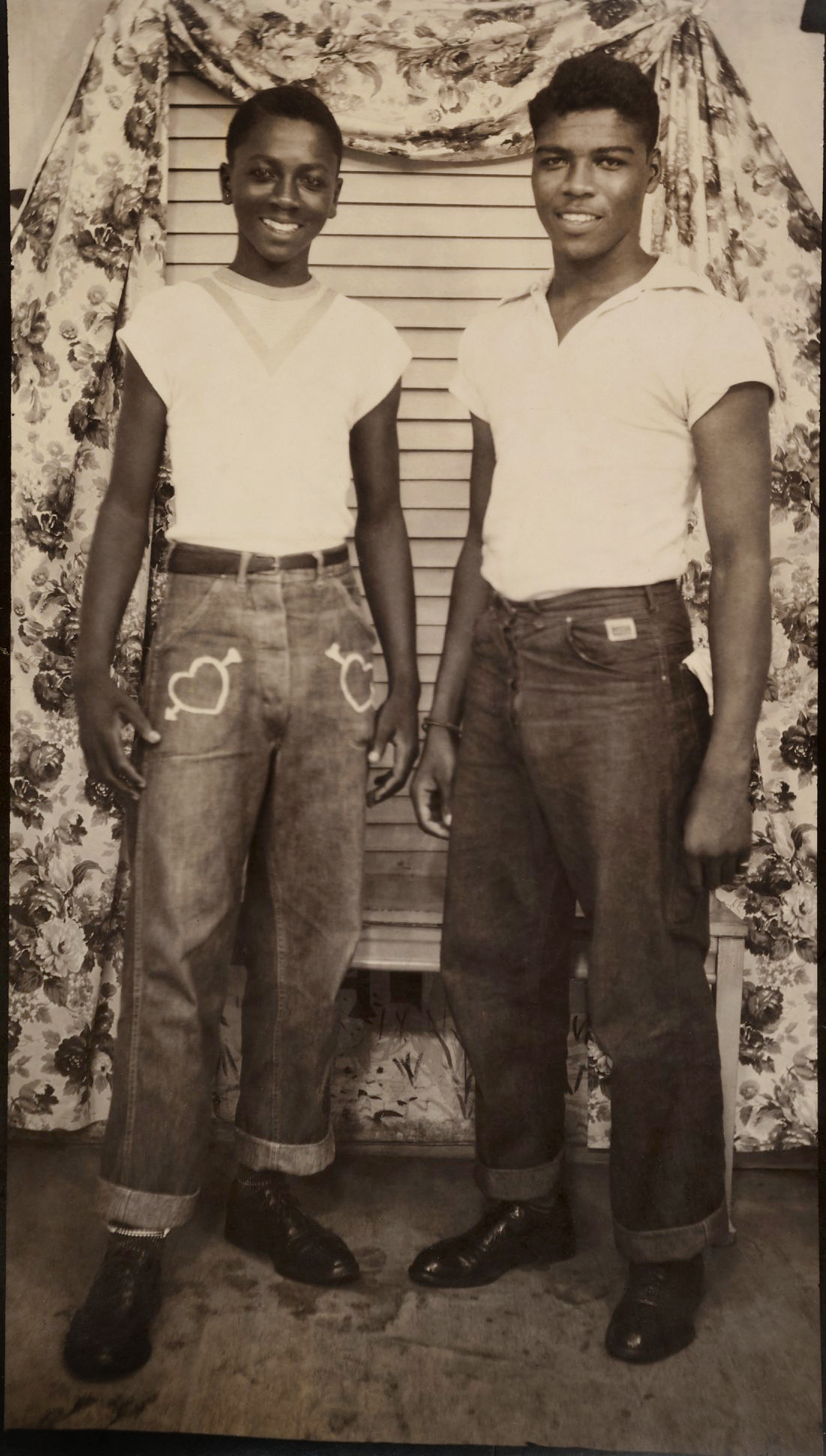
When it came to cargo she carried general cargoes in her five holds, but she did have 44,501 cubic feet of refrigerated cargo space to transport lamb, butter, and fruit from Australia to Great Britain, and as we have already ready it arrived in a fresh and excellent condition!
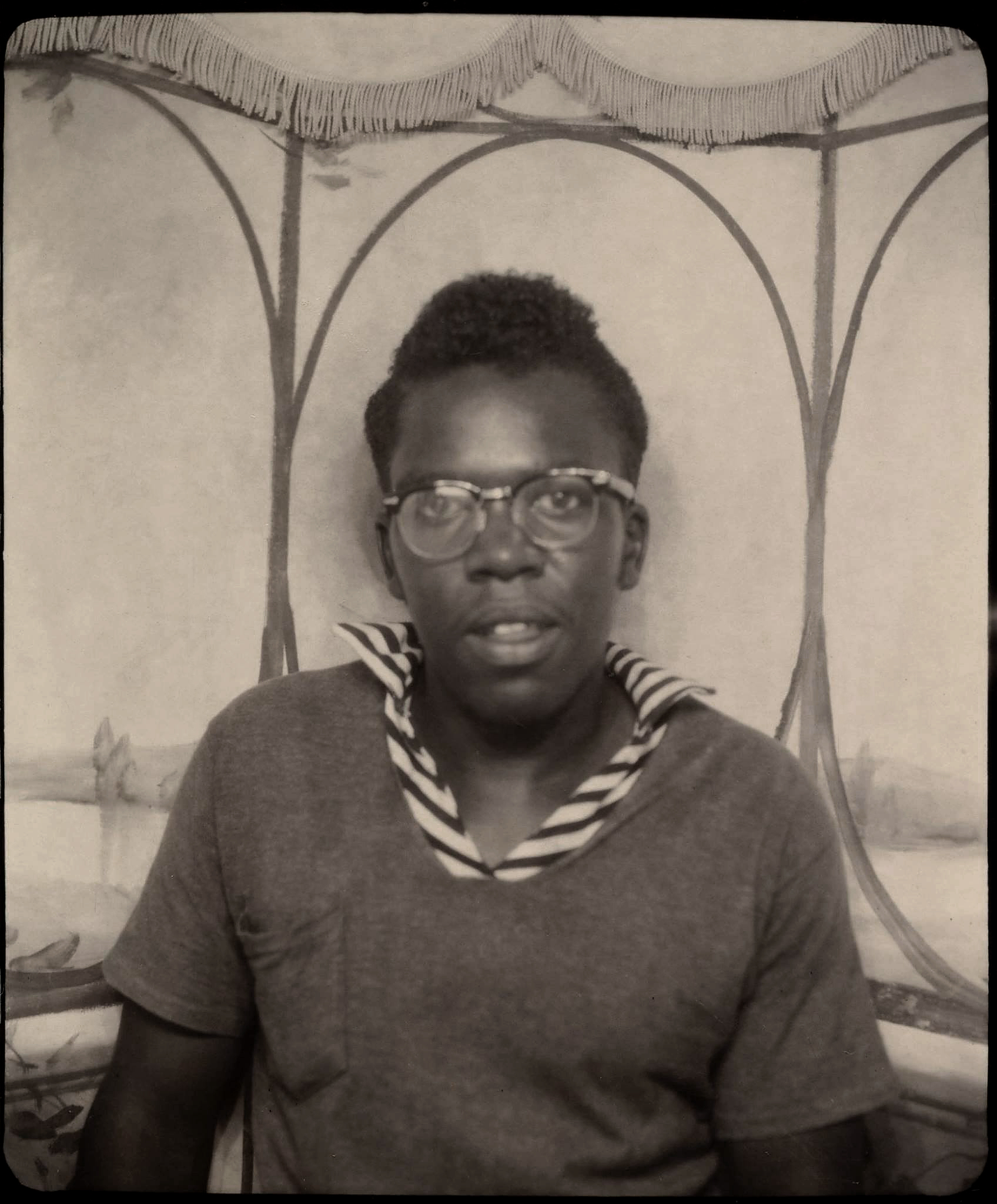
The RMS Ormuz departed on her maiden voyage from London (Tilbury) to Australia on February 3, 1887 and it was a most successful voyage. She received a wonderful welcome in Sydney as what was the grand new four mast twin funnelled Orient Line steamship, which for her day would have looked quite a sight as she entered Sydney in record time!
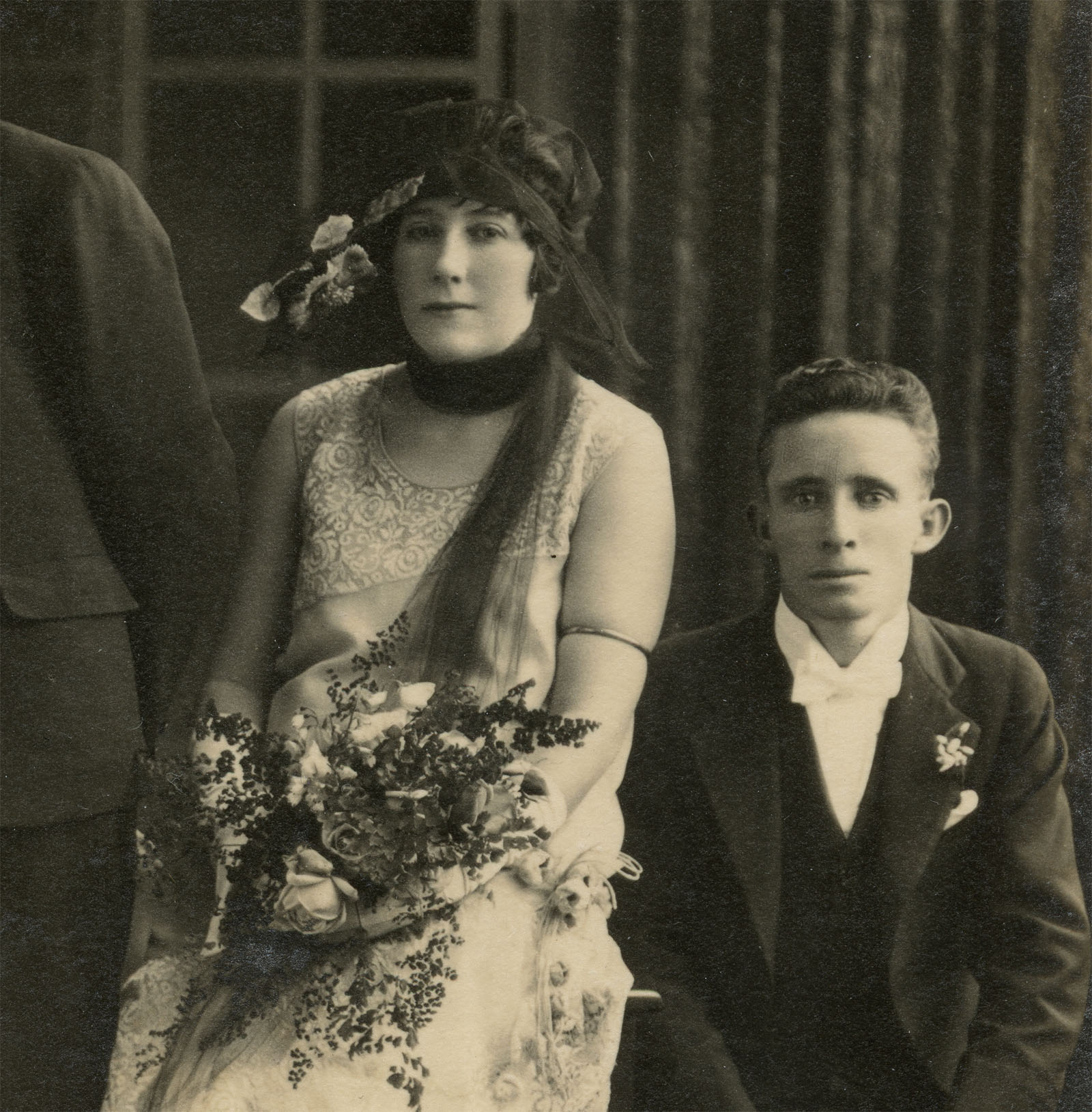
Having arrived again in Melbourne on November 20, 1887, the RMS Ormuz had improved on her earlier time, thus the very next day the “Melbourne Daily Telegraph” described the Ormuz as “The Fastest Ship in the World” on the basis that it had “placed the metropolis of the world within twenty-seven days six hours of its antipodes.”
Augustus “Gus” Wagner (American, 1872-1941) Hobart, Tasmania, taken 1899 Years 1899 Pages from Souvenirs of the Travels and Experiences of the Original Gus Wagner, Globe Trotter & Tattoo Artist scrapbook (detail) c. 1897-1941 Leather, paper, photographic print, ink, thread Courtesy South Street Seaport Museum
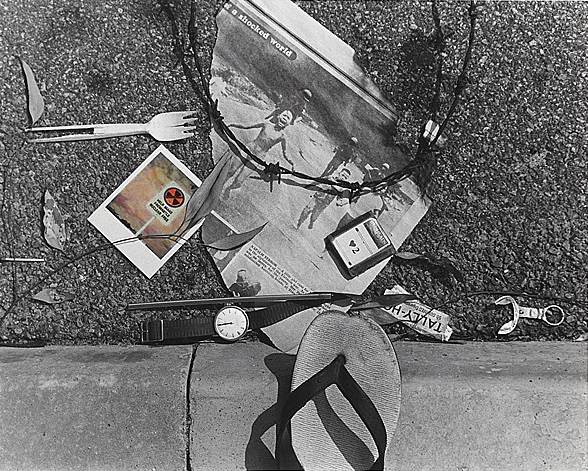
Augustus “Gus” Wagner (American, 1872-1941) Pages from Souvenirs of the Travels and Experiences of the Original Gus Wagner, Globe Trotter & Tattoo Artist scrapbook c. 1897-1941 Leather, paper, photographic print, ink, thread Courtesy South Street Seaport Museum
Augustus “Gus” Wagner (American, 1872-1941) As seen by Gus Pages from Souvenirs of the Travels and Experiences of the Original Gus Wagner, Globe Trotter & Tattoo Artist scrapbook (detail) c. 1897-1941 Leather, paper, photographic print, ink, thread Courtesy South Street Seaport Museum
Augustus “Gus” Wagner (American, 1872-1941) Pages from Souvenirs of the Travels and Experiences of the Original Gus Wagner, Globe Trotter & Tattoo Artist scrapbook c. 1897-1941 Leather, paper, photographic print, ink, thread Courtesy South Street Seaport Museum
Augustus “Gus” Wagner (American, 1872-1941) Sydney N.S.W. Australia Pages from Souvenirs of the Travels and Experiences of the Original Gus Wagner, Globe Trotter & Tattoo Artist scrapbook (detail) c. 1897-1941 Leather, paper, photographic print, ink, thread Courtesy South Street Seaport Museum
Augustus “Gus” Wagner (American, 1872-1941) New Castle N.S.W. Australia Pages from Souvenirs of the Travels and Experiences of the Original Gus Wagner, Globe Trotter & Tattoo Artist scrapbook (detail) c. 1897-1941 Leather, paper, photographic print, ink, thread Courtesy South Street Seaport Museum
Augustus “Gus” Wagner (American, 1872-1941) Gus shell hunting in the Islands (?) Pages from Souvenirs of the Travels and Experiences of the Original Gus Wagner, Globe Trotter & Tattoo Artist scrapbook (detail) c. 1897-1941 Leather, paper, photographic print, ink, thread Courtesy South Street Seaport Museum
(colour correction and light digital clean)
Augustus “Gus” Wagner (American, 1872-1941) tattooed by Gus Wagner 1899 1899 Pages from Souvenirs of the Travels and Experiences of the Original Gus Wagner, Globe Trotter & Tattoo Artist scrapbook (detail) c. 1897-1941 Leather, paper, photographic print, ink, thread Courtesy South Street Seaport Museum
Augustus “Gus” Wagner (American, 1872-1941) tattooed by Gus Wagner 1901 1901 Pages from Souvenirs of the Travels and Experiences of the Original Gus Wagner, Globe Trotter & Tattoo Artist scrapbook (detail) c. 1897-1941 Leather, paper, photographic print, ink, thread Courtesy South Street Seaport Museum
The Original Gus Wagner: The Maritime Roots of Modern Tattoo explores Augustus “Gus” Wagner’s (American, 1872-1941) early life as a merchant seaman and tattoo artist who traveled the world from 1898-1902, and his return to the United States as a professional tattooist and tattooed man.
Gus Wagner was born in 1872 in Marietta, Ohio, a trading and boat building town on the Ohio River. At age twelve he saw his first heavily tattooed man, “Captain Costentenus the Greek Albanian,” in a traveling show. In his 20’s, he set out as an itinerant salesman and labourer. In 1897 he boarded the cargo steamer Bellona at Newport News, Virginia, thus embarking on a four-year career as a merchant seaman. By traveling around the world, Gus Wagner got to know many seaports: Vera Cruz, London, Cape Town, Sydney, Auckland, Honolulu, New York, San Francisco, and others. It was during this time that he discovered the art of tattooing.
By 1901 Gus reportedly had 264 tattoos of his own, (and over 800 by 1908) allowing him to promote himself as “the most artistically marked up man in America.” After briefly moving home to Ohio, Gus embarked on a forty-year career as a traveling tattooist, tattooed man, and circus performer. He largely eschewed the new electric tattooing machines that transformed the art form after 1890, and remained faithful to his hand-held instruments. With other wandering artists, he carried tattooing inland from coastal ports, making it part of the culture of small-town America in the 20th century.
The exhibition will show original and reproduced artefacts from the Seaport Museum’s Alan Govenar and Kaleta Doolin Tattoo Collection such as tattooing tools, a selection of tattoo flashes (drawings and sketches, on recycled paper based materials, displaying variations of tattoo designs) and a selection of pages from the artist’s scrapbook – a 400 page book composed of press clippings, postcards, business cards, sketches, and photographs, that relate to his introduction to tattooing as a sailor.
The exhibition will familiarise viewers with hand tattoo techniques, and make the case for the importance of researching, documenting, and preserving tattoo collections in museums and research institutes. Most of the artefacts are not on view due to their fragile condition and conservation needs. The reproductions and video projection in the exhibition are a testimony of the richness of Gus Wagner’s image vocabulary, his life and artistic influences, and a relatively unknown area of American history during the period from the 1890s to the 1930s.
The exhibition is curated by Alan Govenar, with Martina Caruso, Collections Manager and Registrar, and Michelle Kennedy, Collections Assistant at the Seaport Museum. The design and art direction is curated by Rob Wilson and Christine Picone of Bowne Printers, the Museum’s historic print shop.
Press release from the South Street Seaport Museum
Unknown photographer Maud Stevens Wagner, tattoo artist Nd
Maud Wagner (wife of Gus Wagner). Gus taught her to tattoo (in trade for a date, they say) and she was also an aerialist and contortionist in a circus.
Unknown photographer Gus and Maude Nd
Unknown photographer Gus Wagner tattooing Nd
Augustus “Gus” Wagner (American, 1872-1941) Pages from Souvenirs of the Travels and Experiences of the Original Gus Wagner, Globe Trotter & Tattoo Artist scrapbook c. 1897-1941 Leather, paper, photographic print, ink, thread Courtesy South Street Seaport Museum
Augustus “Gus” Wagner (American, 1872-1941) Jeneoffly (?). Australian By bennell Australia. Tattooed by John W. Bennell c. 1901 Pages from Souvenirs of the Travels and Experiences of the Original Gus Wagner, Globe Trotter & Tattoo Artist scrapbook (detail) c. 1897-1941 Leather, paper, photographic print, ink, thread Courtesy South Street Seaport Museum
Augustus “Gus” Wagner (American, 1872-1941) Pages from Souvenirs of the Travels and Experiences of the Original Gus Wagner, Globe Trotter & Tattoo Artist scrapbook c. 1897-1941 Leather, paper, photographic print, ink, thread Courtesy South Street Seaport Museum
Augustus “Gus” Wagner (American, 1872-1941) Tattoo design from Souvenirs of the Travels and Experiences of the Original Gus Wagner, Globe Trotter & Tattoo Artist scrapbook (detail) c. 1897-1941 Leather, paper, photographic print, ink, thread Courtesy South Street Seaport Museum
Augustus “Gus” Wagner (American, 1872-1941) Pages from Souvenirs of the Travels and Experiences of the Original Gus Wagner, Globe Trotter & Tattoo Artist scrapbook c. 1897-1941 Leather, paper, photographic print, ink, thread Courtesy South Street Seaport Museum
Augustus “Gus” Wagner (American, 1872-1941) Tattoo design from Souvenirs of the Travels and Experiences of the Original Gus Wagner, Globe Trotter & Tattoo Artist scrapbook (detail) c. 1897-1941 Leather, paper, photographic print, ink, thread Courtesy South Street Seaport Museum
Augustus “Gus” Wagner (American, 1872-1941) Pages from Souvenirs of the Travels and Experiences of the Original Gus Wagner, Globe Trotter & Tattoo Artist scrapbook c. 1897-1941 Leather, paper, photographic print, ink, thread Courtesy South Street Seaport Museum
Augustus “Gus” Wagner (American, 1872-1941) Tattoo designs from Souvenirs of the Travels and Experiences of the Original Gus Wagner, Globe Trotter & Tattoo Artist scrapbook (detail) c. 1897-1941 Leather, paper, photographic print, ink, thread Courtesy South Street Seaport Museum
Augustus “Gus” Wagner (American, 1872-1941) Pages from Souvenirs of the Travels and Experiences of the Original Gus Wagner, Globe Trotter & Tattoo Artist scrapbook c. 1897-1941 Leather, paper, photographic print, ink, thread Courtesy South Street Seaport Museum
Augustus “Gus” Wagner (American, 1872-1941) Tattoo designs from Souvenirs of the Travels and Experiences of the Original Gus Wagner, Globe Trotter & Tattoo Artist scrapbook (detail) c. 1897-1941 Leather, paper, photographic print, ink, thread Courtesy South Street Seaport Museum
Augustus “Gus” Wagner (American, 1872-1941) Pages from Souvenirs of the Travels and Experiences of the Original Gus Wagner, Globe Trotter & Tattoo Artist scrapbook c. 1897-1941; these photographs 1902 Leather, paper, photographic print, ink, thread Courtesy South Street Seaport Museum
Augustus “Gus” Wagner (American, 1872-1941) Victor Lundblad (?) tattooed by Gus Wagner 1902 (left) and Gus Age 30 (right) 1902 Page from Souvenirs of the Travels and Experiences of the Original Gus Wagner, Globe Trotter & Tattoo Artist scrapbook (detail) c. 1897-1941 Leather, paper, photographic print, ink, thread Courtesy South Street Seaport Museum
Augustus “Gus” Wagner (American, 1872-1941) Self-Portrait, Tattoo Flash c. 1910-1930 Photographic print, ink, cardboard Courtesy South Street Seaport Museum
Augustus “Gus” Wagner (American, 1872-1941) Self-Portrait, Tattoo Flash (detail) c. 1910-1930 Photographic print, ink, cardboard Courtesy South Street Seaport Museum
Augustus “Gus” Wagner (American, 1872-1941) Self-Portrait, Tattoo Flash c. 1910-1930 Photographic print, ink, cardboard Courtesy South Street Seaport Museum
Augustus “Gus” Wagner (American, 1872-1941) Self-Portrait, Tattoo Flash (detail) c. 1910-1930 Photographic print, ink, cardboard Courtesy South Street Seaport Museum
South Street Seaport Museum 12 Fulton Street New York, NY 10038 Phone: 212-748-8600
HAND-COLOURED NEW ZEALAND: THE PHOTOGRAPHS OF WHITES AVIATION by Peter Alsop cover
A beautiful book by my New Zealand friend Peter Alsop about that countries hand coloured scenic photos. Whites Aviation changed the way New Zealanders viewed their country. Take a look inside this book.
Dr Marcus Bunyan
“A magical cocktail of aviation and photography … painted with cotton wool.”
“Nothing can change the authenticity and aesthetic of a hand-made craft.”
“This beautiful book follows Marcus King: Painting New Zealand for the World in providing another significant step towards understanding New Zealand’s art and design. However, for me, reading this book has been a transformational experience. In my youth, a Whites Aviation photograph, whether in a living room or office, represented the absence of other art in everyday Kiwi lives. Having read this book, I’ve come to realise that Whites’ hand-coloured photos were instead a harbinger; a forerunner, an object of contemporary art in thousands of New Zealand homes.”
Douglas Lloyd Jenkins, Art & Design Historian
Book blurb
Every single photo coloured by hand? Using cotton wool? Yes, such was the era of hand-coloured photography – a painting and photograph in one – the way you got a high-quality colour photo before colour photography became mainstream.
Some of New Zealand’s best hand-coloured photos were produced by Whites Aviation from 1945. For over 40 years, the glorious scenic vistas were a sensation, adorning offices and lounges around the land; patriotic statements within New Zealand’s emerging visual arts. Now, despite massive changes in society and photography, the stunning scenes and subtle tones still enchant, as coveted collectibles; decorations on screen; and as respected pieces of photographic art.
But, until now, this inspirational story has not been told; nor the full stories of Leo White (company founder); Clyde Stewart (chief photographer and head of colouring); and the mission-critical ‘colouring girls’. New Zealand’s first published collection of hand-coloured photography is also now enshrined, ready to enchant for decades more. Nothing, it seems, can change the appeal of an alluring hand-made craft.
The Colourist
Lovely 3 min doco on hand-coloured photography and Whites Aviation. Every photo coloured by hand.
HAND-COLOURED NEW ZEALAND: THE PHOTOGRAPHS OF WHITES AVIATION by Peter Alsop pages 31, 41 and 50.
There has always been a history of hand colouring in photography since its very early days – from daguerreotypes, through ambrotypes, cartes de visite, cabinet cards and on to commercial portrait photography from the 1920s-1960s. But I don’t believe there has ever been, in the history of photography, such a concentration of artists (mainly female) hand colouring photographs as in Australia in the 1970s-80s. If I know my history of photography, I would say that this phenomena is unique in its history. It did not occur in Japan, Europe or America at the same time.
The reasons for this explosion of hand colouring in Australia are many and varied. Most of the artist’s knew each other, or knew of each other’s work on the East coast of Australia, and it was a small, tight circle of artists that produced these beautiful photographs. Not many artists were “doing” traditional colour photography, basically because of the instability of the materials (you only have to look at the faded colour photographs of John Cato in the National Gallery of Victoria’s collection) and the cost of the process. Of course feminism was a big influence in Australia at this time but these photographs, represented in this posting by the work of Micky Allan and Ruth Maddison, are so much more than photographs about female emancipation.
Photography in Australia was moving away from commercial studios such as that of Athol Shmith and into art schools and university courses, where there was a cross-over between different disciplines. Most artists had darkrooms in their bathroom or outhouses, or darkrooms were in basements of university buildings. Speaking to artist Micky Allan, she said that these were exciting times. Allan had trained as a painter and brought these skills to the processes of photography. She observes, “There was an affinity to what you were doing, an immediacy of engagement. Taking photographs, the physicality of the print, their magnificent tonal range – which painting could not match – and then hand colouring the resultant prints, a hands on process that turned the images into something else, something different.” There was a cavalier approach to the process but also a learning atmosphere as well. So it was about doing anything that you wanted, you just had to do it.
Sue Ford was a big influence, in that she started working in series of work, not just the monolithic, singular fine art print. Perhaps as a reaction against the Americanisation of photography, these artists used vernacular photographs of people and places to investigate ways of being in the world. As Micky Allan observes, “My photography of babies and old people were more than being about domesticity, they were about what babies know when they arrive in the world, and how people react to ageing.” (For examples of Allan’s babies and old people photographs please see the exhibition Photography meets Feminism: Australian Women Photographer 1970s-80s). There was a connection to the print through the physicality of the process of printing and then hand colouring – a double dealing if you like – that emphasised the ordinary can be extraordinary, a process that changed one representation into another. And the results could be subtle (as in the delicate work of Janina Green) or they could be surreal, such as Allan’s The prime of life no.7 (man wearing sun glasses) (1979, below), or they could be both. But they were always stunningly beautiful.
This was a very hands on process, an observation confirmed by artist Ruth Maddison. “The process was like hand watering your garden, an intense exchange and engagement with the object. When I started I was completely untrained, but I loved the process. I just experimented in order to understand what medium does what on what paper surface. There was the beauty of its object and its physicality. I just loved the object.” Her series Christmas holiday with Bob’s family, Mermaid Beach, Queensland (1977/78, below), photographed over Christmas Day and several days afterwards, evidences this magical transformation. Vernacular photographs of a typical Australia Christmas holiday become something else, transformed into beautiful, atypical representations of family, friendship, celebration and life.
So there we have it: domesticity, family, friends, place, being in the world, feminism, craft, experimentation, surrealism, physicality of the object, beauty, representation, series of work and difference… a communion (is that the right word?) of intimate thoughts and feelings, especially on a spiritual level (although the artists probably would not say it) that changed how the they saw, and we see the world. Can you imagine how fresh and alive these images would have been in 1970s Australia? That they still retain that wonder is testament to the sensitivity of the artists, the tactility of the process and our responsiveness to that sense of touch.
Dr Marcus Bunyan
Many thankx to the National Gallery of Australia for allowing me to publish the photographs in the posting. Please click on the photographs for a larger version of the image.
Ruth Maddison (Australian, b. 1945) Christmas holiday with Bob’s family, Mermaid Beach, Queensland
1977-1978
Gelatin silver photographs, colour dyes, hand-coloured
10.6 x 16.2cm
National Gallery of Australia, Canberra, purchased 1988
Ruth Maddison (Australian, b. 1945) Christmas holiday with Bob’s family, Mermaid Beach, Queensland
1977-1978
Gelatin silver photographs, colour dyes, hand-coloured
10.6 x 16.2cm
National Gallery of Australia, Canberra, purchased 1988
Ruth Maddison (Australian, b. 1945) Christmas holiday with Bob’s family, Mermaid Beach, Queensland
1977-1978
Gelatin silver photograph, colour pencils, fibre-tipped pen
10.6 x 16.2cm
National Gallery of Australia, Canberra, purchased 1988
Ruth Maddison (Australian, b. 1945) Christmas holiday with Bob’s family, Mermaid Beach, Queensland
1977-1978
Gelatin silver photographs, colour dyes, hand-coloured
10.6 x 16.2cm
National Gallery of Australia, Canberra, purchased 1988
Ruth Maddison (Australian, b. 1945) Jesse and Roger 1983
From the series Some men
Gelatin silver photograph, colour pigments, hand-coloured
National Gallery of Australia, Canberra, purchased 1983
Ruth Maddison (Australian, b. 1945) Jim and Gerry
1983
From the series Some men
Gelatin silver photograph, colour pigments, hand-coloured
39.6 x 26.5cm
National Gallery of Australia, Canberra, purchased 1983
Colour my world
Introduction
This is the first exhibition dedicated to a significant aspect of recent Australian art: the handcoloured photograph. It draws together new acquisitions and rarely seen works from the collection by Micky Allan, Ruth Maddison, Warren Breninger, Julie Rrap, Janina Green, Christine Barry, Fiona Hall, Miriam Stannage, Robyn Stacey, Nici Cumpston, Lyndell Brown, Charles Green and Jon Cattapan.
The handcolouring of images has a long history in photography. During the infancy of the medium in the mid nineteenth century, the practice of applying paint, dye or other media to a photograph added both lifelike colour to black-and-white pictures and longevity to images that faded quickly. Throughout the nineteenth and early twentieth centuries, handcolouring added economic value and artistic sensibility or corrected photographic mistakes. But, by the middle of the twentieth century, the practice had gone into decline, as photographers sought to maintain and fortify the virtuosity and technical purity of the modernist photographic print.
The 1970s saw a revival of handcolouring among a number of Australian photographers and it remains a significant aspect of contemporary practice. The artists included in this exhibition seek to create a direct connection between their experience and that of the viewer. They challenge the medium’s technical sameness by personalising the print and imbuing it with individuality and uniqueness as well as an intimacy, warmth and fallibility.
Challenging conventions
During much of the twentieth century, photography tended to engage with the medium’s technical integrity. Rhetoric about black-and-white photography’s very particular, direct relationship to the world, its technological origins and its highly idiosyncratic capacity to see the world in new ways positioned it in a conceptual space distinct from other kinds of pictures. With notable exceptions, those who dominated the scene worked in black and white. Colour photography (which was expensive) tended to belong to and be associated with the commercial realms of advertising and fashion.
In this climate, to bring colour into the image through handcolouring was an act of resistance. Anyone who took to their prints with colour pencils and brushes, in effect, disputed the so-called authority of black-and-white photography. And many did just this. For feminist photographers, handcolouring acknowledged the under-recognised history of women’s photographic work by remembering the women who were historically employed by studios as handcolourists.
Colouring by hand personalised the print, itself the product of technological processes, arcane knowledge and chemistry. The handcoloured photograph also created community: it engaged a direct connection between the photographer and his or her subjects, the sensual surface of the print and the viewer, a set of relationships staged and made manifest in the experience of the work itself.
Handcoloured photography as an aesthetic
While the disrupted surface of the handcoloured photograph may well have challenged the conventions of ‘classic’ photography during the 1970s, it became one of a set of tools used by artists during the 1980s to explore the medium as a studio practice and to interrogate the conventions of authorship and photographic transparency that had supported modernist photographic practice.
Artists such as Julie Rrap, Fiona Hall and Robyn Stacey created handmade work that presented highly personalised responses to some of the grand themes of Western art and culture. Hall tackled one of Western mythology’s points of origin, the Garden of Eden, in a series of hand-toned pictures that replaced pathos and grand narrative with irony and, through daubs of sepia, the patina of historical significance. Rrap took on art history’s archetypes of femininity and made them her own, while Stacey handcoloured photographs to modify many of the myths of popular culture and Australian history. Rrap’s and Stacey’s handcoloured originals were then rephotographed and printed in colour. By doing so, the works shifted from being unique prints – with references to the handmade, the artist’s studio and the careful rendering of places and times – to being images that resembled those found in the mass media.
Reconnecting with history and objects
Associated with the rapidly expanding use of digital photography in the 1990s and perhaps in response to the immateriality of photography today (images are now mostly taken, stored and shared electronically), we have seen a reconnection with the medium’s history and a return to the photographic object in contemporary practice. Handcolouring draws our attention to materiality and re-introduces tactility to the photographic experience. It also engages community in a very particular way, establishing social ties between makers and between artists and viewers. Handcolouring demonstrates that even though digitisation has impacted significantly on the accessibility and scale of contemporary practice, many of photography’s rituals, motivations and pleasures remain the same.
For the artists included in this exhibition, handcolouring connects them to the history of photography in strategic ways. Nici Cumpston handcolours large-scale landscapes of the Murray-Darling river system as a way of documenting traces of Indigenous occupation and use and of bringing to our attention the decline of the area’s delicately balanced ecosystems. The handcoloured works of collaborators Charles Green, Lyndell Brown and Jon Cattapan remind us that an essential part of the experience of photography has always been the embodied, social experience of it. For Janina Green, the act of handcolouring prints allows her to engage with and remember the medium’s history of cross-cultural innovation.
Wall text (same text on the website)
Julie Rrap (born Lismore, New South Wales 1950; lives and works Sydney) Puberty 1984
From the series Persona and shadow
Direct positive colour photograph
National Gallery of Australia, Canberra
Kodak (Australasia) Pty Ltd Fund 1984
This photograph is from the series of nine works titled Persona and shadow. Julie Rrap produced this series after visiting a major survey of contemporary art in Berlin (Zeitgeist, 1982) which only included one woman among the 45 artists participating in the exhibition. Rrap responded to this curatorial sexism with a series of self-portraits in which she mimics stereotypical images of women painted by the Norwegian artist Edvard Munch (1863-1944). Each pose refers to a female stereotype employed by Munch: the innocent girl, the mother, the whore, the Madonna, the sister, and so on.
Appropriating the work of other artists is one of the strategies that characterises the work of so-called ‘postmodern’ artists active during the 1980s. The practice of borrowing, quoting and mimicking famous artworks was employed as a way of questioning notions of authenticity. Feminist artists tended to use appropriation to specifically question the authenticity of male representations of females. In more straightforward terms, Rrap reclaims Munch’s clichéd images of women and makes them her own. Rrap ultimately becomes an imposter, stealing her way into these masterpieces of art history, but the remarkable thing about these works is the way that the artist foregrounds the process of reappropriation itself. The procedure of restaging, collage, overpainting, and rephotographing becomes part of the final image, testifying to a do-it-herself politic.
Miriam Stannage (1939-2016) was an Australian conceptual artist. She was known for her work in painting, printmaking and photography, and participated in many group and solo exhibitions, receiving several awards over her career. Her work was also featured in two Biennales and two major retrospective exhibitions. …
Throughout her almost 50-year career, Stannage produced a varied and eclectic body of work, encompassing collage, photography, print-making, and text-based works. Stannage first rose to prominence through the 1982 Sydney Biennale and the 1992 Adelaide Biennale, as well as her solo shows at the Art Gallery of Western Australia. She was awarded an honorary doctorate from Curtin University, as well as being declared a ‘State Living Treasure’ in Western Australia. Over the course of her career, Stannage received several awards including the Albany Art Prize, the Georges Invitation Art Prize for drawing and the Power Institute residency at Cité Internationale des Arts in Paris. Seven of Stannage’s works have been featured in the Cruthers Collection of Women’s Art.
Stannage favoured simple structure and minimal use of form in her works, opting instead for text and collaged tableaux. She has been described as having ‘minimalist sensibilities.’
Her subject matter was engaged with contemporary events and news reportage, often utilising and subverting the visual language of newspapers and magazines. While her body of work is extensive, Stannage’s works always maintained their collage aesthetic, and were always founded upon her ongoing exploration of existential themes such as mortality, the spiritual and a quest for the meaning of life. Her work often centres the uncomfortable and emotive, in particular the heightened emotional impacts of conflict, destruction and disasters.
In 2001, following the September 11 attacks, Stannage shifted her focus strictly to the event, making works which spoke to the random nature of terrorist attacks and the interplay of monotony and death. In response to the attacks, she produced a collection of postage stamps which centred on concepts of stilled time, such as a clock face frozen at the moment of impact.
Janina Green (Essen, Germany born 1944; Australia from 1949) Untitled [Washing in basket]
1988
Gelatin silver photograph, photo oils
National Gallery of Australia, Canberra, purchased 1989
Janina Green (Essen, Germany born 1944; Australia from 1949) Untitled [White cup on tray]
1988
Gelatin silver photograph, photo oils
National Gallery of Australia, Canberra, purchased 1989
Nici Cumpston (Australian, b. 1963)
Barkindji/Paakintji peoples Scar tree, Fowler’s Creek
2011
From the series having-been-there
Archival inkjet print hand coloured with synthetic polymer paint
98 x 177cm
Collection of the artist/Courtesy of the artist
Nici Cumpston (Australian, b. 1963)
Barkindji/Paakintji peoples Campsite V, Nookamka Lake
2008
Inkjet print on canvas, hand-coloured with pencil and watercolour
77 x 206cm
National Gallery of Australia, Canberra, purchased 2011
The once rich and thriving environment of the Murray and Darling River system with its clear waterways, lush flora and abundant fauna was home to the Barkindji, Muthi Muthi and Nyampa peoples.
The shallow Nookamka Lake (Lake Bonney), which connects to the Murray River in South Australia, is the subject of Nici Cumpston’s recent photographic series. However, the series is not of a lush utopia but of the degradation and erosion that has consumed the lake since the forced irrigation flooding of the waterways in the early 1900s.
When damming ceased in 2007, the water began to subside, slowly revealing the original landscape and the history of human occupation. Cumpston beautifully documents this stark landscape and the demise that salinisation and destructive water management practices have wrought on the people and their lands. Today, the landscape is desolate, scattered with twisted and broken trees stripped of their foliage like majestic sentinels in deathly poses. The trees still bare the scars – although obscured by dark tidelines – where canoes, containers and shields were cut from their trunks.
Cumpston highlights these clues to the area’s original inhabitants through the delicate and precise hand-watercolouring of the printed black-and-white photographs on canvas. She does not aim to replicate the original colours of the landscape, as a colour photograph would, but to interpret it, re-introducing the Aboriginal presence within the landscape – a subtle reconnection to Country and reminder of past cultural practices and knowledge. As the artist says, “I am finding ways to talk about connections to country and to allow people to understand the ongoing connections that Aboriginal people maintain with their traditional lands.”
Tina Baum
Curator, Aboriginal and Torres Strait Islander Art
Art Gallery of New South Wales
Warren Breninger (Australian, b. 1948) Expulsion of Eve [No.3]
1978
Gelatin silver photograph, chinagraph, decal lettering gelatin silver photograph
49.7 x 36.7cm
Gift of the Philip Morris Arts Grant 1982
Warren Breninger (Australian, b. 1948) Expulsion of Eve [No.12]
1978
Type C colour photograph, ink, crayon
49.8 x 37cm
Gift of the Philip Morris Arts Grant 1982
Warren Breninger (Australian, b. 1948) Expulsion of Eve [No.15]
1978 Photograph, gum arabic print, acrylic paint, crayon, pencil
49.8 x 37cm
Gift of the Philip Morris Arts Grant 1982
The Expulsion of Eve series is in essence a single work which the artist returns to continually to develop and re-work the same image. ‘Number 16’, highly indicative of the series, is a photographic image of a young woman, the print having undergone many transformative processes including being cut out, reapplied, incised, worn back, applied with colour, stripped of colour and re-drawn. Interrogating notions of reality, Breninger expresses his personal and artistic concerns relating to ‘the rift between appearances and what is real’; ideas informed by his deep Christian faith.1
His subject, Eve, is not chosen symbolically as a female archetype; rather, the artist reasons, “because I believe in her historically and all humanity is her descendents”.2 Breninger’s Eve, in her features and expression, suggests a presence caught between the worlds of childhood and adulthood, innocence and intent, the temporal and corporeal. While there is a Christ-like surrender in the pose, Breninger’s Eve also has a strong correlation with Edvard Munch’s ‘Madonna’, both visually and in terms of the obsessive process by which the artist revisits the image.
The artist’s belief that ‘cameras create an appetite for ghosts, for vapour, for beings of steam that we can never embrace, that will elude us like every photo does’,3 explains his intrigue with photography’s abilities and limitations in recording the subjective. He continued to develop the work with series III produced in 1990, followed in 1993-94 by series IV, comprising male and female faces.
1/ Breninger W 1983, ‘Art & fulfilment’, self-published artist’s essay p. 1
2/ Warren Breninger in correspondence with Sue Smith, 24 Feb 1984, collection files, Warren Breninger, Queensland Art Gallery, Brisbane
3/ Breninger W 1983, op cit p. 3
Christine Barry (Australian, b. 1954) Packaged Deal 1986/1996
From the series Displaced Objects
Direct positive colour photograph/Type C photographic print
50cm x 50cm/127cm x 127cm
National Gallery of Australia, Canberra
Christine Barry (Australian, b. 1954) Untitled (Patricia Marczak) 1986-1987 From the series Displaced Objects
Direct positive colour photograph/Type C photographic print
51.1 x 50.7cm
National Gallery of Australia, Canberra
Christine Barry (Australian, b. 1954) Untitled (Self portrait) 1986
From the series Displaced Objects
Direct positive colour photograph/Type C photographic print
50.8 x 50.7cm
National Gallery of Australia, Canberra
Janina Green (Essen, Germany born 1944; Australia from 1949) Maid in Hong Kong #11
2008
From the series Maid in Hong Kong
Gelatin silver photograph, colour dyes gelatin silver photograph
Image and sheet 76 x 60cm
Gift of Wilbow Group PTY LTD Donated through the Australian Government’s Cultural Gifts Program
National Gallery of Australia, Canberra
Robyn Stacey (Australian, b. 1952) Untitled
1985-1987
Gelatin silver photograph, colour dye
Collection of the artist
Courtesy of the artist and Stills Gallery, Sydney
Robyn Stacey (Australian, b. 1952) Untitled
1985-1987
Gelatin silver photograph, colour dye
Collection of the artist
Courtesy of the artist and Stills Gallery, Sydney
Robyn Stacey (Australian, b. 1952) Untitled
1985-1987
Gelatin silver photograph, colour dye
Collection of the artist
Courtesy of the artist and Stills Gallery, Sydney
Robyn Stacey (Australian, b. 1952) Untitled
1985-1987
Gelatin silver photograph, colour dye
Collection of the artist
Courtesy of the artist and Stills Gallery, Sydney
National Gallery of Australia Parkes Place, Canberra
Australian Capital Territory 2600 Phone: (02) 6240 6411
Opening hours: Open daily 10.00am – 5.00pm
(closed Christmas day)
Afong (Lai Afong) (Chinese, 1838 or 1839-1890) A Chinese Party Game
c. 1895
Rijksmuseum, Amsterdam
For me, the standout photographs in this posting are Mee Cheung’s rhythmic Buddhist Monks in Chefoo and the work of Baron Raimund von Stillfried und Ratenitz, especially the three photographs Portrait of two Chinese Buddhist monks with rosary, bell and slit drum, Portrait of a Chinese woman and Portrait of Chinese Admiral Ting.
The latter three have a deceptively simple structure, delicate hand colouring, and a visual and metaphysical presence that is almost beyond description… as though you know the character and personality of these anonymous human beings through the rendition of their image. In a way they are humanist portraits presaging the tradition of the more scientific and archetypal portraits of August Sander.
You can see in the face of Admiral Ting that he is a prosperous and powerful man, you can see the individuality of each person in these images, the individualisation of these people, a tradition which is continued by today’s documentary photographers. But not generally by today’s art photographers looking at the portrait because, for them, the portrait is surface and detail – controlled by the photographer and not responsive to the subject.
Dr Marcus Bunyan
Many thankx to the Rijksmuseum for allowing me to publish the photographs in the posting. Please click on the photographs for a larger version of the image.
A. Chan (YA Zhen) (Chinese) Sheung-mun-tai Street in Canton
c. 1870
Collectie Ferry Bertholet, Amsterdam
A. Chan (YA Zhen) (Chinese) Sheung-mun-tai Street in Canton (detail)
c. 1870
Collectie Ferry Bertholet, Amsterdam
Mee Cheung & Co Buddhist Monks in Chefoo
c. 1880-1890
Collection Ferry Bertholet, Amsterdam
Mee Cheung & Co Buddhist Monks in Chefoo (detail)
c. 1880-1890
Collection Ferry Bertholet, Amsterdam
Afong (Lai Afong) (Chinese, 1838 or 1839-1890) Studio Portrait of Courtesans in Shanghai
c. 1875-1880
Collections Ferry Bertholet, Amsterdam
Afong (Lai Afong) (Chinese, 1838 or 1839-1890) Studio Portrait of Courtesans in Shanghai (detail)
c. 1875-1880
Collections Ferry Bertholet, Amsterdam
Rare photos, photo albums and stereo photos from the collection of China expert Ferry Bertholet, enhanced with photographs from the Rijksmuseum’s collection, show 19th century unknown China at the time of the last emperors for the very first time. From 5 June to 23 August 2015 the Rijksmuseum is presenting Early Photography in Imperial China in it’s Photo Gallery.
In the 19th century Imperial China was almost entirely hidden away from the world until the last Emperor was deposed in 1912. Access was limited to port cities such as Shanghai, Hong Kong and Canton, which were forced to be open to the West after 1842 so that Westerners could trade unimpeded. The advent of photography coincided with a rapidly growing interest in the unknown China. The photographs in the exhibition take the visitor into this exciting unknown world of ports, quays and rickshaws, but also of narrow crowded streets bustling with the multitude of shops and ‘tea houses’ and their hostesses.
The display includes important photographs by such as Felice Beato (his famous photograph of the Second Opium War 1857-1860) and the famous China photographer John Thomson. They were among the first Europeans able to record images of a country that – even at that time – was still barely accessible to the rest of the world. Furthermore, this is also the first time that the work of Chinese photographers such as Afong, Lan Wah and Sze Yuen Ming has ever been shown in the Netherlands. Other highlights of the exhibition include a rare Chinese family portrait from 1860 from the Bertholet collection of American photographer Milton Miller, as well as the coloured photos of ‘types of people’ by Baron Raimund Ratenitz von Stillfried.
Besides the 35 photos in the exhibition, a huge travel camera from that time is also on display, illustrating how awkward it was to photograph such material. There are also stereo photos in 3D, including a special shot of the city of Peking in 1860, and photo albums and amateur photos of travellers to China are also on display. A richly illustrated book was published recently: Ferry Bertholet & Lambert van der Aalsvoort, Among the Celestials. China in Early Photographs, Brussels 2014.
Press release from the Rijksmuseum website
Anonymous photographer Peking
c. 1860 – c. 1930
Attributed to Baron Raimund von Stillfried und Ratenitz (Austrian, 1839-1911) Chinese carriers
c. 1861 – c. 1880
Attributed to Baron Raimund von Stillfried und Ratenitz (Austrian, 1839-1911) Portrait of two Chinese Buddhist monks with rosary, bell and slit drum
1875
Attributed to Baron Raimund von Stillfried und Ratenitz (Austrian, 1839-1911) Portrait of two Chinese Buddhist monks with rosary, bell and slit drum
1875
Attributed to Baron Raimund von Stillfried und Ratenitz (Austrian, 1839-1911) Portrait of two Chinese Buddhist monks with rosary, bell and slit drum (detail)
1875
Attributed to Baron Raimund von Stillfried und Ratenitz (Austrian, 1839-1911) Portrait of a Chinese woman
1860 – 1870
Attributed to Baron Raimund von Stillfried und Ratenitz (Austrian, 1839-1911) Portrait of Chinese Admiral Ting
c. 1861 – c. 1880
Attributed to Baron Raimund von Stillfried und Ratenitz (Austrian, 1839-1911) Portrait of Chinese Admiral Ting (detail)
c. 1861 – c. 1880
Attributed to Jan Adriani (Dutch, d. 1948) A street with several people in Kinkiang, China
1907
Rijksmuseum, Amsterdam
Jan Luijkenstraat 1, Amsterdam
Many thankx to the C/O Berlin Gallery for allowing me to publish the photographs in the posting. Please click on the photographs for a larger version of the image.
Pierre et Gilles (French, Pierre Commoy b. 1950 and Gilles Blanchard, b. 1953) Mercury 2001
“It’s hard to think of contemporary culture without the influence of Pierre et Gilles, from advertising to fashion photography, music video, and film. This is truly global art.”
Jeff Koons
The cosmos of the worldwide renowned French artist duo is a vivid, colourful world poised between baroque sumptuousness and earthly limbo. Pierre et Gilles create unique hand-painted photographic portraits of film icons, sailors and princes, saints and sinners, of mythological figures and unknowns alike. Pierre et Gilles pursue their own, stunningly unique vision of an enchanted world spanning fairytale paradises and abyssal depths, quoting from popular visual languages and history of art. Again and again, they re-envision their personal dream of reality anew in consummate aesthetic perfection.
Pierre et Gilles are among the most influential artists of our time. In their complex, multilayered images, they quote from art history, transgress traditional moral codes, and experiment adeptly with social clichés. Their painterly photographic masterpieces exert an intense visual power that leaves the viewer spellbound.
Over the last thirty years, Pierre et Gilles have created photographic portraits of numerous celebrities including Marc Almond, Mirelle Mathieu, Catherine Deneuve, Serge Gainsbourg, Iggy Pop, Jean-Paul Gaultier, Nina Hagen, Madonna, and Paloma Picasso. They work almost exclusively in an opulently furnished studio, where their subjects are costumed lavishly and placed before three-dimensional backgrounds. Pierre photographs the model, and Gilles retouches and hand-colours the print. The reproducible portrait is rendered unique through painting, which highlights each detail with carefully selected materials and accessories.
As only venue in Germany, C/O Berlin presents the exhibition as the first of Pierre et Gilles in fifteen years. The show comprised a total of 80 unique large-format works – from their early photographies of the 1970s to the brand new pictures that were never shown in public before.”
Text from the C/O Berlin website [Online] Cited 20/08/2009 no longer available online
Pierre et Gilles (French, Pierre Commoy b. 1950 and Gilles Blanchard, b. 1953) St. Sebastian 1987
Pierre et Gilles (French, Pierre Commoy b. 1950 and Gilles Blanchard, b. 1953) Neptune 1988
Pierre et Gilles (French, Pierre Commoy b. 1950 and Gilles Blanchard, b. 1953) Saint Rose De Lima 1989
Pierre et Gilles (French, Pierre Commoy b. 1950 and Gilles Blanchard, b. 1953) Le Petit Communiste Christophe (The Little Communist Christophe) 1990
Pierre et Gilles (French, Pierre Commoy b. 1950 and Gilles Blanchard, b. 1953) Legend (Madonna) 1990
Pierre et Gilles (French, Pierre Commoy b. 1950 and Gilles Blanchard, b. 1953) La Madone au coeur blessé (Madonna with a wounded heart) 1991
Pierre et Gilles (French, Pierre Commoy b. 1950 and Gilles Blanchard, b. 1953) St. Sebastian of the Sea 1994
Pierre et Gilles (French, Pierre Commoy b. 1950 and Gilles Blanchard, b. 1953) The Martyrdom of St Sebastian 1996
Pierre et Gilles (French, Pierre Commoy b. 1950 and Gilles Blanchard, b. 1953) Extase (Arielle Dombasle) 2002
Pierre et Gilles (French, Pierre Commoy b. 1950 and Gilles Blanchard, b. 1953) Le Grand Amour (Marilyn Manson and Dita von Teese) 2004
C/O Berlin Postfuhramt Oranienburger Straße 35/36 10117 Berlin
Josephine Kuperholz presents a beautifully engineered set of photographs in her exhibition Blight at Gallery 101, Melbourne. Featuring hand coloured silver gelatin photographs of endangered Australian insects sourced from the Entomology collection of the Victoria Museum, Kuperholz literally weaves multiple narratives into the photographs. The execution (an apt word for the circumstances of extinction facing these insects) of these images is fastidious, the weaving superlative, almost clinical.
The layering of the photographs disrupts their surface tension. There is a disjunction between the dead specimen and the singular photograph of it, a disruption of the smooth surface of the photograph by the hand colouring and a further fragmentation of the original photograph by cutting and weaving. Through these processes the photographs become intertextual in their construction, assemblages, creating new tissues of past citations: animal, colour, silver, artist, text, photograph, environment. At their best the work subverts the concept of the text as self-sufficient and hermetically sealed, blurring the outlines of the fixed image, “dispersing its image of totality into an unbounded, illimitable tissue of connections and associations, paraphrases and fragments, texts and con-texts.”1
Kuperholz’s mutations, ‘differance’ in Derrida’s terminology, produce spaces that are both fluid and fixed at one and the same time; neither her nor there.Though the original specimens and photographs are already narrativised, already textualised, Kuperholz disrupts this marking, the continual reiteration of norms, by weaving a lack of fixity into her objects; in her reconceptualisations of space and matter Kuperholz redefines the significations of the body of the animal in the fold of inscription, through a process of materialisation. Kuperholz attempts to ground these re-inscriptions through the naming of these disrupted surfaces, equating the images back to the scientific labels for the original specimen, Trapezites eliena for example (see below), and through the box frames surrounding the work that are much like museum cases. Unfortunately I found the constant reference to the habitat of the insect, it’s Latin name inscribed in pencil under the images and the use of plain brown box frames somewhat irritating. These tropes are not necessary for the work is strong enough to stand on it’s own without having to tell the viewer what to think.
The singular beetles (as seen above) are beautiful images and the multiple images where the weaving intermingles, the self decentred and multiple, fluttering and vibrating like the strobing of a time lapse photograph caught in three-dimensional space, are fantastic. Other photographs are less successful: the reflected beetles are a little passe, while the grid photographs of insects lack presence and intensity (see bottom installation photograph below). Where the concept works it is pushed hard, the fragmentation and interweaving causes an anxiety of identity and a meditation on the problematic nature of existence, revealing the changing sizes, shapes and rhythms of space and structure.
Perhaps a loosening of the rigid structure surrounding the works (the text, the frame, the incantations) would have let the photographs ascend into the ether, further releasing the work from the constraints of author, text and earth. It will be interesting to see future developments of this work. Perhaps the incorporation of gentle, subtle physical elements into the photographs (through the sowing of patterns, through the sowing of objects directly onto the photograph?), will elevate these already beautiful photographs to an-other plane of existence.
Dr Marcus Bunyan
Many thankx to Gallery 101 for allowing me to publish the photographs in the posting. Please click on the photographs for a larger version of the image.
Josephine Kuperholz (Australian) Trapezites eliena 2008 Common name – Eliena Skipper Woven hand coloured silver gelatin photographic image
Josephine Kuperholz (Australian) Dryococelus australis 2008 Common name – Lord Howe Island Phasmid Woven hand coloured silver gelatin photographic image
Josephine Kuperholz Blight exhibition, Gallery 101 website text
Josephine Kuperholz Blight exhibition installation views at Gallery 101, Melbourne Photos: Marcus Bunyan
You must be logged in to post a comment.