
Exhibition dates: 17th July – 18th October, 2026
Curator: Anne Morin, diChroma photography
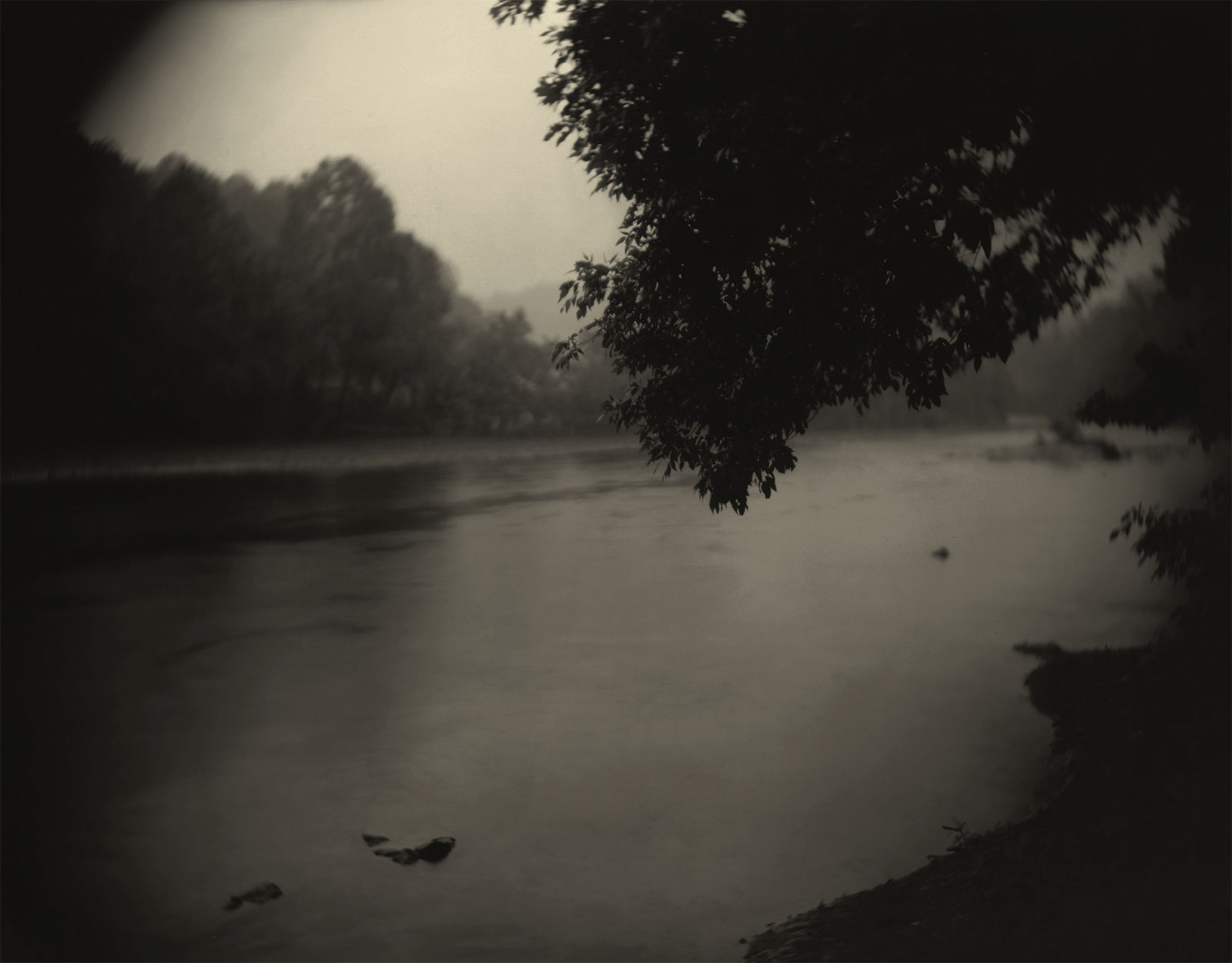
Sally Mann (American, b. 1951)
Untitled (Ben Salem)
1993
From the series Virginia
Gelatin silver print
76.2 x 101.6cm
© Sally Mann
Knowing your place
If someone asked me who the two living photographers that I would most like to meet were, one of them would be Wolfgang Tillmans … and the other would be Sally Mann. Both artists produce work that has a social conscience, social conscience being a person’s moral sense of right and wrong, viewed as acting as a guide to one’s behaviour. In both artists’ cases this social integrity acts as a guide in the production of their art.
In this latest exhibition on Mann’s complex body of work built on years of personal reflection, reading and research the title is instructive, Macula et materia, which can be variously translated from the Latin as stain and matter; stain and substance; stain and spirit or, more poetically, “the blemish and the essence”. Personally I like the last translation which is particularly pertinent for Mann’s work.
In an erudite but anonymous piece of writing “Sally Mann. Macula et Materia,” on the diChroma photography website (see below) the author grasps the essences embedded within Mann’s photography, the stain and spirit of her work, that is, blemishes, clefts, black orbs and fragments, traces of history rendered present in our collective consciousness: knowledge of history, place, war, segregation, slavery, racism:
“Here, in Virginia and the Deep South, history and human memory lie still smouldering in the depths of the earth. Sally Mann’s images are crystalline impressions, imprints bearing these deep truths that she brings up to our eyes. They will live on through the centuries, and enrich our collective memory.”
What Mann does so well is that she listens to the passing of time and then inscribes an ode to what remains, the tainted blemish of the past re-inscribed in her photographs as an essence before our eyes – essence being that spark of pure consciousness and awareness that grounds our place on this earth, the silent (still?), timeless presence that flows underneath all time, space, place.
Mann is attuned to these vibrations of history, energy and spirit. She has grounded herself and her family in the place of the American South. She knows the region intimately, much as I would hope to know the stories and history of the city of Melbourne where I live. Her roots are there and she draws sustenance and inspiration from its history, the region’s blemishes in the continuum.
As the exhibition guide observes,
“The American South, a region steeped in tradition and mythology, occupies a central place in her imagination… The landscape is never neutral; it is permeated by a complex collective memory.
One of the strengths of her work lies in the interplay between the intimate and the collective. The photographs of her children belong to the family sphere. However, they question universal themes such as childhood, vulnerability or identity construction. Similarly, the landscapes of Virginia allude to American national history, despite being linked to Mann’s personal history and sense of belonging to that territory. In this way, the intimate and the political are inextricably linked.”
In this sense “knowing your place” has a double meaning, both knowing the place where you live / accepting your position or social status without trying to change it or question authority. “Historically and socially, it implies that a person should remain submissive or compliant to superiors rather than speak out or challenge the system.” Thus place – both territory (intimate) and tyranny (political) – is pertinent in terms of the history of racism and subjugation in the American South. The intimate and political inextricably linked.
As I observed in an earlier piece of writing on the artist’s work, “Mann’s sense of fusedness with others, both alive and dead, now and then, and here and there, leads to a temporal complexity bound up with the notion of history and collective memory. How she iterates such concepts in her sensual photographs “with affection” is at the core of her art practice: the discontinuity of life in all its contexts, made eternal.”1
Dr Marcus Bunyan
1/ Marcus Bunyan. “(Un)seeing: the quality of the affection … that has carved the trace in the mind,” on the exhibition ‘Sally Mann: A Thousand Crossings’ at the National Gallery of Art, Washington, March – May, 2018 on the Art Blart website May 25, 2018 [Online] Cited 08/10/2026
Please click on the photographs for a larger version of the image.
“From low to high doth dissolution climb,
And sink from high to low, along a scale
Of awful notes, whose concord shall not fail;
A musical but melancholy chime,
Which they can hear who meddle not with crime,
Nor avarice, nor over-anxious care.
Truth fails not; but her outward forms that bear
The longest date do melt like frosty rime,
That in the morning whitened hill and plain
And is no more; drop like the tower sublime
Of yesterday, which royally did wear
His crown of weeds, but could not even sustain
Some casual shout that broke the silent air,
Or the unimaginable touch of Time.”
William Wordsworth “Mutability” Ecclesiastical Sketches 1822
“A few signs, cosmic convergences, emerge in Sally Mann’s images, distilled like sunspots; brief, bright disturbances that alter the permanence of things, piercing and destabilising their meaning. A dark gash in the trunk of a tree, a bite mark, black orbs in the shape of bullet holes that pierce the image against a battlefield backdrop -these vivid marks are redolent of the words written by William Faulkner in The Sound and The Fury (1929). They speak of dark visions and plumb the horrific remnants of the American Civil War, of the crimes and violence perpetrated against minorities, of Emmett Till’s martyrdom on the banks of the Tallahatchie River, the great burnt swamps of the South, of segregation, slavery and racism. Here, in Virginia and the Deep South, history and human memory lie still smouldering in the depths of the earth. Sally Mann’s images are crystalline impressions, imprints bearing these deep truths that she brings up to our eyes. They will live on through the centuries, and enrich our collective memory.”
Anonymous. “Sally Mann. Macula et Materia,” on the diChroma photography website Nd [Online] Cited 02/10/2026. Used under fair use conditions for the purposes of education and research
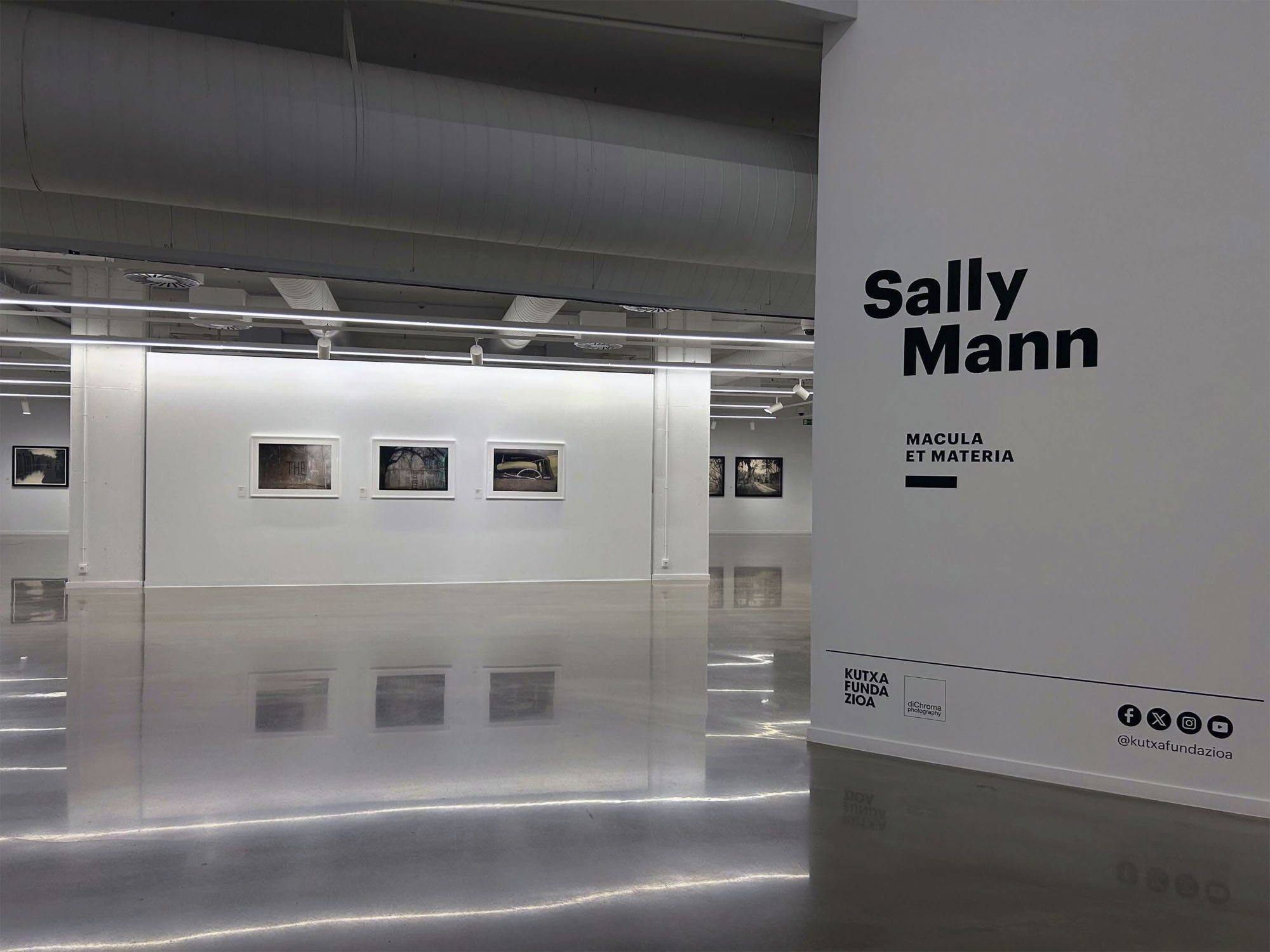
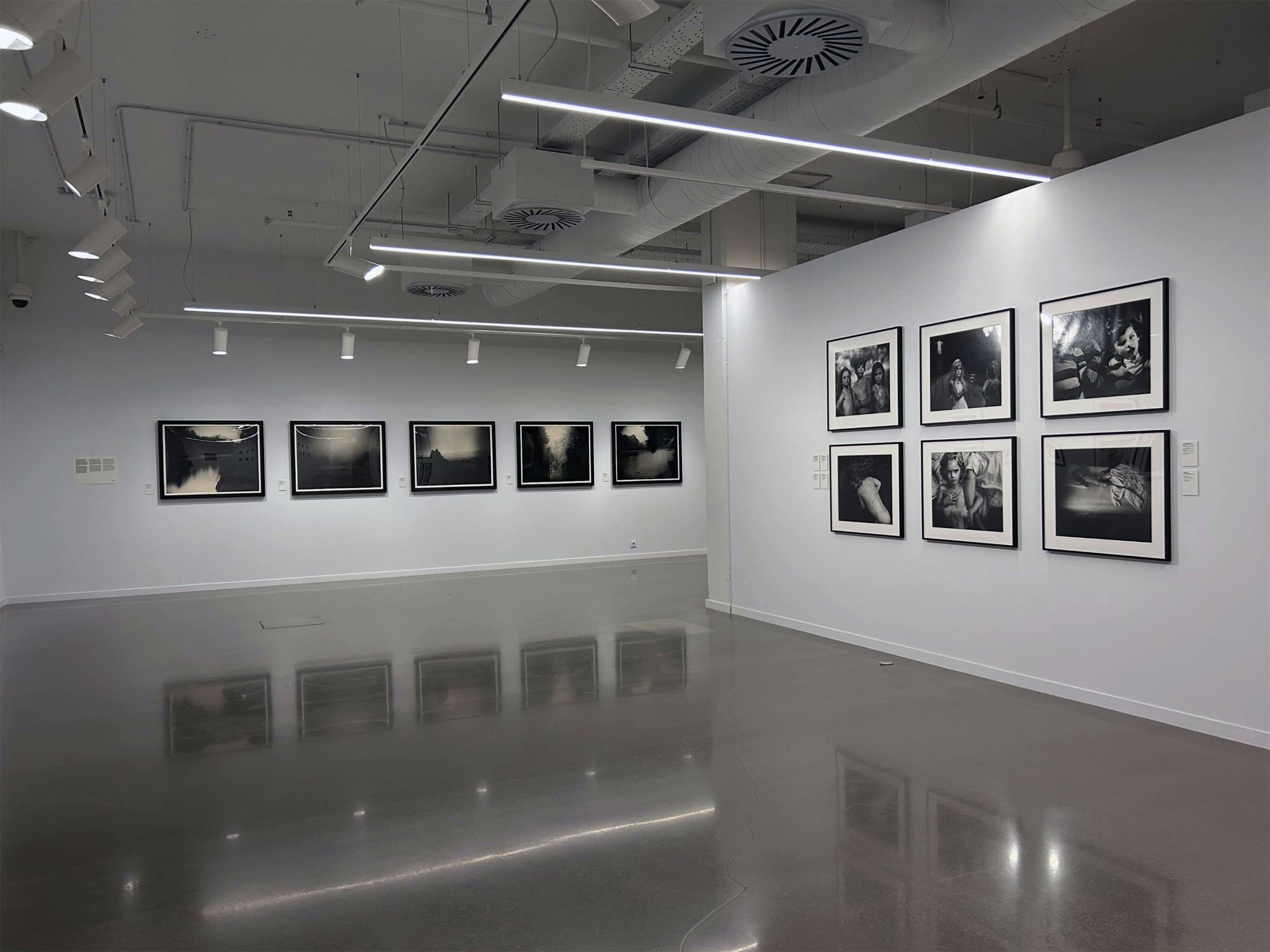
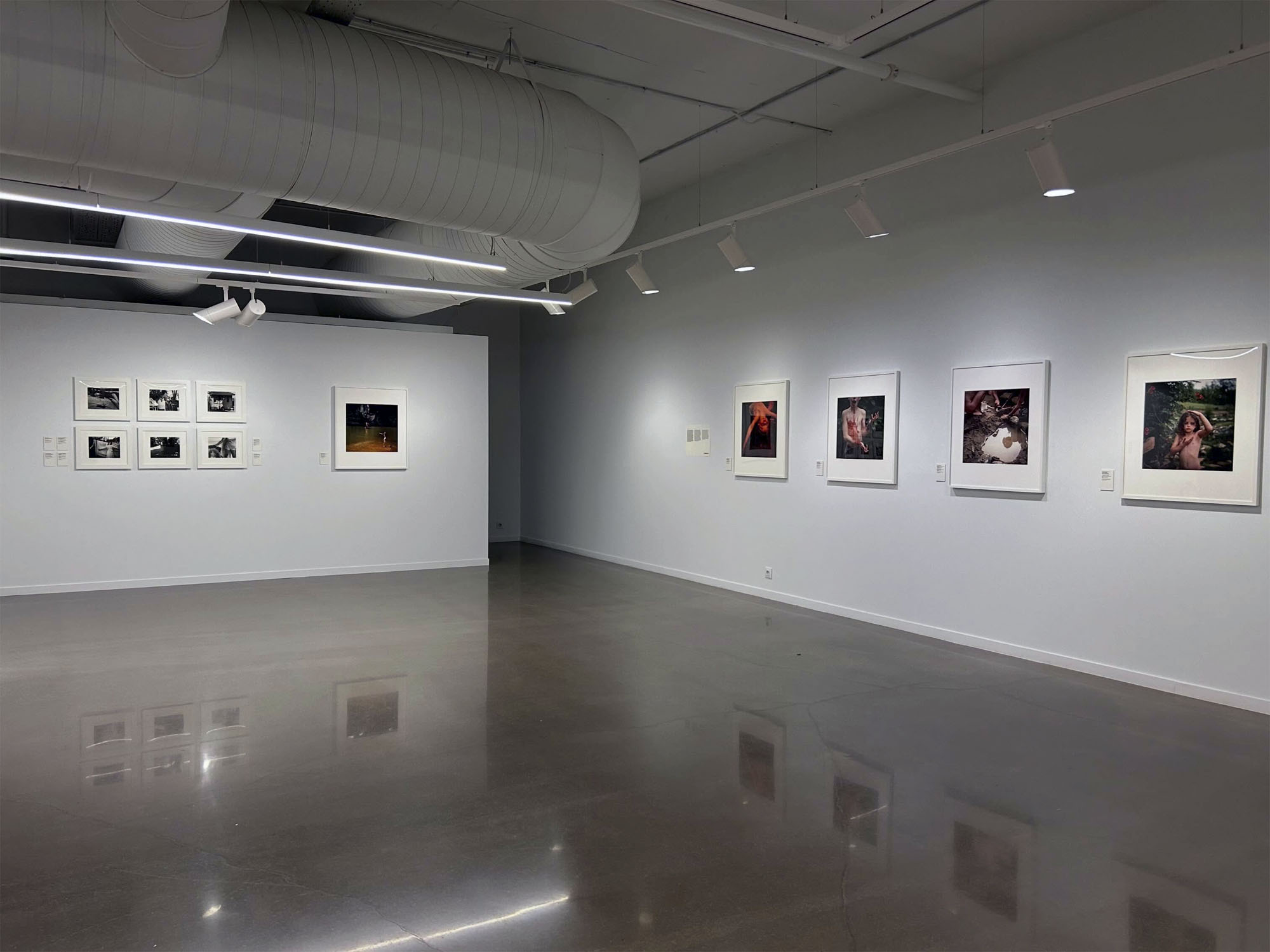
Installation views of the exhibition Sally Mann. Macula et materia at Kutxa Fundazioa Tabakaleran, San Sebastián, Spain, July – October, 2026 showing in the bottom image at left, photographs from Sally Mann’s series Virginia; and at right, photographs from her series Immediate Family
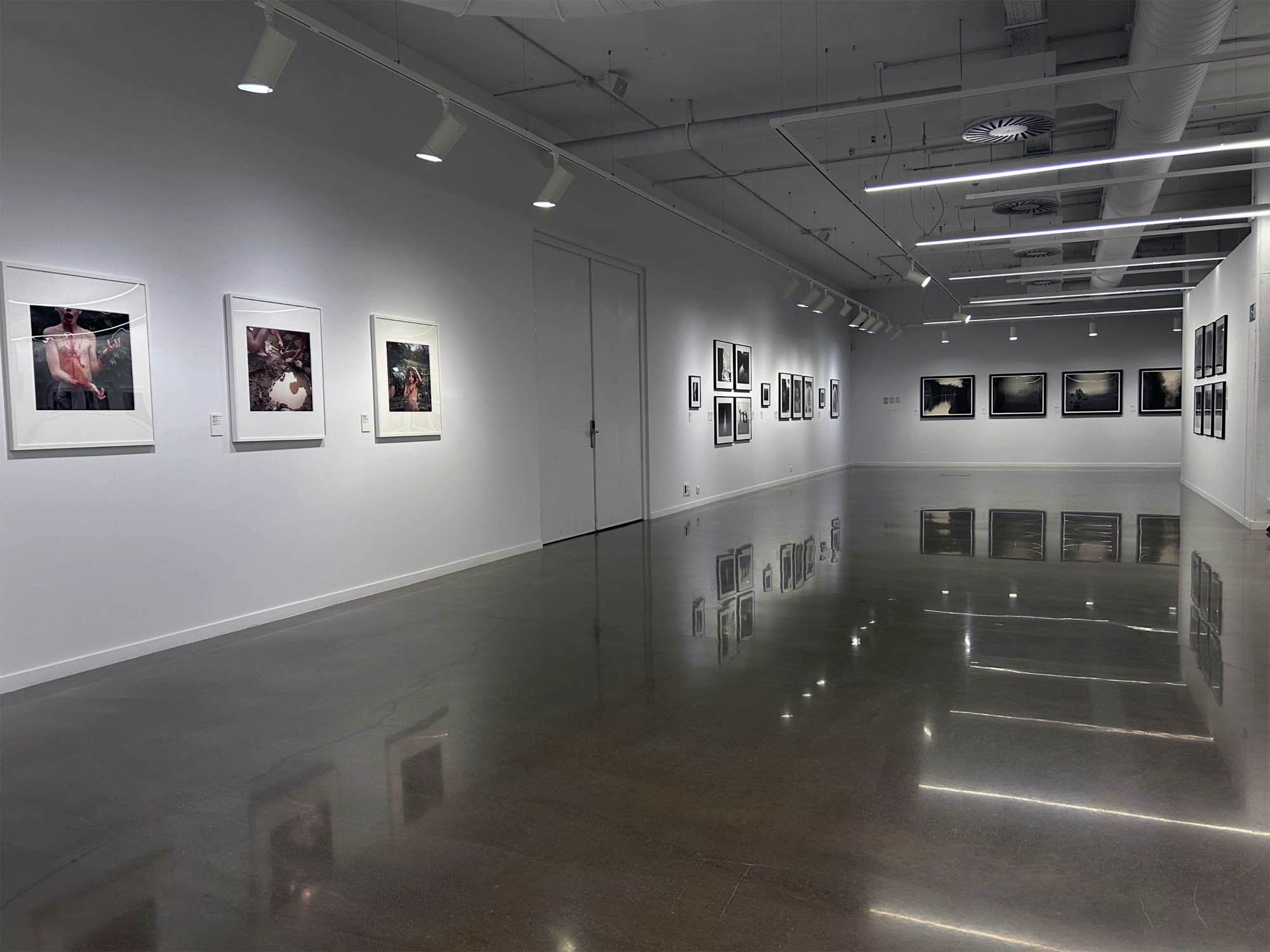
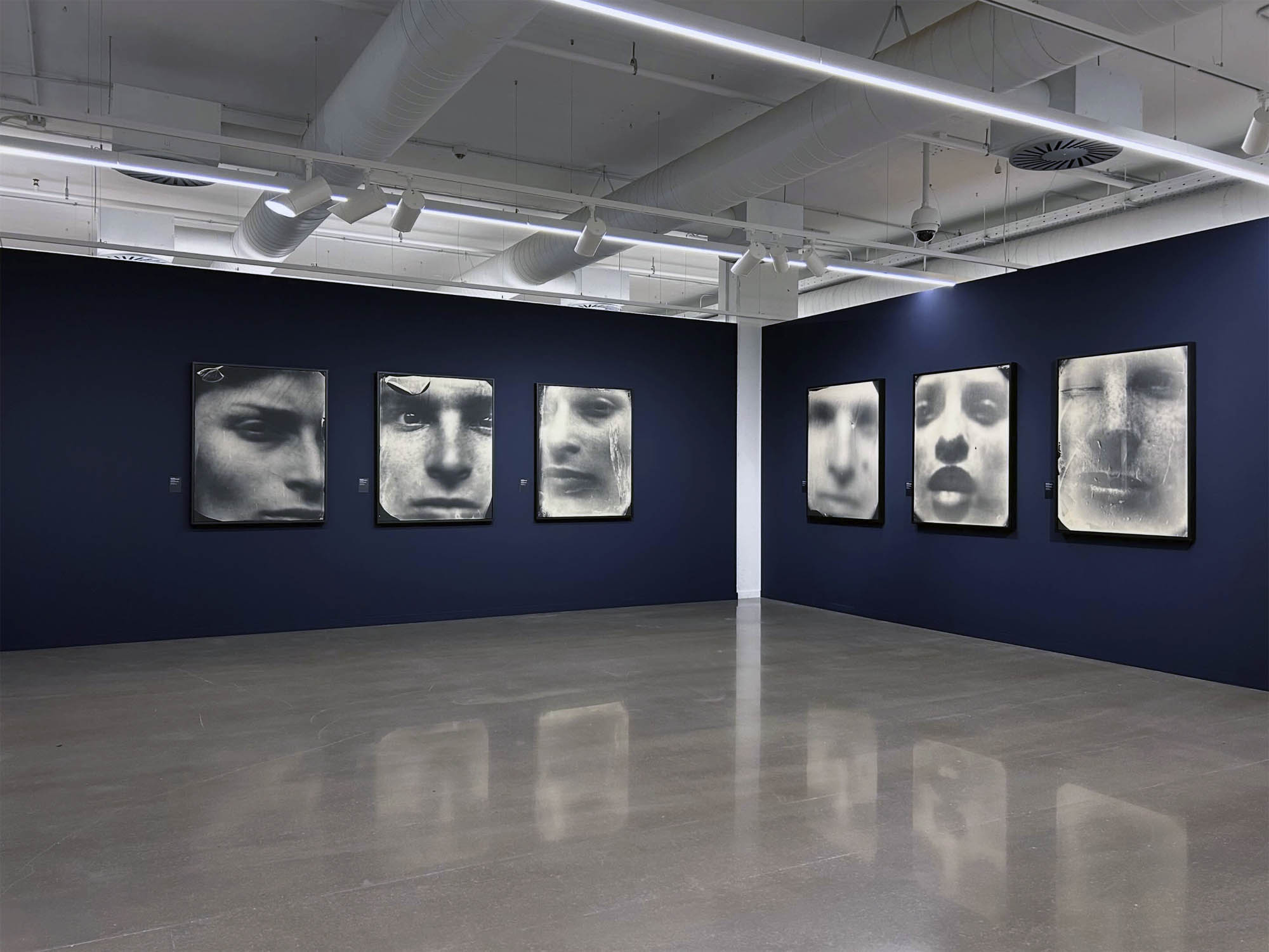
Installation views of the exhibition Sally Mann. Macula et materia at Kutxa Fundazioa Tabakaleran, San Sebastián, Spain, July – October, 2026 showing in the bottom image photographs from Sally Mann’s series Faces
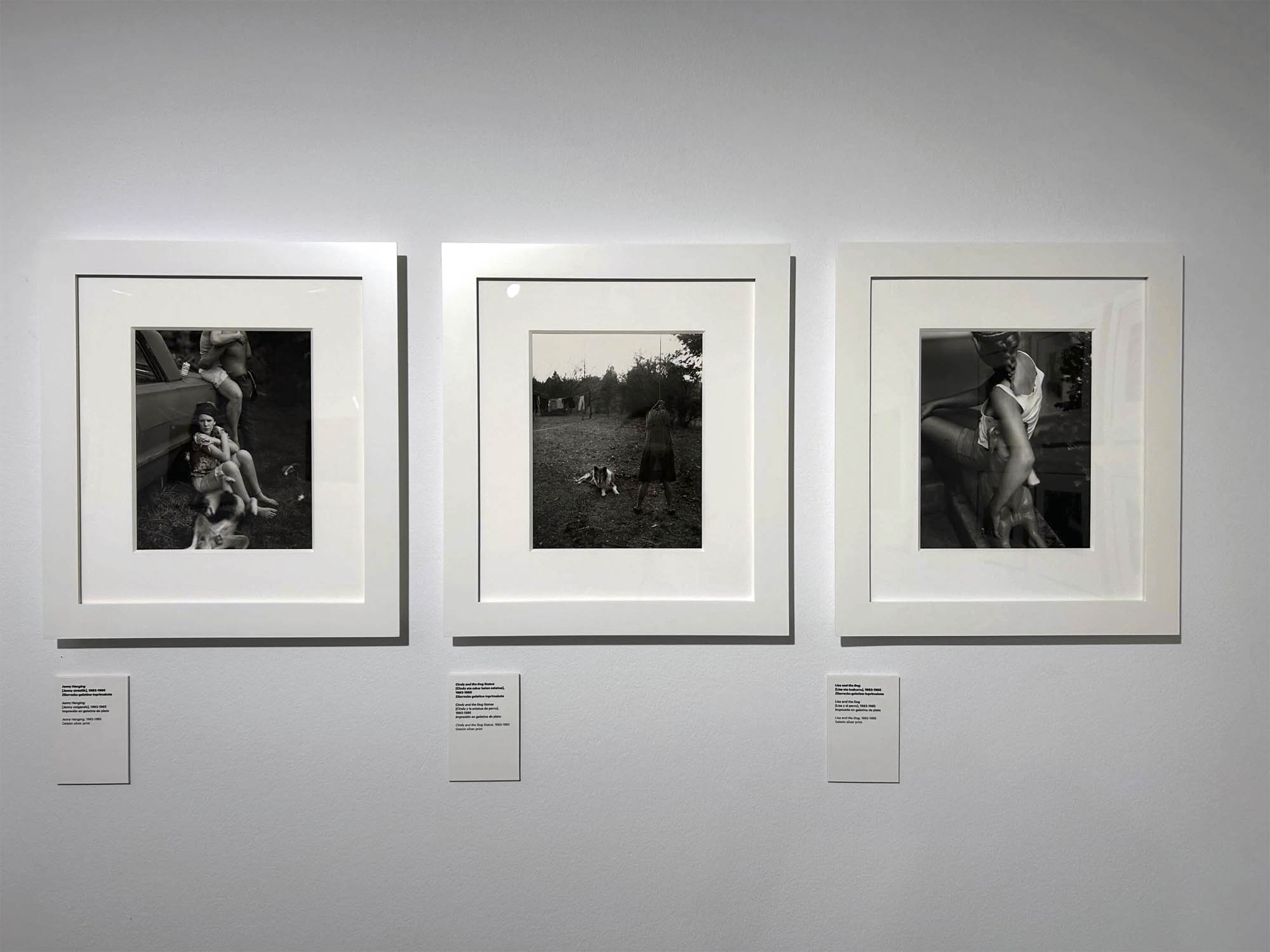
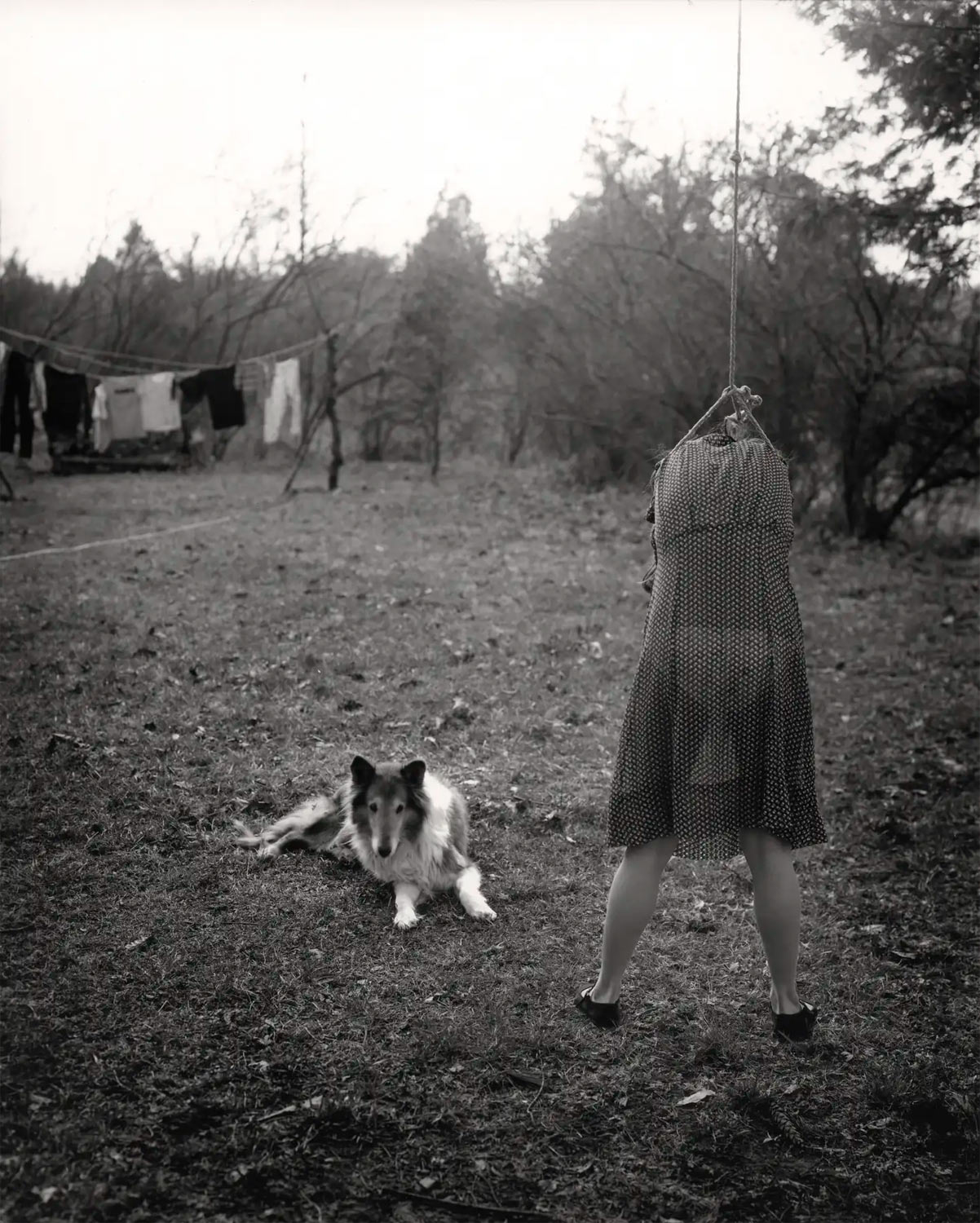
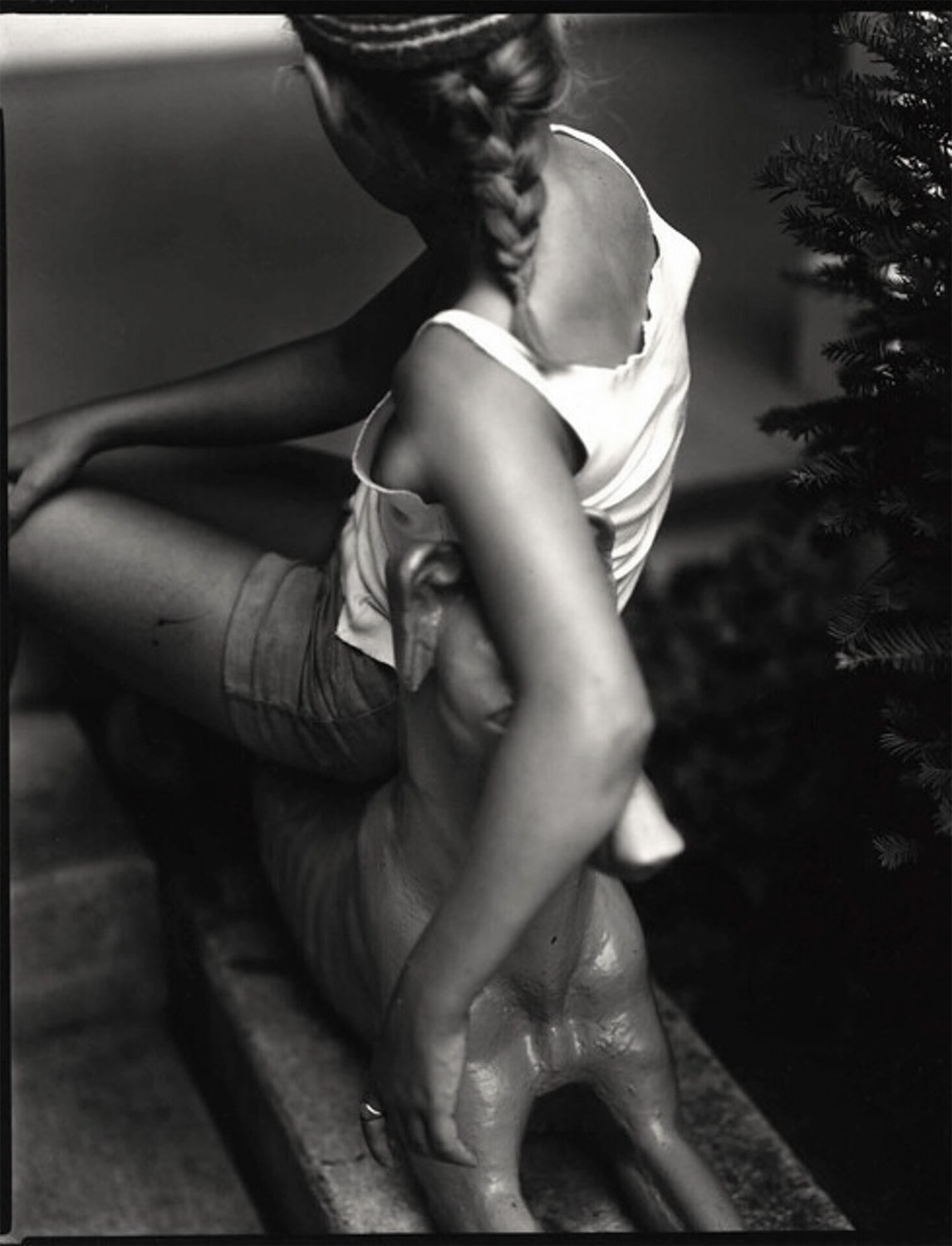
Installation view of the exhibition Sally Mann. Macula et materia at Kutxa Fundazioa Tabakaleran, San Sebastián, Spain, July – October, 2026 showing from left to right, Sally Mann’s Lisa and the dog (1983-1985, below); Jenny Hanging (1983-1985, below); and Cindy and the Dog Statue (1983-1985, below)
Sally Mann (American, b. 1951)
Lisa and the dog
1983-1985
Gelatin silver print
© Sally Mann
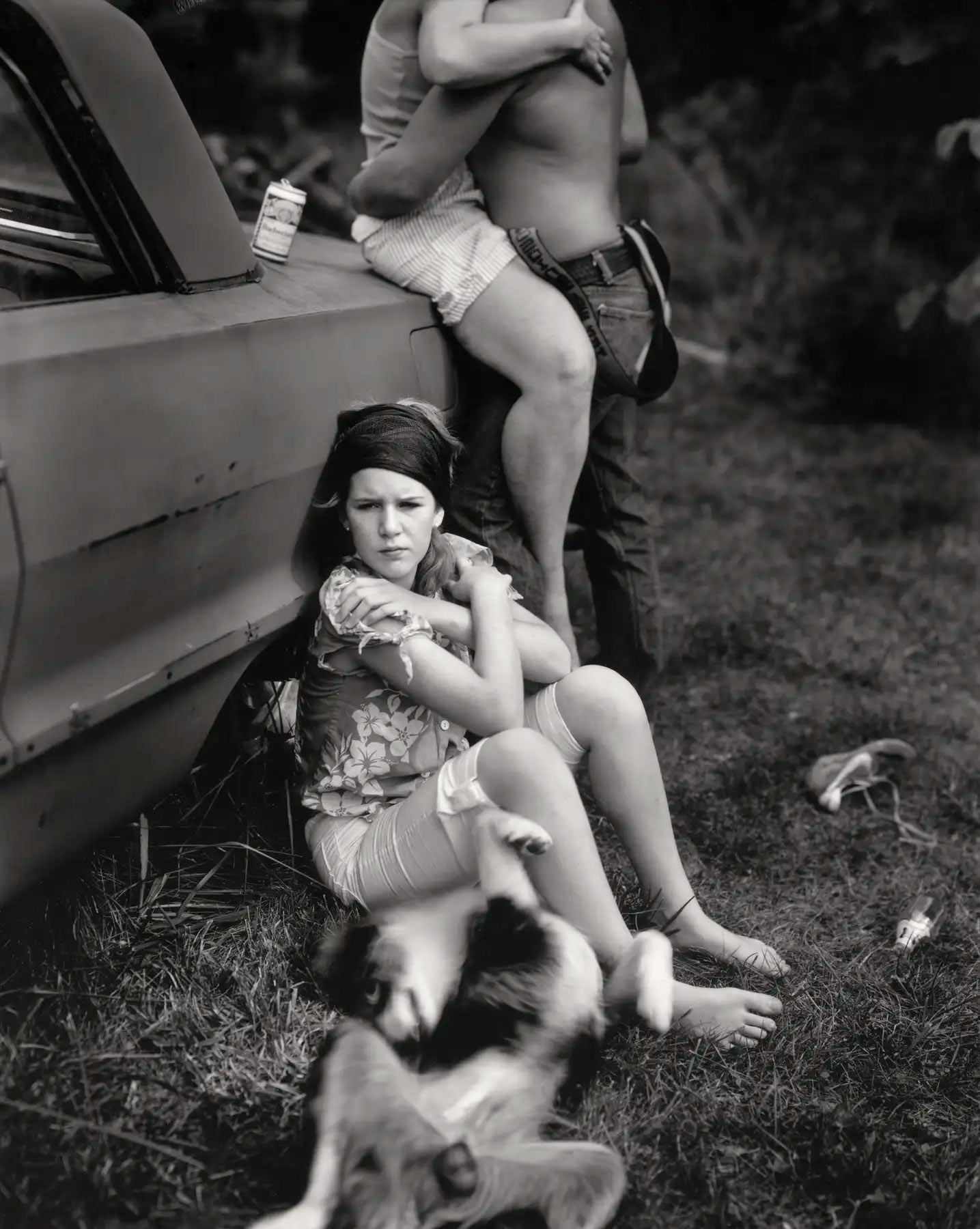
Sally Mann (American, b. 1951)
Jenny Hanging
1983-1985
Gelatin silver print
© Sally Mann
Sally Mann (American, b. 1951)
Cindy and the Dog Statue
1983-1985
Gelatin silver print
© Sally Mann
Sally Mann (born in Lexington, Virginia, 1951) is one of the most important figures in contemporary American photography. Active since the late sixties, she has built up a consistent and demanding body of work that primarily focuses on her native region of the American South, which she continues to explore. She has received many awards, including grants from the National Endowment for the Arts, the National Endowment for the Humanities and the Guggenheim Foundation, and her work is now held in the collections of major international institutions.
From the outset, Sally Mann has been part of a photographic tradition that pays attention to the materiality of the medium and its place in history. Self-taught, she developed an early practice based on the use of large-format cameras, which demand patience, precision and technical rigour. This choice proved decisive, as it structures her relationship with time, her subjects and the landscape, imbuing her images with a particular density that is uniquely Mann’s.
The Macula et Materia exhibition at Kutxa Fundazioa Artegunea offers a journey through the major series that define her oeuvre. Among others, it brings together At Twelve (1983-1985), Immediate Family (1984-1994), landscapes of Virginia (1992-1996), Georgia (1996) and the Deep South (1998), as well as later works such as Faces (2004), Proud Flesh (2006-2015), Delta (2016), Platinum Stones (2022) and Goshen (2025). These series demonstrate the continuity of the artist’s concerns despite the apparent diversity of the themes addressed: childhood, family, landscape, historical memory, illness, decay and corporeality.
The creation of the At Twelve series represents one of the most significant moments in her career. Produced in her native region, it features portraits of twelve-year-old girls photographed in their everyday environments. The images explore the transition from childhood to adolescence, a time of instability and identity transformation, without any idealisation at all. Mann established here a working method based on collaboration with her models and the use of minimal staging, in which domestic or rural spaces play a defining role.
However, it is with Immediate Family that Sally Mann achieved international recognition and also media visibility marked by controversy. Produced over a period of ten years, the series documents the daily lives of her three children on the family property in Virginia. When the book was published in 1992, it sparked an intense debate in the United States because some critics considered it to be a transgression of social norms regarding the representation of childhood.
From the early 1990s onwards, Sally Mann shifted her focus to landscape photography without abandoning her concerns regarding history and time. The series dedicated to Virginia, Georgia and the Deep South mark a decisive turning point. In them, she photographed places associated with the American Civil War (1861-1865), slavery and racial segregation. Far from producing a strictly historical document, she offers a visual meditation on the persistence of the past in the landscape.
Human presence is often absent from these images, yet history inhabits them. Battlefields, swamps, rivers and forests are photographed as surfaces charged with memory. Mann occasionally uses antique processes, particularly wet collodion, a 19th-century technique that involves manually applying a chemical solution to a glass plate. The process, creating imperfections, fogging and alterations, enhances the material dimension of the image, establishing a direct link with the history of photography. Chemical accidents thus become an integral part of the work’s meaning, suggesting erosion, degradation and the fragility of traces.
The question of American history, particularly that of the South, is central to these works. The landscapes photographed are associated with episodes linked to violence. Rather than depicting these events directly, Sally Mann suggests their persistence through topography and light. Her approach therefore differs from traditional photojournalism or documentary photography, prioritising a form of visual meditation on the layers of the past.
This reflection on time continues in later works such as Faces and Proud Flesh. The first brings together a series of portraits in which the face is envisaged as a territory for recording time. Proud Flesh, images of her husband Larry Mann, who suffers from a Muscular Dystrophy, an untreatable muscle-wasting disease, explores the body’s progressive degeneration, physical fragility and the enduring nature of the marital bond. The body appears as a place where time is inscribed biologically, reminiscent of landscapes marked by history.
Through these different series, Sally Mann has created a body of work structured around several consistent themes: geographical roots in the American South, focus on the physical nature of the photographic medium, exploration of the relationship between personal memory and collective history and, finally, contemplation of the passage of time. Her use of antique photographic processes is far from merely an aesthetic choice, but part of an inquiry into photography as a trace.
The exhibition Macula et Materia highlights this coherence. By bringing together portraits, landscapes and studies of the body, it demonstrates that themes in Sally Mann’s work are not compartmentalised, but rather participate in a single enquiry into memory, transmission and disappearance. The American South is not merely a backdrop; it constitutes the historical and cultural context for which the artist constructs her work. The history of slavery, the Civil War and racial violence are present as a structural reality whose effects extend into the present day.
Consequently, Sally Mann’s work is framed within both an American photographic tradition – paying attention to landscape and national identity – and a personal inquiry into family, the body and loss. By articulating these dimensions, she creates work that questions the very conditions of visual memory: how can an image capture that which is no longer visible? How can time be inscribed onto a fixed surface?
More than a simple retrospective, Macula et Materia helps us understand the continuity of a trajectory spanning more than five decades. Rather than taking a strictly poetic or symbolic approach, Sally Mann’s work unfolds as a historical and material investigation of territory, the body and self-image.
Immediate Family: Childhood and Temporality
Between 1984 and 1994, Sally Mann created this series dedicated to her three children: Emmett, Jessie and Virginia. Taken in a rural setting, the photographs show the children playing, injured, pensive or absorbed in their activities. The series sparked significant controversy upon its publication, in some cases because of the childrens’ nudity, and in others because of the viewer’s feelings that the approach presented a problematic staging of childhood.
Nonetheless, beyond the controversy, the series belongs to a tradition of family portraiture, questioning the boundary between private life and public space. It also reflects on vulnerability, the construction of identity and family memory because the images do not necessarily resemble spontaneous family photographs, as they are carefully composed. The children often participated in the construction of the image, in some cases inspired by classical pictorial references.
Childhood is presented here as an intermediate stage, situated between freedom and the nascent awareness of finitude. The bodies are simultaneously powerful and fragile.
A fundamental aspect of this series is the suppression of contemporary temporal markers. Clothing, modern objects and period details are either absent or reduced to a minimum so that the images acquire a timeless quality, making the children seem as though they belong to an indeterminate, almost mythical time.
Photography here becomes a tool for suspending time. It captures a precise instant while simultaneously inscribing it within an extended duration. In Mann’s work, childhood is not merely a biological period; it is a symbolic territory.
Faces: Portraiture and Finitude
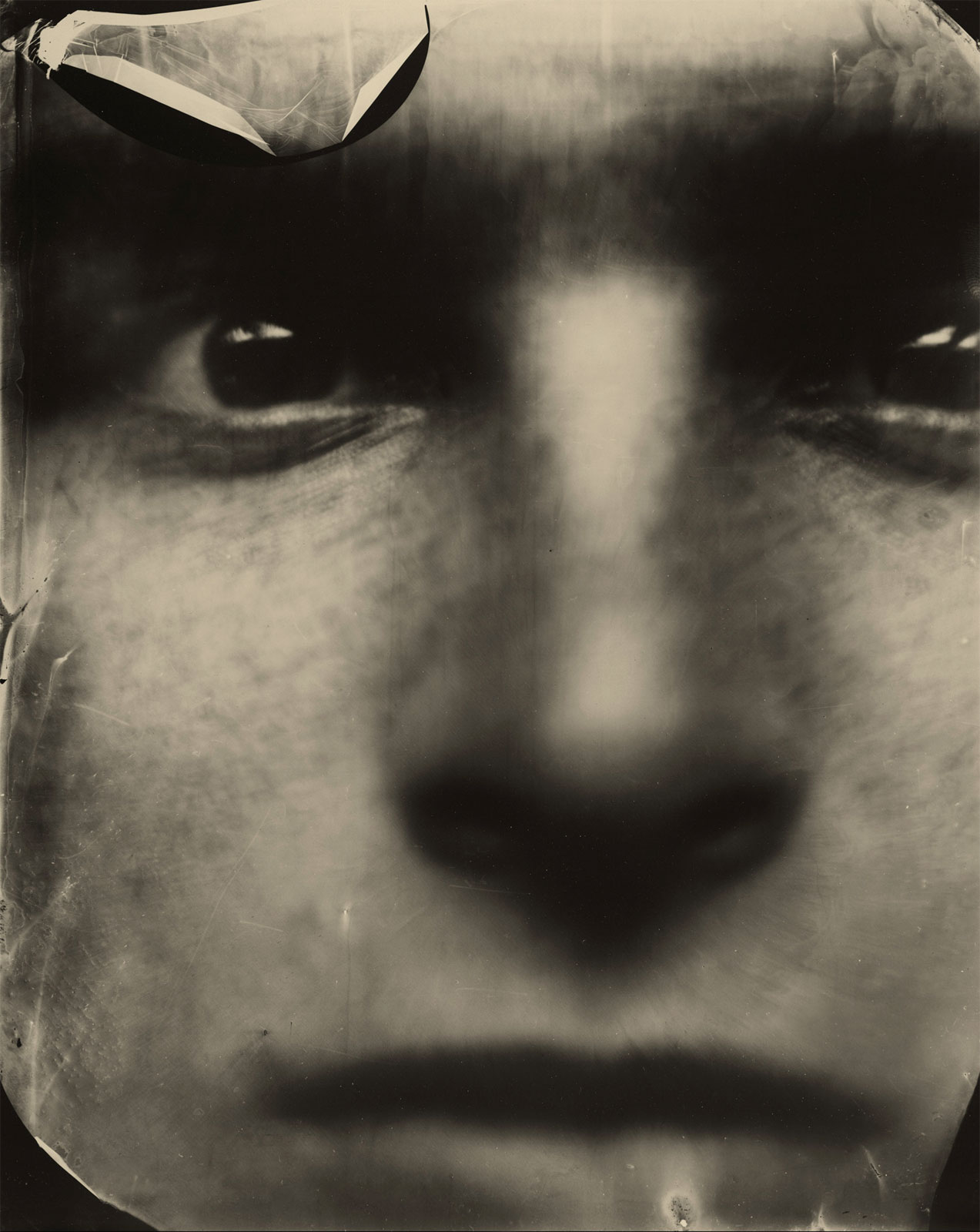
In 2004, Sally Mann began her Faces series, featuring intimate portraits of her adult children. The faces are framed closely, often bathed in soft light. Long exposure times produce a slight stillness and occasionally an opacity in the gaze.
Departing from the narrative energy of Immediate Family, these portraits introduce a more explicit reflection on the passage of time. The frontal presentation of the faces alludes to certain ancient traditions of funerary portraiture. The model’s fixed stare establishes a direct relationship with the viewer. The focus is no longer on capturing a moment of childhood, but on questioning the permanence of identity in the face of transformation.
Photography acts as a trace and paradoxical device in Faces: it captures while simultaneously pointing to future disappearance. The faces are recorded with almost sculptural precision, yet they are also subject to progressive alteration through changes in light and exposure time.
This theme would continue in the self-portraits Sally Mann produced later. The photographer’s aging body, in turn, becoming an object of exploration.
Proud Flesh: The Body and Illness
In the series Proud Flesh (2006-2015), Sally Mann photographed her husband, Larry Mann, who suffers from a degenerative muscular disease. The images show a body marked by the beginning of an inevitable and irreversible physical deterioration: muscle atrophy, fragility and loss of mobility.
Rather than adopting a clinical documentary approach, Mann treats the body with almost sculptural care. Light underscores volumes, folds and tensions. The illness is not aestheticised but integrated into a reflection on human vulnerability and dignity.
Materiality as Thought
One of Sally Mann’s key contributions is the importance she places on photographic matter. Chemical runoff, stains and alterations are not defects to be corrected. They are part of the work’s meaning.
Using antique processes such as wet collodion acts in favour of the work, reinforcing the image’s materiality, underlining the material and unstable nature of photography. Chemical alterations become visible signs of time in action. Rather than presenting a linear narrative, her work reveals cycles: birth, transformation, disappearance. Each image captures a moment while simultaneously reminding us that all presence is transient. It questions the memory inscribed in places and bodies, transforming photography into a means of reflecting on the human condition. Photography somehow ceases to be merely a record of reality and becomes a physical object subject to chemical processes, accidents and imperfection.
This approach aligns her work with a pictorial tradition in which the material trace – the brushstroke, the drip, the impasto – is an integral part of the work. Sally Mann’s work therefore belongs to a photographic tradition that transcends mere representation.
The Influence of the American South
The American South, a region steeped in tradition and mythology, occupies a central place in her imagination. This duality is evident in Sally Mann’s work: natural beauty and historical violence coexist. The landscape is never neutral; it is permeated by a complex collective memory.
One of the strengths of her work lies in the interplay between the intimate and the collective. The photographs of her children belong to the family sphere. However, they question universal themes such as childhood, vulnerability or identity construction. Similarly, the landscapes of Virginia allude to American national history, despite being linked to Mann’s personal history and sense of belonging to that territory. In this way, the intimate and the political are inextricably linked.
Sally Mann does not seek to illustrate a historical or theoretical discourse. She creates open images, inviting meditative interpretation. Each image is the result of a lengthy and arduous process. This temporal aspect of production is reflected in how the images are perceived: viewers are invited to look slowly.
Sally Mann’s work explores the relationship between time, memory and matter. Through landscapes of the American South, the faces of her children, her husband’s ailing body or her self-portraits, she examines human fragility and the enduring nature of traces.
Goshen: The Zero Degree of Color
In the Goshen series (2025), Sally Mann quite literally pushes color to its furthest limits, even to its ultimate point of exhaustion and extinction. Here, color survives only as the residual idea of itself, a kind of afterimage or lingering trace.
The images of these abandoned places are haunted by the lives that once inhabited them. Everything seems to be slowly drained of its narrative substance, as though subjected to a silent hemorrhage. Nothing happens; things remain suspended, floating, in a state of dissolution.
The texture and almost pointillist density of the images evoke both the earliest autochromes and Turner’s Pictures of Nothing: matter held in suspension, atmosphere, the density of air, the vibration of light. Barely an oscillation. Color is out of breath; it fades away without the slightest regret.
Reality appears sparingly before gradually withdrawing, and the image slowly slips toward a form of abstraction, ultimately resolving into a nearly monochrome image of faintly tinted white. The imperceptible final breath of color inevitably recalls the paintings of Robert Ryman, where the erased trace of a former image still persists.
It is here that Mann reaches the zero degree of color.
Exhibition guide from Kutxa Fundazioa Tabakaleran

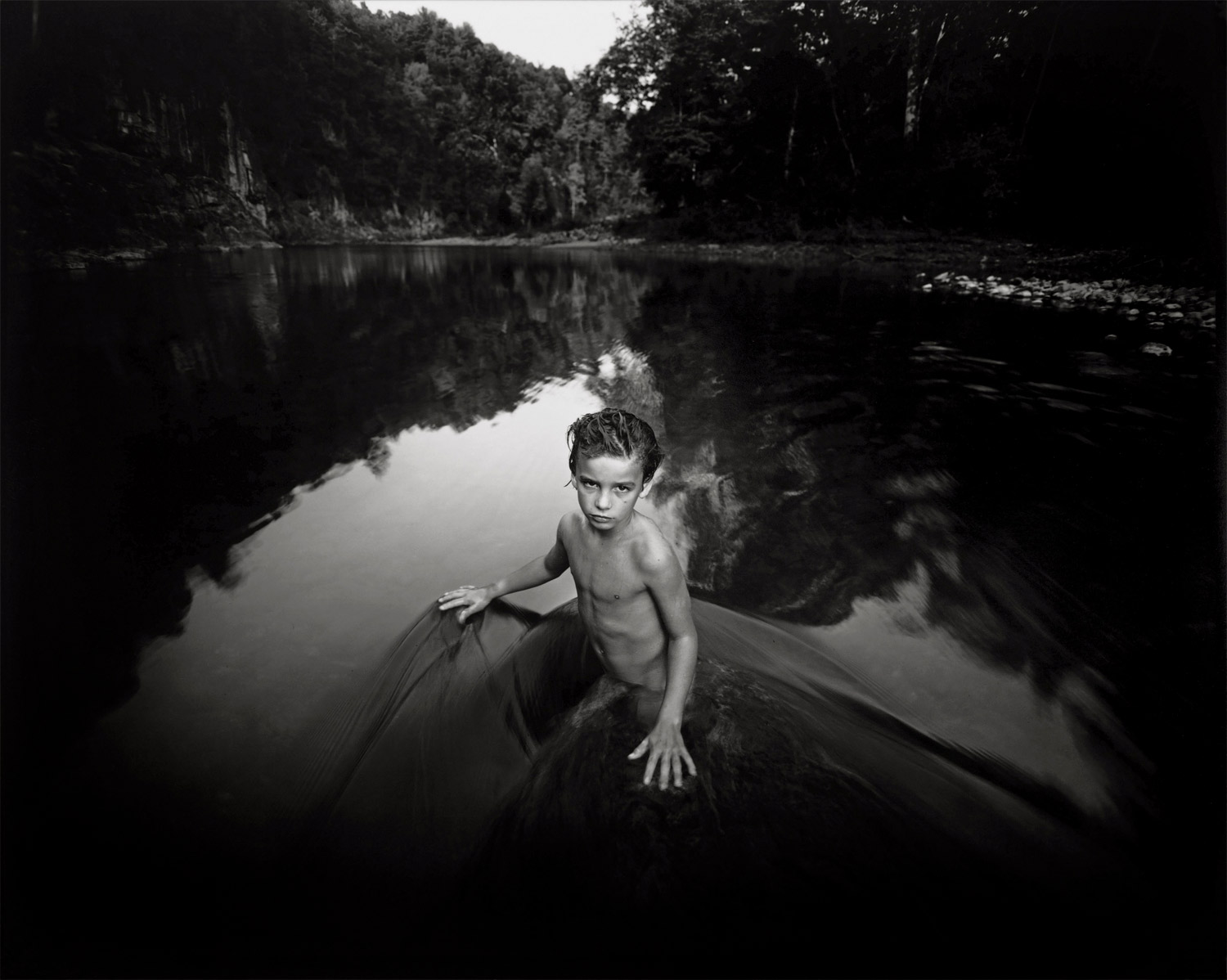
Sally Mann (American, b. 1951)
Jessie Bites
1985
From the series Immediate Family
Gelatin silver print
50.8 x 61cm
© Sally Mann
Sally Mann (American, b. 1951)
The Last Time Emmett Modelled Nude
1987
From the series Immediate Family
Gelatin silver print
© Sally Mann

Sally Mann (American, b. 1951)
Night Blooming Cereus
1988
Gelatin silver print
© Sally Mann

Sally Mann (American, b. 1951)
Emmett, Jesse and Virginia
1989
Gelatin silver print
20 x 24 inches (50.8 x 61cm)
© Sally Mann

Sally Mann (American, b. 1951)
Holding Virginia
1989
From the series Immediate Family
Gelatin silver print
© Sally Mann
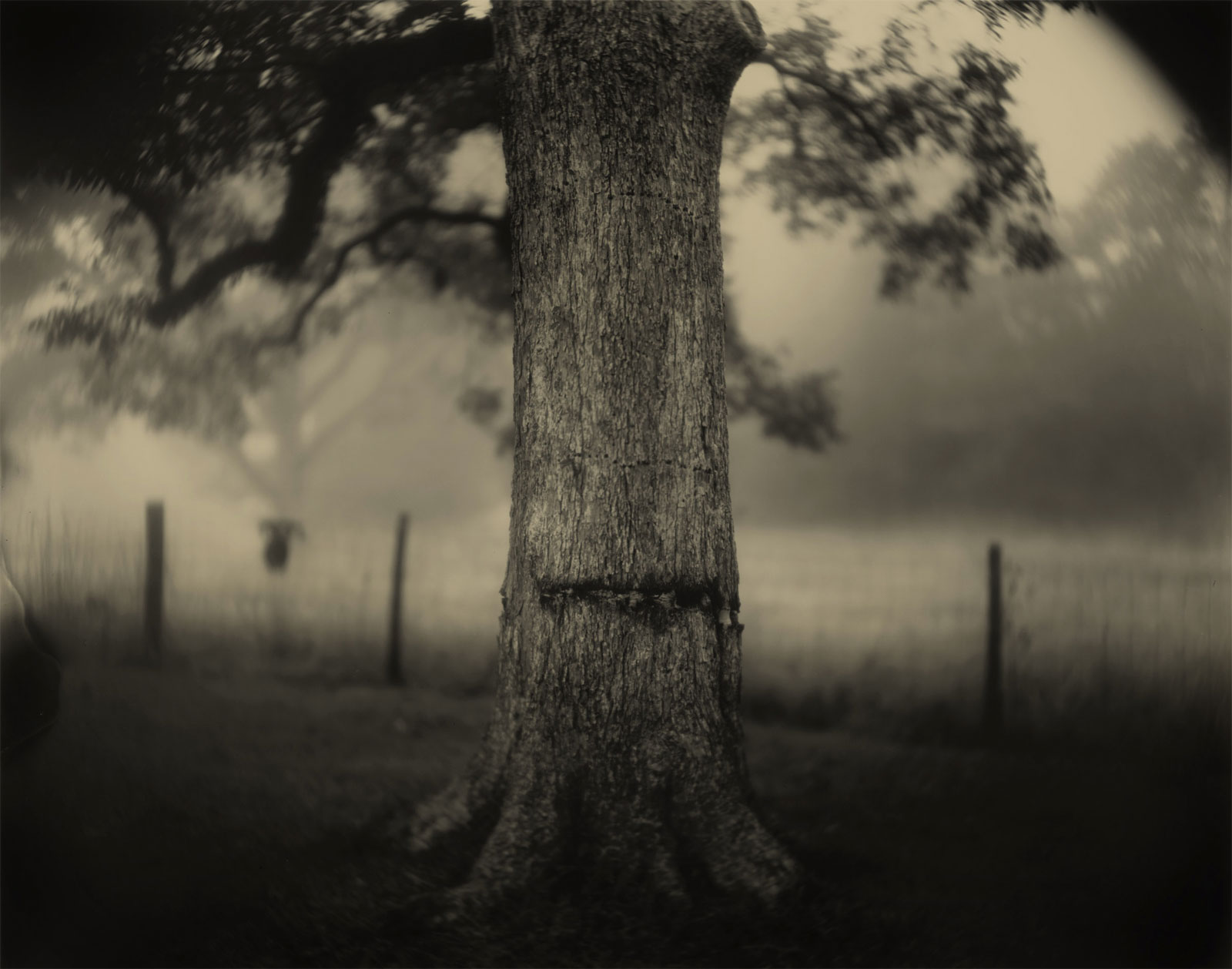
Sally Mann (American, b. 1951)
Untitled (Scarred Tree)
1998
Gelatin silver print
© Sally Mann
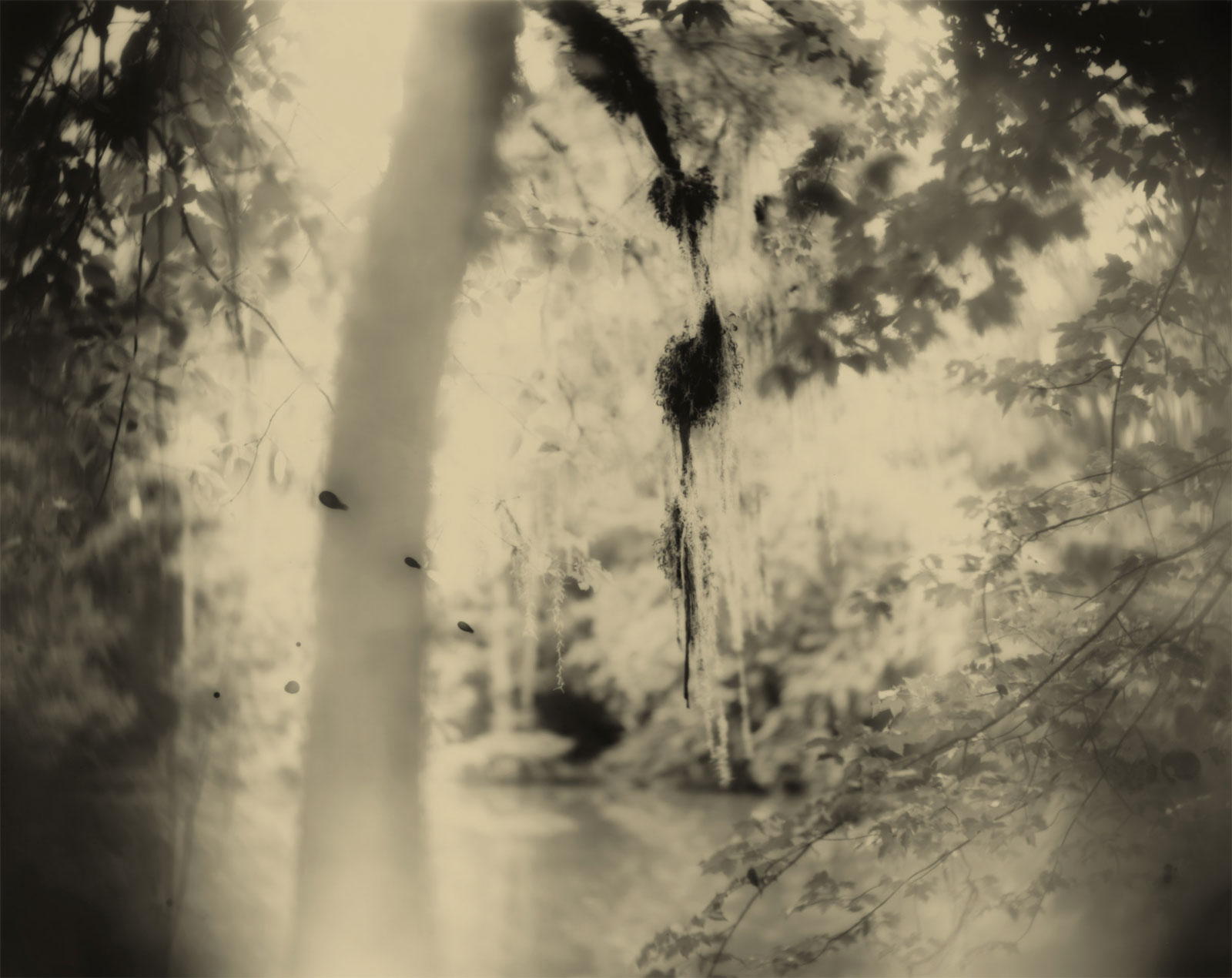
Sally Mann (American, b. 1951)
Untitled (Three Drips)
1998
From the series Deep South
Gelatin silver print
© Sally Mann
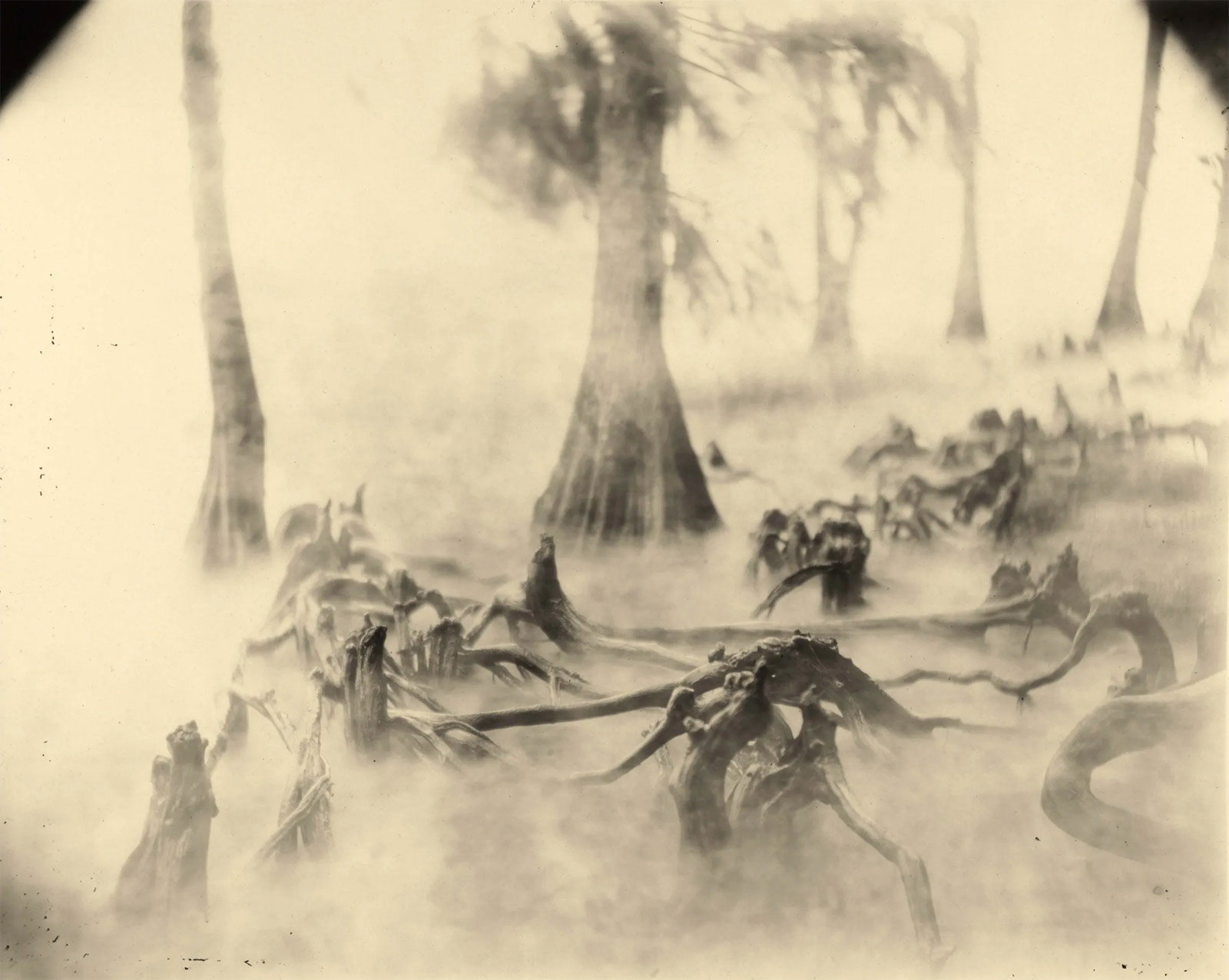
Sally Mann (American, b. 1951)
Untitled (Swamp Bones)
1998
From the series Deep South
Gelatin silver print
© Sally Mann
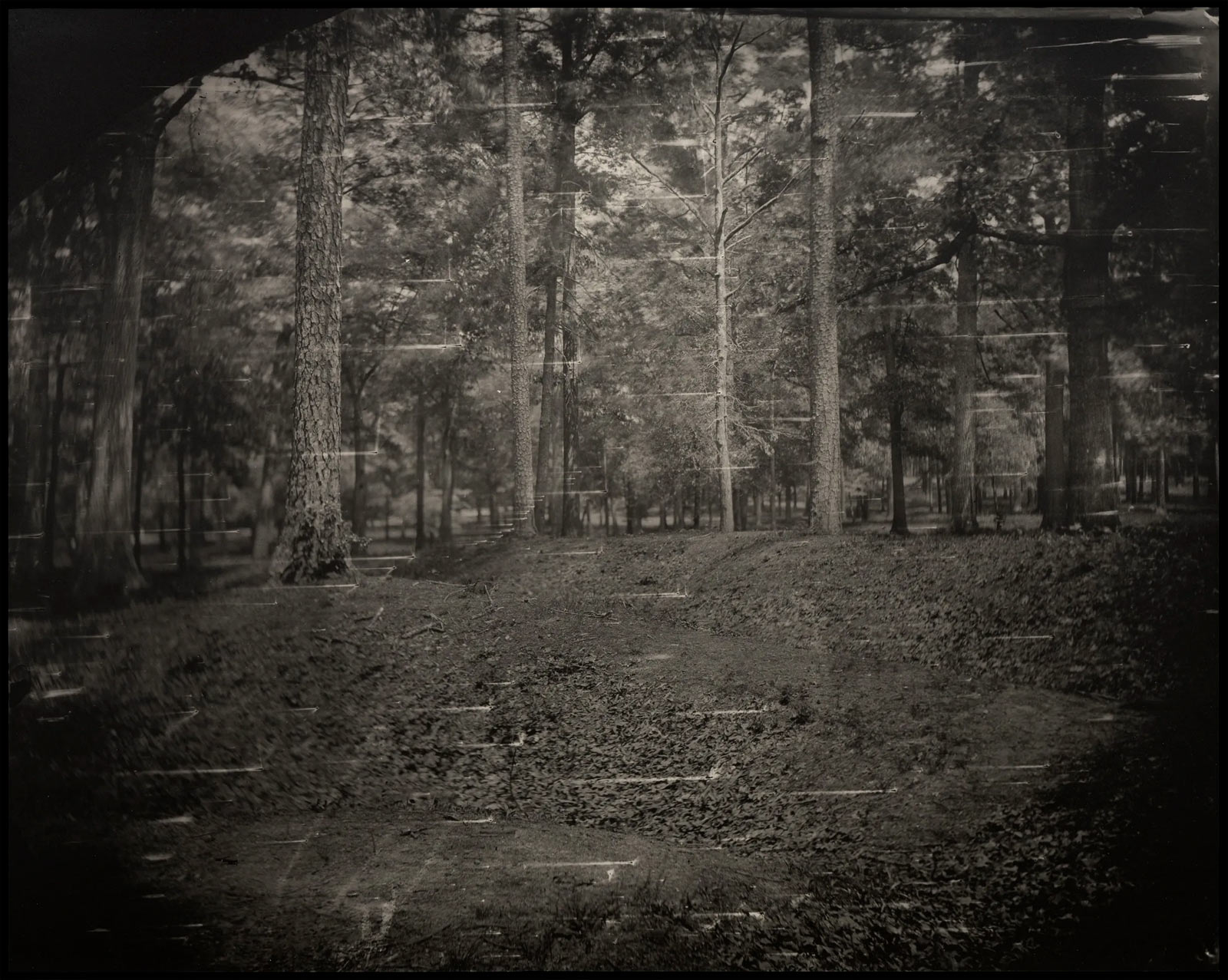
Sally Mann (American, b. 1951)
Cold Harbor Battle
2003
From the series Battlefields
Gelatin silver print
© Sally Mann
Sally Mann (American, b. 1951)
Emmett #3
2004
From the series Faces
Gelatin silver print
© Sally Mann
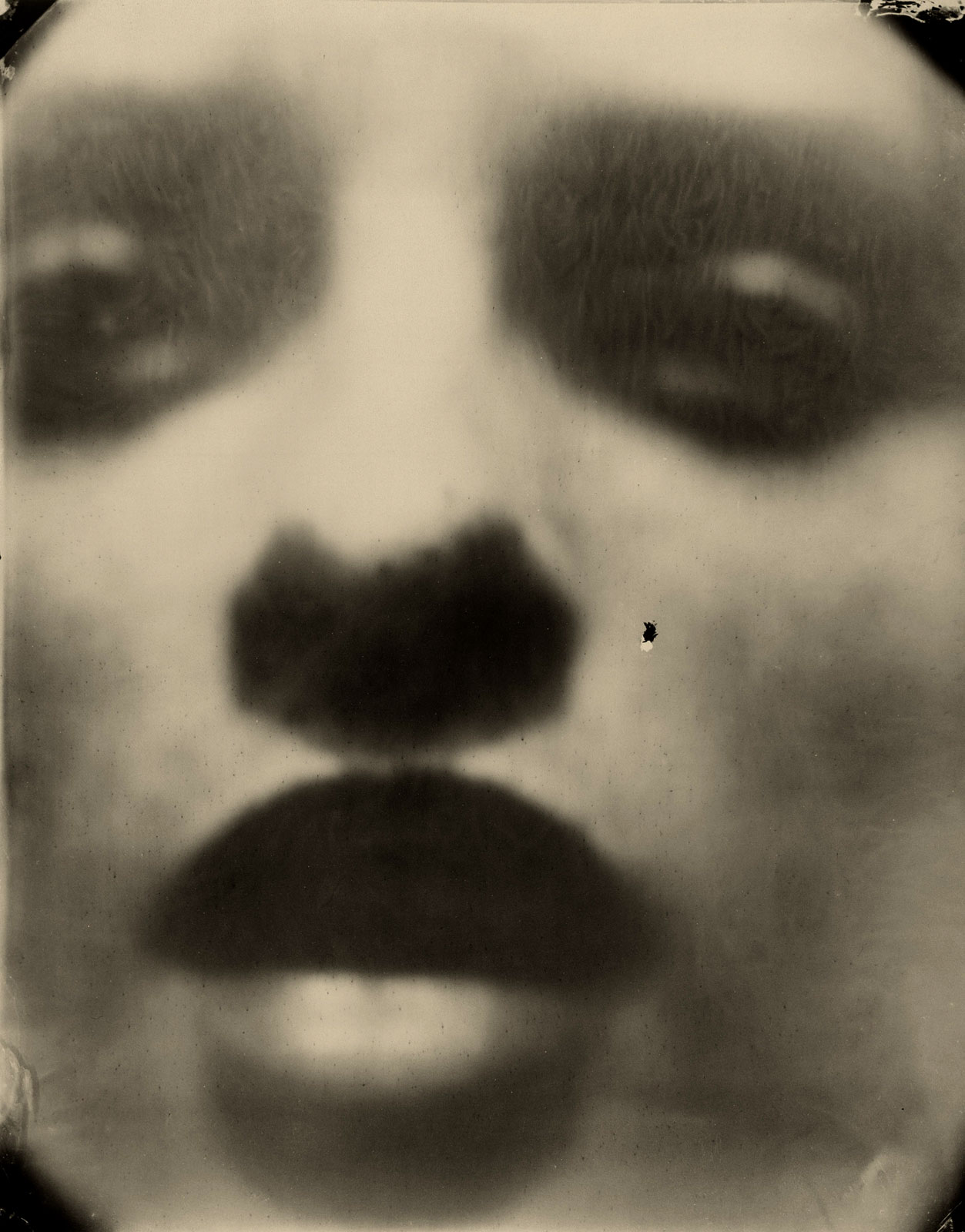
Sally Mann (American, b. 1951)
Virginia #9
2004
From the series Faces
Gelatin silver print
© Sally Mann

Sally Mann (American, b. 1951)
Was Ever Love
2009
Gelatin silver print
38.1 x 34.3cm
Gelatin silver print
© Sally Mann
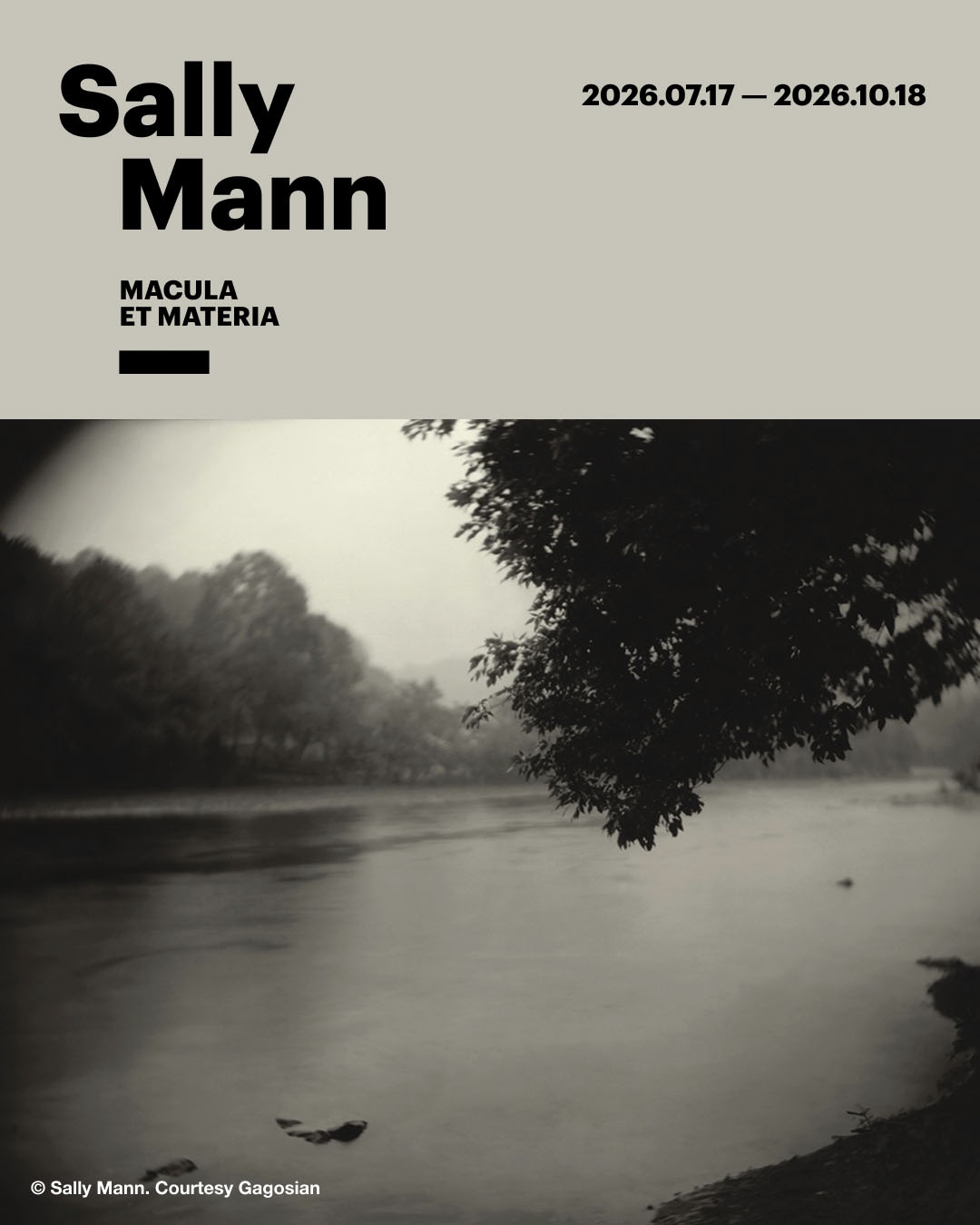
Sally Mann. Macula et materia exhibition poster
Kutxa Fundazioa Tabakaleran
Plaza de las cigarreras, 1 (Edificio Tabakalera)
20012 Donostia / San Sebastián
Opening hours:
Tuesday to Sunday and public holidays: 11.00- 13.00 and 16.00-20.00
Closed Mondays


You must be logged in to post a comment.