In our contemporary image-saturated, comprehensively mediated way of life it is difficult for us to understand how “sensational” photography would have been in the Victorian era. Imagine never having seen a photograph of a landscape, city or person before. To then be suddenly presented with a image written in light, fixed before the eye of the beholder, would have been a profoundly magical experience for the viewer. Here was a new, progressive reality imaged for all to see. The society of the spectacle as photograph had arrived.
Here was the expansion of scopophilic society, our desire to derive pleasure from looking. That fetishistic desire can never be completely fulfilled, so we have to keep looking again and again, constantly reinforcing the ocular gratification of images. Photographs became shrines to memory. They also became shrines to the memory of desire itself.
Dr Marcus Bunyan
Many thankx to the National Museum of Scotland for allowing me to publish the photographs in the posting. Please click on the photographs for a larger version of the image.
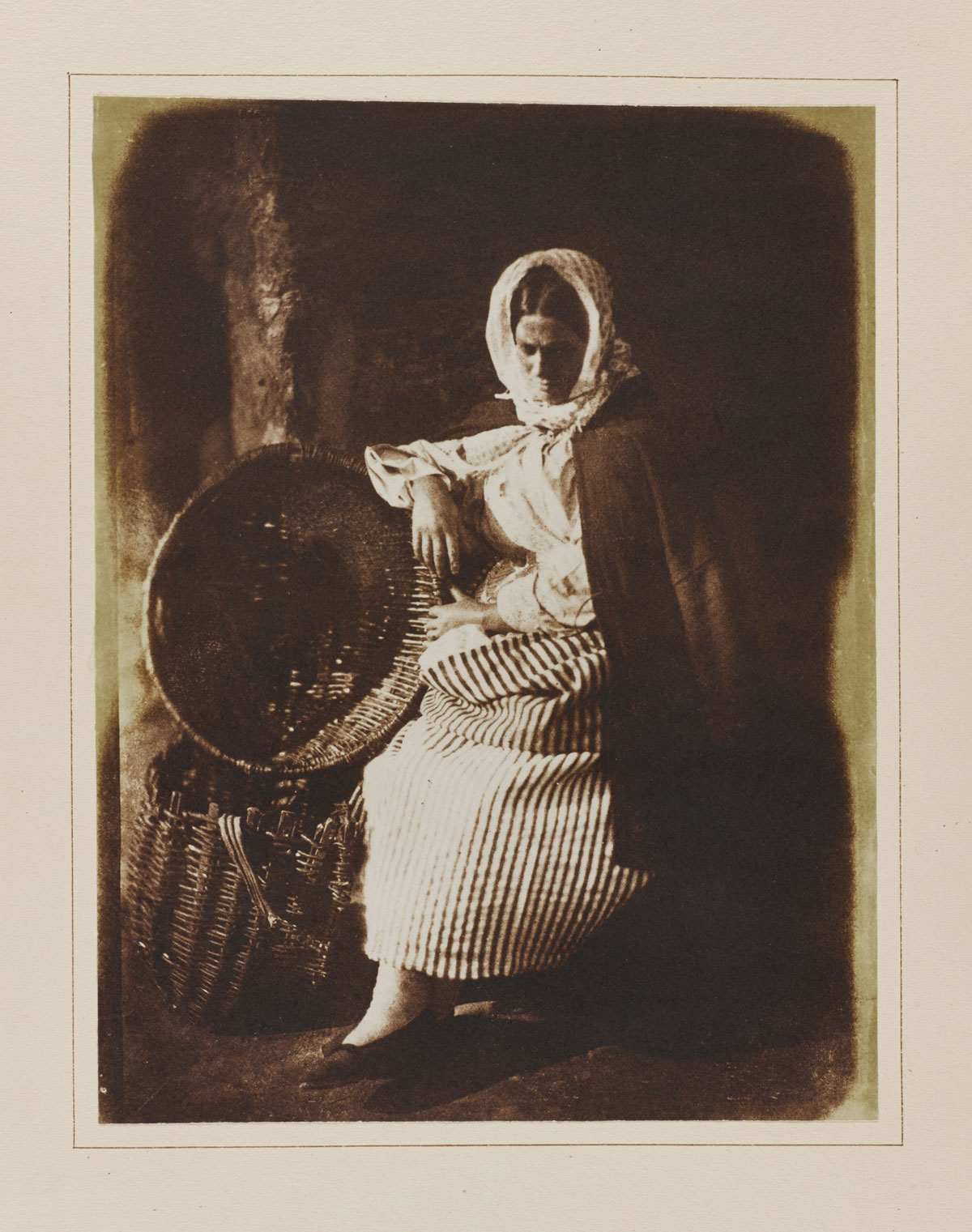
Hill and Adamson
Dr Sara Stevenson, photo historian, talks about the origins of Hill and Adamson’s partnership and their photography skills.
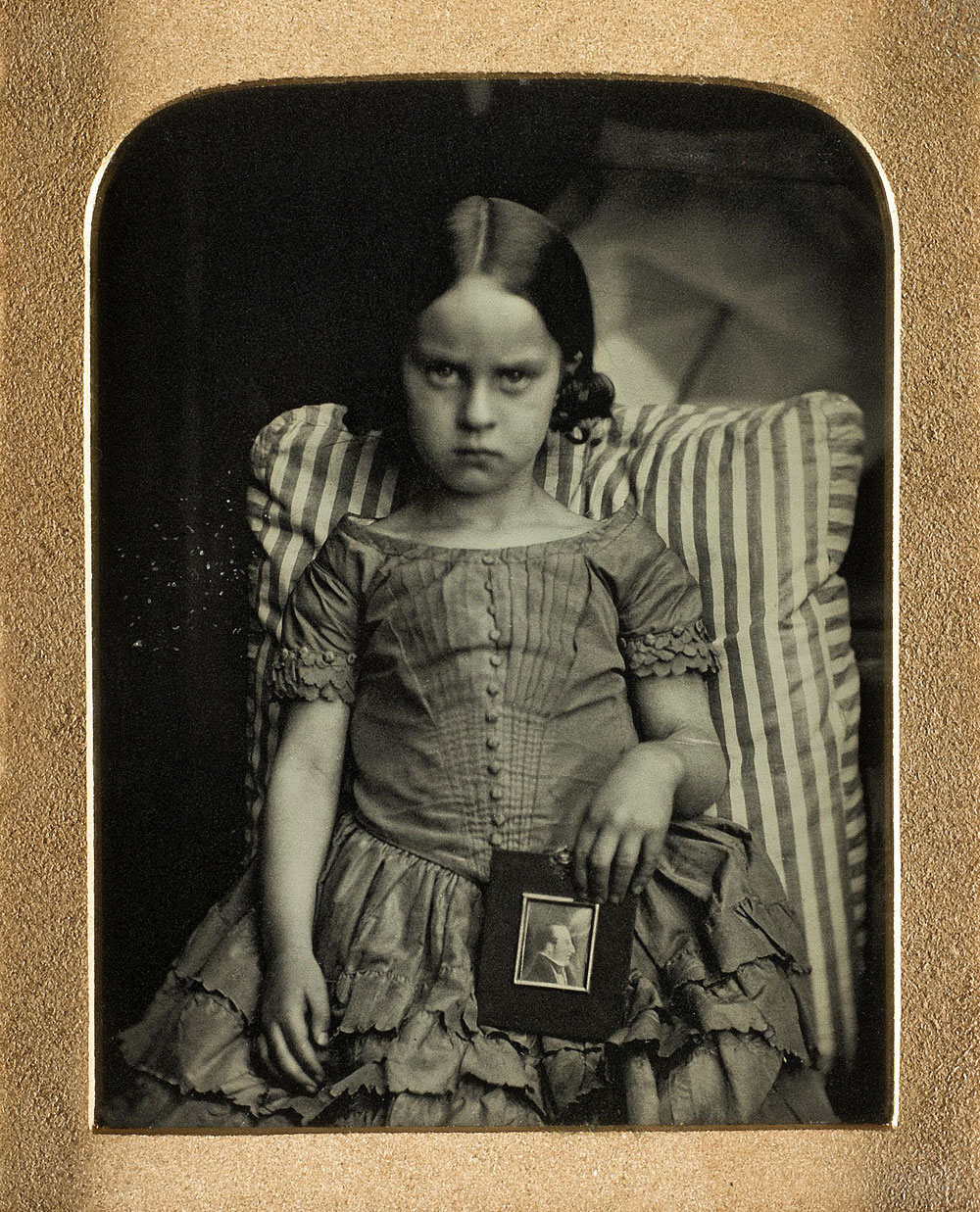
Scottish daguerreotypes
Dr Alison Morrison Low, Principal Curator of Science, National Museums Scotland, talks about daguerreotype portraits in Scotland and the work of Thomas Davidson.
Amateur photographers: Julia Margaret Cameron
Anne Lyden, International Photography Curator, National Galleries of Scotland, talks about photographer Julia Margaret Cameron.
George Washington Wilson
Emeritus Professor Roger Taylor talks about George Washington Wilson’s life and work.
TR Williams
Dr Brian May, CBE, musician and collector of stereo-photography talks about the photography of TR Williams.
Calotype images are not as pin-sharp as daguerreotypes, but they had one great advantage: more than one image could be produced from a single negative. Yet both processes were cumbersome and very expensive. What was needed was a faster, cheaper method to really fuel the fire of Victorian photomania.
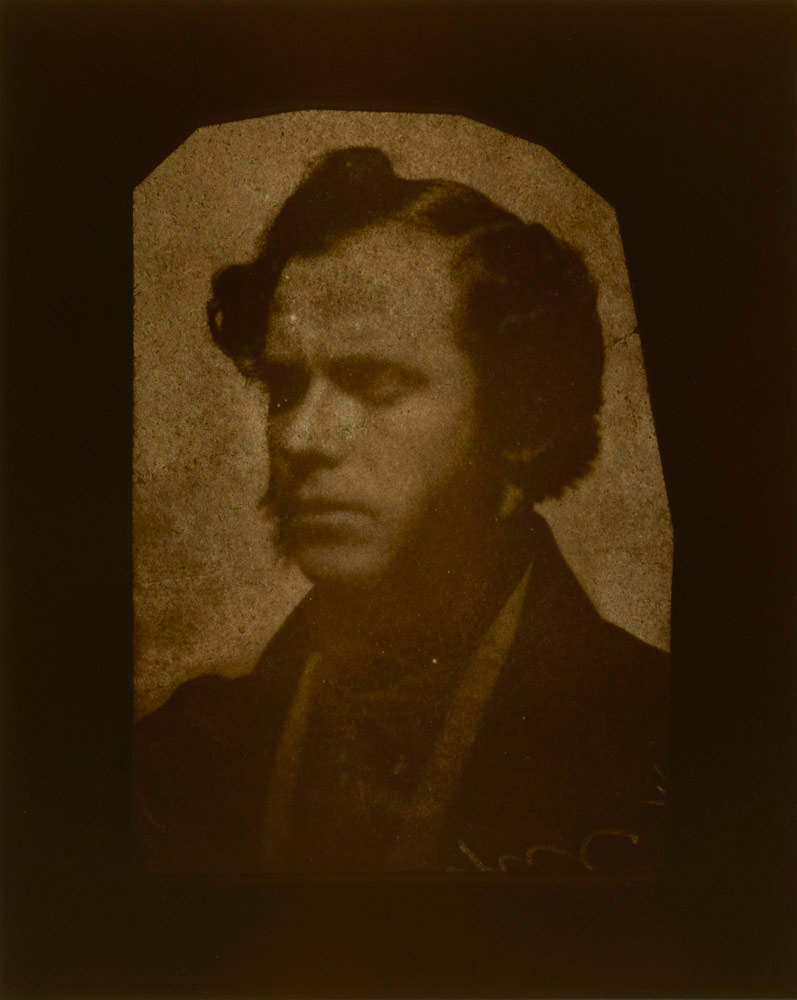
Calotype photographs from an album compiled by Dr John Adamson, among the earliest in Scotland
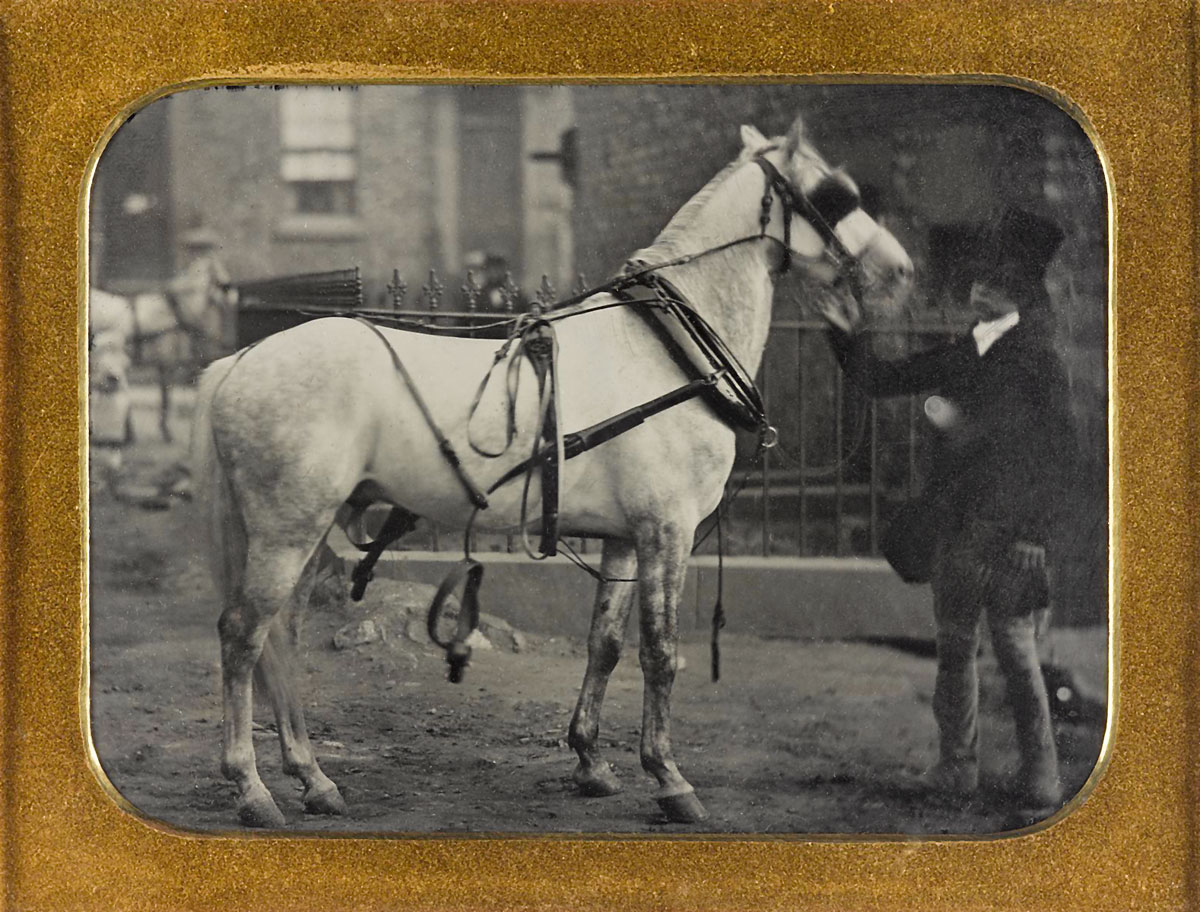
Photograph burnt in on glass, a group of workmen, Paris 1858
A major exhibition at the National Museum of Scotland explores the Victorian craze for photography and examine how it has influenced the way we capture and share images today, when more photographs are taken in two minutes than were taken in the whole of the 19th century. Photography: A Victorian Sensation takes visitors back to the very beginnings of photography in 1839, tracing its evolution from a scientific art practised by a few wealthy individuals to a widely available global phenomenon, practised on an industrial scale.
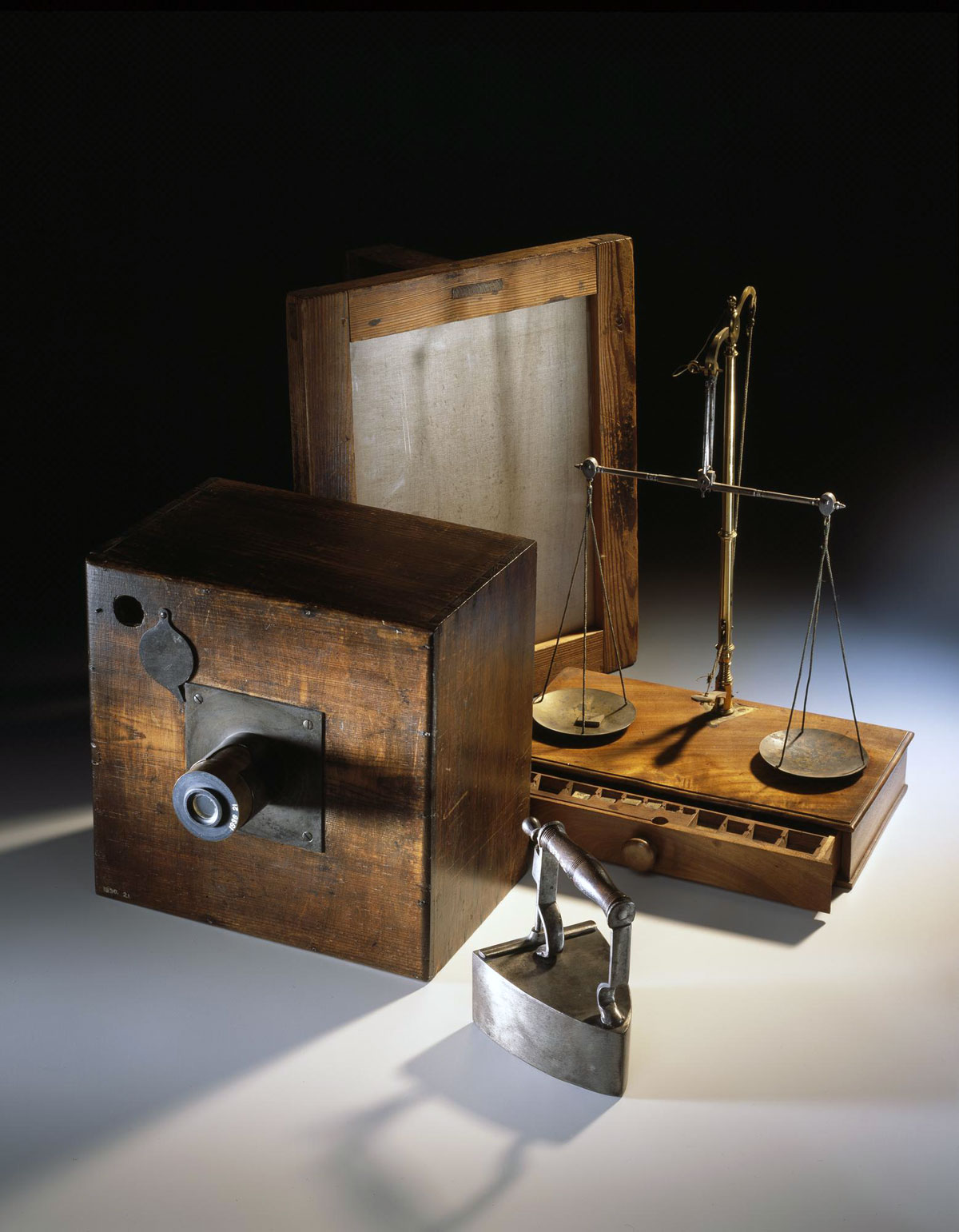
The exhibition showcases National Museums Scotland’s extensive early photographic collections, including Hill and Adamson’s iconic images of Victorian Edinburgh, and the Howarth-Loomes collection, much of which has never been publicly displayed. Highlights include an early daguerreotype camera once owned by William Henry Fox Talbot; an 1869 photograph of Alfred, Lord Tennyson by Julia Margaret Cameron; a carte-de-visite depicting Queen Victoria and Prince Albert as a middle-class couple and an early daguerreotype of the Niagara Falls. The exhibition covers the period from 1839 to 1900, by which point photography had permeated the whole of society, becoming a global sensation. Images and apparatus illustrate the changing techniques used by photographers and studios during the 19th century, and the ways in which photography became an increasingly accessible part of everyday life.
From the pin-sharp daguerreotype and the more textured calotype process of the early years, to the wet collodion method pioneered in 1851, photography developed as both a science and an art form. Visitors can follow the cross-channel competition between photographic trailblazers Louis Daguerre and William Henry Fox Talbot, enter the world of the 1851 Great Exhibition and snap their own pictures inside the photographer’s studio. They can also discover the fascinating stories of some of the people behind hundreds of Victorian photographs. These range from poignant mementos of loved ones to comical shots and early attempts at image manipulation. Photographs of family members were important mementos for Victorians and on display is jewellery incorporating both images of deceased loved ones and elaborately woven locks of their hair.
Sharing images of loved ones drove the craze for collecting cartes-de-visite. The average middle class Victorian home would have had an album full of images of friends and family members as well as never-before-seen famous faces ranging from royalty to well-known authors and infamous criminals. Such images sold in their hundreds of thousands. Also hugely popular were stereoscopes, relatively affordable devices which allowed people to view 3D photographs of scenes from around the world from the comfort of their own homes. On display are a range of ornate stereoscopes as well as early photographs showing views from countries ranging from Egypt to Australia. The increasing affordability of photographs fuelled the demand for the services of photographic studios, and visitors have the opportunity to get a taste of a Victorian studio by posing for their own pictures. They also have the chance to see typical objects from the photographer’s studio, including a cast iron head rest, used to keep subjects still for a sufficient period of time to capture their image.
Alison Morrison Low, Principal Curator of Science at National Museums Scotland commented: “Just as today we love to document the world around us photographically, so too were the Victorians obsessed with taking and sharing photographs. Photography: A Victorian Sensation will transport visitors back to the 19th century, linking the Victorian craze for photography with the role it plays in everyday life today. The period we’re examining may be beyond living memory, but the people featured in these early images are not so different from us.”
A book, Scottish Photography: The First 30 Years by Sara Stevenson and Alison Morrison-Low has been published by NMSEnterprises Publishing to accompany Photography: A Victorian Sensation.
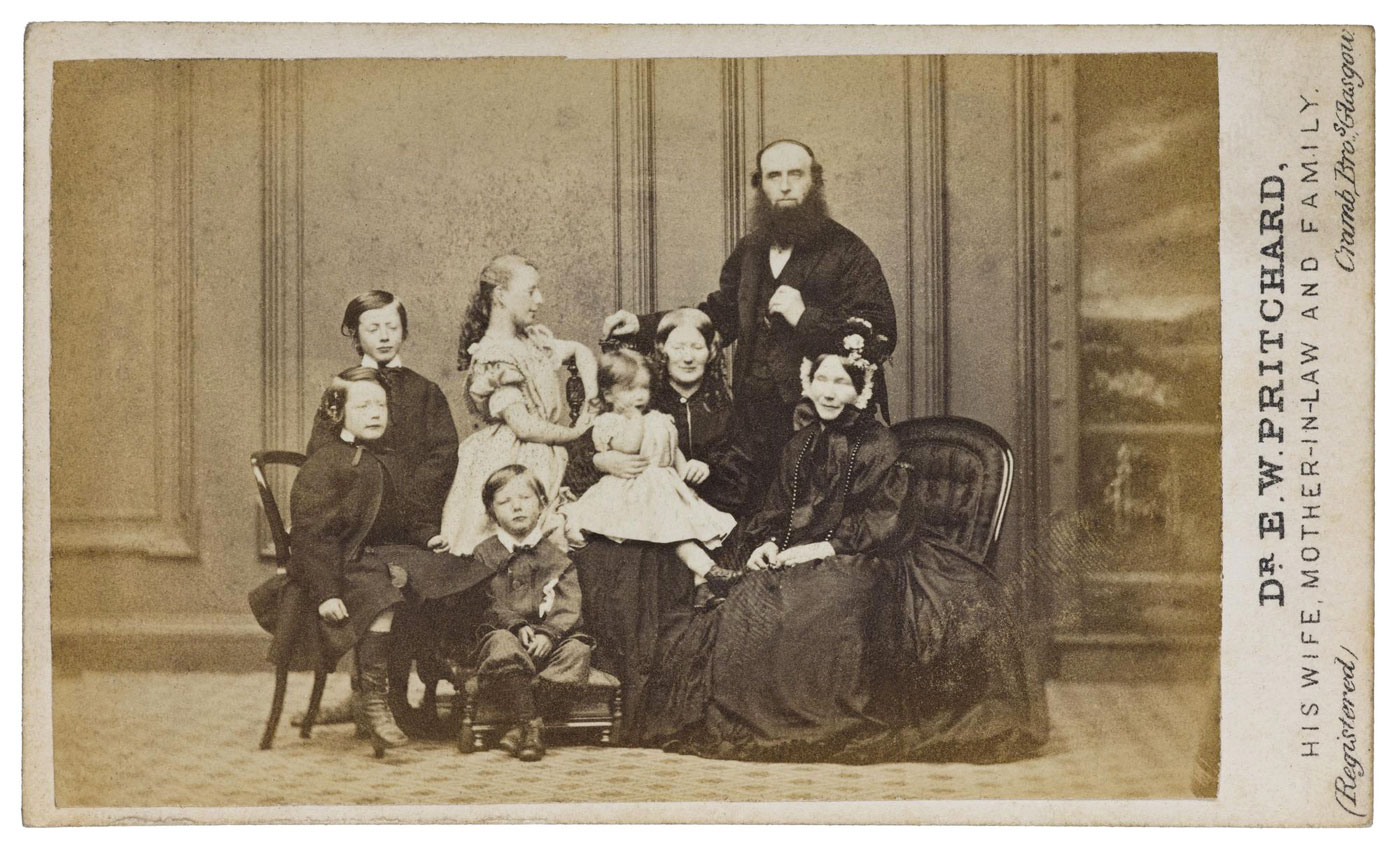
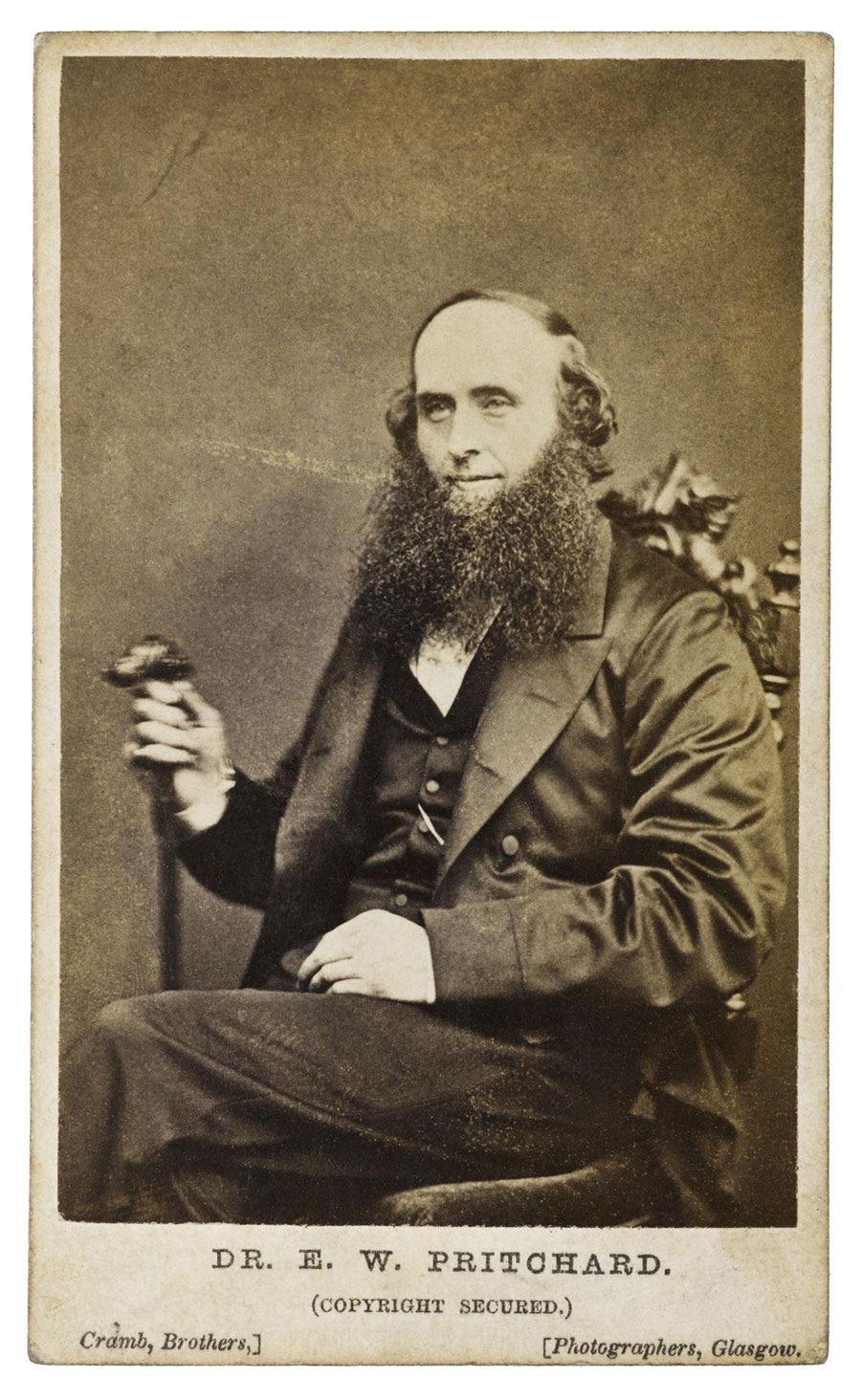
Edward William Pritchard (1825-1865) was notorious for poisoning with antimony his wife and mother-in-law, both seen in this family portrait in happier days. He was the last person to be publicly executed in Glasgow.
Cramb Brothers advertised this image, Price 1 shilling each. They stated: These Portraits are all Copyright, and bear the Publishers’ Names. Legal Proceedings will be taken against any one offering Pirated Copies for Sale.
Tennyson (1809-1892) became Poet Laureate in 1850, after the death of William Wordsworth; his poems In Memoriam (1850) and Idylls of the King (1859) were hugely popular during Victorian times, but less so today.
Curators: Carol Jacobi, Curator, British Art 1850-1915, Tate Britain, Simon Baker, Curator, Photography and International Art, Tate, and Hannah Lyons, Assistant Curator, 1850-1915, Tate
“Salt prints are the very first photographs on paper that still exist today. Made in the first twenty years of photography, they are the results of esoteric knowledge and skill. Individual, sometimes unpredictable, and ultimately magical, the chemical capacity to ‘fix a shadow’ on light sensitive paper, coated in silver salts, was believed to be a kind of alchemy, where nature drew its own picture.”
These salted paper prints, one of the earliest forms of photography, are astonishing. The delicacy and nuance of shade and feeling; possessing a soft, luxurious aesthetic that is astounding today… but just imagine looking at these images at the time they were taken. The shock, the recognition, the delight and the romance of seeing aspects of your life and the world around you, near and far, drawn in light – having a physical presence in the photographs before your eyes. The aura of the original, the photograph AS referent – unlike contemporary media saturated society where the image IS reality, endlessly repeated, divorced from the world in which we live.
The posting has taken a long time to put together, from researching the birth and death dates of the artists (not supplied), to finding illustrative texts and biographies of each artist (some translated from the French). But the real joy in assembling this posting is when I sequence the images. How much pleasure does it give to be able to sequence Auguste Salzmann’sTerra Cotta Statuettes from Camiros, Rhodes followed by three Newhaven fishermen rogues (you wouldn’t want to meet them on a dark night!), and then the totally different feel of Fenton’s Group of Croat Chiefs. Follow this up with one of the most stunning photographs of the posting, Roger Fenton’s portrait Captain Mottram Andrews, 28th Regiment (1st Staffordshire) Regiment of Foot of 1855 and you have a magnificent, almost revelatory, quaternity/eternity.
Dr Marcus Bunyan
Many thankx to Tate Britain for allowing me to publish the photographs in the posting. Please click on the photographs for a larger version of the image.
Calvert Jones (Welsh, December 4, 1804 – November 7, 1877) The Fruit Sellers c. 1843 Photograph, salted paper print from a paper negative
David Hill (Scottish, 1802-1870)and Robert Adamson (Scottish, 1821-1848) Five Newhaven fisherwomen c. 1844 Photograph, salted paper print from a paper negative
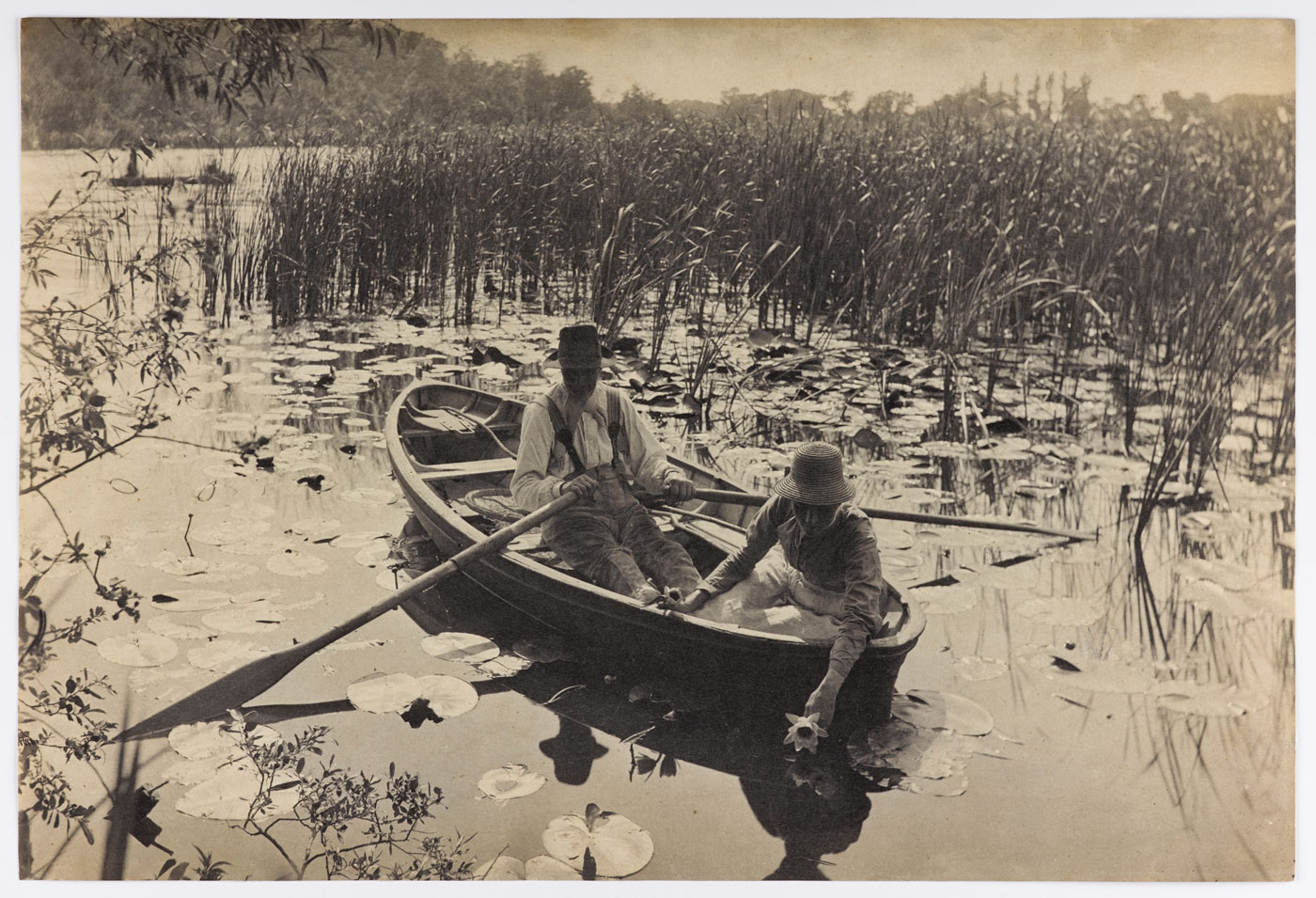
David Hill (Scottish, 1802-1870) and Robert Adamson (Scottish, 1821-1848) The Gowan [Margaret and Mary Cavendish] c. 1843-1844 Photograph, salted paper print from a paper negative
Salt and Silver: Early Photography 1840-1860 is the first major exhibition in Britain devoted to salt prints, the earliest form of paper photography. The exhibition features some of the rarest and best early photographs in the world, depicting daily activities and historic moments of the mid 19th century. The ninety photographs on display are among the few fragile salt prints that survive and are seldom shown in public. Salt and Silver: Early Photography 1840-1860 opens at Tate Britain on 25 February 2015.
In the 1840s and 50s, the salt print technique introduced a revolutionary new way of creating photographs on paper. It was invented in Britain and spread across the globe through the work of British and international photographers – artists, scientists, adventurers and entrepreneurs of their day. They captured historic moments and places with an immediacy not previously seen, from William Henry Fox Talbot’s images of a modern Paris street and Nelson’s Column under construction, to Linnaeus Tripe’s dramatic views of Puthu Mundapum, India and Auguste Salzmann’s uncanny studies of statues in Greece.
In portraiture, the faces of beloved children, celebrities, rich and poor were recorded as photographers sought to catch the human presence. Highlights include Fox Talbot’s shy and haunting photograph of his daughter Ela in 1842 to Nadar’s images of sophisticated Parisians and Roger Fenton’s shell-shocked soldiers in the Crimean war.
William Henry Fox Talbot unveiled this ground-breaking new process in 1839. He made the world’s first photographic prints by soaking paper in silver iodide salts to register a negative image which, when photographed again, created permanent paper positives. These hand-made photographs ranged in colour from sepia to violet, mulberry, terracotta, silver-grey, and charcoal-black and often had details drawn on like the swishing tail of a horse. Still lifes, portraits, landscapes and scenes of modern life were transformed into luxurious, soft, chiaroscuro images. The bold contrasts between light and dark in the images turned sooty shadows into solid shapes. Bold contrasts between light and dark turned shadows into abstract shapes and movement was often captured as a misty blur. The camera drew attention to previously overlooked details, such as the personal outline of trees and expressive textures of fabric.
In the exciting Victorian age of modern invention and innovation, the phenomenon of salt prints was quickly replaced by new photographic processes. The exhibition shows how, for a short but significant time, the British invention of salt prints swept the world and created a new visual experience.
Salt and Silver: Early Photography 1840 – 1860 is organised in collaboration with the Wilson Centre for photography. It is curated by Carol Jacobi, Curator, British Art 1850-1915, Tate Britain, Simon Baker, Curator, Photography and International Art, Tate, and Hannah Lyons, Assistant Curator, 1850-1915, Tate. ‘Salt and Silver’ – Early Photography 1840-1860 is published by Mack to coincide with the exhibition and will be accompanied by a programme of talks and events in the gallery.
Press release from the Tate website
William Henry Fox Talbot (British, 11 February 1800 – 17 September 1877) Scene in a Paris Street 1843 Photograph, salted paper print from a paper negative
By 1841, Talbot had dramatically reduced, from many minutes to just seconds, the exposure time needed to produce a negative, and on a trip to Paris to publicise his new calotype process he took a picture from his hotel room window, an instinctive piece of photojournalism. The buildings opposite are rendered in precise and exquisite detail, the black and white stripes of the shutters neat alternations of light and shade. In contrast to the solidity of the buildings are the carriages waiting on the street below; the wheels, immobile, are seen in perfect clarity, while the skittish horses are no more than ghostly blurs.
William Henry Fox Talbot (British, 11 February 1800 – 17 September 1877) Nelson’s Column Under Construction, Trafalgar Square 1844 Salted paper print from a glass plate negative
William Henry Fox Talbot (British, 11 February 1800 – 17 September 1877) Nelson’s Column Under Construction, Trafalgar Square 1844 Salted paper print from a glass plate negative
This is the first exhibition in Britain devoted to salted paper prints, one of the earliest forms of photography. A uniquely British invention, unveiled by William Henry Fox Talbot in 1839, salt prints spread across the globe, creating a new visual language of the modern moment. This revolutionary technique transformed subjects from still lifes, portraits, landscapes and scenes of daily life into images with their own specific aesthetic: a soft, luxurious effect particular to this photographic process. The few salt prints that survive are seldom seen due to their fragility, and so this exhibition, a collaboration with the Wilson Centre for Photography, is a singular opportunity to see the rarest and best early photographs of this type in the world.
“The technique went as follows: coat paper with a silver nitrate solution and expose it to light, thus producing a faint silver image. He later realised if you apply salt to the paper first and then spread on the silver nitrate solution the resulting image is much sharper. His resulting photos, ranging in colour from sepia to violet, mulberry, terracotta, silver-grey, and charcoal-black, were shadowy and soft, yet able to pick up on details that previously went overlooked – details like the texture of a horse’s fur, or the delicate silhouette of a tree.”
Priscilla Frank. “The First Paper Photographs Were Made With Salt, And They Look Like This,” on the Huffington Post website 03/06/2015 [Online] Cited 03/06/2015. Used under fair use conditions for the purposes of education and research
William Henry Fox Talbot (British, 11 February 1800 – 17 September 1877) Cloisters, Lacock Abbey 1843
William Henry Fox Talbot (11 February 1800 – 17 September 1877)
William Henry Fox Talbot (11 February 1800 – 17 September 1877) was a British scientist, inventor and photography pioneer who invented the salted paper and calotype processes, precursors to photographic processes of the later 19th and 20th centuries. Talbot was also a noted photographer who made major contributions to the development of photography as an artistic medium. He published The Pencil of Nature (1844), which was illustrated with original prints from some of his calotype negatives. His work in the 1840s on photo-mechanical reproduction led to the creation of the photoglyphic engraving process, the precursor to photogravure. Talbot is also remembered as the holder of a patent which, some say, affected the early development of commercial photography in Britain. Additionally, he made some important early photographs of Oxford, Paris, Reading, and York.
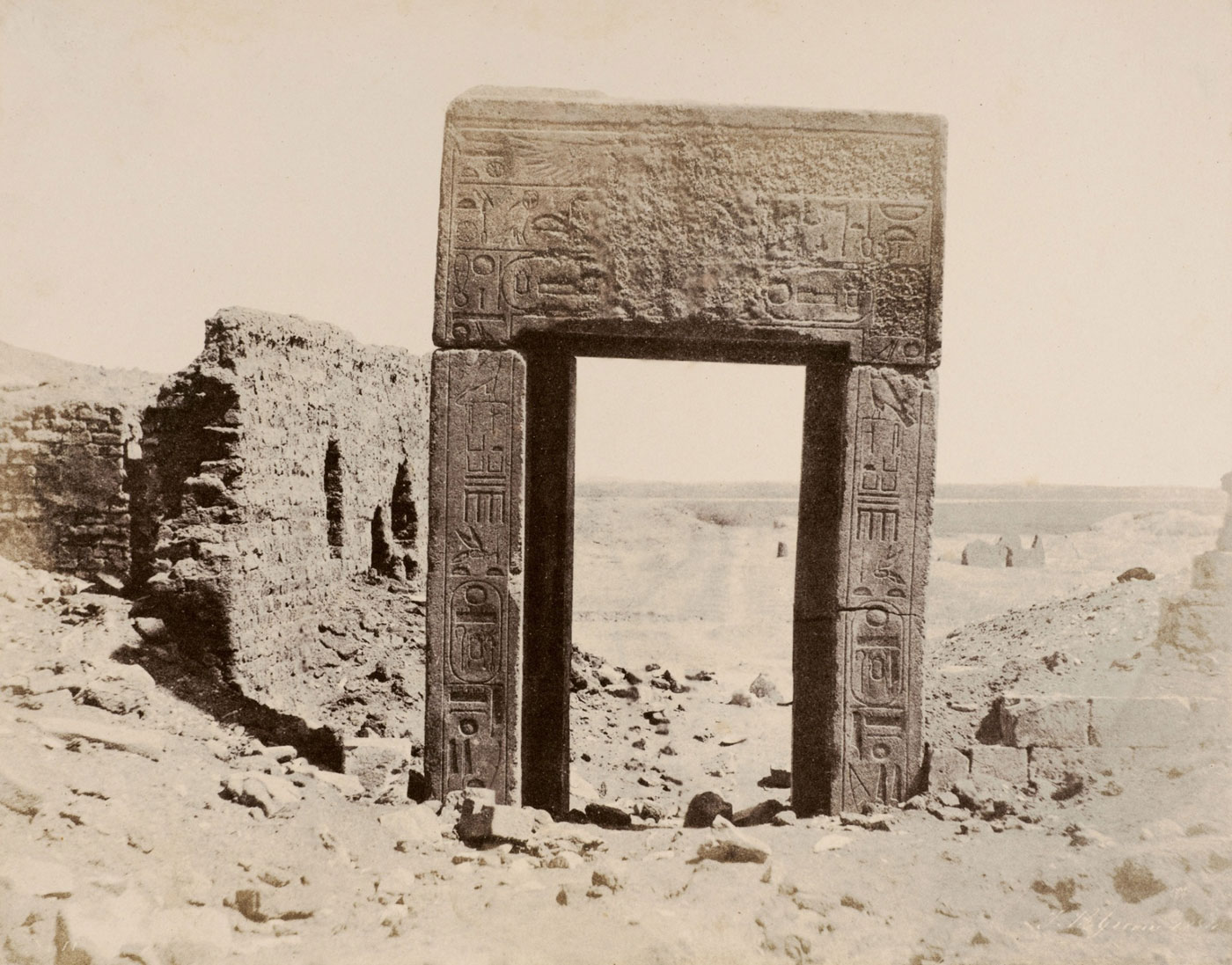
John Beasly Greene (French-American, 1832-1856) El Assasif, Porte de Granit Rose, No 2, Thébes 1854 Salted paper print from a waxed plate negative
John Beasly Greene (French-American, 1832-1856)
A French-born archeologist based in Paris and a student of photographer Gustave Le Gray, John Beasly Greene became a founding member of the Société Française de Photographie and belonged to two societies devoted to Eastern studies. Greene became the first practicing archaeologist to use photography, although he was careful to keep separate files for his documentary images and his more artistic landscapes.
In 1853 at the age of nineteen, Greene embarked on an expedition to Egypt and Nubia to photograph the land and document the monuments and their inscriptions. Upon his return, Louis Désiré Blanquart-Evrard published an album of ninety-four of these photographs. Greene returned to Egypt the following year to photograph and to excavate at Medinet-Habu in Upper Egypt, the site of the mortuary temple built by Ramses III. In 1855 he published his photographs of the excavation there. The following year, Greene died in Egypt, perhaps of tuberculosis, and his negatives were given to his friend, fellow Egyptologist and photographer Théodule Devéria.
James Robertson (British, 1813-1888) and Felice Beato (Italian-British, 1832 – 29 January 1909) Pyramids at Giza 1857 Photograph, salted paper print from a glass plate negative
James Robertson (British, 1813-1888)
James Robertson (1813-1888) was an English photographer and gem and coin engraver who worked in the Mediterranean region, the Crimea and possibly India. He was one of the first war photographers.
Robertson was born in Middlesex in 1813. He trained as an engraver under Wyon (probably William Wyon) and in 1843 he began work as an “engraver and die-stamper” at the Imperial Ottoman Mint in Constantinople. It is believed that Robertson became interested in photography while in the Ottoman Empire in the 1840s.
In 1853 he began photographing with British photographer Felice Beato and the two formed a partnership called Robertson & Beato either in that year or in 1854 when Robertson opened a photographic studio in Pera, Constantinople. Robertson and Beato were joined by Beato’s brother, Antonio on photographic expeditions to Malta in 1854 or 1856 and to Greece and Jerusalem in 1857. A number of the firm’s photographs produced in the 1850s are signed Robertson, Beato and Co. and it is believed that “and Co.” refers to Antonio.
In late 1854 or early 1855 Robertson married the Beato brothers’ sister, Leonilda Maria Matilda Beato. They had three daughters, Catherine Grace (born in 1856), Edith Marcon Vergence (born in 1859) and Helen Beatruc (born in 1861). In 1855 Robertson and Felice Beato travelled to Balaklava, Crimea where they took over reportage of the Crimean War from Roger Fenton. They photographed the fall of Sevastopol in September 1855. Some sources have suggested that in 1857 both Robertson and Felice Beato went to India to photograph the aftermath of the Indian Rebellion, but it is more probable that Beato travelled there alone. Around this time Robertson did photograph in Palestine, Syria, Malta, and Cairo with either or both of the Beato brothers.
In 1860, after Felice Beato left for China to photograph the Second Opium War and Antonio Beato went to Egypt, Robertson briefly teamed up with Charles Shepherd back in Constantinople. The firm of Robertson & Beato was dissolved in 1867, having produced images – including remarkable multiple-print panoramas – of Malta, Greece, Turkey, Damascus, Jerusalem, Egypt, the Crimea and India. Robertson possibly gave up photography in the 1860s; he returned to work as an engraver at the Imperial Ottoman Mint until his retirement in 1881. In that year he left for Yokohama, Japan, arriving in January 1882. He died there in April 1888.
James Robertson (British, 1813-1888) Base of the Obelisk of Theodosius, Constantinople 1855 Salted paper print from a glass plate negative
Exhibition of intriguing images that charts the birth of photography
Another week, another photography show about death. It’s not officially about death, mind you; it’s officially about the years 1840 to 1860, when photographers made their images on paper sensitised with silver salts. The process was quickly superseded, but the pictures created this way have a beautiful artistic softness and subtlety of tone, quite apart from the fact that every single new photograph that succeeded represented a huge leap forward in the development of the medium. You see these early practitioners start to grasp the scope of what might be possible. Their subjects change, from ivy-covered walls and carefully posed family groups to more exotic landscapes and subjects: Egypt, India, the poor, war.
By the time you get to Roger Fenton’s portrait Captain Lord Balgonie, Grenadier Guards of 1855 you have an inkling of how photography is changing how we understand life, for ever. Balgonie is 23. He looks 50. His face is harrowed by his service in the Crimean War, his eyes bagged with fatigue, fear and what the future may hold. He survived the conflict, but was broken by it, dying at home two years after this picture was taken. That is yet to come: for now, he is alive.
This sense of destiny bound within a picture created in a moment is what is new about photography, and you start to see it everywhere, not just in the images of war. It’s in William Henry Fox Talbot’s The Great Elm at Lacock: a huge tree against a mottled sky, battered by storms. It’s in John Beasly Greene’s near-abstract images of Egyptian statuary, chipped, cracked, alien. And it’s in the portraits of Newhaven fisherwomen by DO Hill and Robert Adamson (their cry was ‘It’s not fish, it’s men’s lives’). In a world where death is always imminent, photography arrives as the perfect way to preserve life, and the perfect way to leave your mark, however fleeting.
Chris Waywell. “Salt and Silver: Early Photography 1840-1860,” on the Time Out London website 22 July 2015 [Online] Cited 18/12/2022. Used under fair use conditions for the purposes of education and research
Eugène Piot was a French journalist, art critic, art collector and photographer. His pen name was Nemo. Piot was born in Paris.
Paul Marés (French) Ox cart in Brittany c. 1857 Photograph, salted paper print from a paper negative
One of the most beautiful photographs in this exhibition is Paul Marès Ox Cart, Brittany, c. 1857. At first it seems a picturesque scene of bucolic tranquillity, the abandoned cart an exquisite study in light and tone. But on the cottage wall are painted two white crosses, a warning – apparently even as recently as the 19th century – to passers-by that the household was afflicted by some deadly disease. Photography’s ability to indiscriminately aestheticise is a dilemma that has continued to present itself ever since, especially in the fields of reportage and war photography.
Around 1850 Frénet meets in Lyon personalities involved in the nascent photography, and he has to discover this technique to reproduce the frescoes he painted in Ainay. Curious, he is passionate about this new medium that offers him a respite space in the setbacks he suffers with his painting.
Frénet applies the stereotyped views taken of the time involving heavy stagings and is one of the first to practice the instant, the familiar and intimate subject. Five years before Nadar he produces psychological portraits and engages in close-up. He sees photography as an art, the opinion which has emerged in the first issue of the magazine La Lumière (The Light), text of the young and ephemeral gravure company founded in 1851. Frénet open a professional practice photography in 1866 and 1867 in Lyon. Unknown to the general public, his photographic work was discovered in 2000 at the sale of his photographic collection, many parts were purchased by the Musée d’Orsay.
In June 1856, in the midst of his work at the Louvre, Baldus set out on a brief assignment, equally without precedent in photography, that was in many ways its opposite: to photograph the destruction caused by torrential rains and overflowing rivers in Lyon, Avignon, and Tarascon. From a world of magnificent man-made construction, he set out for territory devastated by natural disaster; from the task of re-creating the whole of a building in a catalogue of its thousand parts, he turned to the challenge of evoking a thousand individual stories in a handful of transcendent images. Baldus created a moving record of the flood without explicitly depicting the human suffering left in its wake. The “poor people, tears in their eyes, scavenging to find the objects most indispensable to their daily needs,” described by the local Courier de Lyon, are all but absent from his photographs of the hard-hit Brotteaux quarter of Lyon, as if the destruction had been of biblical proportions, leaving behind only remnants of a destroyed civilization.
Malcolm Daniel. “Édouard Baldus (1813-1889),” in Heilbrunn Timeline of Art History. New York: The Metropolitan Museum of Art, 2000 [Online] Cited 16/12/2022. Used under fair use conditions for the purposes of education and research
Auguste Salzmann (French, 1824-1872) painter, photographer and archaeologist who pioneered the use of photography in the recording of historic sites. He excavated archaeological material in Rhodes in collaboration with Alfred Biliotti.
Roger Fenton (British, 28 March 1819 – 8 August 1869) Cossack Bay, Balaclava 1855
It is likely that in autumn 1854, as the Crimean War grabbed the attention of the British public, that some powerful friends and patrons – among them Prince Albert and Duke of Newcastle, secretary of state for war – urged Fenton to go the Crimea to record the happenings. He set off aboard HMS Hecla in February, landed at Balaklava on 8 March and remained there until 22 June. The resulting photographs may have been intended to offset the general unpopularity of the war among the British people, and to counteract the occasionally critical reporting of correspondent William Howard Russell of The Times.The photographs were to be converted into woodblocks and published in the less critical Illustrated London News. Fenton took Marcus Sparling as his photographic assistant, a servant known as William and a large horse-drawn van of equipment…
Despite summer high temperatures, breaking several ribs in a fall, suffering from cholera and also becoming depressed at the carnage he witnessed at Sebastopol, in all Fenton managed to make over 350 usable large format negatives. An exhibition of 312 prints was soon on show in London and at various places across the nation in the months that followed. Fenton also showed them to Queen Victoria and Prince Albert and also to Emperor Napoleon III in Paris. Nevertheless, sales were not as good as expected.
A woman who carries a canteen for soldiers; a vivandière.
Roger Fenton (British, 28 March 1819 – 8 August 1869) Captain Lord Balgonie, Grenadier Guards 1855 Photograph, salted paper print from a paper negative
Roger Fenton (British, 28 March 1819 – 8 August 1869) Captain Lord Balgonie, Grenadier Guards 1855 Photograph, salted paper print from a paper negative
If I had to choose a figure it would be the Franco-American, archaeological photographer John Beasly Greene. His career was short and dangerous, he died at 24, but he challenged the trend towards clarity that dominated his field. Instead, he used the limits of the medium – burn-out, shadow, halation and the beautiful grainy texture of the print itself – to explore the poetic ambiguity of Egyptian sites.
This revolutionary photographic process transformed subjects, still lifes, portraits, landscapes and scenes of daily life into images. It brings it’s own luxurious aesthetic, soft textures, matt appearance and deep rich red tones, the variations seen throughout this exhibition is fascinating to observe. It’s also an incredible opportunity to view the original prints in an exhibition format, which has never been done before on a scale like this before.
The process starts with dipping writing paper in a solution of common salt, then partly drying it, coating it with silver nitrate, then drying it again, before applying further coats of silver nitrate, William Henry Fox Talbot pioneered what became known as the salt print and the world’s first photographic print! The specifically soft and luxurious aesthetic became an icon of modern visual language.
The few salt prints that survive are rarely seen due to their fragility. This exhibition is extremely important to recognise this historical process as well as a fantastic opportunity to see the rarest and best up close of early photographs of this type in the world.
Anon. “Salt and Silver: Early Photography 1840-1860,” on the Films not dead website [Online] Cited 03/06/2015. No longer available online. Used under fair use conditions for the purposes of education and research
Tournachon’s nickname, Nadar, derived from youthful slang, but became his professional signature and the name by which he is best known today. Poor but talented, Nadar began by scratching out a living as a freelance writer and caricaturist. His writings and illustrations made him famous before he began to photograph. His keenly honed camera eye came from his successful career as a satirical cartoonist, in which the identifying characteristic of a subject was reduced to a single distinct facet; that skill proved effective in capturing the personality of his photographic subjects.
Nadar opened his first photography studio in 1854, but he only practiced for six years. He focused on the psychological elements of photography, aiming to reveal the moral personalities of his sitters rather than make attractive portraits. Bust- or half-length poses, solid backdrops, dramatic lighting, fine sculpturing, and concentration on the face were trademarks of his studio. His use of eight-by-ten-inch glass-plate negatives, which were significantly larger than the popular sizes of daguerreotypes, accentuated those effects.
At one point, a commentator said, “[a]ll the outstanding figures of [the] era – literary, artistic, dramatic, political, intellectual – have filed through his studio.” In most instances these subjects were Nadar’s friends and acquaintances. His curiosity led him beyond the studio into such uncharted locales as the catacombs, which he was one of the first persons to photograph using artificial light.
Lodoisch Crette Romet (1823-1872) A Lesson of Gustave Le Gray in His Studio [Antoine-Emile Plassan] 1850-1853 24.2 x 17.7cm Photograph, salted paper print from a paper negative
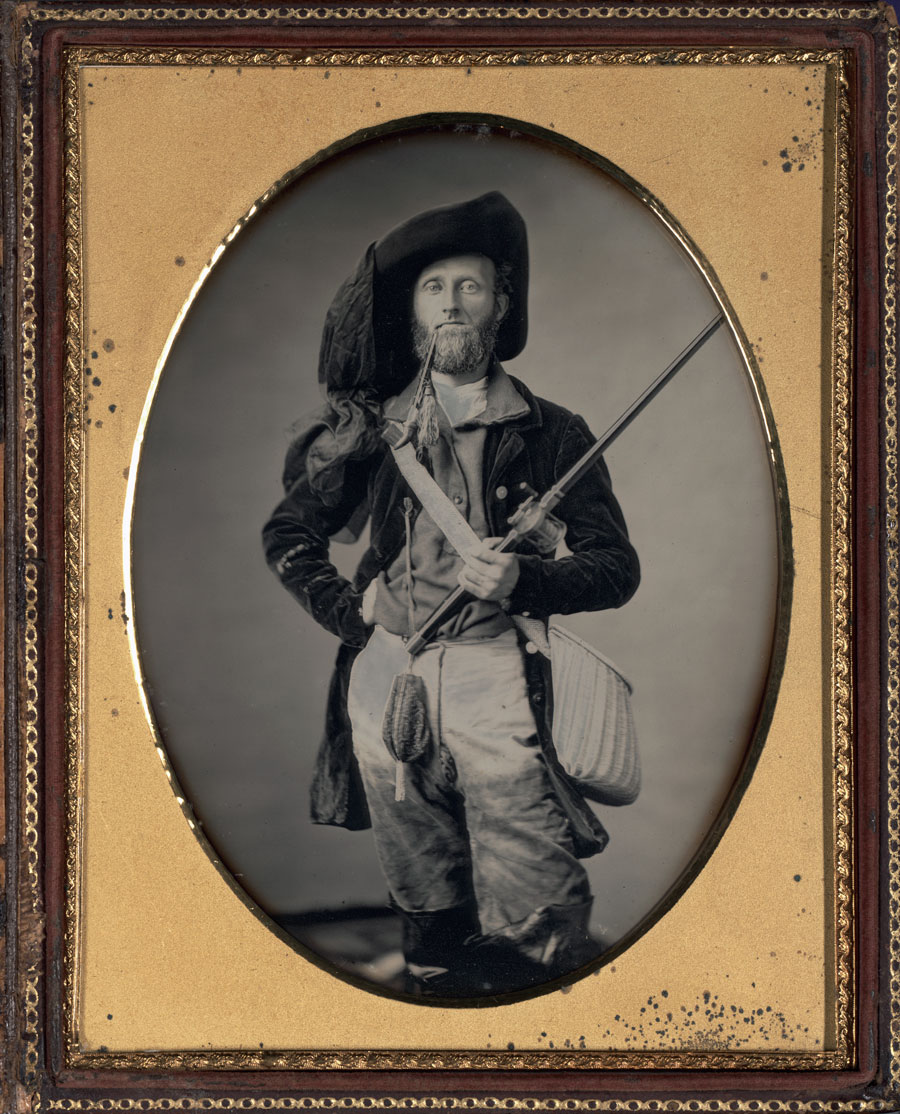
John S. Johnston (American, c. 1839 – December 17, 1899) One of Dr Kane’s Men [possibly William Morton] c. 1857
John S. Johnston was a late 19th-century maritime and landscape photographer. He is known for his photographs of racing yachts and New York City landmarks and cityscapes. Very little is known about his life. He was evidently born in Britain in the late 1830s, and was active in the New York City area in the late 1880s and 1890s. He died in 1899.
William Morton
“Belief in the Open Polar Sea theory subsided until the mid-1800s, when Elisha Kent Kane set forth on a number of expeditions north with hopes of finding this theorised body of water. On an 1850s expedition organised by Kane, explorer William Morton, believing he discovered the Open Polar Sea, described a body of water containing…
“Not a speck of ice… As far as I could discern, the sea was open… The wind was due N(orth) – enough to make white caps, and the surf broke in on the rocks in regular breakers.”
Morton, however, did not find the Open Polar Sea – he found a small oasis of water. Morton’s quote is likely tinged with a desire to raise the spirits of his boss, Kane, who saw the Polar Sea as a possible utopia, an area brimming with life amidst a harsh arctic world.”
Keith Veronese. “The Open Polar Sea, a balmy aquatic Eden at the North Pole?” on the Gizmodo website 4/20/12 [Online] Cited 03/06/2015. Used under fair use conditions for the purposes of education and research
David Hill (Scottish, 1802-1870)and Robert Adamson (Scottish, 1821-1848) Thought to be Elizabeth Rigby c. 1844 Photograph, salted paper print from a paper negative
Jean-Baptiste Frénet (French – Lyon, 31 January 1814 – Charly, 12 August 1889) Thought to be a Mother and Son c. 1855 Photograph, salted paper print from a collodion negative transferred from glass to paper support
William Henry Fox Talbot (British, 11 February 1800 – 17 September 1877) The Photographer’s Daughter, Ela Theresa Talbot 1843-1844
Roger Fenton (British, 28 March 1819 – 8 August 1869) Portrait of a Woman c. 1854 Photograph, salted paper print from a glass plate negative
John Wheeley Gough Gutch (1809-1862) was a British surgeon and editor. He was also a keen amateur naturalist and geologist, and a pioneer photographer.
In 1851, Dr. Gutch gave up his medical practice to become a messenger for Queen Victoria, and he began photographing the many cities he visited on his diplomatic missions. During a trip to Constantinople, he became seriously ill, resulting in permanent partial paralysis that ended his public service career. While undergoing experimental treatments in Malvern, England, Dr. Gutch again turned to photography as a cure for his melancholy. His works were exhibited throughout London and Edinburgh from 1856-1861, and he became a frequent contributor to the Photographic Notes publication. Dr. Gutch’s camera of choice was Frederick Scott Archer’s wet-plate camera because he liked the convenience of developing glass negatives within the camera, which eliminated the need for a darkroom. However, the camera proved too cumbersome for him to handle, and had to be manipulated by one of his photographic assistants. His photographs were printed on salt-treated paper and were placed into albums he painstakingly decorated with photographic collages.
Dr. Gutch’s “picturesque” photographic style was influenced by artist William Gilpin. Unlike his mid-nineteenth century British contemporaries who recorded urban expansion, he preferred focusing on ancient buildings, rock formations, archaeological ruins, and tree-lined streams. In 1857, an assignment for Photographic Notes took him to Scotland, northern Wales, and the English Lake District, where he photographed the lush settings, but not always to his satisfaction. Two years’ later, he aspired to photograph and document the more than 500 churches in Gloucestershire, a daunting and quite expensive task. He fitted his camera with a Ross Petzval wide-angle lens and managed to photograph more than 200 churches before illness forced him to abandon the ambitious project. Fifty-three-year-old John Wheeley Gough Gutch died in London on April 30, 1862.
Anonymous text. “John Wheeley Gough Gutch,” on the Historic Camera website Nd [Online] Cited 03/06/2015. Used under fair use conditions for the purposes of education and research
Exhibition dates: 23rd January – 4th September, 2015
*PLEASE NOTE THIS POSTING CONTAINS ART PHOTOGRAPHS OF HUMAN EROTIC ACTIVITY AND NUDITY – IF YOU DO NOT LIKE PLEASE DO NOT LOOK, FAIR WARNING HAS BEEN GIVEN*
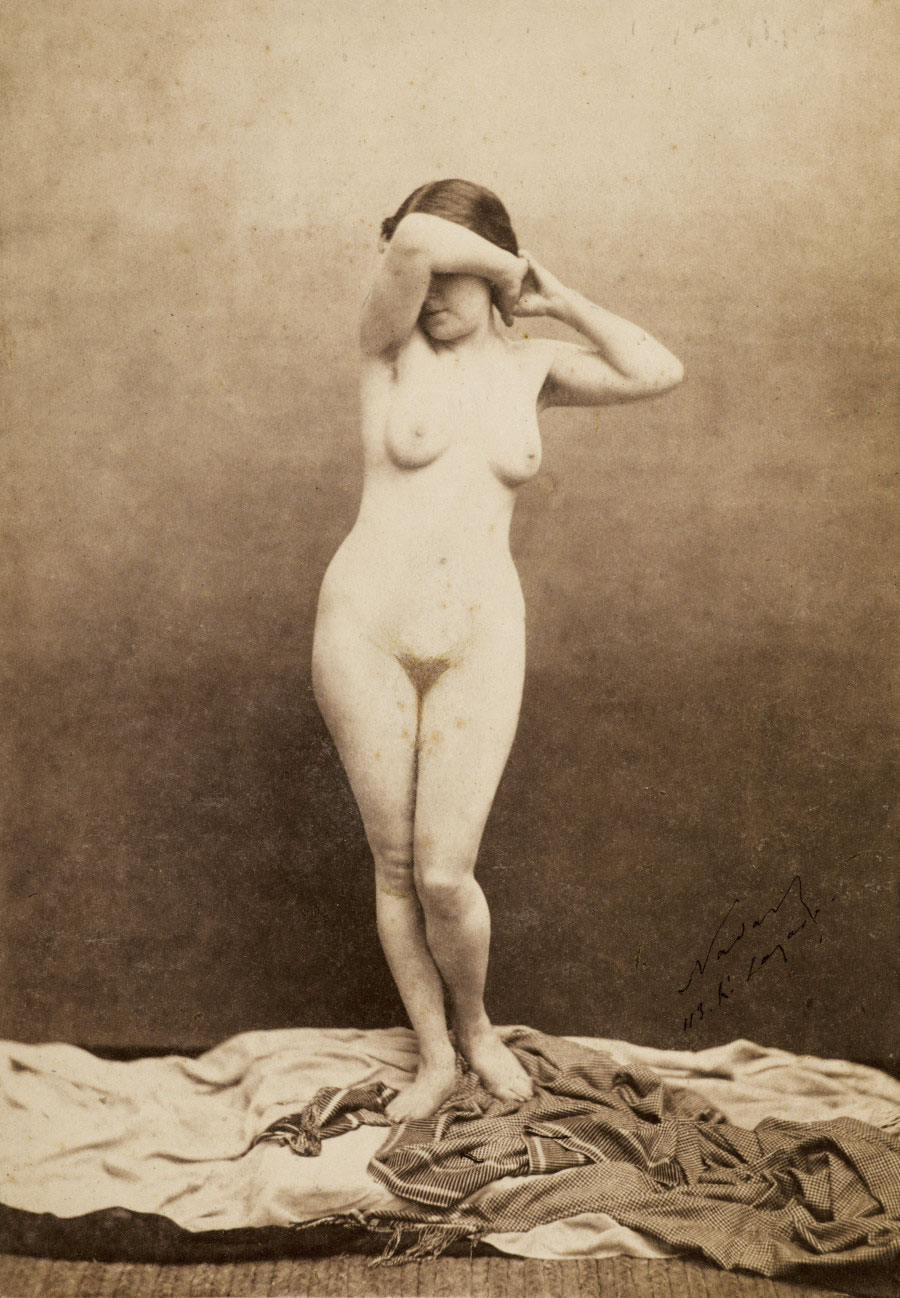
Unknown photographer Female nude 1850s Daguerreotype in case
Part 2 of this special posting of photographs from the Kinsey Institute for Research in Sex, Gender, and Reproduction.
I especially like the allusion to Romanticism and class in Bijoux 118 (catalog card) (below) through the picture on the wall behind the copulating couple; and the allusion to the landscape and the sublime in Man performing analinctus on another man (1885-1900, below) through the painted studio backdrop. The sheer pleasure on the faces of some of the people in these photographs, such as in Clothed man kneeling behind a nude woman (1884-1886, below) is a joy to behold.
Many thankx for the Kinsey Institute for allowing me to publish the photographs in the posting. Please click on the photographs for a larger version of the image.
The Kinsey Institute research collection contains thousands of examples of erotic imagery produced over centuries by artists around the world. When the new technology of photography was announced in France in 1839, it was not long before it became the most popular medium for depictions of the nude figure, as well as erotic imagery. The first photographic process to be widely used was the daguerreotype, which produced a unique image. With the invention of other processes that used negatives to make multiple prints, the mass production of erotic photographs became possible. Hold That Pose features daguerreotypes, tintypes, albumen and gelatin silver prints, stereocards, and other examples of photographic processes that were used by professional photographers in the 19th century to produce and distribute erotic material.
W.H. Gilbert Tate (London, England) Portrait of an actress c. 1870 Albumen print (carte de visite)
Cartes de visite and cabinet cards
Mass produced on cheap paper or cardstock, actress cards served as cartes de visite – photographic cards left as messages – and as collectible portraits of popular stars of the theatre in London and Paris. One could purchase larger photographs, known as cabinet cards, from the photography studio or the pocket-sized cartes de visite. In an era when women were expected to stay at home, living quiet lives as wives and mothers, actresses were seen as having turned their backs on their ‘God given duty’ to be devoted homemakers. Though looked down upon socially, some actresses achieved fame and notoriety, through their work on stage as well as their lives outside the theatre.
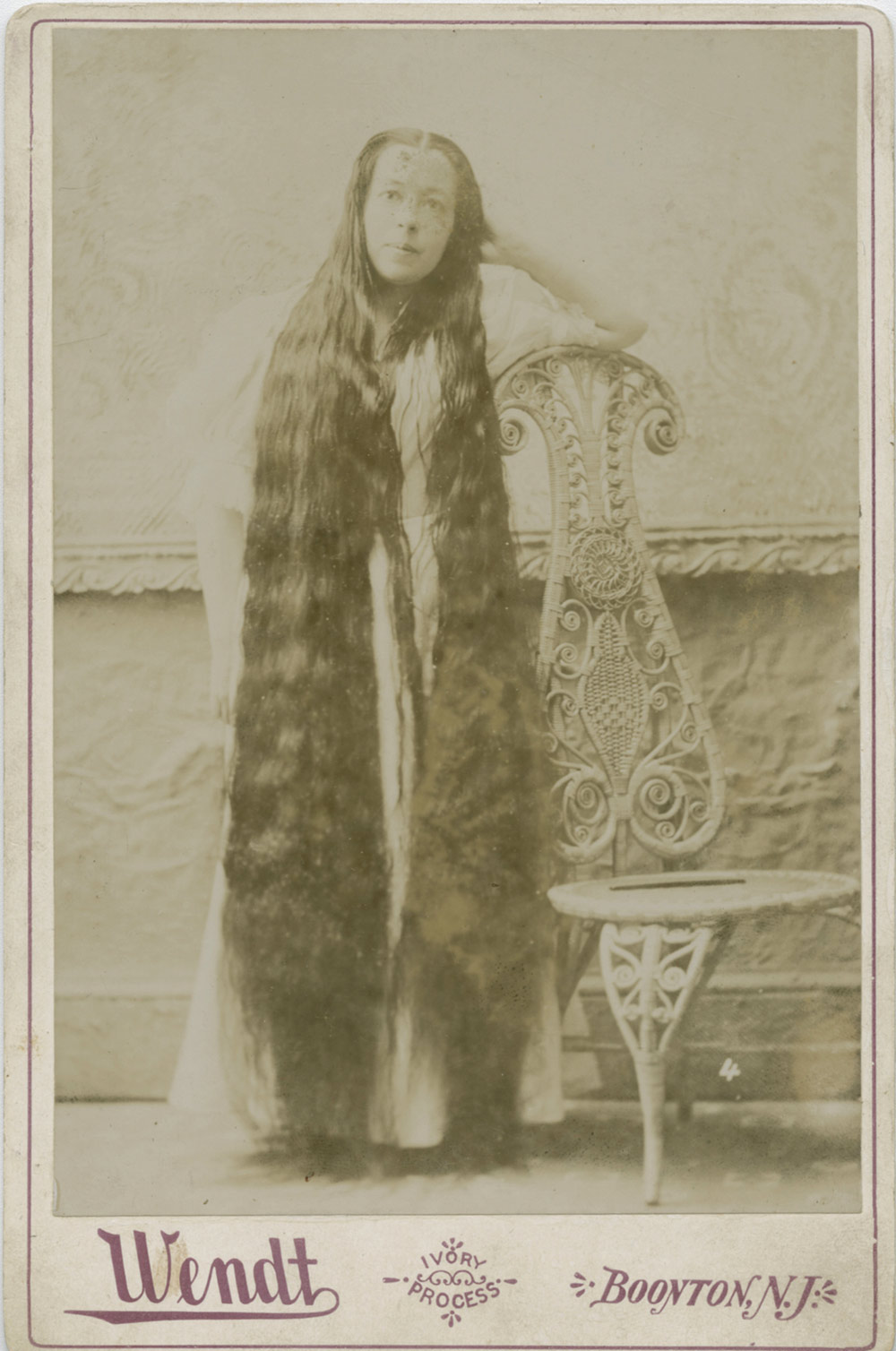
Wendt Studio (New Jersey, United States) Helen Mathews, Length of hair 6 feet 4 inches 19th century Albumen print mounted on cabinet card
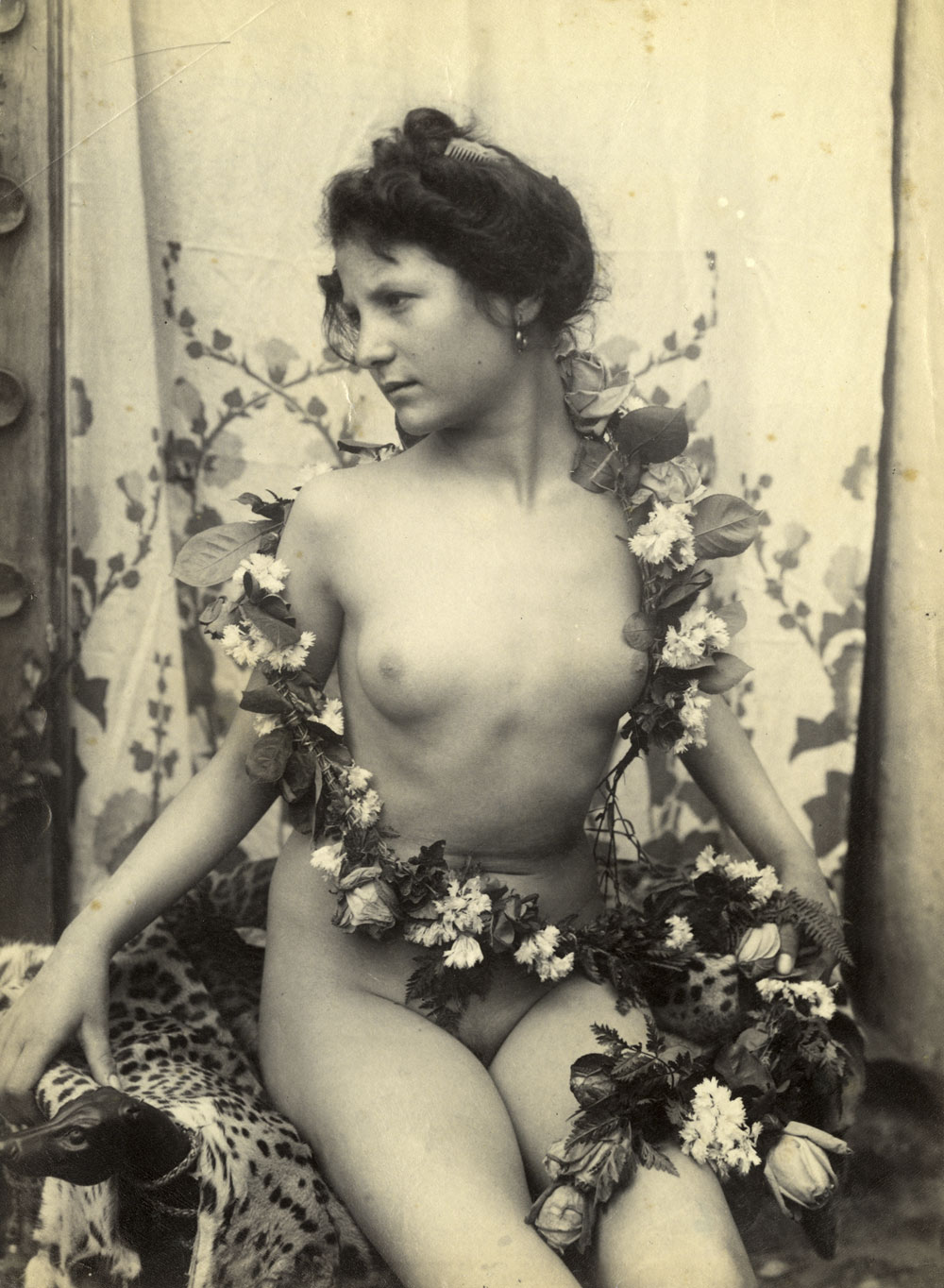
Guglielmo Plüschow (Wilhelm von Plüschow, Germany 1852-1930) Female nude Italy, c. 1890 Albumen print
Exhibition dates: 23rd January – 4th September, 2015
*PLEASE NOTE THIS POSTING CONTAINS ART PHOTOGRAPHS OF HUMAN EROTIC ACTIVITY AND NUDITY – IF YOU DO NOT LIKE PLEASE DO NOT LOOK, FAIR WARNING HAS BEEN GIVEN*
Gallery wall of the exhibition Hold That Pose at the Kinsey Institute
A first for Art Blart – photographs from the world famous Kinsey Institute for Research in Sex, Gender, and Reproduction!
After visiting the Kinsey Institute as part of my PhD in 2001 I was not allowed to publish any photographs from the collection for my research, which was a pity. Things have changed over the last decade and a half I am happy to say. As I observed in an email to Catherine Johnson-Roehr, Curator of Art, Artifacts, and Photographs recently, I understood that they had to be more sensitive than most institutions, especially with some of the material they hold in their collection. In reply, Catherine noted that while the Kinsey still had to be careful with the use of their materials especially when they are made public online, things had improved in the last 15 years. “Although we have collected artworks since the 1940s, we did not exhibit any of the materials until the 1990s and then on a very limited basis until 2002. When I arrived here in 2000, we had only a few tame images on our website, but now we have online galleries for some of our exhibitions (including all the juried art shows).”
Therefore, after some negotiation for online release, it is with great pleasure that I can feature 40 images in this two-part posting. Nobody should be offended by these glorious, historic photographs of the human body and a human action that everyone does, and it is fantastic to see the Kinsey opening up their collection to the world. We must oppose bigoted views such as that of Nazi Germany where they destroyed the library of the Institut für Sexualwissenschaft (Institute for Sexology) headed by Magnus Hirschfeld, in 1933… by making these images visible in the world, not hiding them away behind closed doors. These are joyous photographs of the male and female body, a body in which every one of us lives, desires, and enjoys pleasure.
Many thankx for the Kinsey Institute for allowing me to publish the photographs in the posting. Please click on the photographs for a larger version of the image.
The Kinsey Institute research collection contains thousands of examples of erotic imagery produced over centuries by artists around the world. When the new technology of photography was announced in France in 1839, it was not long before it became the most popular medium for depictions of the nude figure, as well as erotic imagery. The first photographic process to be widely used was the daguerreotype, which produced a unique image. With the invention of other processes that used negatives to make multiple prints, the mass production of erotic photographs became possible. Hold That Pose features daguerreotypes, tintypes, albumen and gelatin silver prints, stereocards, and other examples of photographic processes that were used by professional photographers in the 19th century to produce and distribute erotic material.
Photo process display case from the exhibition Hold That Pose at the Kinsey Institute
Stanhopes on display from the exhibition Hold That Pose at the Kinsey Institute
Unknown photographers Stanhope lenses and holders 19th or early 20th century
Unknown photographer Stanhope lens and holder (detail) 19th or early 20th century
Stanhope lenses and holders 19th or early 20th century
Stanhopes derive their name from Lord Stanhope, who created the tiny rod-shaped lens before the invention of photography. In 1859, an entrepreneurial French inventor named René Prudent Patrice Dagron patented a process for making “cylindres photomicroscopiques”, and then created a successful business selling them as inexpensive novelty items. A photograph smaller than the head of a pin was mounted on a Stanhope lens, and then both were placed in a holder such as a pen knife, ring, or other small object. Stanhopes were popular souvenir items – many featured photographs of places or famous monuments such as the Eiffel Tower, but images of nude women or explicit sexual activity were also produced.
Gallery wall from the exhibition Hold That Pose at the Kinsey Institute showing at second left, Bathing in a Baetingplace (Japan, 1880-1890, below) by an unknown photographer; and at second right bottom, Nude woman reclining on a fallen tree (c. 1880, below) by an unknown photographer
Stereoscope display case from the exhibition Hold That Pose at the Kinsey Institute
Stereoscope on display in the exhibition Hold That Pose at the Kinsey Institute
Stereo photography
The stereoscope, a device for viewing images in three dimensions, was invented in England in1838, just as the first photographic processes were being developed in France. The first stereo photographs were created using the daguerreotype process, which preserved an image on a highly polished silver plate. Initially a single camera was used to produce two nearly identical images that when viewed through a stereo device gave the illusion of seeing in 3-D, but soon a camera equipped with two lenses came into use for the production of stereo images. Stereoscopes became as popular as televisions are today, as a form of affordable home entertainment that could be enjoyed by children and adults.
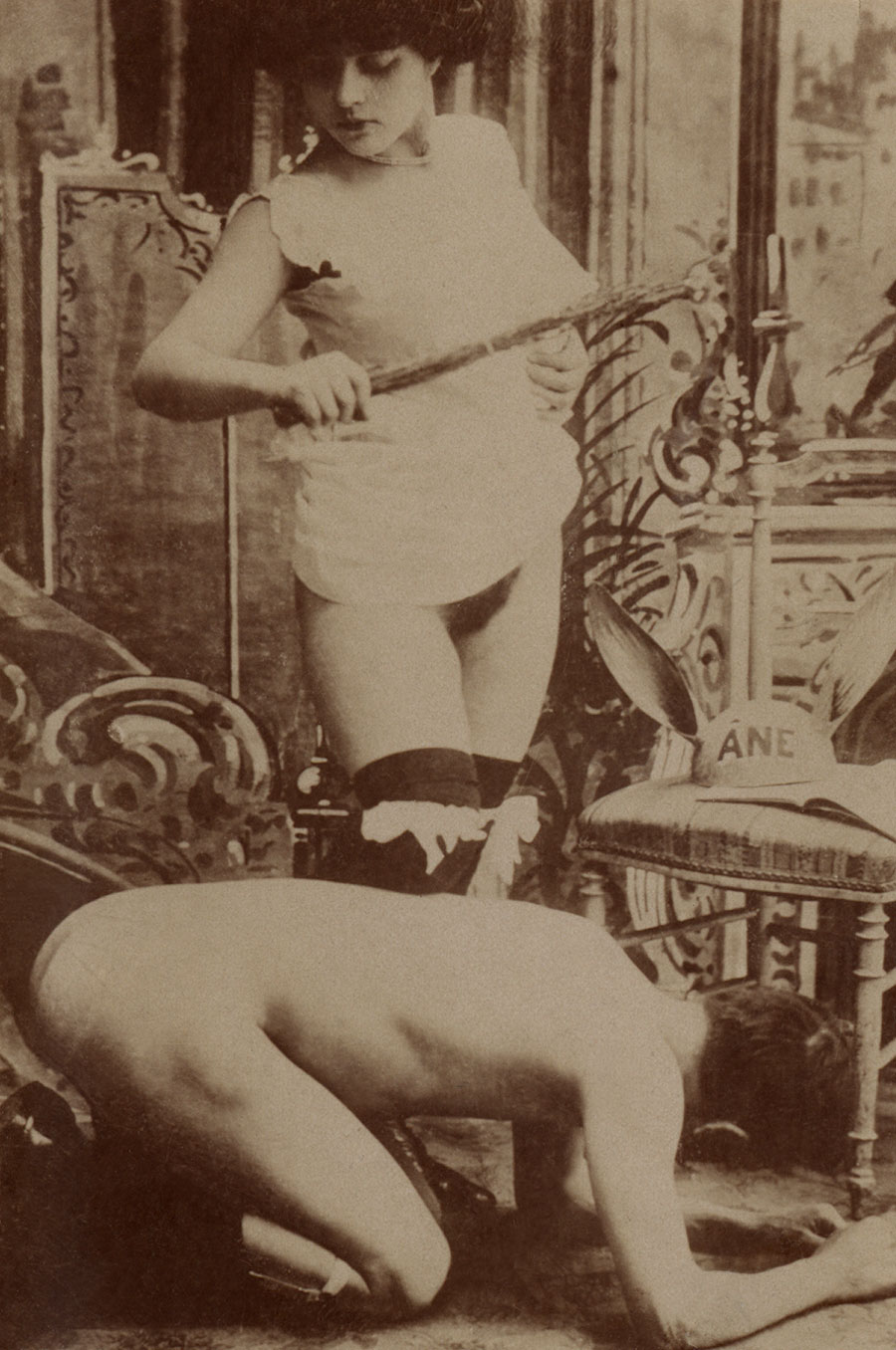
Webster & Albee (Publishers, United States) Woman standing on the back of a kneeling man Late 19th century Hand-colored stereocard
See the installation photograph above and the card in the Stereoscope
Unknown photographer (France) Two nude women in a room with a mirror c. 1850-1855 Stereo daguerreotype under glass
Underwood & Underwood (United States) Oh ! you naughty man 1900 Stereocard
Unknown photographer The Entanglement Mid 19th century Hand-coloured stereocard
Unknown photographer (France) Nude woman in a room with a mirror c. 1850-1855 Copy photograph of stereo daguerreotype
Unknown photographer Photomontage of men and women engaged in sexual activity 1895-1900 Gelatin silver print
Unknown photographer Photomontage of men and women engaged in sexual activity (detail) 1895-1900 Gelatin silver print
Unknown photographer Woman penetrating a woman with a dildo 1880-1885 Gelatin silver copy print
Unknown photographer Bathing in a Baetingplace Japan, 1880-1890 Hand-coloured albumen print
___ and ___ – bathing, attended by their ____ (maid) who is putting charcoal into the fire under the tub
Unknown photographer (United States) Nude woman reclining on a fallen tree c. 1880 Modern platinum print from glass plate negative (printed in 2012 by Herbert Ascherman, Jr.)
Unknown photographer (Indiana, United States) Erect penis 19th century Modern gelatin silver print from glass plate negative
Baron Wilhelm von Gloeden (German, 1856-1931) Man seated beside a tree Taormina, Sicily, 1899 Albumen print
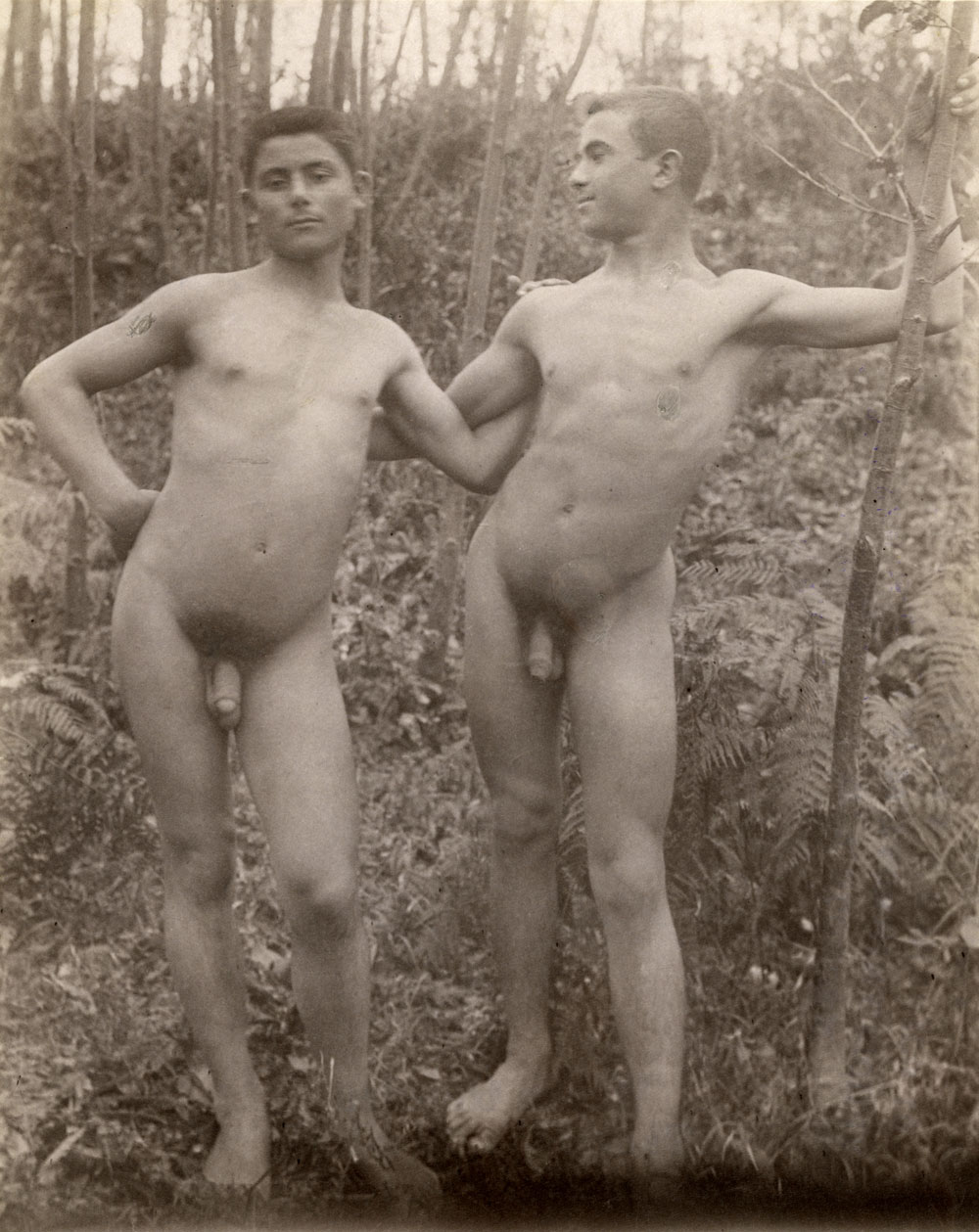
Baron Wilhelm von Gloeden (German, 1856-1931) Two nude men standing in a forest Taormina, Sicily, 1899 Albumen print
The Kinsey Institute Morrison Hall 313, Indiana University Bloomington, Indiana, USA
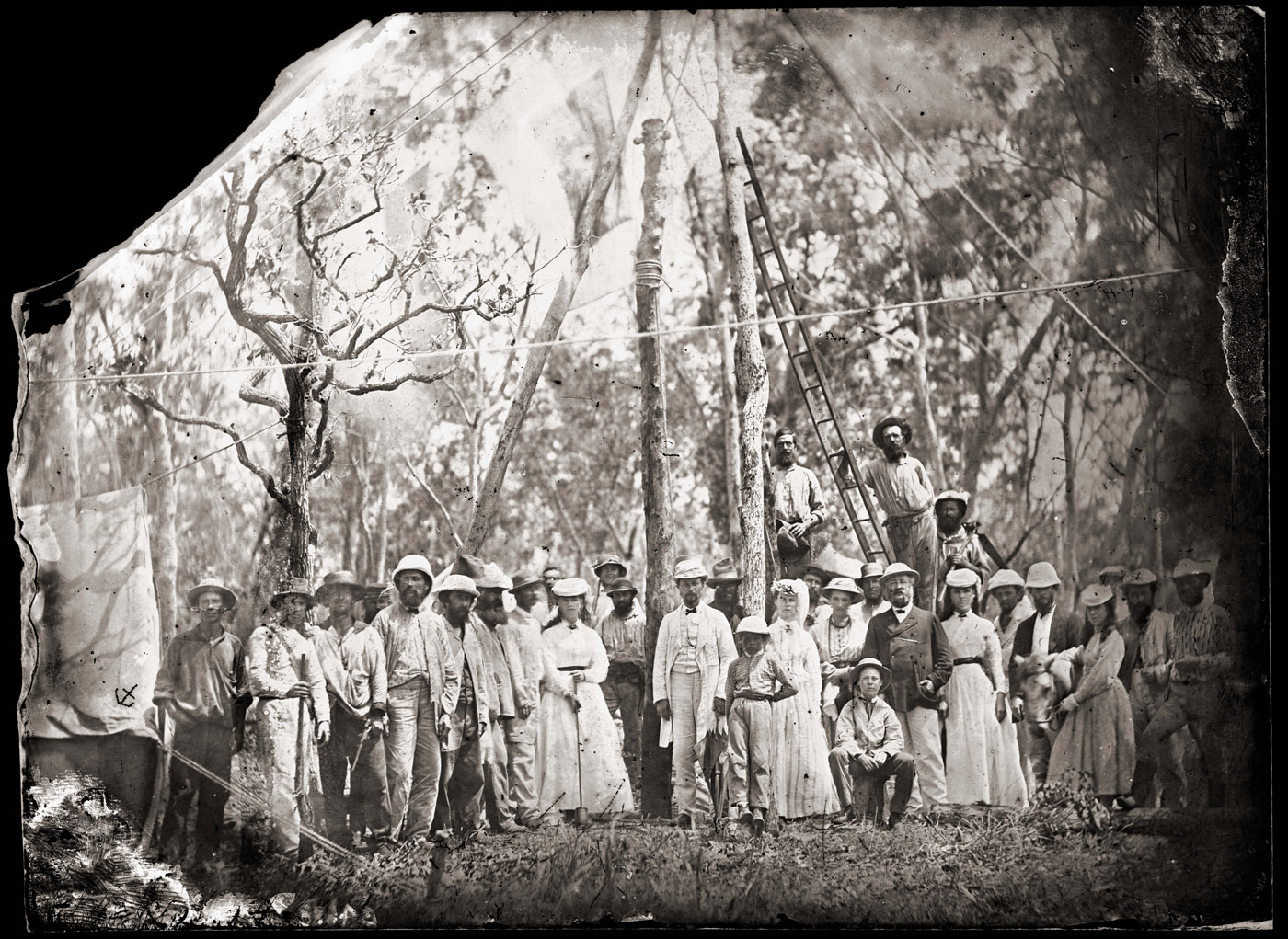
Captain Samuel White Sweet (Australian born England, 1825-1886) Planting the first pole of the Overland telegraph at Darwin on the 15th September, 1870 1870 From glass plate negative B 4638
South Australian photography in the 19th century – daguerreotypes, ambrotypes, tintypes, glass plates and photographic equipment. A fascinating look at our visual past. Moriendo renascor is a latin phrase meaning In death I am reborn. The exhibition runs at the State Library of South Australia till the end of July.
Dr Marcus Bunyan
Many thankx to the State Library of South Australia for allowing me to publish the photographs in the posting. Please click on the photographs for a larger version of the image.
G.B. Goodman (English, ? – 1851) Daguerreotype of a group of actors c. 1850 Daguerreotype of a group of men, possibly actors associated with the Adelaide stage 135mm x 185mm (image); 23cm x 18cm x 2.5cm (case) B 46371
In January 1846, travelling daguerreotype photographer, G.B. Goodman took up a 40 day residency at the rear of Adelaide auctioneer, Emanuel Solomon’s home. Here he created 50 daguerreotype images for Adelaide patrons (Register 21 January 1846). At this time, it had become increasingly common to set up temporary studios at the rear of a building.
According to Jane Messenger in A century in focus: South Australian photography, 1840s-1940s, this daguerreotype differs from others of the period due to its informal nature and the way it flaunts contemporary social and pictorial conventions. Portraits of multiple figures were unusual at the time and usually reserved for family groups. This was due to technical complications related to focal distance, plate sizes and exposure times. Messenger suggests that this image is largely experimental in its composition, and is designed to reveal the photographers sophisticated image creation skills (p. 30). It is also suggested that the man second from right is George Selth Coppin – the father of Australian theatre who lived in Adelaide from 1846 to the end of 1851.
Developed in 1839 by Louis-Jacques-Mande Daguerre and given to the world by the French government, the Daguerreotype was the first photographic method of capturing a scene or a likeness. Despite the difficulty and expense of the Daguerreotype, the process spread rapidly around the world, being first demonstrated in Sydney in 1842 and Adelaide in 1845.
John W. Butler (publisher) Advertisement for Townsend Duryea’s studios Photographic Gallery of Townsend Duryea, south-east corner of Grenfell Street and King William Street National directory of South Australia for 1867-68 1867 Created in Melbourne Object Source:The national directory of South Australia for 1867-68: including a squatters’ directory also a new and correct map of the Colony
In 1867 Townsend Duryea had his photographic gallery on the south-east corner of Grenfell Street and King William Street.
Born in 1823, New Yorker, Townsend Duryea, arrived in South Australia in 1855 and set up a studio on the corner of Grenfell Street and King William Street. He and his brother Sanford were the first photographers known to have worked outside of Adelaide. In a disaster for both the photographer and South Australia his studio caught fire in the early hours of 18 April 1875. Duryea’s entire collection of 60,000 negatives was destroyed.
The Register, reporting on the investigation into the cause of the fire wrote:
“Mr. J. M. Solomon, J.P., on Monday, April 19, held an investigation into the cause of the fire. As the Coroner remarked in summing up, the matter is involved in mystery, and it is just possible that the fire might have resulted from the spontaneous combustion of chemicals used by Mr. Duryea in the prosecution of his business. During the course of the proceedings the Coroner several times checked spectators eager to put questions to witnesses, and stated his view of their position. The Jury returned the following verdict:- “That the premises of Townsend Duryea were destroyed by fire, but that there is not sufficient evidence to show what was its origin.”
South Australian Register April 1875, p. 5.
After the fire he moved to New South Wales where he died in 1888.
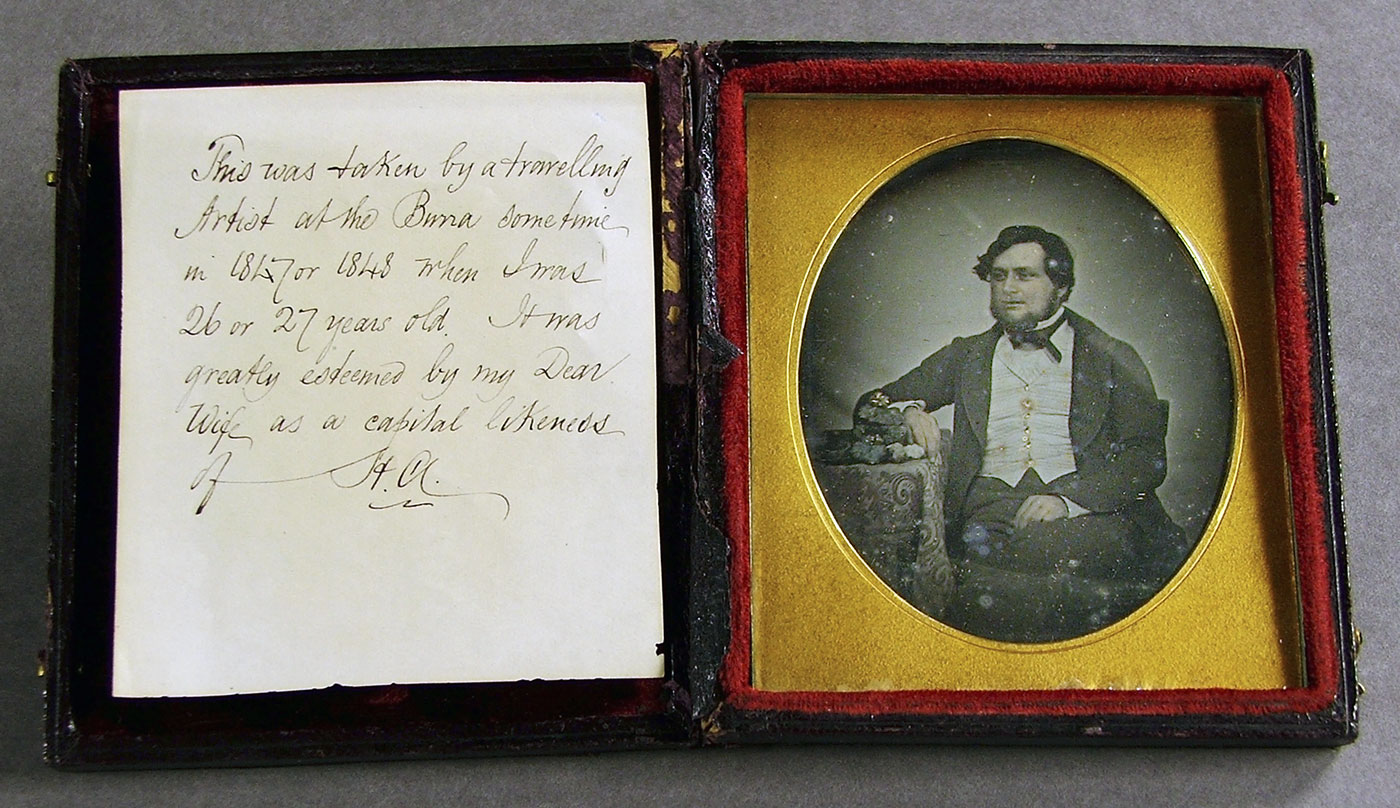
Photographer unknown Henry Ayers c. 1848 Daguerreotype PRG 67/48
The oldest known photograph in the State Library’s collection.
This example shows former South Australian Premier Henry Ayers, approximately ten years before he entered parliament. Born in England in 1821, he arrived in South Australia in 1840. He was elected to the first Legislative Council in 1857 and held several positions including chief secretary, premier, and president of the council during his 36 years as a member of parliament. Ayers died on 11 June 1897. Sir Henry Ayers was Premier of South Australia five times between the years 1863 and 1873.
This portrait was accompanied by a note signed by Ayers. It explained that the photo was taken a few years after his appointment as Secretary of the Burra Burra mines in 1845: This was taken by a travelling Artist at the Burra sometime in 1847 or 1848 when I was 26 or 27 years old. It was greatly esteemed by my Dear Wife as a capital likeness of H.A.
The daguerreotype is part of a collection of papers of Sir Henry Ayers, former Premier of South Australia, and of his granddaughter, Lucy Lockett Ayers.
Hammer and Co. Bust of a young woman Rundle Street, c. 1895 Albumen photograph, cabinet card B58331/26
Saul Solomon (Australian born England, 1836-1929) Published by the Adelaide School of Photography Man dressed as Robinson Crusoe 1888 Albumen photograph, cabinet card 99mm x 146mm B 32878
On Monday 30 July 1888 a carnival was held at the Columbia Roller Skating Rink in the Jubilee Exhibition Building, North Terrace, Adelaide. The South Australia Weekly Chronicle, 4 August 1888, reported that over 2,000 persons attended and the floor was reserved for ladies and gentlemen in fancy costume or evening dress and that among the most successful gentlemen’s costumes was a “Robinson Crusoe with a gun and umbrella”.
Cabinet cards were a popular form of family photograph. They often featured the photographer’s details on the front and further description of their services on the reverse.
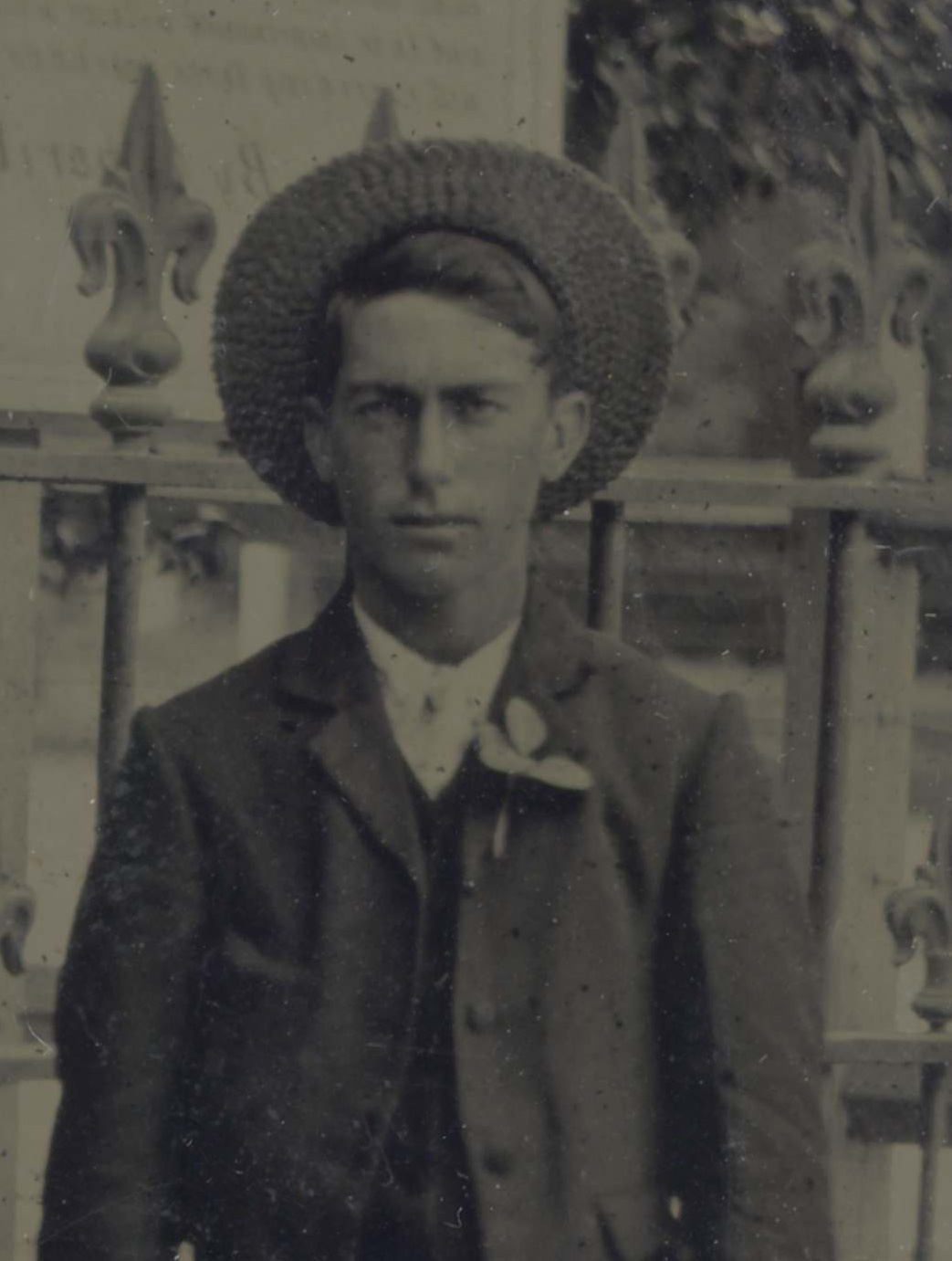
Photographer unknown Leslie Quinn and W. Dunk c. 1890 Tintype B 47091
I just love how the jacket of the lad on the right is about two sizes too small for him. As though he is growing so fast into adulthood, his arms elongating so quickly, that he has outrun the life of his jacket ~ Marcus
Photographer unknown Leslie Quinn and W. Dunk (detail) c. 1890 Tintype B 47091
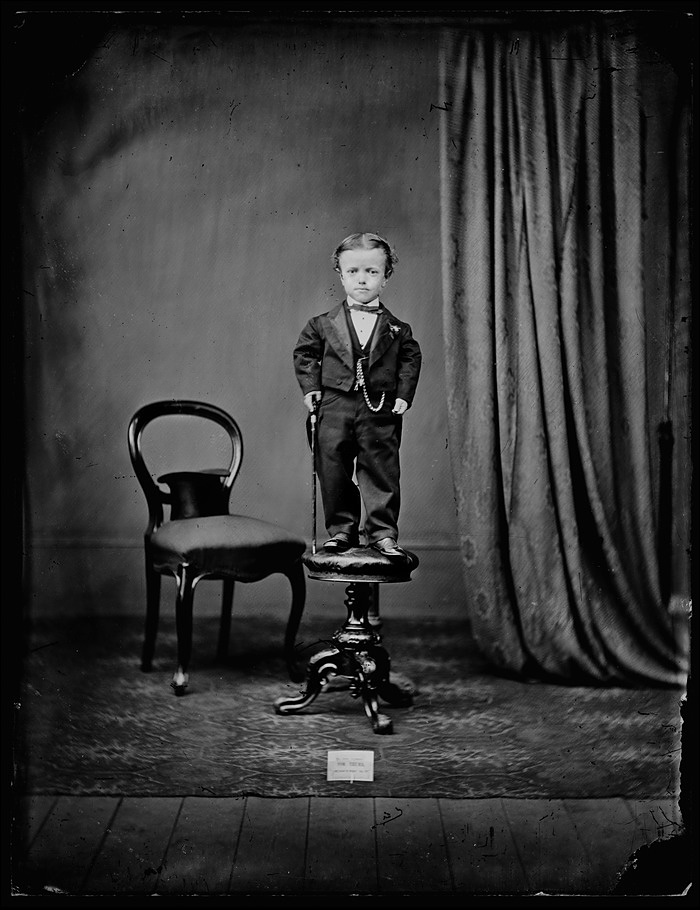
Unknown photographer Tom Thumb c. 1880 From a glass plate negative
Michael Pynn was born at Baker’s Flat in 1860. In his obituary, the Kapunda Herald (July 5 1929, p. 2), reported that Mickey was known from the late 1870s as the Australian Tom Thumb.
“It was toward the late seventies that General Tom Thumb, of England, visited Australia, and the tour of his little company included Kapunda. It was this circumstance that brought Micky Pynn into prominence, and later into almost world-wide notoriety. He made a career as a circus clown and travelled the world.”
Michael Pynn died in Sydney on 22 June 1929.
Frederick Charles Krichauff (Australian, 1861-1954) From the Adelaide Town Hall c. 1880 Photograph
View of the General Post Office (GPO) from the Albert Tower of the Adelaide Town Hall, showing Victoria Square with horse drawn cabs, and the GPO clock showing 1.23 pm.
The State Library holds many thousands of glass plate negatives including a number by amateur photographer Frederick Krichauff (1861-1954). We also hold three of his photograph albums and these may be viewed online via the Library’s catalogue. Krichauff was an architect and a keen member of the Royal Philatelic Society. He lived at Portrush Road, Toorak Gardens.
State Library of South Australia Kintore Ave, Adelaide SA 5000 Phone: (08) 8207 7250
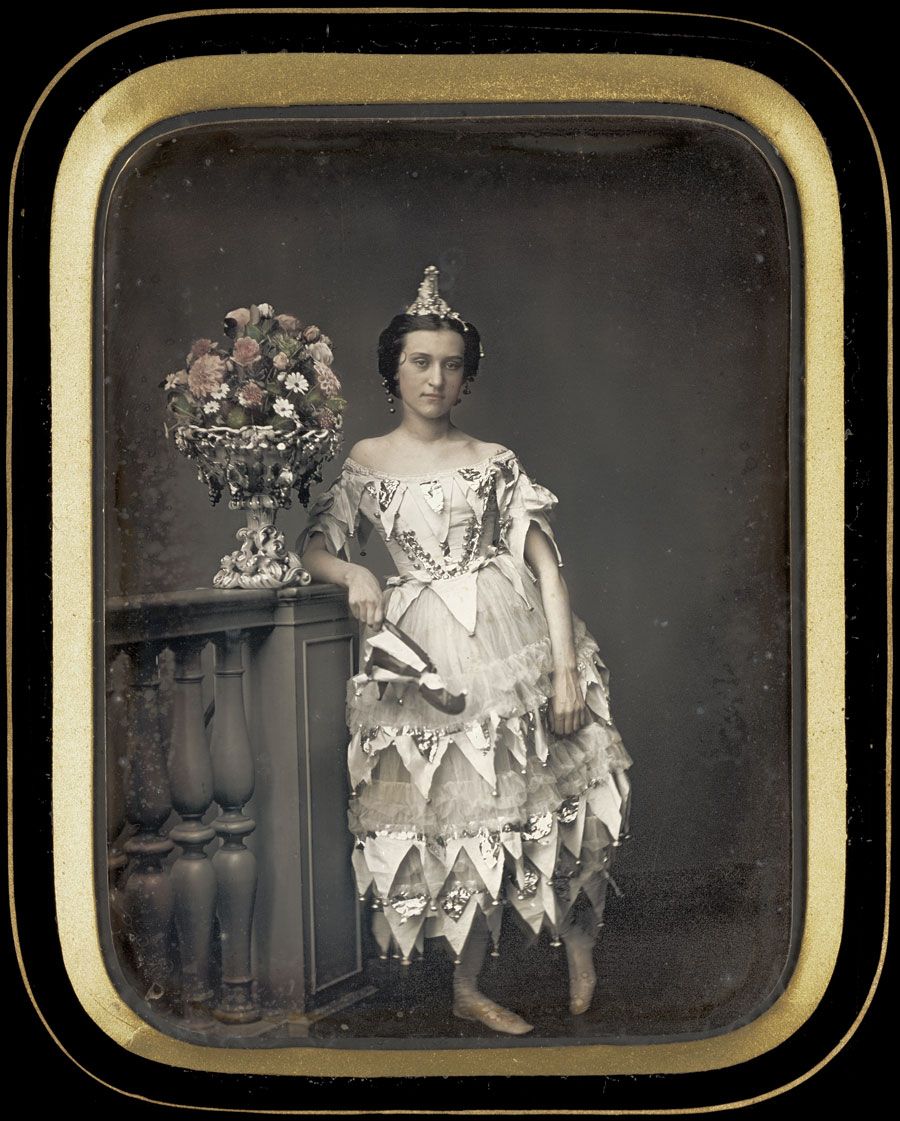
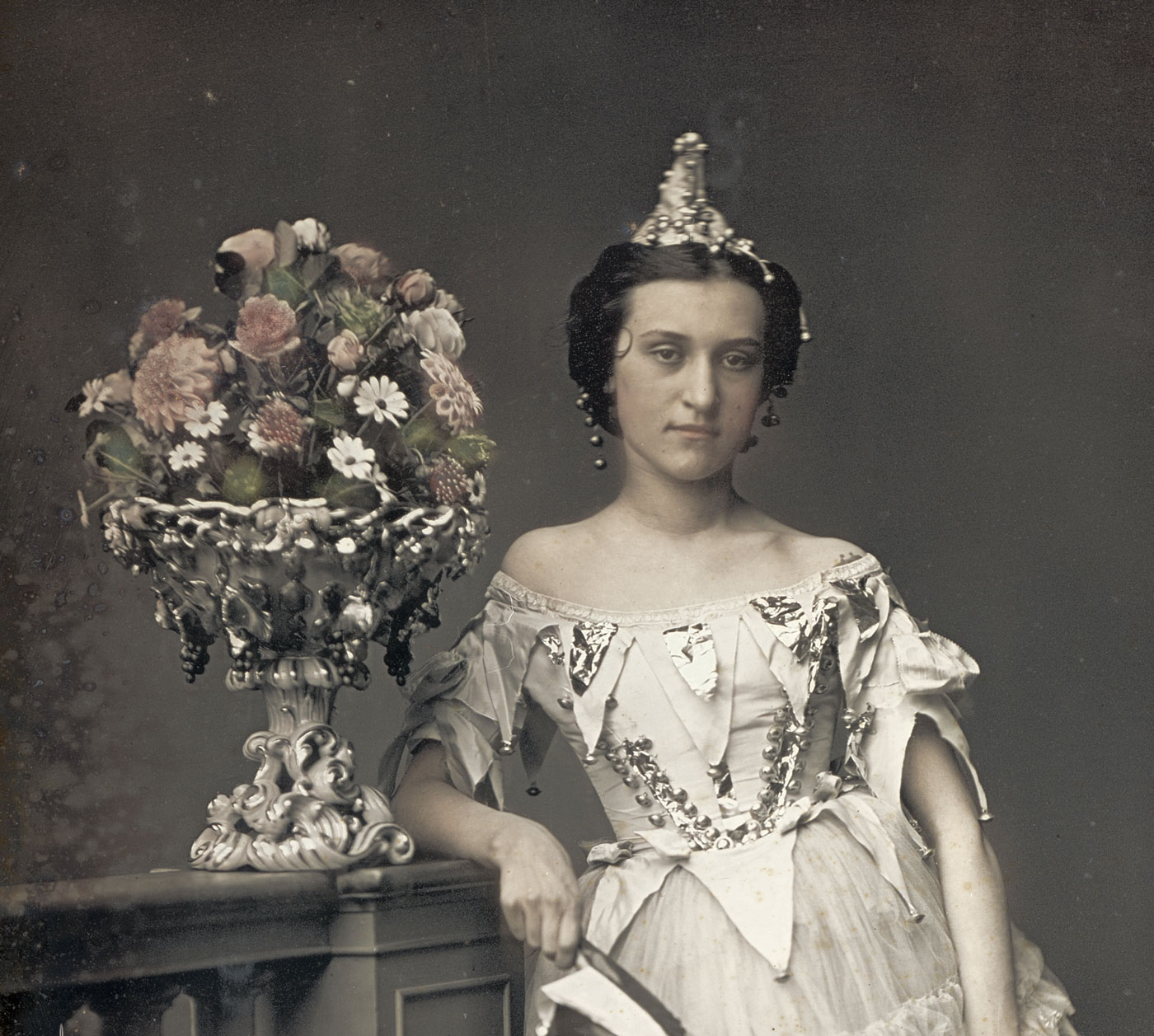
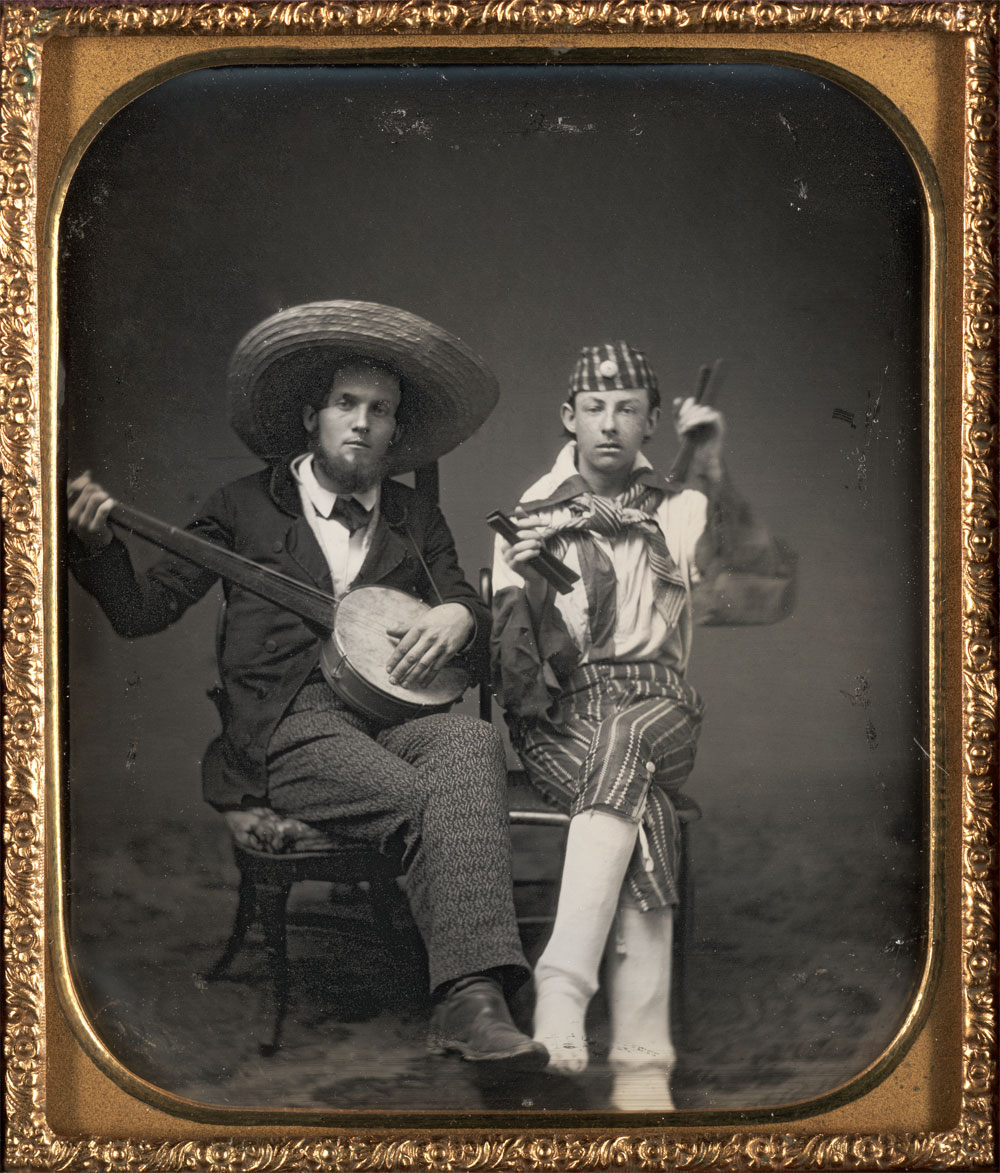
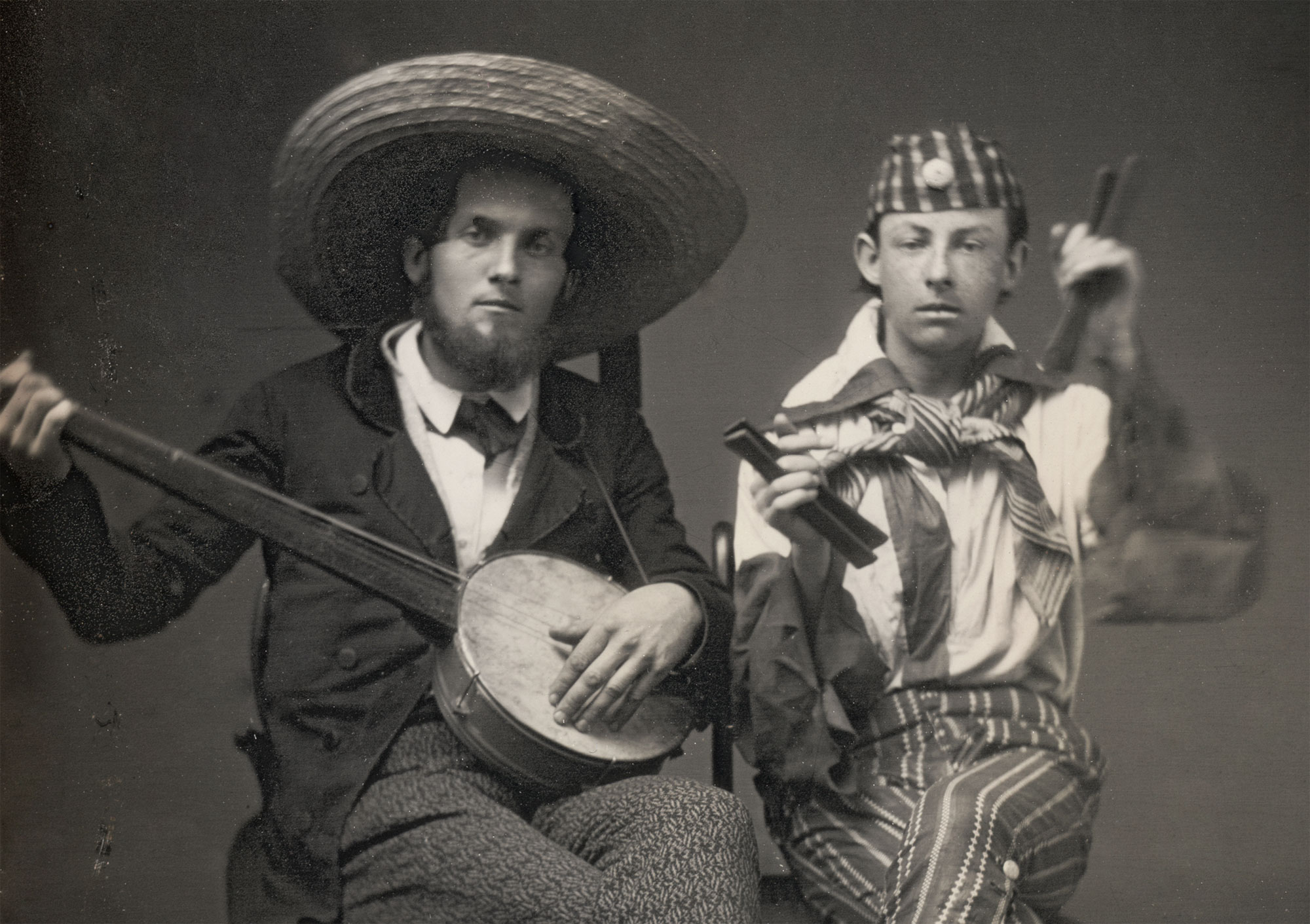
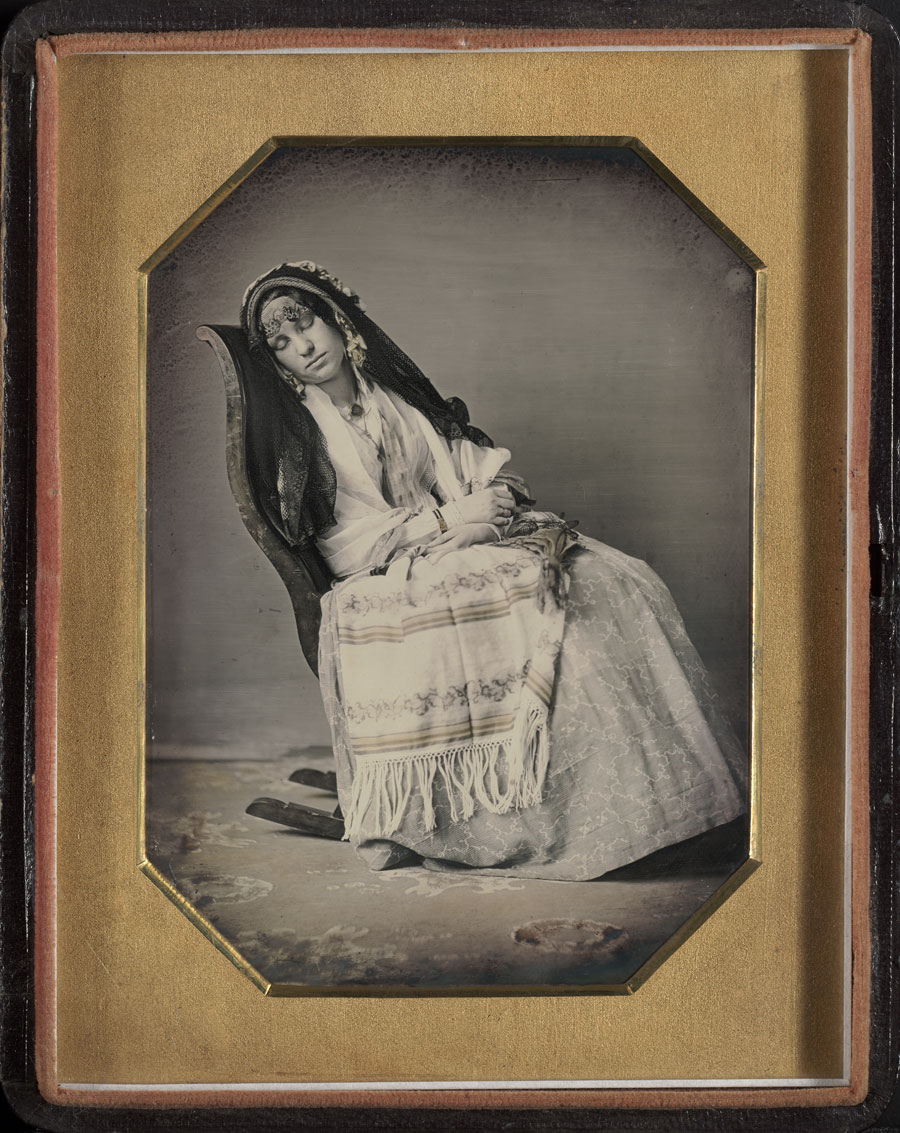
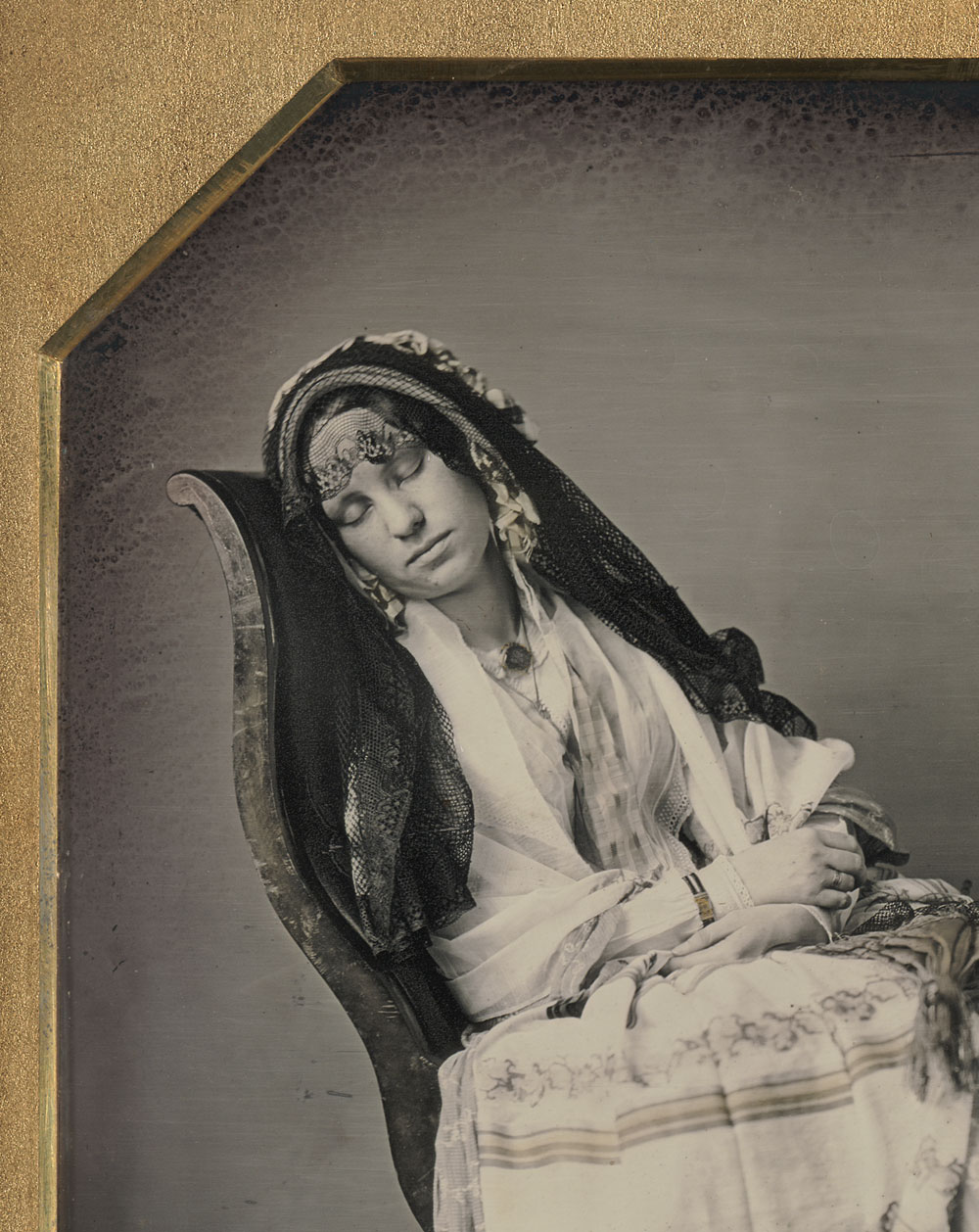
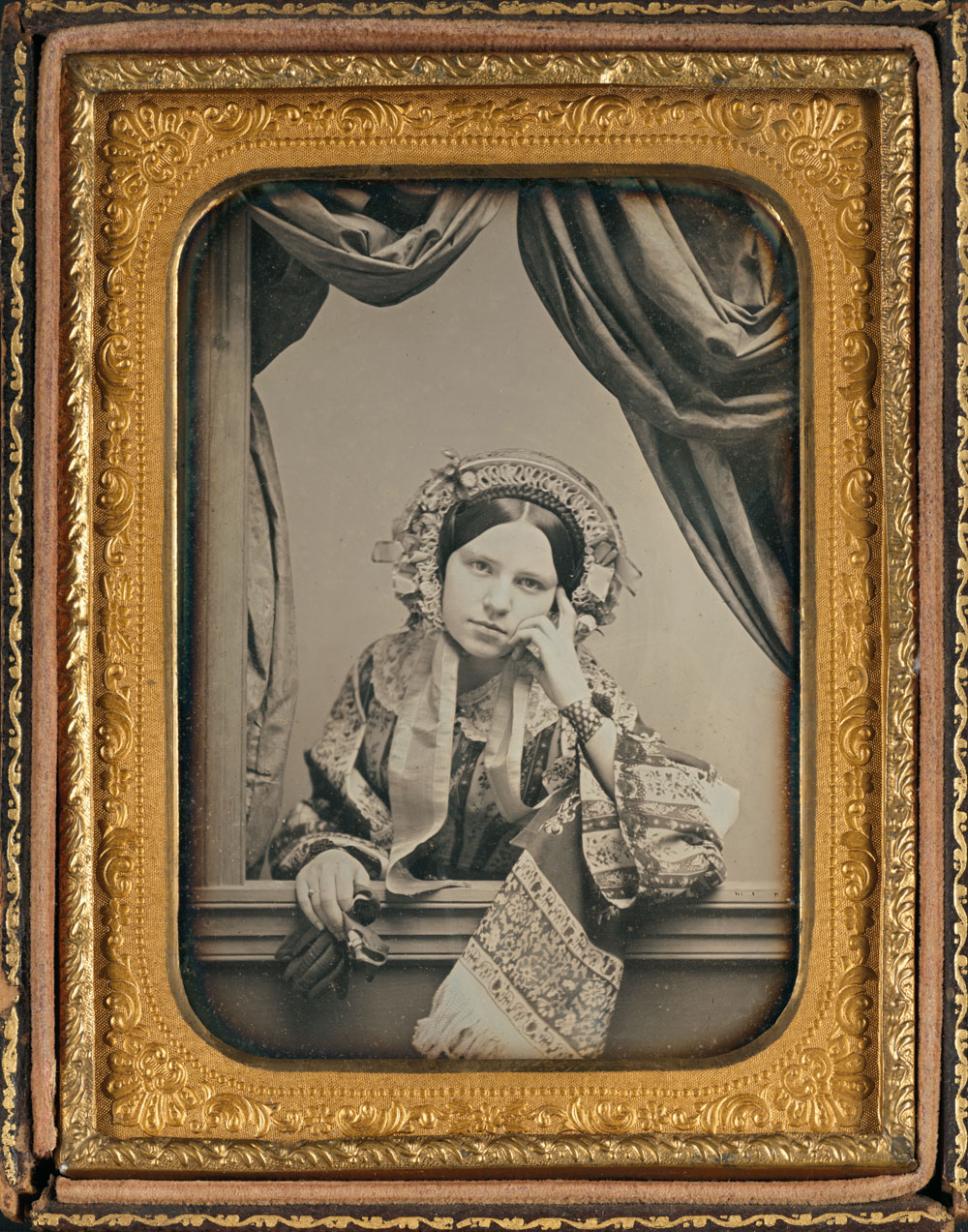
OMG some of these images are SO beautiful and others SO bizarre. Please enlarge the detailed shots of Lady in Costume (c. 1850, below) and Traveling Minstrels – banjo and bones (c. 1850, below) – my two favourites – so you can see the costumes and the people. The clothes of the bones player are incredible… I wonder what they did with their lives, where they went and how they lived. How old do you think they are? And what is that on the front of his hat, a watch?
Dr Marcus Bunyan
Many thankx to The Nelson-Atkins Museum of Art for allowing me to publish the photographs in the posting. Please click on the photographs for a larger version of the image.
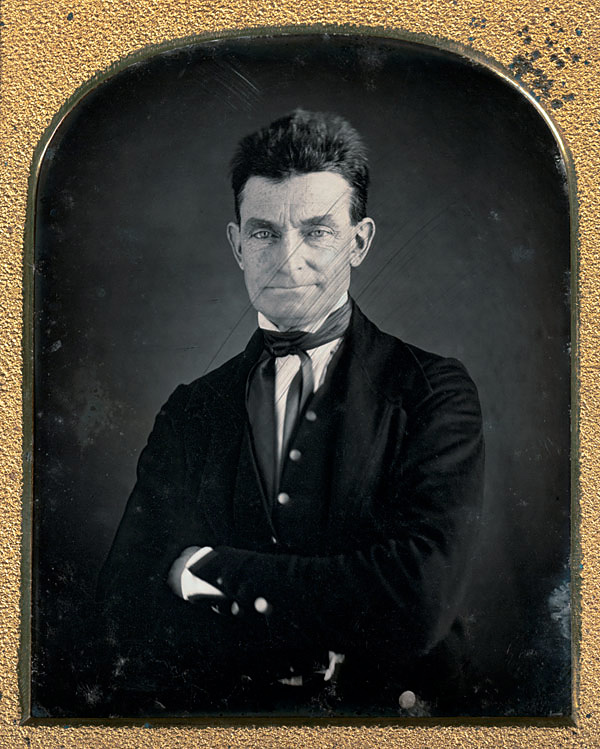
John Brown (May 9, 1800 – December 2, 1859) was a white American abolitionist who believed armed insurrection was the only way to overthrow the institution of slavery in the United States.During the 1856 conflict in Kansas, Brown commanded forces at the Battle of Black Jack and the Battle of Osawatomie.Brown’s followers also killed five slavery supporters at Pottawatomie. In 1859, Brown led an unsuccessful raid on the federal armoury at Harpers Ferry that ended with his capture.Brown’s trial resulted in his conviction and a sentence of death by hanging.
Brown’s attempt in 1859 to start a liberation movement among enslaved African Americans in Harpers Ferry, Virginia, electrified the nation. He was tried for treason against the Commonwealth of Virginia, the murder of five men and inciting a slave insurrection. He was found guilty on all counts and was hanged. Southerners alleged that his rebellion was the tip of the abolitionist iceberg and represented the wishes of the Republican Party to end slavery. Historians agree that the Harpers Ferry raid in 1859 escalated tensions that, a year later, led to secession and the American Civil War.
The bones are a musical instrument (more specifically, a folk instrument) which, at the simplest, consists of a pair of animal bones, or pieces of wood or a similar material. Sections of large rib bones and lower leg bones are the most commonly used true bones, although wooden sticks shaped like the earlier true bones are now more often used…
They have contributed to many music genres, including 19th century minstrel shows, traditional Irish music, the blues, bluegrass, zydeco, French-Canadian music, and music from Cape Breton in Nova Scotia…
They are typically about 5″ to 7″ in length, but can be much longer, and they are often curved, roughly resembling miniature barrel staves. Bones can also be flat, for example by the cutting of a yardstick. They are played by holding them between one’s fingers, convex surfaces facing one another, and moving one’s wrist in such a way that they knock against each other…
While North American players are typically two-handed, the Irish tradition finds the vast majority of bones players using only one hand, a distinction in method that has a strong impact on musical articulation. The comparison of the function of banjo rolls with that of bones within an ensemble suggests that stereotypically a subdivided accompaniment pattern is played on the bones.
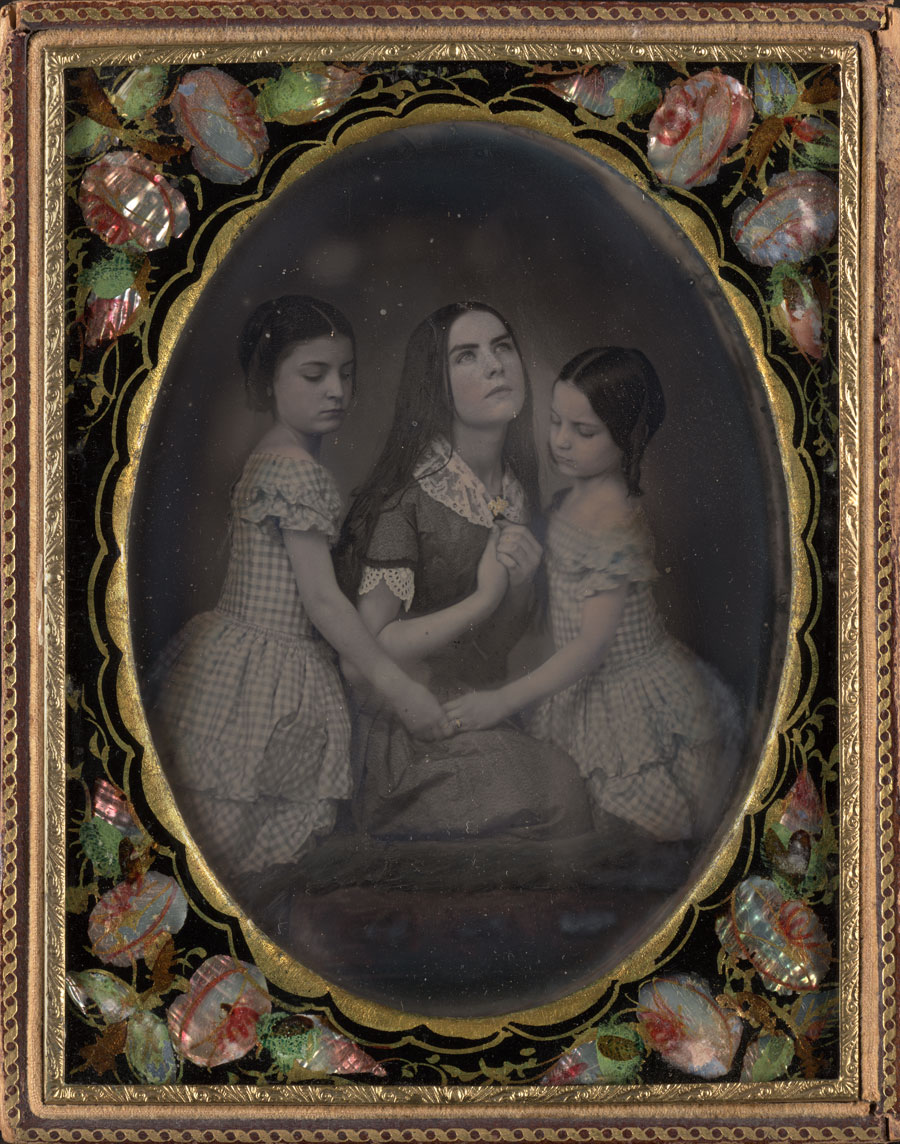
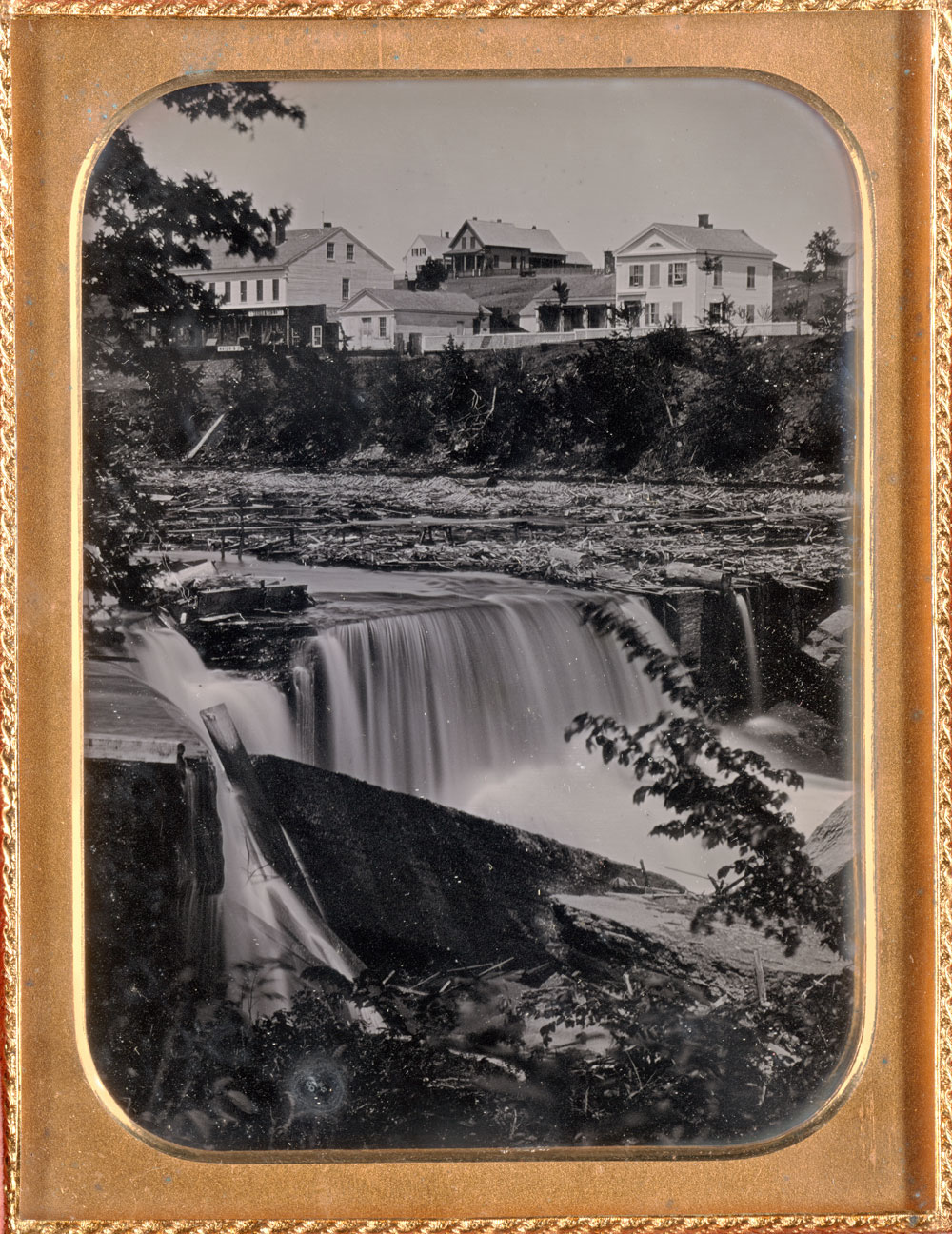
An exhibition featuring more than 50 daguerreotypes acquired by The Nelson-Atkins Museum of Art since 2007 opened on Jan. 24. In the Looking Glass: Recent Daguerreotype Acquisitions is a fascinating look at an early photographic process that was introduced in 1839. “In the 19th century, daguerreotypes seemed to be magical bits of reality,” says Jane Aspinwall, associate curator of Photography. “Now, more than a century later, they still hold that kind of wonder and appeal.”
A precursor of printed photography, the daguerreotype image is formed on a highly polished silver surface that is exposed to iodine fumes. The fumes produce a light sensitive coating. The plate is then covered with a protective dark slide and placed into a camera. An image is projected through the lens and onto the plate; the image is then developed using heated mercury. The distinguishing visual characteristics of a daguerreotype are that the image is on a bright, mirror-like surface of metallic silver and it appears either positive or negative depending on the lighting conditions and whether a light or dark background is being reflected in the metal.
Important additions to the Nelson-Atkins American collection include portraits by major makers, including possibly the earliest of only six known daguerreotypes of noted abolitionist John Brown. In the French holding, lively portraits, cityscapes, and archaeological images are highlighted. A 170-year-old daguerreotype from Egypt transports viewers to the shimmering banks of the Nile River, a place few would have been able to travel to at the time. British pieces are distinguished by elaborate hand-colouring.
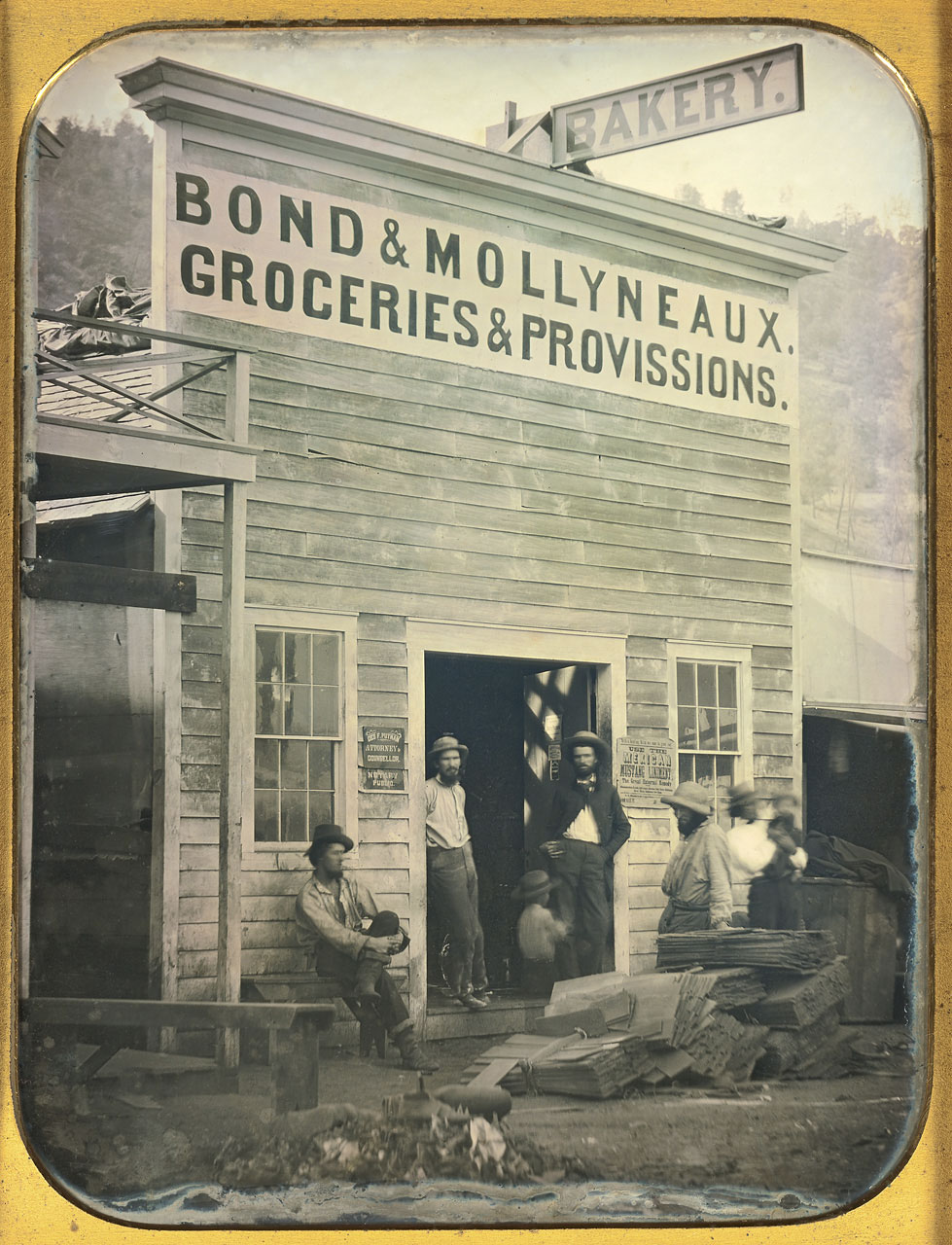
Small, intimate American daguerreotypes, most housed in jewel-like velvet or silk-lined cases, were made to be held close and scrutinised. Because they are reflective, the Nelson-Atkins designed more than two dozen cases with special lighting features to provide optimal viewing conditions, bringing each detailed image to life. A daguerreotype of a young girl clutching a shawl around her bare shoulders seems to float; another sharply detailed, rare Gold Rush image [second image, below] depicts a small group of men standing in front of their grocery store located in a California frontier town.
“It’s an amazing experience to view these precious, one-of-a-kind daguerreotypes,” said Aspinwall. “Once you see one, you never forget it. It takes you back in time to share a mid-19th century moment with the sitter.”
The Nelson-Atkins is recognised as having one of the top five American daguerreotype collections in the U.S. and loaned more than 80 to the Taft Museum in Cincinnati for the 2013 exhibition Photographic Wonders. Daguerreotypes are an internationally significant cornerstone of the museum’s photography holdings.”
Press release from the Nelson-Atkins Museum of Art website
I loved Sugimoto’s time lapse movie screens, where the exact length of a movie was captured by the open lens of the camera, the substance of time and space evidenced by a seemingly empty screen. There was something wonderfully poetic and transformational about that gesture, about the notion of compressing the narrative, reality and action of a movie into a single frame of light: “the ‘annihilation of time and space’ as a particular moment in a dynamic cycle of rupture and recuperation enables a deliberate focus on the process of transition.”1 The process of transition in the flow of space and time.
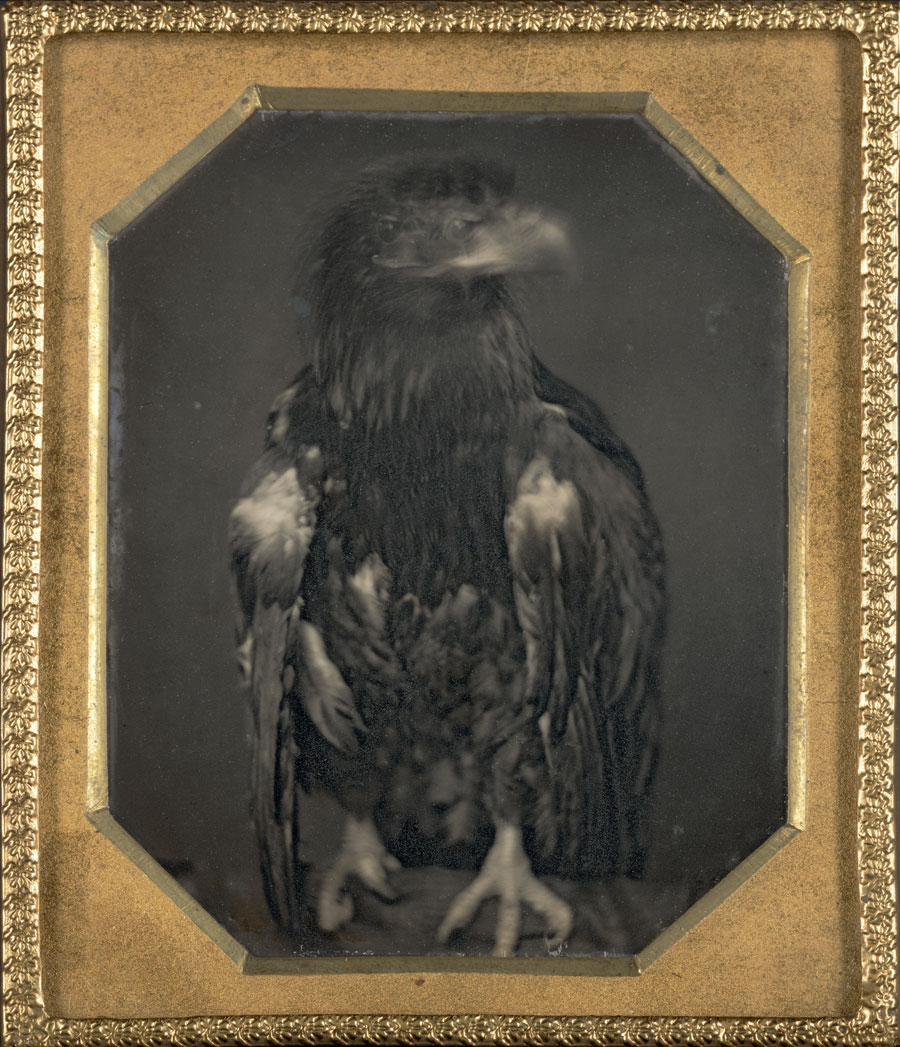
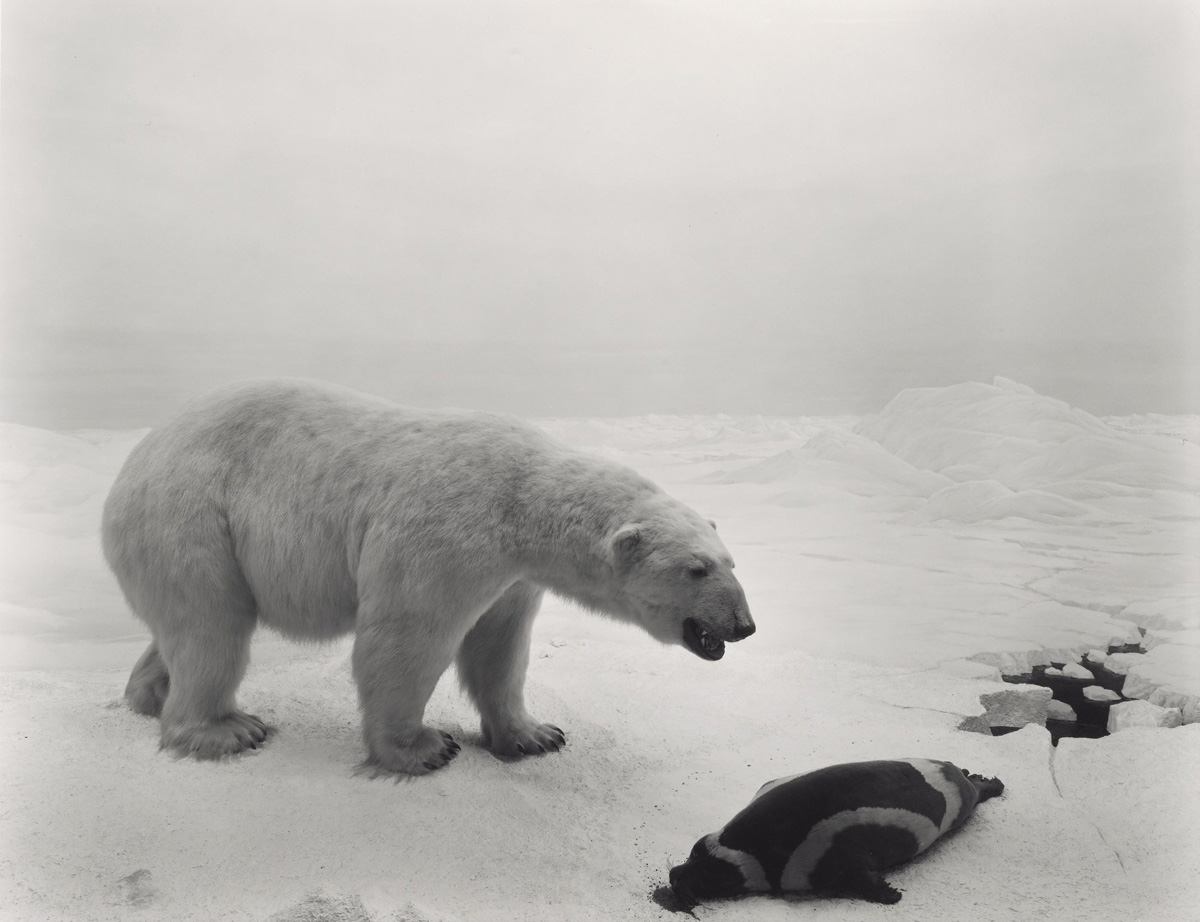
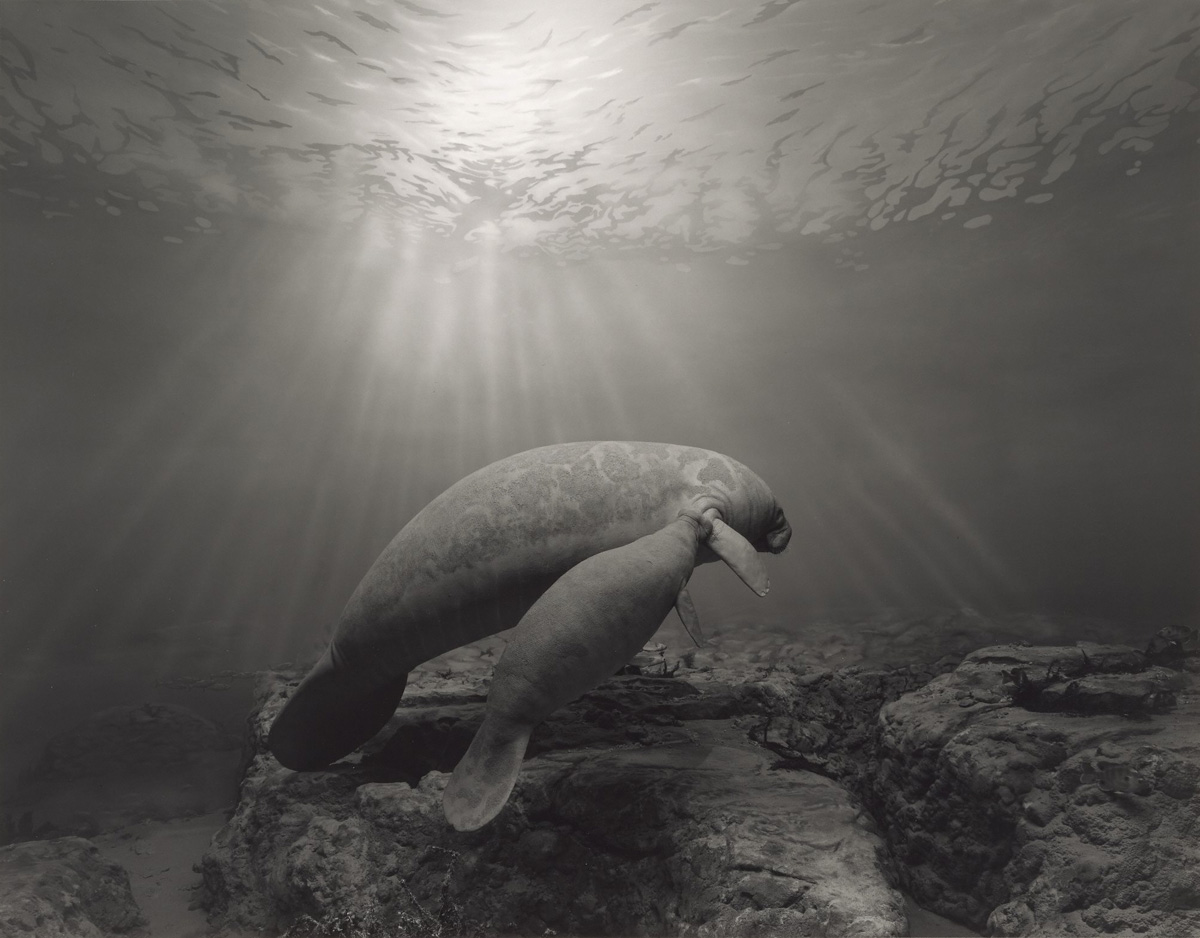
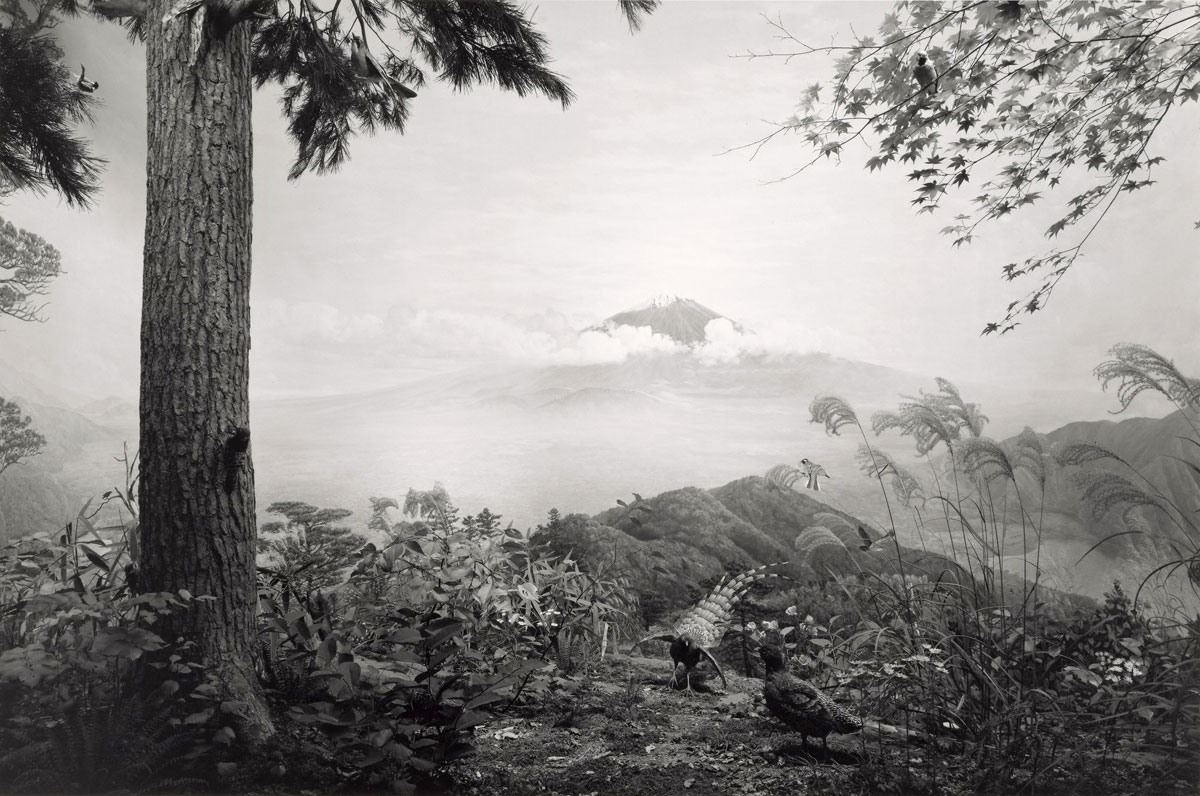
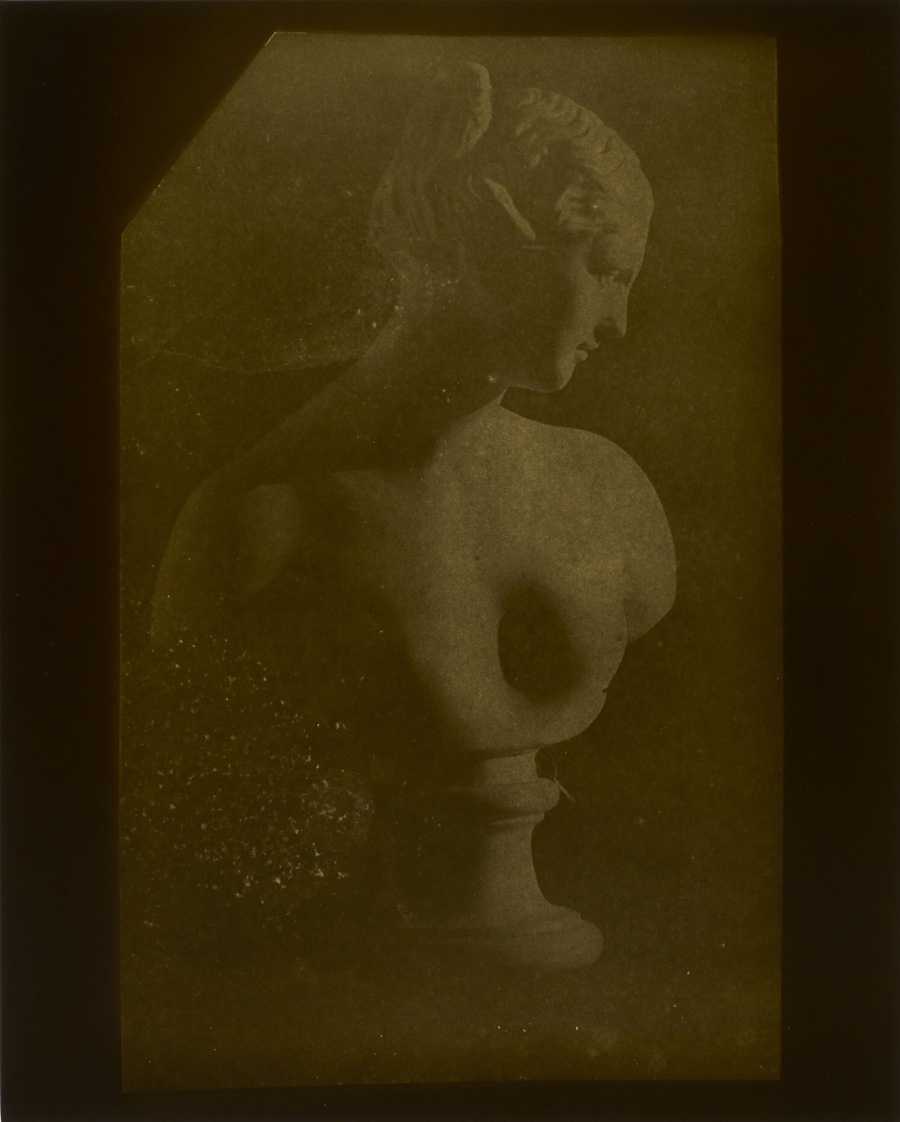
Sugimoto’s art since that ground breaking body of work has been a bit of a let down. Where the movie theatres photographs were transubstantiationalist, the three series presented here – Dioramas (1975-1994), Portraits (1999) and his newest series, Photogenic Drawings (2008-present) play, if that is the right word, with the re/animation of death. The stuffed animals, the wax figures, the redrawing of William Henry Fox Talbot photogenic drawings, the redrawing of a light already past, just seem DEAD to me – a kind of double death or even triple death – the death of the animal / the death of the photograph, the unreality (the undead) of the wax figures and their death in the photograph, the death of the plant, their capture not once but twice by the death of the photograph. We know exactly what Sugimoto is doing, but the images are stilted and lifeless and I am not convinced by them.
The diorama images are just OK – almost good undergraduate work but nothing more. My problem with the waxworks images and the pencil of nature is “other images”. We all know Cindy Sherman and her images of historical figures, and we know the work of William Henry Fox Talbot. Somehow these earlier images crowd Sugimoto’s work in a way that doesn’t often happen. Winogrand never crowded Friedlander or vice versa – and you can think of many other examples where comparing is actually beneficial… but not here.
I’m not saying Sugimoto is derivative but because of these other works, they don’t have much room to move. Indeed, they hardly move at all. They are so frozen in attitude that all the daring transcendence of light, the light! of space time travel, the transition from one state to another, has been lost. The Flame of Recognition (Edward Weston) – has gone.
Dr Marcus Bunyan
1/ McQuire, Scott. The Media City. London: Sage Publications, 2008, p. 14.
Many thankx to the J. Paul Getty Museum for allowing me to publish the photographs in the posting. Please click on the photographs for a larger version of the image.
Since the mid-1970s, Hiroshi Sugimoto (Japanese, born 1948) has used photography to investigate how history pervades the present. Featuring photographs of habitat dioramas, wax portraits, and early photographic negatives, Hiroshi Sugimoto: Past Tense, on view February 4 – June 8, 2014 at the J. Paul Getty Museum, Getty Center, brings together three separate bodies of work that present objects of historical and cultural significance in the collections of various museums. By photographing subjects that reimagine or replicate moments from the distant past and diverse geographical locations, Sugimoto critiques the medium’s presumed capacity to portray history with accuracy.
“This exhibition presents work that inventively reframes objects from the collections of a variety of museums, including from our extensive holdings of prints from the early days of photography,” explains Timothy Potts, director of the J. Paul Getty Museum. “Mr. Sugimoto has generously donated eighteen prints from his recent Photogenic Drawings series, which reprise a selection of important experiments by William Henry Fox Talbot that are in the Getty Museum’s collection.”
Sugimoto’s meticulously crafted prints are the result of a rigorous working method that includes extensive preparatory research, the use of a large-format view camera, and long exposures. Each of his projects is rooted in a sustained exploration of a singular motif and often carried out over many years. The exhibition will present a selection of prints from three bodies of work, Dioramas (1975-1994), Portraits (1999) and, his newest series, Photogenic Drawings (2008-present).
Dioramas
The diorama was first introduced in Paris in 1822 by the stage designer Jacques Louis Mandé Daguerre (French, 1787-1851), who later developed the daguerreotype photographic process. Situated in a darkened room, the first diorama consisted of a large painted scene on a semi-transparent curtain that was illuminated by the opening and closing of skylights and the constant shifting or dimming of lamps to create the impression of movement. In the early 20th century, habitat dioramas in natural history museums became popular, staging creatures in their faithfully replicated “natural” environments.
Sugimoto first encountered elaborate animal dioramas at the American Museum of Natural History after moving to New York in 1974, and began to focus his camera on individual scenes shortly thereafter. Omitting the educational text surrounding each display, the works heighten the illusion that animals such as manatees, wapiti, and sea lions were photographed in their natural habitats. While each photograph appears to be a candid moment captured by an experienced nature photographer, the subjects are – in actuality – depicted in poses they hold indefinitely.
Wax Portraits
While waxworks have a long history, contemporary wax museums can be traced to the French sculptor Marie Grosholz (French, 1761-1850), who achieved success in the Parisian entertainment market by creating waxworks of popular politicians and cultural figures. After moving to London in 1802, she established a commercial enterprise under the name Madame Tussaud, specialising in the production and display of full-length wax figures modelled after commissioned portraits.
Posed against pitch-black backdrops and framed by the camera in a manner suggesting old master portrait-painting traditions, each of Sugimoto’s subjects was captured with a nine-minute exposure that illuminates the finely modelled expressions and the sumptuous costumes. These life-size photographs record likenesses that have been distilled through multiple reproductions of the original sitter. The source material for the wax figures of Henry VIII and his wives is based on 16th-century panel paintings, while the portrait of Queen Victoria’s likeness is taken from a photograph of her from the 1890s, around the time of her Diamond Jubilee celebration.
“Hiroshi Sugimoto’s photographic practice is deeply rooted in a tradition of image making that was developed and perfected during the 19th century,” explains Arpad Kovacs, assistant curator in the Department of Photographs at the J. Paul Getty Museum and curator of the exhibition. “By employing century-old techniques and turning his lens to subjects and compositions that recreate or simulate moments from the past, Sugimoto intimately connects himself to the historical moments depicted.”
Photogenic Drawings
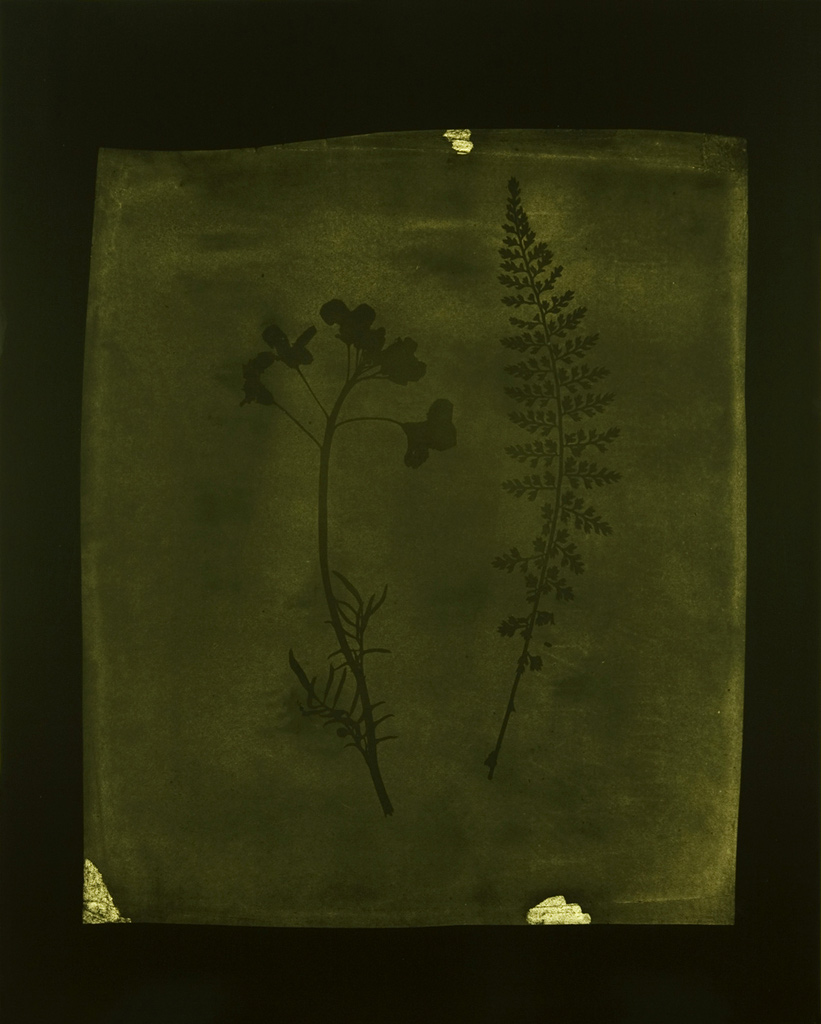
In the early 1830s, William Henry Fox Talbot (English, 1800-1877) began trying to create pictures without the aid of a pencil. After coating small pieces of writing paper with a salt solution and silver nitrate, he successfully captured the outlines of leaves and lace placed on the paper and exposed to sunlight. He continued his experiments with a camera obscura, placing a sheet of paper in this precursor to the camera to produce the first negatives, with highlights and shadows reversed. Talbot called the results of these experiments photogenic drawings.
In 2007, Hiroshi Sugimoto visited the J. Paul Getty Museum to study the earliest photographs in the collection. After photographing some of Talbot’s photogenic drawing negatives, he produced large-scale prints and coloured them with toning agents during the processing to replicate the often-bright hues of the original sheets. The scale of the enlarged prints reveals the fibres of the original writing paper, which create subtle and delicate patterns embedded in the images.
The artist’s gift of eighteen gelatin silver prints from his Photogenic Drawings series significantly enhances the Museum’s holdings of work by Sugimoto. His photographic practice, rooted in a serial approach and primarily concerned with the medium’s relationship to the passage of time, has long been an important source of influence for a younger generation of artists. The prints greatly enhance the Getty Museum’s growing collection of contemporary photographs.
Hiroshi Sugimoto: Past Tense is on view February 4 – June 8, 2014 at the J. Paul Getty Museum, Getty Center. The exhibition will run concurrently in the Center for Photographs with A Royal Passion: Queen Victoria and Photography, an exhibition featuring rare private and public photographs from the Victoria era.
Press release from the J. Paul Getty Museum website
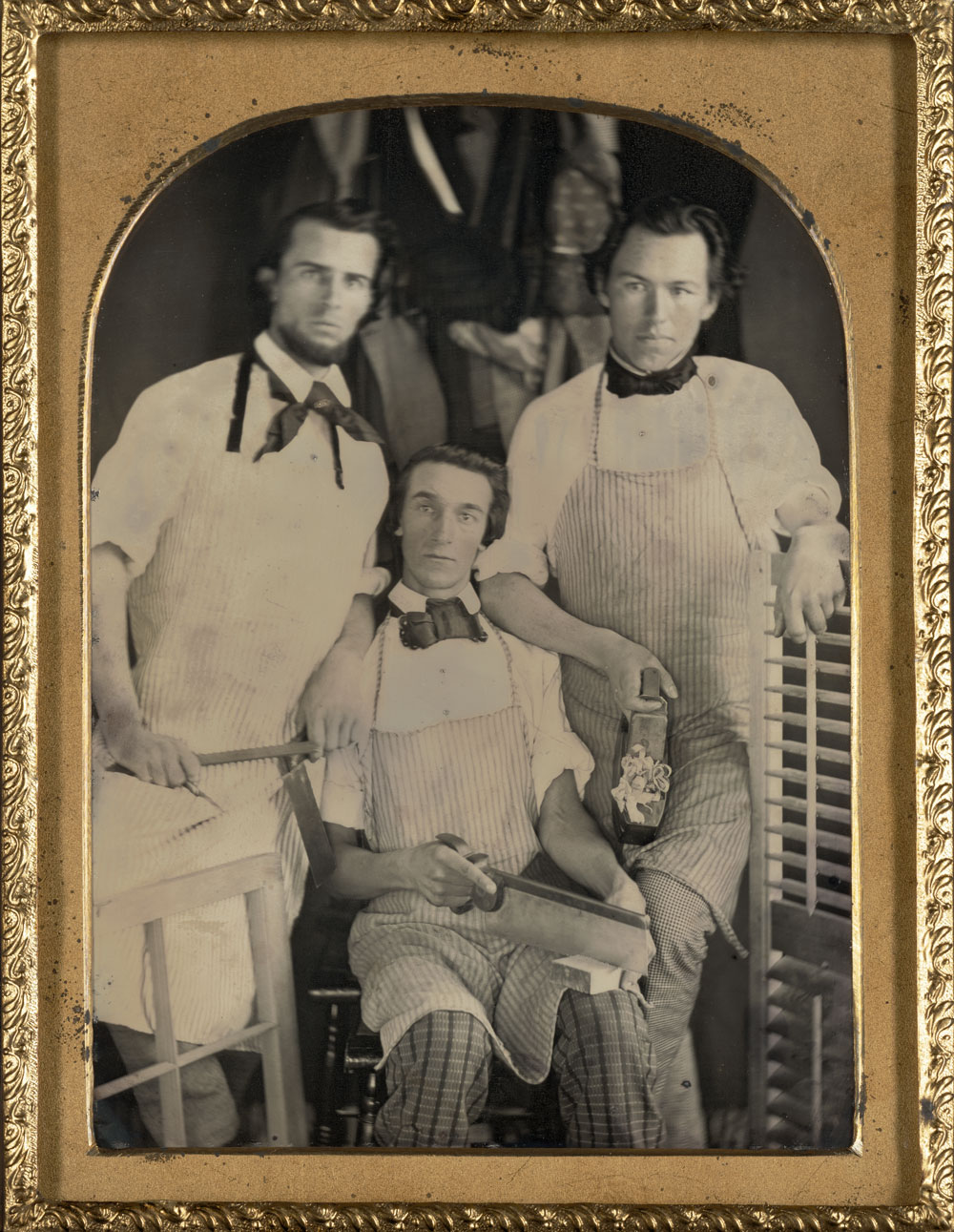
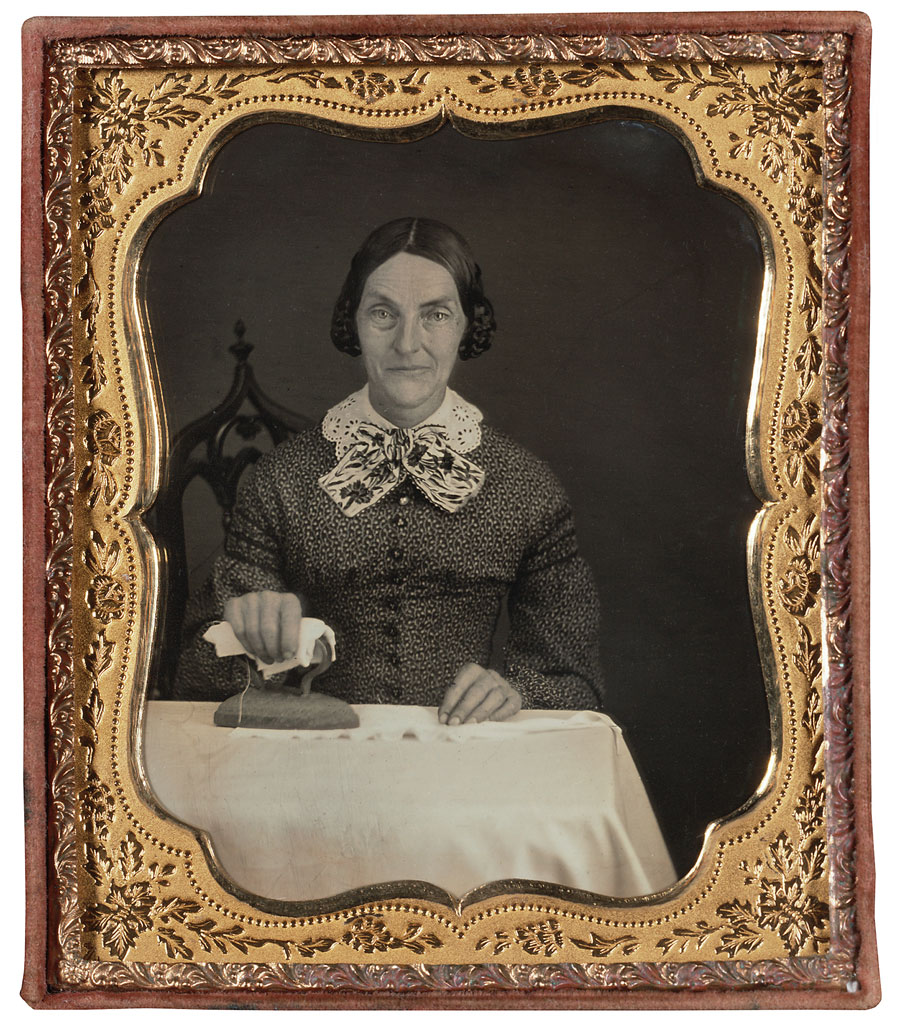
I love the word “occupationals” to describe portraits of individuals with the hallmarks of their trade.
Marcus
Many thankx to the Taft Museum of Art for allowing me to publish the photographs in the posting. Please click on the photographs for a larger version of the image.
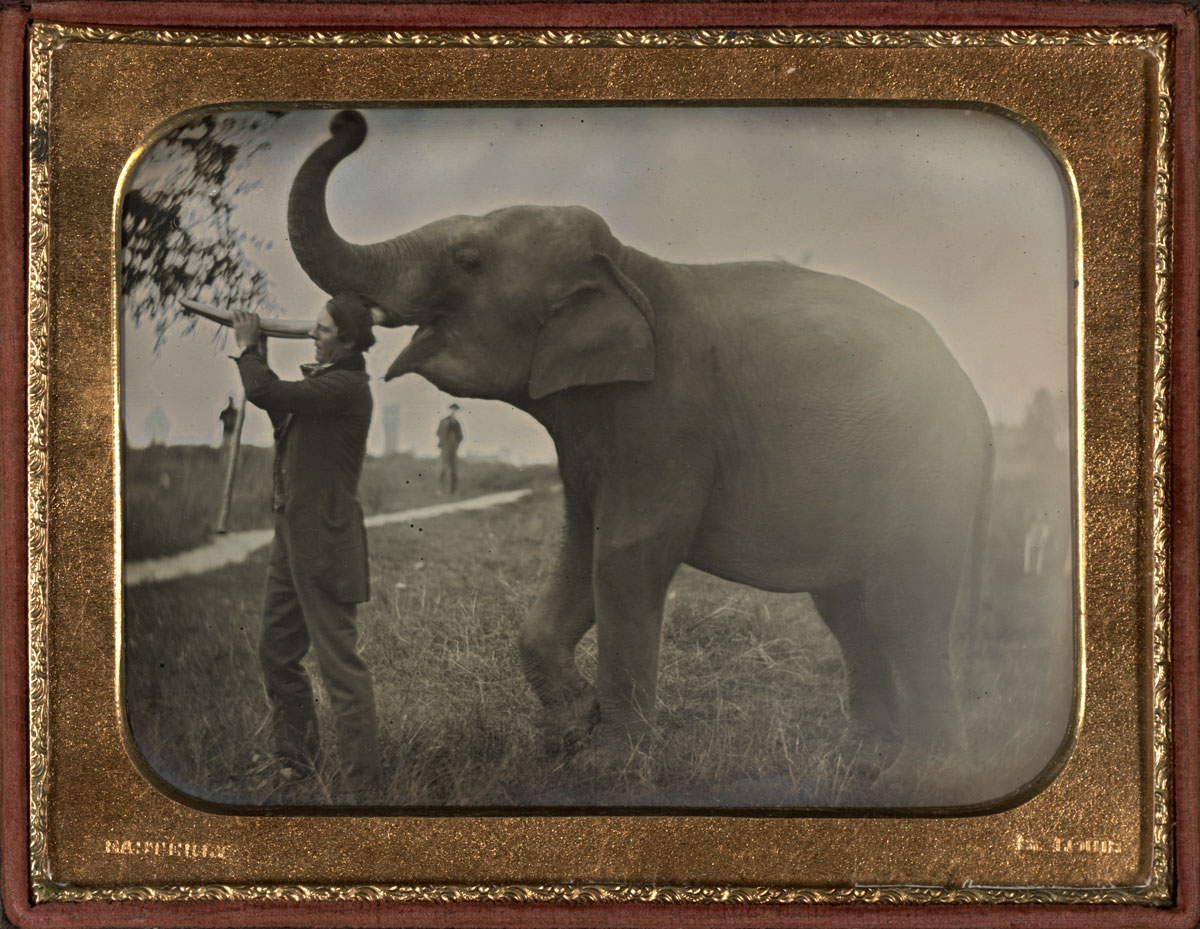
A sometime calligrapher and writing teacher, Vermont-born Thomas Martin Easterly (b. 1809 Guilford, Vermont, d. 1882) learned the daguerreotype process in New York between 1841 and 1844, possibly from Charles and Richard Meade. In 1844 Easterly sailed from New York City to New Orleans, where he made photographs before returning to Vermont the following year. He did not remain for long: by October, he had entered into a daguerreotype studio partnership in Iowa. He and his partner operated as traveling photographers working throughout Iowa and Missouri for several years. Some scholars have credited Easterly with making the first photographs of Plains Indians.
After the dissolution of the partnership, Easterly moved to Saint Louis and took over a studio in 1848. He had a successful career for ten years, but his loyalty to the daguerreotype process after the introduction of the ambrotype, tintype, and paper photograph processes caused his business to falter. By 1860 Easterly had begun to sell farm implements in addition to continuing his daguerreotype practice.
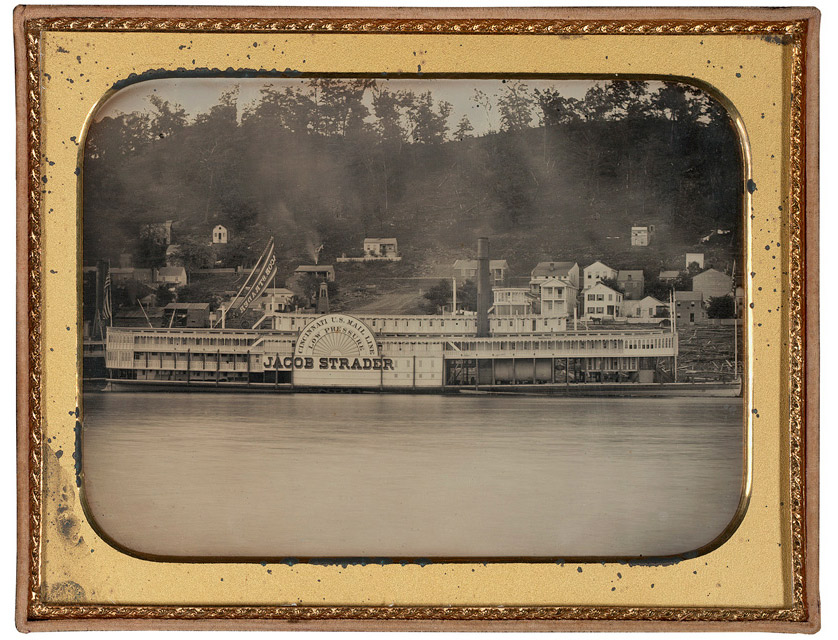
This daguerreotype of the side-wheel packet Jacob Strader was taken at the Cincinnati boatyard where she was built in 1853. Owned by the U.S. Mail Line Co., this steamboat was named to honour Jacob Strader, the company’s first president. The Jacob Strader ran regularly between Cincinnati and Louisville, however during the Civil War, because her large cabin contained 310 berths, she was frequently used to transport sick and wounded soldiers. This boat was dismantled in 1866.
As steamboats replaced flatboats and keelboats as the major mode of river transportation, travel along the Ohio River became faster and easier. By the middle of the nineteenth century, more than 3,000 steamboats arrived each year at the port of Cincinnati. The city’s prominent location along the river contributed to its rapid growth, and by 1850 Cincinnati became the sixth largest city in the country. The development of railroads slowly led to the decline of steamboats. They continued to operate on the Ohio River, but their numbers dwindled.
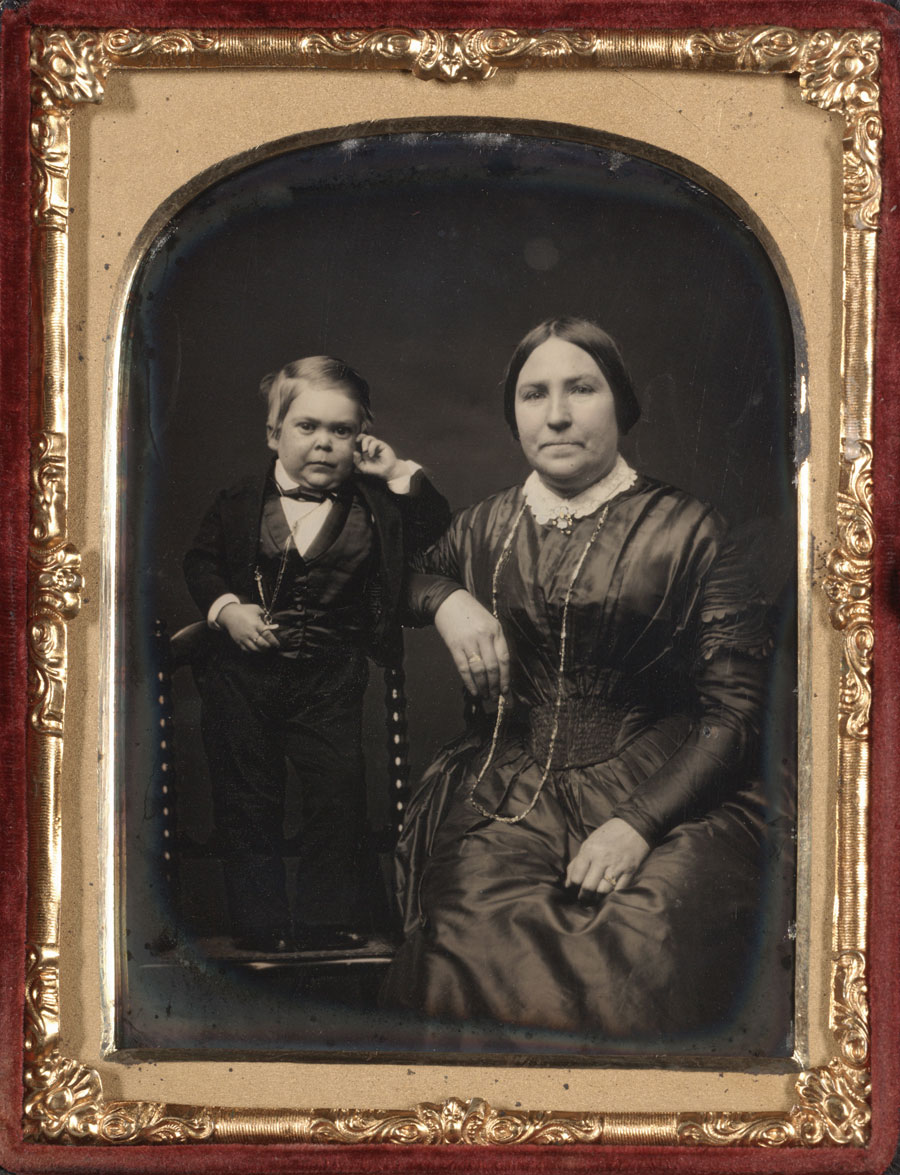
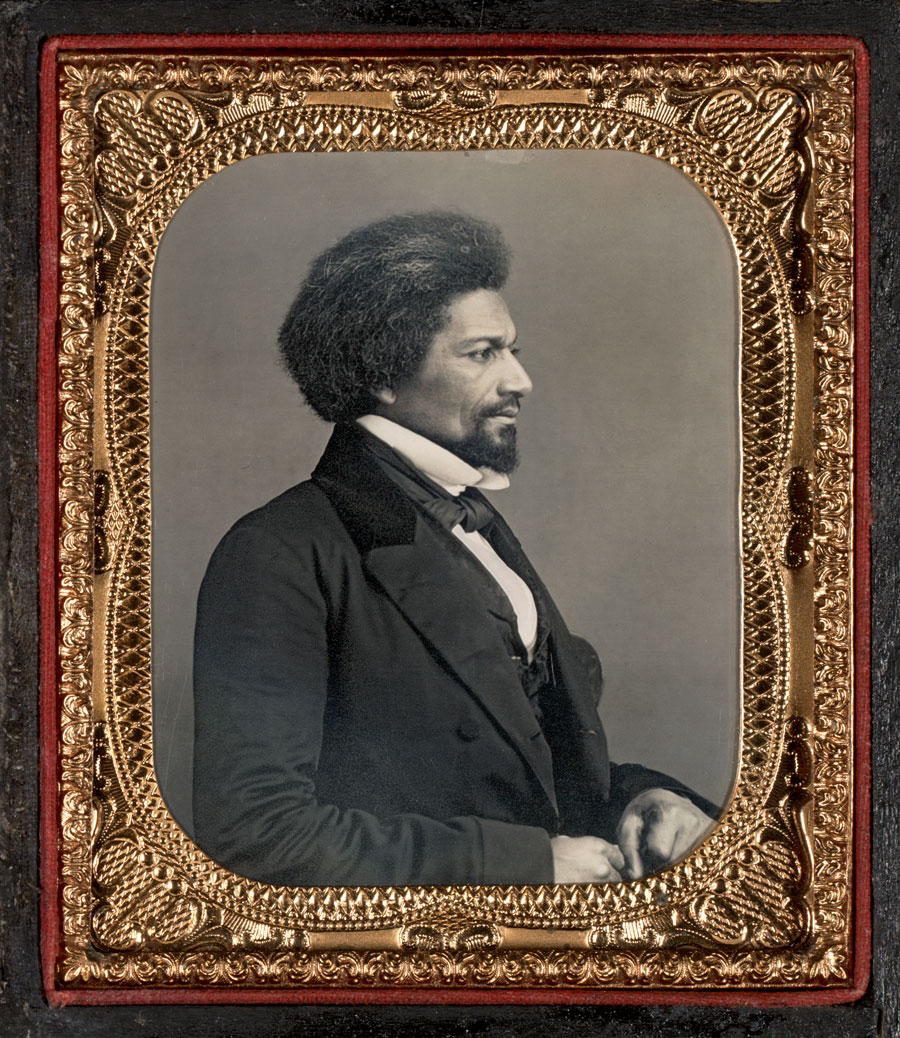
American Daguerreotypes from The Nelson-Atkins Museum of Art, on display May 17 – Aug. 25, features 82 astonishing images of life in 19th-century America. The exhibition includes rare images of such well-known Americans as Harriet Beecher Stowe, Frederick Douglass, and Tom Thumb.
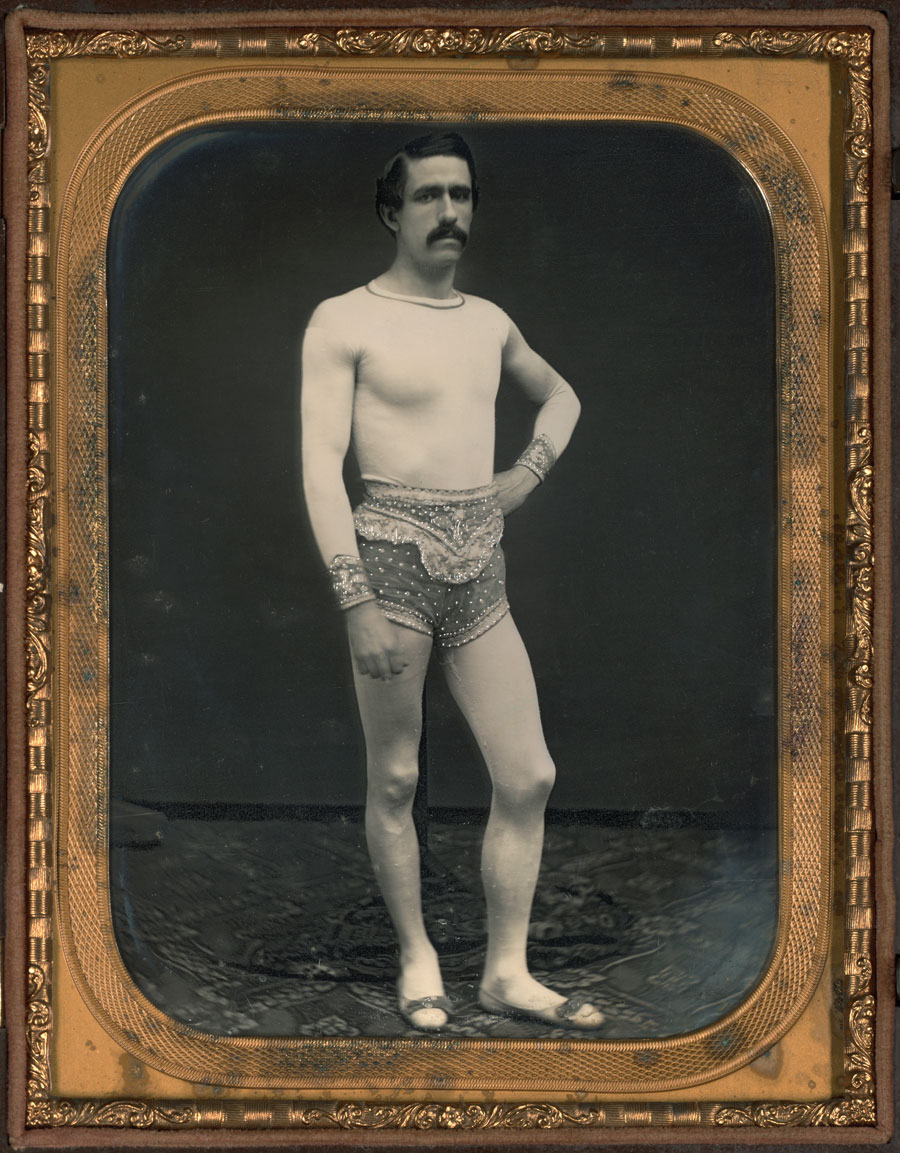
By the middle of the 19th century, Cincinnati was the Queen City of the West. A transportation hub, the city was home to industry, art, and even a professional baseball team. Though there are numerous written accounts of life in the big city at this time, we are also fortunate to have images of this era because of the earliest “photographic” works, known as daguerreotypes. In 1839 the American public first encountered this exciting new invention. By 1843, daguerreotypists had set up shop in every major city in the United States. Visitors to the Taft will have the opportunity to view these remarkable works. This exhibition features about 90 daguerreotypes of exceptional quality and variety, with the high degree of resolution typical of these rare, one-of-a-kind photographs. Works by both famed and anonymous makers provide a window into mid-19th-century America: its occupations, trades, urban and rural scenery, and racial and ethnic diversity.
In 1839 the American public encountered the exciting new invention of photography in its earliest form, the daguerreotype. Together, these two Taft exhibitions present an in-depth look at the art of early photography, as well as candid, touching, and sometimes humorous image of life in mid-19th century America and Cincinnati. A daguerreotype is a unique image crafted on a silvered copper plate, a surface that acts like a mirror. While sometimes hard to view, this exhibition presents the works under perfect lighting conditions. The earliest daguerreotypes required exposures of up to thirty minutes. Within a few years, however, portraits could be made in about ten to twenty seconds.
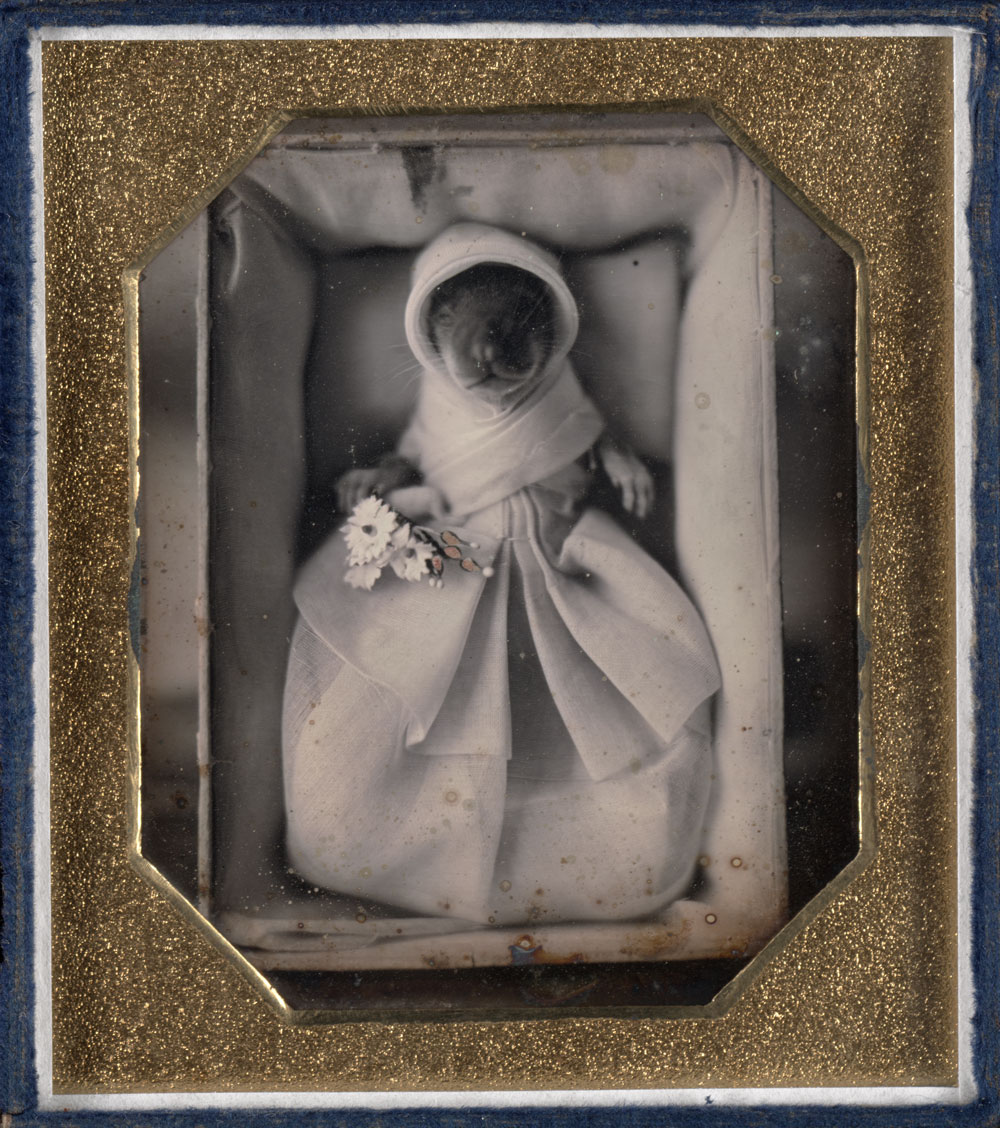
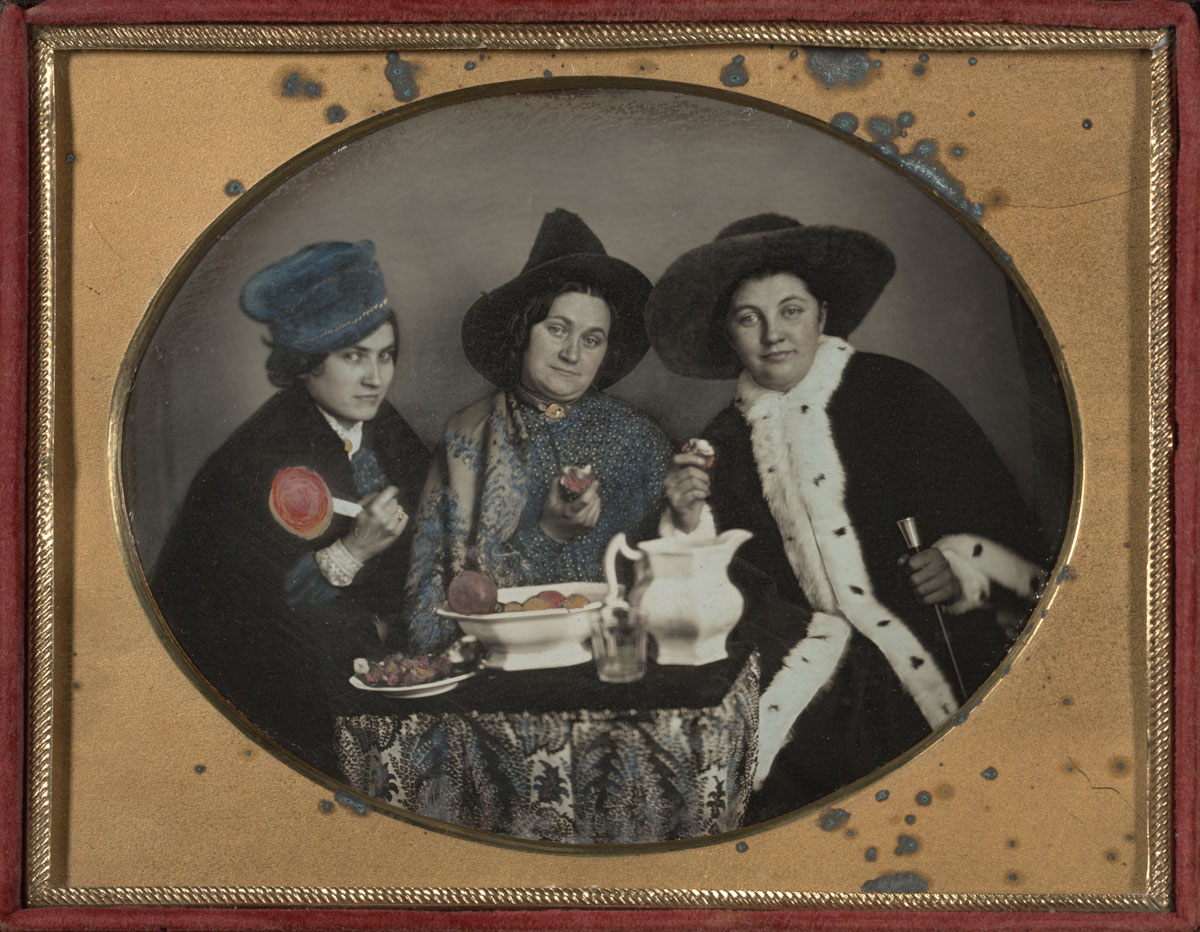
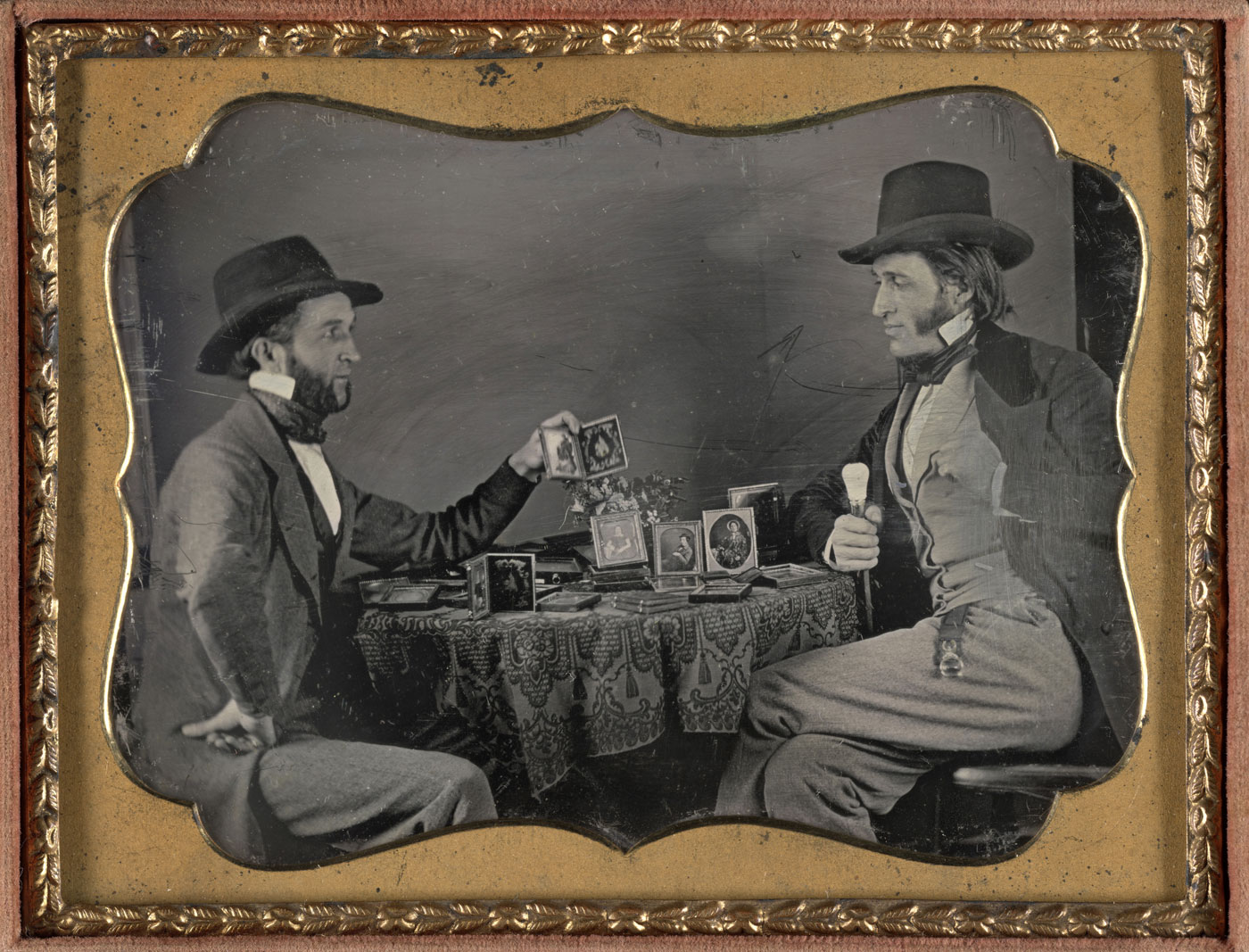
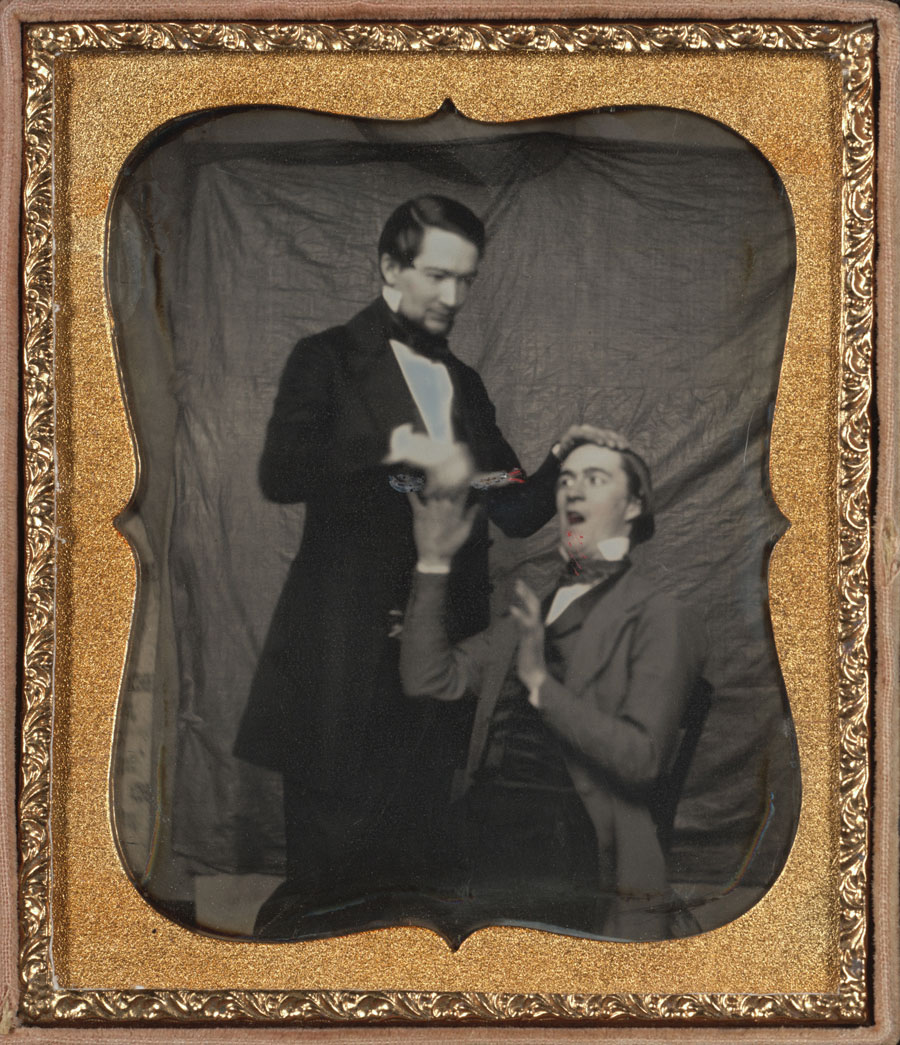
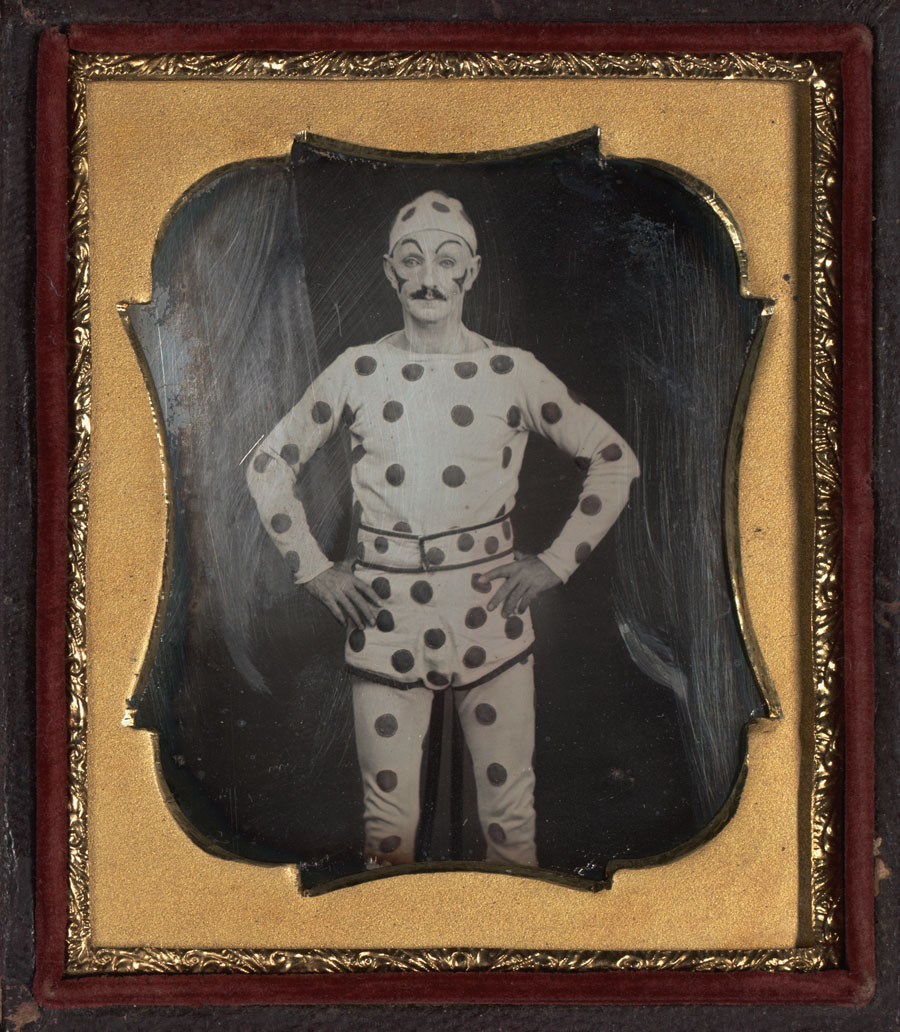
Among the exceptional daguerreotypes in Photographic Wonders are post-mortem images (portraits taken after death) that tell sorrowful stories, while The Comic Dentist and other humorous subjects still amuse today’s audiences. Portraits of individuals with the hallmarks of their trade (called occupationals), including a blacksmith with his tools, a woman ironing, and a clown in costume, show Americans’ pride in their work. Outdoor scenes reveal quaint towns and growing cities, while landscapes feature popular tourist destinations. The wide range of subjects offers something for every interest. The exhibited works in Photographic Wonders are part of an acclaimed collection that Hallmark Cards, Inc., donated in 2005 to The Nelson-Atkins Museum of Art.
The choice examples selected for the Taft date from about 1840 to about 1860, while Nicholas Longworth and his family lived in the historic house that is now the Taft Museum of Art. Local Exposures, a captivating “snapshot” of life in Cincinnati in the 1800s, will delight Cincinnati history enthusiasts. A rarely exhibited Cincinnati streetscape reveals what the city looked like in 1848, while business cards and advertisements for daguerreotype studios show the prominence of the industry in Cincinnati.
“These were the first photographs. Prior to this the only way you could preserve your image was through a painting or sketch. Imagine seeing yourself in a photograph for the first time – it would seem like magic, and that’s exactly the first reaction people had,” says installing curator, Tamera Muente. Taft Museum of Art Director/CEO, Deborah Emont Scott, says, “It’s an amazing experience to view these precious, one-of-a-kind photographs. The images are small and the viewing experience is an intimate one – you step back in time and share a rare mid-19th-century moment with the sitter.”
General Tom Thumb was the stage name of Charles Sherwood Stratton (January 4, 1838 – July 15, 1883), a little person who achieved great fame under circus pioneer P.T. Barnum.
Frederick Douglass (born Frederick Augustus Washington Bailey, c. February 1818 – February 20, 1895) was an African American social reformer, orator, writer and statesman. After escaping from slavery, he became a leader of the abolitionist movement, gaining note for his dazzling oratory and incisive antislavery writing. He stood as a living counter-example to slaveholders’ arguments that slaves did not have the intellectual capacity to function as independent American citizens. Many Northerners also found it hard to believe that such a great orator had been a slave.
Douglass wrote several autobiographies, eloquently describing his experiences in slavery in his 1845 autobiography, Narrative of the Life of Frederick Douglass, an American Slave, which became influential in its support for abolition. He wrote two more autobiographies, with his last, Life and Times of Frederick Douglass, published in 1881 and covering events through and after the Civil War. After the Civil War, Douglass remained active in the United States’ struggle to reach its potential as a “land of the free”. Douglass actively supported women’s suffrage. Without his approval, he became the first African American nominated for Vice President of the United States as the running mate of Victoria Woodhull on the impracticable and small Equal Rights Party ticket. Douglass held multiple public offices.
Douglass was a firm believer in the equality of all people, whether black, female, Native American, or recent immigrant, famously quoted as saying, “I would unite with anybody to do right and with nobody to do wrong.”(Text from Wikipedia)
“I have often been asked, how I felt when first I found myself on free soil. And my readers may share the same curiosity. There is scarcely anything in my experience about which I could not give a more satisfactory answer. A new world had opened upon me. If life is more than breath, and the ‘quick round of blood,’ I lived more in one day than in a year of my slave life. It was a time of joyous excitement which words can but tamely describe. In a letter written to a friend soon after reaching New York, I said: ‘I felt as one might feel upon escape from a den of hungry lions.’ Anguish and grief, like darkness and rain, may be depicted; but gladness and joy, like the rainbow, defy the skill of pen or pencil.”
Douglass, Frederick. Life and Times of Frederick Douglass. 1882, p. 170.
Taft Museum of Art
316 Pike Street at the east end of Fourth Street
across from Lytle Park, in downtown Cincinnati













![David Hill (Scottish, 1802-1870) and Robert Adamson (Scottish, 1821-1848) 'The Gowan [Margaret and Mary Cavendish]' c. 1843-1848](https://artblart.com/wp-content/uploads/2015/06/david-hill-and-robert-adamson-the-gowan-margaret-and-mary-cavendish-c-1843-1848-web.jpg "David Hill (Scottish, 1802-1870) and Robert Adamson (Scottish, 1821-1848) 'The Gowan [Margaret and Mary Cavendish]' c. 1843-1848")






![John S. Johnston (American, c. 1839 - December 17, 1899) 'One of Dr Kane’s Men [possibly William Morton]' c. 1857](https://artblart.com/wp-content/uploads/2015/06/john-s-johnston-one-of-dr-kanes-men-possibly-william-morton-c-1857-web.jpg "John S. Johnston (American, c. 1839 - December 17, 1899) 'One of Dr Kane’s Men [possibly William Morton]' c. 1857")




















 Art Blart _ art and cultural memory archive
You must be logged in to post a comment.