Exhibition: ‘Rosario de Velasco’ at the Museo Nacional Thyssen-Bornemisza, Madrid

“Velasco’s art is authoritarian utopian erasing social libertarian hiding dystopian destruction.” Dr Marcus Bunyan

Exhibition dates: 18th June to 15th September 2024

Curators: Toya Viudes de Velasco and Miguel Lusarreta


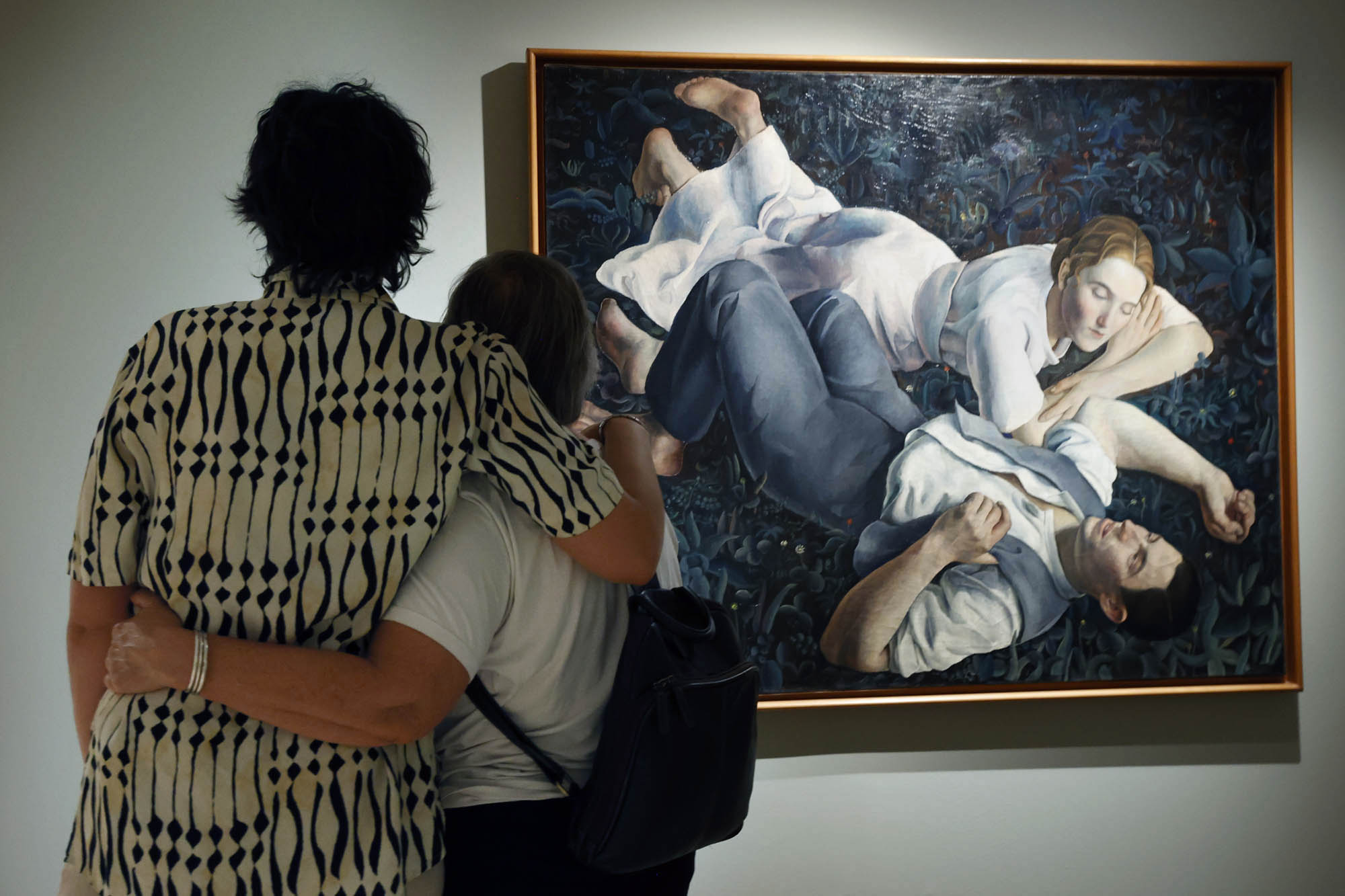
Rosario de Velasco (Spanish, 1904-1991) 'Adam and Eve' (Adán y Eva) 1932


Rosario de Velasco (Spanish, 1904-1991)
Adam and Eve (Adán y Eva)
1932
Oil on canvas
109 x 134cm
Museo Nacional Centro de Arte Reina Sofía, Madrid
Photo credit: Museo Nacional Centro de Arte Reina Sofía Photographic Archive
© Rosario de Velasco, VEGAP, Madrid, 2024


(hidden) in plain sight

When Museo Nacional Thyssen-Bornemisza, Madrid sent me an email about this exhibition I was captivated by the beautiful paintings of Rosario de Velasco, an artist who I had never hear of before, and I decided to do a posting on the exhibition.

Rosario de Velasco was part of the “return to order” movement in Spain which was a style that combined tradition and modernity, associated with a revival of classicism and realistic painting. The paintings are stylish with clean lines and finely honed forms. Among other influences, they evoke Cubism in the tilting of perspective and De Chirico in the slightly twisted perspective of the architectural landscape scenes (for example, see Portrait of Doctor Luis de Velasco (Retrato del doctor Luis de Velasco) c. 1933 below) … while also incorporating magic realism (a style which presents a realistic view of the world while incorporating magical elements) in their story telling.

The press release and various commentators link de Velasco’s paintings to the Italian Novecento and German New Objectivity (Neue Sachlichkeit) movements and there are visible connections to these movements in the work. De Velasco stated that Novecento was an influence on her art practice. But while there are surface similarities in style to the likes of Christian Schad, for example, I believe that de Velasco’s work is of a different order: for New Objectivity was described by art historian G.F. Hartlaub, as ‘new realism bearing a socialist flavour’. And while de Velasco’s work bears a working class flavour it is anything but socialist.

While New Objectivity mines the satirical, debauched air of decadence of the Weimar Republic, de Velasco’s paintings are a paen (perhaps even a sermon) to motherhood, heterosexuality, religiosity, utopianism and the fascist desire for a clean, lean and muscular art. Figurative stylisation and idealisation are used to evidence this desire for wholesomeness in her paintings of gypsies, peasants and working people (just as the stereotypical form of modern realist painting imposed by Stalin following his rise to power after the death of Lenin in 1924 crushed all extant art movements in Russia including the wonderful, briefly flowering Ukrainian modernist movement).

Indeed, glossed over by the press release in a paragraph or two, is the fact that de Velasco believed in the ideas of the Spanish fascists, in “the ideas of the Falange Española de las JONS and José Antonio Primo de Rivera [which] led her to collaborate with the magazine Vértice between 1937 and 1946, where she illustrated the ideology of the new regime.”1 Her art was placed at the service of propaganda and as an artist she benefitted from being on the side of the regime.

It’s a prickly question: Is her ideology complicit with her art? Can you separate the artist from the art?

And the answer is, no you can’t.

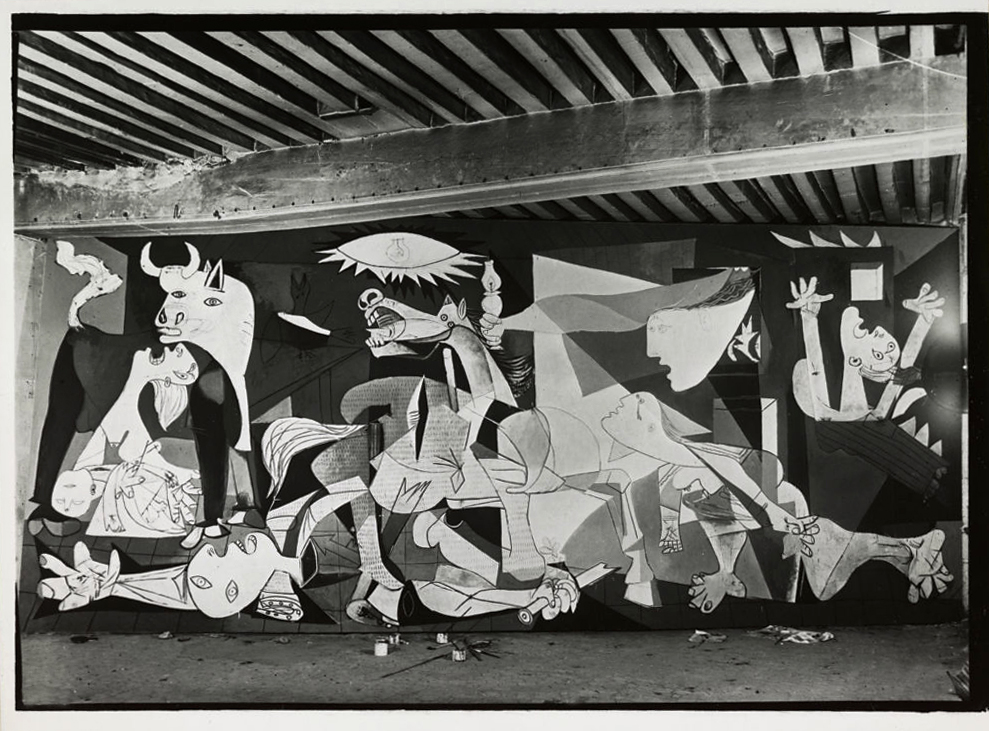
In Rosario de Velasco’s paintings the ideology slips behind the surface but it is still there. Witness the diabolical power of destruction rained down on a civilian population in Picasso’s painting Guernica (1937) – “an emotional response to war’s senseless violence ” – when compared to de Resario’s very Catholic, idealistic preternatural interpretation of a massacre in her The Massacre of the Innocents (La matanza de los inocentes) (1936, below). “She covers up with religious aura what was actually going on.”2

With the transition to democracy in Spain starting after the death of Franco in November 1975, “the exiled and forgotten republican artists were recovered, Rosario de Velasco was ignored both for her genre and for her ideology.”3 But now with her rehabilitation – noun: the action of restoring someone to former privileges or reputation after a period of disfavour – in her privilege, her special right to speak as an artist to all, we must not be blinded to the fact that de Velasco’s art is authoritarian utopian erasing social libertarian hiding dystopian destruction.

As my good friend, writer and philosopher Associate Professor James McArdle commented on Rosario de Velasco’s work: “I think we can admire the art but we must be knowing of its seduction, and be prepared to see straight through it to that layer of ideology ‘hidden in plain sight’.”4

Personally, I believe that it’s not so much hidden in plain sight, but right there in plain sight. If you are an informed, aware, sentient human being you know these things, you feel these things, and you can see these things.

There is never any excuse for a collective forgetting or cultural amnesia of the ideologies of the past for, with the rise of the far right around the world, they are returning to haunt us.

Dr Marcus Bunyan


1/ Anonymous. “La matanza de los inocentes,” on the  on the Museo Belles Arts Valencia website Nd [Online] Cited 05/09/2024. Translated by Google Translate from the Spanish text

2/ Associate Professor James McArdle email to the author, 04/09/2024

3/ Anonymous. “La matanza de los inocentes,” on the  on the Museo Belles Arts Valencia website Nd [Online] Cited 05/09/2024. Translated by Google Translate from the Spanish text

4/ Associate Professor James McArdle email to the author, 04/09/2024


Many thankx to the Museo Nacional Thyssen-Bornemisza for allowing me to publish the photographs in the posting. Please click on the photographs for a larger version of the image.


“Rosario de Velasco is part of the “return to order” movement in Spain, parallel to the German New Objectivity and the Italian Novecento, with a style that combines tradition and modernity. The artist admired masters such as Giotto, Mantegna, Piero de la Francesca, Durero, Velázquez and Goya, but also the vanguardists, such as De Chirico, Braque or Picasso and the protagonists of that return to order in Germany and Italy that she met through of magazines and exhibitions held in the 1920s in Madrid.”


Cristina Perez. “La fuerza bíblica de Rosario de Velasco ilumina el Museo Thyssen,” (The biblical force of Rosario de Velasco illuminates the Thyssen Museum) on the rtve website 18.06.2024 [Online] Cited 14/08/2024. Translated from the Spanish by Google Translate


The return to order (French: retour à l’ordre) was a European art movement that followed the First World War, rejecting the extreme avant-garde art of the years up to 1918 and taking its inspiration from classical art instead. The movement was a reaction to the war. Cubism was partially abandoned even by its co-creator Picasso. Futurism, which had praised machinery, dynamism, violence and war, was rejected by most of its adherents. The return to order was associated with a revival of classicism and realistic painting.


Text from the Wikipedia website
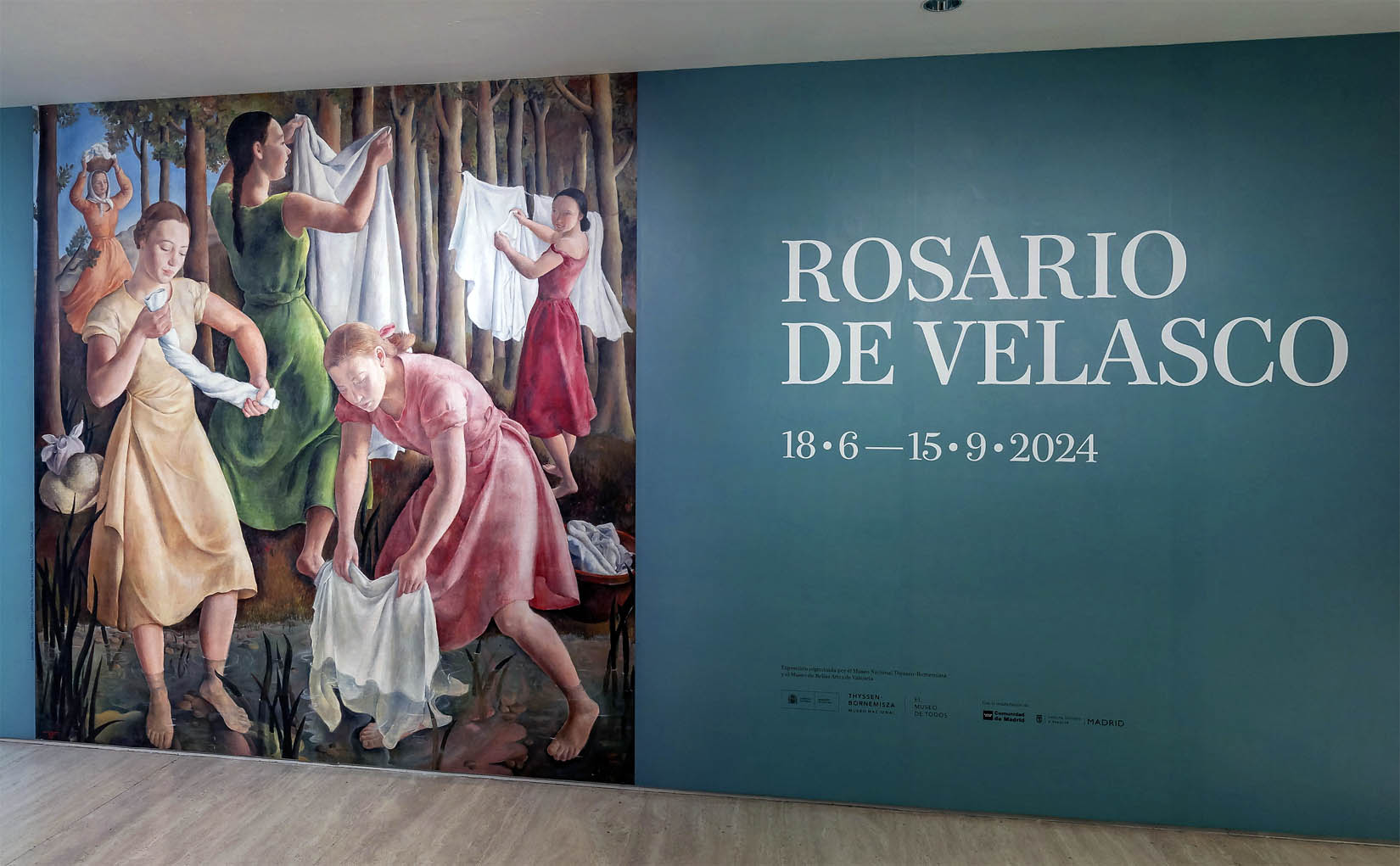


Installation view of the exhibition 'Rosario de Velasco' at the Museo Nacional Thyssen-Bornemisza 

Installation view of the exhibition 'Rosario de Velasco' at the Museo Nacional Thyssen-Bornemisza 

Installation view of the exhibition 'Rosario de Velasco' at the Museo Nacional Thyssen-Bornemisza 

Installation view of the exhibition 'Rosario de Velasco' at the Museo Nacional Thyssen-Bornemisza showing Velasco's 'Adam and Eve' (1932)


Installation view of the exhibition Rosario de Velasco at the Museo Nacional Thyssen-Bornemisza showing in the bottom image, Velasco’s Adam and Eve (1932, above)
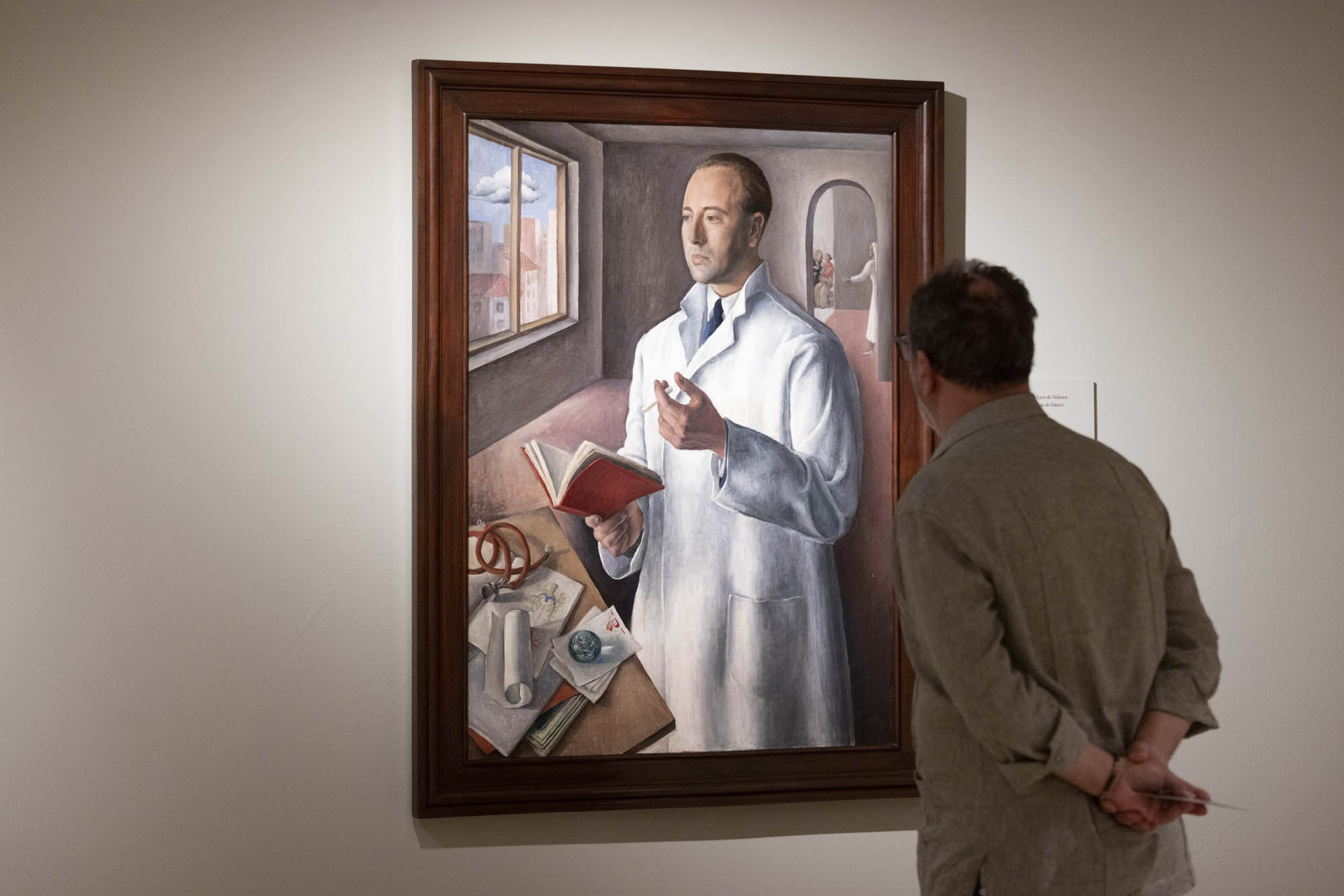
 

Installation view of the exhibition 'Rosario de Velasco' at the Museo Nacional Thyssen-Bornemisza showing Velasco's 'Portrait of Doctor Luis de Velasco' (c. 1933)


Installation view of the exhibition Rosario de Velasco at the Museo Nacional Thyssen-Bornemisza showing Velasco’s Portrait of Doctor Luis de Velasco (c. 1933, below)
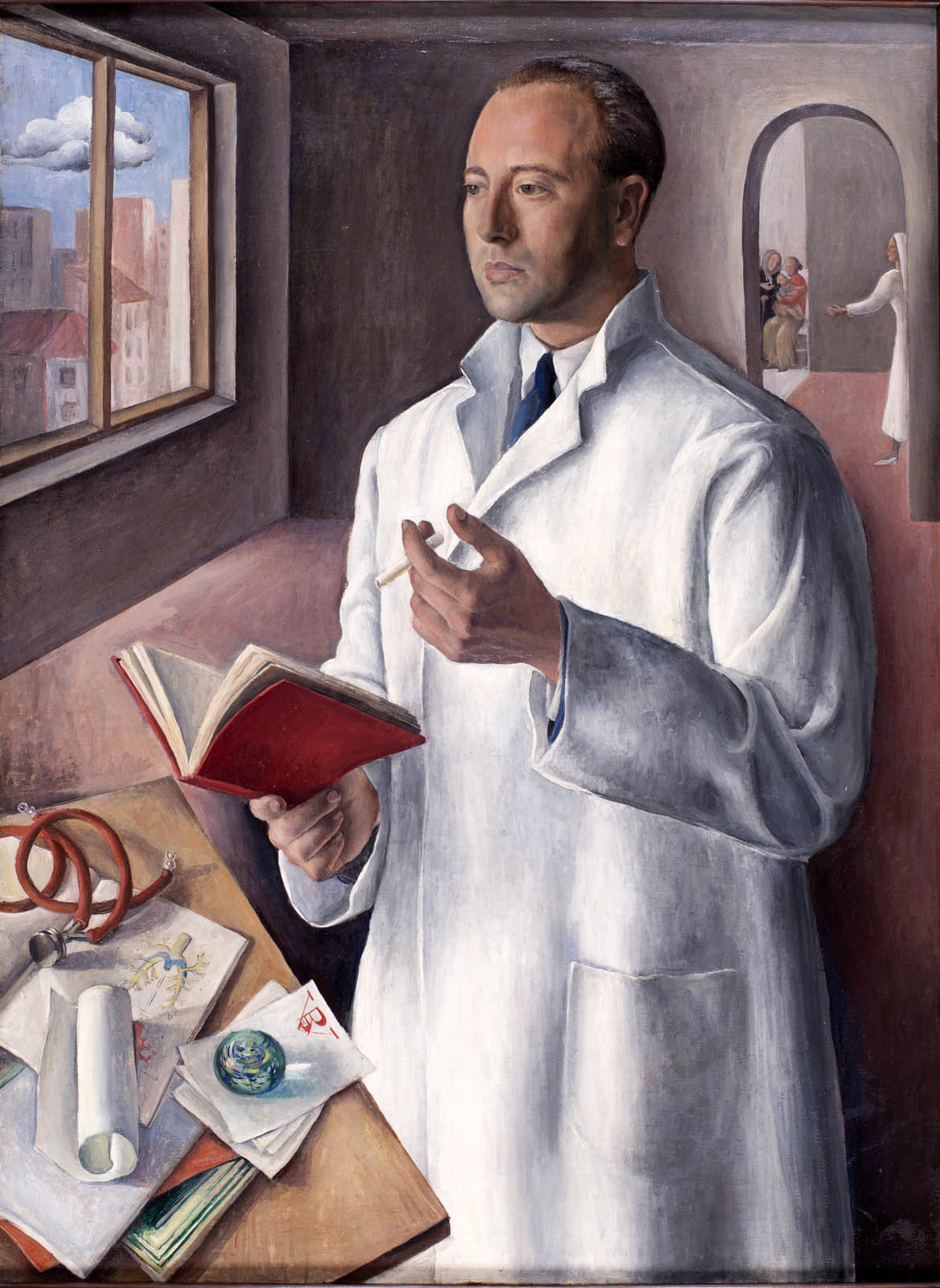
 

Rosario de Velasco (Spanish, 1904-1991) 'Portrait of Doctor Luis de Velasco' (Retrato del doctor Luis de Velasco) c. 1933


Rosario de Velasco (Spanish, 1904-1991)
Portrait of Doctor Luis de Velasco (Retrato del doctor Luis de Velasco)
c. 1933
Oil on canvas
114 x 84cm
José A. de Velasco Collection
© Rosario de Velasco, VEGAP, Madrid, 2024


Otto Dix (German, 1891-1969) 'The Jeweller Karl Krall' (Der Juwelier Karl Krall) 1923


Otto Dix (German, 1891-1969)
The Jeweller Karl Krall (Der Juwelier Karl Krall)
1923
Oil on canvas
Kunst- und Museumsverein im Von der Heydt-Museum Wuppertal

This painting is not in the exhibition and is used under fair use conditions for the purposes of education and research.


The Museo Nacional Thyssen-Bornemisza is jointly organising with the Museo de Bellas Artes de Valencia an exhibition on the Spanish figurative painter Rosario de Velasco (Madrid, 1904 – Barcelona, 1991).

Curated by Miguel Lusarreta and Toya Viudes de Velasco, the artist’s great-niece, the exhibition features 30 paintings from the 1920s to 1940s (the earliest and the most important from Velasco’s career) and a section on her activities as an illustrator. Alongside well known works from museum collections, such as the famous oil Adam and Eve from the Museo Nacional Centro de Arte Reina Sofía, with which the artist obtained the second-prize medal for painting at the National Fine Arts Exhibition in 1932, or The Massacre of the Innocents (1936) from the Museo de Bellas Artes de Valencia, there will be others on display for the first time that have remained with Velasco’s family and in private collections, some unlocated until recently and only found and identified in the past few years.

Through a selection of paintings, drawings and illustrations and employing an approach that combines general art-historical issues and also explores aesthetic, social and political aspects, the exhibition aims to rediscover and reassess the work of one of the great Spanish women artists of the first half of the 20th century.

Following its showing in Madrid the exhibition will be seen at the Museo de Bellas Artes de Valencia from 7 November 2024 to 16 February 2025.

Text from the Museo Nacional Thyssen-Bornemisza website


Rosario de Velasco (Spanish, 1904-1991) 'Seamstress Asleep' (Costurera dormida) c. 1930


Rosario de Velasco (Spanish, 1904-1991)
Seamstress Asleep
c. 1930
Oil on canvas
56 × 75cm
Private collection
Photo: Jonás Bel
© Rosario de Velasco, VEGAP, Madrid, 2024
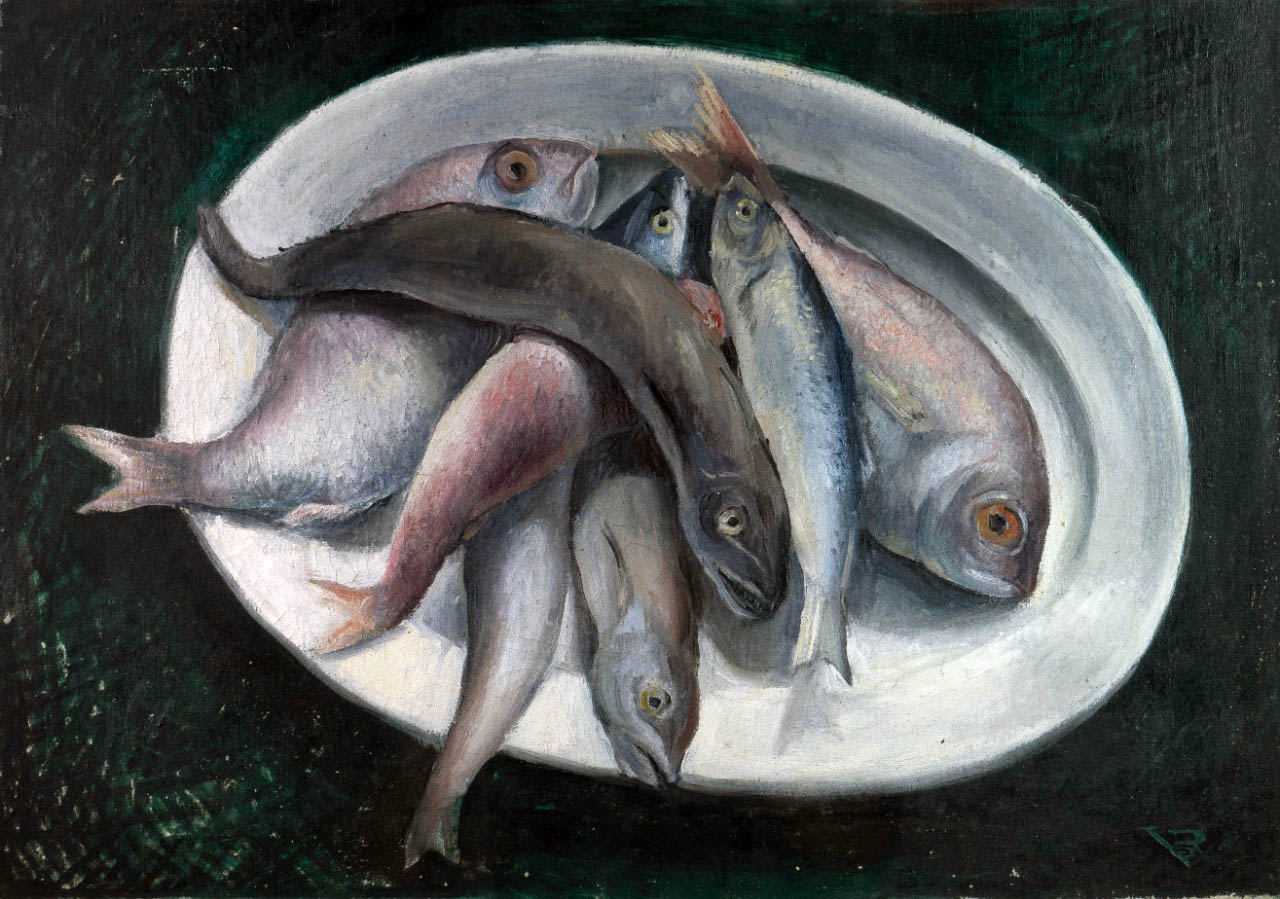
 

Rosario de Velasco (Spanish, 1904-1991) 'Still Life with Fish' (Bodegón con peces) c. 1930


Rosario de Velasco (Spanish, 1904-1991)
Still Life with Fish (Bodegón con peces)
c. 1930
Oil on canvas
42 × 60cm
Ibáñez Museum Collection, Olula del Rio
© Rosario de Velasco, VEGAP, Madrid, 2024
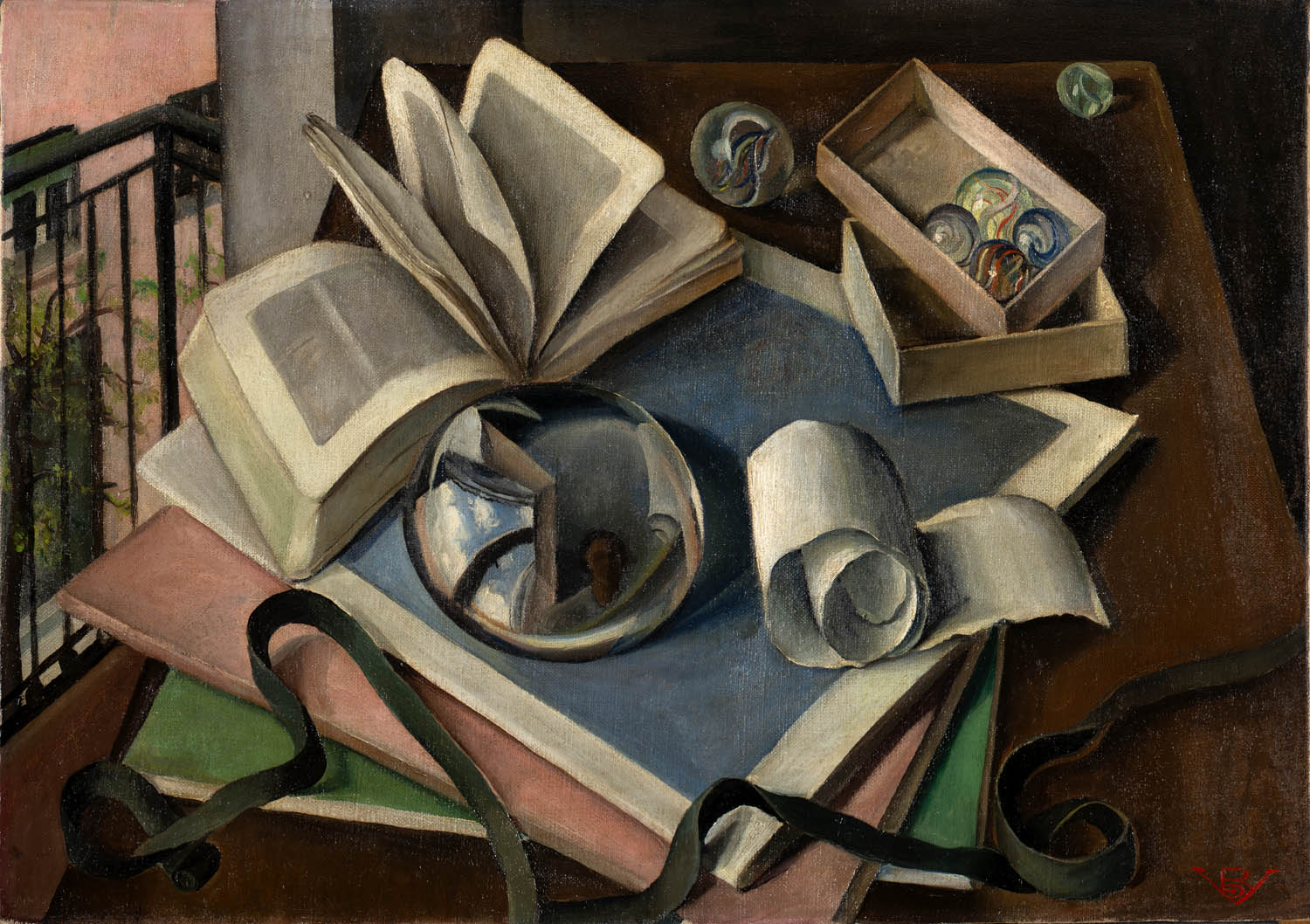
 

Rosario de Velasco (Spanish, 1904-1991) 'Things' (Cosas) 1933


Rosario de Velasco (Spanish, 1904-1991)
Things (Cosas)
1933
Oil on canvas
45.5 × 65.5cm
Private collection
© Rosario de Velasco, VEGAP, Madrid, 2024


Rosario de Velasco (Spanish, 1904-1991) 'Untitled, (The Children's Room)' / Sin título (El cuarto de los niños) 1932-1933


Rosario de Velasco (Spanish, 1904-1991)
Untitled, (The Children’s Room) / Sin título (El cuarto de los niños)
1932-1933
Oil on canvas
55 × 73cm
Museo Nacional Centro de Arte Reina Sofía, Madrid
Photo: Archivo Fotográfico Museo Nacional Centro de Arte Reina Sofía
© Rosario de Velasco, VEGAP, Madrid, 2024


Rosario de Velasco remains one of the least known artists of the 1930s in Spain. Her academic training in Madrid took place alongside Fernando Álvarez de Sotomayor and, above all, was the result of her avid curiosity for the Italian Novecento and the German New Objectivity. This interest came to her through magazines and the contemplation of the work of authors such as Carlo Carrà, Felice Casorati and Ardengo Soffici at the Palacio de Exposiciones del Retiro in 1928.

Her approach to the ideas of the Falange Española de las JONS and José Antonio Primo de Rivera led her to collaborate with the magazine Vértice between 1937 and 1946, where she illustrated the ideology of the new regime. In this context we must place the canvas The Massacre of the Innocents (1936), in which Rosario de Velasco used a religious theme to create a work with clear political content created with the aim of mobilising society. The work was presented at the National Exhibition of Fine Arts inaugurated on July 4, 1936 by the President of the Republic, Manuel Azaña, at the Palacio de Cristal in Madrid.

This drift from realism towards political action was a frequent trend at a turbulent time in the history of Spain when art was placed at the service of propaganda. However, with democracy, the exiled and forgotten republican artists were recovered, Rosario de Velasco was ignored both for her genre and for her ideology. The flood of 1957 only deepened the marginalisation of The Massacre of the Innocents and left the painting covered in mud and with water marks for years. The magnificent and disturbing work was attributed to Ricardo Verde based on the monogram with which Rosario de Velasco signed her works, with the initials of her name, RV, until in 1995 its authorship was returned to the artist.

Anonymous. “La matanza de los inocentes,” on the  on the Museo Belles Arts Valencia website Nd [Online] Cited 05/09/2024. Translated by Google Translate from the Spanish text. Used under fair use conditions for the purposes of education and research


The Spanish Civil War marked a turning point in Rosario’s life. Her Falangist militancy and her family environment led her to leave Madrid, traveling first to Valencia and then to Barcelona, ​​where she met the doctor Javier Farrerons, who would become her husband. Thanks to Farrerons, Rosario was released from the Modelo prison in Barcelona, ​​where she was detained. After the war, he settled in Barcelona with his family and continued to participate in various exhibitions, albeit less frequently.

In 1939, she participated in the National Exhibition of Painting and Sculpture in Valencia, and in 1940 she presented her first individual exhibition in Barcelona. Over the following years, she also exhibited in Madrid, at events such as the National Exhibition of Fine Arts in 1941 and 1954, as well as in various galleries. In 1944, she was selected for the II Salón de los Once, organised by the Academia Breve de Crítica de Arte, an initiative by Eugenio d’Ors to promote post-war art.

Redacción. “Rosario de Velasco: Entre Giotto y Picasso, un estilo único en la pintura española,” (Rosario de Velasco: Between Giotto and Picasso, a unique style in Spanish painting) on the GenexiGente website 28/05/2024 [Online] Cited 14/08/2024, Translated from the Spanish by Google Translate. Used under fair use conditions for the purposes of education and research
 

The outbreak of the Civil War, her Falangist militancy and her family environment lead her to leave Madrid. She travels first to Valencia and then to Barcelona, ​​in Sant Andreu de Llavaneres, where she meets the ophthalmologist Javier Farrerons, her future husband, and who managed to free her from the Modelo prison in Barcelona, ​​where she was detained. Viudes de Velasco explains that “thanks to God, she was in prison for one night because she had the immense luck that the doctor in the prison was a very good friend of the one who later became her husband, and that same night they took her out. The next day her cellmate was shot. That marked her life and she didn’t want to talk about the war again.”

Cristina Perez. “La fuerza bíblica de Rosario de Velasco ilumina el Museo Thyssen,” (The biblical force of Rosario de Velasco illuminates the Thyssen Museum) on the rtve website 18.06.2024 [Online] Cited 14/08/2024. Translated from the Spanish by Google Translate. Used under fair use conditions for the purposes of education and research


Dora Maar (French, 1907-1997) 'Guernica' May-June, 1937


Dora Maar (French, 1907-1997)
Guernica
May-June, 1937
Gelatin silver print

This photograph is not in the exhibition and is used under fair use conditions for the purposes of education and research.
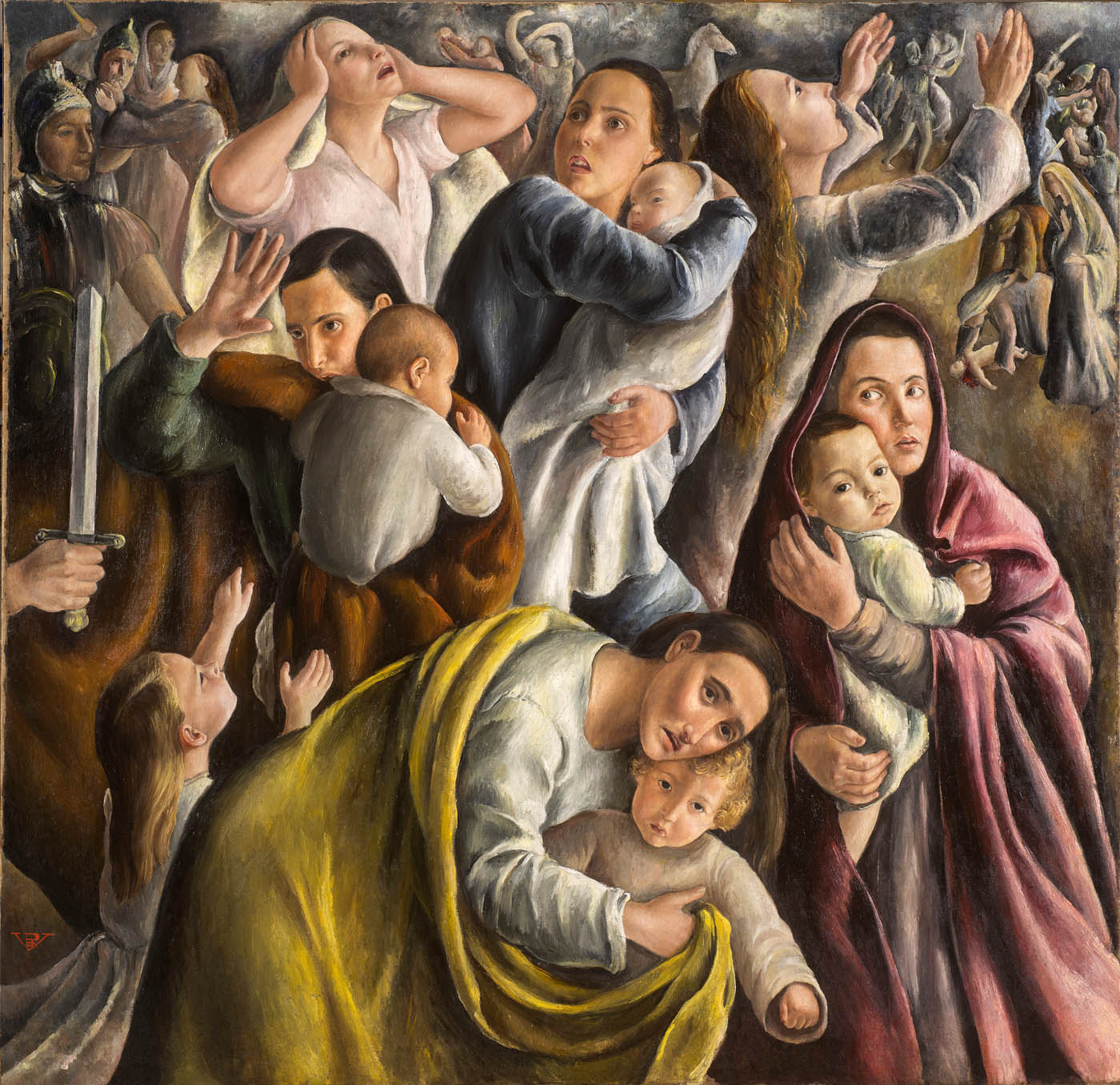
 

Rosario de Velasco (Spanish, 1904-1991) 'The Massacre of the Innocents' (La matanza de los inocentes) 1936


Rosario de Velasco (Spanish, 1904-1991)
The Massacre of the Innocents (La matanza de los inocentes)
1936
Oil on canvas
164 × 167.5cm
Museo de Bellas Artes de Valencia
Photo: Museo de Bellas Artes de Valencia
© Rosario de Velasco, VEGAP, Madrid, 2024


The Museo Nacional Thyssen-Bornemisza is jointly presenting with the Museo de Bellas Artes de Valencia an exhibition on the Spanish figurative painter Rosario de Velasco (Madrid, 1904 – Barcelona, 1991). Curated by Miguel Lusarreta and Toya Viudes de Velasco, the artist’s great-niece, the exhibition brings together around 30 paintings from the 1920s to the 1940s – the earliest and the most important from Velasco’s career – and also has a section on her work as an illustrator.

The exhibition, which is benefiting from the support of the Region of Madrid and the City Council of Madrid, aims to present and draw attention to the work of one of the great Spanish women artists of the first half of the 20th century. In addition to well-known paintings from museum collections, such as the famous oil Adam and Eve (1932) from the Museo Nacional Centro de Arte Reina Sofía, The Massacre of the Innocents (1936) from the Museo de Bellas Artes de Valencia, Maragatos (1934) from the Museo del Traje, Madrid, and Carnival (before 1936) from the Centre Pompidou, Paris, the exhibition features works still with the artist’s family and in private collections and others that have only been rediscovered and located in the past few months. Following its showing in Madrid, the exhibition will be presented at the Museo de Bellas Artes de Valencia from 7 November 2024 to 16 February 2025.

Rosario de Velasco’s work represents an outstanding example of the so-called “return to order” in Spain, a movement parallel to German New Objectivity and Italian Novecento with a style that combined tradition and modernity. Velasco admired painters such as Giotto, Masaccio, Piero della Francesca, Mantegna, Velázquez and Goya, but also avant-garde figures such as De Chirico, Braque, Picasso and the exponents of the “return to order” in Germany and Italy, whom she encountered via magazines and exhibitions held in Madrid in the 1920s.

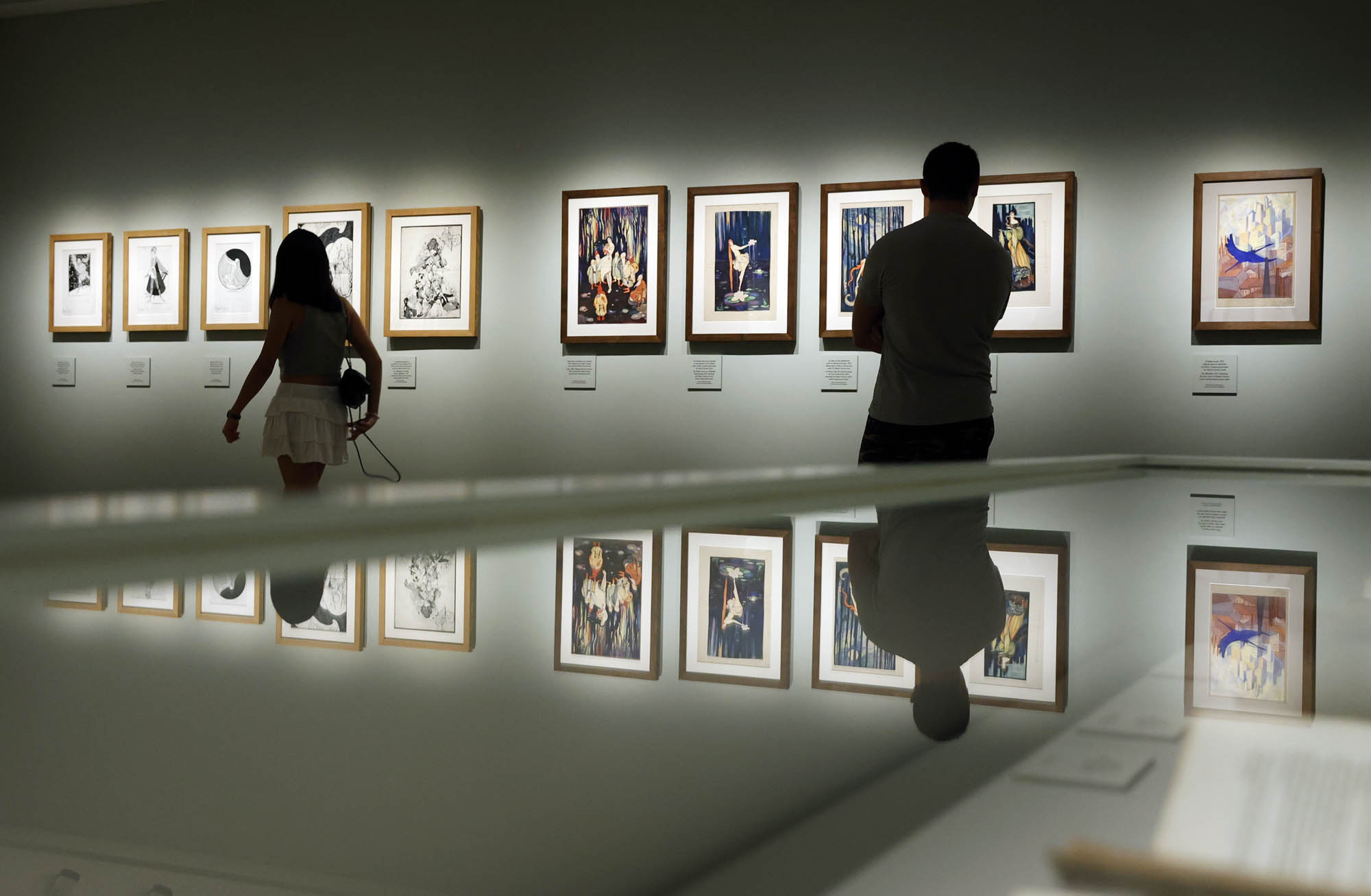
The exhibition also focuses on Velásco’s activities as an illustrator, revealing a graphic artist of great versatility. This is evident, for example, in her illustrations for the 1928 edition of Stories for dreaming by María Teresa León and Stories for my grandchildren (1932) by Carmen Karr.

Rosario de Velasco (Madrid, 1904 – Barcelona, 1991)

Born into a very traditional and religious family in Madrid, Rosario de Velasco began to study art aged fifteen at the academy of the genre painter Fernando Álvarez de Sotomayor, a member of the Royal San Fernando Academy of Fine Arts and two-time director of the Museo del Prado. Dating from that period is her Self-portrait (1924), which she signed with a monogram consisting of the initials R, D and V. Inspired by Dürer’s monogram, it has been fundamental to locating some of the artist’s paintings.

The young artist was, however, aware that she needed to go beyond tradition and assimilate the new trends and avant-gardes in her desire to compete as an equal in a largely male world. Her openness and cultural curiosity led her to associate with numerous creators of her generations, particularly women painters and writers such as Maruja Mallo, Rosa Chacel and María Teresa León. Other women friends included Mercedes Noboa, Matilde Marquina, Concha Espina and Lilí Álvarez, the tennis champion whom Velasco painted in the 1930s and with whom she enjoyed playing the sport. De Velasco was also a tireless traveller and enjoyed mountaineering, skiing and rock climbing.

In 1924, the year she completed her studies, the artist participated in the National Fine Arts Exhibition in Madrid and also produced her first illustrations. By the 1930s Rosario de Velasco had established a considerable reputation, taking part in numerous group shows and competitions, such as the National Fine Arts Exhibition of 1932 in which she presented the canvas Adam and Eve, which earned her a second prize medal in the Painting category. The work was exhibited together with all the other entries in the Palacio de Exposiciones in the Retiro park and in various exhibitions organised by the Society of Iberian Artists held in Copenhagen and Berlin, where it was warmly praised by critics for its power and originality and Velasco was singled out as the major discovery of the season. The work is startling in its play of perspective, employing a bird’s-eye view, a device also used in various still lifes and in (Untitled) The Children’s Room (1932-33), another work in the collection of the Museo Reina Sofía, in which the artist disrupts the space through an original arrangement of objects that recalls Cubism.

The majority of Velasco’s most important works date from that decade: Maragatos, which was awarded second prize in the National Painting competition of 1932; The Massacre of the Innocents (1936), which for many years was attributed to Ricardo Verde due to the signature “RV”, until it was correctly attributed to De Velasco in 1995; and Laundresses (1934), a wedding gift to her brother, Dr Luis de Velasco, who appears in another work in the present exhibition.

In 1935 Gypsies was selected to participate in the Carnegie International, an exhibition of artists from different countries organised by the Carnegie Museum of Art in Pittsburgh. Velasco’s work shared space with that of Carlo Carrá, Otto Dix, Edward Hopper and Georgia O’Keeffe, as well as Picasso and Dalí. Lost for years, the painting has only recently been located and is one of the major discoveries made during the preparation of this exhibition.

On the outbreak of the Spanish Civil War the artist’s membership of the Falange and her family context led her to leave Madrid. She went first to Valencia and later to Barcelona, to Sant Andreu de Llavaneres where she met a doctor, Javier Farrerons, who later became her husband and who succeeded in liberating her from the Modelo prison in Barcelona where she was being held. After the war the artist settled in Barcelona with her husband and their daughter María del Mar.

In 1939 Velasco participated in the National Exhibition of Painting and Sculpture in Valencia and in 1940 presented her first solo exhibition, in Barcelona. Over the following years she continued to exhibit in Madrid although less often, for example at the National Fine Arts Exhibitions of 1941 and 1954, and at various galleries. In 1944 Velasco was selected for the 2nd Salón de los Once, organised by the Academia Breve de Crítica de Arte, founded by Eugenio d’Ors to promote art of the immediate post-war period. D’Ors was one of the well known figures in the artist and her husband’s circle of friends, together with Dionisio Ridruejo, Pere Pruna and Carmen Conde, among others.

The recent search for works by Velasco which was undertaken via the social media and the media in general has resulted in the identification in private collections of both celebrated works of which all trace had been lost, such as Things (1933), Motherhood (1933), Gypsies (1934) and Pensive Woman (1935), as well as various illustrations for books and a preparatory drawing for the oil painting Carnival (before 1936). It has also brought to light some previously completely unknown works such as Still Life with Fish (c. 1930) and Girls with a Doll (1937).

Press release from the Museo Nacional Thyssen-Bornemisza


Rosario de Velasco (Spanish, 1904-1991) ''The Bluebird', drawing for the cover of María Teresa León's book 'Cuentos para soñar'' (El pájaro azul 1927. Dibujo para la cubierta del libro Cuentos para soñar de María Teresa León, 1927) 1927


Rosario de Velasco (Spanish, 1904-1991)
The Bluebird, drawing for the cover of María Teresa León’s book Cuentos para soñar (El pájaro azul 1927. Dibujo para la cubierta del libro Cuentos para soñar de María Teresa León, 1927)
1927
Mixed media on paper
41 x 27.5cm
Gonzalez Rodriguez Collection
Photo: Jonás Bel
© Rosario de Velasco, VEGAP, Madrid, 2024
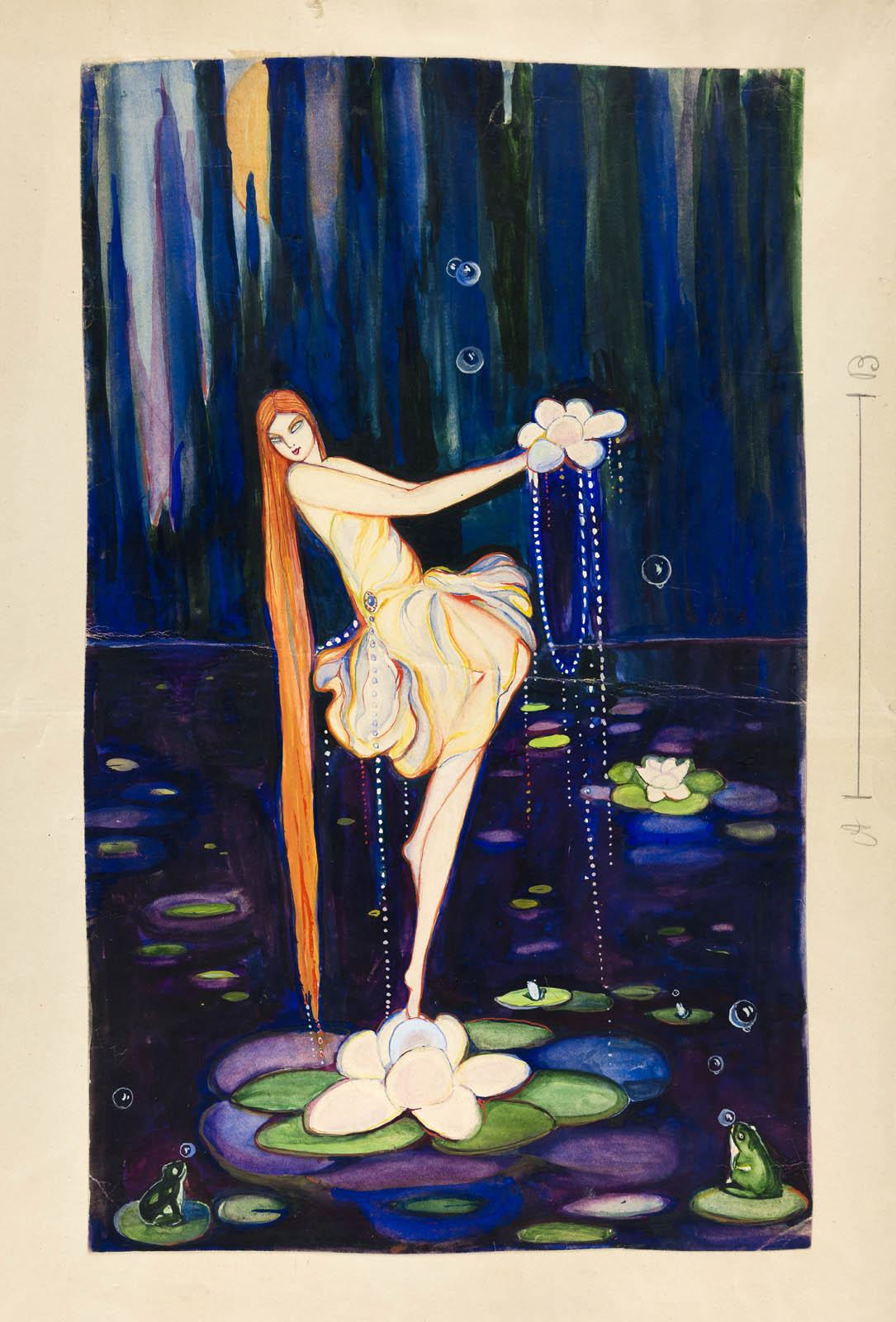
 

Rosario de Velasco (Spanish, 1904-1991) ''The White Leaves of a Waterlily Half Opened', drawing for María Teresa León's book 'Cuentos para soñar'' (Las blancas hojas de nenúfar se entreabrieron, 1927. Dibujo para el libro Cuentos para soñar de María Teresa León) 1927


Rosario de Velasco (Spanish, 1904-1991)
The White Leaves of a Waterlily Half Opened, drawing for María Teresa León’s book Cuentos para soñar (Las blancas hojas de nenúfar se entreabrieron, 1927. Dibujo para el libro Cuentos para soñar de María Teresa León)
1927
Mixed media on paper
50 × 32.3cm
Gonzalez Rodriguez Collection
Photo: Jonás Bel
© Rosario de Velasco, VEGAP, Madrid, 2024
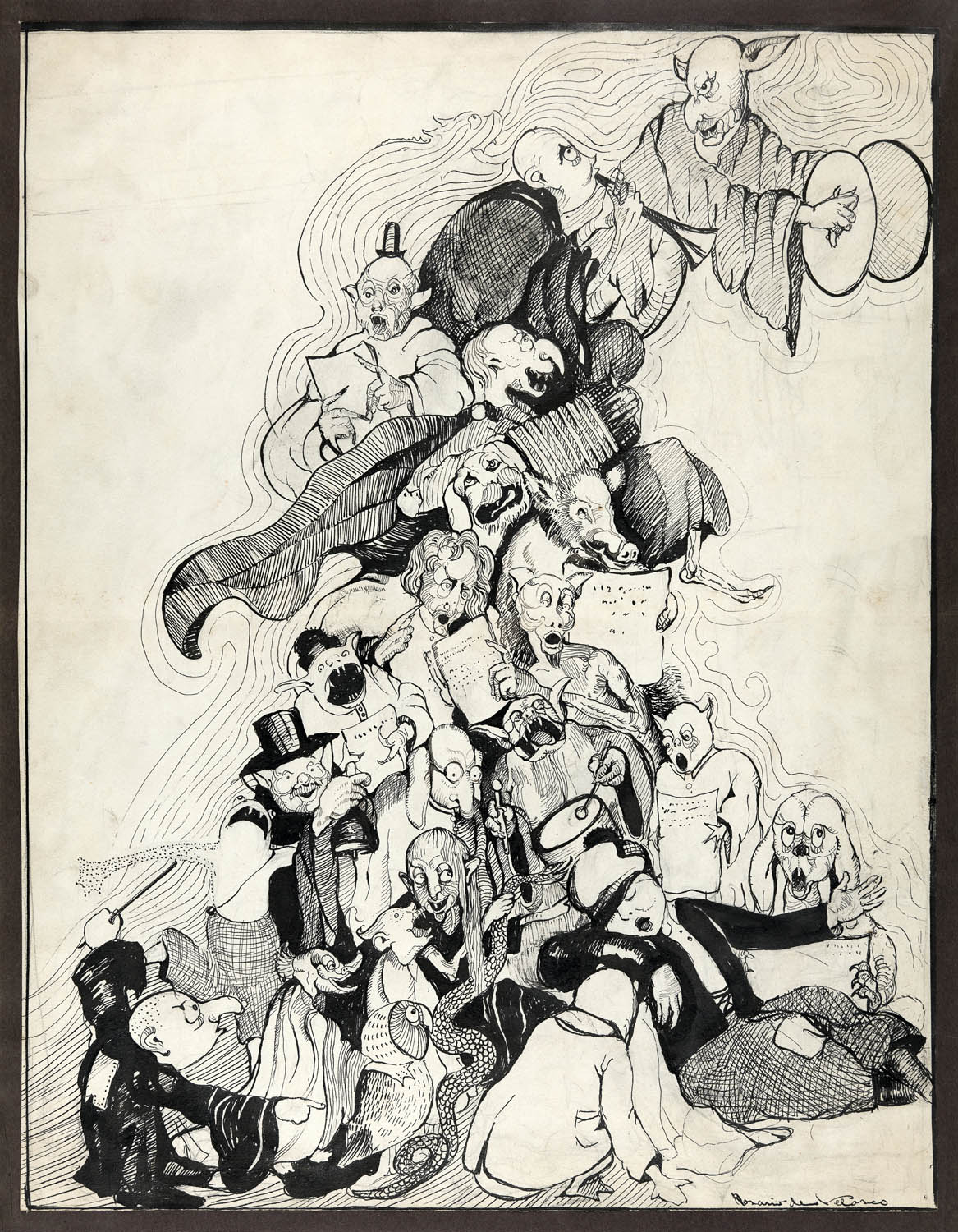
 

Rosario de Velasco (Spanish, 1904-1991) ''The Hullabaloo Gave Him Serious Nightmares', drawing for María Teresa León’s book 'Cuentos para soñar' (Tales to dream about)' (La algarabía ciudadana proporcionó serias pesadillas 1927. Dibujo para el libro Cuentos para soñar de María Teresa León) 1927


Rosario de Velasco (Spanish, 1904-1991)
The Hullabaloo Gave Him Serious Nightmares, drawing for María Teresa León’s book Cuentos para soñar (Tales to dream about) (La algarabía ciudadana proporcionó serias pesadillas, 1927. Dibujo para el libro Cuentos para soñar de María Teresa León)
1927
Ink on paper
42.3 × 32.5cm
Gonzalez Rodriguez Collection
Photo: Jonás Bel
© Rosario de Velasco, VEGAP, Madrid, 2024
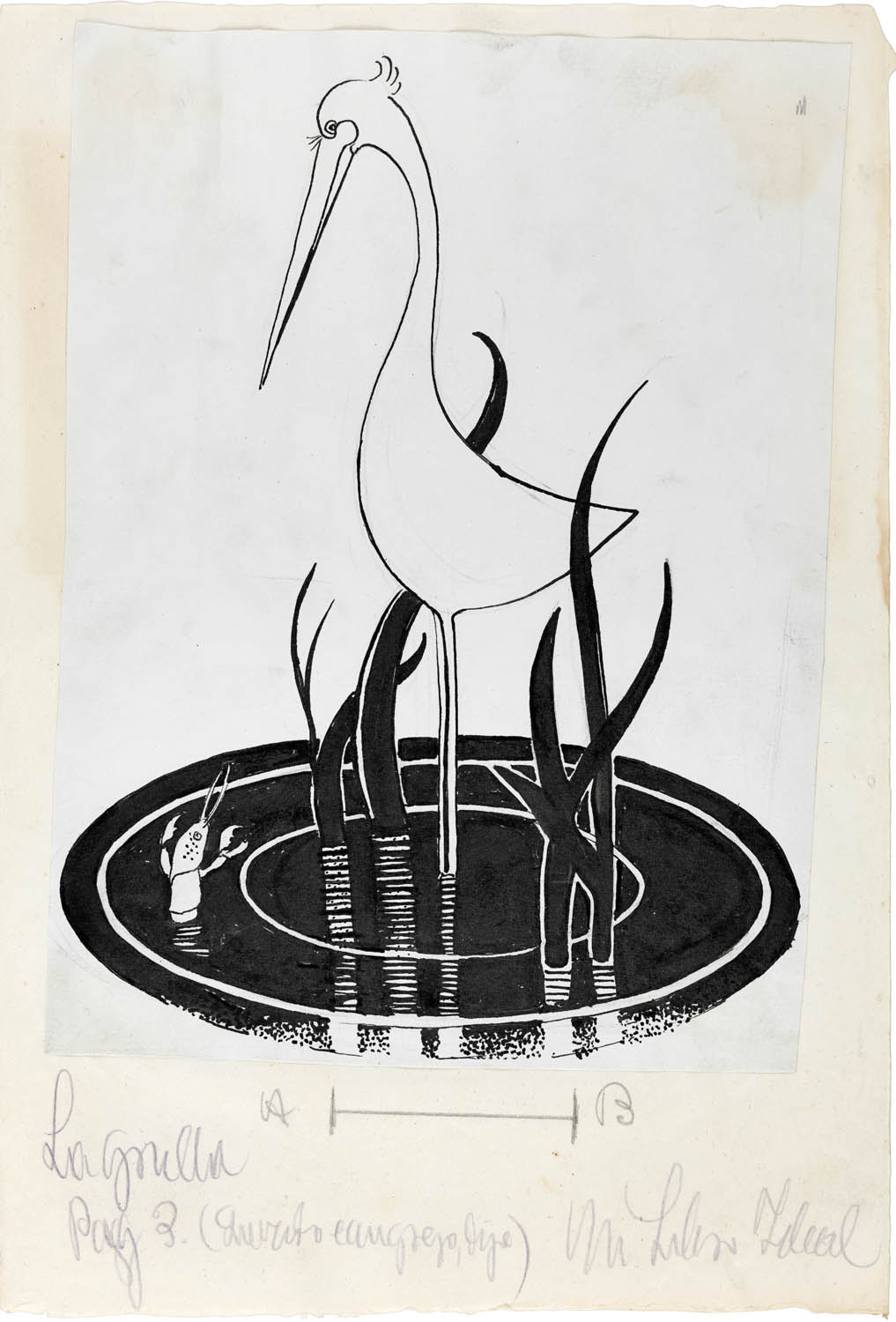
 

Rosario de Velasco (Spanish, 1904-1991) ''Dear Crab, Leave the Crane', drawing for 'Mi libro ideal'' (Querido cangrejo, deja la grulla, 1933. Dibujo para Mi libro ideal de varios autores) 1933


Rosario de Velasco (Spanish, 1904-1991)
Dear Crab, Leave the Crane, drawing for Mi libro ideal (Querido cangrejo, deja la grulla, 1933. Dibujo para Mi libro ideal de varios autores)
1933
Ink on paper
31.2 × 21.4cm
Gonzalez Rodriguez Collection
Photo: Jonás Bel
© Rosario de Velasco, VEGAP, Madrid, 2024
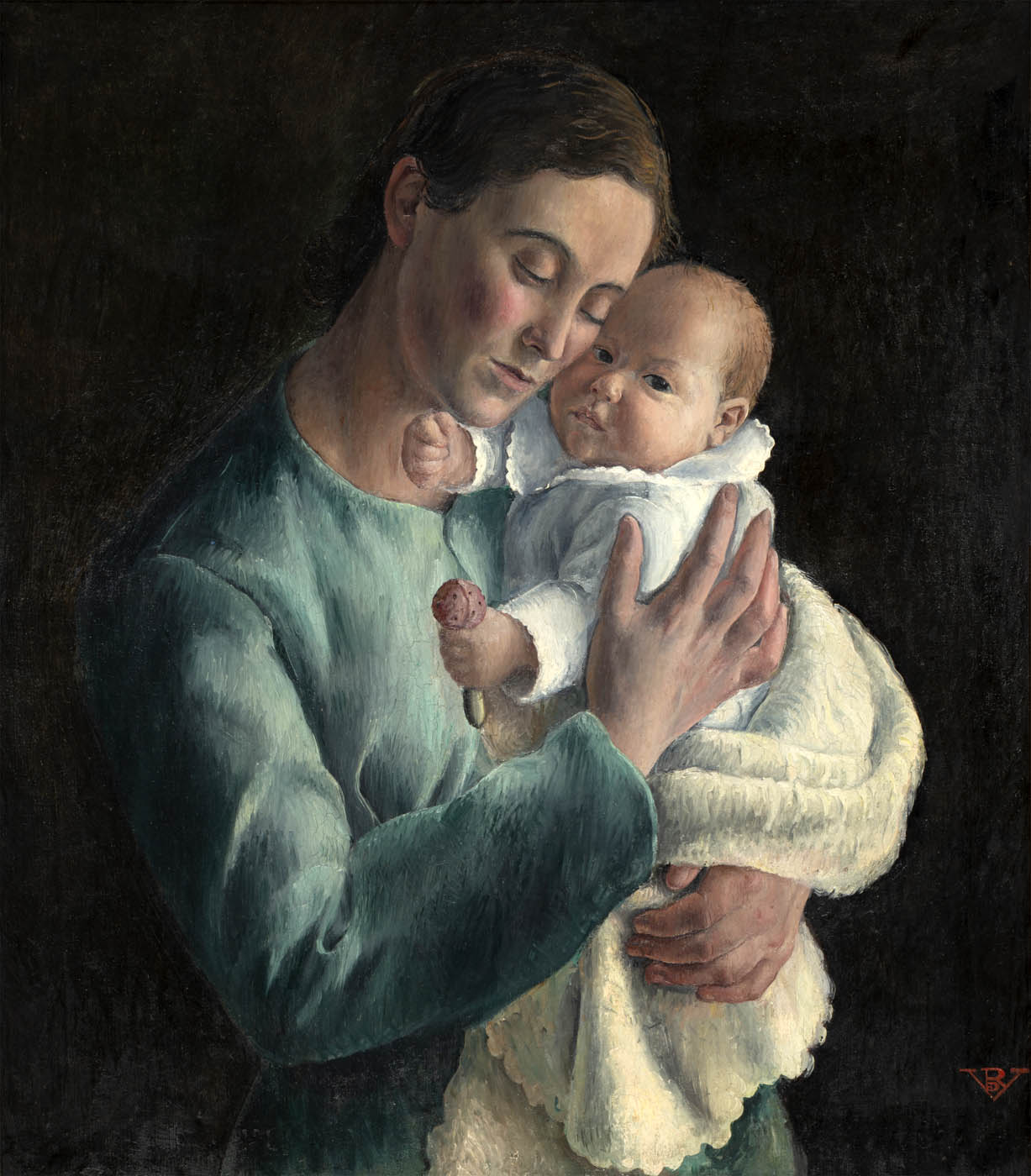
 

Rosario de Velasco (Spanish, 1904-1991) 'Motherhood' (Maternidad) 1933


Rosario de Velasco (Spanish, 1904-1991)
Motherhood (Maternidad)
1933
Oil on canvas
99 × 89cm
Private collection
© Rosario de Velasco, VEGAP, Madrid, 2024
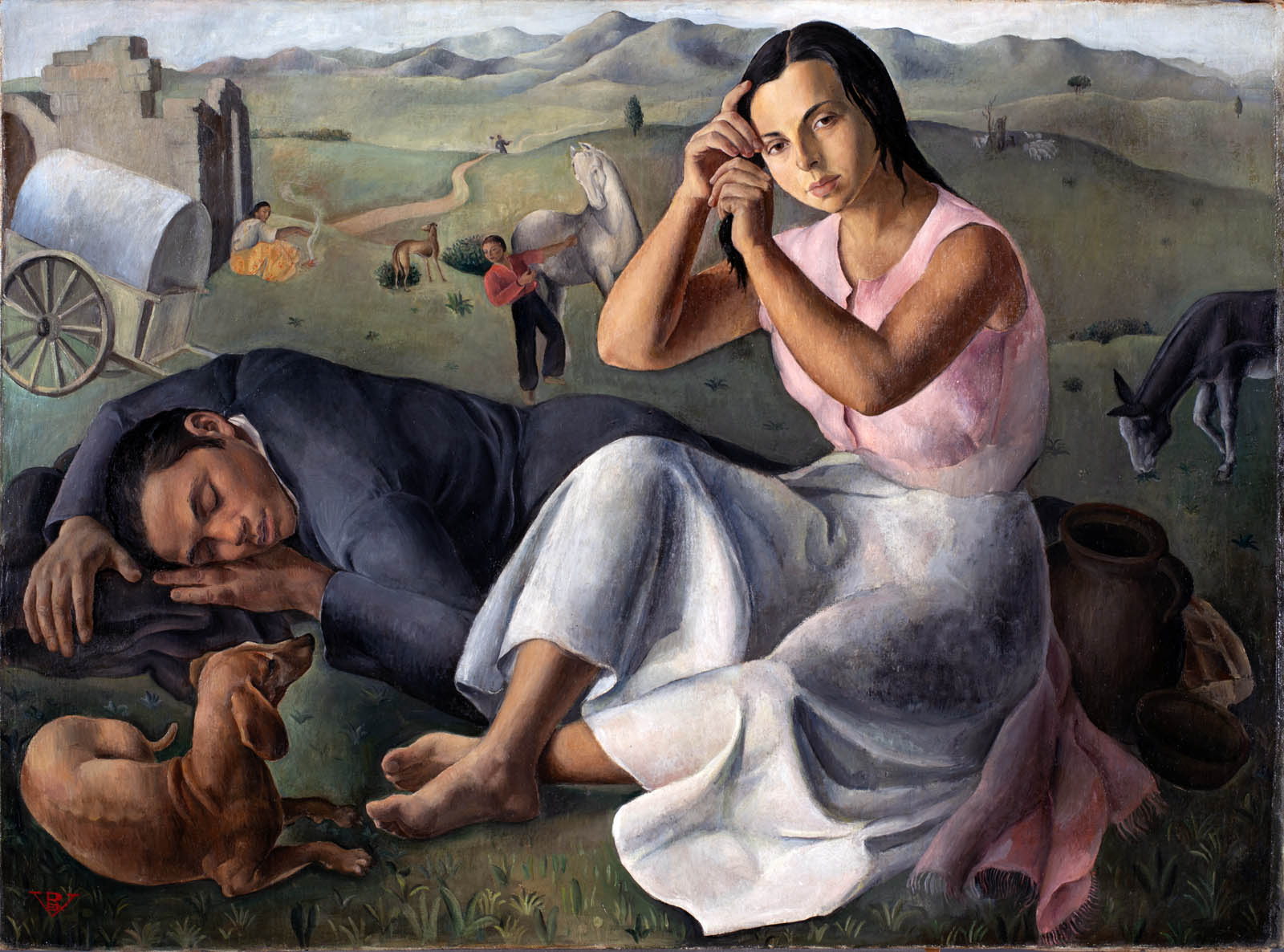
 

Rosario de Velasco (Spanish, 1904-1991) 'Gypsies' (Gitanos) 1934


Rosario de Velasco (Spanish, 1904-1991)
Gypsies (Gitanos)
1934
Oil on canvas
95 × 132cm
Private collection
© Rosario de Velasco, VEGAP, Madrid, 2024


Otto Dix (German, 1891-1969) 'Reclining Woman on a Leopard Skin' 1927


Otto Dix (German, 1891-1969)
Reclining Woman on a Leopard Skin
1927
Oil paint on panel
680 x 980mm
© DACS 2017. Collection of the Herbert F. Johnson Museum of Art, Cornell University. Gift of Samuel A. Berger

This painting is not in the exhibition and is used under fair use conditions for the purposes of education and research.


Dix was a key supporter of the New Objectivity (Neue Sachlichkeit) movement, a name coined after an exhibition held in Mannheim, Germany in 1925. Described by art historian G.F. Hartlaub, as ‘new realism bearing a socialist flavour’, the movement sought to depict the social and political realities of the Weimar Republic.
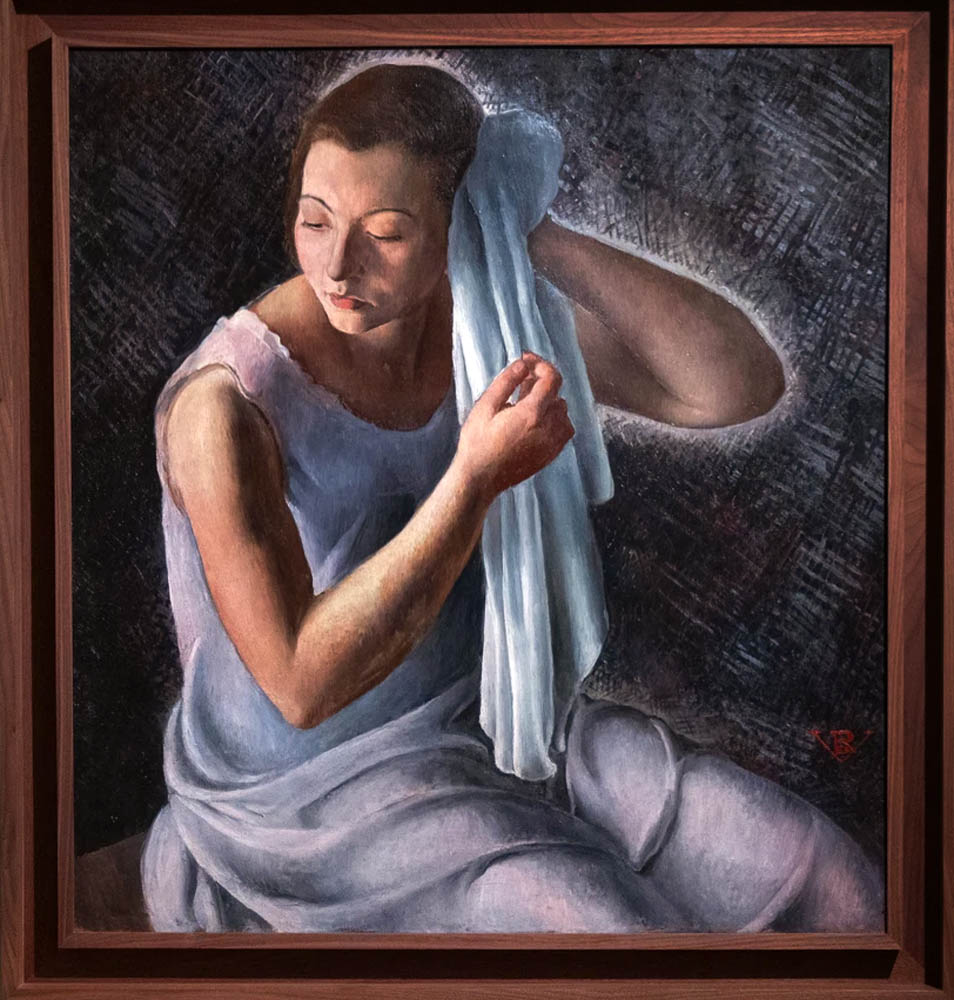
 

Rosario de Velasco (Spanish, 1904-1991) 'Woman with Towel' (Mujer con toalla) 1934


Rosario de Velasco (Spanish, 1904-1991)
Woman with Towel (Mujer con toalla)
1934
Oil on canvas
82 × 76cm
Private collection
© Rosario de Velasco, VEGAP, Madrid, 2024
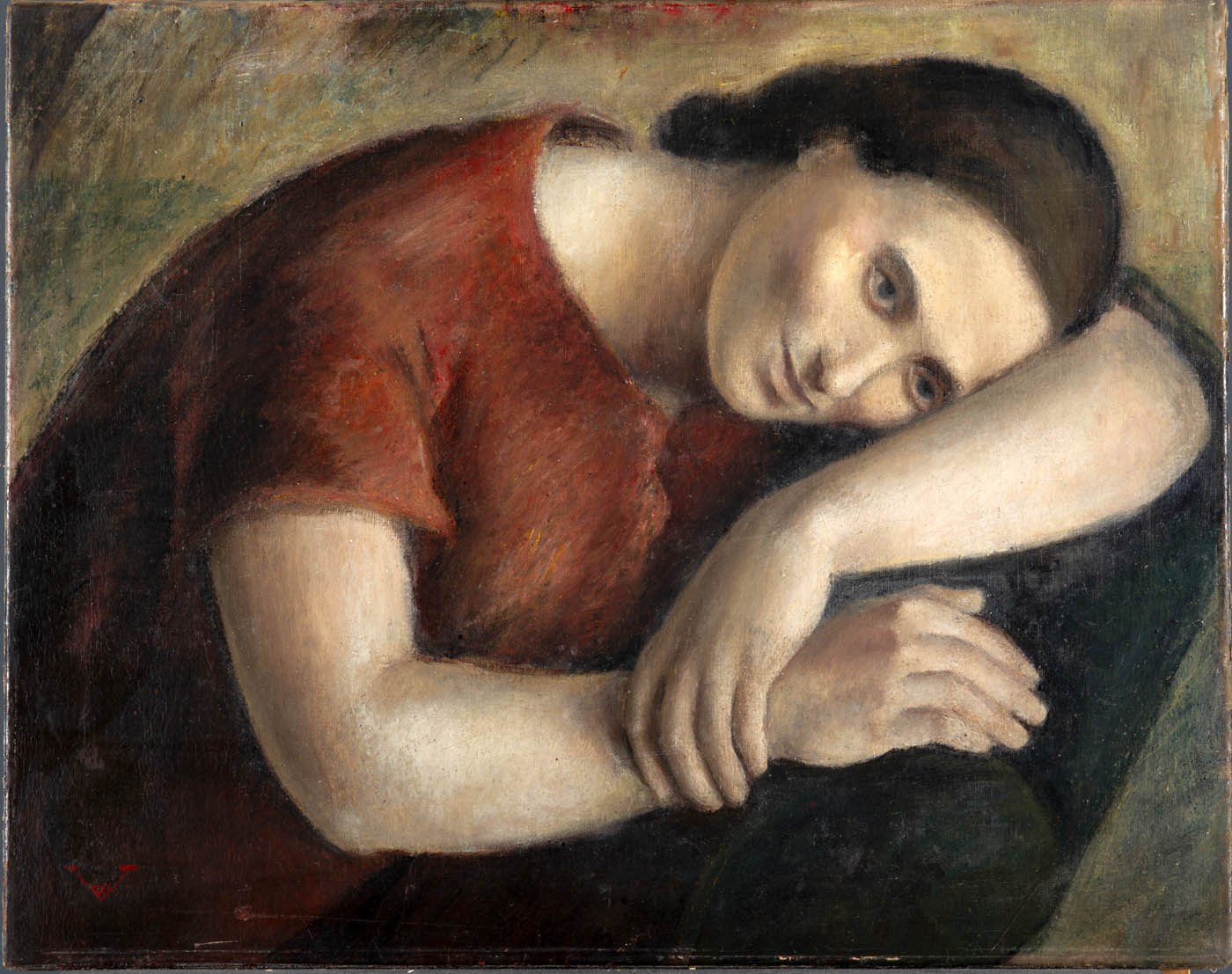
 

Rosario de Velasco (Spanish, 1904-1991) 'Pensive Woman' (Pensativa) 1935


Rosario de Velasco (Spanish, 1904-1991)
Pensive Woman (Pensativa)
1935
Oil on canvas
57.5 × 72cm
Emilia Casal Piga and Guillermo González Hernández Collection
© Rosario de Velasco, VEGAP, Madrid, 2024
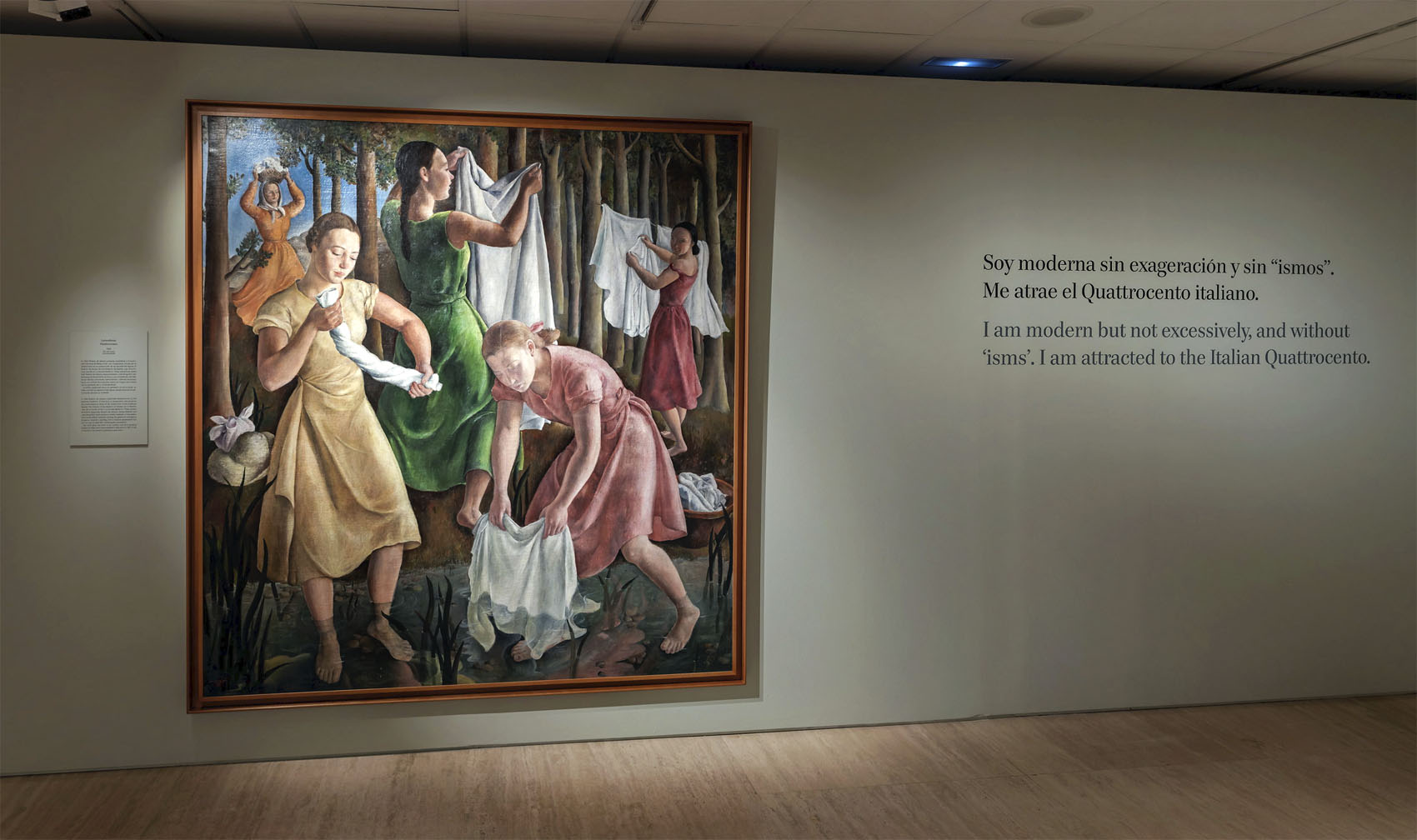
 

Installation view of the exhibition 'Rosario de Velasco' at the Museo Nacional Thyssen-Bornemisza showing at left, de Velsaco's 'Laundresses / The Washerwomen' (Lavanderas) 1934


Installation view of the exhibition Rosario de Velasco at the Museo Nacional Thyssen-Bornemisza showing at left, de Velsaco’s Laundresses / The Washerwomen (Lavanderas) 1934 (below)
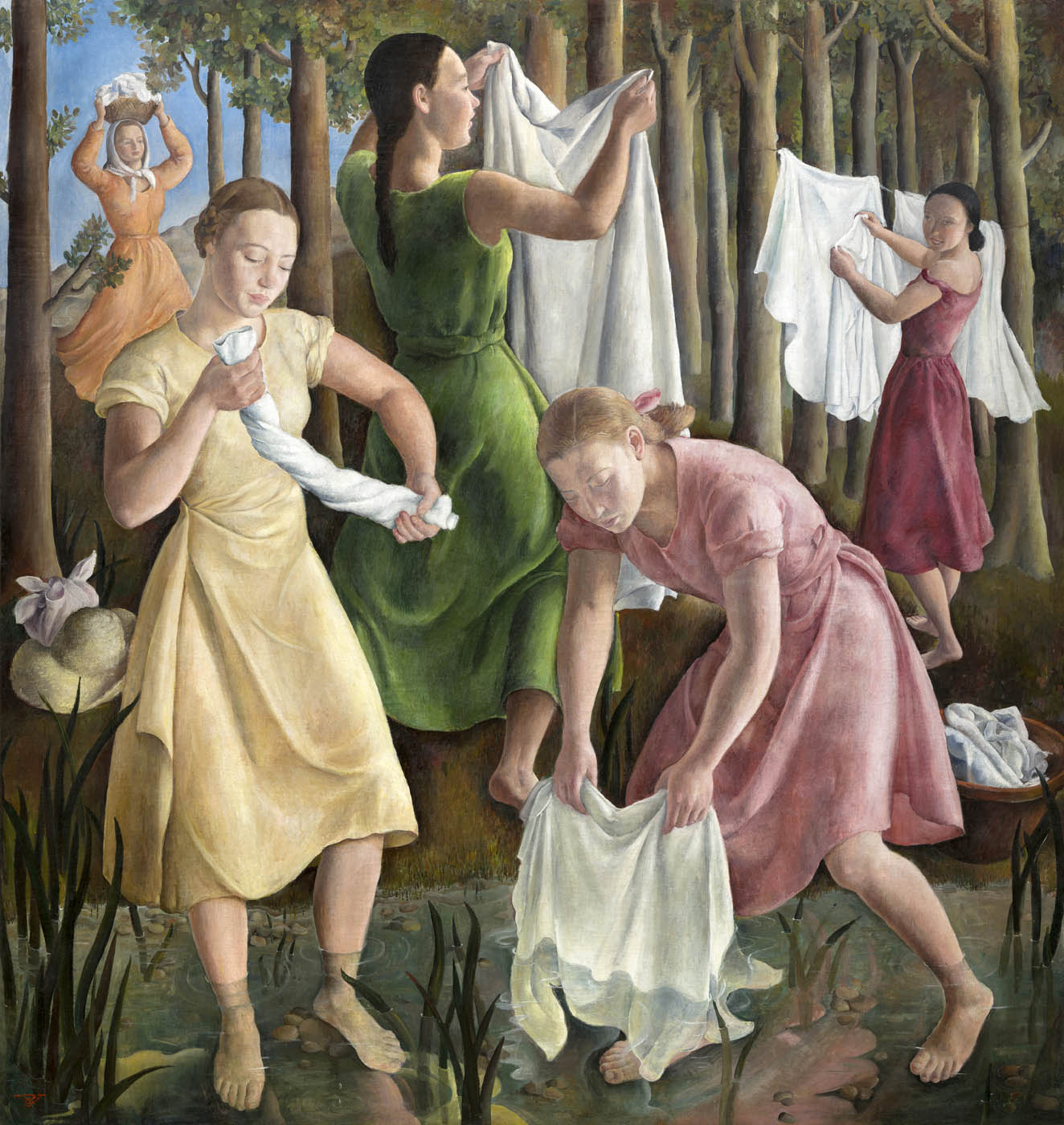
 

Rosario de Velasco (Spanish, 1904-1991) 'Laundresses or The Washerwomen' (Lavanderas) 1934


Rosario de Velasco (Spanish, 1904-1991)
Laundresses / The Washerwomen (Lavanderas)
1934
Oil on canvas
209 × 197cm
Private collection
Photo: Jonás Bel
© Rosario de Velasco, VEGAP, Madrid, 2024
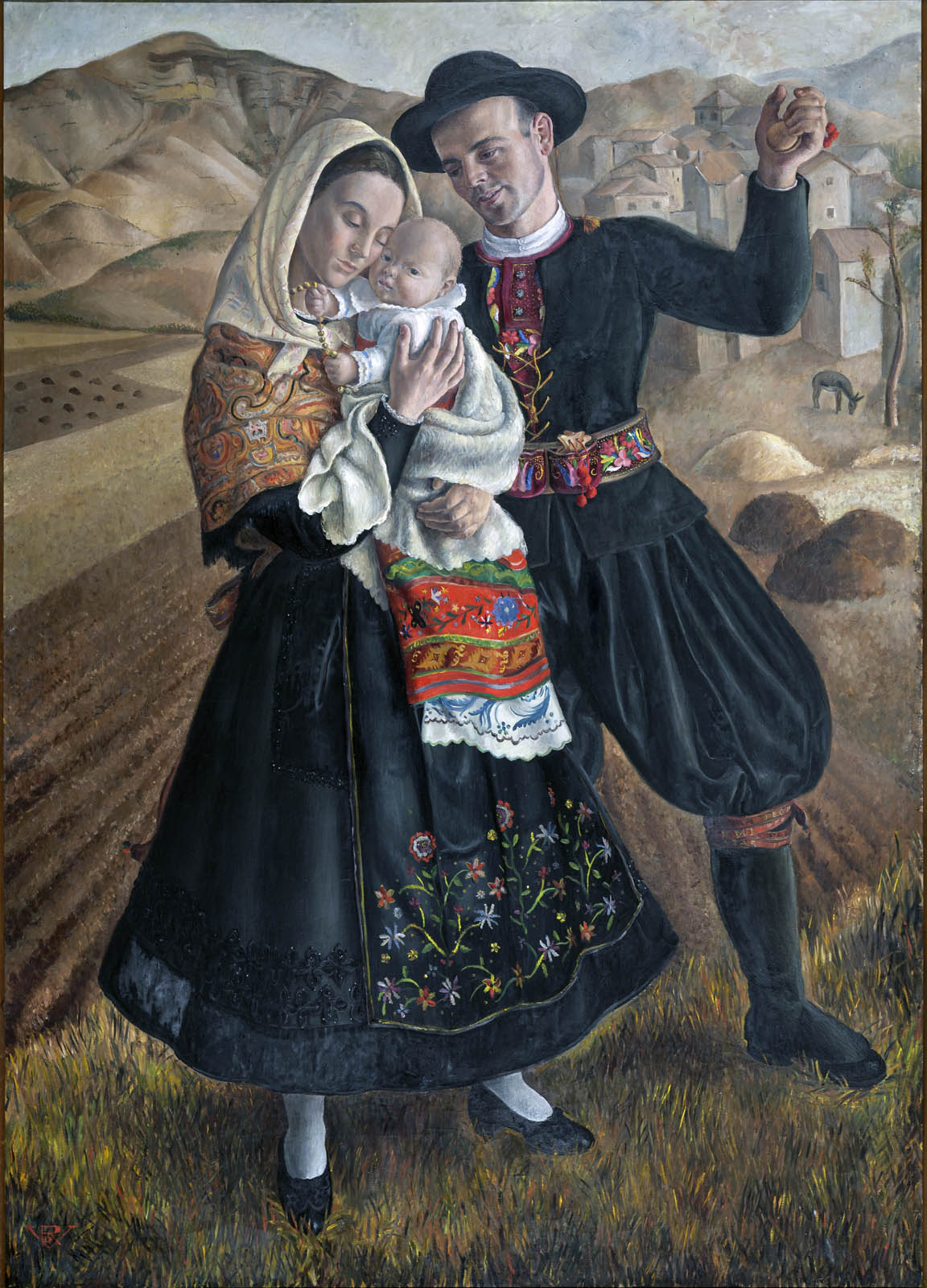
 

Rosario de Velasco (Spanish, 1904-1991) 'Maragatos' 1934


Rosario de Velasco (Spanish, 1904-1991)
Maragatos
1934
Oil on canvas
210 × 150cm
Museo del Traje, Madrid
Photo: Museo del Traje. Centro de Investigación del Patrimonio Etnológico, Madrid
© Rosario de Velasco, VEGAP, Madrid, 2024
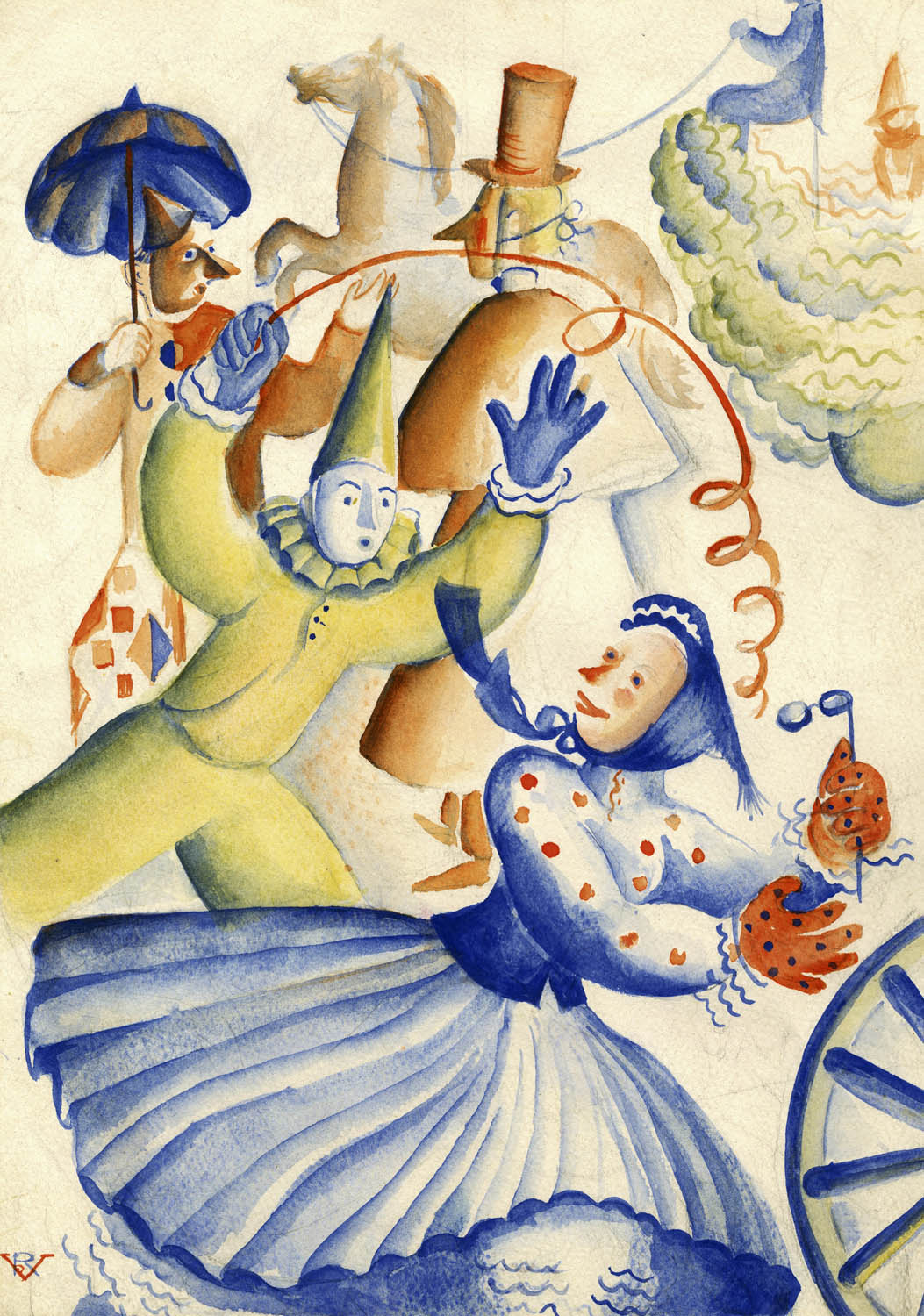
 

Rosario de Velasco (Spanish, 1904-1991) 'Carnival' (Carnavalina) 1936


Rosario de Velasco (Spanish, 1904-1991)
Carnival (Carnavalina)
1936
Watercolour and graphite on cardboard
29.7 × 21.2cm
Fundación Colección ABC
© Rosario de Velasco, VEGAP, Madrid, 2024
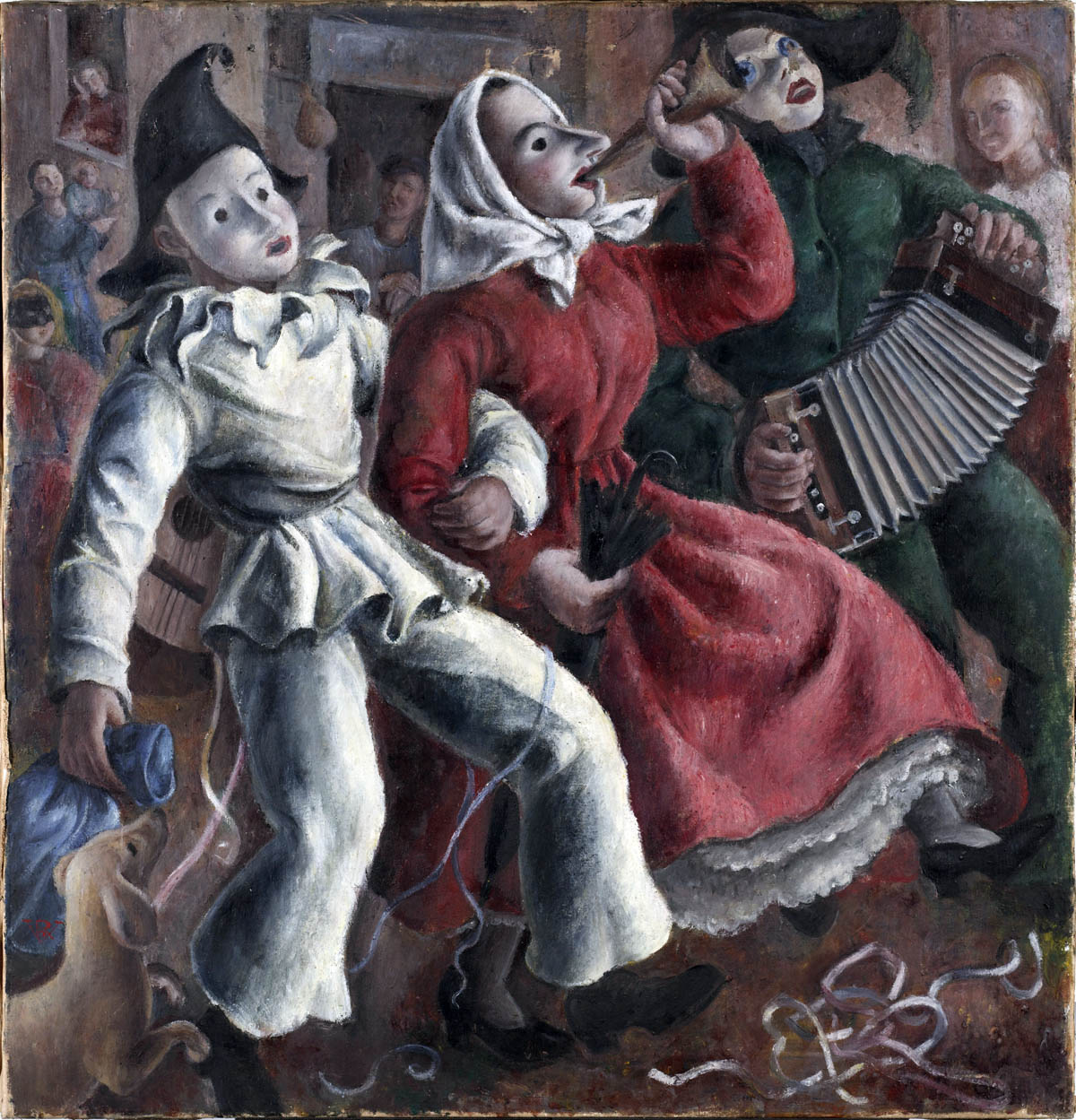
 

Rosario de Velasco (Spanish, 1904-1991) 'Carnival' (Carnaval) Prior to 1936


Rosario de Velasco (Spanish, 1904-1991)
Carnival (Carnaval)
Prior to 1936
Oil on canvas
115 × 110cm
Centre Pompidou, París, Musée national d’art moderne/Centre de création industrielle, adquisición del Estado, 1936
Photo: Centre Pompidou, MNAM-CCI, Dist. GrandPalaisRmn / Bertrand Prévost
© Rosario de Velasco, VEGAP, Madrid, 2024
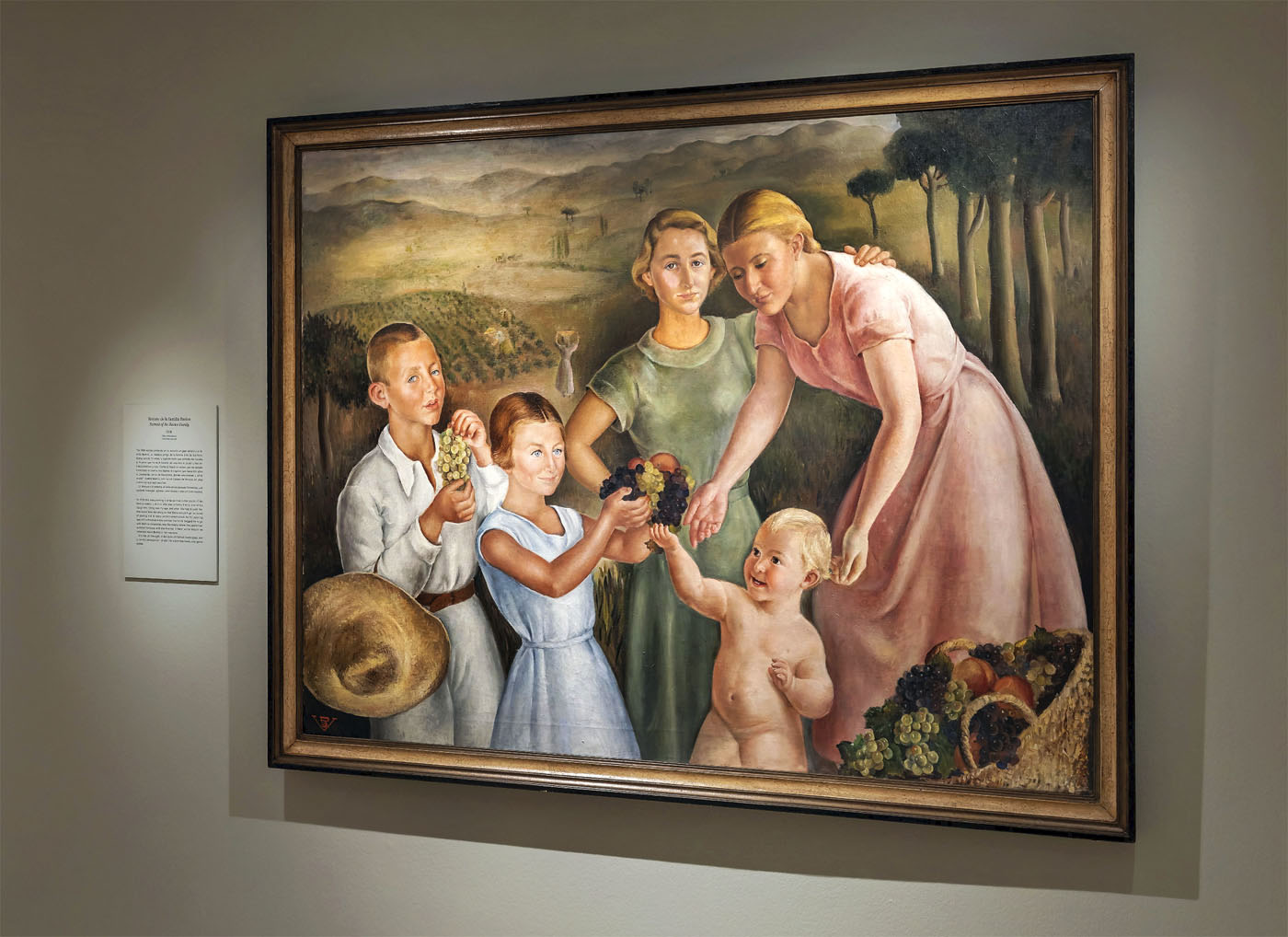
 

Installation view of the exhibition 'Rosario de Velasco' at the Museo Nacional Thyssen-Bornemisza showing de Velsaco's 'Retrato de la familia Bastos' (Portrait of the Bastos family) 1936 Oil on canvas


Installation view of the exhibition Rosario de Velasco at the Museo Nacional Thyssen-Bornemisza showing de Velsaco’s Retrato de la familia Bastos (Portrait of the Bastos family) 1936 Oil on canvas
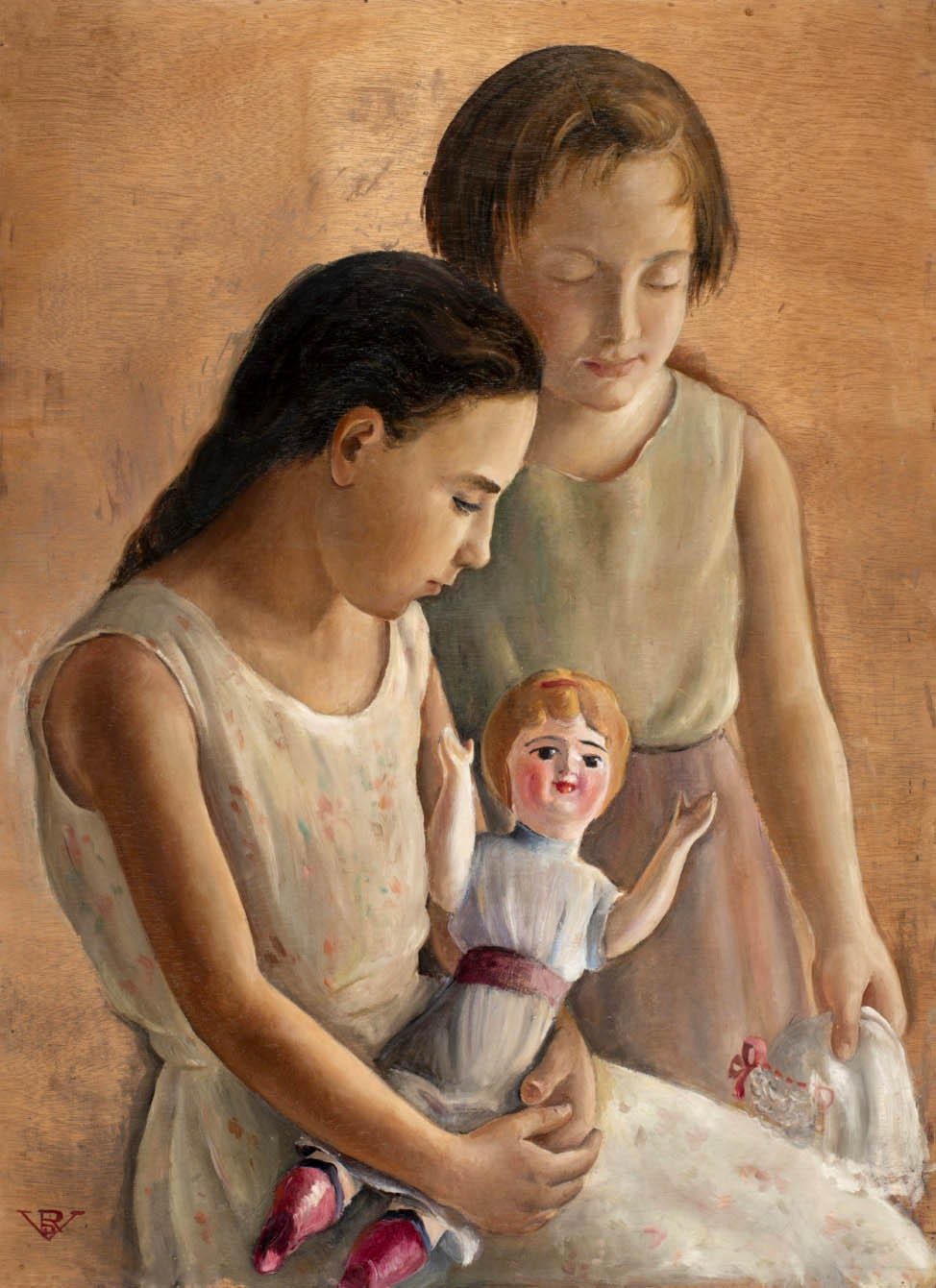
 

Rosario de Velasco (Spanish, 1904-1991) 'Girls with Doll' (Niñas con muñeca) 1937


Rosario de Velasco (Spanish, 1904-1991)
Girls with Doll (Niñas con muñeca)
1937
Oil on canvas
84.7 × 61.8cm
Private collection
© Rosario de Velasco, VEGAP, Madrid, 2024
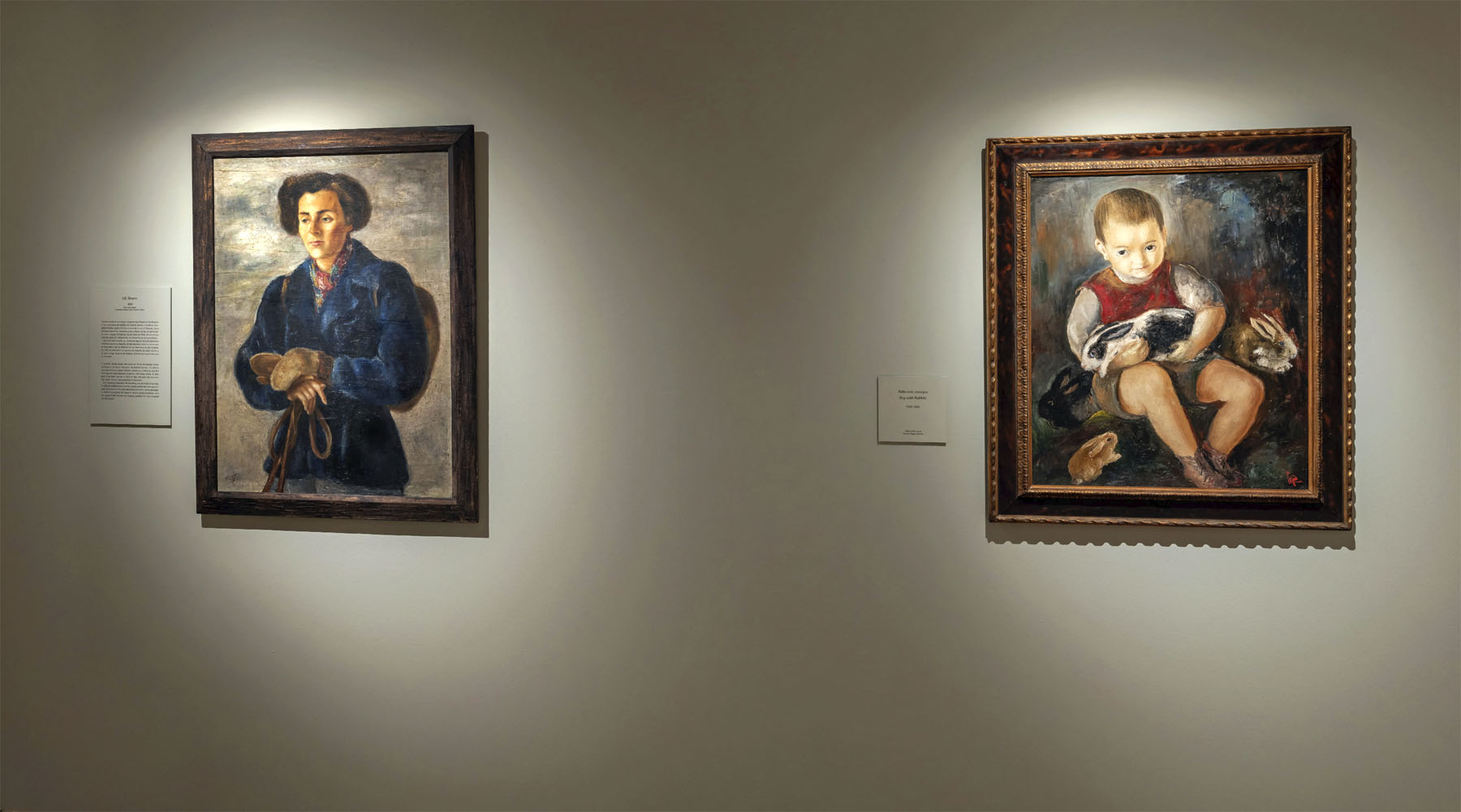
 

Installation view of the exhibition 'Rosario de Velasco' at the Museo Nacional Thyssen-Bornemisza showing at left, de Velsaco's 'Lilí Álvarez' 1938


Installation view of the exhibition Rosario de Velasco at the Museo Nacional Thyssen-Bornemisza showing at left, de Velsaco’s Lilí Álvarez 1938 (below)
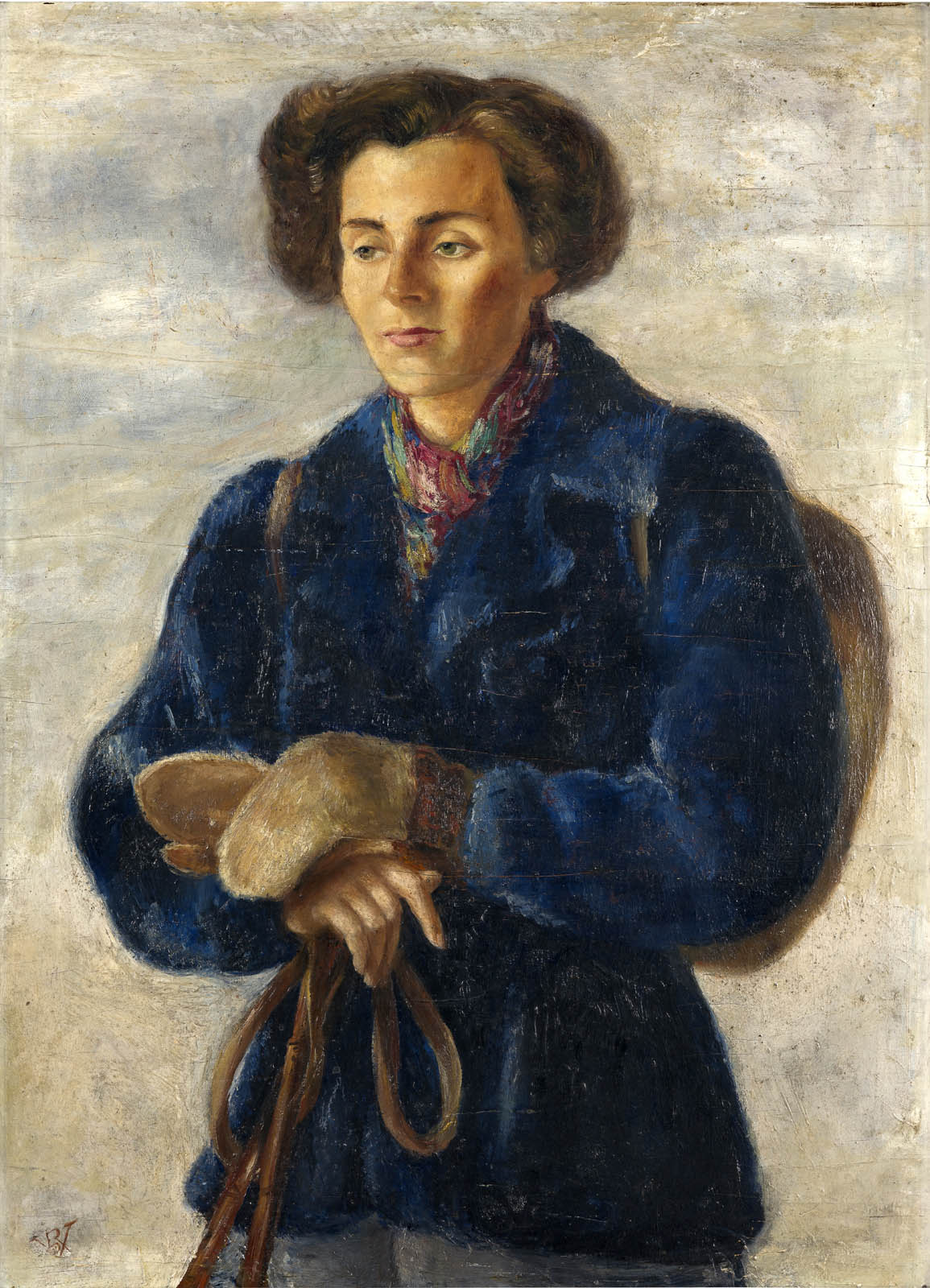
 

Rosario de Velasco (Spanish, 1904-1991) 'Lilí Álvarez' 1938


Rosario de Velasco (Spanish, 1904-1991)
Lilí Álvarez
1938
Oil on board
97.8 × 71.8cm
Lopez-Chicheri Daban Family Collection
Photo: Jonás Bel
© Rosario de Velasco, VEGAP, Madrid, 2024
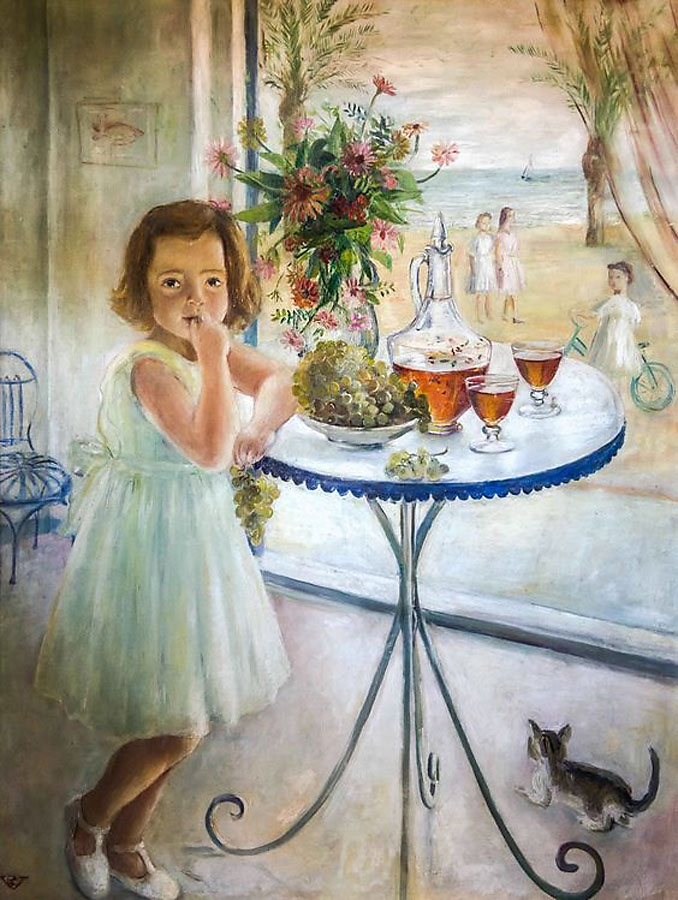
 

Rosario de Velasco (Spanish, 1904-1991) 'María del Mar en Vilanova' 1943


Rosario de Velasco (Spanish, 1904-1991)
María del Mar en Vilanova
1943
Oil on canvas
117 × 89cm
Private collection
© Rosario de Velasco, VEGAP, Madrid, 2024
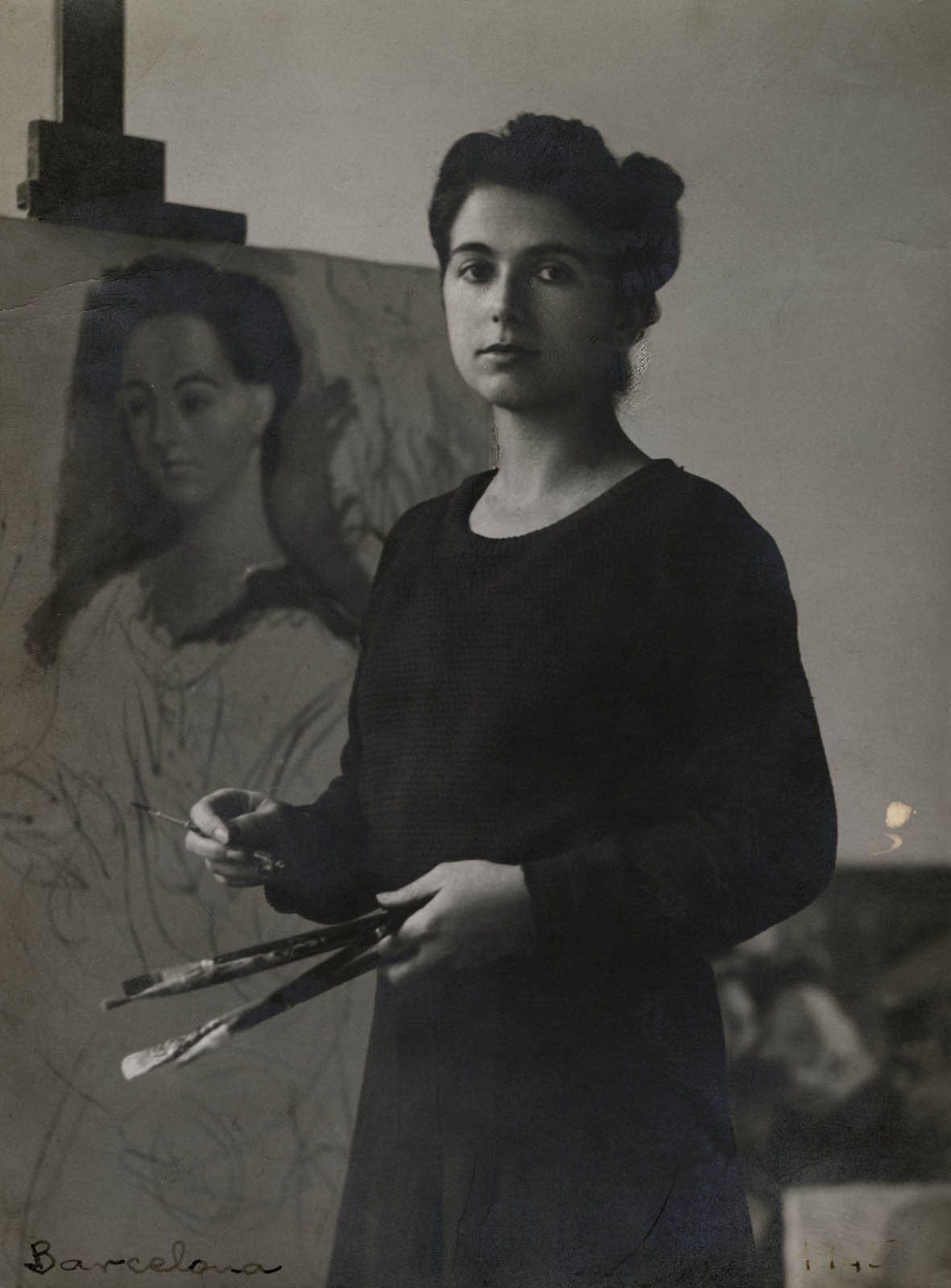
 

Anonymous photographer. 'Rosario de Velasco painting' 1920s


Anonymous photographer
Rosario de Velasco painting
1920s


Anonymous photographer. 'Rosario de Velasco painting 'Laundresses / The Washerwomen' (Lavanderas)' 1934


Anonymous photographer
Rosario de Velasco painting ‘Laundresses / The Washerwomen’ (Lavanderas)
1934
Archive of the Rosario de Velasco family


Museo Nacional Thyssen-Bornemisza
Paseo del Prado, 8. 28014, Madri

Opening hours:
Tuesday – Sunday, 10am – 7pm
Saturdays, 10 am – 9 pm
Closed on Mondays

Museo Nacional Thyssen-Bornemisza website

LIKE ART BLART ON FACEBOOK

Back to top

Essay: ‘Now you see it, now you don’t: the history and conservation of The Keith Haring Mural, Johnston Street, Collingwood, Melbourne,’ by Dr Marcus Bunyan

November 2011


Keith Haring (American, 1958-1990) 'Barking Dogs and Spaceships and Angels and Coyotes' both 1982 'Subway drawings'


Keith Haring (American, 1958-1990)

Barking Dogs and Spaceships and Angels and Coyotes

both 1982

Subway drawings

Chalk on subway posters laid on canvas


In response to the polemic article “Brushed aside: artistic landmark must return to 1980s glory” by Hannah Mathews in The Age newspaper on November 17th, 2011 I feel compelled to offer a more balanced appraisal of the problems regarding the conservation and preservation of the Keith Haring Mural painted on a wall of the former Collingwood Technical School in Collingwood, Melbourne.

I was not going to publish this essay but now the time is right!

As I note in the essay Haring’s attitude to repainting seems to be at best ambiguous. As several people advocate, I support building a wall perpendicular to the original and painting a facsimile on the new wall. As the original is one of few remaining outdoor murals in the artists hand, I believe it is important to conserve what we have left of the original and painting a simulacra would satisfy those that want a “fresh” copy.

This essay is based on my own question, namely an investigation into the deterioration of a public work of art; the stabilisation of an ephemeral work; the role of the conservator in preserving the work; and the broader cultural perspectives involved when treating the work: reflections on the community from which it originates and notions of ownership and authorship. It was completed as part of my Master of Art Curatorship being undertaken at The University of Melbourne.

Please remember that this essay was written last year in September 2010, before the report from Arts Victoria and was then recently updated. Many thankx to Dr Ted Gott and to Andrew Thorn for their knowledge and help during the research for this essay.

Dr Marcus Bunyan


PS. Apologies that there are no image credits in the essay. If anyone knows the photographers please let me know and I will post but I hope they do not mind me using the photographs (in the interests of art, research and conservation).


Abstract

This essay will examine the history and conservation of The Keith Haring Mural painted on a wall of the former Collingwood Technical School in Collingwood, Melbourne. The essay will attempt to identify the issues involved with current attempts to conserve the mural, including issues of authorship, custodianship vs ownership, stabilisation of the mural and the debate between repainting and conserving. This essay is based on my own question, namely an investigation into the deterioration of a public work of art; the stabilisation of an ephemeral work; the role of the conservator in preserving the work; and the broader cultural perspectives involved when treating the work: reflections on the community from which it originates and notions of ownership and authorship.

Keywords

Keith Haring, Collingwood Technical School, Collingwood, Melbourne, painting, mural, public art, urban art, graffiti, Ted Gott, Andrew Thorn, THREAD, gay art group, homosexuality, HIV/AIDS, New York, National Gallery of Victoria, Australian Centre for Contemporary Art, Arts Victoria.

Word count: 5,056


Keith Haring Water Wall Mural at The National Gallery of Victoria


Keith Haring Water Wall Mural at The National Gallery of Victoria, later destroyed


Introduction

In the early 1980s, New York artist and social activist Keith Haring (4th May, 1958 – 16th February, 1990) was on the brink of fame. He appeared at the Whitney Biennial and Sao Paulo Biennale in 1983 and made friendships with Andy Warhol and Jean-Michel Basquiat.1 Haring was also gay; he died of HIV/AIDS at a young age. His folk art/graffiti style of bold figures and pagan inspired designs outlined in black and other colours investigated concepts of birth, life, death, power, money, technology and the relationship of human beings to the planet on which they live. Haring never feared confronting his viewer with difficult socio-political problems. Embedded in the street culture of the day, Haring was one of the first artists to be heavily influenced by disco dancing and rap music, his ghetto blaster blaring out as he painted his trademark murals. Today his work can be seen to represent the quintessential essence of the 1980s: through its use of colour; the vibrancy of the gyrating bodies; and the topicality of the issues the work addressed. His imagery “has become a widely recognised visual language of the 20th century”2 and his work represents a culture in which “notions of graffiti, advertising and design became increasingly blurred.”3

Early expressions of his creativity that are precursors to his mature style were the chalk drawings on black paper that Haring undertook in the subway stations of New York, using vacant advertising spaces. These drawings were made using quickness and stealth for fear of being caught and were ephemeral; either being destroyed when the next advert was pasted in place or, when his fame became greater, souvenired by acolytes.

“Riding the subway from his uptown apartment to the clubs, Haring noticed black paper hanging next to advertisements in the cars, awaiting the next ad. He used this opportunity to draw in chalk on the black paper with all sorts of childlike imagery: barking dogs, babies, unisex figures, spaceships, TV sets, etc. The outline style of imagery could be appreciated individually as cartoon cels or together to form a narrative. The subway drawings magnify Haring’s cartoons into a new Pop Art that at once was urban narrative, science fiction and hieroglyphics. These subway drawings initiated his first one man shows.”4


As Ted Gott has commented, “… Haring was seen as revolutionary, around 1981, for the manner in which he mastered the freedom and fluidity of the graffiti artists’ calligraphic defacement of public property, and catapulted it over into a mainstream artistic form. By presenting the visual language of one social class in the medium [paint on canvas] and milieus [commercial art galleries] of another elite class, Haring broke the rules then prescribed by the art world…”5

Into this context of rising fame came John Buckley, inaugural Director of Melbourne’s new Centre for Contemporary Art (CCA, later called the Australian Centre for Contemporary Art, or ACCA).6  Buckley met Haring in 1982 on a research visit to New York and invited him to Australia. After organising various grants to fund the trip, Haring arrived for a three-week visit. He was in Australia from 18th February to 8th March 1984 and completed three major projects (The Water Wall mural at The National Gallery of Victoria, the mural painted in the forecourt of The Art Gallery of New South Wales and the mural painted on the side of the former Collingwood Technical School).7 During this period he also completed other smaller works (such as a piece for the Hardware Club in Melbourne and the Glamorgan preparatory school, part of Geelong Grammar School), as well as thirteen large exhibition-quality ink drawings and four acrylic paintings.8 The latter were eventually used in the exhibition Keith Haring at ACCA’s new premises in Melbourne between 10th October – 17th November, 1985,9 and then returned to the artist by John Buckley. Some confusion exists in this matter as Haring states in his biography that his Australian experience wasn’t that hot and that he felt ripped off because the paintings he left in Australia were never returned to him, that there had never been any exhibition of his work and that the work had never been paid for.10

Since ACCA had not secured a physical home at the time of the arrival of Haring (later to be in the Botanical Gardens), Buckley arranged for Haring to paint a large mural on the inside of the water wall at The National Gallery of Victoria between 21st – 22nd February 1984. Haring then travelled to Sydney and painted the AGNSW mural between 28th February – 1st March 1984 before returning to Melbourne and painting the mural at The Collingwood Technical School in one day on Tuesday 6th March 1984.11 While the first two murals were intentionally impermanent (the Water Wall was supposed to last 3 months but was destroyed by vandalism just 2 weeks after its creation,12 Haring mistakenly believing that it was attacked as a protest against the mistaken belief that he had appropriated Aboriginal motifs in its composition13 and the AGNSW mural was painted over after one month to make way for the Biennale exhibition of 1984),14 the community based project in Collingwood would become Haring’s only large, permanent evidence of his visit to Australia:

“In his interview given at the Collingwood Technical School immediately upon completion of the project on 6 March 1984, Keith Haring said about the Collingwood mural: “I had fun. I mean, it’s the most fun I’ve had since I’ve been here. It’s more fun working here than it is inside a museum. [and] It’s the only permanent thing that I did while I was in Australia.””15

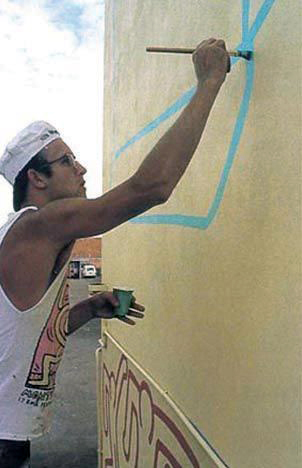
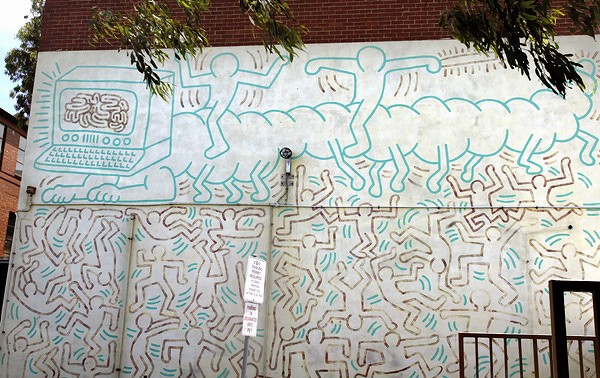
“The base tint of yellow was painted onto the wall with rollers by Collingwood Technical School staff on Monday 5 March 1984,”16 the day before Haring’s ‘performance’ when he painted the mural in just two main colours, red and green, in front of a large audience; the performance was photographed and videotaped giving us unique footage of the artist at work.17 The mural features a multi-layered frieze of dancing figures in the lower half of the mural and his fear of technology in the upper half, a “hybrid man/computer monster, his vision of a future de-humanising evolution, which was ridden by two human figures …”18

In all three murals the work was undertaken freehand with no use of preparatory drawings or grids using ladders and a cherry-picker to raise and lower the artist into position – all to the blare of his ghetto blaster. For Haring there was no turning back: “Whatever marks I make are immediately recorded and immediately on view. There are no “mistakes” because nothing can be erased.”19


Keith Haring painting The Keith Haring Mural, Johnston Street, Collingwood, Melbourne, 1984


Keith Haring painting The Keith Haring Mural, Johnston Street, Collingwood, Melbourne, 1984


The painting of The Keith Haring Mural, Johnston Street, Collingwood, Melbourne, 1984


The painting of The Keith Haring Mural, Johnston Street, Collingwood, Melbourne, 1984


Significance of the Mural

According to the Statement of Significance on the Heritage Council of Victoria database, “The Mural has historical and social significance as the work of a major artist. Keith Haring is considered one of the most significant artists of his generation. As a role model for gay artists and Aids activism his influence was international.

The Keith Haring Mural is of social significance as a landmark piece of public art in Melbourne. Its prominent inner city location is indicative of the changing physical and social landscape of a former working class suburb.

The Mural is also of social significance for its influence on young artists for its inner city setting and use of popular culture themes and imagery.”20

Emily Sharpe states that the mural may also be the last surviving extant [outdoor] mural in the world painted entirely by his hand,21 although this information is contradicted by The Haring Foundation in a quotation later in the essay (see the section ‘To restore or conserve?’ below, Footnote 49).


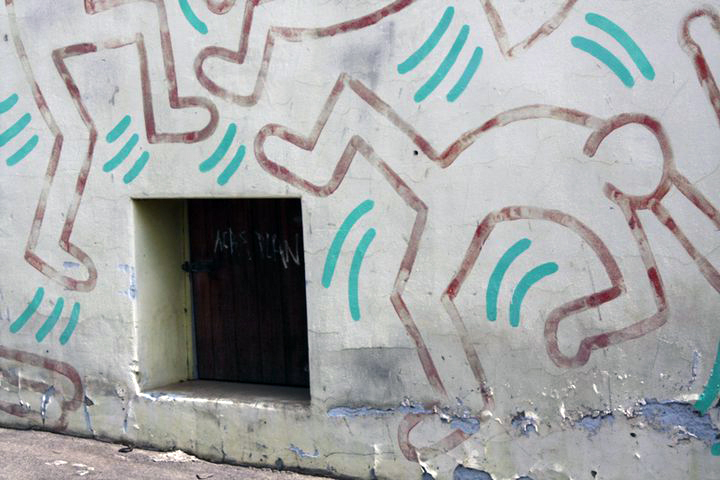
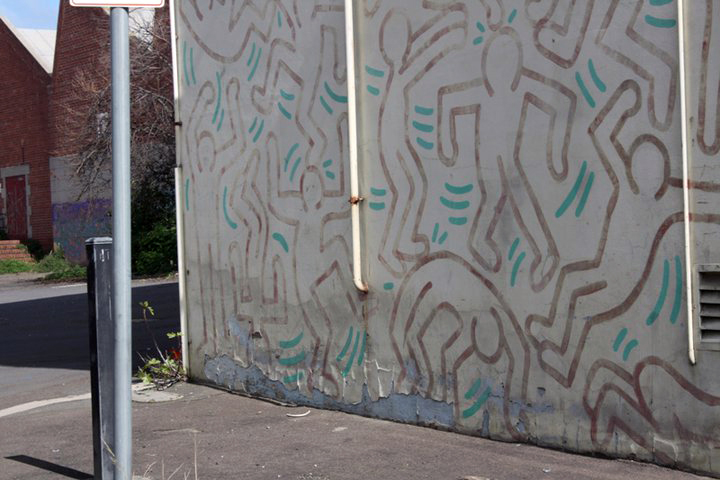
Keith Haring mural on the side of the former Collingwood Technical School in 2010 (painted 1984)


Keith Haring mural on the side of the former Collingwood Technical School in 2010 (painted 1984)


Issues in Conservation

During the period 1994-1995 a recently formed gay art group in Melbourne called THREAD (of which I was a part, the acronym of which is now lost to my memory) became concerned about the deterioration of the Keith Haring mural on the side of the Collingwood Technical School in Johnston Street, Collingwood. The group tried to engage the city of Yarra (the inner Melbourne municipality where the mural is located) and other organisations (The National Trust) about the possibility of repainting the mural due to the importance of the mural and its painting by an internationally renowned gay artist. Basically, as conservator Andrew Thorn succinctly puts it, “to repaint the mural on the basis of identity giving ownership.”22

While the intentions of the group were entirely honourable in such a proposal, on reflection and with the passing of the years, being older and wiser, I realise the error of our ways. While acknowledging that the group probably did want to take ownership of the mural on the basis of sexual identity at the time I think the group was just motivated by a desire to get something to happen and we did at least succeed in starting a dialogue between those that had an interest in conserving the mural. One of the problems was that none of us had conservation experience and, as Tom Dixon noted in a phone call to him about the mural,23  the representation of the group was never consistent as it was always a different person that you were talking to.

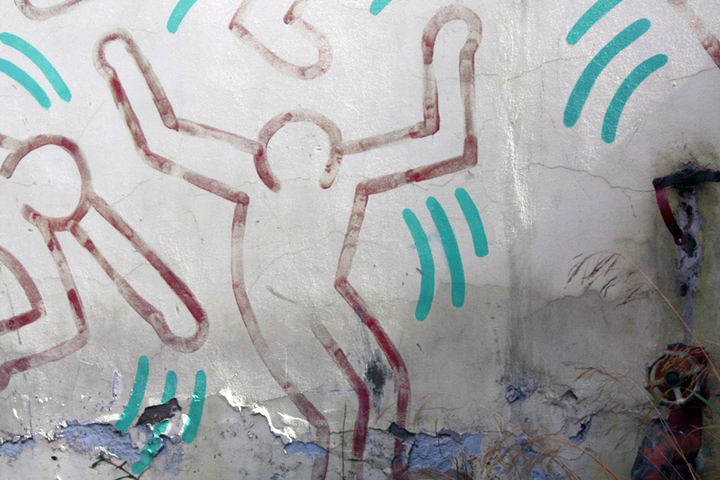
The profile of the mural was also raised through newspaper articles: “A series of newspaper articles drew attention to the vexed issues around its historic significance and increasing deterioration; these articles formed an important research component of the subsequent classification report” (The book in which this article is quoted incorrectly states that students helped Haring paint the mural – see p. 146).24 These concerns eventually led to the stabilisation of the mural by conservator Andrew Thorn in 1996 and its listing by the National Trust of Australia (Victoria) (NTAV) in 1997. During the treatment of the mural in 1996 Thorn undertook various conservation treatments, namely cleaning of the paint surface (including removal of stains), paint consolidation (fine cracking and detachments within the red paint and reattachment of the yellow paint), reattachments of lower render due to rising damp, consolidation and protection of the paint film with a protective coating system and reintegration of small areas of loss. A proposal for future maintenance was envisaged that included regular inspections, maintenance and care,25 but unfortunately it would seem that this maintenance has not been undertaken. In a recent report (2007) on the condition of the mural Thorn notes that, “incipient deterioration can be avoided, but if regular maintenance is not continued, the painting will be lost.”26 Thorn also notes that the resin gloss layer applied in 1996 to prevent AO (anti-oxidant) and UV (ultraviolet) deterioration “shows clear signs of degradation,” and should have been reapplied at 5 yearly intervals to maintain effectiveness.27 The report also notes that the yellow ground has become paler since 1996, the eroded reds need consolidation, the rising moisture is having a greater effect on the surface than previously and the green brushstrokes are beginning to show signs of loss.28


The missing door of the Keith Haring mural on the side of the former Collingwood Technical School in 2010 detail (painted 1984)


The missing door of the Keith Haring mural on the side of the former Collingwood Technical School in 2010 detail (painted 1984)


Keith Haring mural on the side of the former Collingwood Technical School in 2010 detail (painted 1984)


Keith Haring mural on the side of the former Collingwood Technical School in 2010 detail (painted 1984)


Ownership or custodianship

I support the concept of custodianship (or shared ownership) of a work of art rather than ownership per se. I believe that many people have a stake in the cultural value of a work of art and that custodianship, being a caretaker of the work, engages with the idea that the work belongs to everyone and that everyone should have access to enjoy it. Of course being gay offers a close affinity to the work of Keith Haring but, as Andrew Thorn notes, “that does not impart greater ownership of common property or of visual arts and imagery. It does give some ownership but not the right to snatch ownership from others.”29

In a separate email he continues, “At the same time it is necessary in giving ownership to wrest it from those that have claims and this process requires substantial diplomacy. It moves ownership from exclusive to shared. Ownership and identity are good and necessary things and if a work or an artist provides inspiration and support that is not to be denigrated and must be respected … Claiming of ownership is not an aggressive act but part of belonging and identity … It is necessary to engage in a community spirit to ensure a highly significant work and its maker are treated with the respect they deserve.”30

While the earlier attempts by the THREAD group could be seen as an attempt to obtain cultural ownership I acknowledge that this position is untenable. It must be a difficult task – the diplomacy of negotiating with all vested interests. But as Thorn rightly notes this comes down to the modern democratic process, the freedom to elect decision makers – not make the decisions themselves but delegate the responsibility to elected others. We must possess the ability to respect anybody’s relationship and enjoyment of the mural as much as we should respect Thorn’s professional judgment as an internationally renowned conservator to ensure this work is protected in the best possible way so that future generations can enjoy the work.


Keith Haring mural on the side of the former Collingwood Technical School in 2010 detail (painted 1984)

Keith Haring mural on the side of the former Collingwood Technical School in 2010 detail (painted 1984)


Keith Haring mural on the side of the former Collingwood Technical School in 2010 detail (painted 1984)


The conservator and the cultural landscape

The conservation of artefacts is an integral part of the cultural landscape. The nature of the cultural landscape is a fluid environment: a palimpsest where the authorship of the original work of art is a textual site, where “change (and decay), alteration, editing, revision and restoration represent the true life of objects.”31

“”The document is the textual site where the agents of textuality meet: author, copyist, editor, typesetter and reader.” In art and architecture there would be, besides artist and architect, builders, conservators, curators, preservationists, historians, viewers and users.”32 Embedded within the work are the memory and history of the object, within culture. Conservator Andrew Thorn observes, “It is a societal need to preserve the past and keep it for the future. Far more pragmatic issues dominate the profession [that of conservation] and unlike some contemporary art practice it does not need the props of modernist theory in any form to exist.”33

I beg to differ. Conservation exists only within culture. It is embedded within it and linked to the history and memory of the object. The nature of the cultural landscape and our heritage is a constitutive process: “an approach to heritage which understands it not as an object which is the static locus of some internal value, but as a process.”34 And that process invokes the social, cultural, economic and political contexts that include the act of interpretation and the concept of representation.

Laurajane Smith argues that, “heritage is heritage because it is subjected to the management and preservation/ conservation process, not because it simply ‘is’. The process does not just ‘find’ sites and places to manage and protect. It is itself a constitutive cultural process that identifies those things and places that can be given meaning and value as ‘heritage’, reflecting contemporary and cultural social values, debates and aspirations.”35 Gibson and Pendlebury unpack this statement further:

“In the first and most obvious sense, it follows from this position that there is nothing self-apparent or given about regimes of value and significance, rather these frameworks are specific to our particular social, cultural, economic and political contexts. Drawing on the anthropologist Marcel Mauss’s famous proscription on the cultural and historical specificity of contemporary personhood, objects, building and places are ‘formulated’ as heritage ‘only for us, amongst us’.”36

The value of an object cannot exist without reference to its historicity, its relationship to everything and everyone around us and conservation needs these frameworks of theory to have existence. As Foucault notes, “The space in which we live, which draws us out of ourselves, in which the erosion of our lives, our time and our history occurs, the space that claws and gnaws at us, is also, in itself, a heterogeneous space. In other words, we do not live in a kind of void, inside of which we could place individuals and things. We do not live inside a void that could be colored with diverse shades of light, we live inside a set of relations that delineates sites which are irreducible to one another and absolutely not superimposable on one another.”37

Complementary to Foucault’s notion of a set of relations that delineates sites and heterotopic spaces is how Janet Wolff positions these sites, these texts, within a sociology of cultural production:

“… the meaning which audiences ‘read’ in texts and other cultural products is partly constructed by those audiences. Cultural codes, including language itself, are complex and dense systems of meaning, permeated by innumerable sets of connotations and significations. This means that they can be read in different ways, with different emphases, and also in a more or less critical or detached frame of mind. In short, any reading of any cultural product is an act of interpretation … the way in which we ‘translate’ or interpret particular works is always determined by our own perspective and our own position in ideology. This means that the sociology of art cannot simply discuss ‘the meaning’ of a novel or painting, without reference to the question of who reads or sees it, and how. In this sense, a sociology of cultural production must be supplemented with, and integrated into, a sociology of cultural reception.”38


I understand that the conservator is not an editor (and here I am not abrogating the right of conservators to conserve, far from it). What I am proposing, however, is that an acknowledgment of the many voices that constitute the life and memory of an object, including the post-structuralist theory that analyses these histories and interpretations, be included in the negotiations with all parties and stakeholders. This perspective also acknowledges the changing contexts of interpretation of the Keith Haring Mural as it becomes ever more precious as one of the few outdoor murals left in the world painted in the author’s hand.


Keith Haring mural on the side of the former Collingwood Technical School in 2010 (painted 1984)


Keith Haring mural on the side of the former Collingwood Technical School in 2010 (painted 1984)


To restore or conserve?

“The painting can be preserved and not fade or deteriorate further if the recommendations of my 1996 and 2010 reports are adhered to. If you think this is not true you need to provide the evidence … it is assumed you respect my professional judgement in ensuring this work is protected in the best possible way so that all people can enjoy the masterpiece painted by Keith Haring as far into the future as possible. Over painting the mural ends the work of Keith Haring on that day.”39


The vexatious issue of restoring or conserving the Keith Haring mural has been an ongoing source of debate since the early attempts by the THREAD group to have the work “restored” (i.e. over painted) in the mid-1990s. Haring’s attitude to repainting seems to be at best ambiguous. The statement of significance of the mural when listed by The National Trust of Australia (Victoria) in 1997 notes that,

“Crucial to the fate of the mural and, given its exposure to the elements, is whether the artist himself would have accepted the deterioration of the mural or have condoned some form of restoration. Haring’s own feelings appear to have been ambivalent in the matter. In favour of restoring the mural i.e., repainting – is the fact that the simplistic three colour design devoid of subtle harmonies would not present serious problems in restoring it to its original condition. Opinion appears to be divided regarding the moral considerations in the matter and even the Estate of Keith Haring is unclear in this matter.”40


John Buckley “recalls a conversation with Haring who, with a characteristic lack of preciousness, said that the mural could, when needed, just be repainted by any good signwriter”41 but Andrew Thorn disputes this interpretation noting that “Keith talked about the continuity of his work. What Buckley stated contradicts the attitude presented by Haring throughout his biography. Another point to consider here is that Keith died within 6 years of completing the painting and I am certain beyond doubt that the condition of the painting even after 6 years would have been more or less pristine. There is no indication throughout the last two years of his life that Keith had any concern for his made works and that his declining health and the pain associated with that allowed him little time to consider anything other than his current work and failing health. If Buckley provides evidence of a friendship that Keith denies in his biography I for one would re-assess the intention of the artist.”42

This brings up the thorny issue of the ephemerality of street art. “Art academic Chris McAuliffe expressed his view regarding the impermanence of this work, arguing that ‘… as graffiti, it should be left to fade … If you subject it to conservation procedures then you transpose graffiti into a realm that it was opposed to. You make it art’.43 Personally I believe that all street art, whether officially sanctioned (like the Keith Haring mural) or not, is art. Distinction can only be made between street art / graffiti (not necessarily officially sanctioned: think the early chalk drawings of Haring or the street art of Banksy) and vandalism or tagging. Perhaps ephemerality is inherently built into street art, that documentation is enough to substantiate the life of the work, but that does not mean we have to sit by and let work be defaced or fade away without attempts at conservation.

According to Donna Wheeler there is an “unbreachable divide” between the two camps of Haring devotees. “Those on the conservatorial side see the mural as a cultural artefact, one that contains the artist’s rare and authentic touch evidenced in each singular brushstroke; they advocate a commitment to preservation, or stabilisation, with the caveat that even with their best efforts, the mural will continue to fade and eventually cease to exist. The Haring Foundation, and many others, including several curators and Haring’s original Australian contact, John Buckley, are hoping to restore, or more accurately, repaint the work, claiming that this would most closely follow Haring’s wishes. Yes, the original paint and brushstrokes would be forever lost, but Haring’s intent, creative vision and integral design will live on, in all its jellybean vibrancy.”44

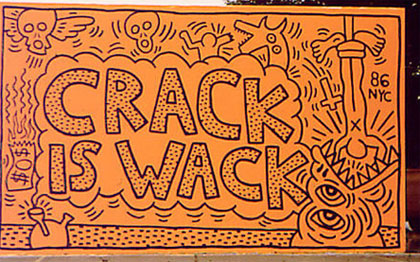
I disagree with the stance taken by those that wish to repaint the mural. The hand of the author would be lost and the mural would simply become a simulacra of the original, a sign value that is an illusion of reality, a repainting purporting to “look like” the original but actually nothing like it.45 Support for this stance are the photographs of the original Crack is Wack (1986) mural painted by Keith Haring and the over painted mural photographs shown by Andrew Thorn at the public forum into the future of the mural in April 2010.46 In this presentation Thorn, “illustrated the losses inherent with repainting and also showed that the most iconic Haring mural ‘Crack is Wack’, is not the painting that Haring is photographed in front of the day he completed it.”47

Thorn states, “I support making a new copy of the painting, I just believe it should not devalue the original. Repainting over the original destroys the original work by Keith Haring. What you have is a copy and an irretrievable original, that is to say you have destroyed the work of Keith Haring. This is against the law administered by Heritage Victoria and devalues the work monetarily. This may seem an odd point to raise but becomes more significant when one considers the copyright act in relation to artists and their rights. The law there clearly states that any action that devalues a work or diminishes the artist’s reputation is a violation of the copyright act. The Haring Foundation need to be aware of this international law and particularly in the context of the Crack is Wack no longer being the work of Keith Haring and thereby diminishing his reputation by deception.”

In reply the Haring Foundation note that, “the ONLY Haring mural that was completely repainted was the Crack is Wack mural in NYC, due to it’s absolutely dreadful condition. It, too, is a landmark and highly valued by its community, and while no longer the original, it most definitely remains a Keith Haring mural. There are several outdoor murals that are untouched: Tuttomondo in Pisa (cleaned only); Necker Hospital in Paris; murals in Amsterdam and Phoenix, AZ. Numerous outdoor murals were only cleaned and lightly repaired and there are over a dozen indoor murals in public institutions that are untouched …

The Haring Foundation does not always recommend a complete repainting, that would be silly. But the awful condition of the Collingwood mural is similar to that of Crack is Wack and therefore the Foundation does highly recommend that it be repainted. Further to Crack is Wack, when Keith originally painted it, he had no permission, and so was required by the city to paint it out, completely covering over his first version. Shortly thereafter, he was granted permission by the city, and the second version he painted was different from the first version. Keith’s first version is often reproduced in books and catalogs and this has led to the utterly incorrect assumption that the Haring Foundation actually destroyed his first version and replaced it with something completely different over it. Not true.”49

While it is correct that Haring returned on the following day and painted a second version, not a copy of the first, conservator Andrew Thorn states that, “Since his death in 1990, the west painting has been repainted with imagery not resembling either of the two original Haring works … and this has in turn been reapplied more or less faithfully in 2007. This last painting, the one currently visible, is the fourth in the series and bears no resemblance to either of the two original works … The current painting appears not to be the work of Keith Haring, but continues to be considered his signature outdoor work … Haring may have painted the third image, but there is no record of this … The third and seemingly anonymous rendition continues the overall message but with new iconography, and appears not to be the work of Keith Haring.”50

Thorn supports the painting of a facsimile, a replica of the original, as does artist and academic Dr Megan Evans: “I think the best option is to preserve it [the original] and then do a replica nearby which is done in honour of the Haring work. I think this would be more interesting conceptually also as to have a repainted work is like covering up the mark of the past and to make a facsimile is to recreate it in a contemporary context.”51 I agree with the concept of making a facsimile positioned close to the original. Perhaps this could be completed on a new wall that is perpendicular to the original wall that the mural is painted on. Of course the pertinent question would be the permissions needed to erect such a wall, the cost of its construction, the cost of painting the new mural and its upkeep.


Keith Haring (American, 1958-1990) 'Crack is Wack' as completed by Haring in 1986


Keith Haring (American, 1958-1990)
Crack is Wack
as completed by Haring in 1986 (1st version, now overpainted)


Anonymous. 'Crack is Wack' 1986


Current Crack is Wack
painted after 1990


Now you see it, now you don’t

This brings me to my final point: now you see it, now you don’t. While I must take at face value the assertion by Andrew Thorn that the mural can be preserved and not fade or deteriorate further if the recommendations of his 1996 and 2010 reports are adhered to, and while I respect his professional judgment in that statement, unfortunately past experience (i.e. the lack of maintenance of the mural between 1996, the year of the last stabilisation, and now) tells me that the mural will continue to deteriorate and fade unless a specific and regular maintenance plan is financially funded and put in place. Donna Wheeler observes that the mural “is but a shadow of its former self”52 and I agree with this assertion. I was shocked to see the mural when visiting it recently compared to how I remember it in 1996 (ah, memory!). Though still an original Haring, it is pale and wane, almost an imitation of itself (and that is an irony in itself), and it made me sad to see the mural in this condition, as I remember how vibrant it was back in the early 1990s.

“According to ACCA curator Hannah Mathews, when the mural was last stabilised in 1996, it was estimated that a tiny sum of A$200 ($178) was needed annually to maintain the work. A combination of factors including pollution and time has left the mural in its current degraded state. Some estimate that it could cost around A$25,000 ($22,000) to stabilise, with an additional A$1,000 ($900) a year for maintenance. Although the issue of whether to repaint the mural is up for debate, all parties agree that the work needs stabilisation as soon as possible to prevent further surface lifting and cracking of the paint … Yarra mayor Jane Garrett said … “Following the forum [Yarra Talking Art forum: “The Keith Haring Mural: yesterday, today, tomorrow” on 29th April 2010 held in Collingwood], [the] Council [is setting up] a working group, which will seek to include representatives from Skills Victoria, Heritage Victoria, the arts community and other stakeholders, to discuss the mural’s future and come to a consensus on the most appropriate way to preserve it.”53

All parties need to agree and as quickly as possible. While Haring was quite happy to send his work out into the world for the enjoyment of all it would be a disservice to his memory and his status as an internationally renowned artist to have the only Haring mural in Australia deteriorate further. Time is of the essence. As Mark Holsworth on his Melbourne Art & Culture Critic blog insightfully opines, “Street art is not the property of the street artists – it belongs to everyone. Even if the artist intends for the art to be ephemeral there is no reason for their wishes to be carried out; the person giving the gift does not get to determine how the gift is used.”54

In the final analysis everyone needs to come to consensus about the future of the Keith Haring Mural for without proper conservation and maintenance it will truly be a case of now you see it, no you don’t.

Dr Marcus Bunyan

Word count: 5,056


Endnotes

1/ Keith Haring on Wikipedia [Online] Cited 25/09/2010
2/ Ibid.,
3/ Gott, Ted. “Fragile Memories: Keith Haring and the Water Window Mural at the National Gallery of Victoria,” in Art Bulletin of Victoria Vol. 43. Melbourne: National Gallery of Victoria, p. 8
4/ “Keith Haring New York,” on the Woodward Gallery website [Online] Cited 25/09/2010. No longer available online
5/ Gott, Ted. Op cit., pp. 7-8
6/ Gott, Ted. Op cit., p. 8
7/ Gott, Ted. Keith Haring’s Collingwood Mural. Draft of a paper given at a Keith Haring Public Forum, Collingwood, 29th April 2010 by Ted Gott, Senior Curator, International Art, National Gallery of Victoria
8/ Gott, Ted and Sullivan, Lisa. “Keith Haring in Australia.” in Art and Australia, Vol. 39, No.4, June-July-Aug 2002: (560)-567. ISSN: 0004-301X. Cited 09/10/2010
9/ Buckley, John. “Keith Haring” exhibition catalogue. Melbourne: Australian Centre for Contemporary Art (ACCA), 1985
10/ Gott, Ted and Sullivan, Lisa. Op. cit., p. 564. See also Footnote 15 and Gruen, John. Keith Haring: The Authorized Biography. New York: Prentice-Hall, 1991, p. 113
11/ Gott, Ted and Sullivan, Lisa. Op. cit.,
12/ Gott, Ted and Sullivan, Lisa. Op. cit., p. 562. See also Footnote 10 and Footnote 15. “Vandals,” Herald, Saturday 10th March 1984, p. 1; “Vandals smash gallery pane,” The Age, Monday 12th March , 1984, p. 19
13/ Gott, Ted and Sullivan, Lisa. Op. cit., Footnote 15 and Gruen, John. Keith Haring: The Authorized Biography. New York: Prentice-Hall, 1991, p. 113
14/ Gott, Ted and Sullivan, Lisa. Op. cit., p. 564
15/ Gott, Ted. Keith Haring’s Collingwood Mural. Op cit.,
16/ Gott, Ted. Keith Haring’s Collingwood Mural. Op cit.,
17/ Gott, Ted. Keith Haring’s Collingwood Mural. Op cit.,
18/ Gott, Ted and Sullivan, Lisa. Op. cit., p. 566. See also Gott, Ted. Keith Haring’s Collingwood Mural. Op cit.,
“Uniquely, we have a surviving record of Keith Haring’s own interpretation of the Collingwood mural, revealed during an interview conducted with the artist shortly after the painting’s completion on Tuesday 6 March 1984. There Keith Haring noted how: “What’s going on in the bottom is about – I mean, all these people are doing different things, right? Some of them are like dancing, like rap dancing, or acrobatics.  Some of them are almost like they are fighting. But the way they are all together means that they can’t – I mean, if one of them comes out, the whole thing falls down. So they sort of depend on all of them to make it work. So it’s sort of like society or whatever, where the world only works when lots of individuals do their part, right?
The thing at the top is, I guess, the impending doom or impending possibility of technological … the confrontation between technology and the human element, which is still holding up the technology, and based on the technology. But it sort of takes a semi-circle in evolution, where people evolved up to a certain point, and now they’ve evolved so far that they’ve invented a computer or a machine to evolve further. And the computer is maybe evolving more than people were. So it’s about that sort of confrontation, I guess.””
19/ Gott, Ted and Sullivan, Lisa. Op. cit., p. 562. See also Footnote 8 and Haring, Keith. “Keith Haring,” in Flash Art, No. 116, March 1984, p. 22
20/ Anonymous. “Keith Haring Mural: Statement of Significance,” on Heritage Council of Victoria database [Online] Cited 04/10/2010
21/ Sharpe, Emily. “Saving Keith Haring Down Under: Melbourne work is last surviving wall painting by the late artist’s own hand,” on The Art Newspaper website. Published online 08/06/2010. Cited 06/08/2010. No longer available online
22/ Thorn, Andrew. Email to the author. 24/08/2010.
23/ Dixon, Tom. Member of the Public Art Committee of the National Trust of Australia (Victoria) (NTAV). Telephone conversation with the author 26/08/2010. The Public Art Committee considers murals, mosaics, and sculptures; and such works can be found in parks and reserves, public streets, squares and buildings; and publicly accessible parts of privately owned buildings.
24/ Masterson, Andrew. “Off the wall art,” in The Age. Melbourne: Summer Age supplement. December 27th, 1994, p. 4-5 quoted in Gibson, Lisanne and Pendlebury, John R. “Values not Shared: The Street Art of Melbourne’s City Laneways,” chapter in Valuing historic environments. Farnham: Ashgate Publishing Limited, 2009, p. 146
25/ Thorn, Andrew. “Conservation Treatment Report.” The Keith Haring Mural Johnston Street, Collingwood. Final Report prepared for Northern Institute, 1997.
26/ Thorn, Andrew. “Review of Condition and Treatment.” The Keith Haring Mural Johnston Street, Collingwood. Prepared for City of Yarra, 2007, p. 1
27/ Ibid., p. 2
28/ Ibid., p. 3-5
29/ Thorn, Andrew. Email to the author. 23/08/2010.
30/ Thorn, Andrew. Email to the author. 24/08/2010.
31/ McCaughy, Patrick. Review of “Securing the Past: Conservation in Art, Architecture and Literature” by Paul Eggert in The Australian, December 02, 2009. [Online] Cited 12/06/2010. No longer available online
32/ Ibid.,
33/ Thorn, Andrew. Email to the author. 23/08/2010.
34/ Gibson, Lisanne and Pendlebury, John R. Valuing historic environments. Farnham: Ashgate Publishing Limited, 2009, p. 72
35/ Smith, Laurajane. Uses of Heritage. Oxford: Routledge, 2006, p. 3 (italics in original) quoted in Gibson, Lisanne and Pendlebury, John R. Valuing historic environments. Farnham: Ashgate Publishing Limited, 2009, p. 72
36/ Mauss, Marcel. “A category of the human mind: The notion of person; the notion of self,” in Carrithers, M., Collins, S. and Lukes, S. (eds.,). The Category of the Person: Anthropology, Philosophy, History. Cambridge: Cambridge University Press, 1985, p. 22, cited in Gibson, Lisanne and Pendlebury, John R. Valuing historic environments. Farnham: Ashgate Publishing Limited, 2009, p. 72
37/ Foucault, Michel. Of Other Spaces (1967), “Heterotopias.” Diacritics 16 (Spring 1986), pp. 22-27
38/ Wolff, Janet. The Social Production of Art. Basingstoke: Macmillan, 1993, p. 97
39/ Thorn, Andrew. Email to the author. 23/08/2010.
40/ National Trust of Australia (Victoria). Classification Report for ‘Keith Haring Mural’, Johnston Street, Collingwood, File number 6675. Extract from Statement of Significance, 4th August 1997 quoted in Gibson, Lisanne and Pendlebury, John R. “Values not Shared: The Street Art of Melbourne’s City Laneways,” in Valuing historic environments. Farnham: Ashgate Publishing Limited, 2009, p. 146
41/ Wheeler, Donna. “When Keith Came To Town,” on Holiday Goddess, Female-Friendly Travel website. [Online] Cited 06/08/2010. No longer available online
42/ Thorn, Andrew. Email to the author. 23/08/2010.
43/ McAuliffe, Chris quoted in Masterson, Andrew “Off the wall art,” in The Age. Melbourne: Summer Age supplement. December 27th, 1994, p. 4-5 quoted in Gibson, Lisanne and Pendlebury, John R. Valuing historic environments. Farnham: Ashgate Publishing Limited, 2009, p. 72
44/ Op. cit.,
45/ See Tseëlon, E. The Masque of Femininity: The Representation of Women in Everyday Life. London: Sage, 1995, p. 128
46/ Yarra Talking Arts forum. “The Keith Haring mural: yesterday, today, tomorrow.” Thursday 29th April, 2010
47/ Thorn, Andrew. Email to the author. 23/08/2010.
48/ Ibid.,
49/ Gruen, Julia. “Save the Keith Haring Mural” web page on Facebook [Online] Cited 21/11/2011. No longer available online
50/ Thorn, Andrew. “Another Red Haring,” keynote paper presented at the International Council of Museums Conservation Committee  (ICOMCC) triennial Conference, Lisbon, October 2011
51/ Evans, Megan. Email to the author. 08/09/2010.
52/ Wheeler, Donna Op cit.,
53/ Sharpe, Emily Op cit.,
54/ Holsworth, Mark. “Another Banksy Gone,” on Melbourne Art & Culture Critic blog. [Online] Cited 06/10/2010.


LIKE ART BLART ON FACEBOOK

Back to top