Exhibition: ‘Diane Arbus: Sanctum Sanctorum’ at David Zwirner, London

Exhibition dates: 6th November, 2025 – 17th January, 2026


Diane Arbus (American, 1923-1971) 'Transvestite with her birthday cake, N.Y.C. 1969' 1969 from the exhibition 'Diane Arbus: Sanctum Sanctorum' at David Zwirner, London, Nov 2025 - Jan 2026


Diane Arbus (American, 1923-1971)
Transvestite with her birthday cake, N.Y.C. 1969
1969
Gelatin silver print
© The Estate of Diane Arbus


Without judgement

In my humble opinion Diane Arbus is the best portrait photographer of the 20th century.

As can be seen in the quotation from a 1939 high-school essay on Plato when Arbus was just 19 years old (below), latent inside her was an appreciation of difference, uniqueness, and the importance of life – all awaiting an out, an emanation of her spirit later manifested in her photographs through the picturing of her subjects.

Arbus found her mature voice as an artist, her métier if you like, when in 1962 she switched from a 35mm camera to a 2 1/4 inch twin-lens reflex (TLR) Rolleiflex (later a Mamiyaflex), a square format which became her iconic signature.

In the photograph Nancy Bellamy’s bedroom, N.Y.C. 1961 (1961, below) we therefore have evidence of the early results of the use of this new camera. In this photograph I believe you can feel how Arbus is still getting used to his new way of seeing the world, for you have to approach your visualisation of the world in a completely different way when constructing the image plane in a square format. Here she is still unsure as to where to place the camera. The light is fantastic coming in through the window and flooding the room but the out of focus left wall is weak and simply does not work with the image.

Fast forward to 1963-1965 and we see Arbus in complete control of her physical and emotional environment. In photographs from this period, whether medium distance portraits showing subjects in situ or tightly cropped portraits with minimal backgrounds, we see her undoubted mastery of natural light, flash, construction and tensioning of the image plane but, above all, in control of the feeling that emanates from the photographs that flows to the viewer.

Whether direct / acceptance / this is who I am (Interior decorator at the nudist camp in his trailer, New Jersey, 1963, 1963 below) to contained / introspective (Lucas Samaras, N.Y.C. 1966, 1966 below) – but never the dreaded “dead pan” – and on to the inscrutable / open / closed looks on each of the three faces in the photograph Triplets in their Bedroom, N.J., 1963 (1963, below), Arbus is the master at conjuring, no what is the word I’m looking for … Arbus is the master at materialising the energy of a person or place before our very eyes.

As the press release so eloquently states, “Through her singular combination of intelligence, charisma, intuition, and courage, Diane Arbus was frequently invited into homes and other private realms seldom seen by strangers. Though made in intimate settings, her photographs evidence no sense of intrusion or trespass. Instead, they reveal an unspoken exchange between photographer and subject, a moment of recognition in which confidences emerge freely and without judgment.”

An unspoken exchange between photographer and subject. A moment of revelation, or revelatio, where the curtain is pulled back to reveal our innermost secrets. Visualised by Arbus without judgement.

As the years progress towards 1968-1970 Arbus becomes bolder still. In photographs such as A naked man being a woman, N.Y.C., 1968 (1968, below), Girl sitting on her bed with her shirt off, N.Y.C., 1968 (1968, below) and Mexican Dwarf in his hotel room, N.YC., 1970 (1970, below) we see and feel such an intimate bond between the photographer and the subject – all crap cut out, all extraneous noise gone, just the baring of the soul of the sitter looking directly into the camera. As Minor White used to say, a communication / communion between the photographer and the subject, back through the lens of the camera and onto the film, forming a Zenian circle of energy, hoping for a revelation of spirit in the negative and subsequent print – whether that be from a rock, a landscape or a portrait.

And in two photographs from the same sitting, we can begin to understand how Arbus achieved her aim. In the photograph Transvestite at the birthday party, N.Y.C. 1969 (1969, below) we have the subject in situ, in context, laughing, happy, enjoying her birthday party surrounded by her things. Then things change. In Transvestite with her birthday cake, N.Y.C. 1969 (1969, below) Arbus closes in on this wonderful human being on her bed with her birthday cake. Isolating her from the background through the use of flash, there she is, fag in hand, staring directly into the camera in all her strength and vulnerability. Arbus evinces what it is to be this human being, she has empathy for the subject in these intimate settings.

I believe that Arbus’ empathy for her subjects was greatly enhanced by the waist level engagement with her sitters when using her medium format camera. Instead of bringing the camera up to the eye, Arbus looks down into the viewfinder to locate and ground the energy of her subjects, and the camera is nestled at solar plexus / belly button, with all the connection to mother, blood, energy and water (Amniotic Fluid) from which we all come. When singing and in yoga practice, breathing comes from the stomach and the energy flows in an out of the navel, the Manipura (solar plexus) in yoga, linked to personal power, emotional balance, and metabolism, acting as a hub for energy distribution.1 Having used an old Mamiya twin-lens C220 medium format camera myself I can totally appreciate the unique perspective and energy such a camera position brings to picturing the world.

“These archetypal images have become deeply embedded in the collective conscience where conscience is pre-eminently the organ of sentiments and representations. The snap, snap, snap of the shutter evinces the flaws of human nature, reveals the presence of a quality or feeling to which we can all relate. As Arbus states, the subject of the picture is always more important than the picture. And more complicated. That is why these photographs always capture our attention – because we become, we inhabit, we are the subject.”2

Dr Marcus Bunyan


1/ The (navel) is seen as a powerful energy centre in many traditions (Yoga, Ayurveda, TCM) and science, representing our origin, core strength, digestion (Agni/digestive fire), self-esteem, and life force (prana).

2/ Marcus Bunyan commenting on the exhibition Diane Arbus at Jeu de Paume, Paris, October 2011 – February 2012


Many thankx to David Zwirner for allowing me to publish the 5 images and installation photographs in the posting. All other photographs are used under fair use conditions for the purposes of eduction and research. Please click on the photographs for a larger version of the image.


“For me the subject of the picture is always more important than the picture. And more complicated.”


Diane Arbus


“There are and have been and will be an infinite number of things on earth: individuals all different, all wanting different things, all knowing different things, all loving different things, all looking different. Everything that has been on earth has been different from any other thing. That is what I love: the differentness, the uniqueness of all things and the importance of life…. I see something that seems wonderful; I see the divineness in ordinary things.”


Diane Arbus in a high-school essay on Plato, 1939


Dennis McGuire (American) 'Untitled [Diane Arbus using her medium format Mamiya camera]' Nd


Dennis McGuire (American)
Untitled [Diane Arbus using her medium format Mamiya camera]
Nd
© Dennis McGuire

Used under fair use conditions for the purposes of education and research
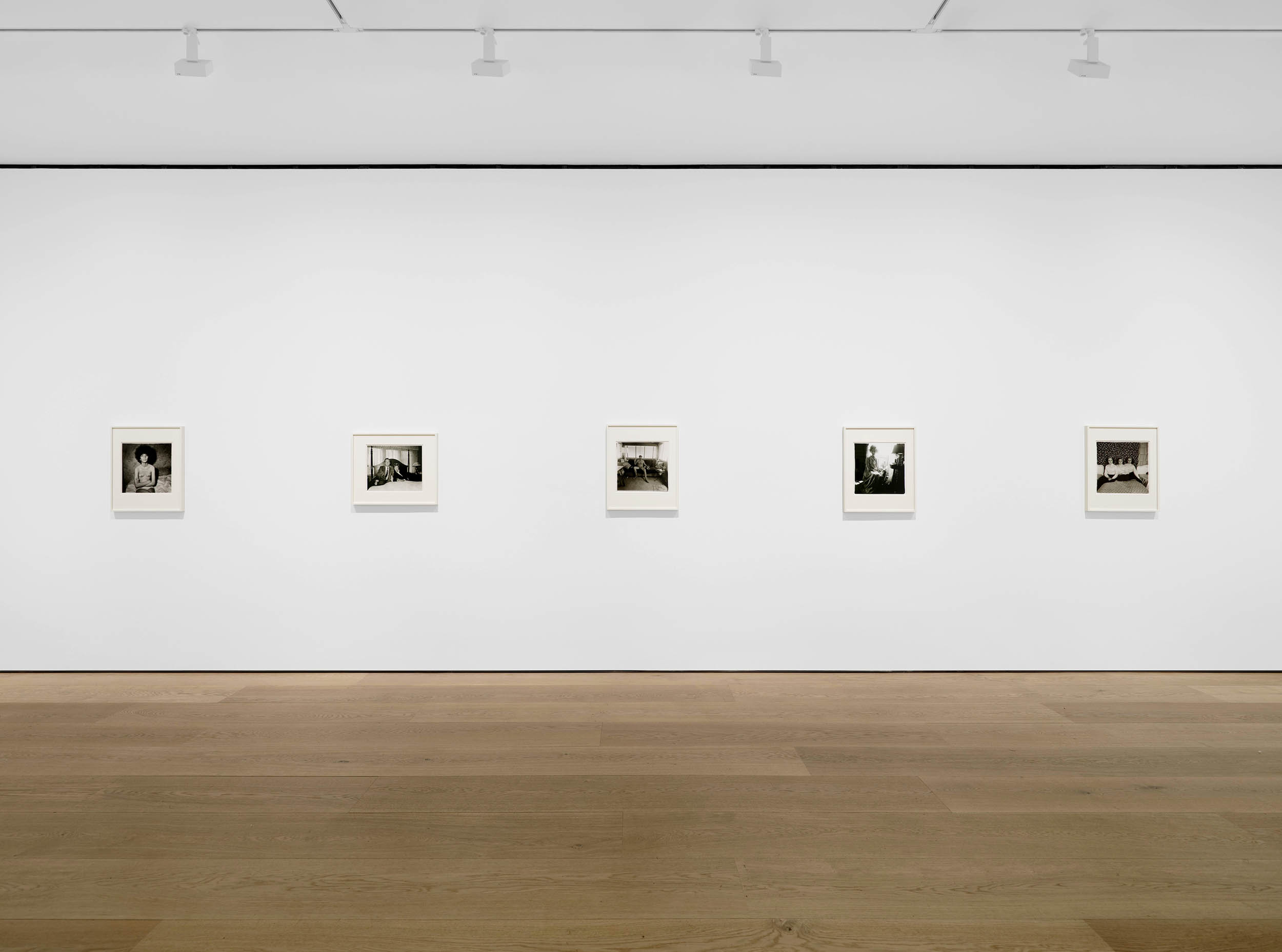
 

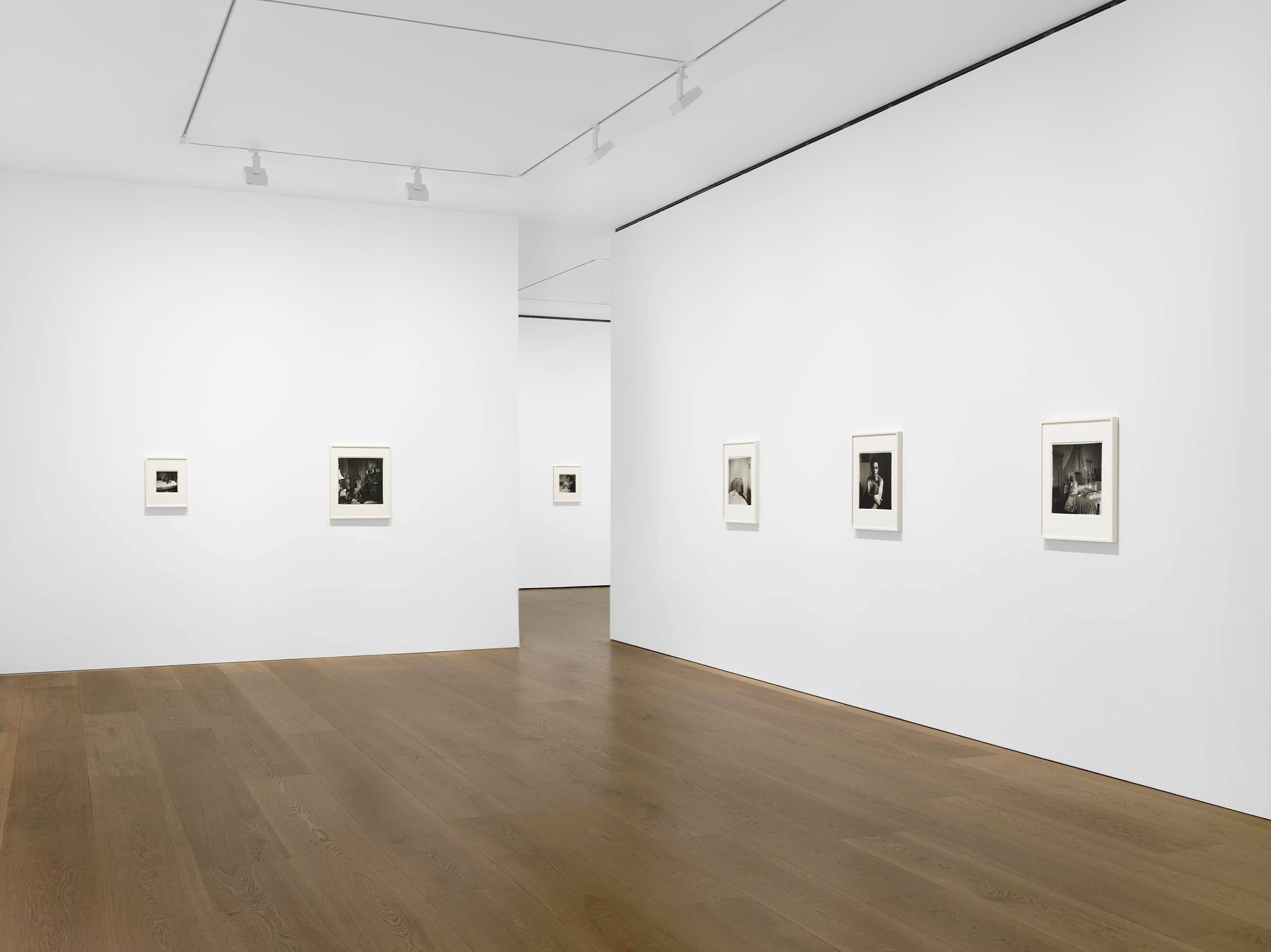
Installation view of the exhibition 'Diane Arbus: Sanctum Sanctorum' at David Zwirner, London


Installation view of the exhibition Diane Arbus: Sanctum Sanctorum at David Zwirner, London showing at left, Arbus’ Girl sitting on her bed with her shirt off, N.Y.C., 1968; at centre, Interior decorator at the nudist camp in his trailer, New Jersey 1963; at second right, Mrs. T. Charlton Henry in a negligee, Philadelphia, Pa. 1965; and at right, Triplets in their Bedroom, N.J., 1963
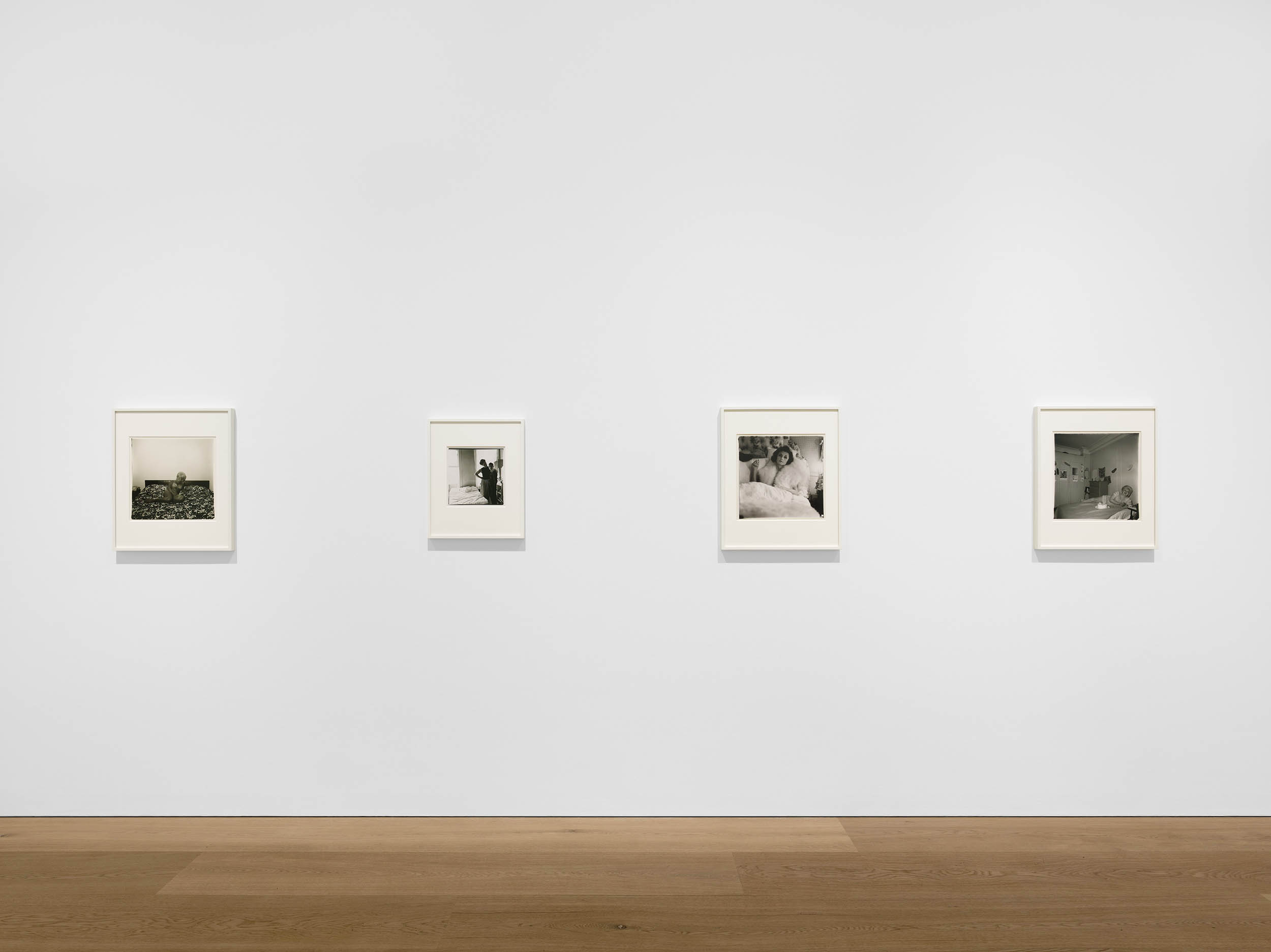
 

Installation view of the exhibition 'Diane Arbus: Sanctum Sanctorum' at David Zwirner, London


Installation view of the exhibition Diane Arbus: Sanctum Sanctorum at David Zwirner, London showing at second left, Arbus’ Two friends at home, N.Y.C., 1965; at second right, Brenda Diana Duff Frazier, 1938 Debutante of the Year, at home, Boston, Mass. 1966; and at right, Transvestite at her birthday party, N.Y.C., 1968
 

Installation view of the exhibition 'Diane Arbus: Sanctum Sanctorum' at David Zwirner, London


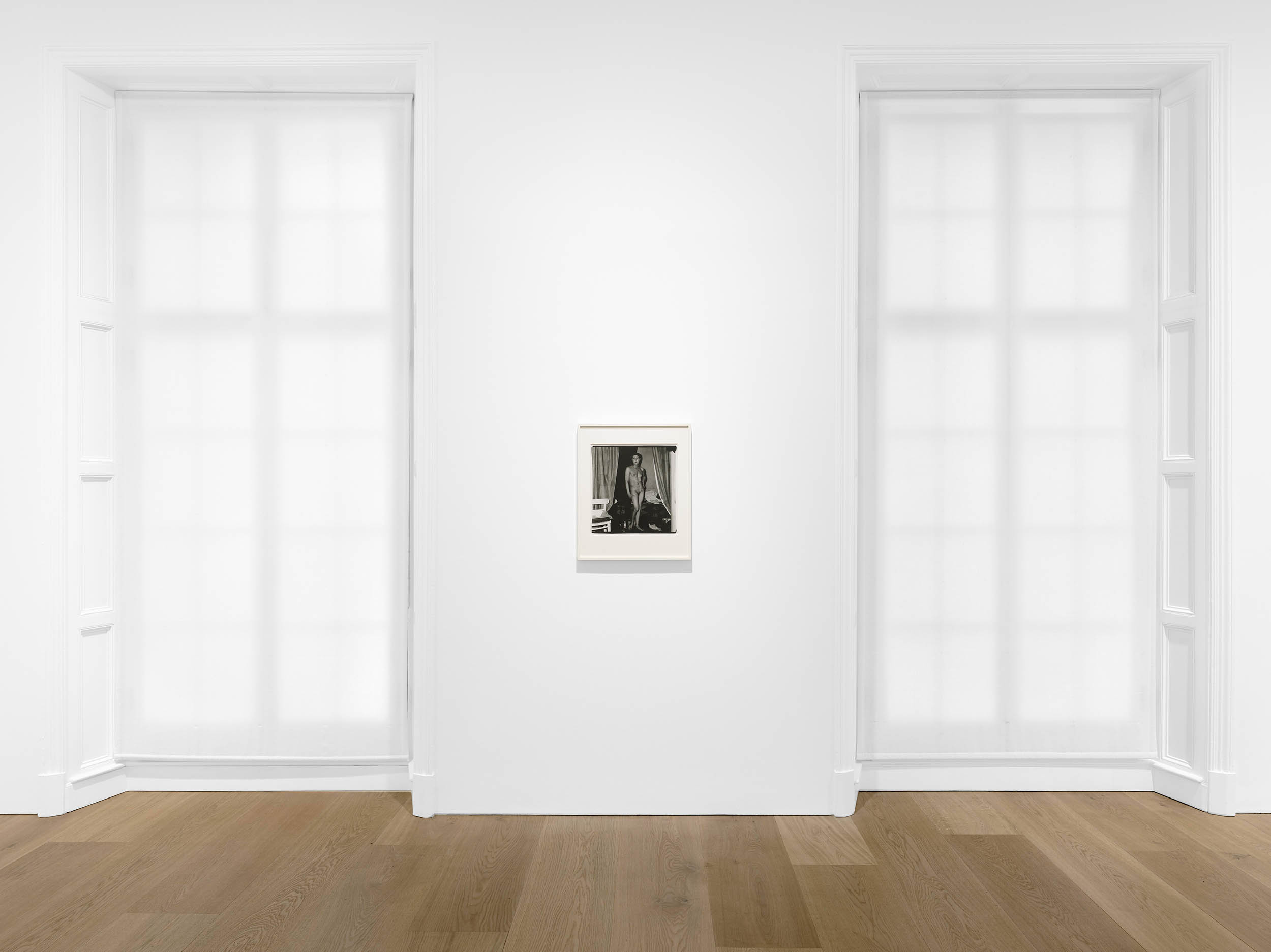
Installation view of the exhibition Diane Arbus: Sanctum Sanctorum at David Zwirner, London showing Arbus’ photograph A naked man being a woman, N.Y.C. 1968
 

Installation view of the exhibition 'Diane Arbus: Sanctum Sanctorum' at David Zwirner, London


Installation view of the exhibition Diane Arbus: Sanctum Sanctorum at David Zwirner, London showing in the centre distance, Arbus’ Mexican dwarf in his hotel room, N.Y.C. 1970; at second right, Lucas Samaras, N.Y.C. 1966; and at right, Bishop on her bed, Santa Barbara, Cal., 1964


Diane Arbus (American, 1923-1971) 'Female impersonator on bed, N.Y.C. 1961' 1961 from the exhibition 'Diane Arbus: Sanctum Sanctorum' at David Zwirner, London, Nov 2025 - Jan 2026


Diane Arbus (American, 1923-1971)
Female impersonator on bed, N.Y.C. 1961
1961
Gelatin silver print
© The Estate of Diane Arbus
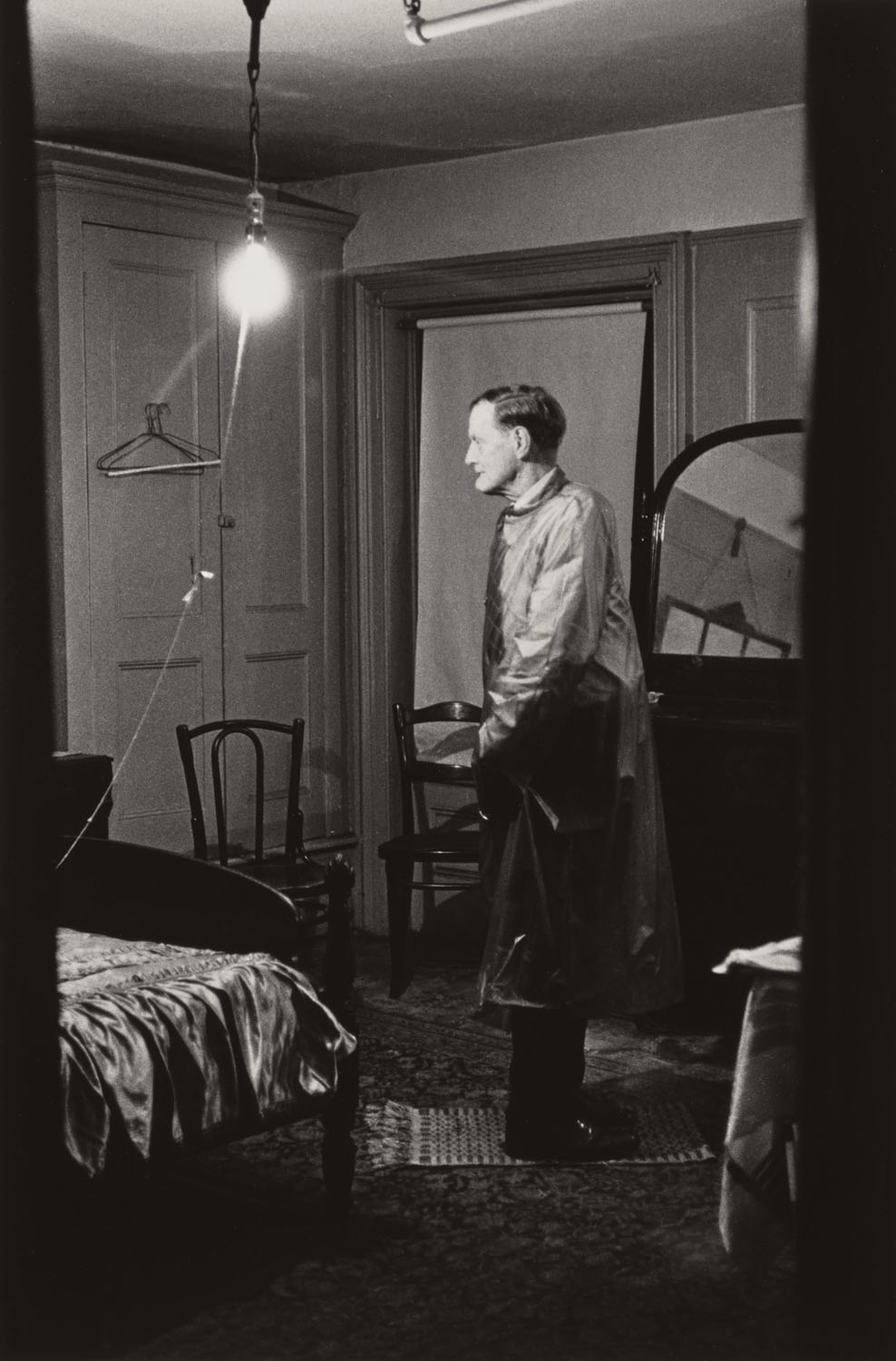
 

Diane Arbus (American, 1923-1971) 'The Backwards Man in his hotel room, N.Y.C. 1961' 1961


Diane Arbus (American, 1923-1971)
The Backwards Man in his hotel room, N.Y.C. 1961
1961
Gelatin silver print
© The Estate of Diane Arbus

 

Diane Arbus (American, 1923-1971) 'Lucas Samaras, N.Y.C. 1966' 1966


Diane Arbus (American, 1923-1971)
Lucas Samaras, N.Y.C. 1966
1966
Gelatin silver print
© The Estate of Diane Arbus


Lucas Samaras (Greek: Λουκάς Σαμαράς; September 14, 1936 – March 7, 2024) was a Greek-born American photographer, sculptor, and painter. …

His “Auto-Interviews” were a series of text works that were “self-investigatory” interviews. The primary subject of his photographic work is his own self-image, generally distorted and mutilated. He worked with multi-media collages, and by manipulating the wet dyes in Polaroid photographic film to create what he calls “Photo-Transformations”.

Text from the Wikipedia website


Diane Arbus (American, 1923-1971) 'Brenda Diana Duff Frazier, 1938 Debutante of the Year, at home, Boston, Mass. 1966' 1966


Diane Arbus (American, 1923-1971)
Brenda Diana Duff Frazier, 1938 Debutante of the Year, at home, Boston, Mass. 1966
1966
Gelatin silver print
© The Estate of Diane Arbus


~ Sanctum Sanctoruma sacred room or inner chamber; a place of inviolable privacy

Diane Arbus: Sanctum Sanctorum, an exhibition of forty-five photographs made in private places across New York, New Jersey, California, and London between 1961 and 1971, is on view at David Zwirner, London, from 6 November to 17 January 2025, and travels to Fraenkel Gallery, San Francisco in spring 2026. The exhibition will be accompanied by a comprehensive monograph reproducing all works in the exhibition, jointly published by both galleries.

Through her singular combination of intelligence, charisma, intuition, and courage, Diane Arbus was frequently invited into homes and other private realms seldom seen by strangers. Though made in intimate settings, her photographs evidence no sense of intrusion or trespass. Instead, they reveal an unspoken exchange between photographer and subject, a moment of recognition in which confidences emerge freely and without judgment.

Arbus’s desire to know people embraced a vast spectrum of humanity. Her subjects in Sanctum Sanctorum include debutantes, nudists, celebrities, aspiring celebrities, socialites, transvestites, babies, widows, circus performers, lovers, female impersonators, and a blind couple in their bedroom.

The exhibition brings together little-known works, such as Girl sitting in bed with her boyfriend, N.Y.C1966Ozzie and Harriet Nelson on their bed, Los Angeles 1970; and Interior decorator at the nudist camp in his trailer, New Jersey 1963, alongside celebrated images like Mexican dwarf in his hotel room, N.Y.C. 1970 and A naked man being a woman, N.Y.C. 1968

While many of Arbus’s photographs have become part of the public’s collective consciousness since her landmark retrospective at The Museum of Modern Art, New York, in 1972, seen in this context, viewers may discover aspects of even familiar works that have previously gone unnoticed.

Sanctum Sanctorum follows two recent major exhibitions of the artist’s work: Cataclysm: The 1972 Diane Arbus Retrospective Revisited at David Zwirner New York (2022) and Los Angeles (2025), and Diane Arbus: Constellation at LUMA, Arles (2023–2024) and the Park Avenue Armory, New York (2025).

Exhibition Catalogue

This new title ‘Sanctum Sanctorum’ illuminates Diane Arbus’s singular ability to enter private worlds.

Press release from the David Zwirner
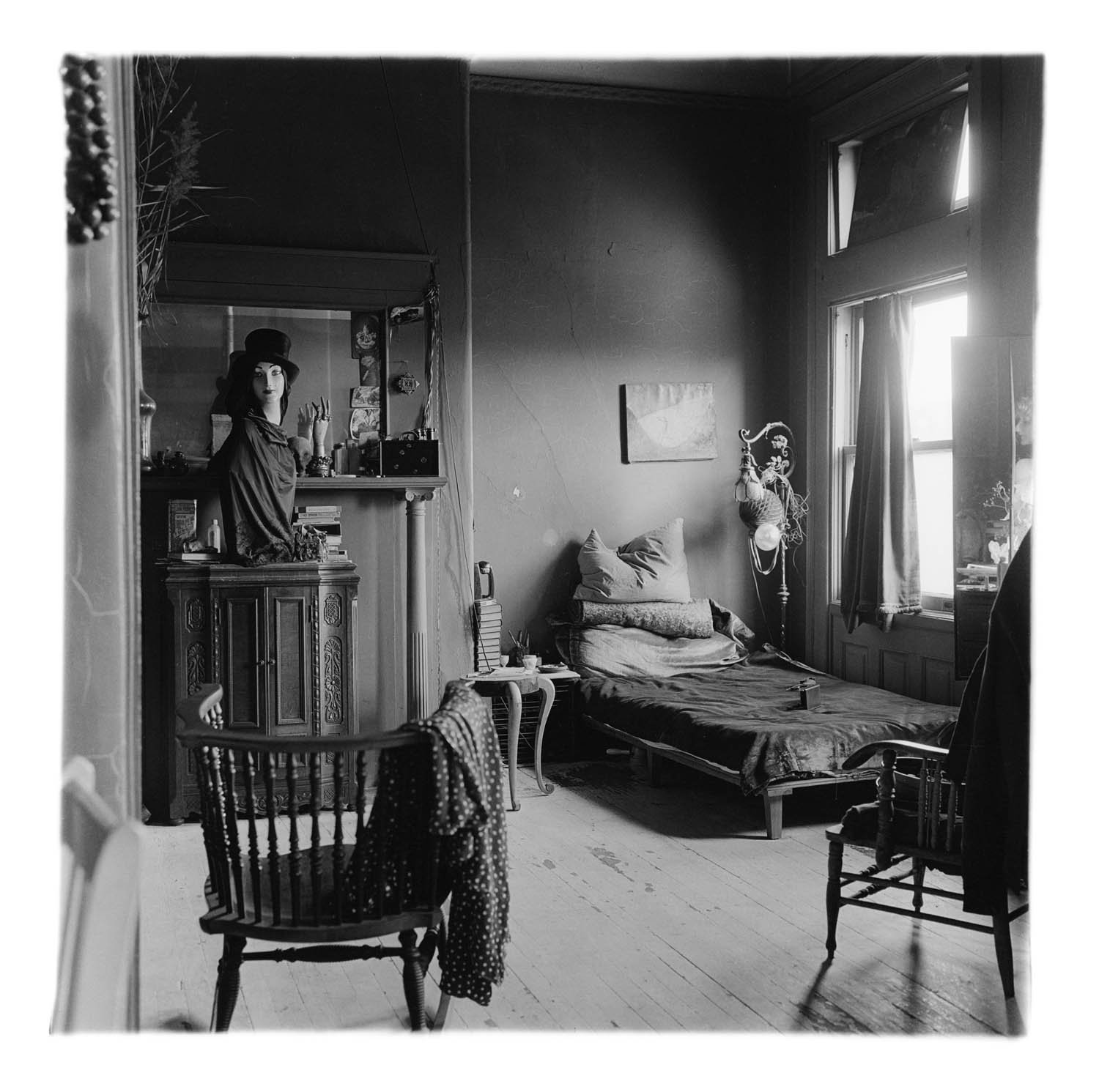
 

Diane Arbus (American, 1923-1971) 'Nancy Bellamy’s bedroom, N.Y.C. 1961' 1961


Diane Arbus (American, 1923-1971)
Nancy Bellamy’s bedroom, N.Y.C. 1961
1961
Gelatin silver print
© The Estate of Diane Arbus

Used under fair use conditions for the purposes of education and research.


One of Arbus’s lesser known pictures, this photograph is of the bedroom of Nancy Bellamy, the wife of Richard Bellamy, a leading gallerist in 1960s New York who influentially championed Pop Art and Minimalism. Before she began her personal projects, Arbus worked in fashion photography with her husband, Allan, and she first met Nancy when she modelled for the Arbuses on a fashion shoot. As well as modelling, Bellamy also worked as a dancer, painter and costume designer, and had a keen interest in spiritualism. Like ‘Xmas Tree in a Living Room in Levittown 1963’, Arbus uses an empty room to create a portrait of the person – the dressmaker’s dummy, the canvas on the wall, the photographs by the mirror and the simple, yet elegant furnishings together create an impression of Arbus’s friend’s personality.

Text from the National Galleries of Scotland website
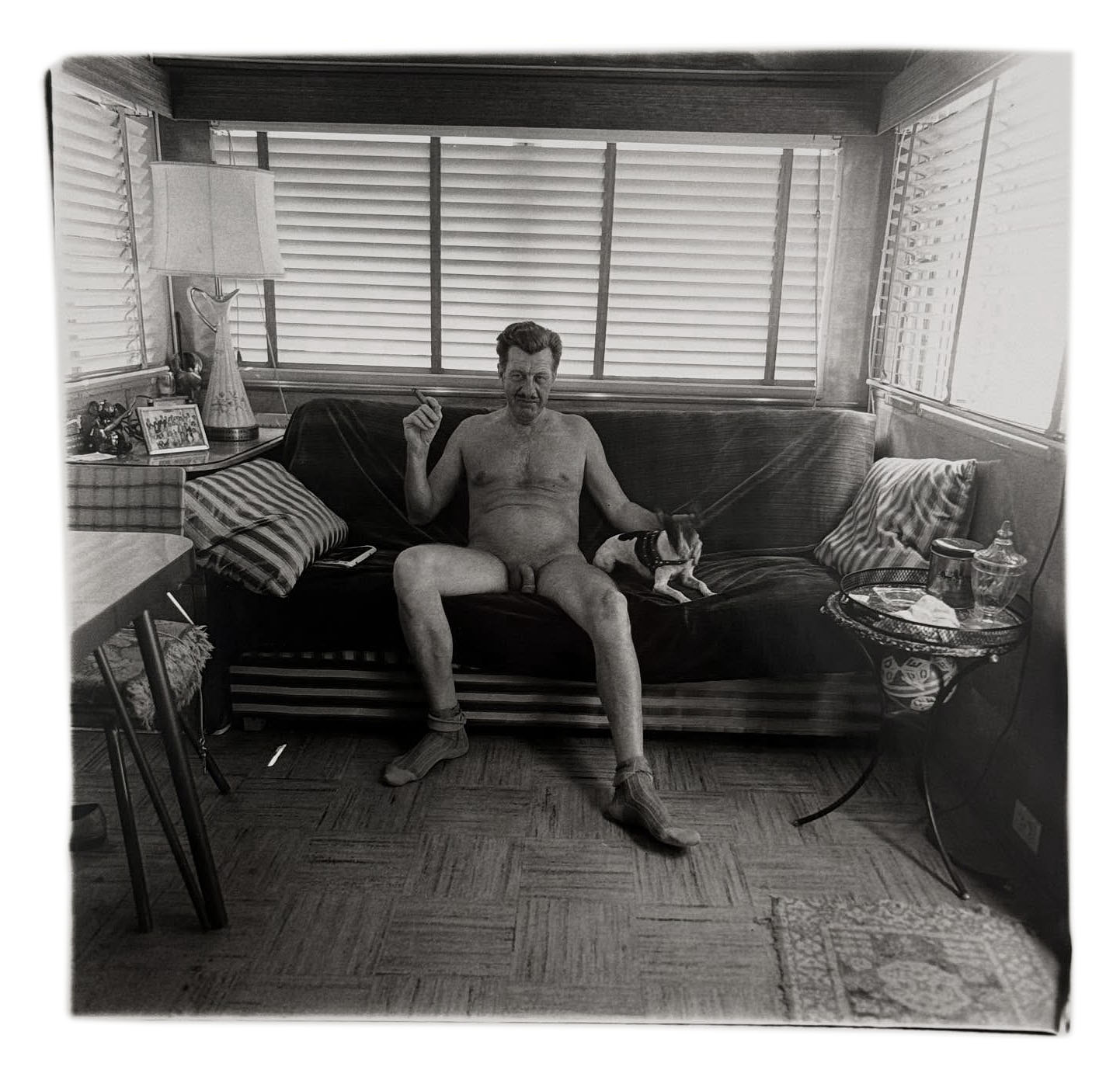
 

Diane Arbus (American, 1923-1971) 'Interior decorator at the nudist camp in his trailer, New Jersey, 1963' 1963


Diane Arbus (American, 1923-1971)
Interior decorator at the nudist camp in his trailer, New Jersey, 1963
1963
Gelatin silver print
© The Estate of Diane Arbus

Used under fair use conditions for the purposes of education and research.
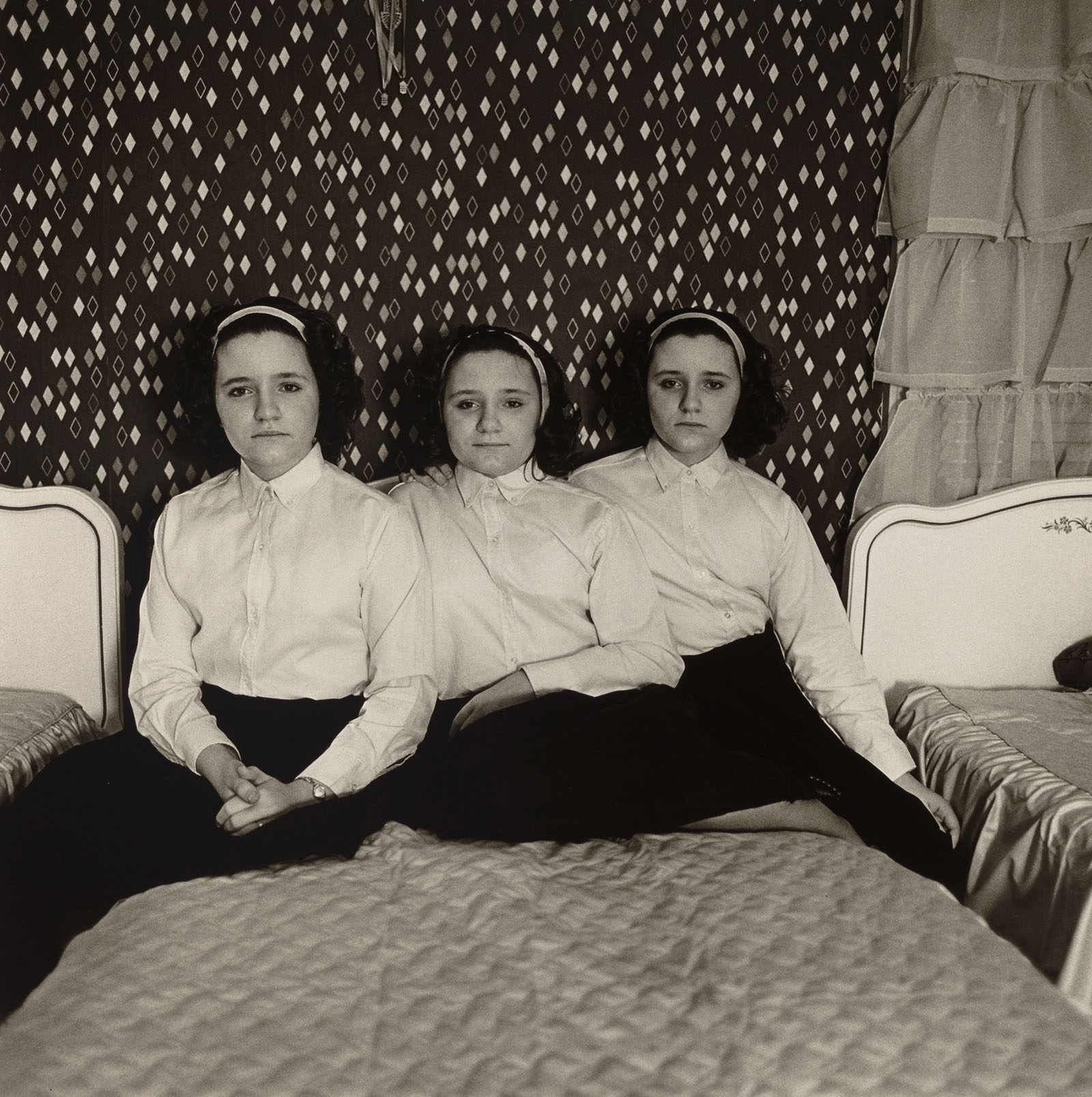
 

Diane Arbus (American, 1923-1971) 'Triplets in their Bedroom, N.J., 1963' 1963


Diane Arbus (American, 1923-1971)
Triplets in their Bedroom, N.J., 1963
1963
Gelatin silver print
© The Estate of Diane Arbus

Used under fair use conditions for the purposes of education and research.
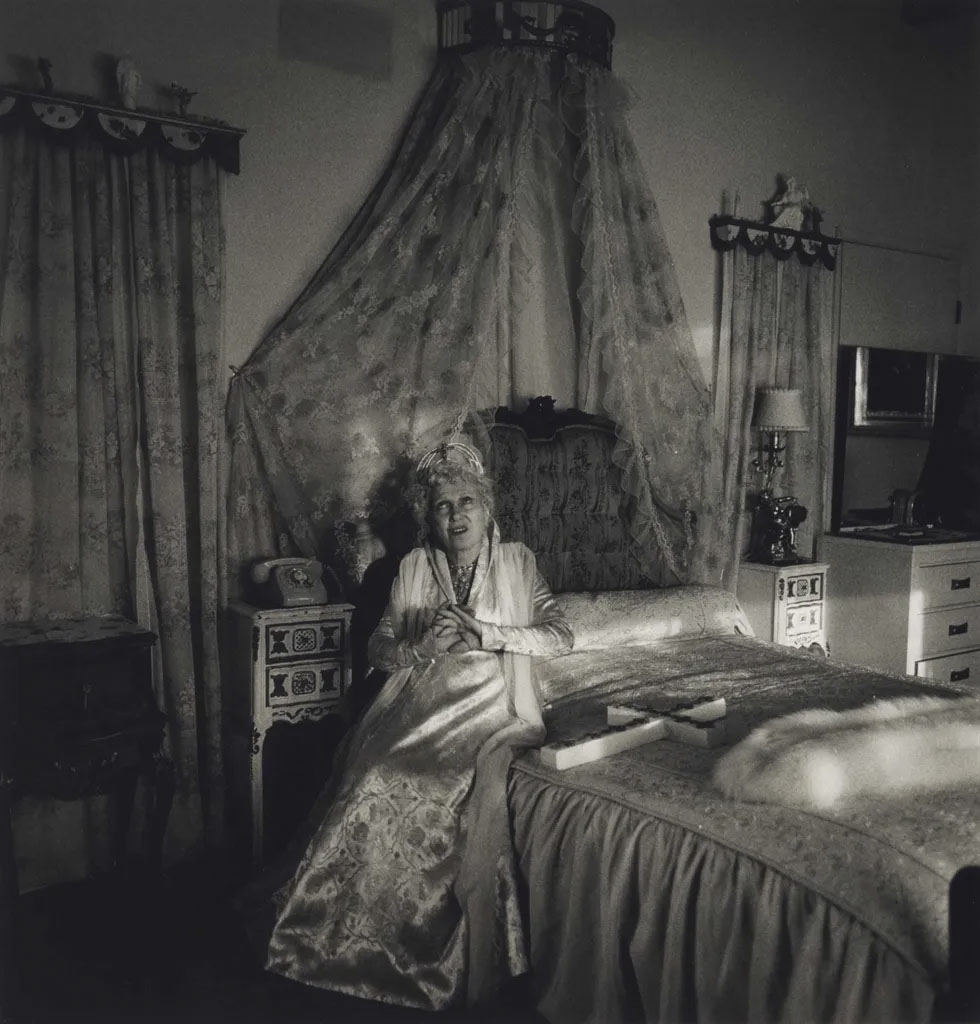
 

Diane Arbus (American, 1923-1971) 'Bishop on her bed, Santa Barbara, Cal., 1964' 1964, printed later


Diane Arbus (American, 1923-1971)
Bishop on her bed, Santa Barbara, Cal., 1964
1964
Gelatin silver print
© The Estate of Diane Arbus

Used under fair use conditions for the purposes of education and research.


The bishop in Diane Arbus’s photograph “Bishop on her bed, Santa Barbara, Cal.” (1964, above) was Bishop Ethel Predonzan, a unique figure who believed she was in Santa Barbara to await the Second Coming of Christ and wore elaborate robes, described by Arbus as a “small lady in damask robes with hair of phosphorescent pink”.

Predonzan was a key subject in Arbus’s exploration of individuals on the fringes, showcasing the artist’s ability to find deep personal connection and reveal inner strangeness. 

Google AI
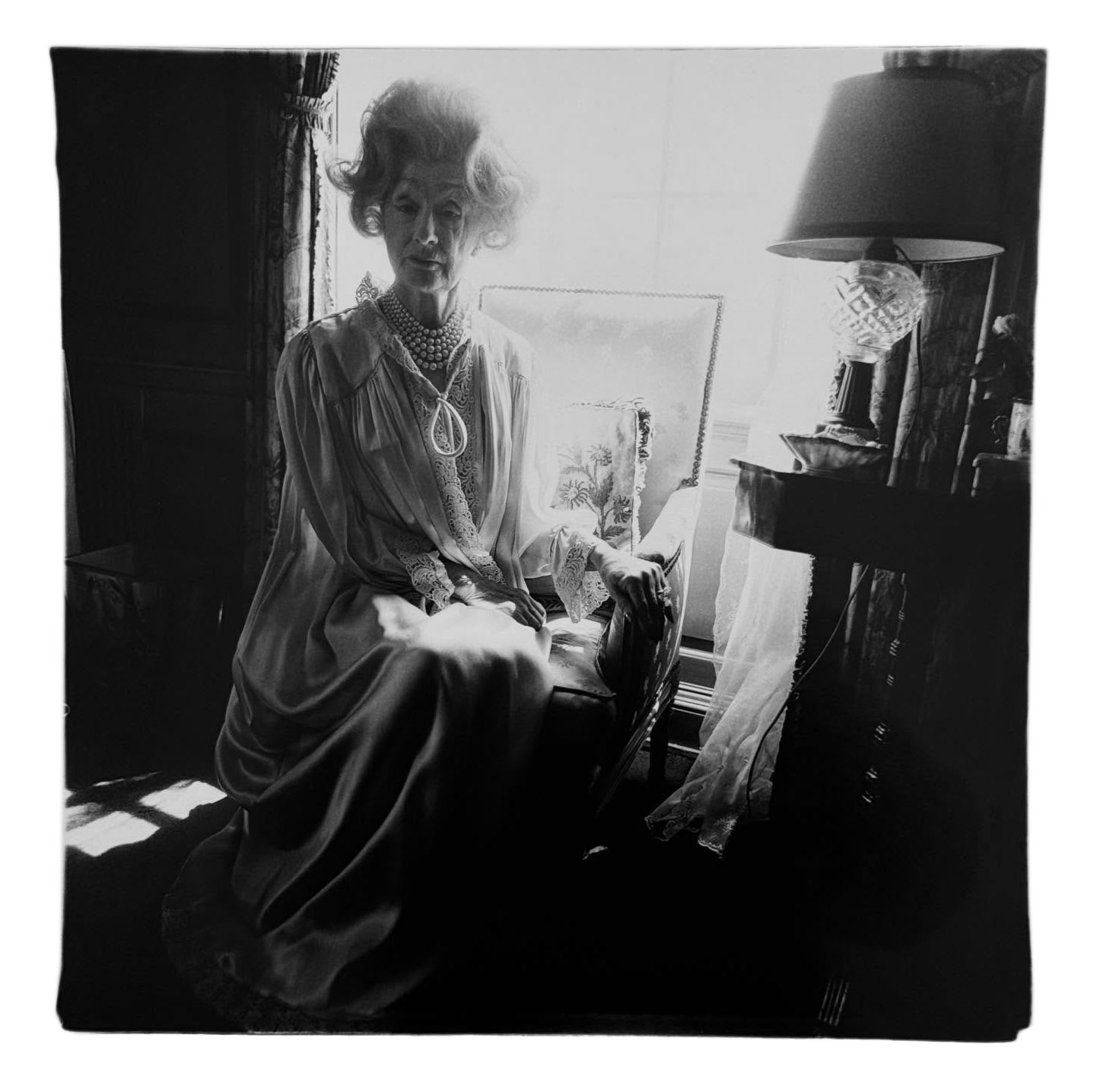
 

Diane Arbus (American, 1923-1971) 'Charlton Henry in a negligee, Philadelphia, Pa. 1965' 1965


Diane Arbus (American, 1923-1971)
Charlton Henry in a negligee, Philadelphia, Pa. 1965
1965
Gelatin silver print
© The Estate of Diane Arbus

Used under fair use conditions for the purposes of education and research.


Mrs T. Charlton Henry was a Philadelphia socialite, a philanthropist, and a fashion icon – often top of the ‘best-dressed’ lists. She was the kind of wealthy upper-class woman that Arbus’s father would have hoped to see in his Fifth Avenue department store buying the latest furs.

Text from the National Galleries of Scotland website


“Mrs. Henry, born Julia Rush Biddle of Philadelphia’s Main Line, weighs approximately 88 pounds. She will be 82 years old this month. She has been on the best-dressed list so often that she is now a member of fashion’s Hall of Fame. She still lives in Philadelphia, but commutes to New York for luncheon, shopping, theater. She sits, with the posture of another era, on a bound-to-be-seen banquette at La Caravelle restaurant and delves into a curry (“I’ll have jellied soup for dinner tonight”). Her silver and gold “57 varieties” hair is meticulously coifed; the fingernails that blow delicate little kisses of greeting to friends are tinted a deep pink. Her brown and white gingham Mainbocher is perked up with her favorite day jewels. There are marble-size pearls around the neck and one wrist, and massive yellow sapphires at the other wrist, the ears, and flashing away on a ring and a brooch.”

Enid Nemy. “Mrs. T. Charlton Henry: A Grande Dame and a Jogger,” on The New York Times website July 29, 1968 [Online] Cited 05/01/2026
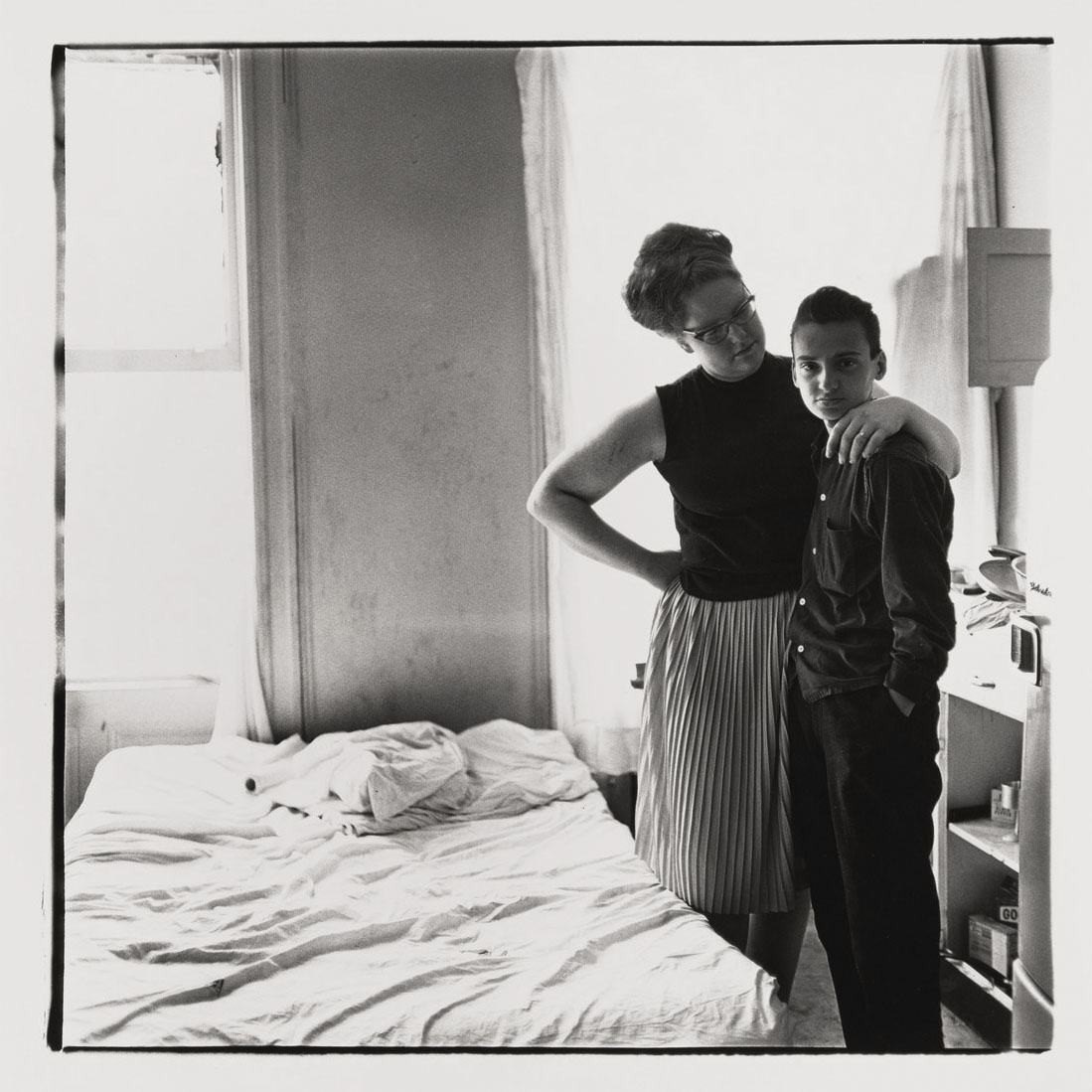
 

Diane Arbus (American, 1923-1971) 'Two friends at home, N.Y.C., 1965' 1965


Diane Arbus (American, 1923-1971)
Two friends at home, N.Y.C., 1965
1965
Gelatin silver print
© The Estate of Diane Arbus

Used under fair use conditions for the purposes of education and research.


Diane Arbus (American, 1923-1971) 'A naked man being a woman, N.Y.C., 1968' 1968


Diane Arbus (American, 1923-1971)
A naked man being a woman, N.Y.C., 1968
1968
Gelatin silver print
© The Estate of Diane Arbus

Used under fair use conditions for the purposes of education and research.
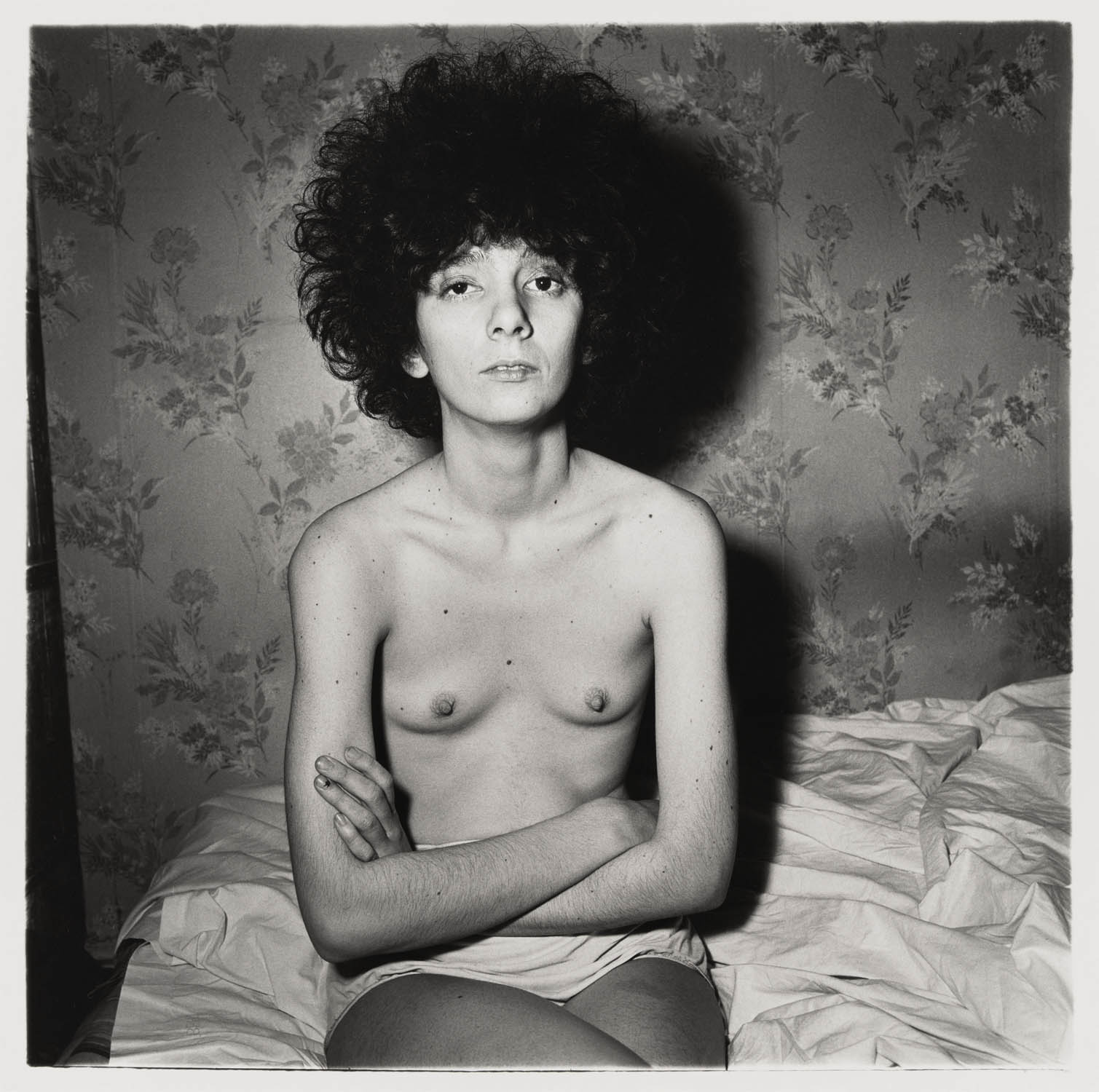
 

Diane Arbus (American, 1923-1971) 'Girl sitting on her bed with her shirt off, N.Y.C., 1968' 1968


Diane Arbus (American, 1923-1971)
Girl sitting on her bed with her shirt off, N.Y.C., 1968
1968
Gelatin silver print
© The Estate of Diane Arbus

Used under fair use conditions for the purposes of education and research.
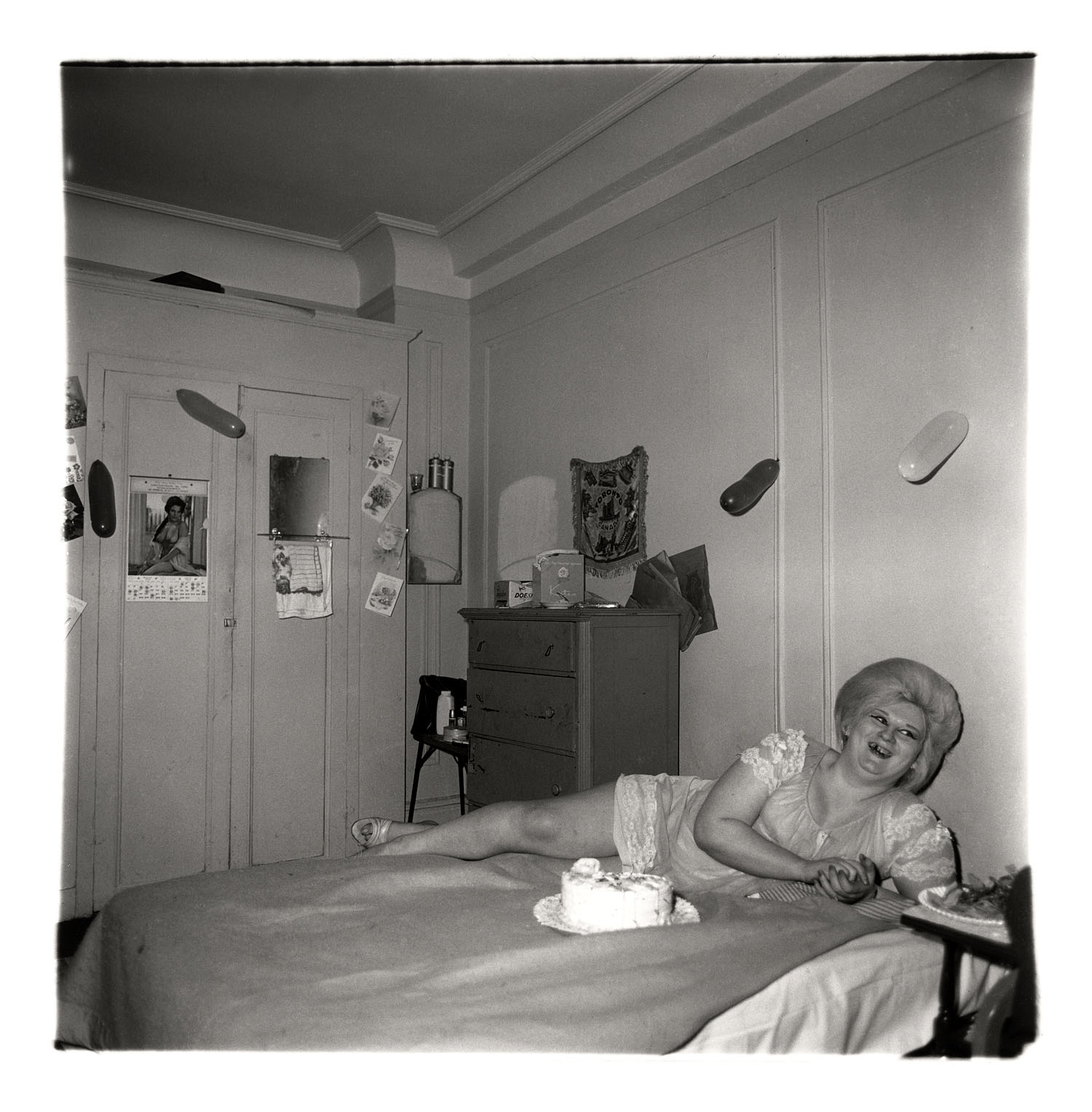
 

Diane Arbus (American, 1923-1971) 'Transvestite at the birthday party, N.Y.C. 1969' 1969


Diane Arbus (American, 1923-1971)
Transvestite at the birthday party, N.Y.C. 1969
1969
Gelatin silver print
© The Estate of Diane Arbus

Used under fair use conditions for the purposes of education and research.
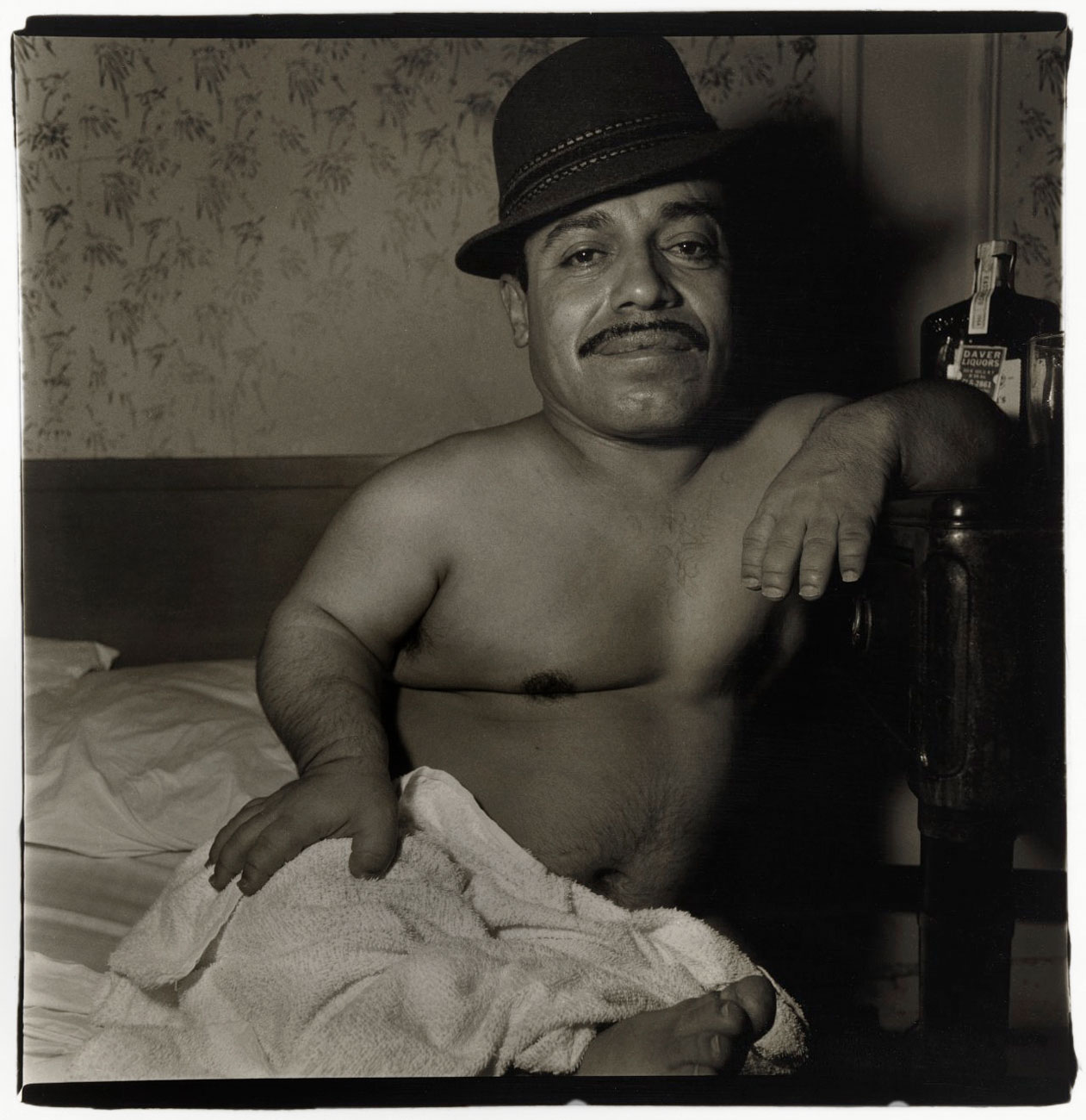
 

Diane Arbus (American, 1923-1971) 'Mexican Dwarf in his hotel room, N.YC., 1970' 1970


Diane Arbus (American, 1923-1971)
Mexican Dwarf in his hotel room, N.YC., 1970
1970
Gelatin silver print
© The Estate of Diane Arbus

Used under fair use conditions for the purposes of education and research.


David Zwirner
24 Grafton Street
London W1S 4EZ

Opening hours:
Tuesday – Saturday, 10am – 6pm
David Zwirner website

LIKE ART BLART ON FACEBOOK

Back to top

Review: ‘Aliza Levi / Books on a White Background’ at Edmund Pearce Gallery, Melbourne

Exhibition dates: 10th April – 4th May 2013


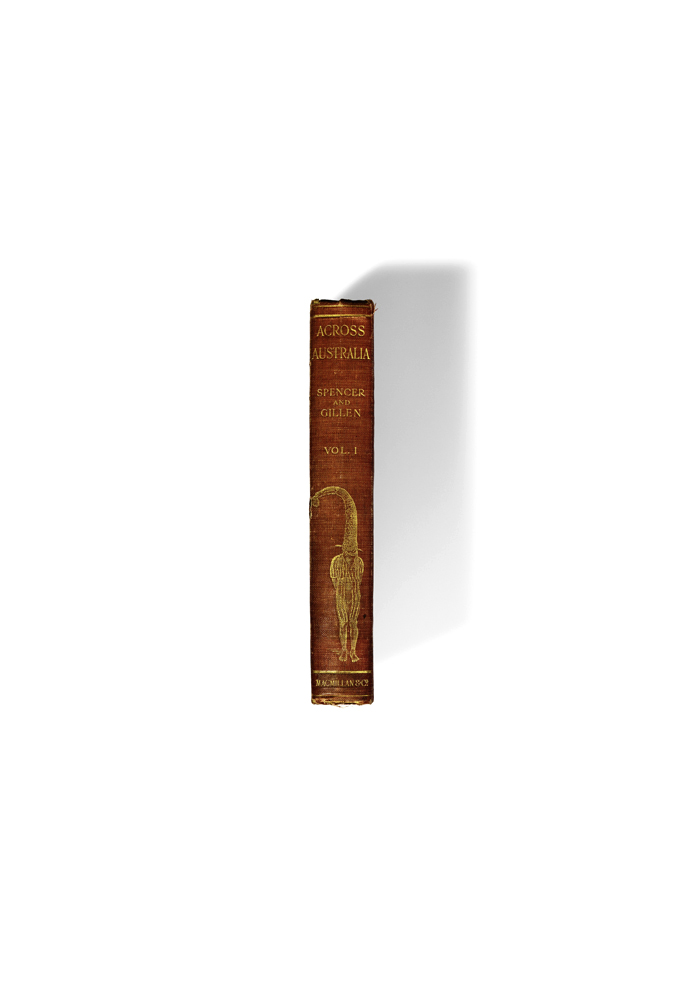
Aliza Levi (South African, b. 1969) 'Across Australia' 2011


Aliza Levi (South African, b. 1969)
Across Australia
2011
Archival Inkjet Print
59 x 42cm


Aura of white

Shadow of black

Books for the boys *

Black bodies out the back


* Books for the bourgeois

* Books for the parlour

* Books for the burning

* Books to hide memories

* Books lost in archives

* Books still in libraries

* Books for the tower (implying Babel)

* Books for the scrapheap

* Books for academics

* Books for the garbo

* Books for the church stall

* Books to forget


Dr Marcus Bunyan


Many thankx to Edmund Pearce Gallery for allowing me to publish the photographs in the posting. Please click on the photographs for a larger version of the image.


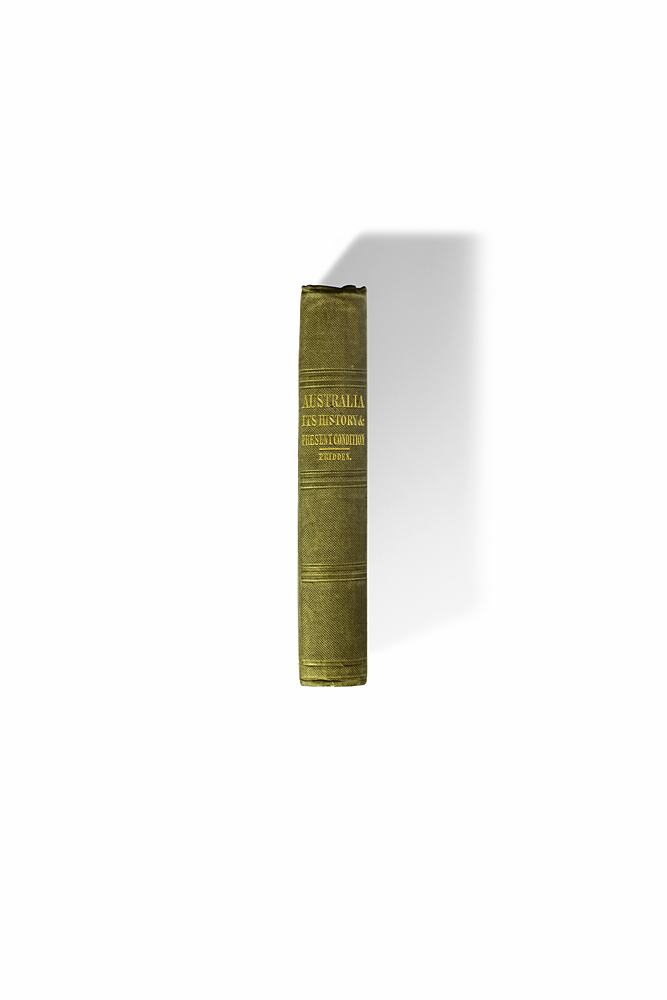
Aliza Levi (South African, b. 1969) 'Australia, its History and Present Condition' 2013


Aliza Levi (South African, b. 1969)
Australia, its History and Present Condition
2013
Archival Inkjet Print
59 x 42cm


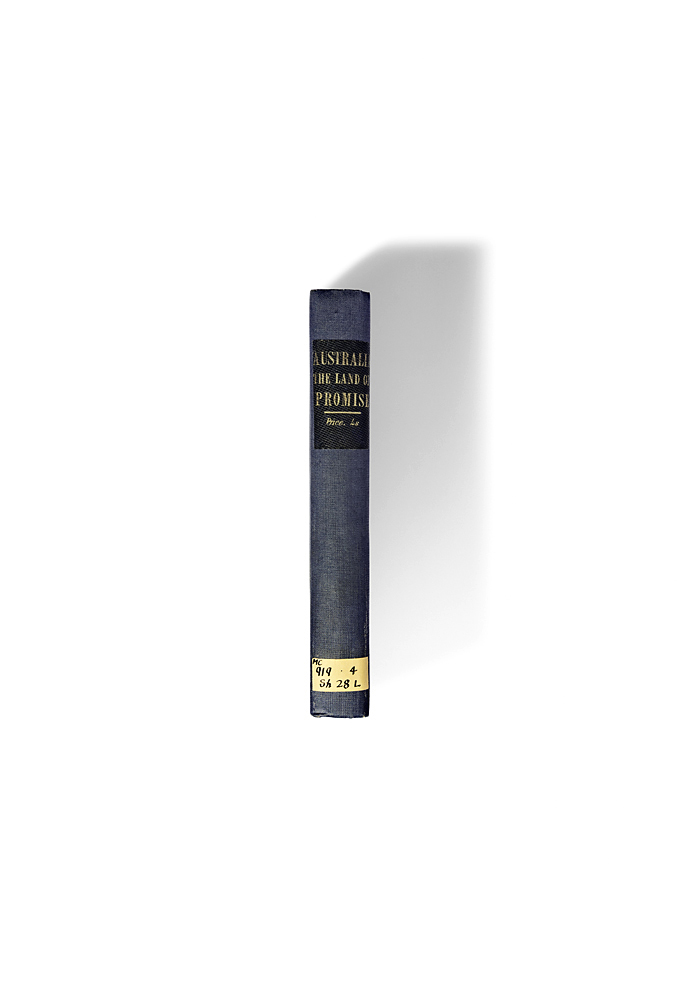
Aliza Levi (South African, b. 1969) 'Australia the Land of Promise' 2012


Aliza Levi (South African, b. 1969)
Australia the Land of Promise
2012
Archival Inkjet Print
59 x 42cm


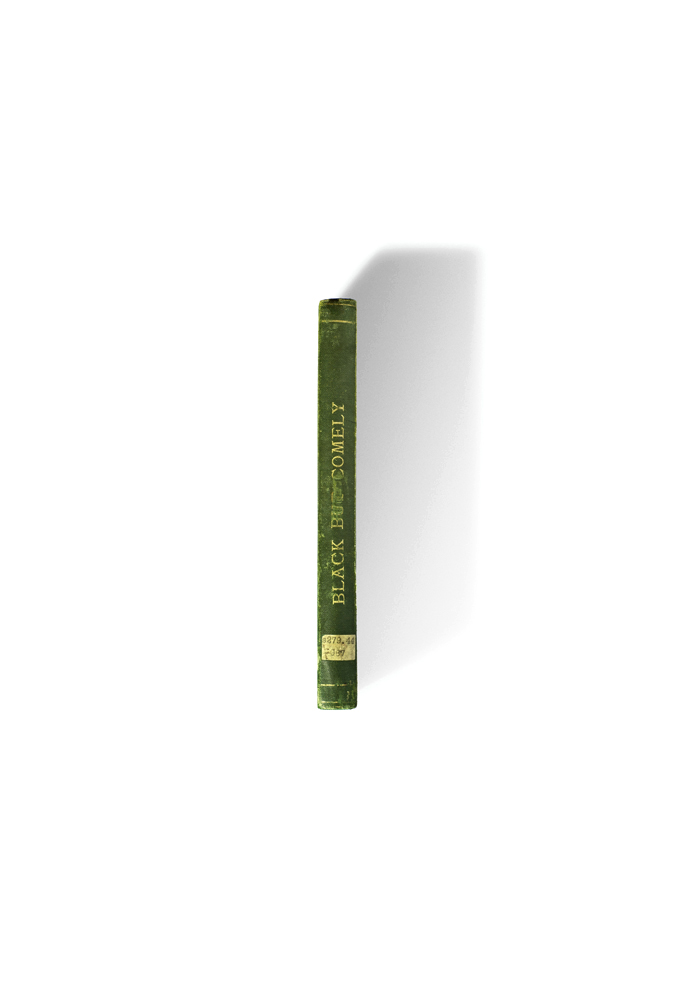
Aliza Levi (South African, b. 1969) 'Black But Comely' 2013


Aliza Levi (South African, b. 1969)
Black But Comely
2013
Archival Inkjet Print
59 x 42cm


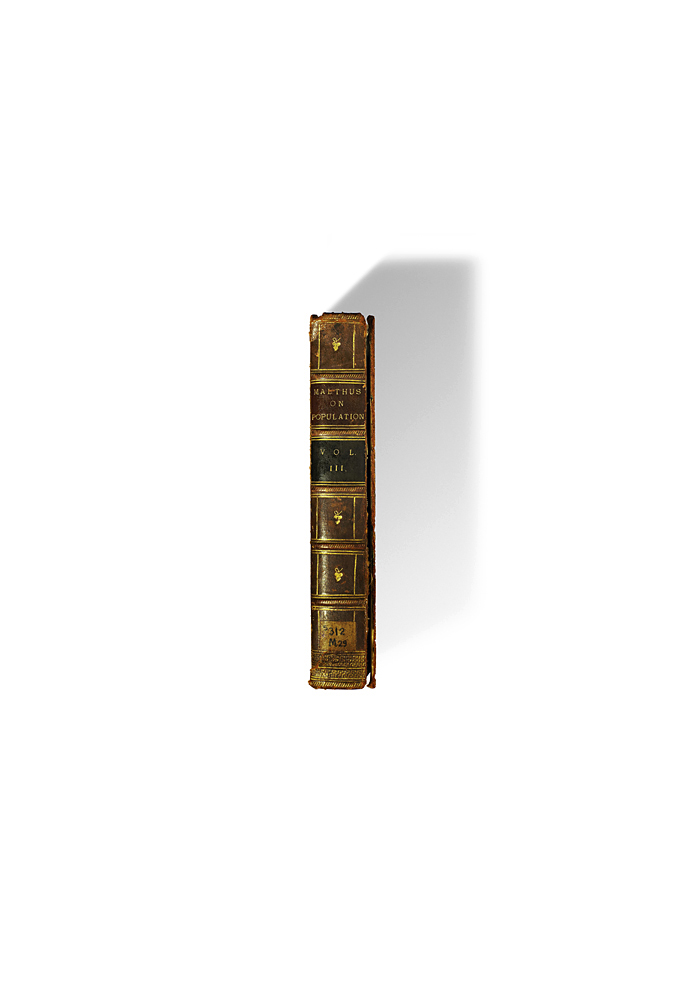
Aliza Levi (South African, b. 1969) 'Malthus on Population' 2012


Aliza Levi (South African, b. 1969)
Malthus on Population
2012
Archival Inkjet Print
59 x 42cm


“I began this series by choosing books that reflected the assumptions and behaviour of the nineteenth century colonists, the persistent notations of self and other. I soon started to notice, that many of the titles were pertinent to today. A blurring of time and relevance, where views from a hundred years ago were intersecting with current attitudes and events.”


Aliza Levi


South African born artist, Aliza Levi premiers her latest body of work Books on a White Background at Edmund Pearce Gallery. Camera and lights in hand, Aliza has been photographing nineteenth century books in small town junk shops, second-hand book dealers, flea markets, rare book collections and libraries both here and in her native South Africa. Books authored by anthropologists, ethnologists and laypersons who took it upon themselves to comment on their travels. To date she has captured nearly 250 books.

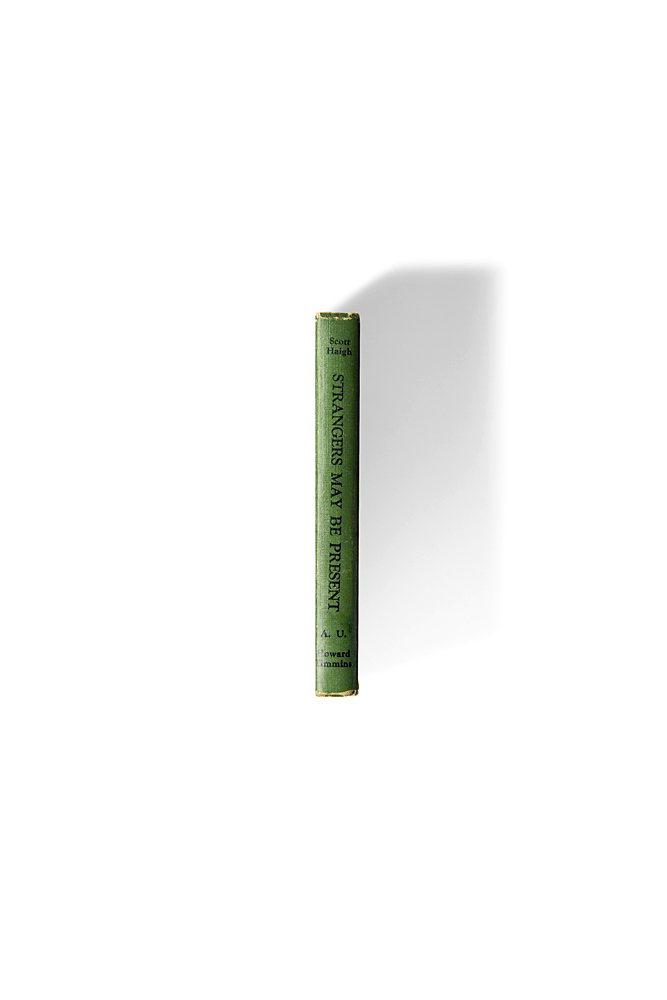
The books, were initially chosen to reflect the ideologies and assumptions of the nineteenth century West. However, Aliza soon realised, that some of the titles were pertinent to today. A blurring of time and relevance where titles from a hundred years ago were intersecting with current attitudes and events. For example, the book Strangers May be Present, in its evocation of colonial settlers viewing the other as stranger also evoked for her the more recent, disturbing events in which the other is articulated: xenophobic attacks and corrective rapes in South Africa. Closer to home, the century old book entitled Australia, the Land of Promise immediately raises questions around certain stark realities such as refugee detention centres.

Kate Warren writes in the accompanying exhibition essay: “The precise regularity of her photographic compositions create a compelling visual plane that immediately draws the viewer’s attention. But look closer. In the situation that Levi presents us with, the seductive nature of the visual cannot escape the immediacy of language. The force of their titles – often starkly confronting and potentially upsetting – leaves the embossing, decoration and materiality of the books themselves as an ironic supplement.”

Born in 1969 in South Africa, Aliza Levi’s practice is multidisciplinary in form yet single-minded in concept. Much of her work presents a relationship to land, consciousness and memory brought on by her South African and Australian citizenship. Having recently presented her work in the UK, this is her first solo show in Melbourne, where she has been producing art as well as facilitating women’s art groups with refugees from Sudan. Levi is currently completing a Masters Degree in Fine Art at Monash University.

Press release from the Edmund Pearce Gallery website


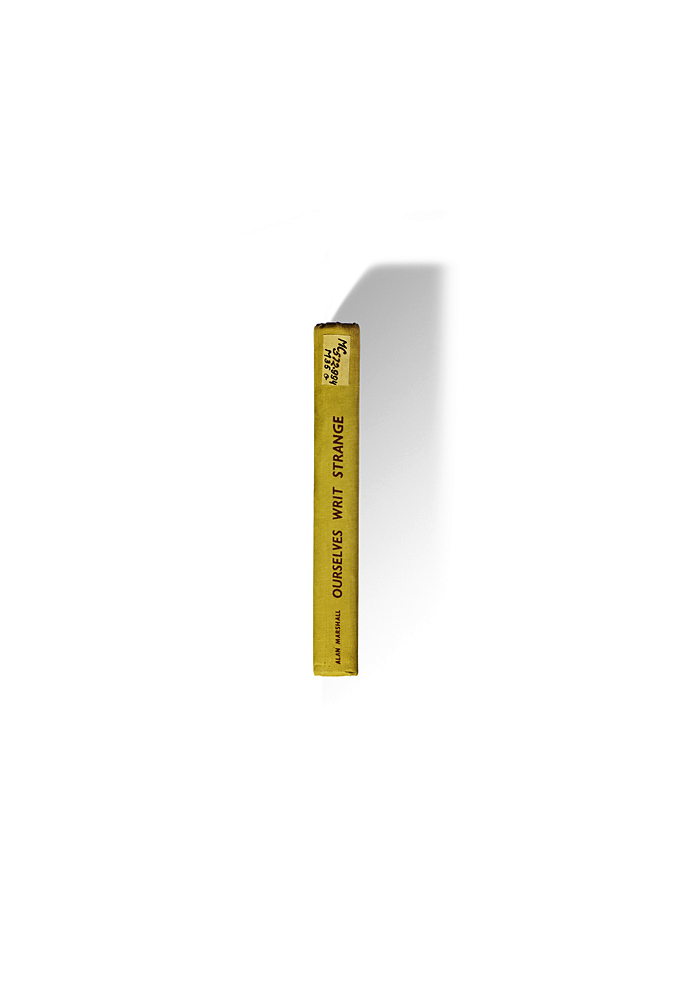
Aliza Levi (South African, b. 1969) 'Ourselves Writ Strange' 2011


Aliza Levi (South African, b. 1969)
Ourselves Writ Strange
2011
Archival Inkjet Print
59 x 42cm


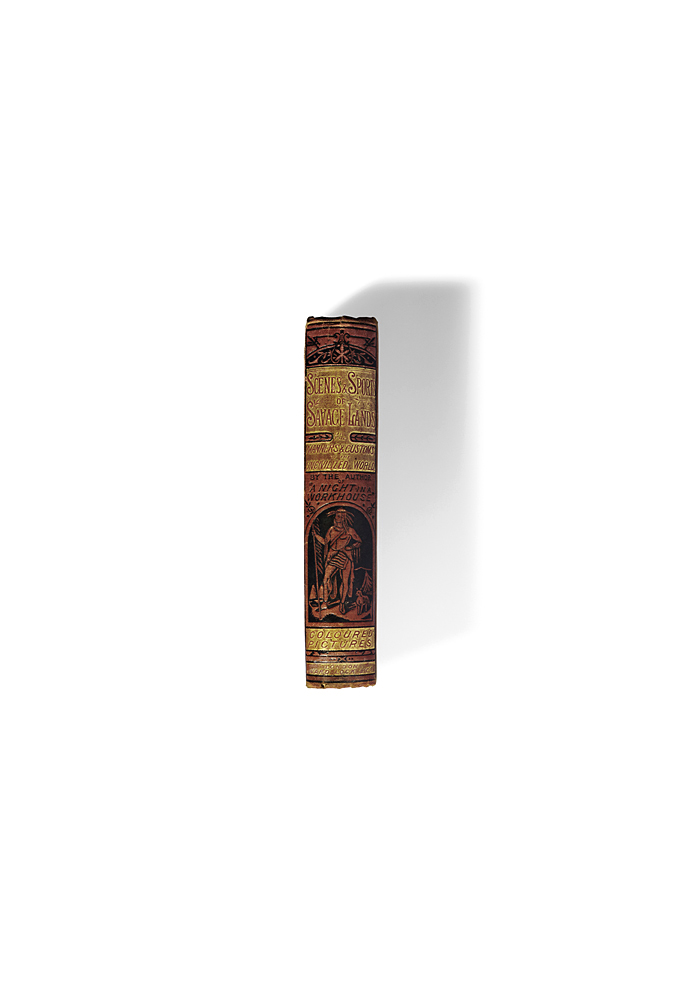
Aliza Levi (South African, b. 1969) 'Scenes and Sports of Savage Lands' 2012


Aliza Levi (South African, b. 1969)
Scenes and Sports of Savage Lands
2012
Archival Inkjet Print
59 x 42cm


Aliza Levi (South African, b. 1969) 'Strangers May Be Present' 2010


Aliza Levi (South African, b. 1969)
Strangers May Be Present
2010
Archival Inkjet Print
59 x 42cm


Aliza Levi (South African, b. 1969) 'The Art of Living in Australia' 2012


Aliza Levi (South African, b. 1969)
The Art of Living in Australia
2012
Archival Inkjet Print
59 x 42 cm


Textual thresholds: The uncomfortable nature of titles in Books on a White Background

Kate Warren

Aliza Levi’s research-based photographic project, Books on a White Background (2012), confronts the viewer with an array that is at once visually compelling and profoundly difficult to look at. The precise regularity of her photographic compositions, the ‘grid-like’ repetition of these images’ installation, the consistent form and shape of her subject matter, and the contrast between the stark white background and the darker shadows thrown, all create a compelling visual plane that immediately draws the viewer’s attention. But look closer. In the situation that Levi presents us with, the seductive nature of the visual cannot escape the immediacy of language. The force of their titles – often starkly confronting and potentially upsetting – leaves the embossing, decoration and materiality of the books themselves as an ironic supplement.

This is not a ‘library’. Although developed from Levi’s archival research, the final photographic project is not an ‘archive’. Rather than displaying the original books themselves as objets trouvés, Levi disavows their materiality and tactility. Photographing the books’ ‘spines’, she not only flattens but removes entirely from view their ‘flesh’ the pages and the content – and in doing so opens up a liminal space that can accommodate and illuminate a multiplicity of (sometimes uncomfortable) and connections between the past and the present.

In the human form, our spines form the connection between the psychical realm of our brains and the physicality of our bodies; between our ‘inner’ subjectivity and our ‘outer’ ability to move, communicate and interact with our surroundings. Likewise in the case of the books that Levi photographs; the spines and titles are liminal spaces that mediate their content and the cultural and historical contexts in which they exist. Gérard Genette calls this the ‘paratext’, the “fringe [which] constitutes a zone between text and off-text, a zone not only of transition but also of transaction: a privileged place of a pragmatics and a strategy, of an influence on the public.” Levi’s project works at this juncture. By denying access to the detailed substance and content of these books she denies their overt ‘authority’, yet at the same time she reveals uncomfortable legacies that persist and cannot be wholly escaped.

The various ‘post’ discourses (post-colonialism, post-structuralism, post-modernism) and their influential theorists and practitioners have done enormous amounts of work to deconstruct and destabilise dominant narratives and histories. The process is necessarily ongoing and open-ended; because although many narratives that were once unquestioned have been removed from their dominance and acceptability, it is often through language that their traces and legacies remain.

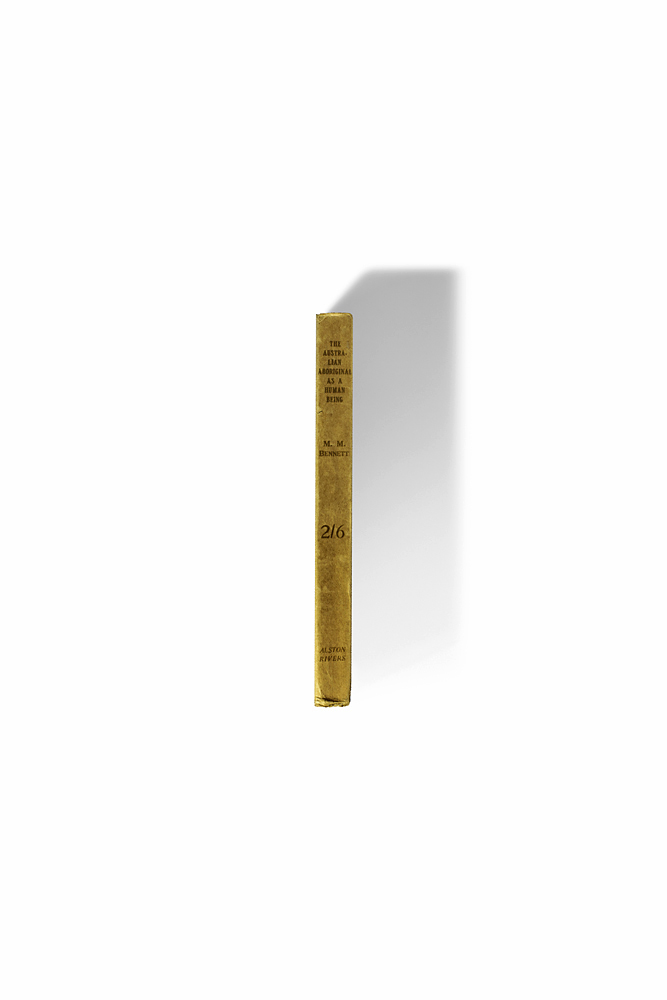
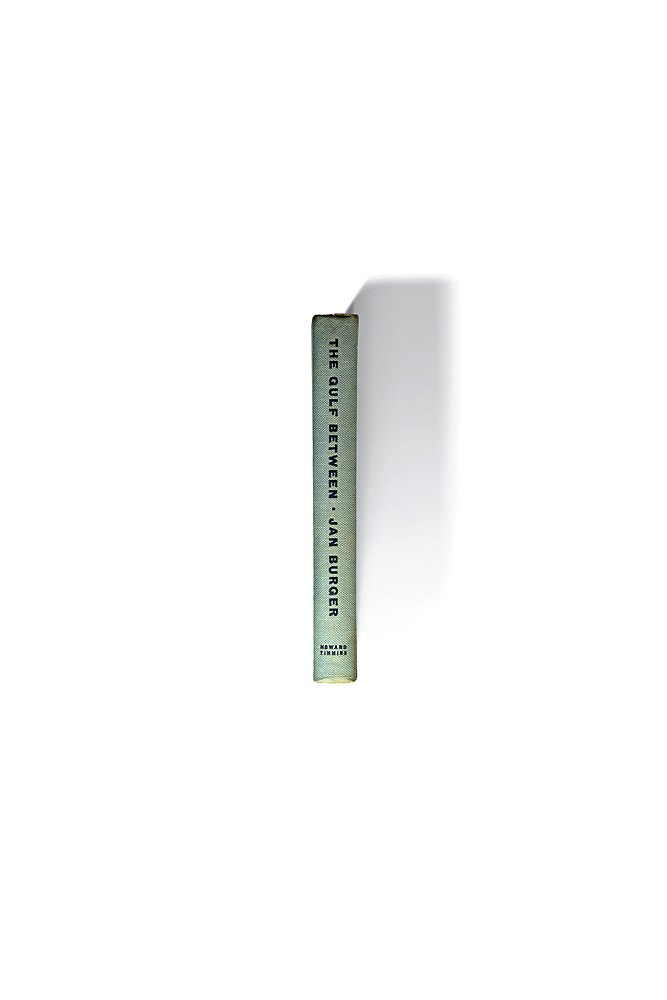
Thus in the selection of Australian books included in this exhibition, there emerges jarring and disturbing contrasts between titles that clearly belie values that are no longer widely accepted (such as The Aboriginal as Human Being), and other titles which still resonate with national myths (such as Australia the Land of Promise). Other titles like Ourselves Writ Large and The Gulf Between become more ambiguous; for without access to the specificities of their content, these books’ paratexts are revealed in Levi’s project as (necessarily) multifaceted signifiers. They immediately open up a ‘zone of transaction’ that reveals the past as an immanent presence, constantly transformed by and transforming of the present. These now abstracted titles retain a force and power to reveal uncomfortable truths and forgotten narrative tropes, speaking to the way that Australian history and presumed cultural values are constructed and repeated in our contemporary life.

Kate Warren would like to thank Aliza Levi for the stimulating and ongoing discussions; and David Wlazlo for his timely and astute insights.

Gérard Genette, Paratexts: Thresholds of Interpretation (Cambridge: Cambridge University Press, 1997), p. 2.


Aliza Levi (South African, b. 1969) 'The Aboriginal as Human Being' 2012


Aliza Levi (South African, b. 1969)
The Aboriginal as Human Being
2012
Archival Inkjet Print
59 x 42cm


Aliza Levi (South African, b. 1969) 'The Gulf Between' 2012


Aliza Levi (South African, b. 1969)
The Gulf Between
2012
Archival Inkjet Print
59 x 42cm


Aliza Levi (South African, b. 1969) 'The Report of the Aborigines Committee of the Meeting for Sufferings 1840' 2012


Aliza Levi (South African, b. 1969)
The Report of the Aborigines Committee of the Meeting for Sufferings 1840
2012
Archival Inkjet Print
59 x 42cm


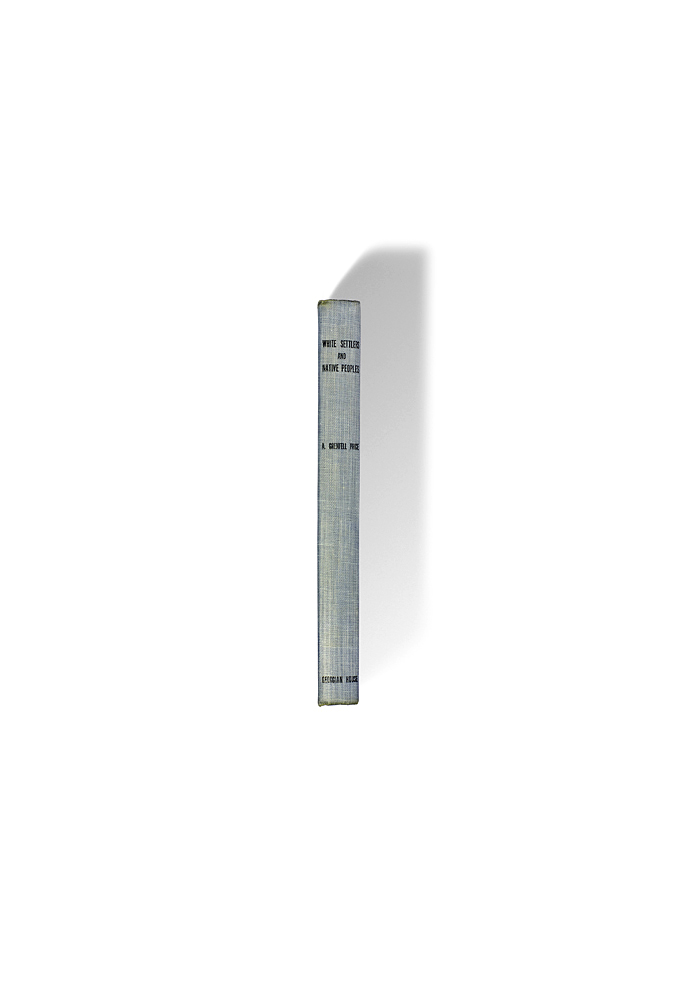
Aliza Levi (South African, b. 1969) 'White Settlers and Native Peoples' 2012


Aliza Levi (South African, b. 1969)
White Settlers and Native Peoples
2012
Archival Inkjet Print
59 x 42cm


Edmund Pearce Gallery

This gallery is no longer open.

LIKE ART BLART ON FACEBOOK

Back to top

Exhibition: ‘Pacific Standard Time: Art in Los Angeles 1950-1980’ at Martin-Gropuis-Bau Berlin

Exhibition dates: 15th March – 10th June 2012

List of artists represented: Peter Alexander, John Altoon, Chuck Arnoldi, John Baldessari, Larry Bell, Billy Al Bengston, Karl Benjamin, Ed Bereal, Tony Berlant, Wallace Berman, Marjorie Cameron, Cameron, Vija Celmins, Judy Chicago, Mary Corse, Ronald Davis, Richard Diebenkorn, Laddie John Dill, Melvin Edwards, Frederick Eversley, Lorser Feitelson, Llyn Foulkes, Sam Francis, Joe Goode, Robert Graham, Frederick Hammersley, George Herms, David Hockney, Stephan von Huene, Craig Kauffman, Edward Kienholz, Helen Lundeberg, John Mason, Allan McCollum, John McLaughlin, Ron Miyashiro, Ed Moses, Lee Mullican, Bruce Nauman, Helen Pashgian, Ken Price, Noah Purifoy, Ed Ruscha, Betye Saar, Henry Takemoto, DeWain Valentine, Gordon Wagner, Norman Zammitt.


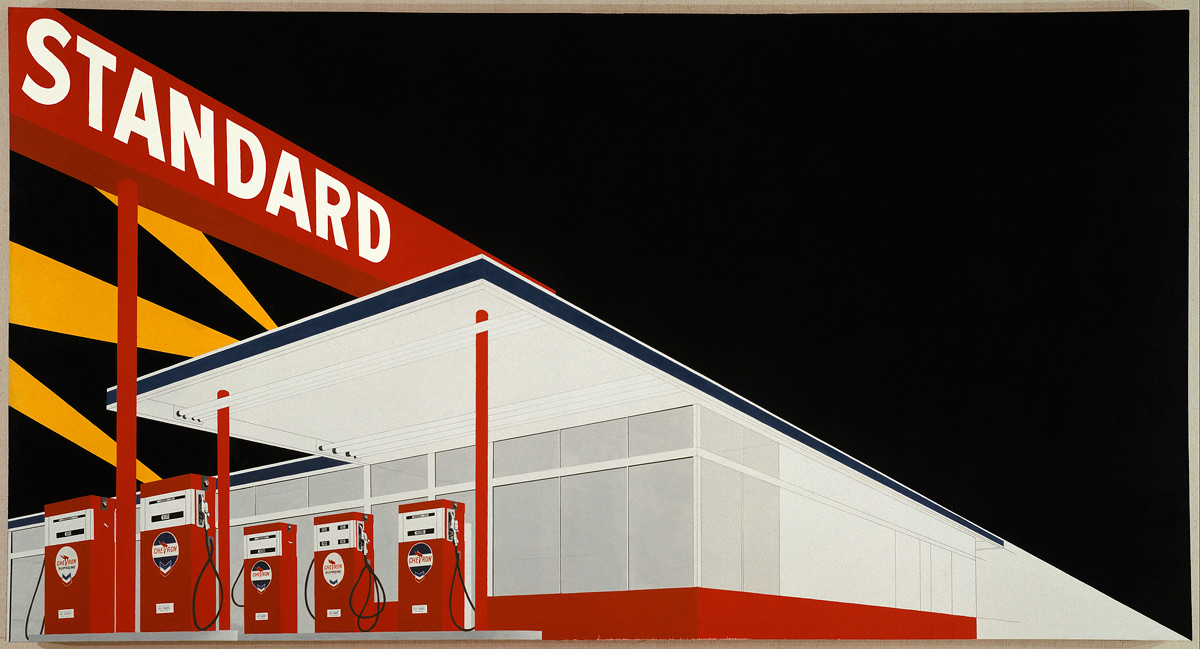
Ed Ruscha (American, b. 1937) 'Standard Station, Amarillo, Texas' 1963


Ed Ruscha (American, b. 1937)
Standard Station, Amarillo, Texas
1963
Oil on Canvas
Hood Museum of Art, Dartmouth College, Hanover, New Hampshire
Gift of James Meeker, Class of 1958, in memory of Lee English, Class of 1958, scholar, poet, athlete and friend to all


What a bumper posting – so much to enjoy and something for everyone!

Marcus


Many thankx to Martin-Gropuis-Bau for allowing me to publish the artwork in the posting. Please click on the photographs for a larger version of the image.


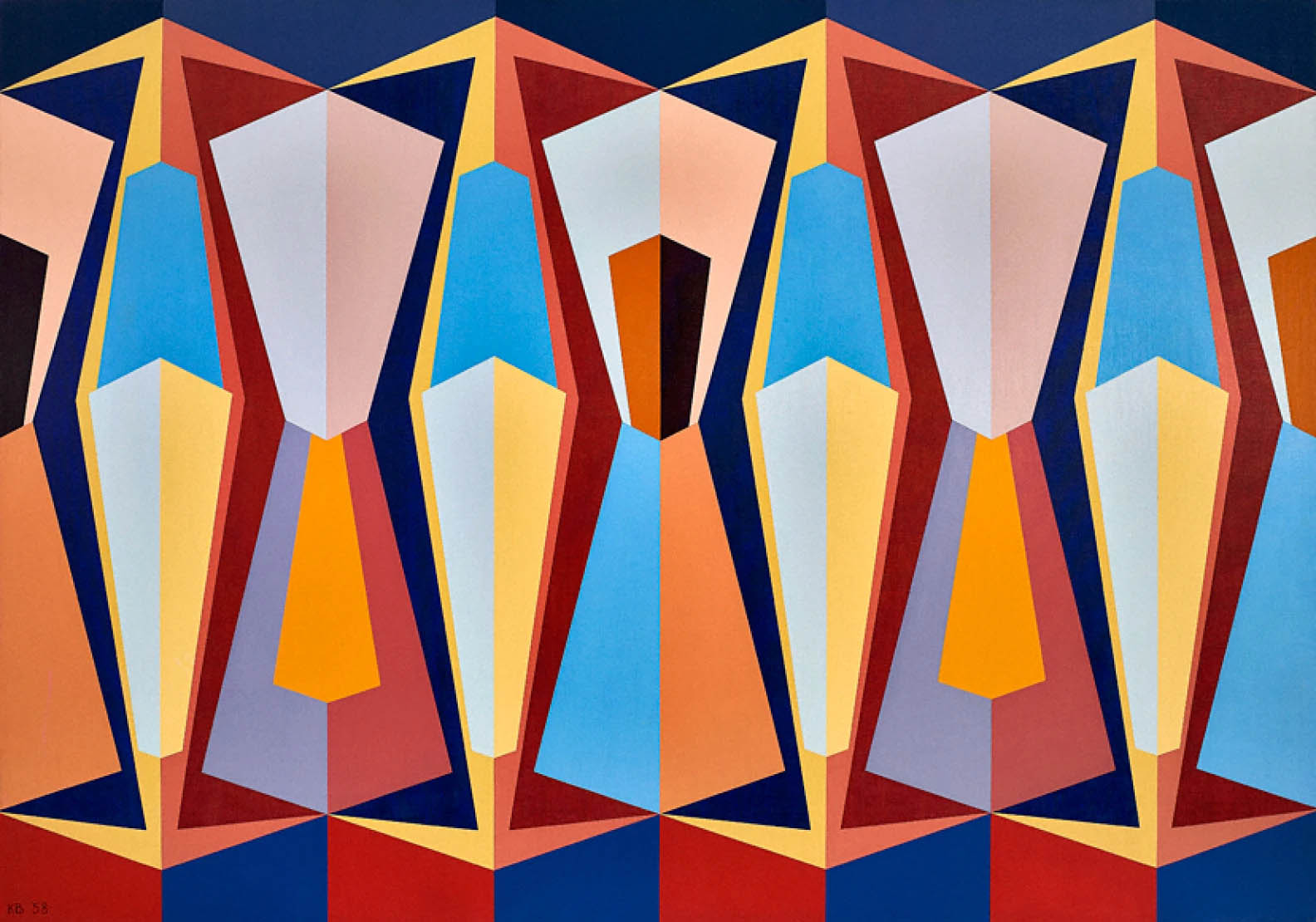
Karl Benjamin (American, 1925-2012) 'Stage II' 1959 


Karl Benjamin (American, 1925-2012)
Stage II
1959
Oil on canvas
50 x 70 inches; 127 x 177.8cm


Karl Stanley Benjamin (December 29, 1925 – July 26, 2012[1]) was an American painter of vibrant geometric abstractions, who rose to fame in 1959 as one of four Los Angeles–based Abstract Classicists and subsequently produced a critically acclaimed body of work that explores a vast array of color relationships. Working quietly at his home in Claremont, California, he developed a rich vocabulary of colors and hard-edge shapes in masterful compositions of tightly balanced repose or high-spirited energy. At once intuitive and systematic, the artist was, in the words of critic Christopher Knight, “a colorist of great wit and inventiveness.”

Text from the Wikipedia website


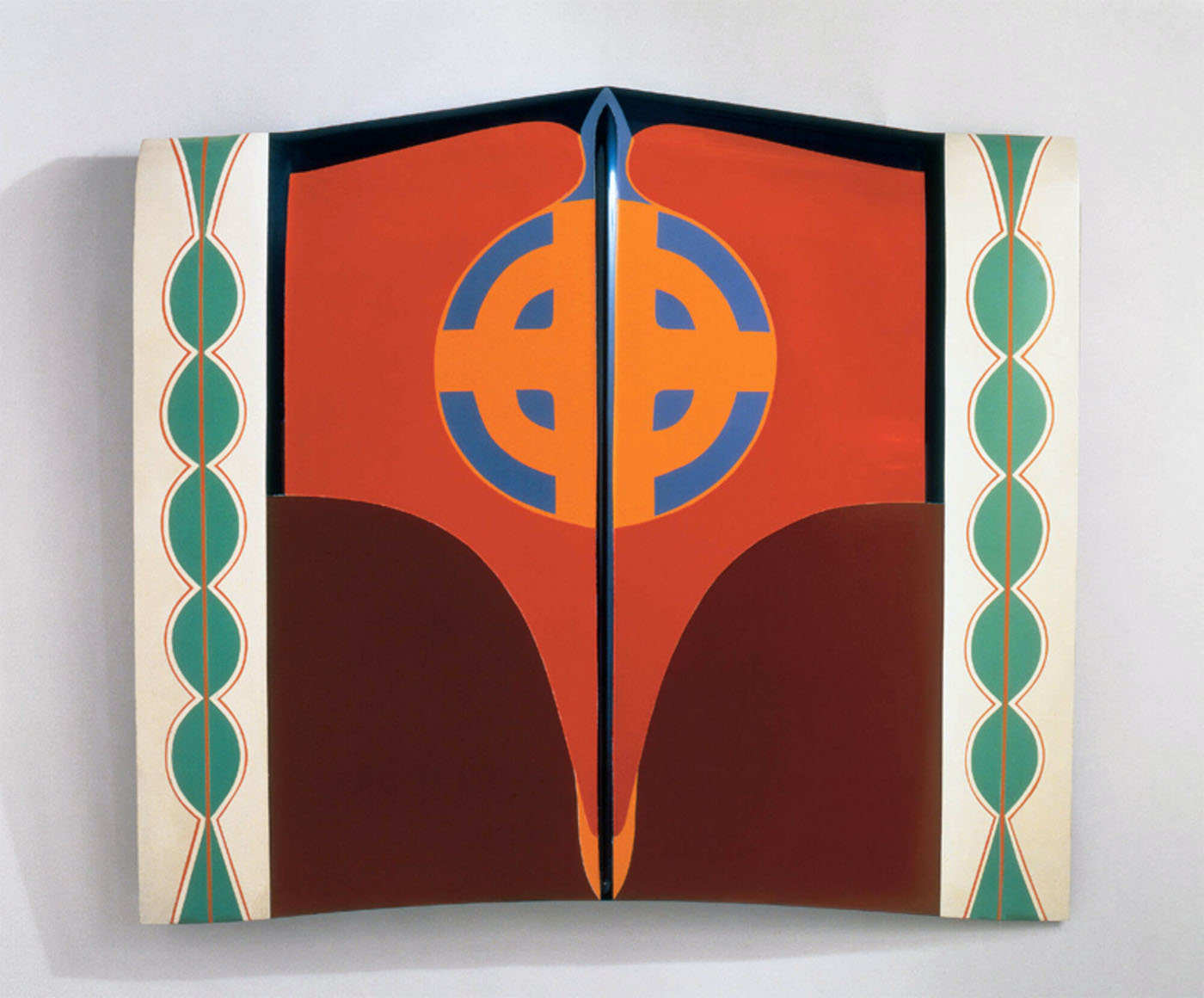
Judy Chicago (American, b. 1939) 'Car Hood' 1964


Judy Chicago (American, b. 1939)
Car Hood
1964
Sprayed acrylic and lacquer on car hood
109 x 125 x 11cm


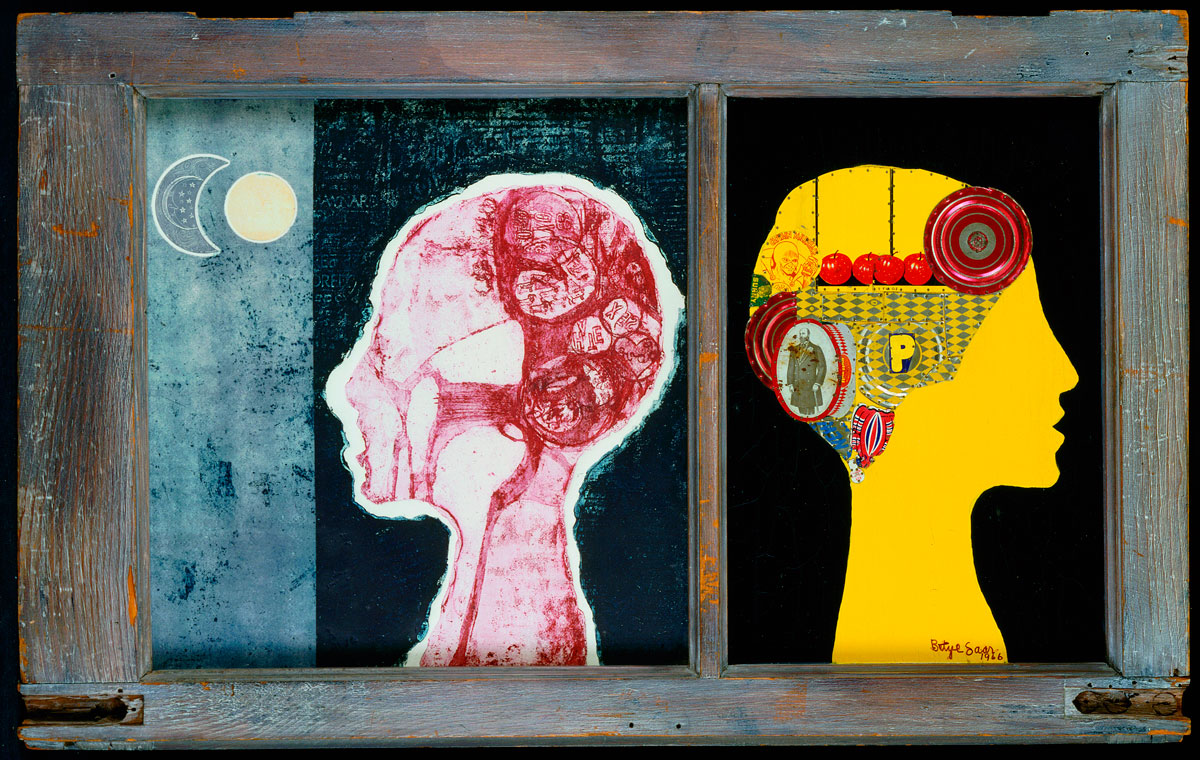
Betye Saar (African-American, b. 1926) 'The Phrenologer's Window' 1966


Betye Saar (African-American, b. 1926)
The Phrenologer’s Window
1966
Assemblage of two panel wood frame with print and collage
Private Collection; courtesy of Michael Rosenfeld Gallery, LLC, New York, NY


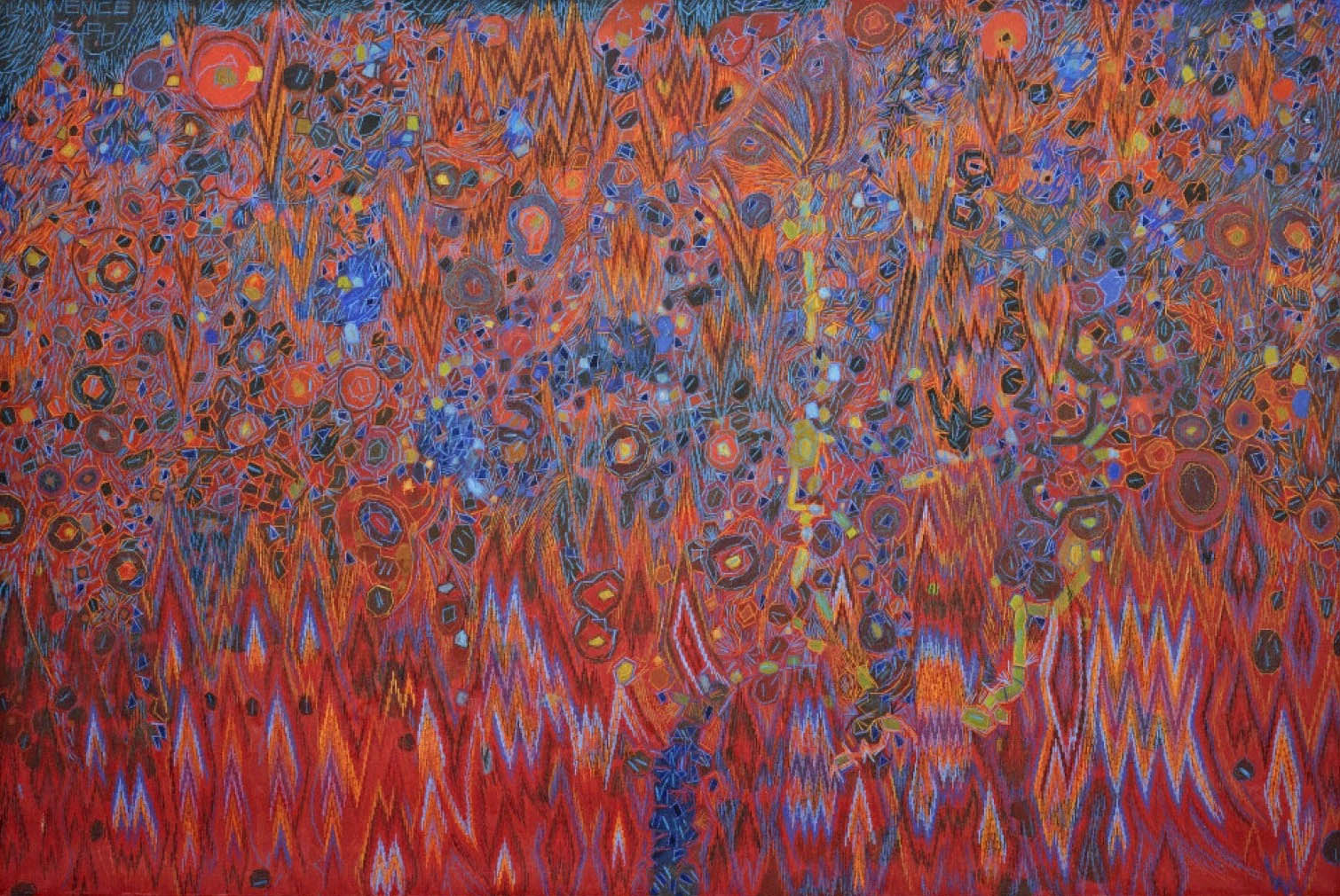
Lee Mullican (American, 1919-1998) 'Untitled (Venice)' 1967


Lee Mullican (American, 1919-1998)
Untitled (Venice)
1967
Oil on canvas


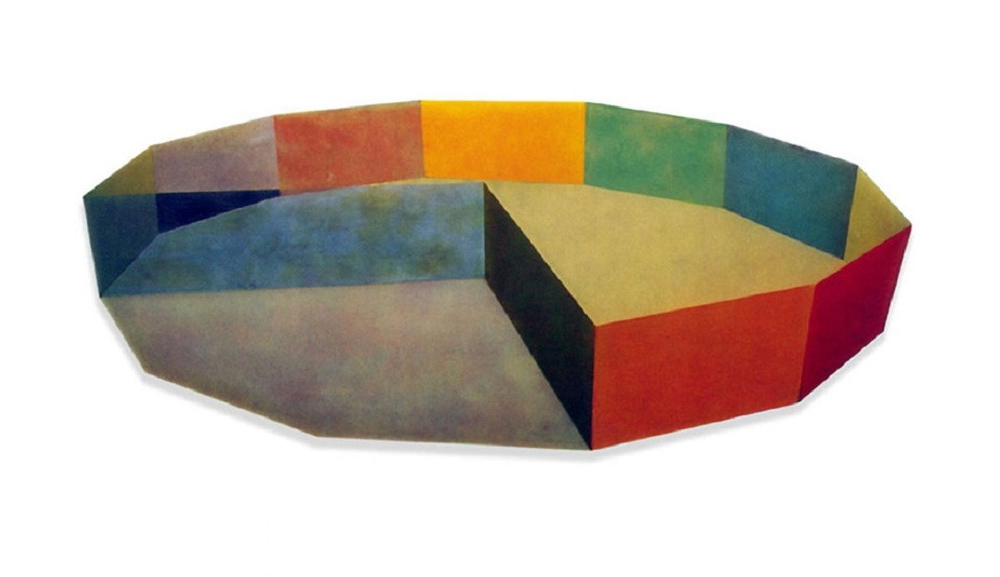
Ronald Davis (American, b. 1937) 'Vector' 1968


Ronald Davis (American, b. 1937)
Vector
1968
Polyester Resin and Fiberglass
60 1/2 x 132 inches (shaped)
Tate Gallery, London


Ronald “Ron” Davis (born 1937) is an American painter whose work is associated with geometric abstraction, abstract illusionism, lyrical abstraction, hard-edge painting, shaped canvas painting, color field painting, and 3D computer graphics. He is a veteran of nearly seventy solo exhibitions and hundreds of group exhibitions.


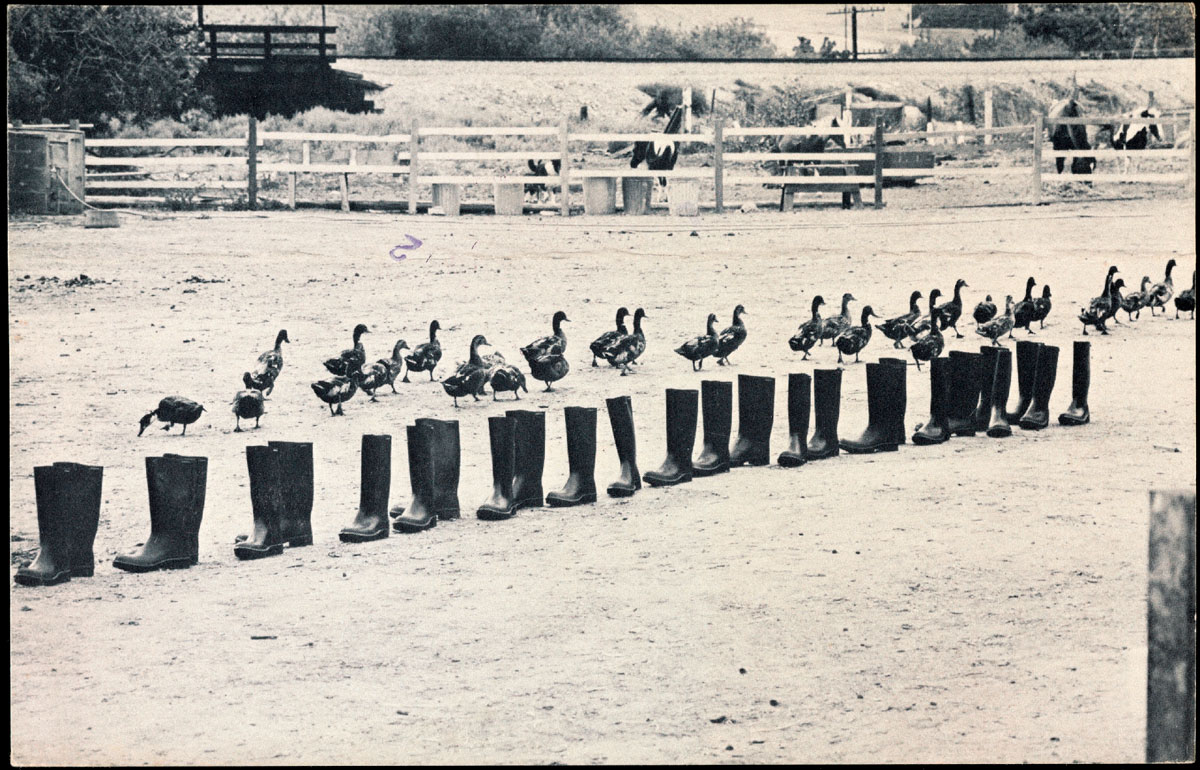
Eleanor Antin (American, b. 1935) '100 BOOTS Move On' 1971-1973


Eleanor Antin (American, b. 1935)
100 BOOTS Move On
1971-1973
Halftone reproduction
Getty Research Institute, Los Angeles, CA
© Eleanor Antin


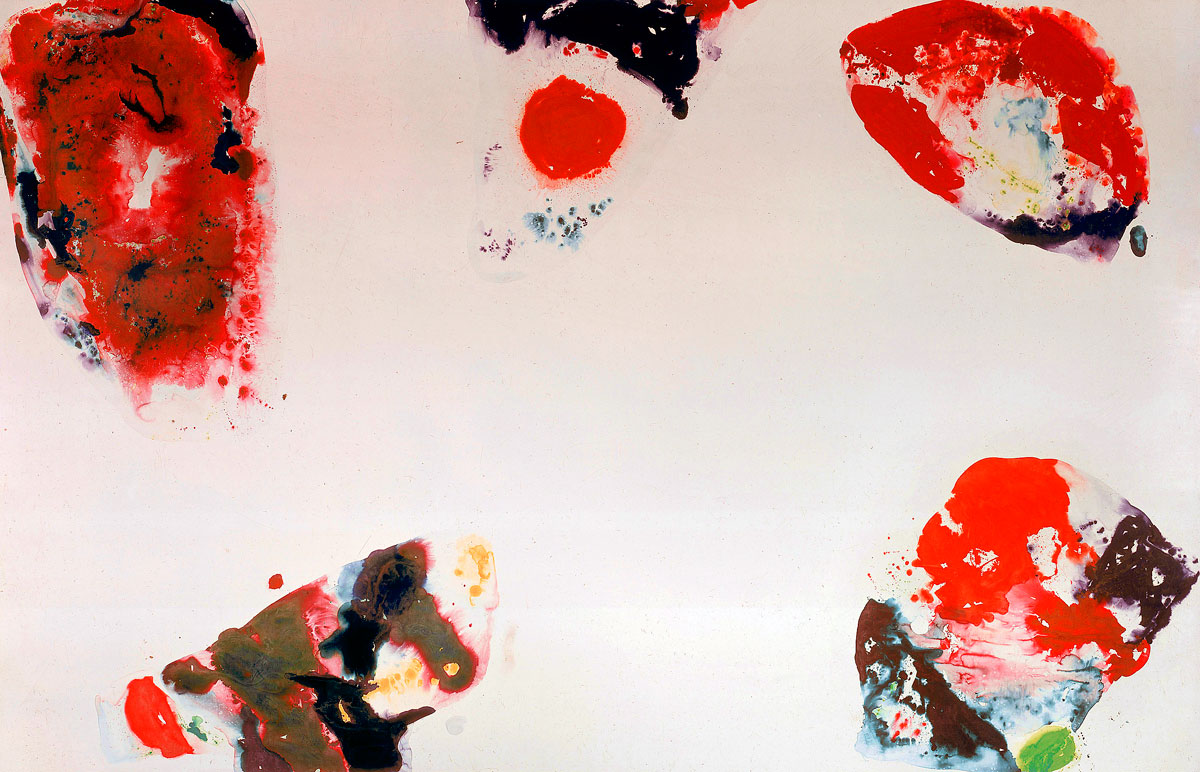
Sam Francis (American, 1923-1994) 'Berlin Red' 1969-1970


Sam Francis (American, 1923-1994)
Berlin Red
1969-1970
Acrylic on canvas
Nationalgalerie, Staatliche Museen zu Berlin
© Sam Francis Foundation, Cailfornia / VG Bild-Kunst, Bonn 2012
Foto: bpk / Nationalgalerie, SMB / Jörg P. Anders


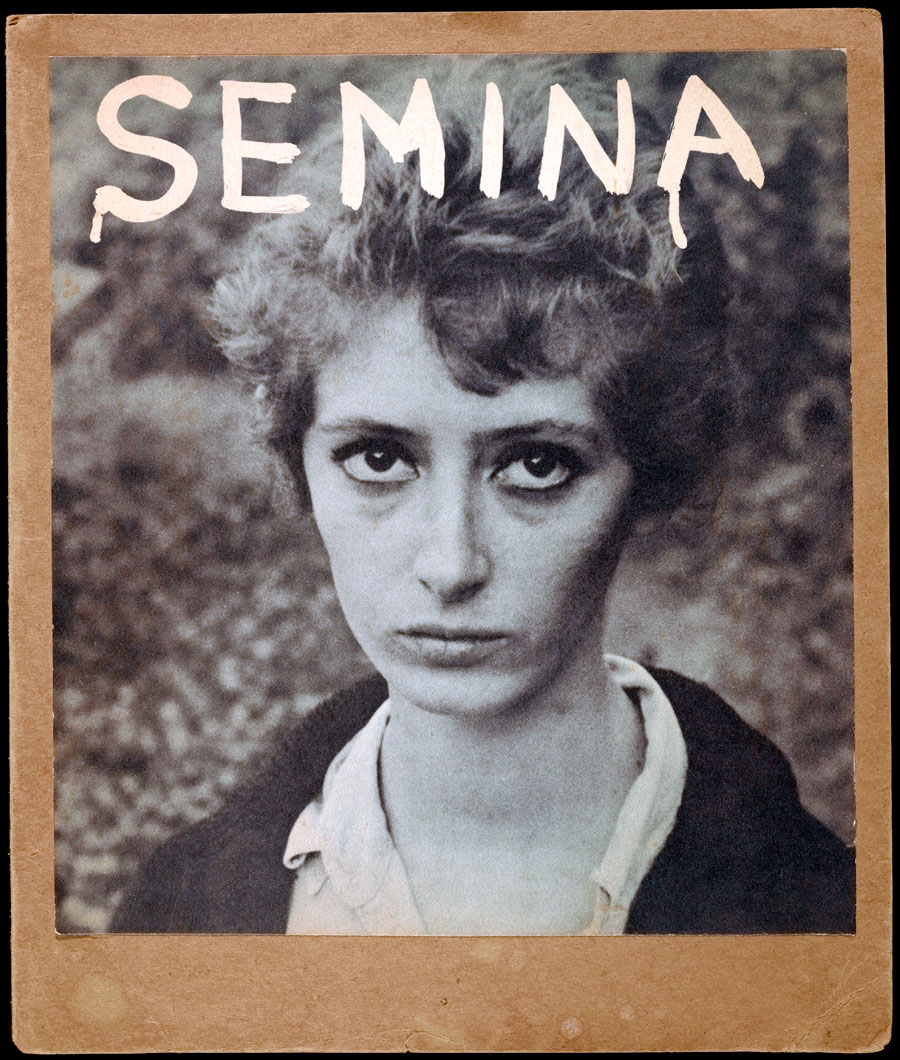
Wallace Berman (American, 1926-1976) 'Semina Cover with Wife (Photograph of Shirley Berman)' 1959


Wallace Berman (American, 1926-1976)
Semina Cover with Wife (Photograph of Shirley Berman)
1959
Halftone reproduction on cardstock
Getty Research Institute, Los Angeles, CA


The exhibition project Pacific Standard Time – Art in Los Angeles, 1950-1980 traces the development of the Los Angeles art scene during the post-war period, when the city on the Pacific hosted an impressively varied and versatile art scene, thus proving that it was more than Hollywood and a sprawling metropolis in the land of sunshine and palm trees. Pacific Standard Time features such internationally esteemed artists as John Baldessari, David Hockney, Edward Kienholz or Ed Ruscha as well as protagonists that are yet to be discovered like the abstract painters Helen Lundeberg and Karl Benjamin, the ceramicists Ken Price and John Mason, and sculptors such as De Wain Valentine.

The mega show – over 60 institutions and galleries in Los Angeles were involved – is taking the two main core exhibitions of the Getty Museum and the Getty Research Institute to Europe. The sole European venue is the Martin-Gropius-Bau in Berlin. The section of the exhibition that was to be seen in Los Angeles’ Getty Museum under the title of Crosscurrents in L.A. – Painting and Sculpture, 1950-1970, presents painting and sculpture. In the second part that was to be seen in Los Angeles under the title of Greetings from L.A. – Artists and Publics, 1950-1980, posters, artists’ catalogues, postcards, invitation cards and other memorabilia are shown which offer a deeper insight into the networks of the Los Angeles art scene at that time. For Berlin the show has been supplemented to include photographs by Julius Shulman, whose architectural shots defined the image of the Californian lifestyle in the 1950s. His incomparable sensibility and intuitive feel for composition and the ‘critical moment’ established him as a master of his craft.

Part One: Crosscurrents

The first part of the Berlin show brings together more than 70 works by over 50 artists and traces the rise of the Southern Californian art scene between 1945 and 1980. The list of names reads like a Who’s Who of today’s internationally esteemed artists, as people like John Baldessari, David Hockney, Edward Kienholz, Bruce Nauman or Ed Ruscha began their careers here.

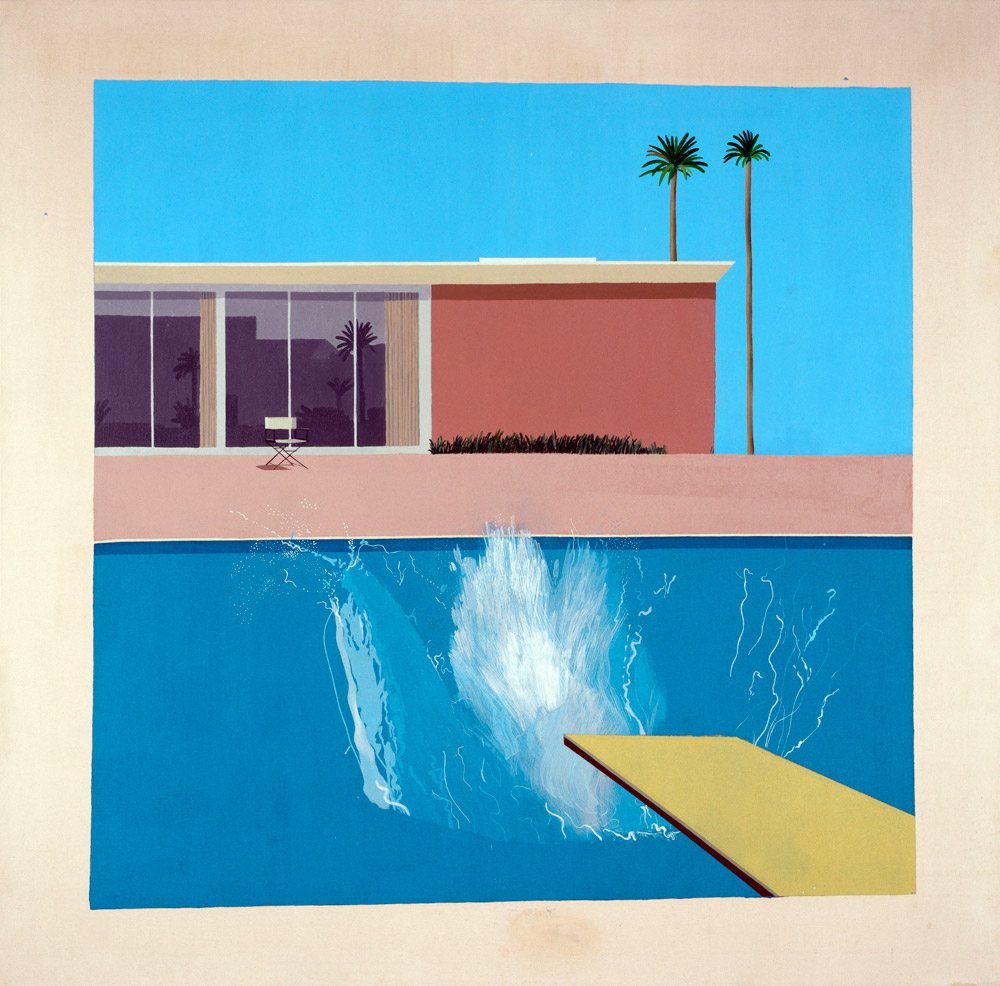
The entrée into Pacific Standard Time begins with British artist David Hockney’s iconic painting A Bigger Splash from the year 1967. It is one of the key pictures of the exhibition and stands for the hedonistic life under palm trees with permanent sunshine and never-ending parties.

The exhibition is structured both chronologically and thematically, comprising six sections that reflect the entire spectrum of the art trends that sprang up simultaneously in Los Angeles. Abstract works – ceramic sculptures and paintings of bleak clarity – are to be seen in the first section. The second section shows assemblage sculptures and collages by artists like George Herms, Wallace Berman and Ed Bereal, who paved the way for this artistic approach in the 1950s, and their successors, including many African-American artists. The third section documents the rise of Los Angeles to become an important art centre, while the fourth shows paintings by internationally recognised Los Angeles artists as Richard Diebenkorn, David Hockney and Ed Ruscha. It becomes clear that Southern California was one of the leading centres for large-format pop art and abstract painting in the 1960s. The fifth section examines how, at a time when painting was growing in significance on the Atlantic Coast of the USA, artists on the West Coast were beginning to extend their notions of traditional painting and sculpture, with perceptual phenomena and the material processes of artistic production coming to the fore. Here we find works that have arisen out of a collision between art and technology, such as a sculpture by De Wain Valentine, who uses industrial materials like polyester casting resin, or a canvas by Mary Corse, into which the smallest, high-grade reflecting glass microspheres have been worked. We are also introduced to a group of artists whose works show traces of their creation, such as those of Joe Goode, Allan McCollum, Ed Moses and Peter Alexander.

Berlin is supplementing the Getty exhibition by devoting a special room to the early international perception of art in Los Angeles. It will feature the works Berlin Red by Sam Francis, a 8 x 12 metre painting that was commissioned by Berlin’s Neue Nationalgalerie in 1969, and Volksempfängers (People’s Wireless) by Edward Kienholz. As a DAAD scholar Kienholz often lived in Berlin from 1973 on.

Another distinctive feature of the exhibition are the various room installations, including Stuck Red and Stuck Blue by James Turrell and Four Corner Piece by Bruce Nauman. In 1966 Turrell began working on his Light Room installations. In the work displayed in the Martin-Gropius-Bau that he designed in 1970, he uses light to dissolve the borders of spatial structures and transform them. In his Four Corner Piece from 1971 Bruce Nauman creates a particular spatial experience through the interplay of physical information vs. visual information.

Part Two: Greetings from L. A.

In the second part of the exhibition, elaborated by the Getty Research Institute, the Martin-Gropius-Bau shows over 200 objects – photographs, artists’ catalogues, books, posters, postcards, invitations, letters and artworks, of which many are on public view for the first time. We are given a sense of how Californian artists, through the involvement of a wide audience, brought art into contact with the general public. We also see how intensely the international networks linking groups of artists functioned.

Greetings from L.A. begins with Making the Scene and describes the gallery scene in Los Angeles from the 1950s to the 1970s. We are introduced to art dealers and collectors of the kind who congregated at La Cienega Boulevard – Rolf Nelson, Riko Mizuno and Betty Asher. On this gallery-lined boulevard, which crosses the Sunset Boulevard immortalised by Ed Ruscha, the reputation of Los Angeles as a city of modern and contemporary art was made.

Public Disturbances, the second section of the show, is devoted to three important exhibitions which drew fierce criticism and even led to arrests. Wallace Berman’s 1957 exhibition in the Ferus Gallery was closed down by the police. Violent controversies were triggered by the War Babies exhibition (1961) in the Huysman Gallery. There were also strong differences of opinion between the Los Angeles County Museum of Art (LACMA) and the Los Angeles County Board of Supervisors over the inclusion of Kienholz’s installation Back Seat Dodge ’38 (1964) in his grand retrospective of 1966.

The Private Assembly section of the exhibition focuses on the works created by Wallace Berman, George Herms, Charles Brittin and their circle in the 1950s and 1960s. The intimacy of these objects is explained not only by the unmistakable traces of artistic authorship they bear, but also by the fact that they were only accessible to a select, non-public audience. Mainly active outside the commercial gallery scene, this group of assemblage artists concentrated their energies on private artworks, which they handed over personally or sent by mail as a token of friendship.

The fourth section, Mass Media, introduces artists who selected the mass media as a model for their own art. Ed Ruscha, Allen Ruppersberg and Chris Burden occupied themselves with popular culture and mass production as alternative means of production and distribution. They used impersonal forms, such as those of objects or advertising materials commercially produced and sold as consumer goods. By avoiding conventional exhibition rooms, these artists reached a new public. They often exhibited anonymously, thus making the identity of artist and work secondary.

Art School as Audience, the fifth section of the exhibition, sheds light on the important role of art schools in the development of contemporary art forms. They served as the static pole, because in them artists constituted the audience of other fellow artists. The California Institute of the Arts, commonly known as CalArts, and its predecessor, the Chouinard Art Institute, were key venues for important groups of artists, as can be seen from the works of such students as Ed Ruscha and Joe Goode, and such teachers as John Baldessari, Miriam Schapiro and Judy Chicago. Other important forums were the new art faculties that came into existence at the universities and other higher education facilities in Los Angeles County. At the campuses of Irvine or San Diego in particular there was a stimulating audience for the experiments of such artists as Martha Rosler, Barbara Smith and Eleanor Antin.

The last section, The Art of Protest, examines how social and political developments mobilised artists to display their works in the street. In the 1960s Los Angeles became the scene of the first protests led by artists against the Vietnam War. This gave rise in 1966 to the construction of a Peace Tower at the corner of La Cienega and Sunset Boulevards. In the following decade it was feminism that moved many artists to become social activists, as can be seen from the work of Suzanne Lacy and Leslie Labowitz-Starus In Mourning and in Rage 1977, a highly esteemed protest performed on the steps of City Hall.

Greetings from L.A. offers a new look at art in Southern California by showing how the artists of this region changed the conventional relations between art and public and developed alternatives for a public role of art and its place in society.

The exhibition affords glimpses into some recently acquired archives, like those of Betty Asher, Hal Glicksman, George Herms, Wolfgang Stoerchle, High Performance magazine, the galleries of Rolf Nelson, Mizuno and Jan Baum as well as of the papers of Charles Brittin and Edmund Teske. These are supplemented by material from archives not normally associated with Southern California, such as the papers of the critics Irving Sandler, Barbara Rose and Lawrence Alloway of New York; of Marcia Tucker, the founder and curator of New York’s New Museum of Contemporary Art; and of the Kasmin Gallery, London.

Part Three: Julius Shulman

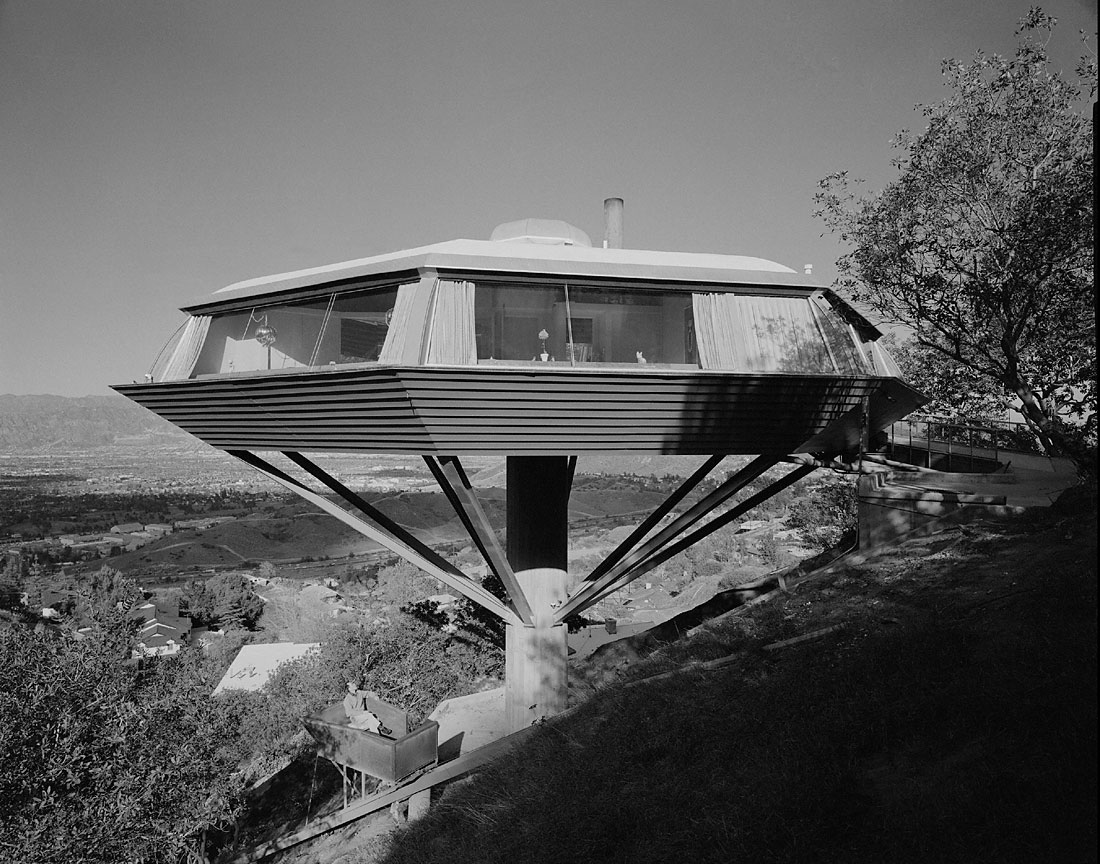
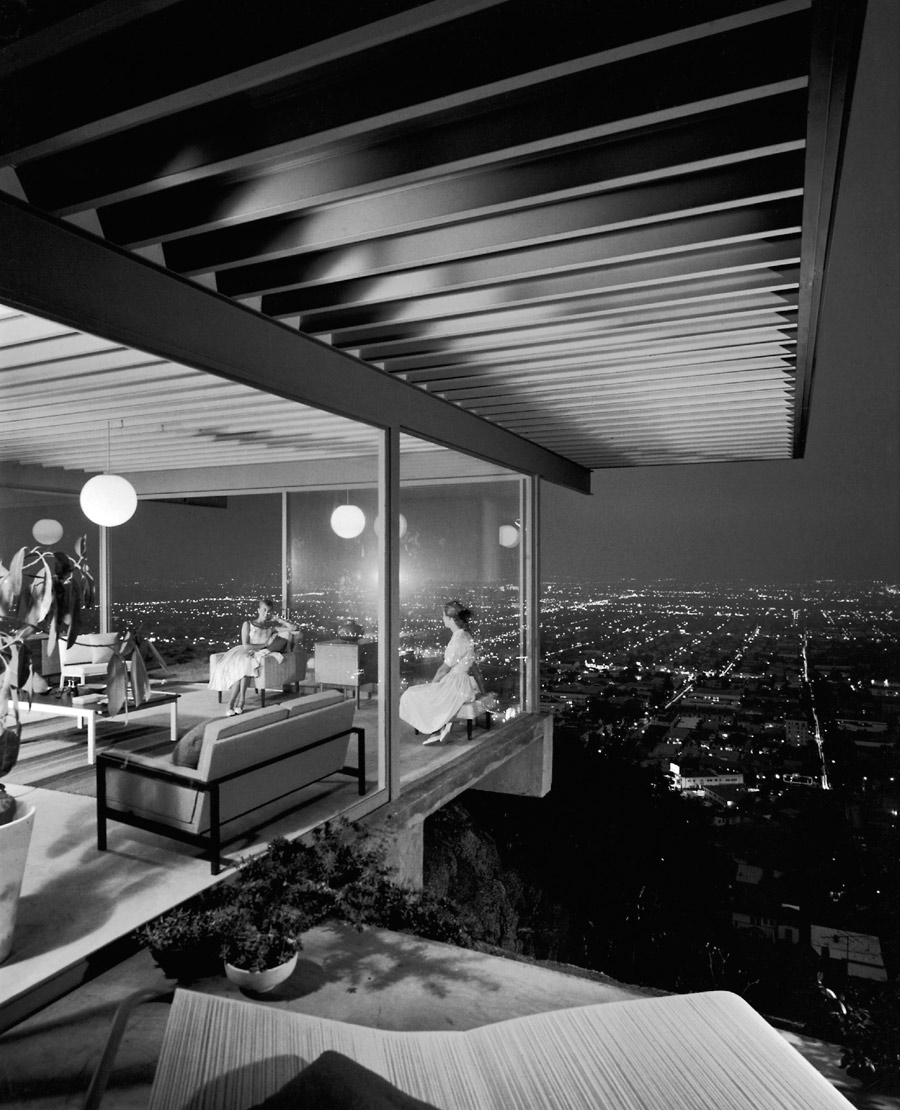
The last part of the Berlin exhibition shows over 50 photographs by Julius Shulman – the most important American photographer of architecture in the post-war period. For more than thirty years he photographed Modernist houses – built by Richard Neutra, Frank Lloyd Wright, or Frank Gehry – thus making many of them into architectural icons. The exhibition shows some of his key works.

Press release from Martin-Gropuis-Bau website


Julius Shulman (American, 1910-2009) 'Malin Residence, "Chemosphere”' 1960


Julius Shulman (American, 1910-2009)
Malin Residence, “Chemosphere”
1960
Gelatin silver print
Getty Research Institute, Los Angeles, CA
© J. Paul Getty Trust


Julius Shulman (American, 1910-2009) 'Case Study House #22' 1960


Julius Shulman (American, 1910-2009)
Case Study House #22
1960
Gelatin silver print
Getty Research Institute, Los Angeles, CA
© J. Paul Getty Trust


Charles Brittin (American, 1928-2011) 'Peace Tower' 1966


Charles Brittin (American, 1928-2011)
Peace Tower
1966
Silver-dye bleach print
Getty Research Institute, Los Angeles, CA
© J. Paul Getty Trust


Peter Alexander (American 1939-2020) 'Cloud Box (Large)' 1966


Peter Alexander (American 1939-2020)
Cloud Box (Large)
1966
Cast polyester resin
Janis Horn and Leonard Feldman
© Peter Alexander
Foto: Brian Forrest


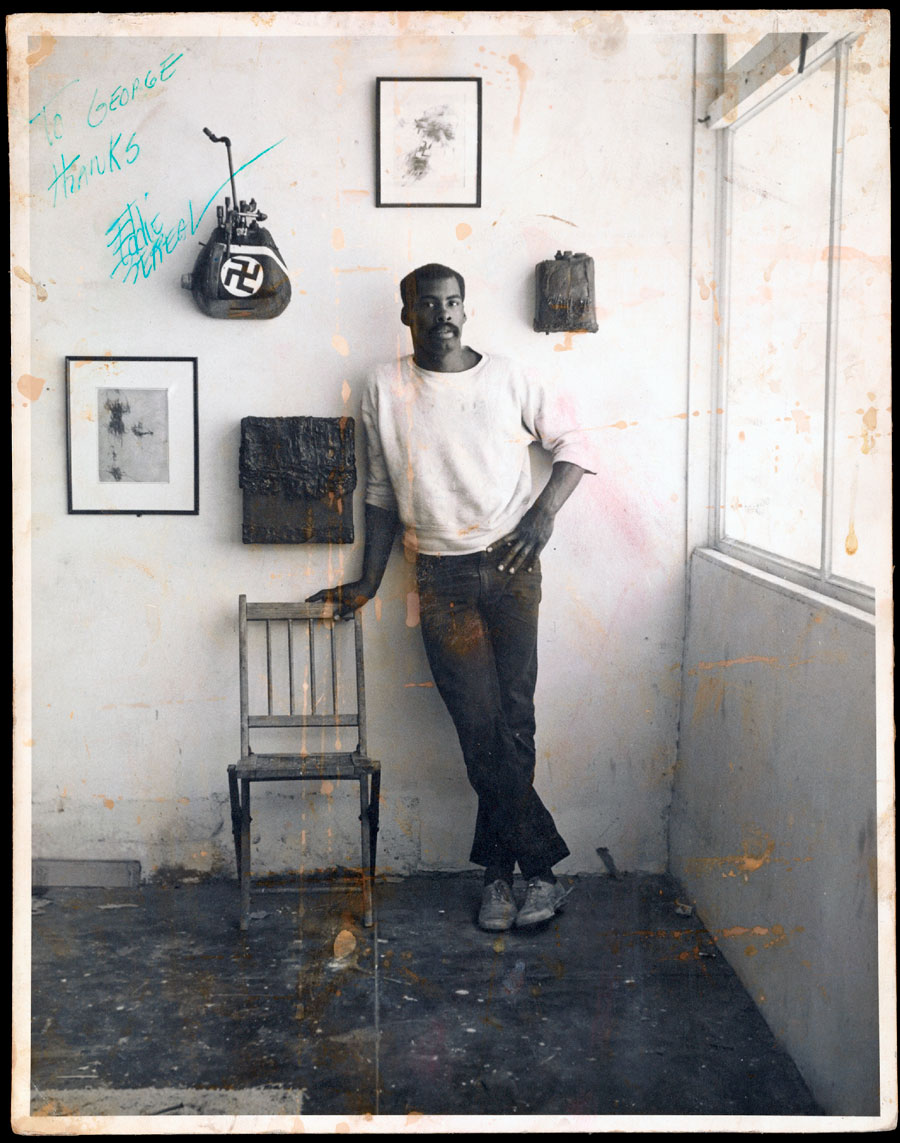
Jerry McMillan (American, b. 1936) 'Ed Bereal in His Studio' c. 1961


Jerry McMillan (American, b. 1936)
Ed Bereal in His Studio
c. 1961
Gelatin silver print mounted on board
Getty Research Institute, Los Angeles, CA
Gift of George Herms
© Jerry McMillan


David Hockney (British, b. 1937) 'A Bigger Splash' 1967


David Hockney (British, b. 1937)
A Bigger Splash
1967
Acrylic on canvas
96″ x 96″
© David Hockney
Tate Gallery, London, 2011


Wallace Berman (American, 1926-1976) 'Untitled (Verifax Collage)' 1969


Wallace Berman (American, 1926-1976)
Untitled (Verifax Collage)
1969
Verifax collage on board
Collection of Michael D. Fox, Berkeley CA, Courtesy Steven Wolf Fine Arts, San Francisco CA
© Courtesy of the Estate of Wallace Berman and Michael Kohn Gallery, Los Angeles
Foto: Joe Schopplein


Martin-Gropius-Bau Berlin
Niederkirchnerstraße 7
Corner Stresemannstr. 110
10963 Berlin
Phone: +49 (0)30 254 86-0

Opening Hours:
Wednesday to Monday 10 – 19hrs
Tuesday closed

Martin-Gropius-Bau website

LIKE ART BLART ON FACEBOOK

Back to top

Review: ‘A Shrine for Orpheus’ by Pip Stokes at fortyfivedownstairs, Melbourne

Exhibition dates: 11th May – 5th June, 2010


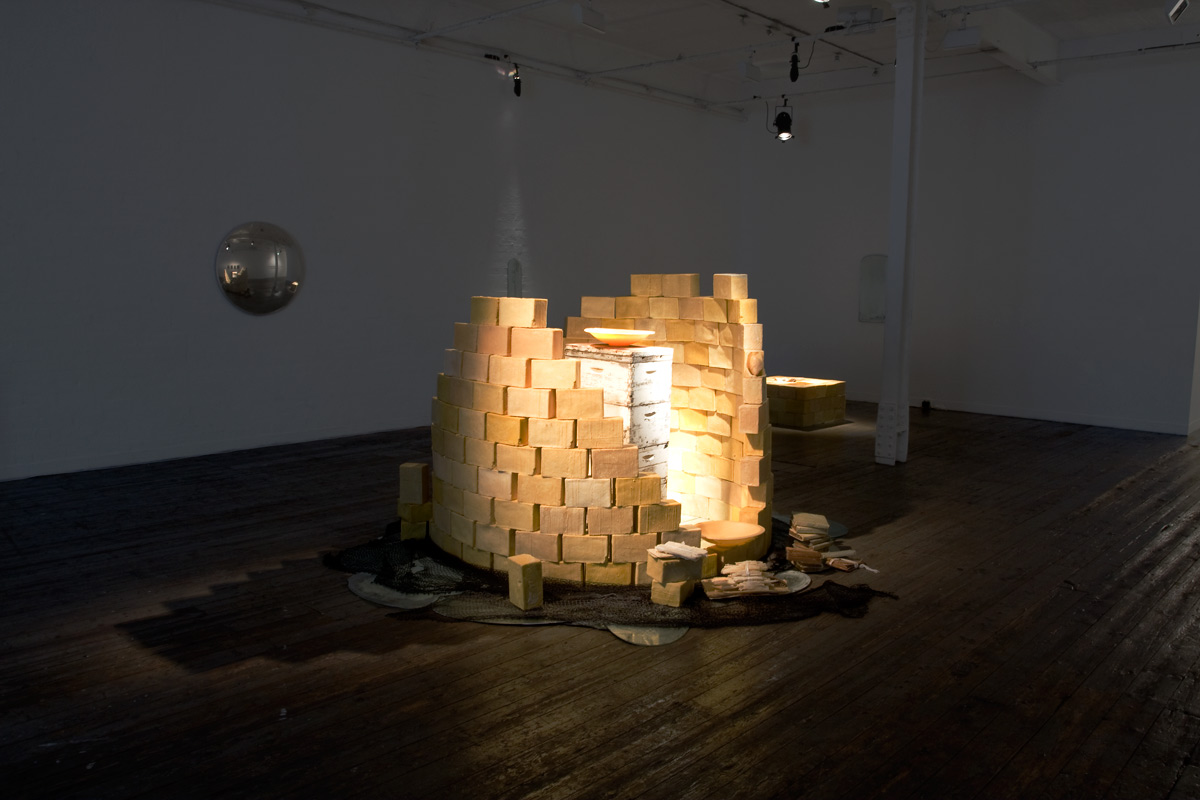
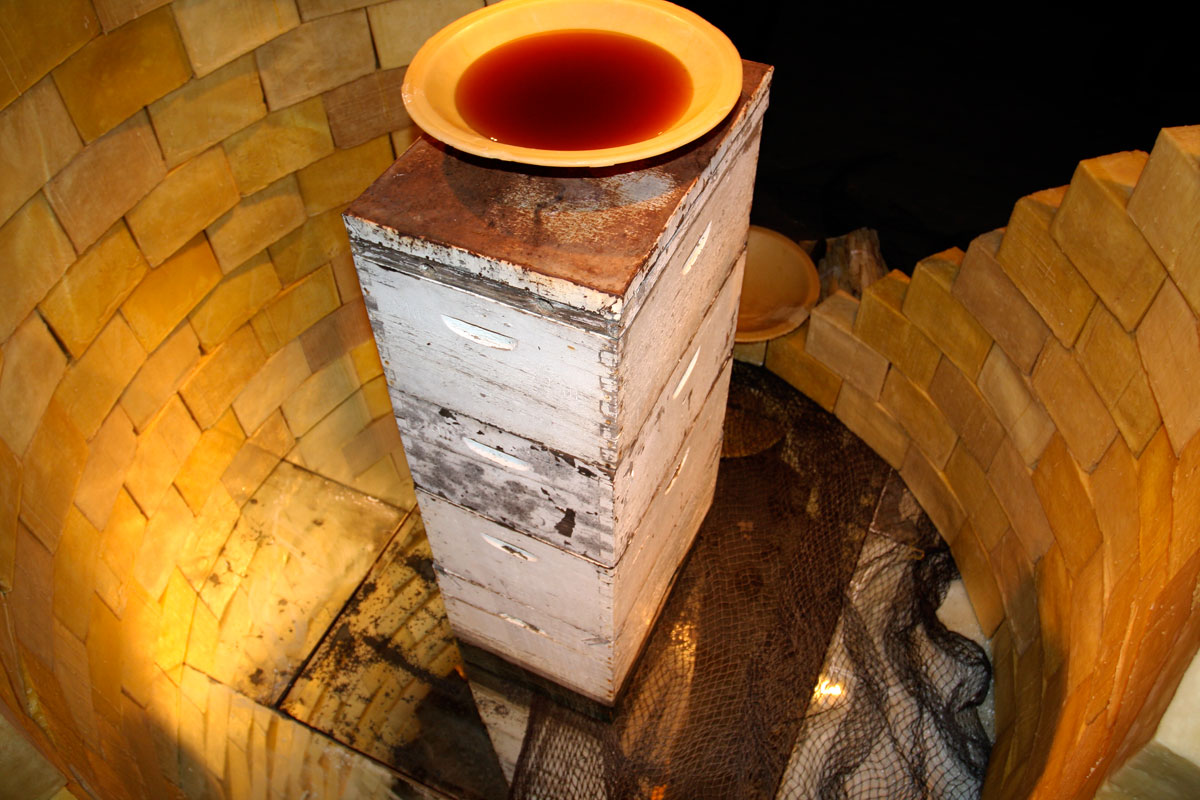
Installation view of the exhibition 'A Shrine for Orpheus' by Pip Stokes at fortyfivedownstairs, Melbourne

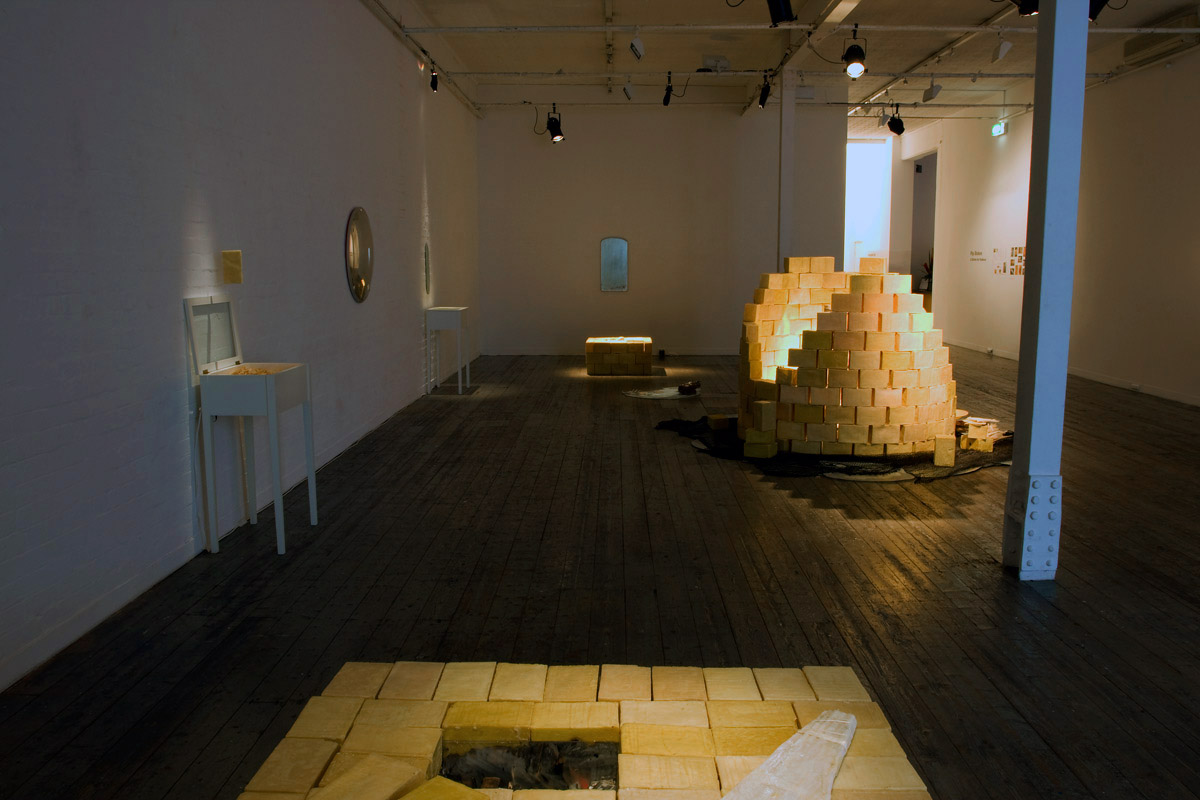
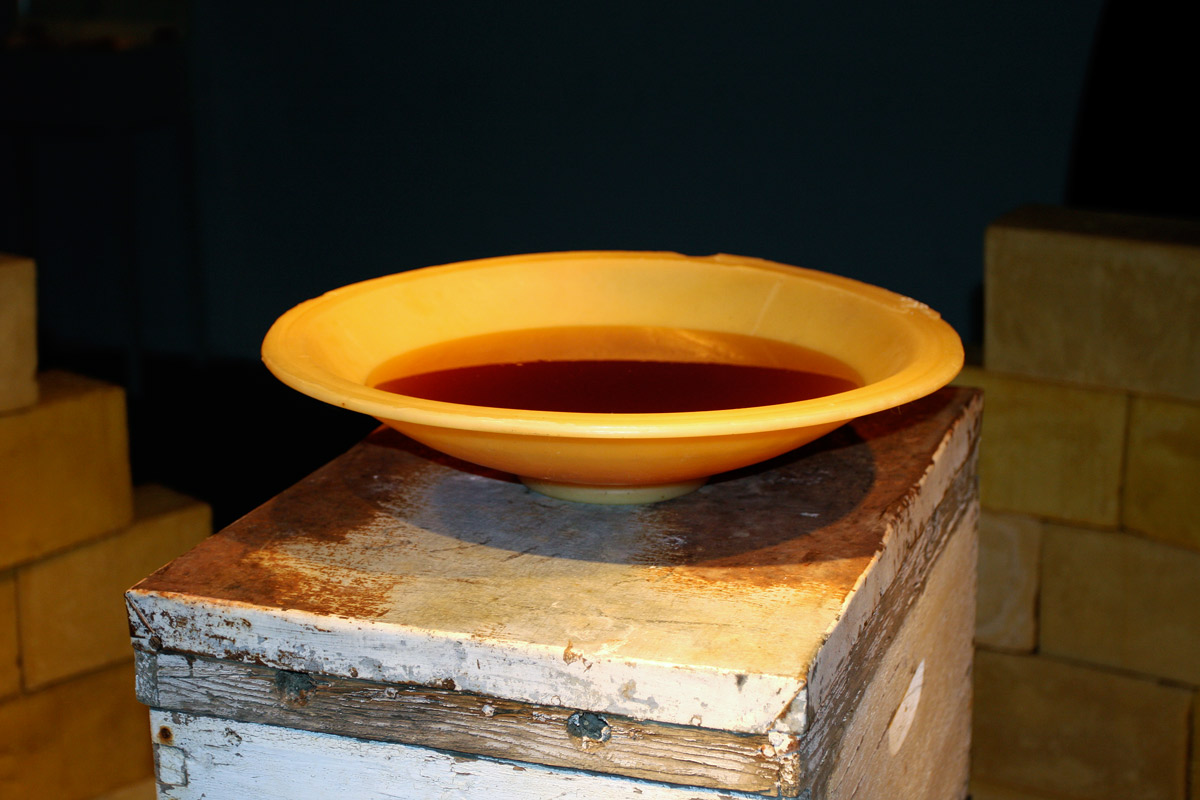
Installation view of the exhibition 'A Shrine for Orpheus' by Pip Stokes at fortyfivedownstairs, Melbourne


Installation views of the exhibition A Shrine for Orpheus by Pip Stokes at fortyfivedownstairs, Melbourne
Photos: Marcus Bunyan


Bees, books, bones… and biding (one’s) time, attaining the receptive state of being needed to contemplate this work.

This is a strong, beautiful installation by Pip Stokes at fortyfivedownstairs that rewards such a process.

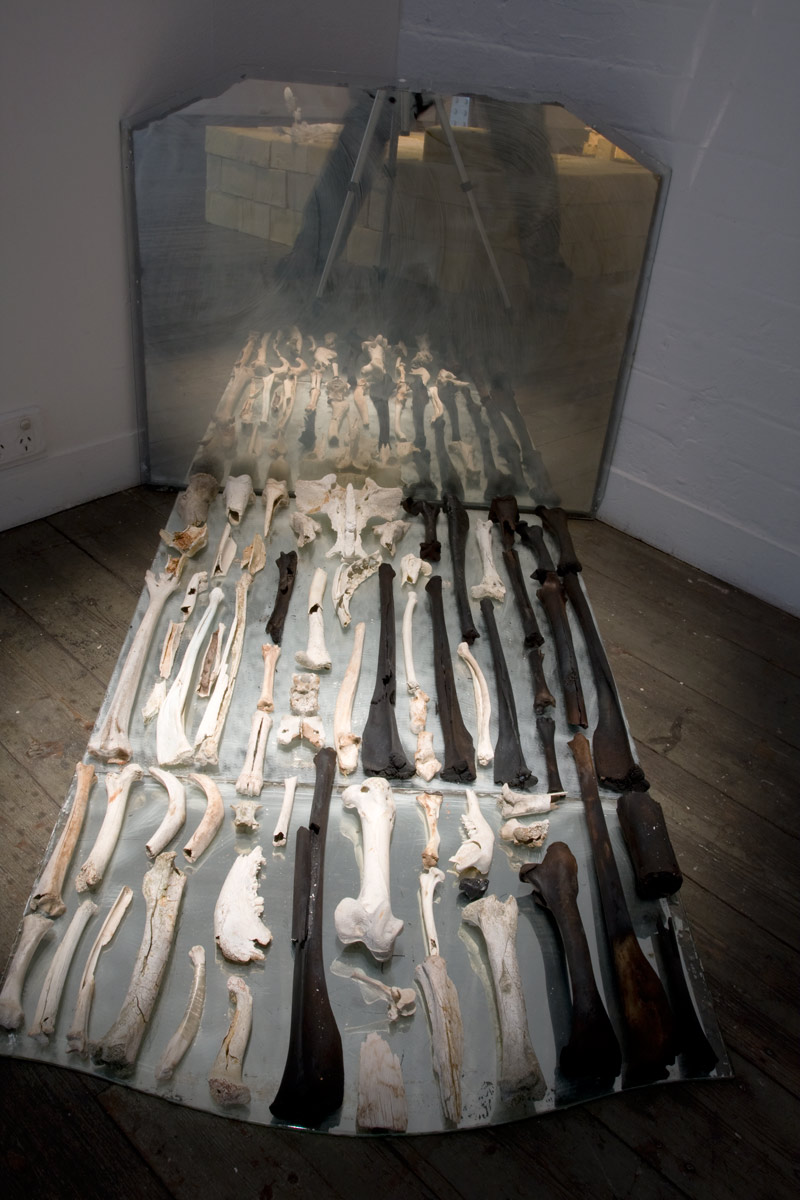
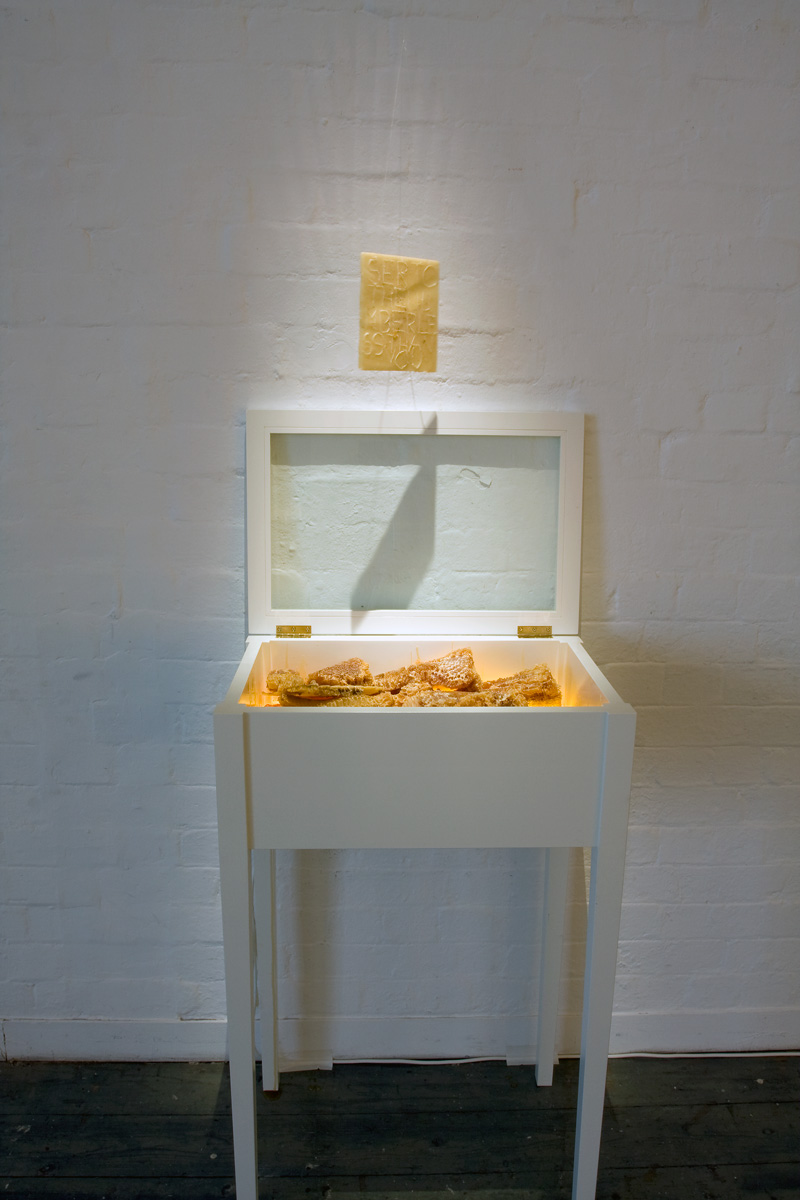
What is memorable about the work is the physicality, the textures: the sound of the bees; the Beuy-esque yellowness and presence of the beeswax blocks; the liquidness of the honey in the bowl atop the beehives; the incinerated bones, books and personal photographs; the tain-less mirrors, the books dipped in beeswax; the votive offering of poems placed into the beehive re-inscribed by the bees themselves – and above all the luscious, warm smell of beeswax that fills the gallery (echoing Beuys concept of warmth, to extend beyond the material to encompass what he described as ‘spiritual warmth or the beginning of an evolution’).

This alchemical installation asks the viewer to free themselves from themselves – “the moment in which he frees himself of himself and… gives the sacred to itself, to the freedom of its essence…” as Maurice Blanchot put its – a process Carl Jung called individuation, a synthesis of the Self which consists of the union of the unconscious with the conscious. Jung saw alchemy as an early form of psychoanalysis in which the alchemist tried to turn lead into gold, a metaphor for the dissolving of the Self into the prima materia and the emergence of a new Self at the end of the process, changing the mind and spirit of the Alchemist. Here the process is the same. We are invited to let go the eidetic memory of shape and form in order to approach the sacred not through ritual but through the reformation of Self.

As Pip Stokes last few paragraphs of her artist statement succinctly observes,

“Maurice Blanchot, has interpreted this myth as the descent of the artist to the realm of death to gain the work of art. Out of the failure of the artist, a necessary failure, emerges the artwork, wounded and bearing the ash of its origins.

The work of mourning, the work of healing.

Reflection, apparition, illusion: what appears as image, disappears evaporatively. As we change our place the space is already gone: the mirror holds a trace. What is veiled, enigmatic, uncertain remains as shadow that casts a light.”

The space in which we stand falls away: the mirror may hold a trace but it is only ever a trace. Our visions elude the senses, slipping between dreaming and waking, between conscious and subconscious realms. As Orpheus turns back to look so Eurydice dissolves, “falling out of the skin into the soul.” We, the viewer, are changed.

So far so good.

Unfortunately what does not facilitate this engagement with change is the combined verbiage of both the artist’s statement and the catalogue essay by Lisa Jacobson. These texts, especially the latter one, with quotations by Blanchot, Rilke, Calasso, Beuys, Cocteau, Neruda, Cobb, Virgil, Rilke again, Cocteau again, Poe and Derrida and meditations on mythos, the sacred, resurrection, mourning et al are mostly unnecessary to support what is strong work – in fact they seem to put a physical, textual wall between the viewer and the work, between the installation and the proposed dissolution of Self into the sacred. The catalogue essay is confusing and needed a judicious edit with the understanding that sometimes less is more! The work needs to speak for itself, not to be didactically spoken for and knowing when to merely suggest an idea is one of the skills of good writing. Perhaps all that was needed was the quotation by Blanchot and the two paragraphs above by Pip Stokes – nothing more.

Approaching the sacred is, I believe, and act of letting go, of aware-less-ness. As we immerse ourselves in that enigma we find that it is our fluid shadow aspect that has cast the light, with all attendant expectations, beliefs, dreams, visions, weaknesses, shortcomings, and instincts. This exhibition asks us to reconcile the journey into darkness with the hope of redemption.

Dr Marcus Bunyan


All photographs are installation shots of the exhibition. Please click on the photographs for a larger version of the image. All photographs courtesy of the artist and fortyfivedownstairs taken by © Marcus Bunyan who is completing an internship at the gallery.


The Gaze of Orpheus

Maurice Blanchot

“The Greek myth says: one cannot create a work unless the enormous experience of the depths – an experience which the Greeks recognised as necessary to the work, an experience in which the work is put to the test by that enormousness – is not pursued for its own sake. The depth does not surrender itself face to face; it only reveals itself by concealing itself in the work. But the myth also shows that Orpheus’ destiny is not to submit to that law – and it is certainly true that by turning around to look at Eurydice, Orpheus ruins the work… and Eurydice returns to the shadows; under his gaze, the essence of the night reveals itself to be inessential. He thus betrays the work and Eurydice and the night. But if he did not turn around to look at Eurydice, he still would be betraying,… the boundless and imprudent force of his impulse, which does not demand Eurydice in her diurnal truth and her everyday charm, but in her nocturnal darkness, in her distance, her body closed, her face sealed, which wants to see her not when she is visible, but when she is invisible, and not as the intimacy of a familiar life, but as the strangeness of that which excludes all intimacy; it does not want to make her live, but to have the fullness of her death living in her.”

“The sacred night encloses Eurydice, encloses within the song something which went beyond the song. But it is also enclosed itself: it is bound, it is the attendant, it is the sacred mastered by the power of ritual – that word which means order, rectitude, law, the way of Tao and the axis of Dharma. Orpheus gaze unties it, destroys its limits, breaks the law which contains, which retains the essence. Thus Orpheus’ gaze is … the moment in which he frees himself of himself and…, gives the sacred to itself, to the freedom of its essence…”


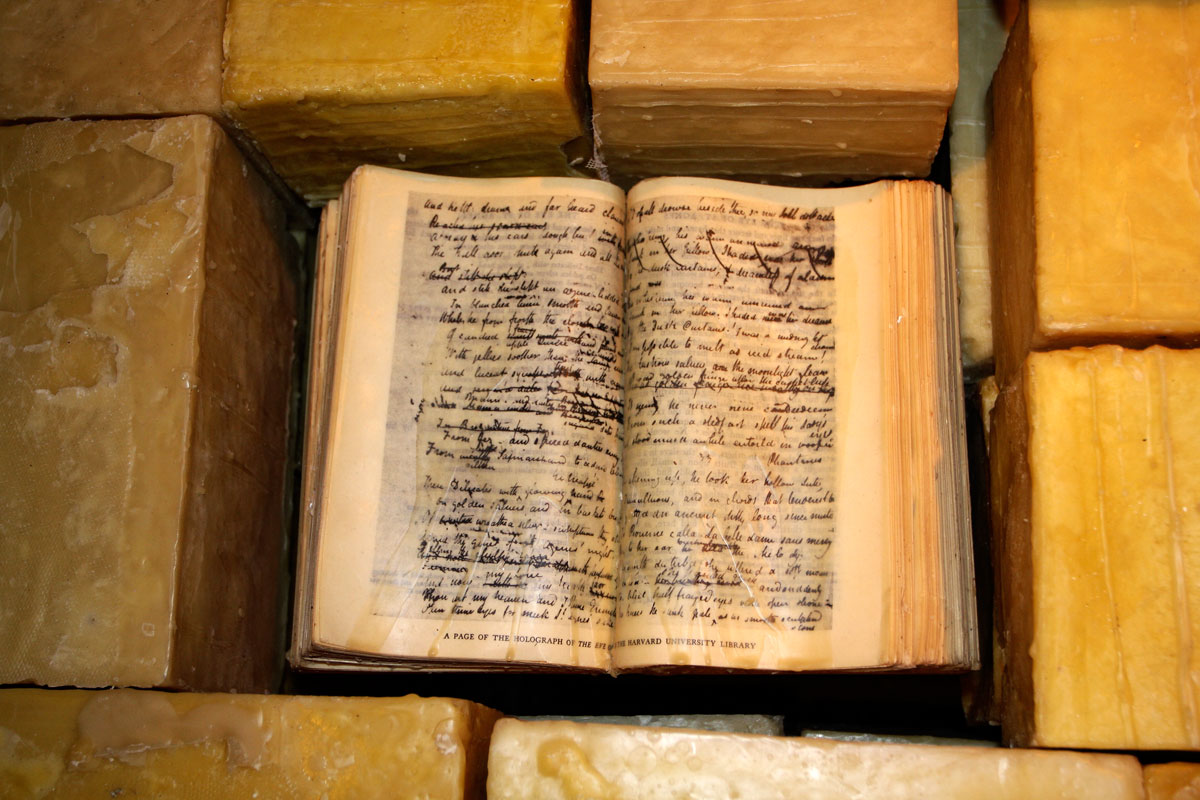
Installation view of the exhibition 'A Shrine for Orpheus' by Pip Stokes at fortyfivedownstairs, Melbourne

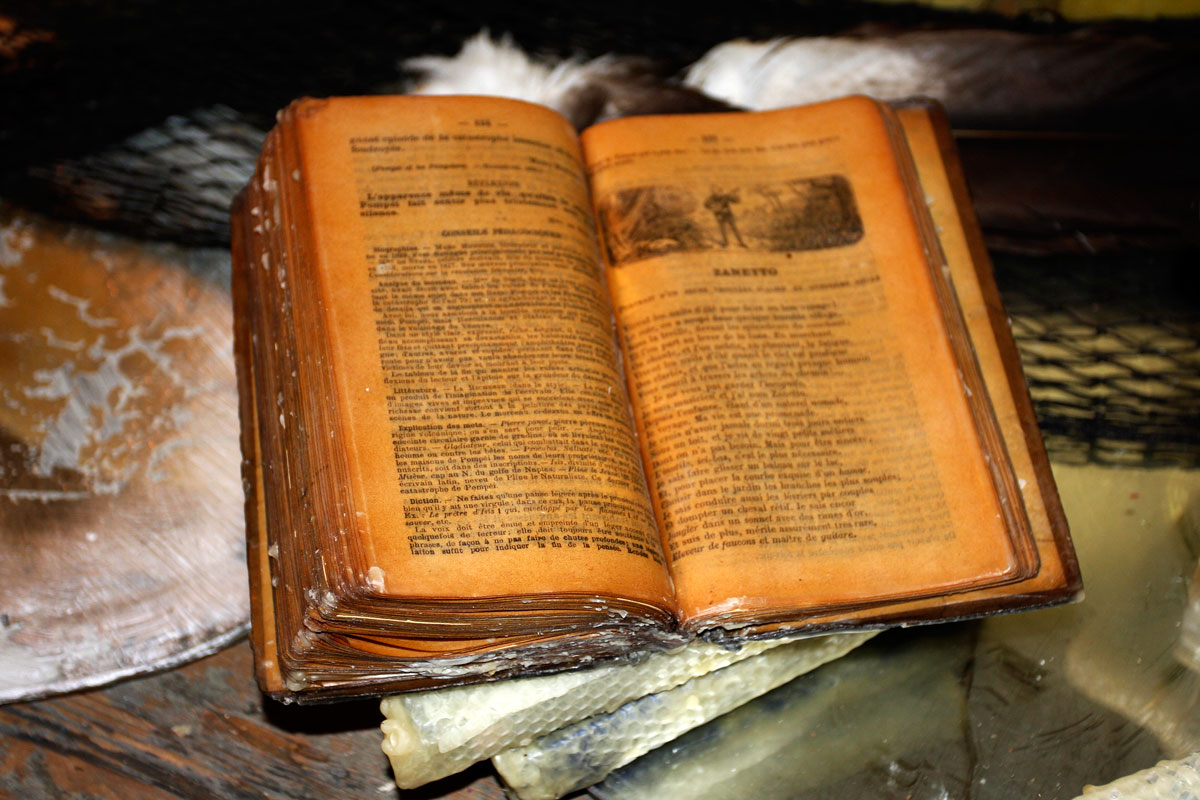
Installation view of the exhibition 'A Shrine for Orpheus' by Pip Stokes at fortyfivedownstairs, Melbourne


Installation views of the exhibition A Shrine for Orpheus by Pip Stokes at fortyfivedownstairs, Melbourne
Photos: Marcus Bunyan


A Shrine for Orpheus

Pip Stokes


The first temple was made by the bees with feathers, wax and honey.

~ Calasso


… it is Orpheus. His metamorphosis
In this one and this. We should not trouble
about other names. Once and for all
It’s Orpheus when there’s singing.

~ Rilke. Sonnets to Orpheus


We are the bees of the invisible
We frantically plunder the visible of its honey
To accumulate it in the great golden hive
Of the invisible

~ Rilke


In mythology, honey was regarded as a spiritual substance and the bees were godly… This belief was… influenced by the whole process of honey production as constituting a link between earthly and heavenly levels. The influx of a substance from the whole environment – plants, minerals, and sun – was the essence of the bee-cult… The whole builds a unity, … in a humane, warm way, through principles of cooperation and brotherhood.

~ Beuys


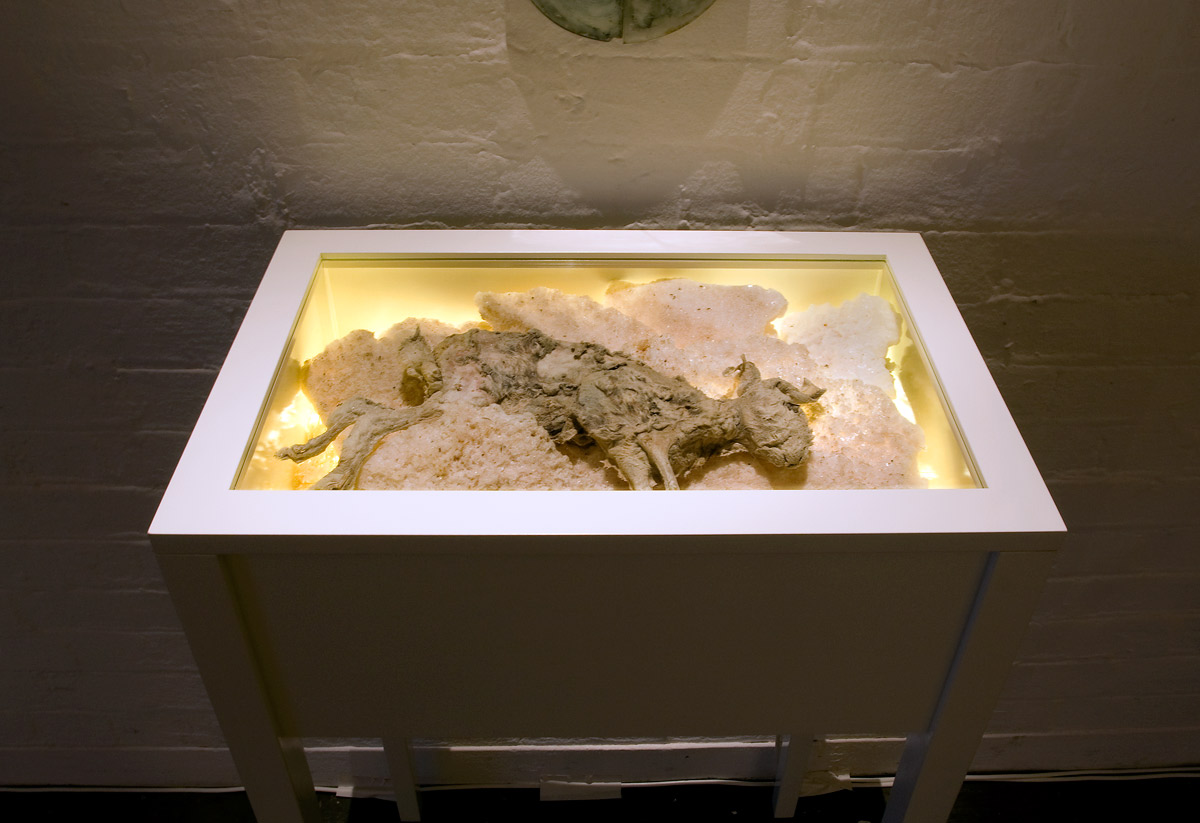
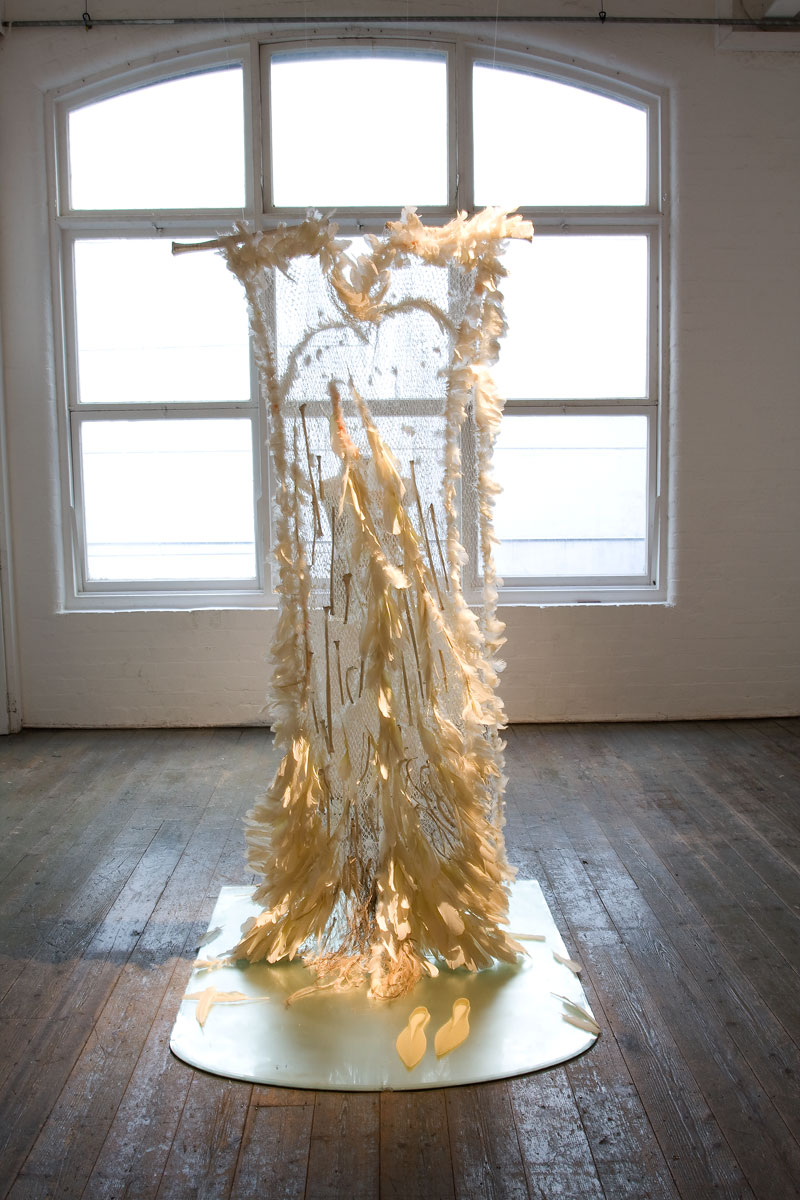
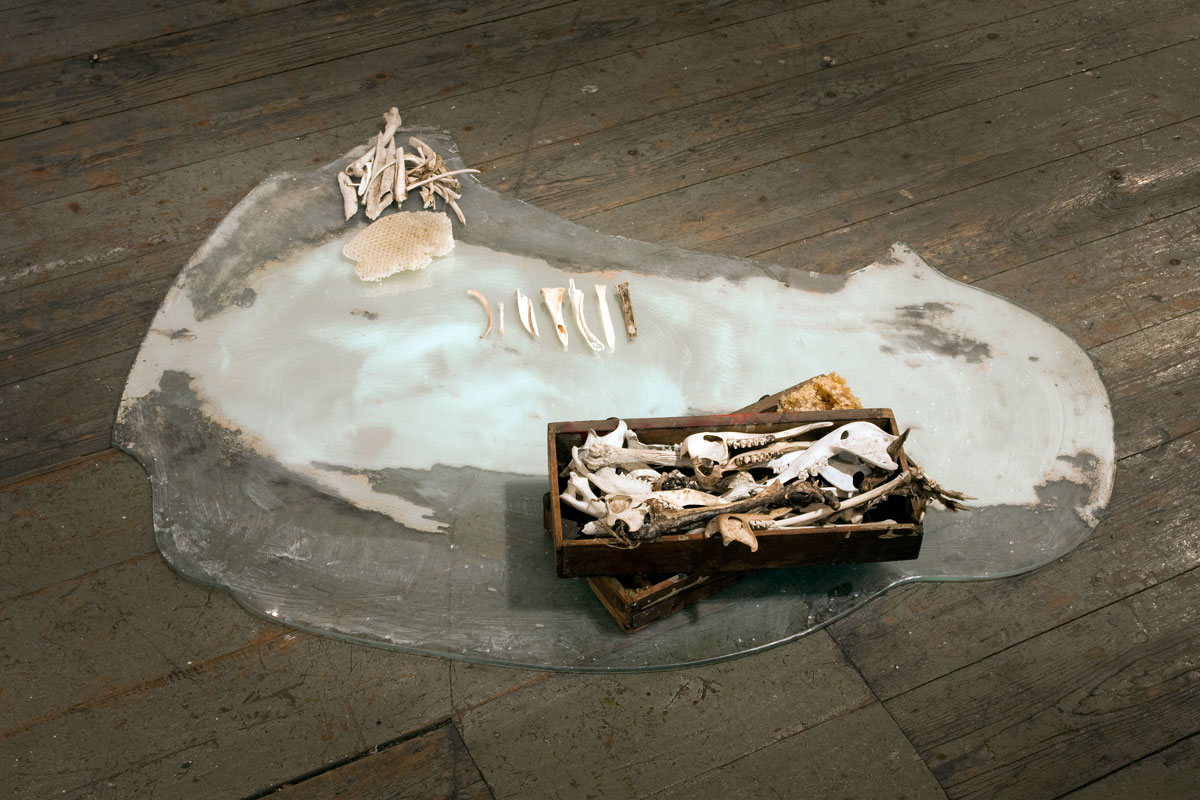
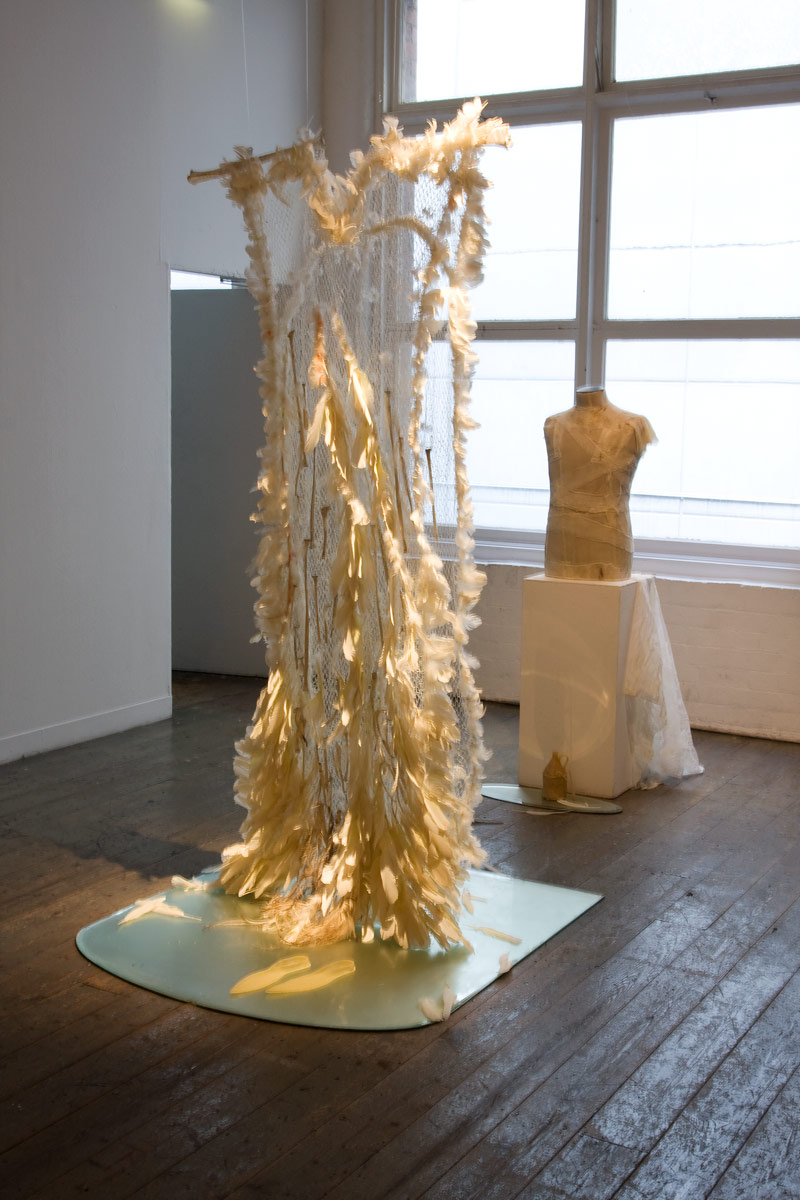
This installation, A Shrine for Orpheus, comprises four hundred hand cast beeswax blocks and a traditional beebox, in use by the bees until recently, accompanied by found objects such as old mirrors as well as ephemera collected from nature including feathers, bones and the salt mummified skeleton of a rabbit. Over the past year I have worked with the living beehive, placing votive offerings associated with poetry, death and renewal into the hive: objects such as books, cast wax pages, vessels, textiles and bones. Melbourne writer, Paul Carter has engraved wax tablets with aphoristic poems to the bees. These objects have been transformed through the bees’ processes of honeycomb- building.

The metaphors of the beehive in this connection to poetry, death and renewal are explored in the materials and structures of the installation. The warm sweet- smelling wax of the bees, cast into six sided blocks, provides the building material for the Shrine and two mausoleums, each with a void space, a space of underworld. The void of the larger mausoleum contains, ashy, burnt books, personal photos from family albums scorched by fire, evoking ‘shades’, the shadowy dead – and porcelain-like bones which have been materially transformed by cremation in a kiln. The second beeswax ‘grave’ has two voids, one of which contains a beeswax- bound and dipped facsimile of handwritten poems by Keats and, in the other opening, a book of insect morphology, also dipped and bound in beeswax.

The traditional beebox in the centre of the ruin of the Shrine is placed on a lake of mirrors. The mirrors have lost their tain and been translucently washed with plaster of Paris to further dim our view into the obscurely reflective world that lies beneath. The Shrine is accompanied by offerings of honey, honeycomb, beeswax bound books and pages cast from beeswax awaiting new poems, laid at its entrance.

Myths of death, dismemberment, transformation and resurrection have haunted the Western imagination from Isis to Dionysus, Orpheus and Christ. In his essay, The Gaze of Orpheus, the French literary theorist, Maurice Blanchot, has interpreted this myth as the descent of the artist to the realm of death to gain the work of art. Out of the failure of the artist, a necessary failure, emerges the artwork, wounded and bearing the ash of its origins.

The work of mourning, the work of healing.


Reflection, apparition, illusion: what appears as image, disappears evaporatively. As we change our place the space is already gone: the mirror holds a trace. What is veiled, enigmatic, uncertain remains as shadow that casts a light.

The temple re admits this invisible.


Pip Stokes. May. 2010
A Shrine for Orpheus

Beeswax, beehive box, mirror. Mixed media, dimensions variable.
Original texts by Paul Carter, writer.
Sound by Kasimir Burgess, filmmaker.


Installation view of the exhibition 'A Shrine for Orpheus' by Pip Stokes at fortyfivedownstairs, Melbourne

Installation view of the exhibition 'A Shrine for Orpheus' by Pip Stokes at fortyfivedownstairs, Melbourne

Installation view of the exhibition 'A Shrine for Orpheus' by Pip Stokes at fortyfivedownstairs, Melbourne

Installation view of the exhibition 'A Shrine for Orpheus' by Pip Stokes at fortyfivedownstairs, Melbourne


Installation views of the exhibition A Shrine for Orpheus by Pip Stokes at fortyfivedownstairs, Melbourne
Photos: Marcus Bunyan


A Shrine for Orpheus

Lisa Jacobson

If Orpheus is guardian of the sacred arts, then it is possible that never before has there been a century so much in need of his song. This is because the world insists, on a daily basis, that we lose ourselves rather than commune with loss, to be drawn to darkness as logos rather than seek out its mythos. The myth of Orpheus has an integral role today in that it returns us and brings us back into communion with the sacred through poetry, dance, music and art.

Pip Stokes’ most recent exhibition, A Shrine for Orpheus, provides a mythic language for the story of Orpheus. It is a contemplation of myth that reflects back on itself in an endless refraction of associations and images; a visual representation of the myth itself which is never simple or linear but, rather, layered with metaphor and re-imaginings. Stokes’ installation reveals the ways in which myth enters us, but does not belong to us. Rather, we are the conduit through which myth runs and Orpheus, indeed, does run and has run through the dreams of humankind for as long as we have been able to dream.

This is in keeping with the Neo-Platonic notion, in which Orpheus plays no small part, that the figures of myth occupy not only the rooms of the psyche, but the rooms of other houses outside of us. It is not the artist who invents these figures of the psyche, of Orpheus and Eurydice, of Persephone and Hades, but they who reinvent themselves. The zeitgeist or midrash (as the Jewish mystics call the spirit of the times) summons up those gods it needs most. In Stokes’ work, it is Orpheus who answers this call.

Orpheus, playing quietly on his lyre in the middle of the forest, coaxes the animals out to listen, as Rainer Maria Rilke writes in his first sonnet to Orpheus:

“… And where there had been
just a makeshift hut to receive the music,
a shelter nailed up out of their darkest longing,
with an entryway that shuddered in the wind-
you built a temple deep inside their hearing.”


Summoning the animals translates, perhaps, into an ecological sensibility; to hear the call of Orpheus is to answer the ecological call, to re-sacralise nature. At a time when the world seems intent on hurtling towards its own demise, A Shrine for Orpheus inclines towards meditation and the transformation of nature, the stillness of catacombs, the quietness of wax, the purposeful industry of bees and silkworms, the potential for flight, the distillation of air, the reflective gaze, the emptying out of all colour until there are only shades of white: bleached bones, wax, ash, silk and paper, feathers in contemplation of flight as if, as the poet Pablo Neruda writes, “we lived falling out of the skin into the soul.” Like the bees which flew in through the open window of Stokes’ studio to busy themselves on the beeswax, even the very act of art-making has summoned and sung up, in its own way, the problematic aspects of creation. As Jean Cocteau observes in his film, Orphée, “Look for a lifetime in mirrors and you will see Death at work, like bees in a hive of glass.”

The music of Orpheus, as Noel Cobb has said, is “the activity of the theologos, the one who spoke with and about the Gods.” His sanctuary also encompasses poetry and art. Orpheus’ lyre has to do with both dismemberment and re-membering, god-like attributes, as Stokes alludes to in her depiction of Orpheus’ wax heart awaiting resurrection. Orpheus’ lyre was said to be strung with human sinews, and the music he plays as he sings nature and animals into being dips, inevitably, into the underworld, into death and decay, dismemberment, a scattering of the psyche into fields not yet dreamt of, in the act of its resounding. The wax which forms the foundation of Stokes’ Shrine for Orpheus, the books on which bees have fed in order to make their own inscriptions (texts by writers from Keats to the contemporary Paul Carter) also hint at resurrection and immortality. At the centre of this ‘temple’ is the beehive, symbol of transformation.

As Virgil notes in The Georgics in a section entitled “The Peculiarly Wonderful Features of Bees”, bee stock is immortal in that the hive itself is passed on from generation to generation, the structure keeps on singing, and never really dies despite the passing of the bees who composed it. In a similar fashion, Orpheus’ own lyre is carried forth, made from the shell of a tortoise whose death made possible the music itself. The heart of Orpheus, like his own severed head in the myth, does not cease its previous musicality, the song of its rhythmic beating. So too might the artist reach down into the darkness of herself, even if she risks being torn apart, knowing that the heart remains intact and can be resurrected.

Rilke again:

Only the man who has also raised
his lyre among the darkling shades
may be allowed a sense
of infinite praise.


Inside the Orphic vision which Pip Stokes’ art immerses itself in, everything is panoramic and ornamented by mythic figures whom we cannot ever really know, but only glimpse via the language of metaphor: the hand that plunges through the earth while one is gathering flowers, the hem of a beekeeper’s shroud-like coat, the thin silken thread of a worm, the trace of words upon wax, or feathers, burnt books or ash. These are the images that translate the emotion of the myth but which remain, nevertheless, untranslatable because should they be hardened into the prosaic everyday language of the world, they would cease to be mythos.

Perhaps it is for this very reason that Eurydice cannot be brought back up to the shining world of which Rilke writes, in a different poem on Orpheus, and that Orpheus himself rises into at the very moment Hermes ushers Eurydice once again below. Eurydice is too far into death to be brought back to life. She has sunk into the “dream within the dream” in which, as Edgar Allan Poe writes, we are all participants. All Orpheus can take with him is the imprint of her, the illicit gaze, the melancholic pathology of the backward glance, that perhaps was not so much hastily stolen as executed too quickly. How long must the artist gaze into the underworld? Is it ever enough? Must she not continually turn back and gaze at what cannot be brought to the surface but that she must, even so, attempt to translate? Is it this that Rilke refers to when he writes in his sonnets, “it is in overstepping that [Orpheus] obeys?” Cocteau, speaking about his film, commented that “Poets, in order to live must often die, and shed not only the red blood of their hearts, but the white blood of their souls, that flows and leaves traces which can be followed.”

There is loss in this of course, great loss, that Stokes’ art both acknowledges and makes a place for. As Orpheus travels along “the path ascending steeply into life” towards “the shining exit-gates,” he cannot help but glance back. In the sonnets Rilke cautions, “Be ahead of all parting as though it already were / behind you.” This has echoes of Jacques Derrida’s The Work of Mourning, in which he argues that mourning begins the moment friendship begins; that we cannot enter into relationship without becoming conscious of the loss that will inevitably come with the other’s death. Indeed, the very idea of this loss precipitates the event itself, leaves us prematurely bereft and continually turning back towards the absent loved one in our grief. And if we are always turning back, is not the artist most required to do so, is not the artist most compelled to incline her head towards the darkness in order to write of what stirs beneath the shining surface of the world, of what calls to be heard? Is this not the invisible that Orpheus calls into being through poetry, music and art? Orpheus rises in Rilke’s poem, and in Pip Stokes’ work. In fact, if we dare to journey with him, he will rise in us all.


Installation view of the exhibition 'A Shrine for Orpheus' by Pip Stokes at fortyfivedownstairs, Melbourne

Installation view of the exhibition 'A Shrine for Orpheus' by Pip Stokes at fortyfivedownstairs, Melbourne

Installation view of the exhibition 'A Shrine for Orpheus' by Pip Stokes at fortyfivedownstairs, Melbourne

Installation view of the exhibition 'A Shrine for Orpheus' by Pip Stokes at fortyfivedownstairs, Melbourne


Installation views of the exhibition A Shrine for Orpheus by Pip Stokes at fortyfivedownstairs, Melbourne
Photos: Marcus Bunyan


fortyfivedownstairs
45, Flinders Lane
Melbourne 3000

Opening hours:
Tuesday – Friday 12am – 6pm
Saturday 12pm – 4pm
fortyfive downstairs website

LIKE ART BLART ON FACEBOOK

Back to top

Europeana: connecting cultural heritage – digital paintings, books, films and archives

November 2008


Europeana – the European digital library, museum and archive


Europeana – the European digital library, museum and archive – is a project that began in July 2007. The website gives users direct access to some 2 million digital objects, including film material, photos, paintings, sounds, maps, manuscripts, books, newspapers and archival papers.

The digital content will be selected from that which is already digitised and available in Europe’s museums, libraries, archives and audio-visual collections. The website aims to have representative content from all four of these cultural heritage domains, and also to have a broad range of content from across Europe. The interface will be multilingual. Initially, this may mean that it is available in French, English and German, but the intention is to develop the number of languages available following the launch.”


Europeana collections website

LIKE ART BLART ON FACEBOOK

Back to top