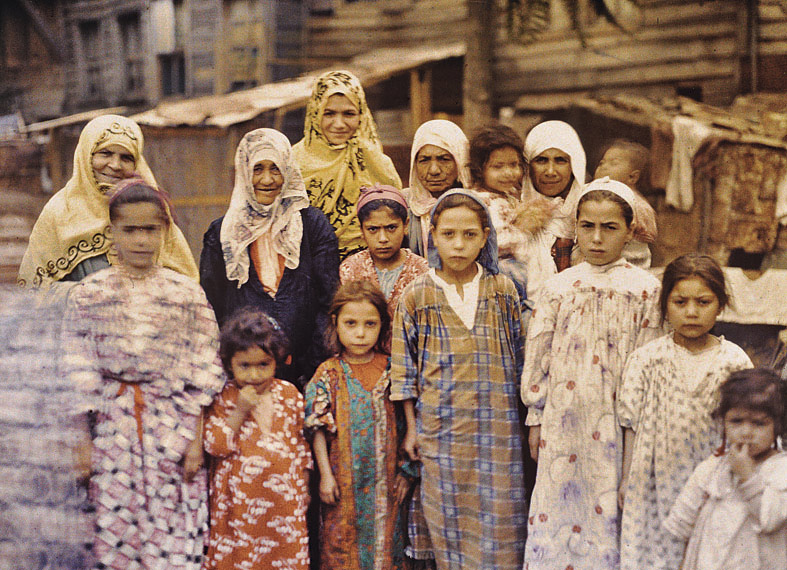
Exhibition: ‘True Colors: Color in Photography from 1849 to 1955’ at Albertina Modern, Vienna

Exhibition dates: 24th January – 21st April, 2025

Curators: Dr. Anna Hanreich and Dr. Astrid Mahler
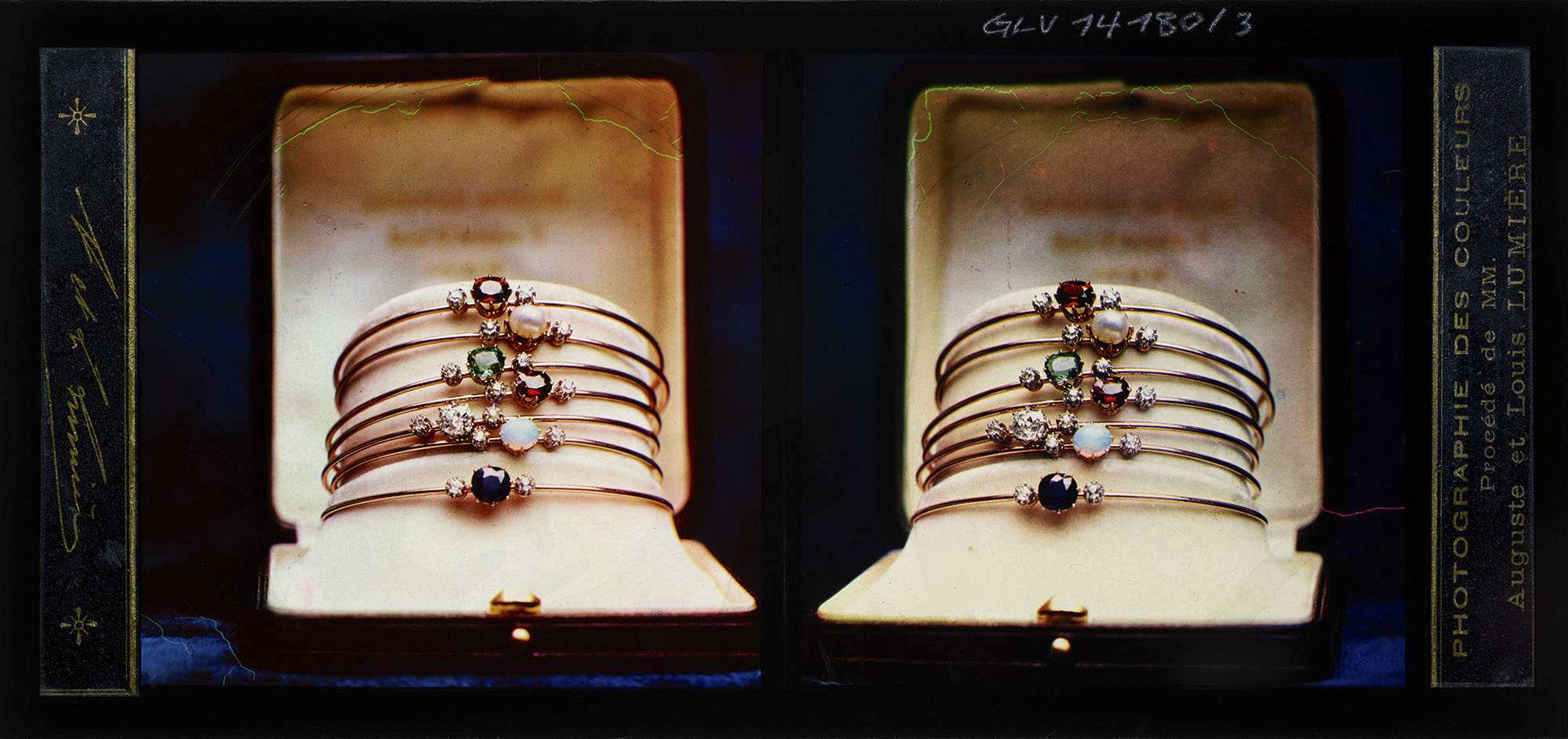
 

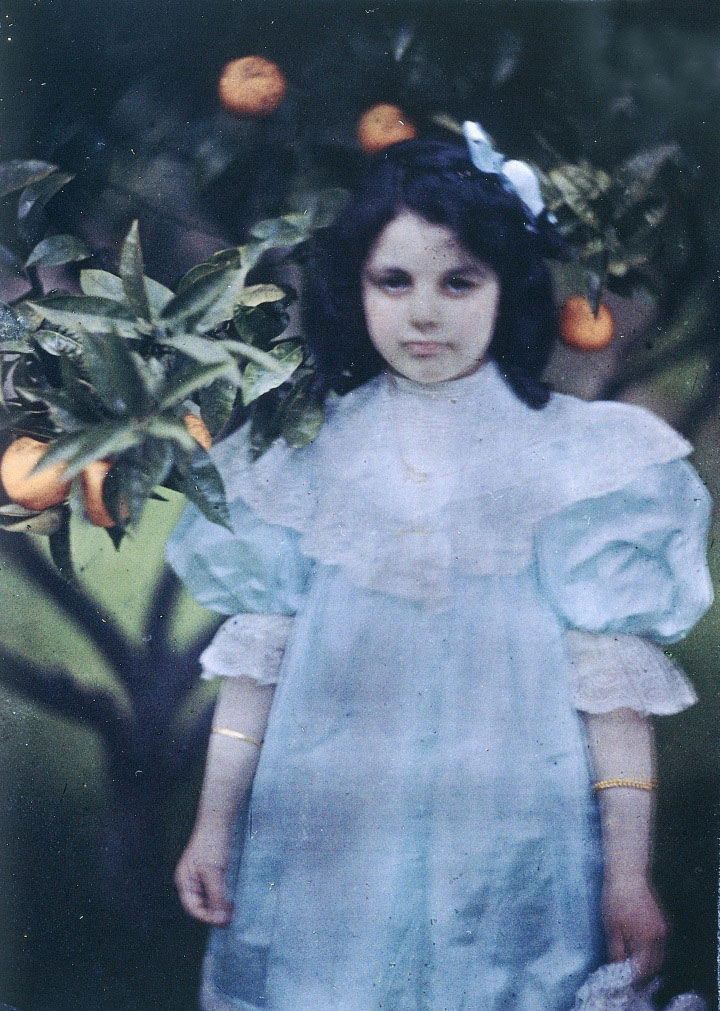
Auguste and Louis Lumière (French, 1862-1954) (French, 1864-1948) 'Bangles' 1893-1900 from the exhibition 'True Colors: Color in Photography from 1849 to 1955' at Albertina Modern, Vienna, January - April, 2025


Auguste and Louis Lumière (French, 1862-1954) (French, 1864-1948)
Bangles
1893-1900
ALL Chroma
8.4 x 17.8cm
The ALBERTINA Museum, Vienna – Permanent loan by Höhere Graphische Bundes-Lehr- und Versuchsanstalt


What a wonderful exhibition.

It’s so exciting to see the history and development of colour photography pre the ubiquitous, American artists William Eggleston and Stephen Shore, much as I like both artists.

I would have liked to have seen some early autochromes from Albert Kahn and The Archives of the Planet; some photographs by Bernard F. Eilers whom I greatly admire; and some early colour photographs by Paul Outerbridge Jr.

In my eyes, that would have made the exhibition even better!

Dr Marcus Bunyan


Many thankx to the Albertina Modern for allowing me to publish the photographs in the posting. Gracious thankx also to Karin Svadlenak-Gomez for allowing me to use her wonderful photographs of the exhibition in the posting, noted below each image. Please click on the photographs for a larger version of the image.



Installation view of the exhibition 'True Colors: Color in Photography from 1849 to 1955' at Albertina Modern, Vienna


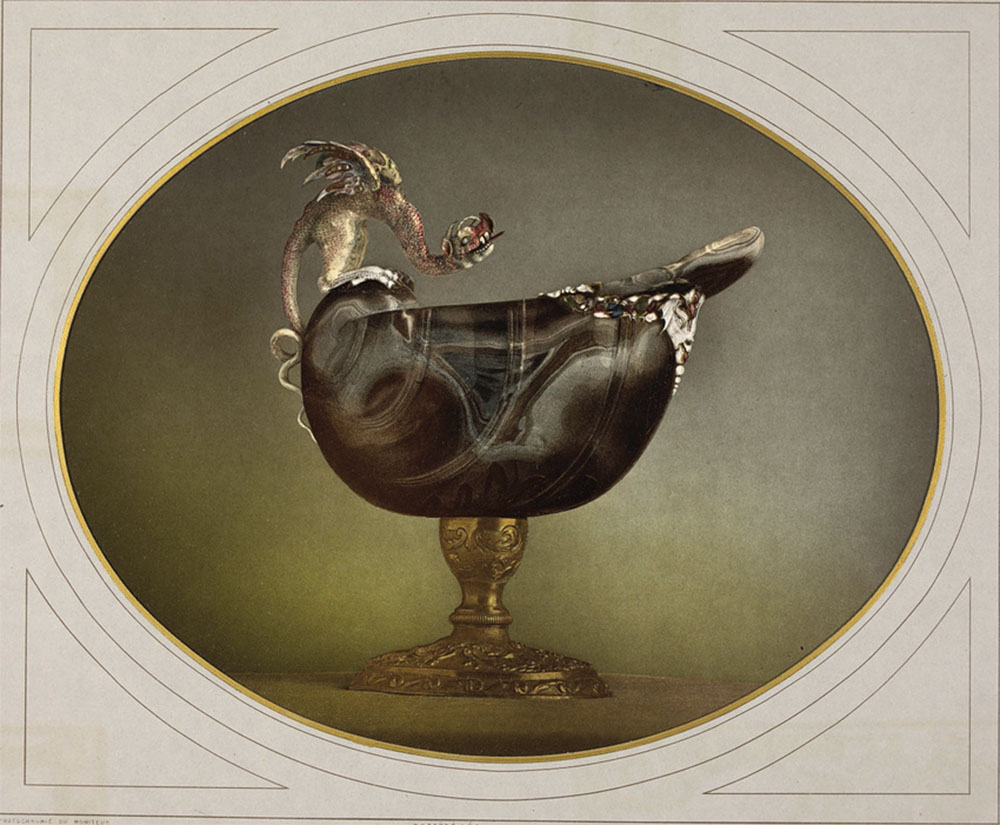
Installation view of the exhibition True Colors: Color in Photography from 1849 to 1955 at Albertina Modern, Vienna showing in the bottom image, Léon Vidal’s photograph Oriental Onyx Saucier, 16th century, from Le Tresor artistique de la France, c. 1876-1878 (below)


Léon Vidal (French, 1833-1906)
'Oriental Onyx Sardonyx Cup (16th century)' 1876 from the exhibition 'True Colors: Color in Photography from 1849 to 1955' at Albertina Modern, Vienna, January - April, 2025


Léon Vidal (French, 1833-1906)
Oriental Onyx Sardonyx Cup (16th century)
1876
Photomechanical proof (photochromy using the Léon Vidal process) mounted on cardboard
H. 20.8 ; L. 26.2 cm.
Don Fondation Kodak-Pathé, 1983


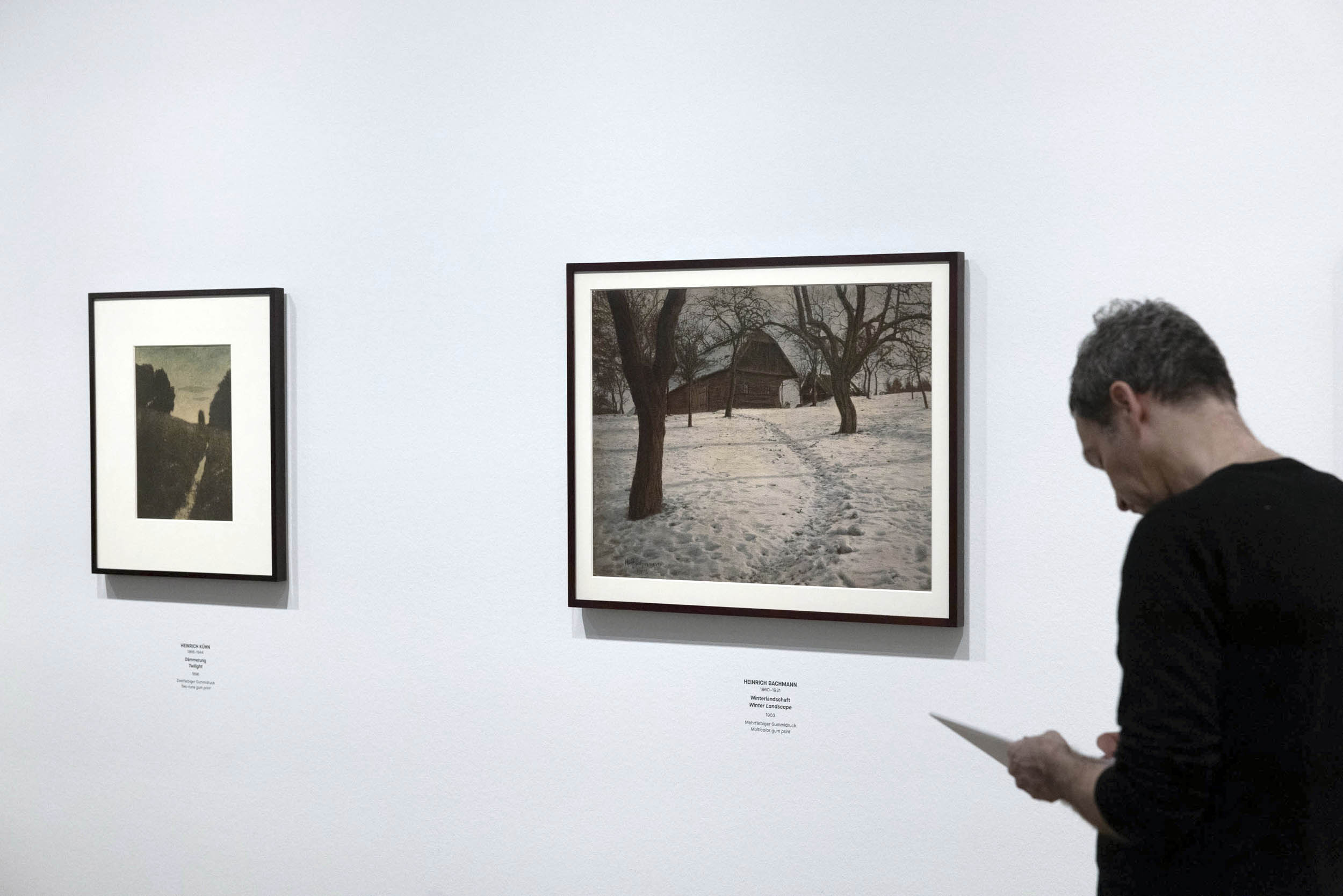
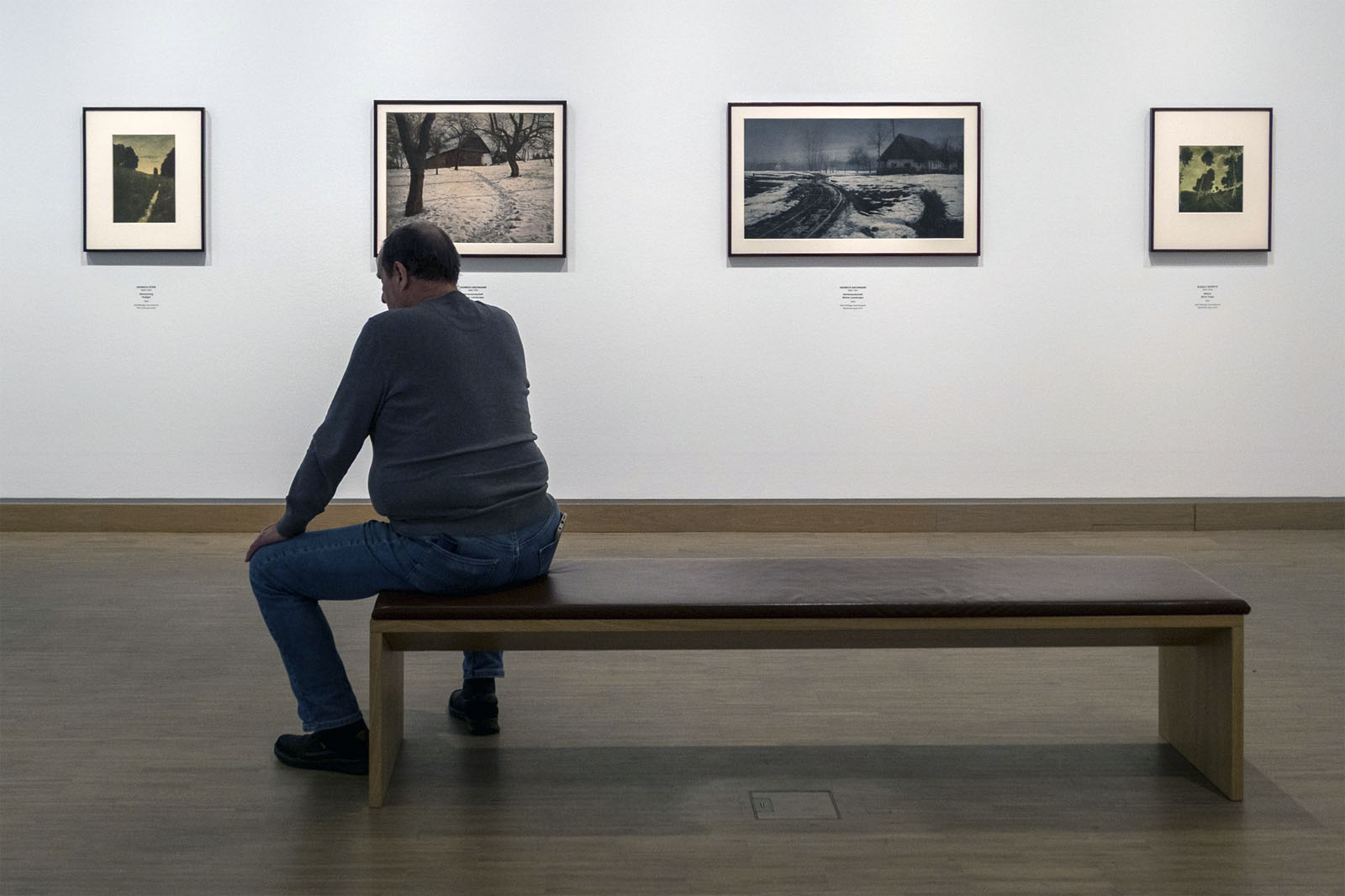
Installation view of the exhibition 'True Colors: Color in Photography from 1849 to 1955' at Albertina Modern, Vienna showing at left, Heinrich Kühn's 'Twilight' 1896 (below); and at right, Heinrich Bachmann's 'Winter Landscape' 1903


Installation view of the exhibition True Colors: Color in Photography from 1849 to 1955 at Albertina Modern, Vienna showing at left, Heinrich Kühn’s Twilight 1896 (below); and at right, Heinrich Bachmann’s Winter Landscape 1903


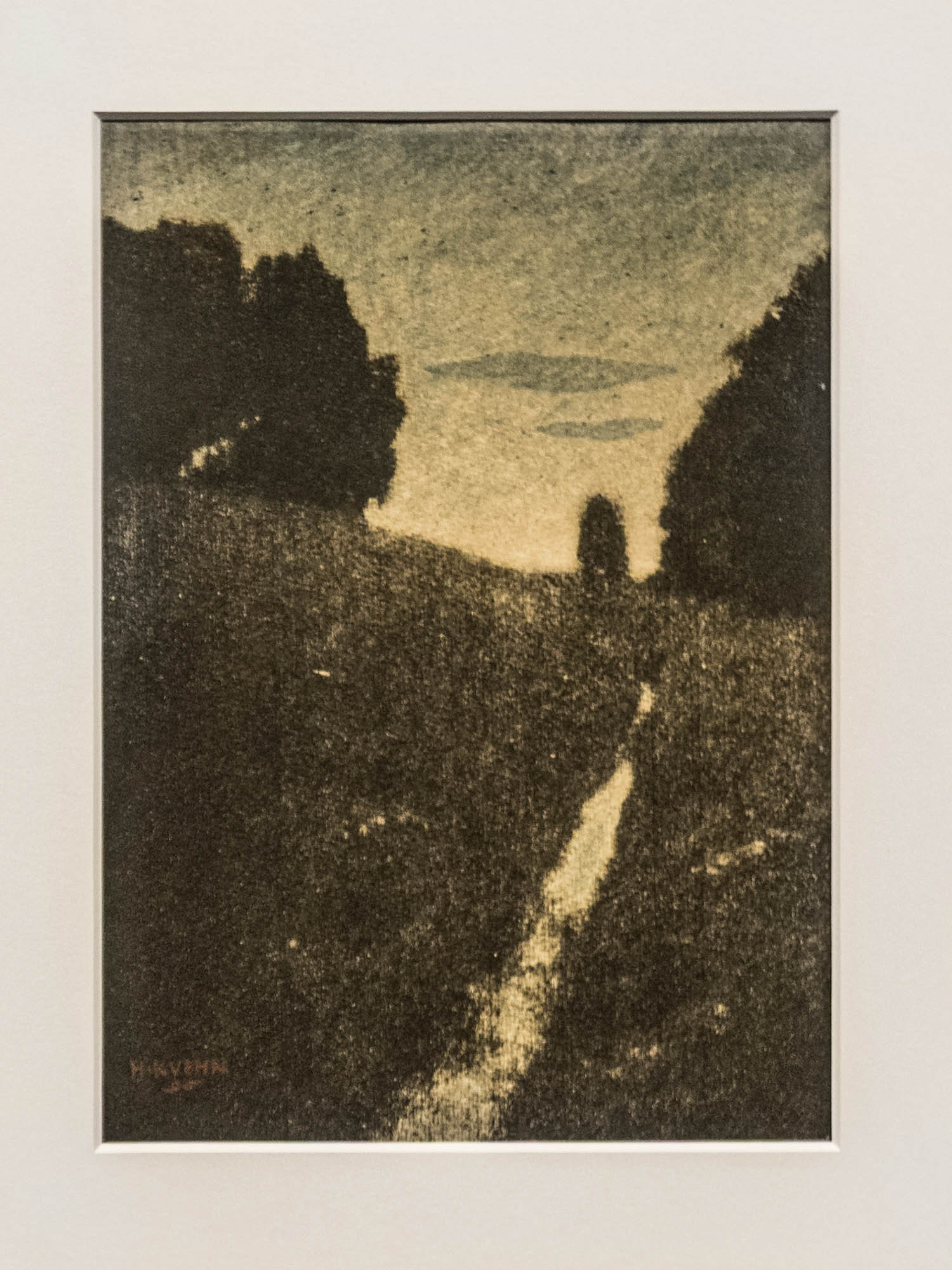
Heinrich Kühn (Austrian-German, 1866-1944) 'Twilight' 1896


Heinrich Kühn (Austrian-German, 1866-1944)
Twilight
1896
Two-tone gum print
Photo: Karin Svadlenak-Gomez


The Pictorialist Aesthetic: Photography as Art

One of my personal highlights from True Colours was the section dedicated to pictorialist photography. Emerging in the late 19th and early 20th centuries, pictorialism sought to elevate photography to the level of fine art, favouring soft focus, painterly compositions, and atmospheric effects. In fact the Albertina modern had a whole exhibition on Pictorialism in 2023, which was a great joy to me.

Heinrich Kühn’s Twilight (1896, above), produced through the autochrome process, was a standout for me, its subtle gradations of light and shadow creating an almost dreamlike serenity. Kühn was also one of the pioneers of the autochrome process, the first commercially successful colour photography method introduced by the Lumière brothers in 1907. Autochromes used a fine layer of dyed potato starch grains to filter light, creating rich and softly textured images. Kühn masterfully employed this process to enhance the painterly, impressionistic quality of his photographs, further bridging the gap between photography and fine art. Seeing these images up close, I was reminded of how photographers of the past fought for their medium to be recognised as more than mere documentation – it was, and remains, an art form in its own right.

Karin Svadlenak-Gomez. “Photography in Full Spectrum,” on the ViennaCultgram website 13th March 2025 [Online] Cited 25/03/2024


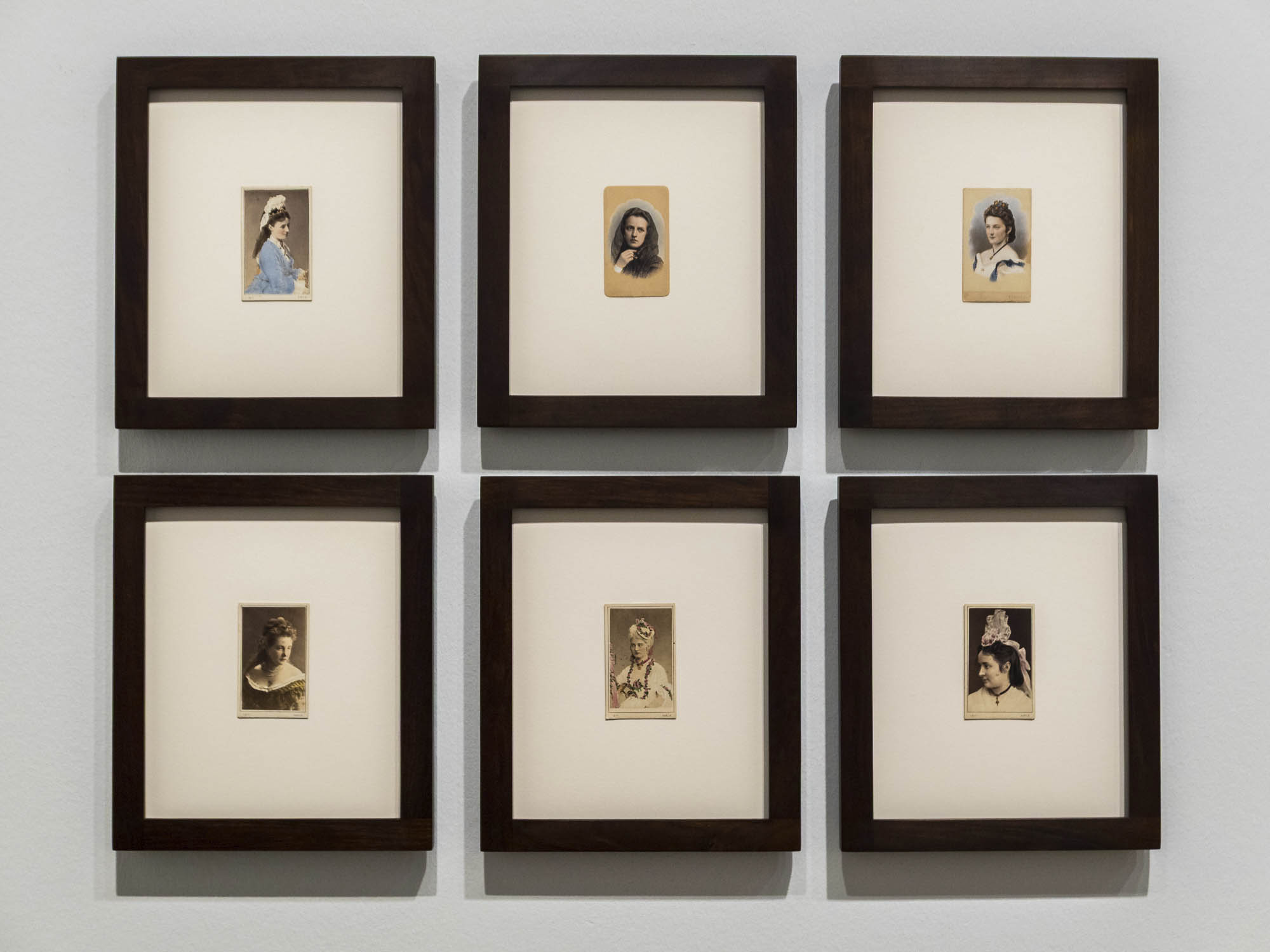
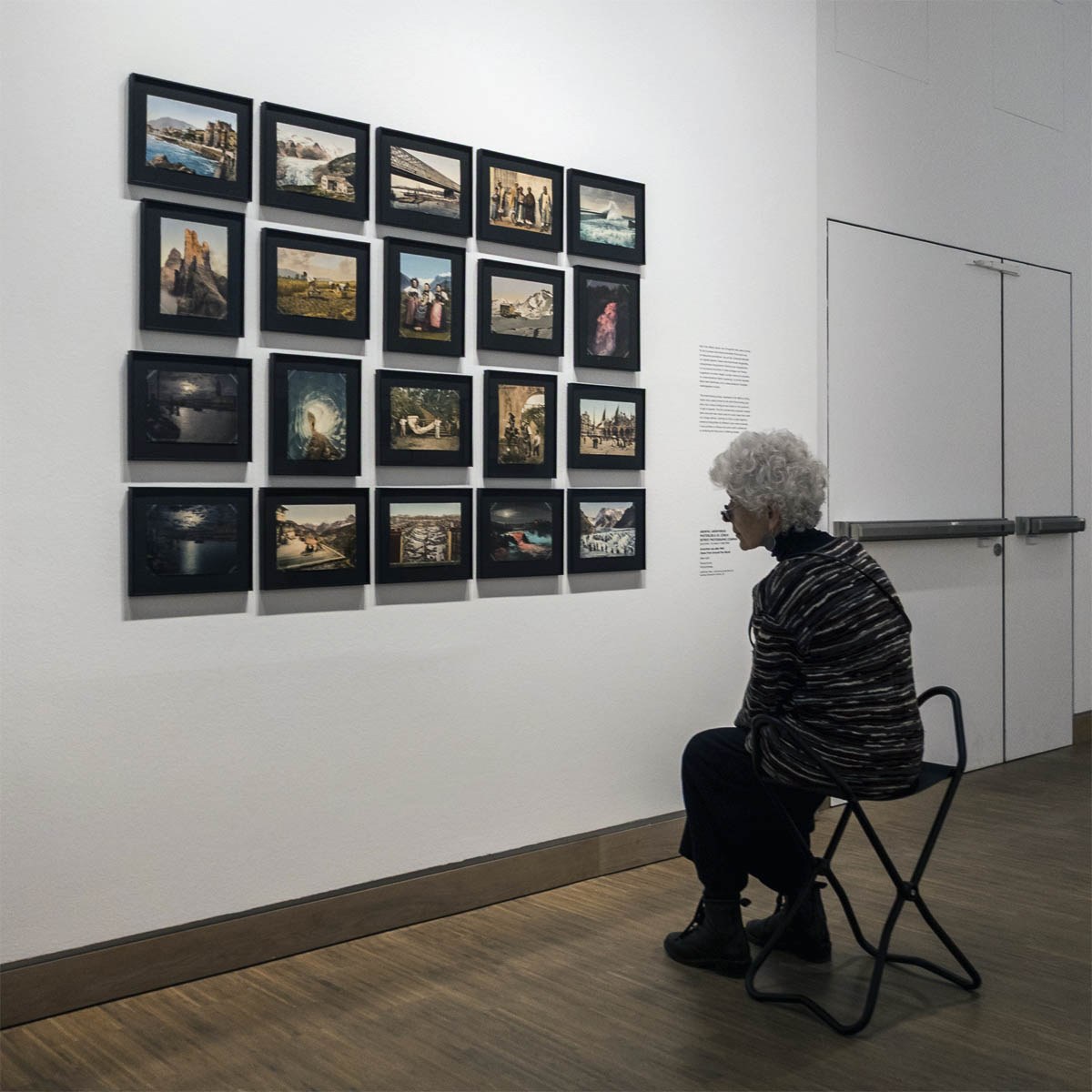
Installation view of the exhibition 'True Colors: Color in Photography from 1849 to 1955' at Albertina Modern, Vienna


Installation view of the exhibition True Colors: Color in Photography from 1849 to 1955 at Albertina Modern, Vienna
Photo: Karin Svadlenak-Gomez


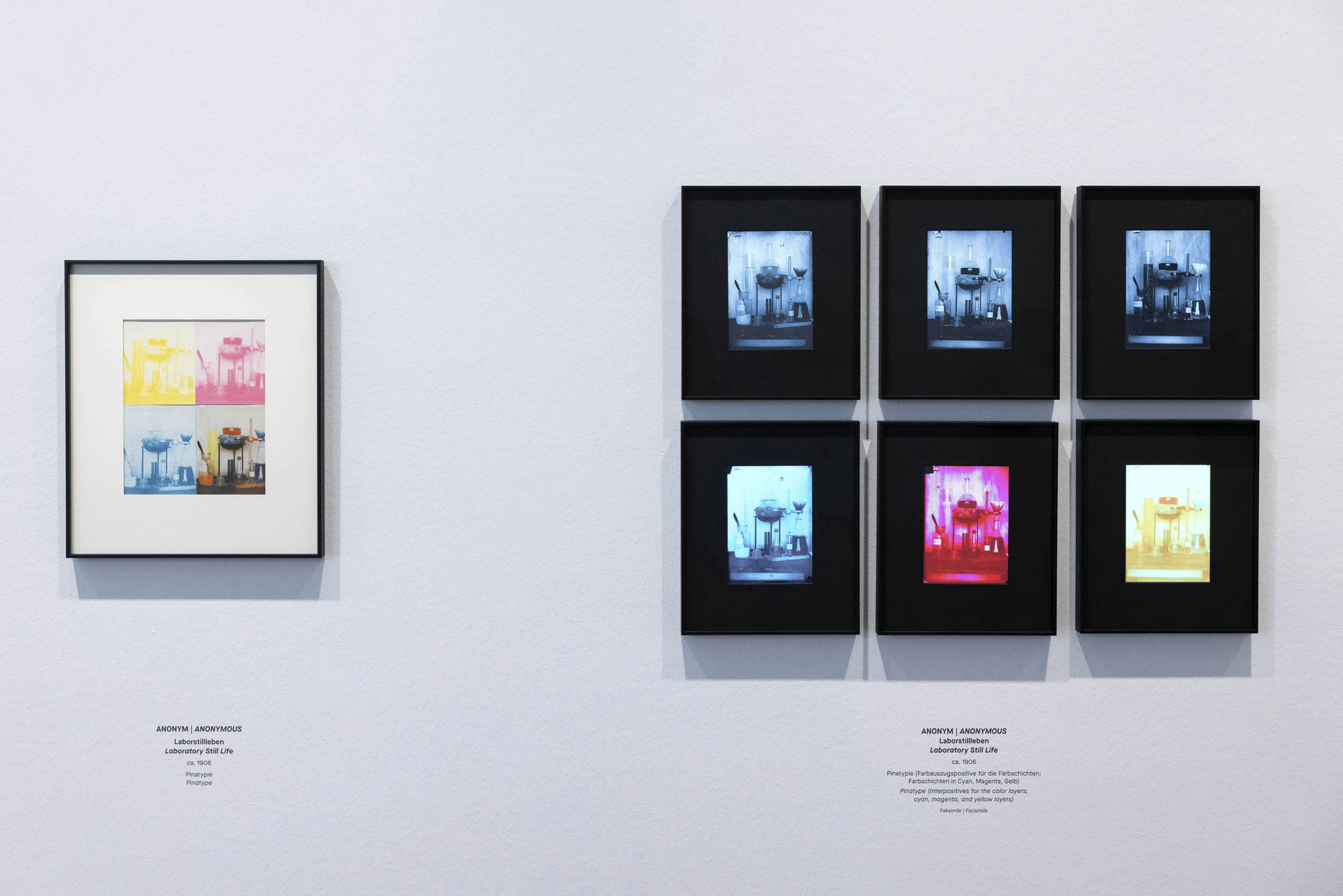
Installation view of the exhibition 'True Colors: Color in Photography from 1849 to 1955' at Albertina Modern, Vienna showing Anonymous. 'Laboratory Still Life' 1906


Installation view of the exhibition True Colors: Color in Photography from 1849 to 1955 at Albertina Modern, Vienna showing Anonymous. Laboratory Still Life 1906


Anonymous photographer.
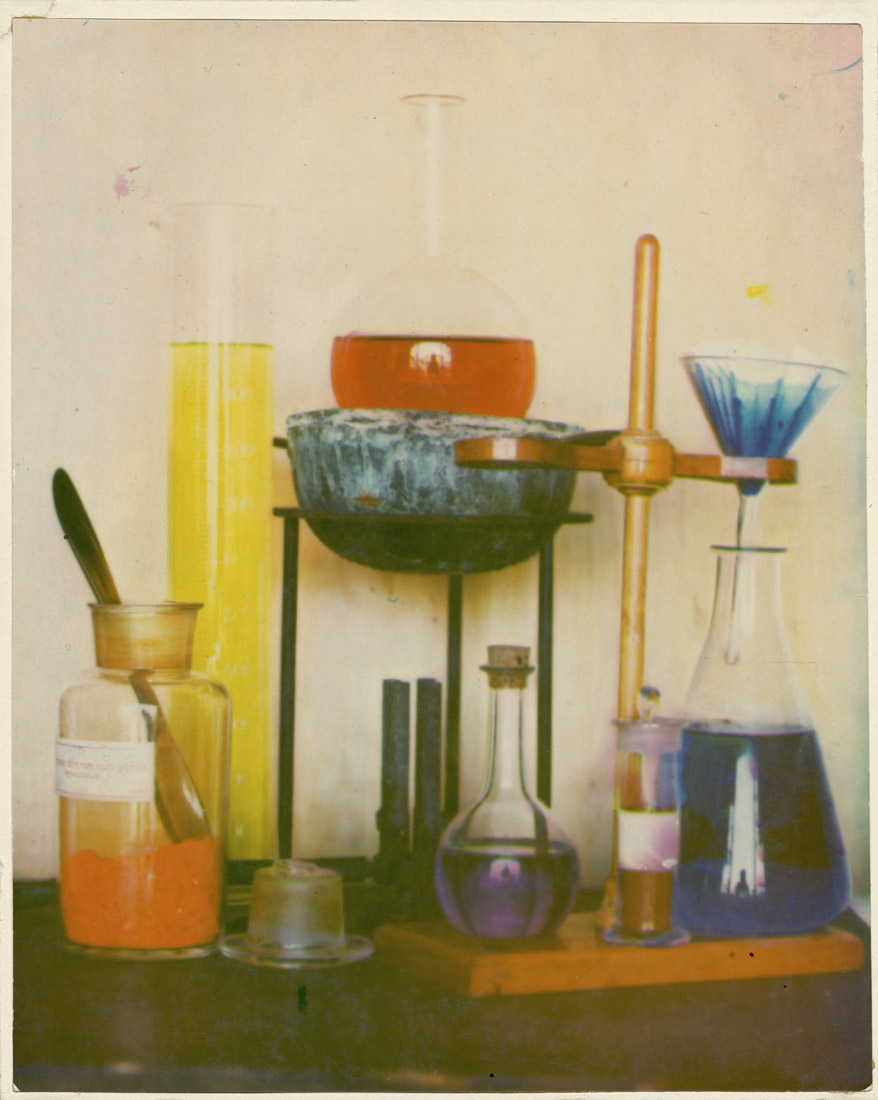
'Laboratory Still Life Around' 1906 from the exhibition 'True Colors: Color in Photography from 1849 to 1955' at Albertina Modern, Vienna, January - April, 2025

Anonymous photographer
Laboratory Still Life
Around 1906
14.2 x 11.2 cm
Pinatype
The Albertina Museum, Vienna – Permanent Loan by Höhere Graphische Bundes-Lehr- und Versuchsanstalt
© Photo: The Albertina Museum, Vienna


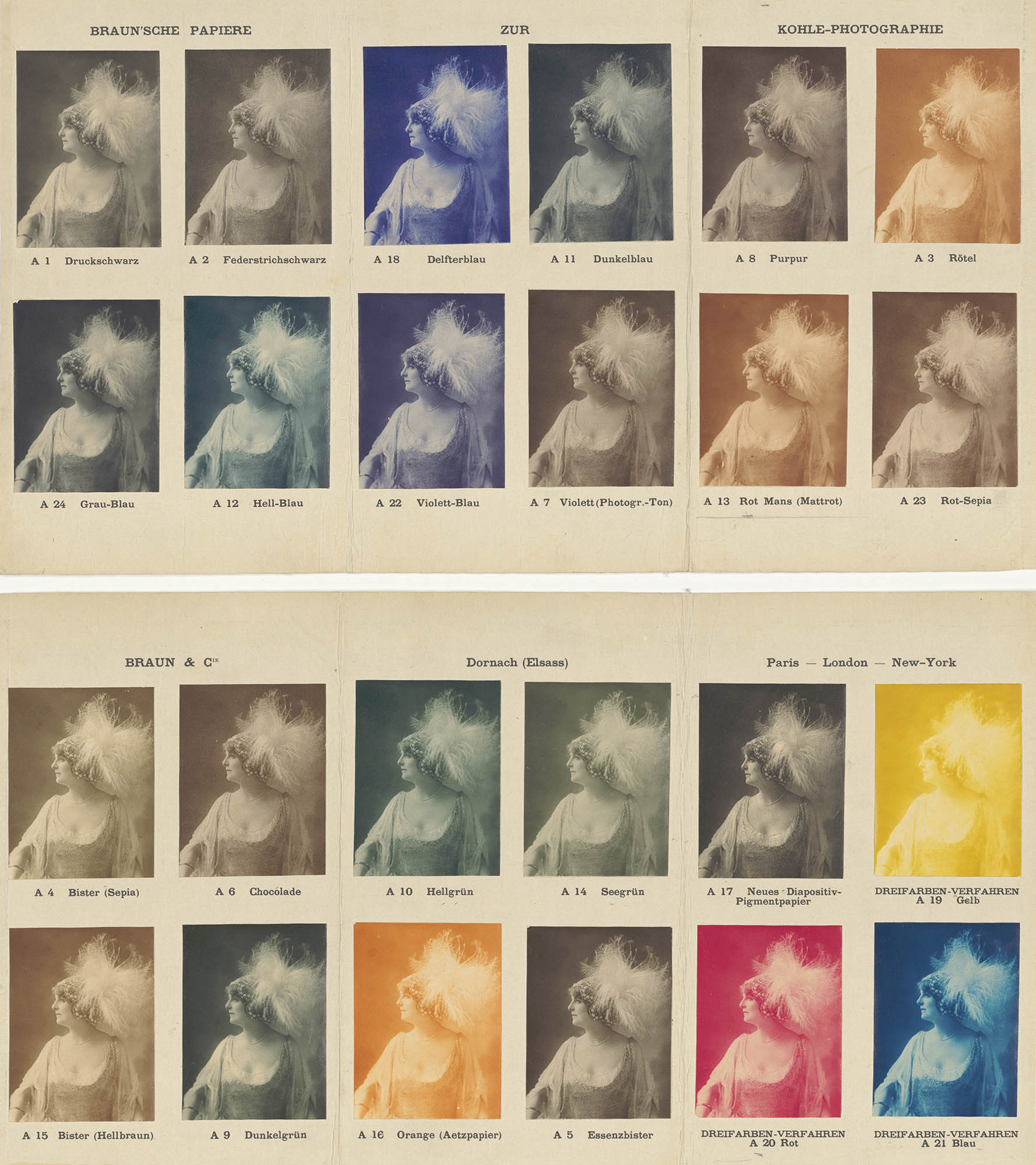
Ad. Braun et Cie. (Jean Adolphe Braun (French, 1812-1877))
'Sample board of various pigment papers from Ad. Braun et Cie.' around 1910


Ad. Braun et Cie. (Jean Adolphe Braun (French, 1812-1877))
Sample board of various pigment papers from Ad. Braun et Cie.
Around 1910
38.2 x 32.5cm
Pigment prints
The Albertina Museum, Vienna – Permanent loan by Höhere Graphische Bundes- Lehr- und Versuchsanstalt
© Photo: The Albertina Museum, Vienna


Ad. Braun et Cie. (Jean Adolphe Braun (French, 1812-1877))
'Sample board of various pigment papers from Ad. Braun et Cie.' around 1910 (detail)
Ad. Braun et Cie. (Jean Adolphe Braun (French, 1812-1877))
'Sample board of various pigment papers from Ad. Braun et Cie.' around 1910 (detail)


Ad. Braun et Cie. (Jean Adolphe Braun (French, 1812-1877))
Sample board of various pigment papers from Ad. Braun et Cie. (details)
Around 1910
38.2 x 32.5cm
Pigment prints
The Albertina Museum, Vienna – Permanent loan by Höhere Graphische Bundes- Lehr- und Versuchsanstalt
© Photo: The Albertina Museum, Vienna


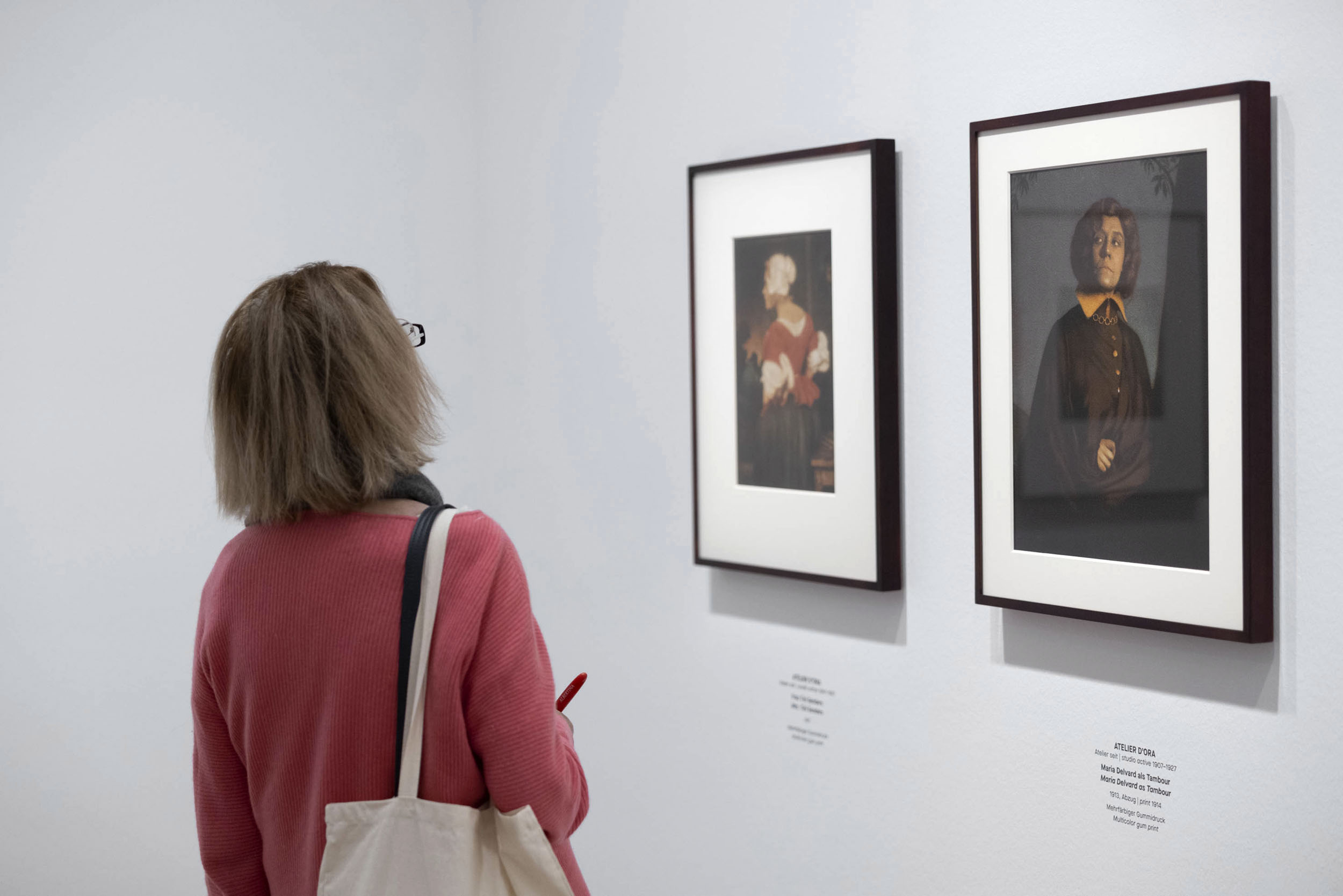
Installation view of the exhibition 'True Colors: Color in Photography from 1849 to 1955' at Albertina Modern, Vienna showing two photographs by Atelier D'Ora with at right, 'Maria Delvard as Tambour' 1913


Installation view of the exhibition True Colors: Color in Photography from 1849 to 1955 at Albertina Modern, Vienna showing two photographs by Atelier D’Ora with at right, Maria Delvard as Tambour 1913


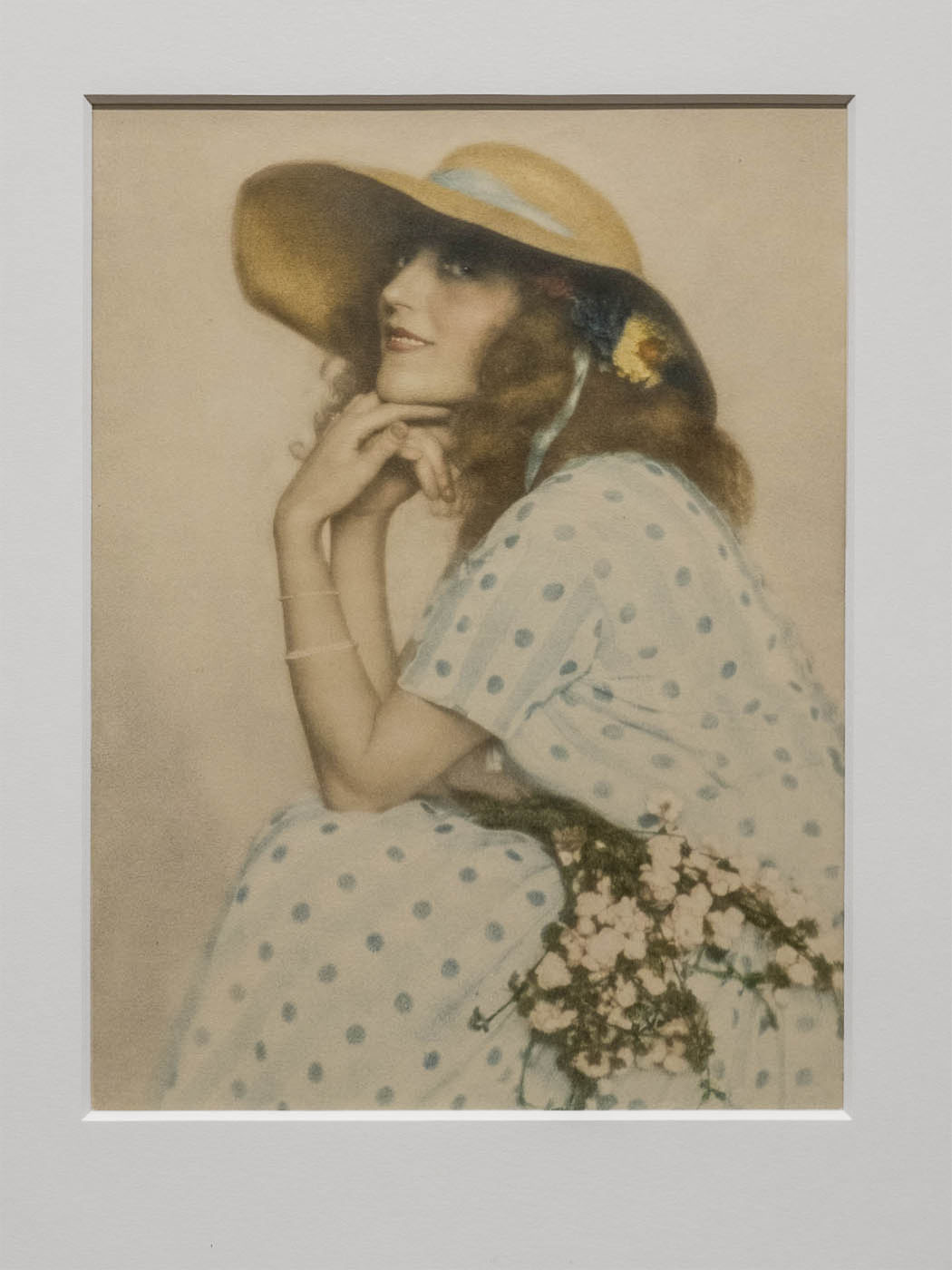
The aesthetics of fine art photography had their greatest impact on studio photograph. In the early twentieth century, such progressive studios as Atelier d’Ora (later called Atelier d’Ora Benda) adopted the reformed portrait style and its elaborate techniques. The bromoil and broccoli transfer processes finally offered an alternative to gum prints, so that works in colour could be produced in a much less complicated and inexpensive way.

Wall text from the exhibition


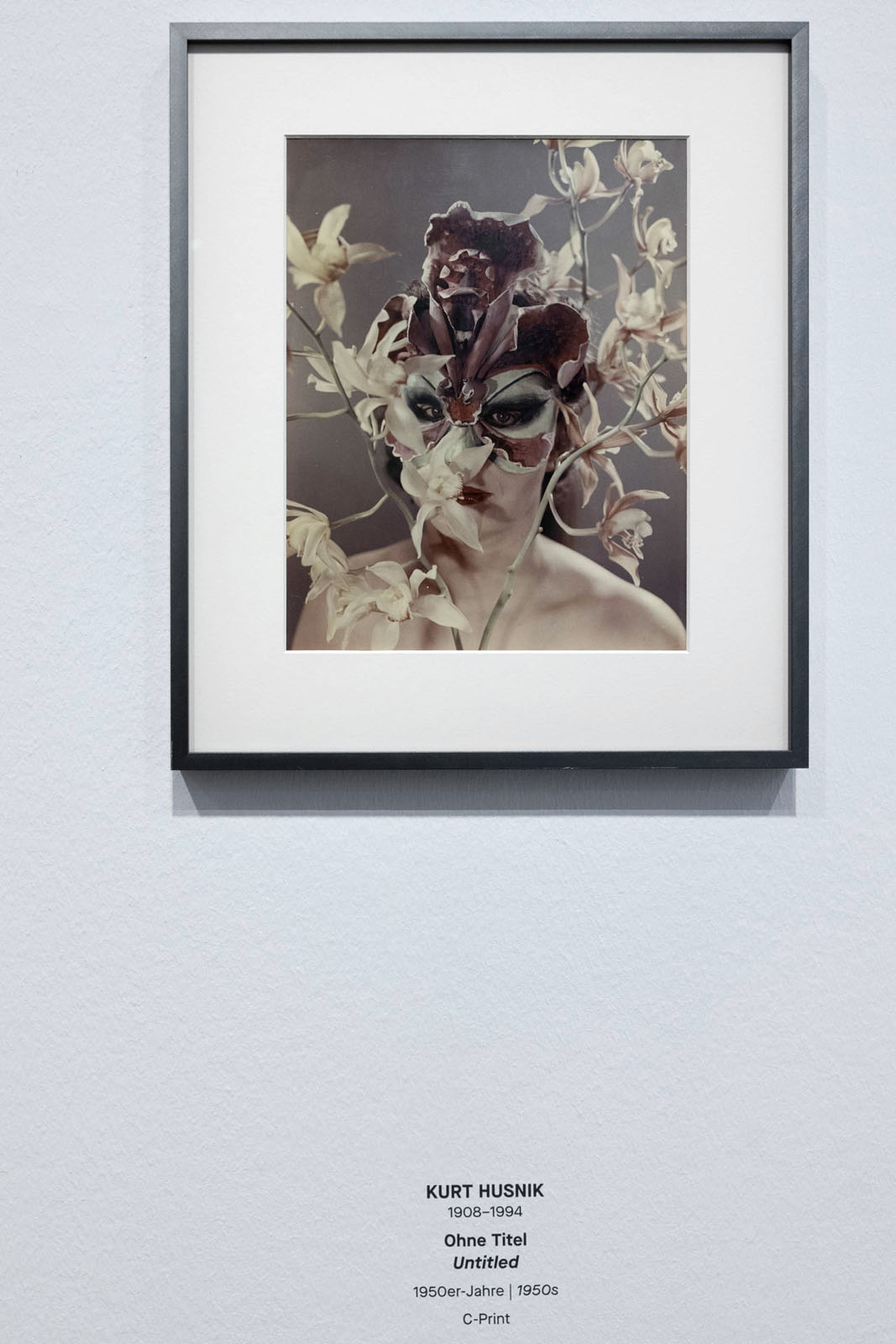
Installation view of the exhibition 'True Colors: Color in Photography from 1849 to 1955' at Albertina Modern, Vienna showing Kurt Husnik's three photographs 'Untitled' 1950s


Installation view of the exhibition True Colors: Color in Photography from 1849 to 1955 at Albertina Modern, Vienna showing Kurt Husnik’s three photographs Untitled 1950s


Installation view of the exhibition 'True Colors: Color in Photography from 1849 to 1955' at Albertina Modern, Vienna


Installation view of the exhibition True Colors: Color in Photography from 1849 to 1955 at Albertina Modern, Vienna showing Kurt Husnik’s Untitled 1950s


Installation view of the exhibition 'True Colors: Color in Photography from 1849 to 1955' at Albertina Modern, Vienna showing at left, Hans Madensky's 'Fashion Portrait - Student of the Vienna-Hetzendorf School of Fashion' 1952 (below)


Installation view of the exhibition True Colors: Color in Photography from 1849 to 1955 at Albertina Modern, Vienna showing at left, Hans Madensky’s Fashion Portrait – Student of the Vienna-Hetzendorf School of Fashion 1952 (below)


Hans Madensky (Austrian, 1902-1978) 'Fashion Portrait - Student of the Vienna-Hetzendorf School of Fashion' 1952


Hans Madensky (Austrian, 1902-1978)
Fashion portrait – Student from the Vienna Hetzendorf Fashion School
1952
27 x 22.8cm
Kodak Dye Transfer Print
The Albertina Museum, Vienna – Permanent Loan by Höhere Graphische Bundes-Lehr- und Versuchsanstalt
© Photo: The Albertina Museum, Vienna


How did colour get into photography?

The exhibition True Colors – Color in Photography from 1849 to 1955 answers this question with outstanding works from the Albertina Museum’s photo collection.

The desire for colour in photography has dominated the world of photography from the very beginning. True Colors traces the development of colour photography, from the first experimental techniques in the 19th century to generally applicable analog colour photography.

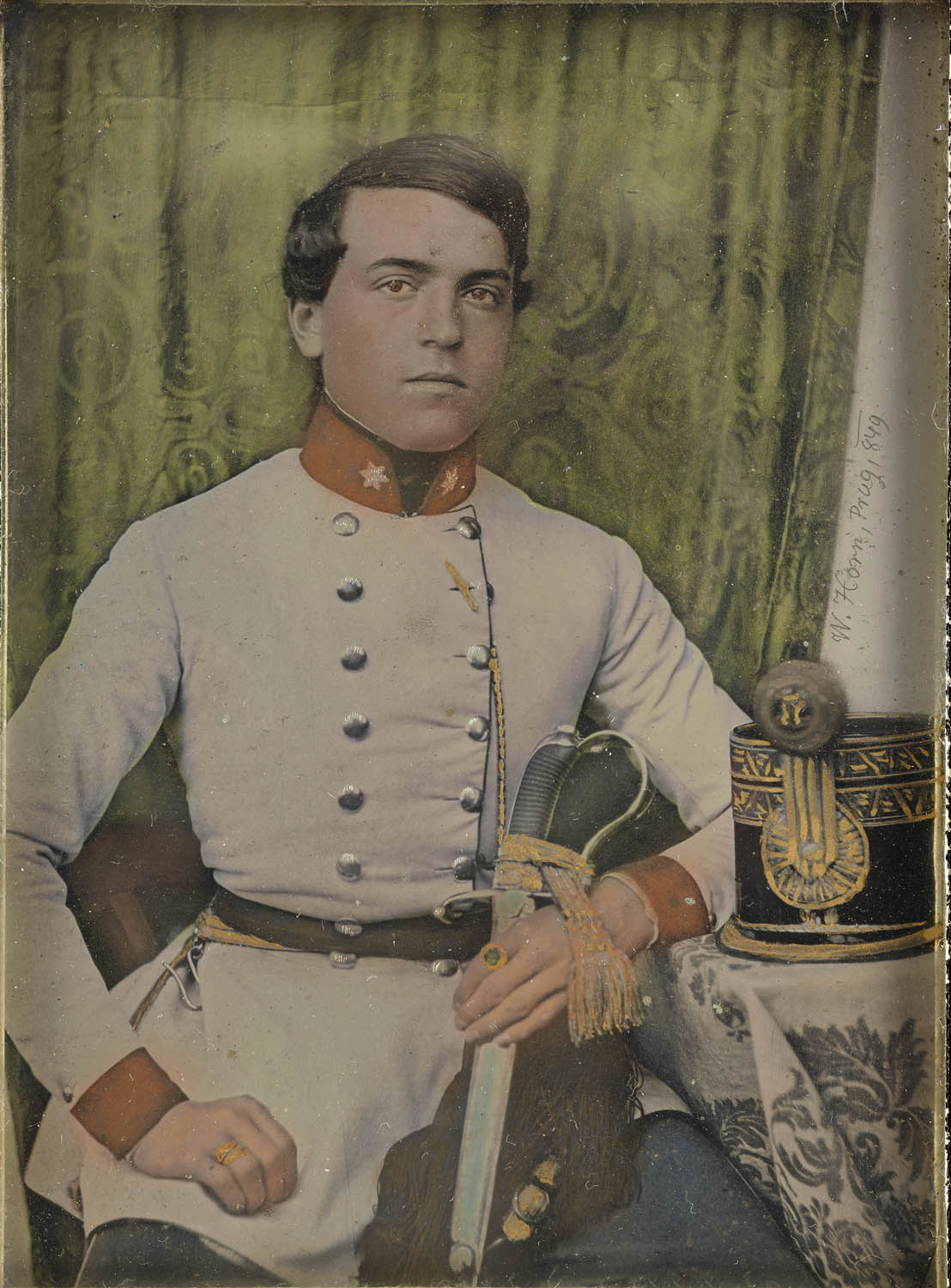
Even in the early days of photography, daguerreotypes and salt paper prints were colored by hand to create colorful images. Monochrome pigment papers, which enjoyed great popularity until the 1890s, also contributed to the broad chromatic diversity of 19th century photographs.

The first successful color process, which was reserved for an exclusive circle, was introduced in 1891. The brilliant images in the so-called interference colour process are based on the physical principle of standing waves, which also allows us to see coloured reflections in soap bubbles. The unique pieces from the Albertina Museum’s Collection represent a unique focal point.

The autochrome process, which was introduced in 1907, brought about a major change in image culture. It was also practicable for amateurs and helped its inventors, the Lumière brothers, to achieve great commercial success. However, it was mainly used as a glass slide for projection. At the same time, around 1900, fine art printing processes were developed that used color pigments to produce multicolored image solutions. They fulfilled the artistic aspirations of the Pictorialists and were commonplace in large photo studios until the 1930s. For a long time, the challenge was to obtain colored prints on paper. This was also achieved at the beginning of the 20th century with the use of various three-color processes, which were assembled in several steps.

Kodak finally achieved the breakthrough to easy-to-use and therefore mass-market colour photography in 1936 with the first 35mm colour slide films. These products revolutionised the use of colour photography in the following decades, which form the conclusion of this Albertina Museum exhibition.

True Colors provides an insight into the rich holdings of the Albertina Museum’s photography collection, the historical part of which is based on the collection of the Höhere Graphische Bundes- Lehr- und Versuchsanstalt (GLV). The exhibition demonstrates the great public interest, the constant development and the various fields of application of historical photography in colour. True Colors also explores the impact of popular colour processes on the visual culture of the early 20th century.

The exhibition is on view from 24 January until 21 April 2025 at the Albertina Modern


Wilhelm Horn (Czech, 1809-1891)
'Portrait of a Young Officer' 1849


Wilhelm Horn (Czech, 1809-1891)
Portrait of a Young Officer
1849
11 x 8.3cm
Daguerreotype, coloured
The Albertina Museum, Vienna – Permanent loan by Höhere Graphische Bundes- Lehr- und Versuchsanstalt
© Photo: The Albertina Museum, Vienna


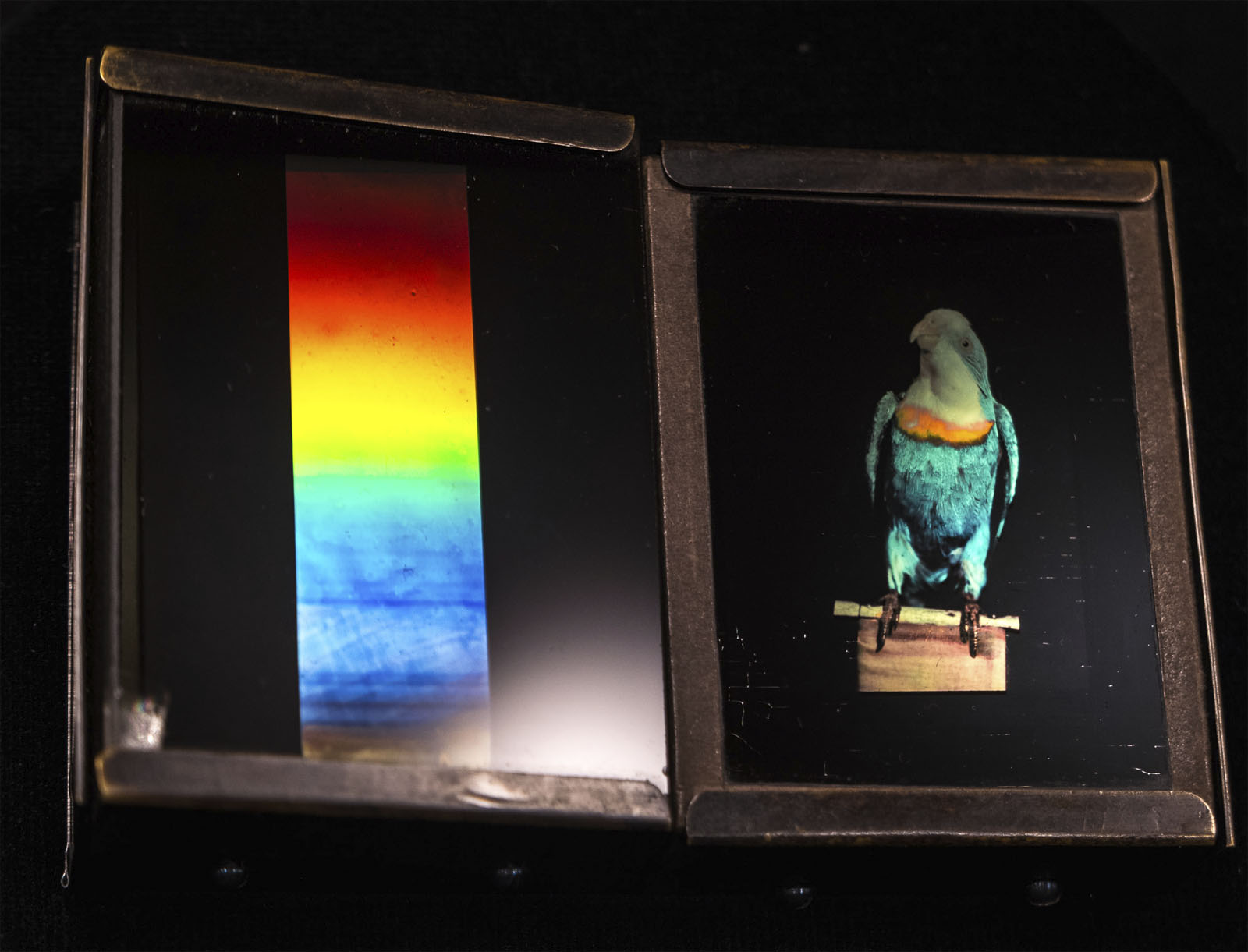
Installation view of the exhibition 'True Colors: Color in Photography from 1849 to 1955' at Albertina Modern


Installation view of the exhibition True Colors: Color in Photography from 1849 to 1955 at Albertina Modern
Photo: Karin Svadlenak-Gomez


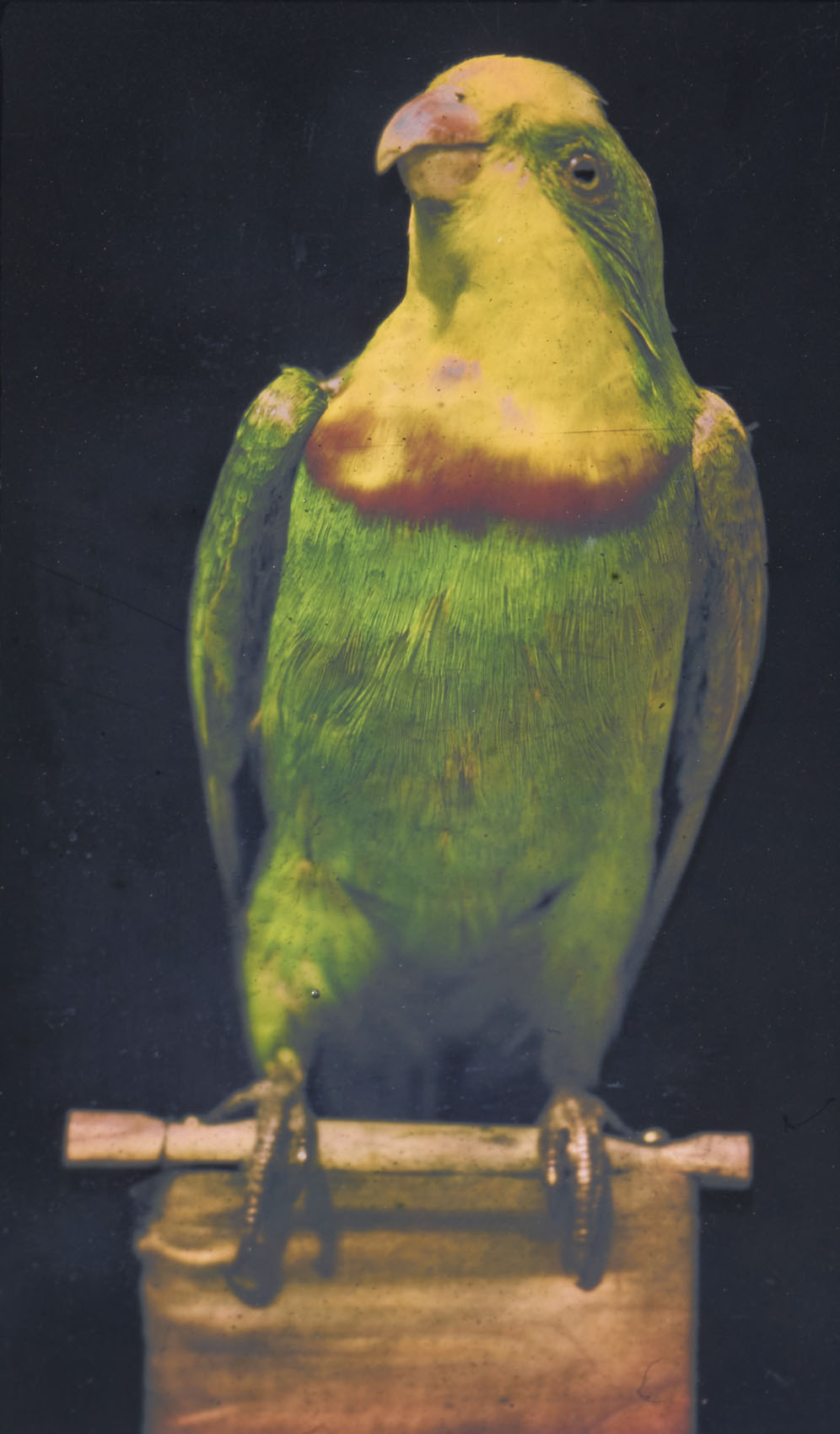
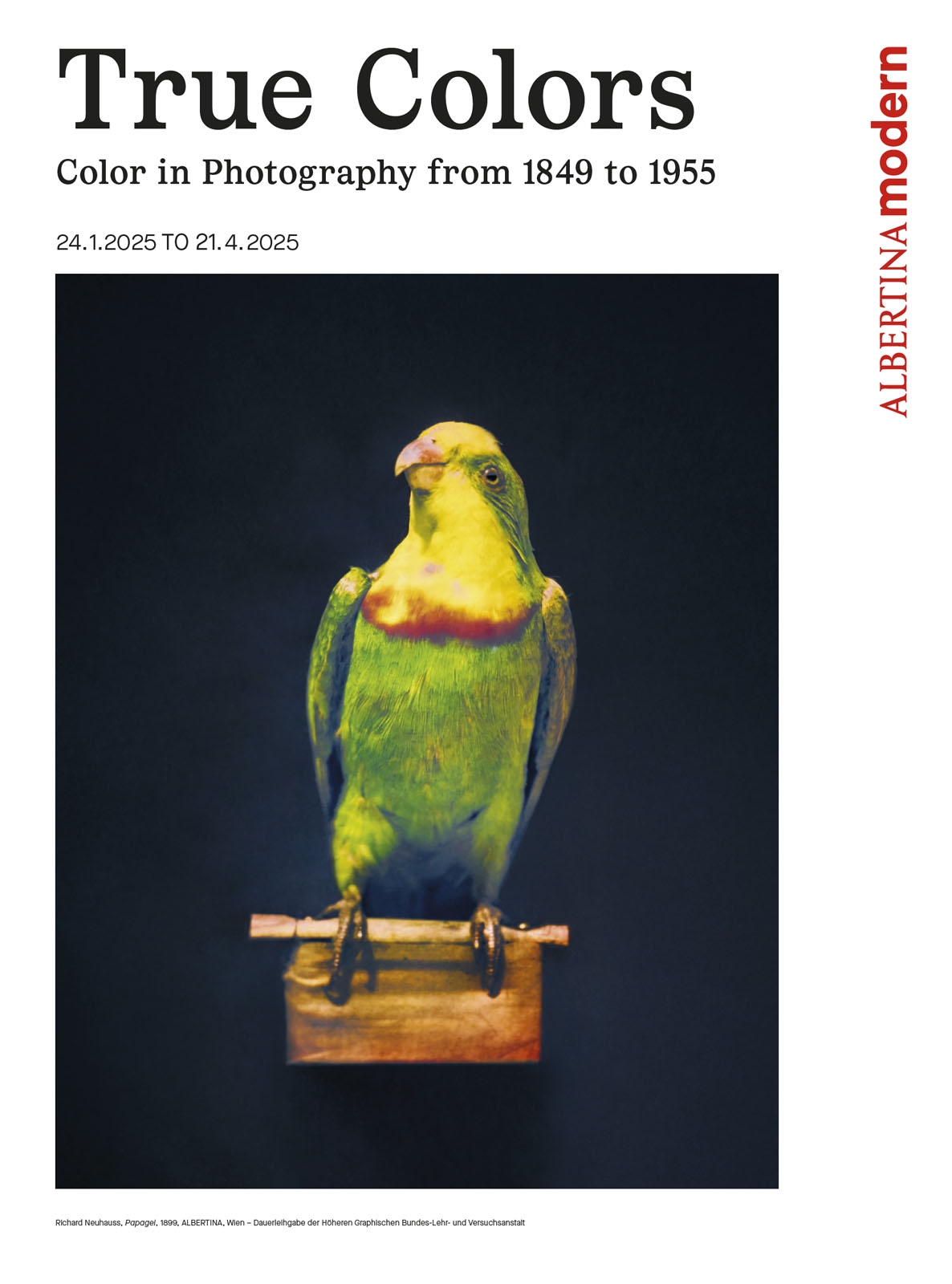
Richard Neuhauss (German, 1855-1915) 'Parrot' 1899


Richard Neuhauss (German, 1855-1915)
Parrot
1899
8.3 x 6.4cm
Colour photography
The Albertina Museum, Vienna – Permanent Loan by Höhere Graphische Bundes-Lehr- und Versuchsanstalt
© Photo: The Albertina Museum, Vienna


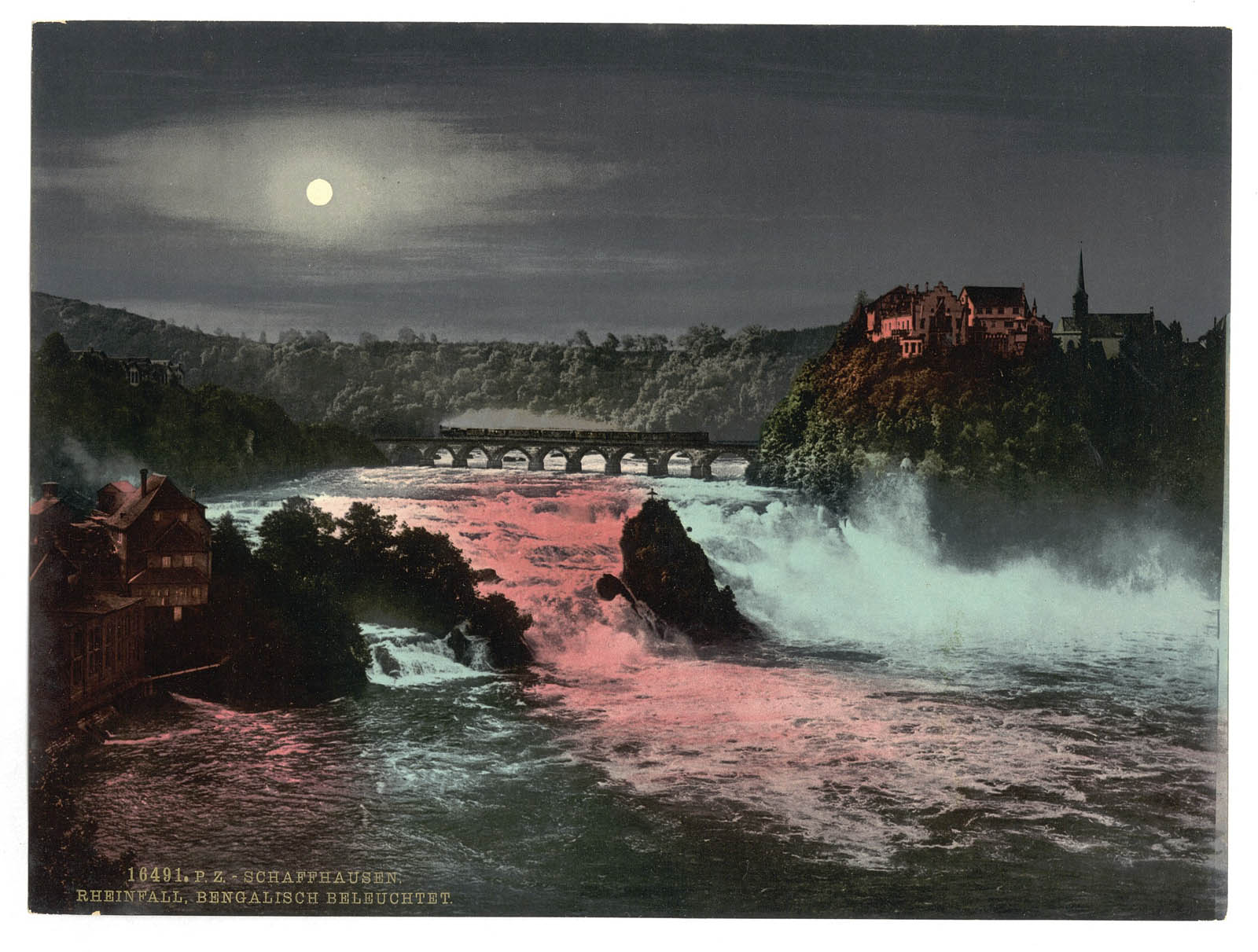
Photochrom Print Collection (photographer) 'The Falls of the Rhine, by Bengal Light, Schaffhausen, Switzerland' between 1890 and 1900


Photochrom Print Collection (photographer)
The Falls of the Rhine, by Bengal Light, Schaffhausen, Switzerland
Between 1890 and 1900
Print no. “16491”.; Forms part of: Views of Switzerland in the Photochrom print collection.; Title from the Detroit Publishing Co., Catalogue J-foreign section, Detroit, Mich.: Detroit Publishing Company, 1905.
Photomechanical print, photochrom, colour


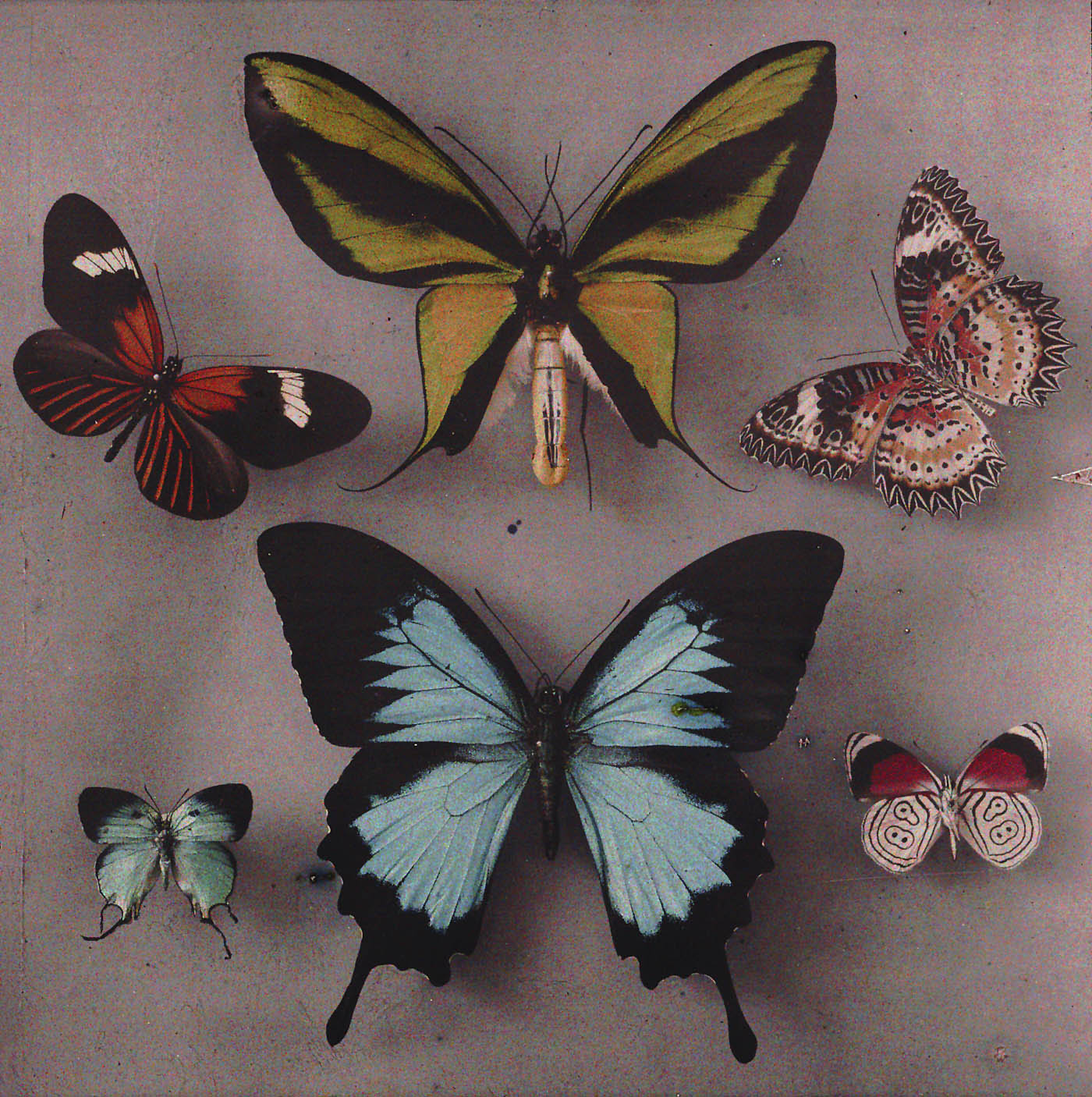
Arthur von Hübl (Austrian, 1853-1932) 'Exotic Butterflies' 1908-1914


Arthur von Hübl (Austrian, 1853-1932)
Exotic Butterflies
1908-1914
6.3 x 6.9cm
Autochrome
The Albertina Museum, Vienna – Permanent Loan by Höhere Bundes-Lehr- und Versuchsanstalt
© Photo: The Albertina Museum, Vienna


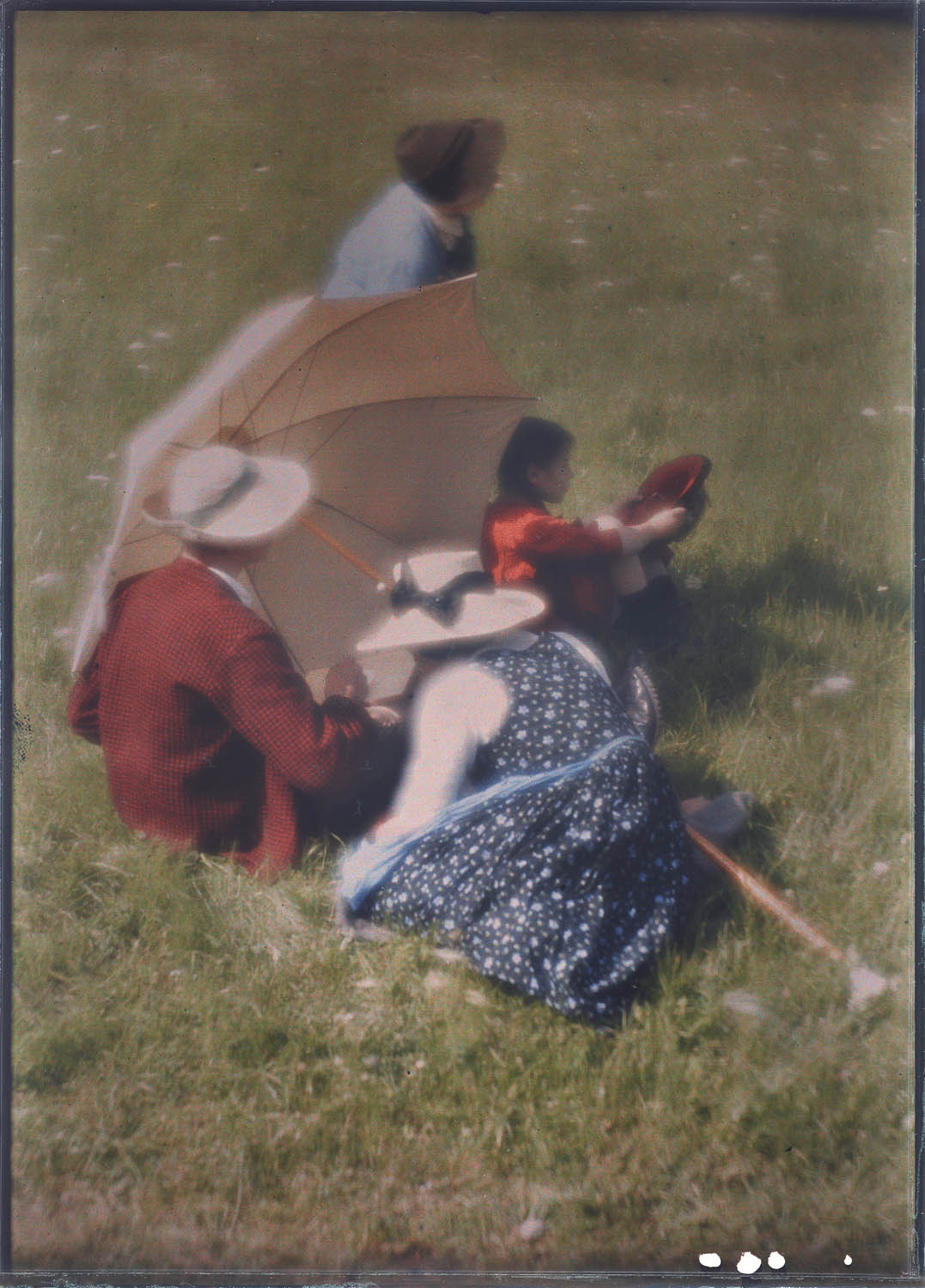
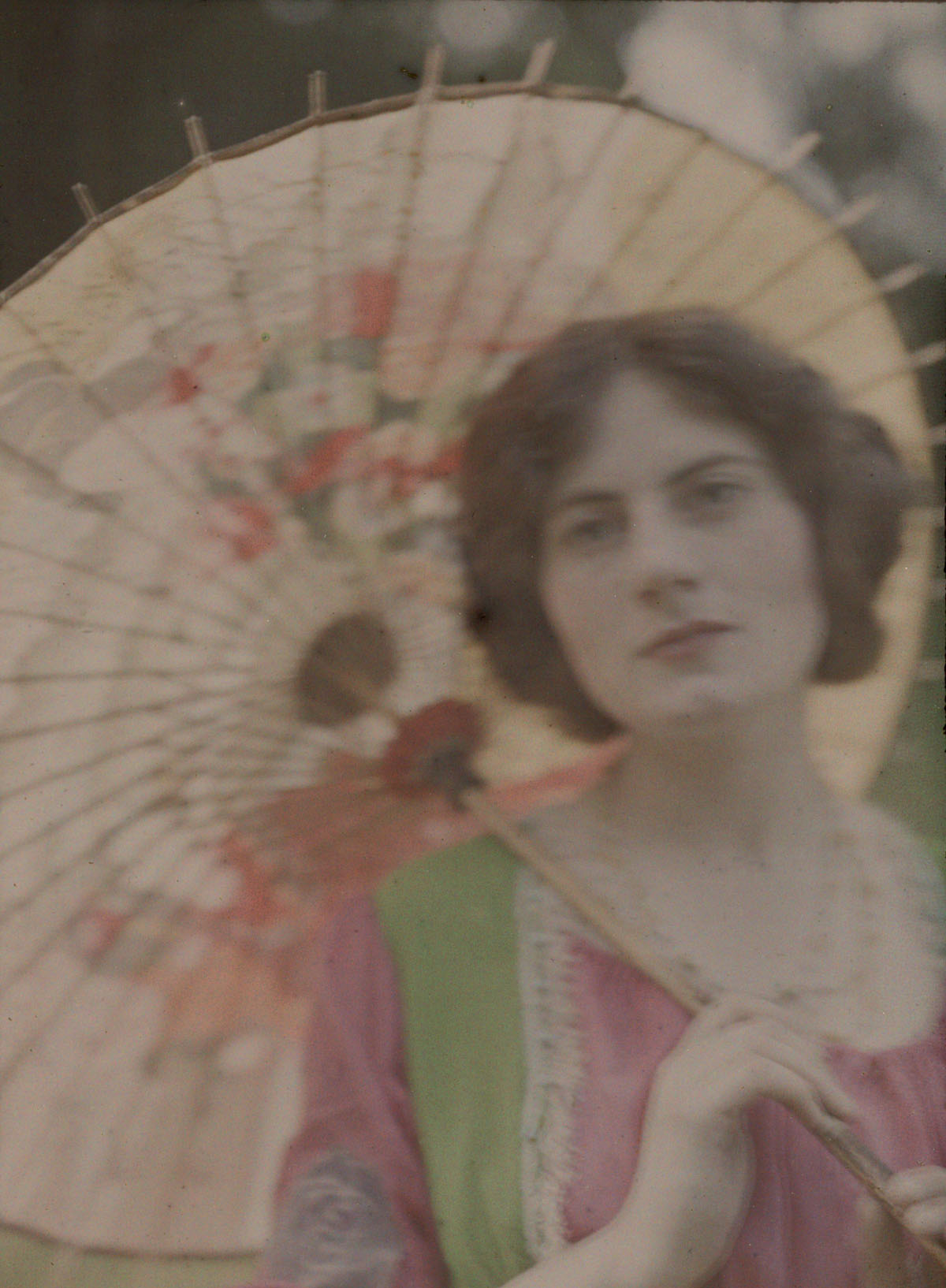
Heinrich Kühn (Austrian-German, 1866-1944) 'The Parasol' 1912


Heinrich Kühn (Austrian-German, 1866-1944)
The Parasol
1912
18 x 13cm
Autochrome
The Albertina Museum, Vienna
© Photo: The Albertina Museum, Vienna


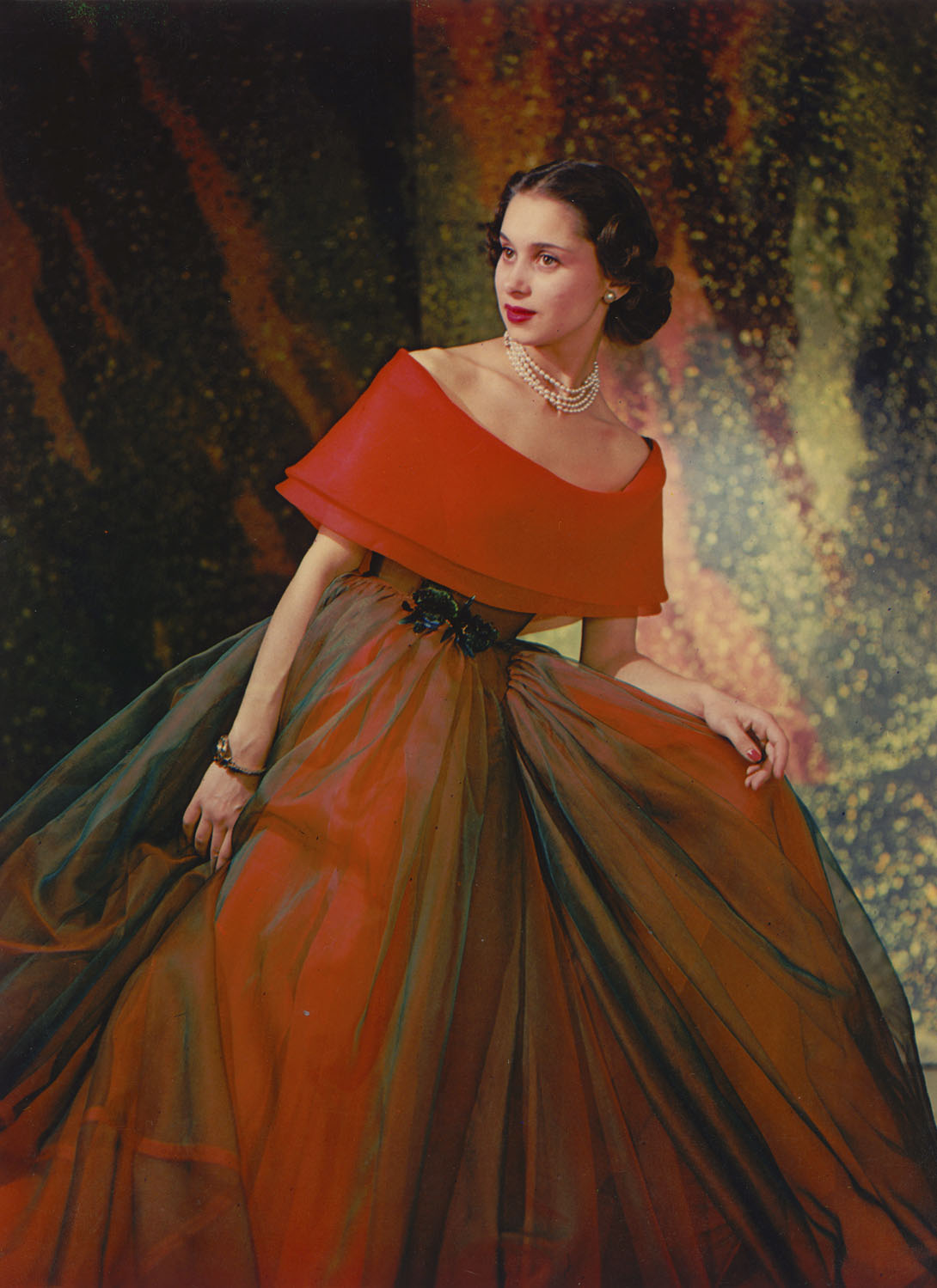
Philippe Pottier (French, 1905-1991)
'Evening Gown by Madame Grès' 1950/1954


Philippe Pottier (French, 1905-1991)
Evening Gown by Madame Grès
1950/1954
22.2 x 16.5cm
Kodak Dye Transfer Print
The Albertina Museum, Vienna – Permanent Loan by Höhere Graphische Bundes-Lehr- und Versuchsanstalt
© Photo: The Albertina Museum, Vienna


Exhibition Texts

Introduction

True Colors: Color in Photography from 1849 to 1955

Today, colour photography is omnipresent, but the knowledge about its complex genesis is not very familiar. This exhibition highlights the multifaceted developments that were initiated starting in the mid-nineteenth century to bring colour into photography. Thanks to the extensive photographic collection of the Imperial-Royal Institution of Graphic Education and Research, the Albertina possesses unique holdings of important examples from this exciting chapter of photographic history.

As early as the middle of the nineteenth century, individual scientists managed to create unique photographs in color, which, however, were not intended for everyday use. Therefore, it was common from the early days to employ colouration or toned photographic papers. In 1891, Gabriel Lippmann achieved a crucial success in direct color photography by formulating the interferential colour process, which produced brilliantly vivid images. The Lumière brothers finally accomplished the first revolution in color photography: in 1907, they brought industrially manufactured autochromes to market. It was now for the first time that photographers and amateurs could access a practicable process for the production of colour glass slides. Thanks to more elaborate three-colour processes and Pictorialist fine art printing, which were developed around the same time, it was also possible to produce photographs in colour on paper.

The desire for colour in photography, which had been evident since it had existed, continued to prevail in the twentieth century. A decisive breakthrough was achieved by the Kodak Company in the mid-1930s, when it produced the first 35 mm photographic color slide film. Starting out from the USA, more practical materials for analog color photography, which had been developed gradually, also established themselves in Europe after World War II. It was now impossible to stop the triumph of modern colour photography.

All objects on display here come from the holdings of the Albertina or are on permanent loan from the collection of the Höhere Graphische Bundes-Lehr- und Versuchsanstalt [Higher Federal Institution of Graphic Education and Research].

Chromatic Diversity

Before it was possible to produce color photographs, photographers made use of a number of methods to bring color into their images. Even in the early days, daguerreotypes and salted paper prints were coloured by hand. While daguerreotypes were usually colored only partially, salted paper prints were sometimes heavily painted over. The so-called pigment papers, which enjoyed great popularity from the 1850s onward, enabled monochrome prints in various colours. Industrial manufacturers offered a wide range of nuances that could be variably used depending on the motif. Another way of lending prints uniform colour effects were toning baths. It was thus variable methods that were employed to produce photographs displaying a rich chromatic diversity.

A vital contribution to photography in colour was the introduction of the so called orthochromatic negative plates. In 1873, Hermann Wilhelm Vogel discovered the sensitisation of the photographic emulsion, so that the plates truthfully rendered the brightness values of blue, orange, yellow, and green. Earlier, the grey values of the blue areas had appeared overly bright, while the other colours had often seemed too dark. With the development of so-called panchromatic negative material it became possible from 1902 on to accurately record the entire visible spectral range according to tonal values. This progress was crucial for colour photography, as an incorrect recording of the tonal values during a shot could result in a distorted colour impression in the final product.

A Solitaire – the Interferential Colour Process

The interferential colour process, with which Gabriel Lippmann went public in Paris in 1891, is considered a first milestone in direct color photography. The method ensured permanently stable, brilliantly vivid colour images. It is based on the interference of light waves caused during exposure by the reflections of incident light rays off a reflective layer of mercury behind the negative. In the photographic emulsion, the finest layers are created alongside the standing waves, in which accumulations of silver are deposited. The spacing between the
layers corresponds to the wavelength of the recorded colour, so that when the image is viewed at the correct angle, the individual parts reflect their original colour. Standing waves are the phenomenon that also causes the colour effects on soap bubbles.

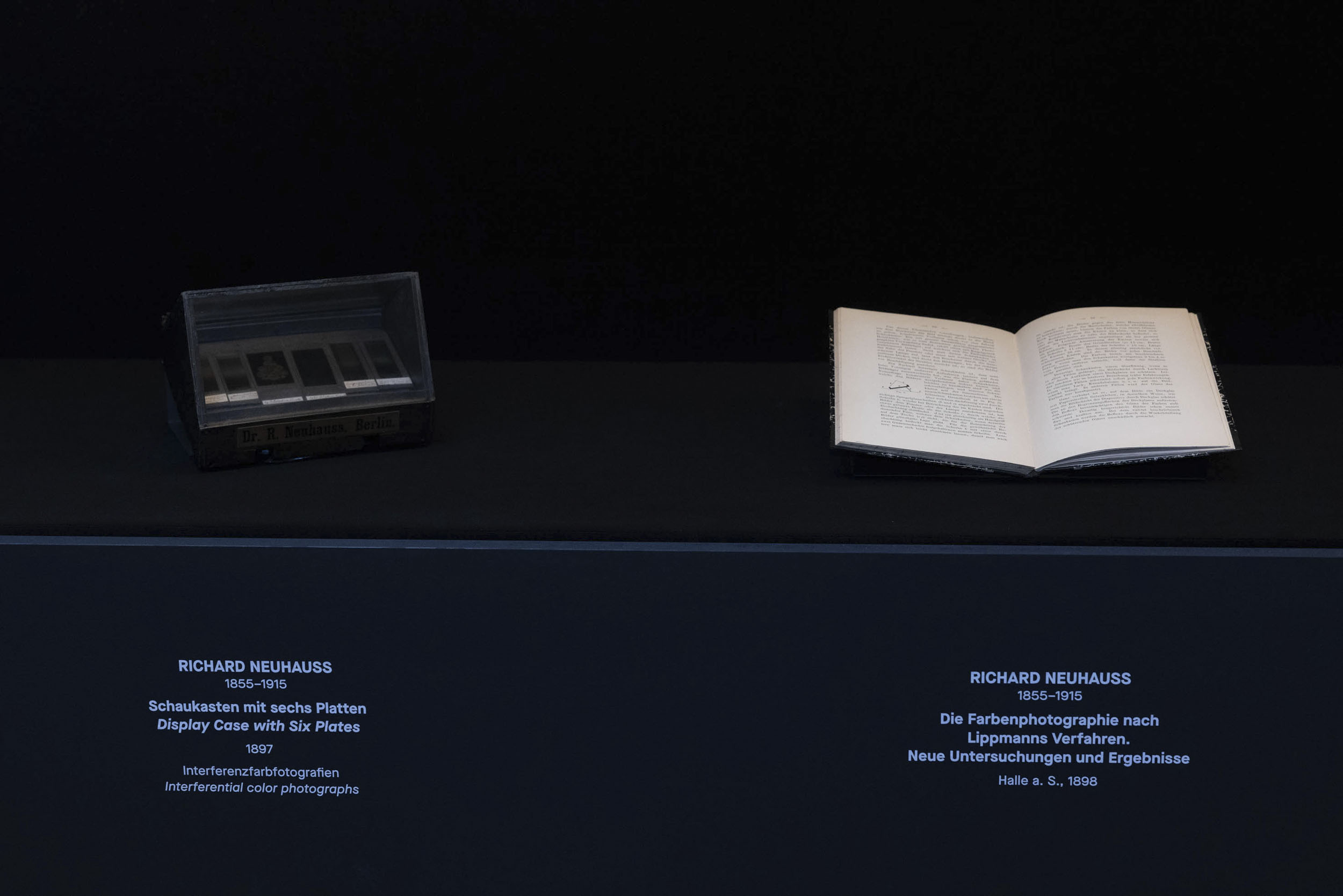
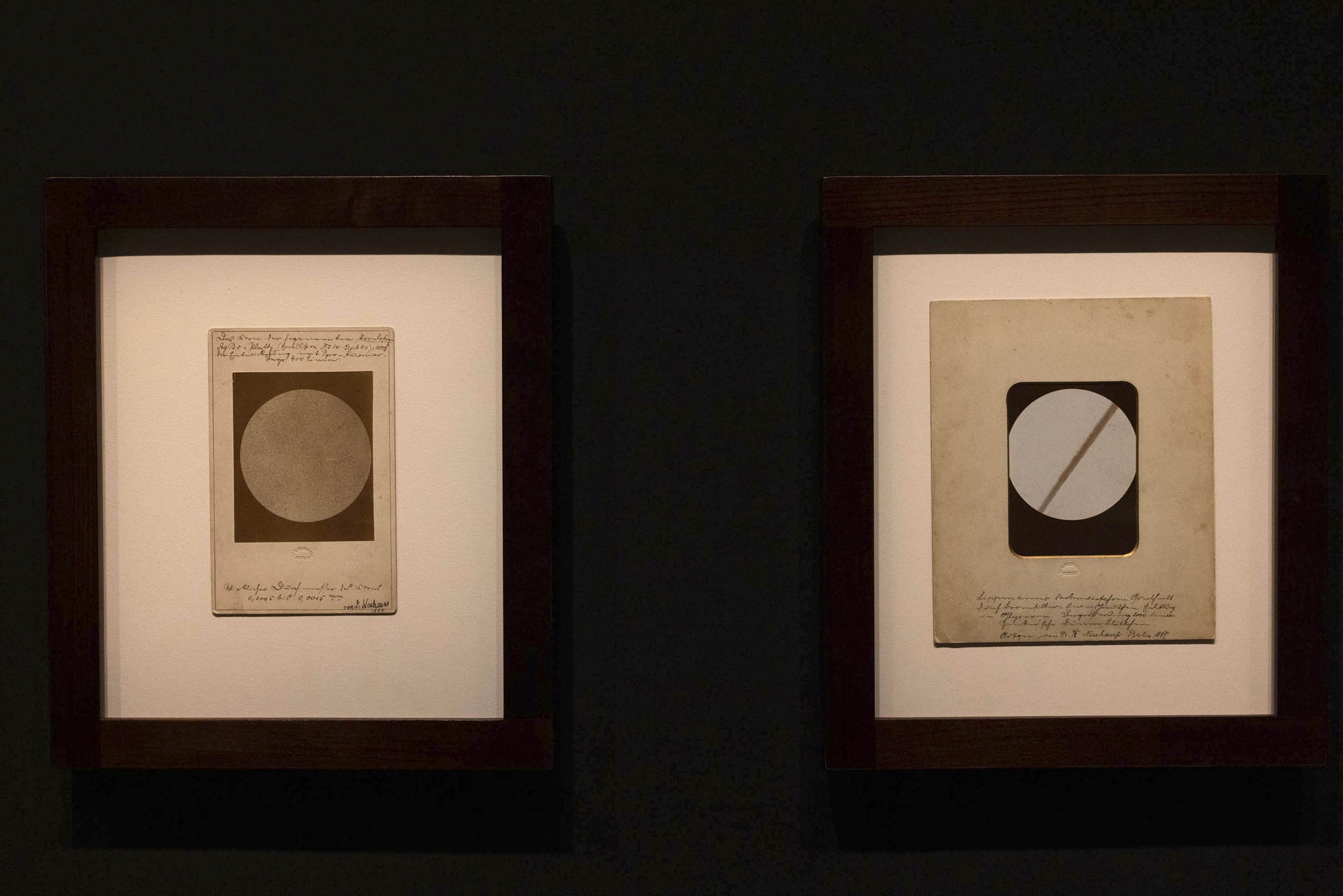
The process, which had its pitfalls, was enthusiastically received by specialists. The Lumière brothers, who as producers of photographic plates were highly interested in colour photography, collaborated with Lippmann to improve emulsions. The Berlin-based scientist Richard Neuhauss also dealt intensively with this method, based on the research conducted by the Viennese photochemist Eduard Valenta. Due to its chromatic purity, the spectrum offered itself as an ideal motif for images. Neuhauss’s plates fascinate us not only because of their luminous colours, but mainly for their wide range of motifs, which was facilitated by the reduction of exposure times.

Photomechanical Color Printing Processes

Since the development of chromolithography in 1837, color reproductions had been increasingly used for luxury volumes. In combination with photography, the printing plates could either be exposed directly, or the photographic images were transferred to the plates by means of transfer printing. This and related procedures led to an increase of elaborately produced publications of scholarly character. For the work Le Trésor artistique de la France, which contained high-quality colour reproductions of art objects held by the Louvre, the French photographer Léon Vidal developed a complex process referred to as photochromie. Photographic prints constituted the base layer onto which he printed several tinted lithographic plates. Through the additional use of metallic colours or papers and a layer of varnish, Vidal achieved three-dimensional effects.

Another important step was the introduction of the collotype process, which, from 1868 onward, allowed printing black-and-white photographs in halftones. Institutions like the Imperial-Royal Austrian Trade Museum in Vienna published such luxurious scholarly publications as the illustrated volume Orientalische Teppiche [Oriental Rugs], which appeared in 1892. For this work, black-and-white collotypes and the chromolithographic plates were partly each executed across the entire surface and partly combined with each other in order to document the knotting technique and the colouration of the objects equally accurately. A colour sample based on the original rug was first painted on the collotype and then transferred by lithography. Up to thirteen individually tinted printing plates were employed in the process. Both publications stand out for the effort to imitate the object character in the coloured reproduction.

Commercial Successes – the Autochrome and Other Color Screen Processes

In 1893, in search of a viable color process, the industrialists Auguste and Louis Lumière developed the ALL Chroma, a transparency made up of three coloured layers. Since its production and use involved a high input of costs and time, the method did not prevail, despite the vivid colors it produced. Following further research, the Lumière brothers eventually achieved a breakthrough with the autochrome in 1907, which was to revolutionise colour photography for the first time. The autochrome is also a positive transparency, yet based on the principle of additive color synthesis. A glass plate functioning as carrier material is covered with a photosensitive layer on one side. A mixture of red, green, and blue starch granules is applied on top of it, forming an irregular pattern. The image is created after exposure and negative and positive development, as the granules fuse together to form coloured areas when viewed in transmitted light. Its vibrant colors and uncomplicated handling earned the inventors of this method great commercial success. The autochrome was no longer exclusively accessible to specialists. The process was not only employed for scientific images, but also and mainly in amateur photography.

In addition to the autochrome, there were numerous products relying on the principle of additive color synthesis, such as the Joly process, which had already been developed in England ten years earlier and which was based on a grid of vertical lines. By 1910, further colour screen processes had made it onto the market, such as Omnicolore or the Agfacolor plate. But the autochrome remained the most widely used colour process until the early 1930s because of its unsurpassed chromatic brilliance.

Colour by “Indirect” Means – Three-Colour Processes

Three-colour photographic printing methods on paper are based on the principle of subtractive colour mixing. The processes, their implementation differing in detail, followed a multistep procedure. At first, three subsequent black-and-white shots were taken behind red, green, and blue filters. The so called colour separation negatives were then inverted into positives. From the three positives, three matrices – in the complementary colours cyan,
magenta, and yellow – were then produced. The colour image was finally composed of these three colours.

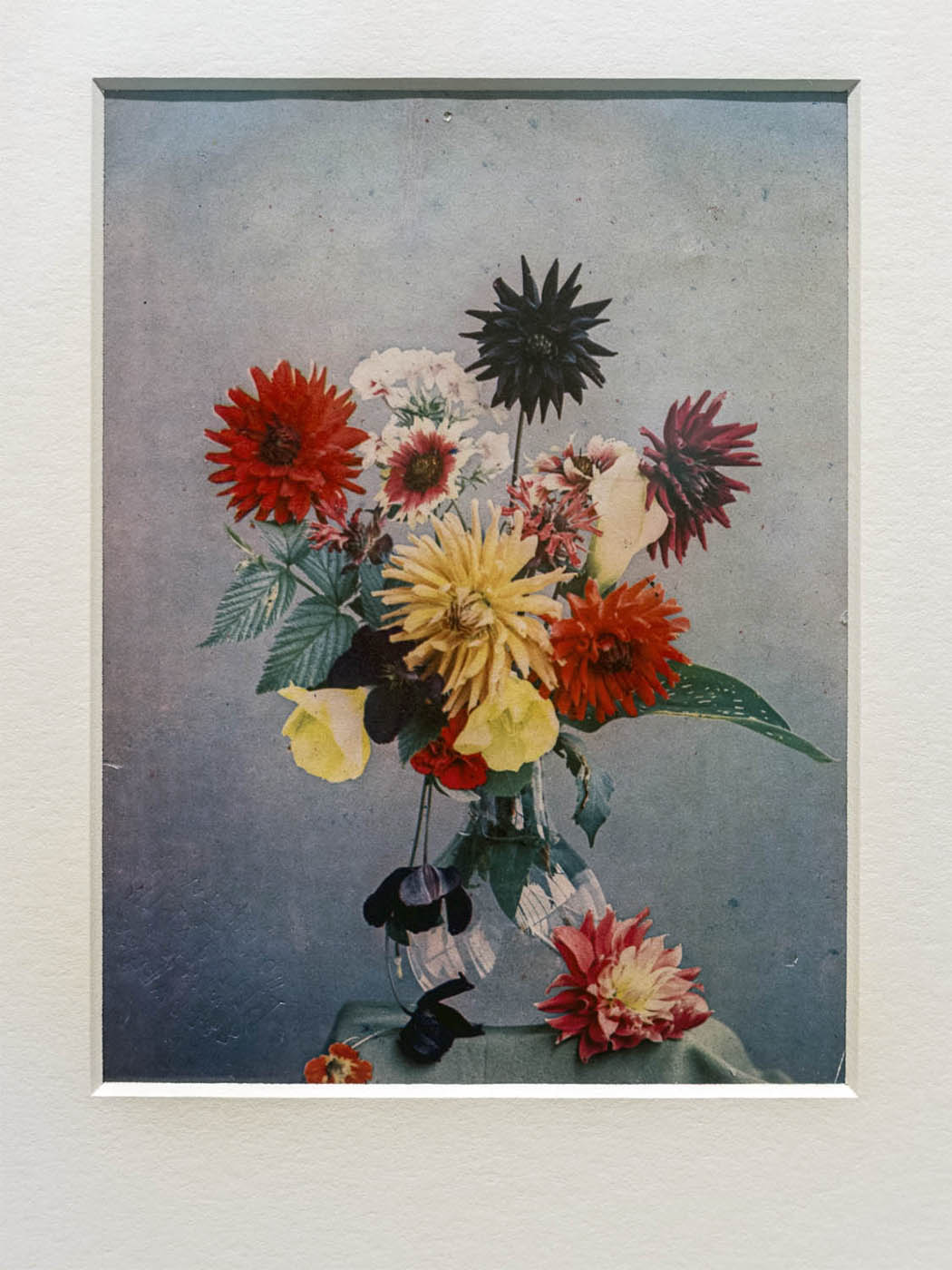
For the pinatype, three matrices were transferred onto a sheet of prepared paper. What mattered for an accomplished picture was not only proper colour adjustment, but also an absolutely precise alignment of the images. The still life of various laboratory utensils demonstrates the individual steps leading to a colourful picture. The so-called interpositives provide the basis for the coloured matrices, which, printed one upon the other, provide the final version of the picture. Apart from still lifes, photographers also employed this technique, which was developed to market maturity by Ernst König in 1905, for portraits. In these photographs, they showcased their creative skills in handling colour.

Pictorialist Endeavors – Fine Art Printing Processes

Artistic photography around 1900 was propagated by wealthy amateurs who wished to elevate photography to the level of fine art. Their ambition was to be able to manipulate the photographic print by hand, as the mechanical aspect of photography was criticised as being inartistic. The gum bichromate print, a so-called fine art printing process, allowed them to control the work as much as possible. A mixture of pigments, gum arabic, and photosensitive salts was applied to coarse paper and then exposed. After washing out the unexposed areas, the image became visible. For multicolor works, this process could be repeated as often as desired, each time using a different pigment. This advancement of the gum bichromate printing technique toward multicolour printing was first implemented by members of the Camera Club in Vienna, an association of amateur photographers. The possibility of creating such colourful images that could be used as decorative works of art on the wall and sometimes reach large dimensions, was particularly enthusiastically received in German-speaking countries.

Paths to Modern Colour Photography

The consequential breakthrough to mass-market color photography was achieved in the mid-1930s, when the companies Eastman Kodak (USA) and, shortly thereafter, Agfa (Germany) put so-called modern multilayer films with dye couplers on the market. By 1936, the first 35mm colour slide films and, by 1942, the first colour films and corresponding photographic papers for the negative-positive process were available, the latter of which revolutionised colour photography a second time. Yet the outbreak of World War II initially delayed the spread of these innovations in Europe. But from the 1950s onward, the triumph of modern analog colour photography could not longer be stopped.

However, contemporary high-quality copying and printing processes were still extremely expensive and complicated. The Duxochrome and dye-transfer processes, for example, were valued not only for the brilliance and stability of their colours, but also because they could be manipulated during the production process. But due to the high cost of production, they were mainly used for commercial purposes. Product and fashion photography accommodated the needs of advertising and the press. In Vienna, the photographers Arthur Benda and Hans Madensky were very successful in these fields.

Text from the Albertina Museum


Installation view of the exhibition 'True Colors: Color in Photography from 1849 to 1955' at Albertina Modern
Installation view of the exhibition 'True Colors: Color in Photography from 1849 to 1955' at Albertina Modern, Vienna


Installation views of the exhibition True Colors: Color in Photography from 1849 to 1955 at Albertina Modern
Photos: Karin Svadlenak-Gomez


Ernst König (German, 1869-1924) 'Still-life with flowers' 1905


Ernst König (German, 1869-1924)
Still-life with flowers
1905
Pinatype
Photo: Karin Svadlenak-Gomez


Atelier D'Ora (est. 1907) 'Mrs. Oergan' 1924


Atelier D’Ora (est. 1907)
Mrs. Oergan
1924
Bromoil transfer print
Photo: Karin Svadlenak-Gomez


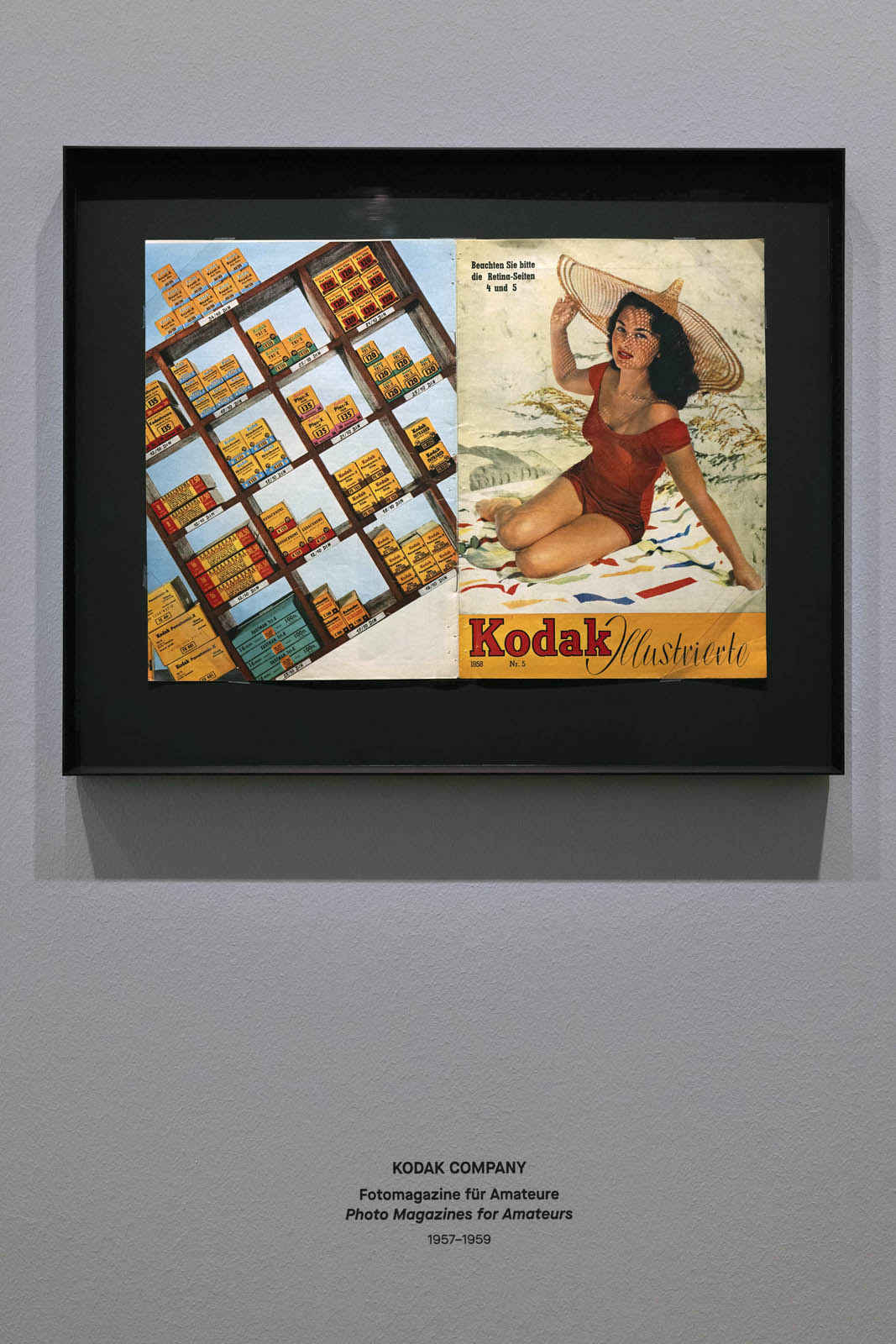
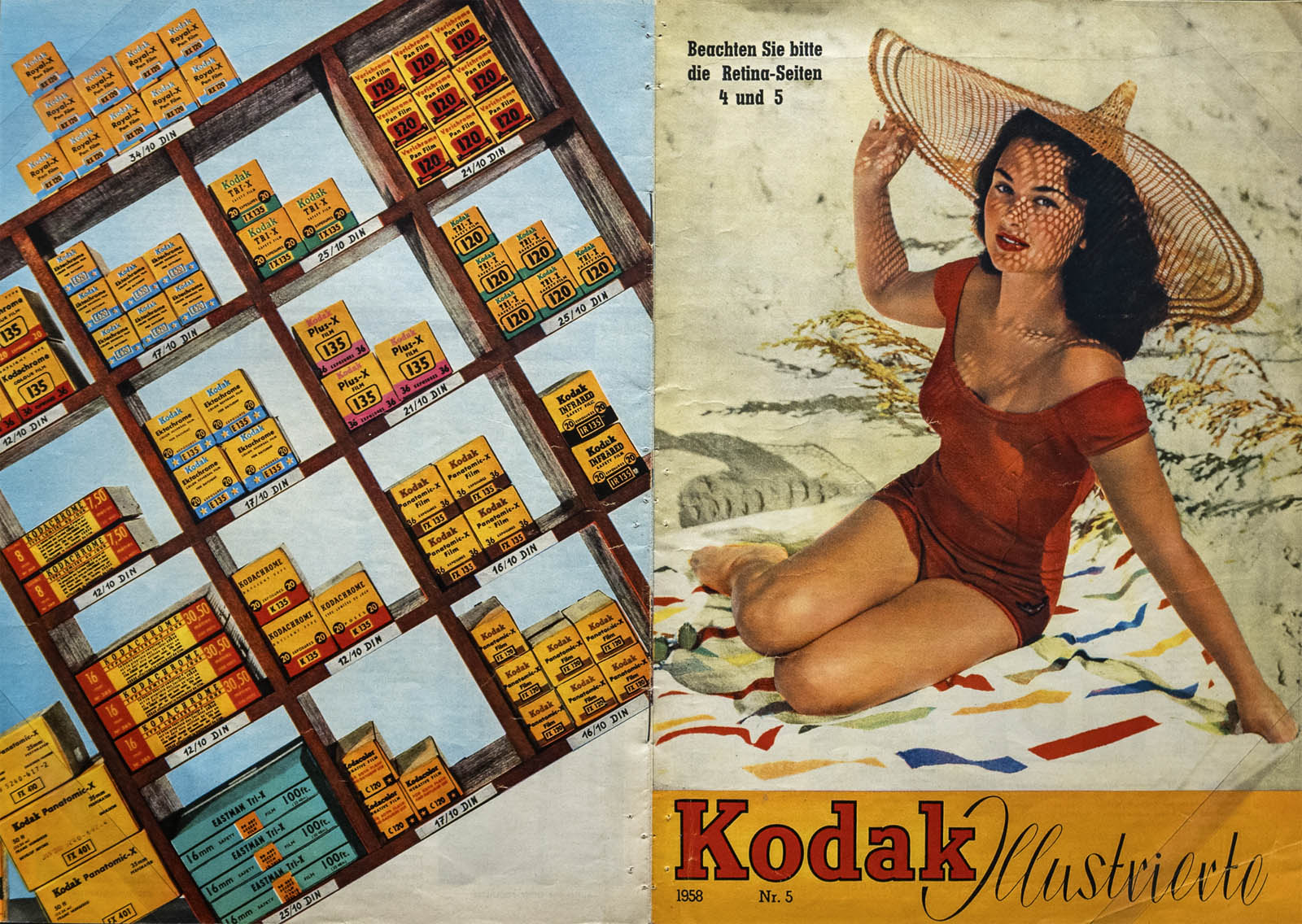
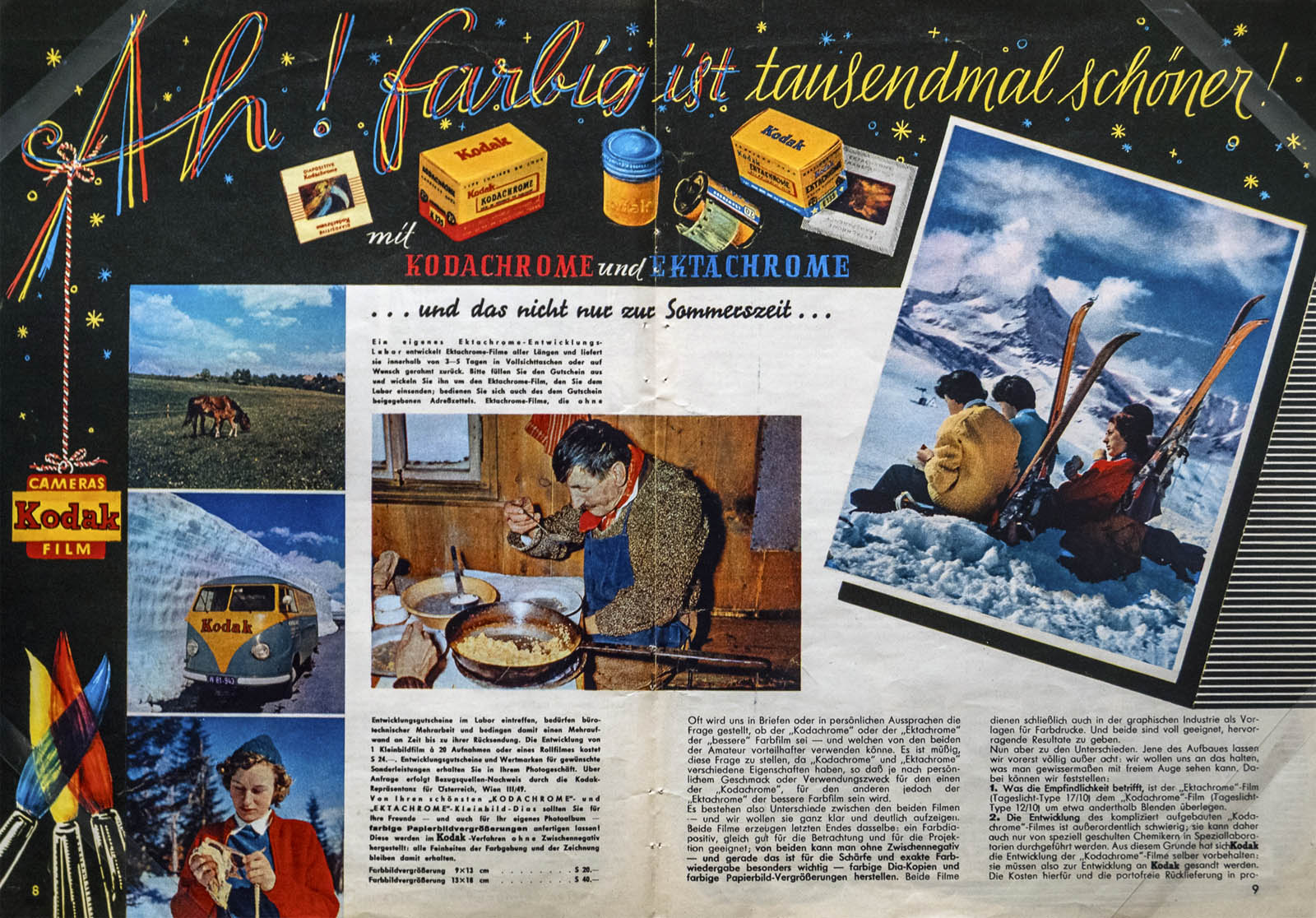
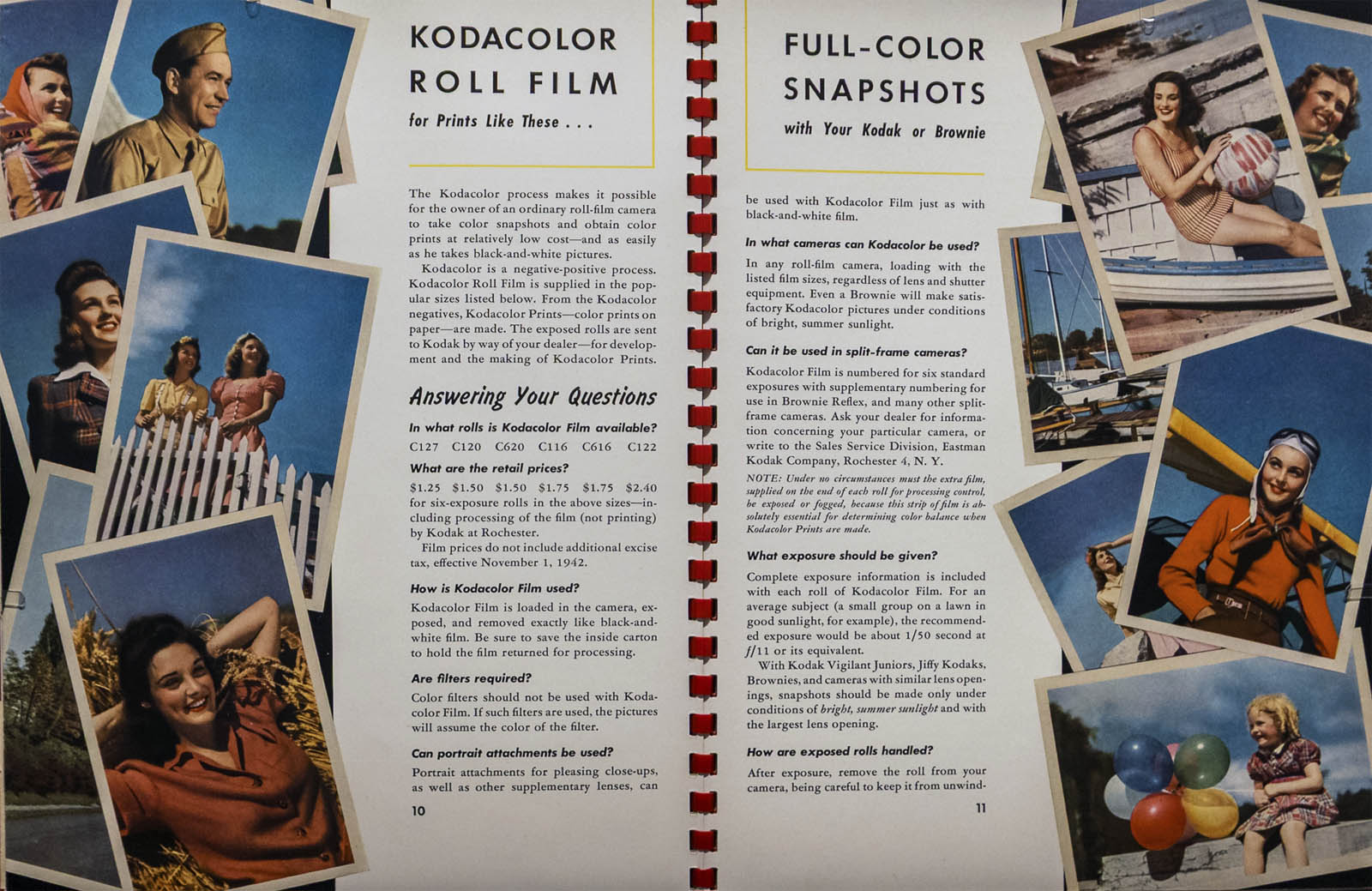
Installation view of the exhibition 'True Colors: Color in Photography from 1849 to 1955' at Albertina Modern, Vienna showing Kodak Company. 'Photo Magazines for Amateurs' 1957-1959


Installation view of the exhibition True Colors: Color in Photography from 1849 to 1955 at Albertina Modern, Vienna showing Kodak Company. Photo Magazines for Amateurs 1957-1959


Installation view of the exhibition 'True Colors: Color in Photography from 1849 to 1955' at Albertina Modern, Vienna


Installation views of the exhibition True Colors: Color in Photography from 1849 to 1955 at Albertina Modern, Vienna
Photos: Karin Svadlenak-Gomez


'True Colors: Color in Photography from 1849 to 1955' at Albertina Modern poster


True Colors: Color in Photography from 1849 to 1955 at Albertina Modern poster


The Albertina Museum
Albertinaplatz 1
1010 Vienna
Phone: +43 (0)1 534 83 0

Daily 10am – 6pm
Except Wednesday and Friday 10am – 9pm

The Albertina Museum website

LIKE ART BLART ON FACEBOOK

Back to top

Exhibition: ‘Quicksilver Brilliance: Adolf de Meyer Photographs’ at the Metropolitan Museum of Art, New York

Exhibition dates: 4th December, 2017 – 18th March, 2018

Curator: Beth Saunders, Assistant Curator in The Met’s Department of Photographs


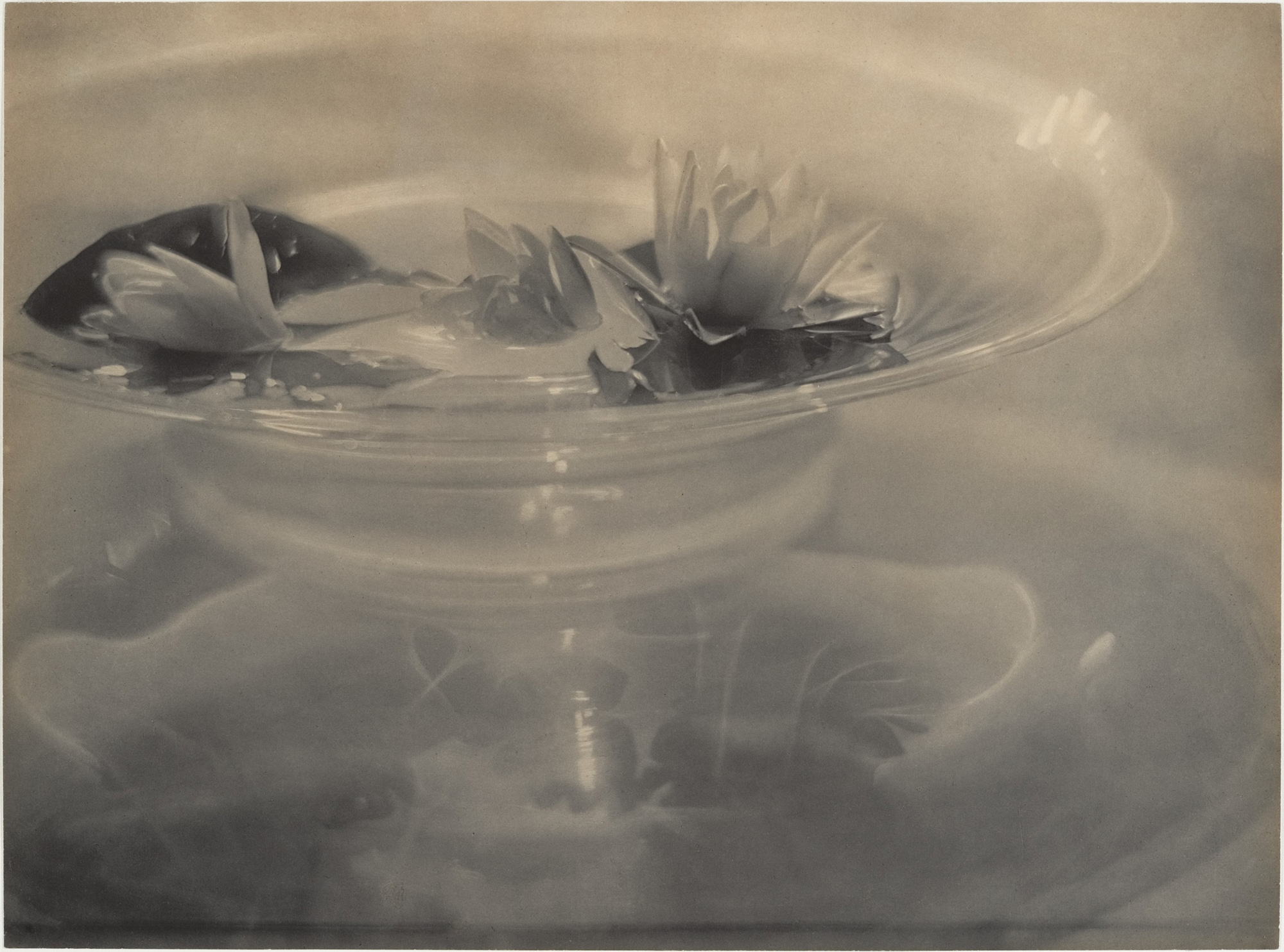
Adolf de Meyer (American born France, 1868-1946) 'Water Lilies' c. 1906, printed 1912 from the exhibition 'Quicksilver Brilliance: Adolf de Meyer Photographs' at the Metropolitan Museum of Art, New York, Dec 2017 - March 2018


Adolf de Meyer (American born France, 1868-1946)
Water Lilies
c. 1906, printed 1912
Platinum print
26.1 x 35.2cm (10 1/4 x 13 7/8 in.)
Alfred Stieglitz Collection, 1933


The critic Charles H. Caffin described this photograph by de Meyer as “a veritable dream of loveliness.” It is one of several floral still life de Meyer made in London around 1906-1909, when he was in close contact with Alvin Langdon Coburn, a fellow photographer and member of the Linked Ring. Both men were inspired by the Belgian writer Maurice Maeterlinck’s 1906 book The Intelligence of Flowers, a mystical musing on the vitality of plant life. De Meyer exhibited several of his flower studies, including this platinum print, at Stieglitz’s influential Photo-Secession galleries in New York in 1909. The image also appeared as a photogravure in an issue of Stieglitz’s art and photography journal Camera Work.


While the “facts of Baron Adolf de Meyer’s early life have been obscured by contradictory accounts from various sources (including himself); he was born in Paris or Germany, spent his childhood in both France and Germany, and entered the international photographic community in 1894-1895,” by circa 1897-1900 he had assumed the title of “Baron.”

“In editions dating from 1898 until 1913, Whitaker’s Peerage stated that de Meyer’s title had been granted in 1897 by Frederick Augustus III of Saxony, though another source states “the photographer inherited it from his grandfather in the 1890s”. Some sources state that no evidence of this nobiliary creation, however, has been found.” (Wikipedia) He then married Donna Olga Caracciolo in 1899, “reputedly the illegitimate daughter of the British king Edward VII, who enjoyed a privileged position within the fashionable international set surrounding the monarch.” The marriage was one of convenience, since he was homosexual and she was bisexual or lesbian, but it was based on a perfect understanding and companionship between two people. As de Meyer observed in an unpublished biography, “Marriage based too much on love and unrestrained passion has rarely a chance to be lasting, whilst perfect understanding and companionship, on the contrary, generally make the most durable union.”

Meyer “gained recognition as a leading figure of Pictorialism and a member of the photographic society known as the Linked Ring Brotherhood in London. Alfred Stieglitz exhibited de Meyer’s work in his Little Galleries of the Photo-Secession and published his images as photogravures in his influential journal Camera Work.” In the early 20th century, he was famed for his photographic portraits and was the preeminent fashion photographer of the day; he was also the first official fashion photographer for the American magazine Vogue, appointed to that position in 1913-1914 until 1921. In 1922 de Meyer accepted an offer to become the Harper’s Bazaar chief photographer in Paris, spending the next 16 years there until he was forced out, his romantic style out of fashion with the modernist taste of the day.

I state these facts only to illustrate the idea that here was a “gay” of dubious lineage (reportedly born in Paris and educated in Dresden, Adolphus Meyer was the son of a German Jewish father and Scottish mother) who rose to associate with and photograph the upper echelons of society. He made it, and he made it good. His photographs of the well to do, film stars and fashion models are undoubtedly beautiful and his control of light magnificent, but they seem to me to be, well… constructed confections. His photographs of the elite and the fashion that they wore possess an ethereal beauty, de Meyer’s shimmering control of light adding to the photographs sense of enacted fantasy played out in the form of timeless classical elegance.

But there is that lingering doubt that these photographs were both his job and his entré (along with the connections and money of his wife) into high society. Look, for example, at the self-portrait of de Meyer in this posting. In the 1900 self-portrait in India when he was 32 and on his honeymoon, we see a coiffed, almost androgynous man who in his pose is as stiff as a board – his body contorted in the strangest way, the right hand gripping the arm of the cane chair, the left splayed and braced, ramrod straight against the seat and the feet crossed in the most unnatural manner. No matter the beautiful light and attractive setting, this is the image that this man wants to portray to the world, this is a man who thinks he has arrived. It is an affectation. And in the portrait of the aristocrat and patron of the avant-garde, Count Etienne de Beaumont (c. 1923, below), this is how he sees himself, as part of that elite. Because in the end, he was. But there is little feeling to any of his portrait work: style, surface, light, form and “the look” reign supreme. Only when he is so overwhelmed by stardust, such as in the brilliant photographs of Josephine Baker and her scintillating personality, does the mask of affection drop away.

Of more interest to me are his early photographs of Japan where you feel he has some personal investment in the work. The “tactile elegance of his early work” was influenced by “Japanese aesthetics, as well as the influence of the painter James McNeill Whistler, a key figure of the Aesthetic movement.” The photograph View Through the Window of a Garden, Japan (1900, below) is an absolute cracker, as are the Japanese influenced Water Lilies (c. 1906, below) and The Shadows on the Wall (Chrysanthemums) (1906, below). In her January 17, 2018 review of the exhibition “Quicksilver Brilliance: Adolf de Meyer Photographs @Met” on the Collector Daily website, Loring Knoblauch states, “While De Meyer’s scenes from Japan, his travel photos of his wife Olga at the Acropolis and in St. Moritz, and his experiments with autochromes in the early 1900s are also included in this eclectic sampler, these rarities aren’t particularly compelling or noteworthy, aside from their supporting role in filling out a broader picture of the artist and his life.” Aren’t particularly compelling! I beg to differ.

I don’t know how people look at photographs and interpret them so differently to how I see them. Perhaps I just feel the music, I see these photographs as if I were taking them, as a personal investment in their previsualisation. While I get very little from de Meyer’s fashion photographs I get a whole lot of pleasure and delight from his transcendent earlier work. I most certainly feel their energy. You only have to look at the reflection of the water lilies. Need I say more.

Dr Marcus Bunyan


Many thankx to the Metropolitan Museum of Art for allowing me to publish the photographs in the posting. Please click on the photographs for a larger version of the image.


Adolf de Meyer (American born France, 1868-1946) '[Nude Models Posing for a Painting Class]' 1890s from the exhibition 'Quicksilver Brilliance: Adolf de Meyer Photographs' at the Metropolitan Museum of Art, New York, Dec 2017 - March 2018


Adolf de Meyer (American born France, 1868-1946)
(Nude Models Posing for a Painting Class)
1890s
Gelatin silver print
Gift of Lunn Gallery, 1980


A member of the “international set” in fin-de-siècle Europe, Baron Adolf de Meyer (1868-1946) was also a pioneering photographer, known for creating works that transformed reality into a beautiful fantasy. Quicksilver Brilliance will be the first museum exhibition devoted to the artist in more than 20 years and the first ever at The Met. Some 40 works, drawn entirely from The Met collection, will demonstrate the impressive breadth of his career.

The exhibition will include dazzling portraits of well-known figures of his time: the American socialite Rita de Acosta Lydig; art patron and designer Count Étienne de Beaumont; aristocrat and society hostess Lady Ottoline Morrell; and celebrated entertainer Josephine Baker, among others. A highlight of the presentation will be an exceptional book – one of only seven known copies – documenting Nijinsky’s scandalous 1912 ballet L’Après-midi d’un faune. This rare album represents de Meyer’s great success in capturing the movement and choreography of dance, a breakthrough in the history of photography. Also on view will be the artist’s early snapshots made in Japan, experiments with colour processes, and inventive fashion photographs.

13 platinum prints, 1900, 1906, 1907, 1912, 1917
2 photogravures, 1908, 1912
2 carbon prints, 1900, 1925-1926
1 autochrome in lightbox (facsimile), 1908
4 gelatin silver prints, 1912, 1923, 1925, 1928
1 set of 9 gelatin silver prints (framed together), 1890s-1910
1 trichrome carbro print, 1929
6 collotypes, 1914 (with full collotype book showing 1 image in nearby vitrine, 1914)
4 magazine spreads (in bound volumes of Vogue and Harper’s Bazaar, 1913, 1919, 1927, in vitrine)

Text from The Metropolitan Museum of Art website


Adolf de Meyer (American born France, 1868-1946) '[Adolf de Meyer Photographing Olga in a Garden]' 1890s


Adolf de Meyer (American born France, 1868-1946)
(Adolf de Meyer Photographing Olga in a Garden)
1890s
Gelatin silver print
Gift of Lunn Gallery, 1980


Like many Pictorialist photographers, de Meyer became interested in the camera through collecting and making snapshots of family and close friends. Olga de Meyer (née Caracciolo) was his companion and muse until her death in 1931. Rumoured to be the illegitimate daughter of the British king Edward VII, she enjoyed a privileged position within the fashionable international set surrounding the monarch. De Meyer made numerous portraits of Olga throughout their famously chic and eccentric life together (in 1916 the couple changed their names to Gayne and Mharah on the advice of an astrologer).


Adolf de Meyer (American born France, 1868-1946) '[Self-Portrait in India]' 1900


Adolf de Meyer (American born France, 1868-1946)
(Self-Portrait in India)
1900
Platinum print
14.8 x 19.8cm (5 13/16 x 7 13/16 in.)
Gift of Isaac Lagnado, 1995


Adolf de Meyer (American born France, 1868-1946) '[Self-Portrait in India]' 1900 (detail)


Adolf de Meyer (American born France, 1868-1946)
(Self-Portrait in India) (detail)
1900
Platinum print
14.8 x 19.8cm (5 13/16 x 7 13/16 in.)
Gift of Isaac Lagnado, 1995


Adolf de Meyer (American born France, 1868-1946) '[Amida Buddah, Japan]' 1900


Adolf de Meyer (American born France, 1868-1946)
(Amida Buddah, Japan)
1900
Platinum print
19.2 x 14.3cm (7 9/16 x 5 5/8 in.)
Purchase, Mrs. Jackson Burke Gift, 1981


Adolf de Meyer (American born France, 1868-1946) 'Ueno Tōshō-gū, Tokyo, Japan' 1900


Adolf de Meyer (American born France, 1868-1946)
Ueno Tōshō-gū, Tokyo, Japan
1900
Platinum print
14.5 x 19.8cm (5 11/16 x 7 13/16 in.)
Purchase, Mrs. Jackson Burke Gift, 1981


Adolf de Meyer (American born France, 1868-1946) 'Olga de Meyer, Japan' 1900


Adolf de Meyer (American born France, 1868-1946)
Olga de Meyer, Japan
1900
Platinum print
19.3 x 15.1cm (7 5/8 x 5 15/16 in.)
Purchase, Mrs. Jackson Burke Gift, 1981


Framed by the gridded panels of a sliding screen door, Olga de Meyer pauses from her reading to look languidly at the camera. De Meyer made this affectionate photograph of his new wife while on their honeymoon to Japan. The composition suggests his interest in Japanese aesthetics, as well as the influence of the painter James McNeill Whistler, a key figure of the Aesthetic movement. In its rebellion against Victorian morals, the movement sought inspiration from outside the European tradition. De Meyer’s travels in Japan – as well as China, Ceylon, India, North Africa, Turkey, and Spain – nourished Orientalist fictions, and gave rise to the subjects and compositions of many of his photographs.


Adolf de Meyer (American born France, 1868-1946) '[View Through the Window of a Garden, Japan]' 1900


Adolf de Meyer (American born France, 1868-1946)
(View Through the Window of a Garden, Japan)
1900
Platinum print
13.8 x 20.3cm (5 7/16 x 8 in.)
Purchase, Mrs. Jackson Burke Gift, 1981


Adolf de Meyer (American born France, 1868-1946) 'The Shadows on the Wall (Chrysanthemums)' 1906


Adolf de Meyer (American born France, 1868-1946)
The Shadows on the Wall (Chrysanthemums)
1906
Platinum print
34.7 x 26.7cm (13 11/16 x 10 1/2 in.)
Alfred Stieglitz Collection, 1933


Focusing his camera not on a still life per se, but on its evanescent trace, de Meyer creates a composition that approaches abstraction. He later applied a similar handling of light and shadow to enhance the drama of his fashion photographs. Here, the shadow of a vase of flowers cast onto the wall has the effect of a Japanese lacquered screen.


Adolf de Meyer (American born France, 1868-1946) 'The Silver Cap' c. 1909, printed 1912


Adolf de Meyer (American born France, 1868-1946)
The Silver Cap
c. 1909, printed 1912
Gelatin silver print
45.7 x 27.6cm (18 x 10 7/8 in.)
Alfred Stieglitz Collection, 1933


Born in Paris, Baron Adolf de Meyer settled in London in 1896. With his wife, Donna Olga Caraciollo, he joined the elegant set surrounding the Prince of Wales, later Edward VII, Olga’s godfather. They entertained lavishly, including concerts and small fancy-dress balls, which gave de Meyer a chance to devise marvellous costumes for Olga. Likely inspired by the de Meyers’ involvement with the Ballets Russes and time spent at their villa on the Bosporus, this dress features Ottoman elements such as the full skirt and decorative trimmings yet conforms to the Western fitted waistline – a fine example of the 1910s fashion trend of exoticism.


A member of the “international set” in fin-de-siècle Europe, Baron Adolf de Meyer (1868-1946) was also a pioneering art, portrait, and fashion photographer, known for creating images that transformed reality into a beautiful fantasy. The “quicksilver brilliance” that characterised de Meyer’s art led fellow photographer Cecil Beaton to dub him the “Debussy of the Camera.” Opening December 4 at The Metropolitan Museum of Art,

Quicksilver Brilliance: Adolf de Meyer Photographs will be the first museum exhibition devoted to the artist in more than 20 years and the first ever at The Met. Some 40 works, drawn entirely from The Met collection, will reveal the impressive breadth of his career.

The exhibition will include dazzling portraits of well-known figures of his time: the American socialite Rita de Acosta Lydig; art patron and designer Count Étienne de Beaumont; aristocrat and society hostess Lady Ottoline Morrell; and celebrated entertainer Josephine Baker, among others. A highlight of the presentation will be an exceptional book – one of only seven known copies – documenting Nijinsky’s scandalous 1912 ballet L’Après-Midi d’un Faune. This rare album represents de Meyer’s great success in capturing the choreography of dance, a breakthrough in the history of photography. Also on view will be the artist’s early snapshots made in Japan, experiments with colour processes, and inventive fashion photographs.

Born in Paris and educated in Germany, de Meyer was of obscure aristocratic German-Jewish and Scottish ancestry. He and his wife, Olga Caracciolo, goddaughter of Edward VII, were at the centre of London’s café society.

After starting in photography as an amateur, de Meyer gained recognition as a leading figure of Pictorialism and a member of the photographic society known as the Linked Ring Brotherhood in London. Alfred Stieglitz exhibited de Meyer’s work in his Little Galleries of the Photo-Secession and published his images as photogravures in his influential journal Camera Work. At the outbreak of World War I, de Meyer settled in the United States and applied his distinctive pictorial style to fashion imagery, helping to define the genre during the interwar period.

The exhibition was organised by Beth Saunders, Assistant Curator in The Met’s Department of Photographs.

Press release from the Metropolitan Museum of Art


Adolf de Meyer (American born France, 1868-1946) 'Tamara Karsavina' c. 1908


Adolf de Meyer (American born France, 1868-1946)
Tamara Karsavina
c. 1908
Autochrome
9 x 11.9cm (3.5 x 4.6 in.)
Gilman Collection, Purchase, Harriette and Noel Levine Gift, 2005


De Meyer enthusiastically embraced the autochrome process at its inception in 1907, writing to Stieglitz the following year that his work in black and white no longer satisfied him. An ardent admirer of Diaghilev’s Ballets Russes, de Meyer created this image of Tamara Karasavina (1885-1978), a leading dancer and partner to Nijinksy, during one of the company’s visits to England. The photographer chose a background of bellflowers and arranged a brocaded shawl to enhance the exotic elegance of the dancer.

The autochrome, which retains in its minuscule prisms the particular luminosity of a misty English day in summer, was thought to represent the Marchioness of Ripon in her garden at Coombe, Surrey. An early patron of de Meyer, Lady Ripon was also a staunch supporter of Diaghilev, bringing the Ballets Russes to London in 1911. She frequently entertained Karasavina and Nijinsky at Coombe, where they danced for Alexandra, the queen consort, and de Meyer dedicated to her his album documenting Nijinsky’s production of L’Après-midi d’un faune. A companion image to this autochrome is in the collection of the Victoria and Albert Museum in London.


Adolf de Meyer (American born France, 1868-1946) '[Lady Ottoline Morrell]' c. 1912


Adolf de Meyer (American born France, 1868-1946)
(Lady Ottoline Morrell)
c. 1912
Platinum print
23.5 x 17.4cm (9 1/4 x 6 7/8 in.)
Gilman Collection, Purchase, Harriette and Noel Levine Gift, 2005


Adolph de Meyer’s portrait of Lady Ottoline Morrell, eccentric hostess to Bloomsbury, is a stunning summation of the character of this aristocratic lady who aspired to live “on the same plane as poetry and as music.” Rebelling against the narrow values of her class, Lady Ottoline Cavendish Bentinck (1873-1938) married Philip Morrell, a lawyer and liberal Member of Parliament, and surrounded herself in London and on their estate at Garsington with a large circle of friends, including Bertrand Russell, W. B. Yeats, D. H. Lawrence, T. S. Eliot, Katherine Mansfield, Lytton Strachey, Virginia Woolf, Aldous Huxley, and E. M. Forster. Tall, wearing fantastic, scented, vaguely Elizabethan clothes, Lady Ottoline made an unforgettable impression. With her dyed red hair, patrician nose, and jutting jaw, she could look, according to Lord David Cecil, at one and the same moment beautiful and grotesque. Henry James saw her as “some gorgeous heraldic creature – a Gryphon perhaps or a Dragon Volant.”

De Meyer made several portraits of Lady Ottoline. None went as far as this one in conjuring up the sitter’s flamboyant persona, capturing, through dramatic lighting and Pre-Raphaelite design, her untamed, baroque quality. “Her long, pale face, that she carried lifted up, somewhat in the Rossetti fashion, seemed almost drugged, as if a strange mass of thoughts coiled in the darkness within her.” D. H. Lawrence’s inspired description of the character based on Lady Ottoline in “Women in Love” finds a vivid counterpart in the photographer’s art.


Baron Adolf De Meyer (American, born France, 1868-1946) 'The Cup' c. 1910


Adolf de Meyer (American born France, 1868-1946)
The Cup
c. 1910
Gum bichromate print


Adolf de Meyer (American born France, 1868-1946) 'Olga de Meyer' c. 1912


Adolf de Meyer (American born France, 1868-1946)
Olga de Meyer
c. 1912
Platinum print
22.4 x 16.4cm (8 13/16 x 6 7/16 in.)
Gift of Paul F. Walter, 2009


Renowned for her beauty and style, de Meyer’s spouse was, in a sense, his first fashion model. Here, dramatic backlighting emphasises her sinuous form, enshrouded in shimmering fabric and fur. Her gaze conveys a haughty bemusement that elevates the tableau from costume play to regal sophistication.


Adolf de Meyer (American born France, 1868-1946) '[Dance Study]' c. 1912


Adolf de Meyer (American born France, 1868-1946)
(Dance Study)
c. 1912
Platinum print
32.7 x 43.5cm (12 7/8 x 17 1/8 in.)
Alfred Stieglitz Collection, 1933


De Meyer photographed the dancer Nijinsky and other members of Diaghilev’s troupe when “L’Après-midi d’un Faun” was presented in Paris in 1912. It has been suggested that this photograph, the only nude by de Meyer, has some connection to the Russian ballet, but if so, it remains mysterious. The image vibrates with an uneasy erotic tension, a product of the figure’s exposed torso, startled body language, and disguised identity.


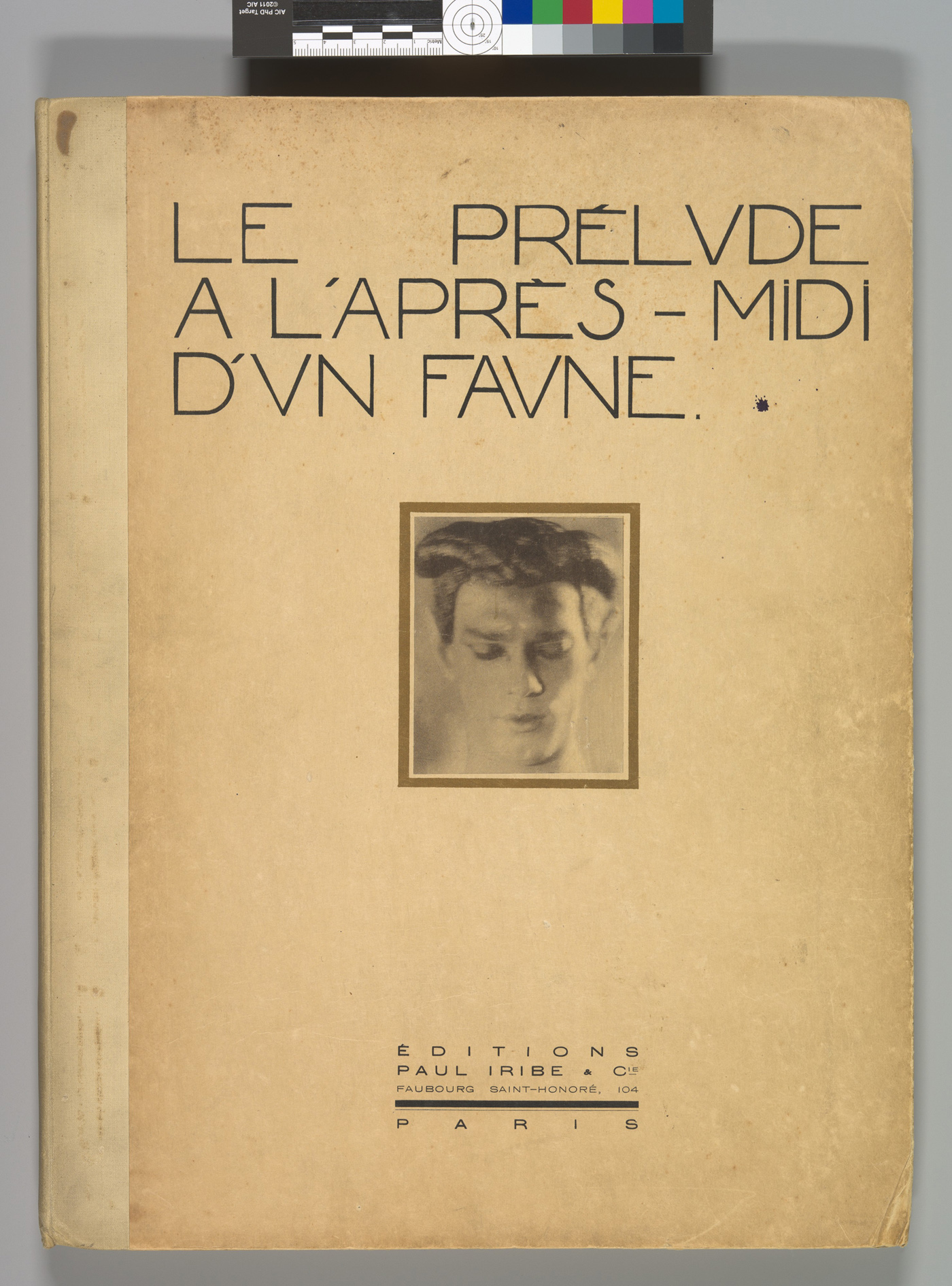
Adolf de Meyer (American born France, 1868-1946) 'Le Prelude à l'Après-Midi d'un Faune' 1914


Adolf de Meyer (American born France, 1868-1946)
Le Prelude à l’Après-Midi d’un Faune
1914
Collotypes
Album: 15 1/4 x 11 5/8 inches
Gilman Collection, Museum Purchase, 2005


In 1912 de Meyer made a remarkable series of photographs related to the Ballets Russes production L’après-midi d’un faune (Afternoon of a Faun). The avant-garde dance was choreographed by famed Russian performer Vaslav Nijinsky, set to a score by Claude Debussy, and inspired by a poem by Symbolist writer Stéphane Mallarmé. It follows a young faun distracted from his flute-playing by bathing nymphs who seduce and taunt him, leaving behind a scarf with which he allays his desire. When the ballet premiered in Paris on May 29, 1912, the overtly sexual climactic scene and unconventional choreography scandalised audiences. Nijinsky based the angular movements and frieze-like staging on Greek vase paintings, but Ballets Russes founder Sergei Diaghilev also likened them to Cubism.

Thirty of de Meyer’s photographs of the ballet were published as collotypes (photomechanical ink prints) in a 1914 edition of one thousand luxurious handcrafted books. Only seven copies are known today. Using alternately complex and fragmentary compositions, de Meyer’s images generate a rhythm of gesture and form. The thin Japanese papers offer a tactile echo of the diaphanous costumes (designed by artist Léon Bakst), and the heavily manipulated negatives enshroud the angular figures in a dreamlike haze. An object of desire, the book itself embodies the spirit of Nijinsky’s ballet.


Adolf de Meyer (American born France, 1868-1946) 'Nijinsky [Plate from Le Prelude à l'Après-Midi d'un Faune]' 1912


Adolf de Meyer (American born France, 1868-1946)
Nijinsky [Plate from Le Prelude à l’Après-Midi d’un Faune]
1912


Adolf de Meyer (American born France, 1868-1946) 'Nijinsky [Plate from Le Prelude à l'Après-Midi d'un Faune]' 1914


Adolf de Meyer (American born France, 1868-1946)
Nijinsky (Plate from Le Prelude à l’Après-Midi d’un Faune)
1914


Adolf de Meyer (American born France, 1868-1946) '[Image from "Prelude à l'Après-Midi d'un faune"]' 1914


Adolf de Meyer (American born France, 1868-1946)
(Image from Prelude à l’Après-Midi d’un faune)
1914
Platinum print
4 3/16 × 7 1/16 in. (10.6 × 17.9cm)
Gilman Collection, Purchase, Mrs. Walter Annenberg and The Annenberg Foundation Gift, 2005


Adolf de Meyer (American born France, 1868-1946) 'Rita de Acosta Lydig' 1917


Adolf de Meyer (American born France, 1868-1946)
Rita de Acosta Lydig
1917
Platinum print
41.5 x 30.9cm (16 5/16 x 12 3/16 in.)
Gift of Mercedes de Acosta, 1952


De Meyer’s portrait of the socialite, art patron, “shoe queen,” and suffragette Rita de Acosta Lydig is striking in its simplicity of tone and contour. The image, which appeared in Vogue in 1917, resonates with the classical elegance epitomised in the paintings of society portraitists John Singer Sargent and Giovanni Boldini, who also depicted this so-called alabaster lady.


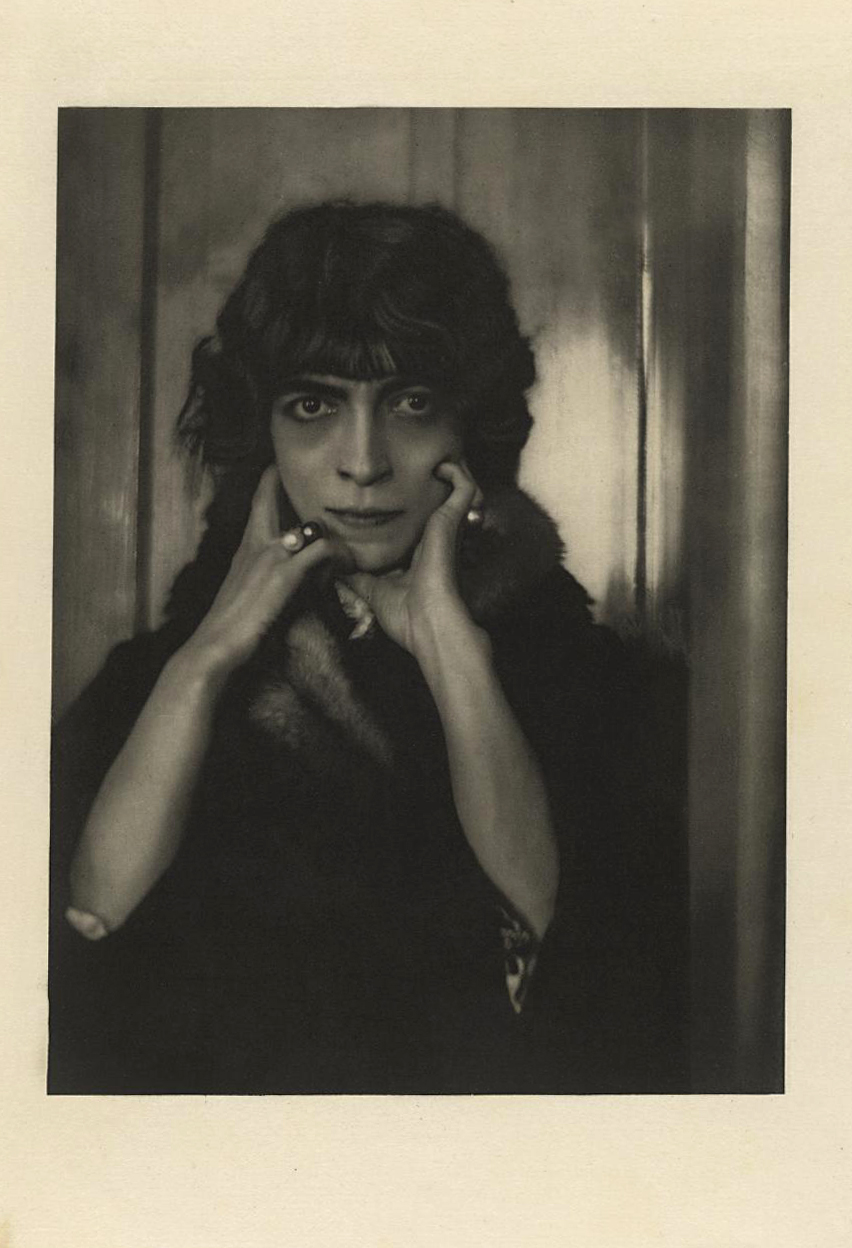
Adolf de Meyer (American born France, 1868-1946) 'Portrait of the Marchesa Casati' 1912


Adolf de Meyer (American born France, 1868-1946)
Portrait of the Marchesa Casati
1912
Plate from Camera Work No. XL August 1912


Luisa, Marchesa Casati Stampa di Soncino (23 January 1881 – 1 June 1957), also known as Luisa Casati, was an Italian heiress, muse, and patroness of the arts in early 20th-century Europe. …

A celebrity, the Marchesa was famed for eccentricities that dominated and delighted European society for nearly three decades. The beautiful and extravagant hostess to the Ballets Russes was something of a legend among her contemporaries. She astonished society by parading with a pair of leashed cheetahs and wearing live snakes as jewellery.

Text from the Wikipedia website


Adolf de Meyer (American born France, 1868-1946) 'Study for Vogue [Jan 1-1918, Betty Lee, Vogue, page 41]' 1918-1921


Adolf de Meyer (American born France, 1868-1946)
Study for Vogue (Jan 1 – 1918, Betty Lee, Vogue, page 41)
1918-1921
Gelatin silver print


Adolf de Meyer (American born France, 1868-1946) 'Dolores' 1921


Adolf de Meyer (American born France, 1868-1946)
Dolores
1921
Gelatin silver print


Adolf de Meyer (American born France, 1868-1946) 'Etienne de Beaumont [Count Etienne de Beaumont (French, 1883-1956)]' c. 1923


Adolf de Meyer (American born France, 1868-1946)
Etienne de Beaumont (Count Etienne de Beaumont (French, 1883-1956))
c. 1923
Gelatin silver print
23.7 x 18.6cm (9 5/16 x 7 5/16 in.)
Gift of Paul F. Walter, 2009


An aristocrat and patron of the avant-garde, Count Etienne de Beaumont (French, 1883-1956) cuts a dashing figure here, posed in one of the grand salons of his hôtel (grand townhouse) in Paris’s rue Masseran. The count hosted a series of legendary masquerade balls at his residence during the interwar period, attended by avant-garde artists such as Jean Cocteau, Pablo Picasso, and Man Ray. De Meyer described these parties, which he and Olga often attended, as “fêtes of unsurpassed magnificence” in a 1923 article for Harper’s Bazaar.


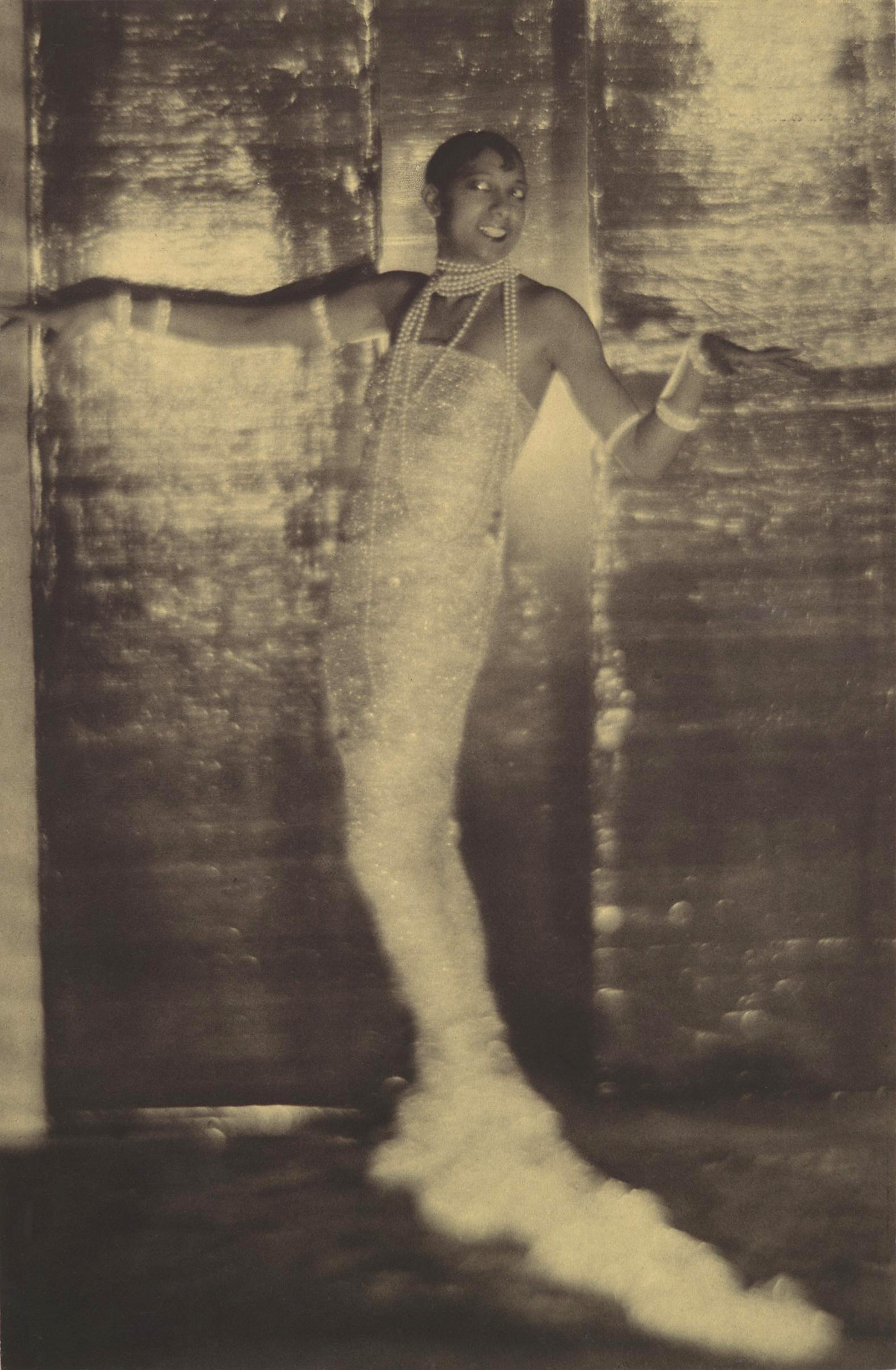
Adolf de Meyer (American born France, 1868-1946) 'Portrait of Josephine Baker' 1925


Adolf de Meyer (American born France, 1868-1946)
Portrait of Josephine Baker
1925


Adolf de Meyer (American born France, 1868-1946) 'Josephine Baker' 1925-1926


Adolf de Meyer (American born France, 1868-1946)
Josephine Baker
1925-1926
Direct carbon print
45.2 x 29.5cm (17 13/16 x 11 5/8 in.)
Ford Motor Company Collection, Gift of Ford Motor Company and John C. Waddell, 1987


The Saint Louis, Missouri-born Josephine Baker arrived in Paris in 1925 and quickly made a sensation as part of the all-black Revue Nègre, a musical entertainment that capitalised on the French craze for American Jazz. Famously donning a banana skirt for her danse sauvage, Baker crafted performances that astutely deployed the stereotypes white Europeans associated with blackness, recouping them as instruments of her own empowerment and success. Baker shines amid the glittering backdrop and soft focus of de Meyer’s photograph, creating an iconic image of stardom.


Gertrude Käsebier (American, 1852-1934) 'Baron Adolf de Meyer' 1903


Gertrude Käsebier (American, 1852-1934)
Baron Adolf de Meyer
1903
Platinum print
13 3/8 x 10″ (34 x 25.5cm)
Museum of Modern Art, Gift of Miss Mina Turner


Taken in the same photo session as the photograph below.


Gertrude Käsebier (American, 1852-1934) 'Baron Adolf de Meyer (Leaning Against Tree)' 1903


Gertrude Käsebier (American, 1852-1934)
Baron Adolph de Meyer (Leaning Against Tree)
1903
Platinum photograph
8.5 x 6.5 in.


Sarah Choate Sears (American, 1858-1935) 'A Mexican [Adolf de Meyer (American (born France), Paris 1868-1946 Los Angeles, California)]' 1905


Sarah Choate Sears (American, 1858-1935)
A Mexican (Adolf de Meyer (American born France, Paris 1868 – 1946 Los Angeles, California))
1905
Platinum print
24.2 x 18.7cm (9 1/2 x 7 3/8 in.)
Alfred Stieglitz Collection, 1933


With his brow arched beneath a tilted hat and hand elegantly grasping a stark white scarf, de Meyer dons a mysterious alter ego. Like de Meyer, Sears was involved with the two major groups devoted to art photography: the Photo-Secession and the Linked Ring Brotherhood. The two artists may have met through a mutual friend, the photographer F. Holland Day, who included their work in his exhibition “New School of American Photography,” on view in London in 1900 and Paris the following year. The title for this portrait follows a Photo-Secession tradition of withholding the sitter’s name when exhibiting publicly.


Sarah Choate Sears (1858-1935) was an American art collector, art patron, cultural entrepreneur, artist and photographer. …

About 1890 she began exploring photography, and soon she was participating in local salons. She joined the Boston Camera Club in 1892, and her beautiful portraits and still lifes attracted the attention of fellow Boston photographer F. Holland Day. Soon her work was gaining international attention. …

In 1899 she was given a one-woman show at the Boston Camera Club, and in 1900 she had several prints in Frances Benjamin Johnson’s famous exhibition in Paris. … In 1907, two of her photographs were published in Camera Work, but by that time she had lost much of her interest in photography.

Text from the Wikipedia website


The Metropolitan Museum of Art
1000 Fifth Avenue at 82nd Street
New York, New York 10028-0198
Phone: 212-535-7710

Opening hours:
Thursday – Tuesday 10am – 5pm
Closed Wednesday

The Metropolitan Museum of Art website

LIKE ART BLART ON FACEBOOK

Back to top

Exhibition: ‘Painting with Light: Art and Photography from the Pre-Raphaelites to the Modern Age’ at Tate Britain, London

Exhibition dates: 11th May – 25th September, 2016

Curators: Dr Carol Jacobi, Curator of British Art 1850-1915 at Tate Britain, and Dr Hope Kingsley, Curator, Education and Collections, Wilson Centre for Photography, with Tim Batchelor, Assistant Curator at Tate Britain


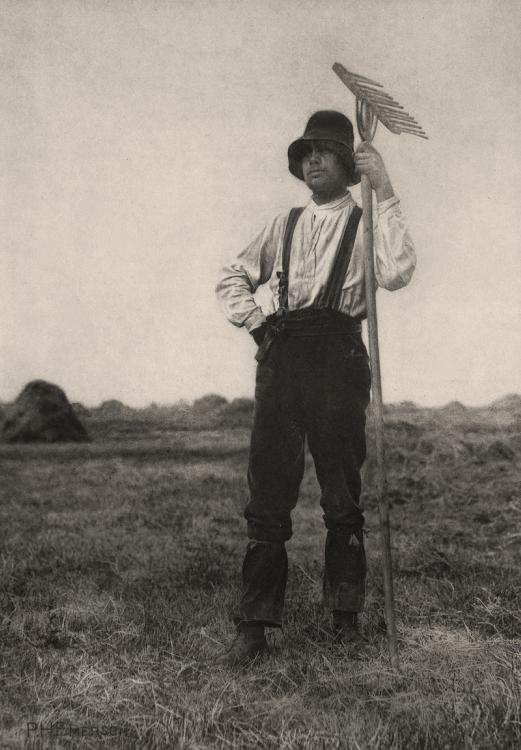
Peter Henry Emerson (British, 1856-1936) 'Haymaker with Rake' c. 1888, published 1890 from the exhibition 'Painting with Light: Art and Photography from the Pre-Raphaelites to the Modern Age' at Tate Britain, London, May - Sept, 2016


Peter Henry Emerson (British, 1856-1936)
Haymaker with Rake
c. 1888, published 1890
From Pictures of East Anglian Life portfolio
Photogravure on paperImage: 277 x 196mm
Victoria and Albert Museum
Gift from the photographer


An interesting concept for an exhibition. I would have liked to have seen the exhibition to make a more informed comment. Parallels can be drawn, but how much import you put on the connection is up to you vis-à-vis the aesthetic feeling and formal construction of each medium. It is fascinating to note how many of the original art works are photographs with the painting following at a later date, or vice versa. Photographically, Julia Margaret Cameron and John Cimon Warburg are the stars.

Photographs have always been used by artists as aide-mémoire since the birth of photograph. Eugené Atget called his photographs of Paris “Documents pour artistes”, declaring his modest ambition to create images for other artists to use as source material … but I take that statement with a pinch of salt. Perhaps a salt print from a calotype paper negative!

Dr Marcus Bunyan


Many thankx to the Tate for allowing me to publish the art work and photographs in the posting. Please click on the photographs for a larger version of the image.


Tate Britain presents the first major exhibition to celebrate the spirited conversation between early photography and British art. It brings together photographs and paintings including Pre-Raphaelite, Aesthetic and British impressionist works. Spanning 75 years across the Victorian and Edwardian ages, the exhibition opens with the experimental beginnings of photography in dialogue with painters such as J.M.W. Turner and concludes with its flowering as an independent international art form.

Stunning works by John Everett Millais, Dante Gabriel Rossetti, JAM Whistler, John Singer Sargent and others will for the first time be shown alongside ravishing photographs by pivotal early photographers such as Julia Margaret Cameron, which they inspired and which inspired them.


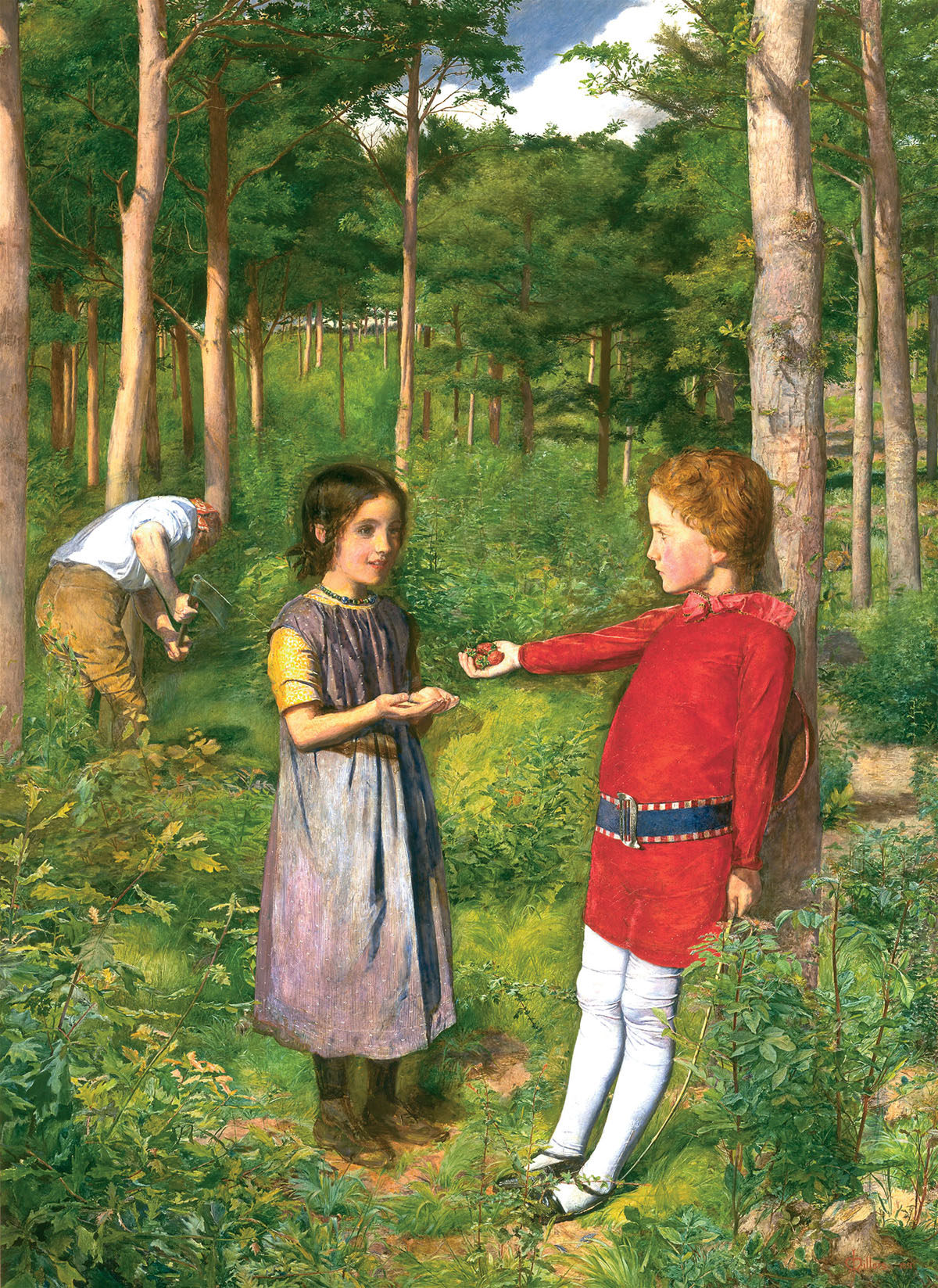
John Everett Millais (English, 1829-1896) 'The Woodman's Daughter' 1850-1851 from the exhibition 'Painting with Light: Art and Photography from the Pre-Raphaelites to the Modern Age' at Tate Britain, London, May - Sept, 2016


John Everett Millais (English, 1829-1896)
The Woodman’s Daughter
1850-51
Oil paint on canvas
889 x 648mm
Guildhall Art Gallery, City of London


Minna Keene (Canadian born Germany, 1861-1943) 'Decorative Study' c. 1906


Minna Keene (Canadian born Germany, 1861-1943)
Decorative Study
c. 1906
© Royal Photographic Society / National Media Museum/ Science & Society Picture Library


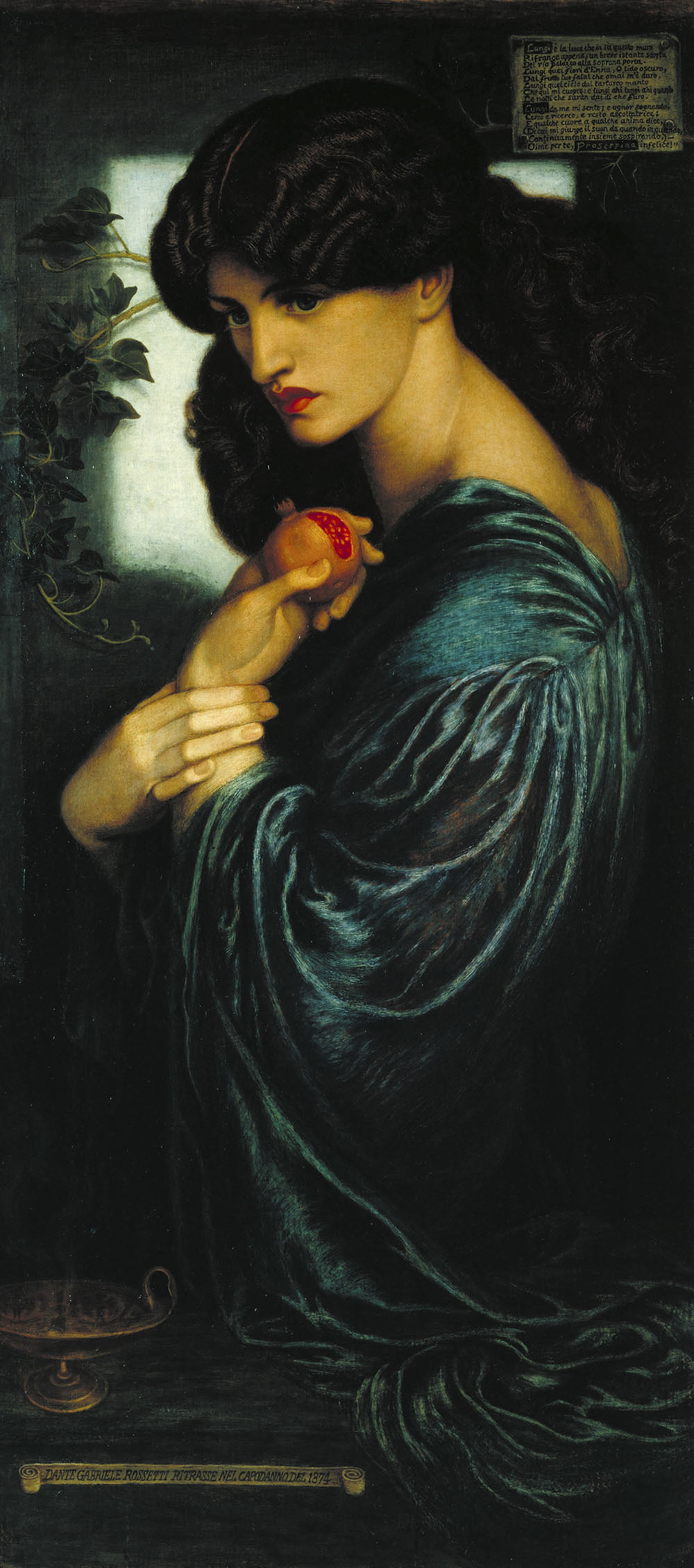
Dante Gabriel Rossetti (English, 1828-1882) 'Proserpine' 1874


Dante Gabriel Rossetti (English, 1828-1882)
Proserpine
1874
Oil on canvas
Support: 1251 x 610mm
Frame: 1605 x 930 x 85mm
Presented by W. Graham Robertson 1940


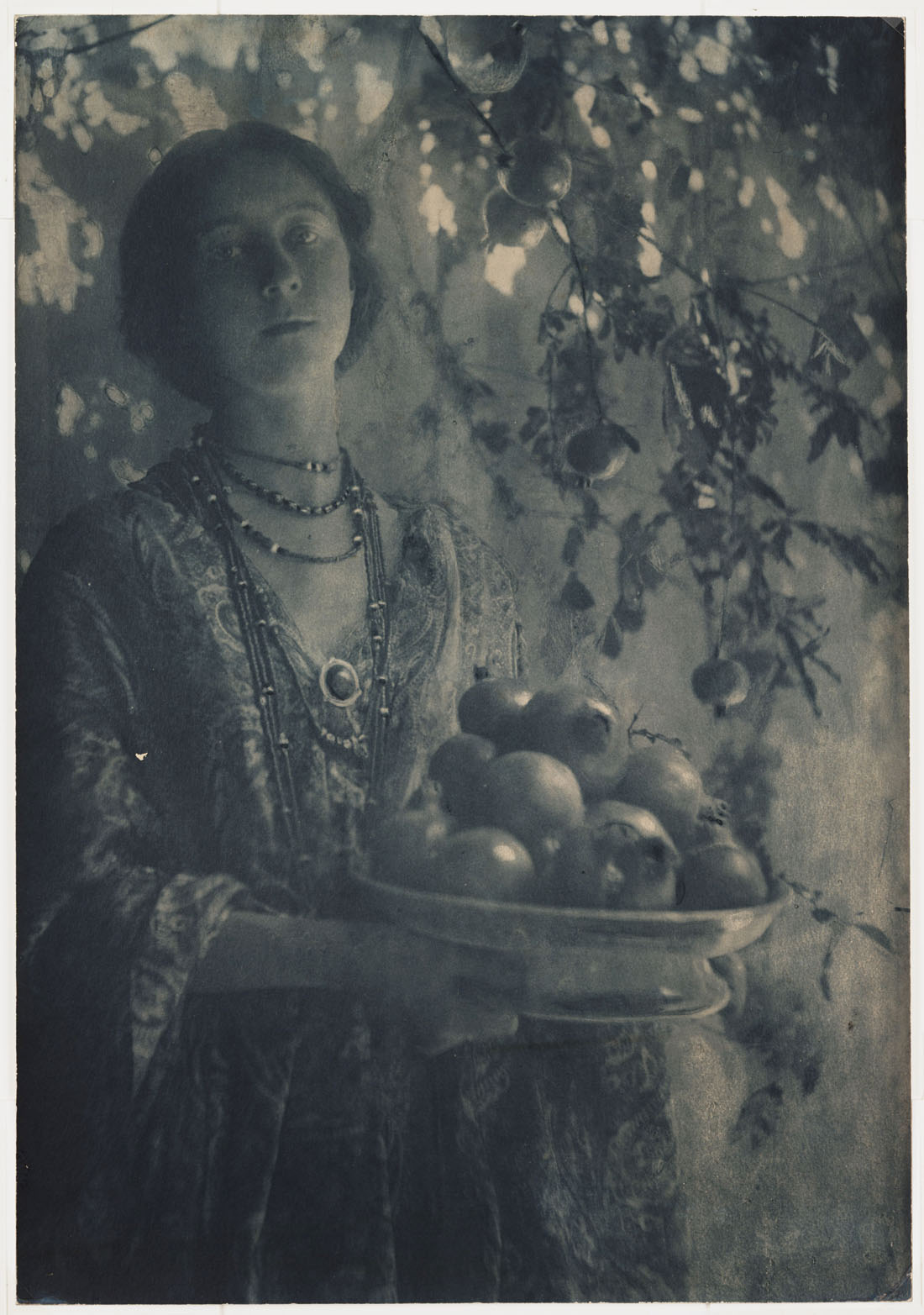
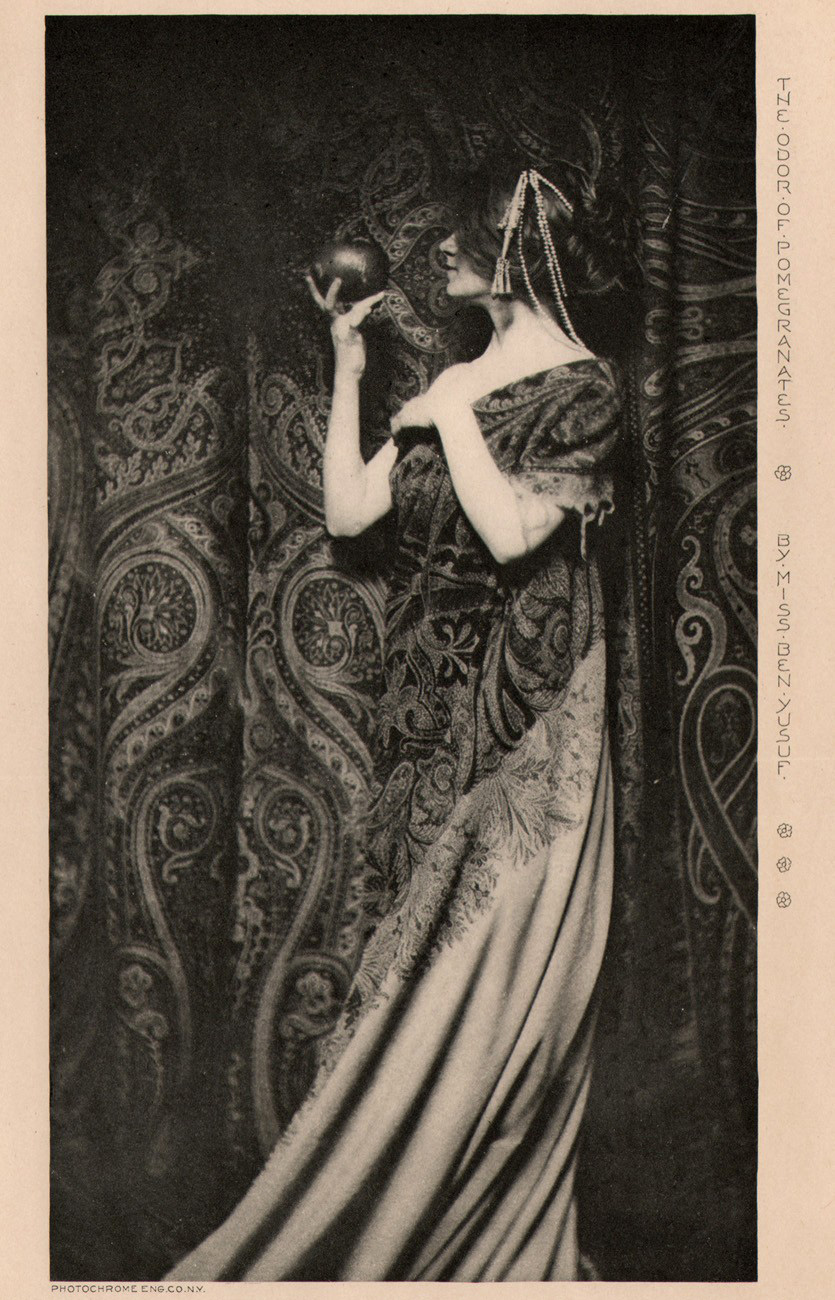
Zaida Ben-Yusuf (American born England, 1869-1933) 'The Odor of Pomegranates' 1899


Zaida Ben-Yusuf (American born England, 1869-1933)
The Odor of Pomegranates
1899, published 1901
Photogravure on paper
Tate


Zaida Ben-Yusuf (American born England, 1869-1933)

Zaida Ben-Yusuf (21 November 1869 – 27 September 1933) was a New York-based portrait photographer noted for her artistic portraits of wealthy, fashionable, and famous Americans of the turn of the 19th-20th century. She was born in London to a German mother and an Algerian father, but became a naturalised American citizen later in life. In 1901 the Ladies Home Journal featured her in a group of six photographers that it dubbed, “The Foremost Women Photographers in America.” In 2008, the Smithsonian National Portrait Gallery mounted an exhibition dedicated solely to Ben-Yusuf’s work, re-establishing her as a key figure in the early development of fine art photography…

In 1896, Ben-Yusuf began to be known as a photographer. In April 1896, two of her pictures were reproduced in The Cosmopolitan Magazine, and another study was exhibited in London as part of an exhibition put on by The Linked Ring. She travelled to Europe later that year, where she met with George Davison, one of the co-founders of The Linked Ring, who encouraged her to continue her photography. She exhibited at their annual exhibitions until 1902.

In the spring of 1897, Ben-Yusuf opened her portrait photography studio at 124 Fifth Avenue, New York. On 7 November 1897, the New York Daily Tribune ran an article on Ben-Yusuf’s studio and her work creating advertising posters, which was followed by another profile in Frank Leslie’s Weekly on 30 December. Through 1898, she became increasingly visible as a photographer, with ten of her works in the National Academy of Design-hosted 67th Annual Fair of the American Institute, where her portrait of actress Virginia Earle won her third place in the Portraits and Groups class. During November 1898, Ben-Yusuf and Frances Benjamin Johnston held a two-woman show of their work at the Camera Club of New York.

In 1899, Ben-Yusuf met with F. Holland Day in Boston, and was photographed by him. She relocated her studio to 578 Fifth Avenue, and exhibited in a number of exhibitions, including the second Philadelphia Photographic Salon. She was also profiled in a number of publications, including an article on female photographers in The American Amateur Photographer, and a long piece in The Photographic Times in which Sadakichi Hartmann described her as an “interesting exponent of portrait photography”.

1900 saw Ben-Yusuf and Johnston assemble an exhibition on American women photographers for the Universal Exposition in Paris. Ben-Yusuf had five portraits in the exhibition, which travelled to Saint Petersburg, Moscow, and Washington, D.C. She was also exhibited in Holland Day’s exhibition, The New School of American Photography, for the Royal Photographic Society in London, and had four photographs selected by Alfred Stieglitz for the Glasgow International Exhibition of 1901, Scotland.

In 1901, Ben-Yusuf wrote an article, “Celebrities Under the Camera”, for the Sunday Evening Post, where she described her experiences with her sitters. By this stage she had photographed Grover Cleveland, Franklin Roosevelt, and Leonard Wood, amongst others. For the September issue of Metropolitan Magazine she wrote another article, “The New Photography – What It Has Done and Is Doing for Modern Portraiture”, where she described her work as being more artistic than most commercial photographers, but less radical than some of the better-known art photographers. The Ladies Home Journal that November declared her to be one of the “foremost women photographers in America”, as she began the first of a series of six illustrated articles on “Advanced Photography for Amateurs” in the Saturday Evening Post.

Ben-Yusuf was listed as a member of the first American Photographic Salon when it opened in December 1904, although her participation in exhibitions was beginning to drop off. In 1906, she showed one portrait in the third annual exhibition of photographs at Worcester Art Museum, Massachusetts, the last known exhibition of her work in her lifetime.

Text from the Wikipedia website


In the Studio

Many photographers trained as painters. They set up studios and employed artists’ models, skilled at holding poses for the time it took to take a picture. Later in the century, improved photographic negatives required shorter exposure times and it became easier to stage and capture difficult positions and spontaneous gestures.

Painters and illustrators used photographs as preparatory studies and as substitutes for props, costumes and models, and art schools created photographic archives for their students. Photographs commissioned and sold by institutions such as the British Museum made classical sculpture and old master paintings more accessible, inspiring both painters and photographers.


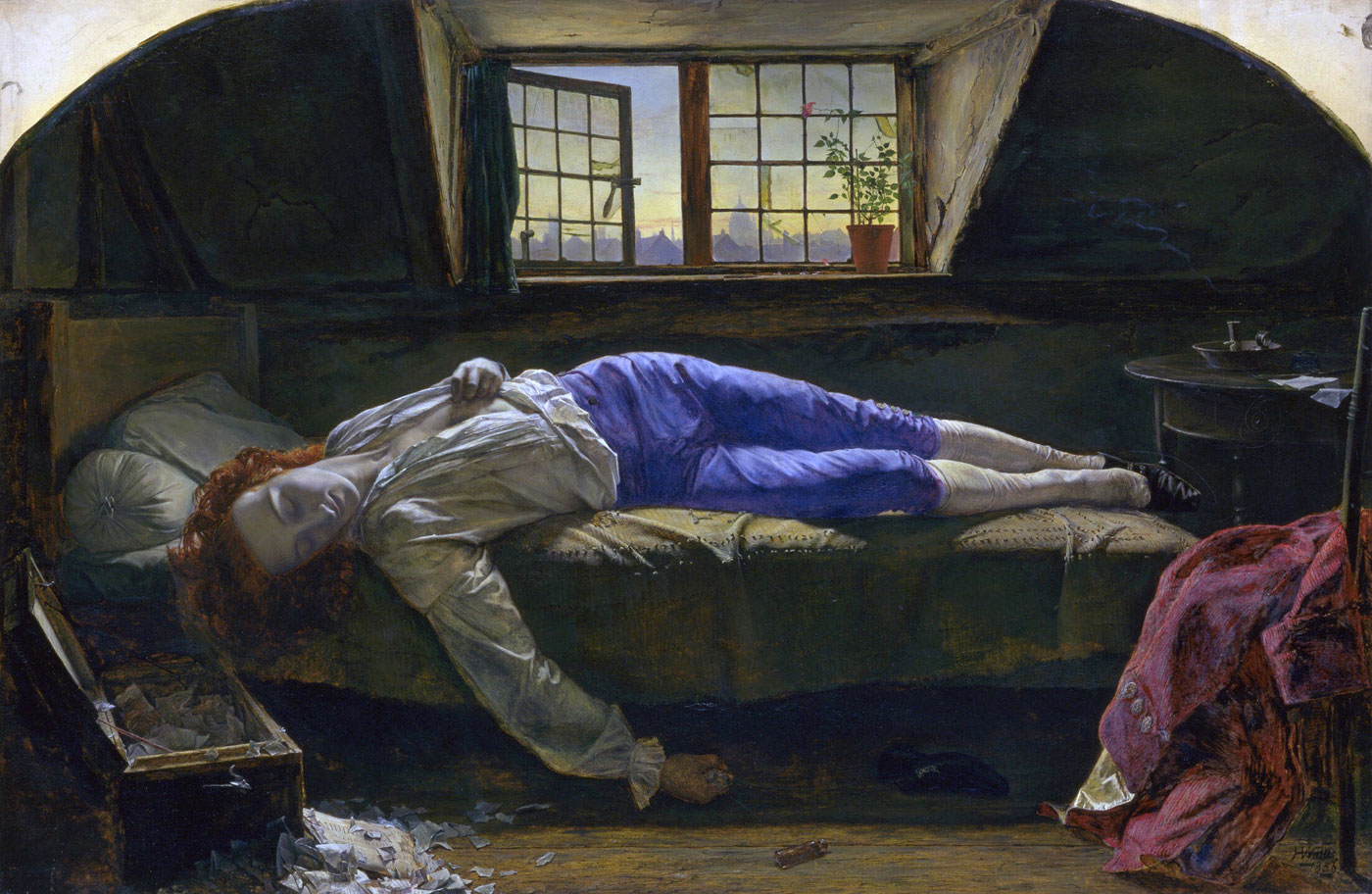
Henry Wallis (British, 1830-1916) 'Chatterton' 1856


Henry Wallis (British, 1830-1916)
Chatterton
1856
Oil paint on canvas
Support: 622 x 933mm
Frame: 905 x 1205 x 132mm
Tate
Bequeathed by Charles Gent Clement 1899


Chatterton is Wallis’s earliest and most famous work. The picture created a sensation when it was first exhibited at the Royal Academy in 1856, accompanied by the following quotation from Marlowe:

Cut is the branch that might have grown full straight
And burned is Apollo’s laurel bough.


Ruskin described the work in his Academy Notes as ‘faultless and wonderful’.

Thomas Chatterton (1752-1770) was an 18th Century poet, a Romantic figure whose melancholy temperament and early suicide captured the imagination of numerous artists and writers. He is best known for a collection of poems, written in the name of Thomas Rowley, a 15th Century monk, which he copied onto parchment and passed off as mediaeval manuscripts. Having abandoned his first job working in a scrivener’s office he struggled to earn a living as a poet. In June 1770 he moved to an attic room at 39 Brooke Street, where he lived on the verge of starvation until, in August of that year, at the age of only seventeen, he poisoned himself with arsenic. Condemned in his lifetime as a forger by influential figures such as the writer Horace Walpole (1717-1797), he was later elevated to the status of tragic hero by the French poet Alfred de Vigny (1797-1863).

Wallis may have intended the picture as a criticism of society’s treatment of artists, since his next picture of note, The Stonebreaker (1858, Birmingham City Museum and Art Gallery), is one of the most forceful examples of social realism in Pre-Raphaelite art. The painting alludes to the idea of the artist as a martyr of society through the Christ-like pose and the torn sheets of poetry on the floor. The pale light of dawn shines through the casement window, illuminating the poet’s serene features and livid flesh. The harsh lighting, vibrant colours and lifeless hand and arm increase the emotional impact of the scene. A phial of poison on the floor indicates the method of suicide. Following the Pre-Raphaelite credo of truth to nature, Wallis has attempted to recreate the same attic room in Gray’s Inn where Chatterton had killed himself. The model for the figure was the novelist George Meredith (1828-1909), then aged about 28. Two years later Wallis eloped with Meredith’s wife, a daughter of the novelist Thomas Love Peacock (1785-1866).

Frances Fowle. “Chatterton,” on the Tate website December 2000 [Online] Cited 16/02/2023


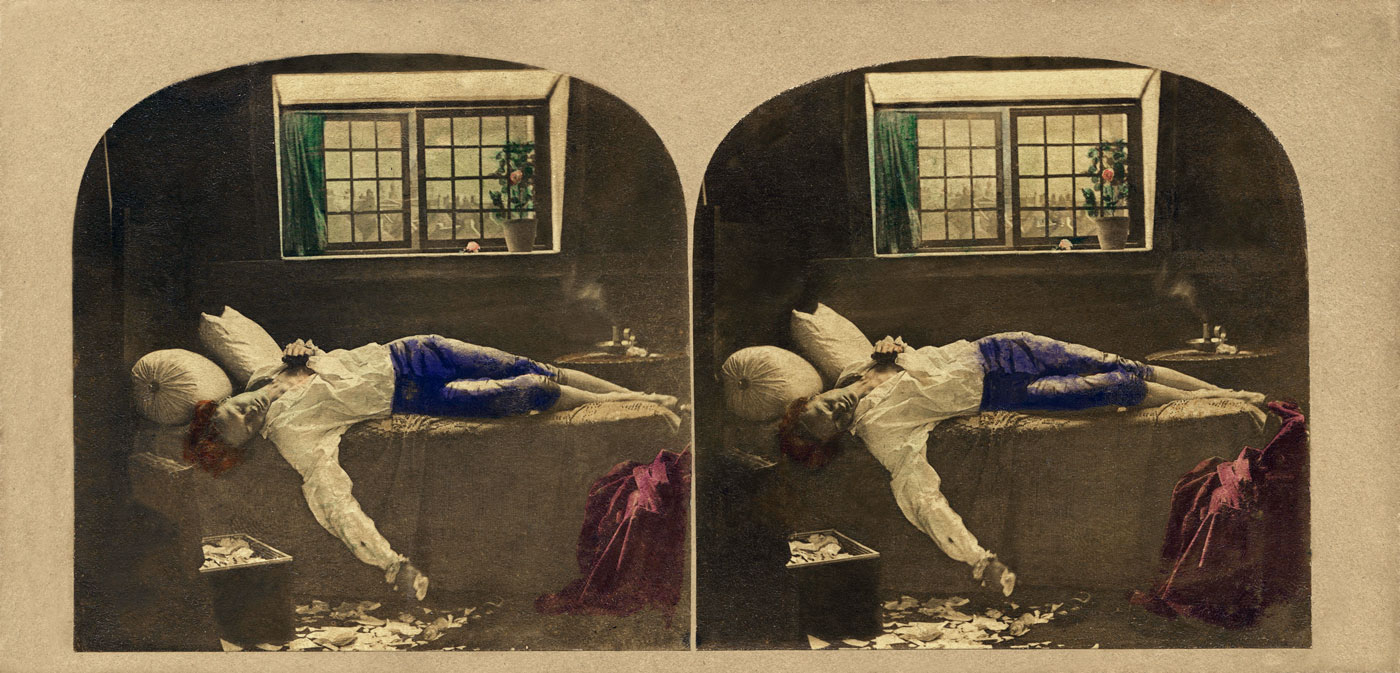
James Robinson. 'The Death of Chatterton' 1859


James Robinson
The Death of Chatterton
1859
Two photographs, hand-tinted albumen prints on paper mounted on card
Collection Dr Brian May

THIS STEREOCARD IS NOT IN THE EXHIBITION


James Robinson. 'The Death of Chatterton' 1859 (detail)


James Robinson
The Death of Chatterton (detail)
1859
Two photographs, hand-tinted albumen prints on paper mounted on card
Collection Dr Brian May

THIS STEREOCARD IS NOT IN THE EXHIBITION


One of the most famous paintings of Victorian times was Chatterton, 1856 (Tate) by the young Pre-Raphaelite-style artist, Henry Wallis (1830-1916). Again, the tale of the suicide of the poor poet, Thomas Chatterton, exposed as a fraud for faking medieval histories and poems to get by, had broad appeal. Chatterton was also an 18th-century figure, but Wallis set his picture in a bare attic overlooking the City of London which evoked the urban poverty of his own age. The picture toured the British Isles and hundreds of thousands flocked to pay a shilling to view it. One of these was James Robinson, who saw the painting when it was in Dublin. He immediately conceived a stereographic series of Chatterton’s life. Unfortunately Robinson started with Wallis’s scene (The Death of Chatterton, 1859). Within days of its publication, legal procedures began, claiming his picture threatened the income of the printmaker who had the lucrative copyright to publish engravings of the painting. The ensuing court battles were the first notorious copyright cases. Robinson lost, but strangely, in 1861, Birmingham photographer Michael Burr published variations of Death of Chatterton with no problems. No other photographer was ever prosecuted for staging a stereoscopic picture after a painting and the market continued to thrive…

Robinson’s The Death of Chatterton illustrates the way this uncanny quality [the ability to record reality in detail] distinguishes the stereograph from even the immaculate Pre-Raphaelite style of Wallis’s painting of the same subject. The stereograph represented a young man in 18th-century costume on a bed. The backdrop was painted, but the chest, discarded coat and candle were real. Again, the light and colour appear crude in comparison with the painting but the stereoscope records ‘every stick, straw, scratch’ in a manner that the painting cannot. The torn paper pieces, animated by their three-dimensionality, trace the poet’s recent agitation, while the candle smoke, representing his extinguished life, is different in each photograph due to their being taken at separate moments. The haphazard creases of the bed sheet are more suggestive of restless movement, now stilled, than Wallis’s elegant drapery. Even the individuality of the boy adds potency to his death.

Extract from the essay by Carol Jacobi. “Tate Painting and the Art of Stereoscopic Photography,” on the Tate website 17th October, 2014 [Online] Cited 14/02/2015


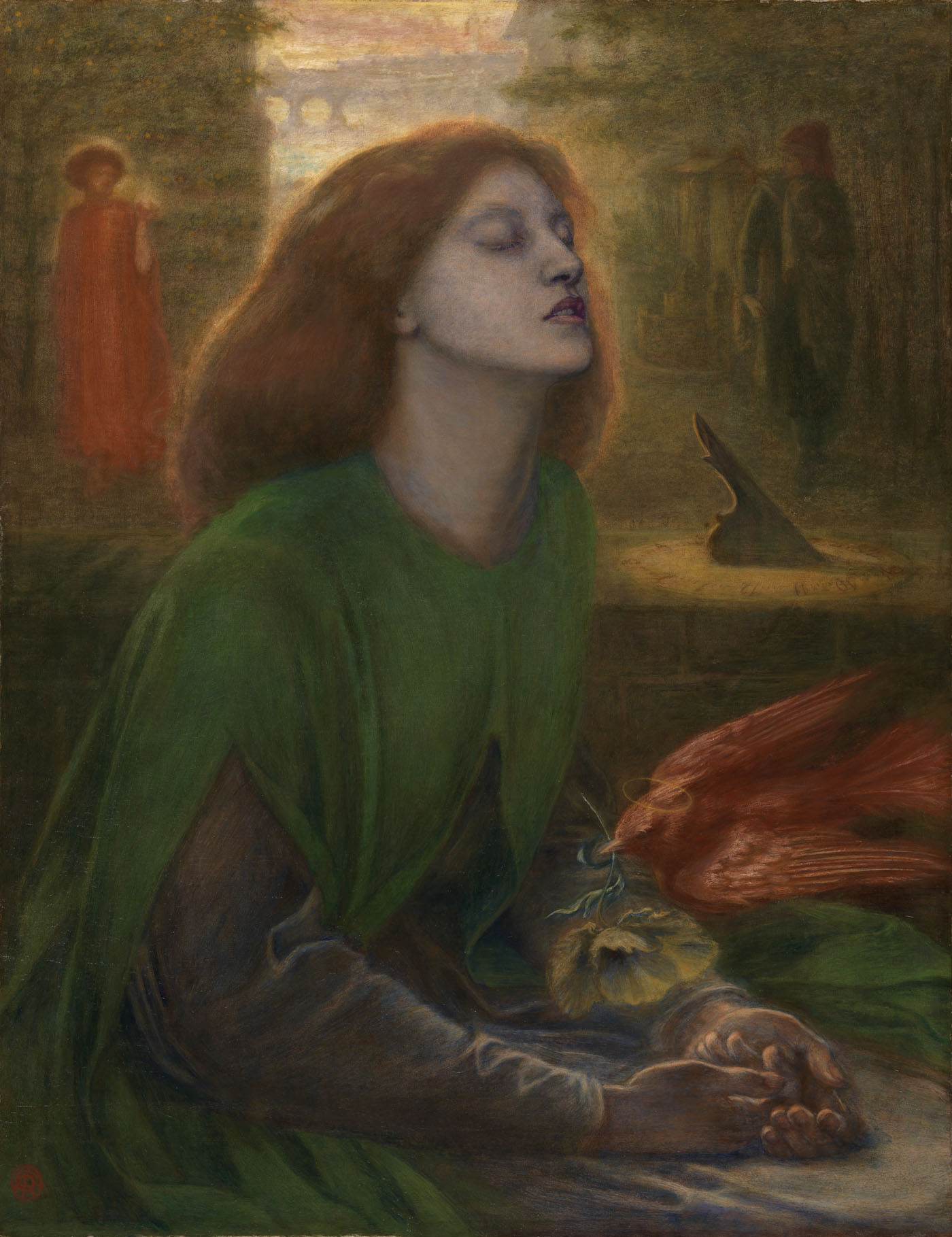
Dante Gabriel Rossetti (English, 1828-1882) 'Beata Beatrix' c. 1864-1870


Dante Gabriel Rossetti (English, 1828-1882)
Beata Beatrix
c. 1864-1870
Oil on canvas
Support: 864 x 660mm
Frame: 1212 x 1015 x 104mm
Presented by Georgiana, Baroness Mount-Temple in memory of her husband, Francis, Baron Mount-Temple 1889


Rossetti draws a parallel in this picture between the Italian poet Dante’s despair at the death of his beloved Beatrice and his own grief at the death of his wife Elizabeth Siddal, who died on 11 February 1862. Dante Alighieri (1265-1321) recounted the story of his unrequited love and subsequent mourning for Beatrice Portinari in the Vita Nuova. This was Rossetti’s first English translation and appeared in 1864 as part of his own publication, The Early Italian Poets.

The picture is a portrait of Elizabeth Siddall in the character of Beatrice. It has a hazy, transcendental quality, giving the sensation of a dream or vision, and is filled with symbolic references. Rossetti intended to represent her, not at the moment of death, but transformed by a ‘sudden spiritual transfiguration’ (Rossetti, in a letter of 1873, quoted in Wilson, p.86). She is posed in an attitude of ecstasy, with her hands before her and her lips parted, as if she is about to receive Communion. According to Rossetti’s friend F.G. Stephens, the grey and green of her dress signify ‘the colours of hope and sorrow as well as of love and life’ (‘Beata Beatrix by Dante Gabriel Rossetti’, Portfolio, vol. 22, 1891, p. 46).

In the background of the picture the shadowy figure of Dante looks across at Love, portrayed as an angel and holding in her palm the flickering flame of Beatrice’s life. In the distance the Ponte Vecchio signifies the city of Florence, the setting for Dante’s story. Beatrice’s impending death is evoked by the dove – symbol of the holy spirit – which descends towards her, an opium poppy in its beak. This is also a reference to the death of Elizabeth Siddall, known affectionately by Rossetti as ‘The Dove’, and who took her own life with an overdose of laudanum. Both the dove and the figure of Love are red, the colour of passion, yet Rossetti envisaged the bird as a messenger, not of love, but of death. Beatrice’s death, which occurred at nine o’clock on 9th June 1290, is foreseen in the sundial which casts its shadow over the number nine. The picture frame, which was designed by Rossetti, has further references to death and mourning, including the date of Beatrice’s death and a phrase from Lamentations 1:1, quoted by Dante in the Vita Nuova: ‘Quomodo sedet sola civitas’ (‘how doth the city sit solitary’), referring to the mourning of Beatrice’s death throughout the city of Florence.

Frances Fowle. “Beata Beatrix,” on the Tate website December 2000 [Online] Cited 16/02/2023


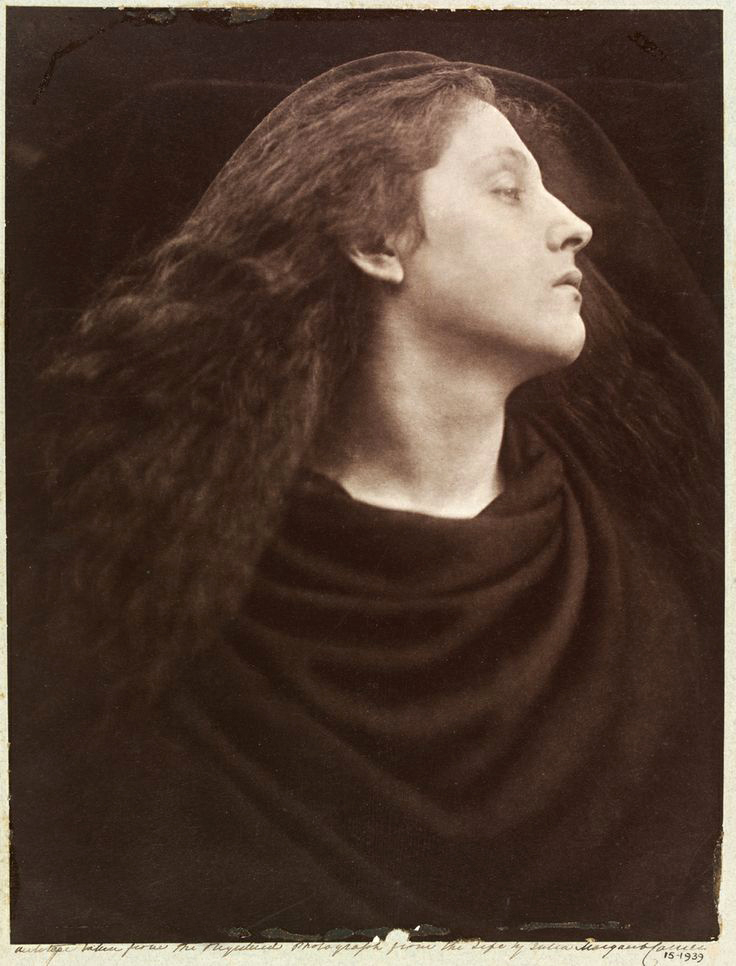
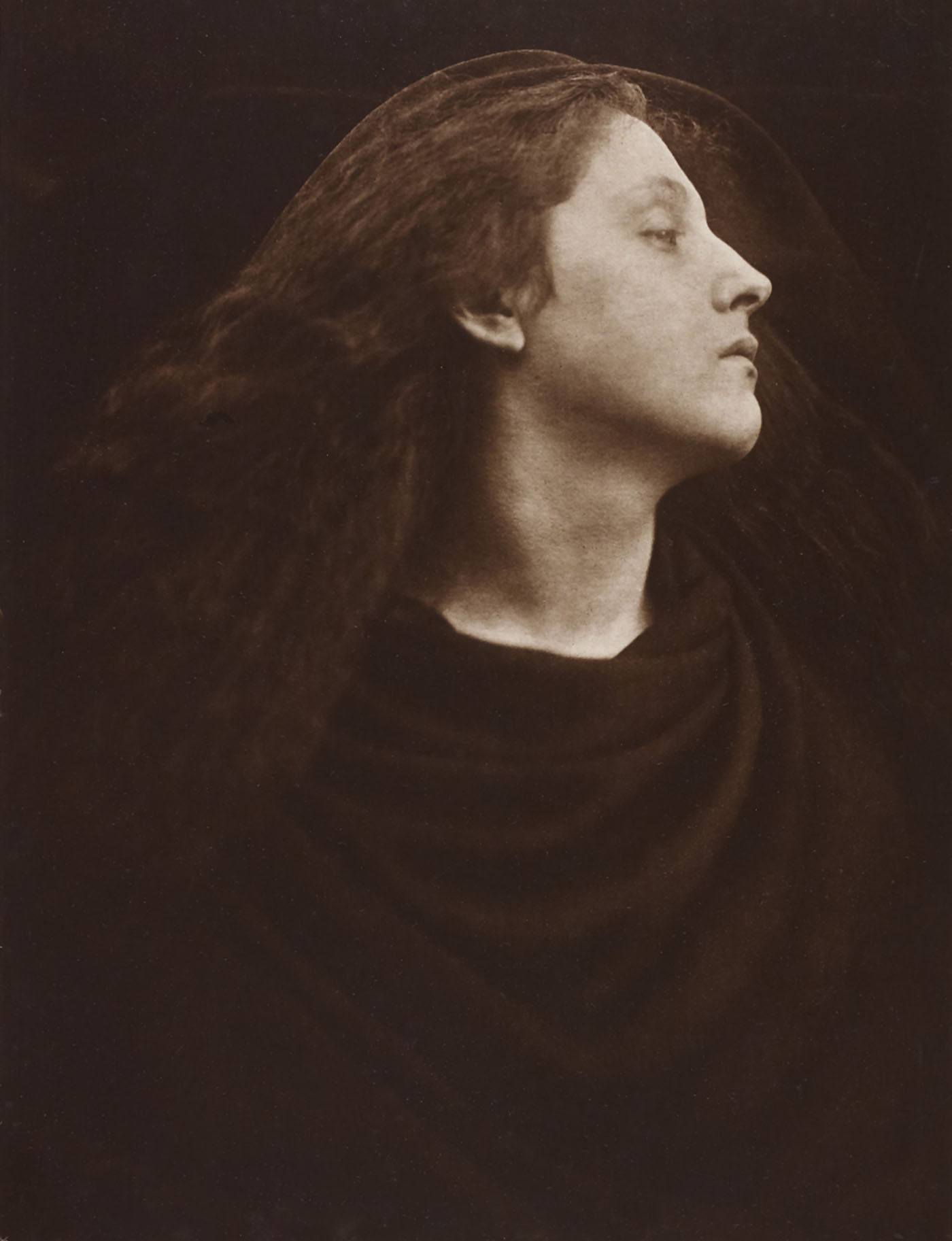
Julia Margaret Cameron (British born India, 1815-1879) 'Call, I Follow, I Follow, Let Me Die!' 1867

Julia Margaret Cameron (British born India, 1815-1879) 'Call, I Follow, I Follow, Let Me Die!' 1867


Julia Margaret Cameron (British born India, 1815-1879)
Call, I Follow, I Follow, Let Me Die!
1867
© Royal Photographic Society / National Media Museum / Science & Society Picture Library


In late 1865, Julia Margaret Cameron began using a larger camera. It held a 15 x 12 inch glass negative, rather than the 12 x 10 inch negative of her first camera. Early the next year she wrote to Henry Cole with great enthusiasm – but little modesty – about the new turn she had taken in her work. Cameron initiated a series of large-scale, closeup heads that fulfilled her photographic vision. She saw them as a rejection of ‘mere conventional topographic photography – map-making and skeleton rendering of feature and form’ in favour of a less precise but more emotionally penetrating form of portraiture. Cameron also continued to make narrative and allegorical tableaux, which were larger and bolder than her previous efforts.

In this image, Cameron concentrates upon the head of her maid Mary Hillier by using a darkened background and draping her in simple dark cloth. The lack of surrounding detail or context obscures references to narrative, identity or historical context. The flowing hair, lightly parted lips and exposed neck suggest sensuality. The title, taken from a line in the poem ‘Lancelot and Elaine’ from Alfred Tennyson’s ‘Idylls of the King’, transforms the subject into a tragic heroine.

Anonymous. “Call, I Follow, I Follow, Let Me Die!,” on the V&A website [Online] Cited 16/02/2023


New truths

Mid-nineteenth century innovations in science and the arts became part of intense debates about ‘truth’ – variously defined as objective observation and as individual artistic vision. Inspired by artist and critic John Ruskin, the Pre-Raphaelite circle took a new approach to nature, discovering meaning in details previously overlooked, ‘rejecting nothing, selecting nothing’.

As the quality of paints and lenses improved, painters and photographers tested the bounds of perception and representation. They moved out of the studio, to explore light and other atmospheric effects as well as geological subjects, landscape and architecture. New photographic materials like glass plate negatives and coated printed papers offered greater accuracy and photography became a valuable aid for painters.


John Brett (British, 1831-1902) 'Glacier of Rosenlaui' 1856


John Brett (British, 1831-1902)
Glacier of Rosenlaui
1856
Oil on canvas
Height: 445 mm (17.52 in)
Width: 419 mm (16.5 in)
Tate Britain
Purchased 1946
Photo: Tate, London, 2011


Thomas Ogle (British, 1813 - about 1882) 'The Bowder Stone in Our English Lakes, Mountains and Waterfalls as seen by William Wordsworth by A.W. Bennett' Published 1864


Thomas Ogle (British, 1813 – about 1882)
The Bowder Stone in Our English Lakes, Mountains and Waterfalls as seen by William Wordsworth by A.W. Bennett
Published 1864
Tate


View taken by Thomas Ogle of the Bowder Stone in Borrowdale, Cumbria, illustrating Our English Lakes, Mountains, And Waterfalls, as seen by William Wordsworth (1864). The book juxtaposes photographs of the Lake District with poems by the English Romantic poet. The Bowder Stone, an enormous boulder, was probably deposited by glaciation during the last Ice Age. It rests in Borrowdale, a valley of woods and crags in the Lake District whose scenic beauty inspired artists, writers and poets of the Romantic Movement in the late 18th and early 19th centuries. Wordsworth (1770-1850) was among them, and the photograph of the Bowder Stone accompanies his poem, Yew-Trees (1803), from which the following passage is taken:

“…But worthier still of note
Are those fraternal four of Borrowdale,
Joined in one solemn and capacious grove;
Huge trunks! – and each particular trunk a growth
Of intertwined fibres serpentine
Up-coiling, and inveterately convolved, –
Nor uninformed with phantasy, and looks
That threaten the profane; – a pillared shade,
Upon whose grassless floor of red-brown hue,
By sheddings from the pining umbrage tinged
Perenially – beneath whole sable roof
Of boughs, as if for festal purpose, decked
With unrejoicing berries, ghostly shapes
May meet at noontide – Fear and trembling Hope,
Silence and Foresight – Death the skeleton
And Time the shadow…”

Text from the British Library website [Online] Cited 18/09/2016


Atkinson Grimshaw (English, 1836-1893) 'Bowder Stone, Borrowdale' c. 1863-1868


Atkinson Grimshaw (English, 1836-1893)
Bowder Stone, Borrowdale
c. 1863-1868
Oil on canvas
Support: 400 x 536mm
Frame: 662 x 709 x 100mm
Purchased with assistance from the Friends of the Tate Gallery 1983


Tate Britain uncovers the dynamic dialogue between British painters and photographers; from the birth of the modern medium to the blossoming of art photography. Spanning over 70 years, the exhibition brings together nearly 200 works – many for the first time – to reveal their mutual influences. From the first explorations of movement and illumination by David Octavius Hill (1802-1870) and Robert Adamson (1821-1848) to artful compositions at the turn-of-the-century, the show discovers how painters and photographers redefined notions of beauty and art itself.

The dawn of photography coincided with a tide of revolutionary ideas in the arts, which questioned how pictures should be created and seen. Photography adapted the Old Master traditions within which many photographers had been trained, and engaged with the radical naturalism of JMW Turner (1775-1851), the Pre-Raphaelites, and their Realist and Impressionist successors. Turner inspired the first photographic panoramic views, and, in the years that followed his death, photographers and painters followed in his footsteps and composed novel landscapes evoking meaning and emotion. The exhibition includes examples such as John Everett Millais’s (1829-1896) nostalgic The Woodman’s Daughter and John Brett’s (1831-1902) awe inspiring Glacier Rosenlaui. Later in the century, PH Emerson (1856-1936) and TF Goodall’s (c. 1856-1944) images of rural river life allied photography to Impressionist painting, while JAM Whistler (1834-1903) and Alvin Langdon Coburn (1882-1966) created smoky Thames nocturnes in both media.

The exhibition celebrates the role of women photographers, such as Zaida Ben-Yusuf (1869-1933) and the renowned Julia Margaret Cameron (1815-1879). Cameron’s artistic friendships with George Frederic Watts (1817-1904) and Dante Gabriel Rossetti (1830-94) are recognised in a room devoted to their beautiful, enigmatic portraits of each other and shared models, where works including Cameron’s Call, I Follow, I Follow, Let Me Die and Rossetti’s Beata Beatrix are on display.

Highlights of the show include examples of three-dimensional photography, which incorporated the use of models and props to stage dramatic tableaux from popular works of the time, re-envisioning well-known pictures such as Henry Wallis’s (1830-1916) Chatterton. Such stereographs were widely disseminated and made art more accessible to the public, often being used as a form of after-dinner entertainment for middle class Victorian families. A previously unseen private album in which the Royal family painstakingly re-enacted famous paintings is also exhibited, as well as rare examples of early colour photography.

Carol Jacobi, Curator British Art 1850-1915, Tate Britain says: “Painting with Light offers new insights into Britain’s most popular artists and reveals just how vital painting and photography were to one another. Their conversations were at the heart of the artistic achievements of the Victorian and Edwardian era.”

Painting with Light: Art and Photography from the Pre-Raphaelites to the Modern Age is curated by Dr Carol Jacobi, Curator of British Art 1850-1915 at Tate Britain, and Dr Hope Kingsley, Curator, Education and Collections, Wilson Centre for Photography, with Tim Batchelor, Assistant Curator at Tate Britain. The exhibition is accompanied by a fully illustrated catalogue from Tate Publishing and a programme of talks and events in the gallery.”

Press release from Tate Britain


‘Whisper of the Muse’

As the nineteenth century progressed, some artists moved away from the clarity and detail that had been the aim of earlier Pre-Raphaelite art, turning instead to a search for pure beauty. The aesthetic movement, as this tendency came to be known, emphasised the sensual qualities of art and design and explored imaginative themes and effects.

In London and on the Isle of Wight, a community of artists forged closer links between the visual arts, music and literature. This circle included the photographer Julia Margaret Cameron, painters George Frederic Watts and Dante Gabriel Rossetti, and the poet Alfred Tennyson. Rossetti and Cameron worked with similar subjects, many inspired by Tennyson’s poetry. Together with Watts they developed a newly-intimate form of portraiture, exploring emotional and psychological states. They also shared models, whose striking looks introduced new types of modern beauty.


Julia Margaret Cameron (British born India, 1815-1879) 'Whisper of the Muse' 1865


Julia Margaret Cameron (British, 1815-1879)
Whisper of the Muse
1865
Photograph, albumen print on paper
325 x 238mm
Wilson Centre for Photography


Dante Gabriel Rossetti (English, 1828-1882) 'Mariana' 1870


Dante Gabriel Rossetti (English, 1828-1882)
Mariana
1870
Oil on canvas
Aberdeen Art Gallery & Museum Collection


Into Light and Colour

In the second half of the nineteenth century Japanese culture became an important influence in Britain. Japanese goods were sold in London in new department stores such as Liberty, while the Japanese Village, established in Knightsbridge in 1885, attracted more than a million visitors.

Japanese props and motifs appeared in art and design and the vogue for Japanese prints inspired painters and photographers. Painters experimented with new colour palettes, flattened picture planes and condensed, cropped formats, innovations also important to later British impressionist works. Such experiments in light and colour were paralleled in photography with the 1907 introduction of the autochrome, the first practical colour photographic process.


John Cimon Warburg (British, 1867-1931) 'Peggy in the Garden' 1909, printed 2016


John Cimon Warburg (British, 1867-1931)
Peggy in the Garden
1909, printed 2016
Photograph, transparency on lightbox from autochrome
Royal Photographic Society / National Media Museum / Science and Society Picture Library


John Cimon Warburg (1867-1931) British photographer born to a wealthy family dedicated his whole life to photography. In 1897, he joined the Royal Photographic Society. During his photographic career, John Cimon Warburg used a wide range of photographic processes, but excelled especially in autochromes. Best known for his atmospheric landscapes and its fascinating studies of his children, Warburg lectured and written about the process and explained his autochromes the annual exhibition of the Royal Photographic Society.

Text from the Autochrome website [Online] Cited 18/09/2016. No longer available online


Patented by the Lumière brothers in 1903, Autochrome produced a colour transparency using a layer of potato starch grains dyed red, green and blue, along with a complex development process. Autochromes required longer exposure times than traditional black-and-white photos, resulting in images with a hazy, blurred atmosphere filled with pointillist dots of colour.


John Singer Sargent (American, 1856-1925) 'Carnation, Lily, Lily, Rose' 1885-1886


John Singer Sargent (American, 1856-1925)
Carnation, Lily, Lily, Rose
1885-1886
Oil paint on canvas
1740 x 1537 mm
Tate. Presented by the Trustees of the Chantrey
Bequest 1887


The inspiration for Carnation, Lily, Lily, Rose came during a boating expedition Sargent took on the Thames at Pangbourne in September 1885, with the American artist Edwin Austin Abbey, during which he saw Chinese lanterns hanging among trees and lilies. He began the picture while staying at the home of the painter F.D. Millet at Broadway, Worcestershire, shortly after his move to Britain from Paris. At first he used the Millets’s five-year-old daughter Katharine as his model, but she was soon replaced by Polly and Dorothy (Dolly) Barnard, the daughters of the illustrator Frederick Barnard, because they had the exact hair-colour Sargent was seeking.

He worked on the picture, one of the few figure compositions he ever made out of doors in the impressionist manner, from September to early November 1885, and again at the Millets’s new home, Russell House, Broadway, during the summer of 1886, completing it some time in October. Sargent was able to work for only a few minutes each evening when the light was exactly right. He would place his easel and paints beforehand, and pose his models in anticipation of the few moments when he could paint the mauvish light of dusk.

As autumn came and the flowers died, he was forced to replace the blossoms with artificial flowers. The picture was both acclaimed and decried at the 1887 Royal Academy exhibition. The title comes from the song The Wreath, by the eighteenth-century composer of operas Joseph Mazzinghi, which was popular in the 1880s. Sargent and his circle frequently sang around the piano at Broadway. The refrain of the song asks the question ‘Have you seen my Flora pass this way?’ to which the answer is ‘Carnation, Lily, Lily, Rose’.

Terry Riggs. “Carnation, Lily, Lily, Rose,” on the Tate website February 1998 [Online] Cited 16/02/2023


Unknown photographer. 'H.R.H. Princess Alexandra, H.R.H. Princess Victoria & Mr. Savile, “Two’s company and three’s none” in Tableaux Vivants Devonport' c. 1892-1893


Unknown photographer
H.R.H. Princess Alexandra, H.R.H. Princess Victoria & Mr. Savile, “Two’s company and three’s none” in Tableaux Vivants Devonport
c. 1892-1893
Bound volume. Displayed open at Marcus C. Stone’s ‘Two’s Company, Three’s None”
Photograph, albumen print on paper
360 x 480 x 58mm – book closed
Wilson Centre for Photography


Unknown photographer. 'H.R.H. Princess Alexandra, H.R.H. Princess Victoria & Mr. Savile, “Two’s company and three’s none” in Tableaux Vivants Devonport' c. 1892-1893 (detail)


Unknown photographer
H.R.H. Princess Alexandra, H.R.H. Princess Victoria & Mr. Savile, “Two’s company and three’s none” in Tableaux Vivants Devonport (detail)
c. 1892-1893
Bound volume. Displayed open at Marcus C. Stone’s ‘Two’s Company, Three’s None”
Photograph, albumen print on paper
360 x 480 x 58mm – book closed
Wilson Centre for Photography


Thomas Armstrong (English, 1832-1911) 'The Hay Field' 1869


Thomas Armstrong (English, 1832-1911)
The Hay Field
1869
© Victoria and Albert Museum, London


Atmosphere and Effect

The relationship between landscape painting and photography continued to develop into the twentieth century. The etchings and nocturnes of James Abbott McNeill Whistler inspired photographers, who adopted his atmospheric subjects and aesthetics. While photography had achieved a technical sophistication that allowed photographers to produce highly resolved, realistic images, many chose to pursue soft-focus effects rather than detail and precision. Such photographs paralleled the unpeopled landscapes of painters like John Everett Millais and the gas-lit cityscapes of John Atkinson Grimshaw.


James Abbott McNeill Whistler (American, 1834-1903) 'Three Figures Pink and Grey' 1868-1878


James Abbott McNeill Whistler (American, 1834-1903)
Three Figures Pink and Grey
1868-1878
Oil paint on canvas
Support: 1391 x 1854mm
Frame: 1701 x 2158 x 75mm
Tate
Purchased with the aid of contributions from the International Society of Sculptors, Painters and Gravers as a Memorial to Whistler, and from Francis Howard 1950


This picture derives from one of six oil sketches that Whistler produced in 1868 as part of a plan for a frieze, commissioned by the businessman F.R. Leyland (1831-1892), founder of the Leyland shipping line. Known as the ‘Six Projects’, the sketches (now in the Freer Art Gallery, Washington) were all scenes with women and flowers, and all six were strongly influenced by his admiration for Japanese art. Another precedent for these works was The Story of St George, a frieze that Edward Burne-Jones (1833-1898) executed for the artist and illustrator Myles Birket Foster (1825-1899) in 1865-1867. The series of large pictures was destined for Leyland’s house at Prince’s Gate, but never produced, and only one – The White Symphony: Three Girls (1867) was finished, but was later lost. Whistler embarked on a new version, Three Figures: Pink and Grey, but was never satisfied with this later painting, and described it as, ‘a picture in no way representative, and in its actual condition absolutely worthless’ (quoted in Wilton and Upstone, p. 117). He followed the original sketch closely, but made a number of pentimenti which suggest that the picture is not simply a copy of the lost work. In spite of Whistler’s dissatisfaction, it has some brilliant touches and a startlingly original composition.

Although the three figures are clearly engaged in tending a flowering cherry tree, Whistler’s aim in this picture is to create a mood or atmosphere, rather than to suggest any kind of theme. Parallels have been drawn with the work of Albert Moore, whose work of this period is equally devoid of narrative meaning. The design is economical and the picture space is partitioned like a Japanese interior. The shallow, frieze-like arrangement, the blossoming plant and the right-hand figure’s parasol are also signs of deliberate Japonisme. Whistler has suppressed some of the details in the oil sketch, effectively disrobing the young girls by depicting them in diaphanous robes. The painting is characterised by pastel shades, a ‘harmony’ of pink and grey, punctuated by the brighter reds of the flower pot and the girls’ bandannas, and the turquoise wall behind. It has been suggested that Whistler derived his colour schemes, and even the figures themselves, in their rhythmically flowing drapery, from polychrome Tanagra figures in the British Museum, which was opposite his studio in Great Russell Street.

Frances Fowle. “Three Figures: Pink and Grey,” on the Tate website December 2000 [Online] Cited 16/02/2023


John Cimon Warburg (British, 1867-1931) 'The Japanese Parasol' c. 1906


John Cimon Warburg (British, 1867-1931)
The Japanese Parasol
c. 1906
Autochrome
711 x 559mm
© Royal Photographic Society / National Media
Museum/ Science & Society Picture Library


Life and Landscape

The 1880s brought a renewed interest in landscape. Rural scenes provided common ground for British painters and photographers. Their distinctive style derived from French realism and impressionism, which had been introduced by independent galleries, and by artists such as George Clausen and Henry La Thangue who studied in Paris. This new approach was shared by their friend and fellow painter Thomas Goodall, and influenced his collaboration with the photographer Peter Henry Emerson. Emerson and Goodall’s first project, a photographic series on the Norfolk Broads, focused on the life of working people, as described in their album Life and Landscape on the Norfolk Broads, published in 1887.


Sir George Clausen (British, 1852-1944) 'Winter Work' 1883-1884


Sir George Clausen (British, 1852-1944)
Winter Work
1883-1884
Oil on canvas
Frame: 1075 x 1212 x 115mm
Support: 775 x 921mm
Purchased with assistance from the Friends of the Tate Gallery 1983
© The estate of Sir George Clausen


In the 1880s Clausen devoted himself to painting realistic scenes of rural work after seeing such pictures by the French artist Jules Bastien-Lepage (1848-1884). In this picture he shows a family of field workers topping and tailing swedes for sheep fodder. It was painted at Chilwick Green near St Albans, where the artist had moved in 1881. He uses subdued colouring to capture the dull light and cold of winter, and manages to convey the hard reality of country work. Such unromanticised scenes of country life were often rejected by the selectors of the Royal Academy annual exhibitions.


Thomas Frederick Goodall (British, 1856-1944) and Peter Henry Emerson (British, 1856-1936) 'Setting the Bow-Net, in Life and Landscape on the Norfolk Broads' 1885, published 1887


Thomas Frederick Goodall (British, 1856-1944) and Peter Henry Emerson (British, 1856-1936)
Setting the Bow-Net, in Life and Landscape on the Norfolk Broads
1885, published 1887
Book – open at The Bow Net
Photograph, platinum print on paper
300 x 420mm (book closed)
Private collection


Thomas Frederick Goodall (British, 1856-1944) 'The Bow Net' 1886


Thomas Frederick Goodall (British, 1856-1944)
The Bow Net
1886
Oil paint on canvas
838 x 1270mm
National Museums Liverpool, Walker Art Gallery


Roger Fenton (British, 1819-1869) 'The Water Carrier' 1858


Roger Fenton (British, 1819-1869)
The Water Carrier
1858
Albumen Print, Wilson Center for Photography


Frederick Goodall (English, 1822-1904), R.A. 'The Song of the Nubian Slave' 1863


Frederick Goodall (English, 1822-1904), R.A.
The Song of the Nubian Slave
1863
Diploma Work, accepted 1863
71.2 x 92 x 2.3cm
Oil on canvas
Photo credit: © Royal Academy of Arts, London; Photographer: John Hammond


Out of the Shadows

In the late nineteenth century, painters and photographers pursued the representation of an idealised beauty, inspired by Italian Renaissance artists such as Michelangelo and Leonardo da Vinci. Themes of allegory and myth were widely explored in the arts at this time, particularly in Britain in the writings of Walter Pater and Oscar Wilde.

At the turn of the century painting and photography were part of a wider artistic search for harmony between subject matter and expression. Artists found inspiration in each other’s practice and continued to share ideas through illustrated books and journals. This spirit of collaboration and interchange led photographer Fred Holland Day to claim that ‘the photographer no longer speaks the language of chemistry, but that of poetry’.


Alvin Langdon Coburn (American, 1882-1966) 'Regent's Canal' c. 1904-1905, published 1909


Alvin Langdon Coburn (American, 1882-1966)
Regent’s Canal
c. 1904-1905, published 1909
Photogravure on paper
Image: 206 x 161 mm
Frame: 508 x 406 mm

Wilson Centre for Photography


Arthur Hacker (English, 1858-1919) 'A Wet Night at Piccadilly Circus' 1910


Arthur Hacker (English, 1858-1919)
A Wet Night at Piccadilly Circus
1910
Oil on canvas
710 x 915mm
Royal Academy of Arts, London


Alvin Langdon Coburn (American, 1882-1966) 'Leicester Square (The Old Empire Theatre)' 1908, published 1909


Alvin Langdon Coburn (American, 1882-1966)
Leicester Square (The Old Empire Theatre)
1908, published 1909
Photogravure on paper
Image: 206 x 172mm
Frame: 508 x 406mm
Wilson Centre for Photography


Edward Linley Sambourne (English, 1844-1910) 'Ethel Warwick, Camera Club, 2 August 1900'


Edward Linley Sambourne (English, 1844-1910)
Ethel Warwick, Camera Club, 2 August 1900
Photograph, cyanotype on paper
Dimensions
Image: 165 x 120mm
Frame: 507 x 855mm
18 Stafford Terrace, The Royal Borough of Kensington and Chelsea


Tate Britain
Millbank, London SW1P 4RG
United Kingdom
Phone: +44 20 7887 8888

Opening hours:
Daily 10.00am – 18.00pm

Tate Britain website

LIKE ART BLART ON FACEBOOK

Back to top

Exhibition: ‘The World c. 1914. Colour Photography Before the Great War’ at Martin-Gropius-Bau Berlin

Exhibition dates: 1st August – 2nd November 2014

Albert Kahn, Sergej M. Prokudin-Gorskii, Adolf Miethe


Stéphane Passet (French, 1875-1941) 'Morocco, Benguerir' December 1912 / January 1913


Albert Kahn, Les Archives de la planète

Stéphane Passet (French, 1875-1941)
Morocco, Benguerir
December 1912 / January 1913
Autochrome
© Musée Albert-Kahn, Departement des Hauts-de-Seine


One of the most beautiful postings that I have ever done on the blog. The colours, the people, the faces, the places: magnificent.

This was Sarajevo two years before Archduke Franz Ferdinand of Austria was assassinated there, catalyst that sparked the beginning of The Great War. Bread and dirty clothes, rough hands and mud-stained shoes.

Can you imagine the journey of Stéphane Passet in those days with plate cameras:

Turkey: September 1912
Morocco: December 1912 / January 1913
China: May 1913
Mongolia: July 1913
India: December 1913 – January 1914
France: June 1914

Marcus


Many thankx to Martin-Gropius-Bau Berlin for allowing me to publish the photographs in the posting. Please click on the photographs for a larger version of the image.
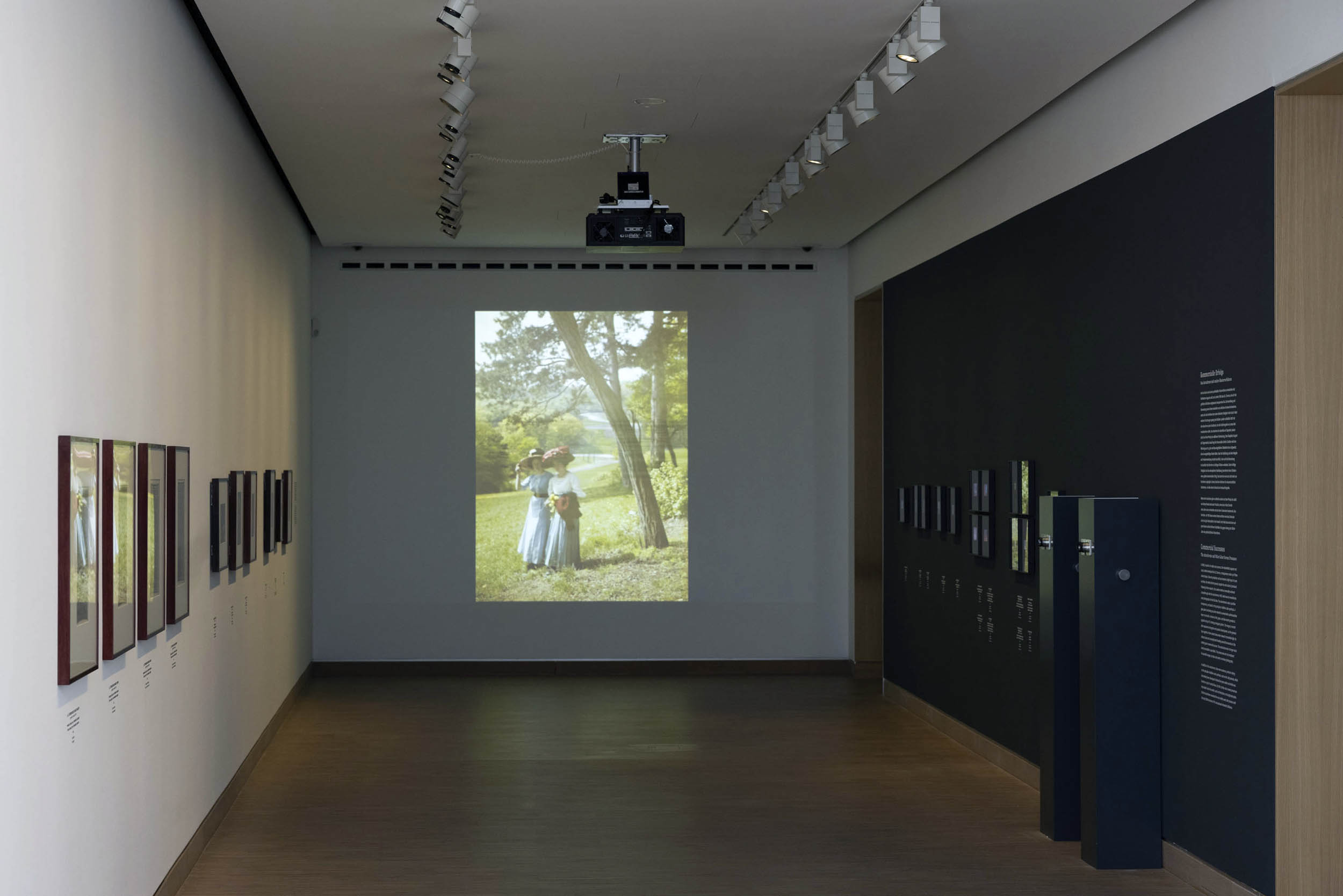


Stéphane Passet (French, 1875-1941) 'Turkey, Istanbul September' 1912


Albert Kahn, Les Archives de la planète

Stéphane Passet (French, 1875-1941)
Turkey, Istanbul
September 1912
Autochrome
© Musée Albert-Kahn, Departement des Hauts-de-Seine


Stéphane François Marie Passet (French, 1875-1941) was an amateur photographer and appointed operator on behalf of the Archives de la Planète (Archives of the Planet). This archival project began thanks to the rich French-based banker and philanthropist Albert Kahn (1860-1940), who became concerned about the Chinese cultural heritage after his part-business, part-pleasure trip to China between November 1908 and May 1909.

After his return to Paris, Kahn decided to launch the worldwide project Les Archives de la Planète. This three-decade long project distinguished itself from any other initiated at that time thanks to the compilation of a visual inventory of the world utilising ground-breaking types of media from that time, namely autochrome and film. With the utopian aim to ‘fix once and for all the aspects, the practices, and modes of human activity whose fatal disappearing is just a question of time’, Kahn hired a dozen operators to help him visualise the world, including Passet.

Biographical elements of Passet remain quite meagre. What is known is that he volunteered in the French Army for fifteen years, settled down in Paris in 1910, and worked for Kahn’s Archives de la Planète from 1912 onwards. The circumstances of his previous training as a photographer and cameraman, as well as his recruitment, remain unknown. The visual archive left to us today reveal that two trips were organised [to China] in 1912 (between May and August) and 1913 (between the end of May and the end of June). Passet and his team travelled across China, visiting and recording places such as Beijing (which composes a large part of the archive in China) and northern sites (Great Wall and Ming Tombs), Shenyang, Zhangjiakou, Qufu, Shanghai, places along the Yangtze River, and Mount Tai (hereinafter referred to as Taishan).

The Archives de la Planète ended in 1931 when Kahn was bankrupted.

Anonymous text. “Stéphane Passet,” on the Photography of China website Nd [Online] Cited 10/11/2022


Auguste Leon (French, 1857-1942) 'Bosnia-Herzegovina, Sarajevo' 15 October 1912


Albert Kahn, Les Archives de la planète

Auguste Leon (French, 1857-1942)
Bosnia-Herzegovina, Sarajevo
15 October 1912
Autochrome
© Musée Albert-Kahn, Departement des Hauts-de-Seine


Auguste Leon (French, 1857-1942) 'Bosnia-Herzegovina, Sarajevo' 15 October 1912 (detail)

Auguste Leon (French, 1857-1942) 'Bosnia-Herzegovina, Sarajevo' 15 October 1912 (detail)


Albert Kahn, Les Archives de la planète

Auguste Leon (French, 1857-1942)
Bosnia-Herzegovina, Sarajevo (details)
15 October 1912
Autochrome
© Musée Albert-Kahn, Departement des Hauts-de-Seine


Auguste Leon (French, 1857-1942), French photographer who worked for the project “Archives of the Planet” (French: Les Archives de la Planète) of millionaire French banker and philanthropist Albert Kahn (1860-1940) since 1909. Together with Jean Brin, another French photographer, they visited Macedonia during the Balkan wars in the period of 1912-1913 where they made series of autochromes (very first colour photograps) which today are in the collection of Albert Kahn museum and were published later in the publication: Macedonia in 1913 – Autochromes from the collection of the Museum Albert Kahn.


Stéphane Passet (French, 1875-1941) 'Mongolia, near Ulaanbaatar' 17 July 1913


Albert Kahn, Les Archives de la planète

Stéphane Passet (French, 1875-1941)
Mongolia, near Ulaanbaatar
17 July 1913
Autochrome
© Musée Albert-Kahn, Departement des Hauts-de-Seine


Auguste Leon (French, 1857-1942) 'Egypt, Giza' 6 January 1914


Albert Kahn, Les Archives de la planète

Auguste Leon (French, 1857-1942)
Egypt, Giza
6 January 1914
Autochrome
© Musée Albert-Kahn, Departement des Hauts-de-Seine


Stéphane Passet (French, 1875-1941) 'India, Uttar Pradesh' 19 - 21 January 1914


Albert Kahn, Les Archives de la planète

Stéphane Passet (French, 1875-1941)
India, Uttar Pradesh
19 – 21 January 1914
Autochrome
© Musée Albert-Kahn, Departement des Hauts-de-Seine


Auguste Leon (French, 1857-1942) 'Bosnia-Herzegovina, Mostar' 29 April 1913


Albert Kahn, Les Archives de la planète

Auguste Leon (French, 1857-1942)
Bosnia-Herzegovina, Mostar
29 April 1913
Autochrome
© Musée Albert-Kahn, Departement des Hauts-de-Seine


The Archives of the Planet (French: Les Archives de la Planète) was photographical endeavour to document buildings and cultures.

In 1909, Kahn travelled with his chauffeur and photographer, Alfred Dutertre to Japan on business and returned with many photographs of the journey. On his return to Europe, he decided to go back, this time with the professional photographer Augustus Leon, for a second two-month trip to South America in 1909 where he visited Uruguay, Argentina, and Brazil. All materials became the first of the “Archives of the Planet” based in Paris: a collection of colour photographs (process autochrome plates, invented by the Lumiere brothers) and movies.

This prompted him to begin a project collecting a photographic record of the entire Earth. He appointed Jean Brunhes as the project director, and sent photographers to every continent to record images of the planet using the first colour photography, autochrome plates, and early cinematography.

Professional operators were recruited and sent around the world and in France to photograph (colour) and film (the movement) as evidence “aspects, practices and modes of human activity, including the fatal disappearance is only a matter of time.” Among them, the photographer Stéphane Passet conducted between 1912 and 1914, several trips to China, Mongolia and in the British Raj (India and Pakistan), yielding several thousand Autochromes and movies on the people and customs of these country. At the same time Kahn sent his operators, including Augustus Leon, to Scandinavia and more than twenty European countries on the eve of the Great War. Kahn’s photographers began documenting France in 1914, just days before the outbreak of World War I, and by liaising with the military managed to record both the devastation of war, and the struggle to continue everyday life and agricultural work. Other parts of France are not forgotten either, Kahn sending Brittany operators to take monochromes from 1909-1931. In 1926 and 1927, it was to Japan that he sends an operator, Roger Dumas.

Between 1909 and 1931 they collected 72,000 colour photographs and 183,000 meters of film. These form a unique historical record of 50 countries, known as The Archives of the Planet. Between 1909 and 1931, it is thus some 72,000 autochrome (first global fund of early colour photography), 4000 black-and-white, and a hundred hours of footage that will be reported from fifty country. These images are the iconographic side of a large documentation project that will take other forms (publications, documentation centres, etc.) and whose goal is a better understanding of other nations for a better deal in order to prevent conflicts. The images are also projected for this purpose to the guests, often prestigious people from around the world, as well as in higher education structures.

Translated from the French Wikipedia website


Stéphane Passet (French, 1875-1941) 'Mongolia, Ulaanbaatar' 25 July 1913


Albert Kahn, Les Archives de la planète

Stéphane Passet (French, 1875-1941)
Mongolia, Ulaanbaatar
25 July 1913
Autochrome
© Musée Albert-Kahn, Departement des Hauts-de-Seine


Stéphane Passet (French, 1875-1941) 'India, Bombay' 17 December 1913


Albert Kahn, Les Archives de la planète

Stéphane Passet (French, 1875-1941)
India, Bombay
17 December 1913
Autochrome
© Musée Albert-Kahn, Departement des Hauts-de-Seine


Stéphane Passet (French, 1875-1941) 'France, Paris' 24 June 1914


Albert Kahn, Les Archives de la planète

Stéphane Passet (French, 1875-1941)
France, Paris (Family in the Rue du Pot-de-Fer)
24 June 1914
Autochrome
© Musée Albert-Kahn, Departement des Hauts-de-Seine


Auguste Leon (French, 1857-1942) 'Serbia, Krusevac' 29 April 1913


Albert Kahn, Les Archives de la planète

Auguste Leon (French, 1857-1942)
Serbia, Krusevac
29 April 1913
Autochrome
© Musée Albert-Kahn, Departement des Hauts-de-Seine


Auguste Leon (French, 1857-1942) 'Serbia, Krusevac' (detail) 29 April 1913


Albert Kahn, Les Archives de la planète

Auguste Leon (French, 1857-1942)
Serbia, Krusevac (detail)
29 April 1913
Autochrome
© Musée Albert-Kahn, Departement des Hauts-de-Seine


In commemoration of the outbreak of the First World War, the Martin-Gropius-Bau is presenting an exhibition entitled The World c. 1914 – Colour Photography Before the Great War, which features nearly forgotten colour photographs and films commissioned by the French banker Albert Kahn (1860-1940) before the First World War. As the nations of Europe were already arming themselves for battle, Kahn, who was excited by the Lumière Brothers’ colour photography process, dispatched photographers out into the world to develop a unique photo archive. Over 70,000 colour photos have survived in this collection. They represent an immense ethnographic treasure and were also intended to perform a mission of peace: Bringing the outside world closer to home. Kahn’s activities were intended to help secure the fragile peace. The exhibition brings this treasure trove of images from a long forgotten world to light.

For Albert Kahn, knowledge of peoples, buildings, landscapes and lifestyles was directly related to his desire for global peace: People who know and respect one another, and who encounter one another face to face, do not need to wage war. In 1908/09, excited by the new autochrome process of the brothers August and Louis Lumière, Kahn commissioned his photographers to document the world with the goal of assembling an archive of colour photographs from Europe, Asia and Africa. They photographed local scenes and people in typical clothing as well as monuments of cultural history. From this global treasure trove, more than 160 images have been selected for this exhibition. The autochromes from the Kahn archive form the centrepiece. The exhibition also displays images and projections by Adolf Miethe (1862-1927) and Sergei M. Prokudin-Gorskii (1863-1944).

Adolf Miethe, the inventor of a panchromatic film-coating process and thus the creator of three-colour printing, played a significant role in the development of colour photography. His presentation before the Kaiser led to a commission to create a colour documentation of German landscapes for the St. Louis World’s Fair. His work also enjoyed great popularity as collectible pictures sold with chocolate bars. This resulted in the “Stollwerck Album” – Germany’s first coloured photographic album.

Moreover, the Miethe Process inspired the Russian photographer Sergei Mikhailovich Prokudin-Gorskii. His work is present in the form of approximately twenty-five colour prints and fifty projected photos. A special item is on loan from the German Museum in Munich: The original projector with which Sergei Prokudin-Gorskii exhibited his work to Nicholas II, the last tsar. In 1909, as a result of this presentation, Prokudin-Gorskii received a commission to record the Russian Empire in 10,000 photos. Between 1909 and 1915, Gorskii made several thousand photographs of great brilliance. He documented the cultural diversity of the tsarist empire from the Crimean Peninsula to Siberia.

Text from the Martin-Gropius-Bau website


Auguste Leon (French, 1857-1942) 'Egypt, Assuan' 20 January 1914


Albert Kahn, Les Archives de la planète

Auguste Leon (French, 1857-1942)
Egypt, Assuan
20 January 1914
Autochrome
© Musée Albert-Kahn, Departement des Hauts-de-Seine


Stéphane Passet (French, 1875-1941) 'Morocco, Fes' January 1913


Albert Kahn, Les Archives de la planète

Stéphane Passet (French, 1875-1941)
Morocco, Fes
January 1913
Autochrome
© Musée Albert-Kahn, Departement des Hauts-de-Seine


Stéphane Passet (French, 1875-1941) 'China, Beijing' 26 May 1913


Albert Kahn, Les Archives de la planète

Stéphane Passet (French, 1875-1941)
China, Beijing
26 May 1913
Autochrome
© Musée Albert-Kahn, Departement des Hauts-de-Seine


Stéphane Passet (French, 1875-1941) 'Turkey, Istanbul, Pera' (today: Beyoğlu) September 1912


Albert Kahn, Les Archives de la planète

Stéphane Passet (French, 1875-1941)
Turkey, Istanbul, Pera (today: Beyoğlu)
September 1912
Autochrome
© Musée Albert-Kahn, Departement des Hauts-de-Seine


Stéphane Passet (French, 1875-1941) 'Le Moulin Rouge, Boulevard de Clichy (18°) Paris' 24 June 1914


Albert Kahn, Les Archives de la planète

Stéphane Passet (French, 1875-1941)
Le Moulin Rouge, Boulevard de Clichy (18°), Paris
24th June 1914
Autochrome
© Musée Albert-Kahn, Departement des Hauts-de-Seine


Martin-Gropius-Bau Berlin
Niederkirchnerstraße 7
Corner Stresemannstr. 110
10963 Berlin
Phone: +49 (0)30 254 86-0

Opening hours:
Wednesday to Monday 10 – 19 hrs
Tuesday closed

Martin-Gropius-Bau website

LIKE ART BLART ON FACEBOOK

Back to top