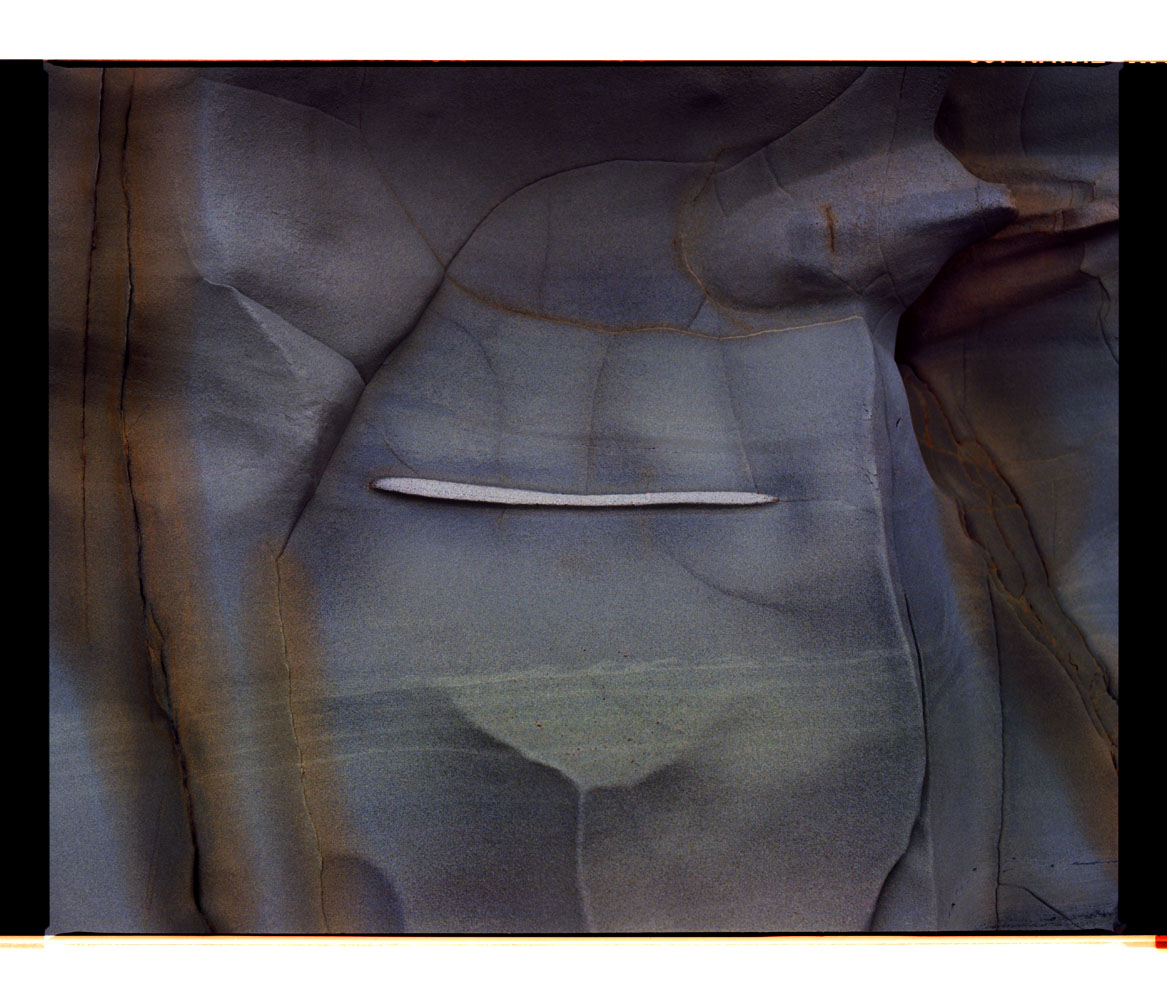
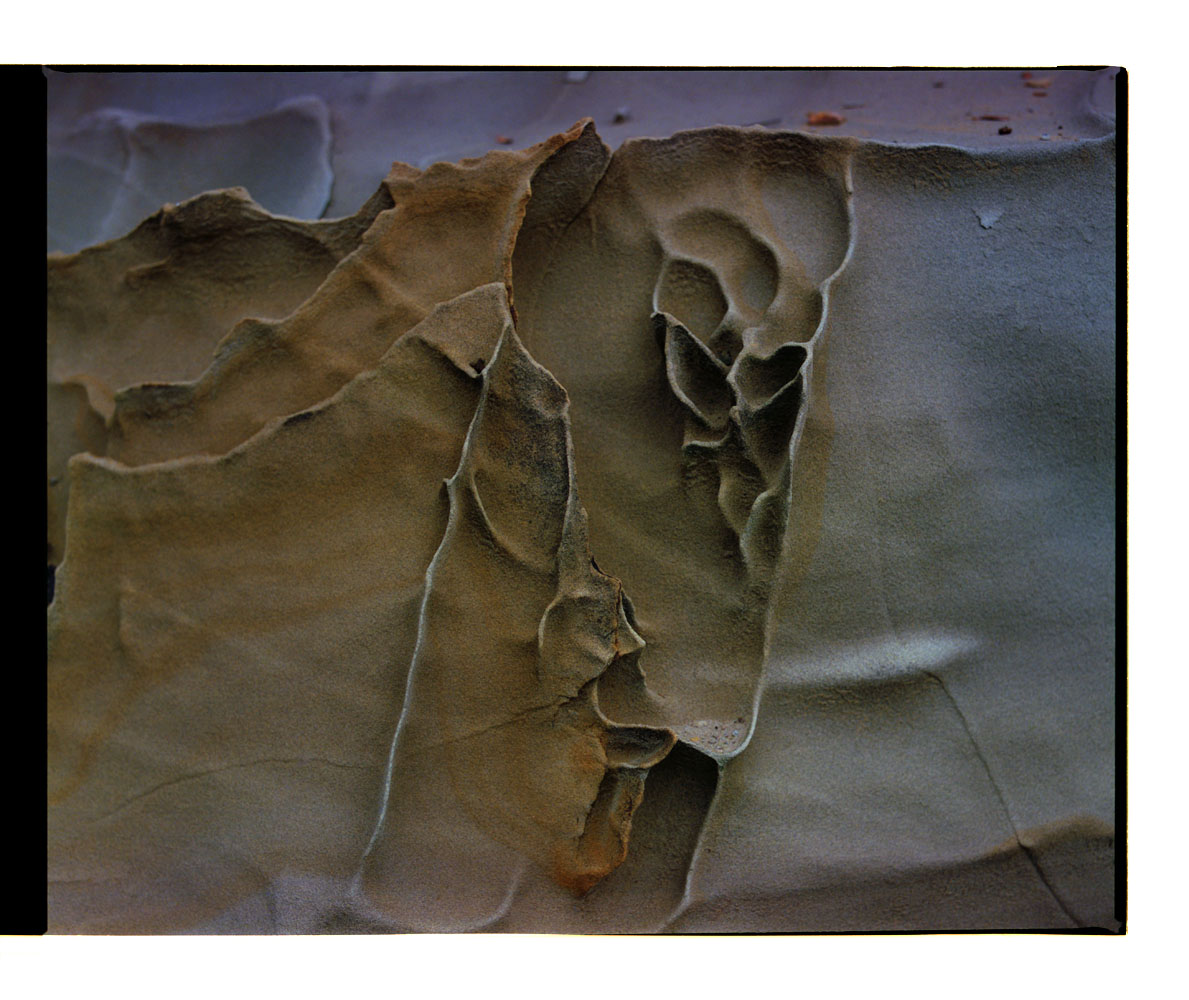
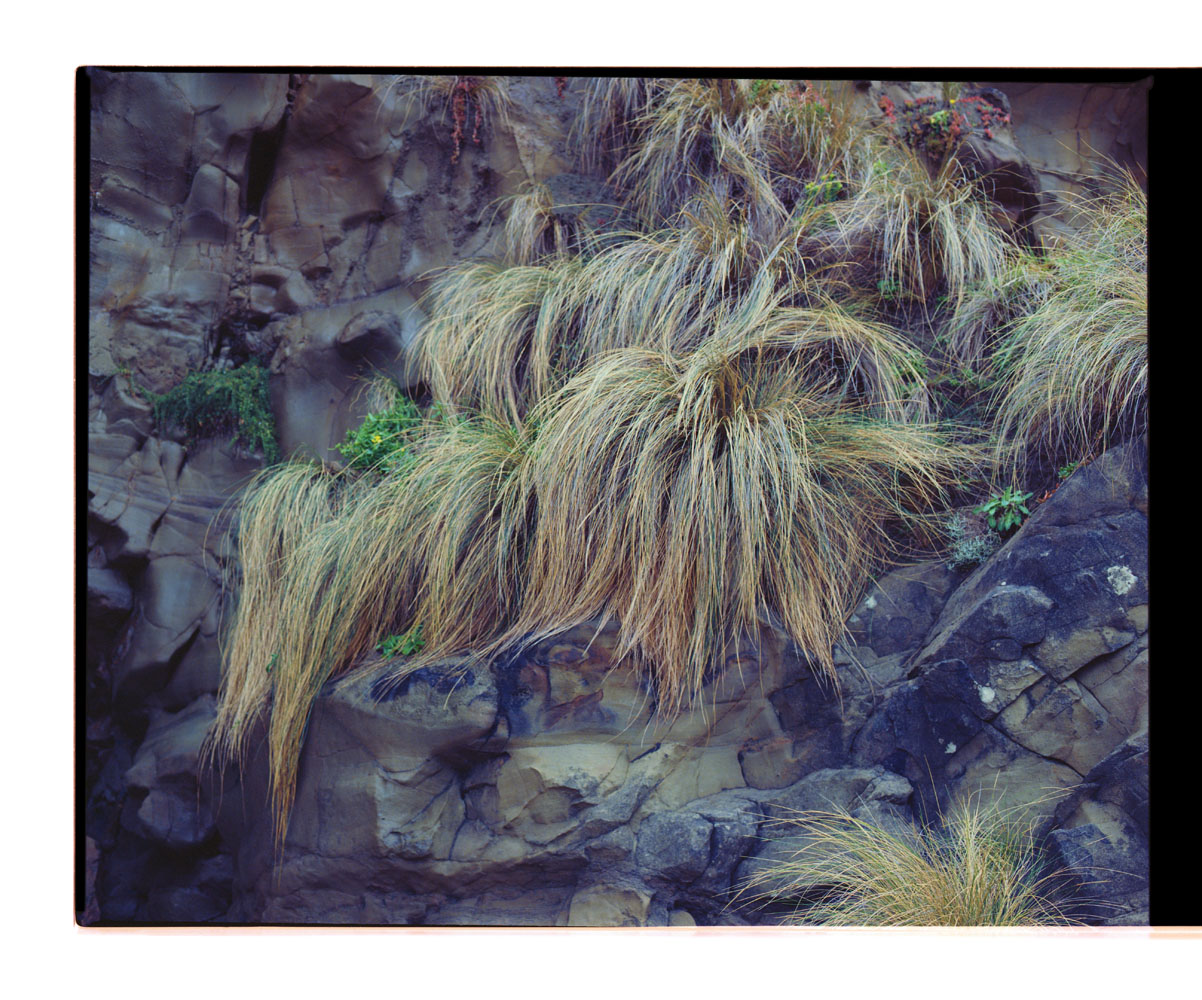
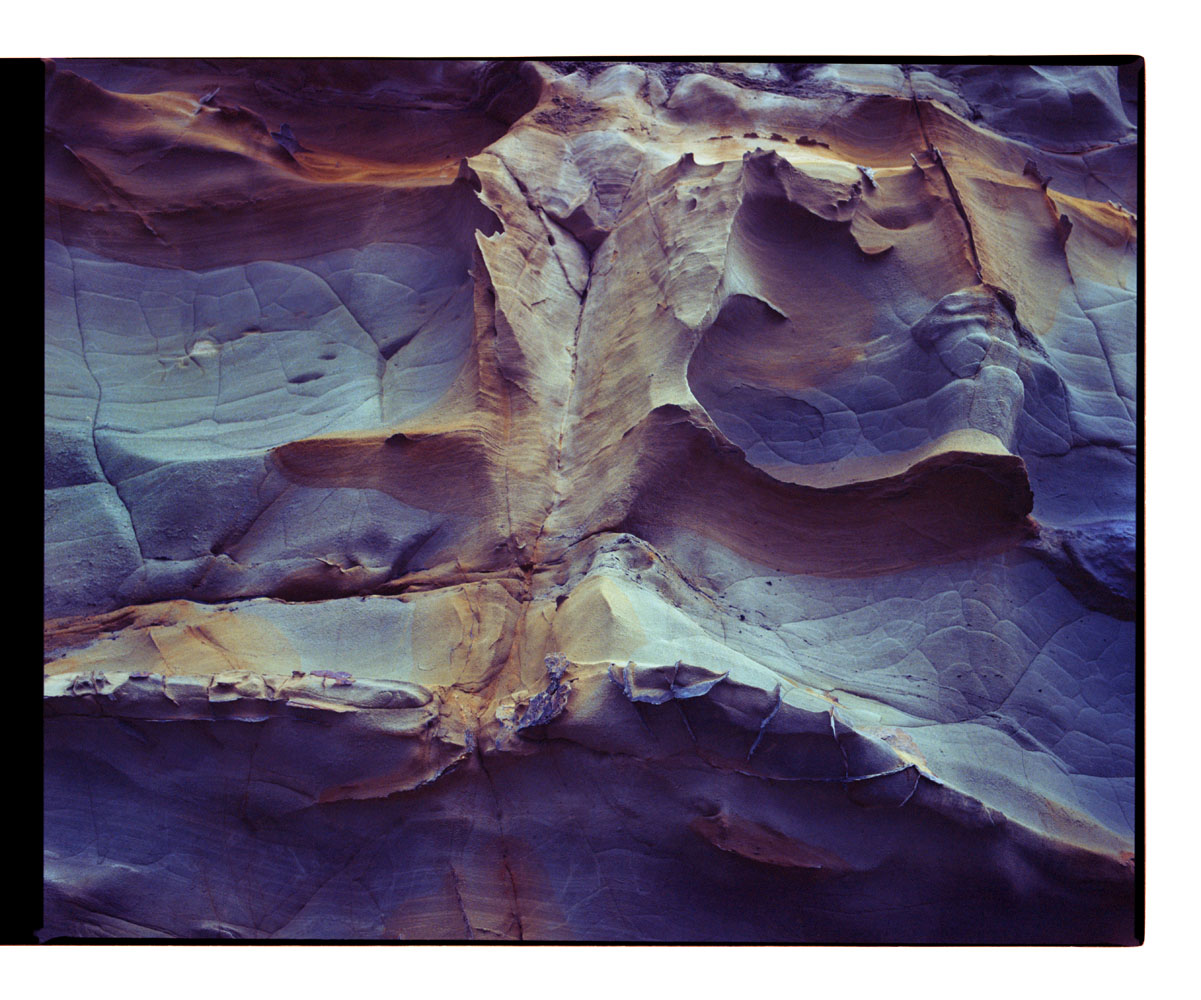
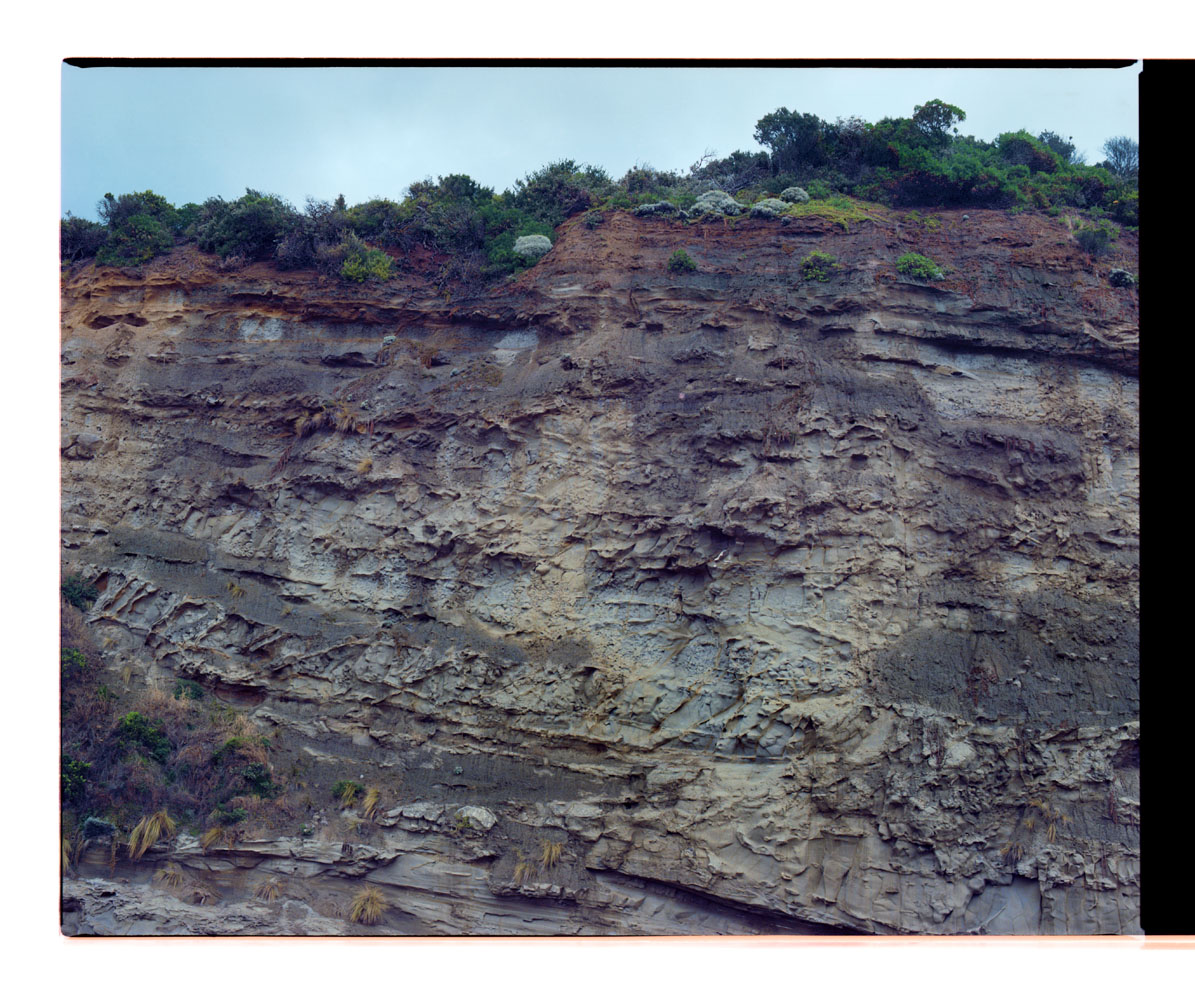
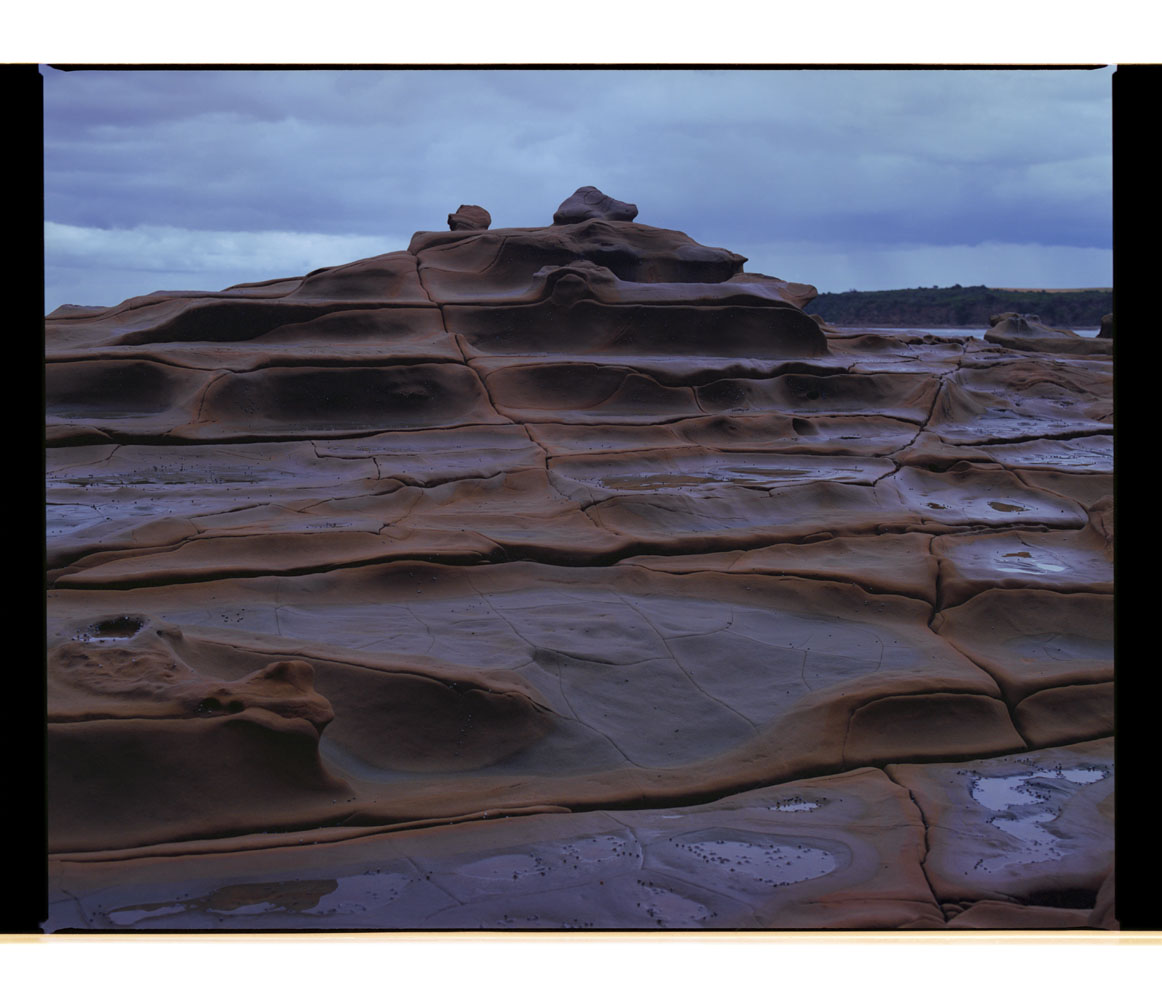
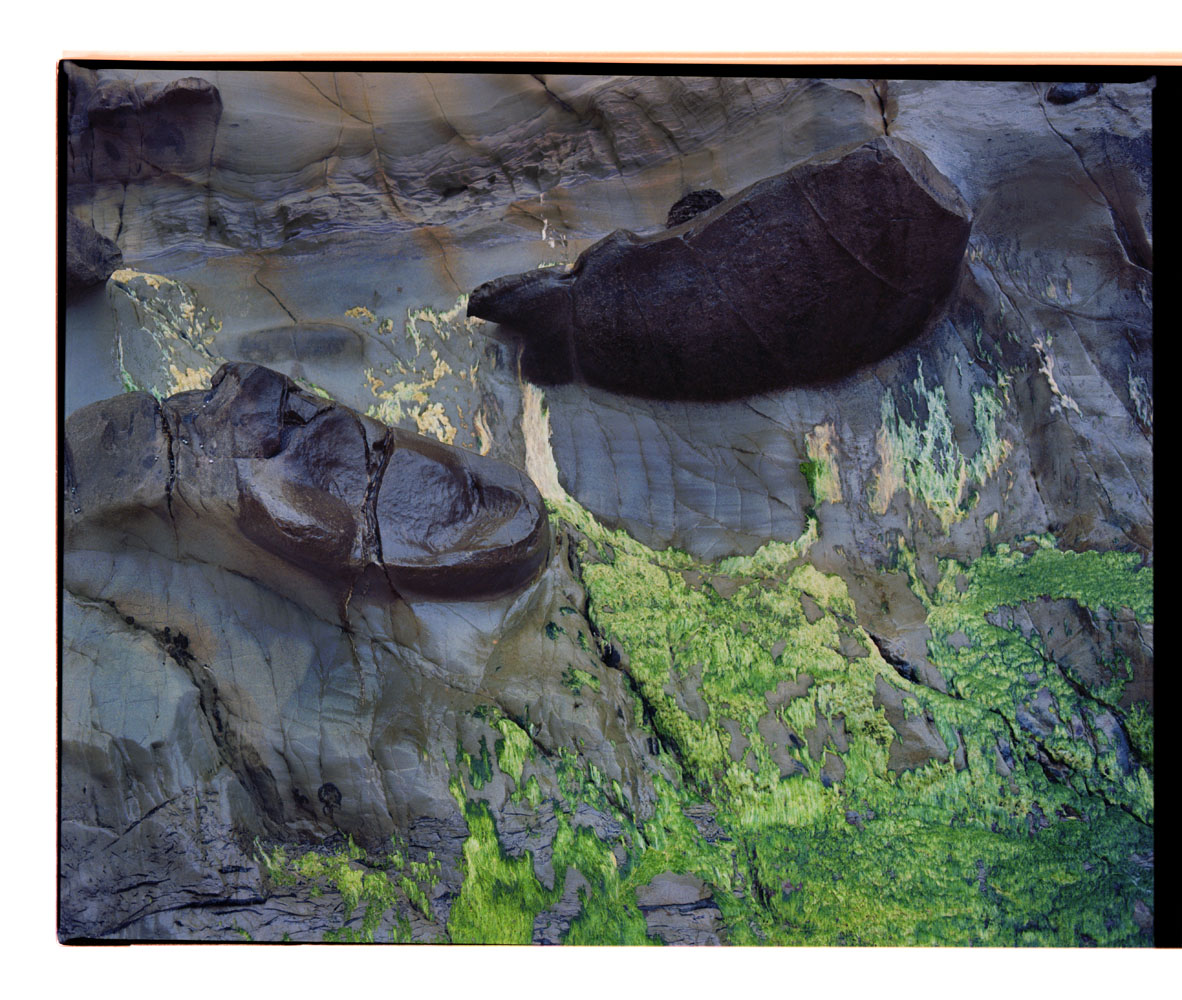
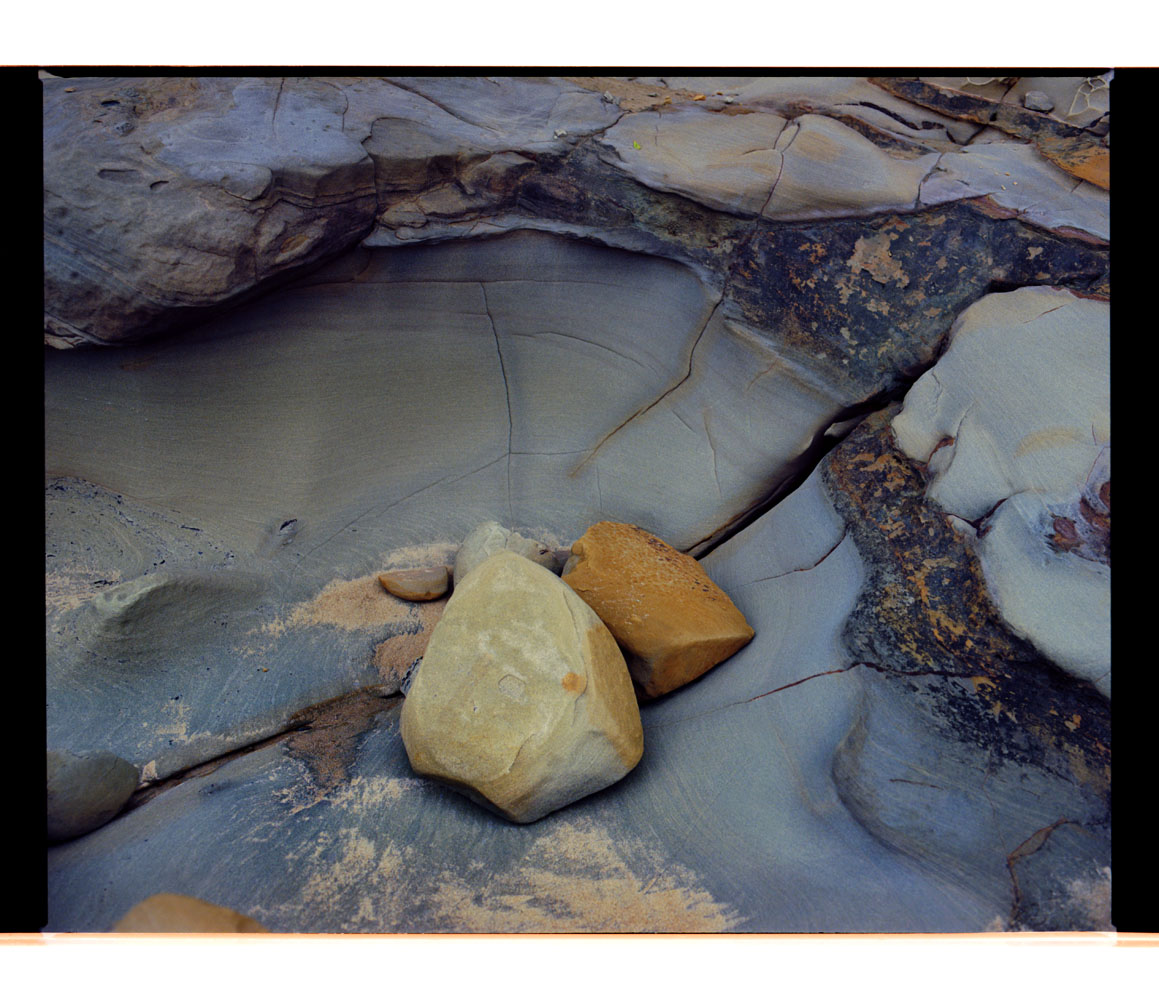
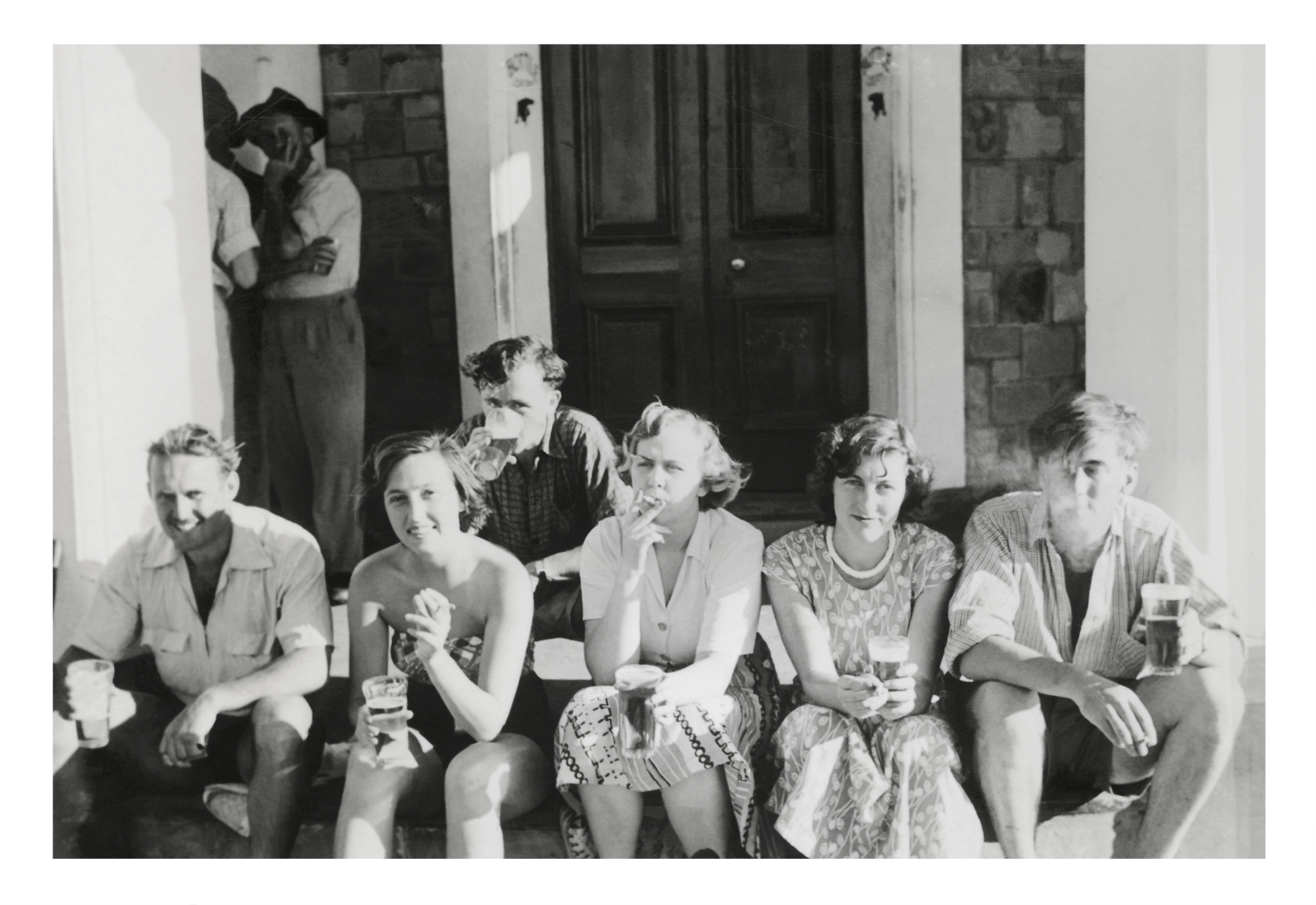
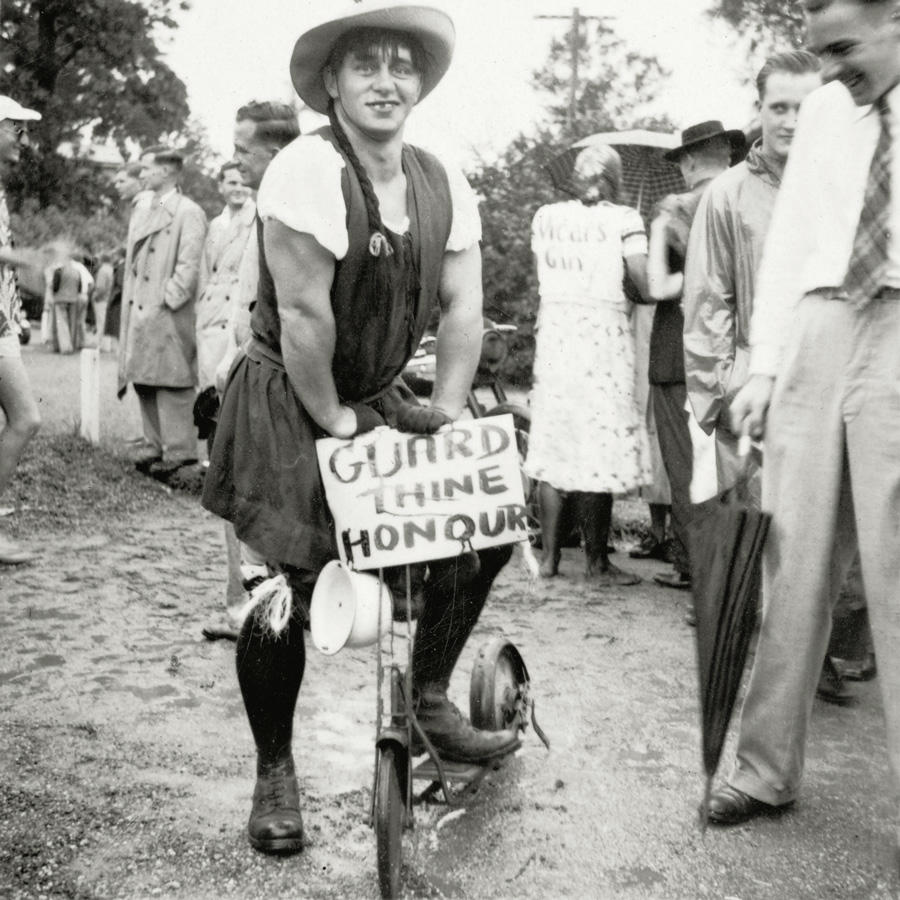
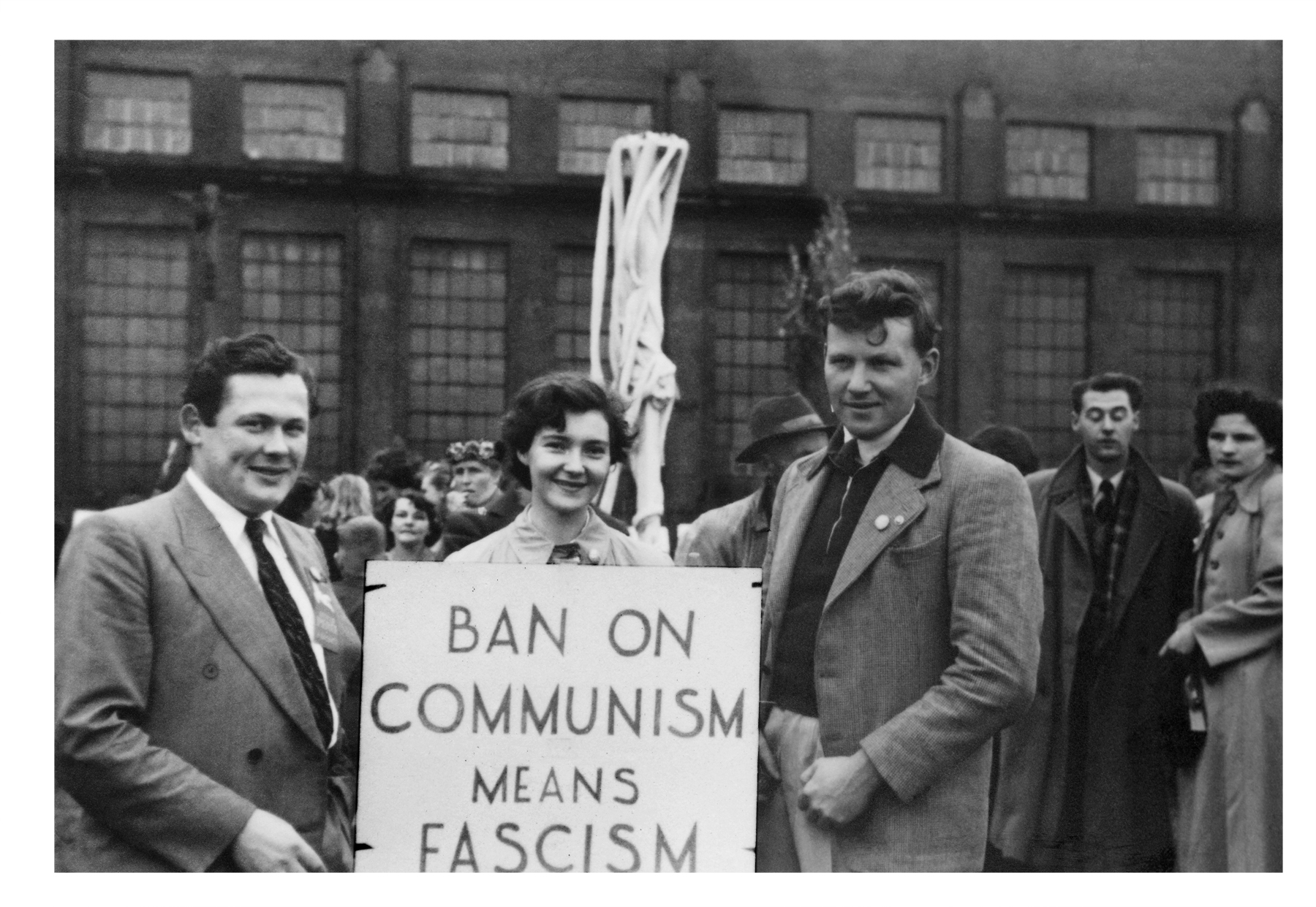
Photographs: Anonymous 1960s medium format Kodak Ektachrome slides of Australia

July 2025


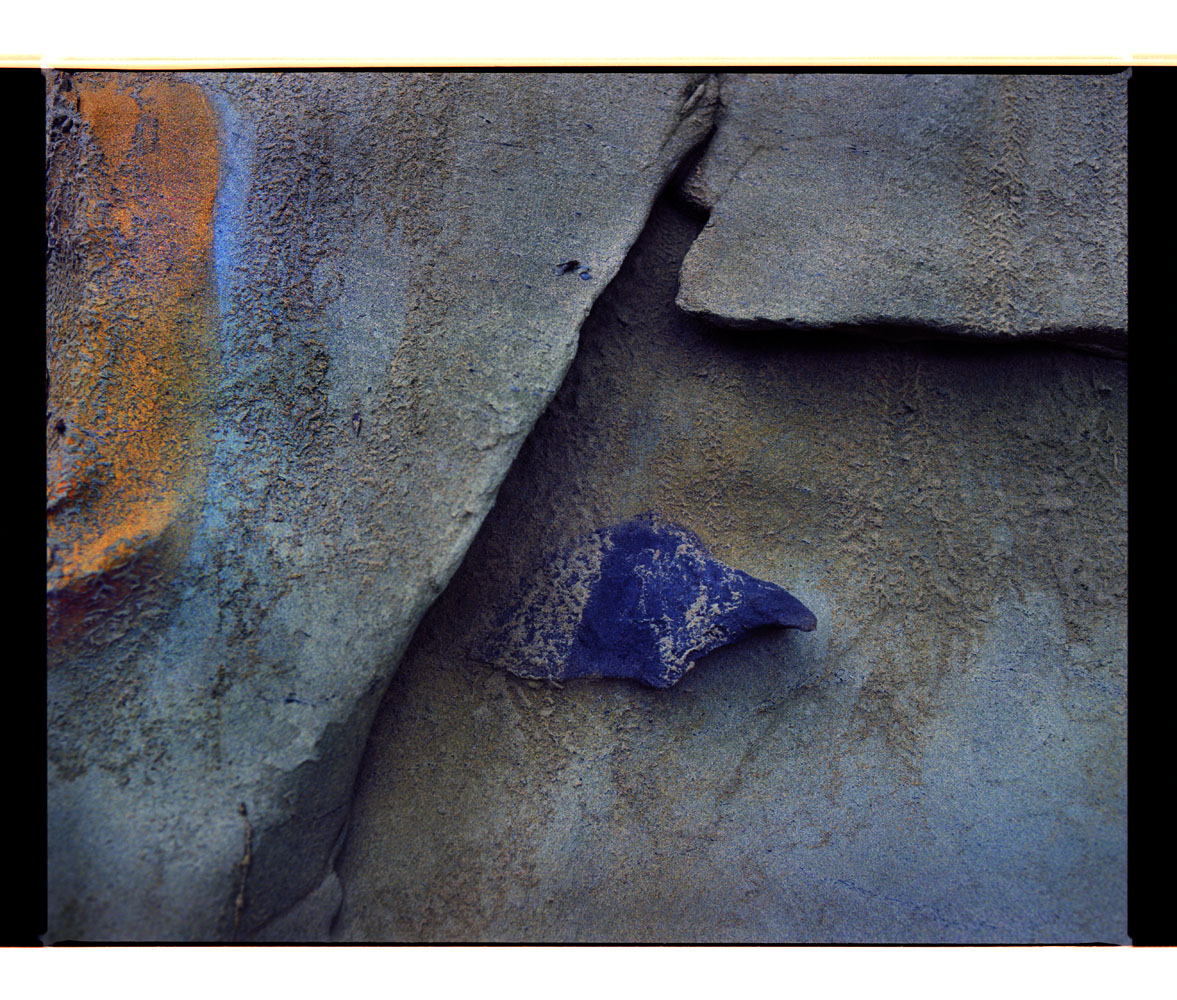
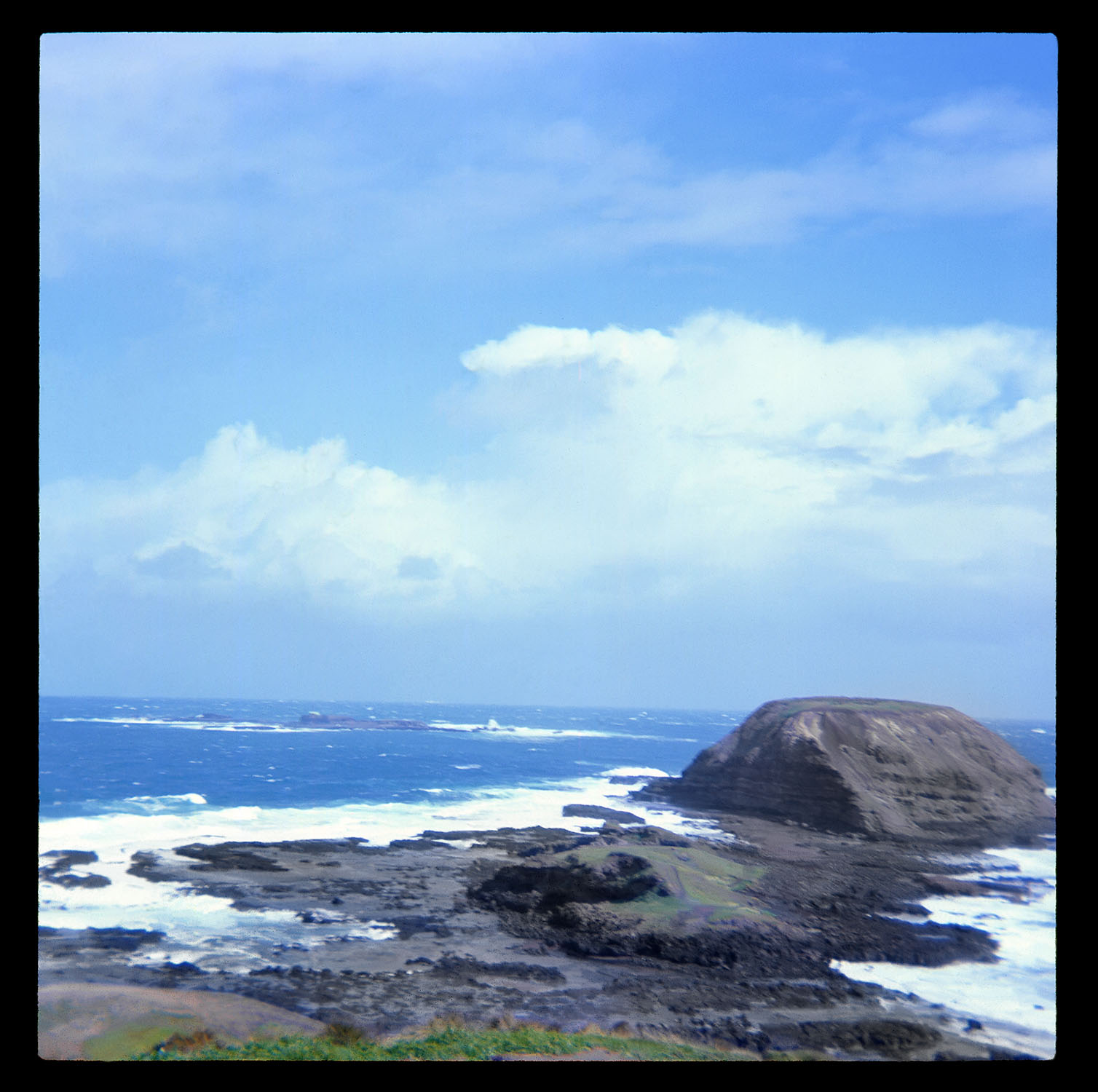
Unknown photographer (Australian) 'The Nobbies, Phillip Island, Victoria, Australia' 1960s


Unknown photographer (Australian)
The Nobbies, Phillip Island, Victoria, Australia
1960s
Ektachrome medium format transparency scanned


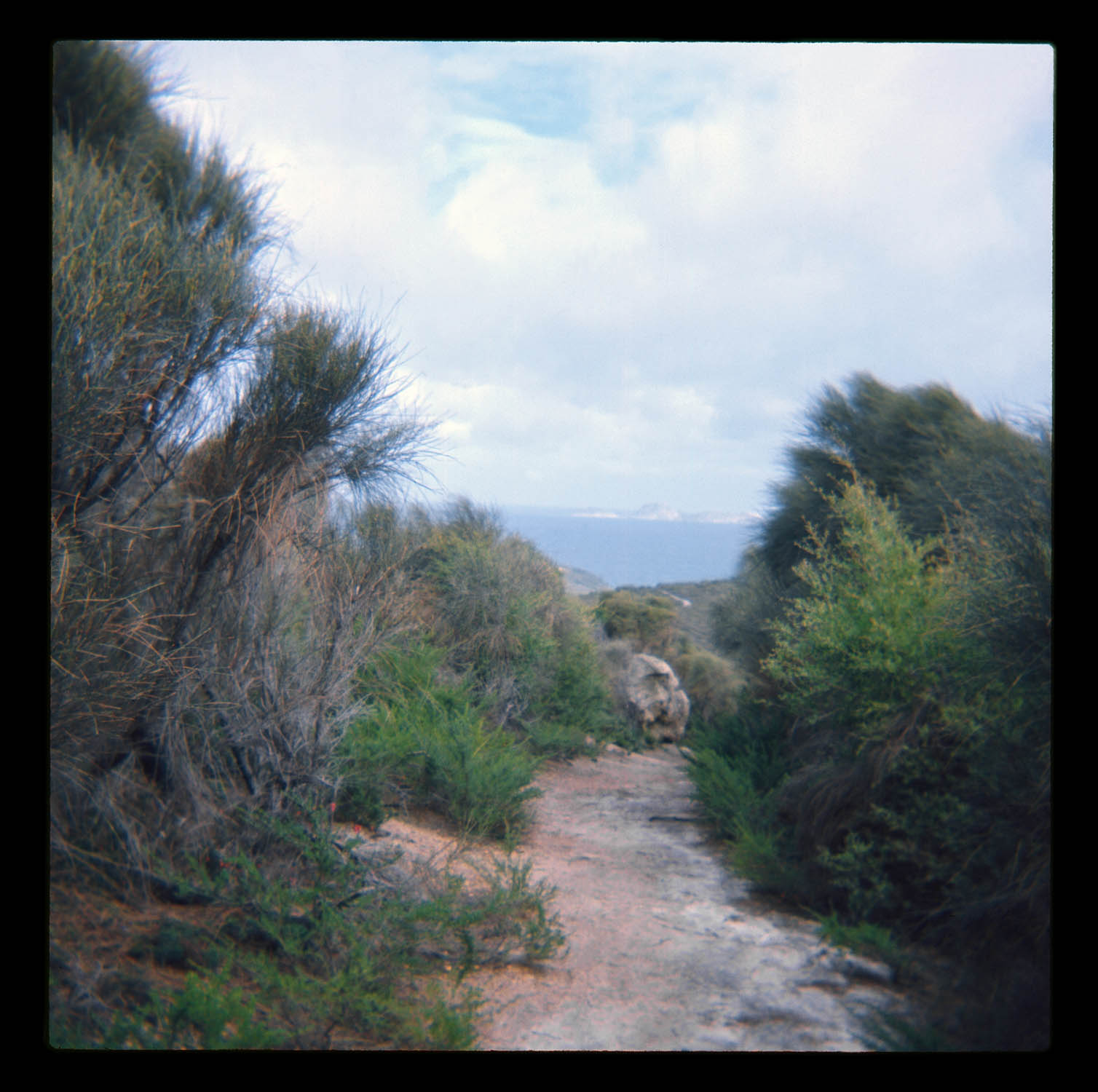
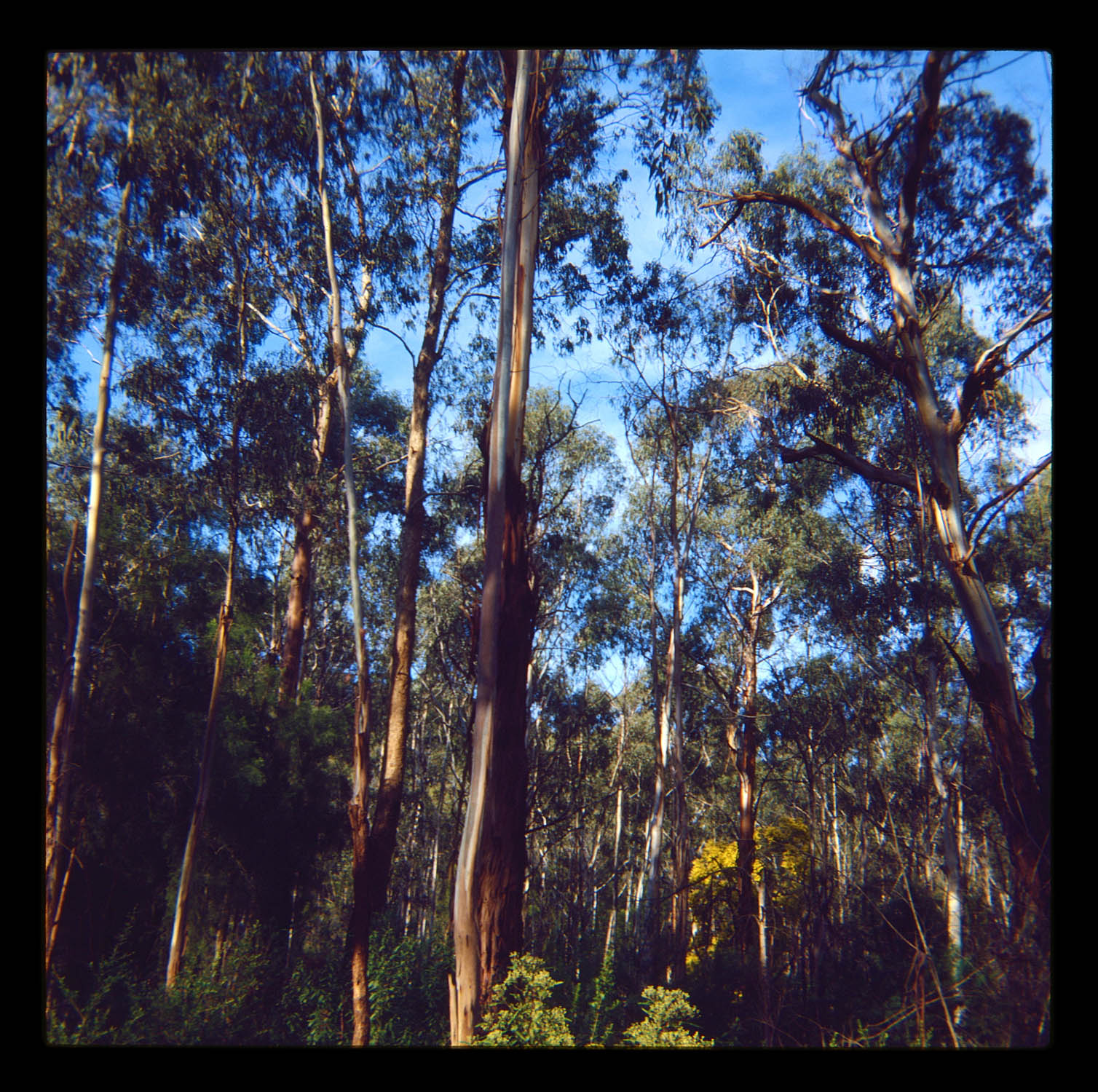
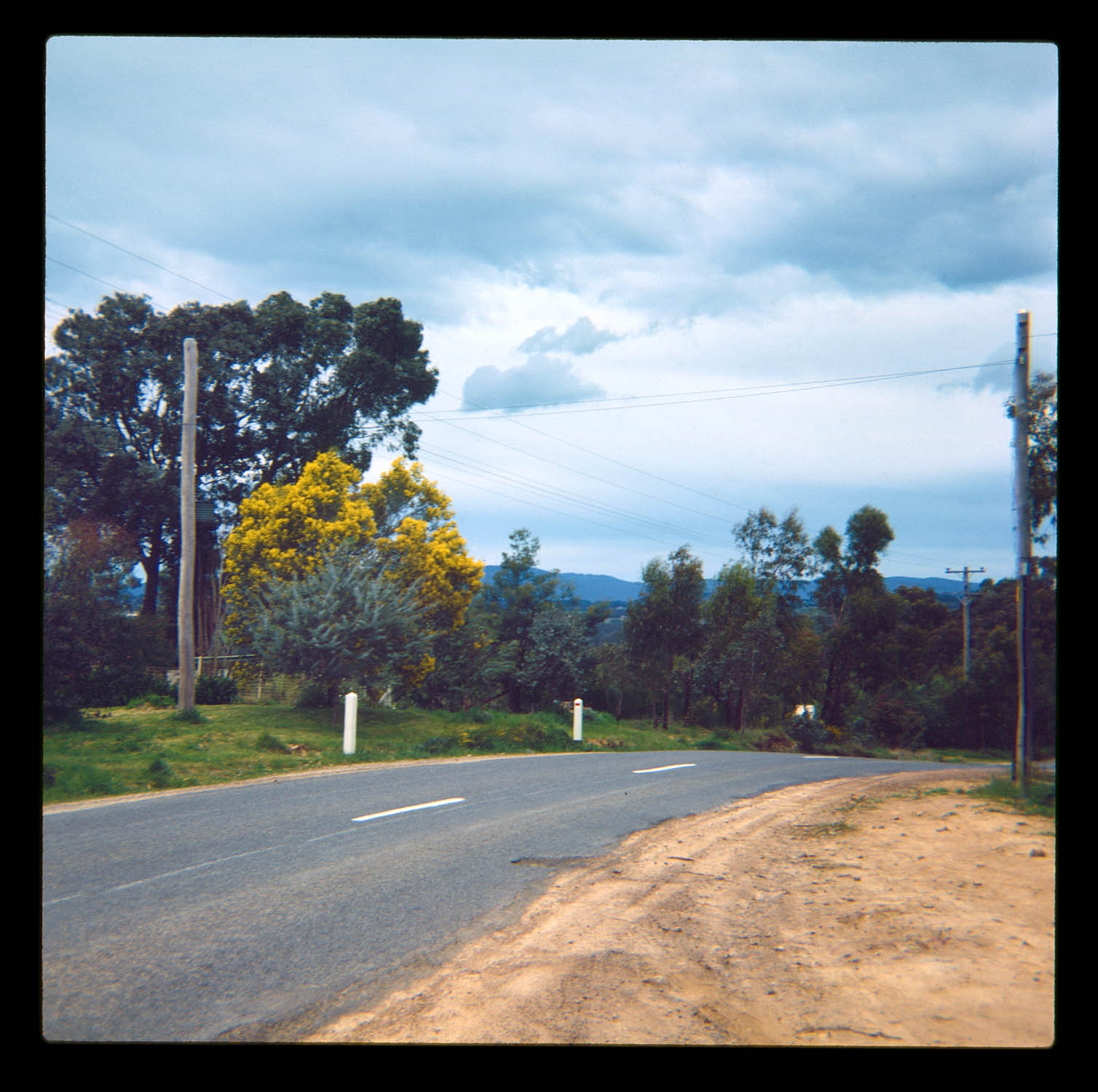
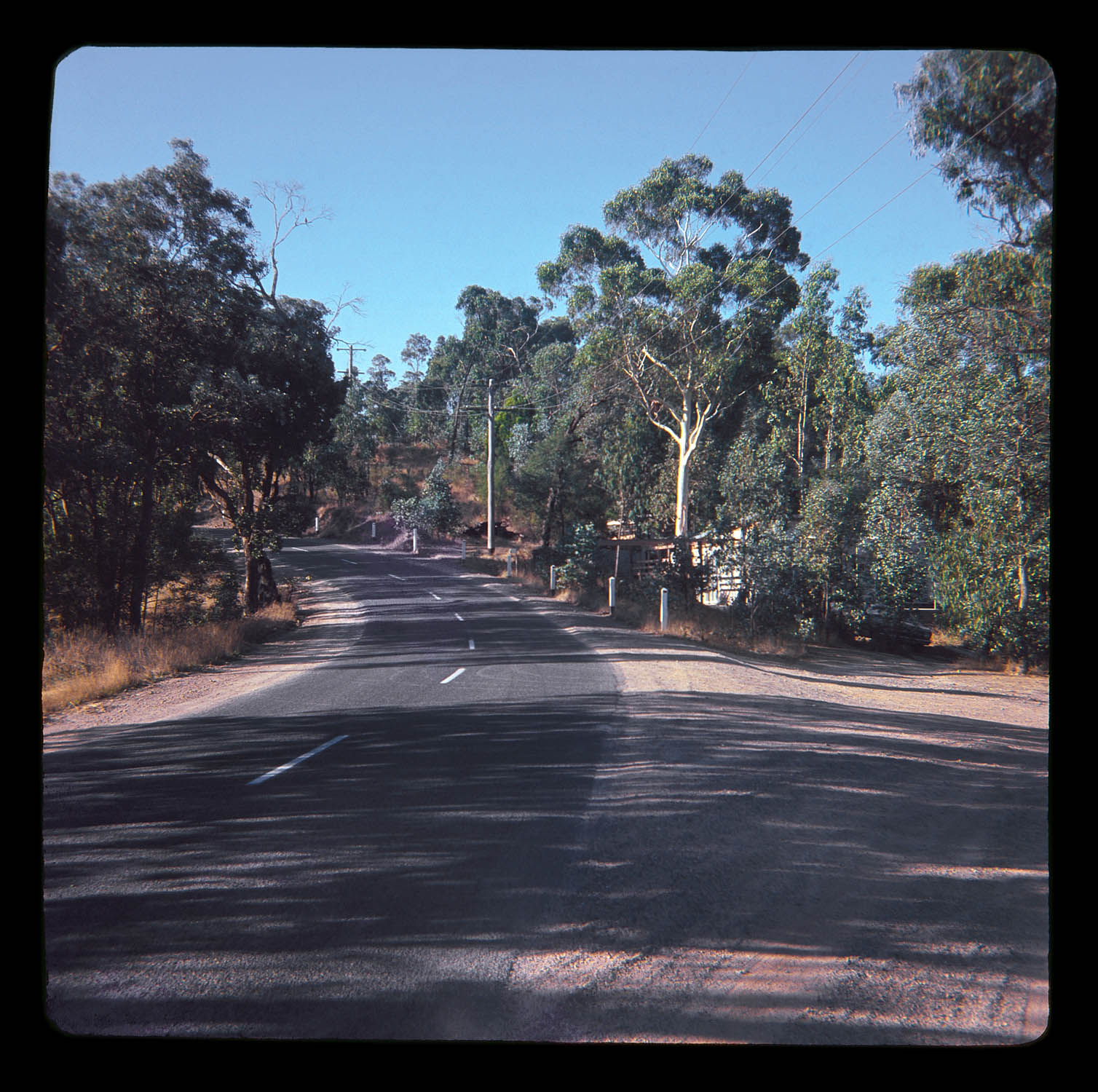
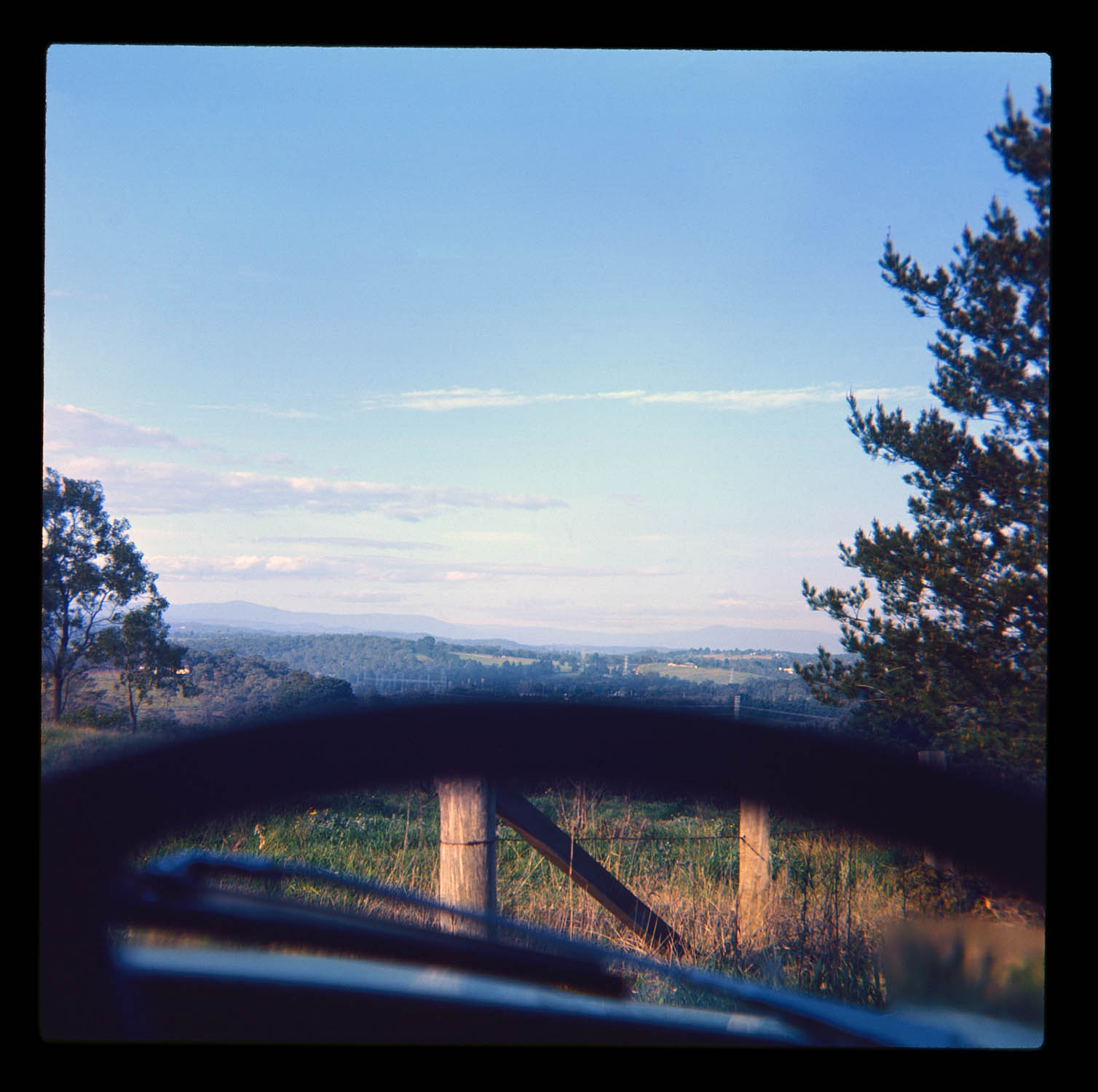
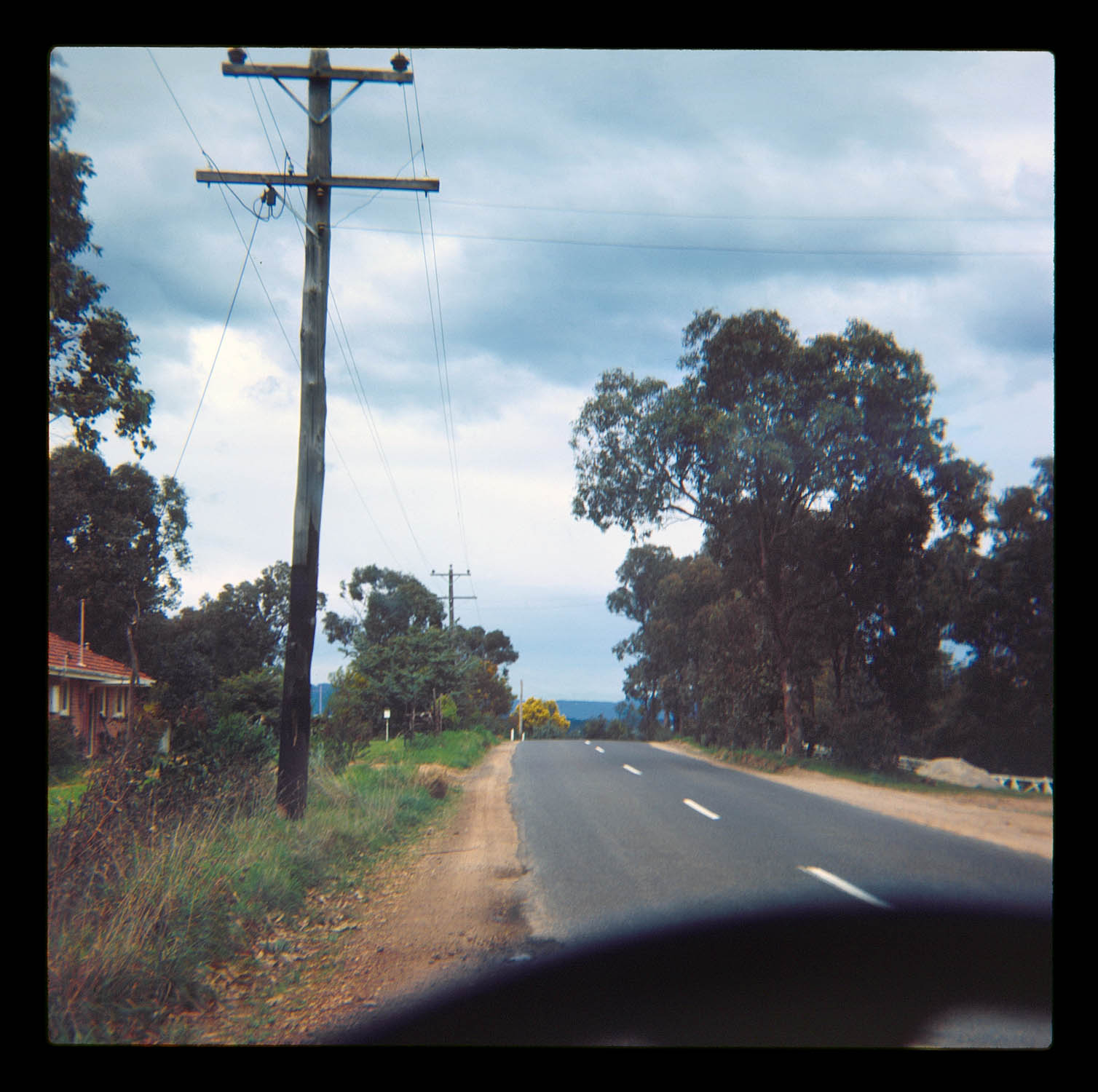
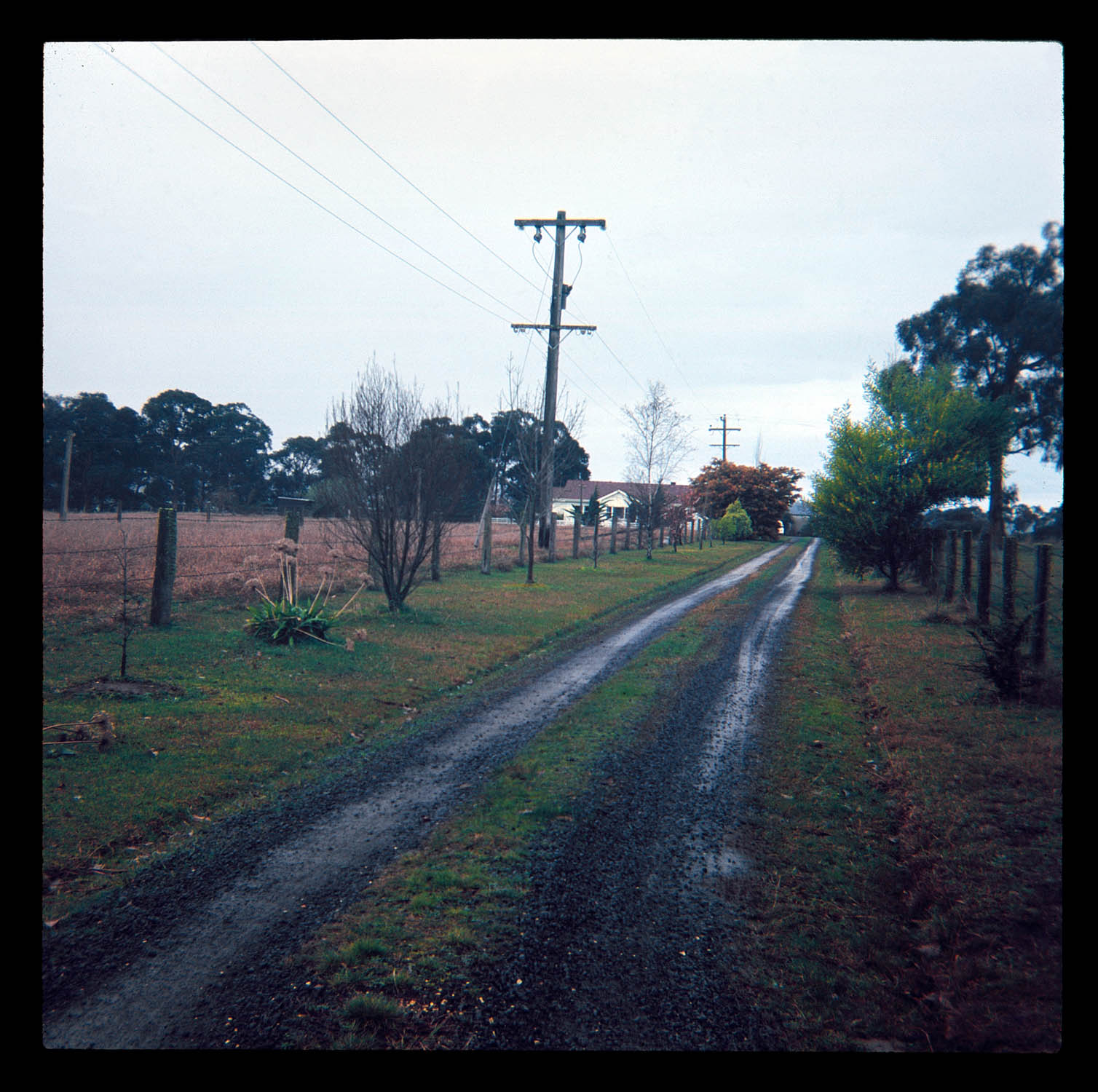
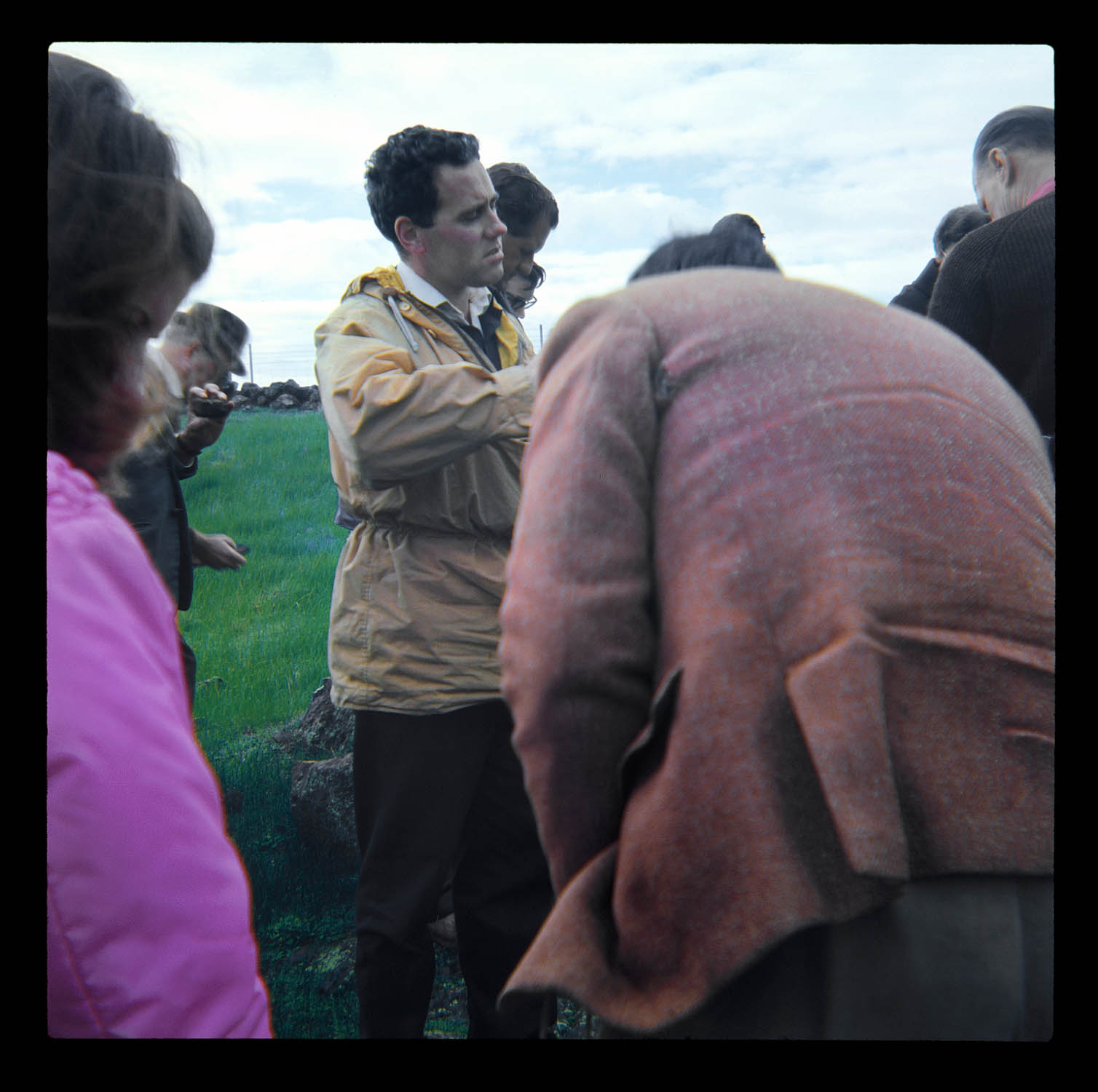
Further Australian photographs from scans of 73 medium format Kodak Ektakchrome slides found in a country town in Victoria, Australia taken in Australia, Mexico, United States of America and Canada in the mid-1960s. I believe that the photographer was an Australian who was on holiday in Mexico, United States of America and Canada.

In nearly 40 years of being a photographer I have never seen colour medium format slides from the 1960s. There was no colour fading to the slides. The person who took the photographs was shooting medium format colour in the 1960s so they would have been a photographic aficionado. Just by holding the slides up to the light I could see the photographs were compositionally very interesting. Whoever the photographer was they had a great eye!

There are some beautiful photographs of the Australian landscape here. And the Australian “light” and colour are so different from the rest of the photographs (see part 1 of the posting).

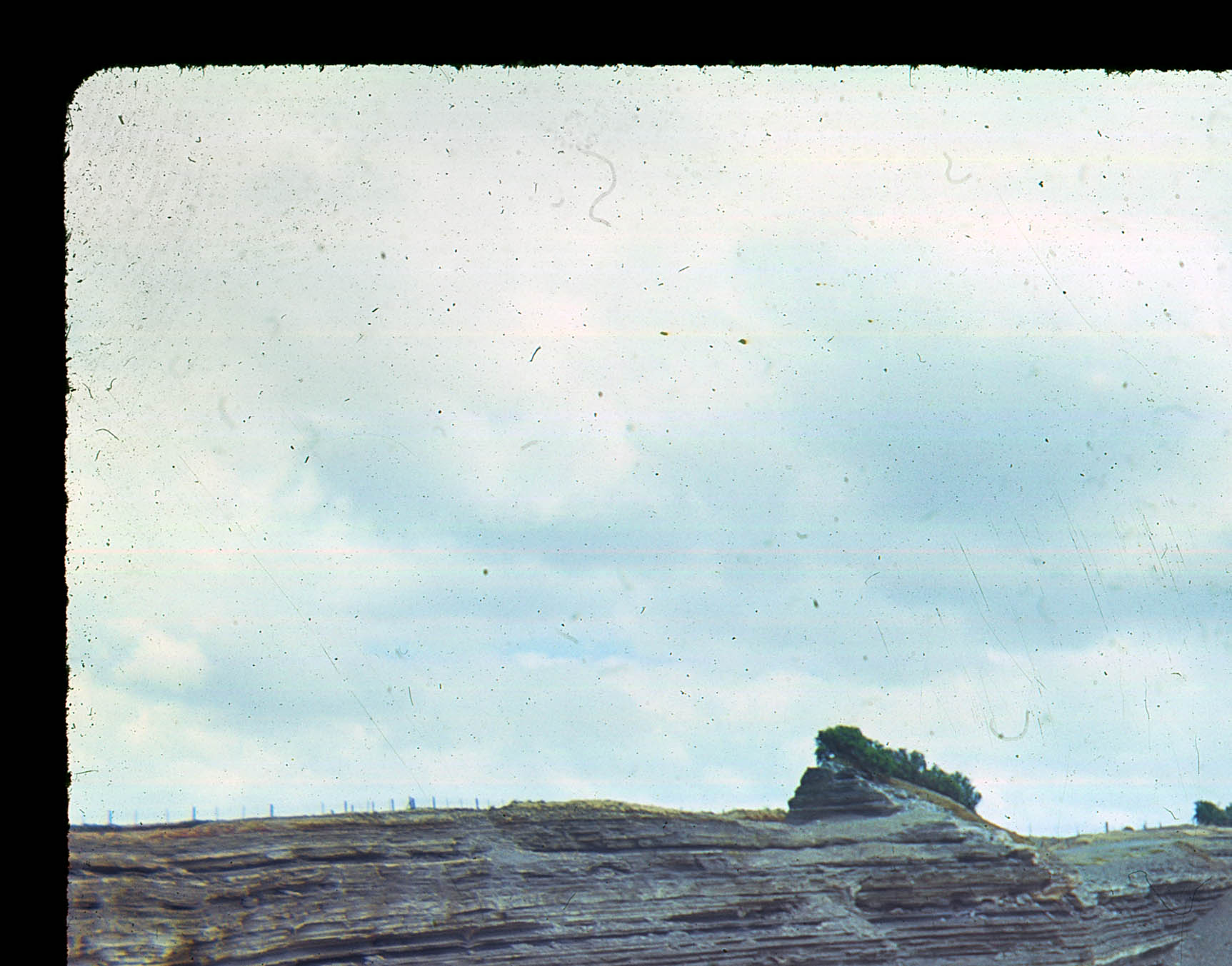
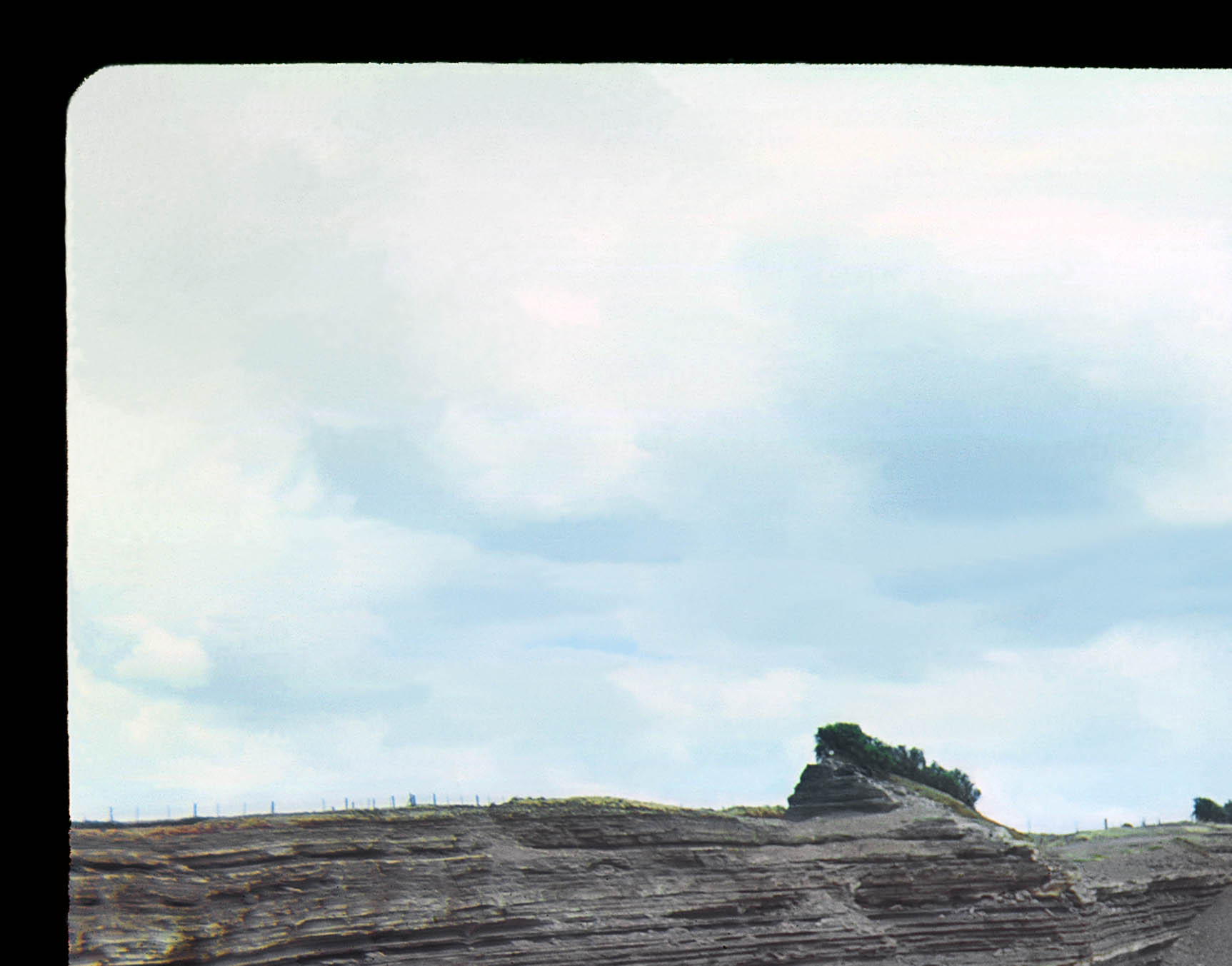
I have also included an example of how incredibly dirty these slides were, see Untitled (Australian landscape) (detail uncleaned and cleaned) 1960s (below), and note how much work and many hours were required to bring these images back into a state of grace … and preservation.

Dr Marcus Bunyan


All photographs © Marcus Bunyan. Please click on the photographs for a larger version of the image. See Part 1 of the posting.


Unknown photographer (Australian) 'Untitled (Australian landscape)' 1960s


Unknown photographer (Australian)
Untitled (Australian landscape)
1960s
Ektachrome medium format transparency scanned


The fault at left appears in several other slides in these Ektachromes and must have been in the camera as it’s not in the slide itself…


Unknown photographer (Australian) 'Untitled (Australian landscape)' 1960


Unknown photographer (Australian)
Untitled (Australian landscape)
1960s
Ektachrome medium format transparency scanned


Unknown photographer (Australian) 'Untitled (Australian landscape)' 1960


Unknown photographer (Australian)
Untitled (Australian landscape)
1960s
Ektachrome medium format transparency scanned


There is a Mini panel van on the causeway!


Unknown photographer (Australian) 'Untitled (Australian landscape)' 1960s


Unknown photographer (Australian)
Untitled (Australian landscape)
1960s
Ektachrome medium format transparency scanned


The same landscape as the two photographs below


Unknown photographer (Australian) 'Untitled (Australian landscape)' 1960


Unknown photographer (Australian)
Untitled (Australian landscape)
1960s
Ektachrome medium format transparency scanned


Unknown photographer (Australian) 'Untitled (Australian landscape)' 1960s


Unknown photographer (Australian)
Untitled (Australian landscape)
1960s
Ektachrome medium format transparency scanned


Unknown photographer (Australian) 'Untitled (Australian landscape)' 1960s (detail uncleaned and cleaned)


Unknown photographer (Australian)
Untitled (Australian landscape) (detail uncleaned and cleaned)
1960s
Ektachrome medium format transparency scanned


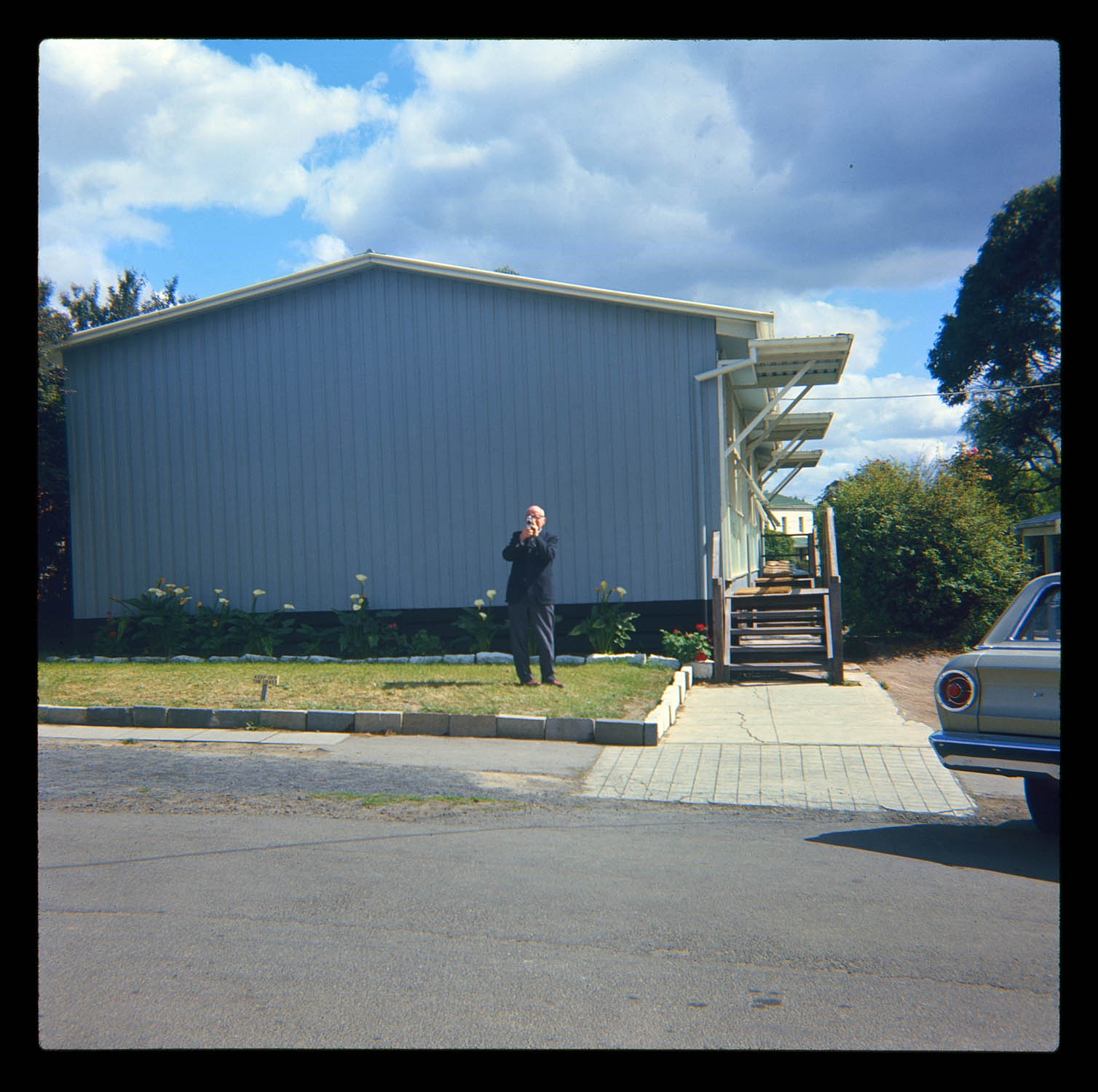
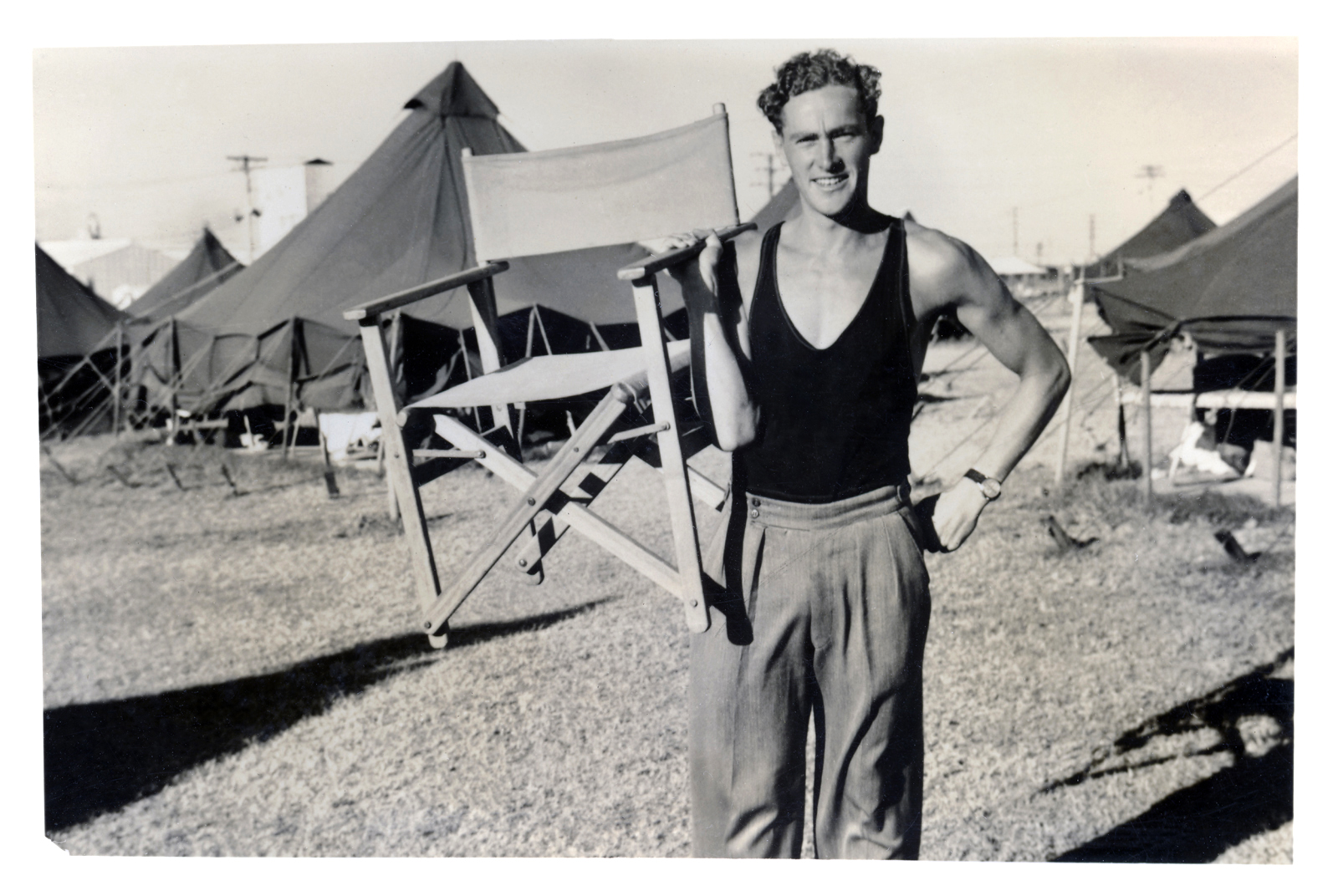
Unknown photographer (Australian) 'Untitled (Man holding his movie camera, Australia)' 1960s


Unknown photographer (Australian)
Untitled (Man holding his movie camera, Australia)
1960s
Ektachrome medium format transparency scanned


Australian built Ford XR Falcon station wagon


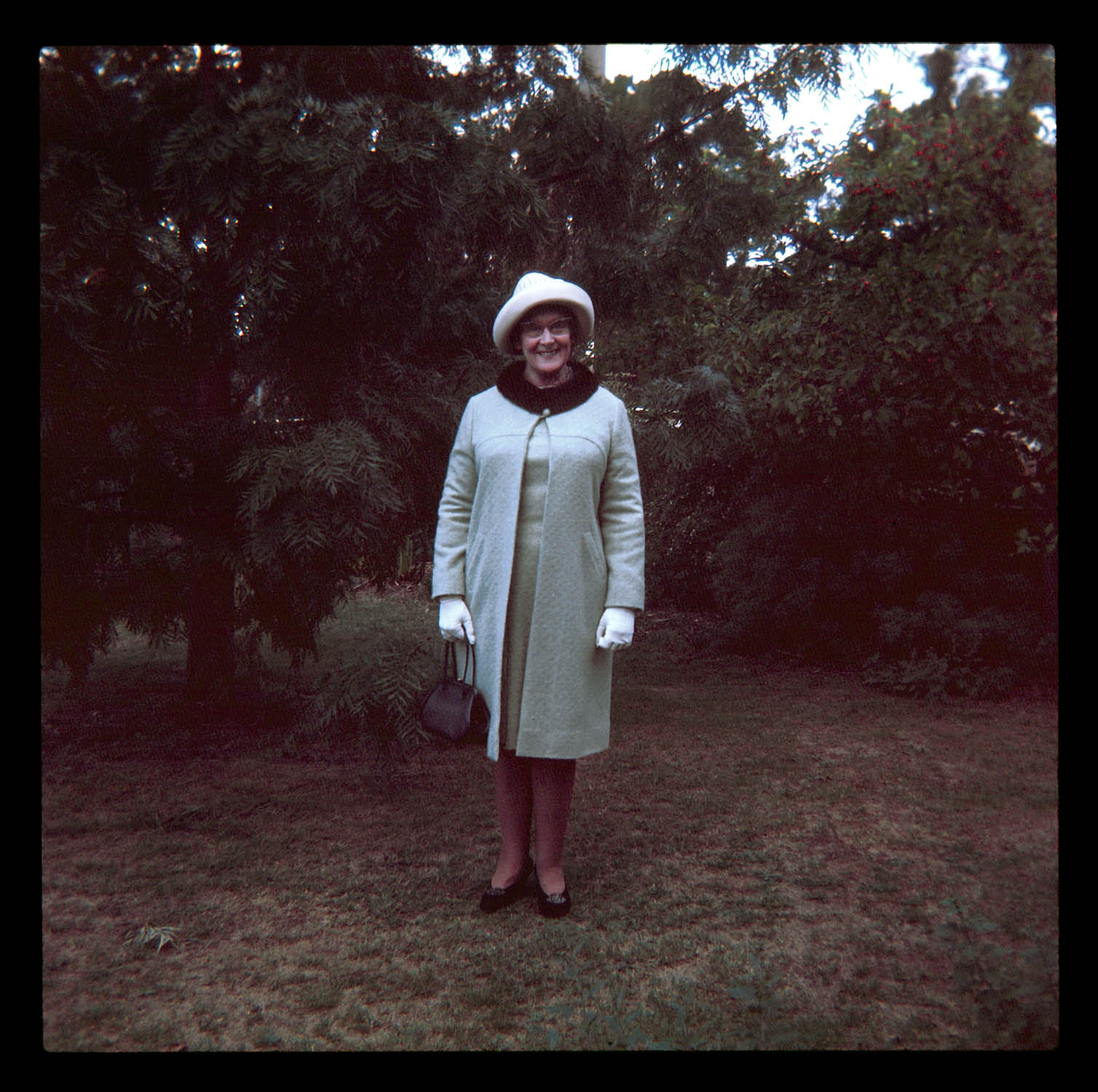
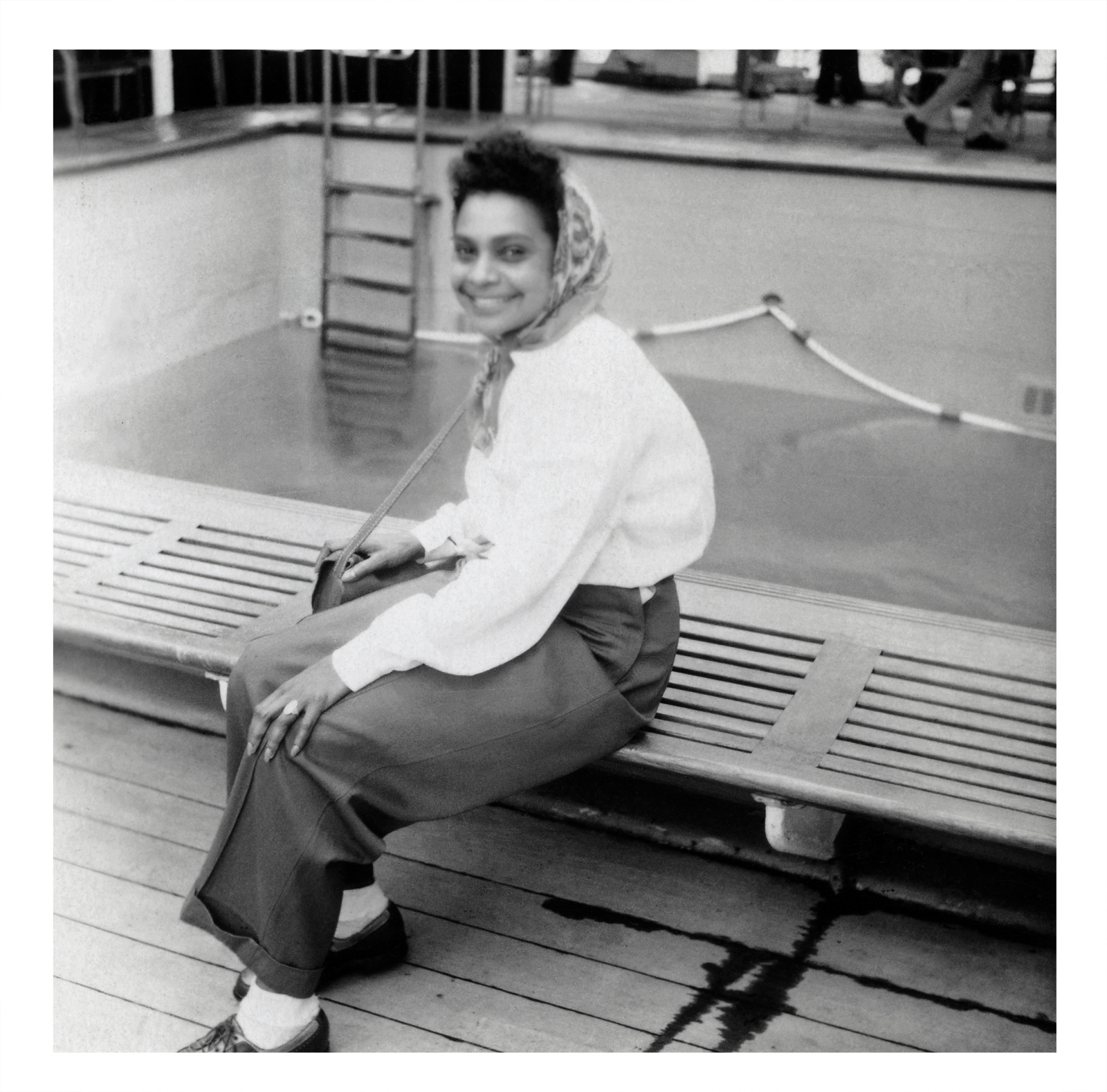
Unknown photographer (Australian) 'Unknown woman' 1960s


Unknown photographer (Australian)
Unknown woman
1960s
Ektachrome medium format transparency scanned


I don’t know where this is but it feels Australian to me, especially the fashion…


Unknown photographer (Australian) 'Untitled (Australian landscape, possibly South Point, Wilson's Prom, Victoria)'
1960s


Unknown photographer (Australian)
Untitled (Australian landscape, possibly South Point, Wilson’s Prom, Victoria)
1960s
Ektachrome medium format transparency scanned


Australian coastal she oak and tea tree.


Unknown photographer (Australian) 'Untitled (Australian landscape)' 1960s


Unknown photographer (Australian)
Untitled (Australian landscape)
1960s
Ektachrome medium format transparency scanned


Wonderful photograph of the Australian landscape…


Unknown photographer (Australian) 'Untitled (Australian landscape)' 1960


Unknown photographer (Australian)
Untitled (Australian landscape)
1960s
Ektachrome medium format transparency scanned


Unknown photographer (Australian) 'Untitled (Australian landscape)' 1960


Unknown photographer (Australian)
Untitled (Australian landscape)
1960s
Ektachrome medium format transparency scanned


Unknown photographer (Australian) 'Untitled (Australian landscape)' 1960


Unknown photographer (Australian)
Untitled (Australian landscape)
1960s
Ektachrome medium format transparency scanned


Max Dupain (Australian, 1911-1992) 'Silos through windscreen' 1935


Max Dupain (Australian, 1911-1992)
Silos through windscreen
1935
Gelatin silver print


Unknown photographer (Australian) 'Untitled (Australian landscape)' 1960


Unknown photographer (Australian)
Untitled (Australian landscape)
1960s
Ektachrome medium format transparency scanned


The second photograph taken through the windscreen of a car


Unknown photographer (Australian) 'Untitled (Australian landscape)' 1960


Unknown photographer (Australian)
Untitled (Australian landscape)
1960s
Ektachrome medium format transparency scanned


Unknown photographer (Australian) 'Untitled' 1960s


Unknown photographer (Australian)
Untitled
1960s
Ektachrome medium format transparency scanned


I’m not sure what they are doing or where this is (possibly Australia) but I like the photo!


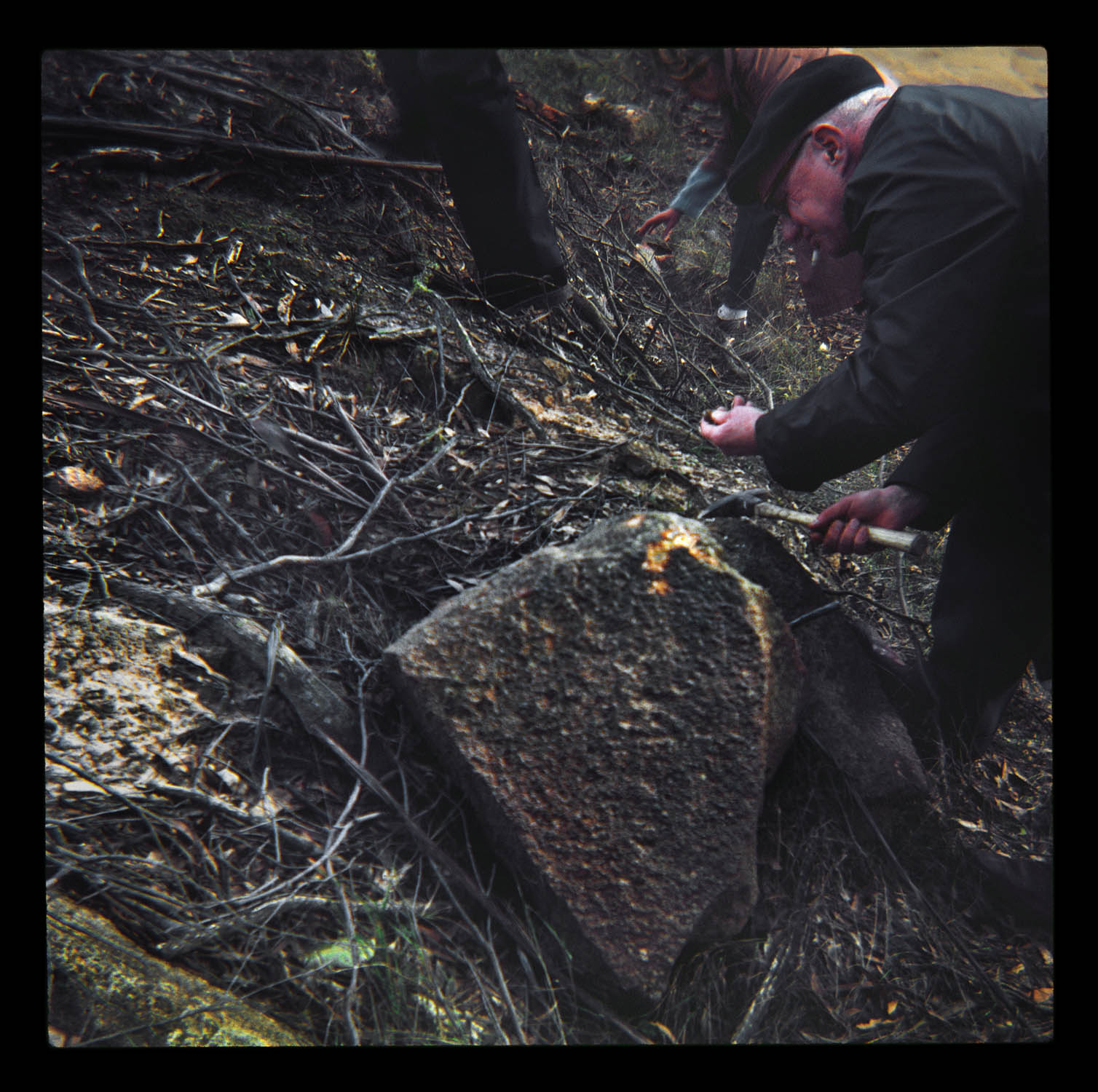
Unknown photographer (Australian) 'Untitled' 1960s


Unknown photographer (Australian)
Untitled
1960s
Ektachrome medium format transparency scanned


A geologist hammer in his hand?


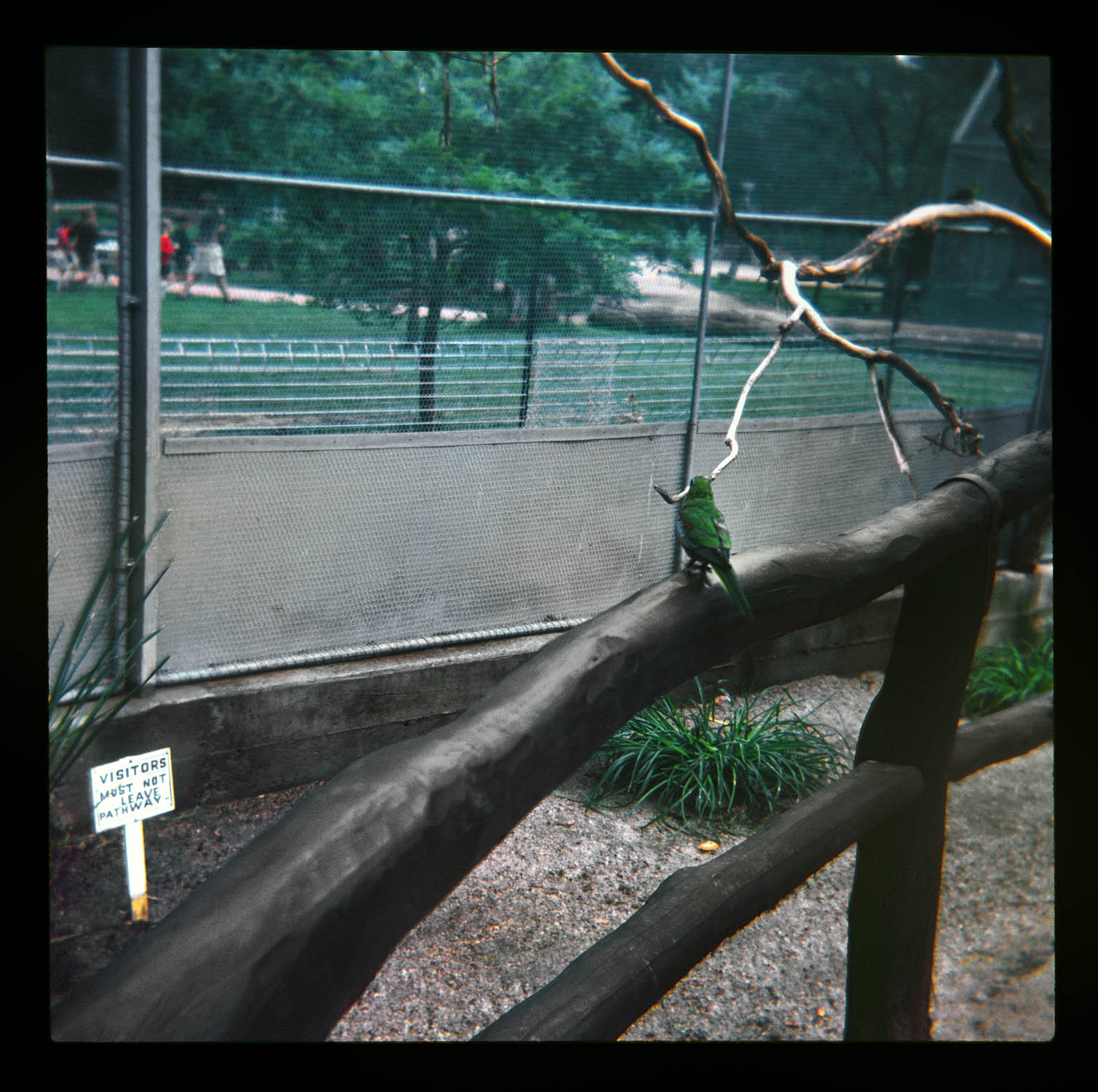
Unknown photographer (Australian) 'Untitled (Visitors must not leave pathway)' 1960s


Unknown photographer (Australian)
Untitled (Visitors must not leave pathway)
1960s
Ektachrome medium format transparency scanned


LIKE ART BLART ON FACEBOOK

Back to top

Review: ‘Julie Millowick: Surrounding’ at the Castlemaine Art Museum

Exhibition dates: 15th February – 16th June 2024

Curator: Jenny Long
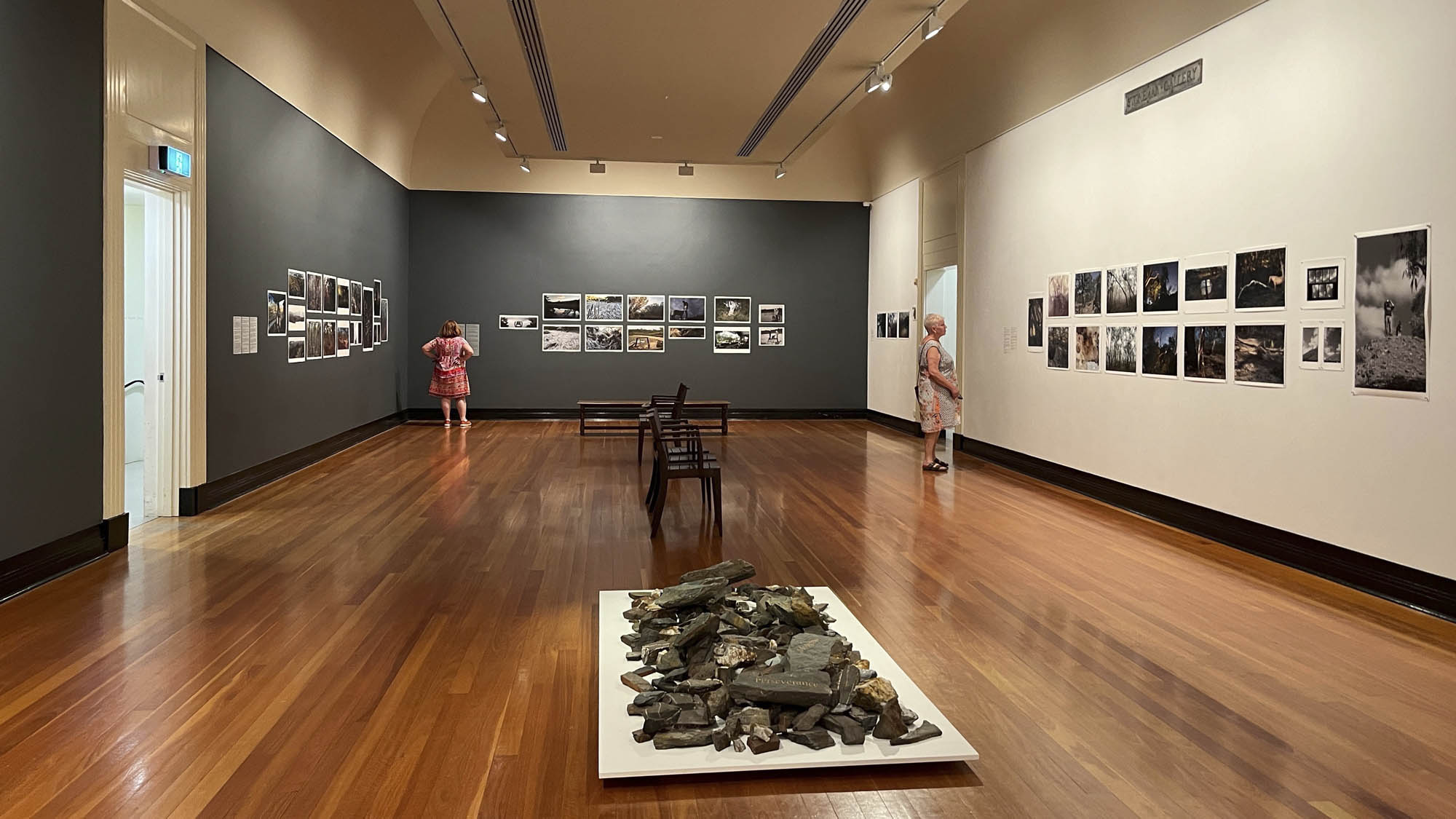
 

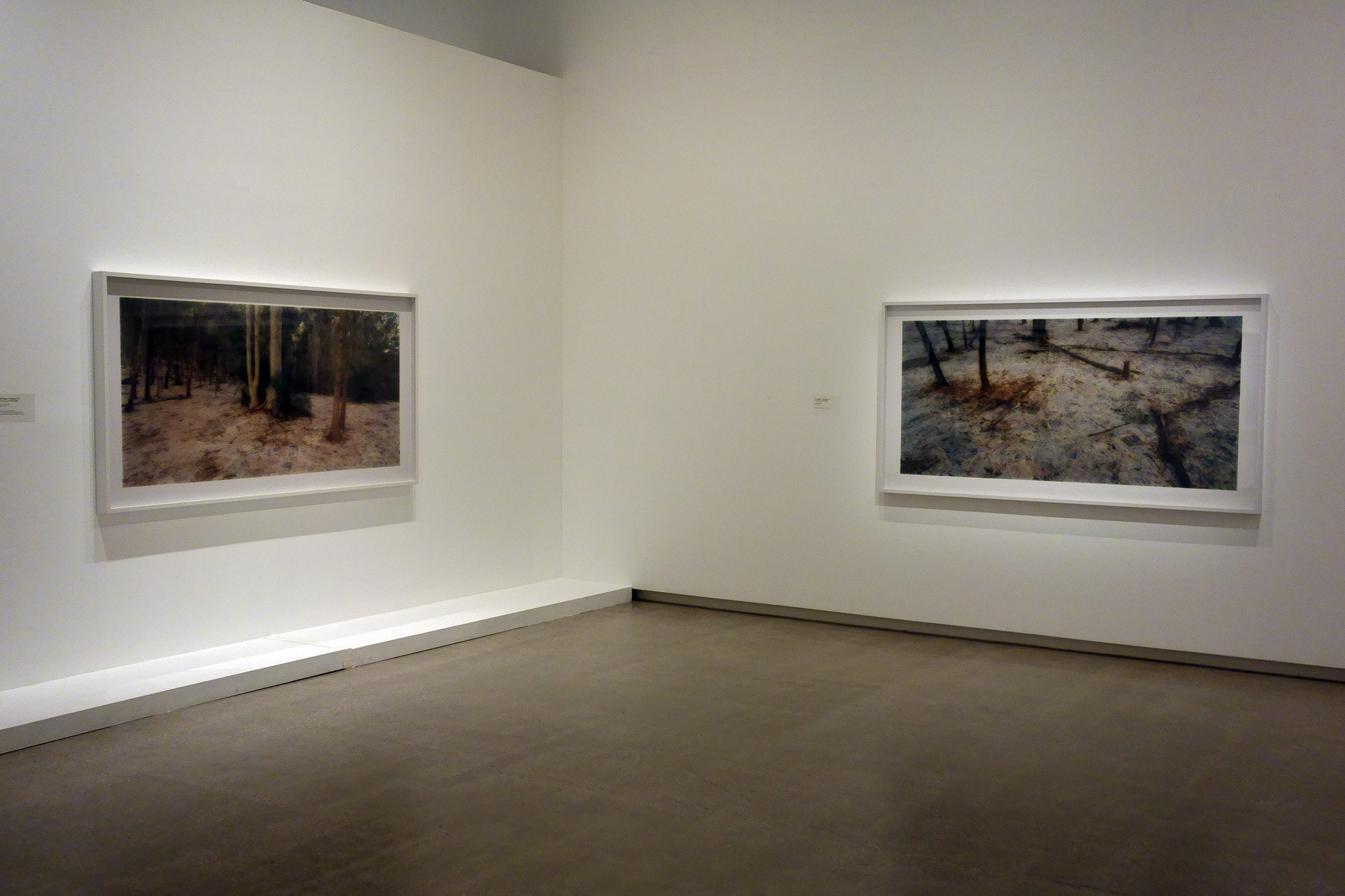
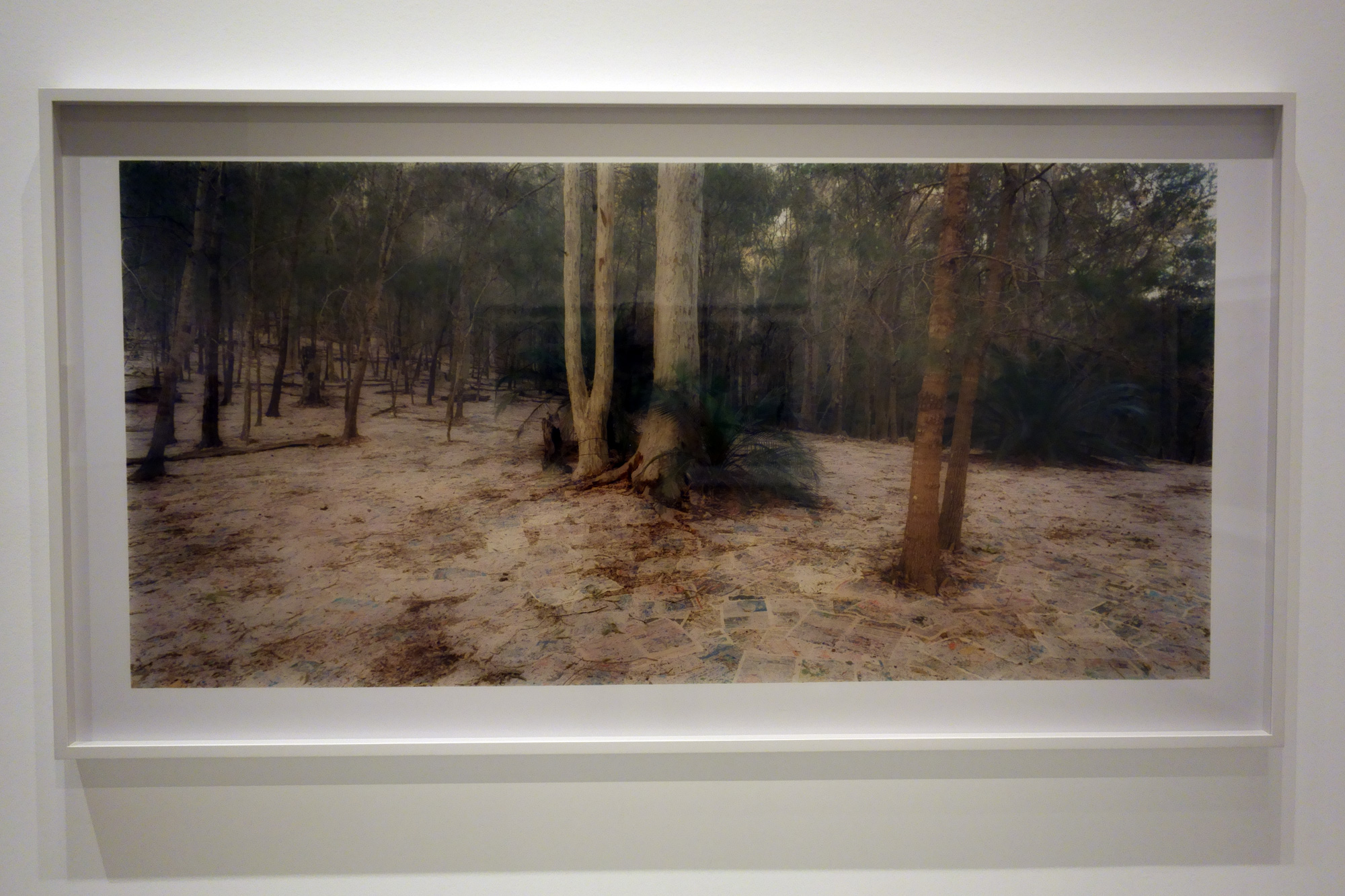
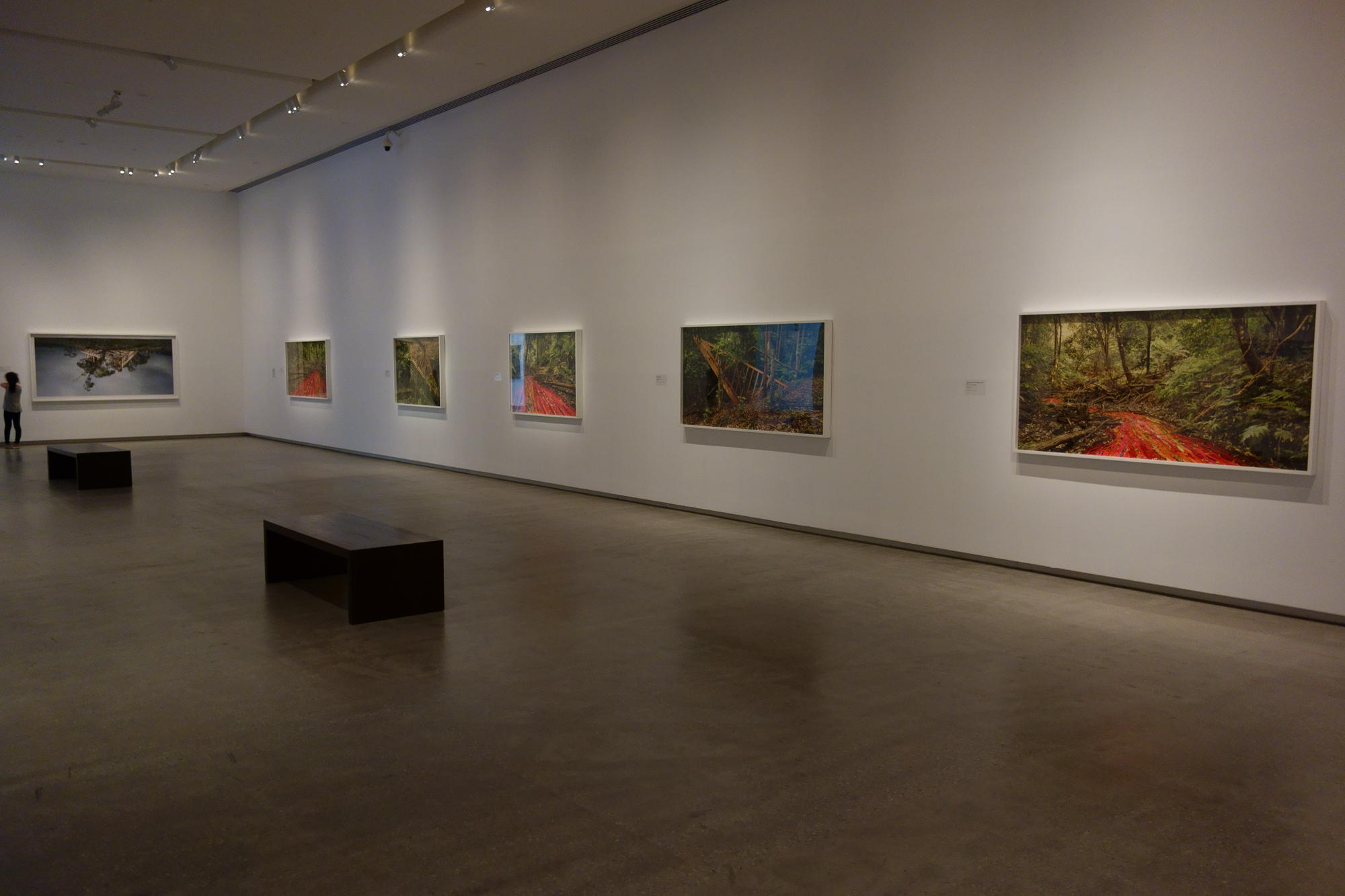
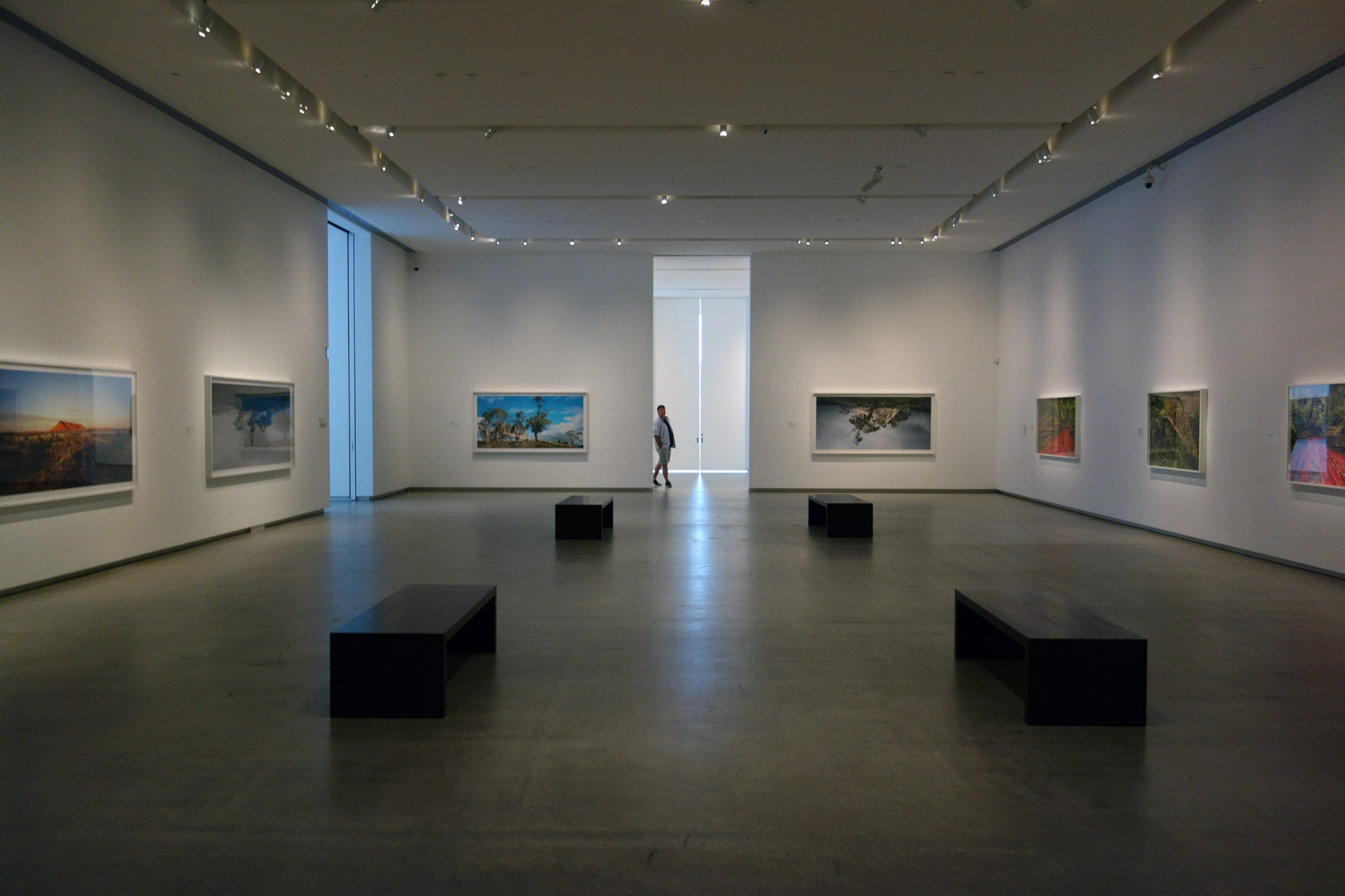
Installation view of the exhibition 'Julie Millowick: Surrounding' at the Castlemaine Art Museum


Installation view of the exhibition Julie Millowick: Surrounding at the Castlemaine Art Museum
Photo: Marcus Bunyan


Down with Earth

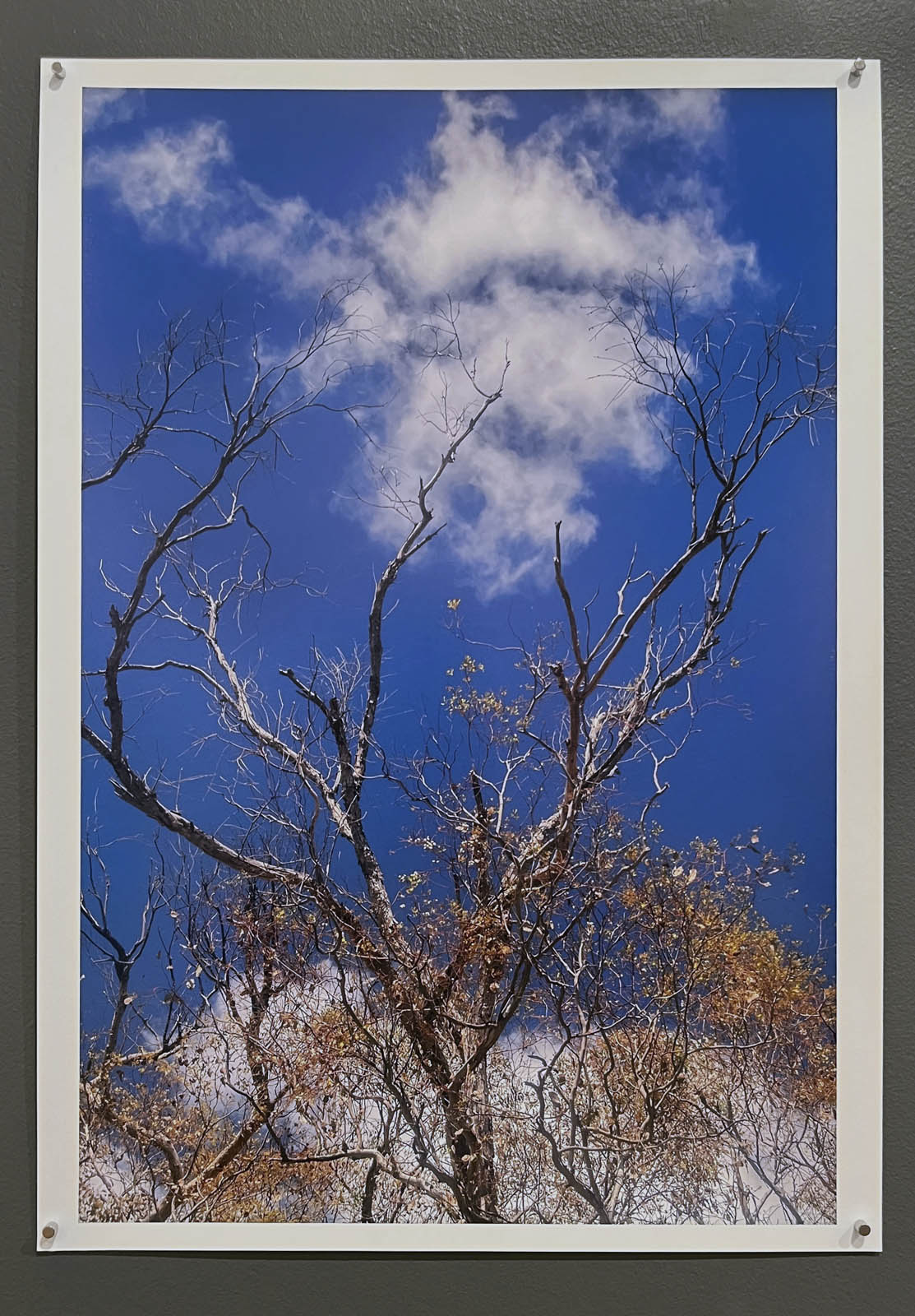
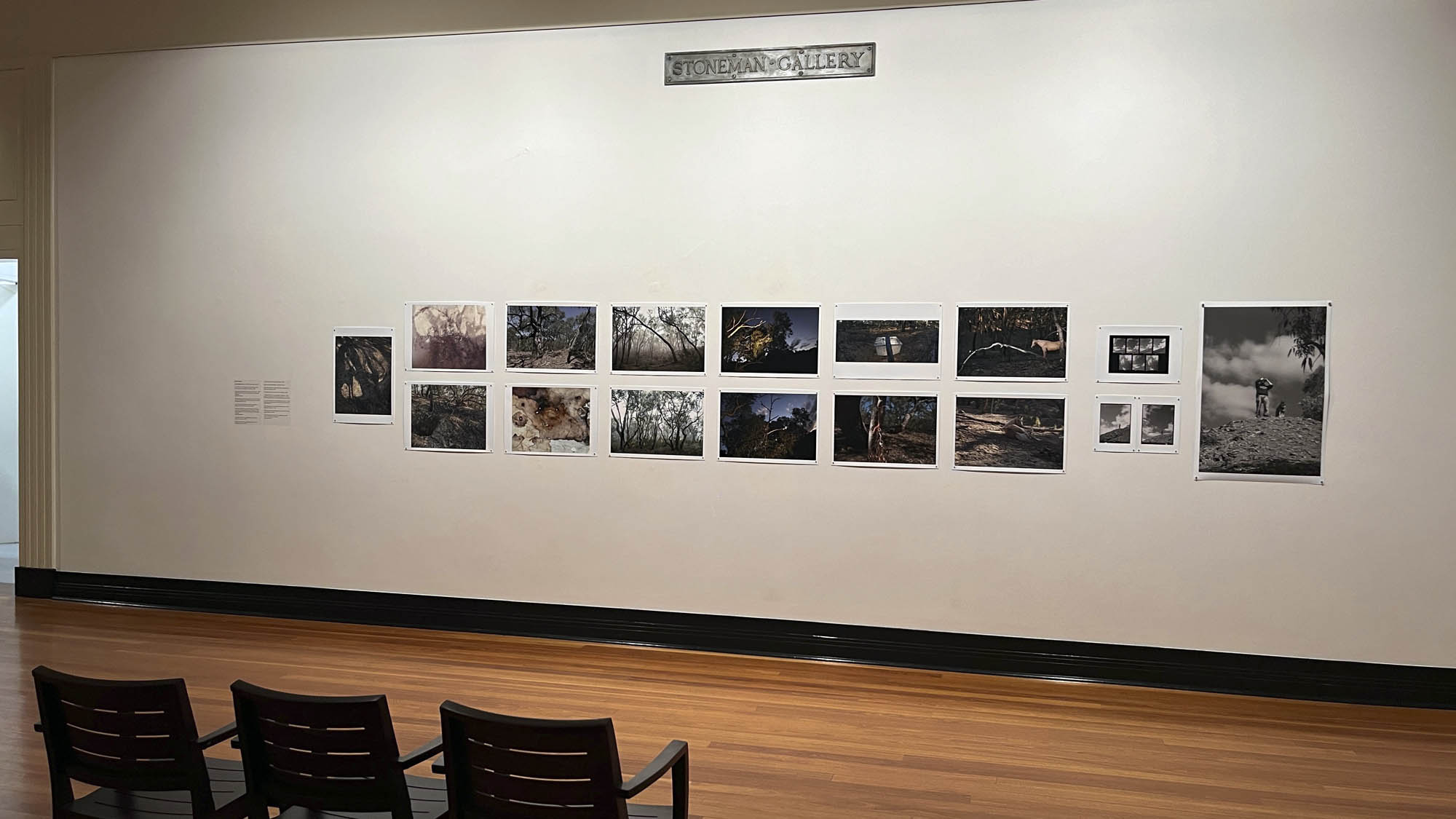
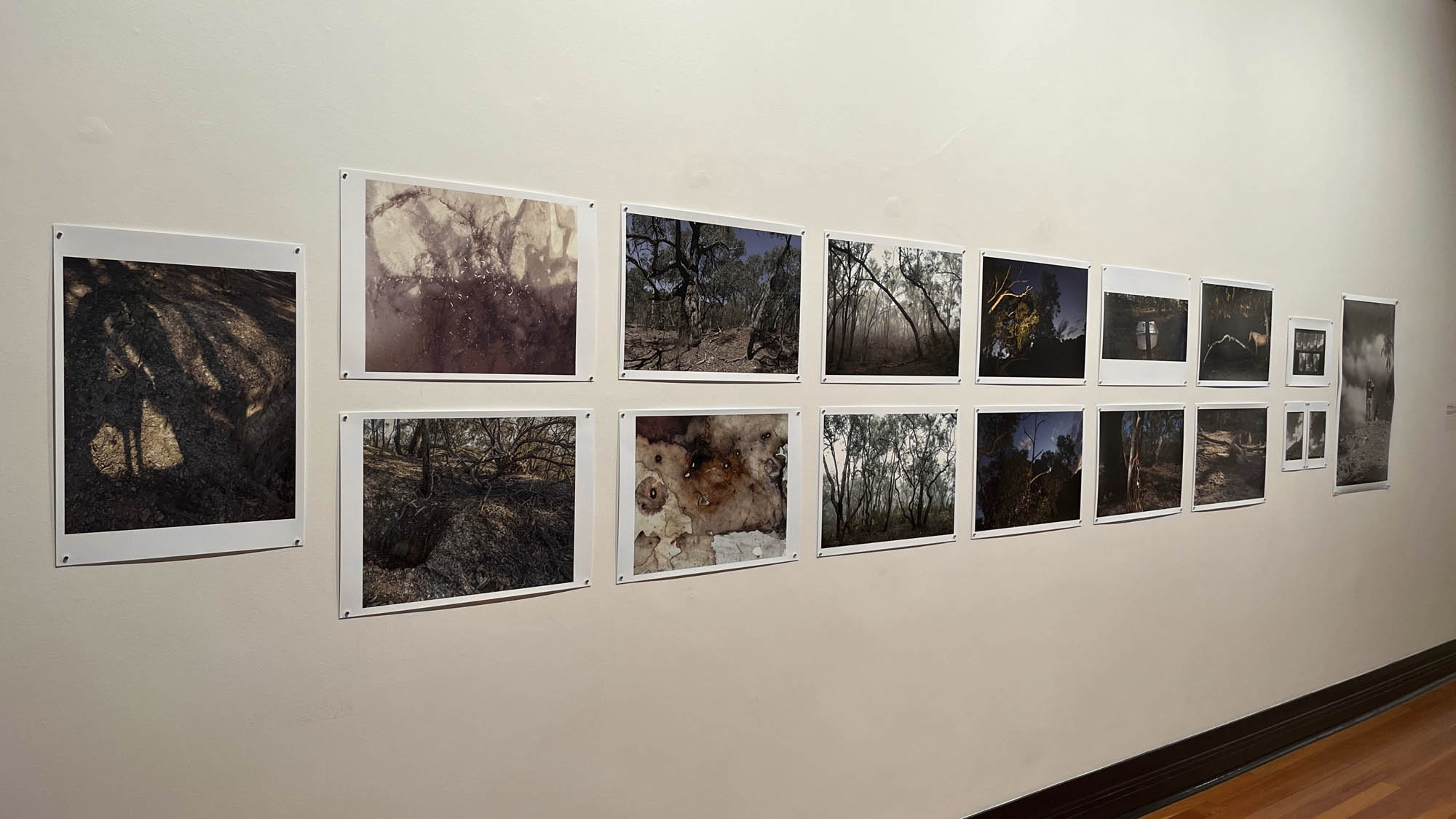
This is a magnificent exhibition by Australian photographer Julie Millowick (b. 1948) which documents “the environmental legacy of gold mining around her home near Fryerstown in Central Victoria, capturing the beauty of this landscape in tumult and recovery.” (Wall text)

What I admire about the work in the exhibition (other than photographs that evidence the persistence of an inquiry into one subject, the result of 34 years of visual and intellectual exploration), is the way that the photographs envelop you in the gallery space. It’s as if the accumulation of images over decades creates a nurturing story which comforts you in the gallery space: that the landscape so desecrated will heal itself, will spring forth anew. The sustained investigation into the landscape around Fryerstown captured my soul.

The exhibition is beautifully constructed, rendered, seen, so very quiet yet so powerful. On every wall of the gallery there is an intimate story, told through remarkable photographs of the Australian bush that combine light and dark, near and far, low and high perspective (the raising and lowering of the horizon line) and the feeling of claustrophobia and expansiveness within the same environment: photographs of mullock heaps and mine sites with open sky and residual left-over soil or rock from the shaft excavation process. Shadows of trees obscure abandoned mine shafts which litter the landscape, traps for the unwary who go wandering, or is that wondering, through the bush. And through Millowick’s lens, this landscape is all about the wonder of the landscape and its rejuvenative potential.

In this unsettling place which continually transforms through drought and rain, human mining, erosion and regeneration we can observe in Millowick’s photographs the strength and transformative qualities of nature. It may seem strange (and probably is) but I argue that the Australian bush presented here is a heterotopic space (Foucault), a landscape outside the normality of the everyday (although any landscape with human intervention is not “natural” but always a constructed space), one that is somehow “other”: disturbing, intense, contradictory and transforming, a landscape which mirrors the outside world yet upsets that representation due to its un/settling, its mining and ecological past – creating a space which changes from day to day, month to month – growing, contracting, evidencing human interaction and touch, but then outgrowing human interference.

The spaces that the artist envisions in her beautiful micro / macro, order / chaos photographs picture something unusual: the imaginative wish for of a utopian world that could never exist in the first place and a dystopian, illusionary world in the process of healing itself (possibly), the very definition of a heterotopic space. As the characters in Fallout Season 1 observe, “Time is the apex predator” … and through time, nature will hopefully outlive all human beings to again become something belonging solely to the Earth, to again become something “natural” (existing in or derived from nature; not made or caused by humankind).

Millowick’s photographs also picture something else: photography as an exposition of the self. As the artist Ans Westra observes, photography should not be “solely controlled by the brain. Your personality, subconscious, flows through […] you have to allow it to come through […] for the outcome to be relevant.”1 Ultimately, she said, photography was “always an exposition of self.” Such is the energy with the photographs of this artist, also.

Through wonder, respect and the grounding of spirit in Earth, Millowick has sustained a bond and an understanding in her fascination with this subject, a sensitivity to subject nurtured over so many years which “invites viewers to appreciate them [the photographs] as a poetic connection to, and love for, the landscape” side by side with a conceptual thinking or intellectualisation about the land. In their containment of energy, in their penetrating into life and its things, these photographs contribute something to our life and history on this planet.

Robert Frank said, “It is important to see what is invisible to others.”

Minor White, in one of his Three canons said,

“Be still with yourself,
Until the object of your attention,
Affirms your presence”


Millowick has achieved both aims admirably. In some of the most insightful and poignant photographs of the Australian landscape I have ever seen, the artist has revealed not just aspects of the earth (ground) which are undergoing transformation but aspects of herself as she has journeyed through life, remaining true to her path as an artist, remaining true to documenting her journey with the land, remaining true to a legacy towards the planet, down with Earth.

I was very moved by these photographs.

Dr Marcus Bunyan


1/ Ans Westra quoted in Paul Moon. “An outsider on the inside: how Ans Westra created New Zealand’s ‘national photo album’,” on the Conversation website May 8, 2024 [Online] Cited 11/05/2024


All installation photographs by Marcus Bunyan. Please click on the photographs for a larger version of the image. All photographs © Marcus Bunyan and Julie Millowick


“The artist does not turn time into money, the artist turns time into energy, time into intensity, time into vision. The exchange that art offers is an exchange in kind; energy for energy, intensity for intensity, vision for vision… Can we afford to live imaginatively, contemplatively?”


Jeanette Winterson. Art Objects. London: Vintage, 1996, p. 139.
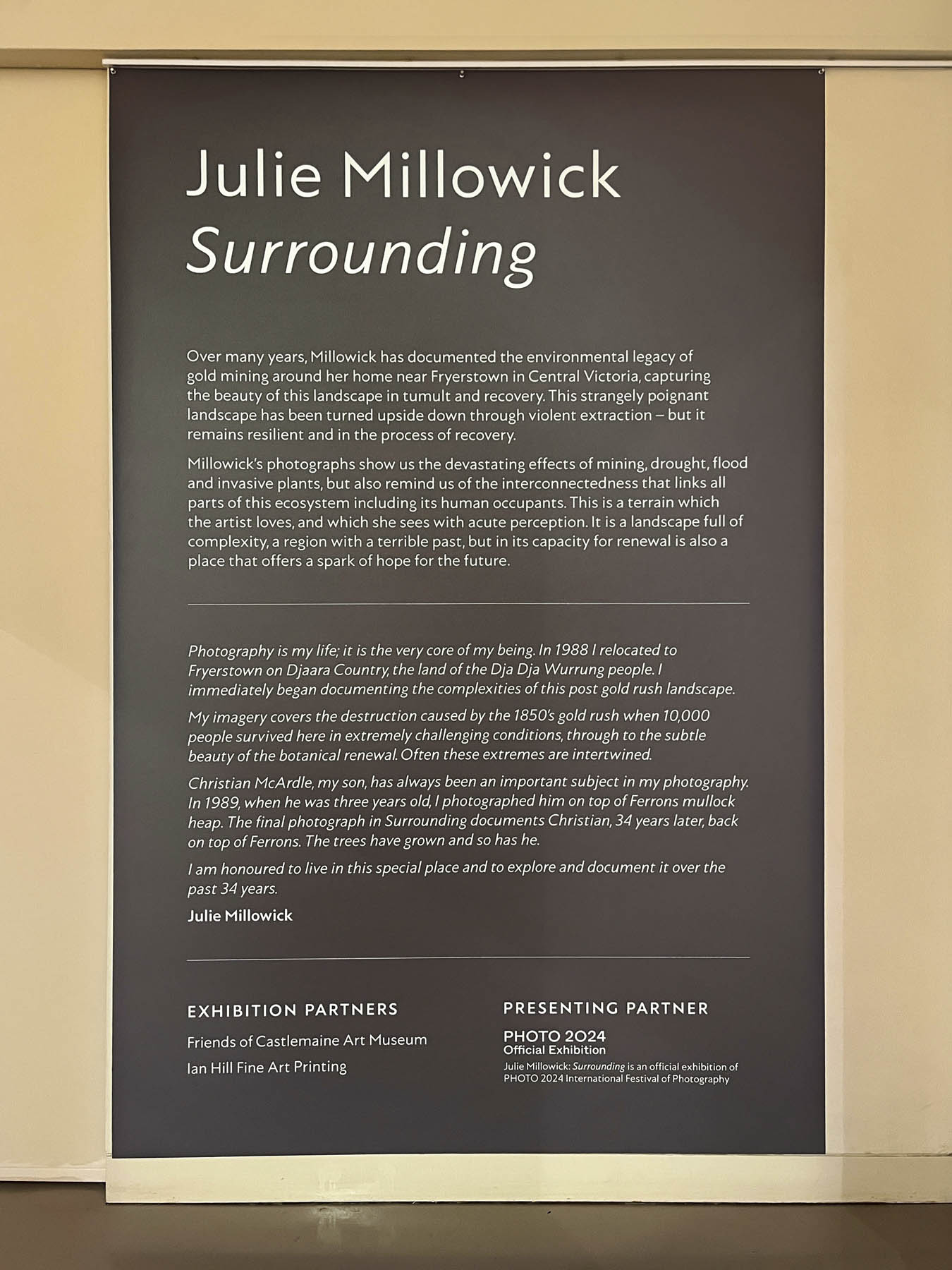


Wall text from the exhibition 'Julie Millowick: Surrounding' at the Castlemaine Art Museum


Wall text from the exhibition Julie Millowick: Surrounding at the Castlemaine Art Museum
Photo: Marcus Bunyan


Gallery One


Installation view of the exhibition 'Julie Millowick: Surrounding' at the Castlemaine Art Museum


Installation view of the exhibition Julie Millowick: Surrounding at the Castlemaine Art Museum
Photo: Marcus Bunyan
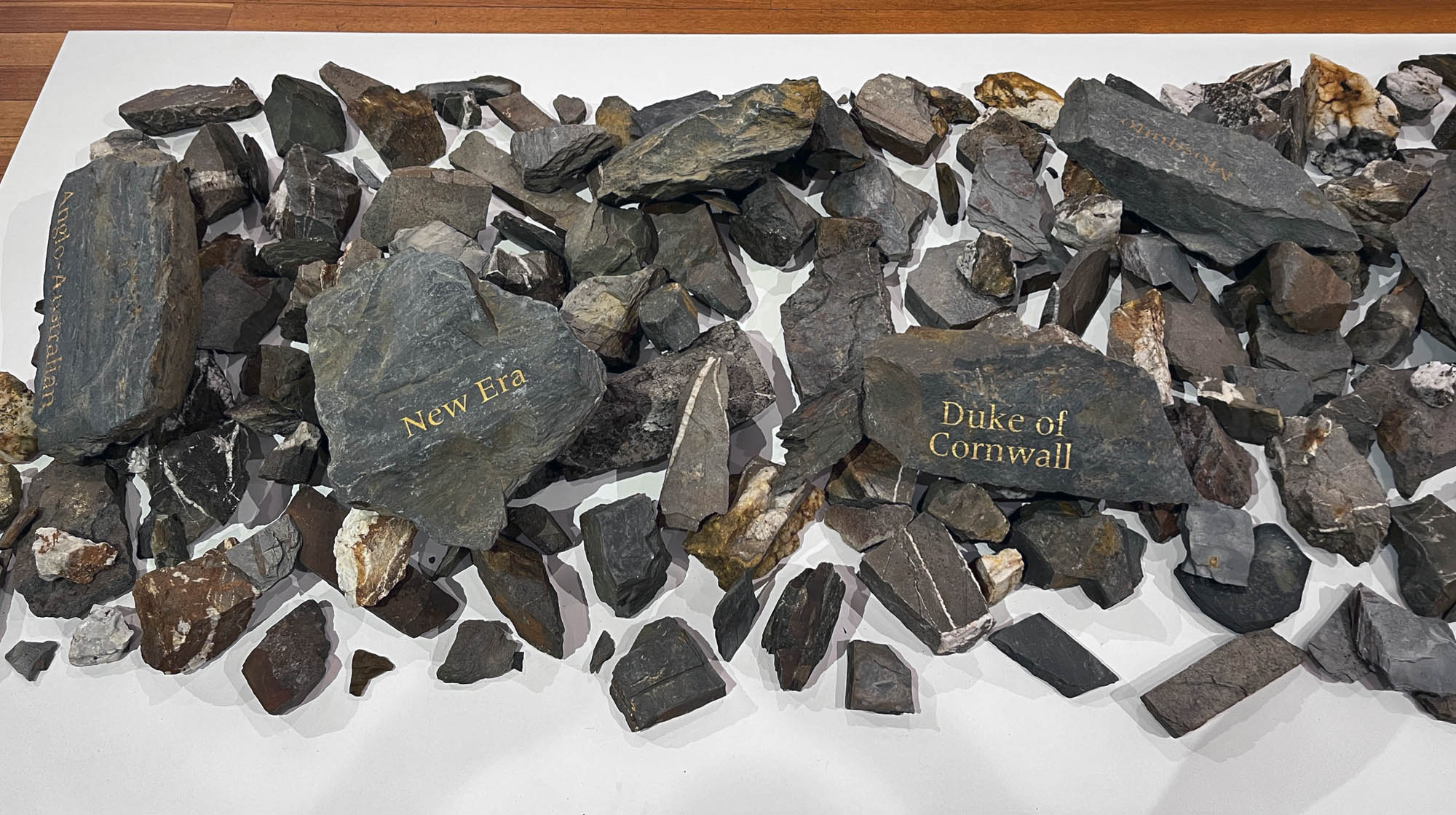
 

Installation view of the exhibition 'Julie Millowick: Surrounding' at the Castlemaine Art Museum


Installation view of the exhibition Julie Millowick: Surrounding at the Castlemaine Art Museum
Photo: Marcus Bunyan
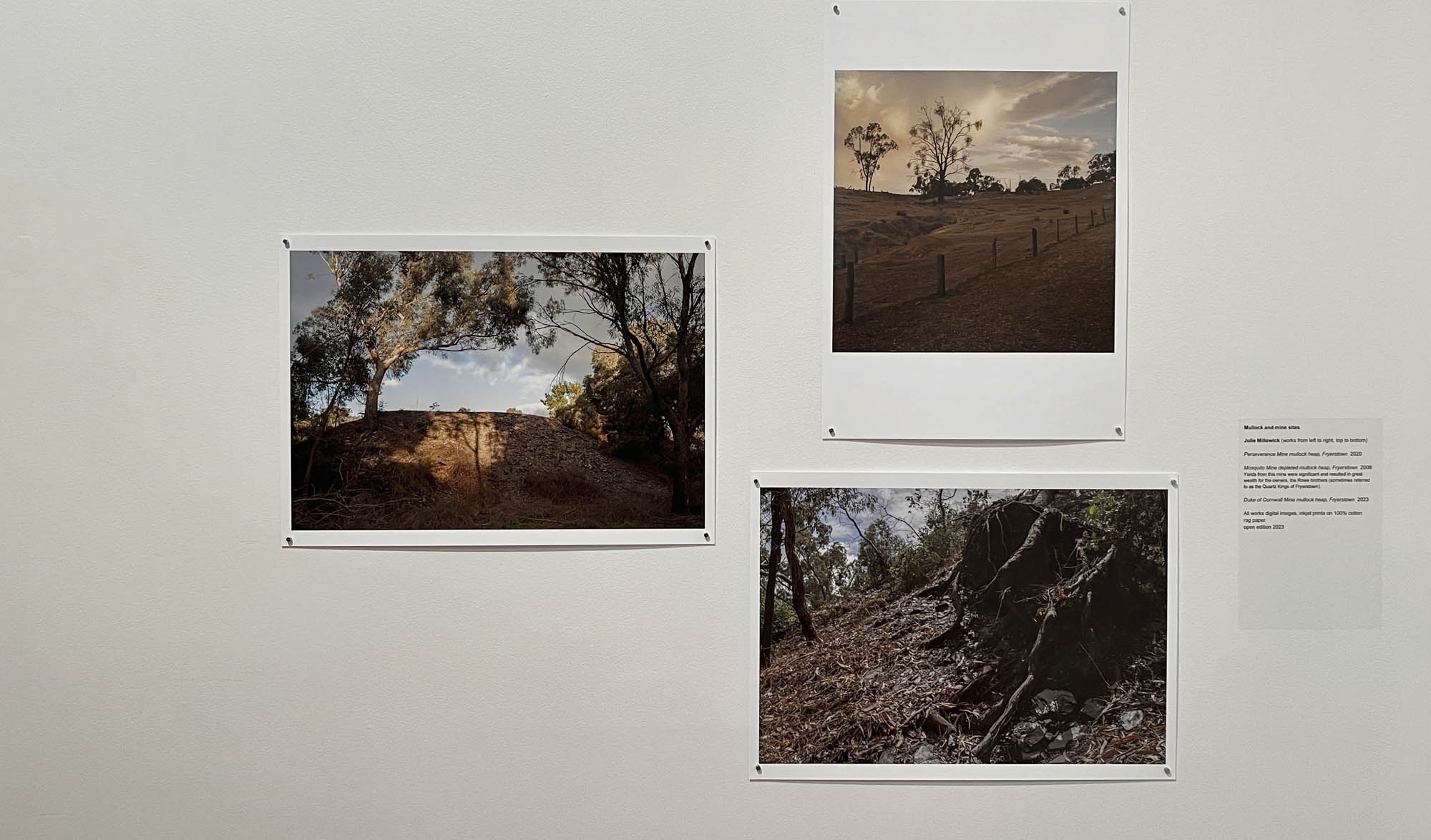
 

Installation view of the exhibition 'Julie Millowick: Surrounding' at the Castlemaine Art Museum


Installation view of the exhibition Julie Millowick: Surrounding at the Castlemaine Art Museum showing at left, Perseverance Mine mullock heap, Fryerstown (2020); at top right, Mosquito Mine depleted mullock heap, Fryerstown (2020); and at bottom right, Duke of Cornwall Mine mulch heap, Fryerstown (2020)
Photo: Marcus Bunyan


Mullock and mine sites


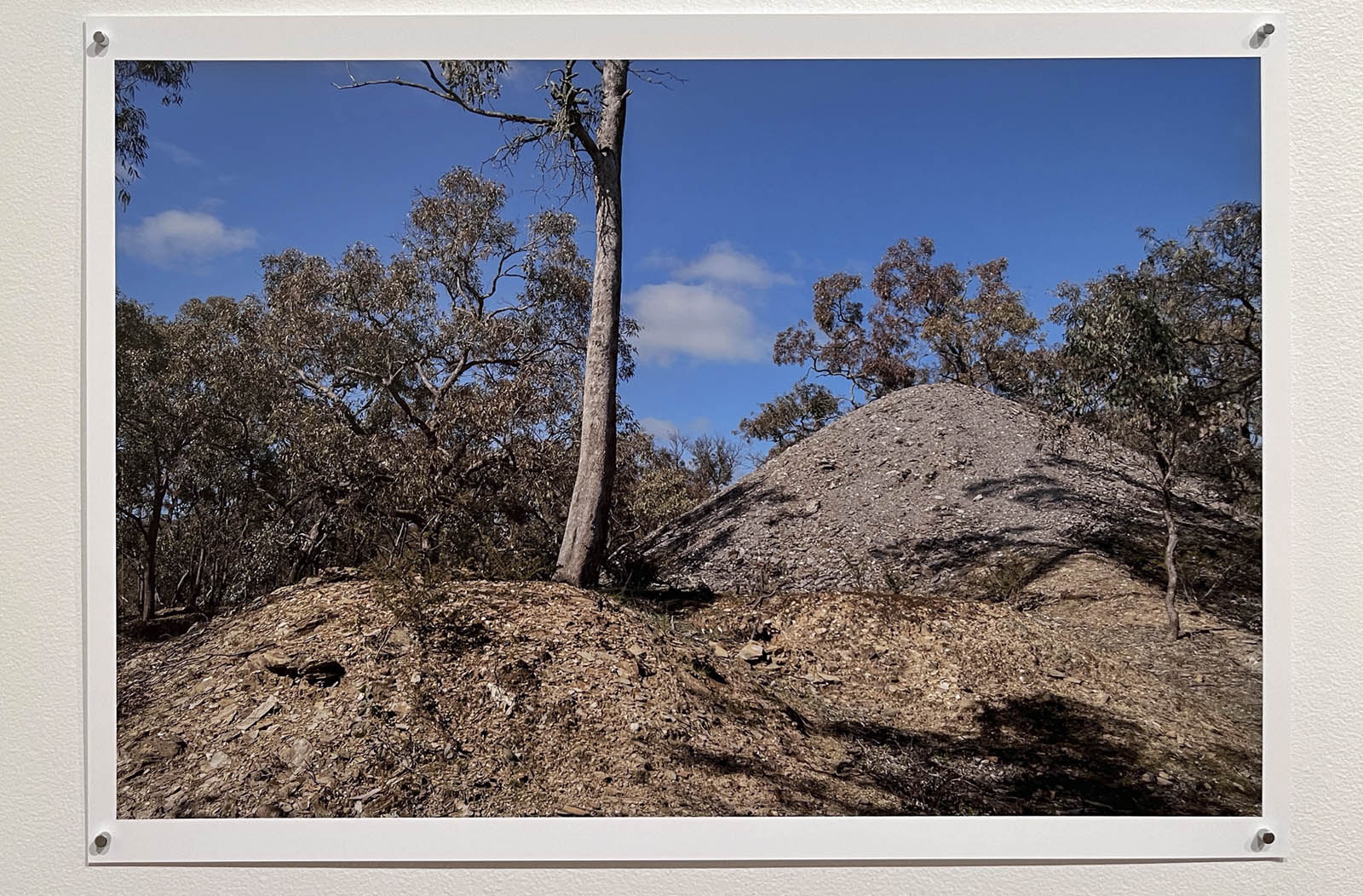
Julie Millowick (Australian, b. 1948) 'Perseverance Mine mullock heap, Fryerstown' 2020


Julie Millowick (Australian, b. 1948)
Perseverance Mine mullock heap, Fryerstown
2020
Digital image, inkjet print on 100% cotton rag
open edition 2023
Photo: Marcus Bunyan
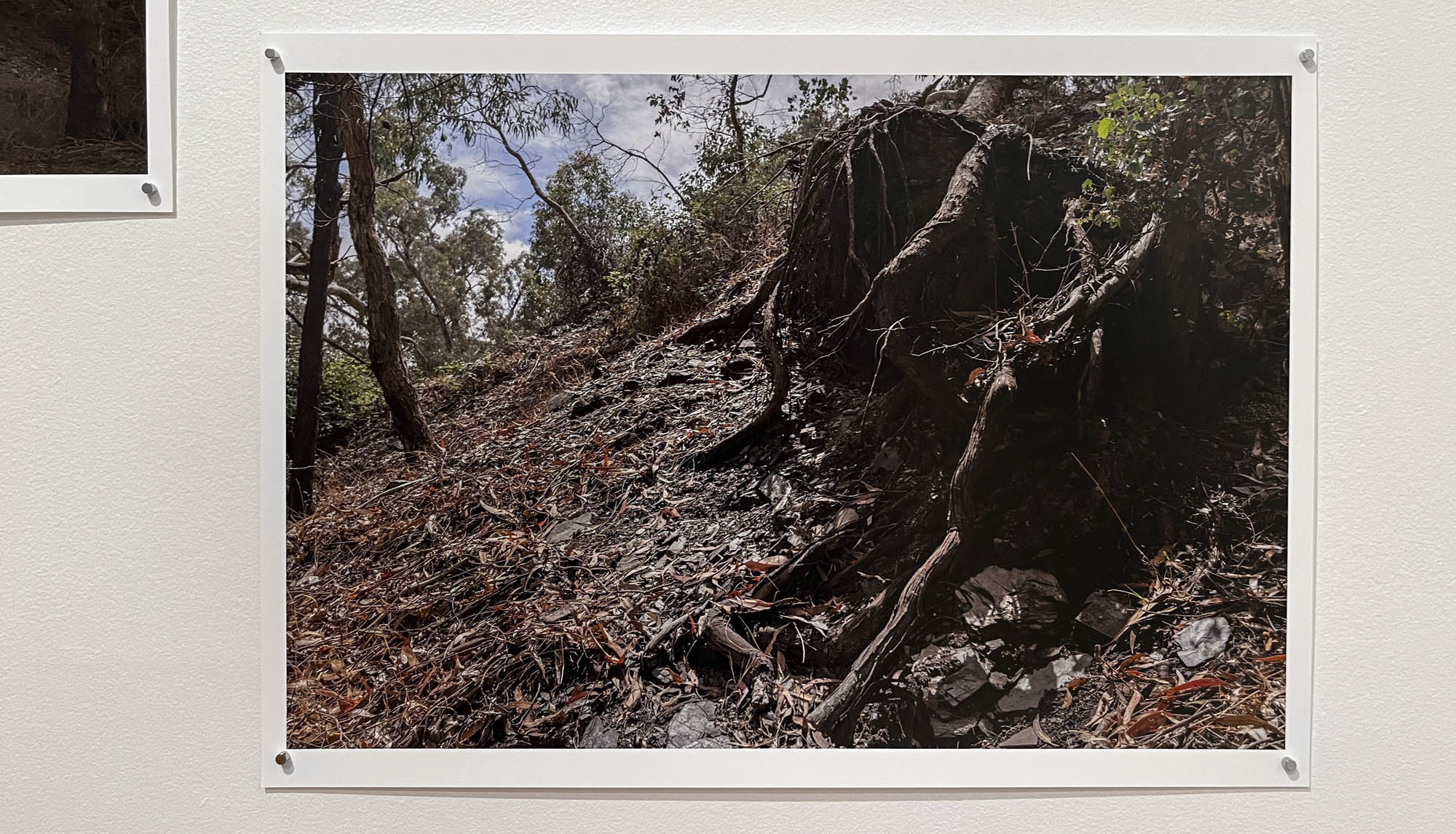
 

Julie Millowick (Australian, b. 1948) 'Duke of Cornwall Mine mulch heap, Fryerstown' 2020


Julie Millowick (Australian, b. 1948)
Duke of Cornwall Mine mulch heap, Fryerstown
2020
Digital image, inkjet print on 100% cotton rag
open edition 2023
Photo: Marcus Bunyan


Installation view of the exhibition 'Julie Millowick: Surrounding' at the Castlemaine Art Museum


Installation view of the exhibition Julie Millowick: Surrounding at the Castlemaine Art Museum showing from left to right, top to bottom, Ferrons Mine mullock heap, Fryerstown (2007); Ferrons Mine mullock heap, Fryerstown (2007); Exocarps cupressiformis (cherry ballart) in the foreground, Ferrons mullock heap in the background (2018); Mullock from New Era Mine, Fryerstown (2022); Ferrons Mine mullock heap with one of several surrounding shafts, Fryerstown (2018); Three fragments of goldrush-era glass bottle, Fryerstown (2019); New Era Mine mullock heaps, Fryerstown (2022); Abandoned mine shaft, Fryerstown (2022); Introduced invasive thistles, Fryerstown (2022); New Era Mine mullock heaps, Fryerstown (2022); New Era Mine mullock heaps, introduced get mullein in foreground, Fryerstown (2022); New Era Mine mullock heaps, introduced get mullein in foreground, Fryerstown (2022)
Photo: Marcus Bunyan
 

Julie Millowick (Australian, b. 1948) 'Ferrons Mine mullock heap, Fryerstown' 2007


Julie Millowick (Australian, b. 1948)
Ferrons Mine mullock heap, Fryerstown
2007
Digital image, inkjet print on 100% cotton rag
open edition 2023
Photo: Marcus Bunyan
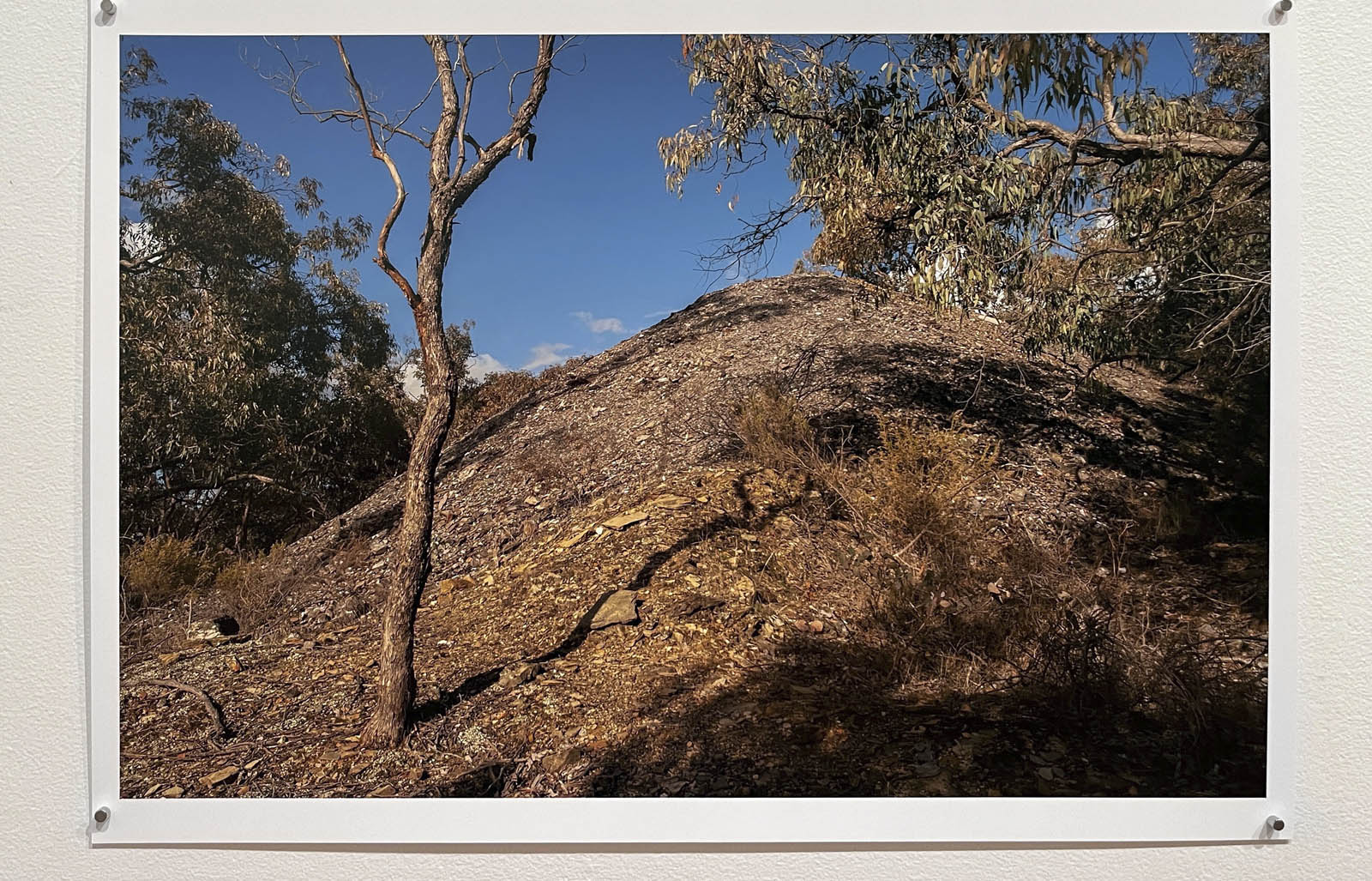
 

Julie Millowick (Australian, b. 1948) 'Ferrons Mine mullock heap, Fryerstown' 2007


Julie Millowick (Australian, b. 1948)
Ferrons Mine mullock heap, Fryerstown
2007
Digital image, inkjet print on 100% cotton rag
open edition 2023
Photo: Marcus Bunyan
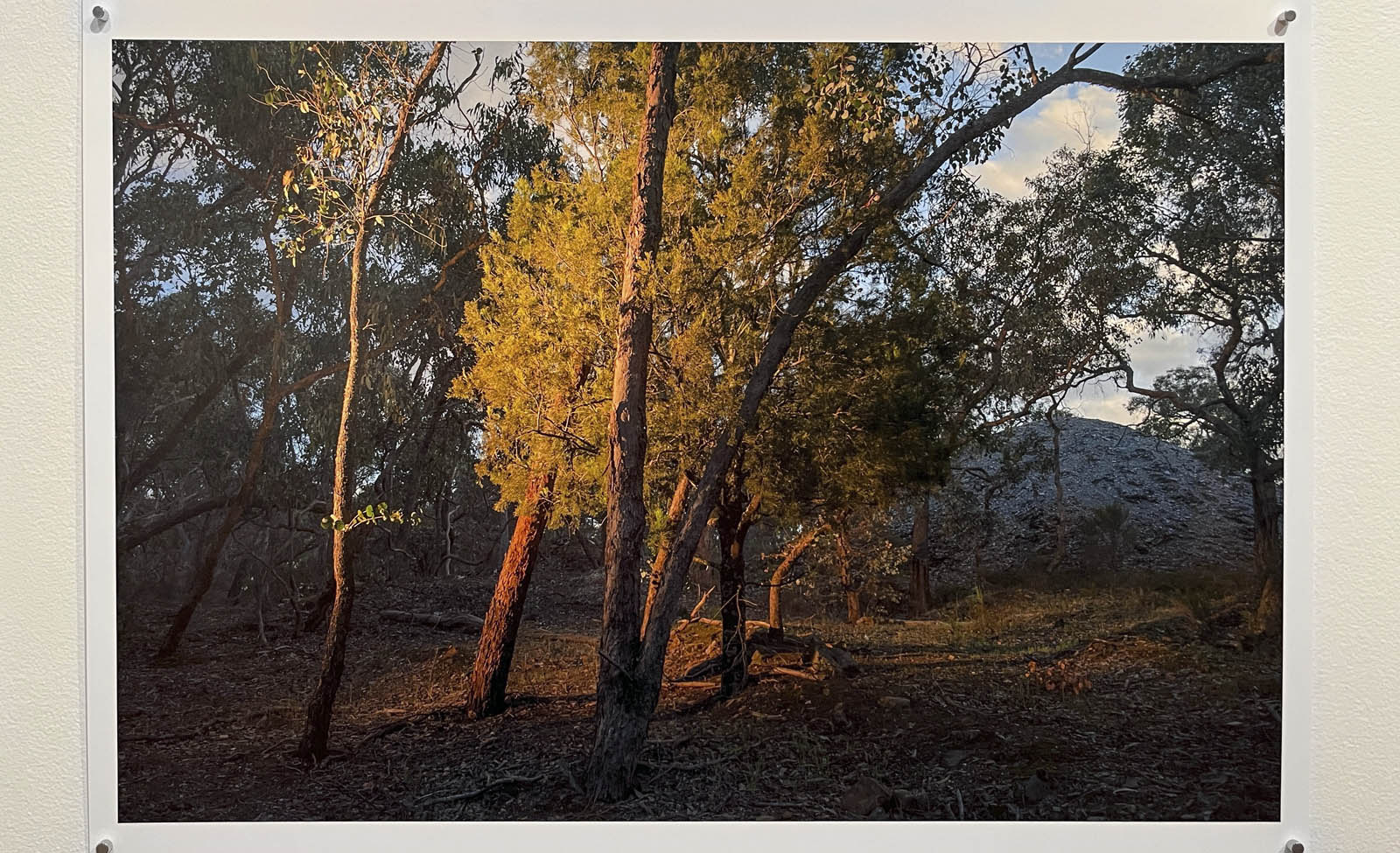
 

Julie Millowick (Australian, b. 1948) 'Exocarps cupressiformis (cherry ballart) in the foreground, Ferrons mullock heap in the background' 2018


Julie Millowick (Australian, b. 1948)
Exocarps cupressiformis (cherry ballart) in the foreground, Ferrons mullock heap in the background
2018
Digital image, inkjet print on 100% cotton rag
open edition 2023
Photo: Marcus Bunyan


Because of the conifer-like foliage, European settlers referred to Exocarps cupressiformis (cherry ballart) as a ‘bush Christmas tree’. First Nations people used the wood for spear throwers and Europeans used it for gunstocks.


Julie Millowick (Australian, b. 1948) 'Ferrons Mine mullock heap with one of several surrounding shafts, Fryerstown' 2018


Julie Millowick (Australian, b. 1948)
Ferrons Mine mullock heap with one of several surrounding shafts, Fryerstown
2018
Digital image, inkjet print on 100% cotton rag
open edition 2023
Photo: Marcus Bunyan


Julie Millowick (Australian, b. 1948) 'New Era Mine mullock heaps, Fryerstown' 2022


Julie Millowick (Australian, b. 1948)
New Era Mine mullock heaps, Fryerstown
2022
Digital image, inkjet print on 100% cotton rag
open edition 2023
Photo: Marcus Bunyan


Originally much larger, these mullock heaps have been substantially depleted by both private individuals and the former shire, who used the mullock for roadworks. New Era Mine, at a depth of 1100 feet (335.3 metres), was the deepest shaft in the local area.
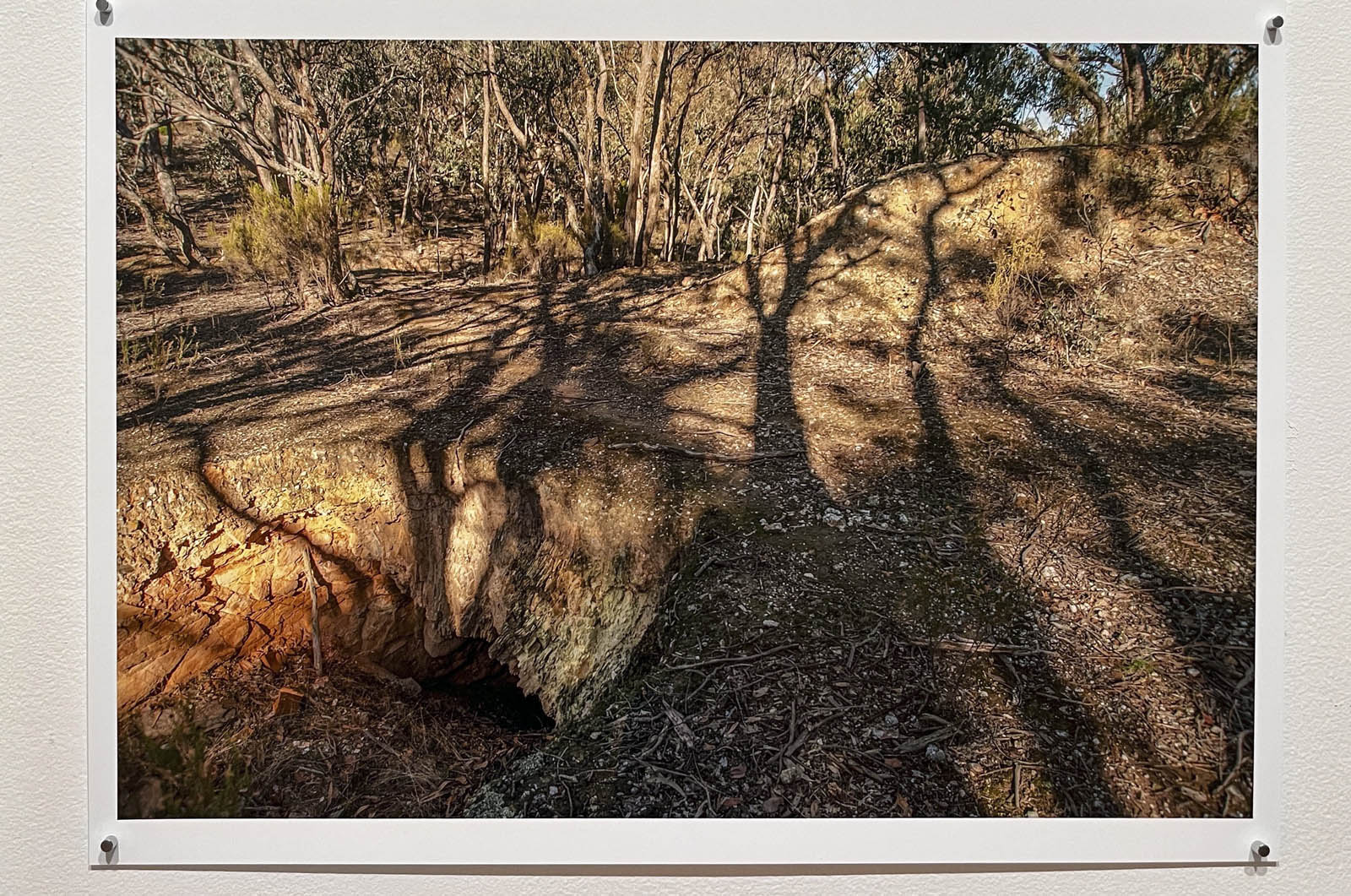
 

Julie Millowick (Australian, b. 1948) 'Abandoned mine shaft, Fryerstown' 2022


Julie Millowick (Australian, b. 1948)
Abandoned mine shaft, Fryerstown
2022
Digital image, inkjet print on 100% cotton rag
open edition 2023
Photo: Marcus Bunyan


Abandoned mine shafts occur throughout the Central Victorian area. Discarded mine waste appears in the background of the photograph


Julie Millowick (Australian, b. 1948) 'Introduced invasive thistles, Fryerstown' 2022


Julie Millowick (Australian, b. 1948)
Introduced invasive thistles, Fryerstown
2022
Digitised gelatin silver lumen, inkjet print on 100% cotton rag
open edition 2023
Photo: Marcus Bunyan
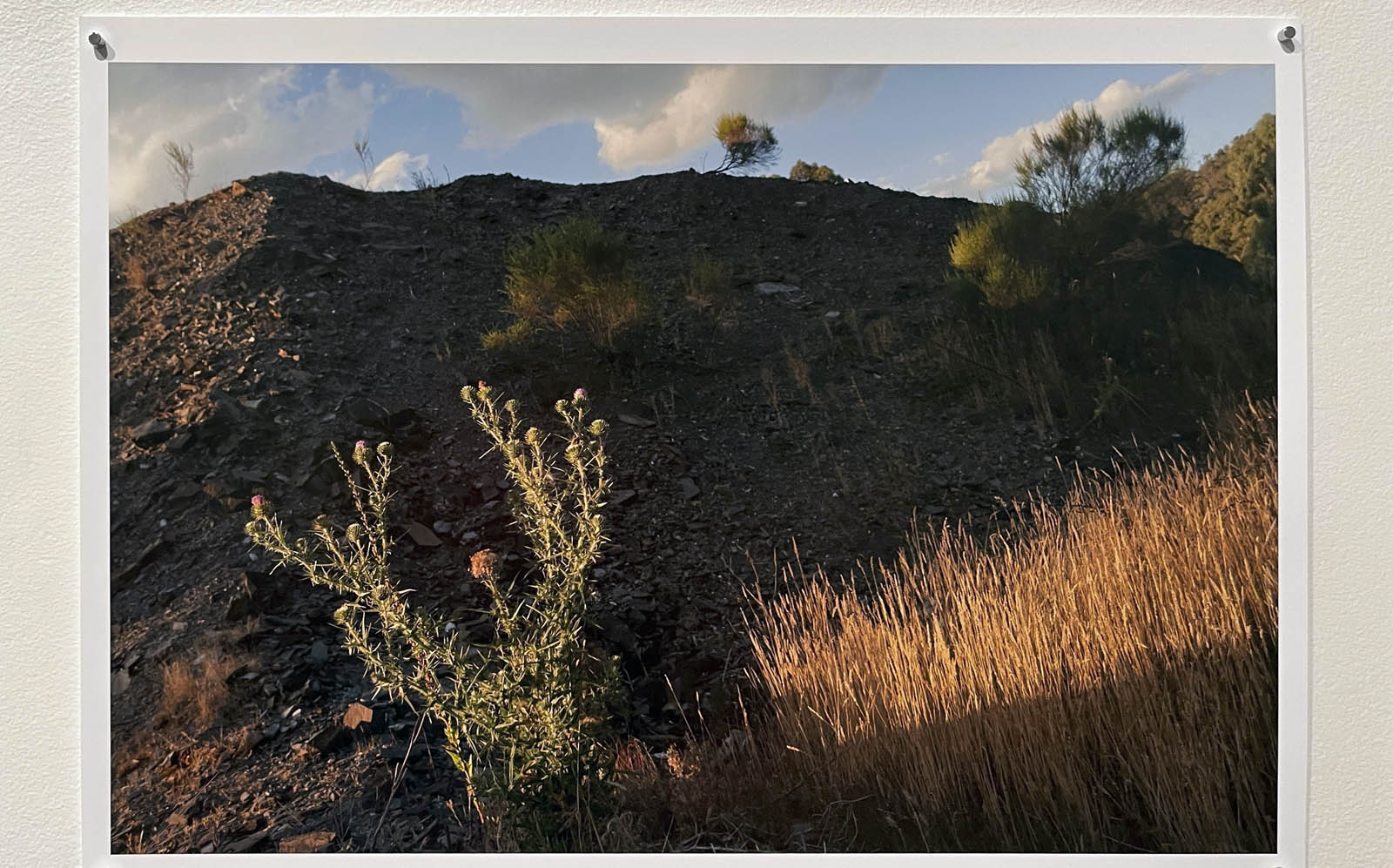
 

Julie Millowick (Australian, b. 1948) 'New Era Mine mullock heaps, Fryerstown' 2022


Julie Millowick (Australian, b. 1948)
New Era Mine mullock heaps, Fryerstown
2022
Digital image, inkjet print on 100% cotton rag
open edition 2023
Photo: Marcus Bunyan
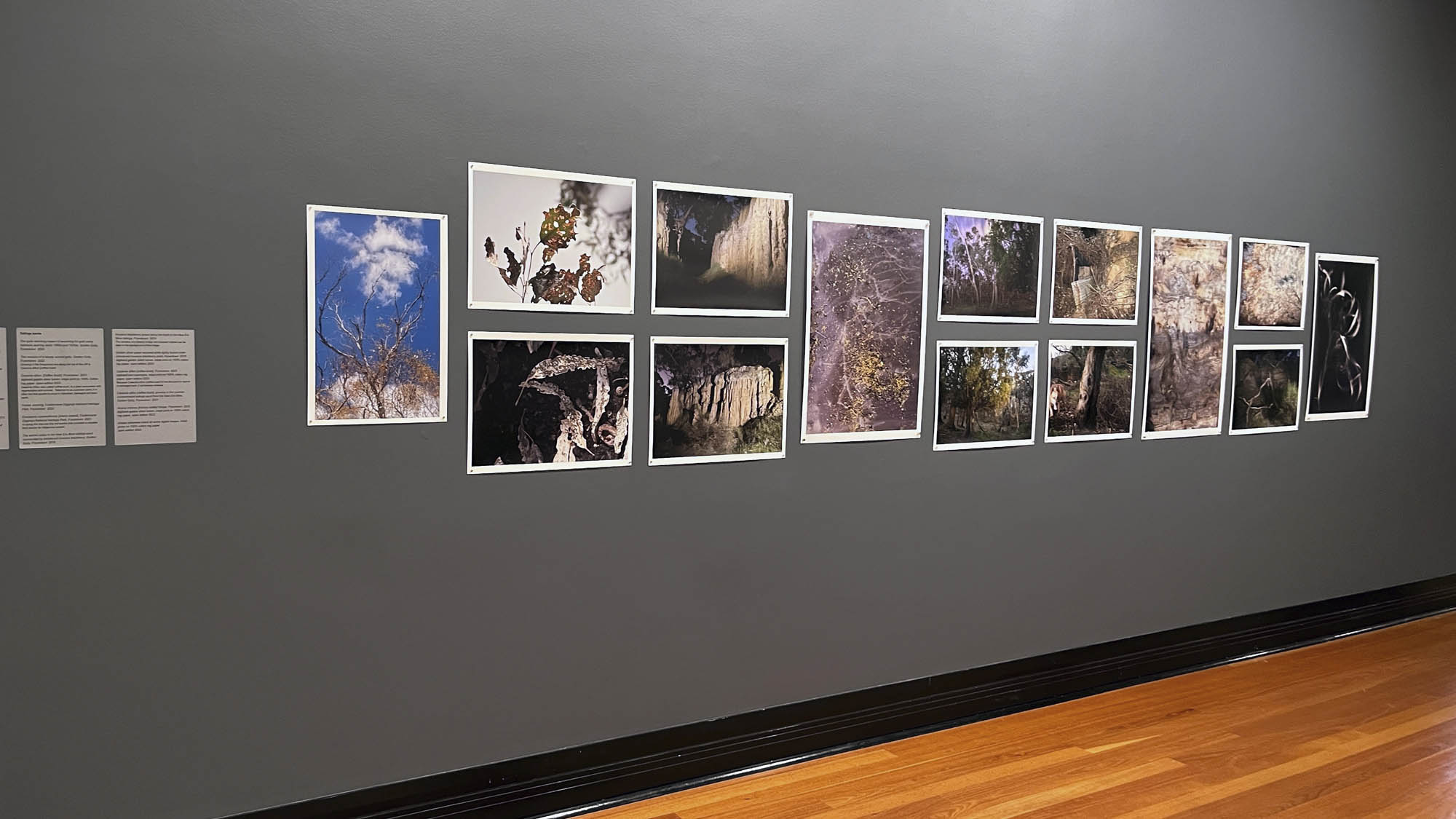
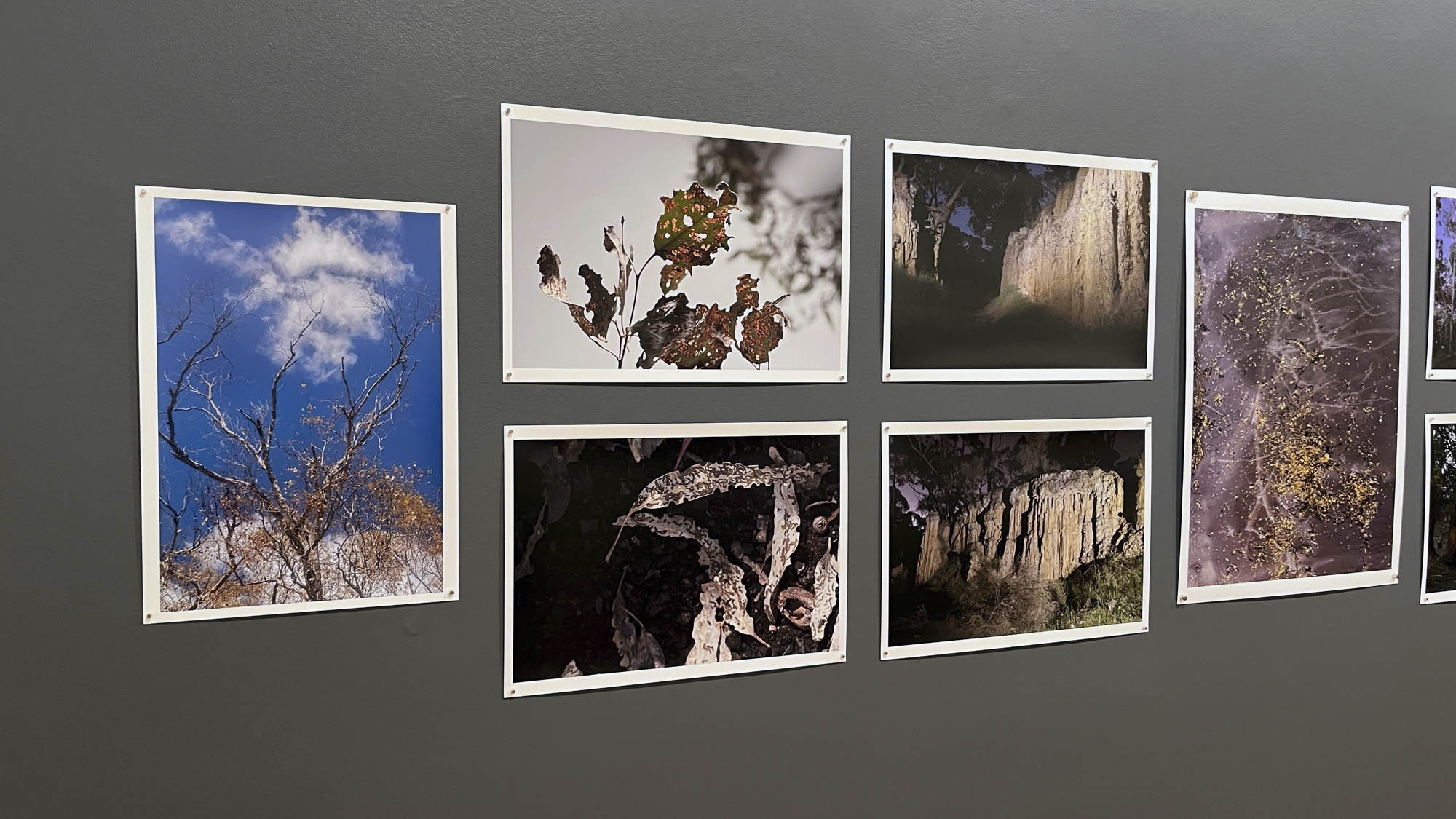
 

Installation view of the exhibition 'Julie Millowick: Surrounding' at the Castlemaine Art Museum

Installation view of the exhibition 'Julie Millowick: Surrounding' at the Castlemaine Art Museum

Installation view of the exhibition 'Julie Millowick: Surrounding' at the Castlemaine Art Museum


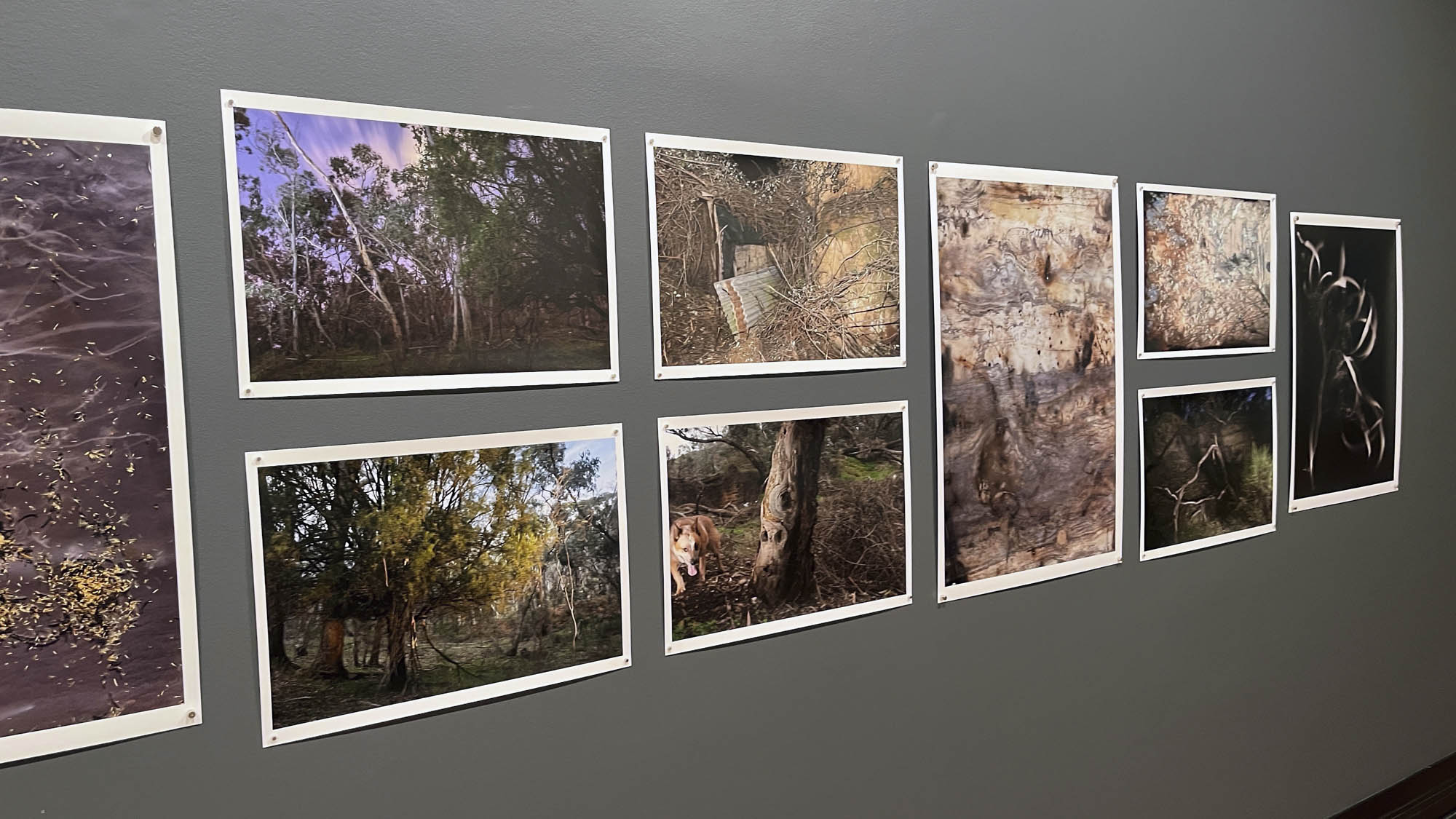
Installation views of the exhibition Julie Millowick: Surrounding at the Castlemaine Art Museum showing from left to right, top to bottom, Trees defoliated by the caterpillar (larval) stage of Cup Moth, Doratifera sp. Fryerstown (2013); Studio photograph of leaves damaged by the caterpillar (larval) stage of Cup Moth, Doratifera sp. Fryerstown (2013); Fallen leaves damaged by the caterpillar (larval) stage of Cup Moth, Doratifera sp. Fryerstown (2013); The quite shocking impact of searching for gold using hydraulic sluicing (early 1900s and 1930s), Golden Gully, Fryerstown (2022); The remains of a deeply sluiced gully, Golden Gully, Fryerstown (2022); Cassinia sifton (Coffee Bush) Fryerstown (2023); Forest, evening, Castlemaine Diggings National Heritage Park, Fryerstown (2022); Exocarpos cupressiformis (cherry ballarat), Castlemaine Diggings National Heritage Park, Fryerstown (2021); The secret cubby in the New Era Mine tailings sand, surrounded by introduced invasive blackberry, Golden Gully, Fryerstown (2016); Invasive blackberry grows along the track to the New Era Mind tailings, Fryerstown (2010); Gelatin silver paper exposed while lightly buried under introduced invasive blackberry plant, Fryerstown (2019); Cassinia sifton (Coffee Bush), Fryerstown (2023); Cassinia sifton (Coffee Bush), growing in the cyanide-contaminated tailings sand from the New Era Mine, Golden Gully, Fryerstown (2021); Acacia implexa (hickory wattle) foliage, Fryerstown (2023)
Photos: Marcus Bunyan


Castlemaine Diggings National Heritage Park

Damage by Cup Moth

During 2013m large areas if trees in Castlemaine Diggings National Heritage Park were defoliated by the caterpillar (larval) stage of Cup Moth, Doratifera sp. Fortunately, most trees eventually recovered. Environmentalist, entomologist and Fryerstown resident, John Landy (former Governor of Victoria 2001-2006 and the second many to break the four-minute mile) also shored Julie Millowick’s concern for the forest. John viewed Julie’s photo documentation and offered valuable information.


Julie Millowick (Australian, b. 1948) 'Trees defoliated by the caterpillar (larval) stage of Cup Moth, Doratifera sp., Fryerstown' 2013


Julie Millowick (Australian, b. 1948)
Trees defoliated by the caterpillar (larval) stage of Cup Moth, Doratifera sp., Fryerstown
2013
Digital image, inkjet print on 100% cotton rag
open edition 2023
Photo: Marcus Bunyan


Large areas of forest in the Castlemaine Diggings National Heritage Park were affected. Every day Julie Milowick witnessed the decline of the trees as the Cup Moth infestation became more widespread.


Tailings sands


Julie Millowick (Australian, b. 1948) 'The quite shocking impact of searching for gold using hydraulic sluicing (early 1900s and 1930s), Golden Gully, Fryerstown' 2022


Julie Millowick (Australian, b. 1948)
The quite shocking impact of searching for gold using hydraulic sluicing (early 1900s and 1930s), Golden Gully, Fryerstown
2022
Digital image, inkjet print on 100% cotton rag
open edition 2023
Photo: Marcus Bunyan
 

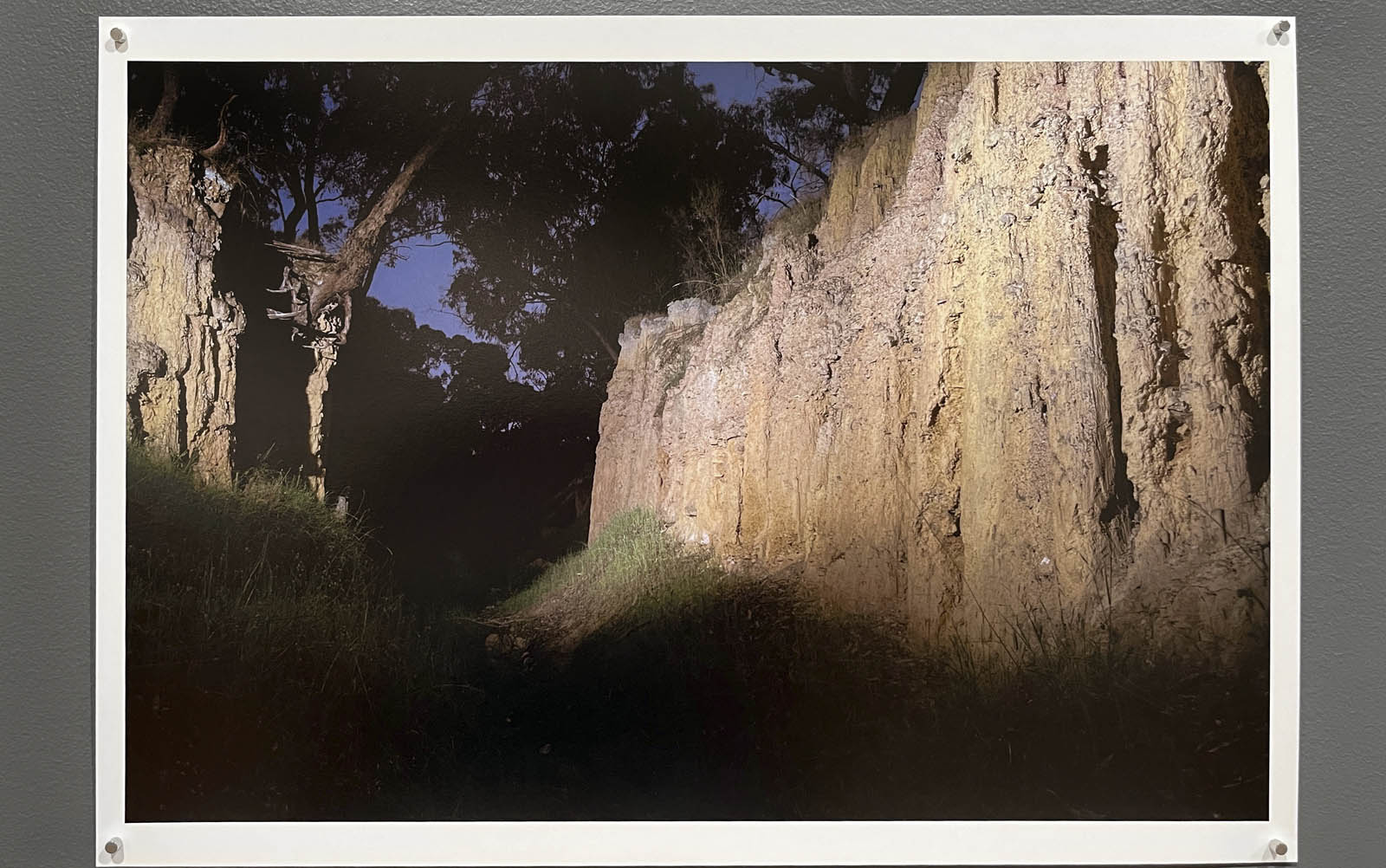
Julie Millowick (Australian, b. 1948) 'The remains of a deeply sluiced gully, Golden Gully, Fryerstown' 2022


Julie Millowick (Australian, b. 1948)
The remains of a deeply sluiced gully, Golden Gully, Fryerstown
2022
Digital image, inkjet print on 100% cotton rag
open edition 2023
Photo: Marcus Bunyan
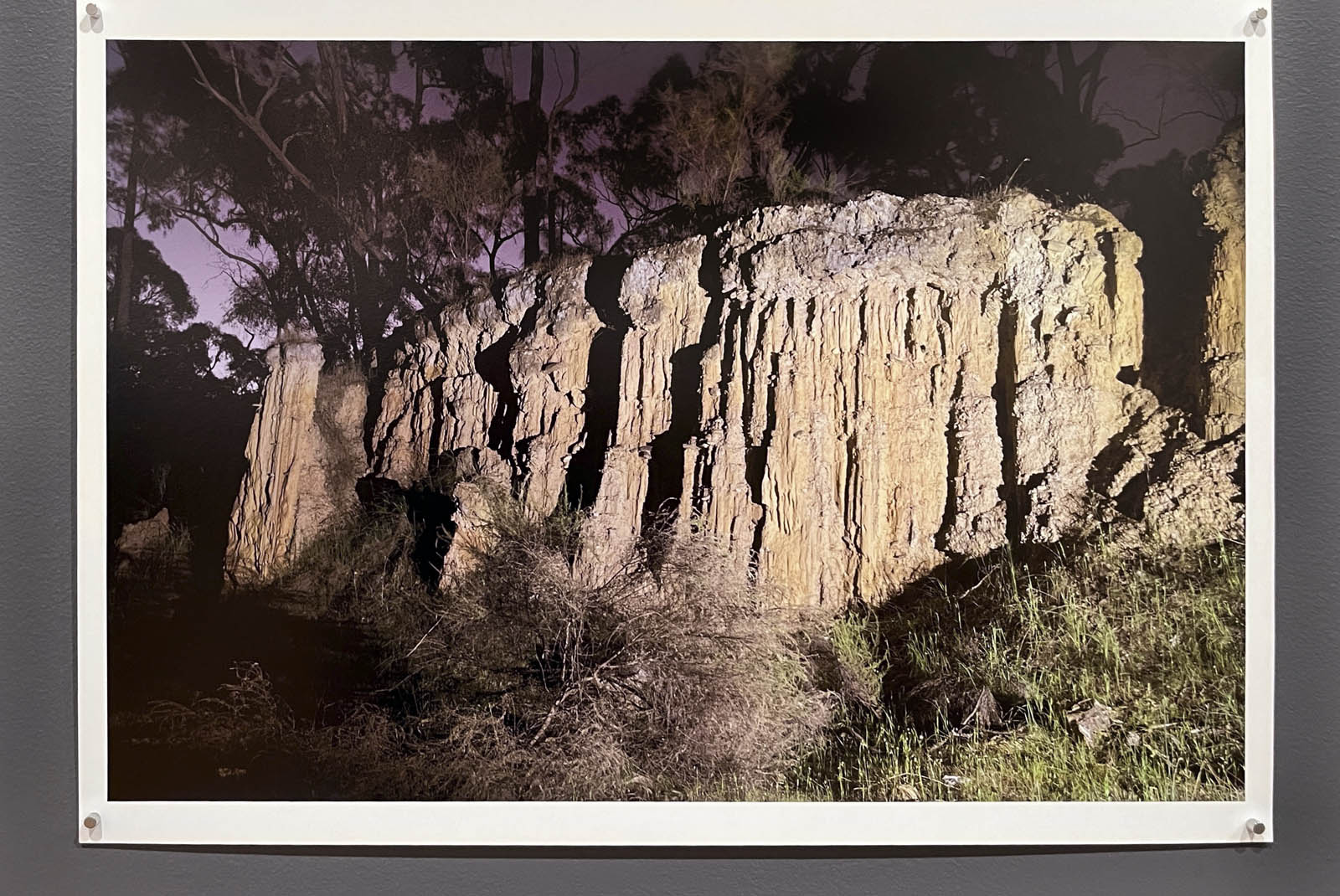
 

Growing in the foreground and along the top of the cliff is Cassinia sifton (coffee bush)
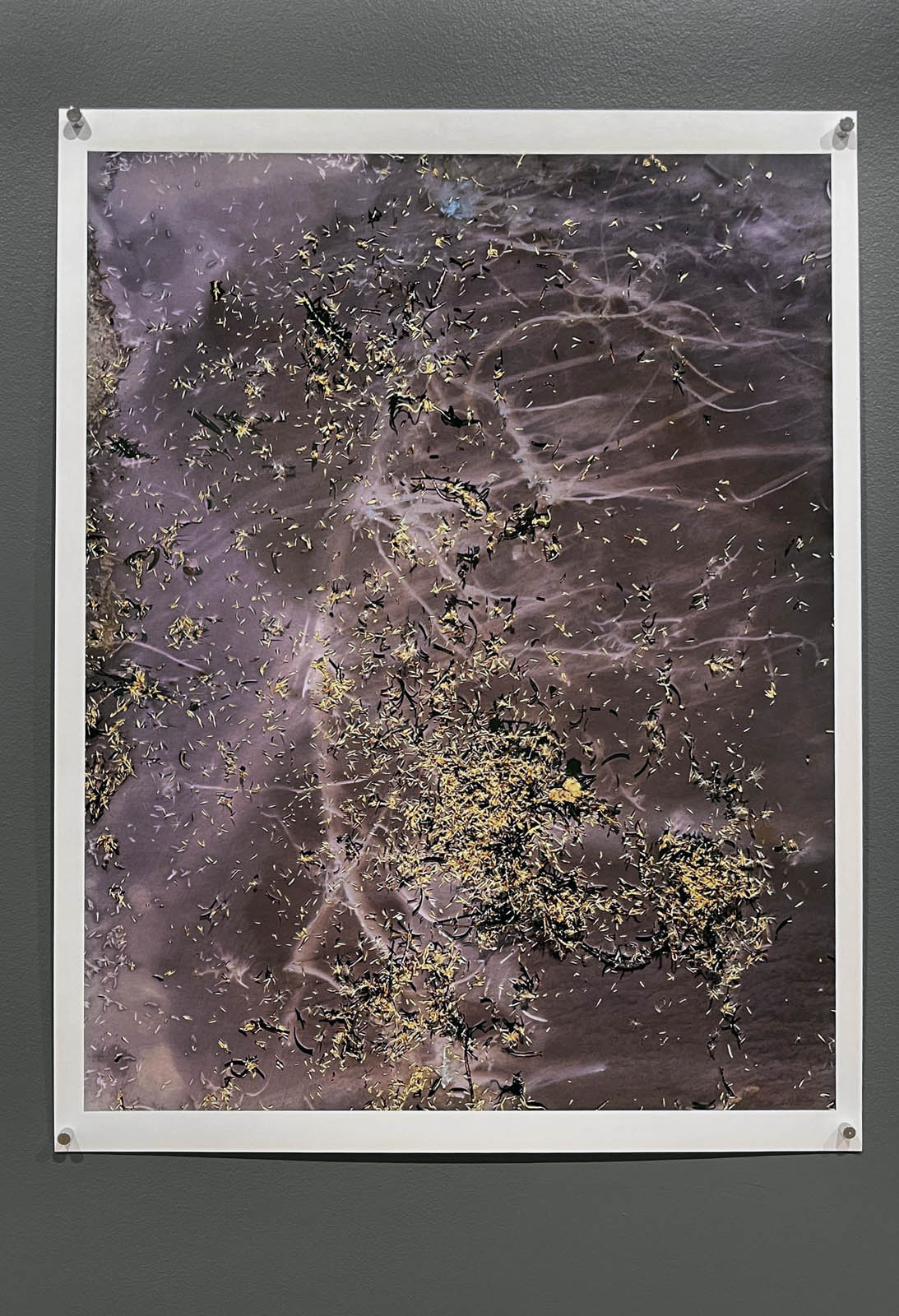
 

Julie Millowick (Australian, b. 1948) 'Cassinia sifton (Coffee Bush), Fryerstown' 2023


Julie Millowick (Australian, b. 1948)
Cassinia sifton (Coffee Bush), Fryerstown
2023
Digitised gelatin silver lumen, inkjet print on 100% cotton rag
open edition 2023
Photo: Marcus Bunyan


Cassinia sifton also called the coffee bush, is a plant associated with regeneration and survival. Referred to as a pioneer plant, it is often the first growth to occur in disturbed, damaged and bare earth.


Julie Millowick (Australian, b. 1948) 'Forest, evening, Castlemaine Diggings National Heritage Park, Fryerstown' 2022


Julie Millowick (Australian, b. 1948)
Forest, evening, Castlemaine Diggings National Heritage Park, Fryerstown
2022
Digital image, inkjet print on 100% cotton rag
open edition 2023
Photo: Marcus Bunyan
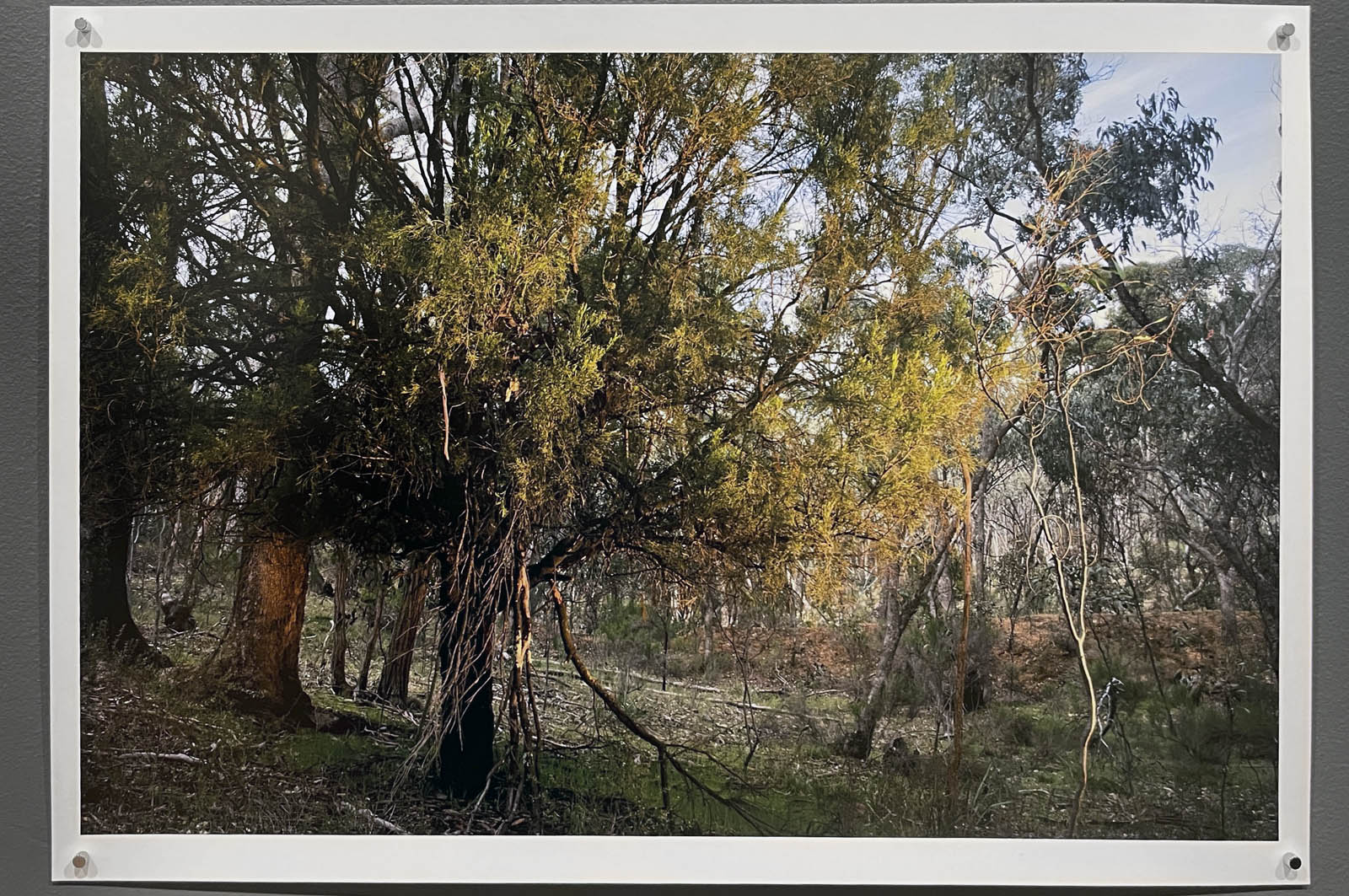
 

Julie Millowick (Australian, b. 1948) 'Exocarpos cupressiformis (cherry ballarat), Castlemaine Diggings National Heritage Park, Fryerstown' 2021


Julie Millowick (Australian, b. 1948)
Exocarpos cupressiformis (cherry ballarat), Castlemaine Diggings National Heritage Park, Fryerstown
2021
Digital image, inkjet print on 100% cotton rag
open edition 2023
Photo: Marcus Bunyan


In spring the tree has tiny red berries that provided a valuable food source for Indigenous people.


Julie Millowick (Australian, b. 1948) 'The secret cubby in the New Era Mine tailings sand, surrounded by introduced invasive blackberry, Golden Gully, Fryerstown' 2016


Julie Millowick (Australian, b. 1948)
The secret cubby in the New Era Mine tailings sand, surrounded by introduced invasive blackberry, Golden Gully, Fryerstown
2016
Digital image, inkjet print on 100% cotton rag
open edition 2023
Photo: Marcus Bunyan


Julie Millowick (Australian, b. 1948) 'Gelatin silver paper exposed while lightly buried under introduced invasive blackberry plant, Fryerstown' 2019


Julie Millowick (Australian, b. 1948)
Gelatin silver paper exposed while lightly buried under introduced invasive blackberry plant, Fryerstown
2019
Digitised gelatin silver lumen, inkjet print on 100% cotton rag
open edition 2023
Photo: Marcus Bunyan


Julie Millowick (Australian, b. 1948) 'Cassinia sifton (Coffee Bush), Fryerstown' 2023


Julie Millowick (Australian, b. 1948)
Cassinia sifton (Coffee Bush), Fryerstown
2023
Digitised wet cyanotype, inkjet print on 100% cotton rag paper, open edition 2023
Photo: Marcus Bunyan


Because Cassinia sifton (coffee bush) is the fist plant to regrow in damaged land, it symbolises renewal.


Julie Millowick (Australian, b. 1948) 'Cassinia sifton (Coffee Bush), growing in the cyanide-contaminated tailings sand from the New Era Mine, Golden Gully, Fryerstown' 2021


Julie Millowick (Australian, b. 1948)
Cassinia sifton (Coffee Bush), growing in the cyanide-contaminated tailings sand from the New Era Mine, Golden Gully, Fryerstown
2021
Digital image, inkjet print on 100% cotton rag
open edition 2023
Photo: Marcus Bunyan
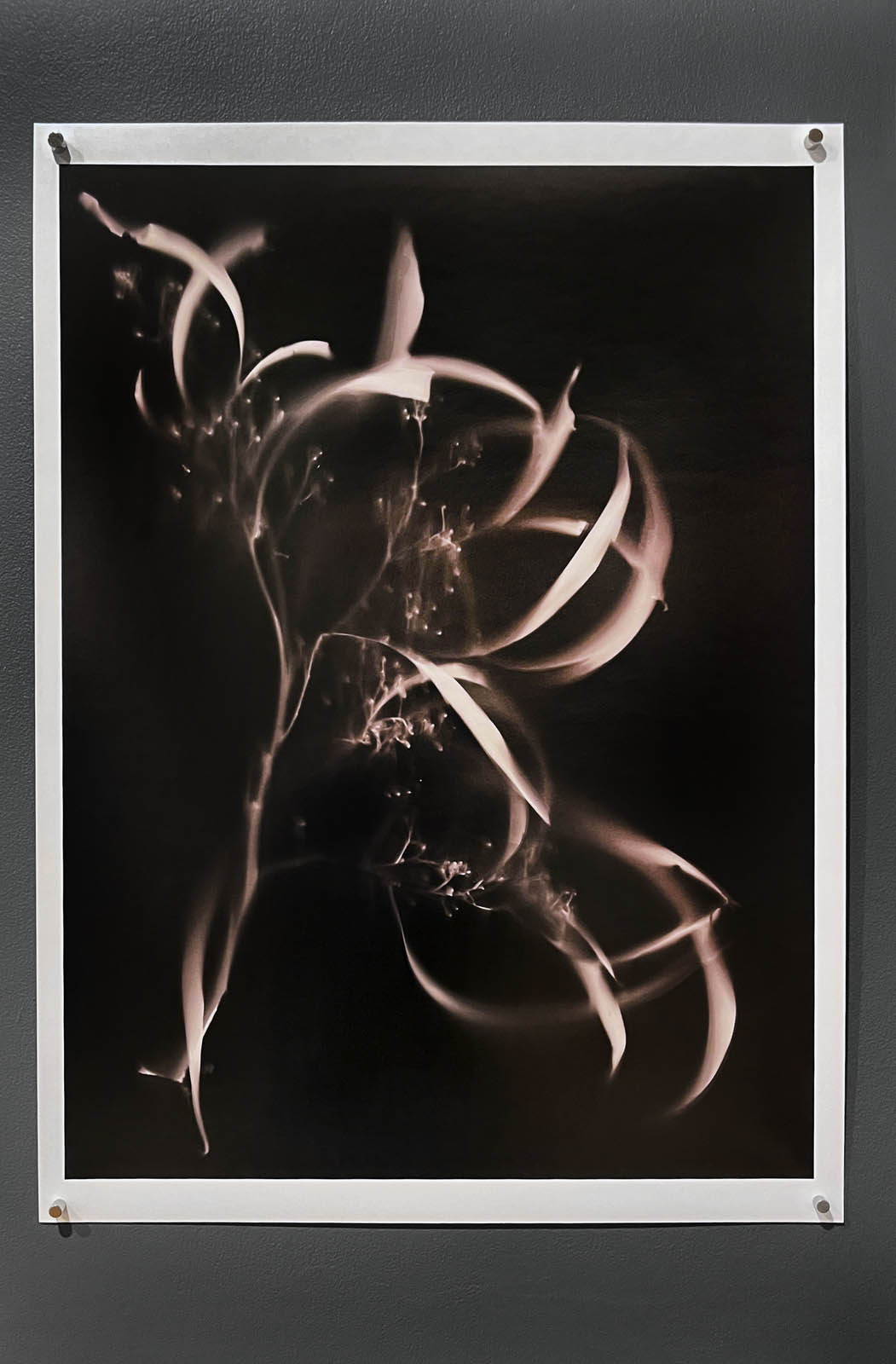
 

Julie Millowick (Australian, b. 1948) 'Acacia implexa (hickory wattle) foliage, Fryerstown' 2023


Julie Millowick (Australian, b. 1948)
Acacia implexa (hickory wattle) foliage, Fryerstown
2023
Digitised gelatin silver lumen, inkjet print on 100% cotton rag
open edition 2023
Photo: Marcus Bunyan


The beauty of Central Victoria’s landscape in tumult and recovery.

Julie Millowick is a localist, an artist who is deeply embedded in the place where she lives. Over many years, Millowick has documented the environmental legacy of gold mining around her home near Fryerstown in Central Victoria. This strangely poignant landscape has been turned upside down through violent extraction – but it remains resilient and in the process of recovery.

Surrounding exhibits a curated selection of Millowick’s work including a new series seen for the first time. Millowick’s photographs show us the devastating effects of mining, drought, flood and invasive plants, but also remind us of the interconnectedness that links all parts of this ecosystem including its human occupants. This is a terrain which the artist loves, and which she sees with acute perception. It is a landscape full of complexity, a region with a terrible past, but in its capacity for renewal is also a place that offers a spark of hope for the future.

Julie Millowick

Julie Millowick began her photographic career working in the darkroom of Athol Shmith, John Cato and Peter Barr. After completing her studies at Prahran College of Advanced Education, she worked as a press and public relations photographer, after which the direction of her commercial folio changed and she worked as a corporate industrial photographer. Julie achieved early recognition for her photojournalism when she exhibited at the National Gallery of Victoria and Australian Centre for Photography in 1977 in Australian New Work. She has exhibited and published regularly since then, with work held in major photography collections in Australia and internationally. In 1993 she exhibited work in the exhibition Intimate Lives with Sally Mann, Nan Goldin and Jaques Henri Lartigue at the International Fotofeis in Edinburgh, Scotland.

Text from the Castlemaine Art Museum website
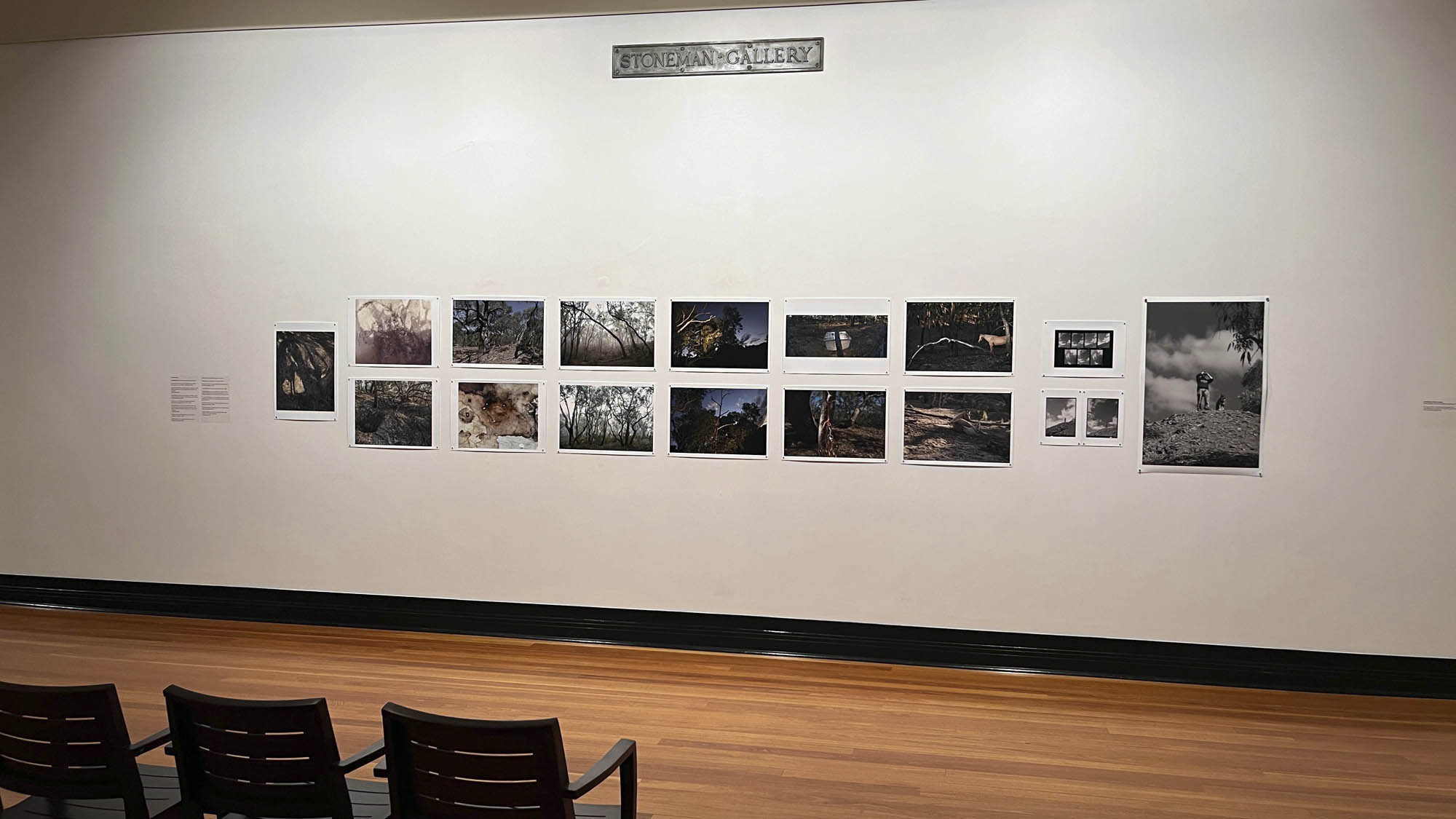
 

Installation view of the exhibition 'Julie Millowick: Surrounding' at the Castlemaine Art Museum

Installation view of the exhibition 'Julie Millowick: Surrounding' at the Castlemaine Art Museum

Installation view of the exhibition 'Julie Millowick: Surrounding' at the Castlemaine Art Museum


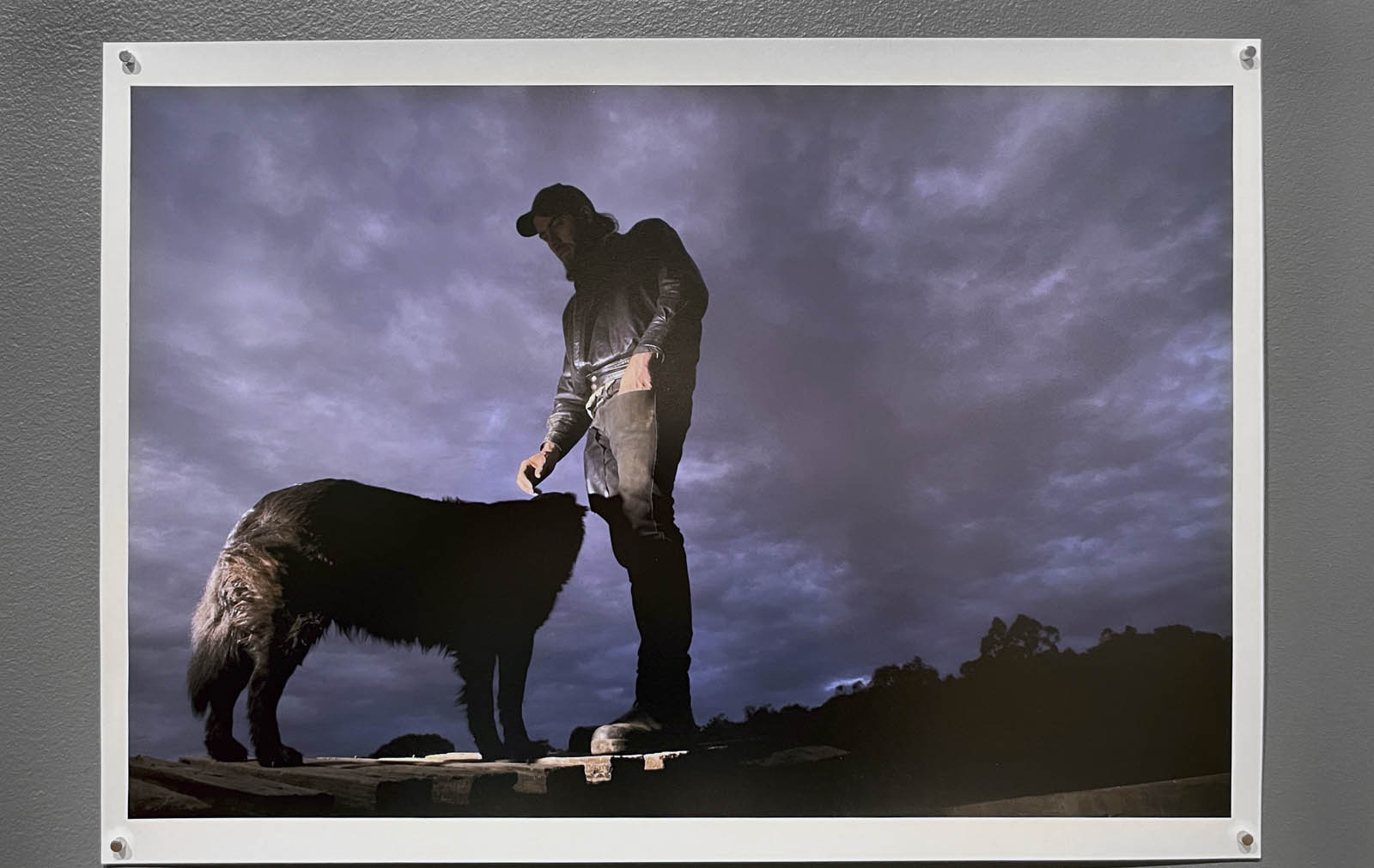
Installation views of the exhibition Julie Millowick: Surrounding at the Castlemaine Art Museum showing from left to right, top to bottom, Dog shadow on the edge of an abandoned mine shaft, evening light, horse paddock, Fryerstown (2009); Cassini Sifton (coffee bush) with seeds, Fyerstown (2023); Abandoned mine shaft, horse paddock, Fyerstown (2009); Survivor tree, surrounded by uniform post-goldrush regrowth, horse paddock, Fyerstown (2023); Gelatin silver paper exposed while lightly buried under introduced invasive blackberry plant, Fyerstown (2019); Post-goldrush uniform regrowth trees in mist, horse paddock, Fryerstown (2014); Post-goldrush uniform regrowth trees in mist, horse paddock, Fryerstown (2014); Late evening, horse paddock, Fryerstown (2021); Late evening, horse paddock, Fryerstown (2021); Early morning light, horse paddock with washing line and feed bin, Fryerstown (2009); Tree with hay band, horse paddock, Fryerstown (2009); A beautiful little mare, hose paddock, Fryerstown (2009); A much-loved little mare, horse paddock, Fryerstown (2009); Christian McArdle on top of Ferrons mullock heap, horse paddock, Fryerstown (1989); Christian McArdle with Blue Dog on top of Ferrons mullock heap, Fryerstown (2023)


Horse Paddock
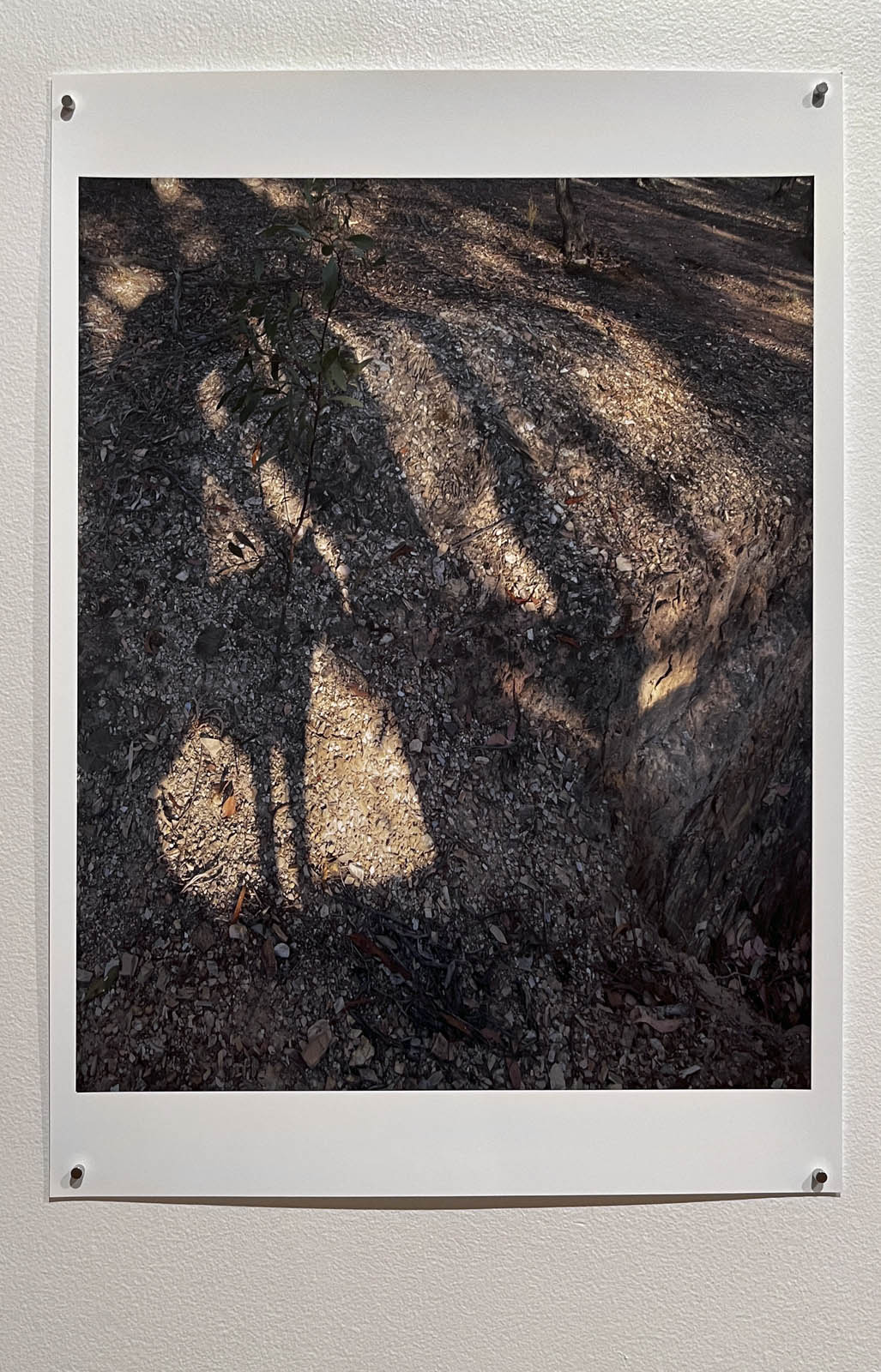
 

Julie Millowick (Australian, b. 1948) 'Dog shadow on the edge of an abandoned mine shaft, evening light, horse paddock, Fryerstown' 2009


Julie Millowick (Australian, b. 1948)
Dog shadow on the edge of an abandoned mine shaft, evening light, horse paddock, Fryerstown
2009
Digital image, inkjet print on 100% cotton rag
open edition 2023
Photo: Marcus Bunyan
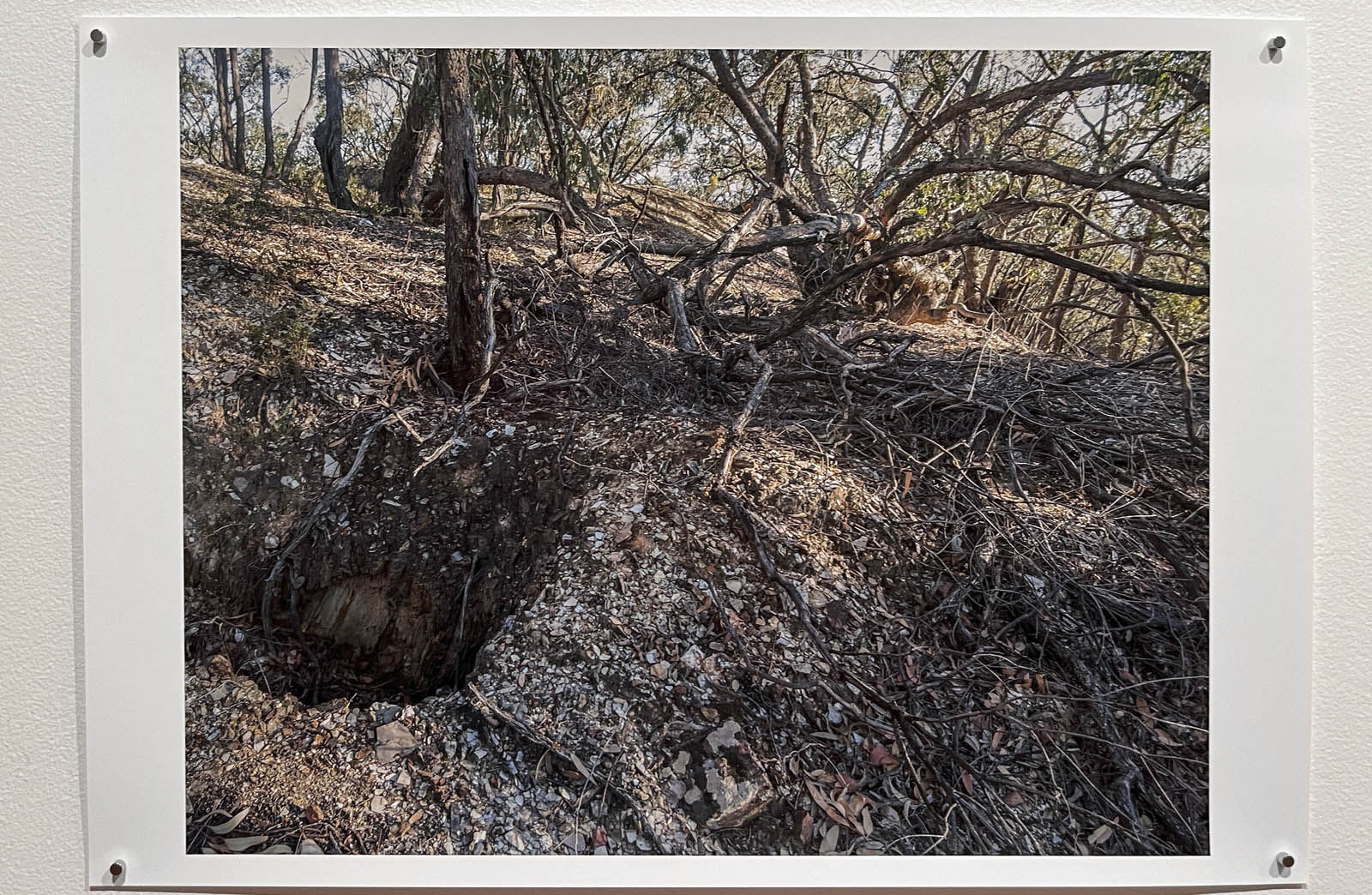
 

Julie Millowick (Australian, b. 1948) 'Abandoned mine shaft, horse paddock, Fyerstown' 2009


Julie Millowick (Australian, b. 1948)
Abandoned mine shaft, horse paddock, Fyerstown
2009
Digital image, inkjet print on 100% cotton rag
open edition 2023
Photo: Marcus Bunyan


A small Cassinia soften (coffee bush) valiantly grows on the edge of an abandoned mine shaft.


Julie Millowick (Australian, b. 1948) 'Survivor tree, surrounded by uniform post-goldrush regrowth, horse paddock, Fyerstown' 2023


Julie Millowick (Australian, b. 1948)
Survivor tree, surrounded by uniform post-goldrush regrowth, horse paddock, Fyerstown
2023
Digital image, inkjet print on 100% cotton rag
open edition 2023
Photo: Marcus Bunyan
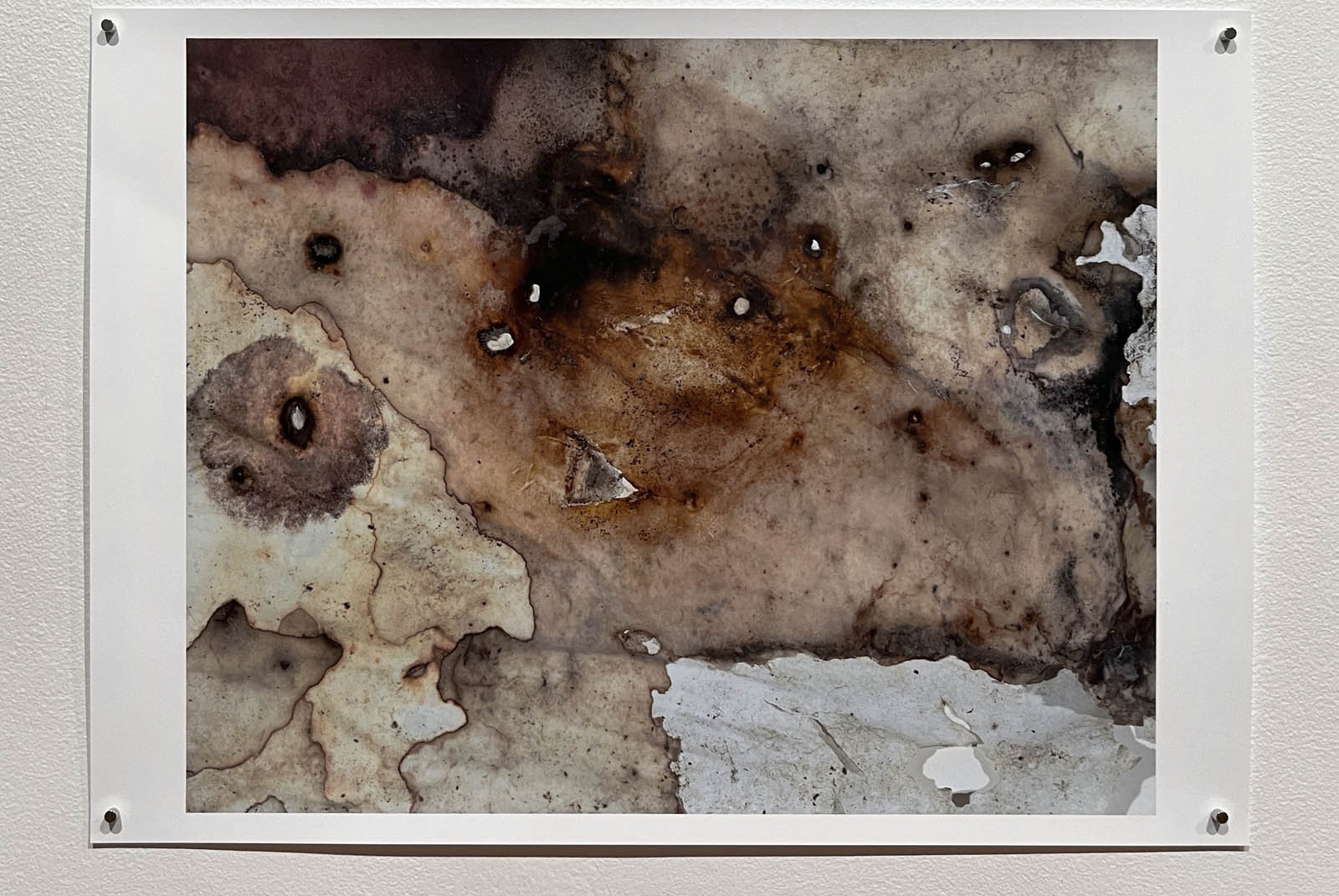
 

Julie Millowick (Australian, b. 1948) 'Gelatin silver paper exposed while lightly buried under introduced invasive blackberry plant, Fyerstown' 2019


Julie Millowick (Australian, b. 1948)
Gelatin silver paper exposed while lightly buried under introduced invasive blackberry plant, Fyerstown
2019
Digitised gelatin silver lumen, inkjet print on 100% cotton rag
open edition 2023
Photo: Marcus Bunyan


Julie Millowick (Australian, b. 1948) 'Post-goldrush uniform regrowth trees in mist, horse paddock, Fryerstown' 2014


Julie Millowick (Australian, b. 1948)
Post-goldrush uniform regrowth trees in mist, horse paddock, Fryerstown
2014
Digital image, inkjet print on 100% cotton rag
open edition 2023
Photo: Marcus Bunyan
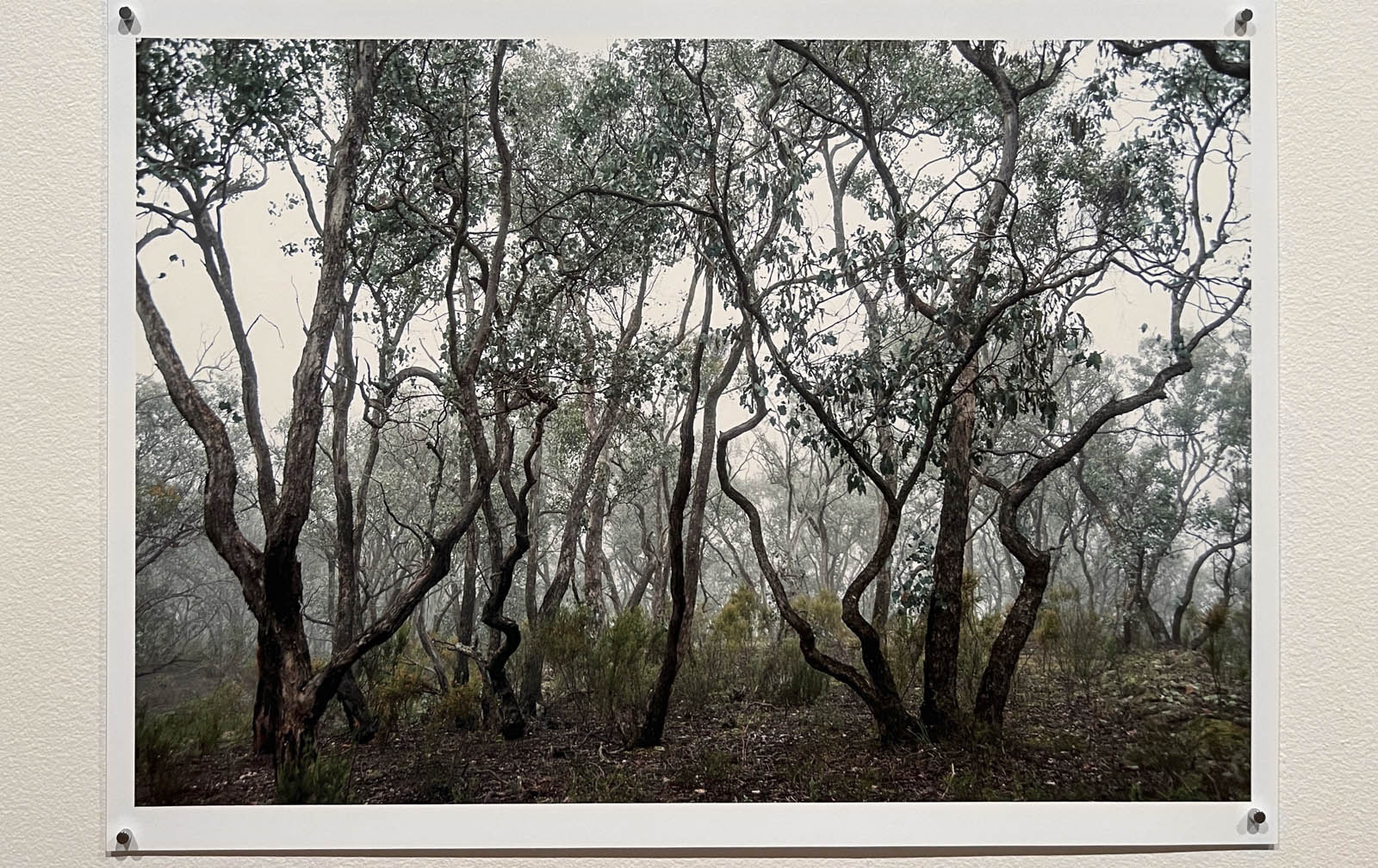
 

Julie Millowick (Australian, b. 1948) 'Post-goldrush uniform regrowth trees in mist, horse paddock, Fryerstown' 2014


Julie Millowick (Australian, b. 1948)
Post-goldrush uniform regrowth trees in mist, horse paddock, Fryerstown
2014
Digital image, inkjet print on 100% cotton rag
open edition 2023
Photo: Marcus Bunyan
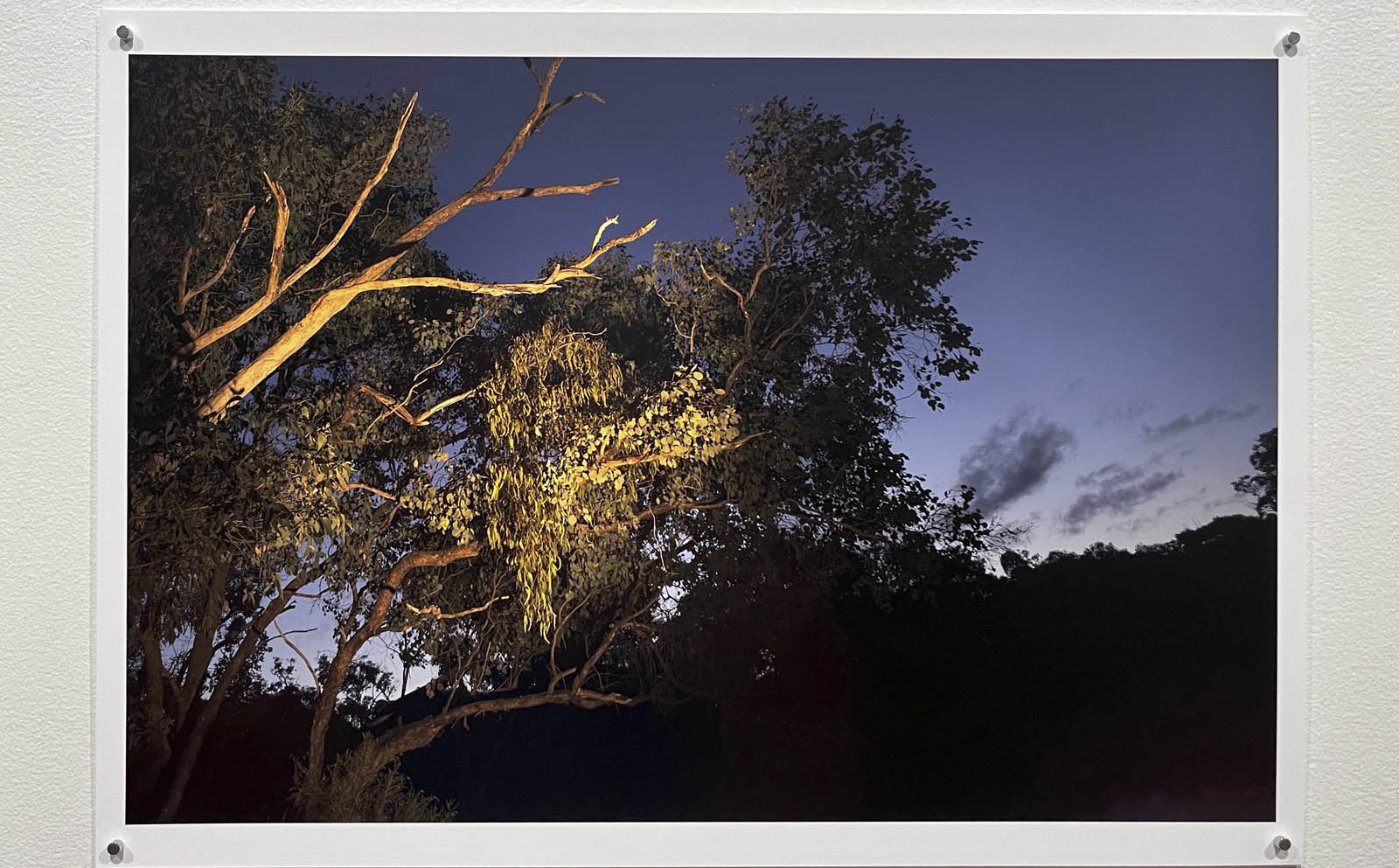
 

Julie Millowick (Australian, b. 1948) 'Late evening, horse paddock, Fryerstown' 2021


Julie Millowick (Australian, b. 1948)
Late evening, horse paddock, Fryerstown
2021
Digital image, inkjet print on 100% cotton rag
open edition 2023
Photo: Marcus Bunyan
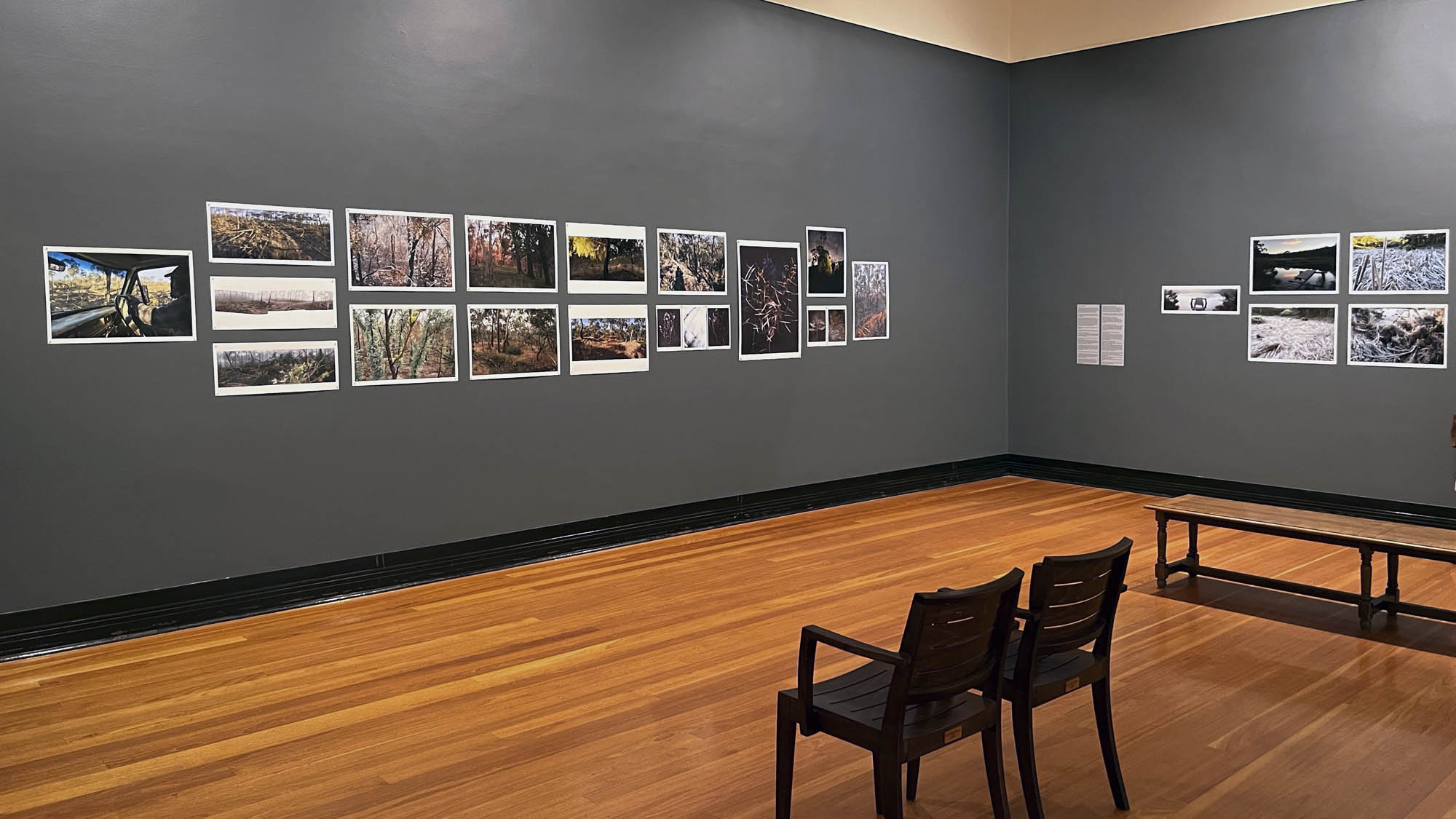
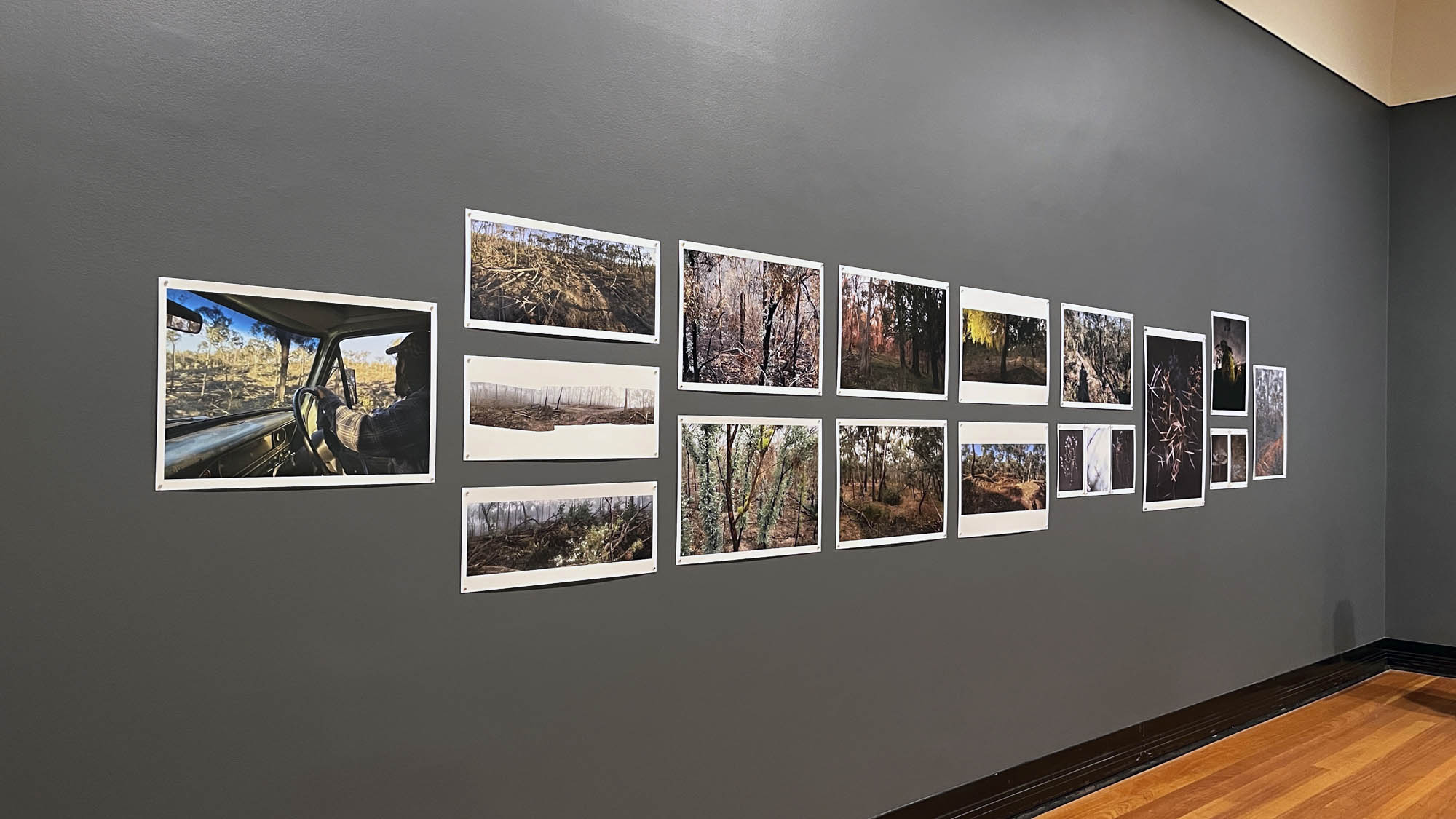
 

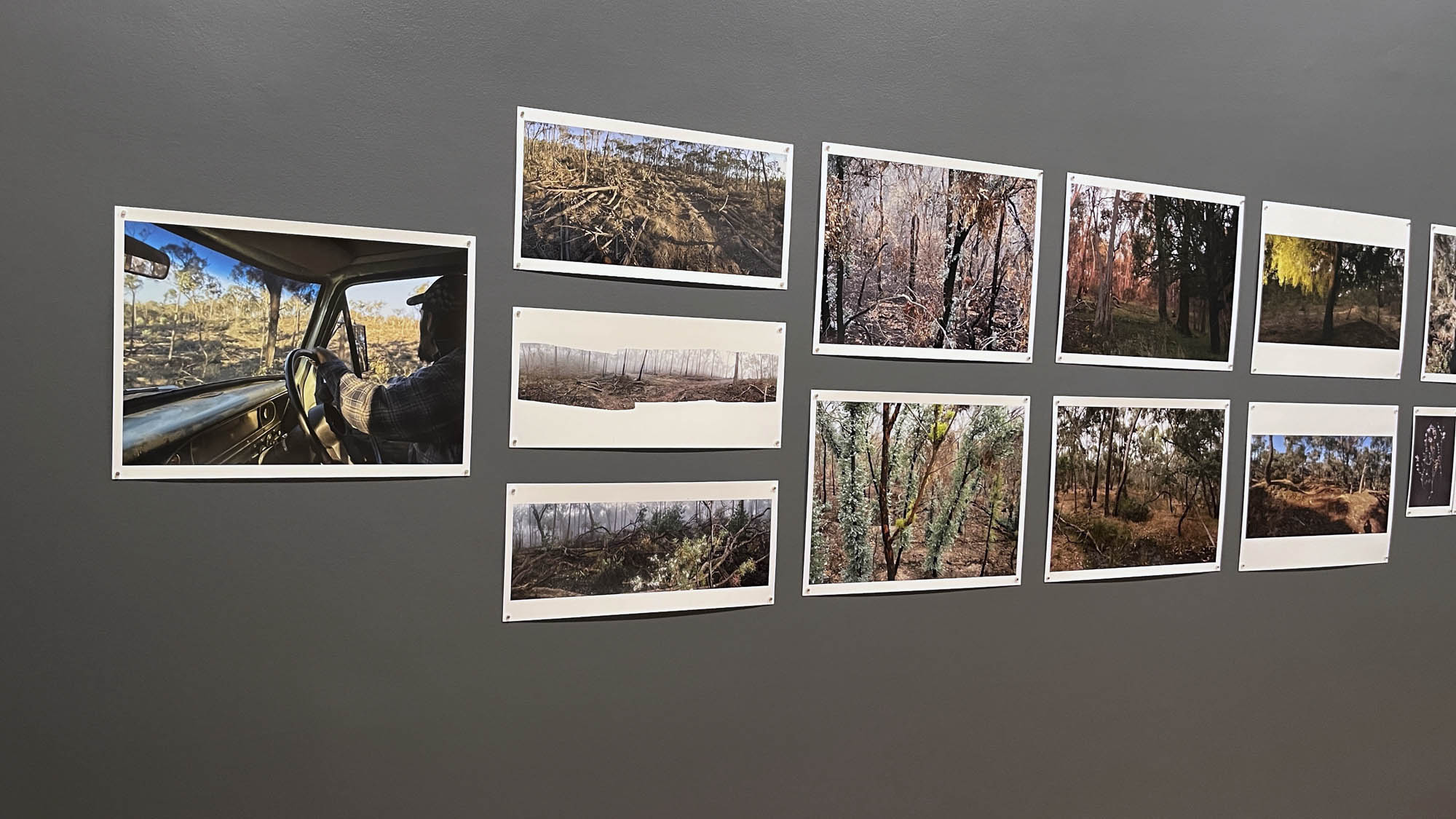
Installation view of the exhibition 'Julie Millowick: Surrounding' at the Castlemaine Art Museum

Installation view of the exhibition 'Julie Millowick: Surrounding' at the Castlemaine Art Museum

Installation view of the exhibition 'Julie Millowick: Surrounding' at the Castlemaine Art Museum


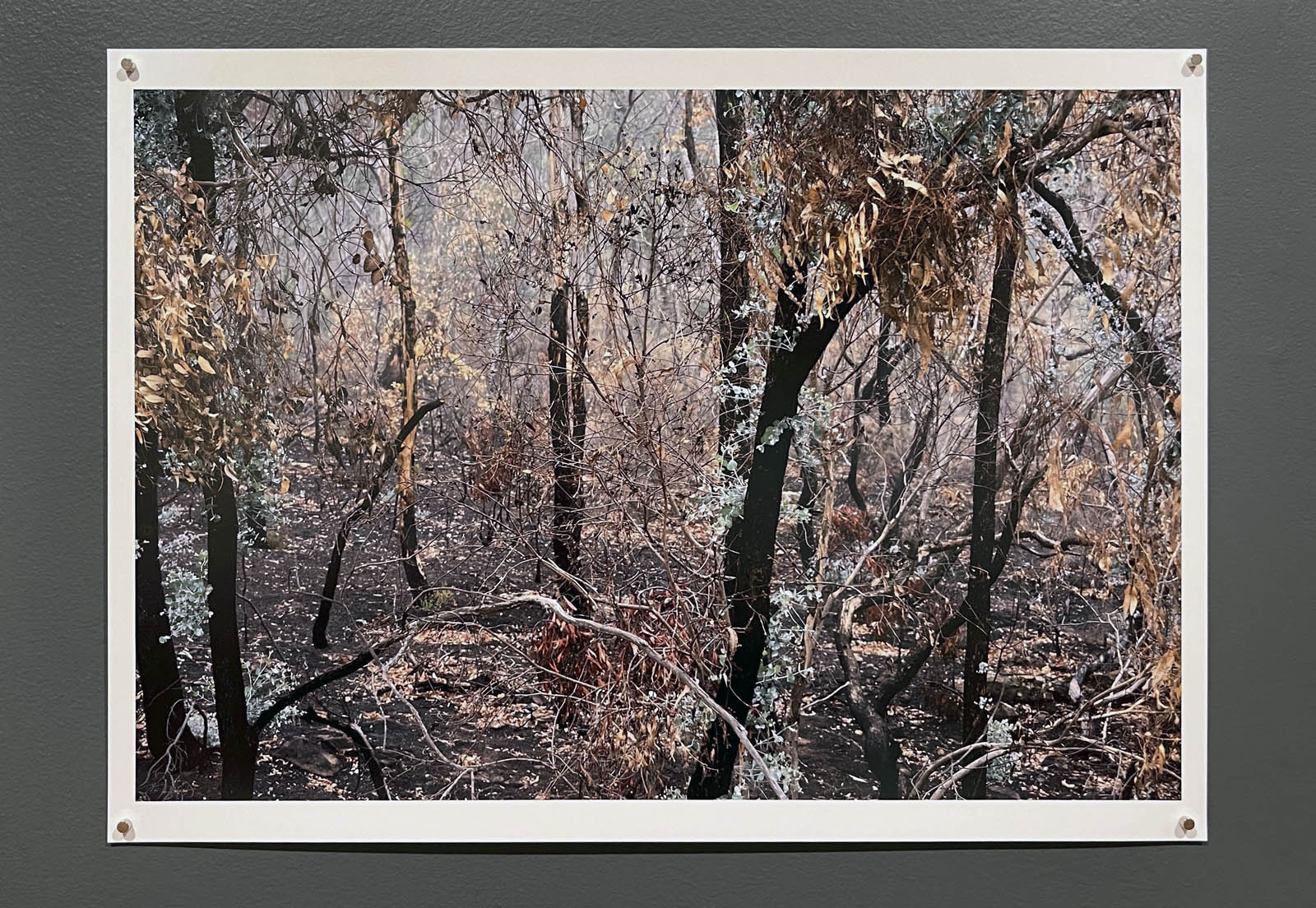
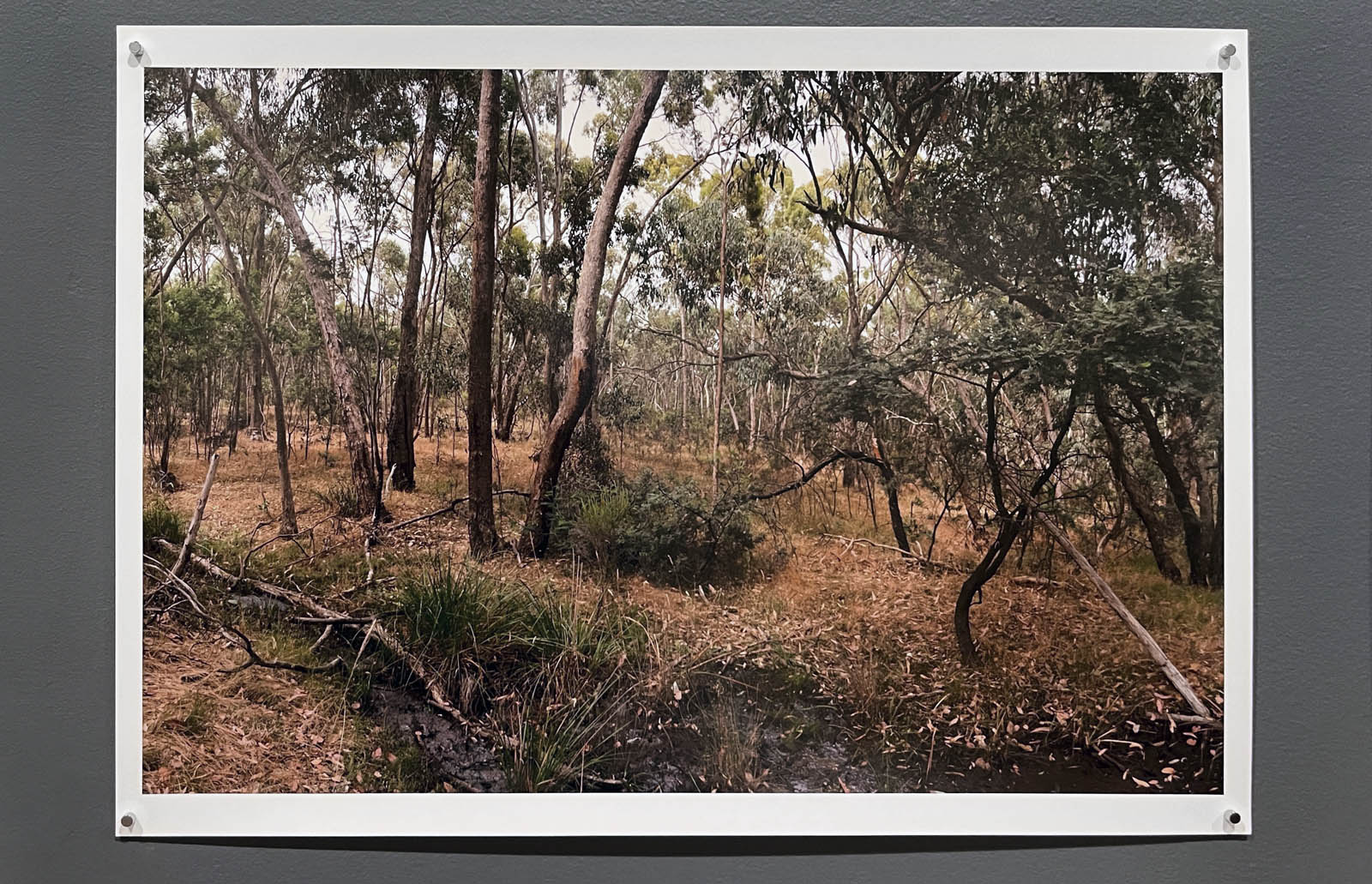
Installation views of the exhibition Julie Millowick: Surrounding at the Castlemaine Art Museum showing from left to right, top to bottom, Ecological Thinning Trial, first week. Christian McArdle driving his 1967 Ford F100 truck into one of the ‘thinned’ areas, Fryerstown (2007); Ecological Thinning Trial, first week, Fryerstown (2007); Ecological Thinning Trial, three months later, Fryerstown (2007); Ecological Thinning Trial, two years later, Fryerstown (2009); Castlemaine Diggings National Heritage Park seven weeks after a DELWP (Department of Environment, Land, Water and Planning) planned burn, Fryerstown (2020); Castlemaine Diggings National Heritage Park thirteen weeks after a DELWP (Department of Environment, Land, Water and Planning) planned burn, Fryerstown (2020); Evening light, Castlemaine Diggings National Heritage Park, Fryerstown (2022); Quietly beautiful landscape in the Castlemaine Diggings National Heritage Park, Fryerstown (2013); Exocarpos cupressiformis (cherry ballart) with a kangaroo track running across the background and the abandoned Fyers Extension Water Race (channel) on the right-hand side, Fryerstown (2022); Ferrons Mine mullock heap in distant background of what is referred to as ‘worked over land’, Fryerstown (2020); Beautiful, rugged and challenging terrain of the Castlemaine Diggings National Heritage Park, Fryerstown (2014); Post-goldrush uniform regrowth of the forest is clearly evident in this image from (2014); Three Wildflowers, Castlemaine Diggings National Heritage Park, Fryerstown (2022); Wattle from the Castlemaine Diggings National Heritage Park, Fryerstown (2022); Exocarpos cupressiformis (cherry ballart), Fryerstown (2022); Acacia pycnantha (golden wattle), Castlemaine Diggings National Heritage Park, Fryerstown (2022); Exocarpos cupressiformis (cherry ballart), Castlemaine Diggings National Heritage Park, Fryerstown (2022); Exploring the multi-layered complexity of the forest using the technique of double exposure, Fryerstown (2008)
Photo: Marcus Bunyan


Castlemaine Diggings National Heritage Park

Ecological thinning

In April 2007 an Ecological Thinning Trial commenced in sections of the Castlemaine Diggings National Heritage Park. The trial has a duration of fifty years and aims to transform selected areas of the box ironbark forest from uniform post-goldrush regrowth to an environment supporting widely-spaced trees of different heights, age and canopy.


Julie Millowick (Australian, b. 1948) 'Ecological Thinning Trial, first week. Christian McArdle driving his 1967 Ford F100 truck into one of the 'thinned' areas, Fryerstown' 2007


Julie Millowick (Australian, b. 1948)
Ecological Thinning Trial, first week. Christian McArdle driving his 1967 Ford F100 truck into one of the ‘thinned’ areas, Fryerstown
2007
Digital image, inkjet print on 100% cotton rag
open edition 2023
Photo: Marcus Bunyan
 

Julie Millowick (Australian, b. 1948) 'Ecological Thinning Trial, Fryerstown' 2007-2009


Julie Millowick (Australian, b. 1948)
Ecological Thinning Trial, first week, Fryerstown
2007
Digital image, inkjet print on 100% cotton rag
open edition 2023

The uniform post-goldrush regrowth trees have been ‘thinned’, leaving a selected few to grow larger and provide a protective canopy and more diverse habitat.

Julie Millowick (Australian, b. 1948)
Ecological Thinning Trial, three months later, Fryerstown
2007
Digital image, inkjet print on 100% cotton rag
open edition 2023

‘Thinned’ trees in foreground remain on the ground while in the background (centre of image) others are stacked ready for removal. Uniform regrowth after the gold mining deforestation is evident in trees that remain standing. The 50-year trial hopes to return the forest of the Castlemaine Diggings National Heritage Park to a landscape of various sized trees, canopy and habitat.

Julie Millowick (Australian, b. 1948)
Ecological Thinning Trial, two years later, Fryerstown
2009
Digital image, inkjet print on 100% cotton rag
open edition 2023

The flowering local Hakea decrees (hake or ‘bushy needlewood’) is growing through stacked wood. Uniform regrowth trees can be seen in the background.

Photo: Marcus Bunyan


Julie Millowick (Australian, b. 1948) 'Castlemaine Diggings National Heritage Park seven weeks after a DELWP (Department of Environment, Land, Water and Planning) planned burn, Fryerstown' 2020


Julie Millowick (Australian, b. 1948)
Castlemaine Diggings National Heritage Park seven weeks after a DELWP (Department of Environment, Land, Water and Planning) planned burn, Fryerstown
2020
Digital image, inkjet print on 100% cotton rag
open edition 2023
Photo: Marcus Bunyan


Julie Millowick (Australian, b. 1948) 'Castlemaine Diggings National Heritage Park thirteen weeks after a DELWP (Department of Environment, Land, Water and Planning) planned burn, Fryerstown' 2020


Julie Millowick (Australian, b. 1948)
Castlemaine Diggings National Heritage Park thirteen weeks after a DELWP (Department of Environment, Land, Water and Planning) planned burn, Fryerstown
2020
Digital image, inkjet print on 100% cotton rag
open edition 2023
Photo: Marcus Bunyan


Julie Millowick (Australian, b. 1948) 'Evening light, Castlemaine Diggings National Heritage Park, Fryerstown' 2022


Julie Millowick (Australian, b. 1948)
Evening light, Castlemaine Diggings National Heritage Park, Fryerstown
2022
Digital image, inkjet print on 100% cotton rag
open edition 2023
Photo: Marcus Bunyan


The conifer-like foliage of Exocarpos cupressiformis (cherry ballart) in the foreground demonstrates why European settlers referred to it as a ‘bush Christmas tree’.


Julie Millowick (Australian, b. 1948) 'Quietly beautiful landscape in the Castlemaine Diggings National Heritage Park, Fryerstown' 2013


Julie Millowick (Australian, b. 1948)
Quietly beautiful landscape in the Castlemaine Diggings National Heritage Park, Fryerstown
2013
Digital image, inkjet print on 100% cotton rag
open edition 2023
Photo: Marcus Bunyan


Julie Millowick (Australian, b. 1948). 'Exocarpos cupressiformis (cherry ballast) with a kangaroo track running across the background and the abandoned Fyers Extension Water Race (channel) on the right-hand side, Fryerstown' (2022) and 'Ferrons Mine mullock heap in distant background of what is referred to as 'worked over land', Fryerstown' (2023)


Julie Millowick (Australian, b. 1948)
Exocarpos cupressiformis (cherry ballast) with a kangaroo track running across the background and the abandoned Fyers Extension Water Race (channel) on the right-hand side, Fryerstown
2022
Digital image, inkjet print on 100% cotton rag
open edition 2023

Julie Millowick (Australian, b. 1948)
Ferrons Mine mullock heap in distant background of what is referred to as ‘worked over land’, Fryerstown
2020
Digital image, inkjet print on 100% cotton rag
open edition 2023

Photo: Marcus Bunyan


Julie Millowick (Australian, b. 1948) 'Wattle from the Castlemaine Diggings National Heritage Park, Fryerstown' 2022


Julie Millowick (Australian, b. 1948)
Wattle from the Castlemaine Diggings National Heritage Park, Fryerstown
2022
Digitised gelatin silver lumen, inkjet print on 100% cotton rag
open edition 2023
Photo: Marcus Bunyan


Julie Millowick (Australian, b. 1948) 'Exocarpos cupressiformis (cherry ballart), Fryerstown' 2022


Julie Millowick (Australian, b. 1948)
Exocarpos cupressiformis (cherry ballart), Fryerstown
2022
Digital image, inkjet print on 100% cotton rag
open edition 2023

Julie Millowick specifically photographed Exocarpos cupressiformis (cherry ballart or ‘bush Christmas tree’) for several years. This is one of her favourite images.

Julie Millowick (Australian, b. 1948)
Acacia pycnantha (golden wattle), Castlemaine Diggings National Heritage Park, Fryerstown
2022
Digitised gelatin silver lumen, inkjet print on 100% cotton rag
open edition 2023

Julie Millowick (Australian, b. 1948)
Exocarpos cupressiformis (cherry ballart), Castlemaine Diggings National Heritage Park, Fryerstown (2022)
Digitised gelatin silver lumen, inkjet print on 100% cotton rag
open edition 2023

Photo: Marcus Bunyan


Julie Millowick (Australian, b. 1948) 'Exploring the multi-layered complexity of the forest using the technique of double exposure, Fryerstown' 2008


Julie Millowick (Australian, b. 1948)
Exploring the multi-layered complexity of the forest using the technique of double exposure, Fryerstown
2008
Digital image, inkjet print on 100% cotton rag
open edition 2023
Photo: Marcus Bunyan


Installation view of the exhibition 'Julie Millowick: Surrounding' at the Castlemaine Art Museum


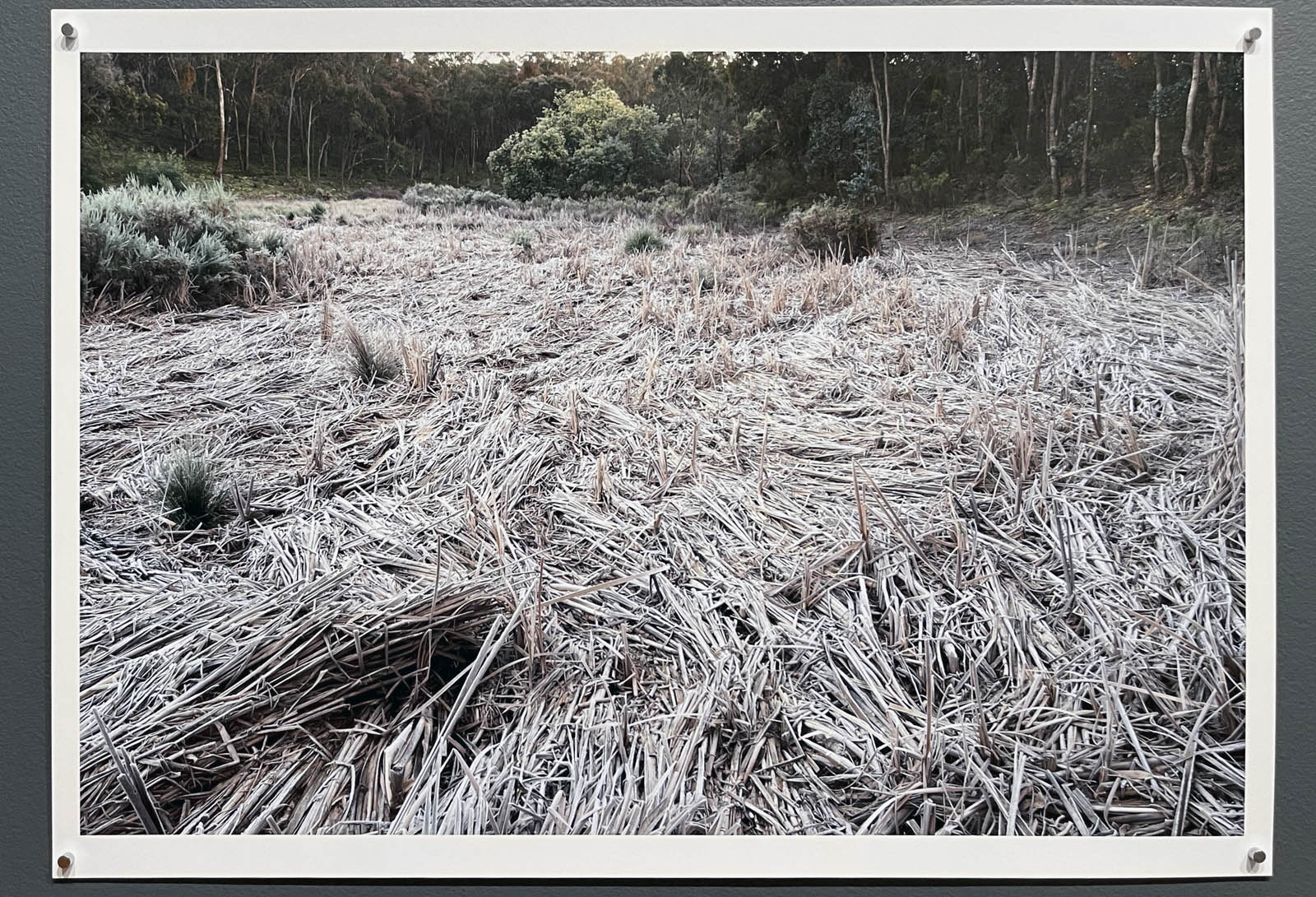
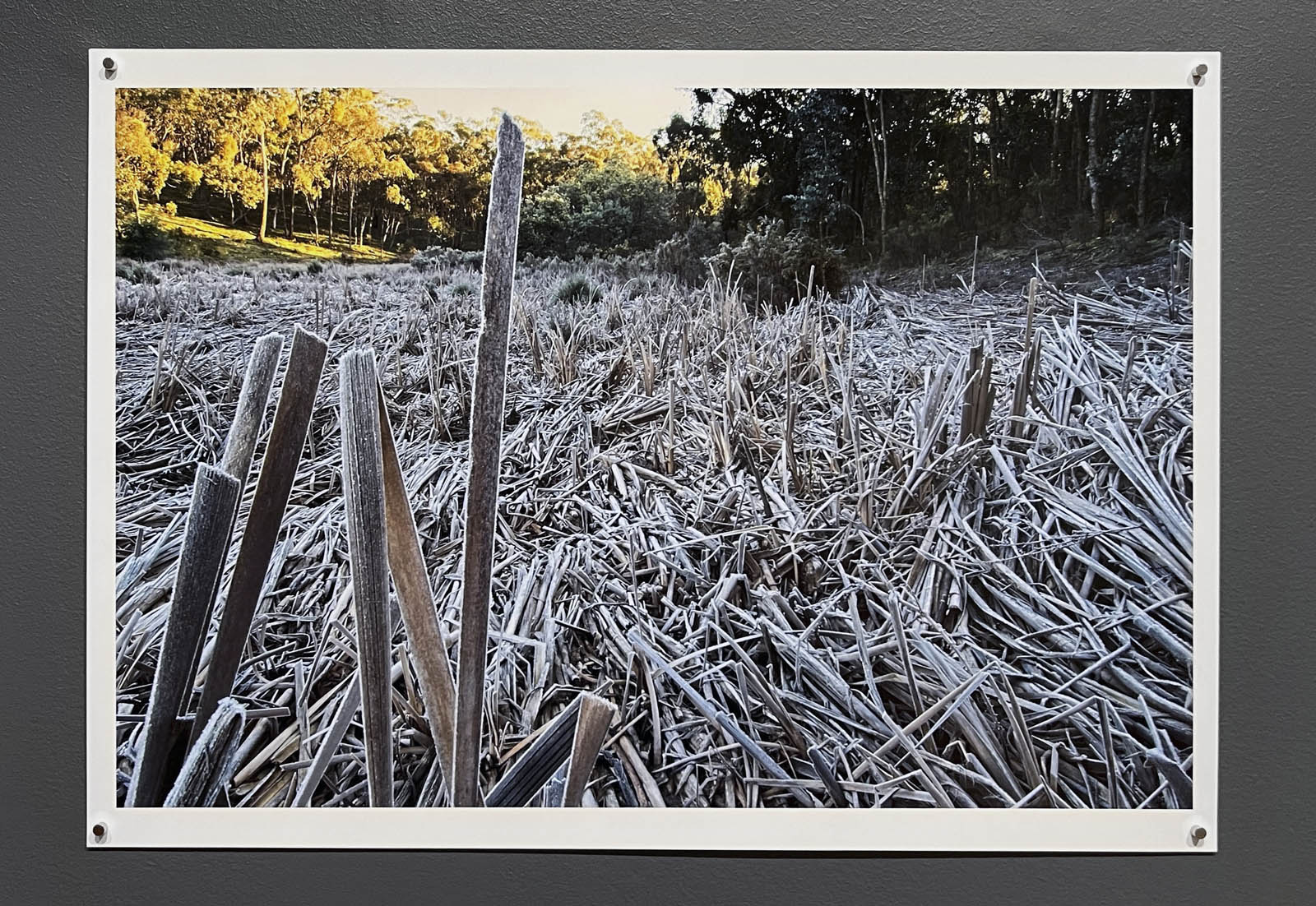
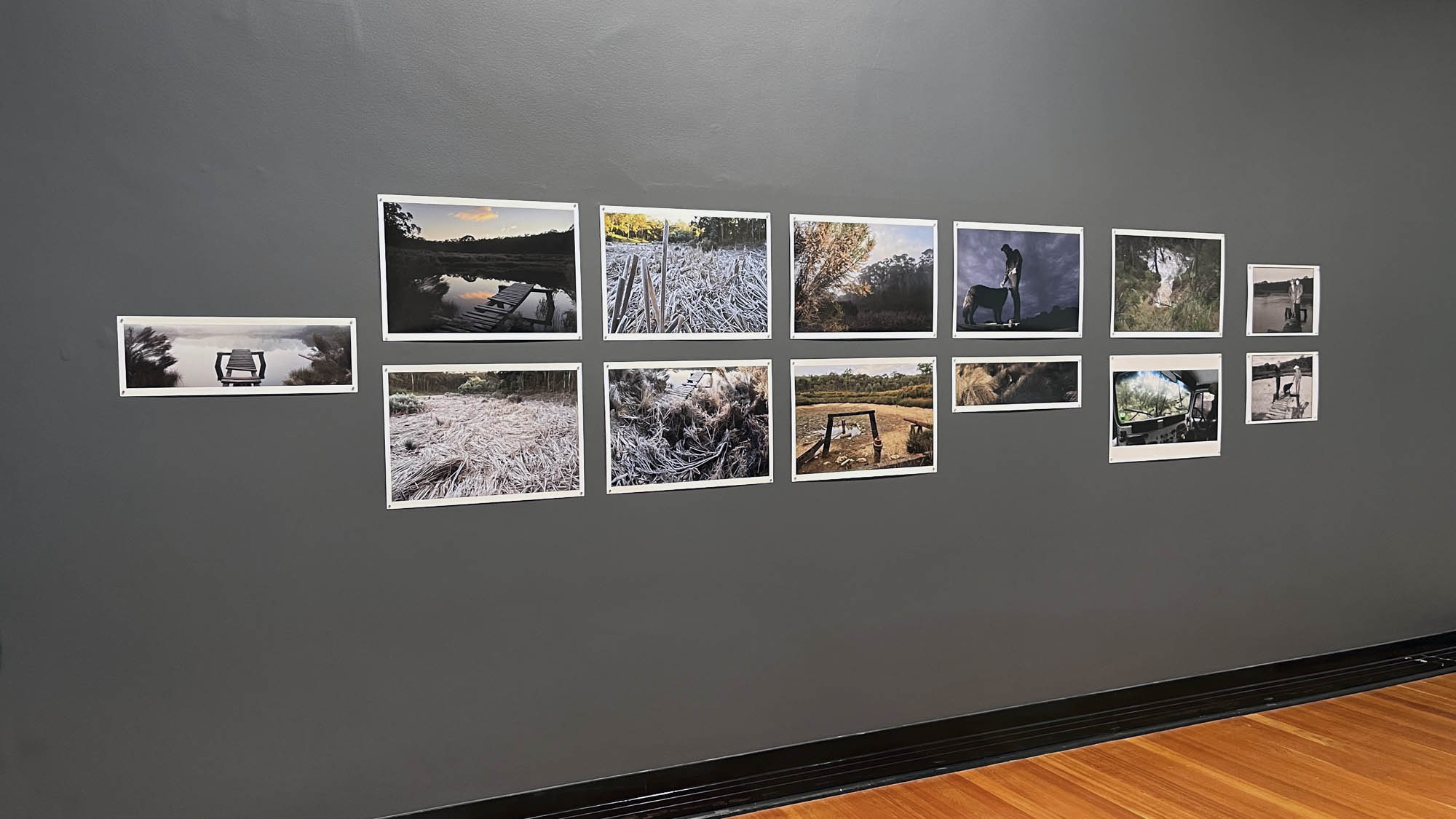
Installation view of the exhibition Julie Millowick: Surrounding at the Castlemaine Art Museum showing from left to right, top to bottom, Jetty in mist, Fryerstown (2004); Early morning, reflected pink cloud, Crocodile Reservoir, Fryerstown (2001); Crocodile Reservoir, ice-covered reeds, Fryerstown (2007); Crocodile Reservoir, ice-covered reeds, Fryerstown (2007); Crocodile Reservoir, ice-covered jetty, Fryerstown (2005); Coffee bush, Crocodile Reservoir, Fryerstown (2007); Crocodile Reservoir, Fryerstown (2008); Crocodile Reservoir, Christian McArdle on the Crocodile Reservoir jetty with the dog called Black, Fryerstown (2008); Crocodile Reservoir, Fryerstown (2009); Crocodile Reservoir, Fryerstown (2010); Christian McArdle surveys flooded Golden Gully, Fryerstown (2010); Crocodile Reservoir, Fryerstown (2004); Crocodile Reservoir. Julie Millowick and her son Christian McArdle, Crocodile Reservoir, during the El Nino year of 2007 from the series Drought, Continuing Drought, Fryerstown (2007)
Photo: Marcus Bunyan


Crocodile Reservoir

Crocodile Reservoir was constructed in 1861 and supplied water to the Fryerstown area for both mining and domestic purposes. In 1877, via a series of water races (channels), it became part of the main Coliban channel system. Later, when Fryerstown was connection to McCay Reservoir, it became catchment only.

‘Croc Res’, as it is called by Fryerstown residents, is 650 metres from were Julie Millowick lives and was an integral part of person’s childhood.

The reservoir, like all other water catchments, was severely affected by the Australia-wide Millennium Drought, between 1999 and the spring of 2010. During that time Millowick photographed the impact of the drought across Victoria, South Australia and New South Wales. She included the 1860’s Crocodile Reservoir, Castlemaine Diggings National Heritage Park, as part of that documentation. The latter photographs, although local, were a microcosm of what was happening across Australia.

As the water level of Crocodile Reservoir fell earth was exposed to daylight for the first time since the 1860s. Immediately Cassinia soften (coffee bush) flourished.


Julie Millowick (Australian, b. 1948) 'Early morning, reflected pink cloud, Crocodile Reservoir, Fryerstown' 2001


Julie Millowick (Australian, b. 1948)
Early morning, reflected pink cloud, Crocodile Reservoir, Fryerstown
2001
Digital image, inkjet print on 100% cotton rag
open edition 2023
Photo: Marcus Bunyan


As the drought progressed and the water level fell, Fryerstown locals were astonished to see a small wooden jetty appear out of the receding water. It was in remarkably good condition and Julie Millowick immediately began to photograph it.


Julie Millowick (Australian, b. 1948) 'Crocodile Reservoir, ice-covered reeds, Fryerstown' 2007


Julie Millowick (Australian, b. 1948)
Crocodile Reservoir, ice-covered reeds, Fryerstown
2007
Digital image, inkjet print on 100% cotton rag
open edition 2023
Photo: Marcus Bunyan
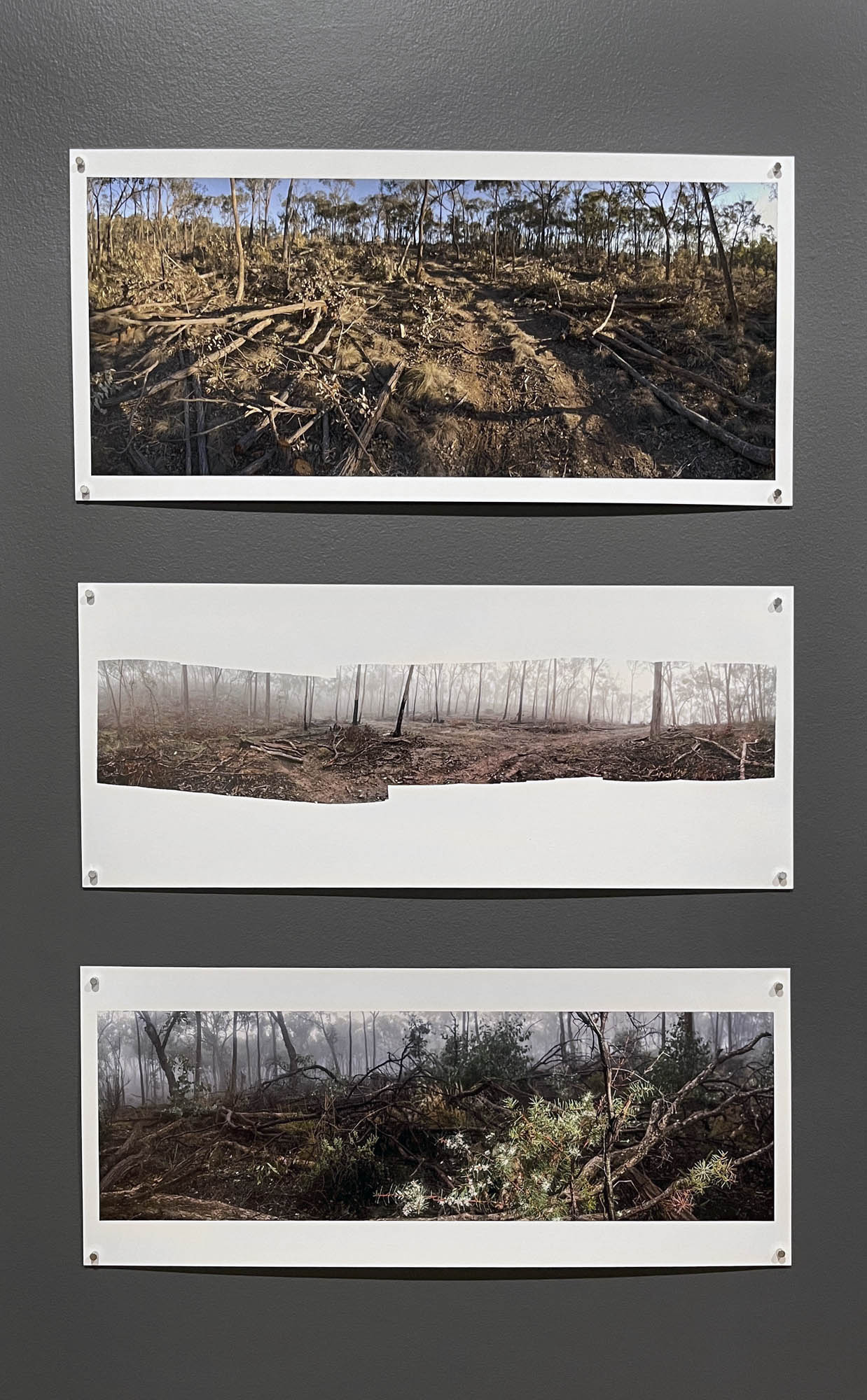
 

At the Crocodile Gully inlet to the reservoir, the valuable habitat of the once thriving reeds had been lost. The trees indicate the pre-drought water level. Cassinia sifton (coffee bush) encroaches on the left hand side.


Julie Millowick (Australian, b. 1948) 'Crocodile Reservoir, ice-covered reeds, Fryerstown' 2007


Julie Millowick (Australian, b. 1948)
Crocodile Reservoir, ice-covered reeds, Fryerstown
2007
Digital image, inkjet print on 100% cotton rag
open edition 2023
Photo: Marcus Bunyan
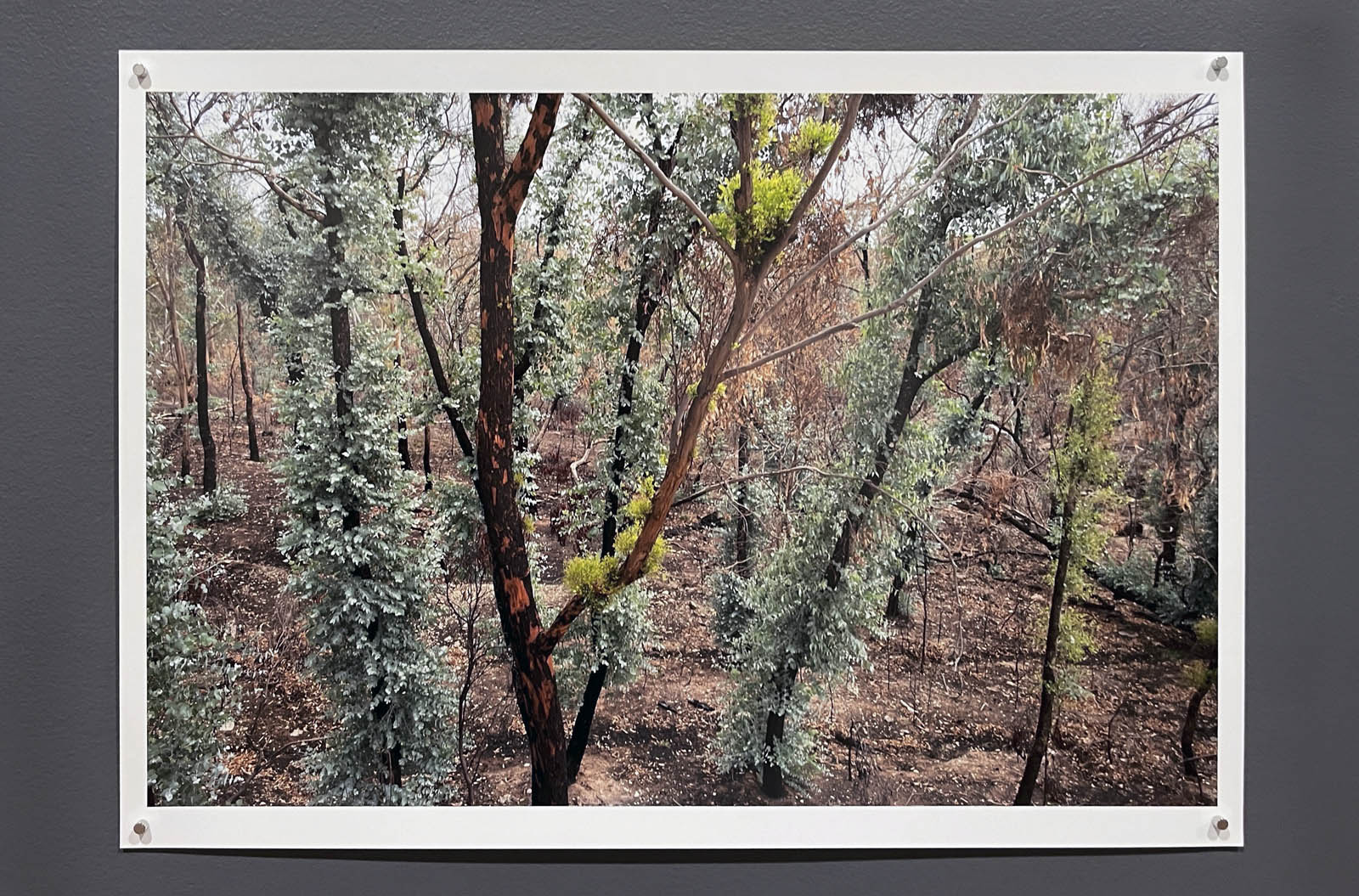
 

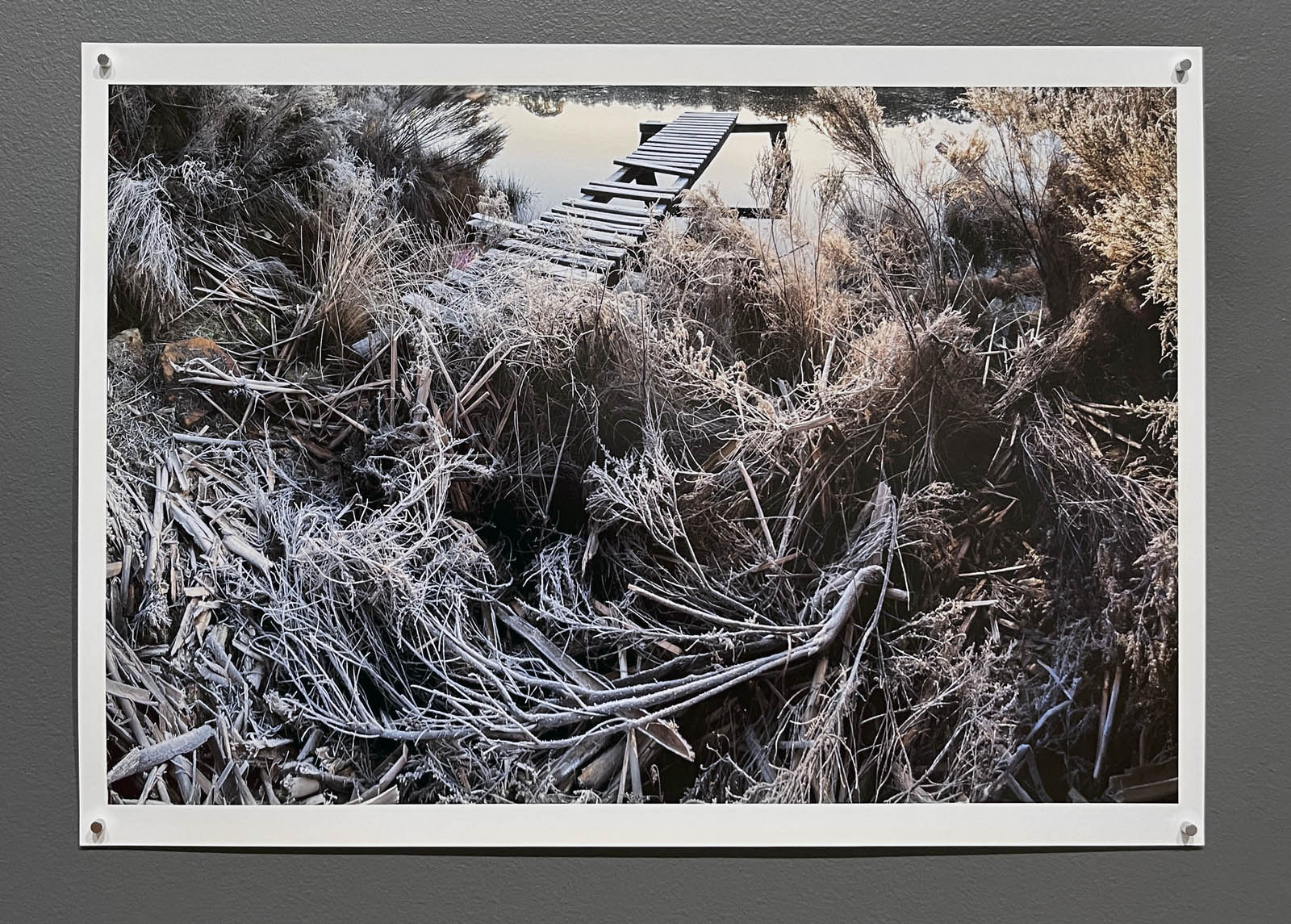
Julie Millowick (Australian, b. 1948) 'Crocodile Reservoir, ice-covered jetty, Fryerstown' 2005


Julie Millowick (Australian, b. 1948)
Crocodile Reservoir, ice-covered jetty, Fryerstown
2005
Digital image, inkjet print on 100% cotton rag
open edition 2023
Photo: Marcus Bunyan
 

The newly-exposed dam wall of Crocodile Reservoir, adjacent to the jetty, was almost blocked by the uncontrolled growth of Cassinia sifton (coffee bush)


Minor White (American, 1908-1976) 'Vermont' 1971


Minor White (American, 1908–1976)
Vermont (dock in snow)
1971
Gelatin silver print


Julie Millowick (Australian, b. 1948) 'Coffee bush, Crocodile Reservoir, Fryerstown' 2007


Julie Millowick (Australian, b. 1948)
Coffee bush, Crocodile Reservoir, Fryerstown
2007
Digital image, inkjet print on 100% cotton rag
open edition 2023
Photo: Marcus Bunyan
 

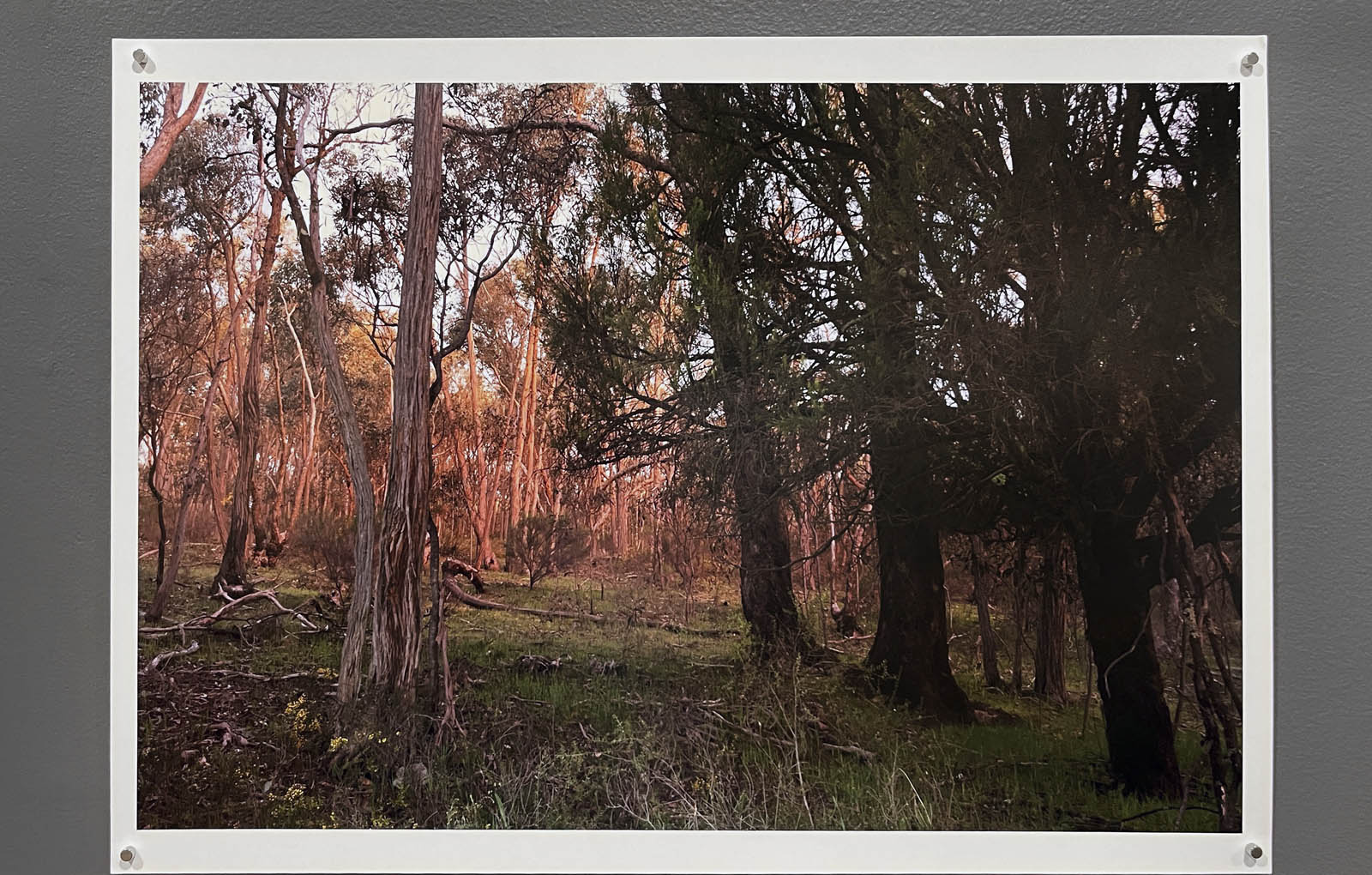
Thriving seed-laden Cassinia sifton (coffee bush) can be seen here encroaching on the northern end of Crocodile Reservoir, where large areas of reeds, no longer partially submerged in water, had died.


Julie Millowick (Australian, b. 1948) 'Crocodile Reservoir, Fryerstown' 2008


Julie Millowick (Australian, b. 1948)
Crocodile Reservoir, Fryerstown
2008
Digital image, inkjet print on 100% cotton rag
open edition 2023
Photo: Marcus Bunyan


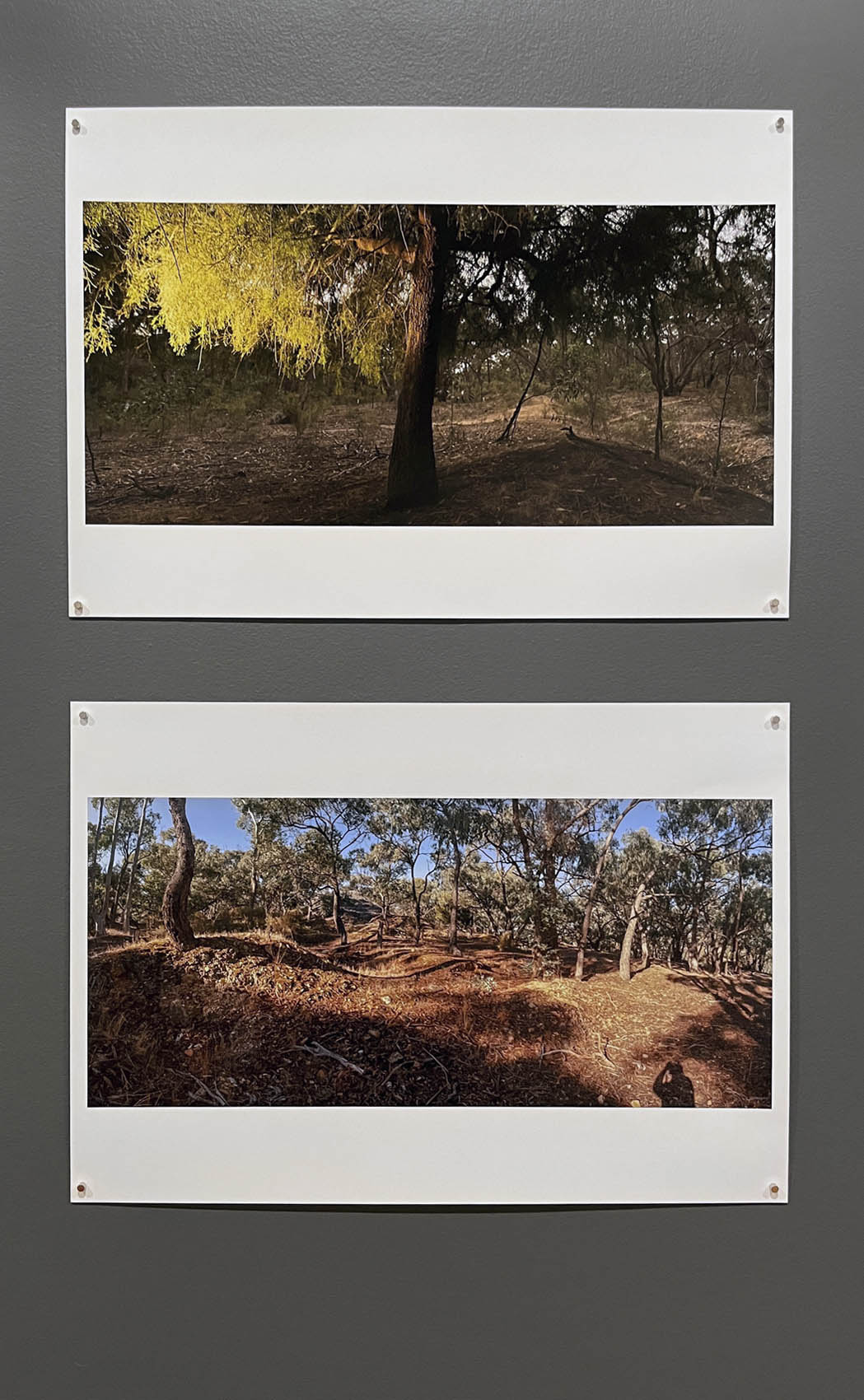
Damaged jetty and exposed infrastructure used for the release of water into the races (channels) is visible. The small amount of water in the reservoir and surrounding wet earth resulted from a violent storm that occurred mid-2007. It did not break the drought, but caused damage across Victoria.


Julie Millowick (Australian, b. 1948) 'Crocodile Reservoir, Christian McArdle on the Crocodile Reservoir jetty with the dog called Black, Fryerstown' 2008


Julie Millowick (Australian, b. 1948)
Crocodile Reservoir, Christian McArdle on the Crocodile Reservoir jetty with the dog called Black, Fryerstown
2008
Digital image, inkjet print on 100% cotton rag
open edition 2023
Photo: Marcus Bunyan


Julie Millowick (Australian, b. 1948) 'Crocodile Reservoir, Fryerstown' 2010


Julie Millowick (Australian, b. 1948)
Crocodile Reservoir, Fryerstown
2010
Digital image, inkjet print on 100% cotton rag
open edition 2023
Photo: Marcus Bunyan


In the spring of 2010 heavy drought-breaking rain fell throughout Victoria. The drought-weakened wall of the reservoir partially collapsed, and water flowed through the cavity into Golden Gully. Standing on the wall above the area of partial collapse looking down.


Julie Millowick (Australian, b. 1948) 'One of the numerous abandoned mine shafts in the Castlemaine Diggings National Heritage Park, Fryerstown' 2010


Julie Millowick (Australian, b. 1948)
One of the numerous abandoned mine shafts in the Castlemaine Diggings National Heritage Park, Fryerstown (installation view)
2010
inkjet print on 100% cotton rag
open edition 2023
Photo: Marcus Bunyan


Julie Millowick (Australian, b. 1948) 'One of the numerous abandoned mine shafts in the Castlemaine Diggings National Heritage Park, Fryerstown' 2010


Julie Millowick (Australian, b. 1948)
One of the numerous abandoned mine shafts in the Castlemaine Diggings National Heritage Park, Fryerstown
2010
inkjet print on 100% cotton rag
open edition 2023


Mine disturbances and uniform regrowth trees can be seen in the background.


Gallery Two


Installation view of the exhibition 'Julie Millowick: Surrounding' at the Castlemaine Art Museum

Installation view of the exhibition 'Julie Millowick: Surrounding' at the Castlemaine Art Museum

Installation view of the exhibition 'Julie Millowick: Surrounding' at the Castlemaine Art Museum

Installation view of the exhibition 'Julie Millowick: Surrounding' at the Castlemaine Art Museum


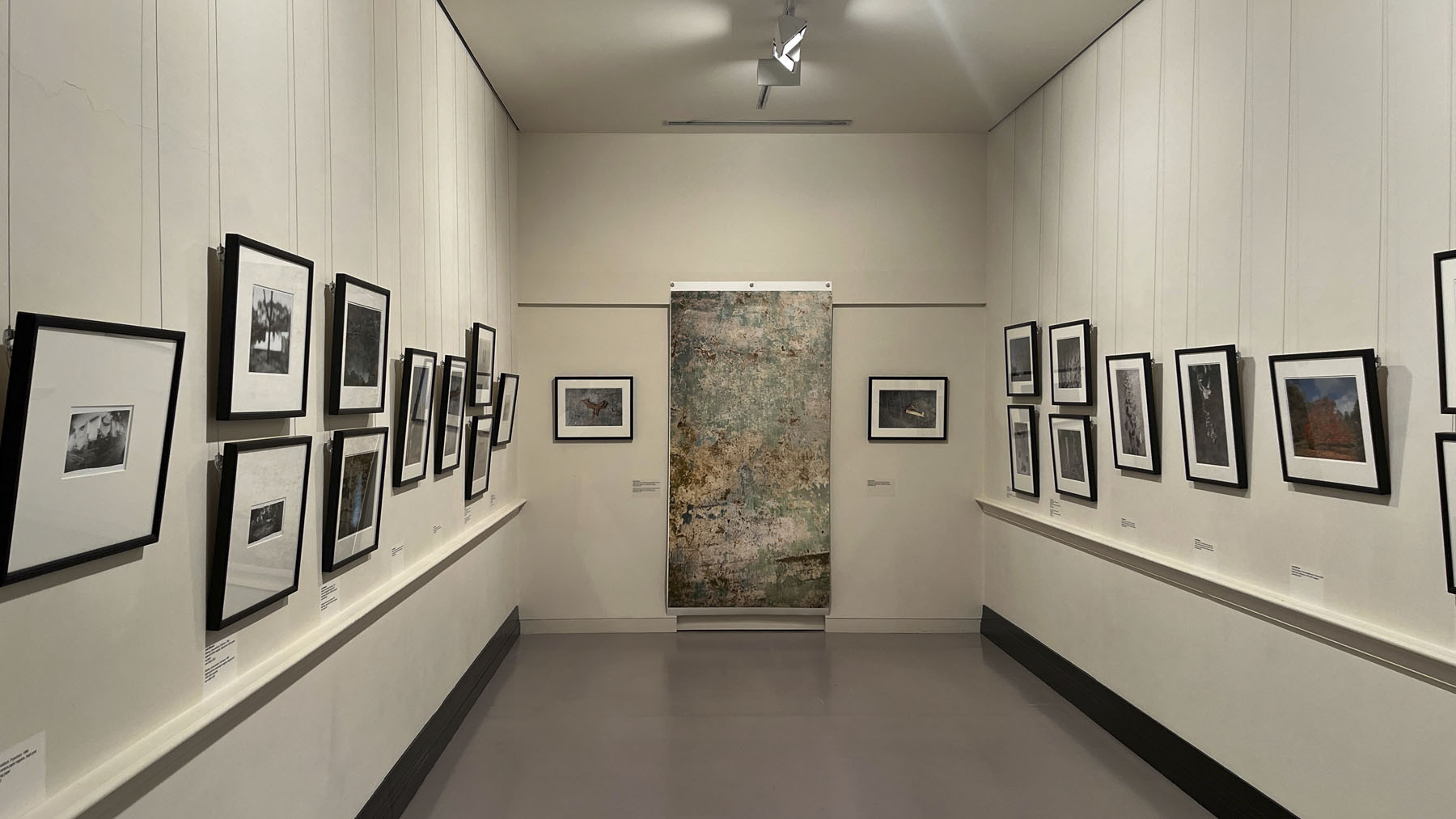
Installation views of the exhibition Julie Millowick: Surrounding at the Castlemaine Art Museum
Photos: Marcus Bunyan


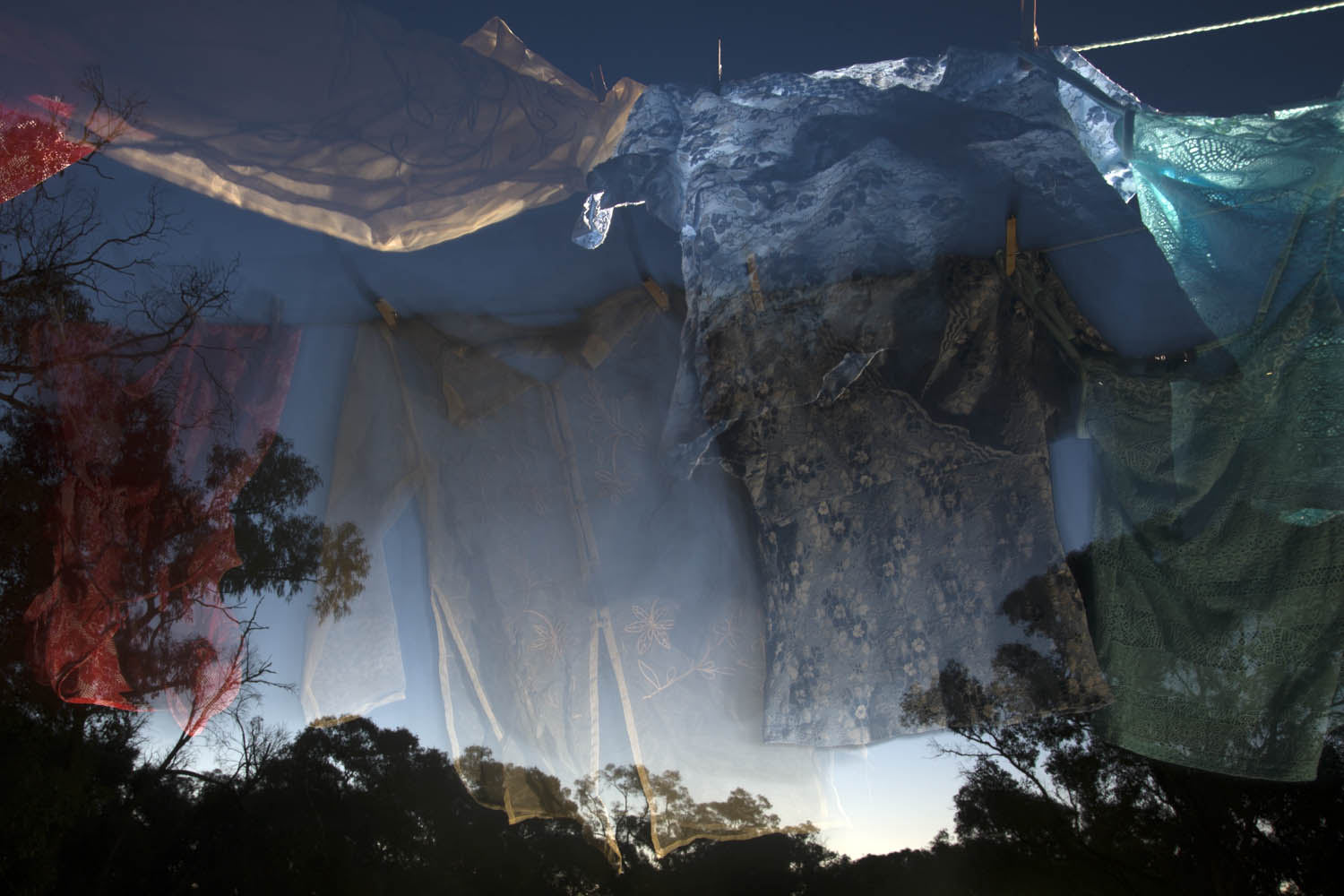
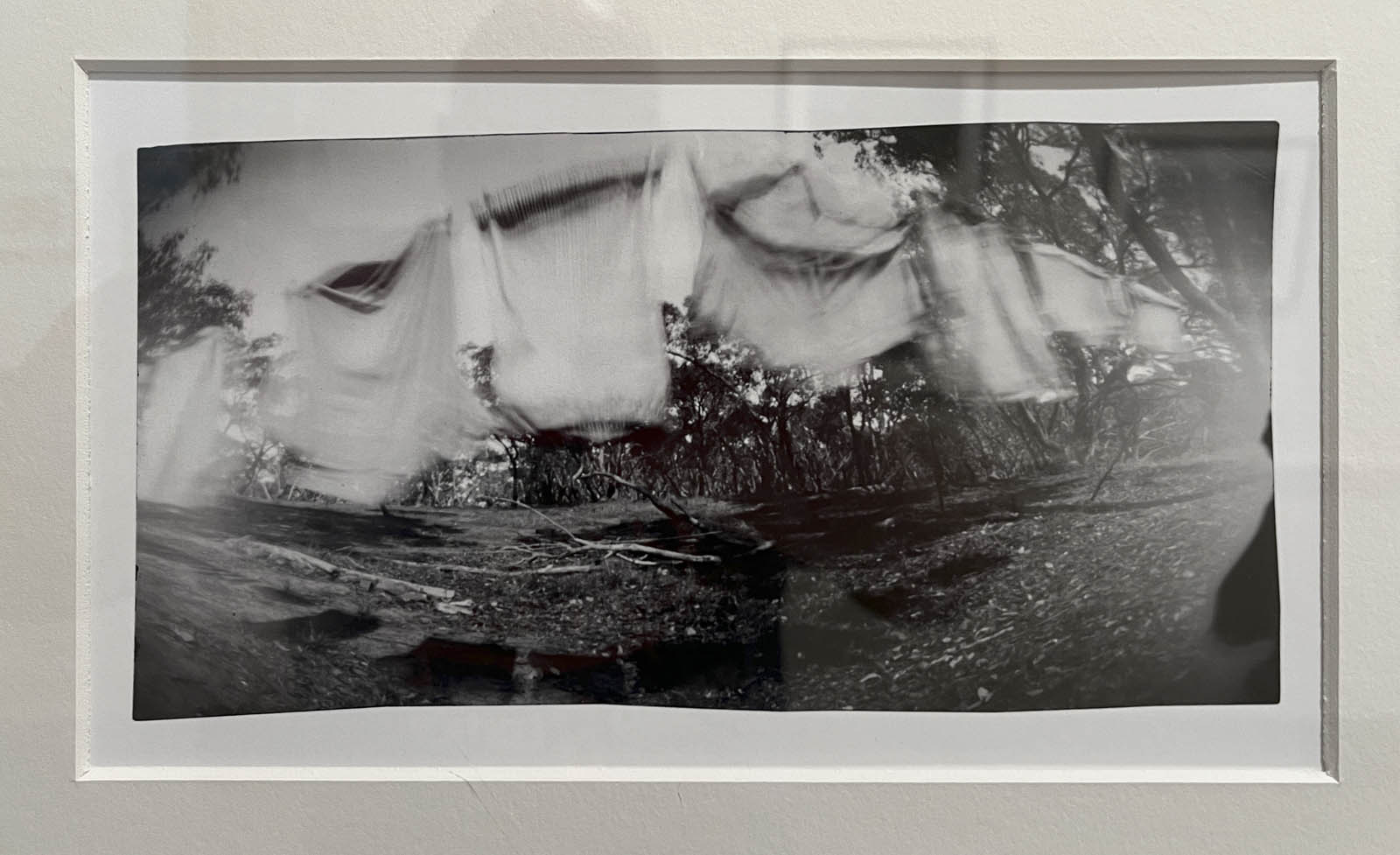
Julie Millowick (Australian, b. 1948) 'Washing, horse paddock, Fryerstown' 1996 (installation view)


Julie Millowick (Australian, b. 1948)
Washing, horse paddock, Fryerstown (installation view)
1996
Digitised pinhole camera paper negative, inkjet print on 100% cotton rag
open edition 2023
Photo: Marcus Bunyan


Julie Millowick (Australian, b. 1948) 'Washing, horse paddock, Fryerstown' 1996 (installation view)


Julie Millowick (Australian, b. 1948)
Washing, horse paddock, Fryerstown (installation view)
1996
Digitised pinhole camera paper negative, inkjet print on 100% cotton rag
open edition 2023
Photo: Marcus Bunyan


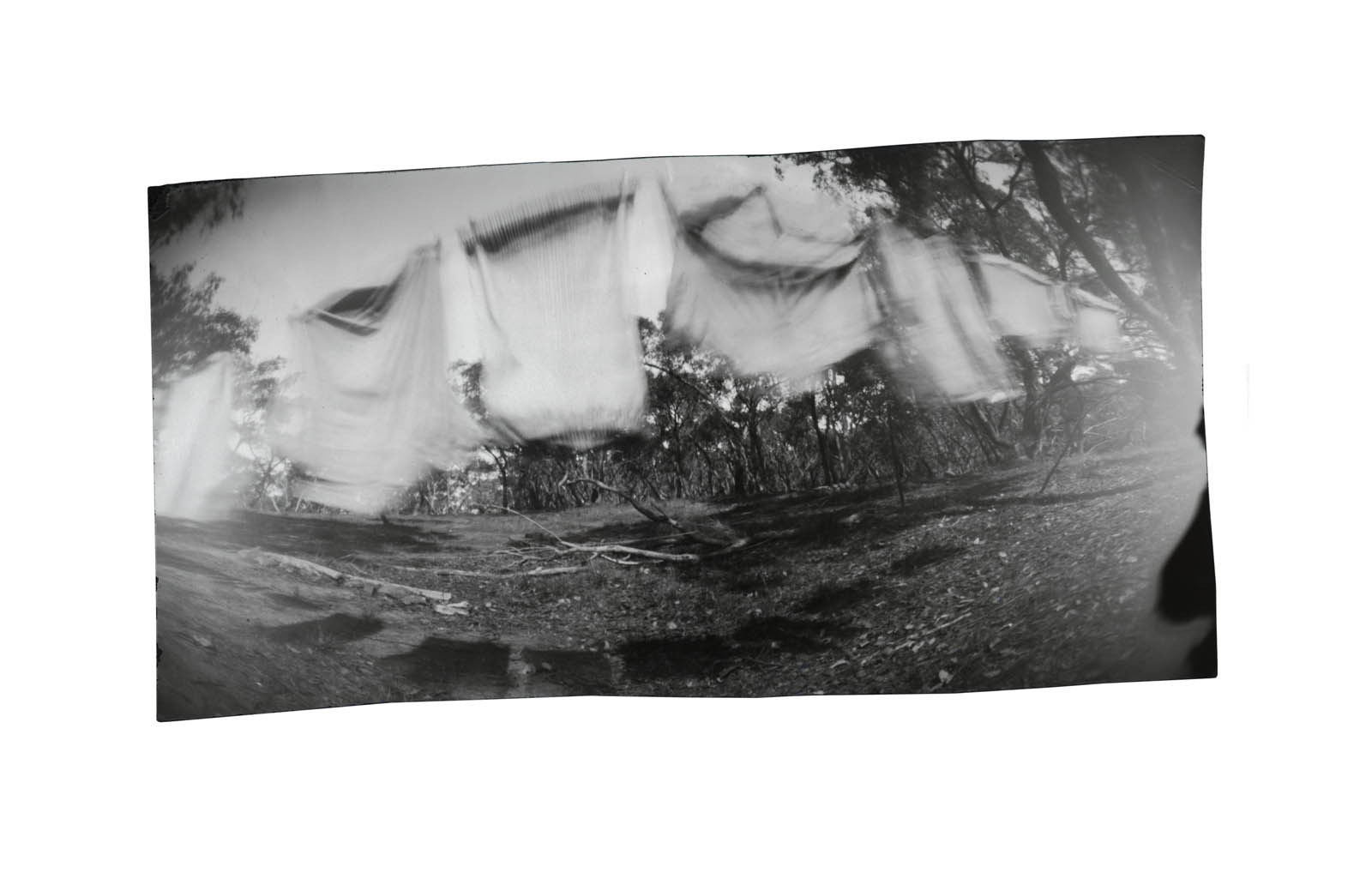
Julie Millowick (Australian, b. 1948) 'Washing, horse paddock, Fryerstown' 1996


Julie Millowick (Australian, b. 1948)
Washing, horse paddock, Fryerstown
1996
Digitised pinhole camera paper negative, inkjet print on 100% cotton rag
open edition 2023


Julie Millowick (Australian, b. 1948) 'Washing, horse paddock, Fryerstown' 1996


Julie Millowick (Australian, b. 1948)
Washing, Horse Paddock, Fryerstown
1996
Digitised Pinhole Camera paper negative, inkjet print on 100% cotton rag
open edition 2023


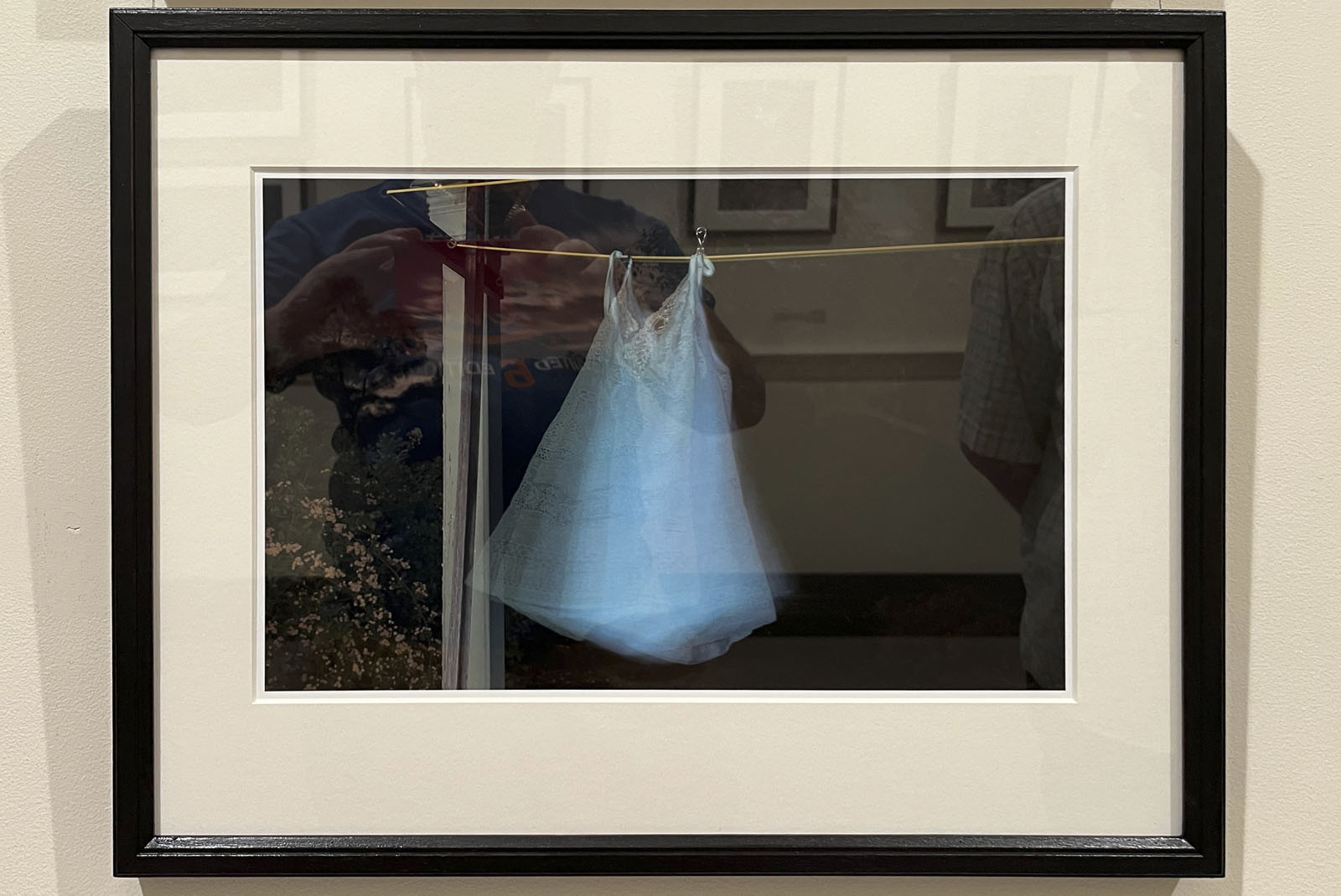
Julie Millowick (Australian, b. 1948) 'Washing, horse paddock, Fryerstown' 2010 (installation view)


Julie Millowick (Australian, b. 1948)
Washing, horse paddock, Fryerstown (installation view)
2010
Digital image, inkjet print on 100% cotton rag
open edition 2023
Photo: Marcus Bunyan


Julie Millowick (Australian, b. 1948) 'Washing, horse paddock, Fryerstown' 2010


Julie Millowick (Australian, b. 1948)
Washing, horse paddock, Fryerstown
2010
Digital image, inkjet print on 100% cotton rag
open edition 2023


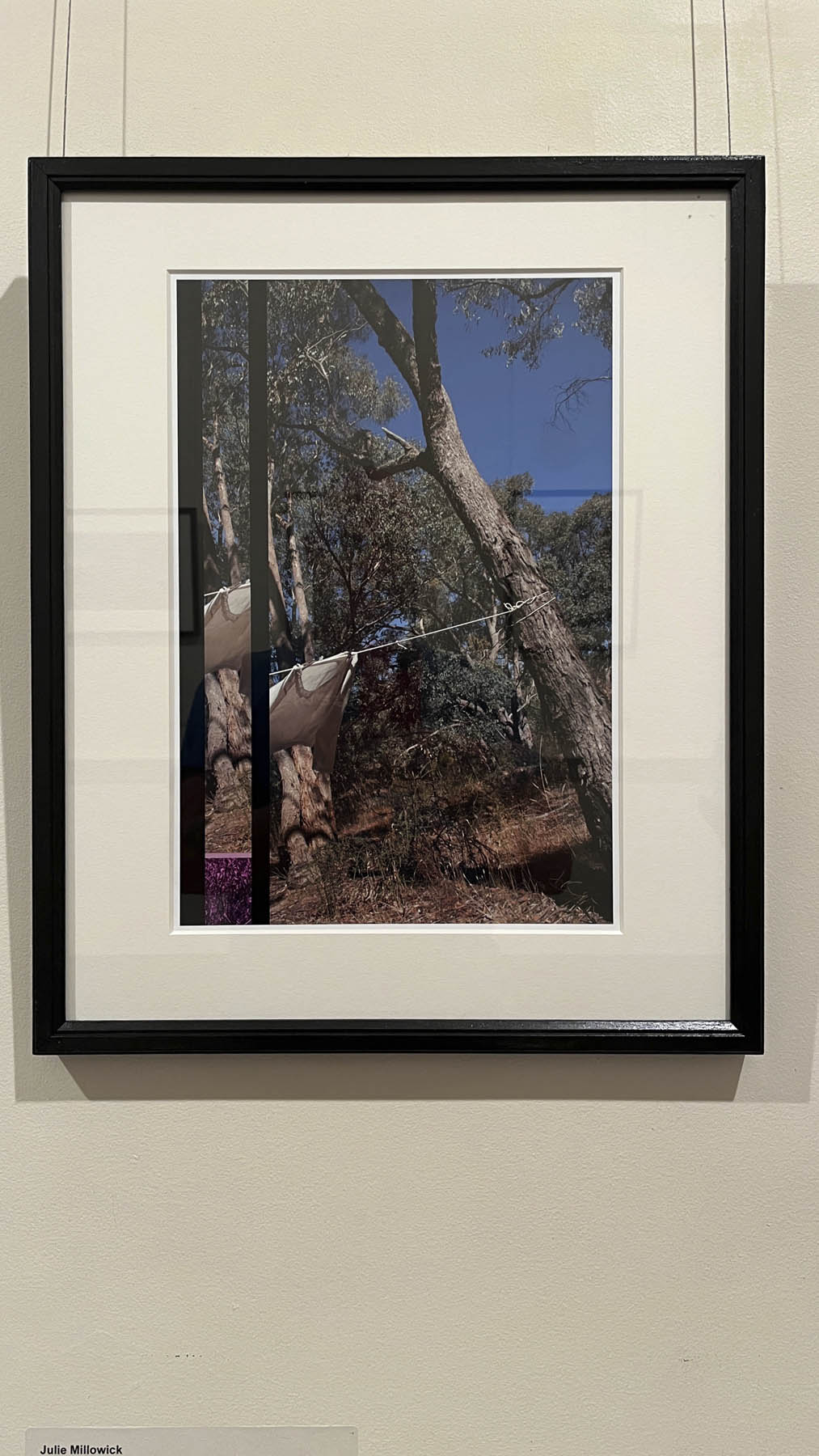
Julie Millowick (Australian, b. 1948) 'Washing, front verandah, Fryerstown' 2022 (installation view)


Julie Millowick (Australian, b. 1948)
Washing, front verandah, Fryerstown (installation view)
2022
Digital image, inkjet print on 100% cotton rag
open edition 2023
Photo: Marcus Bunyan


Julie Millowick (Australian, b. 1948) 'Washing, front verandah, Fryerstown' 2022


Julie Millowick (Australian, b. 1948)
Washing, front verandah, Fryerstown
2022
Digital image, inkjet print on 100% cotton rag
open edition 2023


Julie Millowick (Australian, b. 1948) 'Washing, horse paddock, Fryerstown. Corrupt card' 2012 (installation view)


Julie Millowick (Australian, b. 1948)
Washing, horse paddock, Fryerstown. Corrupt card (installation view)
2012
Digital image, inkjet print on 100% cotton rag
open edition 2023


Julie Millowick (Australian, b. 1948) 'Washing, horse paddock, Fryerstown' 2012 (installation view)


Julie Millowick (Australian, b. 1948)
Washing, horse paddock, Fryerstown (installation view)
2012
Digital image, inkjet print on 100% cotton rag
open edition 2023
Photo: Marcus Bunyan


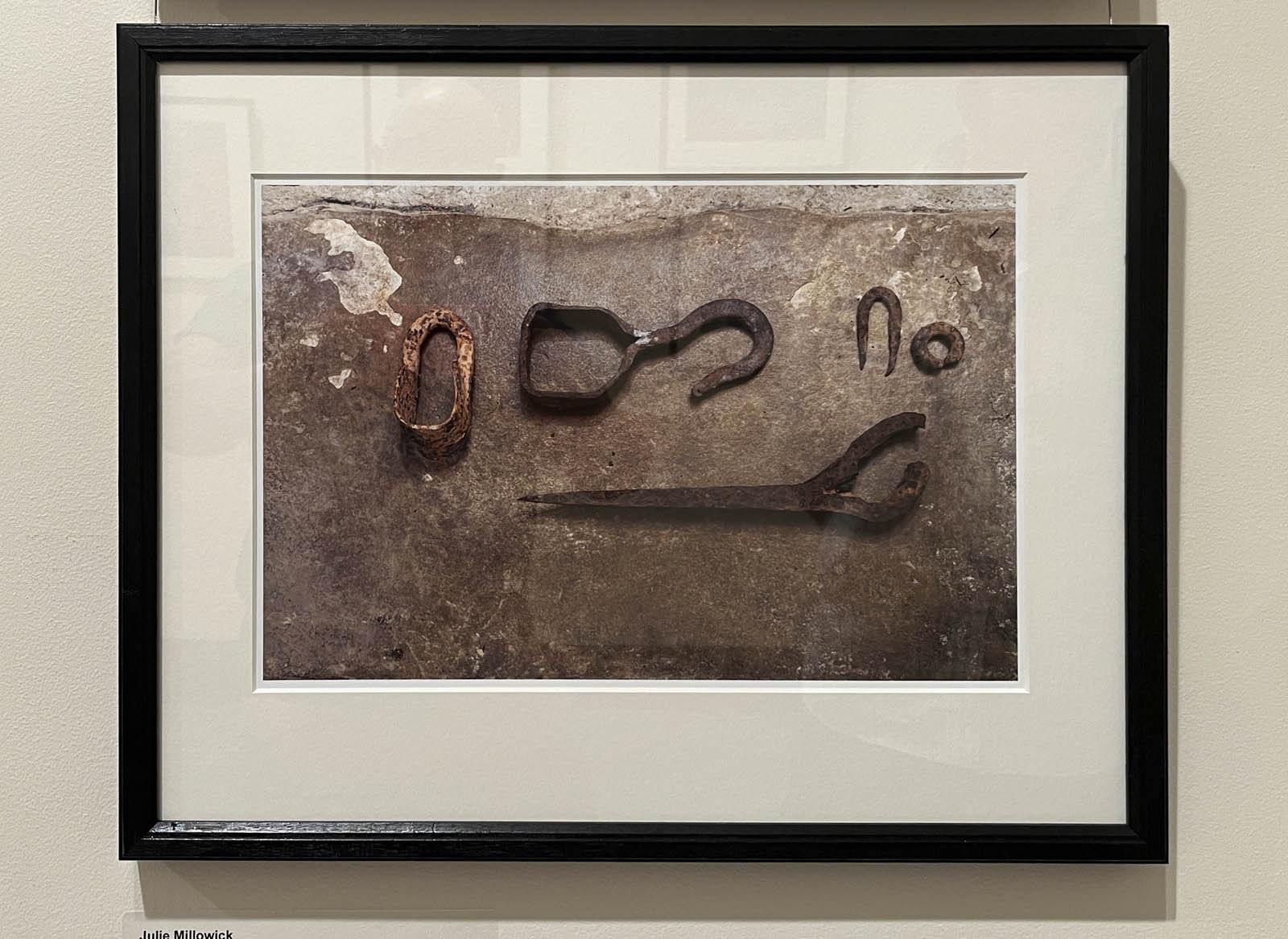
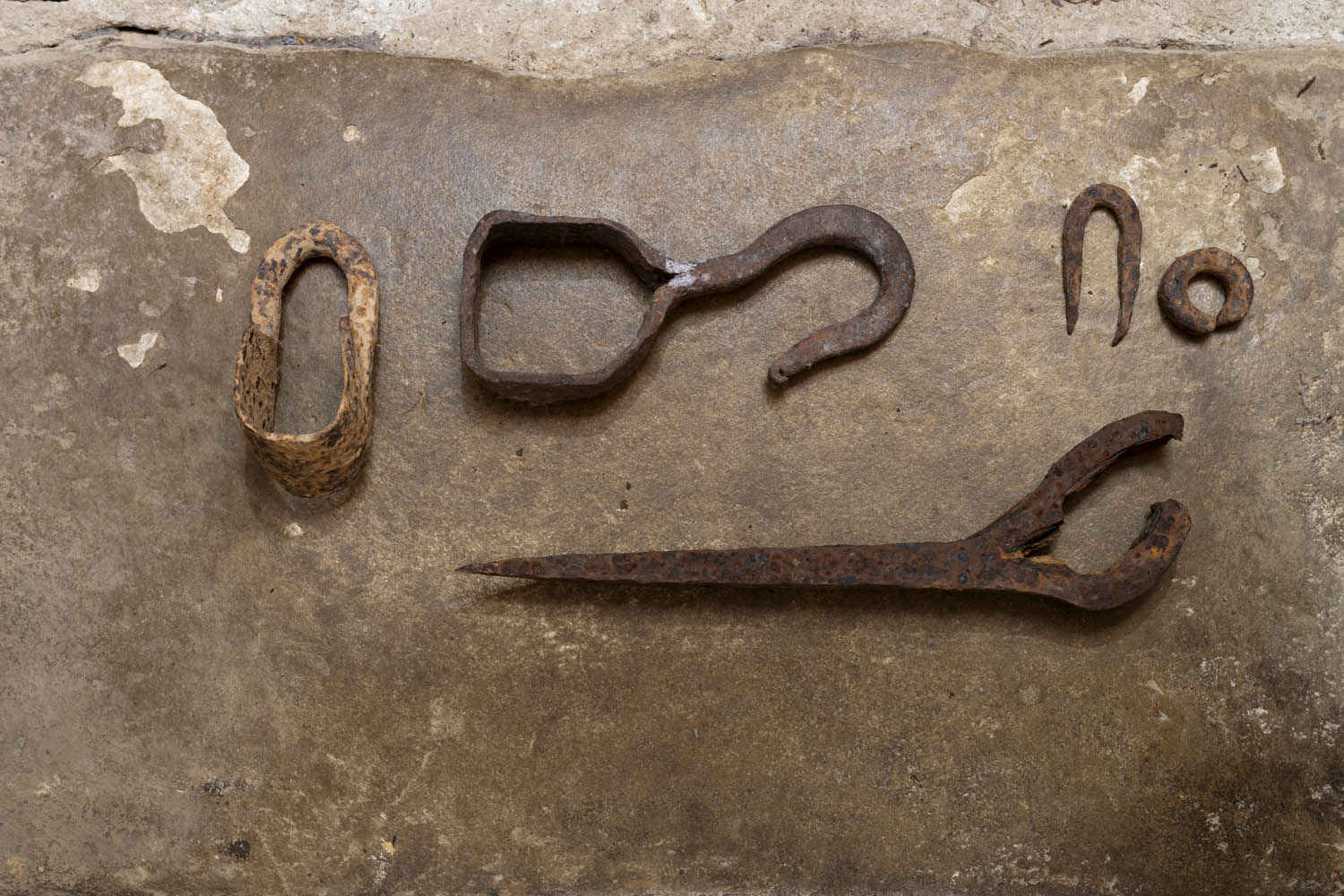
Julie Millowick (Australian, b. 1948) 'Child's 19th century boot metal heel-band, found on property, Fryerstown' 2023 (installation view)


Julie Millowick (Australian, b. 1948)
Child’s 19th century boot metal heel-band, found on property, Fryerstown (installation view)
2023
Digital image, inkjet print on 100% cotton rag
open edition 2023
Photo: Marcus Bunyan


Julie Millowick (Australian, b. 1948) 'Child's 19th century boot metal heel-band, found on property, Fryerstown' 2023


Julie Millowick (Australian, b. 1948)
Child’s 19th century boot metal heel-band, found on property, Fryerstown
2023
Digital image, inkjet print on 100% cotton rag
open edition 2023


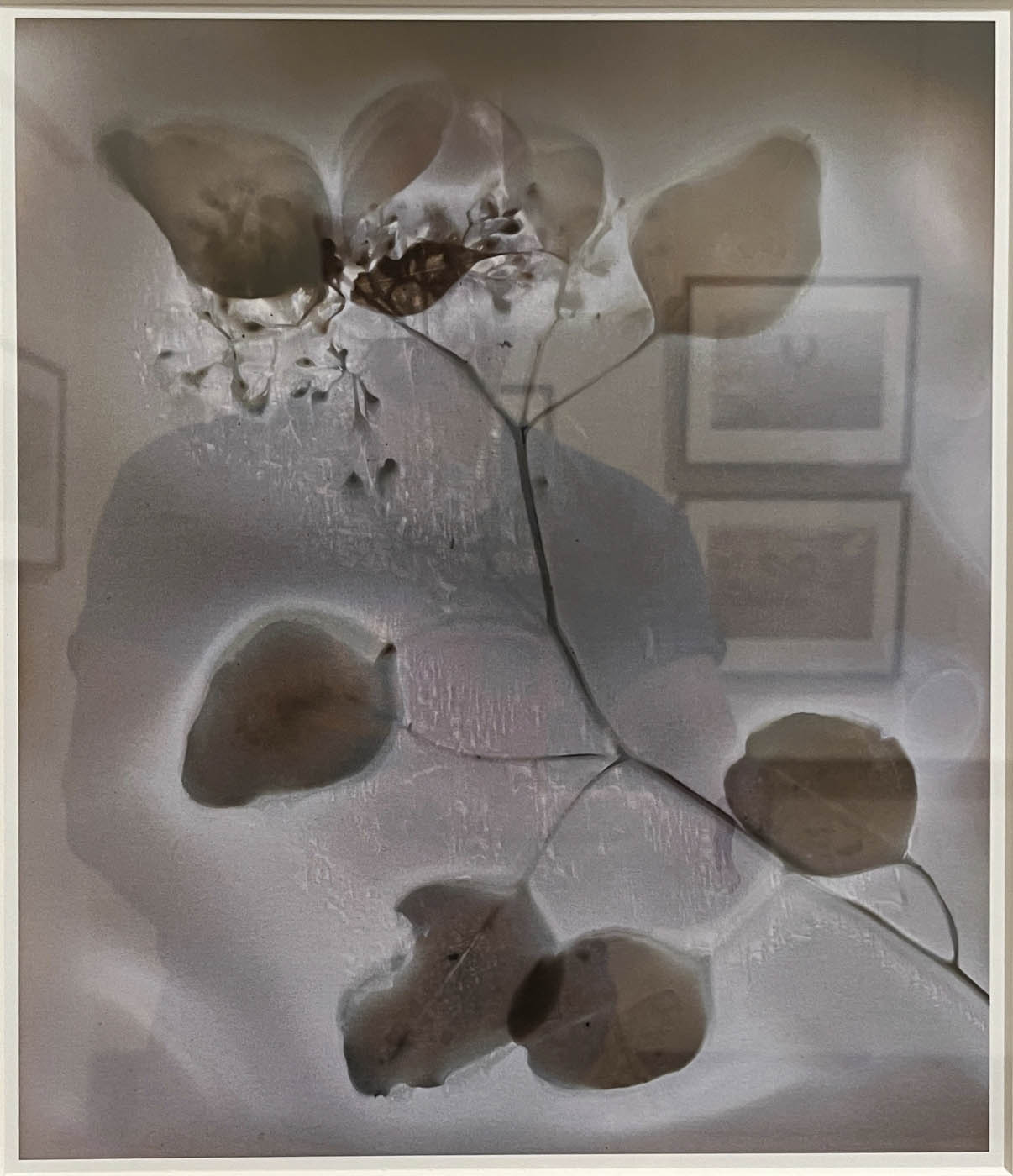
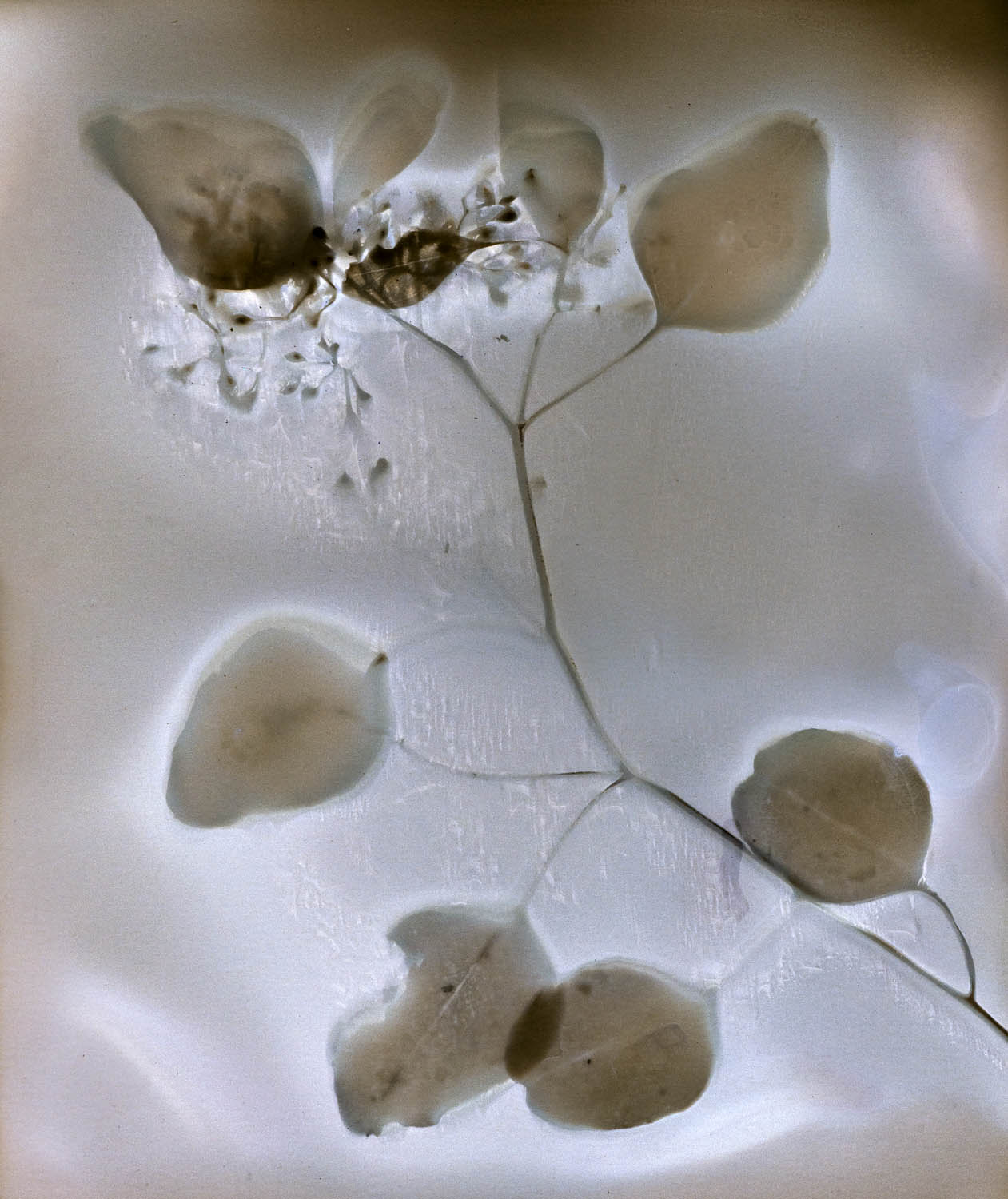
Julie Millowick (Australian, b. 1948) 'Tree foliage, patio, Fryerstown' 2022 (installation view)


Julie Millowick (Australian, b. 1948)
Tree foliage, patio, Fryerstown (installation view)
2022
Digitised gelatin silver lumen, inkjet print on 100% cotton rag
open edition 2023
Photo: Marcus Bunyan


Julie Millowick (Australian, b. 1948) 'Tree foliage, patio, Fryerstown' 2022 (installation view)


Julie Millowick (Australian, b. 1948)
Tree foliage, patio, Fryerstown (installation view)
2022
Digitised gelatin silver lumen, inkjet print on 100% cotton rag
open edition 2023
Photo: Marcus Bunyan


Julie Millowick (Australian, b. 1948) 'Tree foliage, patio, Fryerstown' 2022


Julie Millowick (Australian, b. 1948)
Tree foliage, patio, Fryerstown
2022
Digitised gelatin silver lumen, inkjet print on 100% cotton rag
open edition 2023


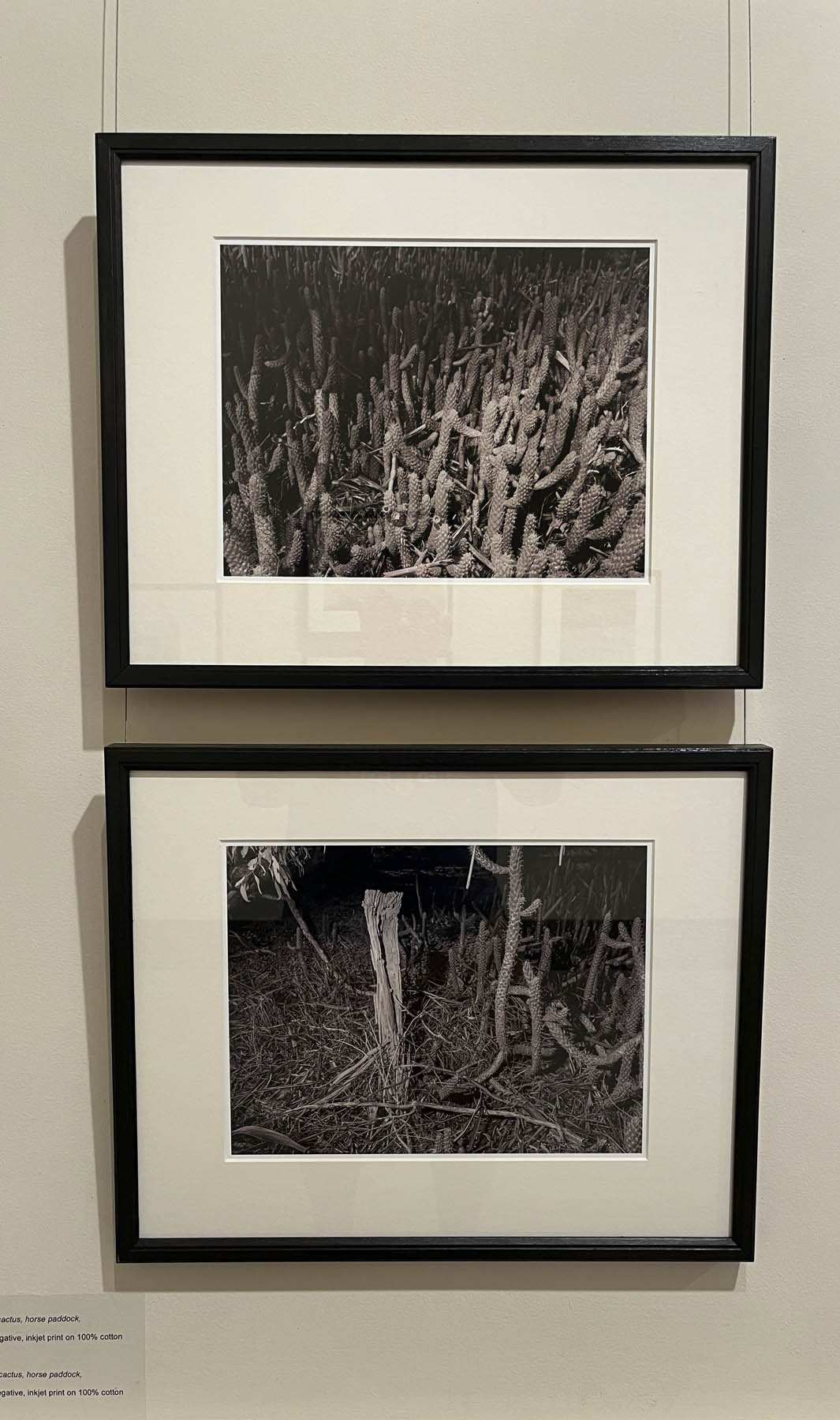
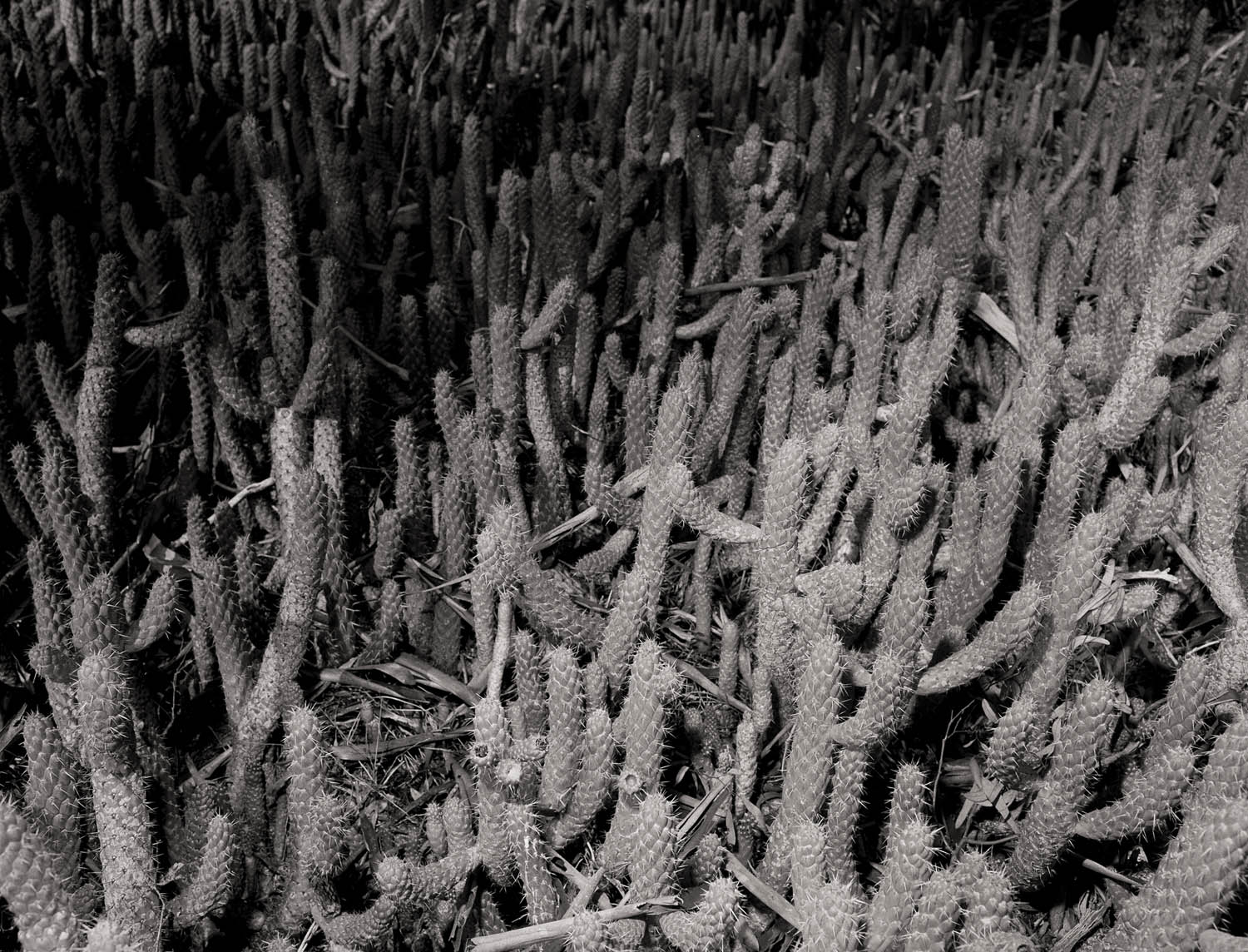
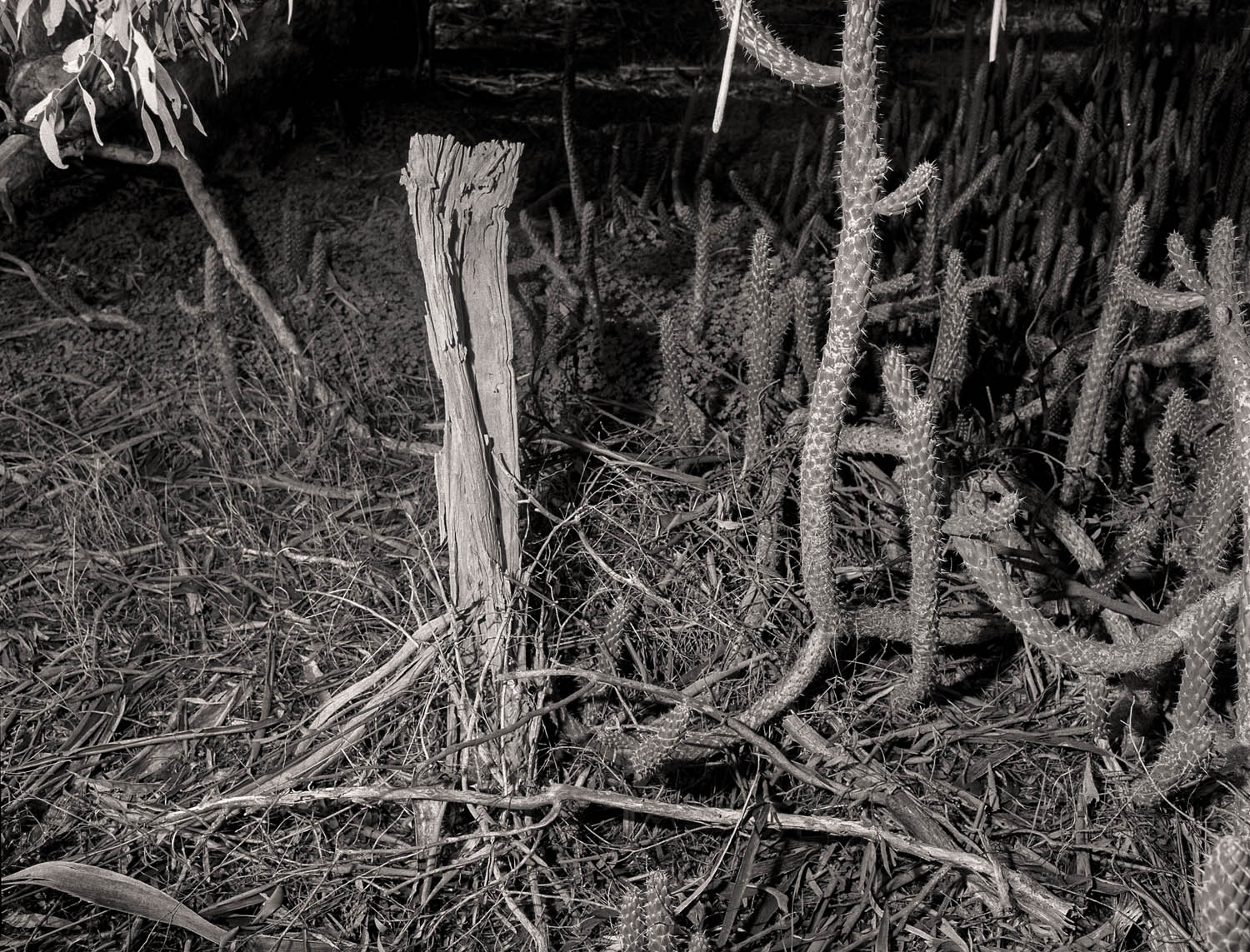
Julie Millowick (Australian, b. 1948) 'Introduced invasive cactus, horse paddock, Fryerstown' 2001 (installation view)


Julie Millowick (Australian, b. 1948)
Introduced invasive cactus, horse paddock, Fryerstown (installation view)
2001
Digitised 6-45 film negative, inkjet print on 100% cotton rag
open edition 2023
Photo: Marcus Bunyan
Julie Millowick (Australian, b. 1948)
Introduced invasive cactus, horse paddock, Fryerstown (installation view)
2001
Digitised 6-45 film negative, inkjet print on 100% cotton rag
open edition 2023
Photo: Marcus Bunyan
 

Julie Millowick (Australian, b. 1948) 'Introduced invasive cactus, horse paddock, Fryerstown' 2001


Julie Millowick (Australian, b. 1948)
Introduced invasive cactus, horse paddock, Fryerstown
2001
Digitised 6-45 film negative, inkjet print on 100% cotton rag
open edition 2023


Julie Millowick (Australian, b. 1948) 'Introduced invasive cactus, horse paddock, Fryerstown' 2001


Julie Millowick (Australian, b. 1948)
Introduced invasive cactus, horse paddock, Fryerstown
2001
Digitised 6-45 film negative, inkjet print on 100% cotton rag
open edition 2023


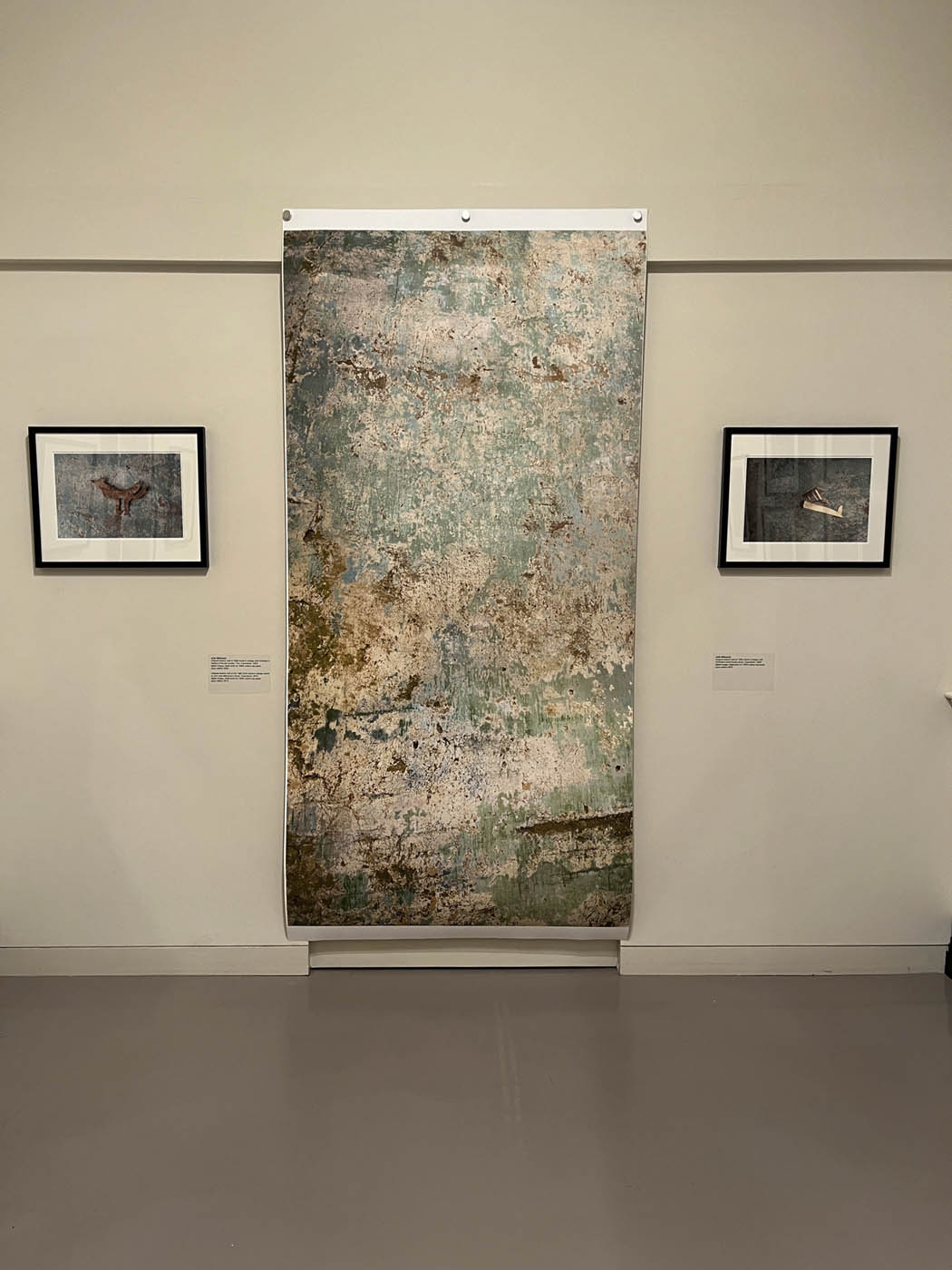
Julie Millowick (Australian, b. 1948) 'Original interior wall of 1862 miner’s cottage with introduced invasive blackberry, Fryerstown' 2023 (installation view)


Julie Millowick (Australian, b. 1948)
Original interior wall of 1862 miner’s cottage with introduced invasive blackberry, Fryerstown (installation view)
2023
Digital image, inkjet print on 100% cotton rag
open edition 2023
Photo: Marcus Bunyan


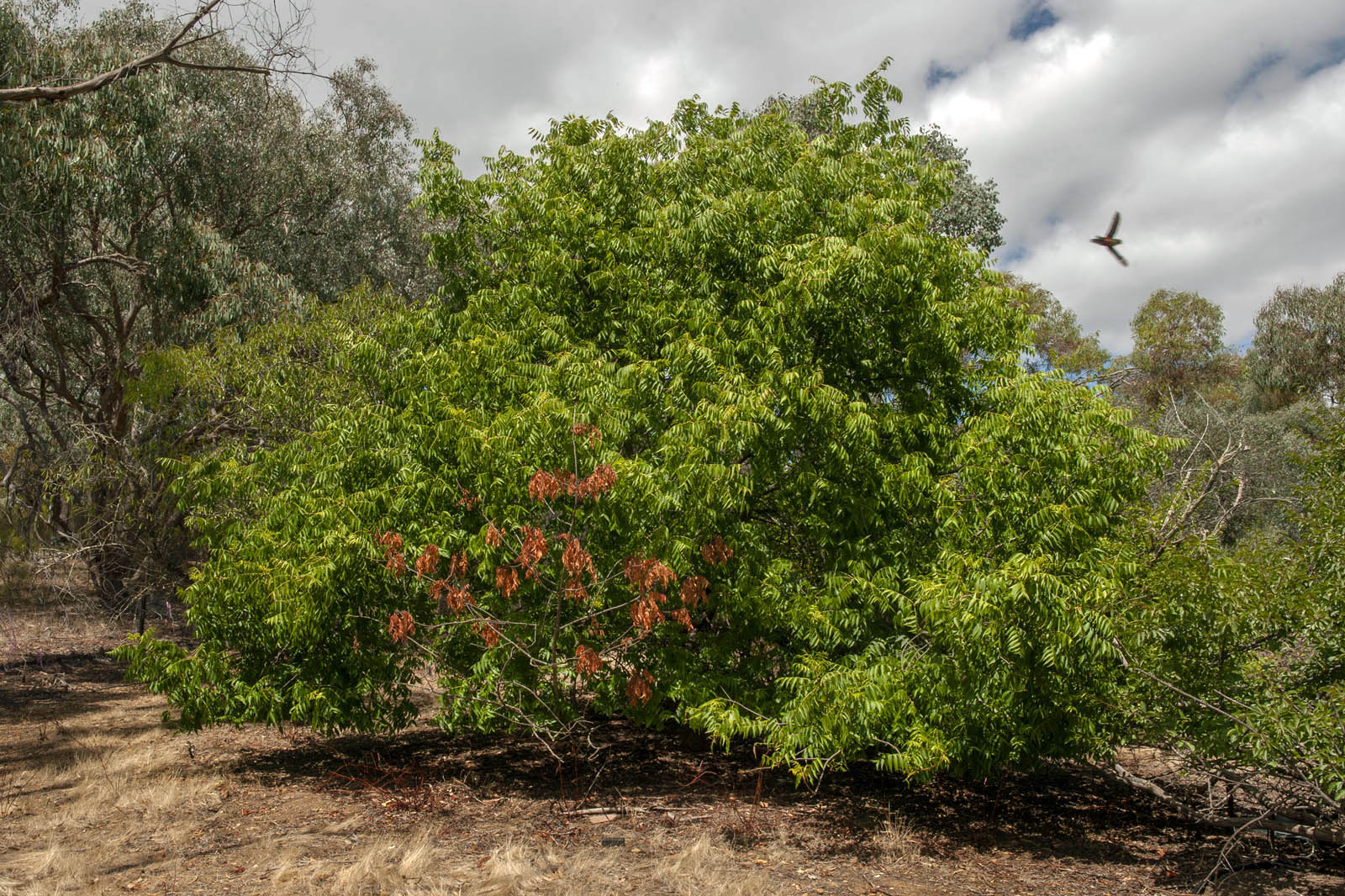
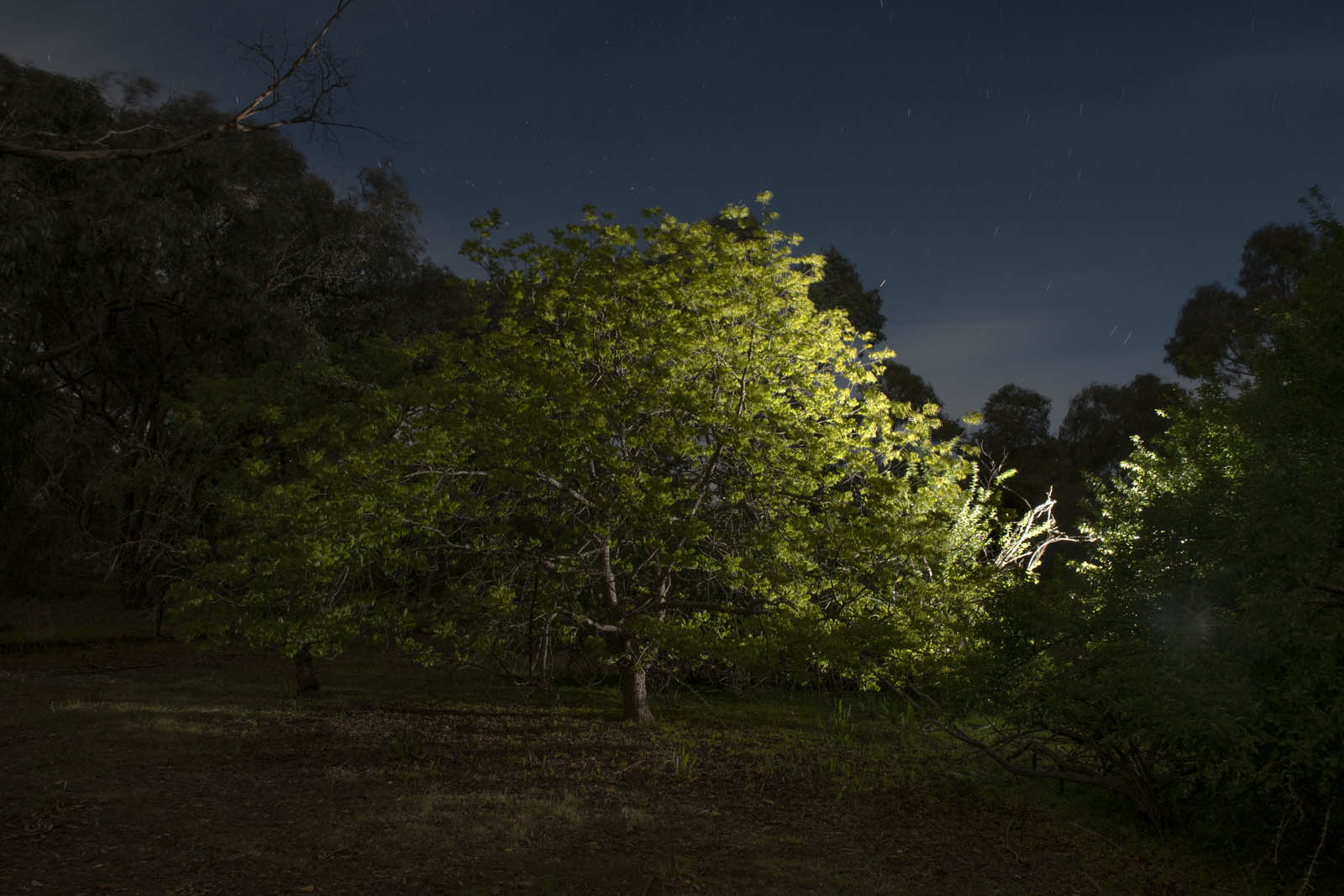
Julie Millowick (Australian, b. 1948) 'Day 39, lockdown, Chinese pistachio tree, Fryerstown' 2020 (installation view)


Julie Millowick (Australian, b. 1948)
Day 39, lockdown, Chinese pistachio tree, Fryerstown (installation view)
2020
Digital image, inkjet print on 100% cotton rag
open edition 2023
Photo: Marcus Bunyan


Julie Millowick (Australian, b. 1948) 'Day 39, lockdown, Chinese pistachio tree, Fryerstown' 2020


Julie Millowick (Australian, b. 1948)
Day 39, lockdown, Chinese pistachio tree, Fryerstown
2020
Digital image, inkjet print on 100% cotton rag
open edition 2023


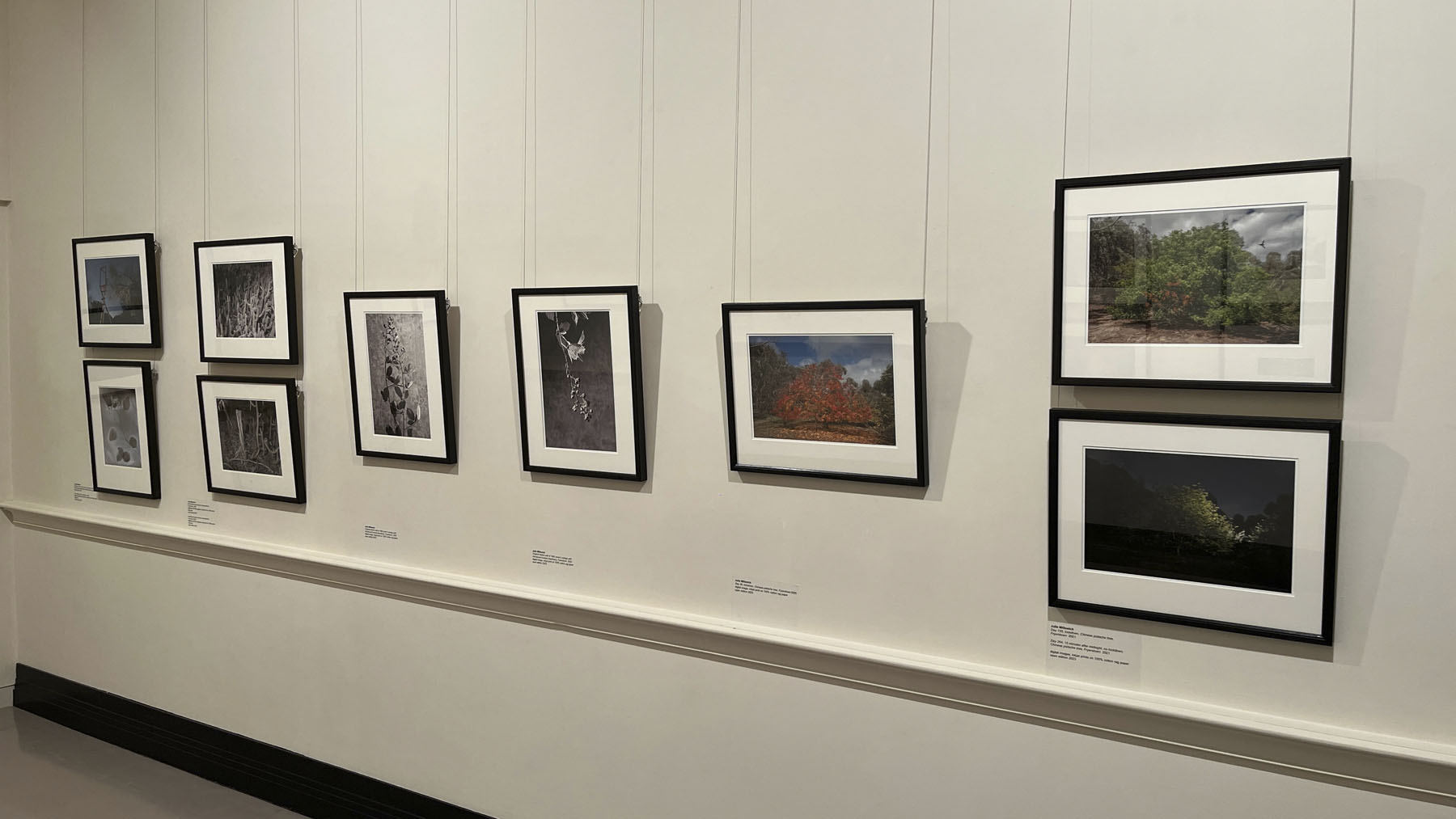
Julie Millowick (Australian, b. 1948) 'Day 155 and Day 264, lockdown, Chinese pistachio tree, Fryerstown' 2021 (installation view)


Julie Millowick (Australian, b. 1948)
Day 155, lockdown, Chinese pistachio tree, Fryerstown (installation view)
2021
Digital image, inkjet print on 100% cotton rag
open edition 2023
Photo: Marcus Bunyan
Julie Millowick (Australian, b. 1948)
Day 264, lockdown, Chinese pistachio tree, Fryerstown (installation view)
2021
Digital image, inkjet print on 100% cotton rag
open edition 2023
Photo: Marcus Bunyan
 

Julie Millowick (Australian, b. 1948) 'Day 155, lockdown, Chinese pistachio tree, Fryerstown' 2021


Julie Millowick (Australian, b. 1948)
Day 155, lockdown, Chinese pistachio tree, Fryerstown
2021
Digital image, inkjet print on 100% cotton rag
open edition 2023


Julie Millowick (Australian, b. 1948) 'Day 264, lockdown, Chinese pistachio tree, Fryerstown' 2021


Julie Millowick (Australian, b. 1948)
Day 264, lockdown, Chinese pistachio tree, Fryerstown
2021
Digital image, inkjet print on 100% cotton rag
open edition 2023


Castlemaine Art Museum
14 Lyttleton Street, Castlemaine

Opening hours
Thursday – Saturday 11am – 4pm
Sunday 12pm – 4pm

Castlemaine Art Museum website

LIKE ART BLART ON FACEBOOK

Back to top

Exhibition: ‘Joyce Evans’ at the National Library of Australia, Canberra

Exhibition dates: 4th April – 5th November 2023

Curators: Dr Grace Blakeley-Carroll and Shelly McGuire


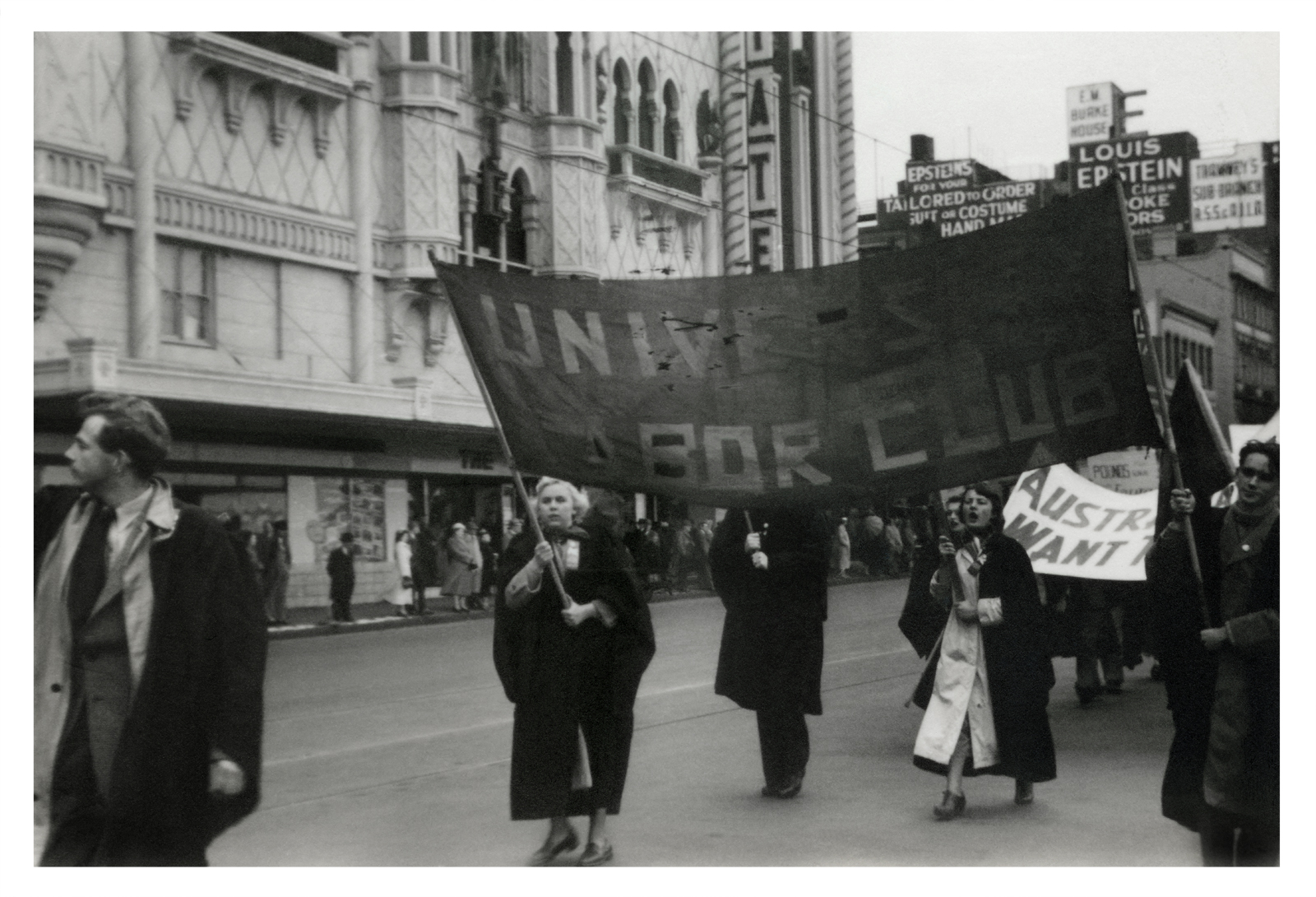
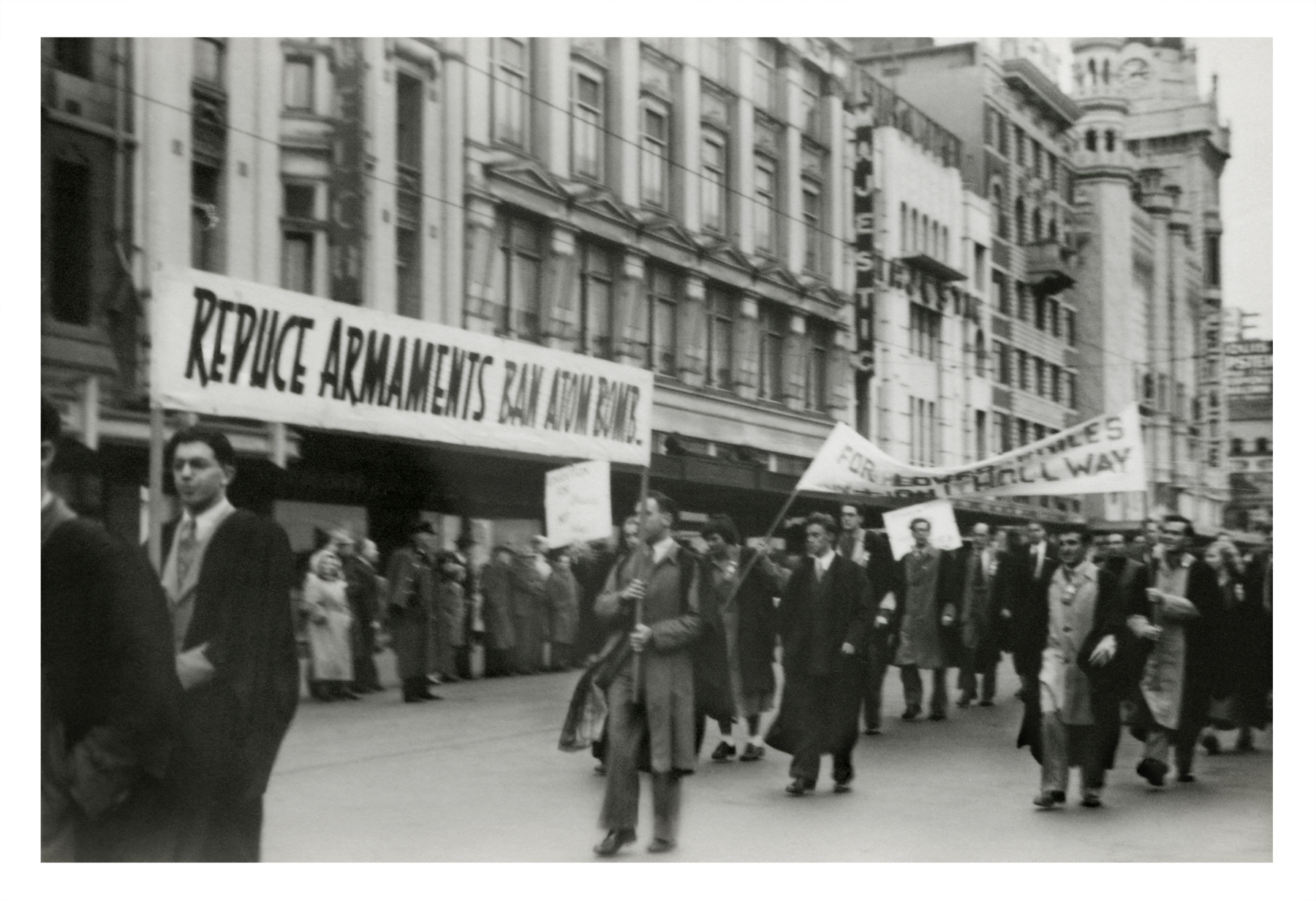
Joyce Evans (Australian, 1929-2019) 'May Day University Labour Club banner, May Day March, Flinders Street, Melbourne' 1951 from the exhibition 'Joyce Evans' at the National Library of Australia, April - Nov 2023


Joyce Evans (Australian, 1929-2019)
Students Protesting during a May Day March on Flinders Street, Melbourne
1951
Photograph
Joyce Evans Archive
National Library of Australia


At far-left, John Clendenin, philosopher and president of University of Melbourne SRC. Banner-bearer Jill Warwick, later a TV Producer, vice-president UniMelb SRC. The Forum Theatre on Flinders Street in the background.


That bohemian force of nature who was Australian artist, curator, teacher, writer, philanthropist, poet, gallery owner and collector Joyce Evans OAM (1929-2019) would have been the first to admit that she was not the most naturally gifted photographer the world has ever known. But Joyce worked assiduously at her craft for over 70 years and became a very fine image maker, picturing her beloved Australia through landscape, documentary and portrait photographs for many a decade.

Her early and historically important photographs of the late 1940s and early 1950s (of which three are in this posting) represent the post Second World War flowering of an Australian civil right movement. Further images from this period can be seen in the book We Had Such High Hopes: Student Activism and the Peace Movement 1949-1952, A Photographic Memoir by Joyce Evans published by Australian Scholarly Publishing in 2019; and you can read my foreword to the book and see more images from it in the Art Blart posting “Nothing emerges from nothing” (2019).

Joyce had an innate knack of putting people at their ease when having their photograph taken. Never without a camera close at hand, she would approach complete strangers anywhere and ask them whether she could take their portrait… and she was never refused. She had the most gracious way about her, as though she was speaking in communion with her subject: whether that be the contemplation of the Australian landscape, Indigenous Australians, or up close and personal portraits of the ordinary or famous. As author Professor Sasha Grishin observes in his book Joyce Evans (National Library of Australia, 2022) she “was an artist who possessed a definite photographic personality… [who] pursued an agenda that shone a light on racism, social inequality and environmental degradation.”

Joyce worked hard at her craft and it rewarded her soul in so many unconditional ways. Her energy for life and photography was full of unbridled enthusiasm. It is therefore a blessing that this passion has now found a permanent home: her complete photographic archive, the Joyce Evans Archive, is now housed at the National Library of Australia in Canberra, an institution for which she did much work over the years. And it is wonderful that they have staged this small exhibition of 27 of her photographs. My only quibble would be the lack of photographs of Indigenous Australians in the exhibition. Other than the portrait of Aboriginal activist Faith Bandler (1951, below) there are no other photographs of her immense engagement with Aboriginal communities and peoples in this exhibition – which is a great shame. Joyce was very proud of her photography of and relationship with remote Aboriginal communities and their people and it would have been nice to see that energy reflected in the photographs in this exhibition.

Dr Marcus Bunyan

Joyce Evans was a cherished friend of Marcus Bunyan.


Many thankx to the National Library of Australia for allowing me to publish the photographs in the posting. Please click on the photographs for a larger version of the image.


The career of Joyce Evans OAM (1929-2019) spans more than six decades of landscape, documentary, and portrait photography. Her work is preserved through the Library’s Joyce Evans Archive, one of our largest collections of images by a contemporary Australian photographer, and contains images which capture essential aspects of Australian life.


“We believed we had an obligation, neither social nor political, to make a difference. We were brought up as children to believe that we had an obligation to make that difference.

If we can find out what we are… that is the artist. This goes to the core element of your being, and the core element of your enquiry remains the same.

If the core part of your life is the search for the truth then that becomes a core part of your identity for the rest of your life. It becomes embedded in your soul.”


Joyce Evans


Joyce Evans (Australian, 1929-2019) 'Richard 'Dicky' Woolcott, delegate to conference, at NUAUS encampment' 1951 from the exhibition 'Joyce Evans' at the National Library of Australia, April - Nov 2023


Joyce Evans (Australian, 1929-2019)
Richard Woolcott AC at NUAUS Conference, Largs Bay, S.A.
1951, printed by David Chisolm and Joyce Evans, 2013
Photograph
Joyce Evans Archive
National Library of Australia


Richard Arthur Woolcott AC (11 June 1927 – 2 February 2023) was an Australian public servant, diplomat, author, and commentator.


The [photographic] form that Joyce found so early in her life was the music and poetry of humanist photographs, images that are subjective, lyrical, and reveal a state-of-mind. Here is passion and belief in the life of human beings, and the exquisiteness, beauty (and death) of the lived moment. You could label them “social documentary photography” if you were so inclined, but labels don’t capture the frisson of the creative process nor the joyous outcome of Joyce’s portraits. It’s as though Joyce, in a mixture of consciousness and unconsciousness, is making love to the world through her images: neither rational nor cerebral they evoke sensations and feelings, of being here and there, in that past space and time, now, all these years later. These were epic days of change and transformation – of nations, of continents, of cultures and of people. There was death and destruction but there was also such happiness, hope and joy.

Further, what her photographs also depict is the rise of an informed Australian social consciousness after the Second World War. Her important historical and personal photographs shine a light on forgotten people, times, places and actions, such as the broad based youth movements opposition to the atomic bomb, associations and friendships which eventually form the basis for the progressive social and political protest movements of the 1960s. The voices raised later in support of feminism, gay liberation, free love and Vietnam anti-war protests did not appear fully formed, for there was a history of activism… a slow build, a groundswell of public opinion that was the basis for such emerging actions. Nothing ever emerges from nothing.

Marcus Bunyan. “Nothing emerges from nothing,” foreword from the book We Had Such High Hopes: Student Activism and the Peace Movement 1949-1952, A Photographic Memoir by Joyce Evans. Melbourne: Australian Scholarly Publishing, 2019

Read the full text and see more early photographic images by Joyce Evans


Joyce Evans (Australian, 1929-2019) 'Faith Bandler' 1951 from the exhibition 'Joyce Evans' at the National Library of Australia, April - Nov 2023


Joyce Evans (Australian, 1929-2019)
Faith Bandler
1951, printed 2012
Photograph
Joyce Evans Archive
National Library of Australia


Faith Bandler AC MBE (27 September 1918 – 13 February 2015; née Ida Lessing Faith Mussing) was an Australian civil rights activist of South Sea Islander and Scottish-Indian heritage. A campaigner for the rights of Indigenous Australians and South Sea Islanders, she was best known for her leadership in the campaign for the 1967 referendum on Aboriginal Australians.


‘I don’t know what sort of photographer I am, but I try to be an honest one.’ ~ Joyce Evans.

The career of Joyce Evans OAM (1929-2019) spans more than six decades of landscape, documentary, and portrait photography. Her work is preserved through the Library’s Joyce Evans Archive, one of our largest collections of images by a contemporary Australian photographer, and contains images which capture essential aspects of Australian life.

This collection-in-focus display contains highlights from the Library’s Joyce Evans Archive, and can be seen in our Treasures Gallery from Tuesday 4 April 2023. Entry to the Gallery is free and no bookings are required.

You can read more about Evans’ life in the NLA Publishing title, Joyce Evans by Sasha Grishin.

Text from the National Library of Australia website.


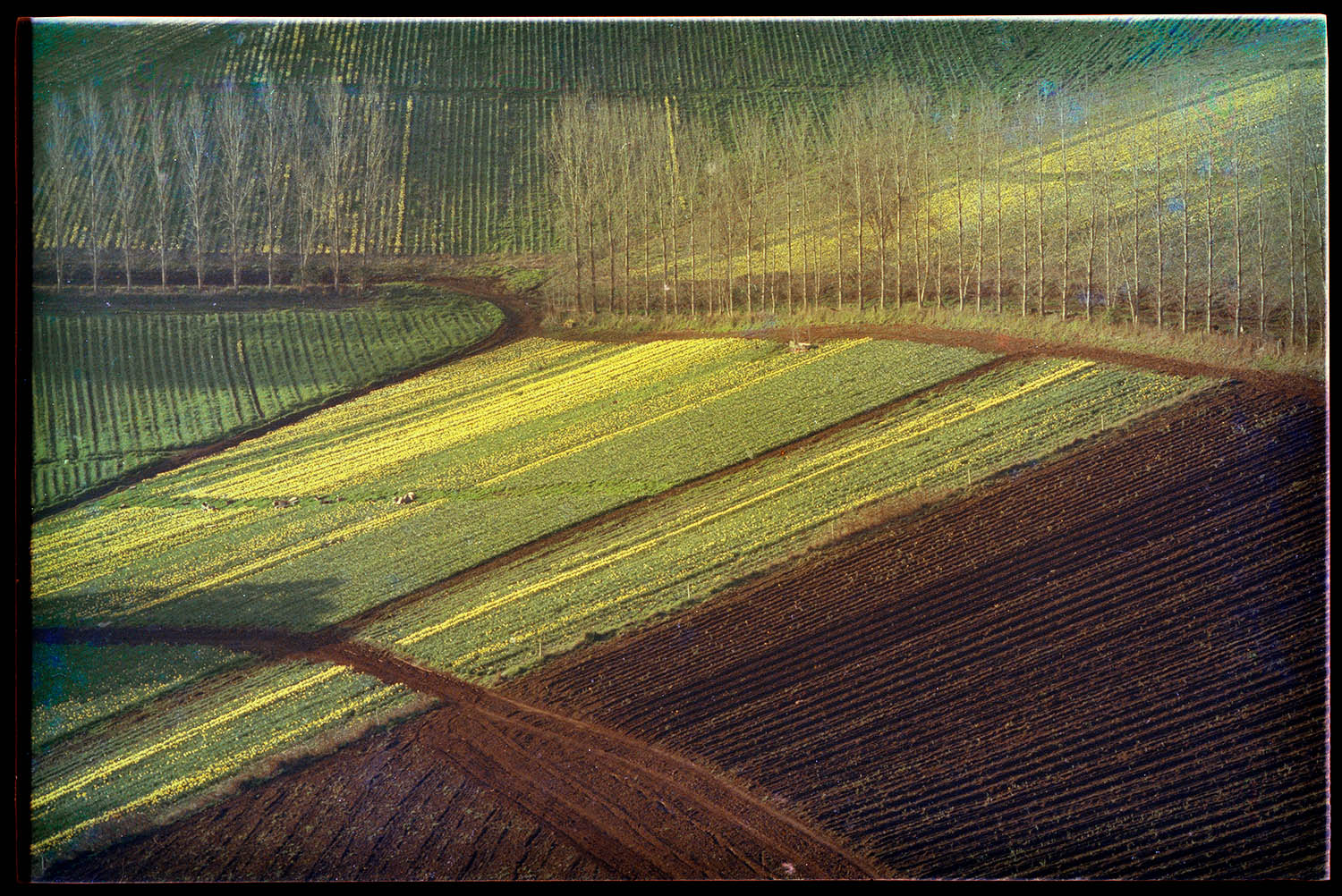
Joyce Evans (Australian, 1929-2019) 'Cotswold Farm, Menzies Creek, Victoria' 1982


Joyce Evans (Australian, 1929-2019)
Cotswold Farm, Menzies Creek, Victoria
1982
Colour photograph
Joyce Evans Archive
National Library of Australia


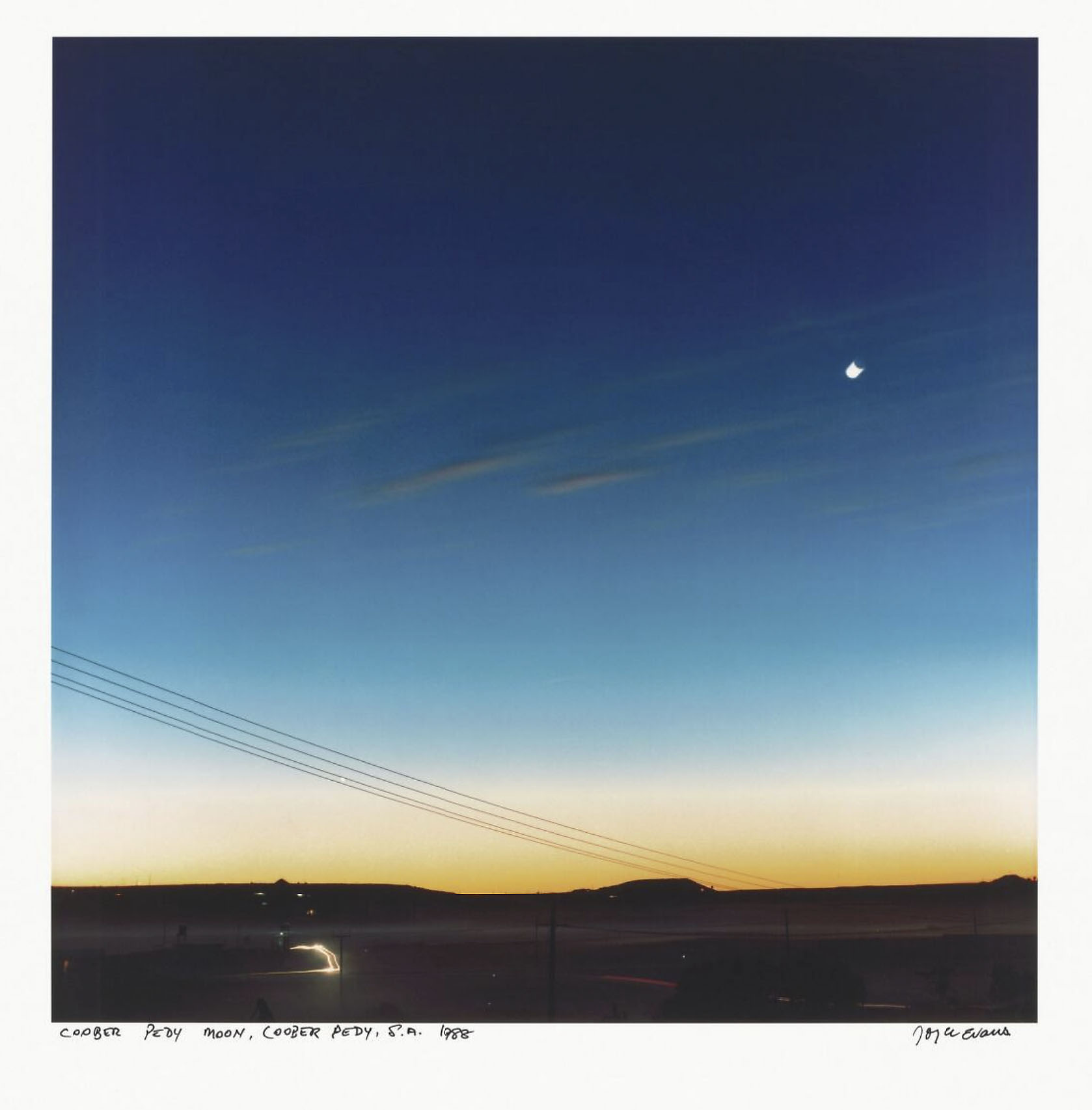
Joyce Evans (Australian, 1929-2019) 'Moon over Coober Pedy, South Australia' 1988


Joyce Evans (Australian, 1929-2019)
Moon over Coober Pedy, South Australia
1988, printed by David Chisolm and Joyce Evans, 2013
Colour photograph
35.2 x 35cm
Joyce Evans Archive
National Library of Australia


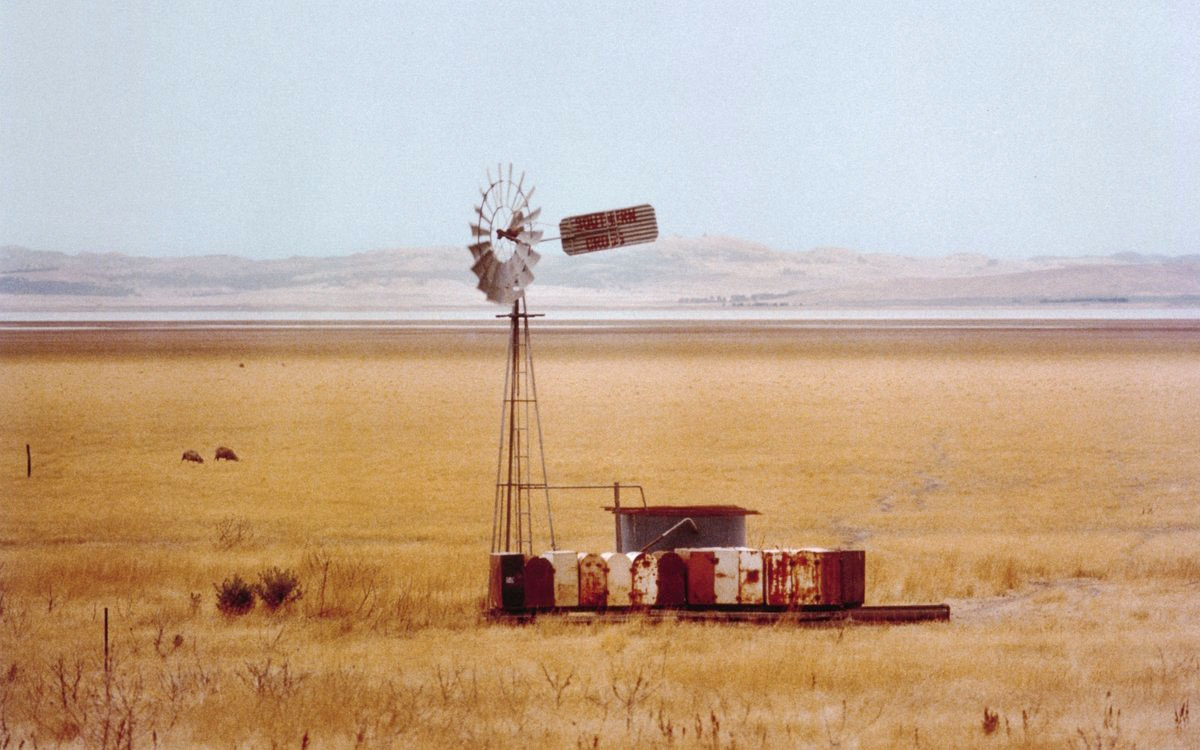
Joyce Evans (Australian, 1929-2019) 'Windmill on Weerewa/Lake George, New South Wales' c. 1983-2012


Joyce Evans (Australian, 1929-2019)
Windmill on Weerewa/Lake George, New South Wales
c. 1983-2012
Colour photograph
35.6 x 37.2cm
Joyce Evans Archive
National Library of Australia


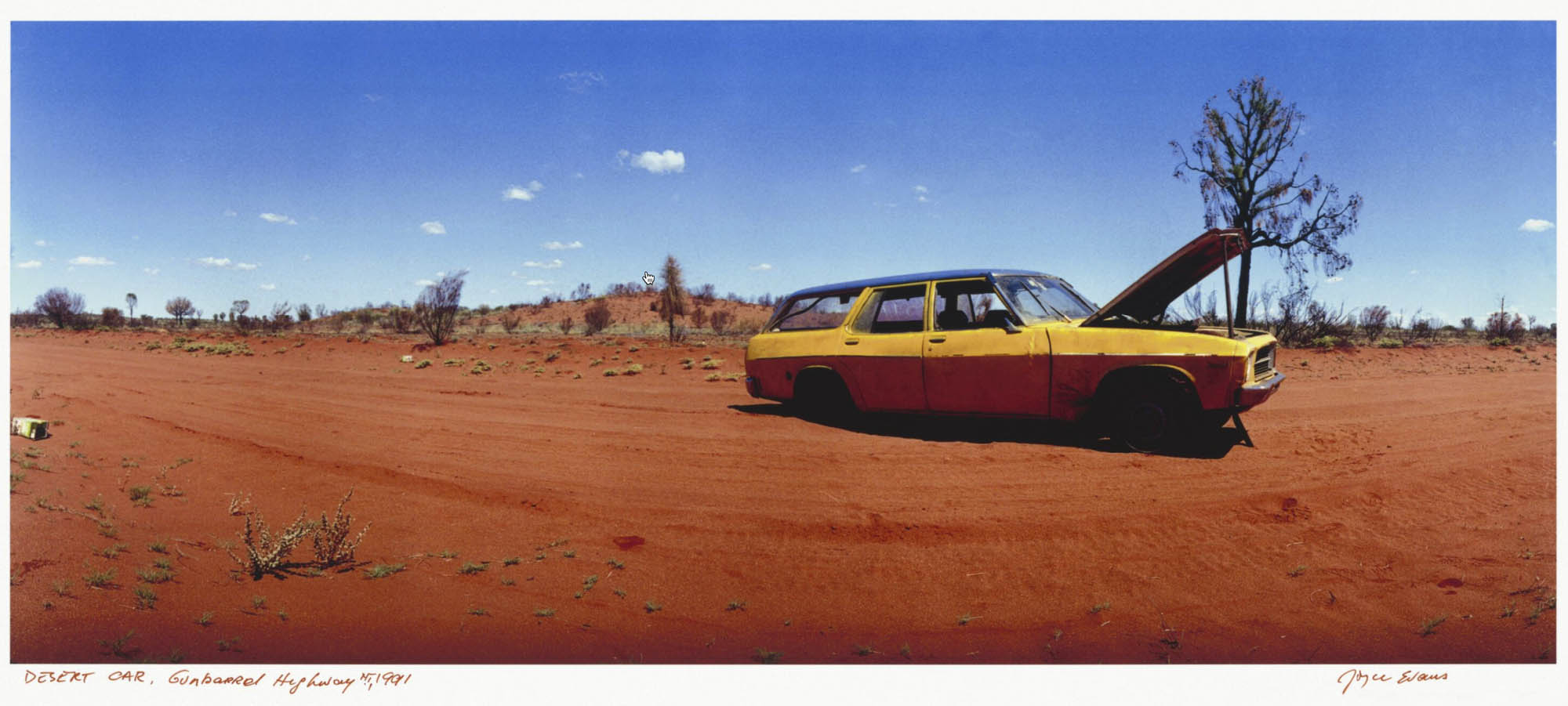
Joyce Evans (Australian, 1929-2019) 'Desert Car on Gunbarrel Highway, Northern Territory' 1991


Joyce Evans (Australian, 1929-2019)
Desert Car on Gunbarrel Highway, Northern Territory
1991
Colour photograph
21 x 50.6cm
Joyce Evans Archive
National Library of Australia


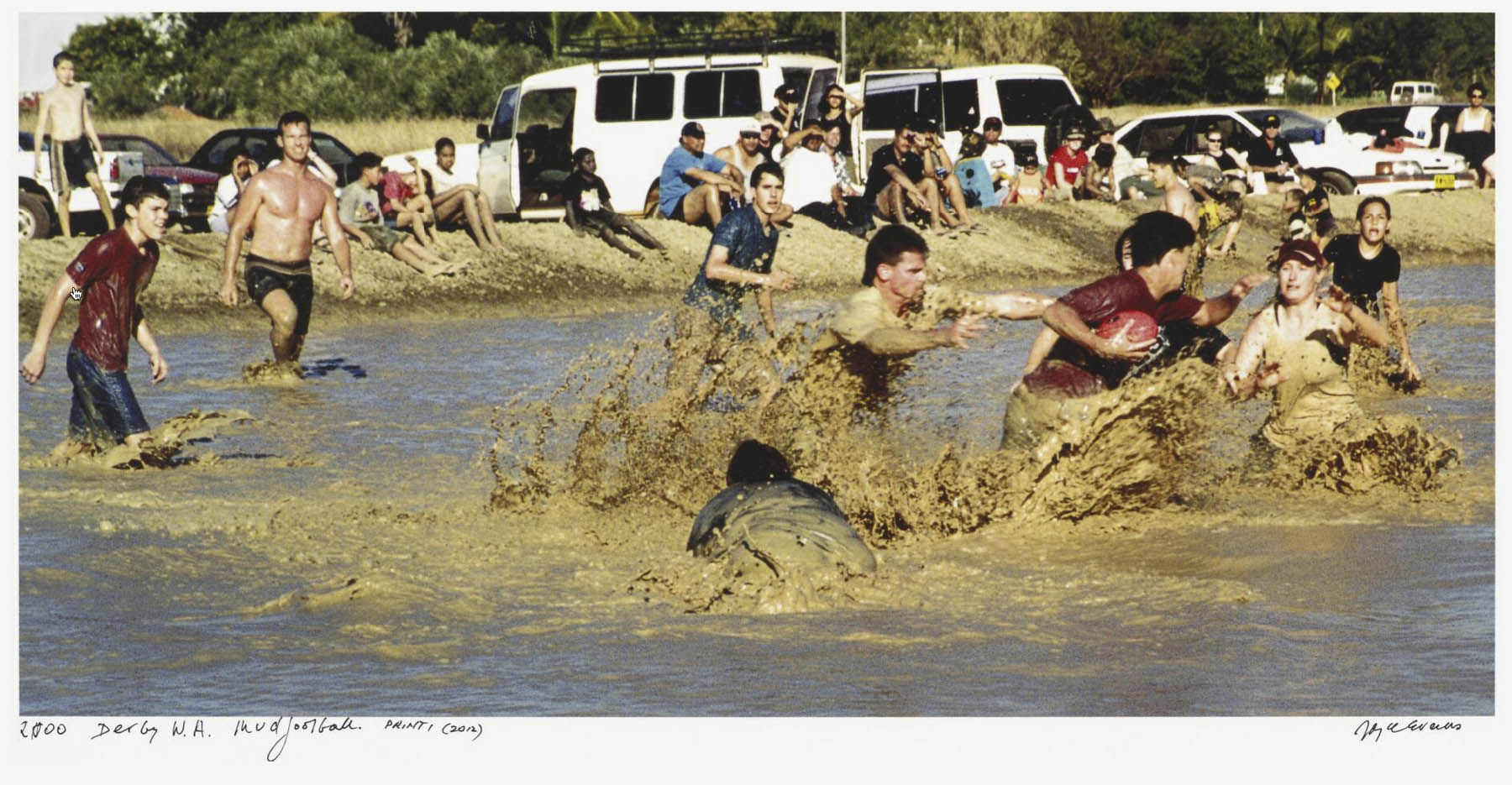
Joyce Evans (Australian, 1929-2019) 'Mud Football, Derby, Western Australia' 2000, printed 2012


Joyce Evans (Australian, 1929-2019)
Mud Football, Derby, Western Australia
2000, printed 2012
Inkjet on Hahnemuhle photo rag paper
34.3 x 41cm
Joyce Evans Archive
National Library of Australia


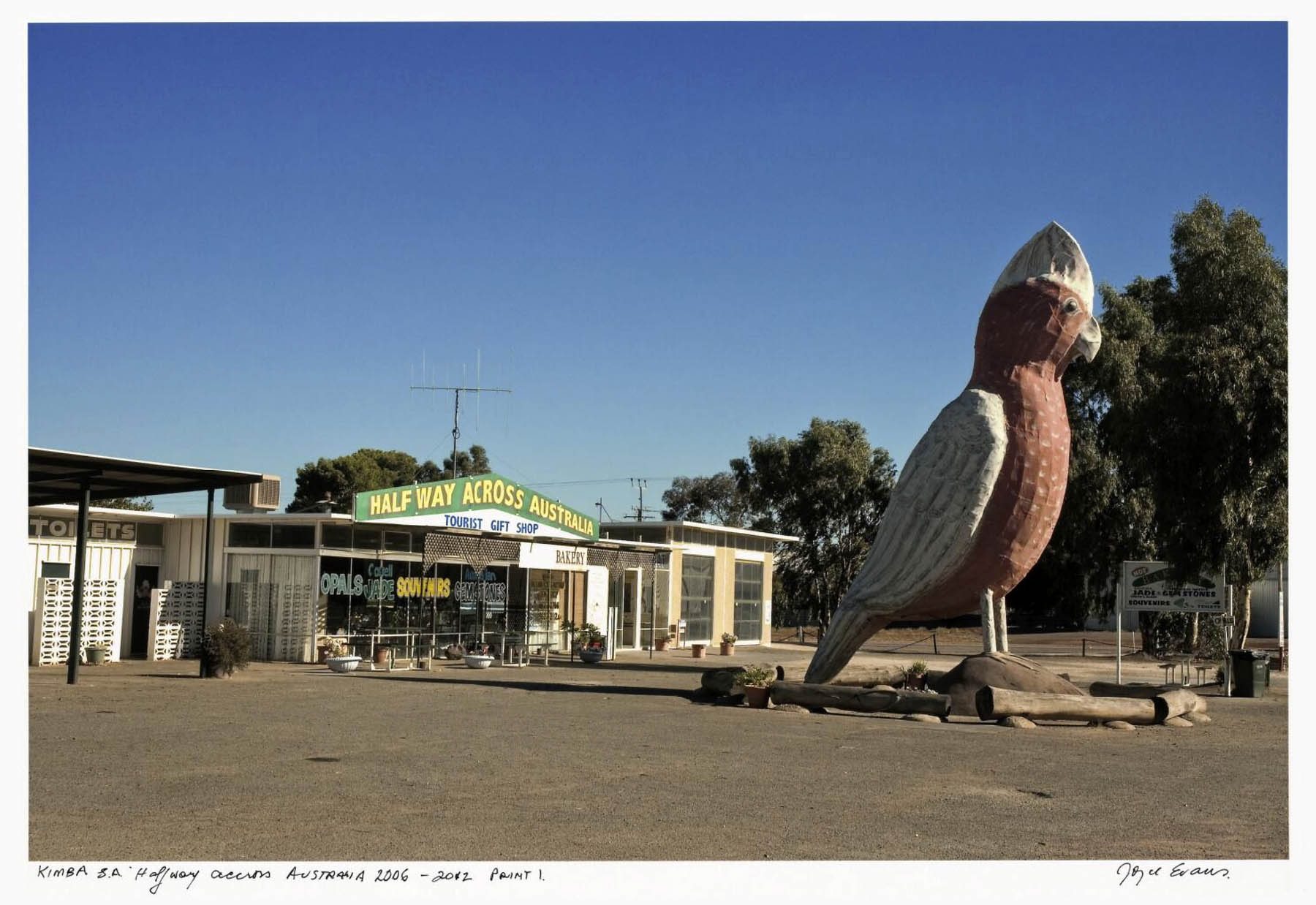
Joyce Evans (Australian, 1929-2019) 'The Big Galah and Tourist Gift Shop, Kimba, South Australia' c. 2006-2012


Joyce Evans (Australian, 1929-2019)
The Big Galah and Tourist Gift Shop, Kimba, South Australia
c. 2006-2012
Colour photograph
33.6 x 50.7cm
Joyce Evans Archive
National Library of Australia


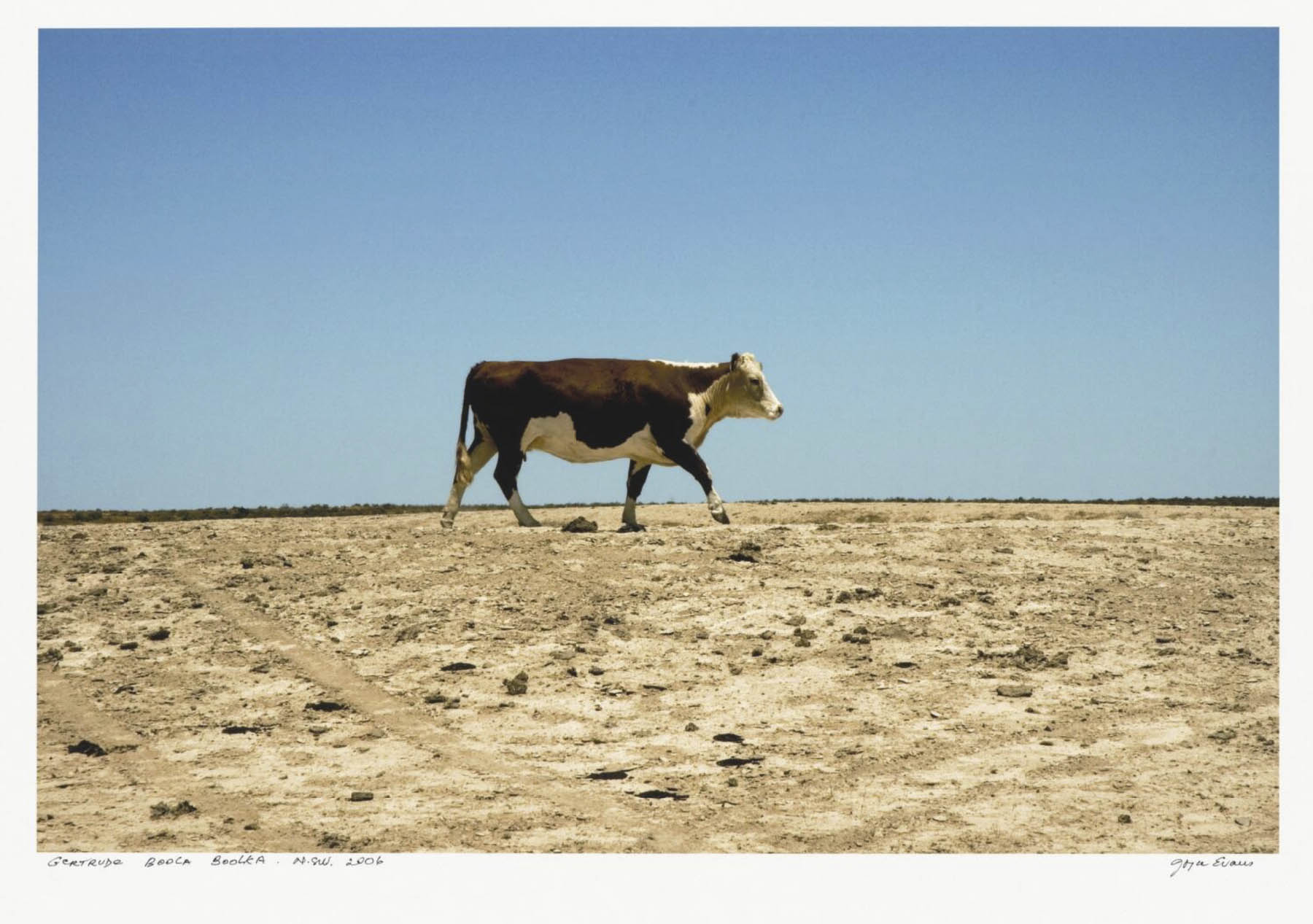
Joyce Evans (Australian, 1929-2019) 'Gertrude, Boola Boolka Station, New South Wales' 2006


Joyce Evans (Australian, 1929-2019)
Gertrude, Boola Boolka Station, New South Wales
2006
Colour photograph
33.9 x 50.7cm
Joyce Evans Archive
National Library of Australia


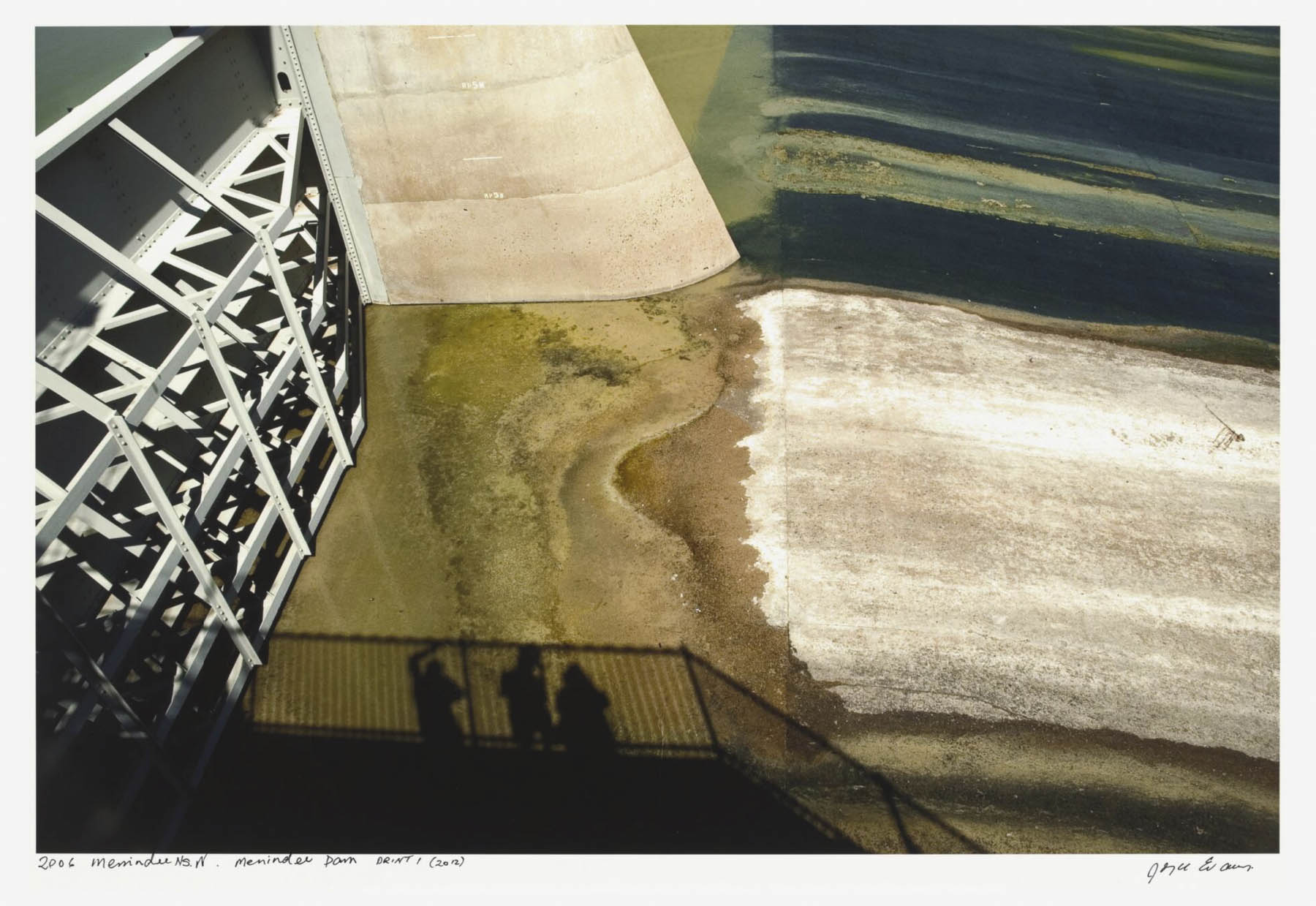
Joyce Evans (Australian, 1929-2019) 'Evidence of Severe Drought at Menindee Dam, Menindee, New South Wales' 2006


Joyce Evans (Australian, 1929-2019)
Evidence of Severe Drought at Menindee Dam, Menindee, New South Wales
2006
Colour photograph
Joyce Evans Archive
National Library of Australia


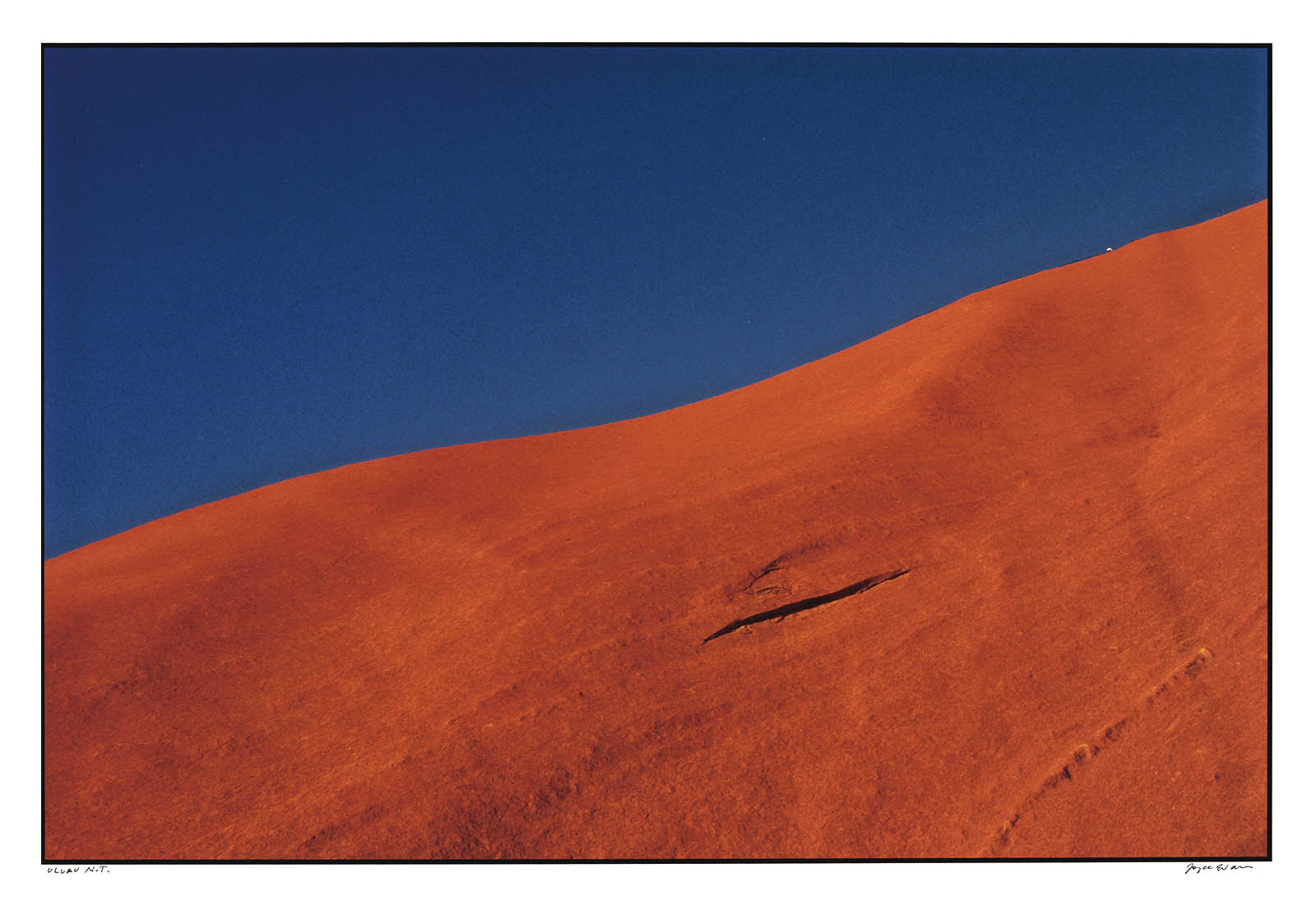
Joyce Evans (Australian, 1929-2019) 'Uluru, Northern Territory' 1987


Joyce Evans (Australian, 1929-2019)
Uluru, Northern Territory
1987
Colour photograph
Joyce Evans Archive
National Library of Australia


Joyce Evans was an unusual phenomenon in the Australian photography scene. Her conversion to photography did not occur until she was already in her 40s, while her engagement in professional photography had to wait until she was 50. She never developed a signature style, nor had she become a template photographer, but she possessed a definite photographic personality. …

As a documentary photographer, Evans considered herself a hunter and gatherer waiting to find the image. She remarked, “as an artist, you channel the energy of the place – the image comes to you as a gift.”

Her oeuvre is remarkable for its diversity and includes landscapes, roadkill, portraiture, social documentation, brothels and erotica – all brought together through a unifying sensibility, the Evans photographic moment. She was also an artist with a social conscience and pursued an agenda that shone a light on racism, social inequality and environmental degradation.

Many of Evans’s photographs demand slow viewing and open up gradually. Uluru, Northern Territory, 1987 (above), shows the rock as if carved by nature. In one sense, it is a very simple photograph in which two colours meet – the brilliant red ochre of the rock and the fathomless blue of the sky. It is also an immensely complex photograph with the mysterious slit – like the womb of the earth – in the centre of the composition and galvanising the viewer’s attention.

Gradually, as you focus into the image, there are signs of human presence at the top of the rock: two climbers on the chain pathway, contrasted with organic shapes created through centuries of erosion – a contrast between the temporal and the eternal. Despite the sense of stillness and silence, there is also considerable movement as the light plays over the textured surfaces.

The photograph is rare in that it defines a space but also distils the spiritual essence of the place and asserts an atmosphere of mystery and contemplative presence.

In 2016, when I was working on a monograph on Evans’s work, she noted: “As a photographer – I have a voice – it is an Australian voice, as I do not know intimately any other culture. It comes at a time when you say: ‘This is my country’. One of the sub-texts, when I pick up a camera, is that I always try to identify the stereotypical that is always defined by that which is on the edge.”

Sasha Grishin. “Joyce Evans, an unheralded icon of photography, the focus of the National Library of Australia,” on the Riotact website 8 October 2023 [Online] Cited 16/10/2023


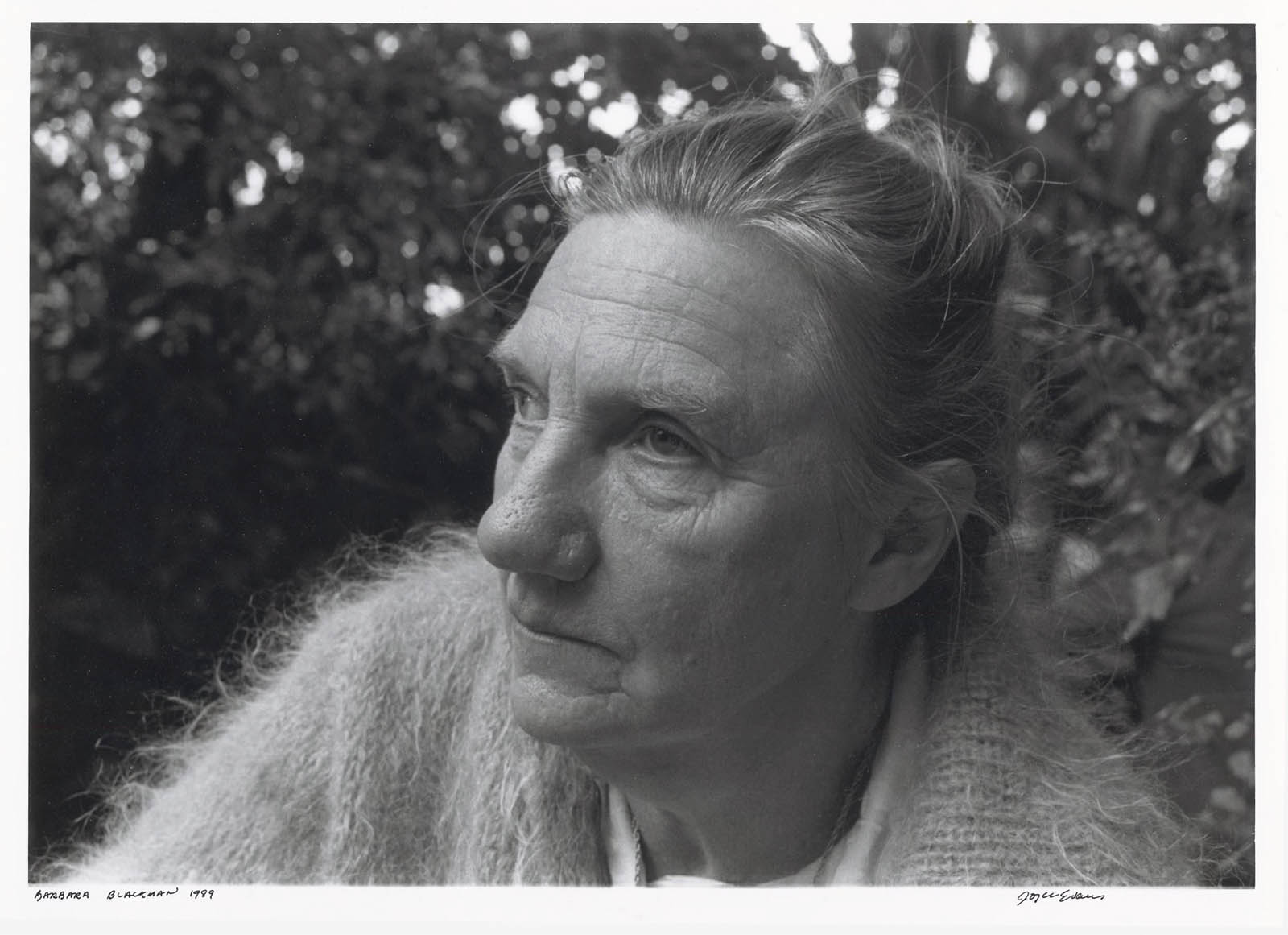
Joyce Evans (Australian, 1929-2019) 'Barbara Blackman' 1989


Joyce Evans (Australian, 1929-2019)
Barbara Blackman
1989
Photograph
30 x 40.7cm
Joyce Evans Archive
National Library of Australia


Barbara Blackman AO (née Patterson; born 22 December 1928) is an Australian writer, poet, librettist, broadcaster, model and patron of the arts. In 2004, she donated $1 million to a number of Australian music organisations, including Pro Musica, the Australian Chamber Orchestra, the Australian National University’s School of Music and the Stopera Chamber Opera Company. In 2006, she was awarded the Australian Contemporary Music Award for Patronage. Barbara Blackman was married for 27 years to renowned Australian artist Charles Blackman.


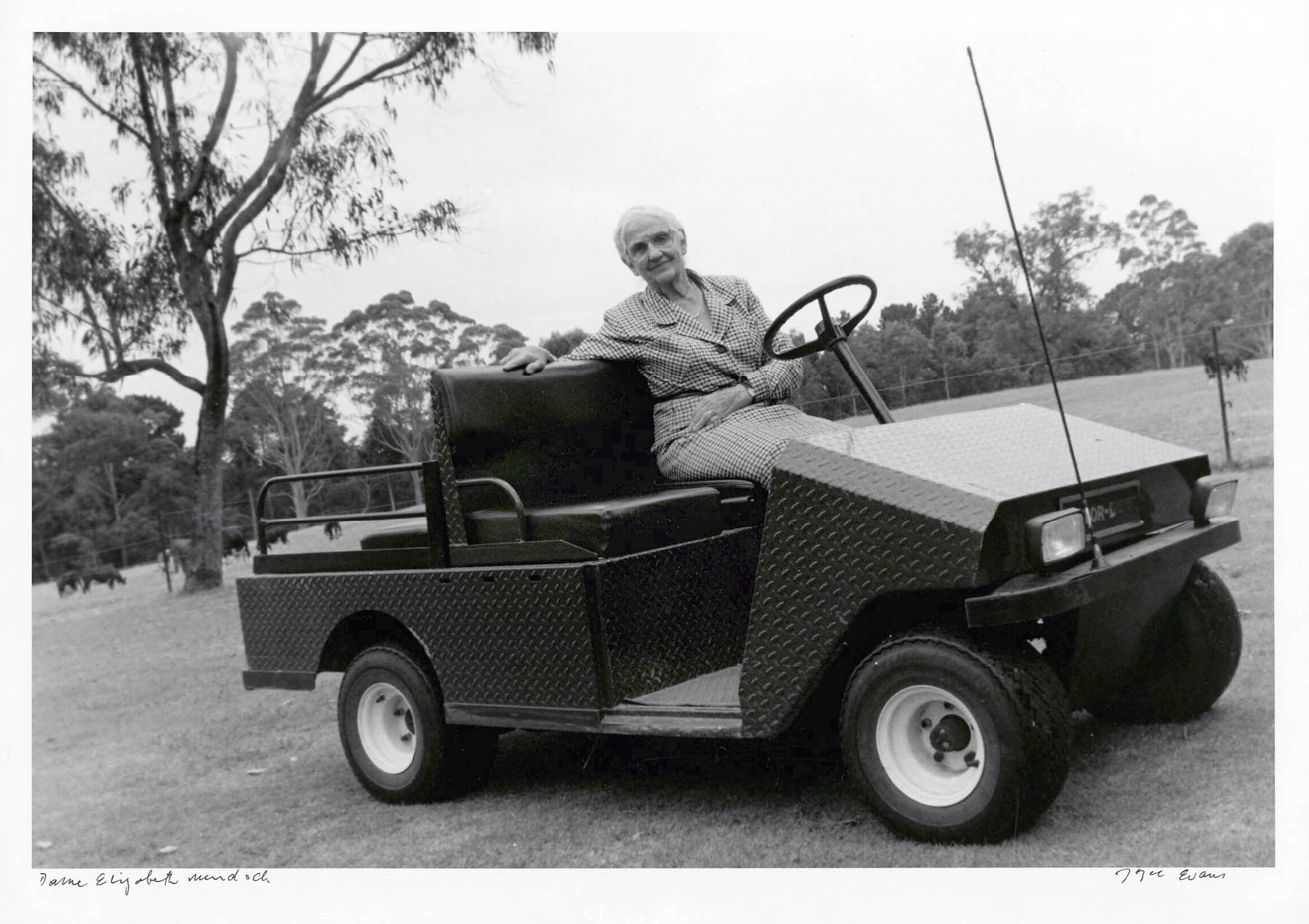
Joyce Evans (Australian, 1929-2019) 'Philanthropist Dame Elisabeth Murdoch, Langwarrin, Victoria' 1995


Joyce Evans (Australian, 1929-2019)
Philanthropist Dame Elisabeth Murdoch, Langwarrin, Victoria
1995
Photograph
24.9 x 37.0cm
Joyce Evans Archive
National Library of Australia


Dame Elisabeth Joy Murdoch, Lady Murdoch AC DBE (née Greene; 8 February 1909 – 5 December 2012), also known as Elisabeth, Lady Murdoch, was an Australian philanthropist and matriarch of the Murdoch family. She was the wife of Australian newspaper publisher Sir Keith Murdoch and the mother of international media proprietor Rupert Murdoch. She was appointed a Dame Commander of the Order of the British Empire (DBE) in 1963 for her charity work in Australia and overseas.


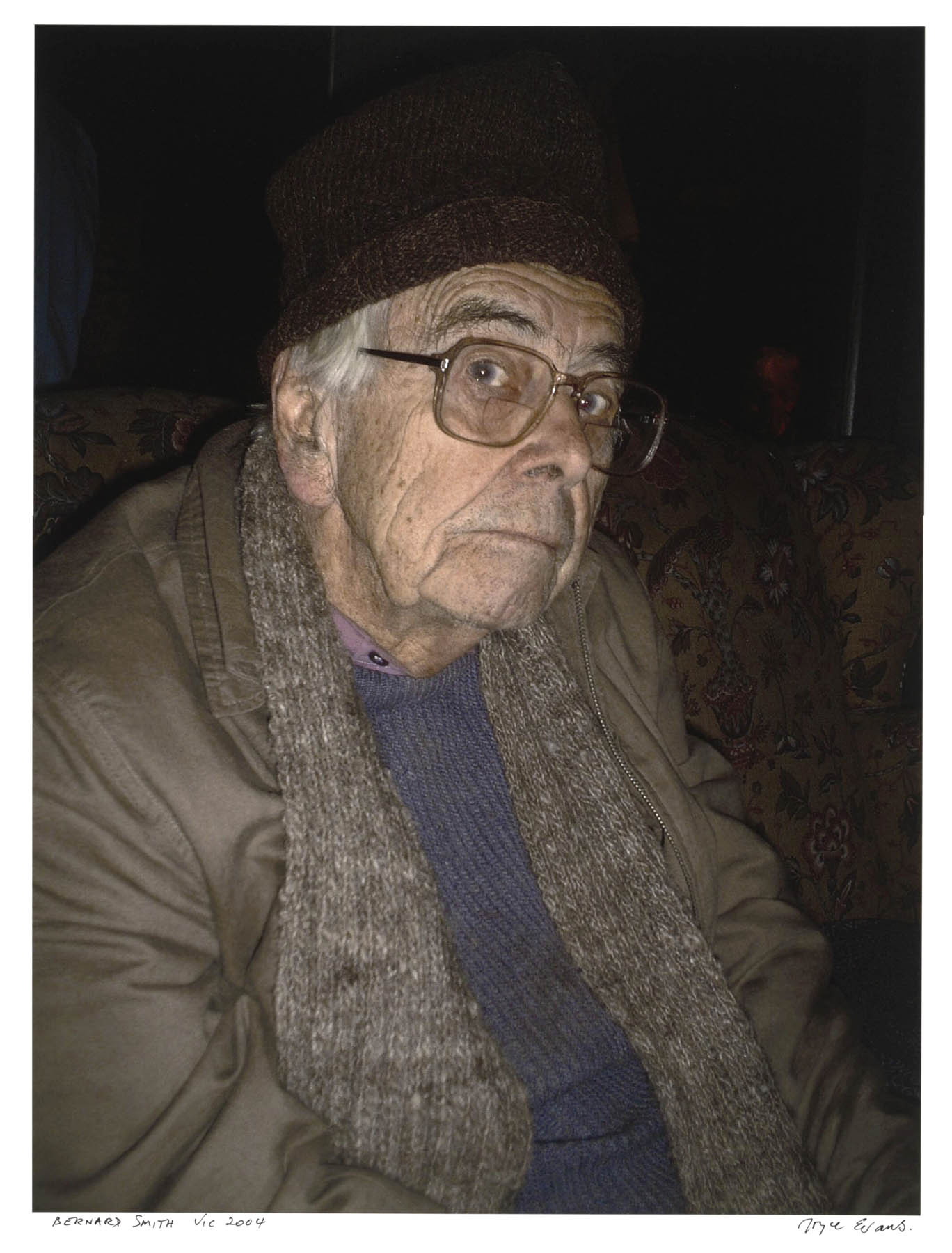
Joyce Evans (Australian, 1929-2019) 'Bernard Smith, Victoria' 2004, printed 2013


Joyce Evans (Australian, 1929-2019)
Bernard Smith, Victoria
2004, printed 2013
Colour photograph
47.5 x 37.5cm
Joyce Evans Archive
National Library of Australia


Bernard William Smith (3 October 1916 – 2 September 2011) was an Australian art historian, art critic and academic, considered the founding father of Australian art history, and one of the country’s most important thinkers. His book Place, Taste and Tradition: a Study of Australian Art Since 1788 (1945) is a key text in Australian art history, and influence on Robert Hughes. Smith was associated with the Communist Party of Australia, and after leaving the party remained a prominent left-wing intellectual and Marxist thinker.


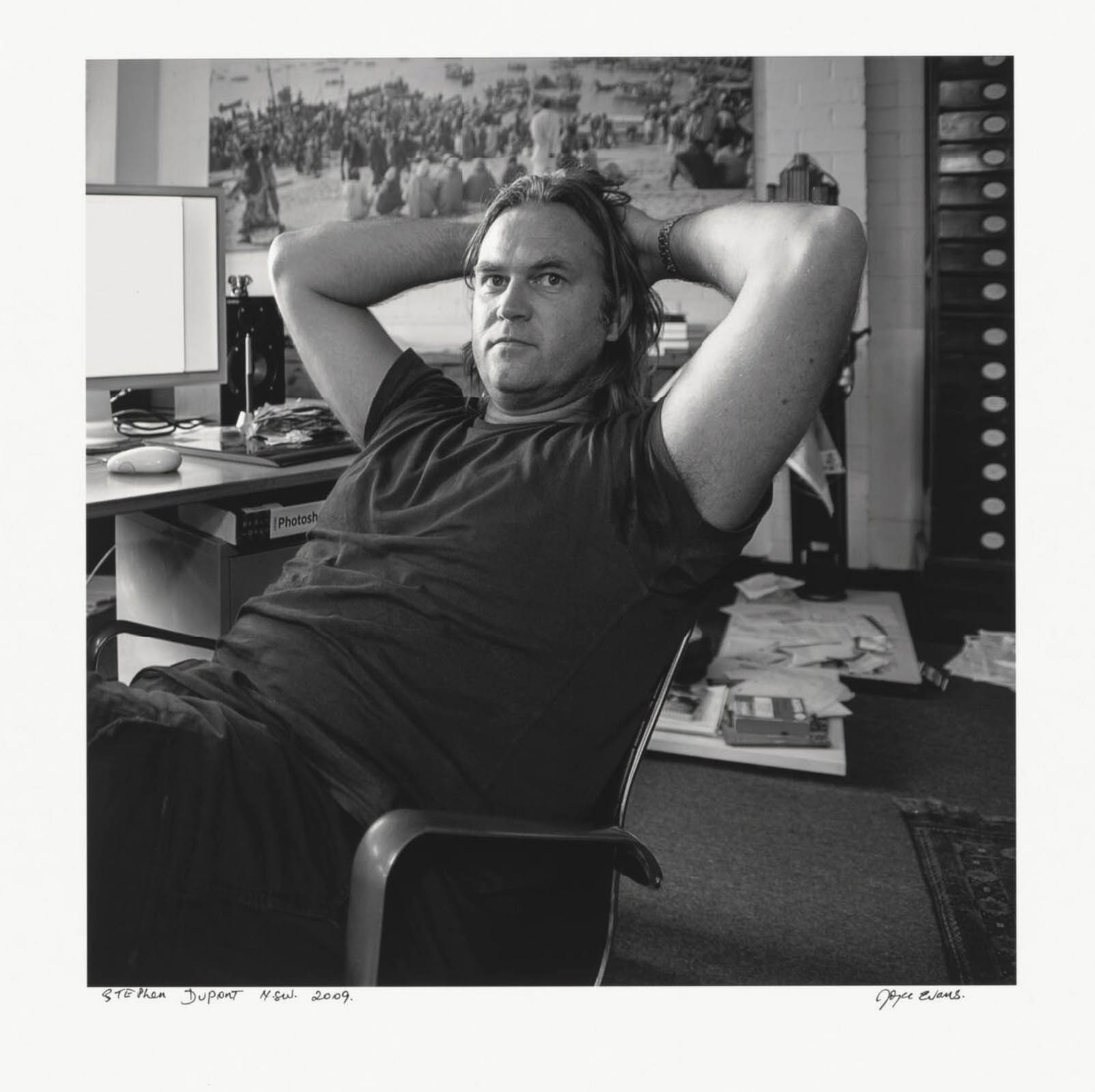
Joyce Evans (Australian, 1929-2019) 'Stephen Dupont' 2009


Joyce Evans (Australian, 1929-2019)
Stephen Dupont
2009, printed by David Chisolm and Joyce Evans, 2013
Photograph
35.6 x 35.6cm
Joyce Evans Archive
National Library of Australia


Stephen Dupont (b. 1967) is an Australian photographer and director working on films, commercials, magazine and newspaper assignments and long term personal projects.


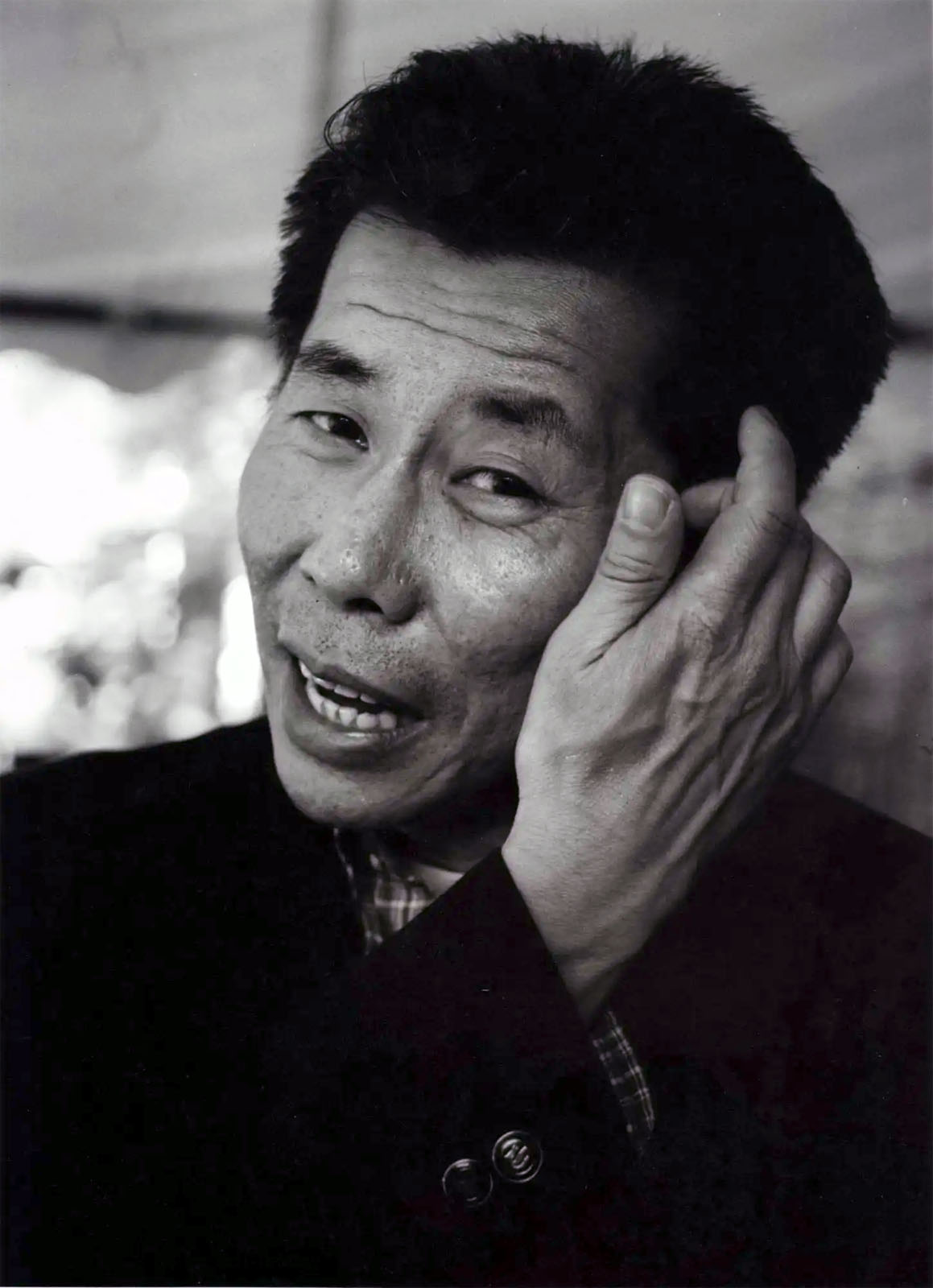
Joyce Evans (Australian, 1929-2019) 'William Yang' 1996


Joyce Evans (Australian, 1929-2019)
William Yang
1996
Photograph
Joyce Evans Archive
National Library of Australia


“William Yang [Aust., b.1943] belongs to a generation of artists who used photography to document alternative lifestyles and celebrate social diversity during the latter decades of the 20th century…Yang is the type of social documentary photographer who carries a camera around his neck, ready to capture things with a certain immediacy, as they happen around him.” ~ Museum of Contemporary Art


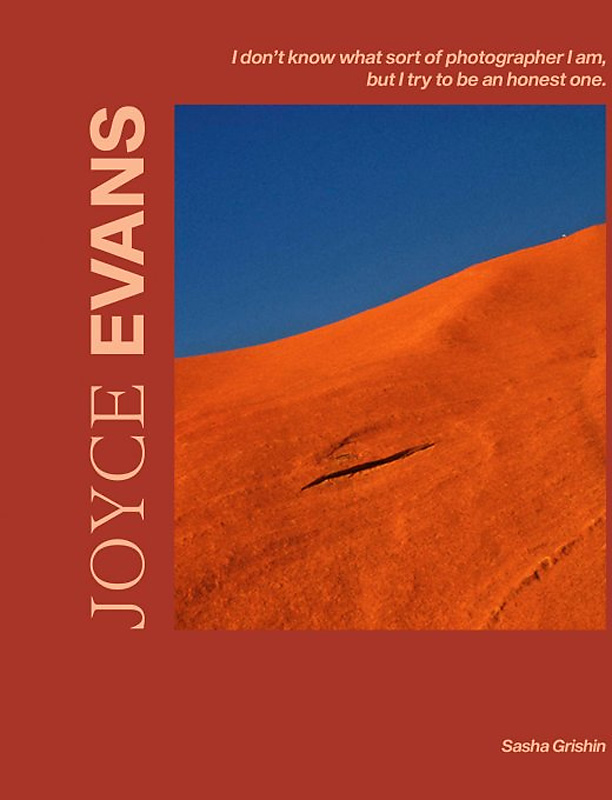
Joyce Evans was an unusual phenomenon in the Australian photography scene. Her conversion to photography did not occur until she was already in her forties, while her engagement in professional photography had to wait until she was fifty. She never developed a signature style, nor did she become a template photographer, but she possessed a sensibility that has become characteristic of her work, so that you can quickly recognise a Joyce Evans photograph. She was an artist who possessed a definite photographic personality.

Evans combined documentary photography, social photography, landscape photography and studio practice. She also had a social conscience. Although avoiding didactic images or illustrative propaganda, in her documentary work and in her choice of subjects, she had pursued an agenda that shone a light on racism, social inequality and environmental degradation.

This stylish and generously-illustrated monograph shows how Evans’ photography was about capturing not only the surface appearances, but ultimately the essences, of her subjects. It illustrates the Evans’ belief that in silence and stillness you come to feel the spirit of the subject, and that capturing this spirit was the photographer’s goal.

About the author

Professor Sasha Grishin AM, FAHA established the academic discipline of Art History at the ANU and was the Sir William Dobell Professor of Art History and Head of Art History and Curatorship at the ANU until December 2013. He works internationally as an art historian, art critic and curator. In 2005 he was awarded the Order of Australia (AM) for services to Australian art and art history. He has published over 25 books and over 2,000 articles and catalogue essays dealing with various aspects of art.

Text from the National Library of Australia website.

Purchase the book


Cover of the book 'Joyce Evans' by Sasha Grishin


Cover of the book Joyce Evans by Sasha Grishin


National Library of Australia
Parkes Place
Canberra ACT 2600
Australia

Opening hours:
Daily 9am – 5pm

National Library of Australia website

LIKE ART BLART ON FACEBOOK

Back to top
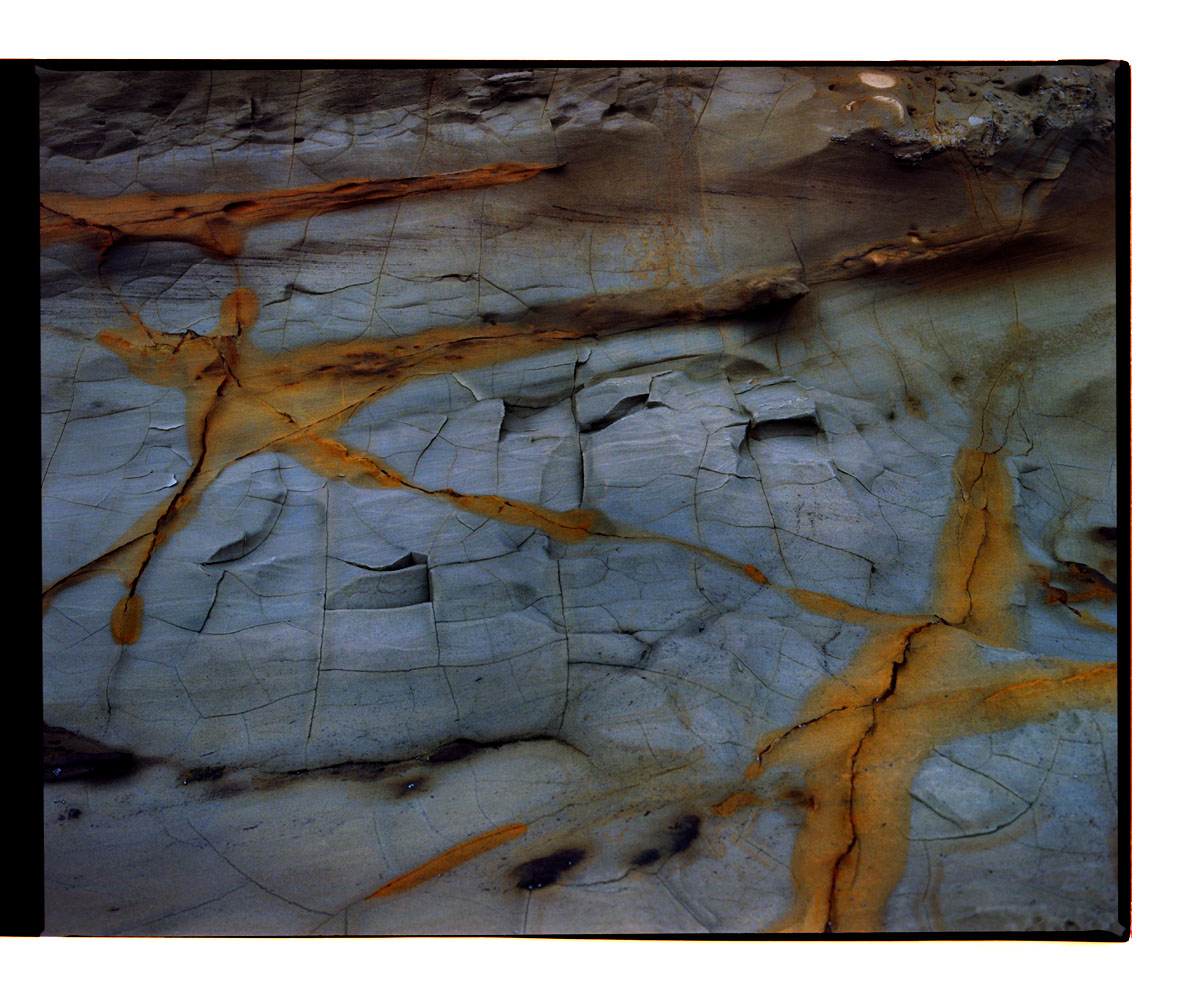
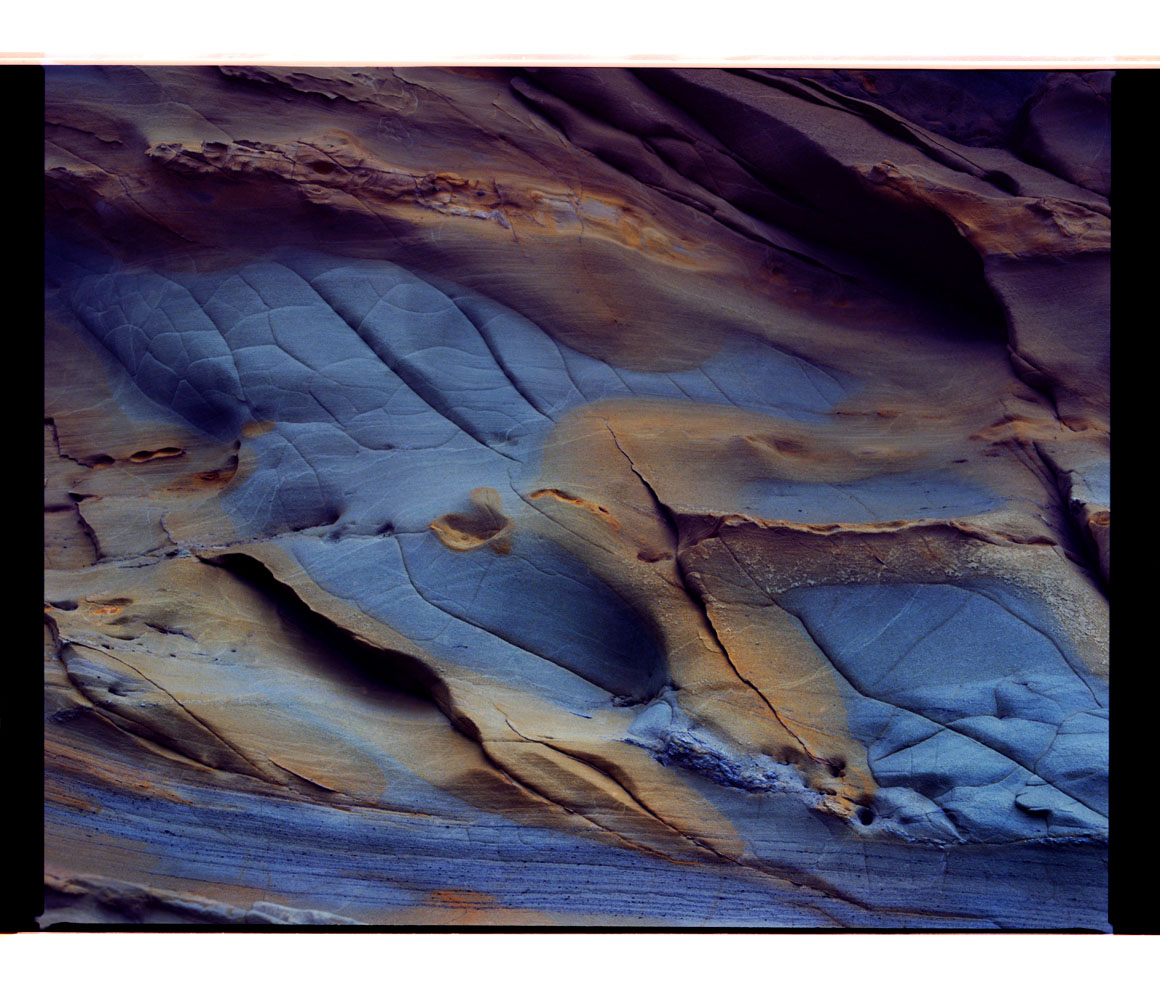
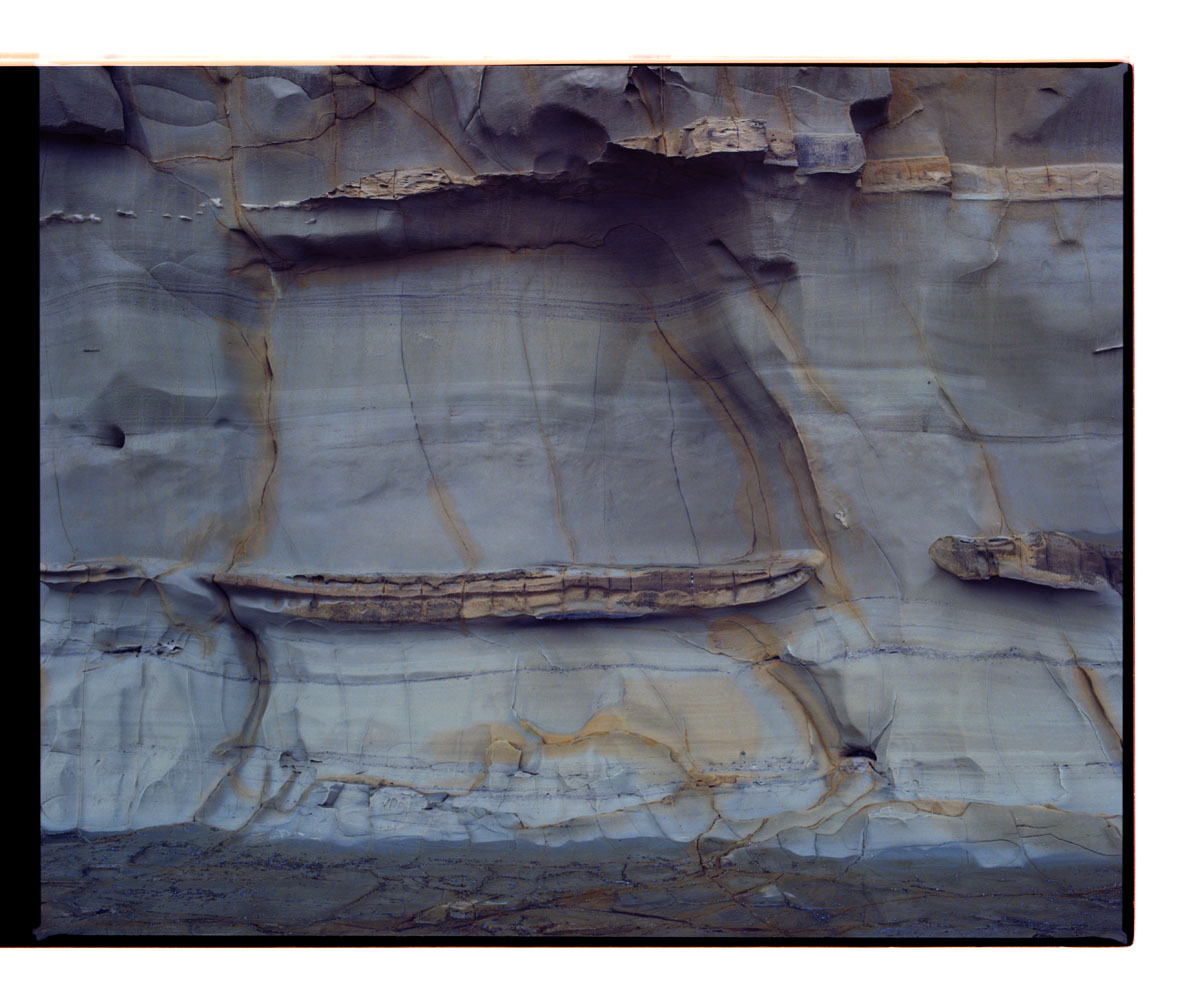
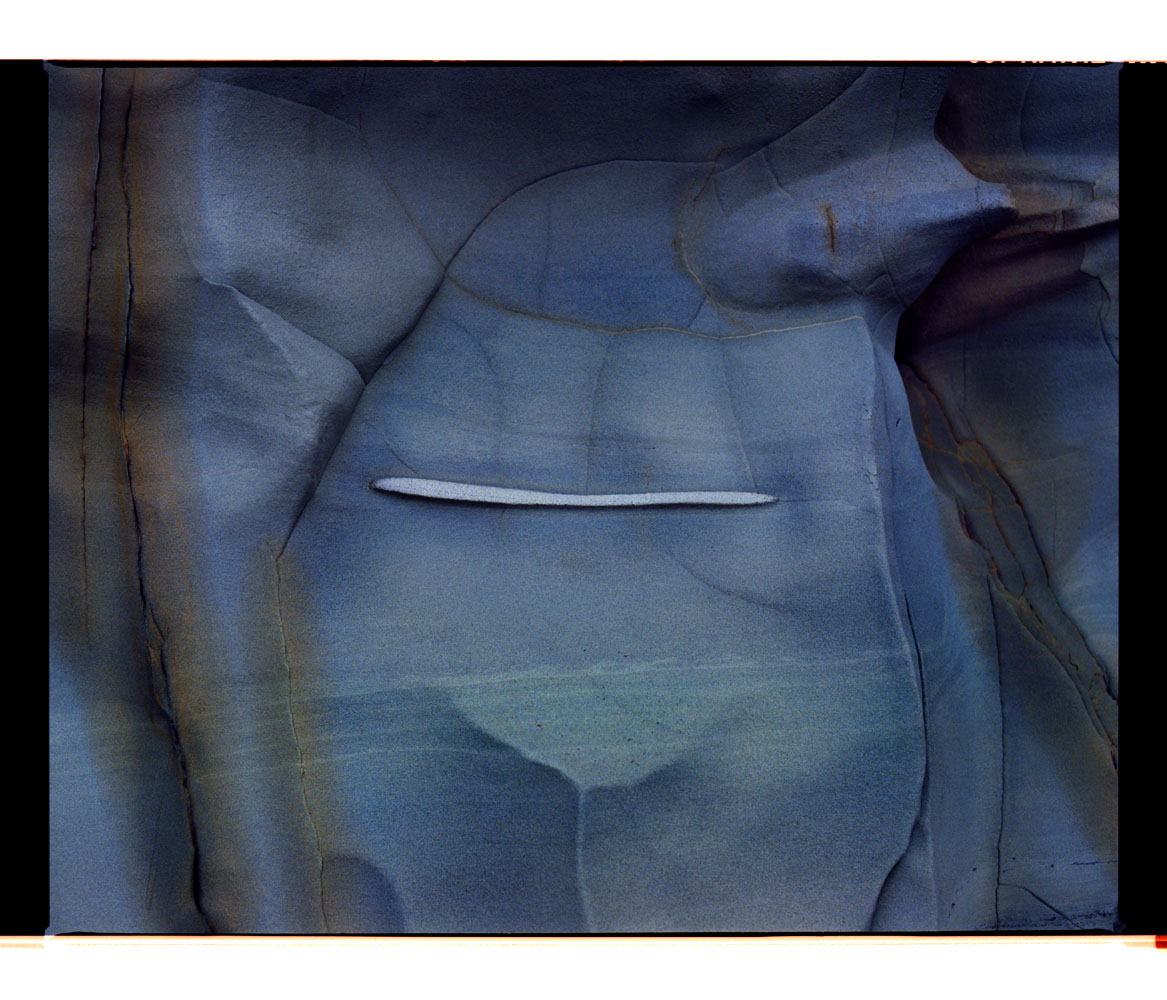
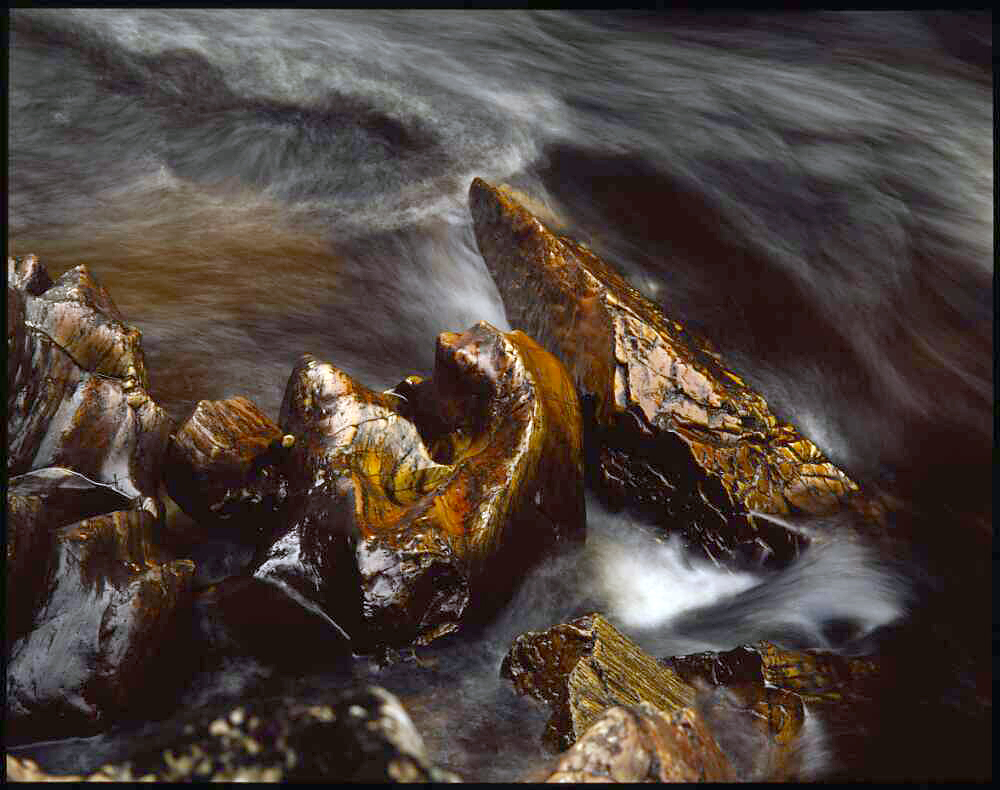
Photographs: Marcus Bunyan. ‘Resonance’ 2021

October 2021


Marcus Bunyan (Australian, b. 1958) 'Untitled' from the series 'Resonance' 2021


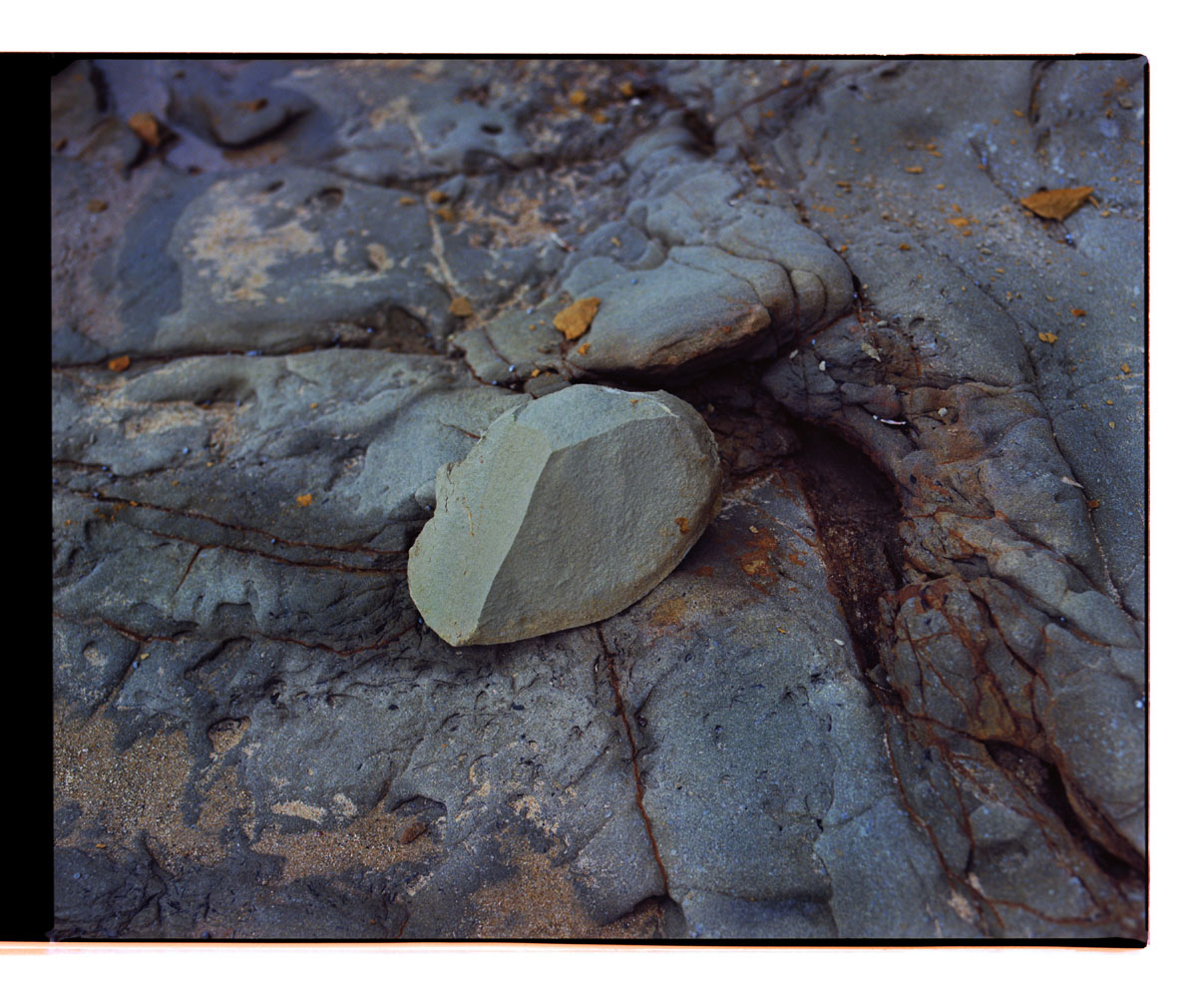
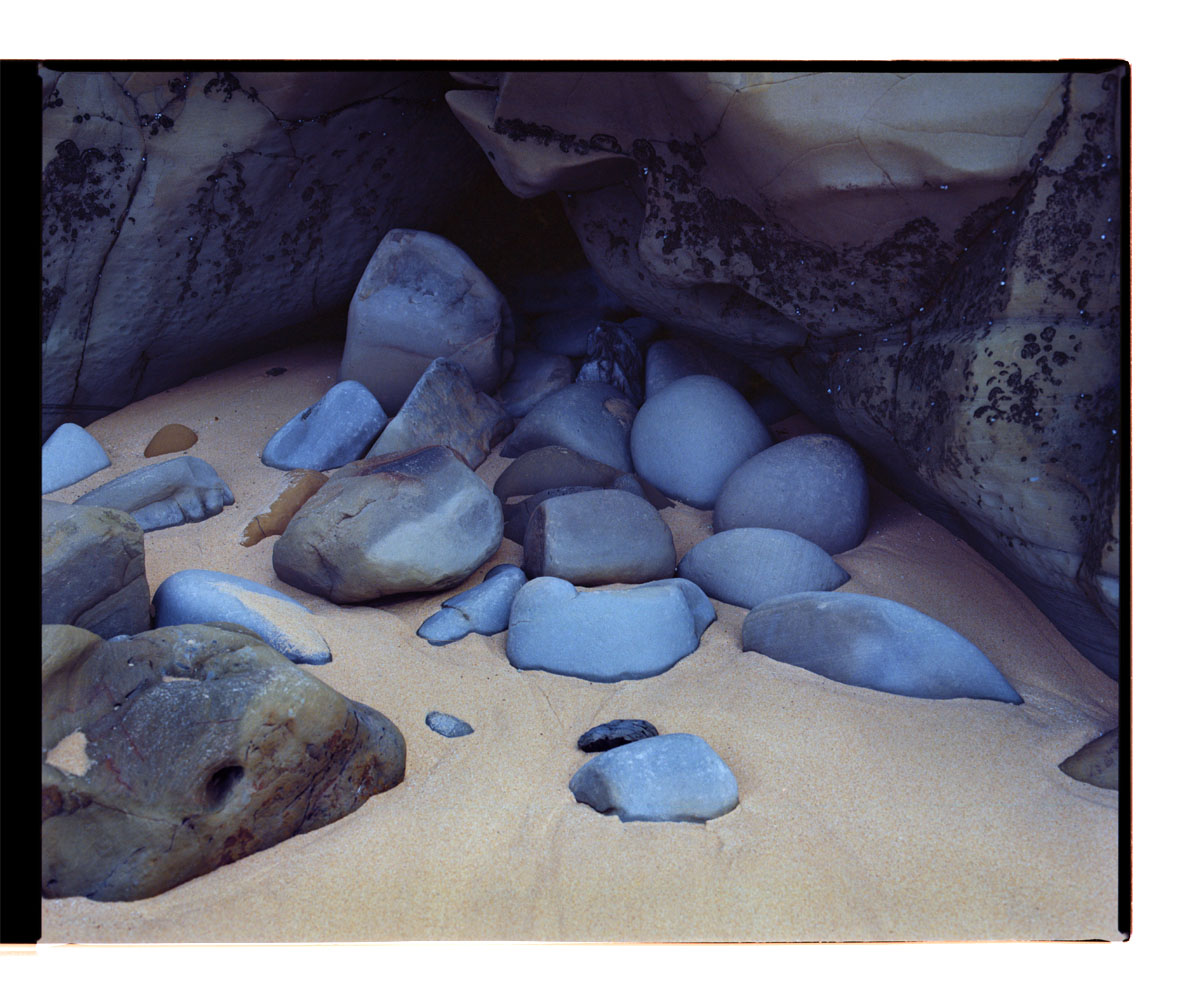
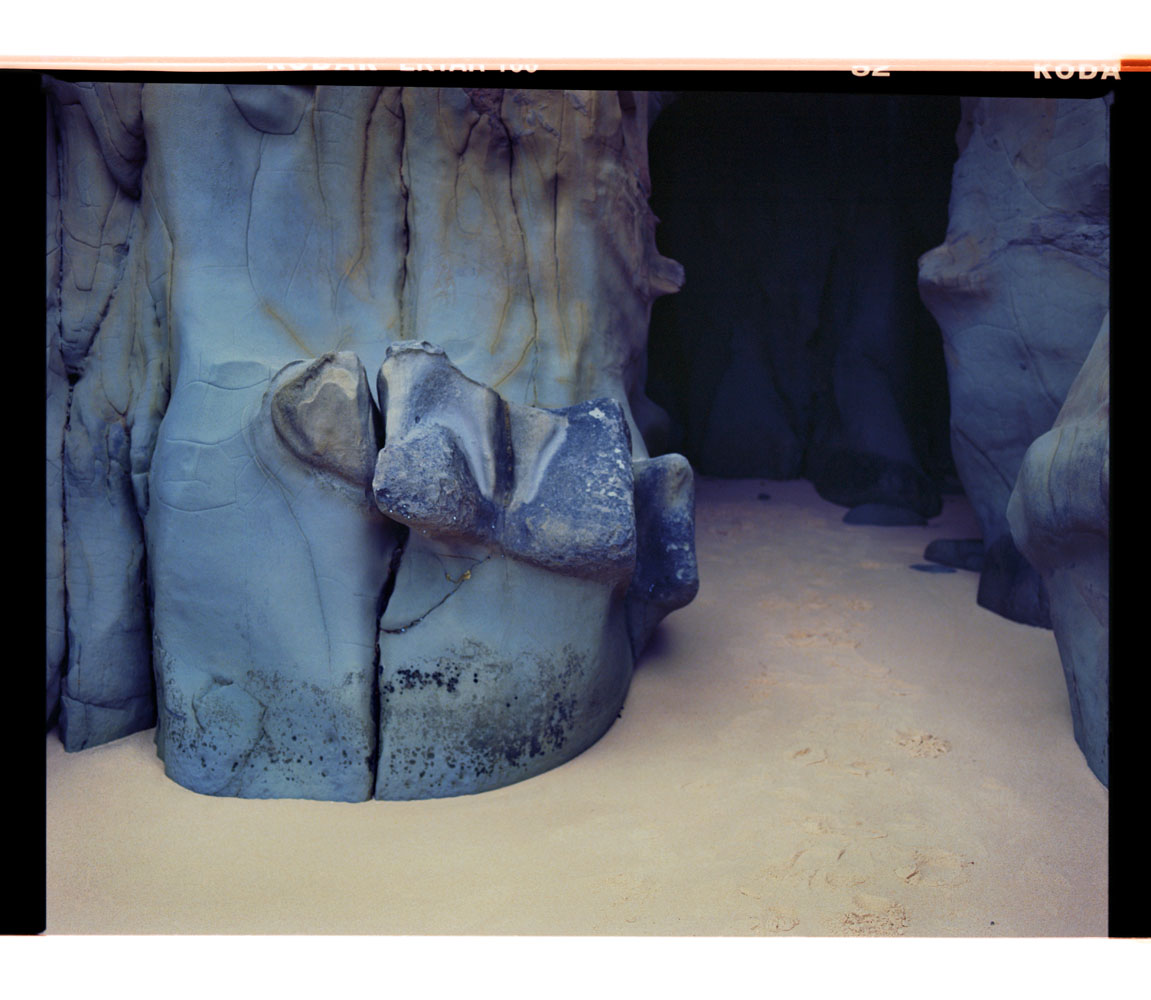
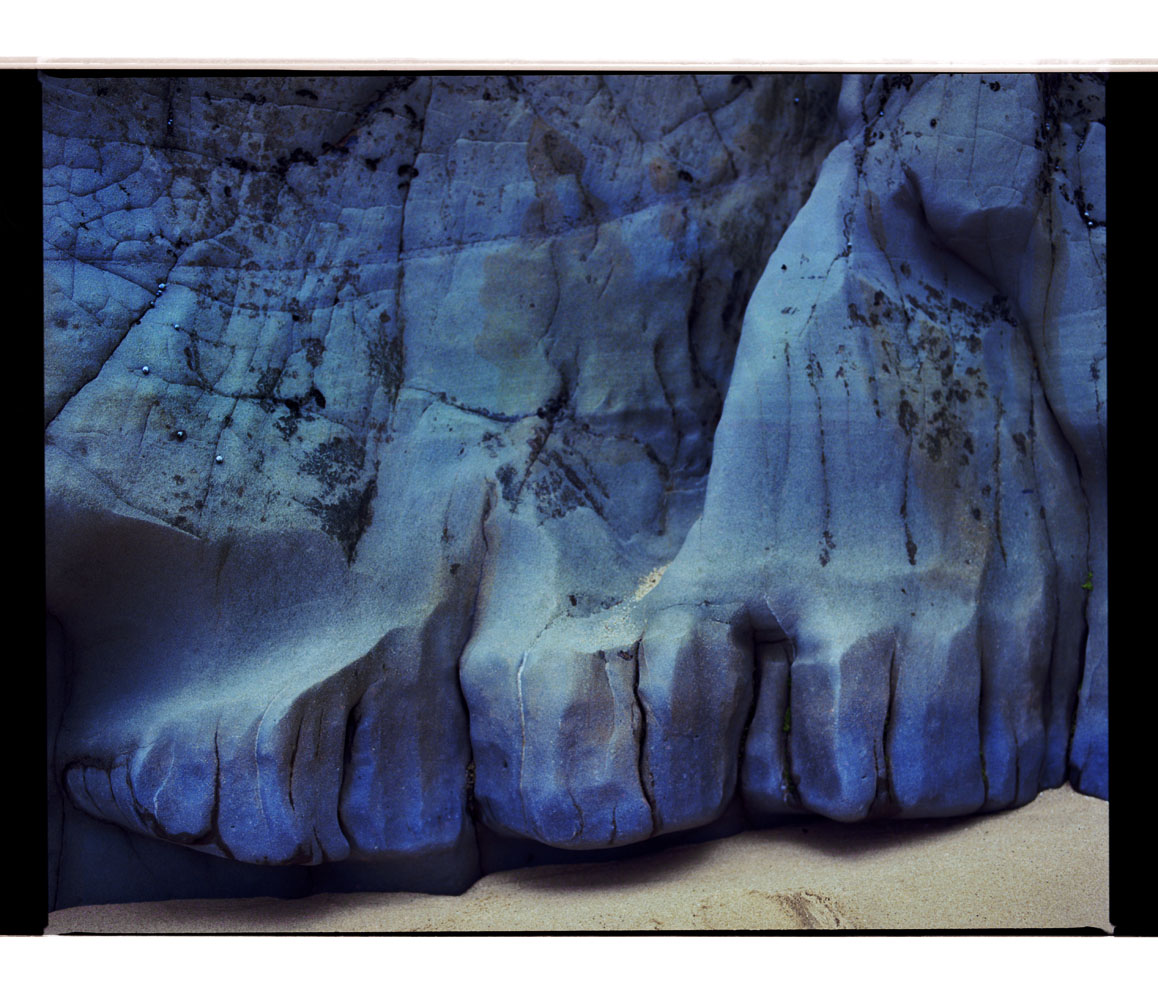
Resonance noun: the power to bring images, feelings, etc. into the mind of the person reading or listening; the images, etc. produced in this way…


A body of work for 2021. Very proud of this sequence…

Taken in heavy overcast conditions with slight rain after a thunderstorm had passed through on my Mamiya RZ67 medium format film camera, at Eagle’s Nest, Bunurong Marine and Coastal Park, Victoria, Australia.

A period of intense seeing and previsualisation.

No cropping, all full frame photographs. The colours are as the camera saw them.

See the layout of the series on my website.

Dr Marcus Bunyan

48 images
© Marcus Bunyan

Please click on the photographs for a larger version of the image.

Photographs are available from this series for purchase. As a guide, a digital colour 16″ x 20″ print costs $1,000 plus tracked and insured shipping. For more information please see the Store web page.


Marcus Bunyan (Australian, b. 1958) 'Untitled' from the series 'Resonance' 2021


Marcus Bunyan (Australian, b. 1958) 'Untitled' from the series 'Resonance' 2021


Marcus Bunyan (Australian, b. 1958) 'Untitled' from the series 'Resonance' 2021


Marcus Bunyan (Australian, b. 1958) 'Untitled' from the series 'Resonance' 2021


Marcus Bunyan (Australian, b. 1958) 'Untitled' from the series 'Resonance' 2021


Marcus Bunyan (Australian, b. 1958) 'Untitled' from the series 'Resonance' 2021

Marcus Bunyan (Australian, b. 1958) 'Untitled' from the series 'Resonance' 2021


Marcus Bunyan (Australian, b. 1958) 'Untitled' from the series 'Resonance' 2021


Marcus Bunyan (Australian, b. 1958) 'Untitled' from the series 'Resonance' 2021

Marcus Bunyan (Australian, b. 1958) 'Untitled' from the series 'Resonance' 2021

Marcus Bunyan (Australian, b. 1958) 'Untitled' from the series 'Resonance' 2021

Marcus Bunyan (Australian, b. 1958) 'Untitled' from the series 'Resonance' 2021


Marcus Bunyan (Australian, b. 1958) 'Untitled' from the series 'Resonance' 2021


Marcus Bunyan (Australian, b. 1958) 'Untitled' from the series 'Resonance' 2021


Marcus Bunyan (Australian, b. 1958) 'Untitled' from the series 'Resonance' 2021

Marcus Bunyan (Australian, b. 1958) 'Untitled' from the series 'Resonance' 2021


Marcus Bunyan (Australian, b. 1958) 'Untitled' from the series 'Resonance' 2021

Marcus Bunyan (Australian, b. 1958) 'Untitled' from the series 'Resonance' 2021


Marcus Bunyan (Australian, b. 1958) 'Untitled' from the series 'Resonance' 2021


Marcus Bunyan (Australian, b. 1958) 'Untitled' from the series 'Resonance' 2021

Marcus Bunyan (Australian, b. 1958) 'Untitled' from the series 'Resonance' 2021


Marcus Bunyan (Australian, b. 1958) 'Untitled' from the series 'Resonance' 2021


Marcus Bunyan (Australian, b. 1958) 'Untitled' from the series 'Resonance' 2021


Marcus Bunyan (Australian, b. 1958) 'Untitled' from the series 'Resonance' 2021


Marcus Bunyan (Australian, b. 1958) 'Untitled' from the series 'Resonance' 2021


Marcus Bunyan (Australian, b. 1958) 'Untitled' from the series 'Resonance' 2021


Marcus Bunyan (Australian, b. 1958) 'Untitled' from the series 'Resonance' 2021


Marcus Bunyan (Australian, b. 1958) 'Untitled' from the series 'Resonance' 2021


Marcus Bunyan (Australian, b. 1958) 'Untitled' from the series 'Resonance' 2021


Marcus Bunyan (Australian, b. 1958) 'Untitled' from the series 'Resonance' 2021


Marcus Bunyan (Australian, b. 1958) 'Untitled' from the series 'Resonance' 2021

Marcus Bunyan (Australian, b. 1958) 'Untitled' from the series 'Resonance' 2021


Marcus Bunyan (Australian, b. 1958) 'Untitled' from the series 'Resonance' 2021


Marcus Bunyan (Australian, b. 1958) 'Untitled' from the series 'Resonance' 2021


Marcus Bunyan (Australian, b. 1958) 'Untitled' from the series 'Resonance' 2021

Marcus Bunyan (Australian, b. 1958) 'Untitled' from the series 'Resonance' 2021


Marcus Bunyan (Australian, b. 1958) 'Untitled' from the series 'Resonance' 2021


Marcus Bunyan (Australian, b. 1958) 'Untitled' from the series 'Resonance' 2021


Marcus Bunyan (Australian, b. 1958) 'Untitled' from the series 'Resonance' 2021


Marcus Bunyan (Australian, b. 1958) 'Untitled' from the series 'Resonance' 2021


Marcus Bunyan (Australian, b. 1958) 'Untitled' from the series 'Resonance' 2021


Marcus Bunyan (Australian, b. 1958) 'Untitled' from the series 'Resonance' 2021


Marcus Bunyan (Australian, b. 1958) 'Untitled' from the series 'Resonance' 2021


Marcus Bunyan website

LIKE ART BLART ON FACEBOOK

Back to top
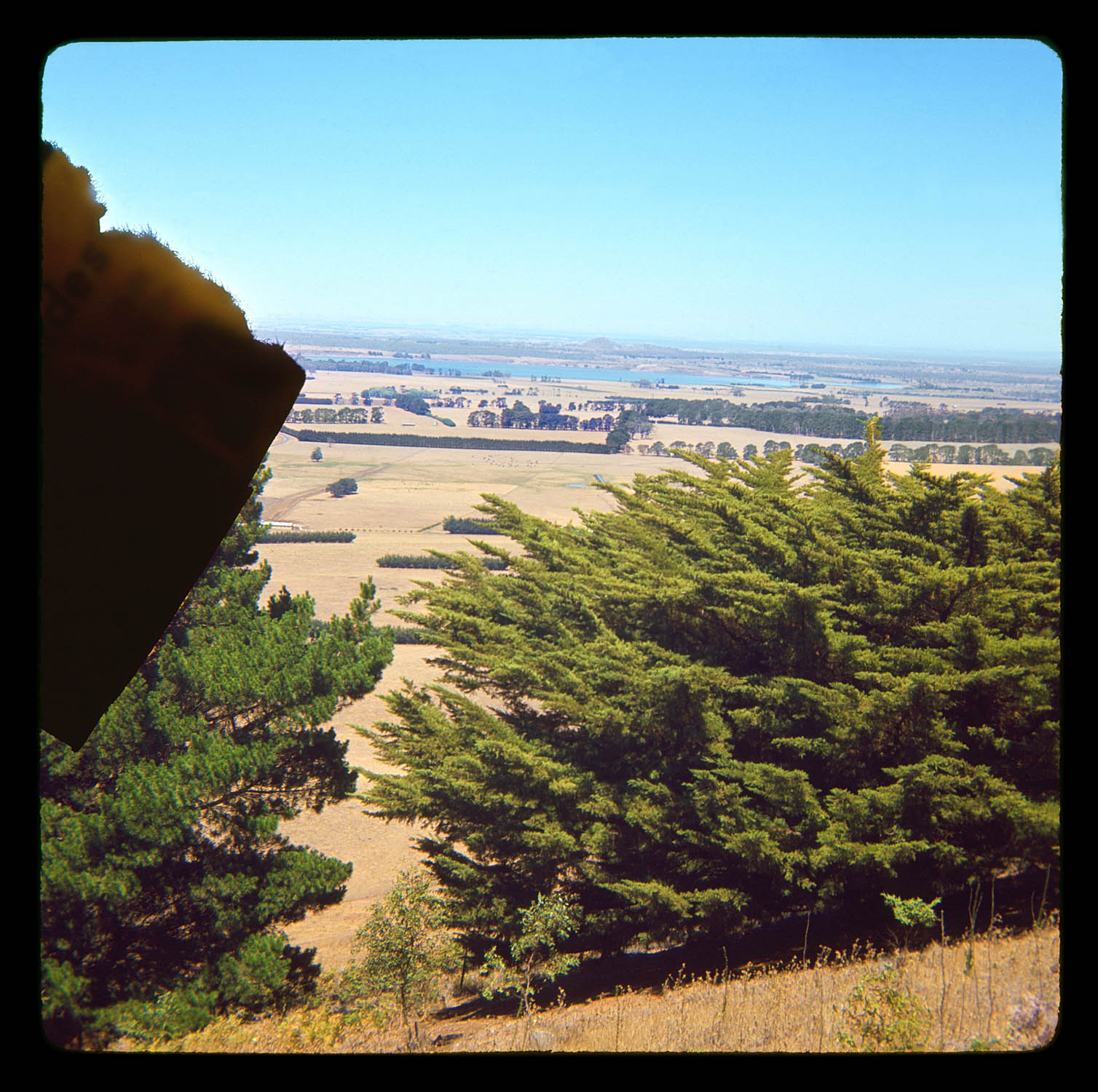
Vale Joyce Evans OAM photographer (1929-2019)

July 2019


Joyce Evans (Australian, 1929-2019) 'Untitled [Joyce with camera]' 1951


Joyce Evans (Australian, 1929-2019)
Untitled [Joyce with camera]
1951
Gelatin silver print
From We Had Such High Hopes: Student Activism and the Peace Movement 1949-1952, A Photographic Memoir by Joyce Evans (Australian Scholarly Publishing 2019)


It’s taken me more than a moment of reflection to write this text. The events are almost too close to write about my surrogate mother in Australia, my friend and fellow artist, Joycie. I can only write about the person I knew, not the time before I knew her – and so this will be a very personal reflection on one of the most incredible human beings that I have ever met.


Do not go gentle into that good night
Rage, rage, against the dying of the light

Vale Joyce Evans.

Human, female, lover, mother, grandmother, wife, poet, publisher, writer, romantic, creative, humanist, universalist, spiritualist, bohemian, pioneer, gallery director, teacher, lecturer, collector, philanthropist, activist, artist, feminist, supporter of artists, Indigenous rights, civil rights, and the disenfranchised, exhibitor… and working photographer.


I met the force of nature that was Joyce Olga Evans (1929-2019) through a mutual friend, Alison Inglis, who knew of our love of photography. It was the start of an intense friendship that lasted just seven or eight years until Joycie, as I used to call her, passed away at Easter this year. Before she passed she knew that she had been awarded an OAM (Medal of the Order of Australia) for service to photography. This was a long overdue tribute to a pioneer and supporter of photography in Australia, one of the first women to be the director of an independent, commercial photography gallery in this country.

Joyce had an incredible passion for and knowledge about photography, whether it was historical Australian or world photographers and their prints from any era, or contemporary artists here and overseas. Her collection of both local and international photographs was almost unparalleled in private hands in this country. She had such a keen eye. When attending a local auction with her she purchased an original William Mortensen for next to nothing. Nobody else had recognised the power and presence of the image by this master artist.

This incisive vision translated into her work as an artist who was a working photographer. At heart, that’s what Joyce was – a working photographer and a storyteller. She believed in photography like photographers get photography… not like an academic or a theoretician, but like an avid fan, an enthusiast, a passionate collector, a teacher. Photography was an integral part of her life, her soul.

She said to me of being an artist, “If we can find out what we are… that is the artist. The core element of your being, and the core element of your enquiry as an artist remains the same. The concerns that you had when you started being an artist are with you until the end. If the core part of your life is the search for truth then that becomes a core part of your identity. It becomes embedded in your soul.”

In this sense, photography becomes something of you, more than just intention – it becomes your essence, your shape…. your physical shape, a tangible thing.

Photography and its spirit inhabited Joyce as Joyce lived in the world. To Joyce, photography was just as much about the world and creativity as it was about the image. The image was just a manifestation of spirit, something that you worked at, recognised, and captured for what it was and could be. As Minor White said, “There is always a dragon in the negative,” and a dragon, that symbol of power, strength, and good luck, lived inside Joyce (see my favourite photograph of her below) and in her work. Her photographs possessed a spiritual and psychological sensation of the place.

As she said, “Making photographs that are memorable requires more than just camera, light and a story. It requires a type of harmony, unity, and an indefinable something, which I can best explain as becoming emotionally attached to the subject so that the images almost make themselves.”

Joyce’s commitment to photography was legendary. She was in it for the long haul.

I was always amazed when we were out in public, going to the exhibitions that we loved to visit, that she would always be taking photographs. Whenever she saw something that interested her out would come her beloved iPhone or digital camera, and she would talk to strangers and their children and take their photos. She was a totally open spirit and had no fear about the path she took. People embraced her, talked to her, responded to her energy and spirit. I remember travelling up to Sydney with her to see an exhibition of her favourite photographer, “Our Julia”, Julia Margaret Cameron at the Art Gallery of New South Wales, and just observing that sparkle in her eyes, that unparalleled love that transcends all our pasts and futures in the simple moment of being and looking at these photographs.

Joyce was uncompromising. If she thought you were being a fuckwit she told you so in no uncertain terms. But she was a rock on which I came to depend. As someone said of her, “Joyce wasn’t into niceties and didn’t take any shit from anyone! I hope I grow up to be as tough as her. She was a visionary.” She really did not stand fools gladly (thank god), and had little truck for fine art photographers who didn’t understand the medium, its history or their small place within the grand scheme of things. As the playwright Edward Albee commented at the American painter Lee Krasner’s memorial at the Metropolitan Museum of Art, in both her life and her work, ‘… she looked you straight in the eye, and you dared not flinch’. It was the same with Joycie. She could see deep inside you to the core of your being.

Joyce loved helping people. She was so generous of her time and energy, of her wisdom and knowledge. Some of the best times of my life were spent in her kitchen talking about art, love and life. People were drawn to her. As Julie Moss has observed, she was “such a strong, creative and vibrant role model for so many female photographers” in a sea of male prejudice and ambivalence. What Joyce did not do is live on her memories… she was ever active, ever inquiring. She stood up for what she believed. A couple of weeks before she passed she said to me, “I don’t want to go yet, I still have so much that I want to do.” She was still raging against the dying of the light, not going gently into that good night.

But what she achieved in her truly remarkable life is a testament to her unquenchable spirit. In a journey full of determination, intelligence, exploration and love she achieved so much and touched so many. I miss her terribly.


I am the (sublime) space where I am, that surrounds me with countless presences.

Dr Marcus Bunyan July 2019


Joyce Evans (Australian, 1929-2019) 'Dissipation at the pub: students outside Largs Bay pub while attending N.U.A.U.S. conference, South Australia 1951 - Joyce Zerfas, Jill Warwick, Val Groves' 1951


Joyce Evans (Australian, 1929-2019)
Dissipation at the pub: students outside Largs Bay pub while attending N.U.A.U.S. conference, South Australia 1951 – Joyce Zerfas, Jill Warwick, Val Groves
1951
Gelatin silver print
From We Had Such High Hopes: Student Activism and the Peace Movement 1949-1952, A Photographic Memoir by Joyce Evans (Australian Scholarly Publishing 2019)


This photograph, showing students smoking and drinking outside the pub at Largs Bay, was published in an Adelaide newspaper. At the time this was considered to be immoral behaviour. Note the man in the background with his fingers up in a derogatory manner.

The names of the three women who have been identified are from left to right: Joyce Evans (nee Zerfas) photographer, Jill Warwick, deceased, (producer of TV programme “It Could Be You”) Val Groves, psychologist. I have been unable to identify the men. ~ Joyce Evans


Joyce Evans (Australian, 1929-2019) 'Guard Thine Honour, May Day March, Flinders Street, Melbourne' 1951


Joyce Evans (Australian, 1929-2019)
Guard Thine Honour, May Day March, Flinders Street, Melbourne
1951
Gelatin silver print
From We Had Such High Hopes: Student Activism and the Peace Movement 1949-1952, A Photographic Memoir by Joyce Evans (Australian Scholarly Publishing 2019)


Joyce Evans (Australian, 1929-2019) 'Ban on Communism Means Fascism, May Day March, Flinders Street, Melbourne' 1951


Joyce Evans (Australian, 1929-2019)
Ban on Communism Means Fascism, May Day March, Flinders Street, Melbourne
1951
Gelatin silver print
From We Had Such High Hopes: Student Activism and the Peace Movement 1949-1952, A Photographic Memoir by Joyce Evans (Australian Scholarly Publishing 2019)


Joyce Evans (Australian, 1929-2019) 'Reduce Armaments Ban Atomic Bomb' 1951


Joyce Evans (Australian, 1929-2019)
Reduce Armaments Ban Atomic Bomb, May Day March, Flinders Street, Melbourne [pictured image-right, Professor Bernard Rechter]
1951
Gelatin silver print
From We Had Such High Hopes: Student Activism and the Peace Movement 1949-1952, A Photographic Memoir by Joyce Evans (Australian Scholarly Publishing 2019)


“Making photographs that are memorable requires more than just camera, light and a story. It requires a type of harmony, unity, and an indefinable something, which I can best explain as becoming emotionally attached to the subject so that the images almost make themselves.”


Joyce Evans


“Photography for me is a type of communion with my subject. Like everybody else I take photographs which have little meaning. But sometimes I sense an underlying value in the land, a group of people, a location, and then I make photograph, which is satisfying to myself. I think I would like to call that the way in which the quintessential spirit of what I am seeing has stirred me to need to make a photograph of it.

To me, I am alive, and my life and the life of everything in the world is connected. For me it is that universality that is the basis of my idea of the spiritual. I feel uncomfortable about formal organised religion and am perhaps more than a humanist, a universalist.”


Joyce Evans


“Aesthetically, I enjoy the camera’s capacity to record relationships and detail, which my subconscious may perceive, but I may not fully see.

My appreciation of aesthetics goes back to when I studied painting with John Olsen at the Bakery Art School, Sydney in 1967-1968. Olsen made me aware of the power of the edge of the image to relate to what was not shown in the image. My formal education was further enhanced when I did a degree in fine arts at Sydney University 1969-1971. There, Dr Anton Wilhelm taught me how to read an image. My understanding of the limits and potentials of two-dimensional imagery was expounded by Professor Bernard Smith.

Informally, my knowledge of photography and my practice was refined through formative conversations with a wide range of great photographers such as Andre Kertesz, Max Dupain, Ansel Adams and Bill Henson, Julie Millowick and Linda Connor.

Each of these relationships helped me to clarify my photographic position, which is based on a search for the essence of a subject.”


Joyce Evans


Joyce Evans (Australian, 1929-2019) 'Rain Dreaming, Yuendumu, NT' 2005


Joyce Evans (Australian, 1929-2019)
Rain Dreaming, Yuendumu, NT
2005


Joyce Evans (Australian, 1929-2019) 'Rain Dreaming, Yuendumu, NT' 2005


Joyce Evans (Australian, 1929-2019)
Rain Dreaming, Yuendumu, NT
2005


Joyce Evans (Australian, 1929-2019) 'Rain Dreaming, Yuendumu, NT' 2005


Joyce Evans (Australian, 1929-2019)
Rain Dreaming, Yuendumu, NT
2005


Joyce Evans (Australian, 1929-2019) 'Rain Dreaming, Yuendumu, NT' 2005


Joyce Evans (Australian, 1929-2019)
Rain Dreaming, Yuendumu, NT
2005


Joyce Evans (Australian, 1929-2019) 'Rain Dreaming, Yuendumu, NT' 2005


Joyce Evans (Australian, 1929-2019)
Rain Dreaming, Yuendumu, NT
2005


Joyce Evans short biography

Joyce Olga Evans is well known in Australian photography. In 1976 Joyce opened Church Street Photographic Centre, a pioneer Australian commercial gallery devoted to Photography. It showcased the best of Australian and International photographers. Joyce exhibited works by Frank Hurley, Imogen Cunningham, Bill Henson, Henri Cartier-Bresson, Julia Margret Cameron, Max Dupain and many other renowned photographers – she says that they were her teachers.

Passionately dedicated to photography, she has had many solo exhibitions of both her landscapes (she photographed in the Dandenongs and Mt Martha regions in the outer Melbourne; along the Hume Highway; in the Central Desert and outback Australia, most notably Oodnadatta, Oodlawirra, Menindee, and Lake Mungo; vineyards and rural villages in the South of France; the old Jewish cemetery in the centre of Prague; and numerous others) and her portraits (she photographed Australian intelligentsia and personalities, including Marianne Baillieu; Barbara Blackman; Baron Avid von Blumenthal; Tim Burstall; Dur-e Dara; Robert Dessaix; Germaine Greer; Elena Kats-Chernin; Joan Kerr; Ellen Koshland; David Malouf; Dame Elisabeth Murdoch; Lin Onus; Jill Reichstein; Chris Wallace-Crabbe; and innumerable others) throughout Australia and Europe.

Joyce has spent two decades documenting Australia for the National Library of Australia, who are acquiring her life’s work for their permanent collection. When this acquisition is complete the Library will hold over 30,000 analogue images and 80,000 digital files. Also included are diaries and other relevant documents and files. Much of this work is destined for display on Trove, the library’s online viewing resource. She has exhibited extensively in Australia and in France and her photographs are held in many major collections. Joyce has been published widely. Her monograph Only One Kilometre was published in 2003 by Lothian Press. It detailed her many years of studying the unique qualities of the Balcombe Estuary Reserve, at Mount Martha as well as poems and articles by distinguished writers. Her work is held in many collections both locally and internationally.

Joyce Evans also plays an important educational role in Australian photography. She taught history of photography at Melbourne’s RMIT University; appointed inaugural assistant director of Waverley City Gallery (now Monash Gallery of Art), 1990-1991, the first municipal public collection in Melbourne to specialise in photography; established and inaugurated a course on the History of Photography and appointed Research Fellow at the University of Melbourne, 1997-2010.

Evans worked as an honorary photographer for the Department of Aboriginal Affairs in Central Australia and for over ten years documented Australian country towns and events for the National Library of Australia. Important publications on Joyce Evans include a monograph Only One Kilometre (Melbourne: Lothian Press, 2003), and exhibition catalogues with essays by Alison Inglis, Eugene Barilo von Reisberg, Tim Page, Victoria Hammond, and many others.

Anonymous text from the Joyce Evans Photographer website Nd [Online] Cited 16th June 2019. No longer available online


William Yang (Australian, b. 1943) 'Marcus and Joyce' 2018


William Yang (Australian, b. 1943)
Marcus and Joyce
2018


Being two photographers, the only photograph of Joyce and Marcus together, taken by another photographer William Yang.


Michael Silver (Australian) 'Joyce Evans' 2013


Michael Silver (Australian)
Joyce Evans
2013


Marcus Bunyan (Australian, b. 1958) 'Joyce Evans standing in front of Max Dupain's 'Sunbaker' 1937' 2018


Marcus Bunyan (Australian, b. 1958)
Joyce Evans standing in front of Max Dupain’s ‘Sunbaker’ 1937
2018


Marcus Bunyan (Australian, b. 1958) 'Joyce and the dragon' 2016


Marcus Bunyan (Australian, b. 1958)
Joyce and the dragon
2016


Joyce standing in front of the fireplace at Jacques Reymond’s restaurant for the birthday of her friend Marcus Bunyan. In Chinese mythology the dragon traditionally symbolises potent and auspicious powers and also is a symbol of power, strength, and good luck for people who are worthy of it.


Julia Margaret Cameron (British, 1815-1879) 'Beatrice' 1866


Julia Margaret Cameron (British, 1815-1879)
Beatrice
1866
Albumen silver print


Joyce Evans Photographer website

LIKE ART BLART ON FACEBOOK

Back to top
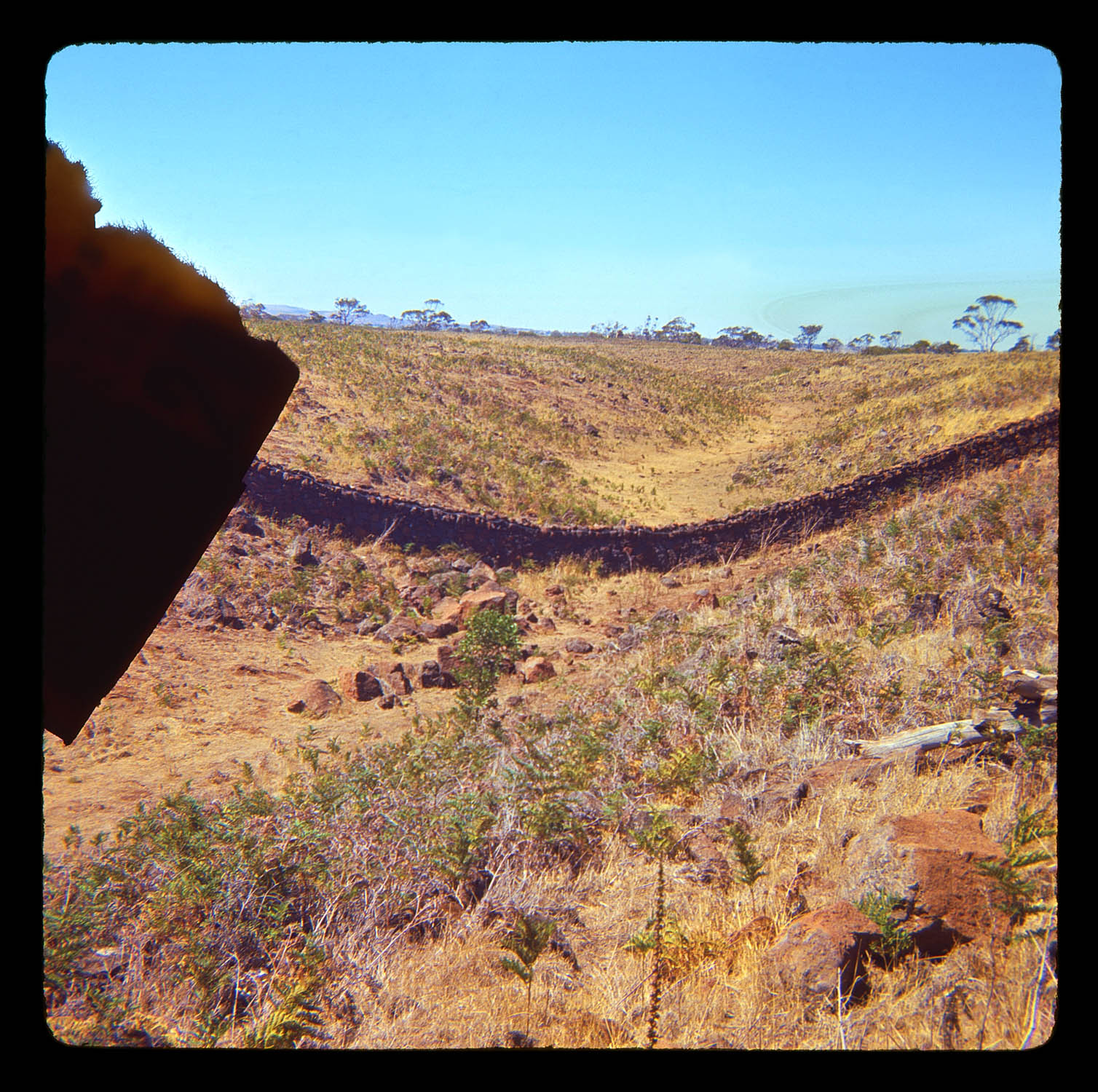
Review: ‘Dombrovskis: journeys into the wild’ at Monash Gallery of Art, Wheelers Hill, Melbourne

Exhibition dates: 9th March – 12th May 2019

part of the CLIMARTE Festival: ART+CLIMATE=CHANGE 2019


Peter Dombrovskis (Australian born Germany, 1945-1996) 'Morning mist, Rock Island Bend, Franklin River, Franklin-Gordon Wild Rivers National Park, Tasmania' 1980 from the exhibition 'Dombrovskis: journeys into the wild' at Monash Gallery of Art, Wheelers Hill, Melbourne, March - May, 2019


Peter Dombrovskis (Australian born Germany, 1945-1996)
Morning mist, Rock Island Bend, Franklin River, Franklin-Gordon Wild Rivers National Park, Tasmania
1980
Courtesy of the National Library of Australia and the Estate of Peter Dombrovskis


A little too perfect

A few ideas that struck me at this exhibition.

1/ The large format 4 x 5″ colour transparencies must be near absolute perfect exposures…. everything is there in the exposure. It’s as though the transparency is the finished print. Everything that Dombrovskis wanted to capture, he did. He was a perfectionist.

His previsualisation of the scene was exceptional. He knew what he wanted to capture, he was so focused on it. The beauty is there, but how do you make it sing? Only in a few images was I swept off my feet.

2/ His use of ‘near far’ is noticeable, taken from Ansel Adams most likely. In photographs like Morning light on Little Horn (1995), Cushion plants, Mount Anne (1984) and Mount Geryon from the Labyrinth (1986) your eye is led from the detailed foreground to the magnificent vista beyond.

3/ In photographs such as Lichen on dead eucalypt, Lake Dixon (1979) and Rock platform, Tarkine Wilderness (1995) the subject seems to dissolve into Abstract Expressionist compositions.

4/ The wall colours of the exhibition utterly failed the work, especially with the line colour change running through the image.

5/ I never really felt the “sublime” nature of the Tasmanian wilderness in these photographs. I wanted to be transported to the place that was pictured but it never happened.

6/ I suspect this has to do with a/ the perfection of the transparency b/ the size at which these contemporary photographs were printed, and c/ the almost scientific, analytical nature of the contemporary printing.

 
I had no sense or feeling for place or “atmosphere” that emanates from a truly great photograph. These large prints were wholly disappointing in that regard. They were nearly all printed at the same size, too big, with the same monotonous clarity of composition and balancing of print, one to the other. Almost a clinical printing with too much colour saturation with no room for chaos or vibration of energy.

When printing, I was taught to rack the enlarger up and down to find when the print becomes like a jewel. This is a felt response to the negative, and an image can have several positions or print sizes when this may occur. To print the bulk of these digital images at the same size goes against this very intuitive response to the work.

There are so many moves that can be justified by an objective argument when making a fine art print – but which still don’t add up when you view the whole. Oh! to see five vintage prints in this exhibition, to see how Dombrovsksi would have printed them himself.

I really wanted to like these photographs but when you try and force something, it ain’t ever going to happen.

Dr Marcus Bunyan


Many thankx to Monash Gallery of Art for allowing me to publish the media photographs in the posting. Please click on the photographs for a larger version of the image. All installation photographs Â© Dr Marcus Bunyan, the artist and the Monash Gallery of Art.


‘When you go out there, you don’t get away from it all. You get back to it all. You come home to what’s important. You come home to yourself.’


Peter Dombrovskis


‘… we moved in a glittering, sun-splashed world where living assumed a clarity and intensity unknown in ordinary city-bound existence. Our bodies became attuned to rock and rapid, our senses easily absorbed the roar of white-water, the silent greens of the rainforest. My steadily growing skill at negotiating obstacles bolstered my self-confidence and eased the shyness of adolescence.’


Peter Dombrovskis in Jane Cadzow, ‘A lasting image’, Sydney Morning Herald, Good Weekend magazine, 22 March 1997


‘An ethic of the land is needed because the remaining wilderness, that which makes this island truly unique, is threatened by commercial exploitation that will destroy its value to future generations. Machines are already shattering the silence of ages, invading the last forests and damming and drowning the wild rivers and gorges.’


Peter Dombrovskis, ‘The quiet land’ (Peter Dombrovskis Pty Ltd., Hobart 1977)


‘We must try to retain as much as possible of what still remains of the unique, rare and beautiful. Is there any reason why … the ideal of beauty could not become an accepted goal of national policy? Is there any reason why Tasmania should not be more beautiful on the day we leave it than on the day we came? … if we can accept the role of steward and depart from the role of conqueror; if we can accept the view that man and nature are inseparable parts of the unified whole, then Tasmania can be a shining beacon in a dull, uniform and largely artificial world.’


Olegas Truchanas in Max Angus, ‘The world of Olegas Truchanas’ (Olegas Truchanas Publication Committee, Hobart 1975)


The photograph [at the top of the posting], Morning mist, Rock Island Bend, Franklin River, Tasmania (1979), is one of the most celebrated landscape photographs in Australian history. Commissioned by Bob Brown (later to become leader of the Greens Party), this image became synonymous with the successful campaign of the 1980s to prevent the damming of the Franklin River for hydro-electric development. It appeared on posters with the memorable yellow, triangular slogan ‘NO DAMS’ and showed Australians what would be lost under the waters of a dam should the hydroelectric scheme go ahead. Using his camera as a tool, Dombrovskis shared with society the riches that they would forgo if the environment was not protected.

The photograph below, Mount Geryon from the Labyrinth Cradle, Mountain-Lake St Clair National Park, Tasmania (1986) is an image that Bob Brown had in his office at a similarly large scale to provide an immediate and memorable talking point with visitors.

Many Australians encountered these images for the first time in prosaic settings: in a newspaper campaign advertisement, a diary used at work, a calendar on the side of the fridge, or a poster in a waiting room. Most of us will never visit the places he photographed, but into our ordinary everyday lives his images bring something of the beauty and the power of the wild places of Tasmania. Seldom in the history of photography has there been such a clear example of visual culture having such a political sway.

Exhibition label


Installation view of the exhibition 'Dombrovskis: journeys into the wild' at Monash Gallery of Art, Wheelers Hill

Installation view of the exhibition 'Dombrovskis: journeys into the wild' at Monash Gallery of Art, Wheelers Hill

Installation view of the exhibition 'Dombrovskis: journeys into the wild' at Monash Gallery of Art, Wheelers Hill


Installation views of the opening of the exhibition Dombrovskis: journeys into the wild at Monash Gallery of Art, Wheelers Hill
Photos: Marcus Bunyan


Peter Dombrovskis (Australian born Germany, 1945-1996) 'Mount Geryon from the Labyrinth, Du Cane Range, Tasmania' 1986 from the exhibition 'Dombrovskis: journeys into the wild' at Monash Gallery of Art, Wheelers Hill, Melbourne, March - May, 2019


Peter Dombrovskis (Australian born Germany, 1945-1996)
Mount Geryon from the Labyrinth, Du Cane Range, Tasmania
1986
Courtesy of the National Library of Australia and the Estate of Peter Dombrovskis


Installation view of the exhibition 'Dombrovskis: journeys into the wild' at Monash Gallery of Art, Wheelers Hill


Installation view of the exhibition Dombrovskis: journeys into the wild at Monash Gallery of Art, Wheelers Hill
Photo: Marcus Bunyan


Installation view of the exhibition 'Dombrovskis: journeys into the wild' at Monash Gallery of Art, Wheelers Hill showing at left, 'Coastline north of the Pieman River, Tarkine wilderness, Tasmania' (1992); at centre 'Kelp detail, Macquarie Island, Tasmania' (1984); and at right 'Drying kelp at Sandy Bay, Macquarie Island, Tasmania' (1984)


Installation view of the exhibition Dombrovskis: journeys into the wild at Monash Gallery of Art, Wheelers Hill showing at left, Coastline north of the Pieman River, Tarkine wilderness, Tasmania (1992); at centre Kelp detail, Macquarie Island, Tasmania (1984); and at right Drying kelp at Sandy Bay, Macquarie Island, Tasmania (1984)
Photo: Marcus Bunyan


Installation view of the exhibition 'Dombrovskis: journeys into the wild' at Monash Gallery of Art, Wheelers Hill showing at left, 'Kelp detail, Macquarie Island, Tasmania' (1984); and at right 'Drying kelp at Sandy Bay, Macquarie Island, Tasmania' (1984)


Installation view of the exhibition Dombrovskis: journeys into the wild at Monash Gallery of Art, Wheelers Hill showing at left, Kelp detail, Macquarie Island, Tasmania (1984); and at right Drying kelp at Sandy Bay, Macquarie Island, Tasmania (1984)
Photo: Marcus Bunyan


Peter Dombrovskis (Australian born Germany, 1945-1996) 'Drying kelp at Sandy Bay, Macquarie Island, Tasmania' 1984


Peter Dombrovskis (Australian born Germany, 1945-1996)
Drying kelp at Sandy Bay, Macquarie Island, Tasmania
1984
Courtesy of the National Library of Australia and the Estate of Peter Dombrovskis


Installation view of the exhibition 'Dombrovskis: journeys into the wild' at Monash Gallery of Art, Wheelers Hill showing at left, ''Macrocystis' and 'Hormosira' seaweed, Tasmania' (1987); and at right 'Giant kelp, Hasselborough Bay, Macquarie Island, Tasmania' (1984)


Installation view of the exhibition Dombrovskis: journeys into the wild at Monash Gallery of Art, Wheelers Hill showing at left, ‘Macrocystis’ and ‘Hormosira’ seaweed, Tasmania (1987); and at right Giant kelp, Hasselborough Bay, Macquarie Island, Tasmania (1984)
Photo: Marcus Bunyan


Installation view of the exhibition 'Dombrovskis: journeys into the wild' at Monash Gallery of Art, Wheelers Hill

Installation view of the exhibition 'Dombrovskis: journeys into the wild' at Monash Gallery of Art, Wheelers Hill


Installation views of the exhibition Dombrovskis: journeys into the wild at Monash Gallery of Art, Wheelers Hill
Photos: Marcus Bunyan


Installation view of the exhibition 'Dombrovskis: journeys into the wild' at Monash Gallery of Art, Wheelers Hill showing at left, 'Douglas Gorge, Douglas-Apsley National Park, Tasmania' (1989); and at right, 'Waterfall Valley, Cradle Mountain-Lake St Clair National Park, Tasmania' (1990)


Installation view of the exhibition Dombrovskis: journeys into the wild at Monash Gallery of Art, Wheelers Hill showing at left, Douglas Gorge, Douglas-Apsley National Park, Tasmania (1989); and at right, Waterfall Valley, Cradle Mountain-Lake St Clair National Park, Tasmania (1990)
Photo: Marcus Bunyan


Installation detail of Peter Dombrovskis' photograph 'Waterfall Valley, Cradle Mountain-Lake St Clair National Park, Tasmania' (1990)


Installation detail of Peter Dombrovskis’ photograph Waterfall Valley, Cradle Mountain-Lake St Clair National Park, Tasmania (1990)
Photo: Marcus Bunyan


Installation view of the exhibition 'Dombrovskis: journeys into the wild' at Monash Gallery of Art, Wheelers Hill showing at left, 'Lichen on dead eucalypt, Lake Dixon, Tasmania' (1979); and at right, 'Rock platform, Tarkine Wilderness, Tasmania' (1995)


Installation view of the exhibition Dombrovskis: journeys into the wild at Monash Gallery of Art, Wheelers Hill showing at left, Lichen on dead eucalypt, Lake Dixon, Tasmania (1979); and at right, Rock platform, Tarkine Wilderness, Tasmania (1995)
Photo: Marcus Bunyan


Installation detail of Peter Dombrovskis' photograph 'Lichen on dead eucalypt, Lake Dixon, Tasmania' (1979)


Installation detail of Peter Dombrovskis’ photograph Lichen on dead eucalypt, Lake Dixon, Tasmania (1979)
Photo: Marcus Bunyan


Installation detail of Peter Dombrovskis' photograph 'Rock platform, Tarkine Wilderness, Tasmania' (1995)


Installation detail of Peter Dombrovskis’ photograph Rock platform, Tarkine Wilderness, Tasmania (1995)
Photo: Marcus Bunyan


Peter Dombrovskis (1945-1996) was one of the world’s foremost wilderness photographers. His powerful, reflective and deeply personal images of the unique Tasmanian wilderness had a lasting impact, changing the way Australians think about their environment by making remote nature accessible through images.

Dombrovskis: journeys into the wild draws together a vast sweep of nearly 80 images, shown for the first time in Victoria. The exhibition was initially developed by the National Library of Australia from their comprehensive collection of Dombrovskis’s work.

Through their use in environmental campaigns, Dombrovskis’s images have become shorthand for environmental concerns in Australia. Particularly memorable was the image Morning Mist, Rock Island Bend that Bob Brown (later to become Leader of the Greens Party) used in the ‘No Dams’ campaign to save the Franklin River.

Seldom in the history of photography has there been as clear an example of visual culture bearing such political sway and prompting such passion in communities.

‘Dombrovskis’s ability to capture the sublime beauty of the Tasmanian wilderness led to his work becoming synonymous with the Tasmanian Wilderness conservation movement. Dombrovskis once commented “photography is, quite simply, a means of communicating my concern for the beauty of the Earth.” His work was his voice and it powerfully evoked his passion for the environment which inspired the nation to work for its protection. MGA is thrilled to have an opportunity to showcase Dombrovskis’s practice to Victorian audiences, and to inspire a new generation to embrace his unique vision and celebrate his legacy.’ ~ Anouska Phizacklea, MGA Director

This exhibition was initially developed by the National Library of Australia, Canberra. In 2007, the Library acquired over 3000 colour transparencies that make up the Dombrovskis archive. The photographs on display here, which are also part of the Library’s Pictures Collection, were printed by Les Walkling on Canson Platine Fibre Rag paper by an Epson SureColor P20070.

Monash Gallery of Art and the National Library of Australia would like to acknowledge Peter’s widow, Liz Dombrovskis, and thank her for her guidance and support for this project.

Press release from the Monash Gallery of Art website [Online] Cited 13/03/2019


Installation view of the exhibition 'Dombrovskis: journeys into the wild' at Monash Gallery of Art, Wheelers Hill showing at left, 'Cushion plant mosaic, Tasmania' (1980); at middle, 'Macquarie Island cabbage at Finch Creek, Macquarie Island, Tasmania' (1984); and at right, 'Web and dew, Waterfall Valley, Tasmania' (1985)


Installation view of the exhibition Dombrovskis: journeys into the wild at Monash Gallery of Art, Wheelers Hill showing at left, Cushion plant mosaic, Tasmania (1980); at middle, Macquarie Island cabbage at Finch Creek, Macquarie Island, Tasmania (1984); and at right, Web and dew, Waterfall Valley, Tasmania (1985)
Photo: Marcus Bunyan


Installation view of the exhibition 'Dombrovskis: journeys into the wild' at Monash Gallery of Art, Wheelers Hill showing 'Myrtle tree in rainforest at Mount Anne, Southwest National Park, Tasmania' (1984)


Installation view of the exhibition Dombrovskis: journeys into the wild at Monash Gallery of Art, Wheelers Hill showing Myrtle tree in rainforest at Mount Anne, Southwest National Park, Tasmania (1984)
Photo: Marcus Bunyan


Peter Dombrovskis (Australian born Germany, 1945-1996) 'Myrtle tree in rainforest at Mount Anne, Southwest National Park, Tasmania' 1984


Peter Dombrovskis (Australian born Germany, 1945-1996)
Myrtle tree in rainforest at Mount Anne, Southwest National Park, Tasmania
1984
Courtesy of the National Library of Australia and the Estate of Peter Dombrovskis


Installation view of the exhibition 'Dombrovskis: journeys into the wild' at Monash Gallery of Art, Wheelers Hill showing at left, 'Icicles near Big Bend, Mount Wellington, Tasmania' (1992); at middle, 'Ice patterns on the Labyrinth, Cradle Mountain-Lake St. Clair National Park, Tasmania' (1986); and at right, 'Ice patterns, Lake Elysia, Du Cane Range, Cradle Mountain-Lake St. Clair National Park, Tasmania' (1987)


Installation view of the exhibition Dombrovskis: journeys into the wild at Monash Gallery of Art, Wheelers Hill showing at left, Icicles near Big Bend, Mount Wellington, Tasmania (1992); at middle, Ice patterns on the Labyrinth, Cradle Mountain-Lake St. Clair National Park, Tasmania (1986); and at right, Ice patterns, Lake Elysia, Du Cane Range, Cradle Mountain-Lake St. Clair National Park, Tasmania (1987)
Photo: Marcus Bunyan


Installation views of the exhibition 'Dombrovskis: journeys into the wild' at Monash Gallery of Art, Wheelers Hill showing 'Morning light on Little Horn, Cradle Mountain-Lake St Clair National Park, Tasmania' (1995)


Installation views of the exhibition Dombrovskis: journeys into the wild at Monash Gallery of Art, Wheelers Hill showing Morning light on Little Horn, Cradle Mountain-Lake St Clair National Park, Tasmania (1995)
Photo: Marcus Bunyan


Peter Dombrovskis (Australian born Germany, 1945-1996) 'Morning light on Little Horn, Cradle Mountain-Lake St Clair National Park, Tasmania' 1995


Peter Dombrovskis (Australian born Germany, 1945-1996)
Morning light on Little Horn, Cradle Mountain-Lake St Clair National Park, Tasmania
1995
Courtesy of the National Library of Australia and the Estate of Peter Dombrovskis


Installation view of the exhibition 'Dombrovskis: journeys into the wild' at Monash Gallery of Art, Wheelers Hill showing at left, 'Snow gum on the Labyrinth, Du Cane Range, Tasmania' (1988); and at right 'Shore lichen on granite, east Freycinet, Freycinet National Park, Tasmania' (1989)


Installation view of the exhibition Dombrovskis: journeys into the wild at Monash Gallery of Art, Wheelers Hill showing at left, Snow gum on the Labyrinth, Du Cane Range, Tasmania (1988); and at right Shore lichen on granite, east Freycinet, Freycinet National Park, Tasmania (1989)
Photo: Marcus Bunyan


Installation detail of 'Peter Dombrovskis' photograph Shore lichen on granite, east Freycinet, Freycinet National Park, Tasmania' (1989)


Installation detail of Peter Dombrovskis’ photograph Shore lichen on granite, east Freycinet, Freycinet National Park, Tasmania (1989)
Photo: Marcus Bunyan


Installation view of the exhibition 'Dombrovskis: journeys into the wild' at Monash Gallery of Art, Wheelers Hill showing 'Ancient 'Nothofagus gunnil', Cradle Mountain, Cradle Mountain-Lake St. Clair National Park, Tasmania' (1986)


Installation view of the exhibition Dombrovskis: journeys into the wild at Monash Gallery of Art, Wheelers Hill showing Ancient ‘Nothofagus gunnil’, Cradle Mountain, Cradle Mountain-Lake St. Clair National Park, Tasmania (1986)
Photo: Marcus Bunyan


Installation view of the exhibition 'Dombrovskis: journeys into the wild' at Monash Gallery of Art, Wheelers Hill with, at right, 'Polished quartzite above Irenabyss, Franklin River, Franklin-Gordon Wild Rivers National Park, Tasmania' (1979)


Installation view of the exhibition Dombrovskis: journeys into the wild at Monash Gallery of Art, Wheelers Hill with, at right, Polished quartzite above Irenabyss, Franklin River, Franklin-Gordon Wild Rivers National Park, Tasmania (1979)
Photo: Marcus Bunyan


Installation detail of Peter Dombrovskis' photograph 'Polished quartzite above Irenabyss, Franklin River, Franklin-Gordon Wild Rivers National Park, Tasmania' (1979)


Installation detail of Peter Dombrovskis’ photograph Polished quartzite above Irenabyss, Franklin River, Franklin-Gordon Wild Rivers National Park, Tasmania (1979)
Photo: Marcus Bunyan


Installation view of the exhibition 'Dombrovskis: journeys into the wild' at Monash Gallery of Art, Wheelers Hill


Installation view of the exhibition Dombrovskis: journeys into the wild at Monash Gallery of Art, Wheelers Hill
Photo: Marcus Bunyan


Peter Dombrovskis (Australian born Germany, 1945-1996) 'Pencil pine at Pool of Siloam, Walls of Jerusalem National Park, Tasmania' 1982


Peter Dombrovskis (Australian born Germany, 1945-1996)
Pencil pine at Pool of Siloam, Walls of Jerusalem National Park, Tasmania
1982
Courtesy of the National Library of Australia and the Estate of Peter Dombrovskis


Installation view of the exhibition 'Dombrovskis: journeys into the wild' at Monash Gallery of Art, Wheelers Hill showing, at middle left, 'The rocking stone, south Mount Wellington, Tasmania' (1995); and at right, 'Dolerite tors on Mount Wellington plateau, Hobart, Tasmania' (1990)


Installation view of the exhibition Dombrovskis: journeys into the wild at Monash Gallery of Art, Wheelers Hill showing, at middle left, The rocking stone, south Mount Wellington, Tasmania (1995); and at right, Dolerite tors on Mount Wellington plateau, Hobart, Tasmania (1990)
Photo: Marcus Bunyan


Installation view of the exhibition 'Dombrovskis: journeys into the wild' at Monash Gallery of Art, Wheelers Hill showing, at left, 'The rocking stone, south Mount Wellington, Tasmania' (1995); and at right, 'Dolerite tors on Mount Wellington plateau, Hobart, Tasmania' (1990)


Installation view of the exhibition Dombrovskis: journeys into the wild at Monash Gallery of Art, Wheelers Hill showing, at left, The rocking stone, south Mount Wellington, Tasmania (1995); and at right, Dolerite tors on Mount Wellington plateau, Hobart, Tasmania (1990)
Photo: Marcus Bunyan


Installation view of the exhibition 'Dombrovskis: journeys into the wild' at Monash Gallery of Art, Wheelers Hill showing 'Dolerite tors on Mount Wellington plateau, Hobart, Tasmania' (1990)


Installation view of the exhibition Dombrovskis: journeys into the wild at Monash Gallery of Art, Wheelers Hill showing Dolerite tors on Mount Wellington plateau, Hobart, Tasmania (1990)
Photo: Marcus Bunyan


Peter Dombrovskis (Australian born Germany, 1945-1996) 'The rocking stone, south Mount Wellington, Tasmania' 1995


Peter Dombrovskis (Australian born Germany, 1945-1996)
The rocking stone, south Mount Wellington, Tasmania
1995
Courtesy of the National Library of Australia and the Estate of Peter Dombrovskis


Peter Dombrovskis (Australian born Germany, 1945-1996) 'Dolerite tors on Mount Wellington plateau, Hobart, Tasmania' 1990


Peter Dombrovskis (Australian born Germany, 1945-1996)
Dolerite tors on Mount Wellington plateau, Hobart, Tasmania
1990
Courtesy of the National Library of Australia and the Estate of Peter Dombrovskis


Installation view of the exhibition 'Dombrovskis: journeys into the wild' at Monash Gallery of Art, Wheelers Hill showing, at left, 'Painted cliffs, Maria Island National Park, Tasmania' (1991); and at right, 'Painted cliffs, Maria Island, Tasmania' (1991)


Installation view of the exhibition Dombrovskis: journeys into the wild at Monash Gallery of Art, Wheelers Hill showing, at left, Painted cliffs, Maria Island National Park, Tasmania (1991); and at right, Painted cliffs, Maria Island, Tasmania (1991)
Photo: Marcus Bunyan


Installation view of the exhibition 'Dombrovskis: journeys into the wild' at Monash Gallery of Art, Wheelers Hill with, at left, 'Beach detail with shells, Louisa Bay, Southwest National Park, Tasmania' (1993); at middle, 'Abalone shell at New Habour, southwest Tasmania' (1988); and at right, 'Native pigface, Tarkine Wilderness, Tasmania' (1995)

Installation view of the exhibition 'Dombrovskis: journeys into the wild' at Monash Gallery of Art, Wheelers Hill with, at left, 'Beach detail with shells, Louisa Bay, Southwest National Park, Tasmania' (1993); at middle, 'Abalone shell at New Habour, southwest Tasmania' (1988); and at right, 'Native pigface, Tarkine Wilderness, Tasmania' (1995)


Installation view of the exhibition Dombrovskis: journeys into the wild at Monash Gallery of Art, Wheelers Hill with, at left, Beach detail with shells, Louisa Bay, Southwest National Park, Tasmania (1993); at middle, Abalone shell at New Habour, southwest Tasmania (1988); and at right, Native pigface, Tarkine Wilderness, Tasmania (1995)
Photos: Marcus Bunyan


Installation view of the exhibition 'Dombrovskis: journeys into the wild' at Monash Gallery of Art, Wheelers Hill showing 'Rock and rapid below Pine Camp, Franklin River, Tasmania' (1979)


Installation view of the exhibition Dombrovskis: journeys into the wild at Monash Gallery of Art, Wheelers Hill showing Rock and rapid below Pine Camp, Franklin River, Tasmania (1979)
Photo: Marcus Bunyan


Peter Dombrovskis (Australian born Germany, 1945-1996) 'Rock and rapid below Pine Camp, Franklin River, Tasmania' 1979


Peter Dombrovskis (Australian born Germany, 1945-1996)
Rock and rapid below Pine Camp, Franklin River, Tasmania
1979
Courtesy of the National Library of Australia and the Estate of Peter Dombrovskis


Installation view of the exhibition 'Dombrovskis: journeys into the wild' at Monash Gallery of Art, Wheelers Hill

Installation view of the exhibition 'Dombrovskis: journeys into the wild' at Monash Gallery of Art, Wheelers Hill


Installation views of the exhibition Dombrovskis: journeys into the wild at Monash Gallery of Art, Wheelers Hill
Photos: Marcus Bunyan


Installation view of the exhibition 'Dombrovskis: journeys into the wild' at Monash Gallery of Art, Wheelers Hill showing at left, 'Snow on pencil pine, Cradle Mountain-Lake St. Clair National Park, Tasmania' (1990); and at right, 'Fruiting lichen and ice, the Labyrinth, Du Cane Range, Cradle Mountain-Lake St. Clair National Park, Tasmania' (1987)

Installation view of the exhibition 'Dombrovskis: journeys into the wild' at Monash Gallery of Art, Wheelers Hill showing at left, 'Snow on pencil pine, Cradle Mountain-Lake St. Clair National Park, Tasmania' (1990); and at right, 'Fruiting lichen and ice, the Labyrinth, Du Cane Range, Cradle Mountain-Lake St. Clair National Park, Tasmania' (1987)


Installation view of the exhibition Dombrovskis: journeys into the wild at Monash Gallery of Art, Wheelers Hill showing at left, Snow on pencil pine, Cradle Mountain-Lake St. Clair National Park, Tasmania (1990); and at right, Fruiting lichen and ice, the Labyrinth, Du Cane Range, Cradle Mountain-Lake St. Clair National Park, Tasmania (1987)
Photos: Marcus Bunyan


Installation view of the exhibition 'Dombrovskis: journeys into the wild' at Monash Gallery of Art, Wheelers Hill showing at left, 'Cradle Mountain from Hounslow Heath, Cradle Mountain-Lake St. Clair National Park, Tasmania' (1982); at middle, 'Snow-encrusted shrubbery, Central Highlands, Tasmania' (1990); and at right, 'Icicles on fire-killed snow gums, south of Mount Wellington, Tasmania' (1990)

Installation view of the exhibition 'Dombrovskis: journeys into the wild' at Monash Gallery of Art, Wheelers Hill showing at left, 'Cradle Mountain from Hounslow Heath, Cradle Mountain-Lake St. Clair National Park, Tasmania' (1982); at middle, 'Snow-encrusted shrubbery, Central Highlands, Tasmania' (1990); and at right, 'Icicles on fire-killed snow gums, south of Mount Wellington, Tasmania' (1990)


Installation view of the exhibition Dombrovskis: journeys into the wild at Monash Gallery of Art, Wheelers Hill showing at left, Cradle Mountain from Hounslow Heath, Cradle Mountain-Lake St. Clair National Park, Tasmania (1982); at middle, Snow-encrusted shrubbery, Central Highlands, Tasmania (1990); and at right, Icicles on fire-killed snow gums, south of Mount Wellington, Tasmania (1990)
Photos: Marcus Bunyan


Installation view of the exhibition 'Dombrovskis: journeys into the wild' at Monash Gallery of Art, Wheelers Hill showing 'Dunes and granite near Interview River, Tarkine Wilderness, Tasmania' (1990)


Installation view of the exhibition Dombrovskis: journeys into the wild at Monash Gallery of Art, Wheelers Hill showing Dunes and granite near Interview River, Tarkine Wilderness, Tasmania (1990)
Photo: Marcus Bunyan


Peter Dombrovskis

Peter Herbert Dombrovskis was born in a World War II refugee camp in Wiesbaden, Germany, in 1945 to Latvian parents. His father, Karl, went missing at the end of the war and in 1950 his mother, Adele, moved the pair of them to Hobart, Tasmania; as far from the war-torn Europe and the war as imaginable. Adele was a keen naturalist and encouraged Peter’s photography, buying him a 35mm Zeiss camera to experiment with when he was just six.

In the early 1970s, Dombrovskis established a working pattern of making five or six two-week journeys into the wilds of Tasmania each year. His first calendar was produced in 1972, his first diary in 1976 and his first book The quiet land in 1977. He set up his own publication company, West Wind Press, in 1977. His second wife Liz, continued to run West Wind Press, producing calendars, books and diaries, until 2009. In 1996, while hiking and photographing near Mount Hayes in south-west Tasmania’s Western Arthur Range, Dombrovskis suffered a heart attack and died. He was 51 years old.

The sublime

The photographs of Dombrovskis carry on a rich tradition of depicting the wild places of Tasmania as Romantic landscapes. Romanticism was a cultural movement in the late-eighteenth and early-nineteenth centuries that emphasised the senses, emotion and spontaneity at the expense of order, rationality and intellect. Particularly influential was the Romantic idea of the sublime. Unlike the picturesque landscape, which was attractive and charming but tame and unthreatening, the sublime landscape dramatises nature’s overwhelming power and grandeur. It shows the natural world untouched and uncompromised by human intervention, provoking feelings of awe, even fear, and reminding the viewer that wilderness is a valuable resource to respect, not exploit. Dombrovskis’s images demonstrate nature’s powerful splendour but they also have a quiet, reflective quality that draws the viewer into an intimate conversation with the natural world. This is, perhaps, achieved through his habit of including the unexpected and sensitive details within a landscape, as well as the marvellous and dramatic vistas. Dombrovskis was passionate about the vast and rugged beauty of his adopted home, but also curious about nature, seeing it as both mysterious and welcoming.

Influences

The photographer most often connected with Dombrovskis is Olegas Truchanas. The two men shared backgrounds as refugees from war-torn Central Europe. Together the two would explore Tasmania, marvelling at and photographing the beauty of their natural surroundings. They were adventurers and photographers in equal measures and both died in pursuit of these passions. It was Truchanas who introduced Peter to the political nature of landscape photography. In the 1960s, he would stage slide-shows in the Hobart City Hall, pairing his images with classical music and speaking about society’s responsibility for the natural planet. Many of Truchanas’s slides were lost in a bushfire that took his home in 1967, and it was in 1972, when he was out rebuilding his archive of images of the south-west that he drowned in the Gordon River. It was Peter who found Truchanas’s body in the water after days of searching.

“I like to think I’m carrying on where Olegas left off, in my own way, finishing the work that he started.”

Dombrovskis’s photographic style was also influenced by the great American landscape photographers:

“I enjoy Ansel Adams for his finely controlled and logical composition; Edward Weston for his intense identification with subject matter; Brett Weston for his strikingly graphic structural forms; Paul Caponigro for images that intimate the mysterious and the unknowable; and Eliot Porter for compositional subtlety and delicate colour harmony.”

Legacy

Dombrovskis’s contribution to the environmental movement is profound but his technical ability and artistry as a photographer are equally celebrated. In February 2003, he was inducted into the International Photography Hall of Fame in Oklahoma City, an honour afforded to only 76 other innovators in the art form’s history. He is the only Australian to be honoured in this way and sits alongside those who influenced him, such as Ansel Adams and Edward and Brett Weston and Eliot Porter. Dombrovskis’s work has been acquired by several of Australia’s major cultural institutions and is part of the collections of the National Library of Australia, National Gallery of Australia, National Gallery of Victoria, Tasmanian Museum and Art Gallery and Monash Gallery of Art.

Equipment

Dombrovskis’s preferred camera was the Linhof Master Technika. Requiring 4 x 5 inch film, almost 16 times larger than that used in a standard 35mm camera, the Linhof was heavy and cumbersome, forcing Dombrovskis to take more care and time in setting up his shots and making each of these images the result of physical and mental endurance, as well as involved decision-making.

“… because sheet film is expensive and loading it is slow and tedious, I seldom take more than one exposure of each subject. This occasionally leads to bitter regret when I misjudge exposure after spending, perhaps, an hour on a single image.”

Smaller 35mm or contemporary digital cameras would have allowed Dombrovskis ease of use and immediacy, but this would have come at the expense of the extraordinary detail he could achieve with his Linhof. When walking for a week in the wilderness, Dombrovskis carried the required supplies, as well as the camera and around 50 sheets of film; a heavy pack in rugged terrain.

Tasmania

“I took photographs for the simple pleasure of recording objects and places that were important to me, and because the discipline of photography increased my awareness of Tasmania’s beauty and made me appreciate more clearly the value of its wilderness.”

The work of Dombrovskis helped to change perceptions of the Tasmanian wilderness. In 1982 the area that he photographed was inscribed on the UNESCO World Heritage List as part of the Tasmanian Wilderness World Heritage Area. His photograph Morning Mist, Rock Island Bend, Franklin River, Tasmania (1979), which is located at the beginning of this exhibition, was integral to the successful campaign to prevent the Tasmanian Hydro Electric Commission damming the Gordon and Franklin rivers.

Dombrovskis’s photographs showed Australians what would be lost under the waters of a dam should the hydroelectric scheme go ahead, and many credit this image as helping to sway the Federal election in favour of Bob Hawke’s Australian Labor Party, which promised to save the Franklin River. It is rare and noteworthy that a photograph might carry such social and political sway.

Exhibition label text


Installation view of the exhibition 'Dombrovskis: journeys into the wild' at Monash Gallery of Art, Wheelers Hill showing, at right, 'Rock lichen (Crustose lichen), Lake Rodway, Cradle Mountain-Lake St Clair National Park, Tasmania' (1981)


Installation view of the exhibition Dombrovskis: journeys into the wild at Monash Gallery of Art, Wheelers Hill showing, at right, Rock lichen (Crustose lichen), Lake Rodway, Cradle Mountain-Lake St Clair National Park, Tasmania (1981)
Photo: Marcus Bunyan


Peter Dombrovskis (Australian born Germany, 1945-1996) 'Rock lichen (Crustose lichen), Lake Rodway, Cradle Mountain-Lake St Clair National Park, Tasmania' 1981


Peter Dombrovskis (Australian born Germany, 1945-1996)
Rock lichen (Crustose lichen), Lake Rodway, Cradle Mountain-Lake St Clair National Park, Tasmania
1981
Courtesy of the National Library of Australia and the Estate of Peter Dombrovskis


Installation view of the exhibition 'Dombrovskis: journeys into the wild' at Monash Gallery of Art, Wheelers Hill showing at left, 'Bark of snow gum, Cradle Mountain-Lake St. Clair National Park, Tasmania' (1987); and right, 'Red phase of deciduous beech, 'Nothofagus gunnii', Cradle Mountain-Lake St. Clair National Park, Tasmania' (1988)


Installation view of the exhibition Dombrovskis: journeys into the wild at Monash Gallery of Art, Wheelers Hill showing at left, Bark of snow gum, Cradle Mountain-Lake St. Clair National Park, Tasmania (1987); and right, Red phase of deciduous beech, ‘Nothofagus gunnii’, Cradle Mountain-Lake St. Clair National Park, Tasmania (1988)
Photo: Marcus Bunyan


Peter Dombrovskis (Australian born Germany, 1945-1996) 'Red phase of deciduous beech, 'Nothofagus gunnii', Cradle Mountain-Lake St. Clair National Park, Tasmania' 1988


Peter Dombrovskis (Australian born Germany, 1945-1996)
Red phase of deciduous beech, ‘Nothofagus gunnii’, Cradle Mountain-Lake St. Clair National Park, Tasmania
1988
Courtesy of the National Library of Australia and the Estate of Peter Dombrovskis


Installation view of the exhibition 'Dombrovskis: journeys into the wild' at Monash Gallery of Art, Wheelers Hill


Installation views of the exhibition Dombrovskis: journeys into the wild at Monash Gallery of Art, Wheelers Hill
Photo: Marcus Bunyan


Peter Dombrovskis (Australian born Germany, 1945-1996) 'Frost on snow berry (Gaultheria hispida) leaves, Milles Track, Mount Wellington, Tasmania, June 1990' 1990


Peter Dombrovskis (Australian born Germany, 1945-1996)
Frost on snow berry (Gaultheria hispida) leaves, Milles Track, Mount Wellington, Tasmania, June 1990
1990
Courtesy of the National Library of Australia and the Estate of Peter Dombrovskis


Installation view of the exhibition 'Dombrovskis: journeys into the wild' at Monash Gallery of Art, Wheelers Hill


Installation views of the exhibition Dombrovskis: journeys into the wild at Monash Gallery of Art, Wheelers Hill
Photo: Marcus Bunyan


Installation view of the exhibition 'Dombrovskis: journeys into the wild' at Monash Gallery of Art, Wheelers Hill showing at left, 'Limestone pinnacles on Mount Api, Sarawak, Borneo' (1985); and at right, 'Reflections in mist, Walls of Jerusalem National Park, Tasmania' (1994)


Installation view of the exhibition Dombrovskis: journeys into the wild at Monash Gallery of Art, Wheelers Hill showing at left, Limestone pinnacles on Mount Api, Sarawak, Borneo (1985); and at right, Reflections in mist, Walls of Jerusalem National Park, Tasmania (1994)
Photo: Marcus Bunyan


Installation view of the exhibition 'Dombrovskis: journeys into the wild' at Monash Gallery of Art, Wheelers Hill showing 'Limestone pinnacles on Mount Api, Sarawak, Borneo' (1985)


Installation view of the exhibition Dombrovskis: journeys into the wild at Monash Gallery of Art, Wheelers Hill showing Limestone pinnacles on Mount Api, Sarawak, Borneo (1985)
Photo: Marcus Bunyan


Peter Dombrovskis (Australian born Germany, 1945-1996) 'Limestone pinnacles on Mount Api, Sarawak, Borneo' 1985


Peter Dombrovskis (Australian born Germany, 1945-1996)
Limestone pinnacles on Mount Api, Sarawak, Borneo
1985
Courtesy of the National Library of Australia and the Estate of Peter Dombrovskis


Installation view of the exhibition 'Dombrovskis: journeys into the wild' at Monash Gallery of Art, Wheelers Hill showing at left, 'Reflection pool, Walls of Jerusalem National Park,Tasmania' (1990); and at right, 'Morning mist in myrtle forest, Cradle Mountain-Lake St Clair National Park, Tasmania' (1981)


Installation view of the exhibition Dombrovskis: journeys into the wild at Monash Gallery of Art, Wheelers Hill showing at left, Reflection pool, Walls of Jerusalem National Park,Tasmania (1990); and at right, Morning mist in myrtle forest, Cradle Mountain-Lake St Clair National Park, Tasmania (1981)
Photo: Marcus Bunyan


Peter Dombrovskis (Australian born Germany, 1945-1996) 'Lake Oberon, Western Arthur Range, Southwest National Park, Tasmania' 1988


Peter Dombrovskis (Australian born Germany, 1945-1996)
Lake Oberon, Western Arthur Range, Southwest National Park, Tasmania
1988
Courtesy of the National Library of Australia and the Estate of Peter Dombrovskis


Installation view of the exhibition 'Dombrovskis: journeys into the wild' at Monash Gallery of Art, Wheelers Hill showing at left, 'Lake Oberon, Western Arthur Range, southwest Tasmania' (1988); and at right, 'Richea scoparia in bloom below Halls Buttress, Walls of Jerusalem National Park, Tasmania' (1992)

Installation view of the exhibition 'Dombrovskis: journeys into the wild' at Monash Gallery of Art, Wheelers Hill showing at left, 'Lake Oberon, Western Arthur Range, southwest Tasmania' (1988); and at right, 'Richea scoparia in bloom below Halls Buttress, Walls of Jerusalem National Park, Tasmania' (1992)


Installation view of the exhibition Dombrovskis: journeys into the wild at Monash Gallery of Art, Wheelers Hill showing at left, Lake Oberon, Western Arthur Range, southwest Tasmania (1988); and at right, Richea scoparia in bloom below Halls Buttress, Walls of Jerusalem National Park, Tasmania (1992)
Photo: Marcus Bunyan


Peter Dombrovskis (Australian born Germany, 1945-1996) 'Richea scoparia in bloom below Halls Buttress, Walls of Jerusalem National Park, Tasmania' 1992


Peter Dombrovskis (Australian born Germany, 1945-1996)
Richea scoparia in bloom below Halls Buttress, Walls of Jerusalem National Park, Tasmania
1992
Courtesy of the National Library of Australia and the Estate of Peter Dombrovskis


Peter Dombrovskis (Australian, born Germany 1945-96) 'Cushion plants, Mount Anne, Southwest National Park, Tasmania' 1984


Peter Dombrovskis (Australian born Germany, 1945-1996)
Cushion plants, Mount Anne, Southwest National Park, Tasmania
1984
Courtesy of the National Library of Australia and the Estate of Peter Dombrovskis


Monash Gallery of Art
860 Ferntree Gully Road, Wheelers Hill
Victoria 3150 Australia
Phone: + 61 3 8544 0500

Opening hours:
Tue – Fri: 10am – 5pm
Sat – Sun: 10pm – 4pm
Mon/public holidays: closed

Monash Gallery of Art website

LIKE ART BLART ON FACEBOOK

Back to top
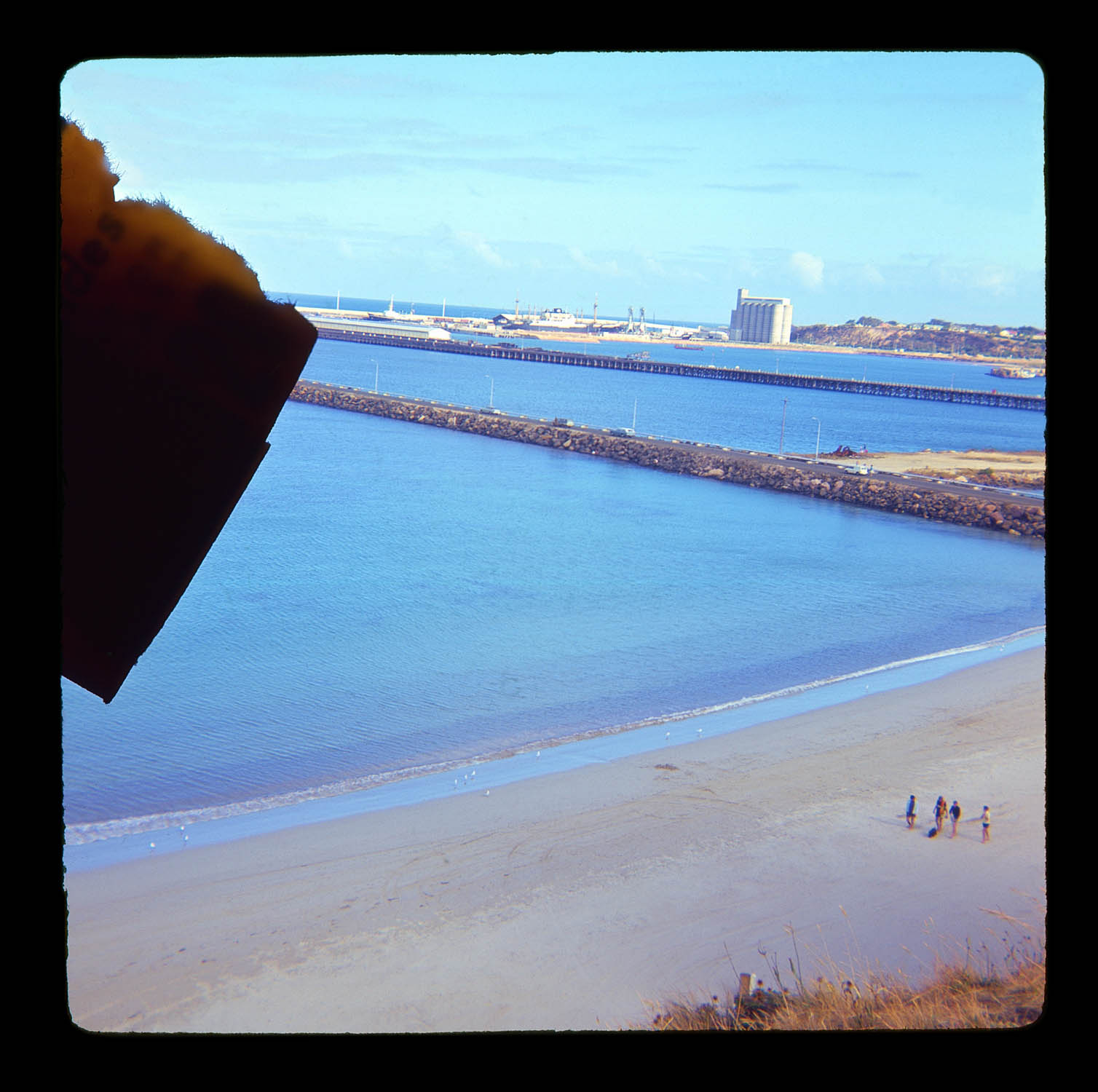
Review: ‘Rosemary Laing’ at TarraWarra Museum of Art, Healesville, Victoria

Exhibition dates: 2nd December, 2017 – 11th February, 2018

Curator: Victoria Lynn


Rosemary Laing (Australian, 1959-2024) 'weather (Eden) #1' 2006 from the exhibition 'Rosemary Laing' at TarraWarra Museum of Art, Healesville, Victoria, Dec 2017 - Feb 2018


Rosemary Laing (Australian, 1959-2024)
weather (Eden) #1
2006
From the series weather
C Type photograph
110 x 221.5cm
Private Collection
© Rosemary Laing, Courtesy Tolarno Galleries, Melbourne


Disjunction and displacement in the Australian landscape

On a suitably apocalyptic day – in terms of our relationship to landscape, environment, elements and shelter – I drove up the Yarra Valley to the beautiful TarraWarra Museum of Art to see an exhibition of the works of Rosemary Laing. Through teeming rain, headlights gleaming, windshield wipers at full bore listening to Beethoven symphonies, I undertook an epic drive up to that most beautiful part of Victoria. The slightly surreal, disembodied experience of the drive continued once I stepped inside the gallery to view Laing’s work.

Laing’s work has always been a favourite, whether it be the floating brides, the carpet laid through the forest, or the melting newsprint after rain. I have always thought of her sensitive conceptual, performative work as evidenced through large, panoramic photographs as strong and focused, effective in challenging contemporary cultural cliché relating to the land, specifically the possession and inhabitation of it. As such, perhaps I was expecting too much of this exhibition but to put it bluntly, the presentation was a great disappointment.

There are various contributing factors that do not make this exhibition a good one.

Firstly, as the curator Victoria Lynn observes, “Laing’s photographs are conceived in series, so that each photograph is part of a larger cluster of images that are often arrange in specific sequences.” This exhibition, “includes 28 large-scale works selected from ten series over a thirty-year period” that focus on the themes of land and landscape in Laing’s oeuvre. The problem with this approach to Laing’s work is that the photographs from the different series sit uncomfortably together. The transitions between the photographs and different bodies of work as evidenced in this exhibition, simply do not work. Minor White’s ice / fire – that frisson of intensity between two disparate images that makes both images relevant to each other – is non-existent here. What might have more successful in displaying Laing’s work would have been a larger selection from a more limited number of series. It would have given the viewer a more holistic sense of belonging and investment in the work. This is the problem working in series and specific sequences… once the work leaves that cluster of energy, that magical place of nurture, nature and conceptualisation, how does it reintegrate itself into other states of being and display?

Secondly, the light levels in the gallery were so low the photographs seemed drained of all their energy. I understand that the “lux levels are quite particular according to museum requirements considering many works are lent from various institutions around Australia,” having done a conservation subject during my Master of Art Curatorship, but this is where the surreal experience from the drive continued: upon entering the gallery it was like navigating a stygian gloom, as can be seen in the installation photographs of the exhibition below. This is a museum of art situated in the most beautiful landscape and these are photographs, captured with light! that need light to bring them alive. I remember seeing Laing’s work leak at Tolarno galleries in Melbourne, and being amazed by their presence, their energy. Not here. Here the blues of the sky and the reds of the carpet seemed drained of energy, the vibrations of being of the forest and land victim to overzealous preservation.

Thirdly, and this relates to the first point, there was one work How we lost poor Flossie (fires) (1988, below) from Laing’s early series Natural Disasters. The work appeared out of nowhere at the end of the exhibition, had nothing that it related to around it, and had no explanation as to why it was there. I really would have liked to have known more about how Laing got from this work to the later series in the exhibition. What was her process of discovery, of change and experimentation. How did Laing go from Flossie – slicing together the spectacle and graphic imagery from media coverage of the Ash Wednesday fires – to the embeddedness [definition: the dependence of a phenomenon on its environment, which may be defined alternatively in institutional, social, cognitive, or cultural terms] of performances within the landscape of the later work? This would have been a more cogent, pungent and relevant investigation into the rigours of Laing’s art practice.

I emerged into the world and it was still pouring with rain. I rejoiced. It was as though I was alive again. Laing’s work is always strong and interesting. It was just such a pity that this iteration of it, specifically its closeted choreography, was not as restless as the landscape the works imagine.

Dr Marcus Bunyan


Many thankx to the TarraWarra Museum of Art for allowing me to publish the photographs in the posting. Please click on the photograph for a larger version of the image. All installation images © Dr Marcus Bunyan and TarraWarra Museum of Art.


Installation view of the exhibition 'Rosemary Laing' at the TarraWarra Museum of Art

Installation view of the exhibition 'Rosemary Laing' at the TarraWarra Museum of Art

Installation view of the exhibition 'Rosemary Laing' at the TarraWarra Museum of Art

Installation view of the exhibition 'Rosemary Laing' at the TarraWarra Museum of Art featuring the works 'welcome to Australia' (2004, C Type photograph, Collection of the University of Queensland) from the series 'to walk on a sea of salt'


Installation view of the exhibition Rosemary Laing at the TarraWarra Museum of Art featuring the works welcome to Australia (2004, C Type photograph, Collection of the University of Queensland) from the series to walk on a sea of salt
Photos: Marcus Bunyan


“… the detention centre images, so that you’ve got the Heysen, you know, trees that you want to belong to, and then you’ve got this endless vista – though it be a difficult journey across a horizon that never ends – and then you have the raised wire fence, completely closing off access to that land, and that place, and those images of belonging and heritage.”

Art Talk with Rosemary Laing


Installation view of the exhibition 'Rosemary Laing' at the TarraWarra Museum of Art featuring the works 'after Heysen' (2004) at left, and 'to walk on a sea of salt' (2004) at right, from the series 'to walk on a sea of salt'


Installation view of the exhibition Rosemary Laing at the TarraWarra Museum of Art featuring the works after Heysen (2004) at left, and to walk on a sea of salt (2004) at right, from the series to walk on a sea of salt
Photo: Marcus Bunyan


Installation view of Rosemary Laing's 'after Heysen' (2004, C Type photograph, Collection of Carey Lyon and Jo Crosby) from the series 'to walk on a sea of salt'


Installation view of Rosemary Laing’s after Heysen (2004, C Type photograph, Collection of Carey Lyon and Jo Crosby) from the series to walk on a sea of salt
Photo: Marcus Bunyan


The question of how to belong in Australia permeates Laing’s work. Australia has one of the highest immigrant populations in the world so that the question of arrival, and of making oneself at home, continues to be part of the everyday reality. We also have one of the world’s harshest policies for asylum seekers so that – in the political imaginary of contemporary Australia – land is conceived as a border that has to be protected.

The artist’s most potent response to the contested issue of being at home in Australia is the 2004 series to walk on a sea of salt, where images of Woomera detention centre, combined with photographs inspired by quintessential Australian imagery and stories, remind us that home does not travel with the asylum seeker. In after Heysen, Laing photographs the trees that Hans Heysen transformed into an Arcadian image of the Australian bush, but bleaches the image to invoke a sense of nationalistic nostalgia. By contrast, the spatial potential and magnitude of the Australian landscape is invoked by the image to walk on a sea of salt.

Wall text from the exhibition


Installation view of the exhibition 'Rosemary Laing' at the TarraWarra Museum of Art featuring works from the series 'The Paper' (2013)

Installation view of the exhibition 'Rosemary Laing' at the TarraWarra Museum of Art featuring works from the series 'The Paper' (2013)


Installation view of the exhibition Rosemary Laing at the TarraWarra Museum of Art featuring works from the series The Paper (2013)
Photos: Marcus Bunyan


Installation view of Rosemary Laing's work 'The Paper, Tuesday' (2013, C Type photograph, Monash University Collection) from the series 'The Paper' (2013)


Installation view of Rosemary Laing’s work The Paper, Tuesday (2013, C Type photograph, Monash University Collection) from the series The Paper (2013)
Photo: Marcus Bunyan


Installation view of Rosemary Laing's work 'The Paper, Thursday' (2013, C Type photograph, Monash University Collection) from the series 'The Paper' (2013)


Installation view of Rosemary Laing’s work The Paper, Thursday (2013, C Type photograph, Monash University Collection) from the series The Paper (2013)
Photo: Marcus Bunyan


Laing choreographs situations in the landscape, invoking a unique set of circumstances that reflect upon historic, social, environmental, economic and material conditions. Incongruous items are carefully positioned to flow with the compositional logic of a place.

On a hillside in Bundanon, New South Wales is a Casuarina forest sprinkled with Burrawang (cycads), an ancient plant that dates back to the Palaeozoic. The series The Paper was created on this hillside. The forest floor is covered in newspaper and photographed after the rains. The paper has literally been pressed into the forest floor by the torrent. It has been weathered. The sensationalism, headlines, imagery and opinion of the newspaper merge into a feathery ground cover of soft white, cream and beige hues. It is as if the area has flooded, not with water, but with paper. Words, colour and dates are dissolved into a tonal carpet. There is no light and shadow. This misalignment suggests the death of the daily paper, and here it inevitably returns to its natural habitat, its original ‘home’.

Wall text from the exhibition


Installation view of the exhibition 'Rosemary Laing' at the TarraWarra Museum of Art

Installation view of the exhibition 'Rosemary Laing' at the TarraWarra Museum of Art

Installation view of the exhibition 'Rosemary Laing' at the TarraWarra Museum of Art

Installation view of the exhibition 'Rosemary Laing' at the TarraWarra Museum of Art

Installation view of the exhibition 'Rosemary Laing' at the TarraWarra Museum of Art

Installation view of the exhibition 'Rosemary Laing' at the TarraWarra Museum of Art

Installation view of the exhibition 'Rosemary Laing' at the TarraWarra Museum of Art

Installation view of the exhibition 'Rosemary Laing' at the TarraWarra Museum of Art


Installation views of the exhibition Rosemary Laing at the TarraWarra Museum of Art
Photos: Marcus Bunyan


Installation view of Rosemary Laing's work 'weather (Eden) #1' (2006, C Type photograph, Collection of Peter and Anna Thomas) from the series 'weather'


Installation view of Rosemary Laing’s work weather (Eden) #1 (2006, C Type photograph, Collection of Peter and Anna Thomas) from the series weather
Photo: Marcus Bunyan


The idea of a natural disaster in the Australian landscape occupies the same intensity for Laing as the human or ‘unnatural’ disasters. The each speak of the endless transformation of the landscape, its unfolding stories and its capacity to conjure anxiety and fear.

the series weather, located on the south coast of New South Wales, was inspired by the impact of natural phenomena – coastal storms – on the area. The flash of red fish netting snagged unawares by the battered grey melaleucas in weather (Eden) #1 also signals the historic Indigenous and colonial whaling in the area and the more recent slow demise of the fishing industry. These images seem haunted.

Wall text from the exhibition


Installation view of the exhibition 'Rosemary Laing' at the TarraWarra Museum of Art showing 'The Flowering of the Strange Orchid' (2017) left, from the series 'Buddens', and at right 'weather (Eden) #2' from the series 'weather'


Installation view of Rosemary Laing’s works The Flowering of the Strange Orchid (2017) left, from the series Buddens, and at right weather (Eden) #2 from the series weather
Photo: Marcus Bunyan


Installation view of the exhibition 'Rosemary Laing' at the TarraWarra Museum of Art showing a detail of Rosemary Laing's work 'The Flowering of the Strange Orchid' (2017)


Detail of Rosemary Laing’s work The Flowering of the Strange Orchid (2017)
Photo: Marcus Bunyan


Installation view of the exhibition 'Rosemary Laing' at the TarraWarra Museum of Art showing the work 'Walter Hood' (2017) from the series 'Buddens'


Installation view of the exhibition Rosemary Laing at the TarraWarra Museum of Art showing the work Walter Hood (2017) from the series Buddens
Photo: Marcus Bunyan


In the most recent series Buddens, Laing turns again to the ‘unnatural disasters’ that impact ‘country’. The stream is covered in rolls of discarded clothing. It leads down to Wreck Bay, on the south coast of New South Wales, and is the site of multiple ship disasters. Historically these waters were used to transport convicts, goods, troops and settlers up and down the coast and they are littered with relics from shipwrecks including those of the vessels ‘Rose of Australia’ and ‘Walter Hood’.

The roof truss is like a piece of wreckage in amongst the trees, as if torn by the winds from an urban development on the outskirts of a city. Recalling the upside down house in the series leak (2010), it meets a natural A-frame in the foliage, yet the two don’t make a safe house.

The clothes seem to push through the landscape, like the rush of a river, perhaps in search of a safe haven. There is a mixture of metaphors in Buddens, highlighting the delicate balance between nature and culture required for survival.

Wall text from the exhibition


Installation view of Rosemary Laing's work 'brumby mound #5' (2003, C Type photograph, National Gallery of Victoria, Melbourne) from the series 'one dozen unnatural disasters in the Australian landscape'


Installation view of Rosemary Laing’s work brumby mound #5 (2003, C Type photograph, National Gallery of Victoria, Melbourne) from the series one dozen unnatural disasters in the Australian landscape
Photo: Marcus Bunyan


Installation view of Rosemary Laing's work 'brumby mound #6' (2003, C Type photograph, National Gallery of Victoria, Melbourne) from the series 'one dozen unnatural disasters in the Australian landscape'


Installation view of Rosemary Laing’s work brumby mound #6 (2003, C Type photograph, National Gallery of Victoria, Melbourne) from the series one dozen unnatural disasters in the Australian landscape
Photo: Marcus Bunyan


Landscape has a past, present an future; it is never the same as it used to be. In the face of wars, wrecks, and both natural and ‘unnatural’ destruction, we build shelters. We fence and furnish these landscape as we try to impose order on the precariousness and relative insignificance of life.  As can be seen in a number of Laing’s series, the introduction of elements from our ‘settled’ environment including carpet, clothing, architectural structures, newspapers and the like – creates a disjunction. Some thing is literally awry.

In the one dozen unnatural disasters in the Australian landscape series, red interior furniture occupies and unsuccessfully domesticates this landscape. Painted in red earth and glue, these items almost disappear in the desert landscape. they are both like relics of a lost civilisation, but also seem to have become attuned to the terrain.

In the series leak, Laing continues her poetic and political engagement with the Australian landscape whereby powerful and dynamic tensions are elicited through the construction and insertion of foreign objects in the natural environment. Although the land depicted has already been altered through years of cleating and grazing practices, these works metaphorically signal that the continued ‘leak’ of residential development into both remnant bushland and farmland owned by generations of families is an unwelcome accident or breach that threatens to overturn the ecological balance between nature and culture.

Wall text from the exhibition


Installation view of Rosemary Laing's work 'Aristide' (2010, C Type photograph, Collection of the University of Queensland) from the series 'leak'


Installation view of Rosemary Laing’s work Aristide (2010, C Type photograph, Collection of the University of Queensland) from the series leak
Photo: Marcus Bunyan


Landscape changes; its restless. It moves with the wind and rhymes with the seasons. It burns and floods. It is spatial, offering the visitor several perspectives that can be contradictory, paradoxical and durational. Landscape is also a ‘situation’, a complex interplay of historical and environmental conditions. Landscape has a past, present and future; it is never the same as it used to be. When we gaze out over a bay, or ponder and Indigenous site, we can’t help but wonder what it used to look like, how it used to be occupied, what tragedies and serendipities happened there. Landscape can be both a place of belonging and a destination, and depending on one’s perspective, it can embody the familiarity of home and the promise of adventure; the discomfort of displacement or the tragedy of invasion. Landscape is formed as much by natural forces as it is by human knowledge. …

Rosemary Laing introduces us to these histories by creating projects in the Australian landscape. These projects are sustained by her continuing search for understanding the multiple attitudes to belonging in the landscape. Miwon Kwon has argued that today ‘feeling out of place is the cultural symptom of late capitalism’s political and social reality’, so much so, that to be ‘situated’ is to be ‘displaced’. In Australia, the notion of displacement has a history that goes back to colonisation. Questions of who owns the land, how we inhabit it, and who feels displaced, are an intrinsic part of the Australian consciousness. Laing’s work also asks how we encounter the landscape; who or what is out of  place; who or what does not belong; are ‘we’ the alien? …

Laing choreographs situations in the landscape, invoking a unique set of circumstances that reflect upon historic, social, environmental and material conditions…

Doherty argues that rather than being site specific, art has shifted from a fixed location, to one that, in the words of Kwon, is ‘constituted through social, economic, cultural and economic processes’. Such artworks are not located in a single place, but rather take the form of interactive activities, collective actions, and spatial experiences. They are constitutive rather than absolute; propositional rather than conclusive. Rosemary Laing’s mise-en-scènes are not public, events or performances, but they forge a compositional dialogue with the natural environment that provokes a social, economic and environmental conscience.

Laing’s photographs are conceived in series, so that each photograph is part of a larger cluster of images that are often arrange in specific sequences. Moreover, the spatial tableaux and the photographic outcome have an intrinsic connection. The installations cannot be seen without the photographic apparatus and yet each mise-en-scène is presented from a variety of perspectives and angles, so that we cannot necessarily rely on the photographic outcome to be ‘truthful’. The photograph is not simply documentation. It is an activator. In many respects Laing places us in the landscape, so that we fell part of the image. She does this through both the size and relative height of the image, along with the point of view and our relation with the horizon line. Laing tests the limits of the photograph, and also provokes the viewer to rearticulate their connection to landscape, and re-energise it. She comes to be the interlocutor between the histories and meanings embedded in landscape, the installation, the photograph and the viewer.

Victoria Lynn. “Rosemary Laing – Co-belonging with the Landscape,” in Rosemary Laing exhibition catalogue, TarraWarra Art Museum, 2017, pp. 7-9.


Installation view of Rosemary Laing's work 'effort and rush #9 (swanfires)' (2013-2015, C Type photograph, Collection of Alex Cleary) from the series 'effort and rush'


Installation view of Rosemary Laing’s work effort and rush #9 (swanfires) (2013-2015, C Type photograph, Collection of Alex Cleary) from the series effort and rush
Photo: Marcus Bunyan


Detail of Rosemary Laing's work 'effort and rush #9 (swanfires)' (2013-2015)


Detail of Rosemary Laing’s work effort and rush #9 (swanfires) (2013-2015)
Photo: Marcus Bunyan


Installation view of Rosemary Laing's 'work burning Ayer #12' (2003, C Type photograph, Art Gallery of New South Wales, Sydney) from the series 'one dozen unnatural disasters in the Australian landscape'


Installation view of Rosemary Laing’s work burning Ayer #12 (2003, C Type photograph, Art Gallery of New South Wales, Sydney) from the series one dozen unnatural disasters in the Australian landscape
Photo: Marcus Bunyan


The fire in burning Ayer #12 gives us some clues to the relationship between fire and the artist’s quest to reimagine belonging in the Australian landscape. The earth-encrusted items of mass-produced domestic wooden furniture – a reference, once more, to the idea of ‘housing’, home and belonging. Their ashes fold back into the earth. The strength of the red desert plain holds its ground, as it were, as the stage for this enactment of both sacrifice and return. Fire comes to be a metaphor for the ways in which the Indigenous landscape refuses our presence and escapes from our control.

In effort and rush #9 (swanfires), the blur of movement across tall thin tree trunks, captured in a smoky black hue, considers both the rush of the fire, and the rush of escape. It is as if the camera has become a paintbrush.

Wall text from the exhibition


Installation view of Rosemary Laing's work 'swanfires, Chris's shed' (2002-2004, C Type photograph, Monash Gallery of Art) from the series 'swanfires'


Installation view of Rosemary Laing’s work swanfires, Chris’s shed (2002-2004, C Type photograph, Monash Gallery of Art) from the series swanfires
Photo: Marcus Bunyan


Detail of Rosemary Laing's work 'swanfires, Chris's shed' (2002-2004)


Detail of Rosemary Laing’s work swanfires, Chris’s shed (2002-2004)
Photo: Marcus Bunyan


Installation view of Rosemary Laing's work 'How we lost poor Flossie (fires)' (1988, Gelatin silver photograph, Art Gallery of South Australia, Adelaide) from the series 'Natural Disasters'


Installation view of Rosemary Laing’s work How we lost poor Flossie (fires) (1988, Gelatin silver photograph, Art Gallery of South Australia, Adelaide) from the series Natural Disasters
Photo: Marcus Bunyan


When Laing first tackled disasters in her 1988 Natural Disasters series, it was from the point of view of the media phenomenon. Slicing together imagery from media coverage of the Ash Wednesday fires, the series, including works such as How we lost poor Flossie (fires) was more to do with the slipstream of spectacle in the wake of the bicentennial of Australia. At the time, competing propositions about our cultural identity jostled for attention: 200 years of settlement, Aboriginal calls for recognition, the tourist panorama, and the sensationalism of fire in the landscape.

After every significant fire near her house in Swanhaven, on the south cost of New South Wales, Laing takes photographs in the aftermath of the blaze, like a marker of the irreconcilable yet continuing presence of natural and unnatural disasters.

In the series swanfires there is an overwhelming sense of loss. These two images speak of the abject disaster of fire, before the clean up. They depict situations that exceed our comprehension. In swanfires, John and Kathy’s auto services, the intersecting forms of corrugated iron – the quintessential material of rural Australia – are unexpectedly bathed in the softest of pink, their forms reflecting the tree line behind.

Wall text from the exhibition


Installation view of Rosemary Laing's work 'swanfires, John and Kathy's auto services' (2002-2004, C Type photograph,Courtesy of the artist and Tolarno Galleries, Melbourne) from the series 'swanfires'


Installation view of Rosemary Laing’s work swanfires, John and Kathy’s auto services (2002-2004, C Type photograph,Courtesy of the artist and Tolarno Galleries, Melbourne) from the series swanfires (see below)
Photo: Marcus Bunyan


Rosemary Laing (Australian, 1959-2024) 'swanfires, John and Kathy's auto services' 2002-2004


Rosemary Laing (Australian, b. 1959)
swanfires, John and Kathy’s auto services
2002-2004
From the series swanfires
C Type photograph
85 x 151cm
Courtesy the artist and Tolarno Galleries, Melbourne
© Rosemary Laing, Courtesy Tolarno Galleries, Melbourne


TarraWarra Museum of Art will stage an exhibition of the works of Rosemary Laing, one of Australia’s most significant and internationally-renowned photo-based artists, 2 December 2017 – 11 February 2018.

Focusing on the theme of land and landscape in Laing’s oeuvre, the Rosemary Laing exhibition includes 28 large scale works selected from 10 series over a thirty-year period. The exhibition, which is the first large-scale showing of Laing’s work in Victoria, will be accompanied by an exhibition of works by Fred Williams focusing on a single year of the artist’s oeuvre, Fred Williams – 1974. Curated by Anthony Fitzpatrick, the Williams exhibition reveals the ways in which colour and human intervention in the landscape became a focus for the artist.

Born in Brisbane and based in Sydney, Laing has worked with the photographic medium since the mid-1980s. Her projects have engaged with culturally and historically resonant sites in the Australian landscape, as well as choreographed performances. TarraWarra director, Victoria Lynn, curator of the exhibition, says Laing’s work is highly representative of the Museum’s central interest in the exchange between art, place and ideas.

“This exhibition reveals Laing’s compositional and technical ingenuity. It shows that Laing can create images of dazzling luminosity as well as solemnly subdued light. Flickers of bright red catch our eye, while passages of verdant greens create an all-over intensity. Her images take us to open and infinite plains as well as the depths of entangled forest trails.

“The artist builds structures and installations in coastal, farming, forest and desert landscapes from which she then creates photographic images. Whether it is papering the floor of a forest in the 2013 series The Paper, or creating a river of clothes displacing the water of a flowing creek in the new series Buddens 2017, Laing’s images reflect upon the historical and contemporary stories of human engagement with our continent. More specifically, the artist draws on colonisation and the impact of waves of asylum seekers, suggesting that the landscape is forever transformed both physically and metaphorically. The exhibition also includes works depicting the aftermath of fire, and the ways it too transforms what we thought we knew of the landscape,” Ms Lynn said.

Rosemary Laing comments: “The arrival of people, throughout history, shifts what happens in land, challenging those who have left their elsewhere, and disrupting the continuum of their destination-place. A disruption causes a reconfiguration. It elaborates both the beforehand and the afterward. The works are somewhere between – a narrative for the movement of people, the condition of landforms with a changing peopled condition, expectations of home and haven, flow and flooding, and the effect and affect of these passages.” The exhibition is supported by major exhibition partner the Balnaves Foundation, and will be accompanied by a catalogue authored by Judy Annear, funded by the Gordon Darling Foundation.

Annear, writes: “How to make sense of what humanity does in and to their environment regardless of whether that environment appears to be natural or made? What is the spectrum, the temperature of that activity? Laing is an artist who grapples with these questions and how to reflect and interpret the times in which she lives.”

Neil Balnaves AO, Founder The Balnaves Foundation said, “The exhibitions Rosemary Laing and Fred Williams – 1974 will be the third year that The Balnaves Foundation have supported the TarraWarra Museum of Art to deliver exhibitions of note by Australian artists. The Foundation is proud to partner in these major endeavours, providing vital opportunities for important Australian artists to be showcased, whilst providing art lovers – including inner-regional audiences – access to outstanding arts experiences.”

Laing has exhibited in Australia and abroad since the late 1980s. She has participated in various international biennials, including the Biennale of Sydney (2008), Venice Biennale (2007), Busan Biennale (2004), and Istanbul Biennial (1995). Her work is present in museums Australia-wide and international museums including: the Museo Nacional Centro De Arte Reina Sofia, Madrid; North Carolina Museum of Art, Raleigh; Modern Art Museum of Fort Worth, USA; 21st Century Museum of Contemporary Art, Kanazawa, Japan; Kunstmuseum Luzern, Lucerne, Switzerland; Wadsworth Atheneum Museum of Art, Hartford, Connecticut, USA.

Laing has presented solo exhibitions at several museums, including the Museum of Contemporary Art, Sydney; Kunsthallen Brandts Klædefabrik, Odense; Domus Artium 2002, Salamanca; Frist Center for the Visual Arts, Nashville; and National Museum of Art, Osaka. A monograph, written by Abigail Solomon-Godeau has been published by Prestel, New York (2012).

Press release from the TarraWarra Museum of Art


Rosemary Laing (Australian, 1959-2024) 'brumby mound #6' 2003 from the exhibition 'Rosemary Laing' at TarraWarra Museum of Art, Healesville, Victoria, Dec 2017 - Feb 2018


Rosemary Laing (Australian, 1959-2024)
brumby mound #6
2003
From the series one dozen unnatural disasters in the Australian landscape
C Type photograph
109.9 x 225cm
National Gallery of Victoria, Melbourne
Purchased with funds from the Victorian Foundation for Living Australian Artists, 2004
© Rosemary Laing, Courtesy Tolarno Galleries, Melbourne


Rosemary Laing (Australian, 1959-2024) 'The Paper, Tuesday' 2013


Rosemary Laing (Australian, b. 1959)
The Paper, Tuesday
2013
From the series The Paper
C Type photograph
90 x 189cm
Monash University Collection
Purchased by the Faculty of Science, 2015
Courtesy of Monash University Museum of Art
© Rosemary Laing, Courtesy Tolarno Galleries, Melbourne


Rosemary Laing (Australian, 1959-2024) 'Aristide' 2010


Rosemary Laing (Australian, b. 1959)
Aristide
2010
From the series leak
C Type photograph
110 x 223cm
The University of Queensland Art Museum, Brisbane
Collection of The University of Queensland, purchased 2011
© Rosemary Laing, Courtesy Tolarno Galleries, Melbourne


Rosemary Laing (Australian, 1959-2024) 'Walter Hood' 2017


Rosemary Laing (Australian, 1959-2024)
Walter Hood
2017
From the series Buddens
Archival pigment print
100 x 200.6cm
Courtesy the artist and Tolarno Galleries, Melbourne
© Rosemary Laing, Courtesy Tolarno Galleries, Melbourne


Rosemary Laing (Australian, 1959-2024) 'The Flowering of the Strange Orchid' 2017


Rosemary Laing (Australian, 1959-2024)
The Flowering of the Strange Orchid
2017
From the series Buddens
Archival pigment print
100 x 200cm
Ten Cubed Collection, Melbourne
© Rosemary Laing, Courtesy Tolarno Galleries, Melbourne


Rosemary Laing (Australian, 1959-2024) 'Drapery and wattle' 2017


Rosemary Laing (Australian, 1959-2024)
Drapery and wattle
2017
From the series Buddens
Archival pigment print
100 x 152.6cm
Collection of Sally Dan-Cuthbert Art Consultant
© Rosemary Laing, Courtesy Tolarno Galleries, Melbourne


TarraWarra Museum of Art
311 Healesville-Yarra Glen Road,
Healesville, Victoria, Australia
Melway reference: 277 B2
Phone: +61 (0)3 5957 3100

Opening hours:
Open Tuesday – Sunday, 11am – 5pm
Open all public holidays except Christmas day

Summer Season – open 7 days
Open 7 days per week from Boxing Day to the Australia Day public holiday

TarraWarra Museum of Art website

LIKE ART BLART ON FACEBOOK

Back to top
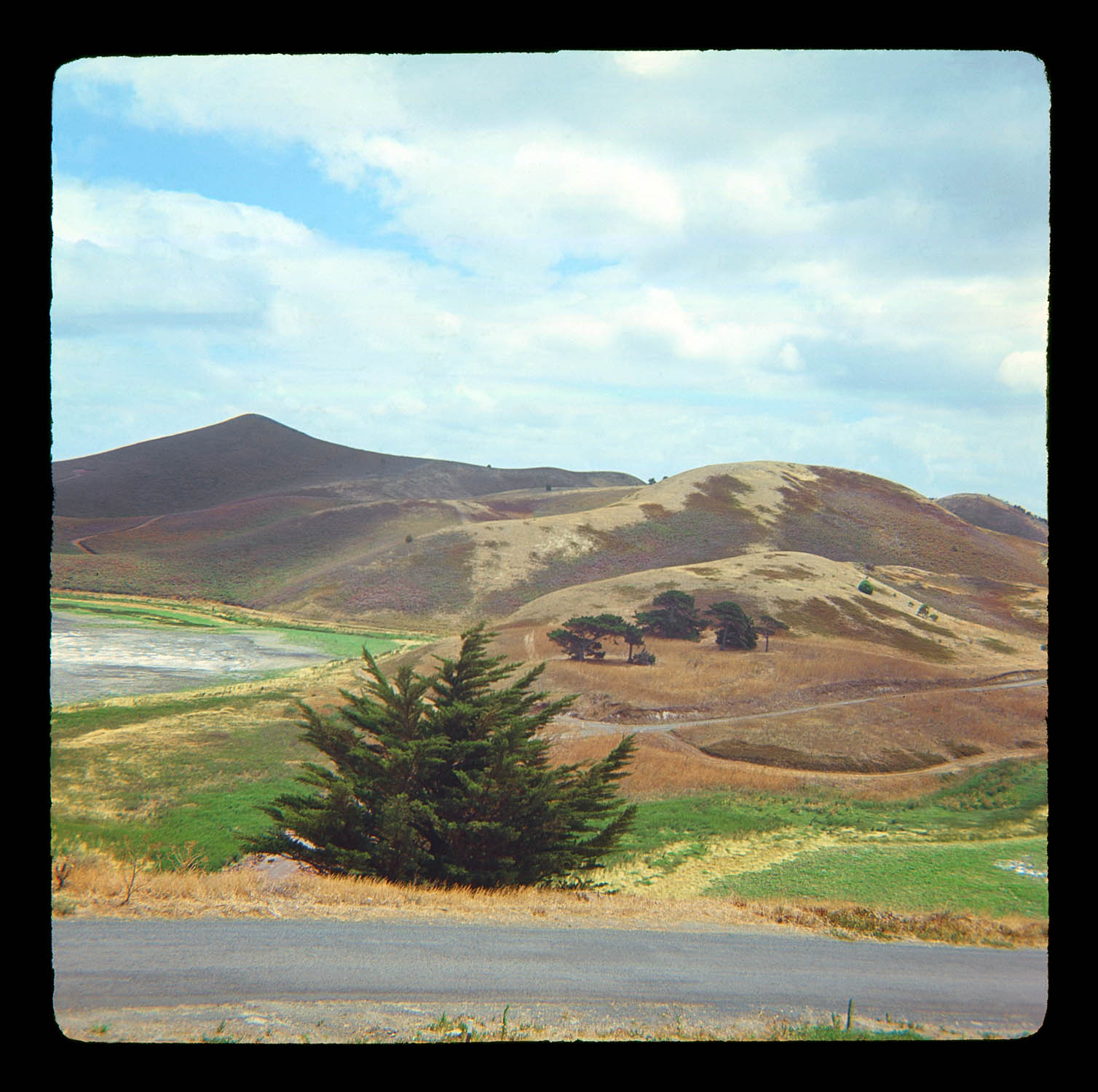
Exhibition: ‘Bill Henson’ as part of the NGV Festival of Photography, NGV International, Melbourne

Exhibition dates: 10th March – 27th August, 2017


Bill Henson (Australian, b. 1955) 'Untitled #5' 2011/2012 from the exhibition 'Bill Henson' as part of the NGV Festival of Photography, NGV International, Melbourne, March - August, 2017


Bill Henson (Australian, b. 1955)
Installation view of Untitled #5
2011/2012
Archival inkjet pigment print
180 × 127cm
Gift of William Donald Bowness through the Australian Government’s Cultural Gifts Program 2016
Photo: © Dr Marcus Bunyan, Bill Henson and the National Gallery of Victoria


Bill Henson (Australian, b. 1955) 'Untitled #5' 2011/2012 (detail) from the exhibition 'Bill Henson' as part of the NGV Festival of Photography, NGV International, Melbourne, March - August, 2017


Bill Henson (Australian, b. 1955)
Installation view of Untitled #5 (detail)
2011/2012
Archival inkjet pigment print
180 × 127cm
Gift of William Donald Bowness through the Australian Government’s Cultural Gifts Program 2016
Photo: © Dr Marcus Bunyan, Bill Henson and the National Gallery of Victoria


Masterclass

There is nothing that I need to add about the themes, re-sources and beauty of the photographs in this exhibition, than has not been commented on in Christopher Allen’s erudite piece of writing “Bill Henson images reflect the dark past at NGV” posted on The Australian website. It is all there for the reader:

“Figurative works like these, which invite an intense engagement because of our imaginative and affective response to beauty, are punctuated with landscapes that offer intervals of another kind of contemplation, a distant rather than close focus, an impersonal rather than a personal response, a meditation on time and space. …

Henson’s pictorial world is an intensely, almost hypnotically imaginative one, whose secret lies in a unique combination of closeness and distance. He draws on the deep affective power of physical beauty, and particularly the sexually ambiguous, often almost androgynous beauty of the young body, filled with a kind of potential energy, but not yet fully actualised. Yet these bodies are distanced and abstracted by their sculptural, nearly monochrome treatment, and transformed by a kind of alchemical synthesis with the ideal, poetic bodies of art. …

The figures are bewitching but withdraw like mirages, disembodied at the sensual level, only to be merged with the images of memory, the echoes of great works of the past, and to be reborn from the imagination as if some ancient sculpture were arising from darkness into the light of a new life.”


What I can add are some further observations. Henson is not so serious as to miss sharing a joke with his audience, as when the elbow of the classical statue in Untitled 2008/09 is mimicked in the background by the elbow of a figure. Henson is also a masterful storyteller, something that is rarely mentioned in comment upon his work. When you physically see this exhibition – the flow of the images, the juxtaposition of landscape and figurative works, the lighting of the work as the photographs emerge out of the darkness – all this produces such a sensation in the viewer that you are taken upon a journey into your soul. I was intensely moved by this work, by the bruised and battered bodies so much in love, that they almost took my breath away.

Another point of interest is the relationship between the philanthropist, the artist and the gallery. Due to the extraordinary generosity of Bill Bowness, whose gift of twenty-one photographs by Henson makes the NGV’s collection of his work the most significant of any public institution, the gallery was able to stage this exhibition. This is how art philanthropy should work: a private collector passionate about an artist’s work donating to an important institution to benefit both the artist, the institution and the art viewing public.

But then all this good work is undone in the promotion of the exhibition. I was supplied with the media images: five landscape images supplemented by five installation images of the same photographs. Despite requests for images of the figurative works they were not forthcoming. So I took my own.

We all know of the sensitivity around the work of Henson after his brush with the law in 2008, but if you are going to welcome 21 photographs into your collection, and stage a major exhibition of the donated work… then please have the courage of your convictions and provide media images of the ALL the work for people to see. For fear of offending the prurient right, the obsequiousness of the gallery belittles the whole enterprise.

If this artist was living in New York, London or Paris he would be having major retrospectives of his work, for I believe that Bill Henson is one of the greatest living photographers of his generation.

Dr Marcus Bunyan


Many thankx to the National Gallery of Victoria for allowing me to publish the images in the posting and supplying the media images (the images after the press release). All other images are Â© Dr Marcus Bunyan, Bill Henson and the National Gallery of Victoria.


Installation view of the exhibition 'Bill Henson' at the National Gallery of Victoria Photo: © Dr Marcus Bunyan and the National Gallery of Victoria with at left, 'Untitled #35' 2009/2010 and at right, 'Untitled #8' 2008/2009


Installation view of the exhibition Bill Henson at the National Gallery of Victoria with at left, Untitled #35 2009/2010 and at right, Untitled #8 2008/2009
Photo: © Dr Marcus Bunyan, Bill Henson and the National Gallery of Victoria


Bill Henson (Australian, b. 1955) 'Untitled #35' 2009/2010 (installation view)


Bill Henson (Australian, b. 1955)
Untitled #35 (installation view)
2009/2010
Archival inkjet pigment print
127 × 180cm
Gift of William Donald Bowness through the Australian Government’s Cultural Gifts Program 2016
Photo: © Dr Marcus Bunyan, Bill Henson and the National Gallery of Victoria


Bill Henson (Australian, b. 1955) 'Untitled #8' 2008/2009 (installation view)


Bill Henson (Australian, b. 1955)
Untitled #8 (installation view)
2008/2009
Archival inkjet pigment print
180 × 127cm
Gift of William Donald Bowness through the Australian Government’s Cultural Gifts Program 2016
Photo: © Dr Marcus Bunyan, Bill Henson and the National Gallery of Victoria


Installation view of the exhibition 'Bill Henson' at the National Gallery of Victoria Photo: © Dr Marcus Bunyan and the National Gallery of Victoria


Installation view of the exhibition Bill Henson at the National Gallery of Victoria
Photo: © Dr Marcus Bunyan, Bill Henson and the National Gallery of Victoria


Bill Henson (Australian, b. 1955) 'Untitled #1' 2010/2011 (installation view)


Bill Henson (Australian, b. 1955)
Untitled #1 (installation view)
2010/2011
Archival inkjet pigment print
127 × 180cm
Gift of William Donald Bowness through the Australian Government’s Cultural Gifts Program 2016
Photo: © Dr Marcus Bunyan, Bill Henson and the National Gallery of Victoria


Installation view of the exhibition 'Bill Henson' at the National Gallery of Victoria Photo: © Dr Marcus Bunyan and the National Gallery of Victoria

Installation view of the exhibition 'Bill Henson' at the National Gallery of Victoria Photo: © Dr Marcus Bunyan and the National Gallery of Victoria


Installation views of the exhibition Bill Henson at the National Gallery of Victoria
Photos: © Dr Marcus Bunyan, Bill Henson and the National Gallery of Victoria


Installation view of the exhibition 'Bill Henson' at the National Gallery of Victoria © Dr Marcus Bunyan and the National Gallery of Victoria with at left, 'Untitled' 2010/2011 and at right, 'Untitled #9' 2008/2009


Installation view of the exhibition Bill Henson at the National Gallery of Victoria with at left, Untitled 2010/2011 and at right, Untitled #9 2008/2009
Photo: © Dr Marcus Bunyan, Bill Henson and the National Gallery of Victoria


Bill Henson (Australian, b. 1955) 'Untitled' 2010/2011 (installation view)


Bill Henson (Australian, b. 1955)
Untitled (installation view)
2010/2011
Archival inkjet pigment print
127 × 180cm
Gift of William Donald Bowness through the Australian Government’s Cultural Gifts Program 2016
Photo: © Dr Marcus Bunyan, Bill Henson and the National Gallery of Victoria


Bill Henson (Australian, b. 1955) 'Untitled #9' 2008/2009 (installation view)


Bill Henson (Australian, b. 1955)
Untitled #9 (installation view)
2008/2009
Archival inkjet pigment print
127 × 180cm
Gift of William Donald Bowness through the Australian Government’s Cultural Gifts Program 2016
Photo: © Dr Marcus Bunyan, Bill Henson and the National Gallery of Victoria


Bill Henson (Australian, b. 1955) 'Untitled' 2010/2011 (installation view)


Bill Henson (Australian, b. 1955)
Untitled (installation view)
2010/2011
Archival inkjet pigment print
127 × 180cm
Gift of William Donald Bowness through the Australian Government’s Cultural Gifts Program 2016
Photo: © Dr Marcus Bunyan, Bill Henson and the National Gallery of Victoria


Installation view of the exhibition 'Bill Henson' at the National Gallery of Victoria Photo: © Dr Marcus Bunyan and the National Gallery of Victoria


Installation view of the exhibition Bill Henson at the National Gallery of Victoria
Photo: © Dr Marcus Bunyan, Bill Henson and the National Gallery of Victoria


Installation view of the exhibition 'Bill Henson' at the National Gallery of Victoria © Dr Marcus Bunyan and the National Gallery of Victoria with at left, 'Untitled #2' 2010/2011 and at right, 'Untitled #10' 2011/2012


Installation view of the exhibition Bill Henson at the National Gallery of Victoria with at left, Untitled #2 2010/2011 and at right, Untitled #10 2011/2012
Photo: © Dr Marcus Bunyan, Bill Henson and the National Gallery of Victoria


Bill Henson (Australian, b. 1955) 'Untitled #2' 2010/2011 (installation view)


Bill Henson (Australian, b. 1955)
Untitled #2 (installation view)
2010/2011
Archival inkjet pigment print
127 × 180cm
Gift of William Donald Bowness through the Australian Government’s Cultural Gifts Program 2016
Photo: © Dr Marcus Bunyan, Bill Henson and the National Gallery of Victoria


Bill Henson (Australian, b. 1955) 'Untitled #10' 2011/2012 (installation view detail)


Bill Henson (Australian, b. 1955)
Untitled #10 (installation view detail)
2011/2012
Archival inkjet pigment print
127 × 180cm
Gift of William Donald Bowness through the Australian Government’s Cultural Gifts Program 2016
Photo: © Dr Marcus Bunyan, Bill Henson and the National Gallery of Victoria


Bill Henson (Australia, b. 1955) 'Untitled #3' 2008/2009 (installation view)


Bill Henson (Australian, b. 1955)
Untitled #3 (installation view)
2008/2009
Archival inkjet pigment print
127 × 180cm
Gift of William Donald Bowness through the Australian Government’s Cultural Gifts Program 2016
Photo: © Dr Marcus Bunyan, Bill Henson and the National Gallery of Victoria


Installation view of the exhibition 'Bill Henson' at the National Gallery of Victoria


Installation view of the exhibition Bill Henson at the National Gallery of Victoria
Photo: © Dr Marcus Bunyan, Bill Henson and the National Gallery of Victoria


Installation view of the exhibition 'Bill Henson' at the National Gallery of Victoria


Installation view of the exhibition Bill Henson at the National Gallery of Victoria with at left, Untitled #16 2009/10 and at right, Untitled #10 2008/2009
Photo: © Dr Marcus Bunyan, Bill Henson and the National Gallery of Victoria


Bill Henson (Australian, b. 1955) 'Untitled #10' 2008/2009 (installation view)


Bill Henson (Australian, b. 1955)
Untitled #10 (installation view)
2008/2009
Archival inkjet pigment print
127 × 180cm
Gift of William Donald Bowness through the Australian Government’s Cultural Gifts Program 2016
Photo: © Dr Marcus Bunyan, Bill Henson and the National Gallery of Victoria


Bill Henson (Australian, b. 1955) 'Untitled #5' 2011/2012 (installation view)


Bill Henson (Australian, b. 1955)
Untitled #5 (installation view)
2011/2012
Archival inkjet pigment print
180 × 127cm
Gift of William Donald Bowness through the Australian Government’s Cultural Gifts Program 2016
Photo: © Dr Marcus Bunyan, Bill Henson and the National Gallery of Victoria


Bill Henson (Australian, b.1955) 'Untitled #15' 2008/2009 (installation view)


Bill Henson (Australian, b. 1955)
Untitled #15 (installation view)
2008/2009
Archival inkjet pigment print
127 × 180cm
Gift of William Donald Bowness through the Australian Government’s Cultural Gifts Program 2016
Photo: © Dr Marcus Bunyan, Bill Henson and the National Gallery of Victoria


Bill Henson (Australian, b. 1955) 'Untitled' 2012/13 (installation view)


Bill Henson (Australian, b. 1955)
Untitled (installation view)
2012/13
Archival inkjet pigment print
Gift of William Donald Bowness through the Australian Government’s Cultural Gifts Program 2016
Photo: © Dr Marcus Bunyan, Bill Henson and the National Gallery of Victoria


Bill Henson (Australian, b. 1955) 'Untitled' 2012/13 (installation view detail)


Bill Henson (Australian, b. 1955)
Installation view of Untitled (installation view detail)
2012/13
Archival inkjet pigment print
Gift of William Donald Bowness through the Australian Government’s Cultural Gifts Program 2016
Photo: © Dr Marcus Bunyan, Bill Henson and the National Gallery of Victoria


Bill Henson (Australian, b. 1955) 'Untitled' 2012/13 (installation view detail)


Bill Henson (Australian, b. 1955)
Installation view of Untitled (installation view detail)
2012/13
Archival inkjet pigment print
Gift of William Donald Bowness through the Australian Government’s Cultural Gifts Program 2016
Photo: © Dr Marcus Bunyan, Bill Henson and the National Gallery of Victoria


Bill Henson (Australian, b. 1955) 'Untitled #2' 2009/2010 (installation view detail)


Bill Henson (Australian, b. 1955)
Untitled #2 (installation view detail)
2009/2010
Archival inkjet pigment print
127 × 180cm
Gift of William Donald Bowness through the Australian Government’s Cultural Gifts Program 2016
Photo: Â© Dr Marcus Bunyan, Bill Henson and the National Gallery of Victoria


Dr Marcus Bunyan in front of Bill Henson's 'Untitled' 2009/10 which features Rembrandt's 'The return of the prodigal son' c. 1662 which is in the Hermitage, St. Petersburg


Dr Marcus Bunyan in front of Bill Henson’s Untitled 2009/10 which features Rembrandt’s The return of the prodigal son c. 1662 which is in the Hermitage, St. Petersburg
Photo: Jeff Whitehead


The solo exhibition, Bill Henson, will showcase recent works by the Australian photographer, who is celebrated for his powerful images that sensitively explore the complexities of the human condition.

The exhibition brings together twenty-three photographs selected by the artist, traversing the key themes in the artist’s oeuvre, including sublime landscapes, portraiture, as well as classical sculpture captured in museum settings.

Inviting contemplation, Henson’s works present open-ended narratives and capture an intriguing sense of the transitory. Henson’s portraits show his subjects as introspective, focused on internal thoughts and dreams; his landscapes are photographed during the transitional moment of twilight; and the images shot on location inside museums juxtapose graceful marble statues against the transfixed visitors observing them.

Henson’s work is renowned for creating a powerful sense of mystery and ambiguity through the use of velvet-like blackness in the shadows. This is achieved through the striking use of chiaroscuro, an effect of contrasting light and shadow, which is used to selectively obscure and reveal the form of the human body, sculptures and the landscape itself.

“Henson’s photographs have a palpable sense of the cinematic and together they form a powerful and enigmatic visual statement,” said Tony Ellwood, Director, NGV. “The NGV mounted Bill Henson’s first solo exhibition in 1975 when Henson was only 19. Over forty years later, audiences to the NGV will be captivated by the beauty of Henson’s images once more,” said Ellwood.

On display at the National Gallery of Victoria as part of the inaugural NGV Festival of Photography, the exhibition has been made possible by the extraordinary generosity of Bill Bowness, whose gift of twenty-one photographs by Henson makes the NGV’s collection of his work the most significant of any public institution.

Press release from the National Gallery of Victoria


Bill Henson (Australian, b. 1955) 'Untitled 2008/09'


Bill Henson (Australian, b. 1955)
Untitled 2008/09
2008-2009
Inkjet print
127 x 180cm
© Bill Henson


Installation view of the exhibition 'Bill Henson' at the National Gallery of Victoria. Presented as part of the NGV Festival of Photography Photo by Sean Fennessy


Installation view of the exhibition Bill Henson at the National Gallery of Victoria. Presented as part of the NGV Festival of Photography
Photo: Sean Fennessy


Bill Henson (Australian, b. 1955) 'Untitled 2008/09'


Bill Henson (Australian, b. 1955)
Untitled 2008/09
2008-2009
Inkjet print
127 x 180cm
© Bill Henson


Bill Henson (Australian, b. 1955) 'Untiled 2009/10'


Bill Henson (Australian, b. 1955)
Untiled 2009/10
2009-2010
Inkjet print
102.1 x 152.0cm
National Gallery of Victoria, Melbourne
Purchased, Victorian Foundation for Living Australia Artist, 2012
© Bill Henson


Bill Henson (Australian, b. 1955) 'Untiled 2009/10'


Bill Henson (Australian, b. 1955)
Untiled 2009/10
2009-2010
Inkjet print
102.1 x 152.0cm
National Gallery of Victoria, Melbourne
Purchased, Victorian Foundation for Living Australia Artist, 2011
© Bill Henson


Bill Henson (Australian, b. 1955) 'Untiled 2009/10' 2009-2010 (installation view)


Bill Henson (Australian, b. 1955)
Untiled 2009/10 (installation view)
2009-2010
Inkjet print
102.1 x 152.0cm
National Gallery of Victoria, Melbourne
Purchased, Victorian Foundation for Living Australia Artist, 2011
© Bill Henson


Installation view of the exhibition 'Bill Henson' at the National Gallery of Victoria. Presented as part of the NGV Festival of Photography


Installation view of the exhibition Bill Henson at the National Gallery of Victoria. Presented as part of the NGV Festival of Photography
Photo: Wayne Taylor


Bill Henson (Australian, b. 1955) 'Untitled 2008/09'


Bill Henson (Australian, b. 1955)
Untitled 2008/09
2008-2009
Inkjet print
127 x 180cm
© Bill Henson


Installation view of the exhibition 'Bill Henson' at the National Gallery of Victoria. Presented as part of the NGV Festival of Photography


Installation view of the exhibition Bill Henson at the National Gallery of Victoria. Presented as part of the NGV Festival of Photography
Photo: Sean Fennessy


NGV International
180 St Kilda Road

Opening hours:
Daily 10am – 5pm

National Gallery of Victoria website

LIKE ART BLART ON FACEBOOK

Back to top
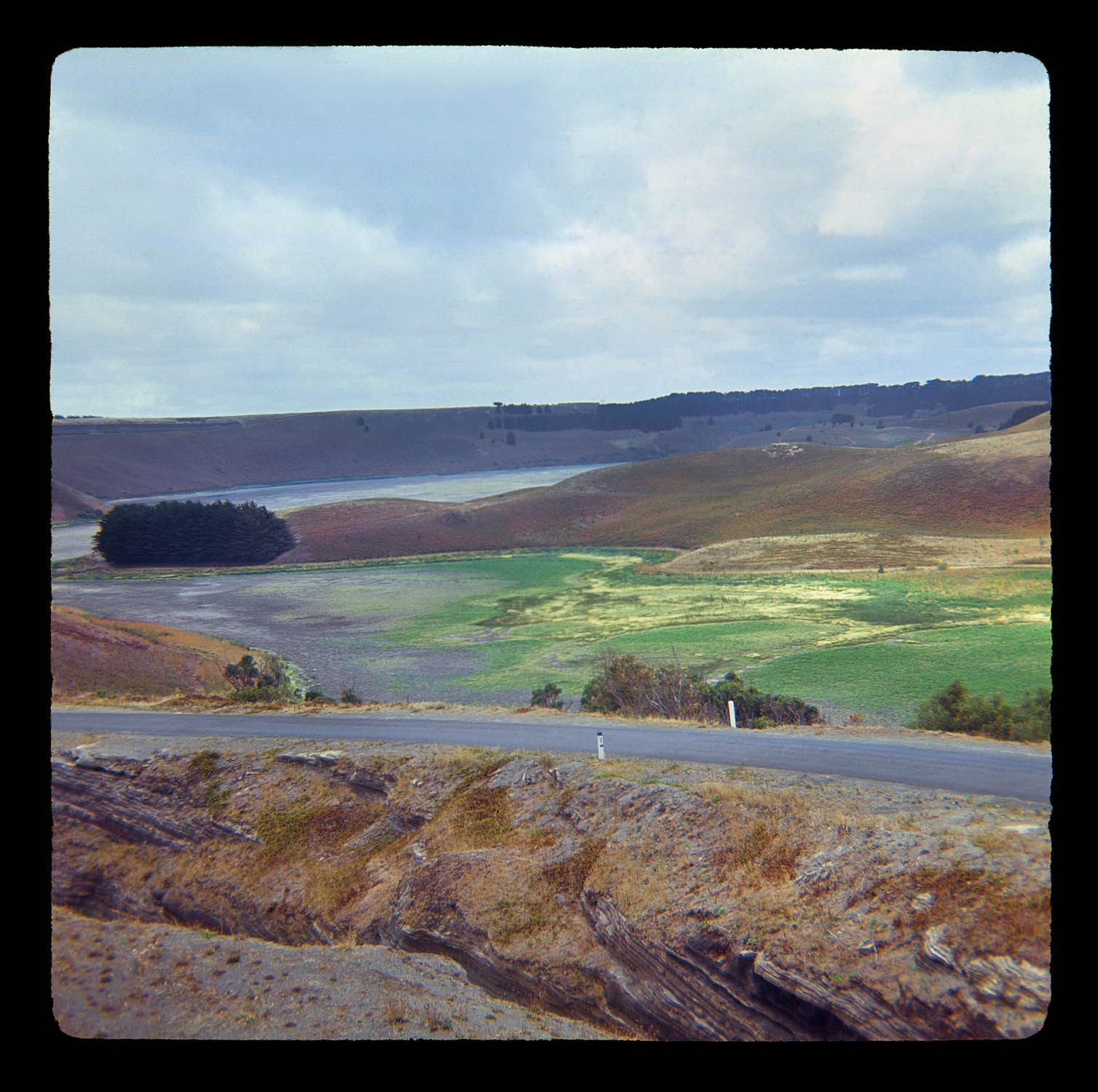
Exhibition: ‘Bill Henson: Landscapes’ at Castlemaine Art Gallery and Historical Museum, Victoria

Exhibition dates: 30th April – 30th June, 2016


Installation photograph of the exhibition 'Bill Henson: Landscapes' at the Castlemaine Art Gallery and Historical Museum


Installation photograph of the exhibition Bill Henson: Landscapes at the  Castlemaine Art Gallery and Historical Museum
Photo: © Marcus Bunyan and the Castlemaine Art Gallery and Historical Museum


Drawing on light

A magnificent installation from one of the world’s great photographers.

Why this artist is not having sell out retrospectives at MoMA New York, Centre Georges Pompidou Paris or the Tate in London is beyond me. Is it because of continuing cultural cringe, or the fact that he’s not as well known in Europe and America?

Their loss is our gain.

The darkened room contains only eight images beautifully lit to create a wondrous, enveloping atmosphere. Henson’s night photographs emit light as though a result of the excitation of atoms by energy – the energy of the mind transferred to the light of place. A luminescence of thought is imaged in the photograph through the emission of light … produced not so much by physiological or electromagnetic processes as much as by a culturally informed mind that seems to bring forth its own light. And behold there is light.

As that eminent photographer Minor White used to opine when asked for technical information on his photographs in the back of popular American photography monthlies: for technical information the camera was creatively used.

For me, these are not images of ethereal malevolence or Australian anxiety about our environment and the ominous ordinary. They do not possess that feeling at all. These pictures are about an understanding and contemplation of light and place, a process which is in balance one with the other. Yes, the transient nature of earthly existence but more than that. The soft details of flowers in the grass, or the spatter of rain on water, not noticed until you really look at the image; or the shadow of a truck on a bridge underpass. In my mind I know where this is, in Gipps Street, Abbottsford near the train bridge… or so I believe in my imagination. All of these photographs have a feeling of a subtle vibration of energy in the universe. There is no malevolence here.

My only criticism of this, the first photographic exhibition at Castlemaine Art Gallery, is that there is not enough of it. There needed to be more of the work. It just felt a little light on. Another gallery was needed to make the installation experience fully enveloping. Having said that, congratulations must go to the artist and to gallery who are putting on some amazing exhibitions in the heart of regional Victoria.

Dr Marcus Bunyan


Many thankx to Castlemaine Art Gallery and Historical Museum for allowing me to publish the photographs in the posting. Please click on the photographs for a larger version of the image. All images © Marcus Bunyan and the Castlemaine Art Gallery and Historical Museum


Opening titles for the exhibition 'Bill Henson: Landscapes' at the Castlemaine Art Gallery and Historical Museum


Opening titles for the exhibition Bill Henson: Landscapes at the  Castlemaine Art Gallery and Historical Museum
Photo: © Marcus Bunyan and the Castlemaine Art Gallery and Historical Museum


Installation photograph of the exhibition 'Bill Henson: Landscapes' at the Castlemaine Art Gallery and Historical Museum


Installation photograph of the exhibition Bill Henson: Landscapes at the  Castlemaine Art Gallery and Historical Museum
Photo: © Marcus Bunyan and the Castlemaine Art Gallery and Historical Museum


Bill Henson (Australian, b. 1955) 'Untitled #9 2005/2006' 2005-2006 from the exhibition 'Bill Henson: Landscapes' at Castlemaine Art Gallery and Historical Museum, Victoria, April - June, 2016


Bill Henson (Australian, b. 1955)
Untitled #9 2005/2006
2005-2006
CL SH541 N2
Type C photograph
127 x 180cm (sheet)
Courtesy of the artist and Roslyn Oxley9 Gallery, Sydney


Bill Henson (Australian, b. 1955) 'Untitled #9 2005/2006' 2005-2006 (detail)


Bill Henson (Australian, b. 1955)
Untitled #9 2005/2006 (detail)
2005-2006
CL SH541 N2
Type C photograph
127 x 180cm (sheet)
Courtesy of the artist and Roslyn Oxley9 Gallery, Sydney


Installation photograph of the exhibition 'Bill Henson: Landscapes' at the Castlemaine Art Gallery and Historical Museum with 'Untitled #21 2005/2006' at left and 'Untitled #9 2005/2006' at right


Installation photograph of the exhibition Bill Henson: Landscapes at the  Castlemaine Art Gallery and Historical Museum with Untitled #21 2005/2006 at left and Untitled #9 2005/2006 at right
Photo: © Marcus Bunyan and the Castlemaine Art Gallery and Historical Museum


Bill Henson (Australian, b. 1955) 'Untitled #21 2005-2006' 2005-2006 (detail)


Bill Henson (Australian, b. 1955)
Untitled #21 2005-2006 (detail)
2005-2006
CL SH541 N2
Type C photograph
127 x 180cm


Bill Henson (Australian, b. 1955) 'Untitled 1999/2000' 1999-2000 from the exhibition 'Bill Henson: Landscapes' at Castlemaine Art Gallery and Historical Museum, Victoria, April - June, 2016


Bill Henson (Australian, b. 1955)
Untitled 1999-2000
1999-2000
Type C photograph
103.8 x 154.0cm (image) 126.8 x 179.9cm (sheet)
National Gallery of Victoria, Melbourne
Purchased with funds from the Victorian Foundation for Living Australian Artists, 2005 (2005.501)
Courtesy of the artist and Roslyn Oxley9 Gallery, Sydney


“Our current exhibition, Bill Henson: Landscapes captures the haunting convergence of opposites; two worlds, darkness and light.

These dreamlike pictures pursue the Romantic project by engulfing the viewer in the urban or semi-rural sublime. Through these landscapes, we are immersed in a realm which offers an otherworldly view of the transient nature of earthly existence. The inky depths of the encroaching natural environment suggest a dark abyss, an ethereal malevolence that relates to both the artistic conventions of Renaissance landscape painting and, a uniquely Australian anxiety about our environment and the ominous ordinary.”

Text from the Castlemaine Art Gallery Facebook page


Installation photograph of the exhibition 'Bill Henson: Landscapes' at the Castlemaine Art Gallery and Historical Museum

Installation photograph of the exhibition 'Bill Henson: Landscapes' at the Castlemaine Art Gallery and Historical Museum

Installation photograph of the exhibition 'Bill Henson: Landscapes' at the Castlemaine Art Gallery and Historical Museum with in the bottom image at left, 'Untitled' 2001-2002; and at right, 'Untitled #23' 1998/1999/2000


Installation photographs of the exhibition Bill Henson: Landscapes at the  Castlemaine Art Gallery and Historical Museum with in the bottom image at left, Untitled 2001-2002; and at right, Untitled #23 1998/1999/2000
Photos: © Marcus Bunyan and the Castlemaine Art Gallery and Historical Museum


Bill Henson (Australian, b. 1955) 'Untitled 2001-2002' 2001-2002


Bill Henson (Australian, b. 1955)
Untitled 2001-2002
2001-2002
Type C photograph
127 x 180cm (sheet)
Collection of Annabel and Rupert Myer


Bill Henson (Australian, b. 1955) 'Untitled 2001/02' 2001-2002 (detail)


Bill Henson (Australian, b. 1955)
Untitled 2001-2002 (detail)
2001-2002
Type C photograph
127 x 180cm (sheet)
Collection of Annabel and Rupert Myer


Installation photograph of the exhibition 'Bill Henson: Landscapes' at the Castlemaine Art Gallery and Historical Museum showing 'Untitled #28' 1998 at right


Installation photograph of the exhibition Bill Henson: Landscapes at the  Castlemaine Art Gallery and Historical Museum showing Untitled #28 1998 at right
Photo: © Marcus Bunyan and the Castlemaine Art Gallery and Historical Museum


Bill Henson (Australian, b. 1955) 'Untitled #28' 1998 (detail)


Bill Henson (Australian, b. 1955)
Untitled #28 (detail)
1998
Type C photograph
104 × 154cm


Bill Henson (Australian, b. 1955) 'Untitled #48' 1998/1999/2000 (detail)


Bill Henson (Australian, b. 1955)
Untitled #48 (detail)
1998/1999/2000
Type C photograph
127 × 180cm


Castlemaine Art Gallery and Historical Museum
14 Lyttleton Street (PO Box 248)
Castlemaine, Vic 3450 Australia
Phone: (03) 5472 2292
Email: info@castlemainegallery.com

Opening hours:
Thursday 12pm – 4pm
Friday 12pm – 6.30pm
Weekends 12pm – 4pm

Castlemaine Art Gallery and Historical Museum website

LIKE ART BLART ON FACEBOOK

Back to top

In memory: ‘Port Arthur, Tasmania, 1891’

28th April 2016


Unknown photographer. 'Port Arthur, Tasmania' 1891


Unknown photographer (Australian)
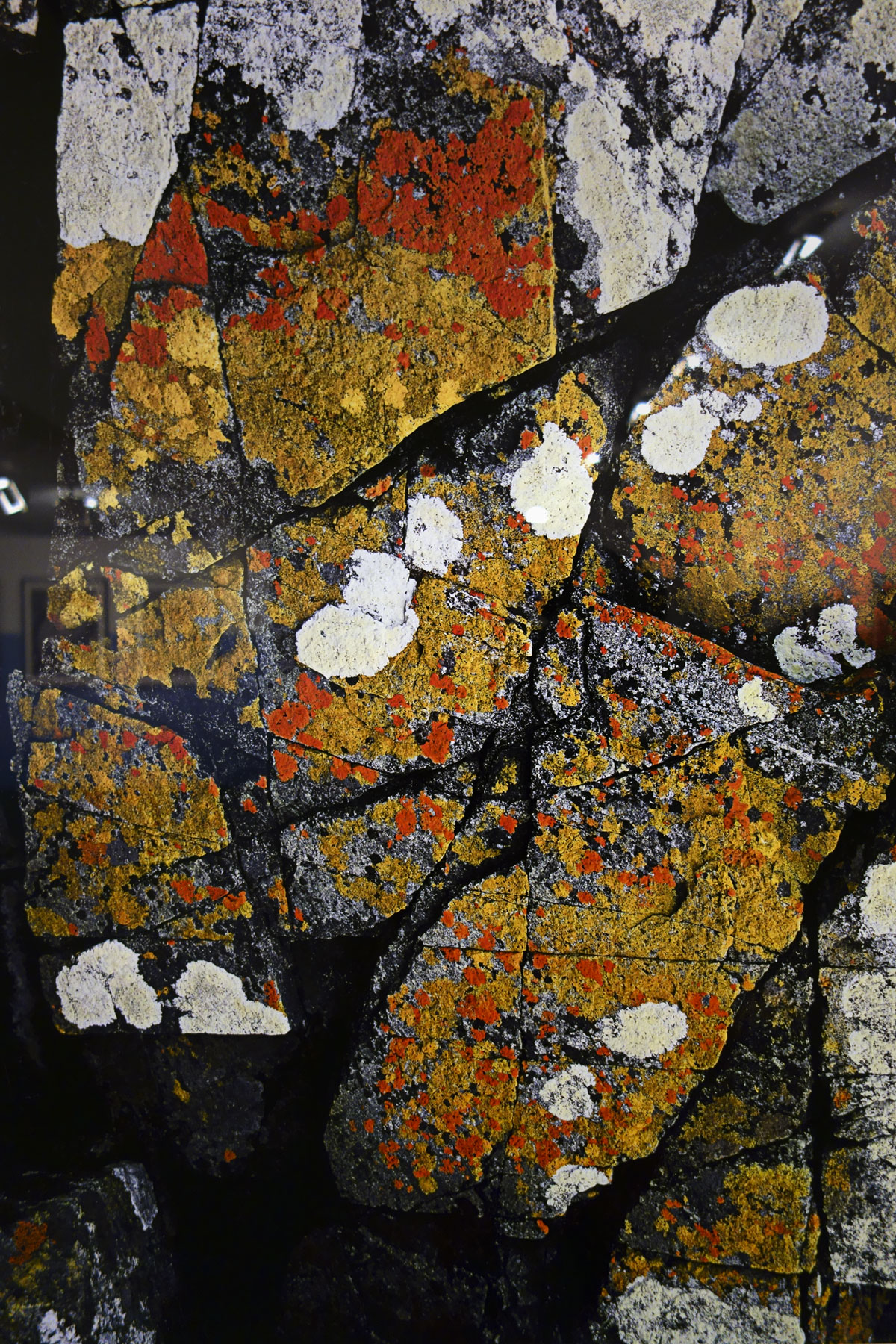
Port Arthur, Tasmania
1891
Albumen photograph
34.5 x 22.2cm


In memory of all those that lost their lives 20 years ago today at Port Arthur, Tasmania.

This albumen photograph of Port Arthur, Tasmania was taken in 1891 by an unknown photographer. I have scanned and lightly cleaned the image. The photograph is one that is possibly not known before of this place.

Looking down on St. David’s Anglican Church with Mason Cove in the distance, with rowing boats in the river and sailing boats hidden at left behind the trees.

In front of the church a man and boy pose for the camera, the man with his hands on his hips head topped with pork pie hat, the boy wearing an oversized hat, possibly a boater, with his hands hanging limply by his side.

To the left, washing hangs on the line to dry with, behind, weeping willows and an ornamental, circular stone fountain in the middle of a sparse garden paddock.

To the right is Settlement Road with The Commandant’s Garden in the distance.

A memory of a different time and place.

Dr Marcus Bunyan


Many thankx to Nick Henderson for allowing me to scan this wonderful image.

Please click on the image to enlarge.


LIKE ART BLART ON FACEBOOK

Back to top