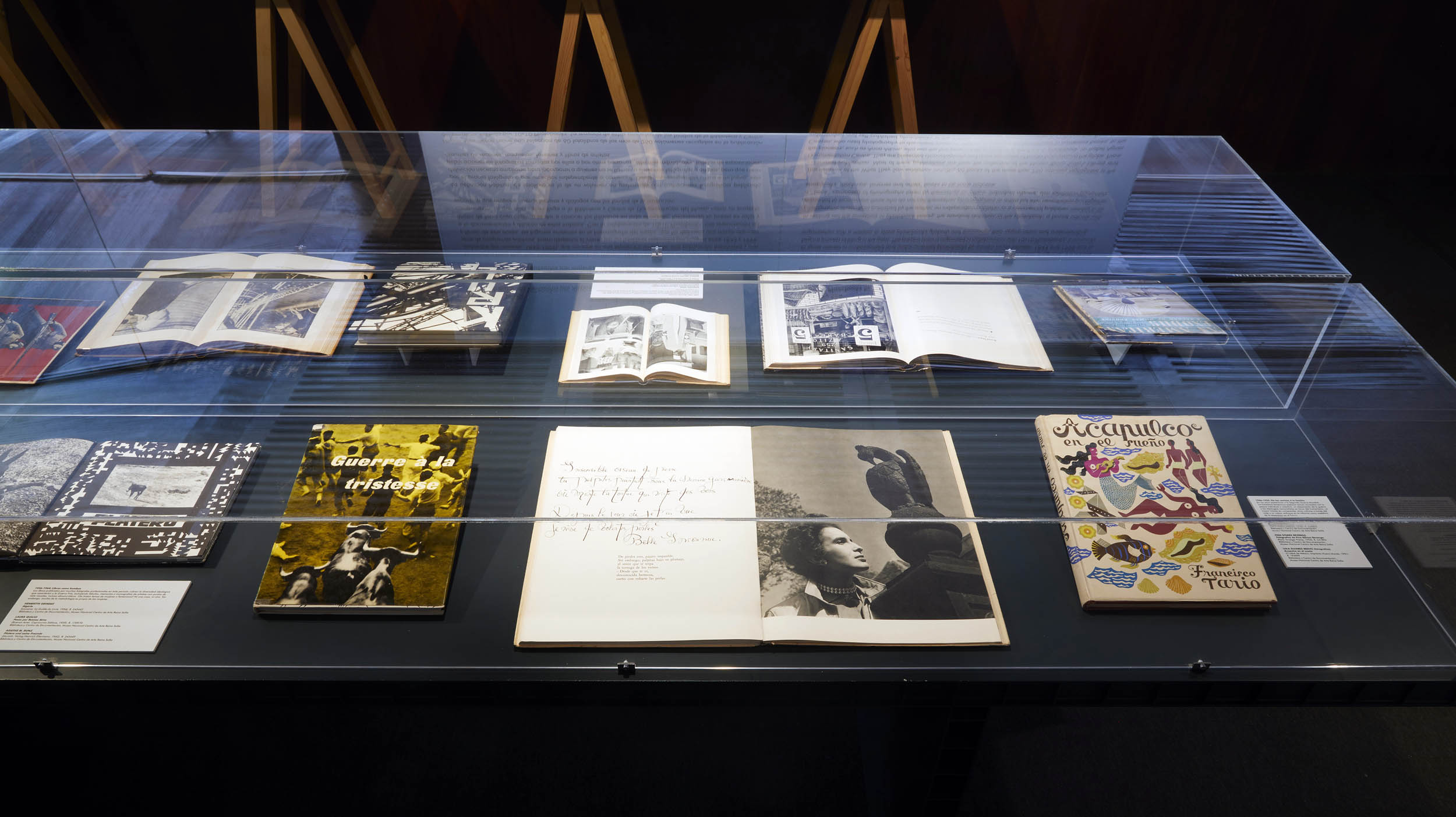
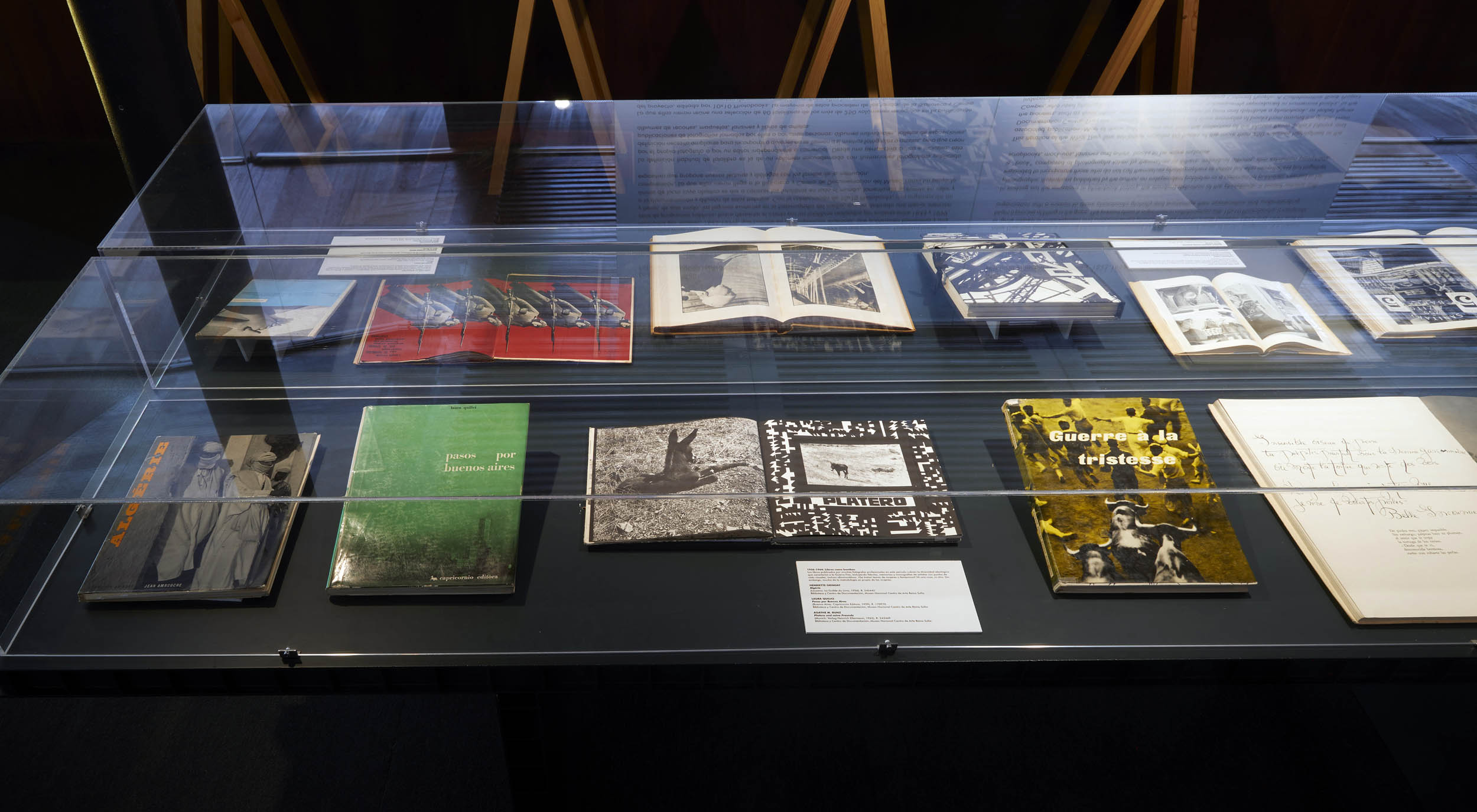
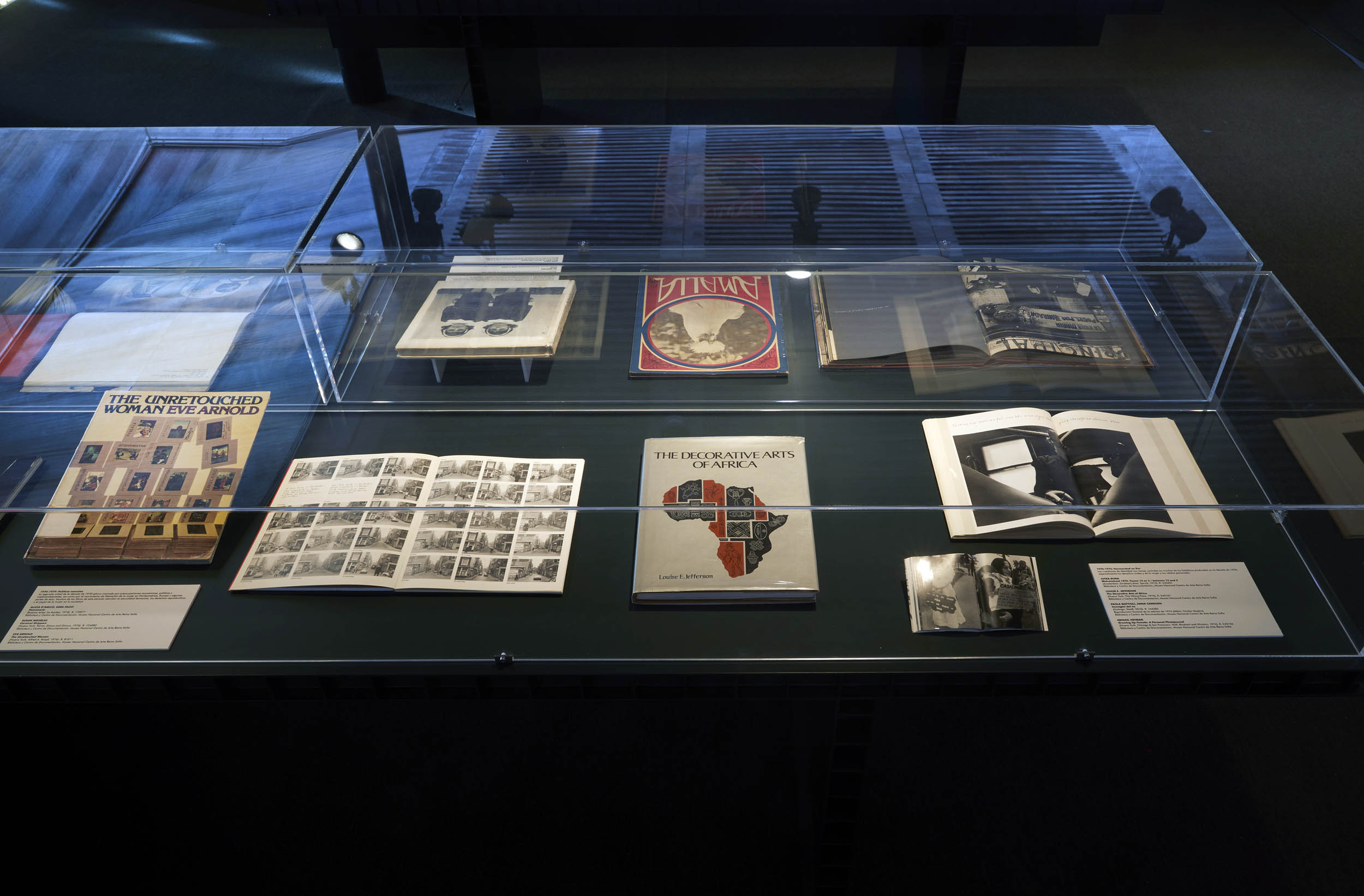
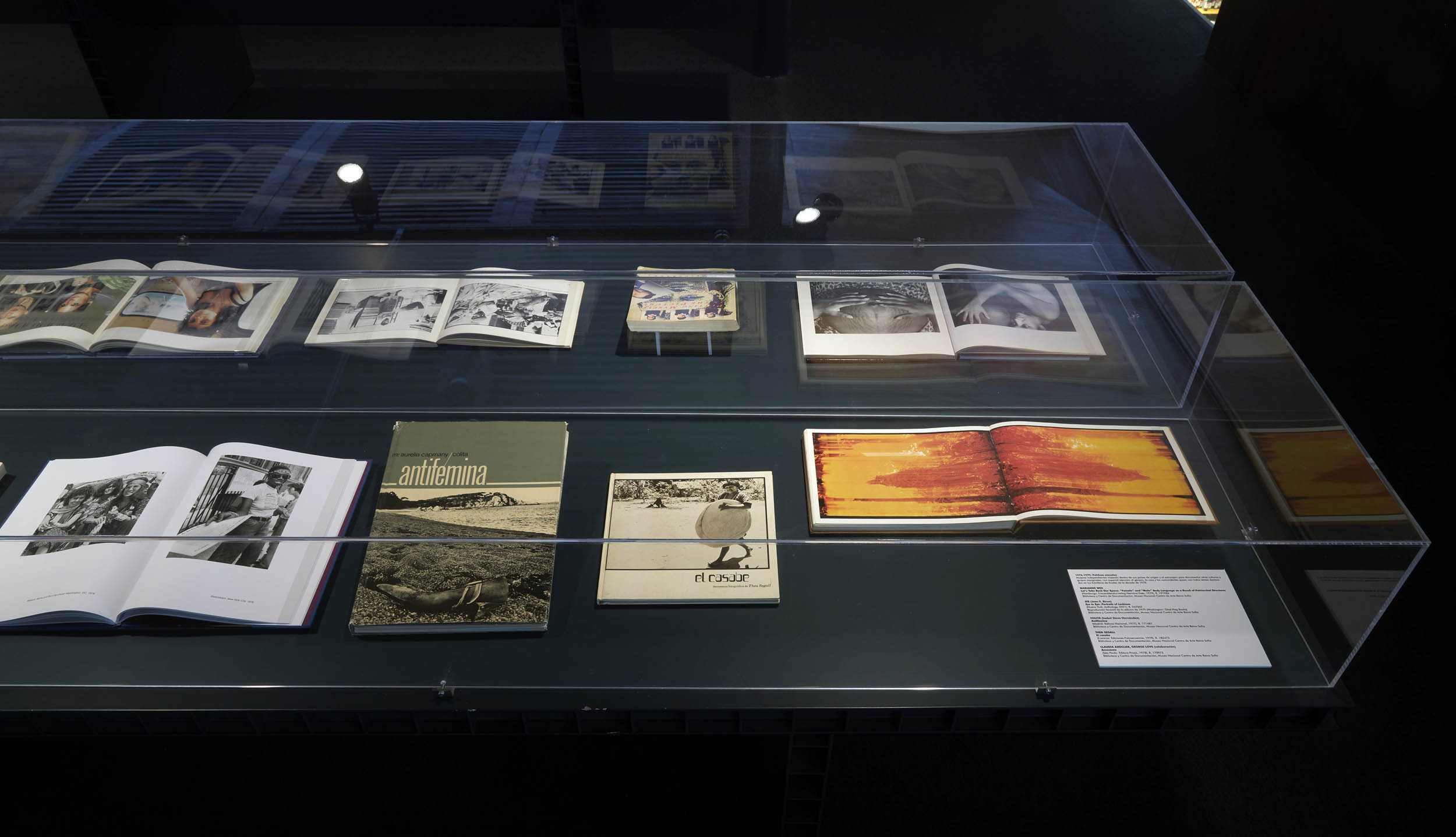
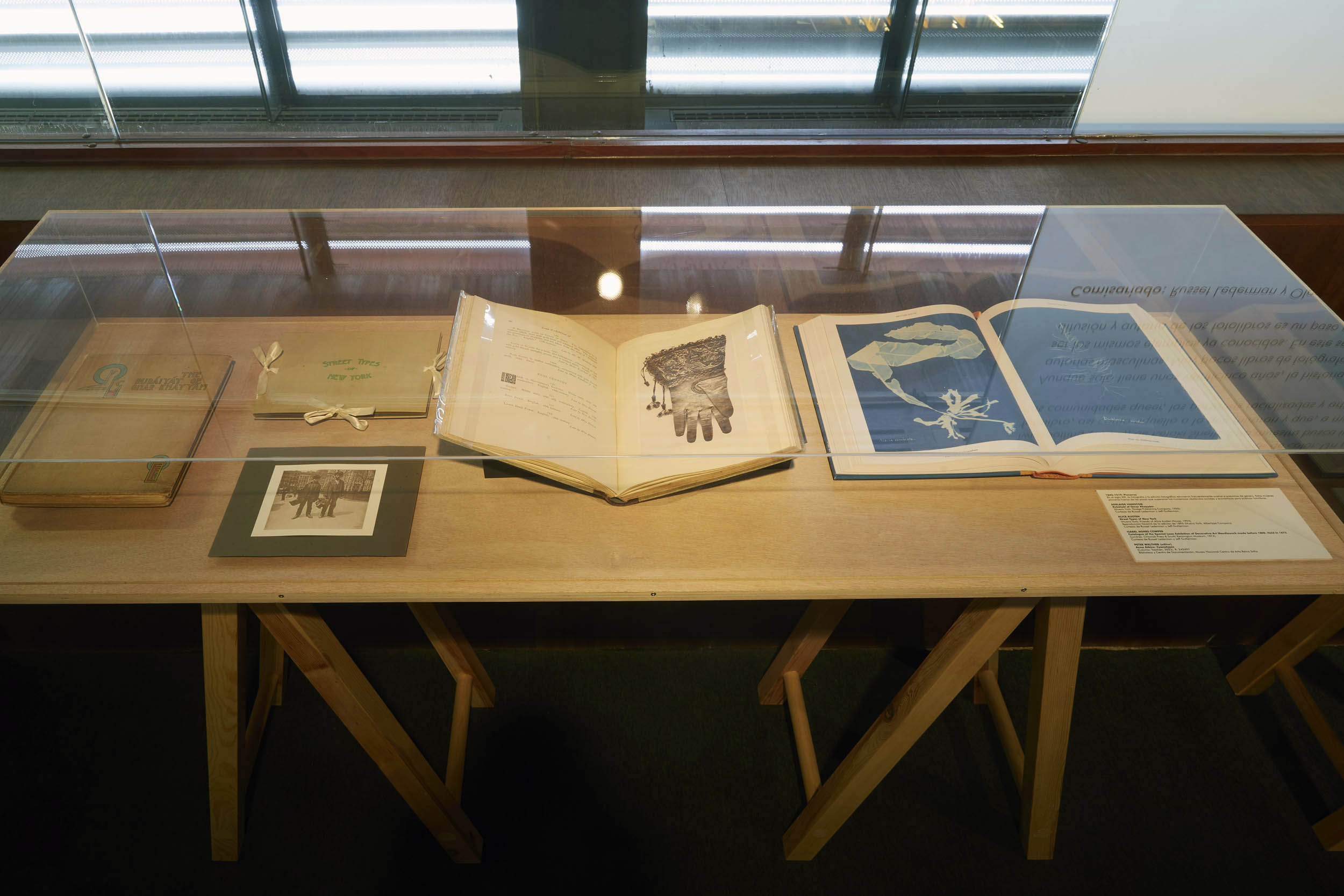
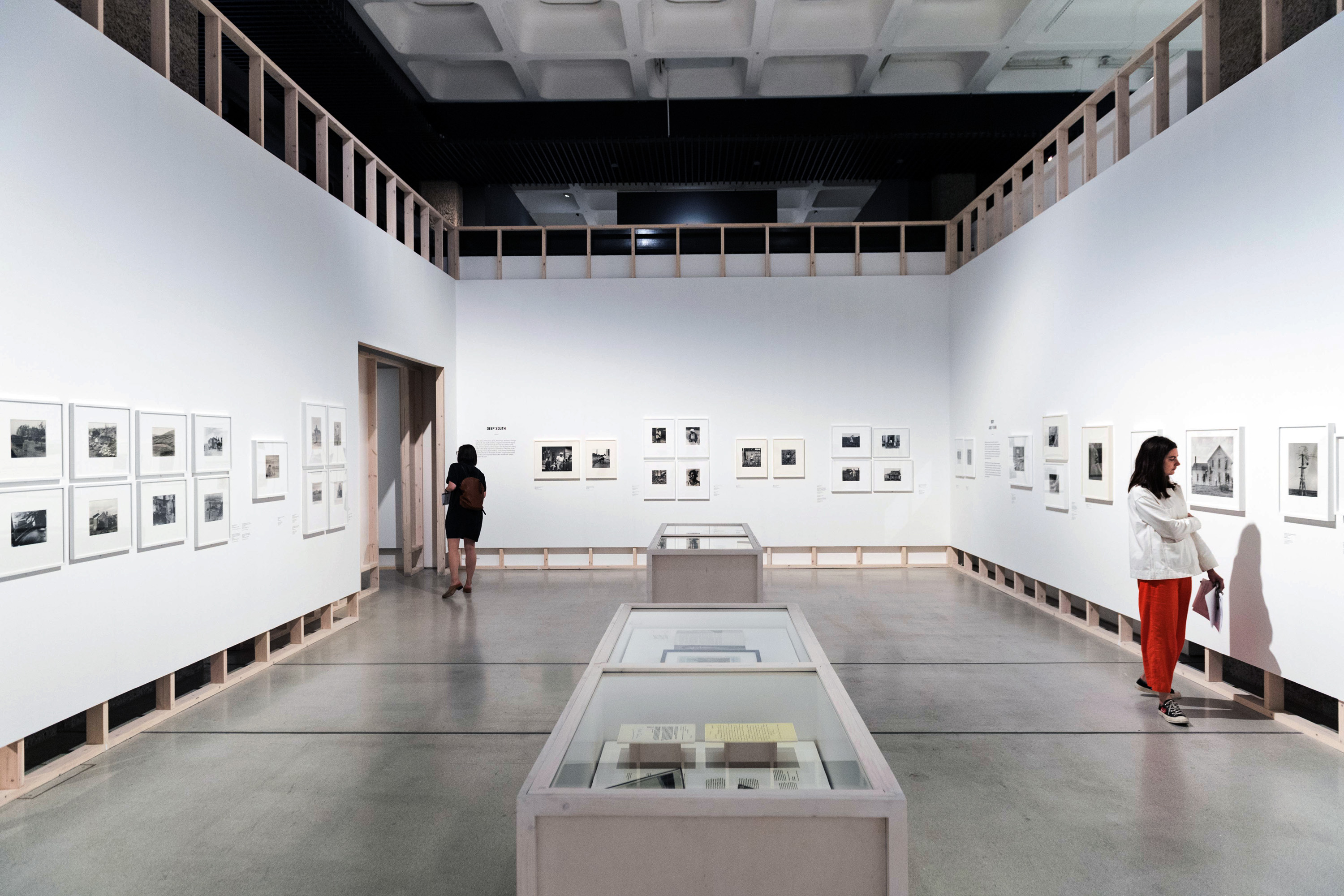
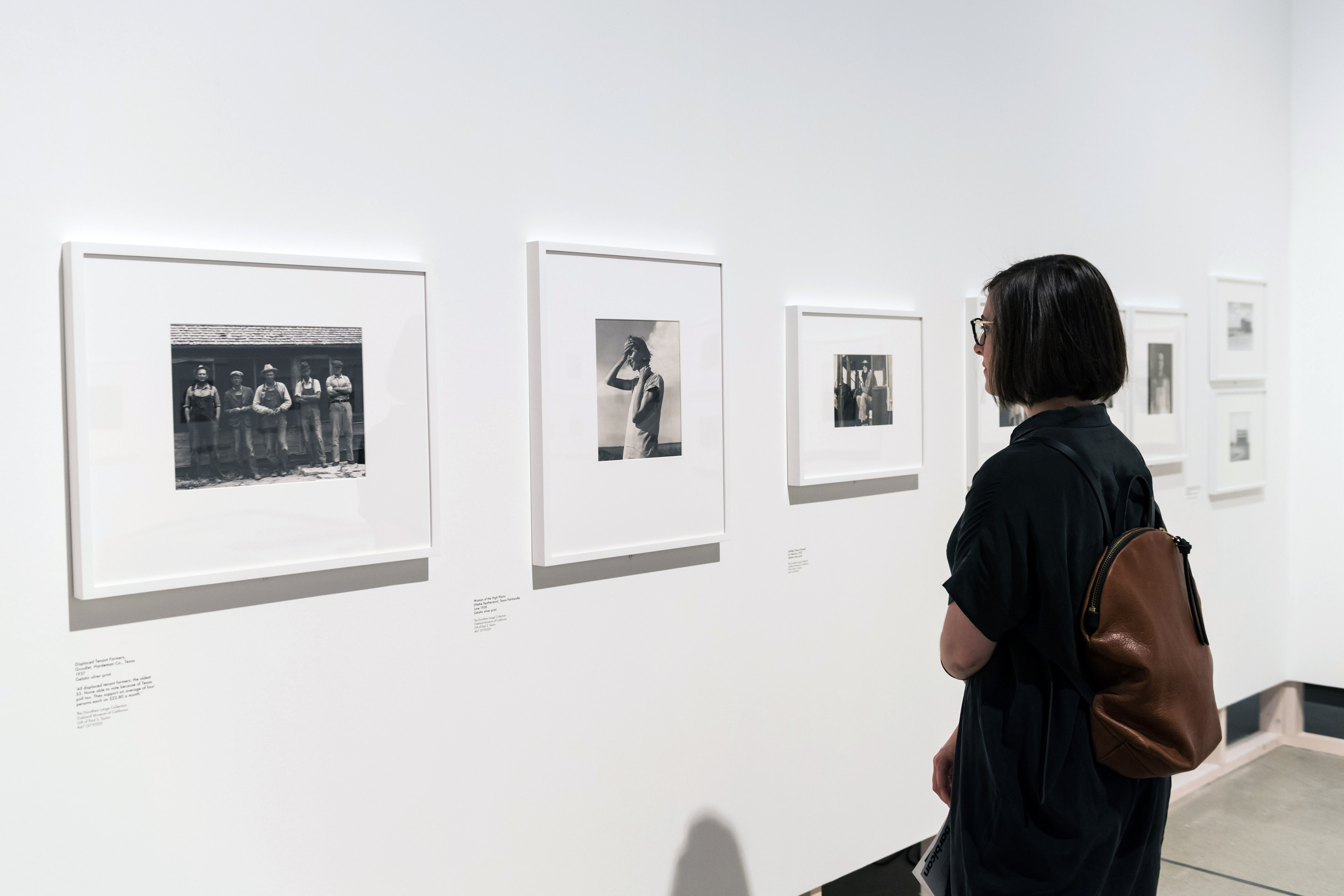
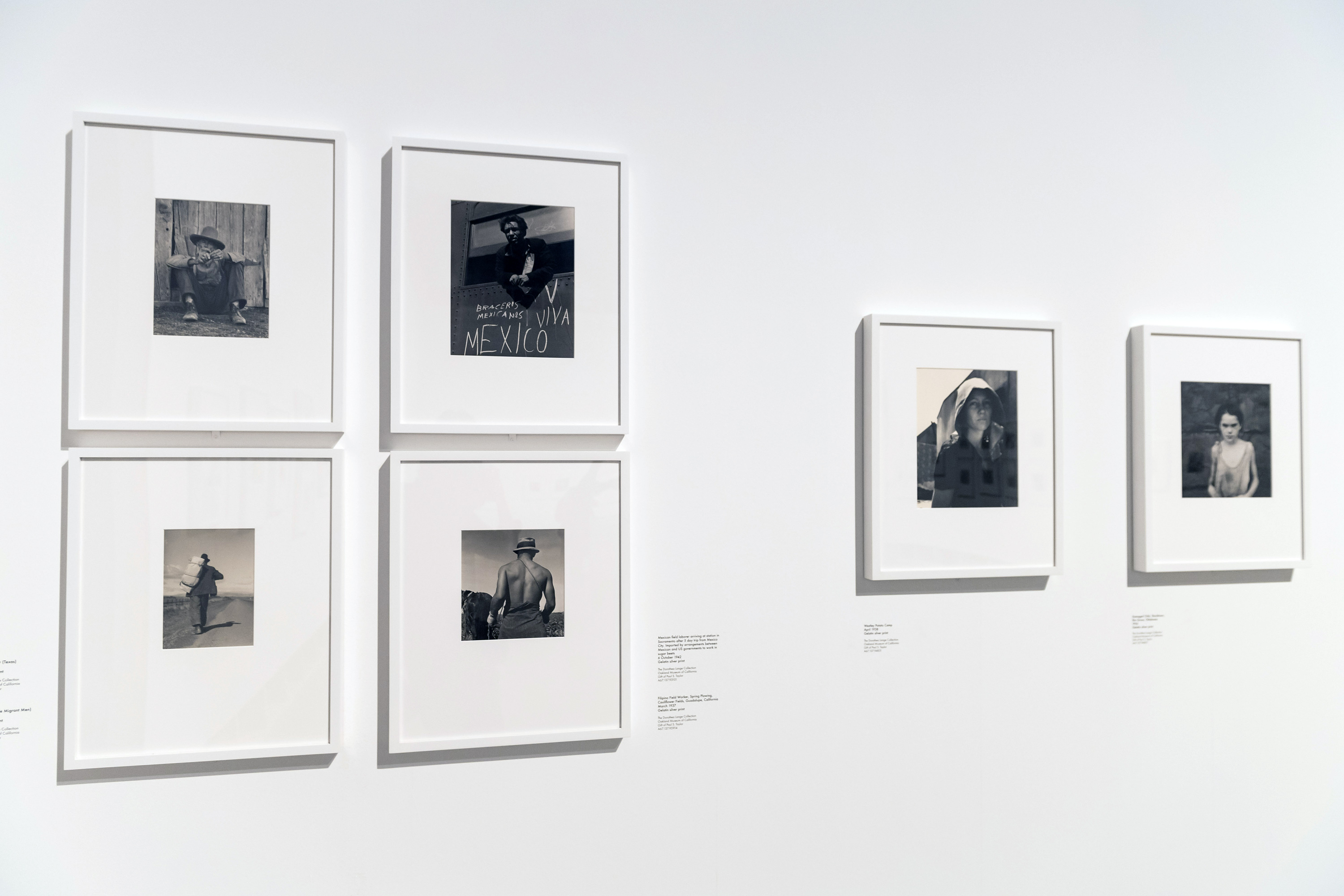
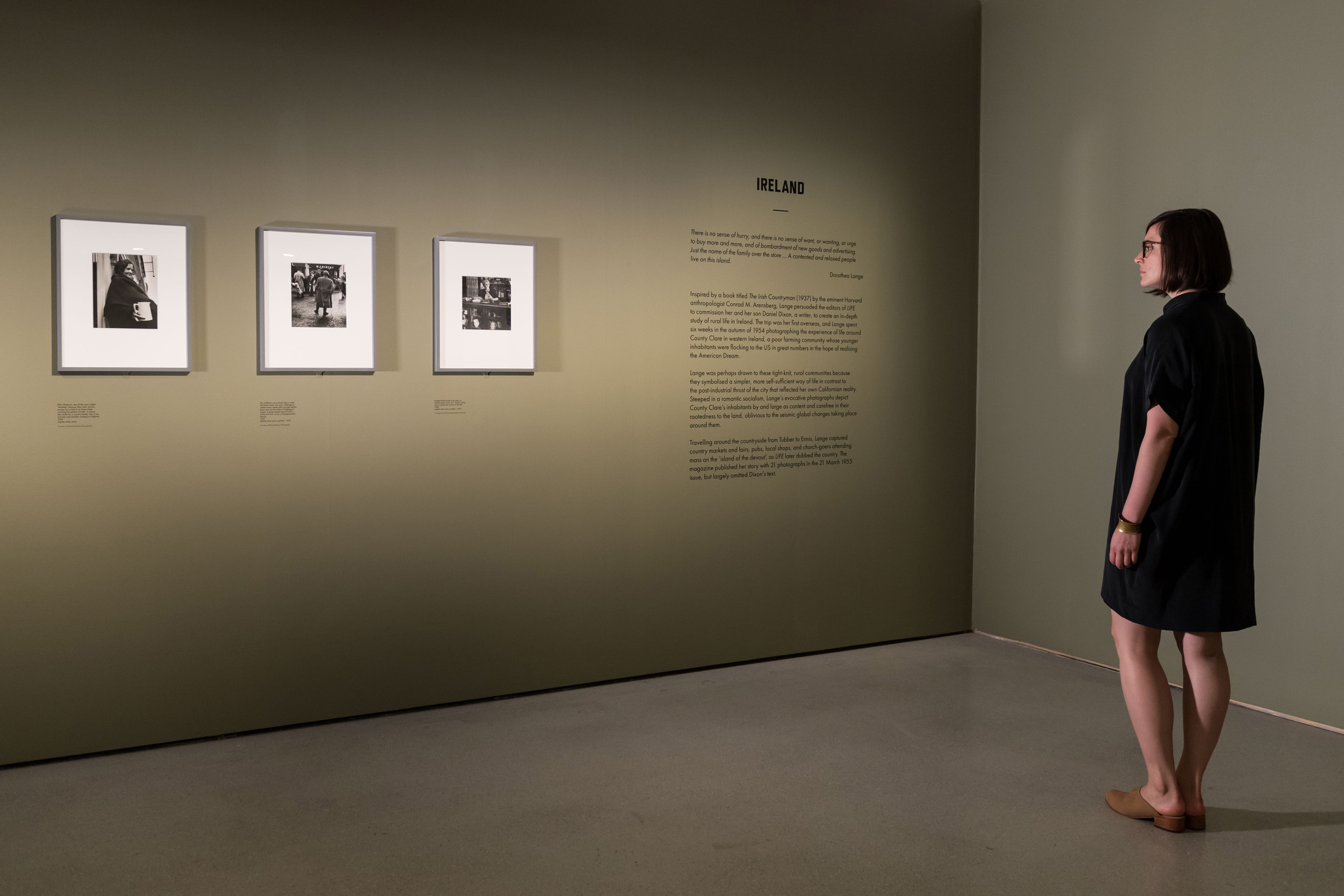
Exhibition: ‘What They Saw: Historical Photobooks by Women, 1843-1999’ at the Museo Nacional Centro de Arte Reina Sofía, Madrid

Exhibition dates: 23rd February – 7th June 2024

Curators: Russet Lederman and Olga Yatskevich
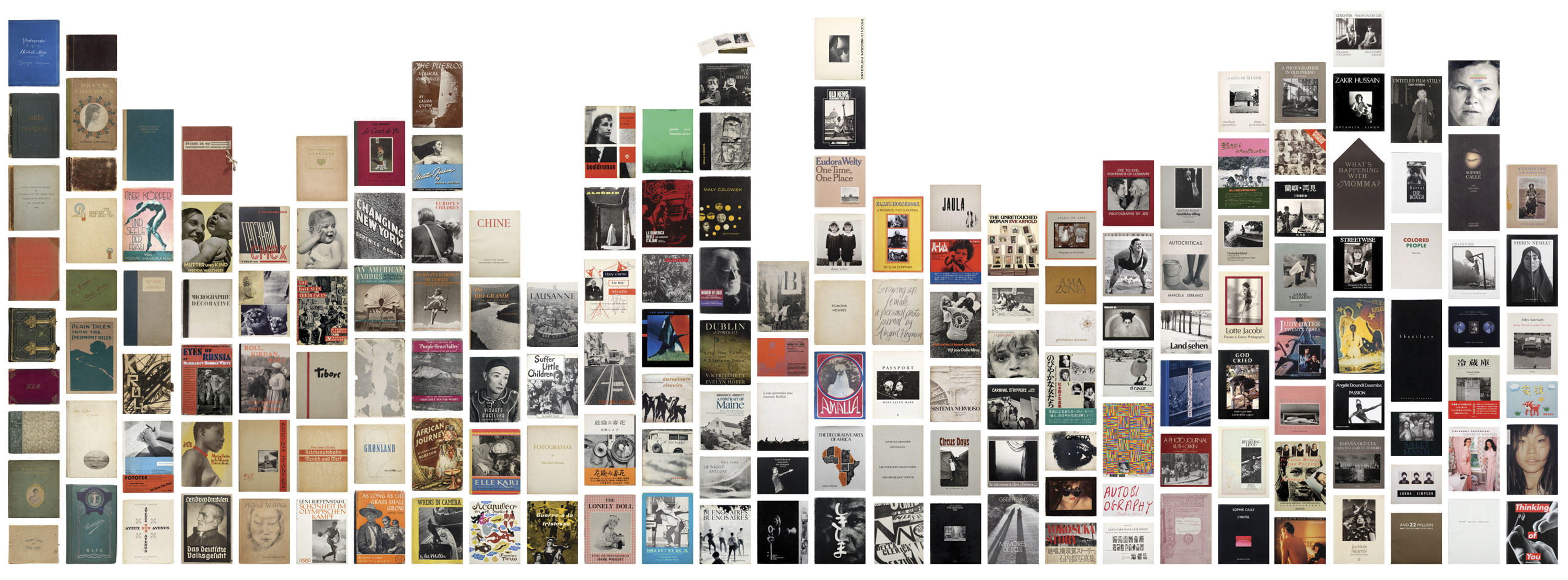
 

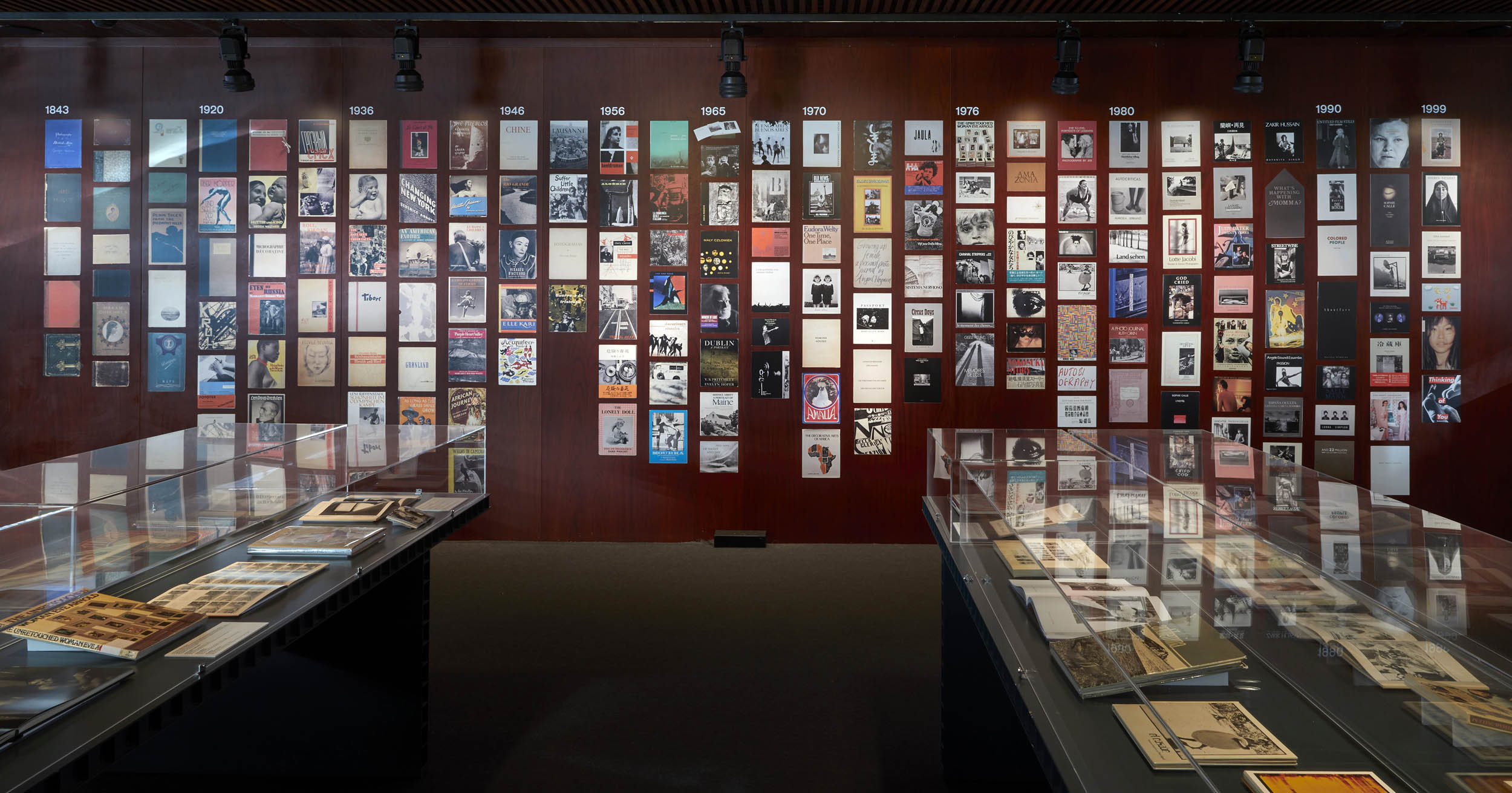
'What They Saw: Historical Photobooks by Women, 1843-1999' (Nueva York, 10×10 Photobooks, 2021) cover images


What They Saw: Historical Photobooks by Women, 1843-1999 (Nueva York, 10×10 Photobooks, 2021) cover images
Design: Ayumi Higuchi
Photography: Jeff Gutterman


A mid-week posting!

I wouldn’t have forgiven myself if I had missed this important exhibition about an interesting subject, the “underexposed and undocumented photobooks by women made between 1843 and 1999.”

So I thought I would squeeze it into the posting schedule which stretches a couple of months into the future…

Other than the group photographs of the book covers and installation photographs of the exhibition (below), there were no individual book covers nor details about some of the books in the media images, so I have added a few were it has been possible along with accompanying text.

I have also included photographs from what I think is one of the most iconic photobooks, even though I am not sure it is in the exhibition: Marion Palfi’s There is No More Time: An American Tragedy (1949).

So many important photobooks by so many glorious photographers.

Dr Marcus Bunyan


Many thankx to the Museo Nacional Centro de Arte Reina Sofía for allowing me to publish the photographs in the posting. Please click on the photographs for a larger version of the image.


'What They Saw: Historical Photobooks by Women, 1843-1999' (Nueva York, 10×10 Photobooks, 2021) cover images (detail)


What They Saw: Historical Photobooks by Women, 1843-1999 (Nueva York, 10×10 Photobooks, 2021) cover images (detail)
Design: Ayumi Higuchi
Photography: Jeff Gutterman
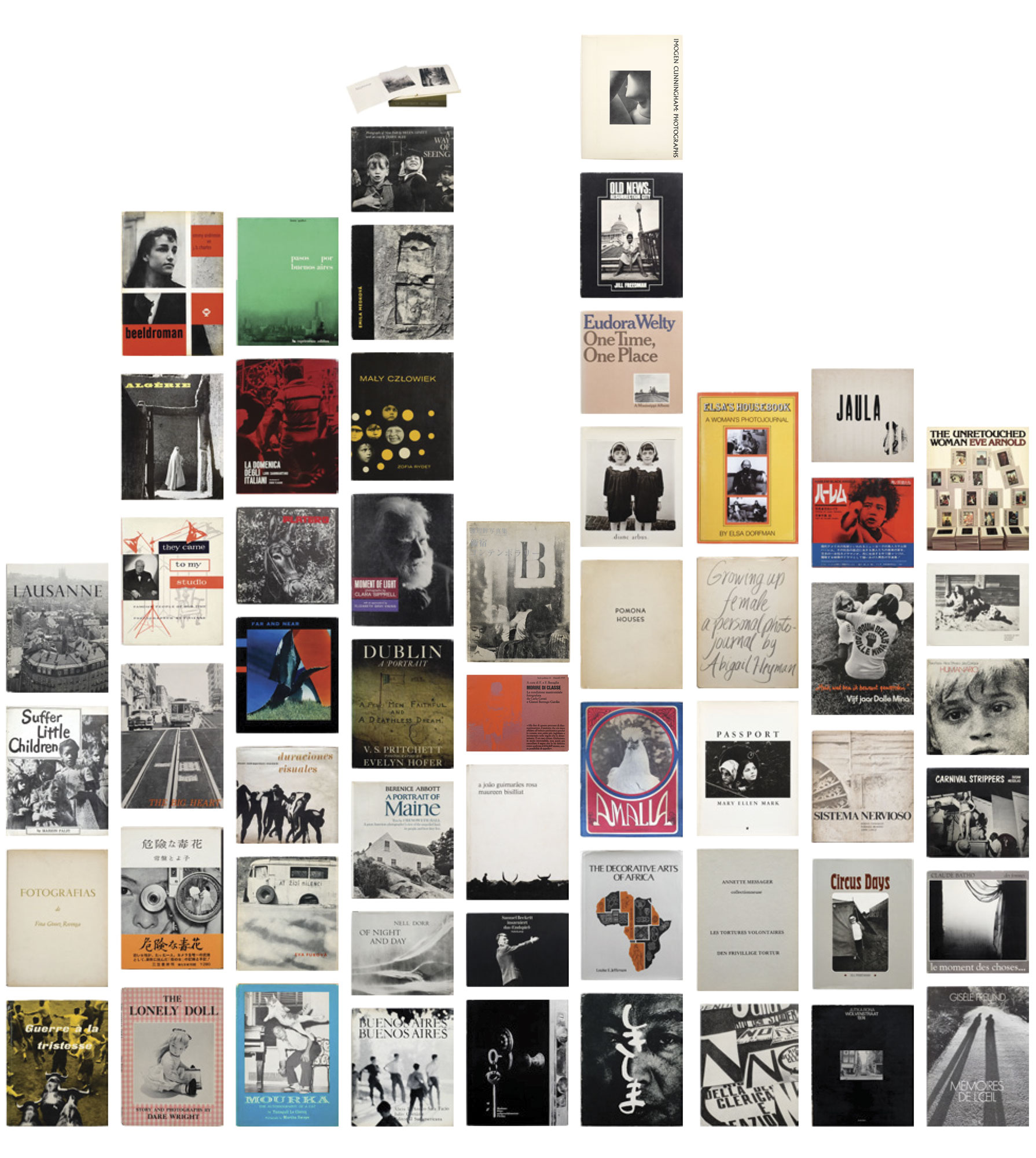
 

'What They Saw: Historical Photobooks by Women, 1843-1999' (Nueva York, 10×10 Photobooks, 2021) cover images (detail)


What They Saw: Historical Photobooks by Women, 1843-1999 (Nueva York, 10×10 Photobooks, 2021) cover images (detail)
Design: Ayumi Higuchi
Photography: Jeff Gutterman
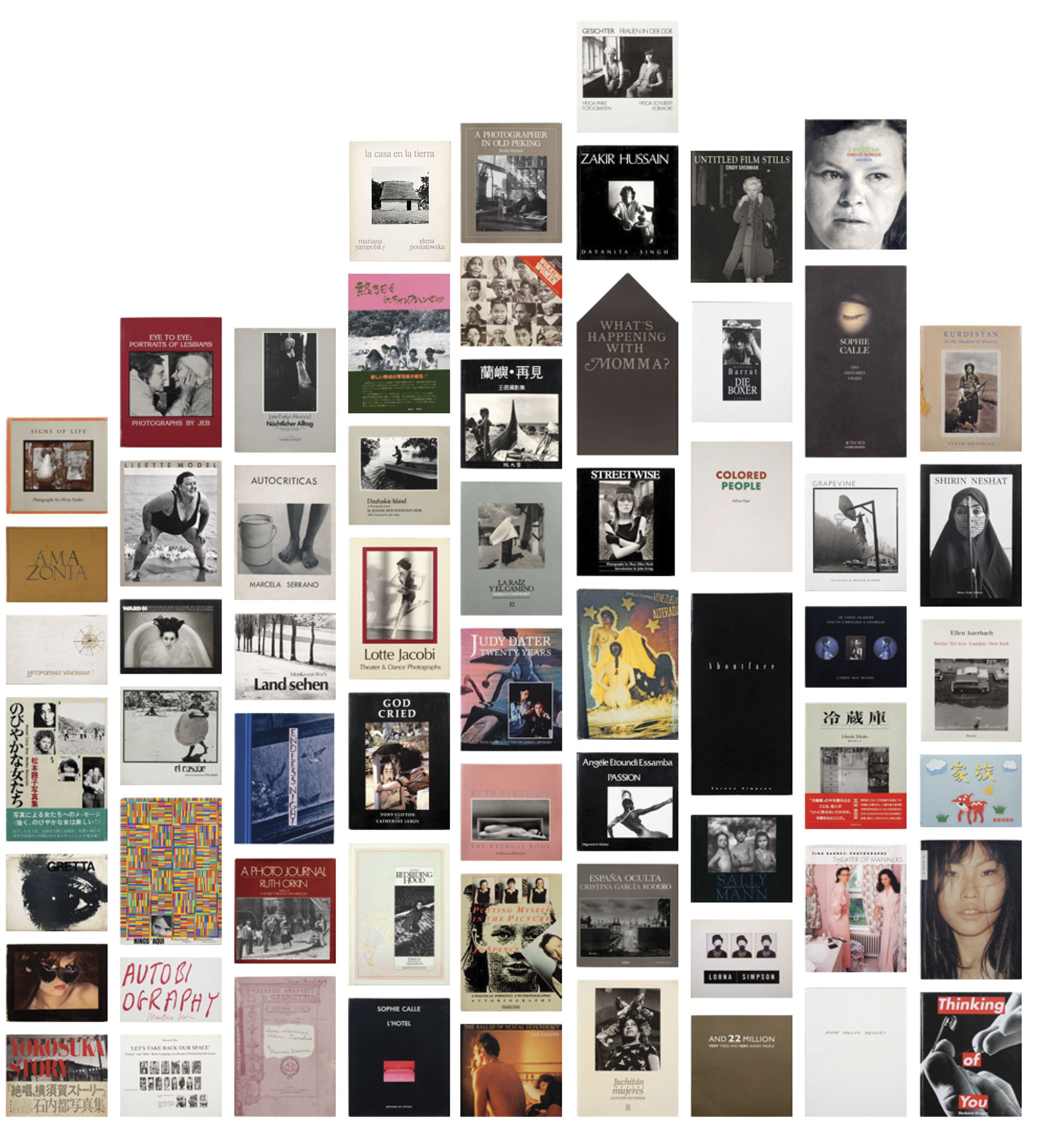
 

'What They Saw: Historical Photobooks by Women, 1843-1999' (Nueva York, 10×10 Photobooks, 2021) cover images (detail)


What They Saw: Historical Photobooks by Women, 1843-1999 (Nueva York, 10×10 Photobooks, 2021) cover images (detail)
Design: Ayumi Higuchi
Photography: Jeff Gutterman


What They Saw project, a touring exhibition accompanied by a publication and series of public programs, is a means to ignite interest in underexposed and undocumented photobooks by women made between 1843 and 1999 and to begin a process of filling in the gaps. The present show is organised in collaboration with 10×10 Photobooks, a nonprofit organisation with a mission to share photobooks globally and encourage their appreciation and understanding.

In seeking out the omissions in photobook history, the standard definition of the photobook: a bound volume with photographic illustrations published by the author, an independent publisher or a commercial publisher, needed to be expanded to incorporate those who do not call themselves photographers or artists but who nevertheless put together a “book” composed of photographs taken by themselves or others: individual albums, slim exhibition pamphlets, scrapbooks, mock-ups, fanzines and artists’ books to be more inclusive.

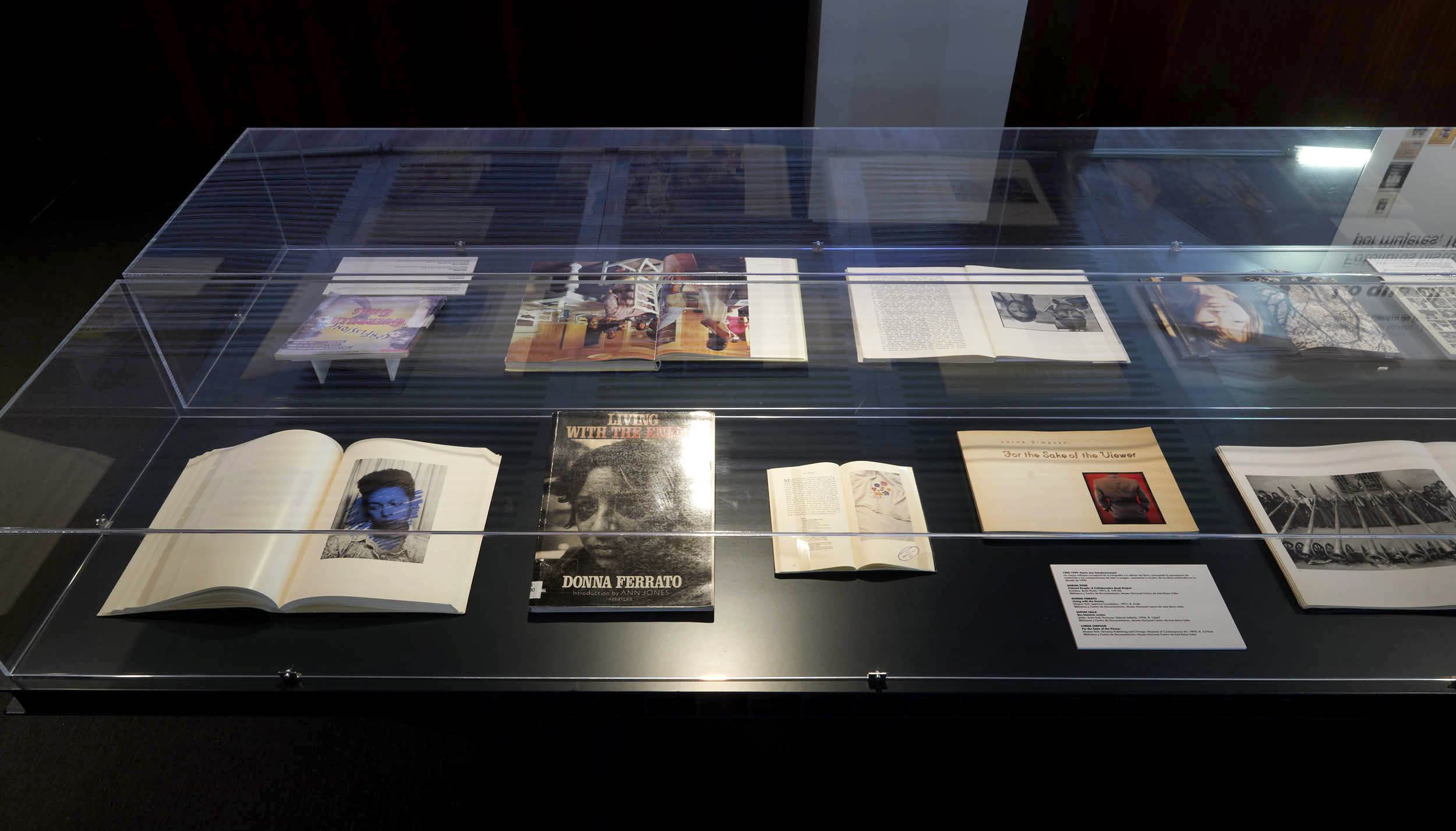
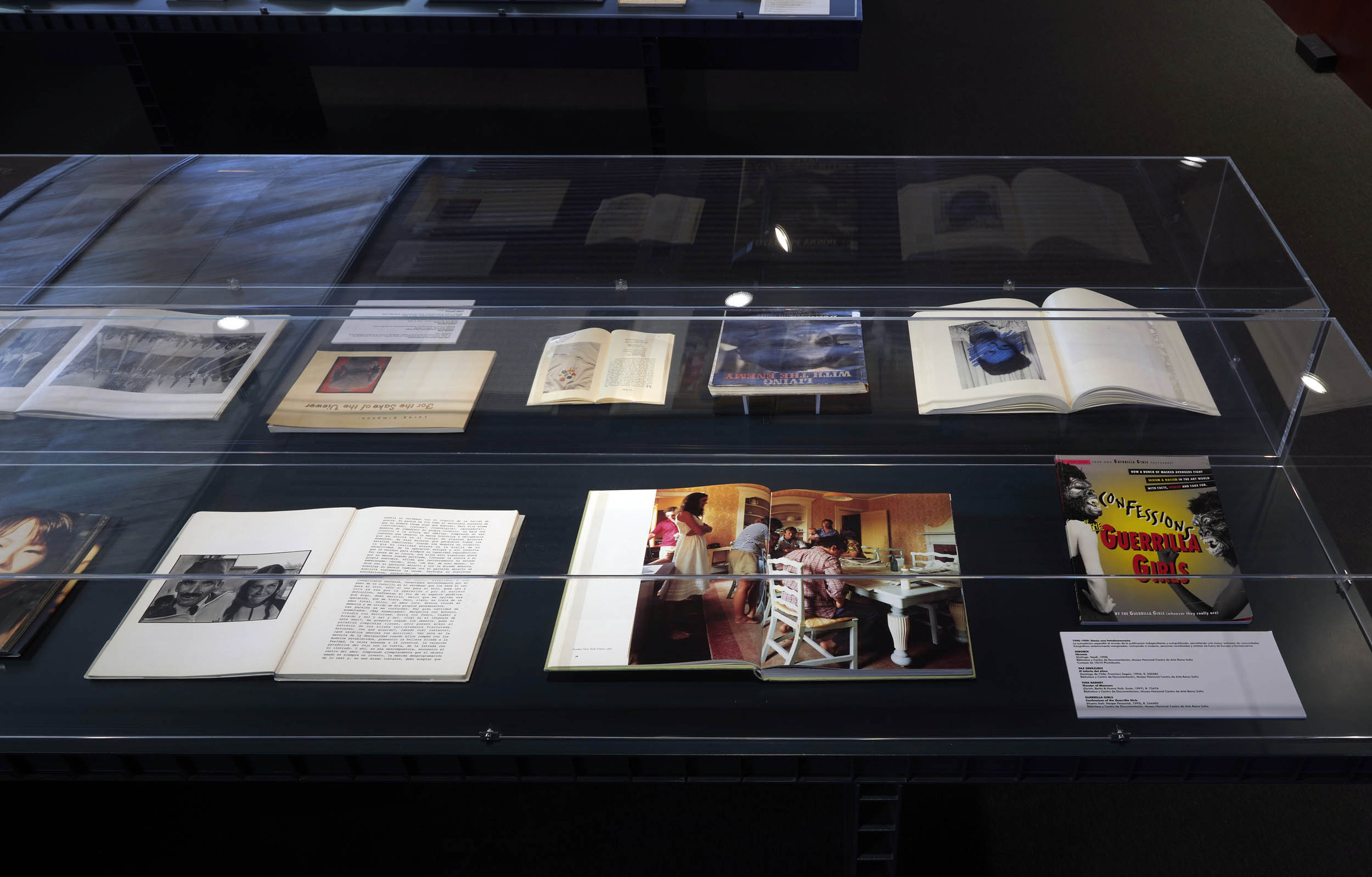
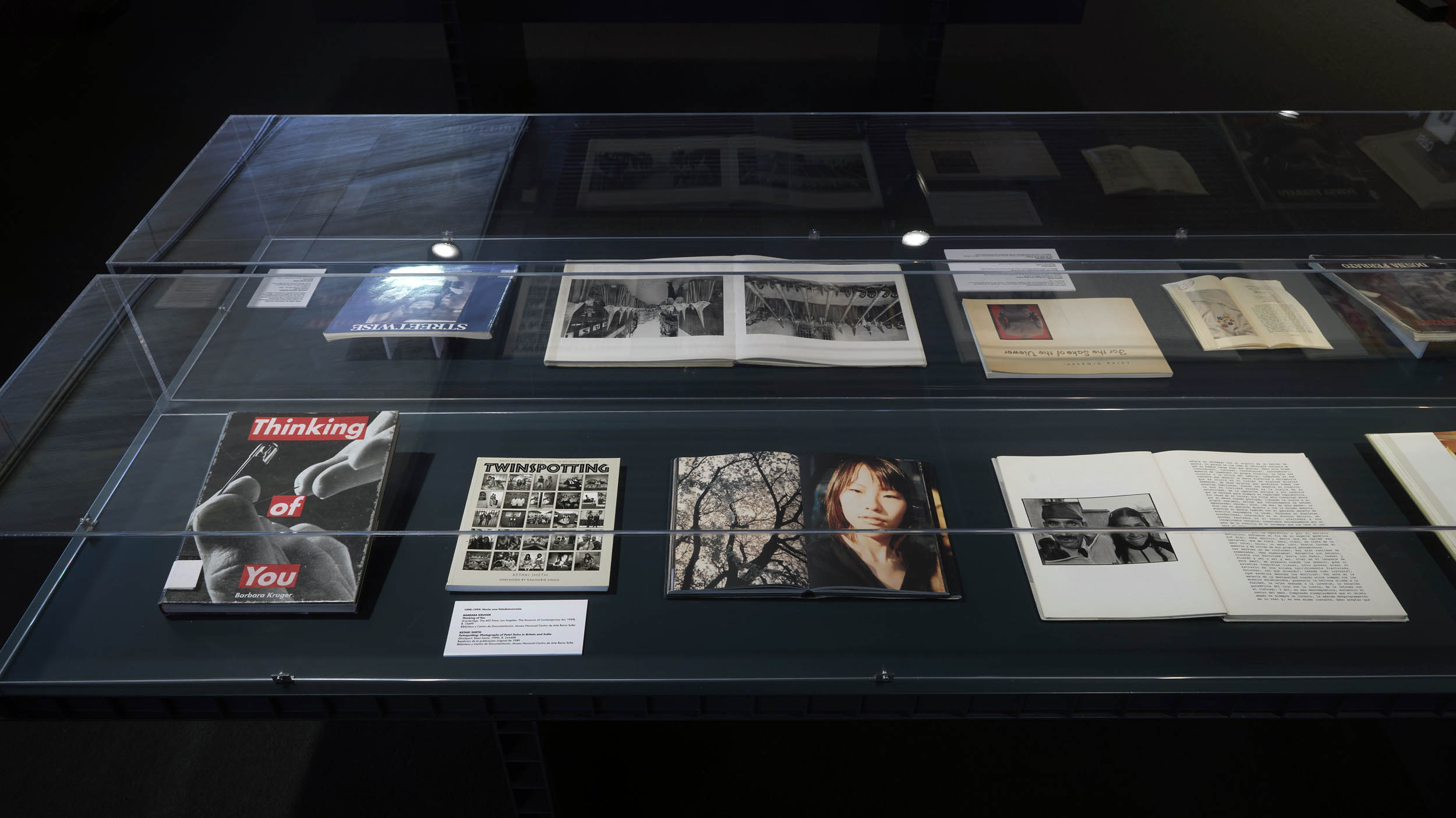
This iteration of the What They Saw exhibition includes 60 books of the more than 250 volumes highlighted in the associated publication. Most of these publications are from the collection of the Museo Reina Sofía’s Library and Documentation Centre. They are presented chronologically and show examples of books from around the globe. From the pioneers, such as Anna Atkins, who was the first person ever to print and distribute a photobook, or Isabel Agnes Cowper, who used photography to document museum objects, subsequently reproduced in numerous books, to the independent and self-published photobooks of the 1990s, including Colored People: A Collaborative Book Project by Adrian Piper or Twinspotting by Ketaki Seth, this selection allows for greater inclusion of previously marginalised photographic communities, including women, queer communities, people of colour and artists from outside Europe and North America.

Although only twenty-five years old, photobook history has been written primarily by men and has focused on publications authored by men. Very few books by women photographers appear in past anthologies documenting photobook history, and those included are already quite well known. This exhibition of women’s role in the production, dissemination, and authoring of photobooks is a necessary step in unwriting the current photobook history and rewriting an updated photobook history that is more equitable and inclusive.

Text from the Museo Nacional Centro de Arte Reina Sofía website


Anna Atkins, 'Photographs of British Algae: Cyanotype Impressions', 1843


Anna Atkins, Photographs of British Algae: Cyanotype Impressions, 1843
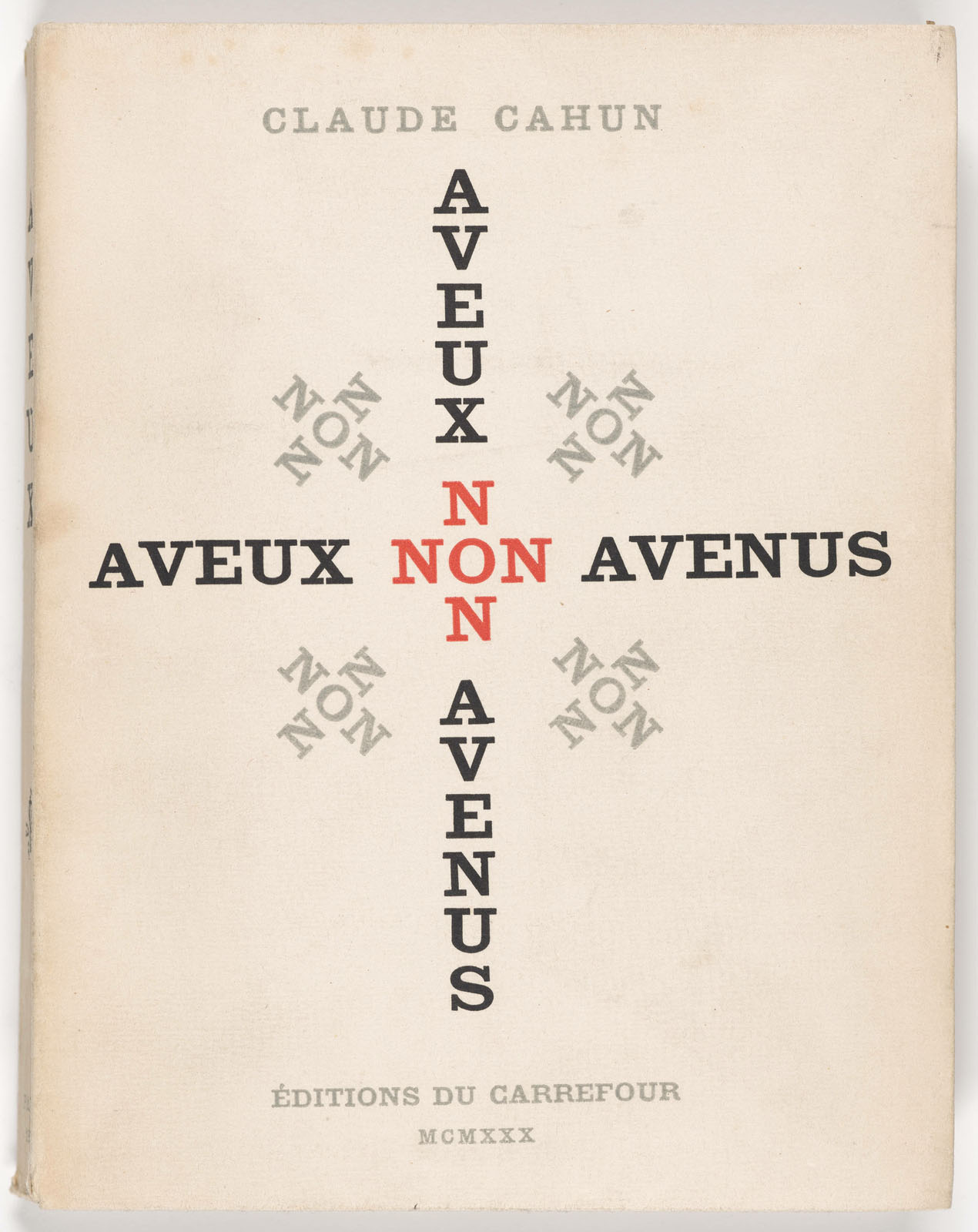
 

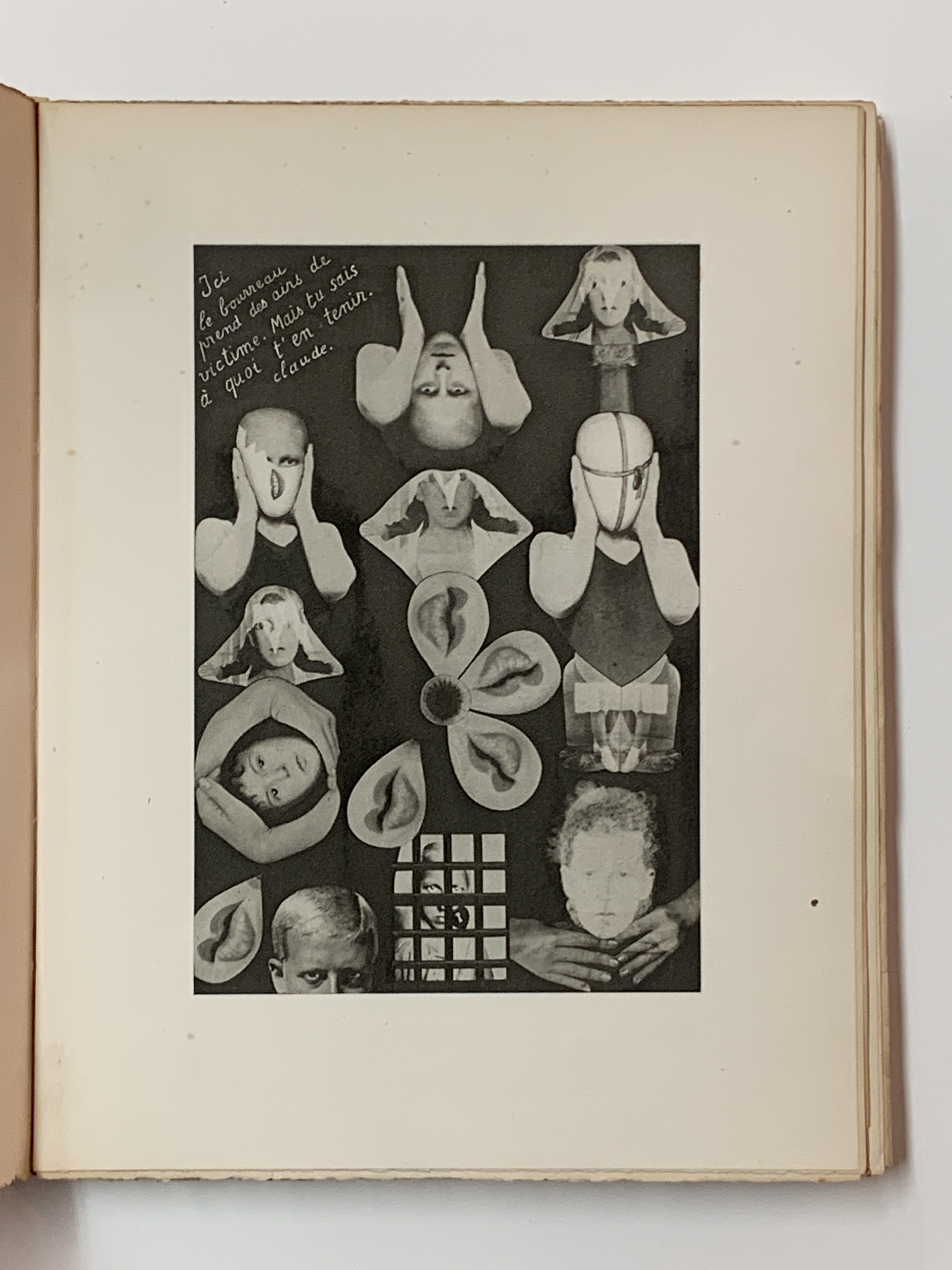
Claude Cahun (Lucy Schwob) (French, 1894-1954) 'Aveux non avenus' (Disavowals or Cancelled Confessions) 1930

Claude Cahun (1894-1954) 'Aveux Non Avenus' Paris- Éditions du Carrefour, 1930

Claude Cahun (1894-1954) 'Aveux Non Avenus' Paris- Éditions du Carrefour, 1930

Claude Cahun (1894-1954) 'Aveux Non Avenus' Paris- Éditions du Carrefour, 1930


Claude Cahun (Lucy Schwob) (French, 1894-1954) Aveux non avenus (Disavowals or Cancelled Confessions) 1930


In her 1930 publication, Aveux non Avenus, Claude Cahun used the relationship between her inwardly focused poetic writing and symbolic photomontages to construct a unique reality for self-expression. This article focuses on three chapters and respective photographic images from the publication to relate Cahun’s, and by association her partner Marcel Moore’s, discussion on sexuality and gender expression. The utopian dreamscape created investigates issues of narcissism and otherness, female homosexuality, dandyism and going beyond gender, individual and social critique, mocking the antiquated views of art and writing, accepting and breaking taboos, while allowing for other departures from the accepted norm. Through analysis of the publication and supporting evidence from early influences, it can be seen that Cahun created a world in Aveux non Avenus where she could exist in a space between the established feminine–masculine binary of 20th-century Europe.

Abstract from Erin F. Pustarfi. “Constructed Realities: Claude Cahun’s Created World in Aveux Non Avenus,” in Journal of Homosexuality, 67(5), pp. 697-711
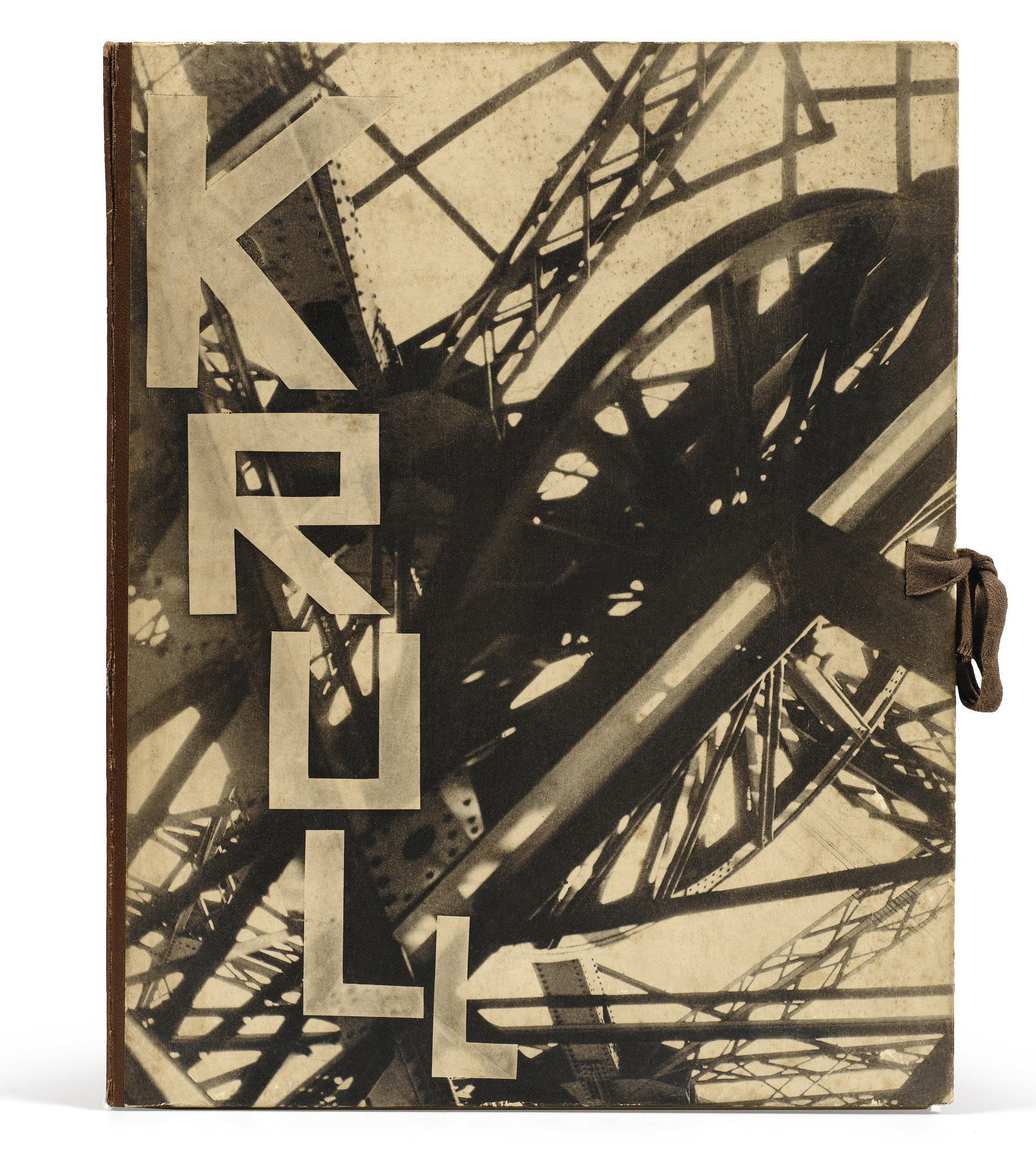
 

Germaine Krull (photographer) Cover design by M. Tchimoukow. 'MÉTAL' cover 1928


Germaine Krull (photographer) Cover design by M. Tchimoukow. MÉTAL cover 1928


Germaine Krull (1897-1985) Image from the portfolio 'MÉTAL' 1928


Germaine Krull (1897-1985) Image from the portfolio MÉTAL 1928, p. 33


I did not have a special intention or design when I took the Iron photographs. I wanted to show what I see, exactly as the eye sees it. ‘MÉTAL’ is a collection of photographs from the time. ‘MÉTAL’ initiated a new visual era and open the way or a new concept of photography. ‘MÉTAL’ was the starting point which allowed photography to become an artisanal trade and which made an artist of the photographer, because it was part of this new movement, of this new era which touched all art.

Germaine Krull. Extract from the Preface to the 1976 edition of ‘MÉTAL’

See my writing on Germaine Krull’s portfolio MÉTAL.
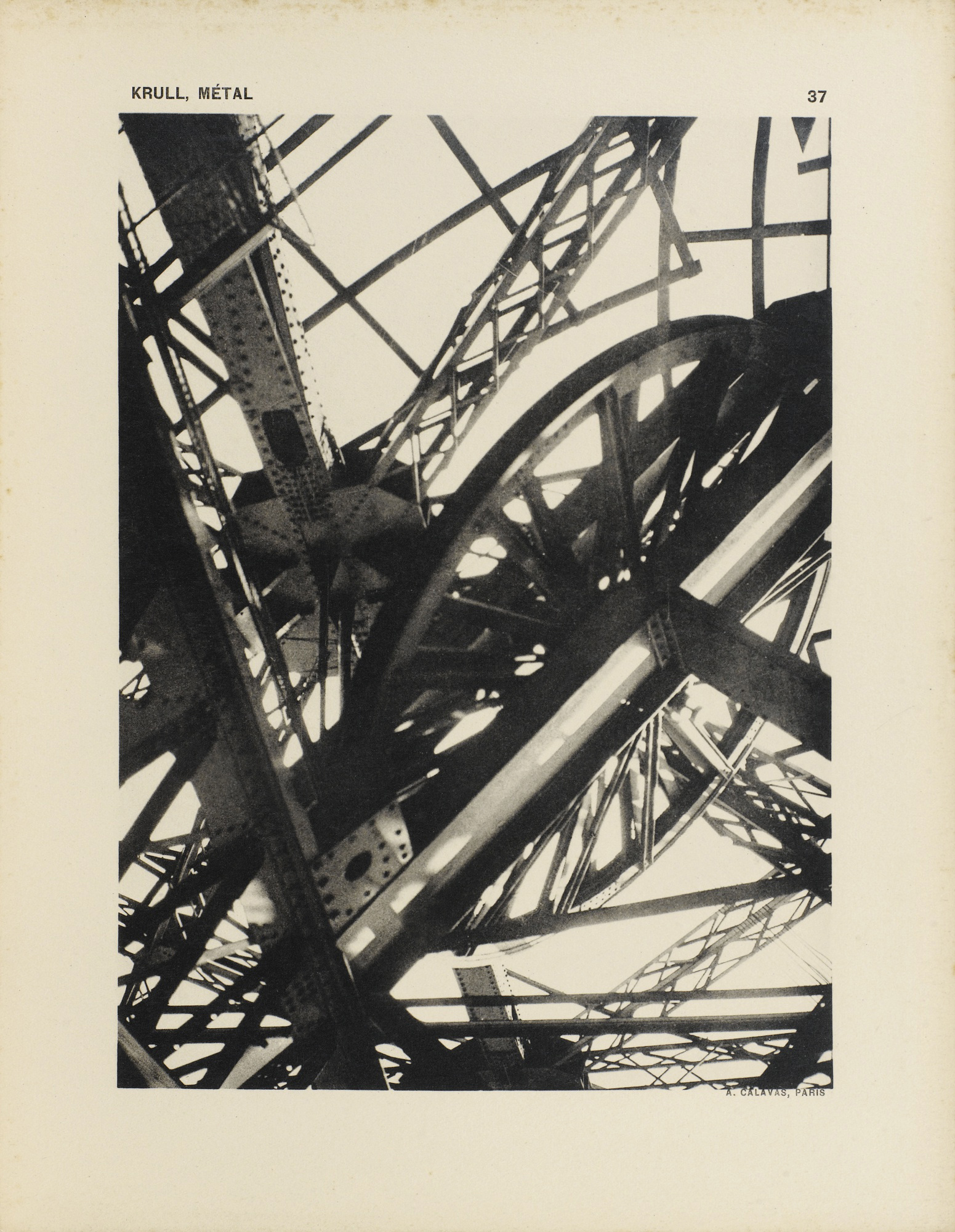
 

Germaine Krull (1897-1985) Image from the portfolio 'MÉTAL' 1928 p. 37


Germaine Krull (1897-1985) Image from the portfolio MÉTAL 1928 p. 37
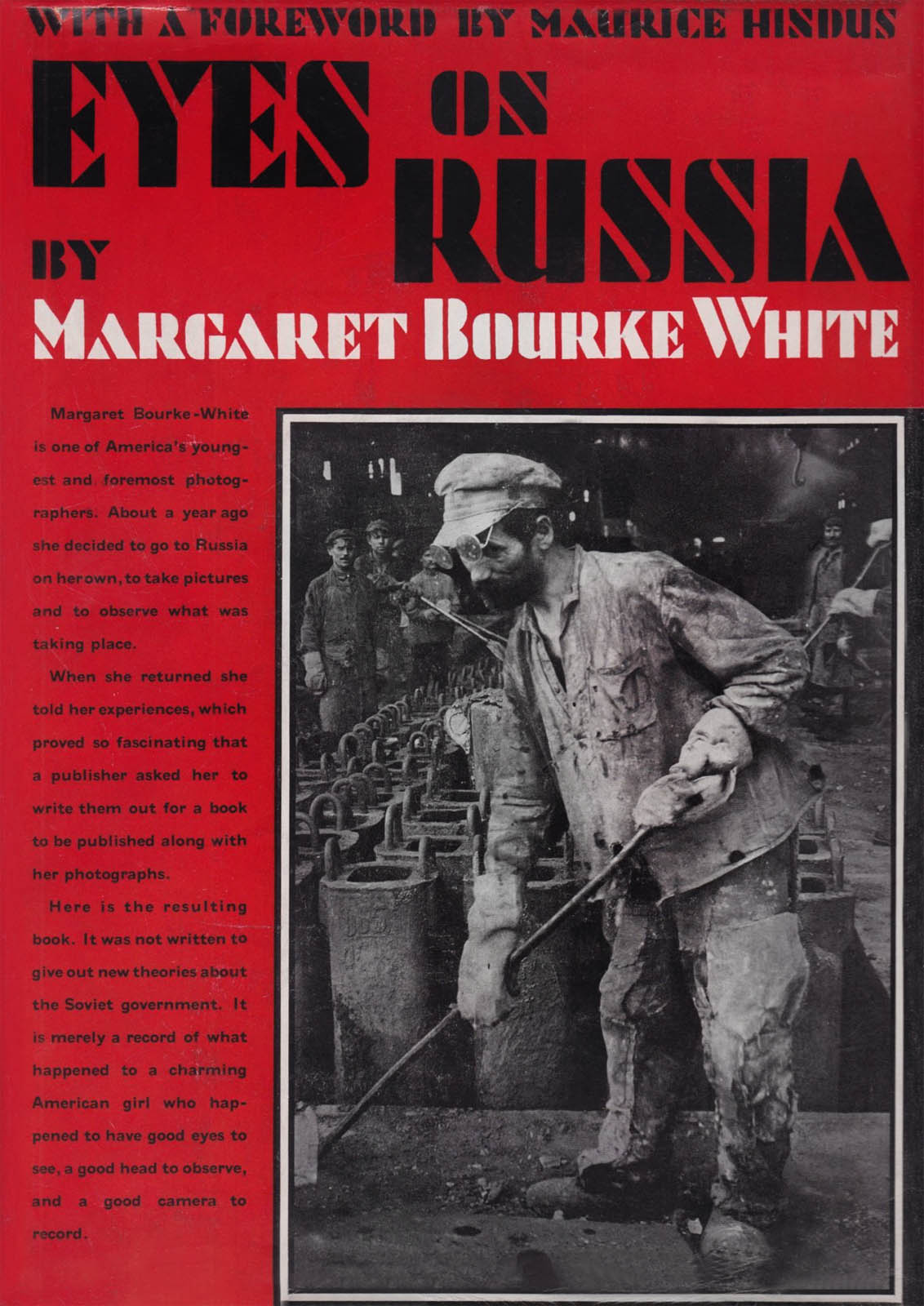
 

'Eyes on Russia' by Margaret Bourke-White. New York: Simon and Schuster, 1931


Eyes on Russia by Margaret Bourke-White. New York: Simon and Schuster, 1931


In 1951, Westbrook Pegler wrote numerous articles attacking Margaret Bourke-White for her associations with leftist politics in the 1930s. It is probably for this reason that in her autobiography, Portrait of Myself, written about ten years later, Bourke-White didn’t mention her first book, Eyes on Russia, published in 1931. And yet, this book is of extraordinary interest, not only as a landmark in Bourke-White’s career but also as a source, both visual and narrative, on the Soviet Union during its first Five Year Plan. With letters of recommendation from influential people, including the Russian film maker, Sergei Eisenstein, Bourke-White arrived in Moscow in the fall of 1930, where she obtained the official endorsement of A.B. Khalatoff, chief of the Soviet publishing house (he was later liquidated in the 1937 purges). Khalatoff supplied her with a thick roll of rubles and a guide. Bourke-White then toured some of the most important industrial and other sites and came back with stellar images of Russia under construction, which she complemented by a spritely and charming narrative of her experiences as the first foreign photographer to photograph in the Soviet Union with official permission. On her trip, she made 800 negatives, of which 40 were published in Eyes on Russia in a sepia tone. This book, along with at least eight related illustrated articles in Fortune, the New York Times Sunday Magazine, and other periodicals, significantly enhanced Bourke-White’s reputation (and commercial business). They also helped initiate relationships she established both with Soviet officials and Americans sympathetic to the U.S.S.R. She returned to Russia in 1931 and 1932 for additional photography, but Eyes on Russia, a fascinating book for a variety of reasons, remains the largest single published collection of her work in that country. It was very well received in numerous book reviews when it appeared. For a more detailed review, see my article, Gary D. Saretzky “Margaret Bourke-White: Eyes on Russia,” The Photo Review, 22: 3-4 (Summer & Fall 1999),

Text from a comment on the Amazon website


'Roll, Jordan, Roll' by Julia Peterkin (text) and Doris Ulmann (photographs) New York: Robert O. Ballo, 1933


Roll, Jordan, Roll by Julia Peterkin (text) and Doris Ulmann (photographs) New York: Robert O. Ballo, 1933


Doris Ulmann’s photographic collaboration with Julia Peterkin focuses on the lives of former slaves and their descendants on a plantation in the Gullah coastal region of South Carolina. Peterkin, who won the Pulitzer Prize in 1929, was born in South Carolina and raised by a black nursemaid who taught her the Gullah dialect before she learned standard English. She married the heir to Lang Syne in today’s Calhoun County, SC, one of the state’s richest plantations, which became the setting for Roll, Jordan, Roll. Ulmann’s soft-focus photos-rendered as tactile as charcoal drawings in the superb gravure reproductions here-straddle Pictorialism and Modernism even as they appear to dissolve into memory.

Text from the Amazon website


Leni Riefenstahl 'Schönheit im olympischen Kampf' [Beauty in the Olympic Games] Berlin: Im Deutschen Verlag, (1937)


Leni Riefenstahl Schönheit im olympischen Kampf [Beauty in the Olympic Games] Berlin: Im Deutschen Verlag, (1937)


'Leni Riefenstahl Schönheit im olympischen Kampf' [Beauty in the Olympic Games] Berlin: Im Deutschen Verlag, (1937) pp. 220-221


Leni Riefenstahl Schönheit im olympischen Kampf [Beauty in the Olympic Games] Berlin: Im Deutschen Verlag, (1937) pp. 220-221
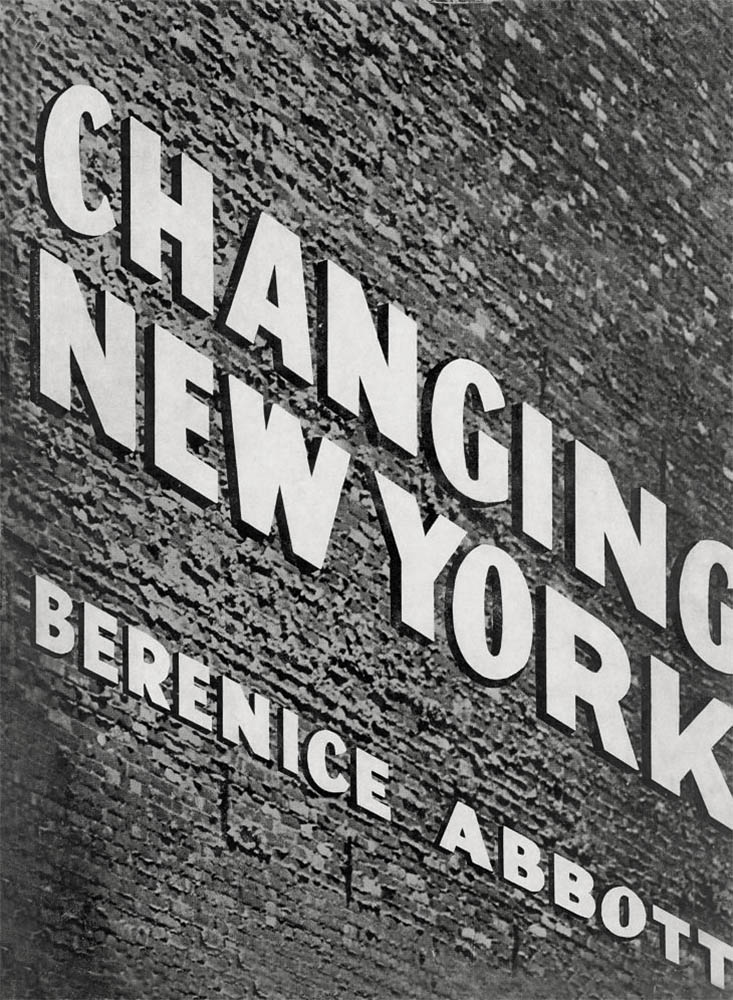
 

Berenice Abbott and Elizabeth McCausland. 'Changing New York'. New York: E. P. Dutton & Company, 1939


Berenice Abbott and Elizabeth McCausland. Changing New York. New York: E. P. Dutton & Company, 1939


“The camera alone can catch
the swift surfaces of the
cities today and speaks a
language intelligible to all.”

~ Berenice Abbott


Abbott’s landmark work on New York, illustrated with 97 halftone plates that display “the historical importance of the documentary model its power as a medium of personal expression” (Parr & Badger).


In January 1929, after eight years in Europe, Abbott boarded an ocean liner to New York City for what was meant to be a short visit. Upon arrival, she was struck by the rapid transformation of the built landscape and saw the city as ripe with photographic potential. “When I saw New York again, and stood in the dirty slush, I felt that here was the thing I had been wanting to do all my life,” she recalled. “Old New York is fast disappearing,” Abbott observed. “At almost any point on Manhattan Island, the sweep of one’s vision can take in the dramatic contrasts of the old and the new and the bold foreshadowing of the future. This dynamic quality should be caught and recorded immediately in a documentary interpretation of New York City. The city is in the making and unless this transition is crystallised now in permanent form, it will be forever lost…. The camera alone can catch the swift surfaces of the cities today and speaks a language intelligible to all.”

On the eve of the Great Depression, she began a series of documentary photographs of the city that, with the support of the Works Progress Administration’s Federal Art Project from 1935 to 1939, debuted in 1939 as the traveling exhibition and publication Changing New York.

With a handheld camera, Abbott traversed the city, photographing its skyscrapers, bridges, elevated trains, and neighbourhood street life. She pasted these “tiny photographic notes” into a standard black-page album, arranging them by subject and locale.

Consisting of 266 small black-and-white prints arranged on thirty-two pages, Abbott’s New York album marks a key turning point in her career – from her portrait work in Paris to the urban documentation that became one of her lasting legacies.

From 1935 to 1965, Berenice Abbott and art critic Elizabeth McCausland (1899-1965) lived and worked in two flats they shared on the fourth floor of the loft building at 50 Commerce Street.

Lannyl Stephens. “Berenice Abbott’s Changing New York,” on the Village Preservation website July 17, 2023 [Online] Cited 26/05/2024


Berenice Abbott and Elizabeth McCausland. 'Changing New York'. New York: E. P. Dutton & Company, 1939


Berenice Abbott and Elizabeth McCausland. Changing New York. New York: E. P. Dutton & Company, 1939


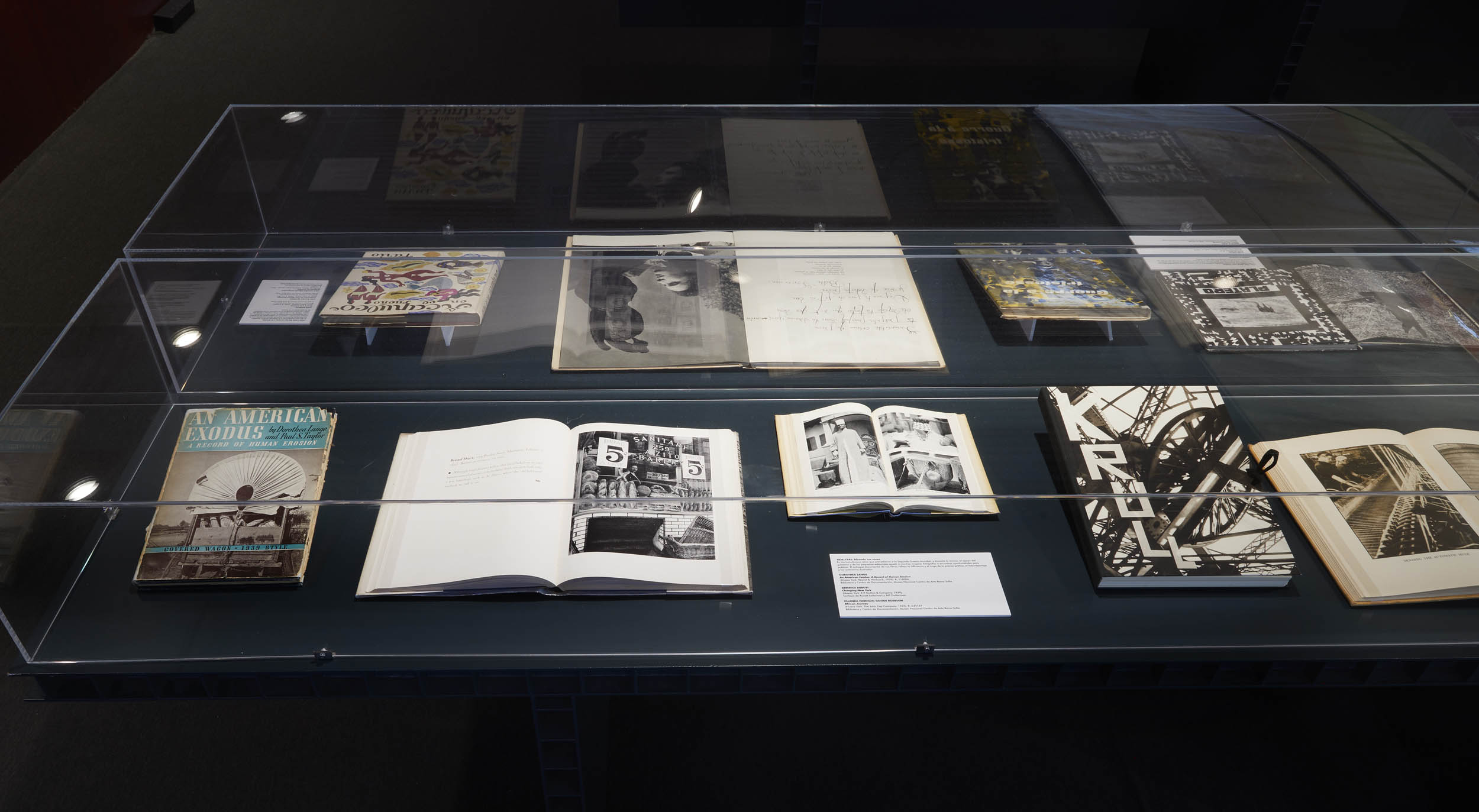
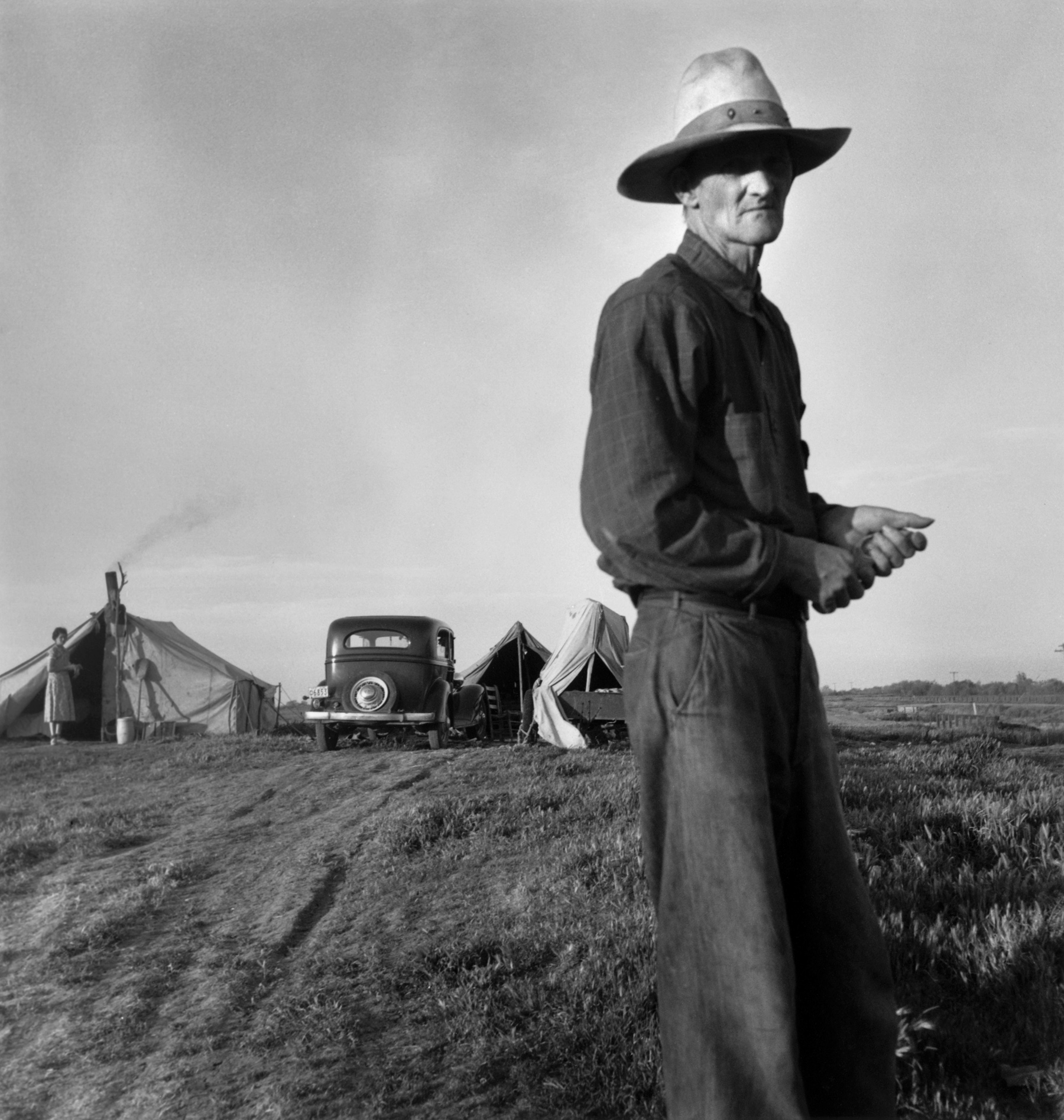
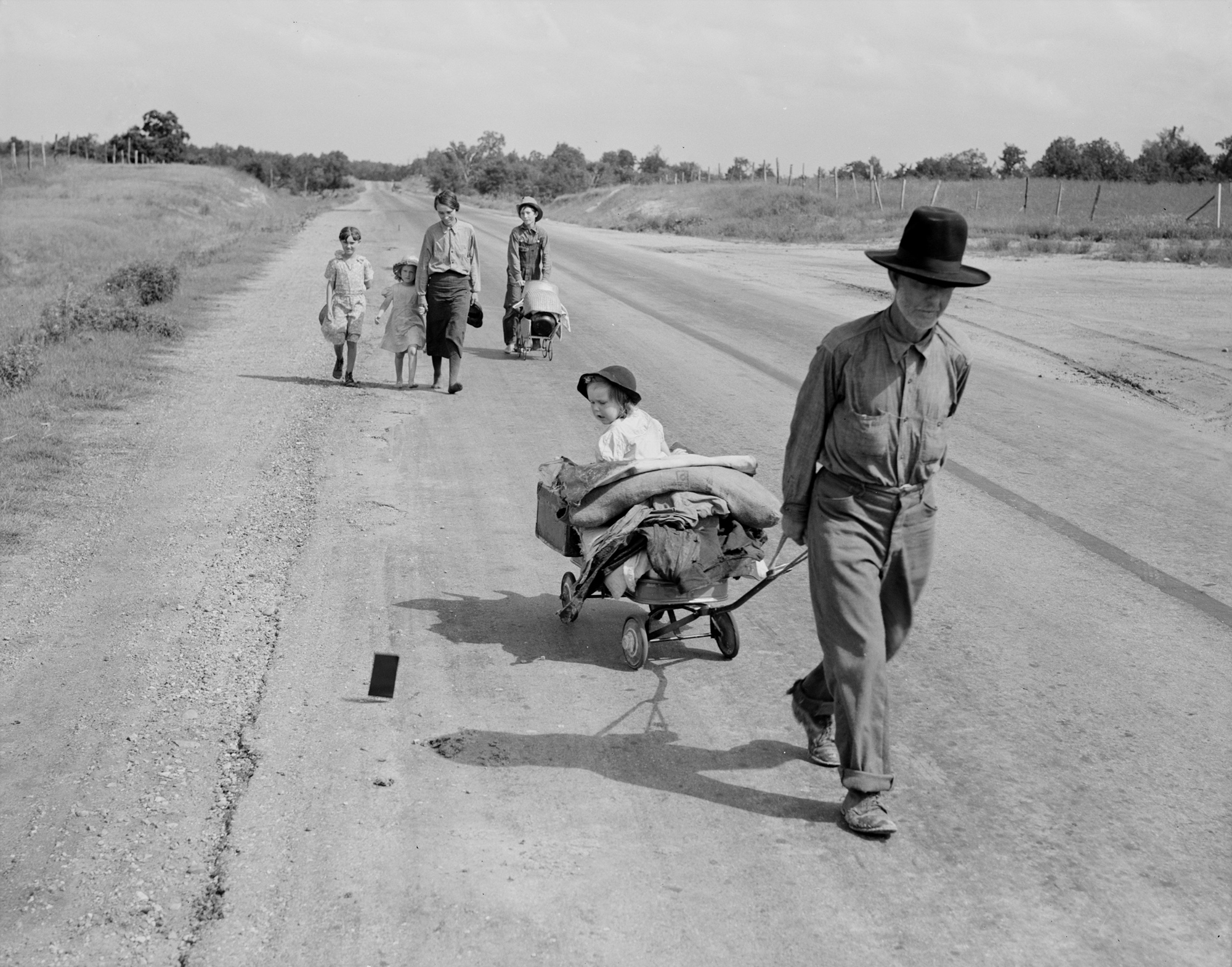
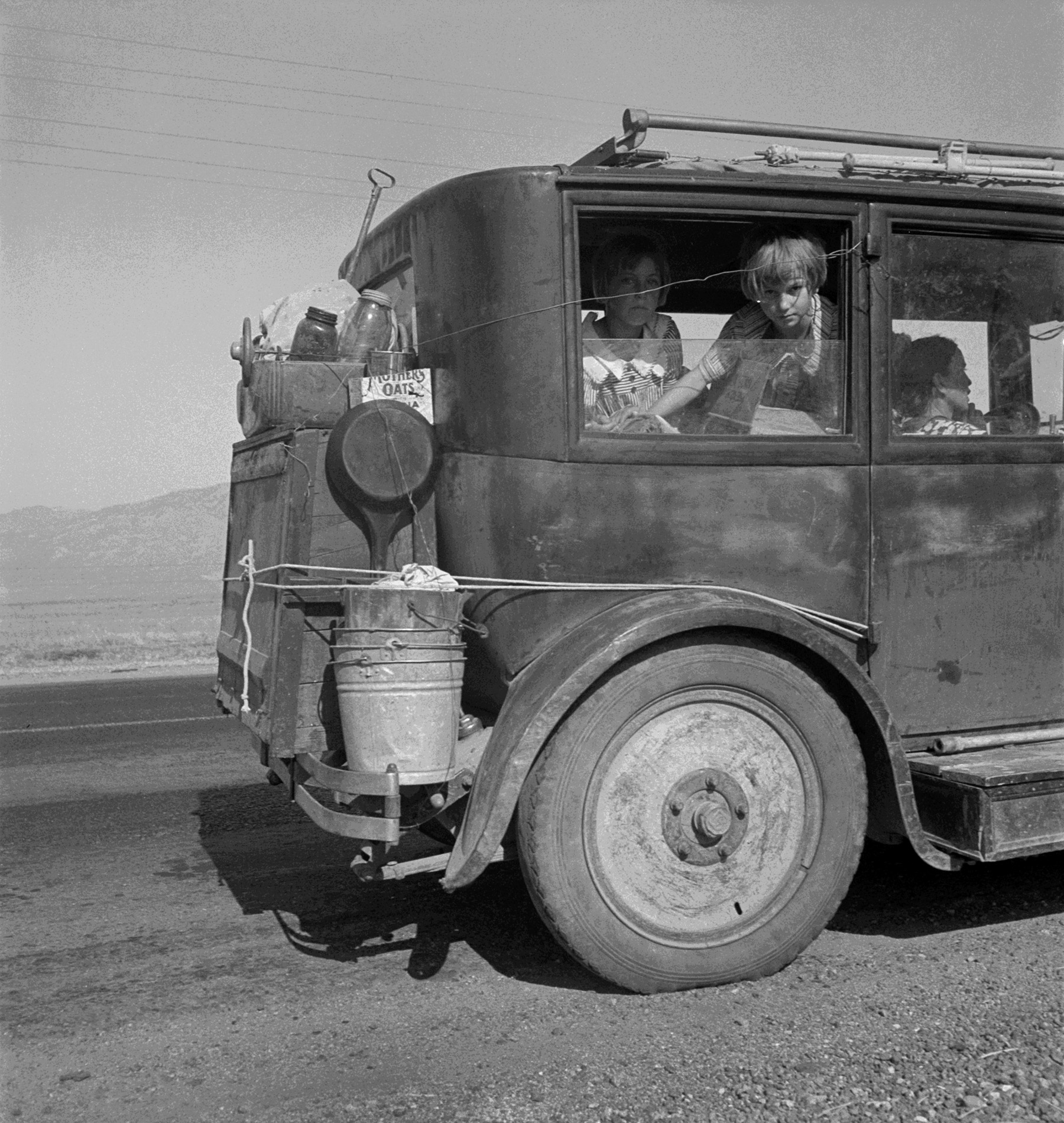
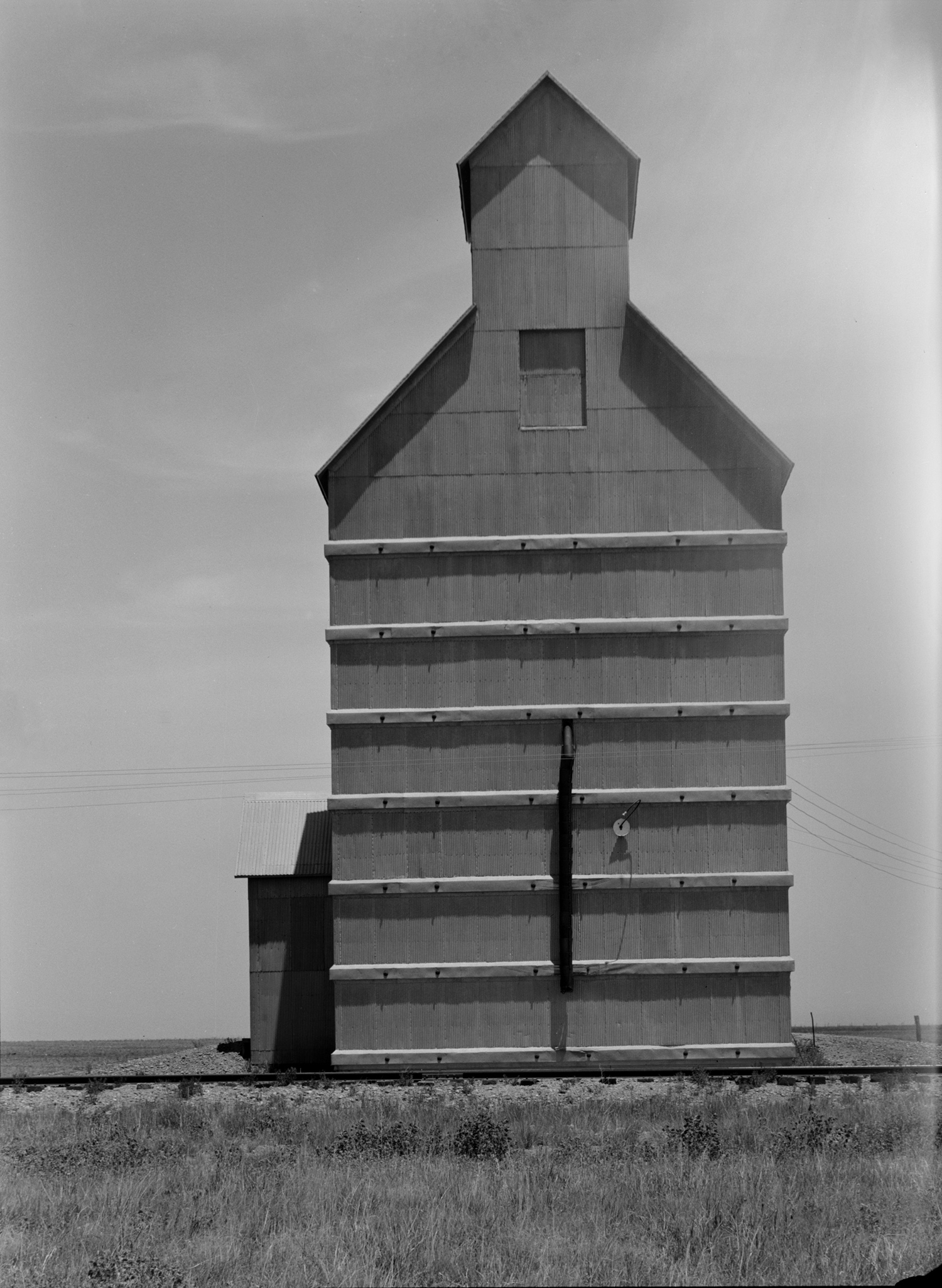
'An American Exodus: A Record of Human Erosion'. Photographs by Dorothea Lange; text by Paul Taylor. New York: Reynal & Hitchcock, 1939


An American Exodus: A Record of Human Erosion. Photographs by Dorothea Lange; text by Paul Taylor. New York: Reynal & Hitchcock, 1939


“We need to be reminded these days about what women have been, and can be. It’s a question of their really deep and fundamental place in society. I have a feeling that women need to be reminded of it. They are needed.”

~ Dorothea Lange


First published in 1939, An American Exodus is one of the masterpieces of the documentary genre. Produced by incomparable documentary photographer Dorothea Lange with text by her husband, Paul Taylor, An American Exodus was taken in the early 1930s while the couple were working for the Farm Security Administration (FSA) The book documents the rural poverty of the depression-era exodus that brought over 300,000 migrants to California in search of farm work, a westward mass migration driven by economic deprivation as opposed to the Manifest Destiny of 19th century pioneers.

Text from the Google Books website


In 1938, Dorothea Lange and her husband Paul Taylor began sorting through the stacks of photographs she had made documenting migrant farmworkers and homeless drought refugees. Their goal was to create a book that would reveal the human dimension of the crisis to the American people and, hopefully, prompt government relief. One of several books released in the late 1930s that made use of the Farm Security Administration photo archive, An American Exodus: A Record of Human Erosion was innovative in several ways. Rather than tell the story from their own perspective, Lange and Taylor used direct quotes from the migrants themselves, which Lange had painstakingly collected in the field. Released as war tensions were building in Europe and Asia, An American Exodus was largely overlooked at the time. In the years since its publication, the book has gained power, presenting an iconic image of the Dust Bowl era that has shaped the way we think of those difficult years.

Text from the Dorothea Lange Digital Archive, Oakland Museum of California website


Eslanda Goode Robeson. 'African Journey'. New York: John Day Company, 1945


Eslanda Goode Robeson. African Journey. New York: John Day Company, 1945


Eslanda Robeson’s 1936 African journal with her own photographs. Africa seen through the eyes of an African American. She went to South Africa, Kenya, Uganda, and Congo, and visited African kings and British governors, villages, gold mines, plantations, herdswomen, and modern African leaders.

Eslanda Goode Robeson (1895-1965) was an American anthropologist, author, actress, and civil rights activist. She was born in Washington, D.C., graduated from Columbia University in 1917 with a degree in chemistry, and in 1921 married the singer and actor Paul Robeson. In 1936, she received her degree in anthropology from the London School of Economics, and in 1946, the year following the publication of African Journal, earned her anthropology Ph.D. from Hartford Seminary where she specialised in African studies and race relations.

Text from the Boyd Books website


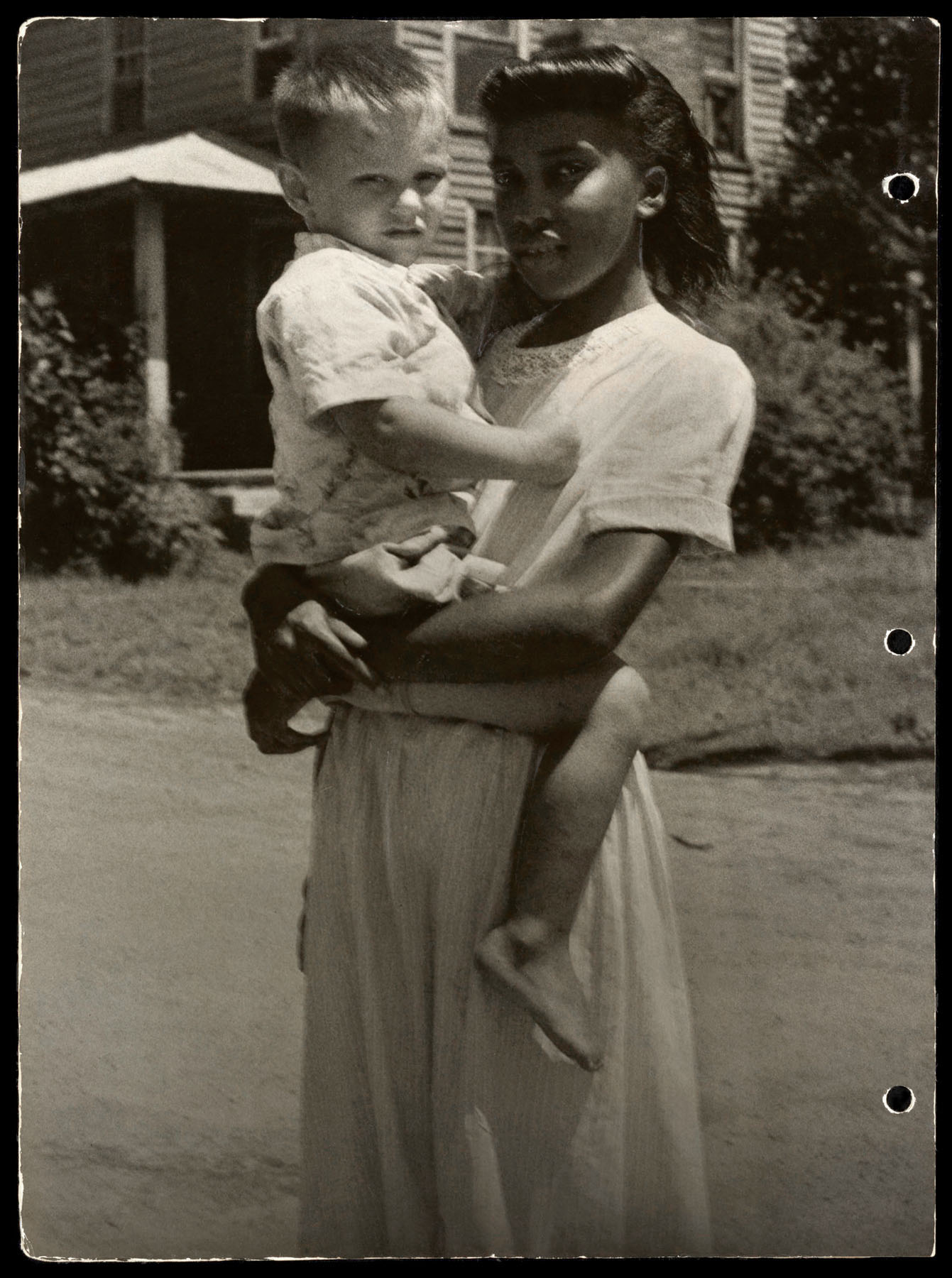
'Wrens in Camera' by Lee Miller


Wrens in Camera by Lee Miller (London: Hollis and Carter, 1945)


During the Second World War Lee Miller was the official war photographer for Vogue magazine. The images contained in Wrens in Camera were commissioned by the Admiralty and show the female navy officers and workers fulfilling their war duties. There are signallers, technicians, trainers, housekeepers and transport crews. The whole is an important document of women’s roles in war-time Britain.

Text from the Beaux Books website


'Wrens in Camera' by Lee Miller (London: Hollis and Carter, 1945) p. 47
 

Wrens in Camera by Lee Miller (London: Hollis and Carter, 1945) p. 47


Marion Palfi (American born Germany, 1907-1978) 'Untitled (Black woman with a white child)' 1949


Marion Palfi (American born Germany, 1907-1978)
Untitled (Black woman with a white child)
1949
From the book There Is No More Time: An American Tragedy
Marion Palfi/Center for Creative Photography
© All Rights Reserved
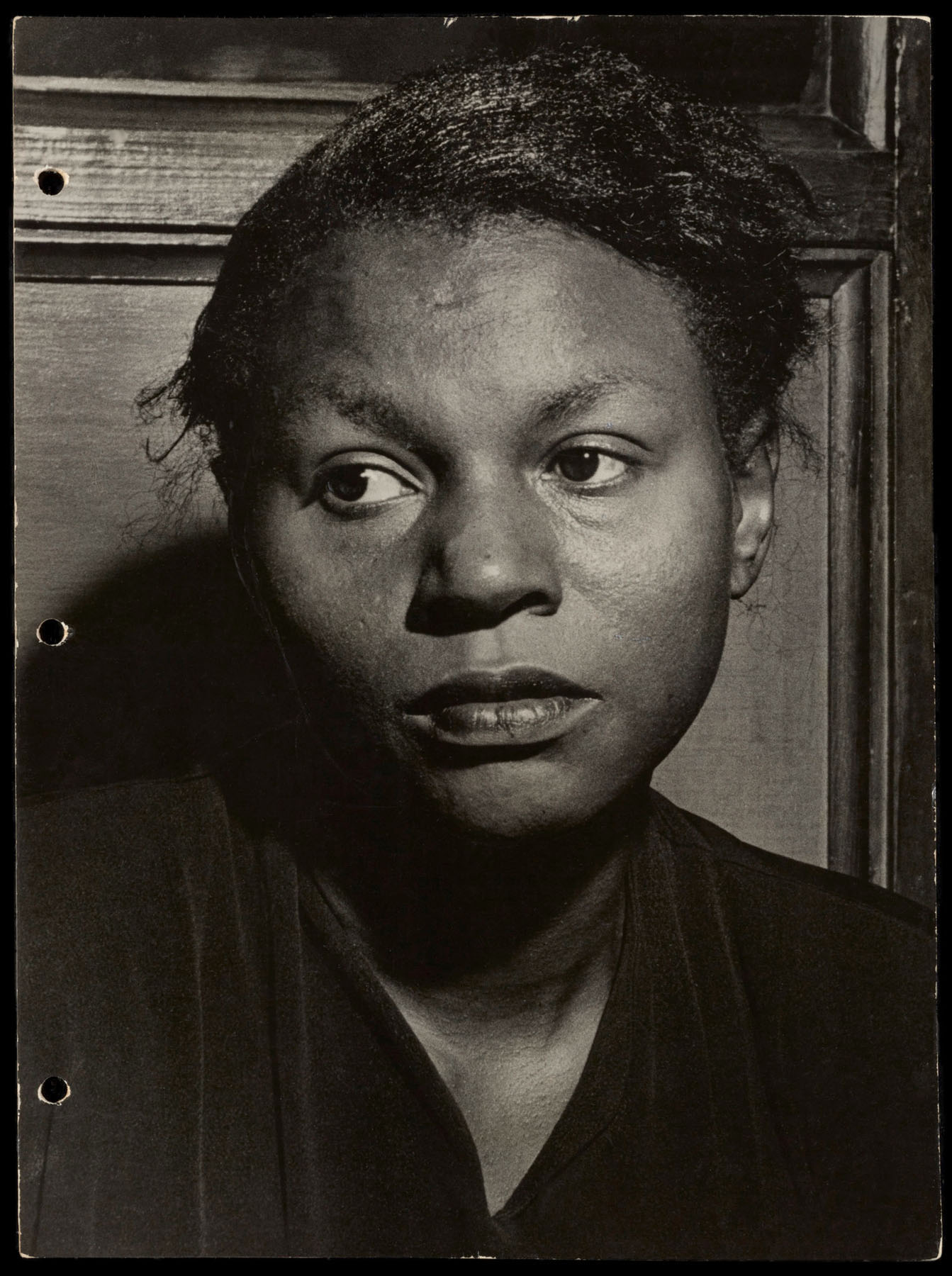
 

Marion Palfi (American born Germany, 1907-1978) 'Untitled (Portrait of Mrs. Caleb Hill, widow of a lynching victim)' 1949


Marion Palfi (American born Germany, 1907-1978)
Untitled (Portrait of Mrs. Caleb Hill, widow of a lynching victim)
1949
From the book There Is No More Time: An American Tragedy
Marion Palfi/Center for Creative Photography
© All Rights Reserved


“As a photographer, she was as interested in the discriminator as in the victims of discrimination. Long before what we tend to think of as the crux of the civil rights struggle in the 1960s, Palfi went to Georgia at a particularly dangerous time. In 1949, she was drawn to do an in-depth portrait of Irwinton, a small community where a young black man had been torn out of jail and shot by a lynch mob. The tremendous public outcry over this barbaric incident included front-page coverage and editorials by the New York Times. Obviously, the presence of a photographer in such a community would attract unwanted attention and might have endangered her life. But by a happy stroke of luck, the Vice-President of the Georgia Power Company was interested in her work. Warning her that she must “photograph the South as it really is, not as the North slanders it,” he wanted her to get to meet the “right” people. As it happened, the “right” people turned out to be the very discriminators she wanted to photograph. Left in the protection of the local postmistress, she proceeded to take terms, objective pictures of overseers and white-suited politicians.

Even if the press had not indicted Irwinton for its racism, the extreme conservatism and tension were evident in the faces of its citizens. She found a white supremacist group, “The Columbians,” whose insignia was a thunderbolt, the symbol of Hitler’s elite guard. “Mein Kampf was their bible,” she believed. Meanwhile, the wife of the lunch victim said, simply, “Caleb was a good man … he believed in his rights and therefore he died.”

Elizabeth Lindquist-Cock. “Marion Palfi: An Appreciation,” in The Archive Research Series Number 19, September 1983, Center for Creative Photography, University of Arizona, pp. 7-8.
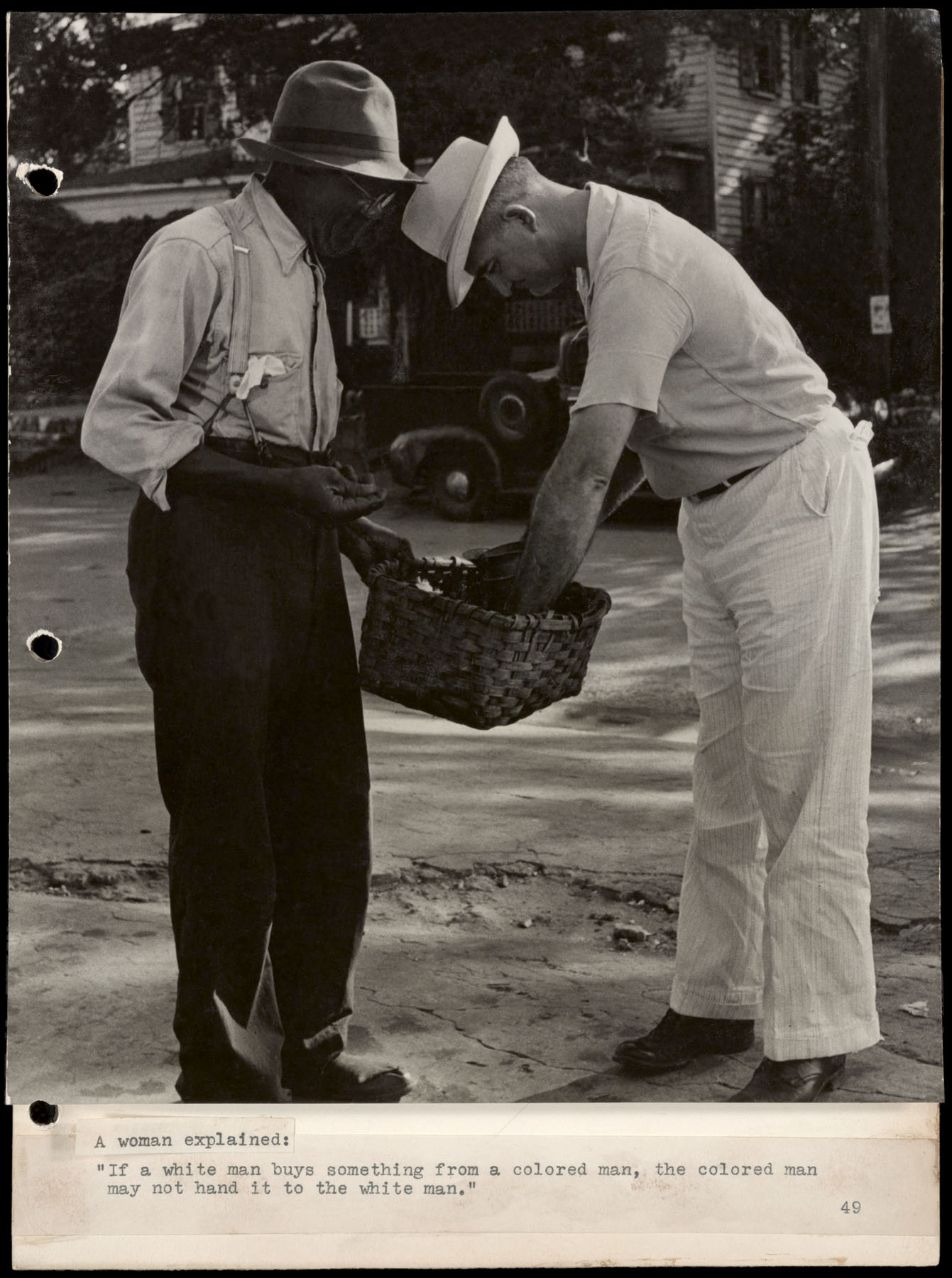
 

Marion Palfi (American born Germany, 1907-1978) 'Untitled (A woman explained: "If a white man buys something...")' 1949


Marion Palfi (American born Germany, 1907-1978)
Untitled (A woman explained: “If a white man buys something…”)
1949
From the book There Is No More Time: An American Tragedy
Marion Palfi/Center for Creative Photography
© All Rights Reserved


'Acapulco en el sueño' by Francisco Tario (text) with photographs by Lola Alvarez Bravo, 1951


Acapulco en el sueño by Francisco Tario (text) with photographs by Lola Alvarez Bravo, 1951


“If my photographs have any meaning, it’s that they stand for a Mexico that once existed.”

~ Lola Alvarez Bravo


Dare Wright. 'The Lonely Doll'. New York: Doubleday & Co, 1957


Dare Wright. The Lonely Doll. New York: Doubleday & Co, 1957


Once there was a little doll. Her name was Edith. She lived in a nice house and had everything she needed except someone to play with. She was lonely! Then one morning Edith looked into the garden and there stood two bears! Since it was first published in 1957, The Lonely Doll has established itself as a unique children’s classic. Through innovative photography Dare Wright brings the world of dolls to life and entertains us with much more than just a story. Edith, the star of the show, is a doll from Wright’s childhood, and Wright selected the bear family with the help of her brother. With simple poses and wonderful expressions, the cast of characters is vividly brought to life to tell a story of friendship.

Text from the Amazon website


'Mourka, the autobiography of a Cat', by Tanaquil Le Clercq and Martha Swope. Stein and Day 1964


Mourka, the autobiography of a Cat, by Tanaquil Le Clercq and Martha Swope. Stein and Day 1964


Le Clercq is the wife of choreographer George Balanchine; she wrote this book after Mourka became famous because of the photograph of Martha Swope in Life magazine, where George Balanchine assists Mourka in his grand jeté. Mourka writes about his exercises in dance and his aspirations to travel in outer space.

Text from the Cats in Books albums Facebook page


'Mourka, the autobiography of a Cat', by Tanaquil Le Clercq and Martha Swope. Stein and Day 1964


Mourka, the autobiography of a Cat, by Tanaquil Le Clercq and Martha Swope. Stein and Day 1964


'A Way of Seeing', 1965. Photographs by Helen Levitt


A Way of Seeing, 1965. Photographs by Helen Levitt


'Dublin: A Portrait' by V.S. Pritchett (text) and Evelyn Hofer (photographs). New York: Harper & Row, 1967


Dublin: A Portrait by V.S. Pritchett (text) and Evelyn Hofer (photographs). New York: Harper & Row, 1967


The starting point for this book is Evelin Hofer’s Dublin: A Portrait, which features an in-depth essay by V. S. Pritchett and photos by Hofer, and enjoyed great popularity upon its original publication in 1967. Dublin: A Portrait is an example of Hofer’s perhaps most important body of work, her city portraits: books that present comprehensive prose texts by renowned authors alongside her self-contained visual essays with their own narratives. Dublin: A Portrait was the last book published in this renowned series. …

In Dublin Hofer repeatedly turned her camera to sights of the city, but mainly to the people who constituted its essence. She made numerous portraits – be they of writers and public figures or unknown people in the streets. Her portraits give evidence of an intense, respectful engagement with her subjects, who participate as equal partners in the process of photographing.

Text from The Eye of Photography Magazine website


'Diane Arbus: An Aperture Monograph', 1972


Diane Arbus: An Aperture Monograph, 1972


When Diane Arbus died in 1971 at the age of forty-eight, she was already a significant influence-even something of a legend-among serious photographers, although only a relatively small number of her most important pictures were widely known at the time. The publication of Diane Arbus: An Aperture Monograph in 1972 – along with the posthumous retrospective at The Museum of Modern Art – offered the general public its first encounter with the breadth and power of her achievements. The response was unprecedented.

The monograph of eighty photographs was edited and designed by the painter Marvin Israel, Diane Arbus’s friend and colleague, and by her daughter Doon Arbus. Their goal in making the book was to remain as faithful as possible to the standards by which Diane Arbus judged her own work and to the ways in which she hoped it would be seen. Universally acknowledged as a classic, Diane Arbus: An Aperture Monograph is a timeless masterpiece with editions in five languages and remains the foundation of her international reputation.

Nearly half of a century has done nothing to diminish the riveting impact of these pictures or the controversy they inspire. Arbus’s photographs penetrate the psyche with all the force of a personal encounter and, in doing so, transform the way we see the world and the people in it.

Text from the Fraenkel Gallery Shop website


Jill Freedman. 'Circus Days'. New York: Harmony Books/Crown, 1975


Jill Freedman. Circus Days. New York: Harmony Books/Crown, 1975


A photographic documentation of the Beatty-Cole Circus, recording and portraying the customs, activities, animals, and singular personalities of an endangered way of life.


Jill Freedman. 'Circus Days'. New York: Harmony Books/Crown, 1975


Jill Freedman. Circus Days. New York: Harmony Books/Crown, 1975


Susan Meiselas (American, b. 1948) 'Carnival Strippers' book cover 1975


Susan Meiselas. Carnival Strippers book cover 1975


From 1972 to 1975, Susan Meiselas spent her summers photographing women who performed striptease for small-town carnivals in New England, Pennsylvania and South Carolina. As she followed the shows from town to town, she captured the dancers on stage and off, their public performances as well as their private lives, creating a portrait both documentary and empathetic: “The recognition of this world is not the invention of it. I wanted to present an account of the girl show that portrayed what I saw and revealed how the people involved felt about what they were doing.” Meiselas also taped candid interviews with the dancers, their boyfriends, the show managers and paying customers, which form a crucial part of the book.

Meiselas’ frank description of these women brought a hidden world to public attention, and explored the complex role the carnival played in their lives: mobility, money and liberation, but also undeniable objectification and exploitation. Produced during the early years of the women’s movement, Carnival Strippers reflects the struggle for identity and self-esteem that characterised a complex era of change.

Text from the Booktopia website [Online] Cited 22/04/2022
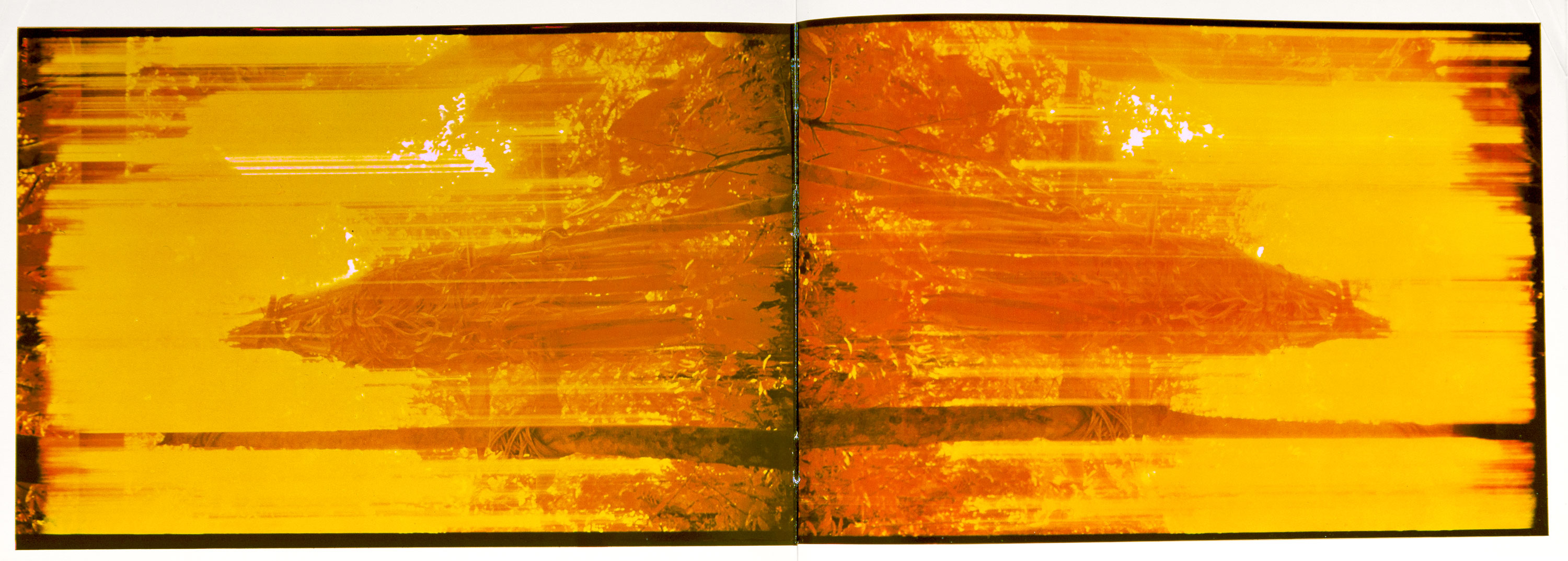
 

Claudia Andujar, 'Amazônia', 1978


Claudia Andujar, Amazônia, 1978


Since the early 1970s, Claudia Andujar has been committed to the cause of the Yanomami Indians living in the heart of the Amazon rainforest and is the author of the most important photographic work dedicated to them to date. A founding member of the Brazilian NGO Comissão Pró Yanomami (CCPY), the photographer has played a fundamental role in the recognition of their territory by the Brazilian government. …

Claudia Andujar first met the Yanomami in 1971 while working on an article about the Amazon for Realidade magazine. Fascinated by the culture of this isolated community, she decided to embark on an in-depth photographic essay on their daily life after receiving a Guggenheim fellowship to support the project. From the very beginning, her approach differed greatly from the straightforward documentary style of her contemporaries. The photographs she made during this period show how she experimented with a variety of photographic techniques in an attempt to visually translate the shamanic culture of the Yanomami. Applying Vaseline to the lens of her camera, using flash devices, oil lamps and infrared film, she created visual distortions, streaks of light and saturated colors, thus imbuing her images with a feeling of the otherworldly.

Text from the Fondation Cartier pour l’art contemporain website
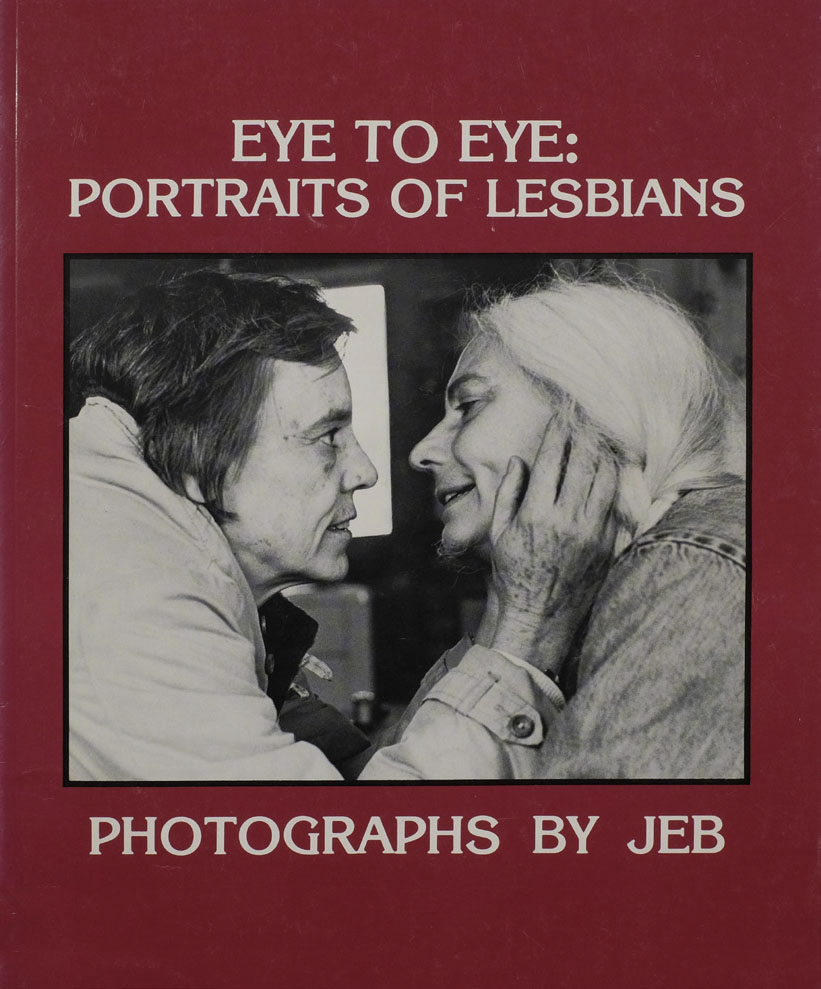
 

Cover image of 'Eye to Eye: Portraits of Lesbians' (1979). Photographs by JEB (Joan E. Biren)


Cover image of Eye to Eye: Portraits of Lesbians (1979). Photographs by JEB (Joan E. Biren)


In 1979, JEB (Joan E. Biren) self-published her first book, Eye to Eye: Portraits of Lesbians. Revolutionary at that time, JEB made photographs of lesbians from different ages and backgrounds in their everyday lives-working, playing, raising families, and striving to remake their worlds. The photographs were accompanied by testimonials from the women pictured in the book, as well as writings from icons including Audre Lorde, Adrienne Rich and a foreword from Joan Nestle. Eye to Eye signalled a radical new way of seeing – moving lesbian lives from the margins to the centre, and reversing a history of invisibility. More than just a book, it was an affirmation of the existence of lesbians that helped to propel a political movement. Reprinted for the first time in forty years and featuring new essays from photographer Lola Flash and former soccer player Lori Lindsey, Eye to Eye is a faithful reproduction of a work that continues to resonate in the queer community and beyond.

Text from the Amazon website
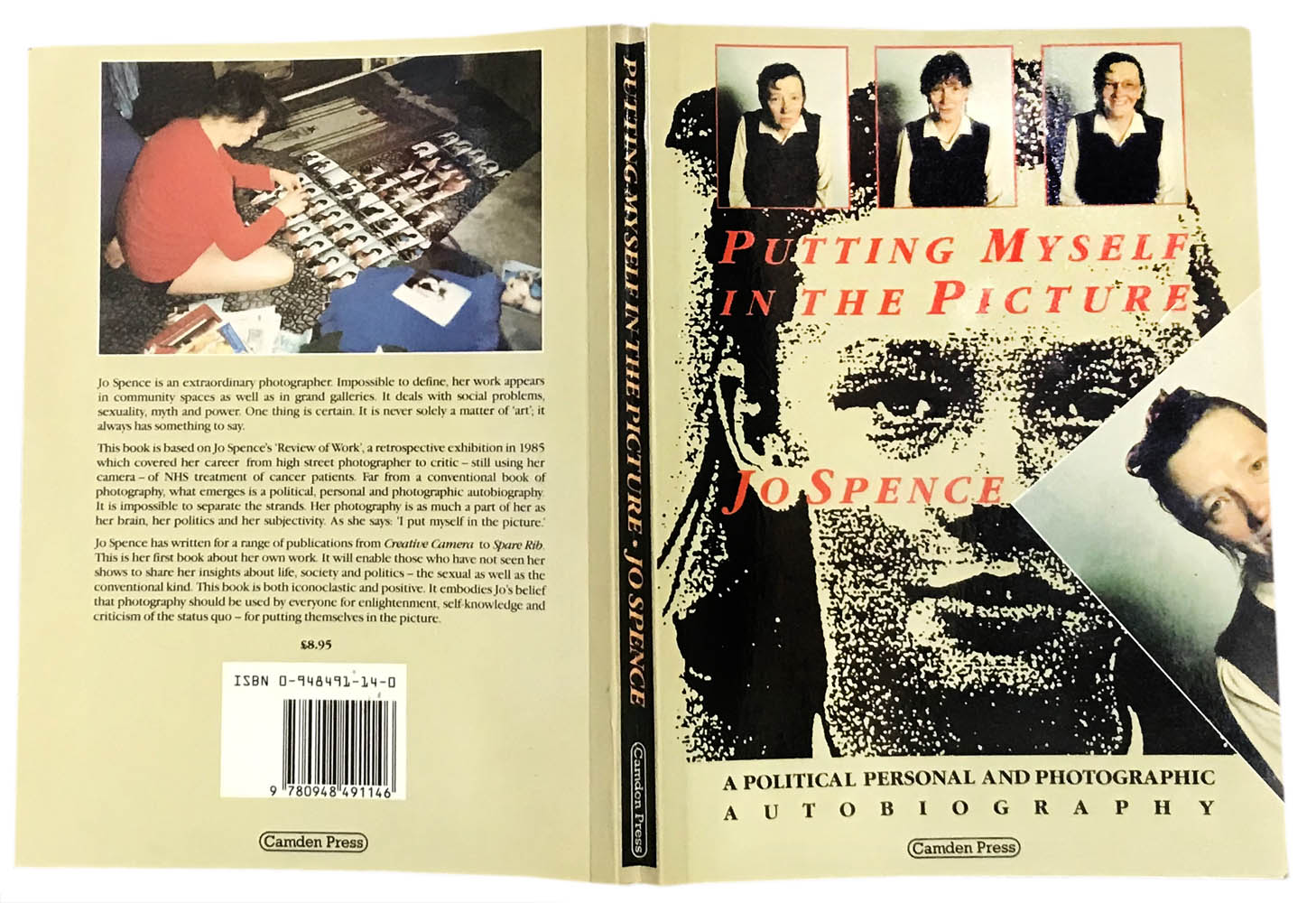
 

Jo Spence. 'Putting Myself In The Picture: A Political, Personal, and Photographic Autobiography'. London: Camden Press Ltd, 1986


Jo Spence. Putting Myself In The Picture: A Political, Personal, and Photographic Autobiography. London: Camden Press Ltd, 1986


Photographer Jo Spence challenges the assumptions of conventional photography in this groundbreaking visual autobiography, which traces her journey from self-censorship to self-healing.
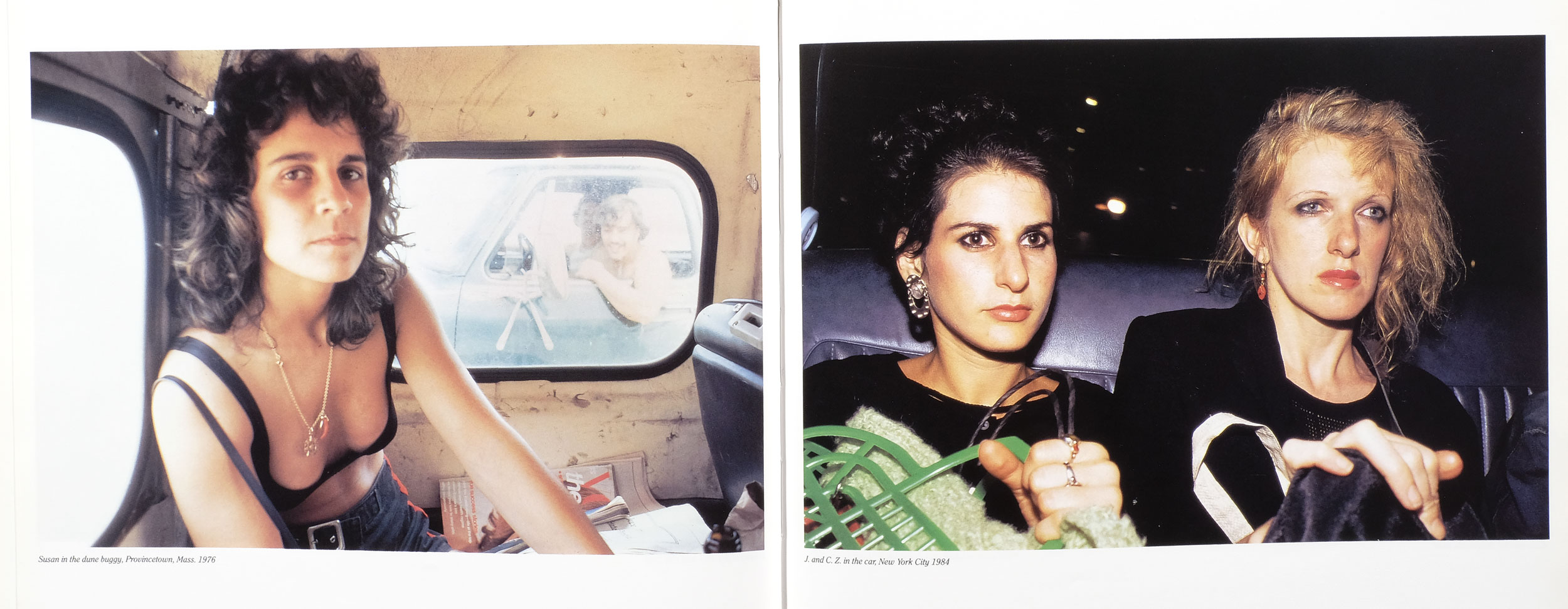
 

Nan Goldin, 'The Ballad of Sexual Dependency', 1986


Nan Goldin, The Ballad of Sexual Dependency, 1986


Cristina García Rodero. 'España Oculta'. 1989


Cristina García Rodero. España Oculta. 1989


When Spanish photographer Cristina Garcia Rodero went to study art in Italy, in 1973, she fully understood the importance of home. Yet her time abroad formented a deeper interest in was happening in her own country and, as a result, at the age of 23, Garcia Rodero returned to Spain and started a project that she hoped would capture the essence of the myriad Spanish traditions, religious practices and rites that were already fading away. What started as a five-year project ended up lasting 15 years and came to be the book España Oculta (Hidden Spain) published in 1989. At 39 years old, Garcia Rodero had managed to compile a kind of anthropological encyclopedia of her country. The work also captured a key moment in Spain’s history – with Spanish dictator Franco dying in 1975, and the country commencing a period of transition – something that would come to have a huge effect on the way the nation’s cultural traditions and rites were experienced and performed from then on.

Text from the Google Books website


'Barbara Kruger: Thinking of You'. The MIT Press & The Museum of Contemporary Art, 1999


Barbara Kruger: Thinking of You. The MIT Press & The Museum of Contemporary Art, 1999


This is the most comprehensive publication ever produced on the work of American artist Barbara Kruger. Kruger, one of the most influential artists of the last three decades, uses pictures and words through a wide variety of media and sites to raise issues of power, sexuality, and representation. Her works include photographic prints on paper and vinyl, etched metal plates, sculpture, video, installations, billboards, posters, magazine and book covers, T-shirts, shopping bags, postcards, and newspaper op-ed pieces.

This book serves as the catalog for the first major one-person exhibition of Kruger’s work to be mounted in the United States. The book, designed by Lorraine Wild in collaboration with the artist, contains texts by Rosalyn Deutsche, Katherine Dieckmann, Ann Goldstein, Steven Heller, Gary Indiana, Carol Squiers, and Lynne Tillman on subjects associated with Kruger’s work, including photography, graphic design, public space, power, and representation, as well as an extensive exhibition history, bibliography, and checklist of the exhibition. The cover features a new piece by Kruger, entitled Thinking of You, created especially for the catalog.

Text from the Amazon website


Graciela Iturbide. 'Juchitán de las Mujeres'. Mexico: Ediciones Toledo, 1991


Graciela Iturbide. Juchitán de las Mujeres. Mexico: Ediciones Toledo, 1991


In 1979 Graciela Iturbide took a series of photographs of the Zapotec culture, published as Juchitán de la mujeres. This is certainly the best known of all her works. It is the result of ten years of work, numerous trips to the Isthmus of Tehuantepec, and a prolonged experience of living among its inhabitants. None of the subjects of these photographs was captured candidly; all were carefully posed.


Photobook history is a relatively recent area of study, with one of the first “book-on-books” anthologies published in 1999 with the release of Fotografía Pública / Photography in Print 1919-1939, a catalogue associated with an exhibition of the same title at the Museo Nacional Centro de Arte Reina Sofía. Over the past two decades, a virtual cottage industry of books-on-photobooks has emerged, documenting photographically illustrated books based on geography or around a theme. Photobooks by women are in short supply in most of these anthologies, which is why 10×10 Photobooks launched the How We See: Photobooks by Women touring reading room and associated publication in 2018. Focusing on contemporary photobooks by women from 2000 to 2018, the project was the first step in 10×10 Photobooks’ ongoing interest in reassessing photobook history as it relates to women. Although only twenty-five years old, photobook history has been written primarily by men and has focused on publications authored by men. Very few books by women photographers appear in past photobook anthologies, and those included are already quite well known.

As a nonprofit organisation with a mission to share photobooks globally and encourage their appreciation and understanding, the 10×10 Photobooks team frequently discusses how photobook history was – and continues to be – written from a skewed perspective and that a “new” history needs to emerge. Early in our discussions, we recognised photobook history as needing to be “rewritten,” but this implied we accepted the partial history already in existence, which we did not. Instead, we concluded that photobook history needs to be “unwritten,” as the existing history is riddled with omissions. What is left out is not by mistake – it indicates bias and incomplete research by the current gatekeepers. To present a more inclusive and diverse vision, we must collectively address these omissions.

What They Saw: Historical Photobooks by Women, 1843-1999, a touring reading room accompanied by a publication and series of public programs, is a means to ignite interest in some of the underexposed and undocumented photobooks by women made between 1843 and 1999 and to begin a process of filling in the gaps. We say “some photobooks” because we are keenly aware that much work is still required, and we have only opened the door a crack. In several cases, particularly for books done before 1900 in regions other than North America and Europe or by women of colour, we heard about an artist who may have produced a photographically illustrated book or album, but we were unable to find any further documentation other than a brief mention before the trail went cold. Other impediments emerged among the cohort of women who collaborated with their husbands. Many of their collaborative books are credited only with their husbands’ names, and their contributions, if mentioned at all, are included as footnotes. In some cases, women authors marked their works with a gender-neutral signature that used only their studio name or first initial and last name. In addition, our initial research was impeded by the standard definition of a photobook: a bound volume with photographic illustrations published by the author, an independent publisher, or a trade publisher.

We found that we had to widen the frame to include individual albums, slim exhibition pamphlets, scrapbooks, maquettes, zines, and artists’ books in order to be more inclusive. This wider frame necessitated redefining a photobook author to incorporate those who may not call themselves a photographer or artist but who nonetheless assembled a “book” composed of photographs taken by themselves or others. Funding was another limitation. Many women photographers who actively exhibited their work either lacked the personal resources to produce a book or could not find anyone willing to underwrite such a venture.

This iteration of the What They Saw reading room includes 60 books of the more than 250 volumes highlighted in the associated publication. Most of these publications are kept in the collection of the Museo Reina Sofía’s Library and Documentation Centre. They are presented chronologically and show examples of books from around the globe. We begin with Anna Atkins, a British botanist, who was the first person ever to print and distribute a photobook. Her simple desire to share images of her algae specimens ushered in a new art form that presents photography in the book format. In the following years, women such as Isabel Agnes Cowper, the Official Museum Photographer at the South Kensington Museum (now the Victoria and Albert Museum), used photography to document museum objects, subsequently reproduced in numerous books. Until recently, her name was forgotten, as none of the South Kensington Museum publications credit her as the photographer.

In the early twentieth-century, women authors of photobooks gained some visibility. Fine-art photographer Germaine Krull published numerous books that approached photography from a creative and inventive perspective. Margaret Bourke-White emerged as a well-regarded photojournalist who traveled worldwide photographing for Fortune and Life magazines and producing countless books. In the 1930s, in Russia, Varvara Stepanova collaborated with her husband, Aleksandr Rodchenko, to create books filled with experimental photomontages. As the century progressed, women in other parts of the world also found their voices in photobooks. African American anthropologist Eslanda Cardozo Goode Robeson traveled to Uganda and South Africa and published African Journey in 1945, one of the earliest books written on Africa by a female scholar of color. In Mexico in 1951, Lola Álvarez Bravo contributed photographs to Acapulco en el sueño, a bold publication created to attract tourism to Acapulco. A few years later, Fina Gómez Revenga, a Venezuelan photographer, worked in Paris with the famed French printing house Draeger Frères to illustrate the poems of Surrealist poet Lise Deharme.

With the arrival of the 1960s, women emerged from the sidelines and began to produce widely distributed, often socially focused, photobooks. A New York City street photographer, Helen Levitt, published A Way of Seeing in 1965, while Carla Cerati collaborated on Morire di classe in 1969, a visually compelling commentary on the appalling conditions in Italian psychiatric hospitals. With the women’s movement finding its full voice in the 1970s, women photographers took center stage in the last three decades of the twentieth-century, releasing a steady flow of photobooks. A year after her death in 1971, Aperture published Diane Arbus’s monograph, a photobook that continues to influence generations of photographers. Barbara Brändli, a Swiss immigrant to Venezuela, documents the energy and rapid transformations of Caracas, while activist-photographer JEB (Joan E. Biren) toured the United States, capturing lesbian pride events. In South Africa, Lesley Lawson, a member of the Afrapix photo agency, combined interviews and her photographs to reveal the working conditions of Black women in Johannesburg. Cameroonian Angèle Etoundi Essamba shares the beauty and spirit of Black women in Passion (1989), while American Donna Ferrato unflinchingly explores domestic violence in Living with the Enemy (1991), and Nan Goldin exposes violent love and loss in her personal narrative, The Ballad of Sexual Dependency (1986). In books centered on cultural explorations, Wang Hsin photographs the fading traditions of Lanyu (Orchid Island) off the coast of Taiwan, Cristina García Rodero records religious festivals and rituals in her native Spain, and Ketaki Sheth documents twins and triplets in the Indian Gujarati community.

In reaching out to the far corners of the world, we uncovered numerous forgotten books, but many remain undiscovered. For example, we learned about a nineteenth-century woman in Iran who kept her husband’s diary and most probably added her photographs to the volume, but no visual documentation of this diary could be found. We also discovered several books that featured the participation of women in collaboration with male photographers where the women’s contributions were ambiguous. There were several “leads” of this nature, and we decided that leaving them out would be a missed opportunity. Therefore, in the associated anthology, we have included a “timeline” that presents several historically significant publishing, magazine, small press, photography, and feminist events that may or may not have produced a photobook, but have undoubtedly influenced its history. To support further exploration of these unresolved “leads,” 10×10 Photobooks has launched a research grant program to encourage scholarship on underexplored topics in photobook history.

From its inception, What They Saw has sought to include a diverse group of photographically illustrated publications by women. For photobook history to become more inclusive, it requires everyone (men, women, nonbinary, white, Black, Asian, African, Latinx, Indigenous, Western, Eastern, etc.) to contribute. We see this reading room of women’s role in the production, dissemination, and authoring of photobooks as a necessary step in the unwriting of the current photobook history and a rewriting of a photobook history that is more equitable and inclusive. We invite future researchers to take the next steps to explore further women and other marginalised people’s historical impact in the realm of photobooks and to expand upon the books we present in this reading room and its associated anthology.

Text from the Museo Nacional Centro de Arte Reina Sofía


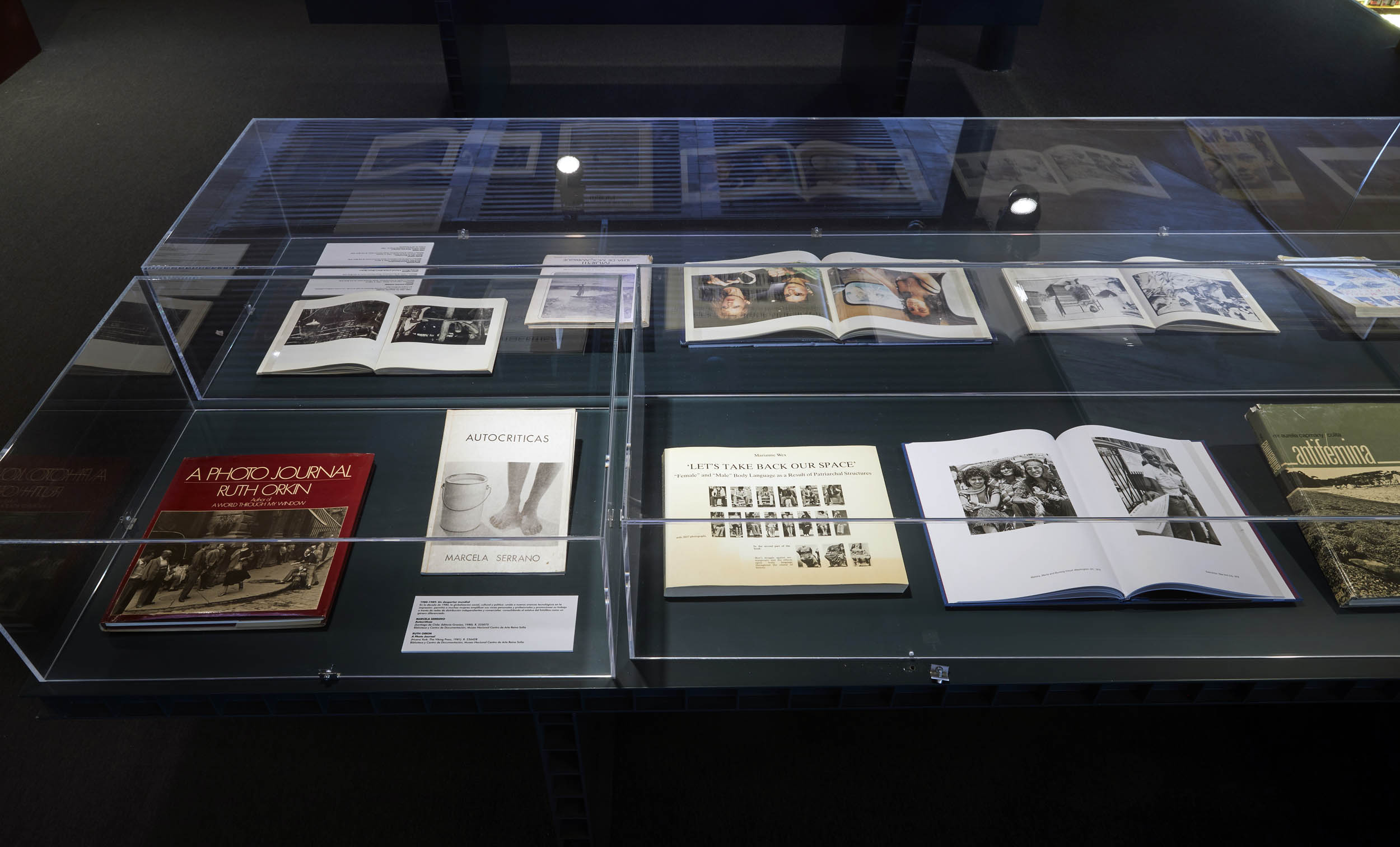
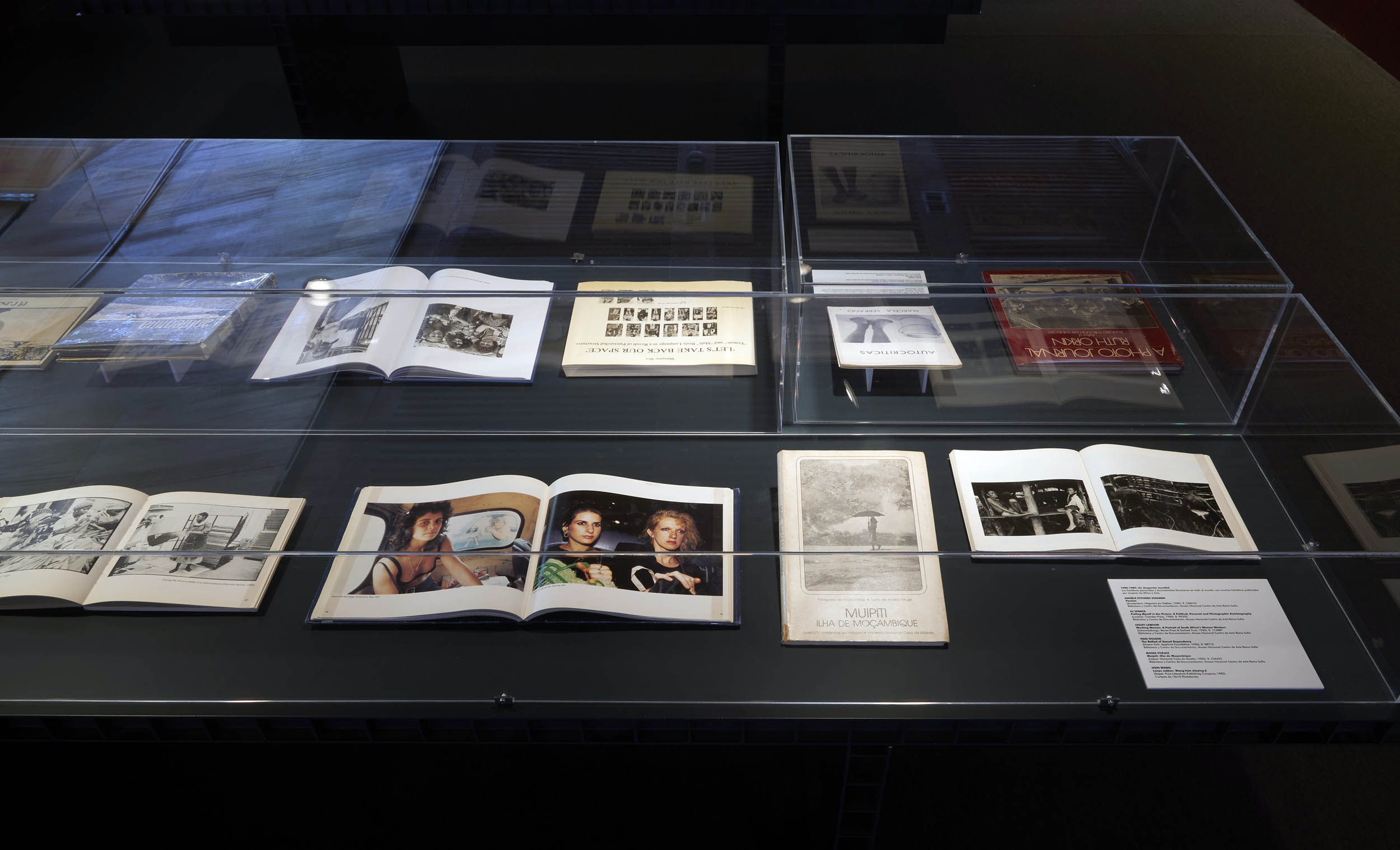
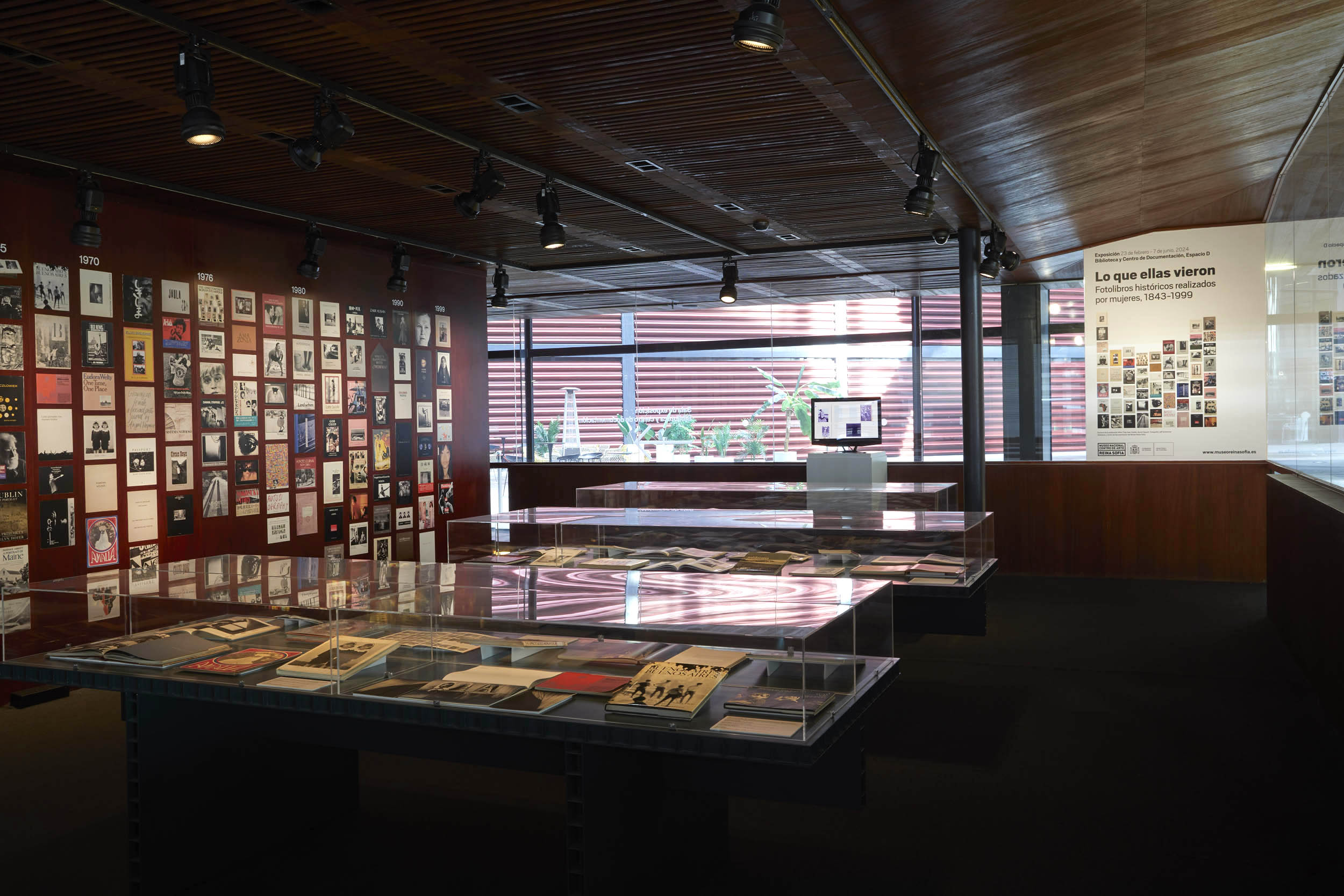
Installation view of the exhibition 'What They Saw: Historical Photobooks by Women, 1843-1999' at the Museo Nacional Centro de Arte Reina Sofía, Madrid

Installation view of the exhibition 'What They Saw: Historical Photobooks by Women, 1843-1999' at the Museo Nacional Centro de Arte Reina Sofía, MadridInstallation view of the exhibition 'What They Saw: Historical Photobooks by Women, 1843-1999' at the Museo Nacional Centro de Arte Reina Sofía, Madrid

Installation view of the exhibition 'What They Saw: Historical Photobooks by Women, 1843-1999' at the Museo Nacional Centro de Arte Reina Sofía, Madrid

Installation view of the exhibition 'What They Saw: Historical Photobooks by Women, 1843-1999' at the Museo Nacional Centro de Arte Reina Sofía, Madrid

Installation view of the exhibition 'What They Saw: Historical Photobooks by Women, 1843-1999' at the Museo Nacional Centro de Arte Reina Sofía, Madrid

Installation view of the exhibition 'What They Saw: Historical Photobooks by Women, 1843-1999' at the Museo Nacional Centro de Arte Reina Sofía, Madrid

Installation view of the exhibition 'What They Saw: Historical Photobooks by Women, 1843-1999' at the Museo Nacional Centro de Arte Reina Sofía, Madrid

Installation view of the exhibition 'What They Saw: Historical Photobooks by Women, 1843-1999' at the Museo Nacional Centro de Arte Reina Sofía, Madrid

Installation view of the exhibition 'What They Saw: Historical Photobooks by Women, 1843-1999' at the Museo Nacional Centro de Arte Reina Sofía, Madrid

Installation view of the exhibition 'What They Saw: Historical Photobooks by Women, 1843-1999' at the Museo Nacional Centro de Arte Reina Sofía, Madrid

Installation view of the exhibition 'What They Saw: Historical Photobooks by Women, 1843-1999' at the Museo Nacional Centro de Arte Reina Sofía, Madrid

Installation view of the exhibition 'What They Saw: Historical Photobooks by Women, 1843-1999' at the Museo Nacional Centro de Arte Reina Sofía, Madrid

Installation view of the exhibition 'What They Saw: Historical Photobooks by Women, 1843-1999' at the Museo Nacional Centro de Arte Reina Sofía, Madrid

Installation view of the exhibition 'What They Saw: Historical Photobooks by Women, 1843-1999' at the Museo Nacional Centro de Arte Reina Sofía, Madrid

Installation view of the exhibition 'What They Saw: Historical Photobooks by Women, 1843-1999' at the Museo Nacional Centro de Arte Reina Sofía, Madrid

Installation view of the exhibition 'What They Saw: Historical Photobooks by Women, 1843-1999' at the Museo Nacional Centro de Arte Reina Sofía, Madrid

Installation view of the exhibition 'What They Saw: Historical Photobooks by Women, 1843-1999' at the Museo Nacional Centro de Arte Reina Sofía, Madrid

Installation view of the exhibition 'What They Saw: Historical Photobooks by Women, 1843-1999' at the Museo Nacional Centro de Arte Reina Sofía, Madrid

Installation view of the exhibition 'What They Saw: Historical Photobooks by Women, 1843-1999' at the Museo Nacional Centro de Arte Reina Sofía, Madrid

Installation view of the exhibition 'What They Saw: Historical Photobooks by Women, 1843-1999' at the Museo Nacional Centro de Arte Reina Sofía, Madrid

Installation view of the exhibition 'What They Saw: Historical Photobooks by Women, 1843-1999' at the Museo Nacional Centro de Arte Reina Sofía, Madrid

Installation view of the exhibition 'What They Saw: Historical Photobooks by Women, 1843-1999' at the Museo Nacional Centro de Arte Reina Sofía, Madrid

Installation view of the exhibition 'What They Saw: Historical Photobooks by Women, 1843-1999' at the Museo Nacional Centro de Arte Reina Sofía, Madrid

Installation view of the exhibition 'What They Saw: Historical Photobooks by Women, 1843-1999' at the Museo Nacional Centro de Arte Reina Sofía, Madrid


Installation views of the exhibition What They Saw: Historical Photobooks by Women, 1843-1999 at the Museo Nacional Centro de Arte Reina Sofía, Madrid


Museo Nacional Centro de Arte Reina Sofía
Sabatini Building
Santa Isabel, 52
Nouvel Building
Ronda de Atocha (with plaza del Emperador Carlos V)
28012 Madrid
Phone: (34) 91 774 10 00

Opening hours:
Monday 10.00am – 9.00pm
Tuesday Closed
Wednesday – Saturday 10.00am – 9.00pm
Sunday 12.30am – 2.30pm

Museo Nacional Centro de Arte Reina Sofía website

LIKE ART BLART ON FACEBOOK

Back to top

Exhibition: ‘Dorothea Lange: Words & Pictures’ at the Museum of Modern Art, New York

Exhibition dates: 9th February – 9th May, 2020

Curator: Sarah Hermanson Meister, with River Bullock, Beaumont & Nancy Newhall Curatorial Fellow, assisted by Madeline Weisburg, Modern Women’s Fund Twelve-Month Intern, Department of Photography, The Museum of Modern Art.


Dorothea Lange (American, 1895-1965) 'Six Tenant Farmers without Farms, Hardeman County, Texas' 1937, printed 1965 from the exhibition 'Dorothea Lange: Words & Pictures' at the Museum of Modern Art, New York, Feb - May, 2020


Dorothea Lange (American, 1895-1965)
Six Tenant Farmers without Farms, Hardeman County, Texas
1937, printed 1965
Gelatin silver print
12 15/16 × 16 5/8″ (32.9 × 42.2cm)
The Museum of Modern Art, New York. Purchase


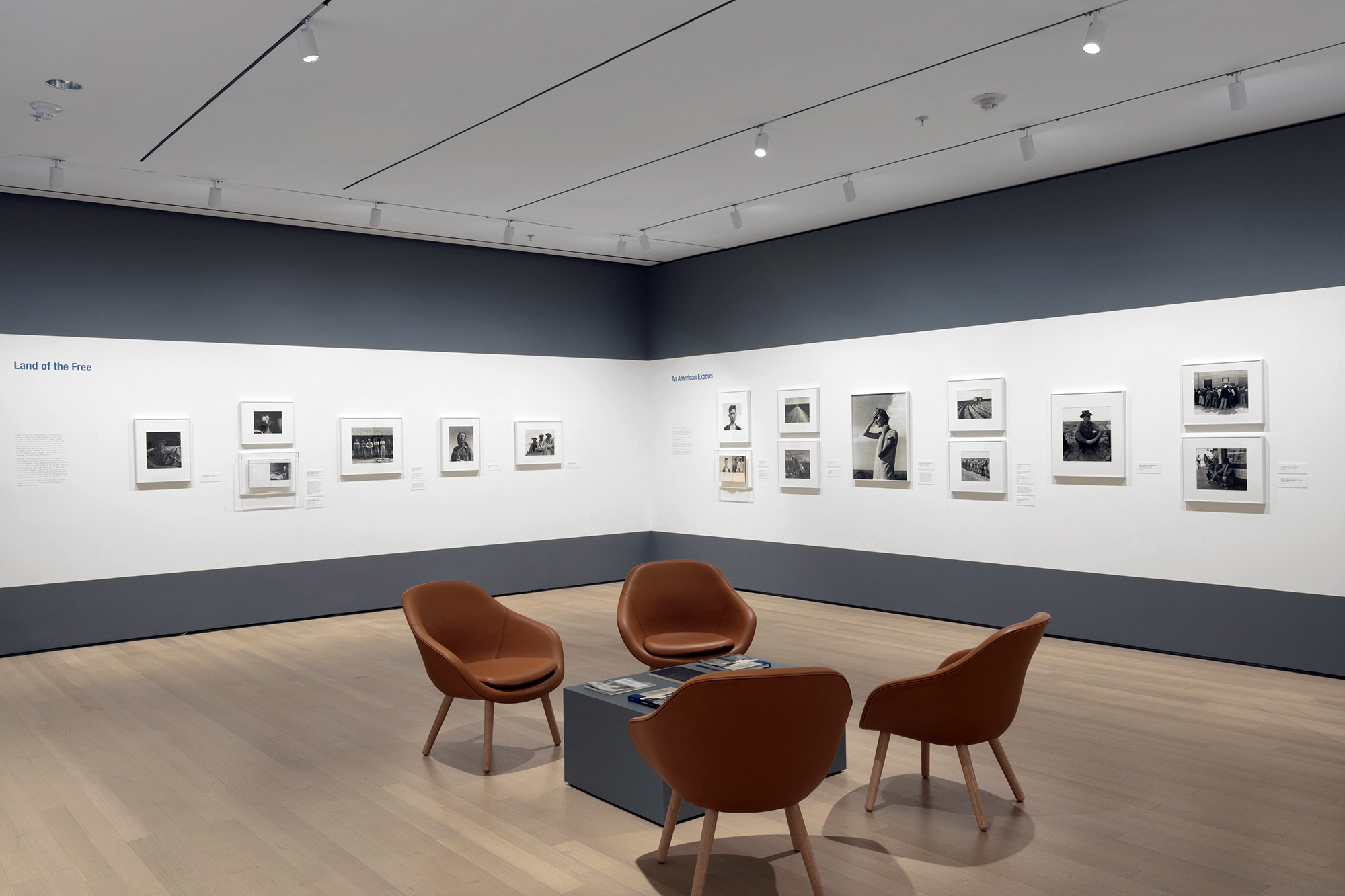
This image appeared in Land of the Free and later in Lange and Paul Taylor’s documentary photobook An American Exodus: A Record of Human Erosion (1941), where Lange cropped out the sixth, smaller man, perhaps to simplify the idea of strength and virility conveyed there.


Dorothea Lange (American, 1895-1965) 'A Half-Hour Later, Hardeman County, Texas' 1937, printed 1965 from the exhibition 'Dorothea Lange: Words & Pictures' at the Museum of Modern Art, New York, Feb - May, 2020


Dorothea Lange (American, 1895-1965)
A Half-Hour Later, Hardeman County, Texas
1937, printed 1965
Gelatin silver print
12 1/8 × 15 3/16″ (30.8 × 38.6cm)
The Museum of Modern Art, New York. Purchase


“All photographs – not only those that are so-called ‘documentary,’ … can be fortified by words.”

“And the assignment was… see what was really there. What does it look like, what does it feel like, what actually is the human condition.”


Dorothea Lange


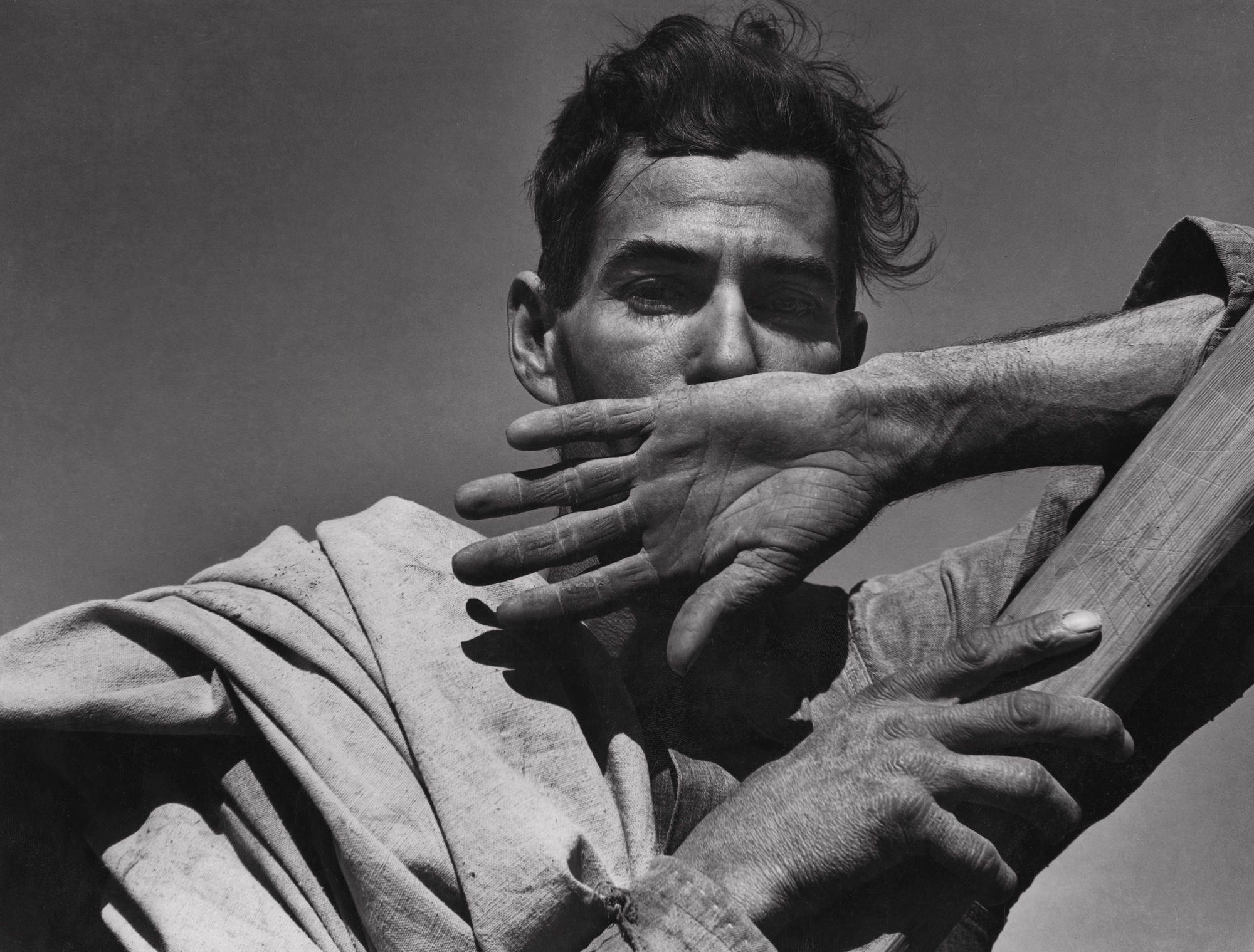
“Lange took so many memorable photographs that it is challenging to shortlist them. One of the greatest is at the entrance to the MoMA show: “Migratory Cotton Picker, Eloy, Arizona” (1940). The farmworker’s hands are close to the lens of the camera. One hand is holding a wooden beam; it could be the implement of his impending crucifixion. The other hand, with its open palm and splayed fingers, covers his mouth. Unforgettably powerful, the photograph resembles self-portraits by Austrian expressionist painter Egon Schiele, who shared Lange’s interest in extremities – hands and feet, and also, wretched misery.”


Arthur Lubow


Closer and closer

While MoMA has closed temporarily due to the novel coronavirus (COVID-19) pandemic, I believe it is important to document and write about those exhibitions that would have been running during this distressing time, as a form of social inclusion, social connection if you like, in the virtual world. I know that I am feeling particularly isolated at the moment, fighting off depression, with a lack of my usual routine and coffee with friends.

Great art always inspires, engages me, makes me feel and care about the world around me. In these photographs by that most excellent of photographers Dorothea Lange, of another desperate time, The Great Depression, we can feel her sincerity and intensity, that resolute gift of seeing the world clearly, despite the abject misery that surrounds her. Fast forward future, and we see the lines of the newly unemployed, desperate, penniless, snaking around the block of the social security buildings here in Australia, this very day.

Lange’s photographs don’t need words. Words are never enough.

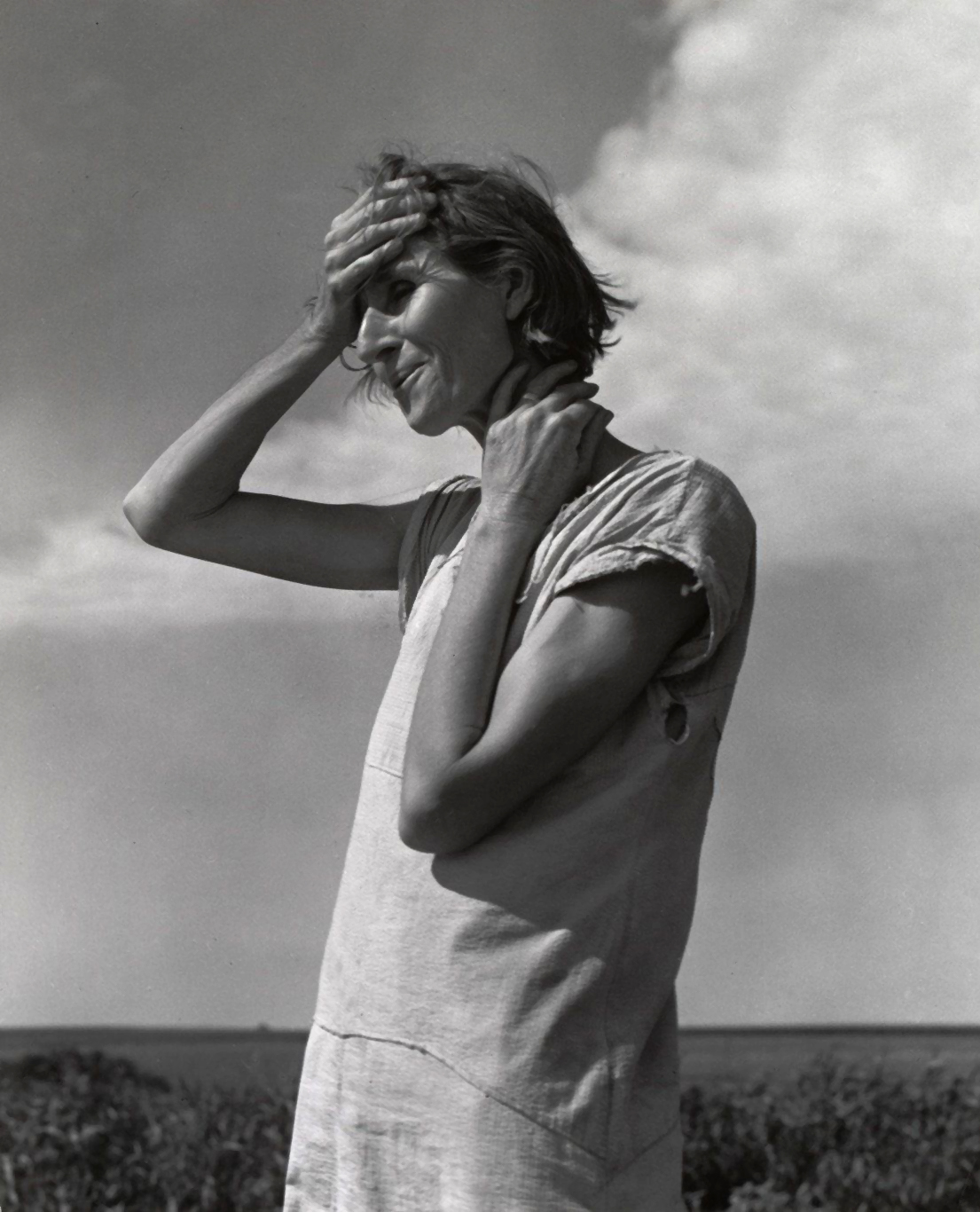
The faces weary, furrowed, parched under baking sun, rutted like the land, Tractored Out, Childress County, Texas (1938). Dark eyes pierce the marrow, astringent lines, heavy eyebrows, mirror, set above, tight, tight mouth, Young Sharecropper, Macon County, Georgia (July 1937). I feel what, his pain? his sadness? his despair? Hands, arms, feet, form an important part of Lange’s visual armoury, arm/ory, amour. The hand to chin of Migrant Mother, Nipomo, California (March 1936); the bony arms of Woman of the High Plains, Texas Panhandle (June 1938); hand obscuring face, steely gaze, Funeral Cortege, End of an Era in a Small Valley Town, California (1938); weathered, beaten hands, beaten, Migratory Cotton Picker, Eloy, Arizona (November 1940). These extremities are expressions not just of her subjects, but of herself. A virtual self-portrait.

“One of the greatest is at the entrance to the MoMA show: “Migratory Cotton Picker, Eloy, Arizona” (1940). The farmworker’s hands are close to the lens of the camera. One hand is holding a wooden beam; it could be the implement of his impending crucifixion. The other hand, with its open palm and splayed fingers, covers his mouth. Unforgettably powerful, the photograph resembles self-portraits by Austrian expressionist painter Egon Schiele, who shared Lange’s interest in extremities – hands and feet, and also, wretched misery.” (Press release)

Lange “is a key link in a chain of photographic history. From Evans, she learned how to frame precise images of clapboard churches. But unlike Evans, who usually preferred to keep a distance and capture a building’s architectural integrity, Lange always wanted, as she said when describing how she made “Migrant Mother,” to move “closer and closer”.” Moving closer, her photographs possess an un/bridled intimacy with troubled creatures. Moving closer, seeing clearly. Closer and closer, till death, parts.

Dr Marcus Bunyan


Many thankx to MoMA for allowing me to publish the photographs in posting. Please click on the photographs for a larger version of the image.


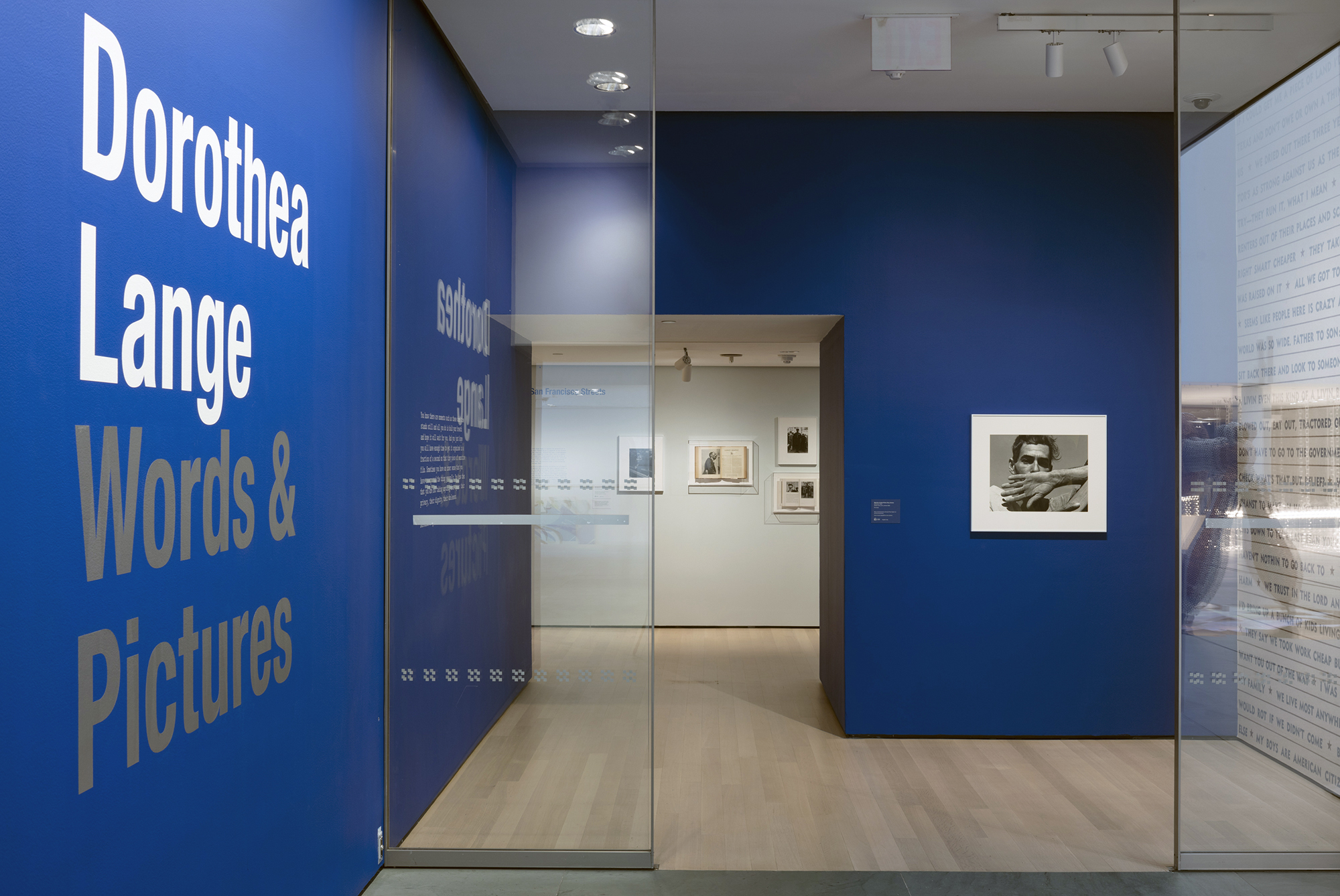
Dorothea Lange: Words & Pictures MoMA exhibition


'Dorothea Lange: Words & Pictures' introduction text


Dorothea Lange: Words & Pictures introduction text


Installation view of 'Dorothea Lange: Words & Pictures', The Museum of Modern Art, New York, February 9, 2020 - May 9, 2020 with at right, 'Migratory Cotton Picker, Eloy, Arizona' November 1940


Installation view of Dorothea Lange: Words & Pictures, The Museum of Modern Art, New York, February 9, 2020 – May 9, 2020 with at right, Migratory Cotton Picker, Eloy, Arizona November 1940
© 2020 The Museum of Modern Art
Photo: John Wronn


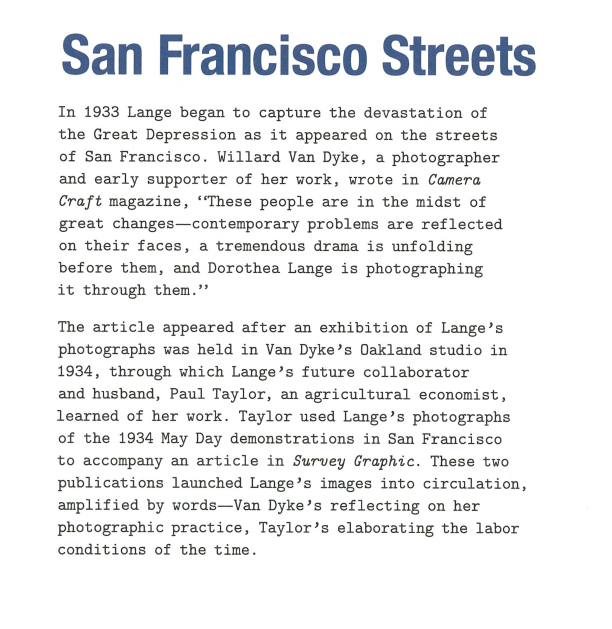
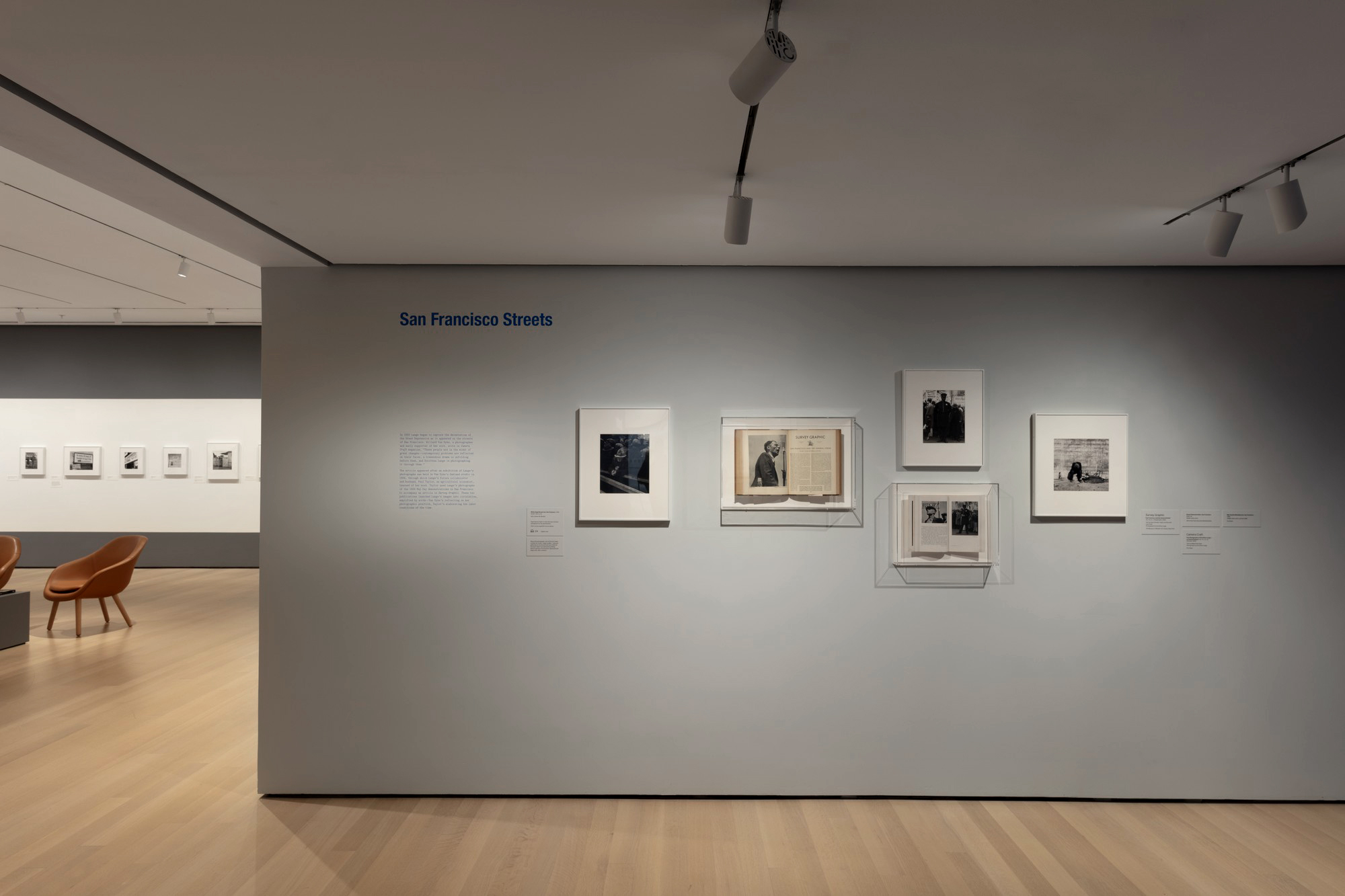
'San Francisco Streets' wall text from the exhibition 'Dorothea Lange: Words & Pictures' at the Museum of Modern Art, New York


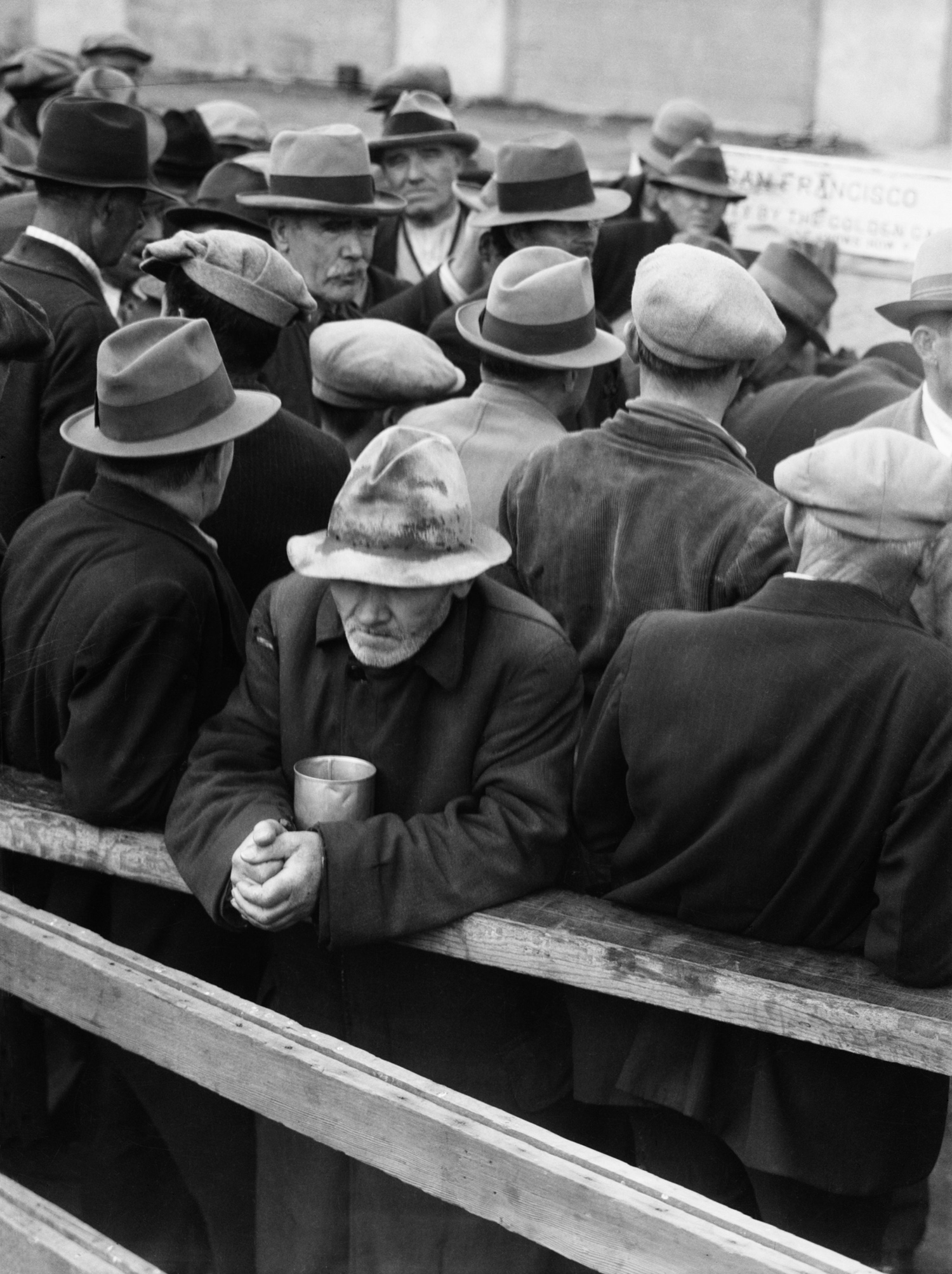
Installation view of 'Dorothea Lange: Words & Pictures', The Museum of Modern Art, New York, February 9, 2020 - May 9, 2020 showing at centre left, 'White Angel Bread Line, San Francisco' 1933


San Francisco Streets

Installation view of Dorothea Lange: Words & Pictures, The Museum of Modern Art, New York, February 9, 2020 – May 9, 2020 showing at centre left, White Angel Bread Line, San Francisco 1933
© 2020 The Museum of Modern Art
Photo: John Wronn


Dorothea Lange (American, 1895-1965) 'White Angel Bread Line, San Francisco' 1933 from the exhibition 'Dorothea Lange: Words & Pictures' at the Museum of Modern Art, New York, Feb - May, 2020


Dorothea Lange (American, 1895-1965)
White Angel Bread Line, San Francisco
1933
Gelatin silver print
10 3/4 x 8 7/8″ (27.3 x 22.6cm)
The Museum of Modern Art, New York. Gift of Albert M. Bender


About this photograph, one of the first made outside her studio, Lange recalled, “I was just gathering my forces and that took a little bit because I wasn’t accustomed to jostling about in groups of tormented, depressed and angry men, with a camera.”


'Government Work' wall text from the exhibition 'Dorothea Lange: Words & Pictures' at the Museum of Modern Art, New York


Installation view of 'Dorothea Lange: Words & Pictures', The Museum of Modern Art, New York, February 9, 2020 - May 9, 2020 showing at fifth from left bottom, 'Funeral Cortege, End of an Era in a Small Valley Town, California' 1938; at fourth from left top, 'Grayson, San Joaquin Valley, California' 1938; and at fifth from left top, 'Ex-Slave with Long Memory, Alabama' c. 1937


Government Work

Installation view of Dorothea Lange: Words & Pictures, The Museum of Modern Art, New York, February 9, 2020 – May 9, 2020 showing at fifth from left bottom, Funeral Cortege, End of an Era in a Small Valley Town, California 1938; at fourth from left top, Grayson, San Joaquin Valley, California 1938; and at fifth from left top, Ex-Slave with Long Memory, Alabama c. 1937
© 2020 The Museum of Modern Art
Photo: John Wronn


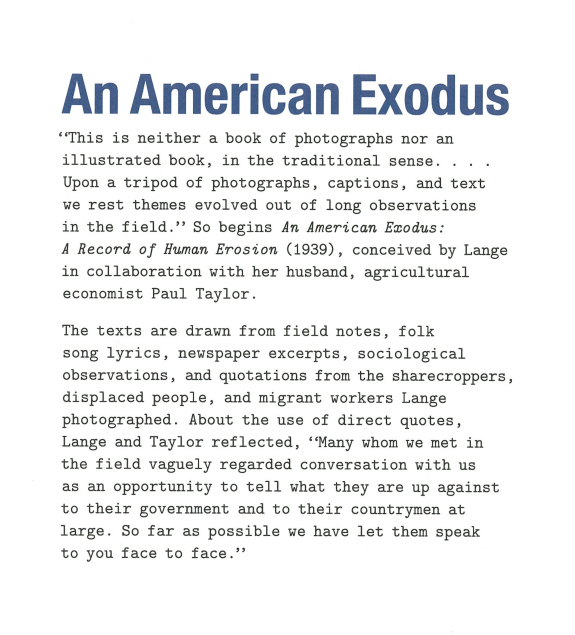
“We use the camera as a tool of research. Upon a tripod of photographs, captions, and text we rest themes evolved out of long observations in the field.”


Dorothea Lange and Paul Taylor, 1939


Dorothea Lange (American, 1895-1965) 'Funeral Cortege, End of an Era in a Small Valley Town, California' 1938, printed c. 1958


Dorothea Lange (American, 1895-1965)
Funeral Cortege, End of an Era in a Small Valley Town, California
1938, printed c. 1958
Gelatin silver print
9 7/16 × 8″ (24 × 20.3cm)
The Museum of Modern Art, New York. Purchase


Dorothea Lange (American, 1895-1965) 'Grayson, San Joaquin Valley, California' 1938, printed 1965


Dorothea Lange (American, 1895-1965)
Grayson, San Joaquin Valley, California
1938, printed 1965
Gelatin silver print
10 3/8 x 16 15/16″ (26.3 x 43cm)
The Museum of Modern Art, New York. Purchase


Regarding this picture, Dorothea Lange’s field notes report: “Grayson was a migratory agricultural labourers’ shack town. It was during the season of the pea harvest. Late afternoon about 6 o’clock. Boys were playing baseball in the road that passes this building, which was used as a church. Otherwise, this corpse, lying at the church, was alone, unattended, and unexplained.” The full negative she made there represents not just this doorway but the entire whitewashed gabled façade. The concrete steps in front of the entrance and foundation blocks are visible. Apparently the form in the doorway was what drew Lange to the scene, however; it has been suggested that she later realised this central feature was important enough to carry the composition and proceeded to concentrate on the portion of the negative with the shallow portal holding the body. She published an even more severely cut-down version in the 1940 US Camera Annual. Bearing the title Doorstep Document, it eliminates the three plain boards that frame the doorway, making the depth of the threshold less evident and the wrapped figure and worn double doors more prominent and funereal.

It is not known why Lange identified the form as a corpse rather than a homeless person. Today we are more inclined to think the latter, since such scenes are common. The relaxed, uncovered pose of the feet indicates a voluntary reclining position. Lange was also some distance away when she made the exposure. One of the playing children may have suggested the corpse idea to test its shock value, and perhaps Lange adopted it for future propaganda purposes. Grayson was just a small town southwest of Modesto, and this church was probably one of the few places of refuge it offered.

It would seem peculiar for the feet of a dead person to be exposed. Here they represent the life, the personality, of this anonymous citizen. Always sensitive to the appearance and performance of others’ feet, due to her own deformity, Lange made hundreds of photographs on the theme. This one is among the most melancholy.

Judith Keller, Dorothea Lange, In Focus: Photographs from the J. Paul Getty Museum (Los Angeles: J. Paul Getty Museum, 2002), 40. © 2002 J. Paul Getty Trust


Dorothea Lange (American, 1895-1965) 'Ex-Slave with Long Memory, Alabama' c. 1937, printed 1965


Dorothea Lange (American, 1895-1965)
Ex-Slave with Long Memory, Alabama
c. 1937, printed 1965
Gelatin silver print
15 3/16 × 11 15/16″ (38.5 × 30.3cm)
The Museum of Modern Art, New York. Purchase


Dorothea Lange 'Land of the Free'

Dorothea Lange 'Land of the Free'


Dorothea Lange (American, 1895-1965)
Archibald Macleish (American, 1892-1982)
Land of the Free
1938
Letterpress open: 9 7/16 x 13 1/8″ (24 x 33.4cm)
The Museum of Modern Art Library, New York


Open at Lange’s Ditched, Stalled and Stranded, San Joaquin Valley, California February 1936


'Land of the Free' wall text from the exhibition 'Dorothea Lange: Words & Pictures' at the Museum of Modern Art, New York


Installation view of 'Dorothea Lange: Words & Pictures', The Museum of Modern Art, New York, February 9, 2020 - May 9, 2020 with at left, 'Ditched, Stalled and Stranded, San Joaquin Valley, California' February 1936; and at centre, 'Six Tenant Farmers without Farms, Hardeman County, Texas' 1937


Land of the Free

Installation view of Dorothea Lange: Words & Pictures, The Museum of Modern Art, New York, February 9, 2020 – May 9, 2020 with at left, Ditched, Stalled and Stranded, San Joaquin Valley, California February 1936; and at centre, Six Tenant Farmers without Farms, Hardeman County, Texas 1937
© 2020 The Museum of Modern Art
Photo: John Wronn


Installation view of 'Dorothea Lange: Words & Pictures', The Museum of Modern Art, New York, February 9, 2020 - May 9, 2020


Land of the Free and An American Exodus

Installation view of Dorothea Lange: Words & Pictures, The Museum of Modern Art, New York, February 9, 2020 – May 9, 2020
© 2020 The Museum of Modern Art
Photo: John Wronn


FOR THE ENTIRE second half of Dorothea Lange’s life, a quotation from the English philosopher Francis Bacon floated in her peripheral vision: “The contemplation of things as they are, without error or confusion, without substitution or imposture, is in itself a nobler thing than a whole harvest of invention.” She pinned a printout of these words up on her darkroom door in 1933. It remained there until she died, at 70, in 1965 – three months before her first retrospective opened at the Museum of Modern Art in New York and three decades after she took the most iconic photograph in the medium’s history.


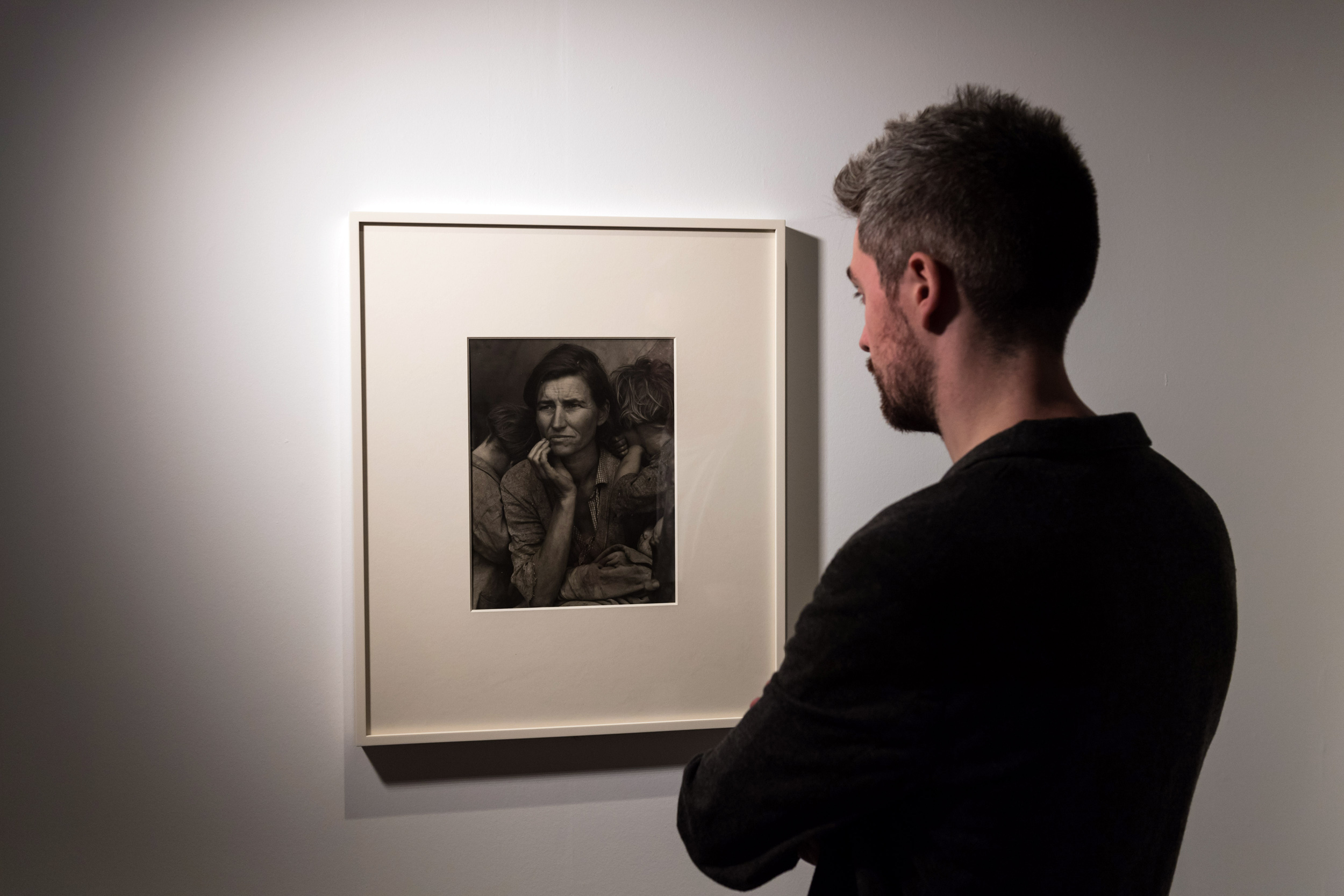
Dorothea Lange (American, 1895-1965) 'Migrant Mother, Nipomo, California' March 1936


Dorothea Lange (American, 1895-1965)
Migrant Mother, Nipomo, California
March 1936
Gelatin silver print
11 1/8 x 8 9/16″ (28.3 x 21.8cm)
The Museum of Modern Art, New York. Purchase


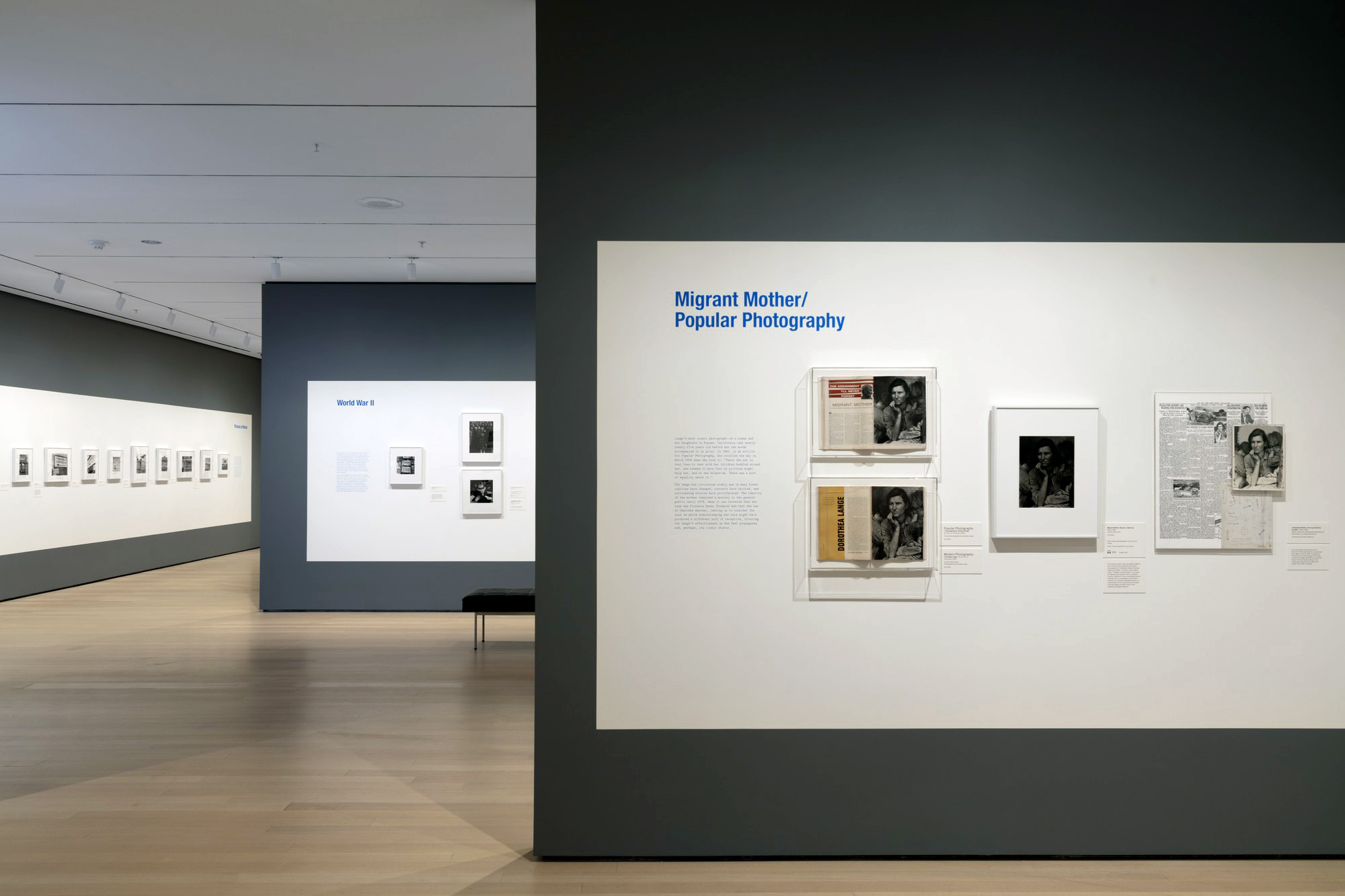
The captions used to describe Migrant Mother are as varied as the publications in which they appeared: “A destitute mother, the type aided by the WPA.” “A worker in the ‘peach bowl.'” “Draggin’-around people.” “In a camp of migratory pea-pickers, San Luis Obispo County, California.” Even in ostensibly factual settings such as newspapers, government reports, or a museum cataloguing sheet, no fixed phrase or set of words was associated with the image until 1952, when it was published as Migrant Mother.


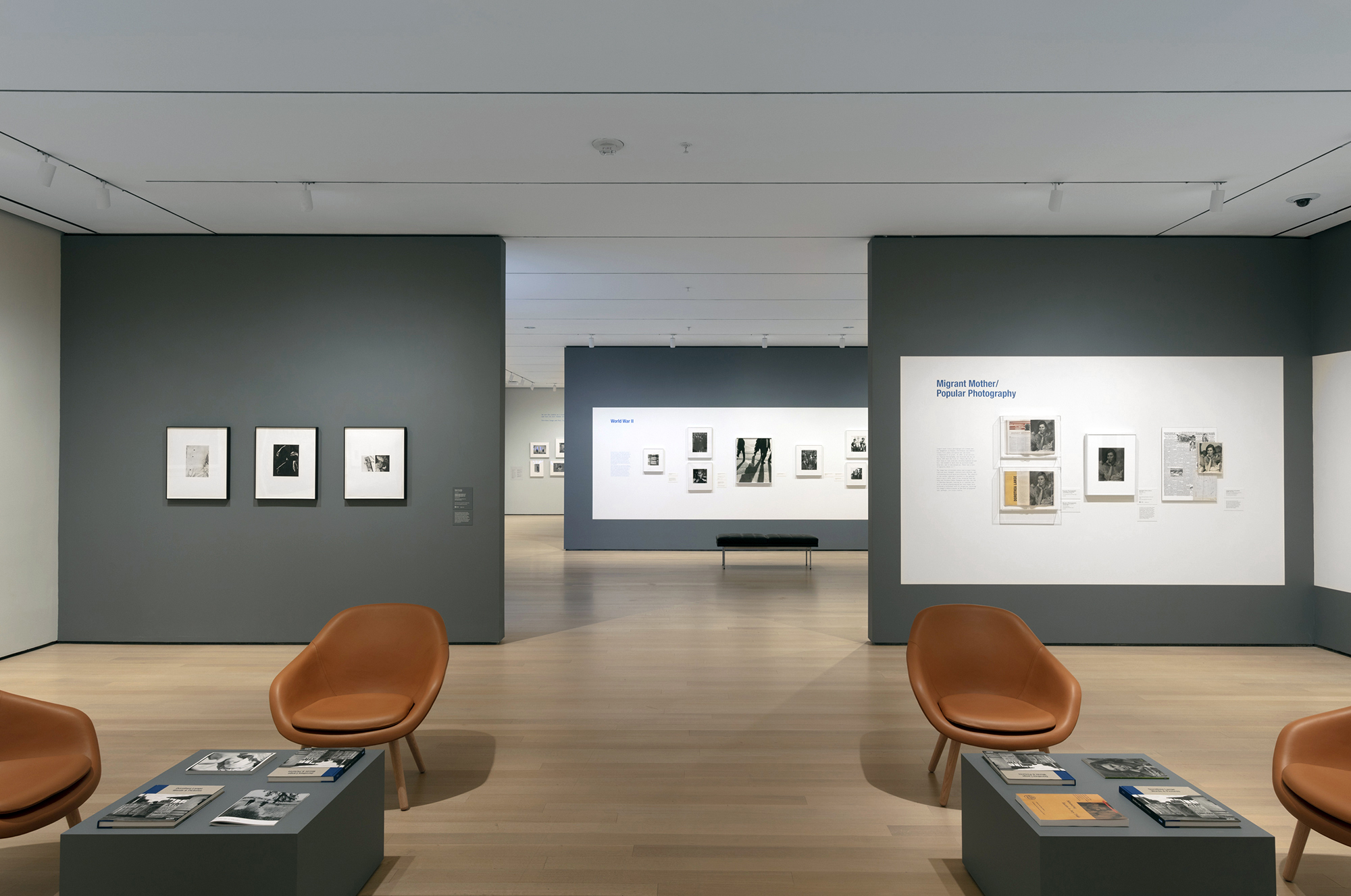
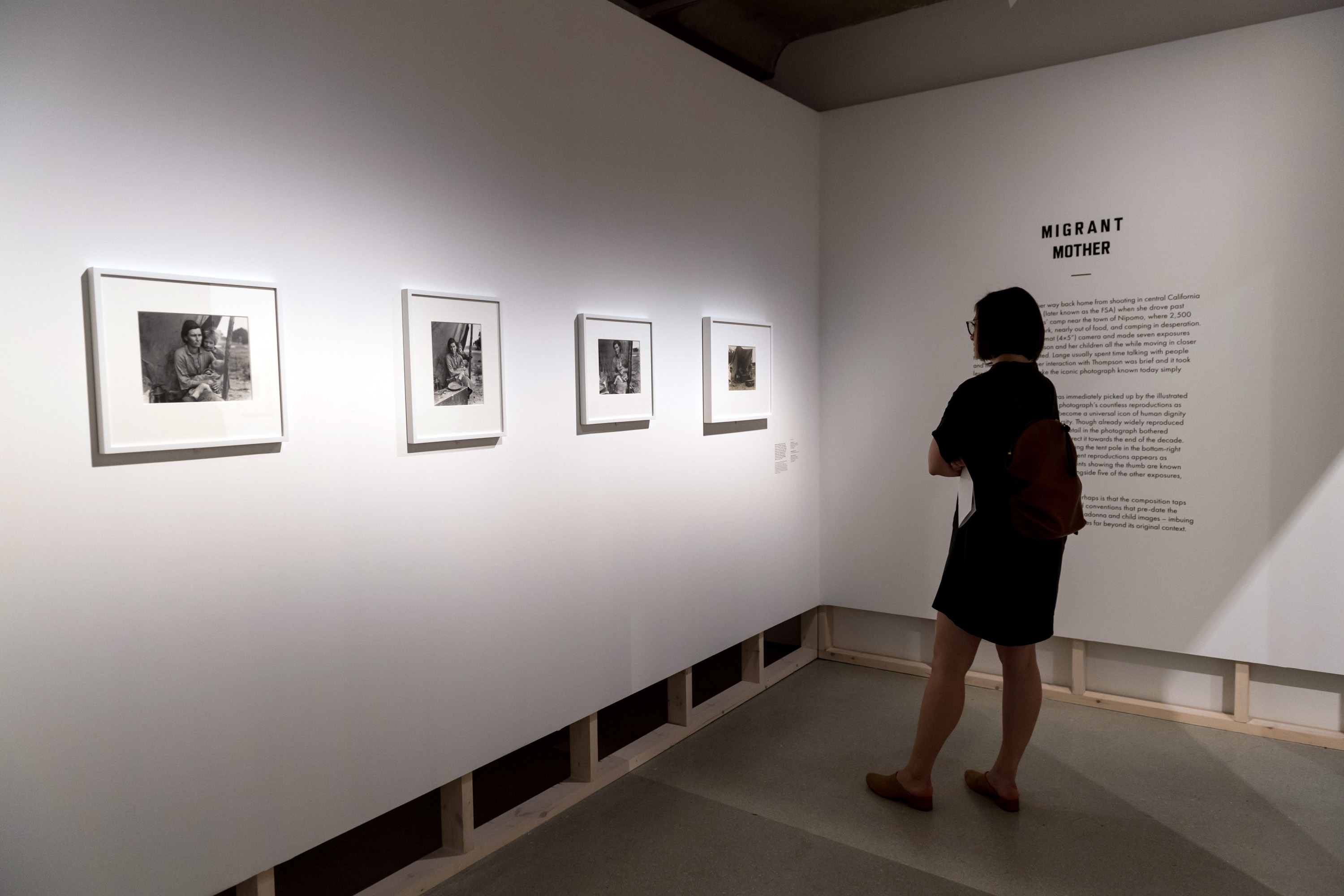
'Lange Migrant Mother / Popular Photography' wall text from the exhibition 'Dorothea Lange: Words & Pictures' at the Museum of Modern Art, New York


Installation view of 'Dorothea Lange: Words & Pictures', The Museum of Modern Art, New York, February 9, 2020 - May 9, 2020

Installation view of 'Dorothea Lange: Words & Pictures', The Museum of Modern Art, New York, February 9, 2020 - May 9, 2020

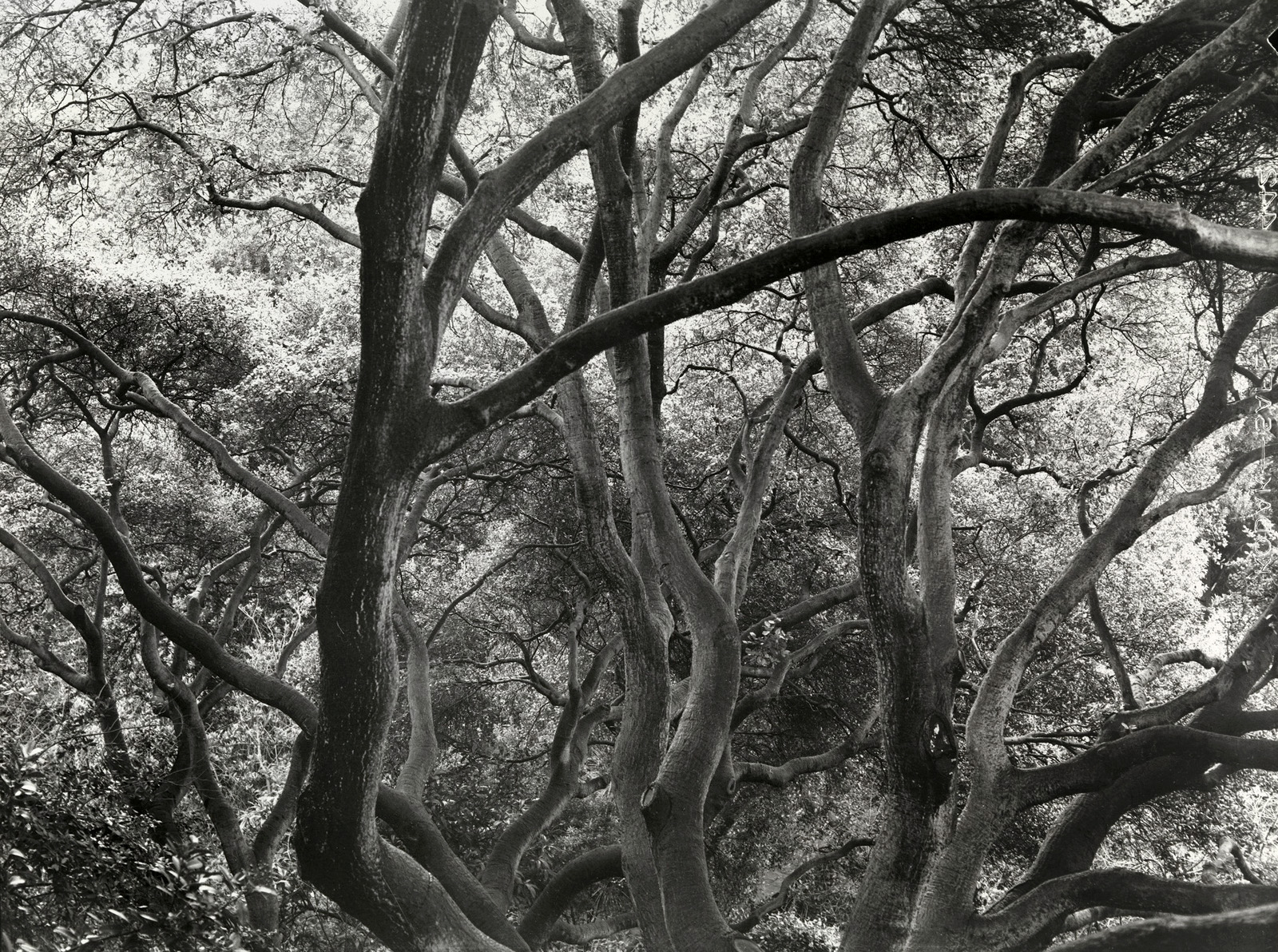
Installation view of 'Dorothea Lange: Words & Pictures', The Museum of Modern Art, New York, February 9, 2020 - May 9, 2020 with at left, 'Sunlit Oak' c. 1957


Migrant Mother / Popular Photography

Installation views of Dorothea Lange: Words & Pictures, The Museum of Modern Art, New York, February 9, 2020 – May 9, 2020 with at left in the bottom photograph, Sunlit Oak c. 1957 (below)
© 2020 The Museum of Modern Art
Photo: John Wronn


Dorothea Lange (American, 1895-1965) 'Sunlit Oak' c. 1957, printed 1965


Dorothea Lange (American, 1895-1965)
Sunlit Oak
c. 1957, printed 1965
Gelatin silver print
30 7/8 × 41 1/8″ (78.4 × 104.5cm)
The Museum of Modern Art, New York. Purchase


Dorothea Lange (American, 1895-1965) 'Kern County, California' 1938


Dorothea Lange (American, 1895-1965)
Kern County, California
1938
Gelatin silver print
12 7/16 x 12 1/2″ (31.6 x 31.7cm)
The Museum of Modern Art, New York. Purchase


'Pictures of Words' wall text from the exhibition 'Dorothea Lange: Words & Pictures' at the Museum of Modern Art, New York


Installation view of 'Dorothea Lange: Words & Pictures', The Museum of Modern Art, New York, February 9, 2020 - May 9, 2020 with at left, 'Western Addition, San Francisco, California' 1951; at fifth from left, 'Kern County, California' 1938; at third from right, 'Crossroads Store, North Carolina' July 1939


Pictures of Words

Installation view of Dorothea Lange: Words & Pictures, The Museum of Modern Art, New York, February 9, 2020 – May 9, 2020 with at left, Western Addition, San Francisco, California 1951 (below); at fifth from left, Kern County, California 1938 (above); at third from right, Crossroads Store, North Carolina July 1939 (below)
© 2020 The Museum of Modern Art
Photo: John Wronn


Dorothea Lange (American, 1895-1965) 'Western Addition, San Francisco, California' 1951, printed 1965


Dorothea Lange (American, 1895-1965)
Western Addition, San Francisco, California
1951, printed 1965
Gelatin silver print
7 3/16 × 6″ (23.8 × 17.4cm)
The Museum of Modern Art, New York. Purchase


Dorothea Lange (American, 1895-1965) 'Crossroads Store, North Carolina' July 1939, printed 1965


Dorothea Lange (American, 1895-1965)
Crossroads Store, North Carolina
July 1939, printed 1965
Gelatin silver print
9 11/16 × 13 9/16″ (24.6 × 34.4cm)
The Museum of Modern Art, New York. Purchase


Dorothea Lange (American, 1895-1965) 'Tractored Out, Childress County, Texas' 1938


Dorothea Lange (American, 1895-1965)
Tractored Out, Childress County, Texas
1938
Gelatin silver print
9 5/16 x 12 13/16″ (23.6 x 32.6cm)
The Museum of Modern Art, New York. Purchase


Lange and Taylor’s captions in An American Exodus consider the human impact of environmental crises. The one for this image reads, “Tractors replace not only mules but people. They cultivate to the very door of the houses of those whom they replace.”


Dorothea Lange (American, 1895-1965) 'The Road West, New Mexico' 1938, printed 1965


Dorothea Lange (American, 1895-1965)
The Road West, New Mexico
1938, printed 1965
Gelatin silver print
9 5/8 × 13 1/16″ (24.5 × 33.2cm)
The Museum of Modern Art, New York. Purchase


The image was memorialised later by Robert Frank


Dorothea Lange and Paul S. Taylor. 'An American Exodus. A Record of Human Erosion' New York: Reynal & Hitchcock, 1939

Dorothea Lange and Paul S. Taylor. 'An American Exodus. A Record of Human Erosion' New York: Reynal & Hitchcock, 1939


A seminal work in documentary studies, with powerful photographs of the Depression era made by the wife and husband team of Dorothea Lange and Paul Taylor. They were hired by the Farm Security Administration to document the 300,000 strong, Depression era exodus from rural America, and the struggles these migrant workers overcame in search of basic necessities. The documentary photographer and social scientist’s goal was to “use the camera as a tool of research. Upon a tripod of photographs, captions, and text we rest themes evolved out of long observations in the field. We adhere to the standards of documentary photography as we have conceived them. Quotations which accompany photographs report what the persons photographed said, not what we think might be their unspoken thoughts.” p. 6.

Text from the Abe Books website [Online] Cited 24/02/2020


Dorothea Lange (American, 1895-1965) 'Woman of the High Plains, Texas Panhandle' June 1938, printed 1965


Dorothea Lange (American, 1895-1965)
Woman of the High Plains, Texas Panhandle
June 1938, printed 1965
Gelatin silver print
29 3/4 × 24″ (75.6 × 61cm)
The Museum of Modern Art, New York. Purchase


“IF YOU DIE, YOU’RE DEAD – THAT’S ALL”

When it was published in An American Exodus, this portrait was captioned “If you die, you’re dead – that’s all.” This line was taken from Lange’s field notes, which quote the woman at greater length: “‘We made good money a pullin’ bolls, when we could pull. But we’ve had no work since March. … You can’t get no relief here until you’ve lived here a year. This county’s a hard country. They won’t help bury you here. If you die, you’re dead, that’s all.'”


'An American Exodus' wall text from the exhibition 'Dorothea Lange: Words & Pictures' at the Museum of Modern Art, New York


Installation view of 'Dorothea Lange: Words & Pictures', The Museum of Modern Art, New York, February 9, 2020 - May 9, 2020

Installation view of 'Dorothea Lange: Words & Pictures', The Museum of Modern Art, New York, February 9, 2020 - May 9, 2020 with at left, 'Young Sharecropper, Macon County, Georgia' July 1937; at second left top, 'The Road West, New Mexico' 1938; at centre 'Woman of the High Plains, Texas Panhandle' June 1938; and second right, 'Jobless on the Edge of a Peafield, Imperial Valley, California' February 1937


An American Exodus

Installation view of Dorothea Lange: Words & Pictures, The Museum of Modern Art, New York, February 9, 2020 – May 9, 2020 with at left, Young Sharecropper, Macon County, Georgia July 1937; at second left top, The Road West, New Mexico 1938; at centre Woman of the High Plains, Texas Panhandle June 1938; and second right, Jobless on the Edge of a Peafield, Imperial Valley, California February 1937
© 2020 The Museum of Modern Art
Photo: John Wronn


Dorothea Lange (American, 1895-1965) 'Young Sharecropper, Macon County, Georgia' July 1937, printed 1965


Dorothea Lange (American, 1895-1965)
Young Sharecropper, Macon County, Georgia
July 1937, printed 1965
Gelatin silver print
11 3/4 × 11 3/4″ (29.8 × 29.9cm)
The Museum of Modern Art, New York. Purchase


Dorothea Lange (American, 1895-1965) 'Jobless on the Edge of a Peafield, Imperial Valley, California' February 1937, printed 1965


Dorothea Lange (American, 1895-1965)
Jobless on the Edge of a Peafield, Imperial Valley, California
February 1937, printed 1965
Gelatin silver print
16 15/16 × 15 3/4″ (43 × 40.1cm)
The Museum of Modern Art, New York. Purchase


Dorothea Lange and Paul S. Taylor. 'An American Exodus. A Record of Human Erosion' New York: Reynal & Hitchcock, 1939

Dorothea Lange and Paul S. Taylor. 'An American Exodus. A Record of Human Erosion' New York: Reynal & Hitchcock, 1939


Dorothea Lange and Paul S. Taylor
An American Exodus. A Record of Human Erosion
New York: Reynal & Hitchcock, 1939
First edition. Hardcover
Letterpress open: 10 1/4 x 15 3/8″ (26 x 39.1cm)
The Museum of Modern Art Library, New York


Empathy and Artistry: Rediscovering Dorothea Lange

John Szarkowski was about 13 when he saw an image by Dorothea Lange that “enormously impressed” him. After he had become the powerful director of photography at the Museum of Modern Art, he would recall that he took it to be a “picture of the hard-faced old woman, looking out of the handsome oval window of the expensive automobile with her hand to her face as if the smell of the street was offending her, and I thought, ‘Isn’t that marvellous?’ That a photographer can pin that specimen to the board as some kind of exotic moth and show her there in her true colours.”

A quarter of a century after his initial encounter with the photo, working in 1965 with Lange on his first one-artist retrospective at MoMA, he read her full caption for “Funeral Cortege, End of an Era in a Small Valley Town, California,” and realised that the fancy car belonged to an undertaker and that the expression he took for haughtiness was grief.

The wry confession of his mistake, which Szarkowski made in 1982 to an interviewer, is not mentioned in “Dorothea Lange: Words and Pictures,” which opened Sunday at MoMA. But it illustrates the curatorial theme: Lange’s pictures require verbal commentary to be read legibly.

Curiously, though, the strength of Lange’s photographs at MoMA undercuts the exhibition’s concept. With or without the support of words, Dorothea Lange (1895-1965), created some of the greatest images of the unsung struggles and overlooked realities of American life. Her most iconic photograph, which came to be called “Migrant Mother,” portrays a grave-faced woman in ragged clothing in Nipomo, Calif., in 1936, with two small children burying their faces against her shoulders, and a baby nestled in her lap. It is one of the most famous pictures of all time.

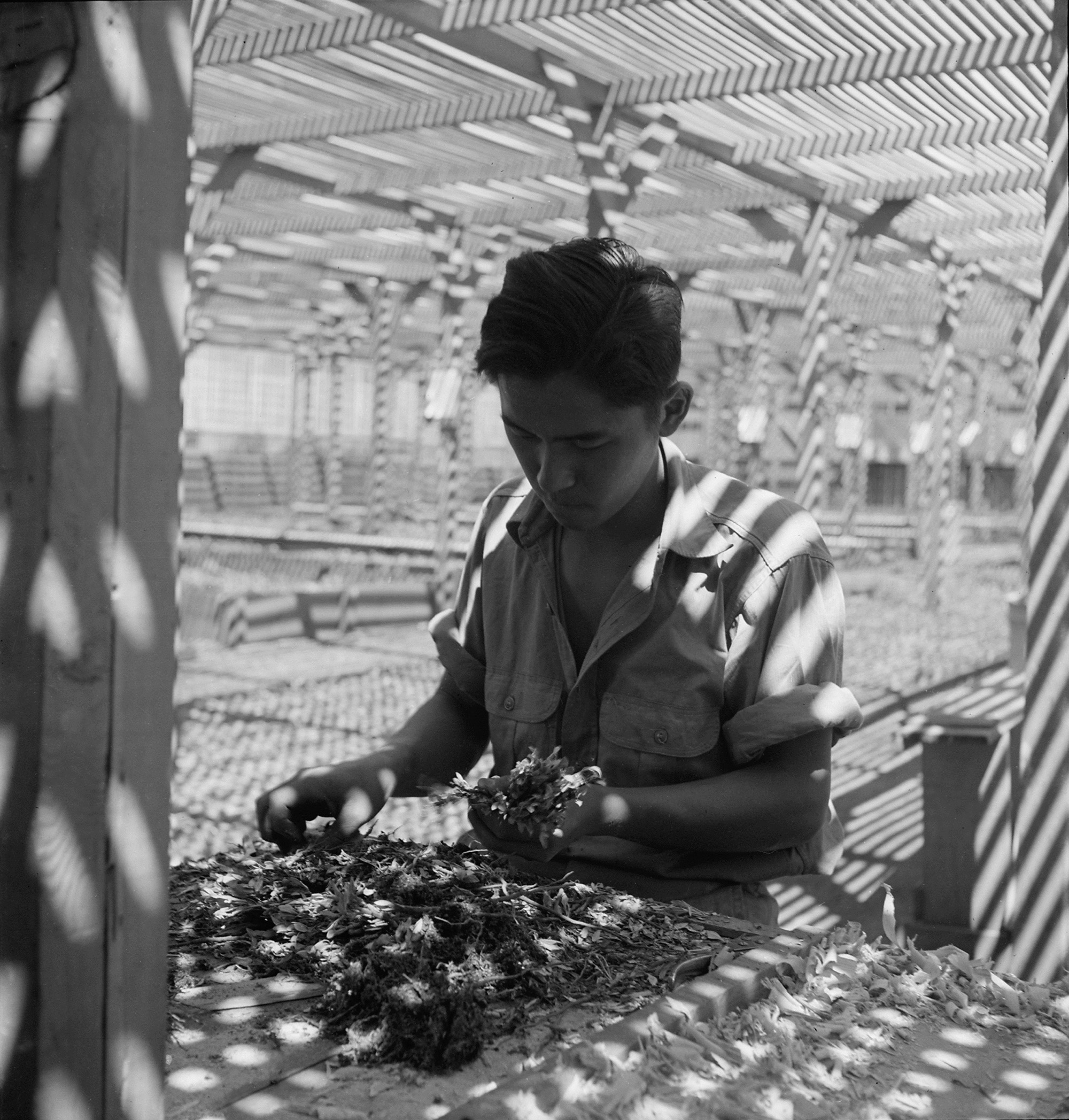
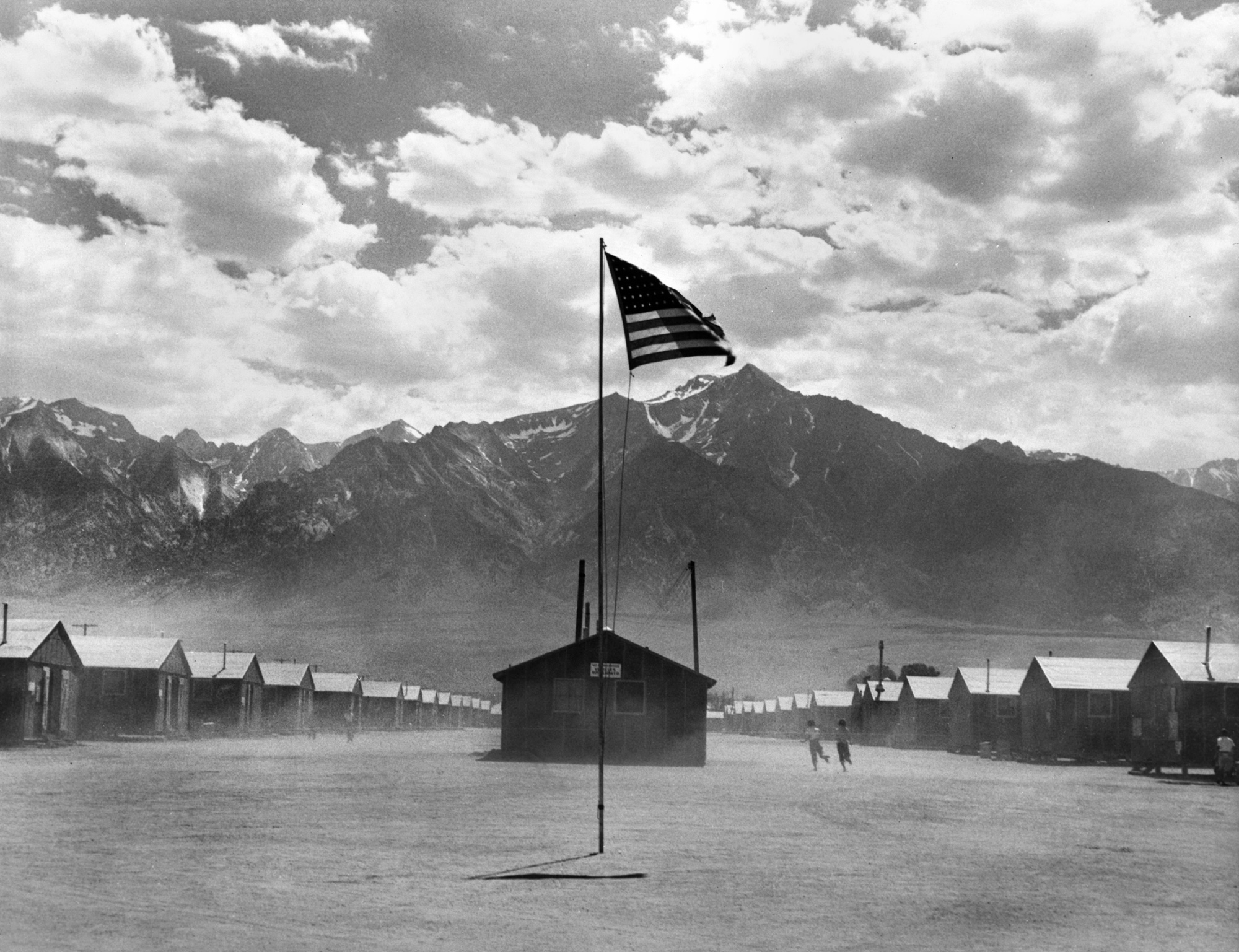
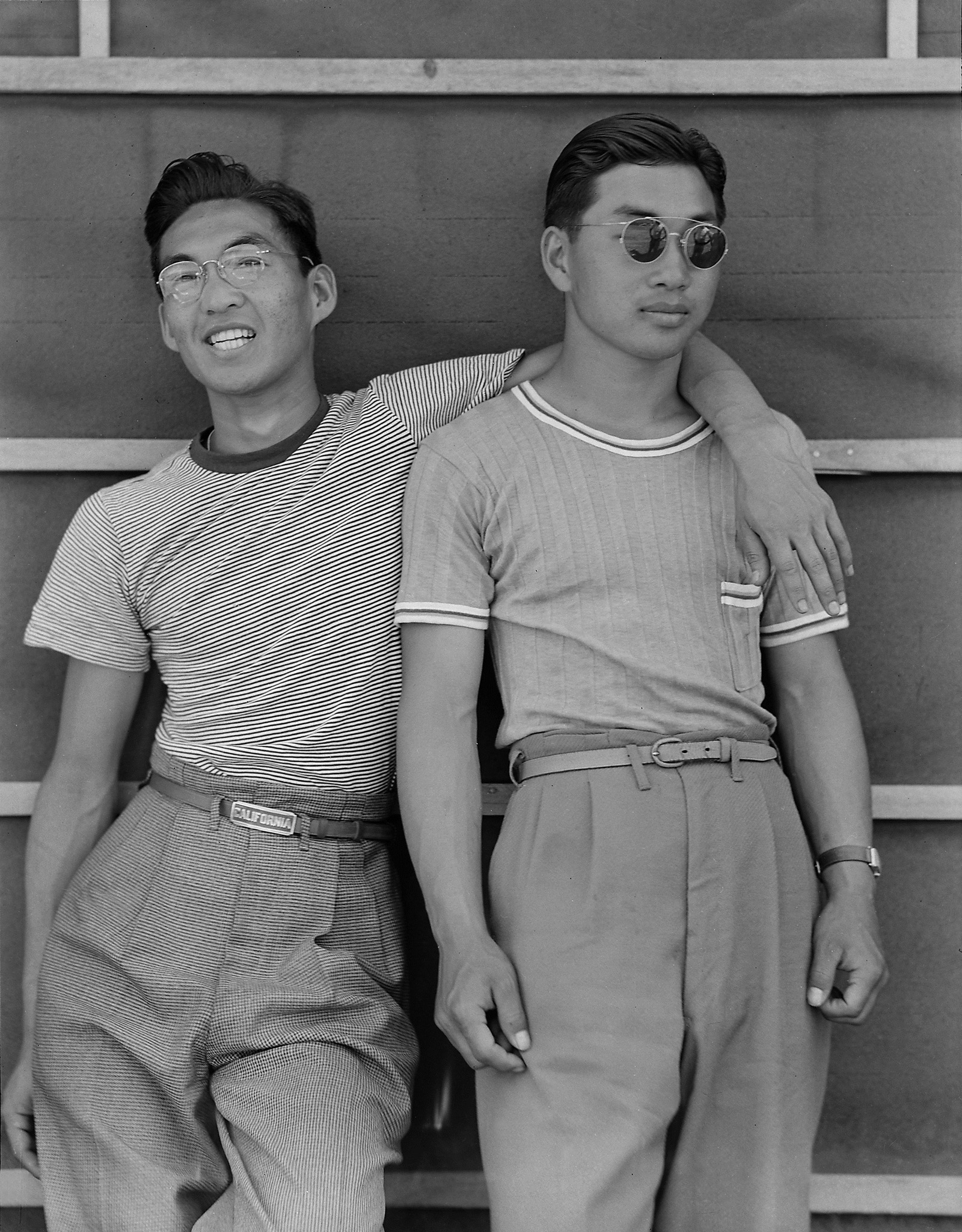
Yet Lange was not simply a Depression photographer. As this revelatory, heartening exhibition shows, she was an artist who made remarkable pictures throughout a career that spanned more than four decades. The photos she took in 1942 of interned Japanese-Americans (which the government suppressed until 1964) display state-administered cruelty with stone-cold clarity: One dignified man in a three-piece suit and overcoat is wearing a tag, like a steer, while disembodied white hands on either side examine and prod him. Her prescient photographs of environmental degradation portray the human cost of building a dam that flooded the Berryessa Valley near Napa. Her empathetic portraits of African-American field hands shine a light on a system of peonage that predated and outlasted the 1930s.

Nevertheless, her fame rests largely on the indelible images she made, starting in 1935, as an employee of the Resettlement Administration and its successor, the Farm Security Administration, both under the leadership of Roy Stryker. Lange endured a fractious relationship with Stryker, who seemed deeply discomfited by a strong-minded woman. He fired her in 1940, saying she was “uncooperative.” To his credit, however, he always acknowledged that “Migrant Mother” was the key image of the Depression.

Seeking a deeper understanding of the economic crisis, Lange and her collaborators in the field interviewed her subjects, and she incorporated their words into her captions. She was the first photographer to do that systematically. The show’s curator, Sarah Hermanson Meister, who drew from the museum’s collection of more than 500 Lange prints, includes many of the captions in the wall labels, in an installation that is patterned after Szarkowski’s 1966 Lange show. (The artist died of esophageal cancer before it opened.)

Lange took so many memorable photographs that it is challenging to shortlist them. One of the greatest is at the entrance to the MoMA show: “Migratory Cotton Picker, Eloy, Arizona” (1940). The farmworker’s hands are close to the lens of the camera. One hand is holding a wooden beam; it could be the implement of his impending crucifixion. The other hand, with its open palm and splayed fingers, covers his mouth. Unforgettably powerful, the photograph resembles self-portraits by Austrian expressionist painter Egon Schiele, who shared Lange’s interest in extremities – hands and feet, and also, wretched misery. …

Many wonderful Lange photographs are not overtly political. “Bad Trouble Over the Weekend” (1964) is a close-up of a woman’s hands folded over her face; one hand bears a wedding band and holds an unlit cigarette. (The subject was her daughter-in-law.) And Lange photographed multi-trunked oaks with the same acuity as fingered hands.

The fame of “Migrant Mother” has cropped Lange’s reputation unfairly. She is a key link in a chain of photographic history. From Evans, she learned how to frame precise images of clapboard churches. But unlike Evans, who usually preferred to keep a distance and capture a building’s architectural integrity, Lange always wanted, as she said when describing how she made “Migrant Mother,” to move “closer and closer.” Her 1938 photograph, “Death in the Doorway,” of a church entrance in the San Joaquin Valley reveals a blanketed corpse that someone, probably unable to afford a burial, has deposited. Evans would never have gone there.

In turn, Lange was revered by the documentary photographers who followed her. The greatest of them, Robert Frank, paid her direct homage in “The Americans,” shooting from the same vantage point the New Mexico highway that Lange had memorialised in “An American Exodus.”

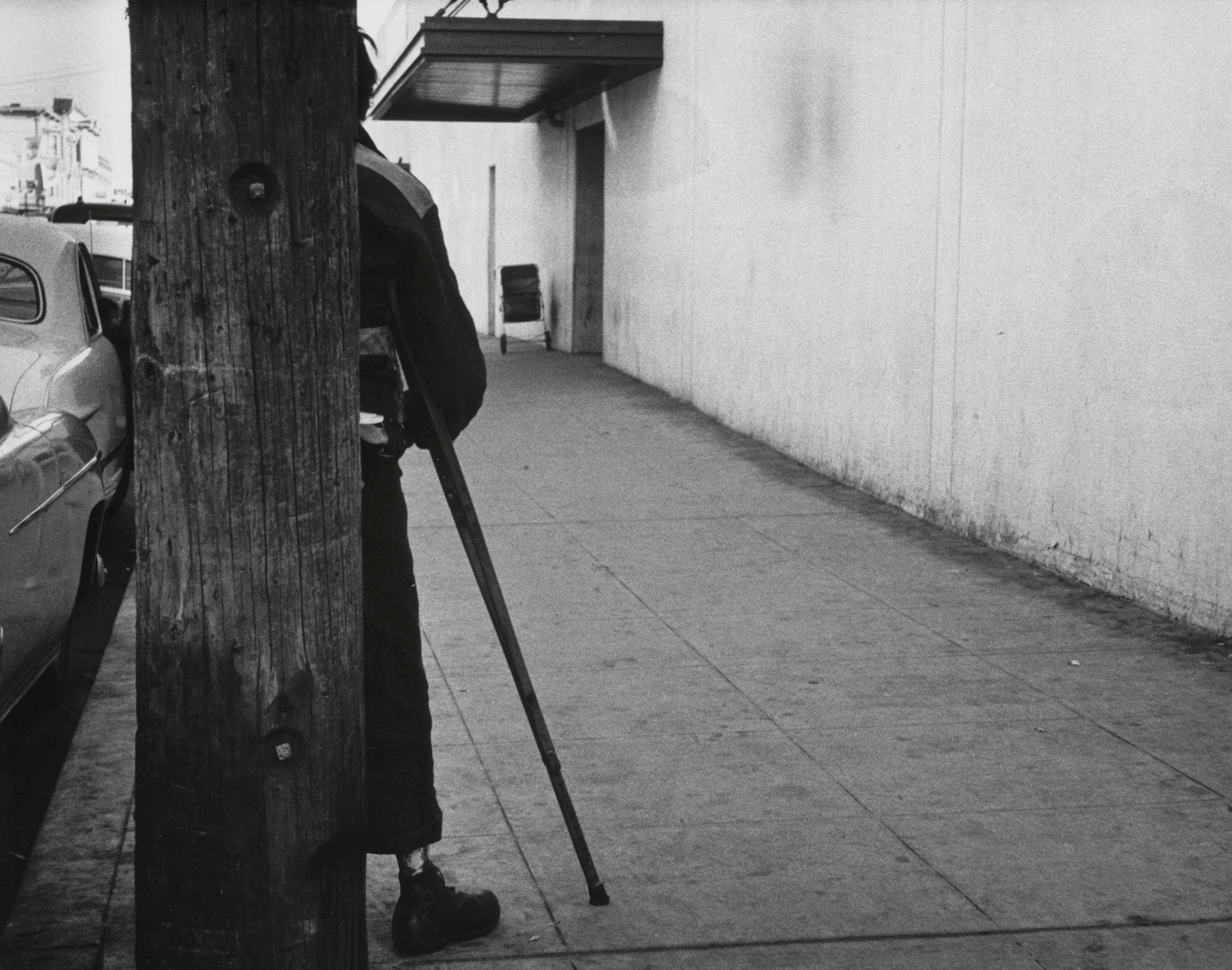
But photography was heading off in a different direction. A year after his Lange exhibition, Mr. Szarkowski mounted “New Documents,” which introduced a younger generation of American photographers: Diane Arbus, Lee Friedlander and Garry Winogrand. Speaking to me in 2003, he explained that these photographers were “rejecting Dorothea’s attitude” that “documentary photography was supposed to do some good” and instead using the camera “to explore their own experience and their own life and not to persuade somebody else what to do or what to work for.” That notion was hardly foreign to Lange. In a picture of a lame person, “Walking Wounded, Oakland” (1954), she found, as did the New Documents artists, a real-life subject that mirrored her own life.

One happy consequence of our dismal political moment is a rediscovery of Lange. In 2018, a major exhibition from her archive was staged at the Barbican Center in London and the Jeu de Paume in Paris.

Perhaps now younger photographers will be inspired to pick up her banner. The need is all too apparent. Where is the photographer of clear eyed empathy and consummate artistry to depict the disquiet, hopelessness and desperate fortitude that riddle the American body politic of today? Who will bring us our “Migrant Mother”?

Arthur Lubow. “Empathy and Artistry: Rediscovering Dorothea Lange,” on The New York Times website Feb. 13, 2020 [Online] Cited 24/03/2020.


Dorothea Lange (American, 1895-1965) 'Migratory Cotton Picker, Eloy, Arizona' November 1940


Dorothea Lange (American, 1895-1965)
Migratory Cotton Picker, Eloy, Arizona
November 1940
Gelatin silver print
19 15/16 × 23 13/16″ (50.7 × 60.5cm)
The Museum of Modern Art, New York. Purchase


Lange '12 Million Black Voices'


Dorothea Lange (American, 1895-1965)
Edwin Rosskam (American, 1903-1985)
Richard Wright (American, 1908-1960)
12 Million Black Voices: A Folk History of the Negro in the United States
1941
Offset lithography open: 10 1/4 x 14 1/2″ (26 x 36.8cm)
The Museum of Modern Art Library


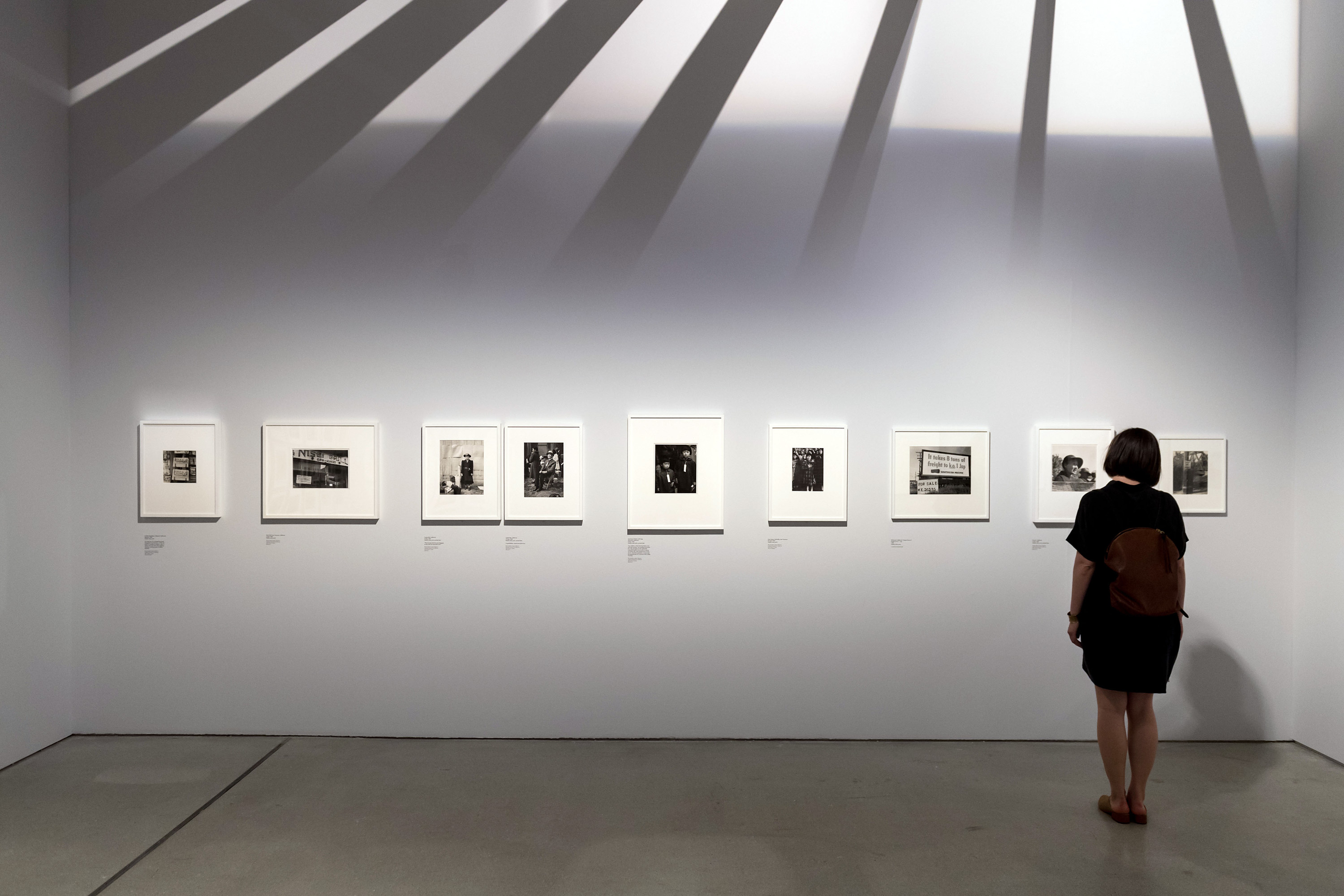
'12 Million Black Voices' wall text from the exhibition 'Dorothea Lange: Words & Pictures' at the Museum of Modern Art, New York


Installation view of 'Dorothea Lange: Words & Pictures', The Museum of Modern Art, New York, February 9, 2020 - May 9, 2020


12 Million Black Voices

Installation view of Dorothea Lange: Words & Pictures, The Museum of Modern Art, New York, February 9, 2020 – May 9, 2020
© 2020 The Museum of Modern Art
Photo: John Wronn


Dorothea Lange (American, 1895-1965) 'Richmond, California' 1942


Dorothea Lange (American, 1895-1965)
Richmond, California
1942
Gelatin silver print
9 3/4 x 7 11/16″ (24.7 x 19.5cm)
The Museum of Modern Art, New York. Purchase


Dorothea Lange (American, 1895-1965) 'Richmond, California' 1942


Dorothea Lange (American, 1895-1965)
Richmond, California
1942, printed 1965
Gelatin silver print
10 7/16 × 13 3/16″ (26.5 × 33.5cm)
The Museum of Modern Art, New York. Purchase


During World War II, at the height of antiJapanese sentiment, Lange documented an explicitly racist billboard advertising the Southern Pacific railroad company. Rather than portraying the billboard in isolation, she disrupted the frame with a handmade sign that seems to undermine the commodification of such political sentiments.


'World War II' wall text from the exhibition 'Dorothea Lange: Words & Pictures' at the Museum of Modern Art, New York


Installation view of 'Dorothea Lange: Words & Pictures', The Museum of Modern Art, New York, February 9, 2020 - May 9, 2020 with at second left top, 'One Nation Indivisible, San Francisco 1942'; and at second left bottom, 'Just About to Step into the Bus for the Assembly Center, San Francisco' April 6, 1942


World War II

Installation view of Dorothea Lange: Words & Pictures, The Museum of Modern Art, New York, February 9, 2020 – May 9, 2020 with at second left top, One Nation Indivisible, San Francisco 1942 (below); and at second left bottom, Just About to Step into the Bus for the Assembly Center, San Francisco April 6, 1942 (below)
© 2020 The Museum of Modern Art
Photo: John Wronn


Dorothea Lange (American, 1895-1965) 'One Nation Indivisible, San Francisco' 1942


Dorothea Lange (American, 1895-1965)
One Nation Indivisible, San Francisco
1942
Gelatin silver print
13 1/8 × 9 13/16″ (33.4 × 25cm)
The Museum of Modern Art, New York. Purchase


Dorothea Lange (American, 1895-1965) 'Just About to Step into the Bus for the Assembly Center, San Francisco' April 6, 1942, printed 1965


Dorothea Lange (American, 1895-1965)
Just About to Step into the Bus for the Assembly Center, San Francisco
April 6, 1942, printed 1965
Gelatin silver print
10 3/8 × 9 13/16″ (26.3 × 25cm)
The Museum of Modern Art, New York. Purchase


The Museum of Modern Art presents Dorothea Lange: Words & Pictures, the first major solo exhibition at the Museum of the photographer’s incisive work in over 50 years. On view from February 9 through May 9, 2020, Dorothea Lange: Words & Pictures includes approximately 100 photographs drawn entirely from the Museum’s collection. The exhibition also uses archival materials such as correspondence, historical publications, and oral histories, as well as contemporary voices, to examine the ways in which words inflect our understanding of Lange’s pictures. These new perspectives and responses from artists, scholars, critics, and writers, including Julie Ault, Wendy Red Star, and Rebecca Solnit, provide fresh insight into Lange’s practice. Dorothea Lange: Words & Pictures is organised by Sarah Meister, Curator, with River Bullock, Beaumont & Nancy Newhall Curatorial Fellow, assisted by Madeline Weisburg, Modern Women’s Fund Twelve-Month Intern, Department of Photography, The Museum of Modern Art.

Toward the end of her life, Dorothea Lange (1895-1965) remarked, “All photographs – not only those that are so-called ‘documentary,’ and every photograph really is documentary and belongs in some place, has a place in history – can be fortified by words.” Organised loosely chronologically and spanning her career, the exhibition groups iconic works together with lesser known photographs and traces their varied relationships to words: from early criticism on Lange’s photographs to her photo-essays published in LIFE magazine, and from the landmark photobook An American Exodus to her examination of the US criminal justice system. The exhibition also includes groundbreaking photographs of the 1930s – including Migrant Mother (1936) – that inspired pivotal public awareness of the lives of sharecroppers, displaced families, and migrant workers during the Great Depression. Through her photography and her words, Lange urged photographers to reconnect with the world – a call reflective of her own ethos and working method, which coupled an attention to aesthetics with a central concern for humanity.

“It seems both timely and urgent that we renew our attention to Lange’s extraordinary achievements,” said Sarah Meister. “Her concern for less fortunate and often overlooked individuals, and her success in using photography (and words) to address these inequities, encourages each of us to reflect on our own civic responsibilities. It reminds me of the unique role that art – and in particular photography – can play in imagining a more just society.”

The exhibition begins in 1933, when Lange, then a portrait photographer, first brought her camera outside into the streets of San Francisco. Lange’s increasing interest in the everyday experience of people she encountered eventually led her to work for government agencies, supporting their objective to raise public awareness and to provide aid to struggling farmers and those devastated by the Great Depression. During this time, Lange photographed her subjects and kept notes that formed the backbone of government reports; these and other archival materials will be represented alongside corresponding photographs throughout the exhibition. Lange’s commitment to social justice and her faith in the power of photography remained constant throughout her life, even when her politics did not align with those who were paying for her work. A central focus of the exhibition is An American Exodus, a 1939 collaboration between Lange and Paul Schuster Taylor, her husband and an agricultural economist. As an object and as an idea, An American Exodus highlights the voices of her subjects by pairing first-person quotations alongside their pictures. Later, Lange’s photographs continued to be useful in addressing marginalised histories and ongoing social concerns. Throughout her career as a photographer for the US Government and various popular magazines, Lange’s pictures were frequently syndicated and circulated outside of their original context. Lange’s photographs of the 1930s helped illustrate Richard Wright’s 12 Million Black Voices (1941), and her 1950s photographs of a public defender were used to illustrate Minimizing Racism in Jury Trials (1969), a law handbook published after Black Panther Huey P. Newton’s first trial during a time of great racial strife.

This collection-based exhibition would not be possible had it not been for Lange’s deep creative ties to the Museum during her lifetime. MoMA’s collection of Lange photographs was built over many decades and remains one of the definitive collections of her work. Her relationship to MoMA’s Department of Photography dates to her inclusion in its inaugural exhibition, in 1940 which was curated by the department’s director, Edward Steichen. Lange is a rare artist in that both Steichen and his successor, John Szarkowski, held her in equally high esteem. More than a generation after her first retrospective, organised by Szarkowski at MoMA in 1966, Dorothea Lange: Words & Pictures uses both historical and contemporary words to encourage a more nuanced understanding of words and pictures in circulation.

Press release from MoMA website


Dorothea Lange (American, 1895-1965) 'Richmond, California' 1942


Dorothea Lange (American, 1895-1965)
Richmond, California
1942
Gelatin silver print
7 3/8 x 6 5/8″ (18.8 x 16.9cm)
The Museum of Modern Art, New York. Purchase


'The Family of Man' wall text from the exhibition 'Dorothea Lange: Words & Pictures' at the Museum of Modern Art, New York

Installation view of 'Dorothea Lange: Words & Pictures', The Museum of Modern Art, New York, February 9, 2020 - May 9, 2020 with at left, 'Richmond, California' 1942


The Family of Man and World War II

Installation view of Dorothea Lange: Words & Pictures, The Museum of Modern Art, New York, February 9, 2020 – May 9, 2020 with at left, Richmond, California 1942 (above)
© 2020 The Museum of Modern Art
Photo: John Wronn


Dorothea Lange (American, 1895-1965) 'Café near Pinole, California' 1956, printed 1965


Dorothea Lange (American, 1895-1965)
Café near Pinole, California
1956, printed 1965
Gelatin silver print
11 15/16 × 16 7/8″ (30.3 × 42.8cm)
The Museum of Modern Art, New York. Purchase


Dorothea Lange (American, 1895-1965) '"Guilty, Your Honor," Alameda County Courthouse, California' 1955-1957, printed 1965


Dorothea Lange (American, 1895-1965)
“Guilty, Your Honor,” Alameda County Courthouse, California
1955-1957, printed 1965
Gelatin silver print
17 1/16 × 14 15/16″ (43.3 × 37.9cm)
The Museum of Modern Art, New York. Purchase


'Public Defender' wall text from the exhibition 'Dorothea Lange: Words & Pictures' at the Museum of Modern Art, New York


Installation view of 'Dorothea Lange: Words & Pictures', The Museum of Modern Art, New York, February 9, 2020 - May 9, 2020

Installation view of 'Dorothea Lange: Words & Pictures', The Museum of Modern Art, New York, February 9, 2020 - May 9, 2020 showing at second left, '"Guilty, Your Honor," Alameda County Courthouse, California' 1955-1957; ; and at right, 'The Defendant, Alameda County Courthouse, California' 1957


Public Defender

Installation view of Dorothea Lange: Words & Pictures, The Museum of Modern Art, New York, February 9, 2020 – May 9, 2020 showing at second left, “Guilty, Your Honor,” Alameda County Courthouse, California 1955-1957 (above); and at right, The Defendant, Alameda County Courthouse, California
1957 (below)
© 2020 The Museum of Modern Art
Photo: John Wronn


Dorothea Lange (American, 1895-1965) 'The Defendant, Alameda County Courthouse, California' 1957


Dorothea Lange (American, 1895-1965)
The Defendant, Alameda County Courthouse, California
1957
Gelatin silver print
12 3/8 x 10 1/8″ (31.4 x 25.8cm)
The Museum of Modern Art, New York. Purchase


Dorothea Lange (American, 1895-1965) 'The Witness, Alameda County Courthouse, California' 1955-57, printed c. 1958


Dorothea Lange (American, 1895-1965)
The Witness, Alameda County Courthouse, California
1955-1957, printed c. 1958
Gelatin silver print
10 5/16 × 8 1/2″ (26.2 × 21.6cm)
The Museum of Modern Art, New York. Gift of the artist


'Late Work' wall text from the exhibition 'Dorothea Lange: Words & Pictures' at the Museum of Modern Art, New York


Installation view of 'Dorothea Lange: Words & Pictures', The Museum of Modern Art, New York, February 9, 2020 - May 9, 2020 with at left 'Man Stepping from Cable Car, San Francisco' 1956, and at third left 'Walking Wounded, Oakland' 1954


Late work

Installation view of Dorothea Lange: Words & Pictures, The Museum of Modern Art, New York, February 9, 2020 – May 9, 2020 with at left Man Stepping from Cable Car, San Francisco 1956, and at third left Walking Wounded, Oakland, 1954
© 2020 The Museum of Modern Art
Photo: John Wronn


Dorothea Lange (American, 1895-1965) 'Walking Wounded, Oakland' 1954, printed c. 1958


Dorothea Lange (American, 1895-1965)
Walking Wounded, Oakland
1954, printed c. 1958
Gelatin silver print
7 1/2 × 9 1/2″ (19 × 24.2cm)
The Museum of Modern Art, New York. Gift of the artist


Lange’s choice of title for this image was almost certainly influenced by her own experience with disability. As a child she had contracted polio, which left her with a permanent limp. Toward the end of her life she reflected, “No one who hasn’t lived the life of a semi-cripple knows how much that means. I think it perhaps was the most important thing that happened to me, and formed me, guided me, instructed me, helped me, and humiliated me. All those things at once. I’ve never gotten over it and I am aware of the force and the power of it.”


Dorothea Lange (American, 1895-1965) 'Man Stepping from Cable Car, San Francisco' 1956


Dorothea Lange (American, 1895-1965)
Man Stepping from Cable Car, San Francisco
1956
Gelatin silver print
9 3/4 x 6 7/16″ (24.8 x 16.4cm)
The Museum of Modern Art, New York. Purchase


Dorothea Lange (American, 1895-1965) 'Woman in Purdah, Upper Egypt' 1963, printed 1965


Dorothea Lange (American, 1895-1965)
Woman in Purdah, Upper Egypt
1963, printed 1965
Gelatin silver print
12 7/16 × 15 15/16″ (31.6 × 40.5cm)
The Museum of Modern Art, New York. Purchase


Dorothea Lange (American, 1895-1965) 'Bad Trouble Over the Weekend' 1964, printed 1965


Dorothea Lange (American, 1895-1965)
Bad Trouble Over the Weekend
1964, printed 1965
Gelatin silver print
7 3/16 × 5 3/4″ (18.2 × 14.6cm)
The Museum of Modern Art, New York. Purchase


Lange grappled extensively with the titles of the photographs included in her 1966 MoMA retrospective. In a letter to the curator, John Szarkowski, she wrote, “I propose also to caption each print separately, beyond time and place, sometimes with two or three words, sometimes with a quotation, sometimes with a brief commentary. This textual material I shall be working on for some time, on and of.” Rather than identify the subject of this photo as her daughter-in-law, Lange’s title extends the image’s affective reach.


The Museum of Modern Art
11 West 53 Street
New York, NY 10019
Phone: (212) 708-9400

Opening hours:
10.30am – 5.30pm
Open seven days a week

MoMA website

LIKE ART BLART ON FACEBOOK

Back to top

Exhibition: ‘Dorothea Lange: Politics of Seeing’ at the Barbican Art Gallery, London

Exhibition dates: 22nd June – 2nd September, 2018


Dorothea Lange (American, 1895-1965) 'Migratory Cotton Picker, Eloy, Arizona' 1940 from the exhibition 'Dorothea Lange: Politics of Seeing' at the Barbican Art Gallery, London, June - Sept, 2018


Dorothea Lange (American, 1895-1965)
Migratory Cotton Picker, Eloy, Arizona
1940
Silver gelatin print
© The Dorothea Lange Collection, the Oakland Museum of California


Damaged, desperate and displaced

I am writing this short text on a laptop in Thailand which keeps jumping lines and misspelling words. The experience is almost as disorienting as the photographs of Dorothea Lange, with their anguished angles and portraits of despair. Her humanist, modernist pictures capture the harsh era of The Great Depression and the 1930s in America, allowing a contemporary audience to imagine what it must have been like to walk along blistering roads with five children, not knowing where your next meal or drink of water is coming from.

Like Lewis Hine and Jacob Riis from an earlier era, Lange’s photographs are about the politics of seeing. They are about human beings in distress and how photography can raise awareness of social injustice and disenfranchisement in the name of cultural change.

Dr Marcus Bunyan

#dorothealange @barbicancentre


Many thankx to the Barbican Art Gallery for allowing me to publish the photographs in the posting. Please click on the photographs for a larger version of the image.


Dorothea Lange (American, 1895-1965) 'Migrant Mother, Nipomo, California' 1936 from the exhibition 'Dorothea Lange: Politics of Seeing' at the Barbican Art Gallery, London, June - Sept, 2018


Dorothea Lange (American, 1895-1965)
Migrant Mother, Nipomo, California
1936
Silver gelatin print
© The Dorothea Lange Collection, the Oakland Museum of California


Dorothea Lange took this photograph in 1936, while employed by the U.S. government’s Farm Security Administration (FSA) program, formed during the Great Depression to raise awareness of and provide aid to impoverished farmers. In Nipomo, California, Lange came across Florence Owens Thompson and her children in a camp filled with field workers whose livelihoods were devastated by the failure of the pea crops. Recalling her encounter with Thompson years later, she said, “I saw and approached the hungry and desperate mother, as if drawn by a magnet. I do not remember how I explained my presence or my camera to her, but I do remember she asked me no questions. I made five exposures, working closer and closer from the same direction.”1 One photograph from that shoot, now known as Migrant Mother, was widely circulated to magazines and newspapers and became a symbol of the plight of migrant farm workers during the Great Depression.

As Lange described Thompson’s situation, “She and her children had been living on frozen vegetables from the field and wild birds the children caught. The pea crop had frozen; there was no work. Yet they could not move on, for she had just sold the tires from the car to buy food.”2 However, Thompson later contested Lange’s account. When a reporter interviewed her in the 1970s, she insisted that she and Lange did not speak to each other, nor did she sell the tires of her car. Thompson said that Lange had either confused her for another farmer or embellished what she had understood of her situation in order to make a better story.

Anonymous text. “Migrant Mother, Nipomo, California,” on the MoMA Learning website Nd [Online] Cited 16/02/2022

1/ Dorothea Lange, “The Assignment I’ll Never Forget,” Popular Photography 46 (February, 1960). Reprinted in Photography, Essays and Images, ed. Beaumont Newhall (New York: The Museum of Modern Art), p. 262-265

2/ Dorothea Lange, paraphrased in Karin Becker Ohm, Dorothea Lange and the Documentary Tradition (Baton Rouge, LA: Louisiana State University Press, 1980), p. 79


Installation view of the exhibition ‘Dorothea Lange: Politics of Seeing’ at the Barbican Art Gallery, London

Installation view of the exhibition ‘Dorothea Lange: Politics of Seeing’ at the Barbican Art Gallery, London showing Dorothea Lange's photograph 'Migrant Mother, Nipomo, California' 1936


Installation views of the exhibition Dorothea Lange: Politics of Seeing at the Barbican Art Gallery, London showing Dorothea Lange’s photograph Migrant Mother, Nipomo, California 1936
Photos: Ian Gavan/Getty Images for Barbican Art Gallery


“I saw and approached the hungry and desperate mother, as if drawn by a magnet. I do not remember how I explained my presence or my camera to her, but I do remember she asked me no questions. I made five exposures, working closer and closer from the same direction. I did not ask her name or her history. She told me her age, that she was thirty-two. She said that they had been living on frozen vegetables from the surrounding fields, and birds that the children killed. She had just sold the tires from her car to buy food. There she sat in that lean- to tent with her children huddled around her, and seemed to know that my pictures might help her, and so she helped me. There was a sort of equality about it.” (From: Popular Photography, Feb. 1960).

The images were made using a Graflex camera. The original negatives are 4 x 5″ film. It is not possible to determine on the basis of the negative numbers (which were assigned later at the Resettlement Administration) the order in which the photographs were taken.

Hanna Soltys, Reference Librarian, Prints & Photographs Division. “Dorothea Lange’s “Migrant Mother” Photographs in the Farm Security Administration Collection” Photographs in the Farm Security Administration Collection,” on The Library of Congress website 1998 February 19, 2019 [Online] Cited 16/02/2022


Florence Owens Thompson: The Story of the “Migrant Mother” 2014

Thompson’s identity was discovered in the late 1970s; in 1978, acting on a tip, Modesto Bee reporter Emmett Corrigan located Thompson at her mobile home in Space 24 of the Modesto Mobile Village and recognised her from the 40-year-old photograph.[10] A letter Thompson wrote was published in The Modesto Bee and the Associated Press distributed a story headlined “Woman Fighting Mad Over Famous Depression Photo.” Florence was quoted as saying “I wish she [Lange] hadn’t taken my picture. I can’t get a penny out of it, she didn’t ask my name. She said she wouldn’t sell the pictures, she said she’d send me a copy. She never did.”

Lange was funded by the federal government when she took the picture, so the image was in the public domain and Lange never directly received any royalties. However, the picture did help make Lange a celebrity and earned her “respect from her colleagues.”

In a 2008 interview with CNN, Thompson’s daughter Katherine McIntosh recalled how her mother was a “very strong lady”, and “the backbone of our family”, she said: “We never had a lot, but she always made sure we had something. She didn’t eat sometimes, but she made sure us children ate. That’s one thing she did do.”

Anonymous text. “Florence Owens Thompson,” on the WikiVisually website Nd [Online] Cited 05/08/2018. No longer available online


Dorothea Lange (American, 1895-1965) 'White Angel Breadline, San Francisco' 1933


Dorothea Lange (American, 1895-1965)
White Angel Breadline, San Francisco
1933
Silver gelatin print
© The Dorothea Lange Collection, the Oakland Museum of California


“There are moments such as these when time stands still and all you do is hold your breath and hope it will wait for you. And you just hope you will have enough time to get it organised in a fraction of a second on that tiny piece of sensitive film. Sometimes you have an inner sense that you have encompassed the thing generally. You know then that you are not taking anything away from anyone: their privacy, their dignity, their wholeness.” ~ Dorothea Lange 1963

Davis K F 1995, The photographs of Dorothea Lange, Hallmark Cards Inc, Missouri p. 20.


White angel breadline, San Francisco is Lange’s first major image that encapsulates both her sense of compassion and ability to structure a photograph according to modernist principles. The diagonals of the fence posts and the massing of hats do not reduce this work to the purely formal – the figure in the front middle of the image acts as a lightening rod for our emotional engagement.

© Art Gallery of New South Wales Photography Collection Handbook, 2007


“I had made some photographs of the state [of] people, in an area of San Francisco which revealed how deep the depression was. It was at that time beginning to cut very deep. This is a long process. It doesn’t happen overnight. Life, for people, begins to crumble on the edges; they don’t realise it…”


Dorothea Lange, interview, 1964


There was a real “White Angel” behind the breadline that served the needy men photographed by Dorothea Lange. She was a widow named Lois Jordan. Mrs. Jordan, who gave herself the name White Angel, established a soup kitchen during the Great Depression to feed those who were unemployed and destitute. Relying solely on donations, she managed to supply meals to more than one million men over a three-year period.

Jordan’s soup kitchen occupied a junk-filled lot in San Francisco located on the Embarcadero near Filbert Street. This area was known as the White Angel Jungle. The Jungle was not far from Lange’s studio. As she began to change direction from portrait to documentary photography, Lange focused her lens on the poignant scenes just beyond her window. White Angel Breadline is the result of her first day’s work to document Depression-era San Francisco. Decades later, Lange recalled: “[White Angel Breadline] is my most famed photograph. I made that on the first day I ever went out in an area where people said, ‘Oh, don’t go there.’ It was the first day that I ever made a photograph on the street.”

Anonymous text. “Dorothea Lange + White Angel Breadline: Meet the master artist through one of her most important works,” on The Kennedy Centre website Nd [Online] Cited 16/02/2022


Dorothea Lange’s Documentary Photographs

Hear Dorothea Lange discuss her photographs and the difficulty of leading a visual life.

Dorothea Lange’s stirring images of migrant farmers and the unemployed have become universally recognised symbols of the Great Depression. Later photographs documenting the internment of Japanese Americans and her travels throughout the world extended her body of work. Watch the video to hear Lange discuss how she began her documentary projects for the Farm Security Administration, and learn how she felt about some of her assignments and subjects.


Dorothea Lange (American, 1895-1965) 'Drought Refugees' c. 1935


Dorothea Lange (American, 1895-1965)
Drought Refugees
c. 1935
Silver gelatin print
© The Dorothea Lange Collection, the Oakland Museum of California


Dorothea Lange (American, 1895-1965) 'Family walking on highway - five children. Started from Idabel, Oklahoma, bound for Krebs, Oklahoma' June 1938


Dorothea Lange (American, 1895-1965)
Family walking on highway – five children. Started from Idabel, Oklahoma, bound for Krebs, Oklahoma
June 1938
Silver gelatin print
Library of Congress


Dorothea Lange (American, 1895-1965) 'Cars on the Road' August 1936


Dorothea Lange (American, 1895-1965)
Cars on the Road
August 1936
Silver gelatin print
Library of Congress


Dorothea Lange (American, 1895-1965) 'Dust Bowl, Grain Elevator, Everett, Texas' June 1938


Dorothea Lange (American, 1895-1965)
Dust Bowl, Grain Elevator, Everett, Texas
June 1938
Silver gelatin print
Library of Congress


This summer, Barbican Art Gallery stages the first ever UK retrospective of one of the most influential female photographers of the 20th century, the American documentary photographer Dorothea Lange (1895-1965). A formidable woman of unparalleled vigour and resilience, the exhibition charts Lange’s outstanding photographic vision from her early studio portraits of San Francisco’s bourgeoisie to her celebrated Farm Security Administration work (1935-1939) that captured the devastating impact of the Great Depression on the American population. Rarely seen photographs of the internment of Japanese-Americans during the Second World War are also presented as well as the later collaborations with fellow photographers Ansel Adams and Pirkle Jones documenting the changing face of the social and physical landscape of 1950s America. Opening 22 June at Barbican Art Gallery, Dorothea Lange: Politics of Seeing is part of the Barbican’s 2018 season, The Art of Change, which explores how the arts respond to, reflect and potentially effect change in the social and political landscape.

Dorothea Lange: Politics of Seeing encompasses over 300 objects from vintage prints and original book publications to ephemera, field notes, letters, and documentary film. Largely chronological, the exhibition presents eight series in Lange’s oeuvre spanning from 1919 to 1957.

Jane Alison, Head of Visual Arts, Barbican, said: “This is an incredible opportunity for our visitors to see the first UK survey of the work of such a significant photographer. Dorothea Lange is undoubtedly one of the great photographers of the twentieth century and the issues raised through her work have powerful resonance with issues we’re facing in society today. Staged alongside contemporary photographer Vanessa Winship as part of The Art of Change, these two shows are unmissable.”

Opening the exhibition are Lange’s little known early portrait photographs taken during her time running a successful portrait studio in San Francisco between 1919 and 1935. Lange was at the heart of San Francisco’s creative community and her studio became a centre in which bohemian and artistic friends gathered after hours, including Edward Weston, Anne Brigman, Alma Lavenson, Imogen Cunningham, and Willard van Dyke. Works from this period include intimate portraits of wealthy West Coast families as well as of Lange’s inner circle, counting amongst others photographer Roi Partridge and painter Maynard Dixon, Lange’s first husband and father of her two sons.

The Great Depression in the early 1930s heralded a shift in her photographic language as she felt increasingly compelled to document the changes visible on the streets of San Francisco. Taking her camera out of the studio, she captured street demonstrations, unemployed workers, and breadline queues. These early explorations of her social documentary work are also on display.

The exhibition charts Lange’s work with the newly established historical division of the Farm Security Administration (FSA), the government agency tasked with the promotion of Roosevelt’s New Deal programme. Alongside Lange, the FSA employed a number of photographers, including Walker Evans, Ben Shahn and Arthur Rothstein, to document living conditions across America during the Great Depression: from urban poverty in San Francisco to tenant farmers driven off the land by dust storms and mechanisation in the states of Oklahoma, Arkansas and Texas; the plight of homeless families on the road in search of better livelihoods in the West; and the tragic conditions of migrant workers and camps across California. Lange used her camera as a political tool to critique themes of injustice, inequality, migration and displacement, and to effect government relief.

Highlights in this section are, among others, a series on sharecroppers in the Deep South that exposes relations of race and power, and the iconic Migrant Mother, a photograph which has become a symbol of the Great Depression, alongside images of vernacular architecture and landscapes, motifs often overlooked within Lange’s oeuvre. Vintage prints in the exhibition are complemented by the display of original publications from the 1930s to foreground the widespread use of Lange’s FSA photographs and her influence on authors including John Steinbeck, whose ground-breaking novel The Grapes of Wrath was informed by Lange’s photographs. Travelling for many months at a time and working in the field, she collaborated extensively with her second husband Paul Schuster Taylor, a prominent social economist and expert in farm labour with whom she published the seminal photo book An American Exodus: A Record of Human Erosion in 1939, also on display in the exhibition.

The exhibition continues with rarely seen photographs of the internment of more than 100,000 American citizens of Japanese descent that Lange produced on commission for the War Relocation Authority following the Japanese attack on the American naval base at Pearl Harbor in 1941. Lange’s critical perspective of this little discussed chapter in US history however meant that her photographs remained unpublished during the war and stored at the National Archives in Washington. It is the first time that this series will be shown comprehensively outside of the US and Canada.

Following her documentation of the Japanese American internment, Lange produced a photographic series of the wartime shipyards of Richmond, California with friend and fellow photographer Ansel Adams (1902-1984). Lange and Adams documented the war effort in the shipyards for Fortune magazine in 1944, recording the explosive increase in population numbers and the endlessly changing shifts of shipyard workers. Capturing the mass recruitment of workers, Lange turned her camera on both female and black workers, for the first time part of the workforce, and their defiance of sexist and racist attitudes.

The exhibition features several of Lange’s post-war series, when she photographed extensively in California. Her series Public Defender (1955-1957) explores the US legal defence system for the poor and disadvantaged through the work of a public defender at the Alameda County Courthouse in Oakland. Death of a Valley (1956-1957), made in collaboration with photographer Pirkle Jones, documents the disappearance of the small rural town of Monticello in California’s Berryessa Valley as a consequence of the damming of the Putah Creek. Capturing the destruction of a landscape and traditional way of life, the photographs testify to Lange’s environmentalist politics and have not been displayed or published since the 1960s.

The exhibition concludes with Lange’s series of Ireland (1954), the first made outside the US. Spending six weeks in County Clare in western Ireland, Lange captured the experience of life in and around the farming town of Ennis in stark and evocative photographs that symbolise Lange’s attraction to the traditional life of rural communities.

An activist, feminist and environmentalist, Lange used her camera as a political tool to critique themes of injustice, inequality, migration and displacement that bear great resonance with today’s world, a prime example of which is her most iconic image the Migrant Mother (1936). Working in urban and rural contexts across America and beyond, she focused her lens on human suffering and hardship to create compassionate and piercing portraits of people as well as place in the hope to forge social and political reform – from the plight of sharecroppers in the Deep South to Dust Bowl refugees trekking along the highways of California in search of better livelihoods.

Dorothea Lange: Politics of Seeing is organised by the Oakland Museum of California. The European presentation has been produced in collaboration with Barbican Art Gallery, London and Jeu de Paume, Paris.

Press release from the Barbican Art Gallery


Installation view of the exhibition ‘Dorothea Lange: Politics of Seeing’ at the Barbican Art Gallery, London

Installation view of the exhibition ‘Dorothea Lange: Politics of Seeing’ at the Barbican Art Gallery, London


Installation views of the exhibition Dorothea Lange: Politics of Seeing at the Barbican Art Gallery, London showing in the bottom image at left, Lange’s Displaced Tennant Farmers, Goodlet, Hardeman Co., Texas 1937. ‘All displaced tenant farmers, the oldest 33. None able to vote because of Texas poll tax. They support an average of four persons each on $22.80 a month’; and at second left, Woman of the High Plains, Texas Panhandle June 1938 (below)
Photos: Ian Gavan/Getty Images for Barbican Art Gallery


Dorothea Lange (American, 1895-1965) 'Woman of the High Plains, Texas Panhandle' June 1938


Dorothea Lange (American, 1895-1965)
Woman of the High Plains, Texas Panhandle
June 1938
Silver gelatin print
© The Dorothea Lange Collection, the Oakland Museum of California
Gift of Paul S. Taylor


Installation view of the exhibition ‘Dorothea Lange: Politics of Seeing’ at the Barbican Art Gallery, London


Installation view of the exhibition Dorothea Lange: Politics of Seeing at the Barbican Art Gallery, London showing at second left top, Lange’s Mexican field labourer at station in Sacramento after 5 day trip from Mexico City. Imported by arrangements between Mexican and US governments to work in sugar beets. 6 October 1942; at second left bottom, Filipino Field Worker, Spring Plowing, Cauliflower Fields, Guadalupe, California. March 1937 (below); and at right, Damaged Child, Shacktown, Elm Grove, Oklahoma. 1936 (below)
Photos: Ian Gavan/Getty Images for Barbican Art Gallery


Dorothea Lange (American, 1895-1965) 'Filipino Field Worker, Spring Plowing, Cauliflower Fields, Guadalupe, California' March 1937


Dorothea Lange (American, 1895-1965)
Filipino Field Worker, Spring Plowing, Cauliflower Fields, Guadalupe, California
March 1937
Silver gelatin print
© The Dorothea Lange Collection, the Oakland Museum of California
Gift of Paul S. Taylor


Dorothea Lange (American, 1895-1965) 'Damaged Child, Shacktown, Elm Grove, Oklahoma' 1936


Dorothea Lange (American, 1895-1965)
Damaged Child, Shacktown, Elm Grove, Oklahoma
1936
© The Dorothea Lange Collection, Oakland Museum of California, City of Oakland
Gift of Paul S. Taylor


Dorothea Lange (American, 1895-1965) 'San Francisco, California. Flag of allegiance pledge at Raphael Weill Public School, Geary and Buchanan Streets' 1942


Dorothea Lange (American, 1895-1965)
San Francisco, California. Flag of allegiance pledge at Raphael Weill Public School, Geary and Buchanan Streets. Children in families of Japanese ancestry were evacuated with their parents and will be housed for the duration in War Relocation Authority centers where facilities will be provided for them to continue their education
1942
Silver gelatin print
Courtesy National Archives, photo no. 210-G-C122


Dorothea Lange (American, 1895-1965) 'Centerville, California. This evacuee stands by her baggage as she waits for evacuation bus' 1942


Dorothea Lange (American, 1895-1965)
Centerville, California. This evacuee stands by her baggage as she waits for evacuation bus. Evacuees of Japanese ancestry will be housed in War Relocation Authority centers for the duration
1942
Silver gelatin print
Courtesy National Archives, photo no. 210-G-C241


Dorothea Lange (American, 1895-1965) 'Manzanar Relocation Center, Manzanar, California. An evacuee is shown in the lath house sorting seedlings for transplanting' 1942


Dorothea Lange (American, 1895-1965)
Manzanar Relocation Center, Manzanar, California. An evacuee is shown in the lath house sorting seedlings for transplanting. These plants are year-old seedlings from the Salinas Experiment Station
1942
Silver gelatin print
Courtesy National Archives, photo no. 210-GC737


Dorothea Lange (American, 1895-1965) 'Manzanar Relocation Center' 1942


Dorothea Lange (American, 1895-1965)
Manzanar Relocation Center, Manzanar, California
July 3, 1942
Silver gelatin print
© The Dorothea Lange Collection, the Oakland Museum of California


Paul S. Taylor (American, 1895-1984) 'Dorothea Lange in Texas on the Plains' c. 1935


Paul S. Taylor (American, 1895-1984)
Dorothea Lange in Texas on the Plains
c. 1935
Silver gelatin print
© The Dorothea Lange Collection, the Oakland Museum of California


Dorothea Lange (American, 1895-1965) 'Sacramento, California. College students of Japanese ancestry' 1942


Dorothea Lange (American, 1895-1965)
Sacramento, California. College students of Japanese ancestry who have been evacuated from Sacramento to the Assembly Center
1942
Silver gelatin print
Courtesy National Archives, photo no. 210-GC471


Installation view of the exhibition ‘Dorothea Lange: Politics of Seeing’ at the Barbican Art Gallery, London

Installation view of the exhibition ‘Dorothea Lange: Politics of Seeing’ at the Barbican Art Gallery, London


Installation views of the exhibition Dorothea Lange: Politics of Seeing at the Barbican Art Gallery, London showing in the bottom image, Lange’s photographs of Japanese Americans
Photos: Ian Gavan/Getty Images for Barbican Art Gallery


Installation view of the exhibition ‘Dorothea Lange: Politics of Seeing’ at the Barbican Art Gallery, London


Installation view of the exhibition Dorothea Lange: Politics of Seeing at the Barbican Art Gallery, London showing Lange’s ‘Shipyards of Richmond’ photographs
Photos: Ian Gavan/Getty Images for Barbican Art Gallery


Boom Town: Shipyards of Richmond

In December 1941 the United States entered the Second World War ushering in a period of economic prosperity triggered by an exponential growth in defence spending. Almost overnight, the city of Richmond, located to the north of Oakland, became one of California’s major shipbuilding hubs producing large merchant vessels used to supply Allied troops.

Lured by the promised of work, the population of the San Francisco Bay Area exploded as men and women flocked to the west in vast numbers, prompting the San Francisco Chronicle to claim that the region was in the grips of a ‘second gold rush’. This huge expansion of population and industry also brought new social pressures as housing and other services were extremely limited. For African American community arriving from the rural South however such shortages were further exacerbated by racial discrimination and segregation.

In collaboration with Ansel Adams (1902-1984), Lange secured a commission from Fortune magazine to document 24-hours in the lives of the shipyard workers. Capturing the ever changing shifts of the round-the-clock shipyard population, Lange focused once again on the substandard living conditions of workers and their families, who were often forced to live in cramped temporary shelters, as well as on the lack of social cohesion.

Drawn to images that transgressed accepted attitudes towards gender and race, Lange settled her lens on African American female welders and stylishly dressed women flaunting their newfound independence and spending power. Creating heroic images of women at work, Lange’s photographs contributed to the archetypal image of ‘Rosie the Riveter’.

Wall text from the exhibition


Installation view of the exhibition ‘Dorothea Lange: Politics of Seeing’ at the Barbican Art Gallery, London

Installation view of the exhibition ‘Dorothea Lange: Politics of Seeing’ at the Barbican Art Gallery, London


Installation views of the exhibition Dorothea Lange: Politics of Seeing at the Barbican Art Gallery, London showing in the bottom image, Lange’s ‘Ireland’ photographs
Photos: Ian Gavan/Getty Images for Barbican Art Gallery


“There is no sense of hurry, and there is no sense of want, or wanting, or urge to buy more and more, and of bombardment of new goods and advertising. Just the name of the family over the store … A contented and relaxed people live on this island.


Dorothea Lange


Ireland

Inspired by a book titled The Irish Countryman (1937) the the eminent anthropologist Conrad M. Arensberg, Lange persuaded the editors of LIFE to commission her and her son Daniel Dixon, a writer, to create an in-depth study of rural life in Ireland. The trip was her first overseas, and Lange spent six weeks in the autumn of 1954 photographing the experience of life around County Clare in western Ireland, a poor farming community whose younger inhabitants were flocking to the US in great numbers in the hope of realising the American Dream.

Lange was perhaps drawn to these tight-knit, rural communities because they symbolised a simpler, more self-sufficient way of life in contrast to the post-industrial thrust of the city that reflected her own Californian reality. Steeped in a romantic socialism, Lange’s evocative photographs depict County Clare’s inhabitants by and large as content and carefree in their rootedness to the land, oblivious to the seismic global changes taking place around them.

Travelling around the countryside from Tubber to Ennis, Lange captured country markets and fairs, pubs, local shops, and church-goers attending mass on the ‘island of the devout’, as LIFE later dubbed the country. The magazine published her story with 21 photographs in the 21 March 1955 issue, but largely omitted Dixon’s text.

Wall text from the exhibition


Barbican Art Gallery
Barbican Centre
Silk Street, London, EC2Y 8DS

Opening hours:
Sat – Wed 10am – 6pm (last entry 5pm)
Thu – Fri 10am – 8pm (last entry 7pm)
Bank Holidays 12 – 6pm (last entry 5pm)

Barbican Art Gallery website

LIKE ART BLART ON FACEBOOK

Back to top