Exhibition: ‘Lee Miller’ at the Albertina, Vienna

Exhibition dates: 8th May – 16th August 2015

Curator: Walter Moser


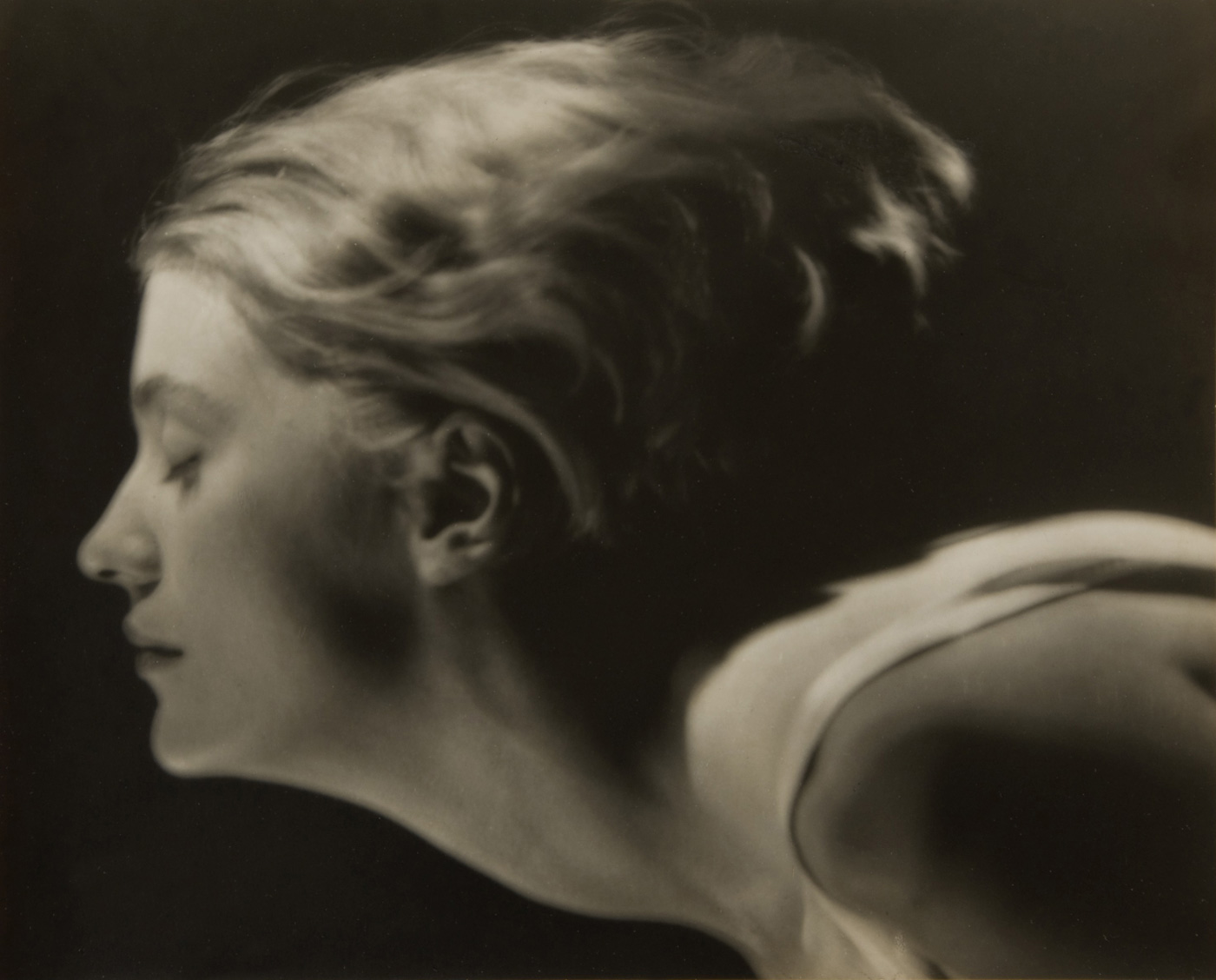
Lee Miller (American, 1907-1977) 'Floating Head (Mary Taylor), New York Studio, New York, USA' 1933


Lee Miller (American, 1907-1977)
Floating Head (Mary Taylor), New York Studio, New York, USA
1933
© Lee Miller Archives England 2015. All Rights Reserved


Leave artist’s alone

It takes some time to form an opinion as to the merit of Lee Miller’s work, given the amount of photographs available online, including the ones available on the Lee Miller Archives website. It is also difficult to separate the muse / socialite from the artist, the icon from the person.

Certainly there are unforgettable photographs, such as the haunting SS Guard in Canal, Dachau, Germany (1945, below). Once seen, never forgotten. But then there are the usual fashion photographs for Vogue that are no different from anyone else, a lot of pretty average social documentary photographs, some excellent and not so excellent portraits of friends and artists, and some surreal offerings that sometimes hit the mark.

Only so often do her photographs raise themselves above the mundane. This is not the fault of Lee Miller, but the fault of people claiming that someone is more than they are. The fault of people in control of her image. And that all comes down to money and power.

Instead of limiting access to her photographs, if her work was just left to breathe – just letting Lee Miller be nothing, in a Zen sense – just let the work be what it is, then she and the work might attain more credibility than it has at the moment. If Lee Miller was not set up as this icon, if she just is, then the work would be all the better for it. Icon and artist need to be separated. Let’s see more of the work freely available, for only then can we truly understand, believe.

Dr Marcus Bunyan


Many thankx to the Albertina for allowing me to publish the photographs in the posting. Please click on the photographs for a larger version of the image.


Lee Miller (1907-1977) is considered one of the most fascinating artists of the 20th century. In only 16 years, she produced a body of photographic work of a range that remains unparalleled, and that unites the most divergent genres. Miller’s oeuvre extends from surrealistic images to photography in the fields of fashion, travelling, portraiture and even war correspondence; the Albertina presents a survey of the work in its breadth and depth, with the aid of 100 selected pieces.

Lee Miller began her artistic career as a surrealist photographer in the Paris of 1929. She alienated motifs by using narrow image frames and applying experimental techniques like solarisation, so that it would be possible to see paradox reality. Travel photography, in which she translated the landscape into modernistic and ambiguous shapes, originated in Egypt in 1934.

As one of just a handful of female photojournalists, she began to photograph the disastrous consequences of the Second World War back in 1940. Lee Miller photographed the attack on London by the German Luftwaffe (“the Blitz”), as well as the eventual liberation of Paris. Her reporting led her to Vienna via Salzburg in 1945 where she photographed a cityscape destroyed by war, as well as the hardships in the children’s hospitals. In this exhibit, the focus is specifically placed on the vast bulk of this unpublished group of works.


Lee Miller | Surrealist Photography from Albertina Vienna.


Lee Miller | War Photography from Albertina Vienna.


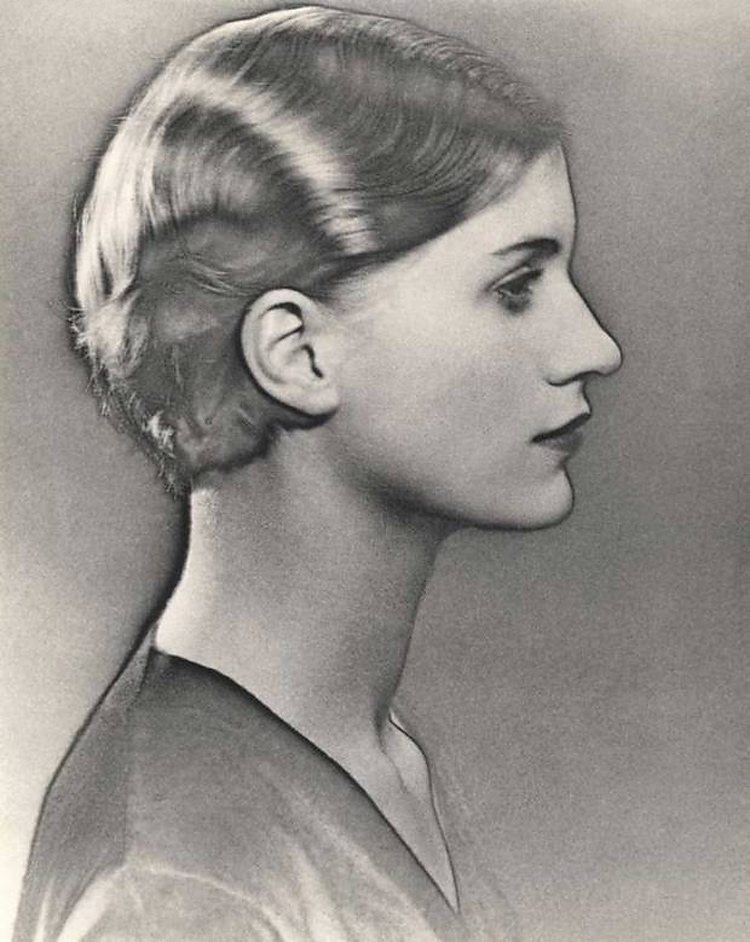
Man Ray (American, 1890-1976) 'Portrait of Lee Miller, Paris, France' 1929


Man Ray (American, 1890-1976)
Portrait of Lee Miller, Paris, France
1929
© MAN RAY TRUST / ADAGP, Paris / Bildrecht Wien 2015
Courtesy Lee Miller Archives, England 2015. All rights reserved


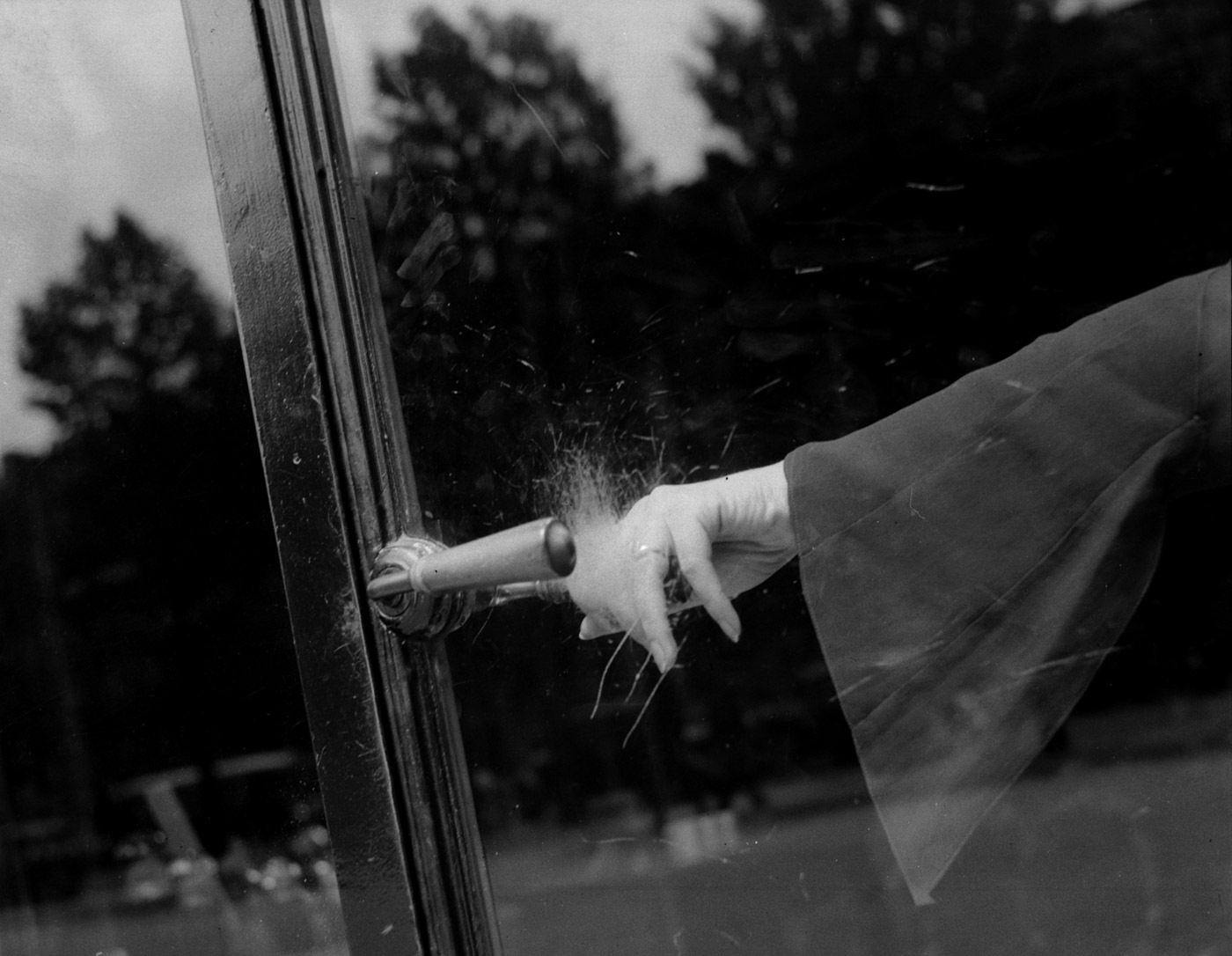
Lee Miller (American, 1907-1977) 'Untitled (Exploding Hand), Paris, France' c. 1930


Lee Miller (American, 1907-1977)
Untitled (Exploding Hand), Paris, France
c. 1930
© Lee Miller Archives England 2015. All Rights Reserved


Lee Miller (American, 1907-1977) 'Self Portrait, New York Studio, New York, USA' 1932


Lee Miller (American, 1907-1977)
Self Portrait, New York Studio, New York, USA
1932
© Lee Miller Archives England 2015. All Rights Reserved


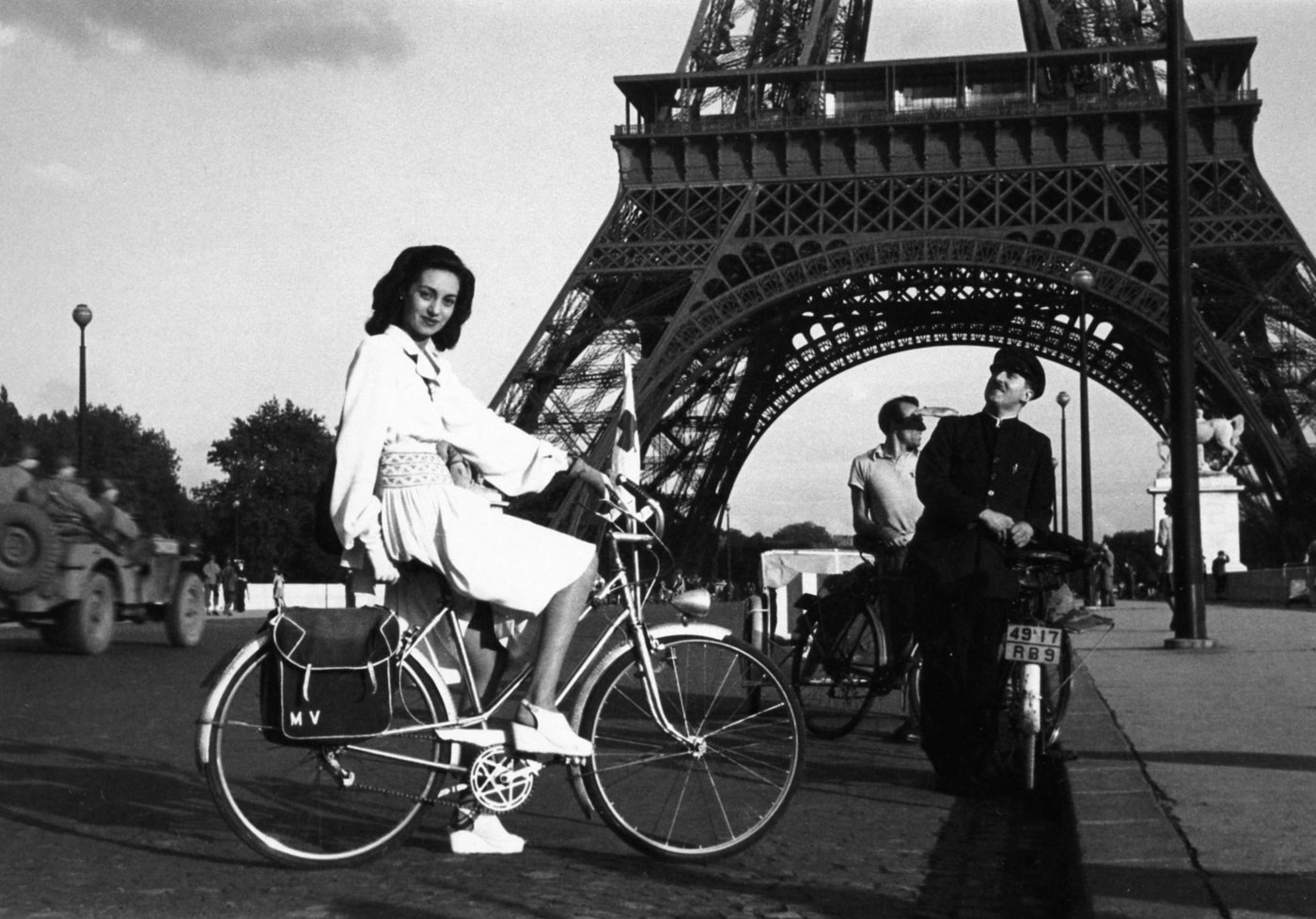
Lee Miller (American, 1907-1977) 'Paris' 1944


Lee Miller (American, 1907-1977)
Paris
1944
Silver gelatin print
© Lee Miller Archives England 2015. All Rights Reserved


Lee Miller (American, 1907-1977) 'Picnic, Ile Sainte Marguerite, France' 1937


Lee Miller (American, 1907-1977)
Picnic, Ile Sainte Marguerite, France [Man Ray second from right]
1937
© Lee Miller Archives England 2015. All Rights Reserved


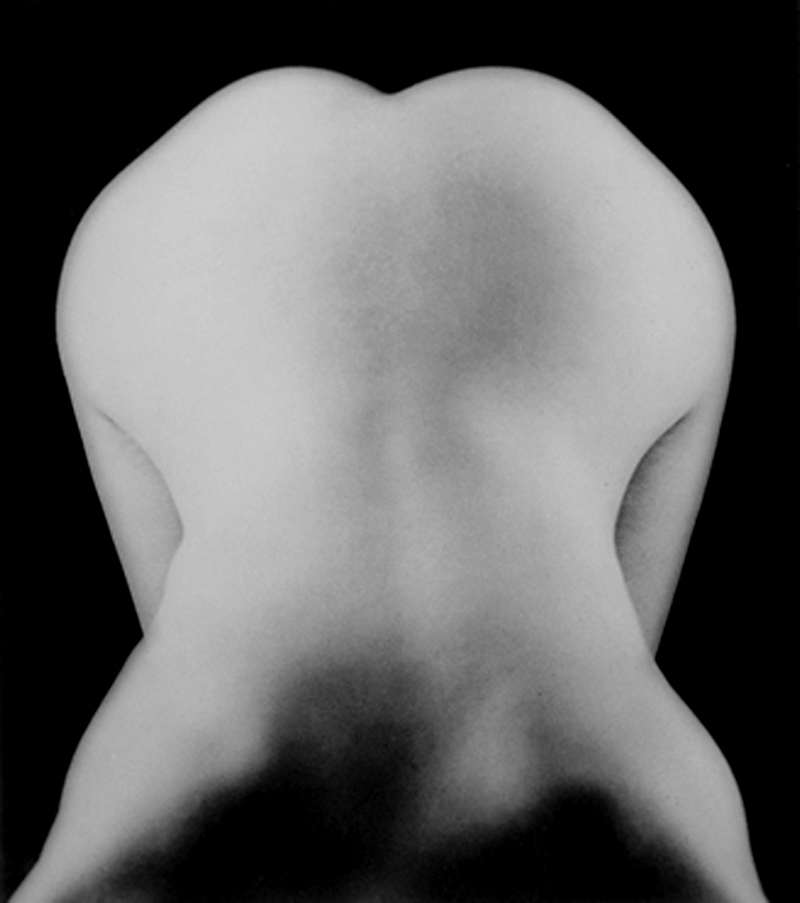
Lee Miller (American, 1907-1977) 'Nude bent forward' 1930


Lee Miller (American, 1907-1977)
Nude bent forward
1930
© Lee Miller Archives England 2015. All Rights Reserved


Lee Miller exhibition text

Lee Miller 'Surrealism: Paris and New York, 1929-1934' exhibition text

Lee Miller 'Travels: Egypt. 1934-1939' and 'War: England and France, 1940-1944' exhibition text

Lee Miller 'Zero Hour: Germany and Austria, 1945' and 'After the war: Vienna 1945' exhibition text


Lee Miller exhibition texts


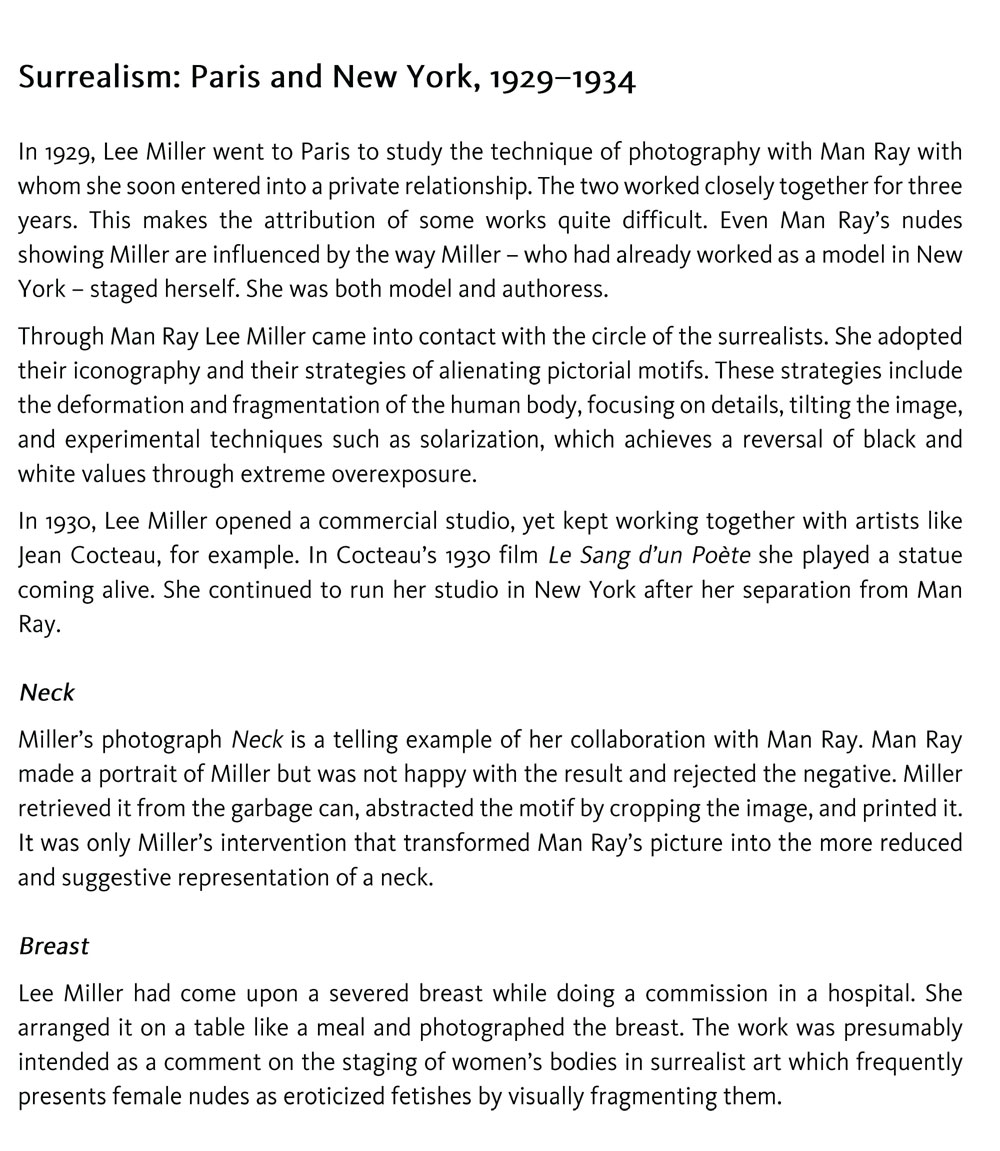
Lee Miller (American, 1907-1977) 'Fire Masks, London, England' 1941


Lee Miller (American, 1907-1977)
Fire Masks, London, England
1941
© Lee Miller Archives England 2015. All Rights Reserved


Lee Miller (American, 1907-1977) 'Irmgard Seefried, Opera Singer, Singing an Aria from Madame Butterfly, Vienna Opera House, Vienna, Austria' 1945


Lee Miller (American, 1907-1977)
Irmgard Seefried, Opera Singer, Singing an Aria from Madame Butterfly, Vienna Opera House, Vienna, Austria
1945
© Lee Miller Archives England 2015. All Rights Reserved


Irmgard Seefried (German, 1919-1988)

Irmgard Seefried (9 October 1919 – 24 November 1988) was a distinguished German soprano who sang opera, sacred music, and lieder.

One of the outstanding singers to emerge immediately after the Second World War, she was noted for her Mozart and Richard Strauss roles. But she also sang in other composers’ operas; the title role in Puccini’s Madama Butterfly, Marie in Alban Berg’s Wozzeck, Eva in Meistersinger, Blanche in Poulenc’s Dialogues des Carmélites, and the title role in Janáček’s Káťa Kabanová. She was also a noted lieder singer, and a number of her Salzburg Festival recitals were recorded. She left many recordings of oratorio and sacred music by Bach, Mozart, Haydn (including at least four different renditions of the Archangel Gabriel in Die Schöpfung), Brahms, Fauré, Beethoven, Dvořák, Verdi and Stravinsky.

Although she was a high soprano, she performed, and recorded, both the trouser roles of the Composer and Octavian in Richard Strauss’s Ariadne auf Naxos and Der Rosenkavalier, respectively. These roles are usually associated with weightier voices, and today are usually sung by mezzo-sopranos.

She often sang with Elisabeth Schwarzkopf, who said in interview that Seefried was naturally able to achieve results effortlessly which other singers, including Schwarzkopf herself, had to work hard to produce.

Text from the Wikipedia website


Lee Miller (American, 1907-1977) with David E. Scherman (American, 1916-1997) 'Lee Miller in Hitler's Bathtub, Munich, Germany' 1945


Lee Miller (American, 1907-1977) with David E. Scherman (American, 1916-1997)
Lee Miller in Hitler’s Bathtub, Munich, Germany
1945
© Lee Miller Archives England 2015. All Rights Reserved


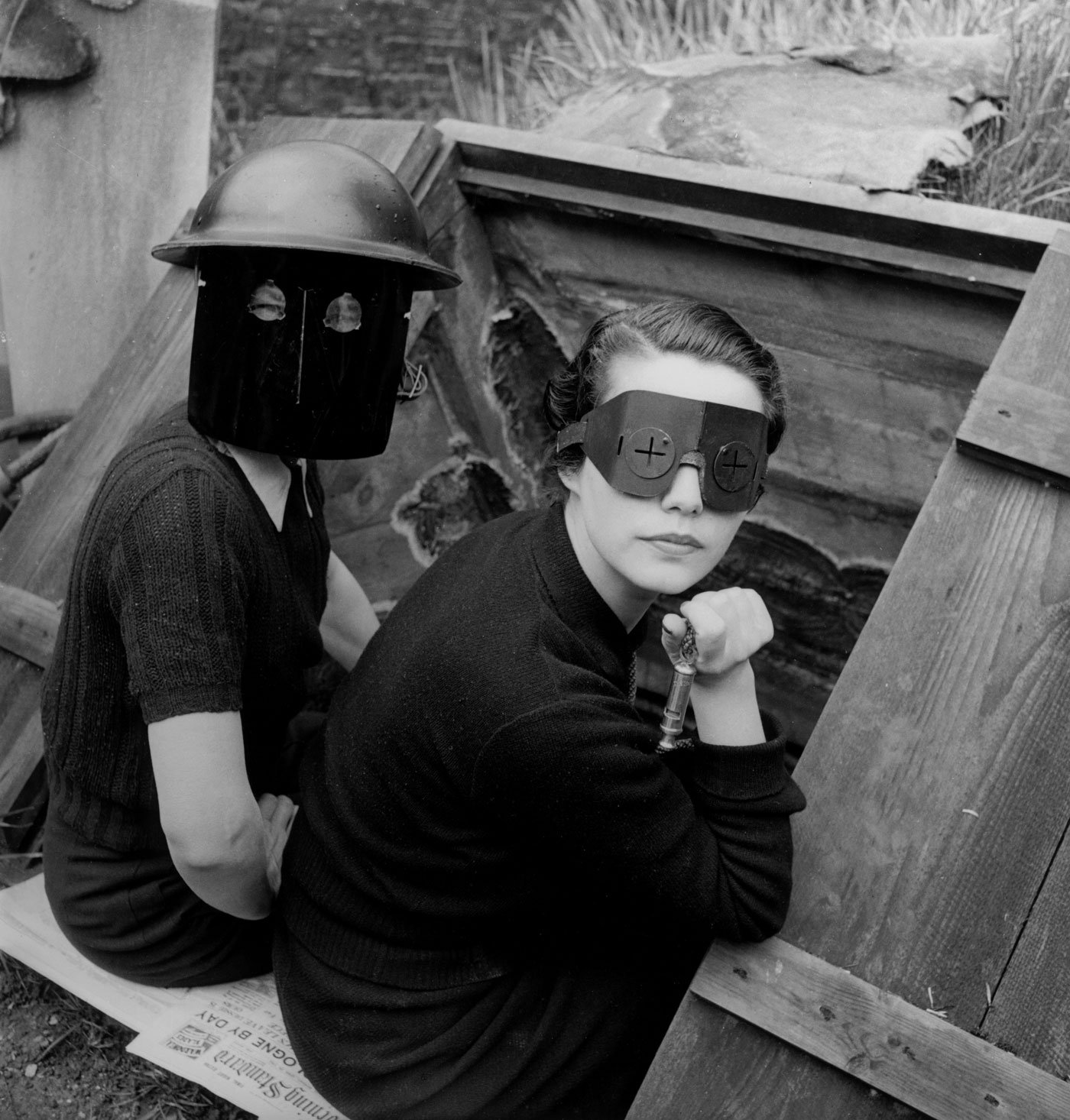
Lee Miller (American, 1907-1977) 'Luxembourg' 1944


Lee Miller (American, 1907-1977)
Luxembourg
1944
© Lee Miller Archives England 2015. All Rights Reserved


Lee Miller (American, 1907-1977) 'SS Guard in Canal, Dachau, Germany' 1945


Lee Miller (American, 1907-1977)
SS Guard in Canal, Dachau, Germany
1945
© Lee Miller Archives England 2015. All Rights Reserved


Lee Miller (American, 1907-1977) 'Scharnhorst Boy, Vienna, Austria' 1945


Lee Miller (American, 1907-1977)
Scharnhorst Boy, Vienna, Austria
1945
© Lee Miller Archives England 2015. All Rights Reserved


Lee Miller (American, 1907-1977) 'The latest hat model, Vogue Studios, London, April 1942' 1942


Lee Miller (American, 1907-1977)
The latest hat model, Vogue Studios, London, April 1942
1942
© Lee Miller Archives England 2015. All Rights Reserved


Man Ray (American, 1890-1976) 'Solarised Portrait of Lee Miller' c. 1929


Man Ray (American, 1890-1976)
Solarised Portrait of Lee Miller
c. 1929
© MAN RAY TRUST / ADAGP, Paris / Bildrecht Wien 2015


Lee Miller (American, 1907-1977) 'Solarized Portrait of an unknown model' 1930


Lee Miller (American, 1907-1977)
Solarized Portrait of an unknown model
1930
© Lee Miller Archives England 2015. All Rights Reserved


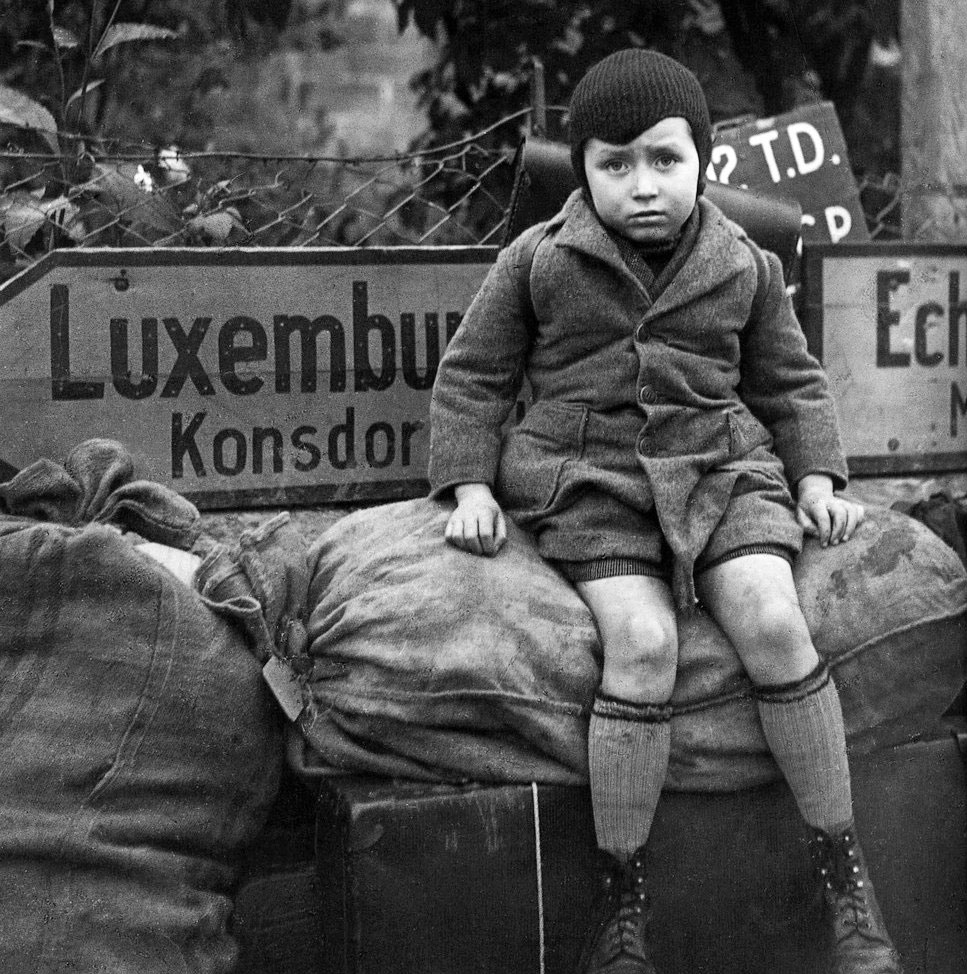
Man Ray (American, 1890-1976) and Lee Miller (American, 1907-1977) 'Neck (Portrait of Lee Miller), Paris, France' c. 1930


Man Ray (American, 1890-1976) and Lee Miller (American, 1907-1977)
Neck (Portrait of Lee Miller), Paris, France
c. 1930
© Lee Miller Archives England 2015. All Rights Reserved
© MAN RAY TRUST / ADAGP, Paris / Bildrecht Wien 2015


Albertina
Albertinaplatz 1
1010 Vienna, Austria
Phone: +43 (0)1 534 83-0

Opening hours:
Daily 10am – 6pm

Albertina website

LIKE ART BLART ON FACEBOOK

Back to top

Exhibition: ‘The Social Medium’ at the deCordova Sculpture Park and Museum, Lincoln, MA

Exhibition dates: 31st October 2014 – 19th April 2015


Charles "Teenie" Harris (American, 1908-1998) 'Three men and three women, seated as couples in banquette in bar or restaurant advertising "Fried Shrimp Plate $.85" and "1/4 Fried Chicken $.70"' c. 1959; printed 2001


Charles “Teenie” Harris (American, 1908-1998)
Three men and three women, seated as couples in banquette in bar or restaurant advertising “Fried Shrimp Plate $.85” and “1/4 Fried Chicken $.70”
c. 1959; printed 2001
Silver gelatin print
Gift of Arlette and Gus Kayafas


Another fun posting to add to the archive!

Marcus


Many thankx to the deCordova Sculpture Park and Museum for allowing me to publish some of the photographs in the posting. Please click on the photographs for a larger version of the image.


Charles "Teenie" Harris (American, 1908-1998) 'Photographer taking picture of Muhammad Ali (Cassius Clay) possibly in Carlton House Hotel, Downtown' 1963; printed 2001


Charles “Teenie” Harris (American, 1908-1998)
Photographer taking picture of Muhammad Ali (Cassius Clay) possibly in Carlton House Hotel, Downtown
1963; printed 2001
Silver gelatin print
Gift of Arlette and Gus Kayafas


Charles “Teenie” Harris photographed the African-American community of his hometown of Pittsburgh, primarily for the Pittsburgh Courier, the preeminent national African-American newspaper (c. 1930-1960). Photographing community members, visiting political figures, athletes, and entertainers, Harris set out to balance negative views of African-Americans and their communities. Nicknamed “One-Shot,” Harris photographed confidently and with ease, rarely asking his subjects to pose more than once. The resulting 80,000 negatives make up one of the largest collections of photographs of a black urban community in the United States. Harris’ artistic output helps define photography as a tool for preserving the past, his photographs serving as invaluable documentation of the spirit of a particular time, place, and people.

Prefiguring the paparazzi images of celebrities that pervade contemporary media, Harris’ photographs of singer / actress Lena Horne and boxer Cassius Clay (Muhammad Ali) capture his famous subjects in relaxed settings that humanise them. Furthermore, Harris’ photograph of Clay shows the boxer having his portrait taken by another photographer, giving Harris’ image of a photograph-in-process an even greater behind-the-scenes feel.


Jules Aarons (American, 1921-2008) 'Untitled (Bronx)', from the portfolio 'In The Jewish Neighborhoods 1946-76' c. 1970; printed 2003


Jules Aarons (American, 1921-2008)
Untitled (Bronx), from the portfolio In The Jewish Neighborhoods 1946-76
c. 1970; printed 2003
Silver gelatin print, printer’s proof II
Gift of Arlette and Gus Kayafas


Jules Aarons was one of the most respected and prolific American social documentary photographers in the twentieth century. His street photography captured personal moments in the public eye within the urban neighbourhoods in which he lived: the Bronx, where he was born and raised, and Boston, where he spent the majority of his adult life. Shot with his twin lens Rolleiflex camera held at waist-level, Aarons’ images are casual, intimate, and lively. Although the artist did not personally know his subjects, his work does not exhibit the detachment found in earlier forms of social documentary photography. His deep associations with the places and people he photographed imbue his images with a warmth and familiarity.


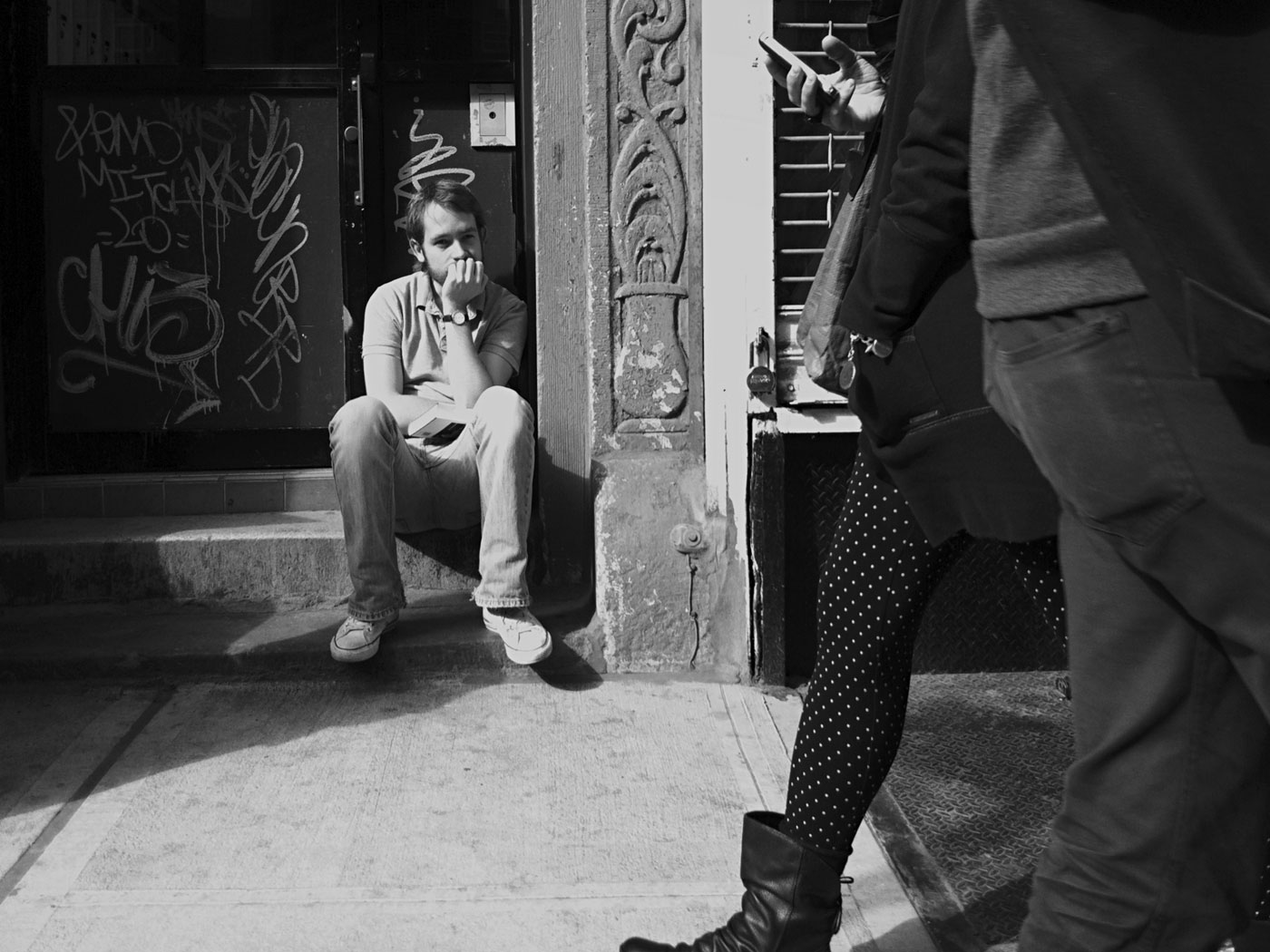
Greg Schmigel (American, b. 1969) 'Subway Triptych' 2011


Greg Schmigel (American, b. 1969)
Subway Triptych
2011
Digital photographic prints
Courtesy of the artist


Greg Schmigel (American, b. 1969) 'An Afternoon in the Sun' 2012


Greg Schmigel (American, b. 1969)
An Afternoon in the Sun
2012
Digital photographic prints
Courtesy of the artist


Greg Schmigel (American, b. 1969) 'Ideal Hosiery' 2013


Greg Schmigel (American, b. 1969)
Ideal Hosiery
2013
Digital photographic prints
Courtesy of the artist


Greg Schmigel (American, b. 1969) 'Late Day On Broadway' 2012


Greg Schmigel (American, b. 1969)
Late Day On Broadway
2012
Digital photographic prints
Courtesy of the artist


Greg Schmigel (American, b. 1969) 'This Isn't Fucking Paris' 2012


Greg Schmigel (American, b. 1969)
This Isn’t Fucking Paris
2012
Digital photographic prints
Courtesy of the artist


Greg Schmigel works in the vernacular of mid-twentieth century black and white street photography, capturing candid glimpses of everyday moments. While inspired by pioneering artists such as Jules Aarons, whose work is also on view in this gallery, Schmigel creates photographs with a decidedly twenty-first century quality. A mobile photographer since 2007, his device of choice is the most itinerant and convenient camera available: his iPhone. In his work, Schmigel emphasises that the production of a good photograph is due mainly to the eye of the photographer, and not necessarily dependent on the equipment he uses.

By producing black and white prints from his digital images, the artist casts a timeless aura over contemporary scenes. In photographs such as Ideal Hosiery, the faded signs of a New York City street corner provide an uncanny setting that could easily be found in a photograph taken many decades ago. In other images, however, the omnipresence of smartphones in the hands of pedestrians instantly signals the twenty-first century. In these photographs, Schmigel aptly captures the ironic isolation caused by the very technology created to increase interpersonal communication.


Presented at a time when the compulsion to digitally document and share human activity has increased exponentially, this exhibition features works from deCordova’s permanent collection that prefigure and inform current trends in social photography, as well as recent work by contemporary artists who utilise smartphones and social media to record the world around them. The Social Medium features work spanning from the mid-twentieth century to the present, and includes multiple photographic genres such as social documentary, street, society/celebrity, and portrait photography.

The Social Medium was largely inspired by a recent gift of one of Andy Warhol’s Little Red Books, which contains a set of colour Polaroids. With his camera, Warhol documented the events of his life – from glamorous celebrity parties to mundane occurrences. The arrival of these photographs, which record Warhol’s artistic and social milieu (or environment), created an opportunity to examine the work of other artists who also photograph social experience. Together, the images in this exhibition speak to the continued relevance of the photographic medium’s singular power to capture and preserve personal and societal histories, and provide a selective history of the camera’s role as an extension of memory and a tool that is at once a witness to and participant in human social activity.

Text from the deCordova Sculpture Park and Museum


Eugene Richards (American, b. 1944) 'First Communion, Dorchester' 1976


Eugene Richards (American, b. 1944)
First Communion, Dorchester
1976
Silver gelatin print
Gift of the artist


Eugene Richards captures a specific, local community in which he was embedded, to offer us uncanny views of small-town America. In the 1970s, Richards returned to his native Boston neighbourhood and produced photographs such as First Communion, which would later comprise his seminal book, Dorchester Days (1978). Richards documented a small section of urban Boston at a time when racial tensions and economic decline were defining Dorchester along with swaths of American cities and towns in similar states of transition and decline. First Communion captures a moment that nods towards social frictions at large, where religious traditions and street life converge in ambiguously innocent tension.


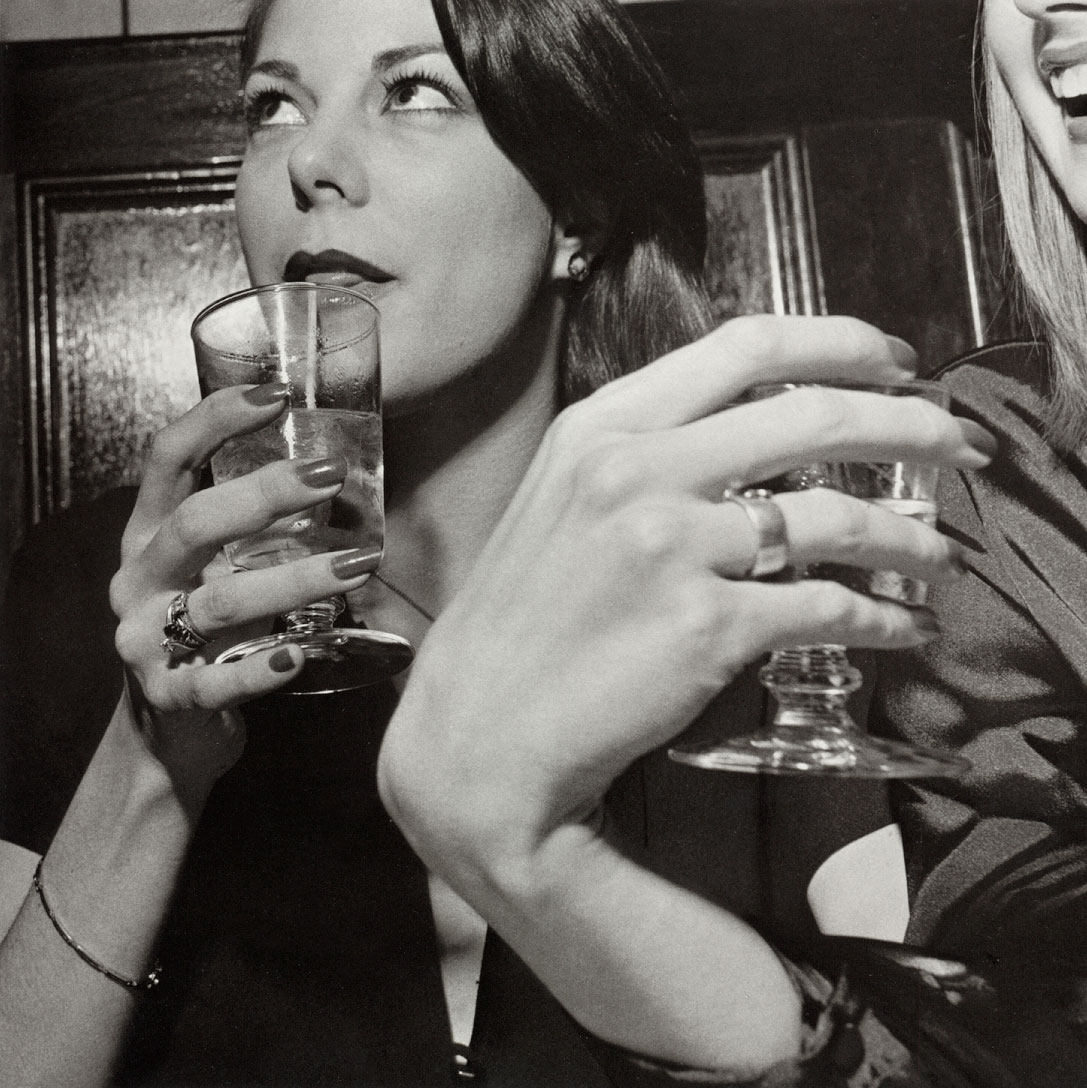
Larry Fink (American, 1941-2023) 'N.Y.C. Club Cornich', from the portfolio '82 Photographs 1974 to 1982' 1977; printed 1983


Larry Fink (American, 1941-2023)
N.Y.C. Club Cornich, from the portfolio 82 Photographs 1974 to 1982
1977; printed 1983
Silver gelatin print, 28/30
Gift of Diane and Eric Pearlman


Larry Fink (American, 1941-2023) 'N.Y.C. Club Cornich', from the portfolio '82 Photographs 1974 to 1982' 1977; printed 1983


Larry Fink (American, 1941-2023)
N.Y.C. Club Cornich, from the portfolio 82 Photographs 1974 to 1982
1977; printed 1983
Silver gelatin print, 28/30
Gift of Diane and Eric Pearlman


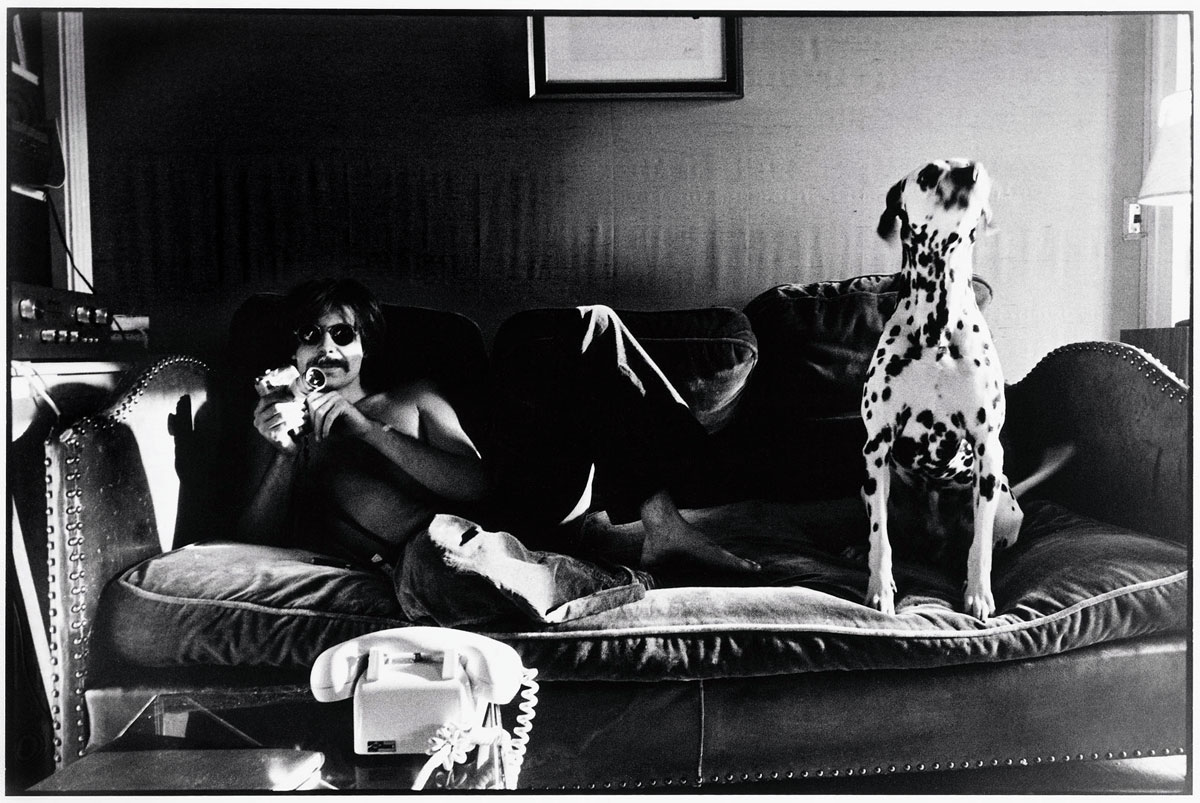
Larry Fink (American, 1941-2023) 'Peter Beard's, East Hampton', from the portfolio '82 Photographs 1974 to 1982' 1982; printed 1983


Larry Fink (American, 1941-2023)
Peter Beard’s, East Hampton, from the portfolio 82 Photographs 1974 to 1982
1982; printed 1983
Silver gelatin print, 28/30
Gift of Diane and Eric Pearlman


Larry Fink is a prominent American photographer who is best known for capturing images of high-profile social events. Fink’s images from the 1970s and 1980s capture individual vignettes within social gatherings, and nod to the development of documentary photography within the image-driven culture of the second half of the twentieth century. These photographs from Fink’s series 82 Photographs 1974 to 1982 and Making Out 1957-1980 depict scenes from clubs and parties in and around New York City. Fink’s subjects are caught off-guard by his camera, and their expressions provide windows into their weariness or giddy party euphoria. Capturing groups and individuals at surprisingly intimate and vulnerable moments, his photographs subtly reveal the disconnect often found between a subject’s public image and his or her inner self. For example, in Peter Beard’s, East Hampton, Fink captures a dynamic group of people in various levels of engagement with one another. While some are intertwined, others glance outward to the party beyond, having seemingly lost interest in the gathering at hand.


Tod Papageorge (American, b. 1940) 'Studio 54' 1977


Tod Papageorge (American, b. 1940)
Studio 54
1977
Silver gelatin print
Gift of Pete and Constance Kayafas


In this photograph, Tod Papageorge captures revellers in gritty black and white, employing straightforward photography to show significant, poetic moments from everyday life. Highlighted by the timeless quality of a silver gelatin print, his photograph of partygoers at the infamous New York City nightclub, Studio 54, captures such a scene. Dramatic without arranging its subjects, Papageorge’s photograph freezes the precise moment just before the woman’s upstretched hand makes contact with balloon floating wistfully above her head.


Phillip Maisel (American, b. 1981) 'Wall Photos', from the series 'A More Open Place' 2010


Phillip Maisel (American, b. 1981)
Wall Photos, from the series A More Open Place
2010
Archival inkjet print
Courtesy of the artist


Phillip Maisel (American, b. 1981) 'Profile Pictures (4702)', from the series 'A More Open Face' 2011


Phillip Maisel (American, b. 1981)
Profile Pictures (4702), from the series A More Open Face
2011
Archival inkjet print
Courtesy of the artist


Phillip Maisel’s photographs are layered, ethereal images that evoke the fleeting nature of memories. Though nostalgic in tone, these images derive from a very contemporary source. Setting long exposures on his camera, the artist captures the images appearing on his computer screen as he clicked through his friends’ Facebook albums. The resulting picture-of-pictures is twice removed from its source, emphasising the swollen state of image culture and the manner in which digital images are created, uploaded, and discarded at an ever increasing rate.

The title of these series derives from Facebook founder Mark Zuckerberg, who noted that, through the social media platform, he was trying “to make the world a more open place.” Facebook and other sites have certainly achieved that; however, this extreme openness, the compulsion to over-share personal images and information, creates a paradox given the subsequent lack of privacy inherent in these activities. Maisel’s work comments on this contemporary phenomenon in which individuals willingly share images of their private memories in public venues. Furthermore, by reducing a collection of images to a single photograph, the artist manifests the compression of time and space in the internet age. This layering of images is also a form of erasure; each new image obscures the last, consistently degrading the significance of each individual picture and memory.


Neal Slavin (American, b. 1941) 'Capitol Wrestling Corporation, Washington, D.C .,' from the portfolio 'Groups in America' 1979


Neal Slavin (American, b. 1941)
Capitol Wrestling Corporation, Washington, D.C ., from the portfolio Groups in America
1979
Color coupler print, 60/75
Gift of Stephen L. Singer and Linda G. Singer


Neal Slavin is acclaimed for his group portraits, which range from corporate associates to recreational cohorts to families. The photographs on display offer astute yet humorous studies of groups with specific shared interests that lay at the edges of societal norms. In Slavin’s images, no single member of the group pulls focus from the others and the ultimate personality of the portrait hinges upon the collective aura.


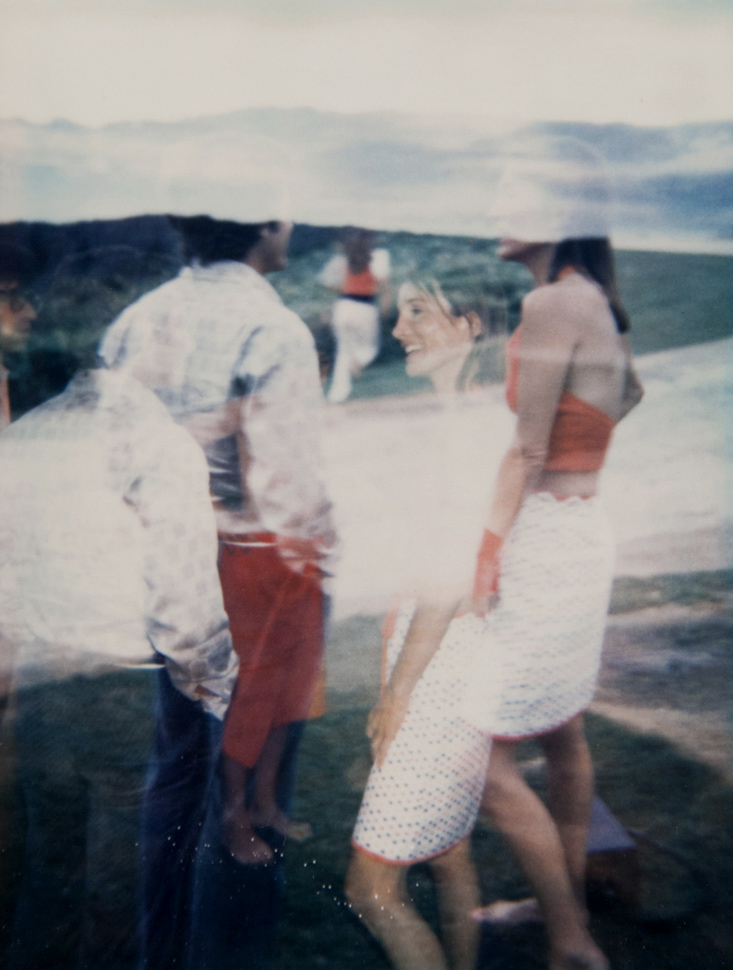
Andy Warhol (American, 1928-1987) 'The Little Red Book 128' 1972


Andy Warhol (American, 1928-1987)
The Little Red Book 128
1972
Twenty Polacolor Type 108 Polaroid prints
Gift of The Andy Warhol Foundation for the Visual Arts, Inc. 2014

Examples of Polaroids in book. 20 total.


During the 1970s and early 1980s, Andy Warhol used the Polaroid colour film camera. A then-novel technology which developed photographs in a matter of seconds, he employed it to document the events of his life – from the most glamorous celebrity parties to the most mundane and inconsequential occurrences. Warhol catalogued many of these photographs into small red Holston Polaroid albums, consequently known as Little Red Books. DeCordova’s Little Red Book 128, recently donated to the museum by The Warhol Foundation, features twenty photographs from a day in 1972 that Warhol shared with acclaimed writer Truman Capote, socialite Lee Radziwill and her family, and his business associates Vincent Fremont, Fred Hughes, and Jed Johnson. Consisting of both staged portraits and casual snapshots, the book is part paparazzi portfolio and part quaint family album.

Throughout the height of his fame, Andy Warhol was rarely without a camera in hand. The enigmatic artist often preferred social situations to be passively mitigated by his camera lens, rather than experienced physically and emotionally. In many ways, Warhol’s detachment mirrors a contemporary reliance on electronic forms of communication that limit human contact. Warhol once said, “In the future, everyone will be world – famous for 15 minutes.” Unsurprisingly, in all his work and in this collection of Polaroids, the artist blurs the lines between public / private and commoner / celebrity in a manner which is eerily prophetic of current social media platforms, such as Facebook, Twitter, Instagram, YouTube, among others, which allow anyone and everyone to have their Warholian 15 minutes of fame, or perhaps even just 15 seconds of infamy.


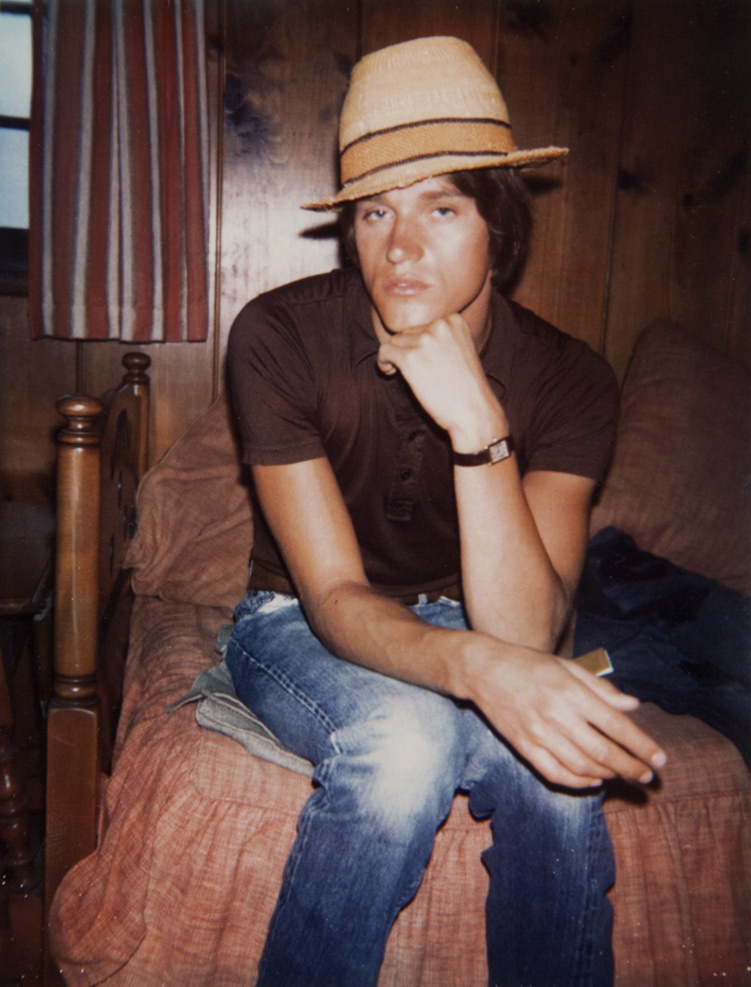
Andy Warhol (American, 1928-1987) 'Anthony Radziwill' 1972


Andy Warhol (American, 1928-1987)
Anthony Radziwill
1972
Polacolor Type 108 Polaroid print


Prince Anthony Stanislaw Albert Radziwill (4 August 1959 – 10 August 1999) was an American television executive and filmmaker.

Born in Lausanne, Switzerland, Radziwill was the son of socialite / actress Caroline Lee Bouvier (younger sister of First Lady Jacqueline Lee Bouvier) and Polish Prince Stanisław Albrecht Radziwiłł. He married a former ABC colleague, Emmy Award-winning journalist Carole Ann DiFalco, on 27 August 1994 on Long Island, New York.

As a member of the Radziwills, one of Central Europe’s noble families, Anthony Radziwill was customarily accorded the title of Prince and styled His Serene Highness, although he never used it. He descended from King Frederick William I of Prussia, King George I of Great Britain, and King John III Sobieski of Poland. The family’s vast hereditary fortune was lost during World War II, and Anthony’s branch of the family emigrated to England, where they became British subjects.

Radziwill’s career began at NBC Sports, as an associate producer. During the 1988 Summer Olympics in Seoul, he contributed Emmy Award-winning work. In 1989, he joined ABC News as a television producer for Prime Time Live. In 1990, he won the Peabody Award for an investigation on the resurgence of Nazism in the United States. Posthumously, Cancer: Evolution to Revolution was awarded a Peabody. His work was nominated for two Emmys.

Around 1989 he was diagnosed with testicular cancer, undergoing treatment which left him sterile, but in apparent remission. However, shortly before his wedding, new tumours emerged. Radziwill battled metastasising cancer throughout his five years of marriage, his wife serving as his primary caretaker through a succession of oncologists, hospitals, operations and experimental treatments. The couple lived in New York, and both Radziwill and his wife tried to maintain their careers as journalists between his bouts of hospitalisation. During this period, Radziwill became especially close to his aunt Jacqueline Kennedy Onassis, who was also terminally ill with cancer. He died on 10 August 1999, and was survived by his sister, Anna Christina Radziwill.

Text from the Wikipedia website


Andy Warhol (American, 1928-1987) 'Lee Radziwill' 1972


Andy Warhol (American, 1928-1987)
Lee Radziwill
1972
Polacolor Type 108 Polaroid print


Andy Warhol (American, 1928-1987) 'Jed Johnson' 1972


Andy Warhol (American, 1928-1987)
Jed Johnson
1972
Polacolor Type 108 Polaroid print


Jed Johnson (December 30, 1948 – July 17, 1996) was an American interior designer and film director. Initially hired by Andy Warhol to sweep floors at Warhol’s Factory, he subsequently moved in with Warhol and became his lover. As a passenger in the First Class cabin, he was killed when TWA Flight 800 exploded shortly after takeoff in 1996.


Andy Warhol (American, 1928-1987) 'Truman Capote' 1972


Andy Warhol (American, 1928-1987)
Truman Capote
1972
Polacolor Type 108 Polaroid print


deCordova Sculpture Park and Museum
51 Sandy Pond Rd, Lincoln, MA
01773, United States
Phone: +1 781-259-8355

Opening hours:
Summer
Every day
10am – 5pm

deCordova Sculpture Park and Museum website

LIKE ART BLART ON FACEBOOK

Back to top

Exhibition: ‘Posing Beauty in African American Culture’ at the Virginia Museum of Fine Arts, Richmond, Virginia

Exhibition dates: 26th April – 27th July 2014


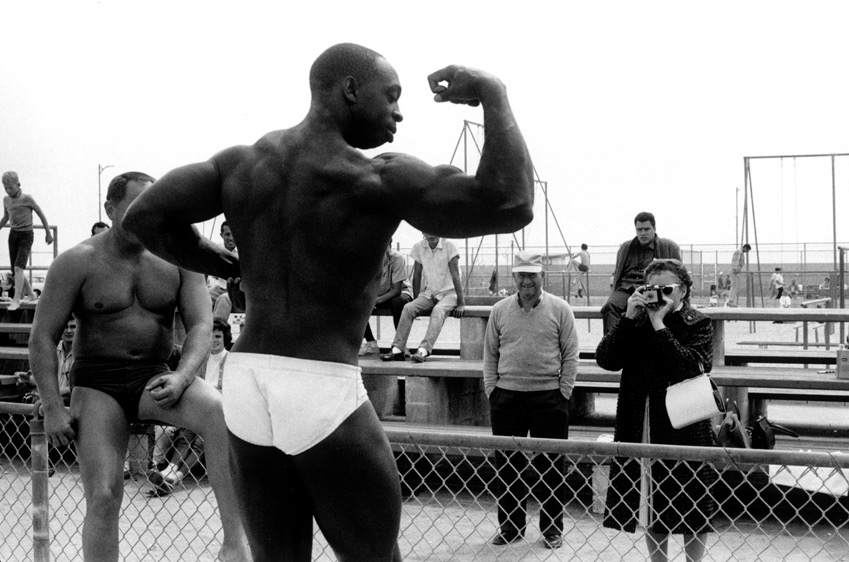
Bruce Davidson (American, b. 1933) 'Body Builder on Venice Beach, California' 1964


Bruce Davidson (American, b. 1933)
Body Builder on Venice Beach, California
1964
Gelatin silver print
8 1/4 x 12 1/4 in.
Courtesy of Howard Greenberg Gallery, New York


An exhibition that questions the ways in which our contemporary understanding of beauty has been constructed and framed through the body and invites a deeper reading of beauty, its impact on mass culture and individuals and how the display of beauty affects the ways in which we see and interpret the world and ourselves. According to author and historian Barbara Summers: “Beauty is power. And the struggle to have the entire range of Black beauty recognised and respected is a serious one.”

If beauty is only skin deep, and colour deep, why the need to differentiate? Surely it doesn’t matter what colour your skin, beauty just is. You know it when you see it, regardless of colour. Not everything is about power; not everything is a site of contestation… to me, recognising true beauty is an acknowledgement of the light that shines from within, not something that is imposed from without. When you see true beauty, you know it instinctively. Intuitively. Enough of this posing – are you image or essence?

Dr Marcus Bunyan


Many thankx to the Virginia Museum of Fine Arts for allowing me to publish the photographs in the posting. Please click on the photographs for a larger version of the image.


“That there are so few images of African-American women circulating in popular culture or in fine art is disturbing; the pathology behind it is dangerous … We got a sistah in the White House, and yet mediated culture excludes us, denies us, erases us. But in the face of refusal, I insist on making work that includes us as part of the greater whole,” said Carrie Mae Weems in a 2009 interview conducted by Dawoud Bey for ‘BOMB Magazine’.


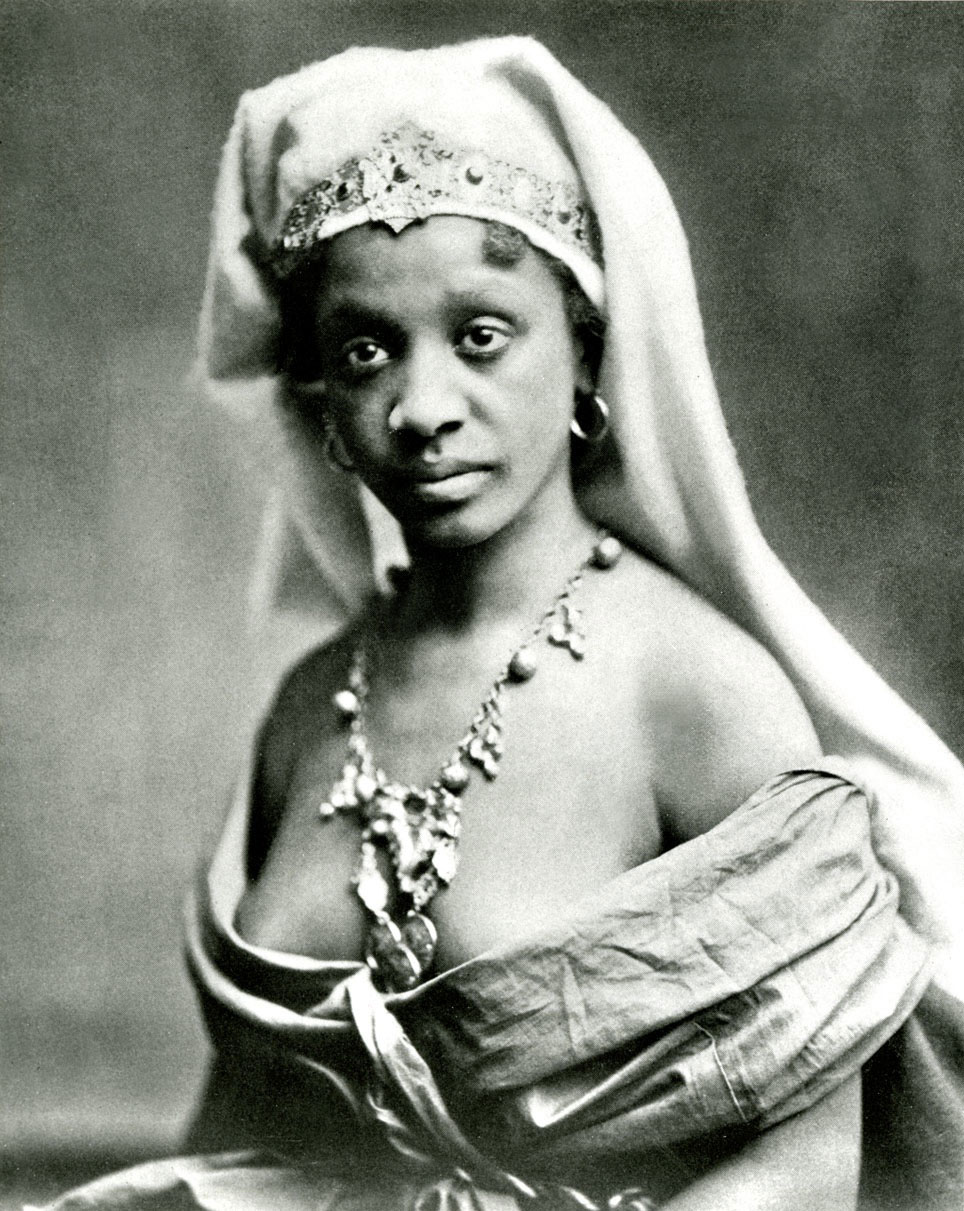
Edward Curtis (American, 1868-1952) 'A Desert Queen' 1898 (printed 2009)


Edward Curtis (American, 1868-1952)
A Desert Queen
1898 (printed 2009)
Modern digital print
20 x 16 inches
Special Collections, University of Washington Libraries


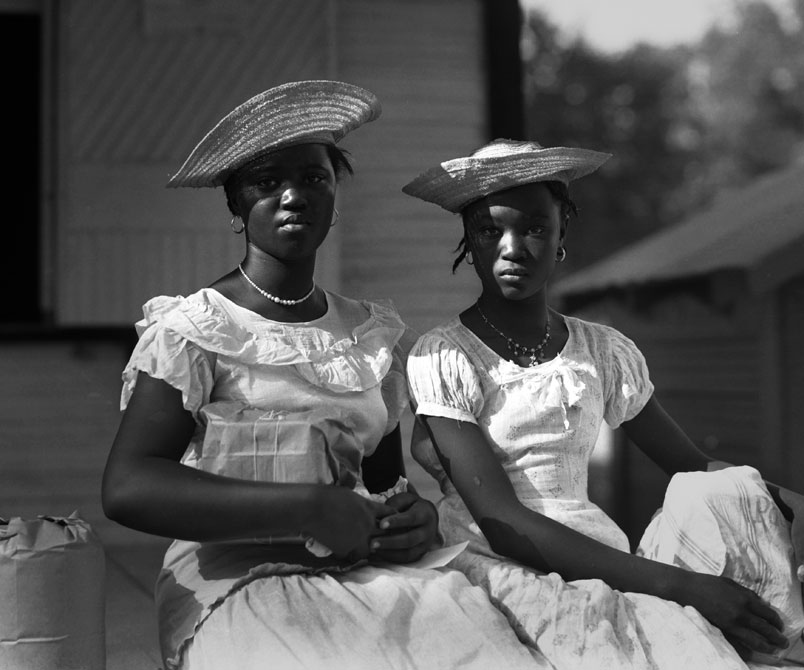
Theodore Fonville Winans (American, 1911-1992) 'Dixie Belles, Central Louisiana' 1938


Theodore Fonville Winans (American, 1911-1992)
Dixie Belles, Central Louisiana
1938
Courtesy of the Ogden Museum of Southern Art and Bob Winans


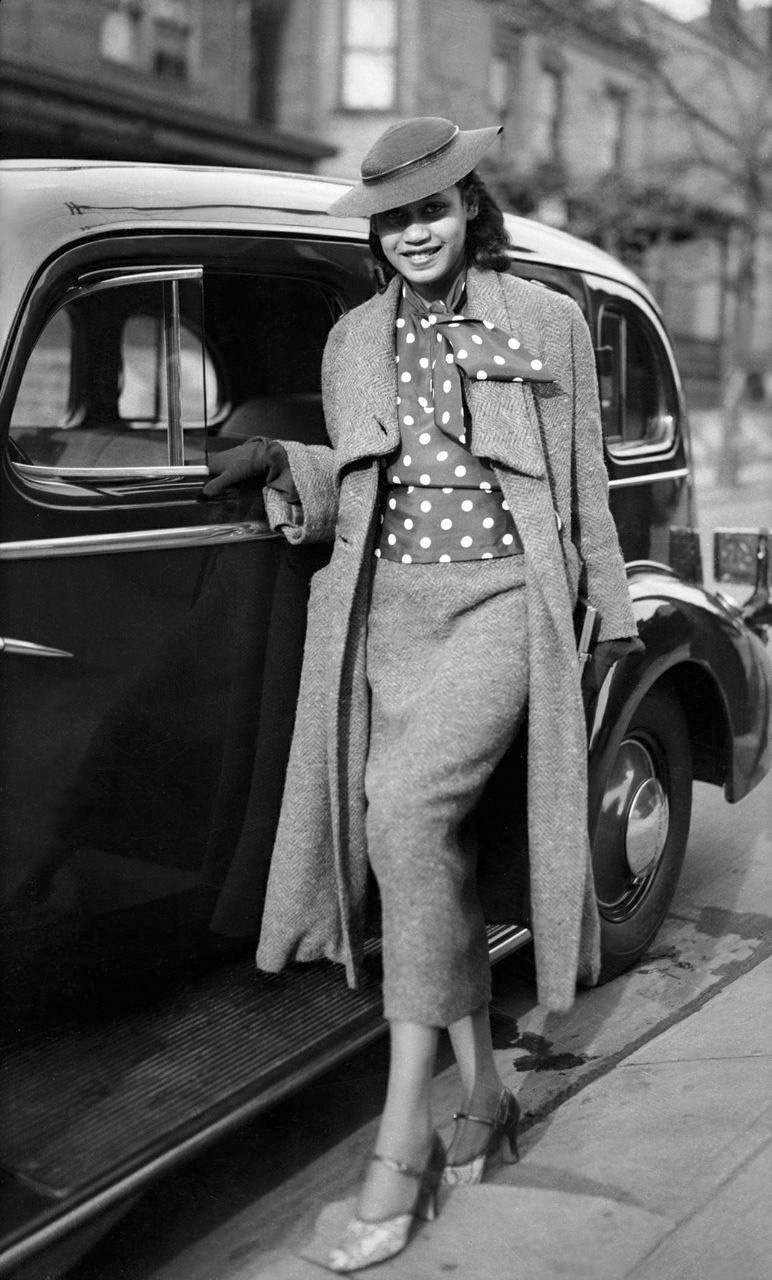
Charles "Teenie" Harris (American, 1908-1998) 'Mary Louise Harris on Mulford Street, Homewood, Pittsburgh, Pennsylvania' c. 1930-1939


Charles “Teenie” Harris (American, 1908-1998)
Mary Louise Harris on Mulford Street, Homewood, Pittsburgh, Pennsylvania
c. 1930-1939
Gelatin silver print
20 x 16cm
© 2004 Carnegie Museum of Art, Charles “Teenie” Harris Archive


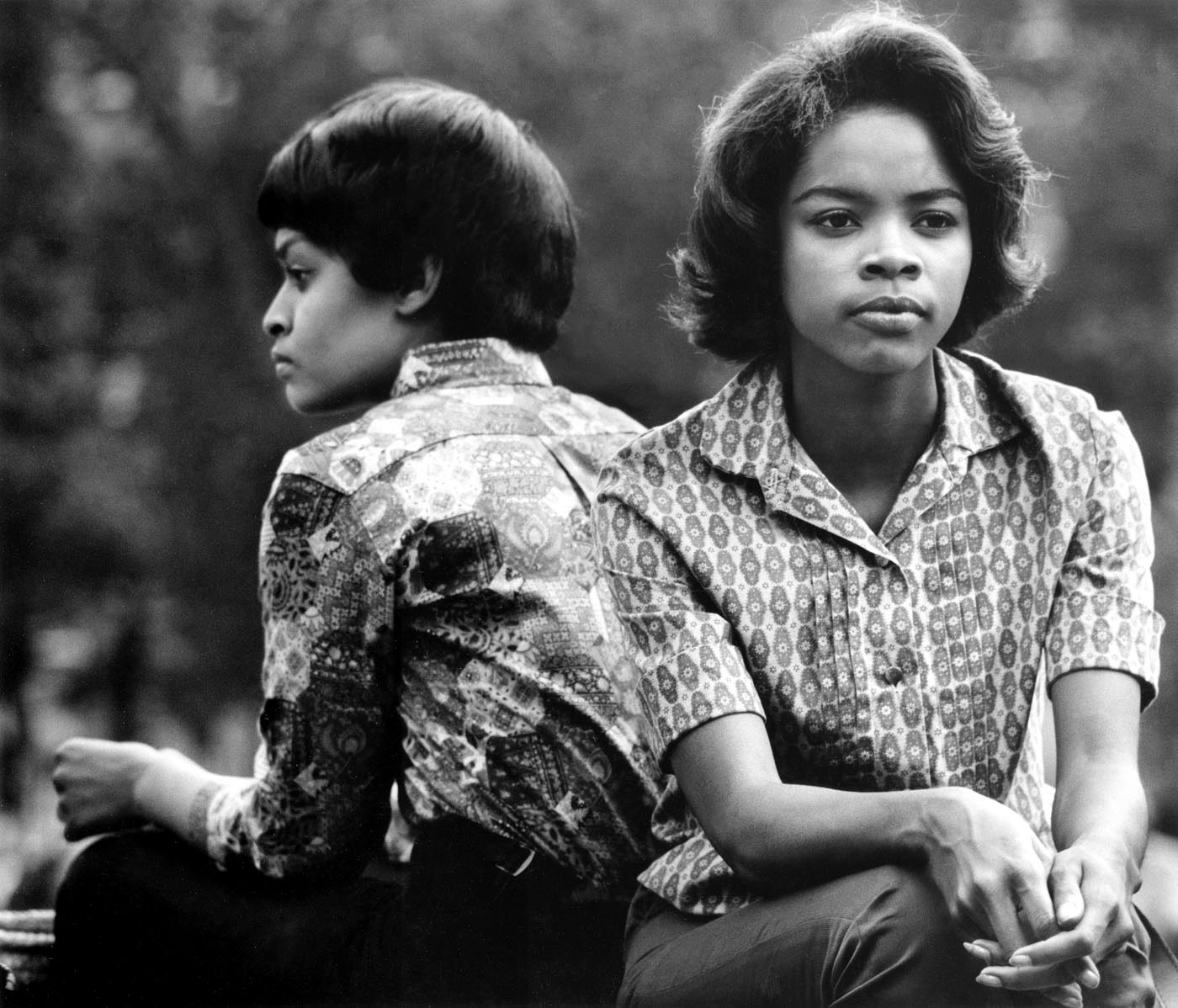
Dave Heath (American, 1931-2016) 'Washington Square, New York City' 1960


Dave Heath (American, 1931-2016)
Washington Square, New York City
1960
Silver gelatin print


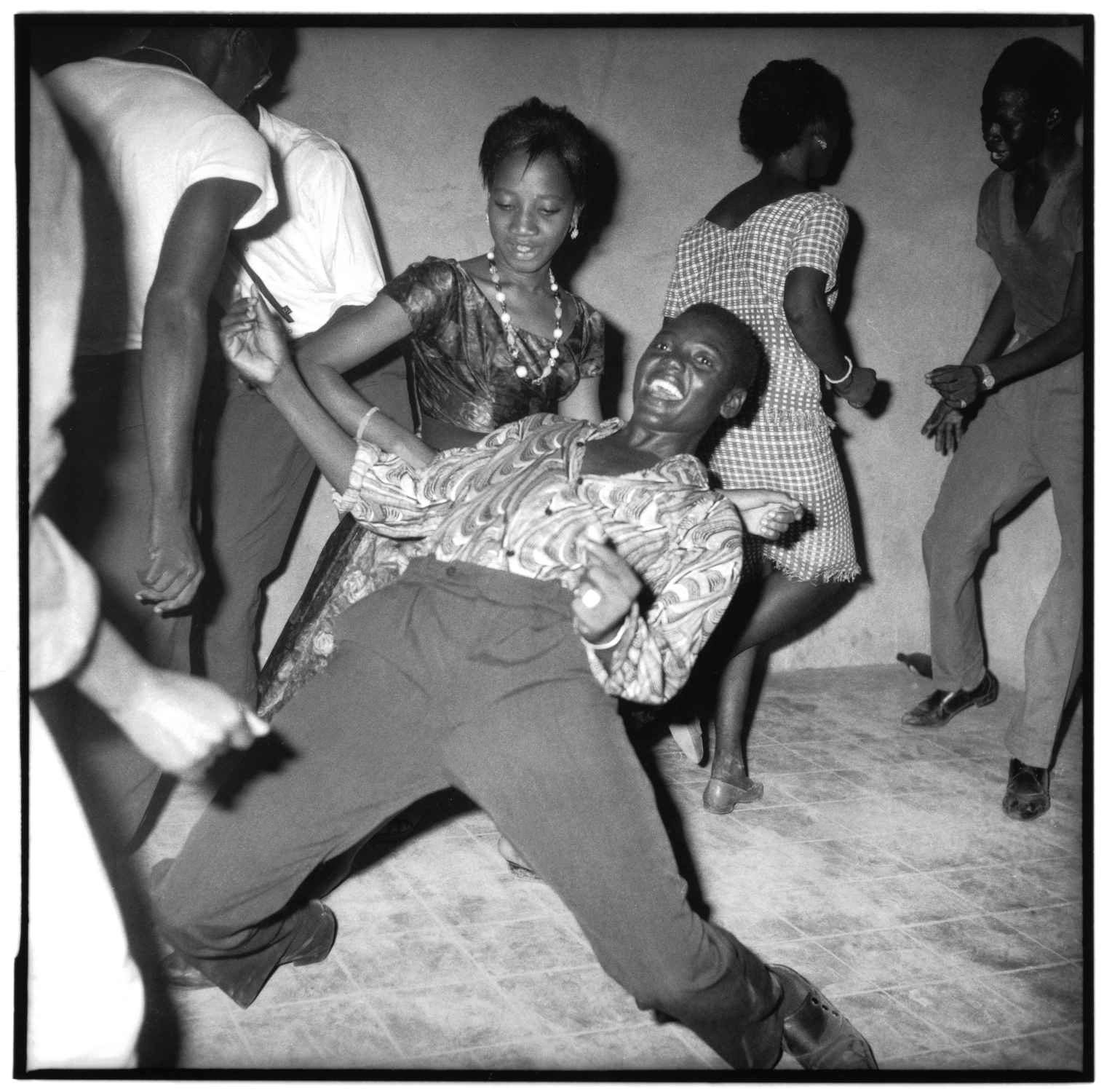
Malick Sidibé (Malian, 1935-2016) 'Regardez-moi!' 1962


Malick Sidibé (Malian, 1935-2016)
Regardez-moi!
1962
Gelatin silver print
50 x 60cm – 19.5 x 23.5 inches
© Malick Sidibé


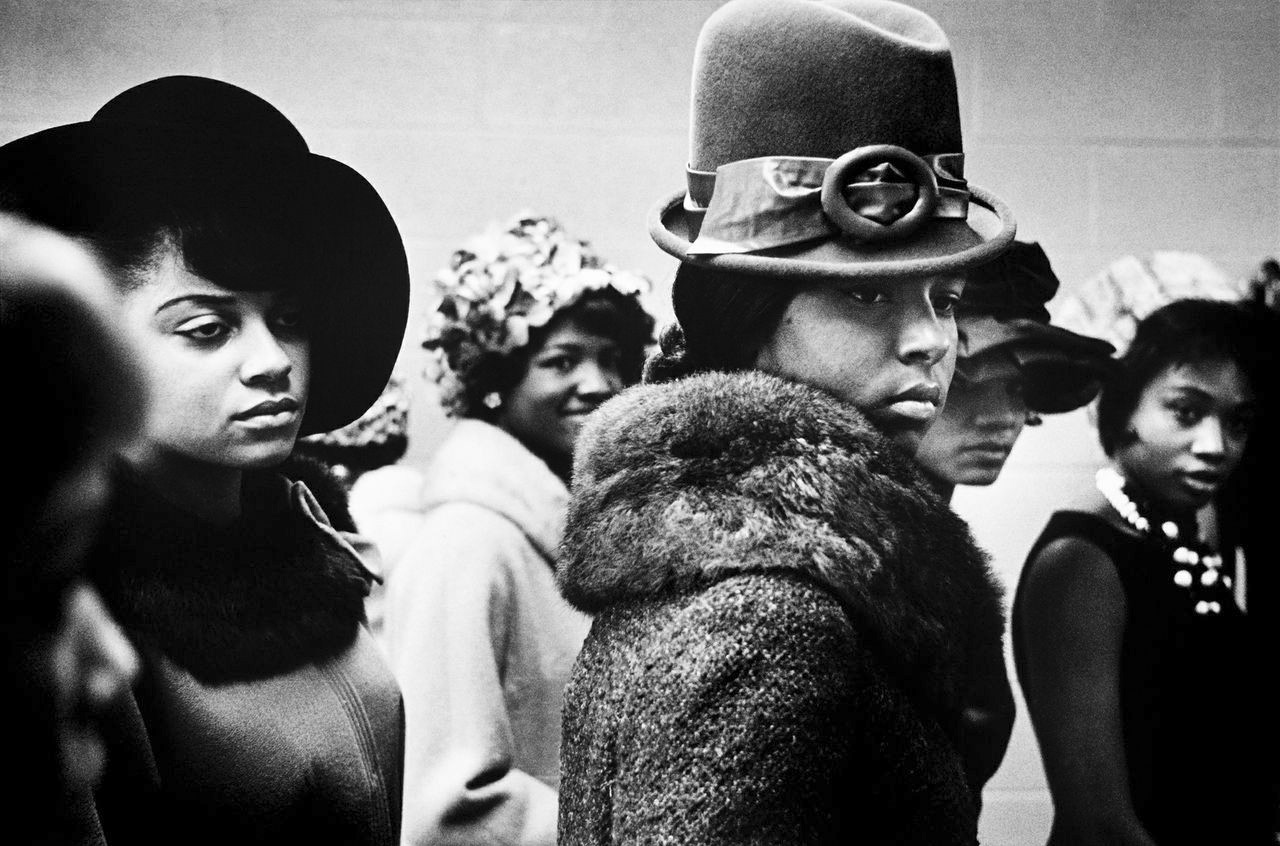
Leonard Freed (American, 1929-2006) 'Harlem Fashion Show, Harlem' 1963


Leonard Freed (American, 1929-2006)
Harlem Fashion Show, Harlem
1963
Gelatin silver print
17 x 21 1/4 inches
Magnum Photos


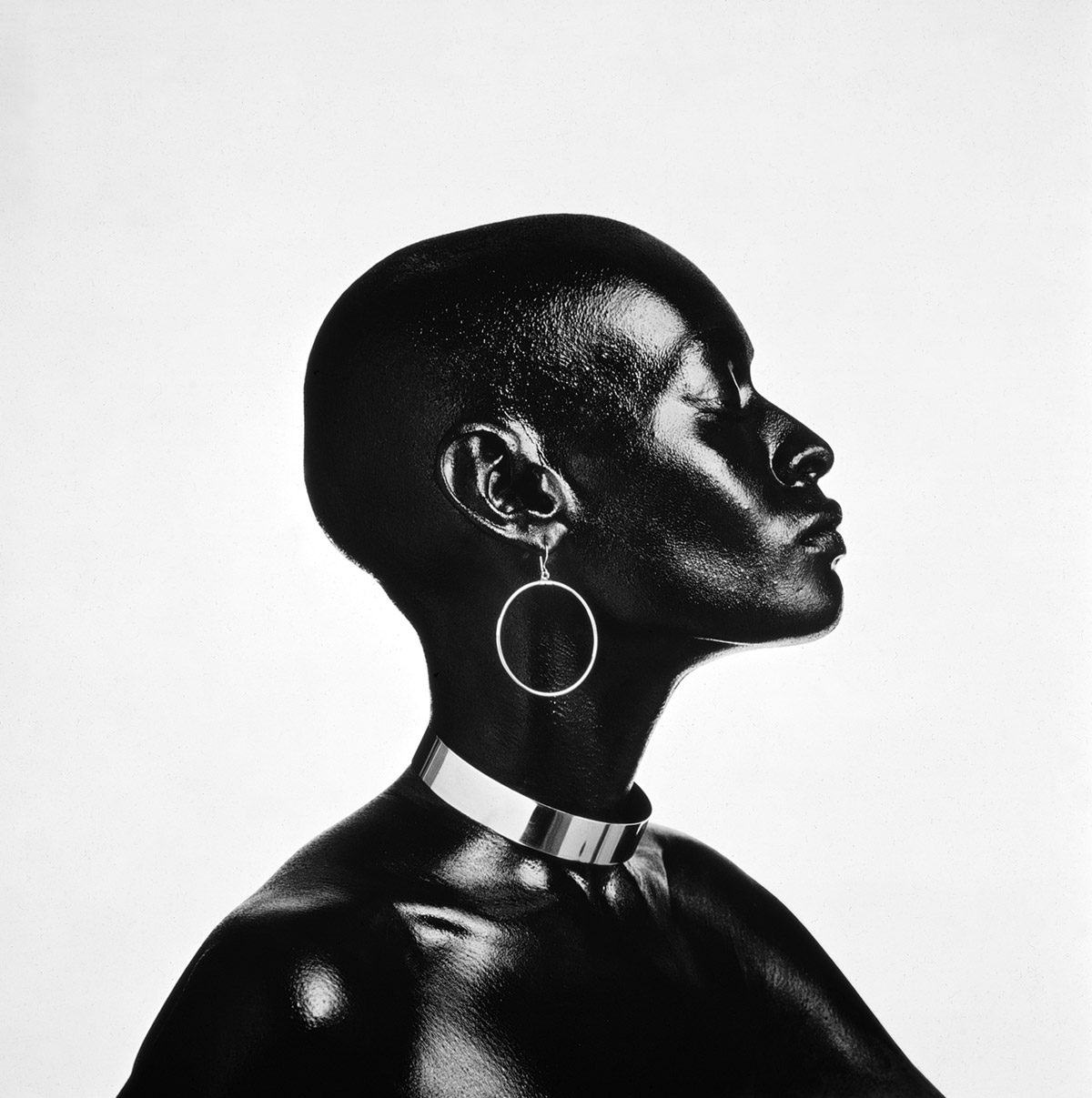
Anthony Barboza (African-American, b. 1944) 'Pat Evans' c. 1970s


Anthony Barboza (African-American, b. 1944)
Pat Evans
c. 1970s
Digital print
24 1/2 x 24 inches
Courtesy of the photographer


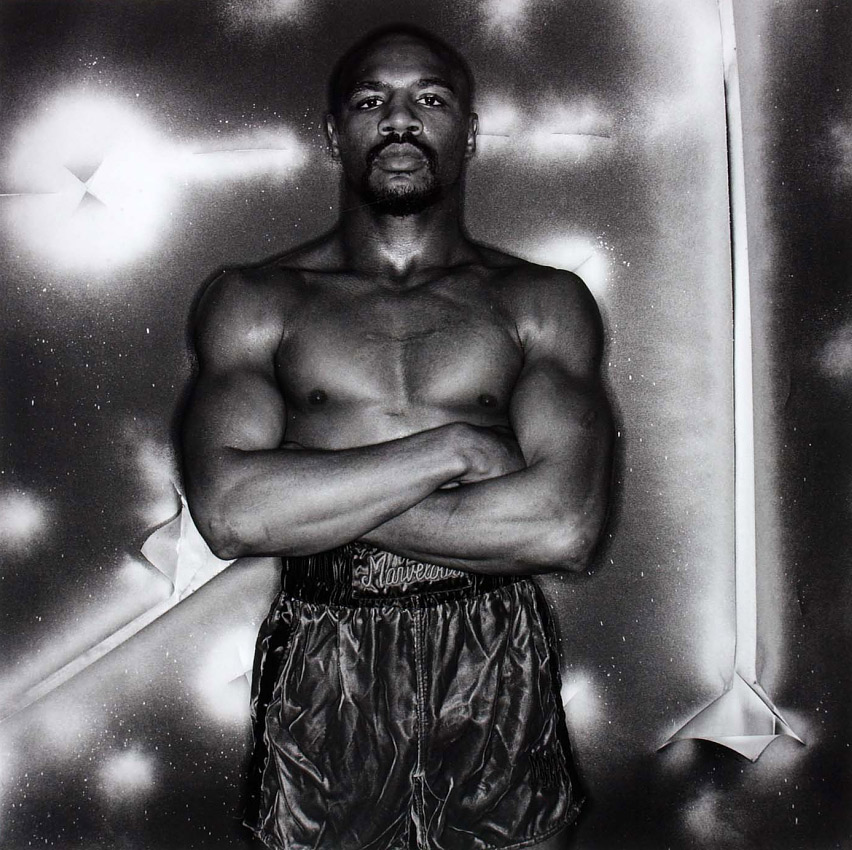
Anthony Barboza (African-American, b. 1944) ''Marvelous' Marvin Hagler, boxer' 1981


Anthony Barboza (African-American, b. 1944)
‘Marvelous’ Marvin Hagler, boxer
1981
Gelatin silver print


Exploring contemporary understandings of beauty, Posing Beauty in African American Culture frames the notion of aesthetics, race, class, and gender within art, popular culture, and political contexts. The exhibition – and its companion, Identity Shifts – will be on view April 26 – July 27, 2014.

Posing Beauty in African American Culture examines the contested ways in which African and African American beauty has been represented in historical and contemporary contexts through a diverse range of media including photography, film, video, fashion, advertising, and other forms of popular culture such as music and the Internet. The exhibition explores contemporary understandings of beauty by framing the notion of aesthetics, race, class, and gender within art, popular culture, and political contexts. The exhibition is organised by the Department of Photography & Imaging at New York University, Tisch School of the Arts, traveled by Curatorial Assistance Traveling Exhibitions, and curated by Dr. Deborah Willis. The touring exhibition is made possible in part by the JP Morgan Chase Foundation. Additional support has been provided by grants from the Tisch School of the Arts Office of the Dean’s Faculty Development Fund, Visual Arts Initiative Award from the NYU Coordinating Council for Visual Arts, and NYU’s Advanced Media Studio. Drawn from public and private collections, Posing Beauty features approximately 85 works by artists such as Carrie Mae Weems, Charles “Teenie” Harris, Eve Arnold, Gary Winogrand, Sheila Pree Bright, Leonard Freed, Renee Cox, Anthony Barboza, Bruce Davidson, Mickalene Thomas, and Jeanne Moutoussamy-Ashe.

Posing Beauty is divided into three thematic sections. The first theme, Constructing a Pose, considers the interplay between the historical and the contemporary, between self-representation and imposed representation, and the relationship between subject and photographer. The second theme, Body and Image, questions the ways in which our contemporary understanding of beauty has been constructed and framed through the body. The last section, Modeling Beauty and Beauty Contests, invites a deeper reading of beauty, its impact on mass culture and individuals and how the display of beauty affects the ways in which we see and interpret the world and ourselves.

According to author and historian Barbara Summers: “Beauty is power. And the struggle to have the entire range of Black beauty recognised and respected is a serious one.”

Press release from the Virginia Museum of Fine Arts website


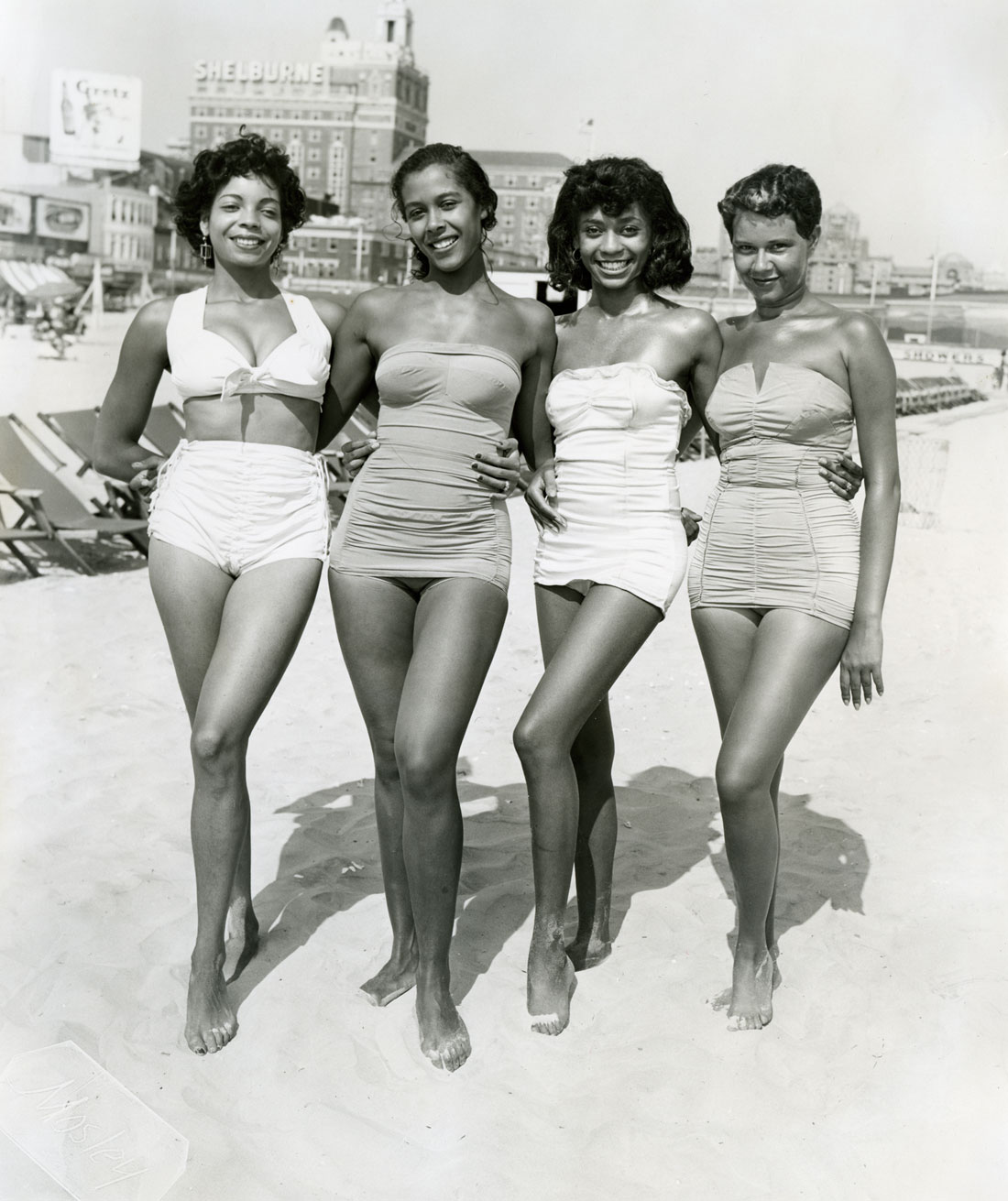
John W. Mosley (American, 1907-1969) 'Atlantic City, Four Women' c. 1960s


John W. Mosley (American, 1907-1969)
Atlantic City, Four Women
c. 1960s
Gelatin silver print
20 x 16 inches
Charles L. Blockson Afro-American Collection, Temple University


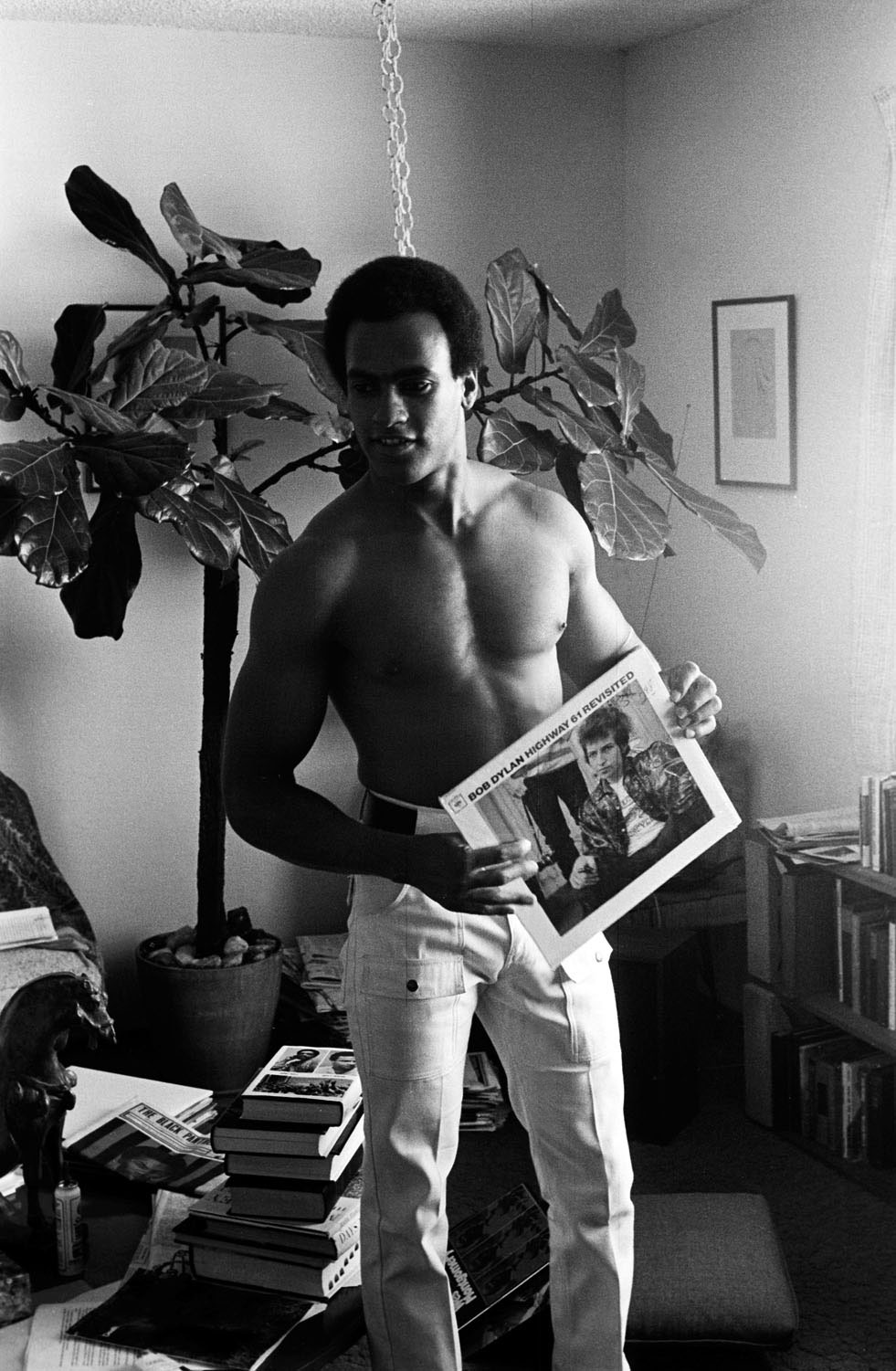
Stephen Shames (American, b. 1947) 'Huey P Newton holds a Bob Dylan album at home after he was released from jail' c. 1967


Stephen Shames (American, b. 1947)
Huey P Newton holds a Bob Dylan album at home after he was released from jail
c. 1967
Photograph
© Stephen Shames


Huey Percy Newton (February 17, 1942 – August 22, 1989) was an African-American political and urban activist who, along with Bobby Seale, co-founded the Black Panther Party in 1966. Newton had a long series of confrontations with law enforcement, including several convictions, while he participated in political activism. He continued to pursue an education, eventually earning a Ph.D. in Social Science. Newton spent time in prison for manslaughter and was involved in a shooting that killed a police officer, for which he was later acquitted. In 1989 he was shot and killed in Oakland, California by Tyrone “Double R” Robinson, a member of the Black Guerrilla Family.

Text from Wikipedia website


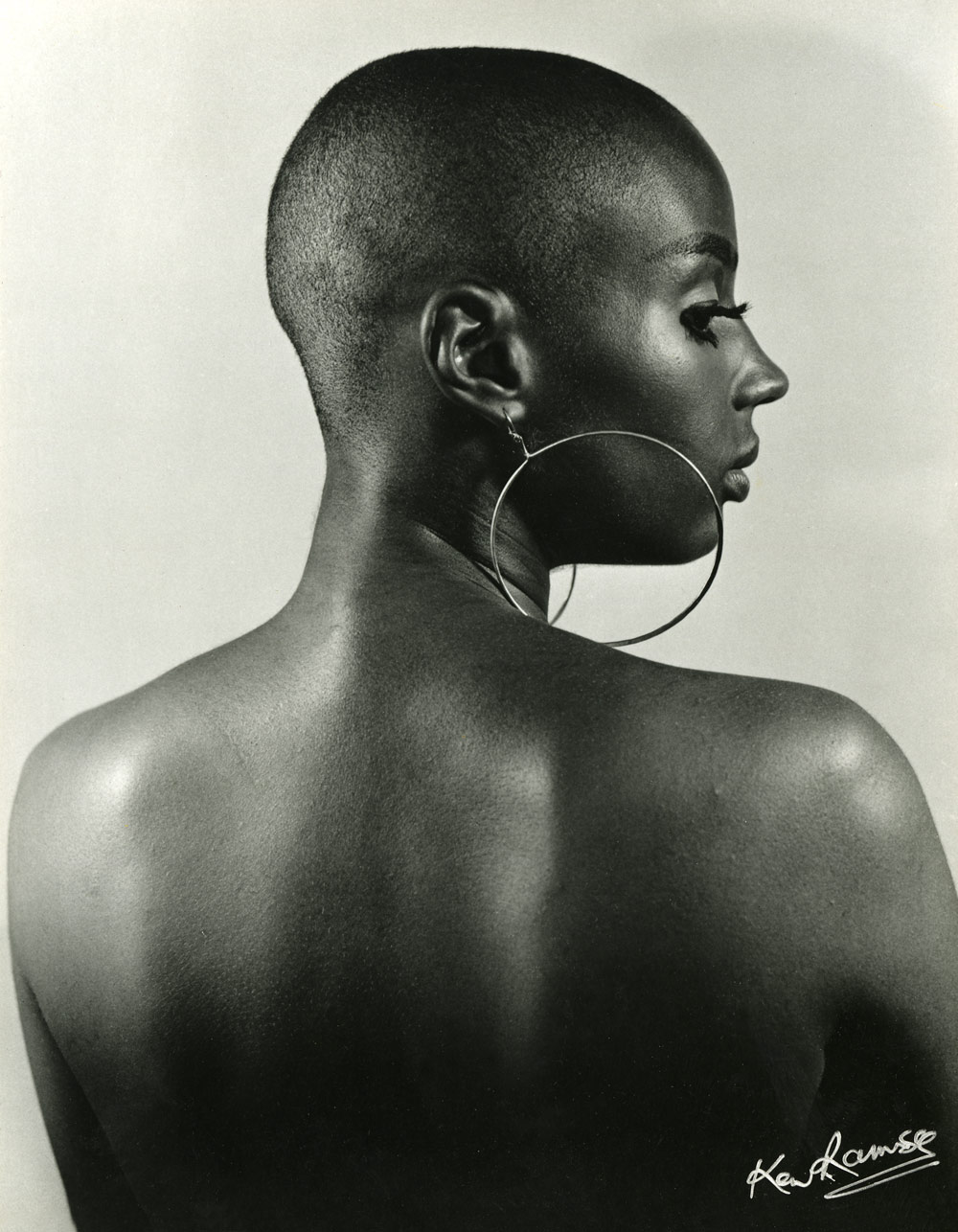
Ken Ramsay (Jamaican, 1935-2008) 'Susan Taylor, as Model' c. 1970s


Ken Ramsay (Jamaican, 1935-2008)
Susan Taylor, as Model
c. 1970s
Gelatin silver print
26.5 x 20 inches
Courtesy of the photographer


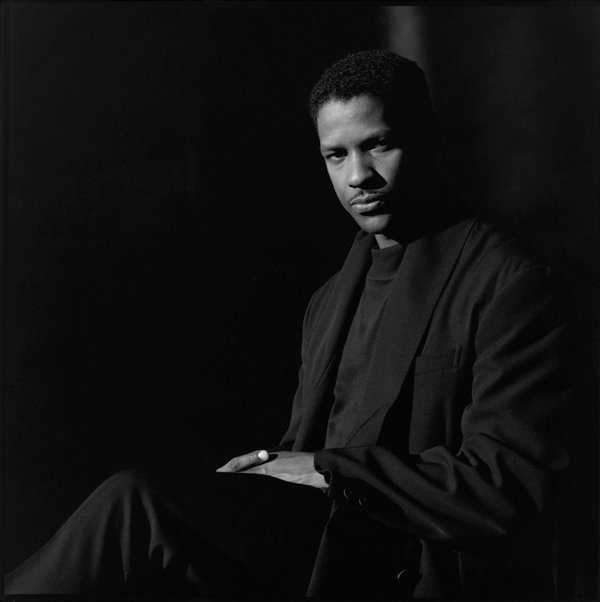
Jeffrey Henson Scales (American, b. 1954) 'Denzel Washington, Los Angeles' 1990s


Jeffrey Henson Scales (American, b. 1954)
Denzel Washington, Los Angeles
1990s


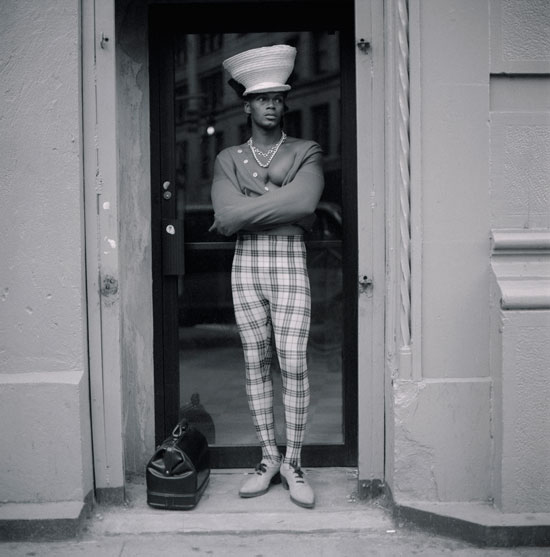
Jeffrey Henson Scales (American, b. 1954) 'Young Man in Plaid, New York City' 1992


Jeffrey Henson Scales (American, b. 1954)
Young Man in Plaid, New York City
1992
Digital print
44.5 x 44 inches
Courtesy of the photographer


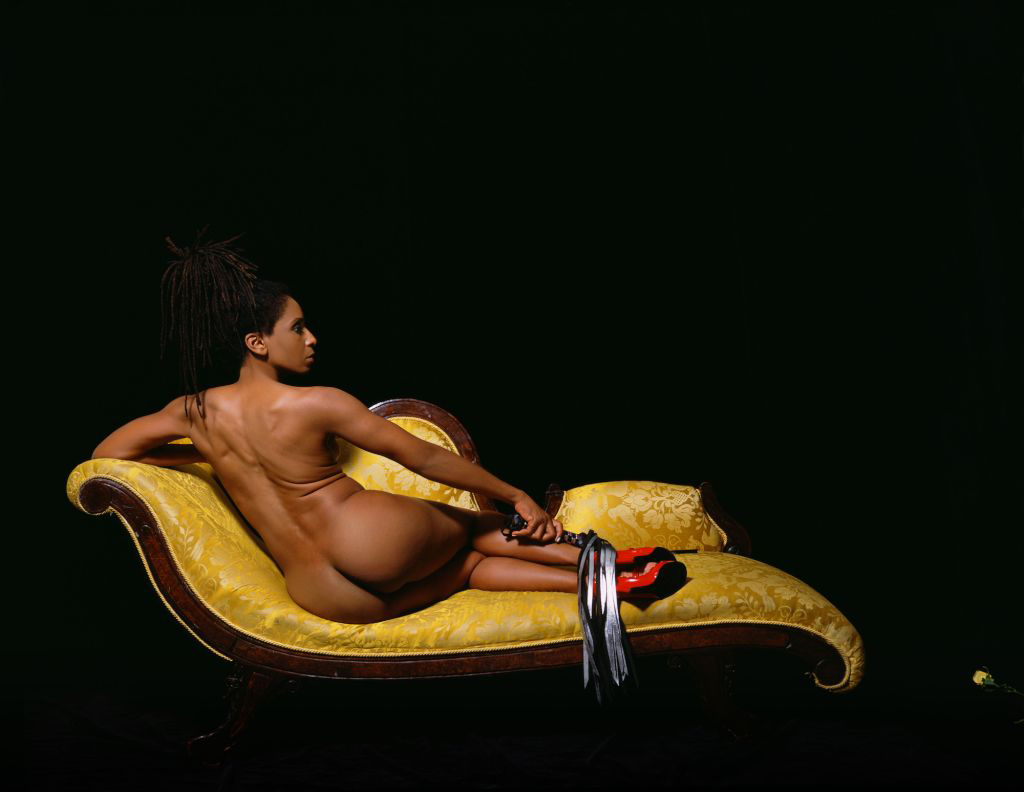
Renee Cox (American, b. 1960) 'Baby Back', from the series 'American Family' 2001


Renee Cox (American, b. 1960)
Baby Back,
from the series American Family
2001
Archival digital print
30 x 40 in.
Courtesy of the artist


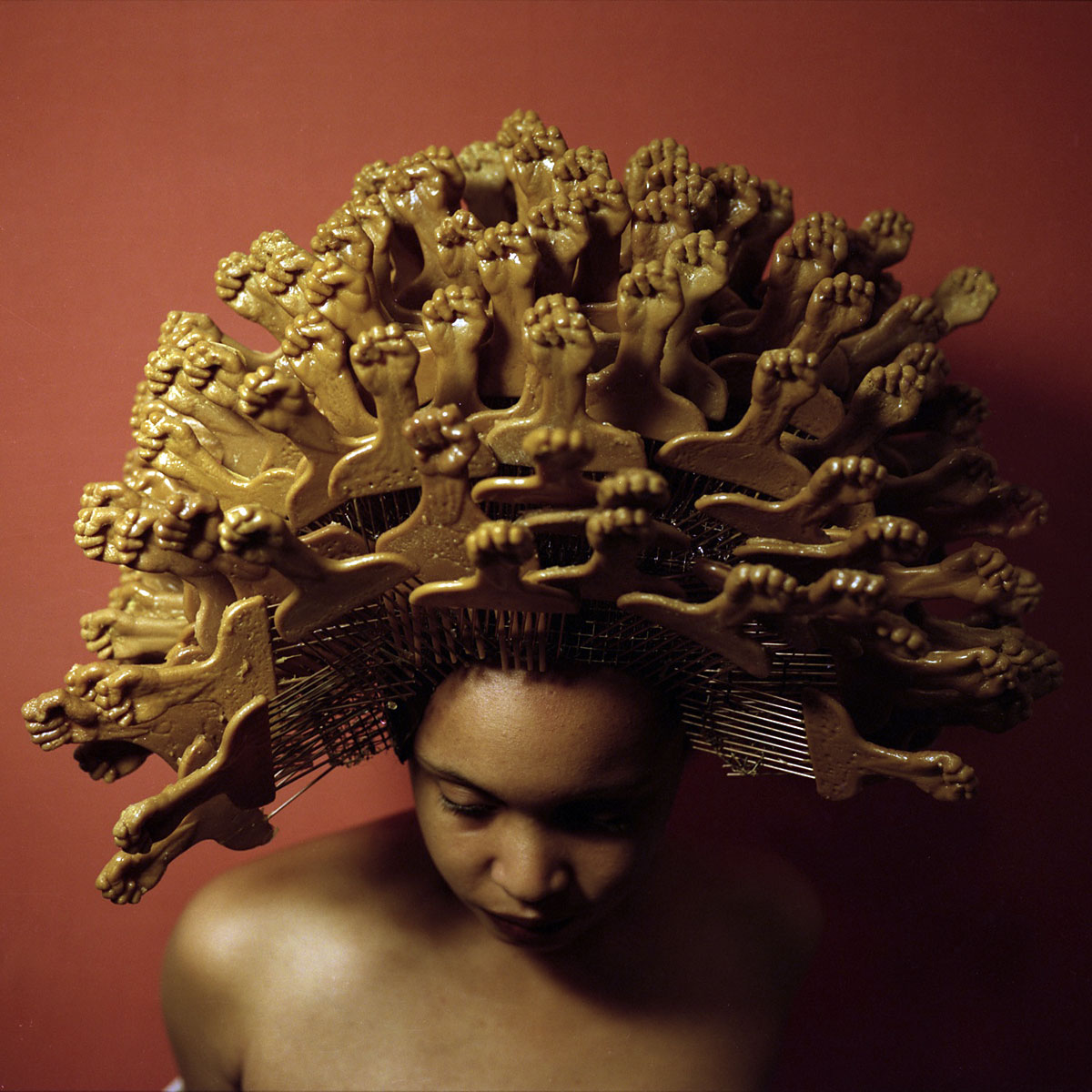
Lauren Kelley (American, b. 1975) 'Pickin'' 2007


Lauren Kelley (American, b. 1975)
Pickin’
2007
Colour-coupler print
23 x 23 1/8 inches
Courtesy of the photographer


Virginia Museum of Fine Arts
200 N. Boulevard
Richmond, Virginia USA

Opening hours:
Saturday – Tuesday: 10am – 5pm
Wednesday – Friday: 10am – 9pm

Virginia Museum of Fine Arts website

LIKE ART BLART ON FACEBOOK

Back to top

Exhibition: ‘The Radical Camera: New York’s Photo League, 1936-1951’ at The Norton Museum of Art, West Palm Beach, Florida

Exhibition dates: 14th March – 16th June 2013


Alexander Alland (Ukranian-American, 1902-1989, born Sevastopol, Ukraine) 'Untitled (Brooklyn Bridge)' 1938


Alexander Alland (Ukranian-American, 1902-1989, born Sevastopol, Ukraine)
Untitled (Brooklyn Bridge)
1938
Gelatin silver print
The Jewish Museum, New York
Purchase: William and Jane Schloss Family Foundation Fund


Conscience of the brave

Bradley Manning.
A slight, bespectacled, intelligent gay man.
A man who has the courage of his convictions.
He revealed truth at the heart of the world’s largest “democracy.”

There is something insidious about the American nation. Not its citizens, not its place, but its government. This government has perpetrated evil in the name of its people. Think of Iraq and Afghanistan, invasions in the name of freedom, the support of puppet governments, the assassinations, the military advisors on the ground, the profits made.

The torture. The deaths.

Bradley Manning revealed all of this because he has a mighty moral compass. He knows right from wrong. He was not afraid to expose the hypocrisy that for many years has beaten, unfettered, in the breast of a nation. The home of the brave and the free is sadly under attack from within. In the name of its people.

And why is this text relevant to this posting?

So often in the history of America, dissension is shut down because of some imagined menace, from within or without. Here another group of people (photographers documenting American social conditions) were persecuted for standing up for social causes, for the freedom to expose injustice where it lives. The paranoia of patriotism.

As Harold Pinter has so pithily observed,

“The crimes of the United States have been systematic, constant, vicious, remorseless, but very few people have actually talked about them. You have to hand it to America. It has exercised a quite clinical manipulation of power worldwide while masquerading as a force for universal good. It’s a brilliant, even witty, highly successful act of hypnosis.”

Except the hypnotist is a deranged psychopath, a divided split personality arraigning god, greed and guns. Out of one, many sins.

Dr Marcus Bunyan


Many thankx to The Norton Museum of Art for allowing me to publish the photographs in the posting. Please click on the photographs for a larger version of the image.


“When the persecution of an individual who has exposed an evil is pursued so ruthlessly and yet the evil itself is studiedly ignored, all of us know that there is something very wrong with the way that our society is conducting itself. And if we do not protest in the strongest terms about what is being done in our name, then we become complicit.”


Alan Moore


“The US has shown remarkable energy in its pursuit of alleged whistleblowers. Has it investigated the deaths of those innocent civilians with the same vigour? With any vigour whatsoever? And which would you consider a crime? To conceal the deaths of innocent civilians, or to reveal them? I know what my answer would be.”


Les Barker


“To suggest that lives were put in danger by the release of the WikiLeaks documents is the most cynical of statements. Lives were put in danger the night we invaded the sovereign nation of Iraq, an act that had nothing to do with what the Bradley Mannings of this country signed up for: to defend our people from attack. It was a war based on a complete lie and lives were not only put in danger, hundreds of thousands of them were exterminated. For those who organised this massacre to point a finger at Bradley Manning is the ultimate example of Orwellian hypocrisy.”


Michael Moore


“Private Manning is the world’s pre-eminent prisoner of conscience, having remained true to the Nuremberg principle that every soldier has the right to ‘a moral choice.’ His suffering mocks the notion of the land of the free.”


John Pilger


Louis Stettner (American, 1922-2016) 'Coming to America' c. 1951


Louis Stettner (American, 1922-2016)
Coming  to America
c. 1951
Gelatin silver print The Jewish Museum, New York
Purchase: Photography Acquisitions Committee Fund


Louis Stettner

Louis Stettner (November 7, 1922 – October 13, 2016) was an American photographer of the 20th century whose work included streetscapes, portraits and architectural images of New York and Paris. His work has been highly regarded because of its humanity and capturing the life and reality of the people and streets. Starting in 1947, Stettner photographed the changes in the people, culture, and architecture of both cities. He continued to photograph New York and Paris up until his death. …

Back from the war Stettner joined the Photo League in New York. Stettner visited Paris in 1946 and in 1947 moved there. From 1947 to 1949 he studied at the “Institut des Hautes Études Cinématographiques” in Paris and received a Bachelor of Arts in Photography & Cinema. He went back and forth between New York and Paris for almost two decades and finally settled permanently in Saint-Ouen, near Paris, in 1990. Stettner still frequently returned to New York.

Stettner’s professional work in Paris began with capturing life in the post-war recovery. He captured the everyday lives of his subjects. In the tradition of the Photo League, he wanted to investigate the bonds that connect people to one another. In 1947 he was asked by the same Photo League to organise an exhibition of French photographers in New York. He gathered the works of some of the greatest photographers of the era, including Doisneau, Brassaï, Boubat, Izis, and Ronis. The show was a big success and was largely reviewed in the annual issue of U.S. Camera. Stettner had begun a series of regular meetings with Brassaï who was a great mentor and had significant influence on his work. In 1949, Stettner had his first exhibition at the “Salon des Indépendants” at the Bibliothèque Nationale, Paris.

In 1951 his work was included in the famous Subjektive Fotografie exhibition in Germany. During the 1950s he free-lanced for Time, Life, Fortune, and Du (Germany). While in Paris he reconnected with Paul Strand, who had also left New York because of the political intolerance of the McCarthy era – Strand had been a founder of the Photo League that would be blacklisted and then banned during those years.

In the 1970s Stettner spent more time in New York City, where he taught at Brooklyn College, Queens College, and Cooper Union.

Text from the Wikipedia website
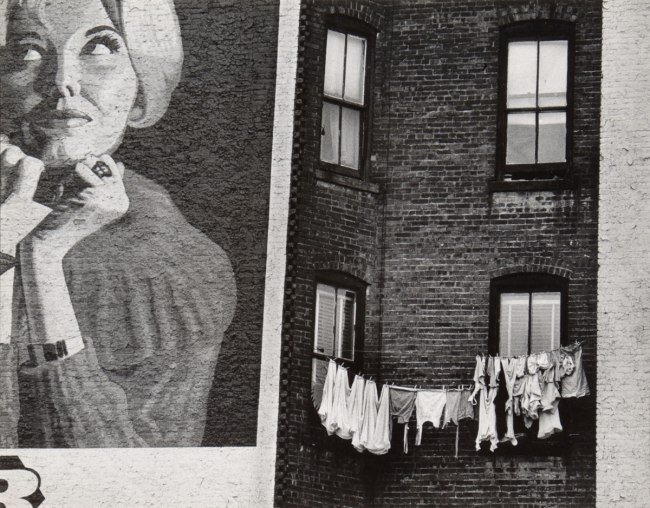
 

Erika Stone (born 1924, Frankfurt, Germany) 'Lower Eastside Facade' 1947


Erika Stone (German, b. 1924)
Lower Eastside Facade
1947
Gelatin silver print
Columbus Museum of Art, Ohio, Photo League Collection
Museum purchase with funds provided by Elizabeth M. Ross, the Derby Fund,
John S. and Catherine Chapin Kobacker, and the Friends of the Photo League


Stone’s adroit cropping of this image emphasises the coy upward gaze of the woman in the advertisement, away from the laundry line (emblem of poverty), and suggests the social mobility of the postwar era.


Erika Stone’s documentary photographs reflect her long, active career as a photo journalist and magazine photographer. In the 40’s, Stone was a member of the legendary Photo League, an organisation of photo documentarians which she feels most influenced her approach to her personal photographic work. It was during the years as a League member that she developed her interest in documenting people and at the age of seventeen, produced her Bowery series.

Although she considers herself mostly self-taught, she studied at the New School of Social Research with Bereniece Abbott and George Tice.

Stone was a stringer for both Time and Der Spiegel magazines and worked as a general photojournalist until 1960. After the birth of her two sons, she made photographing children and family her specialty. Her photographs have been and are widely published in magazines and textbooks around the world.

Anonymous. “Erika Stone,” on the American Photography Archives Group website Nd [Online] Cited 13/07/2024


Marvin E. Newman (American, 1927-2023) 'Halloween, South Side' 1951


Marvin E. Newman (American, 1927-2023)
Halloween, South Side
1951
Gelatin silver print
The Jewish Museum, New York
Purchase: Photography Acquisitions Committee Fund


Marvin Newman

Born in New York; Newman attended Brooklyn College, where he studied sculpture with Burgoyne Diller and photography with Walter Rosenblum. Following Rosenblum’s suggestion, he joined the Photo League in 1948, taking classes with John Ebstel. The Photo League, founded in 1936, blazed a trail for serious photographers for 15 years, providing a forum for ideas, cheap darkroom space, and the vision of using the art of picture taking to change the world. Newman then attended the Institute of Design, Chicago (1949-52), where, after studying with Harry Callahan and Aaron Siskind, he received one of the first MS degrees in photography (1952).

During this time, Newman won national contests, including one sponsored by American Photography (1950) and another by Time, Inc. (1951). His work appeared in the Always a Young Stranger exhibition at the Museum of Modern Art, New York, and in a one-man show at Roy De Carava’s A Photographer’s Gallery (1956). Well-known as a photojournalist, Newman has been a major contributor to Sports Illustrated since its inception (1953), as well as to Life, Look, Newsweek, and Smithsonian magazines. In addition, he has been the national president of the American Society of Magazine Photographers, authored or coauthored eight books on photography, and received the Art Director’s Gold Medal for Editorial Photography.


Ida Wyman (American, 1926-2019) 'Spaghetti 25 Cents, New York' 1945


Ida Wyman (American, 1926-2019)
Spaghetti 25 Cents, New York
1945
Gelatin silver print
The Jewish Museum, New York
Purchase: Photography Acquisitions Committee Fund


This Italian restaurant was near the offices of Acme Newspictures, where Wyman became the company’s first female photo printer in 1943. After the war she lost her job at the agency. The “Ladies Invited” sign on the window is a reminder of a time when unescorted women were not always welcome in public dining establishments.

Ida Wyman

When I began working in the 1940s, few women were doing magazine photography in a field that was almost exclusively male. As I progressed from box camera to Speed Graphic (my first professional camera), and then to a Rolleiflex, I stopped thinking about the mechanics of film speed, f-stops, shutter speed, and began focusing on subject matter that interested me. What interested me so much were ordinary people and their everyday activities. Early on, I had documented children’s games and unusual architectural details in my Bronx neighbourhood. I decided to expand, to go elsewhere, taking the subway to Harlem, Chinatown, and lower Manhattan, exploring those neighbourhoods and looking for photos.

I became a member of the Photo League in 1946. I considered myself a documentary photographer and the League’s philosophy of honest photography appealed to me. I also began to understand the power of photos to help improve the social order by showing the conditions under which many people lived and worked. Even after leaving the League the following year, I continued to emphasise visual and social realities in my straightforward photographs.

Beginning with my earliest photos seeing New York City with my feet, and in whatever part of the country I was in, I continued my own walkabout, learning the area, engaging my subject, listening, and respecting their dignity. This continued to be my approach when taking photos. My photographs depicted daily life in America’s modern metropolitan centres, including Chicago and Los Angeles as well as New York.


Aaron Siskind (American, 1903-1991) 'The Wishing Tree' 1937


Aaron Siskind (American, 1903-1991)
The Wishing Tree
1937, printed later
from Harlem Document, 1936-40
Gelatin silver print
The Jewish Museum, New York
Purchase: Lillian Gordon Bequest


Harlem’s legendary Wishing Tree, bringer of good fortune, was once a tall elm that stood outside a theatre at 132nd Street and Seventh Avenue. When it was cut down in 1934 Bill “Bojangles” Robinson, the celebrated tap dancer, moved the stump to a nearby block and planted a new Tree of Hope beside it to assume wish granting duties. A piece of the original trunk is preserved in the Apollo Theatre on 125th Street, where performers still touch it for luck before going onstage.


Sonia Handelman Meyer (American, 1920-2022) 'Hebrew Immigration Aid Society' c. 1946


Sonia Handelman Meyer (American, 1920-2022)
Hebrew Immigration Aid Society
c. 1946
Gelatin silver print
The Jewish Museum, New York
Purchase: Mimi and Barry J. Alperin in memory of Max Alperin


The efforts of the New York­ based Hebrew Immigration Aid Society (HIAS) to rescue European Jews during the war were severely hampered by US immigration laws. After the war it aided in the resettlement of some 150,000 displaced persons, including, presumably, these three, whom Handelman Meyer has chosen to photograph in close-­up. She conveys both their common suffering and their individuality, emphasising differences in body language and dress.

Sonia Handelman Meyer

I first heard of the Photo League from Lou Stoumen in Puerto Rico in 1942. I was working for the U.S. Army Signal Corps and Lou was preparing to join Yank Magazine. When I returned to New York City, I walked up the rickety stairs to League Headquarters and took a beginners class with Johnny Ebstel. I bought a used Rolleicord for a precious $100, and dared to go out on the city streets to photograph the life around me. Soon the guys began to come back from the war and the heady life of Photo League workshops, exhibits, lectures, photo hunts, and committee assignments intensified. I took eye-heart-soul opening workshops with Sid Grossman, worked as the paid (!) secretary for a year or so, and worked on the Lewis Hine Committee under Marynn Ausubel.

I photographed in Spanish Harlem, Greenwich Village, midtown Manhattan, at the Hebrew Immigration Aid Society, at an anti-lynching rally in Madison Square Park, at a Jehovah’s Witness convention in Yankee Stadium, and on Coney Island. Mostly, I photographed children and reflections of my city – rough-edged, tender, and very beautiful in its diversity. Some of this work was shown in the major 1949 exhibition, This is the Photo League.

The heartbreaking end of the League coincided with a huge change in my personal life. I got married and my husband began to go to college and we were out of NY for a while. And then the biggest change: our own family arrived and the joys of our son, and later our daughter, absorbed my time. Prints and negatives were stashed away in boxes and I lost track of all the old friends at the League. After so many years of being in the shadows, you can imagine my pleasure, at 90+ years of age, to have my photographs out of their boxes and onto walls where they can be seen, thought about, and enjoyed – and perhaps again take their place in the history of the Photo League.


Arthur Leipzig (American, 1918-2014) 'Chalk Games, Prospect Place, Brooklyn' 1950


Arthur Leipzig (American, 1918-2014)
Chalk Games, Prospect Place, Brooklyn
1950
Gelatin silver print
The Jewish Museum, New York
Purchase: Rictavia Schiff Bequest


Arnold Eagle (Hungarian-American, 1909-1992) 'Chatham Square Platform, New York City' c. 1939


Arnold Eagle (Hungarian-American, 1909-1992)
Chatham Square Platform, New York City
c. 1939
Silver gelatin print


Joe Schwartz (American, 1913-2013) 'Slums Must Go! May Day Parade, New York' c. 1936


Joe Schwartz (American, 1913-2013)
Slums Must Go! May Day Parade, New York
c. 1936
Gelatin silver print
Columbus Museum of Art, Ohio, Photo League Collection
Museum Purchase with funds provided by Elizabeth M. Ross, the Derby Fund, John S. and Catherine Chapin Kobacker, and the Friends of the Photo League


Morris Huberland (Polish-American, 1909-2003 born Warsaw, Poland) 'Union Square, New York' c. 1942


Morris Huberland (Polish-American, 1909-2003 born Warsaw, Poland)
Union Square, New York
c. 1942
Gelatin silver print
The Jewish Museum, New York
Purchase: Mimi and Barry J. Alperin Fund


The Norton Museum of Art’s newest special exhibition, The Radical Camera: New York’s Photo League, 1936-1951, is a formidable survey of the League’s history, and its artistic, cultural, social, and political significance. Opening March 14 and on view through June 16, 2013, this striking exhibition includes nearly 150 vintage photographs from Photo League collections at the Columbus Museum of Art, Ohio, and The Jewish Museum in New York City.

The exhibition is organised by Mason Klein, Curator of Fine Arts at The Jewish Museum and Catherine Evans, the William and Sarah Ross Soter Curator of Photography of the Columbus Museum of Art. It premiered in at The Jewish Museum in 2011 to rave reviews. The New York Times called The Radical Camera a “stirring show,” and the New York Photo Review hailed it as “nothing short of splendid.” The New Yorker named the exhibition one of the top 10 photography exhibitions of 2011. The Norton is the final venue on the exhibition’s tour.

The exhibition explores the fascinating blend of aesthetics and social activism at the heart of the Photo League. League members were known for capturing sharply revealing, compelling moments from everyday life. The League focused on New York City and its vibrant streets – a shoeshine boy, a brass band on a bustling corner, a crowded beach at Coney Island. Many of the images are beautiful, yet harbour strong social commentary on issues of class, race, and opportunity. The organisation’s members included some of the most noted photographers of the mid-20th century – W. Eugene Smith, Weegee (Arthur Fellig), Lisette Model, Berenice Abbott and Aaron Siskind, to name a few.

In 1936, a group of young, idealistic photographers, most of them Jewish, first-generation Americans, formed an organisation in Manhattan called the Photo League. Their solidarity centred on a belief in the expressive power of the documentary photograph, and on a progressive alliance in the 1930s of socialist ideas and art. (The Photo League also helped validate photography as a fine art, presenting student work and guest exhibitions by established photographers.) The Radical Camera presents the development of the documentary photograph during a tumultuous period that spanned the New Deal reforms of the Depression, World War II, and the Cold War. Offering classes, mounting exhibitions, and fostering community, members of the Photo League focused on social reform and the power of the photograph to motivate change. At the height of their influence, their membership included the most important photographers of their day including Berenice Abbot, Aaron Siskind, Barbara Morgan, Sid Grossman, Weegee (Arthur Fellig), and Lisette Model. Featuring more than 175 works by these artists as well as many more Photo League members, The Radical Camera traces the organisation’s interests, attitudes toward photography, and impact during its 15-year lifespan.

The innovative contributions of the Photo League during its 15-year existence (1936-1951) were significant. As it grew, the League mirrored monumental shifts in the world starting with the Depression, through World War II, and ending with the Red Scare. Born of the worker’s movement, the Photo League was an organisation of young, idealistic, first-generation American photographers, most of them Jewish, who believed in documentary photography as an expressive medium and powerful tool for exposing social problems. It was also a school with teachers such as Sid Grossman, who encouraged students to take their cameras to the streets and discover the meaning of their work as well as their relationship to it. The League had a darkroom for printing, published an acclaimed newsletter called Photo Notes, offered exhibition space, and was a place to socialise.

The Photo League helped validate photography as a fine art, presenting student work and guest exhibitions by established photographers such as Eugène Atget, Henri Cartier-Bresson, and Edward Weston, among others. These affecting black and white photographs show life as it was lived mostly on the streets, sidewalks and subways of New York. Joy and playfulness as well as poverty and hardship are in evidence. In addition to their urban focus, “Leaguers” photographed rural America, and during World War II, took their cameras to Latin America and Europe. The exhibition also addresses the active participation of women who found rare access and recognition at the League. The Radical Camera presents the League within a critical, historical context. Developments in photojournalism were catalysing a new information era in which photo essays were appearing for the first time in magazines such as Life and Look. As time went on, its social documentary roots evolved toward a more experimental approach, laying the foundation for the next generation of street photographers.

In 1947, the League came under the pall of McCarthyism and was blacklisted for its alleged involvement with the Communist Party. Ironically, the Photo League had just begun a national campaign to broaden its base as a “Center for American Photography.” Despite the support of Ansel Adams, Beaumont and Nancy Newhall, Paul Strand, and many other national figures, this vision of a national photography centre could not overcome the Red Scare. As paranoia and fear spread, the Photo League was forced to disband in 1951. The Radical Camera: New York’s Photo League, 1936-1951 has been organised by The Jewish Museum, New York, and the Columbus Museum of Art, Ohio. Major support was provided by the Phillip and Edith Leonian Foundation, the National Endowment for the Arts, and Limited Brands Foundation.”

Press release from The Norton Museum of Art website
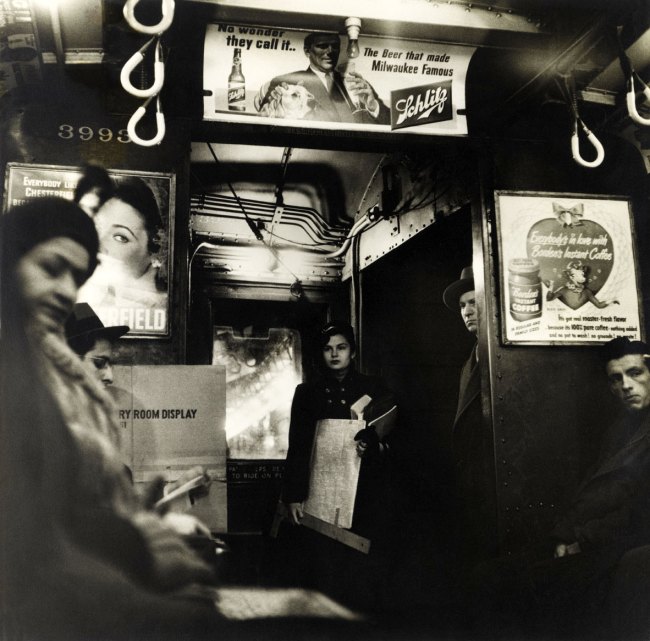
 

Sy Kattelson (American, 1923-2018) 'Untitled (Subway Car)' 1949


Sy Kattelson (American, 1923-2018)
Untitled (Subway Car)
1949
Gelatin silver print
The Jewish Museum, New York
Purchase: The Paul Strand Trust for the benefit of Virginia Stevens Gift
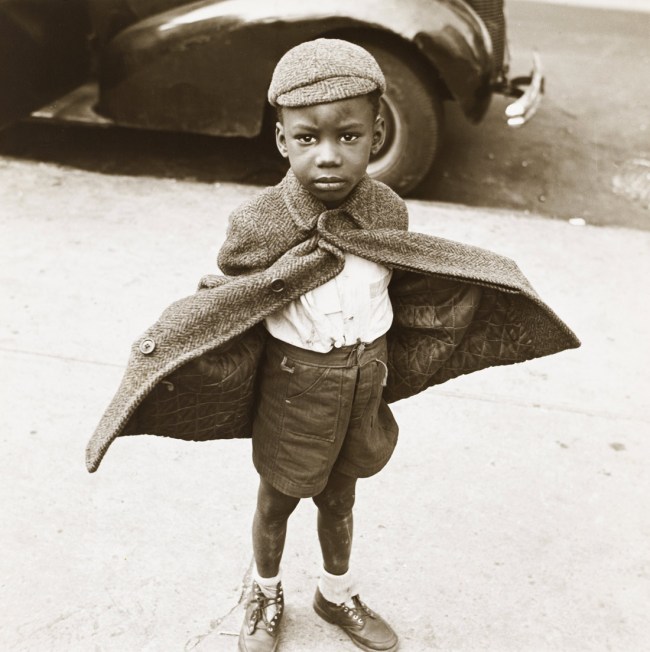
 

Jerome Liebling (American, 1924-2011) 'Butterfly Boy, New York' 1949


Jerome Liebling (American, 1924-2011)
Butterfly Boy, New York
1949
Gelatin silver print
The Jewish Museum, New York, Purchase: Mimi and Barry J. Alperin Fund
© Estate of Jerome Liebling


Lee Sievan (American, 1907-1990) 'Salvation Army Lassie in Front of a Woolworth Store' c. 1940


Lee Sievan (American, 1907-1990)
Salvation Army Lassie in Front of a Woolworth Store
c. 1940
Gelatin silver print
The Jewish Museum, New York
Purchase: Horace W. Goldsmith Foundation Fund


This is a classic photograph. Look at the triangle that forms the central part of the image, from the girl at left looking with disdain at the matriarch singing then down to the look on the organ players face. Notice the girl at right covering her ears so she cannot hear the racket. Imagine the legs of the organ player going up and down, pumping air into the organ; and finally observe the shadow of a man’s face captured by reflection in the shop window as he walks past the scene. Magic.


Rosalie Gwathmey (American, 1908-2001) 'Shout Freedom, Charlotte, North Carolina' c. 1948


Rosalie Gwathmey (American, 1908-2001)
Shout Freedom, Charlotte, North Carolina
c. 1948
Gelatin silver print
The Jewish Museum, New York
Purchase: Gay Block and Malka Drucker Fund of the Houston Jewish Community Foundation
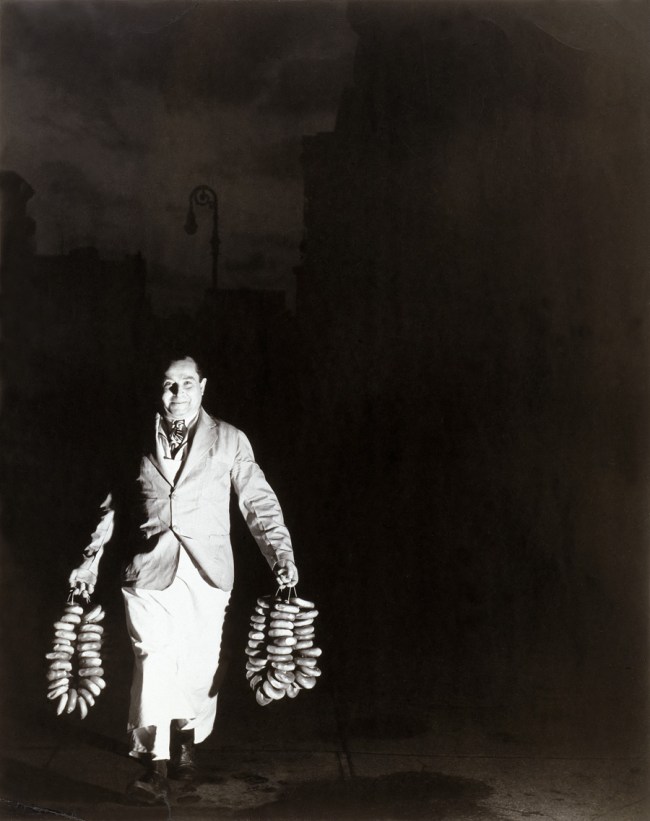
 

Weegee (Arthur Fellig) (American born Ukraine, 1899-1968) 'Max Is Rushing in the Bagels to a Restaurant on Second Avenue for the Morning Trade' c. 1940


Weegee (Arthur Fellig) (American born Ukraine, 1899-1968)
Max Is Rushing in the Bagels to a Restaurant on Second Avenue for the Morning Trade
c. 1940
Gelatin silver print
The Jewish Museum, New York
Purchase: Joan B. and Richard L. Barovick Family Foundation and Bunny and Jim Weinberg Gifts
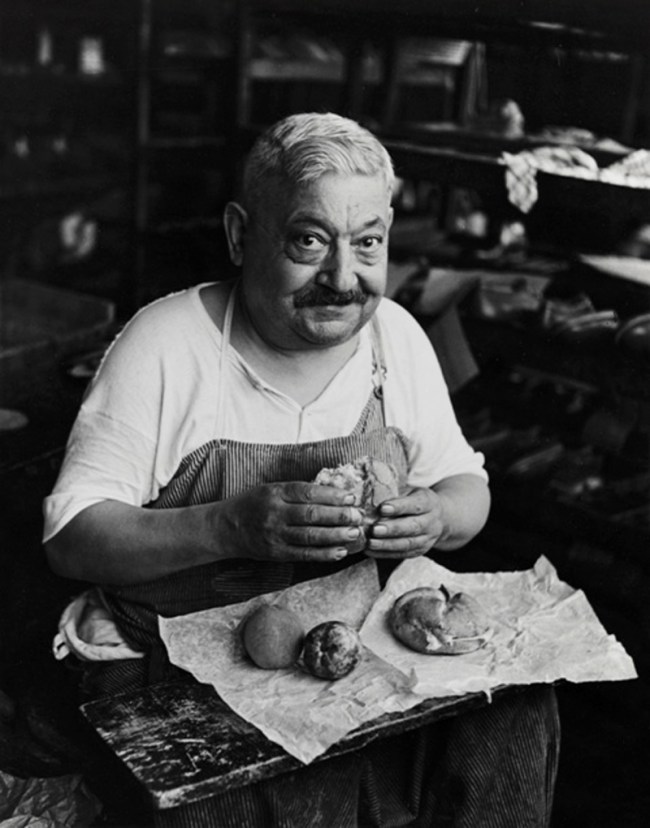
 

Bernard Cole (English, 1911-1992, born London, England) 'Shoemaker’s Lunch' 1944


Bernard Cole (English, 1911-1992, born London, England)
Shoemaker’s Lunch
1944
Gelatin silver print
The Jewish Museum, New York,
Purchase: The Paul Strand Trust for the benefit of Virginia Stevens Gift


Rebecca Lepkoff (American, 1916-2014) 'Broken Window on South Street, New York' 1948


Rebecca Lepkoff (American, 1916-2014)
Broken Window on South Street, New York
1948
Gelatin silver print
The Jewish Museum, New York
Purchase: Esther Leah Ritz Bequest
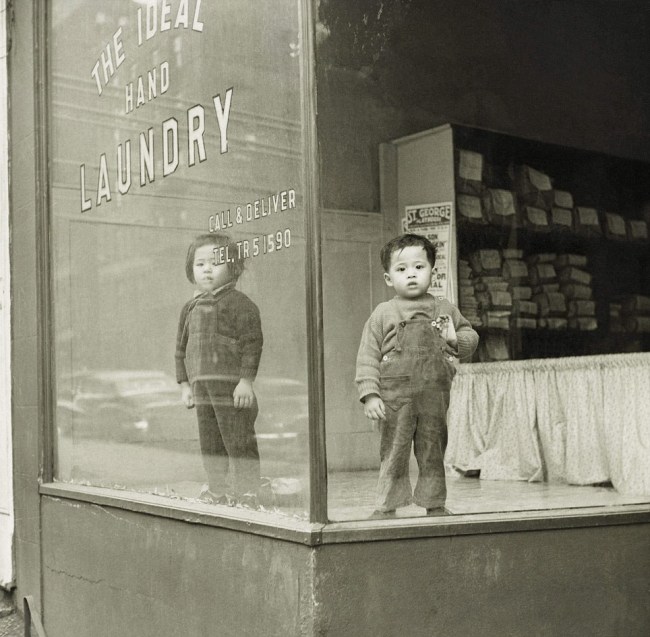
 

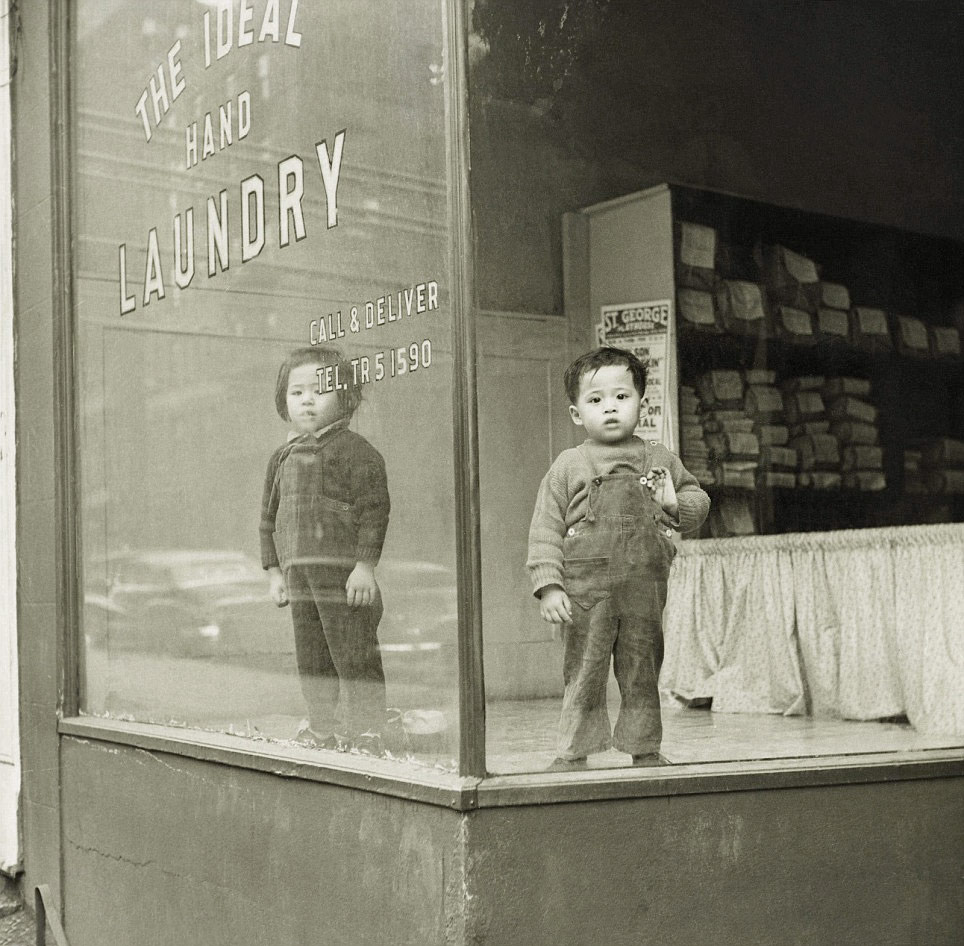
Arthur Leipzig (American, 1918-2014) 'Ideal Laundry' 1946


Arthur Leipzig (American, 1918-2014)
Ideal Laundry
1946
Gelatin silver print
The Jewish Museum, New York
Purchase: Esther Leah Ritz Bequest
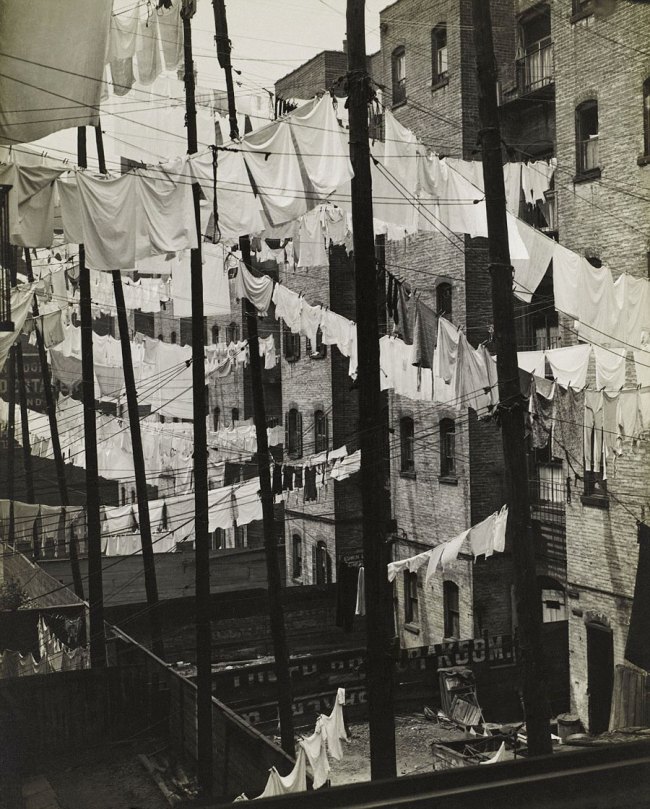
 

Consuelo Kanaga (American, 1894-1978) 'Untitled (Tenements, New York)' c. 1937


Consuelo Kanaga (American, 1894-1978)
Untitled (Tenements, New York)
c. 1937
Gelatin silver print
The Jewish Museum, New York
Purchase: The Paul Strand Trust for the benefit of Virginia Stevens Gift


Leftist political activism was a strong element in Kanaga’s work, beginning with her photographs of a labor strike in San Francisco in 1934. She provided photographs for progressive publications such as New Masses, Labor Defender, and Sunday Worker. Underlying this formal study of tenement laundry lines (a common motif in League imagery) is Kanaga’s empathy for the living conditions of the working class.
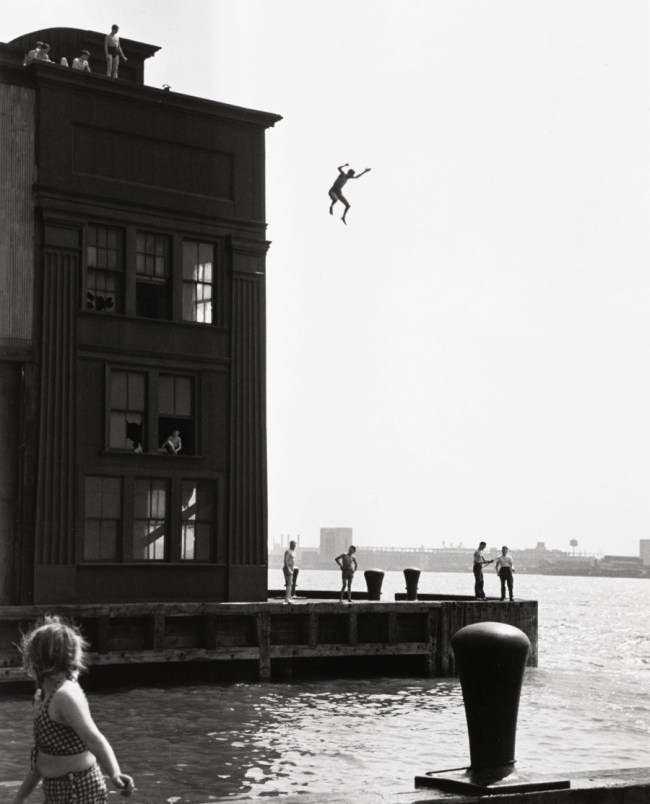
 

Ruth Orkin (American, 1921-1985) 'Boy Jumping into Hudson River' 1948


Ruth Orkin (American, 1921-1985)
Boy Jumping into Hudson River
1948
Gelatin silver print The Jewish Museum, New York
Purchase: Horace W. Goldsmith Foundation Fund
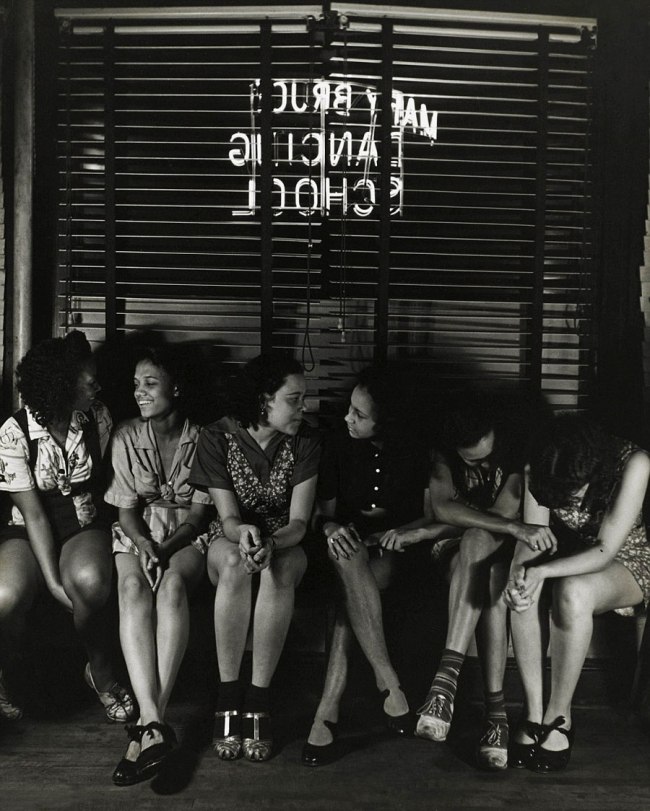
 

Sol Prom (Solomon Fabricant) (American, 1906-1989) 'Untitled (Dancing School)' 1938


Sol Prom (Solomon Fabricant) (American, 1906-1989)
Untitled (Dancing School)
1938
from Harlem Document, 1936-40
Gelatin silver print
The Jewish Museum, New York
Purchase: Horace W. Goldsmith Foundation Fund


Mary Bruce opened a dancing school in Harlem in 1937. For fifty years she taught ballet and tap, giving free lessons to those who could not afford them. Her illustrious pupils included Katherine Dunham, Nat King Cole, Ruby Dee, and Marlon Brando.


The Norton Museum of Art
1451 S. Olive Avenue
West Palm Beach, FL 33401
Phone: (561) 832-5196

Opening hours:
Thursday – Tuesday 10am – 5pm
Closed Wednesdays

Norton Museum of Art website

LIKE ART BLART ON FACEBOOK

Back to top

Exhibition: ‘Stanley Greene – Black Passport’ at Foam, Amsterdam

Exhibition dates: 16th December 2011 – 5th February 2012


Many thankx to FOAM for allowing me to publish the photographs in the posting. Please click on the photographs for a larger version of the image. All photographs: Black Passport © Stanley Greene / NOOR


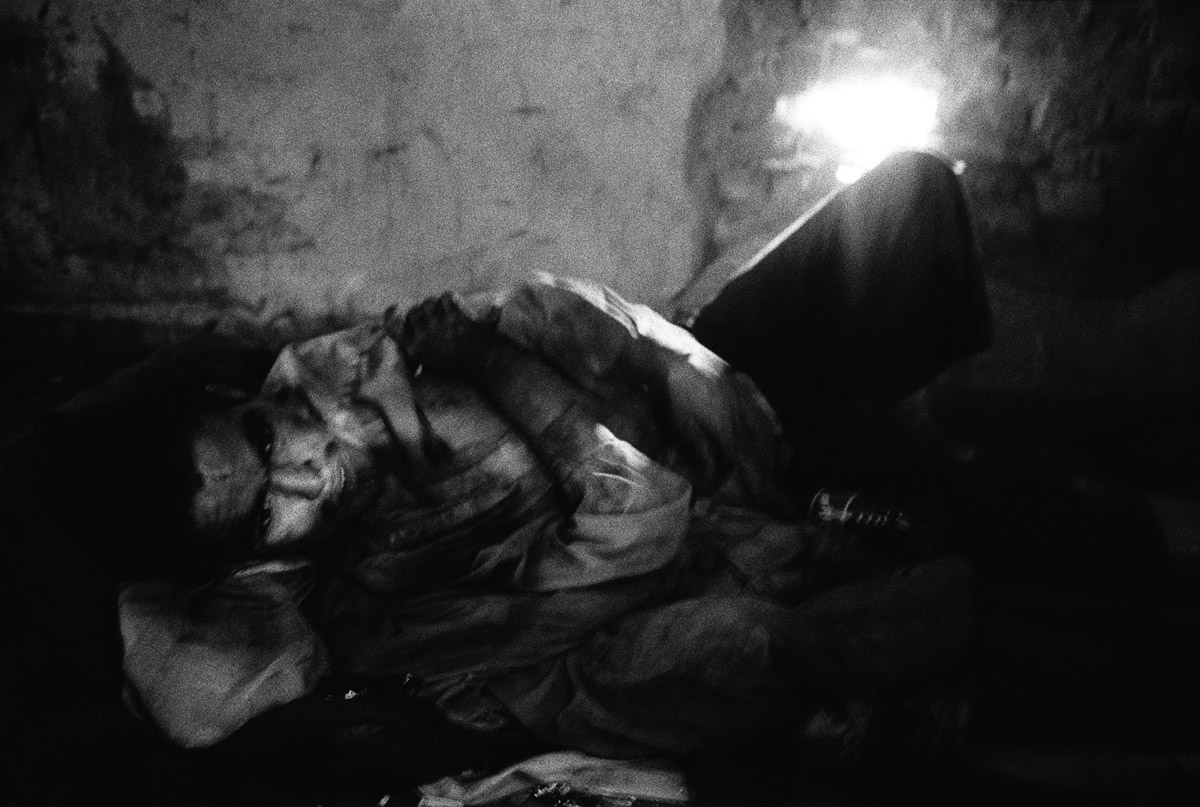
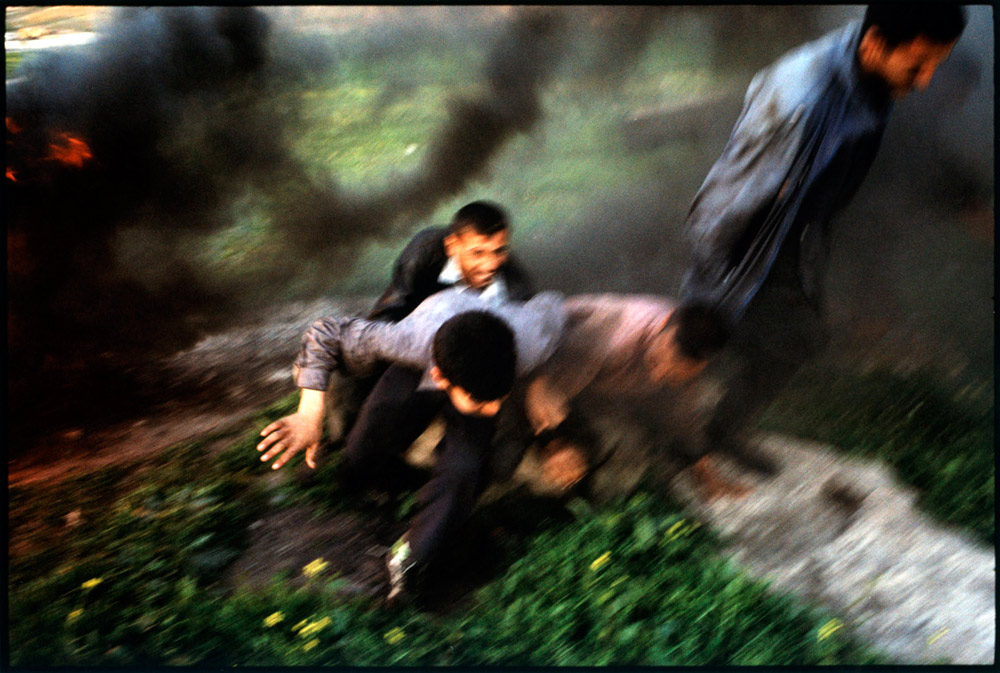
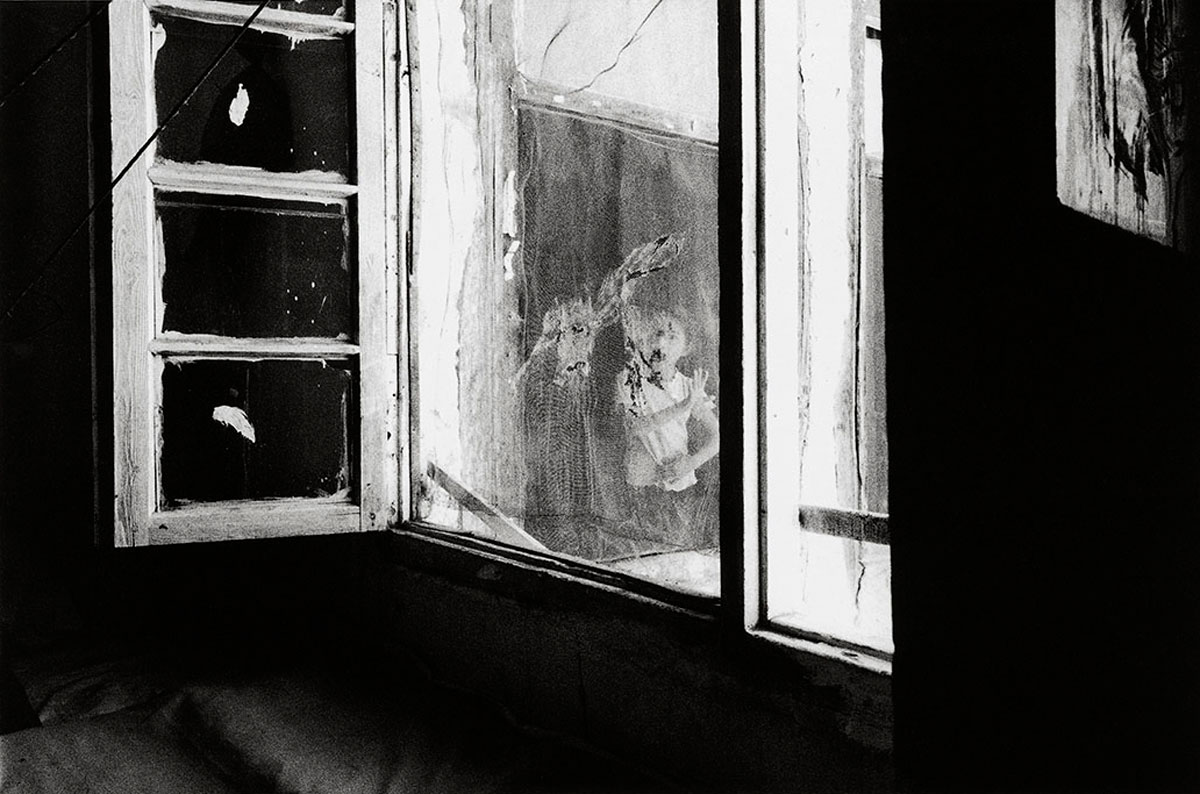
Stanley Greene (American, 1949-2017) 'Madman, Afghanistan' 2008


Stanley Greene (American, 1949-2017)
Madman, Afghanistan
2008
Black Passport © Stanley Greene / NOOR


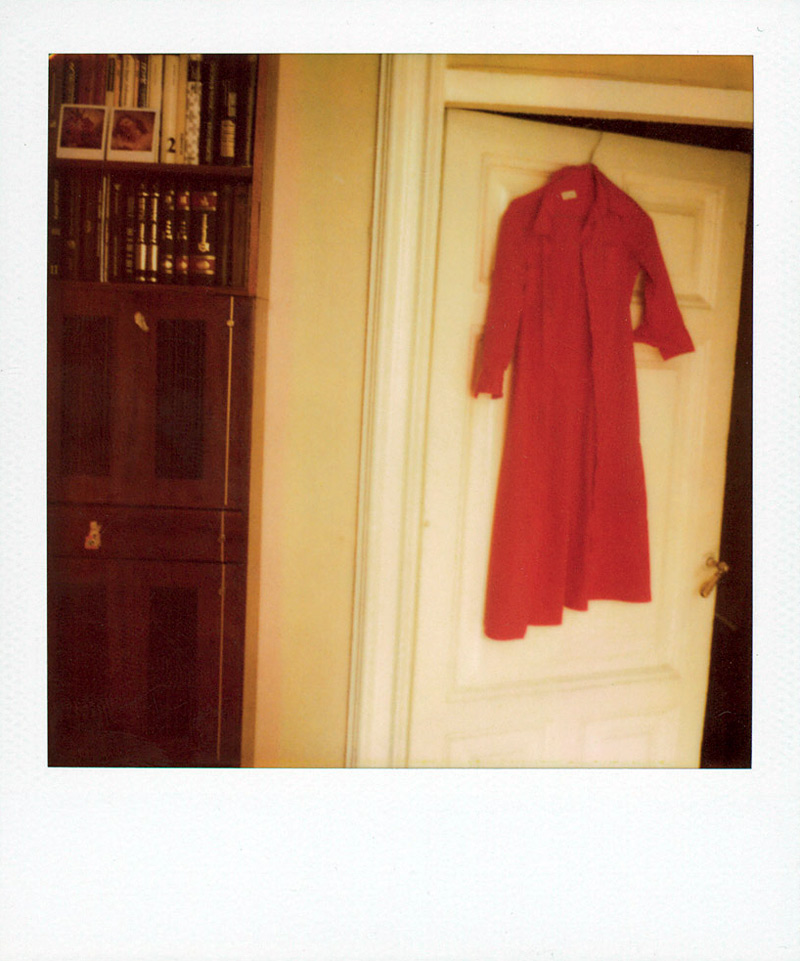
Black Passport © Stanley Greene / NOOR

Black Passport © Stanley Greene / NOOR


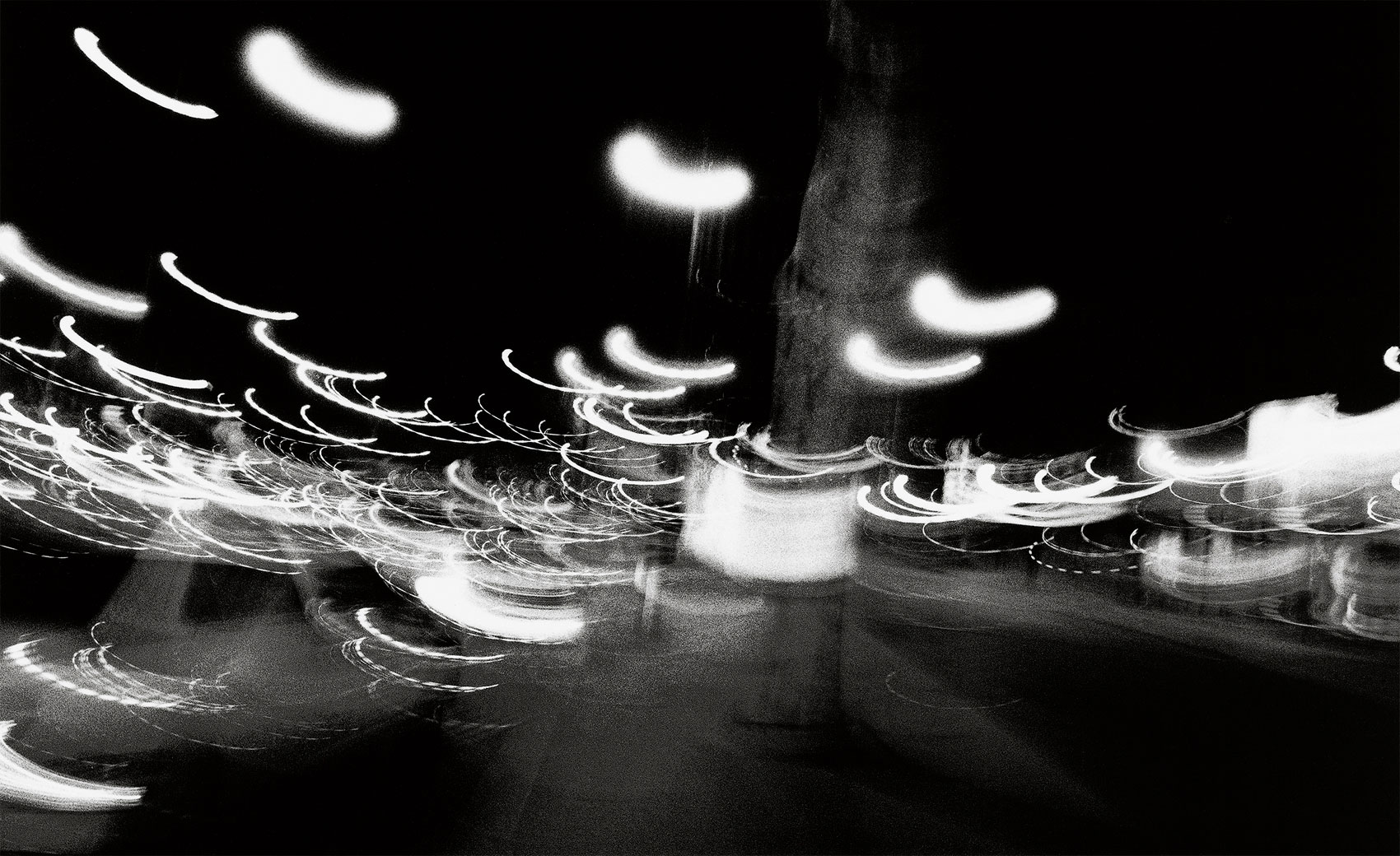
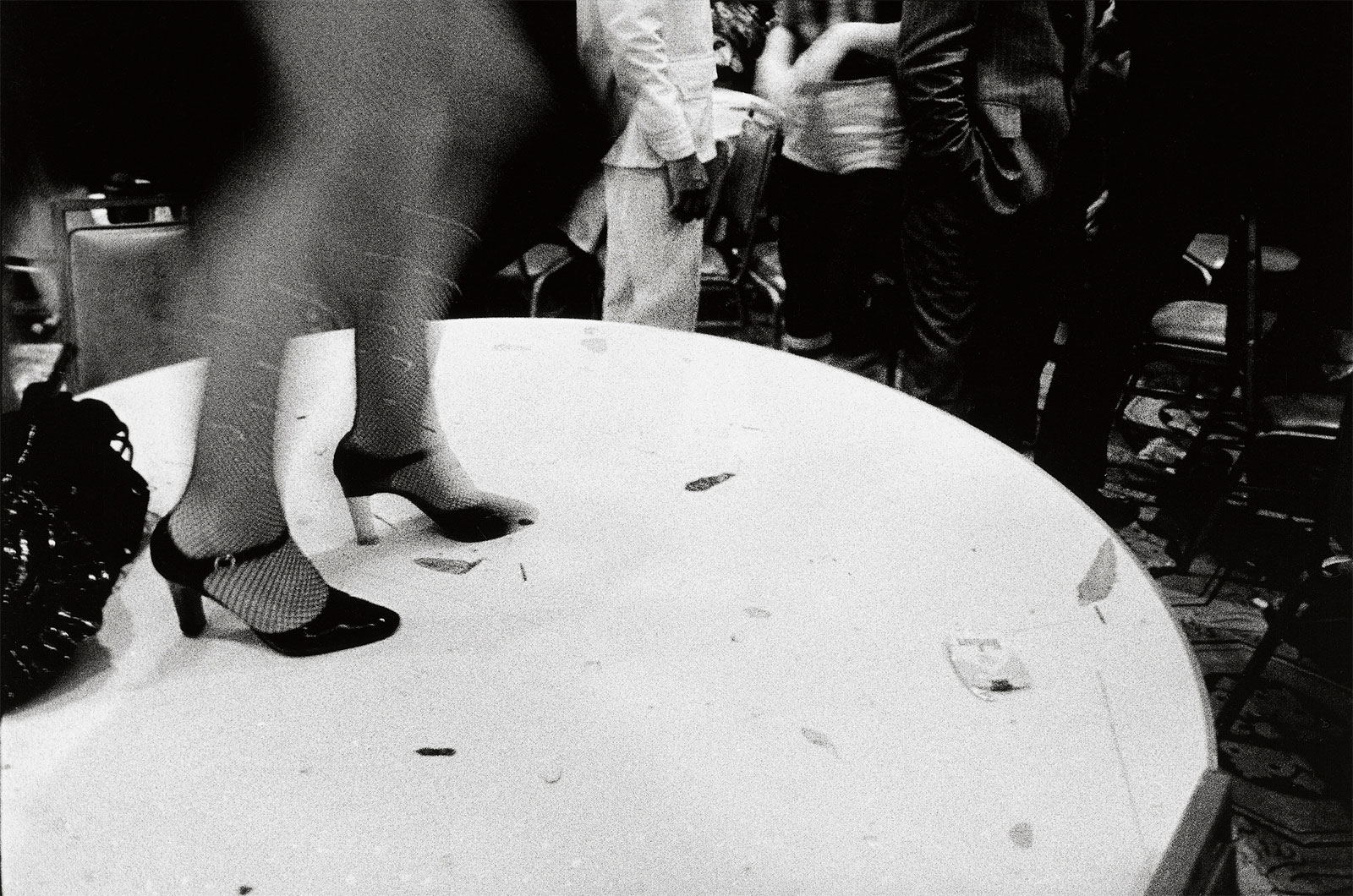
Foam presents Black Passport, a project by and about the American conflict photographer Stanley Greene (New York, 1949-2017). Black Passport shows photos of conflicts and disasters combined with photos of Greene’s  private life. The result is a revealing portrait of a photographer who is addicted to the adrenaline rush of being on the move, but at the same time realises the sacrifices he makes in his personal life. Stanley Greene has photographed in regions such as Chechnya, Iraq, Rwanda and Sudan and is one of the founders of the international photo agency NOOR.

Every day, newspapers and magazines are filled with photos of war, oppression and violence. The photographer that enables us to watch what is happening in the rest of the world from the safety of our own homes, however, usually remains invisible. This is not the case in Black Passport, the biography of war photographer Stanley Greene, which appeared in book form in 2009 and will be exhibited in Foam starting on 16 December. Photos of conflict and disaster regions such as Rwanda, Sudan, Chechnya and Iraq are alternated with photos from the private life of Stanley Greene: photos of Paris and many women. Slide shows will also be presented, interspersed with texts from the book. Greene’s voice resounds through the exhibition space – he is disconcertingly frank: ‘I think you can only keep positive for eight years. If you stay at it longer than that, you turn. And not into a beautiful butterfly.’

Just as Stanley Greene, visitors to the exhibition are poised between the safety of Western life and the horrors of foreign wars. And it is precisely this juxtaposition that causes these photos to stir us more than the stream of bad-news images that inundate us daily. In addition, Black Passport is a fascinating story about what it is like to be a war photographer. Why does someone choose to be continually confronted with death and misery? Is it an escape from everyday reality and a craving for adventure?

Short Biography

Stanley Greene has photographed in the former Soviet Union, Central America, Asia and the Middle East. His work has appeared in publications including Newsweek, The New York Times Magazine, Stern and Paris Match. He has won various World Press Awards and in 2004 the W. Eugene Smith Award. Open Wound: Chechnya 1994-2003 was published in 2004 and his book Black Passport in 2009. Greene is one of the founders of the Amsterdam-based international photo agency NOOR.

Press release from the Foam website


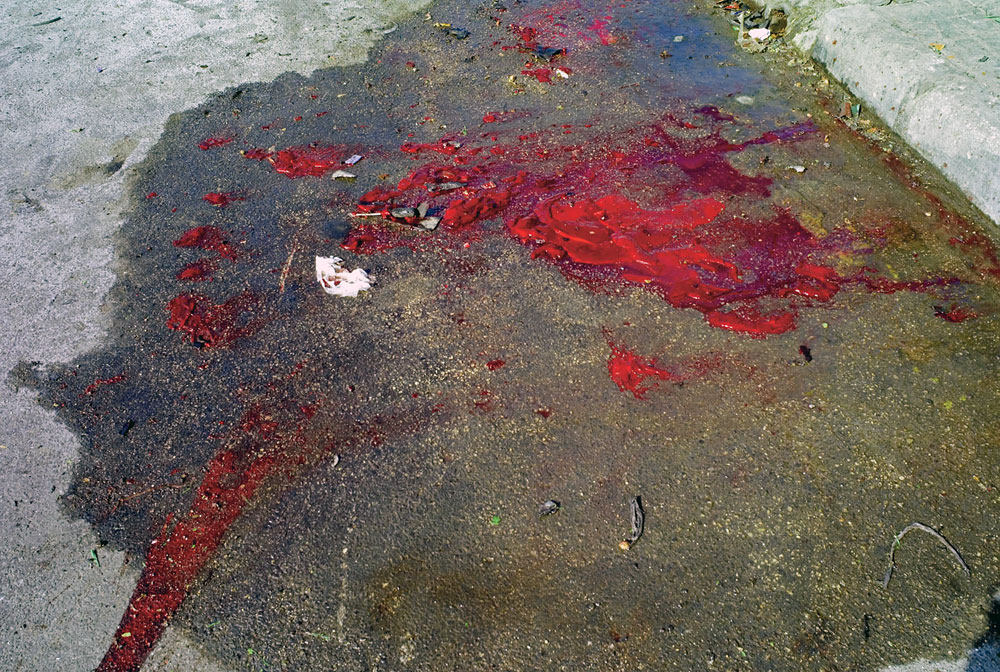
Black Passport © Stanley Greene / NOOR


Stanley Greene (American, 1949-2017)
Iraq, 2004, Road side explosion, Northern Iraq
2004
Black Passport © Stanley Greene / NOOR


“I think you can only do this for eight years. For eight years you can still keep the positive. If you stay at it longer than eight years, you turn. And not into a beautiful butterfly. You really turn. I see it in myself, I see it in all my friends and colleagues. I mean they are all victims of post trauma. We’re not the beautiful butterflies anymore. We become moths. We’re like moths flying to the flame.You know, sometimes your wings get singed or you just burn up. Get killed. Or you burn up inside.The drugs and the alcohol and the party and all of this is to push it away, push it away.”

“I’m an observer, I’m not an objective observer though, but I’m an observer. I feel it’s very important for journalists to go to these hell holes and photograph or write or do radio or whatever because I still believe that the public wants to know.”


Stanley Greene


Stanley Greene (February 14, 1949 – May 19, 2017) was an American photojournalist.

Greene was born to middle class parents in Brooklyn. Both his parents were actors. His father, who was born in Harlem, was a union organiser, one of the first African Americans elected as an officer in the Screen Actors Guild,and belonged to the Harlem Renaissance movement. Greene’s father was blacklisted as a Communist in the 1950s and forced to take uncredited parts in movies. Greene’s parents gave him his first camera when he was eleven years old.

Greene began his art career as a painter, but started taking photos as a means of cataloging material for his paintings. In 1971, when Greene was a member of the anti-Vietnam War movement and the Black Panther Party, his friend photographer W. Eugene Smith offered him space in his studio and encouraged him to study photography at the School of Visual Arts in New York and the San Francisco Art Institute.

Greene held various jobs as a photographer, including taking pictures of rock bands and working at Newsday. In 1986, he shot fashion photographs in Paris. He called himself a “dilettante, sitting in cafes, taking pictures of girls and doing heroin”. After a friend died of AIDS, Greene kicked his drug habit and began to seriously pursue a photography career.

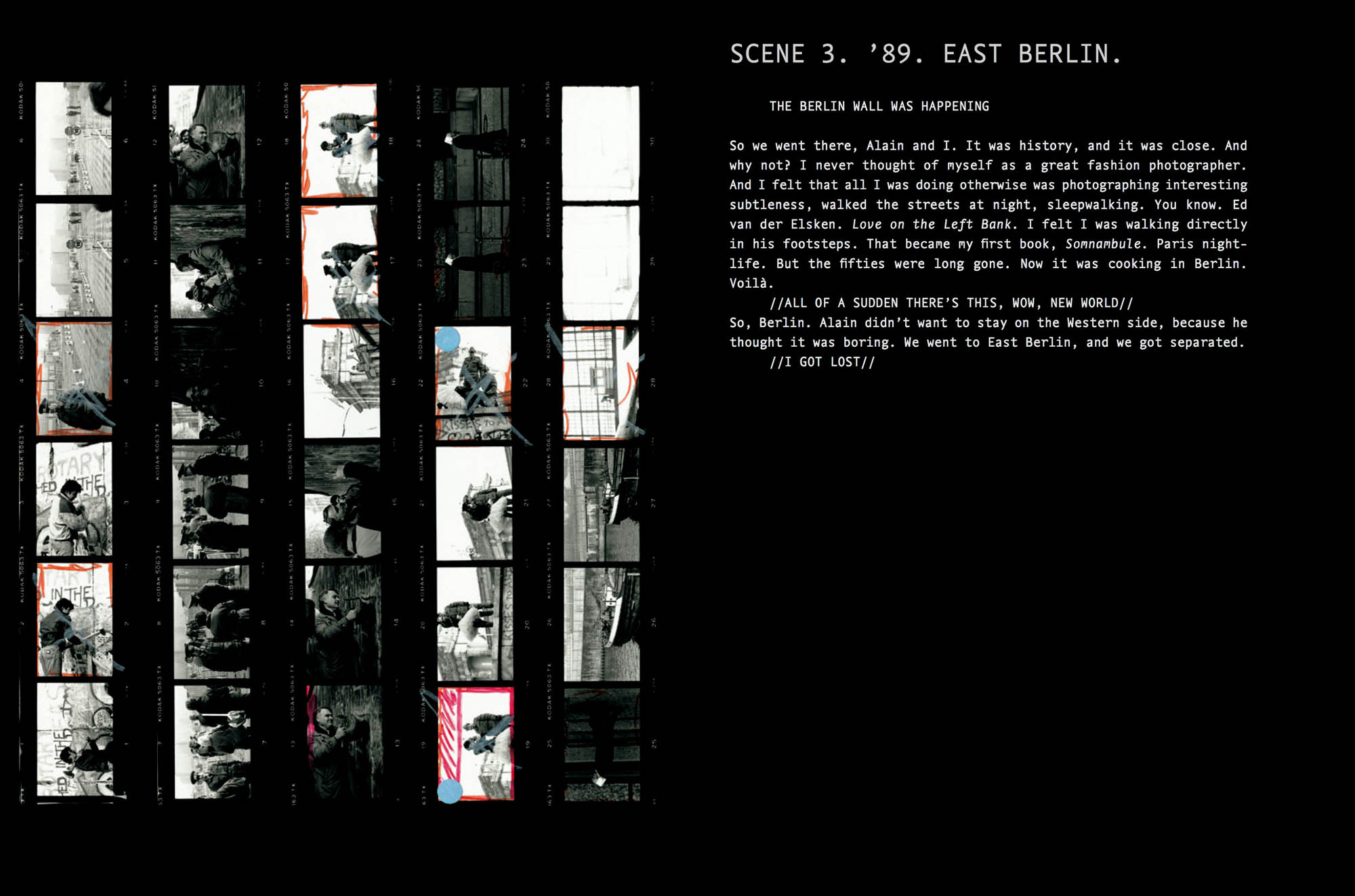
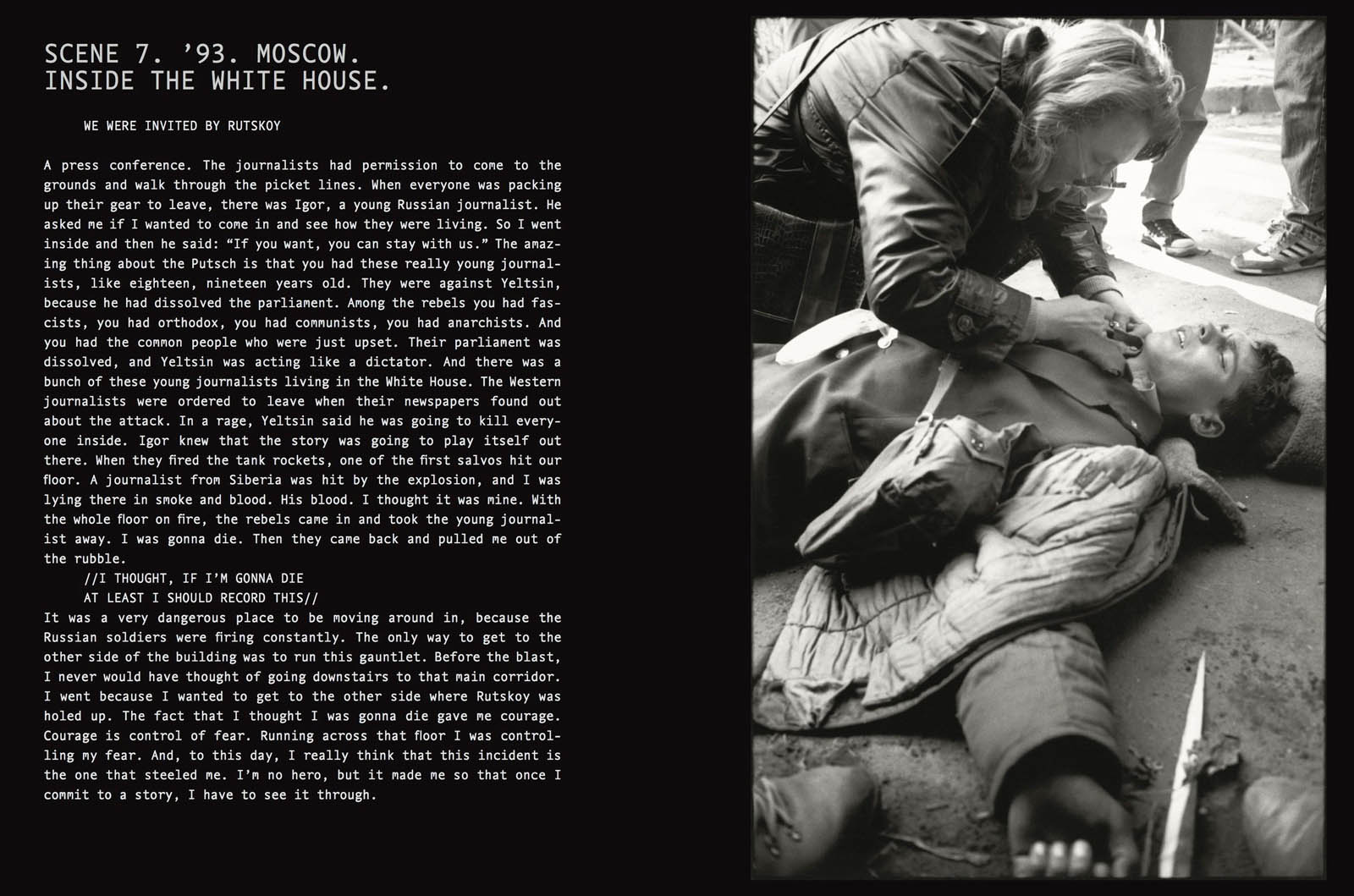
He began photojournalism in 1989, when his image (“Kisses to All, Berlin Wall”) of a tutu-clad girl with a champagne bottle became a symbol of the fall of the Berlin Wall. While working for the Paris-based photo agency Agence Vu in October 1993, Greene was trapped and almost killed in the White House in Moscow during a stand-off between President Boris Yeltsin and the parliament. He covered the war-torn countries Azerbaijan, Bosnia and Herzegovina, Georgia, Iraq, Somalia, Croatia, Kashmir, and Lebanon. He took pictures of the genocide in Rwanda in 1994 and the US Gulf Coast in the aftermath of Hurricane Katrina in 2005.

After 1994, Greene was best known for his documentation of the conflict in Chechnya, between rebels and the Russian Armed Forces, which was compiled in his 2004 book, Open Wound. These photos drew attention to the “suffering that has marked the latest surge in Chechnya’s centuries-long struggle for independence from Russia”.

In 2008, Greene revealed that he had hepatitis C, which he believed he had contracted from a contaminated razor while working in Chad in 2007. After controlling the disease with medication, he traveled to Afghanistan and photographed a story about “the crisis of drug abuse and infectious disease”.

Stanley Greene co-founded NOOR Agency with Kadir van Lohuizen in 2007. They launched their agency with their colleagues on the 7th of September 2007 at Visa Pour L’Image. Greene died in Paris, at the age of 68. He had been undergoing treatment for liver cancer.

Text from the Wikipedia website


Black Passport is the biography of war photographer Stanley Greene, compiled out of hours of interviews by Teun van der Heijden. It shows Stanley’s war images alternated with private images.

Teun van der Heijden:Black Passport started as any other photo book project. At the beginning Stanley did let me know that he was up for ‘something completely different’. While working on the project we had a lot of conversations in which I discovered that there were a lot of similarities between Stanley and me. What is it then that one person becomes a designer, living happily with the same woman for 25 years, being a father of two daughters and the other person becomes a war photographer. This question was the beginning of a series of interviews. Out of the interviews came Black Passport. Black Passport is nominated several times. Some people believe it is the most important photo book of 2010.

Text from the YouTube website


Stanley Greene (American, 1949-2017) 'Fireflies, Paris, France' 2006


Stanley Greene (American, 1949-2017)
Fireflies, Paris, France
2006
Black Passport © Stanley Greene / NOOR


Stanley Greene (American, 1949-2017) 'Black & White Ball, Paris, France' 2006


Stanley Greene (American, 1949-2017)
Black & White Ball, Paris, France
2006
Black Passport © Stanley Greene / NOOR


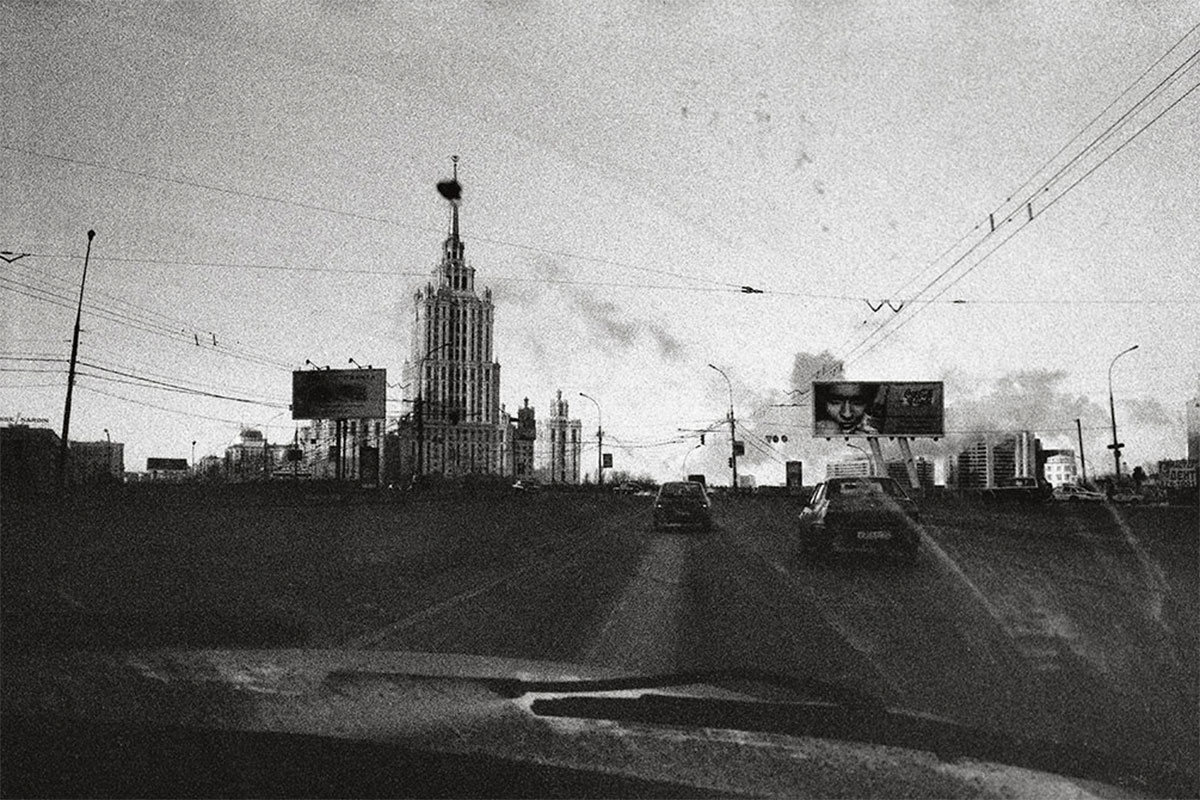
Stanley Greene (American, 1949-2017) 'On the MKAD, on the way to the airport, Moscow, Russia' 2003


Stanley Greene (American, 1949-2017)
On the MKAD, on the way to the airport, Moscow, Russia
2003
Gelatin silver print
Black Passport © Stanley Greene / NOOR


Stanley Greene (American, 1949-2017) 'Kaboul, Afghanistan' 2008


Stanley Greene (American, 1949-2017)
Kaboul, Afghanistan
2008
Gelatin silver print
Black Passport © Stanley Greene / NOOR


Stanley Greene (American, 1949-2017) 'Scene 3. '89. East Berlin'


Stanley Greene (American, 1949-2017)
Scene 3. ’89. East Berlin
From Black Passport © Stanley Greene / NOOR


Stanley Greene (American, 1949-2017) 'Scene 7. '93. Moscow. Inside the White House'


Stanley Greene (American, 1949-2017)
Scene 7. ’93. Moscow. Inside the White House
From Black Passport © Stanley Greene / NOOR


Black Passport © Stanley Greene / NOOR


All photographs: Black Passport © Stanley Greene / NOOR


Foam
Keizersgracht 609
1017 DS Amsterdam
The Netherlands
Phone: + 31 20 5516500

Opening hours:
Mon – Wed 10.00 – 18.00 hrs
Thu – Fri 10.00 – 21.00 hrs
Sat – Sun 10.00 – 18.00 hrs

Foam website

LIKE ART BLART ON FACEBOOK

Back to top