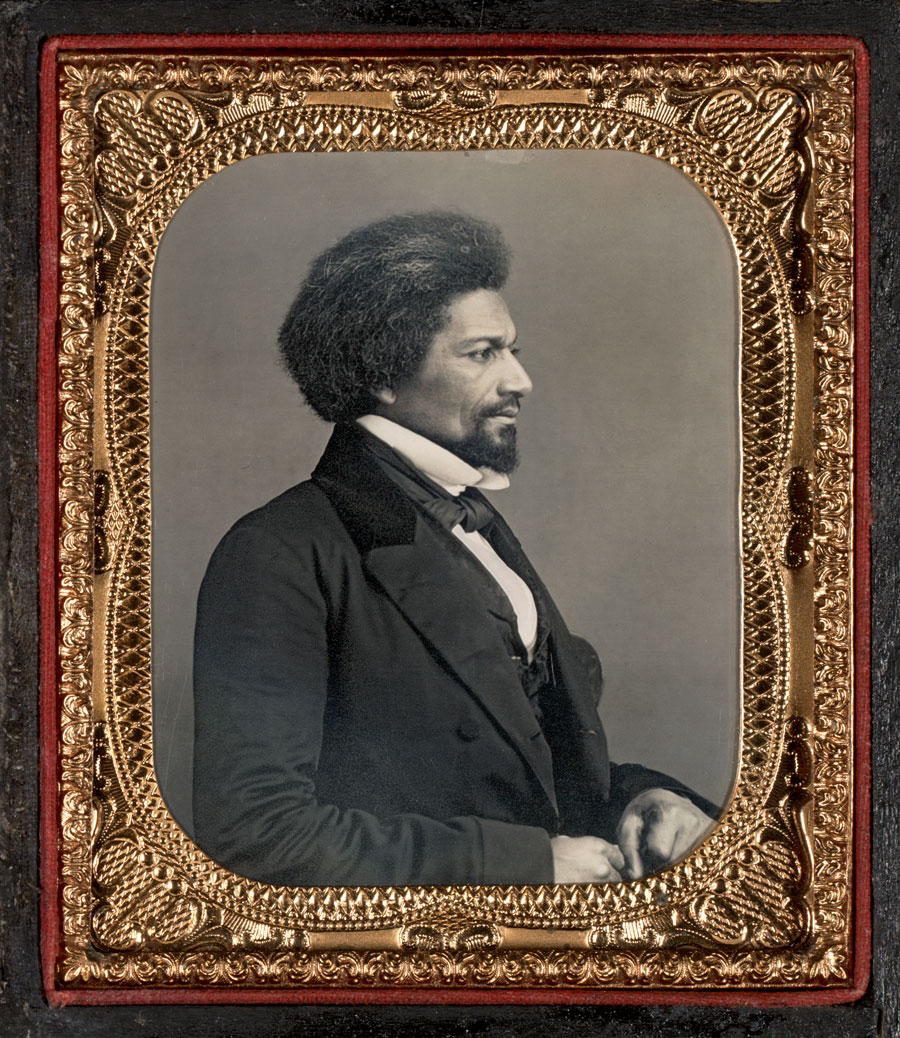
Exhibition: ‘One Life: Frederick Douglass’ at the National Portrait Gallery, Washington

Exhibition dates: 16th June, 2023 – 21st April, 2024

Curator: John Stauffer, the Sumner R. and Marshall S. Kates Professor of English and of African and African American Studies, Harvard University
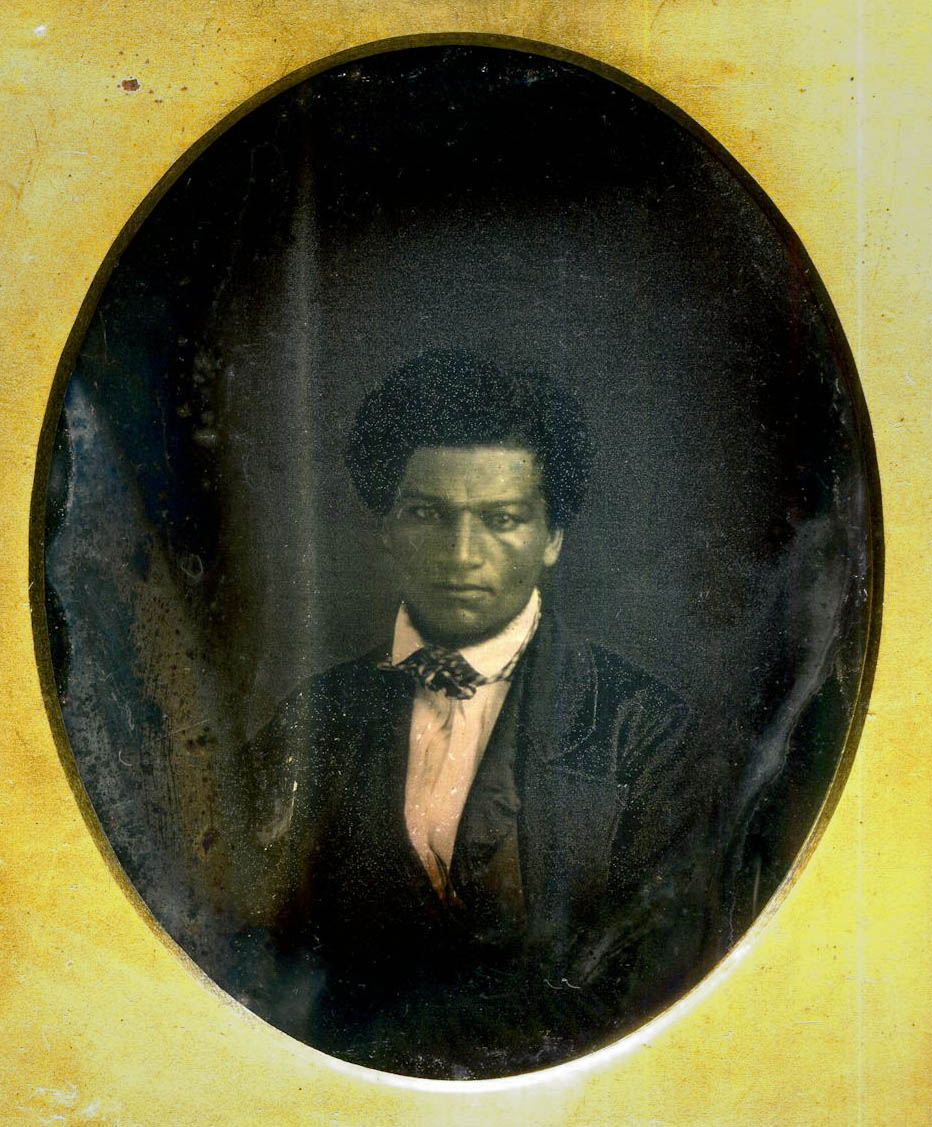
 

Unidentified photographer. 'Frederick Douglass' c. 1841


Unidentified photographer
Frederick Douglass
c. 1841
Sixth-plate daguerreotype
Collection of Gregory French


In this first known photographic image of Douglass, taken only one year after the first commercial daguerreotype studio opened in the United States, he appears somewhat dazed or “statue-like,” as he might have said. In 1841, the exposure time for a daguerreotype of this size could run up to fifteen seconds, depending on the time of day and the amount of available daylight in the daguerreotypist’s studio.

Text from the National Portrait Gallery website


I seem to be envisioning the nineteenth-century at the moment, which is a condition entirely more pleasurable than contemplating the dreadful state of the world at the moment with its environmental desecration, greed, killing of animal and human life and the unconscionable conduct of governments. Ego, greed, religion, power, masculinity, war, nationalism, possession. A toxic mix.

Here we have photographs of a majestic human being, a former slave, social reformer, abolitionist, orator, writer, and statesman – who fought for freedom, who fought against discrimination and racism. And still it goes on today…

“A new memorial to Emmett Till was dedicated on Saturday in Mississippi after previous historical markers were repeatedly vandalized. The new marker is bulletproof.

Till, 14, was kidnapped, beaten and killed in 1955, hours after he was accused of whistling at a white woman. His body was found in a river days later. An all-white jury in Mississippi acquitted two white men of murder charges…

This is the fourth historical marker at the site. The first was placed in 2008. Someone tossed it in the river. The second and third signs were shot at and left riddled with bullet holes. The new 500lb steel sign has a glass bulletproof front.”1

His mother, Mamie Till Mobley, held an open casket funeral in Chicago to let the world see how badly her son had been beaten and mutilated. “There was just no way I could describe what was in that box. No way. And I just wanted the world to see.”

At the end I’ll be glad when I have left this world because I am so disappointed with the human race. High hopes indeed.

Dr Marcus Bunyan


1/ Associated Press. “Emmett Till: new memorial to murdered teen is bulletproof,” on The Guardian website Sun 20 Oct 2019 [Online] 06/04/2024


Many thankx to the National Portrait Gallery for allowing me to publish the photographs in the posting. Please click on the photographs for  a larger version of the image.


The bullet-riddled historical sign for Emmett Till


The bullet-riddled historical sign for Emmett Till, the Chicago teenager whose 1955 slaying helped propel the civil rights movement

Used under fair use conditions for the purposes of education and research


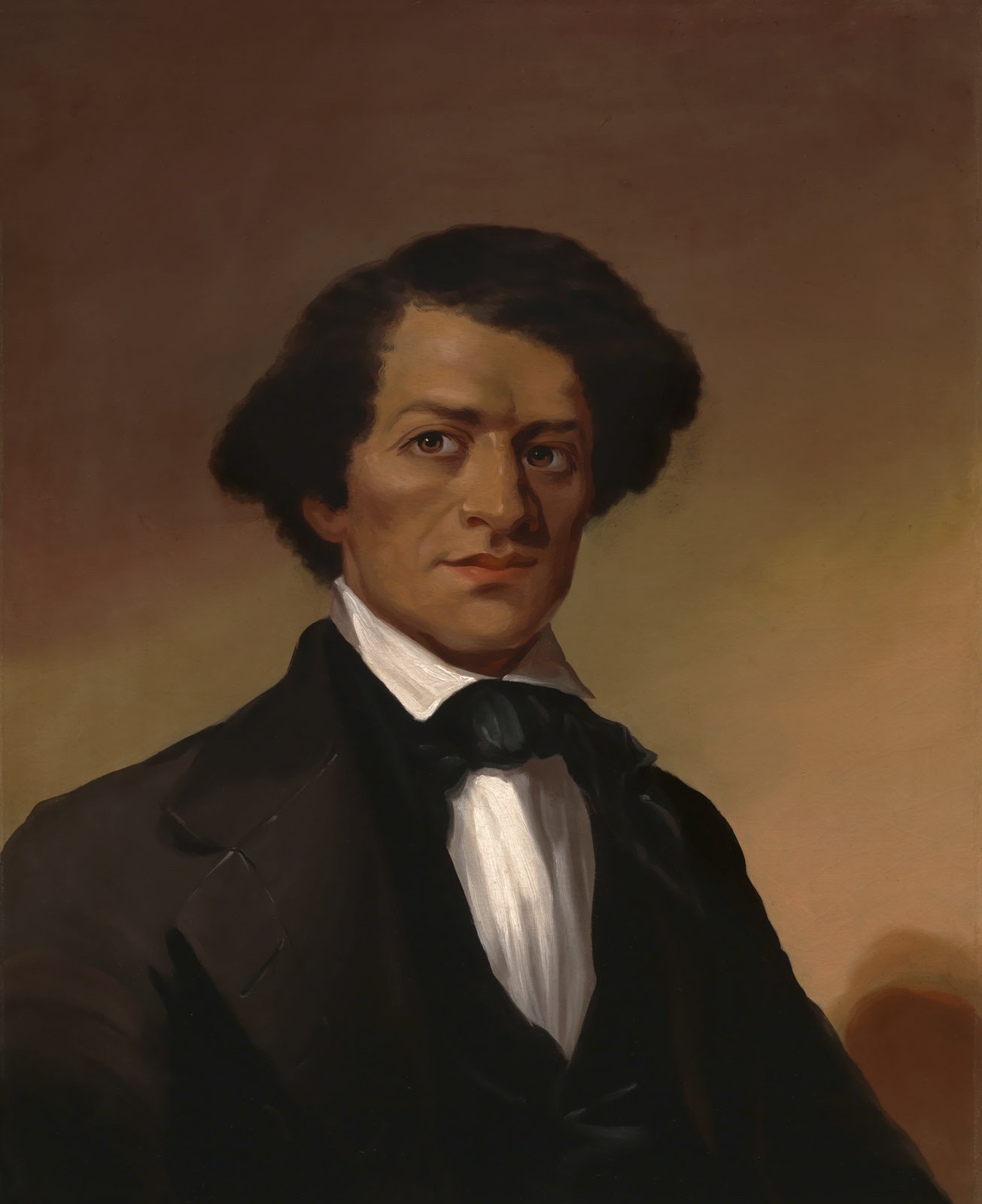
Unidentified artist (formerly attributed to Elisha Livermore Hammond) 'Frederick Douglass' c. 1845


Unidentified artist (formerly attributed to Elisha Livermore Hammond)
Frederick Douglass
c. 1845
Oil on canvas
National Portrait Gallery, Smithsonian Institution


Frederick Douglass became the most influential African American of the nineteenth century by turning his life into a testimony on the evils of slavery and the redemptive power of freedom. After he escaped from bondage in 1838, Douglass quickly emerged as an outspoken advocate for equality and abolition. Aware of the power of telling one’s own story, he frequently spoke about his life, published three genre-defining autobiographies, and founded the influential newspaper, The North Star, in 1847. Douglass also posed for countless photographs, which he considered less susceptible to artists’ racial prejudices.

This painting was likely based on the engraved frontispiece of Douglass’s first autobiography, Narrative of the Life of Frederick Douglass (1845), a gripping account of his struggle for freedom. In My Bondage and My Freedom (1855), Douglass went on to address the psychology of slavery and the racism that continued to define the lives of the newly free.

Text from the National Portrait Gallery website


Southworth & Hawes (active 1843–1862) 'Frederick Douglass' c. 1845


Southworth & Hawes (active 1843–1862)
Frederick Douglass
c. 1845
Whole-plate daguerreotype
Onondaga Historical Association Museum, Syracuse, NY


Douglass likely sat for this daguerreotype in the Boston studio of Southworth & Hawes before he left for England in August 1845. The Twelfth National Anti-Slavery Bazaar, held at Faneuil Hall in December 1845, offered for sale “an excellent Daguerreotype of Frederick Douglass,” according to The Liberator (January 23, 1846). The daguerreotype was “the gift of Mr. Southworth” and “elicited much attention.” John Chester Buttre created an engraving from the daguerreotype, which appeared in Autographs for Freedom (1854), a gift book edited by Douglass’s friend Julia Griffiths to raise money for his North Star newspaper.

Text from the National Portrait Gallery website


Southworth & Hawes (active 1843–1862) 'Frederick Douglass' c. 1845 (detail)


Southworth & Hawes (active 1843–1862)
Frederick Douglass (detail)
c. 1845
Whole-plate daguerreotype
Onondaga Historical Association Museum, Syracuse, NY


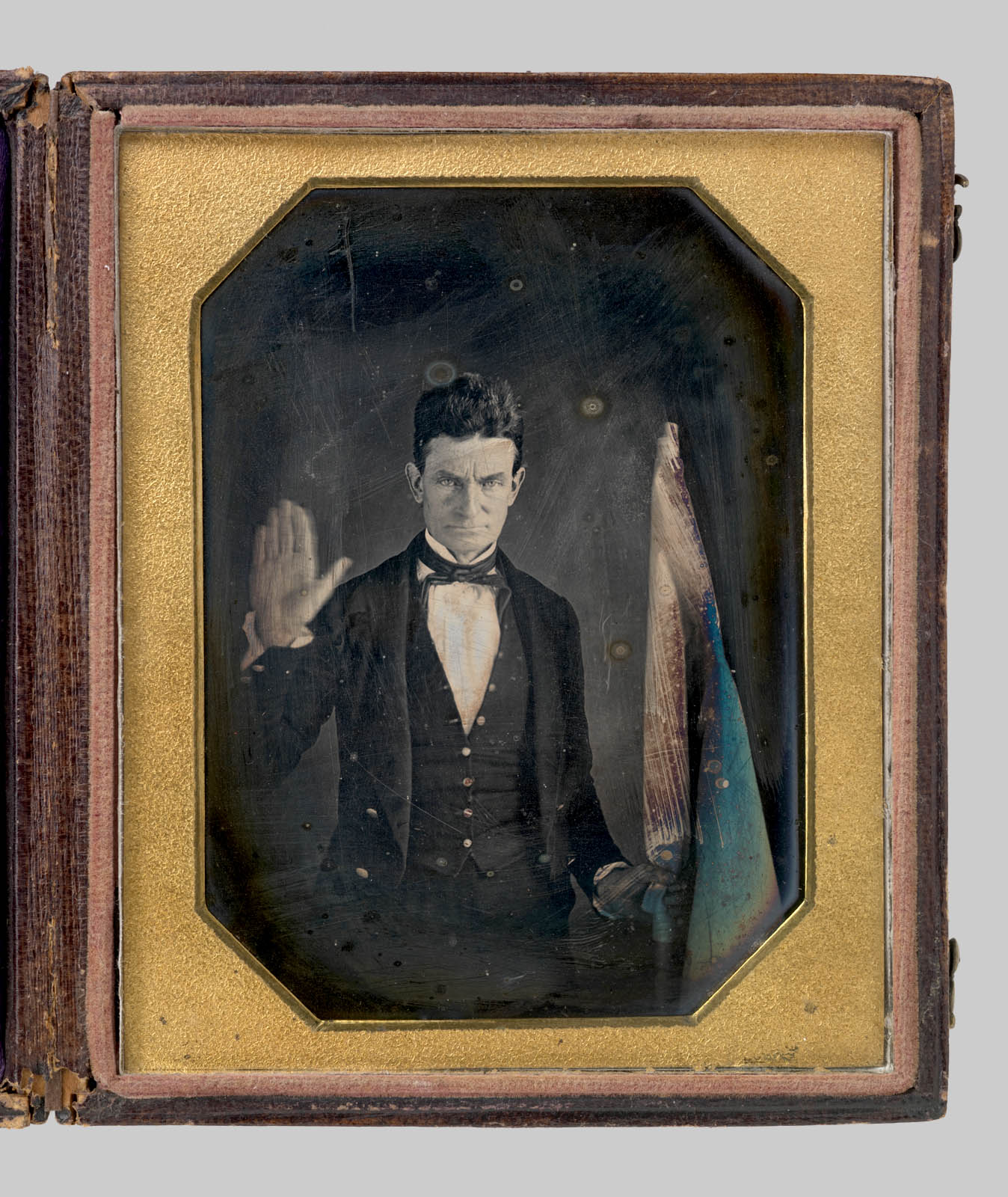
Augustus Washington (American, c. 1820–1875) 'John Brown 1800-1859' c. 1846-1847


Augustus Washington (American, c. 1820–1875)
John Brown 1800-1859
c. 1846-1847
Quarter-plate daguerreotype
National Portrait Gallery, Smithsonian Institution; purchased with major acquisition funds and with funds donated by Betty Adler Schermer in honor of her great grandfather, August M. Bondi


One of the nation’s first African American daguerreotypists, Augustus Washington was also a prominent abolitionist in Hartford, Connecticut, when he made this portrait of the militant abolitionist John Brown. At the time, Brown was working to establish a “Subterranean Pass Way,” a network of armed men in the Alleghenies for conducting fugitives to freedom in Canada.

In Washington’s daguerreotype, Brown apparently holds the Pass Way flag and pledges allegiance to his scheme, which never materialised. In 1853, Washington and his family emigrated to Liberia, the former West African colony founded by the American Colonization Society, which gained independence in 1847.

Text from the National Portrait Gallery website


Frederick Douglass (1818-1895), the preeminent African American voice of the nineteenth century, is remembered as one of the nation’s greatest orators, writers, and picture makers. Born on the Eastern Shore of Maryland in 1818, Frederick Augustus Washington Bailey was the son of Harriet Bailey, an enslaved woman, and an unknown white father. He escaped bondage in 1838 and changed his surname to Douglass.

Over six decades, Douglass published three autobiographies, hundreds of essays, and a novella; delivered thousands of speeches; and edited the longest-running Black newspaper in the nineteenth century, The North Star (later Frederick Douglass’ Paper and Douglass’ Monthly). During the Civil War, he befriended and advised President Abraham Lincoln and met every subsequent president through Grover Cleveland. He was also the first African American to receive a federal appointment requiring Senate approval (U.S. Marshal of the District of Columbia).

Douglass became the most photographed American of the nineteenth century and remains a public face of the nation. As an art critic, he wrote extensively on portrait photography and understood its power. He explained how this “true art” (as opposed to pernicious caricatures) captured the essential humanity of each subject. True art was an engine of social change, he argued, and true artists were activists: “They see what ought to be by the reflection of what is, and endeavour to remove the contradiction.”

Curatorial Statement

Organised into seven sections, this exhibition highlights the long arc and significance of Frederick Douglass’s life: from slave and fugitive to internationally acclaimed abolitionist, women’s rights activist, and statesman after the Civil War. We come to recognise his influences in the Civil War and postwar eras; and the significance of his afterlife, in which his portraits and writings continue to inspire people to seek “all rights for all,” one of his mottos. The range of objects shown here reflects Douglass’s openness to new forms of media and technology to advance the cause of human rights.

John Stauffer, the Sumner R. and Marshall S. Kates Professor of English and of African and African American Studies, Harvard University

Text from the National Portrait Gallery website


Douglass’ ascension into the most preeminent African American voice in the 1800s and one of the handful of most influential and famous Americans in the nation’s history owes itself equally to his merits and good fortune.

“Douglass had an extraordinary work ethic, he was immensely curious and dedicated,” Stauffer explained. “And physically strong and tall – over six feet, a half-foot taller than the average man – which helped him survive slavery.”

Size does matter. George Washington and Abraham Lincoln were also comparative giants for their day. American presidents, on average, stand a great deal taller, literally, than the average citizen.

Douglass’ physical size and strength allowed him to outlast a sadistic “slave breaker,” Edward Covey, in a protracted fight as a teen. After suffering numerous whippings, Douglass stood up to the man. As long as he lived, he referred to the fight as the turning point in his life as a slave.

“He was also lucky to have been born and raised in the upper South and not sold into the Deep South or murdered for his rebelliousness as a slave and his constant battles against slavery and racism as a free man,” Stouffer added. “Had he been born in the Deep South, where most enslaved people lived, his chances of escaping to free soil would have been almost nil.”

Douglass’ circumstances were hardly favourable, but he did win something of a genetic and geographic lottery at birth.

He also caught a rare break, learning to read and write as a young boy, skills most slaveowners prohibited.

“In Baltimore, Douglass asked his mistress, Sophia Auld, to teach him to read, which she did, having never overseen an enslaved person before,” Stouffer said. “Her husband, Hugh Auld, found out and told her in front of Douglass, ‘if you learn him to read, he’ll want to know how to write; and this accomplished, he’ll be running away from himself.’ Hearing this, Douglass ‘understood the direct pathway to freedom,’ as he said.”

Chadd Scott. “Art, Activism And Frederick Douglass At National Portrait Gallery,” on the Forbes website Aug 22, 2023 [Online] Cited 21/04/2024


Unidentified photographer. 'Frederick Douglass' c. 1850 (after c. 1847 daguerreotype)


Unidentified photographer
Frederick Douglass
c. 1850 (after c. 1847 daguerreotype)
Sixth-plate daguerreotype
National Portrait Gallery, Smithsonian Institution


When sitting for a photograph, Douglass would pose as an artist or performer, forming part of a pas de trois with the photographer and the camera. He always dressed up and, as the activist Elizabeth Cady Stanton noted, often appeared “majestic in his wrath.”

Before the mid-1860s, Douglass typically stared into the camera lens with a dramatic look. He wanted the focus on himself. Here, he fills the frame, appearing as an accomplished, dignified activist, and projecting a visual voice of democracy. Through his images, voice, and writings, Douglass sought to “out-citizen” whites, many of whom questioned African American rights.

In the years following his escape from bondage in 1838, Frederick Douglass emerged as a powerful and persuasive spokesman for the cause of abolition. Douglass’s effectiveness as an antislavery advocate was due in large measure to his firsthand experience with the evils of slavery and his extraordinary skill as an orator whose “electrifying eloquence” astonished and enthralled his audiences. Convinced that a peaceful end to slavery was impossible, Douglass embraced the Civil War as a fight for emancipation and called for the enlistment of black troops. Throughout the decades that followed, he remained a tireless champion for civil rights.

In 1845, when the publication of his Narrative of the Life of Frederick Douglass revealed biographical details that could have led to his capture as a fugitive from slavery, Douglass left the United States for an extended stay in Great Britain. He was warmly welcomed by British abolitionists, who raised the funds to purchase his freedom, thereby enabling Douglass to return to the United States in 1847 as a free man. In this daguerreotype, believed to date from the time of his return, Douglass confronts the camera with an intensity that became the hallmark of his photographic portraits.

Text from the National Portrait Gallery website


Ezra Greenleaf Weld (American, 1801-1874) 'Fugitive Slave Law Convention, Cazenovia, New York' 1850


Ezra Greenleaf Weld (American, 1801-1874)
Fugitive Slave Law Convention, Cazenovia, New York
1850
Half-plate copy daguerreotype
Collection of Mr. and Mrs. Set Charles Momjian


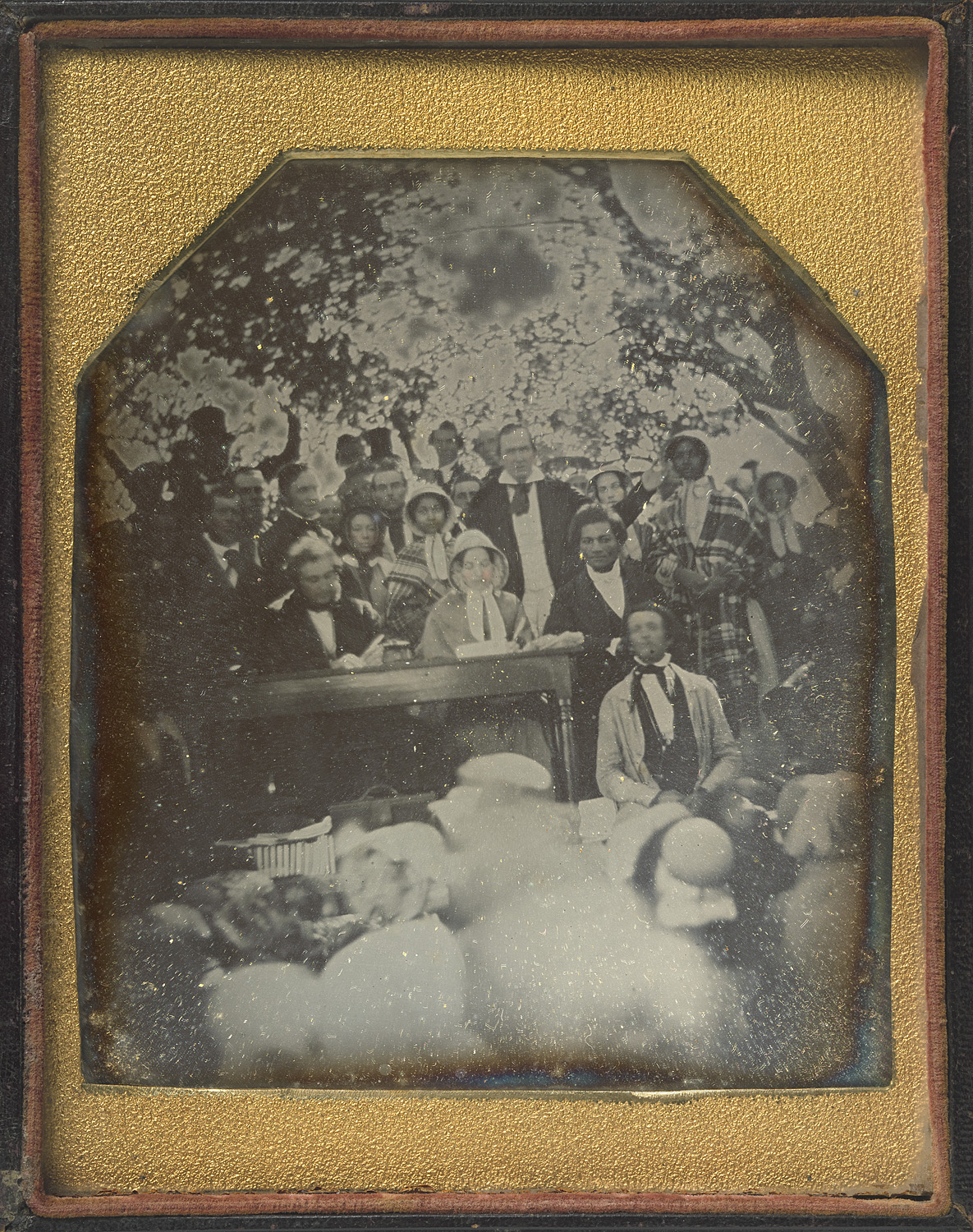
On August 21, 1850, two days after the Senate passed the Fugitive Slave Act [Passed on September 18, 1850 by Congress, The Fugitive Slave Act of 1850 was part of the Compromise of 1850. The act required that slaves be returned to their owners, even if they were in a free state. The act also made the federal government responsible for finding, returning, and trying escaped slaves], about two thousand abolitionists convened near Gerrit Smith’s home. Douglass presided as president. Participants approved Smith’s “Letter to the American Slaves,” urging captives to avenge their enslavers. “You are prisoners of war in an enemy’s country,” Smith declared.

Here, Douglass sits at the edge of the table next to Theodosia Gilbert, the fiancée of William Chaplin, who was in prison for aiding fugitives. Behind Douglass stands Gerrit Smith [see photo below], in mid-speech, gesticulating. On either side of Smith, in checkered shawls and day bonnets, are Mary and Emily Edmonson, whose freedom had been orchestrated by Chaplin.

Text from the National Portrait Gallery website


Ezra Greenleaf Weld, known simply as “Greenleaf,” operated a daguerreotype studio in Cazenovia, New York, during a time of intense social and political turmoil. He opened his first studio in his home in 1845, when America began to witness the volatile events that led to the Civil War. At that time, instruction manuals on the daguerreotype process were widely available, and most small towns had at least one studio. In an 1850 advertisement in his local newspaper, Greenleaf offered “Miniatures executed in the finest style, and put in Rings, Pins, Lockets and cases, of great variety size and price.”

Greenleaf seems to have been very successful with his daguerreotype business. By 1851 he had leased new quarters on the top floor of a building, where he placed a skylight to receive northern light for his studio sessions. During the Civil War years, he made numerous pictures in and around Cazenovia.

Text from the J. Paul Getty Museum website


Southworth & Hawes (active 1843–1862) 'William Lloyd Garrison 1805-1879' c. 1851


Southworth & Hawes (active 1843–1862)
William Lloyd Garrison 1805-1879
c. 1851
Half-plate daguerreotype
National Portrait Gallery, Smithsonian Institution


After escaping enslavement, Douglass subscribed to William Lloyd Garrison’s newspaper, The Liberator, and read it as devoutly as his bible. “The paper became my meat and drink,” he recalled.

Garrison promoted Douglass’s 1845 autobiography, which made him famous and prompted him to flee to the British Isles to avoid capture and re-enslavement. British friends then purchased his freedom, and he returned to the United States in 1847, a free man. Wanting to launch his own paper, Douglass soon moved his family to Rochester, New York, a railroad and antislavery hub that lacked an abolitionist paper. The move ruptured his friendship with Garrison until after the Civil War.

Text from the National Portrait Gallery website


The Smithsonian’s National Portrait Gallery will present One Life: Frederick Douglass, an exhibition exploring the life and legacy of one of the 19th century’s most influential writers, speakers and intellectuals. Douglass was a radical activist who devoted his life to abolitionism and rights for all. This exhibition shows the intimate relationship between art and protest through prints, photographs and ephemera. One Life: Frederick Douglass is guest curated by John Stauffer, the Sumner R. and Marshall S. Kates Professor of English and African and African American Studies at Harvard University, and consulting curator Ann Shumard, the National Portrait Gallery’s senior curator of photographs.

“Frederick Douglass was the preeminent African American voice of the 19th century and among the nation’s greatest orators, writers and picture-makers,” Stauffer said. “Born into slavery, he became a leading abolitionist, civil rights activist and the most photographed American of the 19th-century, a public face of the nation. This comprehensive exhibition includes objects from all phases of his life as a way to highlight the power of his remarkable impact. It explores his friendship with President Abraham Lincoln, for example, as well as his enduring influence on artists and activists in the 20th and 21st centuries.”

Douglass was born on the Eastern shore of Maryland in 1818. Having escaped slavery in 1838, he traveled to New York, where he married Anna Murray. After the couple moved to Massachusetts, he began attending abolitionist meetings. Douglass went on to publish three autobiographies and a novella, deliver thousands of speeches and edit the longest continually running Black newspaper of the 19th century, The North Star (later Frederick Douglass’ Paper and Douglass’ Monthly). As a political insider and policy influencer during the Civil War, he befriended and advised President Abraham Lincoln. Douglass changed traditional rules of representation by explaining how “true art” could be an engine of social change.

The exhibition will showcase over 35 objects, including the ledger documenting Douglass’ birth in February 1818; a pamphlet of his “What to the Slave Is the Fourth of July?” oration; two of his three autobiographies – My Bondage and My Freedom and Narrative of the Life of Frederick Douglass, an American Slave, Written by Himself; a letter from Douglass to Lincoln; portraits of activists in Douglass’ circle, such as Harriet Tubman and Sojourner Truth; portraits by the prominent Black photographers Augustus Washington and Cornelius Marion Battey; and portraits of the Black leaders Ida B. Wells-Barnett, Booker T. Washington, W.E.B. Du Bois and Langston Hughes, all of whom carried on his legacy.

Press release from the National Portrait Gallery


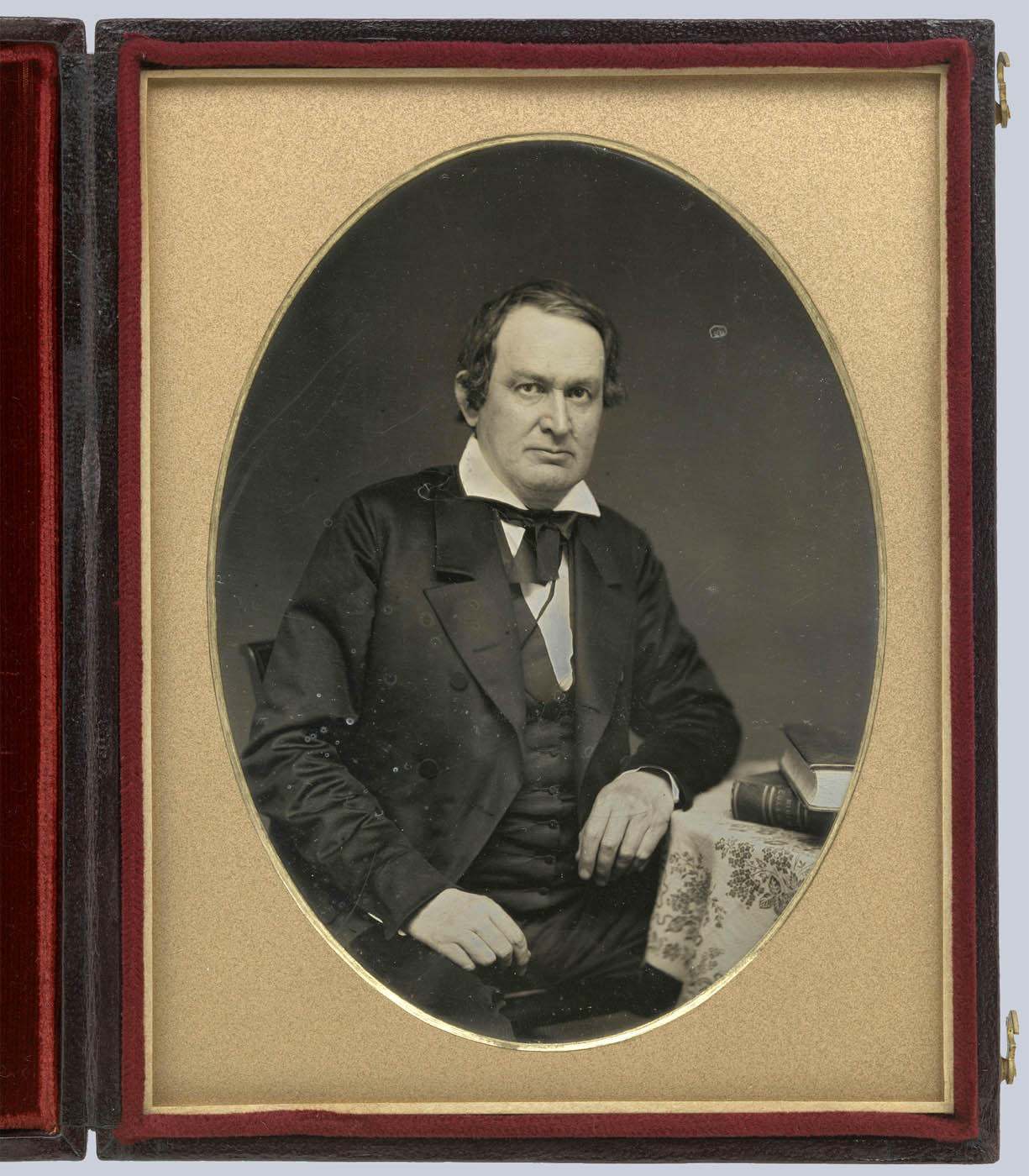
Ezra Greenleaf Weld (American, 1801-1874) 'Gerrit Smith 1797-1874' c. 1854


Ezra Greenleaf Weld (American, 1801-1874)
Gerrit Smith 1797-1874
c. 1854
Two-thirds daguerreotype
National Portrait Gallery, Smithsonian Institution; gift of an anonymous donor 

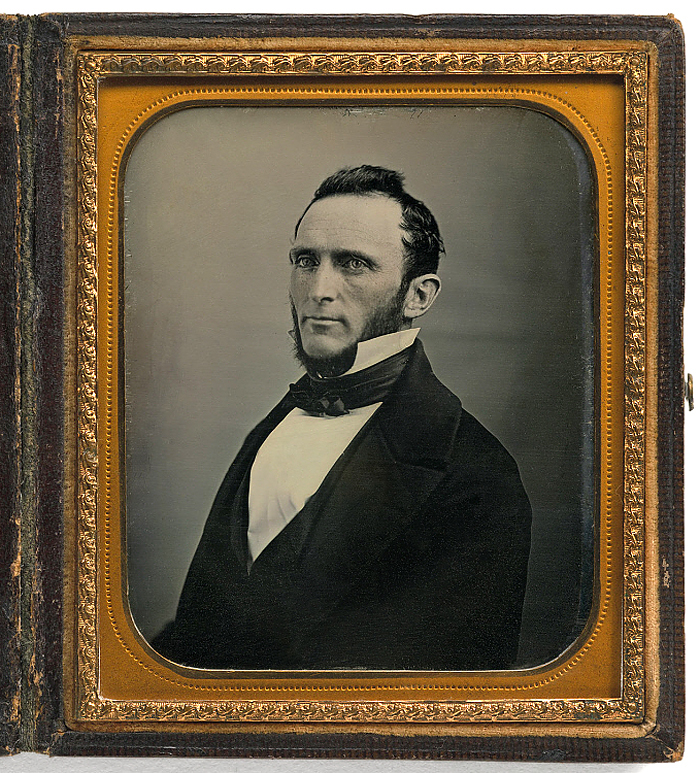
Gerrit Smith, the upstate New York abolitionist and philanthropist, was a close friend of Douglass from the late 1840s to the Civil War. In 1846, Smith gave away 120,000 acres of land in the Adirondacks, known as “Timbuctoo,” to three thousand Black residents of New York State. Smith welcomed Douglass to New York with a deed for forty acres and provided crucial financial support to his newspaper. “You not only keep life in my paper but keep spirit in me,” Douglass wrote. Smith helped convert Douglass into a political abolitionist, one who interpreted the Constitution as an antislavery document.

Text from the National Portrait Gallery website


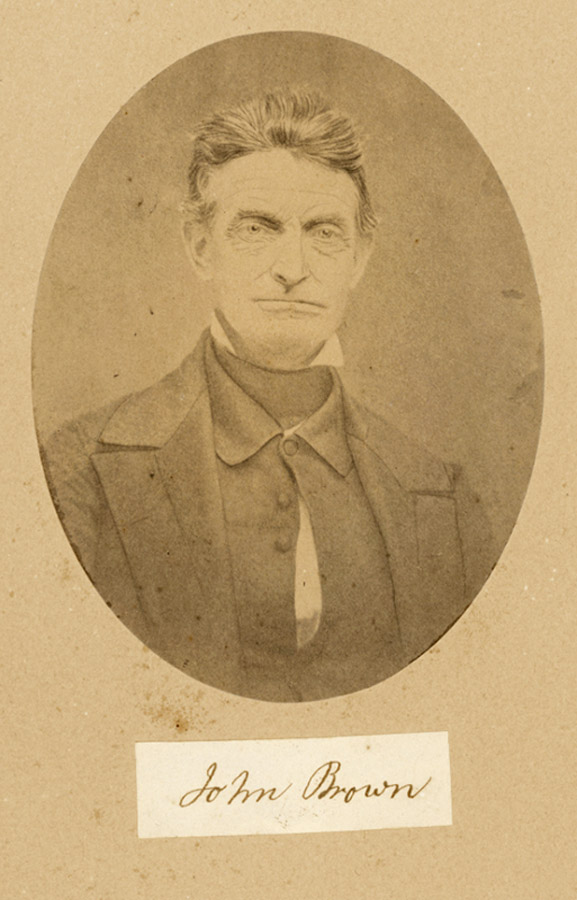
Unidentified photographer. 'John Brown 1800-1859' c. 1857 (after c. 1855 daguerreotype)


Unidentified photographer
John Brown 1800-1859
c. 1857 (after c. 1855 daguerreotype)
Salted paper print
National Portrait Gallery, Smithsonian Institution


Douglass described John Brown as someone who, “though a white gentleman, is in sympathy a black man, and as deeply interested in our cause, as though his own soul had been pierced with the iron of slavery.” They became friends, and in 1859, Brown urged Douglass to join him in raiding the federal arsenal at Harpers Ferry. Douglass, however, refused and told Brown he thought he was entering a “steel trap.” Brown and sixteen others were killed, either during the raid or after they were found guilty of treason. Douglass later credited Brown with starting the war that ended slavery.

Text from the National Portrait Gallery website


Frederick Douglass believed that Brown’s “zeal in the cause of my race was far greater than mine – it was as the burning sun to my taper light – mine was bounded by time, his stretched away to the boundless shores of eternity. I could live for the slave, but he could die for him.”

Douglass, Frederick (1881). John Brown. An Address at the Fourteenth Anniversary of Storer College, May 30, 1881. Dover, New Hampshire: Dover, N. H., Morning Star job printing house. p. 9. Retrieved March 9, 2022


Unidentified photographer. 'Frederick Douglass' c. 1860


Unidentified photographer
Frederick Douglass
c. 1860
Salted paper print
Image: 6 × 4.5cm (2 3/8 × 1 3/4″)
Sheet: 10.1 × 7.9cm (4 × 3 1/8″)
Mount: 17 × 13.6cm (6 11/16 × 5 3/8″)
Mat: 45.7 × 35.6cm (18 × 14″)
National Portrait Gallery, Smithsonian Institution


Douglass’s visual persona continually evolved, which undermined one of the key intellectual foundations of chattel slavery and racism that cast the self as fixed, unable to rise. Perhaps the most noticeable markers of Douglass’s continual evolution are his hairstyle and facial hair. In this salted paper print, he experiments with a mid-scalp part, unique among the 168 separate photographs. Five years later, in a carte de visite, he sports a ponytail, also distinct from his typical hairstyle.

Text from the National Portrait Gallery website


Douglass’ words were powerful; his image, arguably, more so.

“Douglass, along with most Americans, believed that photography was a ‘truthful’ representation and the great democratic art,” Stouffer explained. “He also recognised that the sitter had agency in the outcome of a photographic portrait. He understood his role as an artist or performer, part of a pas de trois with the photographer and the camera. He always dressed up. His photographic portraits, along with those of numerous other African Americans, starkly contrasted the racist caricatures of Blacks created by whites.”

A long American tradition of white artists caricaturing African Americans in prints and paintings influenced public perception. White painters in the antebellum era almost always cast the devil as a Black man. Monkeys and happy slaves were other tropes.

Douglass, meanwhile, always presented himself, in dress, pose, and expression, as a dignified and respectable citizen.

“Photography was a truth-telling medium he emphasised. It bore witness to African Americans, and all humans, essential humanity, and it countered the racist caricatures by whites drawing freehand,” Stouffer said. “Douglass argued that photography inspired people to eradicate the sins of their society. It led them to activism. It stemmed from the power of imagination, which allowed people to appreciate photographs as accurate representations of some greater reality. It encouraged them to realise their ideals in an imperfect world.”

As Douglass put it: “Poets, prophets, and reformers are all picture-makers – and this ability is the secret of their power and of their achievements. They see what ought to be in the reflection of what is, and endeavour to remove the contradiction.”

This is a key message of the exhibition.

“Poets, prophets, and reformers were artists and activists. Activism inspired art and vice versa. Poets, prophets, and reformers saw their community or nation as it was – with all its gross inequalities, injustices, and prejudices – and they contrasted it with what ought to be. The contradiction inspired them to remove structural inequalities, injustices, and prejudices,” Stouffer explained. “Douglass and most other abolitionists, along with many antislavery advocates, considered themselves poets, prophets, and reformers. As a group, they sat for their photographic portraits with greater frequency, distributed them more effectively, and were more taken with photography, than other groups.”

Douglass went so far as to say that “the moral and social influence of pictures” was more important than “the making of its laws.”

Chadd Scott. “Art, Activism And Frederick Douglass At National Portrait Gallery,” on the Forbes website Aug 22, 2023 [Online] Cited 21/04/2024


Johnson, Williams &. Co. (active 1860s and 1870s) 'James McCune Smith 1813-1865' c. 1860


Johnson, Williams &. Co. (active 1860s and 1870s)
James McCune Smith 1813-1865
c. 1860
Albumen silver print
Schomburg Center for Research in Black Culture, Photographs and Prints Division; The New York Public Library, Astor, Lenox and Tilden Foundations


James McCune Smith (April 18, 1813 – November 17, 1865) was an American physician, apothecary, abolitionist and author. He was the first African American to earn a medical degree. His M.D. was awarded by the University of Glasgow in Glasgow, Scotland. After his return to the United States, he also became the first African American to run a pharmacy in the nation.

In addition to practicing as a physician for nearly 20 years at the Colored Orphan Asylum in Manhattan, Smith was a public intellectual: he contributed articles to medical journals, participated in learned societies, and wrote numerous essays and articles drawing from his medical and statistical training. He used his training in medicine and statistics to refute common misconceptions about race, intelligence, medicine, and society in general. He was invited as a founding member of the New York Statistics Society in 1852, which promoted a then new science. Later he was elected as a member in 1854 of the recently founded American Geographic Society. He was never admitted to the American Medical Association or local medical associations,[1] very likely as a result of the systemic racism that Smith confronted throughout his medical career.

He has been most well known for his leadership as an abolitionist: a member of the American Anti-Slavery Society, with Frederick Douglass he helped start the National Council of Colored People in 1853, the first permanent national organisation for blacks. Douglass called Smith “the single most important influence on his life.” Smith was one of the Committee of Thirteen, who organised in 1850 in Manhattan to resist the newly passed Fugitive Slave Law by aiding refugee slaves through the Underground Railroad. Other leading abolitionist activists were among his friends and colleagues. From the 1840s, Smith lectured on race and abolitionism and wrote numerous articles to refute racist ideas about black capacities.

Both Smith and his wife were of mixed African and European descent. As he became economically successful, Smith built a house in a mostly white neighbourhood; in the 1860 census he and his family were classified as white, along with their neighbours. (In the census of 1850, while living in a predominately African-American neighbourhood, they had been classified as mulatto.) Smith served for nearly 20 years as the physician at the Colored Orphan Asylum in New York. After it was burned down in July 1863 by a mob in draft riots in Manhattan, in which nearly 100 blacks were killed, Smith moved his family and practice to Brooklyn for their safety. Many other blacks left Manhattan for Brooklyn at the same time. The parents stressed education for their children. In the 1870 census, his widow and children continued to be classified as white.

Text from the Wikipedia website


Unidentified photographer. 'Sojourner Truth c. 1797-1883' 1864


Unidentified photographer
Sojourner Truth c. 1797-1883
1864
Albumen silver print
Image/Sheet: 8.7 × 5.6cm (3 7/16 × 2 3/16″)
National Portrait Gallery, Smithsonian Institution


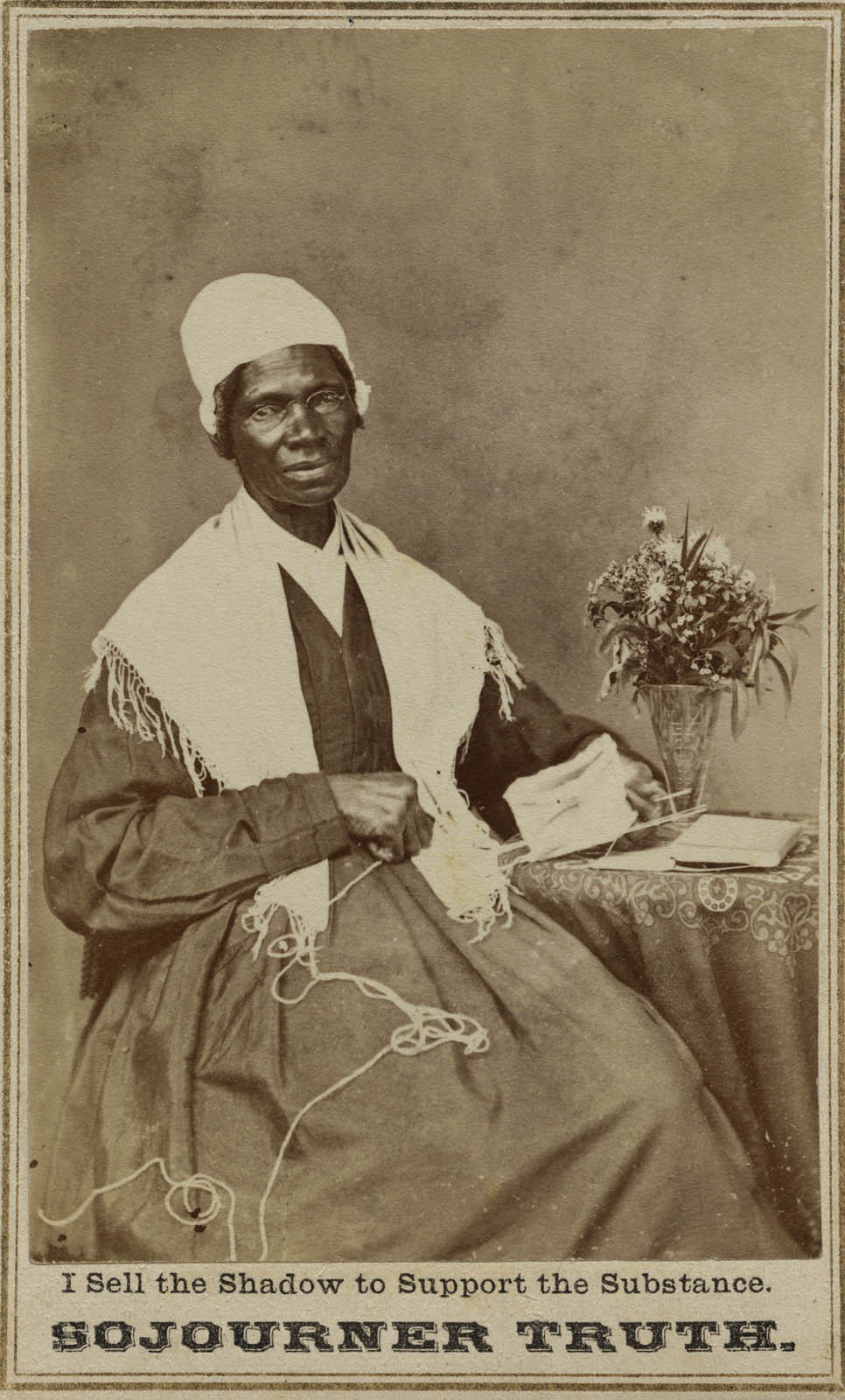
Sojourner Truth was possibly more famous for her carte-de-visite photographs than for her actual presence at abolition meetings. Her carefully chosen images made her a familiar figure to millions of viewers. They depicted a respectable matron. Truth’s famous maxim that she included with her portrait, “I sell the shadow to support the substance,” links her image (shadow) to her actual self (substance) and to the growing demand for photographs during the war years.

Truth’s image becomes an extension of herself and her nation. The yarn forms the contours of the eastern United States, with Florida’s panhandle and Texas clearly visible. As a representative American woman, Truth’s piety, simplicity, and abolitionism were shaping the United States.

Text from the National Portrait Gallery website


L. Schamer (active c. 1870) Louis Prang Lithography Co. (active 1856-1899) 'Representative Women' 1870


L. Schamer (active c. 1870)
Louis Prang Lithography Co. (active 1856-1899)
Representative Women
1870
Lithograph
National Portrait Gallery, Smithsonian Institution


This portrait unites seven leading female suffragists. Clockwise from the top are portraits of Lucretia Mott, Elizabeth Cady Stanton, Mary Livermore, Lydia Maria Child, Susan B. Anthony, and Sara Jane Lippincott, who surround Anna Dickinson, the most popular woman on the lecture circuit; in a sense, Douglass’s counterpart. The visual power of the image stems from its ability to reveal both the cohesiveness of the movement and the strong personalities within it.

Douglass knew these women and, as a leading male advocate for women’s rights, often collaborated with them and attended their conventions. But when Congress passed the Fifteenth Amendment in 1869, granting suffrage to Black men but not to women, their cohesion crumbled. Anthony and Stanton argued that white women should have suffrage before Black men. Douglass supported the amendment but continued to advocate for women’s suffrage.

Between 1860 and 1880, it became common for American reformers to gather on stages – then called lyceums – to promote abolition, temperance, education reform, and women’s rights. Lyceum associations allowed suffragists to speak. In their lectures, suffragists addressed men and women of diverse backgrounds – across state, racial, and economic divides – and reached wider audiences than through women’s organisations alone.

Representative Women is a combinative portrait that brings together seven women who were active on the lecture circuit. The visual power of the image stems from its ability to reveal both the cohesiveness of the movement and the strong individual personalities within it. Clockwise from the top are portraits of Lucretia Coffin Mott, Elizabeth Cady Stanton, Mary Livermore, Lydia Maria Francis Child, Susan B. Anthony, and Sara Jane Lippincott, who surround the central figure of Anna Elizabeth Dickinson. At the time, Dickinson was more popular than Mark Twain and held the distinction of being the highest paid woman on the lecture circuit.

Text from the National Portrait Gallery website


NOT IN THE EXHIBITION BUT IN THE NATIONAL PORTRAIT GALLERY COLLECTION


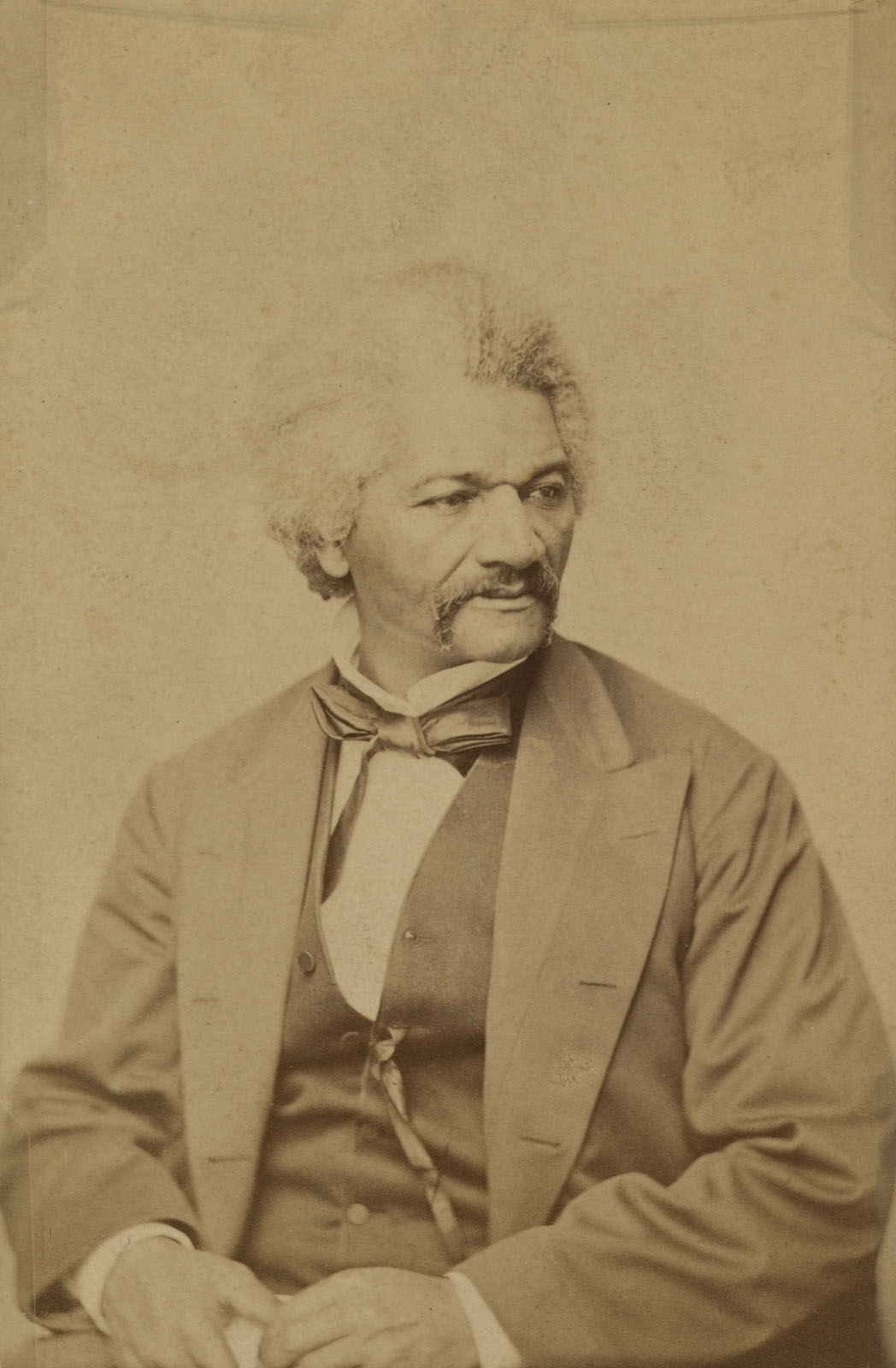
Unidentified photographer. 'Frederick Douglass' 1856


Unidentified photographer
Frederick Douglass
1856
Quarter-plate ambrotype
Image/Sight: 8.8 × 6.7cm (3 7/16 × 2 5/8″)
Mat (brass): 10.8 × 8.3cm (4 1/4 × 3 1/4″)
Case open: 12 × 19.2 × 1.3cm (4 3/4 × 7 9/16 × 1/2″)
Case closed: 12 × 9.5 × 1.9cm (4 3/4 × 3 3/4 × 3/4″)
National Portrait Gallery, Smithsonian Institution; acquired through the generosity of an anonymous donor


In the years following his escape from bondage in 1838, Frederick Douglass emerged as a powerful and persuasive spokesman for the cause of abolition. His effectiveness as an antislavery advocate was due in large measure to his firsthand experience with the evils of slavery and his extraordinary skill as an orator. His “glowing logic, biting irony, melting appeals, and electrifying eloquence” astonished and enthralled his audiences. As this ambrotype suggests, Douglass’s power was also rooted in the sheer impressiveness of his bearing, which abolitionist and activist Elizabeth Cady Stanton likened to that of “an African prince, majestic in his wrath.”

Text from the National Portrait Gallery website


George Francis Schreiber (American, 1803-1892) 'Frederick Douglass' 1870


George Francis Schreiber (American, 1803-1892)
Frederick Douglass
1870
Albumen silver print
Image/Sheet: 9.4 x 5.9cm (3 11/16 x 2 5/16″)
National Portrait Gallery, Smithsonian Institution; gift of Donald R. Simon


George Kendall Warren (American, 1834-1884) 'Frederick Douglass' 1876


George Kendall Warren (American, 1834-1884)
Frederick Douglass
1876
Albumen silver print
Image/Sheet: 9.7 × 5.7cm (3 13/16 × 2 1/4″)
National Portrait Gallery, Smithsonian Institution


Smithsonian National Portrait Gallery
8th and F Sts NW
Washington, DC 20001

Opening hours:
11.30am – 7.00pm daily

Smithsonian National Portrait Gallery website

LIKE ART BLART ON FACEBOOK

Back to top

Exhibition: ‘Women of Progress: Early Camera Portraits’ at the Smithsonian National Portrait Gallery, Washington, DC

Exhibition dates: 14th June, 2019 – 31st May, 2020

Curator: Ann Shumard


Unidentified Artist. 'Charlotte Cushman' c. 1850 (detail) from the exhibition 'Women of Progress: Early Camera Portraits' at the Smithsonian National Portrait Gallery, Washington, DC, June 2019 - May 2020


Unidentified Artist
Charlotte Cushman (detail)
c. 1850
Half-plate daguerreotype
Image: 12 × 9cm (4 3/4 × 3 9/16″)
National Portrait Gallery, Smithsonian Institution


Let us celebrate strong, creative, (com)passionate women.

Marcus


Many thankx to the National Portrait Gallery for allowing me to publish the photographs in the posting. Please click on the photographs for a larger version of the image.


Seriousness of their intent and purpose writ large upon their faces. Portraits of the self, as if alone, without decorous engagement for the camera.


Elizabeth Gertsakis


In mid-nineteenth-century America, the growing presence of women in public life coincided with the rise of portrait photography. This exhibition of daguerreotypes and ambrotypes from the 1840s and 1850s features portraits of early feminist icons, women’s rights advocates Margaret Fuller and Lucy Stone, abolitionist Lucretia Mott and best-selling author Harriet Beecher Stowe.


Unidentified Artist. 'Charlotte Cushman' c. 1850 from the exhibition 'Women of Progress: Early Camera Portraits' at the Smithsonian National Portrait Gallery, Washington, DC, June 2019 - May 2020


Unidentified Artist
Charlotte Cushman
c. 1850
Half-plate daguerreotype
Image: 12 × 9cm (4 3/4 × 3 9/16″)
National Portrait Gallery, Smithsonian Institution


Charlotte Saunders Cushman (July 23, 1816 – February 18, 1876) was an American stage actress. Her voice was noted for its full contralto register, and she was able to play both male and female parts. She lived intermittently in Rome, in an expatriate colony of prominent artists and sculptors, some of whom became part of her tempestuous private life.

Text from the Wikipedia website


Charlotte Cushman was the foremost American-born actress of her day and the first to enjoy critical and popular acclaim at home and abroad. Following her 1836 New York City stage debut as Lady Macbeth, she honed her craft there and in Philadelphia, where she managed the Walnut Street Theatre from 1842 to 1844. With a dramatic range and commanding stage presence that more than compensated for her lack of conventional beauty, Cushman boldly developed a repertoire that included male as well as female roles. Taking London by storm in 1845, she returned to universal acclaim in the United States in 1849.

Exhibition label from Smithsonian National Portrait Gallery website [Online] Cited 13/11/2019.


Unidentified Artist. 'Lucy Stone' c. 1855 from the exhibition 'Women of Progress: Early Camera Portraits' at the Smithsonian National Portrait Gallery, Washington, DC, June 2019 - May 2020


Unidentified Artist
Lucy Stone
c. 1855
Half-plate daguerreotype
Case Open: 19.9 × 32.9 × 0.8cm (7 13/16 × 12 15/16 × 5/16″)
National Portrait Gallery, Smithsonian Institution


Lucy Stone (August 13, 1818 – October 18, 1893) was a prominent U.S. orator, abolitionist, and suffragist, and a vocal advocate and organiser promoting rights for women. In 1847, Stone became the first woman from Massachusetts to earn a college degree. She spoke out for women’s rights and against slavery at a time when women were discouraged and prevented from public speaking. Stone was known for using her birth name after marriage, the custom being for women to take their husband’s surname.

Text from the Wikipedia website


Lucy Stone was unequivocal in her opposition to slavery and her support for women’s rights. Yet, when some abolitionists argued that her antislavery efforts should take precedence, she replied, “I was a woman before I was an abolitionist.” Stone helped to organise the first national women’s rights conference in Worcester, Massachusetts, in 1850, and lectured widely on the topic of women’s suffrage. When she married Henry Blackwell in 1855, she defied tradition by retaining her maiden name. In 1866, Stone became a founder of the American Equal Rights Association, which sought to secure voting rights for African Americans and women.

Exhibition label from Smithsonian National Portrait Gallery website [Online] Cited 13/11/2019.


Unidentified Artist. 'Harriet Beecher Stowe' 1852 from the exhibition 'Women of Progress: Early Camera Portraits' at the Smithsonian National Portrait Gallery, Washington, DC, June 2019 - May 2020


Unidentified Artist
Harriet Beecher Stowe
1852
Sixth-plate daguerreotype
Image: 3.9cm x 3.4cm (1 9/16″ x 1 5/16″)
National Portrait Gallery, Smithsonian Institution


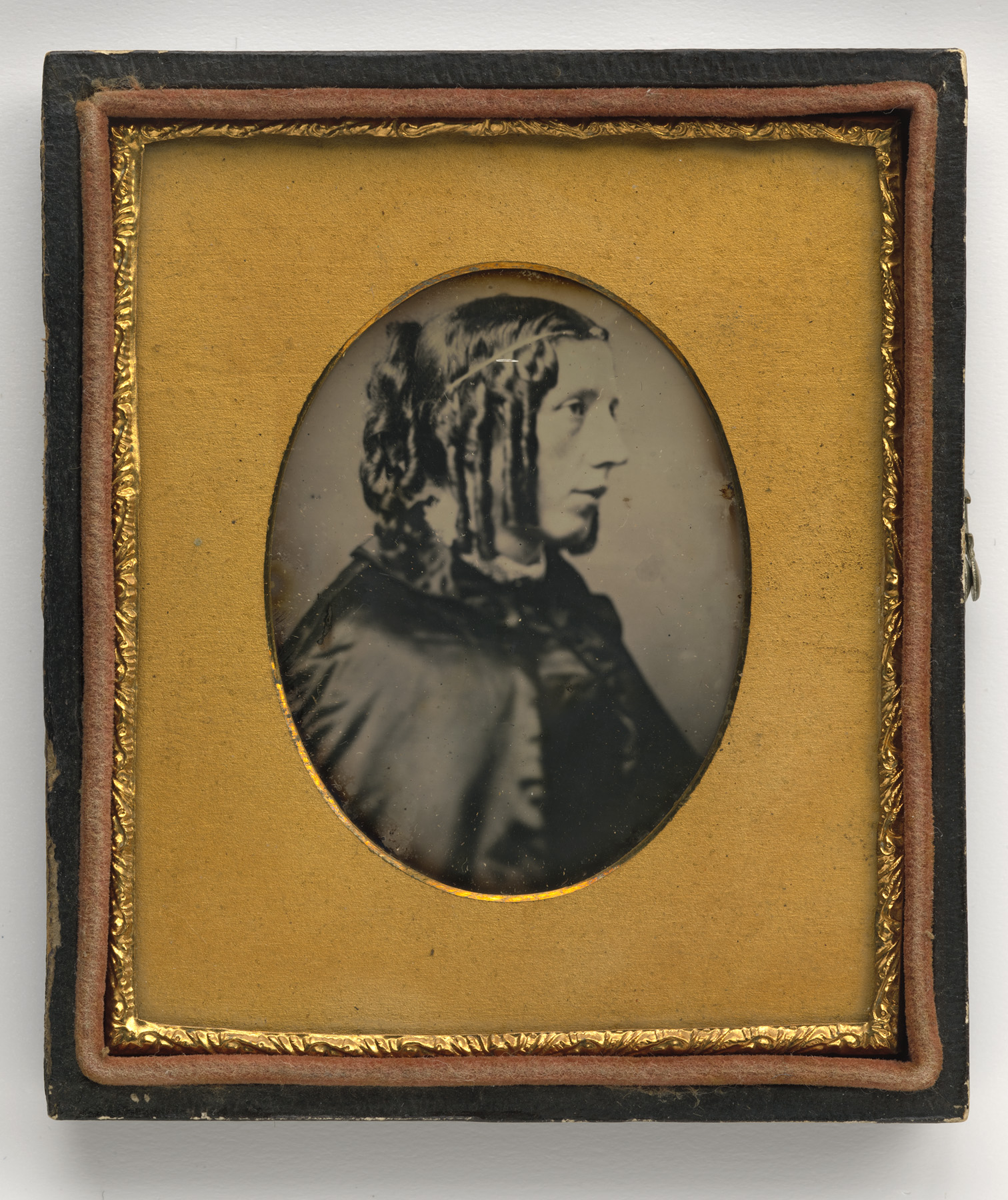
Harriet Elisabeth Beecher Stowe (June 14, 1811 – July 1, 1896) was an American abolitionist and author. She came from the Beecher family, a famous religious family, and is best known for her novel Uncle Tom’s Cabin (1852), which depicts the harsh conditions for enslaved African Americans. The book reached millions as a novel and play, and became influential in the United States and Great Britain, energising anti-slavery forces in the American North, while provoking widespread anger in the South. Stowe wrote 30 books, including novels, three travel memoirs, and collections of articles and letters. She was influential for both her writings and her public stances and debates on social issues of the day.

Text from the Wikipedia website


Harriet Beecher Stowe authored numerous articles, essays, and books during her long career, but it was her dramatic, antislavery novel Uncle Tom’s Cabin that brought her fame at home and abroad. First serialised in the National Era newspaper, Uncle Tom’s Cabin appeared in book form in 1852 and sold more than 300,000 copies during its first year in print. Lionised by Northern abolitionists and vilified by Southern slaveholders, Stowe became the subject of intense public interest. When requests for her portrait multiplied, she responded by posing for several daguerreotype likenesses that were soon copied and distributed widely.

Exhibition label from Smithsonian National Portrait Gallery website [Online] Cited 13/11/2019.


Ezra Greenleaf Weld (American, 1801-1874) 'Frederick Douglass with the Edmonson Sisters at Fugitive Slave Law Convention, Cazenovia, New York' 1850


Ezra Greenleaf Weld (American, 1801-1874)
Frederick Douglass with the Edmonson Sisters at Fugitive Slave Law Convention, Cazenovia, New York
1850
Half-plate copy daguerreotype
Case Open: 15.2 x 24.4 x 1.3 cm (6 x 9 5/8 x 1/2″)
National Portrait Gallery, Smithsonian Institution; on loan from Mr. and Mrs. Set Charles Momjian


Weld daguerreotype taken at the 1850 Fugitive Slave Law Convention, Cazenovia, New York. The Edmonson sisters are standing wearing bonnets and shawls in the row behind the seated speakers. Frederick Douglass is seated, with Gerrit Smith standing behind him.

Ezra Greenleaf Weld (October 26, 1801 – October 14, 1874), often known simply as “Greenleaf”, was a photographer and an operator of a daguerreotype studio in Cazenovia, New York. He and his family were involved with the abolitionist movement.

Weld opened his first studio in his home in 1845. In 1850, Cazenovia hosted the abolitionist meeting known as the Fugitive Slave Law Convention. This gave Weld the opportunity to photograph the legendary orator Frederick Douglass with the Edmonson sisters, Gerritt Smith and Abby Kelley Foster. This daguerreotype was given to the imprisoned abolitionist William Chaplin who had helped many of the attendees escape to freedom.

Of the six daguerreotypes of Douglass that have survived, only one besides Greenleaf’s image has had its daguerreotypist identified. Greenleaf’s image is unique because it is a group shot at an outdoor meeting rather than a studio portrait. Daguerreotypes were seldom attempted under these circumstances because the long exposure time required made it difficult to get a satisfactory result. Weld’s is the only daguerreotype of Douglass whose date is known with certainty. This daguerreotype is also unique in the paradoxical sense that it is the only one known to have been copied. Two original half-plates exist: One is held by the Madison County Historical Society in Oneida, New York, the other is in a private collection and currently on display at the Smithsonian Institution in Washington, D.C.

Text from the Wikipedia website


The Fugitive Slave Law Convention was held in Cazenovia, New York, August 21-22, 1850. Organised to oppose passage of the Fugitive Slave Act of 1850 by the United States Congress, participants included Frederick Douglass, the Edmonson sisters, Gerrit Smith, Samuel Joseph May, and Theodore Dwight Weld, among others. The convention opened at the First Congregational Church of Cazenovia (now Cazenovia College’s theater building), then moved to “the orchard of Grace Wilson’s School, located on Sullivan Street,” to accommodate the estimated 2000 to 3000 participants. It was chaired by Douglass.

Text from the Wikipedia website


Frederick Douglass (born Frederick Augustus Washington Bailey; c.  February 1818 – February 20, 1895) was an American social reformer, abolitionist, orator, writer, and statesman. After escaping from slavery in Maryland, he became a national leader of the abolitionist movement in Massachusetts and New York, gaining note for his oratory and incisive antislavery writings. In his time, he was described by abolitionists as a living counter-example to slaveholders’ arguments that slaves lacked the intellectual capacity to function as independent American citizens. Northerners at the time found it hard to believe that such a great orator had once been a slave. …

Douglass was a firm believer in the equality of all peoples, whether white, black, female, Native American, or Chinese immigrants. He was also a believer in dialogue and in making alliances across racial and ideological divides, and in the liberal values of the U.S. Constitution. When radical abolitionists, under the motto “No Union with Slaveholders”, criticised Douglass’ willingness to engage in dialogue with slave owners, he replied: “I would unite with anybody to do right and with nobody to do wrong.”

Text from the Wikipedia website


Mary Edmonson (1832-1853) and Emily Edmonson (1835-1895), “two respectable young women of light complexion”, were African Americans who became celebrities in the United States abolitionist movement after gaining their freedom from slavery. On April 15, 1848, they were among the 77 slaves who tried to escape from Washington, DC on the schooner The Pearl to sail up the Chesapeake Bay to freedom in New Jersey.

Although that effort failed, they were freed from slavery by funds raised by the Congregational Church in Brooklyn, New York, whose pastor was Henry Ward Beecher, an abolitionist. After gaining freedom, the Edmonsons were supported to go to school; they also worked. They campaigned with Beecher throughout the North for the end of slavery in the United States.

Text from the Wikipedia website


Gerrit Smith (March 6, 1797 – December 28, 1874), also spelled Gerritt, was a leading American social reformer, abolitionist, politician, and philanthropist. Spouse to Ann Carroll Fitzhugh, Smith was a candidate for President of the United States in 1848, 1856, and 1860, but only served 18 months in the federal government – in Congress as a Free Soil Party Representative, in 1853-1854.

Text from the Wikipedia website


In 1850, as Congress considered passage of a harsh new Fugitive Slave Law, more than 2,000 people heeded the call of abolitionist Gerrit Smith (standing, center) to meet in Cazenovia, New York, and protest the impending legislation. Among the nearly fifty escaped slaves to participate were Emily and Mary Edmonson (in plaid shawls), whose freedom had been purchased by abolitionists in 1848, and Frederick Douglass (seated, center right), who served as the convention’s presiding officer. On the gathering’s second day, the overflowing crowd moved from its initial meeting place in a church to a nearby orchard. There, a local daguerreotypist made this extraordinary record of the convention.

Exhibition label from Smithsonian National Portrait Gallery website [Online] Cited 13/11/2019.


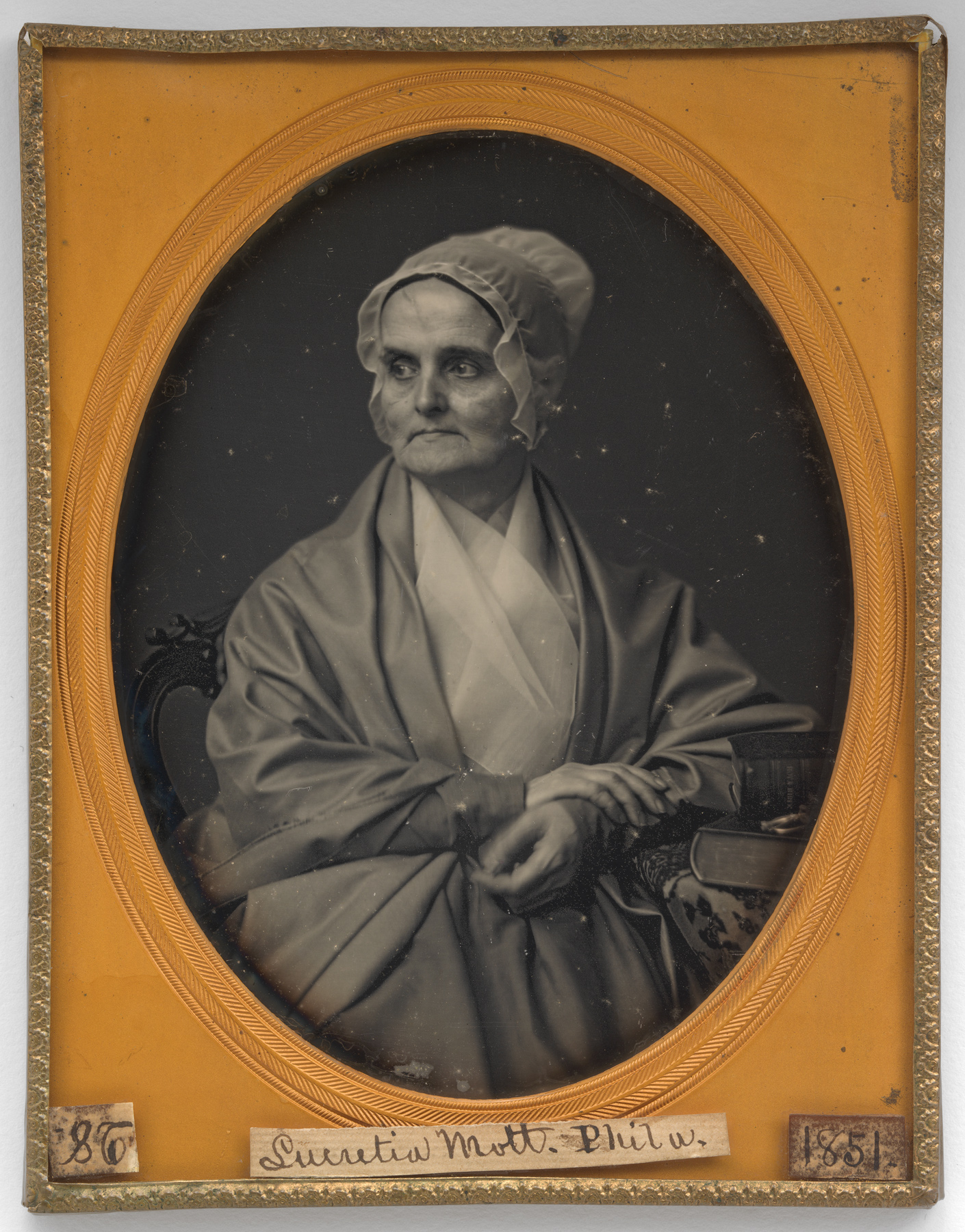
Marcus Aurelius Root (American, 1808-1888) 'Lucretia Coffin Mott' 1851


Marcus Aurelius Root (American, 1808-1888)
Lucretia Coffin Mott
1851
Half-plate daguerreotype
Case Open: 15 x 23.2 x 1cm (5 7/8 x 9 1/8 x 3/8″)
National Portrait Gallery, Smithsonian Institution


Marcus Aurelius Root (1808-1888) was a writing teacher and photographer. He was born in Granville, Ohio and died in Philadelphia, Pennsylvania.

On 20 June 1846, he bought John Jabez Edwin Mayall’s Chestnut Street photography studio that was in the same building as Root’s residence in Philadelphia, Pennsylvania. Root had success as a daguerreotypist working with his brother, Samuel Root. The Root Brothers had a gallery in New York City from 1849 to 1857. Marcus Aurelius Root authored an important book on photography entitled The Camera and the Pencil.

Text from the Wikipedia website


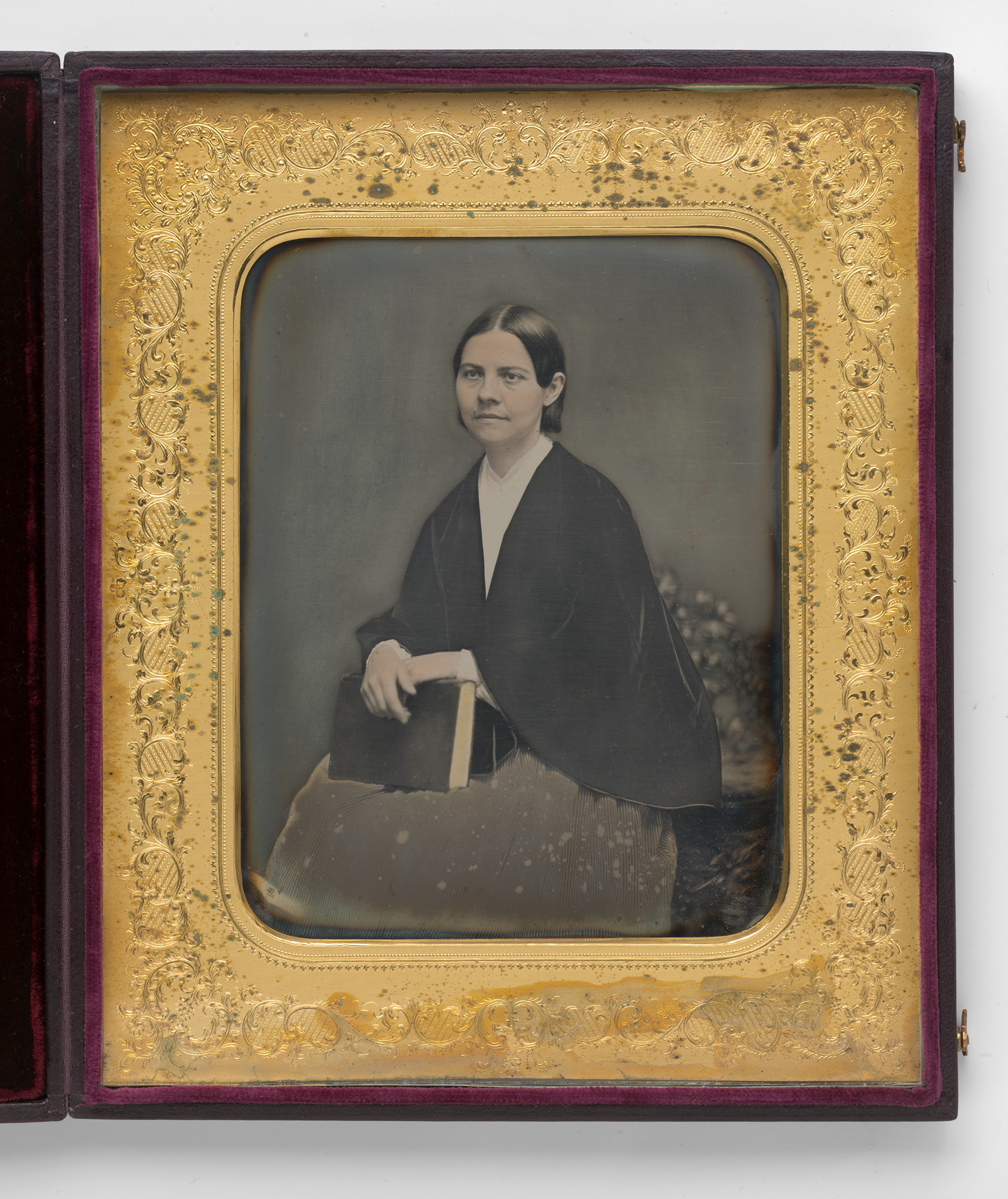
Lucretia Mott (née Coffin; January 3, 1793 – November 11, 1880) was a U.S. Quaker, abolitionist, women’s rights activist, and social reformer. She had formed the idea of reforming the position of women in society when she was amongst the women excluded from the World Anti-Slavery Convention in 1840. In 1848 she was invited by Jane Hunt to a meeting that led to the first meeting about women’s rights. Mott helped write the Declaration of Sentiments during the 1848 Seneca Falls Convention.

Her speaking abilities made her an important abolitionist, feminist, and reformer. When slavery was outlawed in 1865, she advocated giving former slaves who had been bound to slavery laws within the boundaries of the United States, whether male or female, the right to vote. She remained a central figure in the abolition and suffrage movement until her death in 1880.

Text from the Wikipedia website


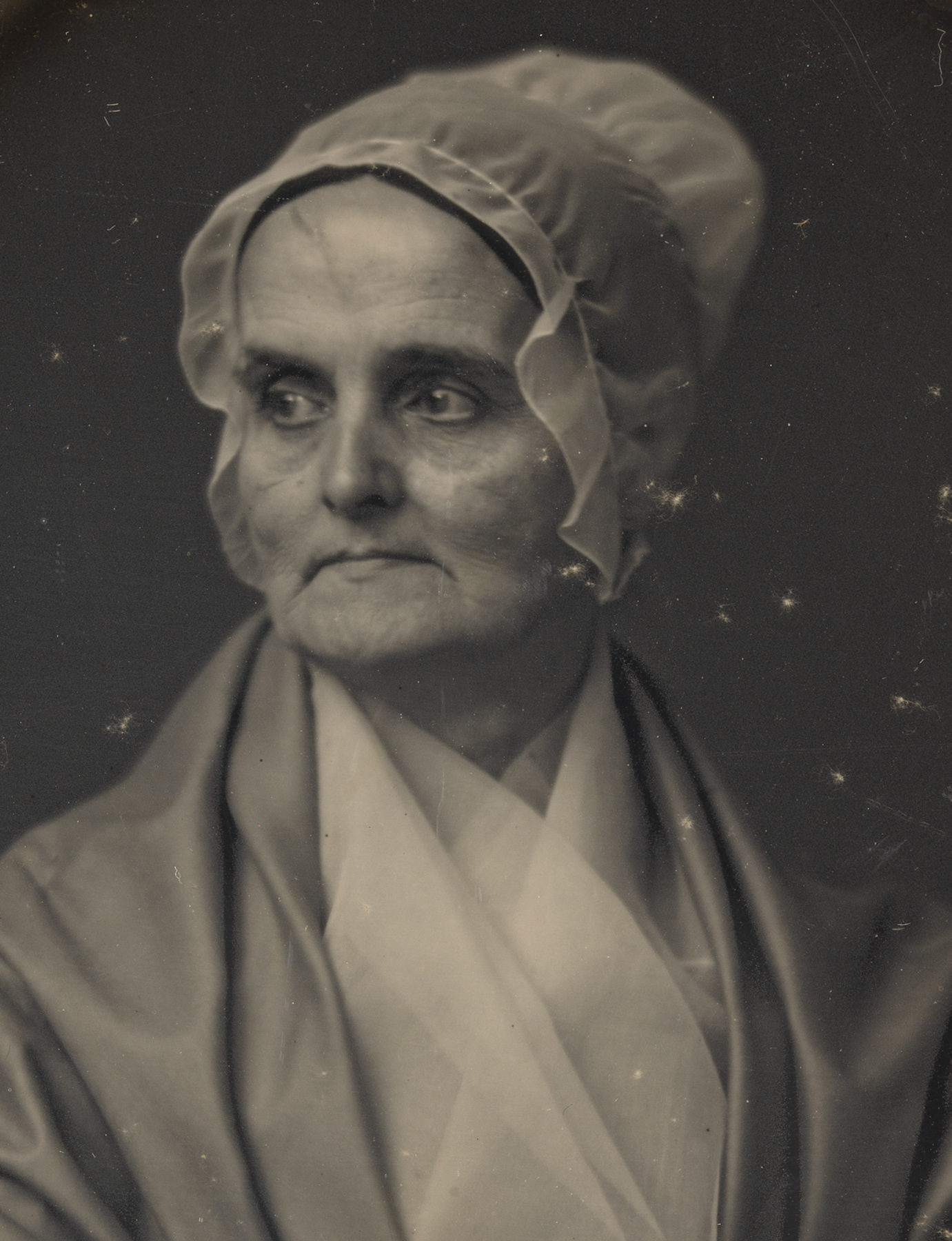
A devout Quaker whose activism proved unsettling to some members of her faith, Lucretia Mott assumed a highly visible role in the abolitionist movement. After joining William Lloyd Garrison at the launch of the American Anti-Slavery Society, she helped to found Philadelphia’s Female Anti-Slavery Society. Her concern for women’s rights was a natural outgrowth of her abolitionist efforts. In 1848, Mott and Elizabeth Cady Stanton organised the convention at Seneca Falls, New York, that galvanised the women’s suffrage movement.

Exhibition label from the Smithsonian National Portrait Gallery website [Online] Cited 13/11/2019.


Marcus Aurelius Root (American, 1808-1888) 'Lucretia Coffin Mott' 1851 (detail)


Marcus Aurelius Root (American, 1808-1888)
Lucretia Coffin Mott (detail)
1851
Half-plate daguerreotype
Case Open: 15 x 23.2 x 1cm (5 7/8 x 9 1/8 x 3/8″)
National Portrait Gallery, Smithsonian Institution


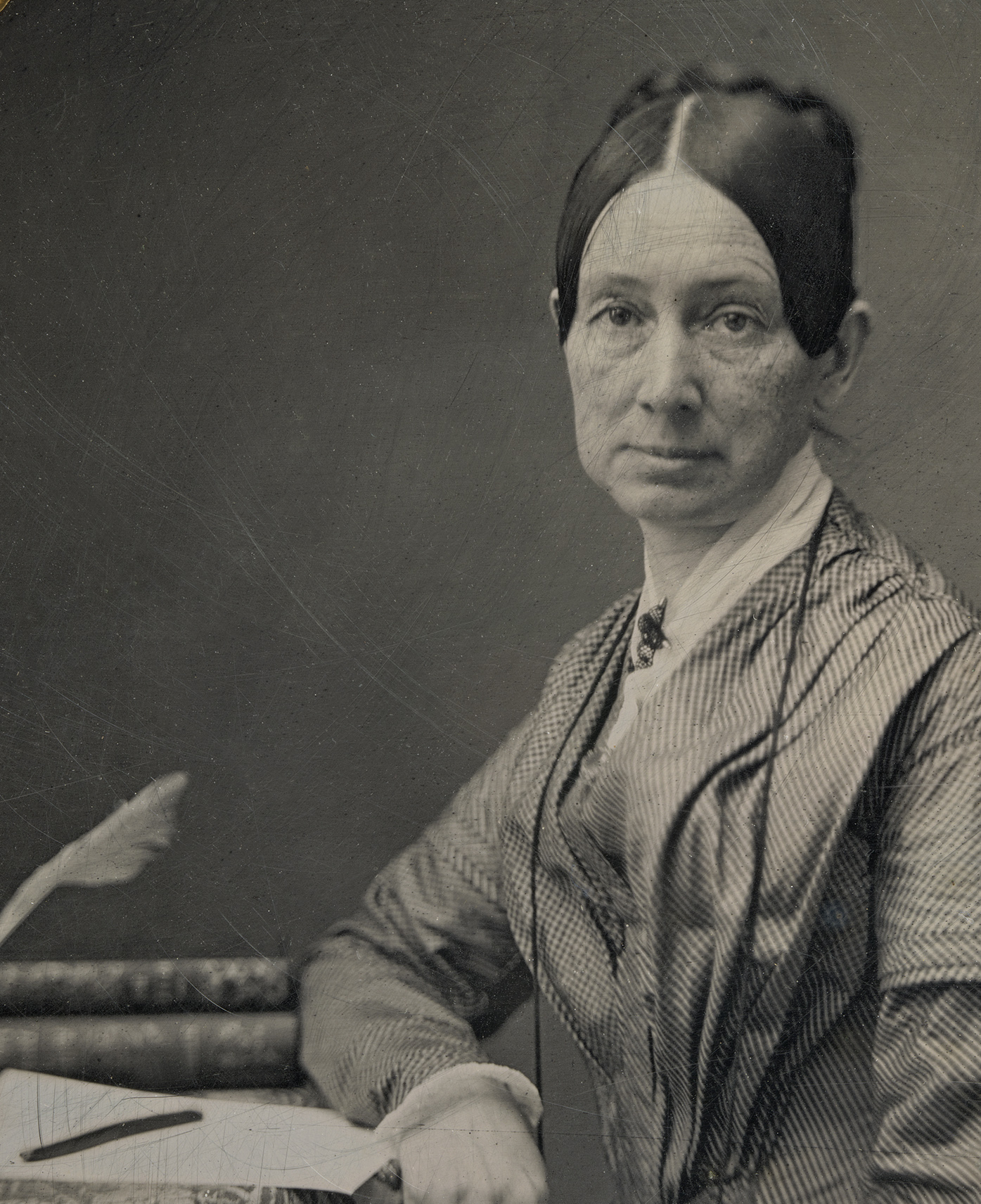
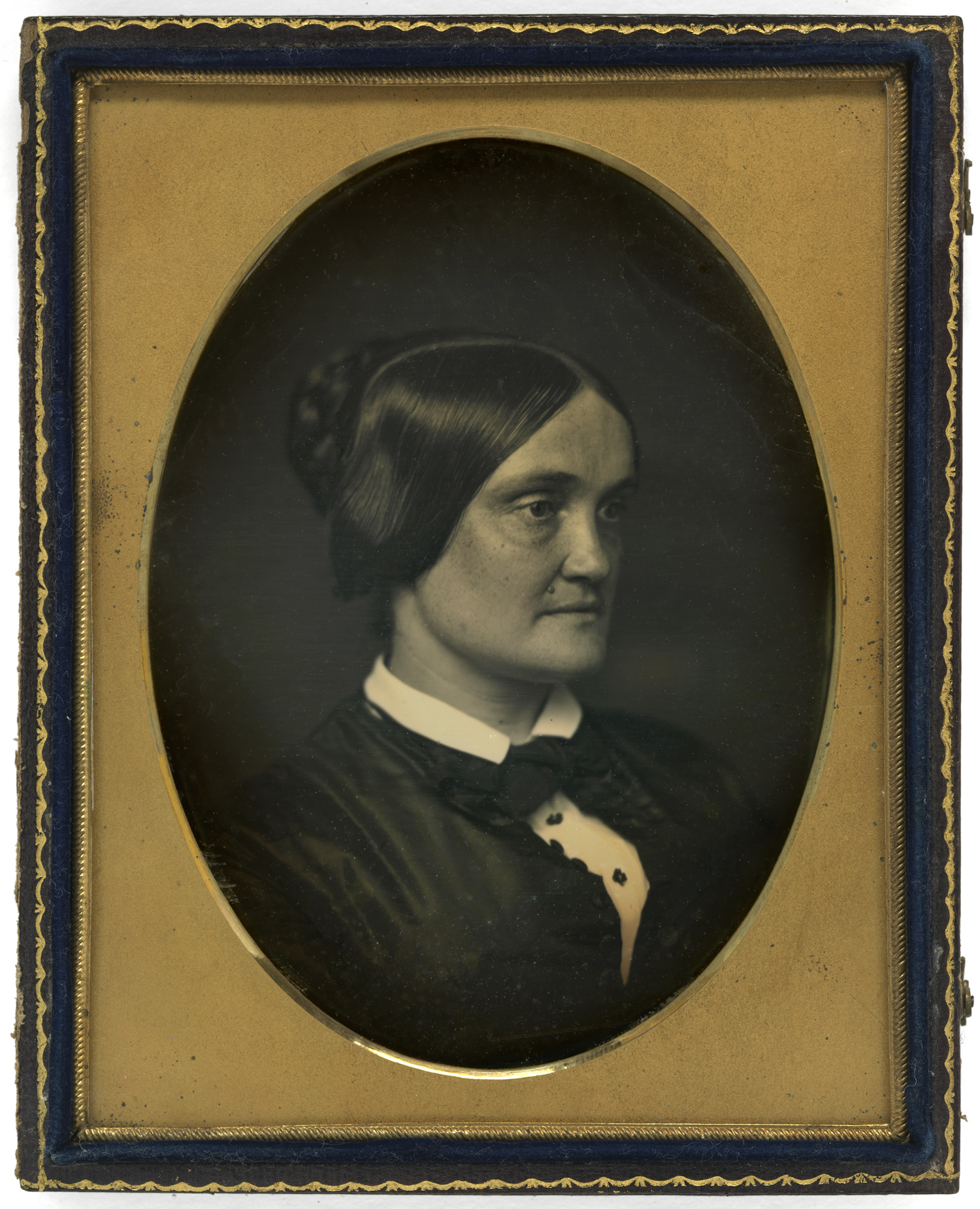
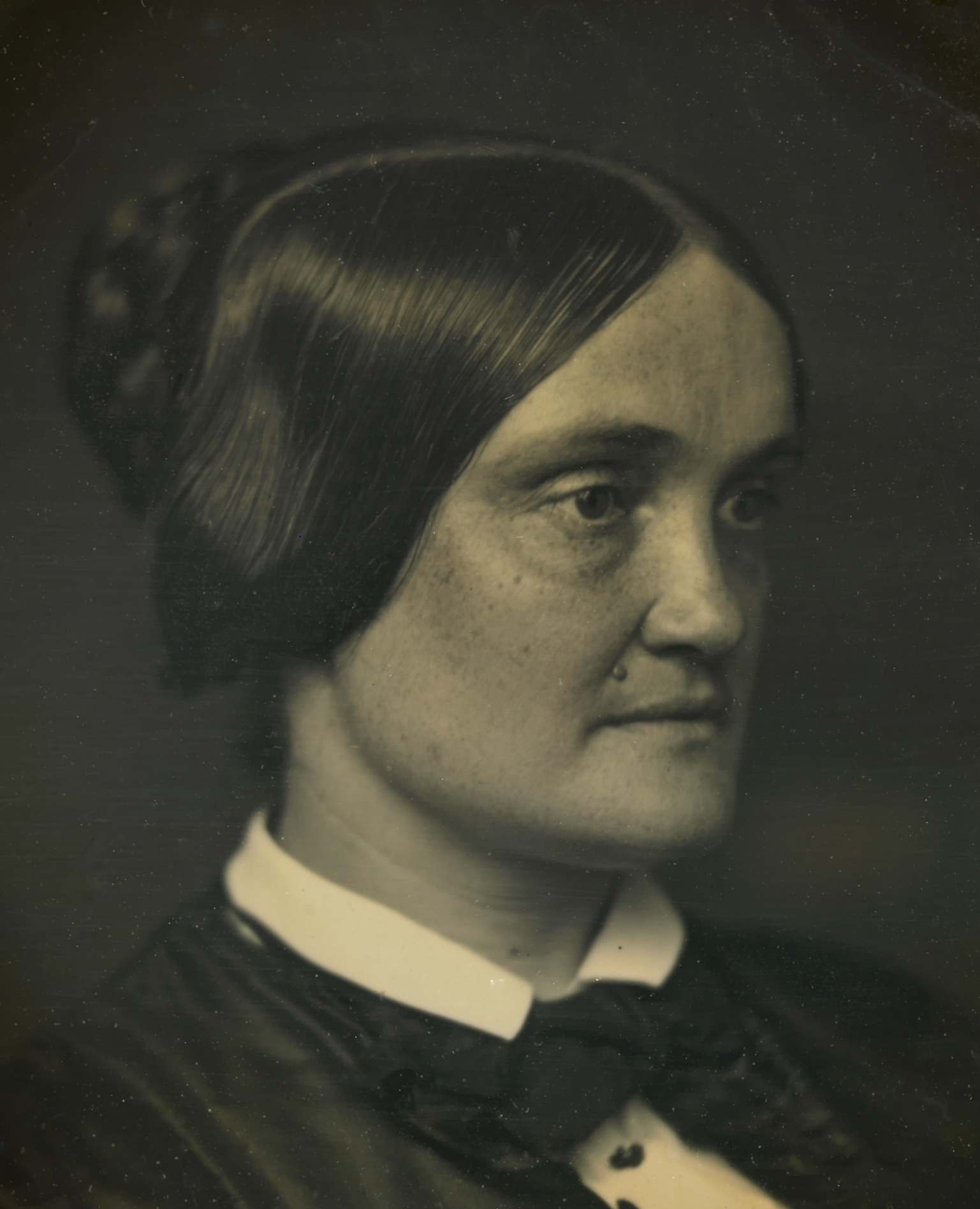
The Smithsonian’s National Portrait Gallery will display photographs of 19th-century activists and professionals in “Women of Progress: Early Camera Portraits,” a presentation of 10 daguerreotypes and two ambrotypes from the museum’s extensive collection of antebellum portraits. This focused exhibition will explore the increasing visibility of American women in society before the Civil War and the corresponding advent of portrait photography. Organised by Ann Shumard, senior curator of photographs, “Women of Progress” is part of the Smithsonian American Women’s History Initiative, “Because of Her Story,” and is one of seven exhibitions in the Portrait Gallery’s 2019 – 2020 program to highlight women in history. “Women of Progress: Early Camera Portraits” will be displayed on the museum’s first floor June 14 through May 31, 2020.

The Portrait Gallery’s exhibition will reacquaint visitors with the fascinating lives of 13 memorable Americans. “In the 1840s and 1850s, the growing presence of women in public life coincided with the rise of portrait photography,” Shumard said. “As a result, women who were making their mark in endeavours as varied as journalism, literature, abolitionism and the burgeoning women’s rights movement became sought-after subjects for the camera.”

Those featured in the exhibition will include Dorothea Lynde Dix, activist and educator who sought humane treatment for people with mental illness; Margaret Fuller, editor and women’s rights advocate; Lucretia Mott, abolitionist and co-organiser of the Seneca Falls Convention; Lucy Stone, suffragist and a founder of the American Equal Rights Association; and Harriet Beecher Stowe, author of Uncle Tom’s Cabin. Other pioneers are the actress Laura Keene, the first woman manager of a major theatre in New York City and Mary Ann Brown Patten, the first woman to command a sailing ship around Cape Horn. The exhibition will also highlight the abolitionists Emily and Mary Edmonson, who are pictured in a daguerreotype with Frederick Douglass at the 1850 Fugitive Slave Law Convention in Cazenovia, New York. Funding for the exhibition was made possible by the National Portrait Gallery’s Women’s Initiative Leadership Committee including Capital One and the Smithsonian American Women’s History Initiative.

Press release from the National Portrait Gallery [Online] Cited 03/11/2019


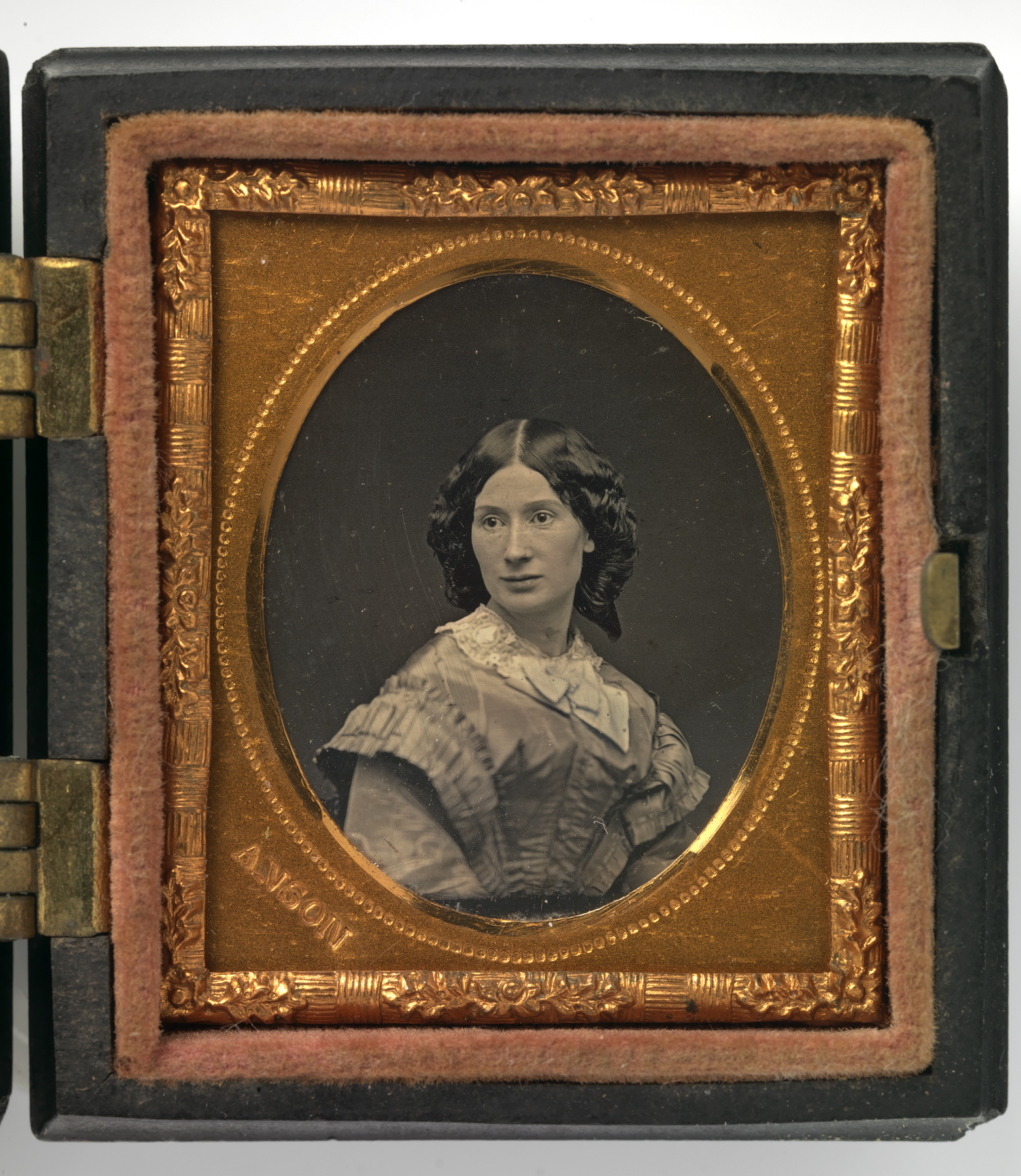
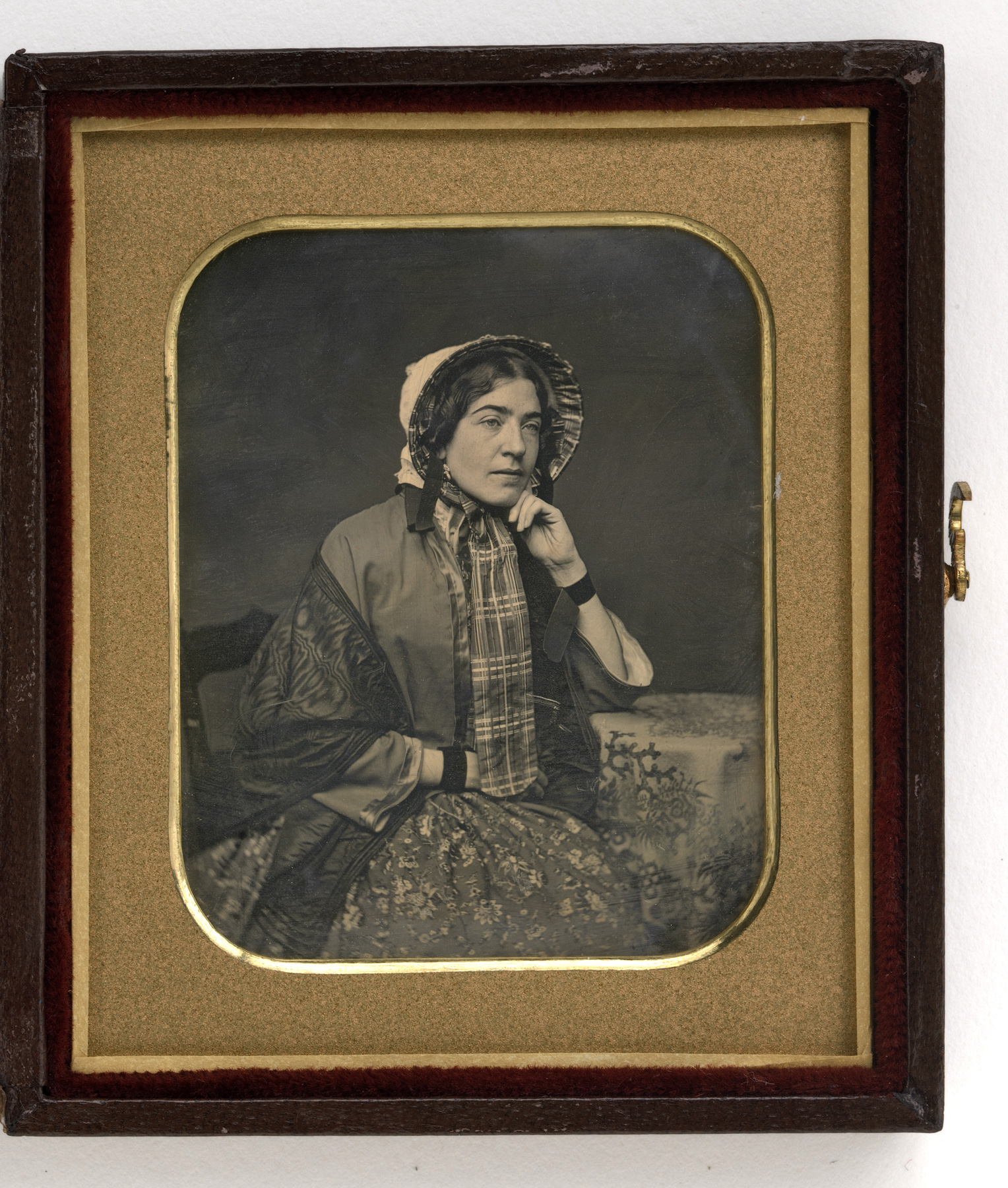
Rufus Anson. 'Laura Keene' c. 1855


Rufus Anson (American, c. 1821-?)
Laura Keene
c. 1855
Sixteenth-plate daguerreotype
Case Open: 5.4 × 9.7cm (2 1/8 × 3 13/16″)
National Portrait Gallery, Smithsonian Institution
Acquired through the generosity of Bill and Sally Wittliff


Rufus Anson (active 1851-1867), American daguerreotypist who operated a studio in New York City.

An accomplished comedic actress, Laura Keene (20 July 1826 – 4 November 1873) rattled New York City’s theatrical establishment in 1855 when she became the first woman manager of a major theatre in that city. After leasing the Metropolitan Theatre, she opened Laura Keene’s Varieties, serving as manager, director, and principal star. Keene faced hostility from New York’s male theatrical managers. Her theatre was vandalised, and she lost her lease. Undeterred, she opened the Laura Keene Theatre in a new building in 1856. Well versed in all aspects of her craft, Keene was a highly successful manager who championed emerging playwrights and attracted the brightest stars to her acting company.

Exhibition label from the Smithsonian National Portrait Gallery website [Online] Cited 13/11/2019.


Rufus Anson. 'Laura Keene' c. 1855 (detail)


Rufus Anson (American, c. 1821-?)
Laura Keene (detail)
c. 1855
Sixteenth-plate daguerreotype
Case Open: 5.4 × 9.7cm (2 1/8 × 3 13/16″)
National Portrait Gallery, Smithsonian Institution
Acquired through the generosity of Bill and Sally Wittliff


John Plumbe, Jr. (American born Wales, 1809-1857) 'Margaret Fuller' 1846


John Plumbe, Jr. (American born Wales, 1809-1857)
Margaret Fuller
1846
Sixth-plate daguerreotype
National Portrait Gallery, Smithsonian Institution


Short on funds and waiting to receive a commission from the United States Congress to survey the route for a transcontinental railroad, an idea which he is credited with originating, civil engineer John Plumbe, Jr., took up photography in 1840 after seeing the work of an itinerant daguerreotypist in Washington, D.C. A Welshman by birth, Plumbe opened a gallery in Boston the following year. He eventually maintained galleries in thirteen cities, making his name recognisable in numerous cities across the country. Plumbe opened his Washington, D.C., gallery in 1844, the first in the nation’s capital. By the time he established the National Plumbeotype Gallery of engraved and lithographic reproductions of his own images in 1846, Plumbe had been dubbed “the American Daguerre” by the press. In 1847 Plumbe found himself in financial trouble and he sold his business to his employees. Two years later he gave up photography and retired to Dubuque, Iowa, where [suffering from the prolonged effects of malaria and from acute depression] he met an untimely end by cutting his own throat [at his brother’s residence in Dubuque on May 28, 1857].

Text from the J. Paul Getty Museum website [Online] Cited 13/11/2019
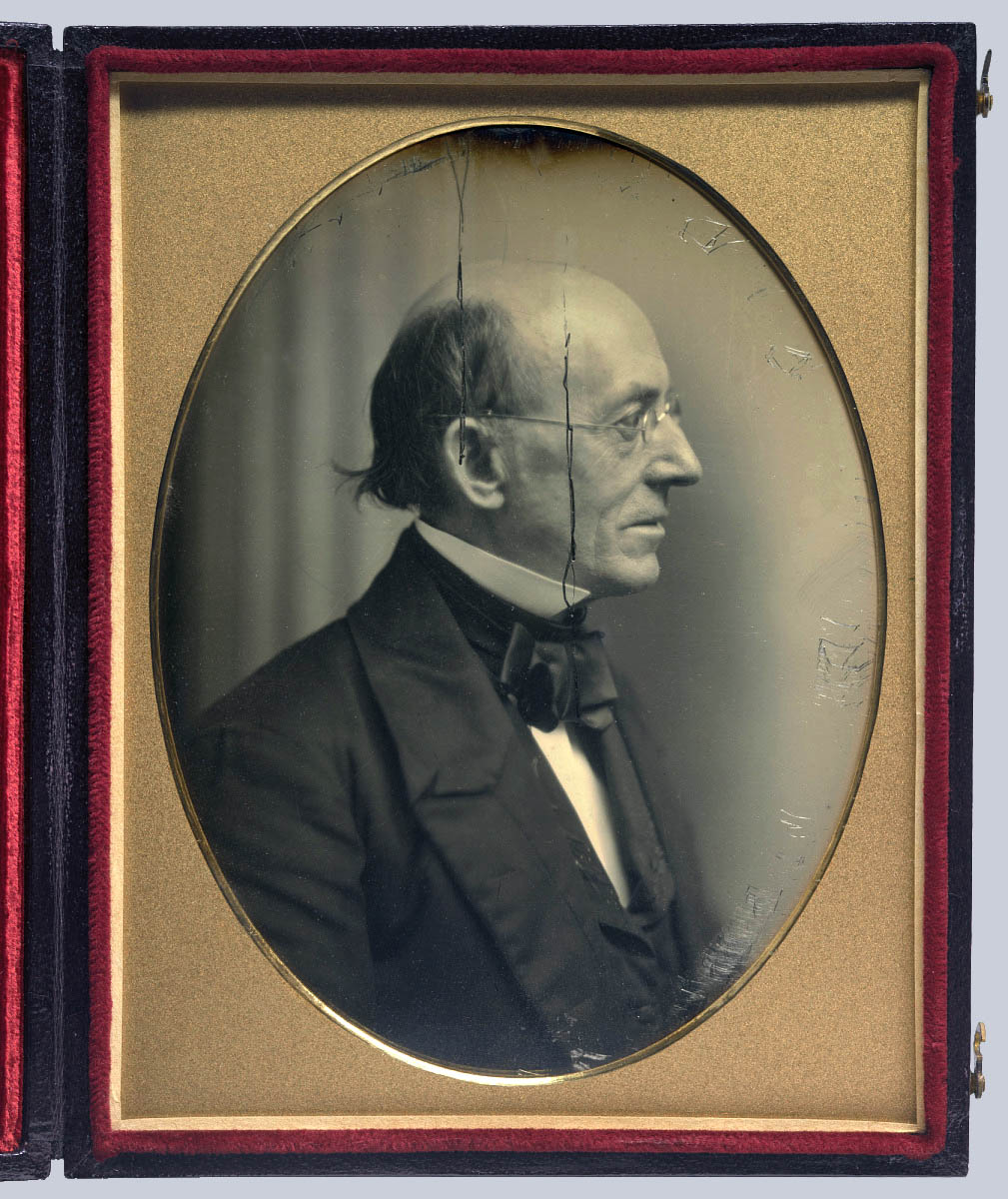
 

After working briefly for the Wisconsin territorial legislature in late 1839, Plumbe went east to continue his campaign for a Pacific railroad. He turned to the newly introduced daguerreotype process of photography as a means of support and excelled in that endeavour. Within six years Plumbe had attained a national reputation through photographic competitions and by establishing a chain of 23 galleries. Plumbe’s Dubuque gallery, opened in 1841 and operated by his brother Richard (1810-1896), was the first photographic establishment west of the Mississippi. Plumbe manufactured and imported photographic materials, gave instruction to the first generation of photographers, and published dozens of lithographic prints of noted Americans based on his daguerreotypes. Among his many achievements are the earliest photographs of the U.S. Capitol and White House (exterior and interior), the earliest photograph of a president in office (James K. Polk), and thousands of portraits of the most noted personalities of the era. Plumbe pioneered brand name recognition, obtained patent rights for colour photography, and published a magazine filled with illustrations based on his photographs. By late 1848, however, Plumbe had experienced severe financial reverses due to competition and mismanagement and was forced to sell his galleries to pay his debts.

Text from The Biographical Dictionary of Iowa website [Online] Cited 13/11/2019


John Plumbe, Jr. (American born Wales, 1809-1857) 'Margaret Fuller' 1846 (detail)


John Plumbe, Jr. (American born Wales, 1809-1857)
Margaret Fuller (detail)
1846
Sixth-plate daguerreotype
National Portrait Gallery, Smithsonian Institution


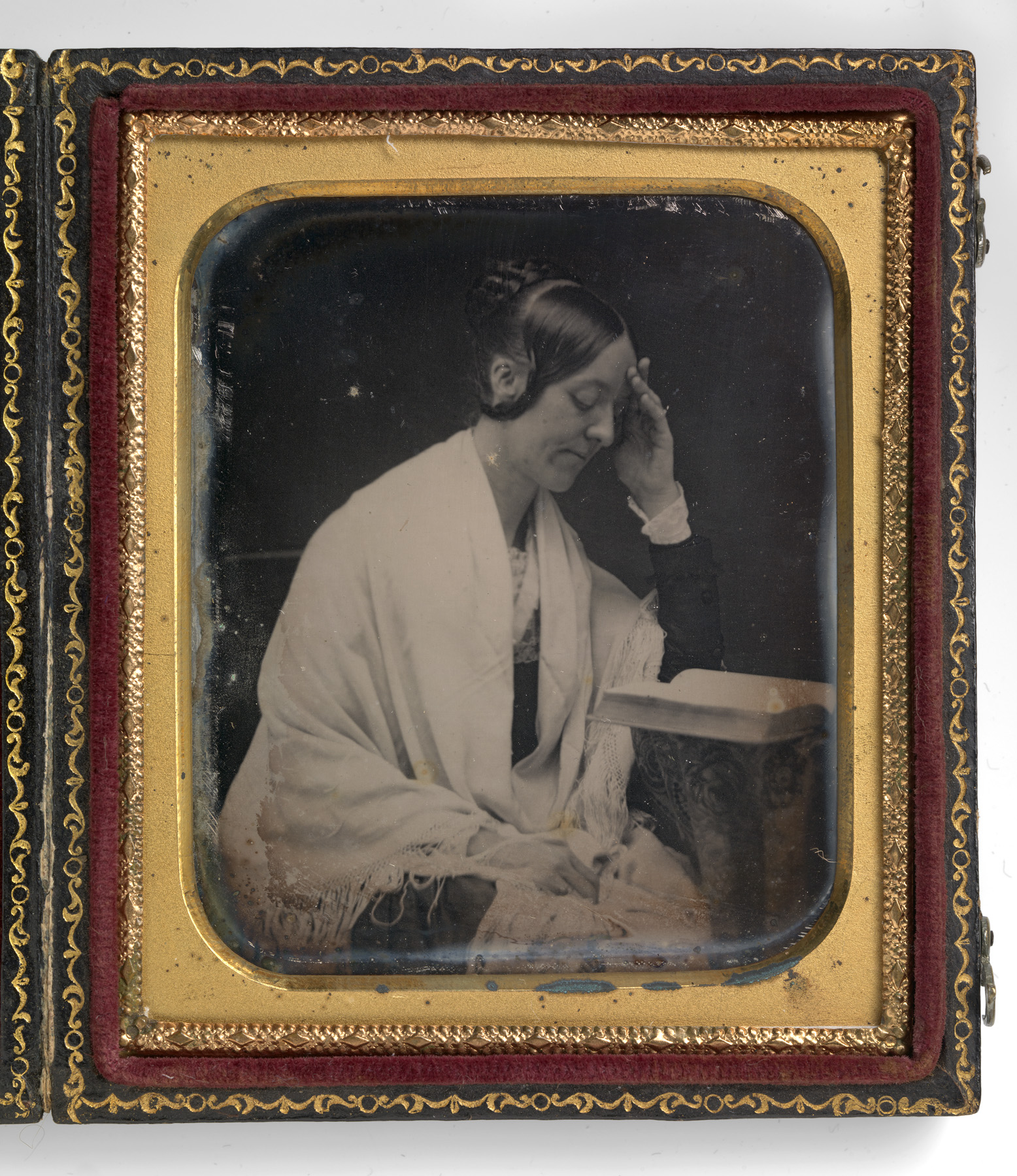
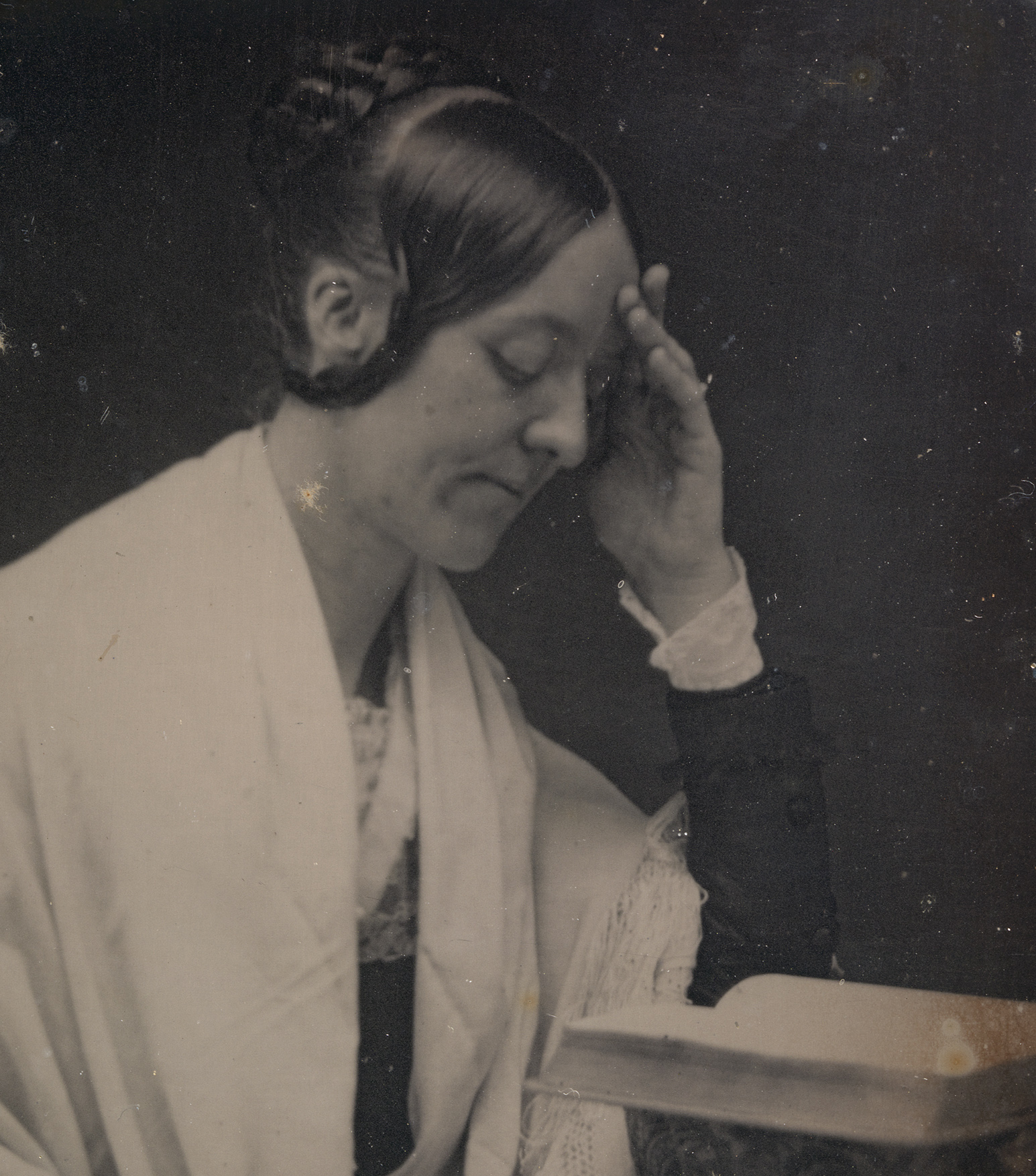
The only known daguerreotype of Margaret Fuller.

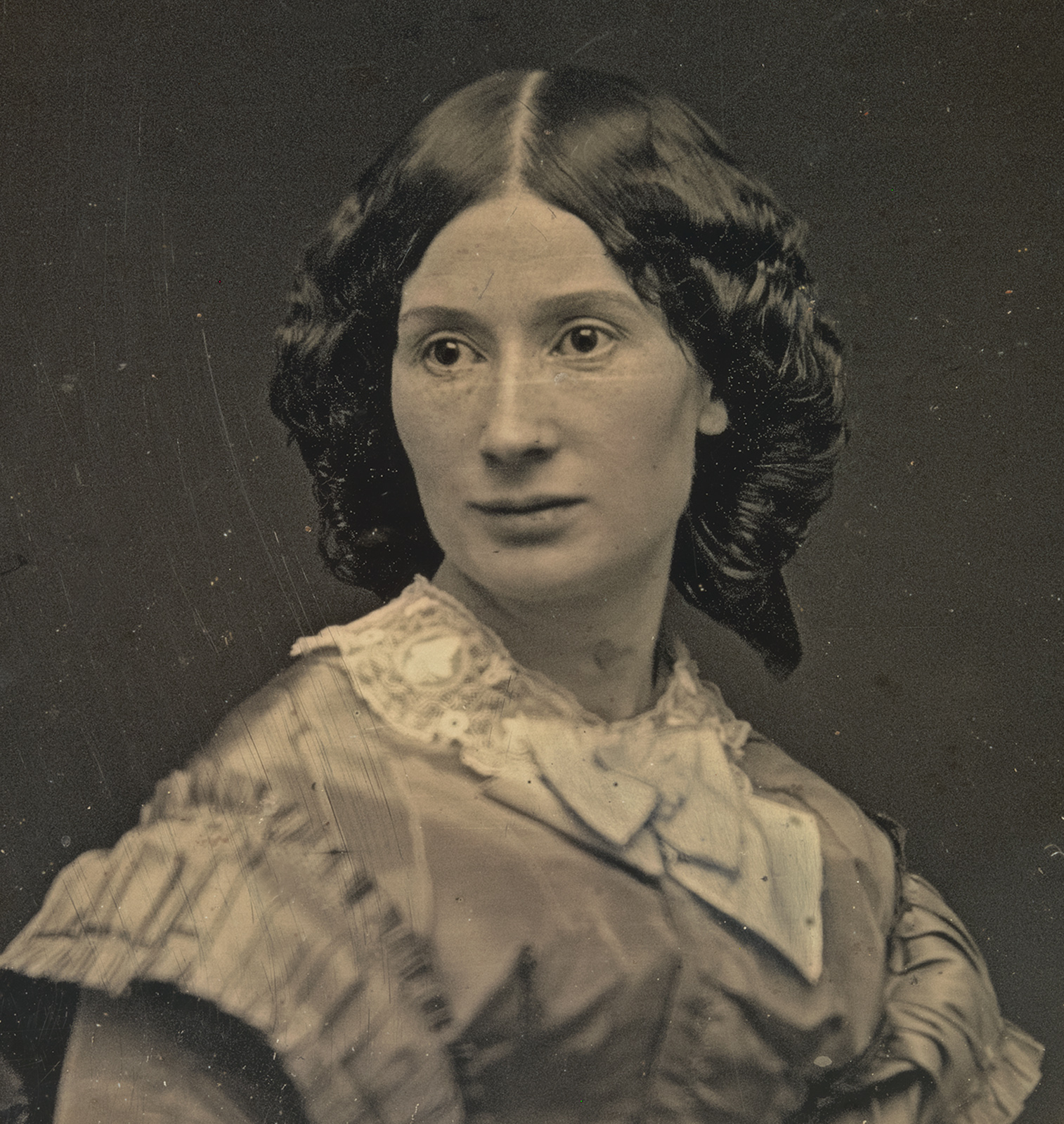
Sarah Margaret Fuller Ossoli (May 23, 1810 – July 19, 1850), commonly known as Margaret Fuller, was an American journalist, editor, critic, and women’s rights advocate associated with the American transcendentalism movement. She was the first full-time American female book reviewer in journalism. Her book Woman in the Nineteenth Century is considered the first major feminist work in the United States. …

Fuller was an advocate of women’s rights and, in particular, women’s education and the right to employment. She also encouraged many other reforms in society, including prison reform and the emancipation of slaves in the United States. Many other advocates for women’s rights and feminism, including Susan B. Anthony, cite Fuller as a source of inspiration. Many of her contemporaries, however, were not supportive, including her former friend Harriet Martineau. She said that Fuller was a talker rather than an activist. Shortly after Fuller’s death, her importance faded; the editors who prepared her letters to be published, believing her fame would be short-lived, censored or altered much of her work before publication.

Text from the Wikipedia website


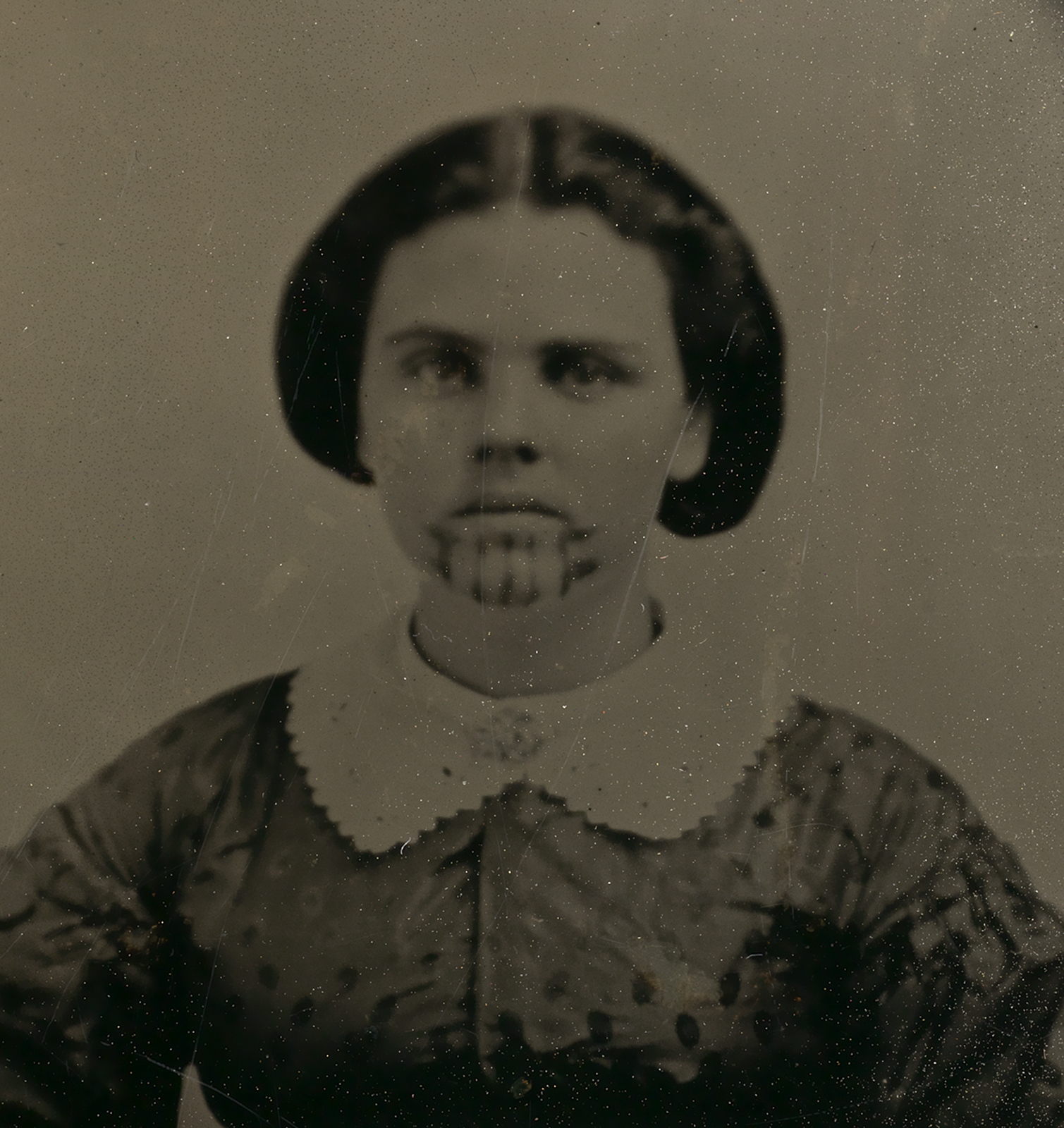
Unidentified Artist. 'Olive Oatman' Nd


Unidentified Artist
Olive Oatman
Nd
Ambrotype
National Portrait Gallery, Smithsonian Institution


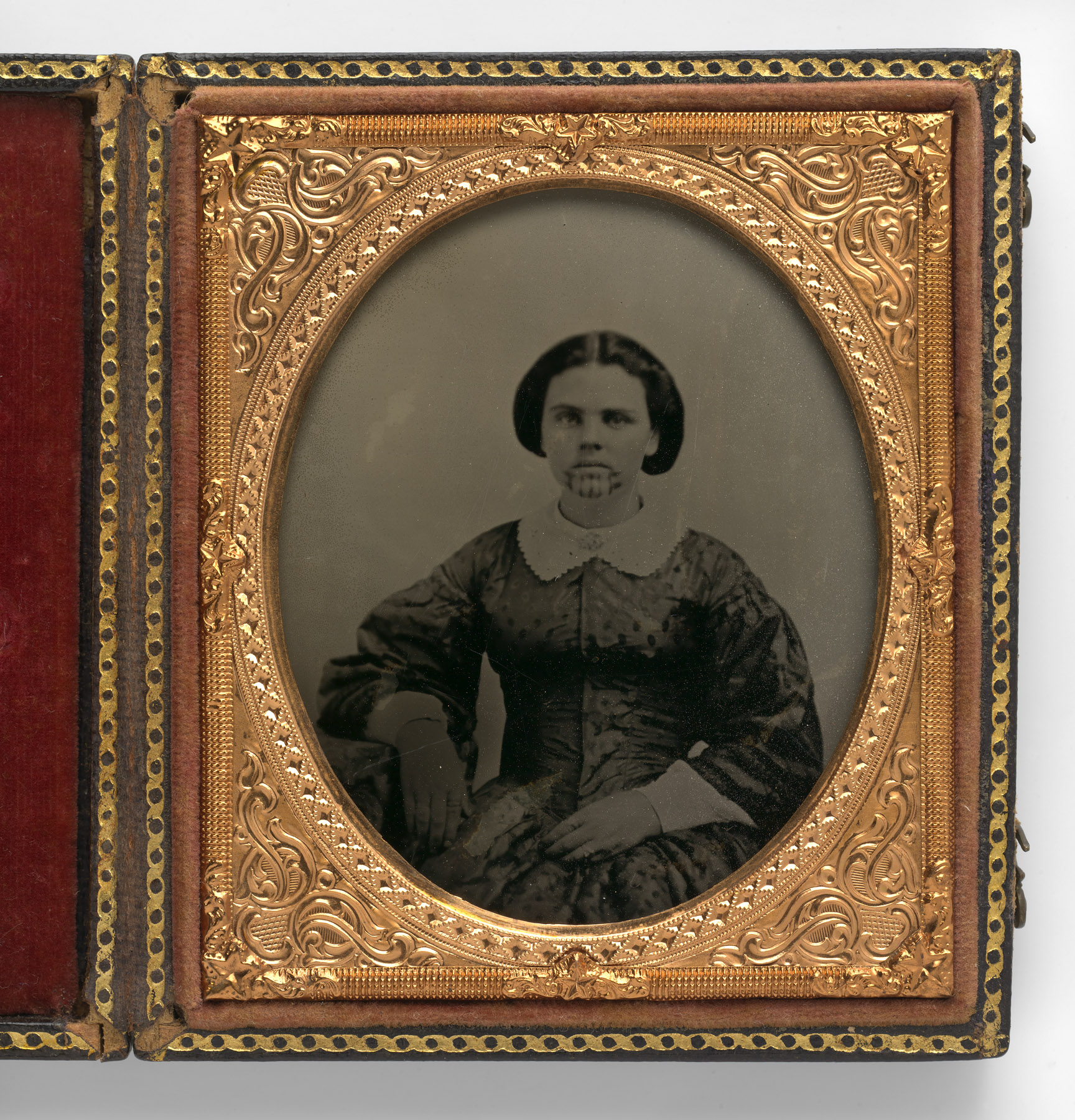
In the spring of 1851, a band of Apache men in present-day Arizona captured thirteen-year-old Olive Oatman and her younger sister. They killed or seriously injured the rest of the family during the attack. At the time, the Oatman family-originally from Illinois-was headed west to California to start their lives anew. Shortly thereafter the Apache sold the two sisters to a Mohave family. While living with this family, Oatman was tattooed on the chin, a custom common among members of the tribe. In 1856, after enduring five years in captivity and the death of her sister, Oatman had her freedom negotiated, and she was given over to authorities at Fort Yuma. Accounts of her release were published widely, and her biography became a best-seller. Though Oatman stated that her Mojave family treated her well, stories such as hers reinforced commonly held assumptions that Native Americans were violent savages.

Exhibition label from the Smithsonian National Portrait Gallery website [Online] Cited 13/11/2019.


Olive Ann Oatman (September 7, 1837 – March 21, 1903) was a woman born in Illinois. While traveling from Illinois to California with a company of Mormon Brewsterites, her family was killed in 1851, in present-day Arizona by a Native American tribe. The town of Oatman, Arizona is named after the Oatman family and the massacre which occurred therein. Though she identified her family’s attackers as Apache, they were most likely Tolkepayas (Western Yavapai). This small group of Native Americans clubbed Olive’s family to death. They captured Olive and her younger sister, Mary Ann, and enslaved them for one year. The girls were traded to the Mohave people. Olive spent four years with the Mohave. During her time with the Mohave tribe her sister, Mary Ann, died from starvation. Olive returned to white society five years after the Oatman Massacre, wearing a blue tattoo on her chin as a reminder of her time with the Mohave people.

Following her repatriation into American society, Olive’s story began to be retold with dramatic license in the press, as well as in her own “memoir” and speeches. Novels, plays, movies, and poetry have been inspired by Olive’s story, which resonated in the media of the time and long afterward. She had become an oddity in 1860s America, partly owing to the prominent blue tattooing of Oatman’s face by the Mohave, making her the first known tattooed American woman on record. Much of what actually occurred during her time with the Native Americans remains unknown.

Text from the Wikipedia website


Unidentified Artist. 'Olive Oatman' Nd (detail)


Unidentified Artist
Olive Oatman (detail)
Nd
Ambrotype
National Portrait Gallery, Smithsonian Institution


In the United States, the rise of studio portrait photography during the 1840s and ’50s coincided with a period of heightened visibility for women, who were emerging as prominent players in arenas including activism, literature, journalism and theatre. Harriet Beecher Stowe’s Uncle Tom’s Cabin, for example, sold 300,000 copies across the nation in the first year following its publication, while in 1855, comedic stage actress Laura Keene became the first female manager of a major New York City theatre. These women, as well as others making their mark in antebellum America, increasingly found themselves in front of the camera, posing for portraits to be shared with the public or exchanged among loved ones as tokens of affection.

“Women of Progress” catalogues the stories of 13 such mid-19th century figures through the lens of ten daguerreotypes and two ambrotypes. Some of these individuals remain household names today – Beecher Stowe, Lucretia Mott and Dorothea Dix, for example. Others, including Mary Ann Brown Patten, the first woman to sail a clipper ship around Cape Horn; Charlotte Cushman, a popular actress who played both male and female parts; and Mary Ann Meade, a daguerreotypist in her own right – are lesser known. Regardless, the women are united by both their progressive bent and the fact that their camera likenesses survive as a direct result of the burgeoning popularity of photography.

An 1846 photograph of journalist Margaret Fuller falls into the first of these categories: In a letter to her brother, the writer explains that photographer John Plumbe Jr. asked her to pose for a portrait. The resulting image, a sixth-plate daguerreotype, depicts its sitter reading a hefty tome, seemingly so engrossed in the text that she remains unaware of the camera’s presence. The image was later displayed in Plumbe’s studio to attract future clientele.

The circumstances surrounding the production of an 1851 half-plate daguerreotype of abolitionist and women’s rights advocate Lucretia Mott are far hazier. Taken by photographer Marcus Aurelius Root, the portrait served as the basis for a widely circulated lithographic print by Boston-based artist Leopold Grozelier. Unlike daguerreotypes, lithographic prints could be produced in multiple copies. Lithographs also conveyed a greater variety of tones than earlier printing methods, allowing for more accurate copies of original works such as daguerreotypes and paintings.

Shumard says it’s possible Root’s photograph was taken with the direct intention of serving as the basis for Grozelier’s print. Whereas a daguerreotype sitting typically produced just one plate, lithographs could be easily mass-produced for public purchase. …

To make copies of daguerreotypes, photographers placed original plates on specialised copy stands and then reshot the image – a process known as redaguerreotyping. Although these copies often lacked the level of contrast and subtle gradation seen in the original daguerreotypes, they were more accurate than lithographs and could be circulated on a smaller scale. “Women in Progress” features two copies – an 1852 picture of Beecher Stowe and a half-plate depicting sisters Mary and Emily Catherine Edmonson in a group photograph taken at an 1850 gathering of abolitionists protesting the impending passage of the new federal Fugitive Slave Law. The Edmonsons earned their freedom from slavery with the help of the Uncle Tom’s Cabin author’s brother, Henry Ward Beecher.

Shumard notes that the group portrait had previously been exhibited in relation to two of its better-known sitters, abolitionists Frederick Douglass and Gerrit Smith. Now, however, the scene’s female subjects are the ones commanding visitors’ attention. “In this instance,” she says, “it’s really nice to be able to highlight the Edmonson sisters.” The Beecher Stowe copy, Shumard says, stems from one of several studio sittings that yielded multiple plates ready for reproduction and distribution to an eager public.

The majority of daguerreotypes produced in mid-19th century America were designed for private rather than public consumption. “They are very intimate objects, [made] to be held in your hand and looked at,” says Shumard, or perhaps gifted to a loved one as a personal memento.

The medium’s capacity for conveying familiarity is apparent in an 1855 half-plate of abolitionist and women’s rights advocate Lucy Stone, who took the then-unheard of step of keeping her maiden name upon marrying husband Henry Blackwell. In the portrait, Stone’s features and clothing – including hand-coloured peach-tinted flesh and a pink pigmented skirt – are accentuated in an attempt to make the keepsake image look more lifelike.

Other notable images not to be missed include an 1850 quarter-plate daguerreotype of poet Sarah T. Bolton, who urged readers to “Battle for the right. / And break the chains that bind / the mighty to the few,” and a sixth-plate ambrotype of Olive Oatman, a young woman who was abducted by Native Americans and spent five years in captivity, first as a slave of the tribe that murdered most of her family and later as an adopted member of the Mohave people.

Oatman’s 1856 return attracted national attention. She was the subject of an exaggerated 1857 account, Life Among the Indians: Captivity of the Oatman Girls, and traveled the country on a publicity lecture circuit. Her likeness, meanwhile, was cemented in the public’s imagination by blue markings tattooed across the length of her chin. This facial tattoo, applied with cactus ink, is just discernible in the exhibition ambrotype, which is among the National Portrait Gallery’s most recent acquisitions.

Referencing the Oatman and Brown Patten ambrotypes, Shumard concludes, “I’m so excited that we have these ambrotypes of [women] who are not household names but… who experienced such trying circumstances and managed to survive.”

Extract from Meilan Solly. “How the Camera Introduced American to their Heroines,” on the Smithsonian.com website July 9, 2019 [Online] Cited 12/11/2019


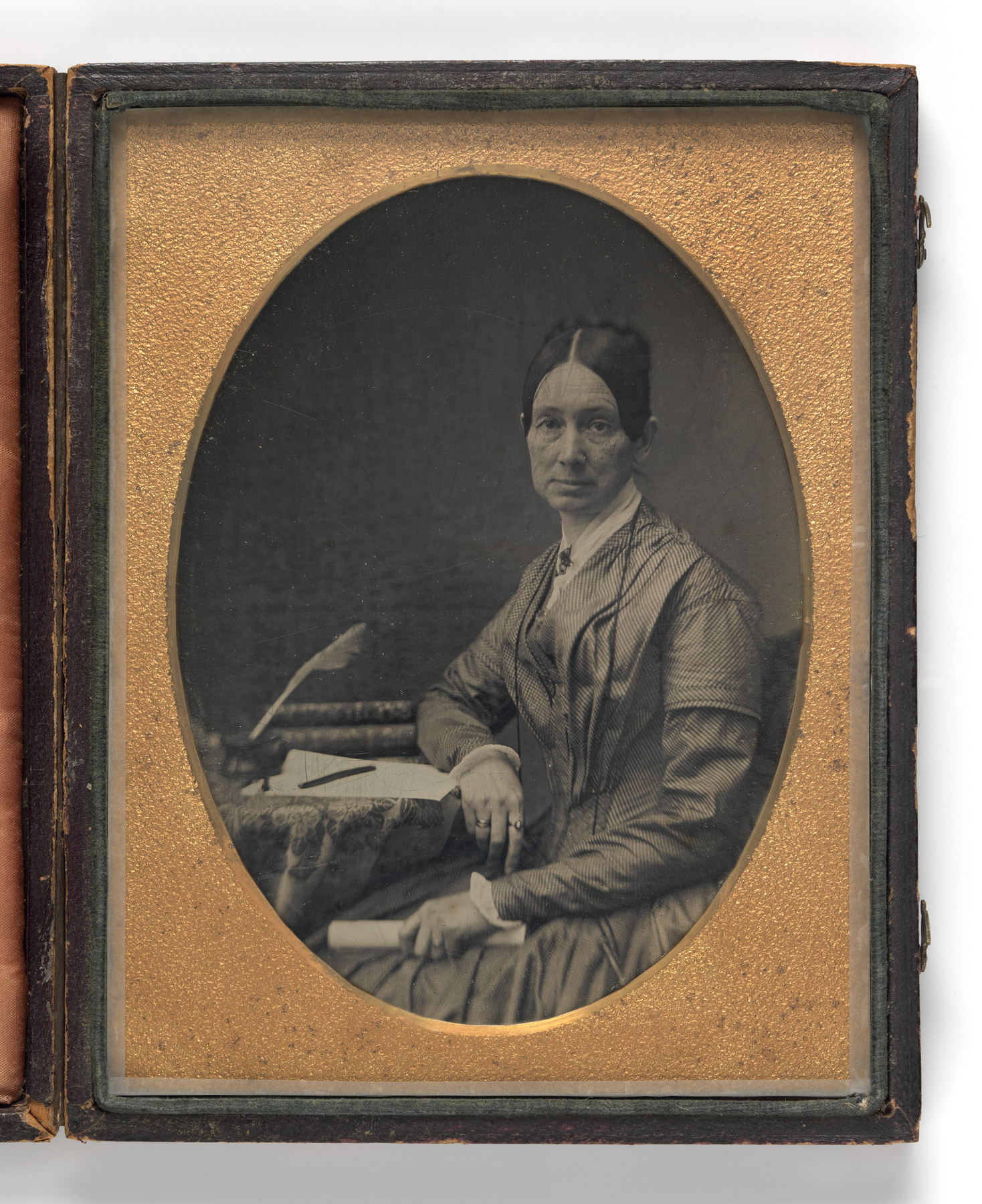
Unidentified Artist. 'Dorothea Lynde Dix' c. 1849


Unidentified Artist
Dorothea Lynde Dix
c. 1849
Half-plate daguerreotype
Case Open: 15.4 x 24.4 x 1.3cm (6 1/16 x 9 5/8 x 1/2″)
National Portrait Gallery, Smithsonian Institution


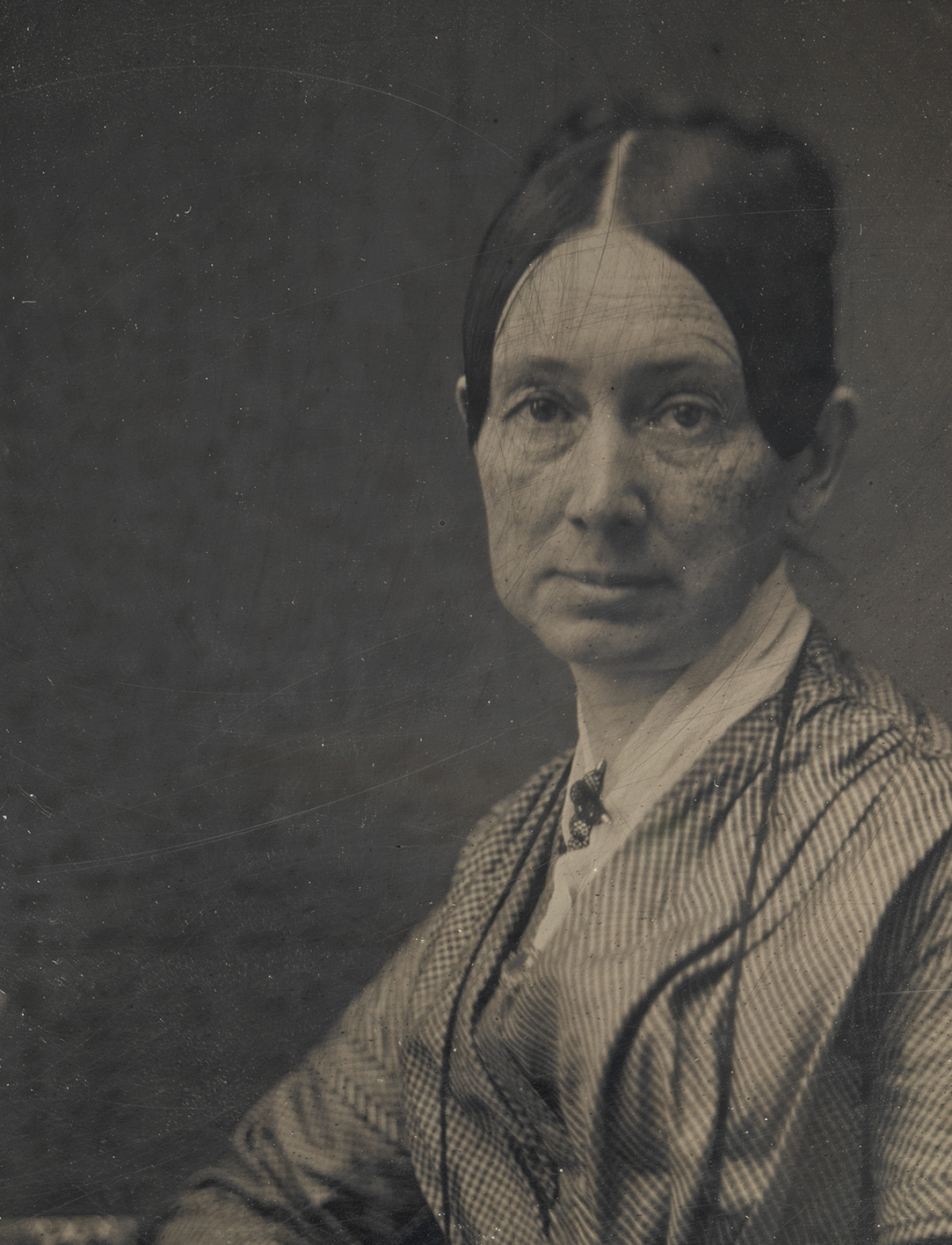
In 1841, teacher, humanitarian, and reformer Dorothea Dix launched a vigorous campaign to secure humane treatment for those afflicted with mental illness. At a time when such individuals were more often imprisoned and abused than cared for and treated, Dix became a tireless advocate for their welfare. Personally investigating the “cages, cellars, stalls, [and] pens” where sufferers were confined, she reported her findings in speeches and articles, as well as in the petitions she submitted to lawmakers. Thanks to her efforts, facilities for the mentally ill were greatly expanded and improved.

Exhibition label from the Smithsonian National Portrait Gallery website [Online] Cited 13/11/2019. For more information on Dorothea Dix see the large Wikipedia entry.


Unidentified Artist. 'Dorothea Lynde Dix' c. 1849 (detail)


Unidentified Artist
Dorothea Lynde Dix (detail)
c. 1849
Half-plate daguerreotype
Case Open: 15.4 x 24.4 x 1.3cm (6 1/16 x 9 5/8 x 1/2″)
National Portrait Gallery, Smithsonian Institution


Meade Brothers Studio. 'Mary Ann Meade' c. 1850


Meade Brothers Studio
Mary Ann Meade
c. 1850
Sixth-plate daguerreotype
Case Open: 9.6 × 15.9 × 1.6cm (3 3/4 × 6 1/4 × 5/8″)
National Portrait Gallery, Smithsonian Institution
Gift of Mr. and Mrs. Dudley Emerson Lyons


A daguerreotypist in her own right, Mary Ann Meade began her career in the successful photography business founded around 1840 by her brothers, Charles and Henry Meade. After Charles’s death in 1858, Mary Ann gained greater visibility in the gallery’s operations. At a time when few women worked behind the camera, she was listed as a photographer in Trow’s New York City Directory (1861-62). In 1861, an article about the Meade Brothers gallery noted, “Mr. [Henry] Meade and his sister attend personally to visitors.” By June 1863, Mary Ann had become the gallery’s director and was billed as “Successor to MEADE BROTHERS.”

Text from the Smithsonian National Portrait Gallery website [Online] Cited 13/11/2019


Meade Brothers Studio

The brothers opened their daguerreian gallery in Albany, N.Y., in 1842, and their business later expanded to other cities. They each traveled to Europe and in 1848, Charles Meade became the first American to photograph Frenchman Louis-Jacques-Mandé Daguerre – the originator of the daguerreotype process. In 1850, the Meade brothers established their flagship American Daguerreotype Gallery on Broadway in New York City, where they photographed such famous subjects as statesman Daniel Webster and entertainer Lola Montez.

Exhibition label from the Smithsonian website [Online] Cited 13/11/2019


Meade Brothers Studio. 'Mary Ann Meade' c. 1850 (detail)


Meade Brothers Studio
Mary Ann Meade (detail)
c. 1850
Sixth-plate daguerreotype
Case Open: 9.6 × 15.9 × 1.6cm (3 3/4 × 6 1/4 × 5/8″)
National Portrait Gallery, Smithsonian Institution
Gift of Mr. and Mrs. Dudley Emerson Lyons


Unidentified Artist. 'Mary Ann Brown Patten' c. 1857


Unidentified Artist
Mary Ann Brown Patten
c. 1857
Ninth-plate ambrotype
Case Open: 7.4 x 12.4 x 0.9cm (2 15/16 x 4 7/8 x 3/8″)
National Portrait Gallery, Smithsonian Institution
Gift of Dorthy Knouse Koepke


Mary Ann Brown Patten (April 6, 1837 – March 18, 1861) was the first female commander of an American merchant vessel. She was the wife of Joshua Patten, captain of the merchant clipper ship Neptune’s Car. The ship was bound around Cape Horn from New York towards San Francisco when Joshua Patten collapsed from fatigue in 1856. His wife took command for 56 days, faced down a mutiny, and successfully managed to navigate the clipper ship into San Francisco. At the time she was 19 years old and pregnant with her first child.

Text from the Wikipedia website


In 1856, Mary Ann Brown Patten became the first woman to sail a clipper ship around Cape Horn, through the notoriously treacherous waters at the tip of South America. Schooled in navigation by her sea captain husband, she took helm of his ship after he fell seriously ill and the first mate proved untrustworthy. Only nineteen years old and pregnant at the time, Patten captained the San Francisco-bound Neptune’s Car for fifty-one days, during the most hazardous portion of its 15,000-mile voyage. Upon bringing the vessel safely to its destination, she was hailed for her skill as well as her courage.

Exhibition label from the Smithsonian National Portrait Gallery website [Online] Cited 13/11/2019


Smithsonian National Portrait Gallery
8th and F Sts NW
Washington, DC 20001

Opening hours:
11.30am – 7.00pm daily
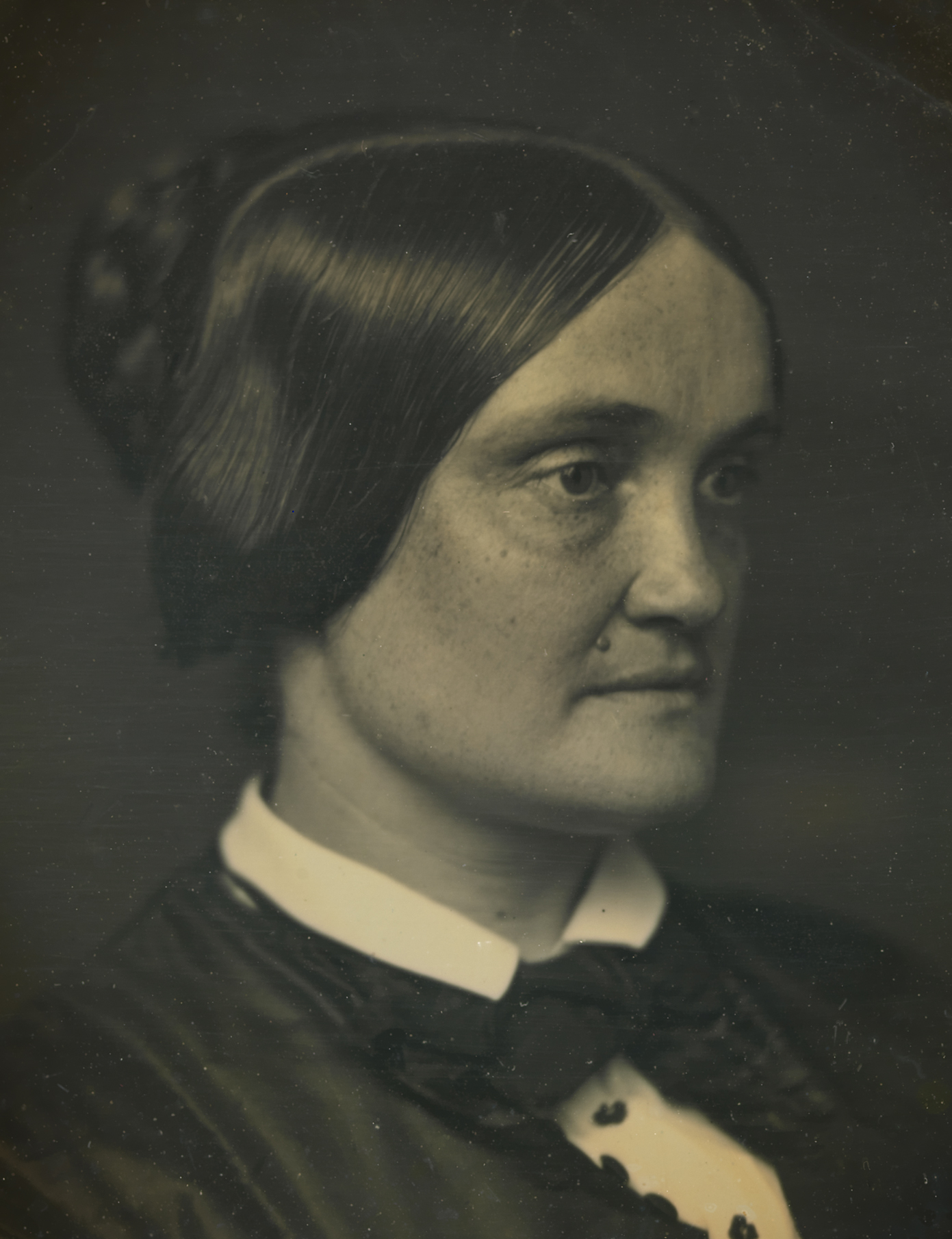
Smithsonian National Portrait Gallery website

LIKE ART BLART ON FACEBOOK

Back to top

Exhibition: ‘Daguerreotypes: Five Decades of Collecting’ at the Smithsonian National Portrait Gallery, Washington, DC

Exhibition dates: 15th June, 2018 – 2nd June, 2019

 Curator: Ann Shumard, Senior Curator of Photographs at the Smithsonian National Portrait Gallery, Washington, DC


Bishop & Gray Studio (American, active c. 1843) 'Dr. Rufus Priest' c. 1843 from the exhibition 'Daguerreotypes: Five Decades of Collecting' at the Smithsonian National Portrait Gallery, Washington, DC, June 2018 - June 2019


Bishop & Gray Studio (American, active c. 1843)
Dr. Rufus Priest
c. 1843
Sixth-plate daguerreotype
8.3cm x 7cm (3 1/4″ x 2 3/4″)
National Portrait Gallery, Smithsonian Institution; gift of David Becker


What strong faces these people have, especially in the three-quarter or slightly oblique profile view with the subject not staring at the camera.

There is something incredibly powerful about these one off, cased mausoleum portraits that today’s throwaway representations struggle to match. As Montgomery P. Simons opines, “The delicacy, durability and wonderful minutiae of the daguerreotype has never been approached by any of the improved pictures recently introduced.” The contemporary Philadelphia daguerreotypist Marcus Aurelius Root paid them this praise: “Their style, indeed, is peculiar to themselves; presenting beautiful effects of light and shade, and giving depth and roundness together with a wonderful softness or mellowness. These traits have achieved for them a high reputation with all true artists and connoisseurs.” Indeed, their jewel-like aura seems to emanate from within.

I have added bibliographic details about the sitters and the photographers where possible to the posting, as well as artwork – paintings, illustrations, writing, postcards and drawings – and enlarged details of the daguerreotypes. Pictured are the great and good of the land. Surgeon, cardinal, poet, artist, actress, entrepreneur, president, social reformer, general, commodore, nurse and advocate for the mentally ill with minimal acknowledgement of Native American people (Seneca Chief Governor Blacksnake). This “man of rare intellectual and moral power” died on a reservation in December 1859.

Dr Marcus Bunyan


Many thankx to the Smithsonian National Portrait Gallery for allowing me to publish the photographs in the posting. Please click on the photographs for a larger version of the image.


Marcus Aurelius Root (American, 1808-1888) 'Thomas Buchanan Read' (March 12, 1822-May 11, 1872) c. 1850 from the exhibition 'Daguerreotypes: Five Decades of Collecting' at the Smithsonian National Portrait Gallery, Washington, DC, June 2018 - June 2019


Marcus Aurelius Root (American, 1808-1888)
Thomas Buchanan Read (March 12, 1822 – May 11, 1872)
c. 1850
Half-plate daguerreotype
National Portrait Gallery, Smithsonian Institution; gift of Miss Eunice Chambers


Thomas Buchanan Read (American, 1822-1872)

Thomas Buchanan Read (March 12, 1822 – May 11, 1872), was an American poet and portrait painter. Read was born in Corner Ketch, a hamlet close to Downingtown, in Chester County, Pennsylvania on March 12, 1822.

Beside painting, Read wrote a prose romance, The Pilgrims of the Great St. Bernard, and several books of poetry, including The New Pastoral, The House by the Sea, Sylvia, and A Summer Story. Some of the shorter pieces included in these, e.g., Sheridan’s Ride, Drifting, The Angler, The Oath, and The Closing Scene, have great merit. Read was briefly associated with the Pre-Raphaelite Brotherhood. His greatest artistic popularity took place in Florence. Among portraits he painted were Abraham Lincoln, Henry Wadsworth Longfellow, Alfred Tennyson, Elizabeth Barrett Browning, Robert Browning and William Henry Harrison. Read died from injuries sustained in a carriage accident, which weakened him and led him to contract pneumonia while on shipboard returning to America.

Text from the Wikipedia website

Marcus Aurelius Root (American, 1808-1888)

Marcus Aurelius Root (1808-1888) was a writing teacher and photographer. He was born in Granville, Ohio and died in Philadelphia, Pennsylvania.

On 20 June 1846, he bought John Jabez Edwin Mayall’s Chestnut Street photography studio that was in the same building as Root’s residence in Philadelphia, Pennsylvania. Root had success as a daguerreotypist working with his brother, Samuel Root. The Root Brothers had a gallery in New York City from 1849 to 1857. Marcus Aurelius Root authored an important book on photography entitled The Camera and the Pencil.


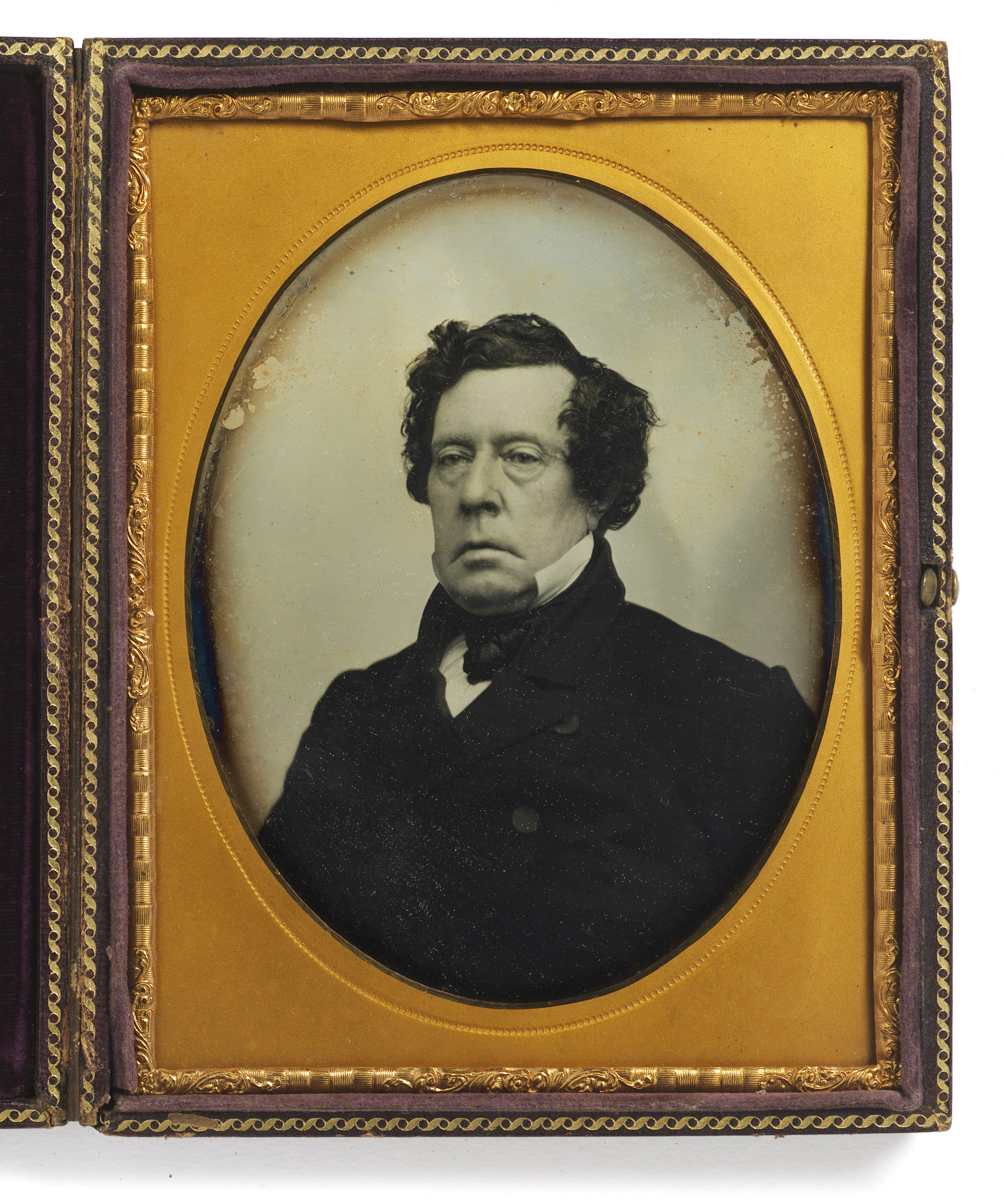
Beckers and Piard (American) 'Matthew Calbraith Perry' (April 10, 1794-March 4, 1858) c. 1855


Beckers and Piard (American)
Alexander Beckers (American born Germany, 1815-1905, active 1842-1869)
Victor Piard (American born France, 1825-1901)
Matthew Calbraith Perry (April 10, 1794 – March 4, 1858)
c. 1855
Half-plate daguerreotype
National Portrait Gallery, Smithsonian Institution


Alexander Beckers (American born German, 1815-1905)

Alexander Beckers first saw a daguerreotype in Philadelphia, and subsequently went to work there for photographer Frederick David Langenheim in 1843. The following year he moved to New York, where he is credited with the first whole-plate daguerreotypes made in that city. Within months Beckers opened the Langenheim & Beckers studio in New York, which became Beckers & Piard in 1849. In 1857 he patented a revolving stereograph viewer and shortly thereafter sold his daguerreotype business in order to concentrate his attention on the manufacture of stereograph viewers.

Anonymous text. “Alexander Beckers,” on the J. Paul Getty Museum website [Online] Cited 15/03/2022

Matthew Calbraith Perry (American, 1794-1858)

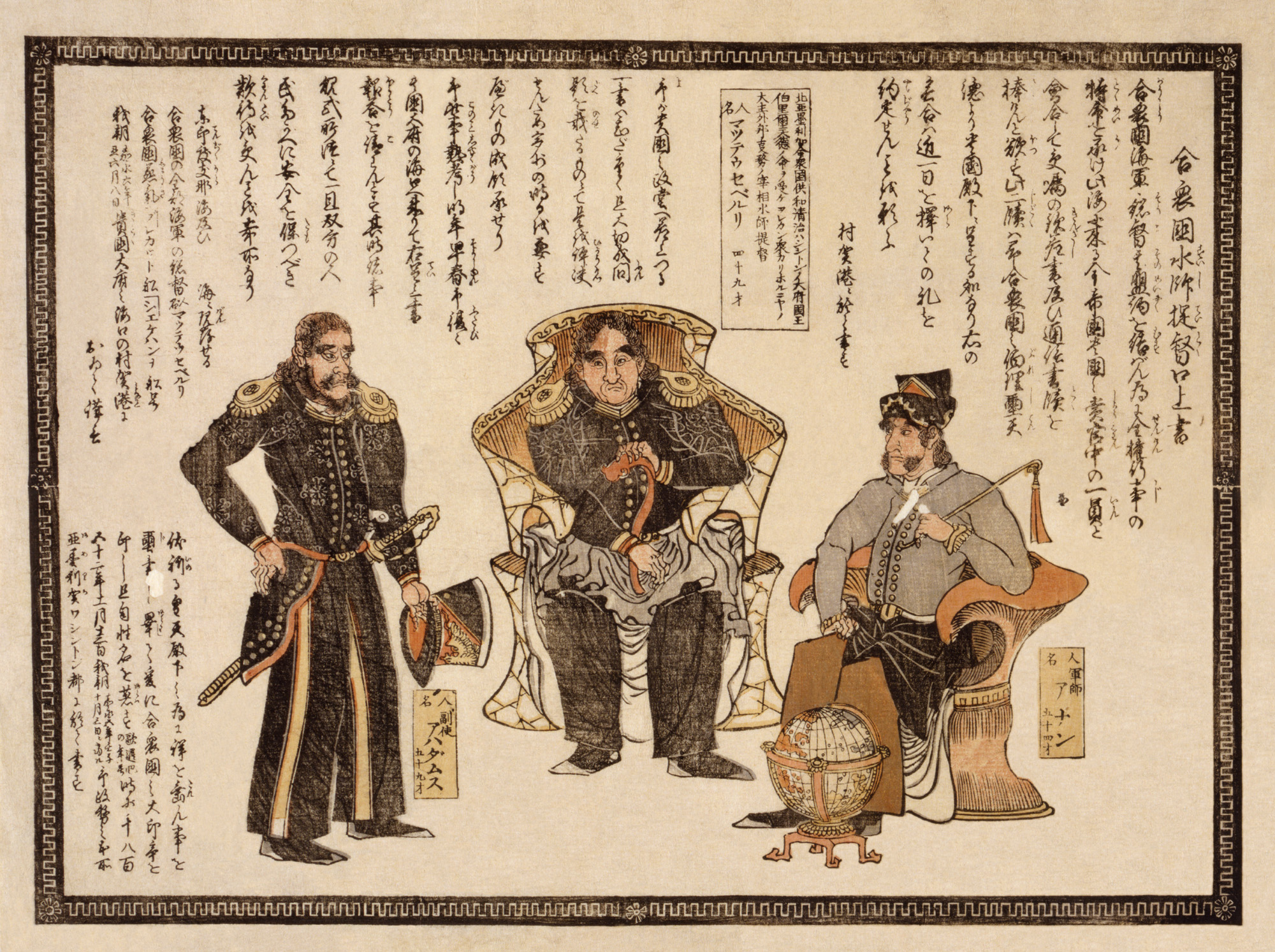
Matthew Calbraith Perry (April 10, 1794 – March 4, 1858) was a Commodore of the United States Navy who commanded ships in several wars, including the War of 1812 and the Mexican-American War (1846-1848). He played a leading role in the opening of Japan to the West with the Convention of Kanagawa in 1854.

Perry was interested in the education of naval officers, and assisted in the development of an apprentice system that helped establish the curriculum at the United States Naval Academy. With the advent of the steam engine, he became a leading advocate of modernising the U.S. Navy and came to be considered “The Father of the Steam Navy” in the United States.

Text from the Wikipedia website


[Several] daguerreotypes of Matthew Calbraith Perry (1794-1858) [were] made in New York City, in the months following Commodore Perry’s triumphant return from Japan in January of 1855. The seminal achievement of his long naval career, Perry’s shrewd and persistent negotiations with Japan opened that isolated nation to the West for the first time in its history.

[These] portraits can be dated to 1855-1856, based on the date of Perry’s return to the United States and the years the Beckers & Piard studio operated at 264 Broadway. A variant, more conventional, portrait from this same sitting, previously unattributed, exists in three identical half-plates, one in the National Portrait Gallery (above), one in the New-York Historical Society, and one sold at Swann Galleries, New York, in 1988 (Sale 1468, Lot 186). In addition, there is a half-plate profile study of Perry in the U. S. Naval Academy Museum in Annapolis, also made by Beckers & Piard, that was the model for a commemorative medal struck in Perry’s honour in 1856; and a half-plate seated portrait of Perry in his full uniform and regalia, also owned by the New-York Historical Society.

The portraits can be dated to 1855 or 1856 based upon Perry’s arrival in New York, from Japan, in 1855, and by the address of the daguerreotypists stamped on the portrait’s mat. Alexander Beckers and Victor Piard were active at 264 Broadway, the address on the mat, from 1853 to 1856. At some point in 1856, the studio moved across the street to 261 Broadway. This portrait would, therefore, have to have been made in 1855 or 1856.

Anonymous text. “Catalogue note,” on the Sotheby’s website 2012 [Online] Cited 28/11/2018.


Unknown artist (Japanese) 'Gasshukoku suishi teitoku kōjōgaki (Oral statement by the American Navy admiral)' c. 1854


Unknown artist (Japanese)
Gasshukoku suishi teitoku kōjōgaki (Oral statement by the American Navy admiral)
c. 1854
Library of Congress
Public domain


A Japanese print showing three men, believed to be Commander Anan, age 54; Perry, age 49; and Captain Henry Adams, age 59, who opened up Japan to the west. The text being read may be President Fillmore’s letter to Emperor of Japan. This is a somewhat extensive restoration, meant to keep focus on the artwork, instead of the damage.


Unidentified artist (American) 'Dorothea Lynde Dix' c. 1849


Unidentified artist (American)
Dorothea Lynde Dix
c. 1849
Half-plate daguerreotype
National Portrait Gallery, Smithsonian Institution


Dorothea Lynde Dix (American, 1802-1887)

Dorothea Lynde Dix (April 4, 1802 – July 17, 1887) was an American advocate on behalf of the indigent mentally ill who, through a vigorous and sustained program of lobbying state legislatures and the United States Congress, created the first generation of American mental asylums. During the Civil War, she served as a Superintendent of Army Nurses. (Wikipedia)

What a human being… read her full Wikipedia entry. A champion of the poor and mentally ill, Dix and her nurses cared for the wounded from both sides of the American Civil War.


Unidentified artist (American) 'Dorothea Lynde Dix' c. 1849 (detail)


Unidentified artist (American)
Dorothea Lynde Dix (detail)
c. 1849
Half-plate daguerreotype
National Portrait Gallery, Smithsonian Institution


Unidentified artist (American) 'Charlotte Cushman' c. 1850


Unidentified artist (American)
Charlotte Cushman
c. 1850
Half-plate daguerreotype
National Portrait Gallery, Smithsonian Institution


Charlotte Saunders Cushman (July 23, 1816 – February 18, 1876) was an American stage actress. Her voice was noted for its full contralto register, and she was able to play both male and female parts. She lived intermittently in Rome, in an expatriate colony of prominent artists and sculptors, some of whom became part of her tempestuous private life.


Unidentified artist (American) 'Charlotte Cushman' c. 1850 (detail)


Unidentified artist (American)
Charlotte Cushman (detail)
c. 1850
Half-plate daguerreotype
National Portrait Gallery, Smithsonian Institution


Mathew Brady (1822-1896) 'Charlotte Saunders Cushman' between 1855 and 1865


Mathew Brady (American, 1822-1896)
Charlotte Saunders Cushman
between 1855 and 1865
Wet collodion glass negative
Library of Congress Prints and Photographs Division. Brady-Handy Photograph Collection
Public domain


Library of Congress description: “Charlotte Cushman as Meg Merriles”


Henry B. Hull (American, active c. 1855) 'Stonewall Jackson' (Thomas Jonathan Jackson, 21 Jan 1824-10 May 1863) 1855


Henry B. Hull (American, active c. 1855)
Stonewall Jackson (Thomas Jonathan Jackson, 21 Jan 1824 – 10 May 1863)
1855
Sixth-plate daguerreotype
Image: 8.4 x 7.2cm (3 5/16 x 2 13/16″)
Case Open: 9.4 x 16.5 x 1.1cm (3 11/16 x 6 1/2 x 7/16″)
National Portrait Gallery, Smithsonian Institution


Born Clarksburg, West Virginia

When future Confederate general Stonewall Jackson sat for this likeness in 1855, his emergence as one of the South’s most brilliant military tacticians lay six years away. A West Point graduate, Jackson had served with distinction in the Mexican American War, earning more citations for valour than any other American officer. He joined Virginia Military Institute as a professor of artillery tactics and natural philosophy in 1851, and later commanded the corps of VMI cadets that guarded the gallows at John Brown’s execution. Jackson had this daguerreotype made as a memento for his aunt and uncle while visiting them in the summer of 1855.

Text from the Smithsonian National Portrait Gallery website


Unidentified artist (American) 'Robert Dale Owen' c. 1847


Unidentified artist (American)
Robert Dale Owen
c. 1847
Sixth-plate daguerreotype
National Portrait Gallery, Smithsonian Institution; gift of Andrew Oliver


Robert Owen Dale (American, 1801-1877)

Robert Dale Owen (November 7, 1801 – June 24, 1877) was a Scottish-born social reformer who immigrated to the United States in 1825, became a U.S. citizen, and was active in Indiana politics as member of the Democratic Party in the Indiana House of Representatives (1835-1839 and 1851-1853) and represented Indiana in the U.S. House of Representatives (1843-1847). As a member of Congress, Owen successfully pushed through the bill that established Smithsonian Institution and served on the Institution’s first Board of Regents. Owen also served as a delegate to the Indiana Constitutional Convention in 1850 and was appointed as U.S. chargé d’affaires (1853-1858) to Naples.

Owen was a knowledgeable exponent of the socialist doctrines of his father, Robert Owen, and managed the day-to-day operation of New Harmony, Indiana, the socialistic utopian community he helped establish with his father in 1825. Throughout his adult life, Robert Dale Owen wrote and published numerous pamphlets, speeches, books, and articles that described his personal and political views, including his belief in spiritualism. Owen co-edited the New-Harmony Gazette with Frances Wright in the late 1820s in Indiana and the Free Enquirer in the 1830s in New York City. Owen was an advocate of married women’s property and divorce rights, secured inclusion of an article in the Indiana Constitution of 1851 that provided tax-supported funding for a uniform system of free public schools, and established the position of Indiana Superintendent of Public Instruction. Owen is also noted for a series of open letters he wrote in 1862 that favoured the abolition of slavery and supported general emancipation, as well as a suggestion that the federal government should provide assistance to freedmen.

Text from the Wikipedia website


Unidentified artist (American) 'Robert Dale Owen' c. 1847 (detail)


Unidentified artist (American)
Robert Dale Owen (detail)
c. 1847
Sixth-plate daguerreotype
National Portrait Gallery, Smithsonian Institution; gift of Andrew Oliver


Southworth & Hawes (American, active 1843-1862) 'Franklin Pierce' (23 Nov 1804-8 Oct 1869) c. 1852


Southworth & Hawes (American, active 1843-1862)
Albert Sands Southworth (12 Mar 1811 – 3 Mar 1894)
Josiah Johnson Hawes (20 Feb 1808 – 7 Aug 1901)
Franklin Pierce (23 Nov 1804 – 8 Oct 1869)
c. 1852
Quarter-plate daguerreotype
Image: 8.8 x 6.8cm (3 7/16 x 2 11/16″)
Case Closed: 11.9 x 9.4cm (4 11/16 x 3 11/16″)
Case Open: 11.9 x 18.7 x 1.2cm (4 11/16 x 7 3/8 x 1/2″)
National Portrait Gallery, Smithsonian Institution


Franklin Pierce (American, 1804-1869)

Franklin Pierce (November 23, 1804 – October 8, 1869) was the 14th President of the United States (1853-1857), a northern Democrat who saw the abolitionist movement as a fundamental threat to the unity of the nation. He alienated anti-slavery groups by championing and signing the Kansas-Nebraska Act and enforcing the Fugitive Slave Act; yet he failed to stem conflict between North and South, setting the stage for Southern secession and the American Civil War.

Pierce was born in New Hampshire, and served in the U.S. House of Representatives and the Senate until he resigned from the Senate in 1842. His private law practice in New Hampshire was a success, and he was appointed U.S. Attorney for his state in 1845. He took part in the Mexican-American War as a brigadier general in the Army. He was seen by Democrats as a compromise candidate uniting northern and southern interests and was nominated as the party’s candidate for president on the 49th ballot at the 1852 Democratic National Convention. He and running mate William R. King easily defeated the Whig Party ticket of Winfield Scott and William A. Graham in the 1852 presidential election.

Text from the Wikipedia website


Southworth & Hawes (American, active 1843-1862)

Southworth & Hawes was an early photographic firm in Boston, 1843-1863. Its partners, Albert Sands Southworth (1811-1894) and Josiah Johnson Hawes (1808-1901), have been hailed as the first great American masters of photography, whose work elevated photographic portraits to the level of fine art. Their images are prominent in every major book and collection of early American photography.

Southworth & Hawes worked almost exclusively in the daguerreotype process. Working in the 8 1/2 x 6 1/2 inch whole plate format, their images are brilliant, mirror-like, and finely detailed. Writing in the Photographic and Fine Art Journal, August 1855, the contemporary Philadelphia daguerreotypist Marcus Aurelius Root paid them this praise: “Their style, indeed, is peculiar to themselves; presenting beautiful effects of light and shade, and giving depth and roundness together with a wonderful softness or mellowness. These traits have achieved for them a high reputation with all true artists and connoisseurs.” He further noted that the firm had devoted their time chiefly to daguerreotypes, with little attention to photography on paper. …

During their 20 years of collaboration, Southworth & Hawes catered to Boston society and the famous. Their advertisements drew a distinction between the appropriate styles for personal versus public portraiture. “A likeness for an intimate acquaintance or one’s own family should be marked by that amiability and cheerfulness, so appropriate to the social circle and the home fireside. Those for the public, of official dignitaries and celebrated characters admit of more firmness, sternness and soberness.” Among their sitters were Louisa May Alcott, Lyman Beecher, Benjamin Butler, William Ellery Channing, Rufus Choate, Cassius Marcellus Clay, Charlotte Cushman, Richard Henry Dana, Jr., Dorothea Dix, Ralph Waldo Emerson, Edward Everett, William Lloyd Garrison, Grace Greenwood, Oliver Wendell Holmes, Sam Houston, Thomas Starr King, Louis Kossuth, Jenny Lind, Henry Wadsworth Longfellow, Horace Mann, Donald McKay, Lola Montez, George Peabody, William H. Prescott, Lemuel Shaw, Harriet Beecher Stowe, Charles Sumner, Daniel Webster, John Greenleaf Whittier, and Robert C. Winthrop.

Text from the Wikipedia website


Unidentified artist (American) 'Brady's New Daguerreotype Saloon, New York Jun 11, 1853'


Unidentified artist (American)
Brady’s New Daguerreotype Saloon, New York
Jun 11, 1853
Wood engraving on paper
36.6 × 24cm (14 7/16 × 9 7/16″)
National Portrait Gallery, Smithsonian Institution


During the 1850s, Manhattan continued to extend north, and Mathew Brady followed suit with the opening of a new gallery, elegantly furnished, at number 359 Broadway. On June 11, 1853, the New York newspaper Illustrated News published a view of the interior of the gallery with the following comment: “The reception room is furnished with richness and artistic taste. Adorning its walls an extensive collection of daguerreotypes of remarkable figures, excellently executed, which is well worth a visit by anyone who wishes to contemplate American and European celebrities. Residents and foreigners alike will enjoy observing the great progress of the art exhibited here, and we convey to Mr. Brady our cordial wishes for success in his new venture.”

Text from the Smithsonian National Portrait Gallery website


Mathew B. Brady (American, 1823? - 15 Jan 1896) 'Thomas Cole' (1 Feb 1801 - 11 Feb 1848) c. 1845


Mathew B. Brady (American, 1823? – 15 Jan 1896)
Thomas Cole (1 Feb 1801 – 11 Feb 1848)
c. 1845
Half-plate daguerreotype on silver-coated copper plate
Plate: 13.7 x 10.2cm (5 3/8 x 4″)
Case Open: 15.8 × 24.4 × 1cm (6 1/4 × 9 5/8 × 3/8″)
Case Closed: 15.8 × 12.3 × 2.7cm (6 1/4 × 4 13/16 × 1 1/16″)
National Portrait Gallery, Smithsonian Institution; gift of Edith Cole Silberstein


Born Bolton-le-Moors, Lancashire, England

Artist Thomas Cole was a founding member of the Hudson River School of American painting, which sought to capture the sublime grandeur of the nation’s natural landscape. Believing that the best art also conveyed a moral lesson, Cole achieved his greatest fame with two series of allegorical paintings entitled The Course of Empire (1836) and The Voyage of Life (1841).

From the outset of his career, Mathew Brady courted major artists and welcomed the opportunity to daguerreotype them. This portrait is one of two known copies Brady made of his original daguerreotype of Cole, which is now in the collection of the Library of Congress.

Text from the Smithsonian National Portrait Gallery website


The Course of Empire is a series of five paintings created by Thomas Cole in the years 1833-1836. It is notable in part for reflecting popular American sentiments of the times, when many saw pastoralism as the ideal phase of human civilisation, fearing that empire would lead to gluttony and inevitable decay. The theme of cycles is one that Cole returned to frequently, such as in his The Voyage of Life series. The Course of Empire comprises the following works: The Course of Empire – The Savage State; The Arcadian or Pastoral State; The Consummation of Empire; Destruction; and Desolation. All the paintings are 39.5 inches by 63.5 inches (100cm by 161cm) except The Consummation of Empire which is 51″ by 76″ (130cm by 193cm).

The series of paintings depicts the growth and fall of an imaginary city, situated on the lower end of a river valley, near its meeting with a bay of the sea. The valley is distinctly identifiable in each of the paintings, in part because of an unusual landmark: a large boulder is situated atop a crag overlooking the valley. Some critics believe this is meant to contrast the immutability of the earth with the transience of man.

Text from the Wikipedia website


Thomas Cole (American, 1801-1848) 'The Savage State' 1834


Thomas Cole (American, 1801-1848)
The Savage State
1834
From The Course of Empire
Oil on canvas
Height: 39.5 in (100.3cm)
Width: 63.5 in (161.2cm)
New-York Historical Society


Thomas Cole (American, 1801-1848) 'The Consummation of Empire' 1836


Thomas Cole (American, 1801-1848)
The Consummation of Empire
1836
From The Course of the Empire
Oil on canvas
Height: 51 in (129.5cm)
Width: 76 in (193cm)
New-York Historical Society


The Voyage of Life is a series of paintings created by Thomas Cole in 1842, representing an allegory of the four stages of human life: childhood, youth, manhood, and old age. The paintings depict a voyager who travels in a boat on a river through the mid-19th-century American wilderness. In each painting the voyager rides the boat on the River of Life accompanied by a guardian angel. The landscape, each reflecting one of the four seasons of the year, plays a major role in conveying the story. With each instalment the boat’s direction of travel is reversed from the previous picture. In childhood, the infant glides from a dark cave into a rich, green landscape. As a youth, the boy takes control of the boat and aims for a shining castle in the sky. In manhood, the adult relies on prayer and religious faith to sustain him through rough waters and a threatening landscape. Finally, the man becomes old and the angel guides him to heaven across the waters of eternity.

Cole’s renowned four-part series traces the journey of an archetypal hero along the “River of Life.” Confidently assuming control of his destiny and oblivious to the dangers that await him, the voyager boldly strives to reach an aerial castle, emblematic of the daydreams of “Youth” and its aspirations for glory and fame. As the traveler approaches his goal, the ever more turbulent stream deviates from its course and relentlessly carries him toward the next picture in the series, where nature’s fury, evil demons, and self-doubt will threaten his very existence. Only prayer, Cole suggests, can save the voyager from a dark and tragic fate.

From the innocence of childhood, to the flush of youthful overconfidence, through the trials and tribulations of middle age, to the hero’s triumphant salvation, The Voyage of Life seems intrinsically linked to the Christian doctrine of death and resurrection. Cole’s intrepid voyager also may be read as a personification of America, itself at an adolescent stage of development. The artist may have been issuing a dire warning to those caught up in the feverish quest for Manifest Destiny: that unbridled westward expansion and industrialisation would have tragic consequences for both man and the land itself.

Text from the Wikipedia website


Thomas Cole (American, 1801-1848) 'The Voyage of Life: Youth' 1842


Thomas Cole (American, 1801-1848)
The Voyage of Life: Youth
1842
Oil on canvas
134 × 194cm (53 in × 76 in)
National Gallery of Art


Thomas Cole (American, 1801-1848) 'The Voyage of Life: Manhood' 1842


Thomas Cole (American, 1801-1848)
The Voyage of Life: Manhood
1842
Oil on canvas
132.8 × 198.1cm (52.3 in × 78.0 in)
National Gallery of Art


Unidentified artist (American) 'Julia Catherine Seymour Conkling' 1848


Unidentified artist (American)
Julia Catherine Seymour Conkling
1848
Sixth-plate daguerreotype
Plate: 8.2 x 6.8cm (3 1/4″ x 2 11/16″)
National Portrait Gallery, Smithsonian Institution


In addition to being the wife of Senator Roscoe Conkling, Julia Seymour was the sister of New York Governor and 1868 Democratic presidential nominee Horatio Seymour. In 1893 Julia Conkling founded the Oneida Chapter of the Daughters of the American Revolution, the fourth chapter formed after the 1890 founding of the national D.A.R.


A linen postcard of Conkling House, #3 Rutger Park, Rutger Street, Utica NY


A linen postcard of Conkling House, #3 Rutger Park, Rutger Street, Utica NY (The Landmarks Society of Greater Utica)


The first commercially viable form of photography, daguerreotypes brought portraiture within reach of average Americans in the mid-1800s. Today, they are an essential part of the museum’s collection. Daguerreotypes: Five Decades of Collecting celebrates the Portrait Gallery’s tradition of collecting with this intimate exhibition of 13 small-scale, one-of-a-kind portraits of early American influencers. The exhibition opens June 15 and will be on display on the museum’s first floor through June 2, 2019.

The presentation, organised by Ann Shumard, senior curator of photographs, celebrates the museum’s golden anniversary and highlights its extraordinary collection. With more than 23,000 objects, the Portrait Gallery holds some of the most important photographic portraits, including prized glass-plate negatives by Mathew Brady and the acclaimed 2017 acquisition of an 1843 daguerreotype likeness of President John Quincy Adams by artist Philip Haas, on permanent view in the museum’s America’s Presidents gallery.

The Portrait Gallery’s first photographic acquisition was a daguerreotype, which arrived as a gift in 1965 – three years before the museum opened its doors to the public. The image was a portrait by Marcus Aurelius Root of poet, painter and sculptor Thomas Buchanan Read, whose equestrian portrait of Union army general Philip Sheridan is on exhibit in the museum’s Civil War galleries.

When an Act of Congress established the National Portrait Gallery in 1962, the new museum was not initially authorised to collect photographs. An exception was made to accommodate gifts to its Support Collection. This enabled the Portrait Gallery to accept several significant daguerreotype portraits before 1976, when its charter was amended to allow for the acquisition of photographs. The museum’s collection now includes more than 150 daguerreotypes representing individuals as diverse in their achievements as showman P.T. Barnum, Seneca Nation leader Blacksnake, actress Charlotte Cushman, humanitarian Dorothea Dix, surgeon Thomas D. Mütter, U.S. Navy Commodore Matthew C. Perry and writer Henry David Thoreau.

“These daguerreotypes are remarkable artefacts from the dawn of American photography,” Shumard said. “Each is truly, as Oliver Wendell Holmes Sr. said, a ‘mirror with a memory.'”

A daguerreotype is a one-of-a-kind, direct-positive image produced on a sensitised plate of silver-clad copper. The process was introduced by French artist Louis-Jacques-Mandé Daguerre, but American practitioners were the ones who recognised the daguerreotype’s potential as a portrait medium. Through technical innovations, they transformed it from an experimental process into a commercially viable one within months of its introduction in August 1839. For nearly 20 years, the daguerreotype flourished in the United States as Americans flocked to studios in communities large and small to pose for their portraits.

Press release from the Smithsonian National Portrait Gallery


Alfred R. Waud (Alfred Rudolph) (American, 1828-1891) 'Kennesaw's Bombardment, 64' June 27, 1864


Alfred R. Waud (Alfred Rudolph) (American, 1828-1891)
Kennesaw’s Bombardment, 64
June 27, 1864
Drawing on light gray paper: pencil, Chinese white, and black ink wash
Digitised from original
Library of Congress
Public domain


Jeremiah Gurney (American, 1812-1895) 'Alfred R. Waud' c. 1852


Jeremiah Gurney (American, 17 October 1812 – 21 April 1895)
Alfred R. Waud
c. 1852
Half-plate daguerreotype
National Portrait Gallery, Smithsonian Institution


Alfred Rudolph Waud (wōd) (October 2, 1828 – April 6, 1891) was an American artist and illustrator, born in London, England. He is most notable for the sketches he made as an artist correspondent during the American Civil War.

 Jeremiah Gurney (American, 1812-1895)

Jeremiah Gurney (October 17, 1812 – April 21, 1895), was an American daguerreotype photographer operating in New York.

Gurney worked in the jewellery trade in Little Falls, New York, but soon moved his business to New York City and shortly after turned to photography, having been instructed and inspired by Samuel Morse. He was one of the pioneering practitioners of the daguerreotype process, opening the first American photo gallery at 189 Broadway in 1840, and charging $5 for a portrait.

He created remarkably detailed portraits, using to the full the remarkable tonal rendition of the process. He selected his clients from New York’s society elite, calling them “Distinguished Persons of the Age” and eschewing the political and entertainment figures favoured by his rival, Mathew Brady. The quality of Gurney’s portraits soon ensconced him as the finest daguerreotypist in Gotham.

Gurney’s photographic skills received numerous accolades, including a write-up in the Scientific American of 5 December 1846. The New York Illustrated News, in an 1853 article, wrote that his establishment at 349 Broadway “consisted of nine spacious rooms, devoted exclusively to this art.” In the 1840s Gurney showed his images at numerous exhibitions such as the American Institute Fair and later at the Crystal Palace in London, achieving international renown. His business flourished and in 1858 he built a three-story white marble studio at 707 Broadway to house his pictures, and it was the first building built for the sole purpose of photography in the United States.

Gurney played a leading role in the training of the first wave of pioneering photographers such as Mathew Brady, who made a name for himself as a civil war photographer. Brady had been employed as a journeyman making jewellery cases for E. Anthony & Co., and also made display cases for Gurney’s daguerreotypes. One of the things Gurney is best known for is having taken the only known photograph of Abraham Lincoln in death.

Text from the Wikipedia website


Jeremiah Gurney (American, 1812-1895) 'Alfred R. Waud' c. 1852 (detail)


Jeremiah Gurney (American, 17 October 1812 – 21 April 1895)
Alfred R. Waud (detail)
c. 1852
Half-plate daguerreotype
National Portrait Gallery, Smithsonian Institution


Leslie & Hooper (engravers) 'Gurney's Daguerreian Saloon at 349 Broadway, NYC' 12 November, 1853


Leslie & Hooper (engravers)
Gurney’s Daguerreian Saloon at 349 Broadway, NYC
12 November, 1853
From Frank Leslie’s Illustrated Newspaper
Public domain


Samuel Root and Marcus Aurelius Root. 'P.T. Barnum and General Tom Thumb' c. 1850


Samuel Root and Marcus Aurelius Root (American)
Samuel Root (American, c. 1820-1889)
Marcus Aurelius Root 
(American, 1808-1888)
P.T. Barnum and General Tom Thumb
c. 1850
Half-plate daguerreotype
National Portrait Gallery, Smithsonian Institution


Samuel Root (American, c. 1820-1889)
Marcus Aurelius Root (American, 1808-1888)

Samuel Root, was born circa 1820. Marcus spent his childhood in Ohio and briefly attended Ohio University before contracting pleurisy forced him to drop out. After working briefly as a portrait artist, Marcus began teaching penmanship at the encouragement of painter Thomas Sully, and opened his own school in Philadelphia in 1835. During this period, he wrote several books on penmanship, including Philosophical Theory and Practice of Penmanship (1842).

Marcus Root‘s interest in daguerreian art began when Louis Daguerre’s process was introduced in Philadelphia in 1839. He studied under famed daguerreian Robert Cornelius. For him, daguerreotype was more than just a new art form; it was an expression of nationalist ideals. After opening a series of galleries in various locations, he returned to Philadelphia, where he was joined by his younger brother Samuel, to whom he taught the daguerreian art. Together, the siblings opened a gallery at 363 Broadway in New York City in 1849, which Samuel managed. Marcus eventually sold his interest in the gallery to Josiah W. Thompson so that he could concentrate on the Philadelphia gallery.

By the 1850s, Marcus Root had become one of America’s most respected daguerreians, and Samuel Root’s artistry was also receiving national attention. He completed the first daguerreotype of Swedish opera singer Jenny Lind and such prominent political officials as Henry Clay and George M. Dallas. When major daguerreotype dealer Edward Anthony held the first national photographic contest, Samuel Root received the second prize, a pair of goblets.

After selling the Philadelphia gallery in 1856, Marcus Root heavily invested in the Mount Vernon Hotel in Cape May, New Jersey. However, shortly thereafter, the uninsured structure was destroyed in a fire. His misfortunes continued when he was seriously injured in a train accident while preparing for a New York City gallery opening. His one leg was crushed, and despite undergoing a lengthy and arduous recovery, Marcus Root remained crippled for the rest of his life. Samuel Root was also enduring his share of hardship. His first wife died, leaving him with a young son. He married Harriet Furman in 1856, and the couple settled in Dubuque, Iowa, where Samuel opened a gallery at 166 Main Street. He became a respected member of the community, and published several photographic texts on Dubuque, including Views of Dubuque and Stereoscopic Views of Dubuque and Surrounding Scenery.

During his long recovery, Marcus Root worked on an exhaustive history of American photography, which was later published as The Camera and the Pencil; Or the Heliographic Art. He was well enough to exhibit his daguerreotype portraits of famous people at the 1876 Centennial Celebration, but a serious fall from a streetcar in 1885 ended his active life, which was spent in relative seclusion until his death on April 12, 1888 at the age of 79. Samuel Root was not one to let adversity get him down, and after a hailstorm destroyed his gallery’s skylight, he photographed and sold the four-inch hailstones. He sold his Dubuque gallery on May 27, 1887, and while on a visit to his sister-in-law in New York, Samuel Root died suddenly of a cerebral haemorrhage on March 11, 1889. The Root brothers were two of America’s earliest and most commercially successful photographic pioneers.

Anonymous text. “Marcus and Samuel Root,” on the Historic Camera website 07/11/2013 [Online] Cited 15/03/2022

 Charles Sherwood Stratton “General Tom Thumb” (American, 1838-1883)

Charles Sherwood Stratton (January 4, 1838 – July 15, 1883), better known by his stage name “General Tom Thumb”, was a dwarf who achieved great fame as a performer under circus pioneer P.T. Barnum. …

Phineas T. Barnum, a distant relative (half fifth cousin, twice removed), heard about Stratton and after contacting his parents, taught the boy how to sing, dance, mime, and impersonate famous people. Barnum also went into business with Stratton’s father, who died in 1855. Stratton made his first tour of America at the age of five, with routines that included impersonating characters such as Cupid and Napoleon Bonaparte as well as singing, dancing and comical banter with another performer who acted as a straight man. It was a huge success and the tour expanded.

A year later, Barnum took young Stratton on a tour of Europe, making him an international celebrity. Stratton appeared twice before Victoria of the United Kingdom of Great Britain and Ireland. He also met the three-year-old Prince of Wales, who would become King Edward VII. In 1845, he triumphed at the Théâtre du Vaudeville (France) in the play Le petit Poucet of Dumanoir and Clairville. The tour was a huge success, with crowds mobbing him wherever he went. After his three-year tour in Europe, Stratton began his rise to stardom in the United States. Stratton’s fame grew at an astonishing rate, and his popularity and celebrity surpassed that of any actor within his lifetime. …

Stratton’s first performances in New York marked a turning point in the history of freak show entertainment. Prior to Stratton’s debut, the presentation of ‘human curiosities’ for the purpose of entertainment was deemed dishonourable and seen as an unpleasing carnival attraction. However, after viewers were introduced to Stratton and performances, he was able to change the perception people held toward freak shows. Stratton’s lively and entertaining performances made these types of carnival shows one of the most favoured forms of theatrical entertainment in the United States.

Text from the Wikipedia website


Southworth & Hawes (American, active 1843-1862) 'Jonas Chickering' 1853


Southworth & Hawes (American, active 1843-1862)
Albert Sands Southworth (12 Mar 1811 – 3 Mar 1894)
Josiah Johnson Hawes (20 Feb 1808 – 7 Aug 1901)
Jonas Chickering (April 5, 1798 – December 8, 1853)
1853
Whole-plate daguerreotype
National Portrait Gallery, Smithsonian Institution


Jonas Chickering (April 5, 1798 – December 8, 1853) was a piano manufacturer in Boston, Massachusetts.


Southworth & Hawes (American, active 1843-1862) 'Gaetano Bedini' 1853


Southworth & Hawes (American, active 1843-1862)
Albert Sands Southworth
(12 Mar 1811 – 3 Mar 1894)
Josiah Johnson Hawes
(20 Feb 1808 – 7 Aug 1901)
Gaetano Bedini
1853
Whole-plate daguerreotype
National Portrait Gallery, Smithsonian Institution


Gaetano Bedini (Italian, 1806-1864)

Gaetano Bedini (15 May 1806 – 6 September 1864) was an Italian ecclesiastic, Cardinal and diplomat of the Catholic Church.

On 15 March 1852 he was named titular Archbishop of Thebes, and, three days after, Apostolic Nuncio in Brazil. Once he received the archiepiscopal order on 4 July 1852 from cardinal Luigi Lambruschini, he decided to leave for Brazil, but he could not enter the country because of a plague epidemic, so he went to the United States. He was the first Papal Nuncio in the United States.

He arrived in New York on 30 June 1853. He became the target of attacks by non-Catholics because of his role in overthrowing the Anti-Papal Roman Republic in 1849, and his visit triggered the Cincinnati Riot of 1853 in which several hundred men marched in protest against his visit.

While travelling, Bedini met the president of the United States, Franklin Pierce, to whom he delivered a letter from the Pope, and the American Secretary of State, William L. Marcy. He ordained some new bishops, amongst whom were James Roosevelt Bayley, archbishop of the Archdiocese of Newark, John Loughlin, bishop of the Diocese of Brooklyn, and Louis De Goesbriand, bishop of the Diocese of Burlington. After visiting New York, Pittsburgh, Louisville, Baltimore and Philadelphia, he returned to Rome from New Orleans in January 1854.

Text from the Wikipedia website


F. C. Flint (American) 'Blacksnake' c. 1850


F. C. Flint (American)
Seneca Chief Governor Blacksnake
c. 1850
Quarter-plate daguerreotype
National Portrait Gallery, Smithsonian Institution


Governor Blacksnake (Tah-won-ne-ahs, born c. 1737-1760 – died 1859)

Tah-won-ne-ahs or Thaonawyuthe “The Nephew” (born between 1737 and 1760, died 1859), known in English as either Governor Blacksnake or Chainbreaker, was a Seneca war chief and leader. Along with other Iroquois war chiefs (most notably Mohawk leader Joseph Brant), he led warriors to fight on the side of the British during the American Revolutionary War from 1777 to 1783. He was prominent for his role at the Battle of Oriskany, in which the Loyalist and allied forces ambushed a force of rebels (now called Patriots). After the war he supported his maternal uncle Handsome Lake, as a prominent religious leader. Governor Blacksnake allied with the United States in the War of 1812 and later encouraged some accommodation to European-American settlers, allowing missionaries and teachers on the Seneca reservation.

Importantly, he also led a successful postwar struggle in New York in the 1850s after white men illegally bought reservation land. He helped gain a New York State Appeals Court ruling in 1861 that restored the Oil Springs Reservation to the Seneca. …

Blacksnake died on the Allegany Reservation in Cattaraugus County, New York in late December 1859. He is remembered by the Seneca Nation as “a man of rare intellectual and moral power.”

Text from the Wikipedia website


Montgomery P. Simons (American, 1817-1877, active Philadelphia, Pennsylvania 1840s-1870s) Dr. 'Thomas Dent Mutter' 1846


Montgomery P. Simons (American, 1817-1877, active Philadelphia, Pennsylvania 1840s-1870s)
Dr. Thomas Dent Mutter (1811-1858)
1846
Half-plate daguerreotype
National Portrait Gallery, Smithsonian Institution; purchased through the Marc Pachter Acquisitions Fund, Jon and Lillian Lovelace; partial gift of Stanley B. Burns, MD and The Burns Archive


Thomas Dent Mutter (American, 1811-1858)

Born in Richmond Virginia in 1811, Thomas Dent Mutter lost his brother, mother, father, and guardian grandmother to illness by the time he was seven. As a sickly orphan, Mutter developed an interest in medicine, enrolling in the University of Pennsylvania medical school at age 17.

Then as now, Philadelphia was the leading city in the nation for medical education. Founded in 1765, Mutter’s alma mater was the first hospital and medical school in North America. Today, Penn is one of five med schools in the city educating nearly 20% of all doctors in America. Visitors to Philadelphia can still see the stately Pennsylvania Hospital building at 8th and Spruce streets.

After graduating from Penn, young Mutter followed the path of many American doctors of the time and continued his education among the surgeons of Paris, France. There he learnt the innovative techniques of les operations plastiques (plastic surgery): cosmetic procedures to repair skin and tissue damaged by burns, tumors, or congenital defects.

In Paris, Mutter obtained an item since seen by thousands of museum-goers: a wax head-cast of a “horned” lady, a young woman with a thick brown protrusion extending from her forehead to below her chin. It was the first of many wax models, skeletons, and preserved body parts he would collect over the next few decades.

On returning to Philadelphia, Mütter (as he now styled himself, adding an umlaut to appear more European) became a prominent plastic surgeon. He was soon named chair of surgery at Jefferson Medical College, the city’s second-oldest medical school (now Thomas Jefferson University). There, he used his growing collection of one-of-a-kind medical specimens as a teaching tool to demonstrate the varied maladies which could affect the human body. “He wanted a well-rounded collection,” says Robert Hicks, director of the Mütter Museum. “One that reflected what a physician might see in practice.”

At Jefferson, Mütter built a reputation as a flamboyant and popular lecturer, a precocious young doctor at the forefront of a wave of new surgical techniques. He was an early adopter of anaesthesia and sterilisation, developments which made operations significantly less painful and risky. Tickets to his public surgeries were a hot commodity, and aspiring students praised his teaching skills and the specimens from his growing collection, which he wove into his lectures “so as to impress yet not confuse,” as he wrote at the time.

The later years of Mütter’s life were plagued by illness, including painful attacks of gout – a swelling of the joints often caused by poor nutrition – which made it impossible for the doctor to perform surgeries. Seeing that his days were numbered, the physician sought a permanent home for his extensive holdings of pathological specimens, waxworks, and diagrams so that they would be useful to future generations of doctors.

Extract from Christopher Munden. “A Weird History: Dr. Thomas Dent Mütter and his peculiar museum,” on the Phindie website May 23, 2016 [Online] Cited 01 November 2018


Montgomery P. Simons (American, 1817-1877) 'Photography in a nut shell' 1858

Montgomery P. Simons (American, 1817-1877) 'Photography in a nut shell' 1858

Montgomery P. Simons (American, 1817-1877) 'Photography in a nut shell' 1858


Montgomery P. Simons (American, 1817-1877)
Photography in a nut shell; or, The experience of an artist in photography, on paper, glass and silver : with illustrations
1858
King & Baird, printer


Benjamin D. Maxham (American, 1821-1899, active 1848-1858) 'Henry David Thoreau' 1856

Benjamin D. Maxham (American, 1821-1899, active 1848-1858) 'Henry David Thoreau' (July 12, 1817-May 6, 1862) 1856


Benjamin D. Maxham (American, 1821-1899, active 1848-1858)
Henry David Thoreau (July 12, 1817 – May 6, 1862)
1856
Ninth-plate daguerreotype
Height: 63mm (2.48 in)
Width: 47mm (1.85 in)
National Portrait Gallery, Smithsonian Institution; gift of anonymous donor


Calvin R. Greene was a Thoreau “disciple” who lived in Rochester, Michigan, and who first began corresponding with Thoreau in January 1856. When Greene asked for a photographic image of the author, Thoreau initially replied: “You may rely on it that you have the best of me in my books, and that I am not worth seeing personally – the stuttering, blundering, clodhopper that I am.” Yet Greene repeated his request and sent money for the sitting. Thoreau must have kept this commitment to his fan in the back of his mind for the next several months. On June 18, 1856, during a trip to Worcester, Massachusetts, Henry Thoreau visited the Daguerrean Palace of Benjamin D. Maxham at 16 Huntington Street and had three daguerreotypes taken for fifty cents each. He gave two of the prints to his Worcester friends and hosts, H.G.O. Blake and Theophilius Brown. The third he sent to Calvin Greene in Michigan. “While in Worcester this week I obtained the accompanying daguerreotype – which my friends think is pretty good – though better looking than I,” Thoreau wrote.

Text from the Wikipedia website


Benjamin D. Maxham (American, 1821-1899, active 1848-1858) 'Henry David Thoreau' 1856 (detail)


Benjamin D. Maxham (American, 1821-1899, active 1848-1858)
Henry David Thoreau (July 12, 1817 – May 6, 1862) (detail, restored)
1856
Ninth-plate daguerreotype
National Portrait Gallery, Smithsonian Institution; gift of anonymous donor


Henry David Thoreau (American, 1817-1862)

Henry David Thoreau (July 12, 1817 – May 6, 1862) was an American essayist, poet, philosopher, abolitionist, naturalist, tax resister, development critic, surveyor, and historian. A leading transcendentalist, Thoreau is best known for his book Walden, a reflection upon simple living in natural surroundings, and his essay “Civil Disobedience” (originally published as “Resistance to Civil Government”), an argument for disobedience to an unjust state.

Thoreau’s books, articles, essays, journals, and poetry amount to more than 20 volumes. Among his lasting contributions are his writings on natural history and philosophy, in which he anticipated the methods and findings of ecology and environmental history, two sources of modern-day environmentalism. His literary style interweaves close observation of nature, personal experience, pointed rhetoric, symbolic meanings, and historical lore, while displaying a poetic sensibility, philosophical austerity, and Yankee attention to practical detail. He was also deeply interested in the idea of survival in the face of hostile elements, historical change, and natural decay; at the same time he advocated abandoning waste and illusion in order to discover life’s true essential needs.

He was a lifelong abolitionist, delivering lectures that attacked the Fugitive Slave Law while praising the writings of Wendell Phillips and defending the abolitionist John Brown. Thoreau’s philosophy of civil disobedience later influenced the political thoughts and actions of such notable figures as Leo Tolstoy, Mahatma Gandhi, and Martin Luther King Jr.

Thoreau is sometimes referred to as an anarchist. Though “Civil Disobedience” seems to call for improving rather than abolishing government – “I ask for, not at once no government, but at once a better government” – the direction of this improvement contrarily points toward anarchism: “‘That government is best which governs not at all;’ and when men are prepared for it, that will be the kind of government which they will have.”

Transcendentalism

A core belief of transcendentalism is in the inherent goodness of people and nature. Adherents believe that society and its institutions have corrupted the purity of the individual, and they have faith that people are at their best when truly “self-reliant” and independent.

Transcendentalism emphasises subjective intuition over objective empiricism. Adherents believe that individuals are capable of generating completely original insights with little attention and deference to past masters.

Text from the Wikipedia website


Unidentified artist (American) 'The Daguerreotypist' 1849


Unidentified artist (American)
The Daguerreotypist
1849
Wood engraving on paper
National Portrait Gallery, Smithsonian Institution


Smithsonian National Portrait Gallery
8th and F Sts NW
Washington, DC 20001

Opening hours:
11.30am – 7.00pm daily
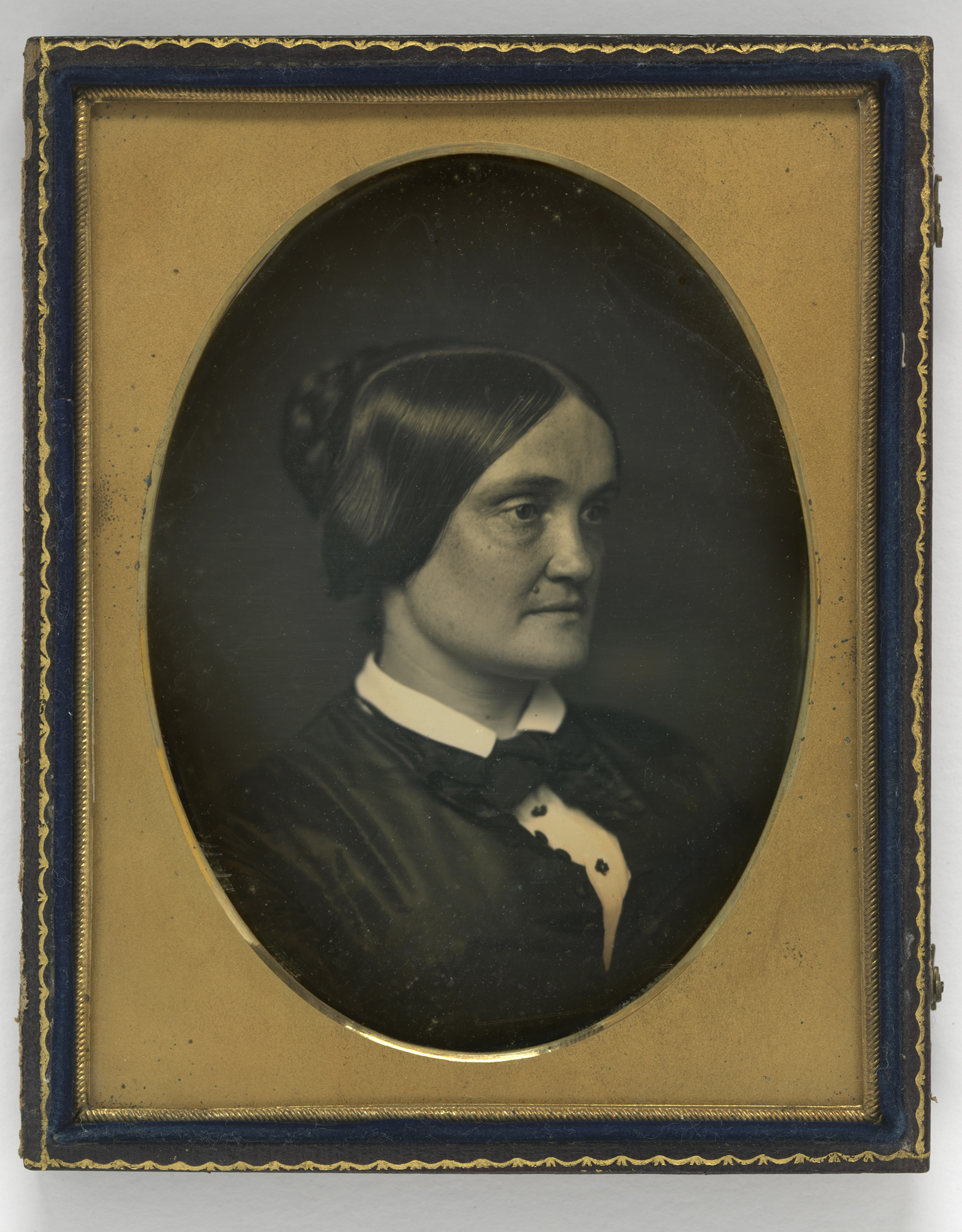
Smithsonian National Portrait Gallery website

LIKE ART BLART ON FACEBOOK

Back to top

Photographs: American daguerreotypes, ambrotypes and tintypes of men

February 2018


J[eremiah] Gurney (American) 'Untitled [Cross-eyed man in three-quarter profile]' Nd

J[eremiah] Gurney (American) 'Untitled [Cross-eyed man in three-quarter profile]' Nd


Jeremiah Gurney (American) at 349 Broadway, New York
Untitled (Cross-eyed man in three-quarter profile)
Nd
Half-plate daguerreotype


All of these photographs came from the Internet, most from an auction site selling them at prices way beyond what I could afford.

As you can see, I have given most of them a digital clean. Even though this might seem too clinical, unethical? or just wrong – you can now see the photographs as they were originally intended, without the grunge and gunk of years of dust and degradation over the top of them.

Just look at the photograph above, and you can immediately get an idea of the unique spatiality of the image, from front to back. A really low depth of field that is focused diagonally across the front of the body and jacket, making the hands, the table and the back of the head out of focus. Because it is occluded with all the scratches and dust on the original, you have little idea of the complexity of the visualisation of this portrait until you observe the image in its pristine state, as it was meant to be seen just after it was taken.

I just love these early portraits and photographic processes for the presence they bring to their subjects. For example the hair, the gaze and the attitude of the right hand in Handsome man with fifth finger ring is just magnificent. I could go on cleaning them for a very long time, and never get bored.

Dr Marcus Bunyan


Unknown photographer (American) 'Untitled [Group of three men]' c. 1850


Unknown photographer (American)
Untitled (Group of three men)
c. 1850
Sixth-plate daguerreotype
Unusual period frame of cast thermoplastic


Unknown photographer (American) 'Untitled [Man on crutches]' c. 1850-1860s


Unknown photographer (American)
Untitled (Man on crutches)
c. 1850-1860s
Sixth-plate ambrotype
Housed in a moulded leather case


Unknown photographer (American) Untitled [Man with pistols] c. 1850-1860s

Unknown photographer (American) Untitled [Man with pistols] c. 1850-1860s


Unknown photographer (American)
Untitled (Man with pistols)
c. 1850-1860s
Sixth-plate daguerreotype, delicately tinted
Housed in a moulded leather case


Unknown photographer (American) 'Untitled [Man, possibly a sailor, wearing hoop earrings]' Nd

Unknown photographer (American) 'Untitled [Man, possibly a sailor, wearing hoop earrings]' Nd


Unknown photographer (American)
Untitled (Man, possibly a sailor, wearing hoop earrings)
Nd
Sixth-plate daguerreotype
Housed in a moulded leather case


Unknown photographer (American) 'Untitled [African American]' c. 1850s


Unknown photographer (American)
Untitled (African American)
c. 1850s
Sixth-plate daguerreotype


Unknown photographer (American) 'Untitled [African American]' c. 1850s


Unknown photographer (American)
Untitled (African American)
c. 1850s
Sixth-plate daguerreotype


Unknown photographer (American) 'Untitled [Two men in caps, elegantly dressed]' c. 1850s


Unknown photographer (American)
Untitled (Two men in caps, elegantly dressed)
c. 1850s
Sixth-plate daguerreotype
Housed in a moulded leather case


Unknown photographer (American) 'Untitled [Handsome man with fifth finger ring]' c. 1850s


Unknown photographer (American)
Untitled (Handsome man with fifth finger ring)
c. 1850s
Sixth-plate daguerreotype


Unknown photographer (American) 'Untitled [Portrait of violinist holding instrument]' c. 1855


Unknown photographer (American)
Untitled (Portrait of violinist holding instrument)
c. 1855
Sixth-plate daguerreotype
Union case


Unknown photographer (American) 'Untitled [Two men, one with trug of tools]' c. 1850-1860s


Unknown photographer (American)
Untitled (Two men, one with trug of tools)
c. 1850-1860s
Sixth-plate ambrotype
Housed in a moulded leather case


Unknown photographer (American) 'Untitled [Two firemen]' c. 1850-1860s


Unknown photographer (American)
Untitled (Two firemen)
c. 1850-1860s
Quarter-plate tinted tintype
Leather case


Unknown photographer (American) 'Untitled [Man in button braces]' c. 1850

Unknown photographer (American) 'Untitled [Man in button braces]' c. 1850


Unknown photographer (American)
Untitled (Man in button braces)
c. 1850
Ninth-plate daguerreotype


William J. Shew (American, 1820-1903) 'Charles Calistus Burleigh (1810-1878)' c. 1845-1850


William J. Shew (American, 1820-1903)
Charles Calistus Burleigh (1810-1878)
c. 1845-1850
Quarter-plate daguerreotype
11.5 x 9.5cm (cased)
Boston Public Library, Print Department


Charles Calistus Burleigh (American, 1810-1878)

An ardent abolitionist and journalist, Burleigh was vocal against Connecticut’s “Black Law” and became editor of the Unionist, originally published in defence of Prudence Crandall’s school.

Eccentric in dress and with a flowing beard he vowed not to remove until the end of slavery, Burleigh turned his back on a professional career to become agent and lecturer for the Middlesex Anti-Slavery. He was a regular contributor to the Liberator and one of the editors of the Pennsylvania Freeman.

He was a supportive friend of Abby Kelley. Active in a number of reform movements, Burleigh plunged into the Anti-Sabbatarian campaign after he was arrested in West Chester, Pennsylvania, in 1847 for selling antislavery literature on Sunday. Abby and Stephen Foster had been arrested in Ohio for the same offence in July 1846.

In 1845 he published a pamphlet, Thoughts on the Death Penalty, condemning capital punishment.

Karen Board Moran. “Charles Calistus Burleigh (1810-1878),” on the Worcester Women’s History Project website 26/3/2005 [Online] Cited 10/02/2022. No longer available online

William J. Shew (American, 1820-1903)

William Shew (1820-1903) made a name for himself as a Daguerrotype portrait artist in the United States. He maintained a mobile studio in a wagon that he called his “Daguerrotype Saloon.”

William Shew was born on a farm in Waterton, New York on March 1820. At the age of 20 he read an article by the inventor Samuel F.B. Morse about the daguerreotype process and, along with his three brothers, moved to New York City to study with Morse. His brothers Jacob, Myron and Trueman were also photographers, but not attained the stature of William Shew. Morse would become more famous as the inventor of the telegraph.

After completing his studies, Shew worked briefly in upstate New York before becoming the supervisor at John Plumbe’s gallery in Boston. Three years later he opened John Shew and Company in Boston, where he manufactured his own dyes and created daguerrotypes with wooden frames, thin veneer backings and embossed paper coverings. In 1846, Shew married Elizabeth Marie Studley and had a daughter they named Theodora Alice, born in Feb. 1848. He also became and active member of the Massachusetts Anti-Slavery Society.

In 1851, he sold his business and sailed on the steamer Tennessee to San Francisco, where he joined his brother Jacob who arrived in 1849. It is believed that Shew set up a gallery shortly after arriving in San Francisco, which may have been destroyed by the 1851 fire that swept the city. After the fire he set up “Shew’s Daguerreian Saloon.”

Sherri Panchaud Onorati. “William Shew (1820-1903) – Photographer & Daguerreotype Innovator,” on the family heirlooms website April 22, 2011 [Online] Cited 10/02/2022


Unknown photographer (American) 'Untitled [Two young men with straw hats, seated beside each other]' Nd


Unknown photographer (American)
Untitled (Two young men with straw hats, seated beside each other)
Nd
Sixth-plate painted tintype
Yale Collection of American Literature, Beinecke Rare Book and Manuscript Library


LIKE ART BLART ON FACEBOOK

Back to top

Exhibition: ‘In Focus: Daguerreotypes’ at the J. Paul Getty Museum, Getty Center, Los Angeles

Exhibition dates: 3rd November 2015 – 20th March 2016


Unknown maker (American) 'Portrait of Young Girl with a Guitar' c. 1850


Unknown maker (American)
Portrait of Young Girl with a Guitar
c. 1850
Daguerreotype
1/6 plate
Open: 9.2 x 15.2cm (3 5/8 x 6 in.)
Graham Nash Collection


The last in my trilogy of postings on 19th century photography features a rather uninspiring collection of daguerreotypes. Perhaps there were better ones in the exhibition.

Of most interest to me are two:

Nude Woman in Photographer’s Studio (c. 1850, below) with its almost van Gogh-esque perspective of the figure, chair and rug. The image is also notable for the daguerreotypes of men who stare down on the women from the wall behind: the objectification of the male gaze – of the photographer and of the observers. This daguerreotype also reminds me of the later haunting photographs by E. J. Bellocq (1873-1949) of the prostitutes of Storyville, New Orleans.

Joseph-Philibert Girault de Prangey’s ghostly, evocative Facade and North Colonnade of the Parthenon on the Acropolis, Athens (1842, below). Can you imagine being shown this full plate, I repeat, full plate daguerreotype of one of the wonders of Ancient Greece just 3 years after the public announcement of the invention of photography. You would have never seen many, if any, images of foreign places in your life before, and that moment of initiation into the magic arts of photography would have taken on the deepest significance. Even now, the effect of this plate on the imagination and consciousness of the viewer is outstanding.

.
The rest of the daguerreotypes in this posting are more prosaic: vaguely interesting still life vanitas or portrait social documentation. If you were not told that these were images of a president of the United States, the inventor of the daguerreotype, or the writer Edgar Allen Poe they could be any “Portrait of a man” or “Portrait of a woman”. It’s amazing how even at this early stage of photography the codification of the image, its semiotic language if you like, was intimately tied up with the caption and text that accompanied it. Of course, unless we know that it’s called the Eiffel Tower then a photograph of the object without that knowledge would mean very little; but as soon as that title is present in collective consciousness, then anywhere an image of that structure is found, it is already known as such.

Now there’s a good idea for an exhibition: the influence of the title on the interpretation of the photographic image. ‘(Un)titled images’ anyone?

Dr Marcus Bunyan


Many thankx to the J. Paul Getty Museum for allowing me to publish the photographs in the posting. Please click on the photographs for a larger version of the image.


James Maguire (American, 1816-1851) '[Portrait of Zachary Taylor]' 1847


James Maguire (American, 1816-1851)
[Portrait of Zachary Taylor]
1847
Daguerreotype
1/4 plate
Image: 7.9 x 5.4cm (3 1/8 x 2 1/8 in.)
Mat: 12.7 x 10.8cm (5 x 4 1/4 in.)
The J. Paul Getty Museum, Los Angeles


James Maguire (American, 1816-1851) Daguerreotypist, dealer in daguerreian supplies; active Tuscaloosa, Ala., before 1842; New Orleans 1842-50; Natchez, Miss., 184; Vicksburg, Miss., 1842; Plaquemine, La., 1842; Baton rouge, La., 1842; Belfast, Ireland, 1844; London, England, 1844; Paris, France, 1844.

According to his obituary, James Maguire was born in Belfast, Ireland, around 1815. By early 1842 he had learned the daguerreian art from Frederick A. P. Barnard and Dr. William H. Harrington in Tuscaloosa, Alabama. Maguire was one of the earliest daguerreians to establish a permanent gallery in New Orleans. In that city on January 28, 1842 he advertised that he had opened a portrait gallery at 31 Canal Street, upstairs, where he would “remind a short time.” …

Maguire’s New orleans gallery flourished during the Mexican War, when the city enjoyed a boom as a key shipping centre and rendezvous for troops bound for Mexico…

When General Zachary Taylor passed through New Orleans in late 1847 on his triumphant return from the Mexican War, he favoured Acquire by sitting for his portrait. The Daily Picayune noted not January 11, 1848, that Macquire’s portrait was ‘the best and most striking likeness of ‘Old Zach’ we have yet seen of him anywhere.”

Peter E. Palmquist and Thomas R. Kailbourn. Pioneer Photographers from the Mississippi to the Continental Divide: A Biographical Dictionary 1839-1865. Stanford: Stanford University Press, 2005, pp. 411-412.


Zachary Taylor (November 24, 1784 – July 9, 1850) was the 12th President of the United States, serving from March 1849 until his death in July 1850. Before his presidency, Taylor was a career officer in the United States Army, rising to the rank of major general.

Taylor’s status as a national hero as a result of his victories in the Mexican-American War won him election to the White House despite his vague political beliefs. His top priority as president was preserving the Union, but he died seventeen months into his term, before making any progress on the status of slavery, which had been inflaming tensions in Congress.

Text from the Wikipedia website


Unknown maker (American) 'Nude Woman in Photographer's Studio' c. 1850


Unknown maker (American)
Nude Woman in Photographer’s Studio
c. 1850
Daguerreotype
1/6 plate
Image: 9.5 x 7.6cm (3 3/4 x 3 in.)
Graham Nash Collection


Unknown maker (American) 'Nude Woman in Photographer's Studio' c. 1850 (detail)


Unknown maker (American)
Nude Woman in Photographer’s Studio (detail)
c. 1850
Daguerreotype
1/6 plate
Image: 9.5 x 7.6cm (3 3/4 x 3 in.)
Graham Nash Collection


Unknown maker (American) 'Portrait of Edgar Allan Poe' late May - early June 1849


Unknown maker (American)
Portrait of Edgar Allan Poe
late May – early June 1849
Daguerreotype
1/2 plate
Image: 12.2 x 8.9cm (4 13/16 x 3 1/2 in.)
Mat (and overmat): 15.6 x 12.7cm (6 1/8 x 5 in.)
Object (whole): 17.9 x 14.9cm (7 1/16 x 5 7/8 in.)
The J. Paul Getty Museum, Los Angeles


Unknown maker (American) 'Portrait of a Nurse and a Child' c. 1850


Unknown maker (American)
Portrait of a Nurse and a Child
c. 1850
Daguerreotype, hand-coloured
1/6 plate
Image: 6.2 x 4.8cm (2 7/16 x 1 7/8 in.)
Mat: 8.3 x 7.1cm (3 1/4 x 2 13/16 in.)
The J. Paul Getty Museum, Los Angeles


Charles Richard Meade (American, 1826-1858) 'Portrait of Louis-Jacques-Mandé Daguerre' 1848


Charles Richard Meade (American, 1826-1858)
Portrait of Louis-Jacques-Mandé Daguerre
1848
Daguerreotype, hand-coloured
1/2 plate
Image: 15.7 x 11.5cm (6 3/16 x 4 1/2 in.)
Mat: 16 x 12cm (6 5/16 x 4 13/16 in.)
Object (whole): 22.1 x 17.8cm (8 11/16 x 7 in.)
The J. Paul Getty Museum, Los Angeles


Louis Daguerre (1787 – 10 July 1851) was born in Cormeilles-en-Parisis, Val-d’Oise, France. He was apprenticed in architecture, theatre design, and panoramic painting to Pierre Prévost, the first French panorama painter. Exceedingly adept at his skill of theatrical illusion, he became a celebrated designer for the theatre, and later came to invent the diorama, which opened in Paris in July 1822.

In 1829, Daguerre partnered with Nicéphore Niépce, an inventor who had produced the world’s first heliograph in 1822 and the first permanent camera photograph four years later. Niépce died suddenly in 1833, but Daguerre continued experimenting, and evolved the process which would subsequently be known as the daguerreotype. After efforts to interest private investors proved fruitless, Daguerre went public with his invention in 1839. At a joint meeting of the French Academy of Sciences and the Académie des Beaux Artson 7 January of that year, the invention was announced and described in general terms, but all specific details were withheld. Under assurances of strict confidentiality, Daguerre explained and demonstrated the process only to the Academy’s perpetual secretary François Arago, who proved to be an invaluable advocate. Members of the Academy and other select individuals were allowed to examine specimens at Daguerre’s studio. The images were enthusiastically praised as nearly miraculous, and news of the daguerreotype quickly spread. Arrangements were made for Daguerre’s rights to be acquired by the French Government in exchange for lifetime pensions for himself and Niépce’s son Isidore; then, on 19 August 1839, the French Government presented the invention as a gift from France “free to the world”, and complete working instructions were published. In 1839, he was elected to the National Academy of Design as an Honorary Academician.

Daguerre died on 10 July 1851 in Bry-sur-Marne, 12 km (7 mi) from Paris. A monument marks his grave there.

Text from the Wikipedia website


James P. Weston (American, active South America about 1849 and New York 1851-1852 and 1855-1857) '[Portrait of an Asian Man in Top Hat]' c. 1856


James P. Weston (American, active South America about 1849 and New York 1851-1852 and 1855 -1857)
[Portrait of an Asian Man in Top Hat]
c. 1856
Daguerreotype, hand-coloured
1/9 plate
Image: 5.4 x 4.3cm (2 1/8 x 1 11/16 in.)
Mat: 6.4 x 5.1cm (2 1/2 x 2 in.)
Open: 5.1 x 10.8cm (2 x 4 1/4 in.)
The J. Paul Getty Museum, Los Angeles


A “mirror with a memory,” a daguerreotype is a direct-positive photographic image fixed on a silver-coated metal plate. The earliest form of photography, this revolutionary invention was announced to the public in 1839. In our present image-saturated age, it is difficult to imagine a time before the ability to record the world in the blink of an eye and the touch of a fingertip. This exhibition, drawn from the Getty Museum’s permanent collection with loans from two private collections, presents unique reflections of people, places, and events during the first two decades of the medium.

Popularly described as “a mirror with a memory,” the daguerreotype was the first form of photography to be announced to the world in 1839 and immediately captured the imagination of the public. The “Daguerreotypomania” that followed may seem surprising today, as photographs have become an omnipresent part of contemporary life. In Focus: Daguerreotypes, on view from November 3, 2015 – March 20, 2016 at the Getty Center, offers the photography enthusiast and the general visitor alike a unique opportunity to view rare and beautiful examples of this early photographic process. The works in the exhibition are drawn from the Getty Museum’s exceptional collection of more than two thousand daguerreotypes alongside loans from the outstanding private collections of musician Graham Nash and collector Paul Berg.

“Today, photographs can be taken, edited, and deleted within seconds and are the principal record of our everyday lives,” says Timothy Potts, director of the J. Paul Getty Museum. “It takes a leap of the imagination to appreciate what they represented to the pioneer inventors and to the public of the day. This exhibition explores how these first captured images – fragile, one-of-a-kind works – were treasured, not only by those who were just discovering the possibilities of the medium, but by those being photographed as well.”

By the mid-1840s, exposure times and costs had decreased markedly and, as a result, daguerreotypes became more accessible to a broader audience. Over the years, attempts were made to enhance the capabilities of the daguerreotype. To make up for the deficiency of colour, many portrait daguerreotypists employed former miniature painters to hand-paint each plate; an example of which is Portrait of a Woman with a Mandolin (1860), where light specks of colour enhance the ornamentation on the costume. Daguerreotypes were also nearly impossible to reproduce, though some attempts were made, including making the daguerreotype plate into a printing plate. Examples of this process will be on view in the exhibition.

Inside the Portrait Studio

Daguerreotype studios were plentiful by the mid-19th century, and each studio developed novel ways to create distinctive and personal images for its customers. Confined to a well-lit indoor or outdoor location, many daguerreotypists would stage everyday scenes that might include painted backdrops of domestic interiors and subjects posing as if in conversation or seated at tables with everyday props. As it was extremely difficult to capture a smiling face without blurring the features, most sitters wore somber expressions. An unusual exception on view in the exhibition is Portrait of a Father and Smiling Child (about 1855).

Customers remarked on the incredible fidelity of the silver image and praised it as a means of preserving a loved one’s presence. Some family members – often children – passed away before they could pose for the camera, and their likenesses were preserved in post-mortem portraits, as in Carl Durheim’s (Swiss, 1810-1890) Postmortem Portrait of a Child (about 1852), which creates the illusion of quiet slumber rather than death.

Prominent and well-known members of society also had their daguerreotype portraits taken, which made their likenesses more accessible to the public than ever before. “The exhibition will include daguerreotypes of the Duke of Wellington, Edgar Allen Poe, and Queen Kalama of Hawaii,” says Karen Hellman, assistant curator of photographs in the J. Paul Getty Museum’s Department of Photographs and curator of the exhibition. “Because of the unique direct positive process, we find ourselves face to face with these historical figures.”

Outside the Portrait Studio

Some of the first subjects for the daguerreotype process were ancient monuments and far-off cityscapes that were previously accessible only to a small, educated elite. Some photographers traveled long distances to capture these remote locales; the exhibition includes images of the Parthenon in Athens, the Pantheon in Rome, and the Temple of Seti I in Egypt. Others trained their lenses closer to home, focusing on vernacular architecture or such structures of national significance as John Plumbe Jr.’s (American, born Wales, 1809-1857) 1846 image of the United States Capitol.

Despite its inability to capture fleeting moments, the daguerreotype nevertheless was used to document historical events. The exhibition includes images of parades and military festivals as well as pivotal historical moments, such as Ezra Greenleaf Weld’s (American, 1801-1874) image of the 1850 Fugitive Slave Law Convention in Cazenovia, New York.

Because it was perceived as a faithful record, it was difficult to elevate the daguerreotype to the status of an art form. Nevertheless some photographers attempted to expand their studio practice to create more artistic scenes, such as The Sands of Time (1850-52), a still-life by Thomas Richard Williams (English, 1825-1871) that features books, glasses, an hourglass, and a human skull. Daguerreotypes were sometimes used for scientific experimentation, as is the case with Antoine Claudet, who used the medium as an instrument to measure focal distance.

The exhibition also features a selection of distinctive daguerreotype cases – wrapped in leather or decorated with oil painting, shell inlay, and gold foil. These elaborate cases emphasise the care that families took in protecting these treasured images, and the value they held from generation to generation.

In Focus: Daguerreotypes is on view November 3, 2015-March 20, 2016 at the J. Paul Getty Museum, Getty Center. The exhibition is curated by Karen Hellman, assistant curator of photographs in the Getty Museum’s Department of Photographs.

Press release from the J. Paul Getty Museum


William Langenheim (American, born Germany, 1807-1874) 'Portrait of Frederick Langenheim' c. 1848


William Langenheim (American, born Germany, 1807-1874)
Portrait of Frederick Langenheim
c. 1848
Daguerreotype
1/4 plate
Image: 8.9 x 7cm (3 1/2 x 2 3/4 in.)
Mat: 10.6 x 8.3cm (4 3/16 x 3 1/4 in.)
The J. Paul Getty Museum, Los Angeles


Carl Durheim (Swiss, 1810-1890) 'Postmortem of a Child' c. 1852


Carl Durheim (Swiss, 1810-1890)
Postmortem of a Child
c. 1852
Daguerreotype, hand-coloured
1/4 plate
Image: 6.8 x 9.4cm (2 11/16 x 3 11/16 in.)
Object (whole): 12.7 x 15.1cm (5 x 5 15/16 in.)
The J. Paul Getty Museum, Los Angeles


Unknown maker (American) 'Portrait of a Family' c. 1850


Unknown maker (American)
Portrait of a Family
c. 1850
Framed: 35.6 x 40.6cm (14 x 16 in.)
Graham Nash Collection


Unknown maker (American) 'Portrait of a Family' c. 1850 (detail)


Unknown maker (American)
Portrait of a Family (detail)
c. 1850
Framed: 35.6 x 40.6cm (14 x 16 in.)
Graham Nash Collection


Théodore Maurisset (French, active 1834-1859) 'La Daguerreotypomanie (Daguerreotypomania)' December 1839


Théodore Maurisset (French, active 1834-1859)
La Daguerreotypomanie (Daguerreotypomania)
December 1839
Lithograph
Image: 26 x 35.7cm (10 1/4 x 14 1/16 in.)
The J. Paul Getty Museum, Los Angeles, Gift of Samuel J. Wagstaff, Jr.


Horatio B. King (American, 1820-1889) 'Seth Eastman at Dighton Rock, July 7, 1853' 1853


Horatio B. King (American, 1820-1889)
Seth Eastman at Dighton Rock, July 7, 1853
1853


Dighton Rock

The Dighton Rock is a 40-ton boulder, originally located in the riverbed of the Taunton River at Berkley, Massachusetts (formerly part of the town of Dighton). The rock is noted for its petroglyphs (“primarily lines, geometric shapes, and schematic drawings of people, along with writing, both verified and not.”), carved designs of ancient and uncertain origin, and the controversy about their creators. In 1963, during construction of a coffer dam, state officials removed the rock from the river for preservation. It was installed in a museum in a nearby park, Dighton Rock State Park. In 1980 it was listed on the National Register of Historic Places (NRHP).

Seth Eastman

Seth Eastman (1808-1875) and his second wife Mary Henderson Eastman (1818 – 24 February 1887) were instrumental in recording Native American life. Eastman was an artist and West Point graduate who served in the US Army, first as a mapmaker and illustrator. He had two tours at Fort Snelling, Minnesota Territory; during the second, extended tour he was commanding officer of the fort. During these years, he painted many studies of Native American life. He was notable for the quality of his hundreds of illustrations for Henry Rowe Schoolcraft’s six-volume study on Indian Tribes of the United States (1851-1857), commissioned by the US Congress. From their time at Fort Snelling, Mary Henderson Eastman wrote a book about Dakota Sioux life and culture, which Seth Eastman illustrated. In 1838, he was elected into the National Academy of Design as an Honorary Academician…

Having retired as a Union brigadier general for disability during the American Civil War, Seth Eastman was reactivated when commissioned by Congress to make several paintings for the US Capitol. Between 1867 and 1869, he painted a series of nine scenes of American Indian life for the House Committee on Indian Affairs. In 1870 Congress commissioned Eastman to create a series of 17 paintings of important U.S. forts, to be hung in the meeting rooms of the House Committee on Military Affairs. He completed the paintings in 1875.

Text from the Wikipedia website


Thomas Richard Williams (English, 1825-1871) 'The Sands of Time' 1850-1852


Thomas Richard Williams (English, 1825-1871)
The Sands of Time
1850-1852
Stereo-daguerreotype
Two 1/6 plates
Image (each): 7 x 5.9cm (2 3/4 x 2 5/16 in.)
Object (whole): 8.3 x 17.1cm (3 1/4 x 6 3/4 in.)
The J. Paul Getty Museum, Los Angeles


Thomas Richard Williams (English, 1825-1871) 'The Sands of Time' 1850-1852 (detail)


Thomas Richard Williams (English, 1825-1871)
The Sands of Time (detail)
1850-1852
Stereo-daguerreotype
Two 1/6 plates
Image (each): 7 x 5.9cm (2 3/4 x 2 5/16 in.)
Object (whole): 8.3 x 17.1cm (3 1/4 x 6 3/4 in.)
The J. Paul Getty Museum, Los Angeles


Thomas Richard Williams (5 May 1824 – 5 April 1871) was a British professional photographer and one of the pioneers of stereoscopy.

Williams’s first business was in London around 1850. He is known for his celebrated stereographic daguerreotypes of the Crystal Palace. He also did portrait photography, now in the Getty Museum’s archives, which he regarded as his greatest success…

Williams’ first studio in Lambeth served both as business and home. Here, “Williams rapidly acquired a fine reputation as portraitist. One source describes how the vicinity of the studio was often ‘blocked with a dozen carriages awaiting the visitors at Mr. Williams’ studio.’ His portraits were exquisitely crafted, and displayed a restrained elegance which became his hallmark.”

Soon his success allowed him to open a studio separate from his home, in Regent Street in 1854. With over twenty photography studios nearby competition was keen – and included his former mentor and teacher, Claudet. “Williams, with his characteristic discretion and low-key approach, did not advertise his business or put up large signs to attract clientele. It seems, though, that the gentry beat a path to his door, and his stereoscopic portraits became highly popular.”

While the mainstay of his business was his stereoscopic (3-D) portraits, he was coming into his own with an artistic vision of what photography could and would become. He became one of the first photographers on record to shoot still life and other artistic compositions. These images became popular to the point that they became “part of the birth of a new genre that was to become the stereoscopic boom of the 1850s.” The Victorians loved them; sales boomed.

In the mid-1850s, Williams contracted with the London Stereoscopic Company to publish his images. The LSC published the work of many eminent stereo photographers, including William England, and was able to mass-produce his works, which helped meet growing demand for his prints.

The LSC published three stereoscopic series by Williams.

His “First Series” was made up of portraits, artistic compositions and still life, many taken in his studio. Dr. Brian May and Elena Vidal write: “The still life studies, with their fine detail and careful composition, showed a clear influence from the 17th century Dutch painting tradition, and a profound knowledge of the iconography surrounding this genre. Photographs such as ‘The Old Larder,’ ‘Mortality’ and ‘Hawk and Duckling’ are superb examples of the unique power of stereography, with their superb three-dimensional compositions, and wealth of detail, which, combined with an outstanding artistic sensibility, resulted in images of astonishing finesse. Another remarkable group of images in this series, entitled “The Launching of the Marlborough”, taken on 31 July 1855, was highly praised in the Victorian press, since they embodied the achievement of ‘instantaneous’ photography, executed as they were from a moving boat, and managing to ‘freeze’ the waves on the surface of the sea.”

The second series was “The Crystal Palace,” this time at Sydenham, as the original Palace in Hyde Park had been dismantled. “The quality of Williams’ original daguerreotypes from this event are such that, though they contain images of hundreds of people, individual facial features of Queen Victoria and her party are clearly discernible.” …

May and Vidal write, “Through his work, Williams is now widely recognised as pivotal in the history of stereoscopic photography, since his stereo cards were the first examples of photographic art for its own sake ever to achieve wide commercial success.”

Text from the Wikipedia website


Joseph-Philibert Girault de Prangey (French, 1804-1892) 'Facade and North Colonnade of the Parthenon on the Acropolis, Athens' 1842


Joseph-Philibert Girault de Prangey (French, 1804-1892)
Facade and North Colonnade of the Parthenon on the Acropolis, Athens
1842
Daguerreotype
Whole plate
Image: 18.8 x 24cm (7 3/8 x 9 7/16 in.)
Object (whole): 18.8 x 24cm (7 3/8 x 9 7/16 in.)
The J. Paul Getty Museum, Los Angeles


Alphonse-Louis Poitevin (French, 1819-1882) 'The Pantheon, Paris' 1842


Alphonse-Louis Poitevin (French, 1819-1882)
The Pantheon, Paris
1842
Daguerreotype
1/2 plate
Image: 15.1 x 10.2cm (5 15/16 x 4 in.)
Mat: 21.5 x 15.6cm (8 7/16 x 6 1/8 in.)
Object (whole): 27.9 x 21.9cm (11 x 8 5/8 in.)
The J. Paul Getty Museum, Los Angeles


Unknown maker (American) 'Portrait of a Young Man in a Top Hat' c. 1850s


Unknown maker (American)
Portrait of a Young Man in a Top Hat
c. 1850s
Daguerreotype
1/9 plate
Open: 7.3 x 12.4cm (2 7/8 x 4 7/8 in.)
Graham Nash Collection


Attributed to Dr. Hugo Stangenwald (Austrian born Germany, 1829-1899) 'Portrait of Queen Kalama of Hawaii' c. 1853-1854


Attributed to Dr. Hugo Stangenwald (Austrian born Germany, 1829-1899)
Portrait of Queen Kalama of Hawaii
c. 1853-1854
Daguerreotype, hand-coloured
1/16 plate
Image: 3 x 2.5cm (1 3/16 x 1 in.)
Mat: 4.1 x 3.5cm (1 5/8 x 1 3/8 in.)
Open: 5.1 x 8.9cm (2 x 3 1/2 in.)
The J. Paul Getty Museum, Los Angeles


Kalama Hakaleleponi Kapakuhaili (1817 – September 20, 1870) was a Queen consort of the Kingdom of Hawai’i alongside her husband, Kauikeaouli, who reigned as King Kamehameha III. Her second name is Hazelelponi in Hawaiian.

Dr Hugo Stangenwald was an Austrian physician and pioneer photographer who arrived in Honolulu in 1853.

“In January 1853m Stangenwald landed at Hilo, on the island of Hawaii, aboard a British brig. He was bound for Sydney, Australia, with his partner, Stephen Goodfellow, recently a resident of San Franciso. Together, as Stangenwald and Goodfellow, they found a profitable field of enterprise taking portraits of American missionaries and views of Hawaiian scenery during what was to have been a temporary stay. Missionary titus Coan called Stangenwald “the chief artist” and “a physician (so reported),” and summed him up as “a pleasant and pious young man.” On February 10, Coan wrote that Stangenwald and Goodfellow “are now using up all the faces in Hilo, and they soon with be through.” Can added that their prices were comparatively moderate; they charged “3$ for the smallest plates in a neat case, and a frame in proportion to the size, the amount of gold in ornamentation.” This helpful missionary went so far as to enlist the help of his colleagues in Honolulu to assist Stangenwald and Goodfellow in establishing themselves in that town.

By March 26, Stangenwald and Goodfellow were advertising the imminent opening of the daguerreian rooms next to the shoe store of J. H. Woods in Honolulu. After a week engaged in setting up their equipment and adjusting there work to the light, they were prepared to take portraits and “correct views of gentlemen’ residences, vessels, machinery and parts of the city … without reversing.” When a devastating outbreak of smallpox hit Honolulu in May, Goodfellow elected to dissolve his partnership with Stangenwald and resume his voyage to Australia. Stangenwald decided to remain in Hawaii.”

Peter E. Palmquist and Thomas R. Kailbourn. Pioneer Photographers of the Far West: A Biographical Dictionary 1840-1865. Stanford: Stanford University Press, 2000, p. 515.


Unknown maker (American) '[Portrait of an Unidentified Daguerreotypist Displaying a Selection of Daguerreotypes] / Daguerreotypist (?) Displaying Thirteen Daguerreotypes' 1845


Unknown maker (American)
[Portrait of an Unidentified Daguerreotypist Displaying a Selection of Daguerreotypes] / Daguerreotypist (?) Displaying Thirteen Daguerreotypes
1845
Daguerreotype, hand-coloured
1/6 plate
Image: 6.7 x 5.2cm (2 5/8 x 2 1/16 in.)
Mat: 8.3 x 7cm (3 1/4 x 2 3/4 in.)
Open: 8.9 x 15.2cm (3 1/2 x 6 in.)
The J. Paul Getty Museum, Los Angeles


Unknown maker (American) '[Chinese Woman with a Mandolin]' 1860


Unknown maker (American)
[Chinese Woman with a Mandolin]
1860
Daguerreotype, hand-coloured
1/4 plate
Image: 9 x 6.5cm (3 9/16 x 2 9/16 in.)
Mat: 10.8 x 8.3cm (4 1/4 x 3 1/4 in.)
Open: 12.7 x 20.6cm (5 x 8 1/8 in.)
The J. Paul Getty Museum, Los Angeles


Unknown maker (American) '[Chinese Woman with a Mandolin]' 1860 (detail)


Unknown maker (American)
[Chinese Woman with a Mandolin] (detail)
1860
Daguerreotype, hand-coloured
1/4 plate
Image: 9 x 6.5cm (3 9/16 x 2 9/16 in.)
Mat: 10.8 x 8.3cm (4 1/4 x 3 1/4 in.)
Open: 12.7 x 20.6cm (5 x 8 1/8 in.)
The J. Paul Getty Museum, Los Angeles


Unknown maker (American) 'Portrait of a Girl Holding a Doll' c. 1845


Unknown maker (American)
Portrait of a Girl Holding a Doll
c. 1845
Daguerreotype
Framed: 24.1 x 19.1cm (9 1/2 x 7 1/2 in.)
Graham Nash Collection


Auguste Belloc (French, 1800-1867) 'Portrait of a Woman' May 1844


Auguste Belloc (French, 1800-1867)
Portrait of a Woman
May 1844
Daguerreotype
Image: 10.2 x 7.6cm (4 x 3 in.)
Framed: 24.8 x 22.9cm (9 3/4 x 9 in.)
Graham Nash Collection


Auguste Belloc (French, 1800-1867) 'Portrait of a Woman' May 1844 (detail)


Auguste Belloc (French, 1800-1867)
Portrait of a Woman (detail)
May 1844
Daguerreotype
Image: 10.2 x 7.6cm (4 x 3 in.)
Framed: 24.8 x 22.9cm (9 3/4 x 9 in.)
Graham Nash Collection


Auguste Belloc (French, 1800-1867) was born in the beginning of the 19th century, in Montrabe, located in the Southwest of France (Haute-Garonne).

He began his career as a painter of miniatures and watercolours. Belloc’s first photographic studio was mentioned in 1851. Practicing daguerreotype, he became involved in wet collodion development and improved the wax coating process, helping the pictures to keep their wet-like luster.

But the most important research he led was about color stereoscopy (3 dimensional photography). Known for his nudes and portraits, he looked for the best way to express the reality and found a new method. This practice considered erotic photography and was declared illegal by the police in 1856 and 1860.

Marion Perceval. “Auguste Belloc,” in John Hannavy (ed.,). Encyclopedia of Nineteenth-Century Photography. Routledge, 2008, p. 146.


The J. Paul Getty Museum
1200 Getty Center Drive
Los Angeles, California 90049

Opening hours:
Daily 10am – 5pm

The J. Paul Getty Museum website

LIKE ART BLART ON FACEBOOK

Back to top

Exhibition: ‘In Light of the Past’ at the National Gallery of Art, Washington

Exhibition dates: 3rd May – 26th July 2015

Curators: The curators of In Light of the Past: Celebrating 25 Years of Photography at the National Gallery of Art are Sarah Greenough, senior curator and head of the department of photographs, and Diane Waggoner, associate curator, department of photographs, National Gallery of Art.


Charles Nègre (French, 1820-1880) 'Market Scene at the Port of the Hotel de Ville, Paris' before February 1852


Charles Nègre (French, 1820-1880)
Market Scene at the Port of the Hotel de Ville, Paris
before February 1852
Salted paper print
14.7 x 19.9cm
National Gallery of Art, Washington, Patrons’ Permanent Fund, 2003


What a great title for an exhibition. Photography always evidences light of the past, we live in light of the past (the light of the Sun takes just over 8 minutes to reach Earth) and, for whatever reason, human beings never seem to learn from mistakes, in light of the past history of the human race.

My favourites in this postings are the 19th century photographs, to which I am becoming further attuned the more I look at them. There is almost a point when you become psychologically enmeshed with their light, with the serenity of the images, a quality that most contemporary photographs seem to have lost. There is a quietness to their presence, a contemplation on the nature of the world through the pencil of nature that is captivating. You only have to look at Gustave Le Gray’s The Pont du Carrousel, Paris: View to the West from the Pont des Arts (1856-1858, below) to understand the everlasting, transcendent charisma of these images. Light, space, time, eternity.

Dr Marcus Bunyan


Many thankx to the National Gallery of Art for allowing me to publish the photographs in the posting. Please click on the photographs for a larger version of the image.

The Collection of Photographs at the National Gallery of Art, Washington (110kb Word doc)


William Henry Fox Talbot (English, 1800-1877) 'A Scene in York: York Minster from Lop Lane' 1845


William Henry Fox Talbot (English, 1800-1877)
A Scene in York: York Minster from Lop Lane
1845
Salted paper print
16.2 x 20.4cm
National Gallery of Art, Washington, Edward J. Lenkin Fund, Melvin and Thelma Lenkin Fund and Stephen G. Stein Fund, 2011


A British polymath equally adept in astronomy, chemistry, Egyptology, physics, and philosophy, Talbot spent years inventing a photographic process that created paper negatives, which were then used to make positive prints – the conceptual basis of nearly all photography until the digital age. Calotypes, as he came to call them, are softer in effect than daguerreotypes, the other process announced in 1839. Though steeped in the sciences, Talbot understood the ability of his invention to make striking works of art. Here the partially obstructed view of the cathedral rising from the confines of the city gives a sense of discovery, of having just turned the corner and encountered this scene.


Carleton E. Watkins (American, 1829-1916) 'Piwac, Vernal Falls, 300 feet, Yosemite' 1861


Carleton E. Watkins (American, 1829-1916)
Piwac, Vernal Falls, 300 feet, Yosemite
1861
Albumen print
39.9 x 52.3cm
National Gallery of Art, Washington, Gift of Mary and David Robinson, 1995


The westward expansion of America opened up new opportunities for photographers such as Watkins and William Bell. Joining government survey expeditions, hired by railroad companies, or catering to tourists and the growing demand for grand views of nature, they created photographic landscapes that reached a broad audience of scientists, businessmen, and engineers, as well as curious members of the middle class. Watkins’s photographs of the sublime Yosemite Valley, which often recall landscape paintings of similar majestic subjects, helped convince Congress to pass a bill in 1864 protecting the area from development and commercial exploitation.


Eugène Cuvelier (French, 1837-1900) 'Belle-Croix' 1860s


Eugène Cuvelier (French, 1837-1900)
Belle-Croix
1860s
Albumen print
25.4 x 34.3cm
National Gallery of Art, Washington, Gail and Benjamin Jacobs for the Millennium Fund, 2007


In the second half of the nineteenth century, some photographers in France, hired by governmental agencies to make photographic inventories or simply catering to the growing demand for pictures of Paris, drew on the medium’s documentary abilities to record the nation’s architectural patrimony and the modernisation of Paris. Others explored the camera’s artistic potential by capturing the ephemeral moods of nature in the French countryside. Though photographers faced difficulties in carting around heavy equipment and operating in the field, they learned how to master the elements that directly affected their pictures, from securing the right vantage point to dealing with movement, light, and changing atmospheric conditions during long exposure times.


Gustave Le Gray (French, 1820-1884) 'The Pont du Carrousel, Paris: View to the West from the Pont des Arts' 1856-1858


Gustave Le Gray (French, 1820-1884)
The Pont du Carrousel, Paris: View to the West from the Pont des Arts
1856-1858
Albumen print
37.8 x 48.8cm
National Gallery of Art, Washington, Patrons’ Permanent Fund, 1995


Édouard-Denis Baldus (French, 1813-1889) 'Toulon, Train Station' c. 1861


Édouard-Denis Baldus (French, 1813-1889)
Toulon, Train Station
c. 1861
Albumen print
27.4 x 43.1cm
National Gallery of Art, Washington, Patrons’ Permanent Fund, 1995


In Light of the Past: Celebrating 25 Years of Photography at the National Gallery of Art, on view in the West Building from May 3 through July 26, 2015, will commemorate more than two decades of the Gallery’s robust photography program. Some 175 of the collection’s most exemplary holdings will reveal the evolution of the art of photography, from its birth in 1839 to the late 1970s. In Light of the Past is one of three stellar exhibitions that will commemorate the 25th anniversary of the National Gallery of Art’s commitment to photography acquisitions, exhibitions, scholarly catalogues, and programs.

In Light of the Past includes some of the rarest and most compelling photographs ever created,” said Earl A. Powell III, director, National Gallery of Art, Washington. “It also honours the generous support of our donors who have enabled us to achieve this new place of prominence for photography at the Gallery.

About the exhibition

In Light of the Past begins with exceptional 19th-century salted paper prints, daguerreotypes, and albumen prints by acclaimed early practitioners such as William Henry Fox Talbot (1800-1877), Gustave Le Gray (1820-1884), Roger Fenton (1819-1869), Julia Margaret Cameron (1815-1879), Albert Sands Southworth (1811-1894), and Josiah Johnson Hawes (1808-1901). It also displays works by American expeditionary photographers, including William Bell (1830-1910) and Carleton E. Watkins (1829-1916).

The exhibition continues with late 19th- and early 20th-century American Pictorialist photographs by Alfred Stieglitz (1864-1946), Clarence H. White (1871-1925), Gertrude Käsebier (1852-1934), and Alvin Langdon Coburn (1882-1966), among others, as well as European masters such as Eugène Atget (1857-1927). The exhibition also examines the international photographic modernism of artists such as Paul Strand (1890-1976), André Kertész (1894-1985), Marianne Brandt (1893-1983), László Moholy-Nagy (1895-1946), and Ilse Bing (1899-1998) before turning to the mid-20th century, where exceptional work by Walker Evans (1903-1975), Robert Frank (b. 1924), Harry Callahan (1912-1999), Irving Penn (1917-2009), Lee Friedlander (b. 1934), and Diane Arbus (1923-1971) will be on view.

The exhibition concludes with pictures from the 1960s and 1970s, showcasing works by photographers such as Robert Adams (b. 1937), Lewis Baltz (1945-2014), and William Eggleston (b. 1939), as well as Mel Bochner (b. 1940) and Sol LeWitt (1928-2007), which demonstrate the diverse practices that invigorated photography during these decades.

Press release from the National Gallery of Art


Albert Sands Southworth (American, 1811-1894) and Josiah Johnson Hawes (American, 1808-1901) 'The Letter' c. 1850


Albert Sands Southworth (American, 1811-1894) and Josiah Johnson Hawes (American, 1808-1901)
The Letter
c. 1850
Daguerreotype
Plate: 20.3 x 15.2cm
National Gallery of Art, Washington, Patrons’ Permanent Fund, 1999


Working together in Boston, the portrait photographers Southworth and Hawes aimed to capture the character of their subjects using the daguerreotype process. Invented in France and one of the two photographic processes introduced to the public in early 1839, the daguerreotype is made by exposing a silver-coated copper plate to light and then treating it with chemicals to bring out the image. The heyday of the technique was the 1840s and 1850s, when it was used primarily for making portraits. The daguerreotype’s long exposure time usually resulted in frontal, frozen postures and stern facial expressions; this picture’s pyramidal composition and strong sentiments of friendship and companionship are characteristic of Southworth and Hawes’s innovative approach.


Clarence H. White (American, 1871-1925) 'The Hillside' c. 1898


Clarence H. White (American, 1871-1925)
The Hillside
c. 1898
Gum dichromate print
20.8 x 15.88cm
National Gallery of Art, Washington, Patrons’ Permanent Fund, 2008


The Photo-Secession

At the turn of the century in America, Alfred Stieglitz and his colleague Edward Steichen led the movement to establish photography’s status as a fine art. In 1902 Stieglitz founded an organisation called the Photo-Secession, consisting of young artists who shared his belief in the creative potential of the medium. Many of the photographers featured here were members of the group, including Gertrude Käsebier, Clarence White, and Alvin Langdon Coburn. Through the exhibitions Stieglitz organised in his New York gallery, called 291, and the essays he published in his influential quarterly, Camera Work, he and the Photo-Secession promoted the Pictorialist aesthetic of softly textured, painterly pictures that elicit emotion and appeal to the imagination. Occasionally the photographers’ compositions refer to other works of art, such as Steichen’s portrait of his friend Auguste Rodin, whose pose recalls one of the sculptor’s most famous works, The Thinker. Influenced by the modern European and American painting, sculpture, and drawing he exhibited at 291, Stieglitz lost interest in the Photo-Secession in the early 1910s and began to explore a more straightforward expression.


Eugène Atget (French, 1857-1927) 'Saint-Cloud' 1926


Eugène Atget (French, 1857-1927)
Saint-Cloud
1926
Albumen print
22.2 x 18.1cm
National Gallery of Art, Washington, Gift of Mary and Dan Solomon and Patrons’ Permanent Fund, 2006


Using a cumbersome camera mounted on a tripod, Atget recorded the myriad facets of Paris and its environs at the turn of the century. Transforming ordinary scenes into poetic evocations, he created a visual compendium of the objects, architecture, and landscapes that were expressive of French culture and its history. He sold his photographs to artists, architects, and craftsmen, as well as to libraries and museums interested in the vanishing old city. Throughout his career he returned repeatedly to certain subjects and discovered that the variations caused by changing light, atmosphere, and season provided inexhaustible subjects for the perceptive photographer.


Julia Margaret Cameron (British, 1815-1879) 'The Mountain Nymph, Sweet Liberty' June 1866


Julia Margaret Cameron (British, 1815-1879)
The Mountain Nymph, Sweet Liberty
June 1866
Albumen print
36.1 x 26.7cm
National Gallery of Art, Washington, New Century Fund, 1997


Ensconced in the intellectual and artistic circles of midcentury England, Cameron manipulated focus and light to create poetic pictures rich in references to literature, mythology, and history. Her monumental views of life-sized heads were unprecedented, and with them she hoped to define a new mode of photography that would rival the expressive power of painting and sculpture. The title of this work alludes to John Milton’s mid-seventeenth-century poem L’Allegro. Describing the happy life of one who finds pleasure and beauty in the countryside, the poem includes the lines:

Come, and trip it as ye go
On the light fantastic toe;
And in thy right hand lead with thee,
The mountain nymph, sweet Liberty.


Dr Guillaume-Benjamin-Amant Duchenne (de Boulogne) (French, 1806-1875) 'Figure 63, "Fright" from "Mécanisme de la physionomie humaine (Mechanism of human physiognomy)" (1862)' 1854-1855


Dr Guillaume-Benjamin-Amant Duchenne (de Boulogne) (French, 1806-1875)
Figure 63, “Fright” from “Mécanisme de la physionomie humaine (Mechanism of human physiognomy)” (1862)
1854-1855
Albumen print
21.5 × 16cm
National Gallery of Art, Washington, Pepita Milmore Memorial Fund, 2015


A neurologist, physiologist, and photographer, Duchenne de Boulogne conducted a series of experiments in the mid-1850s in which he applied electrical currents to various facial muscles to study how they produce expressions of emotion. Convinced that these electrically-induced expressions accurately rendered internal feelings, he then photographed his subjects to establish a precise visual lexicon of human emotions, such as pain, surprise, fear, and sadness. In 1862 he included this photograph representing fright in a treatise on physiognomy (a pseudoscience that assumes a relationship between external appearance and internal character), which enjoyed broad popularity among artists and scientists.


Lewis Hine (American, 1874-1940) 'An Anaemic Little Spinner in a New England Cotton Mill (North Pownal, Vermont)' 1910


Lewis Hine (American, 1874-1940)
An Anaemic Little Spinner in a New England Cotton Mill (North Pownal, Vermont)
1910
Gelatin silver print
24.1 × 19.2cm
National Gallery of Art, Washington, Pepita Milmore Memorial Fund, 2015


Trained as a sociologist and initially employed as a teacher, Hine used the camera both as a research tool and an instrument of social reform. One of the earliest and most influential social documentary photographers of his time, he made many pictures under the auspices of the National Child Labor Committee, an organisation formed in 1904 to promote better working conditions for children. Hine’s focus on the thin, frail body of this barefoot twelve-year-old spinner, who stands before rows of bobbins in the mill where she worked, was meant to illustrate the unhealthy effects of her employment. Photographs like this one were crucial to the campaign to change American child labor laws in the early twentieth century.


In Light of the Past: Twenty-Five Years of Photography at the National Gallery of Art

Georgia O’Keeffe and the Alfred Stieglitz Estate laid the foundation of the photography collection of the National Gallery of Art in 1949 with their donation of 1,650 Stieglitz photographs, an unparalleled group known as the Key Set. Yet the Gallery did not start actively acquiring photographs until 1990, when it launched an initiative to build a collection of works by European and American photographers from throughout the history of the medium and mount major exhibitions with scholarly publications. Now including nearly fifteen thousand prints, the collection encompasses the rich diversity of photographic practice from fine art to scientific and amateur photography, as well as photojournalism. It is distinguished by its large holdings of works by many of the medium’s most acclaimed masters, such as Paul Strand, Walker Evans, André Kertész, Ilse Bing, Robert Frank, Harry Callahan, Lee Friedlander, Gordon Parks, Irving Penn, and Robert Adams, among others.

In Light of the Past celebrates the twenty-fifth anniversary of the 1990 initiative by presenting some of the Gallery’s finest photographs made from the early 1840s to the late 1970s. It is divided into four sections arranged chronologically. The first traces the evolution of the art of photography during its first decades in the work of early British, French, and American practitioners. The second looks at the contributions of late nineteenth and early twentieth-century photographers, from Stieglitz and the American Pictorialists to European masters such as Eugène Atget. The third section examines the international photographic modernism of the 1920s and 1930s, and the fourth features seminal mid-twentieth-century photographers. The exhibition concludes with pictures representing the varied practices of those working in the late 1960s and 1970s.

The Nineteenth Century: The Invention of Photography

In 1839 a new means of visual representation was announced to a startled world: photography. Although the medium was immediately and enthusiastically embraced by the public at large, photographers themselves spent the ensuing decades experimenting with techniques and debating the nature of this new invention. The works in this section suggest the range of questions addressed by these earliest practitioners. Was photography best understood as an art or a science? What subjects should photographs depict, what purpose should they serve, and what should they look like? Should photographers work within the aesthetics established in other arts, such as painting, or explore characteristics that seemed unique to the medium? This first generation of photographers became part scientists as they mastered a baffling array of new processes and learned how to handle their equipment and material. Yet they also grappled with aesthetic issues, such as how to convey the tone, texture, and detail of multicoloured reality in a monochrome medium. They often explored the same subjects that had fascinated artists for centuries – portraits, landscapes, genre scenes, and still lifes – but they also discovered and exploited the distinctive ways in which the camera frames and presents the world.

Photography at the Turn of the Twentieth Century

In the late nineteenth century, improvements in technology and processing, along with the invention of small handheld cameras such as the Kodak, suddenly made it possible for anyone of middle-class means to take photographs. Many amateurs took up the camera to commemorate family, friends, and special events. Others, such as the sociologist Lewis Hine, used it as a tool for social and political change. Partially in response to the new ease of photography, more serious practitioners in America and Europe banded together to assert the artistic merit of the medium. Called Pictorialists, they sought to prove that photography was just as capable of poetic, subjective expression as painting. They freely manipulated their prints to reveal their authorial control, often resulting in painterly effects, and consciously separated themselves from amateur photographers and mechanised processes.

Photography Between the Wars

In the aftermath of World War I – the first modern, mechanised conflict – sweeping changes transformed photography. Avant-garde painters, graphic designers, and journalists turned to the medium, seeing it as the most effective tool to express the fractured, fast-paced nature of modernity and the new technological culture of the twentieth century. A wide variety of new approaches and techniques flourished during these years, especially in Europe. Photographers adopted radical cropping, unusual angles, disorienting vantage points, abstraction, collage, and darkroom alchemy to achieve what the influential Hungarian teacher László Moholy-Nagy celebrated as the “new vision.” Other photographers, such as the German August Sander or the Americans Alfred Stieglitz, Edward Weston, and Walker Evans, sought a more rigorous objectivity grounded in a precise examination of the world.

Postwar Photography

Photography thrived in the decades after World War II, invigorated by new ideas, practices, and expanding venues for circulating and displaying pictures. Immediately after the war, many photographers sought to publish their pictures in illustrated magazines, which prospered during these years. Some, such as Gordon Parks, made photographs highlighting racial, economic, and social disparities. Others, such as Louis Faurer, Sid Grossman, and Robert Frank, turned to the street to address the conditions of modern life in pictures that expose both its beauty and brutality. Using handheld cameras and available light, they focused on the random choreography of sidewalks, making pictures that are often blurred, out of focus, or off-kilter.

In the later 1950s and 1960s a number of photographers pushed these ideas further, mining the intricate social interactions of urban environments. Unlike photographers from the 1930s, these practitioners, such as Garry Winogrand, Lee Friedlander, and Diane Arbus, sought not to reform American society but to record it in all its complexity, absurdity, and chaos. By the late 1960s and 1970s, other photographers, such as Robert Adams and Lewis Baltz, looked beyond conventional notions of natural beauty to explore the despoliation of the urban and suburban landscape. Their pictures of tract houses, highways, and motels are stripped of any artistic frills, yet they are exquisitely rendered and replete with telling details. Also starting in the 1960s, many conceptual or performance artists working in a variety of media embraced what they perceived to be photography’s neutrality and turned to it as an essential part of their experiments to expand traditional notions of art. In the late 1960s, improvements in colour printing techniques led others, such as William Eggleston, to explore the artistic potential of colour photography.


Edward Steichen (American, 1879-1973) 'An Apple, A Boulder, A Mountain' 1921


Edward Steichen (American, 1879-1973)
An Apple, A Boulder, A Mountain
1921
Platinum print
National Gallery of Art, Washington, Patrons’ Permanent Fund, 2014


After World War I, Steichen became disillusioned with the painterly aesthetic of his earlier work and embarked on a series of experiments to study light, form, and texture. Inverting an apple, he demonstrated how a small object, when seen in a new way, can assume the monumentality and significance of a much larger one. His close-up scrutiny of a natural form closely links this photograph with works by other American modernists of the 1920s, such as Edward Weston, Paul Strand, and Georgia O’Keeffe.


Paul Strand (American, 1890-1976) 'People, Streets of New York, 83rd and West End Avenue' 1916


Paul Strand (American, 1890-1976)
People, Streets of New York, 83rd and West End Avenue
1916
Platinum print
24.2 x 33cm
National Gallery of Art, Washington, Patrons’ Permanent Fund, 1990


Strand was introduced to photography in high school by his teacher Lewis Hine, who instilled in him a strong interest in social issues. In 1907, Hine took his pupil to Alfred Stieglitz’s 291 gallery in New York, which launched Strand’s desire to become a fine art photographer. By the early 1910s, influenced by Stieglitz, he began to make clearly delineated portraits, pictures of New York, and nearly abstract still lifes. Strand came to believe that photography was a gift of science to the arts, that it was an art of selection, not translation, and that objectivity was its very essence.


American 20th Century. 'Untitled' c. 1930


American 20th Century
Untitled
c. 1930
Gelatin silver print
5.7 x 10cm
National Gallery of Art, Washington, Gift of Robert E. Jackson, 2007


Snapshots

After World War I, a parade of technological improvements transformed the practice of photography. With smaller cameras, faster shutter speeds, and more sensitive film emulsions, both amateurs and more serious practitioners could now easily record motion, investigate unexpected angles and points of view, and work in dim light and inclement weather. The amateur’s less staid, more casual approach began to play an important role in the work of modernist photographers as they explored spontaneity and instantaneity, seeking to capture the cacophony and energy of modern life. Blurriness, distorted perspectives, and seemingly haphazard cropping-once considered typical amateur mistakes-were increasingly embraced as part of the modern, vibrant way of picturing the world.


Robert Frank (Swiss, 1924-2019) 'City of London' 1951


Robert Frank (Swiss, 1924-2019)
City of London
1951
Gelatin silver print
23 x 33.6cm
National Gallery of Art, Washington, Robert Frank Collection, Purchased as a Gift of The Howard Gilman Foundation, in Honor of the 50th Anniversary of the National Gallery of Art, 1991


Robert Frank (Swiss, 1924-2019) 'Woman/Paris' 1952


Robert Frank (Swiss, 1924-2019)
Woman/Paris
1952
Gelatin silver print in bound volume
Image: 35.1 x 25.4cm
National Gallery of Art, Washington, Robert Frank Collection, Gift (Partial and Promised) of Robert Frank, in Honor of the 50th Anniversary of the National Gallery of Art, 1990


In the late 1940s and early 1950s, Frank made several handbound volumes of photographs, exploring different ways to link his pictures through non-narrative sequences. While in Zurich in October 1952, he assembled pictures taken in Europe, South America, and the United States in a book called Black White and Things. With a brief introductory quote from Antoine de Saint-Exupéry – “it is only with the heart that one can see rightly; what is essential is invisible to the eye” – the photographs are arranged in a sophisticated sequence that uses formal repetition, conceptual contrasts, and, as here, witty juxtapositions to evoke a range of ideas …

While in Zurich in October of 1952, Frank assembled photographs taken in Europe, South America, and the United States in the preceding years into a bound book called Black White and Things. Designed by Frank’s friend Werner Zryd, and with only a brief introductory statement describing the three sections, the photographs appear in a sophisticated sequence that relies on subtle, witty juxtapositions and powerful visual formal arrangements to evoke a wide range of emotions.

Frank made three copies of this book, all identical in size, construction, and sequence. He gave one copy to his father, gave one to Edward Steichen, and kept one. The book that belonged to his father is now in a private collection; Steichen’s copy resides at the Museum of Modern Art, New York; and in 1990 Frank gave his copy to the Robert Frank Collection at the National Gallery of Art.


Robert Frank (Swiss, 1924-2019) 'Trolley - New Orleans' 1955


Robert Frank (Swiss, 1924-2019)
Trolley – New Orleans
1955
Gelatin silver print
Sheet: 21 x 31.6cm
National Gallery of Art, Washington, Gift of Maria and Lee Friedlander, 2001


Roy DeCarava (American, 1919-2009) 'Mississippi Freedom Marcher, Washington, D.C.' 1963


Roy DeCarava (American, 1919-2009)
Mississippi Freedom Marcher, Washington, D.C.
1963
Gelatin silver print
25.5 x 33cm
National Gallery of Art, Washington, Horace W. Goldsmith Foundation through Robert and Joyce Menschel, 1999


Lee Friedlander (American, b. 1934) 'New York City' 1966


Lee Friedlander (American, b. 1934)
New York City
1966
Gelatin silver print
Image: 13.3 x 20.6 cm
National Gallery of Art, Washington, Trellis Fund, 2001


Heir to the tradition of documentary photography established by Eugène Atget, Walker Evans, and Robert Frank, Friedlander focuses on the American social landscape in photographs that can seem absurd, comical, and even bleak. In dense, complex compositions, he frequently depicts surprising juxtapositions that make the viewer look twice. He has made numerous self-portraits, yet he appears in these pictures in oblique and unexpected ways, for example reflected in a mirror or window. The startling intrusion of Friedlander’s shadow onto the back of a pedestrian’s coat, at once threatening and humorous, slyly exposes the predatory nature of street photography.


Giovanni Anselmo (Italian, 1934-2023) 'Entering the Work' 1971


Giovanni Anselmo (Italian, 1934-2023)
Entering the Work
1971
Photographic emulsion on canvas
49 x 63.5cm
National Gallery of Art, Washington, Glenstone in honor of Eileen and Michael Cohen, 2008


Conceptual Photography

In the 1960s, many painters and sculptors questioned the traditional emphasis on aesthetics and turned to creating art driven by ideas. Photography’s association with mechanical reproduction appealed to them as they sought to downplay the hand of the artist while promoting his or her role as idea maker. Some conceptual artists, such as Sol Lewitt and Mel Bochner, used photographs to explore an interest in perspective, scale, and mathematics. Others turned to photography as a tool to record performances and artistic undertakings, the resulting pictures acting as an integral part of those projects.

Anselmo was a member of the Italian Arte Povera group, which sought to break down the separation of art and life through experimental performances and the use of natural materials such as trees and leaves. To make this work, Anselmo set his camera up with a timed shutter release, and raced into view so that his running figure creates a modest yet heroic impression on the landscape.


Robert Adams (American, b. 1937) 'Colorado Springs, Colorado' 1974


Robert Adams (American, b. 1937)
Colorado Springs, Colorado
1974
Gelatin silver print, printed 1983
15.2 x 15.2cm
National Gallery of Art, Washington, Gift of Mary and Dan Solomon and Patrons’ Permanent Fund, 2006


For more than forty years, Adams has recorded the changing American landscape, especially the ongoing settlement of the West. Although he has photographed roads, tract houses, and strip malls that have utterly transformed the landscape, he has also captured the beauty that remains and indeed, that refuses to die, as in his poetic picture of morning fog over California hills. He is convinced, as he wrote in 1974, that “all land, no matter what has happened to it, has over it a grace, an absolutely persistent beauty.”


Margaret Bourke-White (American, 1904-1971) 'Fort Peck Dam, Montana' 1936


Margaret Bourke-White (American, 1904-1971)
Fort Peck Dam, Montana
1936
Gelatin silver print
33.02 × 27.31cm
National Gallery of Art, Washington, Patrons’ Permanent Fund, 2014


One of the most iconic photographs by the pioneering photojournalist Bourke-White, Fort Peck Dam, Montana was published on the cover of the inaugural issue of Life magazine on November 23, 1936. A striking representation of the machine age, the photograph depicts the stark, massive piers for an elevated highway over the spillway near the dam. The two men at the bottom of the print indicate the piers’ massive scale while revealing the vulnerable position of the worker in the modern industrial landscape.


György Kepes (American born Hungary, 1906-2001) 'Juliet with Peacock Feather and Red Leaf' 1937-1938


György Kepes (American born Hungary, 1906-2001)
Juliet with Peacock Feather and Red Leaf
1937-1938
Gelatin silver print with gouache
15.7 × 11.6cm
National Gallery of Art, Washington, Pepita Milmore Memorial Fund, 2014


Trained as a painter at the Academy of Fine Arts in Budapest, Kepes was an influential designer, educator, aesthetic theorist, and photographer. In 1930 he moved to Berlin, where he worked with László Moholy-Nagy, but eventually settled in Chicago and later Cambridge, Massachusetts. Created soon after his arrival in America, this startling photograph is both an intimate depiction of Kepes’s wife and a study of visual perception. Like the red leaf that seems to float above the image, the peacock feather – its eye carefully lined up with Juliet’s – obscures not only her vision but also the viewer’s ability to see her clearly.


Irving Penn (American, 1917-2009) 'Woman with Roses (Lisa Fonssagrives-Penn in Lafaurie Dress), Paris' 1950


Irving Penn (American, 1917-2009)
Woman with Roses (Lisa Fonssagrives-Penn in Lafaurie Dress), Paris
1950
Platinum/palladium print, 1977
55.1 x 37cm
National Gallery of Art, Washington, Gift of Irving Penn, 2002


One of the most influential fashion and portrait photographers of his time, Penn made pictures marked by refinement, elegance, and clarity. Trained as a painter and designer, he began to photograph in the early 1940s while working at Vogue; more than 150 of his photographs appeared on the cover of the magazine during his long career. A perfectionist, Penn explored earlier printing techniques, such as a late nineteenth-century process that used paper coated with solutions of platinum or palladium rather than silver, to achieve the subtle tonal range he desired.


National Gallery of Art
National Mall between 3rd and 7th Streets
Constitution Avenue NW, Washington

Opening hours:
Open daily 10.00 am – 5.00pm

National Gallery of Art website

LIKE ART BLART ON FACEBOOK

Back to top

Exhibition: ‘Tell It with Pride: The 54th Massachusetts Regiment and Augustus Saint-Gaudens’ Shaw Memorial’ at the National Gallery of Art, Washington

Exhibition dates: 15th September 2013 – 20th January 2014


William Earle Williams (American, b. 1950) 'Folly Beach, South Carolina, 1999' 1999


William Earle Williams (American, b. 1950)
Folly Beach, South Carolina, 1999
1999
Gelatin silver print
Image: 19.05 x 19.05cm (7 1/2 x 7 1/2 in.)
National Gallery of Art, Washington, Mary and Dan Solomon Fund


This photograph is part of William Earle Williams’ series Unsung Heroes: African American Soldiers in the Civil War, depicting locations where black troops served, fought, and died.


“A man’s face as a rule says more, and more interesting things, than his mouth, for it is a compendium of everything his mouth will ever say, in that it is the monogram of all this man’s thoughts and aspirations.”


Arthur Schopenhauer


Now this is portrait photography, and all done with relatively long exposures. By god did they know how to take a photograph that has some presence, some frame of mind that evidences a distinct point of view. I had the best fun assembling this posting, even though it took me many hours to do so. The details are exquisite – the hands clasped on the lap, the hands holding the pipe and, best of all, the arched hand with the fingers gently touching the patterned fabric – such as you don’t observe today. The research to find out as much as I could about these people was both fascinating and tragic: “Abraham Brown accidentally killed himself while cleaning his gun on July 11, 1863.”

It is interesting to see the images without an over-mat so that you can observe the backdrop and props in the photographers studio, captured on the whole plate. The narrative external to the matted image, outside the frame. But this view of the image gives a spurious reading of the structure and tension points of the photograph. Any photographer worth his salt previsualises the image and these photographers would have been no different. They would have known their studio, their backdrops and props, and would have known which over-mat they were going to place the finished image in (chosen by themselves or the client). Look at any of the images I have over-matted in white and see how the images come alive in terms of their tension points and structure. How the body takes on a more central feature of the image. How props such as the American flag in Private Abraham F. Brown (1863, below) form a balancing triangle to the figure using the flag, the chair and the trunk as anchor points. This is how these images were intended to be seen and it is this form that gives them the most presence and power.

While it is intriguing to see what lies beyond the over-mat this continuum should not be the centre of our attention for it is the histories, subjectivities and struggles of these brave men that should be front and centre, just as they appear within this cartouche of their life.

Dr Marcus Bunyan


PS. I have just noticed that the Ambrotype by an unknown photographer Unidentified Private, Company I, 54th Massachusetts Regiment (1863, below) and the Albumen print by an unknown photographer Private James Matthew Townsend (1863, below) are taken in the same studio – notice the table and fabric and the curtain at right hand side. They were probably taken at the same sitting when both men were present. One obviously chose an Ambrotype and the other an Albumen print, probably because of cost?


Many thankx to the National Gallery of Art, Washington for allowing me to publish the photographs in the posting. Please click on the photographs for a larger version of the image. For an in depth look at the Battle of Fort Wagner see the National Park Service Civil War Series On the March to Fort Wagner web page.


Unknown photographer. 'Unidentified Private, Company I, 54th Massachusetts Regiment' (detail) 1863


Unknown photographer. 'Unidentified Private, Company I, 54th Massachusetts Regiment' (detail) 1863


Unknown photographer
Unidentified Private, Company I, 54th Massachusetts Regiment (details)
1863
Ambrotype
Overall: 11.2 x 8.6cm (4 7/16 x 3 3/8 in.)
Image: 8.7 x 6.4cm (3 7/16 x 2 1/2 in.)
The Gilder Lehrman Institute of American History


Unknown photographer. 'Private Abraham F. Brown' 1863


Unknown photographer
Private Abraham F. Brown
1863
Tintype
Mat: 17.8 x 12.7cm (7 x 5 in.)
Image: 8 x 7cm (3 1/8 x 2 3/4 in.)
Courtesy of the Massachusetts Historical Society


This photograph depicts Private Abraham F. Brown, a member of Company E, part of the 54th Massachusetts Volunteer Infantry Regiment, the first black regiment raised in the North during the Civil War.


Unknown photographer. 'Private Abraham F. Brown' (with overmat) 1863


Unknown photographer
Private Abraham F. Brown (with over-mat)
1863
Tintype


Portrait as it would have originally been mated. The outline of the original mat can be seen in the image above.


Unknown photographer. 'Private Abraham F. Brown' (inverted with overmat to show background extraneous to portrait) 1863


Unknown photographer
Private Abraham F. Brown (inverted with over-mat to show background extraneous to portrait)
1863
Tintype


Obscured image without overmat in order to show the original painted backdrop behind the figure in isolation.


Unknown photographer. 'Private Abraham F. Brown' 1863 (detail)


Unknown photographer
Private Abraham F. Brown (detail)
1863
Tintype


Obscured image without overmat in order to show the original painted backdrop behind the figure in isolation – detail of writing on wheel


Unknown photographer. 'Private Abraham F. Brown' 1863


Unknown photographer
Private Abraham F. Brown
1863
Tintype
Mat: 17.8 x 12.7cm (7 x 5 in.)
Image: 8 x 6.5cm (3 1/8 x 2 9/16 in.)
Courtesy of the Massachusetts Historical Society


Private Abraham F. Brown probably had his portrait made shortly after the 54th arrived in SC in June 1863. A sailor born in Toronto, Canada, Abraham Brown accidentally killed himself while cleaning his gun on July 11, 1863, on James Island, northwest of Fort Wagner.


Unknown photographer. 'Private Abraham F. Brown' (with overmat) 1863


Unknown photographer
Private Abraham F. Brown (with over-mat)
1863
Tintype


Portrait as it would have originally been mated. The outline of the original mat can be seen in the image above.


Unknown photographer. 'Private Richard Gomar' c. 1880


Unknown photographer
Private Richard Gomar
c. 1880
Tintype
Mat: 17.8 x 12.7cm (7 x 5 in.)
Image: 8.5 x 6cm (3 3/8 x 2 3/8 in.)
Courtesy of the Massachusetts Historical Society


Richard Gomar enlisted in Company H on 17 April 1863 at the age of seventeen and was mustered in on 13 May. He was a labourer from Battle Creek, Michigan. He was mustered out after the regiment’s return to Boston on 20 August 1865. He received a state bounty of $50, and his last known address was Cedar Rapids, Iowa.

Portrayed here in a half-length study, Gomar is in civilian clothes and on his waistcoat is wearing a membership badge of the Grand Army of the Republic, the Union veterans’ organisation. This version of the badge was adopted in 1880. According to regulation, Gomar wears the badge on the left breast of his waistcoat, but the tintype process has reversed the image.


H. C. Foster (?) 'Private John Gooseberry, musician' 1864


H. C. Foster (?)
Private John Gooseberry, musician
1864
Tintype
Mat: 17.8 x 12.7cm (7 x 5 in.)
Image: 10 x 6.8cm (3 15/16 x 2 2/3 in.)
Plate: 10.7 x 8.1cm (4 3/16 x 3 3/16 in.)
Courtesy of the Massachusetts Historical Society


One of the twenty-one Black recruits from Canada, twenty-five-pear-old Goosberry, a sailor of St. Catharines, Ontario, was mustered into Company E on July 16, 1863, just two days before the fateful assault on Fort Wagner. He was mustered out of service on August 20, 1865, at the disbanding of the regiment. Born in New Orleans, he survived the war but died destitute at about age 38.

Goosberry appears in this full-length photograph wearing his uniform as a company musician, holding a fife and standing before a plain backdrop. The buttons and buckle of the uniform have been hand coloured, and there is an impression remaining on the tintype from an earlier oval frame.


H. C. Foster (?) 'Private John Gooseberry, musician' (detail) 1864


H. C. Foster (?)
Private John Gooseberry, musician (detail)
1864
Tintype


H. C. Foster (?) 'Private Alexander H. Johnson, musician' 1864


H. C. Foster (?)
Private Alexander H. Johnson, musician
1864
Tintype
Mat: 17.8 x 12.7cm (7 x 5 in.)
Image: 8 x 6.5cm (3 1/8 x 2 9/16 in.)
Courtesy of the Massachusetts Historical Society


Johnson served as a musician in  Co. C. of the 54th Massachusetts Volunteer Infantry Regiment. Colonel Shaw referred to Private Alexander Johnson, a 16-year-old recruit from New Bedford, Massachusetts, as the “original drummer boy.” He was with Shaw when the colonel died at Fort Wagner and carried important messages to other officers during the battle.

Alexander H. Johnson enlisted at the age of 16 as a drummer boy in the 54th Massachusetts Infantry. He was the first black musician to enlist during the Civil War, and is depicted as the drummer leading the column of troops on the memorial honouring Colonel Shaw and the 54th Massachusetts in front of the Massachusetts state house in Boston. Alex was adopted by William Henry Johnson, the second black lawyer in the United States and close associate of Frederick Douglass. Johnson’s original surname was Howard and his mother was a Perry. His grandfather was Peter Perry, a native Hawaiian whaler who married an Indian woman.

After the war, Alex Johnson was a member of both the Grand Army of the Republic General George H. Ward Post #10 and of the Sons of Union Veterans of the Civil War in Worcester, Massachusetts. He is frequently mentioned in the book We All Got History by Nick Salvatore. Alexander Johnson died 19 March 1930, at the age of 82, just a few weeks after the 67th anniversary of his enlistment in the 54th.

Text from the Battle of Olustee website [Online] Cited 23/01/2021


H. C. Foster (?) 'Private Alexander H. Johnson, musician' (detail) 1864


H. C. Foster (?)
Private Alexander H. Johnson, musician (detail)
1864
Tintype


Unknown photographer. 'Private William J. Netson, musician' c. 1863-1864


Unknown photographer
Private William J. Netson, musician
c. 1863-1864
Tintype
Mat: 17.8 x 12.7cm (7 x 5 in.)
Image: 8.5 x 6.5cm (3 3/8 x 2 9/16 in.)
Courtesy of the Massachusetts Historical Society


Netson served as a Musician, in  Co. E, of the 54th Massachuetts Volunteer Infantry Regiment.


Unknown photographer. 'Private William J. Netson, musician' (with overmat) c. 1863-1864


Unknown photographer
Private William J. Netson, musician (with over-mat)
c. 1863-1864
Tintype


Portrait as it would have originally been mated. The outline of the original mat can be seen in the image above.


Unknown photographer. 'Private Charles A. Smith' c. 1880


Unknown photographer
Private Charles A. Smith
c. 1880
Tintype
Overall: 8.7 x 6.2cm (3 7/16 x 2 7/16 in.)
Image: 8.7 x 6cm (3 7/16 x 2 3/8 in.)
Courtesy of the Massachusetts Historical Society


Smith served as a  Private in Co. C. of the 54th Massachuetts Volunteer Infantry Regiment.


Unknown photographer. 'Sergeant Henry F. Steward' 1863


Unknown photographer
Sergeant Henry F. Steward
1863
Ambrotype
Mat: 17.8 x 12.7cm (7 x 5 in.)
Image: 10.5 x 8cm (4 1/8 x 3 1/8 in.)
Courtesy of the Massachusetts Historical Society


A twenty-three year old farmer from Adrian, Michigan, Henry Steward enlisted on 4 April 1863 and was mustered in on April 23. As a non-commissioned officer, as were all Black officers, Steward was actively engaged in the recruiting of soldiers for the regiment. He died of disease at the regimental hospital on Morris Island, South Carolina, on 27 September 1863, and his estate was paid a $50 state bounty. Standing at attention with his sword drawn in this full-length study, Steward is posed in front of a plain backdrop, but a portable column has been wheeled in to add detail on the left. Hand-coloured trousers and buttons highlight the uniform in this Ambrotype of Sergeant Steward.

Beginning in March 1863, African American recruits streamed into Camp Meigs on the outskirts of Boston, eager to enlist in the 54th. By May, the regiment numbered more than 1,000 soldiers. Most were freemen working as farmers or labourers; some were runaway slaves. Many of the new enlistees, proud of their professions and uniforms, had photographs of themselves taken. Their pictures recall Frederick Douglass’ 1863 speech before an audience of potential recruits: “Once let the black man get upon his person the brass letters, U.S.; let him get an eagle on his button and a musket on his shoulder and bullets in his pocket, and there is no power on the earth or under the earth which can deny that he has earned the right of citizenship in the United States.”

Henry F. Steward, shown here, actively recruited for the 54th in Michigan. He had been promoted to sergeant soon after he arrived at Camp Meigs and probably had this portrait made shortly after he received his rifle and uniform. Proud of his new career, Stewart paid an extra fee to have the photographer tint his cap, sword, breastplate, and pants with paint to highlight their importance. Steward survived the Battle of Fort Wagner but died just over two months later, most likely of dysentery.


Unknown photographer. 'Sergeant Henry F. Steward' (with overmat) 1863


Unknown photographer
Sergeant Henry F. Steward (with over-mat)
1863
Ambrotype


Portrait as it would have originally been mated. The outline of the original mat can be seen in the image above.


Continuing its year-long celebration of African American history, art, music, and culture, the National Gallery of Art announces a major exhibition honouring one of the first regiments of African Americans formed during the Civil War. Tell It with Pride: The 54th Massachusetts Regiment and Augustus Saint-Gaudens’ Shaw Memorial will be on view in the American galleries on the West Building’s Main Floor from September 15, 2013, through January 20, 2014. The 54th Massachusetts fought in the Battle of Fort Wagner, South Carolina, on July 18, 1863, an event that has been documented and retold in many forms, including the popular movie Glory, released in 1989.

“Then, as today, the soldiers of the 54th Massachusetts Regiment captured the imagination: they were common men propelled by deep moral principles, willing to sacrifice everything for a nation that had taken much from them but now promised liberty,” said Earl A. Powell III, director, National Gallery of Art. “This exhibition celebrates the brave members of the 54th, Augustus Saint-Gaudens’ Shaw Memorial commemorating their heroism, and the works of art they and the monument continue to inspire.”

The magisterial Shaw Memorial (1900) by Augustus Saint-Gaudens (1848-1907), on long-term loan to the Gallery from the U.S. Department of the Interior, the National Park Service, and the Saint-Gaudens National Historic Site, is considered by many to be one of the finest examples of 19th-century American sculpture. This monument commemorates the July 18, 1863, storming of Fort Wagner by Colonel Robert Gould Shaw and the 54th Massachusetts, a troop of African American soldiers led by white officers that was formed immediately after President Abraham Lincoln signed the Emancipation Proclamation. Although one-third of the regiment was killed or wounded in the assault, including Shaw himself, the fierce battle was considered by many to be a turning point in the war: it proved that African Americans could be exemplary soldiers, with a bravery and dedication to country that equaled the nation’s most celebrated heroes.

Part of the exhibition’s title, “Tell It with Pride,” is taken from an anonymous letter written to the Shaw family announcing the death of Robert Gould Shaw. The letter is included in the exhibition and the catalogue accompanying the show.

When Saint-Gaudens created the figures in the memorial, he based his depiction of Shaw on photographs of the colonel, but he hired African American models, not members of the 54th Massachusetts, to pose for the other soldiers. This exhibition seeks to make real the anonymous African American soldiers of the 54th, giving them names and faces where possible. The first section of the exhibition shows vintage photographic portraits of the soldiers, the people who recruited them – including the noted abolitionists Frederick Douglass, Wendell Phillips, Charles Lenox Remond, and Sojourner Truth – and the women who nursed, taught, and guided them, such as Clara Barton, Charlotte Forten, and Harriet Tubman. In addition, the exhibition presents a copy of the Emancipation Proclamation, a recruiting poster, a letter written by a soldier, Corporal James Henry Gooding, to President Lincoln arguing for equal pay, and the Medal of Honor awarded to the first African American to earn this distinction, Sergeant William H. Carney, as well as other documents related to both the 54th Massachusetts and the Battle of Fort Wagner. Together, these works of art and documents detail critical events in American history and highlight both the sacrifices and the valour of the individual soldiers.

The second half of the exhibition looks at the continuing legacy of the 54th Massachusetts, the Battle of Fort Wagner, and the Shaw Memorial. By presenting some of the plaster heads Saint-Gaudens made in preparation for his work on the Shaw Memorial, the exhibition discusses its development from 1883, when Saint Gaudens’ concept began to take shape, through the installation of the bronze monument on Boston Common in 1897, to the artist’s final re-working in the late 1890s of the original plaster now on view at the National Gallery of Art.  The exhibition concludes by showing how the Shaw Memorial remains a deeply compelling work that continues to inspire artists as diverse as Lewis Hine, Richard Benson, Carrie Mae Weems, and William Earle Williams, who have reflected on these people, the event, and the monument itself in their own art.”

For over a century, the 54th Massachusetts, its famous battle at Fort Wagner, and the Shaw Memorial have remained compelling subjects for artists. Poets such as Paul Laurence Dunbar and Robert Lowell praised the bravery of these soldiers, as did composer Charles Ives. Artists as diverse as Lewis Hine, Richard Benson, Carrie Mae Weems, and William Earle Williams have highlighted the importance of the 54th as a symbol of racial pride, personal sacrifice, and national resilience. These artists’ works illuminate the enduring legacy of the 54th Massachusetts in the American imagination and serve as a reminder, as Ralph Ellison wrote in an introduction to Invisible Man, “that war could, with art, be transformed into something deeper and more meaningful than its surface violence.

Press release from the National Gallery of Art website


Unknown photographer. 'Private Charles H. Arnum' 1864


Unknown photographer
Private Charles H. Arnum
1864
Tintype
Mat: 17.8 x 12.7cm (7 x 5 in.)
Image: 10 x 6.5cm (3 15/16 x 2 9/16 in.)
Courtesy of the Massachusetts Historical Society


Listed as a teamster and a resident of Springfield, Massachusetts, the twenty-one year old Arnum enlisted at Littleton and was mustered in as a private into Company E on November 4, 1863. He served with the regiment until it was disbanded on August 20, 1865. He received $325 as a state bounty, and his last known address was North Adams, Massachusetts. This full-length study of Arnum shows him in uniform with his hand resting upon the American flag, which is draped over a table in the foreground. Behind him is a painted backdrop representing a seashore military camp.


Unknown photographer. 'Second Lieutenant Ezekiel G. Tomlinson, Captain Luis F. Emilio, and Second Lieutenant Daniel Spear' October 12, 1863


Unknown photographer
Second Lieutenant Ezekiel G. Tomlinson, Captain Luis F. Emilio, and Second Lieutenant Daniel Spear
October 12, 1863
Tintype
Overall: 8.6 x 6.5cm (3 3/8 x 2 9/16 in.)
Image: 8.3 x 6.2cm (3 1/4 x 2 7/16 in.)
Library of Congress, Prints and Photographs Division


John Adams Whipple (American, 1822-1891) 'Colonel Robert Gould Shaw' 1863


John Adams Whipple (American, 1822-1891)
Colonel Robert Gould Shaw
1863
Albumen print
Image: 8.4 x 5.8cm (3 5/16 x 2 5/16 in.)
Boston Athenaeum


Death at the Battle of Fort Wagner

The 54th Regiment was sent to Charleston, South Carolina to take part in the operations against the Confederates stationed there. On July 18, 1863, along with two brigades of white troops, the 54th assaulted Confederate Battery Wagner. As the unit hesitated in the face of fierce Confederate fire, Shaw led his men into battle by shouting, “Forward, Fifty-Fourth, forward!” He mounted a parapet and urged his men forward, but was shot through the heart and died almost instantly. According to the Colors Sergeant of the 54th, he was shot and killed while trying to lead the unit forward and fell on the outside of the fort.

The victorious Confederates buried him in a mass grave with many of his men, an act they intended as an insult. Following the battle, commanding Confederate General Johnson Hagood returned the bodies of the other Union officers who had died, but left Shaw’s where it was. Hagood informed a captured Union surgeon that “had he been in command of white troops, I should have given him an honourable burial; as it is, I shall bury him in the common trench with the niggers that fell with him.” Although the gesture was intended as an insult, it came to be seen as an honour by Shaw’s friends and family that he was buried with his soldiers.

Efforts were made to recover Shaw’s body (which had been stripped and robbed prior to burial), but his father publicly proclaimed that he was proud to know that his son was interred with his troops, befitting his role as a soldier and a crusader for emancipation. In a letter to the regimental surgeon, Lincoln Stone, Frank Shaw wrote:

“We would not have his body removed from where it lies surrounded by his brave and devoted soldiers… We can imagine no holier place than that in which he lies, among his brave and devoted followers, nor wish for him better company – what a body-guard he has!”


Annie Haggerty Shaw, a widow at the age of 28, never remarried. She lived with her family in New York, Lenox and abroad, a revered figure and in later years an invalid. She died in 1907 and is buried at the cemetery of Church-on-the Hill in Lenox.

Text from the Wikipedia website


John Adams Whipple (September 10, 1822 – April 10, 1891) was an American inventor and early photographer. He was the first in the United States to manufacture the chemicals used for daguerreotypes; he pioneered astronomical and night photography; he was a prize-winner for his extraordinary early photographs of the moon; and he was the first to produce images of stars other than the sun (the star Vega and the Mizar-Alcor stellar sextuple system), which was thought to be a double star until 2009.

Text from the Wikipedia website


Unknown photographer. 'Captain Luis F. Emilio' c. 1863-1865


Unknown photographer
Captain Luis F. Emilio
c. 1863-1865
Tintype
Overall: 12.7 x 7.62cm (5 x 3 in.)
Image: 6.6 x 5.33cm (2 5/8 x 2 1/8 in.)
Pamplin Historical Park and The National Museum of the Civil War Soldier


Luis F. Emilio (December 22, 1844 – September 16, 1918) was a Captain in the 54th Massachusetts Volunteer Infantry, an American Civil War Union regiment. Emilio was born on December 22, 1844 in Salem, Massachusetts, the son of a Spanish immigrant who made his living as a music instructor. Although the minimum age for service in the Union army was 18, in 1861 – at age 16 – Emilio gave his age as 18 and enlisted in Company F of the 23rd Massachusetts Volunteer Infantry. He was noticeably brave and steadfast, and by September, 1862 he had been promoted to the rank of Sergeant.

Emilio was among the group of original officers of the 54th selected by Massachusetts War Governor John Albion Andrew. He mustered in as a 2nd Lieutenant on March 30, 1863. Two weeks later, he was promoted to 1st Lieutenant, and on May 27, he was made Captain of Company E. Captain Emilio emerged from the ferocious assault on Fort Wagner on July 18, 1863 as the regiment’s acting commander, since all of the other ranking officers had been killed or wounded. He fought with the 54th for over three years of dangerous combat, mustering out of the Union army on March 29, 1865, still not yet 21 years old.

Following the war, he went into the real estate business, first in San Francisco, and later in New York. After assisting two old comrades documenting the history of the 23rd Massachusetts regiment in the mid-1880s, he began work on his own documentation of the 54th, publishing the first edition of Brave Black Regiment in 1891, and the revised edition in 1894. He died in New York on September 16, 1918 after a long illness, and was buried in the Harmony Grove Cemetery in Salem, Massachusetts.

Text from the Wikipedia website


Unknown photographer. 'Unidentified Private, Company I, 54th Massachusetts Regiment' 1863


Unknown photographer
Unidentified Private, Company I, 54th Massachusetts Regiment
1863
Ambrotype
Overall: 11.2 x 8.6cm (4 7/16 x 3 3/8 in.)
Image: 8.7 x 6.4cm (3 7/16 x 2 1/2 in.)
The Gilder Lehrman Institute of American History


Major J. W. Appleton. 'Diary of Major J. W. Appleton open to tintype of Private Samuel J. Benton' c. 1865-1885


Major J. W. Appleton
Diary of Major J. W. Appleton open to tintype of Private Samuel J. Benton
c. 1865-1885
Handwritten journal with clippings, drawings, and photographic prints
Page size: 35.56 x 20.96 cm (14 x 8 1/4 in.)
Image: 6.5 x 5.2cm (2 9/16 x 2 1/16 in.)
West Virginia University Libraries, West Virginia and Regional History Collection


Unknown photographer. 'Sergeant Major John Wilson' June 3, 1864


Unknown photographer
Sergeant Major John Wilson
June 3, 1864
Albumen print
Image: 9.1 x 5.8cm (3 9/16 x 2 5/16 in.)
West Virginia University Libraries, West Virginia and Regional History Collection


John Wilson, a painter from Cincinnati, Ohio, had this portrait made a month after he was promoted to sergeant major in May 1864. One of only five African American non-commissioned officers in the regiment at the time, Wilson proudly displayed his stripes and cap with its horn and the number “54.”


Unknown photographer. 'Private James Matthew Townsend' 1863


Unknown photographer
Private James Matthew Townsend
1863
Albumen print
Image: 8.6 x 5.8cm (3 3/8 x 2 5/16 in.)
Collection of Greg French


Abraham Bogardus. 'Major Martin Robison Delany' c. 1865


Abraham Bogardus
Major Martin Robison Delany
c. 1865
Albumen print
Image: 8.6 x 5.3cm (3 3/8 x 2 1/16 in.)
Courtesy of the National Park Service, Gettysburg National Military Park


Martin Robison Delany (May 6, 1812 – January 24, 1885) was an African-American abolitionist, journalist, physician, and writer, arguably the first proponent of American black nationalism. He was one of the first three blacks admitted to Harvard Medical School. Trained as an assistant and a physician, he treated patients during the cholera epidemics of 1833 and 1854 in Pittsburgh, when many doctors and residents fled the city. Active in recruiting blacks for the United States Colored Troops, he was commissioned as a major, the first African-American field officer in the United States Army during the American Civil War.

Text from Wikipedia website


Abraham Bogardus (November 29, 1822 – March 22, 1908) was an American Daguerreotypist and photographer who made some 200,000 daguerreotypes during his career.


Unknown photographer. 'Captain Norwood P. Hallowell' c. 1862-1863


Unknown photographer
Captain Norwood P. Hallowell
c. 1862-1863
Albumen print
Overall: 10.16 x 6.35cm (4 x 2 1/2 in.)
Image: 8.8 x 5.9cm (3 7/16 x 2 5/16 in.)
Pamplin Historical Park and The National Museum of the Civil War Soldier
Courtesy of Pamplin Historical Park & The National Museum of the Civil War Soldier


Norwood Penrose “Pen” Hallowell (April 13, 1839 – April 11, 1914) was an officer in the Union Army during the American Civil War. One of three brothers to serve with distinction during the war, he and his brother Edward Needles Hallowell both became commanders of the first all-black regiments. He is also remembered for his close friendship with and influence upon future Supreme Court justice Oliver Wendell Holmes, Jr., who was his classmate at Harvard and his comrade during the war.

Hallowell’s fervent abolitionism led him to volunteer for service in the Civil War, and he inspired Holmes to do the same. He was commissioned a first lieutenant on July 10, 1861, joining the 20th Massachusetts Volunteer Infantry with his brother, Edward, and Holmes. Hallowell fought in the Battle of Ball’s Bluff on October 21, 1861, in which he distinguished himself by leading a line of skirmishers to hold off Confederate forces. Hallowell then swam across the Potomac River, constructed a makeshift raft, and made several trips to the Virginia bank to rescue trapped Union soldiers before his raft fell apart. Hallowell was promoted to captain on November 26, 1861. He was wounded in the Battle of Glendale on June 30, 1862, and suffered more severe wounds in the Battle of Antietam on September 17. His left arm was shattered by a bullet but later saved by a surgeon; Holmes was shot in the neck. Both took refuge in a farmhouse (a historic site now known as the Royer-Nicodemus House and Farm) and were eventually evacuated.

On April 17, 1863, he was promoted to lieutenant colonel, as second-in-command (after Colonel Robert Gould Shaw) of the 54th Massachusetts, one of the first all-black regiments in the U.S. On May 30, he accepted Governor John A. Andrew’s personal request that he be made colonel in command of the 55th Massachusetts, another all-black regiment. He and his regiment were stationed at Charleston Harbor and participated in the siege and eventual taking of Fort Wagner; Hallowell was one of the first to enter the fort after its abandonment. Hallowell faced continuing disability due to his wounds, and was discharged on November 2, 1863.

Text from the Wikipedia website


J. E. Farwell and Co. 'To Colored Men. 54th Regiment! Massachusetts Volunteers, of African Descent' 1863


J. E. Farwell and Co.
To Colored Men. 54th Regiment! Massachusetts Volunteers, of African Descent
1863
Ink on paper
Overall: 109.9 x 75.2cm (43 1/4 x 29 5/8 in.)
Courtesy of the Massachusetts Historical Society


The Massachusetts 54th Regiment was the first military unit consisting of black soldiers to be raised in the North during the Civil War. Prior to 1863, no concerted effort was made to recruit black troops as Union soldiers. At the beginning of the war, black men offered to serve as soldiers for the Union cause, however these offers were rejected by the military establishment and the country as a whole. A few makeshift regiments were raised – including the First South Carolina Regiment with whom the 54th Regiment would serve at Fort Wagner – however most were raised in the South and consisted primarily of escaped and abandoned slaves. (Footnote 1) The passage of the Emancipation Proclamation in December of 1862 provided the impetus for the use of free black men as soldiers and, at a time when state governors were responsible for the raising of regiments for federal service, Massachusetts was the first to respond with the formation of the 54th Regiment. (Footnote 2)

Soon after Governor John A. Andrew was allowed to begin recruiting black men for his newly formed 54th Regiment, Andrew realised the financial costs involved in such an undertaking and set out to raise money. He appointed George L. Stearns as the leader of the recruiting process, and also appointed the so-called “Black Committee” of prominent and influential citizens. The committee and those providing encouragement included Frederick Douglass, Amos A. Lawrence, William Lloyd Garrison, and Wendell Phillips, and $5000 was quickly raised for the cause. Newly appointed officers in the regiment also played an active part in the recruiting process. (Footnote 3)

An advertisement was placed in the Boston Journal for February 16, 1863 addressed “To Colored Men” recruiting “Good men of African descent.” It, like the recruiting posters, offered a “$100 bounty at the expiration of the term of service, pay $13 per month, and State aid for families”; it was signed by Lieutenant William J. Appleton of the 54th. (Footnote 4) Twenty-five men enlisted quickly, however the arrival of men at the recruiting stations and at Camp Meigs, Readville, soon slowed down. Stearns soon became aware that Massachusetts did not have enough eligible black men to fill a regiment and recruiters were sent to states throughout the North and South, and into Canada.

Pennsylvania proved to he a fertile source for recruits, with a major part of Company B coming from Philadelphia, despite recent race riots there. New Bedford and Springfield, Massachusetts, blacks made up the majority of Company C, while approximately seventy men recruited from western Massachusetts and Connecticut formed much of Company D. (Footnote 5) Stearns’s line of recruiting stations from Buffalo to St. Louis produced volunteers from New York, Illinois, Indiana, Ohio, Pennsylvania, and Canada. Few of the men were former slaves; most were freemen working as seamen, farmers, labourers, or carpenters. By May 1863, the regiment was full with 1000 enlisted men and a full complement of white officers. The remaining recruits became the nucleus of the 55th Massachusetts Regiment, commanded by Norwood P. Hallowell, who, for a short time, had served as second-in-command to Robert Gould Shaw of the 54th. (Footnote 6)

The question of pay to the volunteers became an important issue, even before the regiment’s departure from Boston on May 18. When Governor Andrew first proposed the idea to Edwin M. Stanton, Secretary of War, Andrew was assured that the men would be paid, clothed, and treated in the same way as white troops. As the recruiting posters and newspaper advertisements stated, this included a state bounty and a monthly pay of $13. In July of 1863, an order was issued in Washington fixing the compensation of black soldiers at the labourers’ rate of $10 per month. This amount was offered on several occasions to the men of the 54th, but was continually refused. Governor Andrew and the Massachusetts legislature, feeling responsible for the $3 discrepancy in pay promised to the troops, passed an act in November of 1863 providing the difference from state funds. The men refused to accept this resolution, however, demanding that they receive full soldier pay from the federal government. It was not until September of 1864 that the men of the 54th received any compensation for their valiant efforts, finally receiving their full pay since the time of enlistment, totalling $170,000. (Footnote 7) Each soldier was paid a $50 bounty before leaving Camp Meigs and this is the extent of the bounty that many received. By a later law, $325 was paid to some men, however most families received no State aid. (Footnote 8)

Although the Massachusetts 54th Regiment was the first to enlist black men as soldiers in the North, it was only the beginning for blacks as Union soldiers. By the end of the war, a total of 167 units, including other state regiments and the United States Colored Troops, were raised, totalling 186,097 men of African descent recruited into federal service. (Footnote 9)

Text from the project “Witness to America’s Past” on the Massachusetts Historical Society Collections Online website [Online] Cited 15/01/2014. No longer available online


Footnotes

1/ Burchard, Peter. One Gallant Rush: Robert Gould Shaw and His Brave Black Regiment. New York: St. Martin’s Press, 1965, p. xi.

2/ Hargrove, Hondon B. Black Union Soldiers in the Civil War. Jefferson, N.C.: McFarland, 1988, p. xi.

3/ Ibid., pp. 77-78.

4/ Emilio, Luis F. History of the fifty-fourth Regiment of Massachusetts Volunteer Infantry, 1863-1865. 2nd ed. Boston Boston Book Co., 1894, pp. 8-9.

5/ Ibid., pp. 9-10.

6/ Burchard, Peter. One Gallant Rush: Robert Gould Shaw and His Brave Black Regiment. New York: St. Martin’s Press, 1965, pp. 83-90.

7/ Massachusetts Soldiers, Sailors, and Marines in the Civil War.. 8 vols. Norwood, Mass.: Printed at The Norwood Press, 4:657.

8/ Emilio, Luis F. History of the fifty-fourth Regiment of Massachusetts Volunteer Infantry, 1863-1865. 2d ed. Boston Boston Book Co., pp. 327-328.

9/ Hargrove, Hondon B. Black Union Soldiers in the Civil War. Jefferson, N.C.: McFarland, 1988, p. 2.


Augustus Saint-Gaudens (American, 1848-1907) 'Shaw Memorial' 1900


Augustus Saint-Gaudens (American, 1848-1907)
Shaw Memorial
1900
Patinated plaster
Overall (without armature or pedestal): 368.9 x 524.5 x 86.4cm (145 1/4 x 206 1/2 x 34 in.)
Overall (with armature & pedestal): 419.1 x 524.5 x 109.2cm (165 x 206 1/2 x 43 in.)
U.S. Department of the Interior, National Park Service, Saint-Gaudens National Historic Site, Cornish, New Hampshire, on long-term loan to the National Gallery of Art


Even before the war’s end in April 1865, the courage and sacrifice that the 54th Massachusetts demonstrated at Fort Wagner inspired artists to commemorate their bravery. Two artists working in Boston, Edward Bannister and Edmonia Lewis, were among the first to pay homage to the 54th in works they contributed to a fair that benefited African American soldiers. Yet it was not until the late 19th century that Augustus Saint-Gaudens’ Shaw Memorial solidified the 54th as an icon of the Civil War in the American consciousness.

Commissioned by a group of private citizens, Saint-Gaudens first conceived the memorial as a single equestrian statue of Colonel Shaw, following a long tradition of military monuments. Shaw’s family, however, uncomfortable with the portrayal of their 25-year-old son in a fashion typically reserved for generals, urged Saint-Gaudens to rework his design. The sculptor revised his sketch to honour both the regiment’s famed hero and the soldiers he commanded – a revolutionary conception at the time. Saint-Gaudens worked on his memorial for 14 years, producing a plaster and a bronze version.

When the bronze was dedicated on Boston Common on Memorial Day 1897, Booker T. Washington declared that the monument stood “for effort, not victory complete.” After inaugurating the Boston memorial, Saint-Gaudens continued to modify the plaster, reworking the horse, the faces of the soldiers, and the appearance of the angel above them. The success of his final plaster earned the artist the grand prize for sculpture when it was shown at the 1900 Universal Exposition in Paris. It was installed at the National Gallery of Art in 1997, on long-term loan from the U.S. Department of the Interior, the National Park Service, and the Saint-Gaudens National Historic Site in Cornish, New Hampshire.

Anonymous. “Tell It with Pride: The 54th Massachusetts Regiment and Augustus Saint-Gaudens’ Shaw Memorial,” on the National Gallery of Art website Nd [Online] Cited 23/01/2021


Richard Benson (American, 1943-2017) 'Robert Gould Shaw Memorial' 1973


Richard Benson (American, 1943-2017)
Robert Gould Shaw Memorial
1973
Pigmented ink jet print
Image: 26 x 32.9cm (10 1/4 x 12 15/16 in.)
National Gallery of Art, Washington, Gift of Susan and Peter MacGill
© Richard Benson. Courtesy Pace/MacGill Gallery, New York


In 1973 Richard Benson and Lincoln Kirstein published Lay This Laurel, a book with photographs by Benson, an essay by Kirstein, and poems and writings by Emily Dickinson, Frederick Douglass, and Walt Whitman, among others. It was intended to focus renewed attention on the bronze version of the Shaw Memorial on Boston Common, which had fallen into disrepair.


Carrie Mae Weems (American, b. 1953) 'Restless After the Longest Winter You Marched & Marched & Marched' From the series, 'From Here I Saw What Happened and I Cried' 1995-1996


Carrie Mae Weems (American, b. 1953)
Restless After the Longest Winter You Marched & Marched & Marched
From the series, From Here I Saw What Happened and I Cried
1995-1996
Chromogenic colour print with etched text on glass
Overall: 67.31 x 57.79cm (26 1/2 x 22 3/4 in.)
Courtesy of the artist and Jack Shainman Gallery, New York


In this piece Carrie Mae Weems appropriated and altered one of Richard Benson’s photographs of the Shaw Memorial. Printed with a blood red filter, it is placed beneath glass etched with words that allude to African Americans’ quest for freedom and equal rights as well as their long struggle to attain them.


National Gallery of Art
National Mall between 3rd and 7th Streets
Constitution Avenue NW, Washington

Opening hours:
Daily 10.00am – 5.00pm

National Gallery of Art website

LIKE ART BLART ON FACEBOOK

Back to top

Exhibition: ‘Photographic Wonders: American Daguerreotypes from The Nelson-Atkins Museum of Art’ at the Taft Museum of Art, Cincinnati

Exhibition dates: 17th May – 25th August 2013


Unknown Maker (American) 'Three Lively Women' c. 1850


Unknown Maker (American)
Three Lively Women
c. 1850
Daguerreotype, quarter plate
3 1/4 x 4 1/4 inches
The Nelson-Atkins Museum of Art, Gift of Hallmark Cards, Inc.,
© Nelson Gallery Foundation


I love the word “occupationals” to describe portraits of individuals with the hallmarks of their trade.

Marcus


Many thankx to the Taft Museum of Art for allowing me to publish the photographs in the posting. Please click on the photographs for a larger version of the image.


Thomas Easterly (American, 1809-1882) 'Man with Elephant' c. 1850


Thomas Easterly (American, 1809-1882)
Man with Elephant
c. 1850
Daguerreotype, quarter plate
3 1/4 x 4 1/4 inches
The Nelson-Atkins Museum of Art, Gift of Hallmark Cards, Inc.,
© Nelson Gallery Foundation


Thomas Martin Easterly

A sometime calligrapher and writing teacher, Vermont-born Thomas Martin Easterly (b. 1809 Guilford, Vermont, d. 1882) learned the daguerreotype process in New York between 1841 and 1844, possibly from Charles and Richard Meade. In 1844 Easterly sailed from New York City to New Orleans, where he made photographs before returning to Vermont the following year. He did not remain for long: by October, he had entered into a daguerreotype studio partnership in Iowa. He and his partner operated as traveling photographers working throughout Iowa and Missouri for several years. Some scholars have credited Easterly with making the first photographs of Plains Indians.

After the dissolution of the partnership, Easterly moved to Saint Louis and took over a studio in 1848. He had a successful career for ten years, but his loyalty to the daguerreotype process after the introduction of the ambrotype, tintype, and paper photograph processes caused his business to falter. By 1860 Easterly had begun to sell farm implements in addition to continuing his daguerreotype practice.

Text from the J. Paul Getty Museum website


Attributed to Ezekiel Hawkins (American, 1808-1862) 'The Jacob Strader at Wharf, Cincinnati' c. 1853


Attributed to Ezekiel Hawkins (American, 1808-1862)
The Jacob Strader at Wharf, Cincinnati
c. 1853
Daguerreotype, half plate
4 1/4 x 5 1/2 inches
The Nelson-Atkins Museum of Art, Gift of Hallmark Cards, Inc.,
© Nelson Gallery Foundation


This daguerreotype of the side-wheel packet Jacob Strader was taken at the Cincinnati boatyard where she was built in 1853. Owned by the U.S. Mail Line Co., this steamboat was named to honour Jacob Strader, the company’s first president. The Jacob Strader ran regularly between Cincinnati and Louisville, however during the Civil War, because her large cabin contained 310 berths, she was frequently used to transport sick and wounded soldiers. This boat was dismantled in 1866.

As steamboats replaced flatboats and keelboats as the major mode of river transportation, travel along the Ohio River became faster and easier. By the middle of the nineteenth century, more than 3,000 steamboats arrived each year at the port of Cincinnati. The city’s prominent location along the river contributed to its rapid growth, and by 1850 Cincinnati became the sixth largest city in the country. The development of railroads slowly led to the decline of steamboats. They continued to operate on the Ohio River, but their numbers dwindled.

Text from the Ohio Memory Collection website


Unknown Maker (American) 'A Showing of Daguerreotypes' c. 1850


Unknown Maker (American)
A Showing of Daguerreotypes
c. 1850
Daguerreotype, quarter plate
3 1/4 x 4 1/4 inches
The Nelson-Atkins Museum of Art, Gift of Hallmark Cards, Inc.,
© Nelson Gallery Foundation


Unknown Maker (American) 'Comic Dentist' c. 1850


Unknown Maker (American)
Comic Dentist
c. 1850
Daguerreotype, sixth plate
3 1/4 x 2 3/4 inches
The Nelson-Atkins Museum of Art, Gift of Hallmark Cards, Inc.,
© Nelson Gallery Foundation


American Daguerreotypes from The Nelson-Atkins Museum of Art, on display May 17 – Aug. 25, features 82 astonishing images of life in 19th-century America. The exhibition includes rare images of such well-known Americans as Harriet Beecher Stowe, Frederick Douglass, and Tom Thumb.

By the middle of the 19th century, Cincinnati was the Queen City of the West. A transportation hub, the city was home to industry, art, and even a professional baseball team. Though there are numerous written accounts of life in the big city at this time, we are also fortunate to have images of this era because of the earliest “photographic” works, known as daguerreotypes. In 1839 the American public first encountered this exciting new invention. By 1843, daguerreotypists had set up shop in every major city in the United States. Visitors to the Taft will have the opportunity to view these remarkable works. This exhibition features about 90 daguerreotypes of exceptional quality and variety, with the high degree of resolution typical of these rare, one-of-a-kind photographs. Works by both famed and anonymous makers provide a window into mid-19th-century America: its occupations, trades, urban and rural scenery, and racial and ethnic diversity.

In 1839 the American public encountered the exciting new invention of photography in its earliest form, the daguerreotype. Together, these two Taft exhibitions present an in-depth look at the art of early photography, as well as candid, touching, and sometimes humorous image of life in mid-19th century America and Cincinnati. A daguerreotype is a unique image crafted on a silvered copper plate, a surface that acts like a mirror. While sometimes hard to view, this exhibition presents the works under perfect lighting conditions. The earliest daguerreotypes required exposures of up to thirty minutes. Within a few years, however, portraits could be made in about ten to twenty seconds.

Among the exceptional daguerreotypes in Photographic Wonders are post-mortem images (portraits taken after death) that tell sorrowful stories, while The Comic Dentist and other humorous subjects still amuse today’s audiences. Portraits of individuals with the hallmarks of their trade (called occupationals), including a blacksmith with his tools, a woman ironing, and a clown in costume, show Americans’ pride in their work. Outdoor scenes reveal quaint towns and growing cities, while landscapes feature popular tourist destinations. The wide range of subjects offers something for every interest. The exhibited works in Photographic Wonders are part of an acclaimed collection that Hallmark Cards, Inc., donated in 2005 to The Nelson-Atkins Museum of Art.

The choice examples selected for the Taft date from about 1840 to about 1860, while Nicholas Longworth and his family lived in the historic house that is now the Taft Museum of Art. Local Exposures, a captivating “snapshot” of life in Cincinnati in the 1800s, will delight Cincinnati history enthusiasts. A rarely exhibited Cincinnati streetscape reveals what the city looked like in 1848, while business cards and advertisements for daguerreotype studios show the prominence of the industry in Cincinnati.
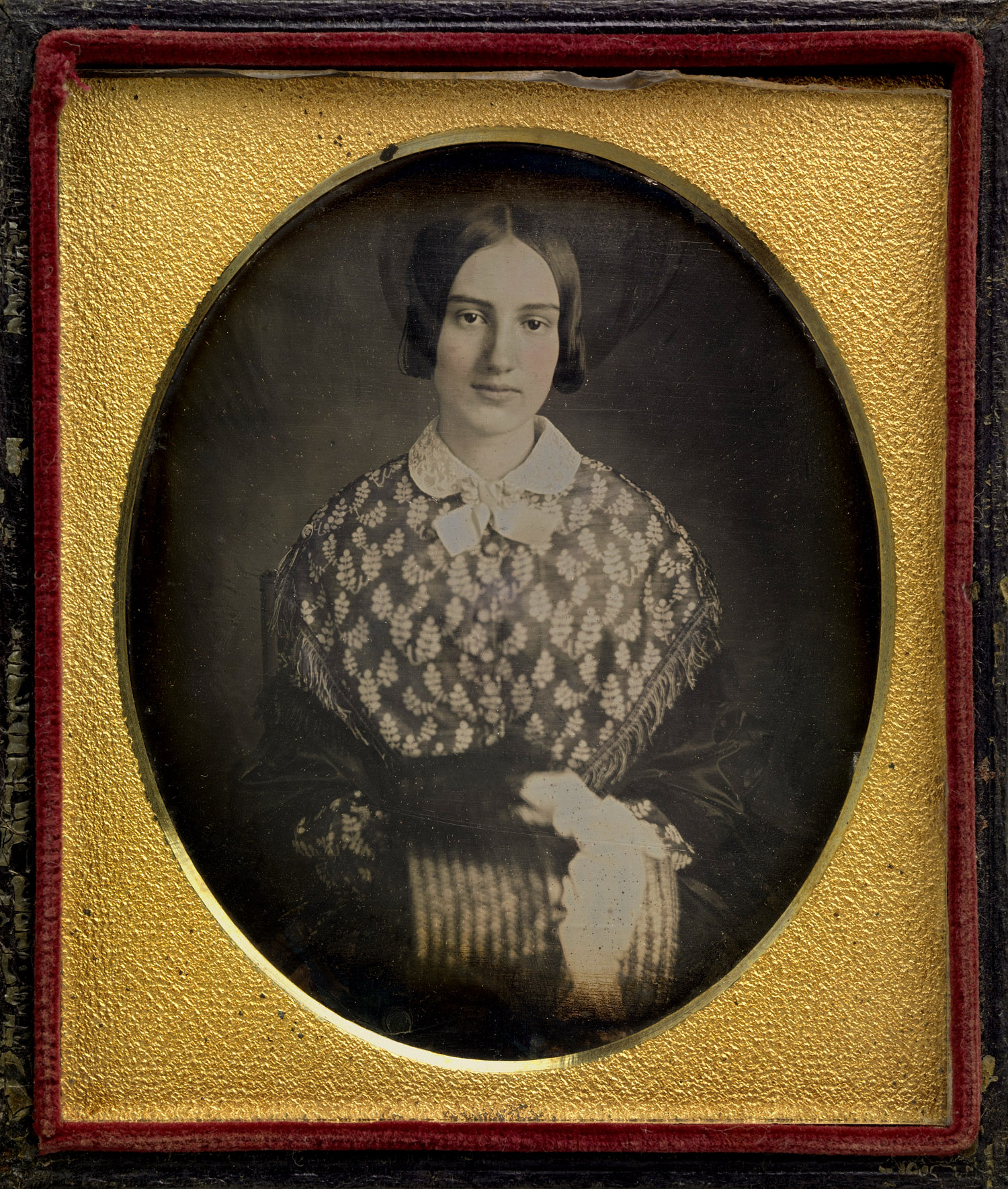
“These were the first photographs. Prior to this the only way you could preserve your image was through a painting or sketch. Imagine seeing yourself in a photograph for the first time – it would seem like magic, and that’s exactly the first reaction people had,” says installing curator, Tamera Muente. Taft Museum of Art Director/CEO, Deborah Emont Scott, says, “It’s an amazing experience to view these precious, one-of-a-kind photographs. The images are small and the viewing experience is an intimate one – you step back in time and share a rare mid-19th-century moment with the sitter.”

Press release from the Taft Museum of Art website


William C. North (American, 1814-1890) 'The Fisherman' c. 1850


William C. North (American, 1814-1890)
The Fisherman
c. 1850
Daguerreotype, half plate
5 1/2 x 4 1/2 inches
The Nelson-Atkins Museum of Art, Gift of Hallmark Cards, Inc.,
© Nelson Gallery Foundation


Unknown Maker (American) 'Clown' c. 1850-1855


Unknown Maker (American)
Clown
c. 1850-1855
Daguerreotype, sixth plate
2 1/4 x 2 3/4 inches
The Nelson-Atkins Museum of Art, Gift of Hallmark Cards, Inc.,
© Nelson Gallery Foundation


Unknown Maker (American) 'Tightrope Walker' c. 1855


Unknown Maker (American)
Tightrope Walker
c. 1855
Daguerreotype, half plate
5 1/2 x 4 1/2 inches
The Nelson-Atkins Museum of Art, Gift of Hallmark Cards, Inc.,
© Nelson Gallery Foundation


Unknown Maker (American) 'Tom Thumb and his Mother' c. 1850-1855


Unknown Maker (American)
Tom Thumb and his Mother
c. 1850-1855
Daguerreotype, quarter plate
4 1/4 x 3 1/4 inches
The Nelson-Atkins Museum of Art, Gift of Hallmark Cards, Inc.,
© Nelson Gallery Foundation


General Tom Thumb was the stage name of Charles Sherwood Stratton (January 4, 1838 – July 15, 1883), a little person who achieved great fame under circus pioneer P.T. Barnum.


Unknown Maker (American) 'Woman Ironing' c. 1850-55


Unknown Maker (American)
Woman Ironing
c. 1850-1855
Daguerreotype, sixth plate
3 1/4 x 2 3/4 inches
The Nelson-Atkins Museum of Art, Gift of Hallmark Cards, Inc.,
© Nelson Gallery Foundation


Unknown Maker (American) 'Profile Portrait of Frederick Douglass' c. 1858


Unknown Maker (American)
Profile Portrait of Frederick Douglass
c. 1858
Daguerreotype, sixth plate
3 1/4 x 2 3/4 inches
The Nelson-Atkins Museum of Art, Gift of Hallmark Cards, Inc.,
© Nelson Gallery Foundation


Frederick Douglass

Frederick Douglass (born Frederick Augustus Washington Bailey, c. February 1818 – February 20, 1895) was an African American social reformer, orator, writer and statesman. After escaping from slavery, he became a leader of the abolitionist movement, gaining note for his dazzling oratory and incisive antislavery writing. He stood as a living counter-example to slaveholders’ arguments that slaves did not have the intellectual capacity to function as independent American citizens. Many Northerners also found it hard to believe that such a great orator had been a slave.

Douglass wrote several autobiographies, eloquently describing his experiences in slavery in his 1845 autobiography, Narrative of the Life of Frederick Douglass, an American Slave, which became influential in its support for abolition. He wrote two more autobiographies, with his last, Life and Times of Frederick Douglass, published in 1881 and covering events through and after the Civil War. After the Civil War, Douglass remained active in the United States’ struggle to reach its potential as a “land of the free”. Douglass actively supported women’s suffrage. Without his approval, he became the first African American nominated for Vice President of the United States as the running mate of Victoria Woodhull on the impracticable and small Equal Rights Party ticket. Douglass held multiple public offices.

Douglass was a firm believer in the equality of all people, whether black, female, Native American, or recent immigrant, famously quoted as saying, “I would unite with anybody to do right and with nobody to do wrong.”(Text from Wikipedia)

“I have often been asked, how I felt when first I found myself on free soil. And my readers may share the same curiosity. There is scarcely anything in my experience about which I could not give a more satisfactory answer. A new world had opened upon me. If life is more than breath, and the ‘quick round of blood,’ I lived more in one day than in a year of my slave life. It was a time of joyous excitement which words can but tamely describe. In a letter written to a friend soon after reaching New York, I said: ‘I felt as one might feel upon escape from a den of hungry lions.’ Anguish and grief, like darkness and rain, may be depicted; but gladness and joy, like the rainbow, defy the skill of pen or pencil.”

Douglass, Frederick. Life and Times of Frederick Douglass. 1882, p. 170.


Taft Museum of Art
316 Pike Street at the east end of Fourth Street
across from Lytle Park, in downtown Cincinnati

Opening hours:
Wednesday – Sunday 11am – 4pm
Closed Mondays and Tuesdays

Taft Museum of Art website

LIKE ART BLART ON FACEBOOK

Back to top