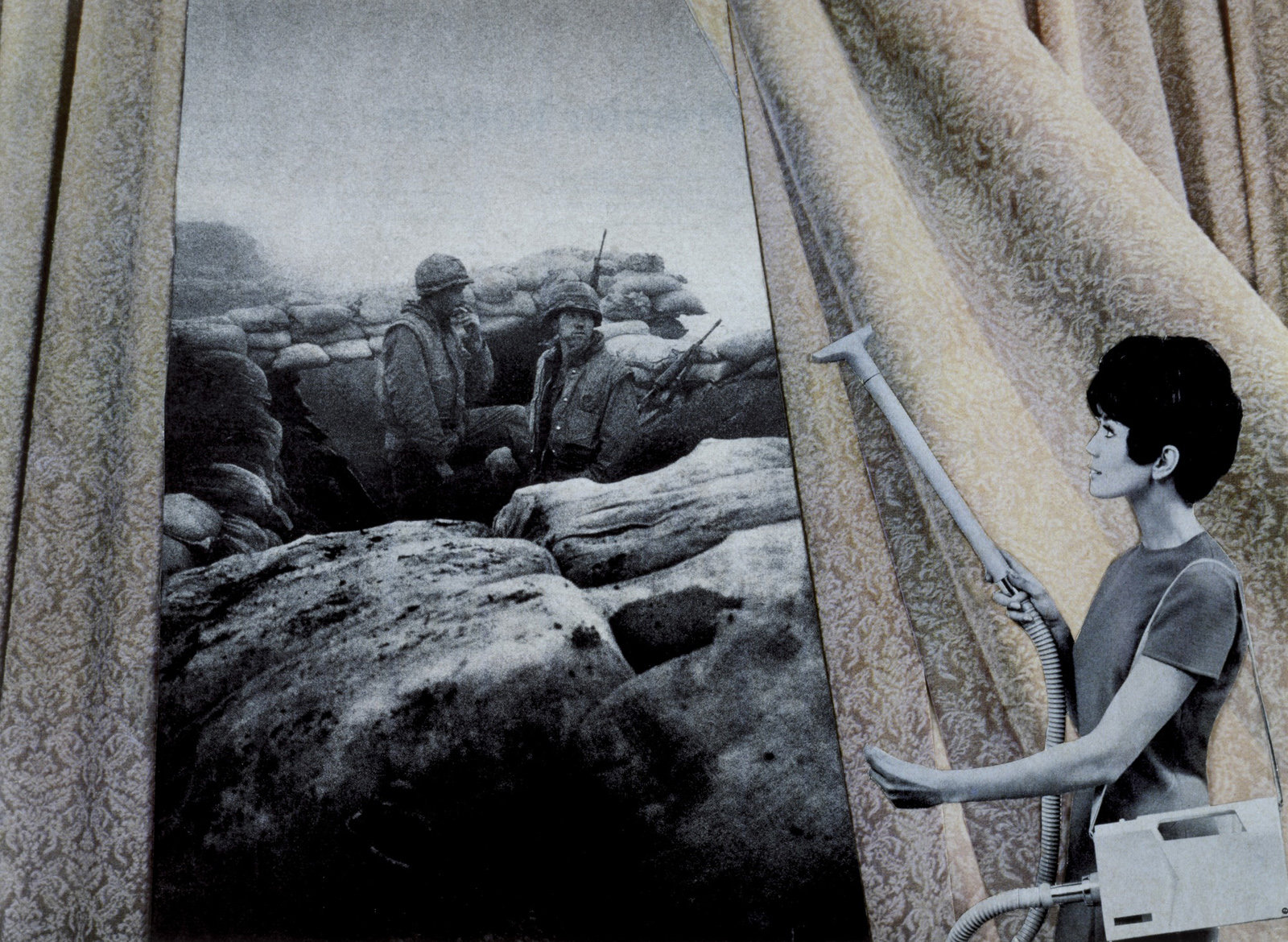
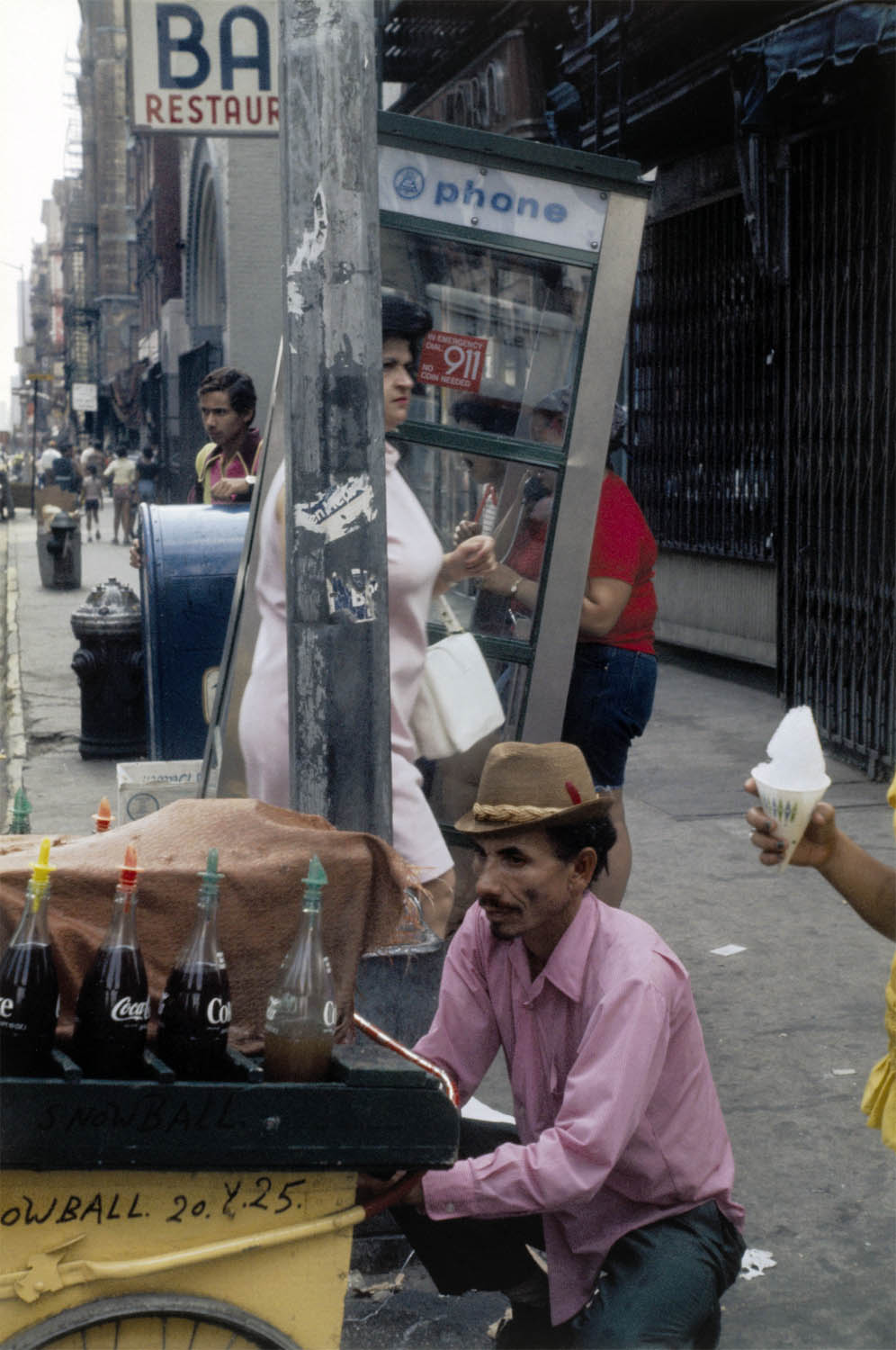
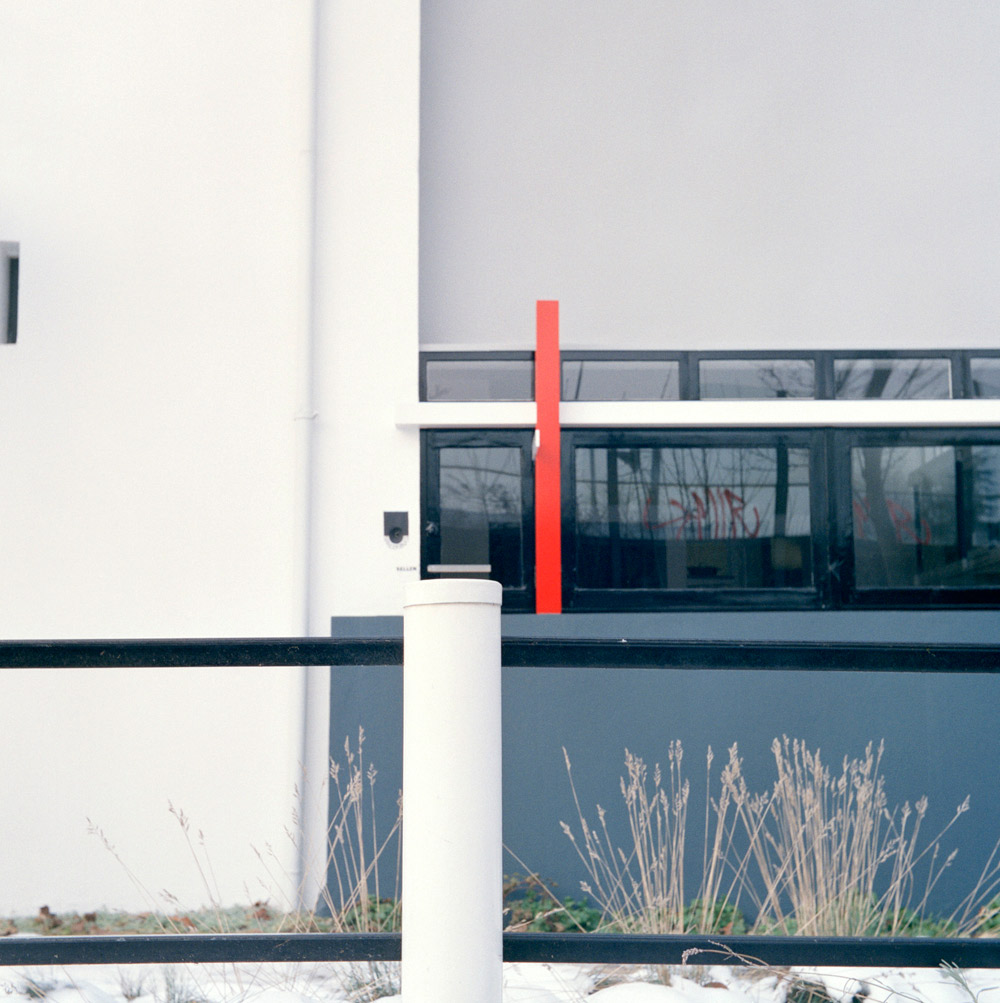
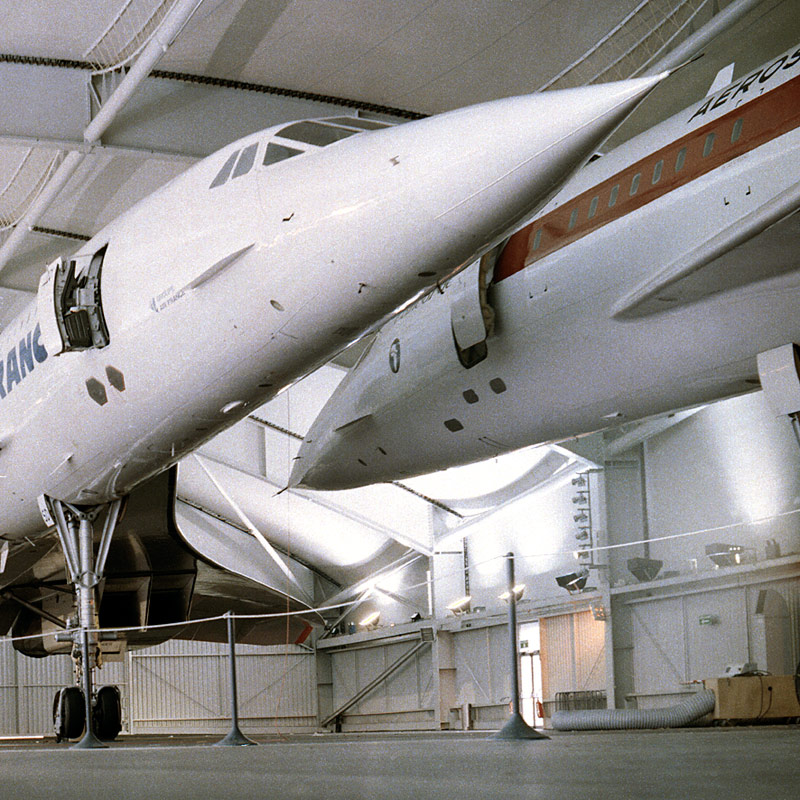
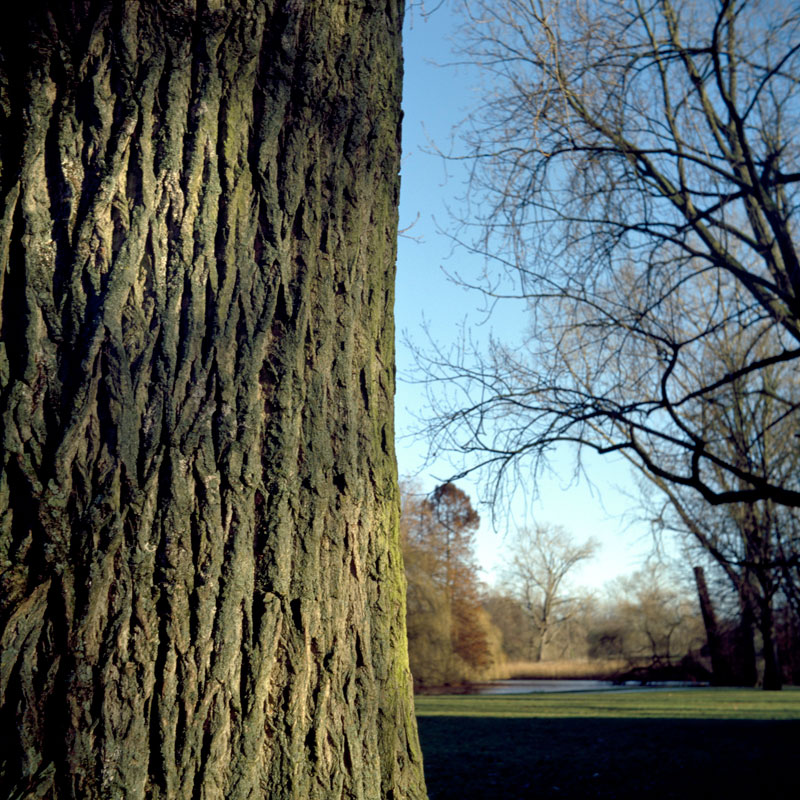
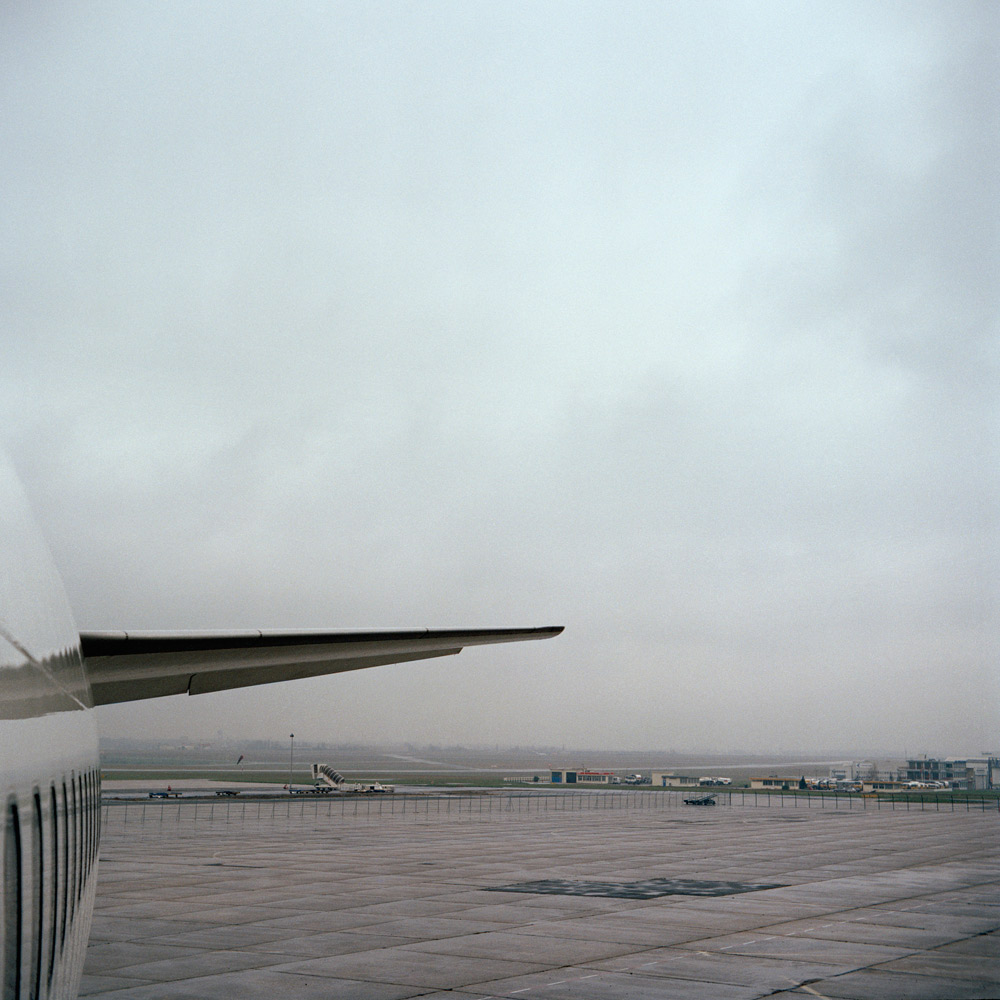
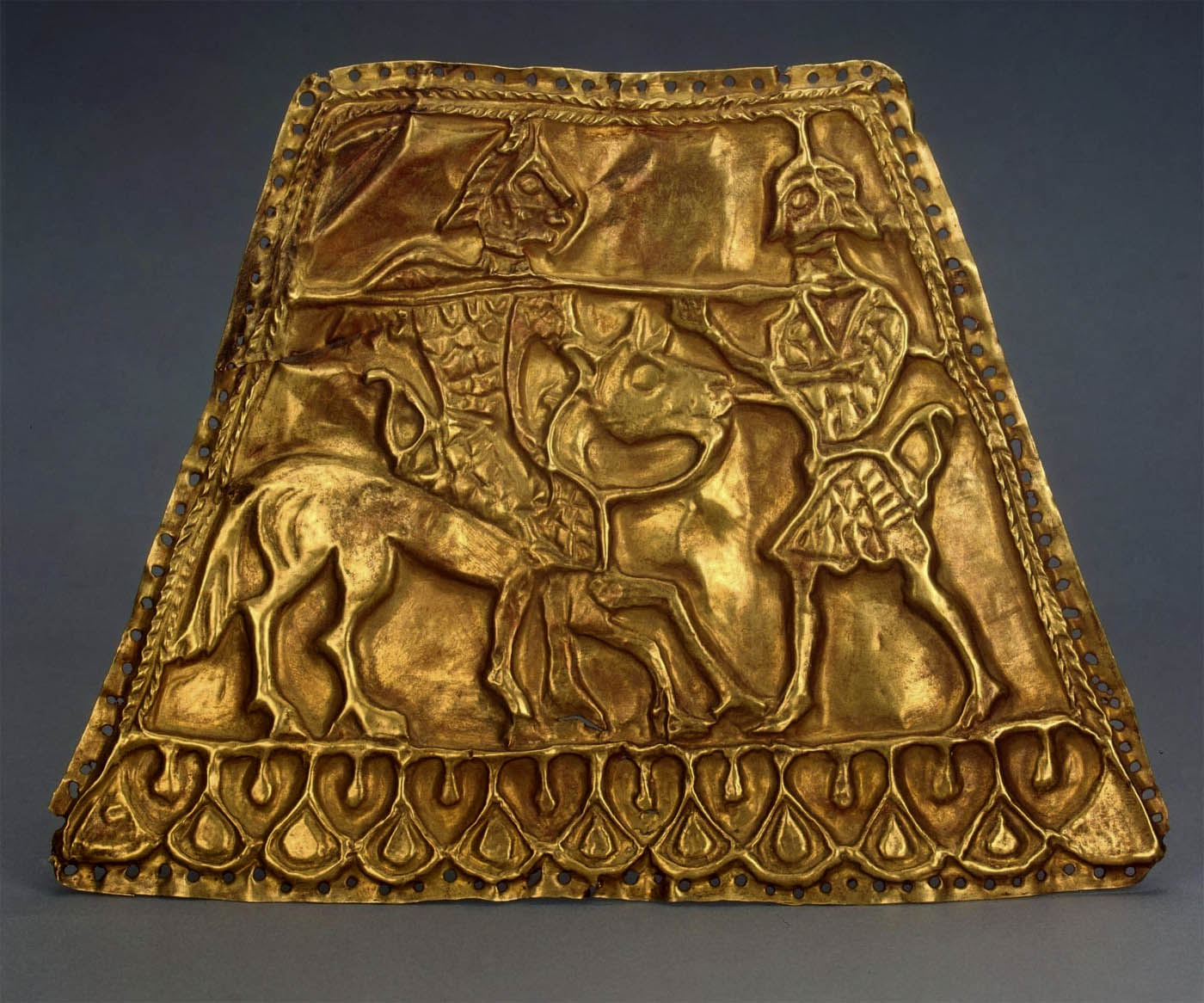
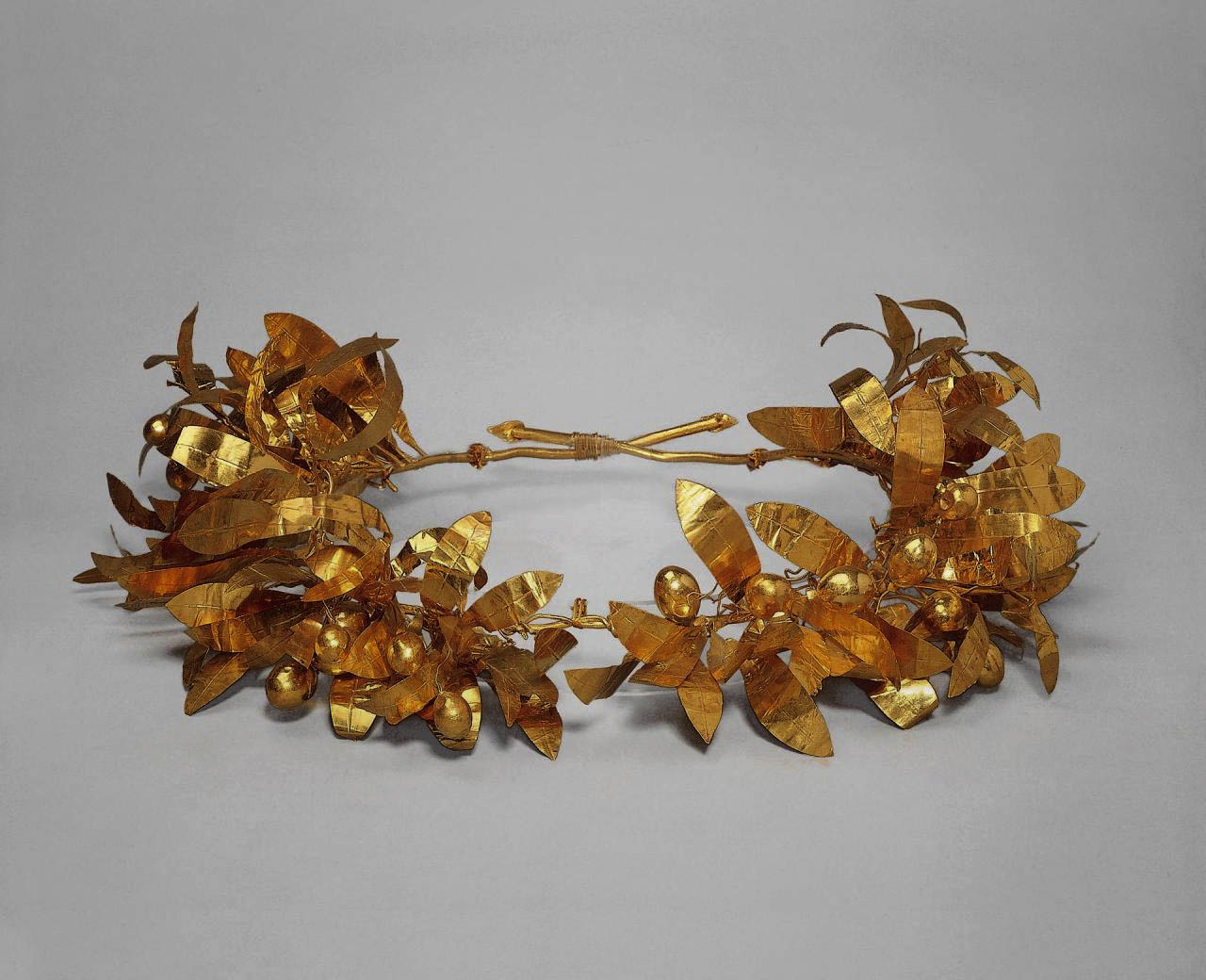
Many thankx to the Martin-Gropius-Bau, Berlin for allowing me to publish the photographs in the posting. Please click on the photographs for a larger version of the image.
Pierre Soulages is one of the world’s foremost abstract painters of recent decades. On the occasion of his 90th birthday he is being honoured by a retrospective in the Centre Pompidou in Paris. Starting on 2 October 2010 Berlin’s Martin-Gropius-Bau will be showing this exhibition in an altered form.
Over 70 pictures of all his creative periods, from the works with walnut stain (1947 to 1949) to the radically black paintings of recent years measuring up three metres high, are being shown, many of them for the first time in Germany. They illustrate the dynamic artistic development of this most famous of contemporary French artists.
Born on 24 December 1919 in Rodez, a small town located to the north of and roughly equidistant from Toulouse und Montpellier, Pierre Soulages refused to train at the “Ecole nationale superieure des beaux arts” in Paris, being out of sympathy with what he saw as that institution’s retrograde approach to art. Instead he spent the year 1939 visiting exhibitions and familiarising himself with the works of Picasso and Cézanne. But that same year he left Paris and headed south to Montpellier to attend the “Ecole des beaux arts” there. At that time he made the acquaintance of Sonia Delaunay, who showed him catalogues containing what those in power at that time considered to be “degenerate art”. For Soulages this was the justification for working as an abstract artist. After the war he moved to Paris, where he successfully exhibited in the Salon of the Surindépendants. His acquaintanceship with Francis Picabia and Hans Hartung in 1947, and his familiarity with the American scene as represented by such artists as Marc Rothko, Robert Motherwell and Wilhelm de Kooning, show how rapidly he was gaining an international reputation. In 1948, three years after the end of the Second World War, he took part in the then pioneering exhibition “French Abstract Painting”, which was shown in Stuttgart, Hamburg and Düsseldorf. He was the youngest of a group of masters of abstract art, including such names as Kupka, Doméla and Herbin. His participation in Documenta I, II and III brought him recognition in artistic and critical circles.
His wayward style, and more specifically his almost exclusive reliance on the colour black, give him a unique place in the world of art, although the American Robert Motherwell produced similar results in some of his works. But only Soulages consistently dedicated his works to the colour black over a period of decades, before finally turning to light.
His “outrenoir”, a term coined by Soulages for the use of black in his work, swallows up light, especially in his works on paper, achieving a particular sense of depth. “Outrenoir”, which may be translated as “the other side of black”, or “beyond black”, does not exclude, but draws the observer into the picture, inducing him to make a close and precise examination of the work by holding his gaze.
Like many painters, Pierre Soulages is fascinated by the phenomenon of light. He seeks obsessively for ways of letting light operate in the colour black. Works in which black is accompanied by a second colour such as blue or red remain the exception.
His individual style, characterised by strong bold lines and occasional calligraphic elements, is an important organising principle in his works. “I found small brushes only for the exact work, as was necessary and important in the art of the 19th century and earlier – Picasso himself worked with fine brushes in his early works. But for me there was no question of that. I wanted to try something quite different, so I went into a paint shop in Paris and bought myself broad brushes and rollers of the kind used for house-painting.” By using this technique in combination with a dark walnut stain known as “de noix” he created his first masterpieces, one of which was bought by the Museum of Modern Art in New York as early as 1948.
His paintings are to be found in the collections of over 100 museums worldwide, such as the Solomon R. Guggenheim Museum, New York; the Australian National Gallery, Canberra; the Hermitage, St. Petersburg; the Musée national d’Art moderne, Paris; the Staatsgalerie Stuttgart; the Instituto Valenciano de Arte Moderno, Valencia; the Museum of Modern Art, Toyama; the Tate Gallery, London; the Museum of Fine Arts, Houston; and the Musée d’Art contemporain, Montréal, to name but a few.
Press release from the Martin-Gropius-Bau website [Online] Cited 11/01/2011 no longer available online
Exhibition dates: 22nd October 2010 – 13th March 2011
Eugène Atget (French, 1857-1927) Coin de la rue Valette et Pantheon, 5e arrondissement, matinee de mars 1925, printed 1978 Gelatin silver photograph 17.8 x 23.7cm National Gallery of Victoria, Melbourne Purchased, 1980
A delightful exhibition of photographs of the built environment at the National Gallery of Victoria, Melbourne. The exhibition contains some interesting photographs from the collection including the outstanding Coin de la rue Valette et Pantheon, 5e arrondissement, matinee de mars by Eugene Atget taken two years before his death (1925, printed 1978, see below) that simply takes your breath away.
Atget was my hero when I started to study photography in the late 1980s and he remains my favourite photographer. His use of light coupled with his understanding of how to organise space within the pictorial frame is exemplary (note the darkness of the right-hand wall as it supports the integrity of the rest of the image, as it leads your eye to that wonderful space between the buildings, the shaft of light falling on the ground, the blank wall topped by an arrow leading the eye upwards to the misty dome!). The ability to place his large format camera and tripod in just the right position, the perfect height and angle, to allow the subject to reveal itself it all it’s glory is magical: “Atget’s interest in the variable play between nature and art through minute changes in the camera’s angle, or as functions of the effects of light and time of day, is underscored in his notations of the exact month and sometimes even the hour when the pictures were taken.”1 Two other immense works in the exhibition are New York at Night by Berenice Abbott (1932, printed c. 1975 below) and the incredible multiple exposure The Maypole, Empire State Building, New York by Edward Steichen (1932, below).
The only disappointment to the exhibition is the lack of vintage prints, a fair portion of the exhibition including the three prints mentioned above being later prints made from the original negatives. I wonder what vintage prints of these images would look like?
The purchasing of non-vintage prints was the paradigm for the collection of international photographs early in the history of the Department of Photography at the National Gallery of Victoria and was seen as quite acceptable at the time. The paradigm was set by Athol Shmith in 1973 on his visit to Paris and London.
“Typically for the times, Shmith did not choose to acquire vintage prints, that is, photographs made shortly after the negative was taken. While vintage prints are most favoured by collectors today, in the 1970s vintage prints supervised by the artists were considered perfectly acceptable and are still regarded as a viable, if less impressive option now.”2
Some museums including the NGV preferred to acquire portfolios of modern reprints as a speedy way of establishing a group of key images. As noted in the catalogue essay to 2nd Sight: Australian Photography at the National Gallery of Victoria by Dr Isobel Crombie, Senior Curator of Photography at the National Gallery of Victoria, the reason for preferring the vintage over the modern print “is evident when confronted with modern and original prints: differences in paper, scale and printing styles make the original preferable.”3 The text also notes that this sensibility, the consciousness of these differences slowly evolved in the photographic world and, for most, the distinctions were not a matter of concern even though the quality of the original photograph was not always maintained.
This is stating the case too strongly. Appreciation of the qualities of vintage prints was already high in the period of the mid-1970s – early 1980s most notably at institutions such as The Museum of Modern Art, a collection visited by photography curators of the NGV. Size and scale of the vintage prints tend to be much smaller than later prints making them closer to the artists original intentions, while the paper the prints are made on, the contrast and colour of the prints also varies remarkably. Other mundane but vitally important questions may include these: who printed the non-vintage photograph, who authorised the printing and how many non-vintage copies of the original negative were made, none of which are answered when the prints are displayed.
I vividly remember seeing a retrospective of Henri Cartier-Bresson’s work in Edinburgh at the Dean Gallery, National Gallery of Scotland in 2005, the largest retrospective of Cartier-Bresson’s work ever staged in Britain with over 200 photographs. Three large rooms were later 1970s reprints of some of his photographs, about 20″ x 24″ in size, on cold, blue photographic paper. One room, however, was full of his original prints from the 1920s and 30s. The contrast could not have been different: the vintage prints were very small, intense, subtle, printed on brown toned paper, everything that you would want those jewel-like images to be, the vision of the artist intensified; the larger prints diluted that vision until the images seemed to almost waste away despite their size.
Although never stated openly I believe that one of the reasons for the purchase of non-vintage prints was the matter of cost, the Department of Photography never being given the budget to buy the prints that it wanted to in the 1970s – early 1980s, the collection of photography not being a priority for the NGV at that time. In other words by buying non-vintage prints in the 1970s you got more “bang for your buck” even when the cost of vintage prints was relatively low. Unfortunately the price of vintage prints then skyrocketed in the 1980s putting them well outside the budget of the Department. While Dr Crombie acknowledges the preponderance of American works in the collection over European and Asian works she also notes that major 20th century photographers that you would expect to be in the collection are not and blames this lack “on the massive increases in prices for international photography that began in the 1980s and which largely excluded the NGV from the market at this critical time.”4
The policy of purchasing non-vintage prints has now ceased at the National Gallery of Victoria.
The purchasing of non-vintage prints and the paucity of purchasing vintage prints by master photographers during the formative decade of the collection of international photographs in the Department of Photography (1970-1980) is understandable in hindsight but today seems like a golden opportunity missed. While the collection contains many fine photographs due to the diligence of early photographic curators (notably Jennie Boddington), the minuscule nature of the budget of the department in those early years when vintage prints were relatively cheap and affordable (a Paul Caponigro print could be purchased for $200-300 for example) did not allow them to purchase the photographs that the collection desperately needed. With one vintage print by a master of photography now fetching many thousands of dollars the ability to fill gaps in the collection in the future is negligible (according to Dr Crombie) – so we must celebrate and enjoy the photographs that are in the collection such as those in Luminous Cities: Photographs of the Built Environment.
Dr Marcus Bunyan
2/ Crombie, Isobel. “Creating a Collection: International Photography at the National Gallery of Victoria,” in Re_View: 170 years of Photography. Melbourne: National Gallery of Victoria, 2009, p. 9
3/ Crombie, Isobel. Second sight: Australian photography in the National Gallery of Victoria. Melbourne: National Gallery of Victoria, 2002, p. 10
4/ Op.cit. p. 10
Many thankx to Jemma Altmeier for her help and to the National Gallery of Victoria for allowing me to publish the photographs in the posting. Please click on the photographs for a larger version of the image.
Stephen Thompson (active throughout Europe, 1850s-1880s) Grande Canale, Venice c. 1868 Albumen silver photograph 21.2 x 29.2cm National Gallery of Victoria, Melbourne Purchased from Admission Funds, 1988
England (active in England 1860s) Houses of Parliament, London 1860s Albumen silver photograph 18.5 x 24.1cm National Gallery of Victoria, Melbourne Purchased from Admission funds, 1988
On 22 October the National Gallery of Victoria will open Luminous Cities, a fascinating exhibition that examines the various ways photographers have viewed cities as historical sites, bustling modern hubs and architectural utopias since the nineteenth century.
The great cities of the world are vibrant creative centres in which the built environment is often as inspirational as the activities of its citizens, and, since the nineteenth century photographers have creatively explored the idea of the city.
This exhibition, drawn from the collection of the NGV, considers various ways in which photographers in the 19th and 20th centuries have viewed cities as historical sites, bustling modern metropolises and architectural utopias. These lyrical images describe the physical attributes of cities, offer insights into the creative imaginations of architects and photographers and embody the zeitgeist of their times.
Frances Lindsay, Deputy Director, NGV said: “Through the work of a range of photographers Luminous Cities will take viewers on a fascinating journey around the world, into the streets, buildings and former lives of great international cities.
“Drawn from the NGV collection, Luminous Cities includes works by renowned photographers Eugene Atget, Alfred Stieglitz, Edward Steichen, Berenice Abbott, Laszlo Moholy-Nagy, Bill Brandt, Lee Freidlander and Grant Mudford amongst many others.
The exhibition will also extend into our contemporary gallery space where an outstanding selection of works by celebrated contemporary artists such as Bill Henson, Andreas Gursky and Jon Cattapan will be on display,” said Ms Lindsay.
Through examples from the mid 19th century, Luminous Cities explores the relationship between photographer, architect and archaeologist with photos of Athens, Rome and Pompeii. This was also a time when great cities such as London and Paris underwent unprecedented renewal and expansion, photography served to document new constructions and also presented heroic, inspirational visions of new cities emerging from old.
Susan van Wyk, Curator, Photography, NGV said: “The works on display in Luminous Cities describe the physical attributes of cities, offer insights into the creative imaginations of architects and photographers, and embody the zeitgeist of their times.”
New York, one of the great 20th century cities, was a captivating subject for generations of photographers. Through the work of architects and the images photographers made of the city, New York became synonymous with its skyline. The images of renowned photographers including Alfred Stieglitz, Edward Steichen, Paul Strand and Berenice Abbott show the pictorial possibilities of the modern city in photographs that embody the dynamism of the city that never sleeps.
The contemporary art works included in Luminous Cities explore the creative ways in which artists imagine and represent the cityscape. Vast glittering panoramas taken from bustling urban communities, sprawling architectural structures and fictitious landscapes all combine to reveal fascinating insights into both physical and psychological geographies.
Ms van Wyk said: “At the end of the 20th century a much cooler, more abstracted strain of photography emerged. Photographs in the exhibition from this period range from the formalism of the 1970s to more recent cinematic visions of the nocturnal city.”
Press release from the National Gallery of Victoria website
In the decades following the Second World War the idea of ‘the city’, notably in work of American, European and Australian photographers, came to symbolise the modern condition, the best and worst of contemporary life. This ambiguous stance on the city is exemplified in the work of American photographer Lee Friedlander whose photographs of seemingly ordinary urban scenes are at once amusing and slightly disturbing. In his 1973 photograph Stamford, Connecticut, the banal vernacular architecture of suburban shopping street forms the backdrop to a peculiar scene where shoppers are ‘stalked’ by a statue of first world war sniper. Despite its witty elements, this image has a somewhat despairing tone. The women walking along this rather bleak street are isolated and anonymous, ciphers for the worst aspects of contemporary city life.
A more neutral view of the contemporary city can be seen in the work of Australian photographer Grant Mudford. After moving to the US in 1970s, Mudford continued to photograph the built environment. Familiar with the work of Lee Friedlander, and citing Walker Evans as an influence, Mudford’s photographs continue a tradition of photographing the city as an empty backdrop devoid of the bustle of human activity. In his 1975 Untitled photograph of a truck depot in New York, Mudford simplifies what could be a chaotic scene to the verge of abstraction.
Wolfgang Sievers (Australian born Germany, 1913-2007) Old Frankfurt before its total destruction in World War II, Germany 1933, printed 1986 gelatin silver photograph 28.9 x 26.2 cm National Gallery of Victoria, Melbourne Purchased, 1986
Robert Adams (American, b. 1937) Colorado Springs, Colorado 1968 Gelatin silver print Yale University Art Gallery Purchased with a gift from Saundra B. Lane, a grant from Trellis Fund, and the Janet and Simeon Braguin Fund
What a pleasure it is to post these photographs from the outstanding photographer Robert Adams. The photograph Longmont, Colorado (1979, below) has become truly iconic and will be recognised instantly by many art aficionados around the world: the glowing neon lights, the empty gondolas, towering, brooding skies and solitary, isolated human. The creature in the photograph Sitka spruce, Cape Blanco State Park, Curry County, Oregon (1999-2000, below) impinges my consciousness like a Lernaean Hydra, an ancient, nameless, multi-headed serpent-like water beast. The eloquently understated series Listening to the River (1985-1987, several photographs below) completes the picture, a tour de force of apposition: each image positioned at rest in respect to another: quiet, still, but visually complex.
There is a crispness and cleanness to Adams work that belie the complexity of his subject matter. Tension and balance within the pictorial frame is the key: formal yet fecund, these intellectually productive images challenge us to imagine, and to name, our relationship with the earth and every place that we live.
Robert Adams (American, b. 1937) Frame for a Tract House, Colorado Springs, Colorado 1969 Gelatin silver print Yale University Art Gallery Purchased with a gift from Saundra B. Lane, a grant from Trellis Fund, and the Janet and Simeon Braguin Fund
Robert Adams (American, b. 1937) Longmont, Colorado 1979 Gelatin silver print Yale University Art Gallery Purchased with a gift from Saundra B. Lane, a grant from Trellis Fund, and the Janet and Simeon Braguin Fund
Robert Adams (American, b. 1937) Edge of San Timoteo Canyon, looking toward Los Angeles, Redlands, California 1978 Gelatin silver print Yale University Art Gallery Purchased with a gift from Saundra B. Lane, a grant from the Trellis Fund, and the Janet and Simeon Braguin Fund
Robert Adams (American, b. 1937) Santa Ana Wash, Redlands, California 1983, printed 1991 Gelatin silver print Yale University Art Gallery Purchased with a gift from Saundra B. Lane, a grant from the Trellis Fund, and the Janet and Simeon Braguin Fund
Robert Adams (American, b. 1937) Quarried Mesa Top, Pueblo County, Colorado 1978 Gelatin silver print Yale University Art Gallery Purchased with a gift from Saundra B. Lane, a grant from the Trellis Fund, and the Janet and Simeon Braguin Fund
Robert Adams (American, b. 1937) Ranch Northeast of Keota, Colorado 1969 Gelatin silver print Yale University Art Gallery Purchased with a gift from Saundra B. Lane, a grant from the Trellis Fund, and the Janet and Simeon Braguin Fund
Robert Adams (American, b. 1937) Southwest from the South Jetty, Clatsop County, Oregon 1992 Gelatin silver print Yale University Art Gallery Purchased with a gift from Saundra B. Lane, a grant from the Trellis Fund, and the Janet and Simeon Braguin Fund
Over the past four decades photographer Robert Adams has come to be widely regarded as one of the most original and significant chroniclers of the western American landscape. The first large-scale exhibition of Adams’ work to be presented in Canada, The Place We Live traces his longstanding engagement with the degradation of the environment in the face of suburban development. The exhibition includes more than 300 photographs representing each of Adams’ major projects, from his austere photographs of the Colorado prairie that pay homage to earlier inhabitants, to his unflinching images of the land, workplaces, shopping centres and homes around Denver, as well as recent images of the remains of the great rainforest near his present home in the American Pacific Northwest.
Spare and dispassionate, yet rich with formal invention, Adams’ remarkable images resist simplification of subjects both ordinary and grand, balancing the complexities and contradictions found in modern life. Seen as a whole, the exhibition clearly reveals an approach to art-making that on the one hand seeks to bear witness to humanity’s tenuous relationship with the natural world and, on the other, to celebrate the unexpected sublimity that persists in the face of despoliation.
The reach of Adams’ work has been felt primarily through his publications, which include more than 30 monographs. Adams’ books are an integral component of the exhibition and provide the viewer with the opportunity to further consider the manner in which he has addressed the fear, curiosity and inspiration the American landscape has engendered throughout his career. The international tour of this exhibition is being launched at the Vancouver Art Gallery and is accompanied by a catalogue and a three-volume, hard cover book.
Text from the Vancouver Art Gallery website [Online] Cited 04/01/2022
Robert Adams (American, b. 1937) In a New Subdivision, Colorado Springs, Colorado 1969 Gelatin silver print Yale University Art Gallery Purchased with a gift from Saundra B. Lane, a grant from Trellis Fund, and the Janet and Simeon Braguin Fund
Robert Adams (American, b. 1937) Sitka spruce, Cape Blanco State Park, Curry County, Oregon 1999-2000 Gelatin silver print Yale University Art Gallery. Purchased with a gift from Saundra B. Lane, a grant from the Trellis Fund, and the Janet and Simeon Braguin Fund
Robert Adams (American, b. 1937) Kerstin, Next to an Old-Growth Stump, Coos County, Oregon 1999-2003 Gelatin silver print Yale University Art Gallery Purchased with a gift from Saundra B. Lane, a grant from the Trellis Fund, and the Janet and Simeon Braguin Fund
Robert Adams (American, b. 1937) Untitled from the series Listening to the River 1985-87 Gelatin silver print Yale University Art Gallery Purchased with a gift from Saundra B. Lane, a grant from the Trellis Fund, and the Janet and Simeon Braguin Fund
Vancouver Art Gallery 750 Hornby Street, Vancouver BC V6Z 2H7 Info Line: 604.662.4719
Anselm Kiefer (German, b. 1945) Margarette 1981 Oil and straw on canvas 280 cm x 380cm
Anselm Kiefer (German, b. 1945) Man under a Pyramid 1996 Emulsion, acrylic, shellac and ash on burlap 2810 x 5020 x 50 mm ARTIST ROOMS: Tate and National Galleries of Scotland. Acquired jointly through The d’Offay Donation with assistance from the National Heritage Memorial Fund and the Art Fund 2008
Anselm Kiefer (German, b. 1945) Palm Sunday 2006 Mixed media installation Overall display dimensions variable ARTIST ROOMS: Tate and National Galleries of Scotland. Acquired jointly through The d’Offay Donation with assistance from the National Heritage Memorial Fund and the Art Fund 2008
Installation view of the exhibition Anselm Kiefer at the BALTIC Centre for Contemporary Art, Gateshead showing at left, Keifer’s work Palette (1981, below)
Anselm Kiefer (German, b. 1945) Palette 1981 Oil, shellac and emulsion on canvas 2917 x 4000 x 35 mm ARTIST ROOMS: Tate and National Galleries of Scotland. Acquired jointly through The d’Offay Donation with assistance from the National Heritage Memorial Fund and the Art Fund 2008
BALTIC Centre for Contemporary Art proudly announces a major exhibition of the work of Anselm Kiefer, one of the foremost figures of European post-war painting. The exhibition includes a diverse body of work, offering a selection that spans four decades and ranges from early paintings to monumental installations. Presented over two floors of BALTIC’s galleries, the exhibition is Kiefer’s largest in the UK for many years and has been made possible by ARTIST ROOMS On Tour with the Art Fund.
Following the success of 2009, 21 museums and galleries across the UK in 2010 will be showing 25 ARTIST ROOMS exhibitions and displays from the collection created by the curator and collector, Anthony d’Offay, and acquired by the nation in February 2008. ARTIST ROOMS On Tour with the Art Fund has been devised to enable this collection held by Tate and the National Galleries of Scotland, to reach and inspire new audiences across the country, particularly young people.
Anselm Kiefer at BALTIC includes painting, sculpture and installation, some of which has been rarely seen before. The starting point for Kiefer’s work is his fascination with myth, history, theology, philosophy and literature. For many years his painting was a vehicle to come to terms with his country’s past, and subsequently became ever concerned with religious traditions and the symbolism of different cultures. Kiefer’s weighty subject matters are reflected in the monumental scale of many of his works, while his keen exploration and visceral layering of materials such as lead, ash, rope and human hair bring an emotional potency.
Among the paintings to be included in the exhibition are three works from the artist’s early Parsifal series (1973), drawn from Richard Wagner’s last opera and its 13th century source, a romance by Wolfram von Eschenbach based upon the legend of the Holy Grail. With Palette 1981, Kiefer revealed the problematic legacy inherited by artists in post-war Germany: the artist’s palette hangs from a single burning thread evoking shame, loss and the apparent impossibility of artistic creation. The expansive Man under a Pyramid 1996, which measures more than five meters long, continues the artist’s interest in meditation and the linking of body and mind.
Also included is Palmsonntag 2006 which comprises a vast sequence of 36 paintings arranged around a full-size palm tree. While avoiding explicit religious statement, the work draws upon the Christian narrative of Palm Sunday to explore death and resurrection, decay, re-creation and rejuvenation; human themes that are central to Kiefer’s practice and that will be identified throughout this presentation.
Anselm Kiefer biography
Anselm Kiefer was born 1945 in Donauschingen, Germany, at the close of World War II. He studied art formally under Joseph Beuys at the Düsseldorf Academy in the early 1970s where history and myth became central themes in his work.
In 1971 Kiefer produced his first large-scale landscape paintings and from 1973 he began to experiment with wooden interiors on a monumental scale. His preoccupation with recent German history is seen throughout his work and his use of recurring motifs, such as an artist’s palette symbolises his emotional journey relating to this period. Kiefer has made increasing use of materials such as sand, straw, wood, dirt and photographs, as well as sewn materials and lead model soldiers. By adding found materials to the painted surface Kiefer invented a compelling third space between painting and sculpture. Recent work has broadened his range yet further: in 2006 he showed a series of paintings based around the little-known work of the modernist Russian poet Velimir Chlebnikov (1885-1922).
Kiefer has had extensive exhibitions internationally including the Museum of Modern Art, New York (1987), Neue Nationalgalerie, Berlin (1991), The Metropolitan Museum, New York (1998), Royal Academy, London (2001), Fort Worth Museum of Art, Fort Worth (2005) and the San Francisco Museum of Modern Art (2006).
Press release from the BALTIC Centre for Contemporary Art website
Anselm Kiefer (German, b. 1945) Urd Werdande Skuld (The Norns) 1983 Oil, shellac, emulsion and fibre on canvas 4205 x 2805 x 60 mm ARTIST ROOMS: Tate and National Galleries of Scotland. Acquired jointly through The d’Offay Donation with assistance from the National Heritage Memorial Fund and the Art Fund 2008
Installation view of the exhibition Anselm Kiefer at the BALTIC Centre for Contemporary Art, Gateshead showing from left to right, Parsifal I (1973, below); Parsifal II (1973, below); and Parsifal III (1973, below)
Anselm Kiefer (German, b. 1945) Parsifal I 1973 Oil on paper laid on canvas 3247 x 2198 mm
Anselm Kiefer (German, b. 1945) Parsifal II 1973 Oil and blood on paper laid on canvas 3247 x 2188 mm
Anselm Kiefer (German, b. 1945) Parsifal III 1973 Oil and blood on paper on canvas 3007 x 4345 mm
BALTIC Centre for Contemporary Art Gateshead Quays, South Shore Road, Gateshead NE8 3BA, UK Phone: +44 (0) 191 478 1810
Excellent news about the archive! Just received the information below from Wordpess – on average about 1,835 people a day looking at the website – and that means a big thank you to you, the readers and supporters. Makes it all worthwhile
Dr Marcus Bunyan
The stats helper monkeys at WordPress.com mulled over how the archive did in 2010, and here’s a high level summary of its overall health:
The Blog-Health-o-Meter™ reads
WOW!
Crunchy numbers
The Louvre Museum has 8.5 million visitors per year. This archive was viewed about 670,000 times in 2010. If it were an exhibit at The Louvre Museum, it would take 29 days for that many people to see it.
In 2010, there were 116 new posts, growing the total archive of this blog to 394 posts.
Where did they come from?
The top referring sites in 2010 were stumbleupon.com, neoteo.com, thisisnthappiness.com, facebook.com, and tumblr.com.
Some visitors came searching, mostly for diane arbus, gregory crewdson, man ray, ron mueck exhibition 2010, and robert frank.
Attractions in 2010
These are the posts and pages that got the most views in 2010.
Exhibition dates: 17th November 2010 – 15thJanuary, 2011
Many thankx to Christophe Guye Galerie for allowing me to publish the photographs in the posting. Please click on the photographs for a larger version of the image.
Will Steacy (American, b. 1980) Burned Car, Los Angeles 2009 from Down these Main Streets, 2009 Archival pigment prints 61 x 76.2cm (24 x 30 in)
Will Steacy (American, b. 1980) Home Delivery, Los Angeles 2009 from Down these Main Streets, 2009 Archival pigment prints 61 x 76.2cm (24 x 30 in)
Will Steacy (American, b. 1980) Lovers, New Branford 2007 from All my Life I have the same Dream, 2007 Archival pigment prints 61 x 76.2cm (24 x 30 in)
Will Steacy (American, b. 1980) Memorial, Philadelphia 2009 from Down these Main Streets, 2009 Archival pigment prints 61 x 76.2cm (24 x 30 in)
“The monstropolous beast had left his bed. Two hundred miles an hour wind had loosed his chains. He seized hold of his dikes and ran forward until he met the quarters; uprooted them like grass and rushed on after his supposed-to-be conquerors, rolling the dikes, rolling the houses, rolling the people in the houses along with other timbers. The sea was walking the earth with a heavy heel.”
From Zola Neale Hurston’s Their Eyes Were Watching God
Christophe Guye Galerie is pleased to present The Monstropolous Beast, Will Steacy’s (American, b. 1980) first solo exhibition outside the United States.
For his first solo exhibition at the Christophe Guye Galerie, Will Steacy is showing a cross-section of his past years of creative working. Showing 28 new and recent photographs, The Monstropolous Beast is the first exhibition to comprehensively portray Steacy’s whole body of work to date. Once named “the lovechild of Charles Bukowski and Dorothea Lange” Steacy’s work is poetic and confrontational alike, at once evoking photojournalist documentation and romanticised realism.
Steacy’s imaginary stems from his experiences, encounters and the desire to awaken. His work quietly observes, holding on to moments of apparent silence that would pass unnoticed had he not been there to click the shutter. Breathtaking and touching, the emotional force of the artist’s work allows the viewer to intimately connect with the subject. Deeply philosophical, the camera permits him to ask questions, to truly see and think. It is for Steacy a tool with which to understand the world; an understanding he wants to convey to his viewers.
His method of inquiry is a large format film camera. Photographing the depleted city centres and rural suburbs of America, Steacy has spent the last years travelling his country to create a body of work that through its social connotations goes beyond simple photography. As a former Union Labourer, one can sense the humanistic approach to Steacy’s art. While deeply personal, Steacy works with the intention to create awareness, challenging people to look inward.
A key series in the exhibition is Down These Mean Streets, for which the artist examined fear and abandonment of America’s inner cities. The reality experienced at night on the streets is so haunting it becomes a hyper reality; laden with emotional and mental attachment, in works such as Memorial or HomeDelivery the energy and courage that spark the artist’s work is intensely apparent. Factories, deserted streets and inhabitants of neglected neighbourhoods are his subjects. By addressing the loss and despair that reign in US metropolitan communities, his aim is to reveal a modern day portrait of the reality in American urban centres.
Though still early in his career, the almost ordinary or unspectacular subject matters depicted in the works shown bring to mind the works of William Eggleston or Martin Parr. Demonstrating a distinctive ability to find beauty or fascination in commonplace scenes, and illustrating them with vivid displays of colour and luminosity, Steacy’s works take a critical look at modern society and human conditions, bring viewers uncomfortably close to an often sombre reality.
What at first glance appears like a simple capturing of ordinary people, everyday situations and mundane settings or situations, unravels into a multifaceted portrayal of society, its people, places, race, class, and boundaries. Through a life-changing experience, Steacy turned to art, devoting “everything I have to my art, this gift, this thing that is the reason I am alive… Coming that close to death will change a man. Life has had a new meaning since then, and I wake up every day happy to be alive, happy to chase this dream.” Frank and profound alike, unostentatious and similarly intense Steacy’s work is about life: life today in 21st century America, where layers of seeming simplicity unfolds before our eyes.”
Press release from the Christophe Guye Galerie website
Will Steacy (American, b. 1980) Motel Room 2007 from We are all in this Together, 2007 Archival pigment prints 61 x 76.2cm (24 x 30 in)
Will Steacy (American, b. 1980) Pawn Shop, Memphis 2007 from All my Life I have the same Dream, 2007 Archival pigment prints 61 x 76.2cm ( 24 x 30 in)
Will Steacy (American, b. 1980) Power Plant, Philadelphia 2008 from Down these Main Streets, 2009 Archival pigment prints 61 x 76.2cm (24 x 30 in)
Will Steacy (American, b. 1980) Satellite Dish, Detroit 2009 from Down these Main Streets, 2009 Archival pigment prints 61 x 76.2cm (24 x 30 in)
Will Steacy (American, b. 1980) Liz, Philadelphia 2007 from All my Life I have the same Dream, 2007 Archival pigment prints 61 x 76.2cm (24 x 30 in)
Many thankx to all the galleries that have supplied photographs throughout the year, to the curators, gallery directors and media people for their wonderful help and to you the readers for supporting the blog. Have a happy and safe festive season.
We look forward to posting and reviewing many more exhibitions in 2011!
Here’s my pick of the eleven best exhibitions in Melbourne for 2010 that featured on the Art Blart: art and cultural memory archive (in no particular order). Enjoy!
Marcus
1/ Jenny Holzer at The Australian Centre for Contemporary Art (ACCA)
Jenny Holzer (American, b. 1950) Right Hand (Palm Rolled) 2007 Oil on linen 80 x 62 in (203.2 x 157.5cm) Text: U.S. government document
The reason that you must visit this exhibition is the last body of work. Working with declassified documents that relate to the wars in Iraq and Afghanistan Holzer’s Redaction paintings address the elemental force that is man’s (in)humanity to man (in the study of literature, redaction is a form of editing in which multiple source texts are combined (redacted) and subjected to minor alteration to make them into a single work) … I left the exhibition feeling shell-shocked after experiencing intimacy with an evil that leaves few traces. In the consciences of the perpetrators? In the hearts of the living! Oh, how I wish to see the day when the human race will truly evolve beyond. We live in hope and the work of Jenny Holzer reminds us to be vigilant, to speak out, to have courage in the face of the unconscionable.
2/ ‘Pondlurking’ by Tom Moore at Helen Gory Galerie, Prahran
This exhibition produced in me an elation, a sense of exalted happiness, a smile on my dial that was with me the rest of the day. The installation features elegantly naive cardboard cityscape dioramas teeming with wondrous, whimsical mythological animals that traverse pond and undulating road. This bestiary of animals, minerals and vegetables (bestiaries were made popular in the Middle Ages in illustrated volumes that described various animals, birds and even rocks) is totally delightful … What really stands out is the presence of these objects, their joyousness. The technical and conceptual never get in the way of good art. The Surrealist imagining of a new world order (the destruction of traditional taxonomies) takes place while balanced on one foot. The morphogenesis of these creatures, as they build one upon another, turns the world upside down … Through their metamorphosed presence in a carnivalesque world that is both weird and the wonderful, Moore’s creatures invite us to look at ourselves and our landscape more kindly, more openly and with a greater generosity of spirit.
Tom Moore (Australian, b. 1971) Birdboat with passenger with a vengeance (left) and Robot Island (right) 2010 and 2009
3/ ‘Safety Zone’ by John Young at Anna Schwartz Gallery
What can one say about work that is so confronting, poignant and beautiful – except to say that it is almost unbearable to look at this work without being emotionally charged, to wonder at the vicissitudes of human life, of events beyond one’s control.
The exhibition tells the story of the massacre of 300,000 people in the city of Nanjing in Jiangsu, China by Japanese troops in December, 1937 in what was to become known as the Nanjing Massacre. It also tells the story of a group of foreigners led by German businessman John Rabe and American missionary Minnie Vautrin who set up a “safety zone” to protect the lives of at least 250,000 Chinese citizens. The work is conceptually and aesthetically well resolved, the layering within the work creating a holistic narrative that engulfs and enfolds the viewer – holding them in the shock of brutality, the poignancy of poetry and the (non)sublimation of the human spirit to the will of others.
Simply, this is the best exhibition that I have seen in Melbourne so far this year.
John Young (Australian, b. 1956) Flower Market (Nanjing 1936) #1 2010 digital print and oil on Belgian linen 240 x 331cm image courtesy of the artist and Anna Schwartz Gallery
John Young (Australian, b. 1956) Safety Zone 2010 60 works, digital prints on photographic paper and chalk on blackboard-painted archival cotton paper Installation shot, Anna Schwartz Gallery, Melbourne Image courtesy of the artist and Anna Schwartz Gallery
Kiko Gianocca (Swiss, b. 1974) Man & dog Found image, resin, silver 2009
A beautiful exhibition of objects by Swiss/Italian artist Kiko Gianocca at Gallery Funaki, Melbourne, one full of delicate resonances and remembrances.
Glass vessels with internal funnels filled with the gold detritus of disassembled objects, found pendants: Horse, Anchor, Four leaf clover, Swan, Hammer & sickle … Brooches of gloss and matt black resin plates. On the reverse images exposed like a photographic plate, found images solidified in resin.
The front: the depths of the universe, navigating the dazzling darkness The back: memories, forgotten, then remade, worn like a secret against the beating chest. Only the wearer knows!
As Kiki Gianocca asks, “I am not sure if I grasp the memories that sometimes come to mind. I start to think they hold me instead of me holding them.”
The photographs invite us to share not only the mapping of the surface of the skin and the mapping of place and identity but the sharing of inner light, the light of the imaginary as well – and in this observation the images become unstable, open to reinterpretation. The distance between viewer and subject is transcended through an innate understanding of inner and outer light. The photographs seduce, meaning, literally, to be led astray … I found myself looking at the photographs again and again for small nuances, the detail of hairs on the head, the imagining of what the person was thinking about with their eyes closed: their future, their fears, their hopes, the ‘active imagination as a means to visualise sustainable futures’ (Orr, 2010) …
In the imagination of the darkness that lies behind these children’s closed eyes is the commonality of all places, a shared humanity of memory, of dreams. These photographs testify to our presence and ask us to decide how we feel about our life, our place and the relation to that (un)placeness where we must all, eventually, return.
Jill Orr (Australian, b. 1952) Jacinta 2009
6/ ‘AND THEN…’ by Ian Burns at Anna Schwartz Gallery
These are such fun assemblages, the created mis en scenes so magical and hilarious, guffaw inducing even, that they are entirely delightful.
There is so much to like here – the inventiveness, the freshness of the work, the insight into the use of images in contemporary culture. Still photographs of this work do not do it justice. I came away from the gallery uplifted, smiling, happy – and that is a wonderful thing to happen.
Ian Burns (Australian, b. 1964) 15 hours v.4 2010 Found object kinetic sculpture, live video and audio Image courtesy the artist and Anna Schwartz Gallery
Julia deVille (Australian, b. 1982) Nevermore 2010
This is an excellent exhibition by Julia deVille at Sophie Gannon Gallery in Richmond … This exhibition shows a commendable sense of restraint, a beautiful rise and fall in the work as you walk around the gallery space with the exhibits displayed on different types and heights of stand and a greater thematic development of the conceptual ideas within the work. There are some exquisite pieces.
In these pieces there is a simplification of the noise of the earlier works and in this simplification a conversant intensification of the layering of the conceptual ideas. Playful and witty the layers can be peeled back to reveal the poetry of de Sade, the stories of Greek mythology and the amplification of life force that is at the heart of these works. Good stuff.
Quiet, precise works. Forms of insect-like legs and proboscises. They balance, seeming to almost teeter on the edge – but the objects are incredibly grounded at the same time. As you walk into the darkened gallery and observe these creatures you feel this pull – lightness and weight. Fantastic!
And so it came to pass in silence, for these works are still, quiet and have a quality of the presence of the inexpressible. Funaki achieves these incredible silences through being true to her self and her style through an expression of her endearing will. While Mari may no longer be amongst us as expressions of her will the silences of these objects will be forever with us.
When looking at art, one of the best experiences for me is gaining the sense that something is open before you, that wasn’t open before. I don’t mean accessible, I mean open like making a clearing in the jungle, or being able to see further up a road, or just further on. And also like an open marketplace – where there were always good trades. There is the feeling that if you put in a certain amount of honesty, then you would get something back that made some room for you in front – some room that would allow you to look forward, and maybe even walk into that space. Seeing Jerrems work gives you that feeling.
This is a superlative survey exhibition of the work of John Davis at NGV Australia, Melbourne.
In the mature work you can comment on the fish as ‘travellers’ or ‘nomads’, “a metaphor for people and the way we move around the world.” You can observe the caging, wrapping and bandaging of these fish as a metaphor for the hurt we humans impose on ourselves and the world around us. You can admire the craftsmanship and delicacy of the constructions, the use of found objects, thread, twigs, driftwood and calico and note the ironic use of bituminous paint in relation to the environment, “a sticky tar-like form of petroleum that is so thick and heavy,” of dark and brooding colour.
This is all well and true. But I have a feeling when looking at this work that here was a wise and old spirit, one who possessed knowledge and learning … a human being who attained a state of grace in his life and in his work.
11/ ‘Mortality’ at The Australian Centre for Contemporary Art (ACCA)
Fiona Tan (Indonesian, b. 1966) Tilt 2002 DVD courtesy of the artist, Frith Street Gallery London
I never usually review group exhibitions but this is an exception to the rule. I have seen this exhibition three times and every time it has grown on me, every time I have found new things to explore, to contemplate, to enjoy. It is a fabulous exhibition, sometimes uplifting, sometimes deeply moving but never less than engaging – challenging our perception of life. The exhibition proceeds chronologically from birth to death. I comment on a few of my favourite works below but the whole is really the sum of the parts: go, see and take your time to inhale these works – the effort is well rewarded. The space becomes like a dark, fetishistic sauna with it’s nooks and crannies of videos and artwork. Make sure you investigate them all!
The delineation of the body, the curvature and compression of muscles, the texture like that of rubbing the thumb and fingers together, the colour, the tension between form and space – all glorious!
Dr Marcus Bunyan
Many thankx to the Albertina for allowing me to publish the fabulous drawings in the posting. Please click on the drawings for a larger version of the image.
In a major exhibition scheduled for autumn and winter 2010, the Albertina will present around one hundred of the most beautiful drawings by Michelangelo. Precious works from the Graphic Arts Collection of the Albertina, as well as important loans from museums and private collections in Europe and the United States, will offer a hitherto unparalleled overview of the great Florentine’s entire oeuvre. The focus will be on the figural drawings by Michelangelo, who will be introduced here as the genius of a period of change, with his versatile talents as a draftsman, painter, architect, and sculptor. The show traces Michelangelo’s career from the artist’s juvenile works and designs for The Battle of Cascina to the world-famous frescoes in the Sistine Chapel, the ingenious drawings he presented to Tommaso de’ Cavalieri, and the Crucifixion scenes dating from the artist’s late period, when he was almost eighty years old. At the same time, new clues as to the dating of individual works will be provided. Projections of the monumental ceiling frescoes, the incorporation of plaster casts of Michelangelo’s sculptures, as well as paintings by other artists based on the master’s designs are meant to illustrate the dimensions and impact of his art. New paths of didactic presentation will be forged through a documentation of contemporary history and the artist’s environment.
Between 8 October 2010 and 9 January 2011, the Albertina presents the first major Michelangelo exhibition in more than twenty years. This display of 120 out of the artist’s most precious drawings offers a comprehensive insight into the work of this great genius. The sheets come from the Albertina’s own holdings, as well as from important European and American museums – the Uffizi and the Casa Buonarroti in Florence, the Louvre in Paris, the Metropolitan Museum of Art in New York, the Teylers Museum in Haarlem, the Royal Library in Windsor Castle (property of the British monarch) and the British Museum in London – and private collections.
It was three years ago that curator Dr Achim Gnann began his preparations for this exhibition. His goal is to review those datings of Michelangelo’s drawings that have sometimes been considered controversial and elaborate on the evolution of the artist’s style with utmost clarity.
Exhibition dates: 10th December 2010 – 10th April 2011
Installation photograph of the exhibition Gustave Moreau and the Eternal Feminine at the National Gallery of Victoria showing a woman looking at Gustave Moreau’s Jupiter and Europa 1868 Photo: Marcus Bunyan
A small but perfectly formed exhibition of the works of the French Symbolist painter Gustave Moreau at the National Gallery of Victoria. The delight is in the detail: the dark, intense neo-classical paintings on biblical and mythological themes reward close scrutiny and contemplation. I purposefully chose to photograph the details at the media launch for the joys they reveal: the flashes of purple, red and turquoise paint to the right in Delilah (Nd, see below) and the almost etched quality of the columns and their symbols behind Salomé and John the Baptist’s head in The Apparition (1875, see below). Please ENLARGE the photographs by clicking on them to see the detail.
Other important events to celebrate the 150th anniversary of the National Gallery of Victoria next year include major exhibitions such as ManStyle (March – October / November 2011 at both St Kilda Road and Federation Square venues) that will feature an exploration of the dandy in men’s fashion from the 18th century to the present day. I have lent the NGV a 1940s suit and tie from my collection for the exhibition so I am excited to see how they display. Also feted for next year is the major Melbourne Winter Masterpieces exhibition Vienna: Arts & Design: Klimt, Schiele, Hoffmann, Loos (June – October 2011) as well as a large Eugene von Guérard: Nature Revealed exhibition (April – August 2011) and several photographic exhibitions including the intriguing Deep Water (April – September 2011) that will include photographs of water and its environment divided into fresh and saltwater sections.
The best news is the creation of two new contemporary exhibiting spaces – one in St Kilda Road (the old gallery that housed Grecian pottery on the ground floor) and the former restaurant next to the bookshop in the atrium of Federation Square. Both spaces will have their own entry, one off the atrium and the other off the space near the spire allowing them to be open late at night without the larger gallery being open and they will exhibition small contemporary exhibitions. An excellent proactive idea!
As always many thankx to Sue Coffey, Alison Murray, Jemma Altmeier and the media team at the NGV for their help and to the curator of the exhibition Dr Ted Gott for his friendship and erudite conversation.
Installation photograph of the exhibition Gustave Moreau and the Eternal Feminine at the National Gallery of Victoria showing a woman looking at Gustave Moreau’s Jupiter and Europa 1868 Photo: Marcus Bunyan
Gustave Moreau (French, 1826-1898) Jupiter and Europa (detail) 1868 Oil on canvas Musée National Gustave Moreau, Paris, France Photo: Marcus Bunyan
Gustave Moreau (French, 1826-1898) The Sirens (detail) 1885 Oil on canvas Musée National Gustave Moreau, Paris, France Photo: Marcus Bunyan
Gustave Moreau (French, 1826-1898) Helen on the Walls of Troy (detail) c. 1870 Oil on canvas Musée National Gustave Moreau, Paris, France Photo: Marcus Bunyan
Be seduced by femmes fatales, goddesses and temptresses of history and legend at the NGV this summer in Gustave Moreau and the Eternal Feminine, the first significant exhibition of Gustave Moreau (1826-1898) to be seen in Australia. The superb craftsmanship of Gustave Moreau will be celebrated with over 100 paintings, watercolours and drawings from the unique and acclaimed Musée Gustave Moreau in Paris. Gerard Vaughan, Director, NGV said this is a once-in-a-lifetime opportunity for Australians to see these captivating works by Moreau.
“Visitors will embrace Moreau’s portrayals of familiar historical and mythical characters. From famed femmes fatales including Salomé, Helen of Troy and Lady Macbeth to the rugged depictions of Hercules and the Cyclops, this spectacular exhibition will reveal the many faces of Gustave Moreau.
Moreau’s pictures are amongst the most haunting and mysterious of the entire 19th century, and ironically are incredibly modern. This is a must see exhibition!” said Dr Vaughan.
Gustave Moreau and the Eternal Feminine will explore the artist’s obsession with the female form, taking visitors on a voyage from classical antiquity and the ancient Far East, to Christianity’s more lurid escapades and epic narratives of the Middle Ages.
Ted Gott, Senior Curator, International Art, NGV said: “Throughout his life Moreau was both entranced by female beauty and captivated by the allure of powerful, even dangerous women from the pages of history and legend, making him a cult figure for today’s younger generation who are spellbound by gothic tales and imagery.
Moreau’s fascination with heroines and queens, goddesses and temptresses were screens through which he could filter his explorations of the key themes of the Eternal Feminine: obsession, dream, luxury, magic, the femme fatale, exoticism and the ideal,” said Dr Gott.
A highlight of the exhibition will be a section devoted to Moreau’s most celebrated and intriguing obsession – the story of Salomé and the beheading of John the Baptist. Salomé is often depicted as an icon of dangerous female seductiveness and in this famous tale, her stepfather Herod requests Salomé to dance for him on his birthday in exchange for anything she desires. Salomé dances and then orders the beheading of John the Baptist who was in prison at the time for criticising the marriage of her mother, Herodias and stepfather Herod.
During his youth, Moreau was obsessed with Italian art of the 14th and 15th centuries, and with narratives drawn from the classical past. This exhibition will feature the tales and tribulations of well known characters from history – both real and mythological – including Helen of Troy, Cleopatra, Messalina, Lady Macbeth, Samson and Delilah, Galatea, Sappho and Salomé.
Whilst many of Moreau’s works are filled with mythical female characters, in life he was surrounded by two key female figures: his mother and his girlfriend, Alexandrine Dureux. Moreau lived with his mother until her passing in 1884, while Dureux lived nearby. After Dureux’s death in 1890, Moreau transformed his family home into a museum, creating massive ateliers for the display of more than 5,000 of his own works of art, as well as dedicating rooms to his father, his mother and Alexandrine Dureux. Left to the French nation in Moreau’s will in 1898 and officially opened to the public in 1903, the Musée Gustave Moreau remains one of the world’s most unique and extraordinary single-artist museums.
Press release from the National Gallery of Victoria website [Online] Cited 07/12/2010 no longer available online
Gustave Moreau (French, 1826-1898) Delilah (detail) Nd Oil on canvas Musée National Gustave Moreau, Paris, France Photo: Marcus Bunyan
Installation photographs of the exhibition Gustave Moreau and the Eternal Feminine at the National Gallery of Victoria showing at right in the bottom image, Moreau’s The Apparition (1875, below) Photos: Marcus Bunyan
Gustave Moreau (French, 1826-1898) The Apparition 1875 Oil on canvas Musée National Gustave Moreau, Paris, France
Gustave Moreau (French, 1826-1898) The Apparition (detail) 1875 Oil on canvas Musée National Gustave Moreau, Paris, France Photo: Marcus Bunyan
Gustave Moreau (French, 1826-1898) Beheading of John the Baptist 1870 Oil on canvas Musée National Gustave Moreau, Paris, France
Gustave Moreau (French, 1826-1898) Beheading of John the Baptist (detail) 1870 Oil on canvas Musée National Gustave Moreau, Paris, France Photo: Marcus Bunyan
Installation photograph of the exhibition Gustave Moreau and the Eternal Feminine at the National Gallery of Victoria with at left, The Unicorns (c. 1885, below); at second right, Unicorn (1885, below); and at right, Fairy with Griffons (1875, below) Photo: Marcus Bunyan
You must be logged in to post a comment.