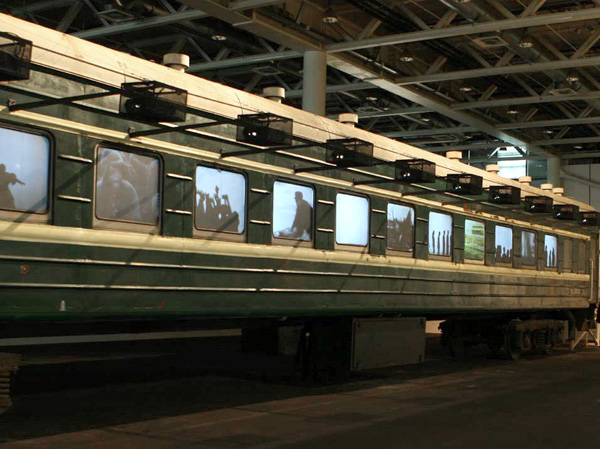
Review: ‘New 09’ at Australian Centre for Contemporary Art (ACCA), Melbourne

Exhibition dates: 17th March – 17th May, 2009

Curator: Charlotte Day


ACCA’s annual commissions exhibition – this year curated by Charlotte Day with new works from eight contemporary Australian artists including Justine Khamara, Brodie Ellis, Marco Fusinato, Simon Yates, Matthew Griffin, Benjamin Armstrong and Pat Foster and Jen Berean.


Simon Yates (Australian, b. 1973) 'Rhabdomancy' 2009 from the exhibition 'New 09' at Australian Centre for Contemporary Art (ACCA), Melbourne, March - May, 2009


Simon Yates (Australian, b. 1973)
Rhabdomancy
Tissue paper, wood, fishing rods, tape, string, electrical components, helium balloons dimensions variable
2009
Photo: Marcus Bunyan


“That’s what art is, he said, the story of a life in all its particularity. It’s the only thing that really is particular and personal. It’s the expression and, at the same time, the fabric of the particular. And what do you mean by the fabric of the particular? I asked, supposing he would answer: Art. I was also thinking, indulgently, that we were pretty drunk already and that it was time to go home. But my friend said: What I mean is the secret story … The secret story is the one we’ll never know, although we’re living it from day to day, thinking we’re alive, thinking we’ve got it all under control and the stuff we overlook doesn’t matter. But every damn thing matters! It’s just that we don’t realise. We tell ourselves that art runs on one track and life, our lives, on another, we don’t even realise that’s a lie.”


From the story “Dentist” from the book ‘Last Evenings on Earth’ by Roberto Bolaño1


“A work of art reminds you of who you are now”


Kepesh from the film ‘Elegy’


The curator Charlotte Day has assembled an interesting selection of artists for New 09 at ACCA, Melbourne. It is an exhibition whose ‘presences’ challenge through dark and light, sound and light, contemplation and silence. The journey is one of here and now moments that transport the viewer to states of being that address the fabric of the particular: doubt, anxiety and enlightenment crowd every corner. The particularities of the experience (material, social, psychological and imaginative) impinge on the viewers interior states of being transcending the very physicality and symbolic realism of the works.2

On entering the gallery you are greeted by Simon Yates self-propelled figures that make up the work Rhabdomancy (2009, above). Suspended, tethered, floating just above the floor the figures move eerily about the entrance to the gallery, startling people who have not seen them move before. They stand silent witness, a simulation of self in tissue paper searching for meaning by using a dowsing rod. The word rhabdomancy has as one of it’s meanings ‘the art or gift of prophecy (or the pretence of prophecy) by supernatural means’. Here the figures are divining and divination rolled into one: grounded they seek release through the balloons but through augury they become an omen or portent from which the future is foretold.

“… cutting and slicing in order to see them better, willing them into three dimensions; an attempt to cheat death, or rather, to ward off forgetting of them as they are/were and as I was when the work was made.”

~ Justine Khamara

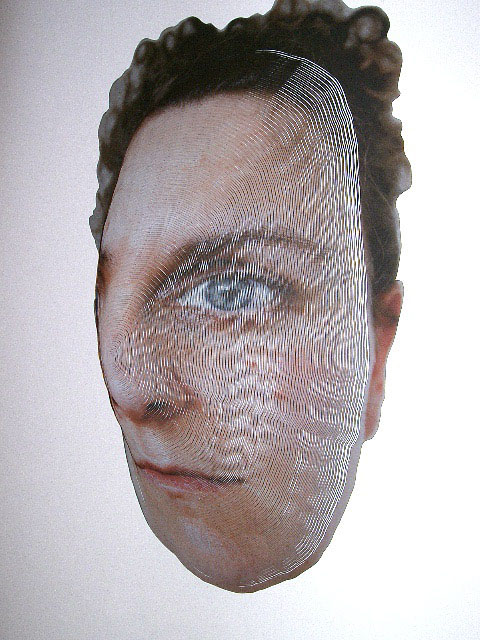
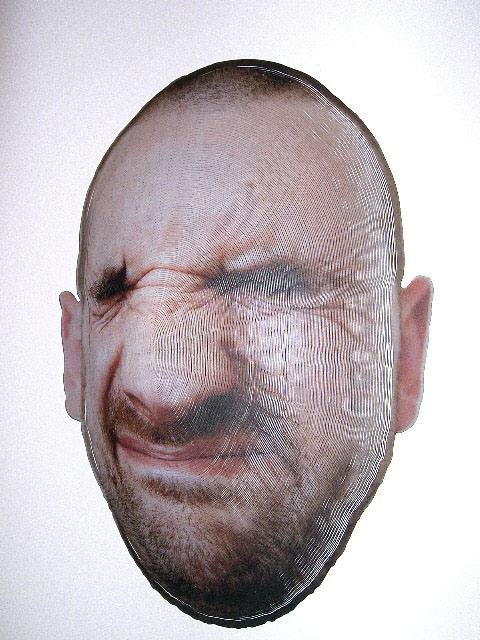
In the first gallery, a very minimal installation by Justine Khamara of two fractured faces stare out at you from the wall, my favourite work of the show. These are unsettling faces, protruding towards you like some topographical map, one eyes screwed shut the other beadily following you as you walk around the gallery space. Here the images of brother and sister presence anterior, already formed subjects not through memory (as photographs normally do) but through the insistence of the their multiple here and now planes of existence. Rather than ‘forgetting’ the images authenticate their identity through their ongoing presence in an ever renewing present.3 Their dissection of reality, the affirmation of their presence (not the photographic absence of a lost subject) embodies their secret story on the viewer told through psychological and imaginative processes: how do they make me feel – about my life, my death and being, here, now.

The pathos of the show is continued with the next work Noosphere (2008) by Brodie Ellis (the noosphere is best described as a sort of collective consciousness of human-beings).4 In this work a video above the clouds is projected onto a circular shape on the ceiling in a darkened room. The emotional and the imaginative impact of the message on the audience is again disorientating and immediate. The images look across the clouds to vistas of setting suns, look down on the clouds and the sea and land below. The images first move one way and then another, disorientating the viewer and changing their perspective of the earth; these are alien views of the earth accompanied by heart beat like ambient music. The perspective of the circle also changes depending on where the viewer stands like some anamorphic distortion of reality. On a stand a beaded yoke for a horse adds to the metaphorical allegory of the installation.

In the next gallery is the literal climax to the exhibition, Marco Fusinato’s Aetheric Plexus (2009). (Aether: medium through which light propagates; Plexus: in vertebrates, a plexus is an area where nerves branch and rejoin and is also a network of blood vessels).

Consisting of scaffolding that forms a cross and supports large numbers of silver spotlights with visible wiring and sound system the installation seems innocuous enough at first. Walking in front of the work produces no effect except to acknowledge the dull glow of red from the banks of dormant lights trained on the viewer. The interaction comes not in random fashion but when the viewer walks to the peripheries of the gallery corners triggering the work – suddenly you are are blasted with white light and the furious sound of white noise for about 15 seconds: I jumped half out of my skin! Totally disorientated as though one has been placed in a blast furnace or a heavenly irradiated crematorium one wonders what has just happened to you and it takes some time to reorientate oneself back in the afterlife of the here and now. Again the immediacy of the work, the particularities of the experience affect your interior states of being.

After a video installation by Matt Griffin you wander into the next gallery where two works by Benjamin Armstrong inhabit the floor of the gallery. And I do mean inhabit. Made of blown glass forms and wax coated tree branches the works have a strange affect on the psyche, to me seemingly emanations from the deep subconscious. Twin glass hemispheres of what look like a brain are surrounded by clasping synaptic nerve endings that support an egg like glass protrusion – a thought bubble? a spirit emanation? These are wonderful contemplative but slightly disturbing objects that have coalesced into shape only in another form to melt and disappear: molten glass and melted wax dissipating the very form of our existence.

Finally we come to the three part installation by Pat Foster and Jen Berean (below). On the right of the photograph you can see three aluminium and glass doors, closed, sealed leading to another gallery. What you can’t see in the photograph is the three pieces of gaffer tape stretched across the glass doors, like they do on the building sites of new homes. No entry here. Above your head is a suspended matrix of aluminium and glass with some of the glass planes smashed. Clean, clinical, safe but smashed, secure but threatening the matrix presses down on the viewer. It reminded me of the vertical standing shards of the World Trade Centre set horizontal suspended overhead. Only the steel cable seemed to ruin the illusion and seemed out of place with the work. It would have been more successful if the matrix was somehow suspended with fewer tethers to increase the sense of downward pressure. Finally you sit on the aluminium benches and contemplate in silence all that has come before and wonder what just hit you in a tidal wave of feelings, immediacies and emotions. The Doing and Undoing of Things.

An interesting journey then, one to provoke thought and emotion.
The fabric of the particular. The pathos of the art-iculate.

My only reservations are about the presence, the immediacy, the surface of it all. How persistent will these stories be? Will the work sustain pertinent inquiry above and beyond the here and now, the shock and awe. Or will it be like a meal one eats and then finds one is full but empty at the same time. A journey of smoke and mirrors.

Dr Marcus Bunyan


1/ Bolano, Robert. Last Evenings on Earth. New Directions, 2007. Available on Amazon.

2/ Blair, French. The Artist, The Body. [Online] Cited on 12/04/2009. No longer available online

3/ Ibid.,

4/ “For Teilhard, the noosphere is best described as a sort of ‘collective consciousness’ of human-beings. It emerges from the interaction of human minds. The noosphere has grown in step with the organisation of the human mass in relation to itself as it populates the earth. As mankind organizes itself in more complex social networks, the higher the noosphere will grow in awareness.” From the concept of Nooshpere on Wikipedia.


Many thankx to ACCA for allowing me to publish the photographs in the posting. All Images © Dr Marcus Bunyan and ACCA.


    Justine Khamara (Australian, b. 1971) 'Dilated Concentrations' 2009 from the exhibition 'New 09' at Australian Centre for Contemporary Art (ACCA), Melbourne, March - May, 2009

    Justine Khamara (Australian, b. 1971) 'Dilated Concentrations' 2009  (detail) from the exhibition 'New 09' at Australian Centre for Contemporary Art (ACCA), Melbourne, March - May, 2009

    Justine Khamara (Australian, b. 1971) 'Dilated Concentrations' 2009  (detail) from the exhibition 'New 09' at Australian Centre for Contemporary Art (ACCA), Melbourne, March - May, 2009

    Justine Khamara (Australian, b. 1971) 'Dilated Concentrations' 2009  (detail) from the exhibition 'New 09' at Australian Centre for Contemporary Art (ACCA), Melbourne, March - May, 2009


    Justine Khamara (Australian, b. 1971)
    Dilated Concentrations
    2009
    UV print on laser cut stainless steel
    Photos: Marcus Bunyan
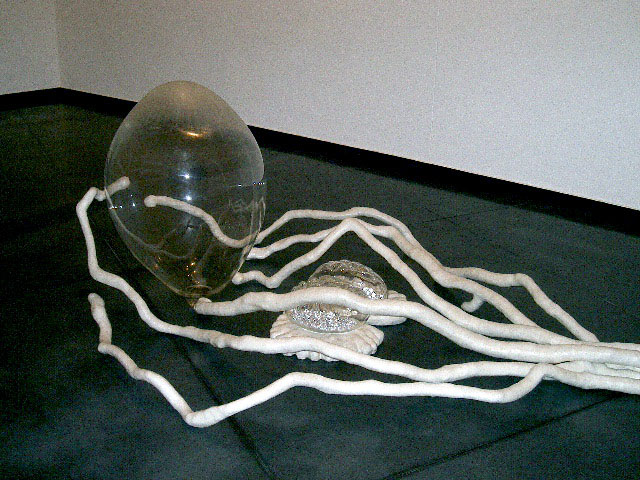
     

    Benjamin Armstrong (Australian, b. 1975) 'Hold Everything Dear I' 2008


    Benjamin Armstrong (Australian, b. 1975)
    Hold Everything Dear I
    2008
    Photo: Marcus Bunyan
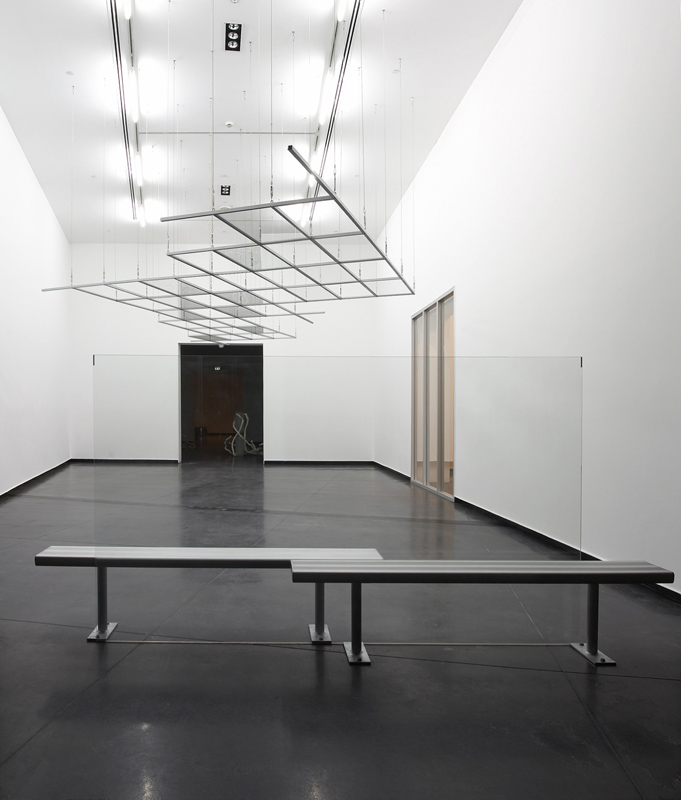
     

    Pat Foster (Australian, b. 1981) and Jen Berean (Canadian, b. 1981) 'Untitled’ from the series ‘The Doing and Undoing of Things’ 2009


    Pat Foster (Australian, b. 1981) and Jen Berean (Canadian, b. 1981)
    Untitled from the series The Doing and Undoing of Things
    2009
    Aluminium, safety glass, steel cable
    Photo: Marcus Bunyan


    Pat Foster (Australian, b. 1981) and Jen Berean (Canadian, b. 1981) 'Untitled’ from the series ‘The Doing and Undoing of Things’ 2009 (detail)


    Pat Foster (Australian, b. 1981) and Jen Berean (Canadian, b. 1981)
    Untitled from the series The Doing and Undoing of Things (detail)
    2009
    Aluminium, safety glass, steel cable
    Photo: Marcus Bunyan


    Australian Centre for Contemporary Art (ACCA)
    111 Sturt Street
    Southbank
    Victoria 3006
    Australia

    Opening hours:
    Tuesday – Friday 10am – 5pm
    Saturday – Sunday 11am – 5pm
    Closed Monday
    ACCA website

    LIKE ART BLART ON FACEBOOK

    Back to top

    Jeff Gusky photographs from the exhibition ‘Of Life and Loss: The Polish Photographs of Roman Vishniac and Jeffrey Gusky’ at the Detroit Institute of Arts

    Exhibition dates: 15th April – 12th July, 2009


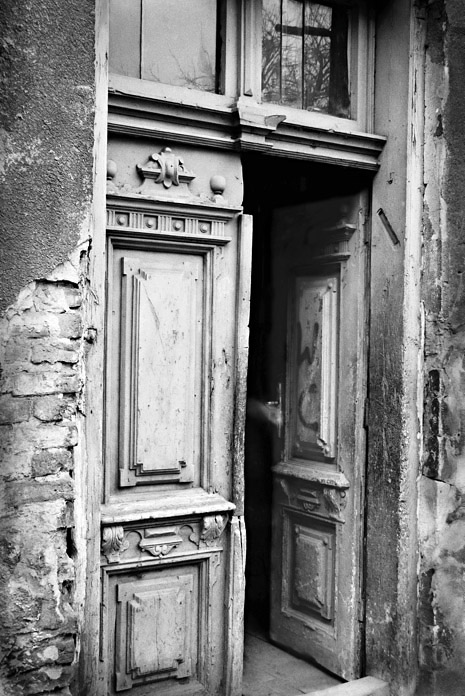
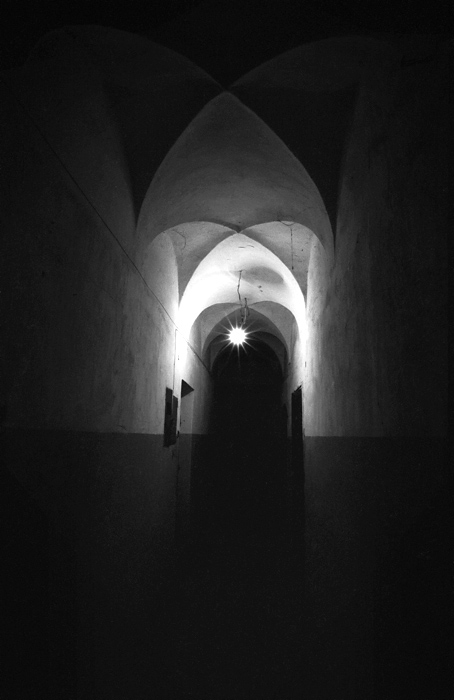
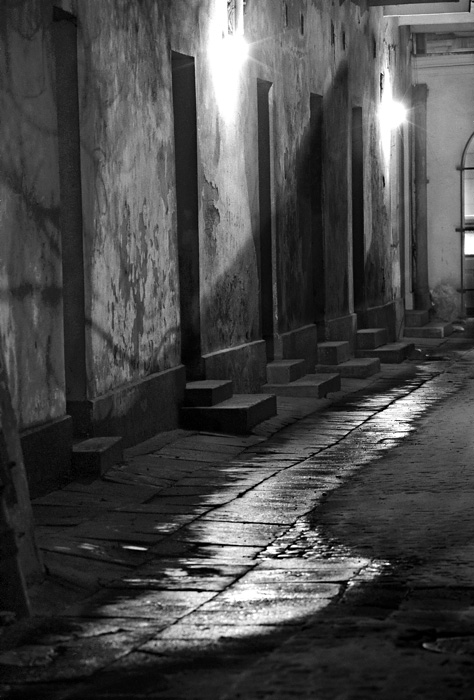
    Jeff Gusky. 'Corridor in Kazimierz (Former Jewish District)' Cracow, Poland 1996


    Jeff Gusky (American)
    Corridor in Kazimierz (Former Jewish District)
    Cracow, Poland 1996


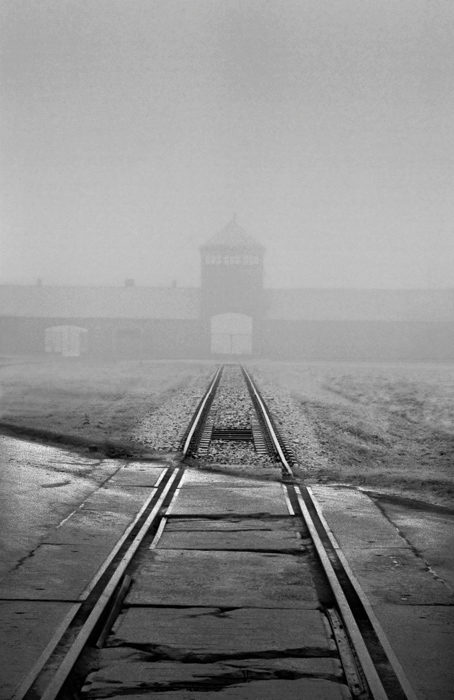
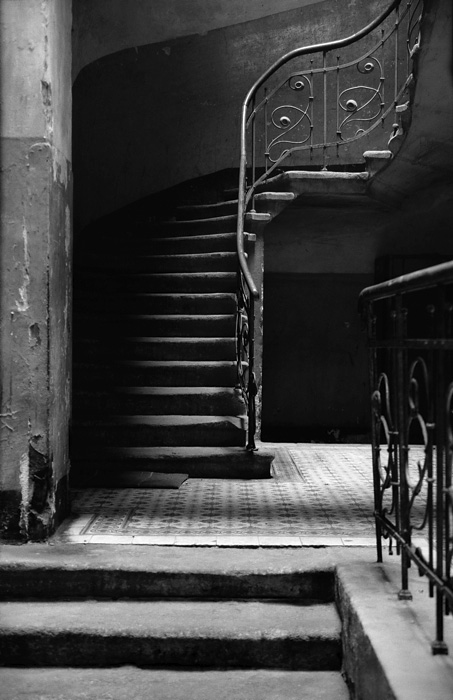
    As promised photographs by Jeff Gusky from the exhibition Of Life and Loss: The Polish Photographs of Roman Vishniac and Jeffrey Gusky. Many thanks to Jeff for making them available to me. I have tried to form a small narrative from some of the photographs that Jeff sent me, like a piece of music. The flow through passageways and doorways forming rivers of light and dark ends in the ascending stairs that hold the possibility of deliverance and redemption. The image is reminiscent of photographs by Eugene Atget.

    The most beautiful video and music (see below) is entirely appropriate for this post: Gorecki Symphony No. 3 “Sorrowful Songs” – Lento e Largo.

    Dr Marcus Bunyan


    Jeff Gusky. 'Former Jewish Home in Use as a Public Toilet' Dzialoszyce, Poland 1996


    Jeff Gusky (American)
    Former Jewish Home in Use as a Public Toilet
    Dzialoszyce, Poland 1996


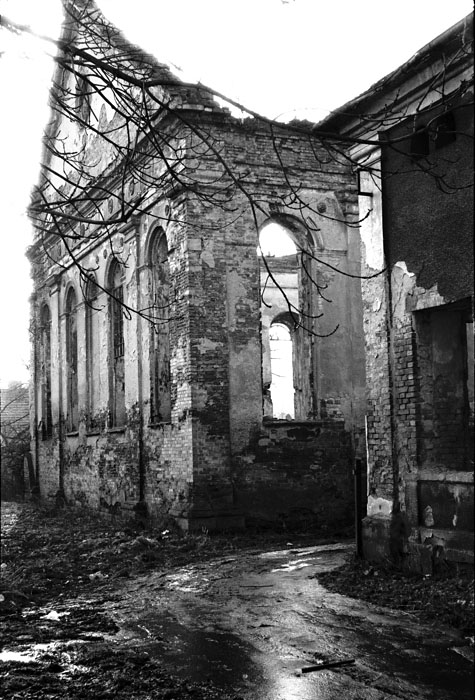
    Jeff Gusky. 'Desecrated Synagogue and Jewish School' Dzialoszyce, Poland 1999


    Jeff Gusky (American)
    Desecrated Synagogue and Jewish School
    Dzialoszyce, Poland 1999


    Jeff Gusky. 'Lublin Corridor #1' Lublin, Poland 1999


    Jeff Gusky (American)
    Lublin Corridor #1
    Lublin, Poland 1999


    Jeff Gusky. 'Birkenau Silhouette' Auschwitz, Poland 1996


    Jeff Gusky (American)
    Birkenau Silhouette
    Auschwitz, Poland 1996


    Jeff Gusky. 'Where They Lived #4' Cracow, Poland 2001


    Jeff Gusky (American)
    Where They Lived #4
    Cracow, Poland 2001


    Gorecki Symphony No. 3 “Sorrowful Songs” – Lento e Largo


    Detroit Institute of Arts
    5200 Woodward Avenue
    Detroit, Michigan 48202
    Phone: 313.833.7900

    Opening hours:
    Tuesday – Thursday 9am – 4pm
    Friday 9am – 9pm
    Saturday – Sunday 10am – 5pm
    Monday Closed

    Detroit Institute of the Arts website

    LIKE ART BLART ON FACEBOOK

    Back to top

    Exhibition: ‘William Kentridge: Five Themes’ at San Francisco Museum of Modern Art (SFMOMA)

    Exhibition dates: 14th March – 31st May, 2009

    Curator: Curator of Media Arts Rudolf Frieling and Mark Rosenthal, adjunct curator of contemporary art at the Norton Museum of Art


    William Kentridge (South African, b. 1955) 'Drawing for the film 'Stereoscope [Felix Crying]'' 1998-1999 from the exhibition 'William Kentridge: Five Themes' at San Francisco Museum of Modern Art (SFMOMA), March - May, 2009


    William Kentridge (South African, b. 1955)
    Drawing for the film Stereoscope [Felix Crying]
    1998-1999


    One of my favourite artists in the world. His technique – the palimpsestic nature of his practice where the history, memories and spaces of previous drawings are overwritten again and again on a single piece of paper without their ever being lost (unlike traditional animation techniques) – is amazing. His use of drawing, animation and the camera to record narratives of connection always has personal and archetypal themes – love, loss, bigotry, big business, persecution, reconciliation and social conflict in the stories of his homeland South Africa. His perspective on the world, his knowledge of books and philosophy, his understanding that stories exist as faint, legible remains completes the perception that he is an artist drawn to the line of the world. His work is moving and compassionate as all great art should be.

    Dr Marcus Bunyan


    Many thankx to the San Francisco Museum of Modern Art for allowing me to publish the art work in the posting.


    Combining the political with the poetic, William Kentridge’s work has made an indelible mark on the contemporary art scene. Dealing with subjects as sobering as apartheid and colonialism, Kentridge often imbues his art with dreamy, lyrical undertones or comedic bits of self-deprecation, making his powerful messages both alluring and ambivalent. Perhaps best known for his stop-motion films of charcoal drawings, the internationally renowned South African artist also works in etching, collage, sculpture, and the performing arts, opera in particular. This exhibition explores five primary themes that have engaged Kentridge over the last three decades through a comprehensive selection of his work from the 1980s to the present. Concentrating on his most recent production and including many pieces that have not been seen in the United States, the exhibition reveals as never before the full arc of his distinguished career.

    Text from the SFMOMA website [Online] Cited 01/04/2009. No longer available online


    William Kentridge (South African, b. 1955)
    “Invisible Mending” from 7 Fragments for Georges Méliès
    2003
    35-mm and 16-mm animation film


    William Kentridge: Five Themes, a comprehensive survey of the contemporary South African artist’s work, will premiere at the San Francisco Museum of Modern Art (SFMOMA) on March 14, 2009. Featuring more than 75 works in a range of media – including animated films, drawings, prints, theater models, sculptures, and books – the exhibition is co-organised by SFMOMA and the Norton Museum of Art in West Palm Beach, Florida. The San Francisco presentation, overseen by SFMOMA Curator of Media Arts Rudolf Frieling, will be on view through May 31, 2009.

    Curated by Mark Rosenthal, adjunct curator of contemporary art at the Norton Museum of Art, in close collaboration with the artist, the exhibition explores five primary themes that have engaged Kentridge over the past three decades. Although the exhibition highlights projects completed since 2000 (many of which have not been seen in the United States), it will also present, for the first time, Kentridge’s most recent work alongside his earlier projects from the 1980s and 1990s – revealing as never before the full arc of his distinguished career.

    Following its debut at SFMOMA, the survey will travel to the Modern Art Museum of Fort Worth, the Norton Museum of Art, and The Museum of Modern Art in New York. Plans for the European tour – which will tentatively include Galerie nationale du Jeu de Paume in Paris, the Stedelijk Museum in Amsterdam, the Albertina Museum in Vienna, and the Israel Museum in Jerusalem – are being finalised. Accompanying the exhibition is a richly illustrated catalogue, complete with a DVD produced by the artist for this special occasion. The San Francisco presentation of William Kentridge: Five Themes is made possible by the generous support of the Koret Foundation and Doris and Donald Fisher.

    William Kentridge is one of today’s most influential artists, and with this exhibition, SFMOMA continues its commitment to bringing such groundbreaking artists as Olafur Eliasson, Richard Tuttle, and Jeff Wall to local and international audiences,” says SFMOMA Director Neal Benezra, who co-curated the last major retrospective of the artist’s work in the United States in 2001. “Although Kentridge is primarily recognised for his animated films, he has devoted most of his time to making works on paper. The drawn line is completely inseparable from his work in other media, informing everything he creates. His transformation of drawing into animated film reflects his deep interest in how content evolves from process, how meaning accrues through making.”

    Exhibition curator Rosenthal adds, “Even as Kentridge has established his reputation as a master draftsman, printmaker, and one of the preeminent artist–filmmakers of our time, he has also expanded the traditional notion of political art, evolving the genre from a conventional depiction of horrors to a more nuanced portrayal of the psychological effects of political events upon those who observe them, whether they be perpetrators, victims, or onlookers.”

    Born in 1955 in Johannesburg, where he continues to live and work, Kentridge has earned international acclaim for his interdisciplinary practice, which often fuses drawing, film, and theater. Known for engaging with the social landscape and political background of his native South Africa, he has produced a searing body of work that explores themes of colonial oppression and social conflict, loss and reconciliation, and the ephemeral nature of both personal and cultural memory.

    Kentridge first gained recognition in 1997, when his work was included in Documenta X in Kassel, Germany, and in the Johannesburg and Havana Biennials, which were followed by prominent solo exhibitions internationally. His art was widely introduced to American audiences in 2001 through a traveling retrospective – co-curated by Neal Benezra when he served as deputy director of the Art Institute of Chicago – which primarily included works made before 2000. William Kentridge: Five Themes brings viewers up to date on the artist’s work over the past decade, exploring how his subject matter has evolved from the specific context of South Africa to more universal stories. In recent years, Kentridge has dramatically expanded both the scope of his projects (such as recent full-scale opera productions) and their thematic concerns, which now include his own studio practice, colonialism in Namibia and Ethiopia, and the cultural history of post-revolutionary Russia. His newer work is based on an intensive exploration of themes connected to his own life experience, as well as the political and social issues that most concern him.

    Although his hand-drawn animations are often described as films, Kentridge himself prefers to call them “drawings for projection.” He makes them using a distinctive technique in which he painstakingly creates, erases, and reworks charcoal drawings that are photographed and projected as moving image. Movement is generated within the image, by the artist’s hand; the camera serves merely to record its progression. As such, the animations explore a tension between material object and time-based performance, uniquely capturing the artist’s working process while telling poignant and politically urgent stories.

    Concerning the artist’s innovative film installations of the past ten years, Rudolf Frieling adds: “Kentridge has been considered primarily as an artist who draws for projections. Yet his recent installation-based films explore an expanded cinema space and question the very foundation of what it means to produce and perceive a moving image.”

    In light of SFMOMA’s history with Kentridge – in 2004 the museum acquired the artist’s landmark film Tide Table (2003) and a set of related drawings – and the rich holdings of his work in private Bay Area collections, the occasion to present the first major exhibition of his work in San Francisco has particular resonance and reflects the museum’s ongoing commitment to his art. In conjunction with the exhibition, SFMOMA will bring the artist’s multimedia opera The Return of Ulysses to San Francisco for performances at Project Artaud Theater from March 25 through 29, 2009. Kentridge will also present his lecture-format solo performance I am not me, the horse is not mine at SFMOMA on March 14, 2009.

    The Five Themes

    “Parcours d’Atelier: Artist in the Studio” 

    The first section of the exhibition examines a crucial turning point in Kentridge’s work, one in which his own art practice became a subject. According to the artist, many of these projects are meant to reflect the “invisible work that must be done” before beginning a drawing, film, or sculpture. This theme is epitomised by the large-scale multiscreen projection 7 Fragments for Georges Méliès (2003), an homage to the early French film director, who, like Kentridge, often combined performance with drawing. The suite of seven films – each depicting Kentridge at work in his studio or interacting with his creations – has only been shown once before in the United States and will be accompanied by a rarely seen group of related drawings, forming an intimate portrayal of the artist’s process.

    “Thick Time: Soho and Felix” 

    A second section of the exhibition is dedicated to Kentridge’s best-known fictional characters, Soho Eckstein, a domineering industrialist and real estate developer whose troubled conscience reflects certain miens of contemporary South Africa, and his sensitive alter ego, Felix Teitlebaum, who pines for Soho’s wife and often functions as a surrogate for the artist himself. The centrepiece of this section, an ongoing work entitled 9 Drawings for Projection, comprises nine short animated films: Johannesburg, 2nd Greatest City after Paris (1989), Monument (1990), Sobriety, Obesity & Growing Old (1991), Mine (1991), Felix in Exile (1994), History of the Main Complaint (1996), WEIGHING … and WANTING (1998), Stereoscope (1999), and Tide Table (2003). These projections, along with a key selection of related drawings, follow the lives of Soho and Felix as they struggle to navigate the political and social climate of Johannesburg during the final decade of apartheid. According to Kentridge, the Soho and Felix films were made without a script or storyboards and are largely about his own process of discovery.

    “Occasional and Residual Hope: Ubu and the Procession” 

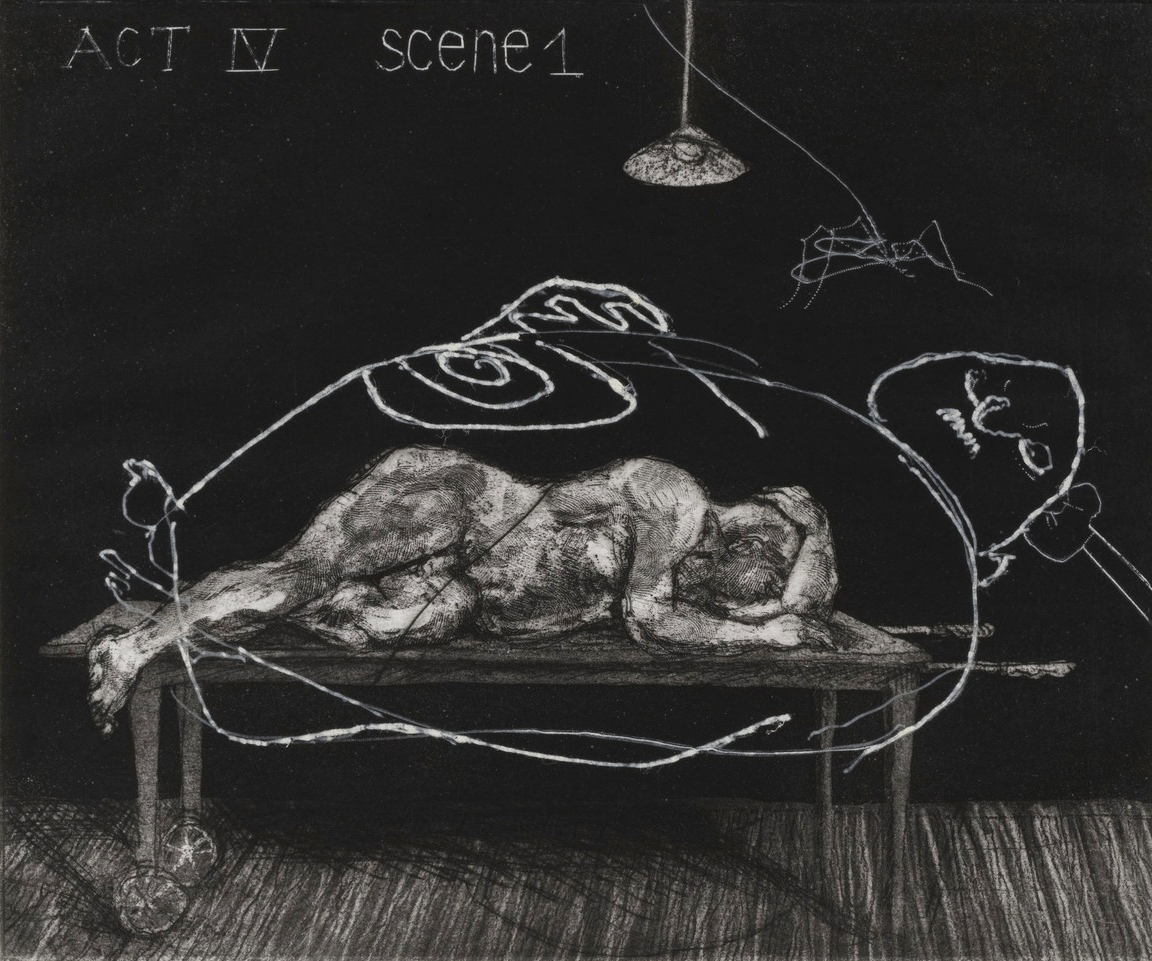
    In 1975 Kentridge acted in Ubu Rex (an adaptation of Ubu Roi, Alfred Jarry’s satire about a corrupt and cowardly despot), and he subsequently devoted a large body of work to the play. He began with a series of eight etchings, collectively entitled Ubu Tells the Truth (1996), and in 1997 made an animated film of the same name, as well as a number of related drawings. These works also deal with the South African experience, specifically addressing the Truth and Reconciliation Commission hearings set up by the nation’s government in 1995 to investigate human rights abuses during apartheid. Other highlights in this grouping include the film Shadow Procession (1999), in which Kentridge first utilises techniques of shadow theatre and jointed-paper figures; the multi-panel collage Portage (2000); a large charcoal-and-pastel-on-paper work entitled Arc Procession (Smoke, Ashes, Fable) (1990); and some of the artist’s rough-hewn bronze sculptures.


    William Kentridge (South African, b. 1955) 'Act IV Scene I from Ubu Tells the Truth' 1996-1997 from the exhibition 'William Kentridge: Five Themes' at San Francisco Museum of Modern Art (SFMOMA), March - May, 2009


    William Kentridge (South African, b. 1955)
    Act IV Scene I from Ubu Tells the Truth
    1996-1997


    “Sarastro and the Master’s Voice: The Magic Flute” 

    A selection of Kentridge’s drawings, films, and theatre models inspired by his 2005 production of the Mozart opera The Magic Flute for La Monnaie, the leading opera house in Belgium, will be a highlight of the exhibition. The artist’s video projection Learning the Flute (2003), which started the Flute project, shifts between images of black charcoal drawings on white paper and white chalk drawings projected onto a blackboard, forming a meditation on darkness and light. Preparing the Flute (2005) was created as a large-scale maquette within which to test projections central to the production of the opera. Another theatre model, Black Box/Chambre Noire (2006), which has never been seen in the United States, addresses the opera’s themes, specifically through an examination of the colonial war of 1904 in German South-West Africa, and of the genocide of the Herero people. What Will Come (has already come) (2007), a consideration of colonialism in Ethiopia, presents an anamorphic film installation in which intentionally distorted images projected onto a tabletop right themselves only when reflected in a cylindrical mirror. This work was recently acquired, under the guidance of Rosenthal, by the Norton Museum of Art.

    “Learning from the Absurd: The Nose” 

    The fifth section comprises a multichannel projection made in preparation for Kentridge’s forthcoming staging of The Nose, a Metropolitan Opera production that will premiere in New York in March 2010. The Nose – a 1930 Dmitri Shostakovich opera based on Nikolai Gogol’s absurdist short story of 1836 – concerns a Russian official whose nose disappears from his face, only to turn up, in uniform, as a higher-ranking official moving in more respected circles. Kentridge’s related work, I am not me, the horse is not mine (2008), on view in the United States for the first time, is a room-size installation of projected films that use Gogol’s story as the basis for examining Russian modernism and the suppression of the Russian avant-garde in the 1920s and 1930s.

    Related Performances 

    Acknowledging the profound importance of theatrical work in Kentridge’s oeuvre, SFMOMA will bring the artist’s opera The Return of Ulysses to San Francisco in conjunction with the exhibition. First performed in Brussels in 1998, Kentridge’s acclaimed reinterpretation of Claudio Monteverdi’s classic 1640 opera (based on Homer’s epic poem) is transposed to a mid-20th-century Johannesburg setting. This limited-engagement performance features live actors and musicians, as well as 13 life-size, artisan-crafted wooden puppets and projections of Kentridge’s animated charcoal drawings. The Return of Ulysses will run at Project Artaud Theater from Tuesday, March 24, through Saturday, March 28 (preview March 24, opening March 25), and is a production of Pacific Operaworks, in Seattle, incorporating puppeteers from Kentridge’s longtime collaborator, the Handspring Puppet Company of Cape Town, in South Africa.

    In a special opening-night event on March 14, Kentridge will present a lecture-format solo performance of I am not me, the horse is not mine, which premiered at the 16th Biennale of Sydney in June 2008 (and shares the same title of the related multichannel projection making its U.S. debut with the exhibition). This live performance focuses on the development process of Kentridge’s upcoming opera production, The Nose.

    Definitive Publication with Companion DVD

    To coincide with the exhibition, SFMOMA and the Norton Museum of Art, in association with Yale University Press, will publish a richly illustrated catalogue (hardcover, $50). In the catalogue’s principal essay, exhibition curator Mark Rosenthal presents a portrait of the artist, showing the interrelationship between aspects of Kentridge’s character and the protagonists that populate his work. Carolyn Christov-Bakargiev, chief curator at the Castello di Rivoli Museum of Contemporary Art, examines the artist’s themes and iconography in closer detail, addressing Kentridge’s working methods as he moves freely between disciplines. Rudolf Frieling demonstrates that although Kentridge is not typically discussed as an installation artist, there are compelling reasons to consider him as such. Cornelia H. Butler, Judith B. Hecker, and Klaus Biesenbach, curators at the Museum of Modern Art, New York, explore the subject of performance in Kentridge’s work. Finally, a conversation between Kentridge and Michael Auping, chief curator at the Modern Art Museum of Fort Worth, focuses on the artist’s drawing practice. In addition, the artist has written texts to introduce each of the book’s five plate sections.

    For the first time, Kentridge will produce a DVD for distribution with the publication, making the catalogue unique among existing literature on the artist. Combining intimate studio footage of the artist at work with fragments from significant film projects, the DVD offers a fascinating look at how Kentridge’s ideas evolve from raw concept to finished work.

    Press release from the San Francisco Museum of Modern Art


    William Kentridge (South African, b. 1955)
    Johannesburg
    1989


    William Kentridge (South African, b. 1955) 'Felix in Exile' 1994 from the exhibition 'William Kentridge: Five Themes' at San Francisco Museum of Modern Art (SFMOMA), March - May, 2009


    William Kentridge (South African, b. 1955)
    Drawing for the projection Felix in Exile
    1994


    William Kentridge (South African, b. 1955)
    Felix in Exile
    1994


    More videos of William Kentridge’s work are available on You Tube


    San Francisco Museum of Modern Art
    151 Third Street
    San Francisco CA 94103
    Phone: 415.357.4000

    Opening hours:
    Monday 10am – 5pm
    Tuesday and Wednesday Closed
    Thursday 1pm – 8pm
    Friday – Sunday 10am – 5pm

    SFMOMA website

    William Kentridge on Wikipedia

    LIKE ART BLART ON FACEBOOK

    Back to top

    Review: ‘reENLIGHTENMENT’ exhibition by Peter James Smith at Gallery 101, Melbourne

    Exhibition dates: 18th March – 4th April, 2009


    Peter James Smith. 'reENLIGHTENMENT' installation view 2009

    Peter James Smith. 'reENLIGHTENMENT' installation view 2009


    Peter James Smith (New Zealand, b. 1954)
    reENLIGHTENMENT installation views
    2009


    “Every passion borders on the chaotic, but the collector’s passion borders on the chaos of memories. More than that: the chance, the fate, that suffuse the past before my eyes are conspicuously present in the accustomed confusion of these books. For what else is this collection but a disorder to which habit has accommodated itself to such an extent that it can appear as order?”1


    “Thus the claim is that texts themselves can actually be intrinsically ‘genuine’, but that authenticity is a ‘social construct’. In other words, a certain kind of authenticity is created through the interaction of the users, situations and the texts.”2


    Peter James Smith links the culture of science and of human experience, bringing together mathematics and the power of nature in realist imagery that is balanced by strong mark making and text. Redolent still life and landscape images juxtapose with astronomical, poetic and historical observations in the painted images. Handwritten citations, notes, jottings, diagrams and erasures float on the loosely painted surfaces of stretched linen, paper collage and found pieces which bring a Beuysian sense of the charismatic object. A sunset, a violin, a book of verse, an installation of old bells or delicate Jasperware porcelain provide a resonant foil for the artist and viewer – and create a space for the imagination, for mathematical wonder and contemplation.

    “Beyond painting, in the current work there is a sense of history allowing us to privilege its objects, their collecting and their housing on walls, in vitrines, on shelves and on plinths. Like any true collector I am keen to bring them to an audience, to show them in a revelatory way. If they are inflected by hand markings it is to personalise the revelation. There are no plastic imitations: the Jasperware vases are authentic collected Wedgwood; the small Greek Pelike is indeed a c 300 BC vase; the Roman glass is a c 300 AD; the collected Wollemi pine needles are indeed from this prehistoric plant. These and other antiquities have a long museological tradition. The narratives of Wedgwood blue and white Jasperware designs are of Greek antiquity – the firing of the white clay over a cobalt blue base (in around) 1772 was a triumph of chemistry over alchemy. With these objects, it is not a postmodernist kitsch that is revealed, but rather the resuscitated fabric of authenticity. I am re-enlightened by their tactile physical presence that has a timeless beauty. To render such things as a painted image is to engage in a different act, with different rules referring to different histories.”

    Peter James Smith, 2009. Notes from the exhibition catalogue.

     
    Enlightenment, Romanticism, reason, authenticity, revelation.

    I am a collector like Peter James Smith. I display my collection of early 20th century English vases. I have a collection of 300 ties that span from the 1930s to the 1970s. I have eight rare 1940s suits, those suits that Humphrey Bogart used to wear with the wide wide lapels that nearly reach the seam of the sleeve.

    Rare, fragile, beautiful, genuine.

    In this exhibition Smith appeals not to the genuineness of the objects but to the authenticity of the objects he displays: “There are no plastic imitations … With these objects, it is not a postmodernist kitsch that is revealed, but rather the resuscitated fabric of authenticity.” He wants to show these objects in a revelatory way, for us to once more appreciate their authenticity. To make order out of disorder. But then Smith wants to personalise this revelation and overlays the objects with texts that re-order the taxonomy through a reinscription that is both a de-territorialization and re-territorialization of meaning, a loss of original meaning and the production of new meanings. This is the faint silver flicker of re-enlightenment the artist seeks. It is above all authentication as individual spectacle, as social construct.

    “Authenticity is an issue for us today because of a widespread sense that there is something inauthentic in the way we experience the modern world.”3

    In some of the works this process is effective and in other works it falls flat on it’s proverbial, intertextual backside. The process works well in the less cerebral works. The use of black paint in Paradise Lost IV (below) is particularly effective as the re-inscription of paint invades and threatens the motifs of the classical figures with the text and cross reinforcing the idea of a lost paradise. Cathedral (2009, below) is also a stunning installation of different bells hung at various heights within a locked cabinet, complicit in their silence as they would not be inside a cathedral. For me this was probably the best piece in the show for its simplicity of thought, eloquence of execution and understanding of how the installation re-enlightens the viewers socially constructed authenticity in a revelatory way. No double marking is needed – a zen balance is proposed and achieved in the quietness of the viewers mind.

    Other pieces are less successful. Amphora in grey teracotta Han Dynasty c 100BC (2008), the amphora inscribed with text sitting on a painted black video recorder is particularly unengaging and unappealing – there is no revelatory experience to be had here. The Greek Pileke (see below) inscribed with lines from John Keats Ode on a Grecian Urn seems an appropriate intervention but sometimes in this exhibition one just longs to appreciate the sanctity of the object, it’s presence, in silence without the personalising of the revelation by the hand of the artist. To see the object clearly for what it is.

    The large installation reELIGHTENMENT (2009 below, and installation photo at top) falls into darkness. The use of the doors as metaphor is clumsy, book covers have been more successfully used by other artists and the black paint is heavy and oppressive. More interesting are some of the paintings, for example The slow dance of an astronomical twighlight (2009, below) where the poem of William Wordsworth

    … a sense sublime
    Of something far more deeply interfused,
    Whose dwelling is the light of setting suns

    illuminates the poetry of the painting, adding an insightful double meaning to the universal revelation. A vibration of spirit is present both in the landscape and the markings upon the landscape. Unfortunately all too often in this exhibition access to the sublime is denied. Appeals to neo-authenticity fall on deaf ears. The motifs of this exhibition are universal, archetypal but the elements that go to make up this exhibition are too many and lack focus. Sometimes in art less in more and this exhibition is a classic example of this fact. There are some interesting elements but overall the whole is not the sum of its parts.

    As John Donne observed

    “All mankind is of one author, and is one volume; when one man dies, one chapter is not torn out of the book, but translated into a better language; and every chapter must be so translated … No man is an island, entire of itself; every man is a piece of the continent, a part of the main.”4

    Our authentic place in the world, our spiritual space, our re-enlightenment needed to be better defined, more lucidly enunciated in this exhibition NOT IN CAPITAL LETTERS but in the quietness of our hearts.

    Dr Marcus Bunyan


    1/ Benjamin, Walter. “Unpacking my Library: A Talk about Book Collecting,” in Illuminations. English translation. London: Fontana, 1982, pp. 59-60

    2/ Lee, W. “Authenticity revisited: text authenticity and learner authenticity,” in ELT Journal, 49(4). 1995, pp. 323-328 cited in Shomoossi, Nematullah and Ketabi, Saeed. “A Critical Look at the Concept of Authenticity,” in Electronic Journal of Foreign Language Teaching, 2007, Vol. 4, No. 1, pp. 149-155 [Online] cited on 29th March, 2009 at http://e-flt.nus.edu.sg/v4n12007/shomoossi.pdf

    3/ McClure, Christoper. The Concept of Authenticity in Charles Taylor and Martin Heidegger. [Online] cited on March 29th, 2009 (no longer available online)

    4/ Donne, John. Devotions Upon Emergent Occasions, Meditation XVII: Nunc Lento Sonitu Dicunt, Morieris. 1624.


    Variously

    Wedgwood Jasperware, Roman glass, Greek Pileke, books, doors, texts, paintings, bells, video, video machine, wooden boxes, black paint, crosses, albatross, Wollemi Pine needles, Paradise Lost, astronomy, linen, stars, photography, Chinese porcelain, collage, mathematical equations, mirrors, Amphora from the Han Dynasty, a violin, a sunset, a book of verse, notes, shelves, jottings, citations.

    Notes to myself

    ~ Golden ratio
    ~ The archive
    ~ Topographical markings, inscriptions and decodings
    ~ The ‘nature’ of authenticity
    ~ The ‘voice’ of revelation
    ~ Re-possession of clarity and logic
    ~ Re-production of mystery, tenderness and love
    ~ Reverence for the object itself
    ~ Referentiality between image and text
    ~ The colour black: transcendent, the depths of the night sky but also the closing in of darkness at the end of days
    ~ Never one truth but many truths
    ~ Less is more


    Many thankx to Gallery 101 for allowing me to publish the photographs in the posting. Please click on the photographs for a larger version of the image.


    Peter James Smith (New Zealand, b. 1954) 'The slow dance of an astronomical twighlight' 2009 from the exhibition 'reENLIGHTENMENT' exhibition by Peter James Smith at Gallery 101, Melbourne, March - April, 2009


    Peter James Smith (New Zealand, b. 1954)
    The slow dance of an astronomical twighlight
    2009


    Peter James Smith (New Zealand, b. 1954) 'Paradise Lost IV' 2008 from the exhibition 'reENLIGHTENMENT' exhibition by Peter James Smith at Gallery 101, Melbourne, March - April, 2009


    Peter James Smith (New Zealand, b. 1954)
    Paradise Lost IV
    2008


    Peter James Smith (New Zealand, b. 1954) 'Ode on a Grecian Urn' 2008


    Peter James Smith (New Zealand, b. 1954)
    Ode on a Grecian Urn
    2008


    Peter James Smith (New Zealand, b. 1954) 'Cathedral' 2009


    Peter James Smith (New Zealand, b. 1954)
    Cathedral
    2009


    Peter James Smith (New Zealand, b. 1954) 'reENLIGHTENMENT' 2009


    Peter James Smith (New Zealand, b. 1954)
    reENLIGHTENMENT
    2009


    Gallery 101

    This gallery is now closed.

    LIKE ART BLART ON FACEBOOK

    Back to top

    Exhibition: ‘Francis Bacon’ at the Museo Nacional del Prado, Madrid

    Exhibition dates: 3rd February – 19th April, 2009

    Curator: Manuela Mena, co-curator of the exhibition at the Prado


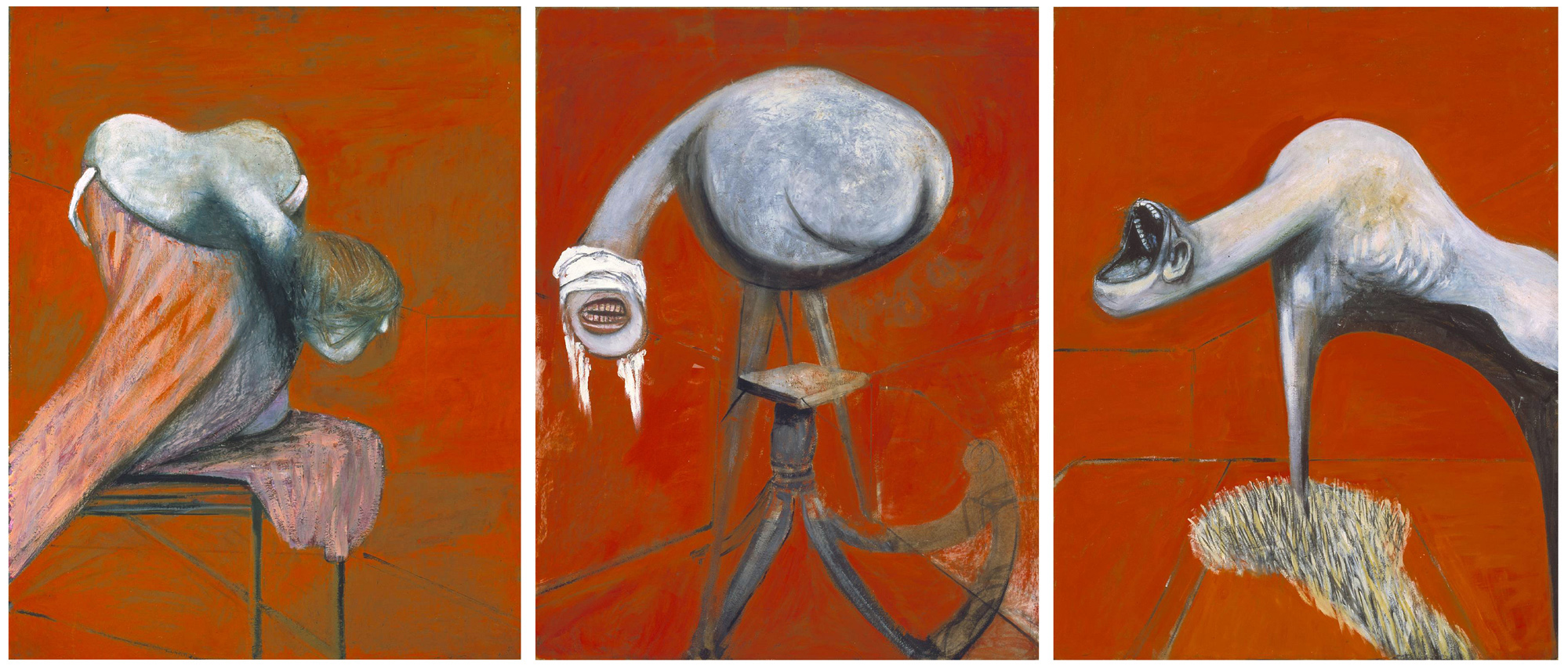
    Francis Bacon (British, 1909-1992) 'Triptych inspired by T.S. Eliot's 'Sweeney Agonistes'' 1967 from the exhibition 'Francis Bacon' at the Museo Nacional del Prado, Madrid, Feb - April, 2009


    Francis Bacon (British, 1909-1992)
    Triptych inspired by T.S. Eliot’s ‘Sweeney Agonistes’
    1967
    Oil on canvas
    198 x 147.5cm (each)
    Washington, D.C. Hirshhorn Museum and Sculpture Garden, Smithsonian Institution. Gift of the Joseph H. Hirshhorn Foundation, 1972


    Looks like an amazing exhibition of Francis Bacon’s work, one of my favourite artists – I wish I could see it!


    Many thankx to the Museo Nacional del Prado for allowing me to publish the art work in the posting. Please click on the photographs for a larger version of the image.


    The exhibition is constructed in different sections:

    ~ Animal
    ~ Zone
    ~ Apprehension
    ~ Crucifixion
    ~ Crisis
    ~ Archive
    ~ Portrait
    ~ Memorial
    ~ Epic
    ~ Late


    Bacon’s work demonstrates marked similarities to that of many of the Spanish artists he admired. (Manuela Mena, co-curator of the exhibition at the Prado, has written an excellent essay on this topic that can be found in the exhibition’s catalog.) The retrospective at the Prado provides a rare opportunity to compare Bacon to some of the Spanish masters that influenced him.

    Start by meandering through the vast Bacon exhibition. Spread between two floors of the new wing of the Prado, the exhibition has brought together Bacon’s most important works from nearly his entire artistic production. It begins with the work that put Bacon on the map, “Three Studies for Figures at the Foot of a Crucifixion” (1944), and follows his work through the interpretations of Velázquez, crucifixion triptychs, his unique portraits and the late works through the years shortly before his death.

    Text from the Prado website


    Francis Bacon (British, 1909-1992) 'Three Studies for Figures at the Base of a Crucifixion' c. 1944 from the exhibition 'Francis Bacon' at the Museo Nacional del Prado, Madrid, Feb - April, 2009


    Francis Bacon (British, 1909-1992)
    Three Studies for Figures at the Base of a Crucifixion
    c. 1944
    Oil on board
    94 x 73.7cm
    London, Tate, presented by Eric Hall 1953


    Animal

    A philosophical attitude to human nature first emerges in Francis Bacon’s works of the 1940s. They reflect his belief that, without God, humans are subject to the same natural urges of violence, lust and fear as any other animal. He showed Figure in a Landscape and Three Studies for Figures at the Base of a Crucifixion in April 1945, and exhibited consistently thereafter. The bestial depiction of the human figure was combined with specific references to recent history and especially the devastating events of the Second World War. Bacon often drew his inspiration from reproductions, acquiring a large collection of books, catalogues and magazines. He repeatedly studied key images in order to probe beneath the surface appearance captured in photographs. Early concerns that would persist throughout his work include the male nude, which reveals the frailty of the human figure, and the scream or cry that expresses repressed and violent anxieties. These works are among the first in which he sought to balance psychological insights with the physical identity of flesh and paint.


    Francis Bacon (British, 1909-1992) 'Study after Velázquez’s Portrait of Pope Innocent X' 1953


    Francis Bacon (British, 1909-1992)
    Study after Velázquez’s Portrait of Pope Innocent X
    1953
    Oil on canvas
    153 x 118cm
    Des Moines, Nathan Emory Coffin Collection of the Des Moines Arts Center, purchased with funds from the Coffin Fine Arts Trust


    Zone

    In his paintings from the early 1950s, Bacon engaged in complex experiments with pictorial space. He started to depict specific details in the backgrounds of these works and created a nuanced interaction between subject and setting. Figures are boxed into cage-like structures, delineated ‘space-frames’ and hexagonal ground planes, confining them within a tense psychological zone. In 1952 he described this as “opening up areas of feeling rather than merely an illustration of an object”. Through his technique of ‘shuttering’ with vertical lines of paint that merge the foreground and background, Bacon held the figure and the setting together within the picture surface, with neither taking precedence in what he called “an attempt to lift the image outside of its natural environment”.

    A theme that emerged in the 1950s was the extended series of variants of Velázquez’s Portrait of Pope Innocent X, 1650 (Rome, Galleria Doria Pamphilj), a work Bacon knew only from illustrations. He used this source to expose the insecurities of the powerful – represented most often in the scream of the caged figure. Through the open mouth Bacon exposed the tension between the interior space of the body and the spaces of its location, which is explored more explicitly in the vulnerability of the ape-like nudes.


    Francis Bacon (British, 1909-1992) 'Chimpanzee' 1955


    Francis Bacon (British, 1909-1992)
    Chimpanzee
    1955
    Oil on canvas
    152.5 x 117cm
    Stuttgart, Staatsgalerie


    Apprehension

    Implicit throughout Bacon’s work of the mid 1950s is a sense of dread pervading the brutality of everyday life. Not only a result of Cold War anxiety, this seems to have reflected a sense of menace at a personal level emanating from Bacon’s chaotic affair with Peter Lacy (who was prone to drunken violence) and the wider pressures associated with the continuing illegality of homosexuality. The Man in Blue series captures this atmosphere, concentrating on a single anonymous male figure in a dark suit sitting at a table or bar counter on a deep blue-black ground. Within their simple painted frames, these awkwardly posed figures appear pathetically isolated.

    Bacon’s interest in situations that combine banality with acute apprehension was also evident in other contemporary works. From figures of anxious authority, his popes took on malevolent attributes and physical distortions that were directly echoed in the paintings of animals, whose actions are also both sinister and undignified. Some of these images derived from Bacon’s close scrutiny of the sequential photographs of animals and humans taken by Eadweard Muybridge (1830-1904), which he called “a dictionary” of the body in motion.


    Francis Bacon (British, 1909-1992) 'Three Studies for a Crucifixion' 1962


    Francis Bacon (British, 1909-1992)
    Three Studies for a Crucifixion
    1962
    Oil on canvas
    198.2 x 144.8cm
    New York, Solomon R. Guggenheim Museum


    Crucifixion

    Bacon made paintings related to the Crucifixion at pivotal moments in his career, which is why these key works are gathered here. The paradox of an atheist choosing a subject laden with Christian significance was not lost on Bacon, but he claimed, “as a non-believer, it was just an act of man’s behaviour”. Here the instincts of brutality and fear combine with a deep fascination with the ritual of sacrifice. Bacon had already made a very individual crucifixion image in 1933 before returning to the subject with his break-through triptych Three Studies for Figures at the Base of a Crucifixion in 1944. This is a key precursor to later themes and compositions, containing the bestial distortion of human figures within the triptych format. These monstrous creatures displace the traditional saints and Bacon later related them to the Eumenides – the vengeful furies in Greek mythology. In resuming the theme in the 1960s, especially in 1962 as the culmination of his first Tate exhibition, Bacon used references to Cimabue’s 1272-1274 Crucifixion to introduce a more explicitly violent vision. Speaking after completing the third triptych in 1965 he simply stated: “Well, of course, we are meat, we are potential carcasses”.


    Francis Bacon (British, 1909-1992) 'Paralytic Child Walking on All Fours (from Muybridge)' 1961


    Francis Bacon (British, 1909-1992)
    Paralytic Child Walking on All Fours (from Muybridge)
    1961
    Oil on canvas
    198 x 142cm
    The Hague, Collection Gemeentemuseum Den Haag


    Crisis

    Between 1956 and 1961, Bacon travelled widely. He spent time in places marginal to the art world, in Monaco, the South of France and Africa, and particularly with Peter Lacy in the ex-patriot community in Tangier. In this rather unsettled context, he explored new methods of production, shifting to thicker paint, violently applied and so strong in colour as to indicate an engagement with the light of North Africa. This was most extreme in his series based on a self-portrait of Van Gogh, The Painter on the Road to Tarascon (1888, destroyed), which became an emblem of the modern predicament. Despite initial acclaim, Bacon’s Van Gogh works were soon criticised for their “reckless energy” and came to be viewed as an aberration. They can now be recognised as pivotal to Bacon’s further development, however, and allow glimpses into his search for new ways of working. His innovations were perhaps in response to American Abstract Expressionism, of which he was publicly critical. Although he eventually returned to a more controlled approach to painting, the introduction of chance and the new vibrancy of colour at this moment would remain through out his career.


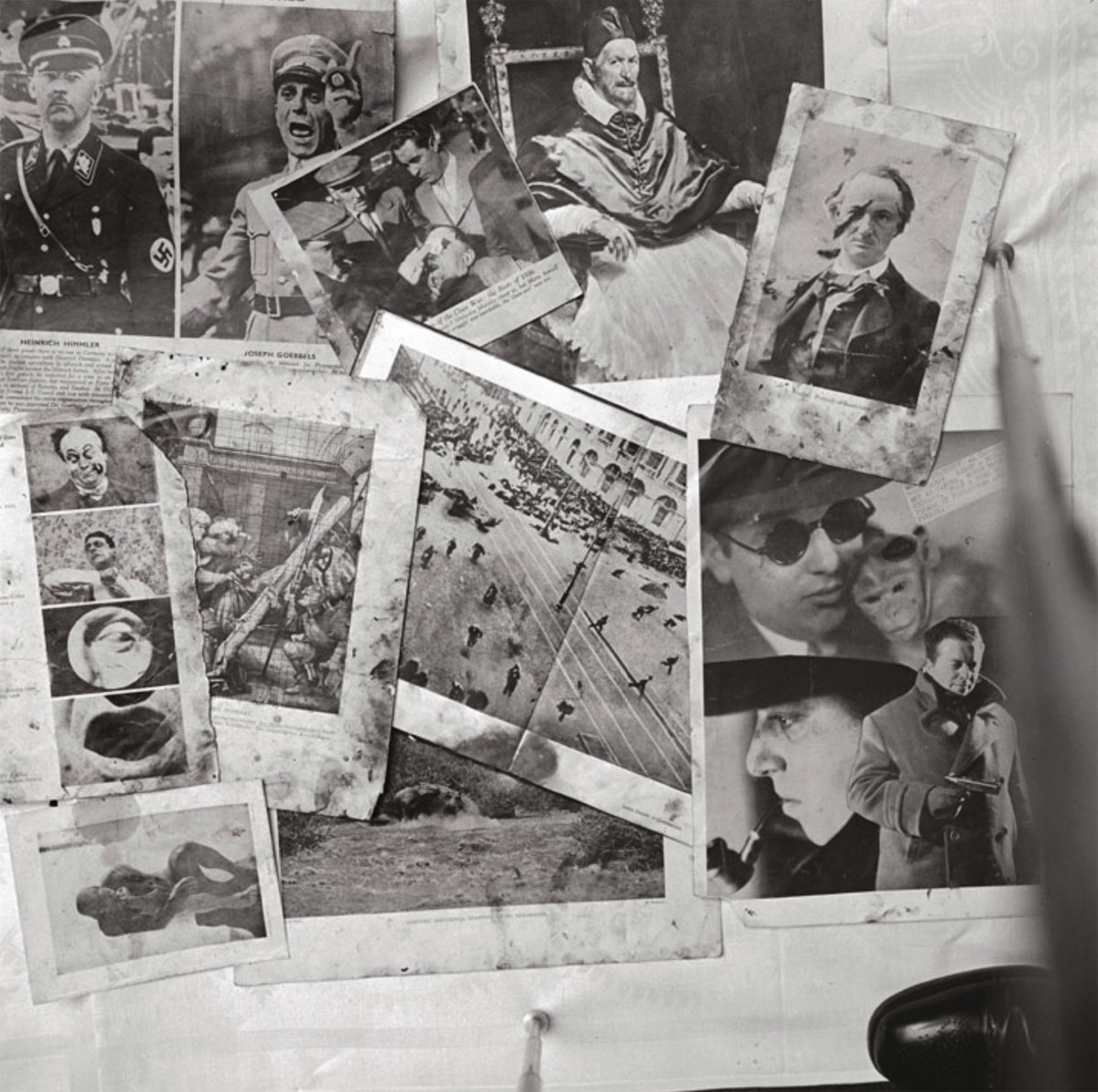
    Montage of material from Bacon's Studio (including pictures of Velázquez's Innocent X, The Thinker by Rodin etc.) 7 Cromwell Place, c. 1950


    Montage of material from Bacon’s Studio (including pictures of Velázquez’s Innocent X, The Thinker by Rodin etc.)
    7 Cromwell Place
    c. 1950
    © Sam Hunter


    Archive

    The posthumous investigation of Bacon’s studio confirmed the extent to which he used and manipulated photographic imagery. This practice was already known from montages recorded in 1950 by the critic Sam Hunter. Often united by a theme of violence, the material ranges between images of conflict, big game, athletes, film stills and works of art.

    An important revelation that followed the artist’s death was the discovery of lists of potential subjects and preparatory drawings, which Bacon had denied making. Throughout his life, he asserted the spontaneous nature of his work, but these materials reveal that chance was underpinned by planning.

    Photography offered Bacon a dictionary of poses. Though he most frequently referred to Eadweard Muybridge’s (1830-1904) survey of human and animal locomotion, images of which he combined with the figures of Michelangelo, he remained alert to photographs of the body in a variety of positions.

    A further extension of Bacon’s preparatory practices can be seen in his commissioning of photographs of his circle of friends from the photographer John Deakin (1912-1972). The results – together with self-portraits, photo booth strips, and his own photographs – became important prompts in his shift from generic representations of the human body to portrayals of specific individuals.

    A matrix of images

    Bacon’s use of photographic sources has been known since 1950 when the critic Sam Hunter took three photographs of material he had selected from a table in Bacon’s studio in Cromwell Place, South Kensington. Hunter observed that the diverse imagery was linked by violence, and this fascination continued throughout Bacon’s life. Images of Nazis and the North African wars of the 1950s were prominent in his large collection of sources. Films stills and reproductions of works of art, including Bacon’s own, were also common. The dismantling of Bacon’s later studio, nearby at Reece Mews, after his death confirmed that the amassing of photographic material had remained an obsession. While some images were used to generate paintings, he also seems to have collected such an archive for its own sake.

    The mediated image

    From the 1960s, Bacon’s accumulation of chance images began to include a more deliberate strategy of using photographs of his close circle. They became key images for the development of the portraits that dominated his paintings at this time. Snap shots and photo booth strips were augmented by the unflinching photographs taken by his friend John Deakin. Bacon specifically commissioned some of these from Deakin as records of those close to him – notably his partner from 1962, George Dyer – and they served as sources for likenesses and for poses for the rest of his career.

    The Physical Body

    Bacon drew more from Eadweard Muybridge’s sequential photographs of human and animal locomotion than from any other source. These isolated the naked figure in a way he clearly found stimulating. He also, however, spoke of projecting on to them Michelangelo’s figures which for him had more “ampleness” and “grandeur of form”.

    His fascination in photography’s freezing of the body in motion led him to collect sports photographs, particularly boxing, cricket and bullfighting. It was not just movement but the physicality of the body that Bacon scrutinised, using found images to provoke new ways of picturing its strength and vulnerability.


    Francis Bacon (British, 1909-1992) 'Portrait of Isabel Rawsthorne Standing in a Street in Soho' 1967


    Francis Bacon (British, 1909-1992)
    Portrait of Isabel Rawsthorne Standing in a Street in Soho
    1967
    Oil on canvas
    198 x 147.5cm
    Berlin, Staatliche Museen zu Berlin, Nationalgalerie


    Portrait

    During the 1960s, the larger part of Bacon’s work shifted focus to portraits and paintings of his close friends. These works centre on two broad concerns: the portrayal of the human condition and the struggle to reinvent portraiture. Bacon drew upon the lessons of Van Gogh and Velázquez, but attempted to rework their projects for a post-photographic world. His approach was to distort appearance in order to reach a deeper truth about his subjects. To this end, Bacon’s models can be seen performing different roles. In the Lying Figures series, Henrietta Moraes is naked and exposed. This unprecedented raw sexuality reinforces Bacon’s understanding of the human body simply as meat. By contrast Isabel Rawsthorne, a fellow painter, always appears in control of how she is presented. With a mixture of contempt and affection, Bacon depicted George Dyer, his lover and most frequent model, as fragile and pathetic. This is especially evident in Dyer’s first appearance in Bacon’s work, in Three Figures in a Room, in which he represents the absurdities, indignities and pathos of human existence. Everyday objects occasionally feature in these works, hollow props for lonely individuals which reinforce the sense of isolation that Bacon associated with the human condition.


    Francis Bacon (British 1909-1992) 'Triptych in Memory of George Dyer' 1971


    Francis Bacon (British 1909-1992)
    Triptych in Memory of George Dyer
    1971
    Oil on canvas


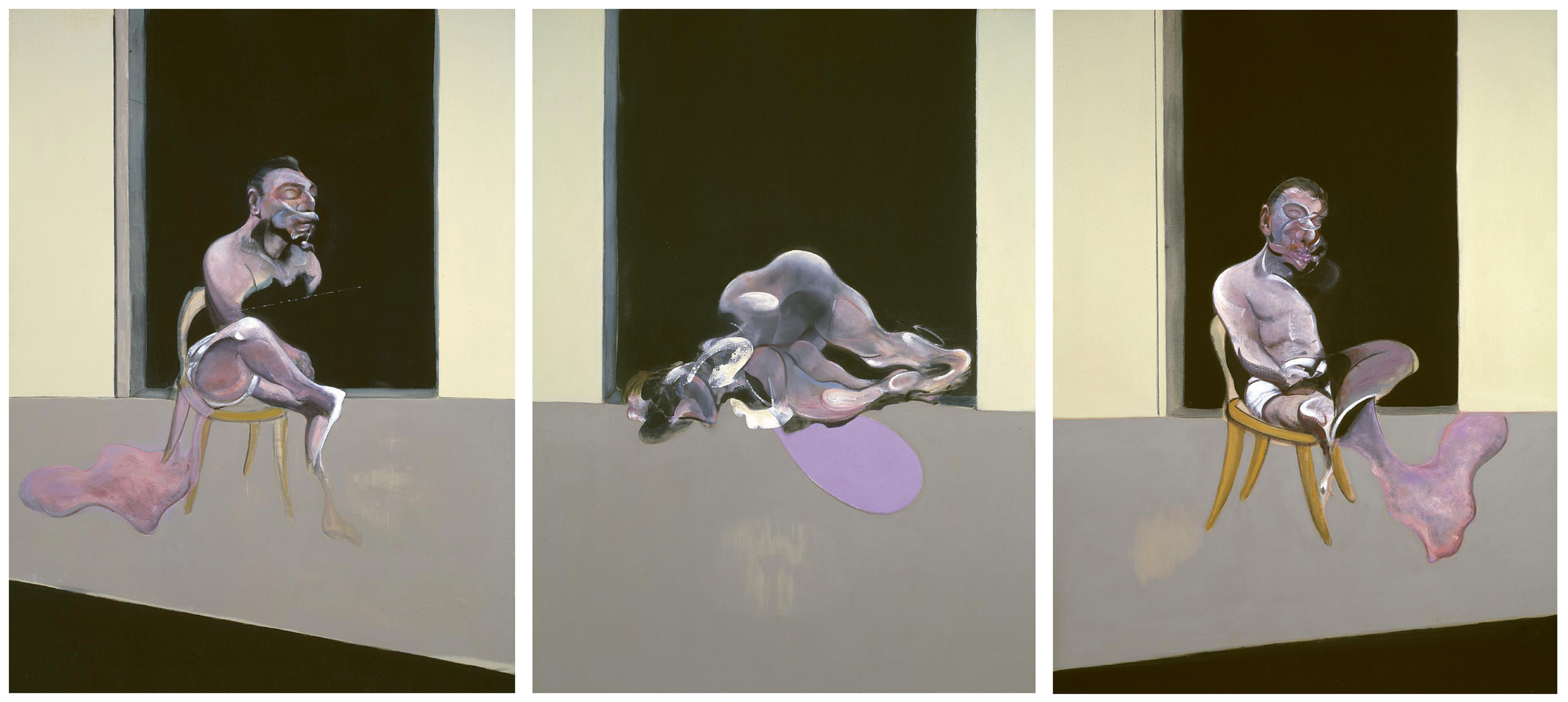
    Francis Bacon (British, 1909-1992) 'Triptych - August 1972' 1972


    Francis Bacon (British, 1909-1992)
    Triptych – August 1972
    1972
    Oil on canvas
    198 x 147.5cm
    London, Tate


    Memorial

    This room is dedicated to George Dyer who was Bacon’s most important and constant companion and model from the autumn of 1963. He committed suicide on 24 October 1971, two days before the opening of Bacon’s major exhibition at the Grand Palais in Paris. Influenced by loss and guilt, the painter made a number of pictures in memorial to Dyer. From this period onwards the large-scale triptych was his established means for major statements, having the advantage of simultaneously isolating and juxtaposing the participating figures, as well as guarding against narrative qualities that Bacon strove to avoid. But while evading narrative, Bacon drew more than ever from literary imagery; the first of the sequence, Triptych In Memory of George Dyer 1971, refers to a specific section of T.S. Eliot’s The Waste Land (1922). In addition to his own memory, for Triptych – August 1972 Bacon relied on photographs, taken by John Deakin, of Dyer in various poses on a chair. He confined his dense and energetic application of paint to the figures in these works. The dark openings consciously evoke the abyss of mortality that would become a recurring concern in Bacon’s later works.


    Francis Bacon (British, 1909-1992) 'Triptych' 1987


    Francis Bacon (British, 1909-1992)
    Triptych
    1987
    Oil on canvas
    198 x 147.5cm
    London, The Estate of Francis Bacon, courtesy Faggionato Fine Art


    Epic

    References to poetry and drama became a central element in Bacon’s work from the second half of the 1960s. Alongside images of friends and single figures (often self-portraits), he produced a series of grand works that identified with great literature. Imbued with the inevitability and constant presence of death, the poetry of T.S. Eliot was a particular source of inspiration. The sentiments of the poet’s character Sweeney could be said to echo the painter’s perspective on life:

    Birth, and copulation, and death.

    That’s all the facts when you come to

    brass tacks:

    Birth, and copulation, and death.

    The works in this room refer to and derive from literature. Some make direct references in their titles, others depict, sometimes abstractly, a certain scene or atmosphere within the narratives themselves. Bacon repeatedly stated that none of his paintings were intended as narratives, so rather than illustrations, these works should perhaps be understood as evoking the experience of reading of Eliot’s poetry or Aeschylus’s tragedies: their violence, threat or erotic charge. Thus, of the triptych created after reading Aeschylus, Bacon explained “I tried to create images of the sensations that some of the episodes created inside me”.


    Francis Bacon (British, 1909-1992) 'Portrait of John Edwards' 1988


    Francis Bacon (British, 1909-1992)
    Portrait of John Edwards
    1988
    Oil on canvas
    198 x 147.5cm
    The Estate of Francis Bacon, courtesy of Faggionato Fine Arts, London, and Tony Shafrazi Gallery, New York


    Late

    When Bacon turned seventy in 1979, more than a decade of work lay ahead of him. Neither his legendarily hedonistic lifestyle nor his work pattern seemed to age him, but he was continually facing up to mortality through the deaths of those around him. This unswerving confrontation, however mitigated by youthful companions such as John Edwards, became the great theme of his late style. Constantly stimulated by new source material – for example the photographs and the poetry of Federico García Lorca which triggered his bullfight paintings – he was able to adapt them to his abiding concerns with the vulnerability of flesh. Exploring new techniques he also extended his fascination with how appropriate oil paint is for rendering the human body’s sensuality and sensitivity. A certain despairing energy may also be felt in the forceful throwing of paint that dominates some of these final works: the controlled chance as a defiant gesture. Ultimately, and appropriately, Bacon’s last triptych of 1991 returns to the key image of sexual struggle that had frequently recurred in his work. He faced death with a defiant concentration on the exquisiteness of the lived moment.


    Francis Bacon (British, 1909-1992) 'Three Studies for Self-Portrait' 1979-1980


    Francis Bacon (British, 1909-1992)
    Three Studies for Self-Portrait
    1979-1980
    Oil on canvas
    37.5 x 31.8cm
    Nueva York, The Metropolitan Museum of Art, Jacques and Natasha Gelman collection, 1998


    Francis Bacon

    Francis Bacon is internationally acknowledged as among the most powerful painters of the twentieth century. His vision of the world was unflinching and entirely individual, encompassing images of sensuality and brutality, both immediate and timeless. When he first emerged to public recognition, in the aftermath of the Second World War, his paintings were greeted with horror. Shock has since been joined by a wide appreciation of Bacon’s ability to expose humanity’s frailties and drives.

    This major retrospective gathers many of his most remarkable paintings and is arranged broadly chronologically. Bacon’s vision of the world has had a profound impact. It is born of a direct engagement that his paintings demand of each of us, so that, as he famously claimed, the “paint comes across directly onto the nervous system”.

    As an atheist, Bacon sought to express what it was to live in a world without God or afterlife. By setting sensual abandon and physical compulsion against hopelessness and irrationality, he showed the human as simply another animal. As a response to the challenge that photography posed for painting, he developed a unique realism which could convey more about the state of existence than photography’s representation of the perceived world. In an era dominated by abstract art, he amassed and drew upon a vast array of visual imagery, including past art, photography and film. These artistic and philosophical concerns run like a spine through the present exhibition.


    Museo Nacional Del Prado
    Paseo del Prado, s/n,
    28014 Madrid, Spain

    Opening hours:
    Monday – Saturday 10am – 8pm
    Sunday 10am – 7pm

    Museo Nacional del Prado website

    LIKE ART BLART ON FACEBOOK

    Back to top

    Opening 1: Review: ‘Continuous Moment: Bad Infinity’ by Damiano Bertoli at The Narrows, Melbourne

    Exhibition dates: 5th March – 28th March, 2009

    Opening: Thursday 5th March, 2009


    Damiano Bertoli (Australian, 1969-2021) 'Continuous Moment: Bad Infinity' 2009 video still

    Damiano Bertoli (Australian, 1969-2021) 'Continuous Moment: Bad Infinity' 2009 video still


    Damiano Bertoli (Australian, 1969-2021)
    Continuous Moment: Bad Infinity
    2009
    Video stills


    In a busy night of openings in Melbourne we arrive to watch, to be a spectator and voyeur at Damiano Bertoli’s new twin video installation at The Narrows on Flinders Lane, ensconced in the darkness of the gallery space. The looped installation features on the left scenes from the original Miami Vice TV series and on the right approximate scenes from the 2006 feature film of the same name. The synchronicity of the two splices of time moving in and out of register is uncanny. We have memories of these appearances, flickering signifiers embedded in our psyche which are called to presence in the space between screen and viewer as we add our own layer of temporal distortion to the unfolding events.

    In an erudite catalogue note Bertoli expounds on the nature of the performative and the question of authorship by analysing Glenn Gould’s two recordings of J. S. Bach’s Goldberg Variations, one recorded at the beginning of his career and one in the final year of his life. Bertoli posits that Gould used counterpoint “as a formal construct for its capacity to produce ‘an explosion of simultaneous idea’s’ … as a solution for his dissatisfaction with singularity and linear definition.”

    He notes that, “As an interpreter of others work, Gould occupied a position of equivalence – we are aware that we are listening to Bach and Gould – simultaneously … These co-existing yet distinct voices move in and out of synchronicity, as does the listener’s experience of Gould’s interpretation (actually an interpretation of an interpretation) as the latter version iterates and embodies the version which precedes it. We are constantly comparing the two, as is Gould.”

    This is quite true but I do not think the metaphor can be so literally applied to the video installation Bertoli has constructed. Firstly Gould’s interpretations and our recognition of them requires knowledge of the authoritative voice of the author as composer and the author as performer: Bach and Gould. Conversely in the videos the directors are unknown by most and the actors anonymous except by those with specific memory of appearances. There is no contrapuntal fugue like working of the sound or images in search of the purity of musical ideas – the dialogue talks over each other and splice cuts jump the scene from one location to another – forming a fractured hypertextual narrative driven by the spectacular gaze of the viewer, a simularcrum of the ‘real’. The simultaneity of being in three worlds at once is the world of simulacra not of equivalence.

    As Ron Burnett has observed

    “Video creates what I will describe as a logic of the present while simultaneously producing an image-event in the past. This generates a somewhat different temporal context than we are normally accustomed to – a mixture of present and past that is both, and neither, simultaneously. The disjuncture that results is part of the attraction but also part of what makes the electronic image so puzzling. It suggests that history has already been made while one continues to make it. It is this suppleness that allowed broadcasters for example to repeat the Rodney King beating in Los Angeles over and over again, as if each showing would somehow reconstitute the event, as if to prove that this was not a dramatisation, not a fiction. In order to gain control over the many disjunctures, repetition was used … But this only validates the contradictions, proposing that the disjunctures in time and place can be controlled, that there is some way of gaining authority over the impact of the event as image.”1


    I would argue that what Bertoli’s installation does offer is a release from inert rationalist geometries, a deterritorialization and reterritorialization of temporal time in a heterotopic space, juxtaposing in a single real place several spaces, several sites that are in themselves incompatible. These are layered images of hyper-performativity and hypermediacy, where the fragmented images become a process and a performance, where the spectator becomes the screen not the author.

    As Baudrillard has said, “Today we live in the imaginary world of the screen, of the interface and the reduplication of contiguity and networks. All our machines are screens. We too have become screens, and the interactivity of men has become the interactivity of screens. Nothing that appears on the screen is meant to be deciphered in depth, but actually to be explored instantaneously, in an abreaction immediate to meaning.”2

    Here is the immediacy of continuous time – the removal of psychological depth, the reduction of life to a series continuous presents and surface phenomena that repeat over and over again. Is this bad infinity? We will never know… as we can never have knowledge of infinity. It is a noumenal concept, an event known only to the imagination, independent of the senses.

    This is an interesting and fun installation. Well worth a visit.

    Dr Marcus Bunyan


    1/ Burnett, Ron. Cultures of Vision: Images, Media, & the Imaginary. Bloomington: Indiana University Press, 1995, p. 249

    2/ Baudrillard, Jean. Xerox and Infinity (trans. Agitac). Paris: Touchepas, 1988, p. 7


    Many thankx to The Narrows gallery for allowing me to publish the photographs in the posting. Please click on the photographs for a larger version of the image.


      Damiano Bertoli Continuous Moment: Bad Infinity (2009)


      Damiano Bertoli (Australian, 1969-2021) 'Continuous Moment: Bad Infinity' 2009 video still

      Damiano Bertoli (Australian, 1969-2021) 'Continuous Moment: Bad Infinity' 2009 video still

      Damiano Bertoli (Australian, 1969-2021) 'Continuous Moment: Bad Infinity' 2009 video still


      Damiano Bertoli (Australian, 1969-2021)
      Continuous Moment: Bad Infinity
      2009
      video stills


      Vale Damiano Bertoli (1969-2021)

      In September, artist Damiano Bertoli passed away unexpectedly at the age of 52. Bertoli was a staple in the Melbourne art community. He could be relied upon to regularly attend openings and see most exhibitions. Along the way, he would dish out wit, sarcasm and charm. Seeing him across a crowded room, he would go cross-eyed as a form of greeting, breaking the ice with humour. Bertoli had a rich and expansive artistic practice, spanning collage, film, sculpture, installation, even theatre, but he was equally known for his large personality. In preparation for this piece, I spoke to several of Bertoli’s closest friends who had many things to say about him, but some underlying themes proved unanimous. He possessed a great sense of curiosity and generosity; he loved sharing knowledge; he built rich relationships with others through engagement with art; and that he has left behind a massive legacy – albeit one that could have been much, much bigger.

      Read more about Damiano Bertoli’s legacy.  Amelia Winata. “Damiano Bertoli 1969-2021,” on the MeMO website 13 Oct 2021 [Online] Cited 12/06/2022


      Damiano Bertoli (Australian, 1969-2021) 'Continuous Moment: Bad Infinity' 2009 video still

      Damiano Bertoli. 'Continuous Moment: Bad Infinity' 2009 video still


      Damiano Bertoli (Australian, 1969-2021)
      Continuous Moment: Bad Infinity
      2009
      video stills


      The Narrows

      This gallery is now closed.

      LIKE ART BLART ON FACEBOOK

      Back to top

      Exhibition: ‘Biografías’ by Óscar Muñoz at Art Gallery of New South Wales, Sydney

      Exhibition dates: 19th February – 14th June, 2009


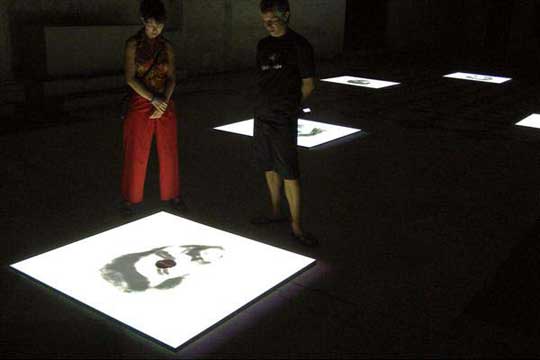
      Óscar Muñoz (Colombian, b. 1951) 'Biografías' 2002 (installation view)

      Óscar Muñoz (Colombian, b. 1951) 'Biografías' 2002 (installation view)


      Óscar Muñoz (Colombian, b. 1951)
      Biografías (installation views)
      2002
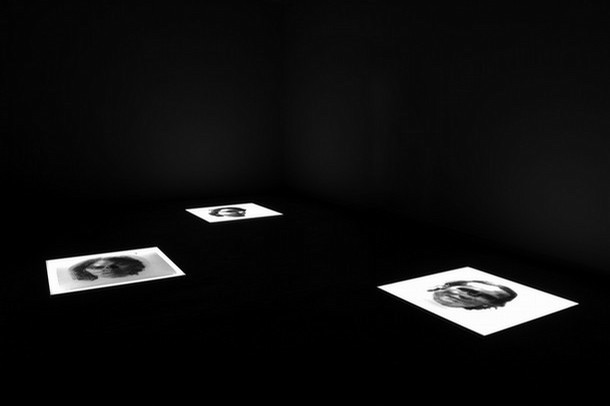
      5 video projections, 7 ‘, loop, without sound, DVD, mdf support, metal grids, variable dimensions


      “How can one construe a notion of time in this immemorial setting? How can one assimilate and articulate in one’s memory all these events that have been happening for so many years now?”

      “My work today … is based on my endeavour to understand the mechanism developed by a society which has ultimately suffered the routinisation of war… A past, a present and in all likelihood a future full of violent events on a daily basis, which are stubbornly repeated, in a practically identical fashion.”


      Óscar Muñoz


      Óscar Muñoz is something of a gentle magician. His ‘disappearing’ drawings are poignant and beautiful, combining consummate skill with conceptual subtlety and rigour.

      Muñoz is a senior Colombian artist. He plays an important role in mentoring younger artists but his own work is very focused on a personal language that is closely tied to the body and its disappearance. His work has always combined traditional drawing skills with video in a completely original and surprising way.

      Although Muñoz is not assertively political, his work is more about mortality than specific acts of violence but it is impossible not to look at it in the context of Colombian life. A common technique for social control has become the ‘disappearing’ of people. The work shown in this exhibition, Biografías 2002 is structured to reflect this pervasive theme of disappearance.

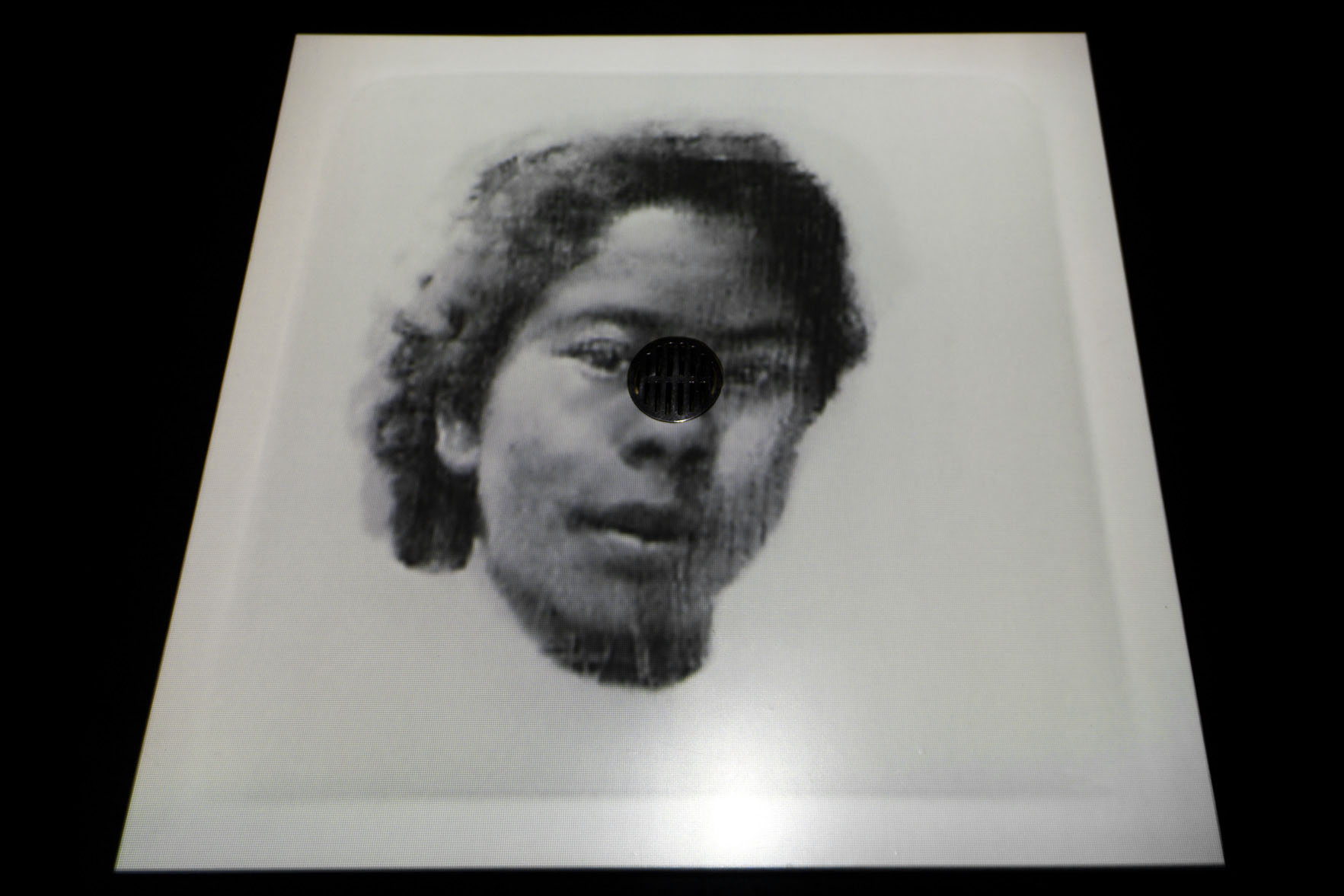
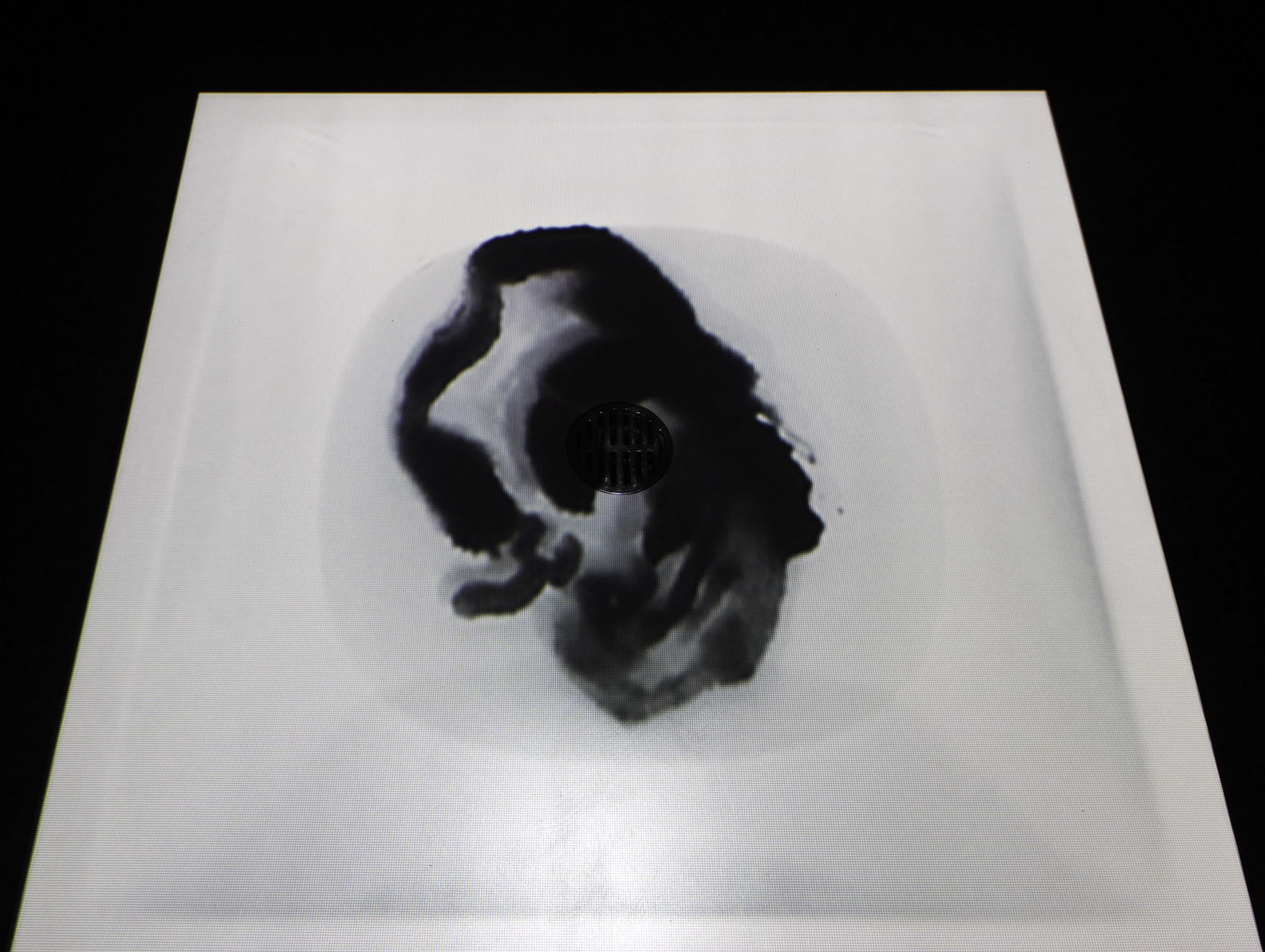
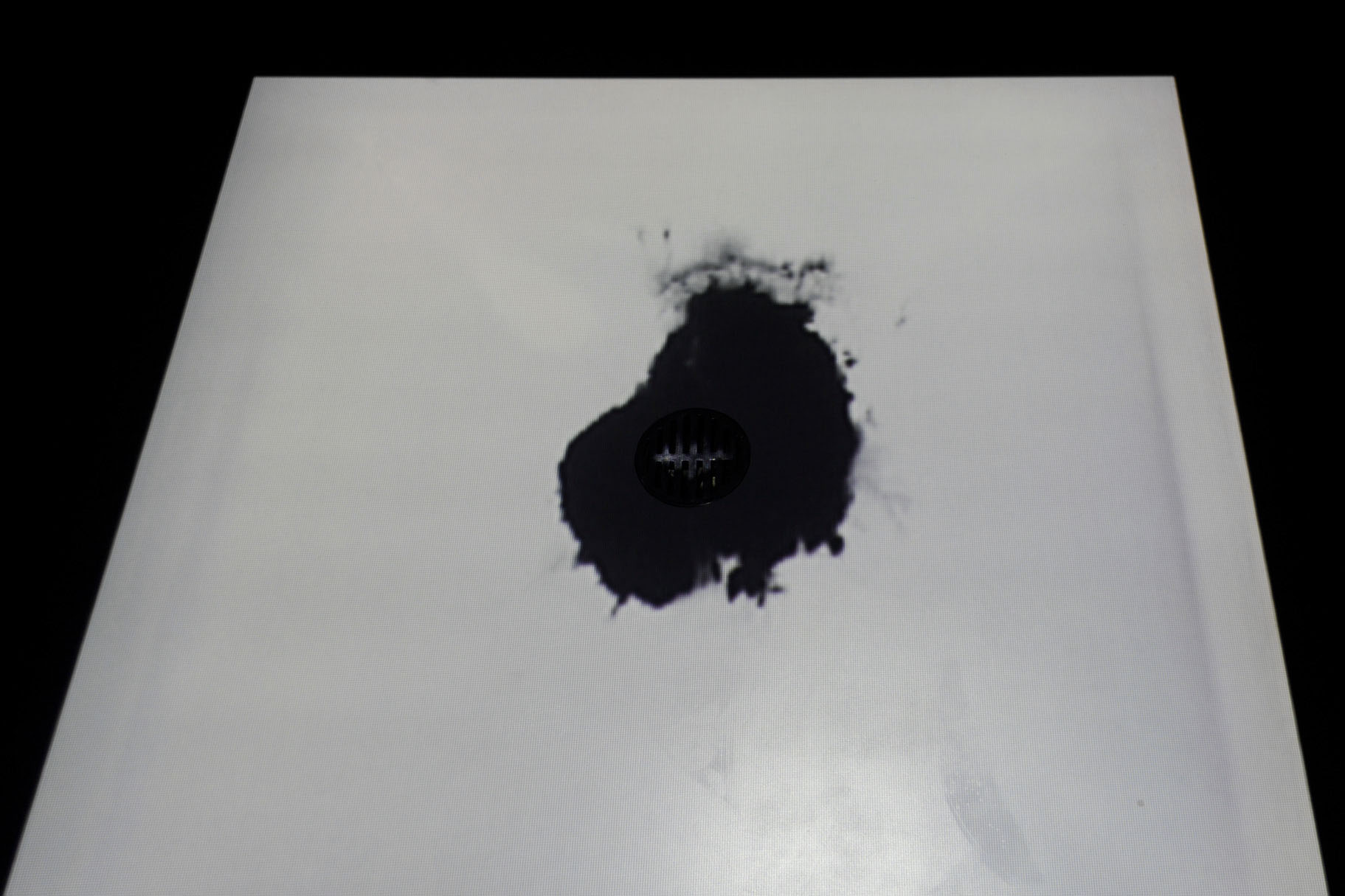
      Biografías is one of a series of works in which portraits slowly disappear, reflecting the disappearance of people on a regular basis in Colombia. Muñoz has made silk screen portraits of people but instead of forcing ink through the screen onto paper he has dusted fine coal dust through the screen onto a flat basin of water. The portrait in coal is then transferred to float on the surface of the water. After a while the water starts to drain out of a plug hole in the basin causing the image to begin to distort. Eventually the image is compressed becomes unrecognisable and finally disappears down the drain.

      Five such portraits are shown in Biografías by projecting video of the performed drawings onto screens on the floor complete with plug holes beneath which you hear the sound of water running down the drain.

      Text from the Art Gallery of New South Wales website [Online] Cited 22/02/2009 (no longer online)


      Many thankx to Art Gallery of New South Wales for allowing me to publish the art work in the posting. Please click on the art work for a larger version of the image.


      Óscar Muñoz (Colombian, b. 1951) 'Biografías' 2002 (still)

      Óscar Muñoz (Colombian, b. 1951) 'Biografías' 2002 (still)

      Óscar Muñoz (Colombian, b. 1951) 'Biografías' 2002 (still)


      Óscar Muñoz (Colombian, b. 1951)
      Biografías (stills)
      2002
      5 video projections, 7 ‘, loop, without sound, DVD, mdf support, metal grids, variable dimensions


      Óscar Muñoz Biografías

      The work refers to the idea of death, disappearance and transience of memory, linked to acts of violence.

      Muñoz is also known for his use of ephemeral materials, in poetic reflections upon memory and mortality.


      Art Gallery of New South Wales
      Art Gallery Road, The Domain
      Sydney NSW 2000, Australia

      Opening hours:
      Open every day 10am – 5pm
      except Christmas Day and Good Friday

      Art Gallery of New South Wales website

      LIKE ART BLART ON FACEBOOK

      Back to top

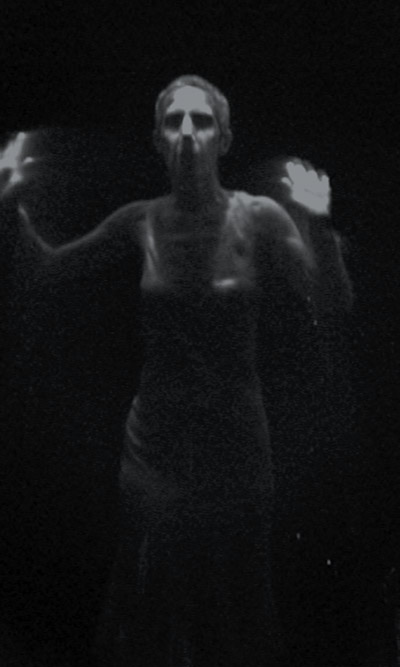
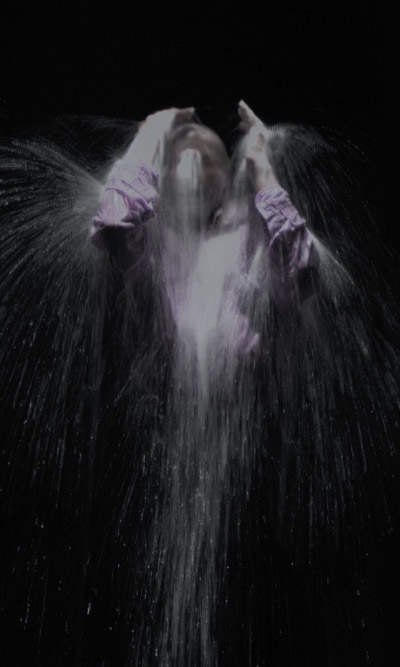
      Review: ‘Ocean Without A Shore’ video installation by Bill Viola at The National Gallery of Victoria, Melbourne

      February 2009


      Bill Viola – Ocean Without a Shore | TateShots

      Bill Viola’s video installation, Ocean Without a Shore, is presented in the atmospheric setting of the church of San Gallo, Venice. Monitors positioned on three stone altars in the church show a succession of individuals slowly approaching out of darkness and moving into the light, as if encountered at the intersection between death and life. Viola talks about his artistic intentions and the technical challenges of the piece.


      Originally installed inside the intimate 15th century Venetian church of San Gallo as part of the 2007 Venice Biennale (see above) incorporating its internal architecture into the piece using the three existing stone altars as support for the video screens, the installation has been recreated in a small darkened room at The National Gallery of Victoria in Melbourne. What an installation it is.

      Deprived of the ornate surroundings of the altars of the Venetian chapel – altars of which Viola has said that, “… as per the original development of the origins of Christianity these alters actually are a place where the dead kind of reside and connect with those of us, the living, who are here on earth. And they really are a connection between a cross, between a tomb and an alter – a place to pray,”1 – the viewer is forced to concentrate on the images themselves. This is no bad thing, stripping away as it does a formalised, religious response to mortality.

      In the work Viola combines the use of a primitive twenty five year old security black and white analogue video surveillance camera with a high definition colour video camera through the use of a special mirror prism system. This technology allows for the seamless combination of both inputs: the dead appear far off in a dark obscure place as grey ghosts in a sea of pulsating ‘noise’ and gradually walk towards you, crossing the invisible threshold of a transparent water wall that separates the dead from the living, to appear in the space transformed into a detailed colour image. As they do so the sound that accompanies the transformation grows in intensity reminding me of a jet aircraft. You, the viewer, are transfixed watching every detail as the ghosts cross-over into the light, through a water curtain.

      The performances of the actors (for that is what they are) are slow and poignant. As Viola has observed, “I spent time with each person individually talking with them and you know when you speak with people, you realise then that everybody has experienced some kind of loss in their life, great and small. So you speak with them, you work with them, you spend time and that comes to the surface while we were working on this project together, you know? I didn’t want to over-direct them because I knew that the water would have this kind of visual effect and so they were able to, I think, use this piece on their own and a lot of them had their own stories of coming back and visiting a relative perhaps, who had died.”1

      The resurrected are pensive, some wringing the hands, some staring into the light. One offers their hands to the viewer in supplication before the tips of the fingers touch the wall of water – the ends turning bright white as they push through the penumbrae of the interface. As they move forward the hands take on a stricken anguish, stretched out in rigour. Slowly the resurrected turn and return to the other side. We watch them as we watch our own mortality, life slipping away one day after another. Here is not the distraction of a commodified society, here is the fact of every human life: that we all pass.

      The effect on the viewer is both sad but paradoxically uplifting. I cried.

      A friend who I went with said that the images reminded her not of the dead temporarily coming back to life, but the birth of a new life – the breaking of water at the birth of a child. The performers seemed to her to behave like children brought anew into the world. One of my favourite moments was when the three screens were filled with just noise and a figure then appears out of the beyond, a dim and distant outline creating a transcendental moment. Unfortunately there are no images of these grainy figures. As noted below Viola uses a variety of different ethnic groups and cultures for his performers but the one very small criticism I have is they have no real individuality as people – there are no bikers with tattoos, no cross dressers, no punks because these do not serve his purpose. There is the black woman, the old woman, the middle aged man, the younger 30s man in black t-shirt: these are generic archetypes of humanity moulded to Viola’s artistic vision.

      Viola has commented, “I think I have designed a piece that’s open ended enough, where the people and the range of people, the kind of people we chose are from various ethnic groups and cultures. And I think that the feeling of more this is a piece about humanity and it’s about the fragility of life, like the borderline between life and death is actually not a hard wall, it’s not to be opened with a lock and key, its actually very fragile, very tenuous.

      You can cross it like that in an instant and I think religions, you know institutions aside, I think just the nature of our awareness of death is one of the things that in any culture makes human beings have that profound feeling of what we call the human condition and that’s really something I am really interested in. I think this piece really has a lot to do with, you know, our own mortality and all that that means.”1

      These series of encounters at the intersection of life and death are worthy of the best work of this brilliant artist. He continues to astound with his prescience, addressing what is undeniable in the human condition.

      Long may he continue.

      Dr Marcus Bunyan


      1/ TateShots. Venice Biennale: Bill Viola. 30 June 2007 [Online] Cited 23/09/2009. No longer available online


      “The unfolding of consciousness, the revelation of beauty, present even after death, the moment of awe, the space without words, the emptiness that builds mountains, the joy of loving, the sorrow of loss, the gift of leaving something behind for the next traveler.”


      Bill Viola


      Bill Viola (American, 1951-2024)
      Ocean Without A Shore (excerpt)
      2007
      Installation in the church of San Gallo, Venice


      Bill Viola (American, 1951-2024)
      Ocean Without A Shore (excerpt)
      2007


      Ocean Without a Shore is about the presence of the dead in our lives. The three stone altars in the church of San Gallo become portals for the passage of the dead to and from our world. Presented as a series of encounters at the intersection between life and death, the video sequence documents a succession of individuals slowly approaching out of darkness and moving into the light. Each person must then break through an invisible threshold of water and light in order to pass into the physical world. Once incarnate however, all beings realise that their presence is finite and so they must eventually turn away from material existence to return from where they came. The cycle repeats without end.”

      Bill Viola
      25 May 2007
      Text © Bill Viola 2007


      The work was inspired by a poem by the twentieth century Senegalese poet and storyteller Birago Diop:

      Hearing things more than beings,
      listening to the voice of fire,
      the voice of water.
      Hearing in wind the weeping bushes,
      sighs of our forefathers.

      The dead are never gone:
      they are in the shadows.
      The dead are not in earth:
      they’re in the rustling tree,
      the groaning wood,
      water that runs,
      water that sleeps;
      they’re in the hut, in the crowd,
      the dead are not dead.

      The dead are never gone,
      they’re in the breast of a woman,
      they’re in the crying of a child,
      in the flaming torch.

      The dead are not in the earth:
      they’re in the dying fire,
      the weeping grasses,
      whimpering rocks,
      they’re in the forest, they’re in the house,
      the dead are not dead.


      Text from the Ocean Without A Shore website [Online] Cited 23/09/2009. No longer available online


      Bill Viola (American, 1951-2024) 'Ocean Without A Shore' 2007 video still

      Bill Viola (American, 1951-2024) 'Ocean Without A Shore' 2007 video still

      Bill Viola (American, 1951-2024) 'Ocean Without A Shore' 2007 video insatllation

      Bill Viola (American, 1951-2024) 'Ocean Without A Shore' 2007 video insatllation


      Installation photographs of Ocean Without A Shore at the National Gallery of Victoria, Melbourne
      Photos: Marcus Bunyan


      Bill Viola (American, 1951-2024) 'Ocean Without A Shore' 2007 original video installation at church of San Gallo (still)


      Bill Viola (American, 1951-2024)
      Ocean Without A Shore (still)
      2007
      Original installation at church of San Gallo


      NGV International
      180 St Kilda Road, Melbourne

      Open daily 10am-5pm

      National Gallery of Victoria International website

      Bill Viola website

      LIKE ART BLART ON FACEBOOK

      Back to top

      Exhibition: ‘Edward Burtynsky: The Residual Landscapes’ at The Whyte Museum of the Canadian Rockies, Banff, Alberta

      Exhibition dates: 7th February – 26th April, 2009


      Edward Burtynsky (Canadian, b. 1955) 'Silver Lake Operations #1, Lake Lefroy, Western Australia 2007' from the exhibition 'Edward Burtynsky: The Residual Landscapes' at The Whyte Museum of the Canadian Rockies, Banff, Alberta, Feb - April, 2009


      Edward Burtynsky (Canadian, b. 1955)
      Silver Lake Operations #1, Lake Lefroy, Western Australia 2007
      2007


      One of the great photographers of the world.

      Enjoy some of his images and for more photographs please visit his website.


      Many thankx to The Whyte Museum of the Canadian Rockies for allowing me to publish the photographs in the posting. Please click on the photographs for a larger version of the image.


      Edward Burtynsky (Canadian, b. 1955) 'Tanggu Port, Tianjin, China 2005' from the exhibition 'Edward Burtynsky: The Residual Landscapes' at The Whyte Museum of the Canadian Rockies, Banff, Alberta, Feb - April, 2009


      Edward Burtynsky (Canadian, b. 1955)
      Tanggu Port, Tianjin, China 2005
      2005


      Nature transformed through industry is a predominant theme in my work. I set course to intersect with a contemporary view of the great ages of man; from stone, to minerals, oil, transportation, silicon, and so on. To make these ideas visible I search for subjects that are rich in detail and scale yet open in their meaning. Recycling yards, mine tailings, quarries and refineries are all places that are outside of our normal experience, yet we partake of their output on a daily basis.

      These images are meant as metaphors to the dilemma of our modern existence; they search for a dialogue between attraction and repulsion, seduction and fear. We are drawn by desire – a chance at good living, yet we are consciously or unconsciously aware that the world is suffering for our success. Our dependence on nature to provide the materials for our consumption and our concern for the health of our planet sets us into an uneasy contradiction. For me, these images function as reflecting pools of our times.

      Edward Burtynsky quoted on The Whyte Museum website


      Edward Burtynsky (Canadian, b. 1955) 'Oxford Tire Pile #8, Westley, California 1999' 1999


      Edward Burtynsky (Canadian, b. 1955)
      Oxford Tire Pile #8, Westley, California 1999
      1999


      Edward Burtynsky (Canadian, b. 1955) 'Nickel Tailings #30, Sudbury, Ontario, 1996'


      Edward Burtynsky (Canadian, b. 1955)
      Nickel Tailings #30, Sudbury, Ontario, 1996
      1996


      Edward Burtynsky (Canadian, b. 1955) 'Nickel Tailings #31, Sudbury, Ontario 1996'


      Edward Burtynsky (Canadian, b. 1955)
      Nickel Tailings #31, Sudbury, Ontario 1996
      1996


      Edward Burtynsky (Canadian, b. 1955) 'Feng Jie #4, Three Gorges Dam Project, Yangtze River, 2002'


      Edward Burtynsky (Canadian, b. 1955)
      Feng Jie #4, Three Gorges Dam Project, Yangtze River, 2002
      2002


      These images are meant as metaphors to the dilemma of our modern existence; they search for a dialogue between attraction and repulsion, seduction and fear,” said Edward Burtynsky, photographer. “We are drawn by desire – a chance at good living, yet we are consciously or unconsciously aware that the world is suffering for our success. Our dependence on nature to provide the materials for our consumption and our concern for the health of our planet sets us into an uneasy contradiction. For me, these images function as reflecting pools of our times.

      Speaking of his “Quarries” series, Burtynsky has said, “The concept of the landscape as architecture has become, for me, an act of imagination. I remember looking at buildings made of stone, and thinking, there has to be an interesting landscape somewhere out there, because these stones had to have been taken out of the quarry one block at a time. I had never seen a dimensional quarry, but I envisioned an inverted cubed architecture on the side of a hill. I went in search of it, and when I had it on my ground glass I knew that I had arrived.”

      Text from The Whyte Museum of the Canadian Rockies


      Edward Burtynsky (Canadian, b. 1955) 'Shipbreaking #1, Chittagong, Bangladesh, 2000'


      Edward Burtynsky (Canadian, b. 1955)
      Shipbreaking #1, Chittagong, Bangladesh, 2000
      2000


      Edward Burtynsky (Canadian, b. 1955) 'Bao Steel #2, Shanghai, China, 2005'


      Edward Burtynsky (Canadian, b. 1955)
      Bao Steel #2, Shanghai, China, 2005
      2005


      Edward Burtynsky (Canadian, b. 1955) 'Iberia Quarries #3, Bencatel, Portugal, 2006'


      Edward Burtynsky (Canadian, b. 1955)
      Iberia Quarries #3, Bencatel, Portugal, 2006
      2006


      Edward Burtynsky (Canadian, b. 1955) 'China Quarries #8, Xiamen, Fujian Province, 2004'


      Edward Burtynsky (Canadian, b. 1955)
      China Quarries #8, Xiamen, Fujian Province, 2004
      2004


      Edward Burtynsky (Canadian, b. 1955) 'Dam #6 ,Three Gorges Dam Project, Yangtze River, 2005'


      Edward Burtynsky (Canadian, b. 1955)
      Dam #6, Three Gorges Dam Project, Yangtze River, 2005
      2005


      Trailer for the film Manufactured Landscapes in which Jennifer Baichwal documents Edward Burtynsky doing what artists do – making art, in this case photographing Bangladesh and China as he observes the “manufacturer to the world”.


      Edward Burtynsky Manufactured Landscapes


      The Whyte Museum of the Canadian Rockies
      111 Bear Street, Banff, Alberta
      T1L 1A3 Canada
      Phone: 1 403 762 2291

      Opening hours:
      Thursday – Monday 11am – 5pm
      Tuesday and Wednesday – CLOSED

      The Whyte Museum of the Canadian Rockies website

      LIKE ART BLART ON FACEBOOK

      Back to top

      Exhibition: ‘Utopia: Qiu Anxiong’ at Arken Museum of Modern Art, Denmark

      Exhibition dates: 6th February – 22nd November, 2009


      Qui Anxiong (Chinese, b. 1972) 'Staring into Amnesia' 2008 (detail)


      Qui Anxiong (Chinese, b. 1972)
      Staring into Amnesia (detail)
      2008


      A dream has come true. ARKEN has opened the first of three contemporary art exhibitions under the heading UTOPIA.

      The first UTOPIA artist is Chinese Qiu Anxiong (b. 1972). His work Staring into Amnesia (2008), an enormous original Chinese train carriage from the 1960s, is the principal work in ARKEN’s exhibition. Documentary video clips and poetic silhouettes have been added to the carriage taking us on a journey into China’s past, present and future.

      In recent years Qiu Anxiong has received great international attention with his poetic and moving video works which span from big and complex installations to hand painted animated films. The exhibition is the first presentation of Qiu Anxiong’s works in Denmark.

      Utopia and dystopia

      Qiu Anxiong belongs to a new generation of Chinese artists who bridge Chinese culture and history and today’s globalised contemporary art. Cultures arise and perish, and the yearning for the perfect society is closely followed by the utopia’s antithesis: an oppressed, conflicted dystopia. In a poetic and sensual idiom Qiu Anxiong raises the issue of which new utopias may provide the clue for today’s globalised reality.

      Text from the Arken Musem of Modern Art website


      ARKEN Museum of Modern Art

      Chinese artist Qiu Anxiong talks about his work Staring into Amnesia – the main part of ARKEN’s UTOPIA – exhibition.


      Qui Anxiong (Chinese, b. 1972) 'Staring into Amnesia' 2008 (detail)


      Qui Anxiong (Chinese, b. 1972)
      Staring into Amnesia (detail)
      2008


      Qui Anxiong (Chinese, b. 1972) 'Staring into Amnesia' 2008 (detail)


      Qui Anxiong (Chinese, b. 1972)
      Staring into Amnesia (detail)
      2008


      A 25 metres long, 42 tons heavy Chinese train carriage stops in Arken Museum of Modern Art‘s unique exhibition space The Art Axis, ready to take the museum’s visitors on a journey unlike any other. A journey into China’s past, presence and future. Into deliberations of the good life and the good society. Of the dreams we have today – for ourselves and for the world.

      In the 1960s and ’70s it ran in northeastern China. Ordinary Chinese people sat on the hard wooden seats and were transported to and from work, on family visits, tours and holidays. Now it stops in ARKEN’s Art Axis with the purpose of making Danish museum visitors think about the dreams and values that drive them and the world they live in.

      The train carriage is the principal work of the first exhibition in the museum’s large-scale UTOPIA project. A project that is to raise the issue of the grand shared notion of the perfect society. Whatever happened to it? Does it still exist today? Have the international financial crisis and the American presidential election made it more topical? And if it does not exist, what has taken its place? Individual dreams of the good life, notions of globalisation, small enclaves of communities?

      Opening on 6 February 2009, the UTOPIA exhibition is the first of three exhibitions of contemporary art shown in ARKEN’s Art Axis in the period 2009-2011 – one per year. Each exhibition presents a significant, international contemporary artist who explores art’s potential with regards to the notions of “the good life.” The first artist is the Chinese Qui Anxiong (b. 1972).

      Qui Anxiong gave the train carriage an artistic makeover after it had ended its career as a means of public transportation, transforming it into the work Staring into Amnesia (2007). A work of art which invites us on a journey even though the carriage is motionless. A journey into China’s past, presence and future. For when the guests come aboard the train and sit down on the hard wooden seats, they journey through China’s history. Video clips of documentary and propaganda films from China from 1910 until today pass by the windows as fragments of memories alternating with silhouettes of everyday scenes: a girl waiting by a ventilator, two people playing chess, groups of people in processions, riots, struggles or celebration. What has been is juxtaposed with what is. And with the train as metaphor for movement in time, it raises the question of which destinations await us up ahead. Is the next stop Utopia? What do we hope will come, what do we dream of?

      6,000 drawings – one movie – Staring into Amnesia is the chief work of the UTOPIA exhibition. It explores how humankind’s endeavours to create the perfect society through political and religious overall solutions, both historically and today, often result in the utopia’s antithesis: an oppressed, conflicted dystopia.

      Another work in the exhibition is the animated film The New Book of Mountains and Seas (2006). The film consists of 6,000 drawings created by Qiu Anxiong in his small one bedroom apartment in Shanghai. It presents us with a mythologised version of the world today in which modern technology and nature merge: helicopters hover in the air like big birds, and black clad people fly like planes, crashing the Twin Towers in a drawn version of 9/11. In a poetic and dreamlike idiom, sharply contrasting with the depicted reality, the work explores the themes of religious and political conflicts characterising the global reality of our time. UTOPIA is supported by the Nordea Foundation.

      Text from the Artdaily.org website


      Qui Anxiong (Chinese, b. 1972) 'Staring into Amnesia' 2008


      Qui Anxiong (Chinese, b. 1972)
      Staring into Amnesia
      2008


      Images courtesy of Boers-Li Gallery and ArtShortCut

      Arken Museum of Modern Art
      Skovvej 100, 2635 Ishøj
      Phone: +45 43 54 02 22

      Opening hours:
      Tuesday – Sunday: 10am – 5pm
      Monday: Closed

      Arken Museum of Modern Art website

      LIKE ART BLART ON FACEBOOK

      Back to top