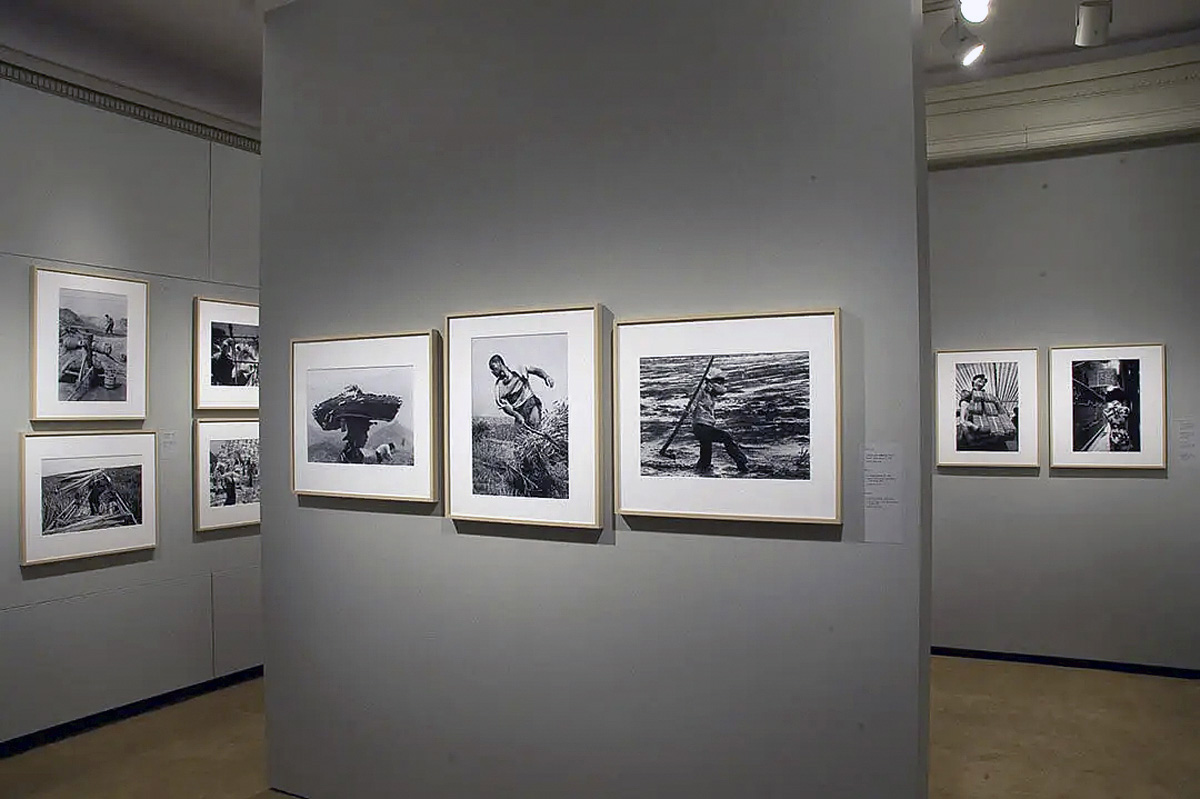
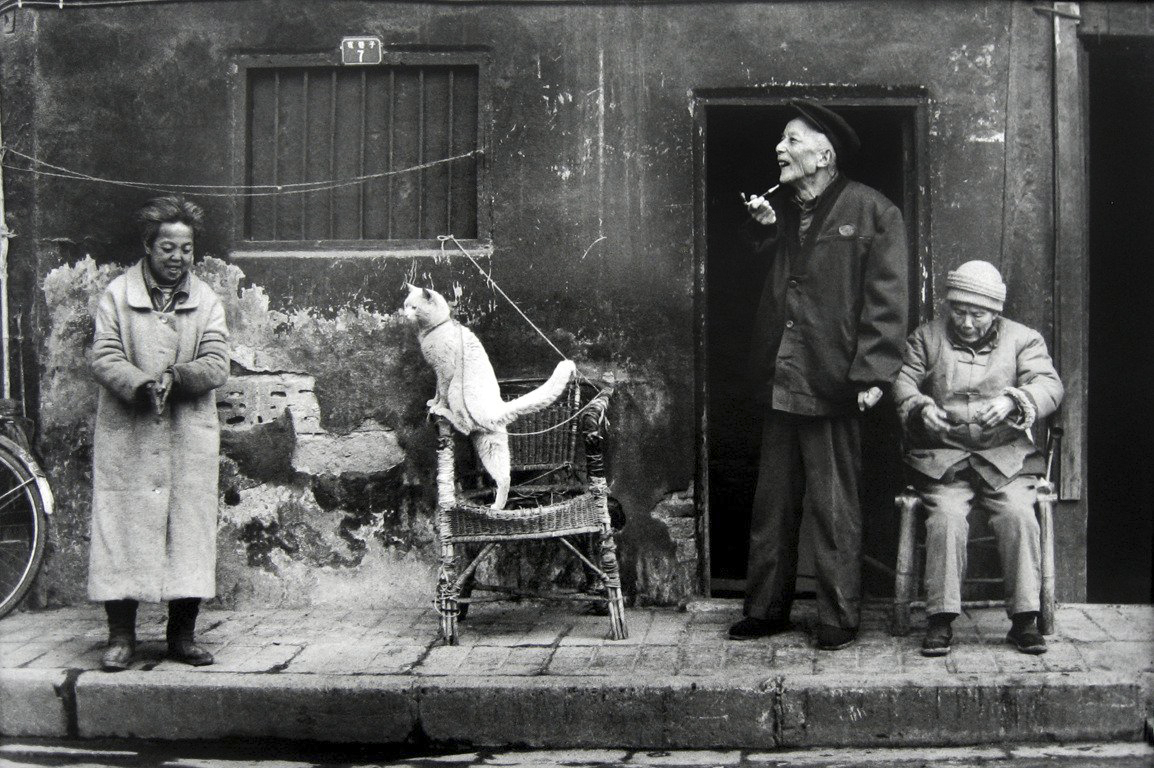
Review: ‘Autumn Masterpieces: Highlights from the Permanent Collection’ at the Centre for Contemporary Photography (CCP), Fitzroy, Melbourne

Exhibition dates: 19th March – 18th May 2010

Curator: Mark Feary

Featuring Museum Highlights: A Gallery Talk by Andrea Fraser (USA) as well as works from the collections of Hany Armanious, Liv Barrett, Polly Borland (UK), Steve Carr (NZ), Lane Cormick, Chantal Faust, Marco Fusinato, Tony Garifalakis, Matthew Griffin, Irene Hanenbergh, Christopher Hanrahan, Hotham Street Ladies, the Kingpins, Paul Knight, Andrew Liversidge, Rob McLeish, Callum Morton, Nat & Ali, Geoff Newton, Martin Parr (UK), Stuart Ringholt, David Rosetzky, Darren Sylvester, Christian Thompson, Lyndal Walker and Caroline Williams.


Autumn Masterpieces: Highlights from the Permanent Collection


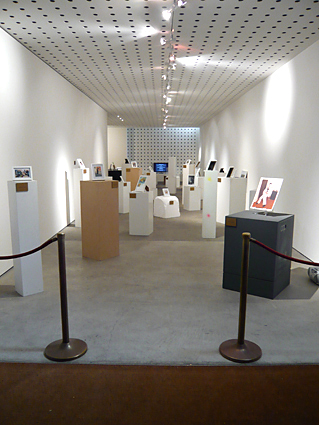
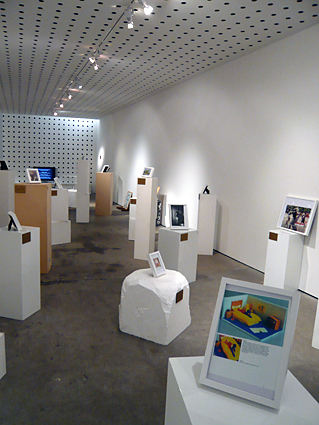
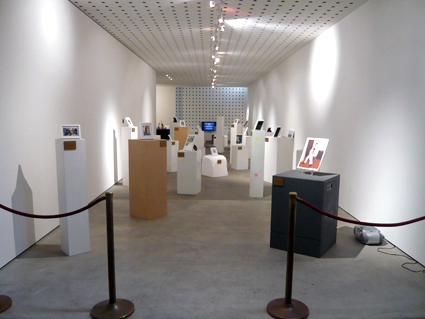
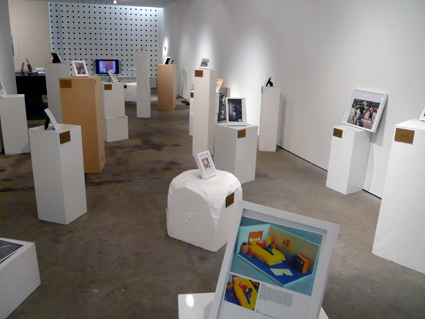
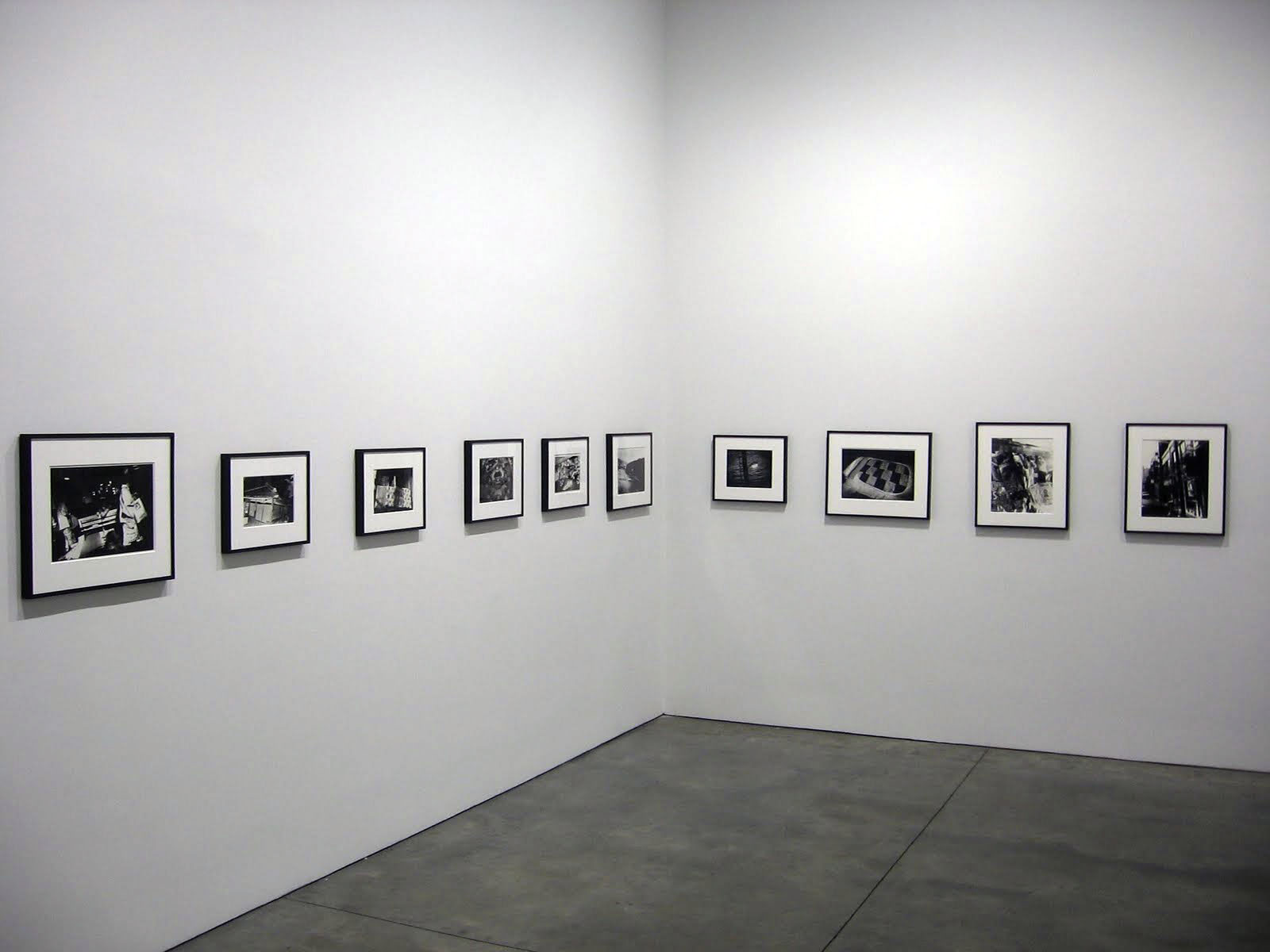
Curated by Mark Feary, this is a deliciously ironic exhibition that asks the audience to question the social and political construction of the blockbuster exhibitions regularly held by large museums around Australia; to question the role of the curator in assembling such exhibitions; and to question the cultural value of permanent collections of ‘Masterpieces’. Autumn Masterpieces displays work that is anything but permanent and undermines the process whereby museums construct frameworks for social understanding. The work, displayed in a roped off space on plinths of various heights, in cheap frames and at skew-whiff angles, seems ephemeral and transitory all the more to contradict both main tenants of the title of the exhibition: masterpiece and permanence.

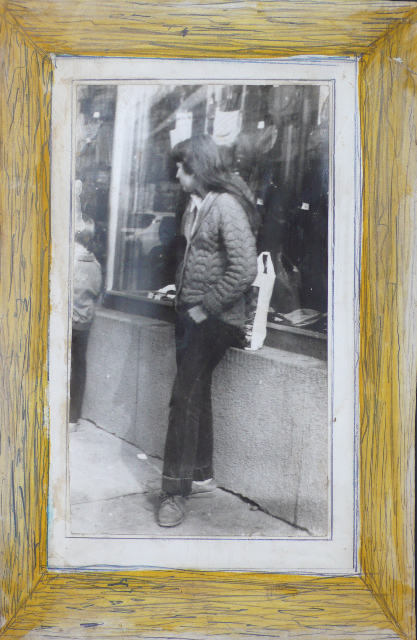
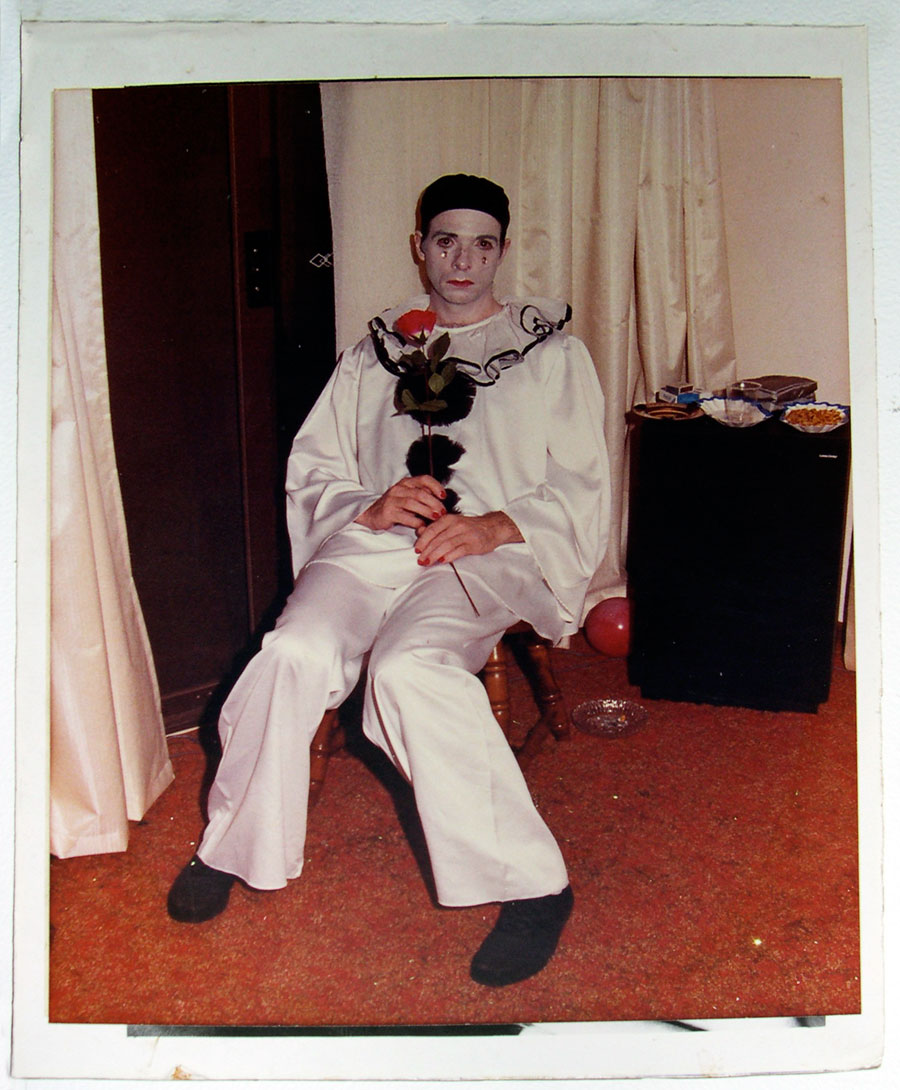
Sitting on plinths that are adorned with plastic gold name plaques emblazoned with the condition of the possibility of the works existence, “From the collection of …” , the untitled works reinforce the conceptual thrust of the exhibition. In one sense the content of the specific images seemed almost irrelevant; in another the collective dialectical argument of the images deconstructs normative interpretations of the masterpiece. ‘Instructions for the Tourist’ and ‘Rules for How to use the playground’ sit next to photographs of dejected clowns; ‘Confusion & Reversals’ sit next to ambiguous photographs of events and actions: people doing ‘normal’ things displayed though Polaroids, newspaper clippings, snapshots, photographs from albums, black and white and colour, framed and in museological glass cases.

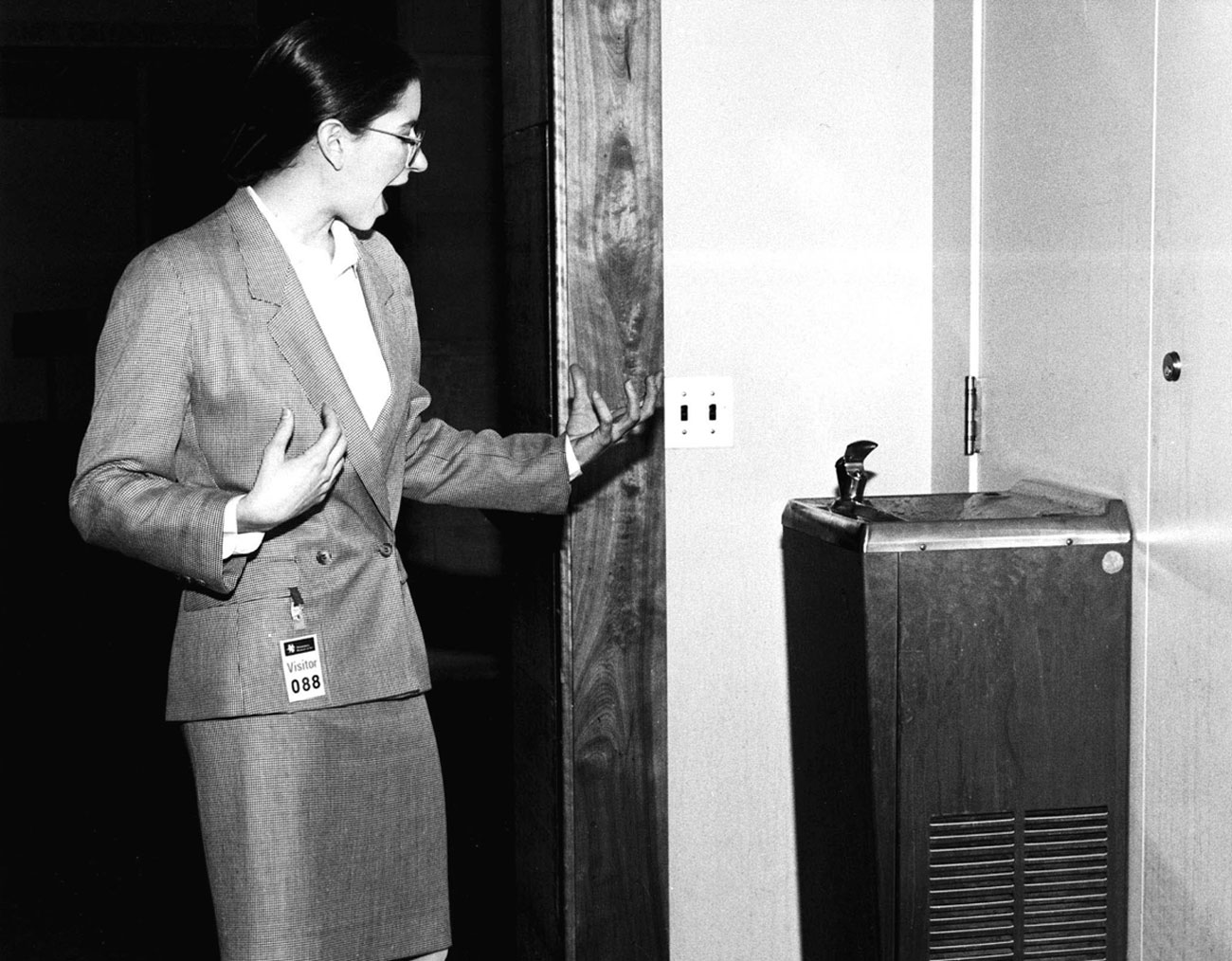
The highlight of the exhibition for me was the guffaw inducing DVD Museum Highlights: A Gallery Talk (1989) by American artist Andrea Fraser. Where Mark Feary found this post-cultural gem is beyond me but I am so glad he did! I stood transfixed as the narrator / curator takes us on a virtual tour of the Philadelphia Museum of Art, along the way pointing out the magnificence and subliminal beauty of the objects in the museum. She stresses the decorum of the institution, it’s tradition in measured, ordered, dignified arrangements that are fine and simple while addressing a water fountain. Oh the deliciousness! She continues with the exultation of the institution, that is to develop an appreciation of values – true / false, better / worse, right / wrong, what is good for you / what is good for society – standards that should be adopted by a discriminating public, while addressing a broom cupboard. The piece subverts an approach “in which visitors’ individual meanings are only validated by the extent to which they concord with the conclusions intended by exhibition-makers or to which they conform to some predetermined and fixed standard truth.”1 And so it goes in an ever so serious, side-splitting soliloquy, critiquing the functions of art, linking the aspirations of humanity with the highest privileges of wealth and leisure. Wonderful!

Dr Marcus Bunyan


1/ Hein, George E. Learning in the Museum. London: Routledge, 1998 quoted in Sandell, Richard. “Reframing conversations,” in Museums, Prejudice and the Reframing of Difference. London and New York: Routledge, p. 179.


Many thanks to Mark Feary and the CCP for allowing me to use the images in the posting. Please click on the last photographs in the posting for a larger version of the image. All installation photographs © Marcus Bunyan


Installation view of the exhibition 'Autumn Masterpieces: Highlights from the Permanent Collection' at the Centre for Contemporary Photography, Melbourne

Installation view of the exhibition 'Autumn Masterpieces: Highlights from the Permanent Collection' at the Centre for Contemporary Photography, Melbourne

Installation view of the exhibition 'Autumn Masterpieces: Highlights from the Permanent Collection' at the Centre for Contemporary Photography, Melbourne

Installation view of the exhibition 'Autumn Masterpieces: Highlights from the Permanent Collection' at the Centre for Contemporary Photography, Melbourne

Installation view of the exhibition 'Autumn Masterpieces: Highlights from the Permanent Collection' at the Centre for Contemporary Photography, Melbourne


Installation views of the exhibition Autumn Masterpieces: Highlights from the Permanent Collection at the Centre for Contemporary Photography, Melbourne
Photos: Marcus Bunyan


Courtesy of the collection of Tony Garifalakis from the exhibition 'Autumn Masterpieces: Highlights from the Permanent Collection' at the Centre for Contemporary Photography (CCP), Fitzroy, Melbourne, March - May, 2010


Courtesy of the collection of Tony Garifalakis


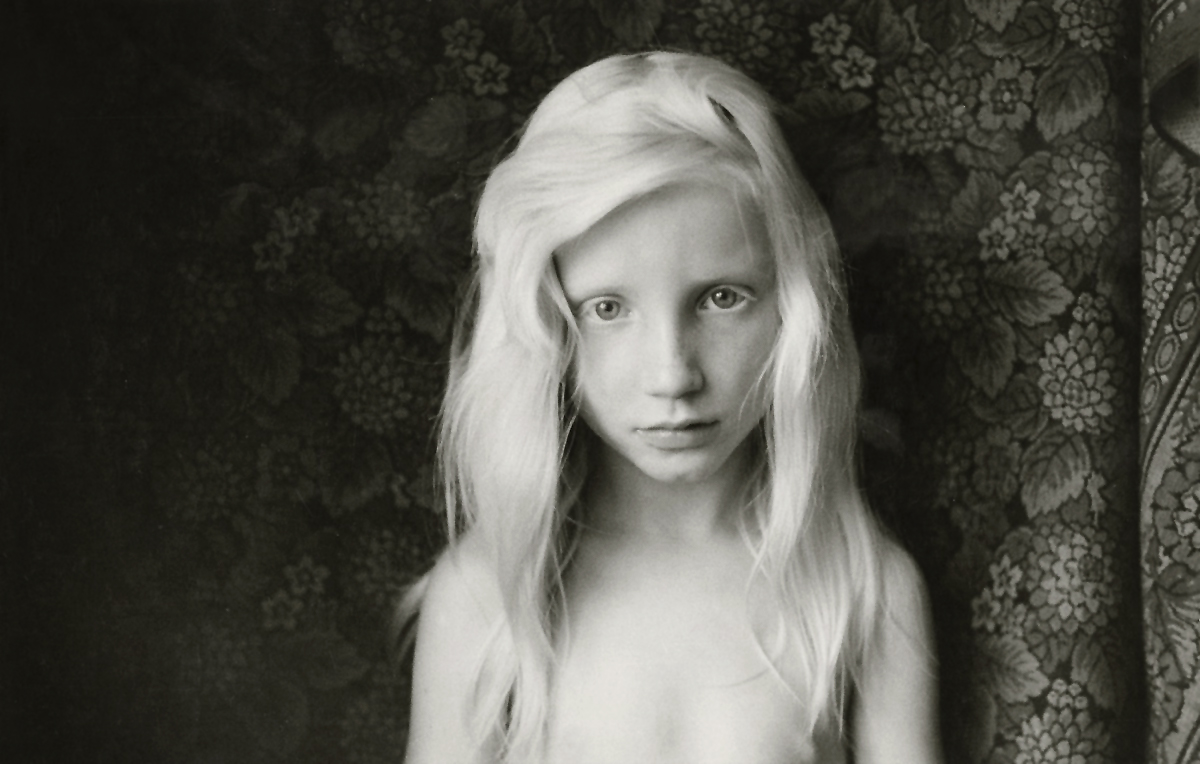
Courtesy of the collection of Irene Hanenbergh from the exhibition 'Autumn Masterpieces: Highlights from the Permanent Collection' at the Centre for Contemporary Photography (CCP), Fitzroy, Melbourne, March - May, 2010


Courtesy of the collection of Irene Hanenbergh


Courtesy of the collection of Hany Armanious from the exhibition 'Autumn Masterpieces: Highlights from the Permanent Collection' at the Centre for Contemporary Photography (CCP), Fitzroy, Melbourne, March - May, 2010

Courtesy of the collection of Hany Armanious


Courtesy of the collection of Hany Armanious


Andrea Fraser. 'Museum Highlights: A Gallery Talk' 1989 from the exhibition 'Autumn Masterpieces: Highlights from the Permanent Collection' at the Centre for Contemporary Photography (CCP), Fitzroy, Melbourne, March - May, 2010


Andrea Fraser (American, b. 1965)
Museum Highlights: A Gallery Talk
1989
DVD (colour video with sound. 29′)
Courtesy of the artist and Friedrich Petzel Gallery, New York


Centre for Contemporary Photography

No permanent exhibition space at the moment

Centre for Contemporary Photography website

LIKE ART BLART ON FACEBOOK

Back to top

Exhibition: ‘East Side Stories. German Photographs 1950s-1980s’ at Kicken Berlin

Exhibition dates: 16th January – 17th April 2010


Sibille Bergemann (German, b. 1941) 'Untitled (Kirsten, Hoppenrade)' 1975 from the exhibition 'East Side Stories. German Photographs 1950s-1980s' at Kicken Berlin, January - April, 2010


Sibille Bergemann (German, b. 1941)
Untitled (Kirsten, Hoppenrade)
1975
Gelatin silver print


Many thankx to Kicken Berlin for allowing me to publish the photographs in this post. Please click on the photographs for a larger version of the image.
Marcus


Ute Mahler (German, b. 1949) 'Untitled' from the series 'Living Together' 1973 from the exhibition 'East Side Stories. German Photographs 1950s-1980s' at Kicken Berlin, January - April, 2010


Ute Mahler (German, b. 1949)
Untitled from the series Living Together
1973
Gelatin silver print, printed c. 1973
30.5 x 45.5cm
© Ute Mahler, Ostkreuz/Courtesy Kicken Berlin


Mahler was born in 1949 in Bad Berka, Thuringia. She studied at the School for Graphic and Book Arts in Leipzig and has been a professor at the University of Applied Sciences in Hamburg since 2000. She lives in Hamburg and Lehnitz, near Berlin


Sibille Bergemann (German, b. 1941) 'Gummlin, Usedom' 1984, printed c. 1988 from the exhibition 'East Side Stories. German Photographs 1950s-1980s' at Kicken Berlin, January - April, 2010


Sibille Bergemann (German, b. 1941)
Gummlin, Usedom
1984, printed c. 1988
From the series The Monument, 1975-1986
Gelatin silver print
30 x 45cm
© Sibylle Bergemann, Ostkreuz/Courtesy Kicken Berlin


Kicken Berlin will devote its first exhibition of 2010 to a selection of East German photographers. Represented in East Side Stories: German Photographs 1950s-1980s are Ursula Arnold, Sibylle Bergemann, Arno Fischer, Ute und Werner Mahler, Roger Melis, Helga Paris, Evelyn Richter as well as Gundula Schulze Eldowy – committed art photographers who achieved their own modes of expression outside the official aesthetic. F.C. Gundlach’s fashion photography from 1950s and 1960s West Berlin will be on view in the exhibition space Kicken II.

Up until the early 1970s, the cultural officers of the German Democratic Republic viewed photography not as an art medium but rather as a means of providing affirmative and idealised images of life. Personal viewpoints were not welcome. Photography that forcefully “grew out of the self-assigned task of documenting what (one) felt was worth capturing,” as Evelyn Richter put it, had to remain secret.

Arno Fischer (1927-2011) and Evelyn Richter (1930-2021) belong to those who pointed the way toward a subjective-narrative, human-centered photography in the 1950s. Key figures in the East German art photography scene, opinion shapers, and teachers at Leipzig’s Hochschule für Grafik und Buchkunst / Academy of Visual Arts, they influenced a form of art photography oriented toward the social-documentary “human interest” tradition. Their stance combined social participation with a commitment to critical observation from a personal point of view – as in Fischer’s series Situation Berlin (1953-1960), with its symbolically dense snapshots of the divided city.

Important influences on the development of independent photography in East Germany included the work of the Magnum agency (from 1947 on), Edward Steichen’s exhibition The Family of Man (1955) as well as Robert Frank’s radically subjective street photography.

Pictures of people and portraits are at the exhibition’s core. Ursula Arnold (1929-2012) observed her sometimes melancholy, sometimes odd contemporaries on the streets of Berlin and Leipzig, and on Berlin’s S-Bahn. She gave up working as a photojournalist early in order to avoid having to make concessions to the dictates for enthusiasm imposed from above. Helga Paris (b. 1938) took portraits of rebellious Berliner Jugendliche / Berlin Youths (1981-1982), approaching her subjects with seriousness and thoughtfulness, and concentrating fully on them as individuals. She, too, had the self-professed goal of depicting people authentically in their everyday contexts.

Sibylle Bergemann (1941-2010) made a name for herself as a sensitive portraitist, fashion photographer, and observer of the urban landscape. Das Denkmal / The Monument (1977-1986), her long-term study of the assembly of the Marx-Engels sculpture, appears, with its hovering, headless sculptural fragments to emblematically anticipate the collapse of communism.

In the Berlin of the late 1970s and early 1980s Gundula Schulze Eldowy (b. 1954) found the setting for scenes that are as drastic as they are quotidian in the series Berlin. In einer Hundenacht / Berlin: in a Dog’s Night (1977-1989) and Aktportraits / Nude Portraits (1983-1986), as no other East German photographer before her, she shows with unsparing frankness the loneliness and vulnerability of her subjects but also their dignity and self confidence. Her early photographs reveal an aesthetic and thematic debt to the work of Diane Arbus.

Independent of each other, Ute and Werner Mahler turned their unpretentious gazes on the East German way of life. Ute Mahler (b. 1949) thematised family arrangements and group dynamics in her series Zusammen Leben / Living Together (1972-1986). Werner Mahler (b. 1950) documented a year in the Thuringian village Berka (1977) – and repeated his studies in the late 1990s after reunification. An additional focus of both photographers was fashion photography (published for the most part in the magazine for fashion and culture Sibylle) that offered opportunities for “productively expanding the genre” (Bernd Lindner).

In the 1950s and 1960s in Berlin and Hamburg, F.C. Gundlach achieved a modern way to stage fashion in pictures. A small selection from the great fashion photographer’s oeuvre, F.C. Gundlach, will be on view in the exhibition space Kicken II and coincides with the comprehensive retrospective at the Martin Gropius Bau.

Press release from the Kicken Berlin website [Online] Cited 04/04/2010 no longer available online


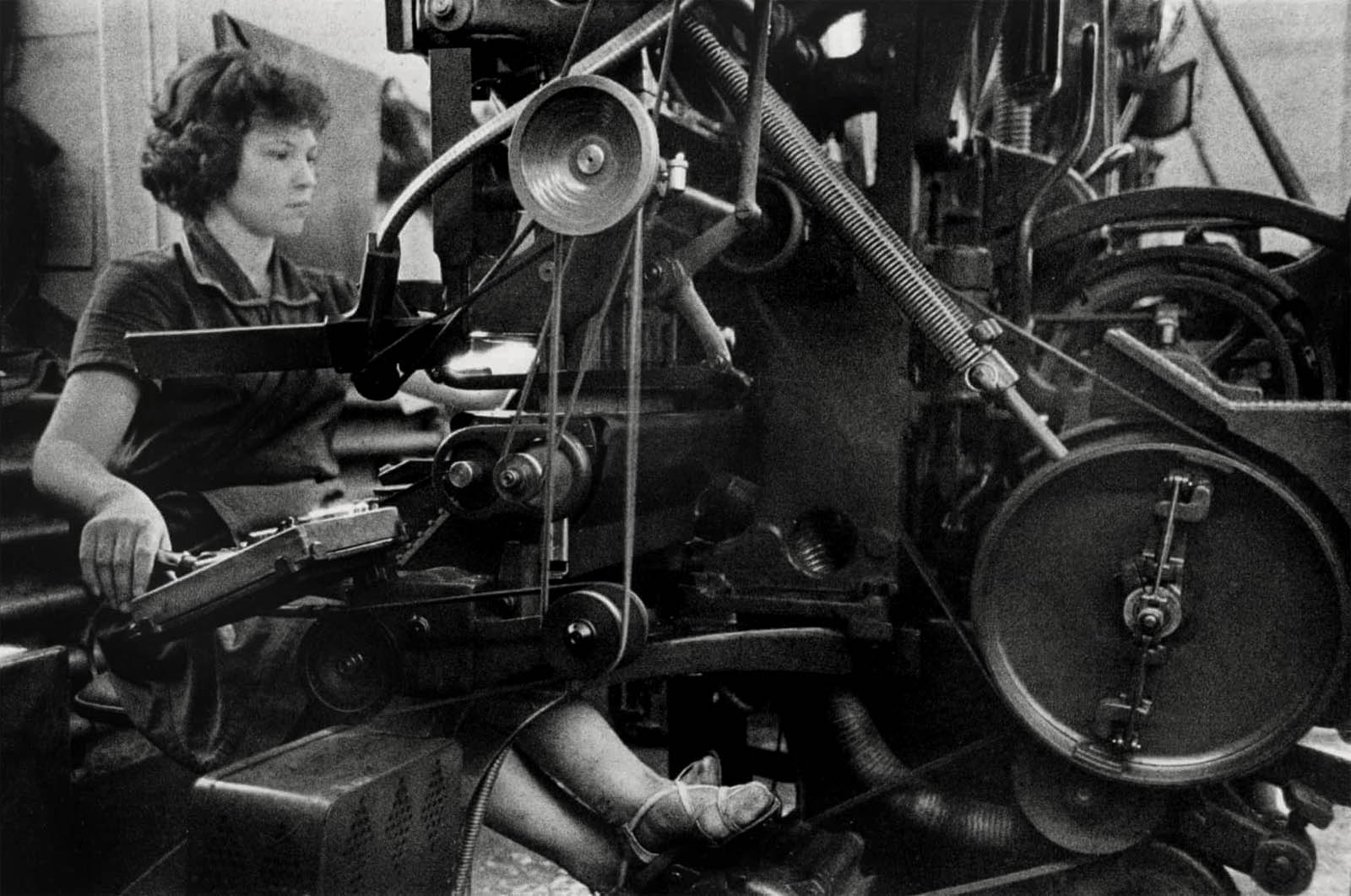
Evelyn Richter (German, 1930-2021) 'ND (Neues Deutschland) print shop' c. 1960-1962


Evelyn Richter (German, 1930-2021)
ND (Neues Deutschland) print shop
c. 1960-1962
Gelatin silver print
Evelyn Richter Archiv der Ostdeutschen


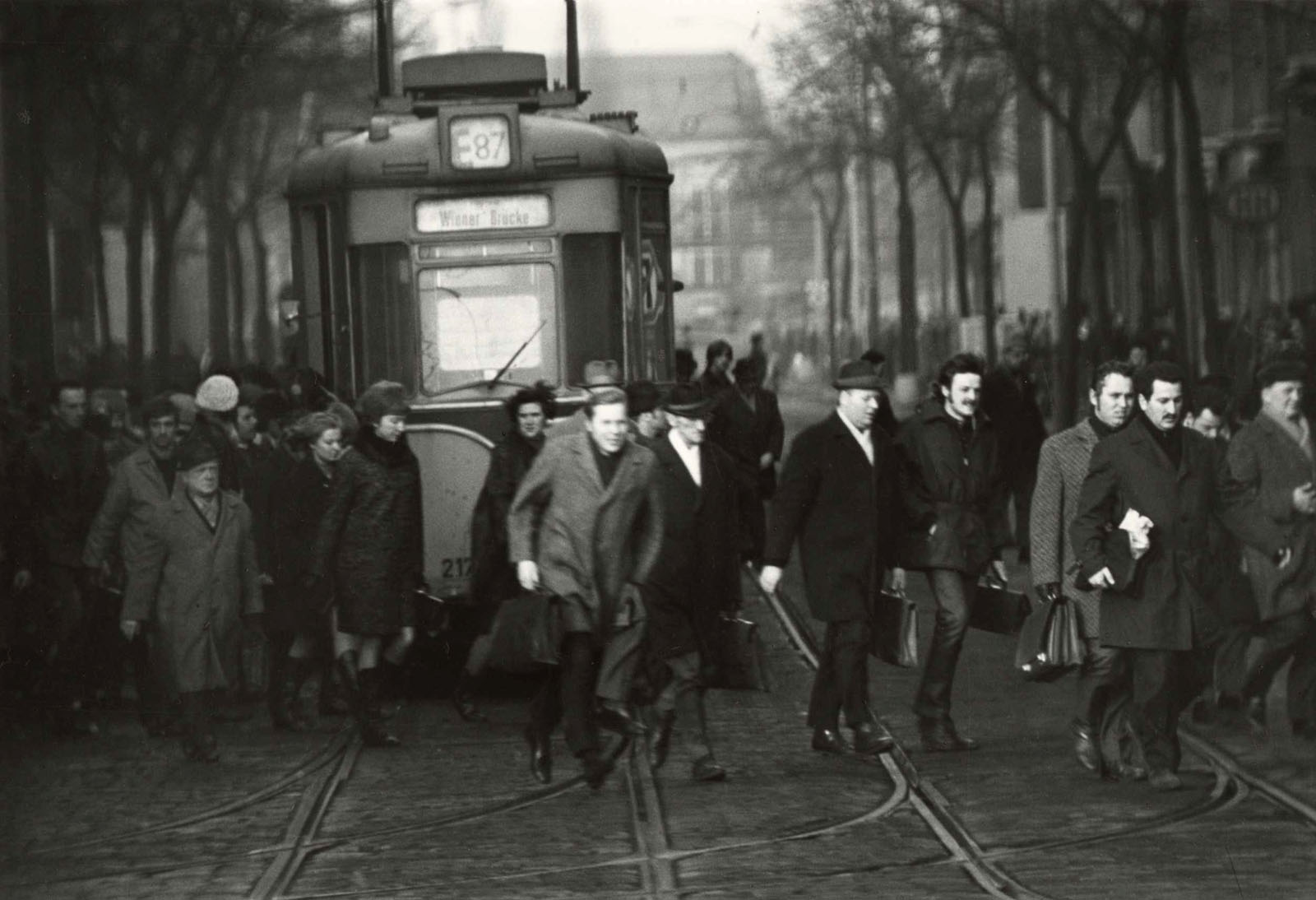
Ursula Arnold (German, 1929-2012) 'Berlin, S-Bahn' 1965


Ursula Arnold (German, 1929-2012)
Berlin, S-Bahn
1965
Gelatin silver print


Sibylle Bergemann (German, 1941-2010) 'Alexanderplatz, Berlin' 1967


Sibylle Bergemann (German, 1941-2010)
Alexanderplatz, Berlin
1967
Gelatin silver print


Sibylle Bergemann (German, 1941-2010) 'Schöneweide, Berlin' 1972


Sibylle Bergemann (German, 1941-2010)
Schöneweide, Berlin
1972
Gelatin silver print, printed c. 1972
22.8 x 34cm


Ute Mahler (German, b. 1949) 'Untitled' from the series 'Living Together' 1973


Ute Mahler (German, b. 1949)
Untitled from the series Living Together
1973
Gelatin silver print
© Ute Mahler, Ostkreuz/Courtesy Kicken Berlin


Mahler started her project Zusammenleben (‘living together’) to move away from set photography. She said: ‘I carried out this work freely, at liberty; it was very personal in nature and not commissioned’.

Zusammenleben was started more than 45 years ago. Through it, Mahler intended to depict the unsaid in a subtle way. Zusammenleben subtly depicted the reality of everyday life in the communist state of East Germany. 


Evelyn Richter. 'Pförtnerin im Rathaus, Leipzig' (Receptionist in the Town Hall, Leipzig), c. 1975


Evelyn Richter (German, 1930-2021)
Pförtnerin im Rathaus, Leipzig (Receptionist in the Town Hall, Leipzig)
c. 1975
Gelatin silver print


Sibylle Bergemann (German, 1941-2010) 'Berlin, Palast der Republik' 1978


Sibylle Bergemann (German, 1941-2010)
Berlin, Palast der Republik
1978
Gelatin silver print


Gundula Schulze Eldowy (German, b. 1954) 'Berlin' 1989


Gundula Schulze Eldowy (German, b. 1954)
Berlin
1989
Gelatin silver print


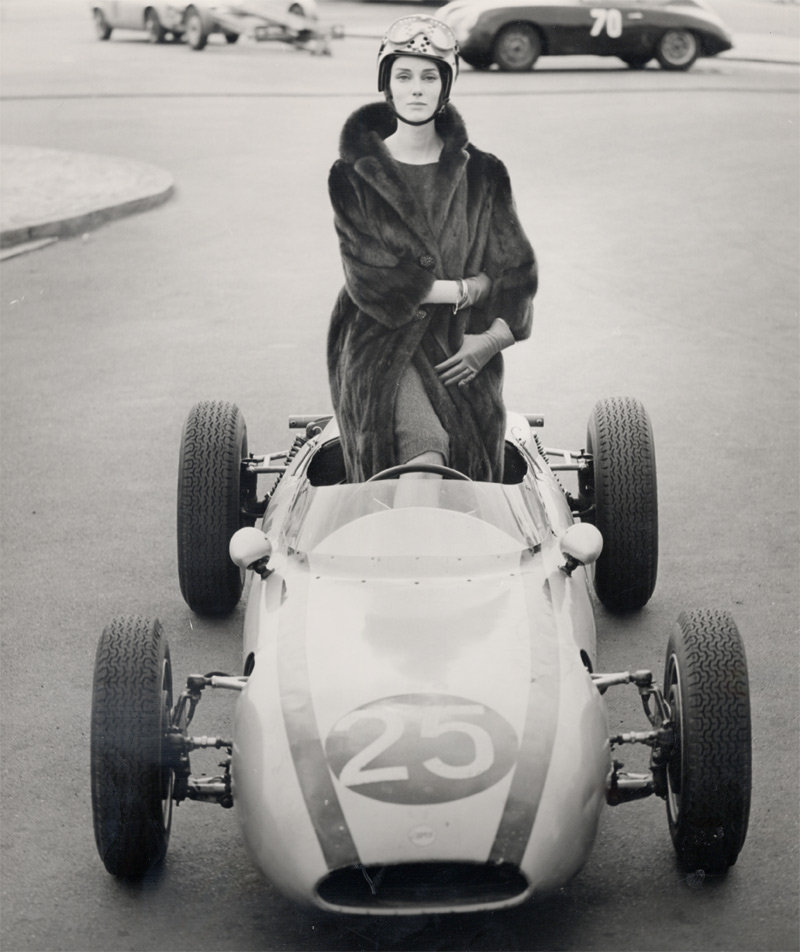
F.C. Gundlach (German, b. 1926) 'Judy Dent mit Saga-Nerz auf der Avus' 1962


F.C. Gundlach (German, 1926-2021)
Judy Dent mit Saga-Nerz auf der Avus
1962
Vintage gelatin silver print
39.8 x 30cm
© F.C. Gundlach/Courtesy Kicken Berlin


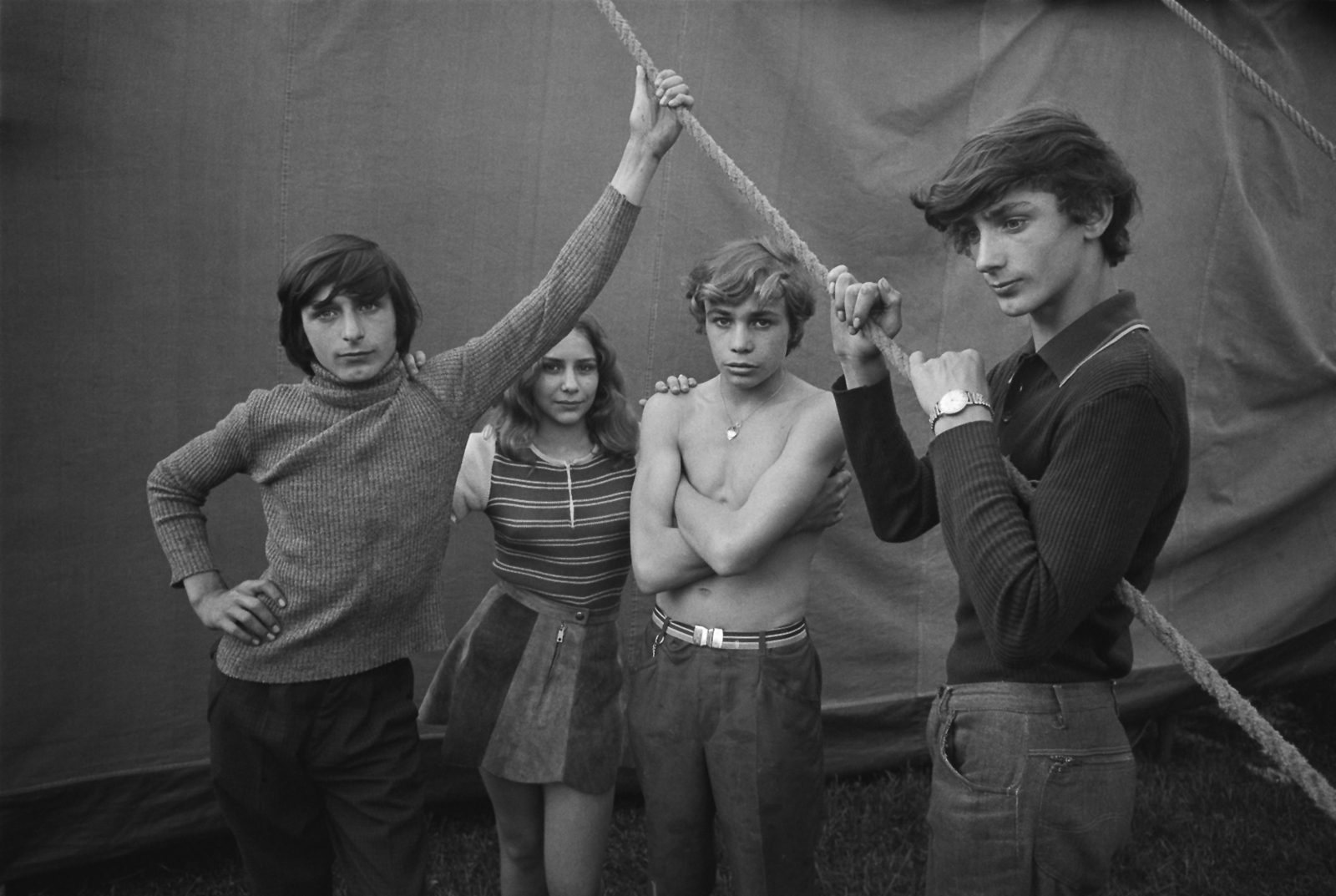
Helga Paris (German, b. 1938) 'Pauer' from the series 'Berlin Teenagers' 1982


Helga Paris (German, b. 1938)
Pauer from the series Berlin Teenagers
1982
Gelatin silver print, printed c. 1982
31.7 x 21.1cm
© Helga Paris/Courtesy Kicken Berlin


Kicken Berlin
Kaiserdamm 118
14057 Berlin

Tuesday – Friday 2 – 6pm & by appointment

Kicken Berlin website

LIKE ART BLART ON FACEBOOK

Back to top

Exhibition: ‘Hawaii’ by Daido Moriyama at Luhring Augustine, New York

Exhibition dates: 13th February – 13th March, 2010


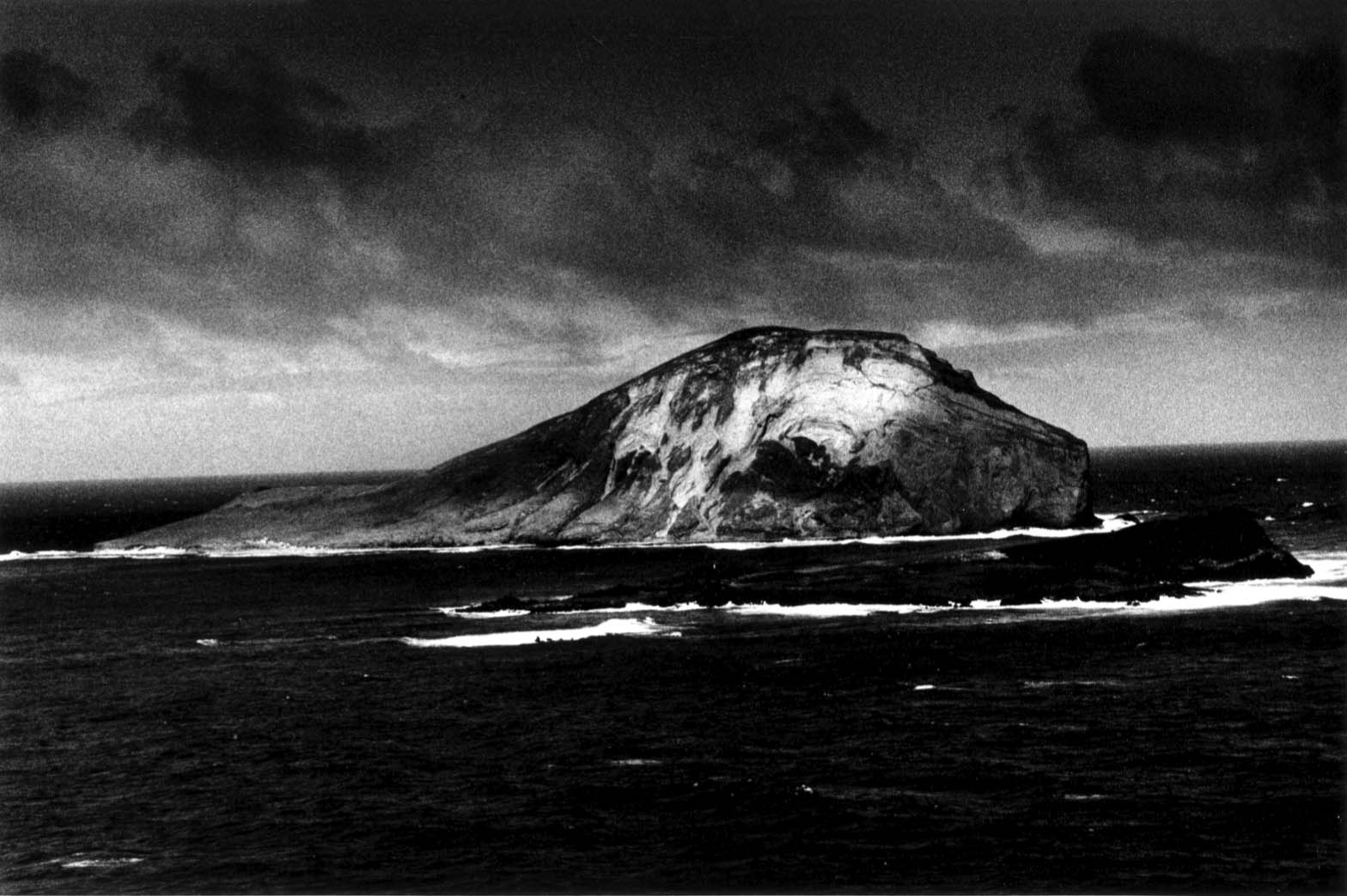
Daido Moriyama (Japanese, b. 1938) 'Nikko Toshogu' 1977 from the exhibition Exhibition: 'Hawaii' by Daido Moriyama at Luhring Augustine, New York, February - March, 2010


Daido Moriyama (Japanese, b. 1938)
Nikko Toshogu
1977
Gelatin silver print


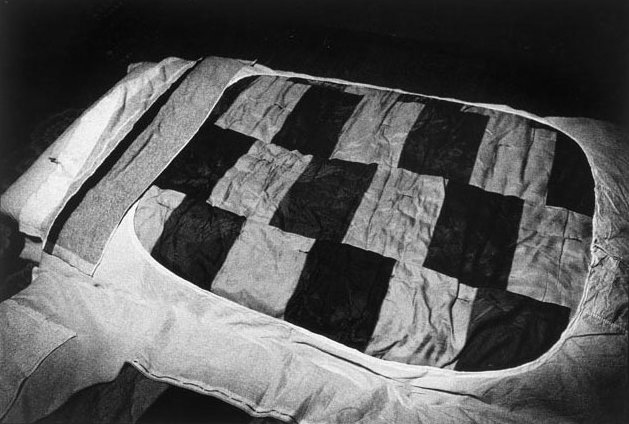
Daido Moriyama (Japanese, b. 1938) 'Quilt' 1977 from the exhibition Exhibition: 'Hawaii' by Daido Moriyama at Luhring Augustine, New York, February - March, 2010


Daido Moriyama (Japanese, b. 1938)
Quilt
1977
Gelatin silver print


Daido Moriyama (Japanese, b. 1938) 'Hokkaido' 1978 from the exhibition Exhibition: 'Hawaii' by Daido Moriyama at Luhring Augustine, New York, February - March, 2010


Daido Moriyama (Japanese, b. 1938)
Hokkaido
1978
Gelatin silver print


Daido Moriyama (Japanese, b. 1938) 'Tono' 1974


Daido Moriyama (Japanese, b. 1938)
Tono
1974
Gelatin silver print


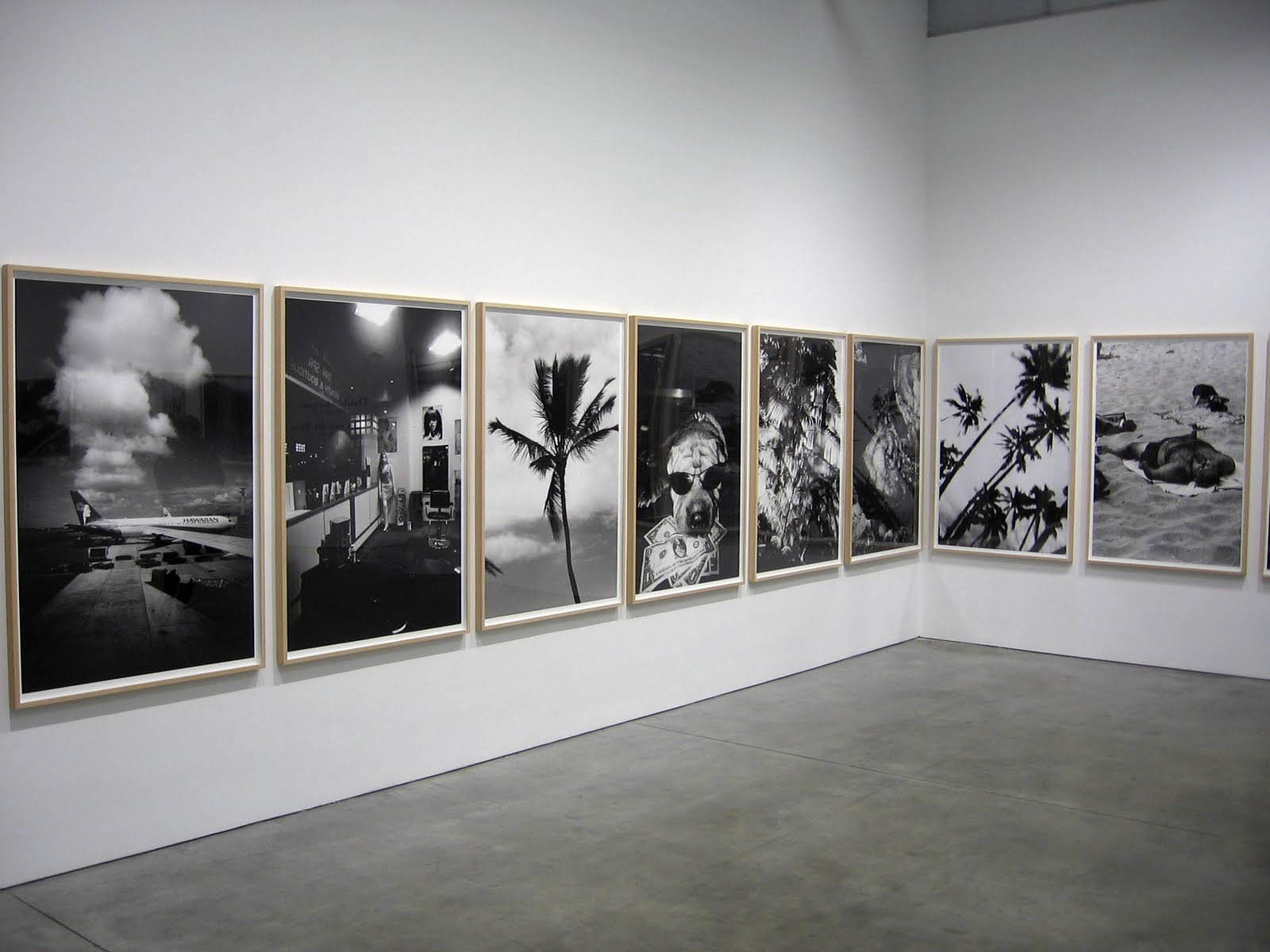
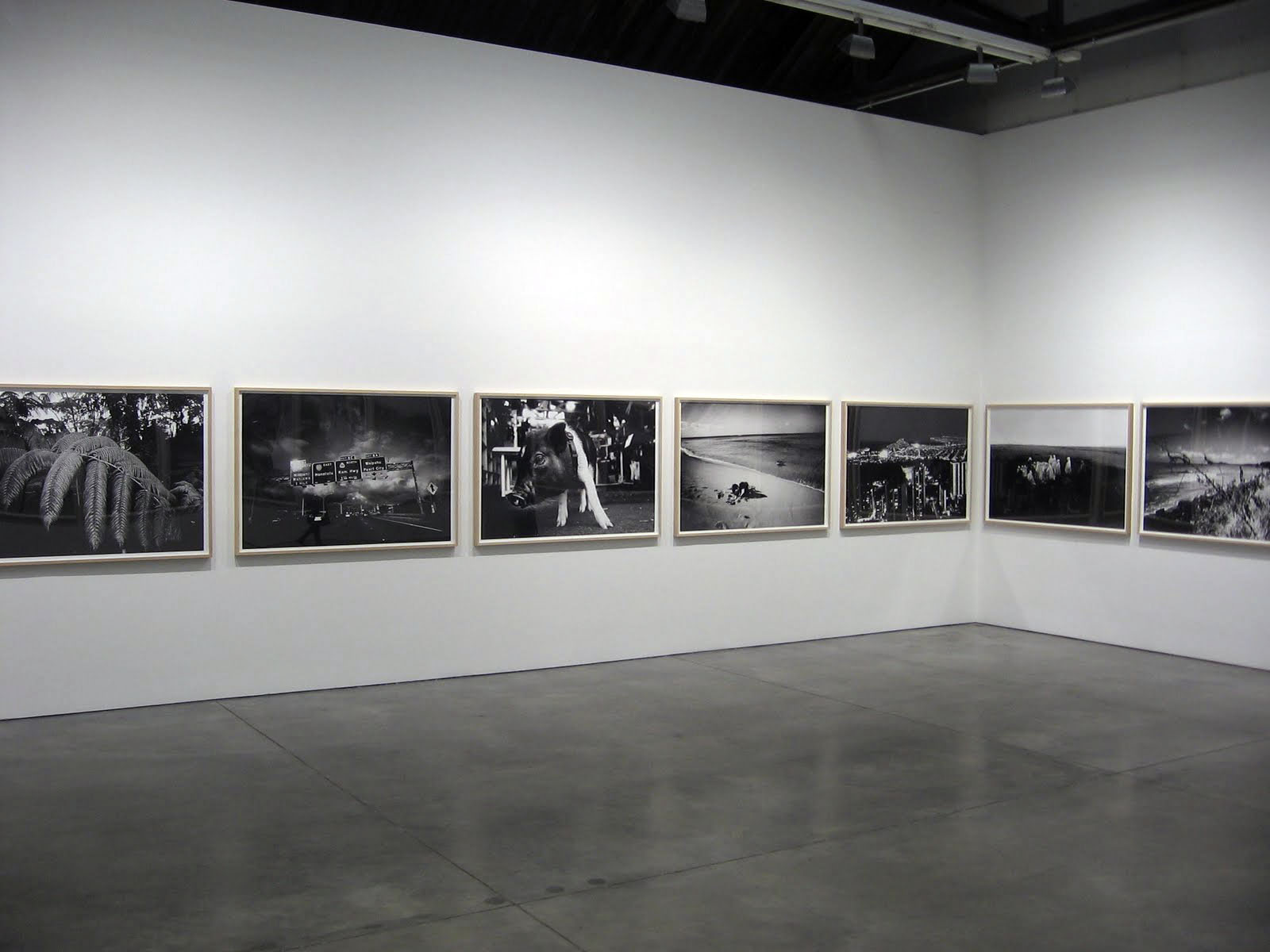
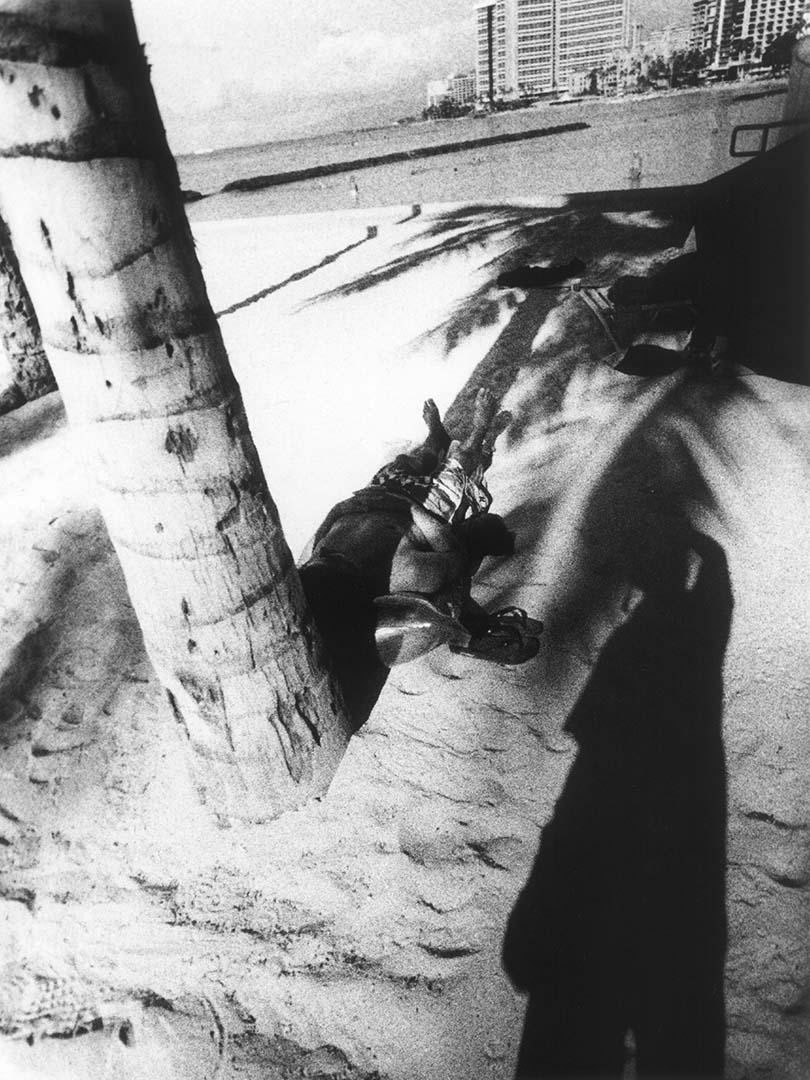
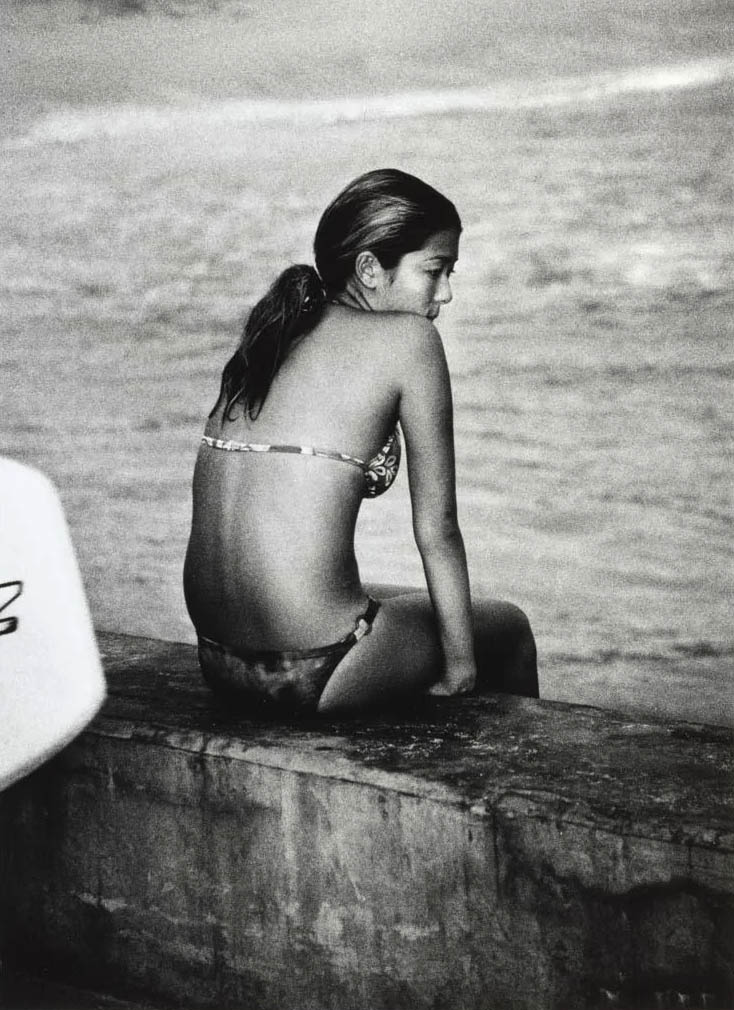
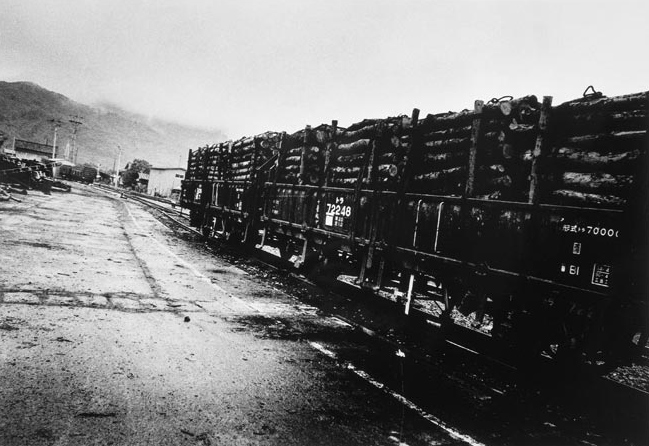
Luhring Augustine is pleased to present its first exhibition featuring the work of Daido Moriyama, one of Japan’s leading figures in photography. Witness to the spectacular changes that transformed postwar Japan, his photographs express a fascination with the cultural contradictions of age-old traditions that persist within modern society. Providing a harsh, crude vision of city life and the chaos of everyday existence, strange worlds, and unusual characters, his work occupies the space between the objective and the subjective, the illusory and the real.

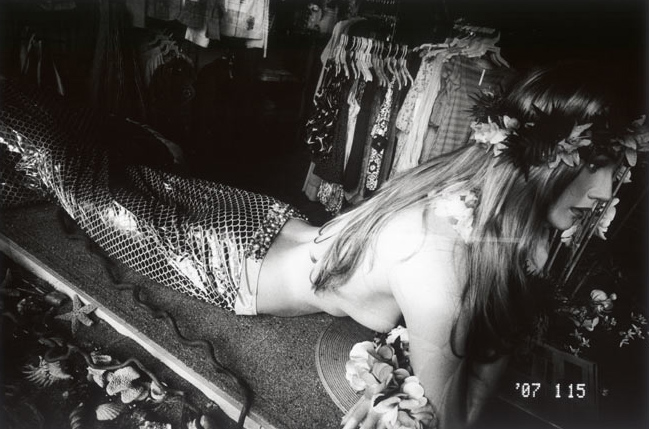
Moriyama takes pictures with a small hand-held camera that enables him to shoot freely while walking or running or through the windows of moving cars. Taken from vertiginous angles or overwhelmed by closeups, his blurred images are charged with a palpable and frenetic energy that reveal a unique proximity to his subject matter. Snapshots of stray dogs, posters, mannequins in shop windows, and shadows cast into alleys present the beauty and sometimes-terrifying reality of a marginalised landscape. His anonymous and detached approach enables him to capture the “visible present” made up of accidental and uncanny discoveries as he experiences them.

Moriyama emerged as a photographer in the 1960’s at the tail end of the VIVO collective, a revolutionary and highly influential group of Japanese artists who reexamined the conventions of photography during the tumultuous postwar period. William Klein’s loose, Beat style images of New York City in the 1960s also served as a major turning point for Moriyama, who found inspiration in Klein’s free-form photographic style. Taken by these innovative approaches at home and abroad, Moriyama ultimately went on to forge his own radical style.

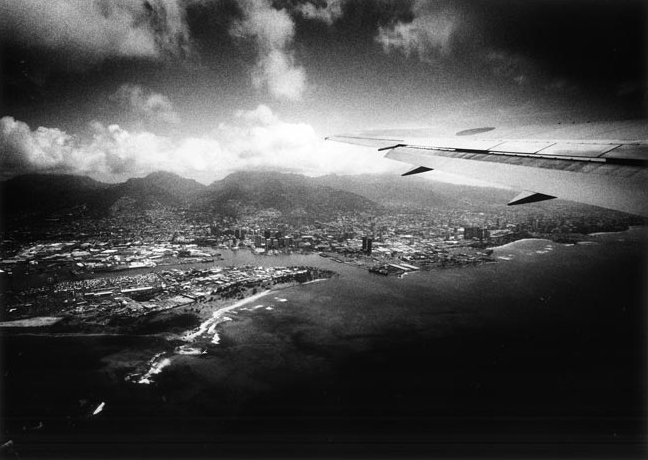
Hawaii, Moriyama’s most recent body of work, was produced over a period of three years and presents his distinct perspective on the daily lives of the people living on the islands of Hawaii and Oahu. Returning to the island five times before feeling prepared to shoot these surroundings, Moriyama’s overall approach is purposeful and considered despite his loose and informal style. The series was recently exhibited at the Tokyo Metropolitan Museum of Photography and published in a volume by the institution.

Daido Moriyama was born in Osaka in 1938. He has had museum shows around the world including the San Francisco Museum of Modern Art, the Fotomuseum Winterthur, Switzerland, the Fondation Cartier pour l’Art Contemporain, Paris and the Tokyo Metropolitan Museum of Photography. His work is part of many major public collections such as the Museum of Modern Art, New York, the Centre Pompidou, Paris, the Metropolitan Museum of Art, New York, the Los Angeles County Museum, the San Francisco Museum of Modern Art, the Museum of Fine Arts, Boston and the Getty in Los Angeles.

Press release from the Luhring Augustine website [Online] Cited 24/02/2010 no longer available online


Installation view of the exhibition 'Hawaii' by Daido Moriyama at Luhring Augustine, New York, February - March, 2010


Installation views of the exhibition Hawaii by Daido Moriyama at Luhring Augustine, New York, February – March, 2010


A total of 52 black and white photographs, hung in the entry, main gallery, and one of the back rooms. 29 of the images are from the recent Hawaii series, taken / printed between 2007 and 2010…

What if Sander had taken portraits in India or China? (Another recent example of this phenomenon would be Eggleston’s images of Paris, here.) The effect is somewhat like musicians making covers, taking someone else’s songs and making them their own; sometimes the mashup creates something wholly original and unexpected, and sometimes the combination doesn’t quite work.

This exhibit extends this line of thinking, with the Japanese photographer Daido Moriyama making pictures of Hawaii, using a group of the artist’s vintage images of Japan as a counterweight for comparison. The older works provide a reminder of Moriyama’s powerful visual vocabulary: dark shadowy images, with skewed off-kilter angles, harsh contrasts, and a rawness that often mixes the gloomy and the menacing. His best images uncover the dark underbelly of the streets, capturing the cultural nuances of Japan in gritty, grainy blackness. 

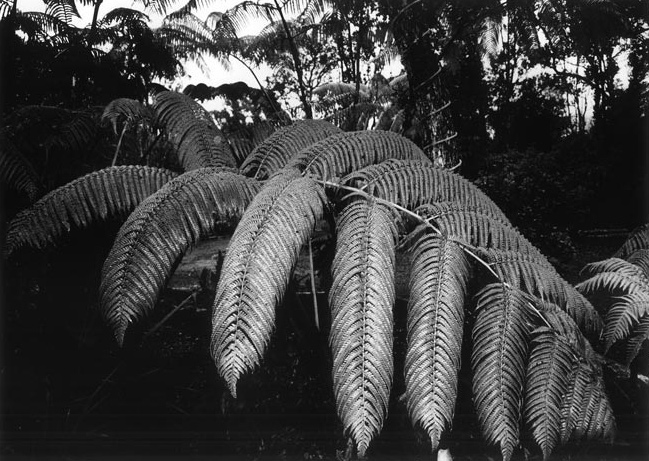
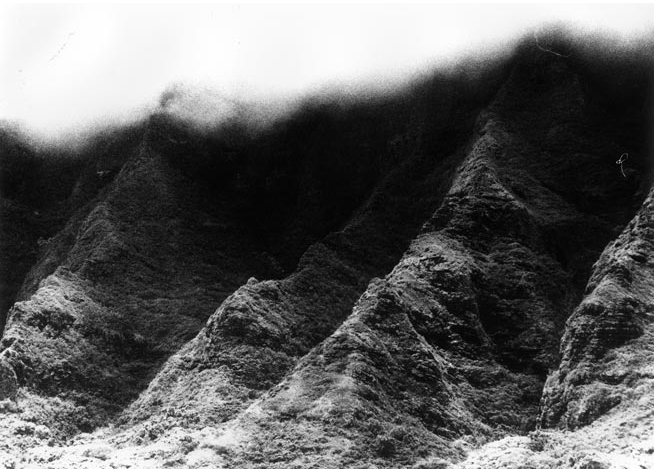
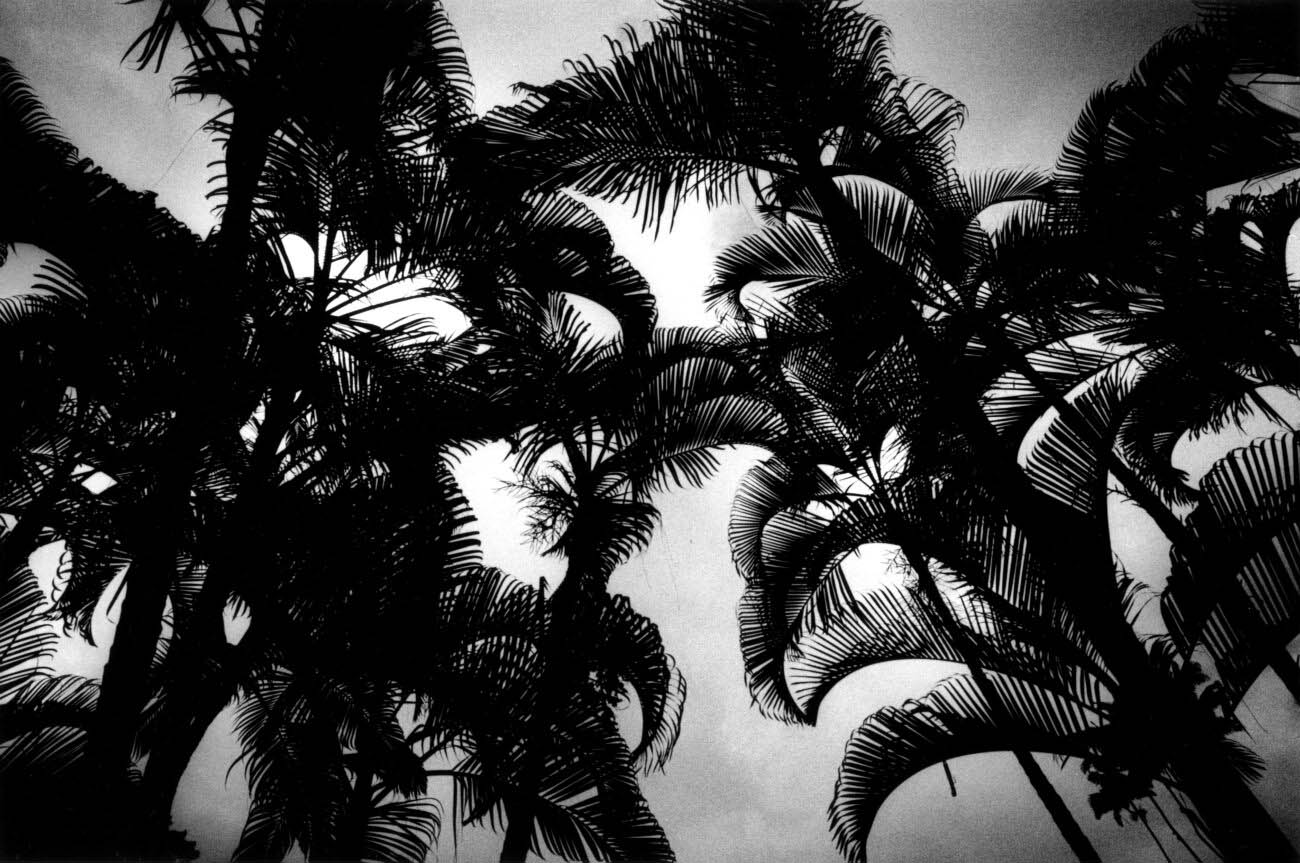
The island life of Hawaii, with its shakas and mellow aloha spirit, presents a surprising challenge for Moriyama: where can a visitor find the brooding or sinister in this paradise? Moriyama does his best to apply his trademark darkness to palm trees and ferns, beaches and hotels, jungles and clouded hills, tourist shops and conch shells, but the overall effect lacks the malignant edginess that haunts his images of Tokyo; he has found some unexpected surface oddities, but the subjects feel a bit too obvious and superficial. Visually, the big prints (roughly 3 by 5 feet) and their shadowy palette make for a jarring view of the easy going, sunny destination, but the subject matter just doesn’t lend itself all that well to deep psychological probing. The real culture of Hawaii is hidden somewhere else, far from the welcoming hula girls, tiki fabrics, and flowers offered to visitors.

Loring Knoblauch. “Daido Moriyama, Hawaii @Luhring Augustine,” on the Collector Daily website, March 4, 2010 [Online] Cited 28/04/2025


Daido Moriyama (Japanese, b. 1938) 'Hawaii' 2007


Daido Moriyama (Japanese, b. 1938)
Hawaii
2007
Gelatin silver print


Daido Moriyama (Japanese, b. 1938) 'Hawaii' 2007-2010


Daido Moriyama (Japanese, b. 1938)
Hawaii
2007-2010
Gelatin silver print


Daido Moriyama (Japanese, b. 1938) 'Hawaii' 2007-2010


Daido Moriyama (Japanese, b. 1938)
Hawaii
2007-2010
Gelatin silver print


Daido Moriyama (Japanese, b. 1938) 'Hawaii' 2007


Daido Moriyama (Japanese, b. 1938)
Hawaii
2007
Gelatin silver print


Daido Moriyama (Japanese, b. 1938) 'Hawaii' 2007-2010


Daido Moriyama (Japanese, b. 1938)
Hawaii
2007-2010
Gelatin silver print


Daido Moriyama (Japanese, b. 1938) 'Hawaii' 2007-2010


Daido Moriyama (Japanese, b. 1938)
Hawaii
2007-2010
Gelatin silver print


Daido Moriyama (Japanese, b. 1938) 'Hawaii' 2007


Daido Moriyama (Japanese, b. 1938)
Hawaii
2007
Gelatin silver print


Daido Moriyama (Japanese, b. 1938) 'Hawaii' 2007-2010


Daido Moriyama (Japanese, b. 1938)
Hawaii
2007
Gelatin silver print


Daido Moriyama (Japanese, b. 1938) 'Hawaii' 2007-2010


Daido Moriyama (Japanese, b. 1938)
Hawaii
2007
Gelatin silver print


Luhring Augustine Gallery
531 West 24th Street, New York
Phone: 1-212-206-9100
Opening hours:
Summer hours (June 20 – September 2):
Monday – Friday, 10am – 5.30pm
Winter hours
Tuesday – Saturday, 10am – 6pm

Luhring Augustine Gallery website

LIKE ART BLART ON FACEBOOK

Back to top

Exhibition: ‘Picturing New York: Photographs from The Museum of Modern Art’ at the Irish Museum of Modern Art, Dublin

Exhibition dates: 25th November, 2009 – 7th February, 2010


Many thankx to Monica Cullinane and the Irish Museum of Modern Art for allowing me the reproduce photographs from the exhibition. Please click on the photographs for a larger version of the image.

Marcus


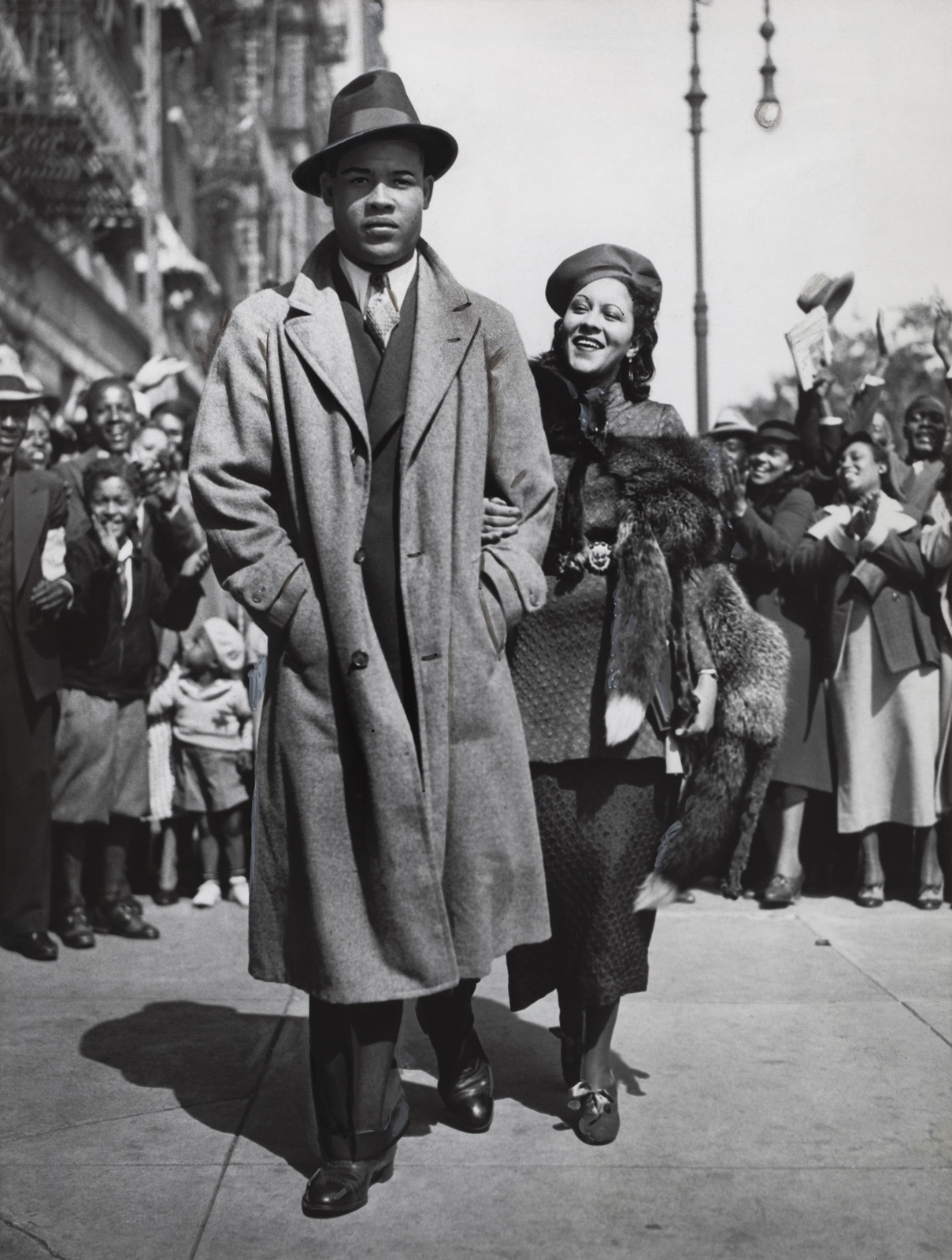
Times Wide World Photos (American, active 1919-1941) 'Mr. and Mrs. Joe Louis Out for a Stroll' September 25, 1935 from the exhibition 'Picturing New York: Photographs from The Museum of Modern Art' at the Irish Museum of Modern Art, Dublin, November 2009 - February 2010


Times Wide World Photos (American, active 1919-1941)
Mr. and Mrs. Joe Louis Out for a Stroll
September 25, 1935
Gelatin silver print
8 3/4 x 6 5/8″ (22.2 x 16.8cm)
The Museum of Modern Art, New York. The New York Times Collection


Cindy Sherman (American, b. 1954) 'Untitled Film Still #21' 1978 from the exhibition 'Picturing New York: Photographs from The Museum of Modern Art' at the Irish Museum of Modern Art, Dublin, November 2009 - February 2010


Cindy Sherman (American, b. 1954)
Untitled Film Still #21
1978
Gelatin silver print
7 1/2 x 9 1/2″ (19.1 x 24.1cm)
The Museum of Modern Art, New York
Horace W. Goldsmith Fund through Robert B. Menschel


Each of Sherman’s sixty-nine Untitled Film Stills (1977-1980), presents a female heroine from a movie we feel we must have seen. Here, she is the pert young career girl in a trim new suit on her first day in the big city. Among the others are the luscious librarian (#13), the chic starlet at her seaside hideaway (#7), the ingenue setting out on life’s journey (#48), and the tough but vulnerable film noir idol (#54). To make the pictures, Sherman herself played all of the roles or, more precisely, played all of the actresses playing all of the roles. In other words, the series is a fiction about a fiction, a deft encapsulation of the image of femininity that, through the movies, took hold of the collective imagination in postwar America – the period of Sherman’s youth, and the crucible of our contemporary culture.

In fact, only a handful of the Untitled Film Stills are modelled directly on particular roles in actual movies, let alone on individual stills of the sort that the studios distribute to publicise their films. All the others are inventive allusions to generic types, and so our sure sense of recognition is all the more telling. It tells us that, knowingly or not, we have absorbed the movie culture that Sherman invites us to examine as a powerful force in our lives.

Publication excerpt from The Museum of Modern Art, MoMA Highlights, New York: The Museum of Modern Art, revised 2004, originally published 1999, p. 295.


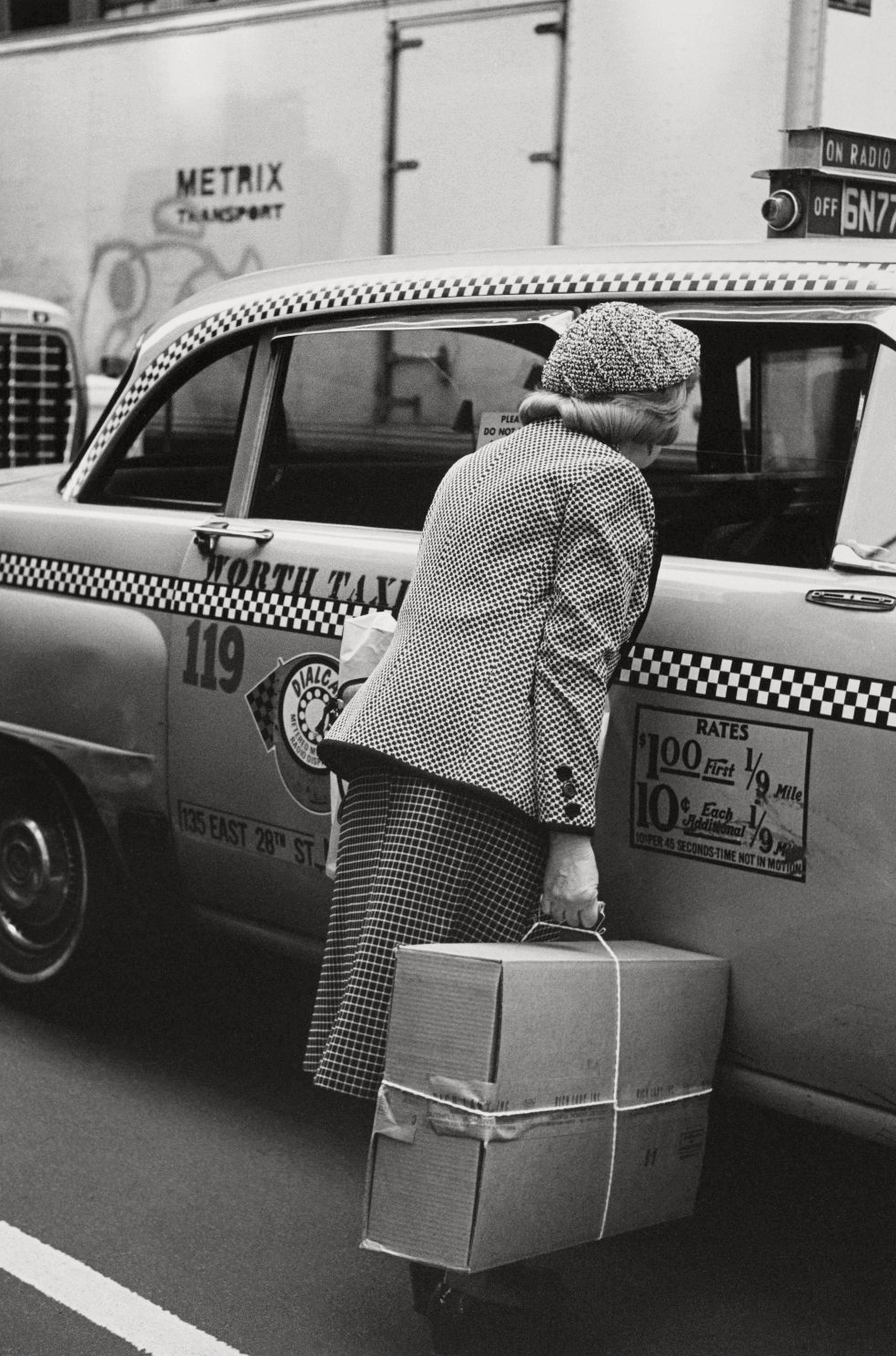
Helen Levitt (American, 1913-2009) 'New York' 1982 from the exhibition 'Picturing New York: Photographs from The Museum of Modern Art' at the Irish Museum of Modern Art, Dublin, November 2009 - February 2010


Helen Levitt (American, 1913-2009)
New York
1982
Gelatin silver print
9 9/16 x 6 7/16″ (24.3 x 16.4cm)
The Museum of Modern Art, New York
Gift of Marvin Hoshino in memory of Ben Maddow
© 2009 The Estate of Helen Levitt, courtesy Fraenkel Gallery, San Francisco


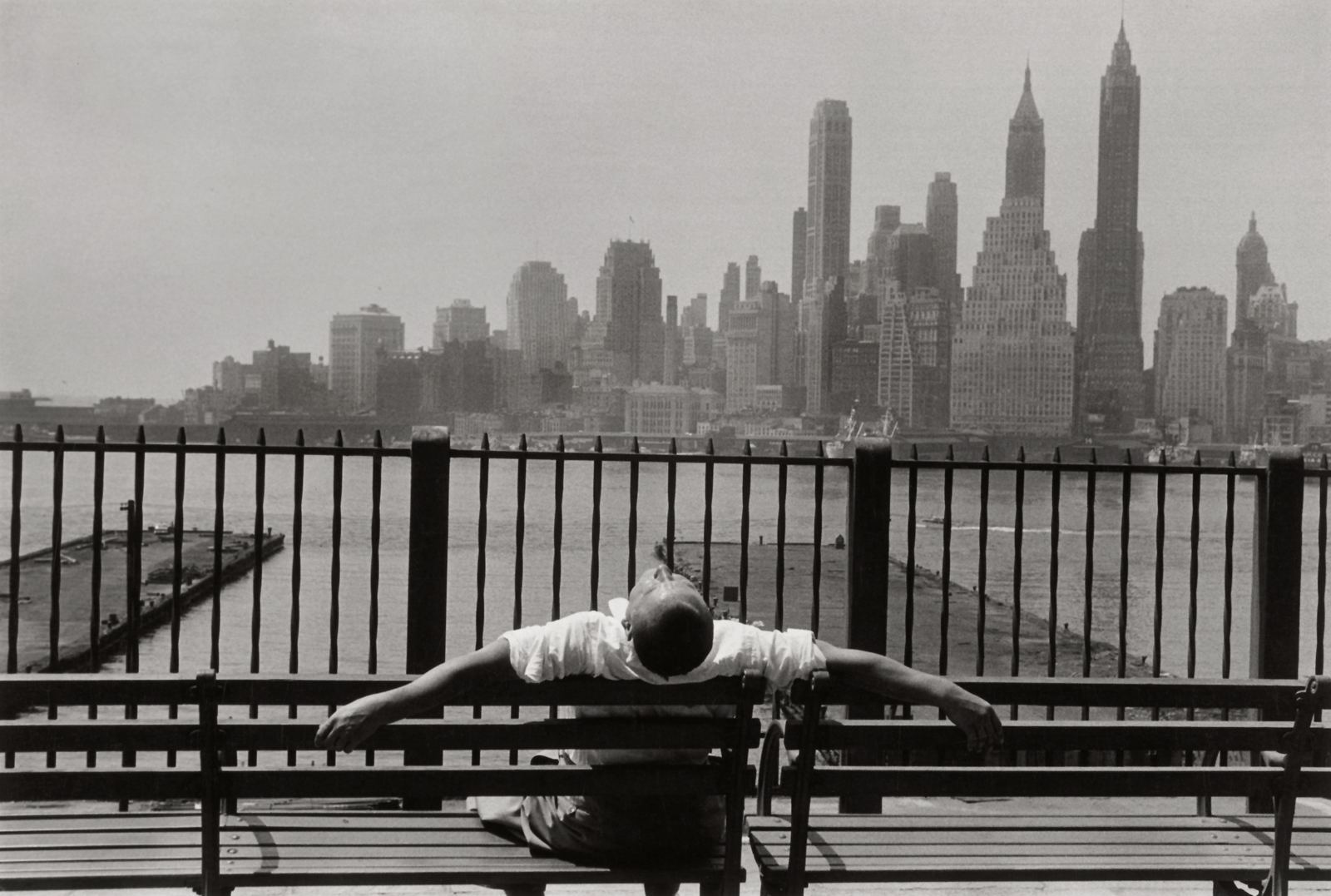
Louis Stettner (American, born 1922) 'Manhattan from the Promenade, Brooklyn, New York' 1954


Louis Stettner (American, 1922-2016)
Manhattan from the Promenade, Brooklyn, New York
1954
Gelatin silver print
12 1/4 x 18 1/4″ (31.1 x 46.4cm)
The Museum of Modern Art, New York. Gift of the photographer in memory of his brother, David Stettner
© 2009 Louis Stettner, courtesy Bonni Benrubi Gallery, New York


Diane Arbus (American, 1923-1971) 'Woman with Veil on Fifth Avenue, N.Y.C' 1968


Diane Arbus (American, 1923-1971)
Woman with Veil on Fifth Avenue, N.Y.C.
1968
Gelatin silver print
The Museum of Modern Art, New York


An exhibition of 145 masterworks from the photographic collection of The Museum of Modern Art (MoMA) in New York , celebrating the architecture and life of that unique city from the 1880s to the present day, opens to the public at the Irish Museum of Modern Art on Wednesday, November 25, 2009. “Picturing New York” draws on one of the most important collections of modern and contemporary photography in the world to celebrate the long tradition of photographing New York, a tradition that continues to frame and influence our perception of the city to this day. Presenting the work of some 40 photographers including such influential figures as Berenice Abbott, Diane Arbus, Garry Winogrand, Lisette Model, Alfred Stieglitz and Cindy Sherman, the exhibition features both the city and its inhabitants, from its vast, overwhelming architecture to the extraordinary diversity of its people.

The exhibition reflects photographers’ ongoing fascination with New York, a city whose vitality, energy, dynamism and sheer beauty have also inspired innumerable artists, writers, filmmakers and composers. New York’s unique architecture is explored, from elegant skyscrapers to small shop fronts; likewise the life of its citizens, from anonymous pedestrians to celebrities and politicians. The city’s characteristic optimism is caught time and again in these images, even in those taken in difficult times. Together, they present a fascinating history of the city over more than a century, from Jacob Riis’s 1888 view of bandits on the Lower East Side to Michael Wesely’s images taken during the recent expansion at MoMA.

The photographs reveal New York as a city of contrasts and extremes through images of towering buildings and tenements, party-goers and street-dwellers, hurried groups and solitary individuals. “Picturing New York” suggests the symbiosis between the city’s progression from past to present and the evolution of photography as a medium and as an art form. Additionally, these photographs of New York contribute significantly to the notion that the photograph, as a work of art, is capable of constructing a sense of place and a sense of self.

“I am thrilled that ‘Picturing New York’ will be presented in Dublin – a city whose vitality, grit, and vibrant artistic community resonates with that of New York ,” said Sarah Meister, Curator in MoMA’s Department of Photography, who organised the exhibition. “In addition, the layout and scale of the galleries at IMMA will allow this story – of New York and photography becoming modern together throughout the twentieth century – to unfold as if chapter by chapter.”

Press release from the Irish Museum of Modern Art website [Online] Cited 26/01/2010. No longer available online


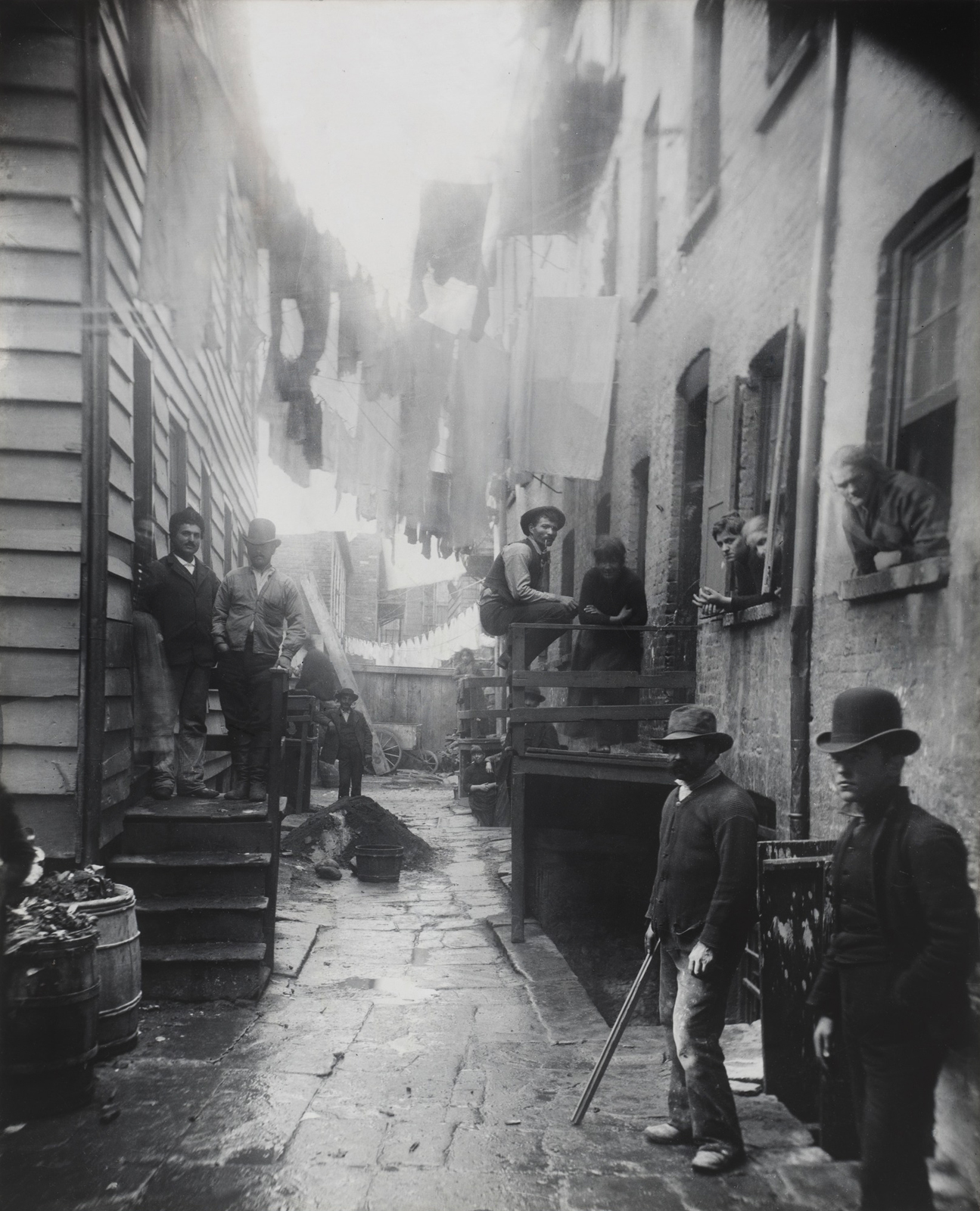
Jacob Riis (Danish-American, 1849-1914) 'Bandit's Roost at 59½ Mulberry Street' 1888


Jacob Riis (Danish-American, 1849-1914)
Bandit’s Roost at 59½ Mulberry Street
1888
Gelatin silver print, printed 1958
19 3/16 x 15 1/2″ (48.7 x 39.4cm)
The Museum of Modern Art, New York
Gift of the Museum of the City of New York


Late 19th-century New York City was a magnet for the world’s immigrants, and the vast majority of them found not streets paved with gold but nearly subhuman squalor. While polite society turned a blind eye, brave reporters like the Danish-born Jacob Riis documented this shame of the Gilded Age. Riis did this by venturing into the city’s most ominous neighbourhoods with his blinding magnesium flash powder lights, capturing the casual crime, grinding poverty and frightful overcrowding. Most famous of these was Riis’ image of a Lower East Side street gang, which conveys the danger that lurked around every bend. Such work became the basis of his revelatory book How the Other Half Lives, which forced Americans to confront what they had long ignored and galvanised reformers like the young New York politician Theodore Roosevelt, who wrote to the photographer, “I have read your book, and I have come to help.” Riis’ work was instrumental in bringing about New York State’s landmark Tenement House Act of 1901, which improved conditions for the poor.

Anonymous. “Bandit’s Roost, 59½ Mulberry Street,” on the Time 100 Photos website [Online] Cited 09/06/2019 no longer available online


Paul Strand (American, 1890-1976) 'Wall Street, New York' 1915


Paul Strand (American, 1890-1976)
Wall Street
1915
Gelatin silver print
The Museum of Modern Art, New York


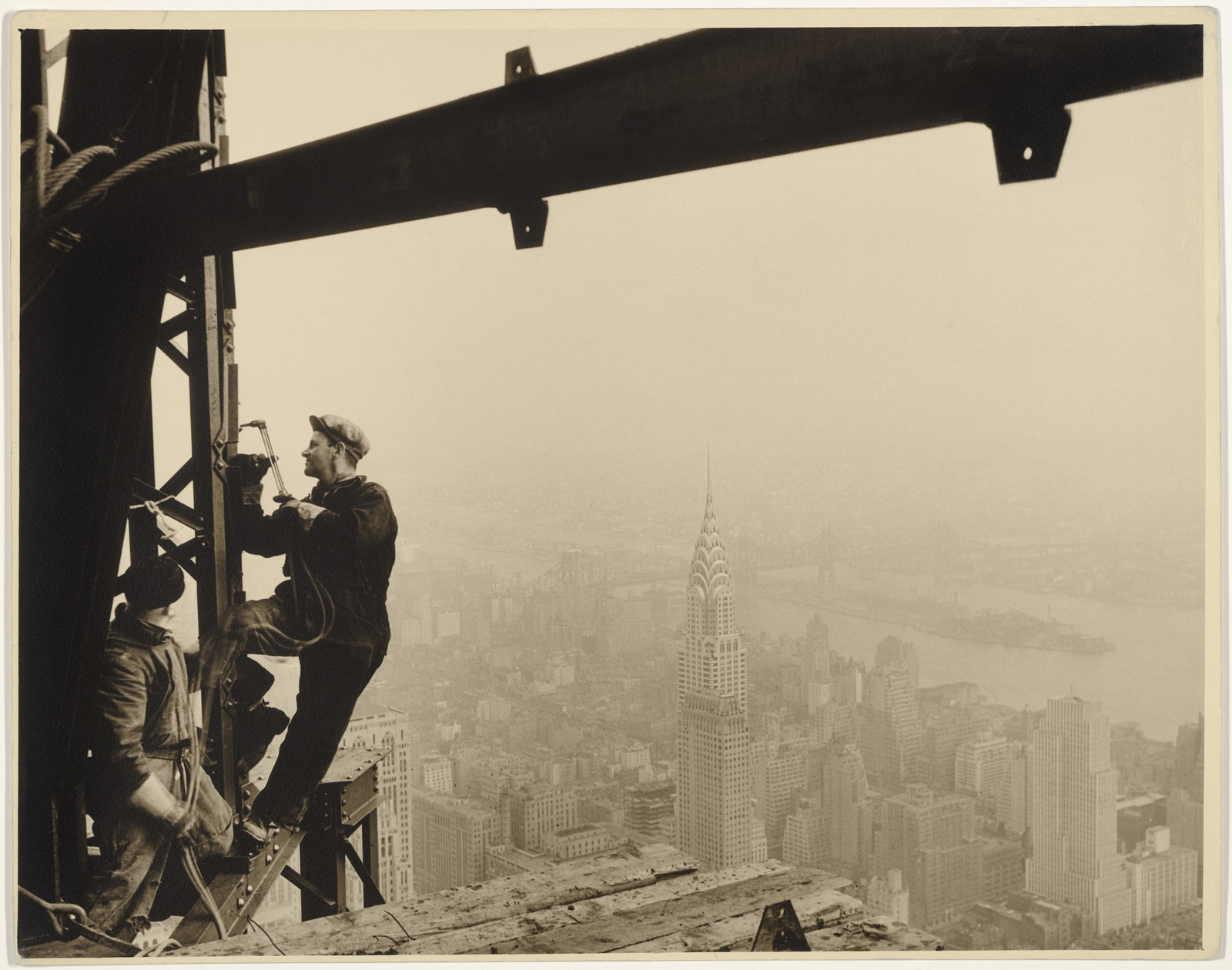
Lewis W. Hine (American, 1874-1940) 'Welders on the Empire State Building' c. 1930


Lewis W. Hine (American, 1874-1940)
Welders on the Empire State Building
c. 1930
Gelatin silver print
10 5/8 x 13 5/8″ (27 x 34.6cm)
The Museum of Modern Art, New York. Committee on Photography Fund


Dan Weiner (American, 1919-1959)
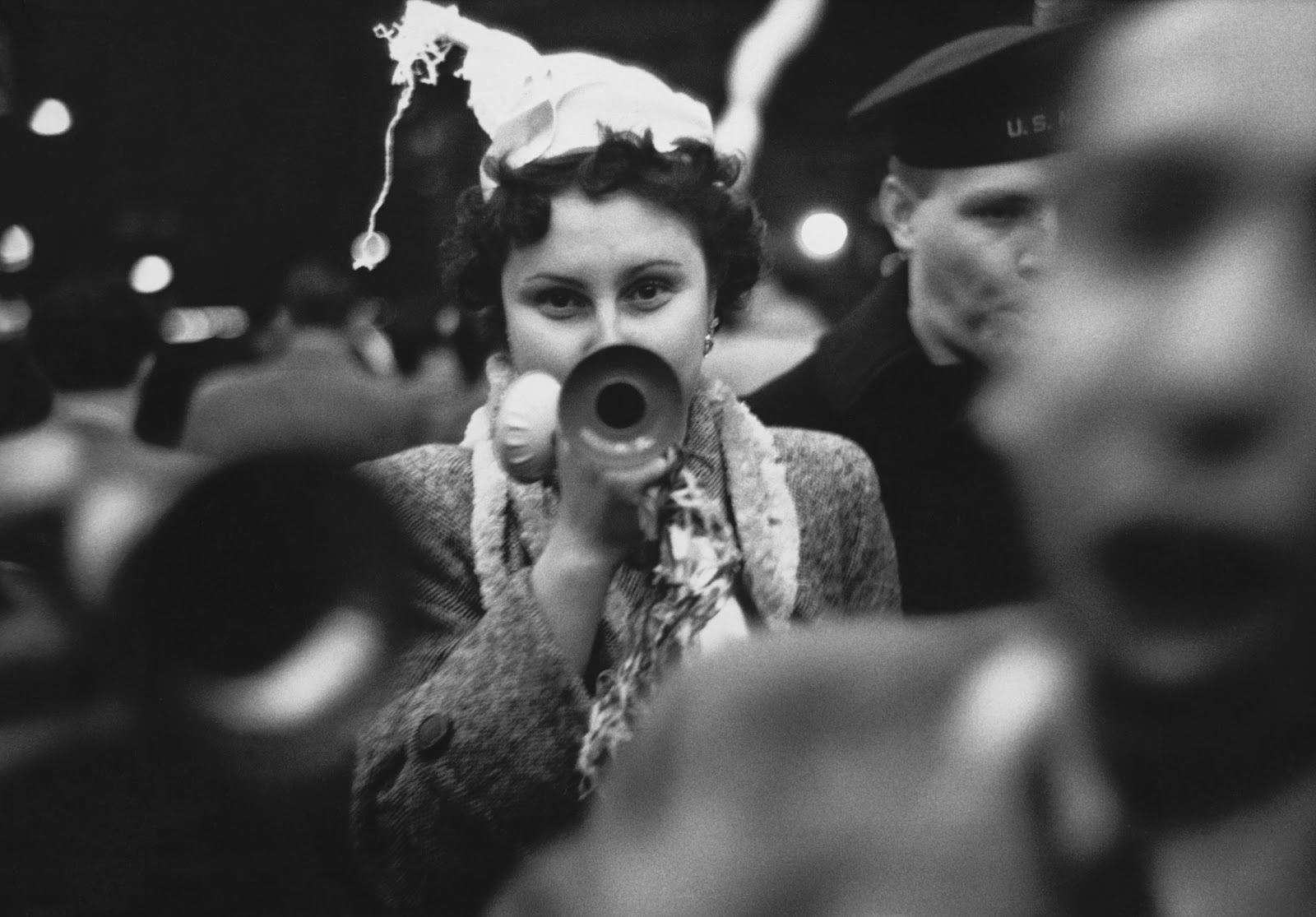
'New Year's Eve, Times Square' 1951


Dan Weiner (American, 1919-1959)
New Year’s Eve, Times Square
1951
Gelatin silver print
9 1/4 x 13 3/16″ (23.5 x 33.5cm)
The Museum of Modern Art, New York. Gift of Sandra Weiner
© 2009 Estate of Dan Weiner


Bruce Davidson (American, b. 1933) 'Untitled' from the 'Brooklyn Gang' series 1959


Bruce Davidson (American, b. 1933)
Untitled from the Brooklyn Band series
1959
Gelatin silver print
6 3/4 x 10″ (17.1 x 25.4cm)
The Museum of Modern Art, New York. Purchase
© 2019 Magnum Photos, Inc. and Bruce Davidson


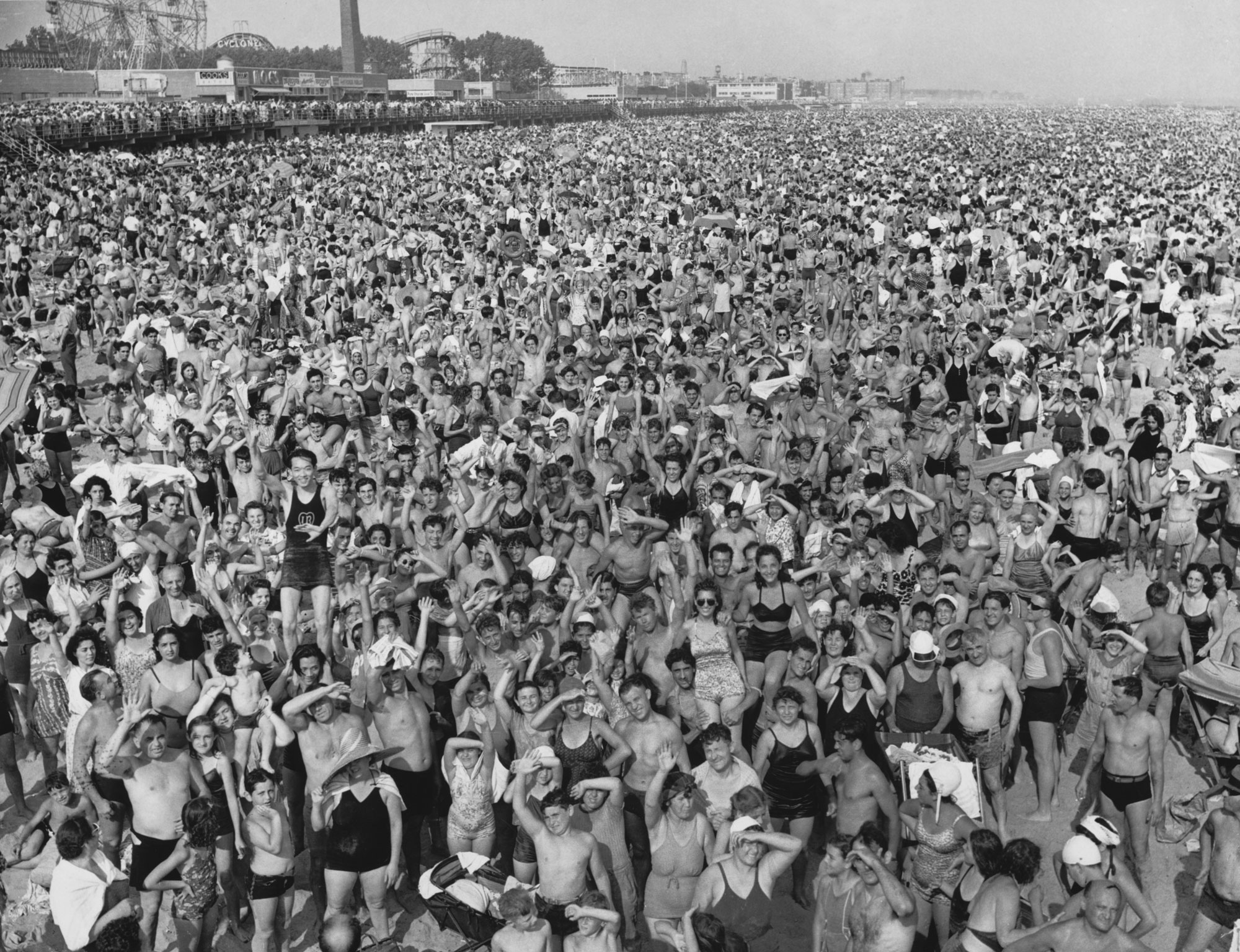
Weegee (Arthur Fellig) (American born Austria, 1899-1968) 'Coney Island' 1940


Weegee (Arthur Fellig) (American born Austria, 1899-1968)
Coney Island
c. 1939
Gelatin silver print
10 5/16 x 13 11/16″ (26.2 x 34.8cm)
The Museum of Modern Art, New York. Anonymous gift


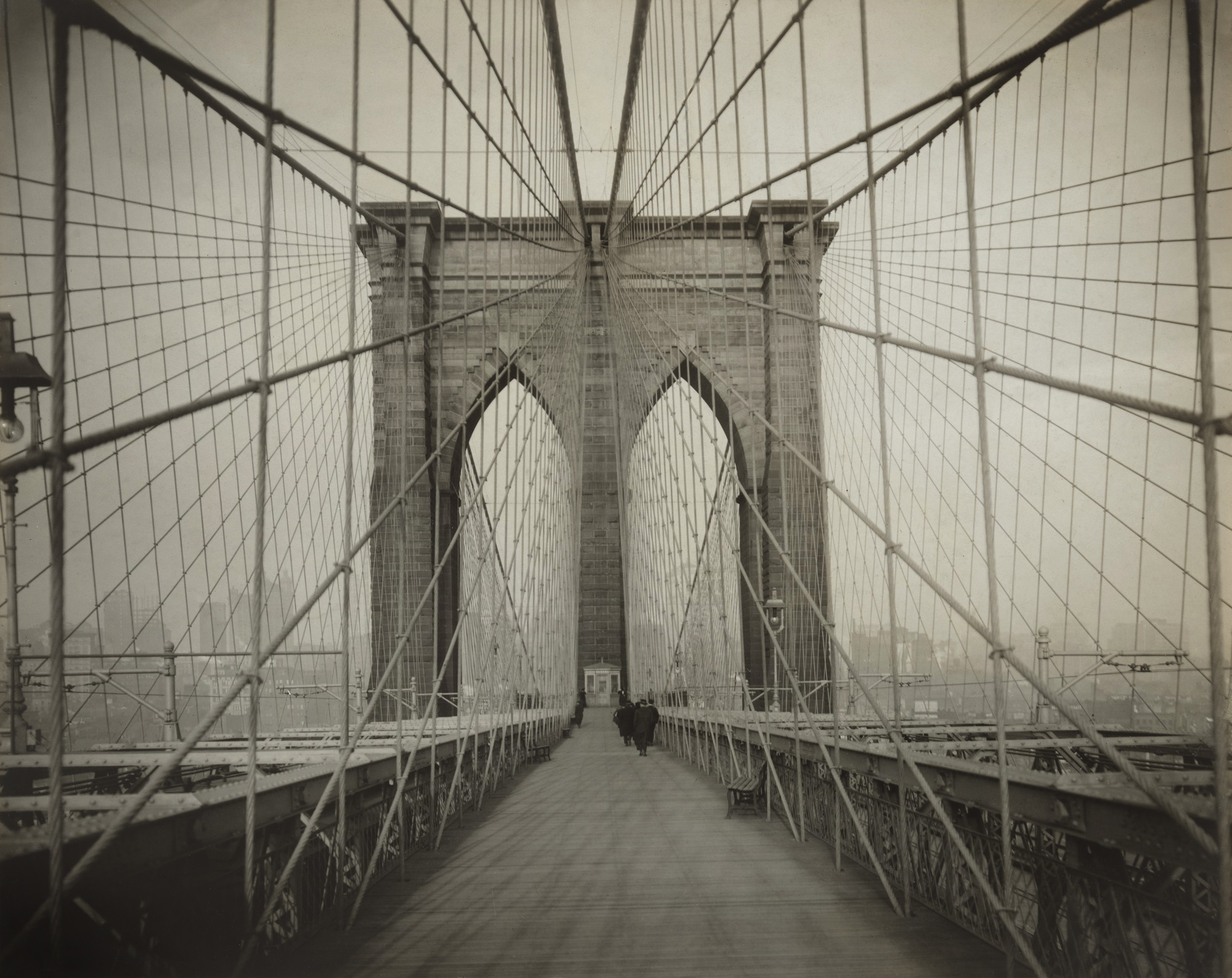
Unknown photographer. 'Brooklyn Bridge' c. 1914


Unknown photographer (American)
Brooklyn Bridge
c. 1914
Gelatin silver print
7 5/8 x 9 9/16″ (19.4 x 24.3cm)
The Museum of Modern Art, New York, The New York Times Collection


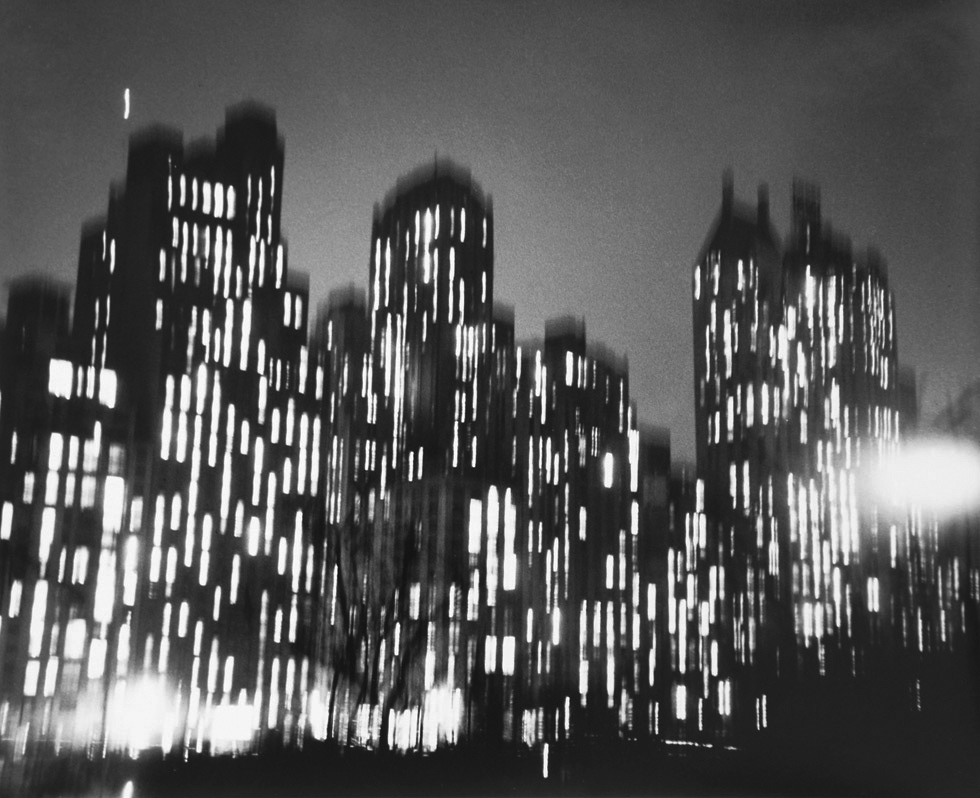
Ted Croner (American, 1922-2005) 'Central Park South' 1947-1948


Ted Croner (American, 1922-2005)
Central Park South
1947-1948
Gelatin silver print
The Museum of Modern Art, New York


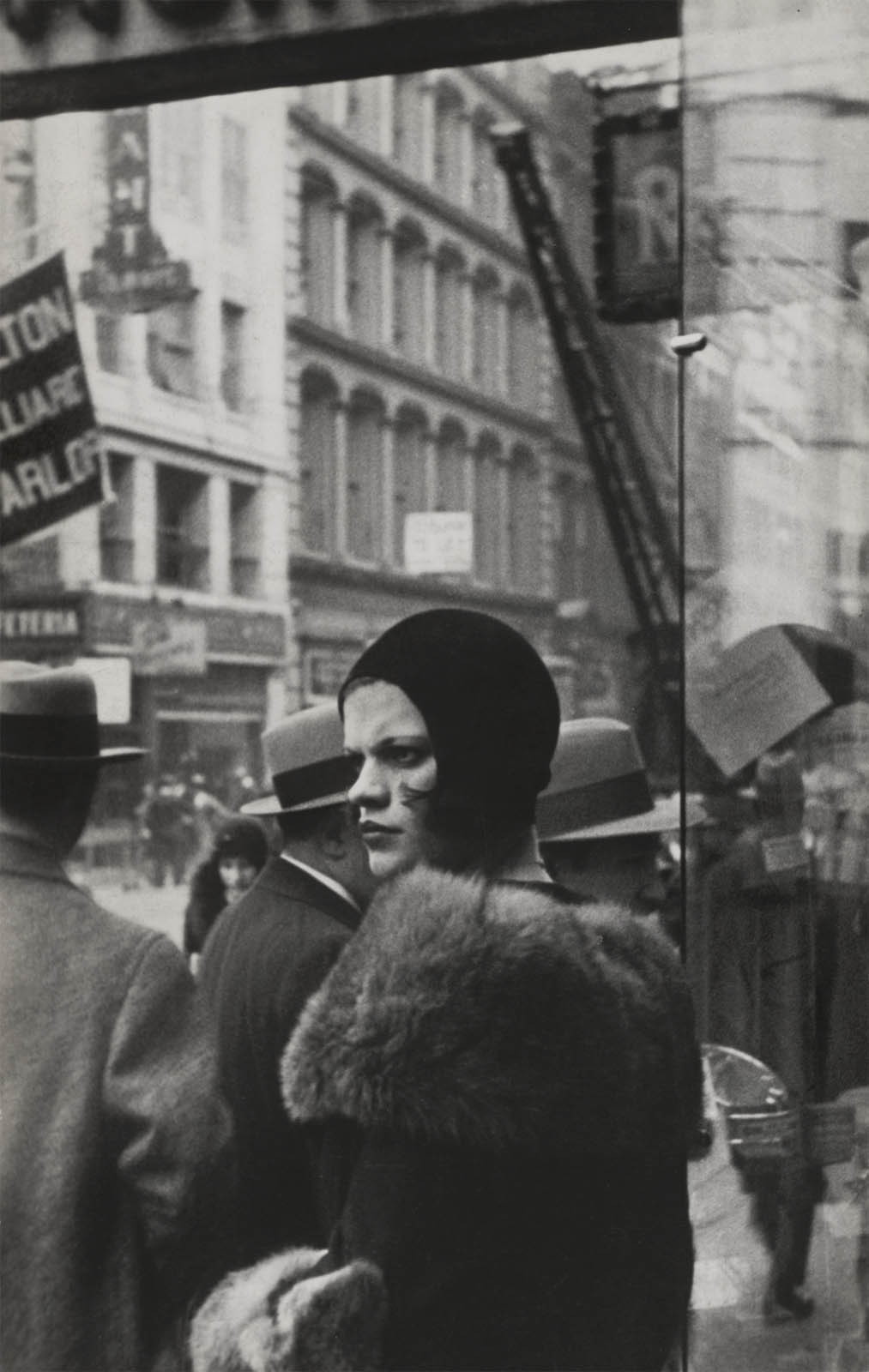
Walker Evans (American, 1903-1975)
'Girl in Fulton Street, New York' 1929
Screenshot


Walker Evans (American, 1903-1975)
Girl in Fulton Street, New York
1929
Gelatin silver print
7 5/16 × 4 5/8″ (18.6 × 11.7cm)
Museum of Modern Art
Gift of the artist


Bernice Abbott (American, 1898-1991) 'Night View, New York City' 1932


Bernice Abbott (American, 1898-1991)
Night View, New York City
1932
Gelatin silver print
The Museum of Modern Art, New York


Lee Friedlander (American, b. 1934)
'New York City' 1980


Lee Friedlander (American, b. 1934)
New York City
1980
Gelatin silver print
The Museum of Modern Art, New York


Irish Museum of Modern Art/Áras Nua-Ealaíne na hÉireann
Royal Hospital
 Military Road
Kilmainham
Dublin 8
Ireland
Phone: +353-1-612 9900

Opening hours:
Tuesday, Thursday – Saturday: 10.00am – 5.30pm
Wednesday: 11.30am – 5.30pm
Sundays and Bank Holidays: 12pm – 5.30pm

Irish Museum of Modern Art website

LIKE ART BLACK ON FACEBOOK

Back to top

Exhibition: ‘René Burri: A Retrospective’ at Flo Peters Gallery, Hamburg

Exhibition dates: 4th November, 2009 – 15th January, 2010


Many thankx to the Flo Peters Gallery for allowing me to publish the photographs in the posting. Please click on the photographs for a larger version of the image.

Dr Marcus Bunyan


René Burri (Swiss, 1933-2014) 'Tae Soe Dong, Sud Korea' 1961


René Burri (Swiss, 1933-2014)
Tae Soe Dong, Sud Korea
1961
Gelatin silver print


René Burri (Swiss, 1933-2014) 'Bilbao, Spain' 1957


René Burri (Swiss, 1933-2014)
Bilbao, Spain
1957
Gelatin silver print


René Burri (Swiss, 1933-2014)
'Training, Fort Lauderdale, Florida'
1966


René Burri (Swiss, 1933-2014)
Training, Fort Lauderdale, Florida
1966
Gelatin silver print


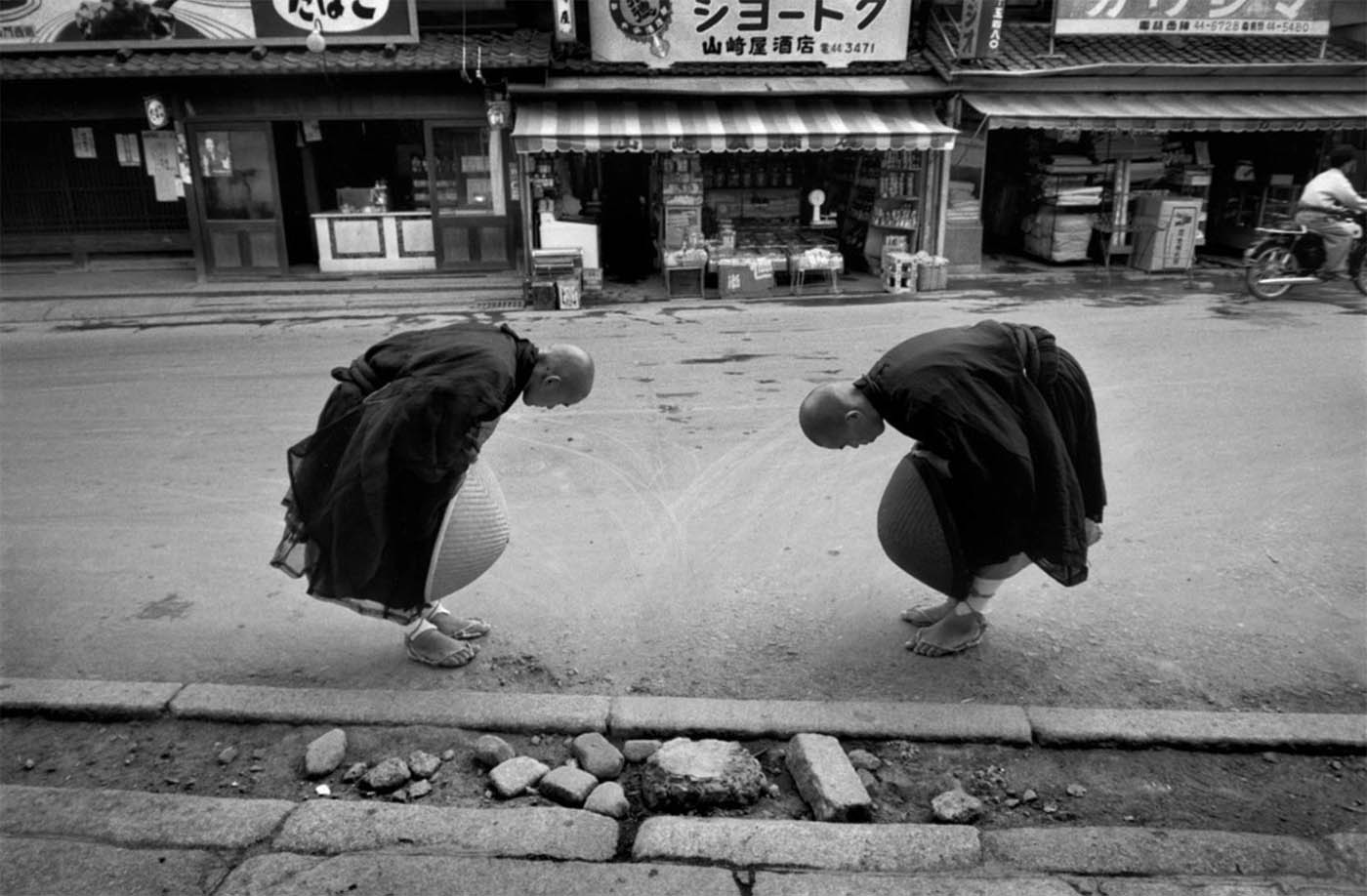
René Burri (Swiss, 1933-2014) 'Two Monks, Kyoto, Japan' 1961


René Burri (Swiss, 1933-2014)
Two Monks, Kyoto, Japan
1961
Gelatin silver print


René Burri (Swiss, 1933-2014) 'Che Guevara, Havana' 1963


René Burri (Swiss, 1933-2014)
Che Guevara, Havana
1963
Gelatin silver print


René Burri (Swiss, 1933-2014) 'Men On A Rooftop, Sao Paulo' 1960


René Burri (Swiss, 1933-2014)
Men On A Rooftop, Sao Paulo
1960
Gelatin silver print


René Burri likes to see his career as a series of happy accidents, which is often just another way of editing out all the downtime and boring bits, the months of no work. But you have to admit it did start with a bang. There he was, 24 years old, mooching around in northern Spain, when he read in a newspaper that Picasso was expected at a bullfight in Nimes the next day. He drove through the night, checked into a hotel early the next morning – and to his surprise was ushered straight into Picasso’s bedroom.

A party was in full swing, and the artist was sitting up in bed, directing a small group of musicians and friends. He nodded at Burri – yes, he could take pictures – and the result is a wonderfully vivid sequence of portraits, Picasso laughing and clapping and betraying not the tiniest sign that a private party has just been interrupted. Burri, of course, took it as a sign from God: with luck like this, he was a born photographer.

So, right from the start, he has had a knack for being in the right place at the right time – and for not making a nuisance of himself once he gets there. He photographed Che Guevara in Havana in 1963, just a few months before the revolutionary disappeared from public life. He got stuck in a lift with President Nasser of Egypt, and took a funny picture of him laughing while a bodyguard looks on murderously.

Of course, for every picture Burri took, there was another he didn’t. He is now 71 and semi-retired (photographers never stop), and says that you could fill volumes with the stories he didn’t get, the places he didn’t go.

The first time he was commissioned to go to Cuba, in 1958 at the height of the revolution, he got drunk the night before he was due to fly, cried off, and went skiing at home in Switzerland instead. He once saw Greta Garbo coming down the road towards him in New York, wearing dark glasses, and at the very last moment put away his camera; she was just too forbidding. In the desert in Egypt, he saw the blackened hand of a corpse reaching up through the sand, and he didn’t take that picture, either. Burri believes in a notion of tact, or what he calls dignity.

Other people might call it cowardice, but he feels strongly that there are some lines you just don’t cross. “I have incredible respect for [war photographers] Don McCullin and Larry Burrows, but you pay a price. What does Don photograph now? Landscapes, pictures of flowers.” This is partly a moral position – photographers can get addicted to war, he says, and he met a lot of them in Vietnam – but it is also a simple instinct for self-preservation. Three of Burri’s great mentors at Magnum – Robert Capa, Werner Bischof, Chim (David Seymour) – lived dangerously and died young, and he always felt it was a tremendous waste of their talent.

For all that, Burri has seen a lot of war. Since joining Magnum in 1959, he has covered conflicts in Cambodia, Korea, Vietnam, Egypt, Syria, Lebanon and China. He says he prefers to photograph the build-up to war, or its aftermath, rather than the violence itself. One of the first big projects he undertook was a portrait of postwar Germany, starting in the bleak mid-1950s and published in book form in 1962.

Of all his photographs, those that most nearly capture the atmosphere of combat are, in fact, of a training exercise in the Swiss Jura. Burri undertook compulsory military service in the 1950s, while still at art school, but with the permission of his training officer ended up shooting more film than anything else; he developed the pictures in his bath tub at the end of the day. At the age of 21, he came to see the camera as a way of removing himself from actual conflict; it also, he says, forced him to look for metaphors about battle, rather than relying on the action picture. (This is a rule of his – don’t be too literal. He once saw Castro standing in a doorway underneath a big exit sign, which was tempting for a second, but then just too obvious.)

Burri’s most powerful war pictures are the ones with no one in them. During the Six Day War between Egypt and Israel in 1967, he took a series of stark, graphic photographs, many of them from the air, which said something about the conflict that any single explosion or corpse might not have. In one, the wreckage of an Egyptian helicopter lies sprawled on a concrete landing pad, looking like a bug squashed on patio paving; in another, a burned-out convoy snakes through the desert like a collection of children’s toys left out in a sand pit.

A third photograph, an extreme close-up of a helmeted soldier with helicopters swarming at his shoulder like mosquitoes, taken in 1974, after the Yom Kippur war, has someone in it, it’s true, but he is silhouetted and faceless – an emblematic soldier, not a real one. In person, Burri is not a man given to big political statements, but on film he has captured the futility of war, the mess and wastefulness of human aggression.

Burri now lives in Paris, which is currently honouring him with a retrospective, and on the opening weekend he rushes around the gallery with his publisher, a TV director, several friends, his wife and 11-year-old son in tow. (He has grown-up children from his first marriage to Rosellina Bischof, who died in 1986.) He is every inch the European photojournalist – battered black fedora, cravat, a thick cloud of cigar smoke; when we move to a cafe to talk and the Americans at the next table complain about the cigar, he points out, in a very genial way, that the pollution is marginally worse outside.

At art school in Zurich, Burri was initially more interested in film. He had a rather off-putting photography teacher who started class with gymnastics and breathing exercises, and was a keen proponent of the “new objectivity” – there was an emphasis on still lifes and form, and what Burri refers to as “coffee cups in light.”

The American photographer Edward Steichen once came to the school looking for work he might include in an exhibition, The Family Of Man, at the Museum of Modern Art in New York – where were the pictures of people, he wanted to know, and left disappointed. It wasn’t until after he graduated that Burri felt free to pursue the more spontaneous, subjective kind of photography that Steichen had come looking for. “I suddenly had to chase after my pictures … Pictures are like taxis during rush hour – if you’re not fast enough, someone else will get there first.”

He started in Paris, as everyone did in the 1950s. Henri Cartier-Bresson had just published his influential book The Decisive Moment, and Robert Doisneau and Willy Ronis were photographing the city’s streets and cafes. At Magnum, they took an interest in a story Burri had published about a school for deaf-mute children, selling it on to Life magazine. He was in – Cartier-Bresson approved, Capa was enthusiastic, so Burri became a part of the greatest photographers’ cooperative in the world.

For the next two decades, he travelled almost incessantly, working on commissions for the New York Times, Vogue, Paris-Match, Time, Der Stern. He has kept every boarding card and press pass; a cabinet in the Paris exhibition is full of them. But although Burri worked constantly throughout the 1950s and 1960s, his photographs were always considered the lesser part of a story; as far as magazine editors were concerned, it was the words that mattered. After Burri accompanied an American journalist on a two-hour interview with Che Guevara, Look magazine ran pages of dense text, cropping his extraordinary portraits and running them very small at the bottom of the page.

One of the chief pleasures of this retrospective stage in life, says Burri, is being able to go back through all that work and decide for himself what was important and what was not. In Phaidon’s new monograph of his work, the portrait of Che is not 2in square but blown up across two pages. He has hung magazine stories in the new exhibition, signing the uncredited ones in red crayon. And as well as the reportage, there are hundreds of portraits of artists and writers and architects – Patricia Highsmith, Alberto Giacometti, Le Corbusier – and of cities: Tokyo, Havana, New York in a blackout, Rio de Janeiro, São Paolo, Brasilia.

Burri fell in love with modern architecture as a student and went on to form close friendships with Le Corbusier, Luis Barragan and Oscar Niemeyer. Some of his best work draws on this innate feel for the form and volume of a building, and of a person’s place within it. A photograph called In The Ministry Of Health, Rio de Janeiro 1960, is so full of light and shadow, it looks at first like a street scene, two young women striding through thick bars of sunlight; in fact, the photograph was taken indoors, in the lobby of a building designed by two of Burri’s favourite architects, Niemeyer and Le Corbusier. Burri’s best known photograph, of four suited men crossing a rooftop in São Paolo, captures all the drama, glamour and vertigo of life in a giant city: the flat roof floats high above the street, dotted with tiny, improbable people.

When Burri left Zurich in the 1950s, he set out to discover the world and some sense of man’s smallness within it. Switzerland was landlocked, bordered by mountains; a camera was a way out. Even then, he worried about what he could do that was new – “when shutters rattle from morning to night in every corner of the world … when every continent is lit with the flash of cameras.” His job, he believes, has been to “trace the enormous social changes taking place in our age, conveying my thoughts and images of them.” And, more poetically, “to put the intensity that you yourself have experienced into the picture – otherwise it is just a document.” He retired from reporting once that intensity, that sense of the bigness of the world, was gone. In 1989, he went to Moscow to photograph Ronald Reagan and Mikhail Gorbachev, but so did 6,500 others, and in the scrum it seemed impossible to take a meaningful picture. He now prefers to paint and take pictures of his wife and son. Of course, he’d start all over again if the world ever became less crowded – if you could walk into Picasso’s bedroom at six in the morning, and be welcome.

Saturday February 7, 2004
The Guardian
Text on the Art Daily website [Online] Cited 19/05/2019


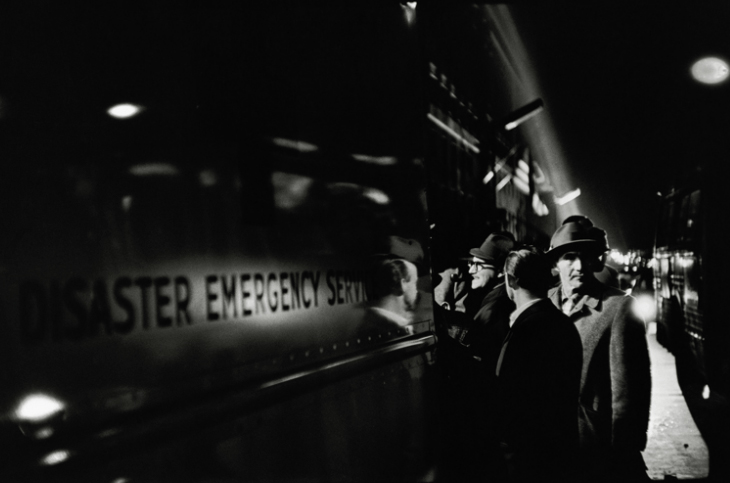
René Burri (Swiss, 1933-2014) 'Blackout New York' November 9, 1965

René Burri (Swiss, 1933-2014) 'Blackout New York' November 9, 1965

René Burri (Swiss, 1933-2014) 'Blackout New York' November 9, 1965

René Burri (Swiss, 1933-2014) 'Blackout New York' November 9, 1965


René Burri (Swiss, 1933-2014)
Four photographs from the series Blackout New York
November 9, 1965
Gelatin silver print


Flo Peters Gallery
Burchardstraße 13
Chilehaus C
20095 Hamburg, Germany

Gallery hours:
Tuesday – Friday 12 – 4pm
Saturday 11 – 3pm

Flo Peters Gallery website

LIKE ART BLART ON FACEBOOK

Back to top

Exhibition: ‘A Few Frames: Photography and the Contact Sheet’ at Whitney Museum of American Art, New York

Exhibition dates: 25th September, 2009 – 3rd January, 2010


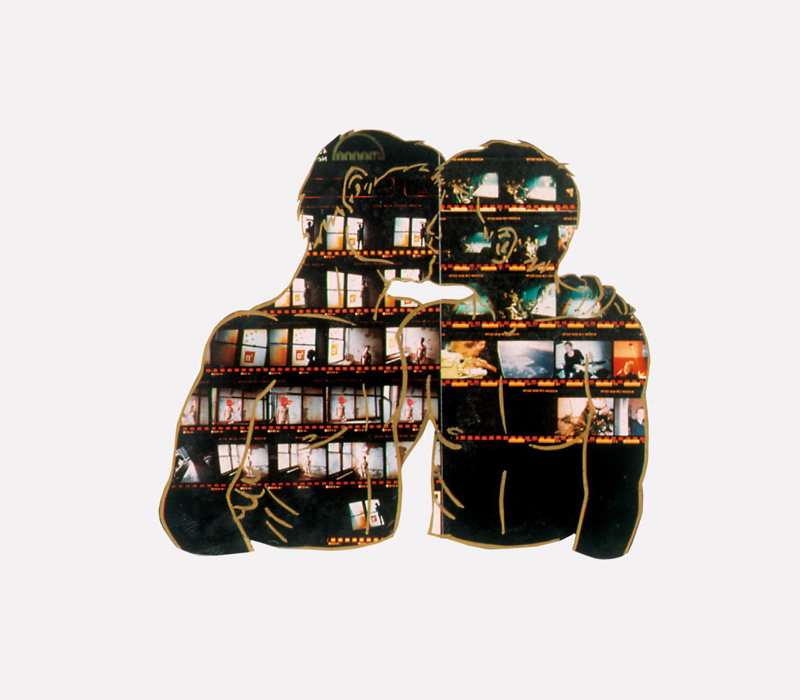
David Wojnarowicz (American, 1954-1992) 'Untitled' 1988


David Wojnarowicz (American, 1954-1992)
Untitled
1988
Synthetic polymer on two chromogenic prints
11 x 13 1/4 in. (27.9 x 33.7cm)
Whitney Museum of American Art, New York
Purchase with funds from the Photography Committee
Courtesy of The Estate of David Wojnarowicz and P.P.O.W. Gallery, New York, NY


I gently massaged more photographs of the work in the exhibition from the Whitney press office after initially only being able to download one press image! Many thankx to the Whitney for supplying more images.

As the press release mentions them by name, presumably there will be some of the Robert Frank contact sheets which you can see at the posting Looking In: Robert Frank’s The Americans and the water towers of Bernd and Hilla Becher two photographs of which can be seen at the posting Notes on a conversation with Mari Funaki.

In case you don’t know the work of artist David Wojnarowicz he was a gay man who died of HIV/AIDS aged 37 in 1992: I believe he was one of the most talented and subversive artists of his generation and his powerful images of identity, sexuality, power and death remain seared in my memory. Unfortunately there are not many good images to be found online but there is an excellent Aperture book, Aperture 137 Fall 1994 (David Wojnarowicz: Brush Fires in the Social Landscape) available from Amazon.

Dr Marcus Bunyan


Many thankx to the Whitney Museum of American Art for allowing me to publish the photographs in the posting. Please click on the photographs in the posting for a larger version of the image.


Rachel Harrison (American, b. 1966) 'Contact Sheet (should home windows...)' 1996


Rachel Harrison (American, b. 1966)
Contact Sheet (should home windows…)
1996
Chromogenic print on fibreboard
20 x 16 in.
Collection of the artist 
courtesy Greene Naftali, New York
© 2009 Rachel Harrison


In this selection of works drawn principally from the Whitney’s permanent collection, the repetitive image of the proof sheet is the leitmotif in a variety of works spanning the range of the museum’s photography collection, including the works of Paul McCarthy, Robert Frank, Ed Ruscha, and Andy Warhol. The exhibition is co-curated by Elisabeth Sussman, Whitney Curator and Sondra Gilman Curator of Photography, and Tina Kukielski, Senior Curatorial Assistant. A Few Frames opens on September 25, 2009 in the Sondra Gilman Gallery and runs through January 3, 2010.

Decisions about which photograph to exhibit or print are frequently the end result of an editing process in which the artist views all of the exposures he or she has made on a contact sheet – a photographic proof showing strips or series of film negatives – and then selects individual frames to print or enlarge. Repetition, seriality, and sequencing – inherited from the contact sheet – are evident in all of the works on view. As co-curator Tina Kukielski notes, “this presentation includes a variety of photographs that build on the formal, thematic, and technical logic of the editing process.”

The exhibition includes photo-based works from sixteen featured artists in the Whitney’s collection. The work of David Wojnarowicz and Paul McCarthy present the contact sheet as a work of art, while those of artists such as Andy Warhol, Harold Edgerton, and Robert Frank play with its repeating forms. Other works call to mind the format of the contact sheet, such as Bernd and Hilla Becher’s typological study of industrial water towers and Silvia Kolbowski’s grid of appropriated images of female fashion models.

Works by contemporary artists such as Rachel Harrison and Collier Schorr in their continued interest in the contact sheet, despite perhaps growing trends toward digital photography, reveal the residual and sustained effects of this process.

Press release from the Whitney Museum of American Art website [Online] Cited 01/11/2009 no longer available online


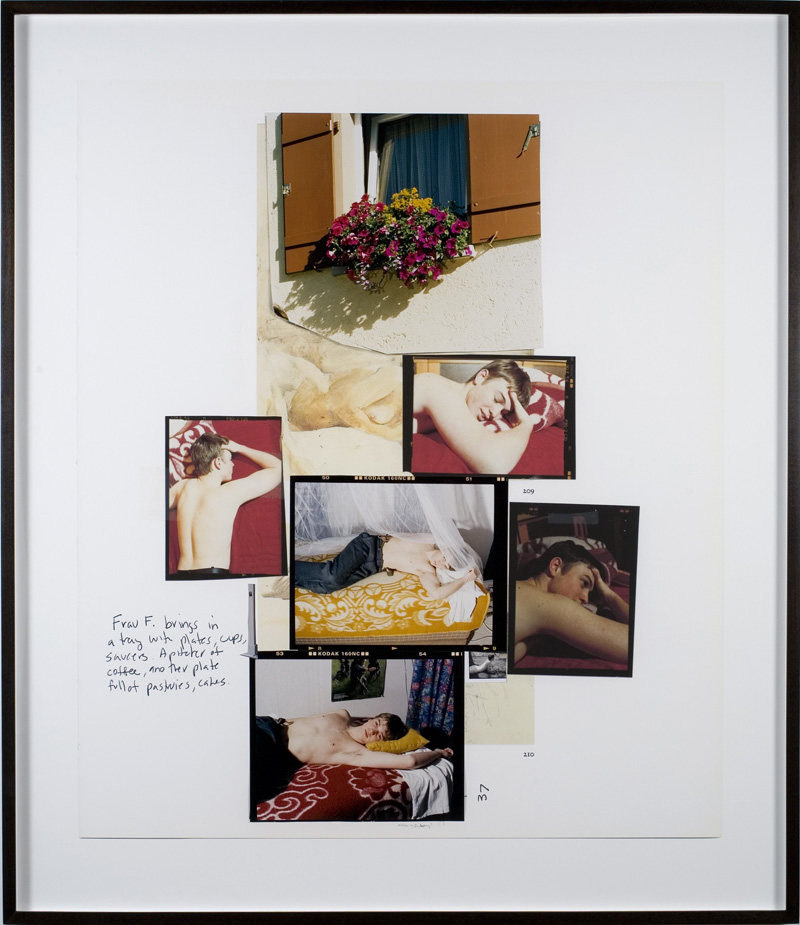
Collier Schorr (American, b. 1963) 'Day Dream (Sky)' 2007


Collier Schorr (American, b. 1963)
Day Dream (Sky)
2007
Collage
48 x 43 in. (121.9 x 109.2cm)
Courtesy 303 Gallery, New York


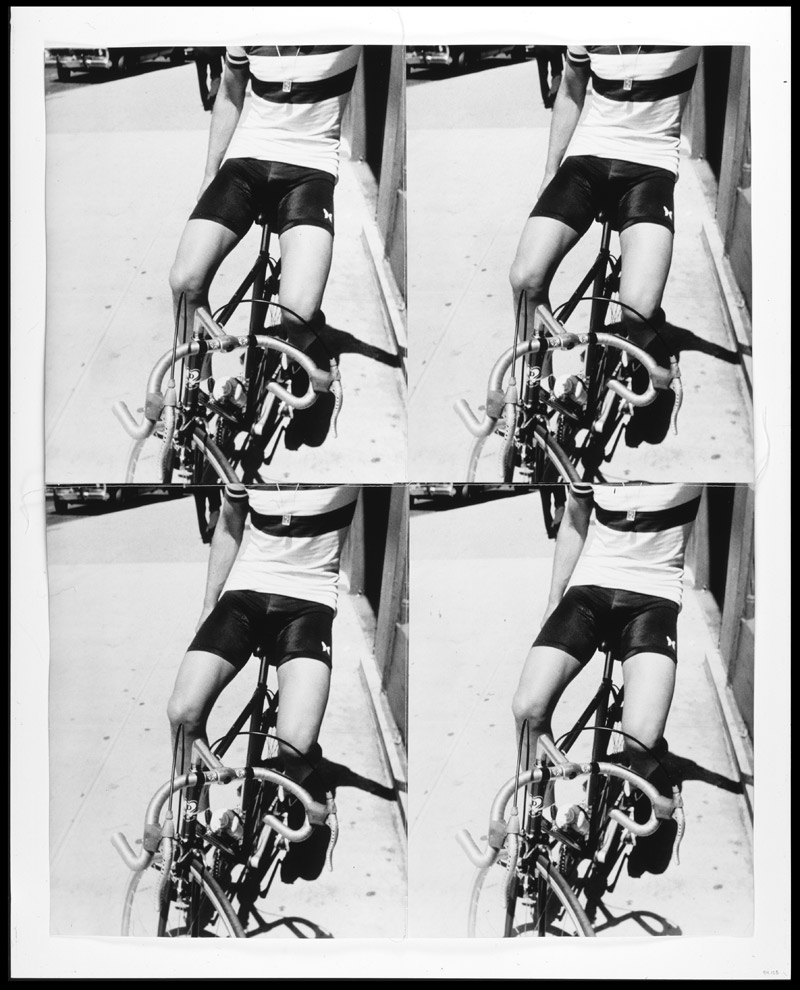
Andy Warhol (American, 1928-1987) 'Untitled (Cyclist)' 
c. 1976


Andy Warhol (American, 1928-1987)
Untitled (Cyclist)
c. 1976
Four gelatin silver prints stitched with thread
27 3/8 x 21 5/8 in. (69.5 x 54.9cm) overall
Unique Whitney Museum of American Art, New York
Gift of The Andy Warhol Foundation for the Visual Arts and purchase with funds from the Photography Committee
© 2009 The Andy Warhol Foundation for the Visual Arts, Inc. /Artists Rights Society (ARS), New York


Ellen Gallagher (American, b. 1965) 'Bouffant Pride' 2003


Ellen Gallagher (American, b. 1965)
Bouffant Pride
2003
Layered photogravure, cut-outs, collage, acrylic, plasticine, and toy eyes
Overall: 13 1/2 × 10 1/2 × 3/16in. (34.3 × 26.7 × 0.5cm)
Sheet: 13 1/2 × 10 1/2in. (34.3 × 26.7cm)
Whitney Museum of American Art, New York; purchase, with funds from the Print Committee


Duane Michals (American, b. 1932) 'Things are Queer' 1973

Duane Michals (American, b. 1932) 'Things are Queer' 1973

Duane Michals (American, b. 1932) 'Things are Queer' 1973

Duane Michals (American, b. 1932) 'Things are Queer' 1973

Duane Michals (American, b. 1932) 'Things are Queer' 1973

Duane Michals (American, b. 1932) 'Things are Queer' 1973

Duane Michals (American, b. 1932) 'Things are Queer' 1973

Duane Michals (American, b. 1932) 'Things are Queer' 1973

Duane Michals (American, b. 1932) 'Things are Queer' 1973


Duane Michals (American, b. 1932)
Things are Queer
1973
Nine silver gelatin prints
Whitney Museum of American Art, New York; gift of David Kezur


Edward Ruscha (American, b. 1937)
'[A Few Palm Trees Contact Sheet]'
1971


Edward Ruscha (American, b. 1937)
[A Few Palm Trees Contact Sheet]
1971
Gelatin silver print, tracing paper and crayon
Sheet: 10 × 8 1/16in. (25.4 × 20.5cm)
Overall (overlay): 9 3/4 × 8 3/16in. (24.8 × 20.8cm)
Whitney Museum of American Art, New York
Purchase, with funds from The Leonard and Evelyn Lauder Foundation, and Diane and Thomas Tuft
© Ed Ruscha


Edward Ruscha (American, b. 1937)
'[A Few Palm Trees Contact Sheet]'
1971


Edward Ruscha (American, b. 1937)
[A Few Palm Trees Contact Sheet]
1971
Gelatin silver print, tracing paper and crayon
Sheet: 10 × 8 1/16in. (25.4 × 20.5cm)
Overall (overlay): 9 3/4 × 8 3/16in. (24.8 × 20.8cm)
Whitney Museum of American Art, New York
Purchase, with funds from The Leonard and Evelyn Lauder Foundation, and Diane and Thomas Tuft
© Ed Ruscha


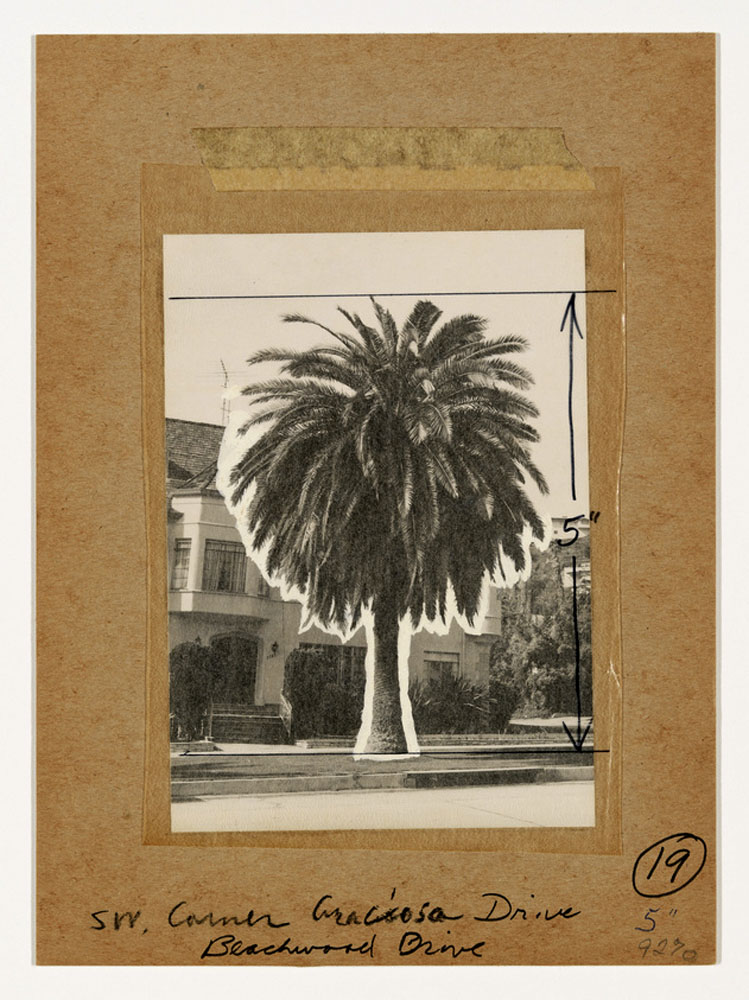
Edward Ruscha (American, b. 1937) 'Mock Up #19 (South West Corner of Graciosa Drive and Beachwood Drive)' 1971


Edward Ruscha (American, b. 1937)
Mock Up #19 (South West Corner of Graciosa Drive and Beachwood Drive)
1971
Gelatin silver print, tracing paper, pigment, pencil, and ink on board,
Image: 7 × 5in. (17.8 × 12.7cm)
Overall (overlay): 8 1/8 × 5 1/2in. (20.6 × 14cm)
Mount (board): 11 × 8in. (27.9 × 20.3cm)
Whitney Museum of American Art, New York
Purchase, with funds from The Leonard and Evelyn Lauder Foundation, and Diane and Thomas Tuft
© Ed Ruscha


Robert Frank (Swiss-American, 1924-2019) 'Mabou Winter Footage' 1977


Robert Frank (Swiss-American, 1924-2019)
Mabou Winter Footage
1977
Gelatin silver print
23 11/16 × 14 3/4″ (60.1 × 37.5cm)


Whitney Museum of American Art
945 Madison Avenue at 75th Street
New York, NY 10021
General Information: (212) 570-3600

Opening Hours:
Sunday – Monday, Wednesday – Thursday 10.30am – 6pm
Friday and Saturday 10.30am – 10pm
Closed Tuesday

Whitney Museum of American Art website

LIKE ART BLART ON FACEBOOK

Back to top

Review: ‘Long Distance Vision: Three Australian Photographers’ at The Ian Potter Centre NGV Australia, Federation Square, Melbourne

Exhibition dates: 28th August, 2009 – 21st February, 2010


Max Pam (born Australia 1949, lived in Brunei 1980-1983) 'Road from Bamiyan' 1971 from the exhibition 'Long Distance Vision: Three Australian Photographers' at The Ian Potter Centre NGV Australia, Federation Square, Melbourne, Aug 2009 - Feb 2010


Max Pam (born Australia 1949, lived in Brunei 1980-1983)
Road from Bamiyan
1971
Gelatin silver photograph
20.1 x 20.1cm
National Gallery of Victoria, Melbourne
Purchased, 1979


Long Distance Vision is a disappointingly wane exploration of travel photography at NGV Australia. With the exception of the work of Max Pam the exhibition lacks insight into the phenomena that the curators want the work to philosophically investigate: namely how photographs shape our expectations of a place (even before we arrive) and how photographs also serve to confirm our experience – the picture as powerful mnemonic tool.

Firstly a quick story: when travelling in America to study at the Kinsey Institute I boarded a train from Chicago to what I thought was Bloomington, Indiana only to arrive many hours later at Bloomington, Illinois. Unbeknownst to me this Bloomington also had a motel of the same name as I was staying at in Indiana! After much confusion I ended up at the local airport trying to catch a single seater aircraft to Bloomington, Indiana with no luck – at the end of my tether, fearful in a foreign country, in tears because I just had to be at this appointment the next morning. Riding to my rescue was a nineteen year old kid with no shoes, driving an ex-cop car, who drove me across the Mid-West states stopping at petrol stops in the dead of night. It was a surreal experience, one that I will never forget for the rest of my life … fear, apprehension, alienation, happiness, joy and the sublime all rolled into one.

I tell this story to illustrate a point about travel – that you never know what is going to happen, what experiences you will have, even your final destination. To me, photographs of these adventures not only document this dislocation but step beyond pure representation to become art that re-presents the nature of our existence.

Matthew Sleeth‘s street photographs could be taken almost anywhere in the world (if it were not for a building with German writing on it). His snapshot aesthetic of caught moments, blinded people and dissected bodies in the observed landscape are evinced (to show in a clear manner; to prove beyond any reasonable doubt; to manifest; to make evident; to bring to light; to evidence – yes to bring to light, to evidence as photography does!) in mundane, dull, almost lifeless prints – ‘heavy’ photographs with a lack of shadow detail combined with a shallow depth of field. His remains, the people walking down the street and their shadow, are odd but as as The Age art critic Robert Nelson succinctly notes in his review of this exhibition, To become art, the odd cannot remain merely quaint but has to signify an existential anomaly by implication.”1

If we look at the seminal photographs from the book The Americans by Robert Frank we see in their dislocated view of America a foreigners view of the country the artist was travelling across – a subjective view of America that reveals as much about the state of mind of the artist as the country he was exposing. No such exposition happens in the works of Matthew Sleeth.

Christine Godden‘s photographs of family and friends have little to do with travel photography and I struggle to understand their inclusion in this exhibition. Though they are reasonable enough photographs in their own right – small black and white photographs of small intimacies (at the beach, in the garden, at the kitchen table, on the phone, on the porch, on the float, etc…) Godden’s anthropomorphist bodies have nothing to do with a vision of a new land as she had been living in San Francisco, New York and Rochester for six years over the period that these photographs were taken. Enough said.

The highlight of the exhibition is the work of Max Pam. I remember going the National Gallery of Victoria in the late 1980s to view this series of work in the collection – and what a revelation they were then and remain so today. The square formatted, dark sepia toned silver gelatin prints of the people and landscapes of Tibet are both monumental and personal at one and the same time. You are drawn into their intimacies: the punctum of a boys feet; the gathering of families; camels running before a windstorm; human beings as specks in a vast landscape.

“If the world is unfair or beyond our understanding, sublime places suggest it is not surprising things should be thus. We are the playthings of the forces that laid out the oceans and chiselled the mountains. Sublime places acknowledge limitations that we might otherwise encounter with anxiety or anger in the ordinary flow of events. It is not just nature that defies us. Human life is as overwhelming, but it is the vast spaces of nature that perhaps provide us with the finest, the most respectful reminder of all that exceeds us. If we spend time with them, they may help us to accept more graciously the great unfathomable events that molest our lives and will inevitably return us to dust.”2

The meditation on place and space that the artist has undertaken gives true insight into the connection of man and earth, coming closest to Alain de Botton’s understanding of the significance of sublime places. Through a vision of a distant land the photographs transport us in an emotional journey that furthers our understanding of the fragility of life both of the planet and of ourselves.

While the National Gallery of Victoria holds some excellent photography exhibitions (such as Andreas Gursky and Rennie Ellis for example) this was a missed opportunity. The interesting concept of the exhibition required a more rigorous investigation instead of such a cursory analysis (which can be evidenced by the catalogue ‘essay’: one page the size of a quarter of an A4 piece of paper that glosses over the whole history of travel photography in a few blithe sentences).

Inspiration could have easily been found in Alain de Botton’s excellent book The Art of Travel. Here we find chapters titled “On Anticipation”, “On Travelling Places”, “On the Exotic”, “On Curiosity”, “On the Country and the City” and “On the Sublime” to name but a few, with places and art work to illustrate the journey: what more is needed to excite the mind!

Take Charles Baudelaire for example. He travelled outside his native France only once and never ventured abroad again. Baudelaire still dreamt of going to Lisbon, or Java or to the Netherlands but “the destination was not really the point. The true desire was to get away, to go, as he concluded, ‘Anywhere! Anywhere! So long as it is out of the world!'”3

Heavens, we don’t even have to leave home to create travel photography that is out of the world! Our far-sighted vision (like that of photographer Gregory Crewdson) can create psychological narratives of imaginative journeys played out for the camera.

Perhaps what was needed was a longer gestation period, further research into the theoretical nuances of travel photography (one a little death, a remembrance; both a dislocation in the non-linearity of time and space), a gathering of photographs from collections around Australia to better evidence the conceptual basis for the exhibition and a greater understanding of the irregular possibilities of travel photography – so that the work and words could truly reflect the title of the exhibition Long Distance Vision.

Dr Marcus Bunyan


1/ Nelson, Robert. “In blurred focus: le freak c’est chic,” in The Age newspaper. Friday, October 23rd 2009, p. 18

2/ de Botton, Alain. The Art of Travel. London: Penguin, 2002, p. 178-179

3/ Ibid., p. 34


Max Pam (born Australia 1949, lived in Brunei 1980-83) 'My donkey, our valley, Sarchu' 1977 from the exhibition 'Long Distance Vision: Three Australian Photographers' at The Ian Potter Centre NGV Australia, Federation Square, Melbourne, Aug 2009 - Feb 2010


Max Pam (born Australia 1949, lived in Brunei 1980-1983)
My donkey, our valley, Sarchu
1977
Gelatin silver photograph
20.1 x 20.1cm
National Gallery of Victoria, Melbourne
Purchased, 1979
© Max Pam


Max Pam (Australian, b. 1949) 'Sisters' 1977 from the exhibition 'Long Distance Vision: Three Australian Photographers' at The Ian Potter Centre NGV Australia, Federation Square, Melbourne, Aug 2009 - Feb 2010


Max Pam (born Australia 1949, lived in Brunei 1980-1983)
Sisters
1977
Gelatin silver photograph
20.1 x 20.1cm
National Gallery of Victoria, Melbourne
Purchased, 1979
© Max Pam


Max Pam (Australian, b. 1949) 'Tibetan nomads' 1977


Max Pam (born Australia 1949, lived in Brunei 1980-1983)
Tibetan nomads
1977
Gelatin silver photograph
20.1 x 20.2cm
National Gallery of Victoria, Melbourne
Purchased, 1979
© Max Pam


Christine Godden (Australian, b. 1947) 'Bobbie and Amitabha at the beach' c. 1972


Christine Godden (Australian, b. 1947)
Bobbie and Amitabha at the beach
c. 1972
Gelatin silver photograph
13.2 x 20.1cm
National Gallery of Victoria, Melbourne
Purchased from Admission Funds, 1991
© Christine Godden


Christine Godden (Australian, b. 1947) 'Elliot holding a ring' 1973


Christine Godden (Australian, b. 1947)
Elliot holding a ring
1973
Gelatin silver photograph
15.0 x 22.8cm
National Gallery of Victoria, Melbourne
Purchased from Admission Funds, 1991
© Christine Godden


Christine Godden.Christine Godden (Australian, b. 1947)kitchen table' 1973


Christine Godden (Australian, b. 1947)
Joanie at the kitchen table
1973, printed 1986
Gelatin silver photograph
20.1 x 30.6cm
National Gallery of Victoria, Melbourne
Purchased from Admission Funds, 1991
© Christine Godden


Christine Godden (Australian, b. 1947) 'With Leigh on the porch' 1972


Christine Godden (Australian, b. 1947)
With Leigh on the porch
1972, printed 1986
Gelatin silver photograph
20.2 x 30.5cm
National Gallery of Victoria, Melbourne
Purchased from Admission Funds, 1991
© Christine Godden


“The National Gallery of Victoria will celebrate the work of Christine Godden, Max Pam and Matthew Sleeth in a new exhibition, Long Distance Vision: Three Australian Photographers opening 28 August.

Long Distance Vision will include over 60 photographs from the NGV Collection exploring the concept of the ‘tourist gaze’ and its relationship with the three artists.

Susan van Wyk, Curator Photography, NGV said the exhibition provides a fascinating insight into the unusual perspective brought by the three photographers to their varied world travel destinations.

“There’s a sense in the works in the exhibition that the photographers are not from the places they choose to photograph, and that each is a visitor delighting in the scenes they encounter.

“What is notable about the photographs in Long Distance Vision is that rather than focussing on the well known scenes that each artist encountered, they have turned their attention to the ‘little things’, the details of the everyday,” said Ms van Wyk.

From the nineteenth century, photography has been a means by which people could discover the world, initially through personal collection and albums, and later via postcards, magazines, books and the internet.

Dr Gerard Vaughan, Director, NGV said that both contemporary photographers and tourists use the camera as a means to explore and capture the world.

“Through their photographs, the three artists featured in Long Distance Vision show us highly individual ways of seeing the world. This exhibition will surprise and delight visitors as our attention is drawn to not only what is different but what remains the same as we travel the world,” said Dr Vaughan.

Born in Melbourne in 1949, Max Pam began his career in various commercial photography studios in the 1960s. After responding to a university notice for assistance to drive a Volkswagen from Calcutta to London in 1969, Pam got his first taste of being a traveller. The body of Pam’s work in this exhibition is from the series The Himalayas, which was photographed over a number of early visits to India.

Christine Godden also travelled the popular overland route between Europe and India in the early 1970s, returning to Sydney in 1978. In 1972, after a period of travelling, Godden found her home in the US where she remained for six years. Godden’s photographs in this exhibition were taken between 1972 and 1974 during her stay in the US.

Born in Melbourne in 1972, Matthew Sleeth is another seasoned traveller. During the late 1990s, Sleeth settled in Opfikon, an outer suburb of Zurich, Switzerland. The series of photographs in Long Distance Vision were taken during this time, showing Sleeth’s interest not only in street photography, but also in the narrative possibilities in everyday scenes. Dotted with garishly coloured playhouses, naive sculptures and whimsical arrangements of garden gnomes Sleeth’s photographs go beyond the ‘picture-perfect’ scenes of typical tourist photography.

Long Distance Vision: Three Australian Photographers is on display at The Ian Potter Centre: NGV Australia, Federation Square from 28 August 2009 to 21 February 2010.”

Text from the National Gallery of Victoria press release


Matthew Sleeth (Australian, b. 1972) From the series 'Opfikon' 1997

Matthew Sleeth (Australian, b. 1972) From the series 'Opfikon' 1997

Matthew Sleeth (Australian, b. 1972) From the series 'Opfikon' 1997

Matthew Sleeth (Australian, b. 1972) From the series 'Opfikon' 1997

Matthew Sleeth (Australian, b. 1972) From the series 'Opfikon' 1997


Matthew Sleeth (Australian, b. 1972)
Photographs from the series Opfikon
1997, printed 2004
Type C photograph
43.2 x 43.0cm
National Gallery of Victoria, Melbourne
Presented through the NGV Foundation by Patrick Corrigan, Governor, 2005
© Matthew Sleeth courtesy of Sophie Gannon Gallery, Melbourne


The Ian Potter Centre: NGV Australia Federation Square
Corner of Russell and 
Flinders Streets, Melbourne

Opening hours:
Every day 10am – 5pm

National Gallery of Victoria website

LIKE ART BLART ON FACEBOOK

Back to top

Exhibition: ‘Don McCullin – In England’ at the National Media Museum, Bradford

Exhibition dates: 8th May – 27th September, 2009


Don McCullin (British, b. 1935) 'Ladies' Day, Royal Ascot' 2006 from the exhibition 'Don McCullin – In England' at the National Media Museum, Bradford, May - Sept, 2009


Don McCullin (British, b. 1935)
Ladies’ Day, Royal Ascot
2006
Gelatin silver print
© Don McCullin


A passionate and personal view of England by one of our greatest living photographers, In England reflected on England from the 1950s to the present day. For half a decade McCullin recorded images of England, highlighting issues surrounding wealth, race, class and social justice. This was the first ever exhibition dedicated exclusively to this aspect of his work.

The images, taken mainly from two books – Homecoming (1979) and In England (2007) – are often imbued with their social or political context. Several exhibited photographs were taken during McCullin’s trips to Bradford and around his own home city, London, as well as Liverpool and the North East. The exhibition also included McCullin’s first ever published photograph, The Guv’nors.

Dr Marcus Bunyan


Many thankx to the National Media Museum for allowing me to publish the photographs in the posting. Please click on the photographs for a larger version of the image.


Don McCullin (British, b. 1935) 'Early morning, Steel Foundry, West Hartlepool, County Durham, U.K.' 1963 from the exhibition 'Don McCullin – In England' at the National Media Museum, Bradford, May - Sept, 2009


Don McCullin (British, b. 1935)
Early morning, Steel Foundry, West Hartlepool, County Durham, U.K.
1963
Gelatin silver print
© Don McCullin


Don McCullin (British, b. 1935) 'Kids on Bradford estate' c. 1970s from the exhibition 'Don McCullin – In England' at the National Media Museum, Bradford, May - Sept, 2009


Don McCullin (British, b. 1935)
Kids on Bradford estate
c. 1970s
Gelatin silver print
© Don McCullin


Don McCullin (British, b. 1935) 'Bradford, early 1970s' c. 1970s


Don McCullin (British, b. 1935)
Bradford, early 1970s
c. 1970s
Gelatin silver print
© Don McCullin


Don McCullin (British, b. 1935) 'Blackpool, early 1970s' c. 1970s


Don McCullin (British, b. 1935)
Blackpool, early 1970s
c. 1970s
Gelatin silver print
© Don McCullin


A passionate and personal view of Britain by one of our greatest living photographers is being showcased in a major free-to-enter exhibition at the National Media Museum from 8 May – 27 September 2009.

Don McCullin – In England reflects on Britain from the 1950s to the present day. For half a decade McCullin, in addition to travelling the world photographing war ravaged countries to great acclaim, has been recording England and highlighting issues surrounding wealth, race, class and social justice.

The National Media Museum is hosting the first ever exhibition dedicated exclusively to this aspect of his work. Curator Colin Harding said: “Although Don is probably best known for his war photography, he is not purely a war photographer and does not class himself as such. However, many of the 70 black and white images displayed in this new show are clearly influenced by his experiences abroad. Don’s vision of England is not a pretty one. He photographed what he saw and what he saw was often harsh – poverty, unemployment, discrimination, but he always photographs with passion and empathy.”

Many of the images have a political or social context and are taken extensively from two books – Homecoming (1979) and In England (2007); coincidentally published in the same years Margaret Thatcher came to power and Tony Blair left power respectively. Some of the images will be publicly displayed for the first time.

Don McCullin – In England gives audiences the chance to see his first ever published photograph – of The Guv’nors, a 1950s gang from his neighbourhood around Finsbury Park, London. The picture appeared in The Observer newspaper after a policeman was murdered by one of the gang members.

Several exhibited photographs were taken during McCullin’s trips to Bradford (the National Media Museum’s home city) and around his own home city, London, as well as Liverpool and the North East. Other aspects of English life are featured – a series of landscapes, including a study of Hadrian’s Wall taken earlier this year, a 1968 shoot with The Beatles, and trips to the seaside and Royal Ascot.

To complement the exhibition a new area will be produced on the Museum’s website offering exclusive video interviews, images, further information, and links to other relevant websites.

Text from the National Media Museum website Nd [Online] Cited 12/09/2009 no longer available online

National Media Museum Don McCullin exhibition archive web page.


Photographer Don McCullin on his early years
In 2009 Don McCullin spoke to us about his early years as part of his In England exhibition at the museum.


Don McCullin (British, b. 1935) 'Windsor Baths, Bradford, early 1970s' c. 1970s


Don McCullin (British, b. 1935)
Windsor Baths, Bradford, early 1970s
c. 1970s
Gelatin silver print
© Don McCullin


Don McCullin (British, b. 1935) 'Mayfair, London' 1965


Don McCullin (British, b. 1935)
Mayfair, London
1965
Gelatin silver print
© Don McCullin


Don McCullin. 'Towards an Iron Age hill fort, Somerset' 1991


Don McCullin (British, b. 1935)
Towards an Iron Age hill fort, Somerset
1991
Gelatin silver print
© Don McCullin


Don McCullin (British, b. 1935) 'The Guv'nors, Finsbury Park, London' 1958


Don McCullin (British, b. 1935)
The Guv’nors, Finsbury Park, London
1958
Gelatin silver print
© Don McCullin


Don McCullin (British, b. 1935) 'Snowy, Cambridge, early 1970s' c. 1970s


Don McCullin (British, b. 1935)
Snowy, Cambridge, early 1970s
c. 1970s
Gelatin silver print
© Don McCullin


According to McCullin, a postcard of this photograph sold ‘like hotcakes’ in Australia. McCullin found Snowy, the man in the portrait, standing by the side of the road with an ice-cream barrow in Cambridge, in the early 1970s. He pulled the mouse out of his pocket and put it into his mouth as McCullin took pictures.


Don McCullin (British, b. 1935) 'Mother and son, Bradford' 1978


Don McCullin (British, b. 1935)
Mother and son, Bradford
1978
Gelatin silver print
© Don McCullin


Don McCullin (British, b. 1935)
Festival of Speed, Goodwood, Sussex
2006
Gelatin silver print
© Don McCullin


National Media Museum
Bradford, West Yorkshire, BD1 1NQ

Opening hours:
Wednesday – Sunday
 10am – 5pm

National Media Museum website

LIKE ART BLART ON FACEBOOK

Back to top