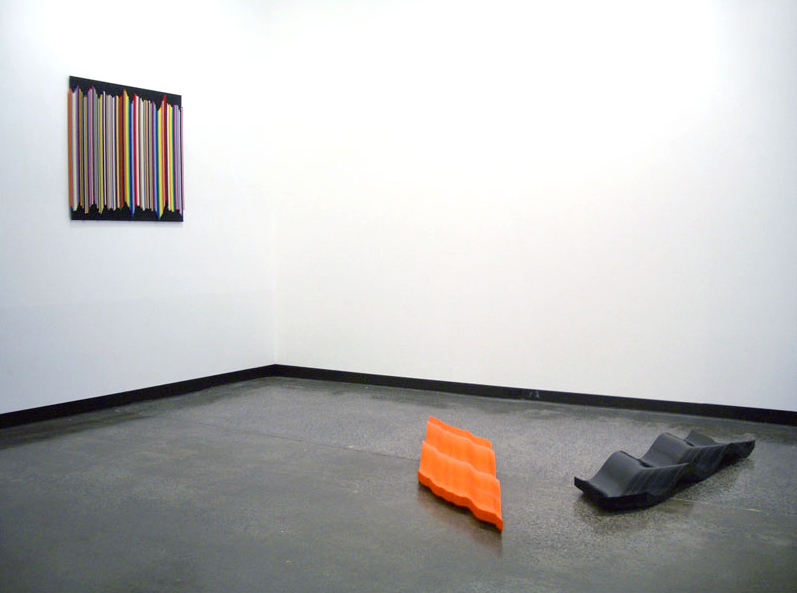
Review: ‘Cubism & Australian Art’ at Heide Museum of Modern Art, Bulleen

Exhibition dates: 24th November, 2009 – 8th April, 2010


Jean Appleton (Australian, 1911-2003) 'Painting IX' 1937 from the exhibition 'Cubism & Australian Art' at Heide Museum of Modern Art, Nov 2009 - April 2010


Jean Appleton (Australian, 1911-2003)
Painting IX
1937
Whitworth/Bruce Collection


Perfect summer fare out at Heide at the moment – relax with a lunch at the new Cafe Vue followed by some vibrantly fresh art in the galleries. In a nicely paced exhibition, Cubism & Australian Art takes you on a journey from the 1920s to the present day, the art revealing itself as you move through the galleries.

There are too many individual works to critique but some thoughts and ideas do stand out.


Cezanne’s use of passage (A French term (pronounced “pahsazh”) for a painting technique characterised by small, intersecting planes of patch-like brushwork that blend together to create an image), the transition between adjacent shapes, where solid forms are fused with the surrounding space was an important starting point for the beginnings of Cubism. Simultaneity – movement, space and the dynamism of modern life – was matched to Cubism’s new forms of pictorial organisation. The geometries of the Section d’Or (or the Gold Mean), that magical ratio found in all forms, also sounds an important note as it flows through the rhythmic movement and the sensations of temporal reality.

In the work from the 1920s/30s presented in the exhibition the palette of most of the works is subdued, the form of circles and geometrics. There are some beautiful paintings by one of my favourite Australian artists Roy de Maistre and others by Eric Wilson, Sam Atyeo and Jean Appleton (see image above). The feeling of these works is quiet and intense.

Following

There are some evocative works from the 1940s/50s including Godfrey Miller’s Still Life with Musical Instruments (1958, below), Graham King’s Industrial Landscape (1959) and Ralph Balson’s Constructive painting (1951). The Charcoal Burner (1959) by Fred Williams (see image below) is the Australian landscape seen through Cubist eyes, surface and space perfectly commingled in reserved palette, delineated planes. Grace Crowley’s Abstract Painting (1947, see image below) is a symphony of colour, plane and form that I would willingly take home any day of the week!

Now

It is the contemporary work that is of most interest in this exhibition. Spatio-temporal reality is distorted as artists push the boundaries of dimensionality. The parameters of reality are blurred and extended through the use of multiple viewpoints and lines of sight. Fresh and spatially aware (like an in joke because everyone recognises the fragmented ‘nature’ of contemporary existence) we have the sublime Milky Way (1995, see image below) by Rosalie Gascoigne and for me the two standout pieces in the exhibition, Bicycles (2007, below) by James Angus and Static No.9 (a small section of something larger) (2005, below) by Daniel Crooks.

Though difficult to see in the photograph of the work (below), Bicycles fuses three bicycles into one. “A photo finish made actual, a series of frames at the conclusion of a race transferred permanently into three dimensions.” You look and then look again: three frames into one, three tyres into one, three stands into one, three chains the only singular – like a freeze frame of a motor drive on a camera

Snap
Snap
Snap

or the slight difference of the two images of a Victorian stereoscope made triumvirate (the 3D world of Avatar comes to mind). Static, the bicycle can never work, is redundant, but paradoxically moves at the same time.

Even more mesmerising is the video work Static No.9 (a small section of something larger) by Daniel Crooks. Unfortunately I cannot show you the video but a still from the video can be seen below as well as a link to a trailer of the work. Imagine this animated like swirling DNA (in actual fact it is people walking across an intersection at different distances and speeds to the camera – and then sections taken out of the video and layered). Swirling striations through time and space fragment identity so that people almost become code, the sound track the distorted beep beep beep of the buzzer at the crossing. I could have sat there for hours watching the performance as it crackles with energy and flow – with my oohs and aahs! The effect is magical, beautiful, hypnotic.

A great summer show – fresh, alive and well worth the journey if only to see that static in all its forms has never looked so good.

Dr Marcus Bunyan


Many thankx to the Heide Museum of Modern Art for allowing me to publish the art work in the posting. Please click on the photographs for a larger version of the image.


Cubism and Abstract Art


Alfred Barr’s Cubism diagram – original cover of Cubism and Abstract Art, Museum of Modern Art, New York, exhibition catalogue, 1936


Ralph Balson (Australian, 1890-1964) 'Painting no. 17' 1941 from the exhibition 'Cubism & Australian Art' at Heide Museum of Modern Art, Nov 2009 - April 2010


Ralph Balson (Australian, 1890-1964)
Painting no. 17
1941
Oil and metallic paint on cardboard
91.7 x 64.8cm
Hassall Collection


By 1941 Ralph Balson had abandoned the figure for a completely abstract style. He announced this breakthrough in a solo exhibition at the Fine Art Galleries at Anthony Hordern and Sons in Sydney with paintings that evolved in part out of Albert Gleizes’s style of Cubism: uninflected surfaces, essential forms, respect for the two-dimensionality of the picture surface and the sense of a search for a deeper, universal truth.

Though at the time unusual for Australian art, such developments were concurrent with advancements in abstraction in the UK and US. This new mode of painting was to preoccupy Balson and Crowley, and to a lesser extent Frank Hinder, for the rest of the decade.

Balson’s ‘constructive’ pictures became sophisticated and intricate, characterised by Constructive painting (1945), with its overlapping translucent planes and array of discs, squares and rectilinear shapes in an animated state of flux, and perhaps culminating in Constructive painting (1951). This work has a different kind of luminosity, as if the picture has an inner light. As Balson himself said of such images, they are ‘abstract from the surface, but more truly real with life’.

Heide Education Resource p. 15.


Dorrit Black (Australian, 1891-1951) 'The bridge' 1930


Dorrit Black (Australian, 1891-1951)
The bridge
1930
Oil on canvas on board
60 x 81cm
Art Gallery of South Australia, Adelaide
Bequest of Dorrit Black, 1951
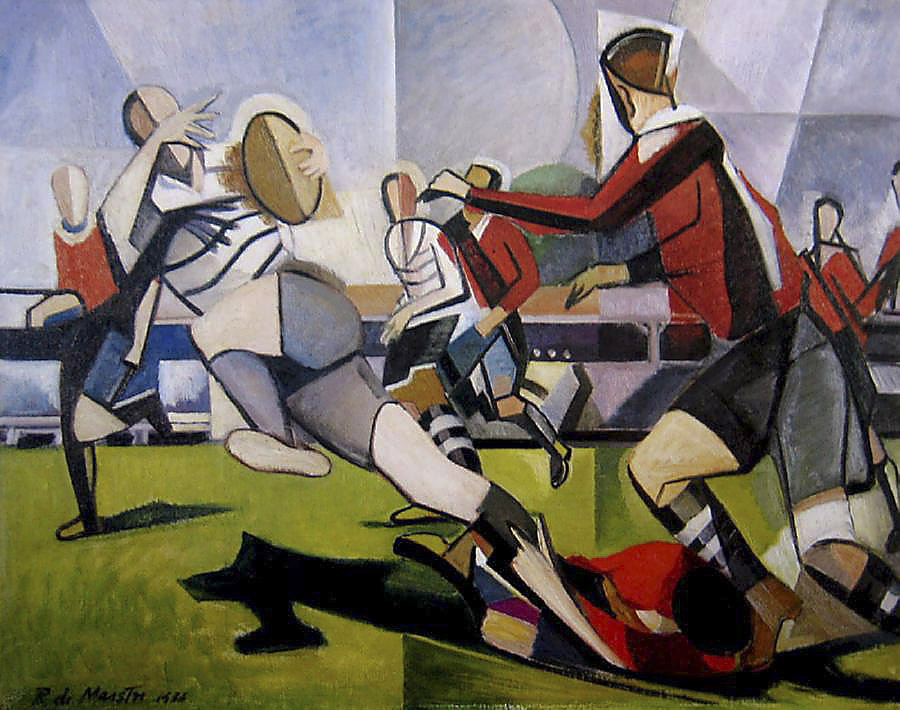
 

Roy de Maistre (Australian, 1894-1968) 'The football match' 1938


Roy de Maistre (Australian, 1894-1968)
The football match
1938
Oil on canvas
71.5 x 92cm
The Janet Holmes à Court Collection


Eric Wilson (Australian, 1911-1946) 'Theme for a mural' 1941


Eric Wilson (Australian, 1911-1946)
Theme for a mural
1941
Oil on plywood on corrugated iron
53.2 x 106.8cm
National Gallery of Victoria, purchased 1958


Sidney Nolan (Australian, 1917-1992) 'Rimbaud royalty' 1942


Sidney Nolan (Australian, 1917-1992)
Rimbaud royalty
1942
Synthetic polymer paint on composition board
59.5 x 90cm
Heide Museum of Modern Art
Bequest of John and Sunday Reed
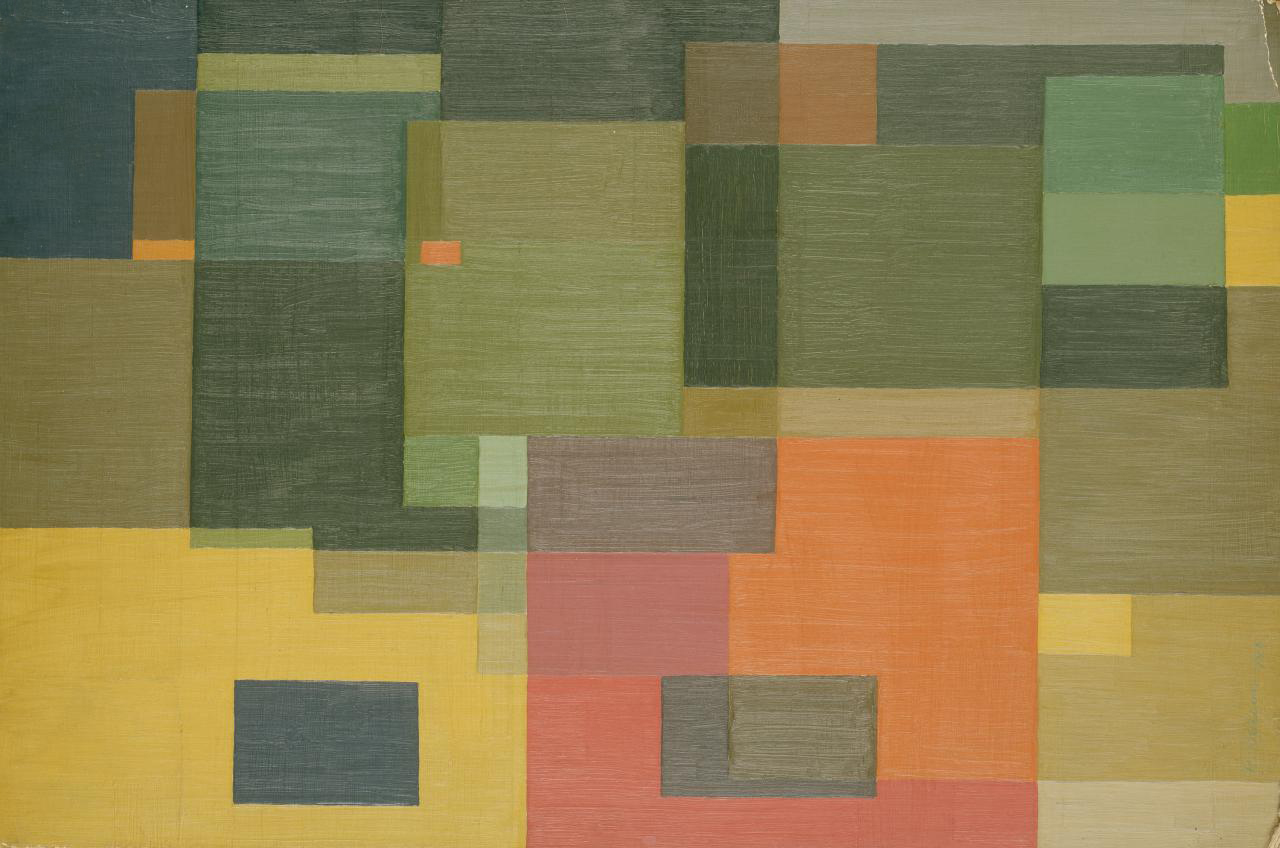
 

Ralph Balson (Australian born England, 1890-1964; worked in Australia 1913-1964) 'Constructive painting' 1948


Ralph Balson (Australian born England, 1890-1964; worked in Australia 1913-1964)
Constructive painting
1948
Oil on cardboard
106.8 × 71.0cm
National Gallery of Victoria, Melbourne
Bequest of Grace Crowley, 1981
© Ralph Balson Estate


Grahame King (Australian 1915-2008) 'Industrial Landscape' 1960


Grahame King (Australian 1915-2008)
Industrial Landscape
1960
Oil on board
91.00 x 122.00cm
Charles Nodrum Gallery


Daniel Crooks (New Zealand, b. 1973) 'Portrait #2' (Chris) 2007


Daniel Crooks (New Zealand, b. 1973)
Portrait #2 (Chris)
2007
Lambda photographic print
102 cm x 102cm
Heide Museum of Modern Art
Purchased with funds from the Robert Salzer Foundation 2012


“With these portraits I’m attempting to make large detailed images of people in their own surroundings, images of people very much in and of their time that are both intriguing and beautiful. As with a lot of my work the portraits also seek to render the experience of time in a more tangible material form, blurring the line between still and moving images and looking to new post-camera models of spatiotemporal representation.”

Daniel Crooks


Portrait #2 (Chris) forms part of Daniel Crooks’s Scanlines, a series of moving image works and prints made using digital collage techniques. This involves digitally slicing images then reassembling them sequentially, across the screen or picture plane, to create rhythmic and spatial effects through which Crooks seeks to explore ideas and themes related to our understandings of time and motion.


Elizabeth Gower (Australian, b. 1952) 'City Series' 1982-1984


Elizabeth Gower (Australian, b. 1952)
City Series
1982-1984
Acrylic on paper
© Courtesy the artist and Sutton Gallery, Melbourne and Milani Gallery, Brisbane


Elizabeth Gower (Australian, b. 1952) 'Transient' 1979


Elizabeth Gower (Australian, b. 1952)
Transient
1979
Synthetic, polymer paint and resin on rice paper, newsprint and garment patterns
© Courtesy the artist and Sutton Gallery, Melbourne and Milani Gallery, Brisbane


Elizabeth Gower found a new relevance for Cubism in her abstract series Shaped works (1978-1984) … Cubist collage combined with feminist ideas to inspire her use of everyday materials such as newsprint and garment patterns. Transparent rice paper adds a delicacy and lightness to the work. The dynamic overlap of flat planes and juxtaposition of contrasting shapes, textures and patterns relates directly to the legacy of Synthetic Cubism. The work of Sonia Delaunay was also a particular inspiration for Gower.

Heide Education Resource p. 23.
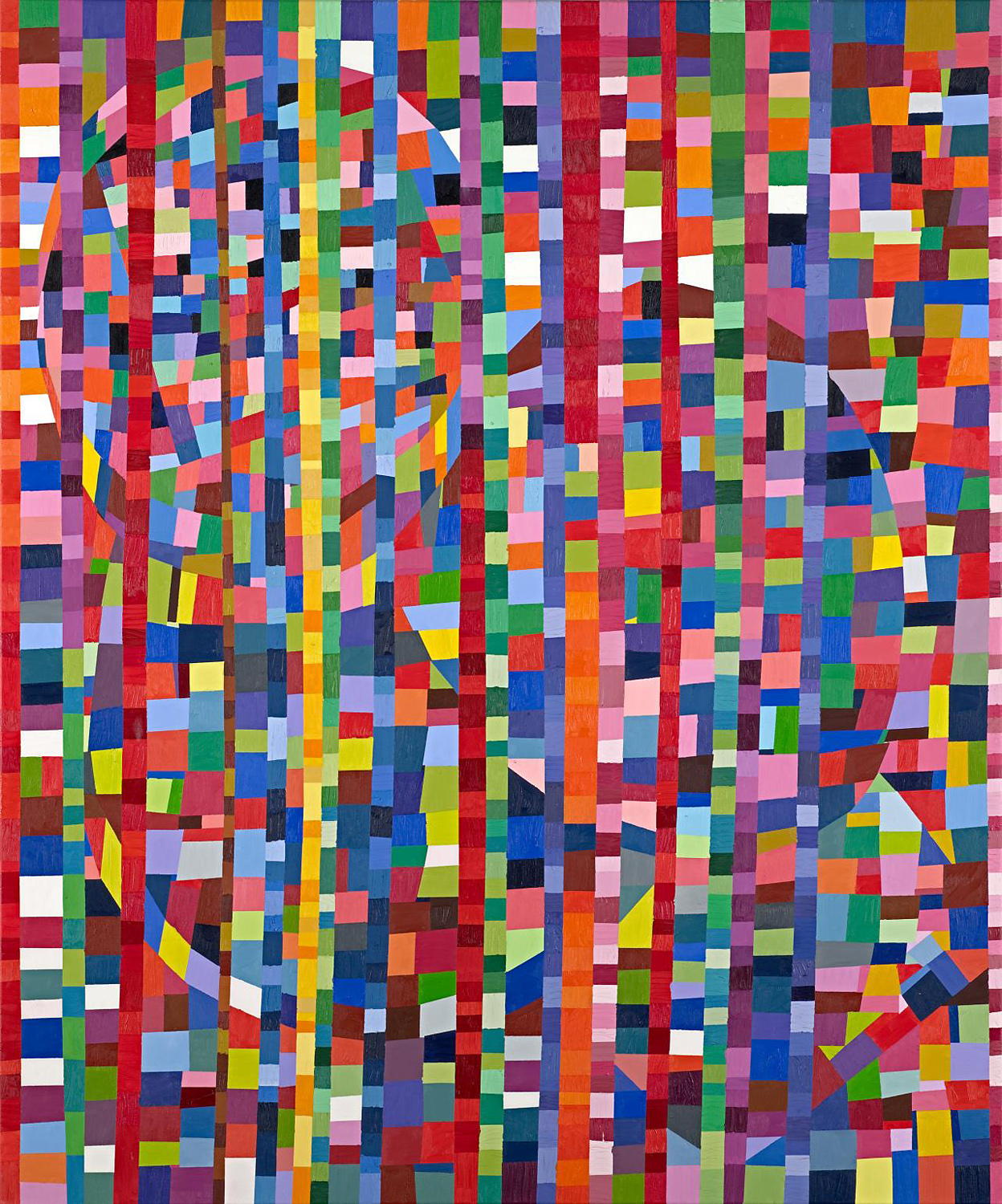
 

Melinda Harper (Australian, b. 1965) 'Untitled' 2000


Melinda Harper (Australian, b. 1965)
Untitled
2000
Oil on canvas
183.0 × 152.3cm
National Gallery of Victoria, Melbourne
Presented through the NGV Foundation by Robert Gould, Founder Benefactor, 2004
© Melinda Harper/Licensed by Copyright Agency, Australia


Cubism & Australian Art, one of the most ambitious and extensive exhibitions Heide has undertaken, shows the impact of the revolutionary and transformative movement of Cubism on Australian art from the early twentieth century to the present day. It uncovers a little-known yet compelling history through works by over eighty artists, including key examples of international Cubism drawn from Australian collections – by André Lhote, Albert Gleizes, Fernand Léger, Alexander Archipenko, Ben Nicholson and others – and nine decades of Australian modern and contemporary art that demonstrate a local evolution of cubist ideas.

The exhibition documents the earliest incorporation of cubist principles in Australian art practice in the 1920s, when artists such as Grace Crowley and Anne Dangar, who studied overseas under leading cubist artists, began to transform their art in accordance with late cubist thinking. It examines the influence of Cubism on artists associated with the George Bell School in Melbourne and the Crowley-Fizelle School in Sydney; and on those who participated in the cubist movement abroad including James Cant and John Power.

While its distortions and unconventional perspectives served individual styles such as the expressionism of Albert Tucker or the experimental landscapes of Sidney Nolan and Fred Williams, Cubism’s most enduring influence on postwar Australian art has been in abstraction. This exhibition traces its reverberations in 1950s abstract art by Roger Kemp, Robert Klippel and Ron Robertson-Swann and others, through to works by younger artists such as Stephen Bram, Gemma Smith and Justin Andrews.

Cubism’s formal and conceptual innovations and its investigations into the representation of time, space and motion have continuing relevance for artists today, who variously adapt, develop, quote and critique aspects of cubist practice. In this exhibition, Cubism’s shifting, multi-perspectival view of reality takes on new form in moving-image works by John Dunkley-Smith and Daniel Crooks, in paintings by Melinda Harper and sculptures by James Angus. The use of found objects and recycled materials by Madonna Staunton, Rosalie Gascoigne and Masato Takasaka extends ideas originating in cubist sculpture and collage. Other artists are critical of Cubism, bringing Indigenous and non-european perspectives to bear on its modernist history, particularly its appropriation of so-called ‘primitive art’.

Text from the Heide Museum of Modern Art website [Online] Cited 10/01/2010 no longer available online
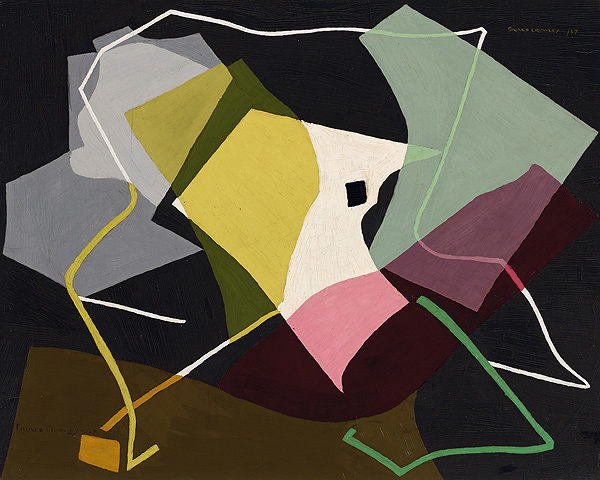
 

Grace Crowley (Australian, 1890-1979) 'Abstract painting' 1947


Grace Crowley (Australian, 1890-1979)
Abstract painting
1947
Oil on board
63.2 x 79.0cm
Private Collection, Sydney
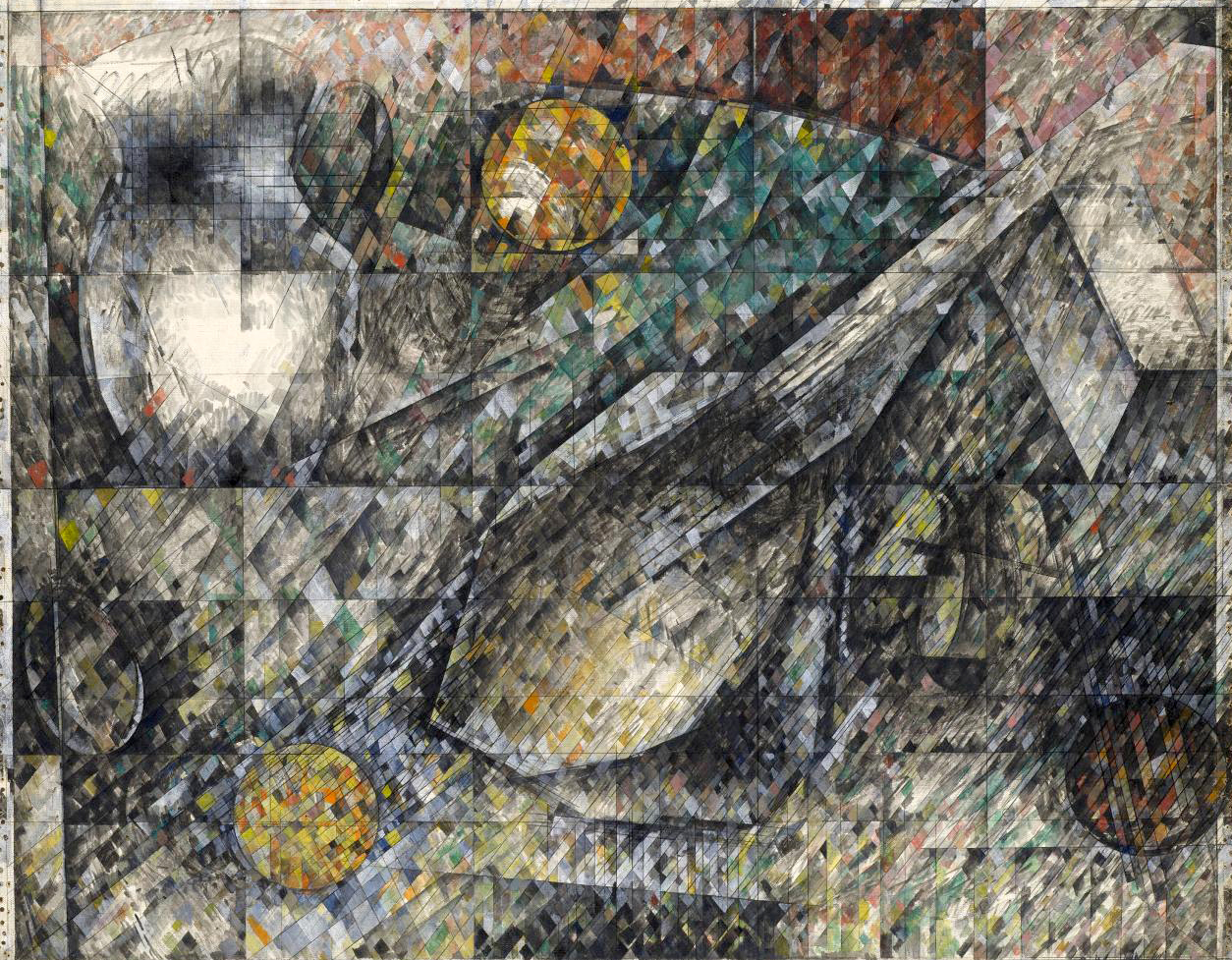
 

Godfrey Miller (New Zealand, 1893-1964; worked in England 1933-39, Australia 1939-64) 'Still Life with Musical Instruments' 1958


Godfrey Miller (New Zealand, 1893-1964; worked in England 1933-1939, Australia 1939-1964)
Still Life with Musical Instruments
1958
Pen and ink and oil on canvas
65.5 × 83.0cm
National Gallery of Victoria, Melbourne
Felton Bequest, 1963
© National Gallery of Victoria


Introduction

Cubism & Australian Art considers the impact of the revolutionary and transformative movement of Cubism on Australian art from the early twentieth century to the present day. Cubism was a movement that changed fundamentally the course of twentieth-century art, and its innovations – the shattering of the traditional mimetic relationship between art and reality and investigations into the representation of time, space and motion – have continuing relevance for artists today. Works by over eighty artists, including key examples of international Cubism drawn from Australian collections, are displayed in the exhibition.

The exhibition examines not only the period contemporaneous with Cubism’s influence within Europe, but also the decades from then until the present day, when its reverberations continue to be felt. In the first part of the century, Cubism appeared through a series of encounters and dialogues between individuals and groups resulting in a range of fascinating adaptations, translations and versions alongside other more programmatic or prescriptive adoptions of cubist ideas. The exhibition traces the first manifestations of Cubism in Australian art in the 1920s, when artists studying overseas under leading cubist artists began to transform their art in accordance with such approaches. It examines the transmission of cubist thinking and its influence on artists associated with the George Bell School in Melbourne and the Crowley-Fizelle School in Sydney. By the 1940s, artists working within the canon of modernism elaborated on Cubism as part of their evolutionary process, and following World War II Cubism’s reverberations were being felt as its ideas were revisited by artists working with abstraction.

In the postwar years and through to the 1960s, the influence of Cubism became more diffuse, but remained significant. In painting, cubist ideas provided an underlying point of reference in the development of abstract pictorial structures, though they merged with other ideas current at the time, relating in the 1950s, for example, to colour, form, musicality and the metaphysical. For many artists during this decade, Cubism provided the geometric basis from which to seek an inner meaning beneath surface appearances, to explore the spiritual dimension of painting and to understand modernism.

The shift from a Cubist derived abstraction in Australia in the 1950s to a mild reaction against Cubism in the Colour field and hard-edged painting of the mid to latter 1960s reflected a new recognition of New York as the centre of the avant-garde. Cubism’s shallow pictorial space, use of trompe l’oeil and fragmentation of parts continued to inform the work of certain individuals who adapted them in ways relevant to the new abstraction. Cubist ideas and precepts also found some resonance in an emphasis on the flatness of the canvas, particularly as articulated in the formalist criticism of Clement Greenberg.

The influence of Cubism on Australian art from 1980s to 2000s is subtle, varied and diffuse as contemporary artists variously quote, adapt, develop and critique aspects of cubist practice. Cubism’s decentred, shifting, multi-perspectival view of reality takes on new form, in moving-image works and installations, as well as being further developed in painting and sculpture. Post-cubist collage is used both as a method of constructing artworks – paintings, sculptures, assemblages – and as an intellectual strategy, that of the postmodern bricoleur. Several artists imagine alternative cubist histories and lineages, revisiting cubist art from an Indigenous or non-European perspective and drawing out the implications of its primitivism. Others pay homage to local versions of Cubism, or look through its lens at art from elsewhere.

Heide Education Resource p. 3.


Fred Williams (Australian, 1927-1982) 'The Charcoal Burner' 1959


Fred Williams (Australian, 1927-1982)
The Charcoal Burner
1959
Oil on composition board
86.3 × 91.4cm
National Gallery of Victoria, Melbourne, purchased 1960
© Estate of Fred Williams


Cubism played a fundamental role in Fred Williams’s pictorial rethinking of the Australian landscape and through him, Cubism has affected the way Australians view their natural surroundings.

Patrick McCaughey writes in the catalogue for this exhibition:

The charcoal burner, with its reserved palette and briskly delineated planes, is one of his most accomplished essays in seeing the Australian landscape through cubist eyes. Already looking for the ‘bones’ of the landscape, Williams was drawn to the early phase of Cubism, as it gave structure to the unspectacular landscape – the bush in the Dandenongs; the coastal plain around the You Yangs.

Just as Braque in his cubist landscapes of 1908-1909 eschewed ‘view’ painting and disdained the picturesque, so Williams in turn generalised the landscape, constructing it and rendering it taut, modern and vivid. In his landscapes Braque made the important pictorial discovery of passage, fusing solid forms with the surrounding space. Williams exploits this innovation in The charcoal burner, where surface and space are perfectly commingled.

Heide Education Resource p. 1.


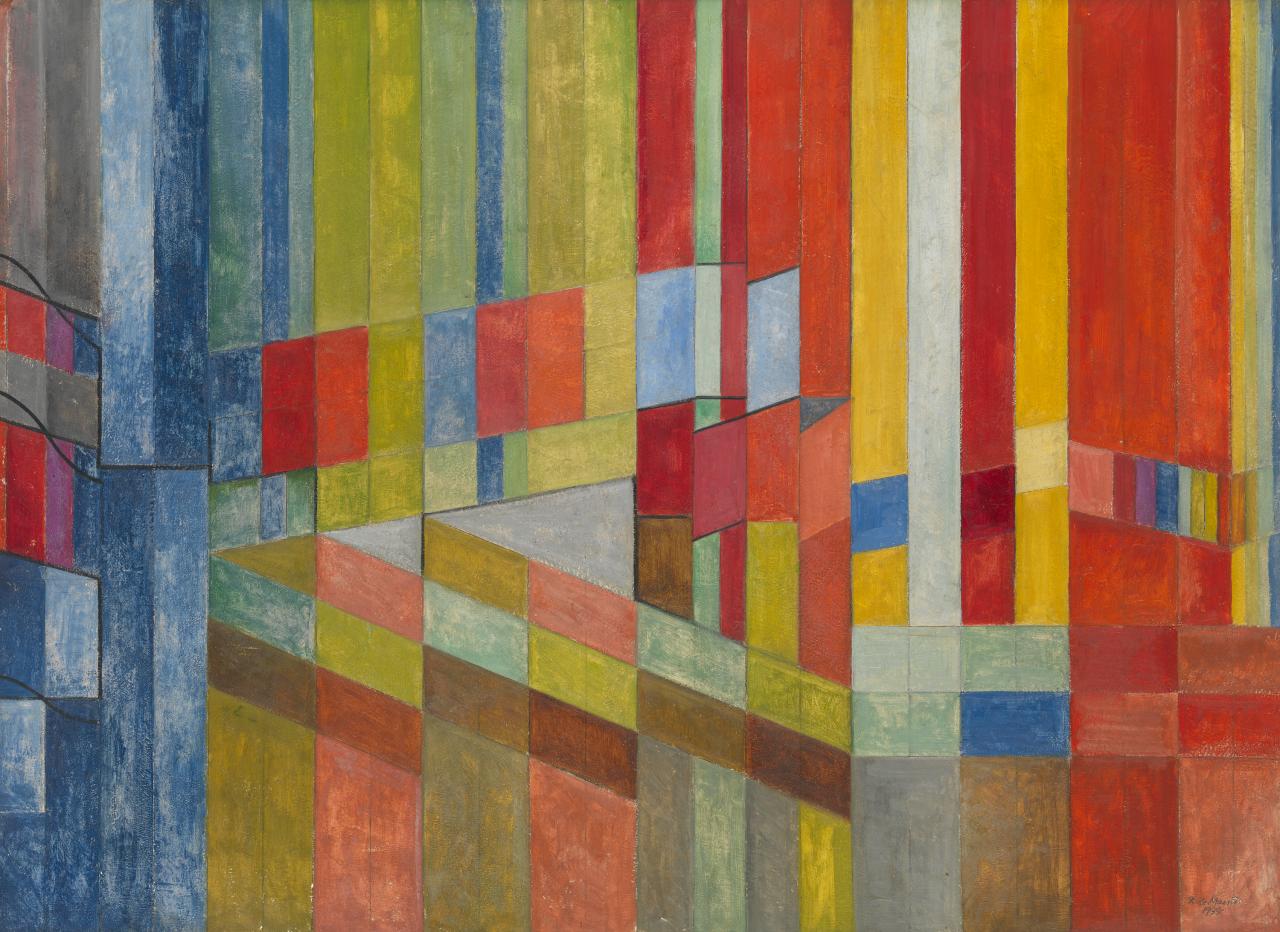
Robert Rooney (Australian, 1937-2017) 'After Colonial Cubism' 1993


Robert Rooney (Australian, 1937-2017)
After Colonial Cubism
1993
Synthetic polymer paint on canvas
122 x 198.3cm
Heide Museum of Modern Art
Purchased through the Heide Foundation with the assistance of the Heide Foundation Collectors’ Group and the Robert Salzer Fund 2008. Courtesy of the artist


Robert Rooney’s painting After Colonial Cubism (1993) shows a vibrant streetscape rendered in deliberate and self-conscious cubist style that declares itself to be a second-hand quotation of Cubism, rather than an example of the original style. The streetscape has not been drawn from life but is a faithfully scaled-up version of a much earlier gouache sketch Buildings (1953) that Rooney did as a young student in Melbourne. The sketchbook page is indicated in the painting by the vertical bands on either side of the image which effectively serve as quotation marks.

In highlighting the second-hand nature of the image in his painting, Rooney more broadly comments on the dispersal of cubist ideas from Paris, Cubism’s place of origin, to more local contexts such as Australia. The painting carries with it the artist’s memories of his student days, of learning about Cubism through magazines and books. Rooney remembers visiting exhibitions of cubist works by Australian artists and being fascinated by how these ideas were translated locally. Further meaning in the work derives from its title which refers to the painting Colonial Cubism 1954, by Stuart Davis, an American artist whose cubist works are a further instance of the dispersal of the style to localities outside of France.

Heide Education Resource p. 29.


Rosalie Gascoigne (Australian, born New Zealand 1917-1999) 'Milky Way' 1995 (detail)


Rosalie Gascoigne (Australian, born New Zealand 1917-1999)
Milky Way (detail)
1995
Mixed media


Rosalie Gascoigne is renowned for her sculptural assemblages of great clarity, simplicity and poetic power. Using natural or manufactured objects, sourced from collecting forays, that evoke the lyrical beauty of the Monaro region of New South Wales, her work radically reformulated the ways in which the Australian landscape is perceived. …

“My country is the eastern seaboard. Lake George and the Highlands. Land that is clean scoured by the sun and frost. The record is on the roadside grass. I love to roam around, to look and hear … I look for things that have been somewhere, done something. Second hand materials aren’t deliberate; they have had sun and wind on them. Simple things. From simplicity you get profundity. The weathered grey look of the country gives me a great emotional upsurge. I am not making pictures, I make feelings.”

Rosalie Gascoigne

Extract from Anonymous. “Biography (Roaslie Gascoigne),” on the Art Gallery of New South Wales website [Online] Cited 21/05/2019


Daniel Crooks (New Zealand, b. 1973) 'Static No.9 (a small section of something larger)' 2005


Daniel Crooks (New Zealand, b. 1973)
Static No.9 (a small section of something larger) (still)
2005
Single channel digital video, colour, sound
Duration: 00:13:29 min, aspect ratio: 16:9

View a preview of the work: Static No.9 (a small section of something larger) from Daniel Crooks.


James Angus (Australian, b. 1970) 'Bicycles' 2007


James Angus (Australian, b. 1970)
Bicycles
2007
Chromed steel, aluminium, polyeurethane, enamel paint


“An object which is entirely solid yet blurry; a sculpture-in-motion that vibrates between plural and singular.” ~ James Angus

For this handcrafted sculpture, Angus melded the frames of three bicycles into one, creating a kind of platonic ideal of bike design which resolves slight differences in thickness of truss, angles of frame and fork, shape of saddle and handlebar position into an ideal form – one that seems to shift between the plural and the singular. Traces of all three bikes inhabit this final rendition, with its tripled wheel spokes and chain drive, contoured saddle and ridged handlebars.

Hovering between three sets of dimensions and proportions, the sculpture presents a visual experience akin to looking at lenticular imagery or to a stereoscopic gaze, in which two sets of slightly disparate visual information are resolved into the one three-dimensional image. These subtle differences, inhabiting the one object, speak of the slight variations between not only bikes but individual riders, for whom the bike is an extension of their body shape, size and movement. In keeping with his other works, which have distorted, shifted and played with elements of design from architecture to automobiles, Angus disrupts our expectations of an everyday object. By making us look again he reminds us that a bicycle, like a racing car, is a moving sculpture.

Text from the Museum of Contemporary Art website [Online] Cited 21 May 2019


Justin Andrews (Australian, b. 1973) 'Acid yellow 3' 2008


Justin Andrews (Australian, b. 1973)
Acid yellow 3
2008
Acrylic and enamel on composition board
75 x 60cm
Courtesy of the artist and Charles Nodrum Gallery, Melbourne


Masato Takasaka (Australian, b. 1977) 'Return to forever (productopia)' 2009


Masato Takasaka (Australian, b. 1977)
Return to forever (productopia)
2009
Cardboard, wood, plastic, mdf, acrylic, paint, paper, soft-drink cans, tape and discarded product packaging installation
Dimensions variable
Courtesy of the artist


Heide Museum of Modern Art
7 Templestowe Road,
Bulleen, Victoria 3105

Opening hours:
(Heide II & Heide III)
Tuesday – Sunday, Public holidays 10am – 5pm

Heide Museum of Art website

LIKE ART BLART ON FACEBOOK

Back to top

Exhibition: ‘Ray K. Metzker: Automagic’ at the Laurence Miller Gallery, New York

24th November, 2009 – 9th January, 2010


Ray K. Metzker (American 1931-2014) 'Philadelphia, 1963' 1963 from the exhibition 'Ray K. Metzker: Automagic' at the Laurence Miller Gallery, New York,  Nov 2009 - Jan 2010


Ray K. Metzker (American, 1931-2014)
Philadelphia, 1963
1963
Gelatin silver print


The early photographs from the 1960’s are stupendous!

The pre-visualisation of the final photograph shows rare talent. The use of deep chiaroscuro is handled so adeptly, so confidently. The photographer is in full control of the modelling of the spaces and contours of the objects within the photographic frame. Metzker’s drawing with light surely comes from an enlightened mind. Magical. Wonderful.

Dr Marcus Bunyan


Many thankx to Laurence Miller Gallery for allowing me to publish the photographs in the posting. Please click on the photographs for a larger version of the image.


Ray K. Metzker (American, 1931-2014) 'Philadelphia, 1963' from the exhibition 'Ray K. Metzker: Automagic' at the Laurence Miller Gallery, New York,  Nov 2009 - Jan 2010


Ray K. Metzker (American, 1931-2014)
Philadelphia, 1963
1963
Gelatin silver print


Ray K. Metzker (American 1931-2014) 'Philadelphia' 1963 from the exhibition 'Ray K. Metzker: Automagic' at the Laurence Miller Gallery, New York,  Nov 2009 - Jan 2010


Ray K. Metzker (American, 1931-2014)
Philadelphia
1963
Gelatin silver print


Ray K. Metzker (American, 1931-2014) 'Philadelphia, 1964'


Ray K. Metzker (American, 1931-2014)
Philadelphia, 1964
1964
Gelatin silver print


Ray K. Metzker (American, 1931-2014) 'Chicago, 1958'


Ray K. Metzker (American, 1931-2014)
Chicago, 1958
1958
Gelatin silver print


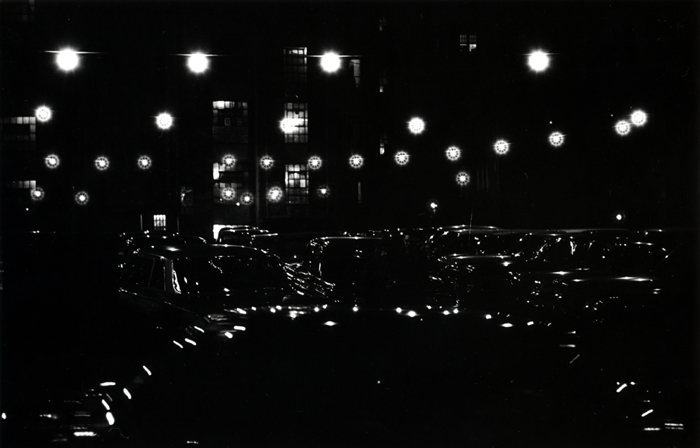
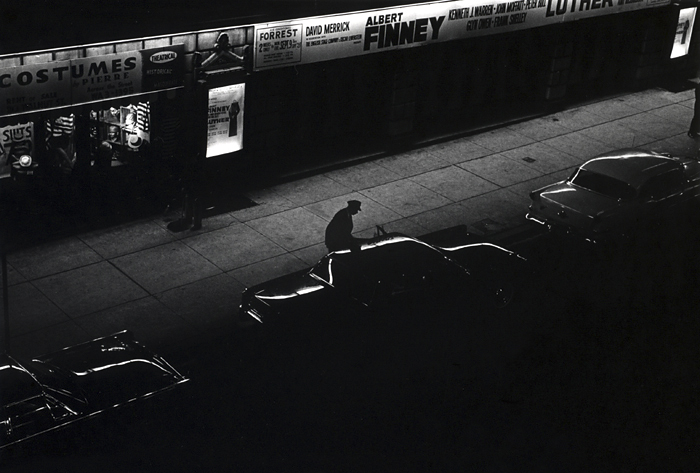
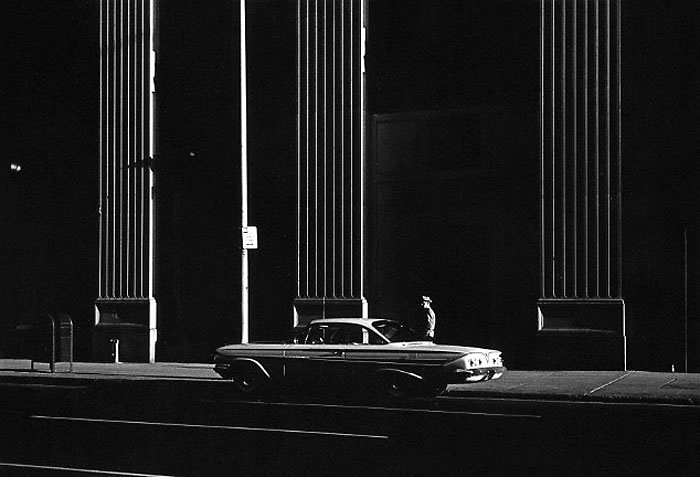
From November 24 through January 9 Laurence Miller Gallery celebrates Ray K. Metzker: AutoMagic. This exhibition features over fifty black-and-white photographs taken by this 78-year old master photographer over the past fifty years in which the automobile plays a pivotal role in the contest between light and shadow. Forty of the photographs have never been exhibited before.

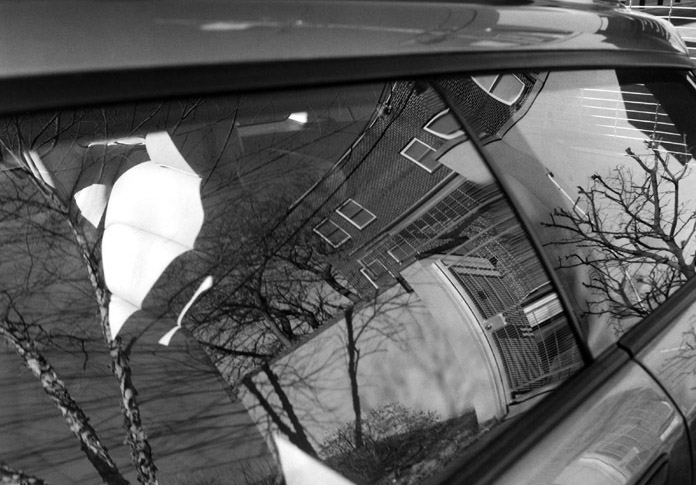
From his earliest street pictures taken under the El in Chicago’s Loop in the mid-Fifties, to his most recent highly abstract views of reflections on Philadelphia car windows, Ray K. Metzker brings an exuberance of vision rarely found among today’s photographers. In total control of his camera and craft, Metzker transforms the mundane in daily urban life into intense images that sizzle, and delight the eye.

In the darkest recesses of a parking garage, we discover a single shimmering tail fin of a late 50’s Cadillac. In a scene more Orson Wells than Woody Allen, we witness a menacing shadow figure approaching a parked car, intent unknown. In a blizzard, we join the photographer and a single figure as they look at one another wondering why each other is standing there in the cascading snow.

The show also reveals a more tender side of Metzker, as we peer into car windows to see folks uninhibited within their mobile shelters, including a sleeping man with a medallion, head resting on the door; a man reading at the wheel of his damaged white coupe; and a man at the end of long day, hand upon his head.

Metzker’s work of the last few years, fondly nicknamed Autowackies, are a brilliant extension of his earlier forays into abstraction, and are only made possible by the contours of  our newest cars and SUV’s, which wildly warp the architecture and cloud formations reflected on their glossy surfaces.

Text from the Lawrence Miller Gallery website [Online] Cited 12/12/2009. No longer available online


Ray K. Metzker (American, 1931-2014) 'Philadelphia, 1963'


Ray K. Metzker (American, 1931-2014)
Philadelphia, 1963
1963
Gelatin silver print


Ray K. Metzker (American, 1931-2014) 'Philadelphia, 1964'


Ray K. Metzker (American, 1931-2014)
Philadelphia, 1964
1964
Gelatin silver print


Ray K. Metzker (American, 1931-2014) 'Albuquerque, 1971' solarized vintage silver print


Ray K. Metzker (American, 1931-2014)
Albuquerque, 1971
1971
Solarized vintage silver print


Ray K. Metzker (American 1931-2014) 'Philadelphia' 1963


Ray K. Metzker (American, 1931-2014)
Philadelphia
1963
Gelatin silver print


Ray K. Metzker (American 1931-2014) 'Philadelphia' 1963


Ray K. Metzker (American, 1931-2014)
Philadelphia
1963
Gelatin silver print


Ray K. Metzker (American 1931-2014) 'Philadelphia' 1963


Ray K. Metzker (American, 1931-2014)
Philadelphia
1963
Gelatin silver print


Ray K. Metzker (American 1931-2014) 'Philadelphia' 1963


Ray K. Metzker (American, 1931-2014)
Philadelphia
1963
Gelatin silver print


Ray K. Metzker (American 1931-2014) 'Philadelphia' 1963


Ray K. Metzker (American, 1931-2014)
Philadelphia
1963
Gelatin silver print


Ray K. Metzker (American, 1931-2014) 'Philadelphia, 2009'


Ray K. Metzker (American, 1931-2014)
Philadelphia, 2009
2009
Gelatin silver print


Ray K. Metzker (American, 1931-2014) 'Philadelphia, 2009'


Ray K. Metzker (American, 1931-2014)
Philadelphia, 2009
2009
Gelatin silver print


Lawrence Miller Gallery

Lawrence Miller Gallery is now operating as a private dealer and consultant. The gallery is no longer hosting a physical exhibition space.

Lawrence Miller Gallery website

LIKE ART BLART ON FACEBOOK

Back to top

Review: ‘Heavenly Vaults’ by David Stephenson at John Buckley Gallery, Richmond

Exhibition dates: 7th – 28th November, 2009


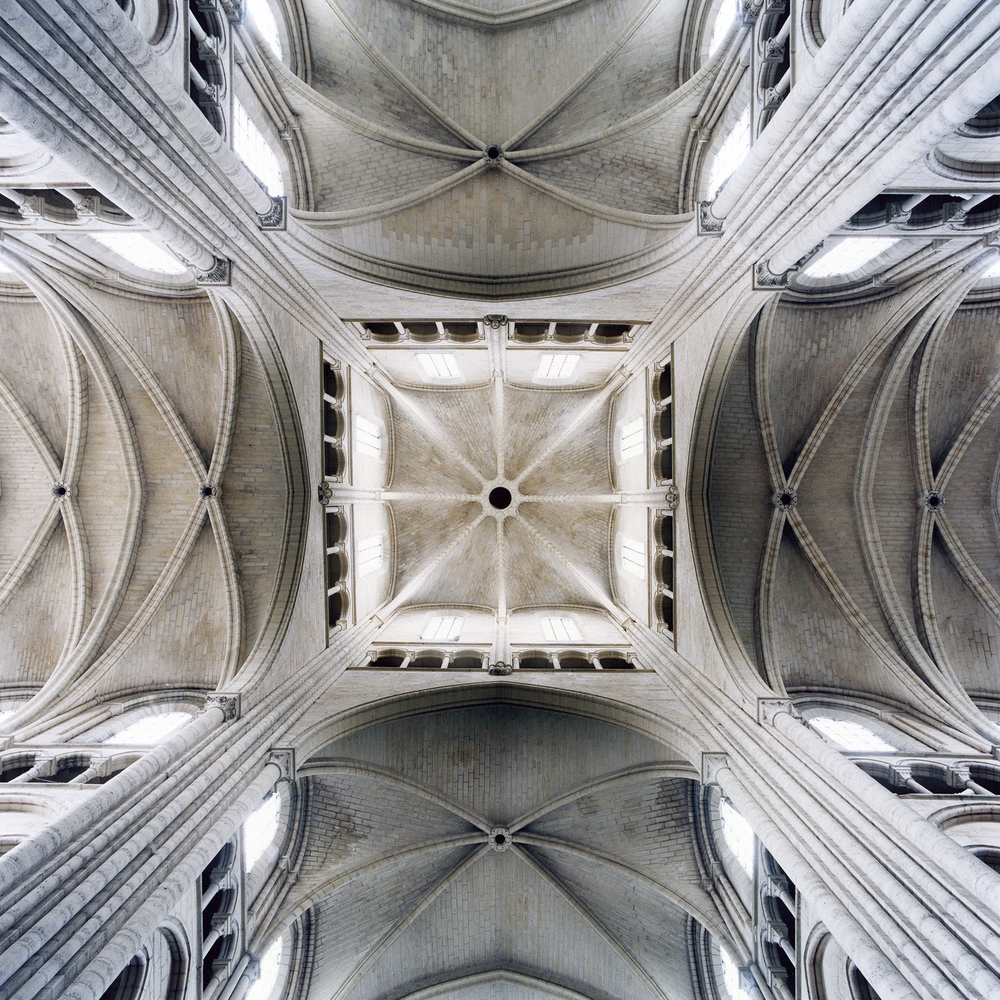
David Stephenson (Australian born America, b. 1955) 'Nave, Laon Cathedral, Laon, France' 2006/07 from the exhibition 'Heavenly Vaults' by David Stephenson at John Buckley Gallery, Richmond, Nov 2009


David Stephenson (Australian born America, b. 1955)
Nave, Laon Cathedral, Laon, France
2006/2007


I remember many years ago, in the mid-1990’s, seeing the wonderful Domes of David Stephenson displayed in Flinders Lane in what is now fortfivedownstairs gallery. They were a revelation in this light filled space, row upon row of luminous domes seemingly lit from within, filled with the sense of the presence of divinity. On the opposite wall of the gallery were row upon row of photographs of Italian graves depicting the ceramic photographic markers of Italian dead – markers of the impermanence of life. The doubled death (the representation of identity on the grave, the momento mori of the photograph) slipped quietly into the earth while opposite the domes ascended into heaven through their numinous elevation. The contrast was sublime.

Unfortunately the same cannot be said of the latest exhibition Heavenly Vaults by David Stephenson at John Buckley Gallery, Richmond.

The problems start with the installation of the exhibition. As you walk into the gallery the 26 Cibachrome photographs are divided symmetrically down the axis of the gallery so that the prints reflect each other at both ends and each side of the gallery. It is like walking down the nave of a cathedral and observing the architectural restraint of the stained glass windows without their illumination. Instead of the punctum of light flooding through the stained glass windows, the varying of intensities, the equanimity of the square prints all exactly the same size, all reflecting the position of the other makes for a pedestrian installation. Some varying of the print size and placement would have added much life and movement to a static ensemble.

Another element that needed work were the prints themselves which, with a few notable exceptions, seemed remarkably dull and lifeless (unlike their digital reproductions which, paradoxically, seem to have more life!). They fail to adequately represent the aspirations of the vaults as they soar effortlessly overhead transposing the earth bound into the heaven sent. In the earlier work on the domes (which can be found in the book Visions of Heaven: The Dome in European Architecture) the symmetry of the mandala-like domes with their light-filled inner illumination worked well with the square format of the images making the photographs stand as equivalents for something else, other ineffable states of being.

“The power of the equivalent, so far as the expressive-creative photographer is concerned, lies in the fact that he can convey and evoke feelings about things and situations and events which for some reason or other are not or can not be photographed. The secret, the catch and the power lies in being able to use the forms and shapes of objects in front of the camera for their expressive-evocative qualities. Or to say this in another way, in practice Equivalency is the ability to use the visual world as the plastic material for the photographer’s expressive purposes. He may wish to employ the recording power of the medium, it is strong in photography, and document. Or he may wish to emphasize its transforming power, which is equally strong, and cause the subject to stand for something else too.”1

As Minor White further observes,

“When the image mirrors the man
And the man mirrors the subject
Something might take over”2


When the distance between object and image and image and viewer collapses then something else may be revealed: Spirit.

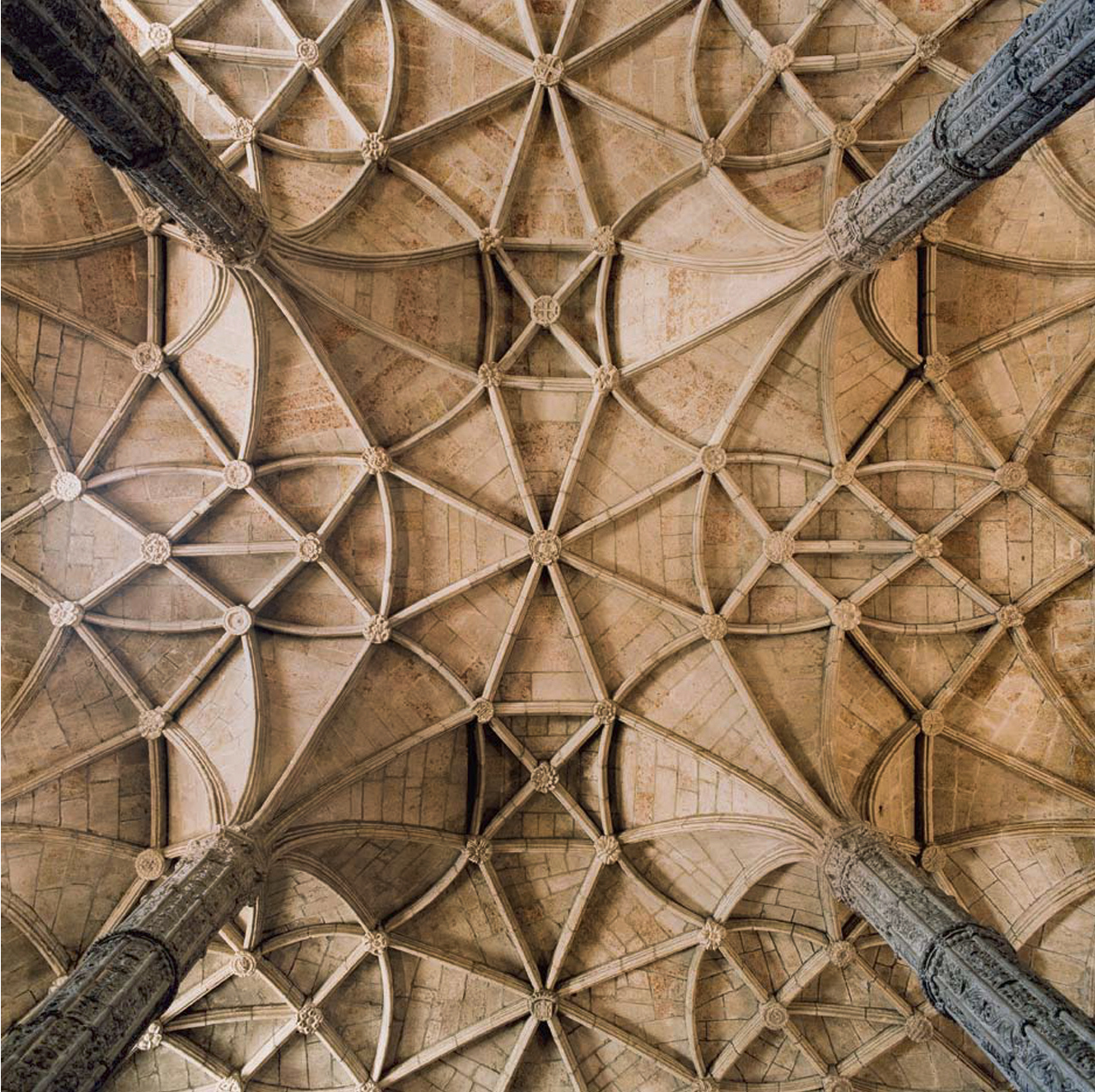
In this exhibition some of the singular images such as the Crossings, Choirs and Nave of the Church of Santa Maria, Hieronymite Monastery, Belém, Portugal (see photograph below) work best to achieve this revelation. They transcend the groundedness of the earthly plane through their inner ethereal light using a reductive colour palette and strong highlight/shadow detail. Conversely the diptychs and triptychs of Nave and Choir (see photographs below and above) fail to impress. The singular prints pinned to the gallery wall are joined together to form pairs and trios but in this process the ‘space between’ the prints (mainly white photographic paper), the breathing space between two or more photographs that balances their disparate elements, the distance that Minor White calls ‘ice / fire’, does not work. There is no tension, no crackle, no visual crossover of the arches and vaults, spandrels and flutes. Here it is dead space that drags all down with it.

I found myself observing without engagement, looking without wonder or feeling – never a good sign!

The photographs of Domes and Vaults have served David Stephenson well for numerous years but the concept has become tired, the inspiration in need of refreshment through other avenues of exploration – both physical and spiritual.

Dr Marcus Bunyan


1/ White, Minor. “Equivalence: The Perennial Trend,” in PSA Journal, Vol. 29, No. 7, pp. 17-21, 1963 [Online] Cited 08/05/2019

2/ White, Minor. “Three Canons,” from Mirrors, Messages, Manifestations. Viking Press, 1969


Many thankx to Daniel and John Buckley Gallery for allowing me to reproduce the photographs from the exhibition. Please click on the photographs for a larger version of the image.


David Stephenson (Australian born America, b. 1955) 'Choir, Laon Cathedral, Laon, France' 2006/07 from the exhibition 'Heavenly Vaults' by David Stephenson at John Buckley Gallery, Richmond, Nov 2009


David Stephenson (Australian born America, b. 1955)
Choir, Laon Cathedral, Laon, France
2006/2007


David Stephenson (Australian born America, b. 1955) 'St. Hugh’s Choir, Lincoln Cathedral, Lincoln, England' 2006/07 from the exhibition 'Heavenly Vaults' by David Stephenson at John Buckley Gallery, Richmond, Nov 2009


David Stephenson (Australian born America, b. 1955)
St. Hugh’s Choir, Lincoln Cathedral, Lincoln, England
2006/2007


Installation view of 'Heavenly Vaults' by David Stephenson at John Buckley Gallery, Richmond


Installation view of Heavenly Vaults by David Stephenson at John Buckley Gallery, Richmond
Photo: Marcus Bunyan


David Stephenson (Australian born America, b. 1955) 'Nave, Cathedral of St. Barbara, Kutná Hora, Czech Republic' 2008/09


David Stephenson (Australian born America 1955)
Nave, Cathedral of St. Barbara, Kutná Hora, Czech Republic
2008/2009


David Stephenson (Australian born America, b. 1955) 'Choir, Cathedral of St. Barbara, Kutná Hora, Czech Republic' 2008/09


David Stephenson (Australian born America 1955)
Choir, Cathedral of St. Barbara, Kutná Hora, Czech Republic
2008/2009


“While the subject of my photographs has shifted… my art has remained essentially spiritual – furthermore than two decades I have been exploring a contemporary expression of the sublime – a transcendental experience of awe with the vast space and time of existence.”


David Stephenson


Internationally renowned photographer David Stephenson has dedicated his practice to capturing the sublime in nature and architecture. Fresh from a successful exhibition at Julie Saul Gallery in New York, Stephenson returns to John Buckley Gallery for his third highly anticipated exhibition Heavenly Vaults. The exhibition will feature 26 selected prints from his latest monograph published by Princeton Architectural Press; Heavenly Vaults: From Romanesque to Gothic in European Architecture. Shaun Lakin, Director of the Monash Gallery of Art, will launch the book and exhibition at the opening, November 7th.

Stephenson began to photograph Gothic vaults in Spain and Portugal in 2003, while completing the work for his Domes project, and his first monograph Visions of Heaven: the Dome in European Architecture. He began to focus on the Vaults project in 2006, photographing Gothic churches and cathedrals in England, Belgium and France. With the assistance of an Australia Council Artist Fellowship in 2008-2009, Stephenson completed extensive fieldwork for the Vaults project, intensively photographing Romanesque and Gothic architecture in Italy, France, Spain, Portugal, Austria, the Czech Republic, Poland, and Germany. The exhibition at John Buckley Gallery coincides with the launch of his second monograph, Heavenly Vaults: from Romanesque to Gothic in European Architecture, published by Princeton Architectural Press, New York.

Even though the traditional systems the underpinned church architecture have lost their unequivocal power, David Stephenson’s photographs capture the resonance of those times. More importantly his work also suggest that the feelings of aspiration, transcendence, and infinity these buildings evoke in the viewer have an ongoing relevance beyond the religious setting and help us understand who and what we are.

Excerpt from Foreword, Heavenly Vaults, by Dr Isobel Crombie 2009


David Stephenson’s new book of photography is a love letter to the intricate, seemingly sui generis vaults of Europe’s Romanesque and Gothic cathedrals and churches.

Press release from the John Buckley website [Online] Cited 11/11/2009 no longer available online


David Stephenson (Australian born America, b. 1955) 'Nave, Church of Santa Maria, Hieronymite Monastery, Belém, Portugal' 2008/09


David Stephenson (Australian born America, b. 1955)
Nave, Church of Santa Maria, Hieronymite Monastery, Belém, Portugal
2008/2009


‘While the subject of my photographs has shifted from the landscapes of the American Southwest and Tasmania, and the minimal horizons of the Southern Ocean, and the icy wastes of Antarctica, to sacred architecture and the sky at both day and night, my art has remained essentially spiritual – for more than two decades I have been exploring a contemporary expression of the sublime – a transcendental experience of awe with the vast space and time of existence.’

David Stephenson 1998.1


With poetic symmetry the Domes series considers analogous ideas. It is a body of work which has been ongoing since 1993 and now numbers several hundred images of domes in countries including Italy, Spain, Portugal, Turkey, England, Germany and Russia. The typological character of the series reveals the shifting history in architectural design, geometry and space across cultures and time, demonstrating how humankind has continually sought meaning by building ornate structures which reference a sacred realm.2 Stephenson photographs the oculus – the eye in the centre of each cupola. Regardless of religion, time or place, this entry to the heavens – each with unique architectural and decorative surround – is presented as an immaculate and enduring image. Placed together, the photographs impart the infinite variations of a single obsession, while also charting the passage of history, and time immemorial.

1. Van Wyk, S. 1998. “Sublime space: photographs by David Stephenson 1989-1998,” National Gallery of Victoria, Melbourne np
2. Hammond, V. 2005. “The dome in European architecture,” in Stephenson, D. 2005, Visions of heaven: the dome in European architecture, Princeton Architectural Press, New York p. 190

© Art Gallery of New South Wales Photography Collection Handbook, 2007


David Stephenson (Australian born America, b. 1955) 'Choir, King's College Chapel, Cambridge, England' 2006/07


David Stephenson (Australian born America, b. 1955)
Choir, King’s College Chapel, Cambridge, England
2006/2007


David Stephenson (Australian born America, b. 1955) 'Crossing, York Minster, York, England' 2006/07


David Stephenson (Australian born America, b. 1955)
Crossing, York Minster, York, England
2006/2007


John Buckley Gallery

This gallery is now closed.

LIKE ART BLART ON FACEBOOK

Back to top

Review: ‘Unforced Intimacies’ by Patricia Piccinini at Tolarno Galleries, Melbourne

Exhibition dates: 22nd October – 21st November 2009


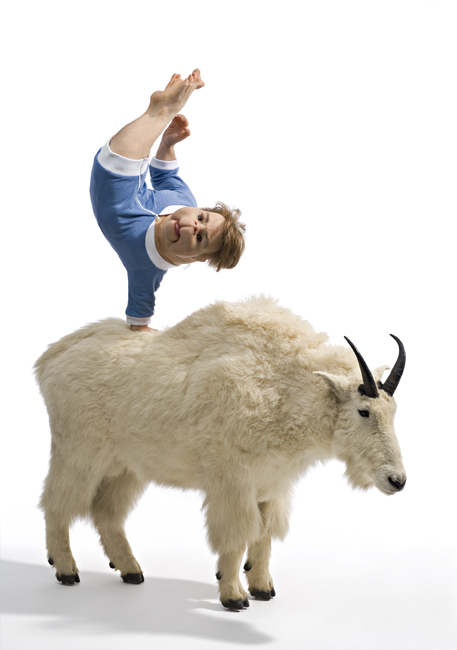
Patricia Piccinini (Australian, b. 1965) 'The Strength of one Hand (With Canadian Mountain Goat)' 2009 from the exhibition 'Unforced Intimacies' by Patricia Piccinini at Tolarno Galleries, Melbourne, Oct - Nov, 2009


Patricia Piccinini (Australian, b. 1965)
The Strength of one Hand (With Canadian Mountain Goat)
2009
Silicone, fibreglass, human hair, clothing, Canadian Mountain Goat


We are the clouds that veil the midnight moon;
How restlessly they speed, and gleam, and quiver,
Streaking the darkness radiantly! – yet soon
Night closes round, and they are lost forever:

Or like forgotten lyres, whose dissonant strings
Give various response to each varying blast,
To whose frail frame no second motion brings
One mood or modulation like the last.

We rest. – A dream has power to poison sleep;
We rise. – One wandering thought pollutes the day;
We feel, conceive or reason, laugh or weep;
Embrace fond foe, or cast our cares away:

It is the same! – For, be it joy or sorrow,
The path of its departure still is free:
Man’s yesterday may ne’er be like his morrow;
Nought may endure but Mutability.

Mutability by Percy Bysshe Shelley


When human imagination takes flight, as it does in this exhibition, the results are superlative. Piccinini is at the height of her powers as an artist, in full control of the conceptual ideas, their presentation and the effect that they have on the viewer. Witty, funny, thought-provoking and at times a little scary Piccinini’s exhibition (paradoxically entitled Unforced Intimacies) is an act of revelatio: the pulling aside of the genetic curtain to see what lies beneath.

Featuring hyperrealist genetically modified creatures and human child figures Piccinini’s sculptures, drawings and video seem passionately alive in their verisimilitude (unlike Ricky Swallow’s resplendently dead relics at the NGV). In The Strength of one Hand (With Canadian Mountain Goat), the title perhaps a play on the traditional Zen koan The Sound of One Hand Clapping, a meditation on the nature of inner compassion, a walrus-child balances on one hand on the back of a Canadian Mountain Goat. The walrus-child has extended eyes, a voluminous lower lip with whiskers under the nose; the hyperreality of the hand on the back of the goat makes it seem like the hand will come alive! A mane of hair flows down the walrus-child’s back to feet that are conjoined – like an articulated merman – ending not in flippers but in toes complete with dirty, cracked and broken nails. Here the natural athleticism of the mountain goat, now dead and stuffed, is surmounted by the mutated walrus-child’s natural athleticism, poignantly suspended like an exclamation mark above the in-animate pommel horse.

In Balasana (The Child’s Pose) a child reposes in the yoga position on a tribal rug. Balanced on top of the child is a stuffed Red-necked Wallaby that perfectly inverts the concave of the child’s back, it’s front feet curled over while it’s rear feet are splayed. The luminosity of the skin of the child is incredible – such a technical feat to achieve this realism – that you are drawn to intimately examine the child’s face and hands. The purpose of The Child’s Pose in yoga is that it literally reminds us of our time as an infant and revives in us rather vivid memories of lying in this position. It also reminds us to cultivate our inner innocence so that we in turn may see the world without judgement or criticism. The paradoxes of the ‘unforced’ intimacy between the child and the wallaby can be read with this conceptualisation ‘in mind’.

With The Bottom Feeder (2009) Piccinini’s imagination soars to new heights. With the shoulders of a human, the legs and forearms of what seems like a marsupial, the lowered head of a newt with intense staring blue eye (see photograph above), luminescent freckled skin covered in hair and a rear end that consists of both male and female genitalia that forms a ‘face’, the hermaphroditic bottom feeder is a frighteningly surreal visage. Inevitably the viewer is drawn to the exposed rump through a seemingly unforced interactivity, examining the folds and flaps of the labia and the hanging scrotum of this succulent feeder. Here Piccinini draws on psychoanalysis and Lacan’s theory of the mirror stage in a child’s development – where the child wants to merge with the mother to erase the self / other split by fulfilling the mother’s desire by having sex with her – thus erasing the mother’s lack, the idea of lack represented by the lack of a penis.1

As Jean Baudrillard notes of the mass of bodies on Brazil’s Copacabana beach, “Thousands of bodies everywhere. In fact, just one body, a single immense ramified mass of flesh, all sexes merged. A single, shameless expanded human polyp, a single organism, in which all collude like the sperm in seminal fluid … The sexual act is permanent, but not in the sense of Nordic eroticism: it is the epidermal promiscuity, the confusion of bodies, lips, buttocks, hips – a single fractal entity disseminated beneath the membrane of the sun.”2

An so it is here, all sexes merged within the anthropomorphised body of The Bottom Feeder, a body that challenges and subverts human perceptions of the form and sexuality of animals (including ourselves) that inhabit the world.

In Doubting Thomas (2008), my favourite piece in the exhibition, a skeptical child with pale and luminous skin is about to put his hand inside the mouth of a genetically modified mole like creature that has reared it’s hairy snout to reveal a luscious, fluid-filled mouth replete with suckers and teeth. You want to shout ‘No, don’t go there!’ as the child’s absent mother has probably already warned him – to no avail. Children only learn through experience, I suspect in this case a nasty one.


The terrains the Piccinini interrogates (nature and artifice, biogenetics, cloning, stem cell research, consumer culture) are a rematerialisation of the actual world through morphological ‘mapping’ onto the genomes of the future. Morphogenetic fields3 seem to surround the work with an intense aura; surrounded by this aura the animals and children become more spiritual in their silence. Experiencing this new world promotes an evolution in the way in which we conceive the future possibilities of life on this earth, this brave but mutably surreal new world.

This is truly one of the best exhibitions of the year in Melbourne.

Dr Marcus Bunyan


1/ Klages, M. Jacques Lacan. Boulder: University of Colorado, 2001 [Online] Cited 09/10/2009 no longer available online

2/ Baudrillard, Jean. Fragments: Cool Memories III, 1990-1995. London: Verso, 1997, p. 74

3/ “A morphogenetic field is a group of cells able to respond to discrete, localised biochemical signals leading to the development of specific morphological structures or organs.” Morphogenetic field definition on Wikipedia [Online] Cited 05/05/2019


    Patricia Piccinini (Australian, b. 1965) 'The Strength of one Hand (With Canadian Mountain Goat)' 2009 from the exhibition 'Unforced Intimacies' by Patricia Piccinini at Tolarno Galleries, Melbourne, Oct - Nov, 2009


    Patricia Piccinini (Australian, b. 1965)
    The Strength of one Hand (With Canadian Mountain Goat)
    2009
    Silicone, fibreglass, human hair, clothing, Canadian Mountain Goat


    Patricia Piccinini (Australian, b. 1965) 'The Strength of one Hand (With Canadian Mountain Goat)' 2009 (detail) from the exhibition 'Unforced Intimacies' by Patricia Piccinini at Tolarno Galleries, Melbourne, Oct - Nov, 2009


    Patricia Piccinini (Australian, b. 1965)
    The Strength of one Hand (With Canadian Mountain Goat) (detail)
    2009
    Silicone, fibreglass, human hair, clothing, Canadian Mountain Goat


    Patricia Piccinini (Australian, b. 1965) 'The Bottom Feeder' 2009

    Patricia Piccinini (Australian, b. 1965) 'The Bottom Feeder' 2009


    Patricia Piccinini (Australian, b. 1965)
    The Bottom Feeder
    2009
    Silicone, fibreglass, steel, fox fur


    Patricia Piccinini (Australian, b. 1965) 'The Bottom Feeder' 2009 (detail)


    Patricia Piccinini (Australian, b. 1965)
    The Bottom Feeder (detail)
    2009
    Silicone, fibreglass, steel, fox fur


    Exploring concepts of what is “natural” in the digital age, Patricia Piccinini brings a deeply personal perspective to her work.

    Rachel Kent notes: “Since the early 1990s, Piccinini has pursued an interest in the human form and its potential for manipulation and enhancement through bio-technical intervention. From the mapping of the human genome to the growth of human tissue and organs from stem cells, Piccinini’s art charts a terrain in which scientific progress and ethical questions are intertwined.”

    Text from the Tolarno Galleries website [Online] Cited 05/05/2019 no longer available online


    Patricia Piccinini (Australian, b. 1965) 'Doubting Thomas' 2008


    Patricia Piccinini (Australian, b. 1965)
    Doubting Thomas
    2008
    Silicone, fibreglass, human hair, clothing, chair


    Patricia Piccinini (Australian, b. 1965) 'Doubting Thomas' 2008 (detail)


    Patricia Piccinini (Australian, b. 1965)
    Doubting Thomas (detail)
    2008


    Patricia Piccinini (Australian, b. 1965) 'Doubting Thomas' 2008 (detail)

    Patricia Piccinini (Australian, b. 1965) 'Doubting Thomas' 2008 (detail)


    Patricia Piccinini (Australian, b. 1965)
    Doubting Thomas (detail)
    2008


    “Time and again my work returns to children, and their ambiguous relationships with the (only just) imaginary animals that I create. Children embody a number of the key issues in my work. Obviously they directly express the idea of genetics – both natural and artificial – but beyond that they also imply the responsibilities that a creator has to their creations. The innocence and vulnerability of children is powerfully emotive and evokes empathy – their presence softens the hardness of some of the more difficult ideas, but it can also elevate the anxiety level.”


    Patricia Piccinini quoted on the Kaldor Public Art Projects website [Online] Cited 05/11/2009 no longer available online


    “I am interested in the way that contemporary biotechnology and even philosophy erode the traditional boundaries between the artificial and the natural, as well as between species and even the basic distinctions between animal and human.”


    Patricia Piccinini quoted in Sarah Hetherington. “Patricia Piccinini: Related Individuals,” on the Artlink website [Online] Cited 05/05/2019. No longer available online


    Patricia Piccinini (Australian, b. 1965) 'Balasana' 2009 (detail)


    Patricia Piccinini (Australian, b. 1965)
    Balasana
    Silicone, fibreglass, human hair, clothing, Red-necked Wallaby, rug
    2009


    Tolarno Galleries
    Level 4, 104 Exhibition Street,
    Melbourne, Vic, 3000
    Phone: +61 3 9654 6000

    Opening hours:
    Tuesday – Friday 10am – 5pm
    Saturday 1 – 5pm

    Tolarno Galleries website

    LIKE ART BLART ON FACEBOOK

    Back to top

    Exhibition: ‘Thomas Demand in Berlin’ at the Neue Nationalgalerie, Berlin

    Exhibition dates: 18th September, 2009 – 17th January, 2010


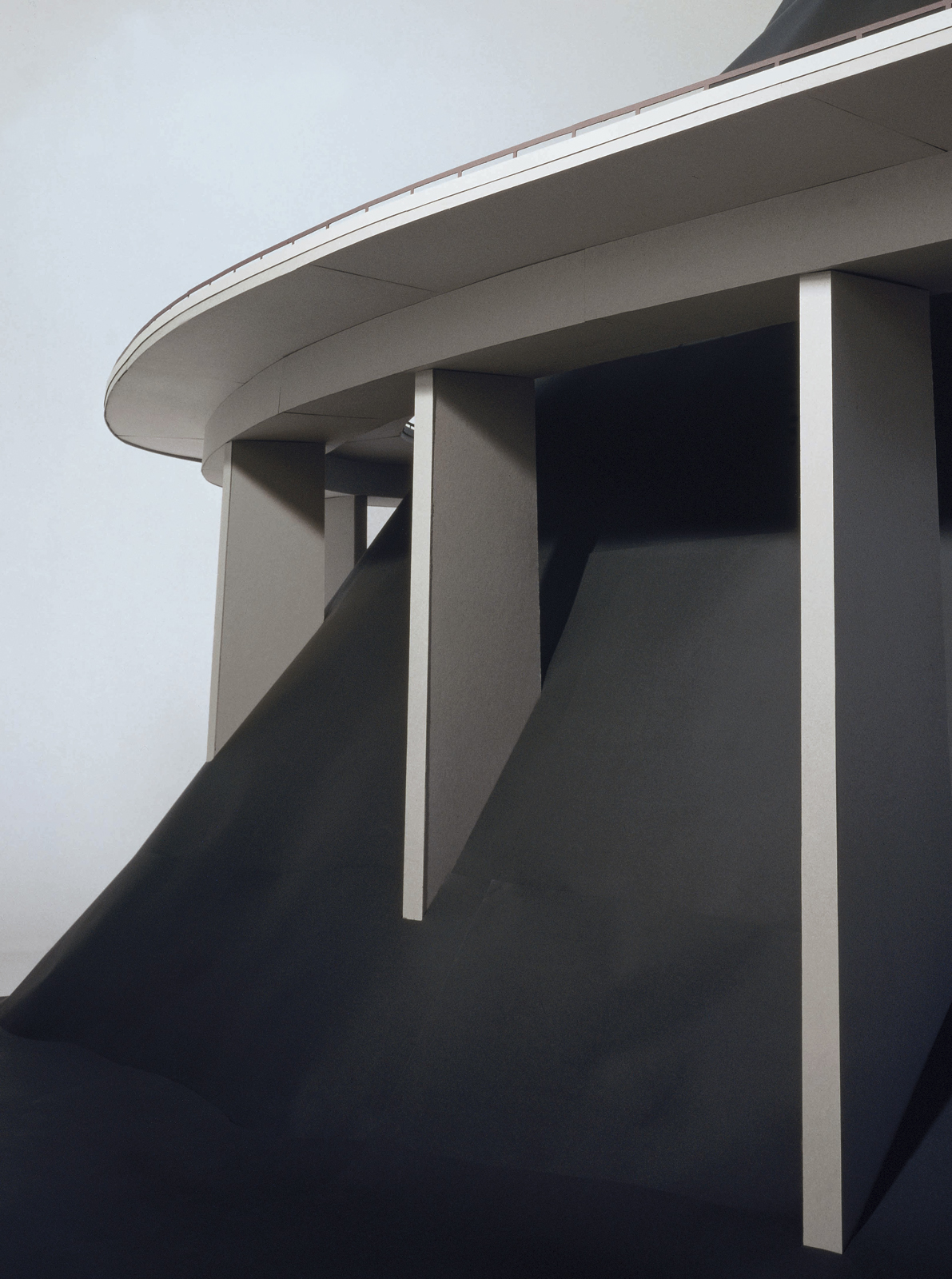
    Thomas Demand. 'Diving Board' (Sprungturm)1994 from the exhibition 'Thomas Demand in Berlin' at the Neue Nationalgalerie, Berlin, Sept 2009 - Jan 2010


    Thomas Demand (German, b. 1964)
    Diving Board (Sprungturm)
    1994
    C-Print / Diasec
    © Thomas Demand, VG Bild-Kunst, Bonn


    “It’s not about the real place,” Demand has said. “It’s much more about what we have seen as the real place.”

    All photographs in the posting appear in the exhibition.

    A review of the catalogue that accompanied the exhibition can be found on the 5B4: Photographs and Books blog.

    Dr Marcus Bunyan


    Many thankx to the Neue Nationalgalerie for allowing me to publish the photographs in the posting. Please click on the photographs for a larger version of the image.


    Thomas Demand (German, b. 1964) 'Brennerautobahn' 1994 from the exhibition 'Thomas Demand in Berlin' at the Neue Nationalgalerie, Berlin, Sept 2009 - Jan 2010


    Thomas Demand (German, b. 1964)
    Brennerautobahn
    1994
    C-Print/ Diasec
    150 x 118 cm
    © Thomas Demand, VG Bild-Kunst, Bonn


    Thomas Demand (German, b. 1964) 'Tavern IV' 2006 Thomas Demand (German, b. 1964) 'Brennerautobahn' 1994 from the exhibition 'Thomas Demand in Berlin' at the Neue Nationalgalerie, Berlin, Sept 2009 - Jan 2010


    Thomas Demand (German, b. 1964)
    Klause IV / Tavern IV
    2006
    C-Print / Diasec
    103 x 68 cm
    © Thomas Demand, VG Bild-Kunst, Bonn


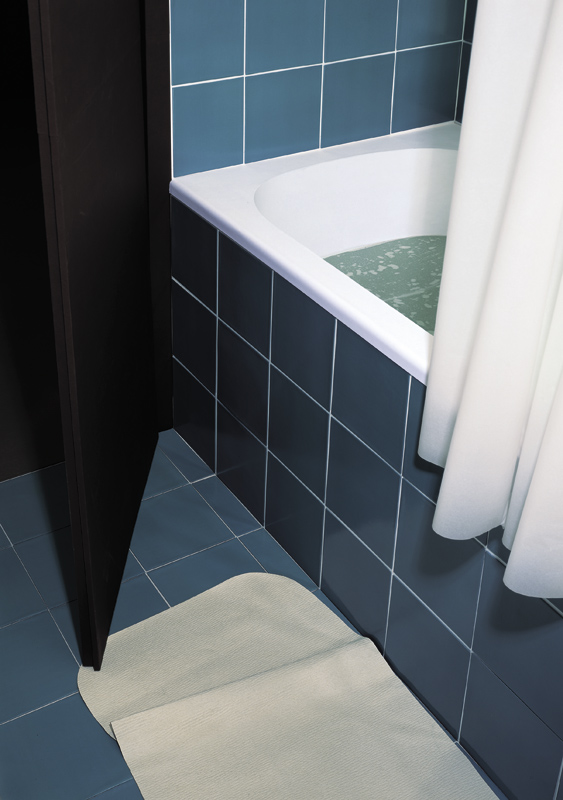
    Thomas Demand (German, b. 1964) 'Bathroom' 1997


    Thomas Demand (German, b. 1964)
    Badezimmer / Bathroom
    1997
    C-Print / Diasec
    160 x 122 cm
    © Thomas Demand, VG Bild-Kunst, Bonn


    Thomas Demand (German, b. 1964) 'Treppenhaus / Staircase' 1995


    Thomas Demand (German, b. 1964)
    Treppenhaus / Staircase
    1995
    C-Print/ Diasec
    150 x 118 cm
    © Thomas Demand, VG Bild-Kunst, Bonn


    The Nationalgalerie presents Thomas Demand’s show National Gallery Berlin. From September 18, 2009, the Nationalgalerie – Staatliche Museen zu Berlin devotes a comprehensive solo show to one of the internationally most influential artists of our time: Thomas Demand. It is so far the largest presentation of his work in this country. However, the exhibition National Gallery is not designed as an overall retrospective but it is firmly dedicated to only one subject, which is perhaps the most important in Demand’s multi-facetted oeuvre: Germany.

    Living in Berlin since 1996 Thomas Demand is an artist known for his large-format photographs, which explore the blank domain between reality and the ways it is being represented. He is undoubtedly regarded as one of the most renowned artists of his generation. Using paper and cardboard he builds three-dimensional, usually life-size models of places which often make references to pictures found in the mass media. By taking photographs of the scenery created in this way, he produces artefacts of a kind of their own which play with the beholder’s ideas of fiction and reality.

    Until January, 17, 2010, about 40 works by the artist will be on display in the glass hall of the Neue Nationalgalerie built by Mies van der Rohe. There is hardly a location which is more suitable to convey to the beholder the panorama of a nation’s history than the large glass hall of the Neue Nationalgalerie, which is not only regarded as an incunabulum of post-war architecture but also as a symbol for the self-image of the Federal Republic of Germany at the former border between East and West. The exceptional exhibition architecture of the firm, Caruso St. John, London, forms an ideal link between Demand’s works and Mies van der Rohe’s bright hall.

    Each picture shown in the exhibition is accompanied by a specific caption written by Botho Strauß which does not so much explain or define Demand’s work but rather creates a space between the pictures and the texts to allow new versions of interpretation.

    Text from the New National Gallery website [Online] Cited 01/11/2009 no longer available online


    Thomas Demand (German, b. 1964) 'Copyshop' 1999


    Thomas Demand (German, b. 1964)
    Copyshop
    1999
    C-Print / Diasec
    © Thomas Demand, VG Bild-Kunst, Bonn


    Thomas Demand (German, b. 1964) 'Drafting Room' 1996


    Thomas Demand (German, b. 1964)
    Drafting Room
    1996
    C-Print / Diasec
    © Thomas Demand, VG Bild-Kunst, Bonn


    Thomas Demand (German, b. 1964) 'Laboratory (77-E-217)' 2000


    Thomas Demand (German, b. 1964)
    Laboratory (77-E-217)
    2000
    C-Print / Diasec
    © Thomas Demand, VG Bild-Kunst, Bonn


    Thomas Demand (German, b. 1964) 'Haltestelle' 2009


    Thomas Demand (German, b. 1964)
    Haltestelle
    2009
    C-Print / Diasec, 240 x 330 cm
    © Thomas Demand, VG Bild-Kunst, Bonn 2009


    List of works that appear in the exhibition:

    Archiv / Archive, 1995, C-Print/ Diasec, 183,5 x 233 cm
    Attempt, 2005, C-Print/ Diasec, 166 x 190 cm
    Badezimmer / Bathroom, 1997, C-Print/ Diasec, 160 x 122 cm
    Balkone / Balconies, 1997, C-Print/ Diasec, 150 x 128 cm
    Brennerautobahn, 1994, C-Print/ Diasec, 150 x 118 cm
    Büro / Office, 1995, C-Print/ Diasec, 183.5 x 240 cm
    Campingtisch / Camping Table, 1999, C-Print/ Diasec, 85 x 58 cm
    Copyshop, 1999, C-Print/ Diasec, 183.5 x 300 cm
    Drei Garagen / Three Garages, 1995, C-Print/ Diasec, 108 x 223 cm
    Fabrik (ohne Namen), 1994, C-Print/ Diasec, 120 x 185 cm
    Fassade / Facade, 2004, C-Print/ Diasec, 178 x 250 cm
    Fenster / Window, 1998, C-Print/ Diasec, 183.5 x 286 cm
    Fotoecke, 2009, C-Print/ Diasec, 180 x 198 cm
    Gangway, 2001, C-Print/ Diasec, 225 x 180 cm
    Grube / Pit, 1999, C-Print/ Diasec, 229 x 167 cm
    Haltestelle, 2009, C-Print/Diasec, 240 x 330 cm
    Heldenorgel, 2009, C-Print/Diasec, 240 x 380 cm
    Hinterhaus, 2005, C-Print/ framed, 26.9 x 21.5 cm
    Kabine, 2002, C-Print/ Diasec, 180 x 254 cm
    Kinderzimmer /Nursery, 2009, C-Print/Diasec, 140 x 230 cm
    Klause 1 / Tavern, 2006, C-Print/ Diasec, 275 x 170 cm
    Klause 2 / Tavern, 2006, C-Print/ Diasec, 178 x 244 cm
    Klause 3 / Tavern, 2006, C-Print/ Diasec, 199 x 258 cm
    Klause 4 / Tavern, 2006, C-Print/ Diasec, 103 x 68 cm
    Klause 5 / Tavern, 2006, C-Print/ Diasec, 197 x 137 cm
    Labor (77-E-217), 2000, C-Print/ Diasec, 180 x 268 cm
    Lichtung / Clearing, 2003, C-Print/ Diasec, 192 x 495 cm
    Modell / Model, 2000, C-Print/ Diasec, 164,5 x 210 cm
    Paneel / Peg Board, 1996, C-Print/ Diasec, 160 x 121 cm
    Parlament / Parliament, 2009, C-Print/ Diasec, 180 x 223 cm
    Raum / Room, 1994, C-Print/ Diasec, 183.5 x 270 cm
    Sprungturm / Diving Board, 1994, C-Print/ Diasec, 150 x 118 cm
    Spüle / Sink, 1997, C-Print/ Diasec, 52 x 56.5 cm
    Studio, 1997, C-Print/ Diasec, 183.5 x 349.5 cm
    Rasen / Lawn, 1998, C-Print/ Diasec, 122 x 170 cm
    Terrasse / Terrace, 1998, C-Print/ Diasec, 183.5 x 268 cm
    Treppenhaus / Staircase, 1995, C-Print/ Diasec, 150 x 118 cm
    Wand /Mural, 1999, C-Print/ Diasec, 183.5 x 270 cm
    Zeichensaal / Drafting Room, 1996, C-Print/ Diasec, 183.5 x 285 cm


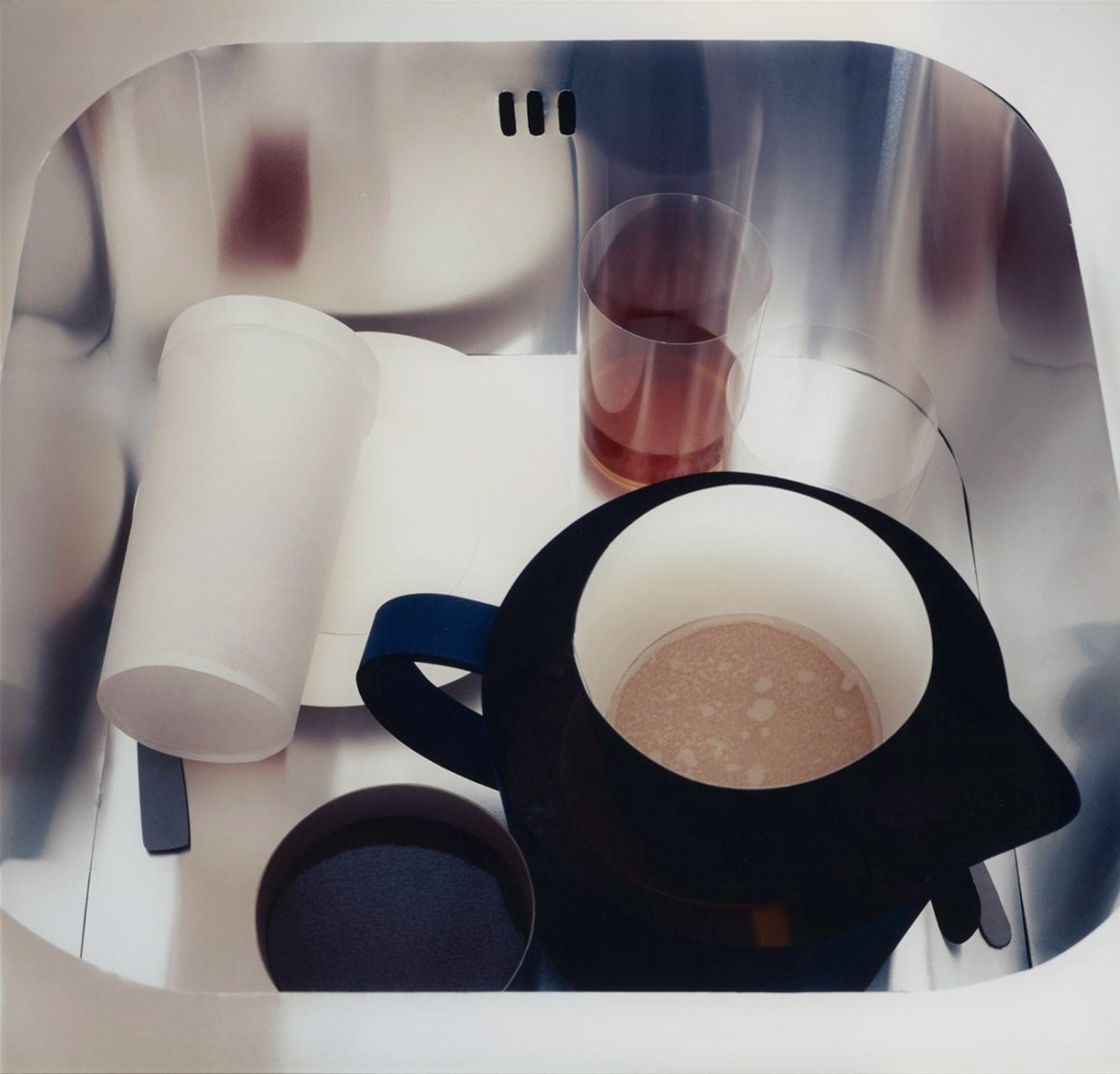
    Thomas Demand (German, b. 1964) 'Sink' 1997


    Thomas Demand (German, b. 1964)
    Sink
    1997
    C-Print / Diasec
    © Thomas Demand, VG Bild-Kunst, Bonn


    Thomas Demand (German, b. 1964) 'Tavern 3' 2006


    Thomas Demand (German, b. 1964)
    Tavern 3
    2006
    C-Print / Diasec
    © Thomas Demand, VG Bild-Kunst, Bonn


    Demand’s work is based on pre-existing images from the media, often of sites of political or cultural interest. He translates these images into life-size models using paper and cardboard, and photographs the resulting tableaux. These five photographs [of which the above is just one] depict a tavern in the German village of Burbach where a young boy was kidnapped, held hostage and ultimately murdered in 2001. His body was never recovered. The case was covered extensively in the German press, and images of the tavern became imbued with the public’s horrified imagination of the crime. Demand’s photographs investigate the traces these mediated images leave in the collective memory.

    Tate Gallery label, April 2008


    Thomas Demand (German, b. 1964) 'Archive' 1995


    Thomas Demand (German, b. 1964)
    Archive
    1995
    C-Print / Diasec
    © Thomas Demand, VG Bild-Kunst, Bonn


    Thomas Demand (German, b. 1964) 'Lawn' 1998


    Thomas Demand (German, b. 1964)
    Lawn
    1998
    C-Print / Diasec
    122 x 170 cm
    © Thomas Demand, VG Bild-Kunst, Bonn


    Thomas Demand (German, b. 1964) 'Office' 1995


    Thomas Demand (German, b. 1964)
    Büro / Office
    1995
    C-Print / Diasec
    183.5 x 240 cm
    © Thomas Demand, VG Bild-Kunst, Bonn 2009


    Thomas Demand (German, b. 1964) 'Gangway' 2001


    Thomas Demand (German, b. 1964)
    Gangway
    2001
    C-Print / Diasec
    © Thomas Demand, VG Bild-Kunst, Bonn 2009


    Thomas Demand (German, b. 1964) 'Attempt' 2005


    Thomas Demand (German, b. 1964)
    Attempt
    2005
    C-Print / Diasec
    © Thomas Demand, VG Bild-Kunst, Bonn 2009


    Thomas Demand (German, b. 1964) 'Balconies' 1997


    Thomas Demand (German, b. 1964)
    Balconies
    1997
    C-Print / Diasec
    © Thomas Demand, VG Bild-Kunst, Bonn 2009


    Neue Nationalgalerie
    Potsdamer Straße 50
10785
    Berlin
Kulturforum-Potsdamer Platz

    Opening hours:
    Tuesday – Sunday 10am – 6pm
    Closed Mondays

    Neue Nationalgalerie website

    LIKE ART BLART ON FACEBOOK

    Back to top

    Review: ‘Nocturnalians and Shadow Eaters’ by Vera Möller at Sophie Gannon Gallery, Richmond, Melbourne

    Exhibition dates: 20th October – 14th November 2009


    Vera Möller (Australian, b. 1955 Germany arrived Australia 1986) 'Rabinova' 2009 from the exhibition 'Nocturnalians and Shadow Eaters' by Vera Möller at Sophie Gannon Gallery, Richmond, Melbourne, Oct - Nov, 2009


    Vera Möller (Australian, b. 1955 Germany arrived Australia 1986)
    Rabinova
    2009
    Oil on linen
    82 x 76cm


    “I am interested in this border between the real and the imagined, the constructed and the natural.”


    Vera Möller quoted in “Artist earns her stripes” on The Age newspaper website May 28, 2005 [Online] Cited 23/06/2022


    There is a lot of mutability floating around current exhibitions in Melbourne at the moment. At the National Gallery of Victoria we have the deathly, eloquent freeze frame mutability of Ricky Swallow; at Tolarno Galleries we have the genetic hyper-realist mutability of Patricia Piccinini; and at Sophie Gannon Gallery we have the surreal, spatial mutability of Vera Möller.

    In this exhibition the real meets the imagined and the constructed encounters the natural in delicate sculptures and beautiful paintings. Coral snake and mutated striped hydras float above Phillip Huntersque backgrounds, looking oh so innocent until one remembers that hydras are predatory animals: the stripes, like the strips of a prisoners uniform not so innocent after all.

    These ‘portraits’ (for that is what they strike me as) emerge from the recesses of the subconscious, rising up like some absurd alien fish from the deep. The sculptural forests of mutated specimens waft on the breeze of the ocean current. This detritus of biotechnology, living in the dark and the shadow, emerges into the light and space of the gallery – genetic recombinations in which a strands of genetic material are broken and then joined to another DNA molecule. In Möller’s work this chromosomal crossover has led to offspring (called ‘recombinants’) that dance to a surrealist tune: genetic algorithms that use mutation to maintain genetic diversity from one generation of chromosomes to the next.1

    Spatially there is a lightness of touch and a beauty to their representation that brings the work alive within the gallery space. However, Möller’s recombinants are as deadly as they are beautiful. I really liked these creatures narcoleptic shadow dances.

    Dr Marcus Bunyan


    1/ Definition of mutation (genetic algorithm) in Wikipedia.


      Many thankx to Sophie Gannon Gallery for allowing me to publish the art work in the posting. Please click on the photographs for a larger version of the image.


      Vera Möller (Australian, b. 1955 Germany arrived Australia 1986) 'Martinette' 2009 (installation view)


      Vera Möller (Australian, b. 1955 Germany arrived Australia 1986)
      Martinette (installation view)
      2009
      Modelling material, acrylic and enamel paint, MDF, perspex cove


      Vera Möller (Australian, b. 1955 Germany arrived Australia 1986) 'Veronium' 2007 from the exhibition 'Nocturnalians and Shadow Eaters' by Vera Möller at Sophie Gannon Gallery, Richmond, Melbourne, Oct - Nov, 2009


      Vera Möller (Australian, b. 1955 Germany arrived Australia 1986)
      Veronium
      2007
      Oil on canvas
      167 x 199cm


      Vera Möller (Australian, b. 1955 Germany arrived Australia 1986) 'Shapinette' 2009 from the exhibition 'Nocturnalians and Shadow Eaters' by Vera Möller at Sophie Gannon Gallery, Richmond, Melbourne, Oct - Nov, 2009


      Vera Möller (Australian, b. 1955 Germany arrived Australia 1986)
      Shapinette
      2009
      Oil on linen
      101 x 101cm


      Vera Möller (Australian, b. 1955 Germany arrived Australia 1986) 'Telenium' 2009


      Vera Möller (Australian, b. 1955 Germany arrived Australia 1986)
      Telenium
      2009
      Oil on linen
      165 x 135cm


      Vera Möller (Australian, b. 1955 Germany arrived Australia 1986) 'Rubella' 2008-2009


      Vera Möller (Australian, b. 1955 Germany arrived Australia 1986)
      Rubella
      2008-2009


      Vera Möller (Australian, b. 1955 Germany arrived Australia 1986) 'Bureniana' 2008 (installation view)


      Vera Möller (Australian, b. 1955 Germany arrived Australia 1986)
      Bureniana (installation view)
      2008
      Modelling material, acrylic and enamel paint, MDF, perspex cover
      60 x 61 x 61cm


      Installation photo of 'Nocturnalians and Shadow Eaters' by Vera Moller at Sophie Gannon Gallery, Melbourne

      Installation photo of 'Nocturnalians and Shadow Eaters' by Vera Moller at Sophie Gannon Gallery, Melbourne


      Installation photographs of Nocturnalians and Shadow Eaters by Vera Möller at Sophie Gannon Gallery, Melbourne
      Photos: Marcus Bunyan


      Interested in the boundaries between the real and the imagined, Vera Möller creates paintings and sculptures by placing fictional hybrid plants in existing terrains. Bright colours and patterns, coral-like and succulent-plant forms and toadstool shapes describe her depictions of dreamt-up specimens that evoke the natural world. Möller’s ‘fantasy specimens’ demonstrate the way in which her science background and art practice have steadily converged.

      After training as a biologist in Germany, Möller migrated to Australia in 1986. She later completed a Bachelor of Fine Art at the Victorian College of the Arts and a PhD at Monash University. Her work has been exhibited in the USA, Japan, Finland, France, Germany and the UK, as well as throughout Australia.

      Text from the Sophie Gannon Gallery website [Online] Cited 03/05/2019


      Vera Möller (Australian, b. 1955 Germany arrived Australia 1986) 'Benthinium' 2008-2009


      Vera Möller (Australian, b. 1955 Germany arrived Australia 1986)
      Benthinium
      2008-2009
      Oil on linen
      140 x 220cm


      Vera Möller (Australian, b. 1955 Germany arrived Australia 1986) 'Tokyana' 2009


      Vera Möller (Australian, b. 1955 Germany arrived Australia 1986)
      Tokyana
      2009
      Oil on linen
      137 x 107cm


      Sophie Gannon Gallery
      2, Albert Street, Richmond, Melbourne

      Opening hours:
      Tuesday – Saturday 11am – 5pm

      Sophie Gannon Gallery website

      LIKE ART BLART ON FACEBOOK

      Back to top

      Exhibition: ‘Ricky Swallow: The Bricoleur’ at The Ian Potter Centre, NGV Australia, Melbourne

      Exhibition dates: 16th October, 2009 – 28th February, 2010


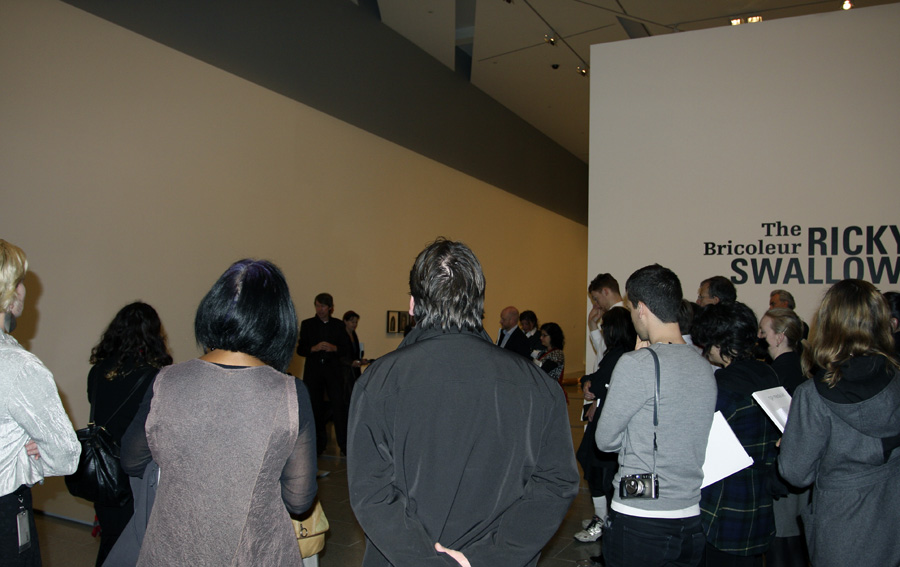
      Media crowd at the Ricky Swallow exhibition 'The Bricoleur' at NGV Australia


      Media crowd at the Ricky Swallow exhibition The Bricoleur at NGV Australia with Alex Baker, Senior Curator, Contemporary Art, NGV fourth from left with clasped hands.
      Photo: Marcus Bunyan


      Hot off the press straight to you here at Art Blart!

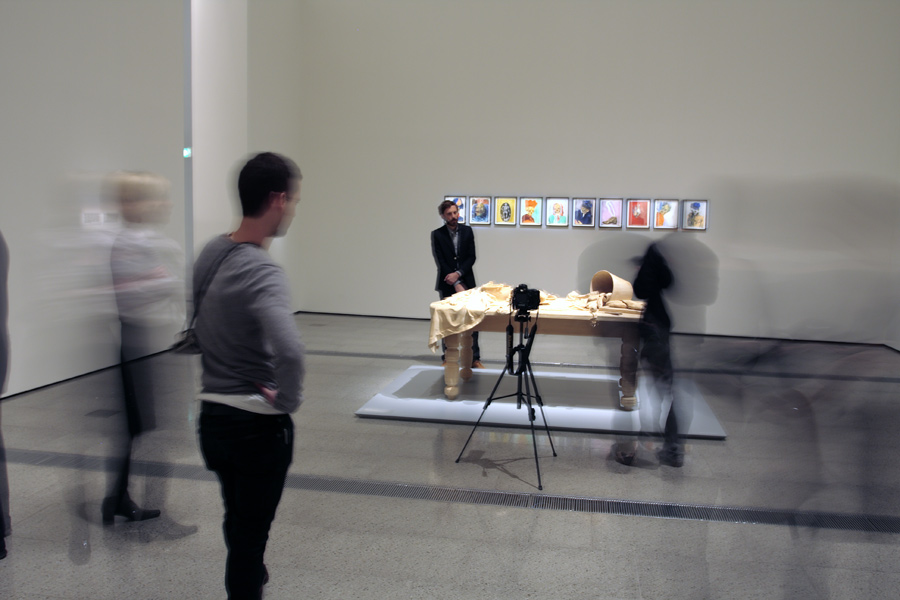
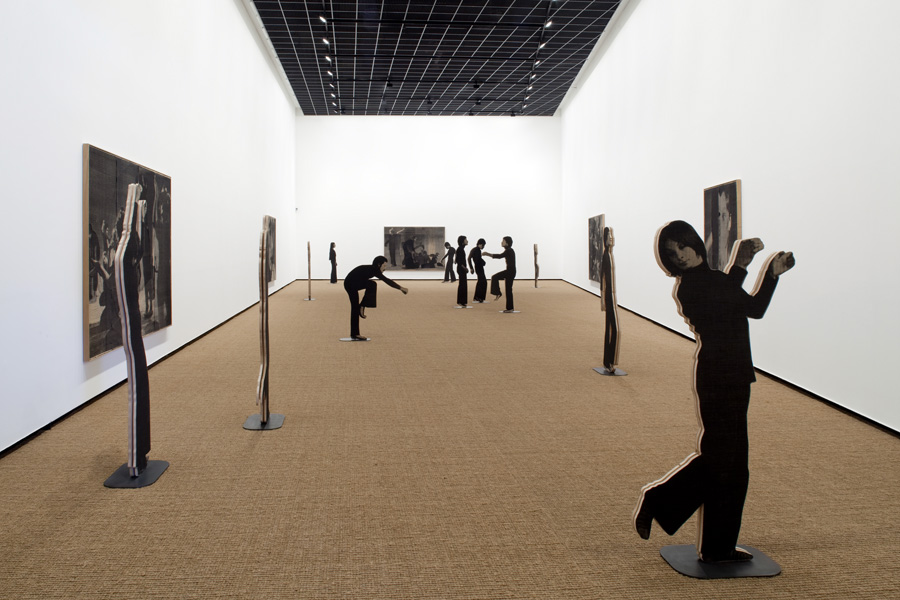
      Photographs of the exhibition Ricky Swallow: The Bricoleur at the National Gallery of Victoria Australia, Federation Square. The photographs are in the chronological order that I took them, walking through the three spaces of the exhibition. A spare, visually minimalist aesthetic to the show, where every vanitas, every mark (in)forms the work as transcendent momenti mori. Review to follow.

      Many thankx to Sue, Alison, Jemma and the team for the usual excellent job and for allowing me to document the exhibition. Please click on the photographs for a larger version of the image. All photographs © Marcus Bunyan


      “I’ve always been interested in how an object can be remembered and how that memory can be sustained and directed sculpturally, pulling things in and out of time, passing objects through the studio as a kind of filter returning them as new forms.”


      Ricky Swallow


      Ricky Swallow (Australian, b. 1974) 'The Bricoleur' 2006 from the exhibition 'Ricky Swallow: The Bricoleur' at The Ian Potter Centre, NGV Australia, Melbourne, Oct 2009 - Feb 2010


      Ricky Swallow (Australian, b. 1974)
      The Bricoleur
      2006
      Jelutong
      48 x 9.75 x 9.75 inches
      Photo: Marcus Bunyan


      Ricky Swallow (Australian, b. 1974) 'Unbroken Ways (for Derek Bailey)' 2006 from the exhibition 'Ricky Swallow: The Bricoleur' at The Ian Potter Centre, NGV Australia, Melbourne, Oct 2009 - Feb 2010


      Ricky Swallow (Australian, b. 1974)
      Unbroken Ways (for Derek Bailey)
      2006
      English Limewood
      5 x 30 x 7 inches
      Photo: Marcus Bunyan


      Ricky Swallow (Australian, b. 1974) 'One Nation Underground' 2007


      Ricky Swallow (Australian, b. 1974)
      One Nation Underground
      2007
      Photo: Marcus Bunyan


      Ricky Swallow (Australian, b. 1974) 'One Nation Underground' 2007  (detail)


      Ricky Swallow (Australian, b. 1974)
      One Nation Underground (detail)
      2007
      Photo: Marcus Bunyan


      Ricky Swallow (Australian, b. 1974) 'Tusk' 2007


      Ricky Swallow (Australian, b. 1974)
      Tusk
      2007
      Bronze with white patina, brass fixtures
      19.75 x 41.25 x 2.25 inches
      Photo: Marcus Bunyan


      Ricky Swallow (Australian, b. 1974) 'Tusk' 2007 (detail)


      Ricky Swallow (Australian, b. 1974)
      Tusk (detail)
      2007
      Bronze with white patina, brass fixtures
      19.75 x 41.25 x 2.25 inches
      Photo: Marcus Bunyan


      Ricky Swallow (Australian, b. 1974) 'Rehearsal for Retirement' 2008 (detail)


      Ricky Swallow (Australian, b. 1974)
      Rehearsal for Retirement (detail)
      2008
      English Lime Wood, Poplar
      Photo: Marcus Bunyan


      Ricky Swallow (Australian, b. 1974) 'Rehearsal for Retirement' 2008 (detail)


      Ricky Swallow (Australian, b. 1974)
      Rehearsal for Retirement (detail)
      2008
      English Lime Wood, Poplar
      Photo: Marcus Bunyan


      Ricky Swallow (Australian, b. 1974) 'Bowman’s record' 2008 (detail)


      Ricky Swallow (Australian, b. 1974)
      Bowman’s record (detail)
      2008
      Bronze
      Photo: Marcus Bunyan


      Ricky Swallow (Australian, b. 1974) 'Bowman’s record' 2008 (detail)


      Ricky Swallow (Australian, b. 1974)
      Bowman’s record (detail)
      2008
      Bronze
      Photo: Marcus Bunyan


      Ricky Swallow’s sculptures address fundamental issues that lie at the core of who we are. Things have lives. We are our things. We are things. When all is said and done it is our things – our material possessions – that outlive us. Anyone who has lost a family member or close friend knows this: what we have before us once that person is gone are the possessions that formed a life. Just as we are defined and represented by the things that we collect over time, we are ultimately objects ourselves. When we are dead and decomposed what remains are our bones, another type of object. And then there is social science. Archaeology, a subfield of anthropology, is entirely based on piecing together narratives of human relations based on material culture, that is, objects both whole and fragmentary. It may seem obvious but it is worth stressing here that our understanding of cultures from the distant past, those that originated before the advent of writing, is entirely based on the study of objects and skeletal remains. Swallow’s art addresses these basic yet enduring notions and reminds us of our deep symbiotic relationship to the stuff of daily life.

      Like the bricoleur put into popular usage by anthropologist Claude Levi-Strauss in his seminal book The Savage Mind, Ricky Swallow creates works of art often based on objects from his immediate surroundings. His method, however, is more of a second order bricolage: his sculptures are not assemblages of found objects, but rather elegantly crafted things. Hand carved from wood or plaster or cast in bronze, these humble objects are transformed into memorials to both the quotidian and the passage of time.

      Still life

      The still life has been an important touchstone throughout Swallow’s recent practice as it is an inspired vehicle for the exploration of how meaning is generated by objects. Several sculptures in the exhibition reference the still-life tradition in which Swallow updates and personalises this time-honoured genre, in particular the vanitas paintings of 17th century Holland. Vanitas still lifes, through an assortment of objects that had recognisable symbolism to a 17th-century viewer, functioned as allegories on the futility of pleasure and the inevitably of death. Swallow’s embrace of still life convention, however, is non-didactic, secular and open-ended. Swallow is not obsessed by death. On the contrary, his focus on objects is about salvaging them from the dust bin of history and honouring their continued resonance in his life.

      Killing time, 2003-2004, and Salad days, 2005, depict animals that Swallow and his family either found or caught when he was young and best highlight how the artist reclaims the still life genre to explore personal narrative. Killing time, which depicts a bounty of fish and crustaceans spread across a table modelled after the Swallow family kitchen table of the artist’s youth, is rife with autobiographical association. It not only references an object from Swallow’s past, but also the profession of his father, a fisherman, and the fact that Swallow was raised by the sea. Salad days is another autobiographical work depicting a range of animals such as birds, a rabbit, mice and a fox skull. Like many boys growing up in rural environments, Swallow recalls shooting magpies, encountering nesting birds in his garage or discovering dead lizards or trapping live ones in an attempt to keep them as pets.

      While not an overt still life, History of holding, 2007, suggests the genre in its fragmentary depiction of a musical instrument and the appearance of a lemon with falling rind. The hand holding / presenting a peeled lemon as the rind winds around the wrist in bracelet-like fashion is based on a cast of Swallow’s own hand, insinuating himself into this antiquated tradition. It is as if Swallow is announcing to us his deep interest in the temporality of objects through the presentation of the peeled lemon, which symbolises the passing of time and also appears in Killing time. The second component of History of holding is a sculptural interpretation of the Woodstock music festival icon designed by Arthur Skolnick in 1969, which still circulates today. History of holding, then, also references music, a leitmotif in Swallow’s art that appears both within the work itself, and also through Swallow’s use of titles.

      Body fragments

      Tusk, 2007 among several other works in the exhibition, explores the theme of body as fragment. Much has been discussed about Swallow’s use of the skeleton as a form rich in meaning within both the traditions of art history as well as popular culture (references range from the Medieval dance macabre and the memento mori of the still life tradition to the skeleton in rock music and skateboard art iconography). Tusk represents two skeletal arms with the hands clasped together in eternal union. A poignant work, Tusk is a meditation on permanence: the permanence of the human body even after death; the permanence of the union between two people, related in the fusion of the hands into that timeless symbol of love, the heart.

      Watercolours: atmospheric presentations, mummies, music, homage

      Swallow calls his watercolours “atmospheric presentations”, in contradistinction to his obviously more physical sculptures, and he sees them as respites from the intensity of labour and time invested in the sculptural work. They also permit experimentation in ways that sculpture simply does not allow. One nation underground, 2007, is a collection of images based on rock / folk musicians, several who had associations to 1960s Southern California, Swallow’s current home. Most of the subjects Swallow has illustrated in this work are now deceased; several experienced wide recognition only after their deaths. Like many of his sculptures, this group of watercolours tenderly painted with an air of nostalgia has the sensibility of a memorial – or as Swallow has called it “a modest monument”. The title of the work is based on a record album by another under-heralded rock band from the 1960s, Pearls Before Swine, and is a prime example of Swallow’s belief in the importance of titles to the viewing experience as clues or layers of meaning. In this case, the title hints at the quasi-cult status of the musicians and singers depicted. The featured musicians are Chris Bell (Big Star), Karen Dalton (a folk singer), Tim Buckley (legendary singer whose style spanned several genres and father to the late Jeff Buckley), Denny Doherty (The Mamas & the Papas ), Judee Sill (folk singer), Brian Jones (Rolling Stones), Arthur Lee (Love), John Phillips (The Mamas & the Papas ), Skip Spence (Jefferson Airplane and Moby Grape) and Phil Ochs (folk singer).

      Text from the National Gallery of Victoria website [Online] Cited 15/10/2010


      Installation view of 'Ricky Swallow: The Bricoleur' second room at NGV Australia

      Installation view of 'Ricky Swallow: The Bricoleur' second room at NGV Australia


      Installation views of Ricky Swallow: The Bricoleur second space at NGV Australia
      Photos: Marcus Bunyan


      Ricky Swallow (Australian, b. 1974) 'Caravan' 2008 (detail)


      Ricky Swallow (Australian, b. 1974)
      Caravan (detail)
      2008
      Bronze
      Photo: Marcus Bunyan


      Ricky Swallow (Australian, b. 1974) 'Salad days' c. 2005


      Ricky Swallow (Australian, b. 1974)
      Salad days
      c. 2005
      Photo: Marcus Bunyan


      Ricky Swallow (Australian, b. 1974) 'Killing time' 2003-2004


      Ricky Swallow (Australian, b. 1974)
      Killing time
      2003-2004
      Photo: Marcus Bunyan


      Ricky Swallow (Australian, b. 1974) 'Killing time' 2003-2004 (detail)


      Ricky Swallow (Australian, b. 1974)
      Killing time (detail)
      2003-2004
      Photo: Marcus Bunyan


      Ricky Swallow (Australian, b. 1974) 'Killing time' 2003-2004


      Ricky Swallow (Australian, b. 1974)
      Killing time
      2003-2004
      Photo: Marcus Bunyan


      Ricky Swallow (Australian, b. 1974) 'Killing time' 2003-2004 (detail)


      Ricky Swallow (Australian, b. 1974)
      Killing time (detail)
      2003-2004
      Photo: Marcus Bunyan


      A new exhibition featuring the work of internationally renowned Australian artist Ricky Swallow will open at The Ian Potter Centre: NGV Australia on 16 October 2009.

      Ricky Swallow: The Bricoleur is the artist’s first major exhibition in Australia since 2006. This exhibition will feature several of the artist’s well‐known intricately detailed, carved wooden sculptures as well as a range of new sculptural works in wood, bronze and plaster. The exhibition will also showcase two large groups of watercolours, an aspect of Swallow’s practice that is not as well known as his trademark works.

      Salad days (2005) and Killing time (2003-2004), which were featured in the 2005 Venice Biennale and are considered Swallow icons, will strike a familiar chord with Melbourne audiences.

      Sculptures completed over the past year include bronze balloons on which bronze barnacles seamlessly cling (Caravan, 2008); a series of cast bronze archery targets (Bowman’s Record, 2008) that look like desecrated minimalist paintings; and carved wooden sculpture of a human skull inside what looks like a paper bag (Fig 1, 2008).

      A highlight of the show will be Swallow’s watercolour, One Nation Underground (2007), recently acquired by the NGV. The work presents a collection of images based on 1960s musicians including Tim Buckley, Denny Doherty, Brian Jones and John Phillips.

      Alex Baker, Senior Curator, Contemporary Art, NGV said the works in this exhibition explore the themes of life and death, time and its passing, mortality and immortality.

      “Swallow’s art investigates how memory is distilled within the objects of daily life. His work addresses the fundamental issues that lie at the core of who we are, reminding us of our deep symbiotic relationship to the stuff of everyday life.”

      “The exhibition’s title The Bricoleur refers to the kind of activities performed by a handyman or tinkerer, someone who makes creative use of whatever might be at hand. The Bricoleur is also the title of one of the sculptures in the exhibition, which depicts a forlorn houseplant with a sneaker wedged between its branches,” said Mr Baker.

      Gerard Vaughan, Director, NGV, said this exhibition reinforces the NGV’s commitment to exhibiting and collecting world‐class contemporary art.

      “The NGV has enjoyed a long and successful relationship with Ricky Swallow, exhibiting and acquiring a number of his works over the years. His detailed and exquisitely crafted replicas of commonplace objects never fail to inspire visitors to the Gallery.”

      Ricky Swallow was born in Victoria in 1974 and currently lives and works in Los Angeles, California. His career has enjoyed a meteoric rise since winning the NGV’s prestigious Contempora5 art prize in 1999. Since then, Swallow has exhibited in the UK, Europe and the United States, and represented Australia at the 2005 Venice Biennale.”

      Press release from the NGV website [Online] Cited 10/10/2009. No longer available online


      Ricky Swallow facing the media behind his work 'Killing time' (2003-2004)

      Ricky Swallow facing the media behind his work 'Killing time' (2003-2004)


      Ricky Swallow facing the media behind his work Killing time (2003-2004)
      Photos: Marcus Bunyan


      The Ian Potter Centre: NGV Australia Federation Square
      Corner of Russell and 
Flinders Streets, Melbourne

      Opening hours:
      Open daily 10am – 5pm
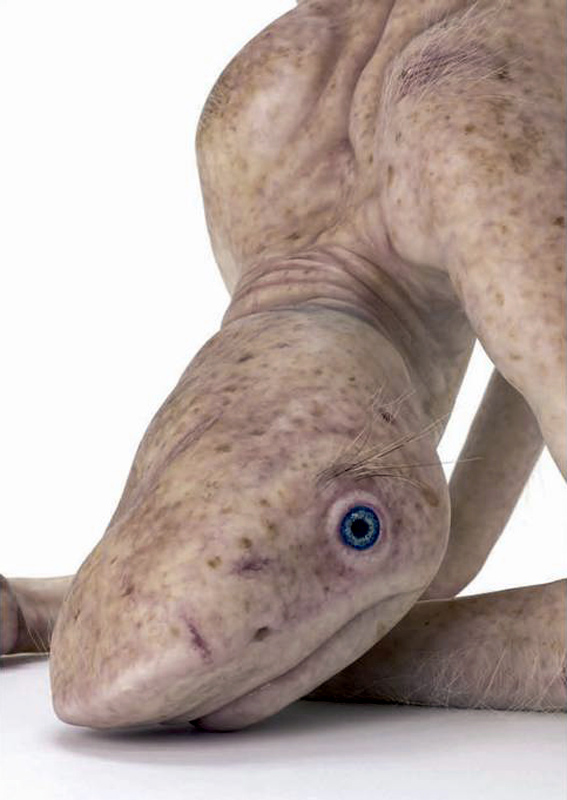
      National Gallery of Victoria website

      LIKE ART BLART ON FACEBOOK

      Back to top

      Review: ‘Scenes’ by David Noonan at the Australian Centre for Contemporary Art (ACCA), Melbourne

      Exhibition dates: 15th August – 27th September, 2009

      Commissioning Curator: Juliana Engberg
      Coordinating Curator: Charlotte Day


      Installation view of 'Scenes' by David Noonan at ACCA


      Installation view of Scenes by David Noonan at ACCA
      Photo: Marcus Bunyan


      Thoughts

      Limited colour palette of ochres, whites, browns and blacks.

      Rough texture of floor covered in Jute under the feet.

      Layered, collaged print media figures roughly printed on canvas – elements of abstraction, elements of figuration.

      The ‘paintings’ are magnificent; stripped and striped collages. Faces missing, dark eyes. There is something almost Rembrandt-esque about the constructed images, their layering, like Rembrandt’s Night Watch (1642) – but then the performance element kicks in – the makeup, the lipstick, the tragic / comedic faces.

      Mannequin, doll-like cut-out figures, flat but with some volume inhabiting the tableaux vivant.

      Twelve standing figures in different attitudes – a feeling of dancing figures frozen on stage, very Japanese Noh theater. Spatially the grouping and use of space within the gallery is excellent – like frozen mime.

      The figures move in waves, rising and falling both in the standing figures and within the images on the wall.

      Looking into the gallery is like looking through a picture window onto a stage set (see above image).

      “The fracturing of identity, the distortion of the binaries of light and dark, absence/presence in spatio-temporal environments.

      The performance as ritual challenging a regularized and constrained repetition of norms.” (Judith Butler).

      Excellent, thought provoking exhibition.

      Dr Marcus Bunyan


      Many thankx to ACCA for allowing me to publish the photographs in the posting. Please click on the photographs for a larger version of the image.


      Photograph from 'Scenes' by David Noonan (installation view)


      Installation view of 'Scenes' by David Noonan at ACCA


      Installation views of Scenes by David Noonan at ACCA
      Photos: Marcus Bunyan


      Noonan often works with found photographic imagery taken from performance manuals, textile patterns and archive photographs to make densely layered montages. These works at once suggest specific moments in time and invoke disorientating a-temporal spaces in which myriad possible narratives emerge. The large-scale canvases framing this exhibition depict scenes of role-playing, gesturing characters, and masked figures set within stage-like spaces. Printed on coarsely woven jute, collaged fabric elements applied to the surface of the canvases further signal the cutting and splicing of images.

      Noonan’s new suite of figurative sculptures, comprise life size wooden silhouettes faced with printed images of characters performing choreographed movements. While the figurative image suggests a body in space, the works’ two dimensional cut-out supports insist on an overriding flatness which lends them an architectural quality – as stand-ins for actual performers and as a means by which to physically navigate the exhibition space.

      Press release from the Chisenhale Gallery website [Online] Cited 20/09/2009. No longer available online


      For the Helen Macpherson Smith Commission, he will bring the characters depicted in his signature collage works off the wall and onto an imagined ‘stage’. Several life-size, wooden cut-out figures will inhabit the ACCA exhibition gallery, frozen in choreographed movements.

      Noonan’s dancing figures will be framed by several large-scale canvas works, printed photographic and film imagery gleaned from performance manuals, textile patterns and interior books. Printed on coarse woven jute, he cuts, slices and montages images together constructing compositions that hover between two and three dimensionality, positive and negative space, past and present, stasis and action.

      “‘Scenes’ recalls the experimental workshops and youth-focused exuberance of a more optimistic era, coinciding with the artists own childhood in the 1970s” says curator Charlotte Day. “With these new works, Noonan re-introduces the idea of ritual, of creating a temporal space beyond reason that is filled with both danger and hope.”

      David Noonan (Australian, b. 1969) is the fifth recipient of the Helen Macpherson Smith Commission, one of the most significant and generous commissions in Australia. The partnership between ACCA and the Helen Macpherson Smith Trust offers Victorian artists the opportunity to create an ambitious new work of art, accompanied by an exhibition in ACCA’s exhibition hall.

      Press release from the ACCA website [Online] Cited 20/09/2009. No longer available online


      David Noonan returned to Melbourne with this significant project which extended his abiding interest in time and space. Using ACCA’s large room as a field of encounter, he created an ensemble of works in 2 and 3 dimensions that make purposeful use of the audience’s own navigation through the gallery. Visitors walking between David’s free-standing figures performed like time travellers in a landscape that had been paused. His enigmatic wall based works appeared to trap momentary scenes in a layered time warp.

      This major commission allowed for an ambitious project by a Victorian artist who had reached a significant platform in their own practice. Elements of the commission were gifted to a Victorian regional gallery. In this case the recipient was Bendigo Art Gallery.

      Text from the ACCA website [Online] Cited 24/04/2019


      Photograph from 'Scenes' by David Noonan at ACCA (installation view)


      Installation view of 'Scenes' by David Noonan at ACCA


      Installation views of Scenes by David Noonan at ACCA
      Photos: Marcus Bunyan


      Australia Centre for Contemporary Art (ACCA)
      111 Sturt Street, Southbank, Victoria 3006, Australia
      Phone: 03 9697 9999

      Opening Hours:
      Tuesday to Friday 10am – 5pm
      Weekends & Public Holidays 11am – 5pm
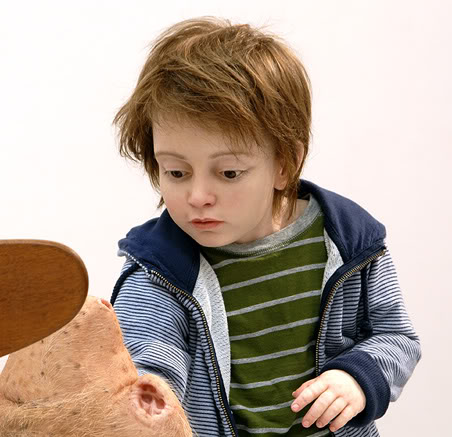
      Open all public holidays except Christmas Day and Good Friday

      ACCA website

      LIKE ART BLART ON FACEBOOK

      Back to top

      Review: ‘All the Little Pieces’ by Lyndal Hargrave at Anita Traverso Gallery, Richmond, Melbourne

      Exhibition dates: 3rd September – 3rd October, 2009


      Lyndal Hargrave (Australia, b. 1959) 'Sacred Geometry' 2009 from the exhibition 'All the Little Pieces' by Lyndal Hargrave at Anita Traverso Gallery, Richmond, Melbourne, Sept - Oct, 2009


      Lyndal Hargrave (Australia, b. 1959)
      Sacred Geometry
      2009
      Acrylic painted timber coat hangers, screws, staples
      180 x 170cm
      Photo: Marcus Bunyan


      This is a mixed bag of an exhibition by Lyndal Hargrave at Anita Traverso Gallery in Richmond, Melbourne.

      Despite one outstanding painting Breathing Space (2009, see below), the view from the back of the artist’s house onto a jetty with attendant wooden posts and sky, the other paintings are the weakest elements of the exhibition, lacking the strength and resonance of the sculptural work.

      The two standing towers, Hairpin Dragons I & II and Jacob’s Ladder (both 2009, see below) are stronger work, Jacobs Ladder imitating the form of the painting Breathing Space in three-dimensional Cuisenaire-type coloured rods (see the installation photograph of the two pieces below).

      The best pieces in the exhibition are the wall mounted geometric, mandala-like sculptures made of wooden coat hangers. Delicately shifting patterns take the micro cellular form and make it macro, their patterns of construction offering a pleasing visual balance that is both complex, layered and innovative at one and the same time. As explorations of the notion of the universal structure, the golden ratio, they reward repeated viewing.

      As the exhibition stands there are too many little pieces to make a holistic whole. Perhaps an exhibition solely of the towers or geometric pieces would have been stronger. I look forward to seeing how the geometric pieces (d)evolve in future work. Will the structures break down and reassemble in other marvellous incantations? I hope so!

      Dr Marcus Bunyan


      Many thankx to Anita Traverso Gallery for allowing me to publish the art work in the posting. Please click on some of the photographs for a larger version of the image.


      Lyndal Hargrave (Australia, b. 1959) 'Arabesque' 2009 from the exhibition 'All the Little Pieces' by Lyndal Hargrave at Anita Traverso Gallery, Richmond, Melbourne, Sept - Oct, 2009


      Lyndal Hargrave (Australia, b. 1959)
      Arabesque
      2009
      Acrylic painted timber coat hangers, screws, staples
      200 x 360cm
      Photo: Marcus Bunyan


      Lyndal Hargrave (Australia, b. 1959) 'Arabesque' 2009 (detail)


      Lyndal Hargrave (Australia, b. 1959)
      Arabesque (detail)
      2009
      Acrylic painted timber coat hangers, screws, staples
      200 x 360cm
      Photo: Marcus Bunyan


      Lyndal Hargrave (Australia, b. 1959) 'Hairpin Dragons I & II' 2009


      Lyndal Hargrave (Australia, b. 1959)
      Hairpin Dragons I & II
      2009
      Wire, formply
      170 x 15cm (varying)
      Photo: Marcus Bunyan


      “It is a constant idea of mine that behind the cotton wool (of daily reality) is hidden a pattern, that we – I mean all human beings – are connected with this: that the whole world is a work of art; that we are parts of the work of art.”

      ~ Virginia Woolf


      For as long as I can remember, my art practice has served as a filter between the outside world and my inside world. I realise now that the act of making the artwork informs my ideas rather than the other way round. Working intuitively results in a continuous stream of surprises that in retrospect mirror the pressing issues surrounding me at that time.

      In All the Little Pieces my fascination with patterns of construction from micro to macro and natural to man-made continues. My work explores the gap between order and chaos and helps me to understand the meaning of balance.

      Using mundane found objects, my sculptures probe the possibility of re-invention through the way the componentry of human habitation can be re-configured to offer us a new way of seeing and experiencing our world.

      It is this process of metamorphosis that is at the centre of my investigation: how life forms make the transition from one state to another – tree to timber to tower or talisman; why some systems remain strong and others crumble.

      Overarching my work is the notion of universal structure and the geometry that has informed our evolution from molecule to macro-system.”

      Lyndal Hargrave 2009

      Text from the Anita Traverso Gallery website


      Lyndal Hargrave (Australia, b. 1959) 'Whirlpool Galaxy' (2009) and 'The Samarian Star' (2009)


      Lyndal Hargrave (Australia, b. 1959)
      Whirlpool Galaxy and The Samarian Star
      2009
      Acrylic painted timber coat hangers, screws, staples
      Photo: Marcus Bunyan


      Installation view of Lyndal Hargrave exhibition at Anita Traverso Gallery, Melbourne


      Installation view of the Lyndal Hargrave exhibition at Anita Traverso Gallery
      Photo: Marcus Bunyan


      Photograph showing the relationship of form between the work 'Jacob’s Ladder' (2009) and the painting 'Breathing Space' (2009)


      Photograph showing the relationship of form and colour between the work Jacob’s Ladder (2009) and the painting Breathing Space (2009)
      Photo: Marcus Bunyan


      Lyndal Hargrave (Australia, b. 1959) 'Breathing Space' 2009


      Lyndal Hargrave (Australia, b. 1959)
      Breathing Space
      2009
      Oil on canvas
      200 x 200cm


      Anita Traverso Gallery

      The physical gallery has now closed.

      PO Box 7001, Hawthorn North 3122
      Phone: 0408 534 034
      Email: art@anitatraversogallery.com.au

      Anita Traverso Gallery website

      LIKE ART BLART ON FACEBOOK

      Back to top

      Review: ‘Connection is Solid’ by John Nicholson at Sophie Gannon Gallery, Richmond, Melbourne

      Exhibition dates: 25th August – 19th September, 2009


      John Nicholson (Australian, b. 1970) 'Untitled' 2009 from the exhibition 'Connection is Solid' by John Nicholson at Sophie Gannon Gallery, Richmond, Melbourne, Aug - Sept, 2009


      John Nicholson (Australian, b. 1970)
      Aerial Navigation
      2009


      You could say that the essence of the cosmos is not matter, it is consciousness.

      It is not the external world that is real – it is “maya”, an illusion, for the real world lies within.

      These works, with their striations, strata and suspension are emanations of that spirit – projections of the inner reality.

      In terms of the ancient Chinese philosophy Lao Tzu we dream the butterfly and the butterfly is us. If you don’t ‘get’ these works, let go all pretensions and feel their colour as sound, as vibrations of energy.

      Submerge yourself in their shape and form. Like DNA structure, a heart beat or the record of a seismic shock these works are music as art, the length of harmony quivering and slipping in our minds, before our eyes.

      This is the colour music of Roy De Maistre’s paintings of the 1930’s updated to the 21st century. They are fugues of sound made physical entities, intertwining, coming and going. Here lines, tones and colours are organised in a parallel way – tone after tone, line after line. They are wavelengths of the interior made visible. The connection is solid and fluid at one and the same time; there are many connections to be discovered, many journeys to be made.

      I hear them, I like them.

      Dr Marcus Bunyan


      Many thankx to Sophie Gannon Gallery for allowing me to publish the photographs in the posting. Please click on the photographs for a larger version of the image.


      John Nicholson (Australian, b. 1970) 'Under the radar' 2009 from the exhibition 'Connection is Solid' by John Nicholson at Sophie Gannon Gallery, Richmond, Melbourne, Aug - Sept, 2009


      John Nicholson (Australian, b. 1970)
      Under the radar
      2009
      Photo: Marcus Bunyan


      Installation view of 'Connection is Solid' by John Nicholson at Sophie Gannon Gallery, Melbourne

      Installation view of 'Connection is Solid' by John Nicholson at Sophie Gannon Gallery, Melbourne


      Installation views of Connection is Solid by John Nicholson at Sophie Gannon Gallery
      Photos: Marcus Bunyan


      John Nicholson (Australian, b. 1970) 'Thrill seeker' 2009 (detail)


      John Nicholson (Australian, b. 1970)
      Thrill seeker (detail)
      2009
      Photo: Marcus Bunyan


      Roy de Maistre (Australian, 1894-1968) 'Arrested Movement from a Trio' 1934


      Roy de Maistre (Australian, 1894-1968)
      Arrested Movement from a Trio
      1934
      Oil and pencil on composition board
      72.3 × 98.8cm


      John Nicholson (Australian, b. 1970) 'Slip' 2009


      John Nicholson (Australian, b. 1970)
      Slip
      2009


      John Nicholson (Australian, b. 1970) 'The wire might sense' 2009


      John Nicholson (Australian, b. 1970)
      The wire might sense
      2009


      John Nicholson (Australian, b. 1970) 'Swoop' 2009


      John Nicholson (Australian, b. 1970)
      Swoop
      2009
      Photo: Marcus Bunyan


      Installation view of 'Connection is Solid' by John Nicholson with on the wall 'Satellite Graffitti' (2009) and on the floor 'Cascade' (2009) and 'Swoop' (2009)


      Installation view of Connection is Solid by John Nicholson with on the wall Satellite Graffitti (2009) and on the floor Cascade (2009) and Swoop (2009)
      Photo: Marcus Bunyan


      Sophie Gannon Gallery
      2, Albert Street, Richmond, Melbourne

      Opening hours:
      Tuesday – Saturday 11am – 5pm
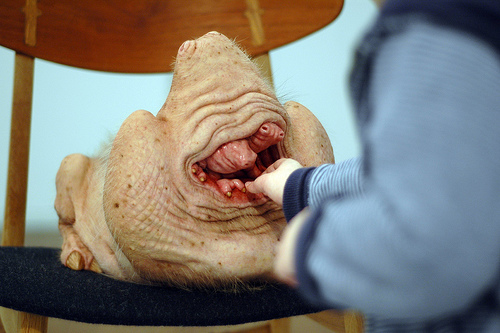
      Sophie Gannon Gallery website

      LIKE ART BLART ON FACEBOOK

      Back to top