Here’s my pick of the eleven best exhibitions in Melbourne for 2010 that featured on the Art Blart: art and cultural memory archive (in no particular order). Enjoy!
Marcus
1/ Jenny Holzer at The Australian Centre for Contemporary Art (ACCA)
Jenny Holzer (American, b. 1950) Right Hand (Palm Rolled) 2007 Oil on linen 80 x 62 in (203.2 x 157.5cm) Text: U.S. government document
The reason that you must visit this exhibition is the last body of work. Working with declassified documents that relate to the wars in Iraq and Afghanistan Holzer’s Redaction paintings address the elemental force that is man’s (in)humanity to man (in the study of literature, redaction is a form of editing in which multiple source texts are combined (redacted) and subjected to minor alteration to make them into a single work) … I left the exhibition feeling shell-shocked after experiencing intimacy with an evil that leaves few traces. In the consciences of the perpetrators? In the hearts of the living! Oh, how I wish to see the day when the human race will truly evolve beyond. We live in hope and the work of Jenny Holzer reminds us to be vigilant, to speak out, to have courage in the face of the unconscionable.
2/ ‘Pondlurking’ by Tom Moore at Helen Gory Galerie, Prahran
This exhibition produced in me an elation, a sense of exalted happiness, a smile on my dial that was with me the rest of the day. The installation features elegantly naive cardboard cityscape dioramas teeming with wondrous, whimsical mythological animals that traverse pond and undulating road. This bestiary of animals, minerals and vegetables (bestiaries were made popular in the Middle Ages in illustrated volumes that described various animals, birds and even rocks) is totally delightful … What really stands out is the presence of these objects, their joyousness. The technical and conceptual never get in the way of good art. The Surrealist imagining of a new world order (the destruction of traditional taxonomies) takes place while balanced on one foot. The morphogenesis of these creatures, as they build one upon another, turns the world upside down … Through their metamorphosed presence in a carnivalesque world that is both weird and the wonderful, Moore’s creatures invite us to look at ourselves and our landscape more kindly, more openly and with a greater generosity of spirit.
Tom Moore (Australian, b. 1971) Birdboat with passenger with a vengeance (left) and Robot Island (right) 2010 and 2009
3/ ‘Safety Zone’ by John Young at Anna Schwartz Gallery
What can one say about work that is so confronting, poignant and beautiful – except to say that it is almost unbearable to look at this work without being emotionally charged, to wonder at the vicissitudes of human life, of events beyond one’s control.
The exhibition tells the story of the massacre of 300,000 people in the city of Nanjing in Jiangsu, China by Japanese troops in December, 1937 in what was to become known as the Nanjing Massacre. It also tells the story of a group of foreigners led by German businessman John Rabe and American missionary Minnie Vautrin who set up a “safety zone” to protect the lives of at least 250,000 Chinese citizens. The work is conceptually and aesthetically well resolved, the layering within the work creating a holistic narrative that engulfs and enfolds the viewer – holding them in the shock of brutality, the poignancy of poetry and the (non)sublimation of the human spirit to the will of others.
Simply, this is the best exhibition that I have seen in Melbourne so far this year.
John Young (Australian, b. 1956) Flower Market (Nanjing 1936) #1 2010 digital print and oil on Belgian linen 240 x 331cm image courtesy of the artist and Anna Schwartz Gallery
John Young (Australian, b. 1956) Safety Zone 2010 60 works, digital prints on photographic paper and chalk on blackboard-painted archival cotton paper Installation shot, Anna Schwartz Gallery, Melbourne Image courtesy of the artist and Anna Schwartz Gallery
Kiko Gianocca (Swiss, b. 1974) Man & dog Found image, resin, silver 2009
A beautiful exhibition of objects by Swiss/Italian artist Kiko Gianocca at Gallery Funaki, Melbourne, one full of delicate resonances and remembrances.
Glass vessels with internal funnels filled with the gold detritus of disassembled objects, found pendants: Horse, Anchor, Four leaf clover, Swan, Hammer & sickle … Brooches of gloss and matt black resin plates. On the reverse images exposed like a photographic plate, found images solidified in resin.
The front: the depths of the universe, navigating the dazzling darkness The back: memories, forgotten, then remade, worn like a secret against the beating chest. Only the wearer knows!
As Kiki Gianocca asks, “I am not sure if I grasp the memories that sometimes come to mind. I start to think they hold me instead of me holding them.”
The photographs invite us to share not only the mapping of the surface of the skin and the mapping of place and identity but the sharing of inner light, the light of the imaginary as well – and in this observation the images become unstable, open to reinterpretation. The distance between viewer and subject is transcended through an innate understanding of inner and outer light. The photographs seduce, meaning, literally, to be led astray … I found myself looking at the photographs again and again for small nuances, the detail of hairs on the head, the imagining of what the person was thinking about with their eyes closed: their future, their fears, their hopes, the ‘active imagination as a means to visualise sustainable futures’ (Orr, 2010) …
In the imagination of the darkness that lies behind these children’s closed eyes is the commonality of all places, a shared humanity of memory, of dreams. These photographs testify to our presence and ask us to decide how we feel about our life, our place and the relation to that (un)placeness where we must all, eventually, return.
Jill Orr (Australian, b. 1952) Jacinta 2009
6/ ‘AND THEN…’ by Ian Burns at Anna Schwartz Gallery
These are such fun assemblages, the created mis en scenes so magical and hilarious, guffaw inducing even, that they are entirely delightful.
There is so much to like here – the inventiveness, the freshness of the work, the insight into the use of images in contemporary culture. Still photographs of this work do not do it justice. I came away from the gallery uplifted, smiling, happy – and that is a wonderful thing to happen.
Ian Burns (Australian, b. 1964) 15 hours v.4 2010 Found object kinetic sculpture, live video and audio Image courtesy the artist and Anna Schwartz Gallery
Julia deVille (Australian, b. 1982) Nevermore 2010
This is an excellent exhibition by Julia deVille at Sophie Gannon Gallery in Richmond … This exhibition shows a commendable sense of restraint, a beautiful rise and fall in the work as you walk around the gallery space with the exhibits displayed on different types and heights of stand and a greater thematic development of the conceptual ideas within the work. There are some exquisite pieces.
In these pieces there is a simplification of the noise of the earlier works and in this simplification a conversant intensification of the layering of the conceptual ideas. Playful and witty the layers can be peeled back to reveal the poetry of de Sade, the stories of Greek mythology and the amplification of life force that is at the heart of these works. Good stuff.
Quiet, precise works. Forms of insect-like legs and proboscises. They balance, seeming to almost teeter on the edge – but the objects are incredibly grounded at the same time. As you walk into the darkened gallery and observe these creatures you feel this pull – lightness and weight. Fantastic!
And so it came to pass in silence, for these works are still, quiet and have a quality of the presence of the inexpressible. Funaki achieves these incredible silences through being true to her self and her style through an expression of her endearing will. While Mari may no longer be amongst us as expressions of her will the silences of these objects will be forever with us.
When looking at art, one of the best experiences for me is gaining the sense that something is open before you, that wasn’t open before. I don’t mean accessible, I mean open like making a clearing in the jungle, or being able to see further up a road, or just further on. And also like an open marketplace – where there were always good trades. There is the feeling that if you put in a certain amount of honesty, then you would get something back that made some room for you in front – some room that would allow you to look forward, and maybe even walk into that space. Seeing Jerrems work gives you that feeling.
This is a superlative survey exhibition of the work of John Davis at NGV Australia, Melbourne.
In the mature work you can comment on the fish as ‘travellers’ or ‘nomads’, “a metaphor for people and the way we move around the world.” You can observe the caging, wrapping and bandaging of these fish as a metaphor for the hurt we humans impose on ourselves and the world around us. You can admire the craftsmanship and delicacy of the constructions, the use of found objects, thread, twigs, driftwood and calico and note the ironic use of bituminous paint in relation to the environment, “a sticky tar-like form of petroleum that is so thick and heavy,” of dark and brooding colour.
This is all well and true. But I have a feeling when looking at this work that here was a wise and old spirit, one who possessed knowledge and learning … a human being who attained a state of grace in his life and in his work.
11/ ‘Mortality’ at The Australian Centre for Contemporary Art (ACCA)
Fiona Tan (Indonesian, b. 1966) Tilt 2002 DVD courtesy of the artist, Frith Street Gallery London
I never usually review group exhibitions but this is an exception to the rule. I have seen this exhibition three times and every time it has grown on me, every time I have found new things to explore, to contemplate, to enjoy. It is a fabulous exhibition, sometimes uplifting, sometimes deeply moving but never less than engaging – challenging our perception of life. The exhibition proceeds chronologically from birth to death. I comment on a few of my favourite works below but the whole is really the sum of the parts: go, see and take your time to inhale these works – the effort is well rewarded. The space becomes like a dark, fetishistic sauna with it’s nooks and crannies of videos and artwork. Make sure you investigate them all!
The delineation of the body, the curvature and compression of muscles, the texture like that of rubbing the thumb and fingers together, the colour, the tension between form and space – all glorious!
Dr Marcus Bunyan
Many thankx to the Albertina for allowing me to publish the fabulous drawings in the posting. Please click on the drawings for a larger version of the image.
In a major exhibition scheduled for autumn and winter 2010, the Albertina will present around one hundred of the most beautiful drawings by Michelangelo. Precious works from the Graphic Arts Collection of the Albertina, as well as important loans from museums and private collections in Europe and the United States, will offer a hitherto unparalleled overview of the great Florentine’s entire oeuvre. The focus will be on the figural drawings by Michelangelo, who will be introduced here as the genius of a period of change, with his versatile talents as a draftsman, painter, architect, and sculptor. The show traces Michelangelo’s career from the artist’s juvenile works and designs for The Battle of Cascina to the world-famous frescoes in the Sistine Chapel, the ingenious drawings he presented to Tommaso de’ Cavalieri, and the Crucifixion scenes dating from the artist’s late period, when he was almost eighty years old. At the same time, new clues as to the dating of individual works will be provided. Projections of the monumental ceiling frescoes, the incorporation of plaster casts of Michelangelo’s sculptures, as well as paintings by other artists based on the master’s designs are meant to illustrate the dimensions and impact of his art. New paths of didactic presentation will be forged through a documentation of contemporary history and the artist’s environment.
Between 8 October 2010 and 9 January 2011, the Albertina presents the first major Michelangelo exhibition in more than twenty years. This display of 120 out of the artist’s most precious drawings offers a comprehensive insight into the work of this great genius. The sheets come from the Albertina’s own holdings, as well as from important European and American museums – the Uffizi and the Casa Buonarroti in Florence, the Louvre in Paris, the Metropolitan Museum of Art in New York, the Teylers Museum in Haarlem, the Royal Library in Windsor Castle (property of the British monarch) and the British Museum in London – and private collections.
It was three years ago that curator Dr Achim Gnann began his preparations for this exhibition. His goal is to review those datings of Michelangelo’s drawings that have sometimes been considered controversial and elaborate on the evolution of the artist’s style with utmost clarity.
My apologies for the paucity of reviews of local exhibitions on the archive recently. It’s not that I haven’t been going to exhibitions far from it, just that nothing has really struck me as worthy of an in depth review!
Recently I went to the new Monash University Gallery of Art (MUMA) and the opening exhibition of the gallery, CHANGE (until 18th December). This is a hotchpotch of an exhibition that showcases the “breadth and depth of the Monash University Collection, reflecting on the changing forms, circumstances and developments in contemporary art practice from the 1960s to the present day – from late modernism to our contemporary situation … the exhibition signals the potential for institutional change that MUMA’s new situation represents.” Avowing an appeal to the senses the exhibition has some interesting works, notably a large canvas by Howard Arkley, Family home – suburban exterior 1993, Daniel von Sturmer’s installation The Field Equation (2006), Mike Parr’s bloody, mesmeric performance Close the Concentration Camps (2002) that you just can’t take your eyes off and part of Tracey Moffatt’s haunting series Up In The Sky (1998), the “part” declamation leaving one unable to decipher the narrative of the work without seeing the whole series on the Roslyn Oxley9 website. This is symptomatic of the whole exhibition – somehow it doesn’t come together, one of the problems of large, non-thematically organised group exhibitions.
The spaces of the new gallery are interesting to wander through but seem a little pokey and confined. A series of smallish intersecting rooms to the left hand side of the gallery leads one around to a big gallery to the right hand side (the best space), before another small front room. Down the spine runs a narrow enclosed area with exposed trusses and ducts that is unimaginative in design and redundant as an exhibiting space. Overall the gallery feels claustrophobic being an almost hermetically sealed environment enclosed by several sliding glass doors at entry points (and yes, I do know that a gallery has to have regulated temperature, light and humidity). This is at odds with the idea of exhibiting fresh, exciting art that breathes life.
I also ventured to Anna Pappas Gallery to see the exhibition of photographic work Endless Days by Vin Ryan (until 23rd December). Nice idea but a disappointment. Featuring grided, colour-coded photographs of the physical artefacts used to plate 20 meals eaten by the Ryan family the information within the prints is almost indecipherable, the selection of plates, cups and objects so small as to become mere colour decoration. I struggled to see what the objects actually were; even in the 5 individual prints of a meal the definition of the objects was weak, the printing not up to standard. The moral of the story is this: if you are going to use the photographic medium for artwork make sure that a/ you know how to construct an image visually using the medium and b/ that you get someone who knows what they are doing to print the photographs for you if you can’t print them well yourself.
On to better things. In this posting there are some outstanding photographs: the imaginative camera angles of Moholy-Nagy (heavily influenced by Constructivism and Suprematism) where truly ground-breaking at the time. The iconic From the radio tower, Berlin (1928) is simply breathtaking in the photographs ability to flatten the pictorial landscape into abstract shape and form.
Dr Marcus Bunyan
Many thankx to Martin Gropius-Bau, Berlin for allowing me to publish the photographs in the posting. Please click on the photographs for a larger version of the image.
For Moholy-Nagy was always a theoretician and practitioner in equal measure, always wanting to be a holistic artist. He approached his work – painting, photography, commercial and industrial design, film, sculpture, scenography – from a wide variety of aspects and practised it as a radical, extreme experiment, by refusing to place his hugely differing works in any sort of aesthetic hierarchy. He also attached enormous importance to education, which is why, at the request of Walter Gropius, he worked in this field for the Bauhaus in Weimar (1923-1925) and Dessau (1925-1928). In Chicago, where he settled in 1937, he again assumed teaching duties and founded the “New Bauhaus”, which sought to realise the programmes of the German Bauhaus in the United States. Shortly afterwards he founded the Institute of Design in Chicago, where he was to remain active until his death in 1946. The institute was later incorporated in the Illinois Institute of Technology, which offers study courses to this day.
From Weimar to Chicago Moholy-Nagy retained his faith in his pedagogical ideal, which for him meant not only teaching, but the moral education of human beings. He believed in education as a means of developing all the abilities lying dormant in the students and as a means of paving the way to a “new, total human being.”
All of Moholy-Nagy’s theoretical contributions arose out of his artistic and pedagogical work. In his numerous writings he gradually presented his ideas, thus developing a complete artistic and pedagogical aesthetic. In his 1925 landmark essay “Painting, Photography, Film” he developed an aesthetic theory of light – light as a matrix of art and art as light. He applied his aesthetic theory of light not only to painting, photography and film, but also to theatrical and commercial design.
From that point on light became the foundation of Moholy-Nagy’s practical and theoretical work. For him art of whatever kind only acquired meaning when it reflected light. Painting was also reinterpreted on the basis of this criterion. Moholy-Nagy described his development as a painter as a shift away from “painting from transparency” to a painting that was free of any representational constraints and created the possibility of painting “not with colours, but with light.” This theory reached its full potential in photography and film. Etymologically, the word “photography” means “writing with light.” The artistic essence of film consists in the portrayal of “inter-related movements as revealed by light projections.” Although he was not in charge of the photography classes in the Bauhaus, it was there that he wrote Painting, Photography, Film, drawing upon his photographic experience. He invented the “photogram,” a purely light-based form of graphic representation, thus demonstrating an ability to create photographic images without a camera at the same time as the “Rayogram” was invented by Man Ray in Paris. He saw photography as a completely autonomous medium whose potential was still to be discovered. He criticised “pictoriality,” propagating an innovative, creative and productive photography. He regarded seriality as one of the main features of the practice of photography and opposed the “aura” of the one-off work in contrast to the infinite multifariousness of the photographic cliché, thus anticipating one of Walter Benjamin’s theses.
The distinction between production and reproduction is a basic theme of his art. A prominent aspect of every work is its ability to integrate the unknown. Works that only repeat or reproduce familiar relationships, are described as “reproductive,” while those that create or produce new relationships are “productive.” For Moholy-Nagy the ability of a work of art to create something new (a basic feature of Modernism) is a key criterion. He postulated for painting, photography and film a moral and aesthetic imperative – the New. Art had to confront new times and an industrial civilisation. In the systematic implementation of this thesis 1926 turned out to be the year in which his pictorial output was greater than his works in other fields, but 1927 witnessed a positive flood of photographic, scenographic, kinetic and film productions. Painting was something he never abandoned. He decided to drop the representational painting inherited from the past and to devote himself to non-representational or “pure” painting instead. The emergence of photography gave painting the perfect opportunity to free itself from all figurative or representative imperatives. Artists did not have to decide in favour of one medium or another, but should use all media to capture and master an optical creation.
Text from the Martin Gropius-Bau website [Online] Cited 26/11/2010 no longer available online
Exhibition dates: 8th October – 28th November 2010
Exhibiting artists: Charles Anderson, George Armfield, Melanie Boreham, Bureau of Inverse Technology, Aleks Danko, Tacita Dean, Sue Ford, Garry Hill, Larry Jenkins, Peter Kennedy, Anastasia Klose, Arthur Lindsay, Dora Meeson, Anna Molska, TV Moore, Tony Oursler, Neil Pardington, Giulio Paolini, Mark Richards, David Rosetzky, Anri Sala, James Shaw, Louise Short, William Strutt, Darren Sylvester, Fiona Tan, Bill Viola, Annika von Hausswolff, Mark Wallinger, Lynette Wallworth, Gillian Wearing.
Fiona Tan (Indonesia, b. 1966) Tilt 2002 DVD Courtesy of the artist, Frith Street Gallery London
“… this immersive exhibition swallows us into a kind of spiritual and philosophical lifecycle. As we weave our way through a maze-like series of darkened rooms, we encounter life’s early years, a youth filled with mischief, wonderment, possibilities and choices, and a more reflective experience of mid and later life, preceding the eventual end.”
Dan Rule in The Age
I never usually review group exhibitions but this is an exception to the rule. I have seen this exhibition three times and every time it has grown on me, every time I have found new things to explore, to contemplate, to enjoy. It is a fabulous exhibition, sometimes uplifting, sometimes deeply moving but never less than engaging – challenging our perception of life. The exhibition proceeds chronologically from birth to death. I comment on a few of my favourite works below but the whole is really the sum of the parts: go, see and take your time to inhale these works – the effort is well rewarded. The space becomes like a dark, fetishistic sauna with it’s nooks and crannies of videos and artwork. Make sure you investigate them all!
There is only one photograph by Gillian Wearing from her Album series of self portraits, Self Portrait at Three Years Old (2004, see photograph below) but what a knockout it is. An oval photograph in a bright yellow frame the photograph looks like a perfectly normal studio photograph of a toddler until you examine the eyes: wearing silicon prosthetics, Wearing confronts “the viewer with her adult gaze through the eyeholes of the toddler’s mask, Wearing plays on the rift between interior and exterior and raises a multitude of provocative questions about identity, memory, and the veracity of the photographic medium.”1
Tilt (2002, see photograph above) is a mesmeric video by Fiona Tan of a toddler strapped into a harness suspended from a cluster of white helium-filled balloons in a room with wooden floorboards. The gurgling toddler floats gently into the air before descending to the ground, the little feet scrabbling for traction before gently ascending again – the whole process is wonderful, the instance of the feet touching the ground magical, the delight of the toddler at the whole process palpable. Dan Rule sees the video as “enlivening and troubling, joyous and worrisome” and he is correct in this observation, in so far as it is the viewer that worries about what is happening to the baby, not, seemingly, the baby itself. It is our anxiety on the toddlers behalf, trying to imagine being that baby floating up into the air looking down at the floor, the imagined alienness of that experience for a baby, that drives our fear; but we need not worry for babies are held above the heads of fathers and mothers every day of the year. Fear is the adult response to the joy of innocence.
There are several photographs by Melbourne photographer Darren Sylvester in the exhibition and they are delightful in their wry take on adolescent life, girls eating KFC (If All We Have Is Each Other, Thats Ok), or pondering the loss of a first love – the pathos of a young man sitting in a traditionally furnished suburban house, reading a letter (in which presumably his first girlfriend has dumped him), surrounded by the detritus of an unfinished Subway meal (see photograph below).
An interesting work by Sue and Ben Ford, Faces (1976-1996, see photograph below) is a video that shows closely cropped faces and the differences in facial features twenty years later. The self consciousness of people when put in front of a camera is most notable, their uncomfortable looks as the camera examines them, surveys them in minute detail. The embarrassed smile, the uncertainty. It is fascinating to see the changes after twenty years.
A wonderful series 70s coloured photographs of “Sharps” by Larry Jenkins that shine a spotlight on this little recognised Melbourne youth sub-culture. These are gritty, funny, in your face photographs of young men bonding together in a tribal group wearing their tight t-shirts, ‘Conte’ stripped wool jumpers (I have a red and black one in my collection) and rat tail hair:
“Larry was the leader of the notorious street gang the “BLACKBURN SOUTH SHARPS” from 1972-1977 when the Sharpie sub-culture was at its peak and the working class suburbs of Melbourne were a tough and violent place to grow up. These photographs represent a period from 1975-1976 in Australian sub-cultural history and are one of the few photographic records of that time. Larry began taking photos at the age of 16 using a pocket camera, when he started working as an apprentice motor mechanic and spent his weekly wage developing his shots… He captured fleeting moments, candid shots and directed his teenage mates through elaborate poses set against the immediate Australian suburban backdrops.”2
Immediate and raw these photographs have an intense power for the viewer.
A personal favourite of the exhibition is Alex Danko’s installation Day In, Day Out (1991, see photograph below). Such as simple idea but so effective: a group of identical silver houses sits on the floor of the gallery and through a rotating wheel placed in front of a light on a stand, the sun rises and sets over and over again. The identical nature of the houses reminds us that we all go through the same process in life: we get up, we work (or not), we go to bed. The sun rises, the sun sets, everyday, on life. Simple, beautiful, eloquent.
Another favourite is Louise Short’s series of found colour slides of family members displayed on one of those old Kodak carrousel slide projectors. This is a mesmeric, nostalgic display of the everyday lives of family caught on film. I just couldn’t stop watching, waiting for the next slide to see what image it brought (the sound of the changing slides!), studying every nuance of environment and people, colour and space: recognition of my childhood, growing up with just such images.
Anri Sala’s video Time After Time (2003, see photograph below) is one of the most poignant works in the exhibition, almost heartbreaking to watch. A horse stands on the edge of a motorway in the near darkness, raising one of it’s feet. It is only when the lights of a passing car illuminate the animal that the viewer sees the protruding rib cage and you suddenly realise how sick the horse must be, how near death.
The film Presentation Sisters (2005, see photographs below) by English artist Tacita Dean, “shows the daily routines and rituals of the last remaining members of a small ecclesiastical community as they contemplate their journey in the spiritual after-life.” Great cinematography, lush film colours, use of shadow and space – but it is the everyday duties of the sisters, a small order of nuns in Cork, Ireland that gets you in. It is the mundanity of washing, ironing, folding, cooking and the procedures of human beings, their duties if you like – to self and each other – that become valuable. Almost like a religious ritual these acts are recognised by Dean as unique and far from the everyday. We are blessed in this life that we live.
Finally two works by Bill Viola: Unspoken (Silver & Gold) 2001 and The Passing (1991, see photographs below). Both are incredibly moving works about the angst of life, the passage of time, of death and rebirth. For me the picture of Viola’s elderly mother in a hospital bed, the sound of her rasping, laboured breath, the use of water in unexpected ways and the beauty of cars travelling at night across a road on a desert plain, their headlights in the distance seeming like atomic fireflies, energised spirits of life force, was utterly beguiling and moving. What sadness with joy in life to see these two works.
Dr Marcus Bunyan
1/ Mann, Ted. “Self-Portrait at Three Years Old,” on the Guggenheim Collection website [Online] Cited 12/11/2010 no longer available online
2/ Anon. “History,” on the Blackburn South Sharps website [Online] Cited 12/11/2010 no longer available online
Many thankx to the Melbourne International Arts Festival and the Australian Centre for Contemporary Art for allowing me to publish the photographs in the posting. Please click on the photographs for a larger version of some of the images.
“To take a photograph is to participate in another person’s mortality, vulnerability, mutability. Precisely by slicing out this moment and freezing it, all photographs testify to time’s relentless melt” Susan Sontag wrote. Gillian Wearing registers this, and revisits herself at the age of 3 through the uncanny process of entering her own body. This performance of self, created by the artist putting on a full body prosthetic mask of herself as she was professionally photographed as a child, and peering out at the viewer with her 40-something eyes is a weird sarcophagi of identity. Is Gillian still 3? Is the adult inside the one she has become, or the one who was always there? Is identity pre-determined? Perhaps she would prefer to go back there, and yet this portrait is tinged with a kind of sadness. The eyes betray too much that has passed in the adult life, not yet known by the small child.
Sue Ford (Australian, 1943-2009) and Ben Ford Faces (still) 1976-1996 Detail of 15 min b/w reversal silent film 16mm, shot on b/w reversal film
Photographer, Sue Ford, in her iconic work Faces uses the camera as a kind of mirror to register the changes that occur as we grow older. Without the sometimes pompous commentary of the filmic anthropological voice-over which narrates an imposed, meta-story, Ford allowed her straightforward, black and white, close-up images to suggest the accumulation of experience and the evolution of identity silently. In this version of the work, a video projection which brings old and newer faces together in a rolling sequence, we are able to register the passage of time in a number of ways. The face becomes a terrain of time travelled.
Sue Ford’s experimental film “Faces” consists of portraits of the artist and her friends and acquaintances. Ford filmed each subject for roughly 25 seconds, using a wind-up Bolex camera that frames their faces in close-up. Variously self-conscious, serious, amused and distracted, the camera captures every small gesture, expression and flicker of emotion on the person’s face. The result is an examination of portraiture and the performance of identity, demonstrating the artist’s interest in using the camera to capture reality, time and change.
Sue Ford (Australian, 1943-2009) and Ben Ford Faces (still) 1976-1996 Detail of 15 min b/w reversal silent film 16mm, shot on b/w reversal film
Continuing on from the Time series, in 1976 Ford created the experimental film Faces, in which she filmed portraits of herself, friends and acquaintances. Using a Bolex spring-wound clockwork camera where the film ran through the camera for approximately 25 seconds, Ford directed her subjects to behave as they liked for the duration of the portrait. The camera frames the subject’s face in close-up, steadfastly focusing on them; Memory Holloway described of the work, “While there is no acting, character is revealed by the comfort or uneasiness of the subject. Some laugh, others look romantically pensive, others blow clouds of smoke at the lens as a cover-up”[6]. By bringing an element of time into the creation of a portrait, the film both reveals a moment in that person’s subjective experience and experiments with the plasticity of time, extending and concentrating the 25-second span into a focused moment.
The photographs of Larry Jenkins deliver an authentic tribalism. Taken with his instamatic camera, the photos of his sharpie friends, hanging out, posing, wrestling and testing out their manhood, are genuine documents of their time. Belonging to this group is an important and almost primate activity. Surviving the suburbs in the 70s was an ‘us and them’ kind of universe. These were the kinds of boys you crossed the street to avoid. Their collective power, while internally tumultuous as they each try to discover their own identities, nevertheless conveys externally a tight ball of testosterone. They are one, and if you are not them, you are nothing.
Alex Danko (Australian, b. 1950) Day In, Day Out 1991
From the cradle to the grave… ACCA’s major exhibition Mortality takes us on life’s journey from the moment of lift off to the final send off, and all the bits in between. Curated by Juliana Engberg to reflect the Festival’s visual arts themes of spirituality, death and the afterlife, this transhistorical event includes metaphoric pictures and works by some of the world’s leading artists.
Exhibiting artists include:
Tacita Dean, an acclaimed British artist who works in film and drawing and has shown at Milan’s Fondazione Trussardi and at DIA Beacon, New York.
Anastasia Klose, one of Australia’s most exciting young video artists whose works also include performance and installation.
TV Moore, an Australian artist who completed his studies in Finland and the United States and who has shown extensively in Sydney, Melbourne and overseas.
Tony Oursler, a New York-based artist who works in a range of media and who has exhibited in the major institutions of New York, Paris, Cologne and Britain.
Giulio Paolini, an Italian born artist who has been a representative at both Documenta and the Venice Biennale.
David Rosetzky, a Melbourne-born artist who works predominantly in video and photographic formats and whose work has featured in numerous Australian exhibitions as well as New York, Milan and New Zealand galleries.
Louise Short, an emerging British artist who works predominately with found photographs and slides. Anri Sala, an Albanian-born artist who lives and works in Berlin. He has shown in the Berlin Biennale and the Hayward, London.
Fiona Tan, an Indonesian-born artist, who lives and works in Amsterdam. Tan works with photography and film and has shown in a number of major solo and group exhibitions, including representing the Netherlands at the 2009 Venice Biennale.
Bill Viola, one of the leaders in video and new media art who has shown widely internationally and in Australia.
Gillian Wearing, one of Britain’s most important contemporary artists and a Turner Prize winner who has exhibited extensively internationally.
Highlights of the exhibition include:
Albanian born artist Anri Sala’s acclaimed video work Time After Time, featuring a horse trapped on a Tirana motorway, repeatedly, heartbreakingly raising its hind-leg (see photograph below). Anri first came to acclaim in 1999 for his work in After the Wall, the Stockholm Modern Museum’s exhibition of art from post-communist Europe, and his work is characterised by an interest in seemingly unimportant details and slowness. Scenes are almost frozen into paintings.
Peter Kennedy’sSeven people who died the day I was born – April 18 1945, 1997-98 – a work from a series begun by the artist following the death of his father which connects individual lives with political and historical events. Kennedy’s birth in the last year of World War II and the seven people memorialised imply the multitude of others that died during this catastrophic event as well as the perpetual cycle of life.
A series of slides collected by British artist Louise Short, offering a beguiling insight into the everyday lives of everyday people accumulated as a life narrative.
Acclaimed British artist Tacita Dean’sPresentation Sisters, which shows the daily routines and rituals of the last remaining members of a small ecclesiastical community as they contemplate their journey in the spiritual after-life.
Three works from the Time series by influential Australian photographer Sue Ford, who passed away last year, will also be shown. The photographs capture the artist in various stages of her life.
Text from the ACCA website
Annika von Hausswolff (Swedish, b. 1967) Hey Buster! What Do You Know About Desire? 1995 Colour photograph Courtesy of the artist and Moderna Museet
Anri Sala (Albanian, b. 1974) Time After Time (still) 2003 Video, 5 minutes 22 seconds
Sometimes we stagger into dangerous territory. In life, some of us find ourselves on the wrong side of the track. Anri Sala’s Time After Time provides a metaphor for the unfortunate ones who have lost their way or who are marginalised or discarded. A horse has manoeuvred itself, or worse, been abandoned on the wrong side of the highway divider and is now trapped in an endless and shuddering encounter with heavy traffic. The horse visibly flinches and as viewers we are helpless to do anything to assist. It is past its prime and appears malnourished, injured and unwanted. Sala’s horse is symbolic of the scapegoat… the one sent away, or outcast in order for social cohesion to seem reinforced by its exclusion.
David Rosetzky (Australian, b. 1970) Nothing like this (still) DVD 2007 Courtesy of the artist and Sutton Gallery, Melbourne
David Rosetzky’s two videos Weekender and Nothing Like This, hyper-construct the languor of these rites of passage for introspective types. One video uses the faded colours of the 1970s Levi’s, Lee’s and Wrangler’s where-do-you-go-to-my-lovely era, through a smudgy David Hamilton Bilitis-like lens. In the other, with a postmodern crispness, Rosetzky establishes scenarios of inner intensity in which the participants narrate their disaffections and doubts. As compared to Ford’s messy, shabby and experimental aesthetic, everything in Rosetzky’s plot is sanitary. This is the synthetic age.
Rosetzky’s videos reference films like The Big Chill which pushes a group together to explore identity. In the instance of Rosetzky’s works however, action is limited and the conventional narrative eliminated in order to zero in on the heightened meditations. Devices such as mirrors refer to a kind of twenty-something narcissism; the beach is presented as a dynamic character of identity flux; time is compressed and delivered in mediated bites.
Things happen on beaches. In Australian culture, as elsewhere they are places of fun, but also menace. When I was a child, the news of the disappearance of children and adults at beaches inflicted a fear into the cultural psyche; children’s freedom was forever altered after the Beaumont Children case.
David Rosetzky (Australian, b. 1970) Nothing like this (still) DVD 2007 Courtesy of the artist and Sutton Gallery, Melbourne
Tacita Dean (British, b. 1965) Presentation Sisters (still) 2005 16 mm film courtesy of the artist, Frith Street Gallery London
Some people find solace in religion. And in this exhibition Tacita Dean’s superb film The Presentation Sisters offers a quiet reflection space. Dean emphasises the aspects of quiet devotion, internal contemplation and external dedication that define the Sisters’ spiritual and earthly existence.
In the same way Vermeer suggested spiritualism through domesticity and by using the uplift of light through windows, Dean enlists the ethereal light that travels through the lives and rooms of this small order of nuns who go about their routines and mundane tasks. Dean’s film studies light as a part of metaphysical and theological transformation. However, Dean’s film is also about a kind of Newtonian light: scientific and alchemical.
Her interest in the transformations that occur when light passes through celluloid, and when light passes through glass is a study of the beautiful refractions discovered by scientific observation and written into philosophical enquiries by writers such as Goethe and Burke. As always with Dean’s work, there are layers of encounter in the seemingly simple.
Exhibition dates: 19/20th October – 13th November 2010
Titania Henderson (Dutch, b. 1945 emigrated Australia 1956) Together II 2010 Images courtesy of the artist and Karen Woodbury Gallery
Two solid exhibitions, ceramics by Titania Henderson at Karen Woodbury Gallery and sculpture by John Nicholson at Sophie Gannon Gallery. Both exhibitions benefit from a straight forward approach to craft – elegant, refined sensibilities that are free from an overly conceptual rendering of ideas; stillness, of form in style, inhabits both bodies of work.
Contemplation is of the essence – in the beautiful, delicate, seemingly fragile shell and tubular mollusc-like bone china structures that, conversely, are physically strong; in the tonal colours of woven amoebic, disc and U-shaped constructions (the Halftone of the exhibition title referring to the loss of colour in digital printing, the longing for sumptuous analogue markings). I liked both exhibitions for the paring down of elements to essentials forming a basis for quiet reflection, a grounding in texture, colour and lightness of form.
Dr Marcus Bunyan
Many thankx to Karen Woodbury Gallery and Sophie Gannon Gallery for allowing me to publish the photographs in the posting. Please click on the photographs for a larger version of the image.
Titania Henderson (Dutch, b. 1945 emigrated Australia 1956) Silence 2010 Images courtesy of the artist and Karen Woodbury Gallery
Titania Henderson (Dutch, b. 1945 emigrated Australia 1956) Remembering 2010 Images courtesy of the artist and Karen Woodbury Gallery
Titania Henderson (Dutch, b. 1945 emigrated Australia 1956) Piled up 1 (yellow) 2009/10 Images courtesy of the artist and Karen Woodbury Gallery
Titania Henderson (Dutch, b. 1945 emigrated Australia 1956) Piled up 2 (yellow) 2009/10 Images courtesy of the artist and Karen Woodbury Gallery
Titania Henderson’s exhibition The Other presents a range of ceramic sculptural installations in pure white Bone China that convey a three-dimensional engagement. A fragility and vulnerability resonate through these poignant paper-thin configurations, bringing a sense of clarity and freedom. These hand built works challenge the conception of Bone China as a material only suited for slip casting while also incorporating the use of French Limoges. Henderson’s method involves perseverance, technical proficiency and precision, as she creates her own language of rhythmic ceramic art. There is an inherent translucent character that appeals to elements of shadow and light within the works. This new body of work is based on ideas of the human conscience and larger philosophical ideas beyond the objects themselves and beyond language.
Text from the Karen Woodbury Gallery website
John Nicholson (Australian, b. 1970) Cloudpopper 2010 Plastic 110 x 38 x 38cm Photo: Marcus Bunyan
John Nicholson (Australian, b. 1970) Scan 2010 Plastic 72 x 128cm Photo: Marcus Bunyan
John Nicholson (Australian, b. 1970) Asymmetric 2010 Plastic 29 x 70 x 29cm Photo: Marcus Bunyan
John Nicholson (Australian, b. 1970) Concept 101 2010 Plastic 35 x 46 x 40cm Photo: Marcus Bunyan
John Nicholson (Australian, b. 1970) Installation view of Halftone 2010 Photo: Marcus Bunyan
Karen Woodbury Gallery
This gallery has now closed.
Sophie Gannon Gallery 2, Albert Street Richmond, Melbourne
Many thankx to the Museum of Modern Art for allowing me to publish the photographs in the posting. Please click on the photographs for a larger version of the image.
Eugène Atget (French, 1857-1927) Saint-Cloud 1923 Albumen silver print 6 7/8 x 8 3/8″ (17.5 x 21.3cm) The Museum of Modern Art, New York. Anonymous gift
Edward Steichen (American born Luxembourg, 1879-1973) Midnight – Rodin’s Balzac 1908 Pigment print 12 1/8 x 14 5/8″ (30.8 x 37.1cm) The Museum of Modern Art, New York. Gift of the photographer Permission of Joanna T. Steichen
The Original Copy: Photography of Sculpture, 1839 to Today presents a critical examination of the intersections between photography and sculpture, exploring how one medium informs the analysis and creative redefinition of the other. On view at The Museum of Modern Art from August 1 through November 1, 2010, the exhibition brings together over 300 photographs, magazines, and journals, by more than 100 artists, from the dawn of modernism to the present, to look at the ways in which photography at once informs and challenges the meaning of what sculpture is. The Original Copy is organised by Roxana Marcoci, Curator, Department of Photography, The Museum of Modern Art. Following the exhibition’s presentation at MoMA, it will travel to Kunsthaus Zürich, where it will be on view from February 25 through May 15, 2011.
When photography was introduced in 1839, aesthetic experience was firmly rooted in Romanticist tenets of originality. In a radical way, photography brought into focus the critical role that the copy plays in art and in its perception. While the reproducibility of the photograph challenged the aura attributed to the original, it also reflected a very personal form of study and offered a model of dissemination that would transform the entire nature of art.
“In his 1947 book Le Musée Imaginaire, the novelist and politician André Malraux famously advocated for a pancultural ‘museum without walls,’ postulating that art history, and the history of sculpture in particular, had become ‘the history of that which can be photographed,'” said Ms. Marcoci.
Sculpture was among the first subjects to be treated in photography. There were many reasons for this, including the desire to document, collect, publicise, and circulate objects that were not always portable. Through crop, focus, angle of view, degree of close-up, and lighting, as well as through ex post facto techniques of dark room manipulation, collage, montage, and assemblage, photographers have not only interpreted sculpture but have created stunning reinventions of it.
Conceived around ten conceptual modules, the exhibition examines the rich historical legacy of photography and the aesthetic shifts that have taken place in the medium over the last 170 years through a superb selection of pictures by key modern, avant-garde, and contemporary artists. Some, like Eugène Atget, Walker Evans, Lee Friedlander, and David Goldblatt, are best known as photographers; others, such as Auguste Rodin, Constantin Brancusi, and David Smith, are best known as sculptors; and others, from Hannah Höch and Sophie Taeuber-Arp to such contemporaries as Bruce Nauman, Fischli/Weiss, Rachel Harrison, and Cyprien Gaillard, are too various to categorise but exemplify how fruitfully and unpredictably photography and sculpture have combined.
The Original Copy begins with Sculpture in the Age of Photography, a section comprising early photographs of sculptures in French cathedrals by Charles Nègre and in the British Museum by Roger Fenton and Stephen Thompson; a selection of André Kertész’s photographs from the 1920s showing art amid common objects in the studios of artist friends; and pictures by Barbara Kruger and Louise Lawler that foreground issues of representation to underscore photography’s engagement in the analysis of virtually every aspect of art. Eugène Atget: The Marvelous in the Everyday presents an impressive selection of Atget’s photographs, dating from the early 1900s to the mid 1920s, of classical statues, reliefs, fountains, and other decorative fragments in Paris, Versailles, Saint-Cloud, and Sceaux, which together amount to a visual compendium of the heritage of French civilisation at the time.
Auguste Rodin: The Sculptor and the Photographic Enterprise includes some of the most memorable pictures of Rodin’s sculptures by various photographers, including Edward Steichen’s Rodin – The Thinker (1902), a work made by combining two negatives: one depicting Rodin in silhouetted profile, contemplating The Thinker (1880-82), his alter ego; and one of the artist’s luminous Monument to Victor Hugo (1901). Constantin Brancusi: The Studio as Groupe Mobile focuses on Brancusi’s uniquely nontraditional techniques in photographing his studio, which was articulated around hybrid, transitory configurations known as groupe mobiles (mobile groups), each comprising several pieces of sculpture, bases, and pedestals grouped in proximity. In search of transparency, kineticism, and infinity, Brancusi used photography to dematerialise the static, monolithic materiality of traditional sculpture. His so-called photos radieuses (radiant photos) are characterised by flashes of light that explode the sculptural gestalt.
Marcel Duchamp: The Readymade as Reproduction examines Box in a Valise (1935-41), a catalogue of his oeuvre featuring 69 reproductions, including minute replicas of several readymades and one original work that Duchamp “copyrighted” in the name of his female alter ego, Rrose Sélavy. Using collotype printing and pochoir – in which colour is applied by hand with the use of stencils – Duchamp produced “authorised ‘original’ copies” of his work, blurring the boundaries between unique object, readymade, and multiple. Cultural and Political Icons includes selections focusing on some of the most significant photographic essays of the twentieth century – Walker Evans’s American Photographs (1938), Robert Franks’s The Americans (1958), Lee Friedlander’s The American Monument (1976), and David Goldblatt’s The Structure of Things Then (1998) – many of which have never before been shown in a thematic context as they are here.
The Studio without Walls: Sculpture in the Expanded Field explores the radical changes that occurred in the definition of sculpture when a number of artists who did not consider themselves photographers in the traditional sense, such as Robert Smithson, Robert Barry, and Gordon Matta-Clark, began using the camera to document remote sites as sculpture rather than the traditional three-dimensional object. Daguerre’s Soup: What Is Sculpture? includes photographs of found objects or assemblages created specifically for the camera by artists, such as Brassaï’s Involuntary Sculptures (c. 1930s), Alina Szapocznikow’s Photosculptures (1970-1971), and Marcel Broodthaers’s Daguerre’s Soup (1974), the last work being a tongue-in-cheek picture which hints at the various fluid and chemical processes used by Louis Daguerre to invent photography in the nineteenth century, bringing into play experimental ideas about the realm of everyday objects.
The Pygmalion Complex: Animate and Inanimate Figures looks at Dada and Surrealist pictures and photo-collages by artists, including Man Ray, Herbert Bayer, Hans Bellmer, Hannah Höch, and Johannes Theodor Baargeld, who focused their lenses on mannequins, dummies, and automata to reveal the tension between living figure and sculpture. The Performing Body as Sculptural Object explores the key role of photography in the intersection of performance and sculpture. Bruce Nauman, Charles Ray, and Dennis Oppenheim, placing a premium on their training as sculptors, articulated the body as a sculptural prop to be picked up, bent, or deployed instead of traditional materials. Eleanor Antin, Ana Mendieta, VALIE EXPORT, and Hannah Wilke engaged with the “rhetoric of the pose,” using the camera as an agency that itself generates actions through its presence.
Press release from the Museum of Modern Art website
Man Ray (Emmanuel Radnitzky) (American, 1890-1976) Noire et blanche (Black and white) 1926 Gelatin silver print 6 3/4 x 8 7/8″ (17.1 x 22.5cm) The Museum of Modern Art, New York. Gift of James Thrall Soby 2010 Man Ray Trust/Artists Rights Society (ARS), New York/ADAGP, Paris
“The advent of photography in 1839, when aesthetic experience was firmly rooted in Romanticist tenets of originality, brought into focus the critical role that the copy plays in the perception of art. The medium’s reproducibility challenged the aura attributed to the original, but it also reflected a new way of looking and offered a model for dissemination that would transform the entire nature of art. The aesthetic singularity of the photograph, the archival value of a document bearing the trace of history, and the combinatory capacity of the image, open to be edited into sequences in which it mixes with others – all these contribute to the status of photography as both an art form and a medium of communication.
Sculpture was among the first subjects to be treated in photography. In his 1947 book Le Musée imaginaire, the novelist and politician André Malraux famously advocated for a pancultural “museum without walls,” postulating that art history, and the history of sculpture in particular, had become “the history of that which can be photographed.” There were many reasons for this, including the immobility of sculpture, which suited the long exposure times needed with the early photographic processes, and the desire to document, collect, publicise and circulate objects that were not always portable. Through crop, focus, angle of view, degree of close-up, and lighting, as well as through ex post facto techniques of dark room manipulation, collage, montage, and assemblage, photographers not only interpret sculpture but create stunning reinventions of it.
The Original Copy presents a critical examination of the intersections between photography and sculpture, exploring how the one medium has been implicated in the analysis and creative redefinition of the other. Bringing together 300 pictures, magazines and journals by more than 100 artists from the dawn of modernism to the present, this exhibition looks at the ways in which photography at once informs and challenges our understanding of what sculpture is within specific historic contexts.
Sculpture in the Age of Photography
If we consider photography a child of the industrial era – a medium that came of age alongside the steam engine and the railroad – it is not surprising that one of its critical functions was to bring physically inaccessible worlds closer by means of reproduction. Among its early practitioners, Charles Nègre photographed sculpture in the cathedrals of Chartres, Amiens, and, in Paris, Notre Dame, circling them at different levels to capture perspectives of rarely seen sculptural details, while in London Roger Fenton and Stephen Thompson documented the ancient statuary in the British Museum, making visible the new power of collecting institutions.
With the advent of the handheld portable camera in the early 1920s, photographers had the flexibility to capture contingent sculptural arrangements taken from elliptical viewpoints. André Kertész, for instance, recorded unexpected juxtapositions between art and common objects in the studios of artist friends, including Fernand Léger and Ossip Zadkine. His ability to forge heterogeneous materials and objects into visual unity inspired the novelist Pierre Mac Orlan to confer on him the title of “photographer-poet.”
Focusing on details in this way, photographers have interpreted not only sculpture itself, as an autonomous object, but also the context of its display. The results often show that the meaning of art is not fixed within the work but open to the beholder’s reception of it at any given moment. Taking a place in the tradition of institutional critique, Barbara Kruger’s and Louise Lawler’s pictures foreground issues of representation to underscore photography’s engagement in the analysis of virtually every aspect of art.
Eugène Atget The Marvelous in the Everyday
During the first quarter of the twentieth century, Atget took hundreds of photographs of sculptures – classical statues, reliefs, fountains, door knockers, and other finely wrought decorative fragments – in Paris and its outlying parks and gardens, especially at Versailles, Saint-Cloud, and Sceaux. These images amount to a visual compendium of the heritage of French civilisation at that time.
At Versailles, most intensely between 1901 and 1906 and again between 1921 and 1926, Atget photographed the gardens that André Le Nôtre, the landscape architect of King Louis XIV, had designed in the second half of the seventeenth century. In a series of pictures of allegorical statues punctuating the garden’s vistas, Atget focused on the scenic organisation of the sculptures, treating them as characters in a historical play. The pantomimic effect of the statues’ postures clearly appealed to Atget, who in 1880, before turning to photography, had taken acting classes at the Conservatory of the Théâtre national de France. Depicting the white marble statues from low viewpoints, in full length, and against the dark, unified tones of hedges and trees, Atget brought them into dramatic relief, highlighting the theatrical possibilities of sculpture.
Among the pictures taken at Saint-Cloud is a series centred on a melancholy pool surrounded by statues whose tiny silhouettes can be seen from a distance. Atget’s interest in the variable play between nature and art through minute changes in the camera’s angle, or as functions of the effects of light and time of day, is underscored in his notations of the exact month and sometimes even the hour when the pictures were taken.
Auguste Rodin The Sculptor and the Photographic Enterprise
Rodin never took pictures of his sculptures but reserved the creative act for himself, actively directing the enterprise of photographing his work. He controlled staging, lighting and background, and he was probably the first sculptor to enlist the camera to record the changing stages through which his work passed from conception to realisation. The photographers working with Rodin were diverse and their images of his work varied greatly, partly through each individual’s artistic sensibility and partly through changes in the photographic medium. The radical viewing angles that Eugène Druet, for instance, adopted in his pictures of hands, in around 1898, inspired the poet Rainer Maria Rilke to write: “There are among the works of Rodin hands, single small hands which without belonging to a body, are alive. Hands that rise, irritated and in wrath; hands whose five bristling fingers seem to bark like the five jaws of a dog of Hell.”
Among the most memorable pictures of Rodin’s sculptures is Edward Steichen’s Rodin – The Thinker (1902), a work made by combining two negatives: Rodin in dark silhouetted profile contemplating The Thinker (1880-1882), his alter ego, is set against the luminous Monument to Victor Hugo (1901), a source of poetic creativity. Steichen also photographed Rodin’s Balzac, installed outdoors in the sculptor’s garden at Meudon, spending a whole night taking varying exposures from fifteen minutes to an hour to secure a number of dramatic negatives. The three major pictures of the sculpture against the nocturnal landscape taken at 11 p.m., midnight, and 4 a.m. form a temporal series.
Constantin Brancusi The Studio as Groupe Mobile
“Why write?” Brancusi once queried. “Why not just show the photographs?” The sculptor included many great photographers among his friends – Edward Steichen was one of his early champions in the United States; Alfred Stieglitz organised in 1914 his first solo exhibition in New York; Man Ray helped him buy photographic equipment; Berenice Abbott studied sculpture under him; and he was on close terms with Brassaï, André Kertész, and László Moholy-Nagy. Yet he declined to have his work photographed by others, preferring instead to take, develop, and print his own pictures.
Pushing photography against its grain, Brancusi developed an aesthetic antithetical to the usual photographic standards. His so-called photos radieuses (radiant photos) are characterised by flashes of light that explode the sculptural gestalt. In search of transparency, kineticism, and infinity, Brancusi used photography and polishing techniques to dematerialise the static, monolithic materiality of traditional sculpture, visualising what Moholy-Nagy called “the new culture of light.”
Brancusi’s pictures of his studio underscore his scenographic approach. The artist articulated the studio around hybrid, transitory configurations known as groupes mobiles (mobile groups), each comprising several pieces of sculpture, bases, and pedestals grouped in proximity. Assembling and reassembling his sculptures for the camera, Brancusi used photography as a diary of his sculptural permutations. If, as it is often said, Brancusi “invented” modern sculpture, his use of photography belongs to a reevaluation of sculpture’s modernity.
Cultural and Political Icons
How do we remember the past? What role do photographs play in mediating history and memory? In an era resonating with the consequences of two world wars, the construction and then dismantling of the Berlin Wall, the Vietnam War, and the after effects of the colonialist legacy in South Africa, commemoration has provided a rich subject for photographic investigation.
Some of the most significant photographic essays of the twentieth century – Walker Evans’s American Photographs (1938), Robert Frank’s The Americans (1958), Lee Friedlander’s The American Monument (1976), and David Goldblatt’s The Structure of Things Then (1998) – articulate to different degrees the particular value of photography as a means of defining the cultural and political role of monuments.
Evans’s emblematic image of a crushed Ionic column made of cheap sheet metal; Frank’s picture of a statue of St. Francis preaching, cross and Bible in hands, to the bleak vista of a gas station; Friedlander’s photograph of World War I hero Father Duffy, engulfed in the cacophony of Times Square’s billboards and neon, which threaten to jeopardise the sculpture’s patriotic message; and Goldblatt’s pictures of monuments to some of the most potent symbols of Afrikaner triumphalism – all take a critical look at the world that public statues inhabit.
The Studio without Walls Sculpture in the Expanded Field
In the late 1960s a radical aesthetic change altered both the definition of the sculptural object and the ways in which that object was experienced. A number of artists who did not consider themselves photographers in the traditional sense began using the camera to rework the idea of what sculpture is, dispensing with the immobile object in favour of an altered site: the built environment, the remote landscape, or the studio or museum space in which the artist intervened.
This engagement with site and architecture – undoubtedly a function of early critiques of art’s institutional status – meant that sculpture no longer had to be a permanent three-dimensional object; it could, for instance, be a configuration of debris on the studio floor, a dematerialised vapour released into the landscape, a dissected home reconfigured as gravity-defying walk-through sculpture, or a wrapped-up building. Bruce Nauman, Robert Barry, Gordon Matta-Clark, and Christo respectively, as well as Michael Heizer, Richard Long, Dennis Oppenheim, and Robert Smithson made extensive use of photography, collecting and taking hundreds of pictures as raw material for other pieces, such as collages and photomontages.
In the first decade of the twenty-first century, artists such as Zhang Dali, Cyprien Gaillard, and Rachel Whiteread have continued this dialogue through photographs contemplating examples of architecture and sculpture in states of dilapidation and entropy, remnants of a society in demise.
Daguerre’s Soup What Is Sculpture?
In 1932, Brassaï challenged the established notions of what is or is not sculpture when he photographed a series of found objects – tiny castoff scraps of paper that had been unconsciously rolled, folded, or twisted by restless hands, strangely shaped bits of bread, smudged pieces of soap, and accidental blobs of toothpaste, which he titled Involuntary Sculptures. In the 1960s and ’70s artists engaging with various forms of reproduction, replication, and repetition used the camera to explore the limits of sculpture. The word “sculpture” itself was somewhat modified, no longer signifying something specific but rather indicating a polymorphous objecthood. For instance, in 1971 Alina Szapocznikow produced Photosculptures, pictures of a new kind of sculptural object made of stretched, formless and distended pieces of chewing gum.
At the same time, Marcel Broodthaers concocted absurdist taxonomies in photographic works. In Daguerre’s Soup (1975), Broothaers hinted at the various fluids and chemical processes used by Louis Daguerre to invent photography in the nineteenth century by bringing into play experimental ideas about language and the realm of everyday objects. A decade later, the duo Fischli/Weiss combined photography with wacky, ingeniously choreographed assemblages of objects. Their tongue-in-cheek pictures of assemblages shot on the verge of collapse convey a sense of animated suspension and deadpan comedy.
In 2007, Rachel Harrison drew on Broodthaers’s illogical systems of classification and parodic collections of objects to produce Voyage of the Beagle, a series of pictures that collectively raise the question “What is sculpture?” Ranging from images of prehistoric standing stones to mass-produced Pop mannequins, and from topiaries to sculptures made by modernist masters, Harrison’s work constitutes an oblique quest for the origins and contemporary manifestations of sculpture.
The Pygmalion Complex Animate and Inanimate Figures
The subject of the animated statue spans the history of avant-garde photography. Artists interested in Surrealist tactics used the camera to tap the uncanniness of puppets, wax dummies, mannequins, and automata, producing pictures that both transcribe and alter appearances. Laura Gilpin explored this perturbing mix of stillness and living, alluring lifelikeness in her mysterious portrait George William Eggers (1926), in which Eggers, the director of the Denver Art Museum, keeps company with a fifteenth-century bust whose polychrome charm is enhanced by the glow of the candle he holds next to her face. So does Edward Weston, in his whimsical Rubber Dummies, Metro Goldwyn Mayer Studios, Hollywood (1939), showing two elastic dolls caught in a pas de deux on a movie-studio storage lot; and Clarence John Laughlin, in his eerie photomontage The Eye That Never Sleeps (1946), in which the negative of an image taken in a New Orleans funeral parlour has been overlaid with an image of a mannequin – one of whose legs, however, is that of a flesh-and-blood model.
The tension between animate object and inanimate female form lies at the crux of many of Man Ray’s photographs, including Black and White (1926), which provocatively couples the head of the legendary model, artist, and cabaret singer Alice Prin, a.k.a. Kiki of Montparnasse, with an African ceremonial mask. Hans Bellmer’s photographs of dismembered dolls, and the critical photomontages of Herbert Bayer, Hannah Höch, and Johannes Theodor Baargeld, probe the relationship between living figure and sculpture by invoking the unstable subjectivity and breakdown of anatomic boundaries in the aftermath of the Great War.
The Performing Body as Sculptural Object
In 1969, Gilbert & George covered their heads and hands in metallic powders to sing Flanagan and Allen’s vaudeville number “Underneath the Arches” in live performance. Declaring themselves living sculptures, they claimed the status of an artwork, a role they used photography to express. Charles Ray and Dennis Oppenheim, placing a premium on their training as sculptors, articulated the body as a prop that could be picked up, bent, or deployed instead of more traditional materials as a system of weight, mass, and balance.
In the radicalised climate of the 1970s, artists such as Eleanor Antin, Ana Mendieta, VALIE EXPORT, and Hannah Wilke engaged with the “rhetoric of the pose,” underscoring the key role of photography in the intersection of performance, sculpture and portraiture.
Other artists as diverse as Robert Morris, Claes Oldenburg, Otto Muehl, Bas Jan Ader, and Bruce Nauman, experimented with the plasticity of the body as sculptural material. Several of Nauman’s pictures from his portfolio Eleven Color Photographs (1966-1967 / 1970) spoof the classic tradition of sculpture. Yet the signature image of the group – Self-Portrait as a Fountain, in which a stripped-to-the-waist Nauman spews water from his mouth like a medieval gargoyle – is a deadpan salute to Marcel Duchamp’s Fountain (1917). In this spirit, Erwin Wurm’s series of One Minute Sculptures (1997-98) evoke gestural articulations in which the artist’s body is turned into a sculptural form. Wurm, like the other artists presented in this exhibition, focuses attention on what one can do with and through photography, using the camera not to document actions that precede the impulse to record them but as an agency that itself generates actions through its own presence.
Johannes Theodor Baargeld (Alfred Emanuel Ferdinand Gruenwald) (German, 1892-1927) Typische Vertikalklitterung als Darstellung des Dada Baargeld (Typical vertical mess as depiction of the Dada Baargeld) 1920 Photomontage 14 5/8 x 12 3/16″ (37.1 x 31cm) Kunsthaus Zürich, Grafische Sammlung
“In reality, I make one work over my life, so that when it’s all finished, there are a number of parts or contributions to an overall piece, each linking to another in some way.”
John Davis, 1989
This is a superlative survey exhibition of the work of John Davis at NGV Australia, Melbourne.
In the mature work you can comment on the fish as ‘travellers’ or ‘nomads’, “a metaphor for people and the way we move around the world.” You can observe the caging, wrapping and bandaging of these fish as a metaphor for the hurt we humans impose on ourselves and the world around us. You can admire the craftsmanship and delicacy of the constructions, the use of found objects, thread, twigs, driftwood and calico and note the ironic use of bituminous paint in relation to the environment, “a sticky tar-like form of petroleum that is so thick and heavy,”1 of dark and brooding colour.
This is all well and true. But I have a feeling when looking at this work that here was a wise and old spirit, one who possessed knowledge and learning.
Since one of his last works was titled ‘Kōan’ (1999, see image below), a story “the meaning of which cannot be understood by rational thinking but may be accessible through intuition,”2 I would like to use a quotation from Carlos Castaneda and The Teachings of Don Juan as an allegorical statement about the work and, more inclusively, about the human journey to knowledge and the attaining of a state of grace in one’s life.
Although I didn’t know John Davis I have a feeling from his work that he attained such a state. Stick with the quotation for it is through this journey that we relate to ourselves and world around us. The stuff of legend.
Dr Marcus Bunyan
Many thanxk to Alison Murray, Jemma Altmeier and The National Gallery of Victoria for allowing me to publish the photographs in the posting. Please click on the photographs for a larger version of the image. There is also another John Davis exhibition in Melbourne at the moment at Arc One Gallery until 16th October 2010.
Fear, clarity, power, death
“‘When a man starts to learn, he is never clear about his objectives. His purpose is faulty; his intent is vague. He hopes for rewards that will never materialize, for he knows nothing of the hardships of learning.
‘He slowly begins to learn – bit by bit at first, then in big chunks. And his thoughts soon clash. What he learns is never what he pictured, or imagined, and so he begins to be afraid. Learning is never what one expects. Every step of learning is a new task, and the fear the man is experiencing begins to mount mercilessly, unyieldingly. His purpose becomes a battlefield.
‘And thus he has stumbled upon the first of his natural enemies : Fear! A terrible enemy – treacherous, and difficult to overcome. It remains concealed at every turn of the way, prowling, waiting. And if the man, terrified in its presence, runs away, his enemy will have put an end to his quest.’
‘What will happen to the man if he runs away in fear?’
‘Nothing happens to him except that he will never learn. He will never become a man of knowledge. He will perhaps be a bully or a harmless, scared man; at any rate, he will be a defeated man. His first enemy will have put an end to his cravings.’
‘And what can he do to overcome fear?’
‘The answer is very simple. He must not run away. He must defy his fear, and in spite of it he must take the next step in learning, and the next, and the next. He must be fully afraid, and yet he must not stop. That is the rule! And a moment will come when his first enemy retreats. The man begins to feel sure of himself. His intent becomes stronger. Learning is no longer a terrifying task.
‘When this joyful moment comes, then he can say without hesitation that he has defeated his first natural enemy.’
‘Does it happen at once, don Juan, or little by little?’
‘It happens little by little, and yet the fear is vanquished suddenly and fast.’
‘But won’t the man be afraid again if something new happens to him?’
‘No. Once a man has vanquished fear, he is free from it for the rest of his life because, instead of fear, he has acquired clarity – a clarity of mind which erases fear. By then a man knows his desires; he knows how to satisfy those desires. He can anticipate the new steps of learning, and a sharp clarity surrounds everything. The man feels that nothing is concealed.
‘And thus he has encountered his second enemy : Clarity! That clarity of mind, which is so hard to obtain, dispels fear, but also blinds.
‘It forces the man never to doubt himself. It gives him the assurance he can do anything he pleases, for he sees clearly into everything. And he is courageous because he is clear, and he stops at nothing because he is clear. But all that is a mistake; it is like something incomplete. If the man yields to this make-believe power, he has succumbed to his second enemy and will fumble with learning. He will rush when he should be patient, or he will be patient when he should rush. And he will fumble with learning until he winds up incapable of learning anything more.’
‘What becomes of a man who is defeated in that way, don Juan? Does he die as a result?’
‘No, he doesn’t die. His second enemy has just stopped him cold from trying to become a man of knowledge; instead, the man may turn into a buoyant warrior, or a clown. Yet the clarity for which he has paid so dearly will never change to darkness and fear again. He will be clear as long as he lives, but he will no longer learn, or yearn for, anything.’
‘But what does he have to do to avoid being defeated?’
‘He must do what he did with fear : he must defy his clarity and use it only to see, and wait patiently and measure carefully before taking new steps; he must think, above all, that his clarity is almost a mistake. And a moment will come when he will understand that his clarity was only a point before his eyes, And thus he will have overcome his second enemy, and will arrive at a position where nothing can harm him any more. This will not be a mistake. It will not be only a point before his eyes. It will be true power.
‘He will know at this point that the power he has been pursuing for so long is finally his. He can do with it whatever he pleases. His ally is at his command. His wish is the rule. He sees all that is around him. But he has also come across his third enemy : Power!
‘Power is the strongest of all enemies. And naturally the easiest thing to do is to give in; after all, the man is truly invincible. He commands; he begins by taking calculated risks, and ends in making rules, because he is a master.
‘A man at this stage hardly notices his third enemy closing in on him. And suddenly, without knowing, he will certainly have lost the battle. His enemy will have turned him into a cruel, capricious man.’
‘Will he lose his power?’
‘No, he will never lose his clarity or his power.’
‘What then will distinguish him from a man of knowledge?’
‘A man who is defeated by power dies without really knowing how to handle it. Power is only a burden upon his fate. Such a man has no command over himself, and cannot tell when or how to use his power.’
‘Is the defeat by any of these enemies a final defeat?’
‘Of course it is final. Once one of these enemies overpowers a man there is nothing he can do.’
‘Is it possible, for instance, that the man who is defeated by power may see his error and mend his ways?’
‘No. Once a man gives in he is through.’
‘But what if he is temporarily blinded by power, and then refuses it?’
‘That means the battle is still on. That means he is still trying to become a man of knowledge. A man is defeated only when he no longer tries, and abandons himself.’
‘But then, don Juan, it is possible that a man may abandon himself to fear for years, but finally conquer it.’
‘No, that is not true. If he gives in to fear he will never conquer it, he will shy away from learning and never try again. But if he tries to learn for years in the midst of his fear, he will eventually conquer it because he will never have really abandoned himself to it.’
‘How can he defeat his third enemy, don Juan?’
‘He has to defy it, deliberately. He has to come to realize the power he has seemingly conquered is in reality never his. He must keep himself in line at all times, handling carefully and faithfully all that he has learned. If he can see that clarity and power, without his control over himself, are worse than mistakes, he will reach a point where everything is held in check. He will know then when and how to use his power. And thus he will have defeated his third enemy.
‘The man will be, by then, at the end of his journey of learning, and almost without warning he will come upon the last of his enemies : Old age! This enemy is the cruelest of all, the one he won’t be able to defeat completely, but only fight away.
‘This is the time when a man has no more fears, no more impatient clarity of mind – a time when all his power is in check, but also the time when he has an unyielding desire to rest. If he gives in totally to his desire to lie down and forget, if he soothes himself in tiredness, he will have lost his last round, and his enemy will cut him down into a feeble old creature. His desire to retreat will overrule all his clarity, his power, and his knowledge.
‘But if the man sloughs off his tiredness, and lives his fate through, he can then be called a man of knowledge, if only for a brief moment when he succeeds in fighting off his last, invincible enemy. That moment of clarity, power, and knowledge is enough.”
Carlos Castaneda. The Teachings of Don Juan: A Yaqui Way of Knowledge3
1/ Anon. “Bitumen,” on Wikipedia [Online] Cited 02/10/2010
2/ Anon. “Kōan,” on Wikipedia [Online] Cited 02/10/2010
3/ Castaneda, Carlos. The Teachings of Don Juan: A Yaqui Way of Knowledge. London: Arkana Books, 1968, pp. 84-87
The National Gallery of Victoria has opened John Davis: Presence, celebrating the work of influential Australian artist, John Davis (1936-1999). The exhibition draws together over 40 works by the artist including sculpture, photography and installations.
David Hurlston, Curator, Australian Art, NGV, said this important survey charts Davis’s development as an artist, from his early works, produced during the 1960s, through to his critically acclaimed sculptures and installation works leading into the nineties.
“At the core of his practice, particularly evident in his late works, was an awareness of ecology and a sensitivity to the elemental forces of nature and the effect of human actions. Now, at a time when issues relating to the environment seem more pertinent than ever, Davis’s sculptures have even greater resonance.
“John Davis was a pioneering Australian artist who during his life achieved a critically acclaimed international reputation as a sculptor and installation artist. This important exhibition has a particular focus on the artist’s interest in found and fragile organic materials, and the powerful evocation of the landscape,” said Mr Hurlston.
A highlight of the exhibition is a series of works featuring fish. From the mid 1980s, Davis used fish in his work as a symbol for human movement and relationships with each other and the environment. Davis commonly referred to his fish as ‘nomads’ or ‘travellers’ and once described his works as ‘a metaphor for people and the way we move around the world; a statement for diversity’.
Frances Lindsay, Deputy Director, NGV said: “Davis’s mature works reflected his sensitivity to the landscapes that surrounded him. Visitors will be excited by the vision of this extraordinary artist as they explore his development from the early sixties through to his death in 1999. This exhibition is a special tribute to one of Australia’s great conceptual and environmentally aware artists.”
Born in Ballarat, Victoria, in 1936, John Davis studied at the Royal Melbourne Institute of Technology. In 1972 Davis travelled to Europe and America before returning to Australia the following year to take up a position at Prahran College of Advanced Education. In subsequent years Davis was a senior faculty member at the Victorian College of the Arts and continued to travel widely and exhibit regularly in America, Japan and Australia.
John Davis was awarded a number of prizes, among them the 1970 Comalco Invitation Award for Sculpture and the Blake Prize for Religious Art in 1993. He participated in the inaugural Mildura Sculpture Triennial, and he represented Australia at the Venice Biennale in 1978. Davis was also the first artist whose work was profiled in the NGV Survey series in 1978.
Text from the National Gallery of Victoria website
Let us drop away all interpretation and look at the thing in itself. The literal feeling of standing before these objects.
Form
Balance
Colour
Surface
Precision
Will
Style
Silence
Quiet, precise works. Forms of insect-like legs and proboscises. They balance, seeming to almost teeter on the edge – but the objects are incredibly grounded at the same time. As you walk into the darkened gallery and observe these creatures you feel this pull – lightness and weight. Fantastic!
The surfaces, sublime matt grey colour and precision of their manufacture add to this sense of the ineffable. These are not mere renderings of content, but expressions of things that cannot be said.
Sontag observes, “Art is the objectifying of the will in a thing or performance, and the provoking or arousing of the will … Style is the principle of decision in a work of art, the signature of the artist’s will.”1
Sontag insightfully notes, “The most potent elements in a work of art are, often, its silences.”2
And so it came to pass in silence, for these works are still, quiet and have a quality of the presence of the inexpressible.
Funaki achieves these incredible silences through being true to her self and her style through an expression of her endearing will.
While Mari may no longer be amongst us as expressions of her will the silences of these objects will be forever with us.
Dr Marcus Bunyan
1/ Sontag, Susan. “On Style,” in Against Interpretation and Other Essays. New York: Delta Book, 1966, pp. 31-32.
2/ Ibid., p. 36.
Many thanxk to Alison Murray, Jemma Altmeier and The National Gallery of Victoria for allowing me to publish the photographs in the posting. Please click on the photographs for a larger version of the image. All individual photographs of work by Jeremy Dillon.
Opening 6 August, the National Gallery of Victoria will present Mari Funaki: Objects, an exhibition showcasing a range of sculptural objects by the renowned contemporary jeweller and metalsmith, Mari Funaki (1950-2010).
This exhibition will present a selection of Funaki’s distinctive objects, dating from the late 1990s to 2010 including four recent large scale sculptures. The artist was working on the exhibition right up until the time of her recent death.
Jane Devery, Acting Curator, Contemporary Art, NGV said: “It was a great privilege to work with Mari Funaki on this exhibition. She possessed a clarity of vision and a capacity for ongoing invention that is rare among artists. Funaki produced some of the most captivating works in the field of contemporary jewellery and metalwork. Her unique geometric objects, meticulously constructed from blackened mild-steel, stemmed from a desire to express the world around her.”
“Funaki was interested in the expressive and associative capacities of her objects, creating forms that might stir our imaginations or trigger something from our memories. It has been particularly thrilling to see her extend these concerns in large scale works,” said Ms Devery. In 1979 Funaki left her home in Japan for Melbourne where she pursued her creative ambitions, enrolling in Gold and Silversmithing at RMIT in the late 1980s. At RMIT she studied under the prominent jewellers Marian Hosking, Robert Baines and Carlier Makigawa.
In 1995, Mari Funaki established Gallery Funaki in Melbourne’s CBD which remains Australia’s most important space dedicated to contemporary jewellery. Throughout her career she exhibited widely within Australia and overseas and won many awards, twice winning the prestigious Herbert Hoffman prize in Munich. In 2007 she was awarded an Australian Council Emeritus Award for her work as an artist and for her success in promoting Australian and international contemporary jewellery.
Frances Lindsay, Deputy Director, NGV said: “The NGV is delighted to exhibit many never-before-seen works by such an innovative and celebrated Melbourne artist. The exquisite objects assembled in this exhibition allow us to appreciate Mari Funaki’s remarkable artistic achievements.”
Mari Funaki: Objects will be on display at The Ian Potter Centre: NGV Australia, Federation Square from 6 August to 24 October, 2010. The exhibition will be open from 10am-5pm. Closed Mondays. Entry is free.
Exhibition dates: 24th August – 18th September 2010
Martin Smith (Australian, b. 1971) Enough 2010
Following on from last year’s exhibition My Jesus Lets Me Rub His Belly that examined issues of place and faith when the artist was growing up, Martin Smith now presents a slice of poignant son father love at Sophie Gannon Gallery, Richmond. The combination of images and text create narratives on growing up, life, male bonding and mortality.
In Fix It Up (2010, below) the use of a circle of text on black (the circle of life) in this image paired with a dark photograph of moss covered twigs and branches is exemplary, the metaphor of the arborist chopping down a gum tree in the backyard as his father is waiting to be taken to hospital by ambulance with prostrate cancer, the last time he will be present in his house, incredibly moving. The use of blurred images, such as the central panel in the triptych Sydney (2010, below) adds emotional weight to the narratives, as though the stories told can only be fragmentary memories, as all memories are, of the events that have passed. The feeling of an excavation of the meaning of life and death is further enhanced by the incision of the letters into the photographs surface and the extrusion of the letters to form three-dimensional sculptural forms, as in the work Enough (2010, see photograph and detail below). The letters shape references the fungi on the tree behind, new life growing out of old, as though the words were being extruded out of the forest, archives of communal memory.
My favourite image in the exhibition didn’t have any words at all, not even piled as detritus at the bottom of the frame as many of Smith’s works do. It didn’t need them. The triptyph Untitled 1 (2010, below) is simple and eloquently beautiful and almost brought me to tears. When read in combination with the other works and their texts, the moss covered trees on the left become two wrinkled elbows, the image on the right the wandering mind and the image in the centre – for me, the feeling of life force as it flows in the darkness. As my yoga teacher says to me, “You must learn to navigate the dazzling darkness.”
This illumination of the mind, body, memory and spirit is what Smith’s work is all about. I adore it.
Exhibition dates: 10th August – 4th September 2010
David Neale (Australian, b. 1977) Brooch Steel, paint, marble, lapis lazuli 2009-2010
A nice double act of an exhibition at Gallery Funaki that showcases the jewellery of David Neale and first time exhibitor Emma Price. Neale’s delicate folded and layered brooches of bud and leaf-life forms sparkle with crushed marble, turquoise and lapis lazuli forming a palette of pale blues, pinks, greens and vibrant hints of red, the shapes almost a form of metal collage. As pieces of art they work excellently but as jewellery they seem fragile perhaps due to the thinness of the metal used and what I perceived as a lack of structural integrity. As brooches I wonder how carefully one would have to wear them (very carefully I suspect) and how long the crushed sparkling rock would adhere to the surface of the metal (I have since been reliably informed by Simon that they are very sturdy but this was an initial reaction on picking up the brooches).
Of more significance are the articulated trapezoid necklaces by Emma Price. These are stunning architectural works (at very reasonable prices!) that are made of gold, silver, brass and copper. They exude a quietness and balance that is beautiful and a playfulness (because of the interlinked forms that actually move) that is delightful. In these geometric forms there seems to be a suspension in/of reality as if the world is hanging by a thread. A bright future awaits for this artist.
Dr Marcus Bunyan
Many thankx to Katie Scott and Gallery Funaki for allowing me to publish the photographs in the posting. Please click on the photographs for a larger version of the image.
David Neale (Australian, b. 1977) Brooch Steel, paint, marble, lapis lazuli 2009-2010
David Neale (Australian, b. 1977) Brooch Steel, paint, marble, lapis lazuli 2009-2010
Highly respected Melbourne jeweller David Neale presents new pieces alongside Emma Price, who will be showing her first significant group of work at Gallery Funaki in this exhibition.
David Neale’s intriguing folded forms, borne of his sensitive treatment of metal sheeting using texture and paint, have earned him a significant reputation both in Australia and overseas. His recent work shows a shift away from botanical influences, towards more abstract and expressive forms. There is a bold sense of the painterly in these works, as Neale’s powdery, textured colours become a dominant focus.
Emma Price completed her Masters of Gold and Silversmithing at RMIT in 2005 before spending a year at the Munich Academy of Fine Arts in 2008. Her finely balanced structures are constructed from painstakingly drawn down tubing in gold, brass, silver and copper. The shifting, architectonic forms of her neckpieces seem to dance against the body.
Text from the Gallery Funaki website [Online] Cited 26/08/2010 no longer available online
Emma Price (Australian, b. 1975) Necklace 2 silver, brass, gold 2010
Emma Price (Australian, b. 1975) Necklace 6 silver, brass, copper, gold 2010
Emma Price (Australian, b. 1975) Necklace 8 silver 2010
Gallery Funaki Sackville House Apartment 33 27 Flinders Lane Melbourne 3000 Australia
Opening hours: Wednesday – Friday 12 – 5pm Saturday on occasion (check our socials) or by appointment



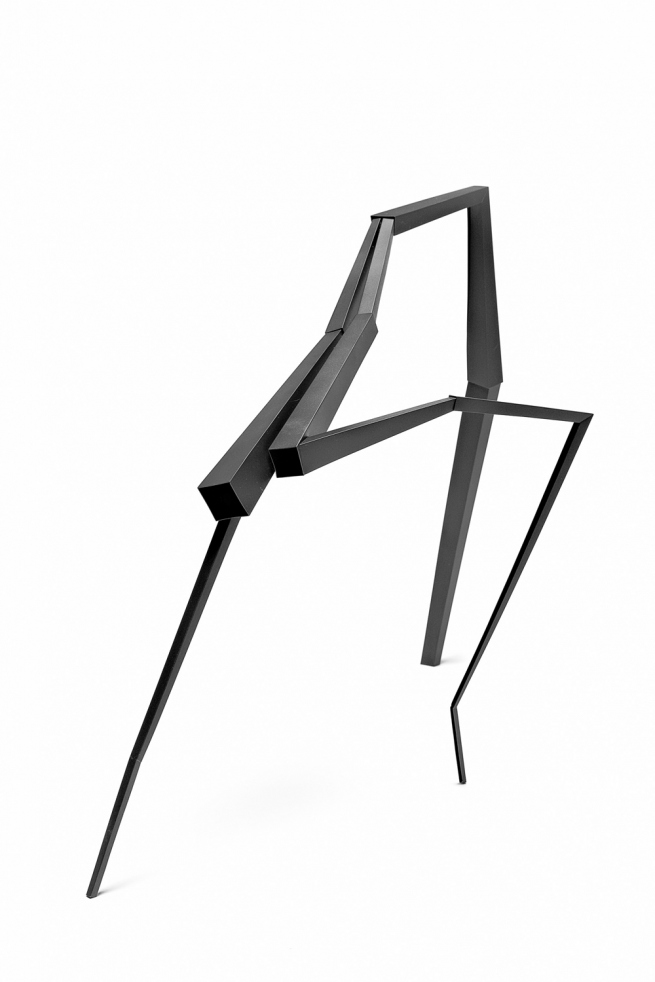

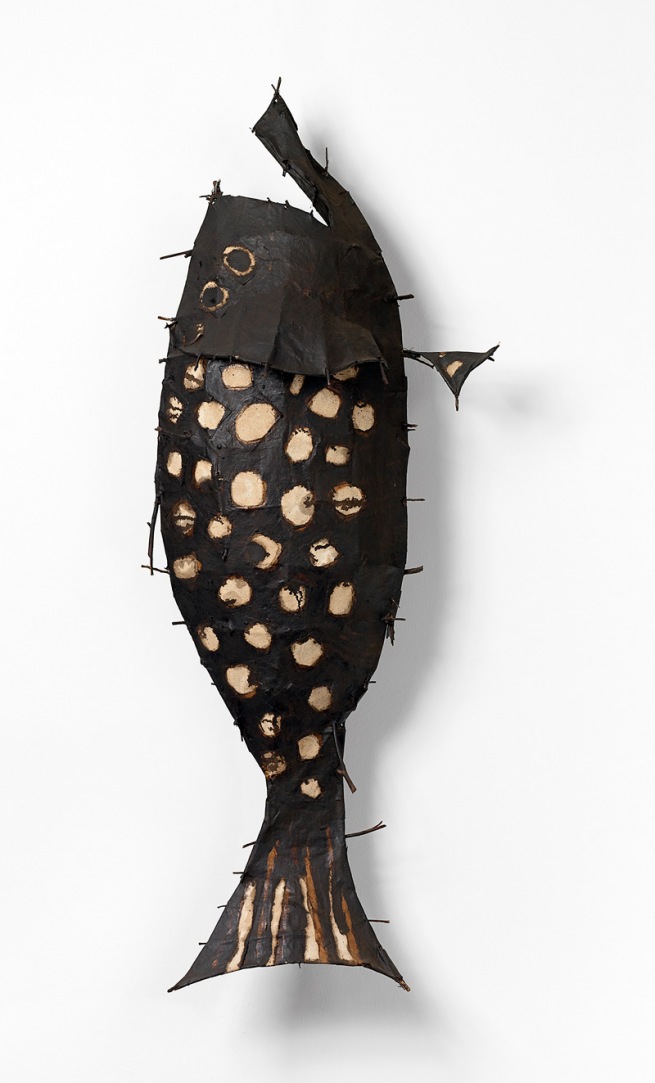
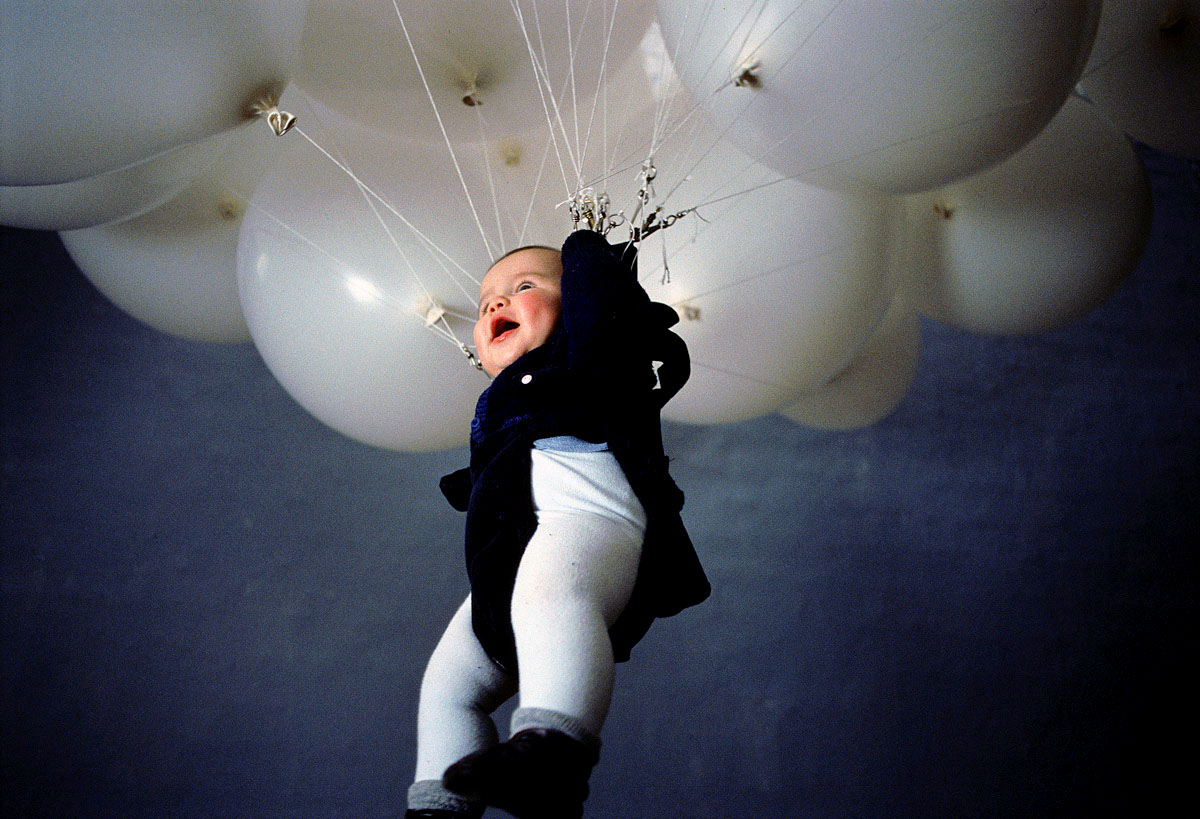
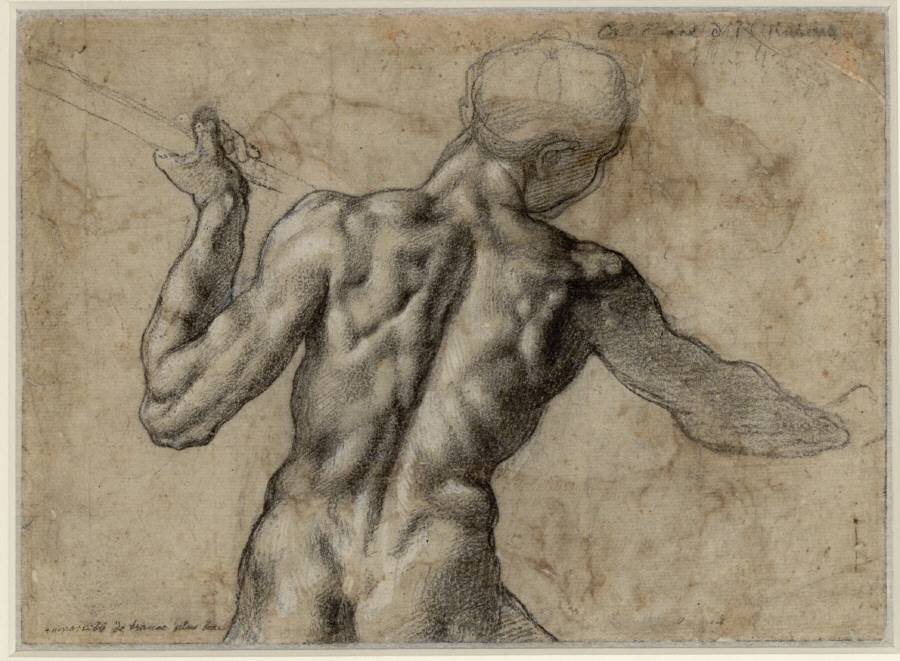

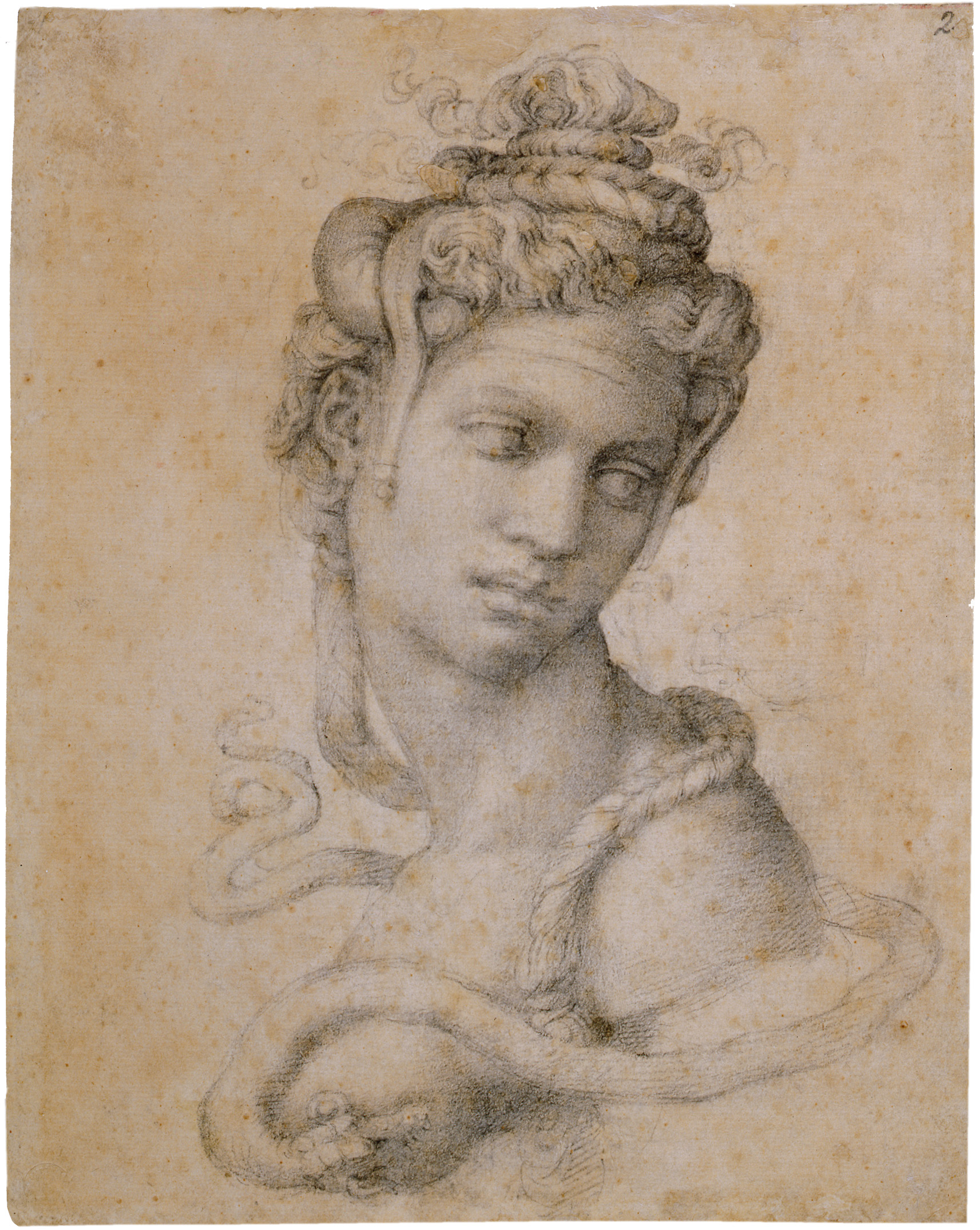
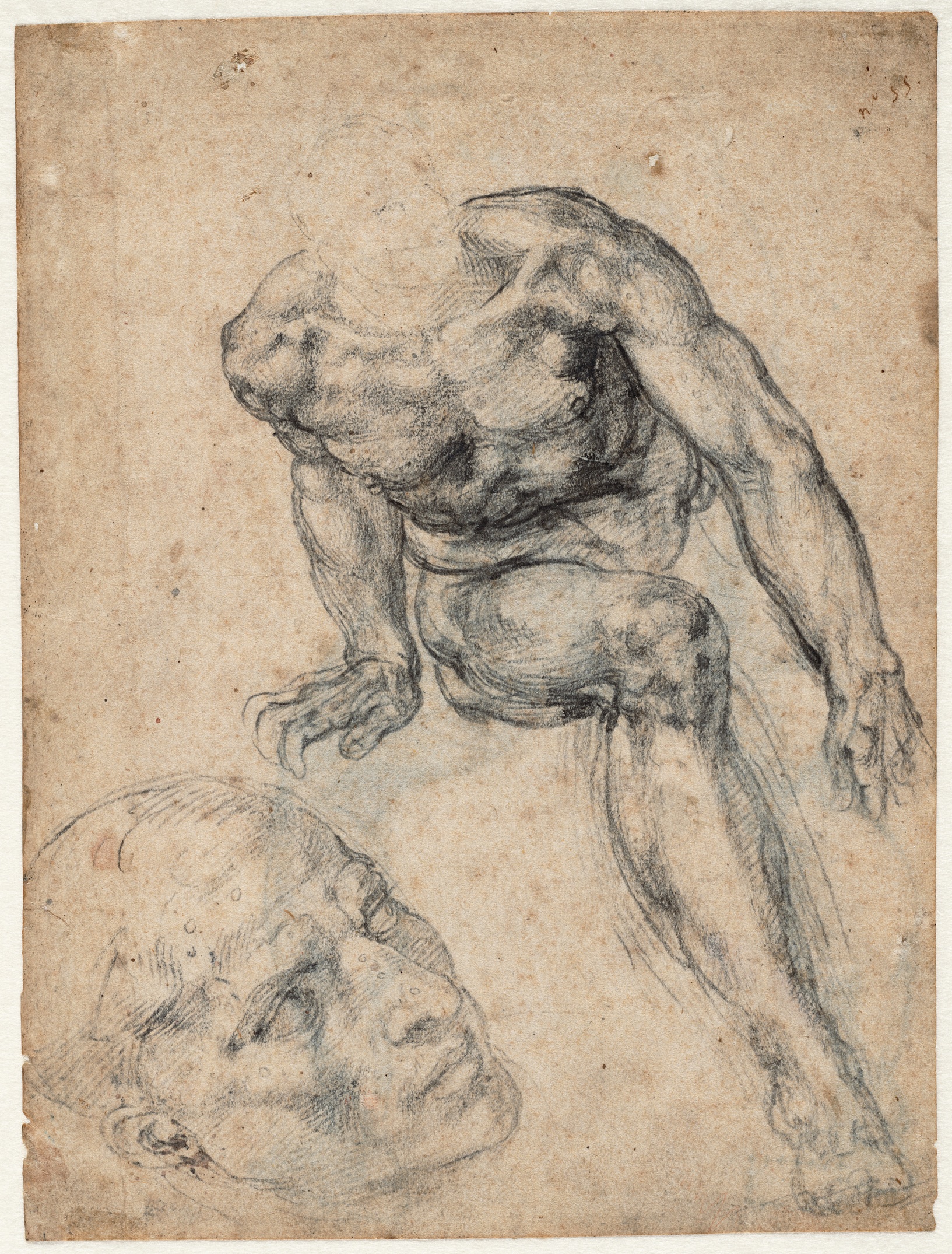
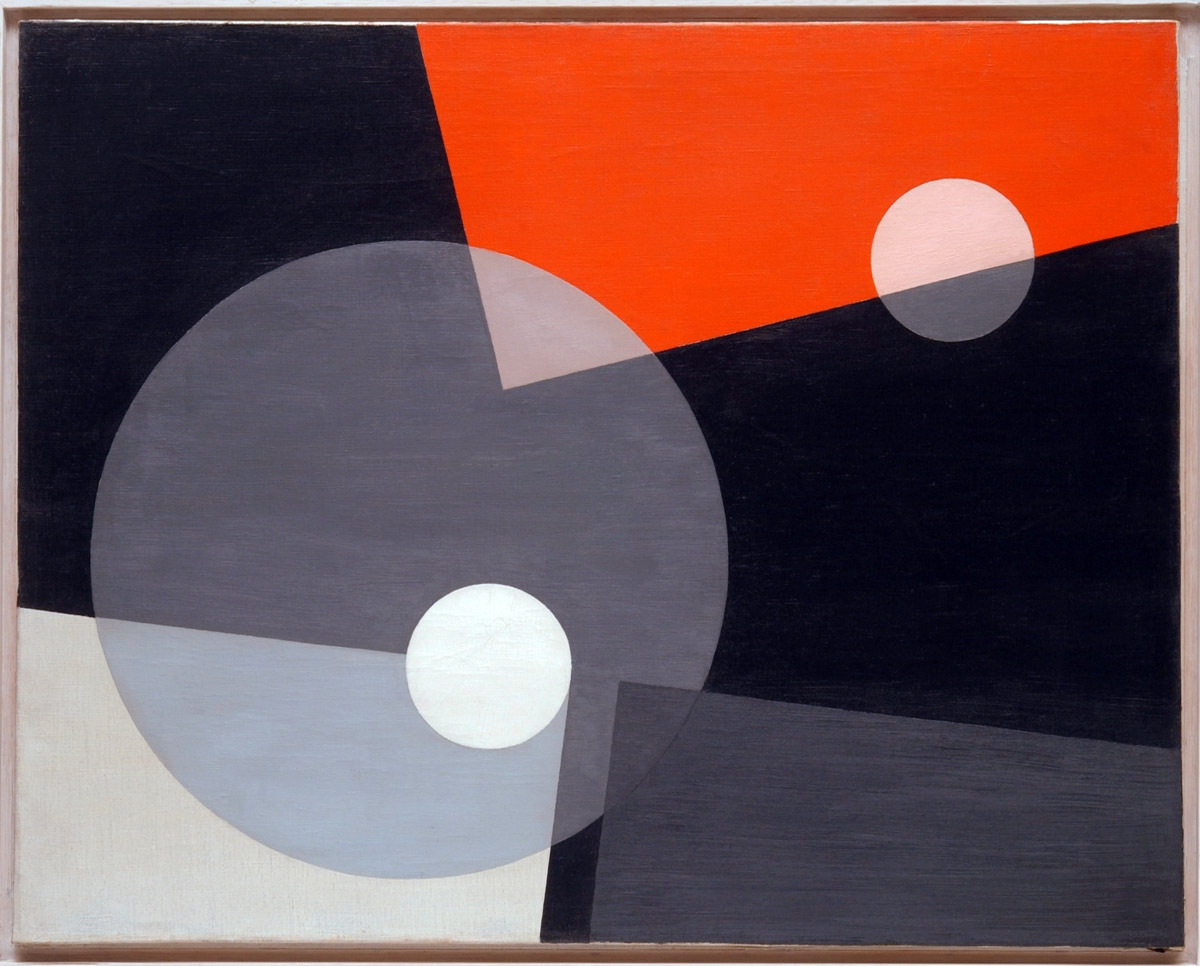

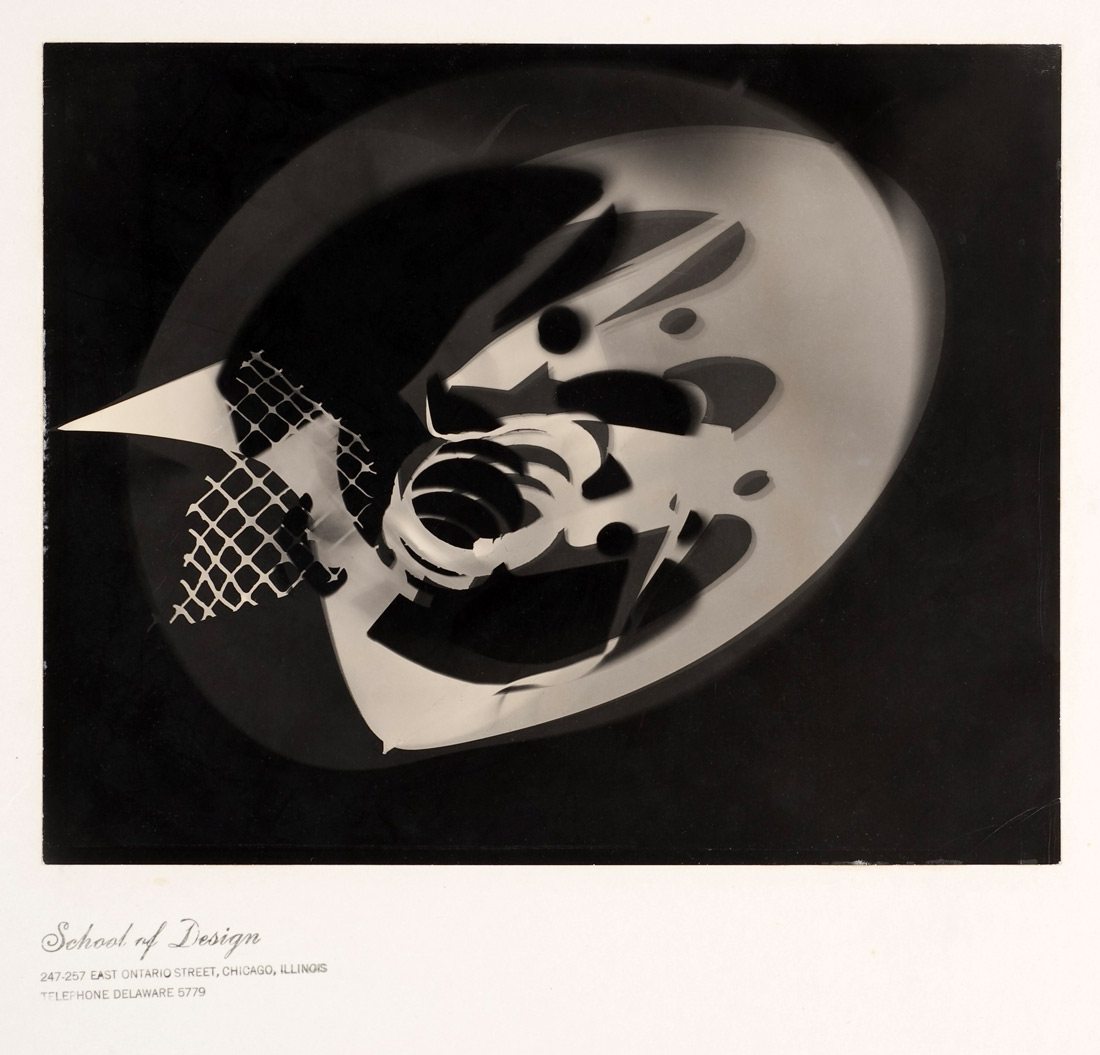
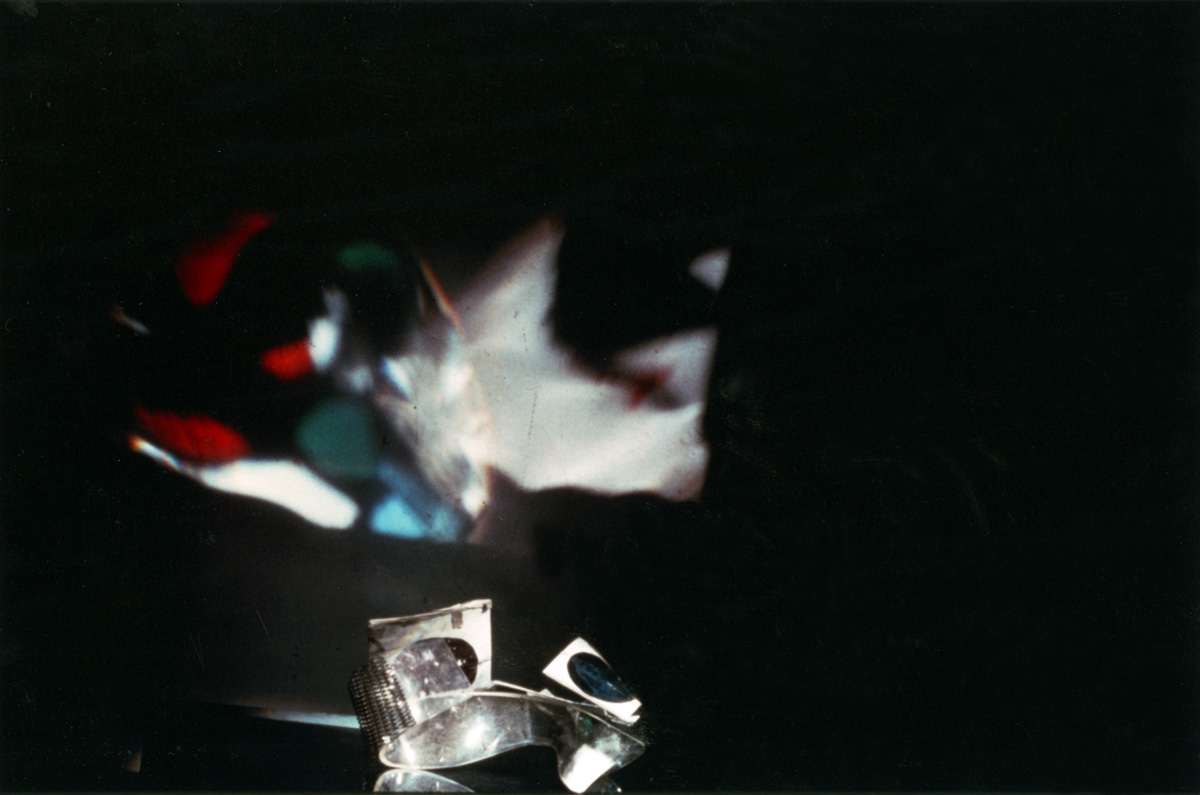
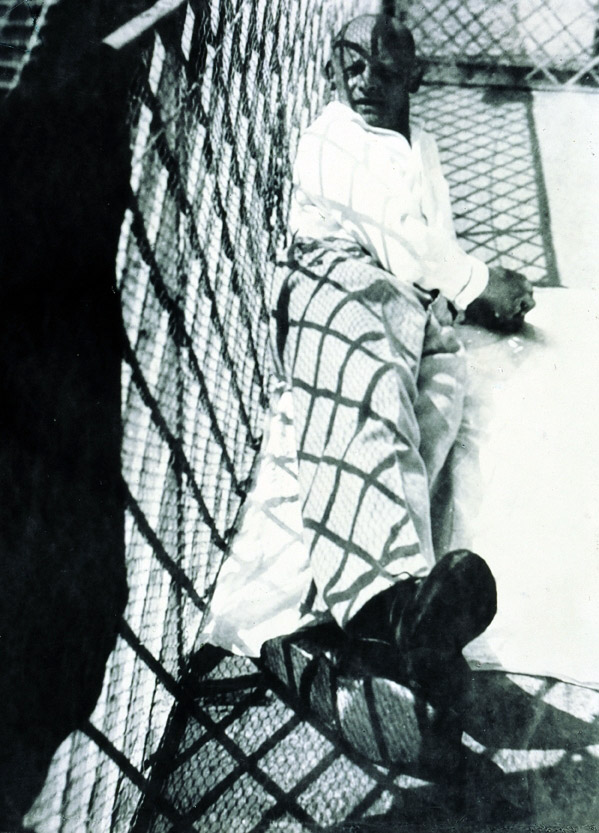
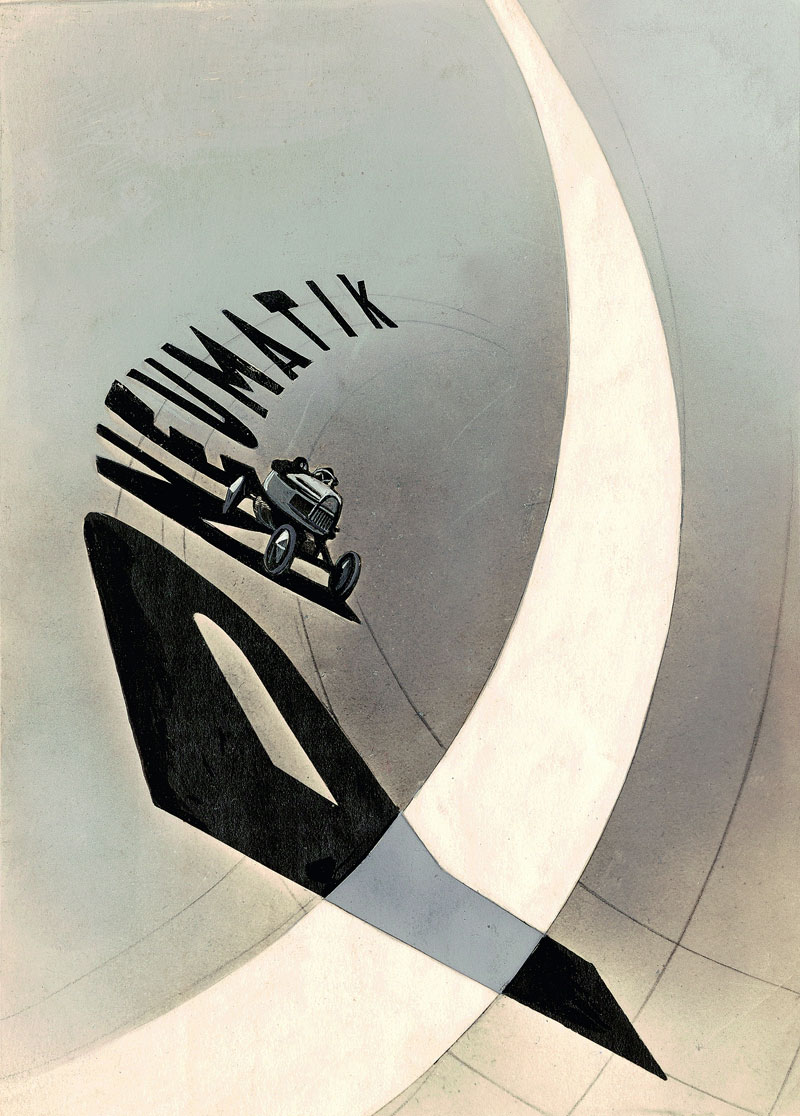
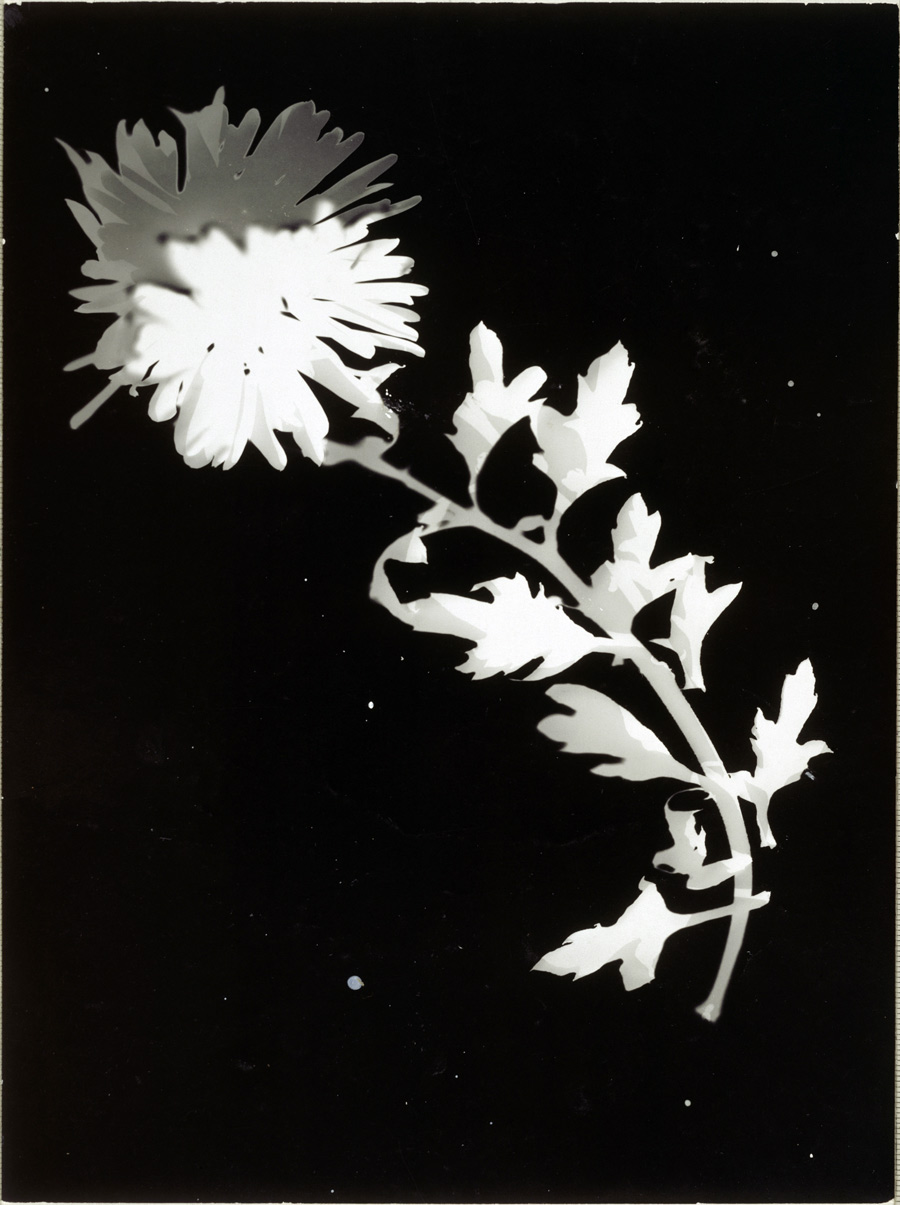


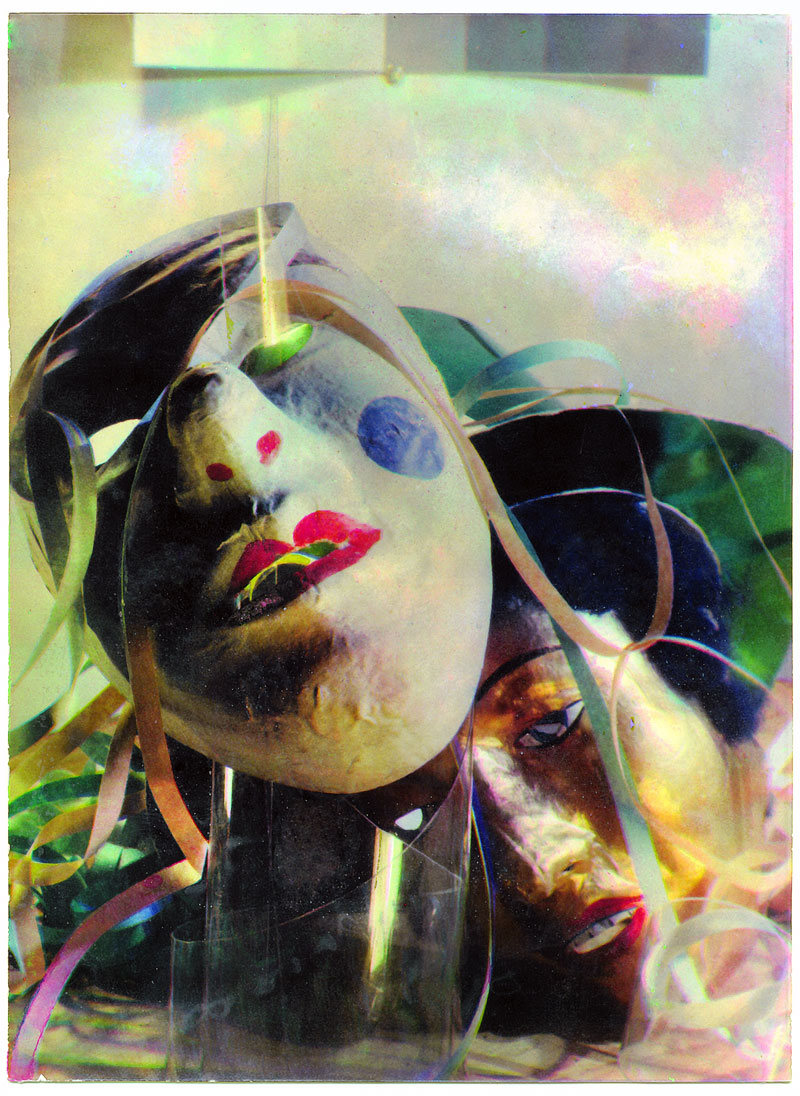


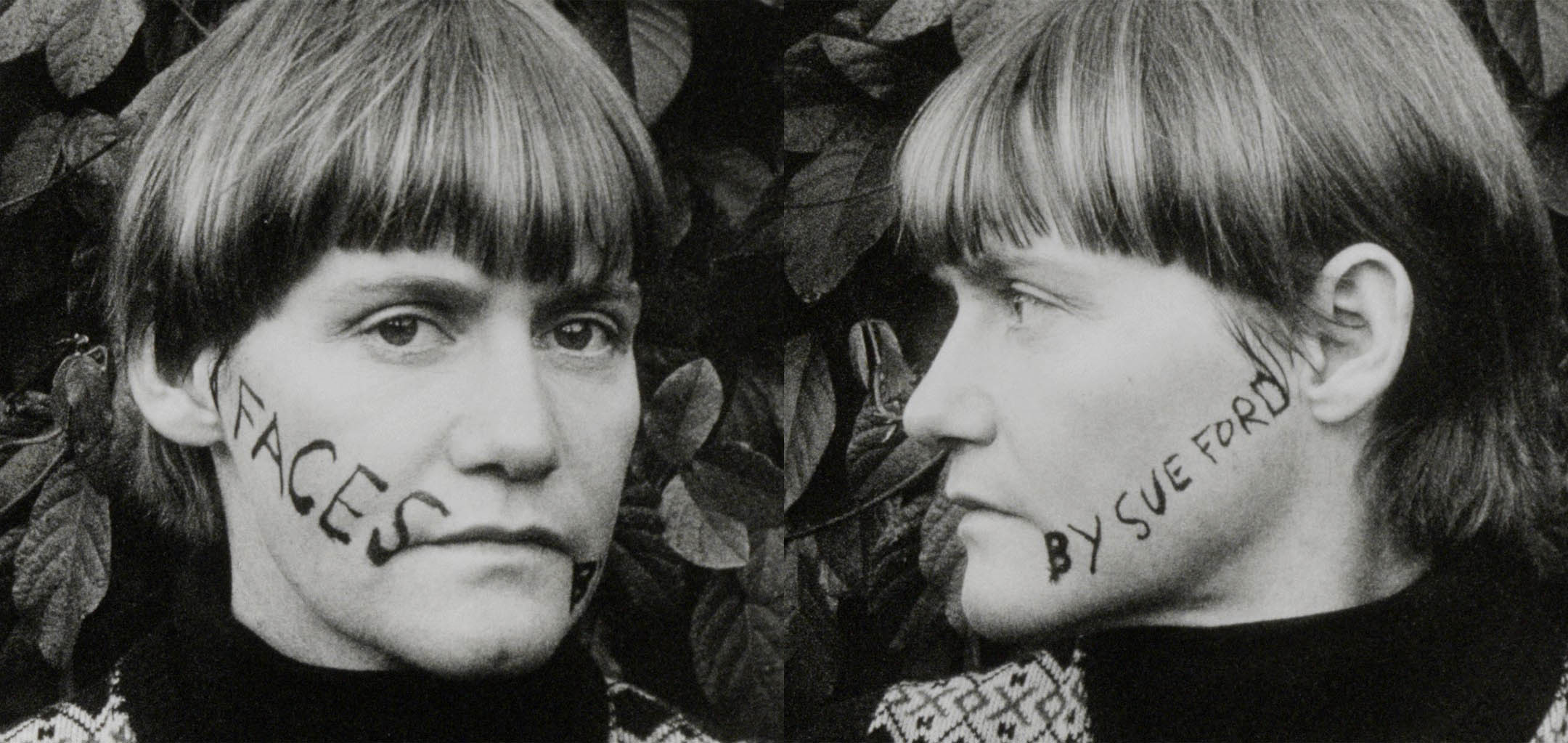

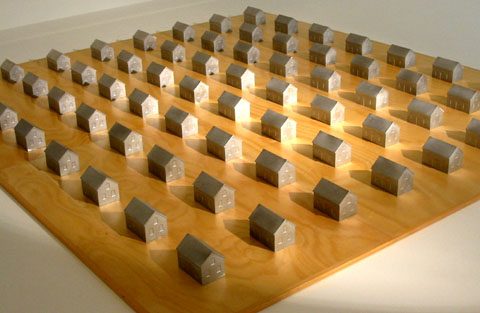

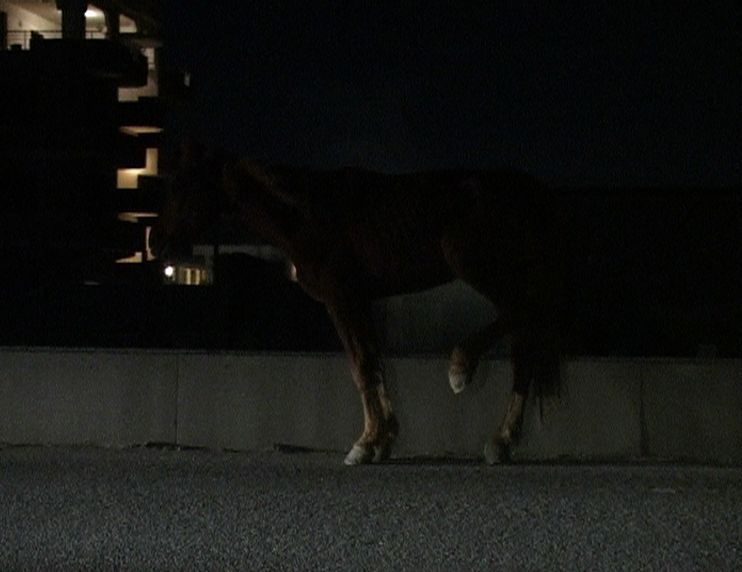


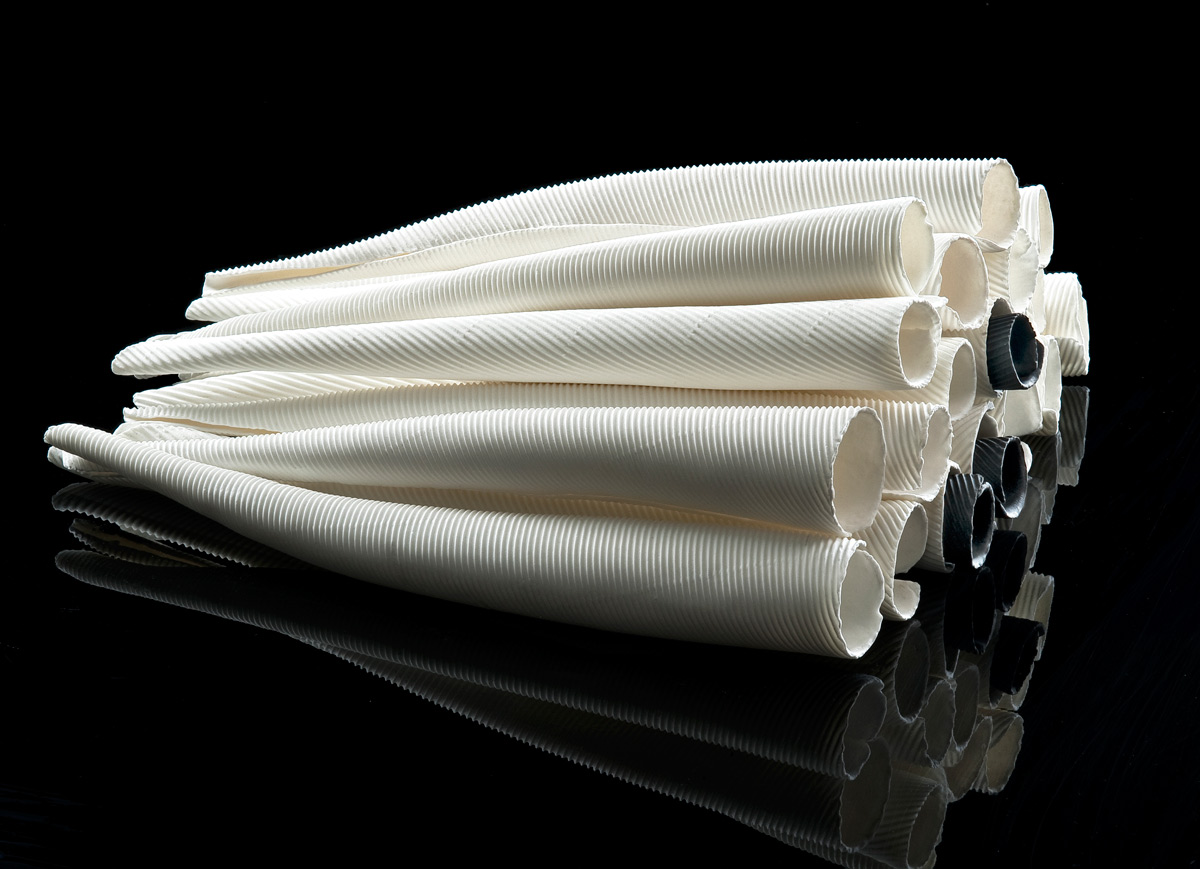
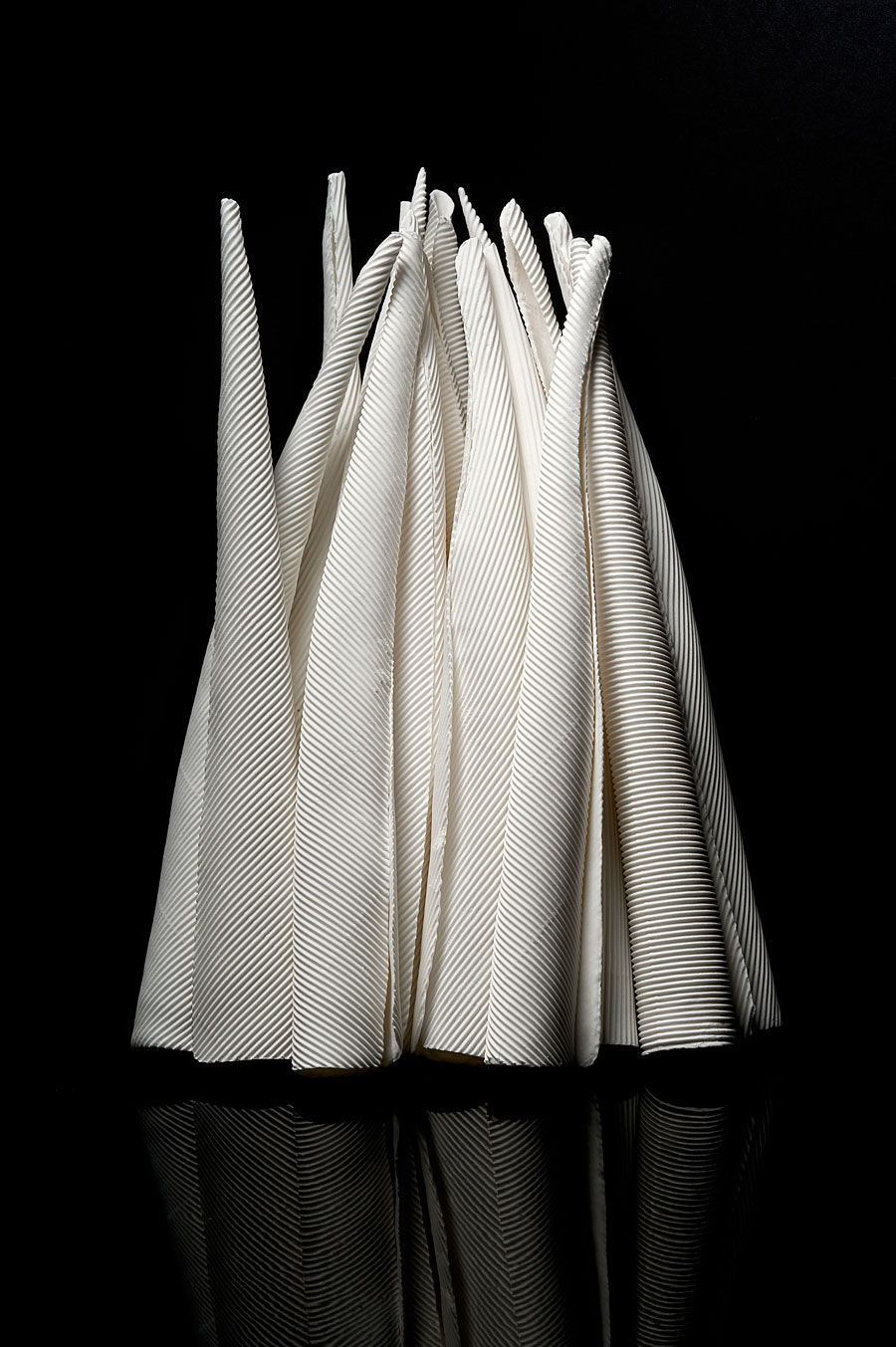

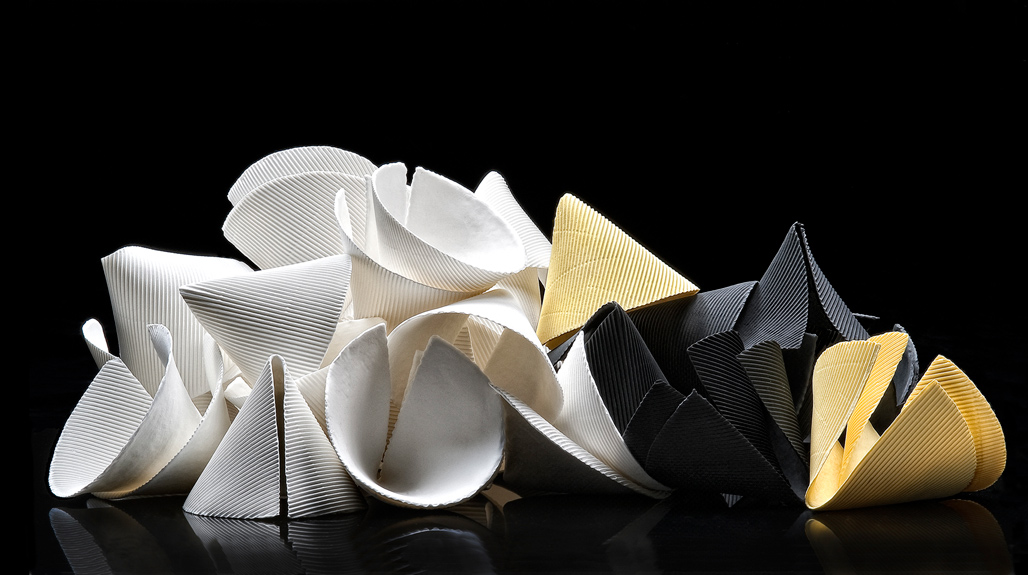
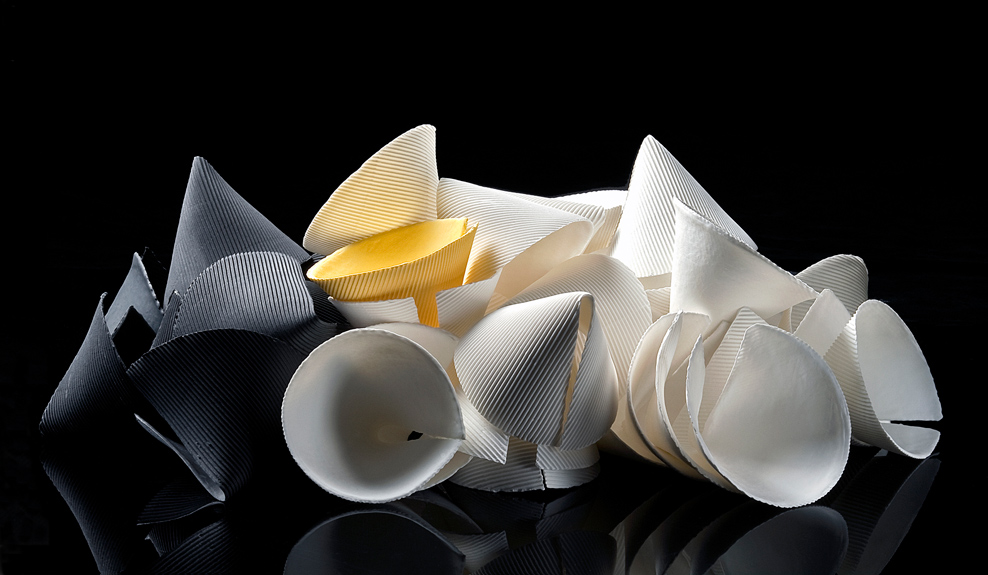
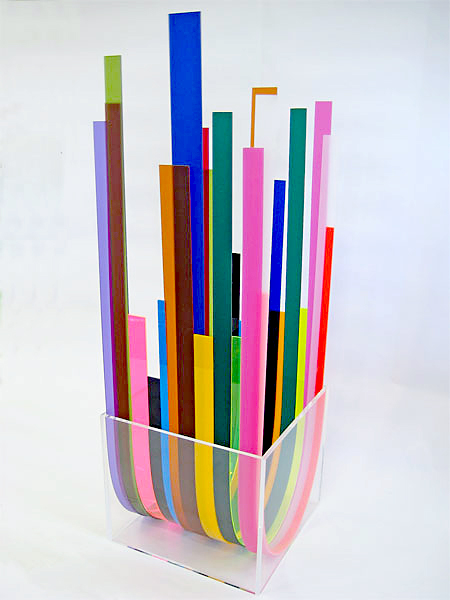
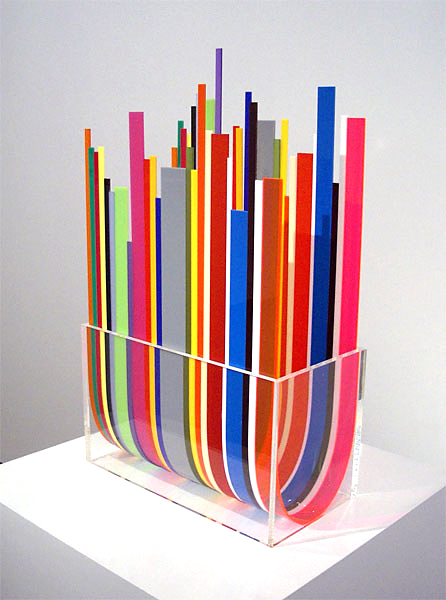

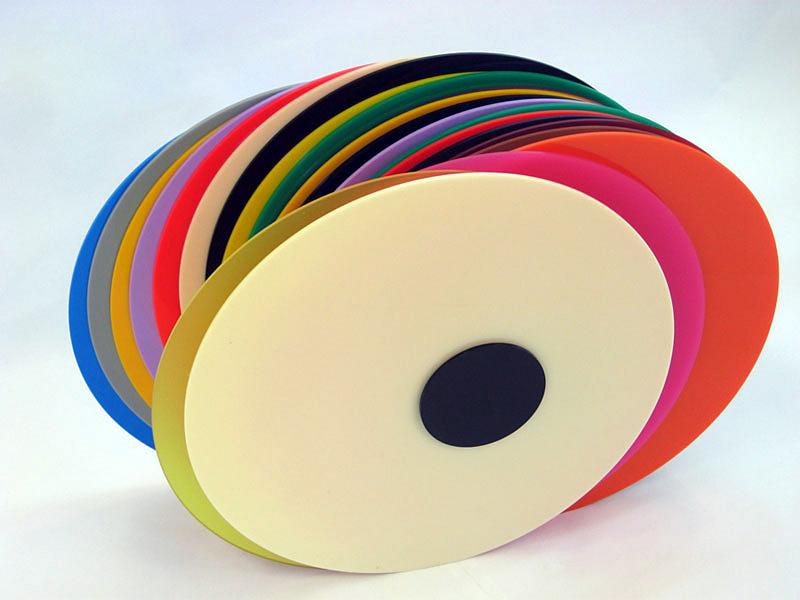


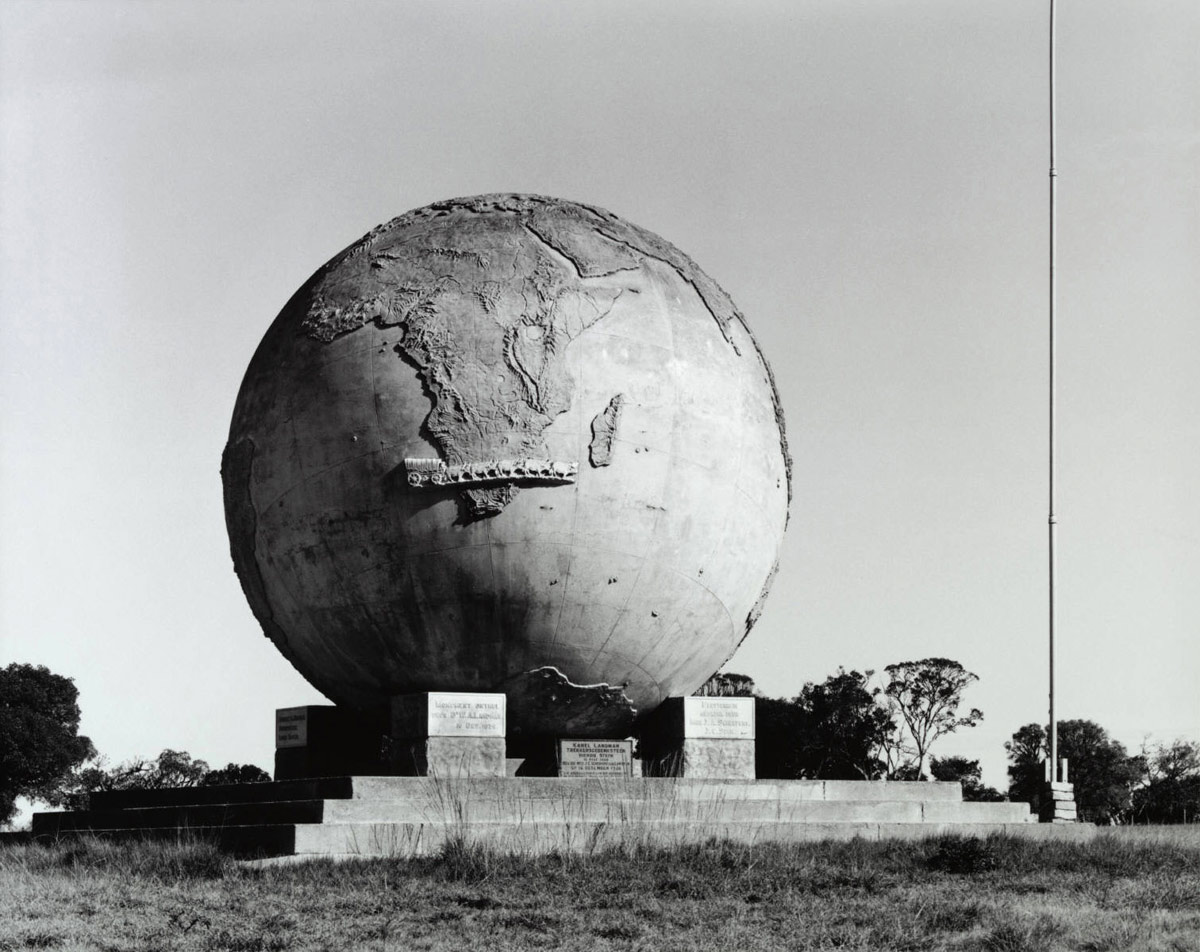
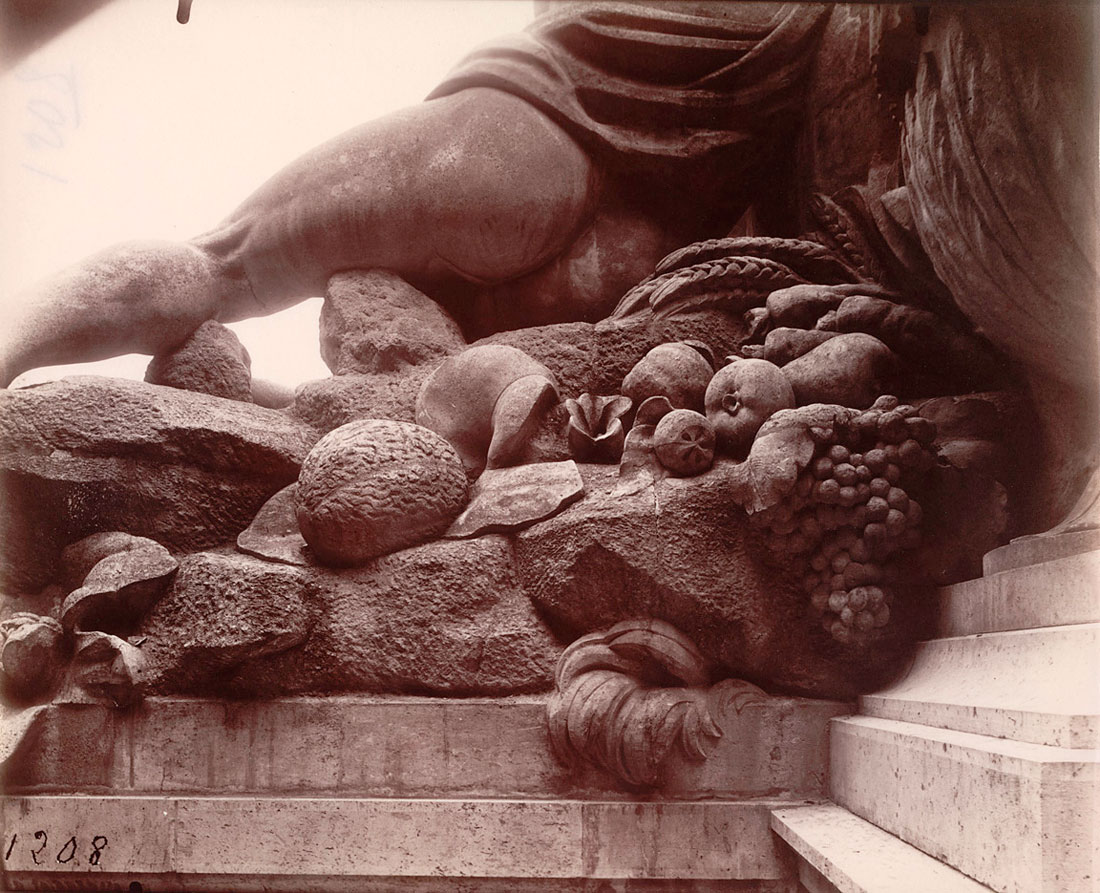

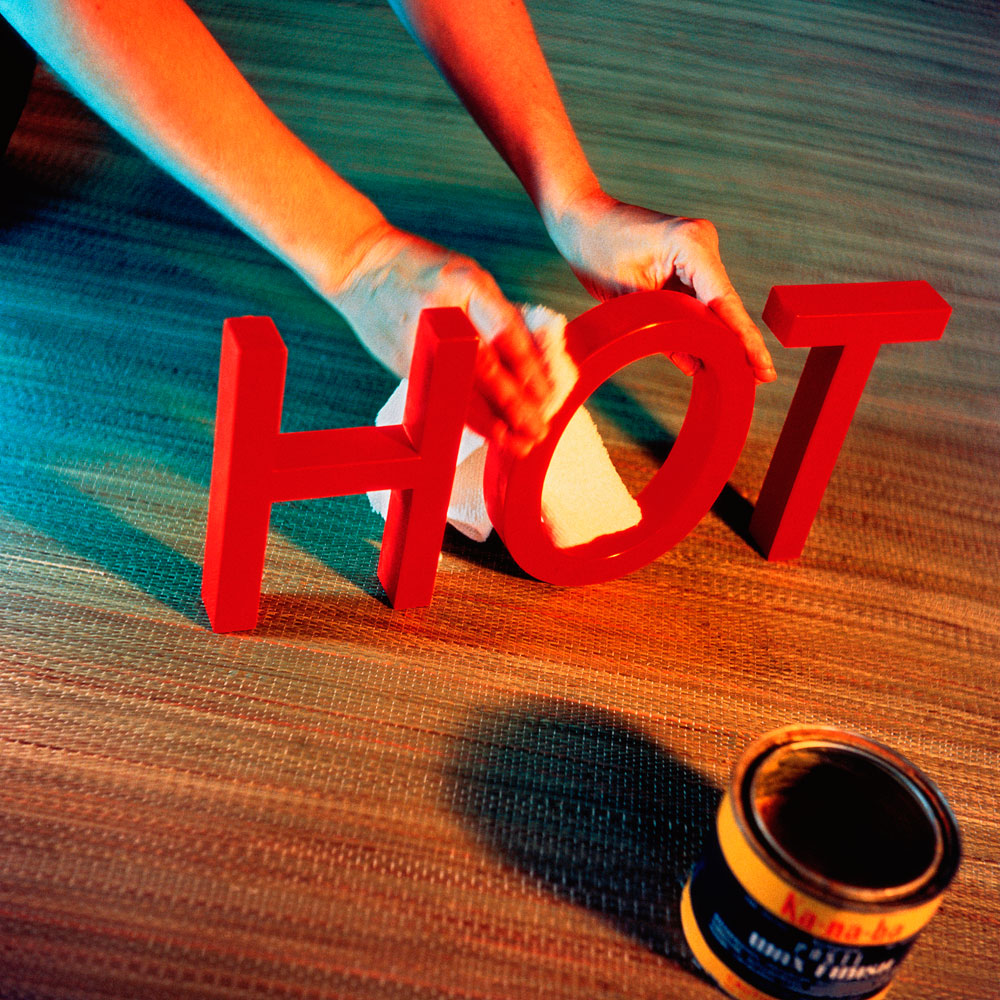

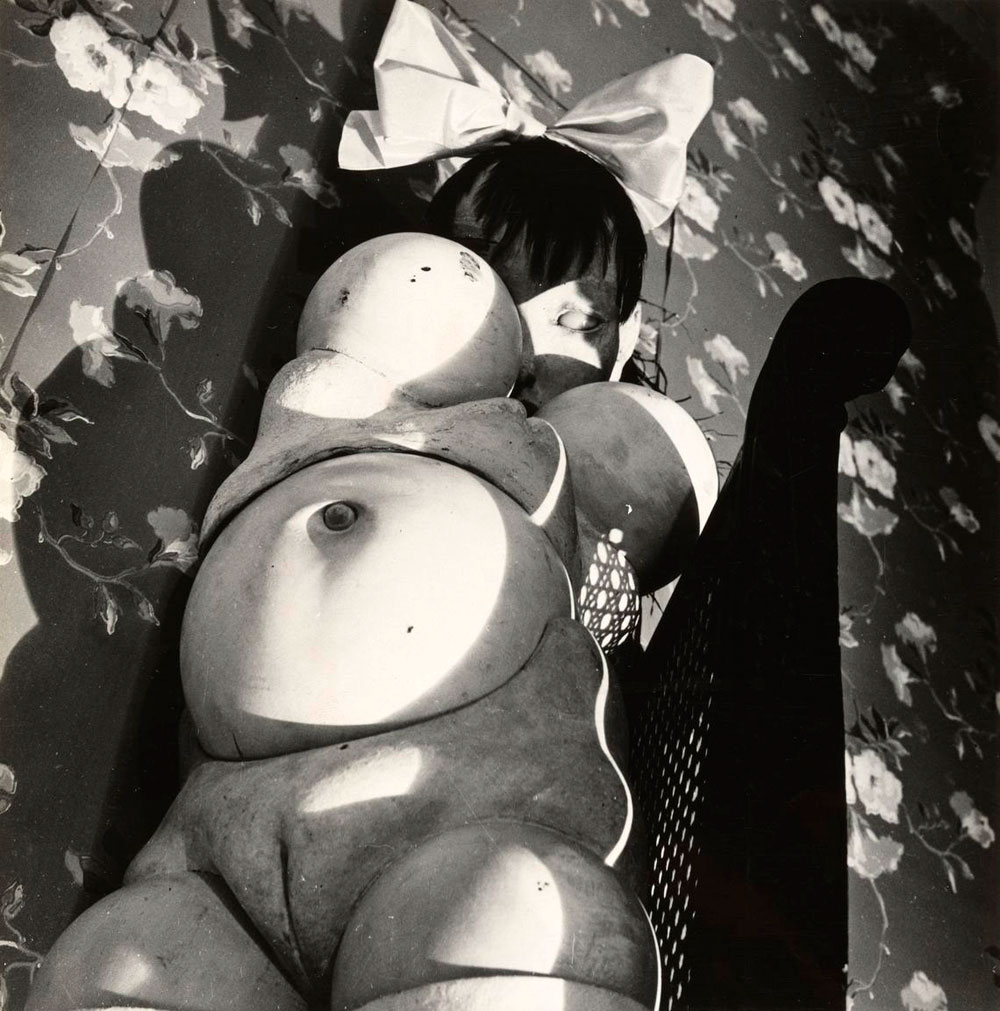

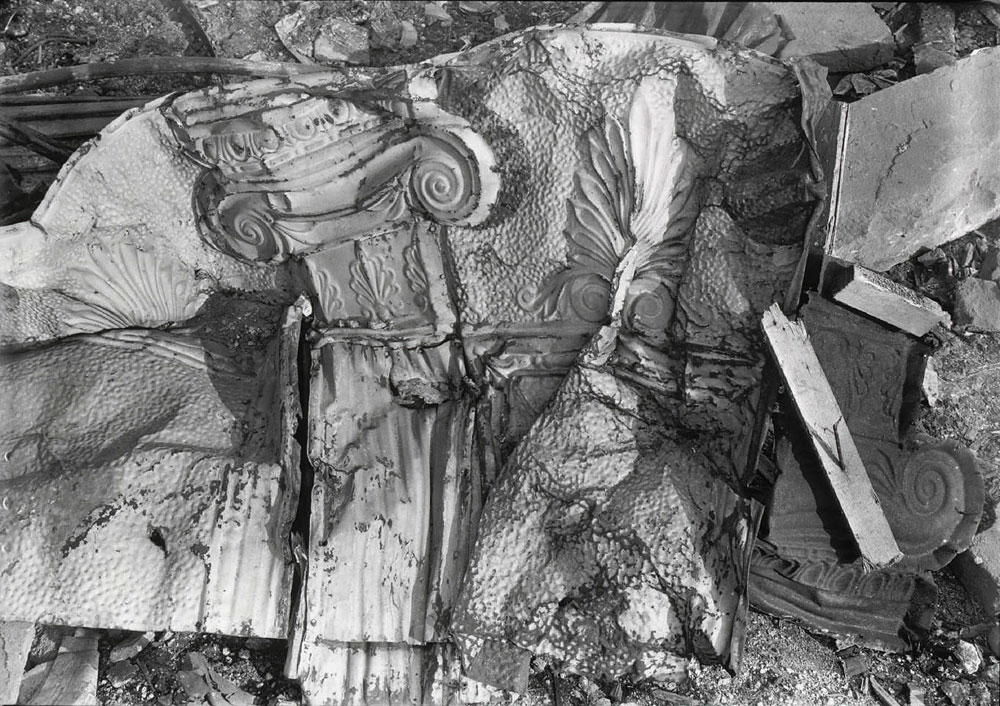
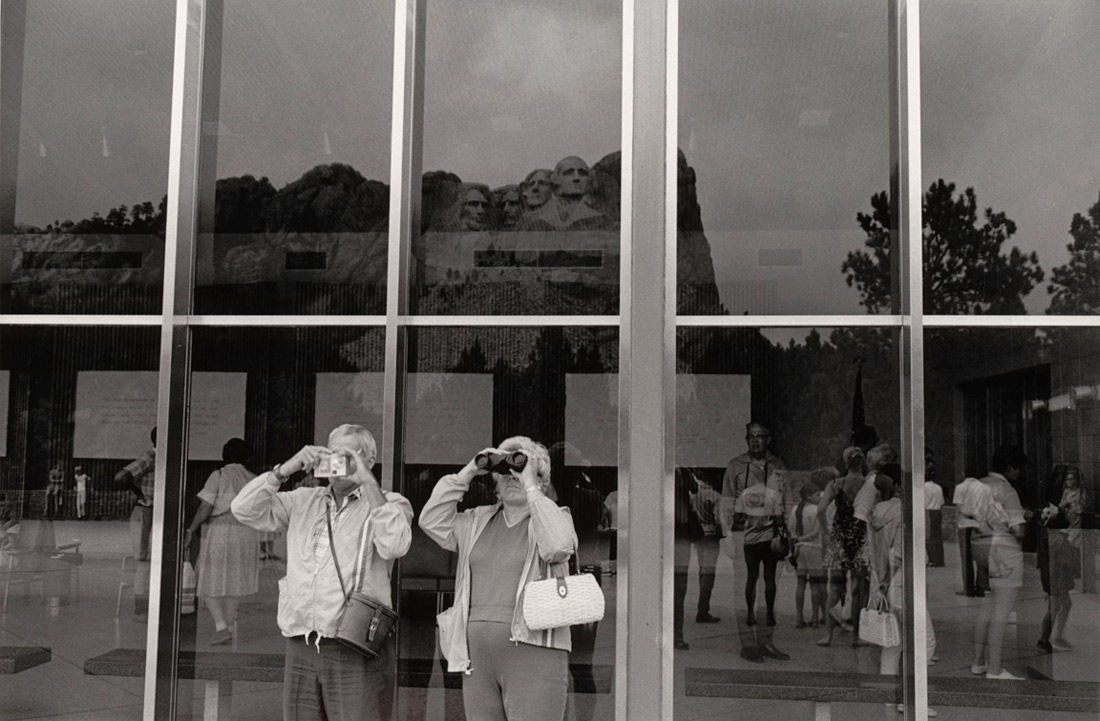
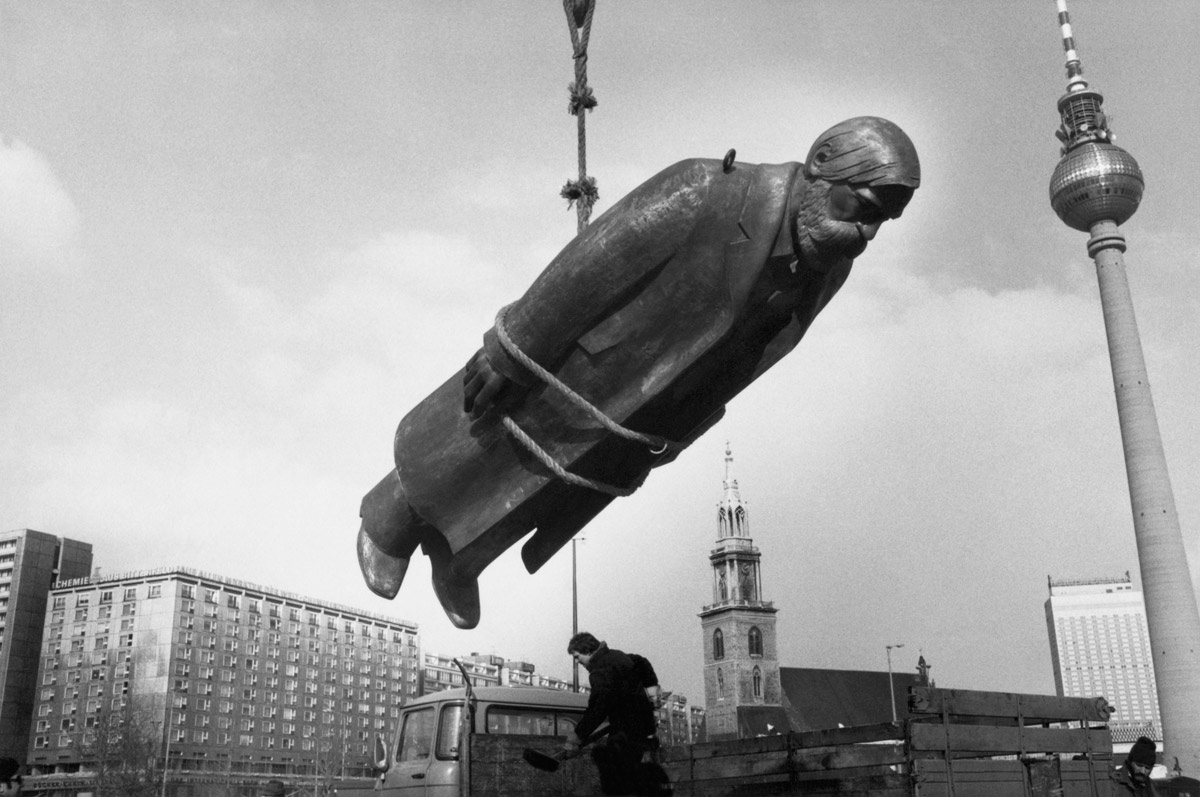
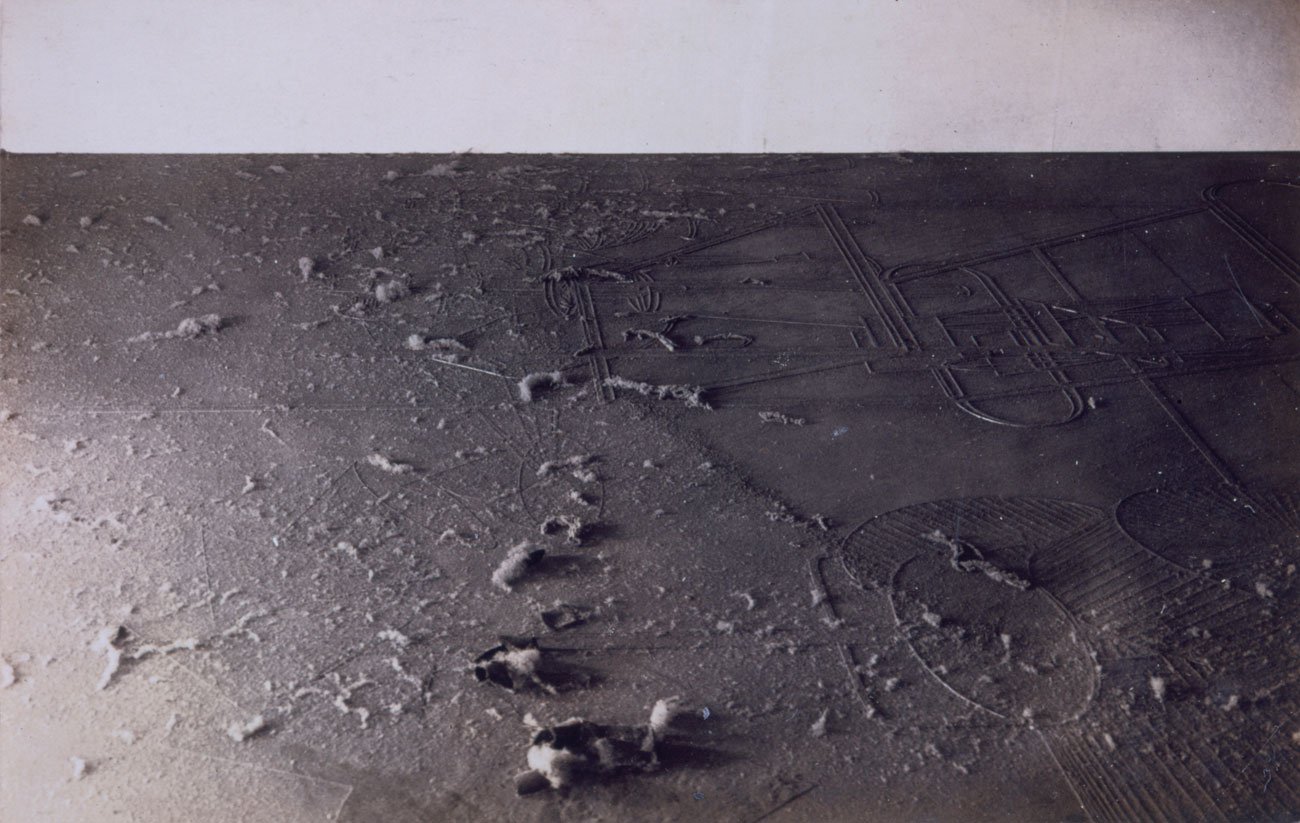

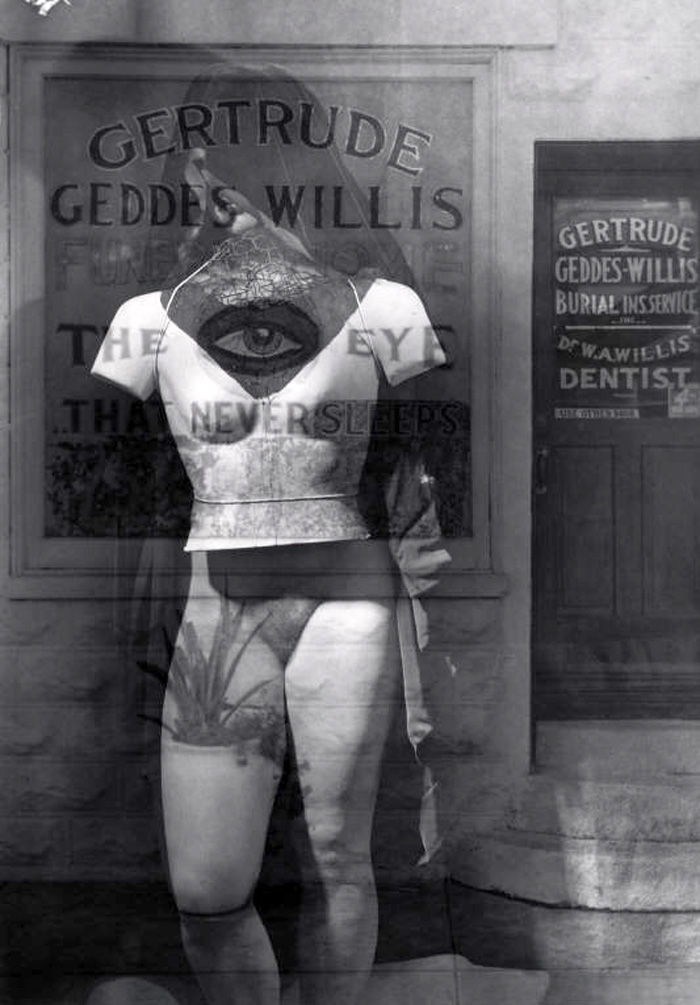
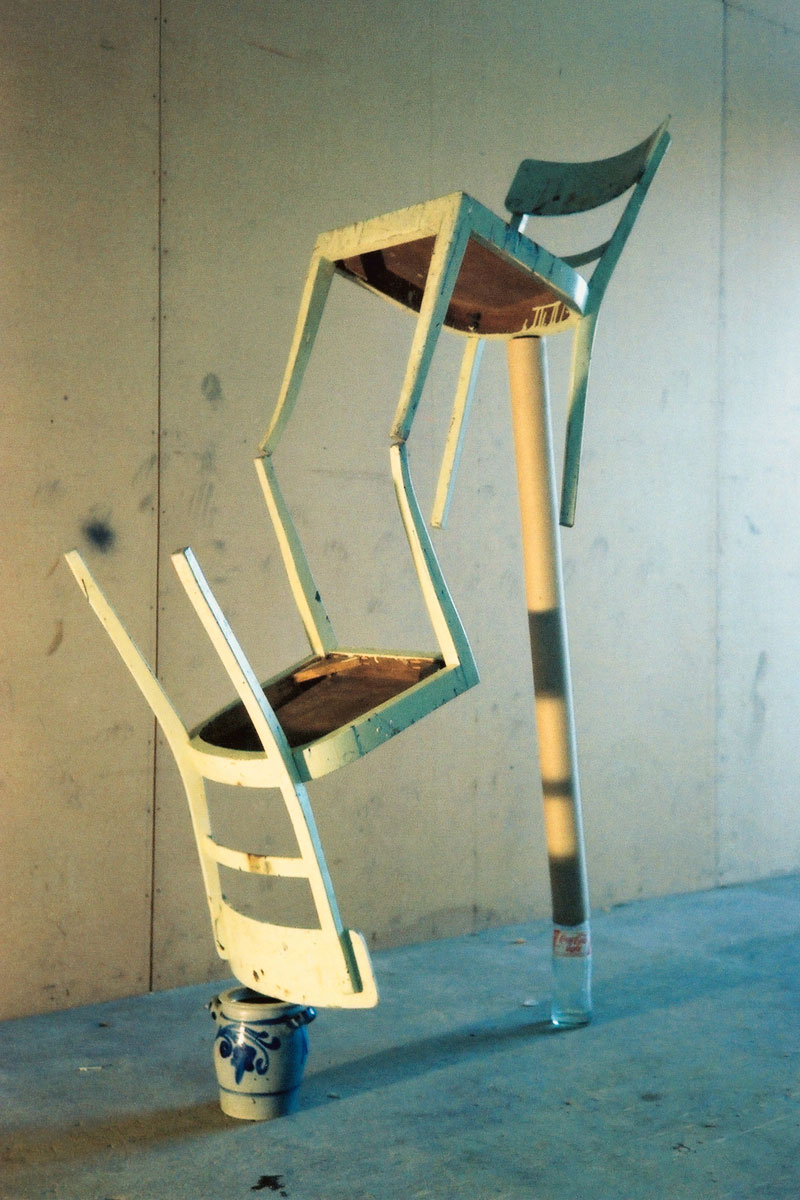

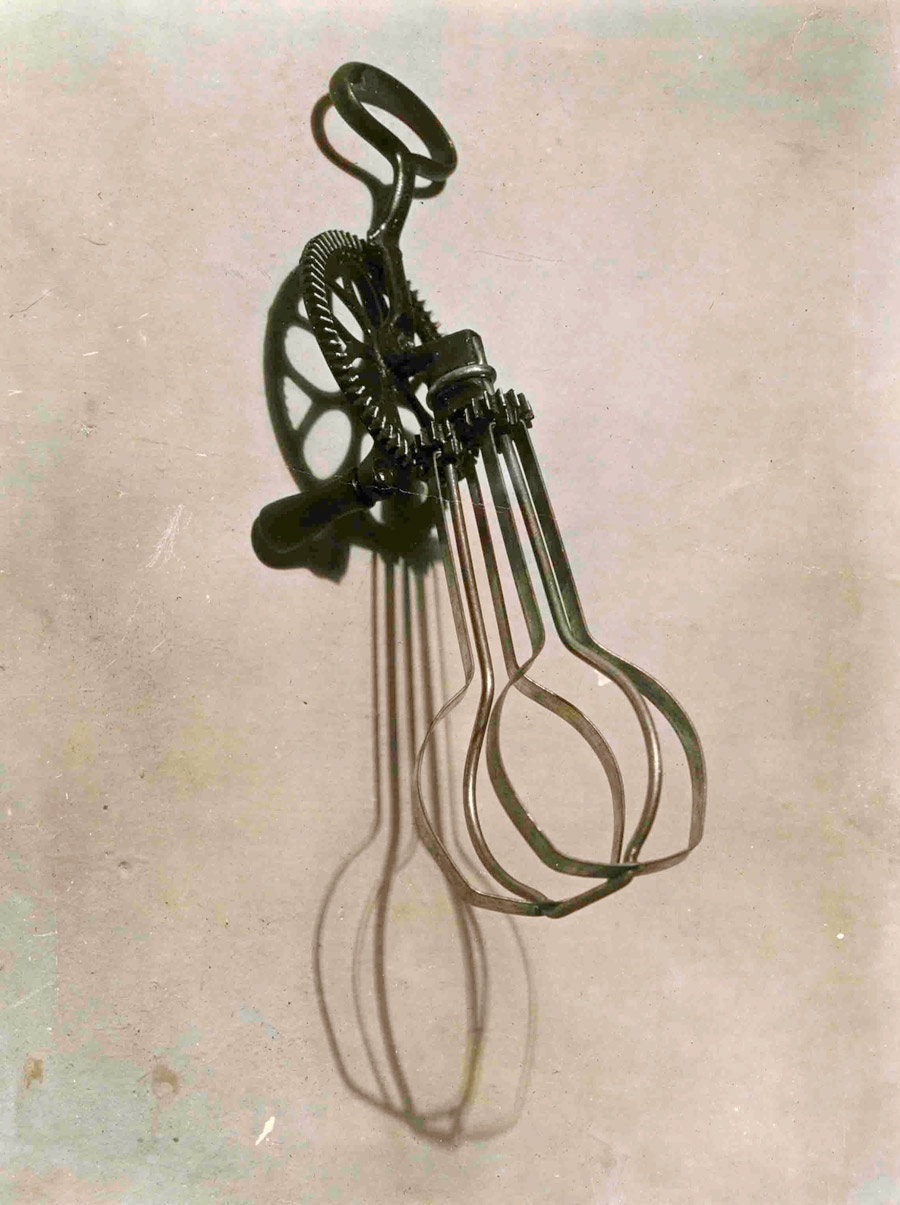


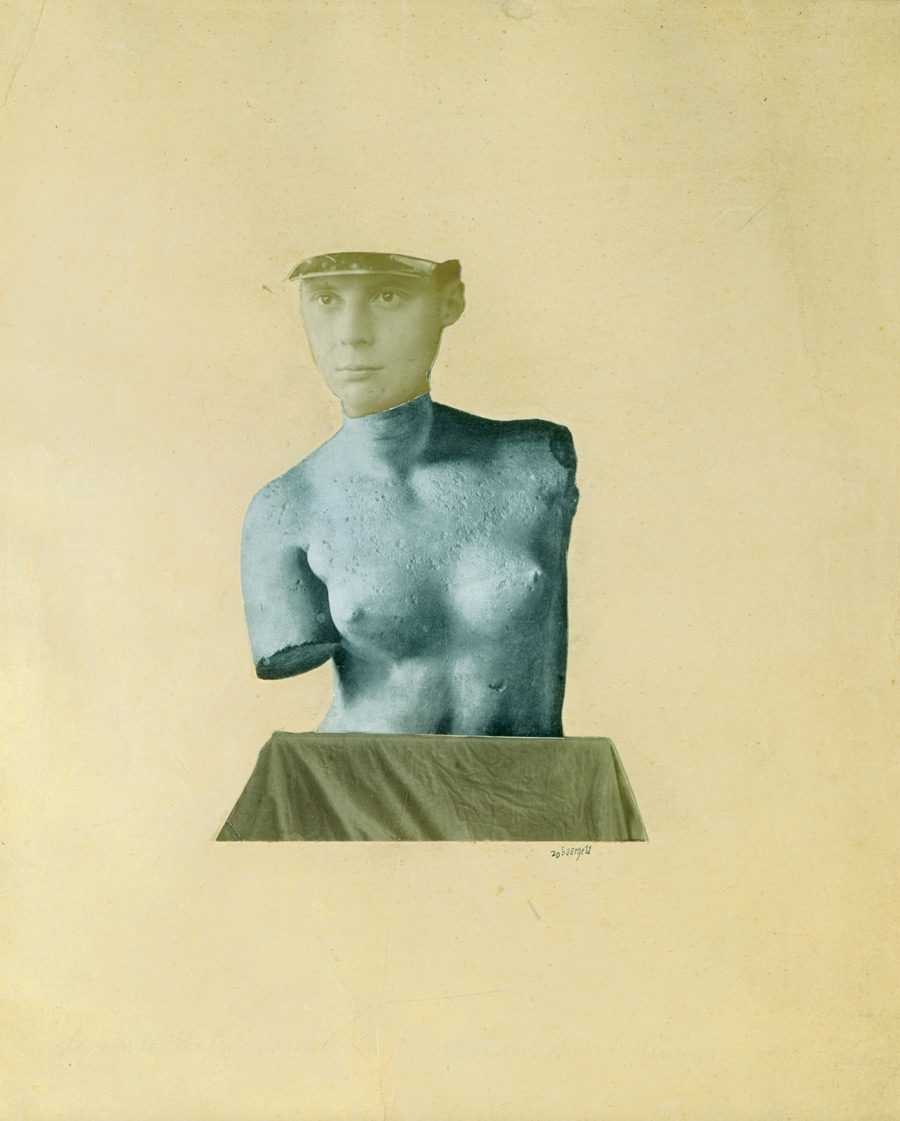
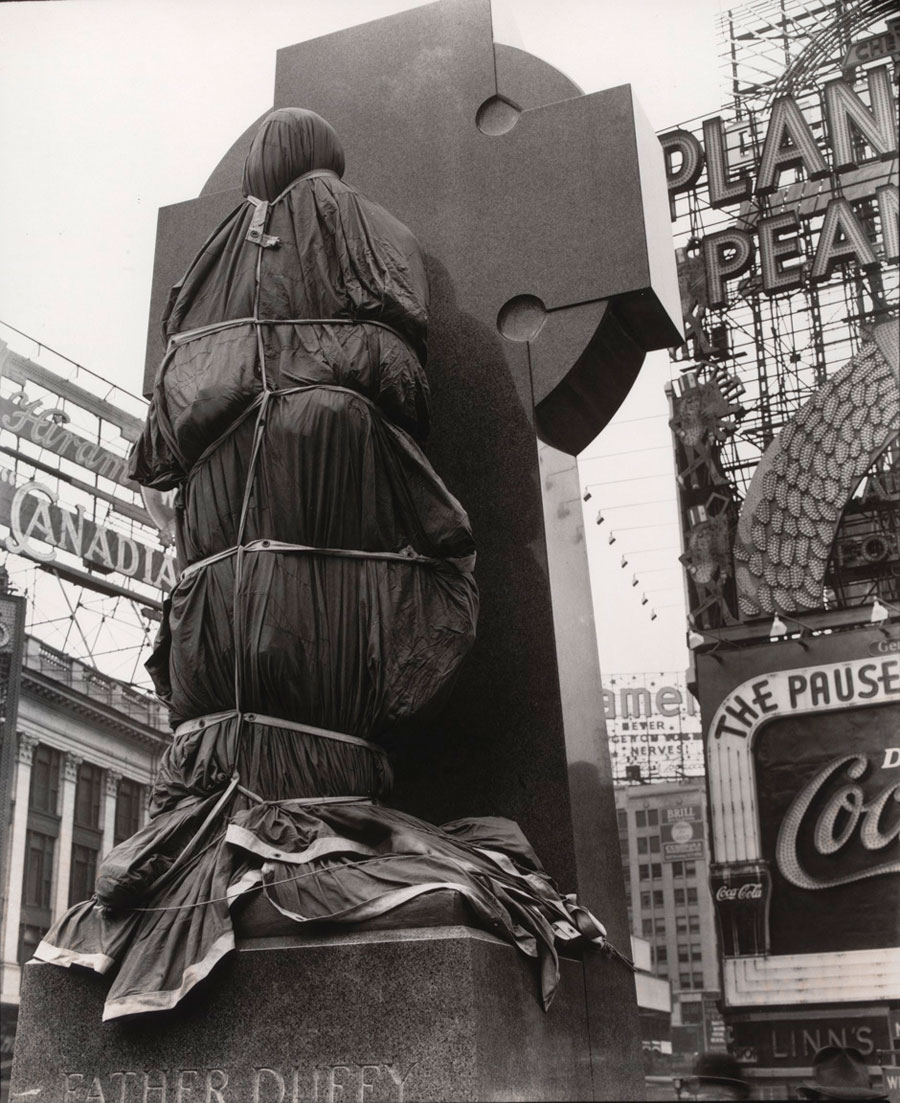
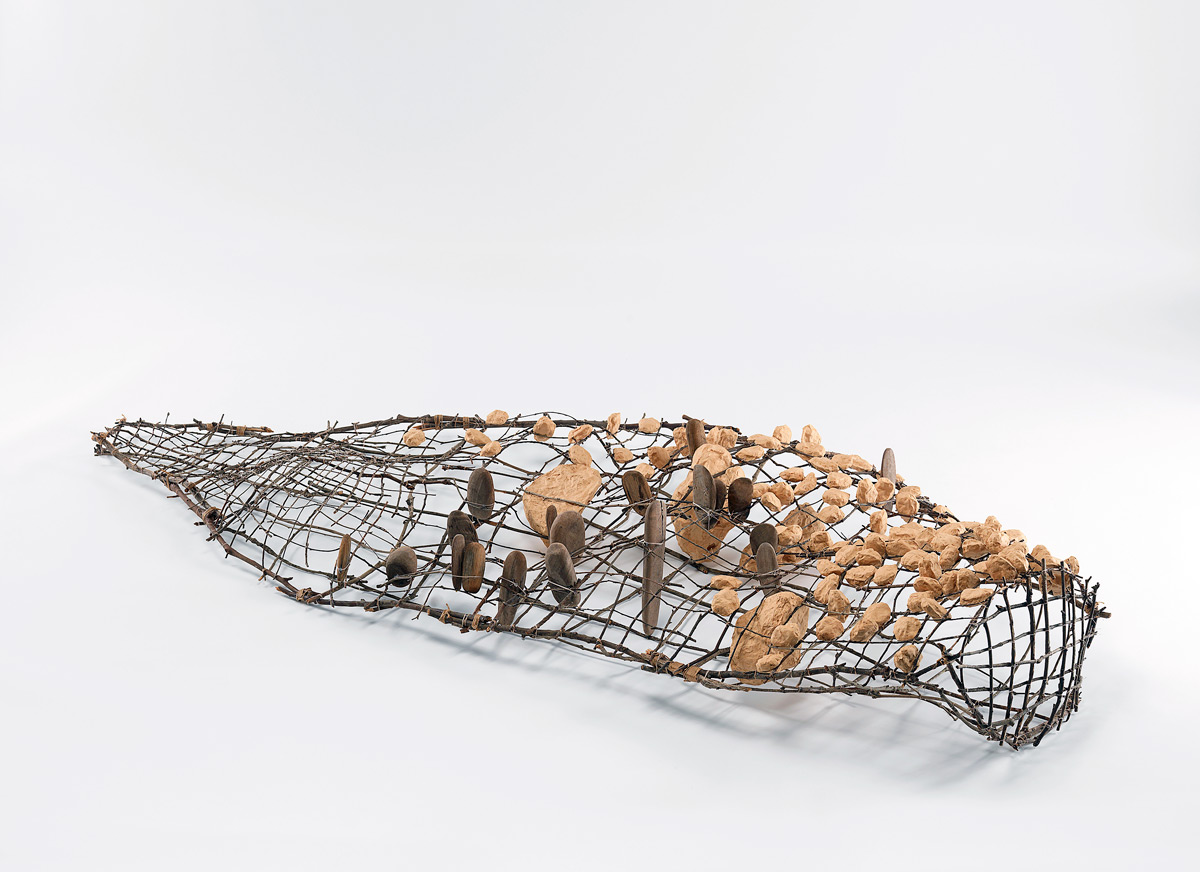
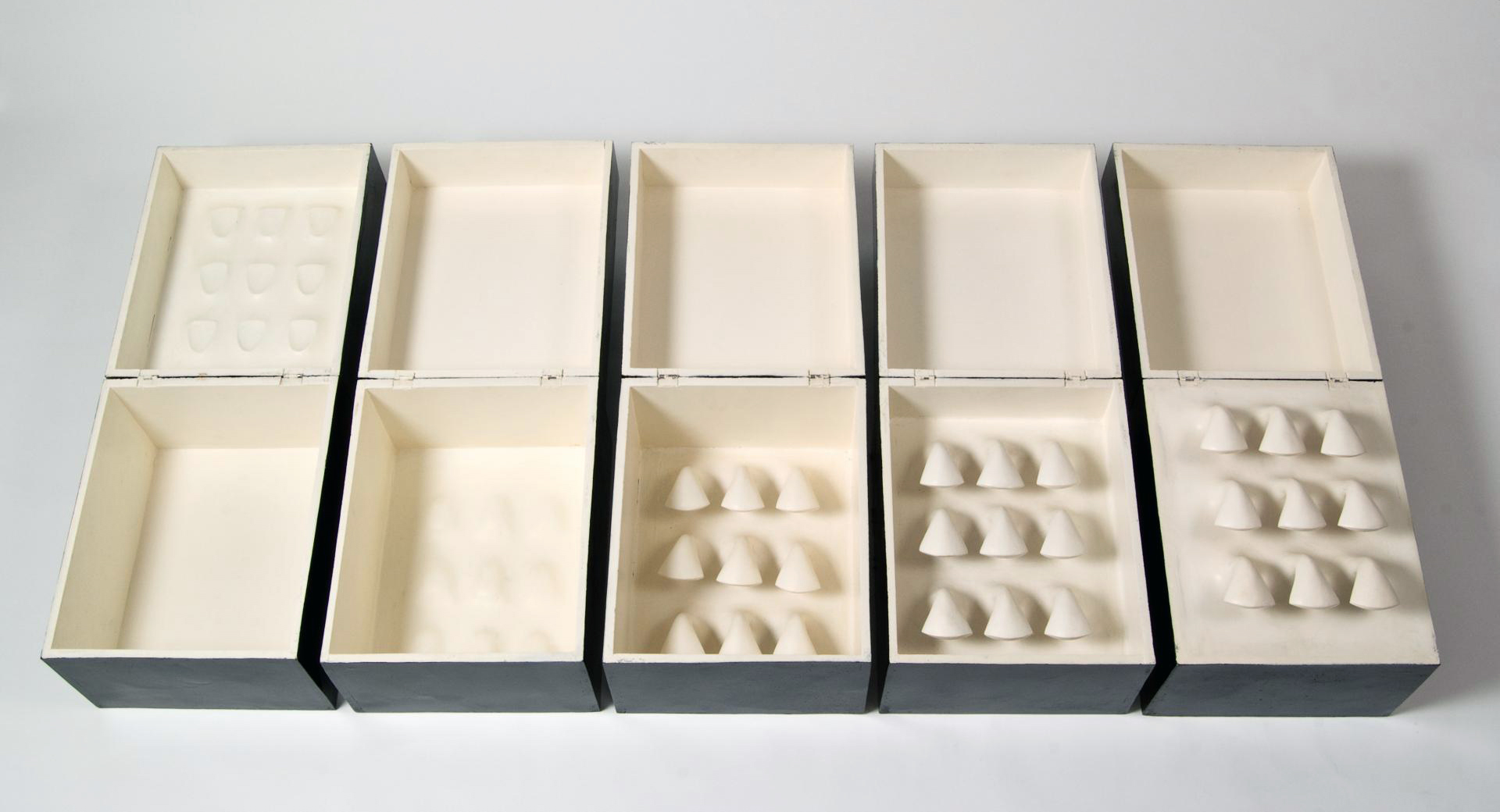
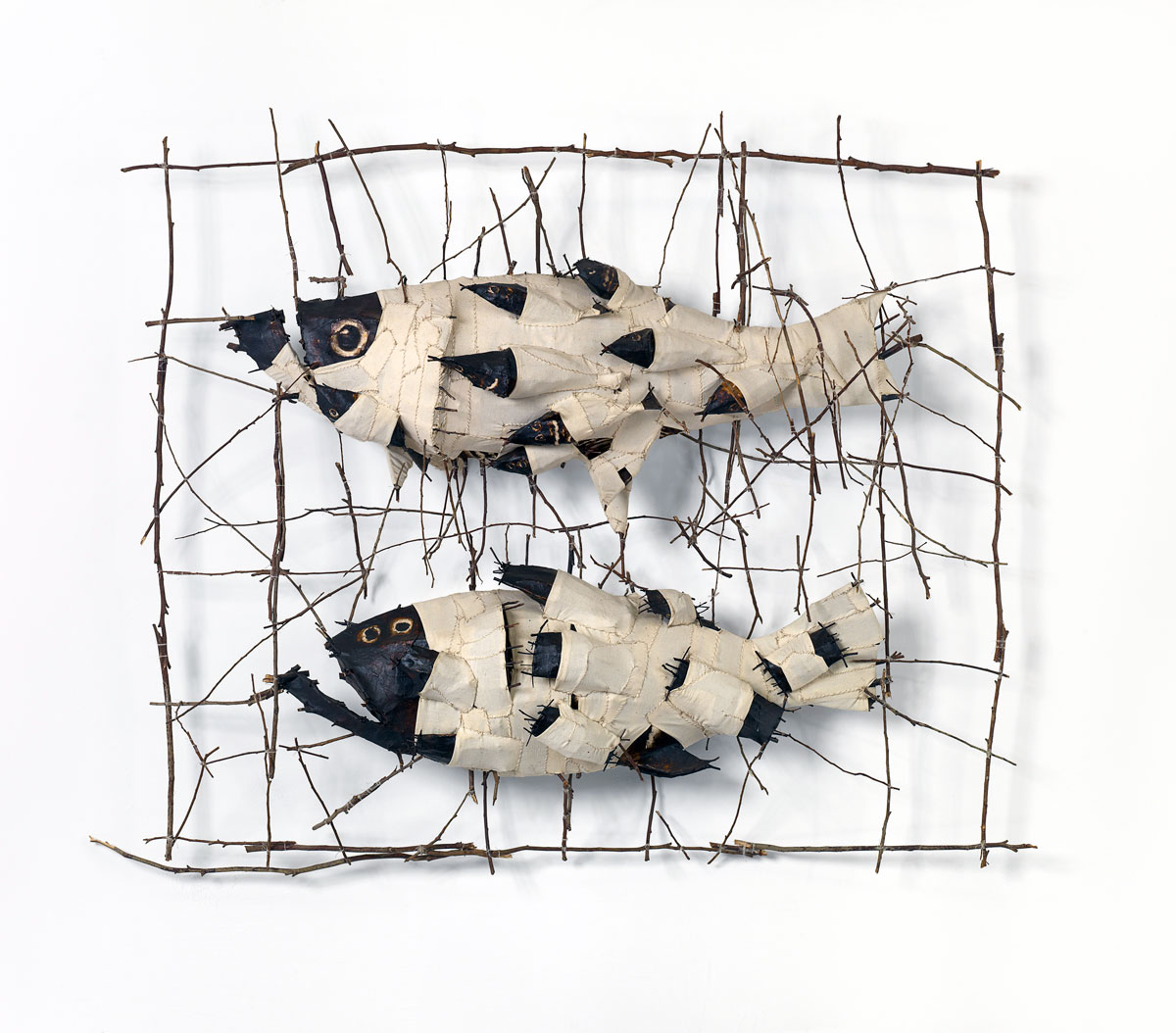


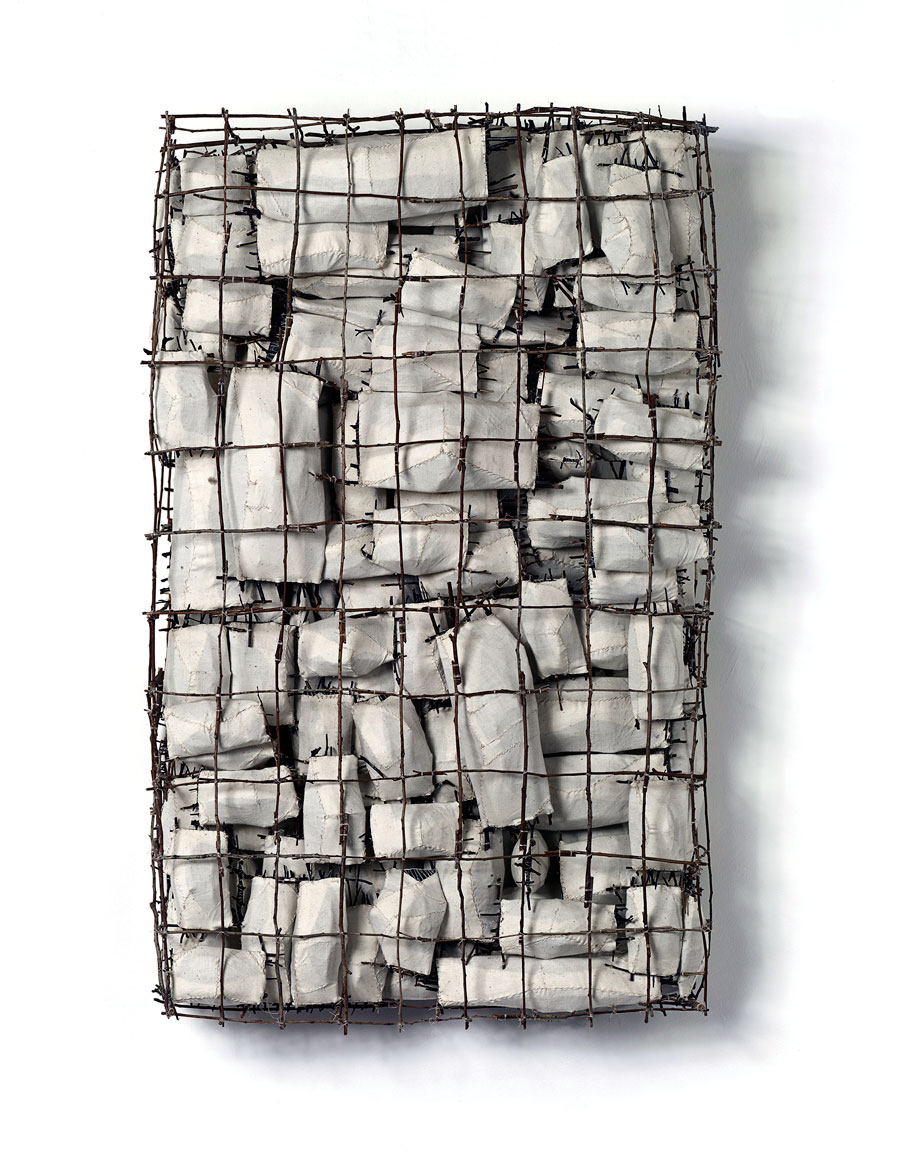

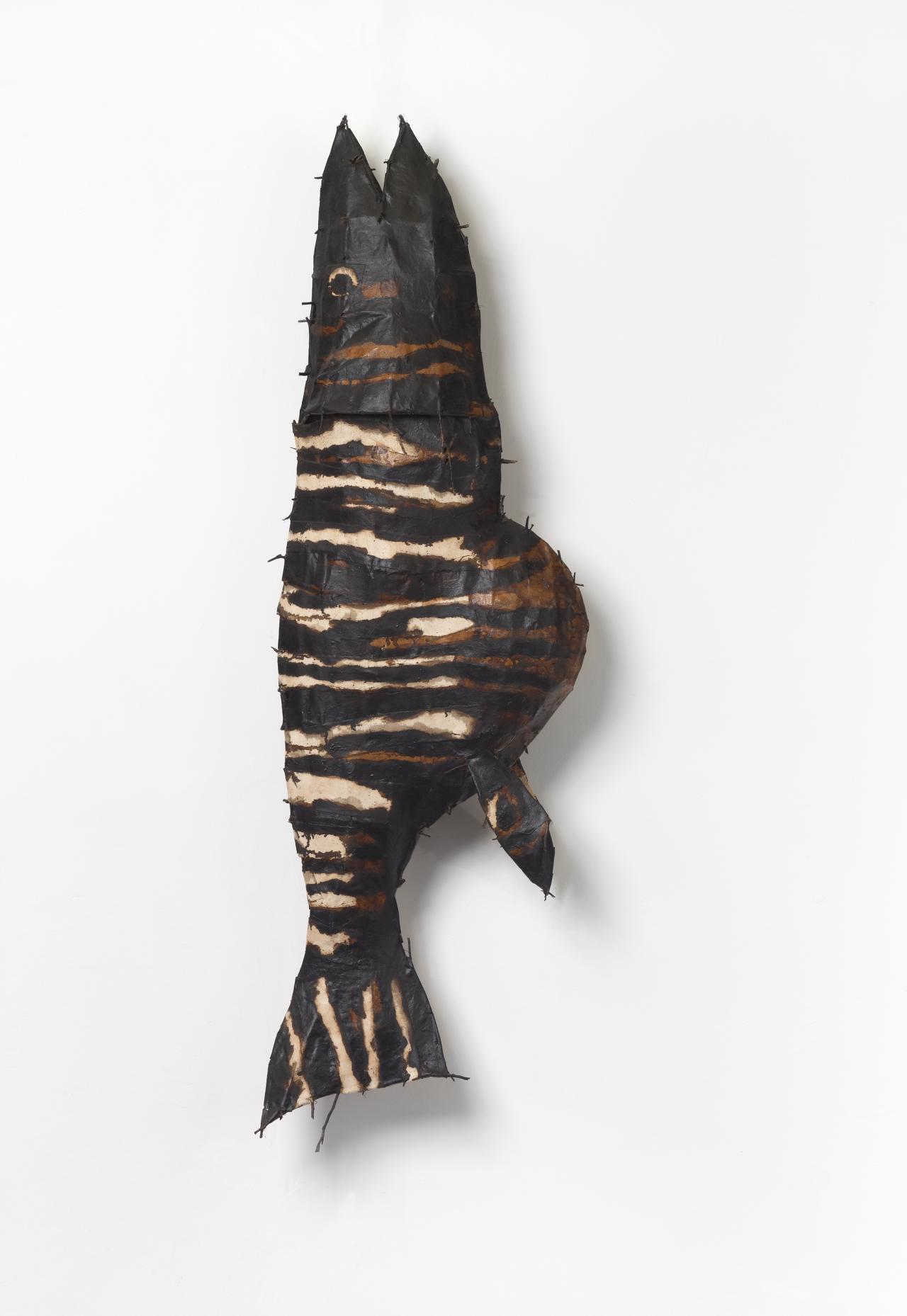

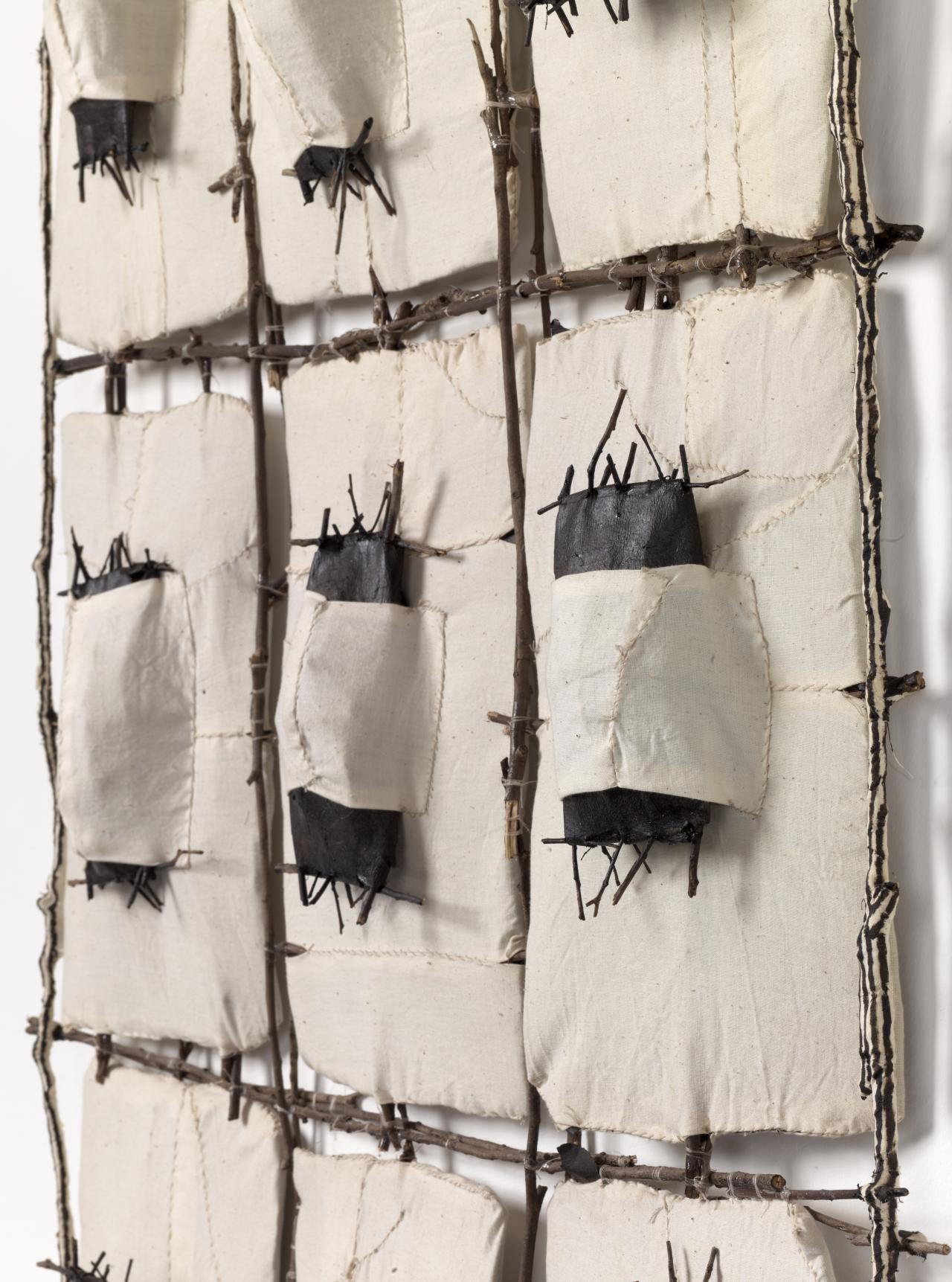
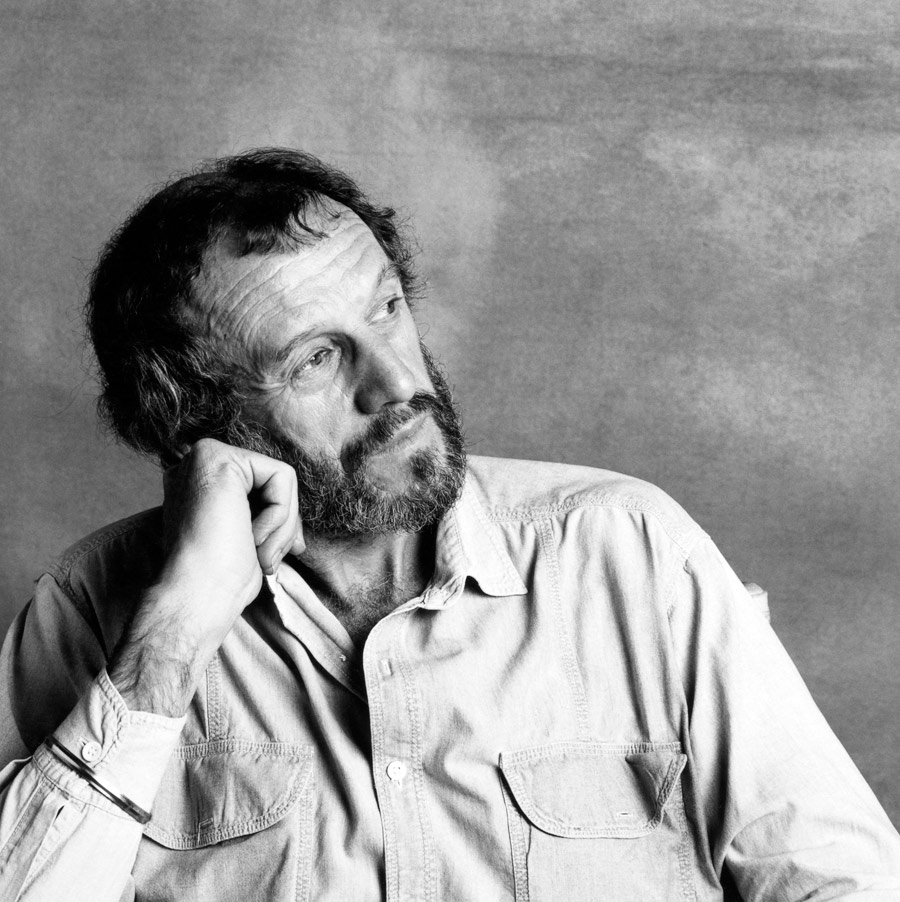
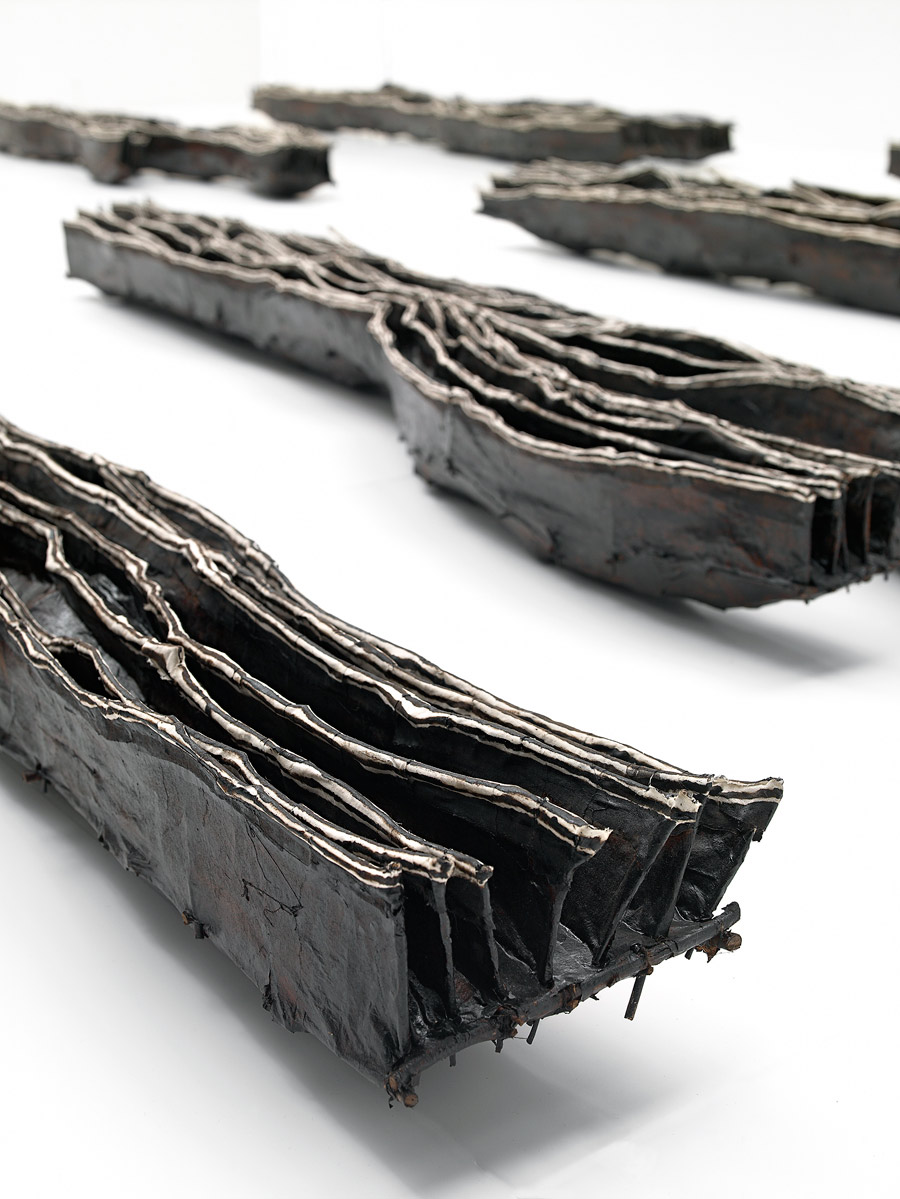
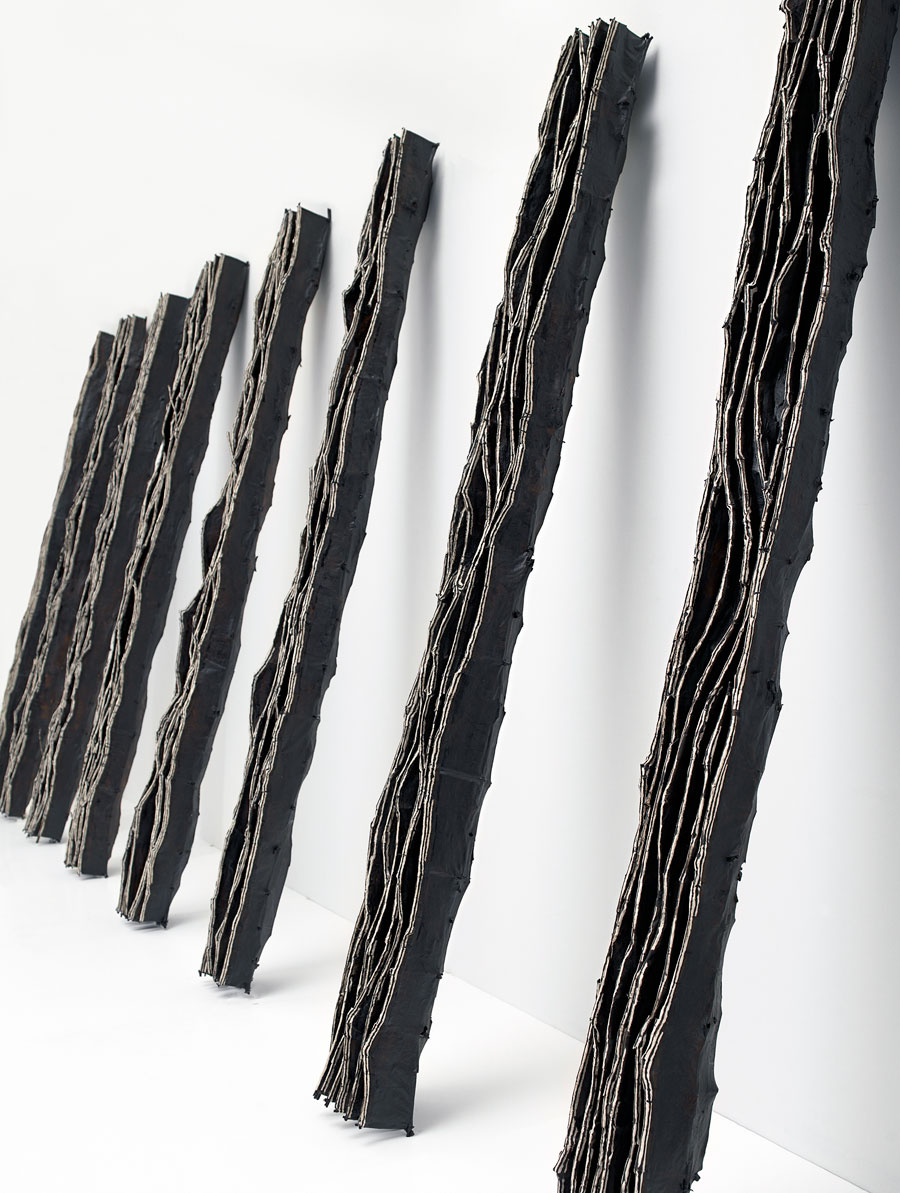


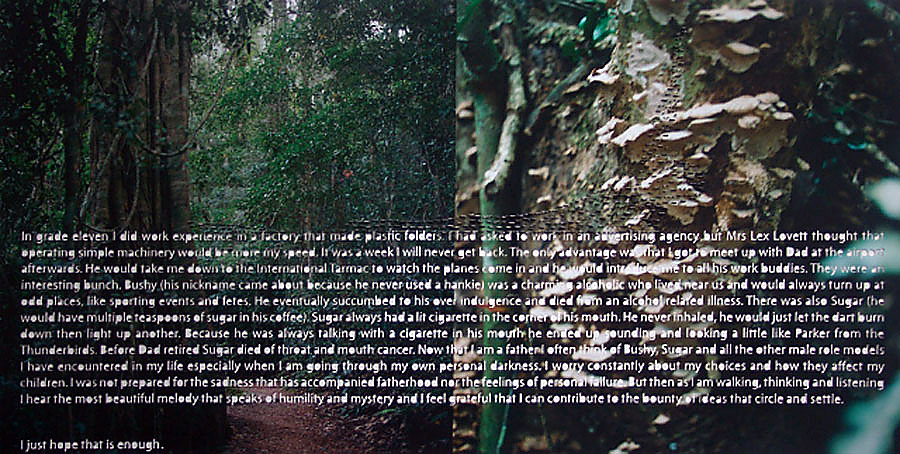
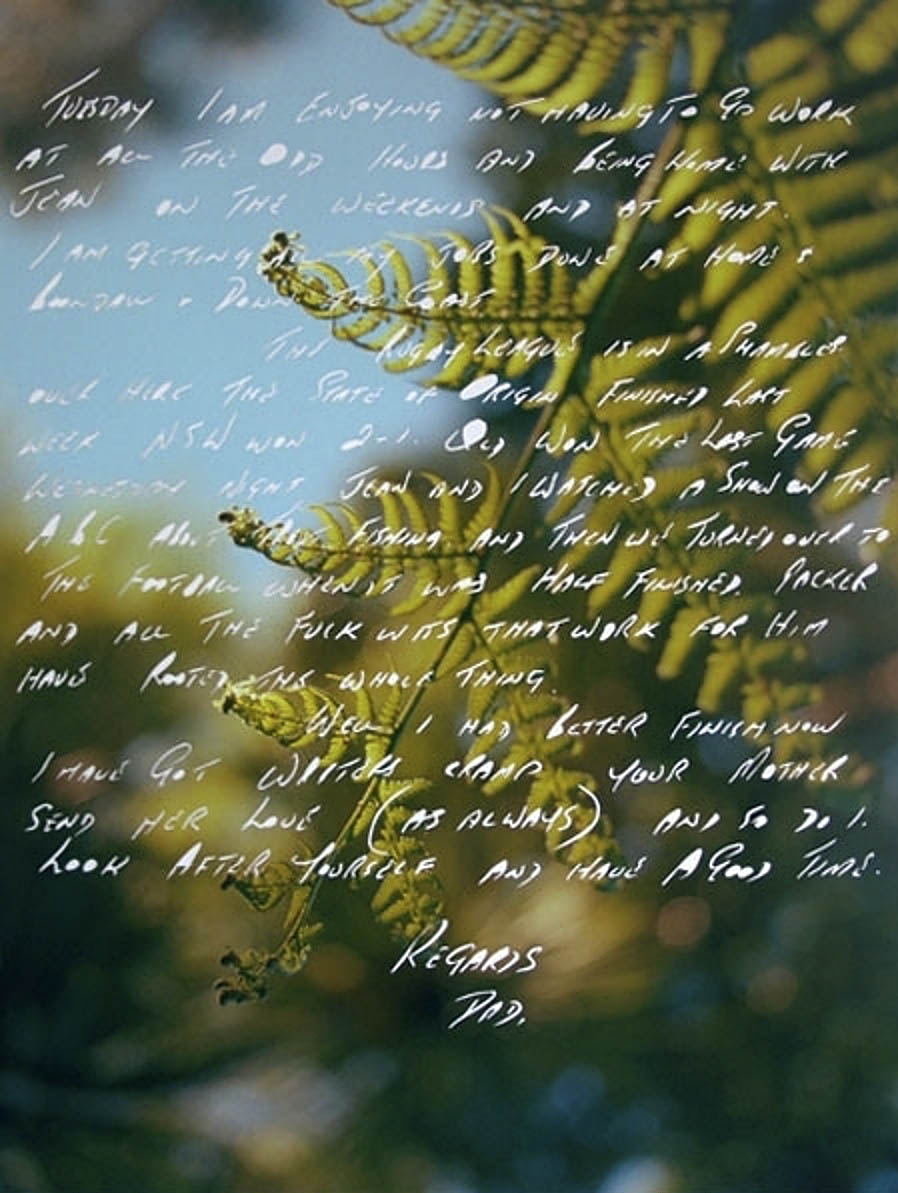
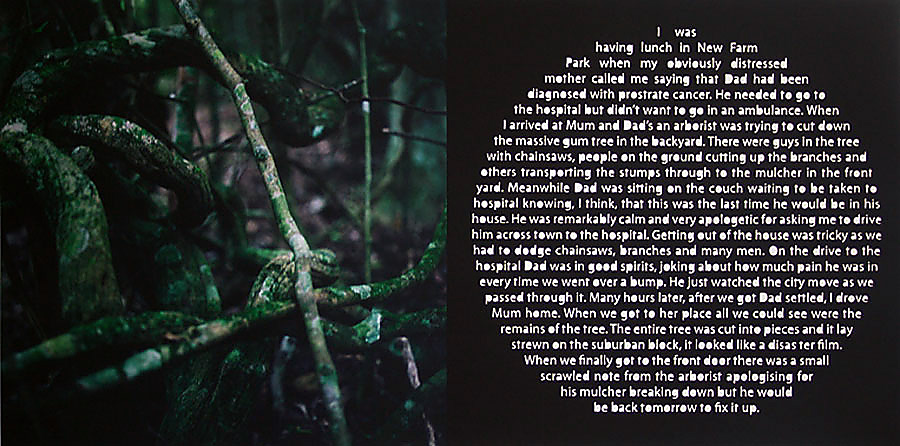

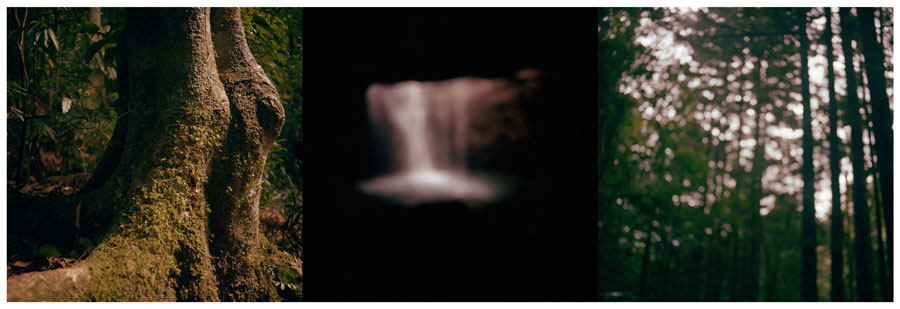


 Art Blart _ art and cultural memory archive
You must be logged in to post a comment.