Four interesting exhibitions in Albert Street, Richmond – from the beautiful, formed leather sculptures of Pamela Rataj to the wonderfully vibrant tropical bird, chair and decorative pattern paintings of Claudia Damichi; from the intensely observed canvas environments of Steve Randall to the post-photographic silk-screen textualisations of Robert Boynes. Well worth a visit on a Saturday afternoon!
As always, many thankx to the galleries for allowing me to publish the images in this posting. Please click on the images for a larger version.
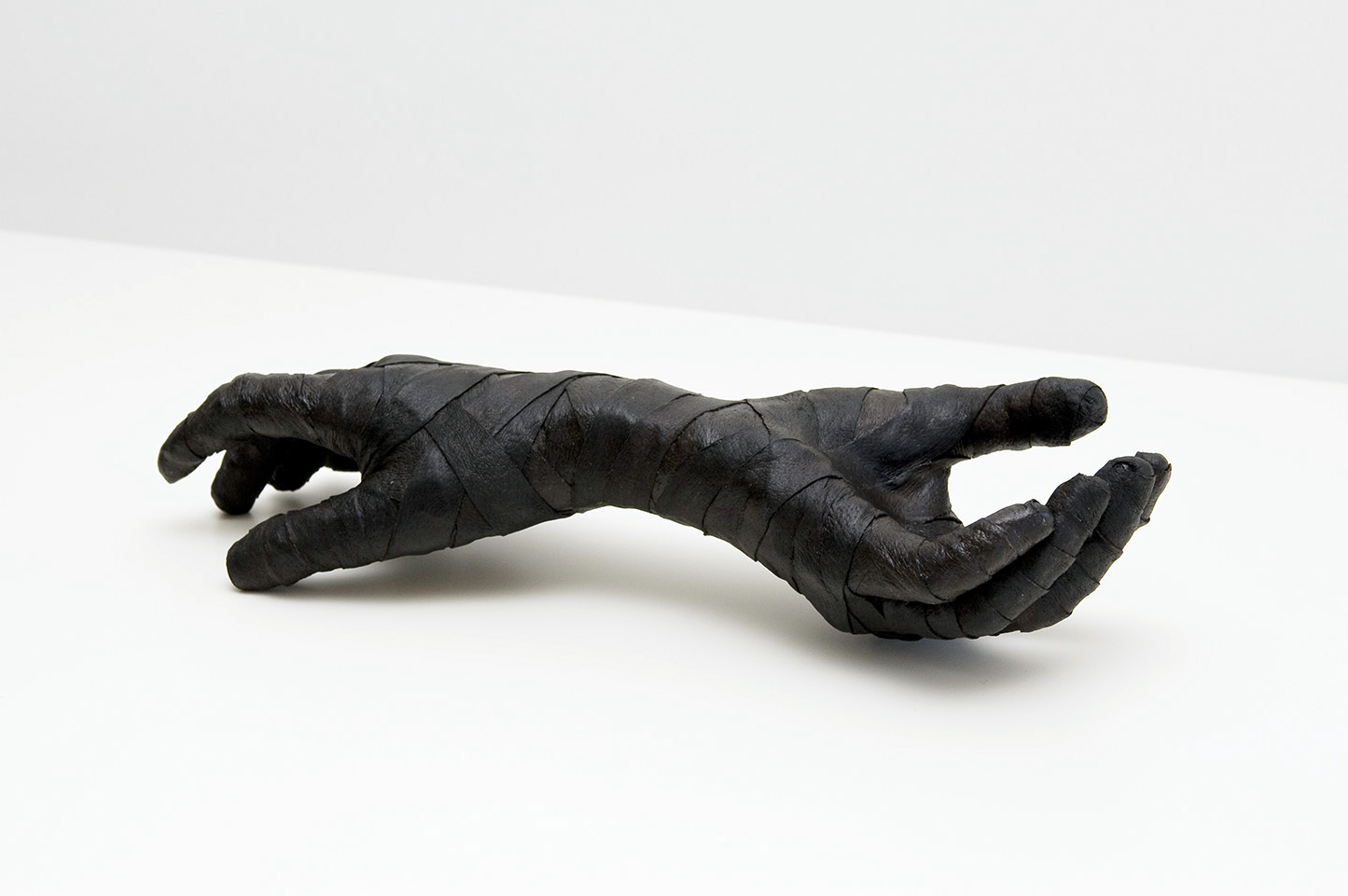
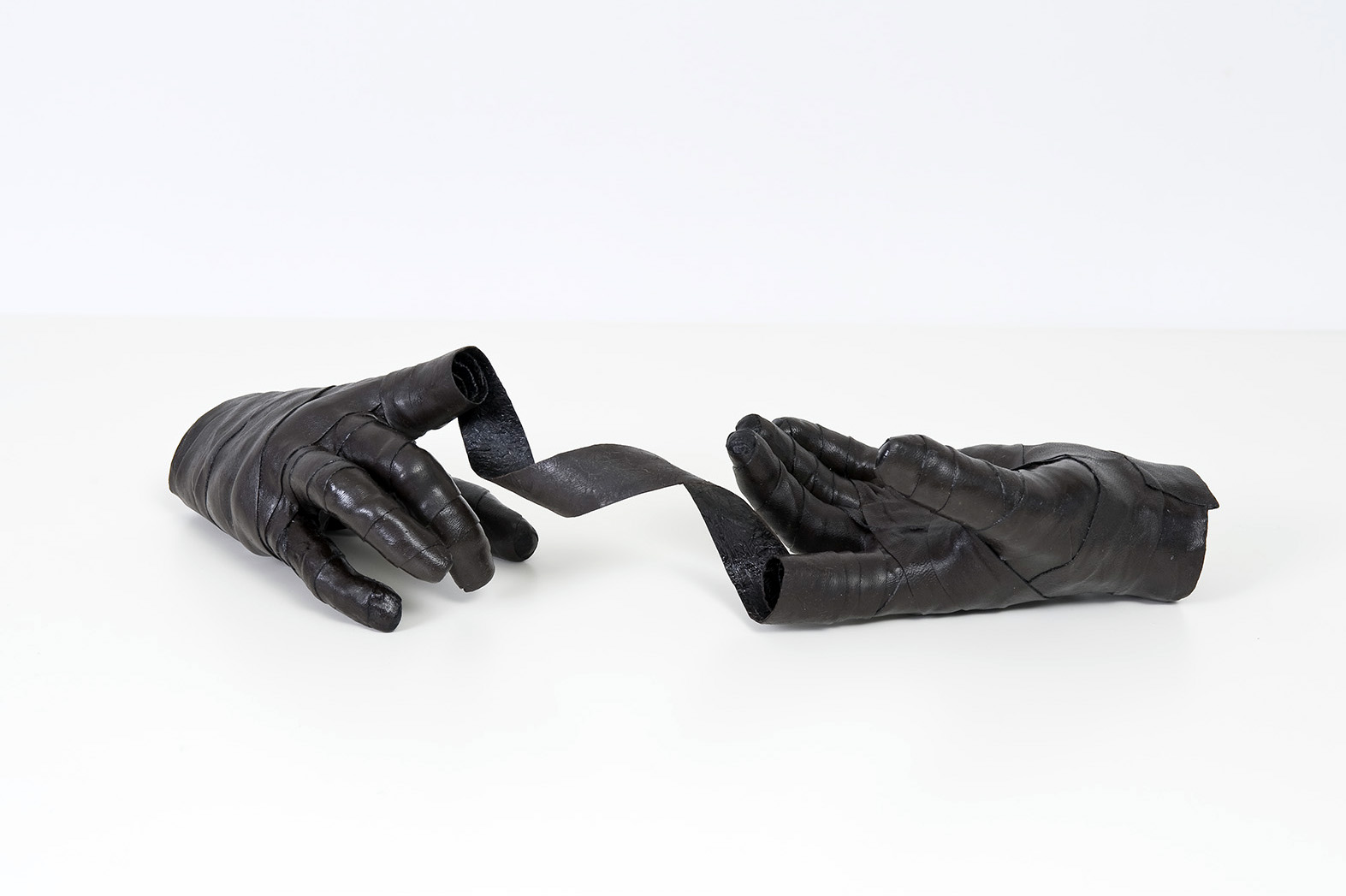
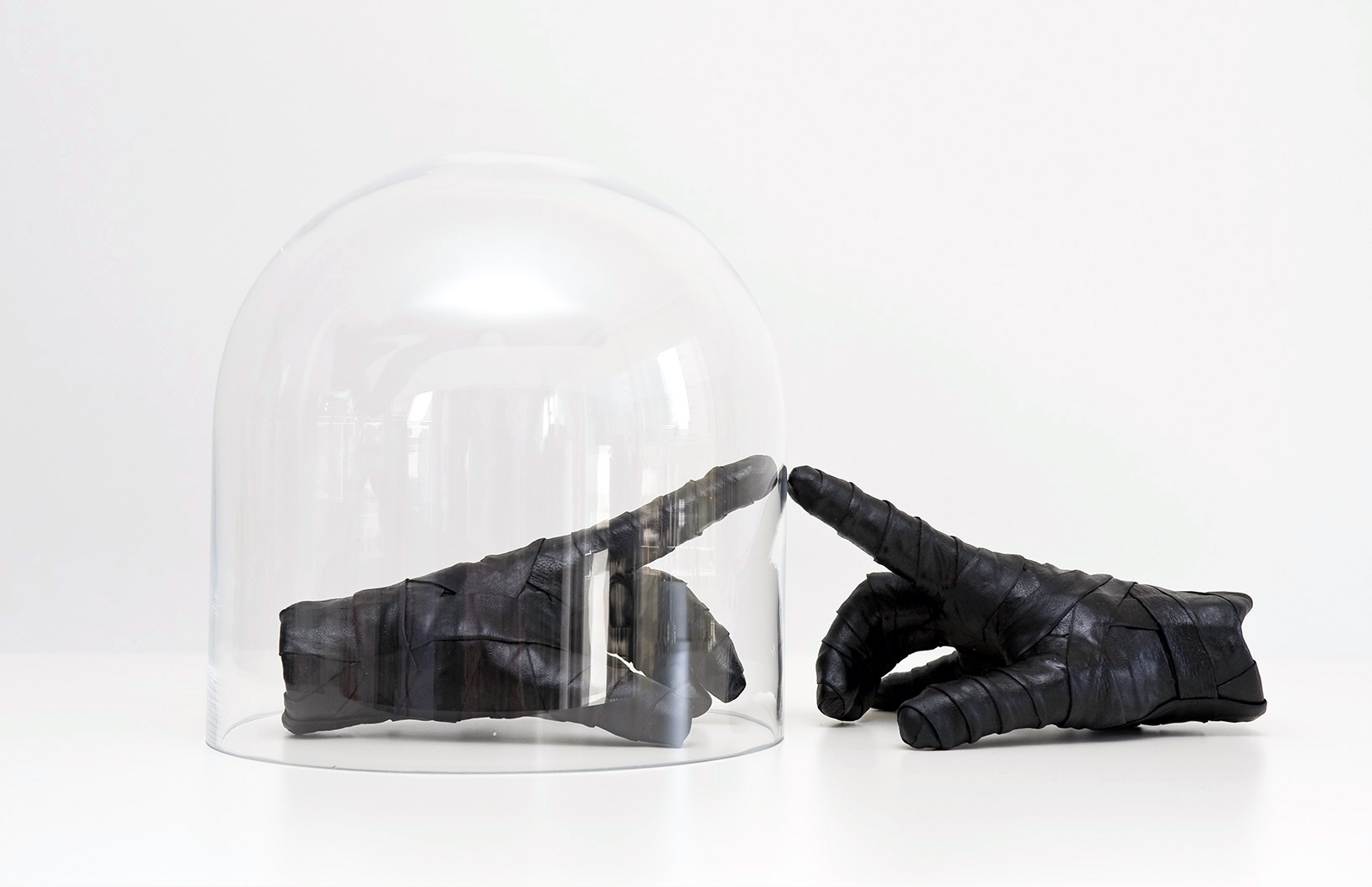
~ Pamela Rataj. The Morphology of Forgetting at Anita Traverso Gallery. 7th April – 1st May 2010
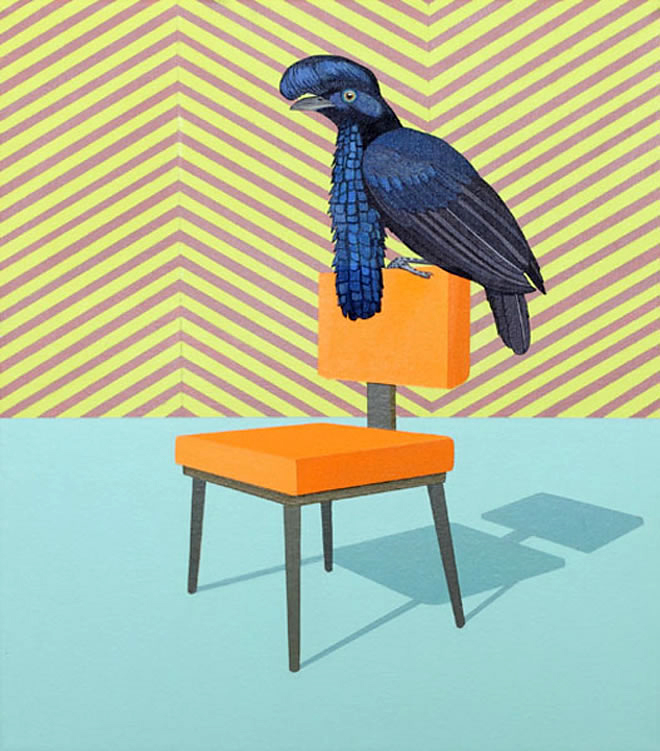
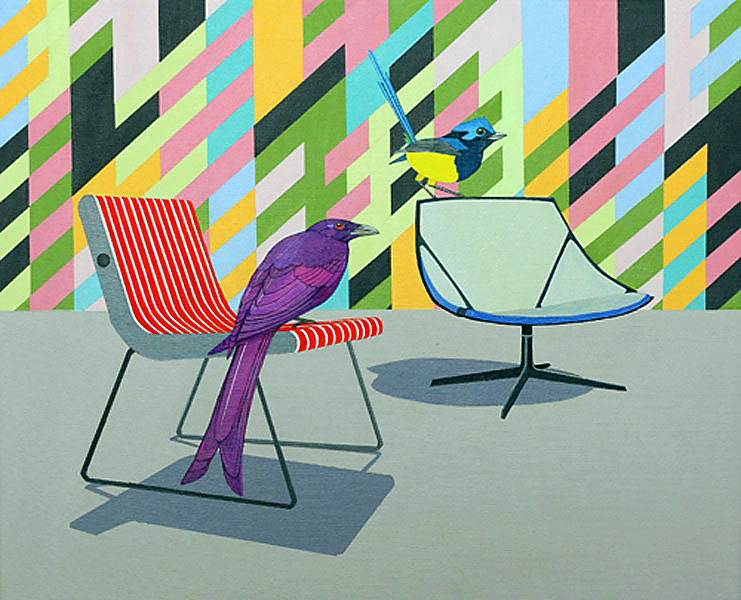
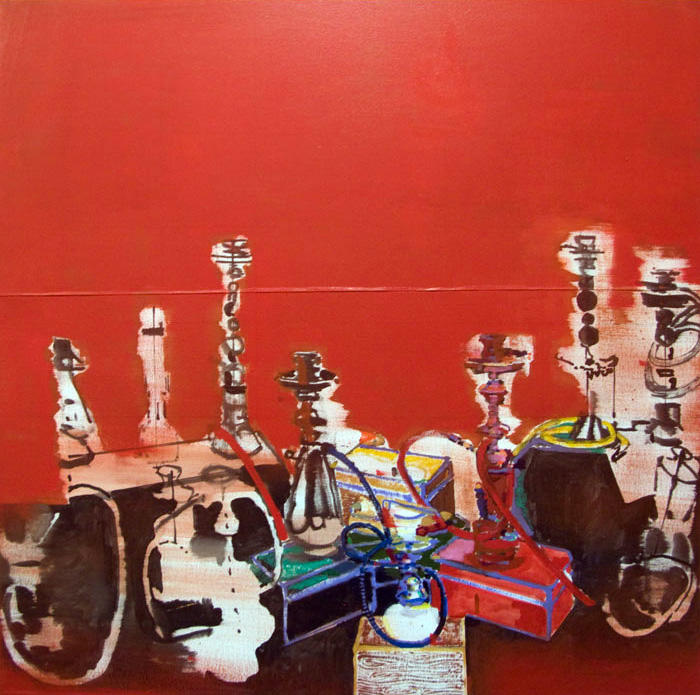
~ Claudia Damichi. The Bitter Sweet at Sophie Gannon Gallery. 30th March – 25th April 2010
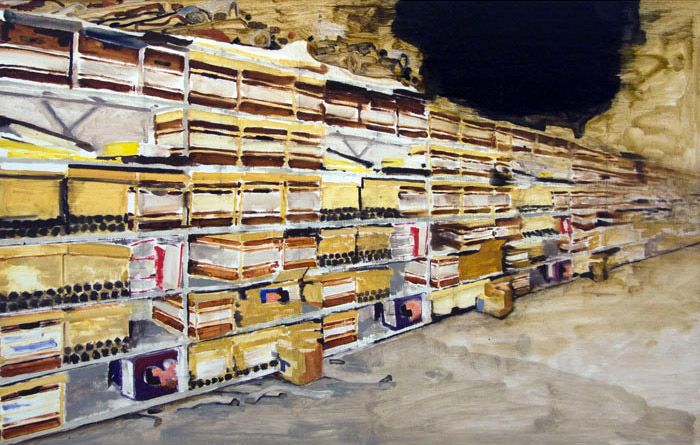
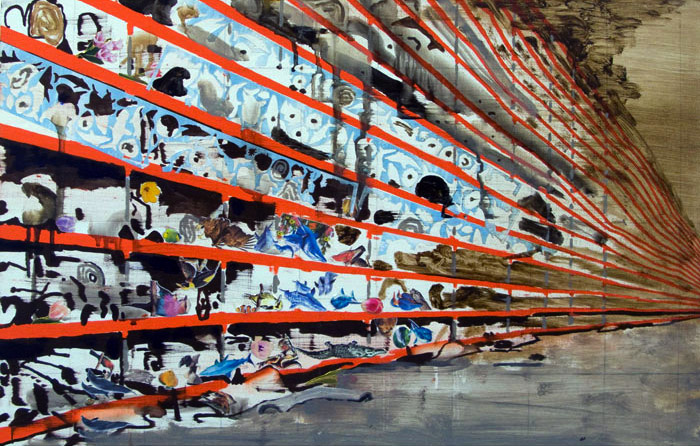
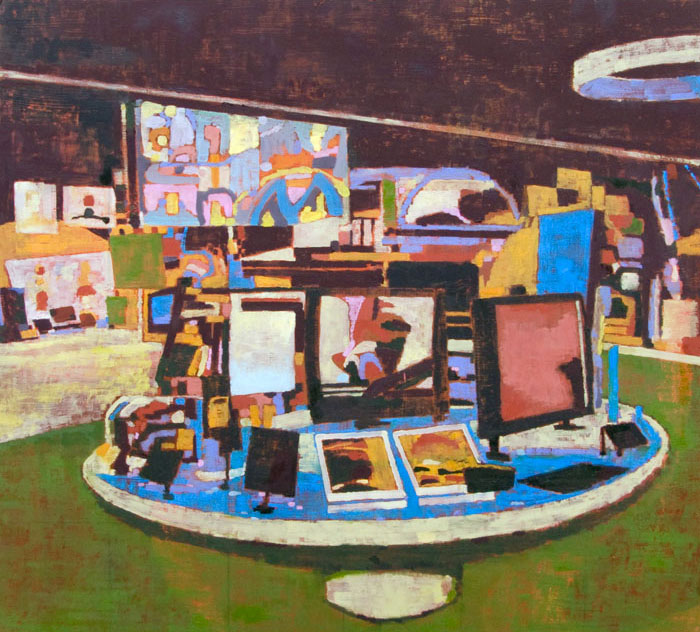
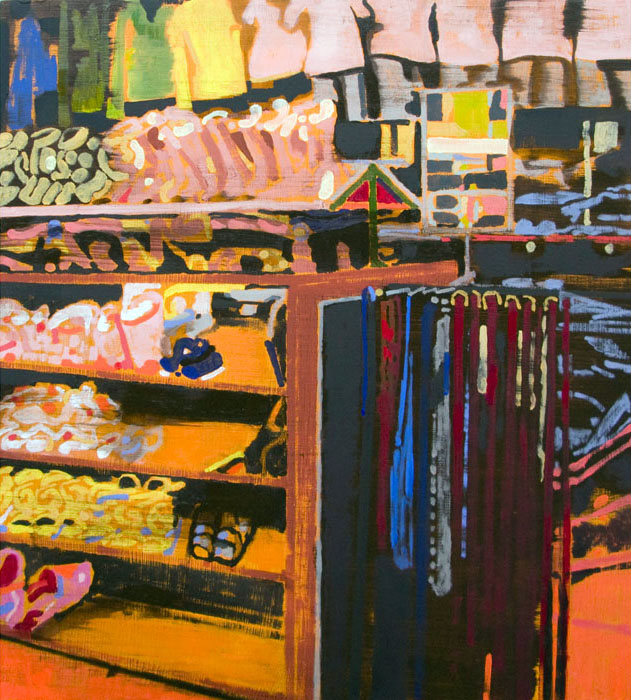
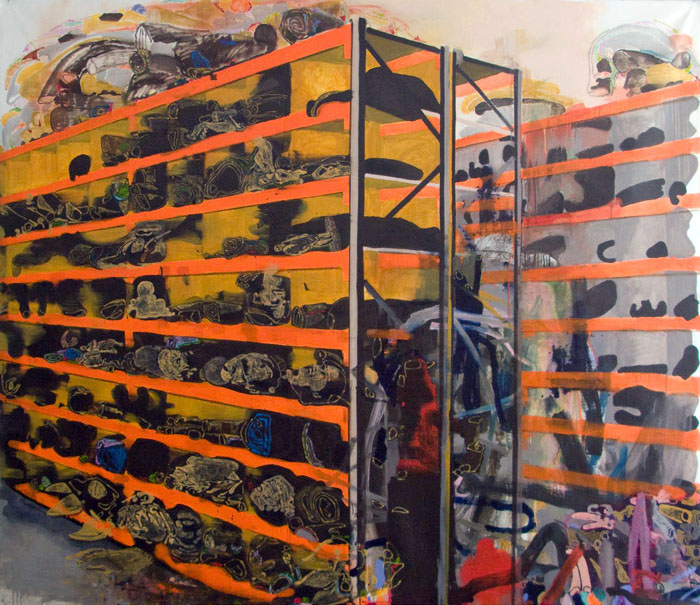
~ Steve Rendall. Security, Storage and Recreation at John Buckley Gallery. 8th April – 1st May 2010
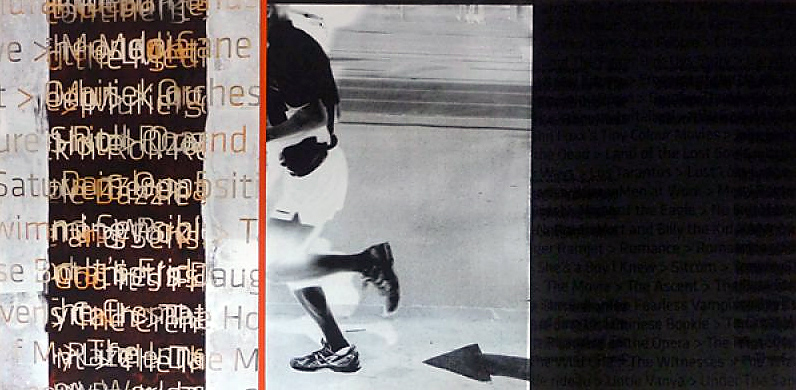
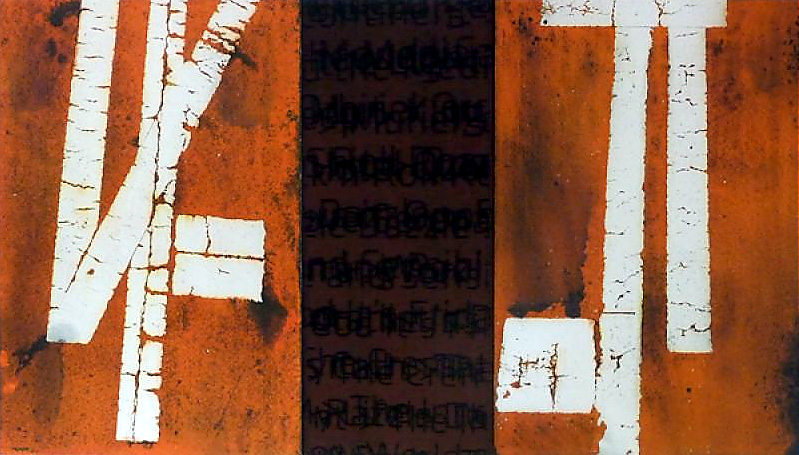
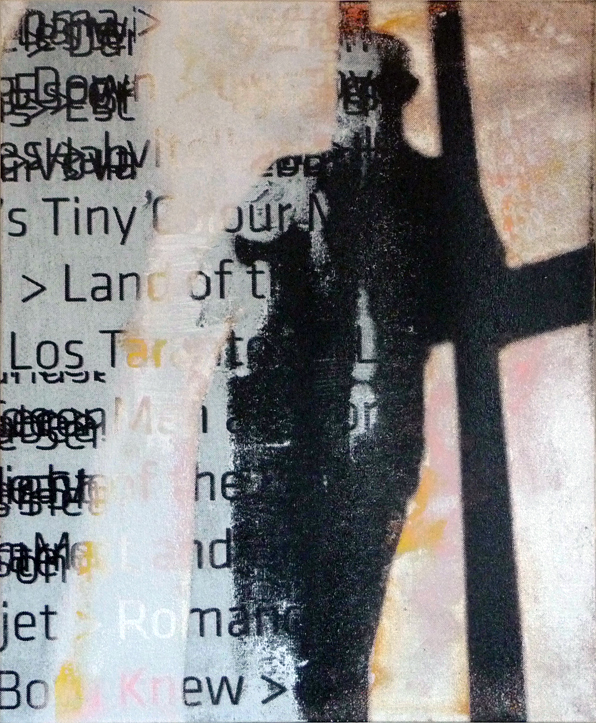
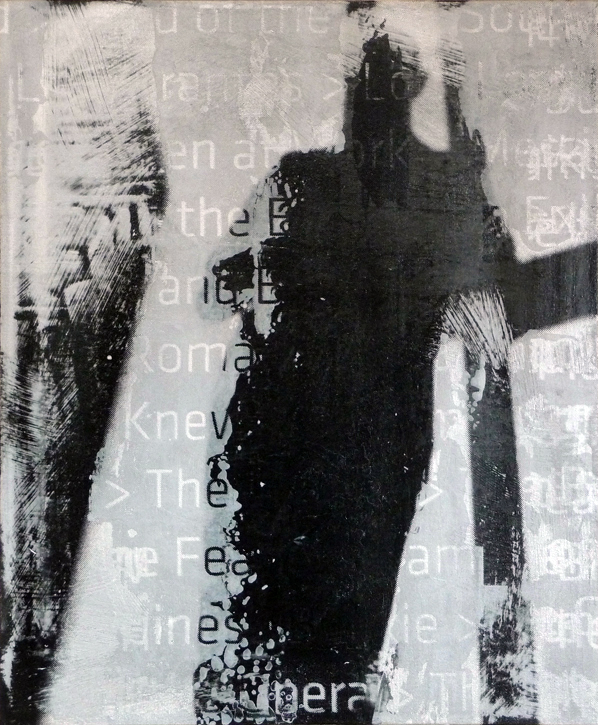
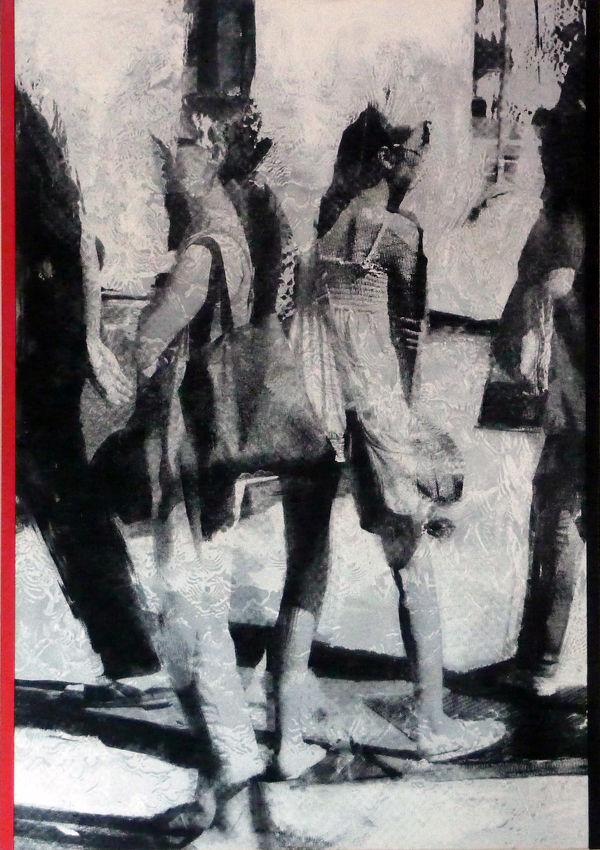
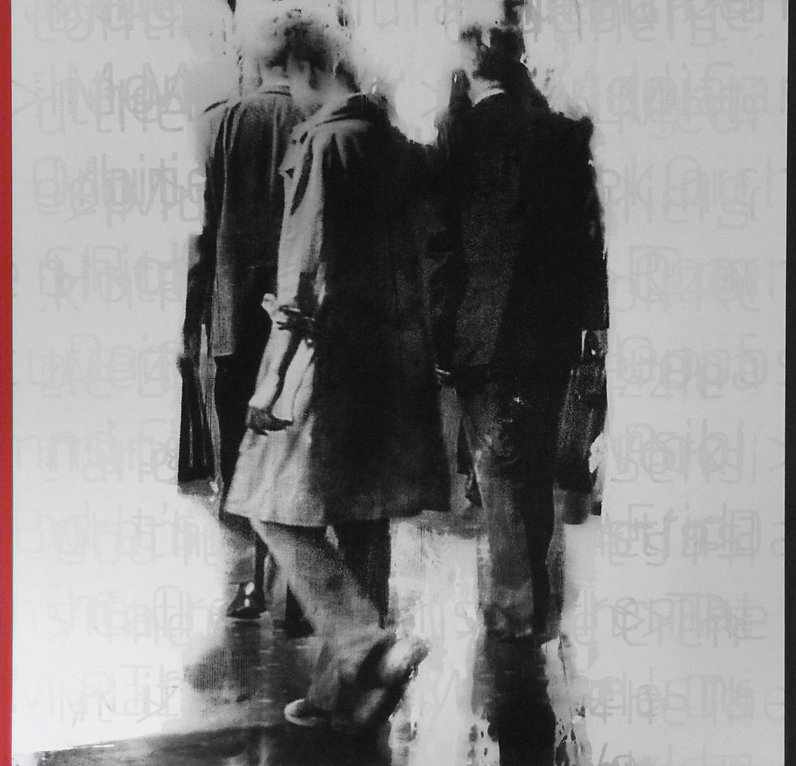
~ Robert Boynes. Postscript at Karen Woodbury Gallery. 7th April – 1st May 2010
Pamela Rataj. The Morphology of Forgetting at Anita Traverso Gallery
7th April – 1st May 2010
Pamela Rataj (Australian) Tangent Bundle 2009
Pamela Rataj (Australian) Ravel 2009
Pamela Rataj (Australian) Kairos 2009
How to draw a boundary between self and other, past time and today?
Patterns and forms in nature often resemble one another, connecting life forms in unexpected ways. Tide lines left in the sand resemble the grains found in a piece of wood, and the veins in a leaf or those in a hand.
The age lines in the trunk of a tree form as each outer layer covers the one preceding it and echoes its shape. This makes me think of the way past experience resurfaces as memory, receding or becoming more important at different times in our lives, as each new experience envelopes our previous states of being and yet is shaped by them.
The wrapped and layered forms in The Morphology of Forgetting explore coexistence and connection.
I dedicate this exhibition to my parents, whose recent deaths have helped me appreciate memory as a way to connect through time.
Pamela Rataj 2010
Press release from the Anita Traverso Gallery website [Online] Cited 10/04/2010. No longer available online
Pamela Rataj (Australian) Faisceaux 1 2009
Pamela Rataj (Australian) Faisceaux 4 2009
Claudia Damichi. The Bitter Sweet at Sophie Gannon Gallery
30th March – 25th April 2010
Claudia Damichi (Australian, b. 1972) Birds eye 2010 Acrylic on canvas 46 x 41cm
Claudia Damichi (Australian, b. 1972) Star Gazer 2009 Acrylic on canvas 46 x 41cm
Claudia Damichi (Australian, b. 1972) Gridlock 2010 Acrylic on canvas 41 x 46cm
Claudia Damichi (Australian, b. 1972) Reading between the lines 2010 Acrylic on canvas 46 x 41cm
Claudia Damichi’s surrealist still life paintings are characterised by vivid colours, elaborate patterns and distorted spatial proportions. In her paintings of domestic interiors, flowers, birds and furniture, colour is inflated and scale is playfully manipulated – solitary domestic interiors are reconfigured into places of fantasy and illusion. Inspired by the enduring aesthetic of modern industrial design, her surreal and theatrically staged scenarios self-consciously conjure a sense of the absurd. Graphic patterning, high-croma colour and whimsical compositions foster worlds that are at once playful and claustrophobic, satirical and real, tapping into an ambiguous nostalgia that leaves the viewer feeling that anything is possible.
Claudia Damichi (Australian, b. 1972) Look out 2010 Acrylic on canvas 46 x 56cm
Steve Rendall. Security, Storage and Recreation at John Buckley Gallery
8th April – 1st May 2010
Steven Rendall (Australian born Britain, b. 1969; Australia from 2000) Archive 1 2010 Oil on linen
Steven Rendall (Australian born Britain, b. 1969; Australia from 2000) Archive 2 2010 Oil on linen
Citing the British artist Walter Sickert as an important influence on his painterly style, Rendall’s work displays a form and content that has attracted the attention of both critics and collectors. A key work in the exhibition is a large-scale painting on un-stretched linen titled Fountain (Rosemary’s Baby) that sprawls across 4.5m. Certain fountains, along with other apparently arbitrary images of television monitors, speedboats, clothing racks, shelving units and museum interiors are recurring motifs in Rendall’s paintings.
Rendall aims to ‘collect and synthesise’ images from around his home and en route to and from his Brunswick studio. Passing observations of window displays, charity shops and various light industrial warehouses are registered and recorded in conjunction with the accumulation of promotional flyers spruiking leisure activities and museum experiences. This shambolic collection of images is transcribed into an array of compositions in Rendall’s paintings. Images occasionally materialise in unlikely places, such as the spectral diver’s head that is resting on a warehouse shelf in the appropriately titled Storage.
In the exhibition Security, Storage and Recreation, you are invited to enter the image bank of Steven Rendall; a ‘wake in fright’ experience where one can become immersed and caught up in the maelstrom of the artist’s visual language – a sequence of painterly dreams each similar yet different to the last.”
Press release from the John Buckley Gallery website [Online] Cited 10/04/2010 no longer available online
Steven Rendall (Australian born Britain, b. 1969; Australia from 2000) Flat Screens (Green) 2010 Oil on linen
Steven Rendall (Australian born Britain, b. 1969; Australia from 2000) Pipes 2010 Oil on linen
Steven Rendall (Australian born Britain, b. 1969; Australia from 2000) Claustrophobia 2010 Oil on linen
Steven Rendall (Australian born Britain, b. 1969; Australia from 2000) Redacted 2 2010 Oil on linen
Robert Boynes. Postscript at Karen Woodbury Gallery
7th April – 1st May 2010
Robert Boynes (Australian, b. 1942) Street Runner 2010 Acrylic on canvas and velvet 120 x 242cm
Robert Boynes (Australian, b. 1942) Days that we forgot 2010 Acrylic on canvas
Robert Boynes (Australian, b. 1942) Signal Driver 2010 Acrylic on canvas and velvet 120 x 190cm
Postscript is Robert Boynes’ second solo exhibition with Karen Woodbury Gallery. This series continues with his exploration of urban themes, contemporary experience and experimentation into ways of using paint. In this most recent body of work Robert has employed the use of text in juxtaposition to various materials such as wood and velvet. The text conveys a feeling of noise and urban clatter, acting as a context and environment for the figures within the work.
His technique involves transferring photographic images to large silk screens and dragging paint through the mesh onto canvas. Robert thus has control in the manipulation of colour, density and translucency of the images. This process results in still moments that magnify and investigate everyday observable reality. The anonymous figures are juxtaposed with text and layering of saturated, contrasting colours, appearing objectified and ghostly.
These works embody a filmic quality, the multi-panelled paintings signify fragmented narratives and enquire into perceptions of time and space.
Text from the Karen Woodbury Gallery website [Online] Cited 10/04/2010 no longer available online
Robert Boynes (Australian, b. 1942) Body Type 2 2010 Acrylic on canvas
Robert Boynes (Australian, b. 1942) Body Type 3 2010 Acrylic on canvas
Robert Boynes (Australian, b. 1942) Things we leave behind 2009 Acrylic on canvas 120 x 180cm
Robert Boynes (Australian, b. 1942) The layered moment 2009 Acrylic on canvas
Robert Boynes (Australian, b. 1942) Postscript 2009 Acrylic on canvas 120 x 124cm
All galleries have closed except for Sophie Gannon Gallery, Richmond.
Sophie Gannon Gallery 2 Albert Street Richmond VIC 3121 Australia Phone: +61 3 9421 0857
Exhibition dates: 11th February – 24th April, 2010
Alexey Titarenko (American born Soviet Union, b. 1962) #1 Untitled (Boy) 1993 Gelatin silver print
Many thankx to the Nailya Alexander Gallery for allowing me to reproduce the images in the posting. Please click on the photographs for a larger version of the image.
Dr Marcus Bunyan
Alexey Titarenko (American born Soviet Union, b. 1962) #3 Untitled (Crowd 1) 1992 Gelatin silver print
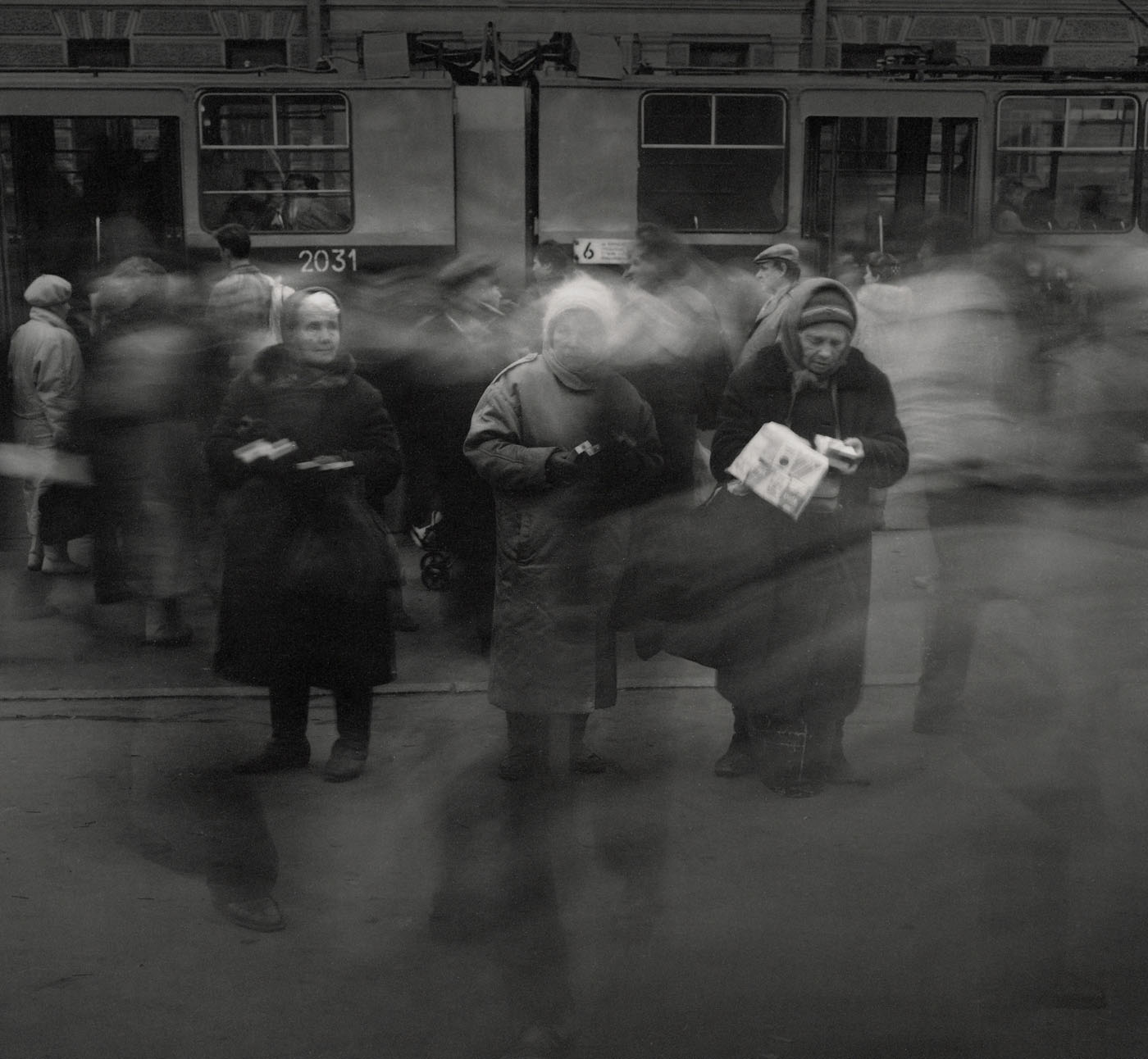
Alexey Titarenko (American born Soviet Union, b. 1962) #7 Untitled (Three Women Selling Cigarettes) 1992 Gelatin silver print
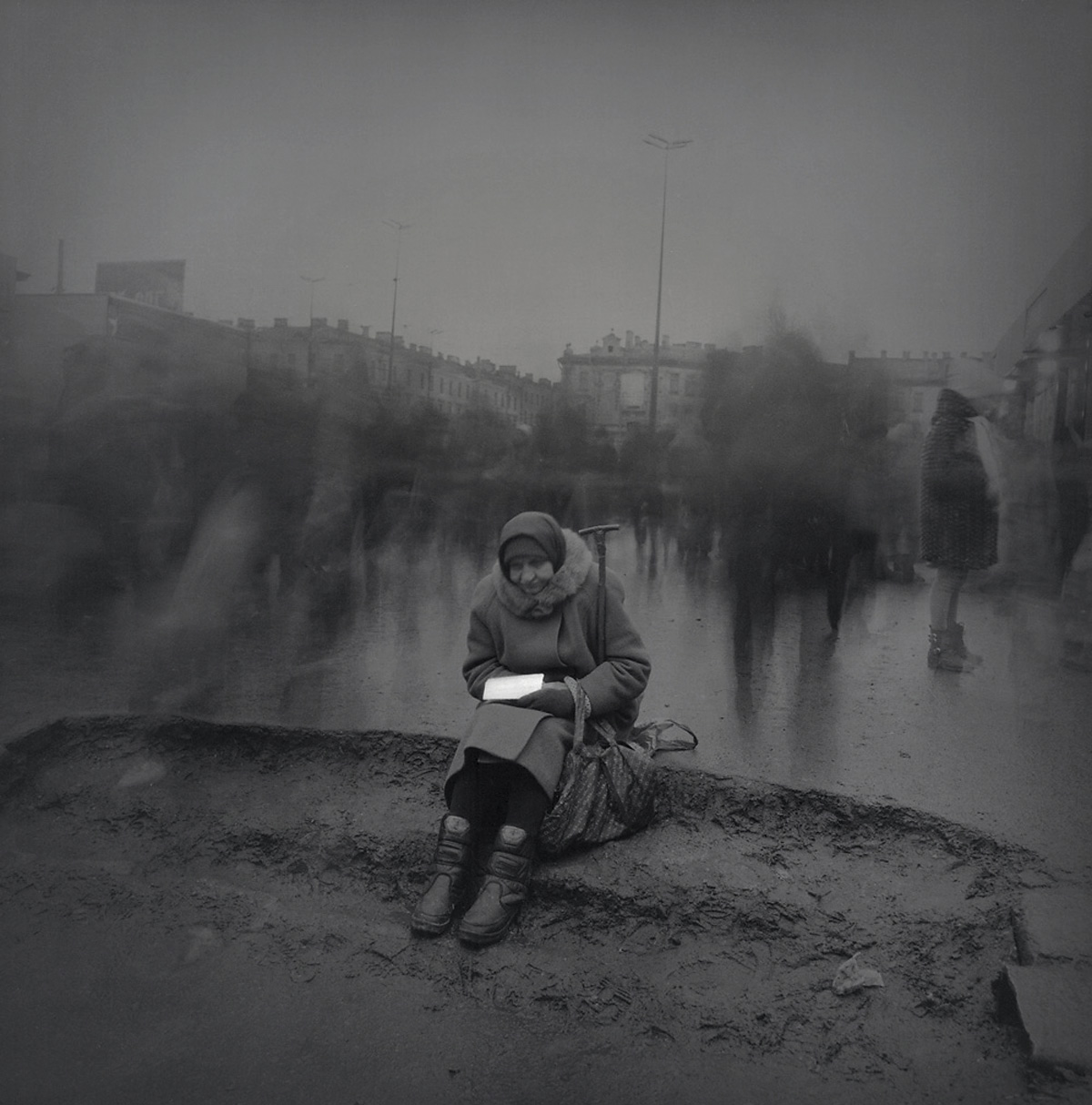
Alexey Titarenko (American born Soviet Union, b. 1962) #11 Untitled (Begging Woman) 1999 Gelatin silver print
Nailya Alexander Gallery is pleased to announce Alexey Titarenko: Saint Petersburg in Four Movements opening on February 11th, in her new space at the Fuller Building, 41 E 57th Street, Suite 704. The reception for the artist will be from 6-8pm. Gallery hours are Tuesday through Saturday, 10am-6pm and by appointment.
This will be Alexey Titarenko’s first major exhibition in New York that features his entire St. Petersburg series (1991-2009). The four underlying sequences, or movements – to borrow a term from the vocabulary of music, which features prominently in the artist’s mind, are The City of Shadows, The Anonymous, The Light of Saint Petersburg and Unfinished time. Like music, the expression of time is a presence in Titarenko’s art, associated with literature and in particular, the works of Marcel Proust.
This majestic and history-laden city, where Titarenko was born in 1962, is the central subject of his photography, or to be more accurate it is the soul of the city and therefore that of Russia. As the artist himself explains:
“It would be en error to consider my photographs within the context of the values now fashionable in the arts in general and photography in particular. To align them with such and such a trend, without taking into account that their very purpose in existing is defined by the past. Even the most factual of them are not reportage, but a novel. The principal motivation for their creation is, in fact, always the same: Russia’s history throughout the 20th century, which is an unending series of tragedies of ever more baffling dimensions, whether you consider the wars, the famines or the so-called times of peace. The history of Russia … but in the form of rather contemporary images, made in a single location, a single city – St. Petersburg. Rather than the city (which is mostly only vaguely visible), these images represent emotion – the range of emotions forming the deep inner character of the people who lived in this country and endured all these disasters, people who were usually only represented from outside. And it is therefore these emotions which, in themselves, are quite general and have remained unchanged in the course of the century, like the emotions aroused by the music of Shostakovich, for example, or by the novels of Solzhenitsyn, which are the true subject of my photographs, and my goal would be to convey them to the viewer, to make him or her feel them … understand, to feel compassion and love.”
Titarenko was able to develop a form of expression reminiscent of Dostoyevsky’s stories, inspired by the moods and rhythms of the music of Shostakovich. Often, the city, veiled in winter’s shadows or bright with summer’s dazzle, is inhabited by nearly transparent phantoms. They dwell in its streets, cross its courtyards: crowds on the move, spreading over a vast square like a wave, their individual identities blurred and indistinct. Nevertheless, sometimes a few isolated, improbable figures emerge from the crowd. This photographic technique, involving relatively slow shutter speeds, confirms a taste for randomness and makes each image a unique adventure, a potential source of surprise. The approach also bespeaks Titarenko’s long-standing interest in 19th-century landscape photographers, especially those who operated in cities. In addition to this style of representation, which eschews any temptation to be objective and is finally quite impressionistic, the darkroom technique Titarenko uses transforms the black-and-white print into a composition endowed with subtle, suggestive hues and ever-differing nuances of gray. Titarenko never reproduces exactly the same rendering of light and shadow from one print to the next.
Many thankx to Kicken Berlin for allowing me to publish the photographs in this post. Please click on the photographs for a larger version of the image.
Mahler was born in 1949 in Bad Berka, Thuringia. She studied at the School for Graphic and Book Arts in Leipzig and has been a professor at the University of Applied Sciences in Hamburg since 2000. She lives in Hamburg and Lehnitz, near Berlin
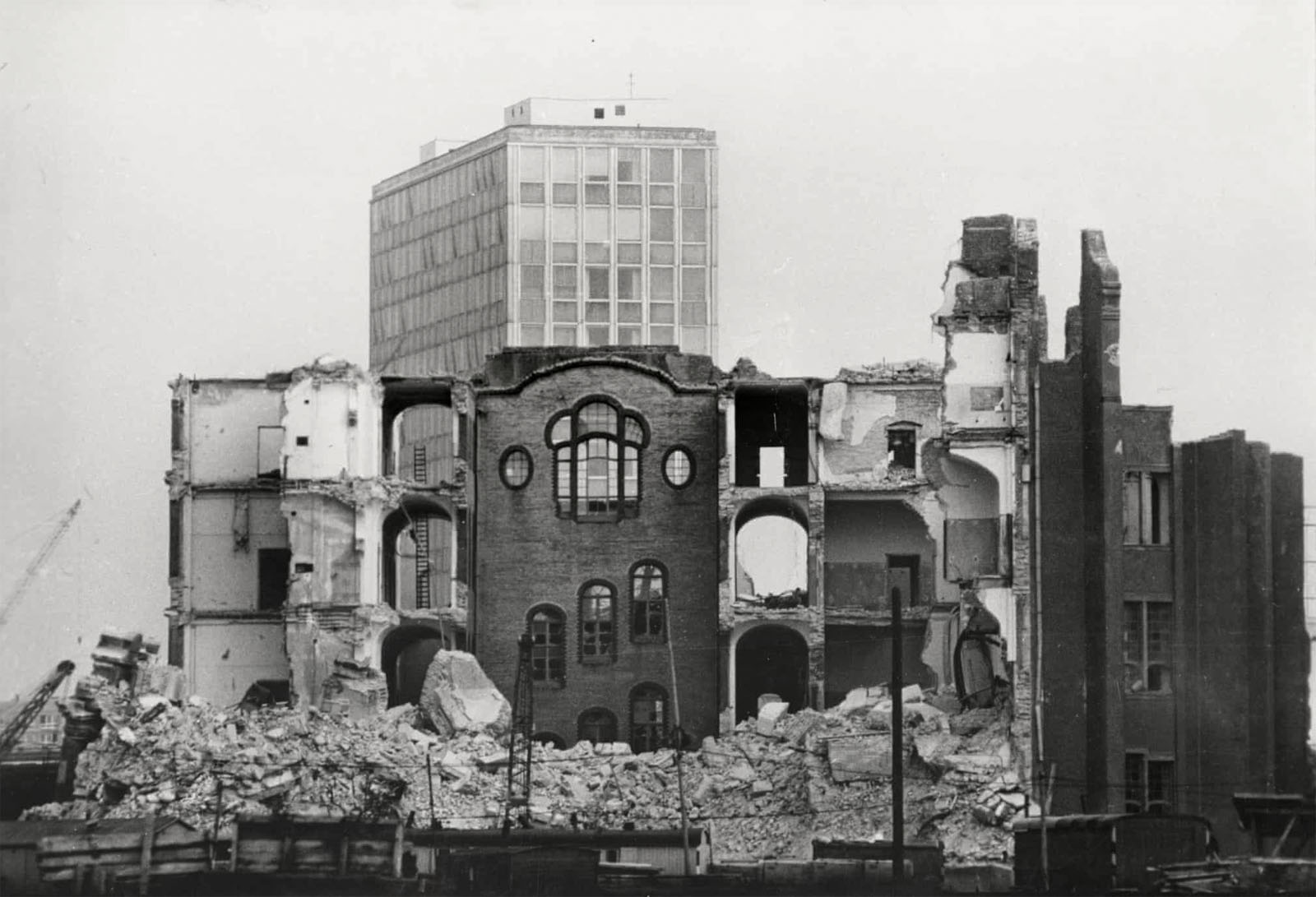
Kicken Berlin will devote its first exhibition of 2010 to a selection of East German photographers. Represented in East Side Stories: German Photographs 1950s-1980s are Ursula Arnold, Sibylle Bergemann, Arno Fischer, Ute und Werner Mahler, Roger Melis, Helga Paris, Evelyn Richter as well as Gundula Schulze Eldowy – committed art photographers who achieved their own modes of expression outside the official aesthetic. F.C. Gundlach’s fashion photography from 1950s and 1960s West Berlin will be on view in the exhibition space Kicken II.
Up until the early 1970s, the cultural officers of the German Democratic Republic viewed photography not as an art medium but rather as a means of providing affirmative and idealised images of life. Personal viewpoints were not welcome. Photography that forcefully “grew out of the self-assigned task of documenting what (one) felt was worth capturing,” as Evelyn Richter put it, had to remain secret.
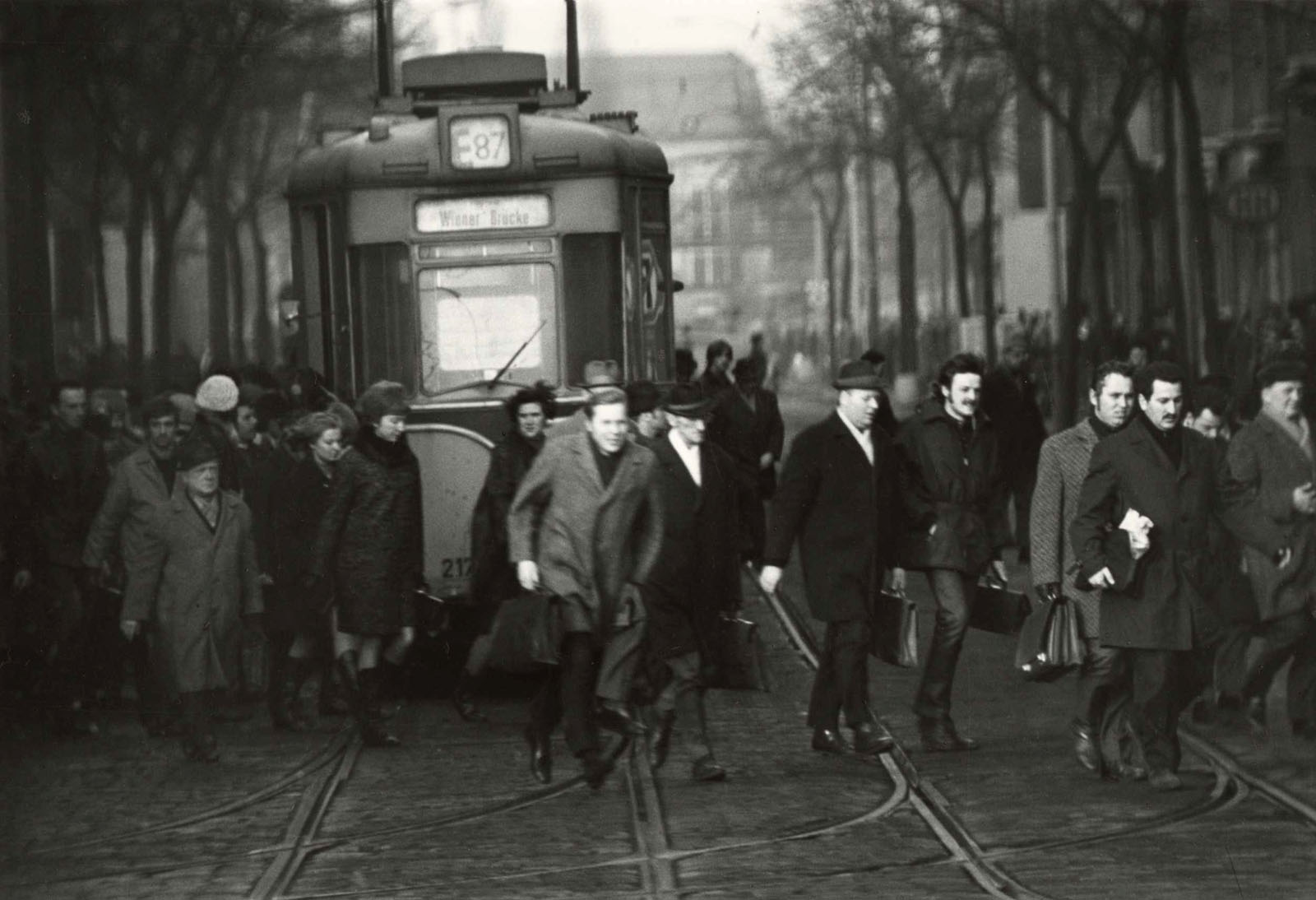
Arno Fischer (1927-2011) and Evelyn Richter (1930-2021) belong to those who pointed the way toward a subjective-narrative, human-centered photography in the 1950s. Key figures in the East German art photography scene, opinion shapers, and teachers at Leipzig’s Hochschule für Grafik und Buchkunst / Academy of Visual Arts, they influenced a form of art photography oriented toward the social-documentary “human interest” tradition. Their stance combined social participation with a commitment to critical observation from a personal point of view – as in Fischer’s series Situation Berlin (1953-1960), with its symbolically dense snapshots of the divided city.
Important influences on the development of independent photography in East Germany included the work of the Magnum agency (from 1947 on), Edward Steichen’s exhibition The Family of Man (1955) as well as Robert Frank’s radically subjective street photography.
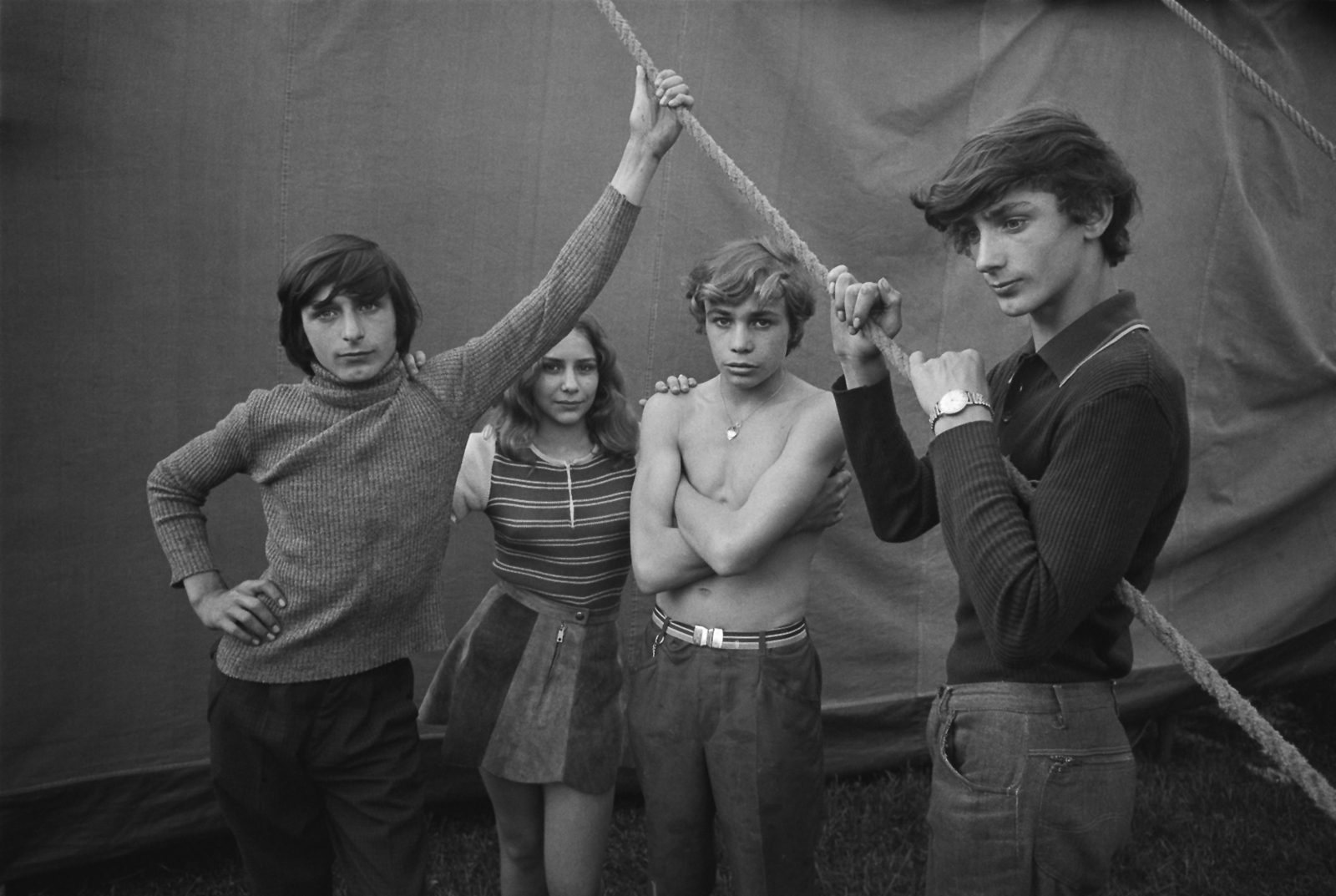
Pictures of people and portraits are at the exhibition’s core. Ursula Arnold (1929-2012) observed her sometimes melancholy, sometimes odd contemporaries on the streets of Berlin and Leipzig, and on Berlin’s S-Bahn. She gave up working as a photojournalist early in order to avoid having to make concessions to the dictates for enthusiasm imposed from above. Helga Paris (b. 1938) took portraits of rebellious Berliner Jugendliche / Berlin Youths (1981-1982), approaching her subjects with seriousness and thoughtfulness, and concentrating fully on them as individuals. She, too, had the self-professed goal of depicting people authentically in their everyday contexts.
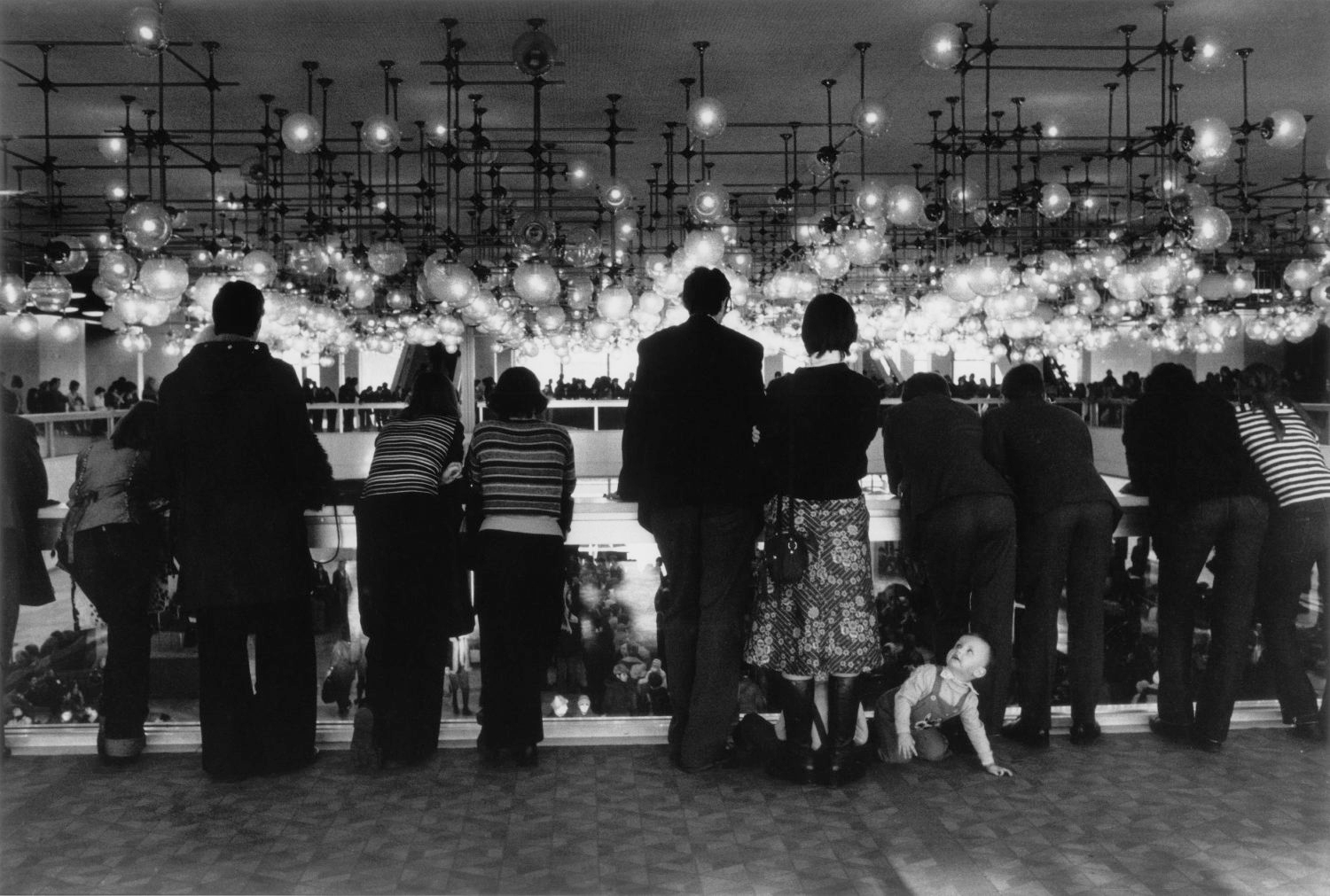
Sibylle Bergemann (1941-2010) made a name for herself as a sensitive portraitist, fashion photographer, and observer of the urban landscape. Das Denkmal / The Monument (1977-1986), her long-term study of the assembly of the Marx-Engels sculpture, appears, with its hovering, headless sculptural fragments to emblematically anticipate the collapse of communism.
In the Berlin of the late 1970s and early 1980s Gundula Schulze Eldowy (b. 1954) found the setting for scenes that are as drastic as they are quotidian in the series Berlin. In einer Hundenacht / Berlin: in a Dog’s Night (1977-1989) and Aktportraits / Nude Portraits (1983-1986), as no other East German photographer before her, she shows with unsparing frankness the loneliness and vulnerability of her subjects but also their dignity and self confidence. Her early photographs reveal an aesthetic and thematic debt to the work of Diane Arbus.
Independent of each other, Ute and Werner Mahler turned their unpretentious gazes on the East German way of life. Ute Mahler (b. 1949) thematised family arrangements and group dynamics in her series Zusammen Leben / Living Together (1972-1986). Werner Mahler (b. 1950) documented a year in the Thuringian village Berka (1977) – and repeated his studies in the late 1990s after reunification. An additional focus of both photographers was fashion photography (published for the most part in the magazine for fashion and culture Sibylle) that offered opportunities for “productively expanding the genre” (Bernd Lindner).
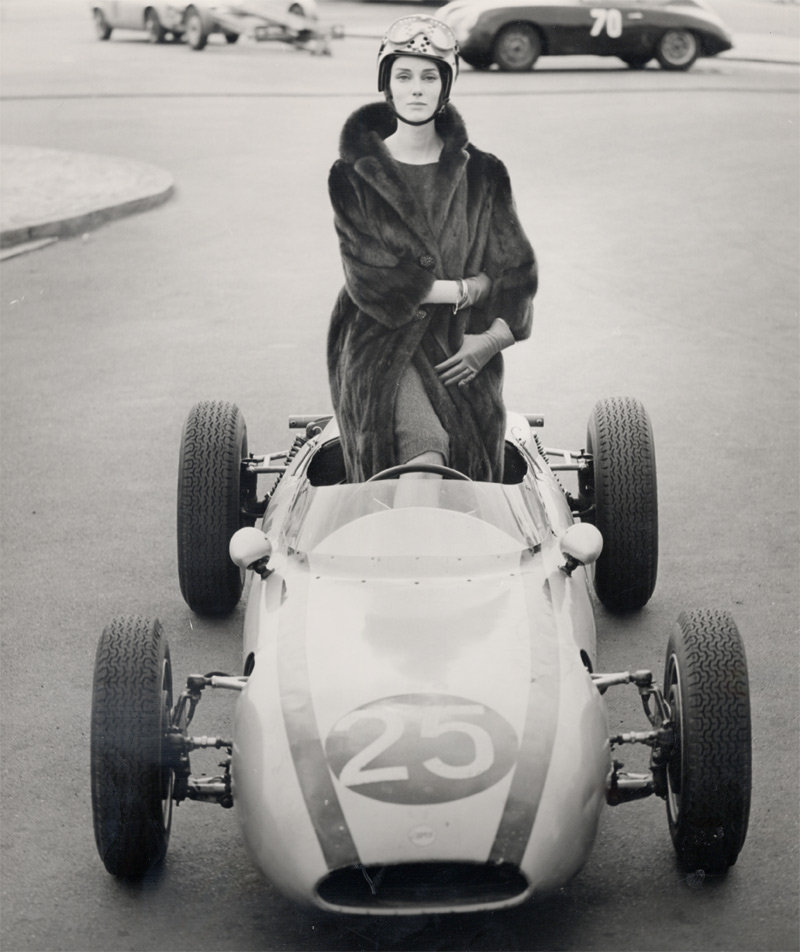
In the 1950s and 1960s in Berlin and Hamburg, F.C. Gundlach achieved a modern way to stage fashion in pictures. A small selection from the great fashion photographer’s oeuvre, F.C. Gundlach, will be on view in the exhibition space Kicken II and coincides with the comprehensive retrospective at the Martin Gropius Bau.
Press release from the Kicken Berlin website [Online] Cited 04/04/2010 no longer available online
Evelyn Richter (German, 1930-2021) ND (Neues Deutschland) print shop c. 1960-1962 Gelatin silver print Evelyn Richter Archiv der Ostdeutschen
Ursula Arnold (German, 1929-2012) Berlin, S-Bahn 1965 Gelatin silver print
Sibylle Bergemann (German, 1941-2010) Alexanderplatz, Berlin 1967 Gelatin silver print
Sibylle Bergemann (German, 1941-2010) Schöneweide, Berlin 1972 Gelatin silver print, printed c. 1972 22.8 x 34cm
Mahler started her project Zusammenleben (‘living together’) to move away from set photography. She said: ‘I carried out this work freely, at liberty; it was very personal in nature and not commissioned’.
Zusammenleben was started more than 45 years ago. Through it, Mahler intended to depict the unsaid in a subtle way. Zusammenleben subtly depicted the reality of everyday life in the communist state of East Germany.
Evelyn Richter (German, 1930-2021) Pförtnerin im Rathaus, Leipzig (Receptionist in the Town Hall, Leipzig) c. 1975 Gelatin silver print
Sibylle Bergemann (German, 1941-2010) Berlin, Palast der Republik 1978 Gelatin silver print
Gundula Schulze Eldowy (German, b. 1954) Berlin 1989 Gelatin silver print
Many thankx to the Alte Pinakothek for allowing me to reproduce the photographs in the posting. Please click on the photographs for a larger version of the image.
Marcus
Cabinet Frame German, around 1680 Image: Paul Troger, Simeons Lobgesang
Golden frame, Auricle or Lutmarahmen Dutch, around 1660 Image: Caspar Netscher, Shepherd’s Scene
Foliage frame German, around 1639 Image: Anonymous artist
The Bayerische Staatsgemäldesammlungen do not just own vast holdings of framed pictures but also a huge collection of frames. For this exhibition, however, the selection was not made in the frame depot but solely in the painting depot at the Alte Pinakothek. It is only there in the museum’s holdings that the history of collecting frames and pictures can be traced. Some 4000 frames and pictures were sifted through and recorded, from which a selection of 92 frames was made. This exhibition focuses on the art and history of frames from four centuries, encompassing 16th-century case frames to Classicist and Empire style frames. This presentation covers all types of frame, from highly elaborate ones to miniature versions. Of particular note are the Dutch cabinet and Lutma frames, as well as inlaid examples and trophies from the Rococo period.
Artistic highlights in the exhibition are the frames made by Paul Egell (1691-1752), Melchior Hefele (1716-98) and Johann Wolfgang von der Auwera (1708-58). Frames by and after Joseph Effner (1687-1745), François Cuvilliés the Elder (1695-1768), Karl Albrecht von Lespilliez (1723-96) and Leo von Klenze (1784-1864) provide a fulminant conclusion to the exhibition.
Exploring the holdings of the Alte Pinakothek led the curator to impressive exponents of the art of the frame that originally came from the following galleries and cabinets: from the Grune Galerie at the Residenz in Munich, from the castles and palaces of Schleißheim, Nymphenburg, Ansbach, Bayreuth, Mainz, Passau and Wurzburg, and from the collections in Dusseldorf, Mannheim and Zweibrucken.
The picture-framer, Karl Pfefferle, shows the various techniques used in making and gilding frames by looking at selected examples. The exhibition also provides an overview of the history of frames in the Bayerische Staatsgemäldesammlungen which, thanks to the provenance of some of the works, are of particular interest as well as displaying an incredibly variety.
A comprehensive 264-page catalogue accompanies the exhibition and includes a number of contributions on the production of frames, the depiction of frames in paintings and the history of frame collecting in the Bayerische Staatsgemäldesammlungen. An essay by Verena Friedrich provides an insight into the most recent research on the history of frames carried out in Wurzburg.”
Press release from the Alte Pinakothek website [Online] Cited 11/03/2010 no longer available online
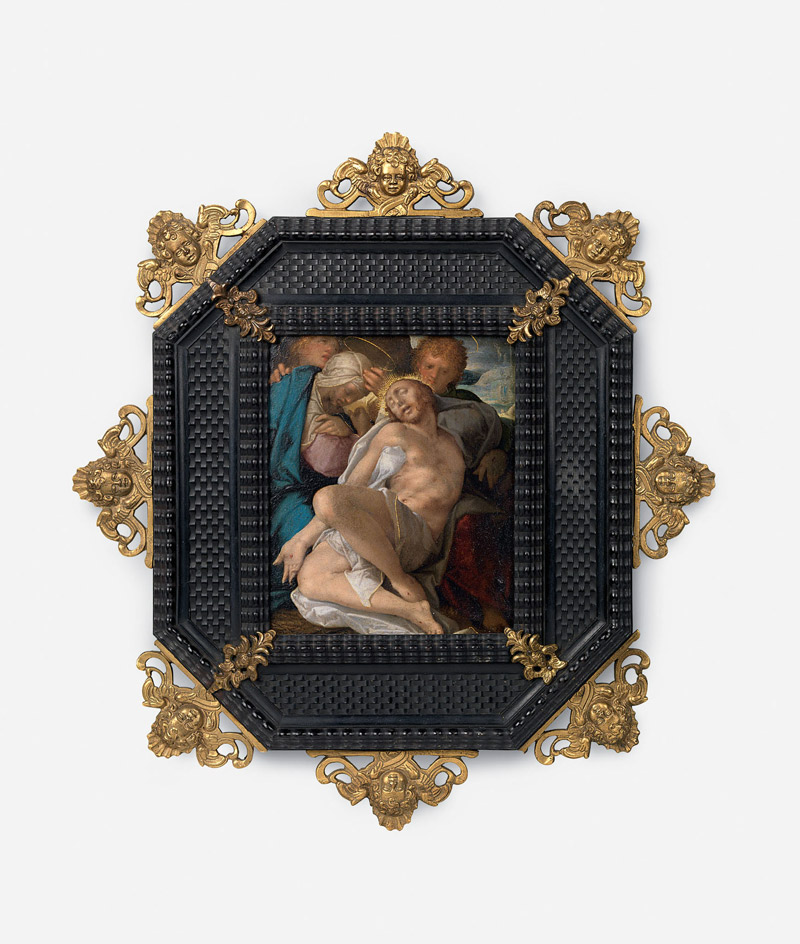
Mannerist framework South German, around 1600 Image: Bartholomew Spranger, Lamentation of Christ 1546-1611
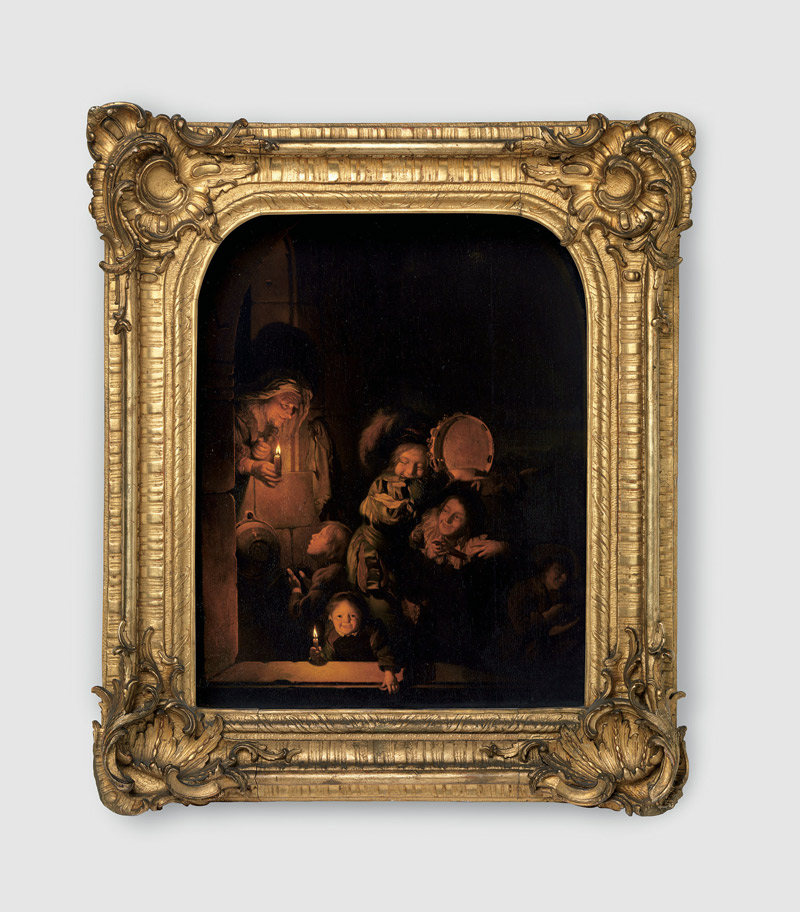
Ornamental frame in the style of the Rococo Mannheim, around 1750 Image: Adriaen van der Werff, Nocturnal Children’s Swarm
Rococo style Ansbach, around 1740 Image: Johann Christian Sperling, Margrave Carl Wilhelm Friedrich of Brandenburg-Ansbach as a 13-year-old boy
Alte Pinakothek Barer Straße 27 D-80799 Munich Phone: +49 (0)89 23805 216
Camilla Tadich: Slabalong and Mark Hislop: Drawing at Sophie Gannon Gallery; Simon Obarzanek at Karen Woodbury Gallery; Kent Wilson Higher Breeds and Alice Wormald Wayside and Hedgerow at Shifted
Camilla Tadich: Slabalong and Mark Hislop: Drawing at Sophie Gannon Gallery, 2 Albert Street, Richmond March 2nd – March 27th 2010 Sophie Gannon Gallery website
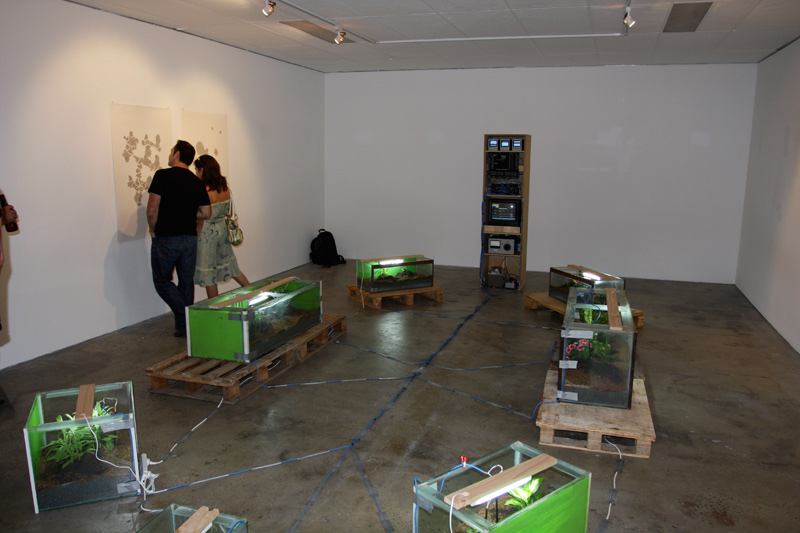
Simon Obarzanek at Karen Woodbury Gallery, 4 Albert Street, Richmond March 3rd – March 27th 2010 This gallery is now closed
Kent Wilson Higher Breeds and Alice Wormald Wayside and Hedgerow at Shifted, Level 1, 15 Albert Street, Richmond This gallery is now closed
All photos by Marcus Bunyan
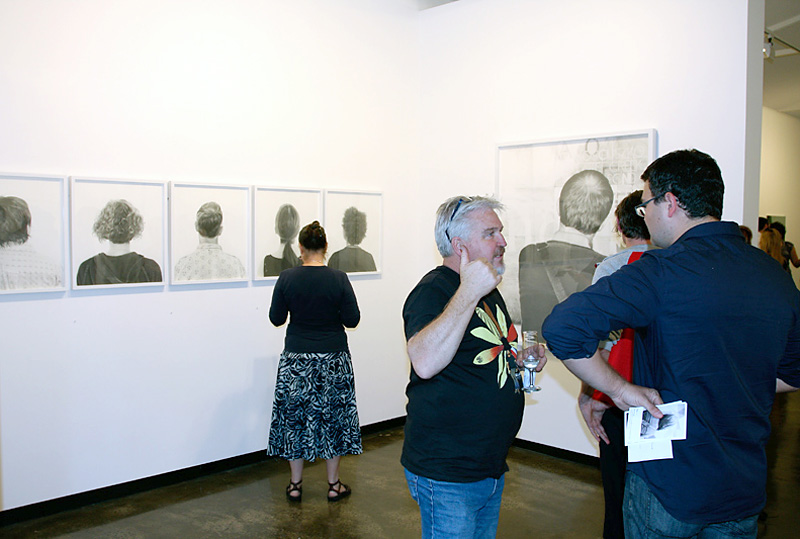
Sophie Gannon Gallery opening Photo: Marcus Bunyan
Sophie Gannon Gallery opening – Mark Hislop Drawing Photos: Marcus Bunyan
Camilla Tadich (Australian, b. 1982) Bordertown 2010 Photo: Marcus Bunyan
Sophie Gannon Gallery opening – Camila Tadich Slabalong Photo: Marcus Bunyan
Karen Woodbury Gallery opening – Simon Obarzanek Photo: Marcus Bunyan
Simon’s photographs come from observing the physical movements of people pushing through the space around them in a city. He senses a universal language through movement and is drawn to this rather than their faces, as he normally is.
He noted that the “strained movements against gravity struck me with force… When I see a person creating a shape with their body in the street I do not sense the individual but a part, a piece of a larger performance. Each individual connects with others to create a visual language. I did not want faces to interrupt this larger work.”
Simon collects the movements on his camera, as photographic sketches, then he rephotographs the movement using friends and family as models. Removed from the busy streets, dislocated, his subject is isolated and framed against a dark background. Some twist away from the camera, or stagger against an unseen wind, sheltering their face from rain that is not falling. Simon does not show their faces, which emphasises the movement and makes the figures anonymous. These photographs are theatrical and mysterious, emphasising the loneliness and alienation that can be encountered living in a big city.
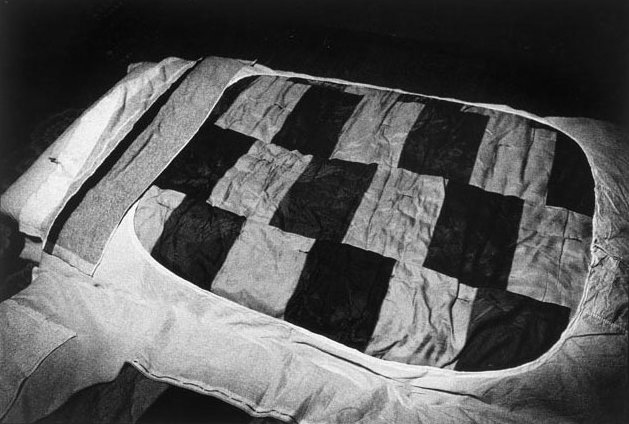
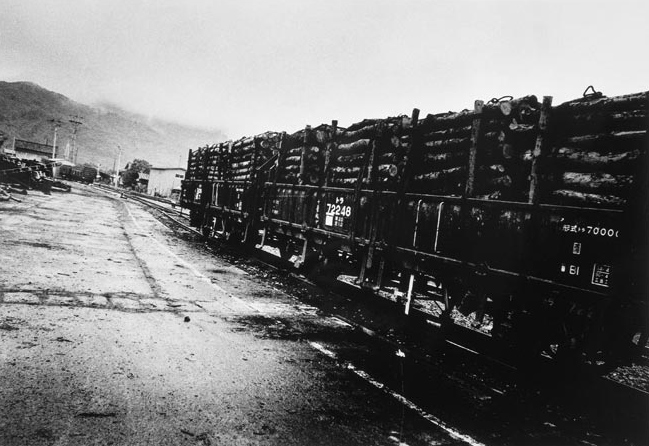
Daido Moriyama (Japanese, b. 1938) Quilt 1977 Gelatin silver print
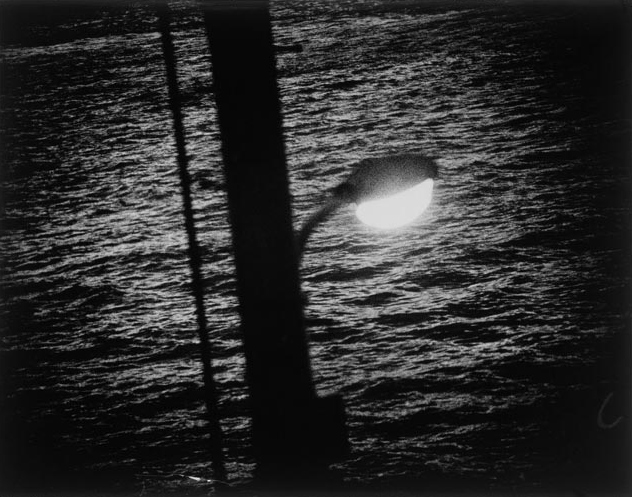
Daido Moriyama (Japanese, b. 1938) Hokkaido 1978 Gelatin silver print
Daido Moriyama (Japanese, b. 1938) Tono 1974 Gelatin silver print
Luhring Augustine is pleased to present its first exhibition featuring the work of Daido Moriyama, one of Japan’s leading figures in photography. Witness to the spectacular changes that transformed postwar Japan, his photographs express a fascination with the cultural contradictions of age-old traditions that persist within modern society. Providing a harsh, crude vision of city life and the chaos of everyday existence, strange worlds, and unusual characters, his work occupies the space between the objective and the subjective, the illusory and the real.
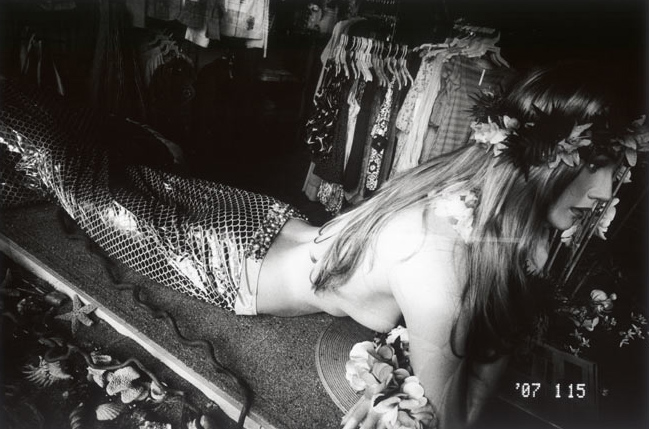
Moriyama takes pictures with a small hand-held camera that enables him to shoot freely while walking or running or through the windows of moving cars. Taken from vertiginous angles or overwhelmed by closeups, his blurred images are charged with a palpable and frenetic energy that reveal a unique proximity to his subject matter. Snapshots of stray dogs, posters, mannequins in shop windows, and shadows cast into alleys present the beauty and sometimes-terrifying reality of a marginalised landscape. His anonymous and detached approach enables him to capture the “visible present” made up of accidental and uncanny discoveries as he experiences them.
Moriyama emerged as a photographer in the 1960’s at the tail end of the VIVO collective, a revolutionary and highly influential group of Japanese artists who reexamined the conventions of photography during the tumultuous postwar period. William Klein’s loose, Beat style images of New York City in the 1960s also served as a major turning point for Moriyama, who found inspiration in Klein’s free-form photographic style. Taken by these innovative approaches at home and abroad, Moriyama ultimately went on to forge his own radical style.
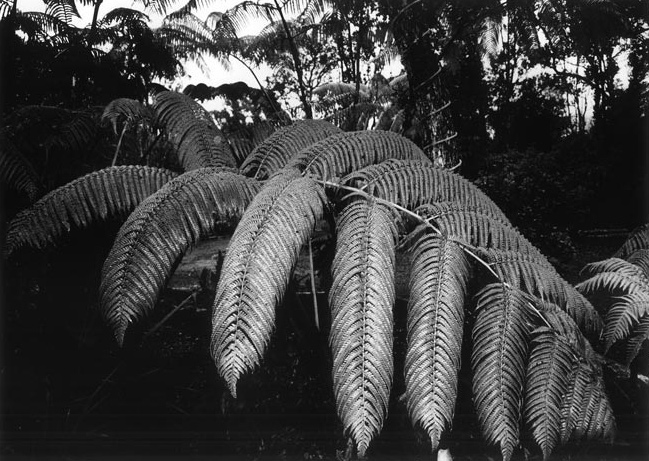
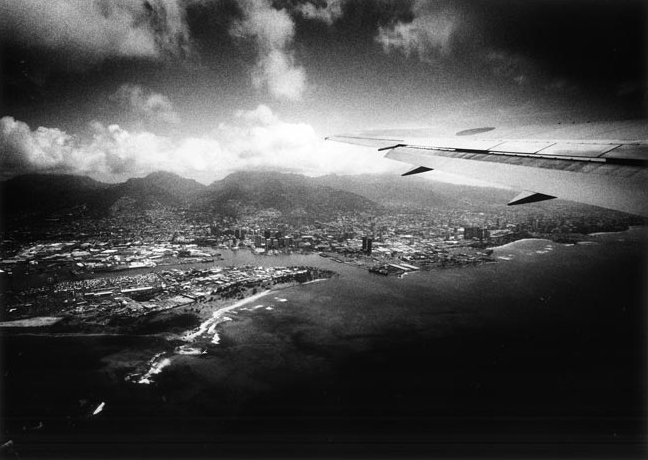
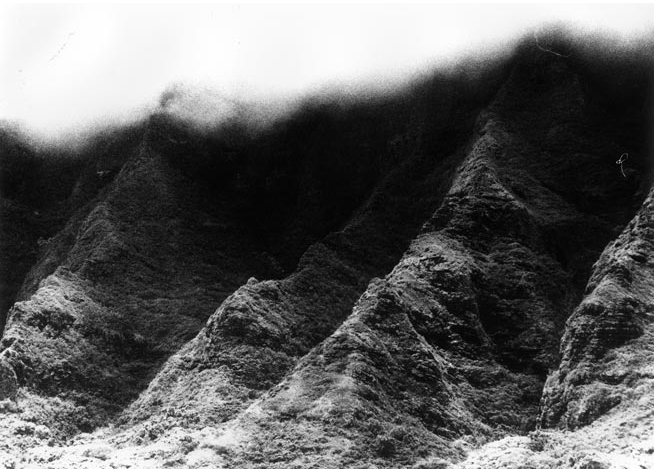
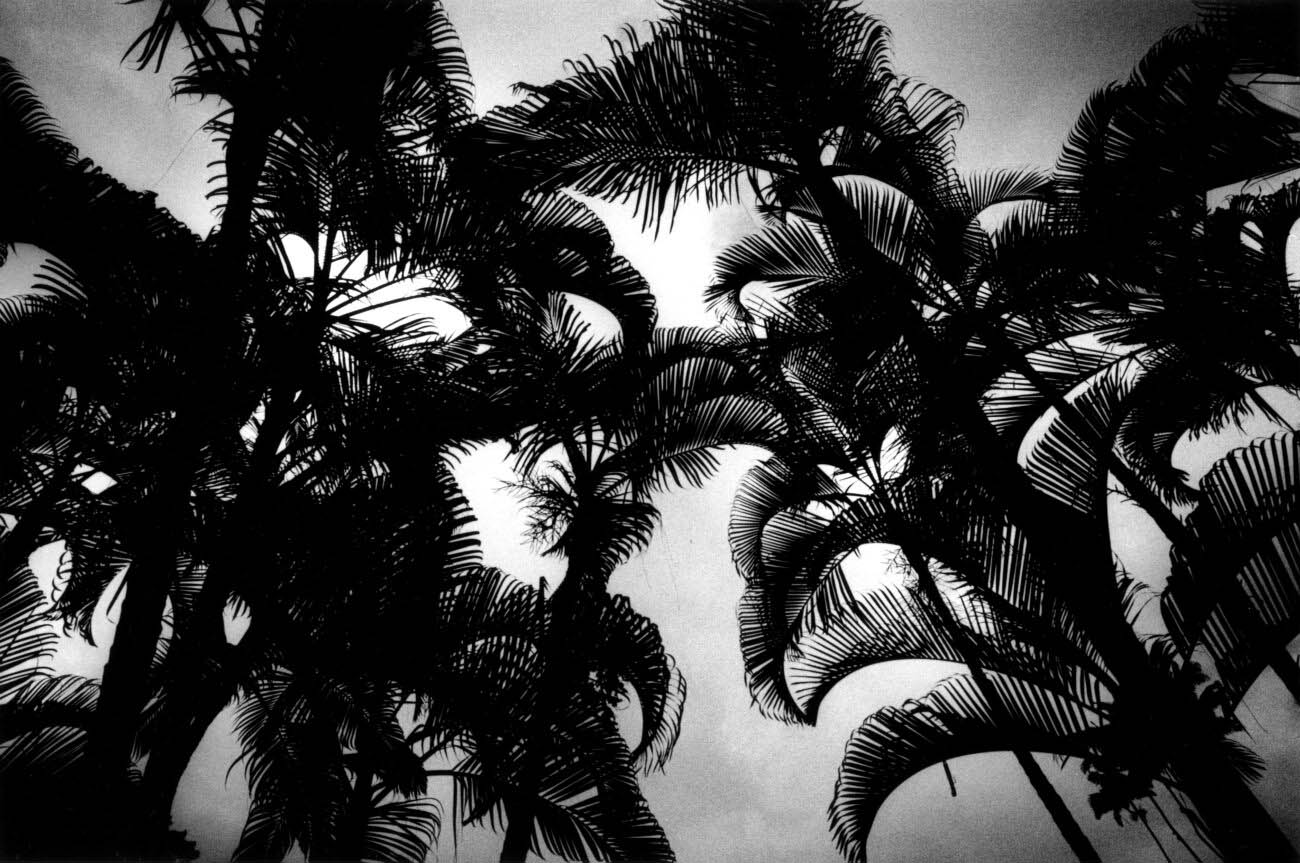
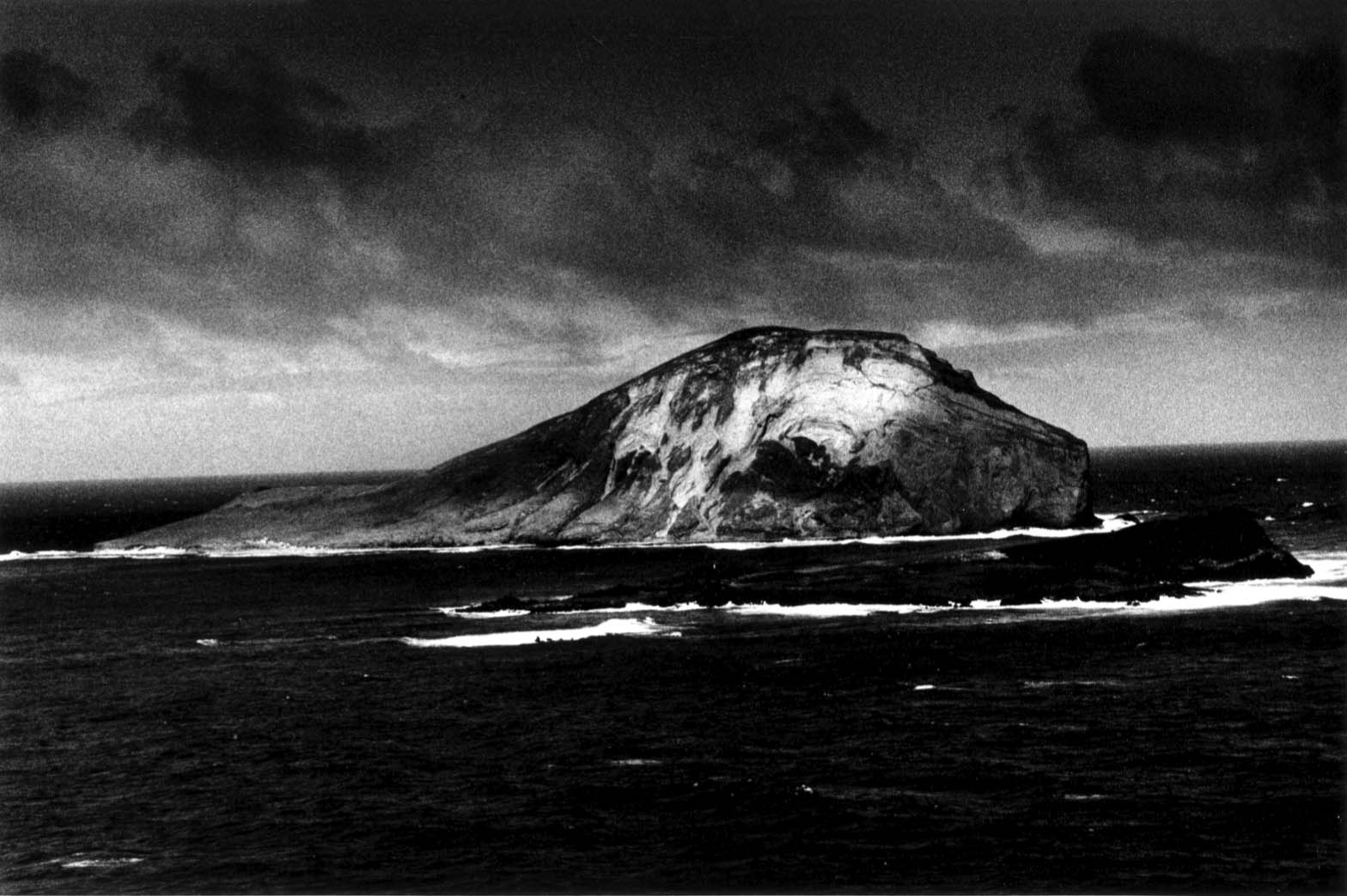
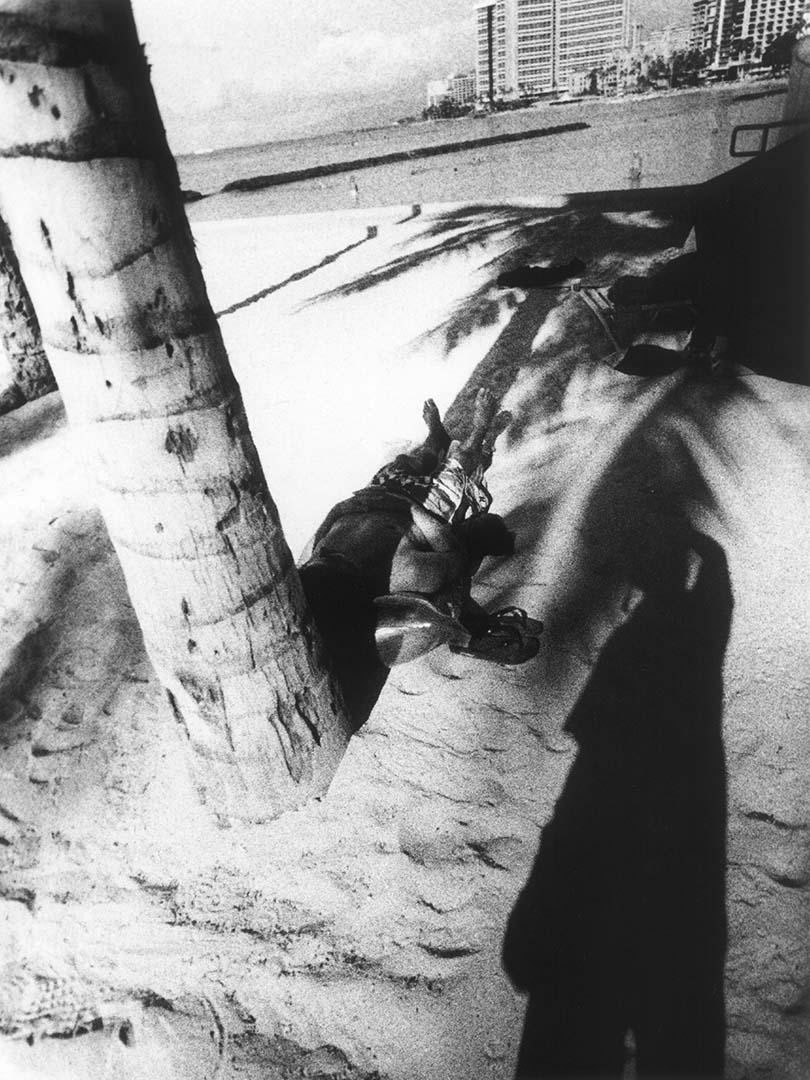
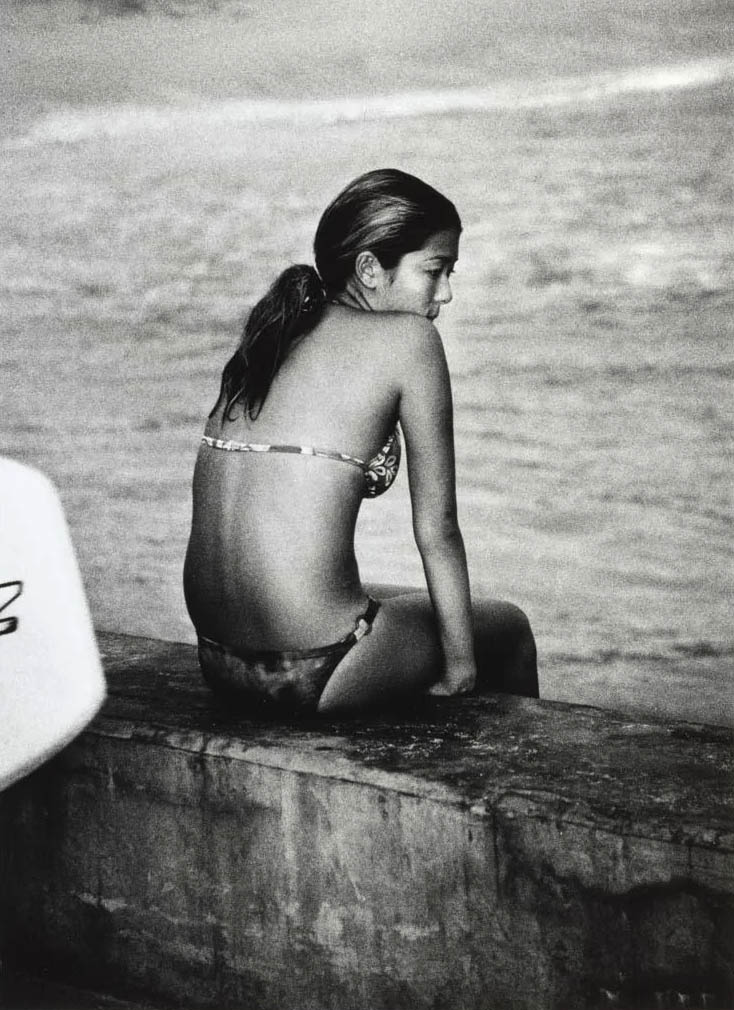
Hawaii, Moriyama’s most recent body of work, was produced over a period of three years and presents his distinct perspective on the daily lives of the people living on the islands of Hawaii and Oahu. Returning to the island five times before feeling prepared to shoot these surroundings, Moriyama’s overall approach is purposeful and considered despite his loose and informal style. The series was recently exhibited at the Tokyo Metropolitan Museum of Photography and published in a volume by the institution.
Daido Moriyama was born in Osaka in 1938. He has had museum shows around the world including the San Francisco Museum of Modern Art, the Fotomuseum Winterthur, Switzerland, the Fondation Cartier pour l’Art Contemporain, Paris and the Tokyo Metropolitan Museum of Photography. His work is part of many major public collections such as the Museum of Modern Art, New York, the Centre Pompidou, Paris, the Metropolitan Museum of Art, New York, the Los Angeles County Museum, the San Francisco Museum of Modern Art, the Museum of Fine Arts, Boston and the Getty in Los Angeles.
Press release from the Luhring Augustine website [Online] Cited 24/02/2010 no longer available online
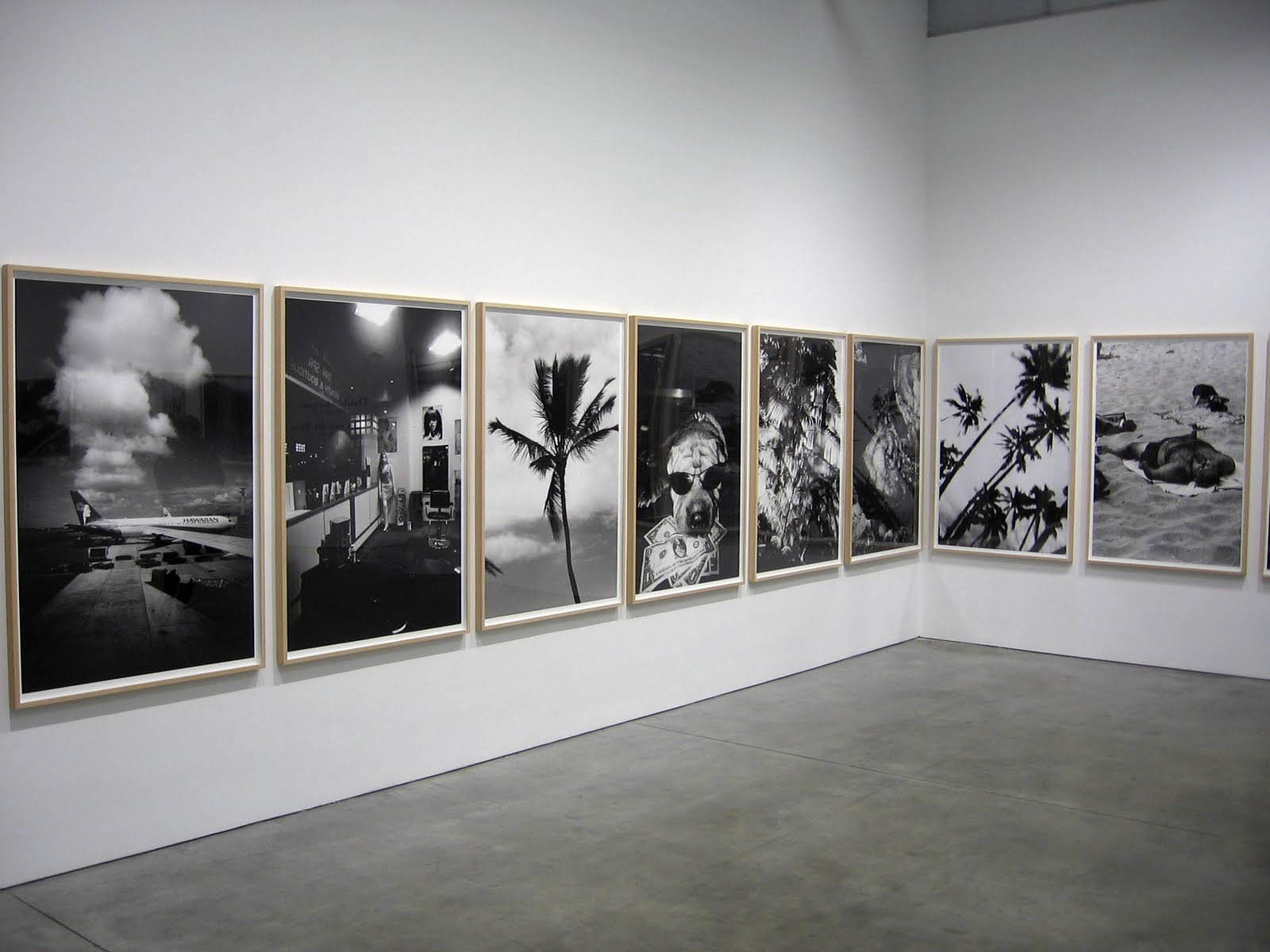
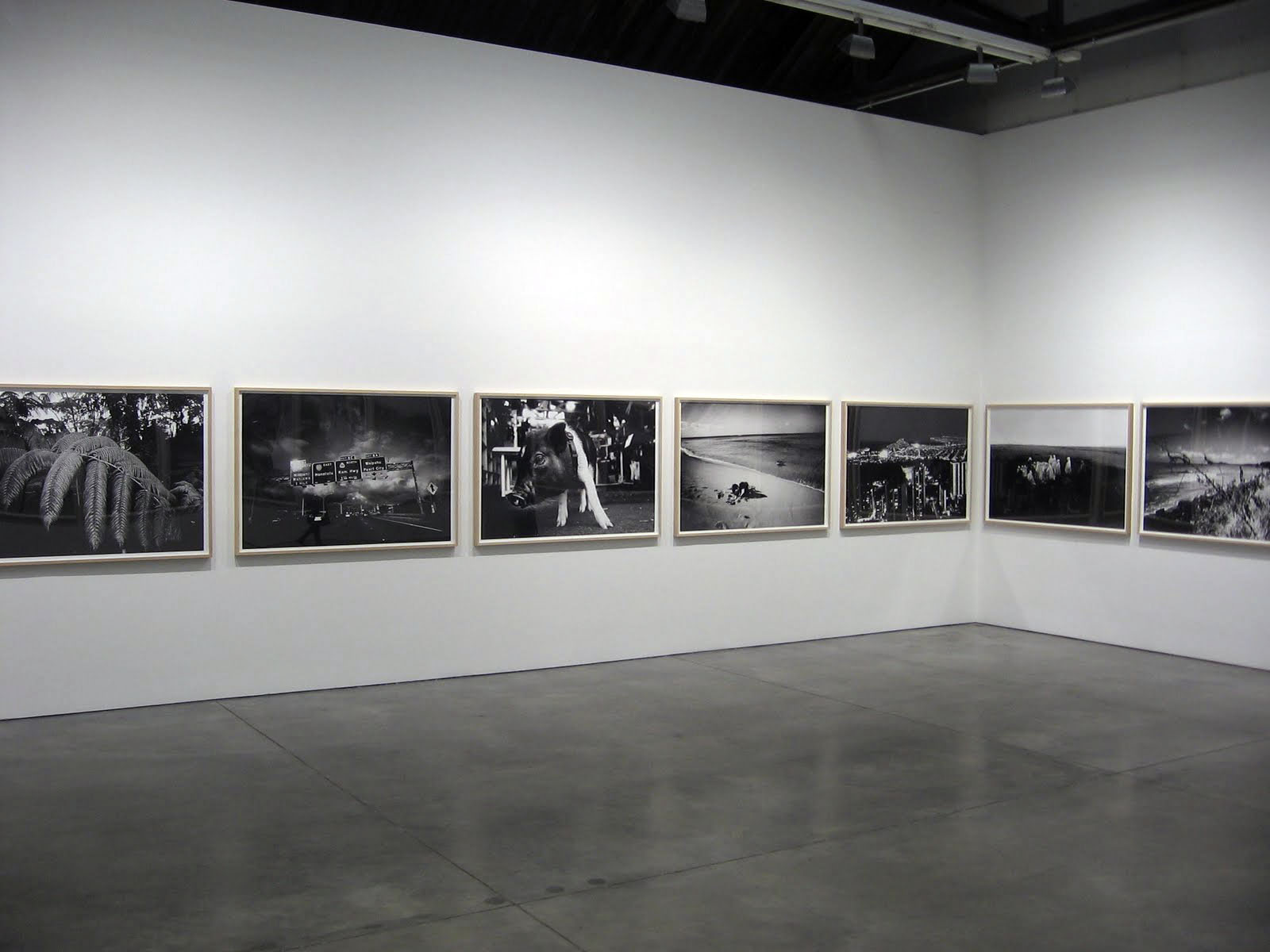
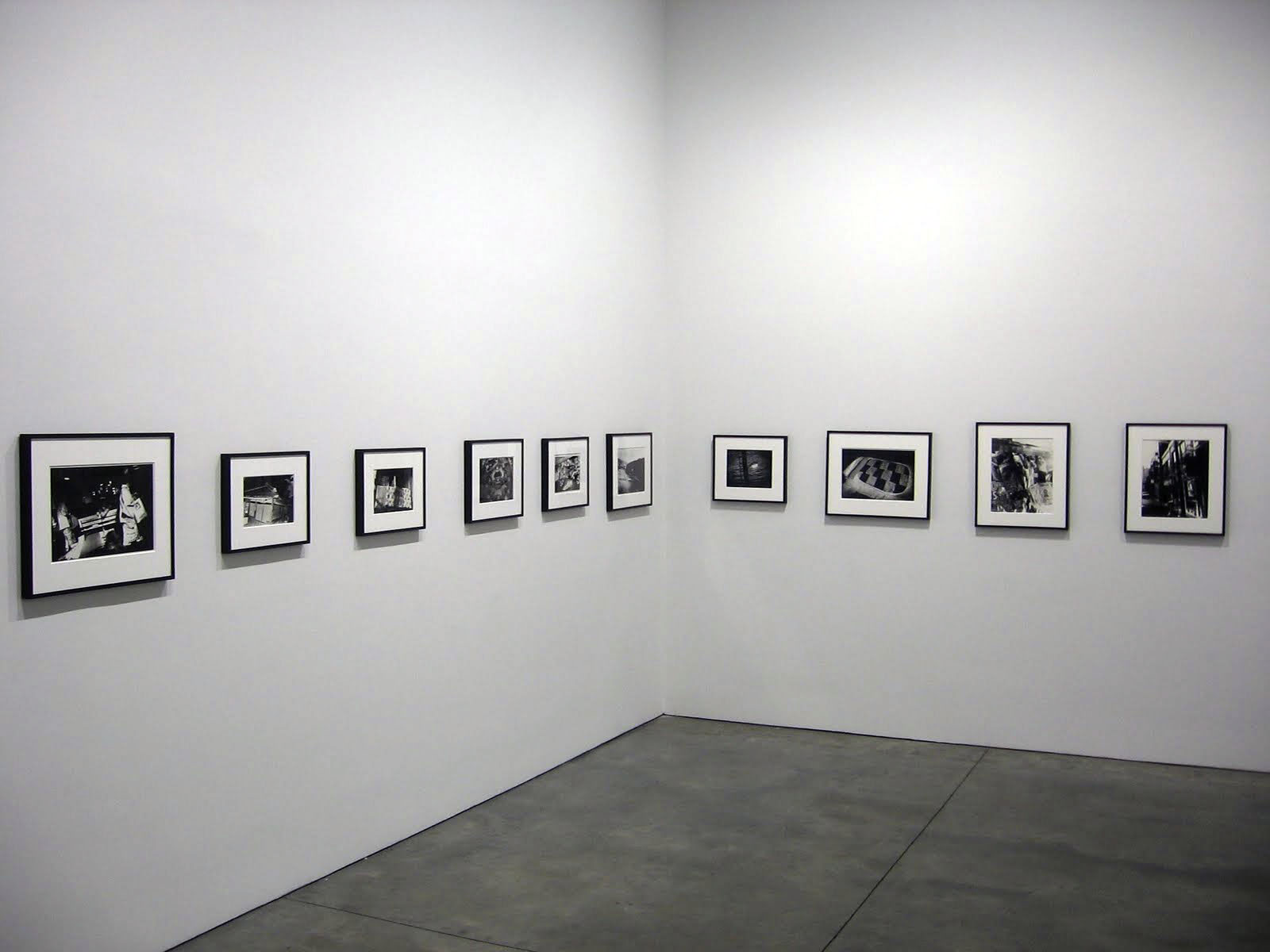
Installation views of the exhibition Hawaii by Daido Moriyama at Luhring Augustine, New York, February – March, 2010
A total of 52 black and white photographs, hung in the entry, main gallery, and one of the back rooms. 29 of the images are from the recent Hawaii series, taken / printed between 2007 and 2010…
What if Sander had taken portraits in India or China? (Another recent example of this phenomenon would be Eggleston’s images of Paris, here.) The effect is somewhat like musicians making covers, taking someone else’s songs and making them their own; sometimes the mashup creates something wholly original and unexpected, and sometimes the combination doesn’t quite work.
This exhibit extends this line of thinking, with the Japanese photographer Daido Moriyama making pictures of Hawaii, using a group of the artist’s vintage images of Japan as a counterweight for comparison. The older works provide a reminder of Moriyama’s powerful visual vocabulary: dark shadowy images, with skewed off-kilter angles, harsh contrasts, and a rawness that often mixes the gloomy and the menacing. His best images uncover the dark underbelly of the streets, capturing the cultural nuances of Japan in gritty, grainy blackness.
The island life of Hawaii, with its shakas and mellow aloha spirit, presents a surprising challenge for Moriyama: where can a visitor find the brooding or sinister in this paradise? Moriyama does his best to apply his trademark darkness to palm trees and ferns, beaches and hotels, jungles and clouded hills, tourist shops and conch shells, but the overall effect lacks the malignant edginess that haunts his images of Tokyo; he has found some unexpected surface oddities, but the subjects feel a bit too obvious and superficial. Visually, the big prints (roughly 3 by 5 feet) and their shadowy palette make for a jarring view of the easy going, sunny destination, but the subject matter just doesn’t lend itself all that well to deep psychological probing. The real culture of Hawaii is hidden somewhere else, far from the welcoming hula girls, tiki fabrics, and flowers offered to visitors.
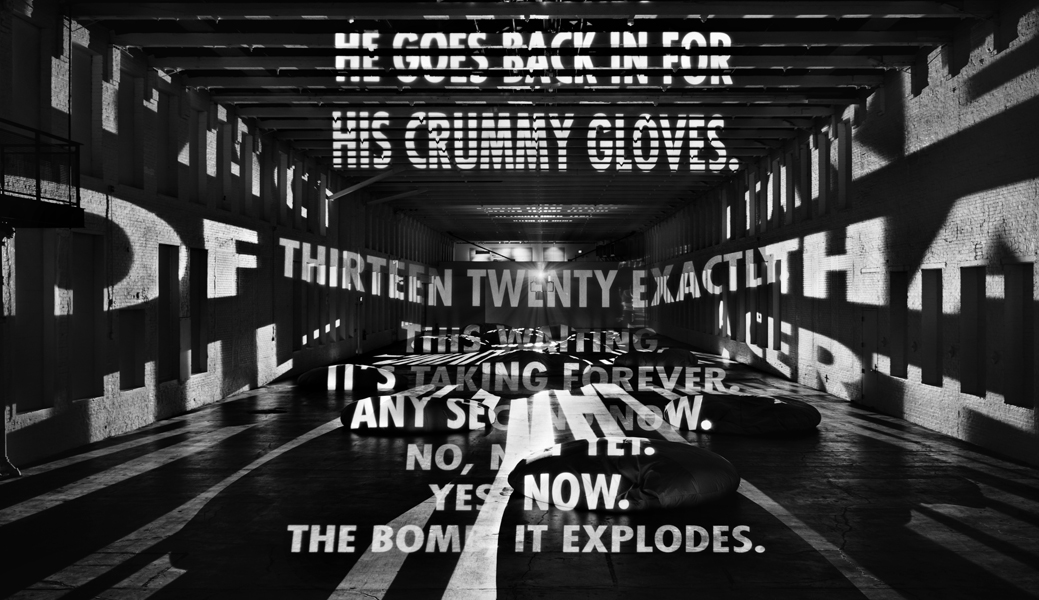
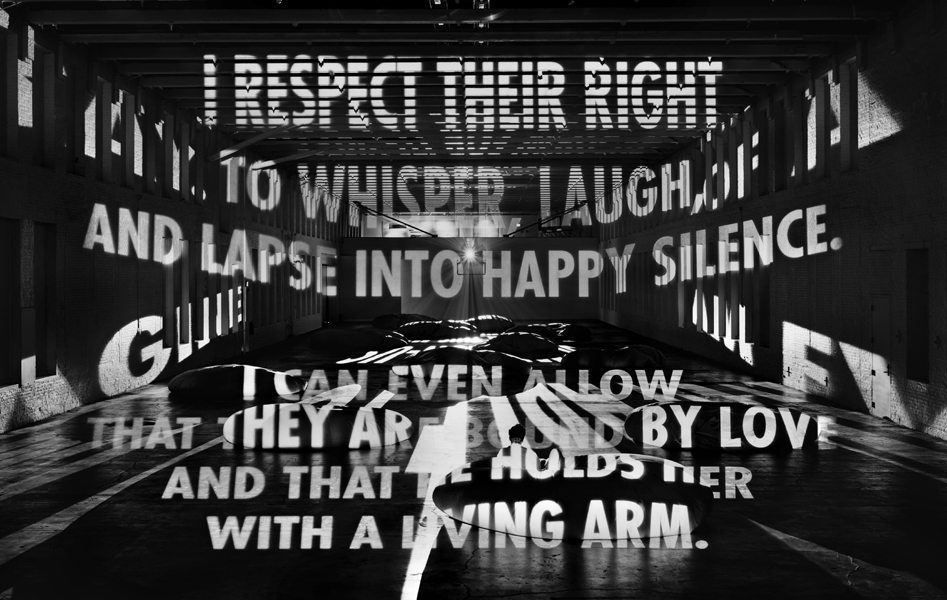
Jenny Holzer (American, b. 1950) Projections Various dates With poetry by Wislawa Szymborska
“I draw from everything – from the National Security Archives collection to old material from the FBI’s website to postings by the ACLU. I concentrate on the content. It tends to be very rough material about what’s happened to soldiers in the field, about the good and bad choices they’ve been forced to make, and what has happened to detainees and civilians. I also go to material that’s almost completely gone, either whited out or blacked out, because that represents the issue. You don’t have to spill words when the page is completely black.”
Jenny Holzer
This is a patchy but ultimately redemptive exhibition by Jenny Holzer at the Australia Centre for Contemporary Art (ACCA), Melbourne. The main exhibition space at ACCA is filled with one installation created specifically for the space titled For ACCA (2009) that in essence is the same as the installation for The Massachusetts Museum of Contemporary Art (MASS MOCA)(see photographs above).
The work is projected by a Cameleon Teleprojecteur into the large space and features poems by Wislawa Szymborska with titles such as “The End and the Beginning”, “The Joy of Writing”, “Children of Our Age” and “The Terrorist, He’s Watching” scrolling a la Star Wars opening credits from the bottom upwards into the darkened space. The words that flow into the mis en scene are distorted at the edges like a fish eye lens distorts reality. EVERYTHING IS IN CAPITAL LETTERS TO EMPHASISE THE IMPORTANCE OF THE WORDS, JUST IN CASE WE MISSED THE POINT. It feels like you have been metaphorically hit over the head with the artist’s concern and frankly, I soon lost interest in the mobilisation of meaning:
“I don’t require changes from the surf, now diligent, now sluggish, obeying not me.”
“The Bomb in the bar will explode at thirteen twenty Now it’s just thirteen sixteen There’s still time for some to go in, and some to come out.”
“There’s one thing I won’t agree to: My own return. The privilege of presence – I give it up.”
“I survived you by enough, and only by enough, to contemplate from afar – “
“After Every War Someone has to tidy up. Things won’t pick themselves up, after all.”
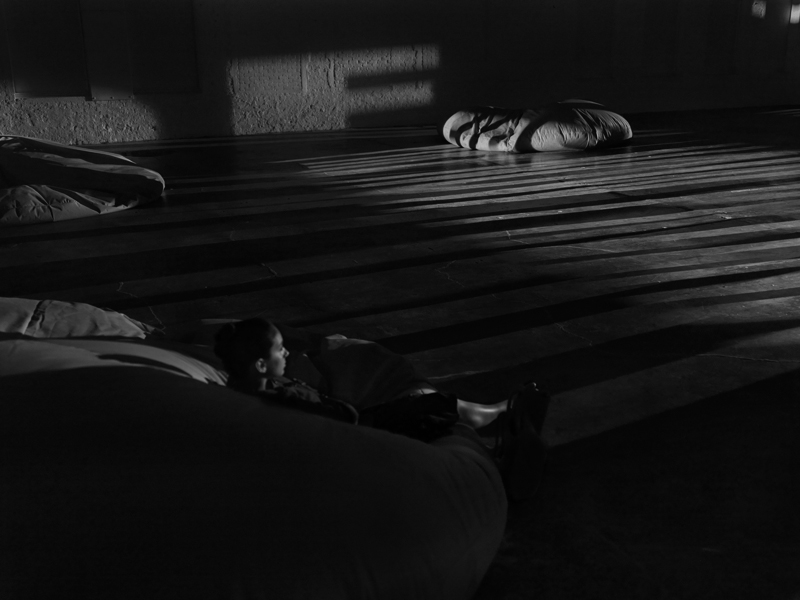
More interesting are the 4 bean bags placed on the floor that are covered in matt grey heat sensitive fabric. As you sit in the bags your indentation heats up the fabric. Upon standing the mark of your body, your body temperature, forms silver Yves Klein-like paintings of glowing phosphorescence. Looking back into the projector from your recumbent position you get an eerie view of the words coming towards you on the floor and going away on the ceiling, your body illuminated in words. What spoils the installation for me is the didactic nature of the protestations, their proselytising soon wearing thin on a body more attuned to the pithy, insightful phrases of Barbara Kruger.
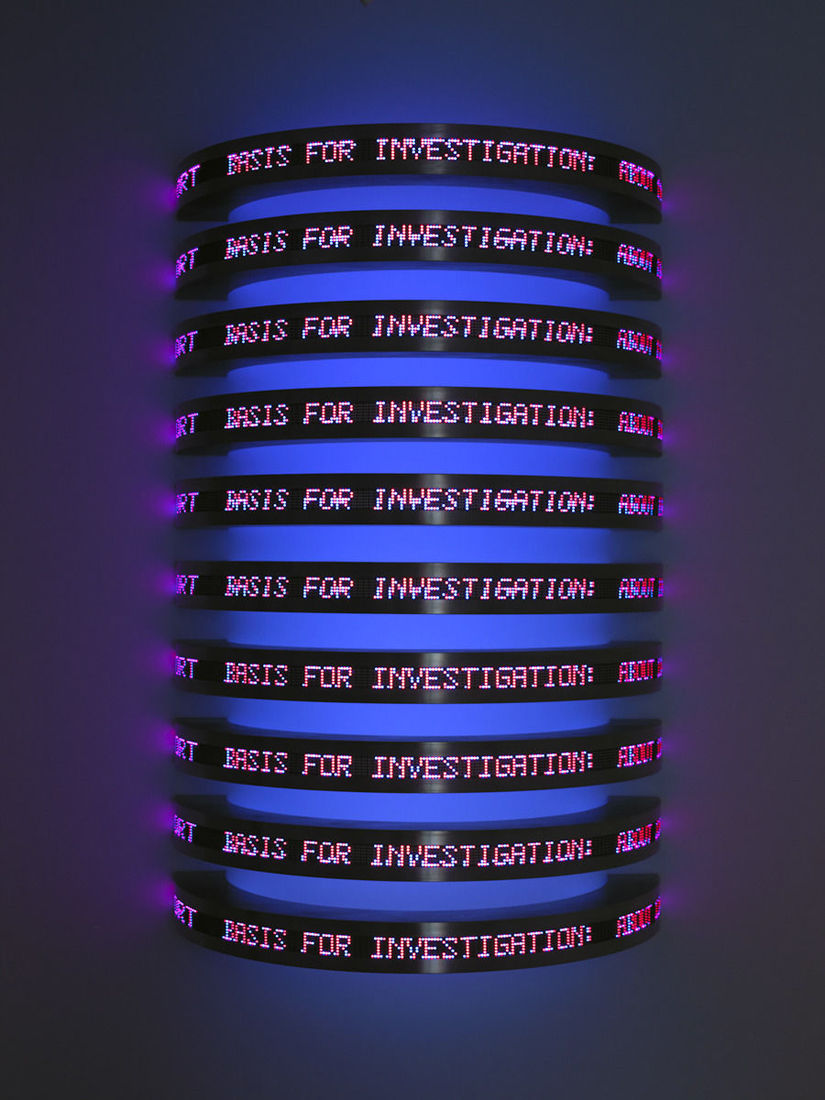
The electronic sculpture Torso (see image below) “emphatically addresses the private body enmeshed and lost in information and government operations.” (catalogue text). Featuring 10 doubled LED projectors programmed with case files of American soldiers accused of war crimes in the Middle East, abuse questions of detainees, ‘For Official Use Only’ texts and personal messages of love the sculpture is at first seen from a distance, framed by two rectangular doorways of the previous galleries. The mainly blue background and pink lettered light emanating from the sculpture is beautiful and quite magical and as one enters the empty space of the gallery the light focuses the eyes on the moving words, their repetition, their flashing, their running at different speeds and colours, all with the same message – words that seem to appear out of the wall and disappear back into it. The effect soon wears thin however; when you delve into the guts of the torso fascination begins to wane and you are left with repetition for repetition’s sake and with ‘pretty’ words that are just that: patterns of perniciousness displayed for our pleasure.
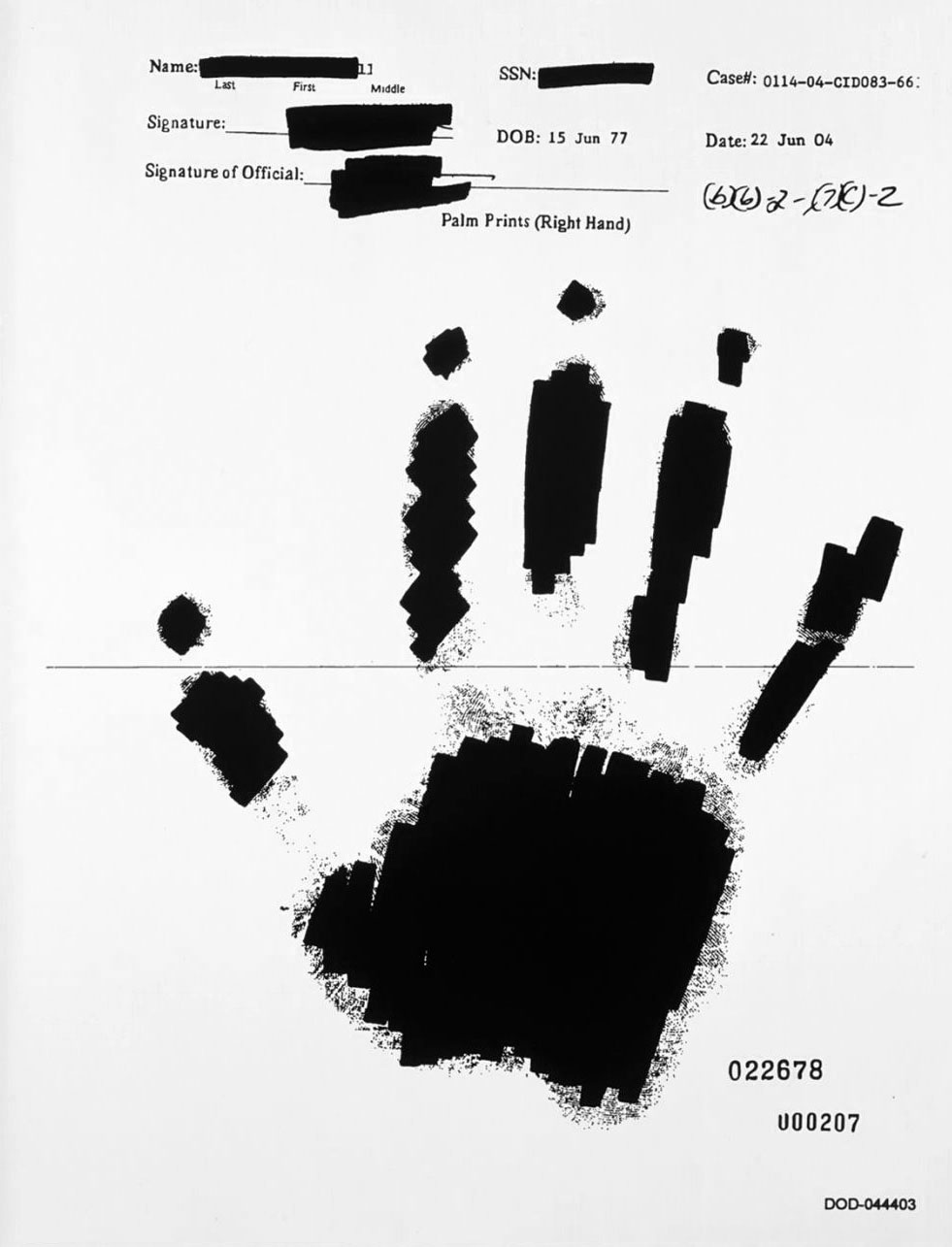
The reason that you must visit this exhibition is the last body of work. Working with declassified documents that relate to the wars in Iraq and Afghanistan Holzer’s Redaction paintings address the elemental force that is man’s (in)humanity to man (in the study of literature, redaction is a form of editing in which multiple source texts are combined (redacted) and subjected to minor alteration to make them into a single work).1 Silkscreen printed as oil on canvas these paintings are some of the most poignant, moving, terrifying, enraging pieces of art that I have seen in a long time. I was moved to tears. They are tough works and they deserve to be.
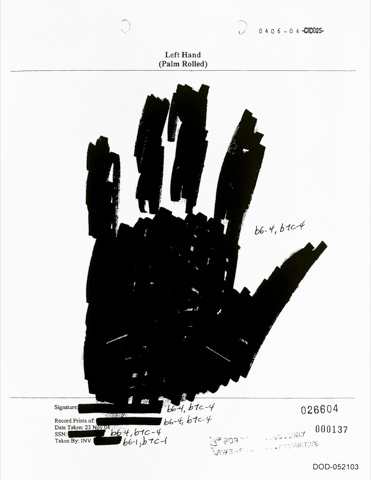
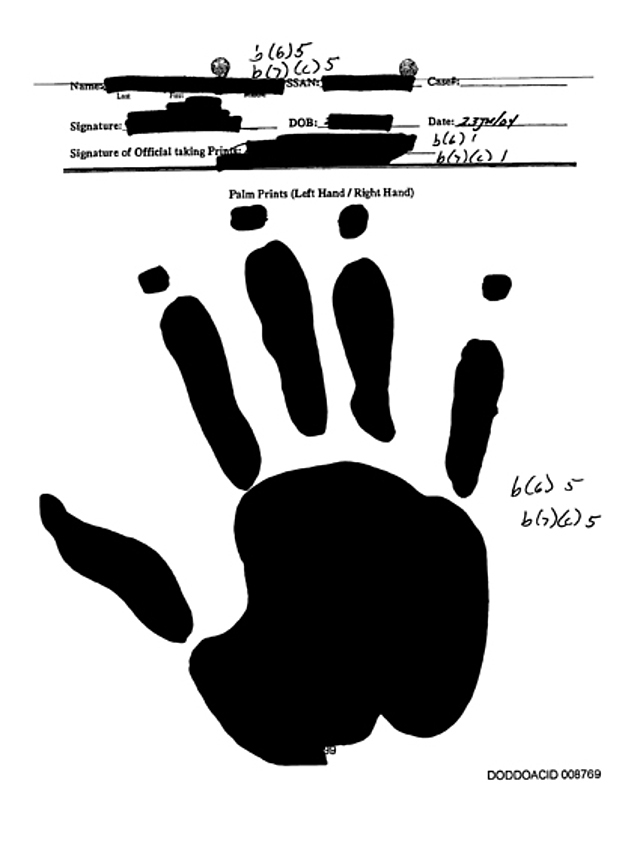
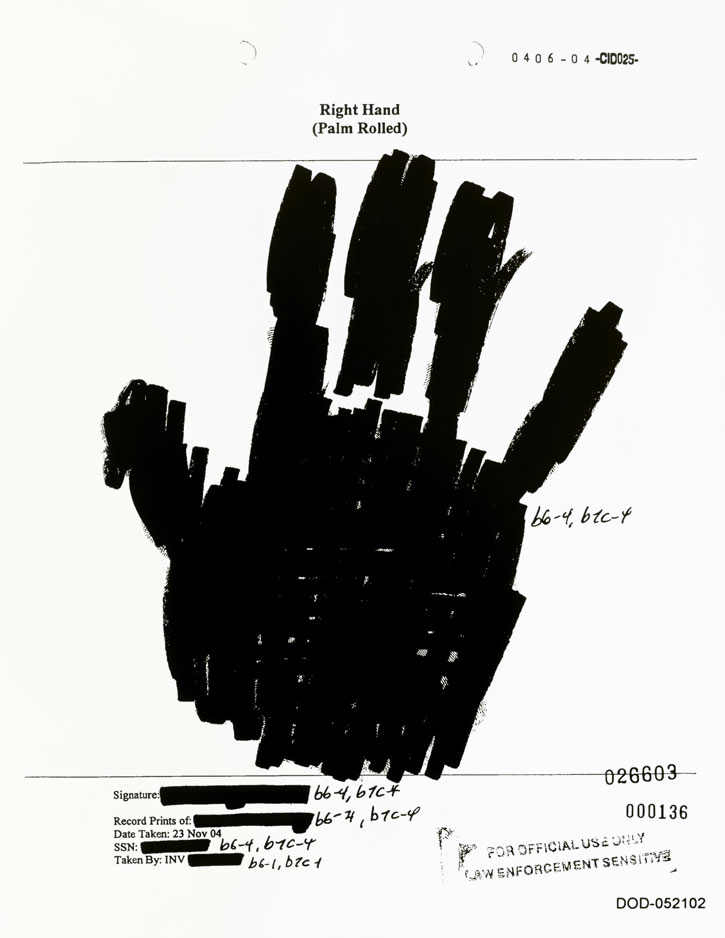
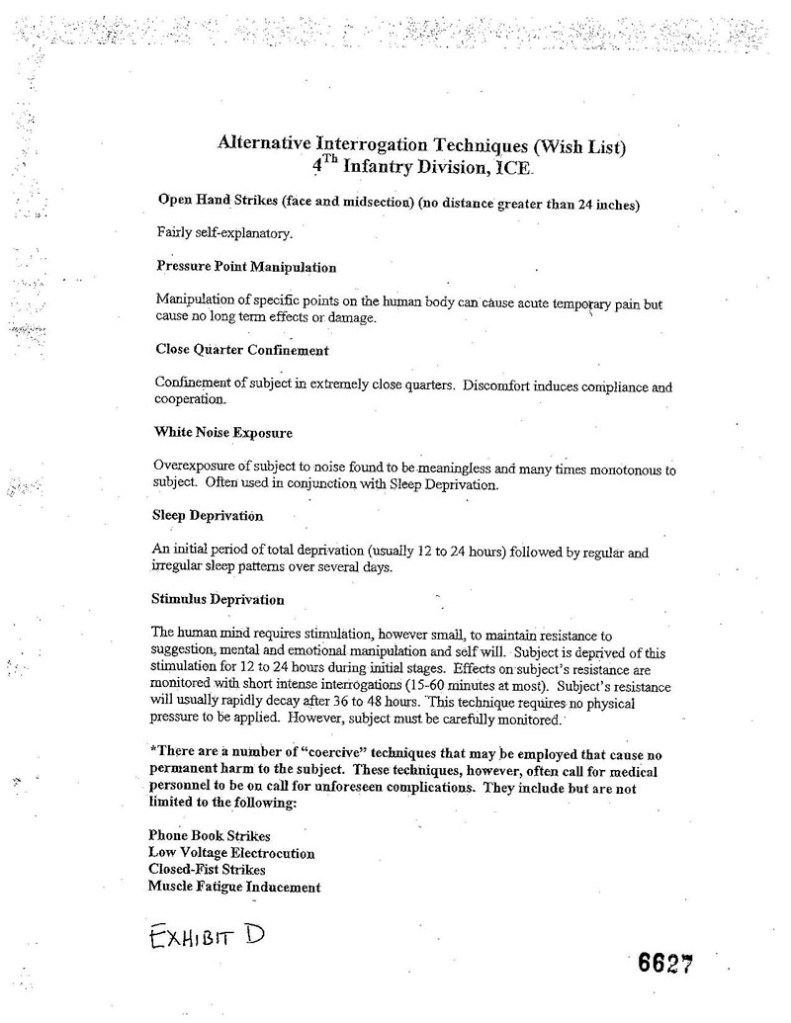
Autopsy reports, a “Wish List” for alternative interrogation techniques (Wish List/Gloves Off 2007), a handwritten letter from an Iraq student detailing his experience of torture (By the Name of God 2006) and palm prints – (some totally illegible as the censor eradicates human identity, erases with a double violence – to the person themselves, to the validation that they existed) – document a government’s malfeasance.
What a word malfeasance! Etymology: mal- + obsolete feasance doing, execution …
In these paintings the artist pulls back and lets the work speak for itself – and it is all the more powerful because of this. Using the physical process of the hand in the making of these images implicates every one of us in the complicities of the faceless bureaucrats and military personnel that hide behind blacked out names. The most moving of the hand prints are the partial prints taken after death where some ‘body’ has pressed down the deceased detainees hand to make an impression, mapping an identity already deleted (Faint Hand 2007 – unfortunately I don’t have any images of these paintings to show you). One is even presented as it was taken, upside down (Right Hand Down 2007). These are indescribable images, they tear you up inside.
I left the exhibition feeling shell-shocked after experiencing intimacy with an evil that leaves few traces. In the consciences of the perpetrators? In the hearts of the living! Oh, how I wish to see the day when the human race will truly evolve beyond. We live in hope and the work of Jenny Holzer reminds us to be vigilant, to speak out, to have courage in the face of the unconscionable.
Dr Marcus Bunyan
Many thankx to the Australia Centre for Contemporary Art for allowing me to publish the photographs in the posting. Please click on the photographs for a larger version of the image.
“Date of birth; 1947 Date/time of Death: 26 Nov 2003 Circumstances of Death: This Iraq _____ died in U.S. custody”
“We are American soldiers, heirs to a long tradition of staying on the high ground. We need to stay there.”
Jenny Holzer (American, b. 1950) Torso 2007 LED projectors
Holzer became well-known in the 1980s for her text-based works and public art. Her first series, Truisms (1977-1979), contains concise, aphoristic statements that reveal and question truths, beliefs, and ideologies. While Truisms first appeared on posters placed in the urban environment, Holzer’s texts later took a number of forms including light projections on high-profile public buildings, LED (light emitting diode) signs, stickers placed on surfaces such as parking metres and telephone booths, and public furniture such as marble and granite benches. While Holzer still at times relies on the thirteen texts she wrote from 1977-2001, her recent practice has turned to incorporating the writings of others, including works by internationally celebrated poets and declassified government documents. Like her own texts, the borrowed writings and documents address personal and public calamities in a range of voices and tones that approximates the complexity of daily life.
Though Holzer has used words and ideas in public spaces for the past thirty years, she has also created large-scale projects for prominent institutions such as the Guggenheim Museum (New York), the Guggenheim Museum (Bilbao), the Whitney Museum of American Art (New York), and the Centre Pompidou (Paris).
For ACCA’s main exhibition hall, Holzer will project poetry in the form of light onto the floors, ceilings, and walls, making the language something felt as well as read. In addition, she will display works from a series that began in 2005 where she translates declassified government documents into paintings. The documents are left exactly as they were found when rendered through silkscreen onto oil-painted grounds. The marks of a censor are seen in the text blocked out by a black scribble or box. These works come, as Holzer has said, from her “frantic worrying about the war and attendant changes in American society.” The projections and paintings will be supplemented by an LED installation titled Torso. In this work, Holzer stacks ten semi-circular signs that display in red, blue, white, and purple light the statements, investigation reports, and emails from case files of soldiers accused of various crimes in the Middle East. Providing these voices, part damning, contradictory, sympathetic, anecdotal, and evidentiary, Holzer layers accounts of abuse and blame.
“Jenny Holzer’s words ask us to consider our thoughts and actions in the world. This essentially humanist and philosophical project encourages us to seek self enlightenment through examining our prejudices, false beliefs, fall back positions, and habits, to reach a new level of tolerance, understanding and self awareness”
Juliana Engberg, ACCA’s Artistic Director
Text from the ACCA website [Online] Cited 01/06/2010. No longer available online
Jenny Holzer (American, b. 1950) Left Hand (Palm Rolled) 2007 Oil on linen 80 x 62 in. (203.2 x 157.5cm) Text: U.S. government document
What truly adds substance to the style are the Redaction Paintings. These blown-up pieces of censored materials, silk-screened on to stretched canvas, afford an unnerving glimpse at how we fight wars. Authored by countless bureaucratic functionaries, they feel both predictable and eye-opening.
All of the embedded journalists in the world couldn’t produce as clear a picture as the government did in documenting its own malfeasance. Many of these documents feature the blurred type of countless reproductions, a sign that time is burying these paperwork tragedies until they become illegible and unactionable.
Holzer didn’t have to doctor these documents for heightened effect; the black bars that enshroud the names of victims and their tormentors speak for themselves. One autopsy report describes the fatal suffocation of a prisoner of war forced to maintain a stress position. In some cases nearly whole documents are ominously blacked out, like a national Rorschach test.2
Jenny Holzer (American, b. 1950) DODDOACID 008769 2007 Oil on linen
Jenny Holzer (American, b. 1950) Right Hand (Palm Rolled) 2007 Oil on linen 80 x 62 in. (203.2 x 157.5cm) Text: U.S. government document
Jenny Holzer (American, b. 1950) Wish List/Gloves Off 2006 Oil on linen
“WISH LIST” document:
A captain in the US Army human intelligence division requested a “wish list” from subordinate interrogation teams for, “innovative interrogation techniques that will prove more successful than current methods.” One person interpreted this request to mean, “the captain wanted suggestions legal, illegal and somewhere in between.” The WISH LIST document is a summary of alternative interrogation techniques that the 4th Infantry Division, ICE, devised, including phone book strikes, low voltage electrocution and muscle fatigue inducement.
The document can no longer be found on the American Civil Liberties Union website. The “WISH LIST” is on p. 59.”3
Jenny Holzer (American, b. 1950) Right Hand DOD-044403 2007 Oil on linen
Footnotes
1/ Definition of redaction on Wikipedia website [Online] Cited 6 February 2010
2/ Arizona, Daniel. “Jenny Holzer and the Influence of Anxiety,” on More Intelligent Life.com website [Online] Cited January 2010. No longer available online
3/ Anon. “Jenny Holzer Projections.” on the MASS MOCA website [Online] Cited 17 January 2010. No longer available online
Australian Centre for Contemporary Art (ACCA) 111 Sturt Street Southbank Victoria 3006 Australia
Opening hours: Tuesday to Friday 10am – 5pm Weekends and Public Holidays 11am – 5pm Closed Monday Open all public holidays except Christmas Day and Good Friday
Many thankx to the Stellan Holm Gallery for allowing me to publish the photographs in the posting. Please click on the photographs for a larger version of the image.
Marcus
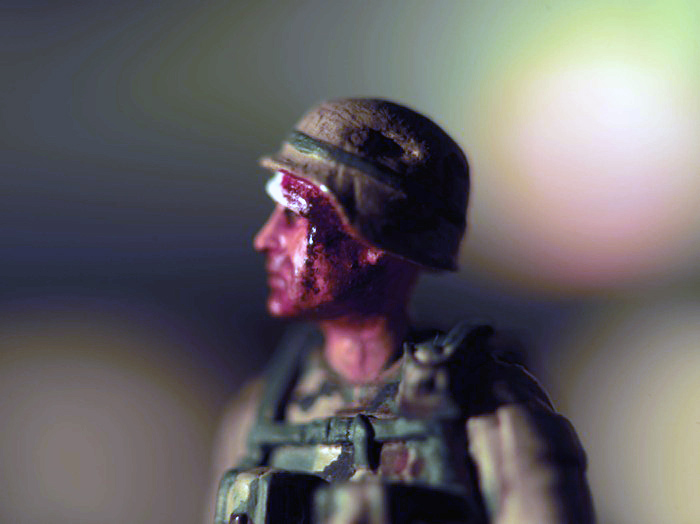
David Levinthal (American, b. 1949) Untitled from the series IED 2008 Archival Pigment Print on Polyester Film
David Levinthal (American, b. 1949) Untitled from the series IED 2008 Archival Pigment Print on Polyester Film
Stellan Holm Gallery is presenting I.E.D.: War in Afghanistan and Iraq, an exhibition of photographs by David Levinthal. The exhibition runs through February 13, 2010. This is the first solo exhibition of works by David Levinthal on view at Stellan Holm Gallery.
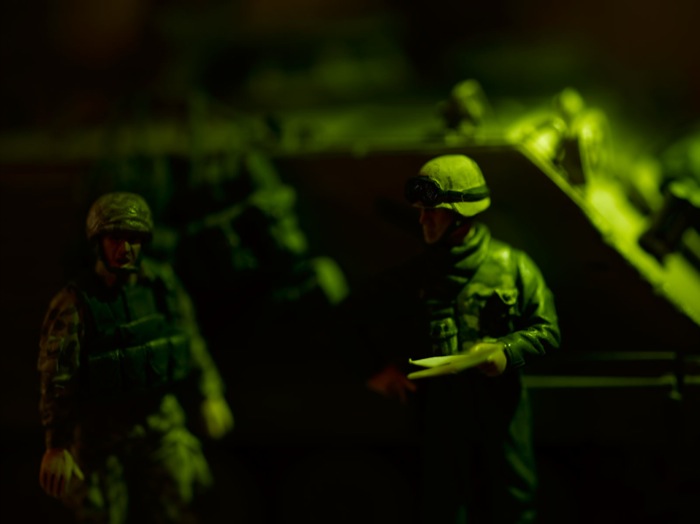
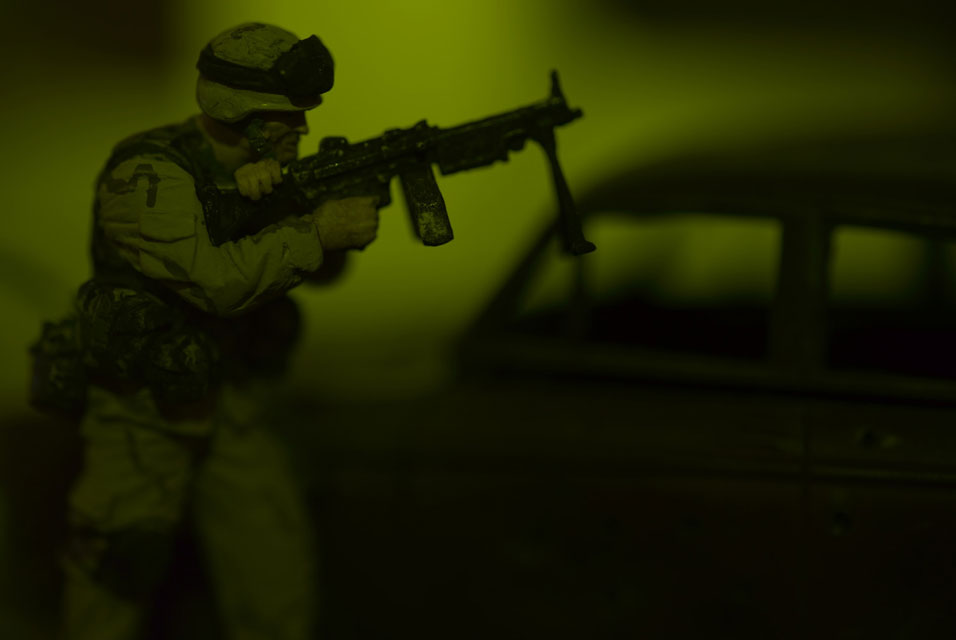
I.E.D.: War in Afghanistan and Iraq features eighteen colour photographs by renowned photographer, David Levinthal, which seek to examine the way in which our society looks at war. The idea for this series was conceived when Levinthal recognised a flood of figurines and models available to the American consumer, depicting the ongoing conflicts in Iraq and Afghanistan. Through the use of these miniature soldiers, civilians and armoured vehicles, Levinthal constructs extremely realistic dioramas that recreate the horrors of contemporary warfare. However, these photographs do not simply recreate scenes from a foreign war. Instead they bring a new perspective to the discourse about war, how it is broadcast in real time and how it relates to American society as a whole. Without interjecting his own prejudgments, David Levinthal asks the viewer to reconsider their own perceptions of reality.
Released by powerHouse Books, the publication, I.E.D.: War in Afghanistan and Iraq, compiles the entirety of Mr. Levinthal’s series of photographs. The book features seventy colour photographs along with an introduction by the artist. It is accompanied by a series of writings culled by David Stanford, editor of The Sandbox, an online military blog that posts writings from troops deployed in Iraq and Afghanistan. This ‘boots-on-the-ground’ testimony adds a powerful voice to the compelling and harrowing photographs constructed by Levinthal.
Born in 1949 in San Francisco, CA, David Levinthal has been exploring and confronting various social issues through the playful use of toy figurines since 1972. He has released numerous publications including, Hitler Moves East: A Graphic Chronicle, 1941-43, Bad Barbie, and Blackface. He was the recipient of the John Simon Guggenheim Foundation Fellowship in 1995 and the National Endowment for the Arts, Visual Artists Fellowship in 1990-1991. His works are featured in numerous, notable public collections including the Whitney Museum of American Art, the Metropolitan Museum of Art, and the Museum of Modern Art.
Text from the Stellan Holm Gallery website [Online] Cited 16/01/2010 no longer available online
David Levinthal (American, b. 1949) Untitled from the series IED 2008 Archival Pigment Print on Polyester Film
David Levinthal (American, b. 1949) Untitled from the series IED 2008 Archival Pigment Print on Polyester Film
David Levinthal (American, b. 1949) Untitled from the series IED 2008 Archival Pigment Print on Polyester Film
Many thankx to Sprüth Magers London for allowing me to publish the photographs in the posting. Please click on the photographs for a larger version of the image.
Barbara Kruger (American, b. 1945) Untitled (Money can buy you love) 1983 Collage 19.5 x 17.5cm Courtesy of the artist and Sprüth Magers London Berlin
Barbara Kruger (American, b. 1945) Untitled (Your misery loves company) 1985 Collage 18 x 17.3cm Courtesy of the artist and Sprüth Magers London Berlin
Barbara Kruger (American, b. 1945) Untitled (Our prices are insane!) 1987 Collage Courtesy of the artist and Sprüth Magers London Berlin
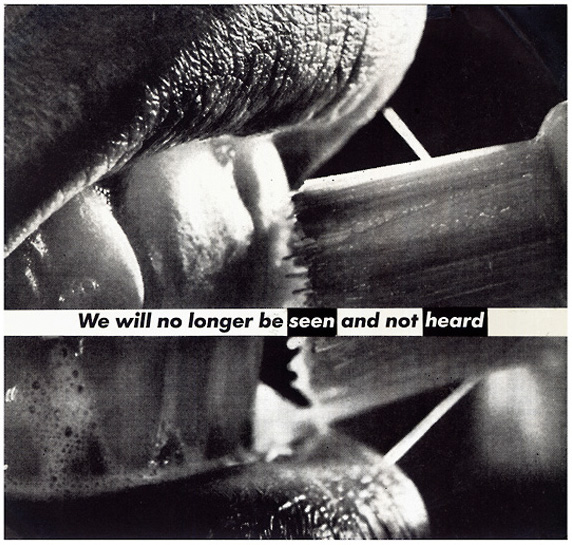
Barbara Kruger (American, b. 1945) Untitled (We will no longer be seen and not heard) 1985 17.8 x 18.5cm Courtesy of the artist and Sprüth Magers London Berlin
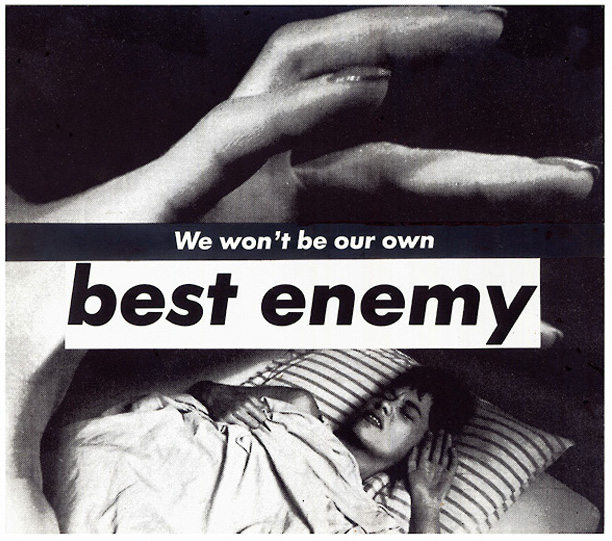
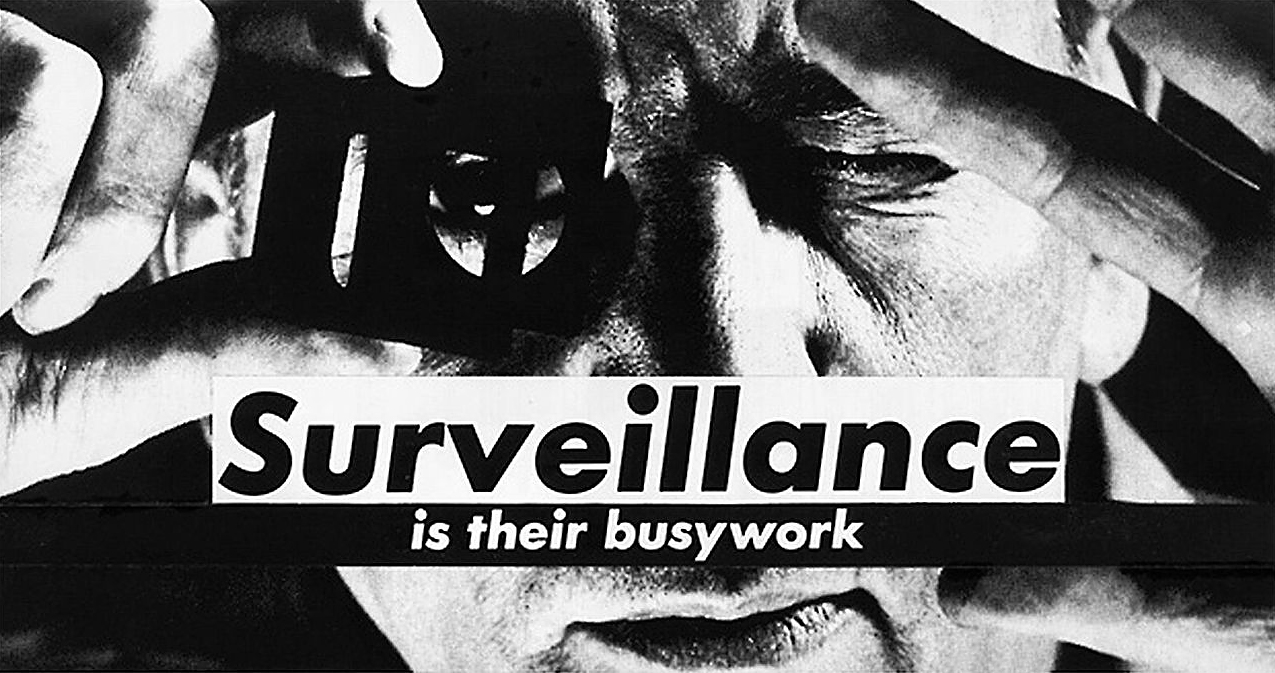
Sprüth Magers London is delighted to present a survey of early work by acclaimed American artist Barbara Kruger. Using contrasting layers of text and image, Kruger’s work has for almost three decades probed the nature of a media-saturated society in late capitalism, and the significance of highly evolved cultures of consumerism and mass politics to the experience and making of social identities. In addition to offering acute, indeed often piquant cultural insights, Kruger’s work also presents a serious conceptual exploration into the relationship between language and image, and their dynamics as collaborators and antagonists in the bearing of meaning. The artist’s unique blend of conceptual sophistication and wry social commentary has made Kruger one of the most respected and admired artists of her generation, and this timely reappraisal of her early practice reveals the ingenuity and precision of her craft.
The early monochrome pre-digital works assembled in the exhibition, known professionally as ‘paste ups’, reveal the influence of the artist’s experience as a magazine editorial designer during her early career. These small scale works, the largest of which is 11 x 13 inches, are composed of altered found images, and texts either culled from the media or invented by the artist. A negative of each work was then produced and used to make enlarged versions of these initial ‘paste ups’. The influence of Kruger’s magazine publishing training extends far beyond technique however. The linguistic and typographic conventions of consumer culture, and an understanding of the inherent potential of a single image, are appropriated and subverted by Kruger, as the artist explores the power of the soundbite and the slogan, and the method and impact of ‘direct address’ on the consumer/viewer.
Although Kruger’s practice is embedded in the visual and political culture of mass media and advertising, the work moves beyond simple appropriation and the ironic meditation on consumerism which animated earlier movements such as Pop art. The emblazoned slogans are often slightly yet meaningfully adjusted clichés of common parlance and the commercial world, and are overlaid on contrasting images which range from the grotesque to the banal. The juxtaposition of pictorial and linguistic modes of communication on the same plane thereby begs conceptual questions of human understanding, and the means by which messages are transmitted and distorted, recognised and received.
Barbara Kruger was born in Newark, New Jersey in 1945. She currently lives in both Los Angeles, California and New York and teaches at the University of California, Los Angeles. She has been the subject of many one-person exhibitions, including a comprehensive retrospective at the Museum of Contemporary Art in Los Angeles in 1999, which travelled to The Whitney Museum of American Art, New York in 2000. More recently, she has exhibited large-scale installations at the Moderna Museet in Stockholm, Tramway in Glasgow, Scotland, the Australian Centre for Contemporary Art in Melbourne, Australia, and at BCAM at the Los Angeles County Museum of Art, among others. She was honoured with the “Golden Lion” award for Lifetime Achievement at the Venice Biennale in 2005.
Press release from the Sprüth Magers London website [Online] Cited 25/05/2019 no longer available online
Barbara Kruger (American, b. 1945) Untitled (We won’t be our own best enemy) 1986 Collage 18 x 22cm Courtesy of the artist and Sprüth Magers London Berlin
Barbara Kruger (American, b. 1945) Untitled (Surveillance is their busywork) 1988 Collage 11.1 x 22cm Courtesy of the artist and Sprüth Magers London Berlin
Barbara Kruger (American, b. 1945) Untitled (You are a very special person) 1995 Collage (colour) 13.6 x 19.1cm Courtesy of the artist and Sprüth Magers London Berlin
Barbara Kruger (American, b. 1945) Don’t be a jerk 1984 Screenprint on vinyl 250 x 388.5cm Courtesy of the artist and Sprüth Magers London Berlin
Exhibition dates: 24th November, 2009 – 8th April, 2010
Jean Appleton (Australian, 1911-2003) Painting IX 1937 Whitworth/Bruce Collection
Perfect summer fare out at Heide at the moment – relax with a lunch at the new Cafe Vue followed by some vibrantly fresh art in the galleries. In a nicely paced exhibition, Cubism & Australian Art takes you on a journey from the 1920s to the present day, the art revealing itself as you move through the galleries.
There are too many individual works to critique but some thoughts and ideas do stand out.
Cezanne’s use of passage (A French term (pronounced “pahsazh”) for a painting technique characterised by small, intersecting planes of patch-like brushwork that blend together to create an image), the transition between adjacent shapes, where solid forms are fused with the surrounding space was an important starting point for the beginnings of Cubism. Simultaneity – movement, space and the dynamism of modern life – was matched to Cubism’s new forms of pictorial organisation. The geometries of the Section d’Or (or the Gold Mean), that magical ratio found in all forms, also sounds an important note as it flows through the rhythmic movement and the sensations of temporal reality.
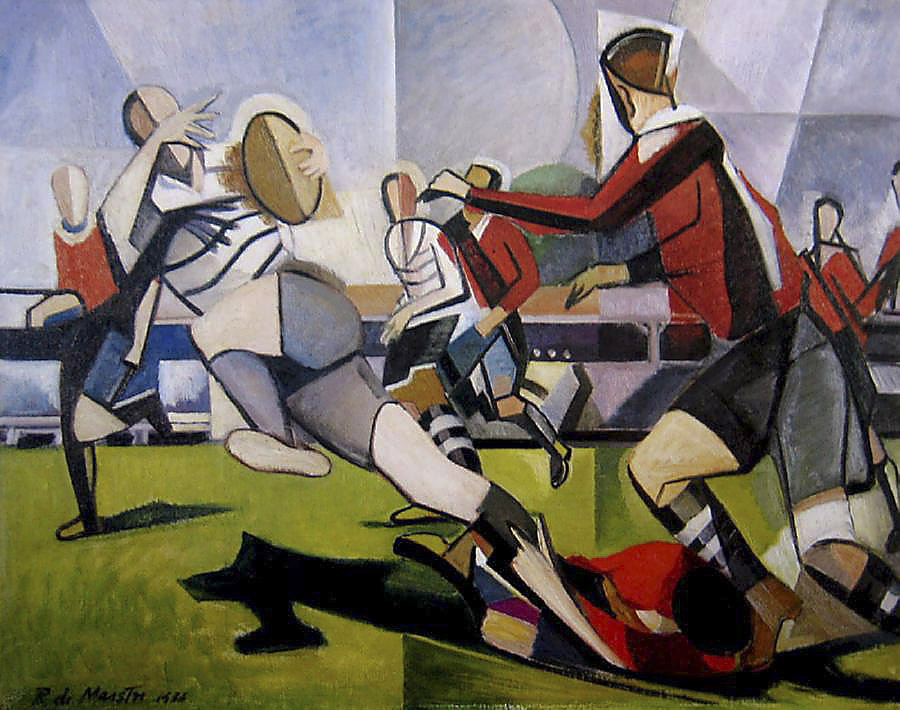
In the work from the 1920s/30s presented in the exhibition the palette of most of the works is subdued, the form of circles and geometrics. There are some beautiful paintings by one of my favourite Australian artists Roy de Maistre and others by Eric Wilson, Sam Atyeo and Jean Appleton (see image above). The feeling of these works is quiet and intense.
Following
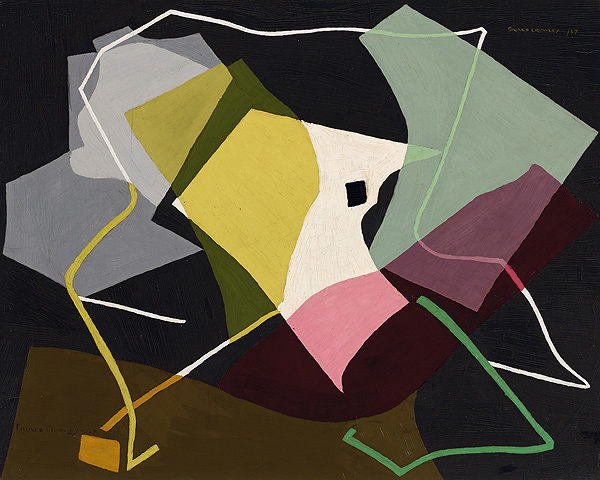
There are some evocative works from the 1940s/50s including Godfrey Miller’s Still Life with Musical Instruments (1958, below), Graham King’s Industrial Landscape (1959) and Ralph Balson’s Constructive painting (1951). The Charcoal Burner (1959) by Fred Williams (see image below) is the Australian landscape seen through Cubist eyes, surface and space perfectly commingled in reserved palette, delineated planes. Grace Crowley’s Abstract Painting (1947, see image below) is a symphony of colour, plane and form that I would willingly take home any day of the week!
Now
It is the contemporary work that is of most interest in this exhibition. Spatio-temporal reality is distorted as artists push the boundaries of dimensionality. The parameters of reality are blurred and extended through the use of multiple viewpoints and lines of sight. Fresh and spatially aware (like an in joke because everyone recognises the fragmented ‘nature’ of contemporary existence) we have the sublime Milky Way (1995, see image below) by Rosalie Gascoigne and for me the two standout pieces in the exhibition, Bicycles (2007, below) by James Angus and Static No.9 (a small section of something larger) (2005, below) by Daniel Crooks.
Though difficult to see in the photograph of the work (below), Bicycles fuses three bicycles into one. “A photo finish made actual, a series of frames at the conclusion of a race transferred permanently into three dimensions.” You look and then look again: three frames into one, three tyres into one, three stands into one, three chains the only singular – like a freeze frame of a motor drive on a camera
Snap Snap Snap
or the slight difference of the two images of a Victorian stereoscope made triumvirate (the 3D world of Avatar comes to mind). Static, the bicycle can never work, is redundant, but paradoxically moves at the same time.
Even more mesmerising is the video work Static No.9 (a small section of something larger) by Daniel Crooks. Unfortunately I cannot show you the video but a still from the video can be seen below as well as a link to a trailer of the work. Imagine this animated like swirling DNA (in actual fact it is people walking across an intersection at different distances and speeds to the camera – and then sections taken out of the video and layered). Swirling striations through time and space fragment identity so that people almost become code, the sound track the distorted beep beep beep of the buzzer at the crossing. I could have sat there for hours watching the performance as it crackles with energy and flow – with my oohs and aahs! The effect is magical, beautiful, hypnotic.
A great summer show – fresh, alive and well worth the journey if only to see that static in all its forms has never looked so good.
Dr Marcus Bunyan
Many thankx to the Heide Museum of Modern Art for allowing me to publish the art work in the posting. Please click on the photographs for a larger version of the image.
Alfred Barr’s Cubism diagram – original cover of Cubism and Abstract Art, Museum of Modern Art, New York, exhibition catalogue, 1936
Ralph Balson (Australian, 1890-1964) Painting no. 17 1941 Oil and metallic paint on cardboard 91.7 x 64.8cm Hassall Collection
By 1941 Ralph Balson had abandoned the figure for a completely abstract style. He announced this breakthrough in a solo exhibition at the Fine Art Galleries at Anthony Hordern and Sons in Sydney with paintings that evolved in part out of Albert Gleizes’s style of Cubism: uninflected surfaces, essential forms, respect for the two-dimensionality of the picture surface and the sense of a search for a deeper, universal truth.
Though at the time unusual for Australian art, such developments were concurrent with advancements in abstraction in the UK and US. This new mode of painting was to preoccupy Balson and Crowley, and to a lesser extent Frank Hinder, for the rest of the decade.
Balson’s ‘constructive’ pictures became sophisticated and intricate, characterised by Constructive painting (1945), with its overlapping translucent planes and array of discs, squares and rectilinear shapes in an animated state of flux, and perhaps culminating in Constructive painting (1951). This work has a different kind of luminosity, as if the picture has an inner light. As Balson himself said of such images, they are ‘abstract from the surface, but more truly real with life’.
Heide Education Resource p. 15.
Dorrit Black (Australian, 1891-1951) The bridge 1930 Oil on canvas on board 60 x 81cm Art Gallery of South Australia, Adelaide Bequest of Dorrit Black, 1951
Roy de Maistre (Australian, 1894-1968) The football match 1938 Oil on canvas 71.5 x 92cm The Janet Holmes à Court Collection
Eric Wilson (Australian, 1911-1946) Theme for a mural 1941 Oil on plywood on corrugated iron 53.2 x 106.8cm National Gallery of Victoria, purchased 1958
Sidney Nolan (Australian, 1917-1992) Rimbaud royalty 1942 Synthetic polymer paint on composition board 59.5 x 90cm Heide Museum of Modern Art Bequest of John and Sunday Reed
Grahame King (Australian 1915-2008) Industrial Landscape 1960 Oil on board 91.00 x 122.00cm Charles Nodrum Gallery
Daniel Crooks (New Zealand, b. 1973) Portrait #2 (Chris) 2007 Lambda photographic print 102 cm x 102cm Heide Museum of Modern Art Purchased with funds from the Robert Salzer Foundation 2012
“With these portraits I’m attempting to make large detailed images of people in their own surroundings, images of people very much in and of their time that are both intriguing and beautiful. As with a lot of my work the portraits also seek to render the experience of time in a more tangible material form, blurring the line between still and moving images and looking to new post-camera models of spatiotemporal representation.”
Daniel Crooks
Portrait #2 (Chris) forms part of Daniel Crooks’s Scanlines, a series of moving image works and prints made using digital collage techniques. This involves digitally slicing images then reassembling them sequentially, across the screen or picture plane, to create rhythmic and spatial effects through which Crooks seeks to explore ideas and themes related to our understandings of time and motion.
Elizabeth Gower found a new relevance for Cubism in her abstract series Shaped works (1978-1984) … Cubist collage combined with feminist ideas to inspire her use of everyday materials such as newsprint and garment patterns. Transparent rice paper adds a delicacy and lightness to the work. The dynamic overlap of flat planes and juxtaposition of contrasting shapes, textures and patterns relates directly to the legacy of Synthetic Cubism. The work of Sonia Delaunay was also a particular inspiration for Gower.
Cubism & Australian Art, one of the most ambitious and extensive exhibitions Heide has undertaken, shows the impact of the revolutionary and transformative movement of Cubism on Australian art from the early twentieth century to the present day. It uncovers a little-known yet compelling history through works by over eighty artists, including key examples of international Cubism drawn from Australian collections – by André Lhote, Albert Gleizes, Fernand Léger, Alexander Archipenko, Ben Nicholson and others – and nine decades of Australian modern and contemporary art that demonstrate a local evolution of cubist ideas.
The exhibition documents the earliest incorporation of cubist principles in Australian art practice in the 1920s, when artists such as Grace Crowley and Anne Dangar, who studied overseas under leading cubist artists, began to transform their art in accordance with late cubist thinking. It examines the influence of Cubism on artists associated with the George Bell School in Melbourne and the Crowley-Fizelle School in Sydney; and on those who participated in the cubist movement abroad including James Cant and John Power.
While its distortions and unconventional perspectives served individual styles such as the expressionism of Albert Tucker or the experimental landscapes of Sidney Nolan and Fred Williams, Cubism’s most enduring influence on postwar Australian art has been in abstraction. This exhibition traces its reverberations in 1950s abstract art by Roger Kemp, Robert Klippel and Ron Robertson-Swann and others, through to works by younger artists such as Stephen Bram, Gemma Smith and Justin Andrews.
Cubism’s formal and conceptual innovations and its investigations into the representation of time, space and motion have continuing relevance for artists today, who variously adapt, develop, quote and critique aspects of cubist practice. In this exhibition, Cubism’s shifting, multi-perspectival view of reality takes on new form in moving-image works by John Dunkley-Smith and Daniel Crooks, in paintings by Melinda Harper and sculptures by James Angus. The use of found objects and recycled materials by Madonna Staunton, Rosalie Gascoigne and Masato Takasaka extends ideas originating in cubist sculpture and collage. Other artists are critical of Cubism, bringing Indigenous and non-european perspectives to bear on its modernist history, particularly its appropriation of so-called ‘primitive art’.
Text from the Heide Museum of Modern Art website [Online] Cited 10/01/2010 no longer available online
Grace Crowley (Australian, 1890-1979) Abstract painting 1947 Oil on board 63.2 x 79.0cm Private Collection, Sydney
Cubism & Australian Art considers the impact of the revolutionary and transformative movement of Cubism on Australian art from the early twentieth century to the present day. Cubism was a movement that changed fundamentally the course of twentieth-century art, and its innovations – the shattering of the traditional mimetic relationship between art and reality and investigations into the representation of time, space and motion – have continuing relevance for artists today. Works by over eighty artists, including key examples of international Cubism drawn from Australian collections, are displayed in the exhibition.
The exhibition examines not only the period contemporaneous with Cubism’s influence within Europe, but also the decades from then until the present day, when its reverberations continue to be felt. In the first part of the century, Cubism appeared through a series of encounters and dialogues between individuals and groups resulting in a range of fascinating adaptations, translations and versions alongside other more programmatic or prescriptive adoptions of cubist ideas. The exhibition traces the first manifestations of Cubism in Australian art in the 1920s, when artists studying overseas under leading cubist artists began to transform their art in accordance with such approaches. It examines the transmission of cubist thinking and its influence on artists associated with the George Bell School in Melbourne and the Crowley-Fizelle School in Sydney. By the 1940s, artists working within the canon of modernism elaborated on Cubism as part of their evolutionary process, and following World War II Cubism’s reverberations were being felt as its ideas were revisited by artists working with abstraction.
In the postwar years and through to the 1960s, the influence of Cubism became more diffuse, but remained significant. In painting, cubist ideas provided an underlying point of reference in the development of abstract pictorial structures, though they merged with other ideas current at the time, relating in the 1950s, for example, to colour, form, musicality and the metaphysical. For many artists during this decade, Cubism provided the geometric basis from which to seek an inner meaning beneath surface appearances, to explore the spiritual dimension of painting and to understand modernism.
The shift from a Cubist derived abstraction in Australia in the 1950s to a mild reaction against Cubism in the Colour field and hard-edged painting of the mid to latter 1960s reflected a new recognition of New York as the centre of the avant-garde. Cubism’s shallow pictorial space, use of trompe l’oeil and fragmentation of parts continued to inform the work of certain individuals who adapted them in ways relevant to the new abstraction. Cubist ideas and precepts also found some resonance in an emphasis on the flatness of the canvas, particularly as articulated in the formalist criticism of Clement Greenberg.
The influence of Cubism on Australian art from 1980s to 2000s is subtle, varied and diffuse as contemporary artists variously quote, adapt, develop and critique aspects of cubist practice. Cubism’s decentred, shifting, multi-perspectival view of reality takes on new form, in moving-image works and installations, as well as being further developed in painting and sculpture. Post-cubist collage is used both as a method of constructing artworks – paintings, sculptures, assemblages – and as an intellectual strategy, that of the postmodern bricoleur. Several artists imagine alternative cubist histories and lineages, revisiting cubist art from an Indigenous or non-European perspective and drawing out the implications of its primitivism. Others pay homage to local versions of Cubism, or look through its lens at art from elsewhere.
Cubism played a fundamental role in Fred Williams’s pictorial rethinking of the Australian landscape and through him, Cubism has affected the way Australians view their natural surroundings.
Patrick McCaughey writes in the catalogue for this exhibition:
The charcoal burner, with its reserved palette and briskly delineated planes, is one of his most accomplished essays in seeing the Australian landscape through cubist eyes. Already looking for the ‘bones’ of the landscape, Williams was drawn to the early phase of Cubism, as it gave structure to the unspectacular landscape – the bush in the Dandenongs; the coastal plain around the You Yangs.
Just as Braque in his cubist landscapes of 1908-1909 eschewed ‘view’ painting and disdained the picturesque, so Williams in turn generalised the landscape, constructing it and rendering it taut, modern and vivid. In his landscapes Braque made the important pictorial discovery of passage, fusing solid forms with the surrounding space. Williams exploits this innovation in The charcoal burner, where surface and space are perfectly commingled.
Heide Education Resource p. 1.
Robert Rooney (Australian, 1937-2017) After Colonial Cubism 1993 Synthetic polymer paint on canvas 122 x 198.3cm Heide Museum of Modern Art Purchased through the Heide Foundation with the assistance of the Heide Foundation Collectors’ Group and the Robert Salzer Fund 2008. Courtesy of the artist
Robert Rooney’s painting After Colonial Cubism (1993) shows a vibrant streetscape rendered in deliberate and self-conscious cubist style that declares itself to be a second-hand quotation of Cubism, rather than an example of the original style. The streetscape has not been drawn from life but is a faithfully scaled-up version of a much earlier gouache sketch Buildings (1953) that Rooney did as a young student in Melbourne. The sketchbook page is indicated in the painting by the vertical bands on either side of the image which effectively serve as quotation marks.
In highlighting the second-hand nature of the image in his painting, Rooney more broadly comments on the dispersal of cubist ideas from Paris, Cubism’s place of origin, to more local contexts such as Australia. The painting carries with it the artist’s memories of his student days, of learning about Cubism through magazines and books. Rooney remembers visiting exhibitions of cubist works by Australian artists and being fascinated by how these ideas were translated locally. Further meaning in the work derives from its title which refers to the painting Colonial Cubism 1954, by Stuart Davis, an American artist whose cubist works are a further instance of the dispersal of the style to localities outside of France.
Heide Education Resource p. 29.
Rosalie Gascoigne (Australian, born New Zealand 1917-1999) Milky Way (detail) 1995 Mixed media
Rosalie Gascoigne is renowned for her sculptural assemblages of great clarity, simplicity and poetic power. Using natural or manufactured objects, sourced from collecting forays, that evoke the lyrical beauty of the Monaro region of New South Wales, her work radically reformulated the ways in which the Australian landscape is perceived. …
“My country is the eastern seaboard. Lake George and the Highlands. Land that is clean scoured by the sun and frost. The record is on the roadside grass. I love to roam around, to look and hear … I look for things that have been somewhere, done something. Second hand materials aren’t deliberate; they have had sun and wind on them. Simple things. From simplicity you get profundity. The weathered grey look of the country gives me a great emotional upsurge. I am not making pictures, I make feelings.”
Rosalie Gascoigne
Extract from Anonymous. “Biography (Roaslie Gascoigne),” on the Art Gallery of New South Wales website [Online] Cited 21/05/2019
Daniel Crooks (New Zealand, b. 1973) Static No.9 (a small section of something larger) (still) 2005 Single channel digital video, colour, sound Duration: 00:13:29 min, aspect ratio: 16:9
James Angus (Australian, b. 1970) Bicycles 2007 Chromed steel, aluminium, polyeurethane, enamel paint
“An object which is entirely solid yet blurry; a sculpture-in-motion that vibrates between plural and singular.” ~ James Angus
For this handcrafted sculpture, Angus melded the frames of three bicycles into one, creating a kind of platonic ideal of bike design which resolves slight differences in thickness of truss, angles of frame and fork, shape of saddle and handlebar position into an ideal form – one that seems to shift between the plural and the singular. Traces of all three bikes inhabit this final rendition, with its tripled wheel spokes and chain drive, contoured saddle and ridged handlebars.
Hovering between three sets of dimensions and proportions, the sculpture presents a visual experience akin to looking at lenticular imagery or to a stereoscopic gaze, in which two sets of slightly disparate visual information are resolved into the one three-dimensional image. These subtle differences, inhabiting the one object, speak of the slight variations between not only bikes but individual riders, for whom the bike is an extension of their body shape, size and movement. In keeping with his other works, which have distorted, shifted and played with elements of design from architecture to automobiles, Angus disrupts our expectations of an everyday object. By making us look again he reminds us that a bicycle, like a racing car, is a moving sculpture.
Text from the Museum of Contemporary Art website [Online] Cited 21 May 2019
Justin Andrews (Australian, b. 1973) Acid yellow 3 2008 Acrylic and enamel on composition board 75 x 60cm Courtesy of the artist and Charles Nodrum Gallery, Melbourne
Masato Takasaka (Australian, b. 1977) Return to forever (productopia) 2009 Cardboard, wood, plastic, mdf, acrylic, paint, paper, soft-drink cans, tape and discarded product packaging installation Dimensions variable Courtesy of the artist
Heide Museum of Modern Art 7 Templestowe Road, Bulleen, Victoria 3105
Opening hours: (Heide II & Heide III) Tuesday – Sunday, Public holidays 10am – 5pm




































 Art Blart _ art and cultural memory archive
You must be logged in to post a comment.