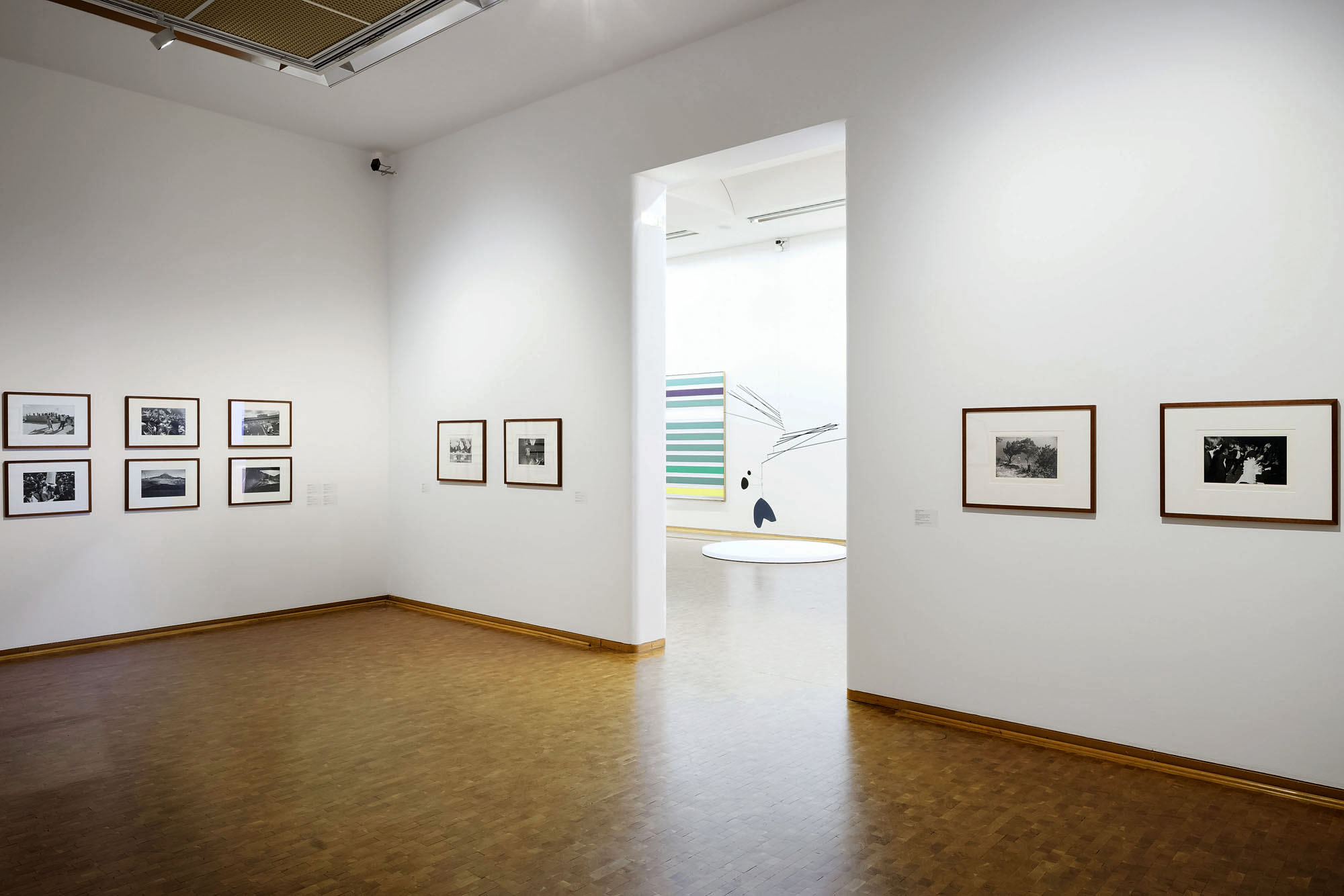
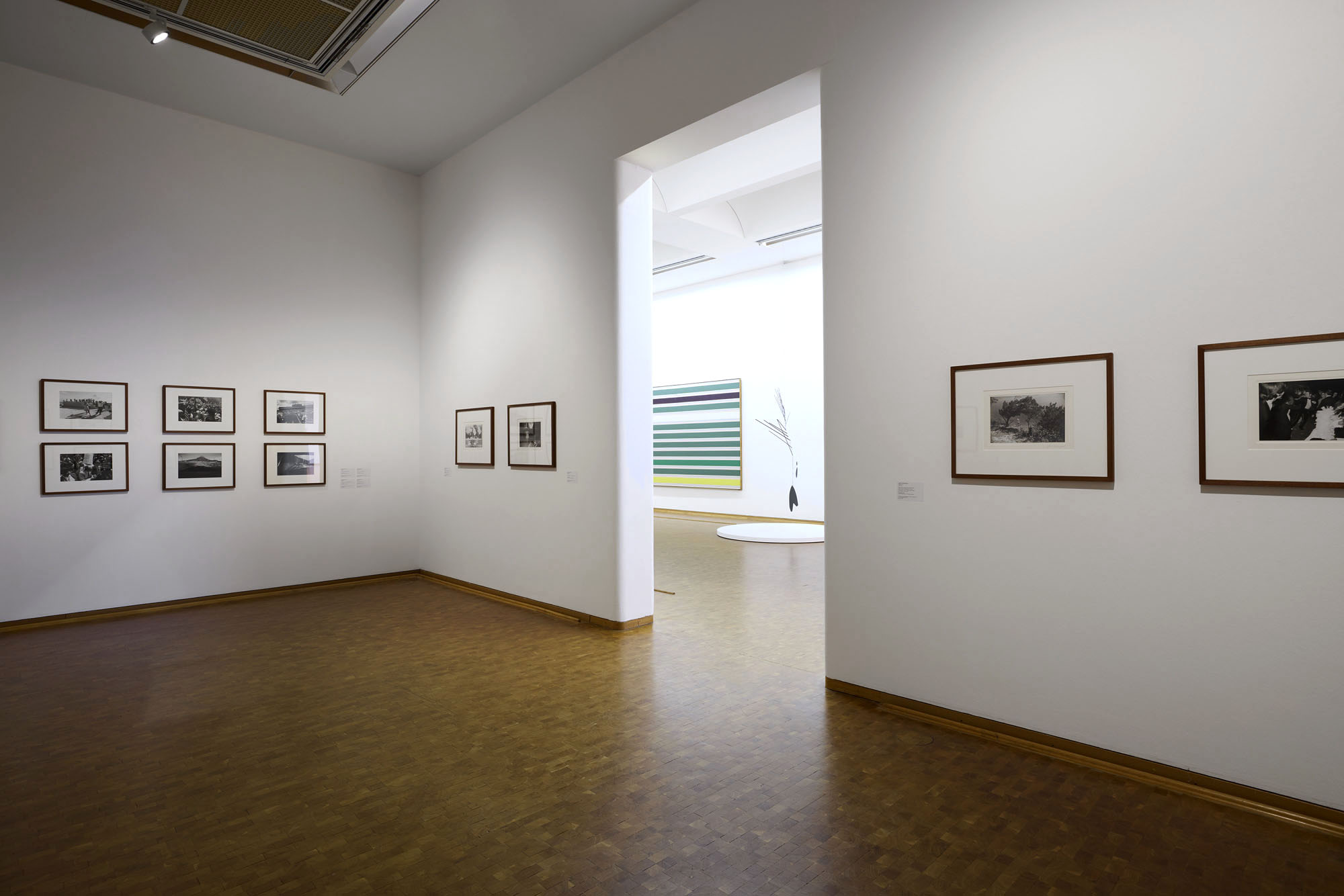
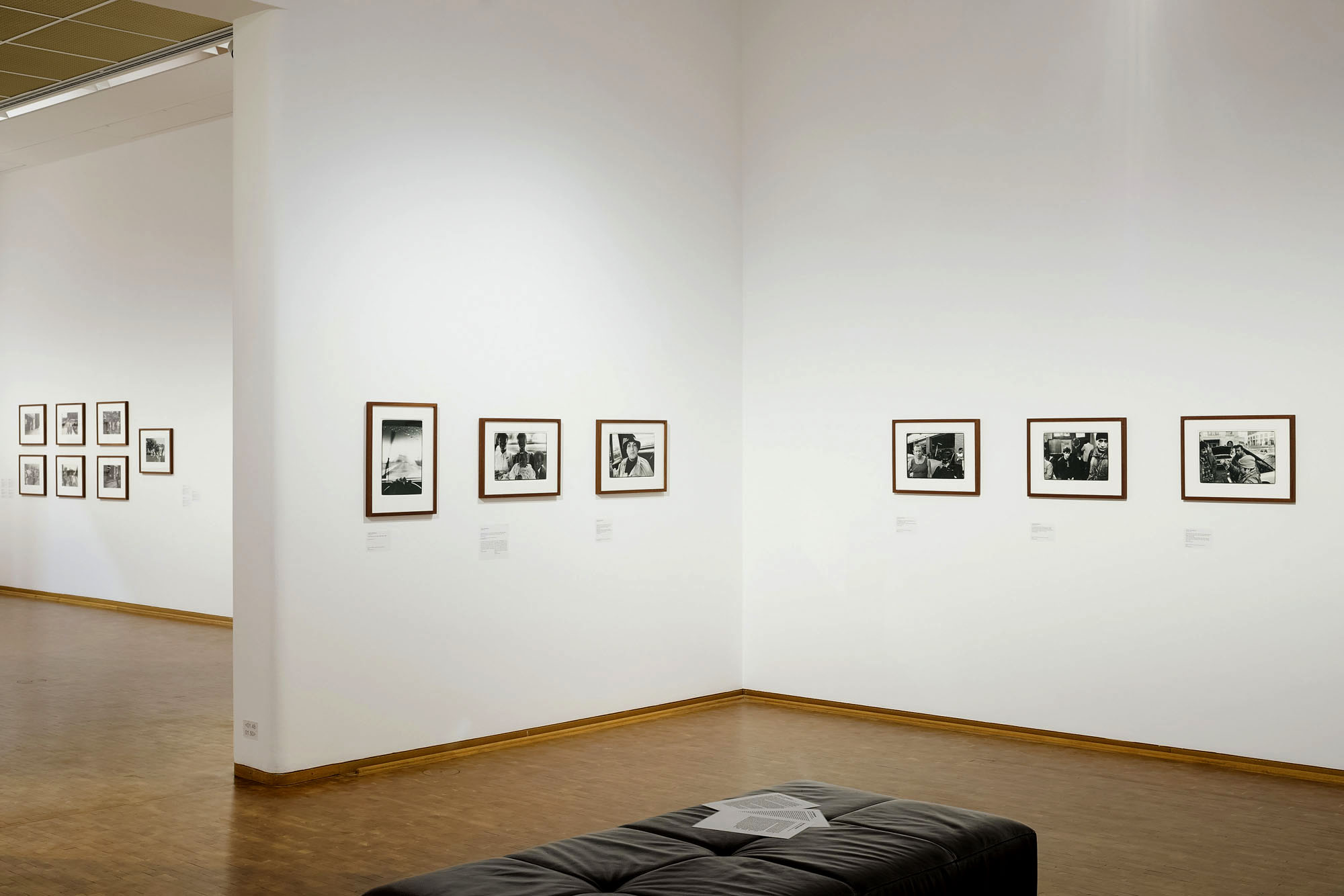
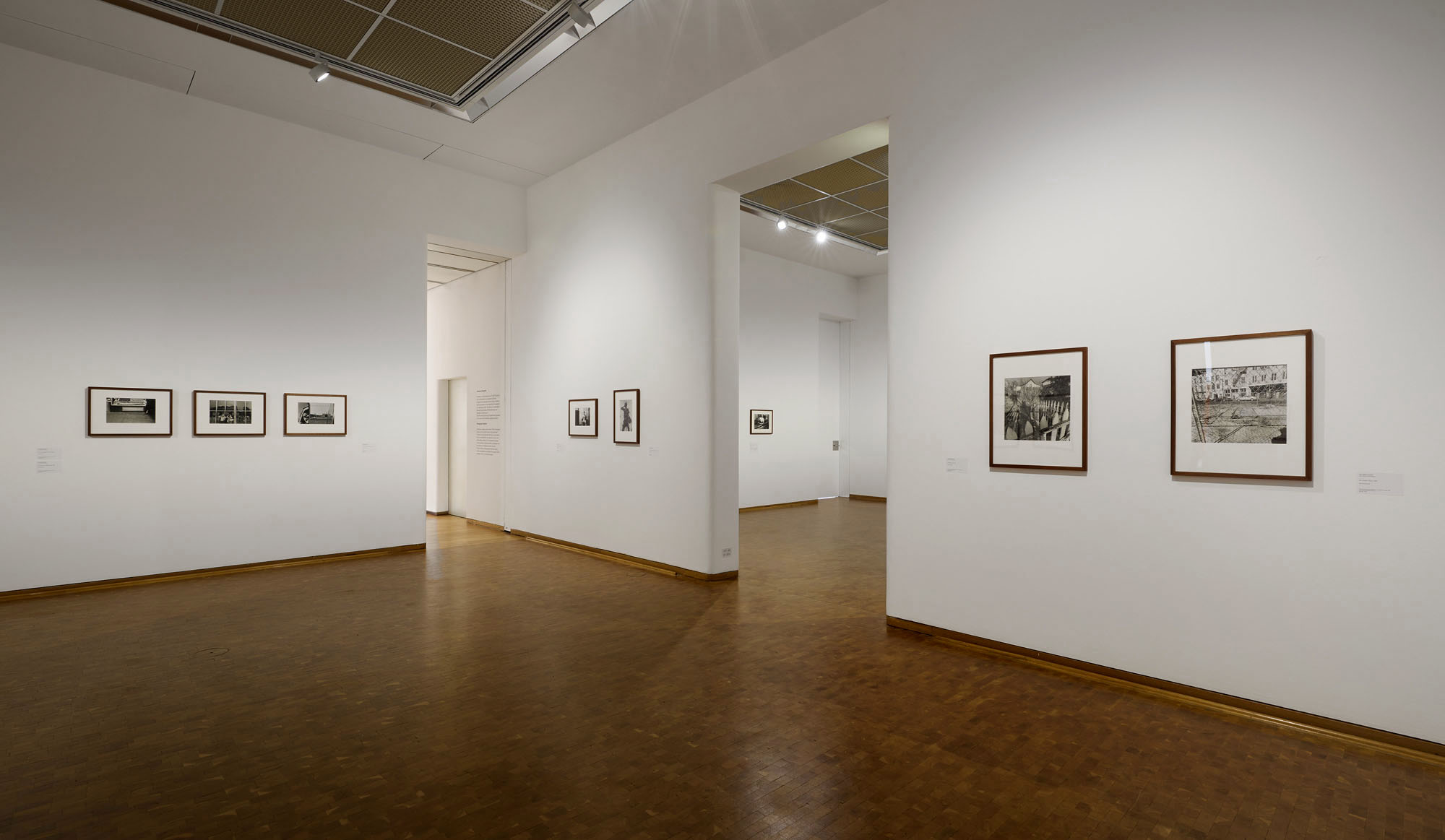
Co-curators: Hripsimé Visser, former curator at Stedelijk Museum, Foam curator Claartje van Dijk, and exhibition designer Jeroen de Vries, in collaboration with NIOD Institute
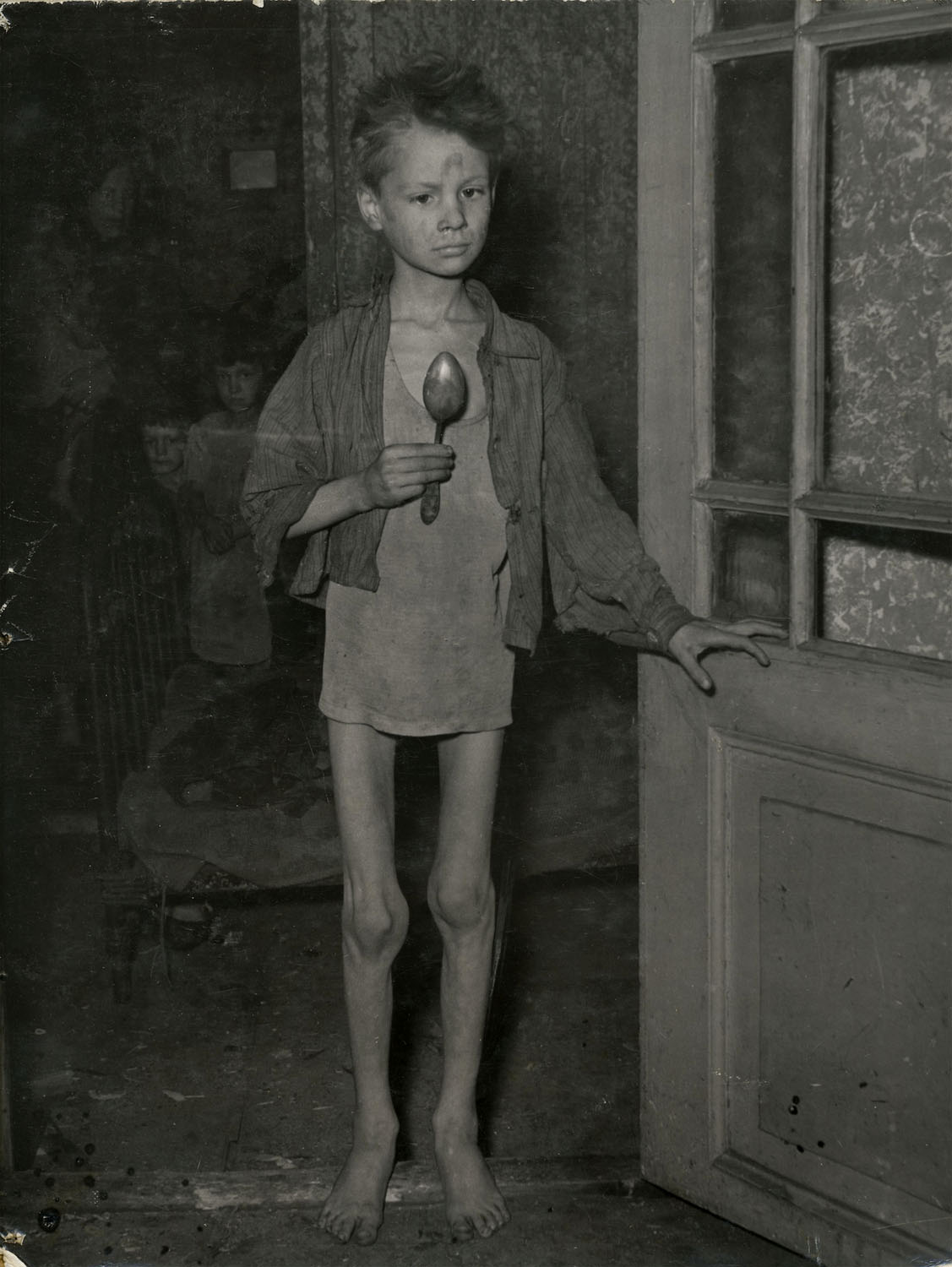
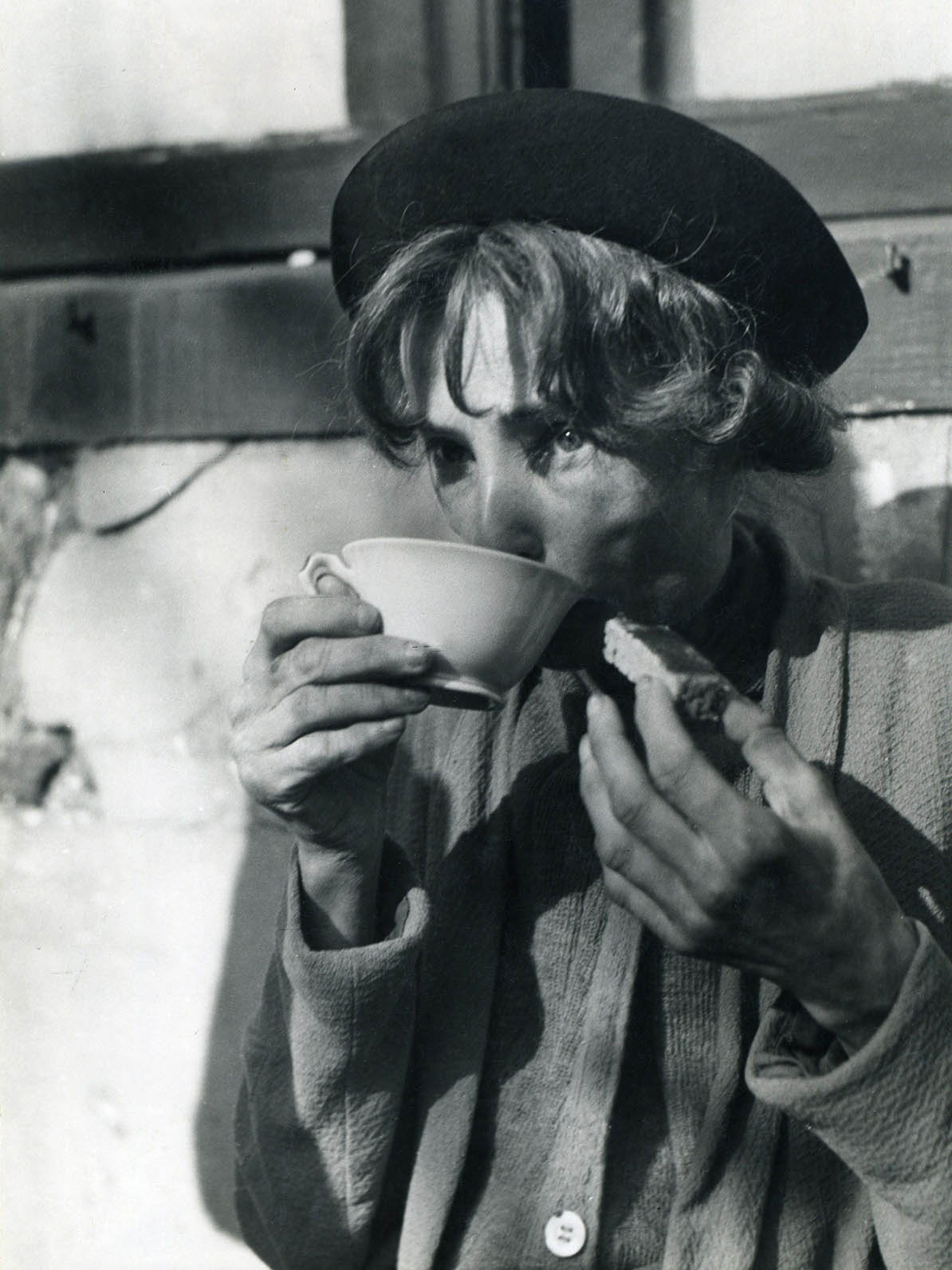
Marius Meijboom (Dutch, 1911-1998) Hunger Winter February 1945 Marius Meijboom / Niod
Iconic photo of Henkie Holvast from the Jordaan, 9 years old
Resist!
The photograph of Henkie Holvast (February 1945, above) is an example of the famine the Nazis inflicted on the general population of the Netherlands during the last year of the Second World War.
I’ll leave you to make the correlation between these historical events and what is happening in Gaza today … and to understand the hypocrisy and evil of contemporary acts.
Like the photojournalists that are being targeted and killed for reporting the truth of the situation in Gaza, so these photographers would have been killed by the Nazis for photographing the occupation of the Netherlands if they had been caught.
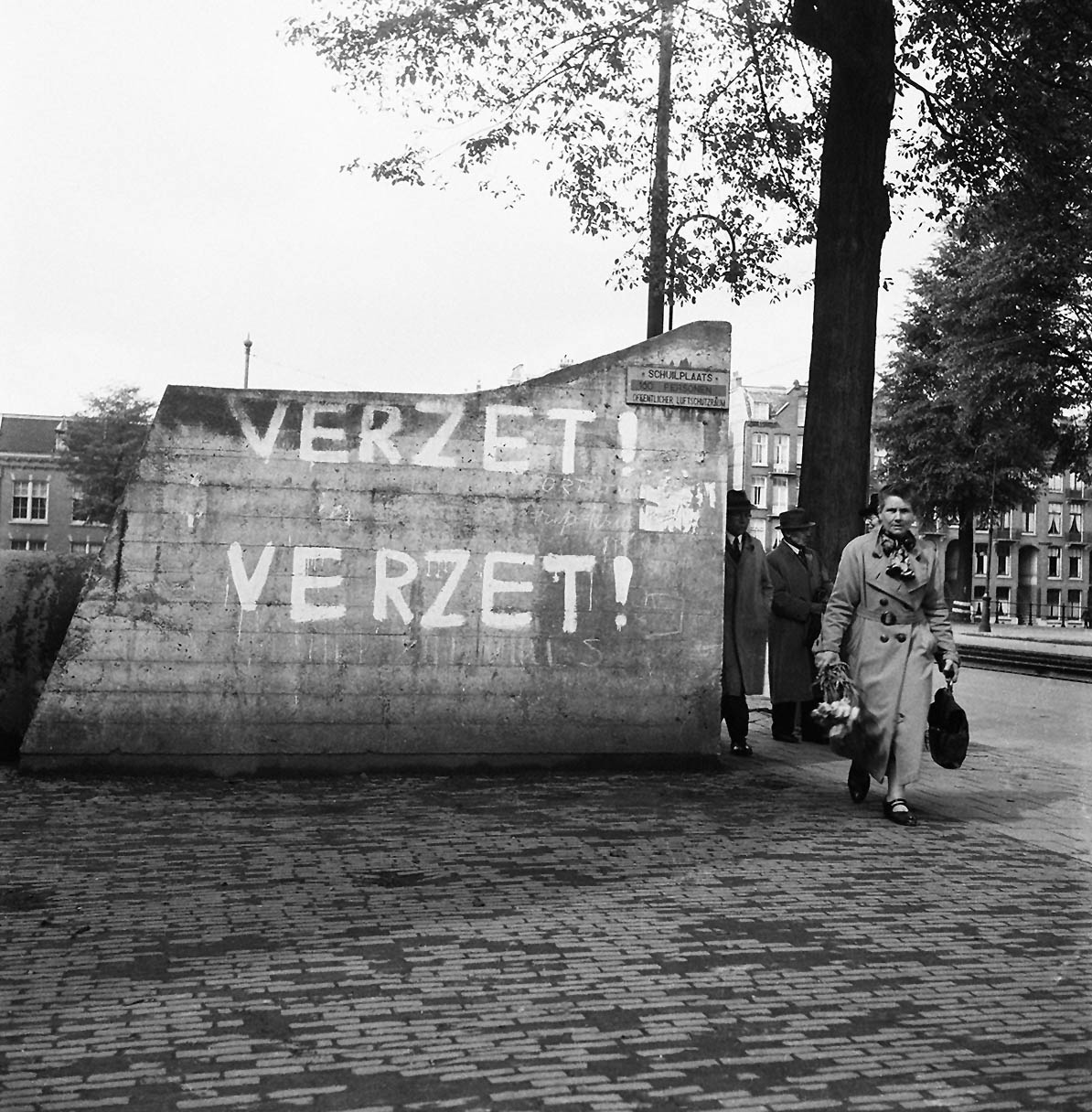
“Verzet! Verzet!” (Resist! Resist!)
Dr Marcus Bunyan
Many thankx to Foam, Amsterdam for allowing me to publish the photographs in the posting. Please click on the photographs for a larger version of the image.
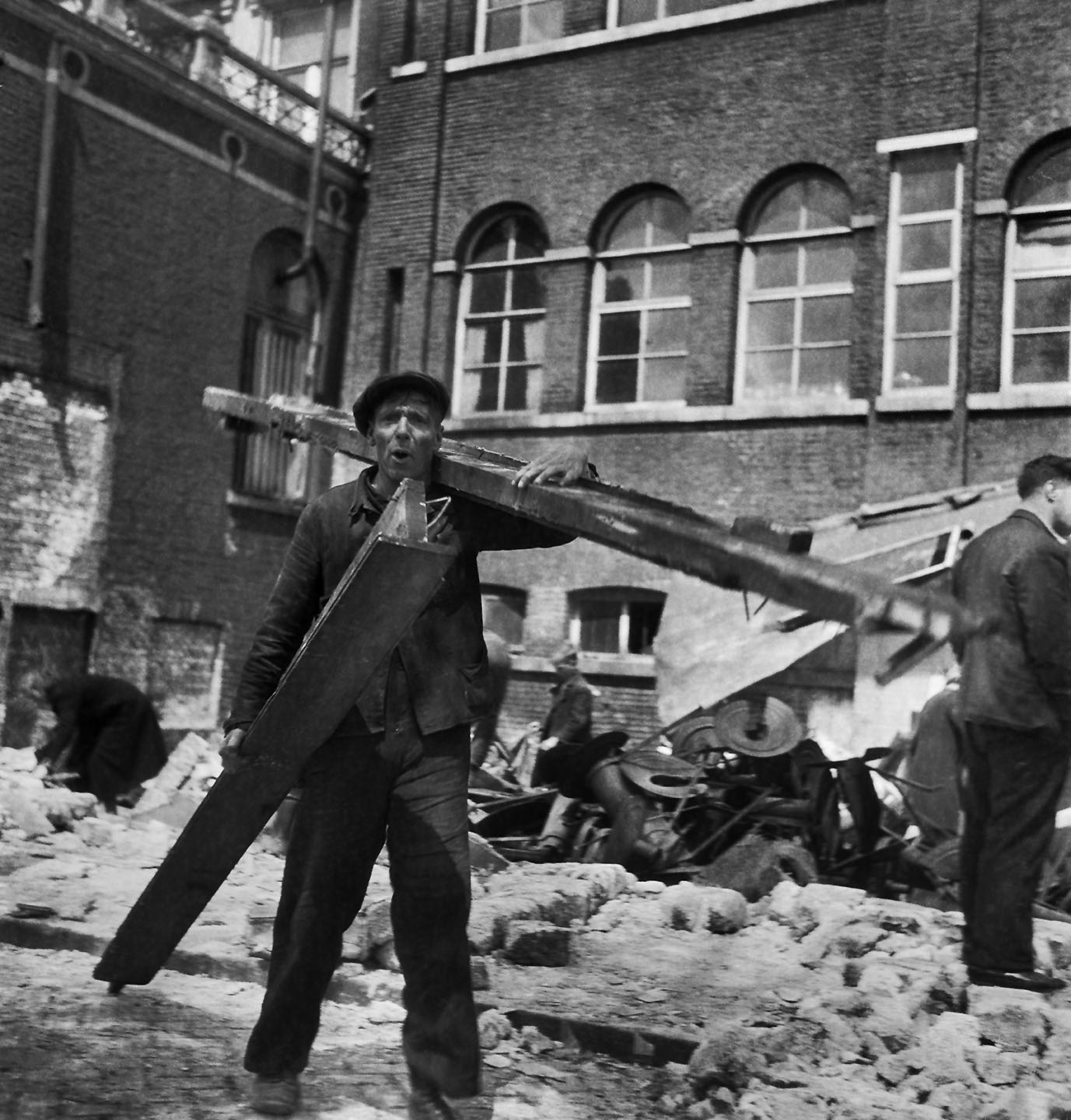
“The exhibition The Underground Camera captures the hunger and hardship in Amsterdam during the final year of World War II, but also sheds light on the untold stories behind the images, offering fresh perspectives.”
“Verzet! Verzet!” (Resist! Resist!) is spray painted boldly on a public wall, confronting the public in Cas Oorthuys’s Verzetsleuzen op een schuilbunker Kwakersplein (Resistance slogans on a bunker at Kwakersplein), taken in Amsterdam between 1944-1945. In many ways this image serves as a visual manifesto for The Underground Camera, the new exhibition at Foam Amsterdam, articulating the collective’s commitment to resistance, subversion, and the political potential of the photographic image.
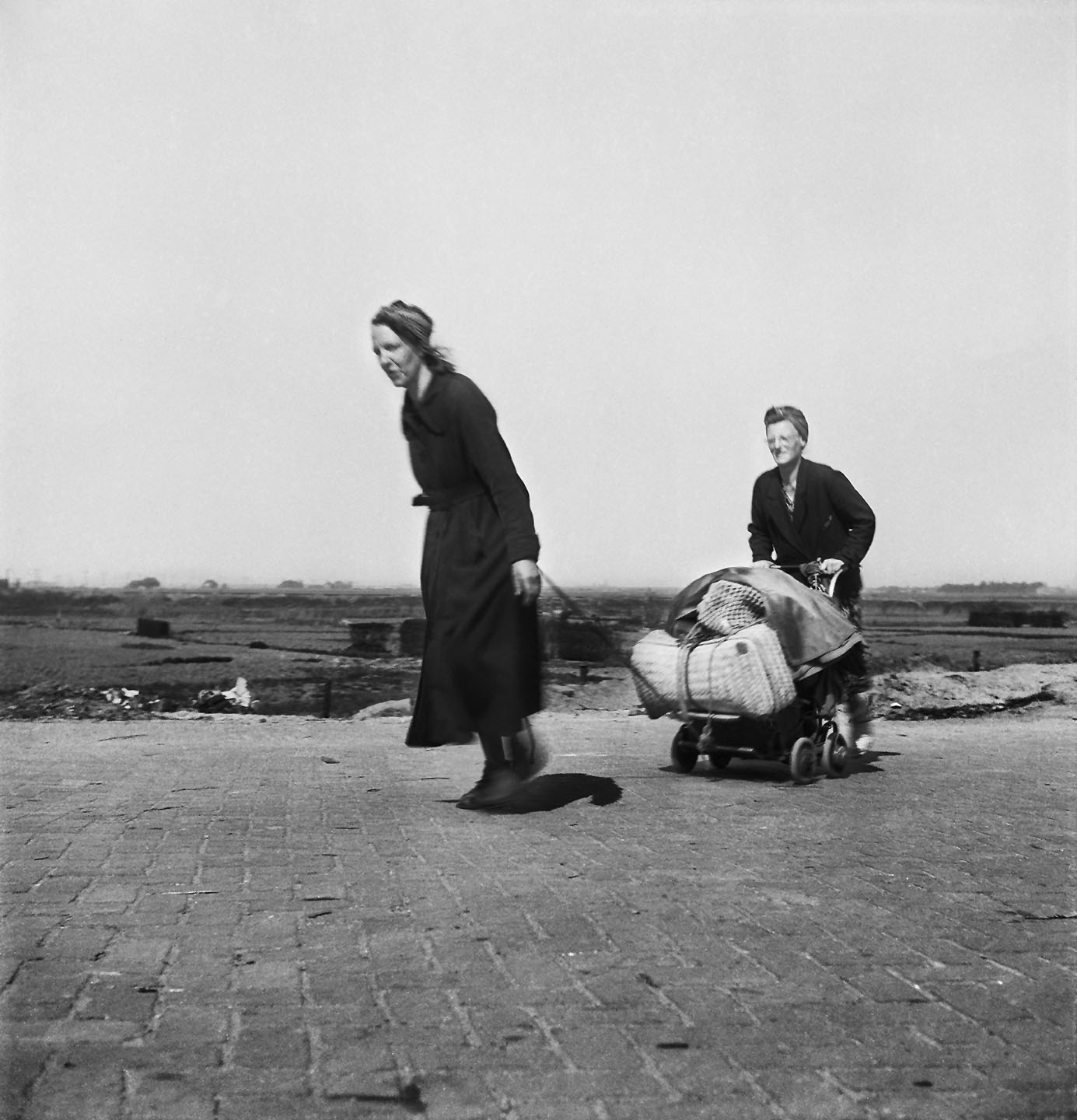
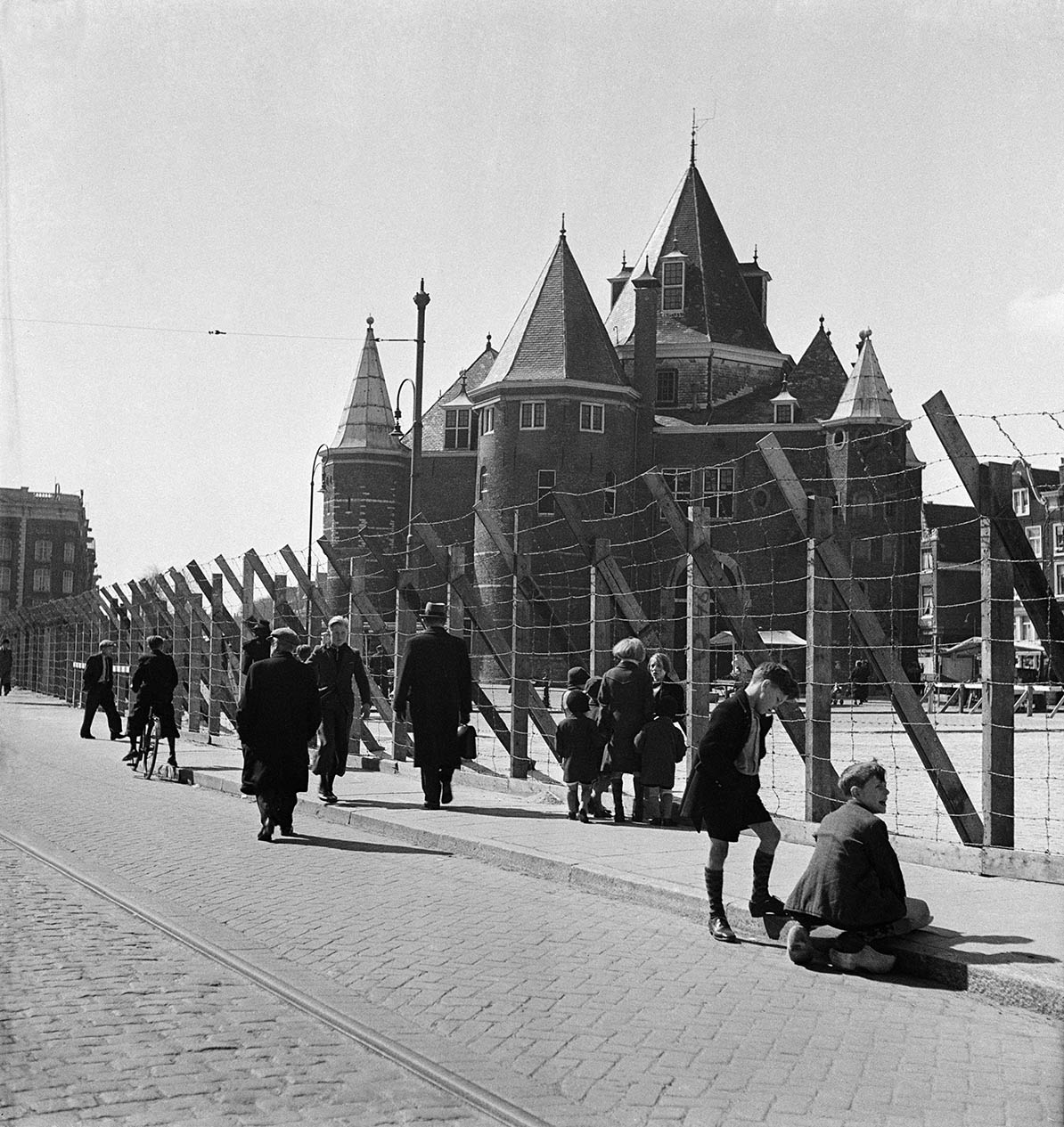
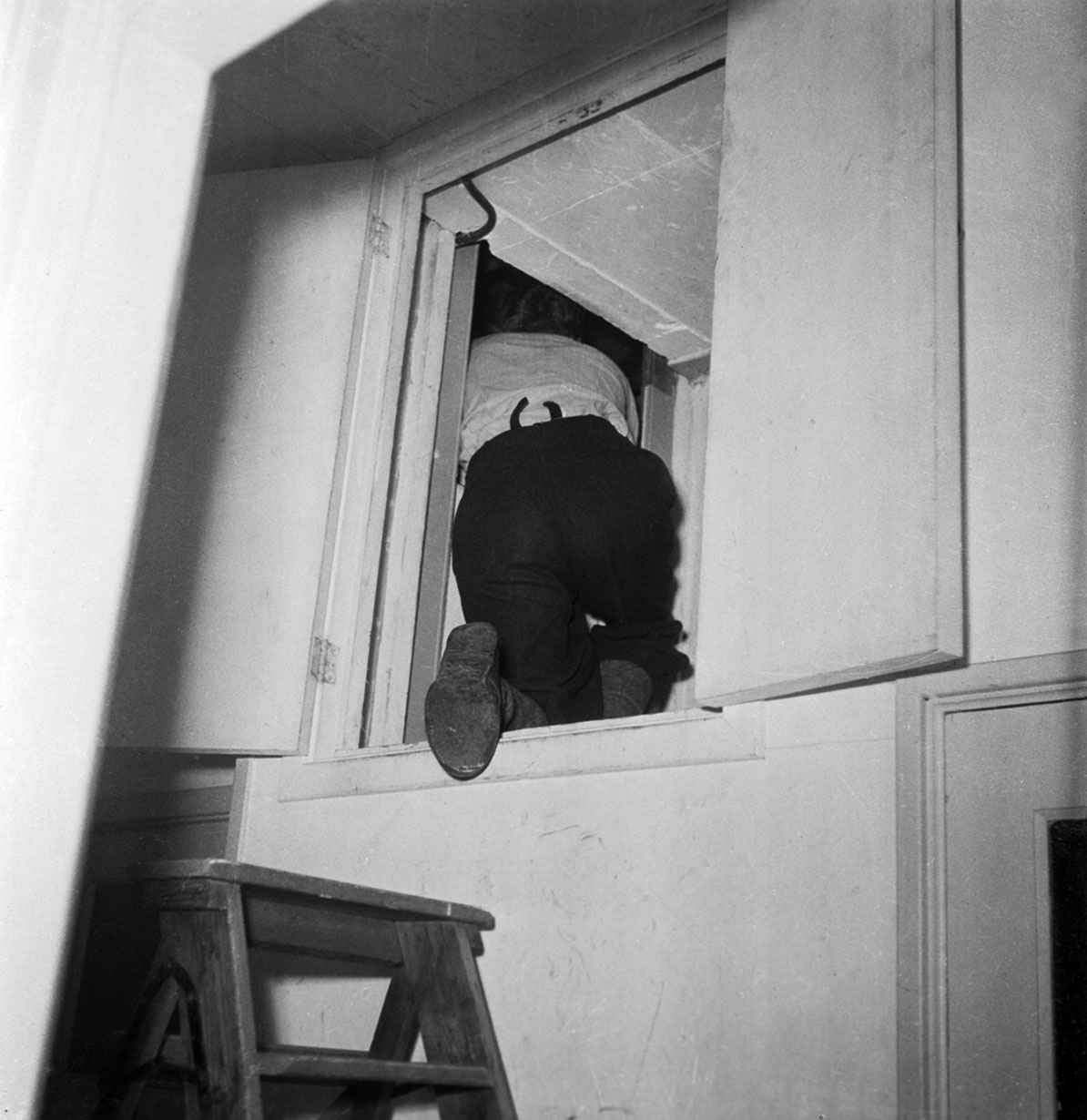
The Underground Camera, a group of Amsterdam based photographers, made the life-threatening and courageous decision to photograph the Nazi occupation of Holland, specifically the famine of 1944-45 in Amsterdam as a result of the Nazis blocking food transport. The photographers, recruited by members of the Dutch resistance, were tasked with making the unseen visible. The intention was to inform the Dutch government working in exile in London to advocate for food drops on their behalf while also documenting the conditions of the occupation, creating evidence in the event the Nazis would be held accountable. A general ban on photography was implemented in 1944 by the occupation, so The Underground Camera followed through with illegal acts carried out discreetly, often hiding the cameras under their garments.
Not only was participating in illegal acts under the Nazi occupation dangerous, but being associated with the resistance otten carried dire consequences. By highlighting the potential fatality of the mission, its dangerous conditions, and the equipment that was difficult to obtain at the time and often poor quality, Foam’s exhibit allows the audience to witness a quiet rebellion. A rebellion that is often overlooked not only in the history of photography, but in history as a whole.
With this exhibit, the courageous and inspiring group finally gets their time of recognition.
The Underground Camera, initially known as the more unassuming ‘Nederland Archief’ (Netherlands Archive), significantly contributed to the retelling of history regarding Germany’s occupation during the war, viewing the camera as both a witness and a weapon. The idea of the camera as a weapon is underscored by many academic discourses surrounding documentary war photography. A camera has the potential to become a tool of war whose target is completely dependent on the intention of the one shooting, but in this case of the camera has actively deconstructed propaganda while also holding the occupiers accountable.
There are many unknowns when it comes to this group. Who were the participating photographers, were any were caught, how were they organised, how did they operate, etc. This exhibition is giving them deserved institutional and academic recognition and advocates for their story to be told. The Underground Camera is an incredible show not only because it offers rare glimpses into the realities of war, but because the photographs are a product of courageous resilience.
Foam presents The Underground Camera, an exhibition that features work from Dutch photographers who captured the consequences of the German occupation during the 1944-45 ‘famine winter’ in Amsterdam.
The exhibition The Underground Camera is inspired by the celebrations of Amsterdam’s 750th anniversary and 80 years of liberation.
With their photographs, The Underground Camera group made a significant contribution to the image of the Second World War. The photographers were recruited by members of the resistance, with the aim of informing the Dutch government in London. They worked independently and under the dangerous conditions of an occupied city, with hard-to-obtain, often poor-quality equipment. The exhibition provides an impressive picture of the consequences of hunger and cold in the dismantled Amsterdam at the end of the war.
The group of photographers included Cas Oorthuys, Emmy Andriesse, Charles Breijer, Kryn Taconis, and Ad Windig, among others.
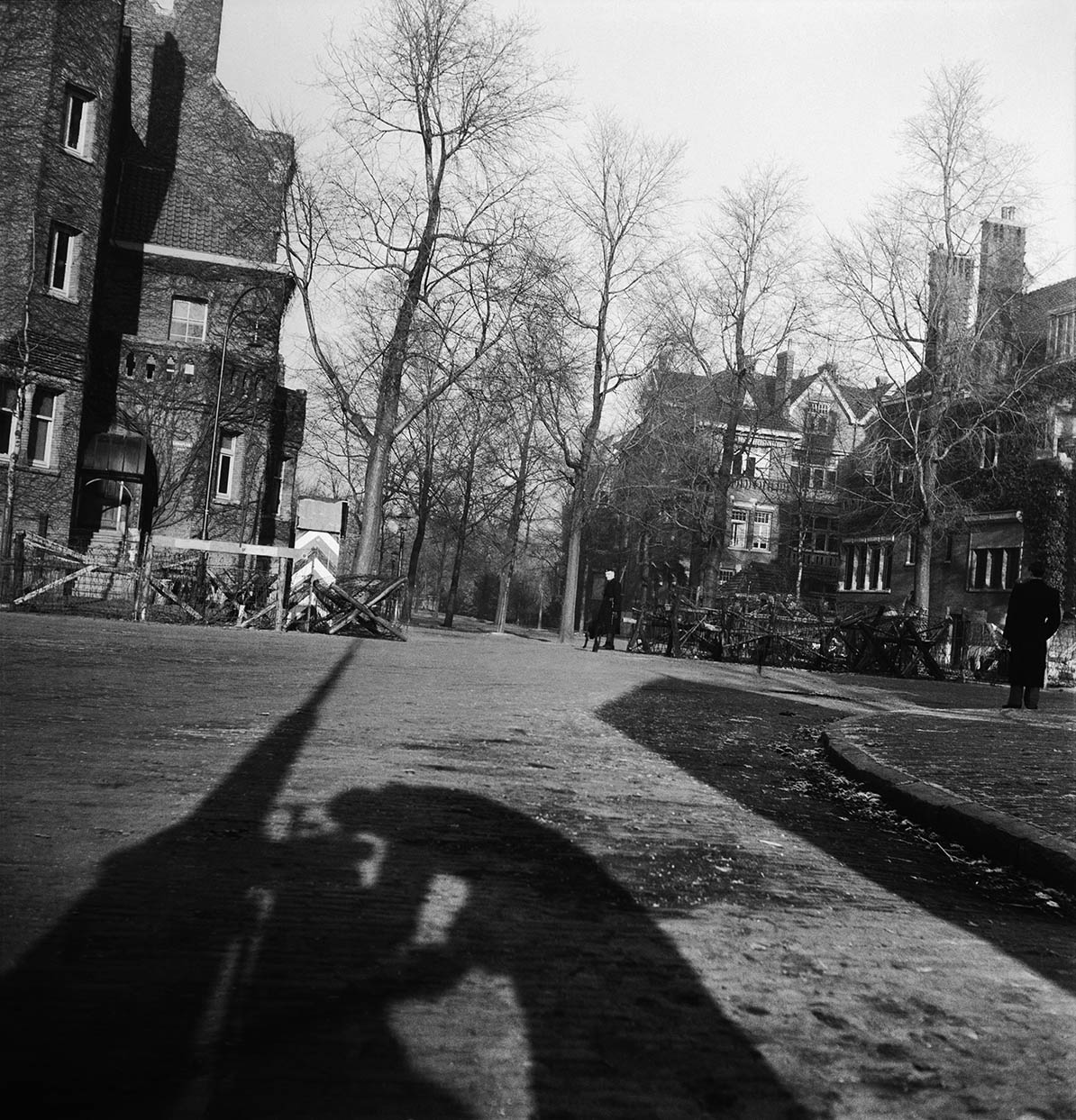
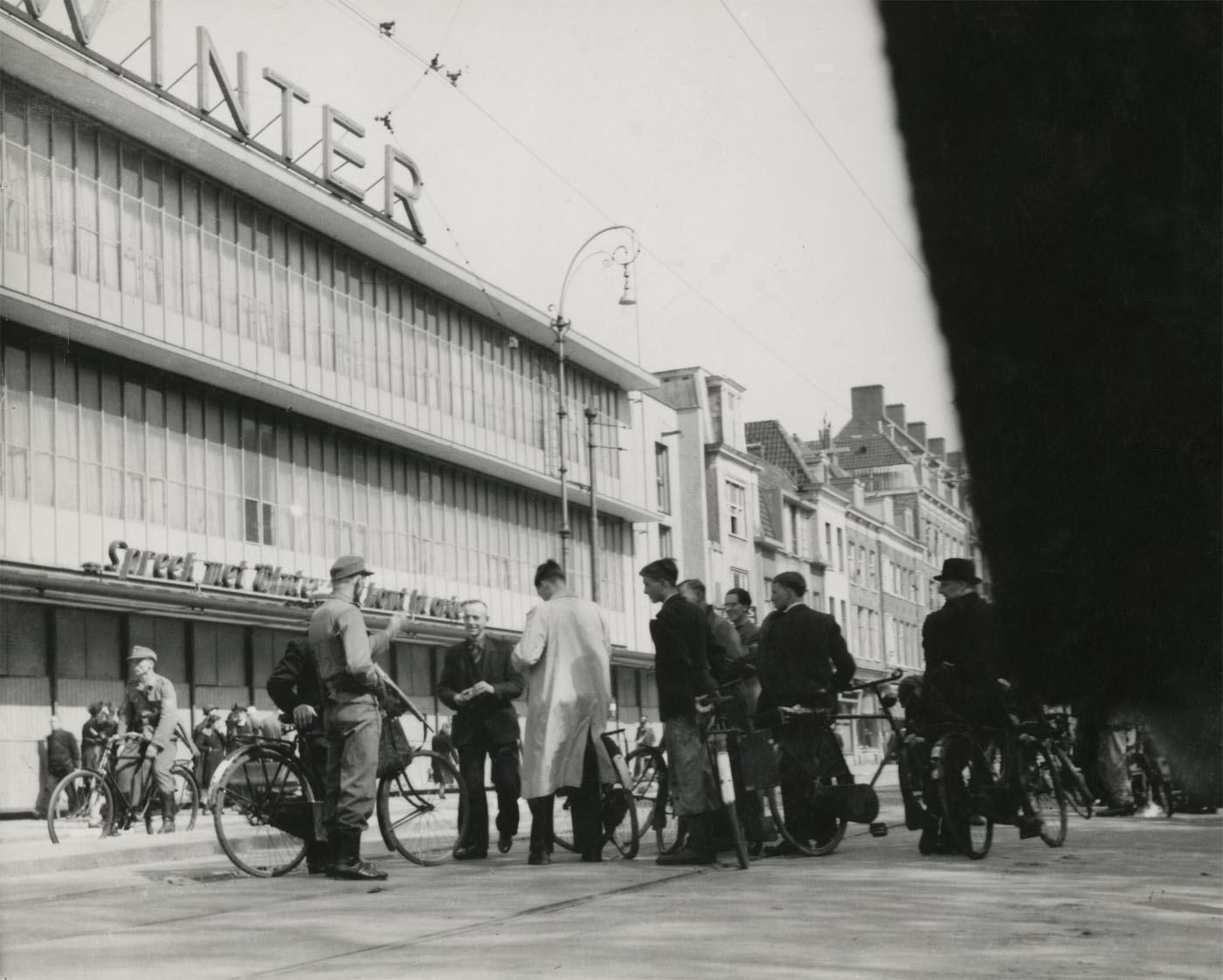
Charles Breijer (Dutch, 1914-2011) Charles Breijer photographs a German-requisitioned building near Vondelpark from his bicycle bag. He inadvertently captures his own shadow Spring 1945 Charles Breijer / Netherlands Photo Museum (NFM)
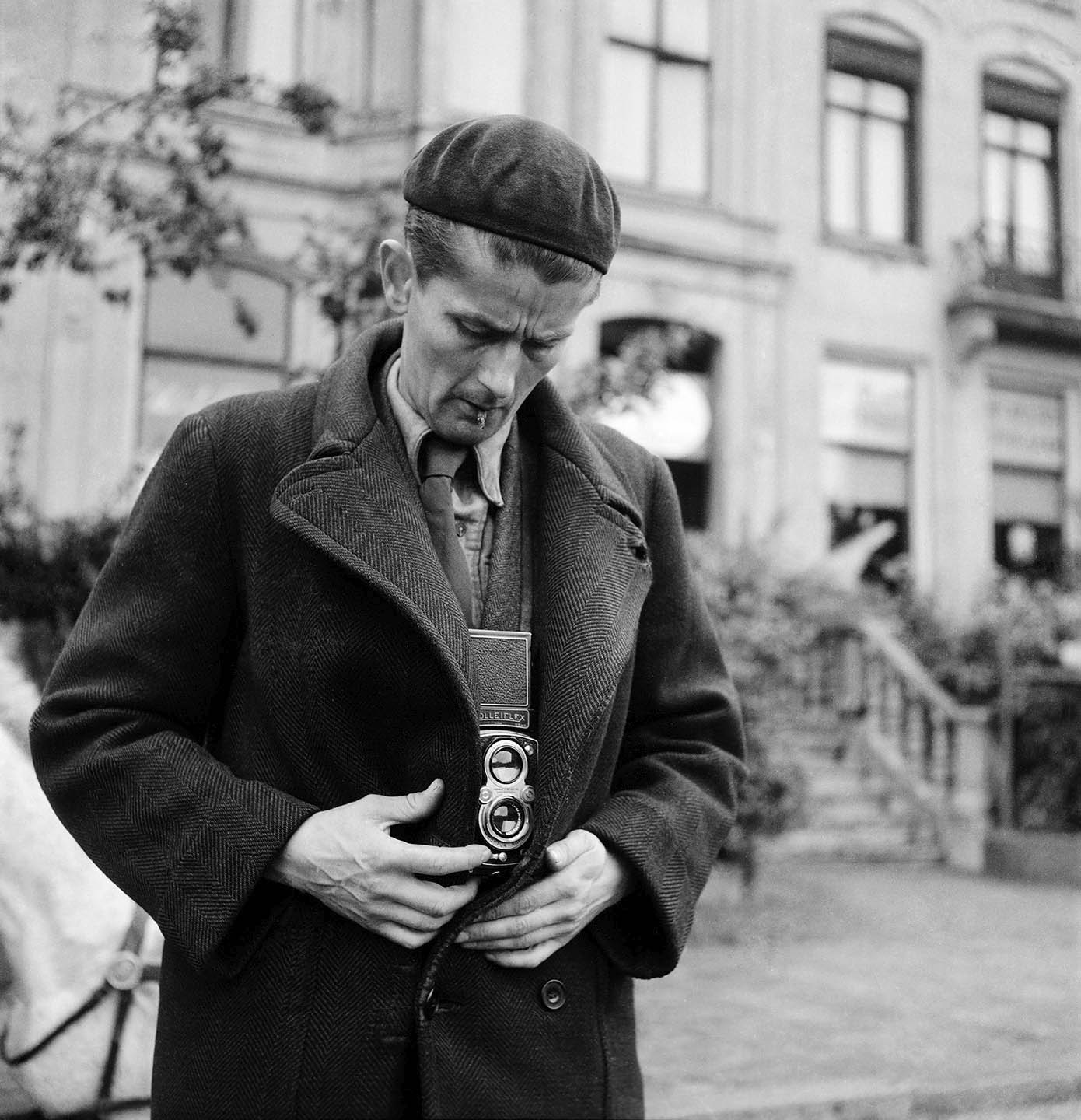
German guard post in front of the Kriegsmarine building at Emmaplein in Amsterdam. Visible in the foreground is the shadow of photographer Charles Breijer, operating his Rolleiflex camera from his pannier.
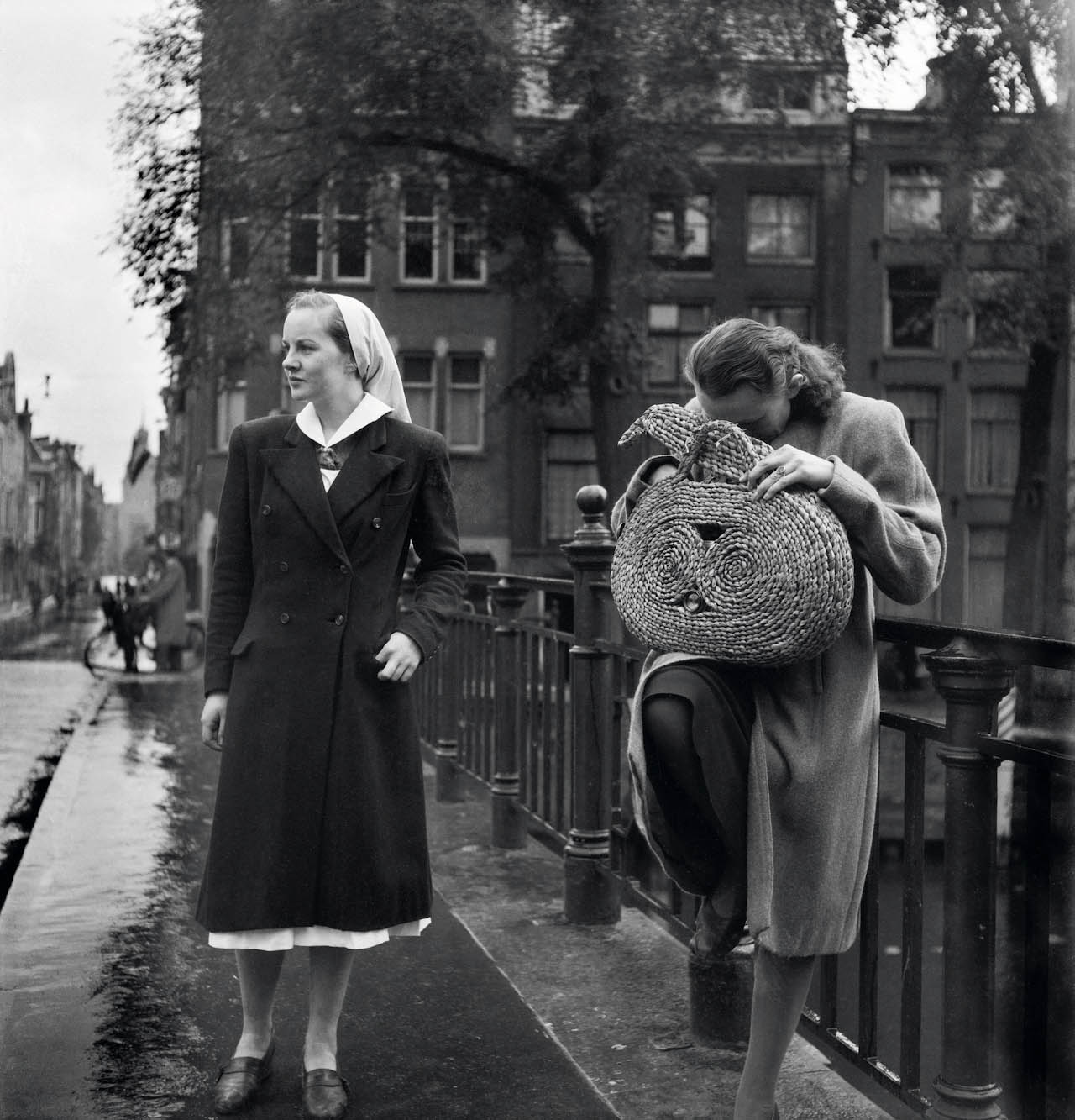
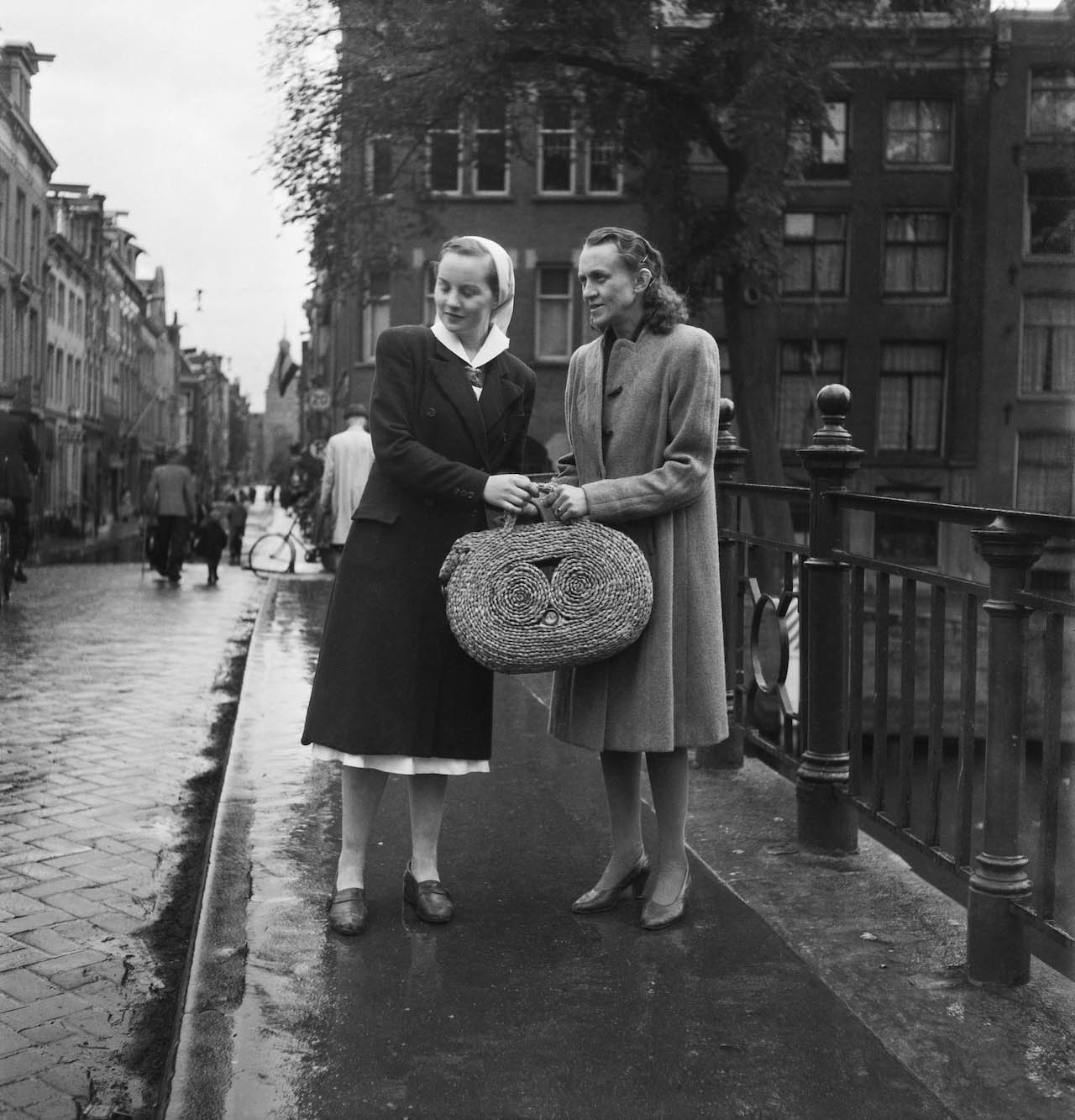
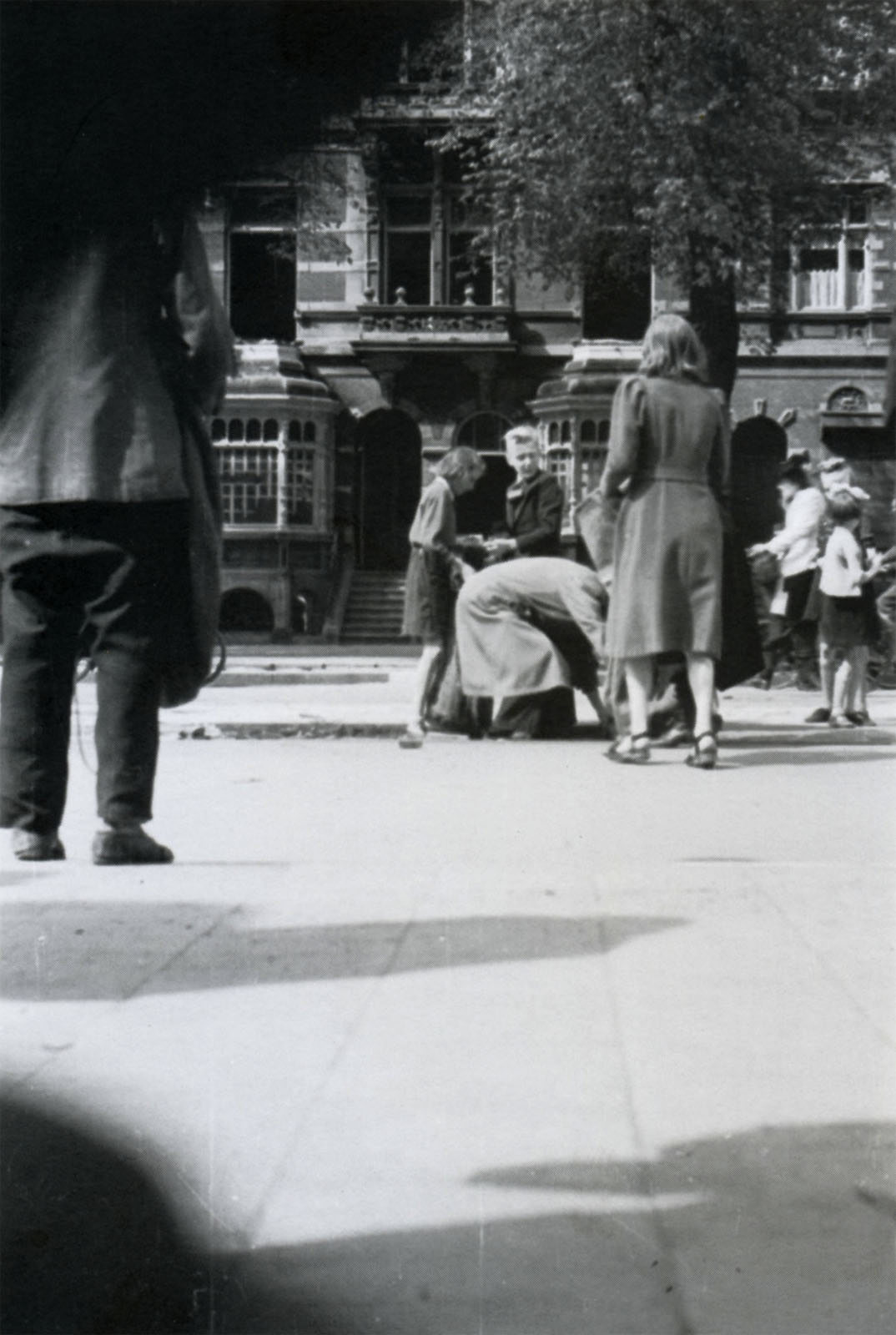
Charles Breijer (Dutch, 1914-2011) Andrea Domburg distracts bystanders while Margreet Meijboom-Van Konijnenburg takes the photo from her bag Nd Charles Breijer / Netherlands Photo Museum
Charles Breijer (Dutch, 1914-2011) Margreet Meijboom-van Konijnenbrug (right) demonstrates photographing from a shopping bag. Andrea Domburg, in a nurse’s uniform, accompanies her to keep an eye on the surroundings Nd Charles Breijer / Netherlands Photo Museum
In honour of Amsterdam’s 750th jubilee and the 80th remembrance of the Netherlands’ liberation, Foam presents The Underground Camera (De Ondergedoken Camera). The exhibition showcases images captured by the group of photographers who came to be known by the same name. They photographed the harsh realities of Amsterdam during the ‘Hunger Winter’ of 1944-1945, offering a rare glimpse into the courageous missions of the resistance group and their role in documenting the Nazi occupation. The exhibition features work by renowned Dutch photographers such as Cas Oorthuys, Charles Breijer and Emmy Andriesse.
The resistance group was led by Fritz Kahlenberg and Tonny van Renterghem. In November 1944, when the German administration banned public photography, they – alongside a network of fourteen photographers – worked in secrecy to document the occupation and the resistance. Their efforts, carried out at great personal risk, preserved a crucial visual record of this era. Kahlenberg, a German Jewish filmmaker who had migrated to Amsterdam in 1933, was involved in the forgery of identity cards for the resistance. Van Renterghem had a military background and was also actively involved in resistance work. Although he was not a photographer himself, he played a crucial role in the coordination between The Underground Camera and other resistance groups. The images taken by the photographers of The Underground Camera were intended to be smuggled to London to convince the Dutch government in exile of the need for Allied food droppings in the Netherlands. Today, the photos provide a realistic perspective of daily life in Amsterdam during the last months of the German occupation.
The historical material of the group was stored in various Dutch collections in the form of negatives, original photo prints, albums and picture books. The exhibition sheds light on topics such as the Hunger Winter, the resistance, the illegal press, instances of sabotage, the transport of weapons and the liberation by the Allied Forces.
The Underground Camera is the result of a close collaboration with the NIOD Institute for War, Holocaust and Genocide Studies. A publication by the same name, written by NIOD-researchers René Kok and Erik Somers, will be released in March 2025. The exhibition has been co-curated by Hripsimé Visser, former curator of photography at Stedelijk Museum Amsterdam, in collaboration with exhibition designer Jeroen de Vries.
The Mayor of Amsterdam, Femke Halsema, will open the exhibition at Foam.
The exhibition The Underground Camera is part of a research trajectory within Foam’s artistic programme, launched in early 2024 under the title The Camera as a Weapon, which included a pop-up exhibition of the same name and a symposium. In a time marked by conflict, Foam poses the question: what can photography do? Through this research line – which also includes the exhibition Sakir Khader – Yawm al-Firak – the museum responds to current events by presenting artistic practices in which the camera is used as a weapon. In light of the national observance of Remembrance Day on 4 May and the national celebration of Liberation Day on 5 May, het Amsterdams 4 en 5 mei comité, in collaboration with Foam en NIOD, will also present an exhibition. This public exhibition will be shown from 29th of April until the 6th of May on the Museumplein.
About The Underground Camera
Kahlenberg and Van Renterghem, the driving forces behind the operation, instructed a group of photographers from their main location at the Michelangelostraat 36 in Amsterdam South from where they oversaw their resistance activities. Many of the The Underground Camera photographers would later become internationally renowned. They concealed their cameras in handbags and jackets in order for them to take the pictures unnoticed. Many used Rolleiflex cameras which had a viewfinder on top, making it easier to take pictures from hip height. Given the danger of being involved in organised resistance, the photographers did not know who else was part of the collective and worked under neutral names such as ‘Netherlands Archive’ (‘Nederlands Archief’) and ‘Central Imagery Archive’ (‘Centraal Beeldarchief’). Just a few weeks after the liberation, in early June 1945, a selection of work was showcased in the exhibition The Underground Camera located in the studio of the photographer Marius Meijboom at the Keizersgracht in Amsterdam. The exhibition brought national recognition for The Underground Camera’s work, leading the group to officially adopt this name. Now, 80 years later, their legacy returns in a new exhibition along the same canal.
UNESCO included The Underground Camera in its Dutch Memory of the World Register, making it the first photographic legacy ever to receive this prestigious distinction.
The Underground Camera consisted of Tonny van Renterghem (1919-2009), Fritz Kahlenberg (1916-1996), Emmy Andriesse (1914-1953), Carel Blazer (1911-1980), Charles Breijer (1914-2011), Cornelis Holtzapffel (1916-1984), Ingeborg Kahlenberg-Wallheimer (1920-1996), Boris Kowadlo (1912-1959), Frits Lemaire (1921-2005), Marius Meijboom (1911-1998), Margreet Meijboom-van Konijnenburg (1910-onbekend), Cas Oorthuys (1908-1975), Hans Sibbelee (1915-2003), Ben Steenkamp (1917-1967), Ad Windig (1912-1996) and Krijn Taconis (1918-1979). Taconis was the first Dutch person to become a member of renowned international photography collective Magnum.
Press release from Foam
Margaretha van Konijnenburg (1910 – d.) Bicycle raid on the Weteringplantsoen in Amsterdam Autumn 1944
Hans Sibbelee (Dutch, 1915-2003) Children on Sarphatistraat remove the impregnated wooden blocks from between the tram rails, for the stove March 1945
The photographer took the photo from under his jacket
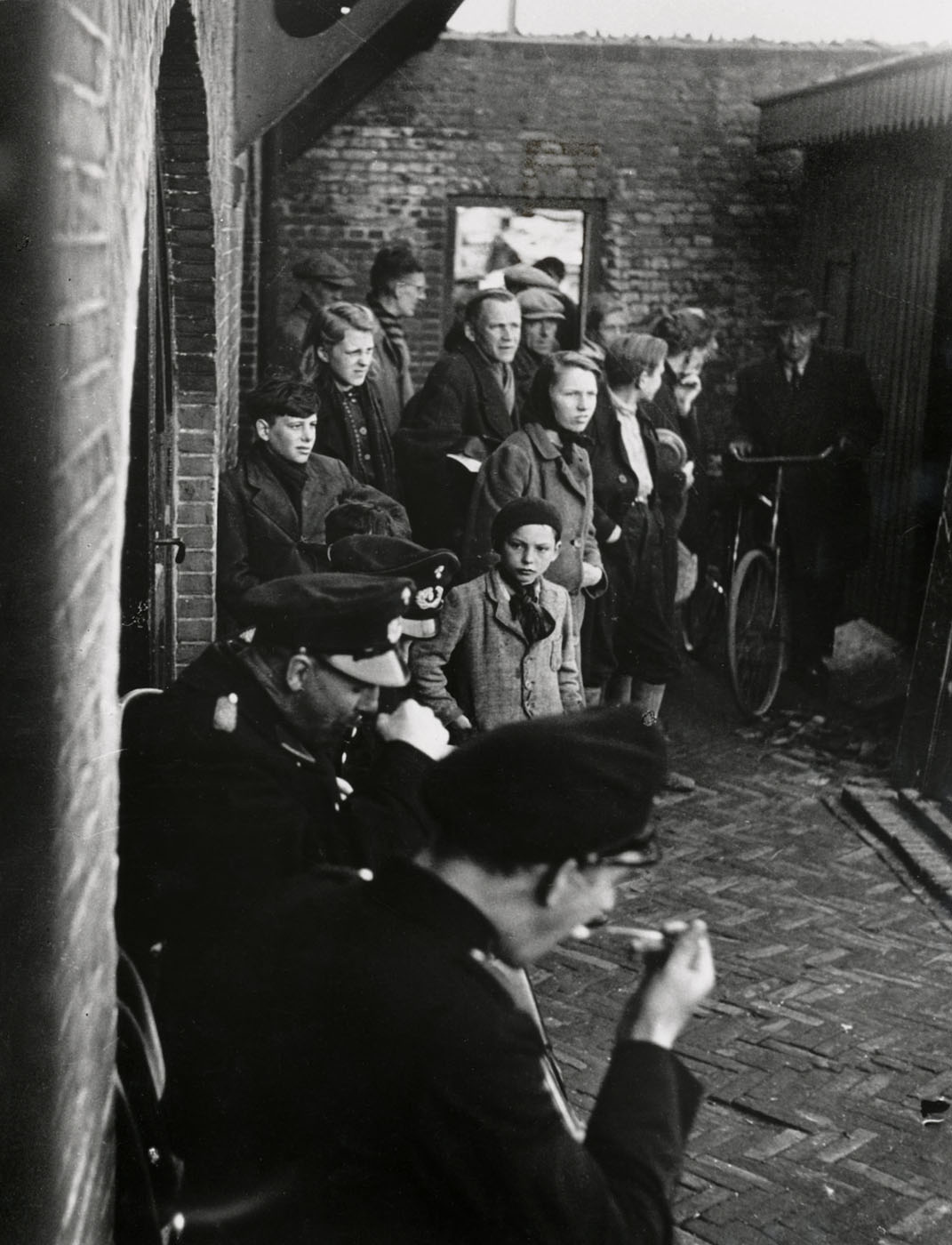
Krijn Taconis (Dutch, 1918-1979) Police officers guarding food supplies in the Amsterdam harbour to prevent looting will receive an extra meal Nd Krijn Taconis / Niod
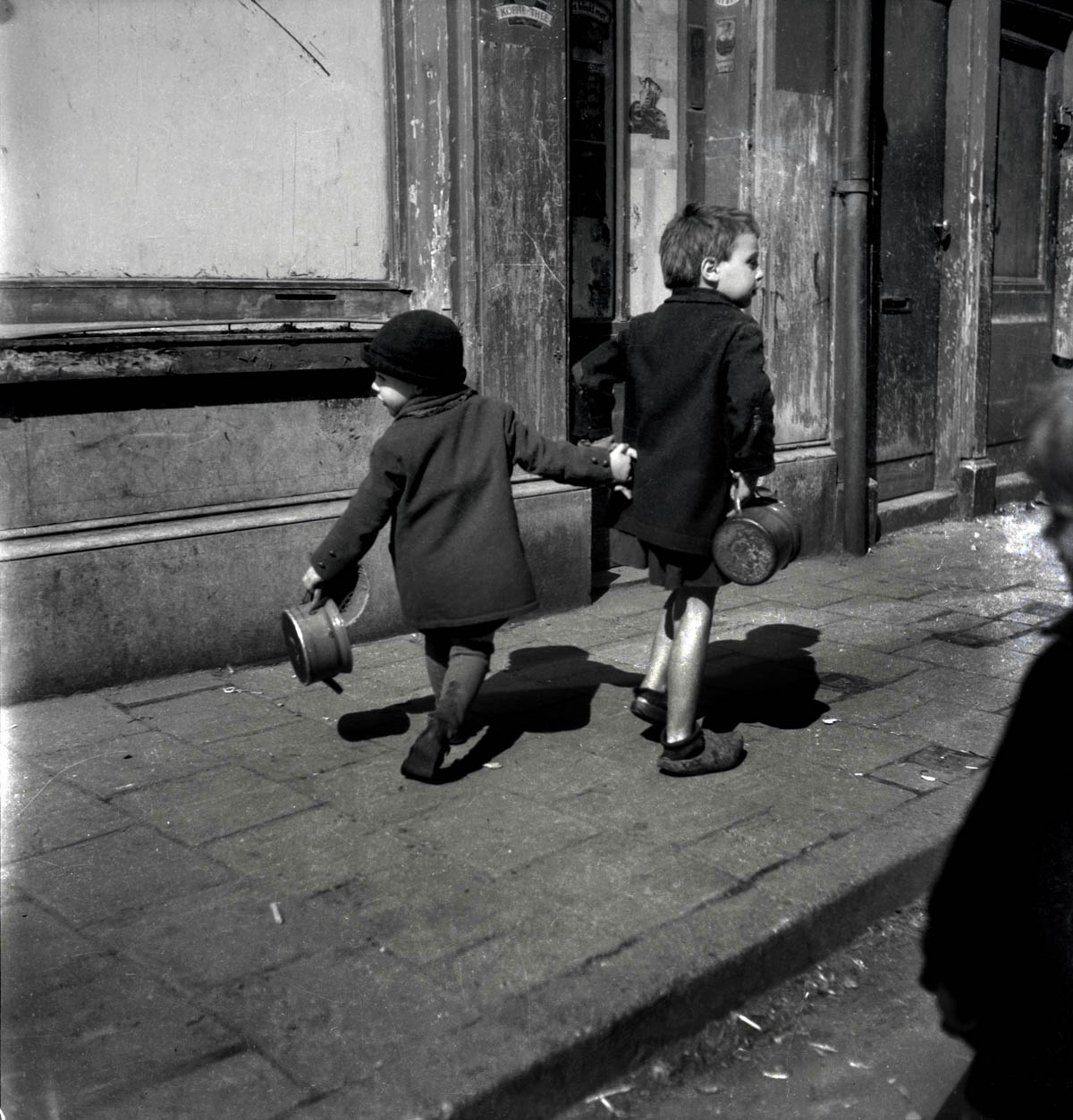
Emmy Andriesse (Dutch, 1914-1953) On the way to the soup kitchen Nd BBWO2 / Leiden University Library
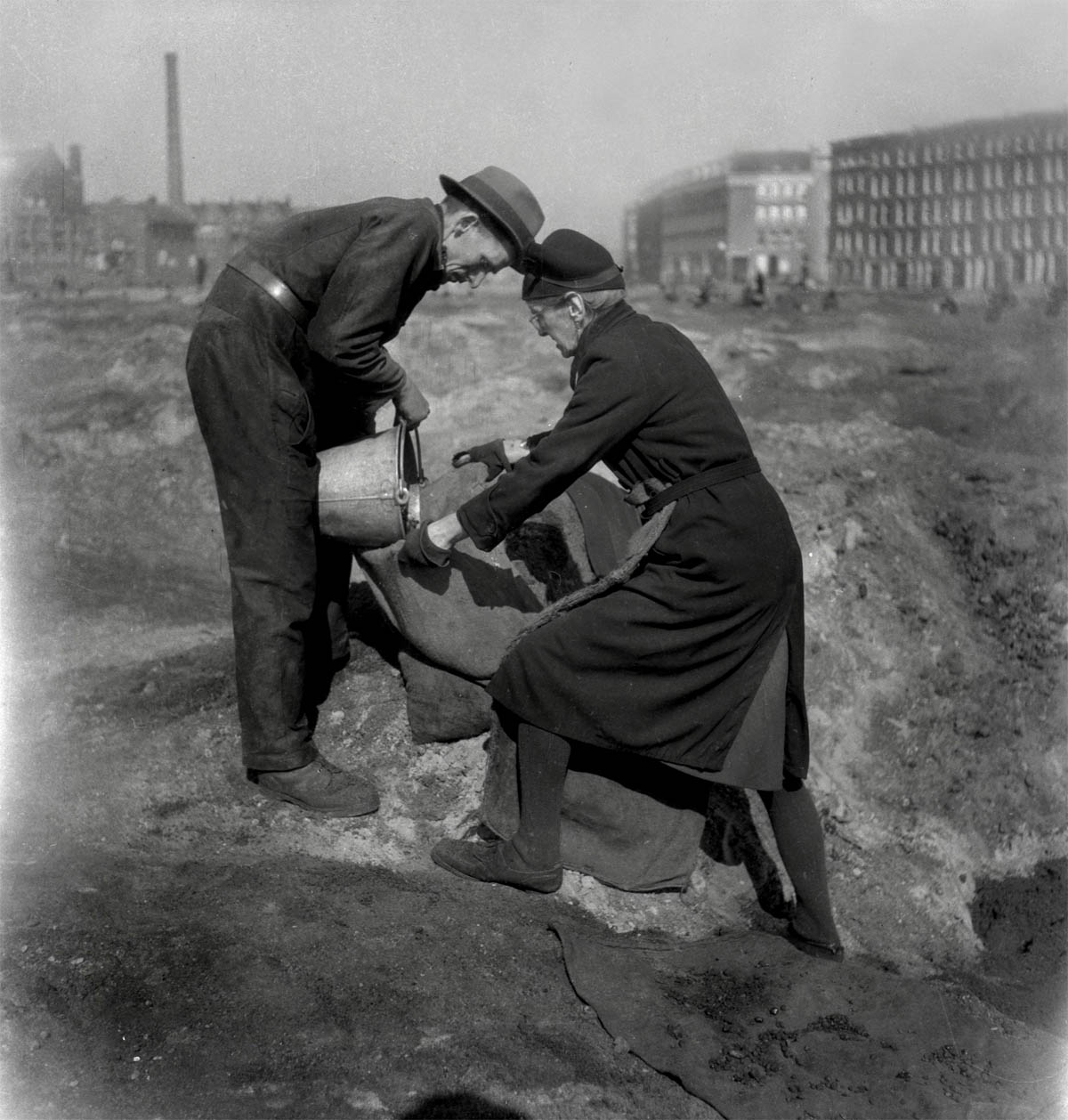
Emmy Andriesse (Dutch, 1914-1953) A man and a woman find some coal remains at the Weesperpoort station in Amsterdam Spring 1945
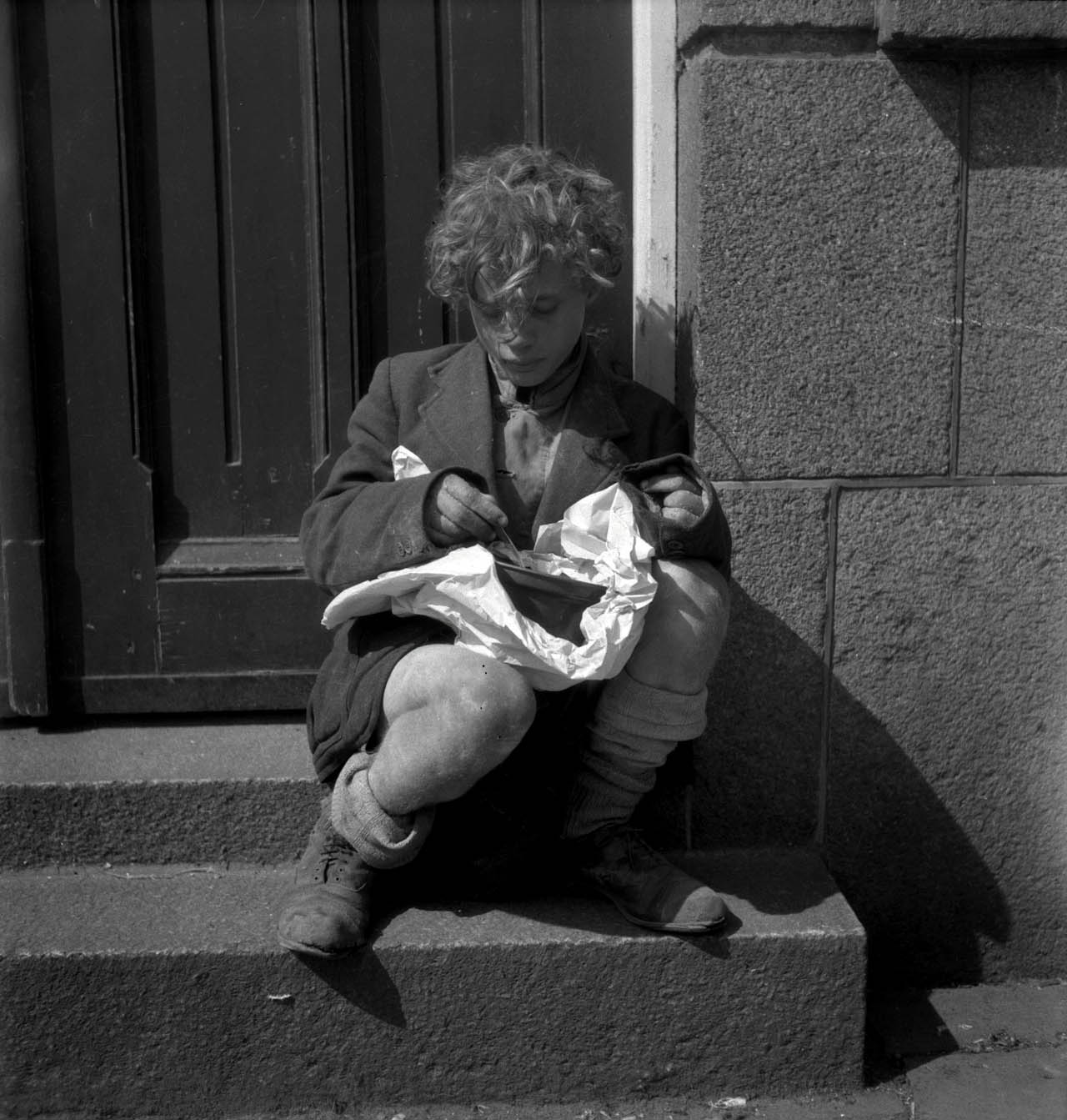
Emmy Andriesse (Dutch, 1914-1953) A boy eats a meal from a soup kitchen Nd
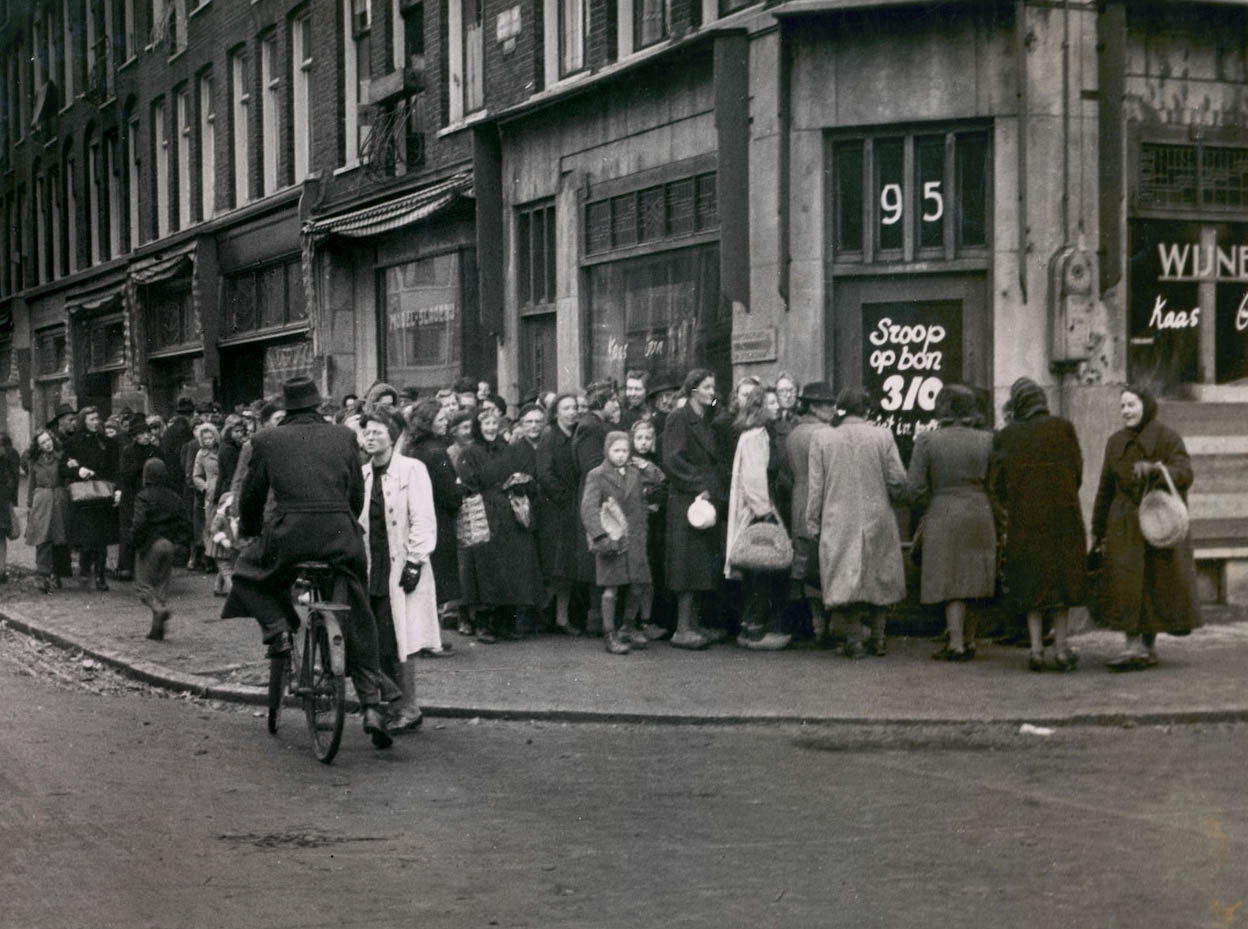
H.R. Kettner (Dutch, 1916 – d.) The distribution of groceries became increasingly difficult, resulting in long lines in front of, among other places, the Wijnbergh & Co. store on Middenweg Nd
Other photographs by The Underground Camera photographers
Emmy Andriesse (Dutch, 1914-1953) Amsterdam tijdens de hongerwinter (Amsterdam during the hunger winter) [1944-1945] Published 1947 Bound volume Closed: 29.21 x 22.86cm (11 1/2 x 9 in.) Open: 29.21 x 44.45cm (11 1/2 x 17 1/2 in.) National Gallery of Art Library, David K.E. Bruce Fund
Emmy Andriesse (Dutch, 1914-1953)
Emmy Eugenie Andriesse (Dutch, 1914-1953) was a Dutch photographer best known for her work with the Underground Camera group (De Ondergedoken Camera [nl]) during World War II. …
War years and the ‘Underground Camera’
In June 1941 Andriesse married graphic designer and visual artist Dick Elffers (a gentile with whom she had two sons, one who died young), but as a Jew during the Nazi occupation Andriesse was no longer able to publish and she was forced into hiding. At the end of 1944, with the assistance of the anthropologist Arie de Froe [nl] she forged an identity card and re-engaged in everyday life, joining a group of photographers, including Cas Oorthuys and Charles Breijer, working clandestinely as De Ondergedoken Camera. The photos that Andriesse made under very difficult conditions of famine in Amsterdam, include Boy with pan, The Gravedigger and Kattenburg Children are documents of hunger, poverty and misery during the occupation in the “winter of hunger” of 1944-1945.
Post-war
After the war, she became a fashion photographer and was an associate and mentor of Ed van der Elsken. She participated in the group show Photo ’48 and in 1952, together with Carel Blazer [nl], Eva Besnyö and Cas Oorthuys, the exhibition Photographie, both in Amsterdam’s Stedelijk Museum. Edward Steichen chose her 1947 portrait of a staid and elderly Dutch couple for the section ‘we two form a multitude’ in the Museum of Modern Art world-touring The Family of Man that was seen by an audience of 9 million. More recently (October 2006 – January 2007) she was included in a display of Twentieth Century European photography at the Barbican Art Gallery, London.
Andriesse’s last commission, the book The World of Van Gogh – published posthumously in 1953 – was not yet complete when she became ill and after a long battle with cancer, died at the age of 39.
Emmy Andriesse (Dutch, 1914-1953) Amsterdam tijdens de hongerwinter (Amsterdam during the hunger winter) (detail) 1947 Bound volume Closed: 29.21 x 22.86cm (11 1/2 x 9 in.) Open: 29.21 x 44.45cm (11 1/2 x 17 1/2 in.) National Gallery of Art Library, David K.E. Bruce Fund
Steeds grauwer werd het beeld de steden. Schoeisel en kleding raakten totaal versleten.
The image of the cities became increasingly grey. Footwear and clothing became totally worn out.
Emmy Andriesse (Dutch, 1914-1953) Amsterdam tijdens de hongerwinter (Amsterdam during the hunger winter) (detail) 1947 Bound volume Closed: 29.21 x 22.86cm (11 1/2 x 9 in.) Open: 29.21 x 44.45cm (11 1/2 x 17 1/2 in.) National Gallery of Art Library, David K.E. Bruce Fund
De etalages waren leeg of toonden alleen vervangingsmiddelen.
The shop windows were empty or only showed substitutes.
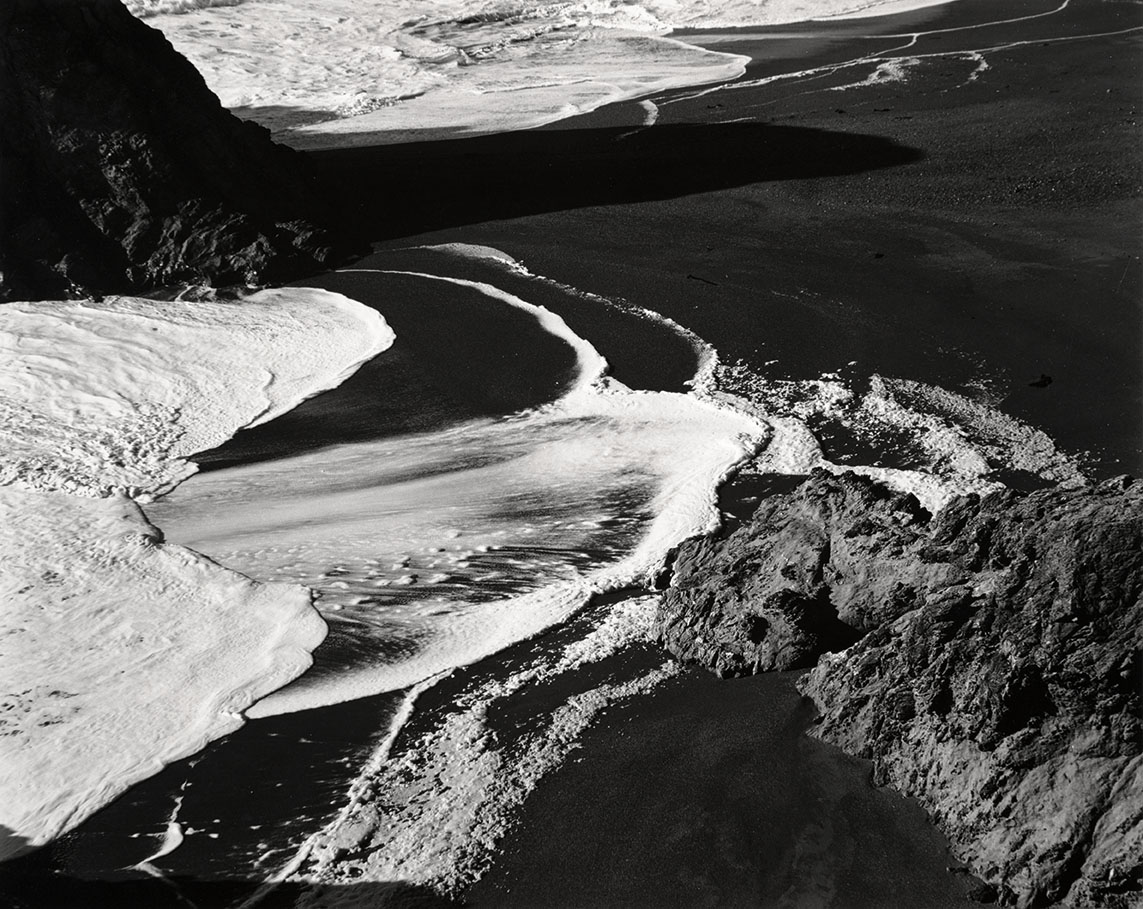
Edward Weston (American, 1886-1958) Surf, Bodega 1937 19 x 24cm Gelatin silver print Center for Creative Photography, The University of Arizona. Edward Weston Archive
Three week’s to the day since my hip replacement operation and I’m still in pain. I know, slowly slowly but it’s very frustrating…
Thus, I just have two words for you about this exhibition –
GREAT WESTERN!
Dr Marcus Bunyan
Many thankx to the Fundación MAPFRE for allowing me to publish the photographs in the posting. Please click on the photographs for a larger version of the image.
“Not I, nor anyone else can travel that road for you, You must travel it for yourself.
It is not far, It is within reach, Perhaps you have been on it since you were born, and did not know, Perhaps it is every where on water and land.”
Walt Whitman. Part of Song of Myself from Leaves of Grass. 1855
I never try to limit myself by theories, I do not question right or wrong approach when I am interested or amazed – impelled to work. I do not fear logic, I dare to be irrational, or really never consider whether I am or not. This keeps me fluid, open to fresh impulse, free from formulae; and precisely because I have no formulae – the public who know my work is often surprised, the critics, who all, or most of them, have their pet formulae are disturbed. And my friends distressed.
I would say to any artist – don’t be repressed in your work – dare to experiment – Consider any urge – if in a new direction all the better – as a gift from the Gods not to be lightly denied by convention or a priori concept. Our time is becoming more and more bound by logic, absolute rationalism; this is a straitjacket I – it is the boredom and narrowness which rises directly from mediocre mass thinking.
The great scientist dares to differ from accepted ‘facts’ -think irrationally – let the artist do likewise.
Edward Weston 28 January, 1932 from The Daybooks of Edward Weston. Vol. ll Horizon Press, New York 1966
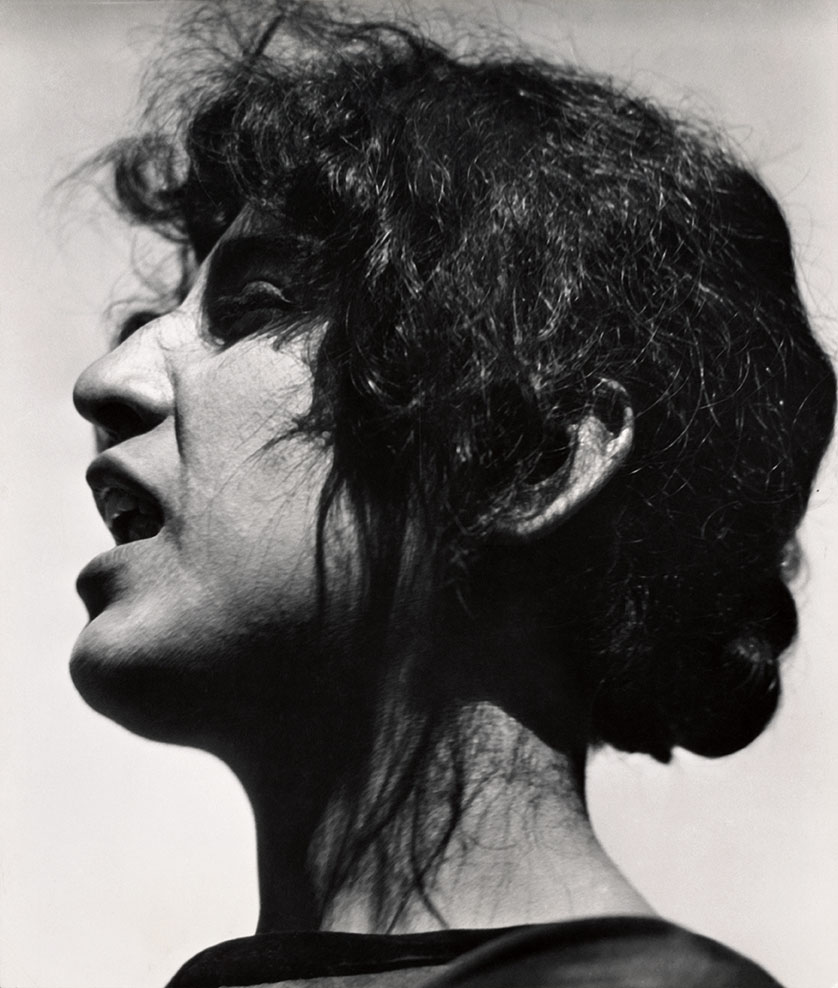
Edward Weston (American, 1886-1958) Guadalupe Marín de Rivera 1924 20.8 x 17.9cm Gelatin silver print Center for Creative Photography, The University of Arizona. Gift of Ansel and Virginia Adams
Strongly linked to the landscape and to North American cultural history, Edward Weston’s work, in its extreme simplicity and originality, allows us to appreciate a unique perspective on the process of consolidation of photography as an artistic medium and its relevant role in the context of modernity in the visual arts. The exhibition Edward Weston. La matèria de les formes (Edward Weston. The Matter of Forms) is conceived as an anthology that covers the different phases of the artist’s photographic production.
A pioneer in the use of a modern photographic style, his use of the large-format camera gives rise to richly detailed black and white images of extraordinary clarity. His technical expertise and his affection for nature and form led to the development of a body of work in which iconic images of still lifes, nudes, landscapes and portraits stand out. His images are essential for understanding the new aesthetic and new American lifestyle that emerged in the United States between the wars.
The exhibition, curated by Sergio Mah, consists of around two hundred photographs grouped into seven sections. The exhibition tour is completed with numerous documentary material and is conceived from a European perspective on the legacy of modern American photography. An aesthetic and conceptual counterpoint to the photographic modernism in Europe that emerged with the first avant-garde of the 20th century.
The emancipation of photography
Edward Weston was one of the pioneers, along with Alfred Stieglitz and Paul Strand, in defending the emancipation of photography from other artistic disciplines. In this sense, his work contributed decisively to demonstrating, in this early period of photography, the aesthetic and perceptual dimension of the medium, the capacity to express aesthetic qualities in the same way as painting or sculpture.
Figuration and abstraction
The technical mastery of the photographic medium leads Weston to a formalism in which framing becomes one of the most relevant elements of his work. Weston eliminates any anecdotal aspect and focuses on the motif that interests him, and does so with such realism and exaltation of the two-dimensional nature of photography, which often results in an abstract image. In this way, the artist shows that figuration and abstraction do not exempt one from the other, but are perfectly compatible.
Exhibition organised with the support of the Center for Creative Photography at the University of Arizona, Tucson.
Text from the Fundación MAPFRE website translated from the Spanish by Google Translate
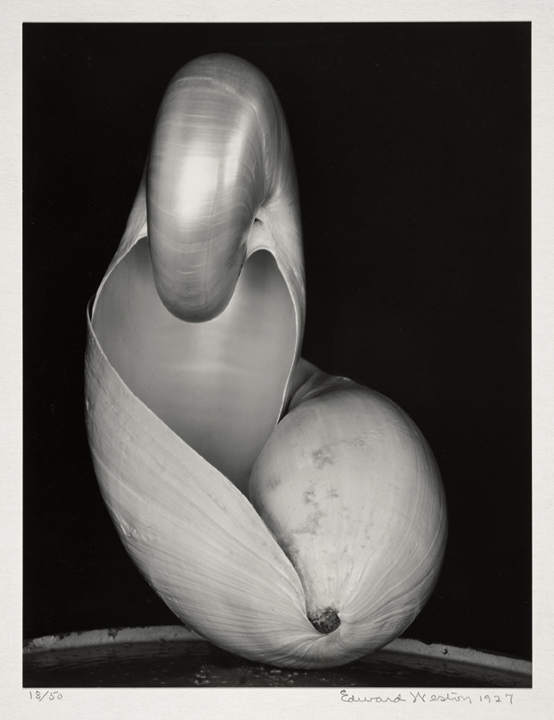
Edward Weston (American, 1886-1958) Two Shells 1927, print about 1933 24.1 x 18.4cm Gelatin silver print The J. Paul Getty Museum, Los Angeles
Edward Weston (American, 1886-1958) Pepper No. 30 1930 22.8 x 17.7cm Gelatin silver print Courtesy by Trockmorton Fine Art
Highlights
Fundación MAPFRE presents the exhibition Edward Weston. The Matter of Forms, dedicated to the five decades of the career of this North American artist, one of the most important figures in modern photography. In addition, through the work of the artist himself, the exhibition aims to offer a pedagogical reflection on the history of the medium and its relevance as an aesthetic and perceptive discipline, apart from the more traditional plastic arts; specifically, painting.
Key points
The emancipation of photography
Edward Weston was one of the pioneers, along with Alfred Stieglitz and Paul Strand, in defending the emancipation of photography from other artistic disciplines. In this sense, his work is essential to understanding the aesthetic and perceptive capacity of the medium in its beginnings. This capacity allows photography to express aesthetic qualities such as beauty, pain or ugliness at the same level as painting or sculpture.
Figuration and abstraction
The technical mastery of the photographic medium leads Weston to a formalism where framing becomes one of the most relevant elements of his work. In this sense, he eliminates any anecdotal aspect and focuses on the motif that interests him, and he does so with such realism and with such exaltation of the two-dimensional character of photography that he ends up obtaining an abstract image as a result. In this way, the artist shows that figuration and abstraction do not exclude each other, but are perfectly compatible.
Pepper No. 30
Edward Weston took this photograph, one of the most representative of his entire career, at the beginning of August 1930. It was not the first time he had photographed a vegetable, nor a pepper. The artist himself spoke about this image: “It is a fully satisfactory classic: a pepper, but more than a pepper. It is abstract, in the sense that it exists completely outside the subject. It has no psychological attributes, it does not awaken human emotions: this new pepper takes us beyond the world we know in the conscious mind.” In the light of this photograph and the artist’s words, the innovative character of his work can be distinguished, which transcended not only modern American photography, but also European photography.
The exhibition
Weston’s work, strongly linked to the landscape and to North American cultural history, in its extreme simplicity and originality, reveals a unique perspective on the process of consolidation of photography as an artistic medium and its relevant role in the context of modernity in the visual arts. The exhibition Edward Weston. The Matter of Forms is conceived as an anthology that covers the different phases of the artist’s photographic production. From his initial interest in Pictorialist approaches to his consolidation as one of the central figures in the affirmation of the poetic and speculative value of direct photography. A pioneer in the use of a modern photographic style, his work is characterised by the use of a large-format camera, which allows him to offer richly detailed black and white images of extraordinary clarity. His mastery of technique, together with his love of nature and form, led him to develop a photographic production in which iconic images of still lifes, nudes, landscapes and portraits stand out. As a co-founder of the photography collective Group f/64, his images are key to understanding the new North American aesthetic and lifestyle that emerged in the United States between the wars.
The exhibition, grouped into seven sections and curated by Sérgio Mah, consists of around 200 photographs and a large amount of documentary material. The exhibition is conceived as a European look at the legacy of modern North American photography. An aesthetic and conceptual counterpoint to the modern photography that emerged in Europe with the first avant-garde of the 20th century.
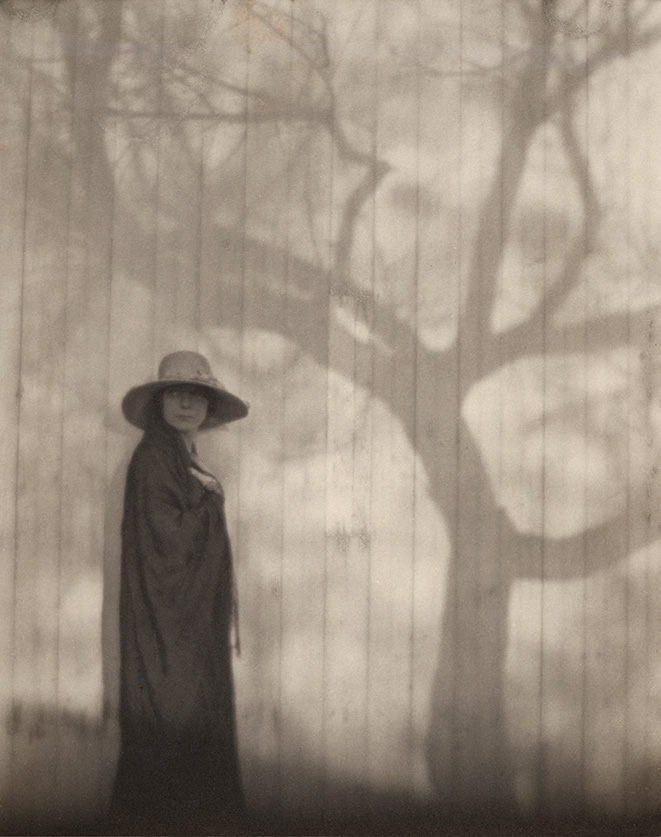
Edward Weston (American, 1886-1958) Prologue to a Sad Spring 1920 23.8 x 18.7cm Platinum print Center for Creative Photography, The University of Arizona. Johan Hagemeyer Collection/Purchase
1 /
Edward Weston began photography very early, thanks to a Kodak Bulls-Eye No. 2 camera that his father gave him when he was just sixteen. Although he was practically self-taught, in 1911 he opened his first photographic establishment in a suburb of Los Angeles. His early works reveal the influence of the Pictorialist atmosphere of the time: impressionistic views and pastoral subjects with soft or slightly blurred focus, scenography and expressive poses.
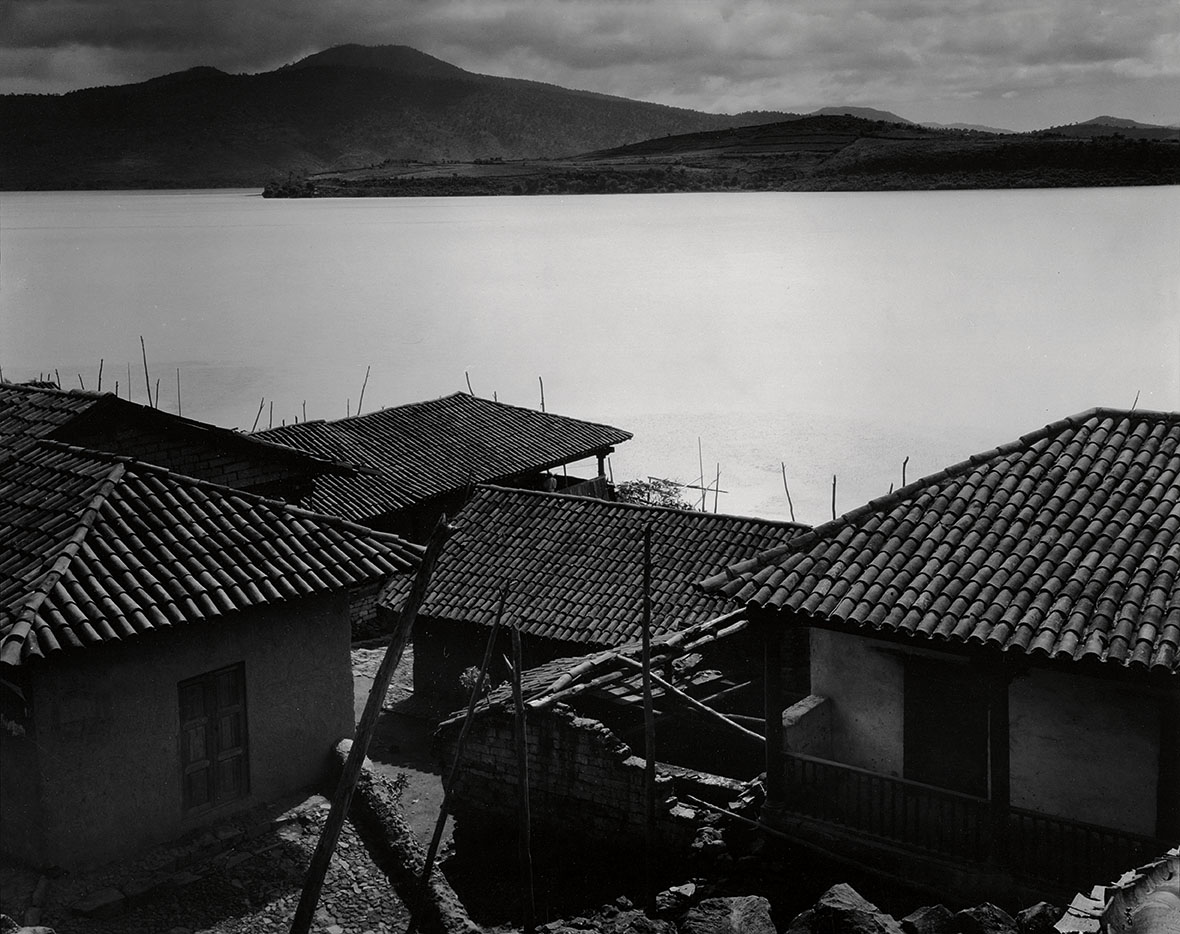
Edward Weston (American, 1886-1958) Janitzio, Mexico 1926 20.4 x 25.2cm Gelatin silver print Center for Creative Photography, The University of Arizona. Edward Weston Archive/Gift of the Heirs of Edward Weston
2 /
Weston’s dissatisfaction with this artistic approach to photography, which sought to assimilate itself to painting, coincided with the appearance of other photographers with similar ideas, such as Alfred Stieglitz and Paul Strand, whom he met in New York in 1922. In 1923 he set sail for Mexico accompanied by one of his sons and the photographer Tina Modotti. There he found a true renaissance of the arts and culture, and he came into contact with artists such as Diego Rivera, Frida Kahlo and Rafael Sala. He expanded his visual horizon and tackled new themes, photographing objects, figures and motifs far from their original context, turning them into suggestive and extraordinary elements. It was then that he realised that true photographic art is intuitive and immediate, that the elimination of everything that is accessory constitutes the essence of his creative talent.
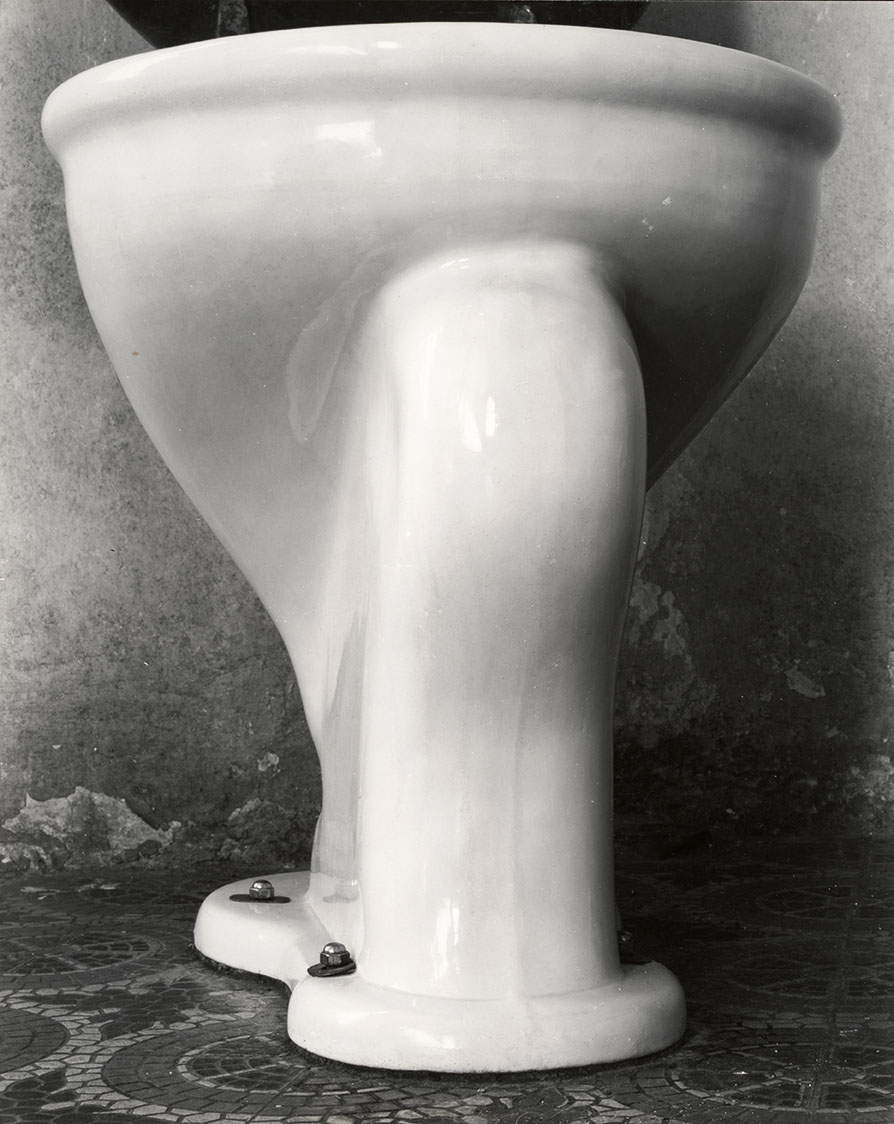
Edward Weston (American, 1886-1958) Excusado, Mexico October 1925 24.1 x 19.1cm Gelatin silver print Center for Creative Photography, The University of Arizona. Edward Weston Archive
3 /
From 1927, influenced by the humanism of Walt Whitman and his work Leaves of Grass, he felt attracted, in the words of Sérgio Mah, by “the extraordinariness of banality”. Fruits, shells and vegetables became the protagonists of his works, and he made one of his most famous photographs: a toilet, an unusual object as an artistic subject, with the title Excused. In these images, Weston accentuated the two-dimensionality of the motifs, since it was one of the characteristics of photography that interested him. He looked for details as a way of fragmenting, isolating and approximating the photographed object, eliminating the sense of depth, a technique particularly notable in still lifes with dark backgrounds, as is the case with his photographs of peppers.
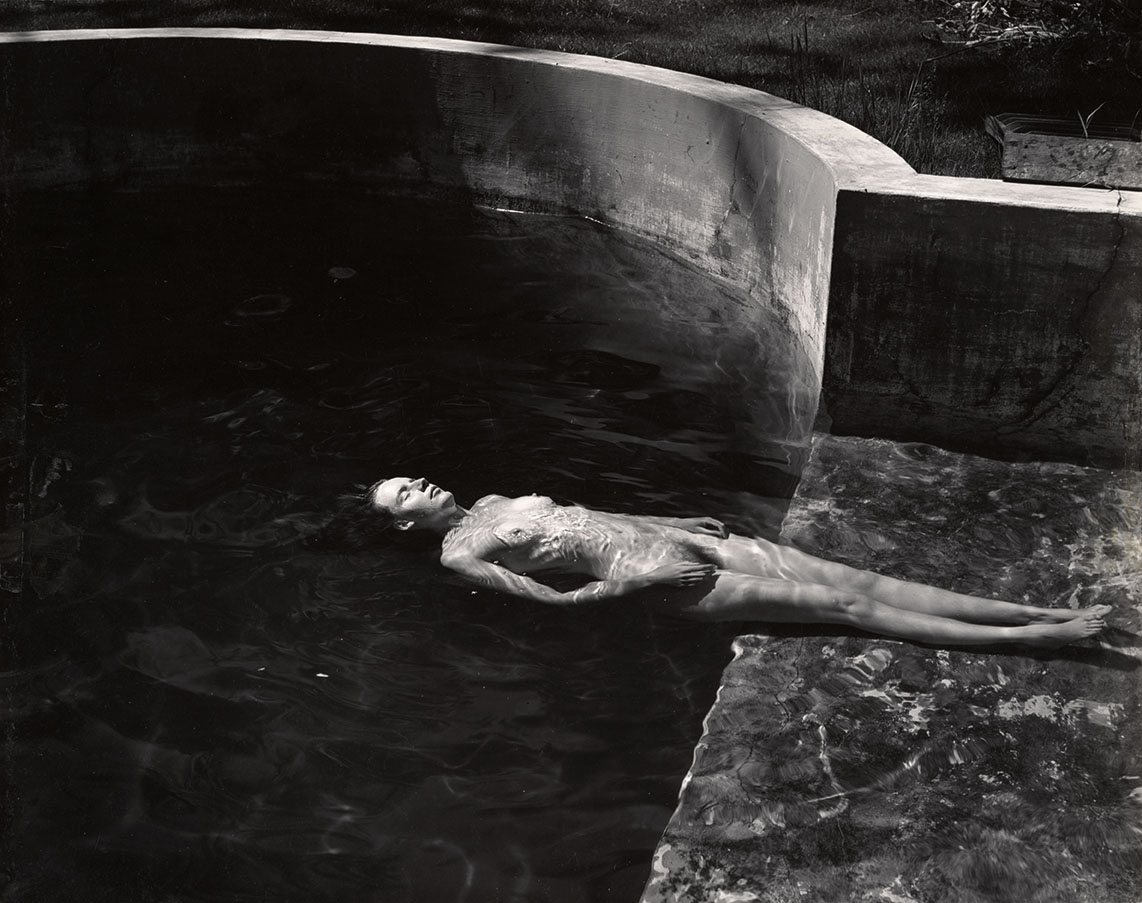
Edward Weston (American, 1886-1958) Floating Nude 1939 19.3 x 24.2cm Gelatin silver print Center for Creative Photography, The University of Arizona. Edward Weston Archive
4 /
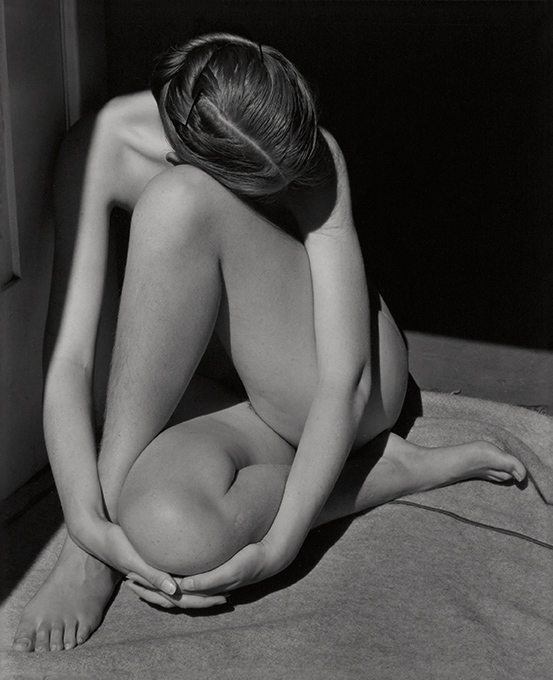
From 1926, after leaving Mexico, Weston photographed several sets of nudes. In these nudes, the photographer’s gaze varies depending on the model. In some cases, the frame is wide and even shows the face, while in others the gaze is more segmented and focuses on parts of the body as a way of cutting out and accentuating the shapes within the frame. It must be recognized that eroticism is a quality present in some of these photographs. However, it is incorrect to conclude that this type of gaze prevails in most of the nudes he photographed. Above all, Weston observes the body as a formal reality. The beauty and sensuality that these bodies suggest is reflected in the play of lines, shadows and contours they offer.
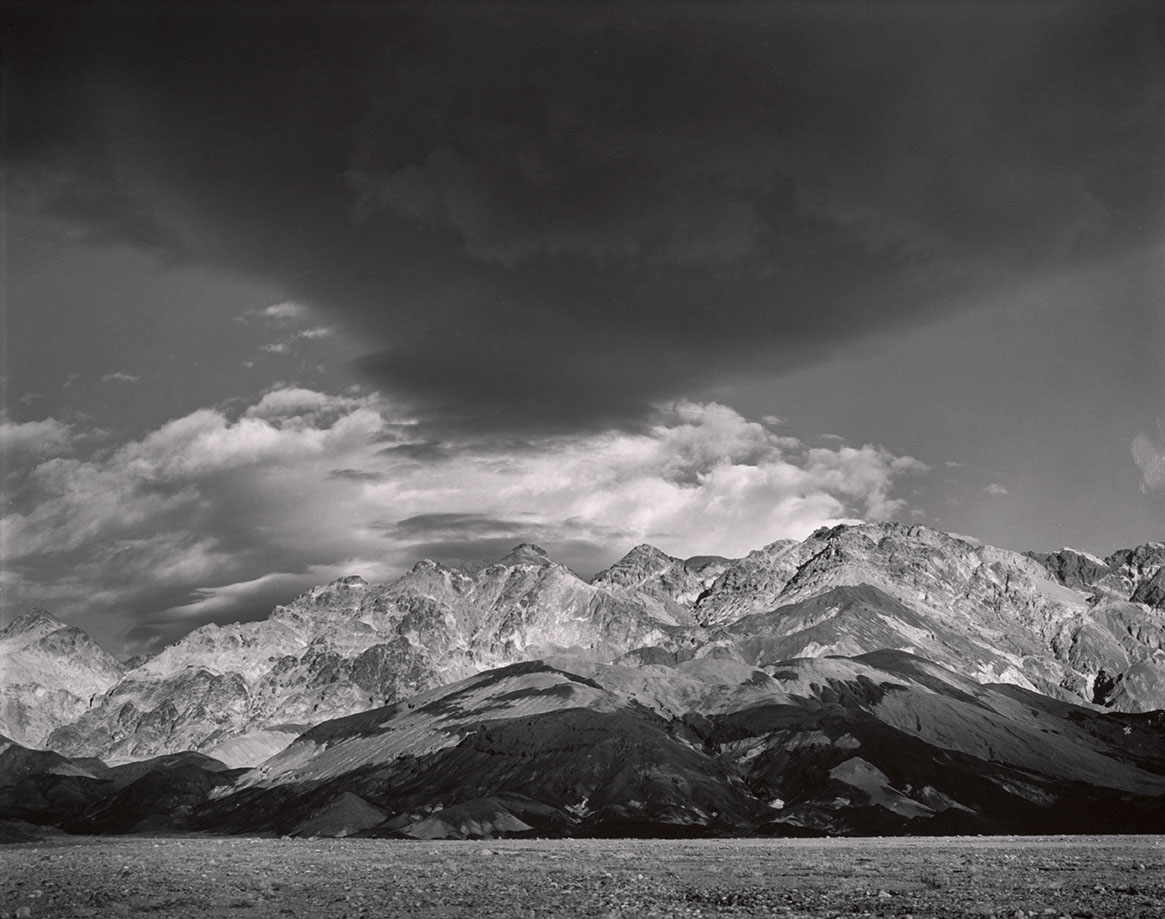
Edward Weston (American, 1886-1958) Clouds, Death Valley 1939 20.4 x 25.2cm Gelatin silver print Center for Creative Photography, The University of Arizona. Edward Weston Archive
5 /
From the late 1920s and into the following decades, landscape became a central element in Weston’s work. The artist photographed in the desert near Palm Springs, California, as well as in New Mexico, Arizona, and other Californian areas near his home in Carmel. In these works, the horizon and the depth of the background become a structural part of his works: the panoramic shots highlight the sublime character of the landscape. It was also during this period that Weston began to be interested in meteorological phenomena such as rain, the configuration of clouds, and the aridity of the territory.
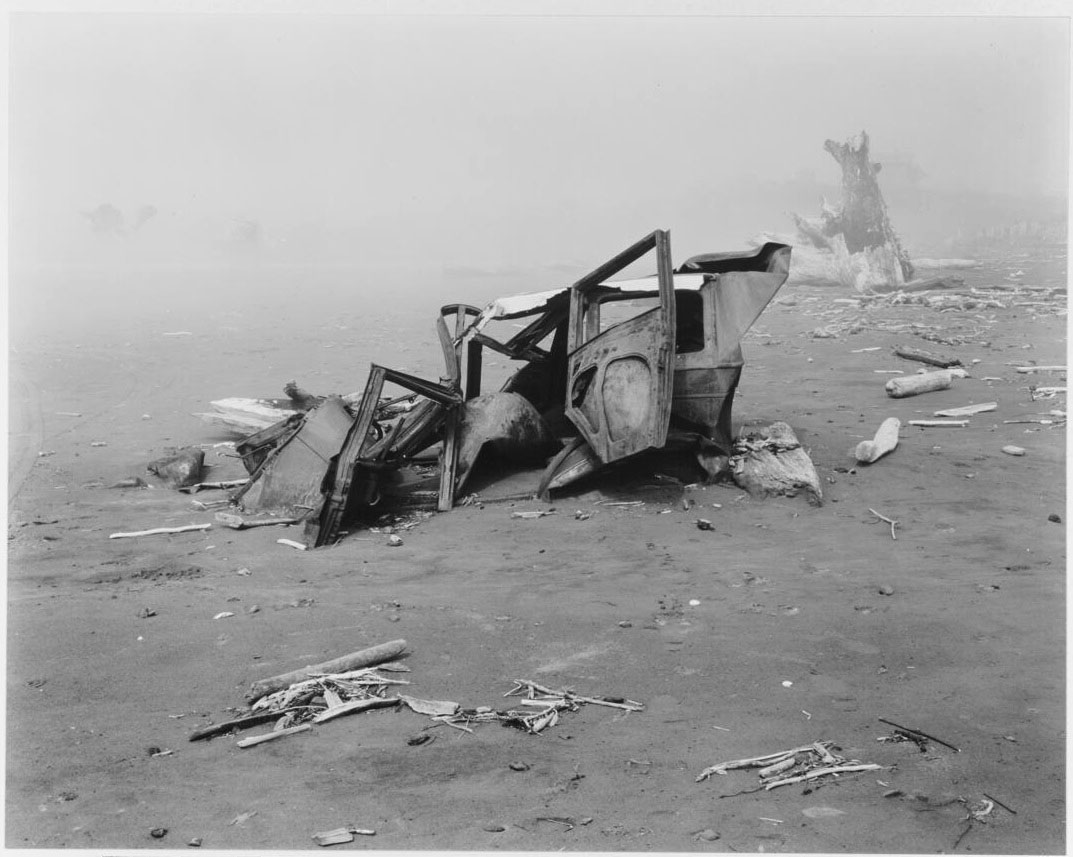
Edward Weston (American, 1886-1958) Crescent Beach, North Coast 1939 24.3 x 19.2cm Silver print mounted on board The Huntington Library, Art Museum, and Botanical Gardens
6 /
Over the years, Weston’s work increasingly acquired a “dense and melancholic” patina, an aspect that is accentuated by the tones that the images acquire. This characteristic is particularly evident in the photographs he took in 1941 to illustrate Leaves of Grass, a project for which he traveled throughout much of the United States for nearly two years. The images he captured in cemeteries in Louisiana and Georgia stand out, as well as those of abandoned, destroyed and burned buildings where the interest in formal aspects predominates and in which a critical and disillusioned commentary on reality and American society can already be seen.
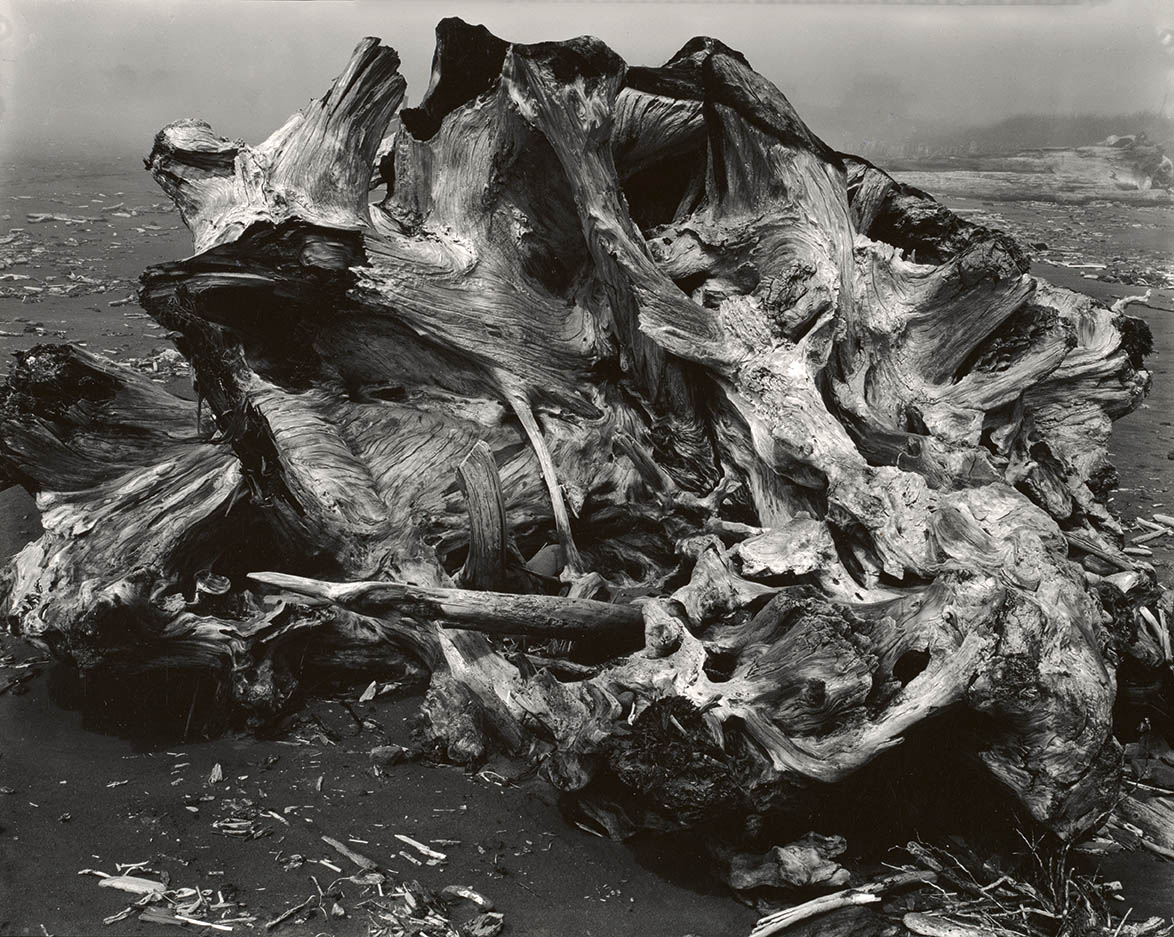
Edward Weston (American, 1886-1958) Drift Stump, Crescent Beach 1937 20.3 x 25.2cm Gelatin silver print Center for Creative Photography, The University of Arizona. Edward Weston Archive
7 /
In the vicinity of Point Lobos, California, was the log cabin built by his son Neil on Wildcat Hill, where Weston moved in 1938. In this area of California, the artist found the wild nature that he had sought in distant places. His images from this period denote less compositional and formal rigidity and show the cycles of nature in the territory, the wild beauty, the trees, stones and rocky landscapes that seem to arise and remain in a time that is stopped. These images express a certain melancholy and solitude, while allowing the viewer to rediscover nature in all its splendour.
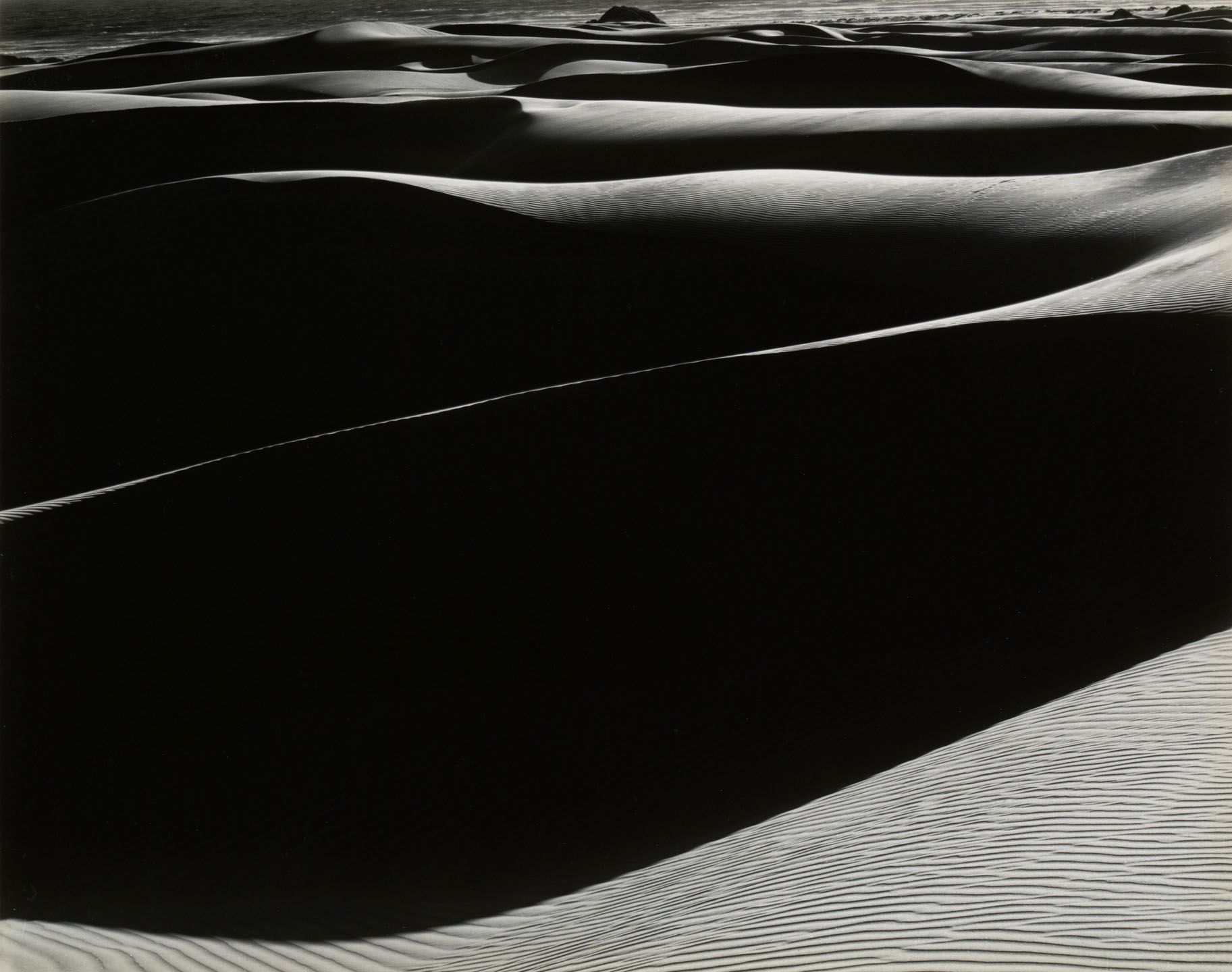
Edward Weston (American, 1886-1958) Dunes, Death Valley 1938 20.4 x 25.1cm Gelatin silver print Center for Creative Photography, The University of Arizona. Edward Weston Archive
Catalogue
The catalogue accompanying this exhibition reproduces all the photographs on display. In addition, it includes essays by Sérgio Mah, its curator, by Rebecca Senf, who discusses the artist’s relationship with Mexico, and by Jason Weems, who focuses on Weston’s landscapes and vegetable photographs. It also includes a series of reflections by the artist himself on photography taken from his diaries.
The publication of the catalogue, published in Spanish and Catalan by Fundación MAPFRE, also has a co-edition in Italian published by Dario Cimorelli Editore.
Text from Fundación MAPFRE translated from the Spanish by Google Translate
Edward Weston (American, 1886-1958) Nude 1936 23.4 x 19.1cm Gelatin silver print Center for Creative Photography, The University of Arizona. Gift of the Estate of A.Richard Diebold, Jr.
Author of a vast and diverse body of work spanning five and a half decades, Edward Weston (1886-1958) is one of the great figures in the history of modern photography, partly because his work allows us to reflect on the distinctive qualities of photography as a technical, aesthetic and perceptual category.
His first creative experiments reveal a momentary adherence to the pictorialist tendencies of the time, but he would later stand out as one of the protagonists of a new generation of American photographers who sought to refocus the artistic axis of photography based on its exceptional capacity to represent the most diverse subjects in the world with rigor, clarity and sobriety.
With their extreme simplicity and originality, the exceptional quality of Weston’s images also lies in the way in which he was able to rethink and articulate the extraordinary realistic and objective capacity of photography with its aesthetic, poetic and phenomenological potential, contributing to expanding the horizon of the subjective experience of the image. In this way, Weston enunciated the unique role of photography in the panorama of the visual arts of his time.
Weston was an immensely prolific photographer and his work brings together a whole series of photographic themes, types and genres: portraits, nudes, still lifes, natural and urban landscapes, object photography, architecture… This anthological exhibition aims to cover the entirety of Weston’s photographic career, which began at the beginning of the 20th century and was uninterrupted until the end of the 1940s. The selection of works aims to go well beyond the period in which Weston took most of the images that gave him wide critical and institutional recognition. The truth is that a more complete and heterogeneous approach to his work allows us to summon other layers of aesthetic appreciation, broadening the understanding of the depth and articulations that Weston developed in the various fields he explored. Furthermore, it offers the opportunity to point out the aspects and affinities (in the gaze, in the construction of the image or in its peculiar relationship with certain themes) present throughout his career, emphasizing the coherence of his imagery, as well as the nuances and moments of transition that occurred in it.
Sérgio Mah Curator
Text from Fundación MAPFRE translated from the Spanish by Google Translate
Edward Weston (American, 1886-1958) Dunes, Oceano 1936 24.1 x 18.9cm Silver print mounted on board The Huntington Library, Art Museum, and Botanical Gardens
From an early age, Edward Weston showed an interest in developing a creative side of photography apart from his commercial work. His early experiments show the influence of painting and reveal his attention and attachment to the pictorialist atmosphere of the time. These photographs include impressionistic views, pastoral subjects with soft or slightly blurred focus, numerous staged portraits that explore expressive poses and combinations with shadows and graphic elements of the environment.
The two periods he spent in Mexico, between 1923 and 1924 and then between 1925 and 1926, were decisive in Edward Weston’s creative career. There he began to explore new themes and genres and his visual horizon expanded significantly. He covered a wide variety of subjects, types of places, figures and things, parts of things, appropriate objects, motifs taken from their original context and repositioned in another interpretative framework. At the same time, his visual style completely sheds any reminiscence of the Pictorialist phase. A photography of great technical, formal and compositional rigour was consolidated. Weston realised that he had the capacity to transform trivial things into suggestive and extraordinary. He was clear that the art of photography lies fundamentally in the moment of making the image, in the way in which the photographer contemplates the subject and makes decisions according to the variables inherent in the photographic device. For him, the process is instinctive. This way of seeing – intuitive, intense and immediate – which seeks to isolate the subject, eliminating the accessory, the unnecessary, anything that could divert or attenuate the intensity of the photographic vision, constitutes the essence of Weston’s creative talent.
From 1927, Weston began a series of still life photographs. In these images he fully reveals the principles and characteristics of his work: the desire to represent the timeless essence of a natural object and, correlatively, to emphasise the duplicative and perceptive capacities of the photographic medium.
The compositions are carefully conceived. In the space of the image, there is a calculated conformity between the dimension of the forms and the format of the image. Here it is important to reiterate the focus on detail as a defining aspect of Weston’s imagery, evident in these still lifes and also in other aspects of his work. Weston understands the vision of detail as a way of fragmenting, isolating and bringing our gaze closer to certain things, accentuating the two-dimensional character of the image, its closed and opaque nature, without depth or horizon, evident above all in still lifes with dark backgrounds, such as photographs of peppers, but also in the various images of plants, trees, rocks and stones that he has been making since the early 1930s.
Weston left Mexico in 1926. In the following years, he made several series of nudes. This is not a new subject. He had already made some important ones before, including one of Anita Brenner’s back and another of her son Neil, whose torso is cut out in an image that evokes ancient Greek statues. In the nudes, the photographer’s gaze varies depending on the model. In some cases, the framing is wide and even shows the face, while in others the gaze is more segmented and focuses on parts of the body as a way of cutting out and accentuating the shapes within the frame. We can recognise that eroticism is a quality present in some of these photographs. It is incorrect, however, to conclude that this gaze prevails in most of his nudes. Weston observes the body mainly as a formal reality. The beauty and sensuality that these bodies suggest are based above all on the play of lines, shadows and contours that they provide.
From the late 1920s, and with greater intensity in the following decades, the landscape genre occupies a central place in Weston’s photographic production. In 1927, the artist takes photos in the Californian desert near Palm Springs. In the following years, he travels through New Mexico, Arizona and other areas of California, such as Oceano, Death Valley, Yosemite, the Mojave Desert and Point Lobos, near his home in Carmel. In these various places, he captures wide views of inhospitable territories in which there are no signs of human presence or intervention. The horizon line and the breadth of the territory become structuring motifs in his work. The impetus for these images is a feeling of admiration for the epic and immeasurable nature of these natural landscapes. Beyond his choice of panoramic shots, the images reveal other aspects and elements of nature, such as meteorological phenomena, rain, cloud formations and variations in sunlight, often in conjunction with their visual effect on the arid land or the vegetation and unique morphology of these territories. It is a vision sensitive to the transformative nature of the landscape, subject to environmental and geological changes.
Gradually, and with greater intensity from the 1940s onwards, Edward Weston’s imagery became denser and more melancholic, not only in terms of the selection of subjects, but also in the tonalities of the images. This tendency is particularly evident in the photographs he takes for an edition of Leaves of Grass, the masterpiece of the poet Walt Whitman. He travels throughout the United States for two years. He revisits many of the recurring themes in his work, but the large number of images he takes of cemeteries in Louisiana and Georgia stand out. These are photographs in which his interest in formal aspects, texture and light predominates. All the subjects are seen as an integral part of a geography that is at once physical, social and mental. On the other hand, there are a lot of images of abandoned, destroyed and burnt buildings, of rubbish and things destined to disappear. We can identify that the themes of finitude and death contribute to an imagery increasingly characterised by loneliness, melancholy, and decadence. For the first time in his work, the images suggest a disillusioned and critical commentary on American reality, on the relationship between nature and culture, continuity and change, alienation and social tension.
In 1938, Weston moved with Charis Wilson to the wooden house built by his son Neil on Wildcat Hill, near Point Lobos, California. The artist spent long periods taking photos in this coastal region. He wandered through areas that he knew well. The images show a nature permeated with cycles, rhythms and forces, a macrocosm where Weston found the material to continue his work. At Point Lobos, Weston encountered a wild, dazzling and ineffable beauty that he had always sought in distant places. In the trees, forests, stones and rocky landscapes, the photographer found a vital energy that led perception towards a diffuse time, contrary to the linearity of history, alien to modernity. Nature then emerged as a theme and setting that allowed him to think and experience a renewed gaze (spontaneous, intuitive, aesthetic), a gaze that was both concrete and metaphysical that allowed him to rediscover nature.
Text from Fundación MAPFRE translated from the Spanish by Google Translate
Edward Weston (American, 1886-1958) Charis, Lake Ediza 1937 19.1 x 24.1cm Silver print mounted on board The Huntington Library, Art Museum, and Botanical Gardens
KBr Fundación MAPFRE Av. del Litoral, 30 08005 Barcelona Phone: +34 932 723 180
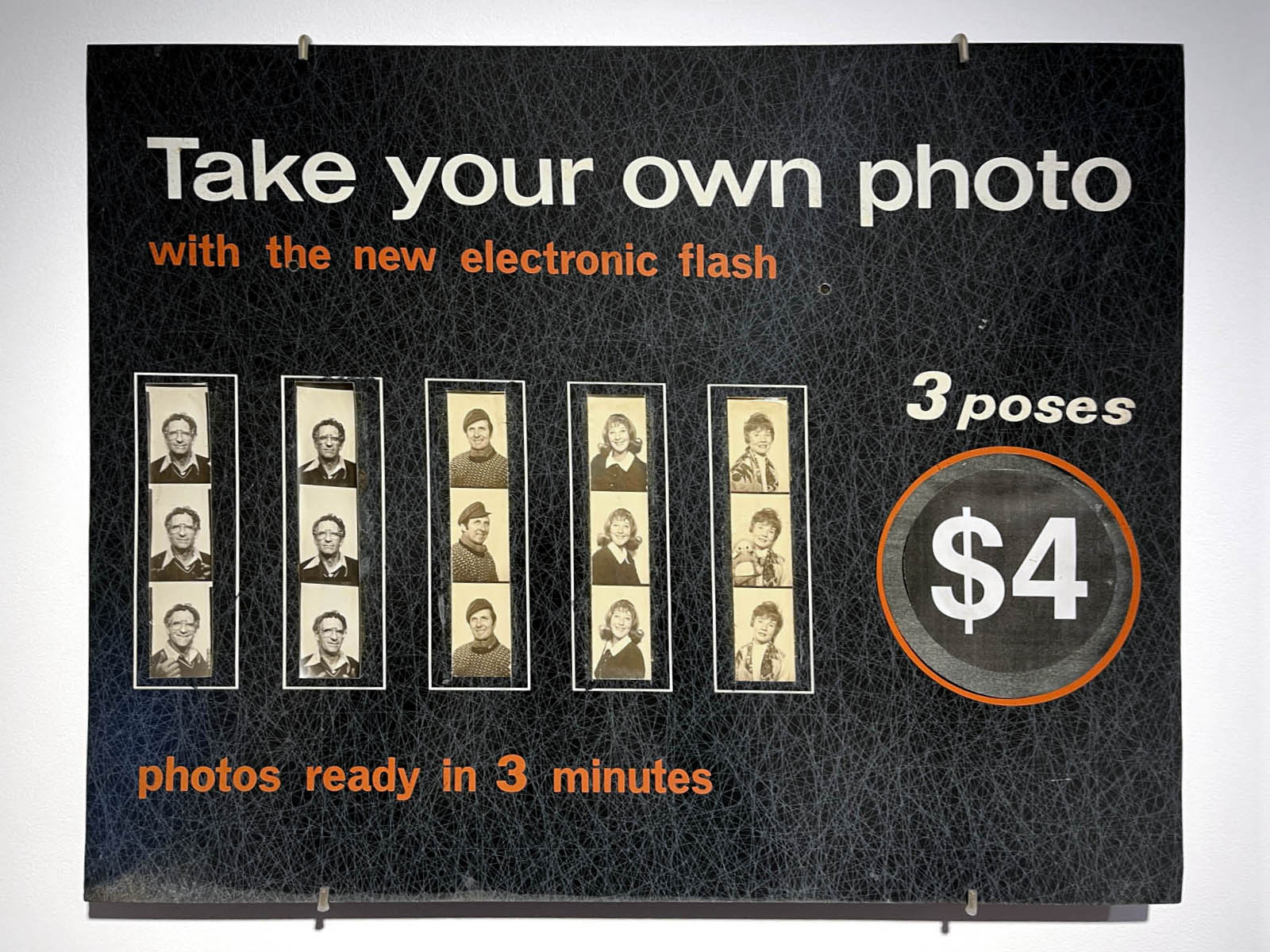
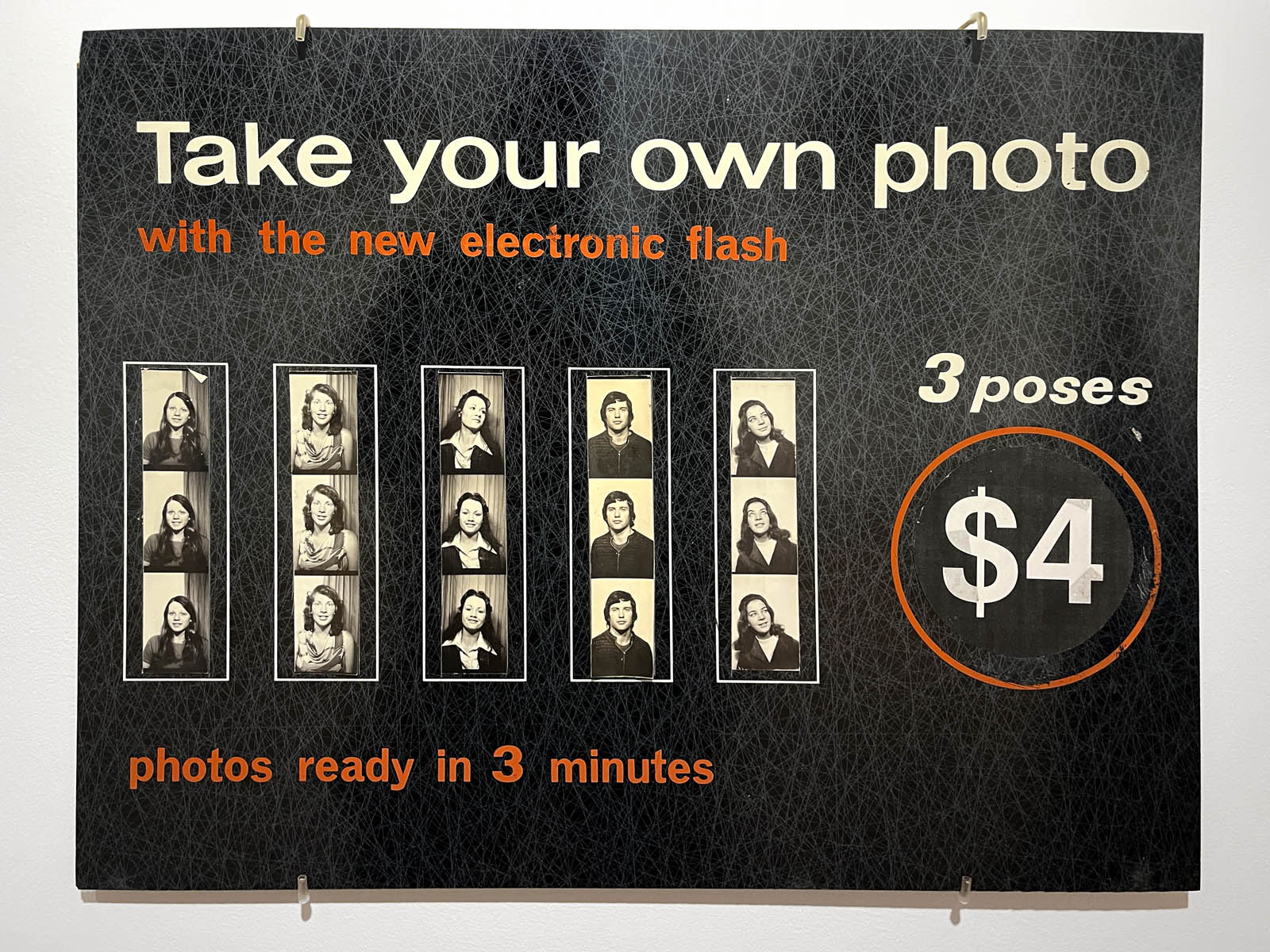
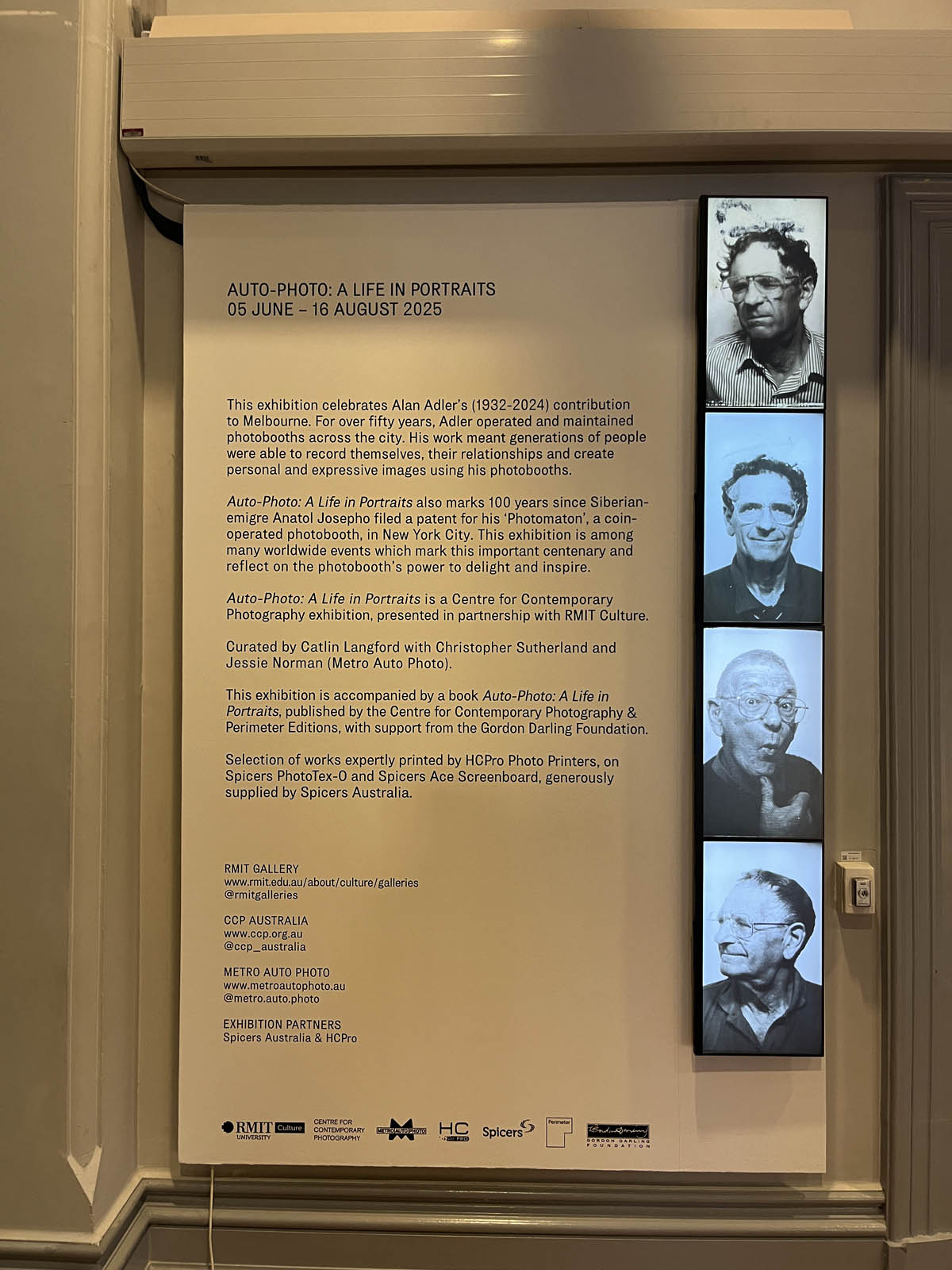
Curated by Catlin Langford with Christopher Sutherland and Jessie Norman (Metro Auto Photo)
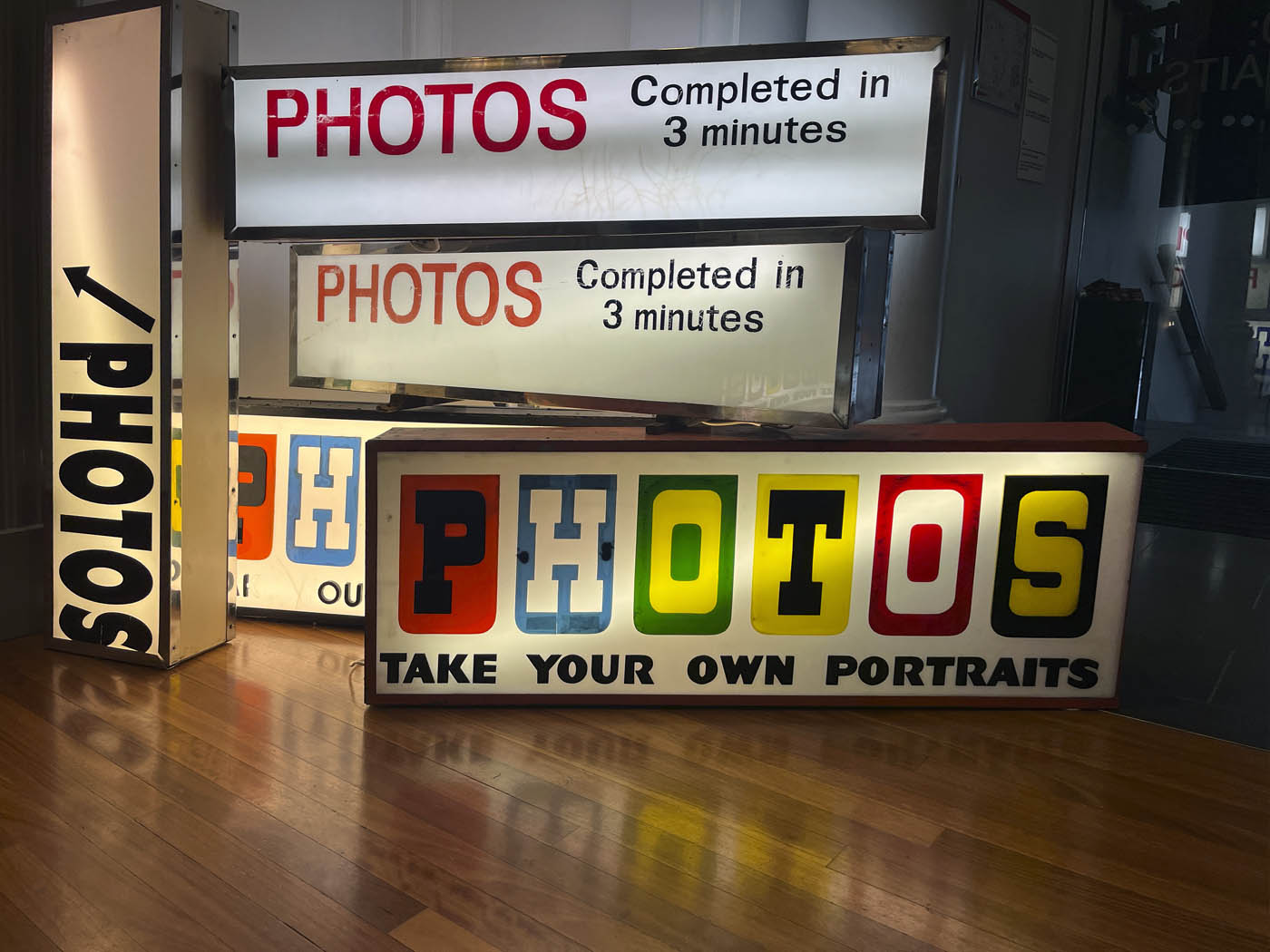
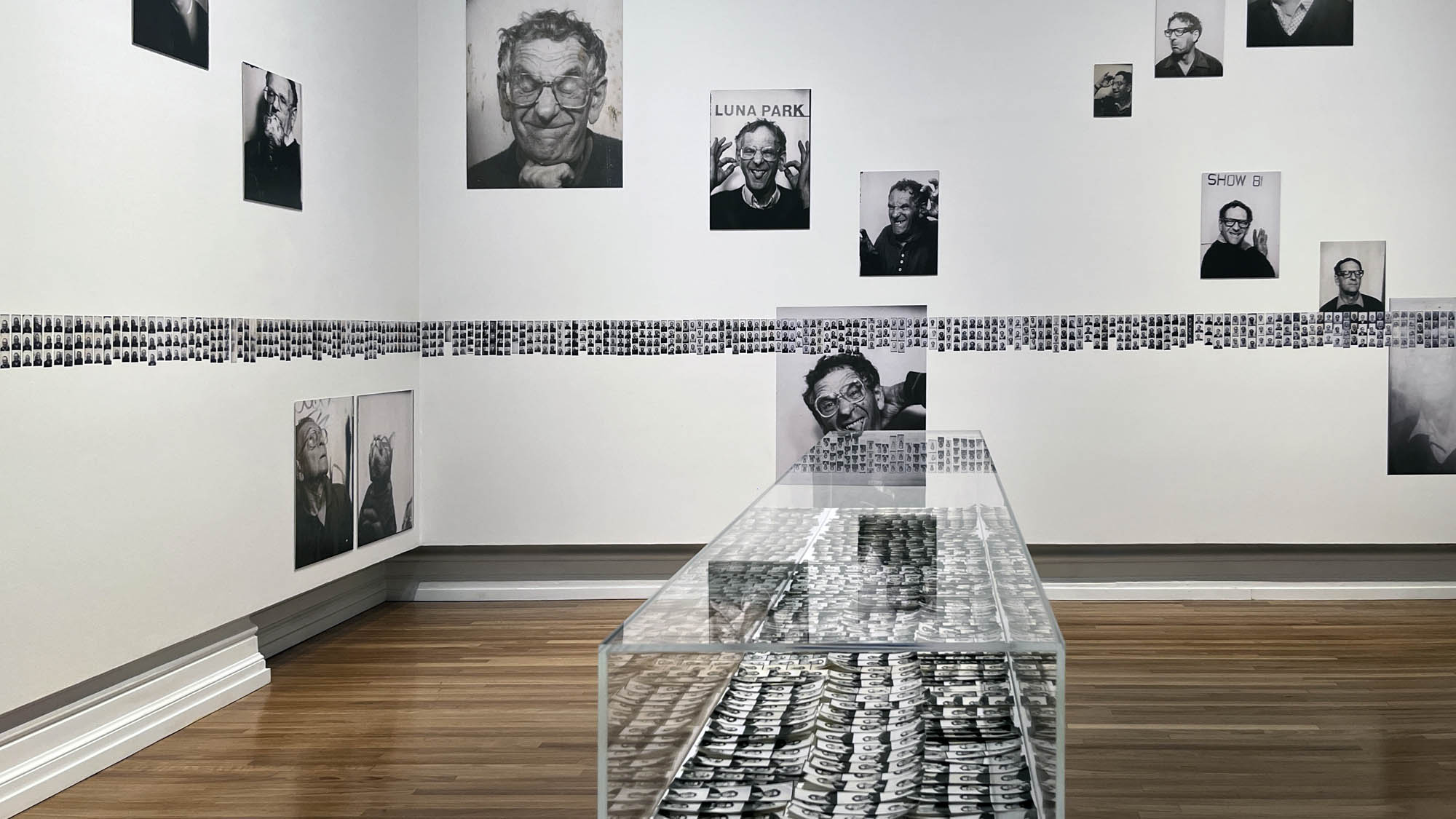
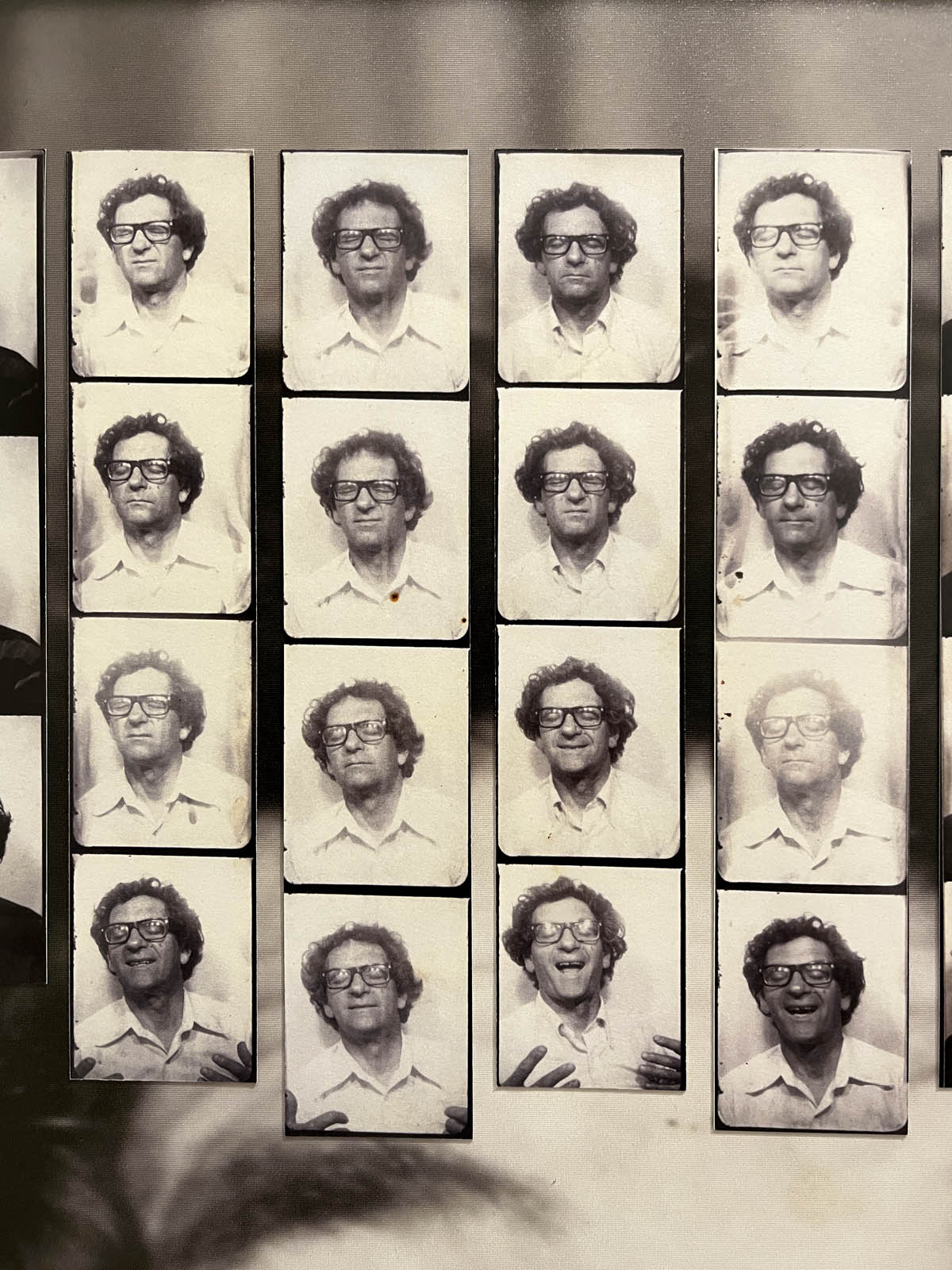
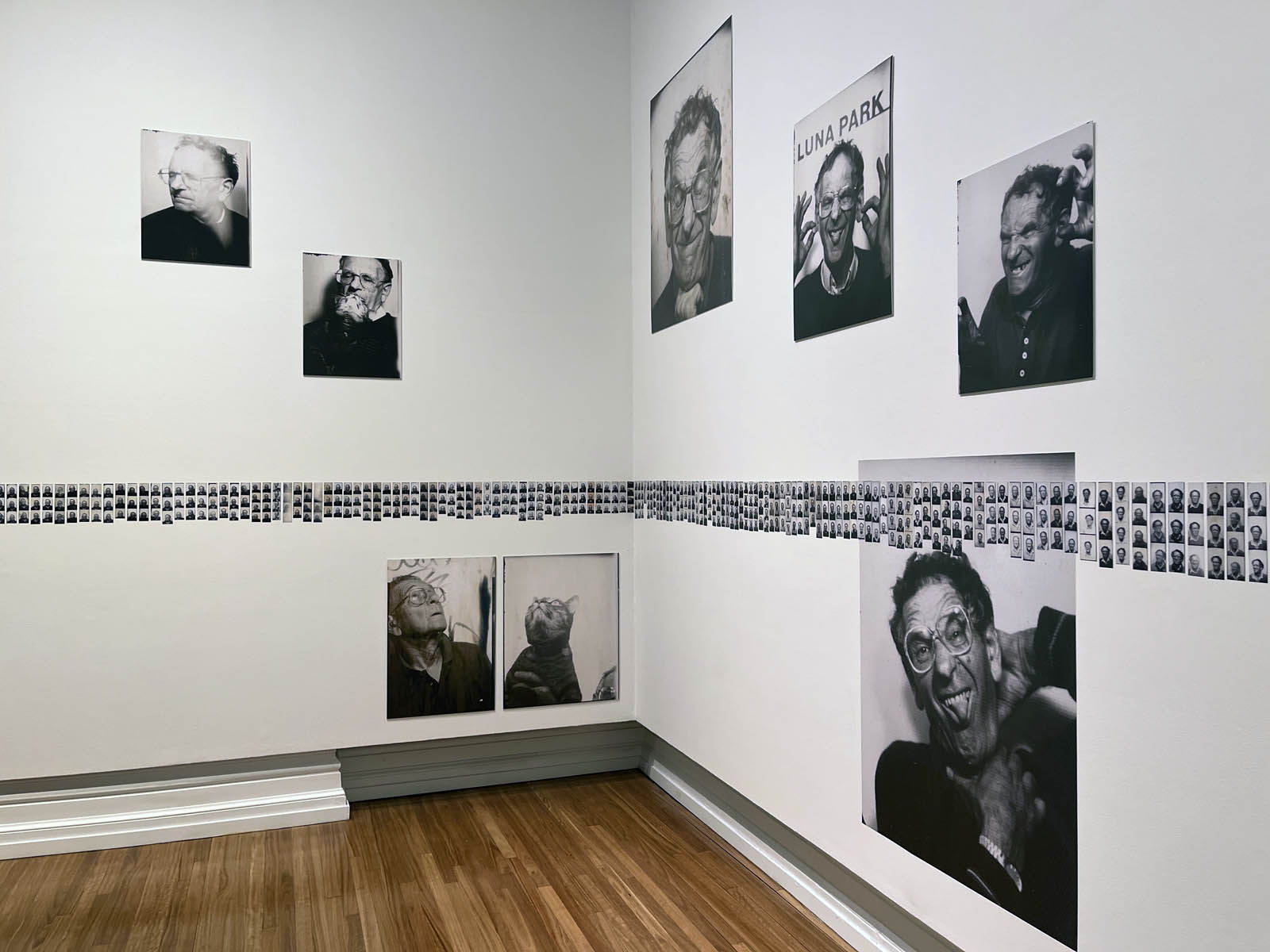
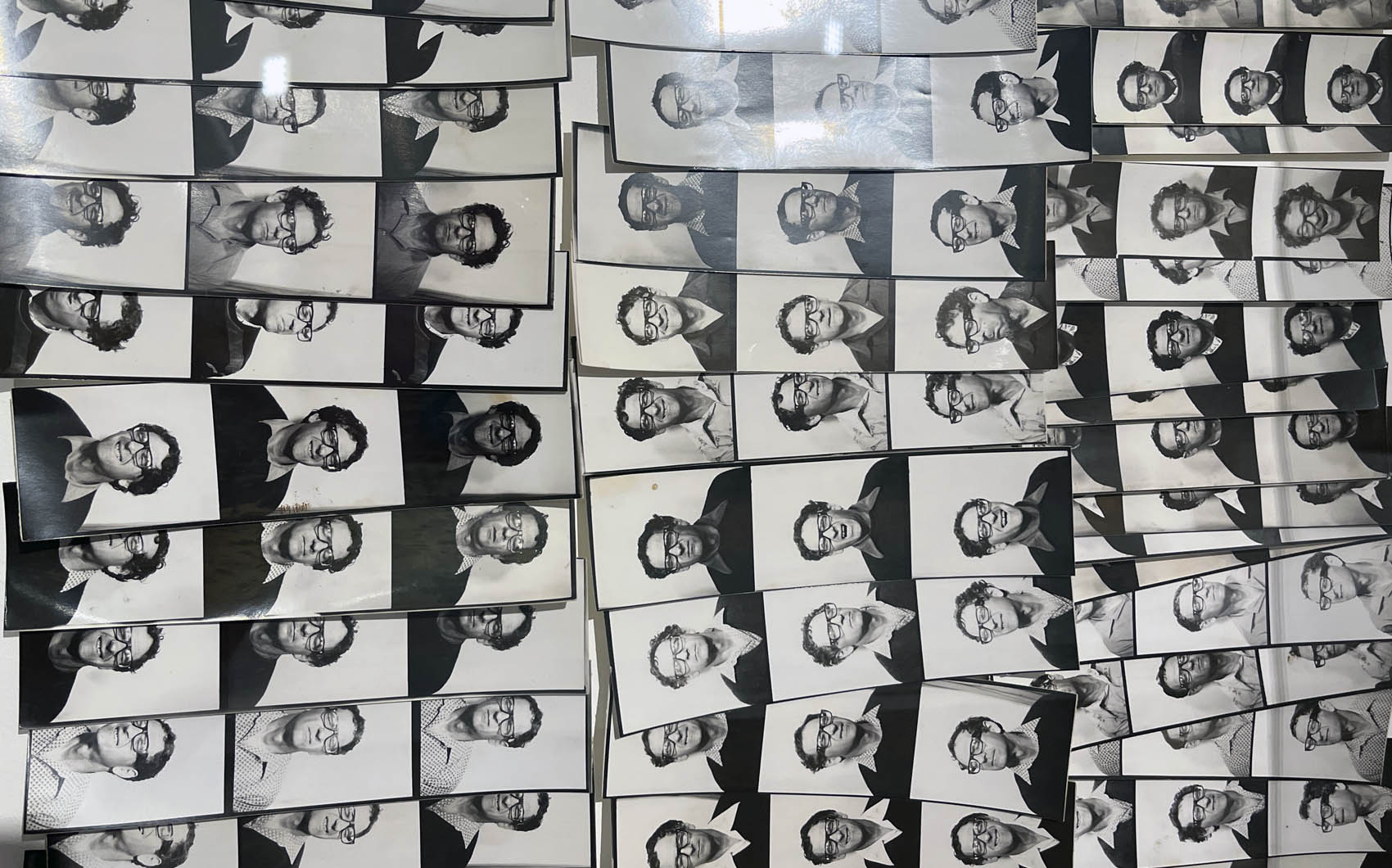
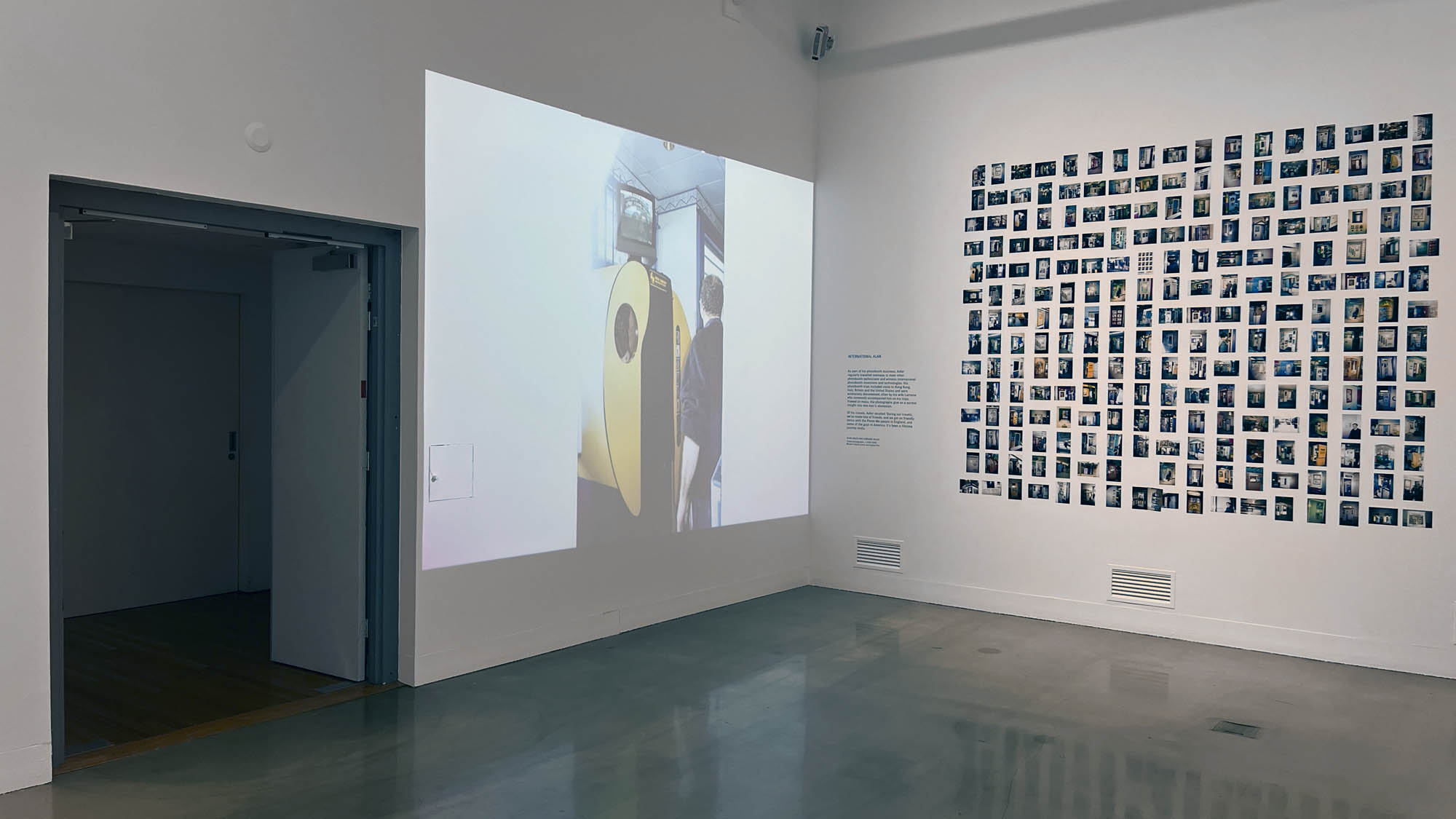
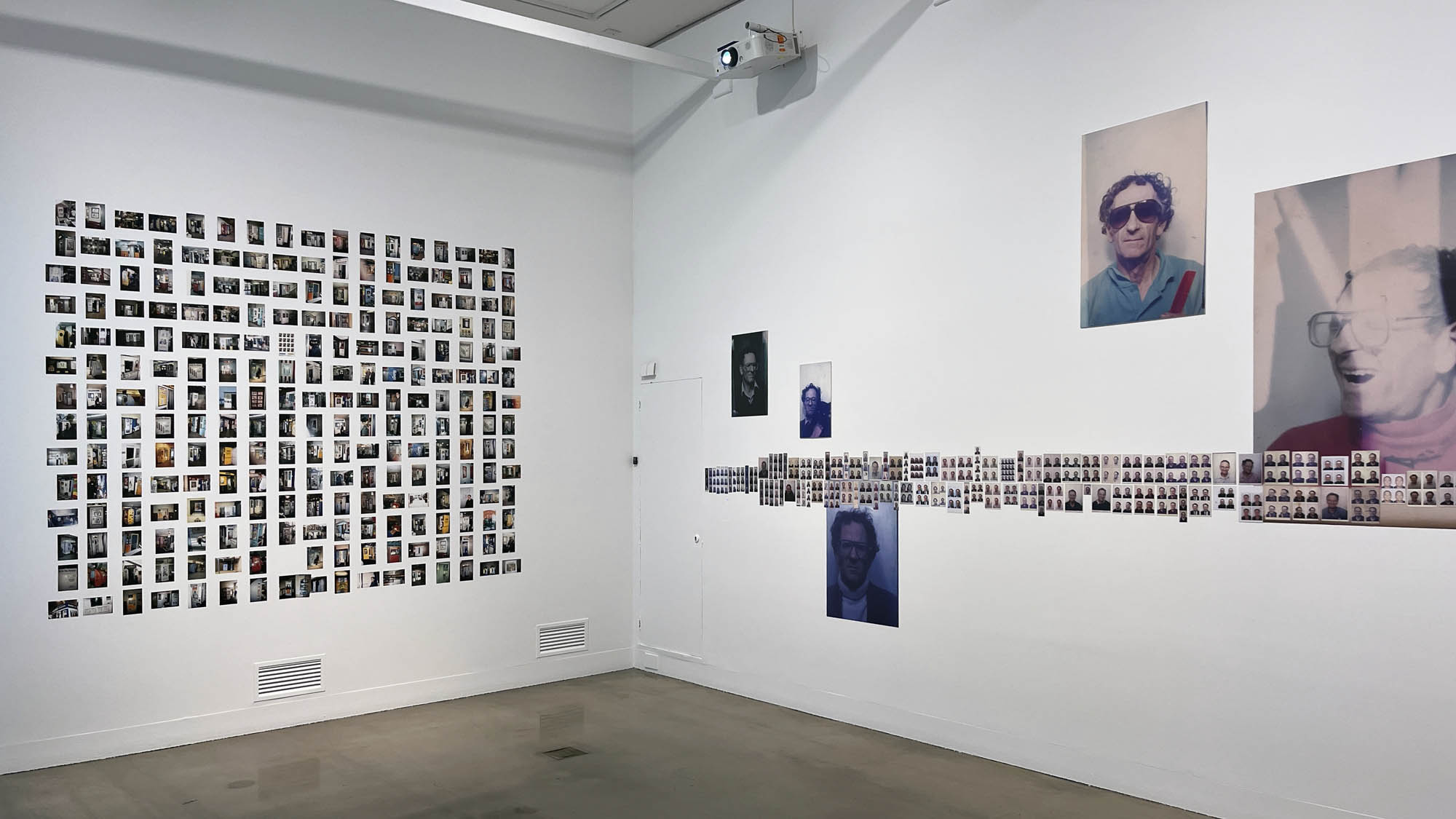
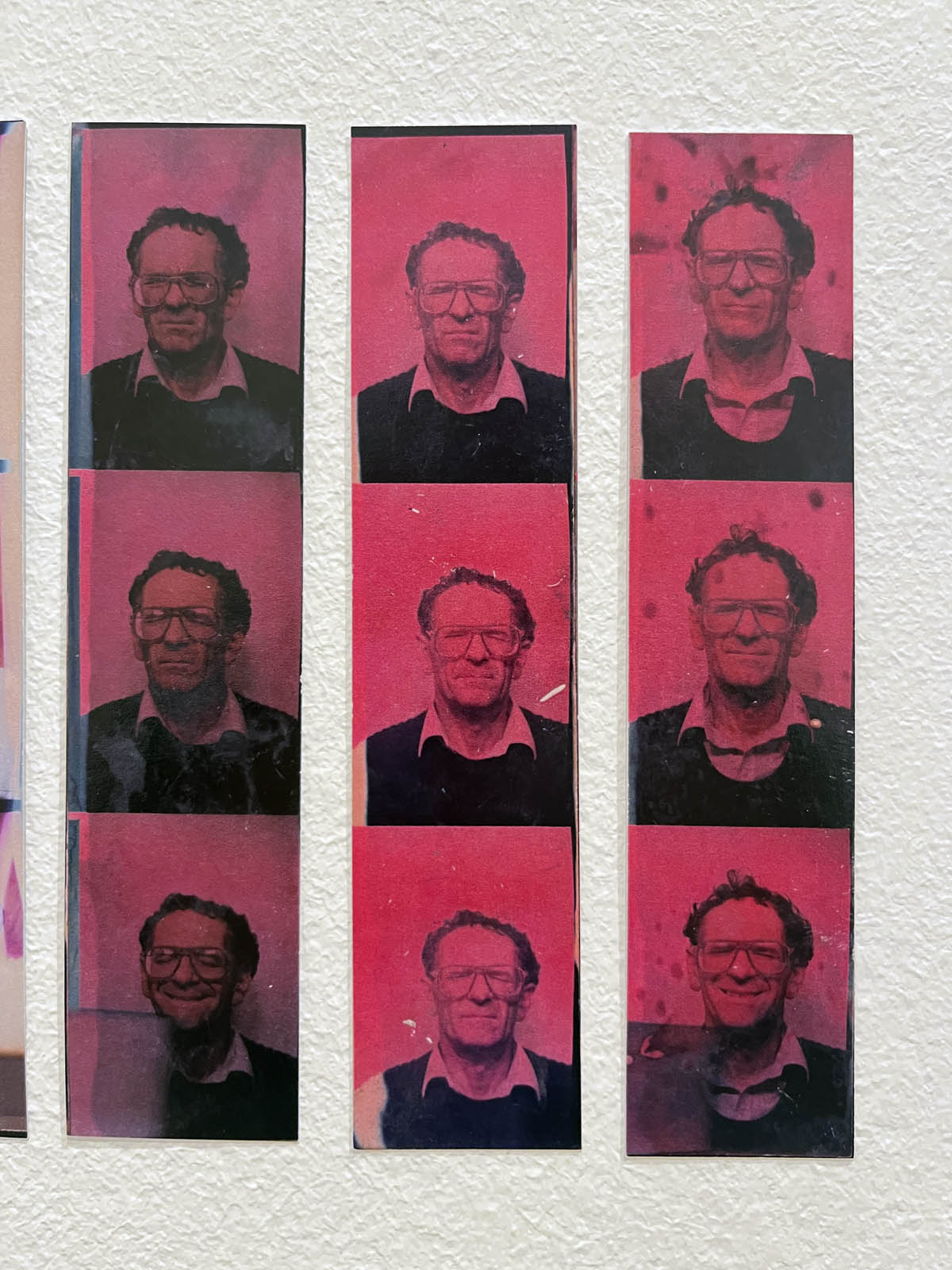
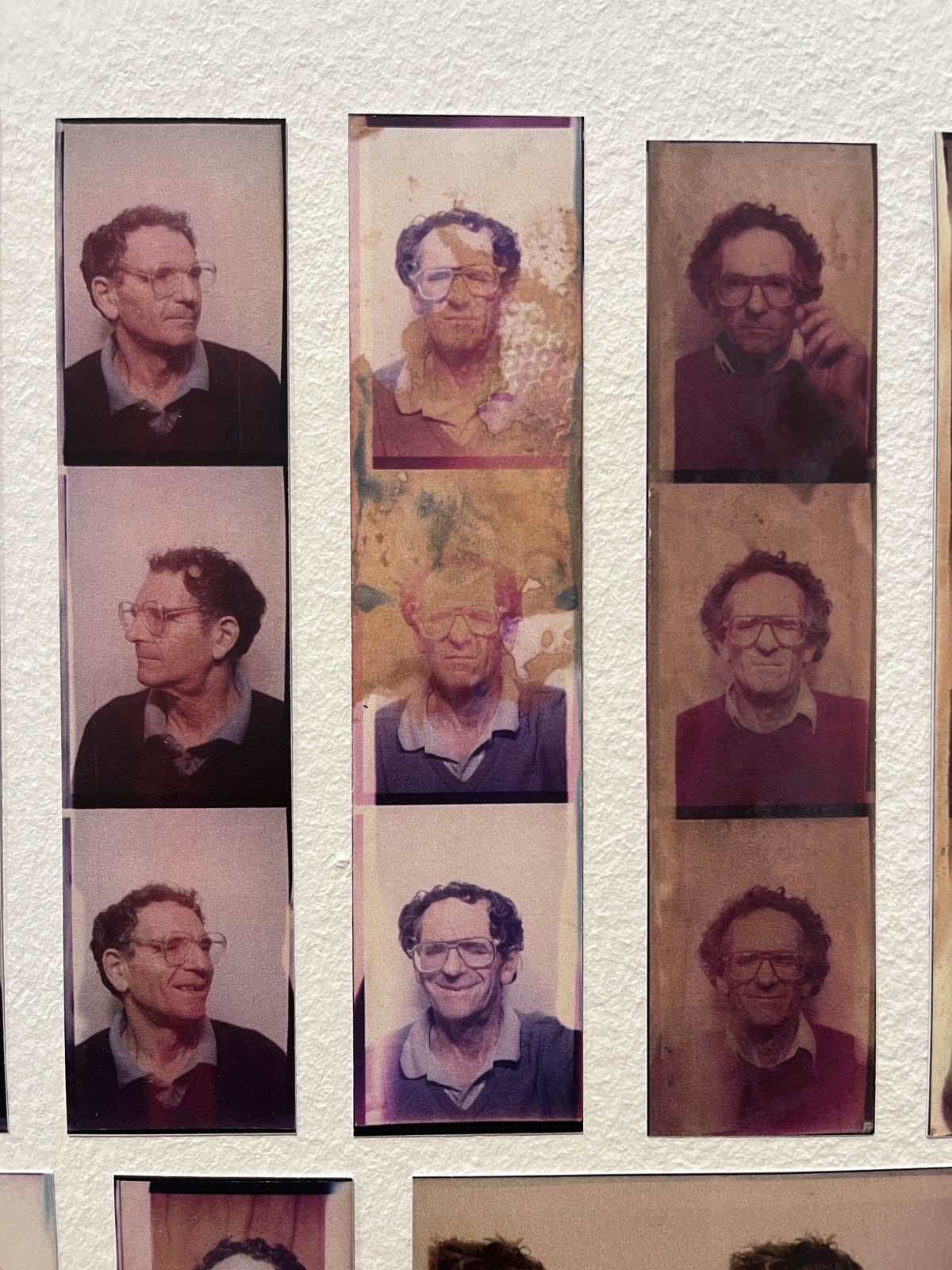
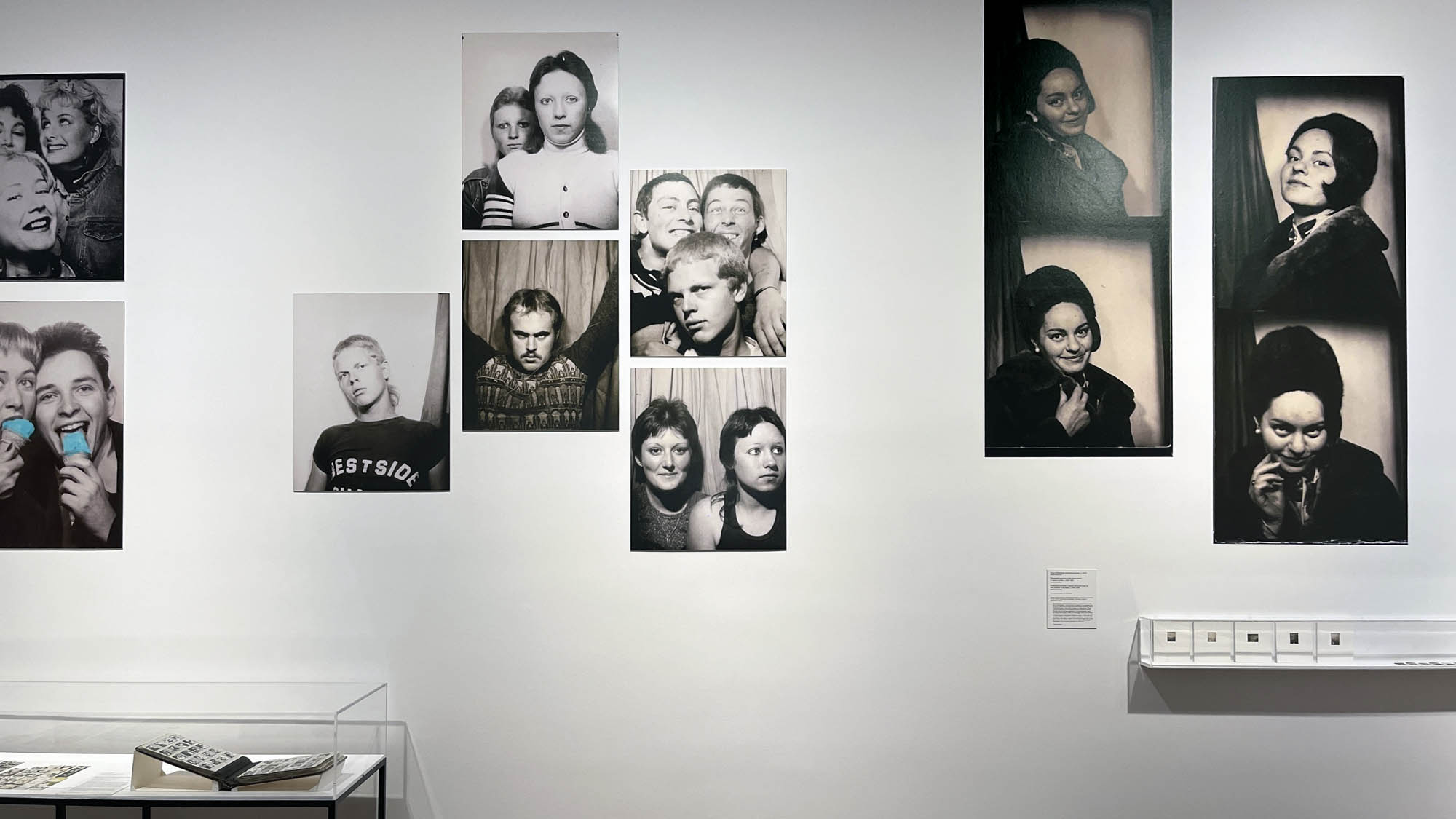
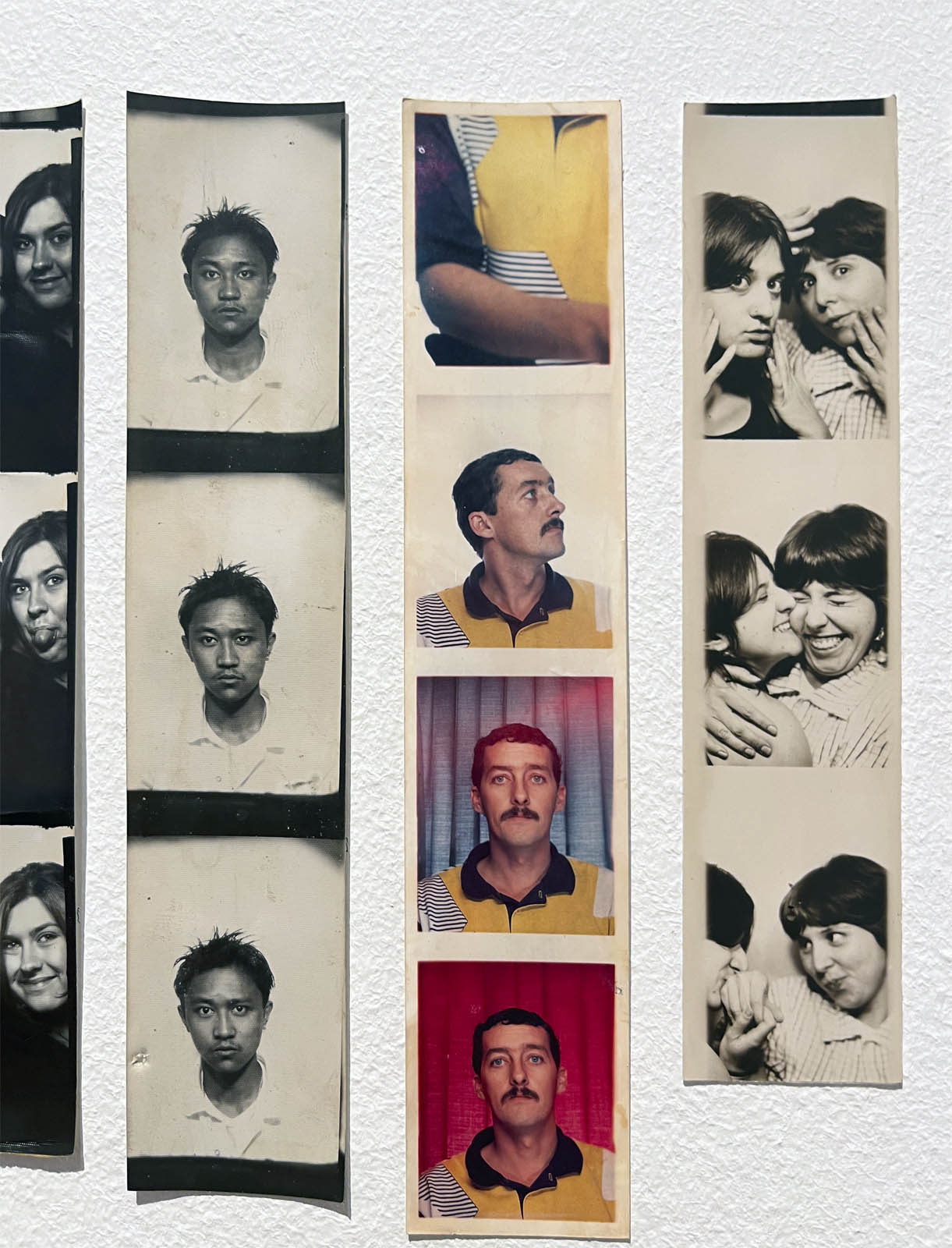
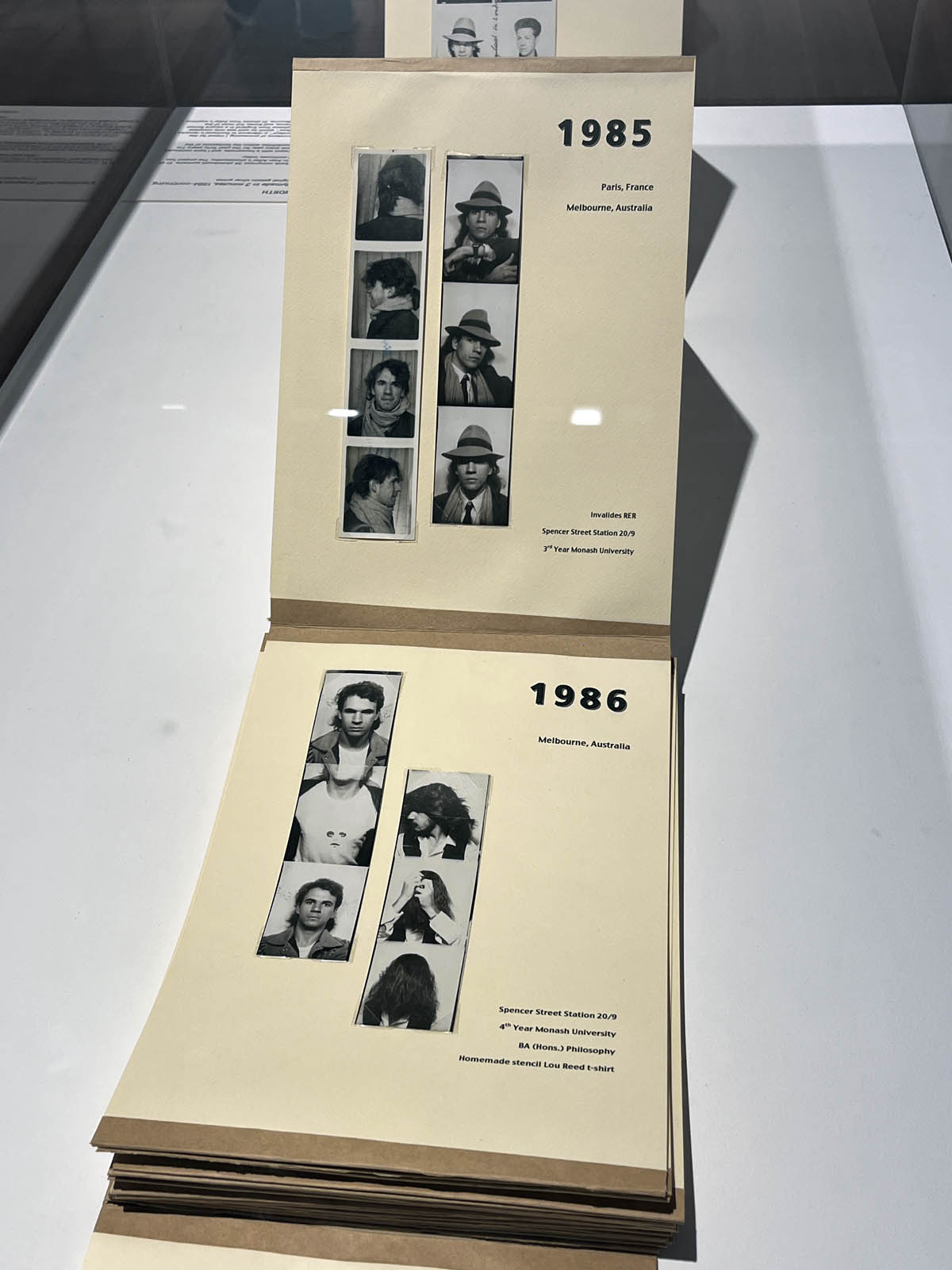
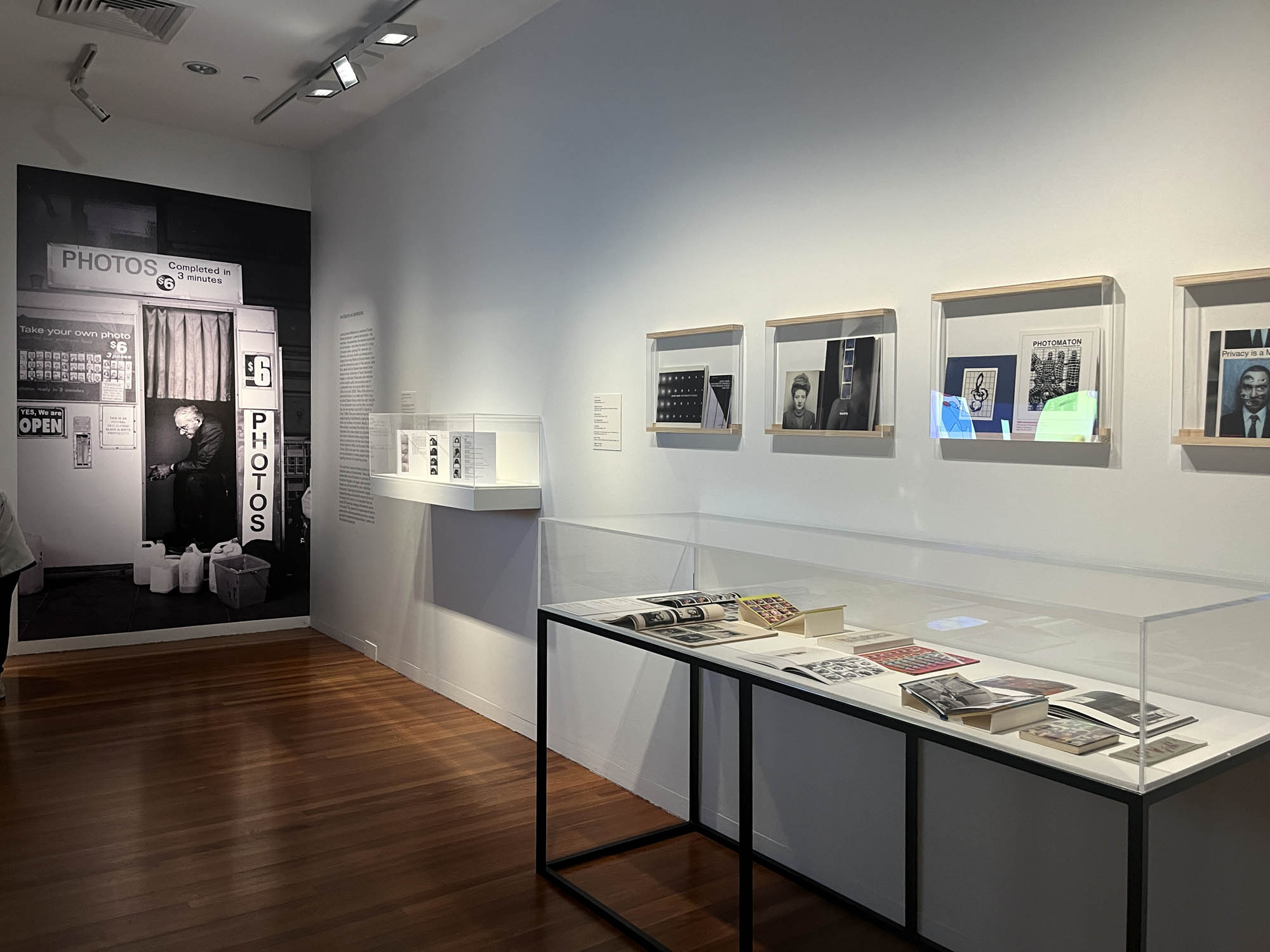
Installation view of the exhibition Auto-Photo: A Life in Portraits at RMIT Gallery, Melbourne, June – August, 2025 Photo: Marcus Bunyan
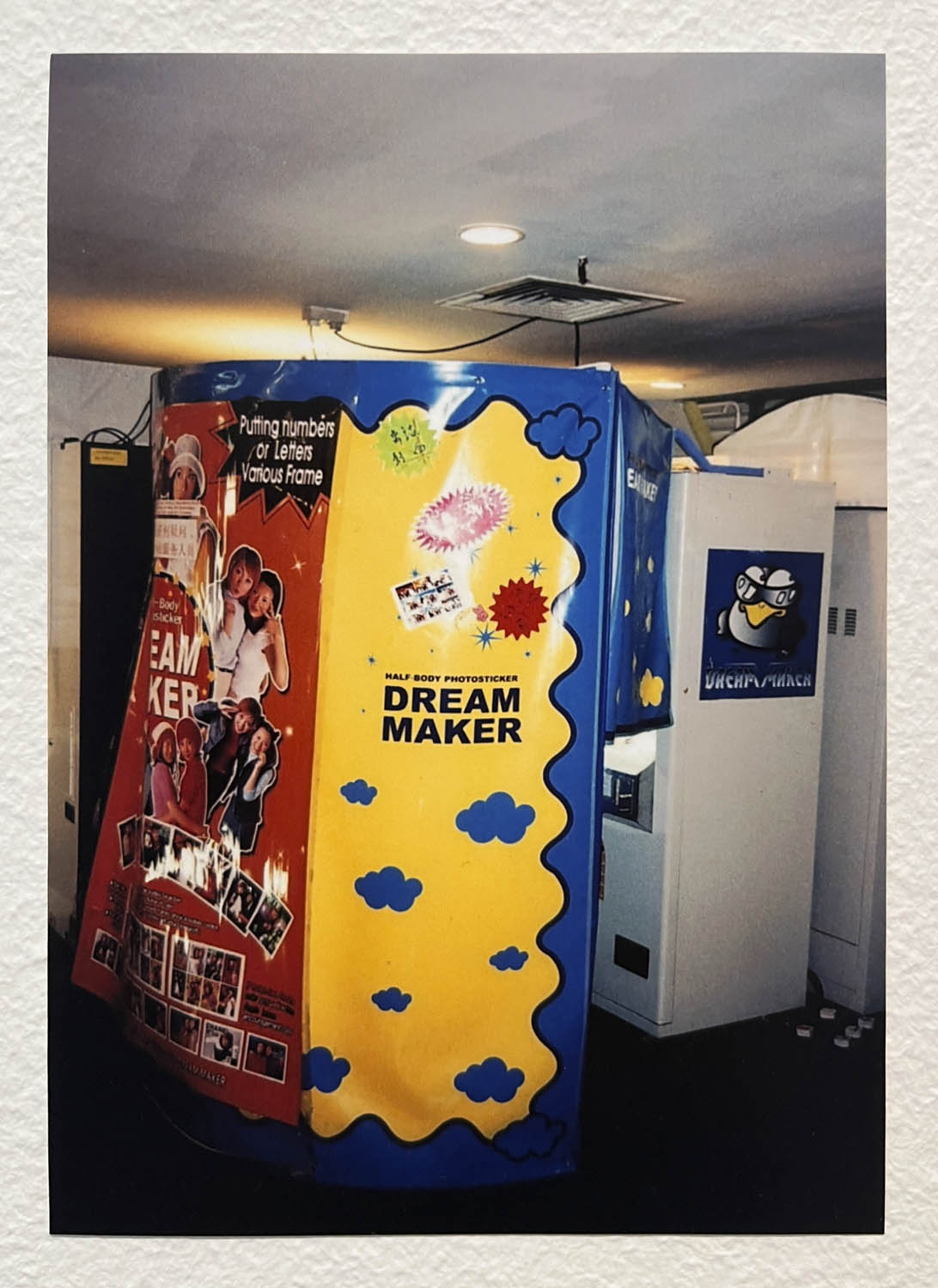
Dream Maker
This is one of the most joyous photography exhibitions that I have seen in a very long time.
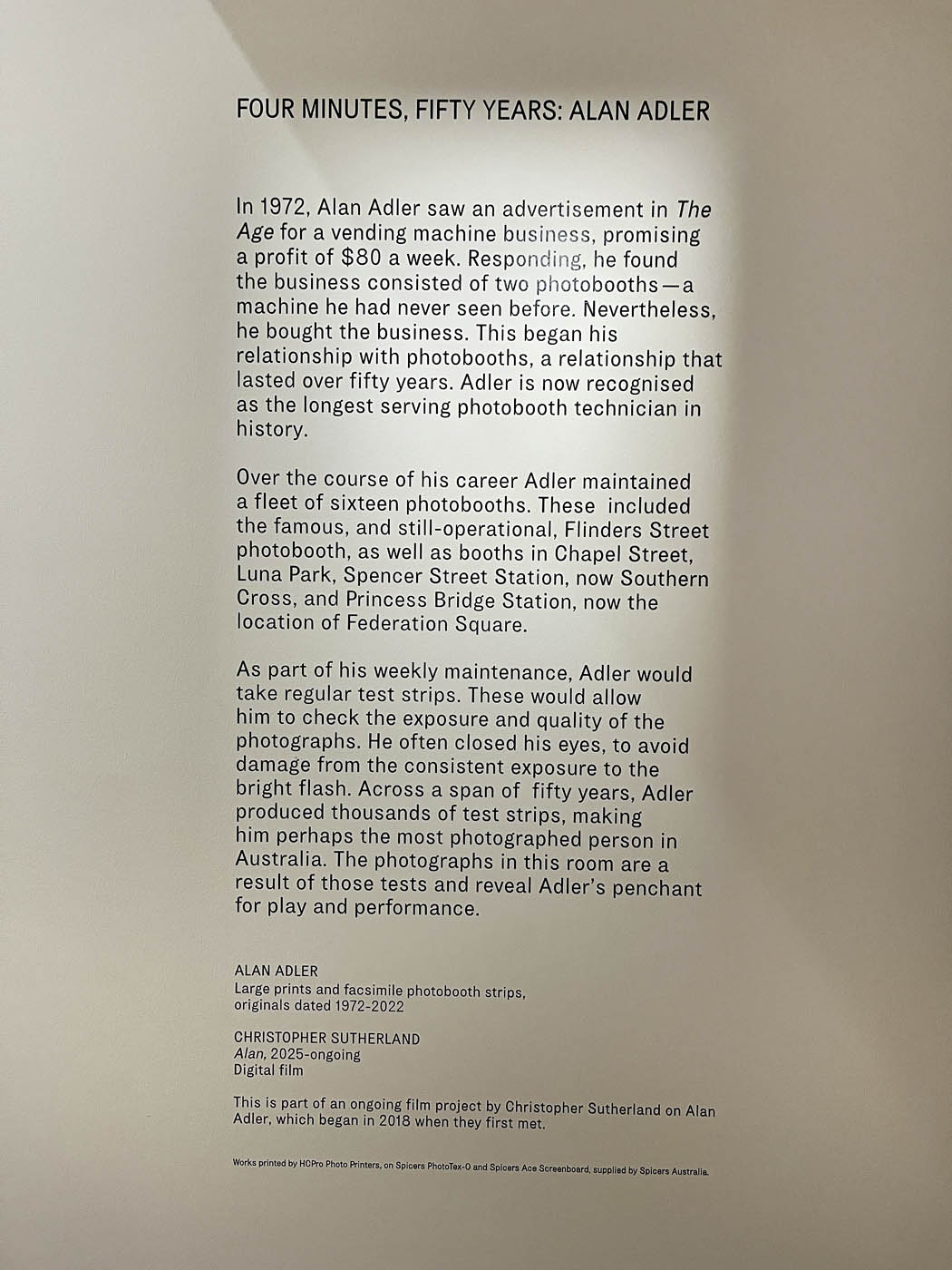
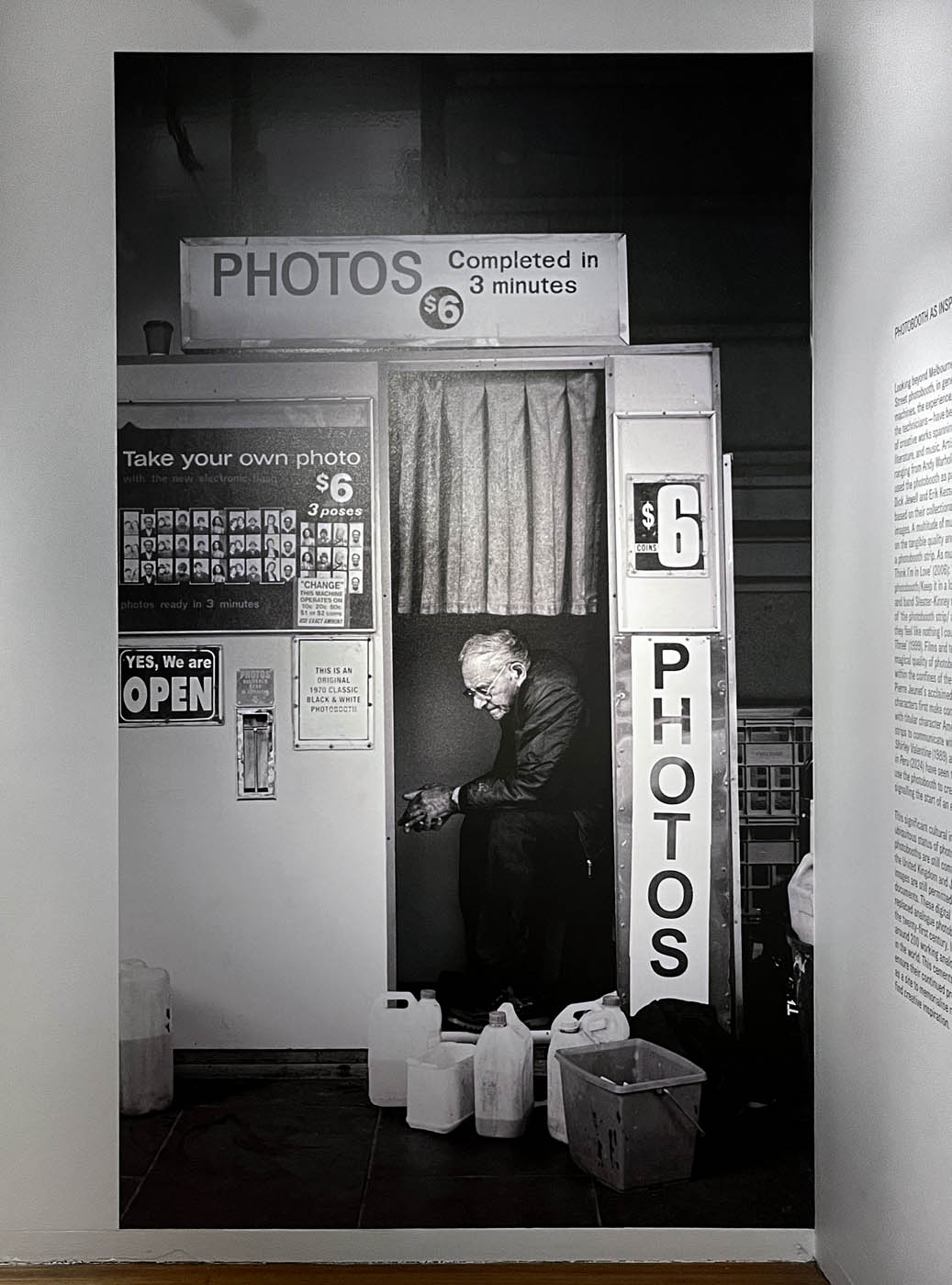
The exhibition “introduces us to Alan Adler (2932-2024), who while little known, was the oldest and longest serving photobooth technician in the world… For over 50 years, Adler maintained a fleet of photobooths across Melbourne / Narrm, most notably the site at Flinders Street Station.”
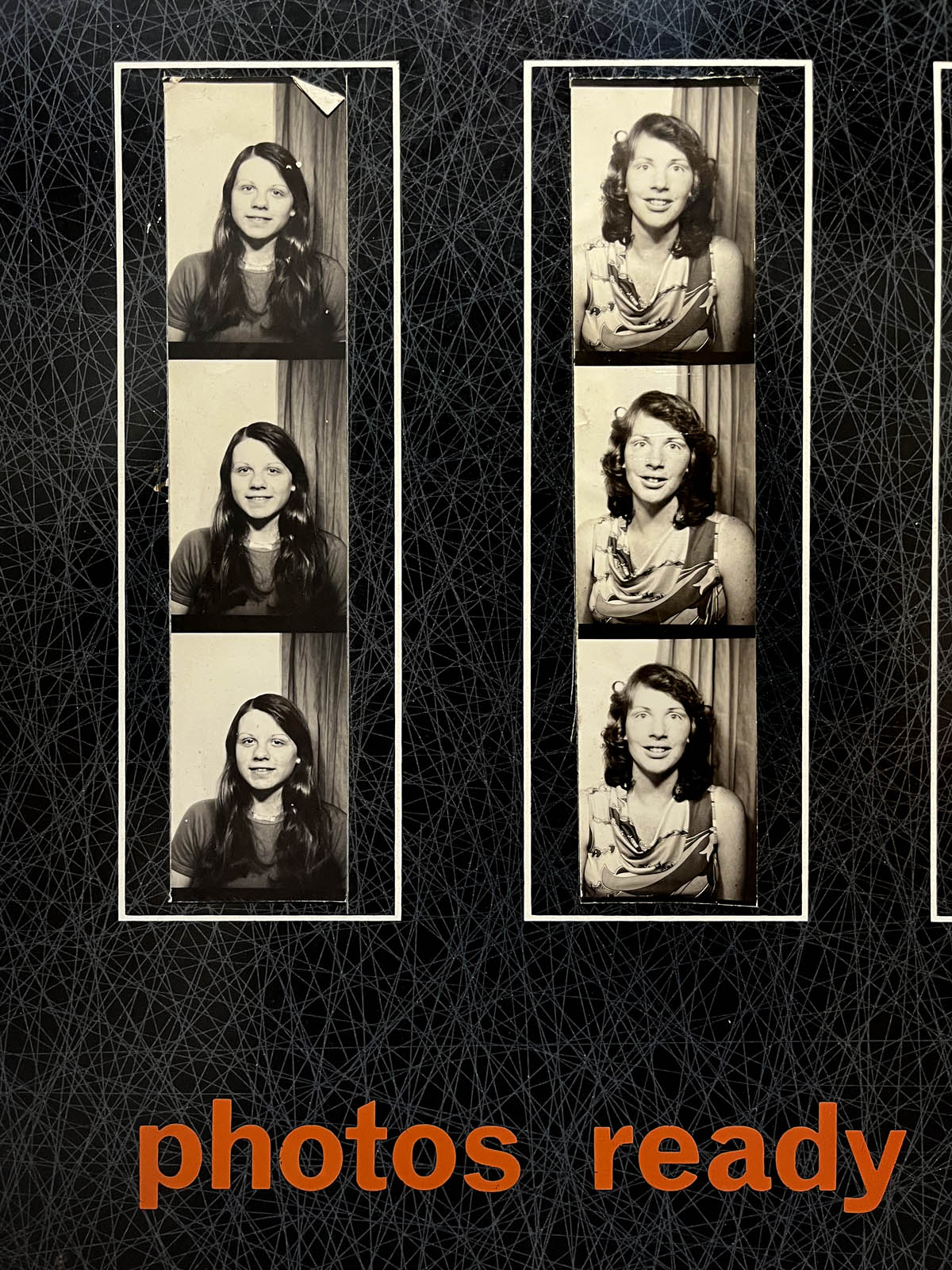
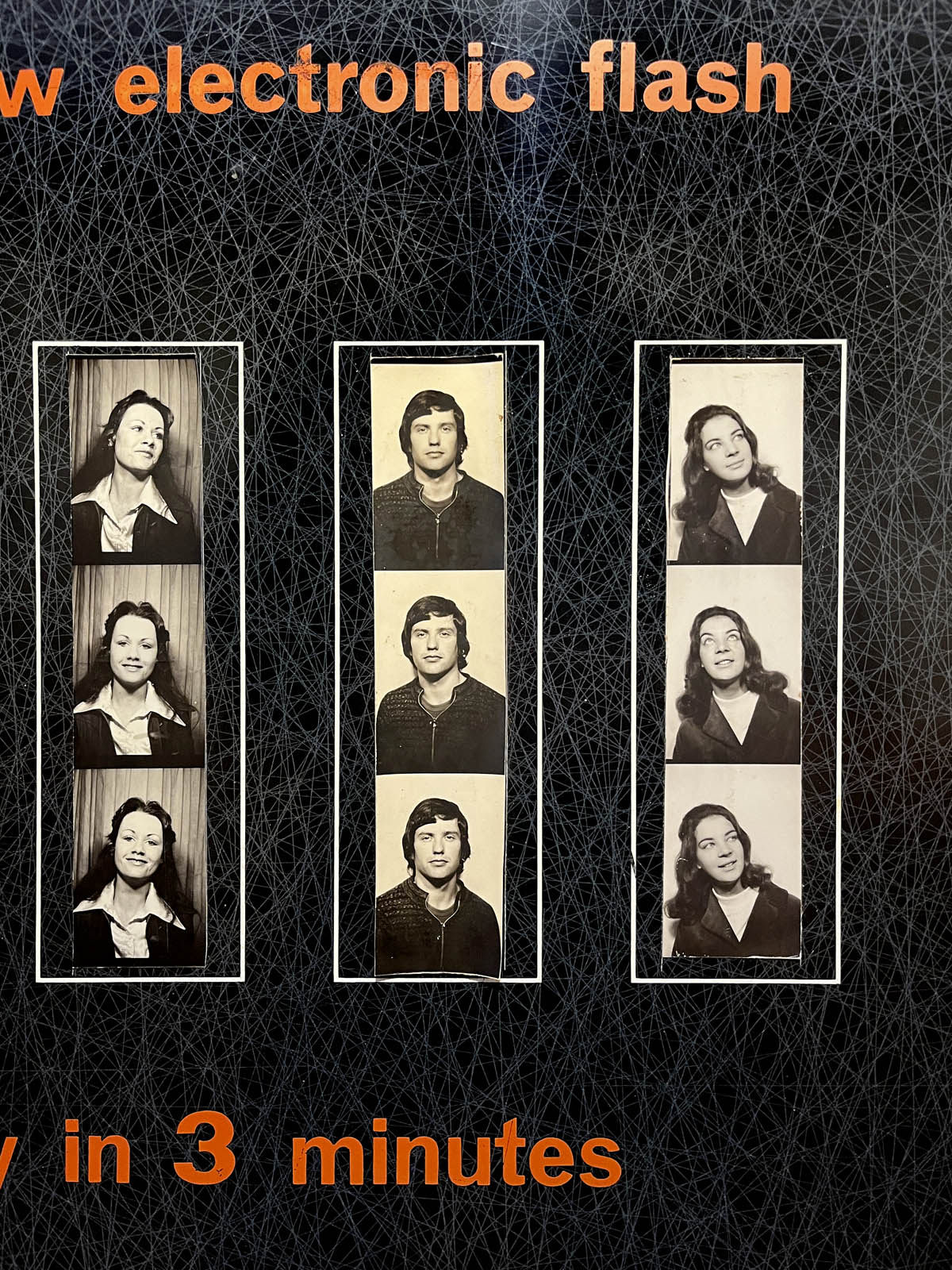
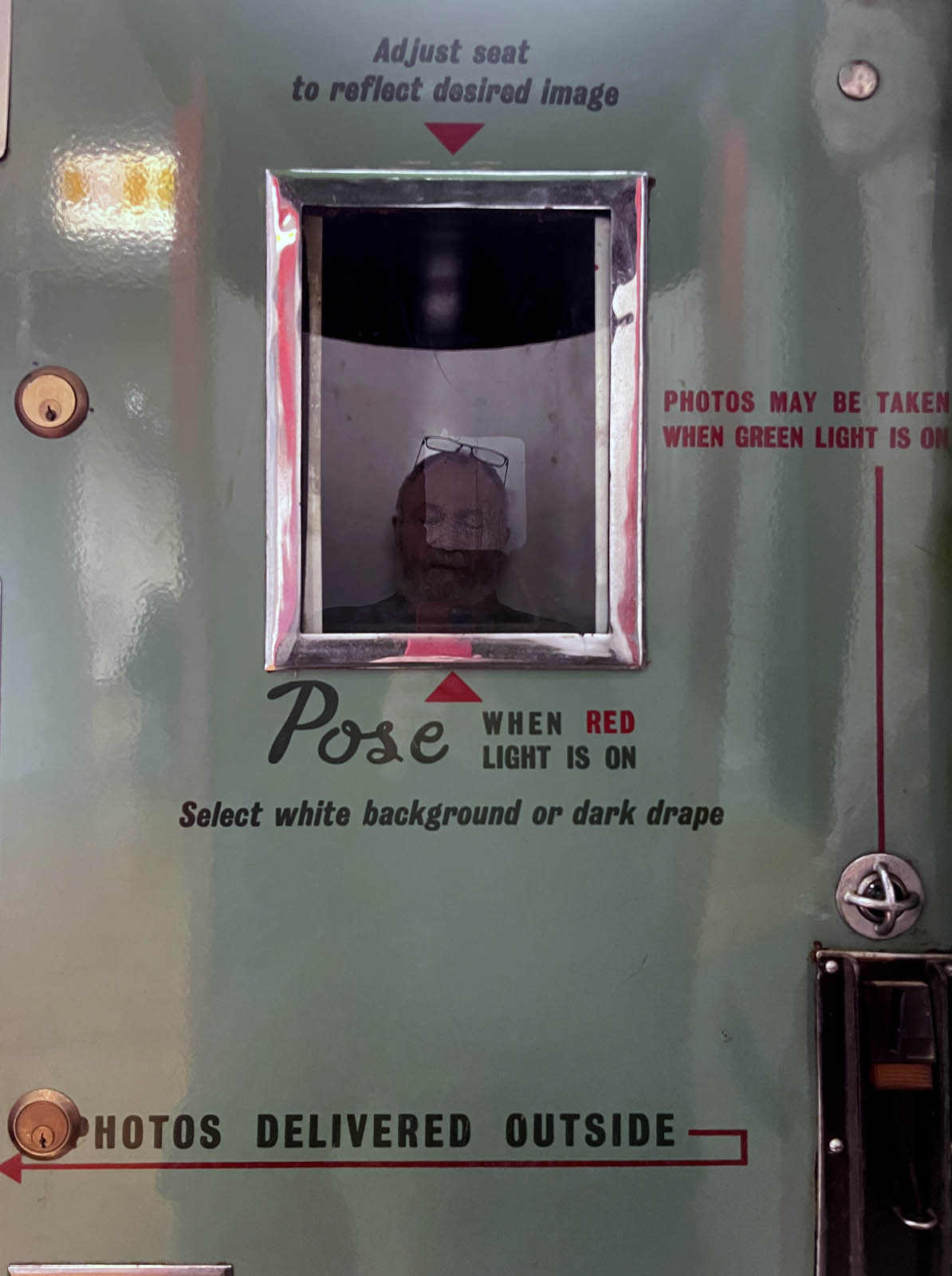
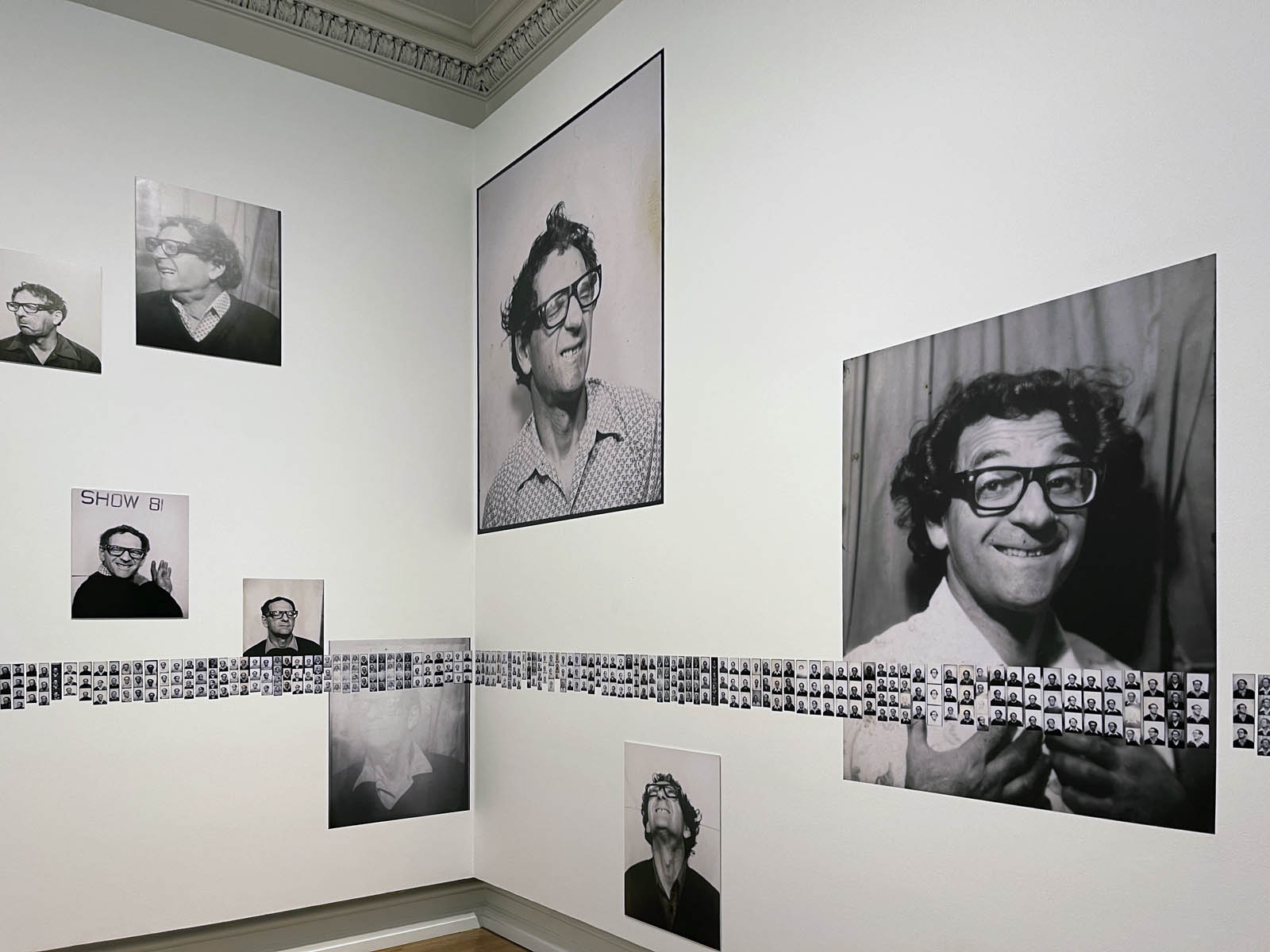
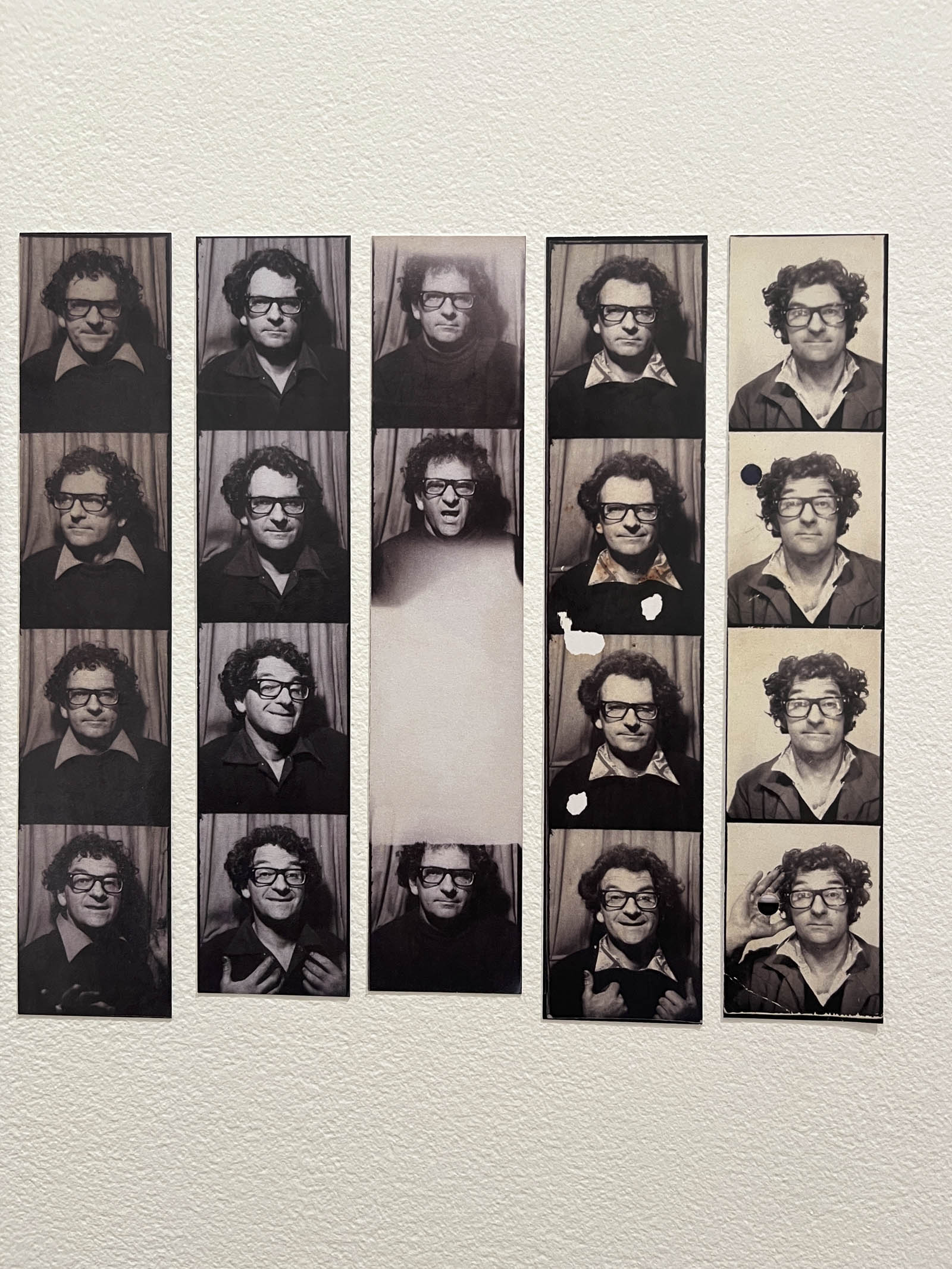
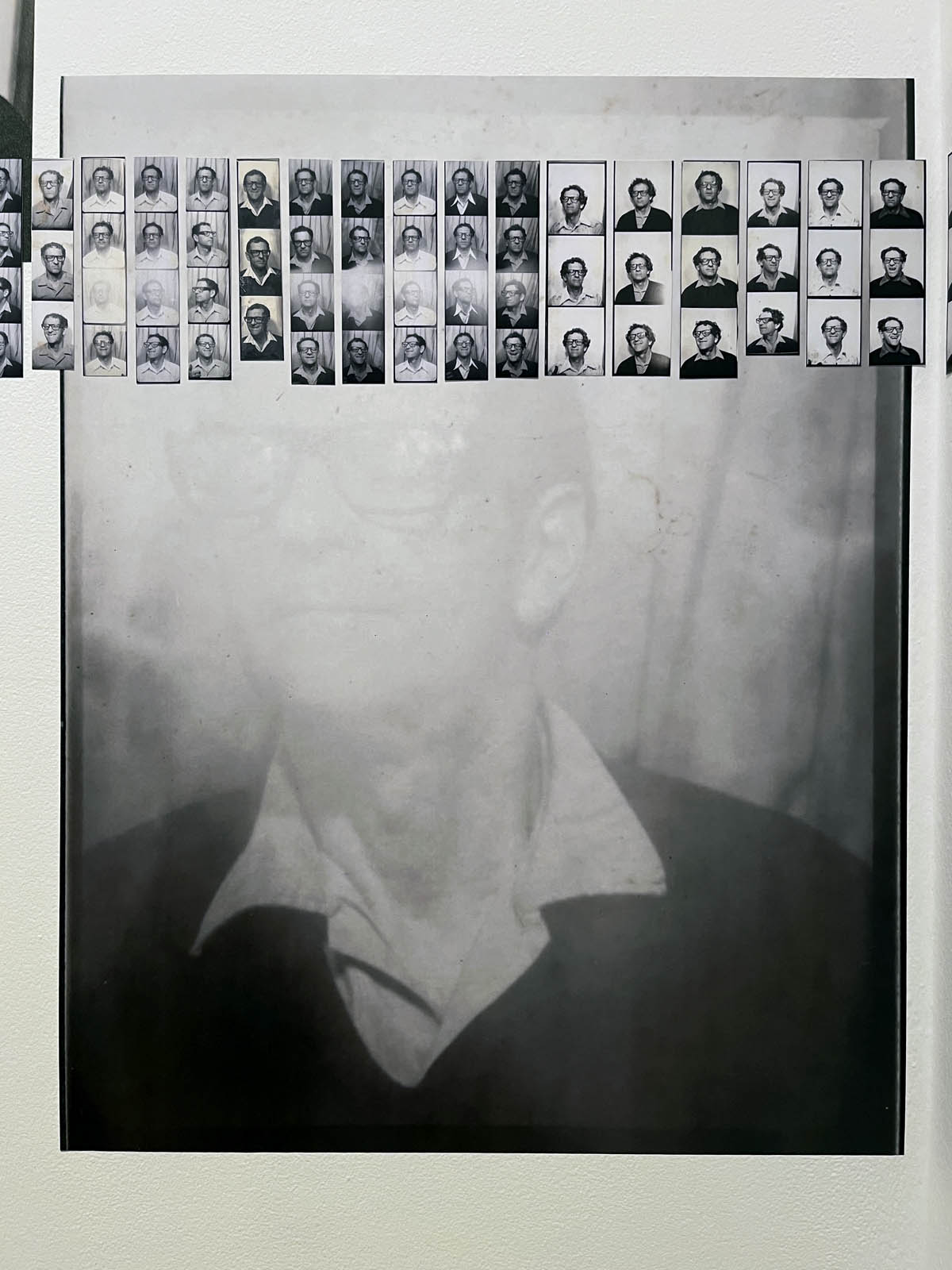
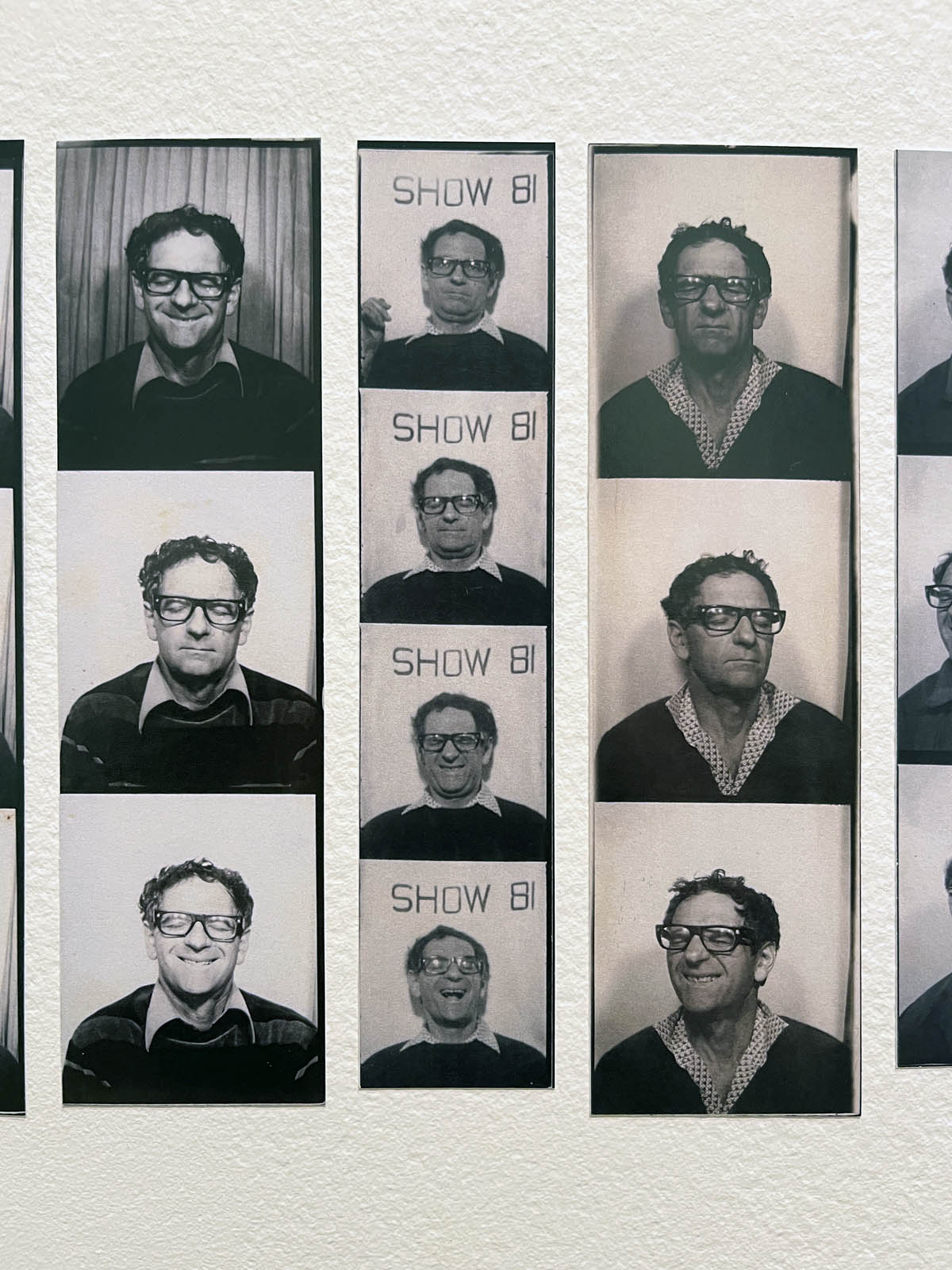
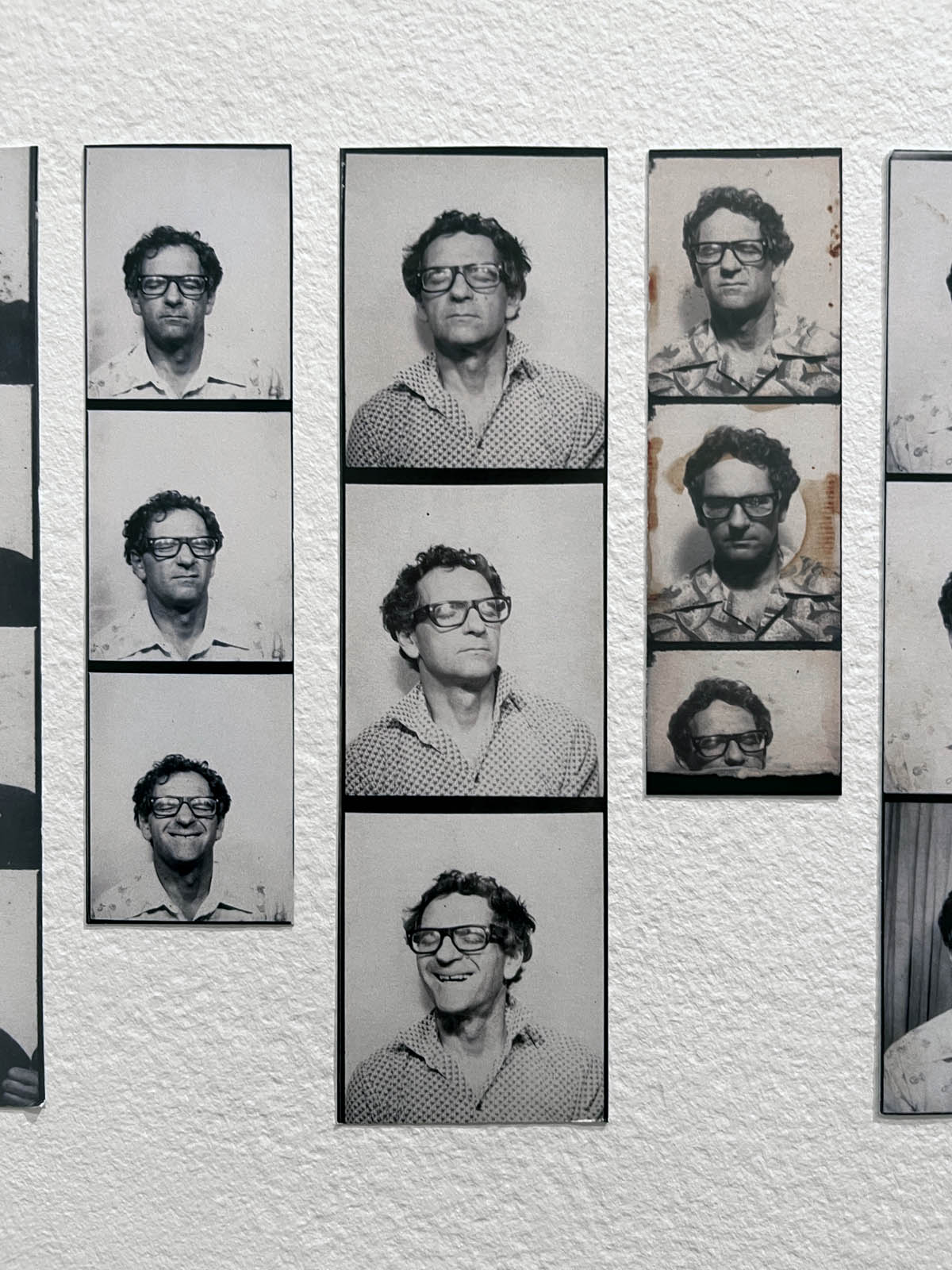
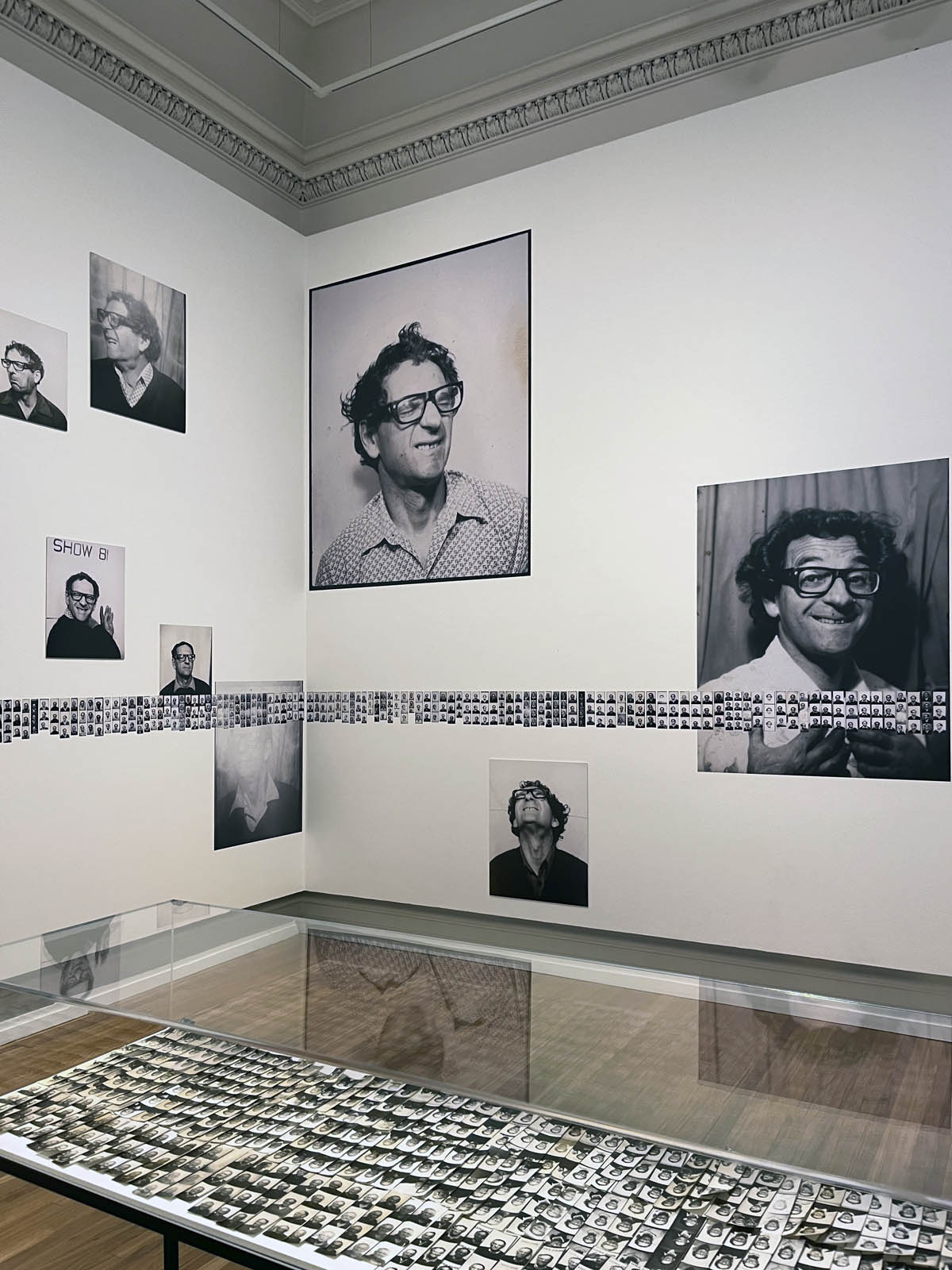
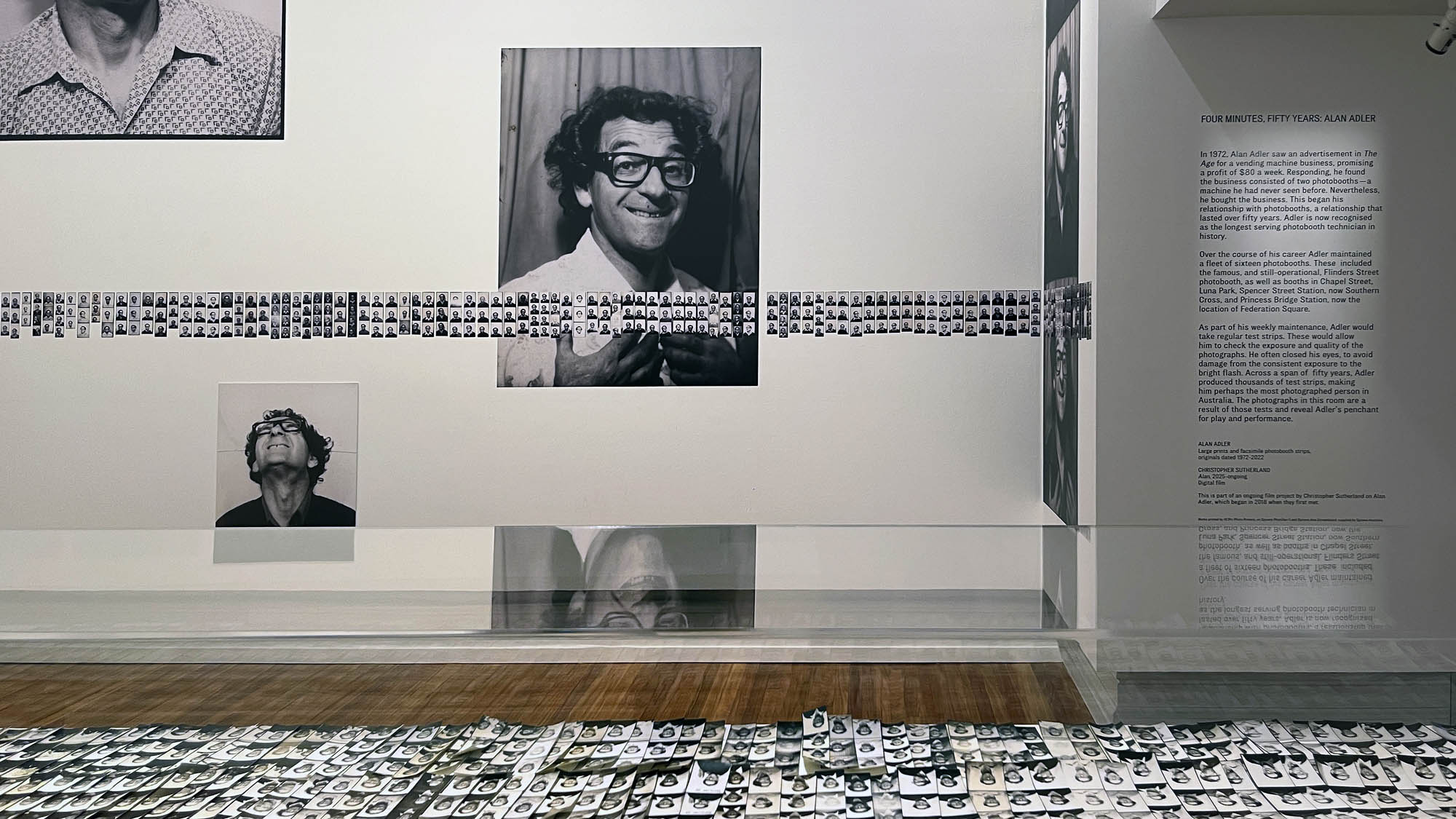
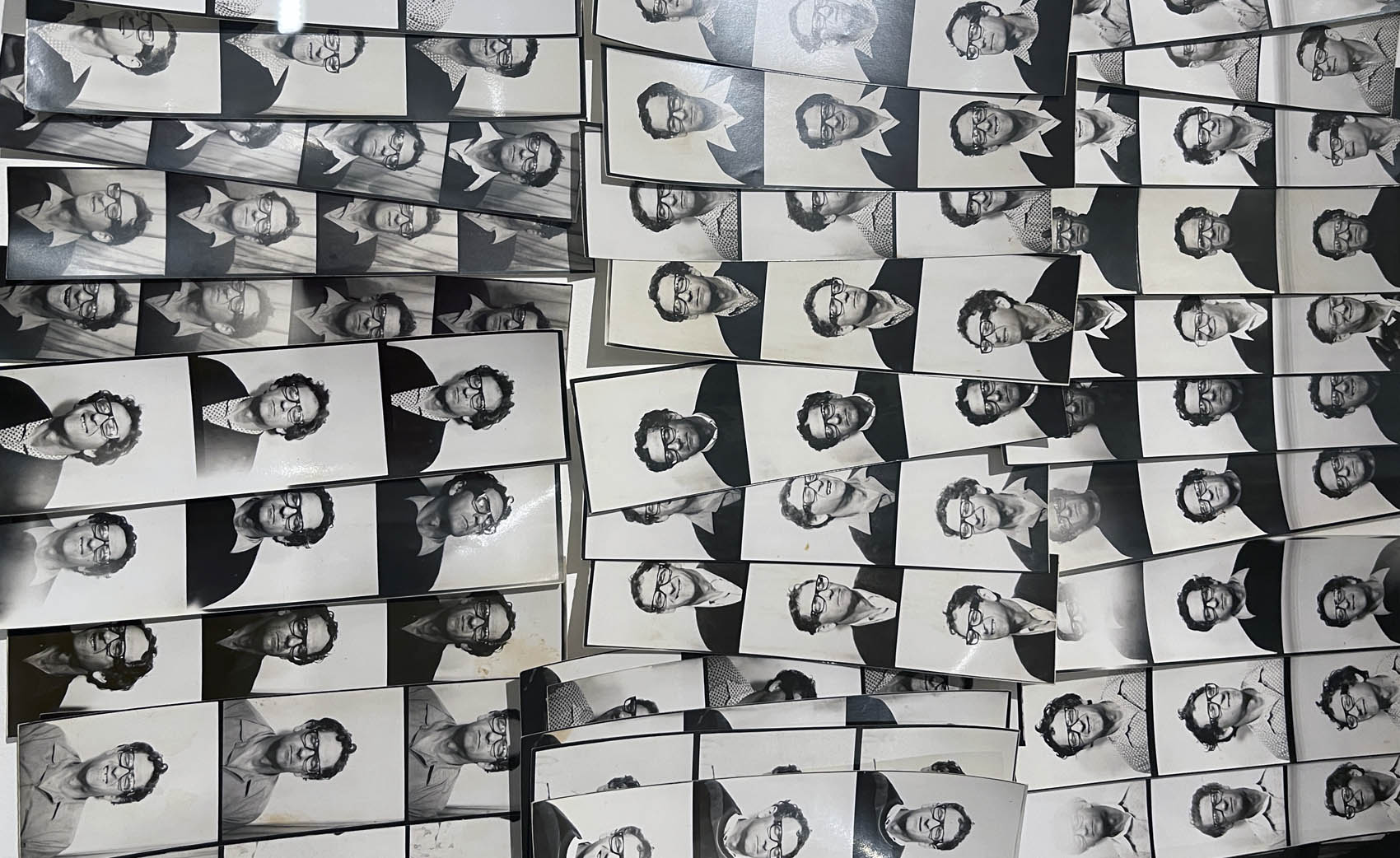
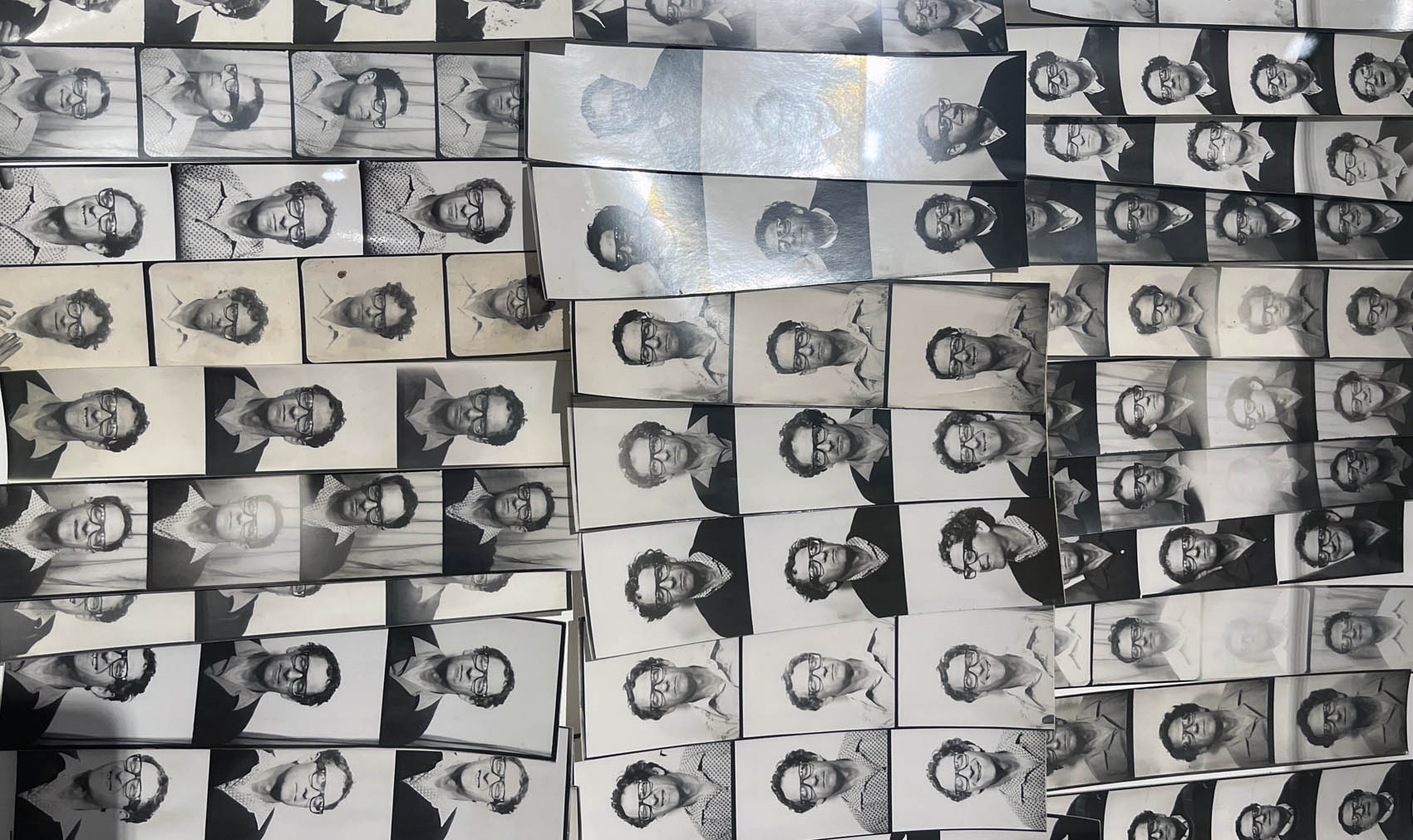
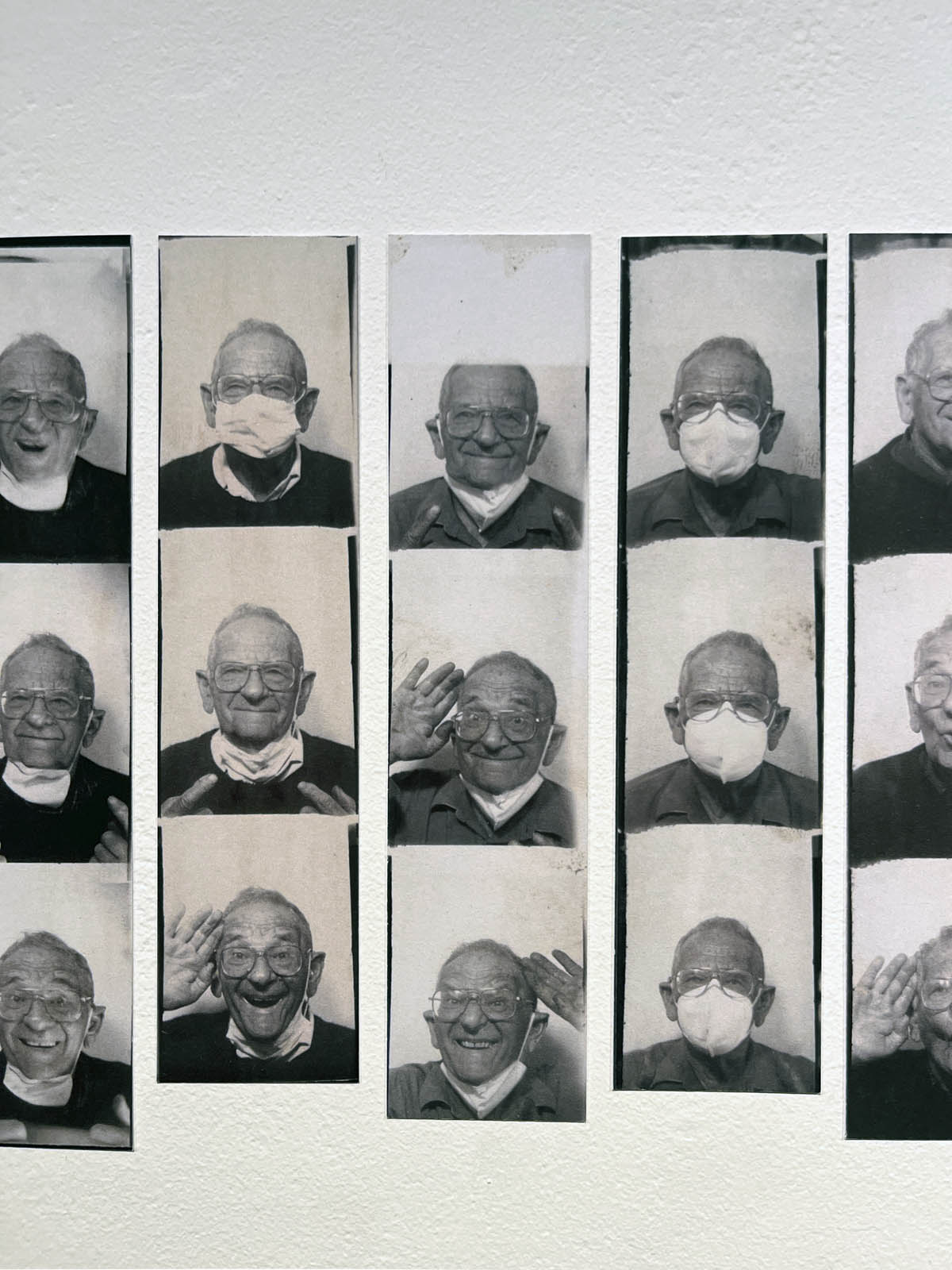
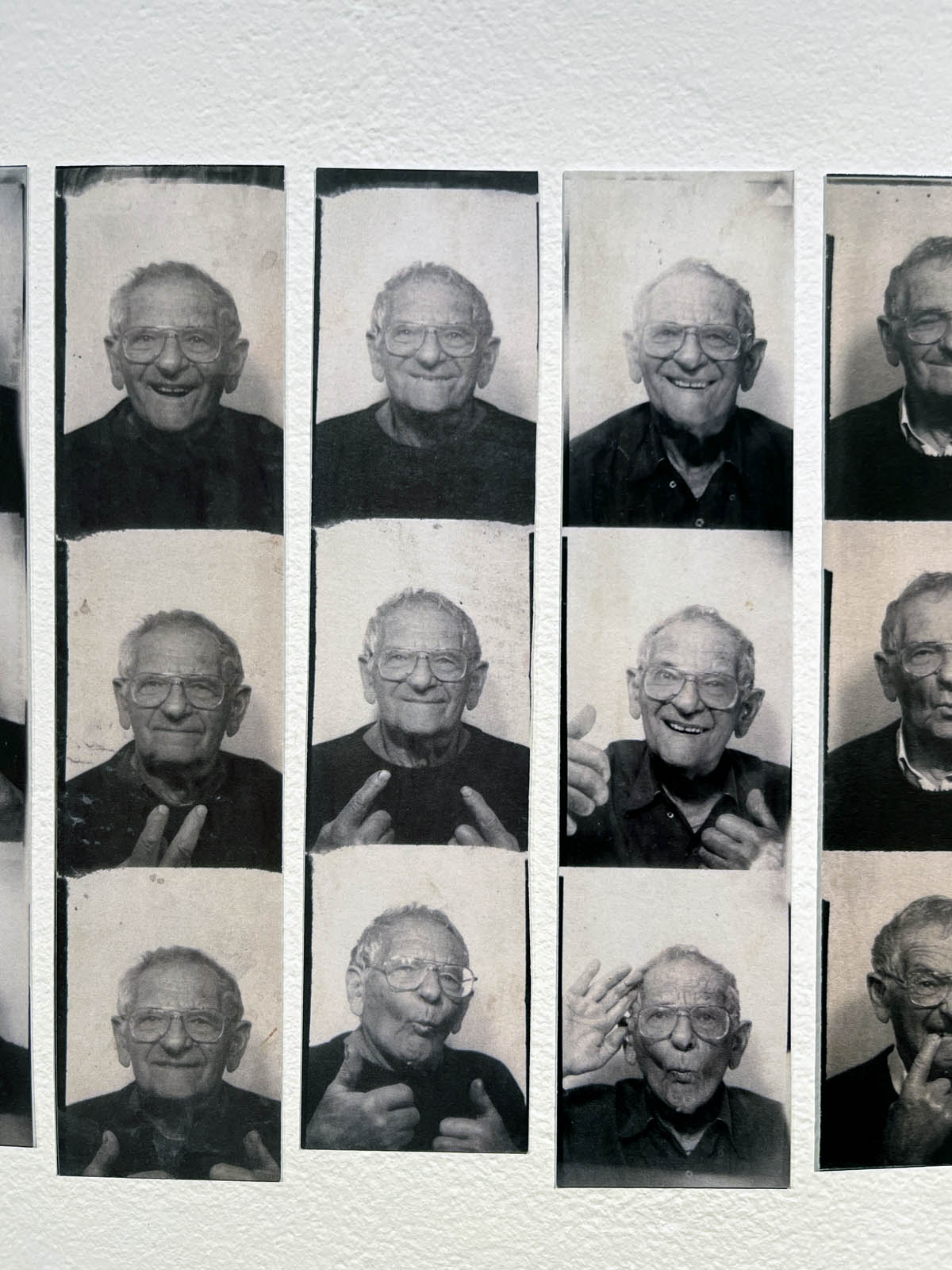
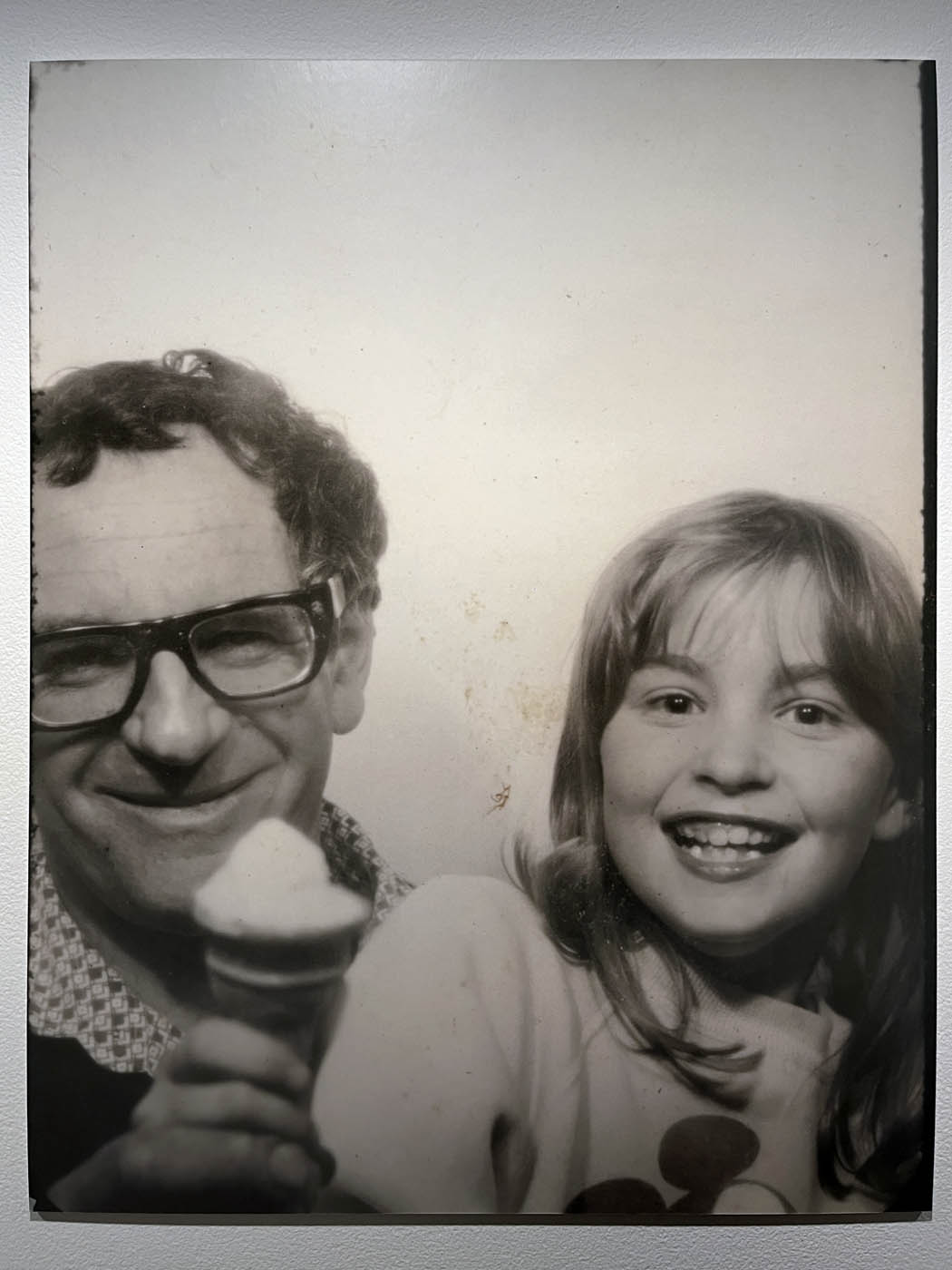
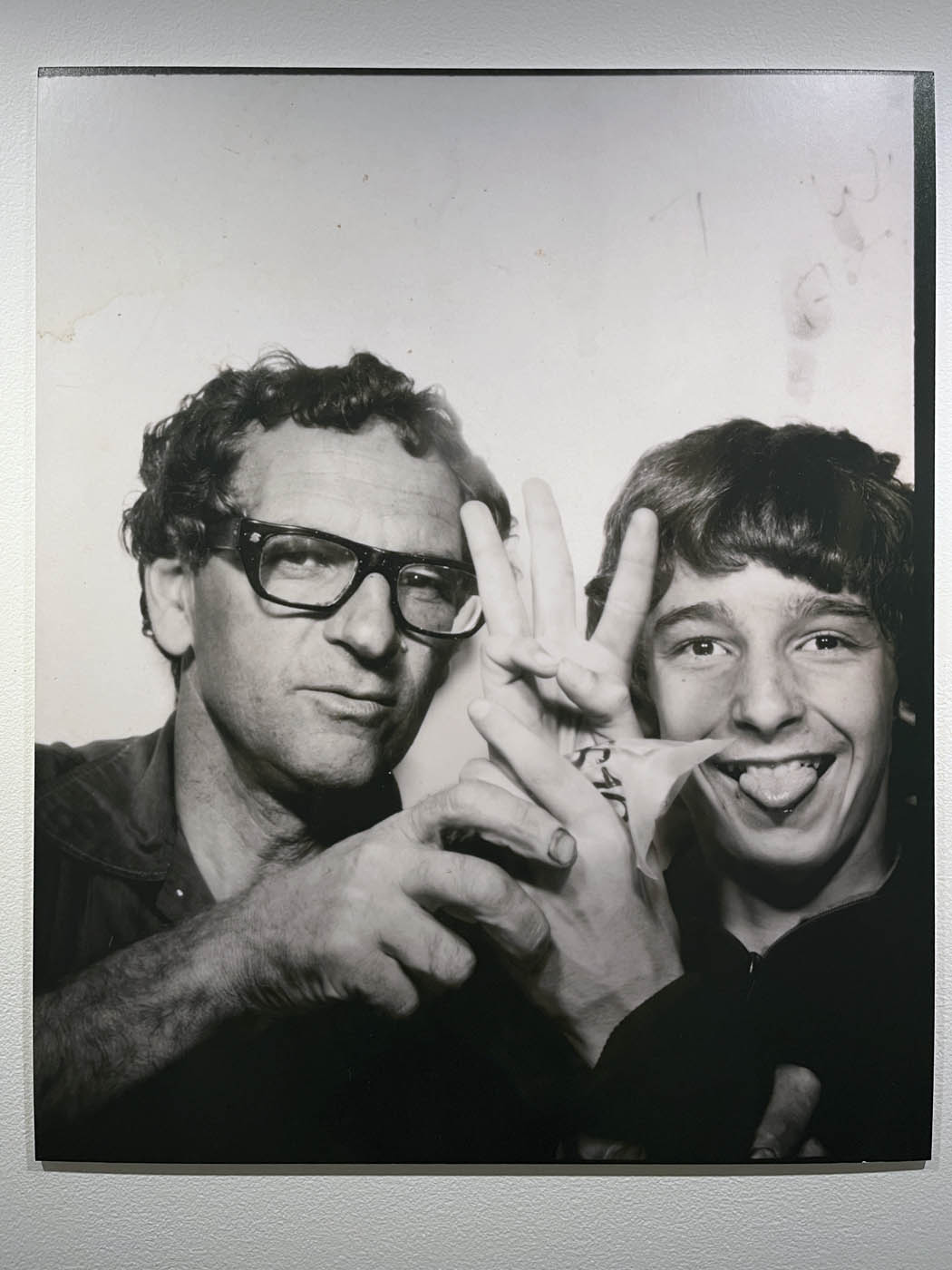
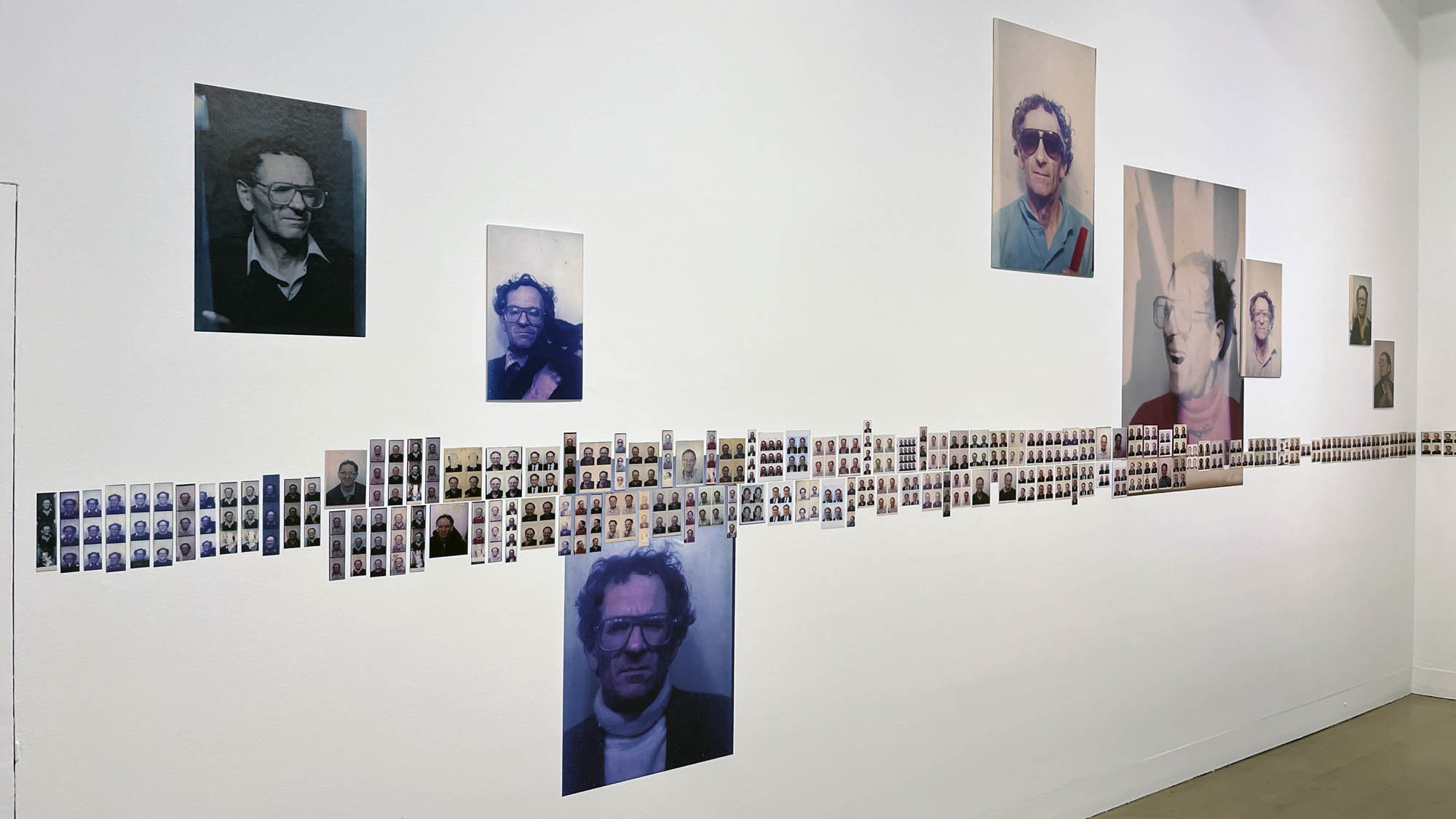
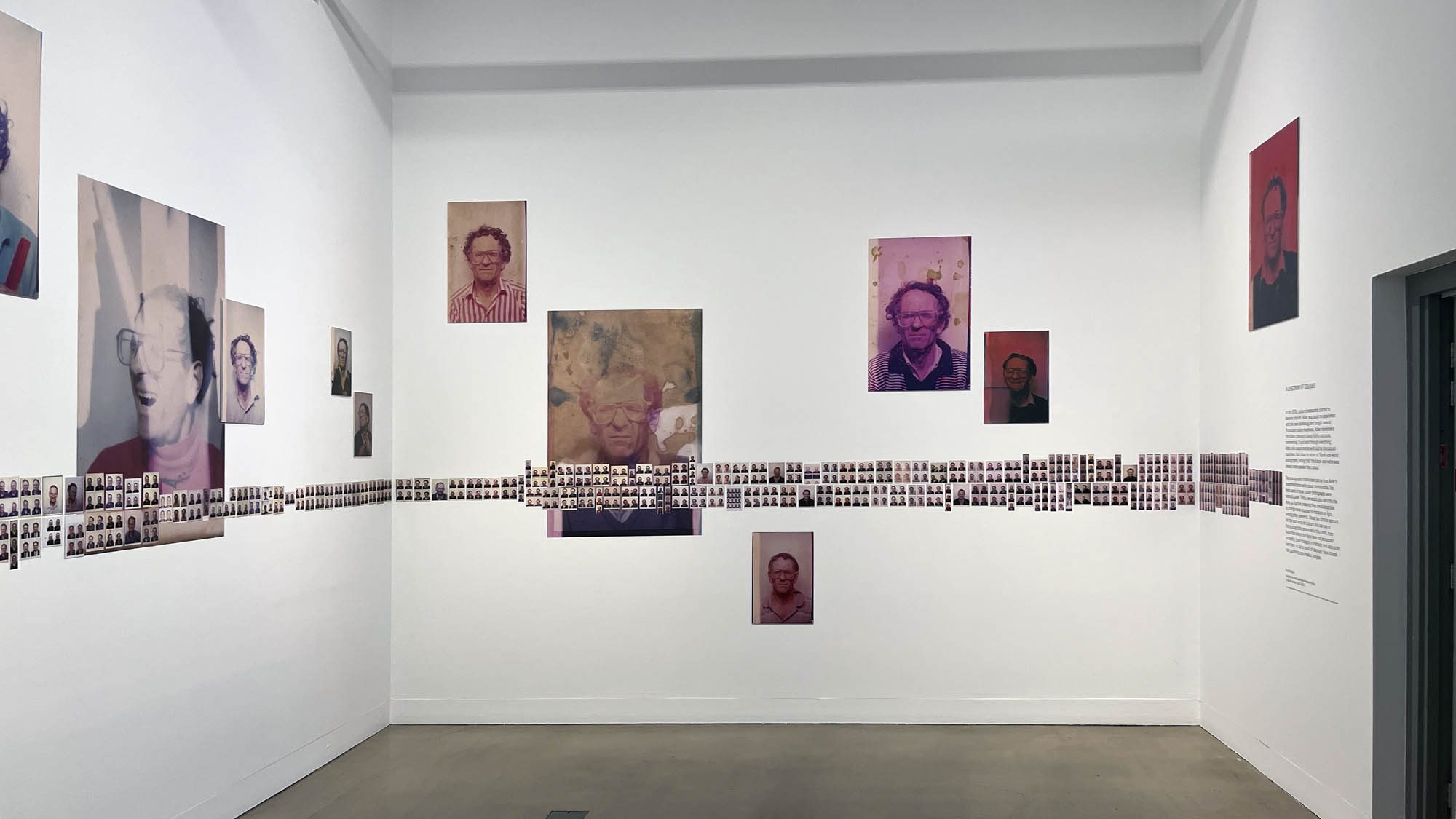
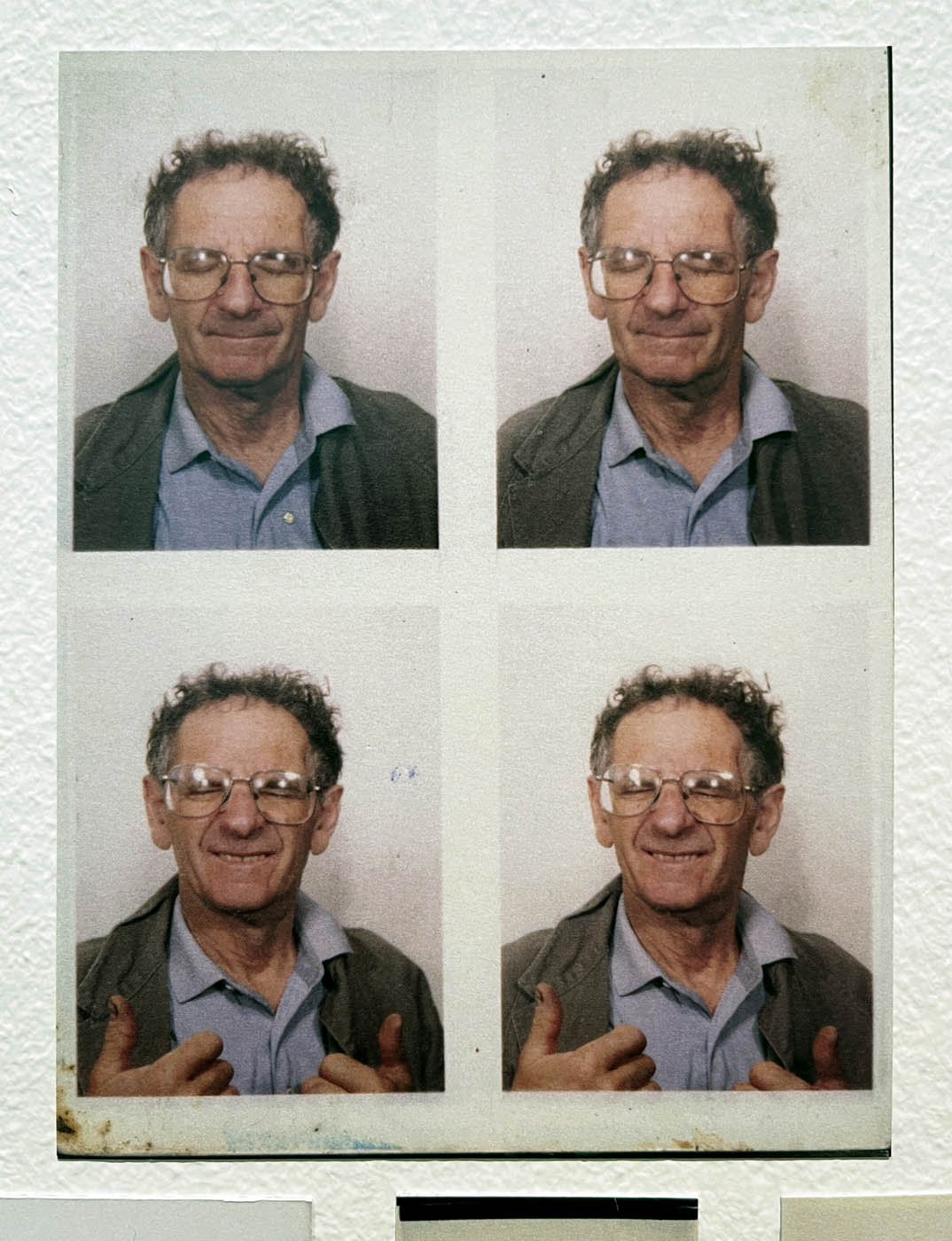
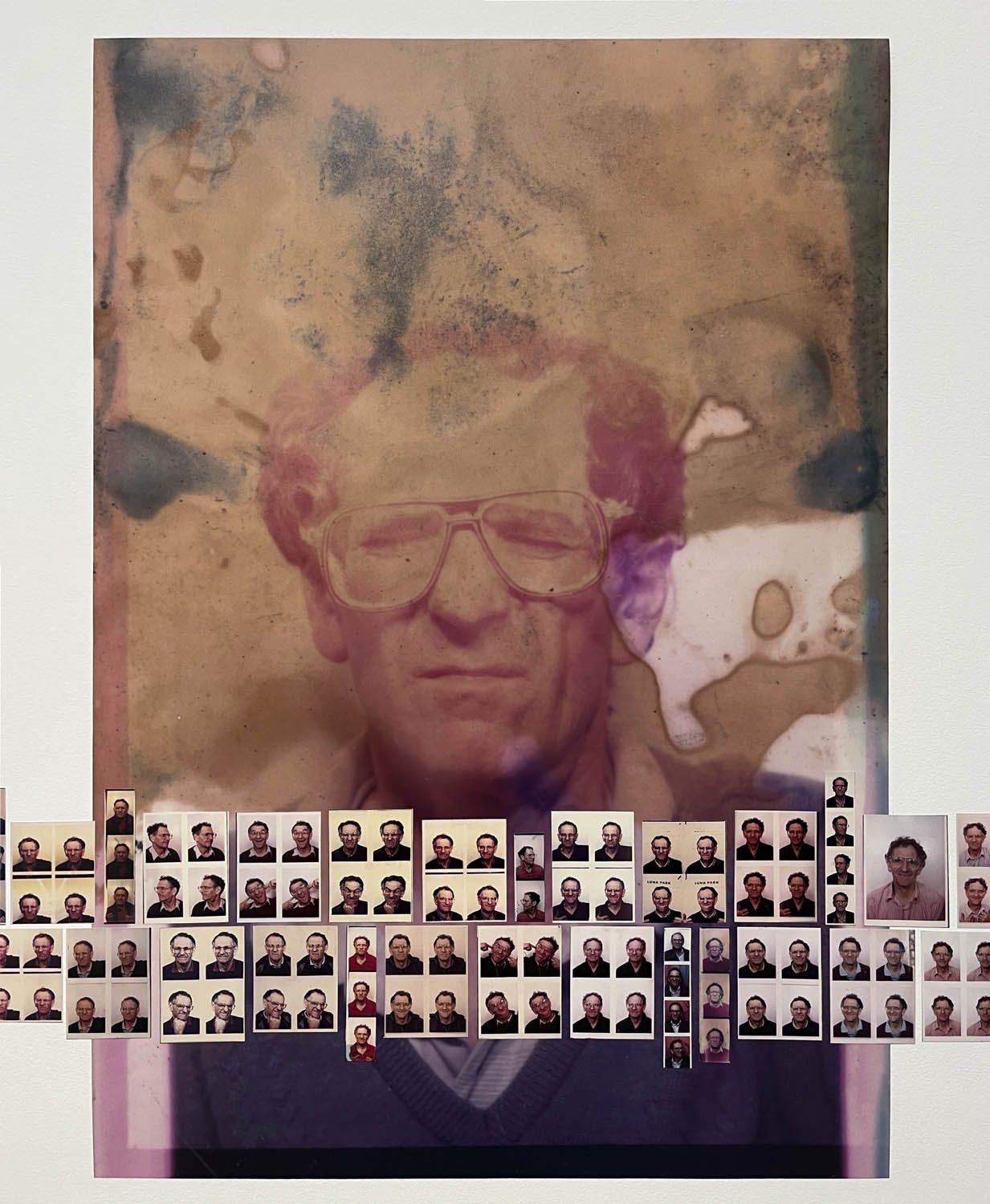
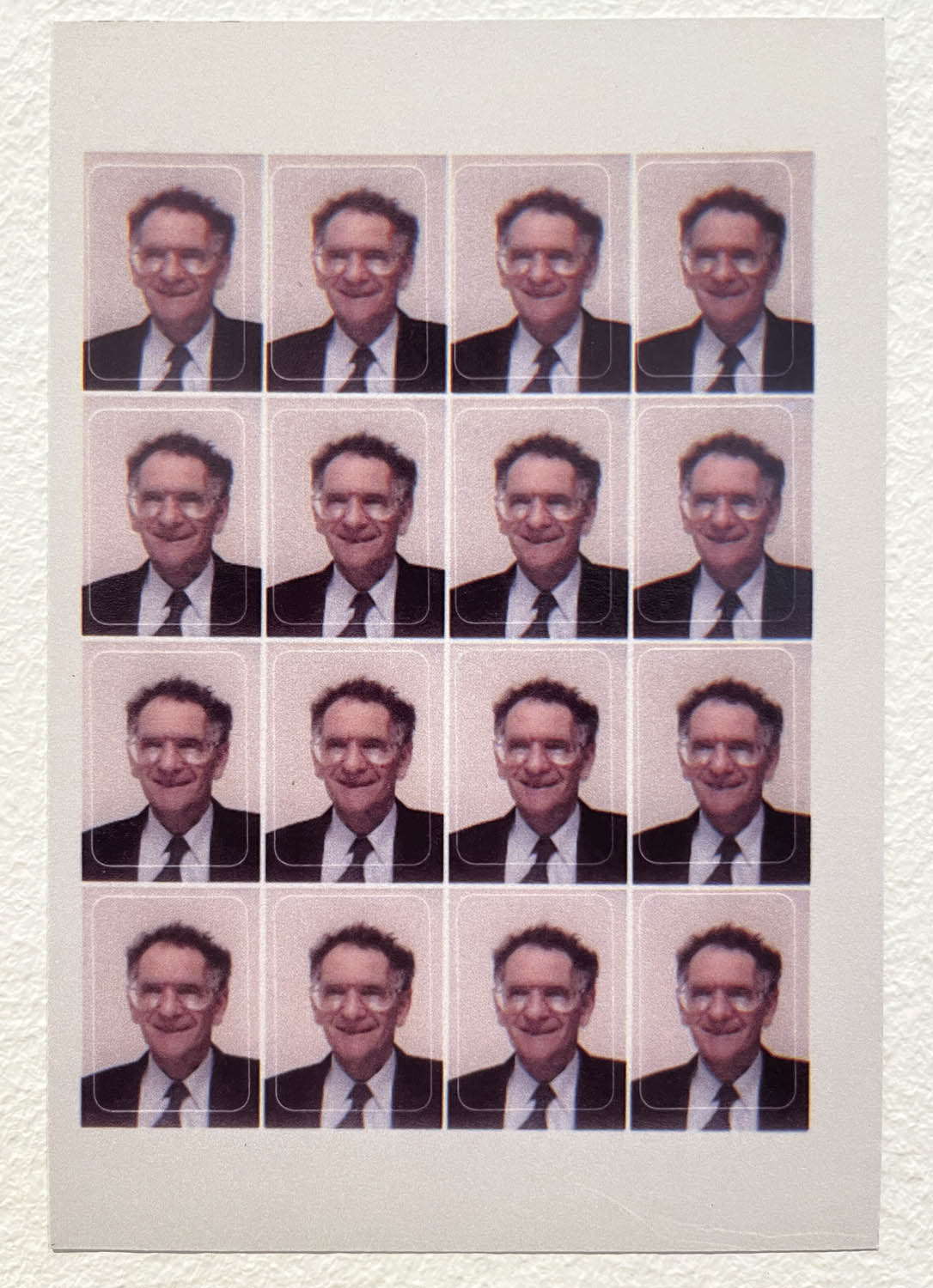
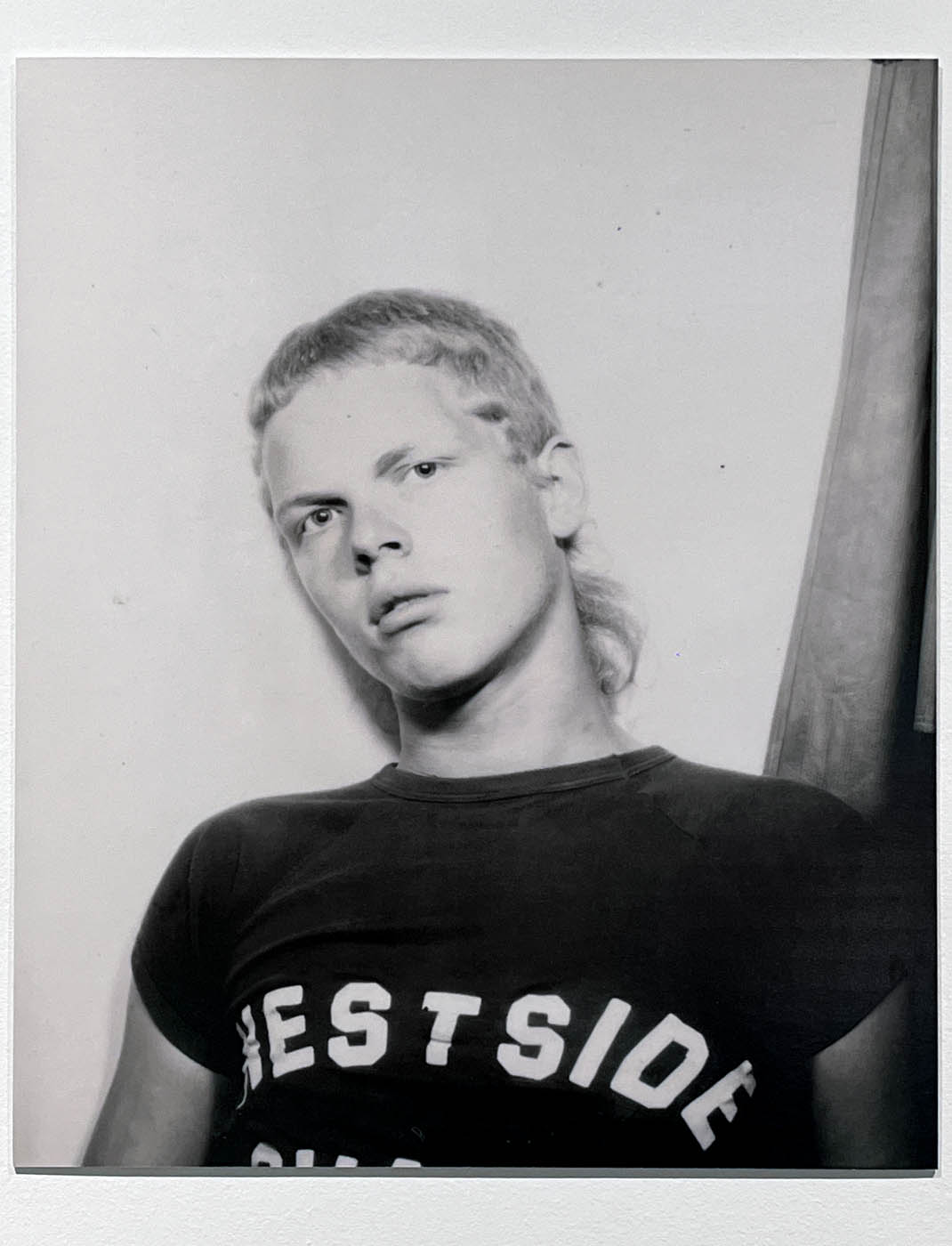
Through the strip self-portraits Adler took while servicing and then testing the photobooths that he operated in Melbourne, Australia we become immersed in an archive of his world, the exhibition becoming a joyous ode to a man who devoted his life to photography (not in the traditional sense): in turns humorous and historical, a travelogue, his travelogue, through time and space.
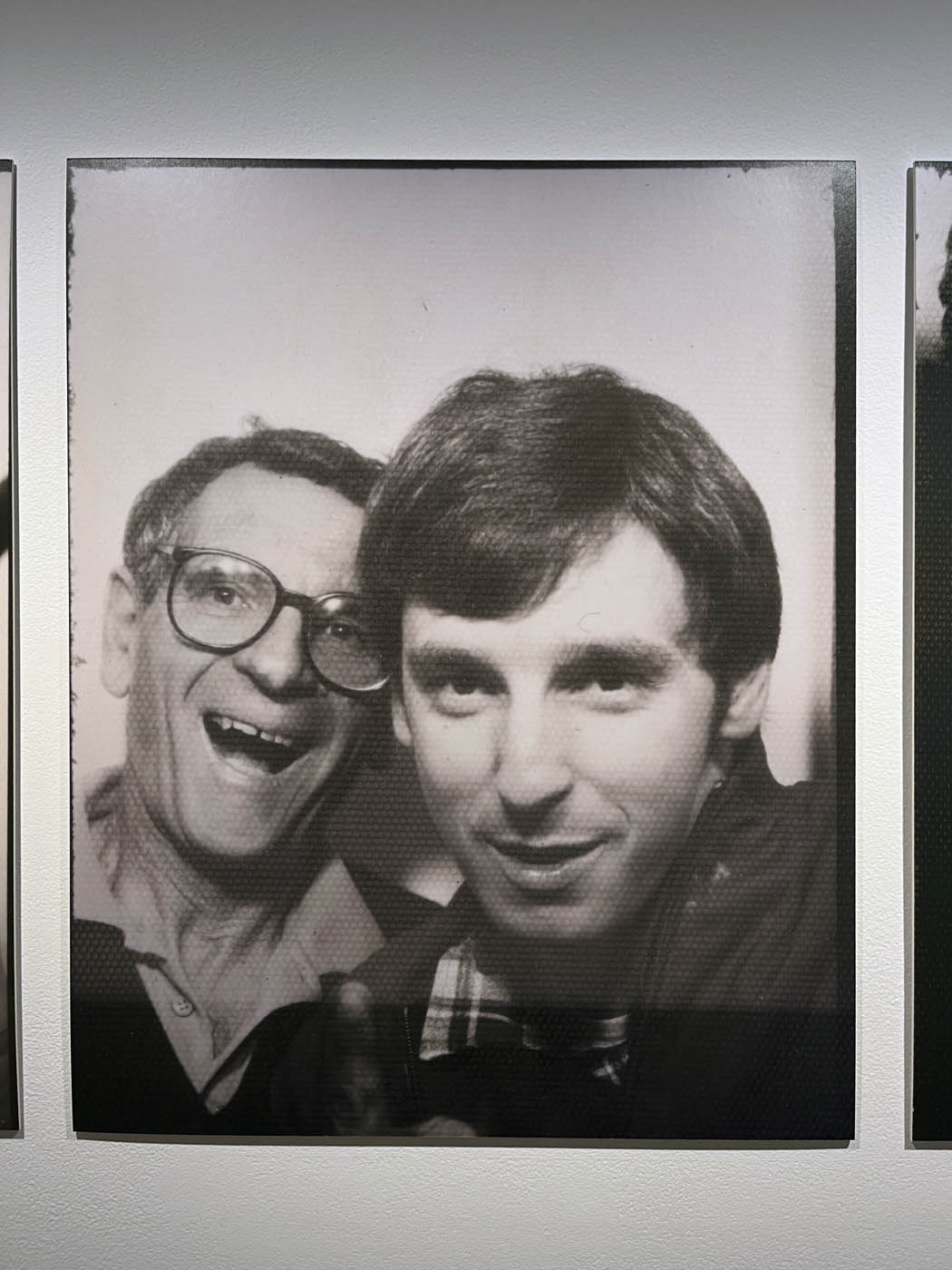
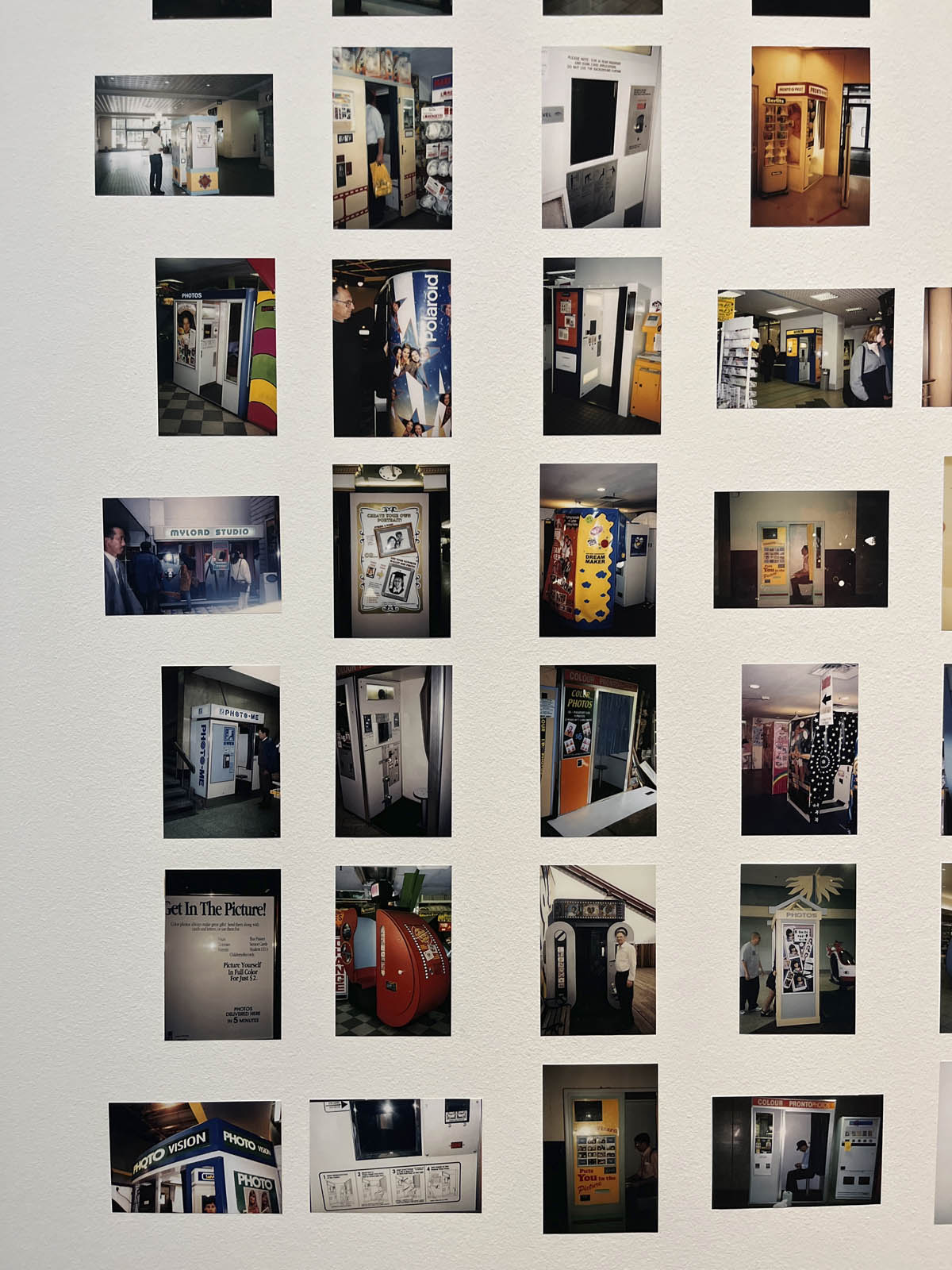
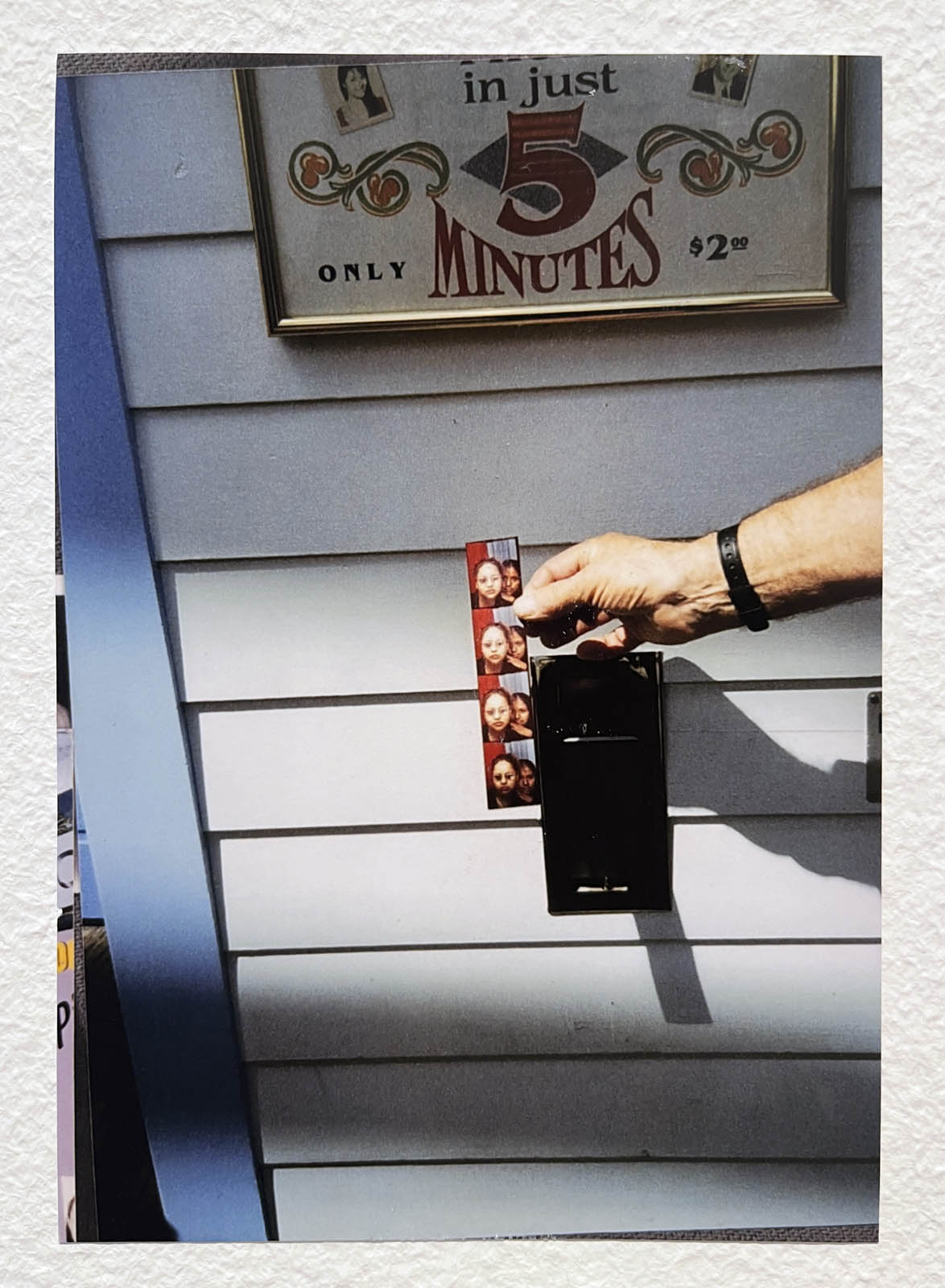
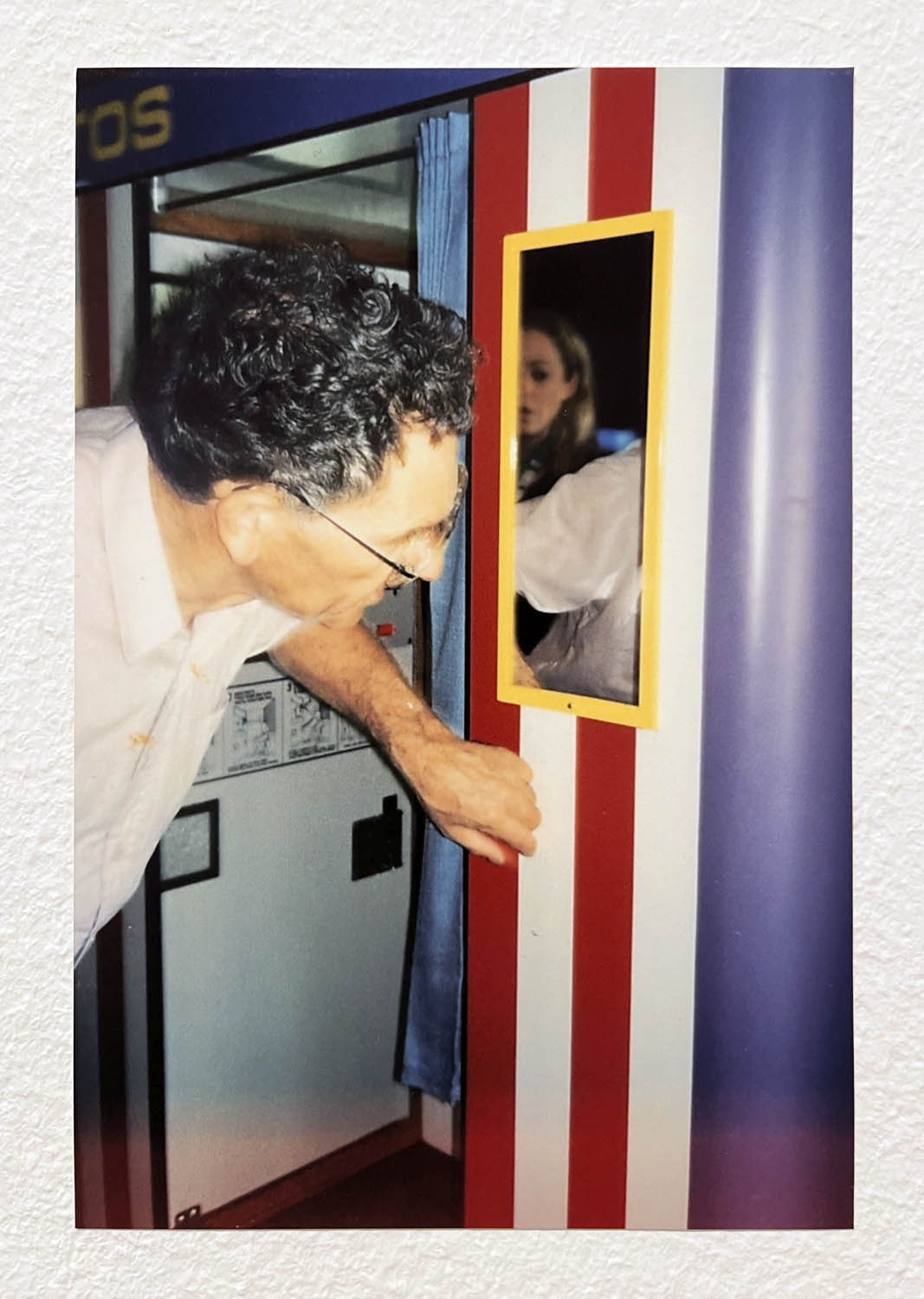
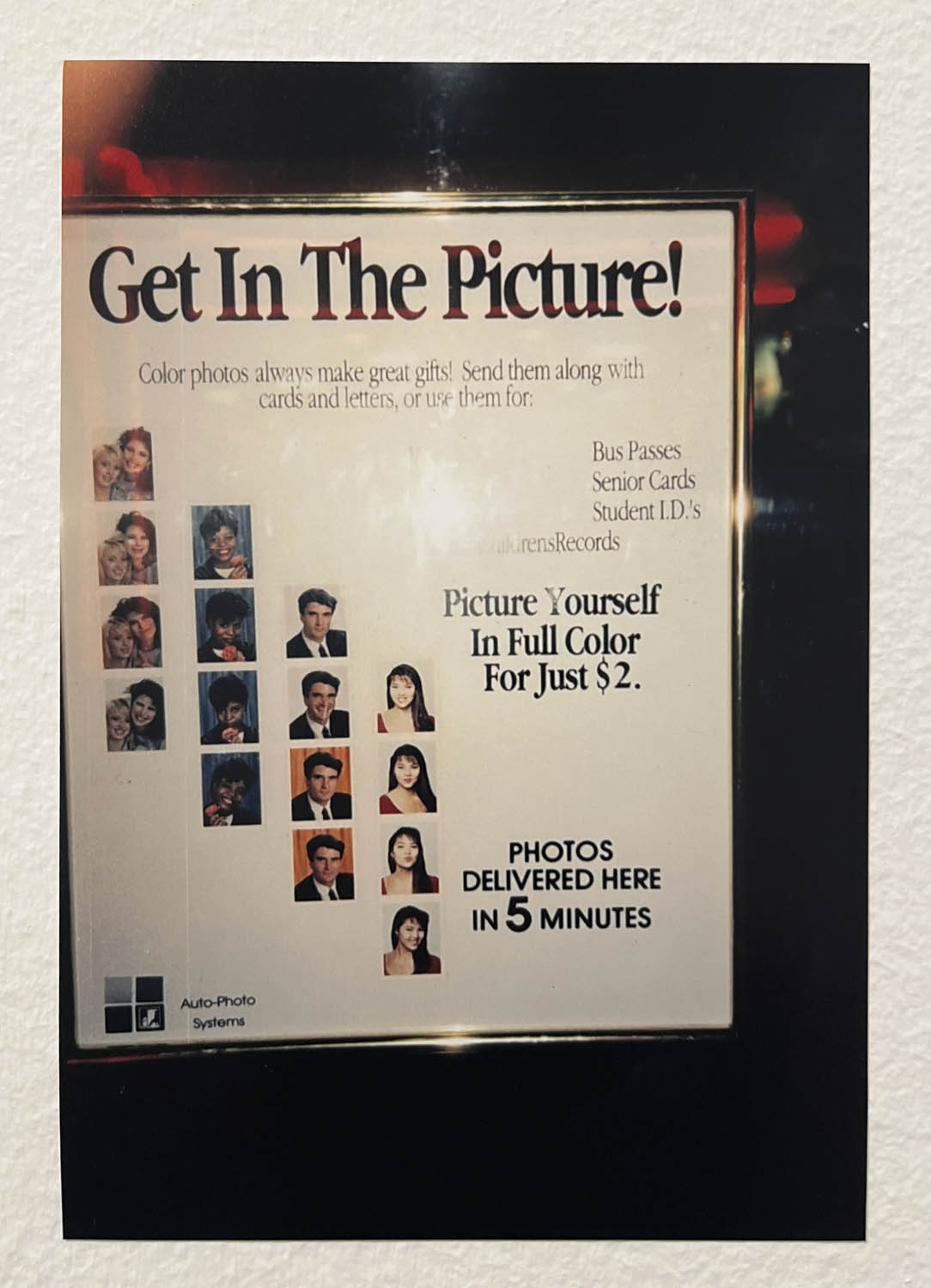
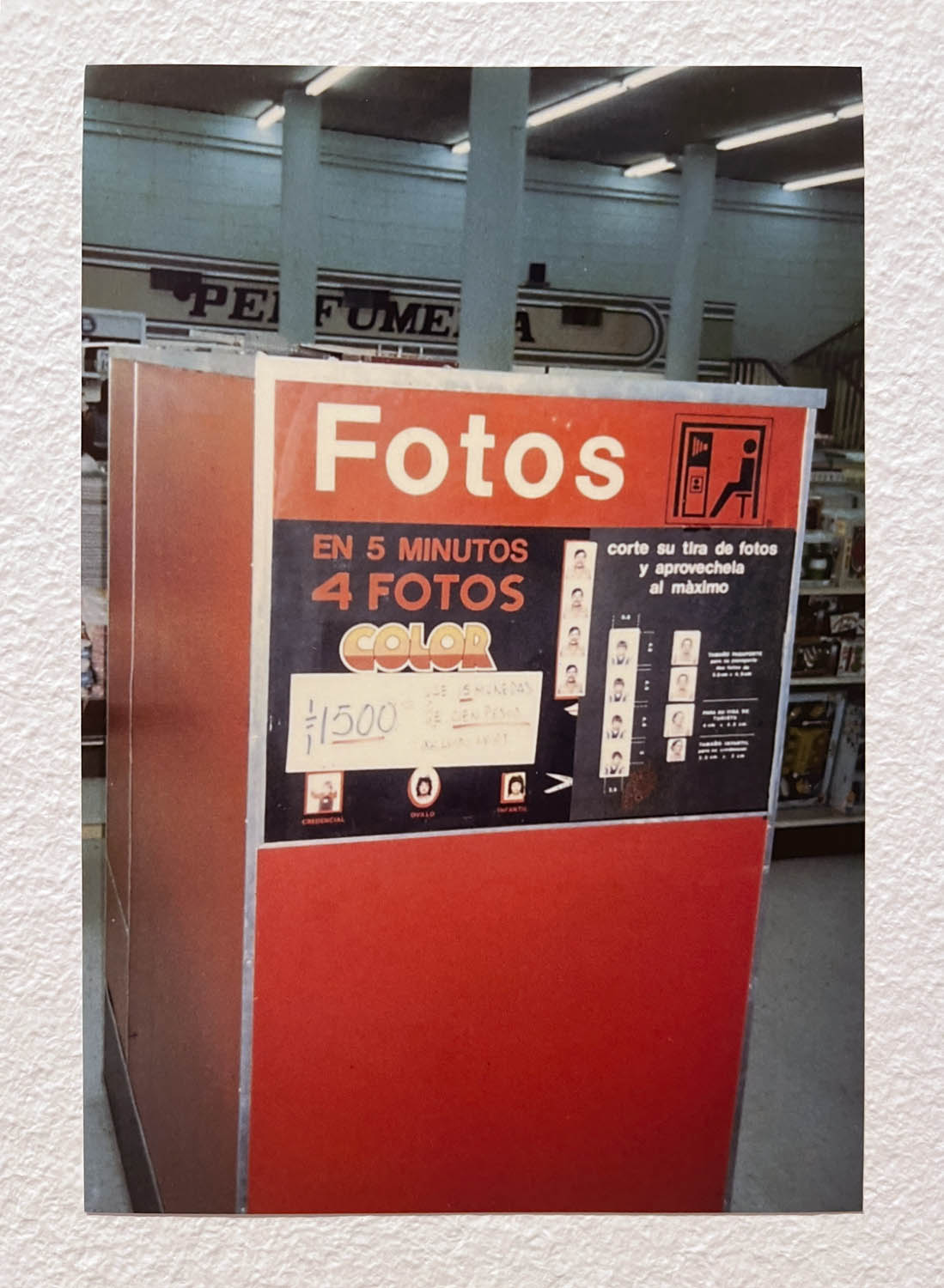
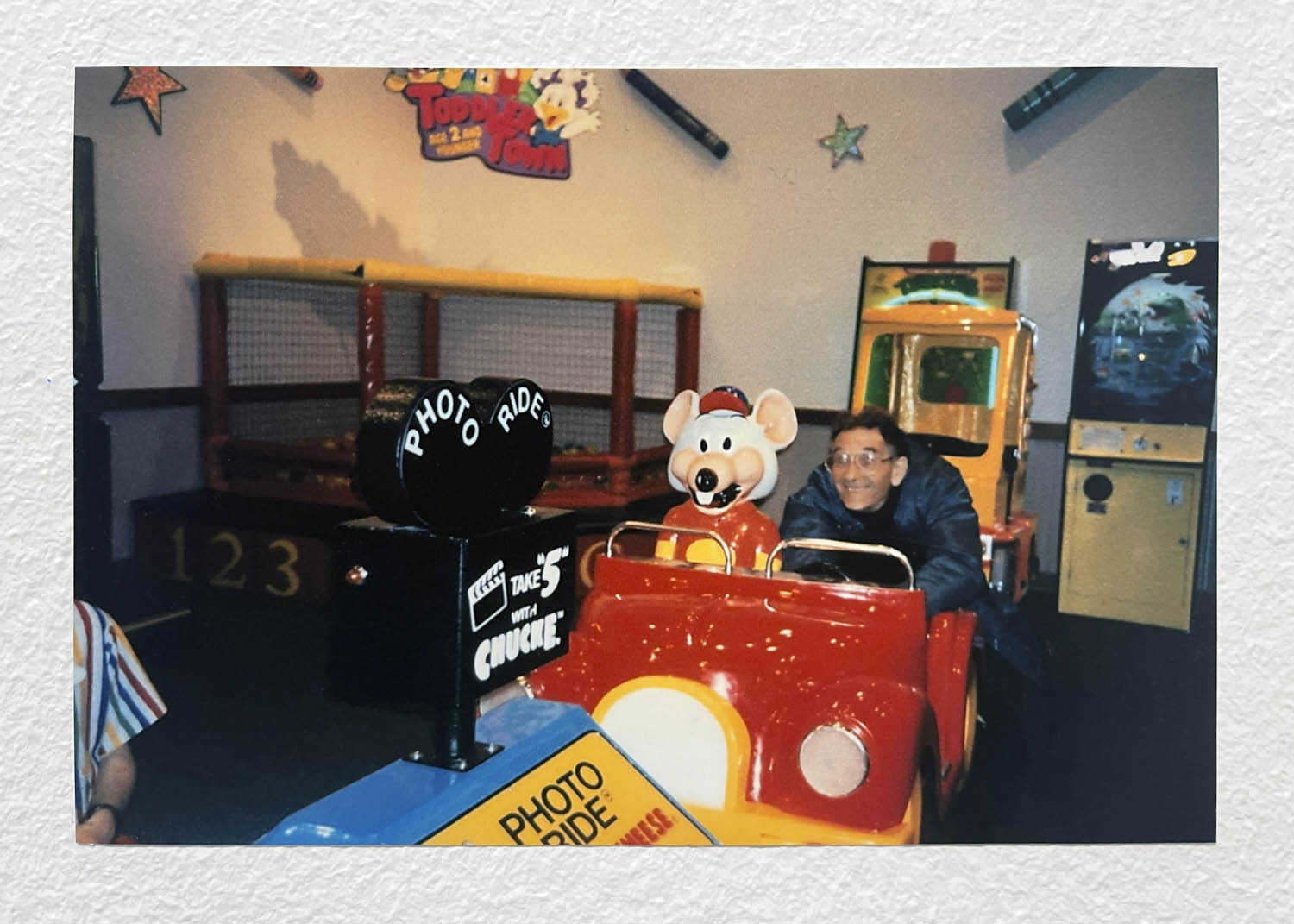
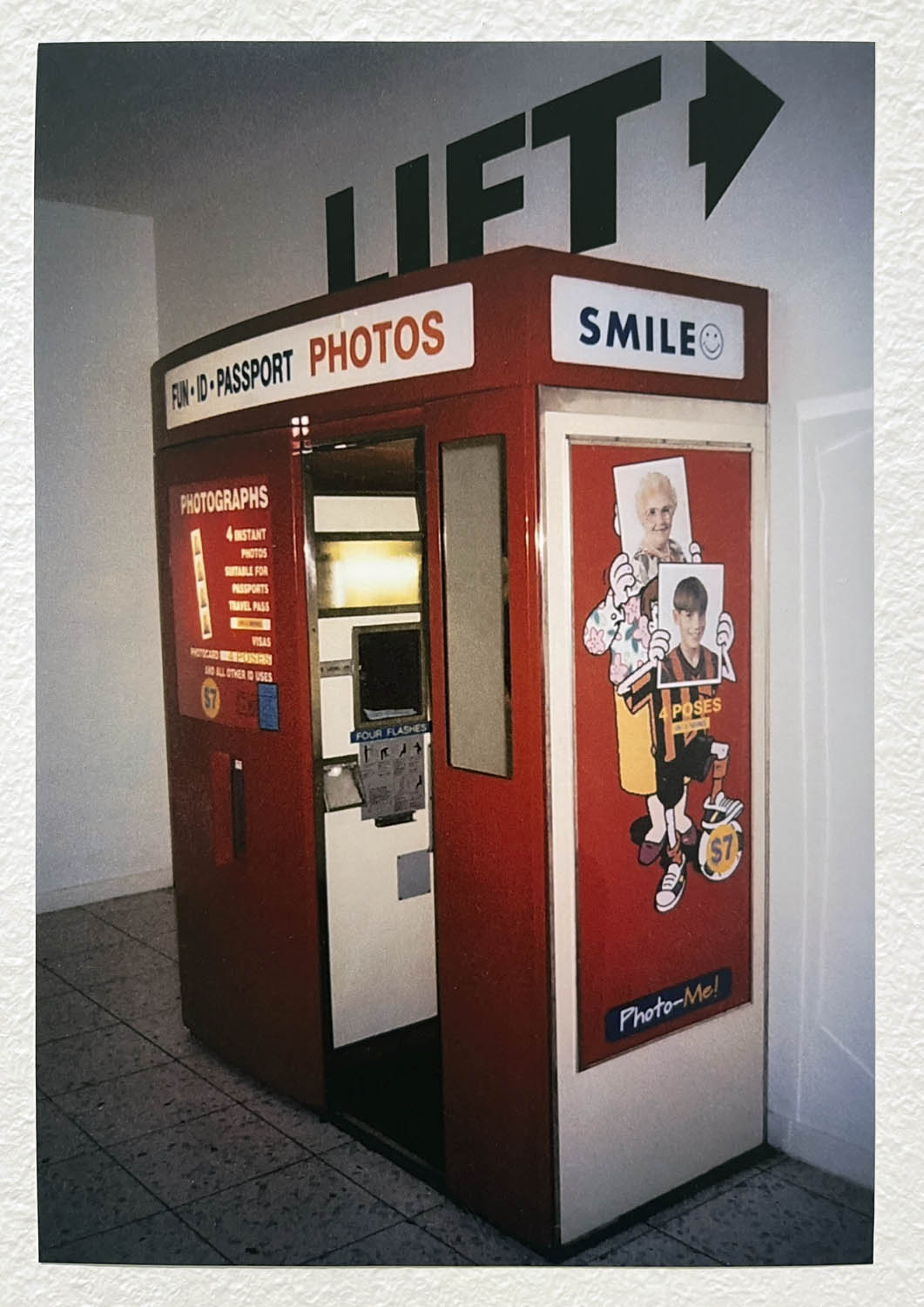
We see Adler growing older and ageing; we see historic events such as the COVID pandemic with him wearing a mask; we see him travelling the world to picture other photobooths in situ; we see him goofing and performing for the camera; and we see the people he met along the way. I particularly like the photograph of Adler having his photo taken on the “Photo Ride: Take “5” with Chuckie” where he imitates the smile of his fellow traveller (see below)
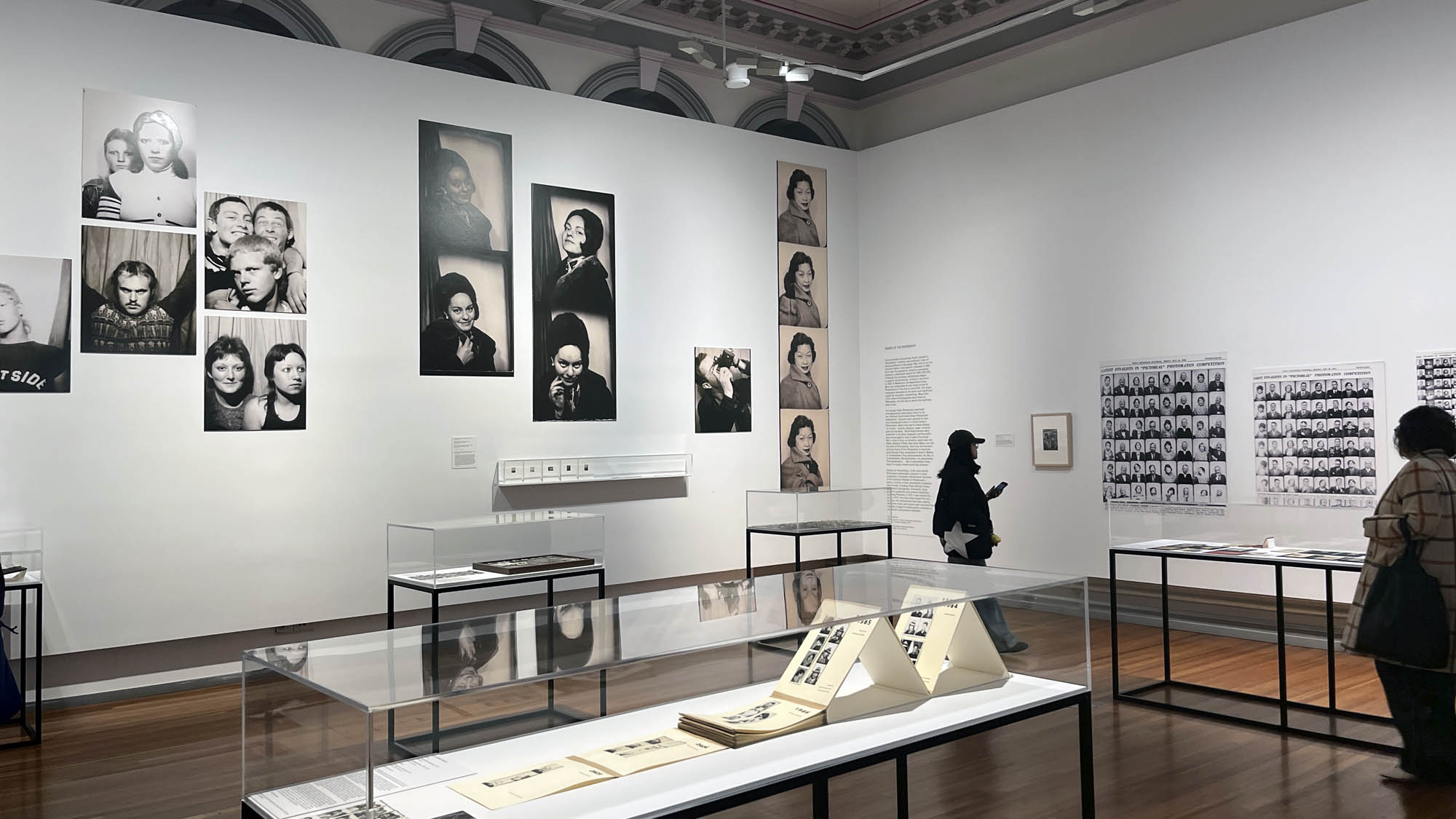
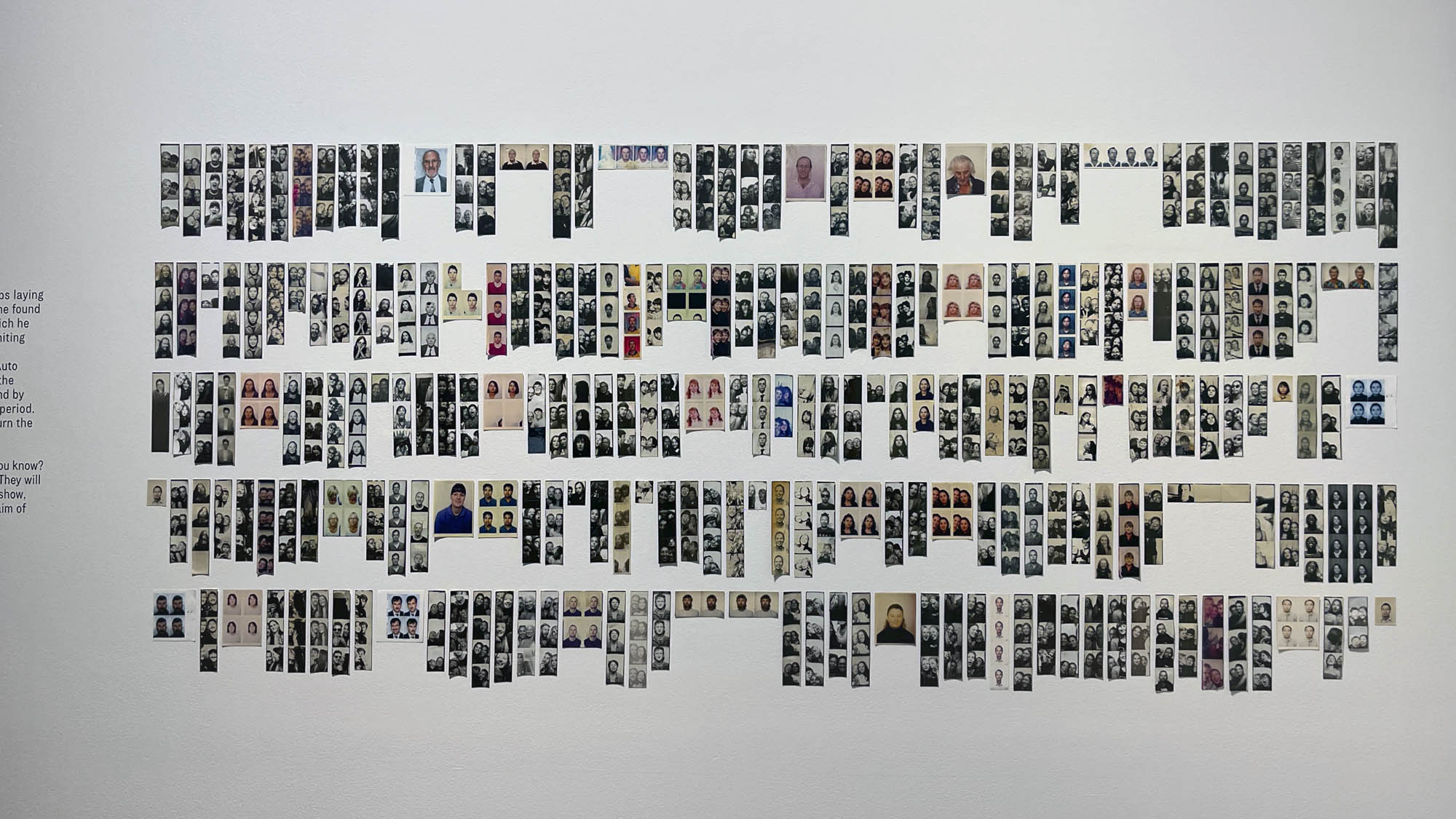
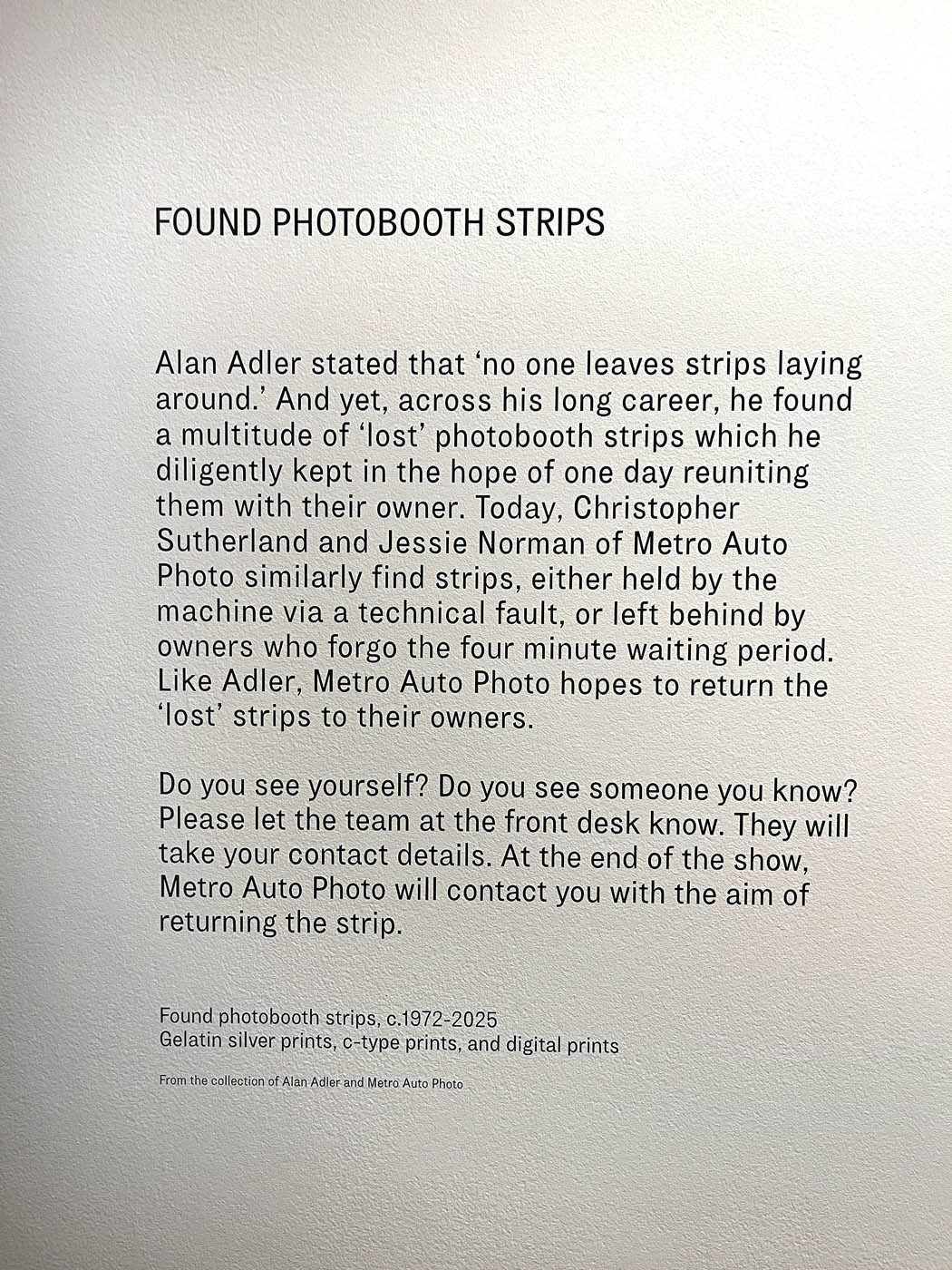
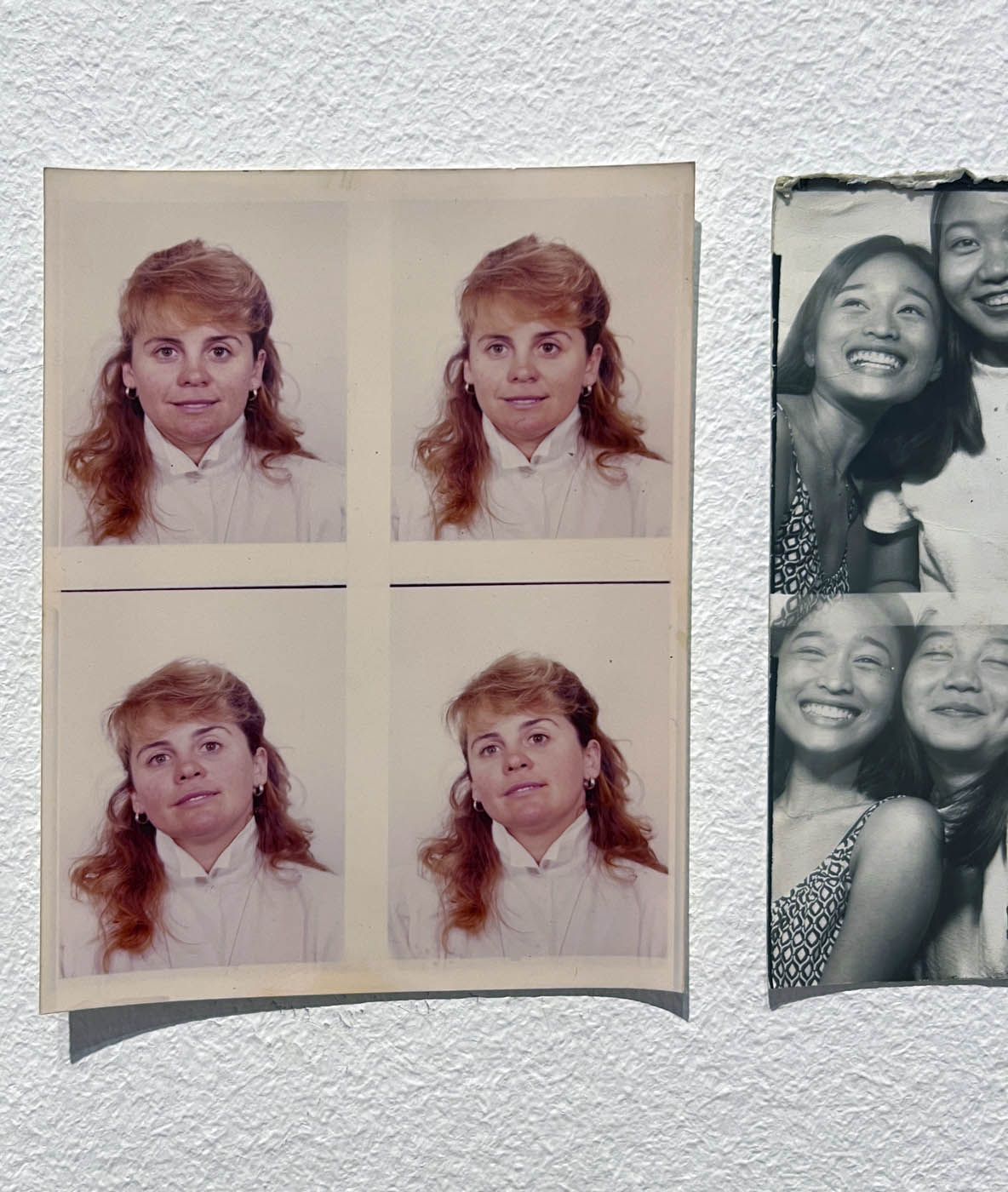
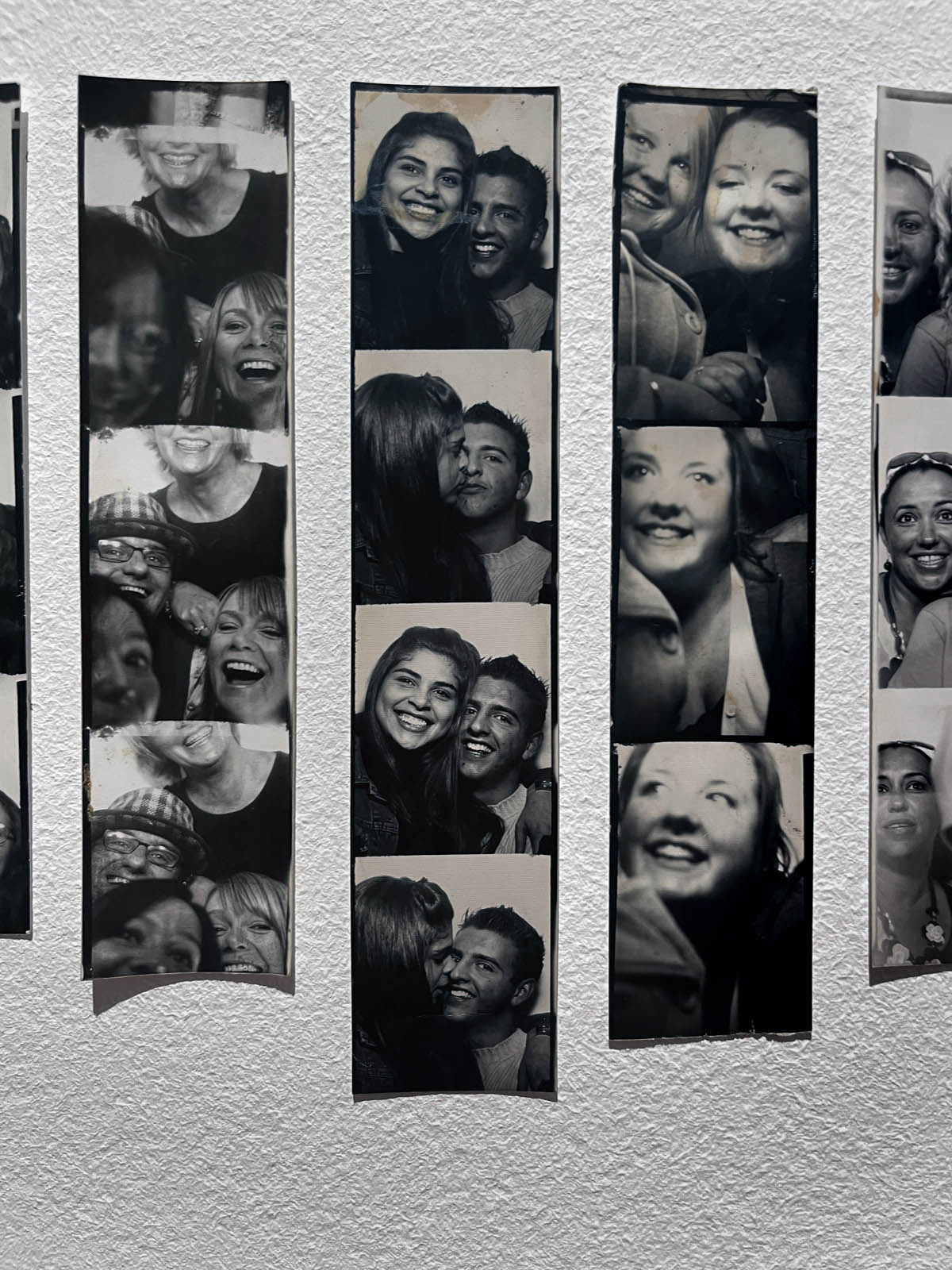
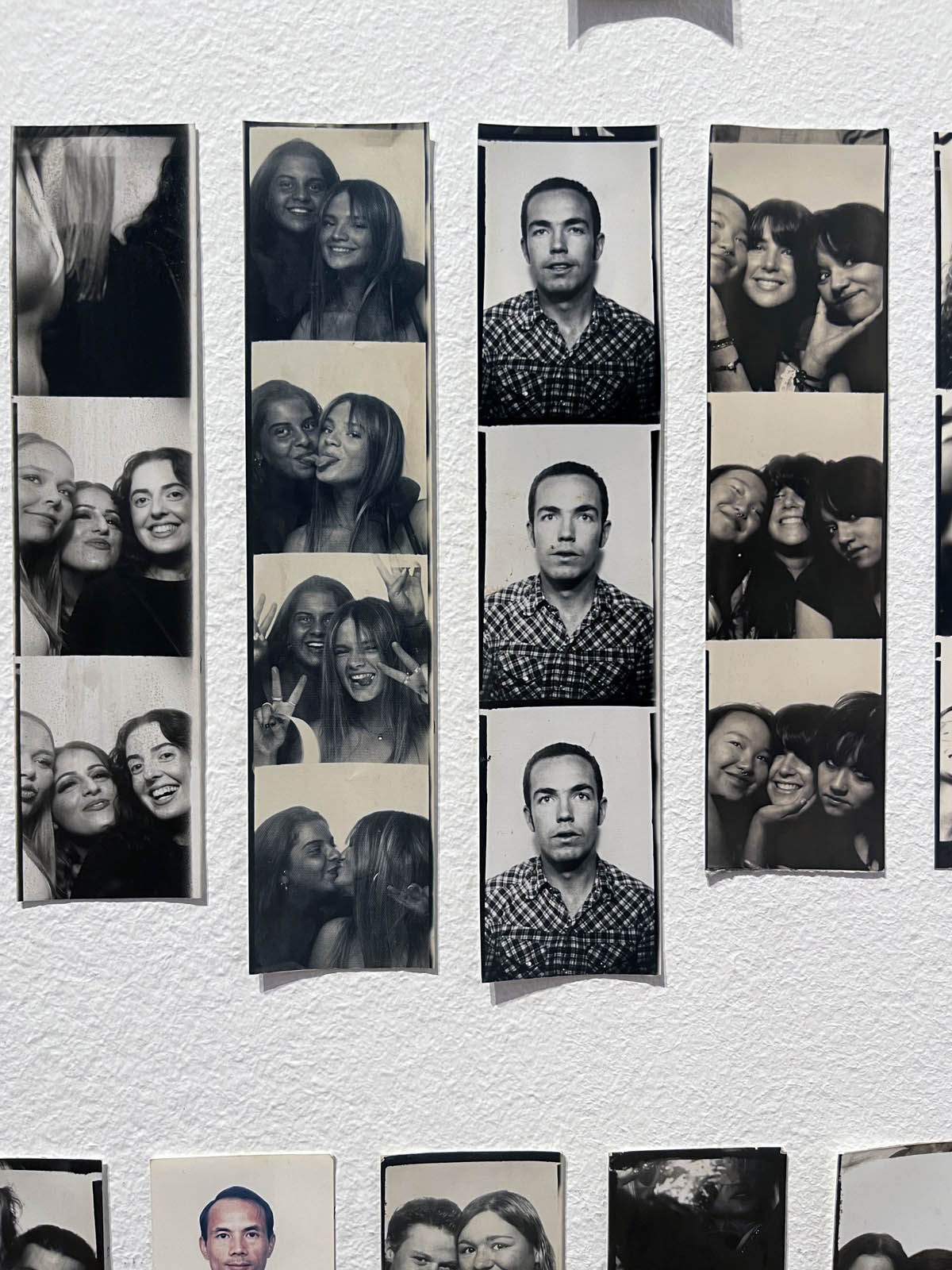
The exhibition is also historical – there is a short section on the history of the photobooth – contemporary – there are contemporary works by Australian artists who use the photobooth as the basis for their art – and lost and found – where “lost” photobooth strips that Adler diligently collected in the hope of one day reuniting them with their owner are displayed.
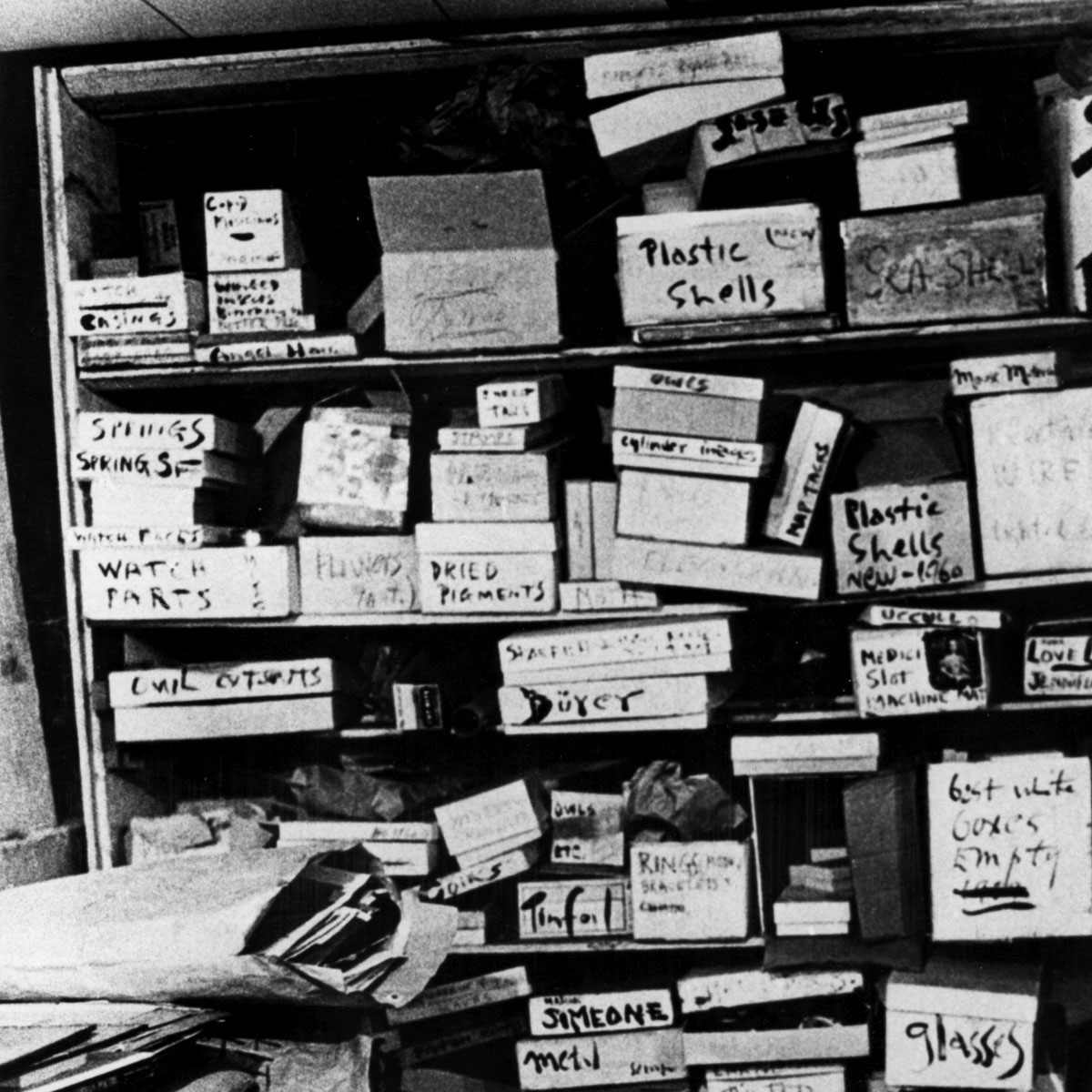
There is an absolutely wonderful video by Christopher Sutherland titled Alan (extract below) which gives you good insight into the man. He seems part magician, keeping those old photobooths going, and part artist – Adler’s workshop reminding me so much of the basement of the American artist Joseph Cornell (1903-1972, see photo below) where he used to keep all the treasures he scavenged from around New York that he used to make his magical boxes. Adler’s photobooths were his magical boxes kept going by his bits and pieces, booths of happiness and memories, tales of a life in portraits.
In this exhibition the spirit of this man shines through in gloriously irreverent black and white and colour self-portraits, and fun, adventurous photographs from overseas. One of the best pure photography exhibitions I have seen this year.
Installation views of the exhibition Auto-Photo: A Life in Portraits at RMIT Gallery, Melbourne, June – August, 2025 Photos: Marcus Bunyan
Gallery 2
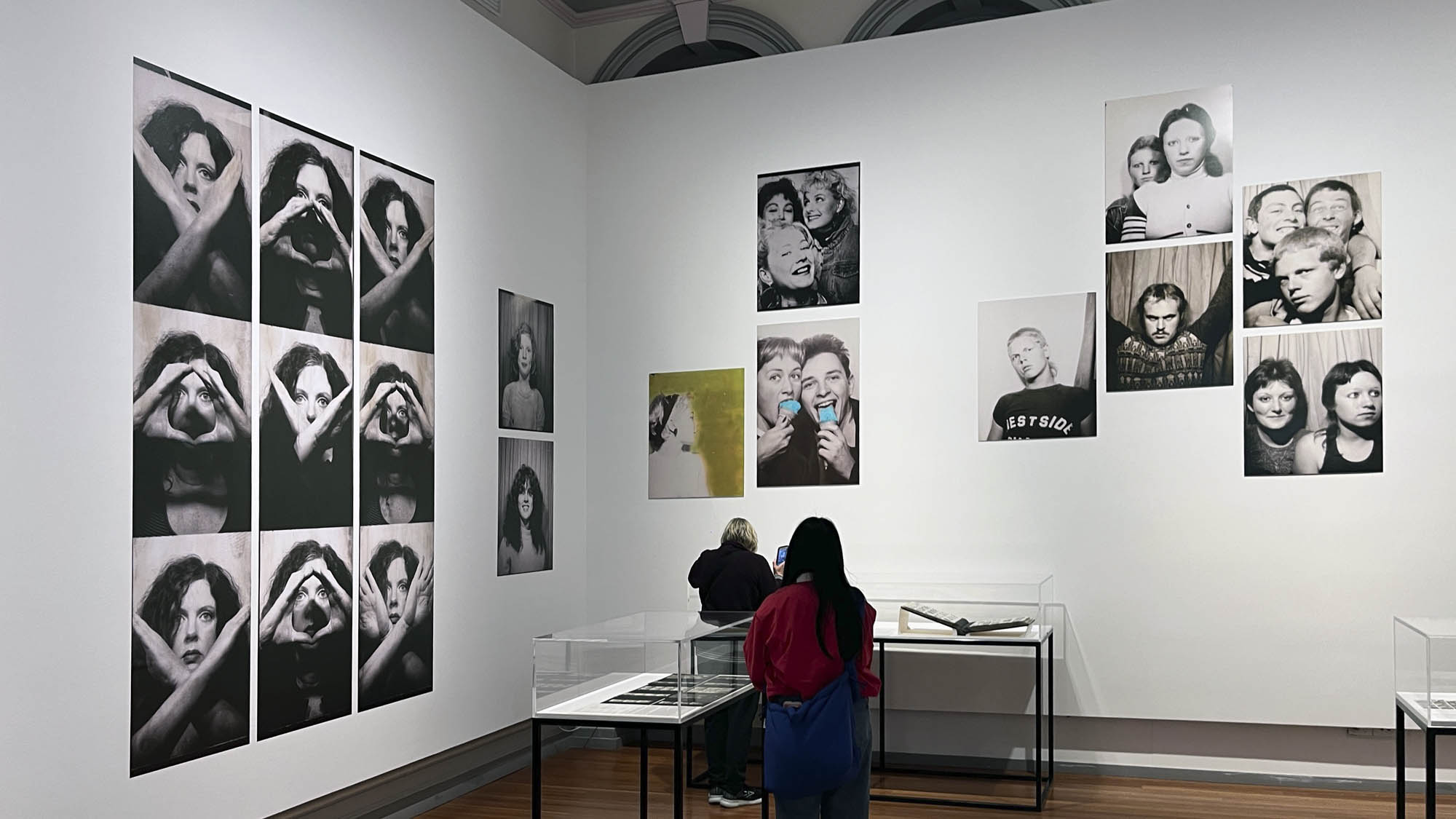
Installation views of the exhibition Auto-Photo: A Life in Portraits at RMIT Gallery, Melbourne, June – August, 2025 Photos: Marcus Bunyan
Auto-Photo: A Life in Portraits introduces us to Alan Adler (1932-2024), who while little known, was the oldest and longest serving photobooth technician in the world.
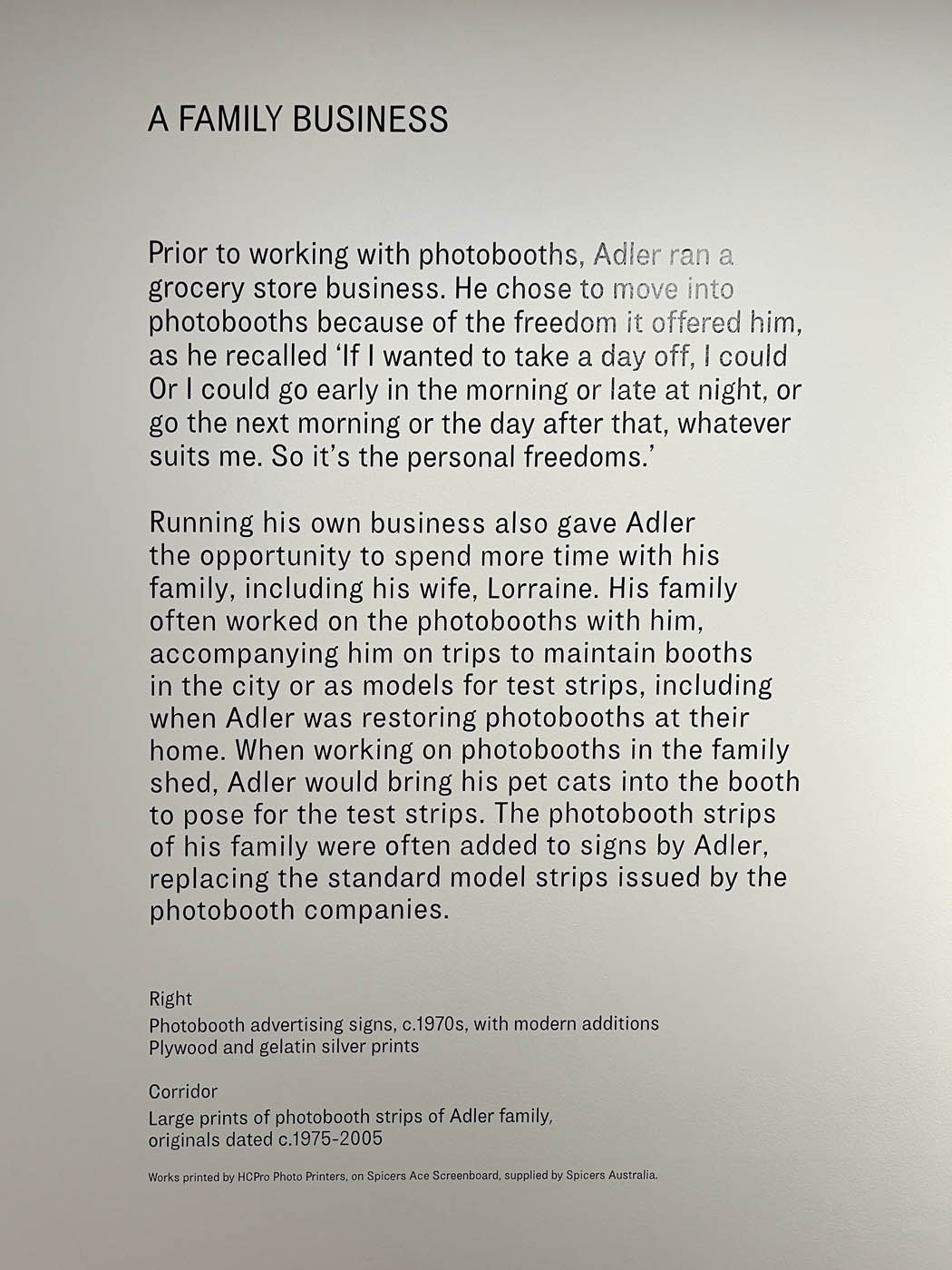
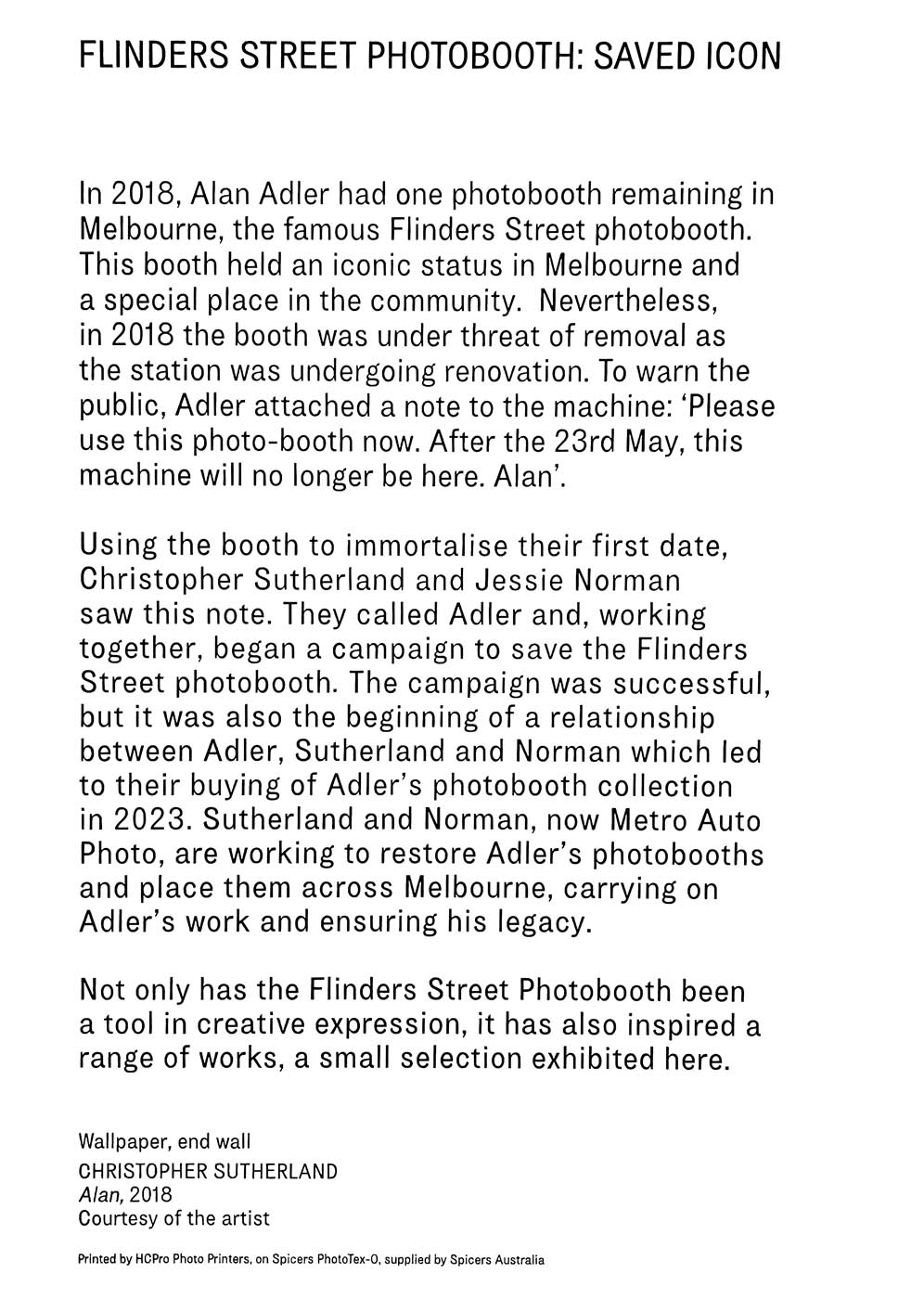
For over 50 years, Adler maintained a fleet of photobooths across Melbourne / Narrm, most notably the site at Flinders Street Station. As part of his weekly service, he would take a strip of test shots, now forming an extraordinary visual archive of over a thousand self-portraits.
Adler’s story shows a fascinating dedication to repetitious image making and is supported by the artworks of Melbourne creatives who have passionately used his photobooths.
Marking 100 years of the photobooth, Auto-Photo is one of many worldwide events that celebrate the centenary and reflect on the significance of this analogue machine.
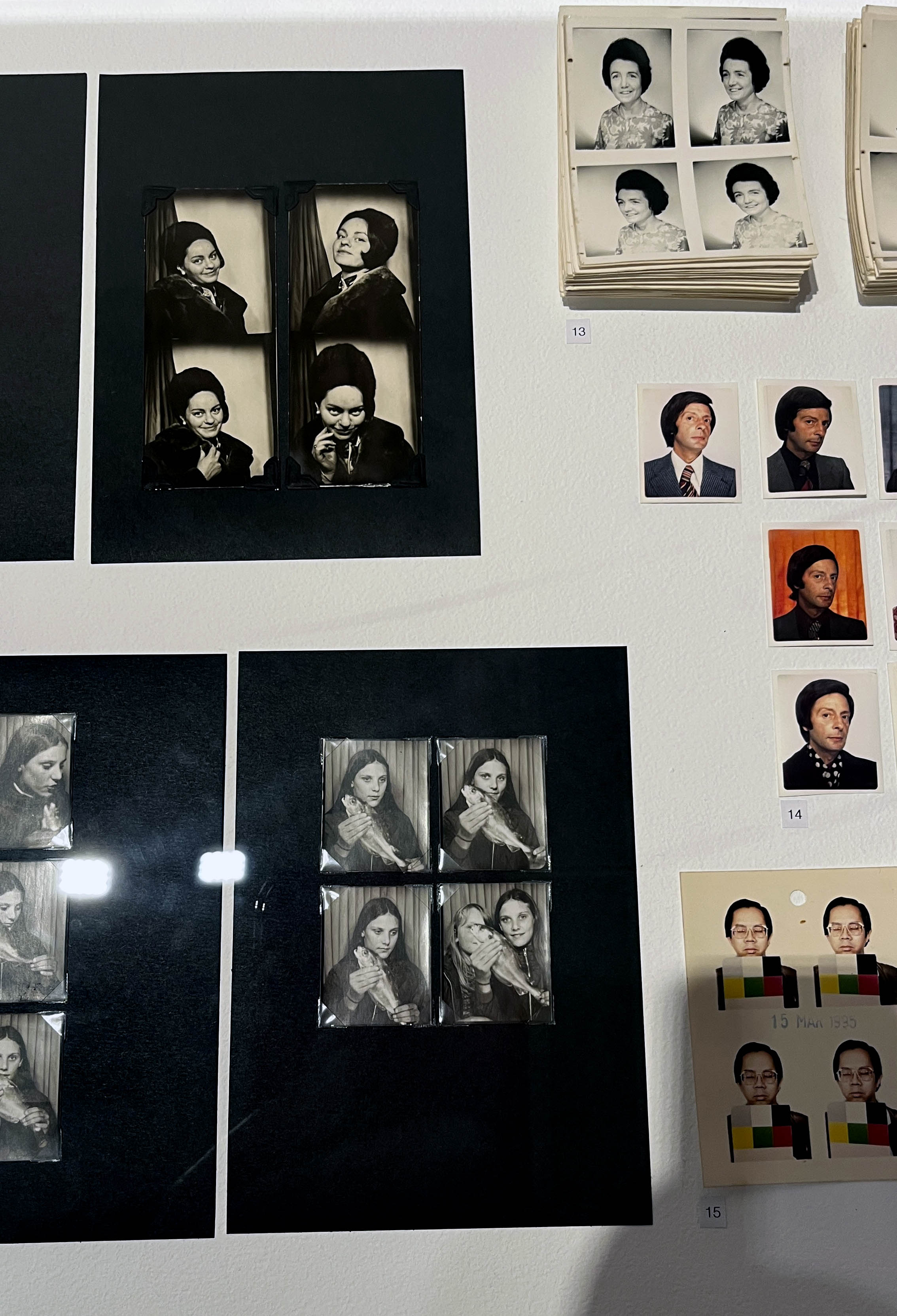
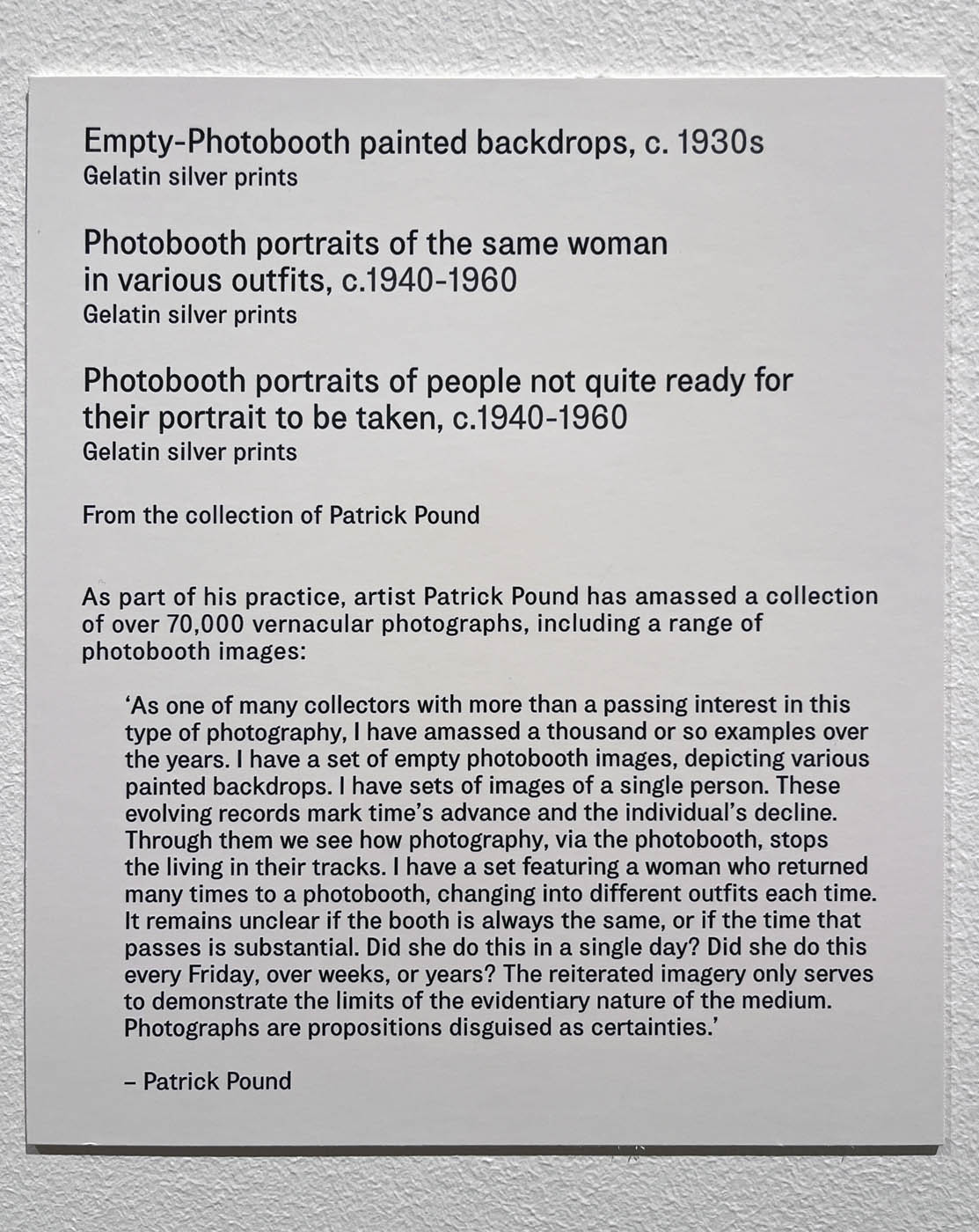
Auto-Photo: A Life in Portraits features Adler’s extensive archive, alongside additional exhibits and works of art from the collections of Katherine Griffiths, Mark Holsworth, Kyle Archie Knight, Ruth O’Leary, Nicky Makin, Jesse Marlow, Brian Meacham, Metro Auto Photo, Patrick Pound and Joshua Smith.
Auto-Photo: A Life in Portraits is a Centre for Contemporary Photography (CCP) exhibition, presented in partnership with RMIT Culture.
Text from the RMIT Gallery website
Gallery 3
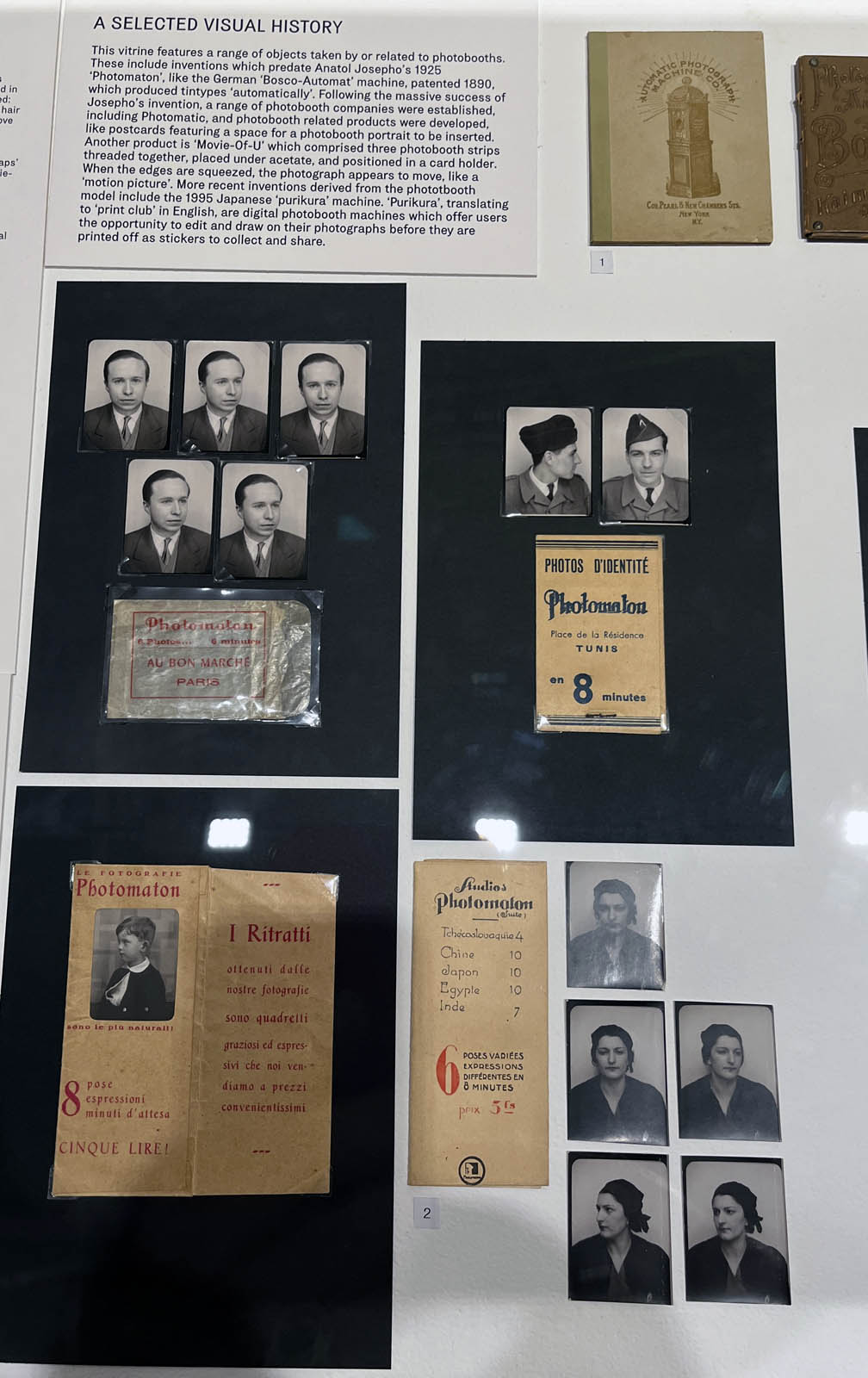
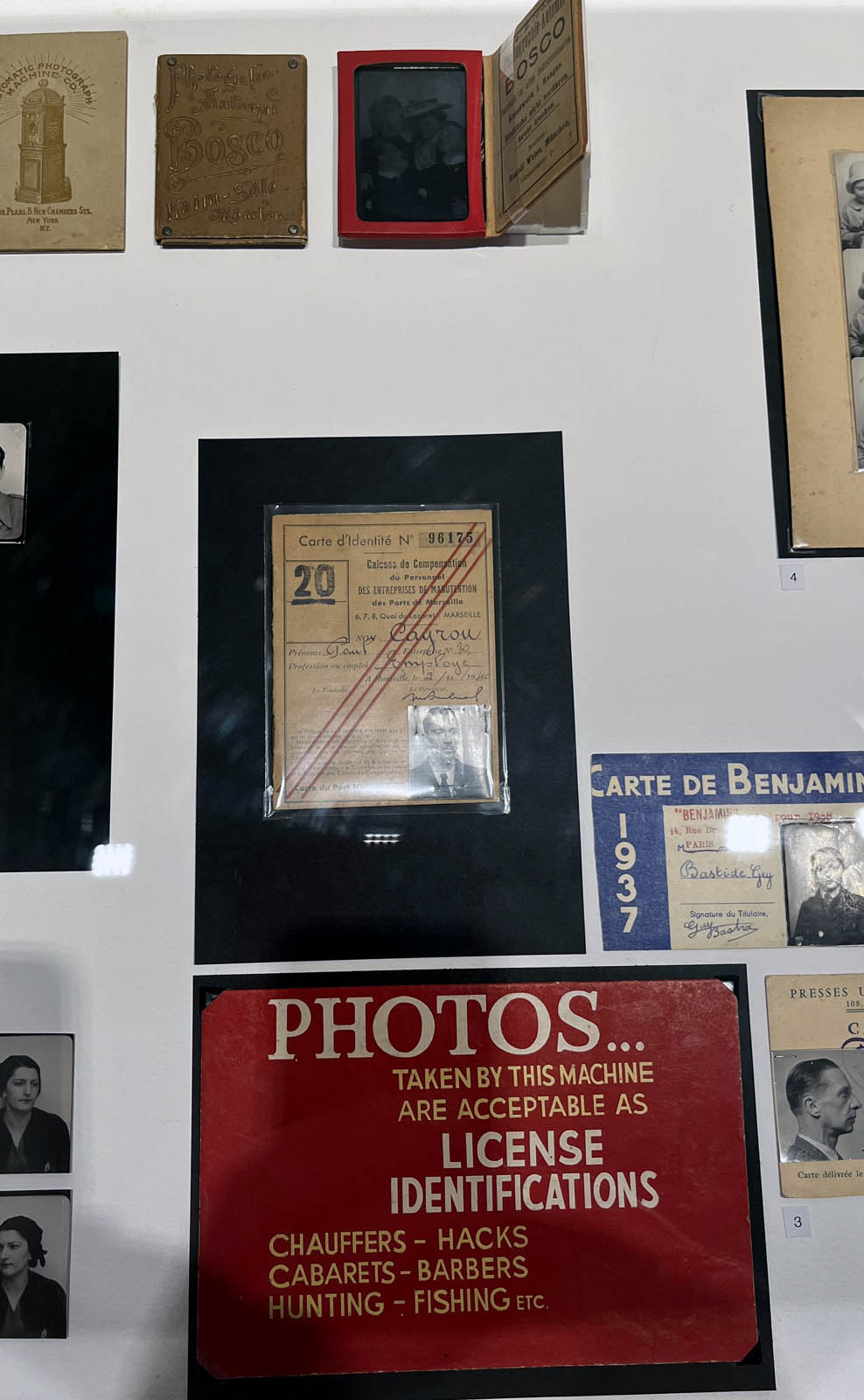
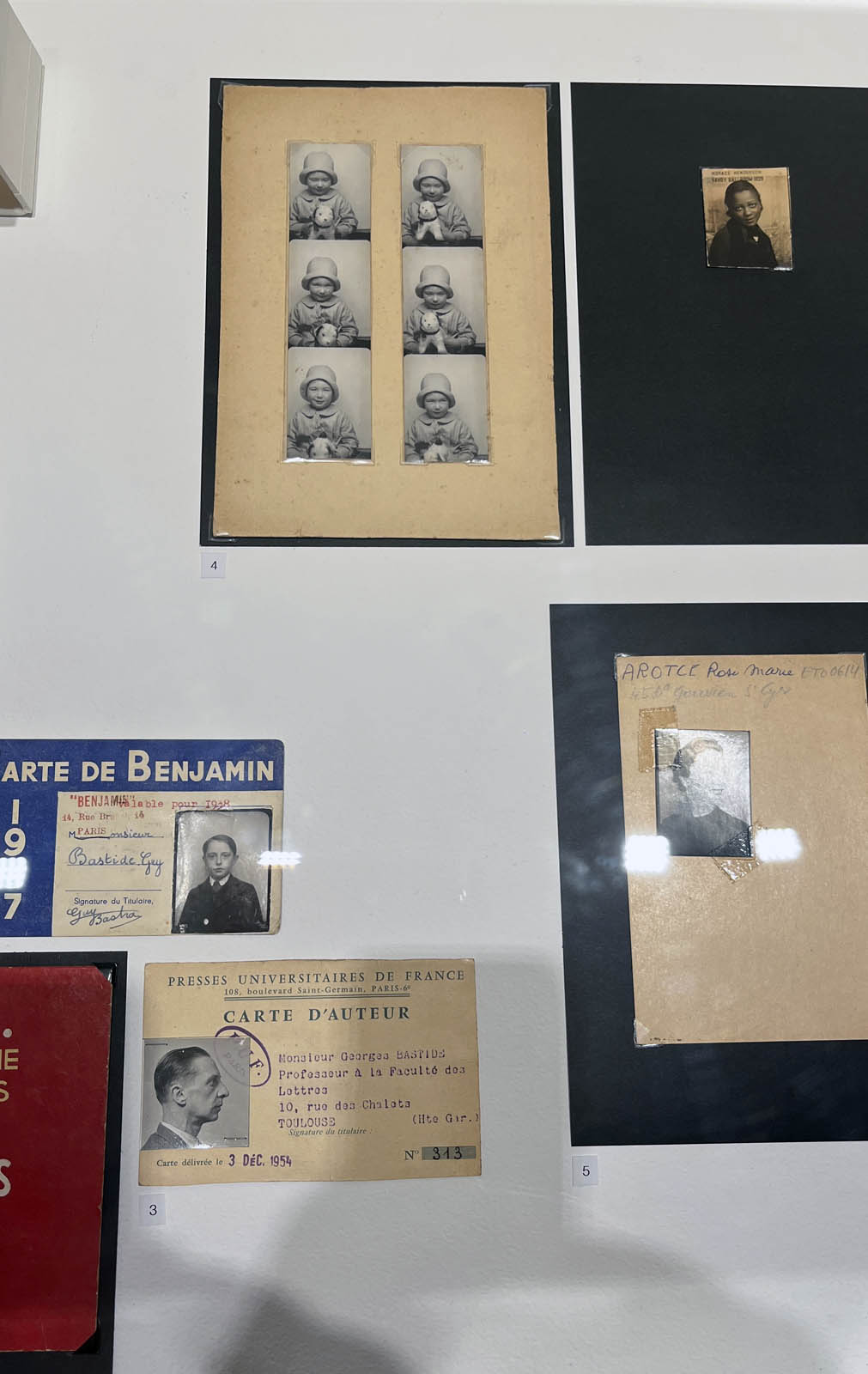
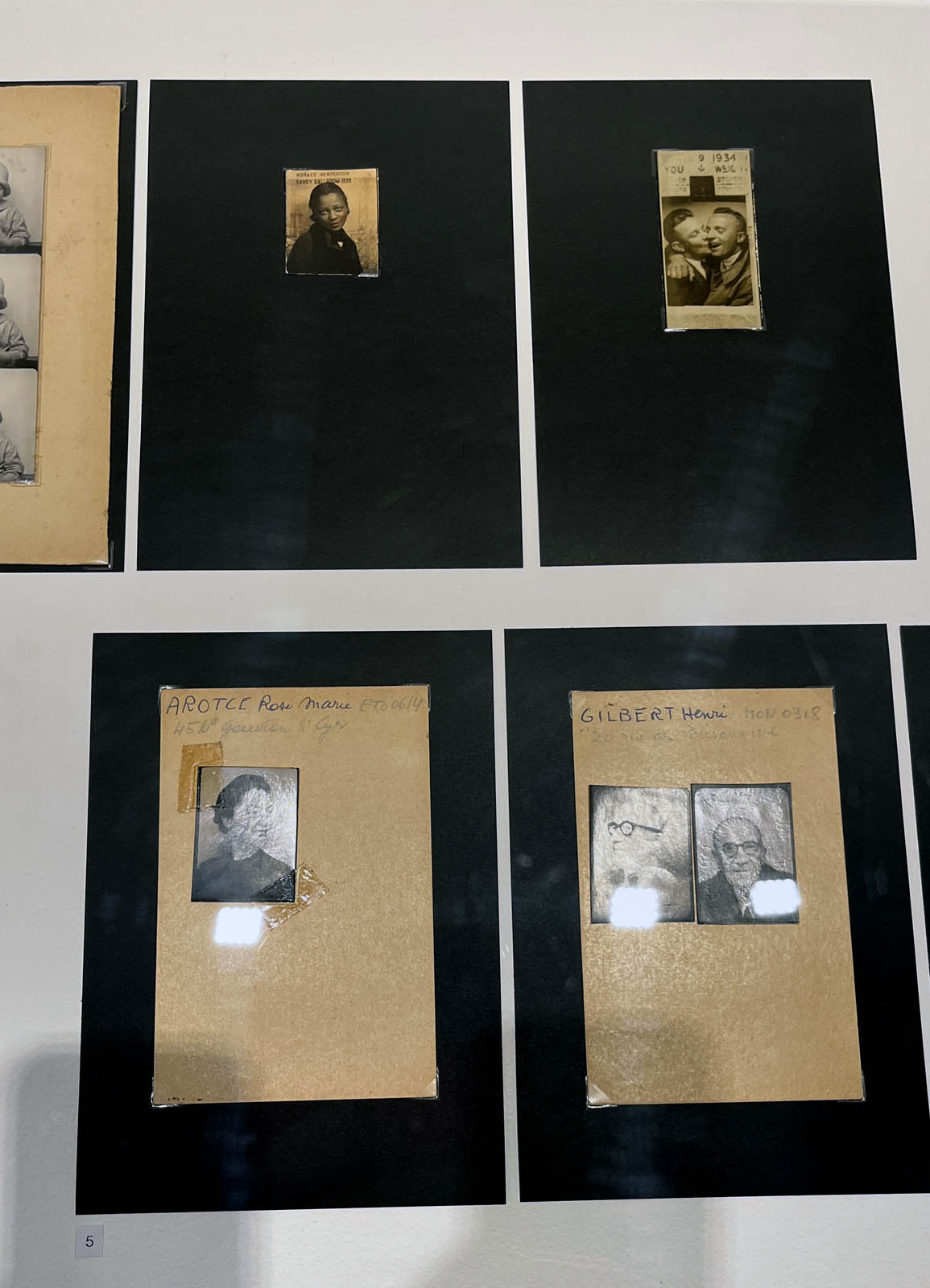
A Selected Visual History (in vitrine)
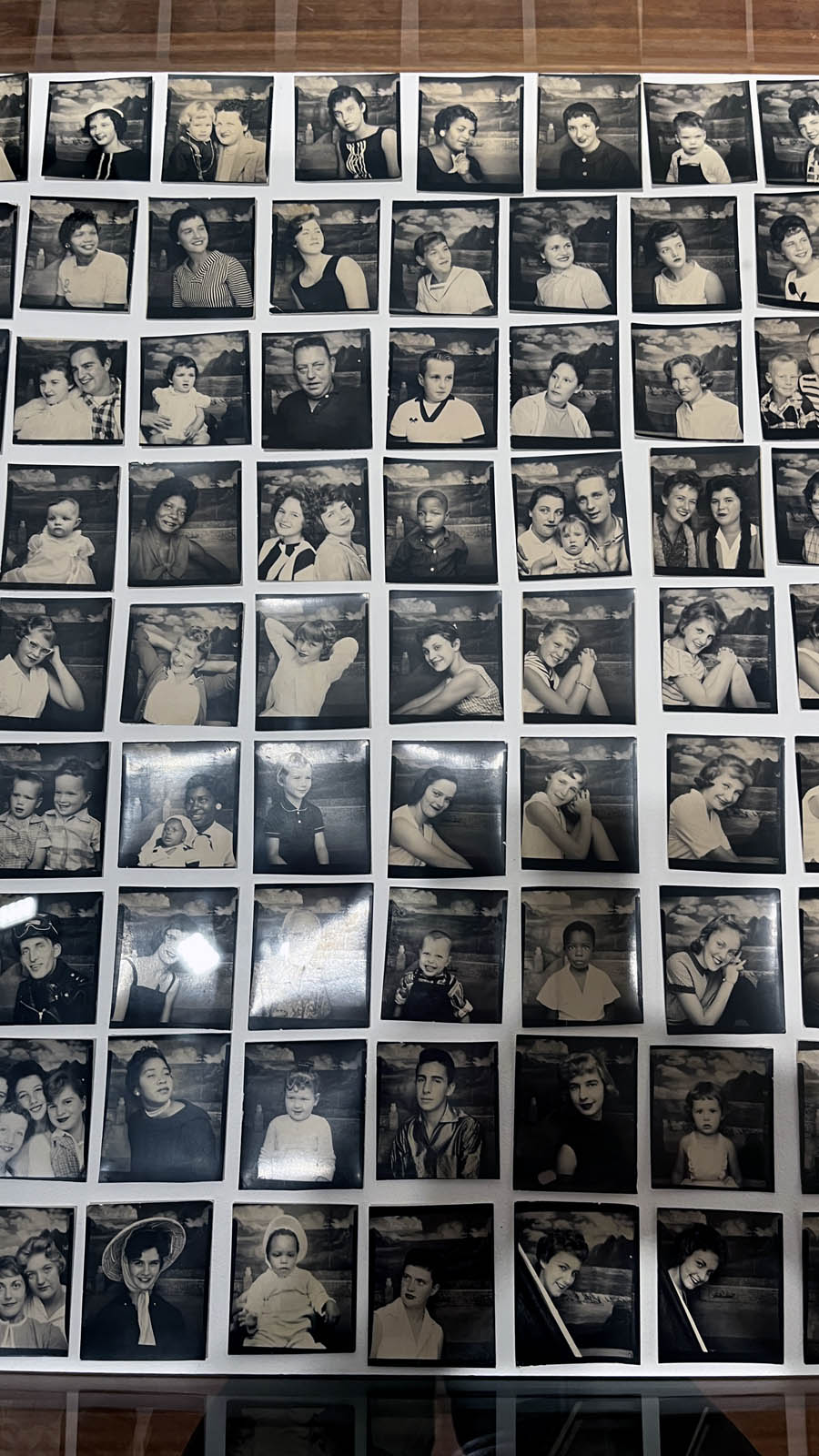
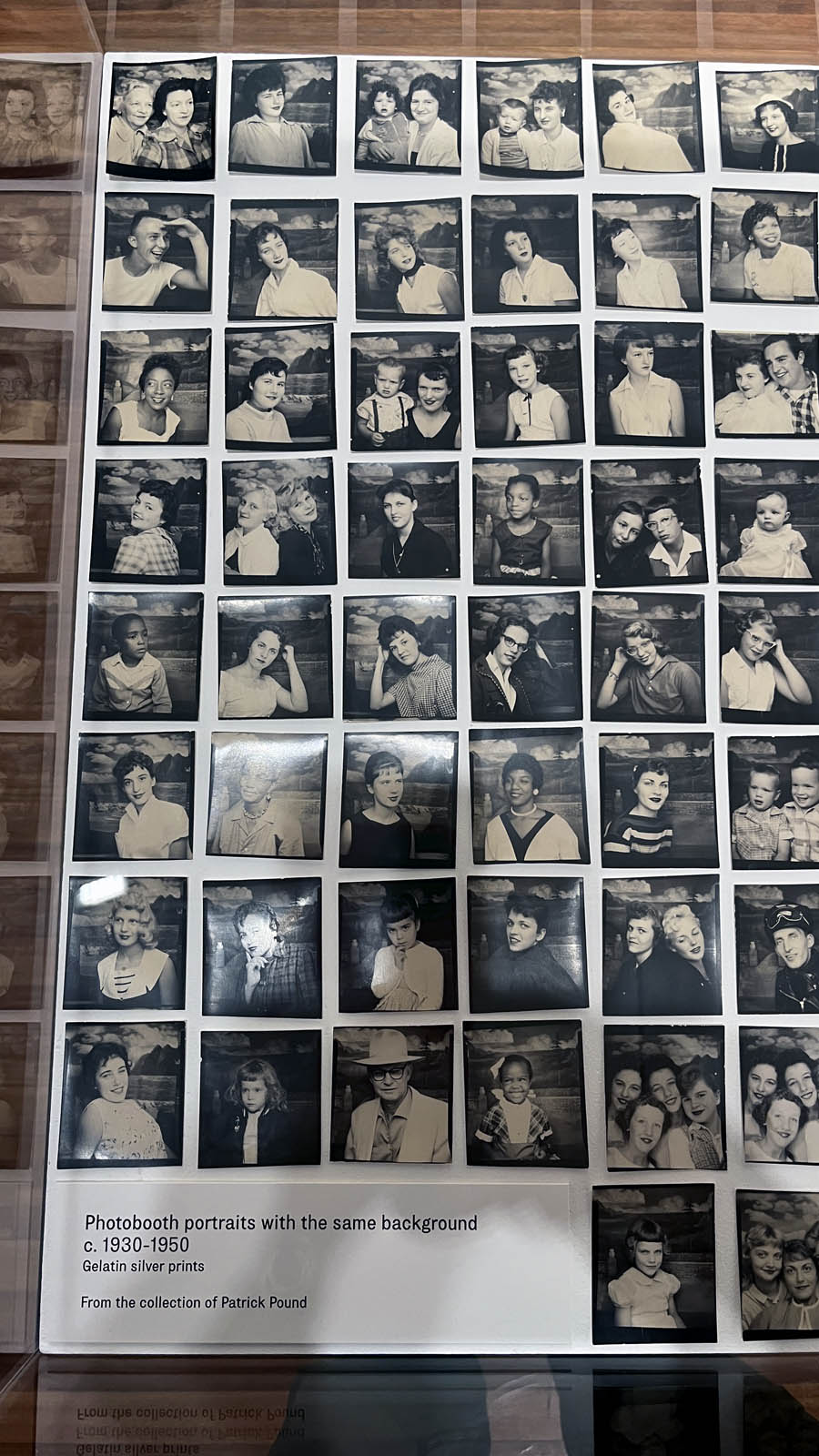
Photobooth portraits with the same background (c. 1930-1950) (in vitrine)
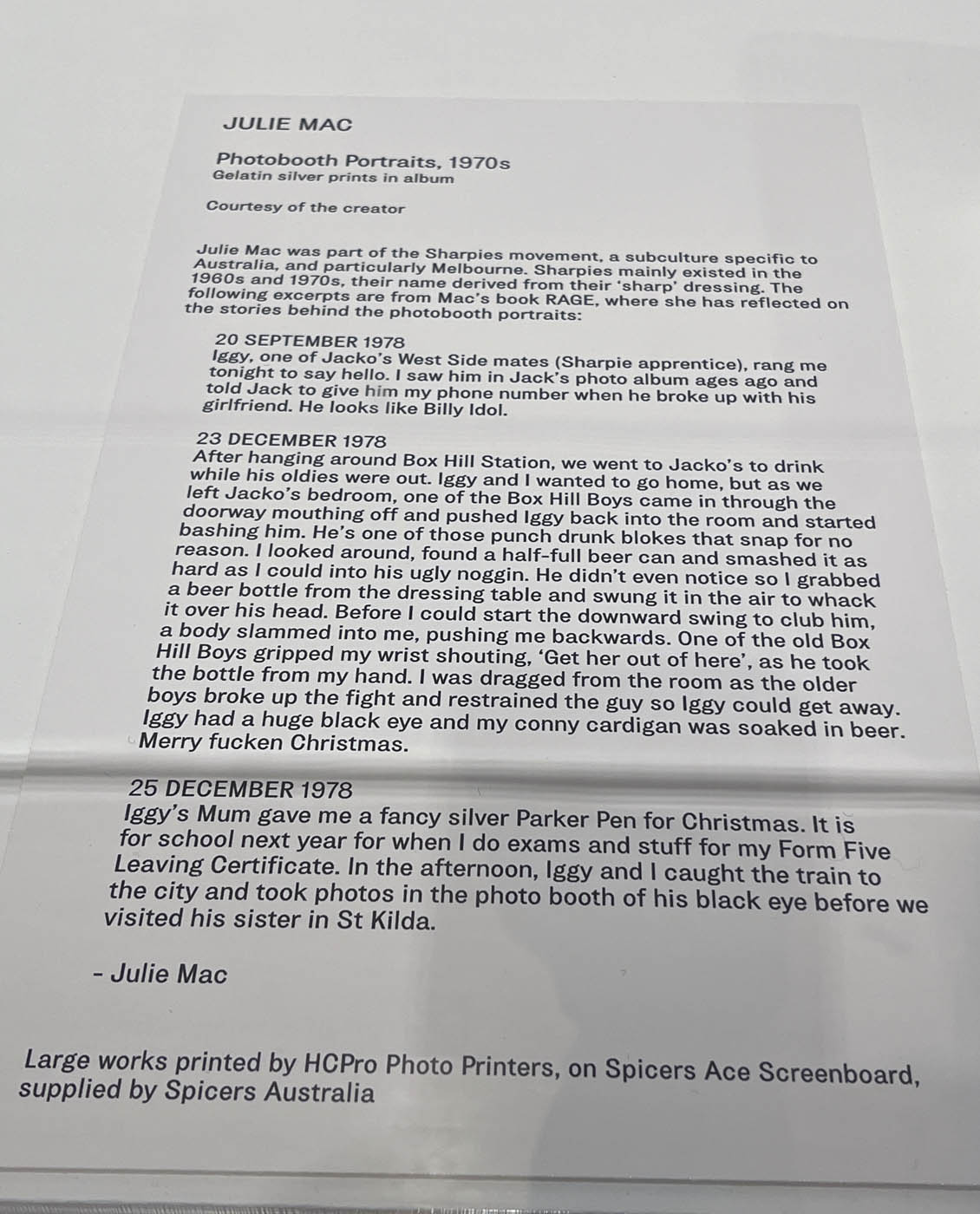
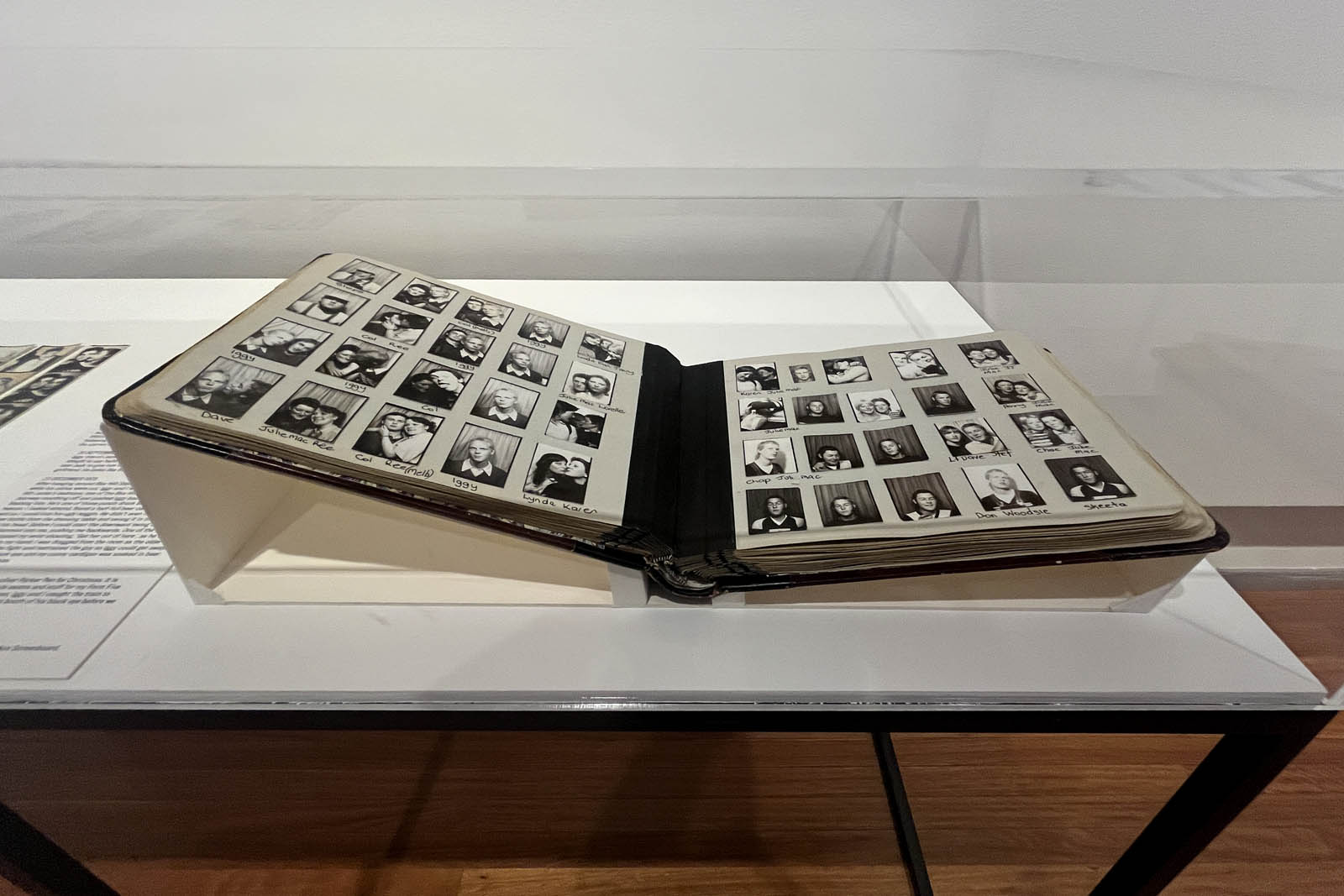
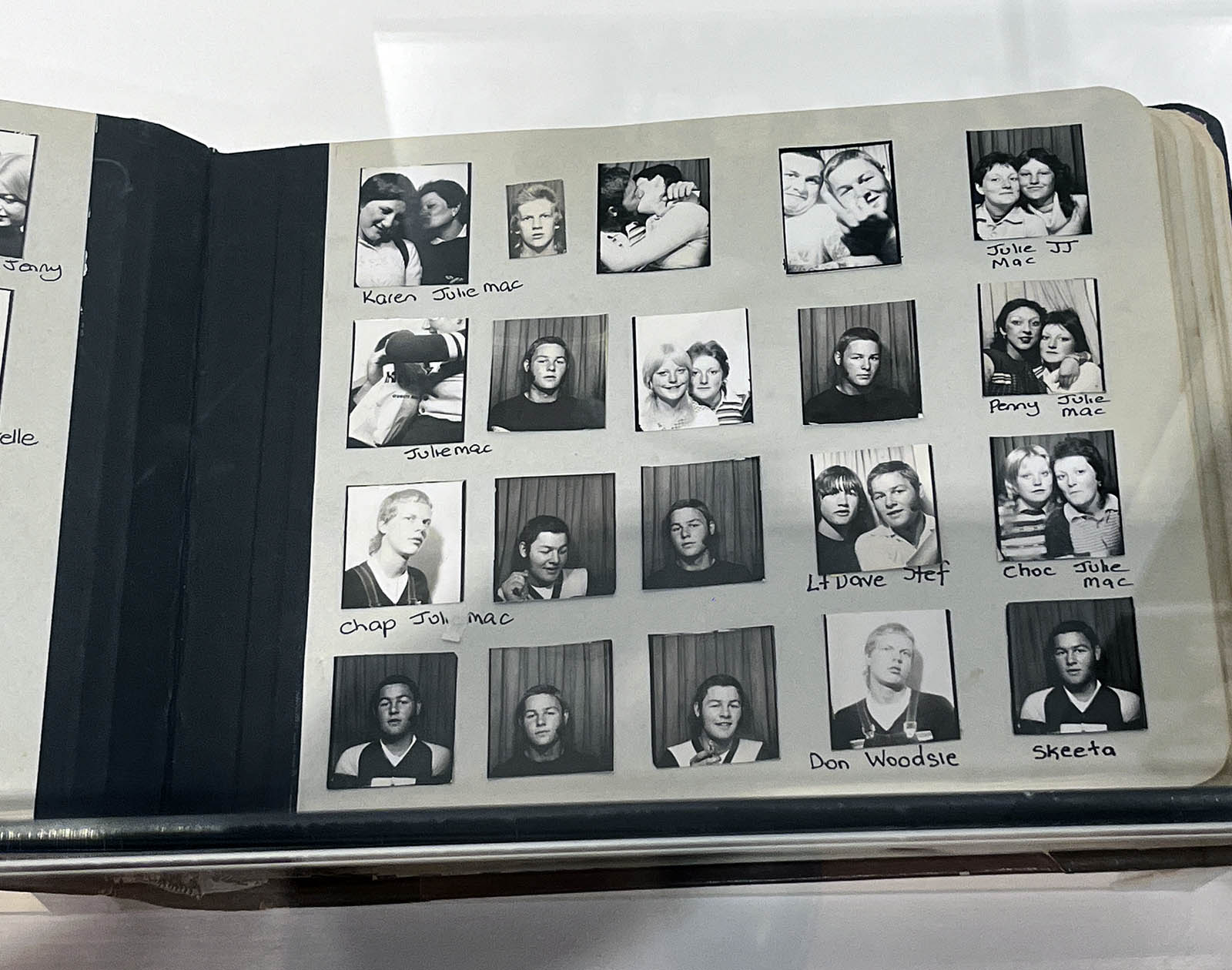
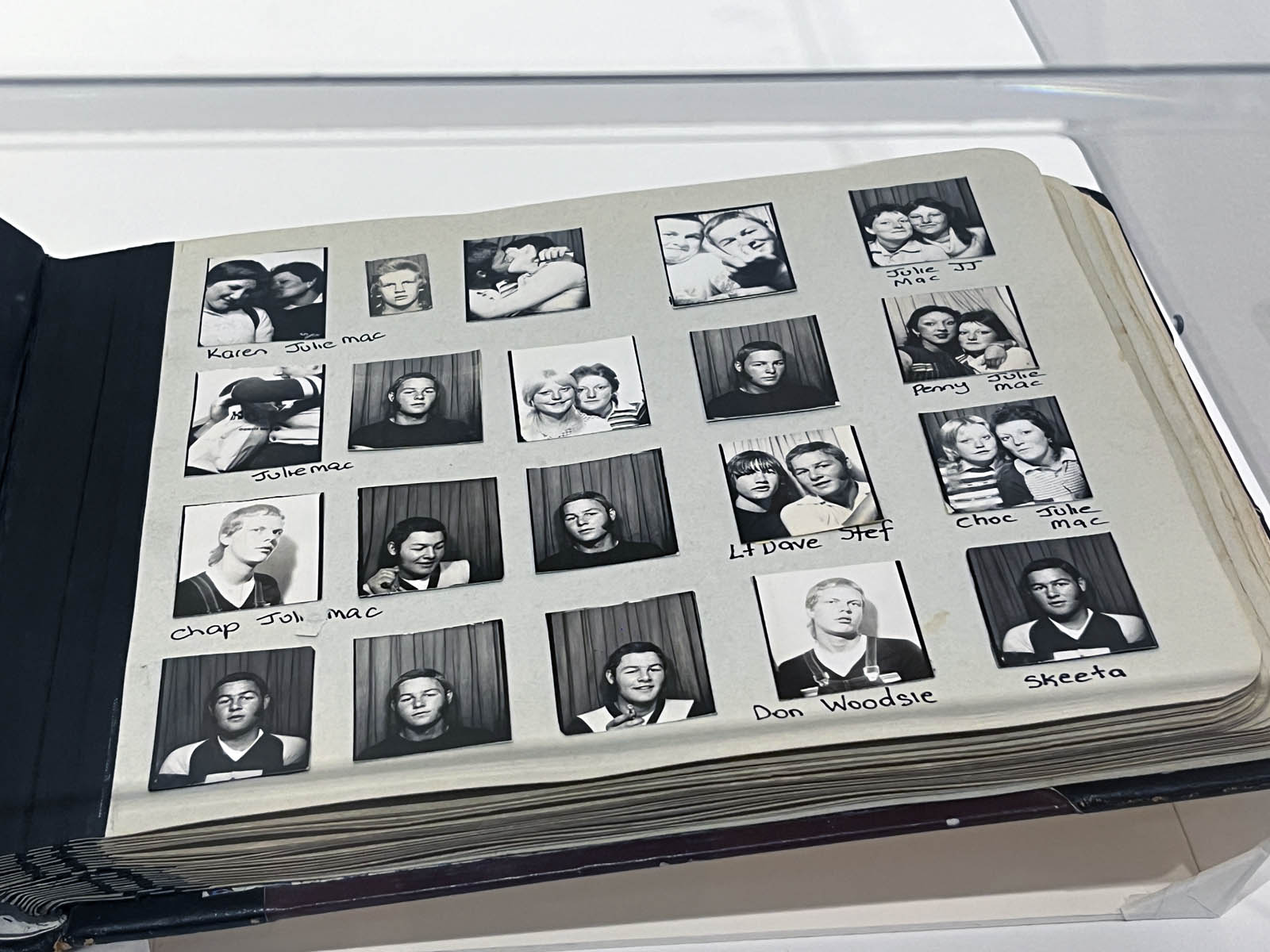
Julie Mac Photobooth Portraits 1970s (in vitrine)
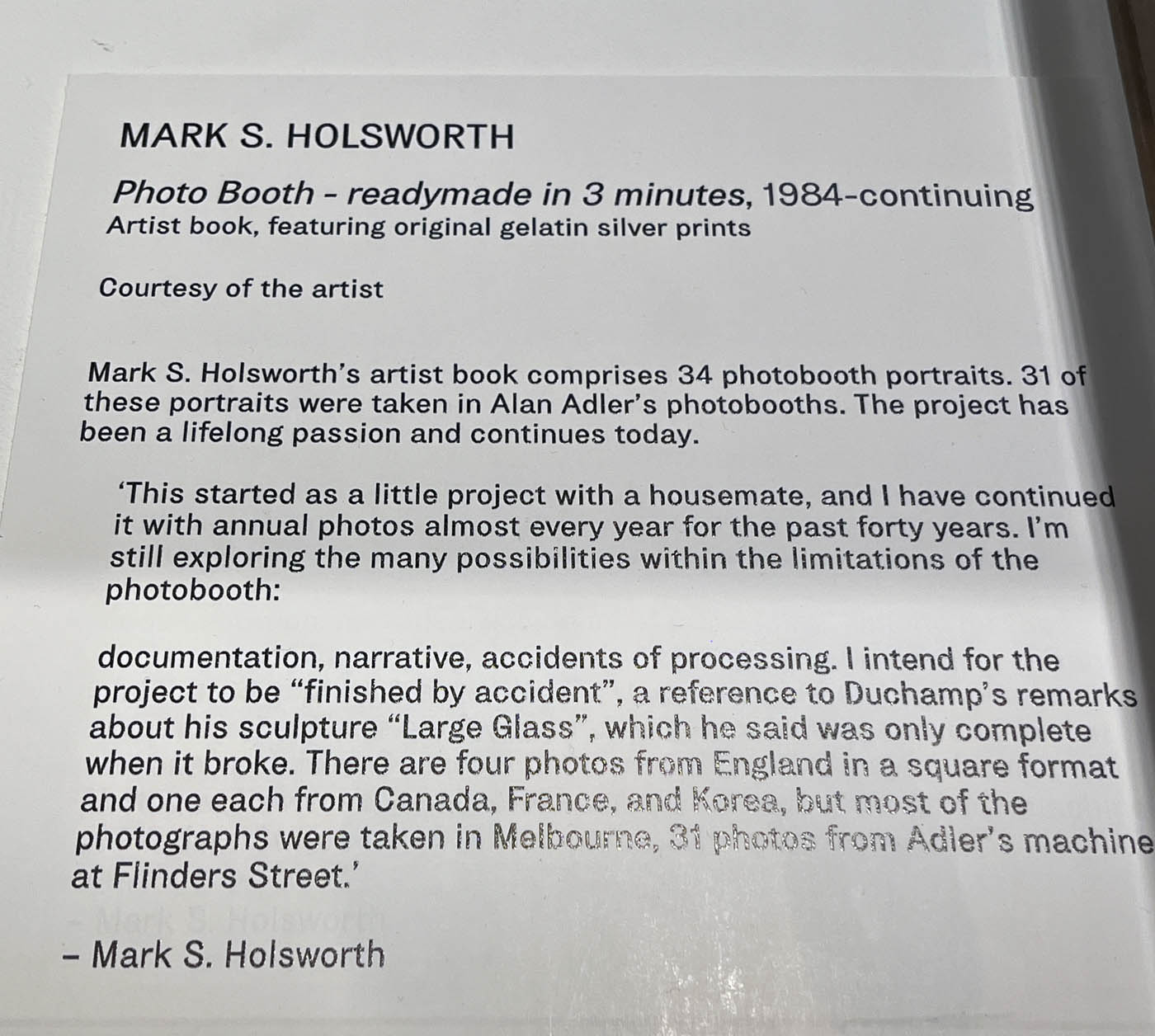
Mark S. Holsworthy Photo Booth – readymade in 3 minutes 1984-continuing (in vitrine)
Installation views of the exhibition Auto-Photo: A Life in Portraits at RMIT Gallery, Melbourne, June – August, 2025 Photos: Marcus Bunyan
Gallery 4
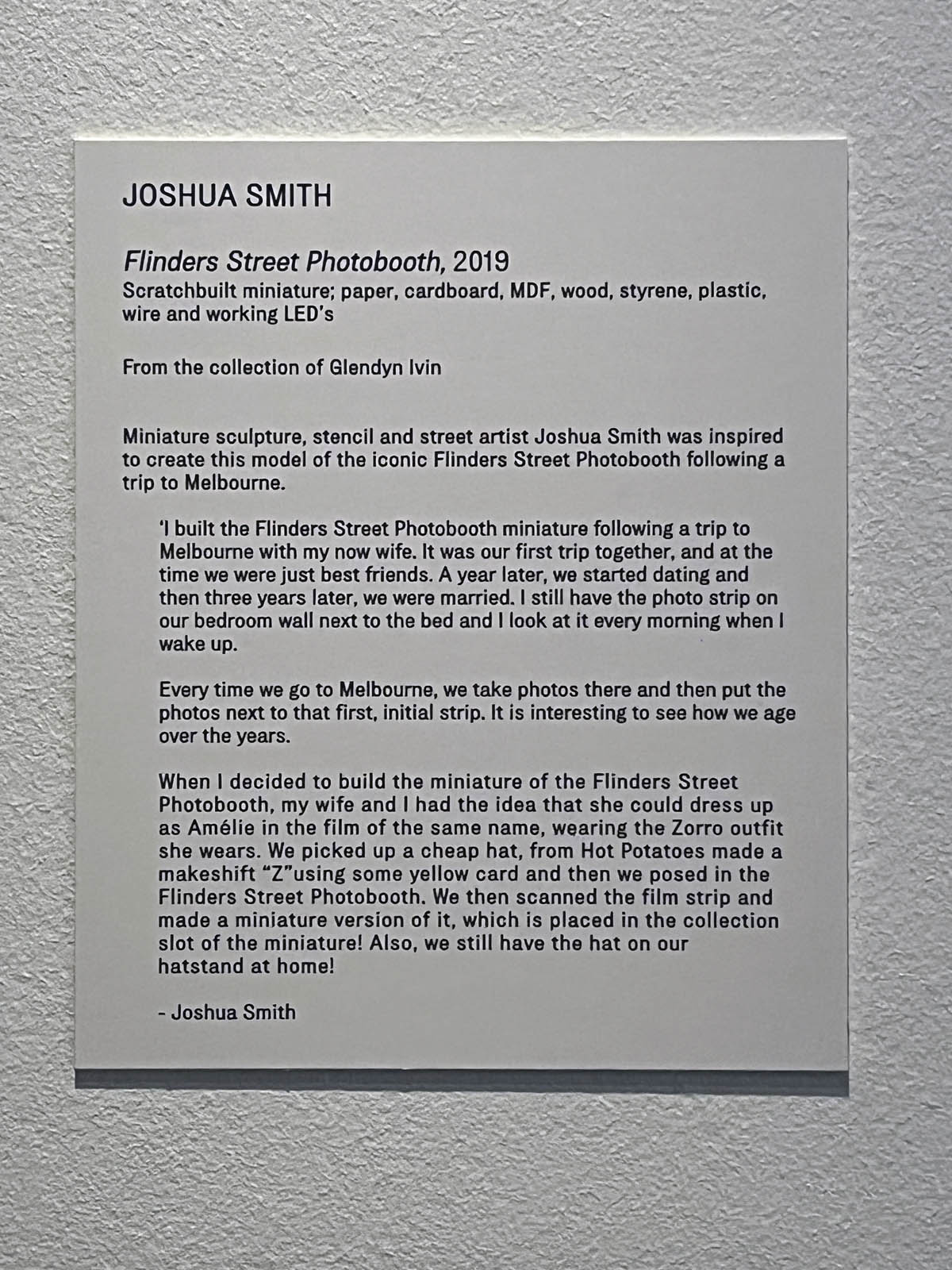
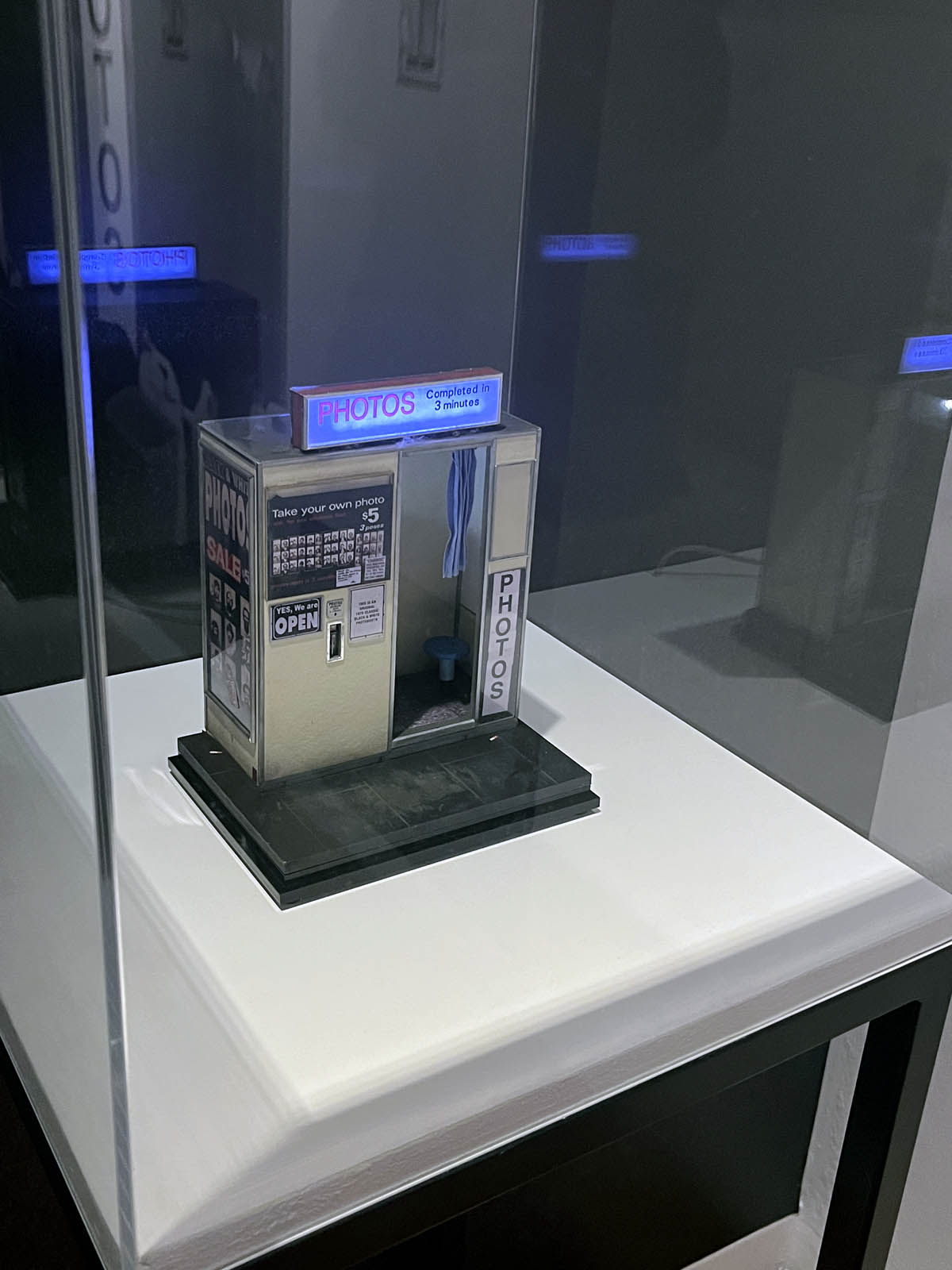
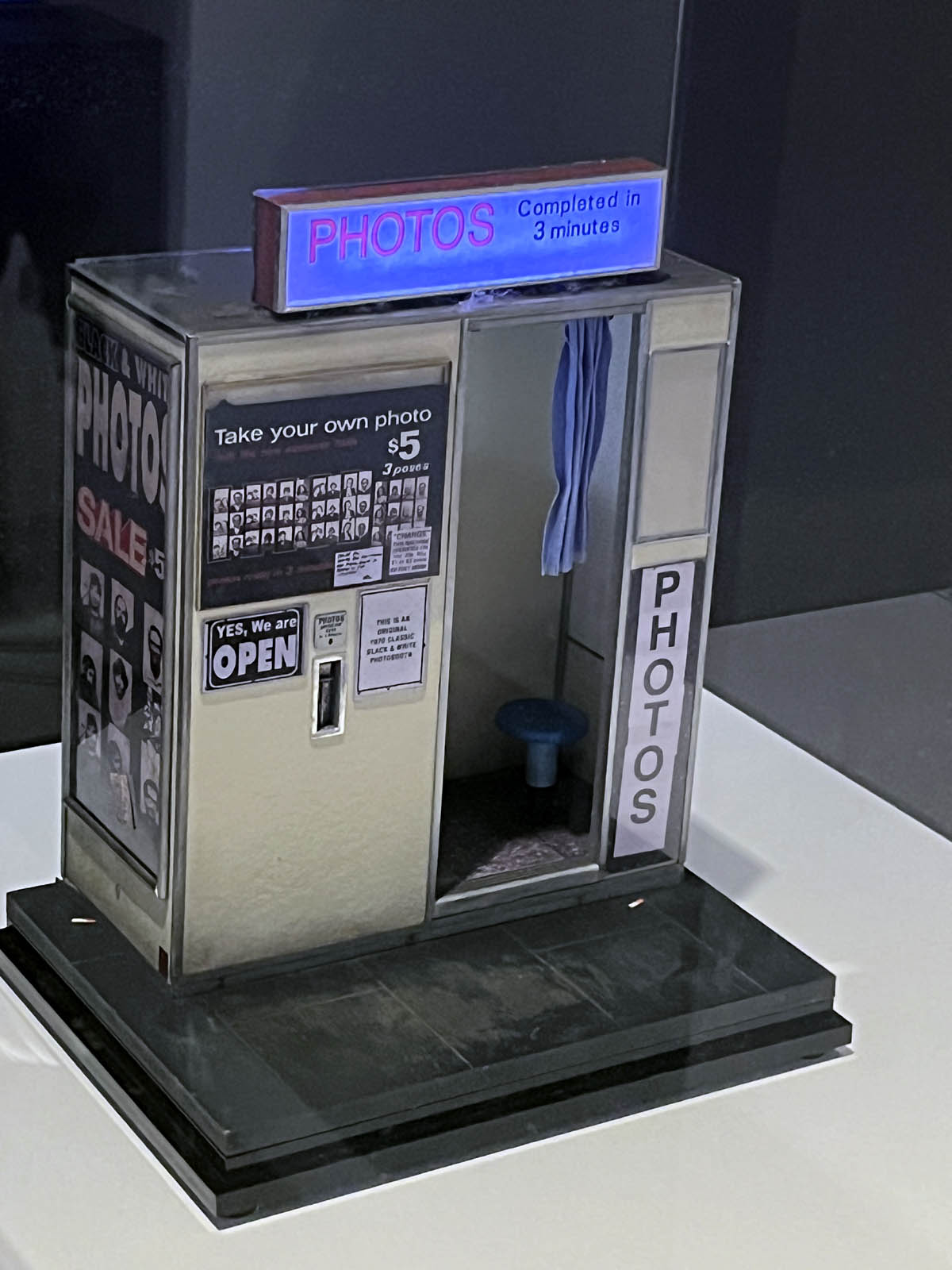
Joshua Smith Flinders Street Photobooth 2019
Installation views of the exhibition Auto-Photo: A Life in Portraits at RMIT Gallery, Melbourne, June – August, 2025 Photos: Marcus Bunyan
RMIT Gallery 344 Swanston St, Melbourne VIC 3000
Opening hours: 11am – 5pm Tuesday to Friday 12pm – 4pm Saturday Closed on public and University holidays
I absolutely adore these Peter Mitchell 1970s colour photographs made from Hasselblad two and a quarter square negatives.
There is something so …. well, British about them.
The wit, the humour (pigeons sitting outside the racing pigeon shop), the stiff upper lip, the carry on regardless, the working class pantomime of life and death – the public commission flats where people formed caring communities that were destroyed through redevelopment – the integrity of an existence that has largely come and gone pictured with warmth and empathy.
The people, growing up during the Second World War the privations of which lasted well into the 1950s, now during a period of change in the 1970s standing behind the fish ‘n chip counter wondering where their lives had gone and how they had got there, but still with that British sense of spirit and grit.
Peter Mitchell, “a chaser of a disappearing world” pictures these “goners” – buildings, people (and a way of life) near the end of existence soon to be demolished – in an almost painterly manner.
His use of colour, perspective and form is very fine. Witness, the flow of the photograph ‘Edna, George & Pat, H.E. Greenwood Butcher, Waterloo Road, Leeds, 1977’ (below) as, in the shot, the camera allows the eye to pan from one vanishing point at left to the other at right, with the patchwork of colours and panels of the building creating an almost Mondrian-like texture – blue to black to beige to white sign to pale blue to yellow to green to pale green, surmounted by the dark blue of the threatening sky highlighting the jagged form of the building. Superb.
My favourite photograph in the posting is The Chair, Priestly House Interior, Quarry Hill Flats, Leeds, 1978 (below). This photograph is from what I believe to be Mitchell’s strongest body of work on the demolition of the Quarry Hill Flats in Leeds. ‘One of those doomed deserts was Quarry Hill flats, irresistible both as a symbol of the fate of all architecture and of the great clock in the heavens signalling everybody’s life span’ (Peter Mitchell quoted on The Guardian website)
A drab, beige, wallpapered room with double aspect window, an art deco chair with mirror reflecting nothing, an electrical socket, a ceiling light sprouting malignant plant and trapped in the window panes, little birds fluttering against their capture, trapped forever inside an abandoned flat, this abandoned life.
Yes, there’s a sense of nostalgia and melancholy in these photographs but their restrained, formal, representation of life does much to ennoble the people and buildings contained within them which, through osmosis, ennobles the mind of the viewer.
As I myself sense the great clock in the heavens signalling my life span, the pleasure and comfort I get from feeling the spirit of Peter Mitchell’s photographs is immeasurable.
Dr Marcus Bunyan
Many thankx to the Photographers’ Gallery for allowing me to publish the photographs in the posting. Please click on the photographs for a larger version of the image.
‘Mr and Mrs Hudson in Seacroft Green, Leeds. I took this photograph on the 14 August 1974 at about 11am. I like the way the ladder is propping up the shop. They had just moved into a new shop on the same spot, with the church getting a facelift to match’
Is the man with the wrench a mechanic? Why is the woman with the clapped-out Porsche looking so naughty? Will James C Gallagher, whose business it is, always have his back to the camera? And after painting the wall, why did Barry have to leave Leeds? The council demolished the lot shortly after this snap.
A retrospective of work by one of the leading early colour photographers of the 20th century opens this March at The Photographers’ Gallery.
Peter Mitchell (b. 1943, UK) is widely regarded as one of the most important early colour photographers of the 1970s and 1980s. A powerful storyteller and social historian, Mitchell’s photography unfolds a longstanding and poetic connection with Leeds. He has chronicled the people and fortunes of the city with warmth and familiarity for over 40 years.
Described as ‘a narrator of who we were, a chaser of a disappearing world’ (Val Williams), his work reveals his love, and at times quirky, off-beat vision, of the people and changing face of Leeds.
The retrospective explores the breadth of Mitchell’s photographic practice. It brings together his famous series ‘A New Refutation of the Viking 4 Space Mission’, which imagines England as seen through the eyes of an alien from Mars, demolished flats, shopkeepers and their shops, and boarded-up and disused buildings, as well as his portraits of scarecrows. The exhibition marks a return to The Photographers’ Gallery for Mitchell – he first exhibited at the Gallery in 1984.
A chronicler of a changing city, he said of his work photographing the demise of the iconic Quarry Hills Estate in Leeds, ‘I know there was no point in keeping Quarry Hill flats. But what it stood for might have been worth keeping.’
Calling himself ‘a man of the pavement’, Mitchell continues to regularly walk the streets of Leeds to photograph his beloved hometown today.
Peter Mitchell: Nothing Lasts Forever will include rarely seen works from Mitchell’s own collection, personal ephemera and found objects.
Peter Mitchell: Nothing Lasts Forever is in collaboration with Leeds Art Gallery. Nothing Lasts Forever, published by RRB Photobooks, is available now.
Peter Mitchell
Peter Mitchell was born in Manchester in 1943. He studied at Hornsey College of Art in London, then moved north to look for work and never left. Living and working in Leeds for much of his life, Mitchell treats his surrounding with a unique sense of care. An essential part of the colour documentary scene in the 1970s and 80s, Mitchell’s landmark show A New Refutation of the Space Viking 4 Mission at Impressions Gallery in York in 1979 was the first colour photography show in the UK.
‘I photograph dying buildings and Quarry Hill was terminal by the time I got to it. Times change and I know there was no point in keeping Quarry Hill flats. But what it stood for might have been worth keeping’
‘One of those doomed deserts was Quarry Hill flats, irresistible both as a symbol of the fate of all architecture and of the great clock in the heavens signalling everybody’s life span’
Francis Craven on Woodhouse Moor, Leeds in April 1979. He’d built this apparition himself but was having trouble with its arms – the pulleys had given out
Text from the Guardian website
Peter Mitchell’s A New Refutation of the Viking 4 Space Mission features photos and portraits, taken in Leeds in the 1970s. The pictures show the traditional urban landscape presented on a background of space charts, the concept being that an alien has landed from Mars and is wandering around Leeds with a degree of surprise and puzzlement.
In the Earthly vernacular these photographs are of Nowheresville. Yet, for some people, they are the centre of the universe. Usually they call it Home.
Mitchell’s series documents backstreets, corner shops, factories, churches and cemeteries in Leeds and Sheffield, as well as other locations in Cumbria and London, building a compelling picture of these cities during the late 1970s. Many of the portraits show the city inhabitants standing outside their homes or places of work. Equal attention is paid to the entirety of the setting, the figures often appearing dwarfed in the composition by their surroundings. The majority of the subjects gaze directly at the camera adopting stiff, frontal poses giving the images a formal impression and sense of stillness. Describing the distinctive style and subject matter of the photographs, historian David Mellor has commented, ‘it is as if Alan Bennett had met Diane Arbus in an urban picaresque’ (Mellor 2005, accessed 12 June 2017).
Ruins, crumbling facades, abandoned shops and cemeteries punctuate the series, pointing to themes of life, death, memory and loss. For example, Mitchell’s pictures includes shots of Mrs Lee’s dress shop – which burnt down the day after closure – a decayed synagogue and a defunct station in Sheffield, where the trains pass through but never stop. The 1970s were a time of great change in Britain as it struggled with widespread social unrest as well as the collapse of heavy industries. Commenting on this aspect of the series, Mellor noted, ‘NASA’s 1976 Viking Landers were a triumph of robotics, of remote sensing and imaging – that very culture of digitised information which was to supplant the manual world of industrial era Leeds.’ (Ibid.)
Text is a crucial element in Mitchell’s work, and each image in this series is accompanied by a caption to be displayed alongside. These idiosyncratic snippets of text are excerpted from Mitchell’s diary, and range from deadpan descriptions of place, to short anecdotes and humorous musings. Historian Val Williams has likened the artist’s distinctive combination of photography and text across his different bodies of work to the Situationist writing of the French theorist Guy Debord. …
Mitchell’s work occupies an important position within the history of colour photography specifically. He was photographing in colour at a time when black and white was the predominate medium for documentary photography in Britain, and before colour photography was fully embraced by museum collections. His work thus evidences an alternate history of colour photography distinct from the predominant narrative of the emergence of colour photography in the United States in the work of photographers such as William Eggleston (born 1939) and Stephen Shore (born 1947).
Sarah Allen June 2016
Collection text on the Tate website [Online] Cited 24/05/2025
His early photographs were made in the 1970s and 80s, when he was working as a truck driver. His vantage point removed him from the immediacy of the street, and he developed his distinctive graphic framing of the buildings and landscapes, which reveal the layers of urban and social history
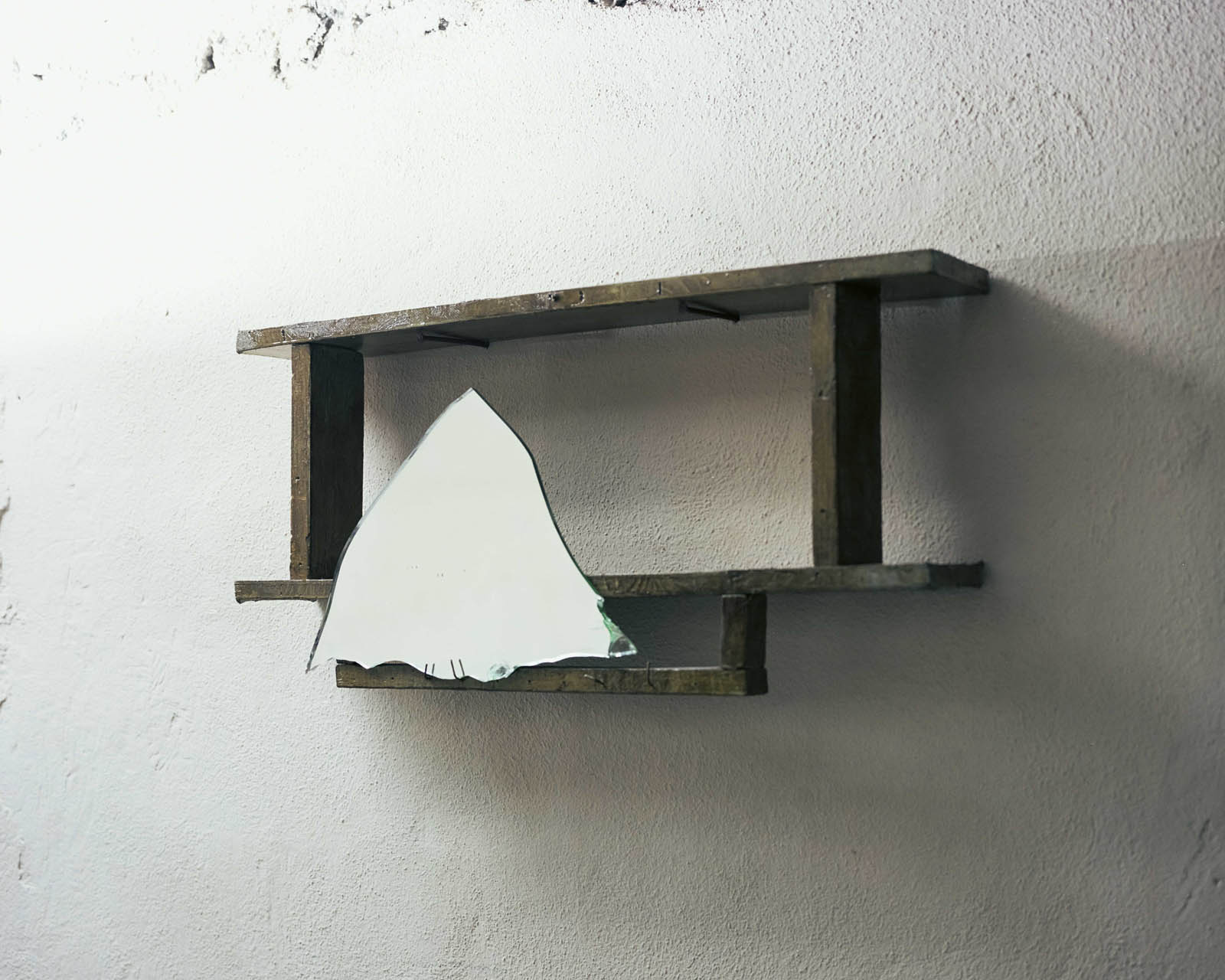
Felipe Romero Beltrán (Colombian, b. 1992) Breach #1 2021-2024 40 x 50cm Lambda print
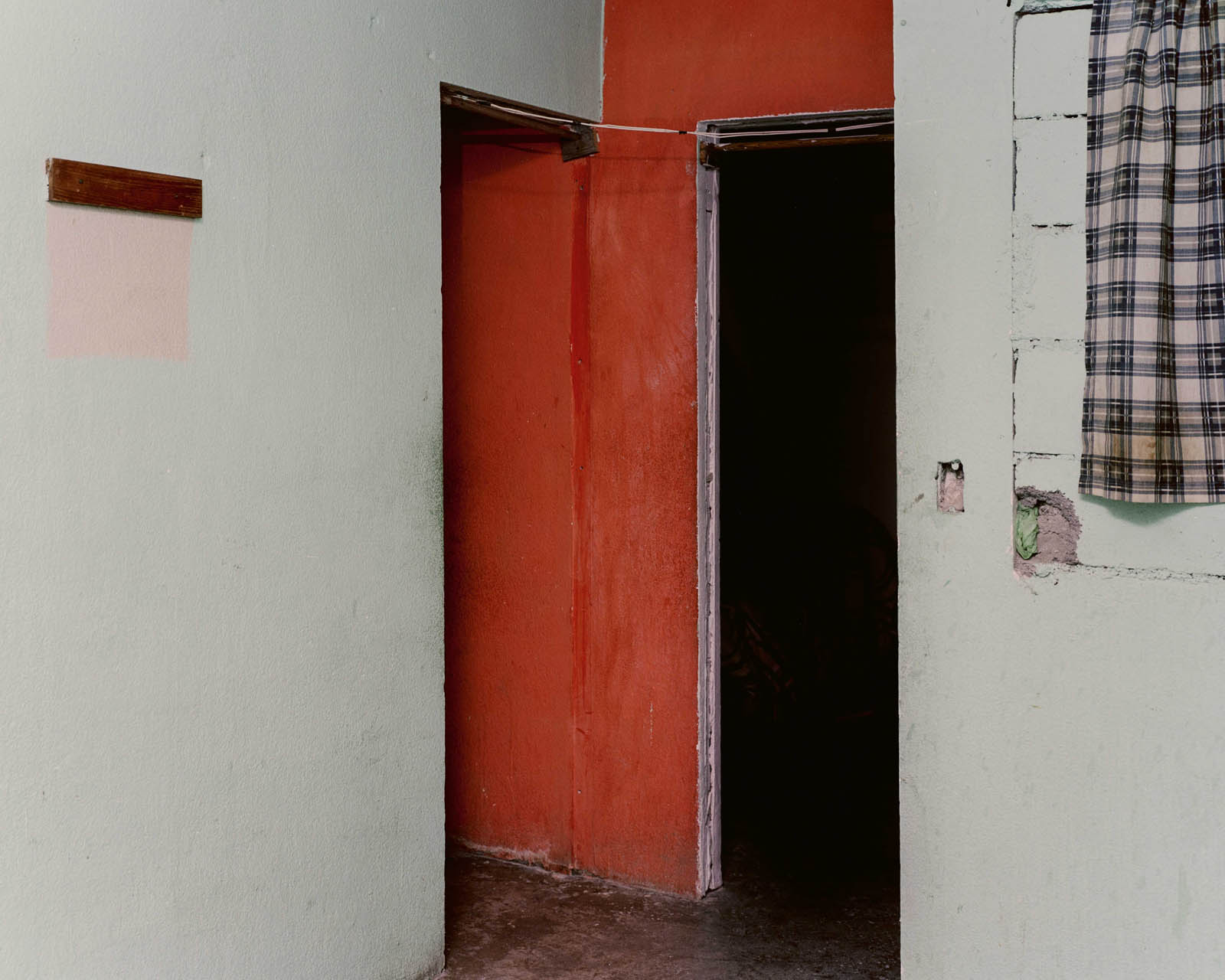
At their best there are some wonderfully spare and tensioned photographs of “crossing points” in this posting which examine the space between one state and another, one land and another, one country and another.
Other photographs go the usual performative “dead pan” route, some more successfully than others, and documentary observations of seemingly unremarkable spaces, derivative of the work of the Canadian photographer Jeff Wall who did the same thing more effectively way back in 1993 (see Diagonal Composition below).
Dr Marcus Bunyan
Many thankx to Fundación MAPFRE for allowing me to publish the photographs in the posting. Please click on the photographs for a larger version of the image.
Felipe Romero Beltrán (Colombian, b. 1992) Breach #18 2021-2024 40 x 50cm Lambda print
After earning a degree in Visual Arts in Buenos Aires, Felipe Romero Beltrán (Bogotá, Colombia, 1992) traveled to Jerusalem on a scholarship, where he developed photographic projects in the Middle East. In 2016, he moved to Madrid to further his studies in photography.
Throughout his work, Felipe Romero has been drawn to territories that have been or continue to be sites of tension, conflict and visual reflection.
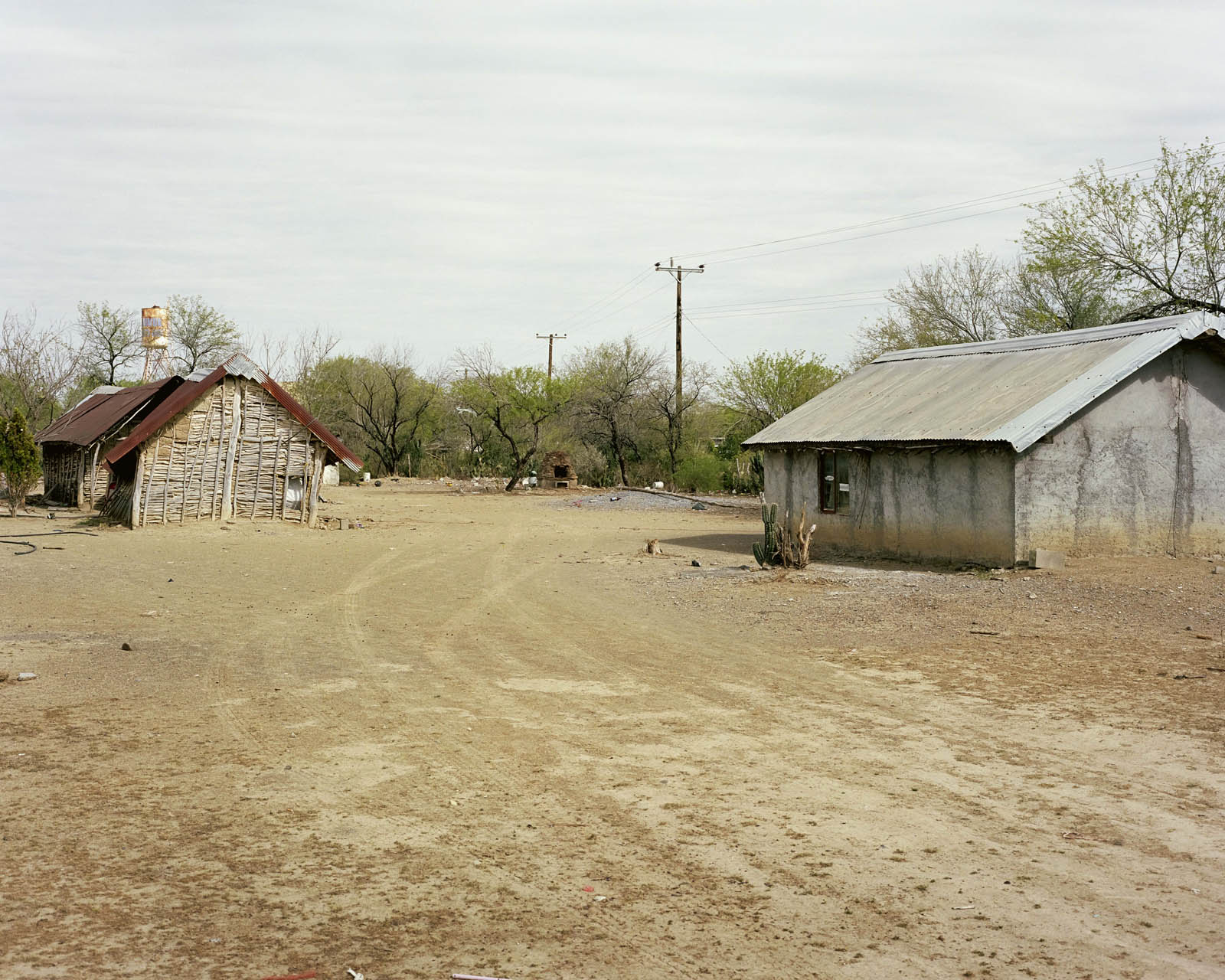
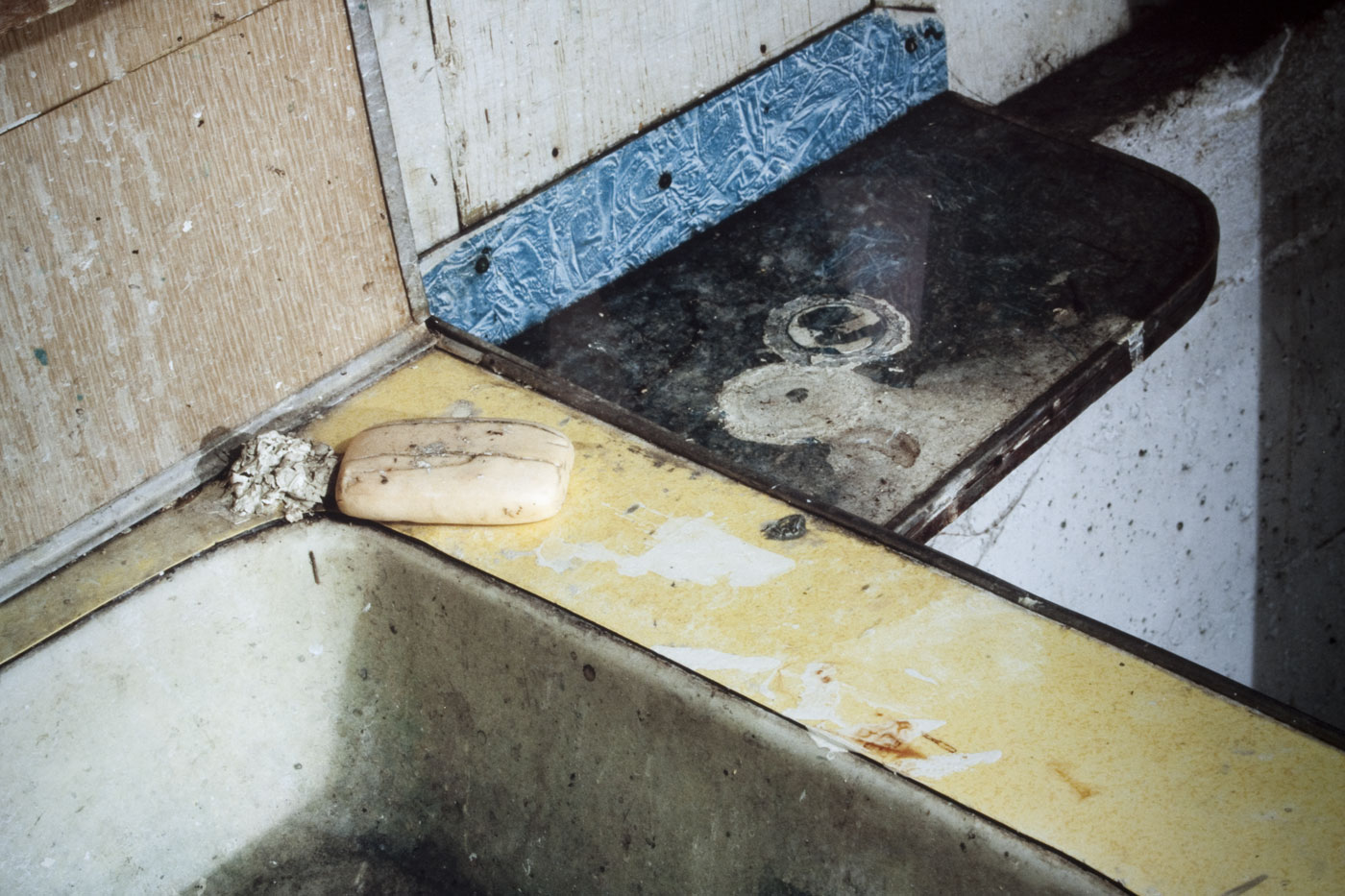
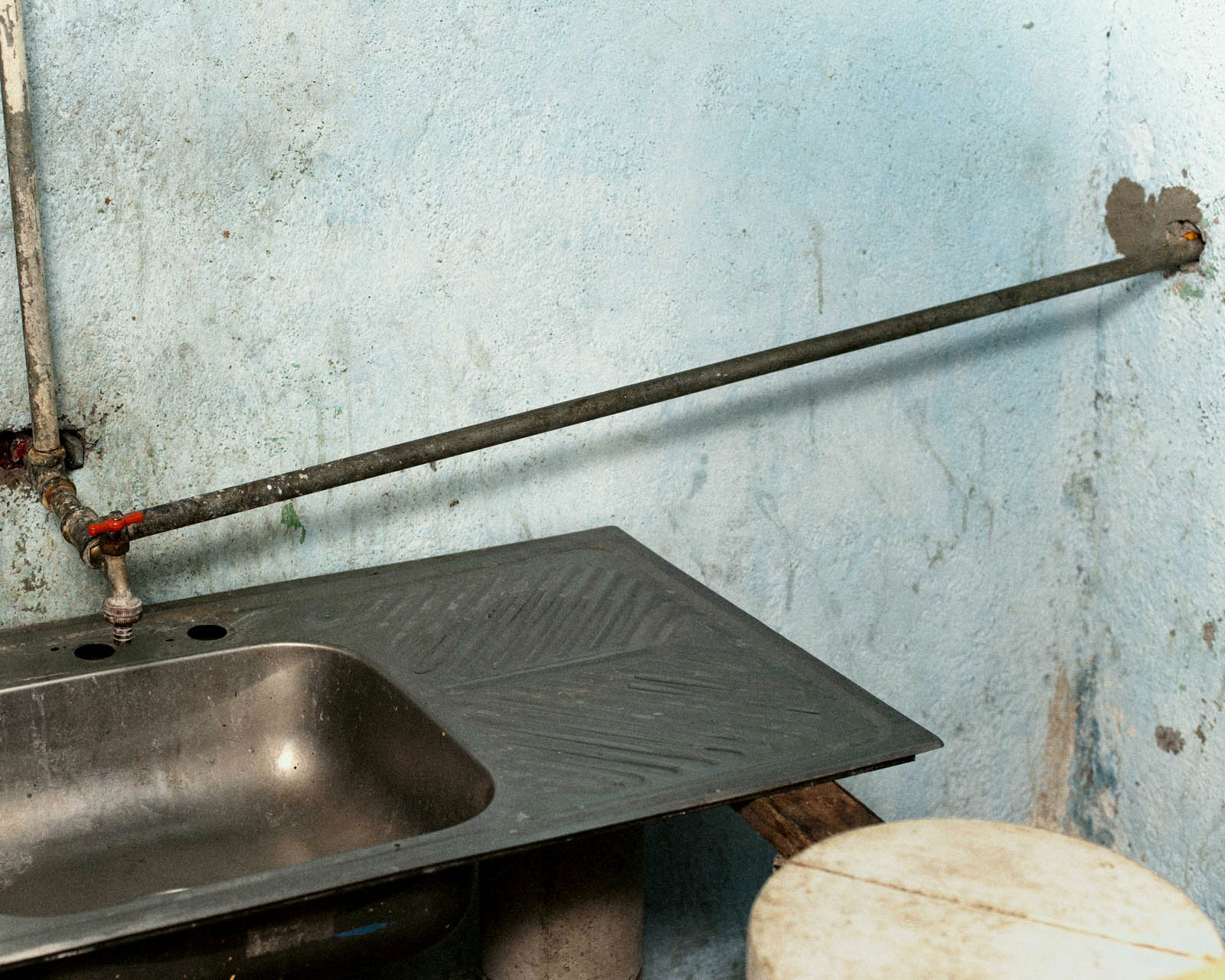
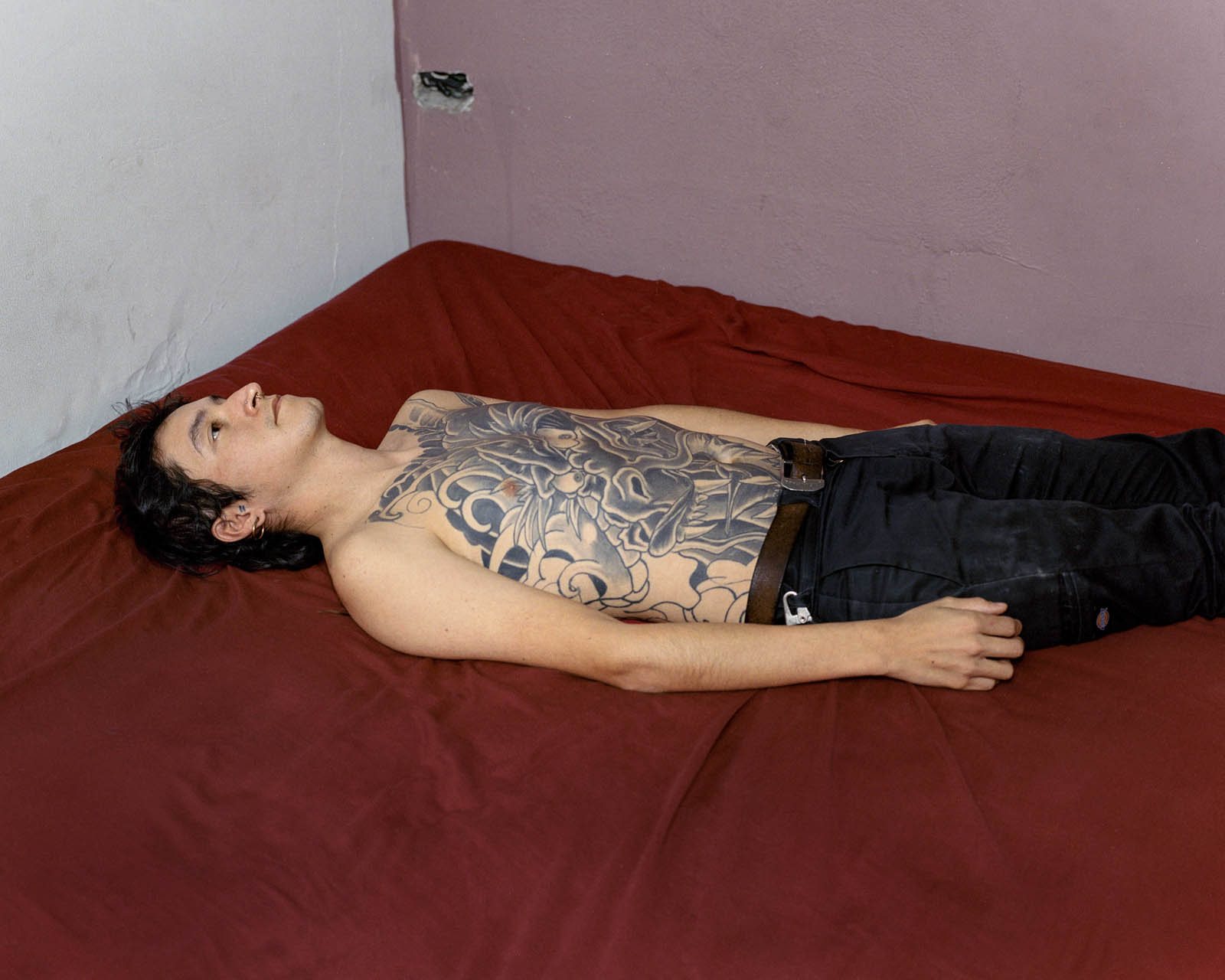
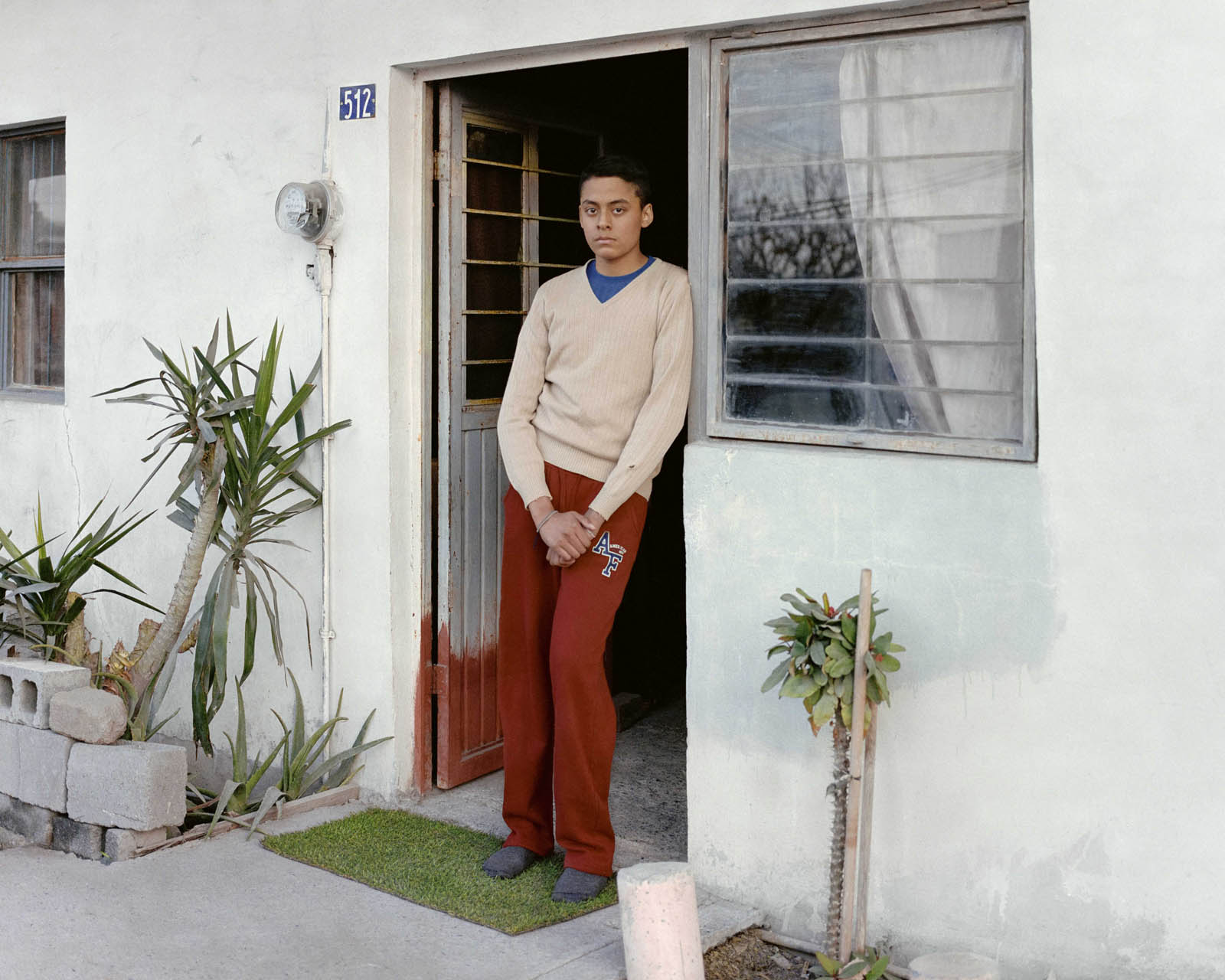
In the Bravo project, he focuses on the more than 1,000 kilometers of the Río Bravo (known as the Rio Grande in the United States) that form the border between the United States and Mexico. His images place the viewer in a specific section of the Mexican side. People from Colombia, Honduras, El Salvador and Guatemala arrive, reaching the final stage of a long and arduous journey. In this setting, the river dictates everything, ultimately shaping the identity and way of life of those who encounter it.
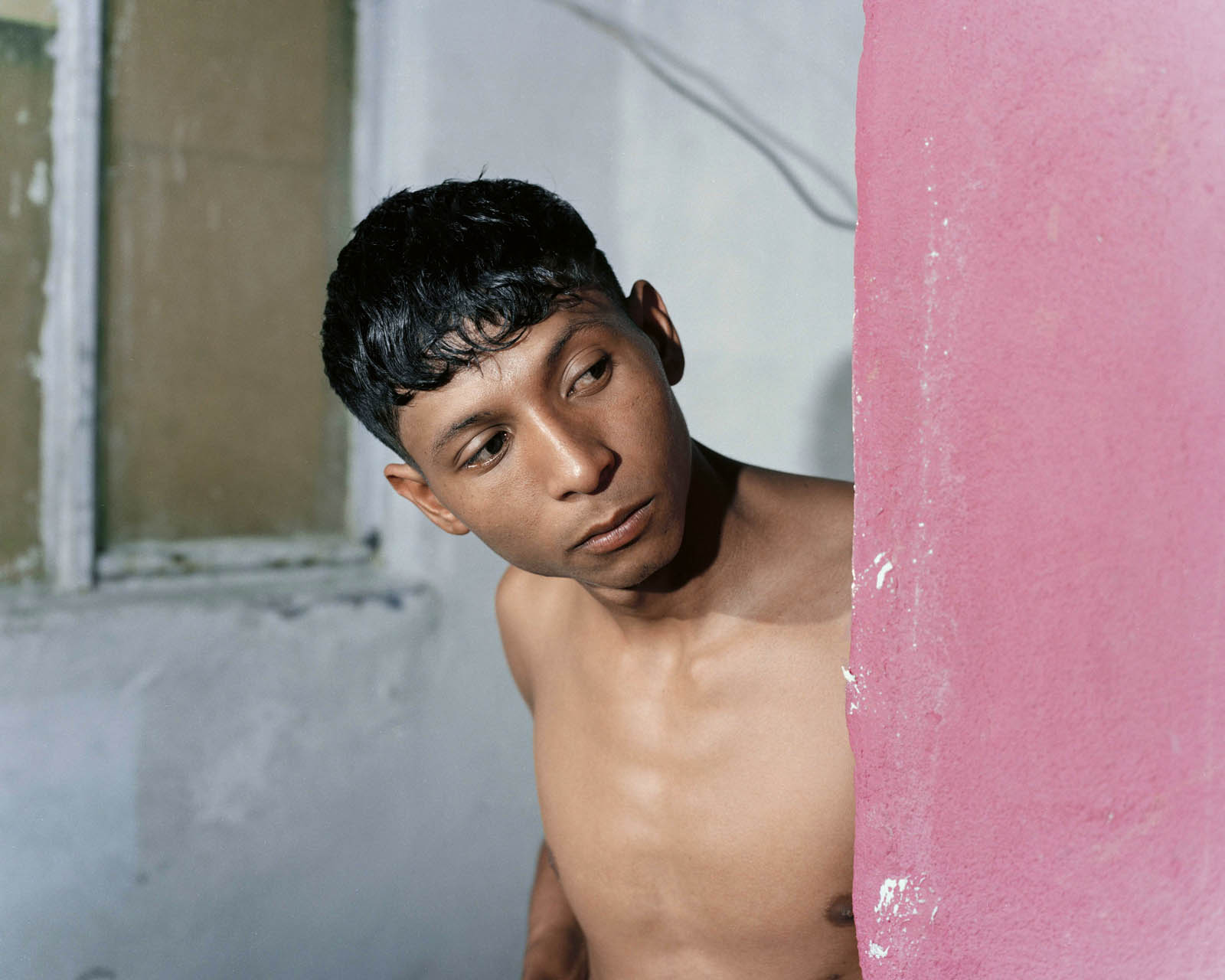
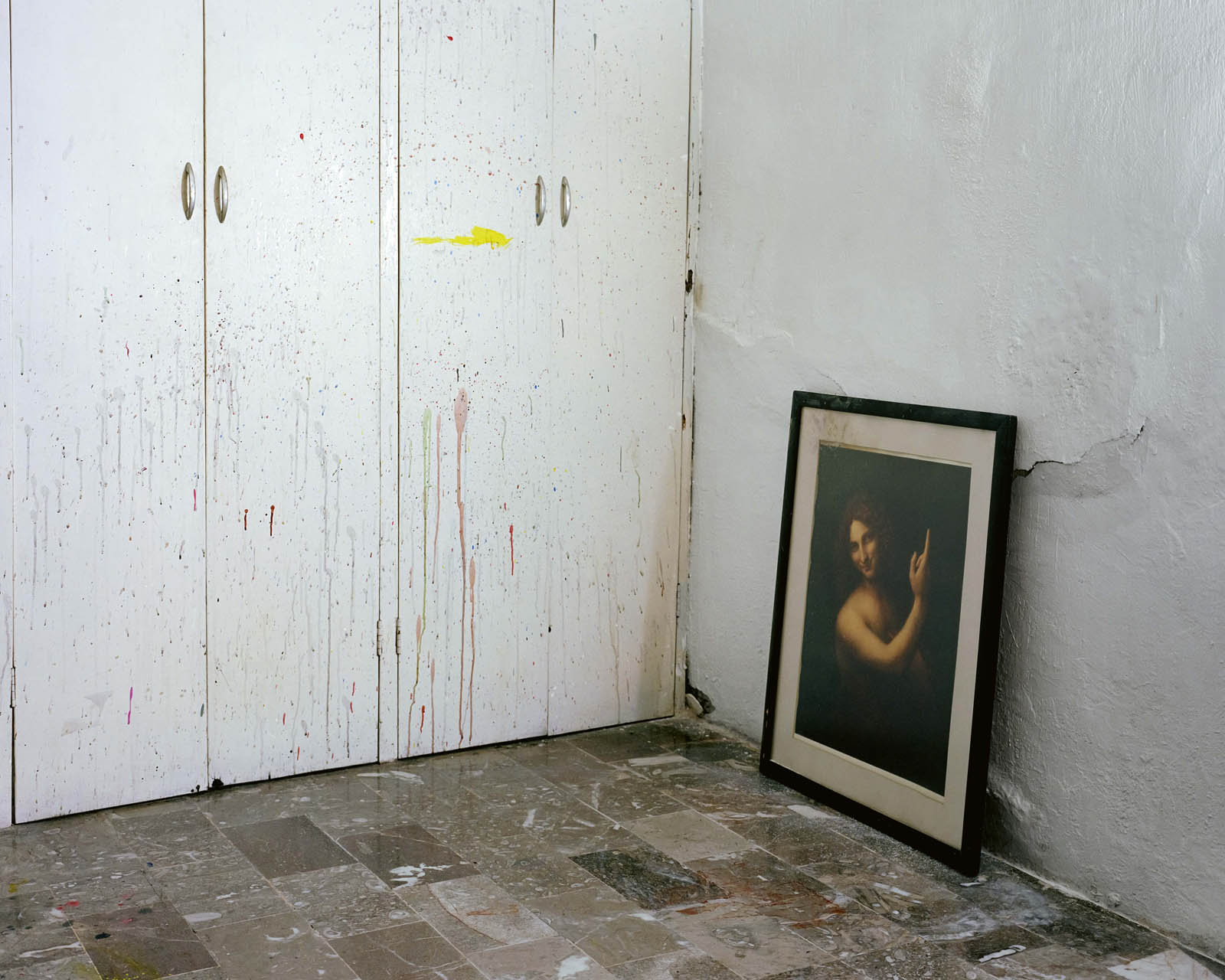
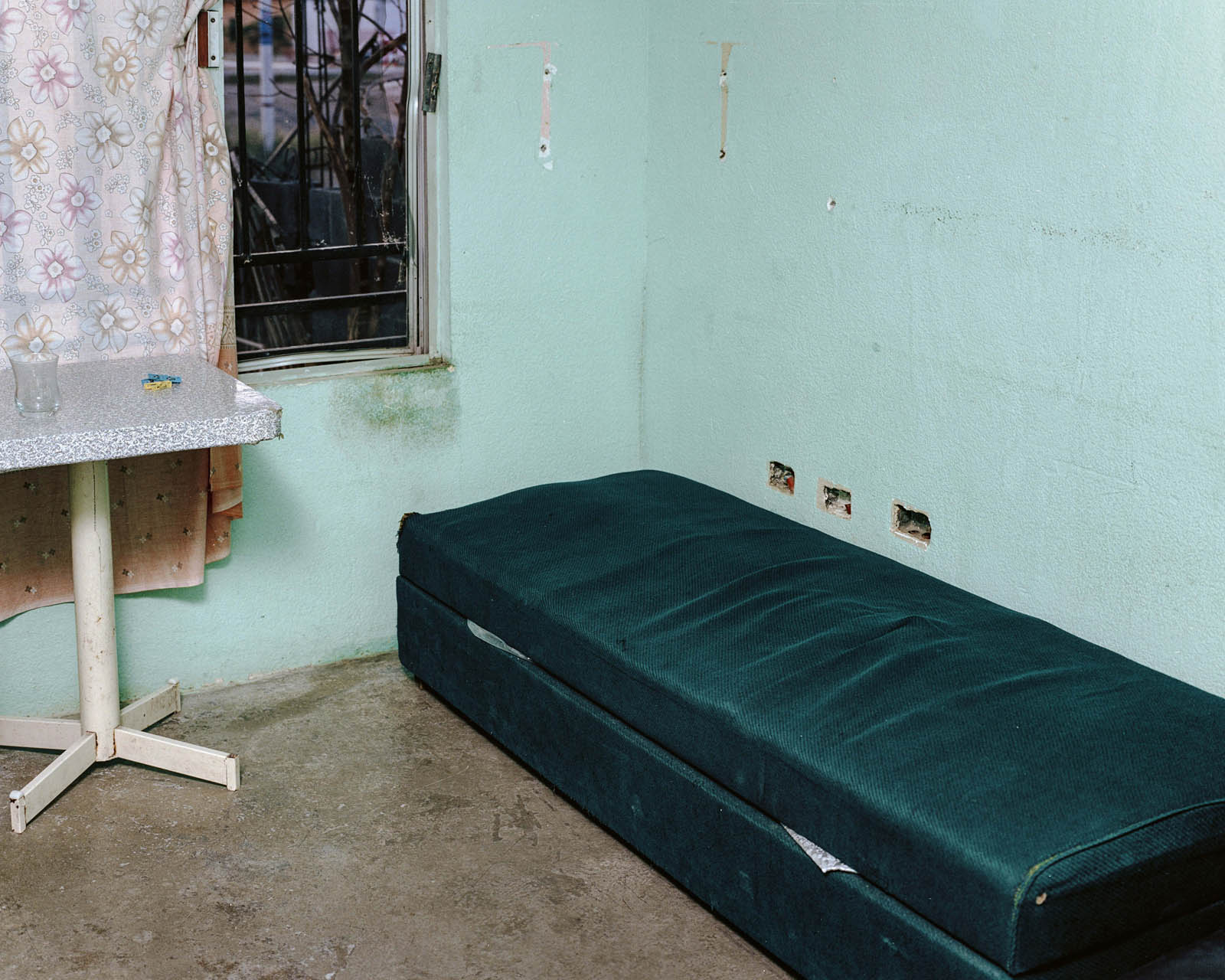
Bravo is conceived as a photographic essay composed of fifty-two images that explore this reality through a series of photographs of architecture, people and landscapes: closures, bodies and breaches. Almost bare interiors, walls and surfaces where textures, colors and portraits of individuals the artist has encountered during his travels to the region stand out. Ultimately: a poignant visual essay, both stark and poetic, on the themes of waiting and border identity.
Text from the Fundación MAPFRE website
Felipe Romero Beltrán (Colombian, b. 1992) Breach #33 2021-2024 40 x 50cm Lambda print
Felipe Romero Beltrán (Colombian, b. 1992) Breach #57 2021-2024 40 x 50cm Lambda print
Felipe Romero Beltrán (Colombian, b. 1992) El Friki’s friend and pink wall 2021-2024 120 x 150cm Lambda print
Felipe Romero Beltrán (Colombian, b. 1992) Sound system 2021-2024 120 x 150cm Lambda print
Felipe Romero Beltrán (Colombian, b. 1992) San Juan Bautista. Nina’s visit 2021-2024 120 x 150cm Lambda print
Felipe Romero Beltrán (Colombian, b. 1992) Sofa and table. Rebeca’s house 2021-2024 120 x 150cm Lambda print
Introduction
In 2021, Fundación MAPFRE launched its first KBr Photo Award, a prize created with the aim of reaffirming the institution’s commitment to emerging artistic creation, offering the winner of the contest significant visibility in both the national and international art scenes. In keeping with the biennial nature of this award, the second edition took place in 2023, with Colombian artist Felipe Romero Beltrán as the winner.
The artist
Felipe Romero Beltrán was born in 1992 in Bogota , Colombia. After studying visual arts in Buenos Aires, he traveled to Jerusalem on a scholarship to work on photographic projects in the Middle East. In 2016, he moved to Madrid to continue his training in photography and in 2024, he received his PhD from the Faculty of Information Sciences of the Complutense University with a thesis on the documentary image. Romero Beltrán’s photographic practice lies at the edge of documentary photography, using typical elements of this genre – direct recordings of everyday life, documentation of specific historical realities, etc. – and placing them in dialogue with other artistic, pictorial, and performative elements. The result consists of images that transcend the purely photographic realm to encompass the entire field of visual representation.
Throughout his career, Romero Beltrán has always been interested in territories that are or have been marked by tension, conflict and visual reflection.
The first project that brought him recognition was Magdalena, one of Colombia’s most important rivers and a witness to the armed struggle that began in 1960 between the guerrilla organisation Revolutionary Armed Forces of Colombia (FARC) and the country’s government, one of the bloodiest events in history, which ended with a peace agreement in late 2016. For more than fifty years, the river became a graveyard where the bodies of those killed were hidden. Many of these bodies, either intact or dismembered, were later swept away by the Magdalena’s powerful currents.
Later, in Dialecto/Dialect, the author explored the situation of the Strait of Gibraltar – a crossing point for immigrants entering Europe through Spain – through a group of migrant minors who, once at their destination – a center in Seville – find themselves in legal limbo under the guardianship of the Spanish State. This second work, which was accompanied by a series of performative audiovisual pieces, Recital (2020), Instrucción/Instruction (2022) and Esta es tu ley/This is Your Law, a reference to immigration law, marked a turning póint in his career, as he began to gain international recognition as an artist and photographer and his work was exhibited at the Fotografiemuseum in Amsterdam (FOAM) in January 2024.
Bravo
Bravo, the winning project of this second edition of the KBr Photo Award, is once again structured around a border as its leitmotif. The Bravo River has a dual identity: it is both a river and a border between the United States and Mexico. Its geography carries a heavy political burden that has accumulated conflicts and tensions since the nineteenth century, reaching an unsustainable situation in recent years. In this case, Romero Beltrán places the viewer in a specific stretch of this river, more than three thousand kilometers long. It is an area near the Mexican city of Monterrey, where both the river and the flow of people attempting to cross it shape the identity and way of life of the local population. This movement of people affects not only Mexican citizens, but extends to all of Central and South America. Migrants also come from Colombia, Honduras, El Salvador and Guatemala; for them, crossing the river is the last stage of a long and arduous journey. The border acts as a magnet, drawing people in despite the risks involved in crossing it and the fact that it has almost become a militarized zone. The author considers the river as a political actor, as a border, although throughout the photographs it only appears as a supporting character. As Romero Beltrán himself points out: “The Bravo River, rather than being the central axis that structures the project, functions as its limit, that is to say, it is an exercise in exhaustion until one reaches the river, without the possibility of crossing it. In this sense, the river exists as its visual negation, focusing interest on what comes after it: the entrance to the United States.”
Bravo was conceived as a photographic essay of fifty-two photographs that explore this reality through a series of images of architecture, people and landscapes: endings, bodies and breaches. Almost bare interiors, walls and surfaces where textures and colors stand out; fragments and remains of roads and buildings that show the traces of the passage of migrants; and portraits of people that the artist encountered during his visits to the area where he carried out the project.
The audiovisual work El cruce (The Crossing), which accompanies the exhibition, was created by the artist before the photographs. Romero Beltran thus expands the visual reflection on the river, showing us scenes that challenge its condition as a border, revealing other uses and situations linked to its dual geographical and political character: a Protestant baptism in the river itself; a fishing competition between the United States and Mexico at La Amistad dam, built in the 20th century to control the waters of the Bravo River; a series of interviews between the author and some migrants focused on linguistic changes; the testimonies of Guadalupe, a man who grew up on the Mexican side of the river and regularly swims in it with no intention of crossing it, and Luis, who frequently crosses the river to collect the wet clothes that migrants leave behind in the illegal breaches after crossing, so that he can sell them once he brings them back to Mexico.
Catalogue
The catalog accompanying the exhibition contains reproductions of all the works on display, as well as an essay by the curator, Victoria del Val, and an interview with Felipe Romero Beltrán himself. The publication also includes texts by Albert Corbí , who writes an essay on the very nature of the photographic medium in the context of migration; by artist Alejandra Aragon, on what it means to be a border person; and by Dominick Bermudez, a migrant of Salvadoran origin who describes how, after a long journey, he arrived in Monterrey, where he currently lives. Finally, the catalog features illustrations from the diary of Thom Díaz, Romero Beltrán’s “traveling companion”.
The catalog is published in Spanish by Fundación MAPFRE. The English version is co-published with Loose Joint Publishing.
Text from Fundación MAPFRE
Felipe Romero Beltrán (Colombian, b. 1992) Grecia Evangelina. Thom’s house 2021-2024 120 x 150cm Lambda print
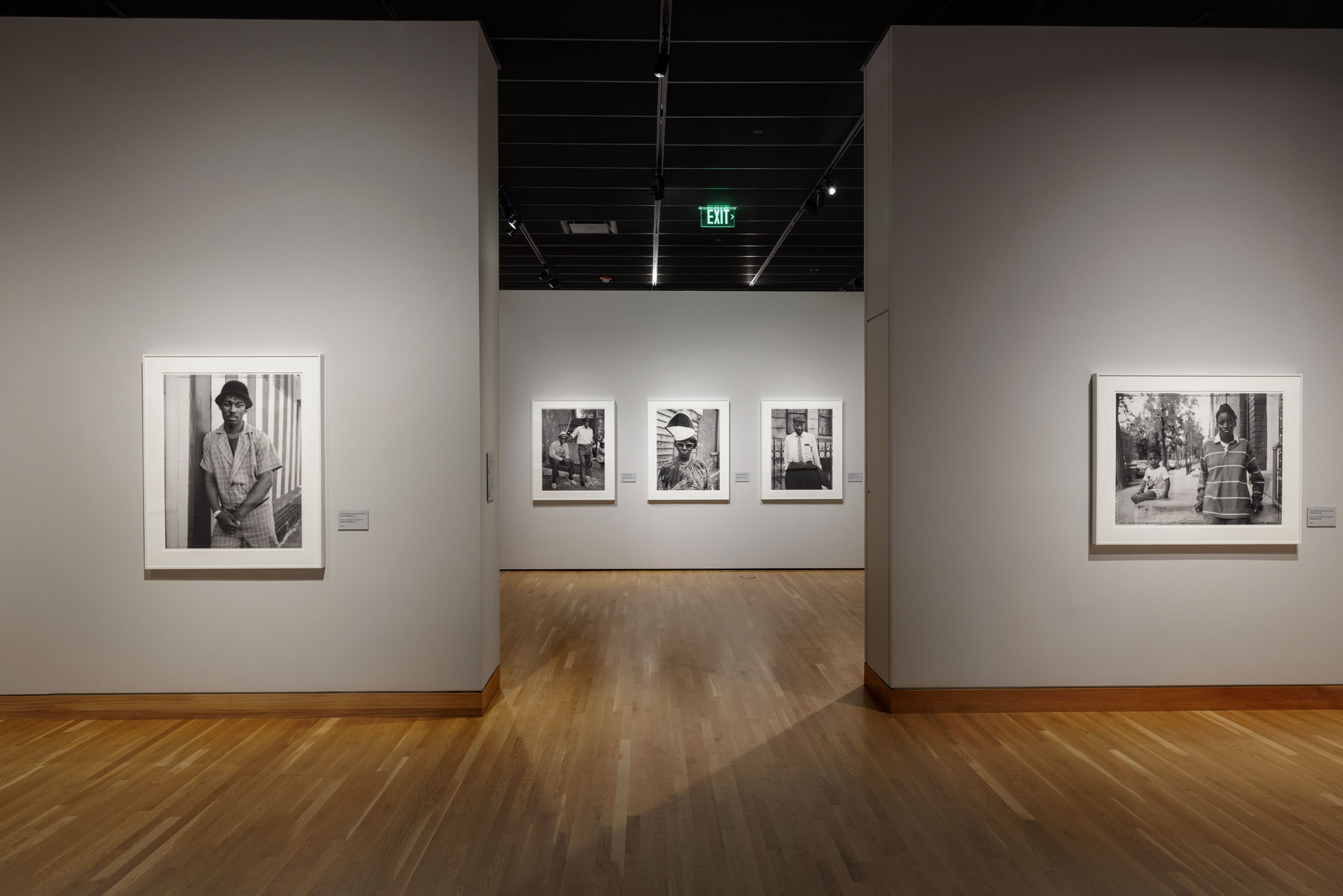
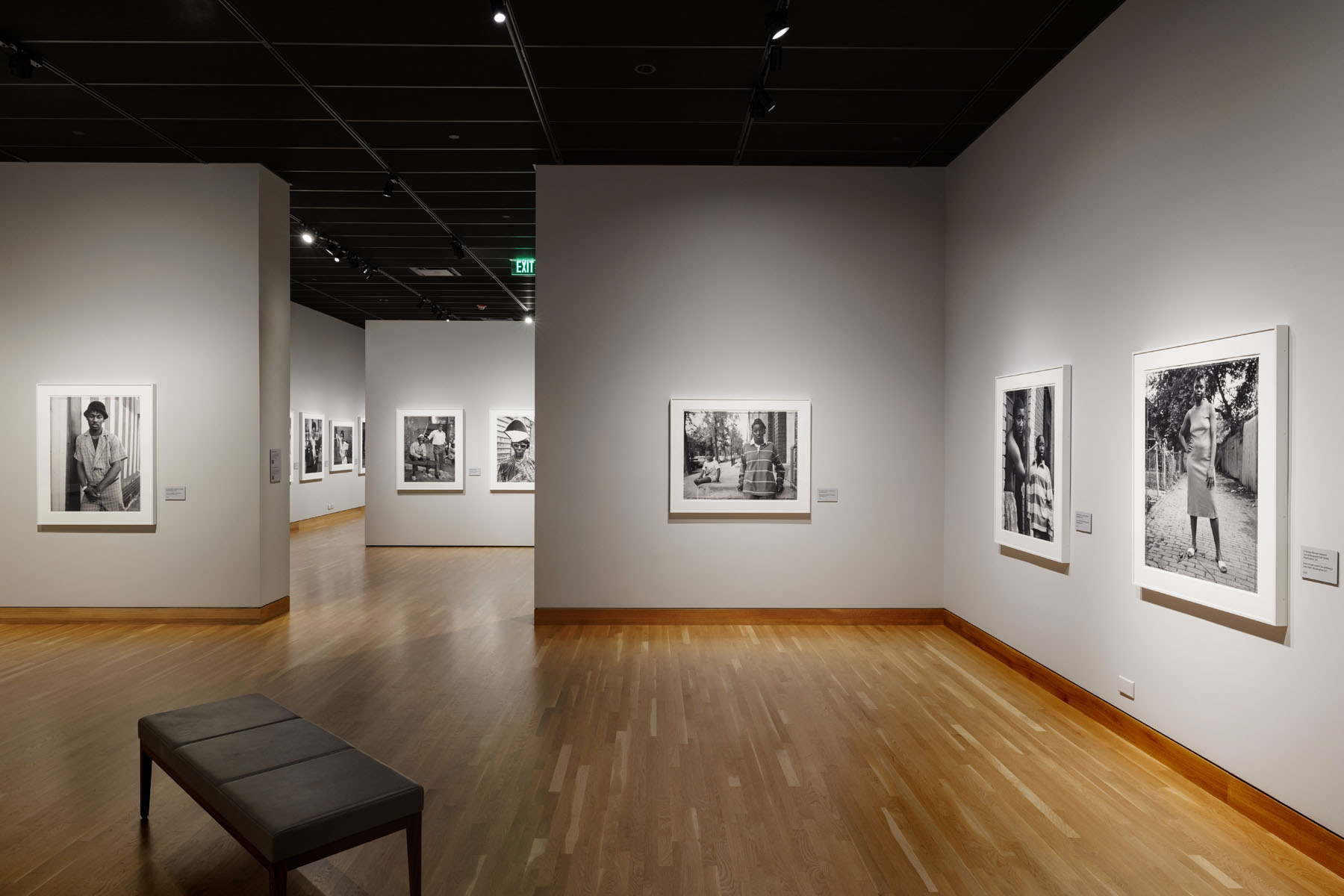
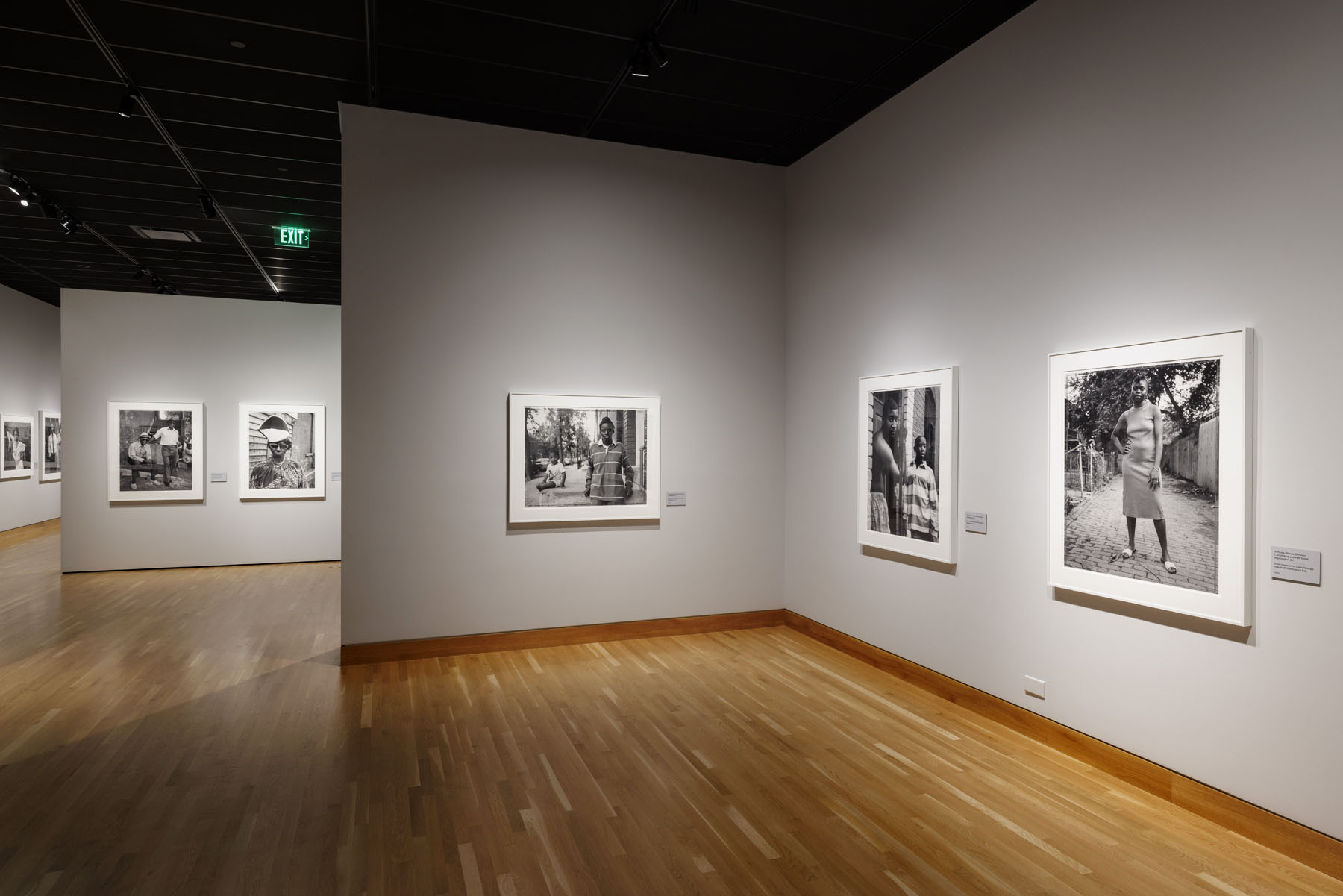
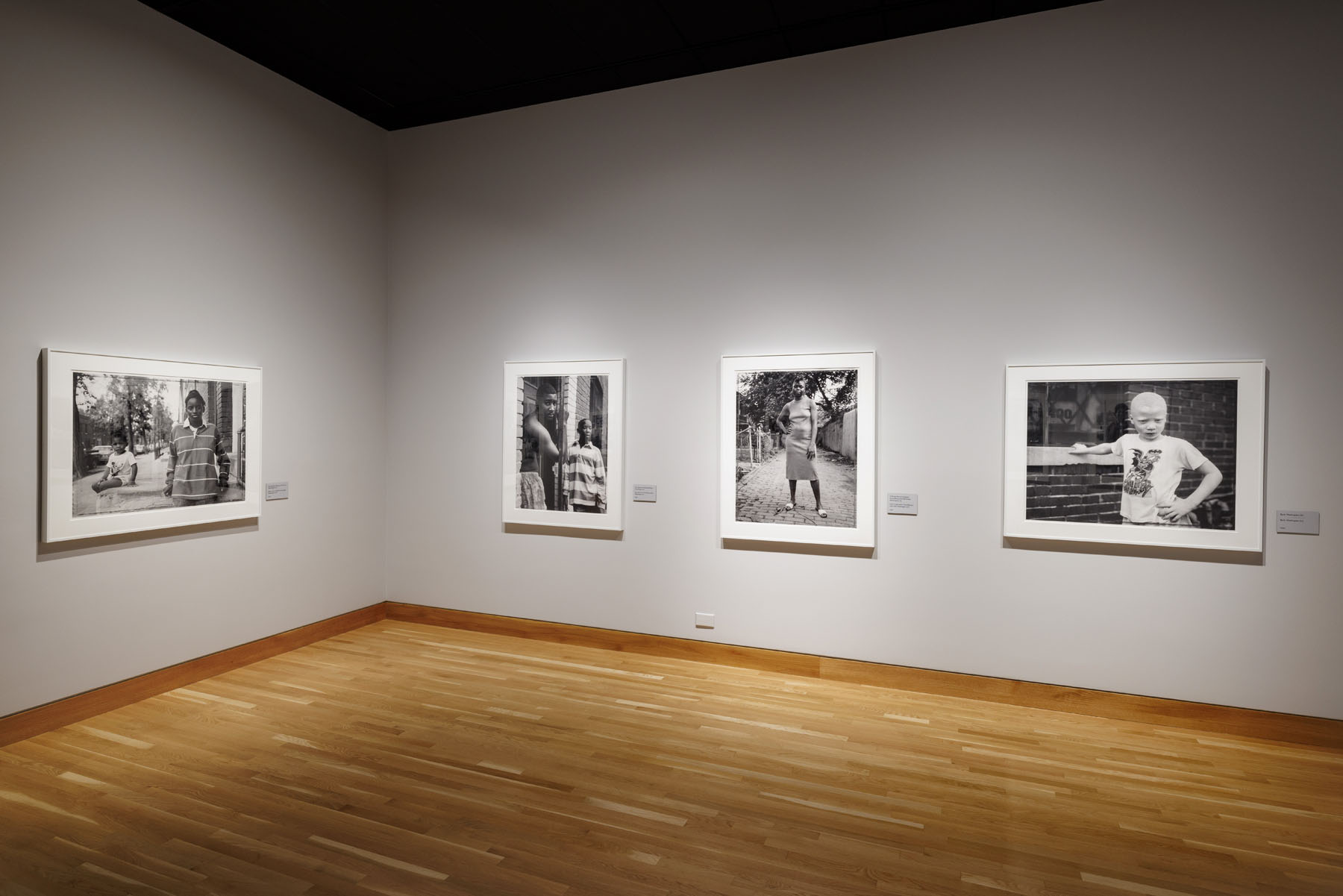
I have posted twice before on Art Blart on Dawoud Bey’s An American Project exhibition – once when it was at the High Museum of Art (November 2020 – March 2021) and then the Whitney Museum of American Art (April – October, 2021)
I waxed lyrical about his photographs which I greatly admire.
“From formal to informal portraiture, through conceptual “bodies”, Bey’s work visualises Black American history in the present moment, not by using the trope of reusing colonial photographs or memorabilia, but by presenting afresh the history of injustice enacted on a people and a culture, picturing their ongoing pain and disenfranchisement – in the here and now – through powerful and deeply political photographs…
From his early street photographs through the later large format Polaroid work and on to the conceptual series, Bey’s photographs have an engaging directness and candour to them. There are no photographic or subjective histrionics here, just immensely rich social documentary photographs that speak truth to subject. The subjects stare directly at the camera and reveal themselves with a poignant honesty.”
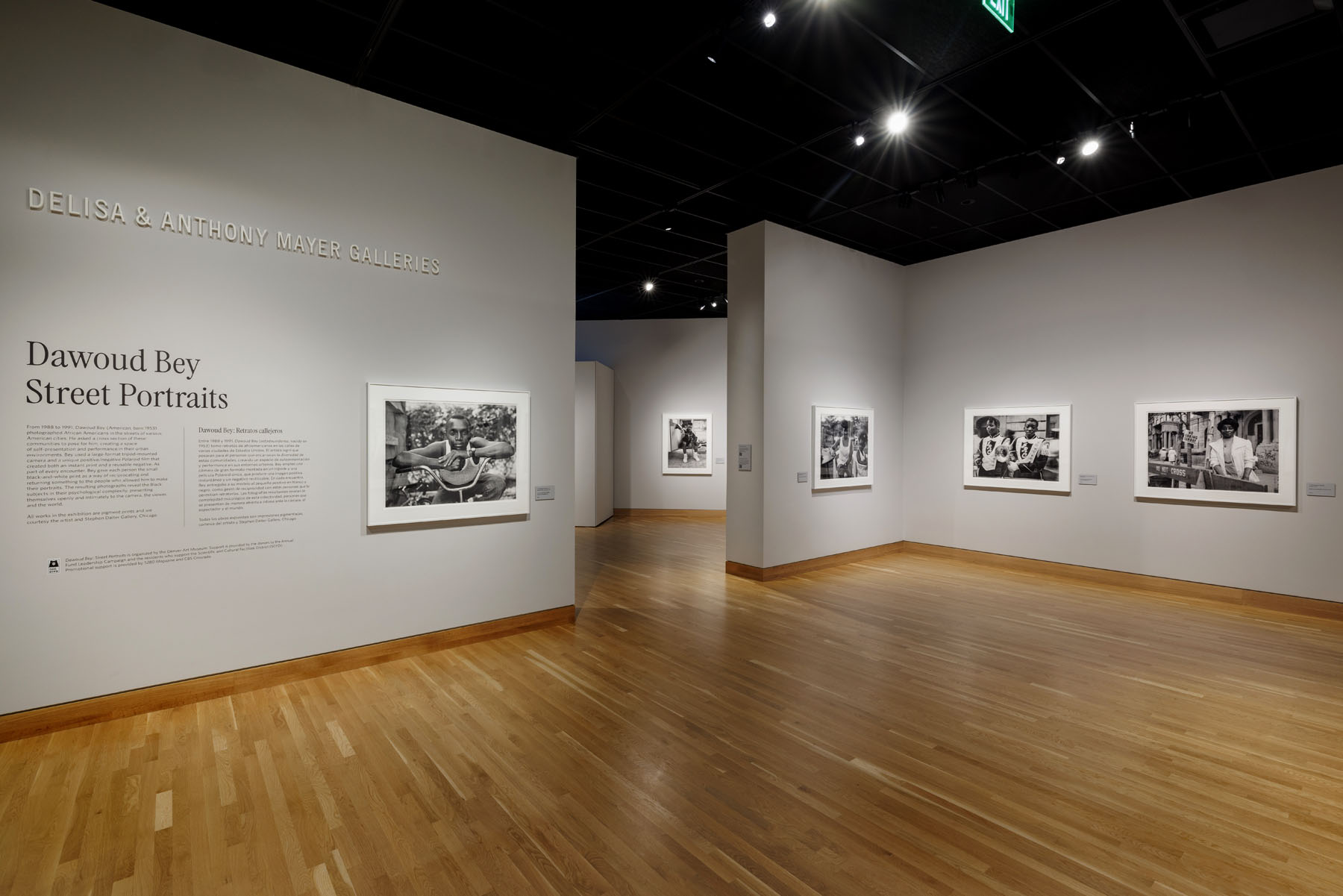
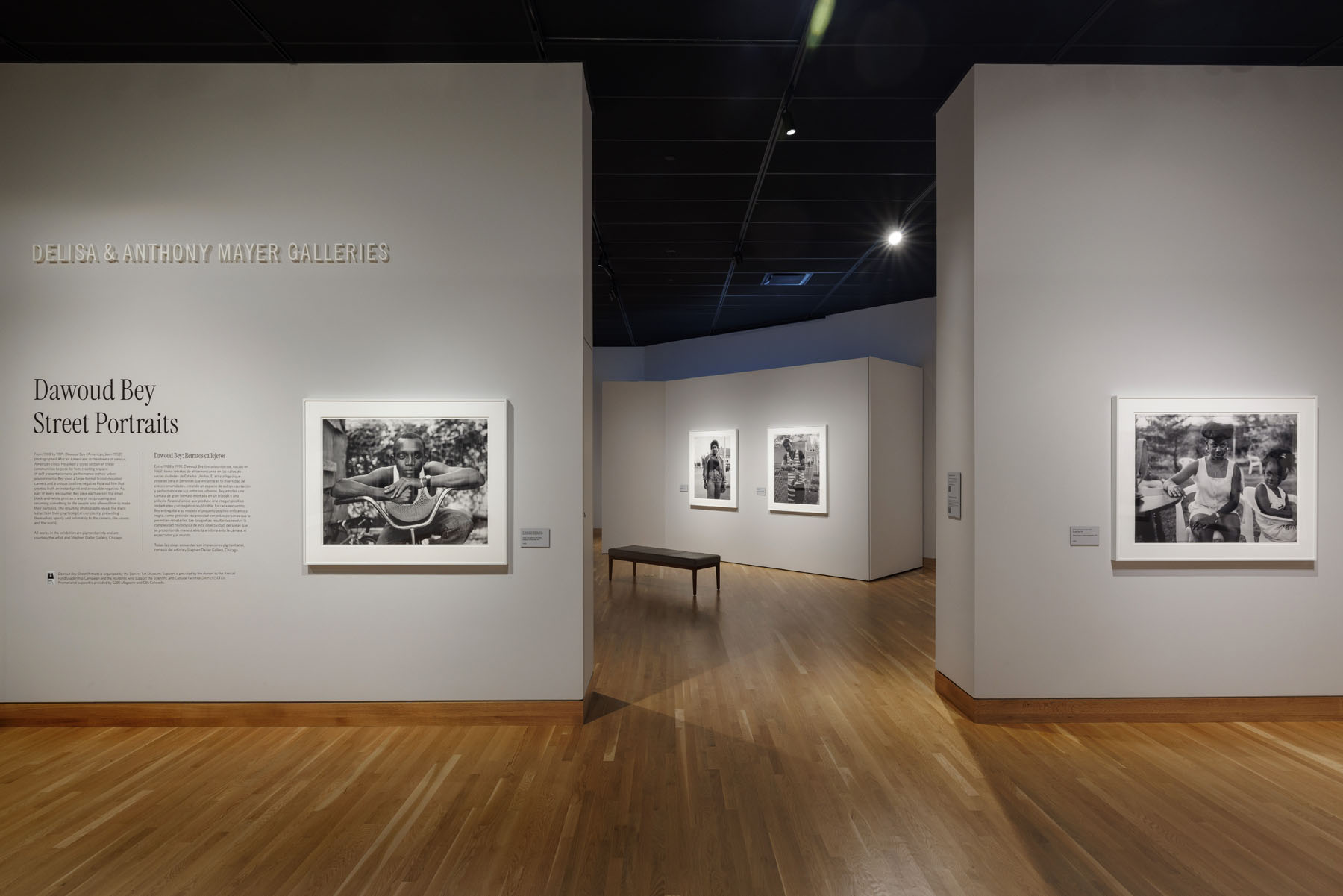
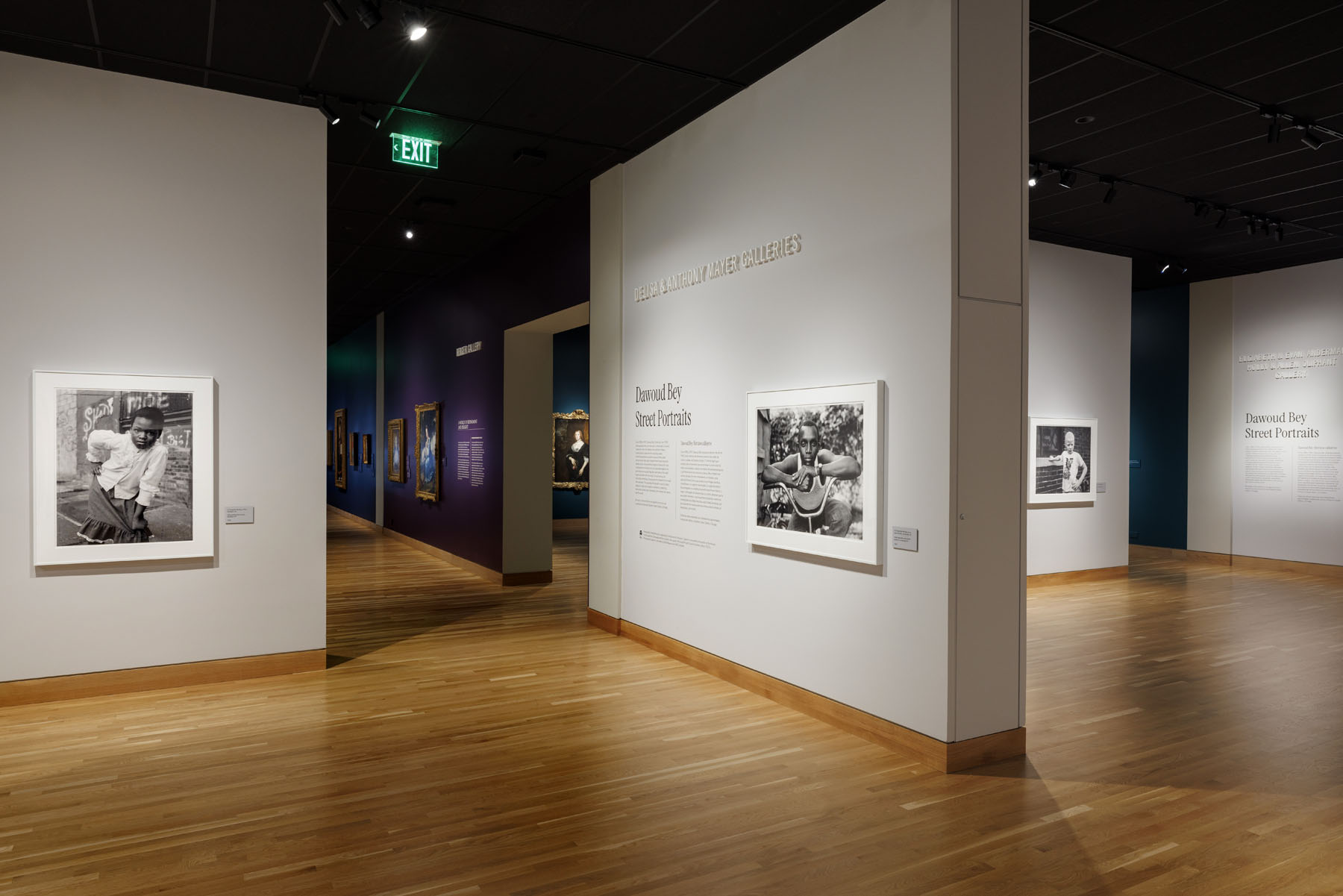
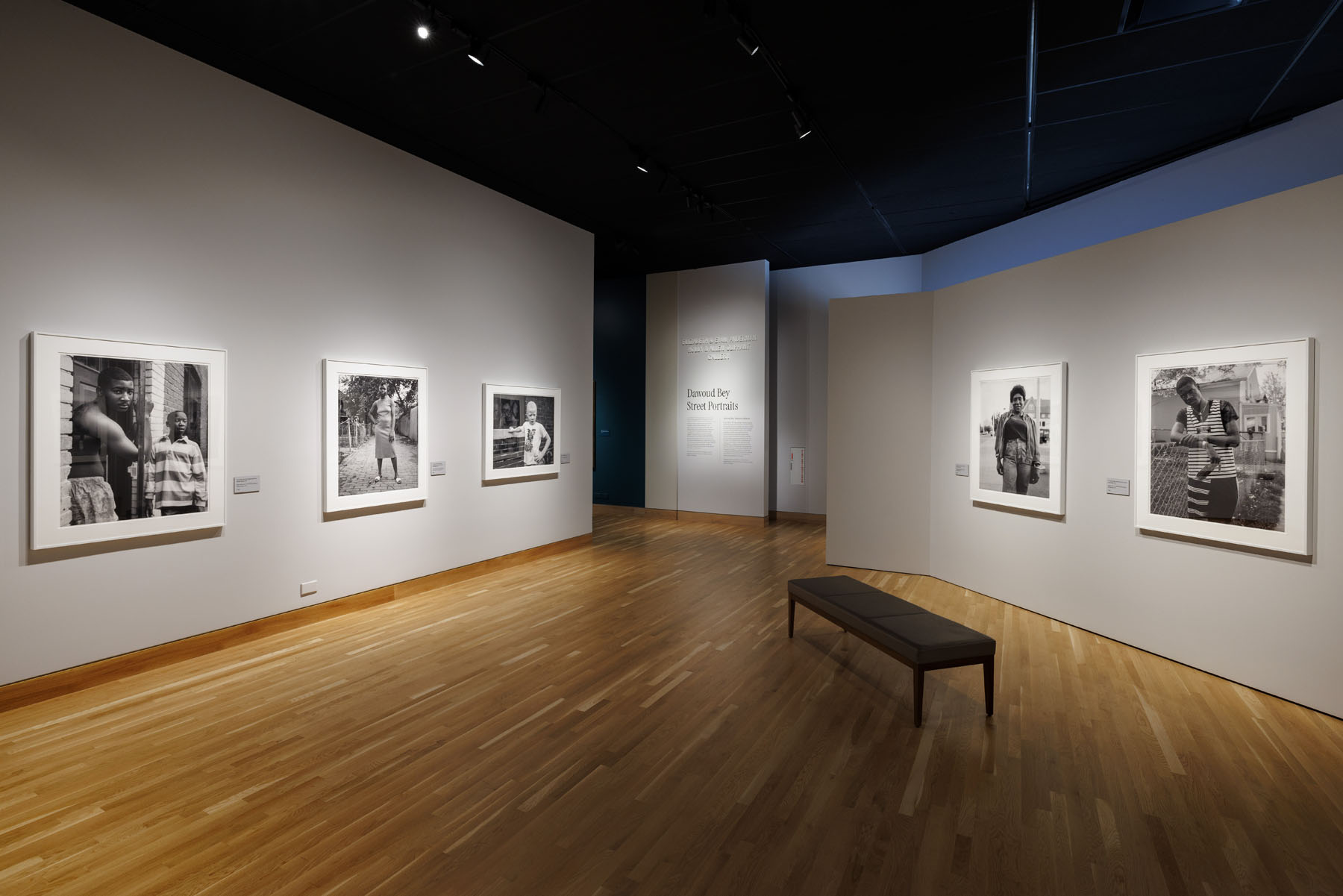
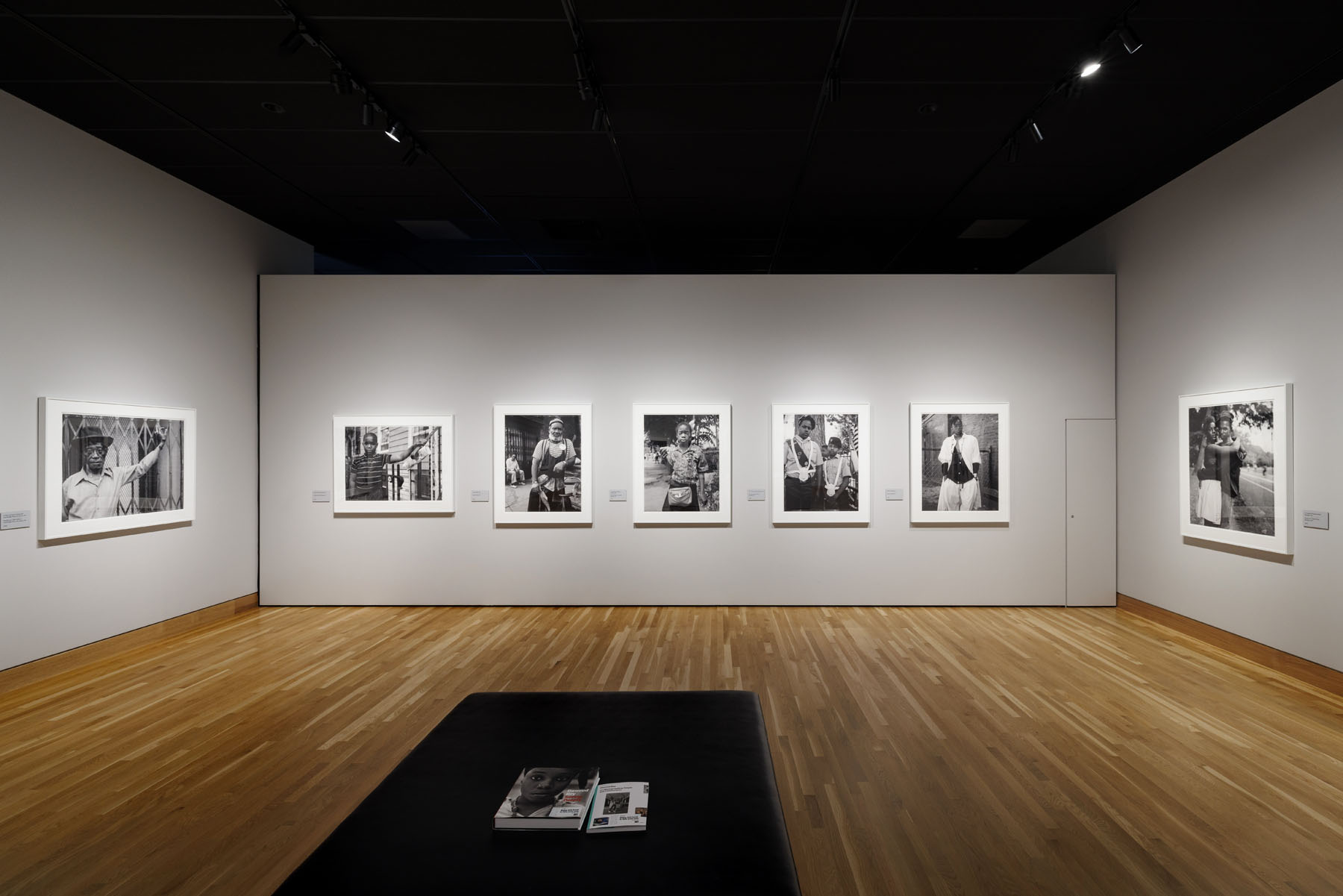
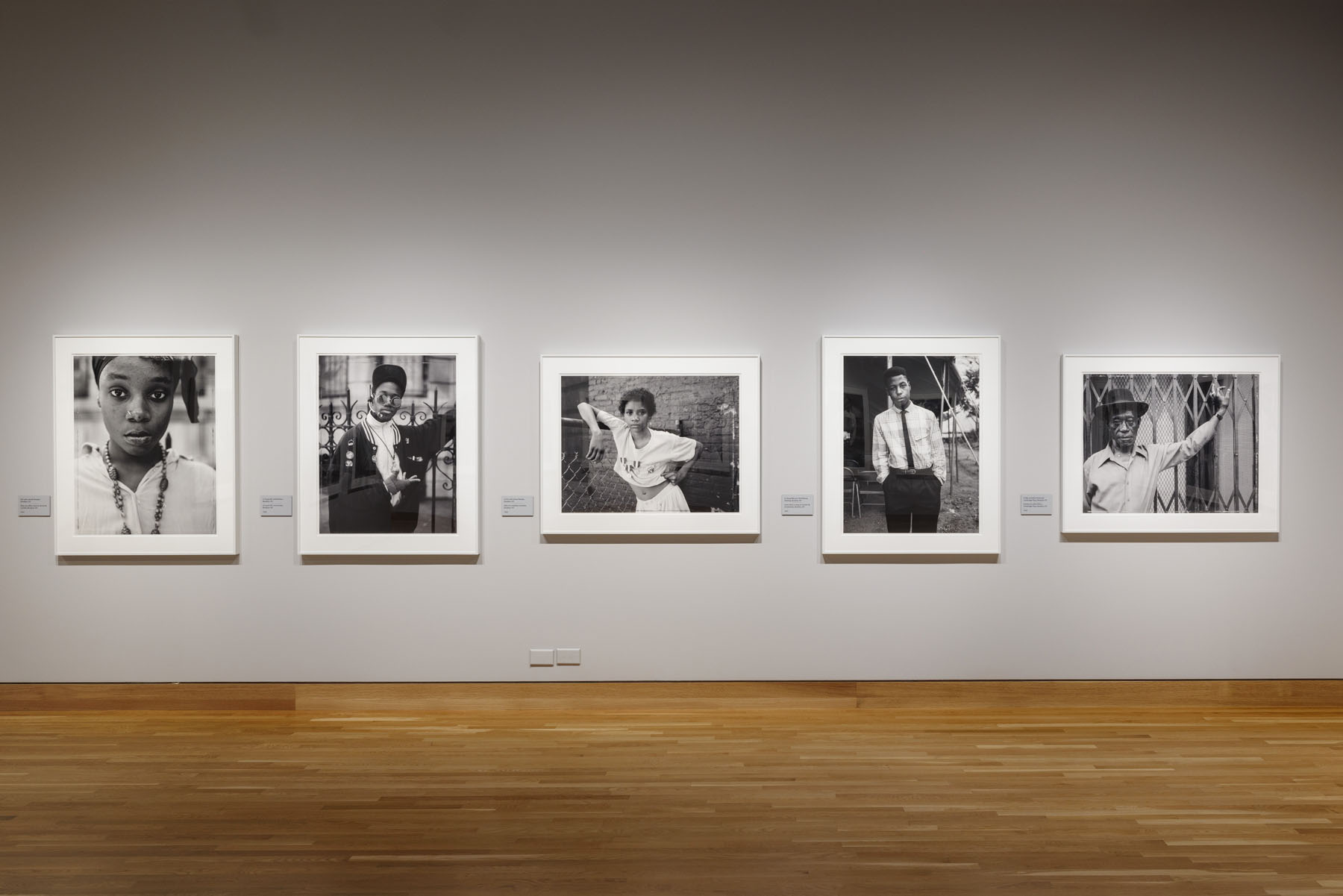
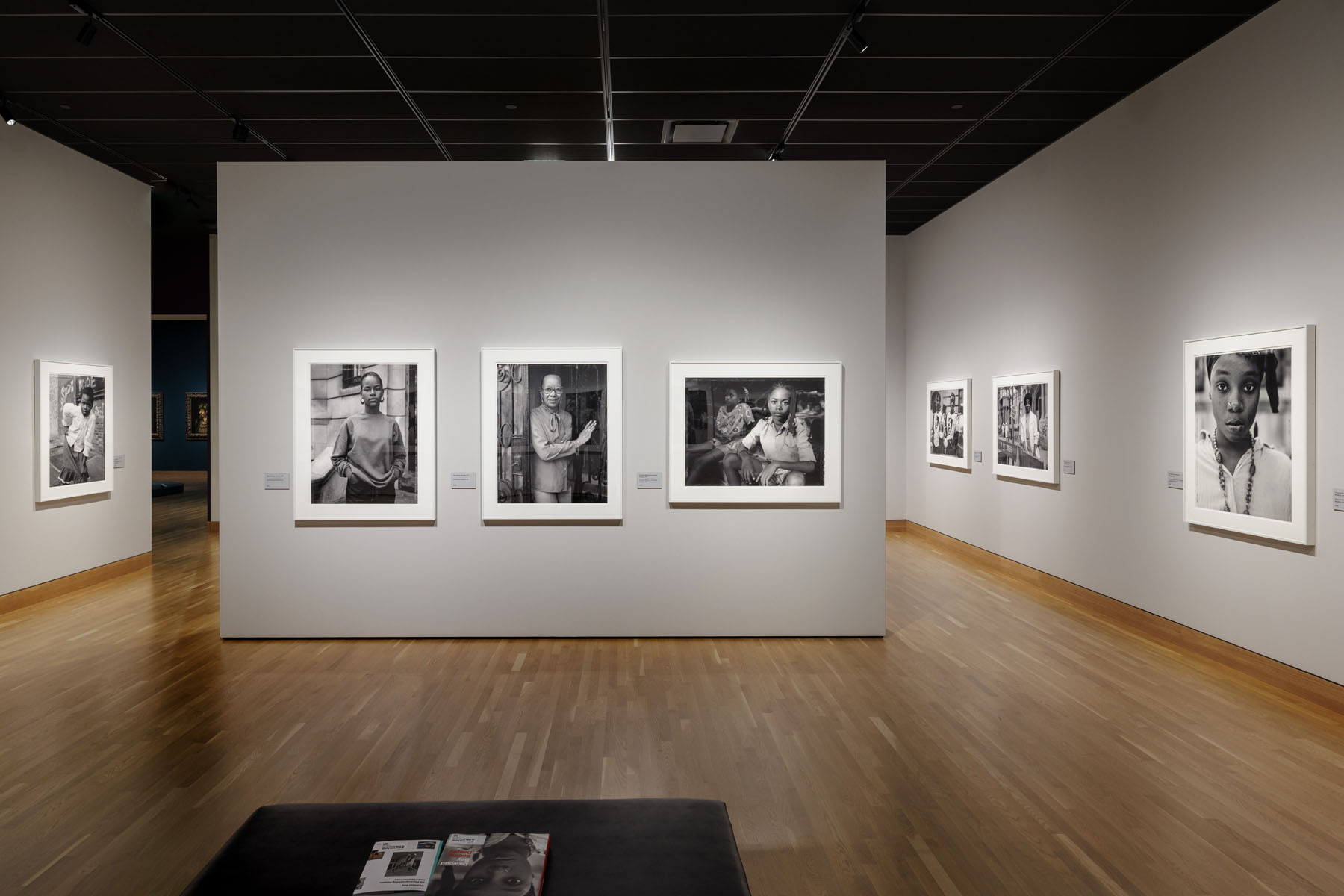
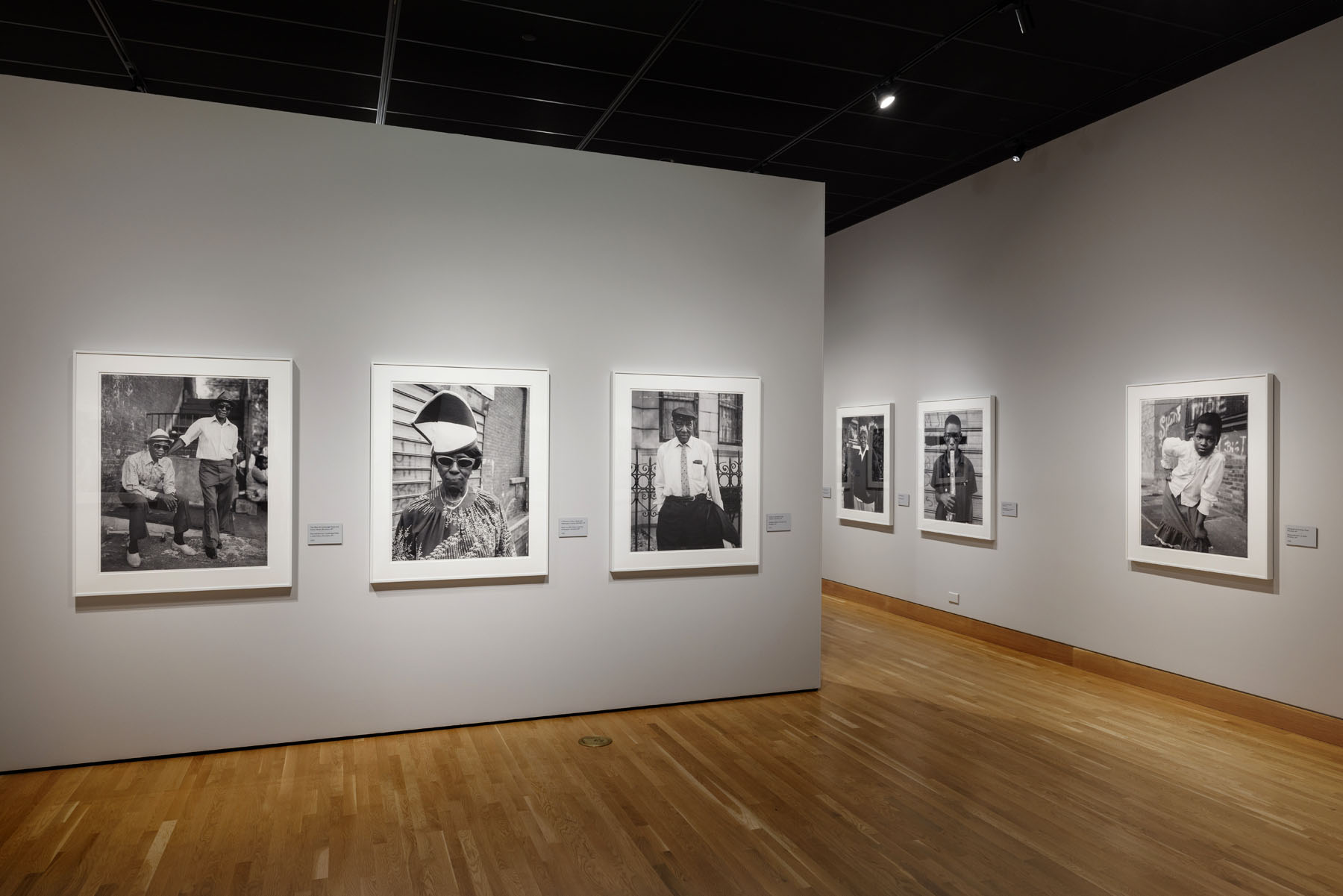
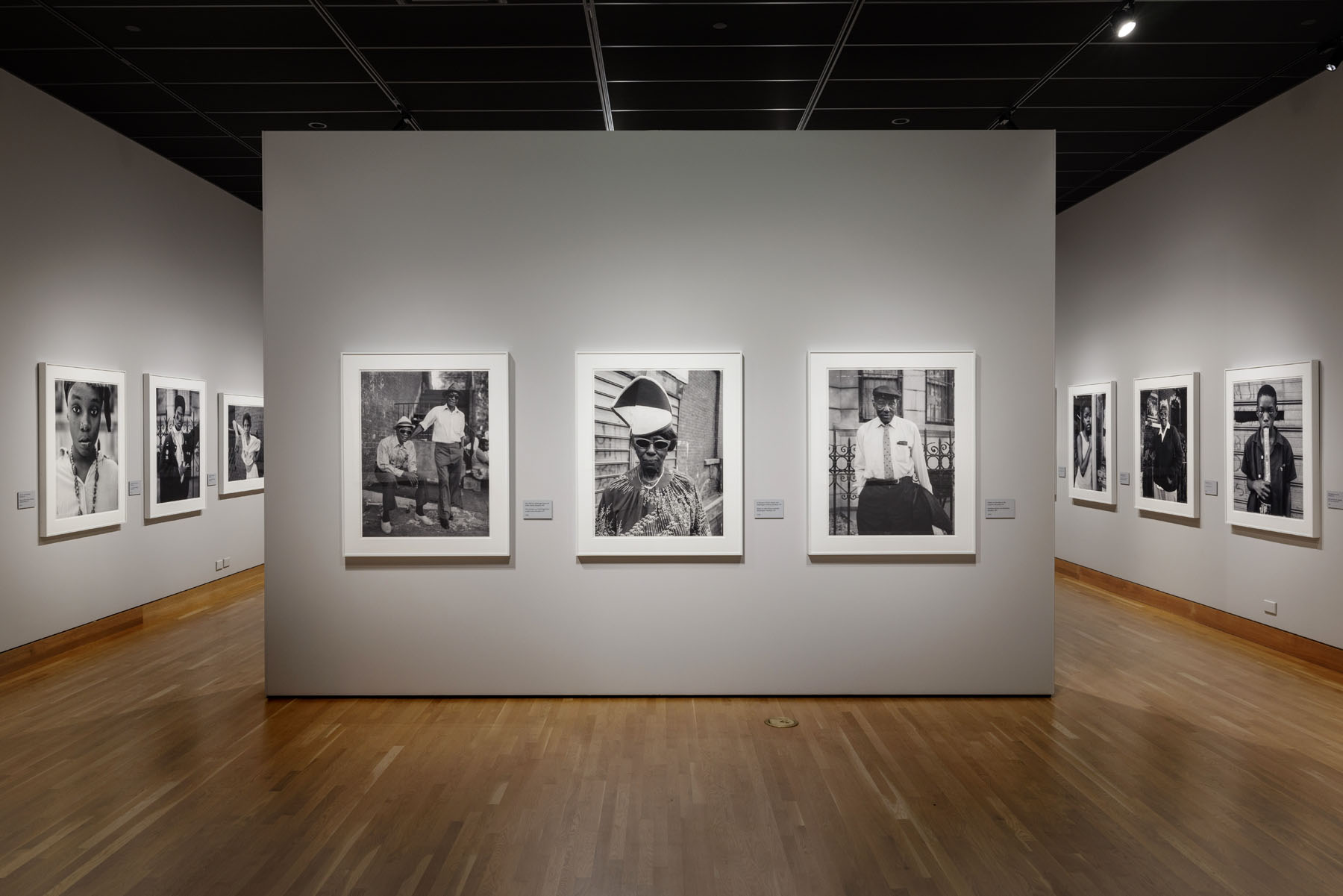
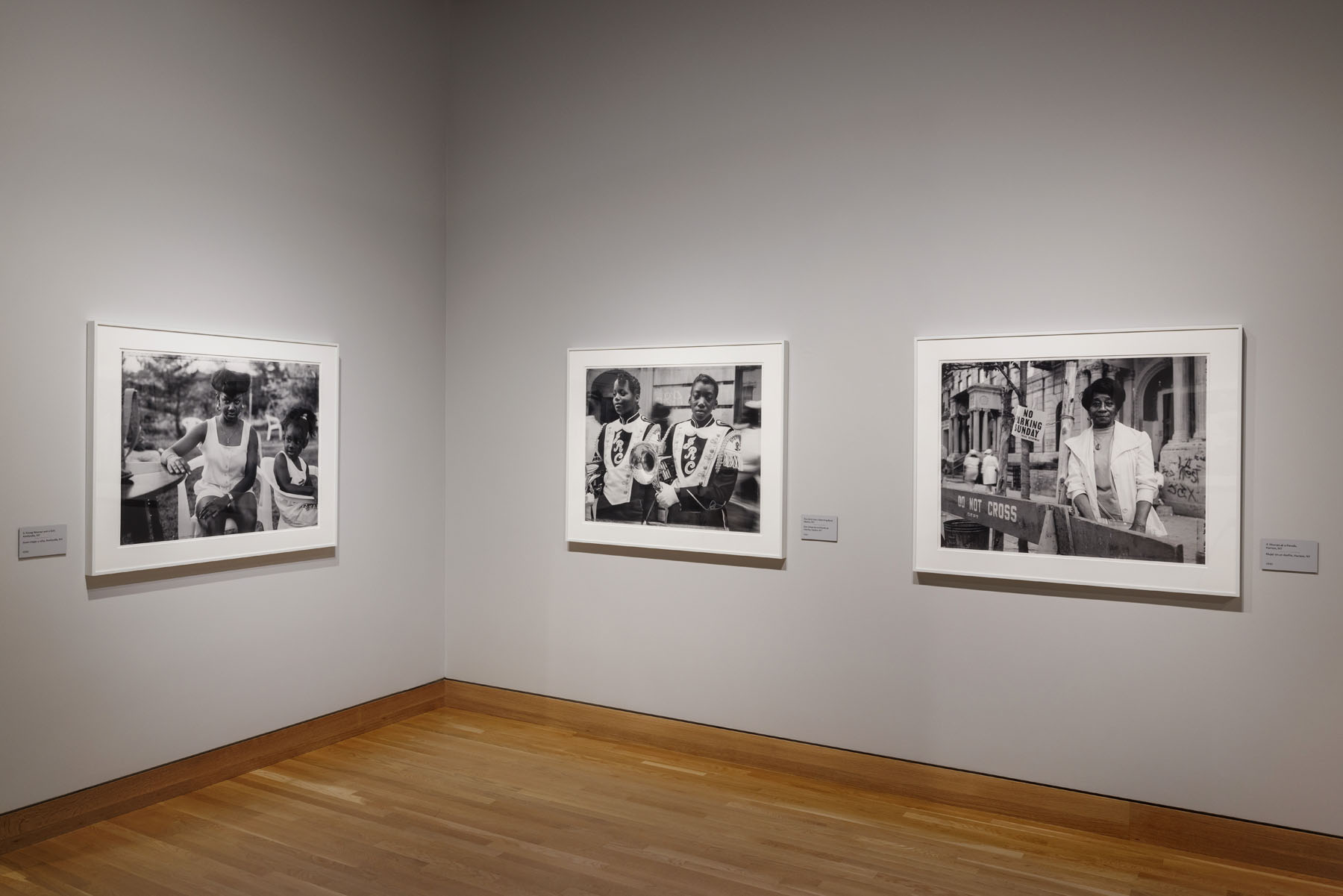
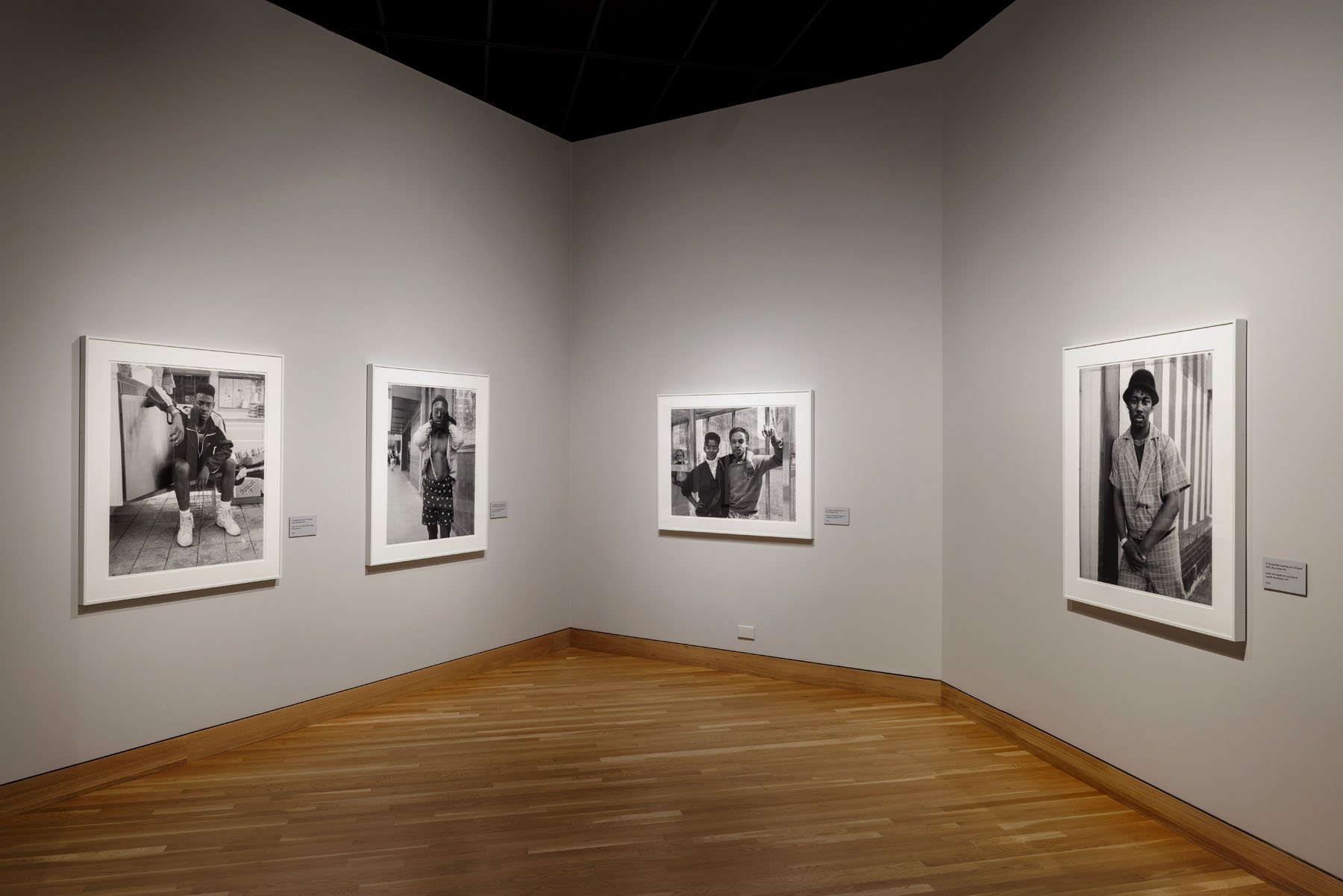
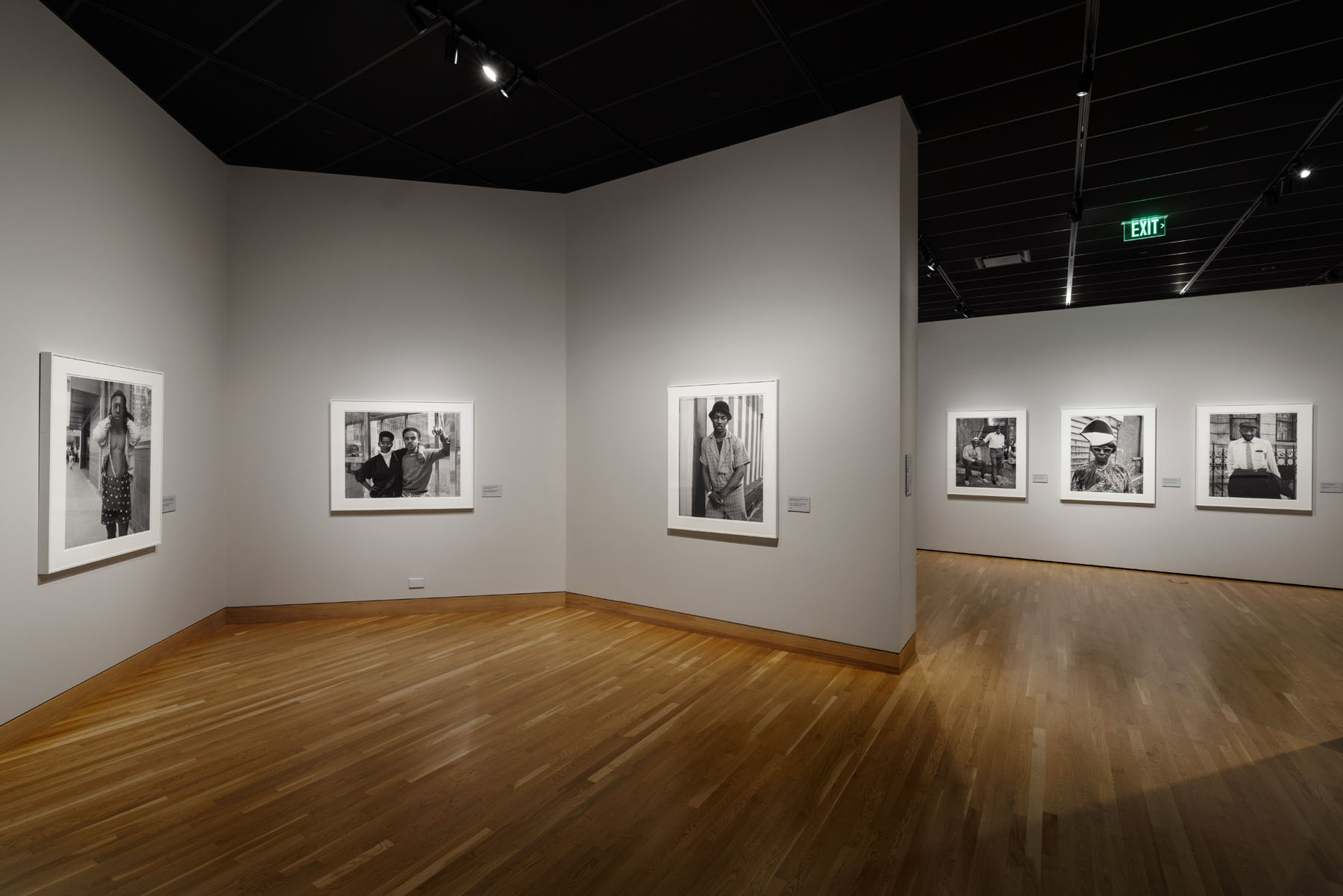
If you look at the installation photographs of both postings you will notice the small-scale prints of his notable black and white large-format (4 × 5-inch) camera and Polaroid Type 55 film photographs. But in this exhibition, Dawoud Bey: Street Portraits at the Denver Art Museum, Bey has used the large format negatives “to make large-scale, highly detailed prints that could be enlarged to create monumental portraits.”
To my eye and mind, these monumental portraits simply don’t work … on many levels.
Firstly, the size seems totally inappropriate as a form of theatre (for that is what Bey is making them at this size) and as a photographic document to the honest representation of these people – to me, completely at odds with the spirit of the subject being captured.
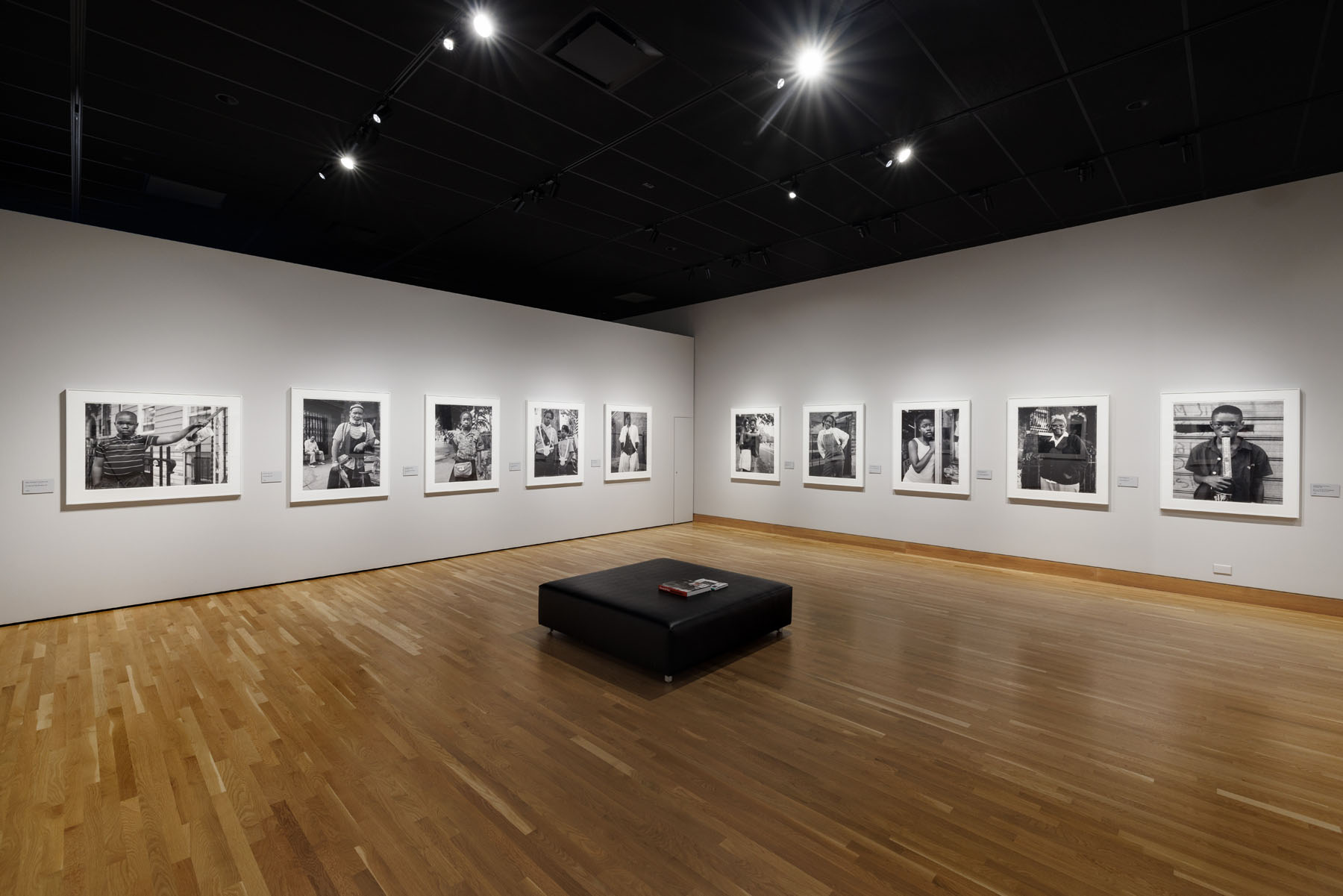
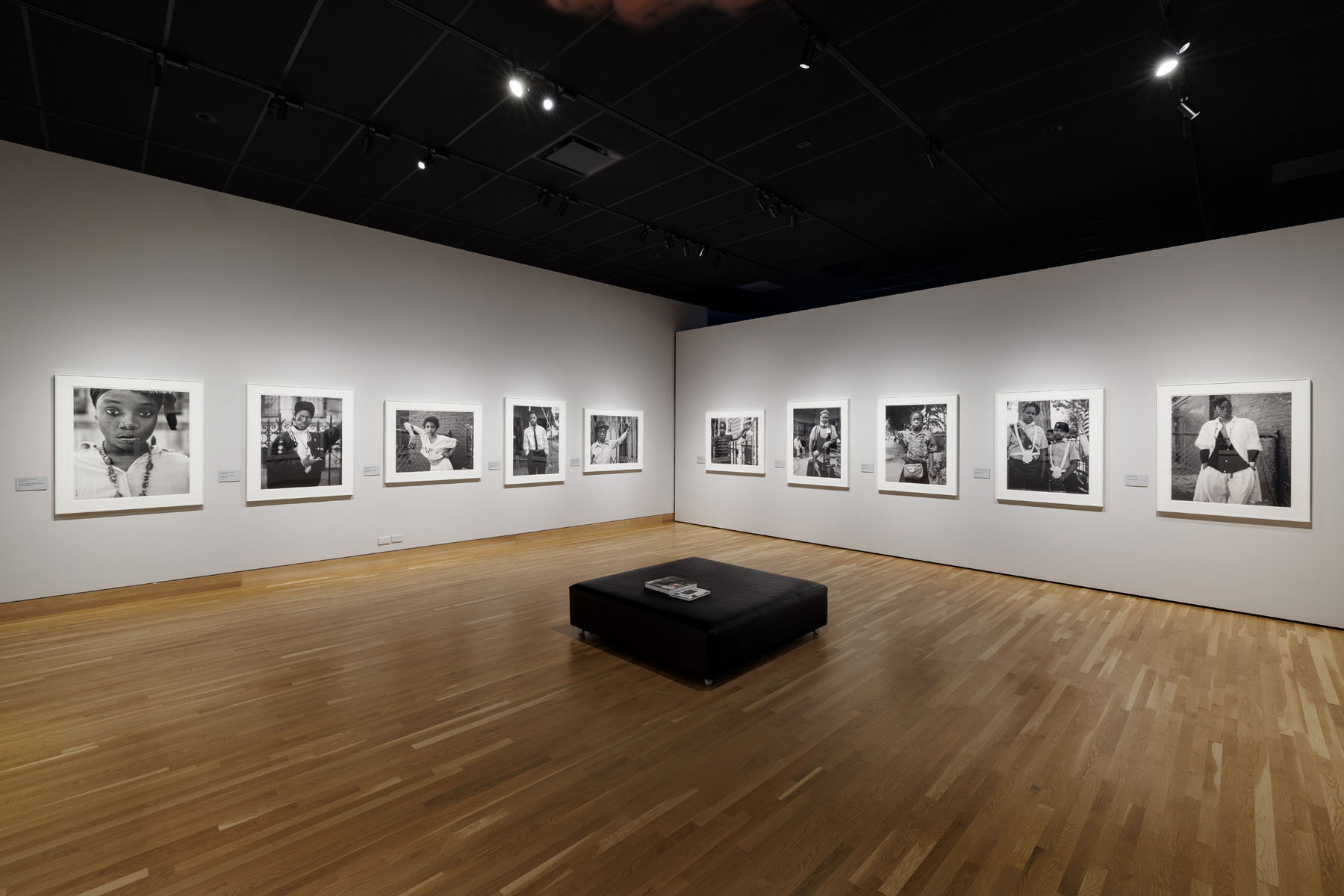
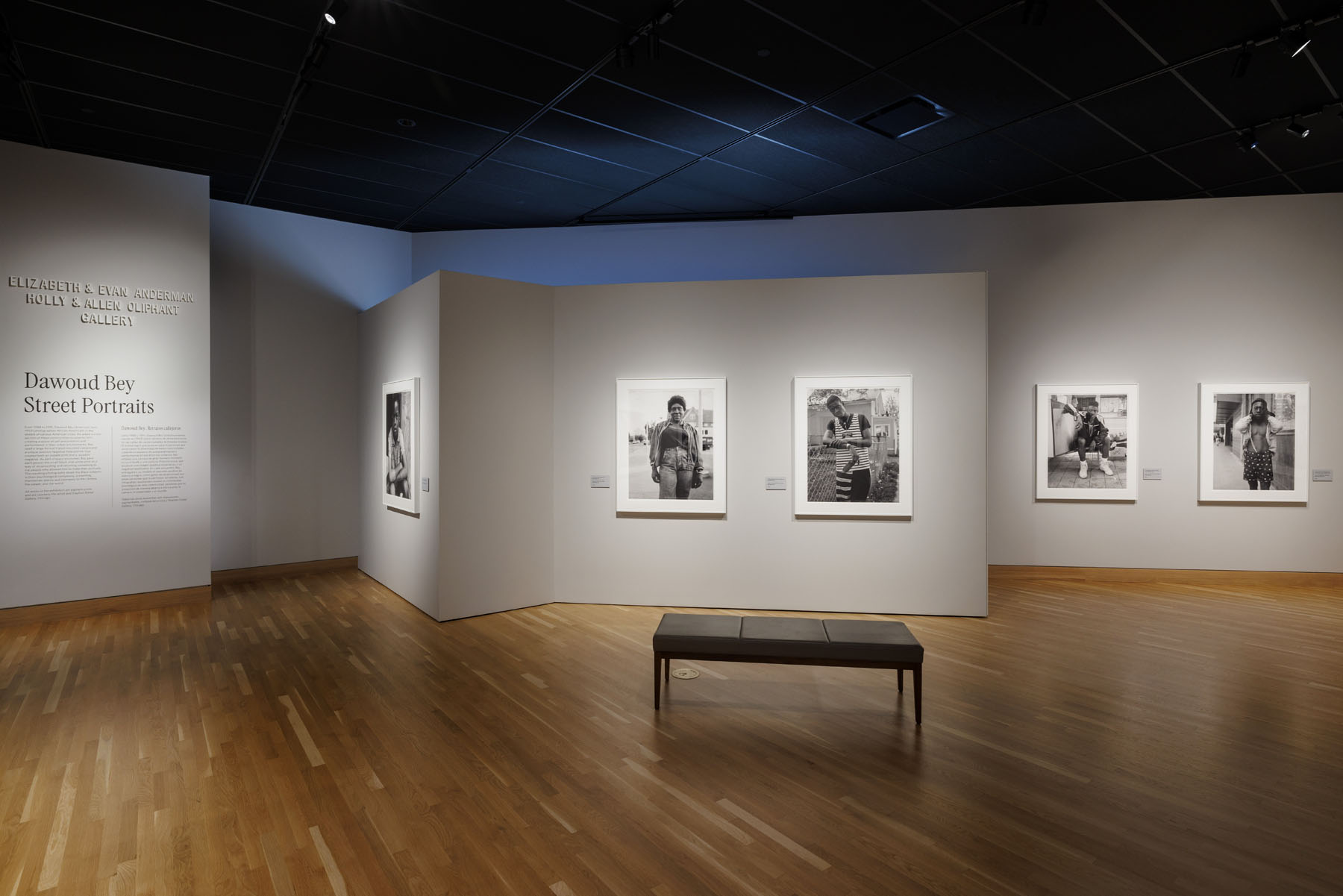
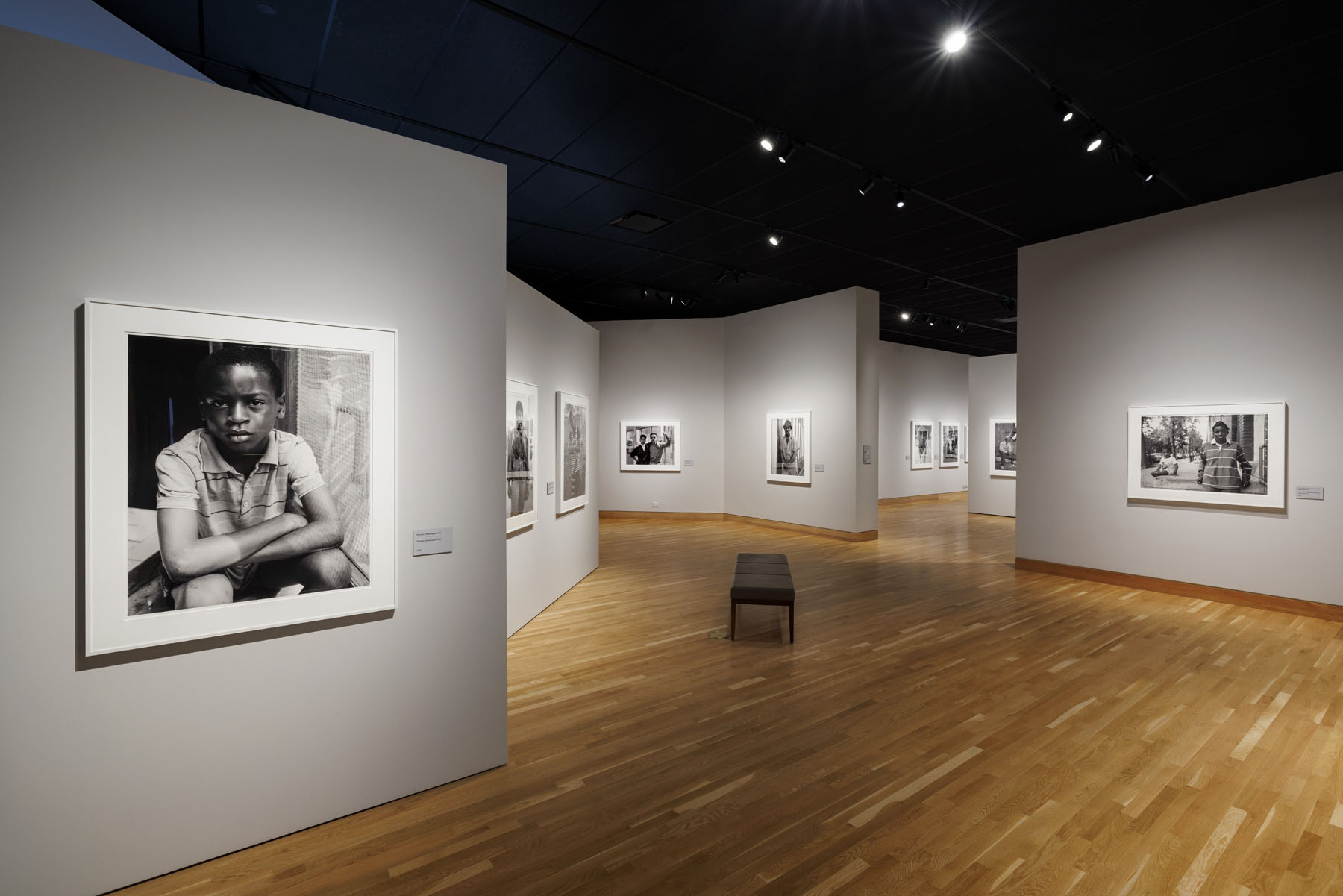
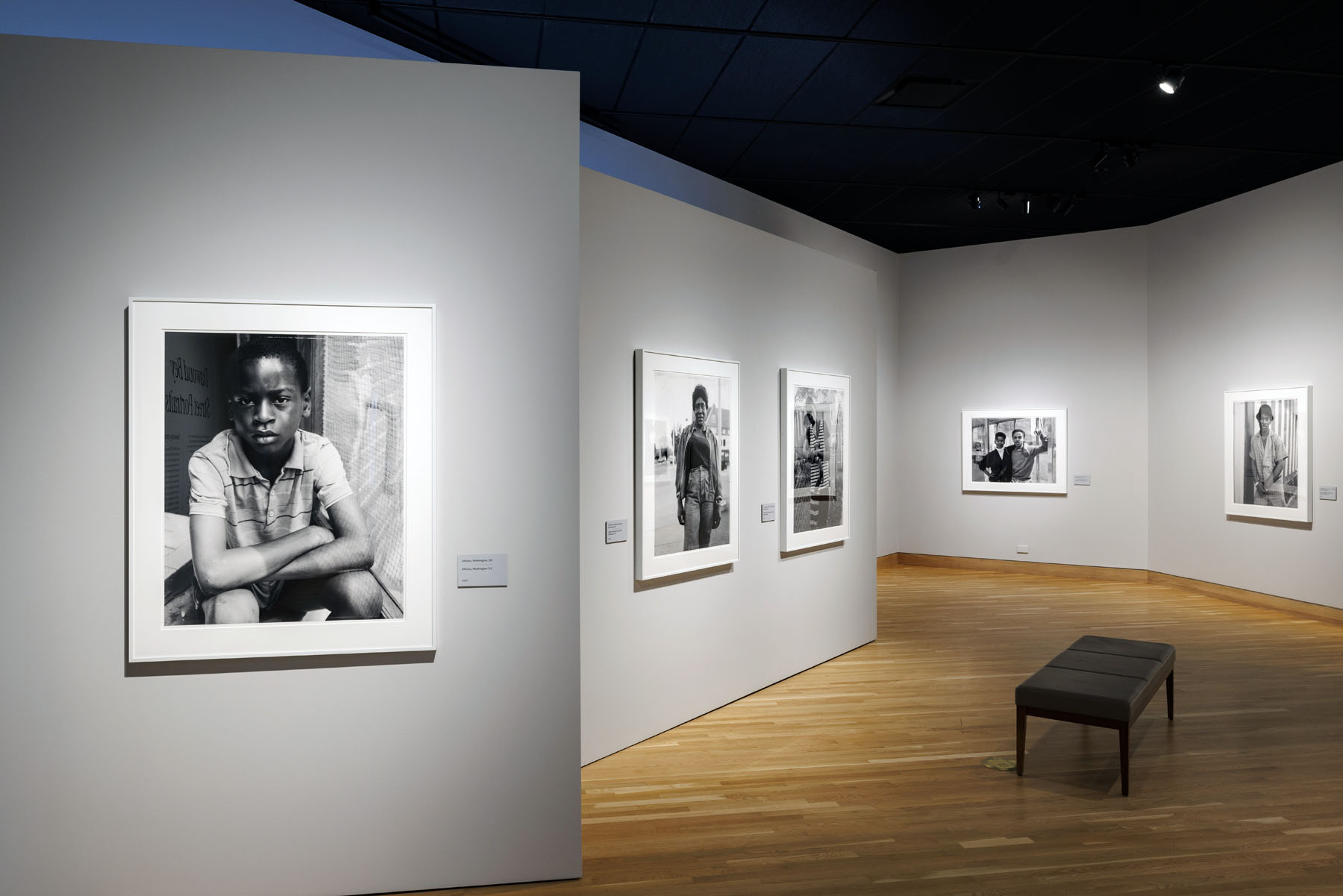
Secondly – and remembering that I have not seen the exhibition or walked through it but I am using the numerous installation photographs as my guide – there seems to be little flow to the images, installed as they are cheek by jowl, on the line, with no groupings or spacing, facing off against each other, face after face – with seemingly no understanding by curator or artist of Minor White’s idea of ice/fire, or the space between, the frisson that is generated between two or more images, in conversation, in sequence. Even the lines of sight between exhibition spaces leave little to be discovered afresh.
I have never understood this need for “monumentalism” in contemporary photography especially when the work does not need it and the energy of the work does not support it.
The advent of digital printing and large scale printers have enabled the production of gigantic contemporary photographs. “Large-scale photography challenges traditional notions of what constitutes a photograph and can be seen as a way to engage with the history of painting and cinema… Large-scale photography allows artists to explore the relationship between the overall composition and the individual details within the image. This can create a sense of both macro and micro, where the viewer can zoom in and out to appreciate different aspects of the image… Large-scale photography is used by many artists to explore themes related to identity, technology, consumerism, and environmental issues. The size of the prints can be a way to amplify these themes and create a more impactful visual statement. Large-scale photographs are well-suited for exhibition spaces where they can be displayed in a way that maximizes their impact. The large size of the prints can also create a sense of awe and wonder for the viewer.” (Generative AI on Google)
“In the 1990s, the group most commonly associated with large-scale photography, and in many ways responsible for the worldwide popularity of the technique, were the students of Bernd and Hilla Becher at the Kunstakademie Düsseldorf, including Thomas Struth, Andreas Gursky, Candida Höfer, and Thomas Ruff.” (Artsy website) With the work of artist’s such as Jeff Wall or Gregory Crewdson we become immersed in their cinematically constructed, staged fantasy worlds through the sheer scale of the photographs. With the gigantic portraits of Thomas Ruff it is not so much about the individual persona in the photograph as their every pore, a scientific examination of the surface micro death contained within every image.
Of course, I understand the desire for large photographs in creating a sense of immersion and exploring themes related to scale, power, identity and the human experience … but I don’t necessarily agree with the conditions of their becoming, nor do I think scale necessarily works for every photographic image. A photograph can be printed so that it has many sizes where it “speaks” to you and the viewer, but not every size works. I vividly remember seeing the exhibition Richard Avedon People at The Ian Potter Museum of Art, Melbourne in 2015 and observing that Avedon’s reaction to the ever expanding size of postmodern “gigantic” photography were floor to ceiling photographs, vertiginous overblown edifices which fell as flat as a tack.
I get the same feeling here.
Impact not intimacy, (visually) overwhelming not (visually) engaging.
Fundamentally, these “monumental” photographs by Dawoud Bey are no longer “street portraits” for they lack the intimacy and intensity of that style, becoming something rather less … beguiling, in the process.
Dr Marcus Bunyan
Many thankx to the Denver Art Museum for allowing me to publish the photographs in the posting. Please click on the photographs for a larger version of the image.
Installation views of the exhibition Dawoud Bey: Street Portraits at the Denver Art Museum
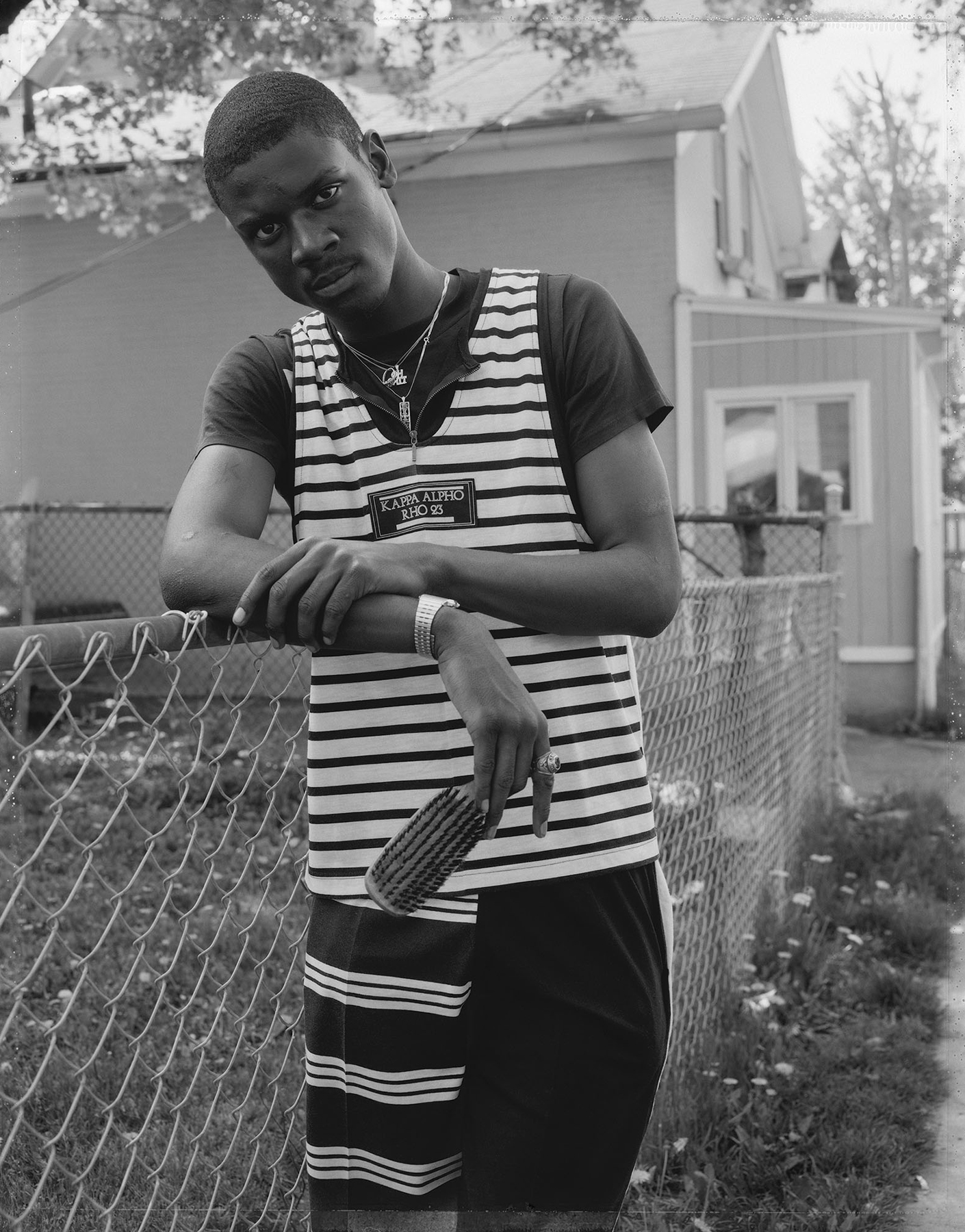
From 1988 to 1991, Dawoud Bey (American, born 1953) photographed African Americans in the streets of various American cities. He asked a cross section of these communities to pose for him, creating a space of self-presentation and performance in their urban environments. Bey used a large format tripod-mounted camera and a unique positive/negative Polaroid film that created both an instant print and a reusable negative. As part of every encounter, Bey gave each person the small black-and-white print as a way of reciprocating and returning something to the people who allowed him to make their portraits. The resulting photographs reveal the Black subjects in their psychological complexity, presenting themselves openly and intimately to the camera, the viewer, and the world.
Installation views of the exhibition Dawoud Bey: Street Portraits at the Denver Art Museum
Dawoud Bey: Street Portraits is the first standalone museum show to explore a transformational phase of the celebrated photographer and 2017 MacArthur Fellow Dawoud Bey’s work. The show features 37 portraits he made between 1988 and 1991, when he collaborated with Black Americans of all ages whom he met on the streets of various American cities. He asked a cross section of people in these communities to pose for him, creating a space of self-presentation and performance in their urban environments.
Bey used a large format tripod-mounted camera and a unique positive/negative Polaroid film that created both an instant print and a reusable negative. Bey considers photography an ethical practice that requires collaboration with his subjects. As part of every encounter, he gave each person a small black-and-white Polaroid print as a way of reciprocating and returning something to the people who allowed him to make their portrait.
Street Portraits is organised by the community the photographs were made in: Brooklyn; Washington, D.C.; Rochester; Amityville; and Harlem. Bey defies racial stereotypes by encouraging Black people to present themselves openly and intimately to the camera, the viewer, and the world.
The Denver Art Museum (DAM) is proud to present Dawoud Bey: Street Portraits, featuring 37 portraits by celebrated photographer and 2017 MacArthur Fellow Dawoud Bey (American, born 1953).
From 1988 to 1991, Bey collaborated with Black Americans of all ages whom he met on the streets of various American cities. He asked a cross section of people in these communities to pose for him, creating a space of self-presentation and performance in their urban environments.
“We’re pleased to present the first standalone museum show of this important work,” said Eric Paddock, Curator of Photography for DAM. “Dawoud Bey’s Street Portraits mark a turning point where the deliberate, closely observed portraits he had been making with a handheld camera began to contain what he has called ‘the kind of lush physical description’ he wanted his pictures to convey – and that is a consistent part of all the work he has made since. The slower process of working with a camera on a tripod invited collaboration between the artist and his subjects, making each picture both an experiment and a discovery.”
Bey used a large format tripod-mounted camera and a unique positive/negative Polaroid film that created both an instant print and a reusable negative. Bey considers photography an ethical practice that requires collaboration between the artist and his subjects. As part of every encounter, he gave each person a small black-and-white Polaroid print as a way of reciprocating and returning something to the people who allowed him to make their portrait.
The exhibition is organised by the community the photographs were taken in: Brooklyn; Washington, D.C.; Rochester; Amityville; and Harlem. Defying racial stereotypes, the resulting photographs reveal the Black subjects in all of their psychologically rich complexity, presenting themselves openly and intimately to the camera, the viewer, and the world.
Exhibition dates: 21st November, 2024 – 5th May, 2025
Curators: Yasufumi Nakamori, former Senior Curator of International Art (Photography) Tate Modern, Helen Little, Curator, British Art, Tate Britain and Jasmine Chohan, Assistant Curator, Contemporary British Art, Tate Britain with additional curatorial support from Bilal Akkouche, Assistant Curator, International Art, Tate Modern; Sade Sarumi, Curatorial Assistant, Contemporary British Art, Tate Britain and Bethany Husband, Exhibitions Assistant, Tate Britain
List of artists: Keith Arnatt; Zarina Bhimji; Derek Bishton; Sutapa Biswas; Tessa Boffin; Marc Boothe; Victor Burgin; Vanley Burke; Pogus Caesar; Thomas Joshua Cooper; John Davies; Poulomi Desai; Al-An deSouza; Willie Doherty; Jason Evans; Rotimi Fani-Kayode; Anna Fox; Simon Foxton; Armet Francis; Peter Fraser; Melanie Friend; Paul Graham; Ken Grant; Joy Gregory; Sunil Gupta; John Harris; Lyle Ashton Harris; David Hoffman; Brian Homer; Colin Jones; Mumtaz Karimjee; Roshini Kempadoo; Peter Kennard; Chris Killip; Karen Knorr; Sirkka-Liisa Konttinen; Grace Lau; Dave Lewis; Markéta Luskačová; David Mansell; Jenny Matthews; Don McCullin; Roy Mehta; Peter Mitchell; Dennis Morris; Maggie Murray; Tish Murtha; Joanne O’Brien; Zak Ové; Martin Parr; Ingrid Pollard; Brenda Prince; Samena Rana; John Reardon; Paul Reas; Olivier Richon; Suzanne Roden; Franklyn Rodgers; Paul Seawright; Syd Shelton; Jem Southam; Jo Spence; John Sturrock; Maud Sulter; Homer Sykes; Mitra Tabrizian; Wolfgang Tillmans; Paul Trevor; Maxine Walker; Albert Watson; Tom Wood; Ajamu X.
A humungous posting that, much like the exhibition itself, cannot do justice to the photographs and issues of an entire decade – the flow on effects of which are still being felt today.
From distant Australia and having not seen the exhibition myself, I cannot do justice – now there is an apposite word for the decade – to the flow of the exhibition, the many included or neglected artists involved or not, the bodies of work displayed or their commentary on the many disparate, competing and complex political, economic and social cataclysms (def: a sudden violent political or social upheaval) of the decade: including but not limited to, race, gender, identity, representation, activism, neoliberalism, Thatcher, The Miners’ Strike, Clause 28, HIV/AIDS, feminism, racism, class, patriarchy, money, greed, hedonism, humanism, subcultures, unemployment, strikes, poverty, luxury, consumer culture, war (Falklands) and riots, for example the Brixton riots of 1981.
I lived those years in the UK before emigrating to Australia in 1986. What I remember is the terrible weather, the cold and the damp, the vile Thatcher, and the poor quality of living. I lived in Stockwell (or Saint Ockwell as we used to call it) near Brixton in the early 80s before moving to Shepherd’s Bush were all the Mods gathered on their scooters on the roundabout as part of the mod revival.
I worked at a fish and chip restaurant called Geales just off Notting Hill Gate working double shifts, 10.30 – 3pm, 5.30 – 12, five days a week. The restaurant served fish and chips with French champagne and wines. The mostly gay floor staff were paid a pittance but we earnt our money off the tips we received from the celebrities that inhabited the place, people such as Bill Connolly, John Cleese, Divine and Kenny Everett. They loved us gay boys.
We worked hard and partied harder, often going out from Friday night to Sunday night to the clubs with a rest day on Monday. We were young. We ran from place to place living at a hundred miles an hour, not realising the ruts in London are very deep and you were spending as much as you made just to pay the rent, to eat at dive cafe (I lived on Mars bars, fish and chips, braised heart, mashed potatoes and bullet peas to name a few and I was as thin as a rake), and to go out partying, to have fun, visiting the alternative clubs in Kings Cross, Vauxhall, Brixton and the East End.
And then there was the spectre of HIV/AIDS raising its ugly head. I had my first HIV test in 1983. I had my blood taken and I went back 2 weeks later for the result. I sat outside the doctor’s room and if they called you in and said you had it, you were dead. To look death in the face at 25. The was no treatment. I survived but many of my friends, both here and in Australia, didn’t. We partied harder.
There are so many perspectives on the 80s that it is an impossible task for one exhibition to cover all of the issues. Reviews have noted that the exhibition is “a meandering look at pomp, protest” (Guardian); “exhaustive and exhausting… [the exhibition] makes for a dogged viewing experience that confuses as much as it enlightens” (Guardian); “a sense of fatigue and depletion as it went on and on … it could have been more engaging, more pleasurable” (1000 Words); and “the critical reception of the show has been rather lukewarm” (The Brooklyn Rail).
Most writer’s observe that the exhibition illuminates the way photography shifts “from monochrome to colour, from photojournalism to a more detached style of documentary” featuring “constructed, studio-based and appropriationist work.” The exhibition distils “the curatorial thrust of this sprawling exhibition, which, as its subtitle suggests, is more about photography’s often conceptually based responses to the 1980s than the turbulent nature of the decade itself.”1
Further, Bartolomeo Sala observes that the meandering view of the 1980s is consistent with the curatorial approach to the exhibition, “that is, to present eighties Britain not as a ossified relic but rather a container of multitudes, a country animated by competing, clashing energies and defying coherent description in a way that feels very reminiscent of today. A neoliberal hellhole, a nightmare of petit bourgeois conformity and cheapness, and at the same time an increasingly tolerant, multicultural, and open society, which finds its motor and pride in diversity and the endless project of self-fashioning.”2
Forty plus years on we are still paying the price for Thatcher’s neoliberal hellhole, with the loss of community, and the lack of compassion and empathy for others. I often think it was a more vibrant, more alive time in the 1980s despite all of its inherent problems. While we may have become a more tolerant, multicultural society, fascism and the right, disenfranchisement and loss of rights lurk ever closer to the surface. While we have pride we also have arrogance and self-aggrandisement, self-entitlement. While then we seemingly had freedom and love we now have surveillance and control. In some ways then I disagree with today being a more “open” society.
What social documentary and conceptual photography pictured so strongly and conscientiously in 1980s Britain was the vibrant madness of the age. The passions and the prejudices. Half your luck that you go and see this exhibition in London, that you have a chance to breathe in these photographs, for in Australia the chance of seeing such an exhibition of photographs from the 1980s by a state or national gallery would be zero.
Many thankx to Tate Britain for allowing me to publish the photographs in the posting. Please click on the photographs for a larger version of the image.
Installation view of the exhibition The 80s: Photographing Britain at Tate Britain, London showing at left, the work of Jason Evans and Simon Foxton from the series Strictly 1991 (below); and at centre left top, Wolfgang Tillmans’ Love (Hands in Air) 1989 (below) Courtesy of Tate Britain
Installation view of the exhibition The 80s: Photographing Britain at Tate Britain, London showing at rear, photographs from Maud Sulter’s series Zabat 1989 Courtesy of Tate Britain
Maud Sulter produced the Zabat series for Rochdale Art Gallery in 1989, the 150th anniversary of the invention of photography. It was a direct response to the lack of a black presence at other celebratory events and exhibitions. Here we see the conventions of Victorian portrait photography under the command of a black woman photographer. The backdrop, props and pose are all retained but the image is transformed with African clothes, non-European objects and, most importantly, by the resolute black woman at its centre.
The title ‘Zabat’ also signifies Maud Sulter’s call for a repositioning of black women in the history of photography: the word describes an ancient ritual dance performed by women on occasions of power.
Installation view of the exhibition The 80s: Photographing Britain at Tate Britain, London showing at left the work of Paul Graham Courtesy of Tate Britain
Installation view of the exhibition The 80s: Photographing Britain at Tate Britain, London Courtesy of Tate Britain
Wolfgang Tillmans (German, b. 1968) Love (Hands in Air) 1989
“Depending on where you stood in terms of race, gender, or class, the 1980s would seem a time of unprecedented economic expansion, an era defined by the triumph of consumerism and a particularly brass form of hedonism, or else an era of widening disparities, rising unemployment, and generalized economic crisis; a time defined by the booming of the housing market or the return of homelessness; a time of general disaffection and disillusionment toward the prospects of organized politics or an era defined by political activism and struggle, often hyperlocal in nature, as well as successive waves of discontent that at different points rocked the nation. …
In general, the critical reception of the show has been rather lukewarm. Many broadsheet commentators have lamented the meandering nature of the exhibition, while one critic noted the programmatic downplaying of the decade’s heavy-hitters. (Don McCullin and Chris Killip get a handful of photographs each, while virtuoso of political photomontage Peter Kennard is relegated to display cases.) Such assessments feel a little unfair and condescending to the excellent artists who do get a good showing, and in any case this curatorial approach is consistent with the intention of the exhibition – that is, to present eighties Britain not as a ossified relic but rather a container of multitudes, a country animated by competing, clashing energies and defying coherent description in a way that feels very reminiscent of today. A neoliberal hellhole, a nightmare of petit bourgeois conformity and cheapness, and at the same time an increasingly tolerant, multicultural, and open society, which finds its motor and pride in diversity and the endless project of self-fashioning.”
Syd Shelton (British, b. 1947) Skinheads, Petticoat Lane, East London 1979, printed 2012 Gelatin silver print on paper 417 x 281 mm Tate Gift Eric and Louise Franck London Collection 2016
Skinheads, known for their shaved heads and heavy boots, emerged as a working-class subculture in the 1960s. Initially non-political, some became associated with extreme nationalism. Others took an anti-racist position aligned with two-tone, a musical movement blending Jamaican ska and British punk. One of Syd Shelton’s photographs shows two members of Skins Against the Nazis proudly displaying a Rock Against Racism badge. The other was taken after an argument about racism. ‘I saw the guy at the front clenching his fists’, notes Shelton, ‘so I took the shot, said thanks and legged it as fast as I could.’
Wall text from the exhibition
Syd Shelton (British, b. 1947) Anti-racist Skinheads, Hackney, London 1979, printed 2012 Gelatin silver print on paper 417 x 282 mm Tate Gift Eric and Louise Franck London Collection 2016
In 1977, 500 National Front (NF) members attempted to march through Lewisham, an area in southeast London with a significant Black population. Thousands ignored a police blockade to hold a peaceful counter-demonstration that led to the NF abandoning their march. Protestors clashed with police and were met by riot shields, baton charges and mounted officers. The events became known as the Battle of Lewisham. Shelton’s photographs contrast the chaos of the streets with the resolve of the protestors. ‘Politics was one of the reasons that I became a photographer’, notes Shelton, ‘the idea of the objective photographer is nonsense.’
Explore one of the UK’s most critical decades, the 1980s. This exhibition traces the work of a diverse community of photographers, collectives and publications – creating radical responses to the turbulent Thatcher years. Set against the backdrop of race uprisings, the miner strikes, section 28, the AIDS pandemic and gentrification – be inspired by stories of protest and change.
At the time, photography was used as a tool for social change, political activism, and artistic and photographic experiments. See powerful images that gave voice and visibility to underrepresented groups in society. This includes work depicting the Black arts movement, queer experience, South Asian diaspora and the representation of women in photography.
This exhibition examines how photography collectives and publications highlighted these often-unseen stories, featured in innovative photography journals such as Ten.8 and Cameraworks. It will also look at the development of Autograph ABP, Half Moon Photography Workshop, and Hackney Flashers.
Visitors will go behind the lens to trace the remarkable transformation of photography in Britain and its impact on art and the world.
Text from the Tate Britain website
The 80s: Photographing Britain
David Preshaah and Helen Little curator of The 80s: Photographing Britain at Tate Britian discuss the show running 21st November, 2024 – 5th May, 2025. See powerful images that gave voice and visibility to underrepresented groups in society. This includes work depicting the Black arts movement, queer experience, South Asian diaspora and the representation of women in photography
On 4 May 1978, Altab Ali, a 24-year-old Bangladeshi textile worker, was murdered in a racially motivated attack. During police interviews, the three teenagers responsible casually described the regularity of their racist violence. The Bangladeshi community in east London mobilised in response. 7,000 people marched from Bethnal Green’s Brick Lane to Downing Street, following a vehicle carrying Ali’s coffin. Protestors rallied in Hyde Park chanting, ‘Who killed Altab Ali? Racism, racism!’
Paul Trevor was a member of Half Moon Photography Workshop and helped produce Camerawork magazine. He contributed to an issue on the 1978 Battle of Lewisham in southeast London. While photographing the violent clashes between police and anti-fascist protestors, Trevor recalls, ‘A woman – appealing for help – shouted at me in desperation “What are you taking pictures for?” Good question, impossible to answer in that melee.’ The special issue of Camerawork, ‘What are you taking pictures for?’ was devoted to that question.
Wall text from the exhibition
Don McCullin (British, b. 1935) Jean, Whitechapel, London Late 1970s Gelatin silver print Tate Gift Eric and Louise Franck London Collection 2011
Photojournalist and war photographer Don McCullin spent nearly twenty years photographing people living on the streets of Aldgate and Whitechapel in east London. He documented people living at the edge of the city’s wealthy financial centre. In the late 1970s, unprofitable psychiatric institutions in the area had begun to close, leaving many residents homeless. These photographs of Jean show how closely McCullin worked with the people he photographed. Of his British social documentary work, McCullin notes: ‘Many people send me letters in England saying “I want to be a war photographer”, and I say, go out into the community you live in. There’s wars going on out there, you don’t have to go halfway around the world.’
Wall text from the exhibition
This autumn, Tate Britain will present The 80s: Photographing Britain, a landmark survey which will consider the decade as a pivotal moment for the medium of photography. Bringing together nearly 350 images and archive materials from the period, the exhibition will explore how photographers used the camera to respond to the seismic social, political, and economic shifts around them. Through their lenses, the show will consider how the medium became a tool for social representation, cultural celebration and artistic expression throughout this significant and highly creative period for photography.
This exhibition will be the largest to survey photography’s development in the UK in the 1980s to date. Featuring over 70 lens-based artists and collectives, it will spotlight a generation who engaged with new ideas of photographic practice, from well-known names to those whose work is increasingly being recognised, including Maud Sulter, Mumtaz Karimjee and Mitra Tabrizian. It will feature images taken across the UK, from John Davies’ post-industrial Welsh landscape to Tish Murtha’s portraits of youth unemployment in Newcastle. Important developments will be explored, from technical advancements in colour photography to the impact of cultural theory by scholars like Stuart Hall and Victor Burgin, and influential publications like Ten.8 and Camerawork in which new debates about photography emerged.
The 80s will introduce Thatcher’s Britain through documentary photography illustrating some of the tumultuous political events of the decade. History will be brought to life with powerful images of the miners’ strikes by John Harris and Brenda Prince; anti-racism demonstrations by Syd Shelton and Paul Trevor; images of Greenham Common by Format Photographers and projects responding to the conflict in Northern Ireland by Willie Doherty and Paul Seawright. Photography recording a changing Britain and its widening disparities will also be presented through Anna Fox’s images of corporate excess, Paul Graham’s observations of social security offices, and Martin Parr’s absurdist depictions of Middle England, displayed alongside Markéta Luskačová and Don McCullin’s portraits of London’s disappearing East End and Chris Killip’s transient ‘sea-coalers’ in Northumberland.
A series of thematic displays will explore how photography became a compelling tool for representation. For Roy Mehta and Vanley Burke, who portray their multicultural communities, photography offers a voice to the people around them, whilst John Reardon, Derek Bishton and Brian Homer’s Handsworth Self Portrait Project 1979, gives a community a joyous space to express themselves. Many Black and South Asian photographers use portraiture to overcome marginalisation against a backdrop of discrimination. The exhibition will spotlight lens-based artists including Roshini Kempadoo, Sutapa Biswas and Al-An deSouza who experiment with images to think about diasporic identities, and the likes of Joy Gregory and Maxine Walker who employ self-portraiture to celebrate ideas of Black beauty and femininity.
Against the backdrop of Section 28 and the AIDS epidemic, photographers also employ the camera to assert the presence and visibility of the LGBTQ+ community. Tessa Boffin subversively reimagines literary characters as lesbians, whilst Sunil Gupta’s ‘Pretended’ Family Relationships 1988, juxtaposes portraits of queer couples with the legislative wording of Section 28. For some, their work reclaims sex-positivity during a period of fear. The exhibition will spotlight photographers Ajamu X, Lyle Ashton Harris and Rotimi Fani-Kayode who each centre Black queer experiences and contest stereotypes through powerful nude studies and intimate portraits. It will also reveal how photographers from outside the queer community including Grace Lau were invited to portray them. Known for documenting fetishist sub-cultures, Lau’s series Him and Her at Home 1986 and Series Interiors 1986, tenderly records this underground community defiantly continuing to exist.
The exhibition will close with a series of works that celebrate countercultural movements throughout the 80s, such as Ingrid Pollard and Franklyn Rodgers’s energetic documentation of underground performances and club culture. The show will spotlight the emergence of i-D magazine and its impact on a new generation of photographers like Wolfgang Tillmans and Jason Evans, who with stylist Simon Foxton pioneer a cutting-edge style of fashion photography inspired by this alternative and exciting wave of youth culture, reflective of a new vision of Britain at the dawn of the 1990s.
Markéta Luskačová’s London Street Musicians series includes photographs taken between 1975 and 1990. They document the lives of street musicians performing at London markets. Her photographs reveal the humanity and resilience of these often-solitary musicians. ‘The street musicians themselves were often quite lonely men, yet their music lessened the loneliness of the street, the people in it and my own loneliness’, she recalls. For Luskačová, photography is ‘a tool for trying to understand life … to remember the people and things that I photograph. I want them to be remembered.’
Chris Killip first visited the seacoaling community at Lynemouth Beach in Northumberland in 1976. ‘The beach beneath me was full of activity with horses and carts backed into the sea’, Killip recalls. ‘Men were standing in the sea next to the carts, using small wire nets attached to poles to fish out the coal from the water beneath them. The place confounded time.’ In 1982, Killip started photographing the community, living alongside them from 1983 to 1984. ‘I wasn’t getting close enough, so I bought a caravan and moved into the place and that made a very big difference.’
Killip used a large format plate camera to capture his subjects. ‘It’s not a casual thing’, he notes. ‘I think it works to your advantage. They know this is going to live after this moment. It’s not ephemeral.’
These images are from Remodelling Photo History, a collaboration between Jo Spence and Terry Dennett. The work was originally published as a sequence of 13 photographs in which Spence and Dennett both act as photographer and photographic subject. The series was devised as a critique of standard histories of photography and particularly the depiction of women in art. It employs a practice Spence called ‘photo-theatre’. Each photograph emphasises its staging and construction in order to challenge and ‘make strange’ the assumed ‘naturalism’ of photography. Spence commented ‘it is obvious that a vast amount of work still needs to be done on the so-called history of photography, and on the practices, institutions and apparatuses of photography itself, and the function they have had in constructing and encouraging particular ways of viewing and telling about the world.’
Joy Gregory’s early interest in colour photography began as student at Manchester Polytechnic. The university was known for its emphasis on the technical and chemical aspects of photography. Gregory’s education taught her the craft of commercial photography but she set out to use these skills like a painter. Her early experiments informed an ongoing interest in stillness, space and light. This series of colour transparencies presents models and still lifes in a painted studio interior. By using multiple exposures and layering images, Gregory suggests a spectral presence in the works. Her focus on the painterly qualities of colour and light here are typical of her practice. She employs languages of beauty and seduction in small textured prints that invite close inspection.
Wall text from the exhibition
John Harris (British, b. 1958) Mounted Policeman attacking Lesley Boulton at the Battle of Orgreave 1984, printed 2024
John Harris’s photographs from the 1984 Battle of Orgreave challenged government portrayals of miners as aggressors. In 1984, the National Union of Miners identified Orgreave coking plant in South Yorkshire as a key site for picketing. From May to June, strikers attempting to disrupt deliveries were met by growing police presence. Tensions came to a head on 22 June when an estimated 6,000 officers clashed with pickets. One of Harris’s images captures Lesley Boulton cowering beneath the truncheon of a mounted officer. It became an emblem of the strike, appearing on badges, banners and posters.
From 1984 to 1986, Paul Graham documented Northern Irish locations featured in news reports of the Troubles. During his first visit, Graham was stopped by a British military patrol suspicious of his camera. As they left, he took a shot with his camera hanging from his neck. The photograph became a ‘gateway’ for Graham’s Troubled Land series. He felt his other images of rioting, murals and destruction, ‘weakly echoed what I saw in the newspapers. This one image did not’. ‘There were people walking to shops and driving cars – simply going about their day, but then there was a soldier in full camouflage, running across the roundabout.’ For Graham, the image ‘reintegrated the conflict into the landscape … it was a conflict photograph masquerading as a landscape photograph.’
Wall text from the exhibition
Pogus Caesar (British born St. Kitts, b. 1953) Handsworth Riots: Birmingham, United Kingdom September 1985, printed 2020 Gelatin silver print Martin Parr Foundation Collection
These photographs capture two days of uprisings in Handsworth, Birmingham, following the arrest of a Black man over a parking violation and a police raid on a pub on the Lozells Road. The photographer, Handsworth resident Pogus Caesar, notes: ‘Where possible it was vital to document.’ He explains: ‘The media has a way of portraying these type of events, I needed to document my truth.’ Caesar’s insider perspective allowed him to capture a range of images, such as artist John Akomfrah reading a sensationalist newspaper account of the two days of violence between the police and local communities.
The 80s: Photographing Britain explores a critical decade for photography in the UK. It highlights the work of artists who were radically reconsidering the possibilities of the medium and its role in society.
The exhibition traces developments in photographic art from 1976 to 1993. It follows artists working against a backdrop of high unemployment, industrial action and civil rights activism. Many were part of local photographic communities that developed around key photography schools and collectives. Yet, through innovative publications and independent galleries, they reached national and international audiences.
The artists included in the exhibition expanded photographic practice in Britain. They often collaborated, shared ideas and debated theory. Some were inspired by the activism of the period’s protest movements, using their cameras to provide new ways of looking at society. Others embraced technical developments to push the boundaries of fine art photography. Their work highlights the medium’s range, from landscapes to self-portraiture, and social documentary to conceptual photography.
The 80s: Photographing Britain invites us to reflect on photography’s political and artistic potential. It acknowledges that the diversity of contemporary photographic practice is indebted to the groundbreaking photographers of the 1980s.
Room 1
Documenting the decade
This room documents a period of significant social and political upheaval in the UK. It features protests, uprisings and acts of violence photographed through an activist lens. These photographers challenged dominant narratives and amplified marginalised voices. Some photographed their own communities, giving them access an outsider might not be granted. Others, free from the violence and oppression their subjects faced, turned to photography as an act of solidarity.
The exhibition begins in 1976, the year Jayaben Desai walked out of Grunwick Film Processing Laboratories in London, starting a two-year strike for the right to union representation. The Grunwick dispute typifies the events explored in this room. It was led by an activist whose intersecting identities were the root of her cause. When thousands took to the streets in solidarity it revealed the power of collective action. But it is also an example of failed industrial action, hardline policing and racist media coverage.
In 1979, following months of industrial disputes during the so-called ‘Winter of Discontent’, James Callaghan’s Labour government lost the general election. When Conservative prime minister Margaret Thatcher took office, she promised to reverse the country’s ‘decline’. The answer, she argued, was free markets, traditional values and British nationalism. Her political philosophy became known as Thatcherism. It helped UK financial markets thrive but led to growing class division and inequalities.
Within this context, socially engaged photographers joined the fight for change. They documented protests and the hardline police tactics designed to silence them. Their images reveal a range of documentary practices and photography’s ability to uncover events that might otherwise remain hidden.
Anti-racist movements
The 1948 British Nationality Act allowed everyone born in Britain or its Empire to become a ‘Citizen of the United Kingdom and Colonies’. The act encouraged people from Britain’s current and former colonies to move to the UK to address labour shortages, help facilitate post-war reconstruction and build the welfare state. Yet, on arrival, citizens of colour faced hostility and racial discrimination. It marked the beginning of decades of racist rhetoric, rioting and civil rights activism.
In 1968, Conservative MP Enoch Powell delivered his ‘Rivers of Blood’ speech in Birmingham, criticising immigration and emboldening the far-right. That same year, writer Obi Egbuna founded the British Black Panthers to defend Black communities against racism and discrimination. By the mid-1970s, the far-right, anti-immigration National Front was England’s fourth largest political party. They capitalised on the perception that white workers were losing jobs to immigrants rather than government failures to address unemployment levels. Their far-right ideology was opposed by anti-fascist and anti-racist campaign groups whose members vastly outnumbered the National Front. Throughout the 1980s, high-profile uprisings in Bristol, Leeds, London, Manchester, Liverpool and Birmingham revealed the strength of anti-racist feeling across the country.
The Miners’ Strike
Following the First World War, there were 1 million miners in the UK. By the beginning of the 1980s, there were 200,000. In March 1984, the National Coal Board announced plans to close 20 collieries, putting 20,000 jobs at risk. The National Union of Mineworkers, led by Arthur Scargill, responded with a series of year-long strikes. Observed across England, Scotland and Wales, the strikes were a national issue.
Determined to disable labour movements across the UK, Margaret Thatcher took steps to break the miners’ union and limit their power. The government stockpiled coal, mobilised police forces, brought legal challenges, and made media statements heavily criticising the union and striking workers.
Journalists challenged the government’s portrayal of miners as aggressors and agitators. Photographers helped evidence instances of excessive and often unprovoked violence by law enforcement. But the government’s plans to take down miners, one of the strongest unionised workforces in the country, had worked. On 3 March 1985, after 362 days, the National Union of Mineworkers accepted defeat. Union members voted to end the strike. The strike put industrial issues and workers’ rights on the national agenda and had a profound impact on the politics of the period.
Brenda Prince was a member of Format Photographers Agency. Started by Maggie Murray and Val Wilmer in 1983, Format was set up as an agency for women. Prince joined in 1984. ‘We were all documentary photographers’, Prince notes. ‘We would work on our own stories and my miners’ strike images came out of that.’ ‘The miners’ strike gave me the opportunity to document working class people who were really struggling to keep their jobs and keep their communities alive’, Prince explains. She spent eighteen months in Nottinghamshire’s mining communities. Her works highlight the vital role women played in sustaining the strike.
On 5 September 1981, a group of women marched from Cardiff to the Royal Air Force base at Greenham Common in Berkshire. The site was common land, loaned to the US Air Force by the British Government during the Second World War and never returned. The group called themselves Women for Life on Earth. They were challenging the decision to house 96 nuclear missiles at the site. On arrival, they delivered a letter to the base commander stating: ‘We fear for the future of all our children and for the future of the living world which is the basis of all life.’ When their request for a debate was ignored, they set up camp. Others joined and the site became a women-only space.
Over the next 19 years, Greenham Common Women’s Peace Camp became a site of protest and home to thousands of women. Some stayed for months, others for years, and many visited multiple times. Greenham women saw their anti-nuclear position as a feminist one. They used their identities as mothers and carers to fight for the protection of future generations and inspired protest movements across the world.
In 1987, Soviet President Mikhail Gorbachev and US President Ronald Reagan signed a treaty which paved the way for the removal of cruise missiles from Greenham. Gorbachev has since paid tribute to the role ‘Greenham women and peace movements’ played in this historic agreement. By 1992, all missiles sited at Greenham had been removed and the US Air Force had left the base. The Peace Camp remained until 2000 as a protest against nuclear weapons.
Format Photographers Agency (1983-2003), featuring Maggie Murray, Melanie Friend, Brenda Prince and Jenny Matthews, played a crucial role in documenting social movements. Their photographs of the Greenham Common Women’s Peace Camp capture this landmark protest against nuclear missiles. They record the activism, daily life and personal stories of the women involved, highlighting their strength and creativity. They also reveal contrast between the women’s camp and their non-violent resistance and the militarised environment they were protesting.
The Gay Rights Movement
In 1967, the Sexual Offences Act partially decriminalised sexual acts between two men. It was the result of decades of campaigning but the act did nothing to address the discrimination LGBTQ+ communities faced. In 1970, the first meeting of the Gay Liberation Front took place. They wrote a manifesto outlining how gay people were oppressed and mapped out a route to liberation through activism and consciousness-raising. In the 1980s, the Gay Rights movement continued to grow. Queer communities came together in opposition to homophobia fuelled by Conservative ‘family values’ campaigns and fear of the HIV/ AIDS epidemic.
The first cases of Gay-Related Immune Deficiency (GRID) in the UK were identified in 1981. In 1982, GRID was renamed Acquired Immune Deficiency Syndrome (AIDS) and Britain saw its first deaths from the disease. By 1987, AIDS was a worldwide epidemic, with around 1,000 recorded cases in the UK. The public focus was largely on gay men, who were being infected in much greater numbers, fuelling anti-gay rhetoric in politics and the press.
In 1988, the government passed Section (formerly Clause) 28 of the Local Government Act. The legislation stated local authorities ‘shall not intentionally promote homosexuality’ or ‘promote the teaching in any maintained school of the acceptability of homosexuality as a pretended family relationship’. Section 28 forced many LGBT groups to disband and saw literature depicting gay life removed from schools and libraries. But it also galvanised the Gay Rights movement. People took to the streets in a series of marches and protests, and set up organisations to lobby for change.
Poll Tax
The community charge, commonly known as the ‘poll tax’, was introduced by Margaret Thatcher’s Conservative government in 1989 in Scotland, and 1990 in England and Wales. This flat-rate tax on every adult replaced previous taxation based on property value. The tax was accused of benefitting the rich and unfairly targeting the poor.
The national anti-poll tax movement began on the streets of Glasgow and led to a series of anti-poll tax actions across the UK. Many demonstrations saw clashes between police and protestors, and resulted in rioting. The fallout from the tax triggered leadership challenges against the prime minister and, in 1990, Thatcher resigned. In 1991, following vehement national opposition, John Major’s Conservative government announced the poll tax would be replaced by council tax.
The Troubles
The Troubles was a 30-year conflict in Northern Ireland between Protestant Ulster loyalists, who believe Northern Ireland should remain part of the United Kingdom, and Catholic Irish republicans, who believe in an independent united Ireland. The roots of the conflict date back to the twelfth century, when English settlers displaced Irish landholders and colonised areas of Ireland. In the seventeenth century, in an attempt strengthen British rule over the Catholic population, Britain moved protestants from Scotland and England to the north of Ireland. This caused sectarian divisions that continue to this day.
During the 1920 Irish War of Independence against British rule, a treaty was signed dividing the island into two self-governing areas. The majority Catholic counties, primarily in the south, formed the Irish Free State. The six majority Protestant counties in the north became a region of the United Kingdom. Catholics living in Northern Ireland faced discrimination and police harassment and, in the late 1960s, they organised civil rights marches challenging their treatment. Activists were met by counter-demonstrators and violent suppression by the almost exclusively Protestant police force. Riots ensued and the Troubles began. In 1969, the British Army was deployed to restore order in the region, but instead violence escalated. Paramilitary organisations on both sides took up arms and employed guerrilla tactics. More than 3,500 people had been killed by the time the Good Friday Agreement was signed in 1998, ending 30 years of violence.
Room 2
The cost of living
These photographs spotlight UK class dynamics in the 1980s. Images of social security waiting rooms and people living on the streets, sit alongside office workers, Conservative Party functions and gallery private views.
Margaret Thatcher believed, ‘whatever your background, you have a chance to climb to the top’. She presented social mobility as the reward for those who worked hard enough. The government encouraged people to become part of the property-owning middle classes. The 1980 Housing Act gave 5 million council house tenants the right to buy at discounted prices. But Thatcherism also advocated for limited government controls, privatisation of industry, low taxes and free markets. Conservative economic philosophy made the wealthiest in society richer. While young urban professional ‘yuppies’ in financial centres thrived, the gap between classes increased.
In the 1970s, a global economic recession and increased mechanisation had led to deindustrialisation. By the 1980s, working-class communities centred around heavy industries were greatly affected. Specialised machines replaced workers and manufacturing moved to countries where wages were lower. The government introduced legislation to limit the influence of trade unions and allow employers to sack striking workers. Thousands were left unemployed. The foundations of working-class identity were being eroded while the prospect of middle-class affluence remained out of reach for many.
The photographers in this room produced work that highlights these class dynamics. Some revealed the human stories behind the policies and statistics, others helped cement stereotypes.
Room 3
Landscape
The photographs in this room highlight different political and social narratives embedded in the landscape of the British Isles. They reveal the impact of human endeavour on the land and the effect of the land and its borders on people.
While these photographs depict a particular part of the world, they also explore how landscapes are constructed in our imaginations. As artist Jem Southam notes, ‘When we look at a photograph of a landscape, we’re looking as much at a projection of the cultural, social, historical, literary connections we have with that place, as we are with an actual physical landscape.’ Southam describes his work as ‘a description of a culture, and of a place, but also an investigation of how we carry imagery in our minds’.
Some of the featured photographers drew on the history of British landscape painting to produce nostalgic images of sublime natural vistas. Others parodied or subverted the romantic notion of a green and pleasant land, revealing British landscapes as sites of decay, conflict, deindustrialisation and racism. Several artists produced photographs that immerse us in their chosen scenes, treating industrial ruins with the same careful attention as natural phenomena. Those working with large format cameras and slow exposure times gave their chosen scenes a painterly quality. Others utilised photography’s ability to record the everyday. They embraced a medium some didn’t consider high art to capture landscapes many didn’t consider worthy of documenting.
Room 4
Image and text
Conceptual art prioritises the idea (or concept) behind an artwork. The photographs in this room focus on photography’s ability to carry ideas. They challenge the notion of the photograph as a window on the world and use text to complicate the medium’s relationship with reality.
Artist and academic, Victor Burgin wrote that our most common encounters with photographs – in advertisements, newspapers and magazines – are all mediated by text. Informed by semiotics, the study of signs and symbols, Burgin highlighted our reliance on existing systems of codes and social meanings to ‘read’ photographs. By making work that combines image and text he was ‘turning away from concerns inherited from “art” and towards everyday life and its languages, which are invariably composed of image/text relations’. Burgin used image and text to ‘dismantle existing communication codes’ and ‘generate new pictures of the world.’
Burgin’s art and ideas influenced the photographers in this room, several of whom he taught. They used text borrowed from literature, film, parliamentary speeches and journalism to expose hidden meanings, heighten emotion and confuse. The resulting artworks expanded contemporary photographic practice while offering new ways of viewing the world.
Room 5
Remodelling history
The personal and intimate photographs of Jo Spence and Maud Sulter remodel the history of representation. Their artworks and writings challenge photography’s sexist and colonial past, and its relationship to class politics. Rather than using the camera to stereotype, categorise, objectify or commodify, they used it to reclaim agency.
For both artists, their collaborative approach to image-making was key to the politics of their practice. Sulter and Spence worked closely with other artists and their subjects. Through collaboration, they discovered new ways of seeing and being seen.
For Spence, this meant ‘putting myself in the picture’. She recognised the power of having control over her representation and, together with artist Rosy Martin, developed photo-therapy. Spence noted: ‘I began to use the camera to explore links that I had never approached before, links between myself, my identity, the body, history and memory’. Known for her unflinching gaze and use of satire, Spence challenged social expectations. She questioned common visual representations of beauty, health and womanhood, as well as women’s place in society.
Sulter’s photography explores absence and presence. She was interested in the ways that ‘Black women’s experience and Black women’s contribution to culture is so often erased and marginalised’. Whether rephotographing personal family photographs or producing portraits, Sulter ‘put Black women back in the centre of the frame – both literally within the photographic image, but also within the cultural institutions where our work operates’. Sulter saw her practice as a contribution to ‘archival permanence’. As she noted: ‘Survival is visibility.’
Room 6
Reflections on the Black experience
This room examines the influence of Reflections of the Black Experience, which opened at Brixton Art Gallery in south London in 1986. The exhibition was organised by the Greater London Council’s Race Equality Unit. It invited artists ‘from a diversity of cultural/political backgrounds’ to collectively ‘challenge the existing and inadequate visual histories of the black experience’. In the 1980s, the term ‘political blackness’ was used as an organising tool to encourage people of colour to come together in the fight against racism. Reviews noted the range of practices on display and that the exhibition set ‘a new agenda where black people can begin to trace a history of representation of ourselves by ourselves’. Yet they also warned: ‘If seen as definitive representations / reflections in photographic imagery the exhibition becomes very limited.’
D-MAX: A Photographic Exhibition was a response to this possible containment of Black photographic practice. Three of the photographers featured had exhibited work in Reflections of the Black Experience. The exhibition opened at Watershed in Bristol in 1987 and toured to the Photographers’ Gallery in London and Chapter Arts Centre in Cardiff. It attempted to free Black photographers from the burden of representation and the restrictions of documentary practice.
Both exhibitions played an important role in the development of the Association of Black Photographers, now Autograph ABP. Established in 1988, its mission was to advocate for the inclusion of historically marginalised photographic practices. Working from a small office in Brixton, the agency delivered an ambitious programme of exhibitions, publications and events. Autograph ABP developed alternative models of producing and sharing photography without defining Black photographic practice or the Black experience.
Although the focus of Reflections of the Black Experience was on young photographers, the exhibition also included a tribute to Armet Francis, who was already well-established. Francis’s photographs focus on the areas of Notting Hill and Brent in west London, documenting the lives of people in the African and Caribbean diasporas. His images capture elements of everyday life, like school and church, as well as shining a light on Black community activism. Francis provided a crucial early articulation of Black identity and political presence in British photography.
Room 7
Self-portraiture
Whether putting themselves in the frame or handing the shutter release to their subjects, the photographers in this room understood the importance of people of colour having control over their image.
In the nineteenth century, photography was a valuable tool for colonial powers. Ethnographic images of Indigenous Peoples and landscapes were distributed through postcards and magazines. They ‘othered’ subjects and created racist stereotypes that legitimised the mission of empire. The photographs on display here challenge this colonial gaze. They present nuanced, multi-dimensional representations of Black and Asian British selfhood.
These artists used different photographic and post-production techniques to complicate the idea of representation and identity. The diversity of their images enhances our understanding of what it means to capture the ‘self’. By adding text, highlighting objects and layering images through projection and photomontage, they remind us that identity isn’t a fixed entity.
Three of the photographers shown here took part in Autoportraits, Autograph ABP’s first exhibition, held at Camerawork in east London in 1990. The exhibition took self-portraiture as its theme. Cultural theorist, Stuart Hall, wrote an essay for the catalogue. In ‘Black Narcissus’, he defended the use of ‘self-images’ by contemporary Black photographers. Far from ‘a narcissistic retreat to the safe zone of an already constituted “self”‘, Hall notes that self-portraiture presents a ‘strategy … of putting the self-image, as it were, for the first time, “in the frame”, on the line, up for grabs. This is a significant move in the politics and strategies of black representation.’
Room 8
Community
The photographs in this room are contributions to a people’s history. They focus on communities whose stories were often absent from the visual arts of the period. To tell these stories with integrity, photographers attempted to document communities from within. Some formed collectives, brought together by shared interests and common goals. They encouraged photographers to move to live alongside their subjects and to build relationships with local people to better represent them. Others documented their own lives and those of their local communities. Their images challenged prevailing narratives and aimed to bring about social change.
Here, photographs of everyday life are presented through a different lens. By the 1970s, most people expected to be photographed in colour, using roll film in point-and-shoot cameras. By producing black-and-white prints, these photographers appear to reference fine art and documentary practice. They invite us to view their subjects as part of the history of photography.
These photographers recorded different social pressures: inadequate housing, disproportionate unemployment, aggressive policing and stereotypical framing in the media. They also highlighted the joy, pride and humour within these communities. By working with their subjects and photographing their own experiences, they produced works that provide insight, build connections and encourage empathy.
Room 9
Colour
These photographers challenged the expectation that ‘art’ photography had to be black and white. At a time when the market for colour photography was still young, they subverted and appropriated colour’s associations with the commercial worlds of fashion and snapshot photography. They used burgeoning colour technologies to create a new visual language that became emblematic of the period. Their images offered new ways of seeing British life and culture.
Britain’s first exhibition of photography taken on colour film was Peter Mitchell’s 1979 show at Impressions Gallery in York. By this time, colour had almost entirely replaced black-and-white film in amateur photography. But many professional photographers were looking for greater nuance than the saturated results of commercially available film stock.
Across the decade, small technical leaps allowed for greater creativity in colour image-making. Kodachrome, the first commercially available colour negative film, was the most commonly used of the period. It provided rich and naturalistic colours, remarkable contrast and extraordinary sharpness. New papers such as Cibachrome II allowed artists to produce high-quality colour prints with greater permanence. Around 1984, Fuji introduced a new colour negative film offering even punchier, brighter saturation. Used with new cameras such as the Plaubel Makina 67 and daytime flash, photographers could produce detailed images in vivid colour.
Photographers exploited these technical advances. They used the camera like a painter, highlighted the garish excesses of consumer society and invented new forms of documentary. By December 1985, Creative Camera journal had announced ‘from today, black and white is dead’.
Room 10
Black Bodyscapes
The photographs of Rotimi Fani-Kayode, Ajamu X and Lyle Ashton Harris explore masculinity, sexuality and Blackness. Their staged portraits highlight the artists’ technical skills while challenging essentialist ideas of identity.
Fani-Kayode was described by Ajamu X as ‘the most visible, out, Black, queer photographer’ of the 1980s. His photographs interrogate a perceived tension between his heritage, spirituality and gay identity. Fani-Kayode commented: ‘On three counts I am an outsider: in terms of sexuality; in terms of geographical and cultural dislocation; and in the sense of not having become the sort of respectably married professional my parents might have hoped for.’ For Fani-Kayode the position of ‘outsider’ produced ‘a sense of freedom’ that he felt opened up ‘areas of creative enquiry which might otherwise have remained forbidden’.
Ajamu X’s desire to document ‘the whole of Black queer Britain’ has been dubbed ‘Pleasure Activism’. ‘There is a reluctance to talk about sex and pleasure’, he notes. ‘To me, the act of pleasure has to … be part of the conversation around making work.’ For Ajamu X, the materiality of his photography is as important as his subject. ‘I still get excited by the magic alchemy of being in the darkroom’, he reflects. ‘Process is key to my practice – in some cases, much more than the photographic image itself.’
Harris, a US photographer, was included in Autograph ABP’s first exhibition, 1990’s Autoportraits. He describes his photographs as a celebration of ‘Black beauty and sensuality’. Harris notes: ‘I think it’s important to understand that my work is not so much about trying to unpack identity as it is about relationally exploring my positionality to what has gone before and to what is unfolding in our present day lives, as a way to imagine a future to come.’
Room 11
Celebrating subculture
By the end of the decade, previous distinctions between commercial and art photography had begun to break down. Launched in 1980, popular magazines like The Face and i-D brought together fashion, art and advertising. They employed cutting-edge photographers to capture the youth movements that set trends and defined contemporary culture.
Many of the photographs in this final room of the exhibition document subcultures. They feature young people resisting dominant values and beliefs, and challenging the policies and rhetoric that informed them. Section 28 of the Local Government Act was one such policy. Passed in 1988, it prohibited local authorities from ‘promoting homosexuality’. Schools and libraries banned literature, plays and films referencing same-sex relationships and arts organisations faced censorship. Yet, in the face of discrimination, gay and lesbian communities mobilised. The government had put queer culture in the spotlight and, with great courage, many gay and lesbian photographers produced work that changed public discourse.
These artists embraced a range of photographic practices. They combined street photography with saturated colour to challenge stereotypes. They produced highly staged portraits exploring social justice issues, and they captured underground club scenes using the principles of community photography.
The photographs in this room offered a new vision of the UK. One that is both politically engaged and celebratory. They highlight the importance of self-expression, give agency to the photographic subject and make overlooked perspectives visible. Across style, format and subject, these artists asserted photography’s role in society: to document, interrogate and celebrate.
Martin Parr took his first colour photographs as a student at Manchester Polytechnic in 1971 and has worked exclusively in colour since 1982. These photographs are from his series The Last Resort. They document the Merseyside seaside resort of New Brighton at a time of economic decline. The series features Parr’s characteristic use of daytime flash and saturated colour to produce satirical images exploring leisure and consumption. Parr was ‘interested in showing how British society is decaying; how this once great society is falling apart.’ Of the series’ reception, Parr notes, ‘People thought it was exploitation, you know – middle-class guy photographing a working-class community, that sort of stuff. The thing is, it was shown first in Liverpool and no one batted an eyelid … middle-class people [in London] don’t know what the north of England’s like.’
“Deregulation of the banking system meant credit was easy to come by and consumer spending rose fast. Shopping malls were the new cathedrals of consumption and retail parks with supermarkets and furniture stores the parish churches. Shopping became leisure”
~ Paul Reas
Inspired by the use of colour in advertising, Paul Reas dedicated his first series of colour photographs to the post- industrial consumer boom in the UK in the 1980s. These works, taken with a medium-format camera and a large flashgun, present everyday scenes at US-style retail parks, supermarkets and the new housing estates fast becoming a feature of British towns and villages. Reas’s images consider the impact of these ‘new cathedrals of consumption’. Reas has described how Margaret Thatcher’s belief in a free-market economy and individualism moved British society from a ‘we’ to a ‘me’ mentality. As he explains: ‘Although I was photographing people, I never really think about my photographs as being totally about people. They’re about the systems that we’re all subjected to.’
“Thatcher was a powermonger and her favourite phrase, ‘there is no such thing as society, just individuals’ saw the end of a culture of community support and a rise in the pursuit of wealth for individuals – primarily white men. Compared to now, things in some ways were more straightforward, and as artists we knew what we were making work about – there was a positive sense that we could change things; we criticised society with hope fueling us…
I made two key bodies of work in this period, including Work Stations – a study of London office life with found texts, creating satirical commentary on a very conservative Britain. I was interested in how consumerism was sweeping the floor with us and how money ruled. There were hardly any documentary images made of office life, it wasn’t considered a valid subject and this interested me. All documentary images change as time passes – design and style become more fascinating as they age – and I am so pleased these images have stayed in people’s imagination. They are a significant record of a particular time and they bring up a lot of memories of what it was like to live and work in it.”
In her Work Stations series, Anna Fox captures London office life in the late 1980s. ‘I was attracted to it because it’s such an ordinary subject and hardly anyone had ever photographed office life’, she says. The photographs combine colour, on-camera flash and snapshot style compositions to create hard shadows and emphasise the immediacy of each scene. The unusual framing and off-kilter camera angles give them a spontaneous and humorous feel. Fox repurposed text from business articles and magazines to loosely pair with each image in the series. They reveal the intense competition, stress and absurdities of corporate culture in Thatcher-era Britain.
While working on her 1987-1988 series Work Stations exploring office life, Anna Fox came across the phenomenon of paintballing. Learning that corporate sales teams often took part in outdoor paintball games to encourage team spirit and competitiveness, she wanted to capture these ‘weekend wargames’ in action. In her series Friendly Fire, Fox plays the role of war photographer just as the participants play at being soldiers. This image depicts a paint-splattered cardboard cutout of Margaret Thatcher used for target practice. Taken in the aftermath of the Falklands War, Fox’s work explores the connections and contrasts between these sites of simulated conflict and the experiences of military personnel.
Grace Lau employs colour to explore fetish subcultures from a feminist perspective. This series was produced following an invitation to document a London cross-dressing community. Lau’s portraits are often set in private, domestic spaces where fantasies and alternative lifestyles could be acted out more openly. As the artist explains: ‘When I started making portraits of cross-dressers, many projected their alter-identities with such joyous style that I felt black-and-white could not do justice to their vibrant characters. Colour seemed to express their proud desire to project subliminal identities and these images with their saturated, bright colours, reflect my subjects’ multi-layered personalities; their bright red lipstick, glamorous dresses and jewellery blazing into life in colour transparency film.’
Did the 80s really last from 1976-94? This exhibition thinks it did – resulting in a show replete with gems, but in need of a tight edit…
The exhibition starts out along thematic lines. The opening room is dedicated to protest, from the Grunwick strike led by British/South Asian workers in Brent, through clashes between pickets and the police at the Orgreave coking plant, and marches opposing the homophobic Section 28 legislation. In a gallery dedicated to money and the growing divide between haves and have-nots, Paul Graham’s grimly atmospheric pictures of DHSS waiting rooms face off against Martin Parr’s snarky snaps of garden parties and gallery openings. In the next section, the lens is turned on the landscape, and the transformations wrought both by industry and its removal. …
The closing section Celebrating Subcultures bypasses those usually associated with the 1980s (punks, goths, rude boys, new age travellers) but includes an entire wall of 1990s photographs by Wolfgang Tillmans, most of which were shot in Germany and Greece…
The art world of the 1980s speaks strongly to our own, in particular, the shared interest in identity and representation. In short supply here is the punky irreverence of an era in which taking the piss was practically a national hobby.
For all that, I left this show feeling slightly beleaguered by the overload of images and attendant theory. The foregrounding of emerging visual strategies, from activist reportage to nascent conceptualism to identity-driven self-portraiture, is brave but often bewildering rather than enlightening. The final room, Celebrating Subculture, is a case in point, being a cursory nod to a decade that saw the emergence of the style-conscious youth culture that echoes through fashion, music and indeed everyday life until this day.
If your image of the 80s is predicated on memories of The Face magazine, or the blossoming of extravagant tribal subcultures such as goths and New Romantics in clubs such as the Batcave and Blitz, you may be as baffled as I was not to encounter a single image by the likes of Juergen Teller, Nigel Shafran or Derek Ridgers. Instead, there are four street portraits of stylish young men by Jason Evans and a recreation of Wolfgang Tillmans’s first photo installation, which mainly comprises images first published in i-D magazine. A portrait of the 80s, then, but one that at times seems determinedly out of focus.
Roy Mehta (British, b. 1968) From the series Revival, London 1989-1993 C-print on paper Courtesy of the artist and LA
Roy Mehta’s Revival, London, series focusses on Caribbean and Irish communities in Brent northwest London, where he lived in the 1980s. Much of Mehta’s practice engages with the complexity of identity and belonging.
Mehta invites us ‘to share in the atmosphere of the subject’s internal world by illustrating the gentle essence of our shared humanity through images of empathy, faith and tenderness’. He notes: ‘I wanted the work to depict compassion and solidarity, along with reflections of the everyday. I felt these were absent from some mainstream representations of diasporic identities at that time in the 1980s.’
Ajamu X (British, b. 1963) Body Builder in Bra 1990 Gelatin silver print on paper Tate Presented by Tate Members 2020
When asked about the photoshoot for this image, Ajamu said: ‘we went to the local market here in Brixton, bought a bra and played around with it. This was one of the first shots.’ This spontaneity is contrasted with the carefully framed close-up of the sitter’s back. Bodybuilding has long been an area of interest for Ajamu. Although it represents ‘an archetypal image of the male body’, he describes how his practice is ‘a consistent attempt to subvert, re-think, play with these limited modes of representations around particular bodies in a multi-dimensional way.’
“This work was made in collaboration with Simon Foxton. It takes the head-to-toe ‘straight up’ documentary approach to street style as a point of departure, however they’re entirely constructed. We saw fashion photography as a political space where we could create something that pushed back at the media stereotypes of young Black men. This is a Trojan horse exercise, intended to disrupt the white supremacist media project. For many, it may be hard to imagine how racist the UK felt then, which, especially with hindsight, makes today’s politics all the harder to witness.”
Al-An deSouza (Kenyan, b. 1958) Junglee, Indian Aphorisms series 1992/2024 Courtesy Al-An deSouza and Talwar Gallery, New York and New Delhi
In Indian Aphorisms, Al-An deSouza combines self-portraits with introspective reflections. Through the series, the artist attempts to reclaim and redefine their identity. Each work portrays the tension between public perception and private reality, illustrating the ways in which personal identity is continually negotiated and reshaped. DeSouza’s photographs reveal their struggle to separate reality from yearning and imagining. ‘I don’t know which of my memories are my own remembrance, which are tales whispered to me secretly as I lay in my bed, or which are ghostly after images, effigies petrified between the tissue leaves of photo albums’, the artist explains.
Wall text from the exhibition
Related publications
The 80s: Photographing Britain
Edited by Yasufumi Nakamori, Helen Little and Jasmine Chohan
Featuring contributions by Bilal Akkouche, Geoffrey Batchen, Derek Bishton, Jasmine Chohan, Taous Dahmani, Helen Little, Yasufumi Nakamori, Mark Sealy, Noni Stacey
“Although these artists were explicitly not dealing with mundane reality but instead with what lies beneath, behind and in-between, the still relatively new medium of photography was of great importance for many. Last but not least, they also used it to make visible what remains hidden to the naked eye without technical means: the distant, the tiny, the moving.” (Press release)
Expressing the unconscious mind through illogical, dreamlike imagery and ideas, exploring the irrational, challenging notions of reality through a technical instrument – the camera – to create “a rich and multifarious cosmos of idiosyncratic realities that radically transcended traditional aesthetics.”
In the dream of the mind and the camera’s eye. Over and above the real.
Dr Marcus Bunyan
Many thankx to the Museum für Fotografie for allowing me to publish the photographs in the posting. Please click on the photographs for a larger version of the image.
“The invention of modern photomontage in the early twentieth century by Max Ernst with his Dada colleagues Hannah Höch, John Heartfield, George Grosz and Raoul Hausmann established new history in a variety of ways. Expanding modern art with multimedia as well as placing found photographs into art cut from printed magazines, rather than chemical made prints from the darkroom. Redefining final works of art without the paint brush or canvas. Ernst freed imagery into the unconscious by self-made combinations of drawing with torn and pasted photographic fragments, evoking memories and other responses by viewers that continue today.”
Steve Yates, Fulbright scholar, photographic artist, author and curator
Max Ernst holds a prominent position within Dada and Surrealist Art. His name stands for genre-bending works that combine dream and reality. The exhibition FOTOGAGA: Max Ernst and Photography. A Visit from the Würth Collection is the first to search for points of intersection between his work and photography. Commemorating Surrealism’s centenary, the Museum für Fotografie (Museum of Photography) is showing a representative overview of Max Ernst’s artworks from the Würth Collection. These are complemented by works from the Kunstbibliothek, Kupferstichkabinett, Sammlung Scharf-Gerstenberg and the Staatsbibliothek zu Berlin, and other exceptional loans from museums and private collections in France and Germany.
Max Ernst and Photography – A Special Connection
The art of Max Ernst (1891-1976) was created at a time characterised by a new, creative approach to photography. Snapshots, scientific photographs and images of war machinery inspired him and served as working materials, especially for his collages. Technical and artistic developments in the medium of photography significantly influenced his work. He used photographic reproduction techniques to increase the visual impact of his works: enlargements allowed his small-format collages to hold their own alongside paintings in exhibitions; the production of photo postcards of the collages ensured that the works could be distributed quickly and easily; and the inversion of the tonal values in a photogram enhanced the effect of his frottages.
Max Ernst himself never used a camera for his art, but he liked to pose for the camera, whether for images taken by well-known photographers or made in photo booths. At times serious, at times a little “gaga”, the portraits illustrate not just the artist’s love for playfulness but also an occasionally strategic use of photography to promote his artistic agenda. The title of the exhibition – “FOTOGAGA” – is derived from a group of works by Hans Arp and Max Ernst, which they called “FATAGAGA”: the “FAbrication de TAbleaux GAsométriques Garantis (Fabrication of Guaranteed Gasometric Images)”. One of these photocollages, in which the two artists address their relationship as friends, can be seen in the exhibition.
A Century of Surrealism
Some 270 works will be exhibited, primarily works on paper but also paintings by Max Ernst and photographs, photograms, collages, and illustrated books by his Surrealist contemporaries. Although these artists were explicitly not dealing with mundane reality but instead with what lies beneath, behind and in-between, the still relatively new medium of photography was of great importance for many. Last but not least, they also used it to make visible what remains hidden to the naked eye without technical means: the distant, the tiny, the moving.
Max Ernst’s works are framed within the context of both contemporary and historical references. There are numerous and surprising parallels to photographs by other artists. An avid delight in experimentation and a creative game played with chance characterise the works selected for the exhibition. Their originators reflected on forgotten photographic processes from the 19th century and developed new techniques using light-sensitive materials. Semi-automatic methods, working with found objects, unusual combinations, and the blurring of traces have equally shaped the work of Max Ernst and the photographic oeuvres of many of his contemporaries and other artists that followed. Even a century after André Breton published the first Surrealist Manifesto on 15 October 1924, they have not lost any of their fascination.
A cooperation with tradition
The Staatliche Museen zu Berlin look back on a longstanding cooperation with the Würth Collection. FOTOGAGA: Max Ernst and Photography is the fourth exhibition in a series that began in 2019‒2020 with Anthony Caro: The Last Judgement Sculpture from the Würth Collection at the Gemä-ldegalerie. It was followed in 2021‒2022 by Illustrious Guests: Treasures from the Kunstkammer Würth in the Kunstgewerbemuseum and David Hockney – Landscapes in Dialogue. “The Four Seasons” from the Würth Collection in 2022, also shown at the Gemäldegalerie. The exhibition at the Museum für Fotografie draws on the Würth Collection’s extensive holdings, especially of Max Ernst’s graphic works, which are now being shown in Berlin for the first time.
Press release from the Museum für Fotografie
Max Ernst (German, 1891-1976) Above the Clouds Midnight Passes 1920 Photographic enlargement of a collage and ink, facsimile, 2024 73 x 55cm Kunsthaus Zürich Public domain
László Moholy-Nagy (Hungarian, 1895-1946) The broken marriage 1925 Photomontage 16.5 x 12.2cm Sammlung Siegert, München Public domain
Max Ernst (German, 1891-1976) The Stall of the Sphinx 1925 Pencil on paper 16.4 x 15.2cm Sammlung Ulla und Heiner Pietzsch, Berlin
Max Ernst (German, 1891-1976) Little Tables around the Earth (Petites tables autour de la terre) 1926 From Natural History (Histoire naturelle) Collotype of a frottage 50 x 32.5 cm (sheet) Paris: Éditions Jeanne Bucher Portfolio with 34 collotypes of frottages 51.7 x 35 x 1cm
Aenne Biermann (German, 1898-1933) Cactus 1929 Silver gelatin paper 12.4 x 17.3cm
“The object, which, in its surroundings, is never seen other than in its most mundane aspect, is given new life when isolated in the lens of the viewfinder. […] It seemed to me that the clarity of a constructed form, when removed from its overly distracting surroundings, could be depicted convincingly through the use of photography.”
~ Aenne Biermann
Max Ernst (1891–1976) Quiétude from The Hundred-Headless Woman 1929 Collage novel with 147 reproductions of collages Paris: Éditions du Carrefour 25 x 19cm
The Hundred Headless Woman is Ernst’s first collage novel. It features a loosely narrative sequence of uncanny Surrealist collages, made by cutting up and reassembling nineteenth-century illustrations, accompanied by Ernst’s equally strange captions. Ernst’s French title, La Femme 100 têtes, is a double entendre; when read aloud it can be understood as either “the hundred-headed woman” or “the headless woman.” Along with this enigmatic title character, the book marks the introduction of Ernst’s favourite alter ego, Loplop, “the Bird Superior.” Ernst was deeply engaged with illustrated books during the 1930s; in addition to collage novels, he created many etchings and lithographs to complement the poems and stories of Surrealist writers with whom he was closely associated.
Gallery label from Max Ernst: Beyond Painting, September 23, 2017-January 1, 2018 on the MoMA website Nd [online] Cited 31/03/2025
Max Ernst (German, 1891-1976) Loplop presents the members of the Surrealist group 1931 Reproduction of a collage in Le Surréalisme au service de la revolution, No. 4 27.4 x 19.9cm
Claude Cahun (French, 1894-1954) / Marcel Moore (French, 1892-1972) Aveux non avenus / Disavowals (frontispiece) 1930 Paris: Éditions du Carrefour Book with 11 heliogravures of collages 22 x 17 x 2.8cm Sammlung Siegert, München
Raoul Ubac (Belgian, 1910-1985) The Battle of the Penthesilea II 1937 Photomontage, silver gelatin paper 18 x 24.2cm Sammlung Siegert, München
Max Ernst (1891-1976) is one of the most important representatives of Dadaism and Surrealism, two artistic movements that turned traditional norms on their head from the 1920s onwards. His boundary-crossing works combine dream and reality. His art also was created at a time characterized by a new, creative approach to photography. Snapshots, scientific photographs and images of war machinery inspired him and served as working materials, especially for his collages. Although he never used a camera for his art himself, technical and artistic developments in the medium of photography significantly influenced his work. Last but not least, Max Ernst liked to pose for the camera, whether for images taken by well-known photographers or made in photo booths.
Some 270 works will be exhibited, primarily works on paper but also paintings by Max Ernst and photographs, photograms, collages, and illustrated books by his Surrealist contemporaries. Although these artists were explicitly not dealing with mundane reality but instead with what lies beneath, behind and in-between, the still relatively new medium of photography was of great importance for many. Last but not least, they also used it to make visible what remains hidden to the naked eye without technical means: the distant, the tiny, the moving.
Max Ernst’s works are framed within the context of both contemporary and historical references. There are numerous and surprising parallels to photographs by other artists. Semi-automatic methods, working with found objects, unusual combinations, and the blurring of traces have equally shaped the work of Max Ernst and the photographic oeuvres of many of his contemporaries and other artists that followed. Even a century after André Breton published the first Surrealist Manifesto on 15 October 1924, they have not lost any of their fascination.
Gazes and Visions
The Motif of the Eye as a Surrealist Symbol
For the Surrealists, free, wild seeing opened up perspectives on an untamed world beyond reality – provided that the eyes were used in the right way or equipped with appropriate devices. Thus the motif of the eye symbolizes the translation of visions into perceptible images. Max Ernst’s frottages show radically enlarged, wide-open eyes hovering over a flat horizon. Visionary seeing can also be assisted by various instruments. In a coloured collage for Les malheurs des immortels, a young man gazes through two pipes, cheeks flushed with excitement: what might he be looking at?
The focus on inner vision becomes the theme of a 1929 collage, in which the portrait photos of the Surrealists, all shown with eyes closed, are arranged around the reproduction of a nude painting by René Magritte. In so doing, a very masculinely connoted group activity is simulated in which sexual desire makes possible the liberation of thought. A violent variation – a blinding, likewise understood as liberation – appears in the famous eyeball-slicing scene in the prologue of the 1928 film Un chien andalou by Luis Buñuel and Salvador Dalí.
Flora, fauna, firmament
Frottage, Nature Printing, and Plant Photography
Plantlike animals, seashell flowers, fishbone forests, crocheted stars – the visual world of Max Ernst is full of fantastic forms. For him, nature served as both inspiration and material. In his frottages, he used wood, leaves and much more for rubbings on paper. This is how the portfolio Histoire naturelle (Natural History) was created in 1926. The frottages were reproduced as collotype prints, photomechanically produced prints using an exposed glass plate as a printing block.
With Histoire Naturelle, Max Ernst drew on natural history encyclopaedias, but reworked the originals to create his own natural history. In so doing he dissected nature, showed the tiny and the distant, and created planar structures rather than views. This interest in the formal language of nature also resonates in the photography of the New Objectivity from around the same time, which reveal the aesthetic power of natural forms. That also made them interesting to the Surrealist movement.
In his artist’s book Maximiliana or the Illegal Practice of Astronomy from 1964, Max Ernst devoted himself entirely to celestial phenomena. As in photograms, Ernst used objects here like spirals or gears as stencils to evoke comets and nebulas.
Between Positive and Negative
Photogram, Cliché Verre, and Other Darkroom Experiments
The play of positive and negative effects is a recurring theme in Max Ernst’s oeuvre. Early works created using fine lines incised on a black ground show motifs that appear fragile and vague. He also used photographic techniques for some of his works and transformed his frottages into negative forms in Man Ray’s studio. In 1931, for example, he created dark photograms as illustrations for René Crevel’s text Mr. Knife, Miss Fork.
Max Ernst’s use of manually produced prototypes relates to a technique borrowed from the early days of photography: cliché verre, or glass printing. In this hybrid process, an etching is created on a glass plate coated with paint or ink, which then serves as a negative for the print. The twentieth century witnessed a rediscovery of cliché verre and the further amalgamation of photographic and drawing processes. The growing interest in camera-less photography led to a wide range of experiments using light and unconventional materials in various avant-garde circles.
Invisible Cuts
(Photo-) Collages, Collage Novels, and Surrealist Photography
For Max Ernst, collage is the fundamental mode of artistic production. It encompasses a colorful variety of methods for combining materials of all kinds, initiating an open-ended artistic process. Max Ernst had already experimented with collages of printed photographs during his Dada years. The combination of the most diverse illustrations and their fusion into a new image by painting and drawing over them all took place within the working process.
For his wood engraving collages, Max Ernst made use of old-fashioned illustrations from popular scientific magazines of the nineteenth century. Many of these images were also based on photographs; at that time, however, photos could not yet be reproduced and thus had to be rendered as wood engravings. His three collage novels featured visions and hallucinations alongside blasphemy, the critique of bourgeois morals, and the glorification of free love and revolution.
Photographers of the Surrealist movement from Claude Cahun to Karel Teige, from Georges Hugnet to Emila Medková created with the help of camera and darkroom as well as scissors and glue, a rich and multifarious cosmos of idiosyncratic realities that radically transcended traditional aesthetics.
Max Ernst in Front of the Camera
From Studio Portrait to Photo Booth
Max Ernst is one of the most frequently photographed artists of the twentieth century. He posed for the cameras of important photographers such as Berenice Abbott, Arnold Newman, Lee Miller, Irving Penn, and Man Ray. Their portraits demonstrate just how individual the view of a person can be. A whole series of photographs shows the artist at work, with his art, or in the studio. Whether in focused concentration wearing his painter’s smock, in the midst of creative chaos, or in intimate relation to his sculptures – such photographs reinforce or even create the iconic conception of the artist.
Another group of images shows Max Ernst with female companions such as the artists Leonora Carrington or Dorothea Tanning, which convey the intensity of their relations. As a member of the Surrealists Max Ernst frequently appears in group portraits. These images bear witness to the various stations of the movement – its beginnings in Paris or exile in America – as well as to constellations of fashion and gender. Whether individually or in a group, pensive, playful, joyful or serious, the photographs tell of Max Ernst’s delight in self-representation and in theatrical play.
Text from the Museum für Fotografie
George Platt Lynes (American, 1907-1955) Max Ernst, New York 1941 Silver gelatin paper, new print 25.1 x 20.1cm
Josef Breitenbach (German, 1896-1984) Max Ernst and the seahorse, New York 1942 Silver gelatin paper 24 x 19cm
Arnold Newman (American, 1918-2006) Max Ernst, New York 1942 Silver gelatin paper 24.2 x 18.6cm
Frederick Sommer (American, 1905-1999) Max Ernst 1946 Gelatin silver print
A reproduction of this image on postcard for the Max Ernst retrospective: 30 Years of his Work – A Survey, Copley Galleries, Beverly Hills 1949 is included in the exhibition.
John Kasnetzis Dorothea Tanning and Max Ernst with the sculpture Capricorne, Arizona 1948 Silver gelatin print, later print 23.6 x 18.8cm
In the summer of 1947, Max Ernst, exuberant and inspired by the arrival of water piped to our house (up to then we had hauled it daily from a well 5 miles away), began playing with cement and scrap iron with assists from box tops, eggshells, car springs, milk cartons and other detritus, The result: Capricorn, a monumental sculpture of regal but benign deities that consecrated our “garden” and watched over its inhabitants. Years later, when we had gone, a sculptor friend made molds and sent them to their creator in Huismes, France where he reassembled his Capricorn for casting in bronze. The above photo is a one-shot, spur-of-the-moment caper made after taking a people-less documentary photo.
Dorothea Tanning from Birthday, Santa Monica: The Lapis Press, 1986
Denise Colomb (French, 1902-2004) Max Ernst on the roof terrace on the Quai Saint-Michel in Paris 1953 Silver gelatin paper, later print 28 x 22cm
Fritz Kempe (German, 1909-1988) Max Ernst, Hamburg 1964 Silver gelatin print 12.8 x 17.7cm
Max Ernst (German, 1891-1976) Seen at the Neuilly fair 1971 Colour reproduction of a collage, sheet 3 from the portfolio: Commonplaces. Eleven Poems and Twelve Collages 49 x 34.5cm
Museum für Fotografie Jebensstraße 2, 10623 Berlin
Grant Mudford (Australian, b. 1944) El Paso, Texas 1976 Vintage gelatin silver print 16 x 20 inches Joseph Bellows Gallery
Let There Be Light
For so long I have wanted to do a posting on the Australian photographer Grant Mudford (b. 1944) and finally the time is here. Mudford has lived in the United States of America since his final move to the Los Angeles area in mid-1977 but I still think of him as Australian.
Between 1974 – 1977 he undertook an intensive program of travel and work in the United States before his final move. In 1977 he had major exhibitions at the Australian Centre for Photography, Sydney; The Photographers’ Gallery, London; and Light Gallery, New York and is represented in major collections such as The J. Paul Getty Museum, Los Angeles; Los Angeles County Museum of Art, Los Angeles; International Museum of Photography, George Eastman House; and the National Gallery of Australia, Canberra which holds sixty six of his photographs in their collection.
Mudford’s mature style – capturing in beautiful, minimalist black and white photographs the essence and reality of the built landscape envisioned without people, usually working with common, generally uncelebrated subject-matter – emerged at a time that was parallel to that of the groundbreaking exhibition of contemporary landscape photography New Topographics: Photographs of a Man-Altered Landscape held at the George Eastman House’s International Museum of Photography, October 1975 – February 1976.
This important exhibition proposed a new way of looking at the American landscape, a concept that was historically grounded in the Neue Sachlichkeit (New Objectivity) – new order – movement of Germany in the 1920s, developed further and most importantly by the German artists Bernd and Hiller Becher in the late 1960s – early 1970s.
The New Topographics photographers (including the Bechers) “documented built and natural landscapes in America, often capturing the tension between natural scenery and the mundane structures of post-war America: parking lots, suburban homes, crumbling coal mines. The photographs, stark and documentary, are often devoid of human presence. William Jenkins [curator of the New Topographics exhibition] described the images as “neutral” in style, “reduced to an essentially topographic state, conveying substantial amounts of visual information but eschewing entirely the aspects of beauty, emotion, and opinion”.1
As I have argued elsewhere I believe that the photographs of the Bechers and alike are just as much about the beauty of the subject as they are their topographic state.
“Despite protestations to the contrary (appeals to the objectivity of the image, eschewing entirely the aspects of beauty, emotion and opinion; the rigorous frontality of the individual images giving them the simplicity of diagrams, while their density of detail offers encyclopaedic richness) these are subjective images for all their objective desire. The paradox is the more a photographer strives for objectivity, the more ego drops away, the more the work becomes their own: subjective, beautiful, emotive.”2
At least Mudford is honest enough to own up to desiring beauty. “I am deeply interested in the relationship between man-made structures and the landscape,” says Mudford. “Photography allows me to capture that intersection, where design meets nature, light, and texture. I strive to create images that reflect both beauty and complexity.” (Text from the Joseph Bellows website)
Evidence of the development of his later mature style can be seen in photographs taken in Australia such as Jenolan (1972, below) and Woolloomooloo (Stop sign) (1973, below) which already contain a minimalist, paired back, topographic yet beautiful aesthetic. But it was his move to Los Angeles, and above all the LIGHT and TEXTURE of the new world, that seem to have brought forth the best within this artist.
While, as Foucault observes, texts “are caught up in a system of references to … other texts, other sentences: it is a node within a network … Its unity is variable and relative”3 – in other words there is a close relationship between the work of Mudford and the New Topographics movement – his work is very much his own.
There is a crispiness, frontality and seeming simplicity to Mudford’s photographs and yet also almost a painterly aspect, that belies the complexity of these well resolved and beautiful images. He captures “the emotional resonance of a moment, whether it be the play of light on a building’s surface or the dynamic contrasts found in nature.” (Text from the Joseph Bellows website) And unlike the huge photographs of Dawoud Bey in an upcoming posting – which seem to me completely at odds with the spirit of the subject being captured – Mudford’s 16 x 20 inches photographs allow the viewer to focus on the images inherent qualities of beauty, nature, light and texture.
Finally, it is beyond me why Grant Mudford has not received greater recognition in the country of his birth. Forget that he has lived for years in the United States of America, Mudford is a magnificent photographer par excellence and his worldwide achievement should be celebrated at a national level. Perhaps it is time that a gallery such as the National Gallery of Australia or the Museum of Australian Photography should put on a major retrospective of this artist’s work… before it is too late!
We are loosing too many great photographers from this era already.
Dr Marcus Bunyan
1/ New Topographics: Photographs of a Man-Altered Landscape was a groundbreaking exhibition of contemporary landscape photography held at the George Eastman House’s International Museum of Photography (Rochester, New York) from October 1975 to February 1976. The show, curated by William Jenkins, had a lasting impact on aesthetic and conceptual approaches to American landscape photography. The New Topographics photographers, including Robert Adams, Lewis Baltz, Bernd and Hilla Becher, Frank Gohlke, Nicholas Nixon, and Stephen Shore, documented built and natural landscapes in America, often capturing the tension between natural scenery and the mundane structures of post-war America: parking lots, suburban homes, crumbling coal mines. The photographs, stark and documentary, are often devoid of human presence. Jenkins described the images as “neutral” in style, “reduced to an essentially topographic state, conveying substantial amounts of visual information but eschewing entirely the aspects of beauty, emotion, and opinion”.
3/ Foucault, Michel. The Order of Things: An Archeology of the Human Sciences.New York: Vintage, 1973 quoted in Thumlert, Kurt. Intervisuality, Visual Culture, and Education. [Online] Cited 10/08/2006. www.forkbeds.com/visual-pedagogy.htm (link no longer active)
Many thankx to Joseph Bellows Gallery for allowing me to publish the photographs in the posting. Please click on the photographs for a larger version of the image.
“Photographs reveal unexpected mysteries within the familiarities of our existence. We over familiarise ourselves with our surroundings and after become unaware and insensitive to the forces of the essence or reality before us. It is that essence or reality which I strive to photograph.”
Grant Mudford quoted in Graham Howe (ed.,). New Photography Australia. Paddington, N.S.W.: Australian Centre for Photography, 1974, p. 8
“I think it is incredibly difficult to define a building with photographs. Space and spatial relationships within and around a building are not fully experienced from photographs. The photograph imposes its own sense of these relationships, which to me are abstract representations having little to do with architecture or reality. So what I am interested in are the photographic manifestations of what buildings and structures can present when specifically scrutinised as a photograph. To extend this transformation, I prefer to work with common, generally uncelebrated subject-matter”
Grant Mudford in Archetype Magazine Spring 1981 quoted in Reimund Zunde. Photography: An Approach For Secondary Schools. Education Department of Victoria, Curriculum Services Unite, in association with the Secondary Art/Craft Standing Committee, 1982
Grant Mudford (Australian, b. 1944) Jenolan 1972 Gelatin silver print 34.5 h x 38.8 w cm National Gallery of Australia Gift of the artist, 1985
Grant Mudford (Australian, b. 1944) Woolloomooloo (Stop sign) 1973 Gelatin silver print 34.5 h x 38.4 w cm National Gallery of Australia Gift of the artist, 1985
Grant Mudford (Australian, b. 1944) Houston, Texas 1975 Gelatin silver print 33.8 h x 49.8 w cm National Gallery of Australia Gift of the Phillip Morris Arts Grant 1982
Graham Howe (ed.,). New Photography Australia. Paddington, N.S.W.: Australian Centre for Photography, 1974, p. 8.
Reimund Zunde. Photography: An Approach For Secondary Schools. Education Department of Victoria, Curriculum Services Unite, in association with the Secondary Art/Craft Standing Committee, 1982
Renowned photographer Grant Mudford had made his mark in the art world with a distinctive vision, capturing anonymous structures with a profound sense of space, light, texture and form. With a career spanning several decades, Mudford’s work remains a testament to his unique ability to meld the art of photography with the subtle intricacies of design, nature, and human influence.
Mudford’s photographic style is known for its dramatic compositions and meticulous attention to detail. Whether focusing on the clean lines of modern architecture or the rugged textures of natural landscapes, his work consistently transcends traditional photographic boundaries. His images invite viewers to engage with the built environment and the natural world in new and thought-provoking ways.
His work has been described by Keith Davis in An American Century of Photography as “an appreciation for both the alienations and incongruities of the urban landscape.”
“I am deeply interested in the relationship between man-made structures and the landscape,” says Mudford. “Photography allows me to capture that intersection, where design meets nature, light, and texture. I strive to create images that reflect both beauty and complexity.”
Mudford’s approach to photography is marked by his commitment to capturing the emotional resonance of a moment, whether it be the play of light on a building’s surface or the dynamic contrasts found in nature. His work not only documents his subjects but also engages viewers in a deeper conversation about the spaces they inhabit.
Mudford’s photographs have been exhibited internationally in solo and group exhibitions since the mid 1970’s; beginning this history with a solo show at the notable Light Gallery. His photographs are in numerous private and public collections, including the Los Angeles County Museum of Art, the J. Paul Getty Museum, the Museum of Modern Art, the George Eastman House, the Nelson-Atkins Museum, and the National Museum of American Art. In 2014, Mudford received the Julius Shulman Institute Excellence in Photography Award. His photographs have been featured in publications such as Architectural Digest, The New York Times, and Artforum, solidifying his place as one of the most respected photographers of his generation.
Grant Mudford’s photography is more than just an aesthetic experience; it is an invitation to reconsider how we perceive the world around us. His lens captures what is often overlooked – the powerful simplicity of everyday structures and the quiet majesty of the natural world. Through his work, Mudford encourages viewers to find beauty in both the grand and the subtle, offering a fresh perspective on the environments we encounter.
Text from the Joseph Bellows Gallery website
Grant Mudford (Australian, b. 1944) Los Angeles, CA 1977 Vintage gelatin silver print 16 x 20 inches
Grant Mudford (Australian, b. 1944) Los Angeles, CA 1976 Vintage gelatin silver print 16 x 20 inches
Grant Mudford (Australian, b. 1944) Irvine, CA 1976 Vintage gelatin silver print 16 x 20 inches
Grant Mudford (Australian, b. 1944) Los Angeles, CA 1976 Vintage gelatin silver print 16 x 20 inches
Grant Mudford (Australian, b. 1944) Los Angeles, CA 1977 Vintage gelatin silver print 16 x 20 inches
Grant Mudford
b. 1944
Grant Mudford (b. 1944) is a Sydney-born, Los Angeles-based photographer renowned for his large-format, abstract depictions of the urban landscape and built environment. Mudford developed an interest in photography as a child, and turned the laundry into a darkroom at the age of ten. For several years in his teens he photographed children on Santa Claus’ lap at Christmas. After studying architecture at the University of NSW for two years from 1964-1964, he chose to focus on photography, opening his own studio. In the 1960s and early 1970s he photographed for a range of advertising, fashion and theatre clients, as well as working as a cinematographer on short films. Mudford held his first solo show at Bonython Gallery in Sydney in 1972 and shortly after received funding from the Australia Council for the Arts, enabling him to travel throughout the USA and Mexico between 1975 and 1977. He then settled in Los Angeles, where he worked for various American and international publications including Harper’s Bazaar, Esquire, Architectural Digest, Vanity Fair, the LA Times and the New York Times. The Museum of Contemporary Art in Los Angeles commissioned him as photographer for the exhibition and book, Louis I. Kahn: In the Realm of Architecture (1991). Mudford’s work is in many American and international collections including the Museum of Modern Art, the J. Paul Getty Museum and Los Angeles County Museum of Art, Art Gallery of NSW and National Gallery of Australia.
So many words, so much verbiage about the work of American artist Saul Leiter (1923-2013).
I’d rather not add to that noise.
It is well to reinforce the meaning of an image with text but it is not necessary.
Just be aware …. of the beauty of the image and your feelings towards it.
Lucidly, appreciate the integrity of the image.
Nothing more but certainly nothing less.
Dr Marcus Bunyan
PS. It’s wonderful to see the earlier black and white work, breadcrumb trail of the colour work to come.
Many thankx to Foam for allowing me to publish the photographs in the posting. Please click on the photographs for a larger version of the image.
“Photographs are often treated as important moments, but really they are fragments and souvenirs of an unfinished world.”
Saul Leiter
“I may be old-fashioned. But I believe there is such a thing as a search for beauty – a delight in the nice things in the world. And I don’t think one should have to apologise for it.”
Saul Leiter, In No Great Hurry, 2013
“His photos feel – as Akiko Atake puts it – like “quiet stolen glimpses”; moments plucked from the everyday and preserved in the eye of Leiter’s camera.”
“I’ve always felt a closeness to Japan in Leiter’s work; the photographs in the snow; the women under their umbrellas; the improbable perspectives and revolutionary compositions reminiscent of Japanese woodblocks, ukiyo-e; the presence of the seasons and the verticality of the compositions evoking Japanese scroll paintings, kakajiku; the beauty he found in cracks and broken surfaces, in the unfinished, the worn out, the imperfect – the endurance of the elements and the effects of time. There is a “mono no aware”* beauty to his photographs, in the color work especially – an acute awareness of the beauty of the transient, of the ephemeral, which might explain, in part, their magical and poetic essence.”
“Leiter was destined to become a rabbi like his father, but moved to New York to be a painter, then choosing photography – which appalled his father. Beginning in 1948, Leiter using an Argus C3 camera, then a Leica and a Rolleiflex
In the 2012 documentary, In No Great Hurry, Saul Leiter said: “There are the things that are out in the open, and there are the things that are hidden, and life has more to do, the real world has more to do with what is hidden.” These tender and graceful depictions of “the things that are hidden” – images that Leiter rarely showed – retain their essential mystery, defying interpretation.”
* mono no aware = a Japanese concept that describes a poignant awareness of the transient nature of existence, a sensitivity to the beauty of things that are fleeting, and a gentle sadness at their passing
Leiter’s love of beauty, Bonnard, Japan, Buddhism, Ukiyo-e prints, Japanese scroll paintings, “ma” (space), kyūdō, haiku.
“The unorthodox and seemingly disproportionate compositions… the emphasis on shapes; the presence of calligraphy; unusual viewpoints and perspectives, everyday subject matter; the ubiquity of women; and a fondness for the ordinary and the ephemeral”
~ Leiter’s complex and impressionistic photographs are as much about evoking an atmosphere as nailing the decisive moment.
~ Leiter was a keen observer as life unfolded before him, somehow finding a way to reliably pluck a sublime split-second out of a mundane moment. ‘I like to take things that are very common and to find something in them,’ he once said.
~ Photographs are often considered important moments, but according to Leiter they are tiny fragments of an unfinished world. Such is his own world: little fragments of images juxtaposed and conjoined, amassing and forming vast, ever-expanding fields.
~ He photographed that which obstructs, hides, encloses, and thus reveals new depths of reality.
~ Everything is a matter of balance, exactitude and humility in the works of this man, who nonetheless accorded great importance to imperfection.
Foam is proud to present a major retrospective exhibition of the celebrated American artist Saul Leiter (1923-2013). Leiter is seen as one of the most important photographers of the 1950’s in the United States and a pioneer of colour photography. This exhibition brings together over 200 works, consisting of photography, both black-and-white and colour, as well as his abstract paintings. His eclectic oeuvre reveals a practice using shadow, light, and reflections to craft layered compositions.
About the artist
Saul Leiter (1923-2013) began painting and photographing in his teenage years, gaining an early recognition for his paintings. After moving to New York in 1946, he turned to photography as a profession while continuing to paint. His abstract forms and groundbreaking compositions possess a painterly quality that distinguishes them from the works of other photographers of that era. His work significantly contributed to the emergence of what is now known as the New York School of photography.
In 1957, he began working for major publications like Esquire and Harper’s Bazaar, balancing his commercial success with his personal passion for street photography in his Manhattan neighbourhood. Leiter’s groundbreaking work in colour photography gained widespread acclaim with the release of his first book, Early Colour (2006). By the time of his death in 2013, Leiter had achieved international recognition, with his work featured in numerous museum exhibitions and publications worldwide.
Text from the Foam website
Installation views of the exhibition Saul Leiter – An Unfinished World at Foam, Amsterdam
Saul Leiter remained dedicated to painting throughout his career, producing many gouaches (opaque watercolours), which were essential to his artistic expression. While most of his works are abstract, with large areas of colour, some feature playful lines that suggest landscapes or figures. His expressive use of colour is distinctive, often favouring muted tones like soft violets, mauves, and faded ochres or yellows. Although Leiter is best known for his photography, his paintings reflect a similarly poetic and intimate vision of the world.
Text from the Foam Facebook page
Installation view of the exhibition Saul Leiter – An Unfinished World at Foam, Amsterdam showing Leiter’s photograph The Pull (c. 1960, below)
Leiter was a keen observer as life unfolded before him, somehow finding a way to reliably pluck a sublime split-second out of a mundane moment. ‘I like to take things that are very common and to find something in them,’ he once said.
Installation view of the exhibition Saul Leiter – An Unfinished World at Foam, Amsterdam showing Leiter’s photograph
Foam is proud to present a major retrospective exhibition of the celebrated American artist Saul Leiter (1923-2013). Leiter is seen as one of the most important photographers of the 1950’s in the United States, and a pioneer of colour photography. This exhibition brings together over 200 works, consisting of photography, both black-and-white and colour, as well as his abstract paintings. His eclectic oeuvre reveals a practice using shadow, light, and reflections to craft layered compositions. For nearly sixty years, Leiter photographed daily, capturing everyday moments of New York City life. With various techniques and mediums, and the use of telephoto lenses, Leiter would enhance the painterly quality of his images and transform seemingly mundane street scenes into visual poetry. New York, a symbol of modernity in the 1950s, became the backdrop for Leiter’s aesthetic discoveries.
By shooting in the rain and snow, and using windows and other reflective surfaces, he created abstract images. A red umbrella, a green traffic light, or the yellow flash of a passing taxi add an unexpected play of colour to his photographs. In the 1940s and 1950s, Leiter was virtually the only non-commercial photographer to work in colour. The use of aged or damaged film allowed him to include surprising compositions with shifts in light and colour. Once lost to obscurity, his work was rediscovered in the mid 2010s for its ground-breaking role in the emergence of colour photography.
Leiter was a self-taught photographer whose strong sense of curiosity made him a lifelong student. He maintained his experimental and spontaneous approach throughout his career, which is evident in both his street photography and fashion work.
Upon his death in 2013, Leiter left behind a remarkable collection of approximately 15,000 black-and-white prints, at least 40,000 colour slides, a similar number of black-and-white negatives and over 4000 paintings, only a handful of which have been seen publicly. The exhibition An Unfinished World offers visitors the chance to admire the endless poetry of Saul Leiter’s artistic practice through his paintings, photography and unique view on the world around him.
“This ambidextrous painter and photographer recognised no limits. If, in the silence of his studio, his movement inscribed on paper imperceptible little rhythmic abbreviations, like an everyday exercise, his gaze penetrated the tumult of the city, challenging what draws the eye and scrutinising what is not seen.”
“If only we give them just a little more attention, these voices also tell us that the images are fragments containing enigmas, and that they journey through time and endure, intact, despite the darkness that may prevail in the world.”
“For nearly sixty years, Leiter photographed daily, capturing everyday moments of New York City life. With various techniques and mediums, and the use of telephoto lenses, Leiter would enhance the painterly quality of his images and transform seemingly mundane street scenes into visual poetry. New York, a symbol of modernity in the 1950s, became the backdrop for Leiter’s aesthetic discoveries. By shooting in the rain and snow, and using windows and other reflective surfaces, he created abstract images. A red umbrella, a green traffic light, or the yellow flash of a passing taxi add an unexpected play of color to his photographs. In the 1940s and 1950s, Leiter was virtually the only non-commercial photographer to work in color. The use of aged or damaged film allowed him to include surprising compositions with shifts in light and color.”
You must be logged in to post a comment.