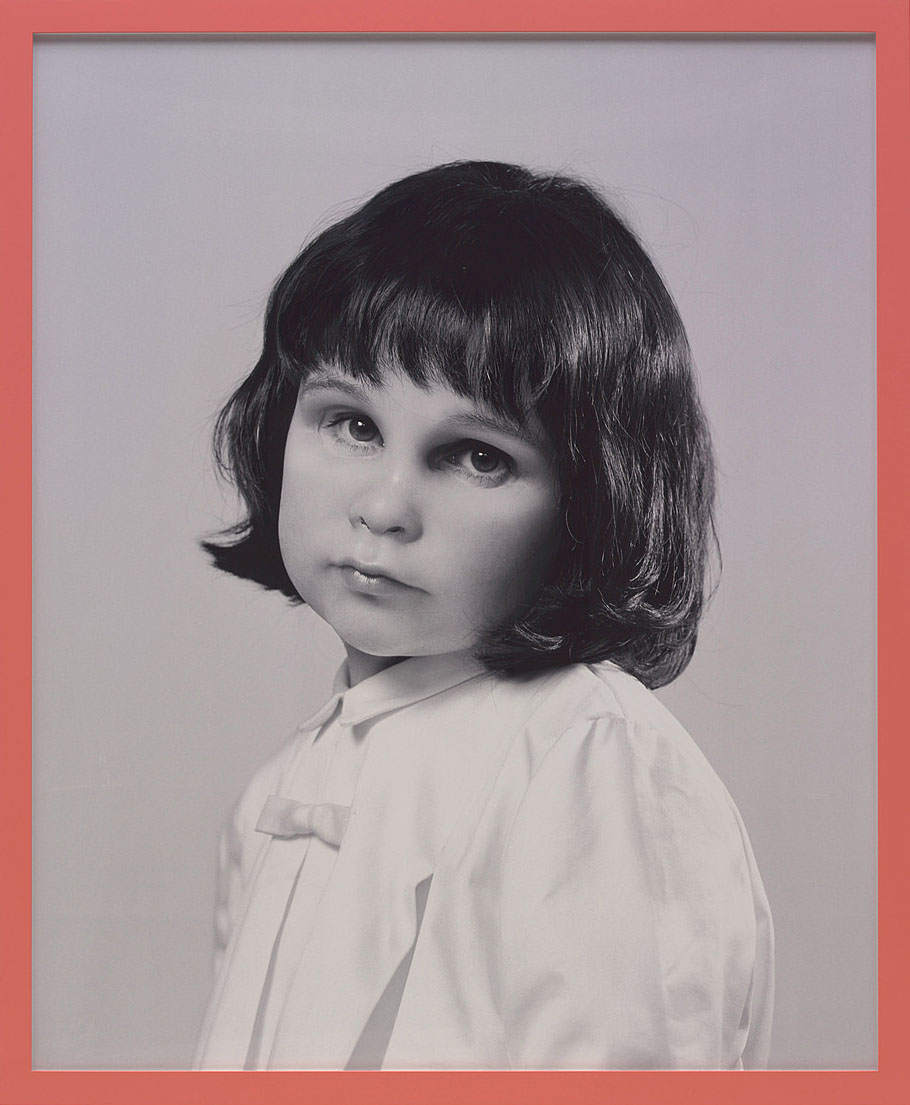
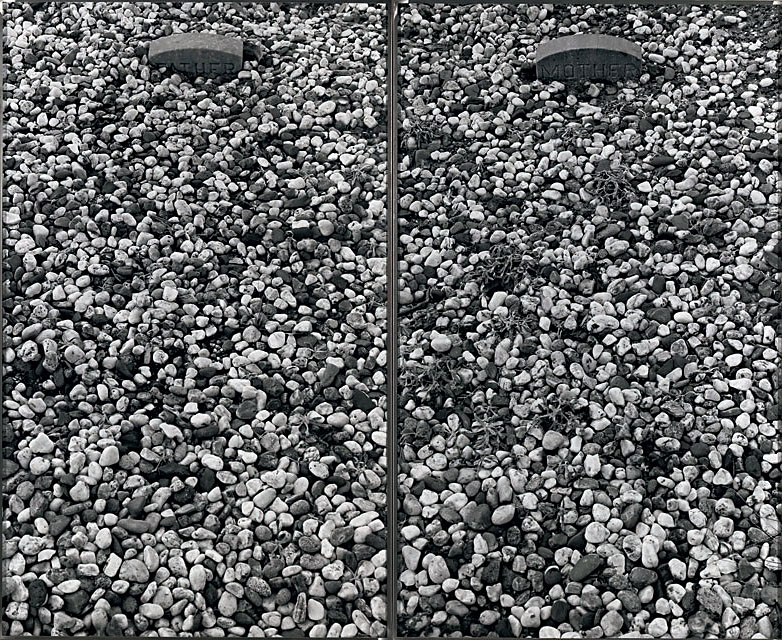
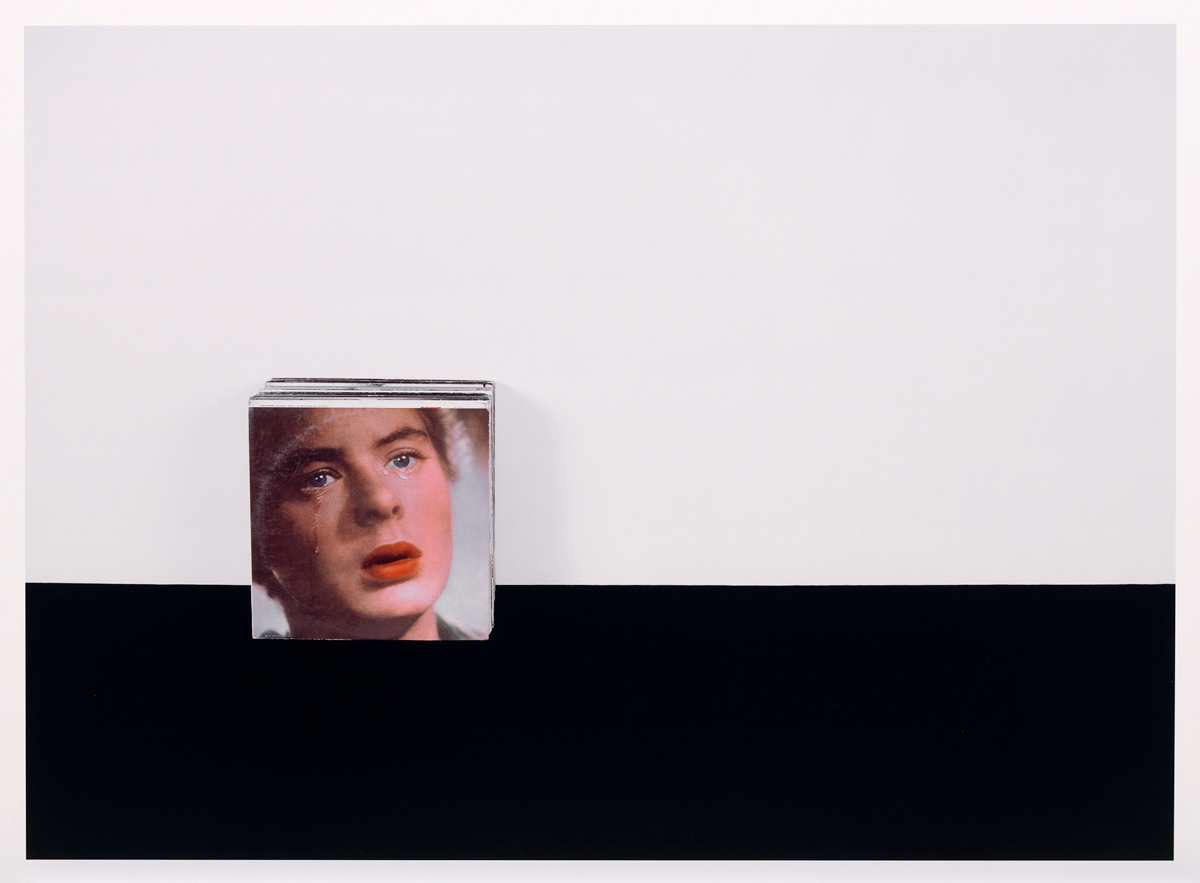
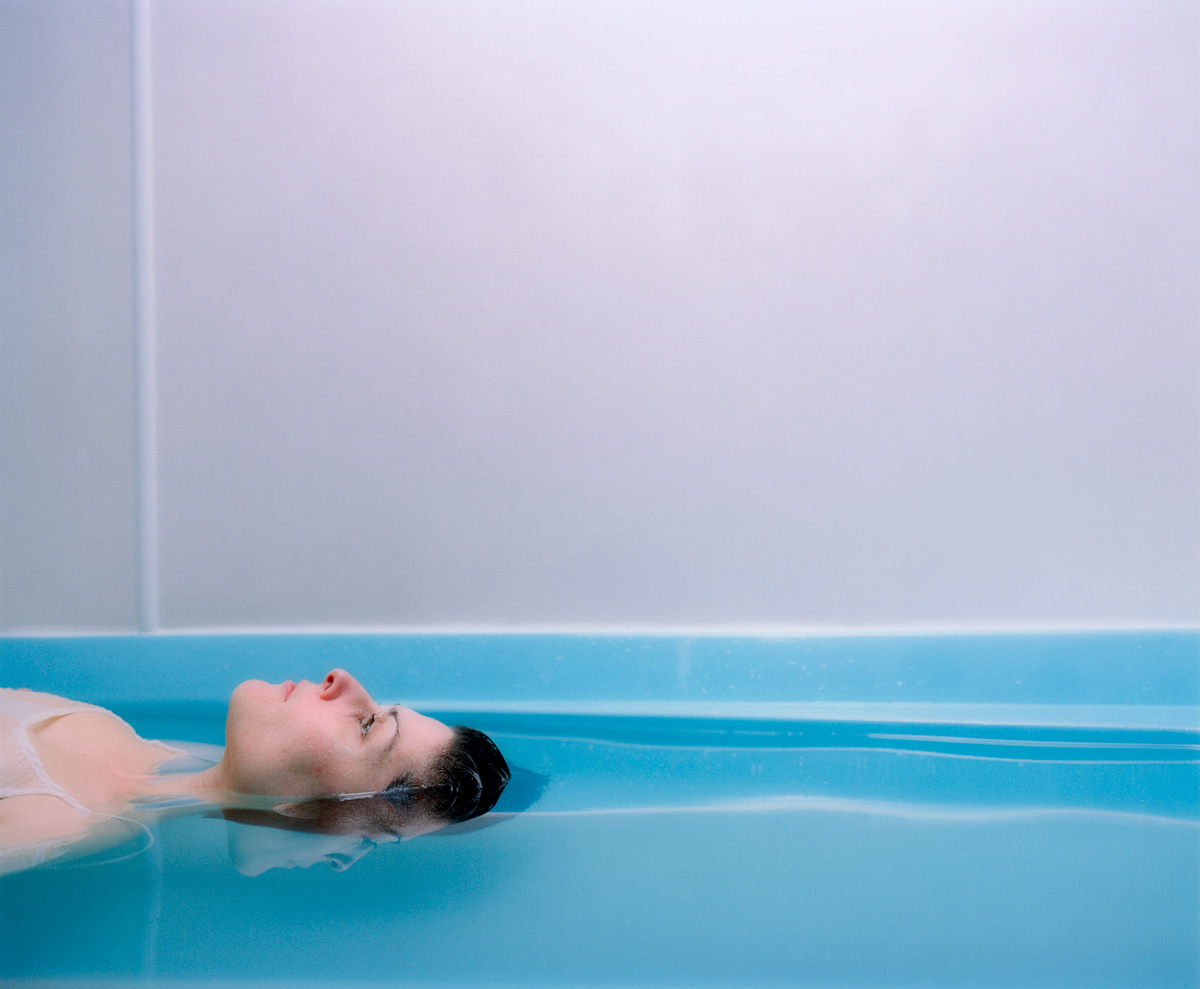
Exhibition: ‘Between Here and There: Passages in Contemporary Photography’ at The Metropolitan Museum of Art, New York

Exhibition dates: 2nd July 2010 – 3rd February, 2011

 Curator: Douglas Eklund, Associate Curator in the Department of Photographs


Many thankx to The Metropolitan Museum of Art for allowing me to publish the photographs in the posting. Please click on the photographs for a larger version of the image.


Richard Long (British, b. 1945) 'County Cork, Ireland' 1967 from the exhibition 'Between Here and There: Passages in Contemporary Photography' at The Metropolitan Museum of Art


Richard Long (British, b. 1945)
County Cork, Ireland
1967
Gelatin silver print
76.2 x 101.6 cm (30 x 40 in.)
The Metropolitan Museum of Art, Purchase, Vital Projects Fund Inc. Gift, through Joyce and Robert Menschel, 2010
© Richard Long


Long was a key figure in recasting sculpture in two directions: inward toward the gestures of bodies in space and outward toward the creation of ephemeral works made directly in the landscape. A student of the sculptor Anthony Caro at Saint Martins College of Art, Long was well versed in the reductive quality of geometric abstraction but sought to make the form of his works even more elegantly simple and wedded to life. He would go for solitary walks in the English countryside, and at a particular place he would create elemental forms such as a line, an x shape, or a circle by walking over the ground to leave a temporary imprint. A photograph such as County Cork, Ireland – in which the shape seems to hover in the image like a flying saucer – is thus an imprint of an imprint; the form of the work is derived from the holistic relationship between the concept (idea), the action of the body (figure), and the site of his gesture (ground). It is also informed by an astute understanding of the profound links between British culture and the landscape, from prehistoric hill figures through nineteenth-century theories of the Picturesque.

Wall text from the exhibition
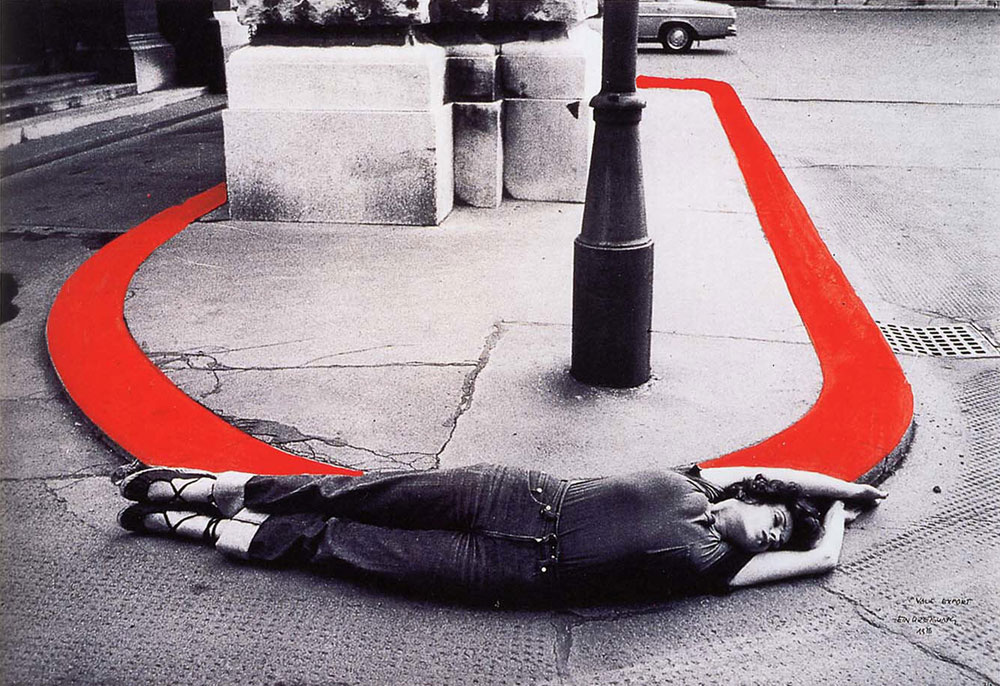
 

VALIE EXPORT (Austrian, b. 1940) 'Encirclement' 1976 from the exhibition 'Between Here and There: Passages in Contemporary Photography' at The Metropolitan Museum of Art


VALIE EXPORT (Austrian, b. 1940)
Encirclement
1976
Gelatin silver print
40.8 x 61cm (16 1/16 x 24 in.)
Promised Gift of Thea Westreich and Ethan Wagner
© VALIE EXPORT, Courtesy Charim Gallery Vienna


In her series Body Configurations, the artist had herself or female colleagues photographed in local streets, stairwells, and alleyways, contorting their bodies to mimic the harsh geometries of the city. Influenced not only by the Actionists but also by the human sculpture of Robert Morris, Export complicates the coolly inhuman systems of Minimalism by reintroducing the human body into abstraction, an intimate yet public gesture that effortlessly transmutes the personal into the political.

Wall text from the exhibition


Felix Gonzalez-Torres (American born Cuba, 1957–1996) '[No Title]' 1985 from the exhibition 'Between Here and There: Passages in Contemporary Photography' at The Metropolitan Museum of Art


Felix Gonzalez-Torres (American born Cuba, 1957–1996)
[No Title]
1985
Instant black-and-white print
7.2 x 6.9cm (2 13/16 x 2 11/16 in.)
The Metropolitan Museum of Art, New York
Purchase, Anonymous Gift, 1997
© The Felix Gonzalez-Torres Foundation, Courtesy of Andrea Rosen Gallery, New York


Gonzalez-Torres first came to prominence in the early 1990s with his interactive site-specific installations of candy stacks and printed paper. These “antimonuments” parody the coldness and rigor of Minimalist sculpture while actively encouraging participation by the audience. This early work conveys the sense of exile that the artist felt in America after fleeing his native Cuba. It can also suggest a Romantic conception of the soul yearning for the Infinite (represented by the sea) despite the hemming-in of the razor-thin barbed wire that blocks our passage. On the back of this photograph, the artist collaged a printed fragment, possibly from a magazine advertisement, showing cut-off portions of the words “THE BO[?]” and “ANYMORE.” Although made, signed, and dated by the photographer, Gonzalez-Torres thought of works such as this as lying outside his core oeuvre.

Text from The Metropolitan Museum of Art website
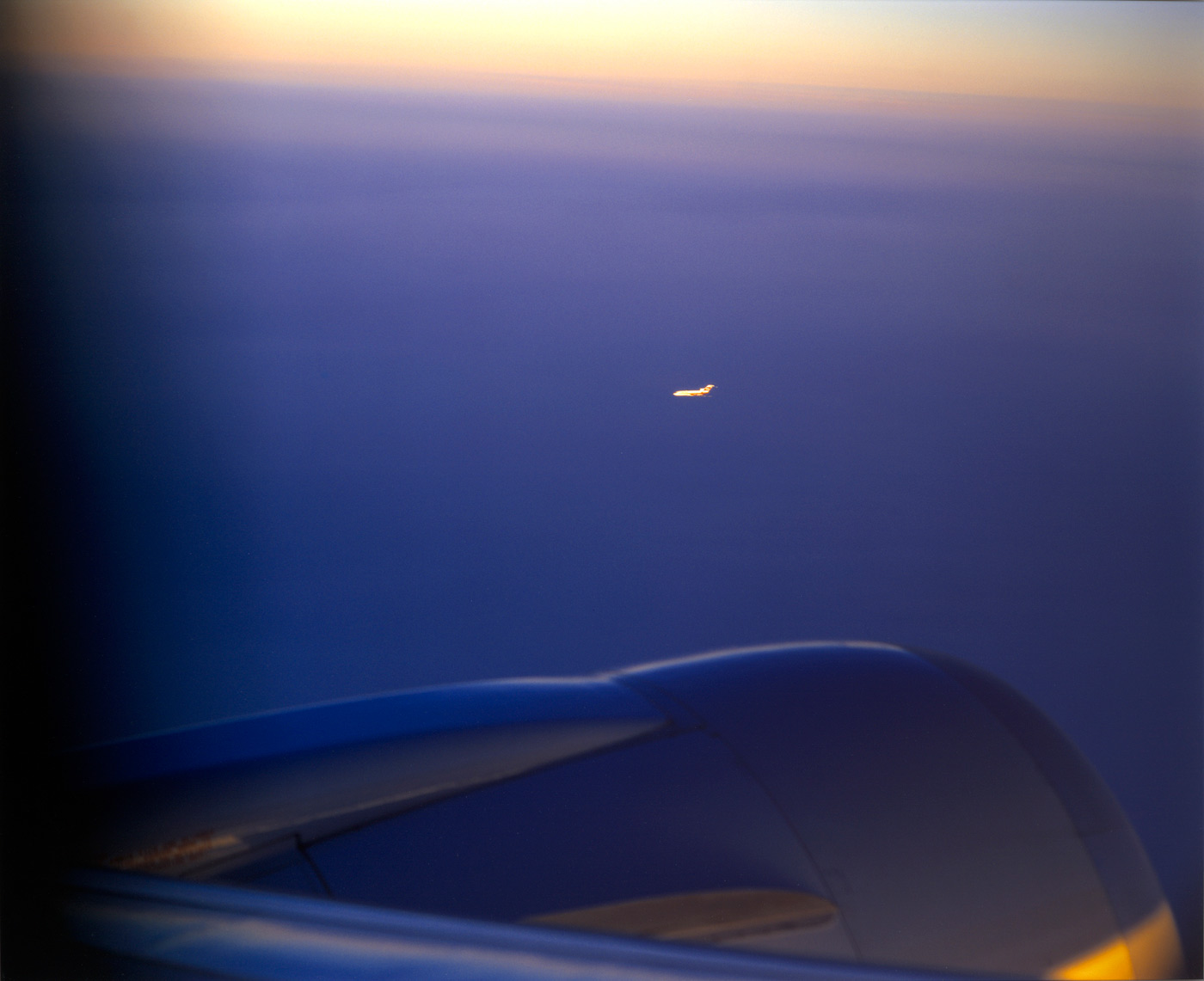
 

Doug Aitken (American, b.1968) 'Passenger' 1997 from the exhibition 'Between Here and There: Passages in Contemporary Photography' at The Metropolitan Museum of Art


Doug Aitken (American, b. 1968)
Passenger
1997
Chromogenic print
100.5 x 122cm (39 9/16 x 48 1/16 in.)
The Metropolitan Museum of Art, Purchase, Alfred Stieglitz Society Gifts, 2004
© Doug Aitken


Aitken is best known for multiscreen video installations exploring the ways in which perception and consciousness are transformed by our global, technology-driven existence. Passenger belongs to a group of still photographs made in 1997 showing planes in flight, most of which focus on the faint traceries of takeoffs and landings over desolate airport landscapes. In its emphasis on luminosity and atmosphere, this example reveals Aitken’s debt to older California artists such as James Turrell and Robert Irwin. It is also unabashedly sensual: Aitken’s high production values – reminiscent of Technicolor cinematography and glossy advertising – refer directly to the media images that unavoidably condition our responses to the world.

There is something of the sublime in Aitken’s photograph, however, in that it describes the limits of the visible while flooding the eye with colour. Starting from an experience familiar to all air travellers of “two ships passing” in the ether, the artist proposes a more complex statement about the way we perceive reality – namely, that the one thing that we cannot see is ourselves seeing and thus that our understanding of the world is always partial and incomplete.

Wall text from the exhibition


Themes of dislocation and displacement in contemporary photography will be explored in The Metropolitan Museum of Art’s forthcoming exhibition in the Joyce and Robert Menschel Hall for Modern Photography. Drawn almost entirely from the Museum’s collection, Between Here and There: Passages in Contemporary Photography on view July 2, 2010 through February 13, 2011, will feature 22 artists whose photographic works convey a sense of a rootless or unfixed existence.

In the 1960s and 1970s, photography was often embraced by artists who had abandoned conventional art media and who were more interested in creating a work of art that took place over a period of time, in a serial progression, or in a fleeting gesture. The individual painting or sculpture was deemed insufficient to represent the fragmented experience that characterises the modern world; thus artists showed how a work of art could take the form of a walk (Richard Long), a 20-foot-long book (Ed Ruscha), or a series of postcards outlining the precise time that the artist got up each day (On Kawara). Since the 1980s, however, the more conventional practice of creating a carefully executed, singular photograph has regained prominence in contemporary art. Works by Rineke Dijkstra, Thomas Struth, and Weng Fen embody a belief in photography’s traditional powers of description, while reflecting feelings of dislocation in our newly global society.

The exhibition also will include works by: Vito Acconci, Doug Aitken, Darren Almond, Lothar Baumgarten, Matthew Buckingham, VALIE EXPORT, Felix Gonzalez-Torres, Svetlana Kopystiansky, Bruce Nauman, Dennis Oppenheim, Allen Ruppersberg, Fazal Sheikh, Erin Shirreff, Robert Smithson, Anne Turyn, and Jeff Wall.

The first half of the exhibition shows how artists in 1960s and 1970s, working in the context of Minimal and Conceptual art, were drawn to photography for its differences from traditional art media: it was low-tech, easily reproducible, and not considered a valuable art object. Photography was also enlisted to document ephemeral works of art. Bruce Nauman and Vito Acconci, for instance, created performances that focused on the actions and movements of their bodies in space, and captured these works in photographs and videos.

Other artists, such as Robert Smithson, chose to work directly in the landscape – often in distant or inaccessible locations – and their “Earthworks” could generally be seen only through photographs. Smithson is best known for his landmark Spiral Jetty (1970) in the Great Salt Lake, Utah. For an early experiment in his Mirror Displacements series of photographs, Smithson placed small mirrors into snow drifts on the roof of his apartment building. Through dizzying shifts in scale, the artist’s 1969 study transforms a corner of his Manhattan roof into an Alpine landscape.

A student of Anthony Caro, British artist Richard Long was well versed in the reductive quality of geometric abstraction, but sought to make his works even more simple and wedded to life. He would go for solitary walks in the countryside, and at a particular place he would create elemental forms such as a line, X, or circle by walking over the ground to leave a temporary imprint. Long’s photograph County Cork, Ireland (1967) – in which a circle seems to hover over the grass like a flying saucer – is thus an imprint of an imprint, creating a holistic relationship between the concept, the action of the body, and the site of his gesture.

For her series Body Configurations, the Austrian artist VALIE EXPORT had herself and female colleagues photographed in local streets, as they contorted their bodies to mimic the harsh geometries of the city. Encirclement (1976) shows a woman lying in the street, her body elongated and arched to follow the bright red curve the sidewalk. The photograph reintroduces the human body into abstraction in an intimate yet public gesture.

Beginning in the 1980s, there was a renewed interest in photography’s historical genres and recommitment to technical skill and visual fidelity, as seen in Rineke Dijkstra’s portraits. Geopolitical displacement and cultural migration are referenced in one of Dijkstra’s most important bodies of work to date: her photographs of a Bosnian refugee girl, Almerisa. Between Here and There will feature four portraits of Almerisa that Dijkstra made between 1994 and 2000, beginning at an asylum seekers’ center in the Netherlands. Eight photographs from this series of 11 works were acquired recently by the Museum.

In both photographs and films, Doug Aitken explores the ways in which perception is transformed by our global, technology-driven existence. Aitken’s photograph Passenger (1997), taken from the window of an airplane in flight, shows another plane flying in parallel in the remote distance, illuminated by the sun setting on a slanted horizon. Aitken references sensations of being adrift in mid-air and of “two ships passing” – paths that do not quite connect, despite their proximity to each other.

Chinese artist Weng Fen explores a young generation poised at a transitional moment between China’s traditional rural society and a quickly burgeoning urbanism. Bird’s Eye View: Haikou V (2002) shows a woman – perhaps an outsider or a new arrival to the city – perched on an old wall, looking toward the new skyscrapers on the horizon, but not fully occupying the space of the past or the future. This work is part of a group of recent gifts and promised gifts of contemporary Chinese photographs to the Museum.

The exhibition comes full circle with a recently acquired video by Erin Shirreff. Roden Crater (2009) takes as its subject artist James Turrell’s legendarily inaccessible and still unfinished celestial observatory carved out of a 400,000-year-old extinct volcano. Shirreff’s mesmerising fixed-camera view of the distant “Earthwork” shows an improbable succession of slow-moving climactic and light effects on the crater, creating a haunting meditation on the never-ending quest for resolution in life and in art.

Between Here and There: Passages in Contemporary Photography is organised by Douglas Eklund, Associate Curator in the Department of Photographs.”

Text from The Metropolitan Museum of Art website
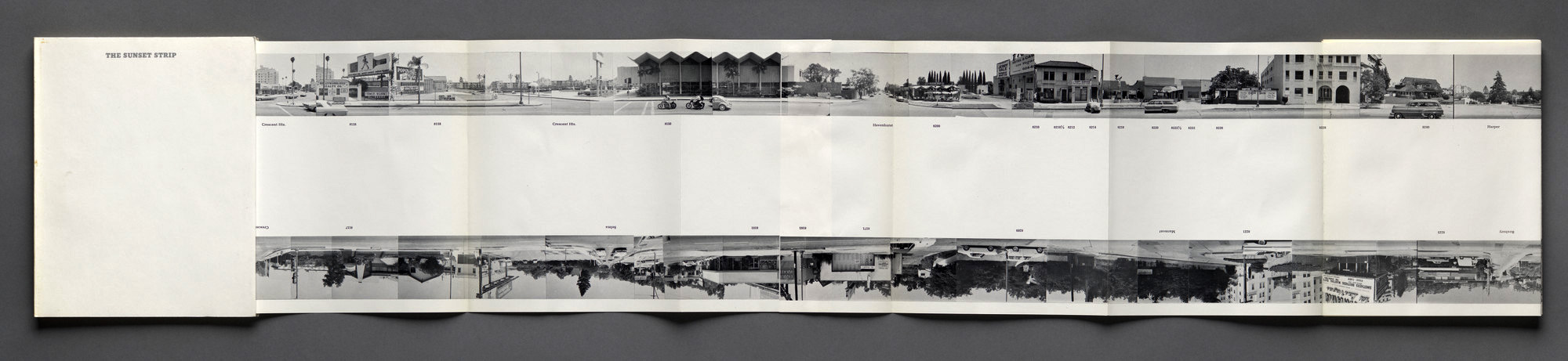
 

Ed Ruscha (American, b. 1937) 'Every Building on the Sunset Strip'
1966


Ed Ruscha (American, b. 1937)
Every Building on the Sunset Strip
1966
Artist book, offset printed
Each page: 7 x 5 1/2 inches (17.8 x 14cm)
Overall: 7 1/8 x 5 5/8 x 1/2 inches (18.1 x 14.3 x 1.1cm)
© Ed Ruscha


Early in the development of both Minimal and Conceptual art, the linguistic phrase as instruction or directive became paramount: the idea was primary and its execution could be by anyone who followed directions. This paradigm displaced the role of the artist from a kind of benighted savage to cool producer, and no artist commented more sharply on this new “informational” style than the West Coast painter Ed Ruscha, whose Pop-inflected canvases were often of resonant or humorous words such as Flash or Oof rendered in cartoonish yet formally precise typefaces floating on monochromatic backgrounds.

Ruscha’s books are similarly head-scratching fulfillments of their titles. First came Twentysix Gasoline Stations (1962), as blank as an instructional manual and offering a serial Warholian accounting of the most flatfooted-looking snapshots of banal roadside filling stations imaginable. The photographs were not the art, and it was not a luxurious livre d’artiste. Its meaning lay somewhere in the puzzled response of the reader thumbing through it and the circuitous, even futile route that it took through the culture. As Ruscha himself kidded, “My books end up in the trash.” Every Building on the Sunset Strip … is – like a row of bricks placed on the floor by sculptor Carl Andre – a model of “one thing after another” Minimalism as well as a readymade chance arrangement (the strip itself) of the artist’s beloved vernacular architectural eyesores.

Text from The Metropolitan Museum of Art website


Thomas Struth (German, b. 1954)
'National Museum of Art, Tokyo' 1999 from the exhibition 'Between Here and There: Passages in Contemporary Photography' at The Metropolitan Museum of Art


Thomas Struth (German, b. 1954)
National Museum of Art, Tokyo
1999
Chromogenic print
179.4 x 276.9cm (70 5/8 x 109 in.)
Purchase, Jennifer and Joseph Duke, Joyce and Robert Menschel, and Anonymous Gifts, Gift of Dr. Mortimer D. Sackler, Theresa Sackler and Family, and Fletcher and Harris Brisbane Dick Funds, 2001
© Thomas Struth


Throughout the 1990s Struth photographed people in museums, cathedrals, and other shrines that function as tourist meccas for the secular religion of art. The subject of this work is half of a Japanese-French exchange of treasures. The Japanese sent their prized eighth-century bodhisattva from Nara to the Louvre, where it was encased in bulletproof glass and displayed in an incongruously ornate Second Empire gallery. Struth’s photograph shows the French contribution, also behind glass, in the hall the Japanese designed to exhibit it.

Quintessentially Gallic, Delacroix’s 1830 painting Liberty Leading the People is a hymn to the supreme rights of the individual, shot through with sex and high drama. The mise-en-scène, however, is an uncanny reflection of late twentieth-century spectacle culture – the movie theatre, where the crowd passively absorbs images on a glowing screen. Yet, Struth is not simply demonstrating the collision between Delacroix’s characters, who rush forward into history, and those who are immobilised in the face of it; he also discerns a respectful distance on the part of the Japanese toward their visitor, an appreciation of difference and cultural specificity that is a key to this artist’s work.

Text from The Metropolitan Museum of Art website
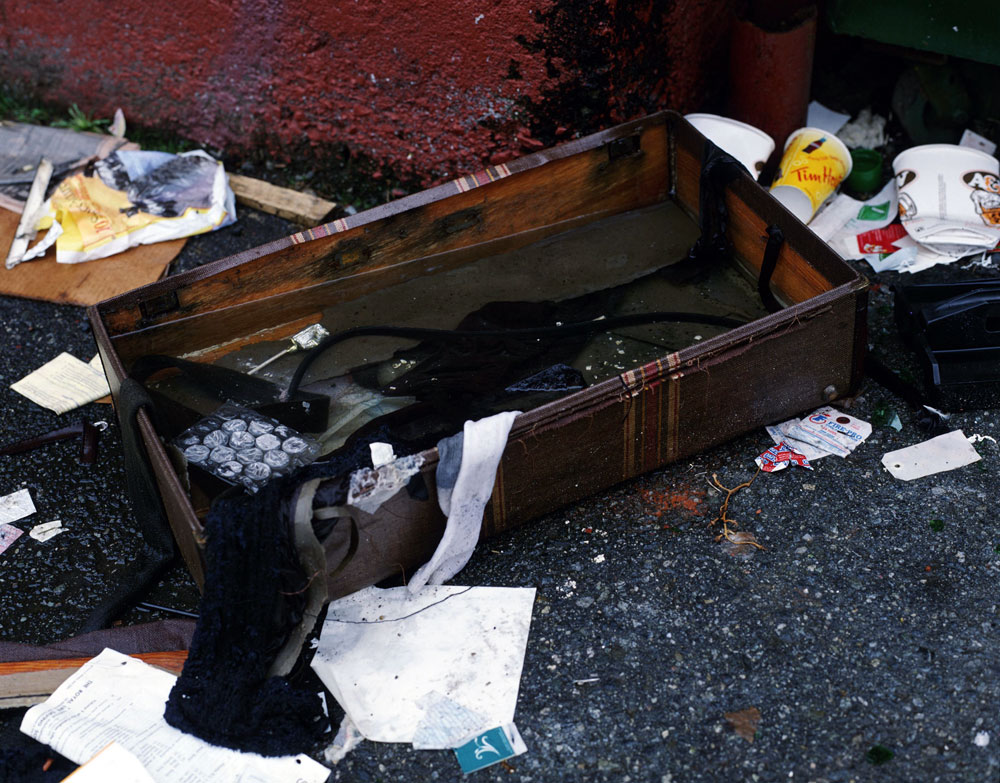
 

Jeff Wall (Canadian, b.1946) 'Rainfilled Suitcase' 2001 from the exhibition 'Between Here and There: Passages in Contemporary Photography' at The Metropolitan Museum of Art


Jeff Wall (Canadian, b. 1946)
Rainfilled Suitcase
2001
Transparency in light box
Collection of Jennifer Saul and Stephen Rich, New York
© Jeff Wall


Wall’s tableaux straddle the worlds of the museum and the street. For the last three decades, the artist has created elaborately staged and meticulously rendered scenes of urban and suburban conflict and disorder that he witnessed firsthand, which were then shown as colour transparencies in light boxes reminiscent of backlit advertising images seen in airports and bus stops. About 2000, Wall also began to make smaller, more elliptical photographs – isolating the kinds of details that previously would have been seen in the background of his larger, more programmatic pictures. This grimy half of an abandoned suitcase filled with old clothes and rain seems paradoxically to be both as obsessively arranged as a still life and as randomly disordered as the average flotsam and jetsam on any down-and-out street corner.

Wall text from the exhibition
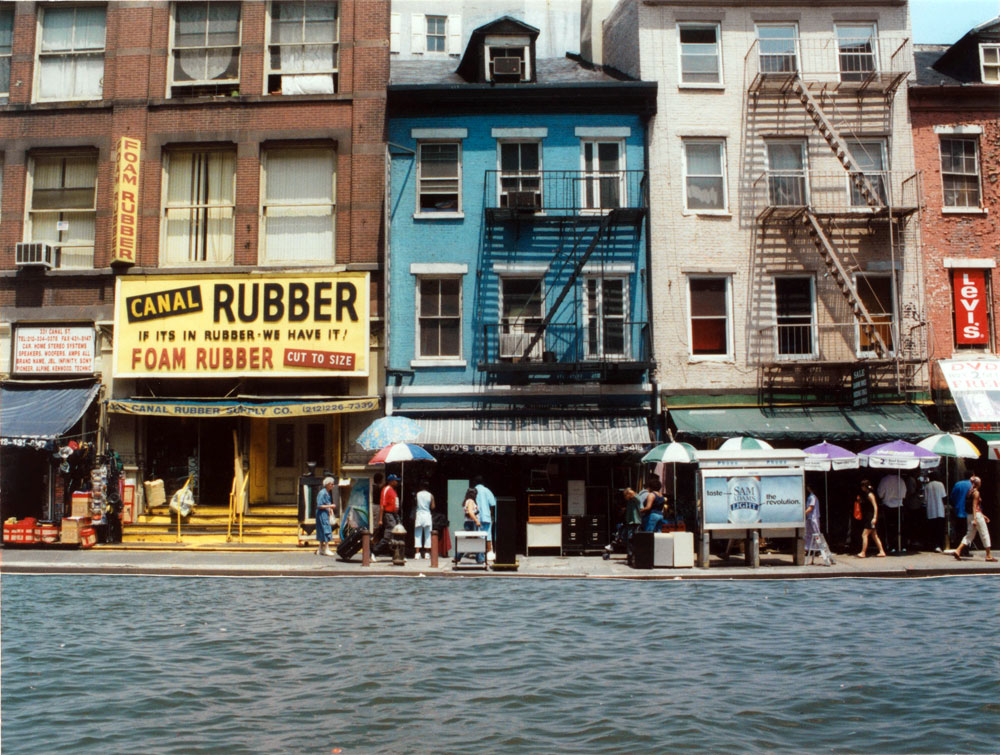
 

Matthew Buckingham (American, born 1963) 'Canal St. Canal No. 3' 2002 from the exhibition 'Between Here and There: Passages in Contemporary Photography' at The Metropolitan Museum of Art


Matthew Buckingham (American, b. 1963)
Canal St. Canal No. 3
2002
Chromogenic prints
The Metropolitan Museum of Art, Purchase, Vital Projects Fund Inc. Gift, through Joyce and
Robert Menschel, 2010
© Matthew Buckingham


This is the maquette for a postcard that the artist created for the group show “Nostalgia.” The postcard was sold in the shops along Canal Street accompanied by the following text beneath the image:

ABOVE: a section of Canal Street as it might look today if a 1791 proposal to build a “Venetian-style” canal connecting the Hudson and East Rivers across Lower Manhattan had been realised. The canal and an accompanying commercial harbour were meant to replace both a small stream which ran along present-day Canal Street, and the so-called Fresh Water or Collect Pond, a befouled 70-acre swamp that one New York newspaper of the day called a “shocking hole.” Instead, real-estate interests prevailed, and the stream was widened only enough to drain the pool so it could be filled in and developed. Many basements of new buildings on the landfill soon flooded, so the stream was further enlarged to increase drainage – making it, in effect, an open sewer. After much complaint about odour, and despite efforts to beautify the waterway with a tree-lined promenade, it was covered over in 1819. Flaws in this re-design kept Canal Street smelling foul for years. It is rumoured that the natural spring which once fed the Fresh Water Pond still flows deep below Canal Street today.*

Wall text from the exhibition

*Luc Sante defines nostalgia as a state of inarticulate contempt for the present combined with a fear of the future.
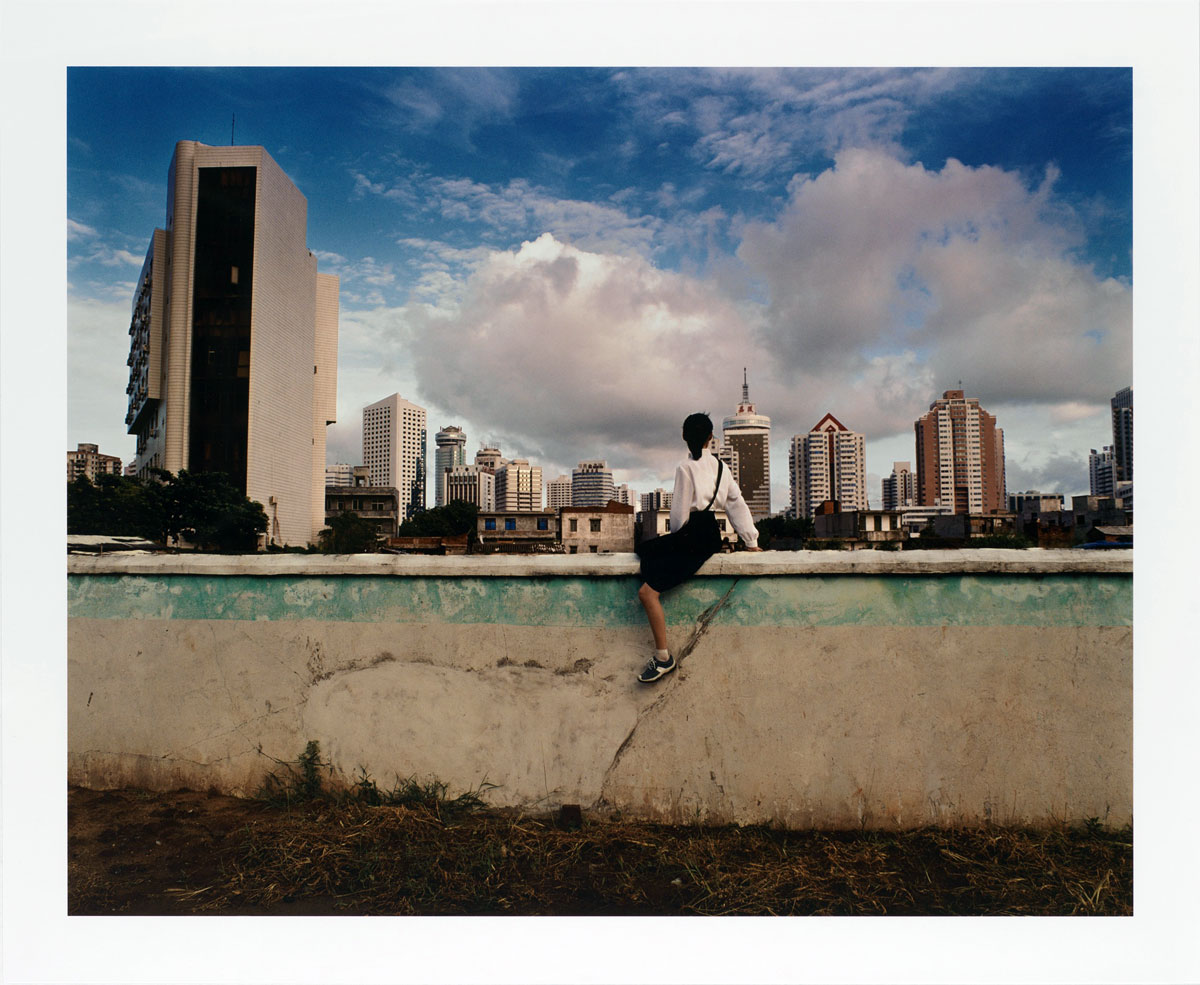
 

Weng Fen (Chinese, born 1961) 'Bird's Eye View: Haikou V' 2002 from the exhibition 'Between Here and There: Passages in Contemporary Photography' at The Metropolitan Museum of Art


Weng Fen (Chinese, b. 1961)
Bird’s Eye View: Haikou V
2002
Chromogenic print
50 x 62.7cm (19 11/16 x 24 11/16 in.)
The Metropolitan Museum of Art, Gift of Ellie Warsh, 2009
© Weng Fen


Weng Fen belongs to a generation of Chinese photographers whose principal subject is a China in the throes of physical, social, economic, and political change. His Bird’s Eye View series focuses on the elevated urbanism of cities such as Haikou, Shanghai, and Shenzhen. Many of these photographs feature schoolgirls with their backs to the camera, perched on a wall or precipice, staring at the landscape – adolescent figures on the threshold of personal transition looking out onto a landscape and a culture at a similarly transformational moment.

Wall text from the exhibition


Rineke Dijkstra (Dutch, b. 1959) 'Almerisa, Asylum Seekers' Center, Leiden, The Netherlands, March 14, 1994' 1994 from the exhibition 'Between Here and There: Passages in Contemporary Photography' at The Metropolitan Museum of Art


Rineke Dijkstra (Dutch, b. 1959)
Almerisa, Asylum Seekers’ Center, Leiden, The Netherlands, March 14, 1994
1994
Chromogenic print
120 x 100cm (47 1/4 x 39 3/8 in)
The Metropolitan Museum of Art, Gift of Ellen Kern, 2008
© Rineke Dijkstra


Dijkstra is best known for her portraits of teenage beachgoers in Poland, Croatia, the Ukraine, Belgium, England, and America, which convey the poignant intensity of adolescence with startling eloquence. In all her work, she is particularly drawn to subjects in a state of transition – blood-spattered matadors just minutes after bullfights, women cradling their newborns moments after delivery – and renders them with respect, attentiveness, and compassion.

Between 1994 and 2008 Dijkstra made eleven photographs of a Bosnian refugee girl named Almerisa, from her initial processing at an asylum seekers’ center in the Netherlands to her fully Westernised adulthood and motherhood. Here, the imprint of geopolitical displacement is rendered without cant and that of childhood is captured without nostalgia. Like all great portraitists, Dijkstra extracts an elemental, almost mythic quality from the irreducible individuality of her subject – of the eternal radiating from the everyday. This selection is from a recent gift to the Metropolitan of eight of the eleven portraits of Almerisa.

Wall text from the exhibition


The Metropolitan Museum of Art
1000 Fifth Avenue at 82nd Street
New York, New York 10028-0198
Information: 212-535-7710

Opening hours:
Sunday – Tuesday and Thursday: 10am – 5pm
Friday and Saturday: 10am – 9pm
Closed Wednesday

The Metropolitan Museum of Art website

LIKE ART BLART ON FACEBOOK

Back to top

Exhibition: ‘Portraits and Power: People, Politics and Structures’ at Centro di Cultura Contemporanea Strozzina – Fondazione Palazzo Strozzi, Florence

Exhibition dates: 1st October 2010 – 23rd January, 2011


Many thankx to the Centro di Cultura Contemporanea Strozzina for allowing me to publish the photographs in the posting. All text comes from the Centro di Cultura Contemporanea Strozzina website. Please click on the photographs for a larger version of the image.


Installation view of the exhibition 'Portraits and Power: People, Politics and Structures' at Centro di Cultura Contemporanea Strozzina - Fondazione Palazzo Strozzi, Florence

Installation view of the exhibition 'Portraits and Power: People, Politics and Structures' at Centro di Cultura Contemporanea Strozzina - Fondazione Palazzo Strozzi, Florence


Installation view of the exhibition Portraits and Power: People, Politics and Structures at Centro di Cultura Contemporanea Strozzina – Fondazione Palazzo Strozzi, Florence with the work of Rineke Dijkstra at right


Portraits and Power explores portraiture and the representation of political, economical and social power in the contemporary world through the works of contemporary artists. Portraits of famous political figures, investigations into the lifestyle of the social elite, as well as inquiries into the power structures of international institutions.

The exhibition explores its theme from three main standpoints: it analyses power as an expression of the charisma of those individuals who have become icons or symbols of their age; it probes the power of institutions and social models that either represent themselves or are represented in a critical light; and it investigates the hidden mechanisms of powerful authorities.

Portraits and Power is a project of the CCC Strozzina, with the consultancy of Peter Funnell (National Portrait Gallery, London), Walter Guadagnini (“UniCredit & Art” project) and Roberta Valtorta (Museum of Contemporary Photography, Cinisello Balsamo) coordinated by Franziska Nori (CCCS, Firenze).

Text from the Centro di Cultura Contemporanea Strozzina website [Online] Cited 02/02/2020


Tina Barney (American, b. 1945) 'The Ancestor' 2001 from the exhibition 'Portraits and Power: People, Politics and Structures' at Centro di Cultura Contemporanea Strozzina - Fondazione Palazzo Strozzi, Florence


Tina Barney (American, b. 1945)
The Ancestor
2001
C-print
Courtesy the artist and Janet Borden Inc., New York


Tina Barney (American, b. 1945) 'The Brocade Walls' 2004 from the exhibition 'Portraits and Power: People, Politics and Structures' at Centro di Cultura Contemporanea Strozzina - Fondazione Palazzo Strozzi, Florence


Tina Barney (American, b. 1945)
The Brocade Walls
2004
C-print
Courtesy the artist and Janet Borden Inc., New York


Installation view of the exhibition 'Portraits and Power: People, Politics and Structures' at Centro di Cultura Contemporanea Strozzina – Fondazione Palazzo Strozzi, Florence showing the work of Tina Barney


Installation view of the exhibition Portraits and Power: People, Politics and Structures at Centro di Cultura Contemporanea Strozzina – Fondazione Palazzo Strozzi, Florence showing the work of Tina Barney


The characters Tina Barney portrays are the representatives of a social class that normally exercises careful control over the circulation of pictures of its members, whether in the form of family photographs or official portraits, which are often published on the pages of glossy magazines. She is one of the first photographers to have made artistic use of this kind of representation. Hers is not merely the gaze of an onlooker, but that of a trusted person, who has personal relationships with her subjects. What she is interested in is not so much the idea of displaying the wealth of these families, but that of analysing social and family dynamics – such as the ambivalent relationship between children and parents. Her work is conceived as a means to improve self-understanding.

The people portrayed all come from families educated in the awareness of their own social role: discipline, self-control and rigour are features to be observed in all the subjects photographed, and they share the same high level of composure. For the series entitled The Europeans, which was produced over a period of about eight years, the author was introduced by one circle of friends to another, and thus given the opportunity to portray Italian nobles, Austrian bankers and landowners, proud representatives of the wealthy Spanish bourgeoisie, and English gentlemen in their sophisticated dwellings. Neither the formal way of dressing nor the furnishings can be traced back to any particular fashion: Tina Barney seeks to produce timeless pictures that at first sight will appear closer to traditional painting than to contemporary photography. Tina Barney creates her portraits through a careful observation of people in their everyday lives; to capture transient moments she asks her subjects to repeat something in front of the camera in such a way as to fix them. Her work tool is a fixed, large-size camera; an extended time exposure and high resolution enable her to render the details of each setting in detail. The figures portrayed have a rigid and formal countenance, which makes them appear markedly detached from one another, even though it is often brothers and sisters or parents and children who are photographed together: “this is the best that we can do. This inability to show physical affection is in our heritage”.

Tina Barney’s photographs give a sense of the fleetingness of their relationships behind the mask of self-controlled bearing. The artist thus unveils the game of social roles and attitudes conducted by her subjects, a veritable Theater of Manners (to quote the title of one of her most famous series) which demands enough sensitivity on the viewers’ part for them to focus on those details in the pictures that render hidden and non-immediately obvious features visible.

Since the mid-1970s, Tina Barney has been focusing her work on the portrayal of the privileged exponents of New York and New England high society, seen either in their own homes or on certain special occasions. The style of the pictures ranges from that of tableaux vivant to that of genre paintings, drawing expressive force from the interaction between wealthy settings and the people who move about in them.


Tina Barney (American, b. 1945) 'The Granddaughter' 2004 from the exhibition 'Portraits and Power: People, Politics and Structures' at Centro di Cultura Contemporanea Strozzina - Fondazione Palazzo Strozzi, Florence


Tina Barney (American, b. 1945)
The Granddaughter
2004
C-print
Courtesy the artist and Janet Borden Inc., New York


Installation view of the exhibition 'Portraits and Power: People, Politics and Structures' at Centro di Cultura Contemporanea Strozzina - Fondazione Palazzo Strozzi, Florence showing the work of Jim Dow


Installation view of the exhibition Portraits and Power: People, Politics and Structures at Centro di Cultura Contemporanea Strozzina – Fondazione Palazzo Strozzi, Florence showing the work of Jim Dow


Jim Dow (American, b. 1942) 'Library Metropolitan Club, New York' 1999 / 2010 from the exhibition 'Portraits and Power: People, Politics and Structures' at Centro di Cultura Contemporanea Strozzina - Fondazione Palazzo Strozzi, Florence


Jim Dow (American, b. 1942)
Library Metropolitan Club, New York
1999 / 2010
Chromogenic colour print
Courtesy the artist, Janet Borden, Inc., New York


Jim Dow (American, b. 1942) 'Dining Room, Morgan Library, New York' 1999 / 2010 from the exhibition 'Portraits and Power: People, Politics and Structures' at Centro di Cultura Contemporanea Strozzina - Fondazione Palazzo Strozzi, Florence


Jim Dow (American, b. 1942)
Dining Room, Morgan Library, New York
1999 / 2010
Chromogenic colour print
Courtesy the artist, Janet Borden, Inc., New York


By taking shots that are as objective as possible and completely devoid of any human presence, Dow gives a concentrated and authentic view of the architecture, furnishings and frameworks of these backdrops of life. “My interest in photography centres on its capacity for exact description. I use photography to try to record the manifestations of human ingenuity and spirit still remaining in our country’s everyday landscape.” For one of his most recent series, Dow has been able to make his way into some of the most exclusive private circles of New York City. He selected circles that are still active and have a long and significant history behind, such as the renowned Metropolitan Club, which was founded in 1891 by John Pierpont Morgan, and once listed James Roosevelt and William K. Vanderbilt among its most illustrious members. Most of these circles require strict adherence to rules consolidated by tradition. Only those introduced to the club by one of its members can join it, a practice that contributes to keep it a kind of network; a specific commission will then consider whether the candidate is fit for acceptance. Though there are over twenty circles of this kind in New York, outsiders will rarely notice their presence. While they no longer exercise the kind of political influence they used to as seats of power and decision making bodies, these clubs are now undergoing a new renaissance. An increasing number of politicians and businessmen are choosing to meet in their secluded rooms, which public opinion often perceives as places of intrigue and the setting for secret appointments of various kinds. With his descriptive and comparative photographs, Dow is giving a face to these exclusive meeting places, inviting viewers to join him in admiring the timeless opulence of their rooms. Architecture is the “primary and most powerful form of mass-communication”; at the same time, it is a mirror for power and its strategies, for the consolidation of authority and its effects on those who exercise it. “Architecture is power. The powerful build precisely because they are powerful. Yet architecture is also an expression of the capability and resoluteness – as well as resolve – of the powerful. Politicians intentionally exploit architecture to seduce, impress, and intimidate.” (Deyan Sudjic, The Edifice Complex: How the Rich and Powerful Shape the World, 2006).

American photographer Jim Dow approaches places as meeting points bearing visible traces of people’s mutual interactions. In different photographic series, the artist has portrayed American barbecue joints, pie and mash shops in London, tango halls in Buenos Aires, the workplaces of farmers, tinsmiths and iron-smiths, and baseball stadiums from one coast of the US to the other.


Clegg & Guttmann (Michael Clegg and Martin Guttmann) 'Grand Master' 1985 from the exhibition 'Portraits and Power: People, Politics and Structures' at Centro di Cultura Contemporanea Strozzina - Fondazione Palazzo Strozzi, Florence


Clegg & Guttmann (Michael Clegg and Martin Guttmann)
Grand Master
1985
Cibachrome
Courtesy Galerie Christian Nagel, Cologne, Berlin, Antwerp


For Grand Master, part of a photographic series produced in the 1980s, Clegg & Guttmann asked an actor to display certain poses characteristic of power, presenting him as the representative of a non-specified institution. The background of the image consists in a fictional architectural scenario – one simply simulated by using photographed space – the artificial nature of which is revealed by certain incongruities in the lighting effects. What is central here, once more, is the reflection offered on the controlled and never spontaneous construction of an image of power.

The tension conveyed by Clegg & Guttmann’s works springs from the subtle gap characterising the artists’ relationship with tradition. Their classical and apparently affirmative representations of people with power should be interpreted, within the context of their career spanning several decades, as different ways of visualising an analytical and deconstructive practice engaging with the mechanisms of authority.


Installation view of the exhibition 'Portraits and Power: People, Politics and Structures' at Centro di Cultura Contemporanea Strozzina - Fondazione Palazzo Strozzi, Florence showing the work of Clegg & Guttmann


Installation view of the exhibition Portraits and Power: People, Politics and Structures at Centro di Cultura Contemporanea Strozzina – Fondazione Palazzo Strozzi, Florence showing the work of Clegg & Guttmann


The CCCS – Centro di Cultura Contemporanea Strozzina – Fondazione Palazzo Strozzi, Florence, will be staging an exhibition entitled Portraits and Power: People, Politics and Structures, from 1 October 2010 to 23 January 2011, which will run concurrently with the retrospective devoted to Bronzino, the undisputed master of the Mannerist portrait, on Palazzo Strozzi’s piano nobile.

The exhibition, based on an original project by the CCCS in consultation with Peter Funnell (curator and director of research programmes at the National Portrait Gallery in London), Walter Guadagnini (chairman of the “UniCredit & Art” project’s scientific committee) and Roberta Valtorta (director of the Cinisello Balsamo Museum of Contemporary Photography) and coordinated by Franziska Nori (director of the CCCS), will show the work of international artists and collectives such as Tina Barney, Christoph Brech, Bureau d’études, Fabio Cifariello Ciardi, Clegg & Guttmann, Nick Danziger, Rineke Dijkstra, Jim Dow, Francesco Jodice, Annie Leibovitz, Helmut Newton, Trevor Paglen, Martin Parr, Wang Qingsong, Daniela Rossell, Jules Spinatsch, Hiroshi Sugimoto, and The Yes Men – who have all proved capable of developing a critical analysis of the portrayal and depiction of political, economic and social power in the media.

The exhibition explores its theme from two main standpoints: it analyses power as an expression of the charisma of those individuals who have become icons or symbols of their age; and it probes the power of institutions and social models that either represent themselves or are represented in a critical light.

The role played by images has grown to such an extent that it has led to the predominant emergence of their value not only in terms of portrayal but also of the successful establishment of power. The works of art on display bear witness not only to the self-referential strategies of power, but also to the different approaches artists adopt in deconstructing or chipping away at the images that represent social, economic and political power in a way that can not only bolster a leadership but that can also undermine its authority.

The National Portrait Gallery in London will be contributing works by three famous international photographers that explore the image of political authority. The series devoted to Queen Elizabeth II by Annie Leibovitz evinces a celebrated contemporary artist’s dialogue with the great tradition of official portraiture, and the cycle entitled Blair at War by Nick Danziger gives an extraordinary vision of Tony Blair’s daily life in the days immediately preceding the outbreak of the war in Iraq. The portrait of Margaret Thatcher by Helmut Newton keeps alive the iconic role of one of the most influential politicians of recent decades despite the fact that her authority had waned.

Clegg & Guttmann show the photographs of three managing directors of the Deutsche Bank. These images, while based on the official portraiture genre, provide the opportunity for a conceptual reflection on the theme of the public presentation of individuals who are at the same time both subject and patron of the work. Christoph Brech portrays a modern patron of the arts in a video that dwells on a detail of the hull of his yacht, Sea Force One, a floating museum filmed from a distance in Venetian waters.

The role of the image not only as representation but also as a tool for the construction or exploration of power is analysed by artists such as Hiroshi Sugimoto, whose Portraits bring to life wax effigies of historical or contemporary political figures through the evocative power of photography, and Rineke Dijkstra whose series of images of a soldier with the French Foreign Legion prompts a reflection on what remains of the individual when he becomes the representative of a military authority. Francesco Jodice, in his video entitled Dubai Citytellers, analyses the development and the social impact of one of the new centres of global economic power.

In the photo triptych Past, Present and Future, Wang Qingsong portrays himself as a bystander, bearing witness to fighters in poses mimicking celebrative and monumental Socialist sculptures, reflecting upon the contradictory nature of the actual power of masses in contemporary China.

Tina Barney records the life and domestic environment of the beau monde, combining the spontaneous feel of a private snapshot with a sophisticated aesthetic approach strongly echoing the world of art and traditional photography. The provocative photo series Ricas y Famosas by Daniela Rossell portrays the taste and excesses of the new super wealthy social oligarchy in Mexico, while Martin Parr’s series entitled Luxury, which is devoted to fashion shows, horse-racing and art fairs in the world’s major capitals, probes the lifestyle of the upper class in a globalised Western world. The pictures of Jim Dow portray the luxurious rooms of the great private social clubs of New York City’s elite, fashionable places that are inaccessible to the general public.

A different critical approach to the theme of power is offered by the French collective Bureau d’études with its project involving mapping the links between political and economic power. The CIA’s secret missions and operations, on the other hand, provide the focus for the work of Trevor Paglen who reconstructs top secret movements and connections. Jules Spinatsch presents a new work taken from his Temporary Discomfort video-photographic series, denouncing the controversial transformation of a place such as the island of La Maddalena in Sardinia into the venue for the G8 summit that never took place. Also on view is the antagonistic activism of The Yes Men, a collective who will be presenting their spectacular media initiative that rocked the image and power of the multinational corporation responsible for the Bhopal environmental catastrophe in India.

Finally, the composer Fabio Cifariello Ciardi uses famous politicians’ public speeches as his raw material for the creation of electroacoustic music that will underline their rhetorical techniques of persuasion.

The exhibition catalogue, published in Italian and English, contains a series of essays by authors from different countries, backgrounds and disciplines, offering the visitor a chance to explore in greater depth the themes addressed by the exhibition.

Press release from the Strozzina website [Online] Cited 02/02/2020


Rineke Dijkstra (Dutch, b. 1959) 'Olivier' Quartier Vienot, Marseille, France, July 21, 2000 from the exhibition 'Portraits and Power: People, Politics and Structures' at Centro di Cultura Contemporanea Strozzina - Fondazione Palazzo Strozzi, Florence


Rineke Dijkstra (Dutch, b. 1959)
Olivier
Quartier Vienot, Marseille, France, July 21, 2000
On loan from The Bank of America Merrill Lynch Collection


Rineke Dijkstra (Dutch, b. 1959) 'Olivier' Quartier Monclar, Djibouti, July 13, 2003 from the exhibition 'Portraits and Power: People, Politics and Structures' at Centro di Cultura Contemporanea Strozzina - Fondazione Palazzo Strozzi, Florence


Rineke Dijkstra (Dutch, b. 1959)
Olivier
Quartier Monclar, Djibouti, July 13, 2003
On loan from The Bank of America Merrill Lynch Collection


A crucial feature of Dijkstra’s photography is her desire to show the true personality of her subjects, as opposed to any simulated one. Up against the contemporary mystifying quality of the Internet and digital manipulation, her images illustrate in a very convincing way how photography is still capable of transcending the surface of subjects to grasp their deeper and constantly evolving identities. Her series feature, for instance, young bullfighters immediately after a bullfight, young mothers with babies born only a few minutes before, and portraits of boys and girls from various parts of the world at the beach. Her work method, whereby subjects are given very few directions and are usually portrayed frontally, leads to the creation of bare and detached pictures in which people display an inevitably fragile and vulnerable air. The Olivier Silva project, which the artist has developed over the course of more than three years, centres on the figure of a young man who in July 2000 voluntarily enrolled in the French Foreign Legion. Dijkstra portrays crucial moments of his intense training in France and Africa – from the day of his enrolment, in Aubagne, near Marseille, to the missions he was sent to fulfil in various parts of the world (Gabon, Ivory Coast and Gibuti) in 2003. The photographs clearly illustrate the metamorphoses the young man underwent over the course of the years: the innocent looking boy becomes an energetic and professional elite soldier enlisted in one of the world’s toughest and most controversial army corps. The centrepiece of the work is the artist’s interest in Olivier as an individual whose personality evolves in the course of his training, as is clearly revealed by his attitude and the look in his eyes, as well as by the very way in which his facial features change. The training imparted in military units of this kind is aimed at annulling the recruit’s personality in order to then recreate it according to new parameters: the youngster draws closer and closer to the prototype of the soldier as we progress from one photograph to the next. Just as all new recruits of the Foreign Legion are assigned a new name and identity, after three years Olivier no longer looks (even physically) like the same person as before. Like an accelerated film sequence, this series shows the dissolution of the original identity of a man subjected to the conditions dictated by an apparatus of power. Every soldier is at the service of the country he fights for and becomes one of its official public representations, embodying its military power. The same power he now wields is that which in a few years has conditioned him – or even produced him, one may say. Through her aesthetically minimalist photographs, Rineke Dijkstra illustrates the paradox of opposition between individual values and those of the community, between identity and conformity.

Rineke Dijkstra has carried out profound research in the field of photographic portraiture. Her subjects are adolescents who are still searching for themselves and who are incapable of acting in front of a camera, as well as adults caught in decisive moments in their personal development. By portraying these subjects, the artist explores the theme of identity and its representation.


Martin Parr (British, b. 1952) 'France. Paris. Haute Couture' 2007 from the exhibition 'Portraits and Power: People, Politics and Structures' at Centro di Cultura Contemporanea Strozzina - Fondazione Palazzo Strozzi, Florence


Martin Parr (British, b. 1952)
France. Paris. Haute Couture
2007
from the series Luxury
Pigment print
© Martin Parr / Magnum Photos


Martin Parr (British, b. 1952) 'England. Epsom. The Derby' 2004 from the exhibition 'Portraits and Power: People, Politics and Structures' at Centro di Cultura Contemporanea Strozzina - Fondazione Palazzo Strozzi, Florence


Martin Parr (British, b. 1952)
England. Epsom. The Derby
2004
from the series Luxury
Pigment print
© Martin Parr / Magnum Photos


Martin Parr (British, b. 1952) 'Russia. Moscow. Fashion Week' 2004 from the exhibition 'Portraits and Power: People, Politics and Structures' at Centro di Cultura Contemporanea Strozzina - Fondazione Palazzo Strozzi, Florence


Martin Parr (British, b. 1952)
Russia. Moscow. Fashion Week
2004
From the series Luxury
Pigment print
© Martin Parr / Magnum Photos


Unlike most of his colleagues, Parr has little interest in the great themes of photographic reporting, such as the documenting of war and poverty. Working around the world, he finds his motifs in everyday life. At the beginning of his career, he focused in particular on the observation of people from lower middle class backgrounds engaged in different activities, in the context of themes such as consumption, communication and leisure. He has left it ambiguous as to whether these pictures of his are charged with critical overtones or intended to serve as a mere means of social documentation. Through this approach to his work, Parr has developed a highly distinctive and almost unmistakable style marked by dazzling colours obtained by the use of flash on top of natural light. Parr takes his camera near people and their social milieus, creating images that appear grotesque or exaggerated at first. Their motifs, which often coincide with moments of everyday life, are shot from unusual perspectives.

The feeling these pictures convey is that of being spontaneous photos, similar to snapshots. Only under closer scrutiny you understand they have been skilfully construed and arranged. While always highly charged and taking widespread social stereotypes as their starting point, Parr’s images are never banal. The perspective they convey stands out for the way in which it takes viewers by surprise and for the ironic detachment with which the photographer turns to his subjects.

According to Parr, his photographs never fail to elicit extreme emotions because they always show some truths: “We are so used to digesting pictures that are pure propaganda, that people are surprised when someone like me shows them images that are closely tied to reality. I, at least, don’t lie”. The photographer’s gaze takes the viewer into his confidence, leading him through the pictures to discover the absurdity of what we deem normal. Gathered in large series regularly published in volumes, these shots transcend the irony of individual images to concentrate on the analysis of a given social milieu.

The Luxury series portrays personages from the international jet set, photographed in different settings around the world – from the Miami Art Fair to horse races in Durban, from polo tournaments in Dubai to the Beijing Auto Show. With these images, Parr has intentionally moved away from his previous subjects to focus on the life of the upper classes: for, as he himself has noted, the main problem the world is facing is not poverty but wealth – excessive development and prosperity. These photographs offer the perspective of an external, noninvolved observer, whose gaze is drawn towards minor details that usually find no place in the common representations of these events.

The centrepieces of these photos are the superficial clichés that the people participating in the events adopt as tokens of their upper-class identity. The pictures fix moments in which this enactment reveals itself to be so fragile or so exaggerated that the people involved become extras in a comedy – one that the photographer’s eye has fallen upon, finding interest not in individuals as such, but in their belonging to a given social system with all its rules and values.

Martin Parr describes himself as a “chronicler of our times”. In his photographic series he records the behaviour of people of different social classes in different contexts, searching not so much for mutual differences as for what brings human beings together when they find themselves in certain roles.


Nick Danziger (British, b. 1958) 'Helicopter Flight from RAF Lyneham to Battersea, 3 April 2003' from the exhibition 'Portraits and Power: People, Politics and Structures' at Centro di Cultura Contemporanea Strozzina - Fondazione Palazzo Strozzi, Florence


Nick Danziger (British, b. 1958)
Helicopter Flight from RAF Lyneham to Battersea, 3 April 2003

Bromide print
Courtesy National Portrait Gallery, London
© Nick Danziger


This opportunity had arisen thanks to The Saturday Times Magazine, which had launched a project to produce a special report on the occasion of Blair’s fiftieth birthday, one based not on official photographs but on a way of perceiving and depicting power from the point of view of everyday life – the interior of private and usually inaccessible places, removed from the conventional and more distinctly representational ones. These were the very days in which Blair was facing one of the most challenging decisions of his mandate: that concerning Great Britain’s intervention in the Second Gulf War on the side of the United States.

Danziger was able to document moments and scenes that could otherwise never have been made visible, capturing apparently insignificant moments that actually express all the underlying tensions and dynamics of those crucial days in 2003. On his first day of work, 14 March, Danziger was in Blair’s so called “den” – the Prime Minister’s private workroom in Downing Street. While engaged in a telephone call with Palestinian leader Yasser Arafat, Blair is shown in a non-conventional and informal, rather than simply official, pose. A mirror here gives us a glimpse of Alastair Campbell, the Prime Minister’s ever-present spin doctor, and the person responsible for his public image. This reflection becomes a sort of picture within the picture, a reminder of the assemblage of Danziger’s photographic documents, which are never created by chance or artlessly, but always follow from a conscious decision on the photographer’s part.

Danziger seems to be providing an almost intimate depiction of power, one that catches its subjects unawares. Yet it is worth recalling that the Blair government had developed a very careful and well-thought strategy for controlling its own public identity. New Labour’s promotion of an image of its Prime Minister as a young man from next door and of its own political class as one close to ordinary people has been a central feature of its political platform – a way of making a break after the long years of Conservatism under Margaret Thatcher and John Major.

The power of Danziger’s photographs lies in their ability to suggest the moments preceding and following the one portrayed, as illustrated for instance by the pictures of the Prime Minister’s transfer by plane, or the conversation held by a group of politicians outside Blair’s cabinet as they wait for the imminent war decisions to be made. In these pictures the outside world is always cut off; still, as critic John Berger has noted, the importance of photographs lies precisely in their ability to show things they do not directly portray.

Danziger himself bears witness to this when he writes that “in some of the pictures, from where the Prime Minister is sitting, he could hear people shouting ‘stop the war’ outside”. Power censors what might damage or shed doubt upon the reassuring appearance of a politician, and always seeks to portray itself in a manner useful for its own preservation.

The work of photojournalist Nick Danziger features videos and photographs in a documentary style, which often accompany the diaries he writes during his many trips around the world – from Bosnia to Afghanistan, Great Britain to Brazil, and so on. Between March and April 2003, Danziger and journalist Peter Stothard spent thirty days in close contact with the then Prime Minister Tony Blair and his entourage.


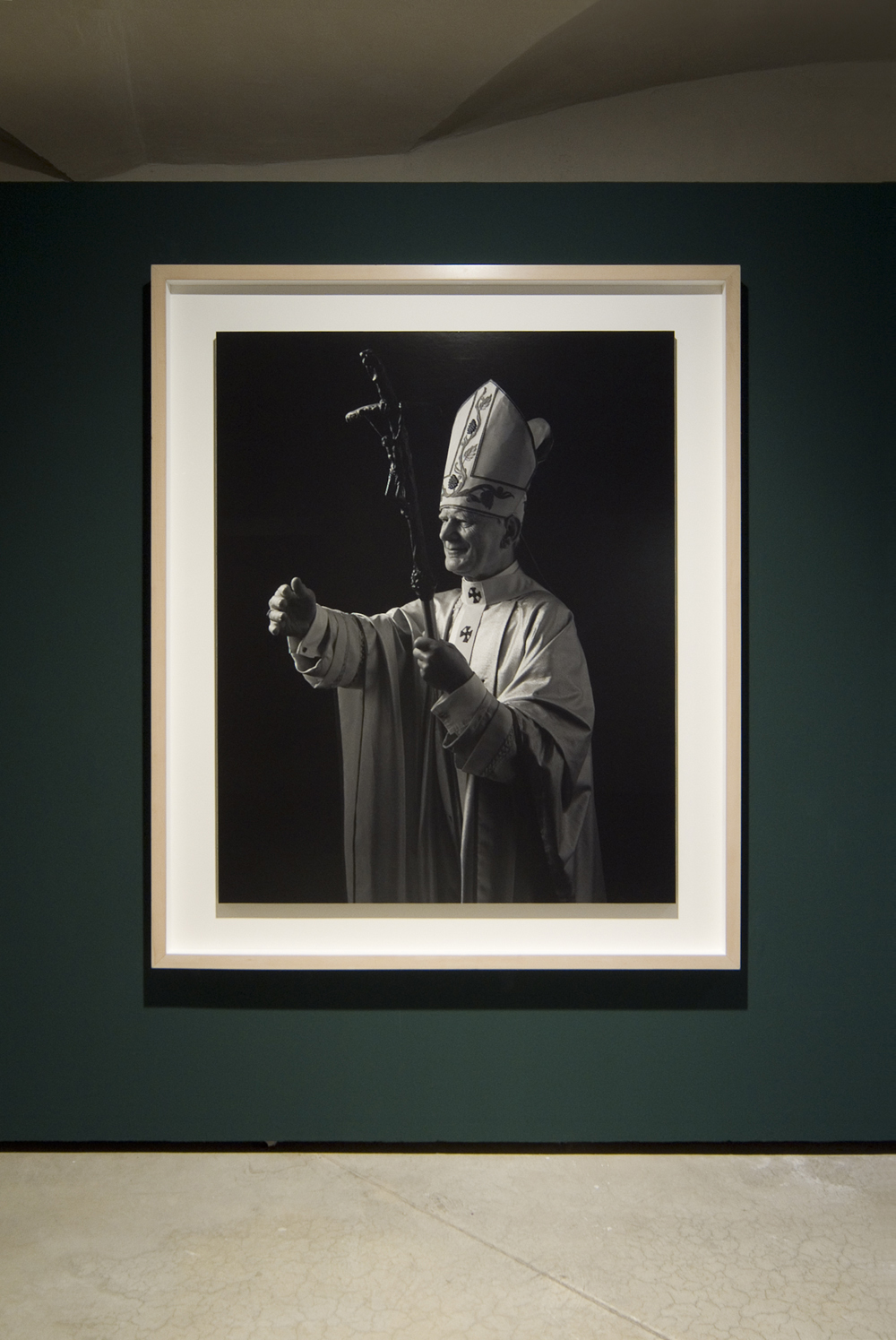
Installation view of the exhibition 'Portraits and Power: People, Politics and Structures' at Centro di Cultura Contemporanea Strozzina - Fondazione Palazzo Strozzi, Florence showing the work of Hiroshi Sugimoto


Installation view of the exhibition Portraits and Power: People, Politics and Structures at Centro di Cultura Contemporanea Strozzina – Fondazione Palazzo Strozzi, Florence showing the work of Hiroshi Sugimoto


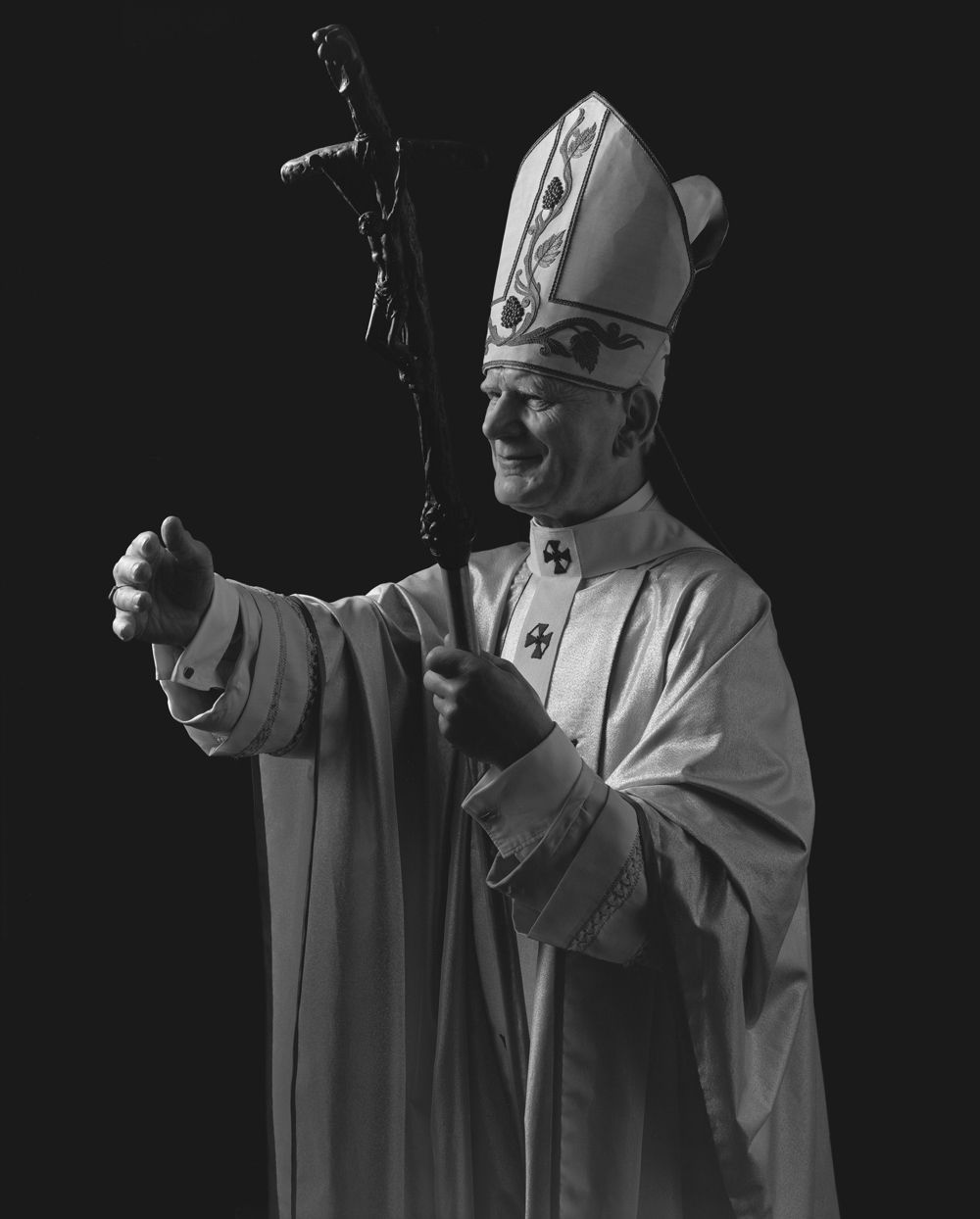
The Portraits series was first developed in 1999, starting from a portrait of King Henry VIII of England inspired by the work of Dutch painter Hans Holbein. Sugimoto’s self-professed aim was to become “the first sixteenth-century photographer.” The series then continued with different subjects, including famous contemporary figures who have entered the collective imagination, such as the Cuban lider máximo Fidel Castro and Pope John Paul II.

Sugimoto’s works are not portraits of the original subjects, but of wax sculptures reproducing them in the most hyper-realist way possible. The figures are illumined by a source of direct light and strongly stand out against a black background in an extremely theatrical way, imitating poses typical of the characters they represent, while removing them from all context and thus emphasising their nature as icons rather than human beings.

For these works Sugimoto has not made use of the 50 x 60 cm format that is typical of him. Yet, they stand in continuity with the artist’s unique reflection upon the nature of photography and its relation to history and time. Here he embarks upon a reflection on portraiture and the process whereby an image is translated using different media, emphasising the problematic “realistic effect” of photographic reproduction.

An attentive gaze will notice small disproportions in the various parts of the subjects’ bodies or strange lighting effects due to the way in which light reflects on wax as opposed to real skin. Still, these pictures invite us to look at them as we would other photographs. Thinking, that is, about the genuine subjects they portray, something that paradoxically makes them “more real” than the wax statues that constitute their actual subjects. Different levels of reproduction are at play here: from the original subject to an initial photograph that served as a model for the wax statue that Sugimoto then portrayed in his photographic work. Our gaze will strongly be drawn towards the extraordinary elegance and aesthetic refinement of these works, which reveal the uncommon technical abilities of Sugimoto, marked as they are by the endless range of white, grey and black shades typical of him. Despite all this, his works remain emotionally cold: they consist in conceptual reflections upon the very notion of portrait and its political and cultural value as an icon of the characters it represents, and explicitly forgo any realist view of the individuals they take as their subjects. The artist seems to be causing all sense of natural time to collapse – in such a way as to stress that of absolute time. He attains a balance between life and death that is characteristic of photography but also of portraiture, whereby what counts is not the reality or the life of a subject, but the latter’s value as an image in itself, beyond time and everyday life.

Hiroshi Sugimoto’s photographs convey a conceptual attitude aimed at stripping images down to their bare essence, thus emphasising the primacy of the idea over the object portrayed. His famous marine landscapes and dioramas express a view of photography as a sort of time machine – a way of preserving or constructing memories and emotions.


Hiroshi Sugimoto (Japan, b. 1948) Pope John Paul II 1999 (installation view)


Hiroshi Sugimoto (Japan, b. 1948)
Pope John Paul II (installation view)
1999
Black and white photograph
Courtesy Rosa e Gilberto Sandretto
© Hiroshi Sugimoto


Hiroshi Sugimoto (Japan, b. 1948) 'Pope John Paul II' 1999 from the exhibition 'Portraits and Power: People, Politics and Structures' at Centro di Cultura Contemporanea Strozzina - Fondazione Palazzo Strozzi, Florence


Hiroshi Sugimoto (Japan, b. 1948)
Pope John Paul II
1999
Black and white photograph
Courtesy Rosa e Gilberto Sandretto
© Hiroshi Sugimoto


Hiroshi Sugimoto (Japan, b. 1948) 'Fidel Castro' 1999 (installation view)


Hiroshi Sugimoto (Japan, b. 1948)
Fidel Castro (installation view)
1999
Black and white photograph
Courtesy Sonnabend Gallery, New York
© Hiroshi Sugimoto


Hiroshi Sugimoto (Japan, b. 1948) 'Fidel Castro' 1999 from the exhibition 'Portraits and Power: People, Politics and Structures' at Centro di Cultura Contemporanea Strozzina - Fondazione Palazzo Strozzi, Florence


Hiroshi Sugimoto (Japan, b. 1948)
Fidel Castro
1999
Black and white photograph
Courtesy Sonnabend Gallery, New York
© Hiroshi Sugimoto


Centre for Contemporary Culture Strozzina
Palazzo Strozzi, Piazza Strozzi, Firenze

Strozinna website

LIKE ART BLART ON FACEBOOK

Back to top

Review: ‘Luminous Cities: Photographs of the Built Environment’ at NGV International, Melbourne

Exhibition dates: 22nd October 2010 – 13th March 2011


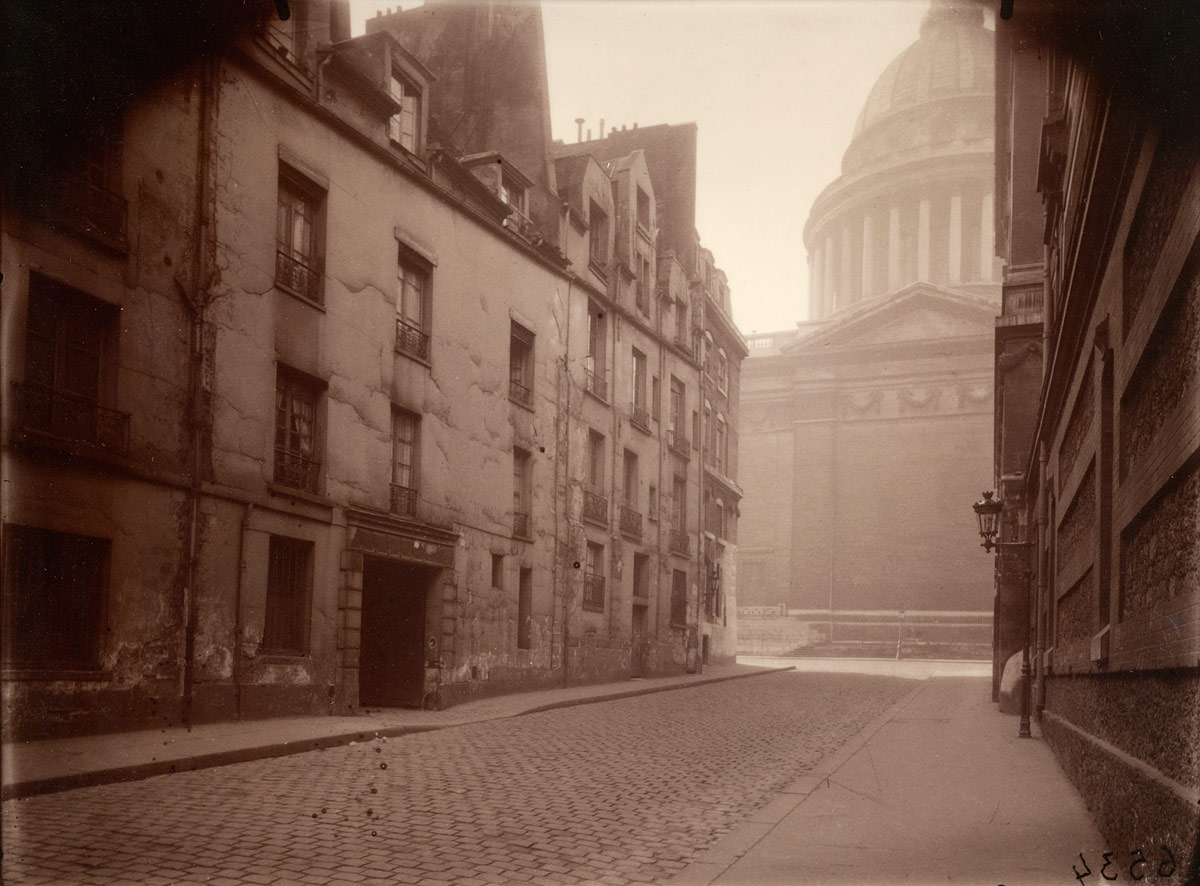
Eugène Atget (French, 1857-1927) 'Coin de la rue Valette et Pantheon, 5e arrondissement, matinee de mars' 1925, printed 1978  from the exhibition 'Luminous Cities: Photographs of the Built Environment' at NGV International


Eugène Atget (French, 1857-1927)
Coin de la rue Valette et Pantheon, 5e arrondissement, matinee de mars
1925, printed 1978
Gelatin silver photograph
17.8 x 23.7cm
National Gallery of Victoria, Melbourne
Purchased, 1980


A delightful exhibition of photographs of the built environment at the National Gallery of Victoria, Melbourne. The exhibition contains some interesting photographs from the collection including the outstanding Coin de la rue Valette et Pantheon, 5e arrondissement, matinee de mars by Eugene Atget taken two years before his death (1925, printed 1978, see below) that simply takes your breath away.

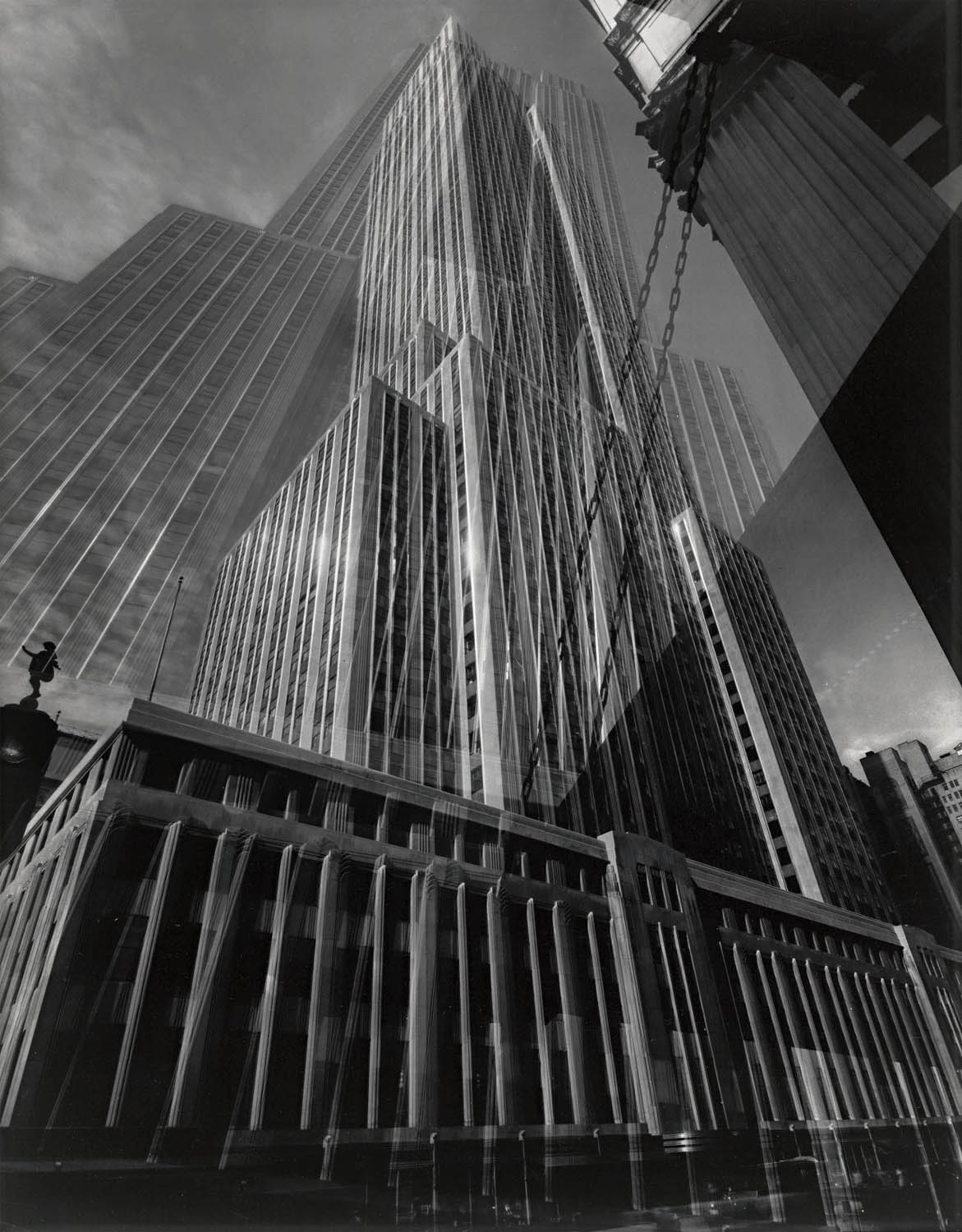
Atget was my hero when I started to study photography in the late 1980s and he remains my favourite photographer. His use of light coupled with his understanding of how to organise space within the pictorial frame is exemplary (note the darkness of the right-hand wall as it supports the integrity of the rest of the image, as it leads your eye to that wonderful space between the buildings, the shaft of light falling on the ground, the blank wall topped by an arrow leading the eye upwards to the misty dome!). The ability to place his large format camera and tripod in just the right position, the perfect height and angle, to allow the subject to reveal itself it all it’s glory is magical: “Atget’s interest in the variable play between nature and art through minute changes in the camera’s angle, or as functions of the effects of light and time of day, is underscored in his notations of the exact month and sometimes even the hour when the pictures were taken.”1 Two other immense works in the exhibition are New York at Night by Berenice Abbott (1932, printed c. 1975 below) and the incredible multiple exposure The Maypole, Empire State Building, New York by Edward Steichen (1932, below).

The only disappointment to the exhibition is the lack of vintage prints, a fair portion of the exhibition including the three prints mentioned above being later prints made from the original negatives. I wonder what vintage prints of these images would look like?

The purchasing of non-vintage prints was the paradigm for the collection of international photographs early in the history of the Department of Photography at the National Gallery of Victoria and was seen as quite acceptable at the time. The paradigm was set by Athol Shmith in 1973 on his visit to Paris and London.

“Typically for the times, Shmith did not choose to acquire vintage prints, that is, photographs made shortly after the negative was taken. While vintage prints are most favoured by collectors today, in the 1970s vintage prints supervised by the artists were considered perfectly acceptable and are still regarded as a viable, if less impressive option now.”2

Some museums including the NGV preferred to acquire portfolios of modern reprints as a speedy way of establishing a group of key images. As noted in the catalogue essay to 2nd Sight: Australian Photography at the National Gallery of Victoria by Dr Isobel Crombie, Senior Curator of Photography at the National Gallery of Victoria, the reason for preferring the vintage over the modern print “is evident when confronted with modern and original prints: differences in paper, scale and printing styles make the original preferable.”3 The text also notes that this sensibility, the consciousness of these differences slowly evolved in the photographic world and, for most, the distinctions were not a matter of concern even though the quality of the original photograph was not always maintained.

This is stating the case too strongly. Appreciation of the qualities of vintage prints was already high in the period of the mid-1970s – early 1980s most notably at institutions such as The Museum of Modern Art, a collection visited by photography curators of the NGV. Size and scale of the vintage prints tend to be much smaller than later prints making them closer to the artists original intentions, while the paper the prints are made on, the contrast and colour of the prints also varies remarkably. Other mundane but vitally important questions may include these: who printed the non-vintage photograph, who authorised the printing and how many non-vintage copies of the original negative were made, none of which are answered when the prints are displayed.

I vividly remember seeing a retrospective of Henri Cartier-Bresson’s work in Edinburgh at the Dean Gallery, National Gallery of Scotland in 2005, the largest retrospective of Cartier-Bresson’s work ever staged in Britain with over 200 photographs. Three large rooms were later 1970s reprints of some of his photographs, about 20″ x 24″ in size, on cold, blue photographic paper. One room, however, was full of his original prints from the 1920s and 30s. The contrast could not have been different: the vintage prints were very small, intense, subtle, printed on brown toned paper, everything that you would want those jewel-like images to be, the vision of the artist intensified; the larger prints diluted that vision until the images seemed to almost waste away despite their size.

Although never stated openly I believe that one of the reasons for the purchase of non-vintage prints was the matter of cost, the Department of Photography never being given the budget to buy the prints that it wanted to in the 1970s – early 1980s, the collection of photography not being a priority for the NGV at that time. In other words by buying non-vintage prints in the 1970s you got more “bang for your buck” even when the cost of vintage prints was relatively low. Unfortunately the price of vintage prints then skyrocketed in the 1980s putting them well outside the budget of the Department. While Dr Crombie acknowledges the preponderance of American works in the collection over European and Asian works she also notes that major 20th century photographers that you would expect to be in the collection are not and blames this lack “on the massive increases in prices for international photography that began in the 1980s and which largely excluded the NGV from the market at this critical time.”4

The policy of purchasing non-vintage prints has now ceased at the National Gallery of Victoria.

The purchasing of non-vintage prints and the paucity of purchasing vintage prints by master photographers during the formative decade of the collection of international photographs in the Department of Photography (1970-1980) is understandable in hindsight but today seems like a golden opportunity missed. While the collection contains many fine photographs due to the diligence of early photographic curators (notably Jennie Boddington), the minuscule nature of the budget of the department in those early years when vintage prints were relatively cheap and affordable (a Paul Caponigro print could be purchased for $200-300 for example) did not allow them to purchase the photographs that the collection desperately needed. With one vintage print by a master of photography now fetching many thousands of dollars the ability to fill gaps in the collection in the future is negligible (according to Dr Crombie) – so we must celebrate and enjoy the photographs that are in the collection such as those in Luminous Cities: Photographs of the Built Environment.

Dr Marcus Bunyan


2/ Crombie, Isobel. “Creating a Collection: International Photography at the National Gallery of Victoria,” in Re_View: 170 years of Photography. Melbourne: National Gallery of Victoria, 2009, p. 9

3/ Crombie, Isobel. Second sight: Australian photography in the National Gallery of Victoria. Melbourne: National Gallery of Victoria, 2002, p. 10

4/ Op.cit. p. 10


Many thankx to Jemma Altmeier for her help and to the National Gallery of Victoria for allowing me to publish the photographs in the posting. Please click on the photographs for a larger version of the image.


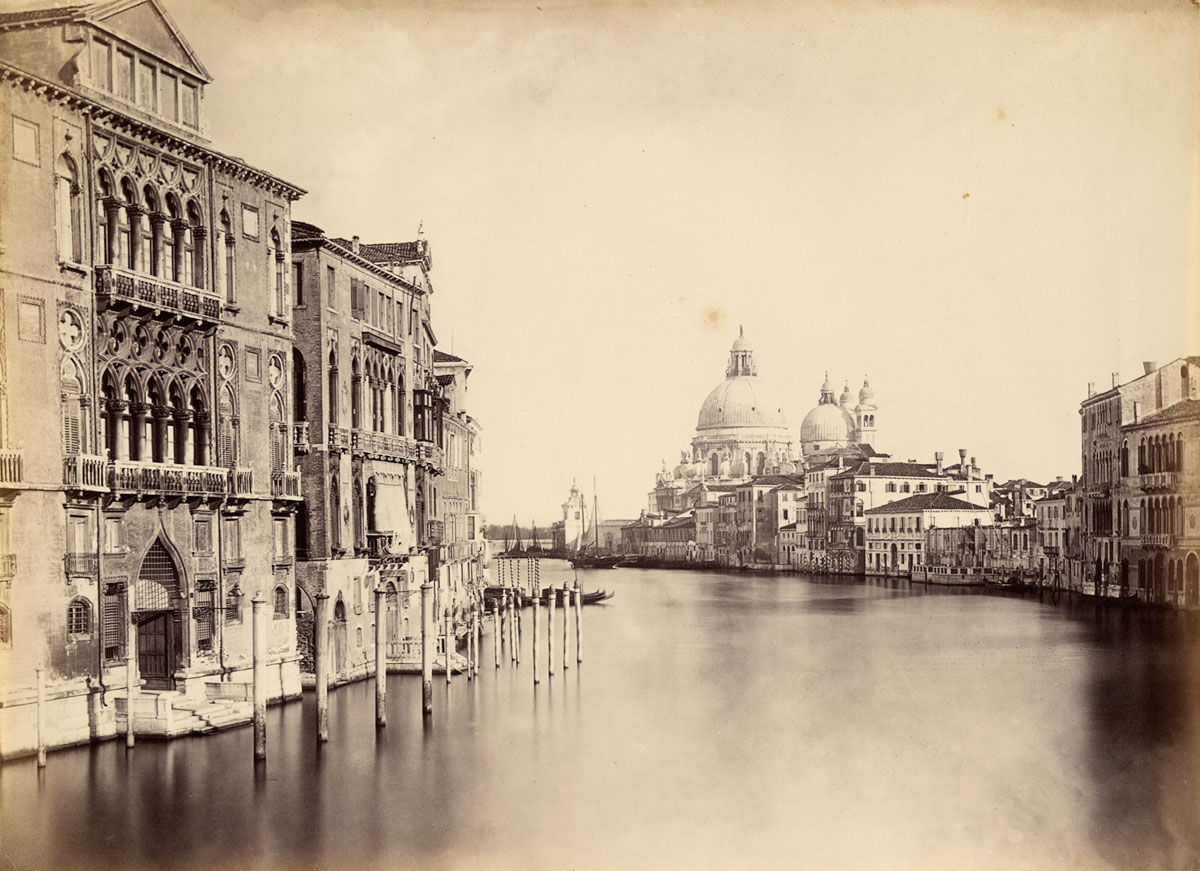
Stephen Thompson (active throughout Europe, 1850s-1880s) 'Grande Canale, Venice' c. 1868 from the exhibition 'Luminous Cities: Photographs of the Built Environment' at NGV International


Stephen Thompson (active throughout Europe, 1850s-1880s)
Grande Canale, Venice
c. 1868
Albumen silver photograph
21.2 x 29.2cm
National Gallery of Victoria, Melbourne
Purchased from Admission Funds, 1988


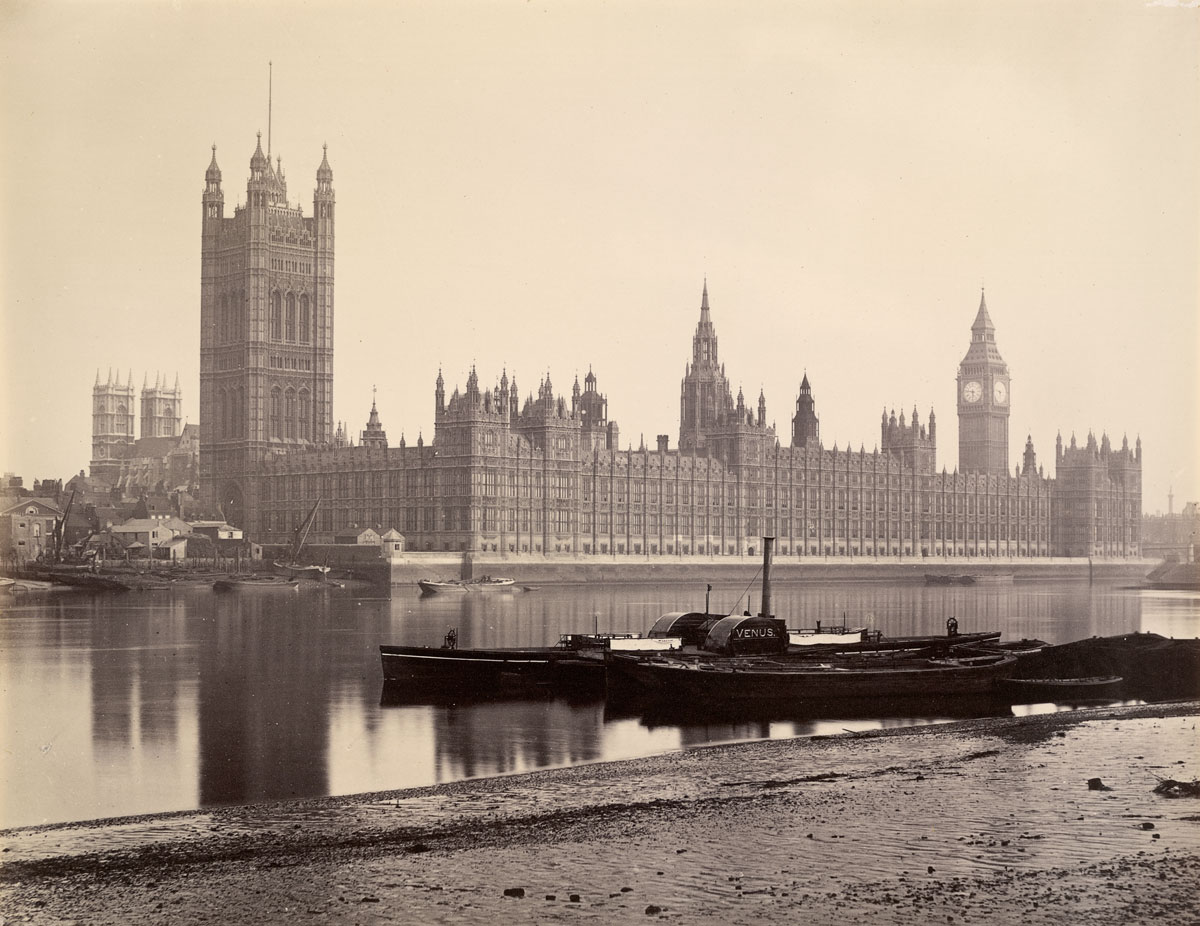
England (active in England 1860s) 'Houses of Parliament, London' 1860s from the exhibition 'Luminous Cities: Photographs of the Built Environment' at NGV International


England (active in England 1860s)
Houses of Parliament, London
1860s
Albumen silver photograph
18.5 x 24.1cm
National Gallery of Victoria, Melbourne
Purchased from Admission funds, 1988


On 22 October the National Gallery of Victoria will open Luminous Cities, a fascinating exhibition that examines the various ways photographers have viewed cities as historical sites, bustling modern hubs and architectural utopias since the nineteenth century.

The great cities of the world are vibrant creative centres in which the built environment is often as inspirational as the activities of its citizens, and, since the nineteenth century photographers have creatively explored the idea of the city.

This exhibition, drawn from the collection of the NGV, considers various ways in which photographers in the 19th and 20th centuries have viewed cities as historical sites, bustling modern metropolises and architectural utopias. These lyrical images describe the physical attributes of cities, offer insights into the creative imaginations of architects and photographers and embody the zeitgeist of their times.

Frances Lindsay, Deputy Director, NGV said: “Through the work of a range of photographers Luminous Cities will take viewers on a fascinating journey around the world, into the streets, buildings and former lives of great international cities.

“Drawn from the NGV collection, Luminous Cities includes works by renowned photographers Eugene Atget, Alfred Stieglitz, Edward Steichen, Berenice Abbott, Laszlo Moholy-Nagy, Bill Brandt, Lee Freidlander and Grant Mudford amongst many others.

The exhibition will also extend into our contemporary gallery space where an outstanding selection of works by celebrated contemporary artists such as Bill Henson, Andreas Gursky and Jon Cattapan will be on display,” said Ms Lindsay.

Through examples from the mid 19th century, Luminous Cities explores the relationship between photographer, architect and archaeologist with photos of Athens, Rome and Pompeii. This was also a time when great cities such as London and Paris underwent unprecedented renewal and expansion, photography served to document new constructions and also presented heroic, inspirational visions of new cities emerging from old.

Susan van Wyk, Curator, Photography, NGV said: “The works on display in Luminous Cities describe the physical attributes of cities, offer insights into the creative imaginations of architects and photographers, and embody the zeitgeist of their times.”

New York, one of the great 20th century cities, was a captivating subject for generations of photographers. Through the work of architects and the images photographers made of the city, New York became synonymous with its skyline. The images of renowned photographers including Alfred Stieglitz, Edward Steichen, Paul Strand and Berenice Abbott show the pictorial possibilities of the modern city in photographs that embody the dynamism of the city that never sleeps.

The contemporary art works included in Luminous Cities explore the creative ways in which artists imagine and represent the cityscape. Vast glittering panoramas taken from bustling urban communities, sprawling architectural structures and fictitious landscapes all combine to reveal fascinating insights into both physical and psychological geographies.

Ms van Wyk said: “At the end of the 20th century a much cooler, more abstracted strain of photography emerged. Photographs in the exhibition from this period range from the formalism of the 1970s to more recent cinematic visions of the nocturnal city.”

Press release from the National Gallery of Victoria website


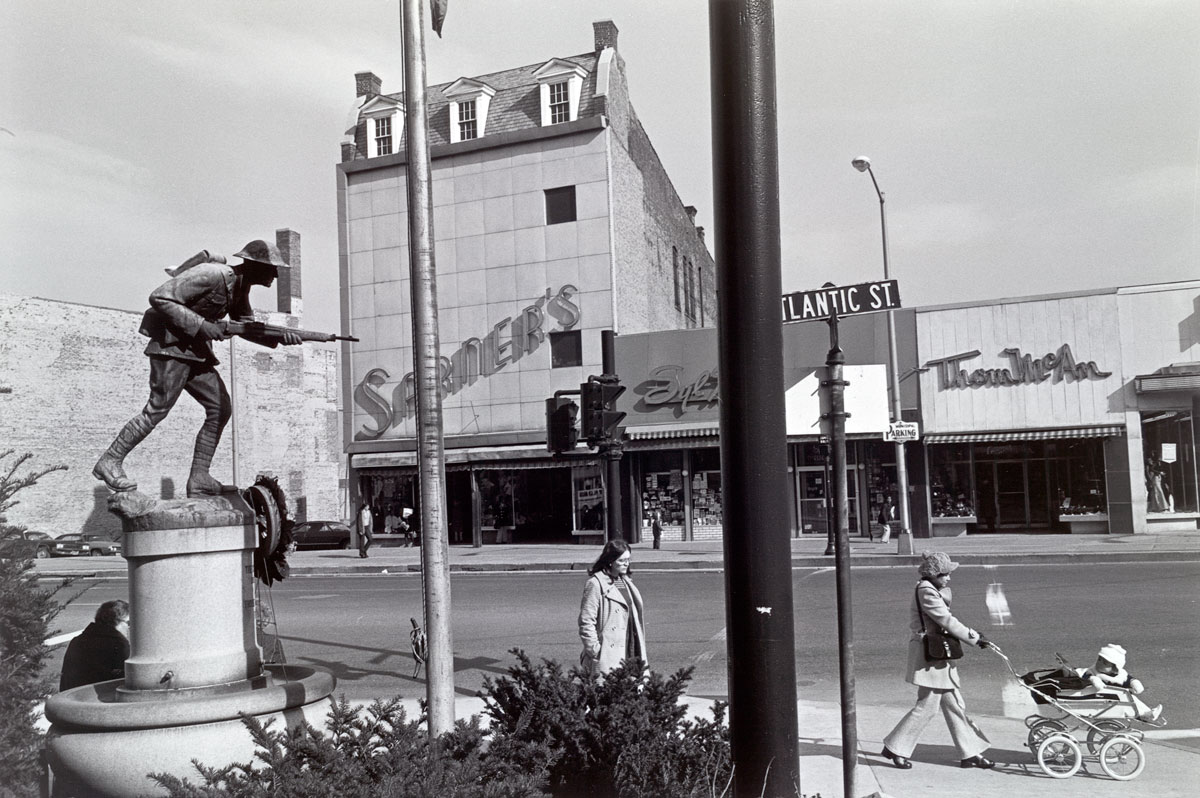
Lee Freidlander (American, b. 1934) 'Stamford, Connecticut' 1973, printed c. 1977 from the exhibition 'Luminous Cities: Photographs of the Built Environment' at NGV International


Lee Freidlander (American, b. 1934)
Stamford, Connecticut
1973, printed c. 1977
Gelatin silver photograph
18.9 x 28.3cm
National Gallery of Victoria, Melbourne
Purchased, 1977
© Lee Friedlander


In the decades following the Second World War the idea of ‘the city’, notably in work of American, European and Australian photographers, came to symbolise the modern condition, the best and worst of contemporary life. This ambiguous stance on the city is exemplified in the work of American photographer Lee Friedlander whose photographs of seemingly ordinary urban scenes are at once amusing and slightly disturbing. In his 1973 photograph Stamford, Connecticut, the banal vernacular architecture of suburban shopping street forms the backdrop to a peculiar scene where shoppers are ‘stalked’ by a statue of first world war sniper. Despite its witty elements, this image has a somewhat despairing tone. The women walking along this rather bleak street are isolated and anonymous, ciphers for the worst aspects of contemporary city life.


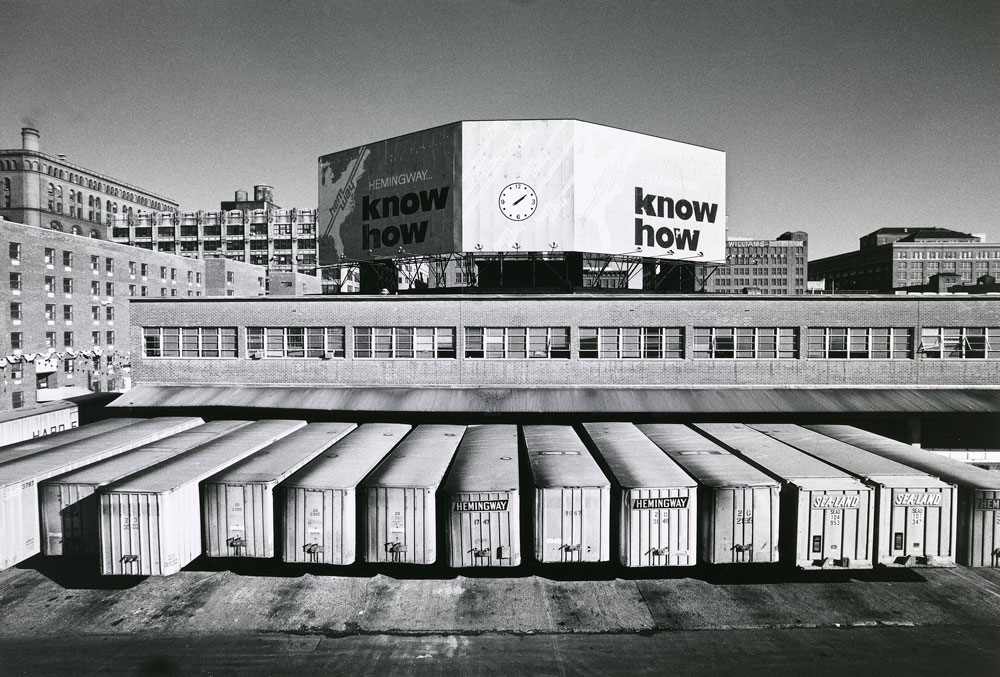
Grant Mudford (b. Australia 1944, lived United States 1977- ) 'New York' 1975 from the exhibition 'Luminous Cities: Photographs of the Built Environment' at NGV International


Grant Mudford (b. Australia 1944, lived United States 1977- )
New York
1975
Gelatin silver photograph
33.8 x 49.8cm
National Gallery of Victoria, Melbourne
Purchased, 1977
© Grant Mudford


A more neutral view of the contemporary city can be seen in the work of Australian photographer Grant Mudford. After moving to the US in 1970s, Mudford continued to photograph the built environment. Familiar with the work of Lee Friedlander, and citing Walker Evans as an influence, Mudford’s photographs continue a tradition of photographing the city as an empty backdrop devoid of the bustle of human activity. In his 1975 Untitled photograph of a truck depot in New York, Mudford simplifies what could be a chaotic scene to the verge of abstraction.


Berenice Abbott (american, 1898-1991) 'New York at Night' 1932 from the exhibition 'Luminous Cities: Photographs of the Built Environment' at NGV International Review: 'Luminous Cities: Photographs of the Built Environment' at NGV International, Melbourne


Berenice Abbott (American, 1898-1991)
New York at Night
1932
Gelatin silver print
34.1 × 26.1cm (image and sheet)
National Gallery of Victoria, Melbourne
Gift of an anonymous donor in memory of Rosa Zerfas (1896-1983), 1985
©Artist estate through the Howard Greenberg Gallery, New York


Edward Steichen (American, 1879-1973) 'The maypole' 1932 from the exhibition 'Luminous Cities: Photographs of the Built Environment' at NGV International Review: 'Luminous Cities: Photographs of the Built Environment' at NGV International, Melbourne


Edward Steichen (American, 1879-1973)
The maypole
1932
Gelatin silver photograph
35.1 × 27.1cm
National Gallery of Victoria, Melbourne
Presented by Maxwell Photo-Optics Pty Ltd, 1973
© Edward Steichen. ARS/Copyright Agency, 2023


Wolfgang Sievers (Australian born Germany, 1913-2007) 'Old Frankfurt before its total destruction in World War II, Germany' 1933, printed 1986 from the exhibition 'Luminous Cities: Photographs of the Built Environment' at NGV International, Melbourne


Wolfgang Sievers (Australian born Germany, 1913-2007)
Old Frankfurt before its total destruction in World War II, Germany
1933, printed 1986
gelatin silver photograph
28.9 x 26.2 cm
National Gallery of Victoria, Melbourne
Purchased, 1986


Bill Henson (Australian, b. 1955)
'Untitled' 1987-1988 From the 'Untitled 1987/88' series 1987-1988 from the exhibition 'Luminous Cities: Photographs of the Built Environment' at NGV International, Melbourne


Bill Henson (Australian, b. 1955)
Untitled
1987-1988
From the Untitled 1987/88 series 1987-1988
Type C photograph
183.5 x 125.6cm
National Gallery of Victoria, Melbourne
Purchased through The Art Foundation of Victoria with the assistance of the Moët & Chandon Art Acquisition Fund, Fellow, 1989
© The artist and Robert Miller Gallery, New York


NGV International
180 St Kilda Road

Opening hours
Daily 10am – 5pm

National Gallery of Victoria website

LIKE ART BLART ON FACEBOOK

Back to top

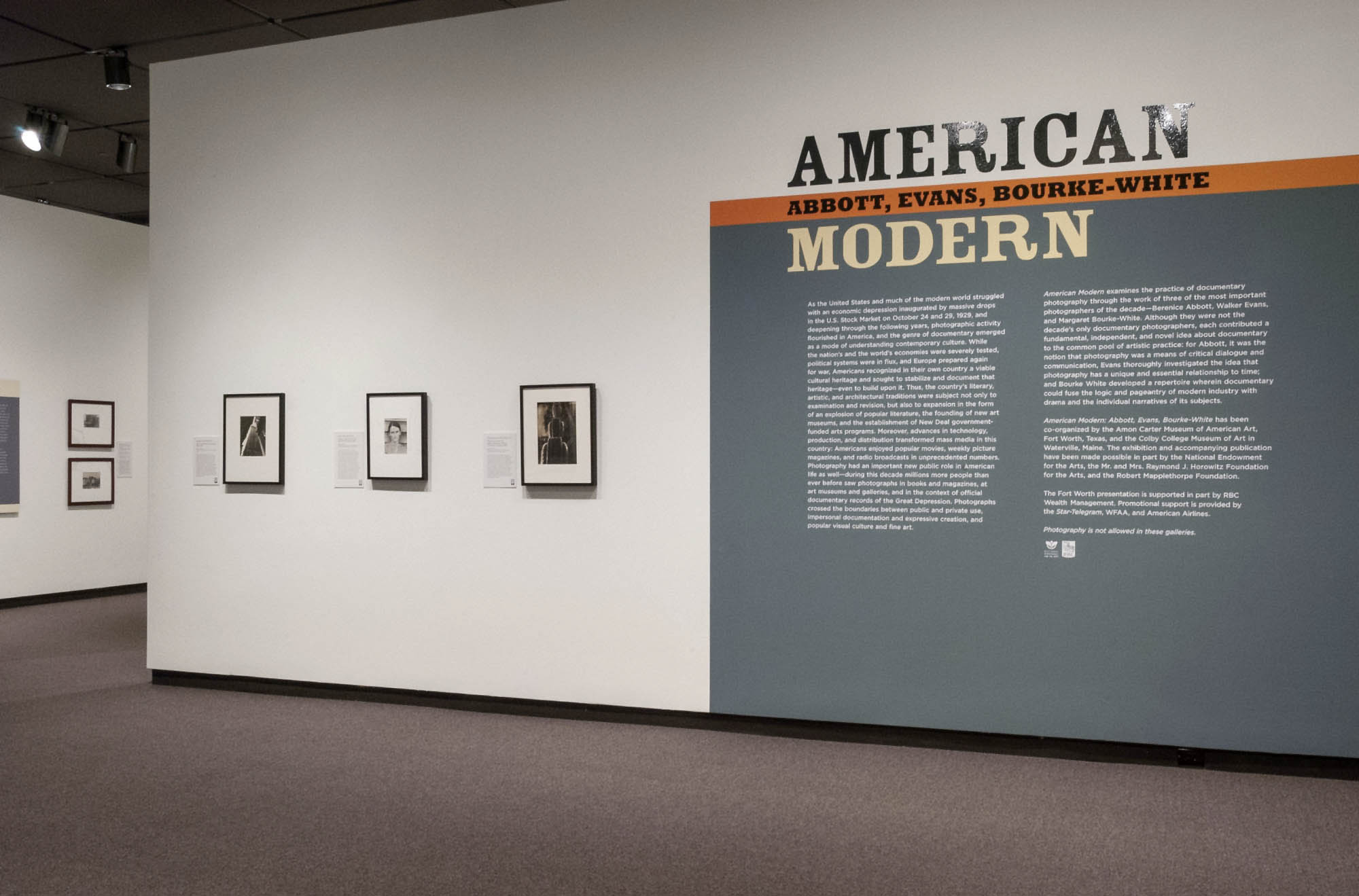
Exhibition: ‘American Modern: Abbott, Evans, Bourke-White’ at the Amon Carter Museum of American Art, Fort Worth, Texas

Exhibition dates: 2nd October, 2010 – 2nd January, 2011


Berenice Abbott (American, 1898-1991) 'Canyon, Broadway and Exchange Place' 1936 from the exhibition 'American Modern: Abbott, Evans, Bourke-White' at the Amon Carter Museum of American Art, Fort Worth, Texas


Berenice Abbott (American, 1898-1991)
Canyon, Broadway and Exchange Place
1936
Gelatin silver print
National Gallery of Art, Gift of Marvin Breckinridge Patterson


Berenice Abbott – what a photographer! You couldn’t have thought of a better person to save the archive of Eugene Atget for the world. It’s all there at the bread store.

Marcus


Many thankx to Tracy Greene for her help and The Amon Carter Museum of American Art for allowing me to publish the photographs in the posting. Please click on the photographs for a larger version of the image.


Berenice Abbott (American, 1898-1991) 'The El at Columbus and Broadway' 1929 from the exhibition 'American Modern: Abbott, Evans, Bourke-White' at the Amon Carter Museum of American Art, Fort Worth, Texas


Berenice Abbott (American, 1898-1991)
The El at Columbus and Broadway
1929
Gelatin silver print


Berenice Abbott (American, 1898-1991) 'Hell Gate Bridge' 1937 from the exhibition 'American Modern: Abbott, Evans, Bourke-White' at the Amon Carter Museum of American Art, Fort Worth, Texas


Berenice Abbott (American, 1898-1991)
Hell Gate Bridge
1937
Gelatin silver print
Collection of Norma B. Marin, Courtesy Meredith Ward Fine Art


Berenice Abbott (American, 1898-1991) 'Squibb Building with Sherry Netherland in Background' 1935 from the exhibition 'American Modern: Abbott, Evans, Bourke-White' at the Amon Carter Museum of American Art, Fort Worth, Texas


Berenice Abbott (American, 1898-1991)
Squibb Building with Sherry Netherland in Background
1935
Gelatin silver print
Collection of Norma B. Marin, Courtesy Meredith Ward Fine Art


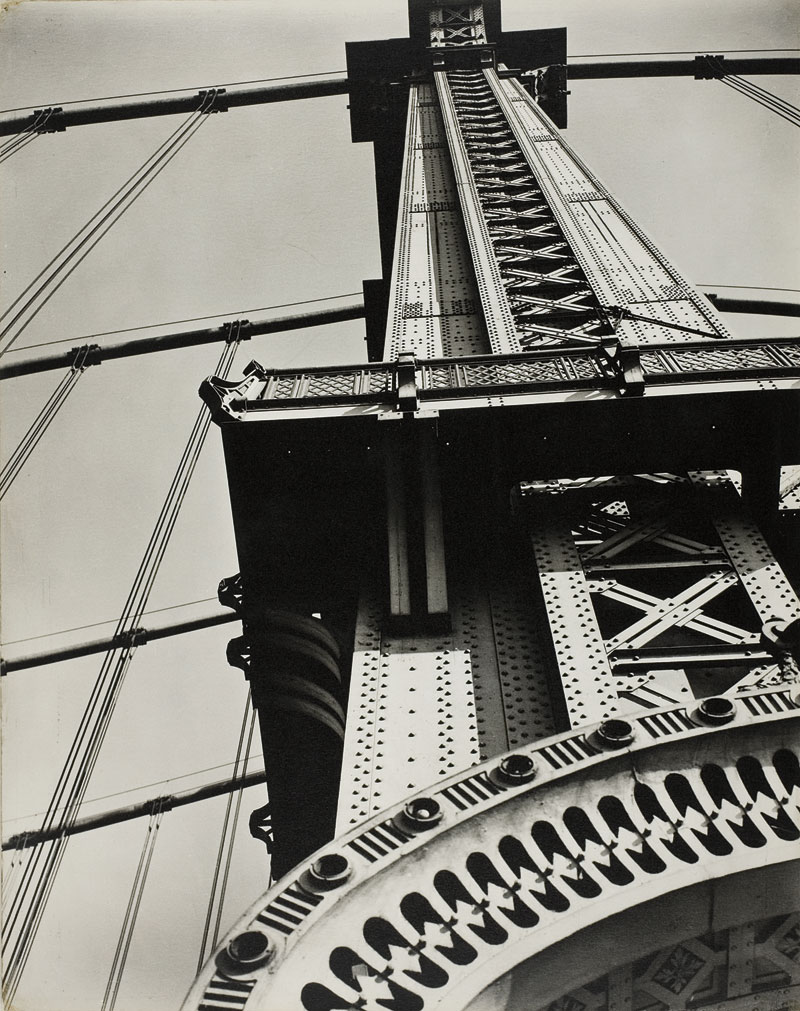
Berenice Abbott (American, 1898-1991) 'Manhattan Bridge Looking Up' 1936 from the exhibition 'American Modern: Abbott, Evans, Bourke-White' at the Amon Carter Museum of American Art, Fort Worth, Texas


Berenice Abbott (American, 1898-1991)
Manhattan Bridge Looking Up
1936
Gelatin silver print
The Art Institute of Chicago, Works Progress Administration Allocation


Berenice Abbott (American, 1898-1991) 'Bread Store, 259 Bleecker Street' 1937 from the exhibition 'American Modern: Abbott, Evans, Bourke-White' at the Amon Carter Museum of American Art, Fort Worth, Texas


Berenice Abbott (American, 1898-1991)
Bread Store, 259 Bleecker Street
1937
Gelatin silver print
Museum of the City of New York


Margaret Bourke-White (American, 1906-1971) 'Chrysler Building, New York' c. 1930-1931 from the exhibition 'American Modern: Abbott, Evans, Bourke-White' at the Amon Carter Museum of American Art, Fort Worth, Texas


Margaret Bourke-White (American, 1906-1971)
Chrysler Building, New York
c. 1930-1931
Gelatin silver print
© Estate of Margaret Bourke-White/Licensed by VAGA, New York, NY
The Metropolitan Museum of Art, Ford Motor Company Collection, Gift of Ford Motor Company and John C. Waddell


Margaret Bourke-White (American, 1906-1971) 'Boy with hound dog' 1936 from the exhibition 'American Modern: Abbott, Evans, Bourke-White' at the Amon Carter Museum of American Art, Fort Worth, Texas


Margaret Bourke-White (American, 1906-1971)
Boy with hound dog
1936
Gelatin silver print
13 1/4 x 17in (33.5 x 43.2cm)


Walker Evans (American, 1903-1975) 'Penny Picture Display, Savannah' 1936 from the exhibition 'American Modern: Abbott, Evans, Bourke-White' at the Amon Carter Museum of American Art, Fort Worth, Texas


Walker Evans (American, 1903-1975)
Penny Picture Display, Savannah
1936
Gelatin silver print
Amon Carter Museum


The Amon Carter Museum of American Art presents American Modern: Abbott, Evans, Bourke-White. This special exhibition explores the work of three of the foremost photographers of the twentieth-century and the golden age of documentary photography in America. American Modern will be on view through January 2, 2011; admission is free.

Featuring more than 140 photographs by Berenice Abbott (1898-1991), Margaret Bourke-White (1906-1971) and Walker Evans (1903-1975), American Modern was co-organised by the Amon Carter Museum of American Art and the Colby College Museum of Art in Waterville, Maine. The exhibition is the result of a unique partnership between three curators: Jessica May and Sharon Corwin of the Carter and Colby, respectively, and Terri Weissman, assistant professor of art history at the University of Illinois, Urbana-Champaign. Together, the three curators present the works of these three artists as case studies of documentary photography during the Great Depression and demonstrate how three factors supported the development of documentary photography during this important period in American history: first, the expansion of mass media; second, a new attitude toward and acceptance of modern art in America; and third, government support for photography during the 1930s.

“This exhibition considers the work of three of the best-loved American photographers in a new light, which is very exciting,” says curator Jessica May. “Abbott, Evans, and Bourke-White are undisputed masters of the medium of photography, but they have never been shown in relation to one another. This exhibition offers viewers an opportunity to see works together that have not been shown as such since the 1930s.”

In addition to vintage photographs from over 20 public and private collections, the exhibition also features rare first-edition copies of select books and periodicals from the 1930s. American Modern, May says, “reminds us that documentary photography was very much a public genre – this was the first generation of photographers that truly anticipated that their work would be seen by a vast audience through magazines and books.”

Press release from the Amon Carter Museum of American Art website [Online] Cited 01/12/2010. No longer available online


Installation view of the exhibition 'American Modern: Abbott, Evans, Bourke-White' at the Amon Carter Museum of American Art, Fort Worth, Texas showing at second right, Walker Evans photograph 'Allie Mae Burroughs, Hale County, Alabama' (1936)


Installation view of the exhibition American Modern: Abbott, Evans, Bourke-White at the Amon Carter Museum of American Art, Fort Worth, Texas showing at second right, Walker Evans photograph Allie Mae Burroughs, Hale County, Alabama (1936, below)


Walker Evans (American, 1903-1975) 'Allie Mae Burroughs, Hale County, Alabama' 1936 from the exhibition 'American Modern: Abbott, Evans, Bourke-White' at the Amon Carter Museum of American Art, Fort Worth, Texas


Walker Evans (American, 1903-1975)
Allie Mae Burroughs, Hale County, Alabama
1936
Gelatin silver print


Margaret Bourke-White (American, 1906-1971) '[Iron Mountain, Tennessee]' 1937 from the exhibition 'American Modern: Abbott, Evans, Bourke-White' at the Amon Carter Museum of American Art, Fort Worth, Texas


Margaret Bourke-White (American, 1906-1971)
[Iron Mountain, Tennessee]
1937
Gelatin silver print
© Estate of Margaret Bourke-White/Licensed by VAGA, New York, NY
Margaret Bourke-White Collection, Special Collections Research Center, Syracuse University Library


Installation view of the exhibition 'American Modern: Abbott, Evans, Bourke-White' at the Amon Carter Museum of American Art, Fort Worth, Texas showing at second left, Margaret Bourke-White's photograph 'The Towering Smokestacks of the Otis Steel Co., Cleveland' (1927-1928); and at second right top, her photograph 'Delman Shoes' (1933)


Installation view of the exhibition American Modern: Abbott, Evans, Bourke-White at the Amon Carter Museum of American Art, Fort Worth, Texas showing at second left, Margaret Bourke-White’s photograph The Towering Smokestacks of the Otis Steel Co., Cleveland (1927-1928, below); and at second right top, her photograph Delman Shoes (1933, below)


Margaret Bourke-White (American, 1906-1971) 'The Towering Smokestacks of the Otis Steel Co., Cleveland' 1927-1928
Screenshot


Margaret Bourke-White (American, 1906-1971)
The Towering Smokestacks of the Otis Steel Co., Cleveland
1927-1928
Gelatin silver print
© Estate of Margaret Bourke-White/Licensed by VAGA, New York, NY


Margaret Bourke-White (American, 1906-1971) 'Delman Shoes' 1933 from the exhibition 'American Modern: Abbott, Evans, Bourke-White' at the Amon Carter Museum of American Art, Fort Worth, Texas


Margaret Bourke-White (American, 1906-1971)
Delman Shoes
1933
Gelatin silver print
© Estate of Margaret Bourke-White/Licensed by VAGA, New York, NY
Margaret Bourke-White Collection, Special Collections Research Center, Syracuse University Library


Installation view of the exhibition 'American Modern: Abbott, Evans, Bourke-White' at the Amon Carter Museum of American Art, Fort Worth, Texas
Installation view of the exhibition 'American Modern: Abbott, Evans, Bourke-White' at the Amon Carter Museum of American Art, Fort Worth, Texas showing at left, pages from Berenice Abbott's 'Early New York Scrapbook' (1929-1930)


Installation views of the exhibition American Modern: Abbott, Evans, Bourke-White at the Amon Carter Museum of American Art, Fort Worth, Texas showing in the bottom photograph at left, pages from Berenice Abbott’s Early New York Scrapbook (1929-1930)


Walker Evans (American, 1903-1975) '[Lunchroom Window, New York City]' 1929 from the exhibition 'American Modern: Abbott, Evans, Bourke-White' at the Amon Carter Museum of American Art, Fort Worth, Texas


Walker Evans (American, 1903-1975)
[Lunchroom Window, New York City]
1929
Gelatin silver print
© Walker Evans Archive, The Metropolitan Museum of Art
The Metropolitan Museum of Art, Gift of Arnold H. Crane, 1971


Walker Evans (American, 1903-1975) 'People in Downtown Havana' 1933 from the exhibition 'American Modern: Abbott, Evans, Bourke-White' at the Amon Carter Museum of American Art, Fort Worth, Texas


Walker Evans (American, 1903-1975)
People in Downtown Havana
1933
Gelatin silver print
© Walker Evans Archive, The Metropolitan Museum of Art
The Metropolitan Museum of Art, Gift of Lincoln Kirstein


Walker Evans (American, 1903-1975) 'Posed Portraits, New York' 1932 from the exhibition 'American Modern: Abbott, Evans, Bourke-White' at the Amon Carter Museum of American Art, Fort Worth, Texas


Walker Evans (American, 1903-1975)
Posed Portraits, New York
1932
Gelatin silver print
© Walker Evans Archive, The Metropolitan Museum of Art
The Art Institute of Chicago, Gift of Mrs. James Ward Thorne


Amon Carter Museum
3501 Camp Bowie Boulevard
Fort Worth, TX 76107-2695

Opening hours:
Tuesday, Wednesday, Friday, Saturday: 
10am – 5pm
Thursday: 10am – 8pm
Sunday: Noon – 5pm
Closed Mondays and major holidays

Amon Carter Museum of American Art website

LIKE ART BLART ON FACEBOOK

Back to top

Exhibition: ‘Engaged Observers: Documentary Photography since the Sixties’ at The J. Paul Getty Museum, Los Angeles

Exhibition dates: 29th June – 14th November 2010


Many thankx to the The J. Paul Getty Museum for allowing me to publish the photographs in the posting.


Leonard Freed (American, 1929-2006) 'New York City' 1963


Leonard Freed (American, 1929-2006)
New York City
1963
Gelatin silver print
24.6 x 16.4cm (9 11/16 x 6 7/16 in.)
The J. Paul Getty Museum, Los Angeles
© Leonard Freed / Magnum Photos, Inc.


W. Eugene Smith (American, 1918-1978) 'Industrial Waste from the Chisso Chemical Company' 1972


W. Eugene Smith (American, 1918-1978)
Industrial Waste from the Chisso Chemical Company
1972
Gelatin silver print
24.4 x 34cm (9 5/8 x 13 3/8 in.)
Minamata photographs by W. Eugene Smith & Aileen M. Smith
Courtesy of Robert Mann Gallery, New York, New York
© Aileen Smith H. Christopher Luce


In the decades following World War II, an independently minded and critically engaged form of photography began to gather momentum. Situated between journalism and art, its practitioners created extended photographic essays that delved deeply into topics of social concern and presented distinct personal visions of the world. On view at the J. Paul Getty Museum, the Getty Center, June 29 – November 14, 2010, Engaged Observers: Documentary Photography since the Sixties looks in depth at projects by a selection of the most vital photographers who have contributed to the development of this documentary approach. Passionately committed to their subjects, these photographers have captured both meditative and searing images, from the deep south in the civil rights era to the war in Iraq in 2006. Their powerful visual reports, often published extensively as books, explore aspects of life that are sometimes difficult and troubling but are worthy of attention.

“This exhibition focuses on the tradition of socially engaged photographic essays since the 1960s,” explains Brett Abbott, associate curator of photographs and curator of the exhibition. “Working beyond traditional media outlets, these photographers have authored evocative bodies of work that transcend the realm of traditional photojournalism.”

Engaged Observers is structured around suites of photographs from the following projects: “Girl Culture” by Lauren Greenfield, “The Mennonites” by Larry Towell, “Streetwise” by Mary Ellen Mark, “Black in White America” by Leonard Freed, “Nicaragua, June 1978 – July 1979” by Susan Meiselas, “Vietnam Inc.” by Philip Jones Griffiths, “The Sacrifice” by James Nachtwey, “Migrations: Humanity in Transition” by Sebastião Salgado, and “Minamata” by W. Eugene and Aileen M. Smith.

Although one does not always associate style with photojournalism, where objectivity and neutrality are traditionally valued, aesthetics have been an important consideration for all of the photographers represented in the exhibition. One of the strengths of this tradition has been its ability to harness artistic decisions in reporting on the world. Meiselas chose colour film for her Nicaragua project because she felt it better conveyed the spirit of the revolution as she experienced it. Salgado noted that the solemn beauty so characteristic of his approach is important in conjuring a persistent grace among his migrant subjects, allowing him to present them in a dignified way while calling attention to their plight. Nachtwey used tight framing of messy conglomerations of tubes, instruments, and arms in The Sacrifice as a way of conjuring the atmosphere of controlled chaos that he experienced in trauma centres in Iraq. In this kind of work, subject and style, message and delivery, are deliberately intertwined.

All of the photographers in this exhibition use a series of images to address conceptual issues. For instance, Freed was concerned with bridging cultural divides to engender support of basic civil rights, while Griffiths denounced violent commercialisation; Salgado pointed to the effects of globalisation, while the Smiths addressed the related issue of industrial pollution; Meiselas engaged and countered the fragmented process by which we receive news and understand history, while Towell challenged the meaning of “newsworthy” and explored, as did Greenfield, how cultural values affect life; Nachtwey found the human toll of war unacceptable, and Mark, the idea of homeless street kids in one of the wealthiest nations in the world.

Many of the photographers have published books to further convey their socially engaged messages. Books allow for a greater depth of reporting than magazine articles since their length can be tailored to the needs of a particular project. And because they can be read in private, books are conducive to extended contemplation and the slow absorption of ideas, both of which are important to understanding projects that are broad in scope and have layers of meaning that, in many cases, were developed over the course of years. Moreover, they provide photographers authorial control over the presentation of their work. Each artist has the ability to decide how pictures are captioned and with what information.

A final section of the exhibition is devoted to tracing the origins of the documentary photography tradition, touching on American Civil War photographs by Alexander Gardner, turn-of-the-century activism by Lewis Hine, Depression-era photography, and photojournalism in pre-World War II picture magazines. This section also looks closely at the formation of Magnum Photos. Founded in 1947 by Robert Capa, Henri Cartier-Besson, and several other photographers, Magnum provided a new platform for an independent documentary approach to photojournalism and became one of the world’s most prestigious photographic organisations. Magnum was structured to allow its members to pursue stories of their own choosing, spend as much time as they wanted on a particular topic, and be as involved as they desired in the editing, captioning, and publication of their work. The organisation was meant to harness commercial assignments as a base from which to pursue independent work, and the concept has given rise to generations of independent photographers, including many of those in Engaged Observers.

Press release from The J. Paul Getty Museum website [Online] Cited 28/12/2019


Lewis W. Hine (American, 1874-1940)
'[Crowd of Newsies, Including One Girl]' 1910


Lewis W. Hine (American, 1874-1940)
[Crowd of Newsies, Including One Girl]
1910
Gelatin silver print
Sheet: 11.4 × 16.5cm (4 1/2 × 6 1/2 in.)
The J. Paul Getty Museum


Walker Evans (American, 1903-1975) 'Sharecropper's Family, Hale County, Alabama / Bud Fields and His Family, Hale County, Alabama / Bud Woods and His Family' 1936


Walker Evans (American, 1903-1975)
Sharecropper’s Family, Hale County, Alabama / Bud Fields and His Family, Hale County, Alabama / Bud Woods and His Family
1936
Gelatin silver print
19.4 x 24.3cm (7 5/8 x 9 9/16 in.)
© The J. Paul Getty Museum, Los Angeles


Walker Evans (American, 1903-1975) 'Alabama Tenant Farmer's Kitchen Near Moundville' 1936


Walker Evans (American, 1903-1975)
Alabama Tenant Farmer’s Kitchen Near Moundville
1936
Gelatin silver print
21.7 × 24.1cm (8 9/16 × 9 1/2 in.)
The J. Paul Getty Museum, Los Angeles


Dorothea Lange (American, 1895-1965) 'Abandoned Dust Bowl Home'
About 1935-1940


Dorothea Lange (American, 1895-1965)
Abandoned Dust Bowl Home
About 1935-1940
Gelatin silver print
18.9 × 24.4cm (7 7/16 × 9 5/8 in.)
The J. Paul Getty Museum, Los Angeles


Leonard Freed (American, 1929-2006) 'Johns Island, South Carolina' 1964


Leonard Freed (American, 1929-2006)
Johns Island, South Carolina
1964, printed later
Gelatin silver print
16 × 24 cm (6 5/16 × 9 7/16 in.)
The J. Paul Getty Museum, Los Angeles
© Leonard Freed / Magnum Photos


Philip Jones Griffiths (Welsh, 1936-2008) 'Vietnam' 1967


Philip Jones Griffiths (Welsh, 1936-2008)
Vietnam
1967
Gelatin silver print
21.3 x 31.8cm (8 3/8 x 12 1/2 in.)
The J. Paul Getty Museum, Los Angeles
© The Philip Jones Griffiths Foundation / Magnum Photos


Limits of friendship. A Marine introduces a peasant girl to king-sized filter-tips. Of all the U.S. forces in Vietnam, it was the Marines that approached Civic Action with gusto. From their barrage of handouts, one discovers that, in the month of January1967 alone, they gave away to the Vietnamese 101,535 pounds of food, 4,810 pounds of soap, 14,662 books and magazines, 106 pounds of candy, 1,215 toys, and 1 midwifery kit. In the same month they gave the Vietnamese 530 free haircuts.


James Nachtwey (American, b. 1948) "The Sacrifice" negative 2006-2007; print 2010


James Nachtwey (American, b. 1948)
The Sacrifice
negative 2006-2007; print 2010
Inkjet print
111.8 x 983cm (44 x 387 in.)
James Nachtwey, New York, New York
© James Nachtwey


Sebastião Salgado (Brazilian, b. 1944) "Church Gate Station, Western Railroad Line, Bombay, India" negative 1995; print 2009


Sebastião Salgado (Brazilian, b. 1944)
Church Gate Station, Western Railroad Line, Bombay, India
negative 1995; print 2009
Gelatin silver print
34.3 x 51.4cm (13 1/2 x 20 1/4 in.)
The J. Paul Getty Museum, Los Angeles
© Sebastião Salgado


Photographic essays

Leonard Freed

BLACK IN WHITE AMERICA

“Photography shows the connection between things, how they relate. Photography is not entertaining, this is not decoration, this is not advertising. Photographing is an emotional thing, a graceful thing. Photography allows me to wander with a purpose.”

Leonard Freed (American, 1923-2006), interview in Worldview, 2007


While working in Germany in 1962, photographer Leonard Freed happened to notice a black American soldier guarding the divide between East and West as the Berlin Wall was being erected. It was not the partition between the forces of Communism and Capitalism that captured Freed’s imagination, however. Instead, he was haunted by the idea of a man standing in defence of a country in which his own rights were in question. The experience ignited the young photographer’s interest in the American civil rights movement raging on the other side of the globe. In June 1963 Freed headed back to the United States to embark on a multiyear documentary project, published in about 1968 as Black in White America, that would become the signature work of his career.

The Black in White America series is a kind of visual diary with a moralising purpose. It is highly personal and socially engaged with an implicit goal of effecting change through communication. While Freed made pictures of important events in the civil rights struggle, including the 1963 March on Washington, he quickly found that his interests lay not in recording the progress of the civil rights movement per se but in exploring the diverse, everyday lives of a community that had been marginalised for so long. Penetrating the fabric of daily existence, his work portrays the common humanity of a people persevering in unjust circumstances. His sensitive and empathetic approach sought not to stimulate outrage but to foster understanding and bridge cultural divides as a means of transcending racial antipathy.

Lauren Greenfield

FAST FORWARD and GIRL CULTURE

“Girl Culture has been my journey as a photographer, as an observer of culture, as part of the media, as a media critic, as a woman, as a girl… I was… thinking about my chronic teenage dieting, my gravitation toward good-looking and thin friends for as long as I can remember, and the importance of clothes and status symbols in the highly materialistic, image-oriented Los Angeles milieu in which I grew up.”

Lauren Greenfield (American, born 1966), Girl Culture, 2002


Photographer and documentary filmmaker Lauren Greenfield has built her reputation as a chronicler of mainstream American culture. In 2002 she published a photographic project, Girl Culture, that delves into the ways consumer society affects the lives of women in America. Of central concern to Greenfield was the exhibitionist tendencies of contemporary American femininity. Visiting girls of all ages at home, in doctors’ offices, and out with friends,

Greenfield examined personal issues of public consequence, providing an intense and intimate exploration of girls’ relationships to their bodies and the effects of popular culture on self-image.

Many of her pictures and accompanying interviews focus on what she refers to as “body projects,” the daily grooming rituals undertaken in an effort to express identity through appearance. Others look at the social and consumerist influences from which these young women take their cues as well as the difficulty of living up to such expectations.

Girl Culture grew out of an earlier study, Fast Forward, that critically surveyed what life is like for children growing up in Los Angeles. The work revolves around her perception of an early loss of innocence among her young subjects and traces Hollywood’s role as a homogenising force in their lives.

Greenfield’s lens becomes a mirror in which to reflect upon ourselves. Together Fast Forward and Girl Culture sensitively explore how culture leaves its imprint on individuals.

Philip Jones Griffiths

VIETNAM INC.

“The “bang-bang” aspect of any war is the least likely to offer any explanation of the underlying causes. My task is to discover the why, so it’s the actions surrounding the battlefields that present the best clues.”

Philip Jones Griffiths (Welsh, 1936-2008), Aperture, spring 2008


A lifelong desire to leave the world a better place drove Philip Jones Griffiths, whose work is marked by a fiercely independent approach, deep engagement with his subjects, and a skeptical view of authority. Vietnam Inc., the photographer’s critical 1971 account of America’s armed intervention in Southeast Asia, is one of the most detailed photographic stories of a war published by a single photographer. The project’s exploration of the why, and not just the what, behind the war’s failures made it a particularly engaging and ambitious work of advocacy journalism and a model to which many photographers still aspire.

Griffiths’s independent approach is remarkable because of its sensitivity to the people of Vietnam and its eschewing of a Western point of view. In Vietnam Inc. there are few photographs documenting American troops and the might of their military prowess. Instead, his primary focus was on Vietnamese civilians and a culture in crisis. His book put the conflict in the context of Vietnam’s history and culture, showing the ways in which the Capitalist values that America promoted in its efforts to contain the spread of Communism were out of sync with Vietnam’s predominantly communal and agrarian way of life.

Vietnam, for Griffiths, became a “goldfish bowl where the values of Americans and Vietnamese can be observed, studied, and, because of their contrasting nature, more easily appraised.” And in Griffiths’s appraisal, it was America’s “misplaced confidence in the universal goodness” of its own values that would ultimately lead to an imperialist failure and, more importantly, the unjust devastation of a people.

Mary Ellen Mark

STREETWISE

“One of the reasons we chose Seattle was because it is known as “America’s most liveable city.” Los Angeles, San Francisco, and New York were well known for their street kids. By choosing America’s ideal city we were making the point “If street kids exist in a city like Seattle then they can be found everywhere in America, and we are therefore facing a major social problem of runaways in this country.””

Mary Ellen Mark (American, 1940-2015), Streetwise, 1988


Mary Ellen Mark has reported on the state of our social environment for more than four decades. Far removed from the immediacy of war and conflict, her work plumbs the basic commonality of human experience.

In 1983 Mark traveled to Seattle to do an article for Life magazine on runaway children. Focusing on a set of streets in the city’s downtown area, she began building a sense of trust with the community of runaways and learning about their survival methods. Her pictures showed teenagers who managed to survive on the tough streets through petty crime, prostitution, foraging in dumpsters, and panhandling. She presented the abandoned buildings and underpasses they inhabited and the bonds they built with one another in the absence of family. Mark’s compositions are striking and uncomfortable, emphasising her subjects’ youth while capturing them engaged in activities beyond their years.

Following publication of an article in Life, she continued to develop the story as both a documentary film and still photographic project with her husband, filmmaker Martin Bell, and reporter Cheryl McCall. The film, titled Streetwise, was released the following year and was nominated for an Academy Award. Mark published her still photographs from the project in a book of the same title in 1988.

The Streetwise project provided dimension to an important issue of its day. In giving specific shape, individuality, and visibility to the problem of runaway children, it called for greater social and political commitment to addressing America’s epidemic of broken families.

Susan Meiselas

NICARAGUA, JUNE 1978 – JULY 1979

“We all cross histories, and the ones that we cross shape us as much as we shape them.”

Susan Meiselas (American, born 1948), in conversation with the curator, 2010


In 1978 Magnum photographer Susan Meiselas traveled to Nicaragua. Tensions were high following the assassination of Pedro Joaquín Chamorro, the editor of an opposition newspaper critical of the repressive, hard-line government. Meiselas witnessed the eruption of a full-scale revolution in August of that year. Aware that a momentous process was taking place, she stayed to record its unfolding, including the celebration of the revolutionaries’ victory in the central plaza of Managua in July 1979.

Meiselas was taken by the bravery of those who were willing to risk their lives against the dictatorship for the promise of a better future, and she took pains to photograph the action from the perspective of those involved in it. The record of her movements around the country formed a narrative about the progress of their insurrection. She made a decision, which at the time was still considered somewhat unusual in serious war reportage, to record the revolution on colour film, seeing it as a more appropriate medium for capturing the vibrancy and optimism of the resistance.

The photographer’s compelling pictures were picked up by major newspapers and magazines around the world, giving individual images a public life, but one that was beyond her immediate control with regard to captioning and that was fragmented from the context of her larger body of pictures. In collecting seventy-one of her photo-graphs into a book, first published in 1981 as Nicaragua, June 1978 – July 1979, Meiselas reasserted the narrative of the revolution as she experienced it and gave greater permanence and coherence to her documentary endeavour.

James Nachtwey

THE SACRIFICE

“For me, the strength of photography lies in its ability to evoke a sense of humanity. If war is an attempt to negate humanity, then photography can be perceived as the opposite of war. And if it is used well, it can be a powerful ingredient in the antidote to war.”

James Nachtwey (American, born 1948), from the film The War Photographer, 2001


For nearly thirty years James Nachtwey has dedicated himself to delivering an antiwar message by documenting those around the world affected by conflict. Traveling with emergency medical units in Iraq in 2006, the photographer began a photo essay, The Sacrifice, that documents the struggle to save and rebuild lives. The series depicts the helicopter transfers from battle sites to treatment centers, the emergency rooms where lives hang in the balance, and the difficult process of recovery.

In anticipation of showing the work, Nachtwey created a monumental installation print, consisting of sixty individual trauma-center images, tightly framed and digitally collaged into a grid. The work stands as a grim reminder of the human costs of war. The object’s sheer size, in which one picture gives way to the next in a seemingly endless stream of torn flesh, metal instruments, snaking tubes, and bloodied hands, effectively conveys a sense of the controlled chaos that permeates these medical centres as well as the overwhelming volume of casualties flowing through the medics’ hands on a daily basis.

While it may be easy to contemplate and even support war in abstract, strategic terms, it is difficult to face Nachtwey’s portrayal of its inevitable results. In its aggressive scale, his intentionally unsettling work demands that we reconcile the goals and achievements of armed conflict with its human costs, that we be prepared to acknowledge in particular visual terms the sacrifice it entails and the valiant work of those who do their best to mend its path of destruction.

Sebastião Salgado

MIGRATIONS: HUMANITY IN TRANSITION

“My hope is that, as individuals, as groups, as societies, we can pause and reflect on the human condition at the turn of the millennium. Can we claim “compassion fatigue” when we show no sign of consumption fatigue?”

Sebastião Salgado (Brazilian, born 1944), Migrations, 2000


Trained in economics before taking up photography, Sebastião Salgado has used his camera to raise awareness of the world’s economic disparities and provoke discussion about the state of our international social environment. Between 1994 and 1999 Salgado pursued an enormous project to document migrant populations around the world. Published in 2000 as Migrations: Humanity in Transition, this epic work of twentieth-century photojournalism documents people across forty-three countries who have been uprooted by globalisation, persecution, or war. The pictures in this exhibition represent several themes in Salgado’s study, including the effects of population surges in cities of developing countries, the conditions of refugees fleeing war in Africa, and the process of migration from Latin America to the United States.

Salgado’s work is marked by a heightened attention to aesthetic grace that attempts to endow his subjects with dignity even as it communicates the discomfort of their circumstances. His photographs are constructed with careful attention to dramatic lighting, elegant contours, and striking visual impact. Ultimately, Salgado sees himself as a storyteller and a communicator, a bridge between the fortunate and the unfortunate, the developed and the undeveloped, the stable and the uprooted. Portrayed lyrically and sensitively, his subjects are transformed into metaphors for complex inequities that exist in the world – problems that must be recognised and acknowledged before they can be addressed.

W. Eugene Smith and Aileen M. Smith

MINAMATA

“[Pollution] is closing more tightly upon us each day… After reflecting on the rights and wrongs of the situation in Minamata, we hope through this book to raise our small voices of words and photographs in a warning to the world. To cause awareness is our only strength.”

W. Eugene Smith (American, 1918-1978) and Aileen M. Smith (American, born 1950), Minamata, 1975


In 1971 W. Eugene Smith, a major figure in the history of socially concerned photography, and his wife, Aileen M. Smith, were told of a controversy over industrial pollution taking place in the small Japanese fishing village of Minamata. Beginning in the 1950s, thousands of people in the area were severely affected by mercury poisoning, brought about by eating fish contaminated with chemical waste dumped in the bay by the Chisso Corporation. Victims were afflicted with brain damage, paralysis, and convulsions. The ailment, which came to be known as Minamata Disease, is not reversible.

When the Smiths arrived in Minamata, lawsuits had already begun, and the couple set out to document the progress of the claims. They spent three years on the project, calling attention to the victims’ cause. Aileen acted as an equal collaborator, making pictures and writing texts with W. Eugene. The work resulted in numerous magazine publications, exhibitions, and a coauthored book, Minamata, published in 1975.

The Smiths’ study records the course of the trial through the court’s ruling in favour of the plaintiffs in 1973. The essay relates the importance of the sea and fishing to the town’s culture, reports on the company’s drainage pipes into the sea, chronicles the lives transformed by the disease, and depicts the demonstrations that took place in opposition to Chisso. As a tale of the dangers of industrial pollution, the project gained traction within the political atmosphere of the 1970s, when the environmental movement was taking off.

Larry Towell

THE MENNONITES

“When a Mennonite loses his land, a bit of his human dignity is forfeited; so is his financial solvency. He becomes a migrant worker, an exile who will spend the rest of his life drifting among fruit trees and vegetable vines, dreaming of owning his own farm some day. But for these who struggle with God at the end of a hoe, the refuge of land, Church, and community may be at least a generation away.”

Larry Towell (Canadian, born 1953), The Mennonites, 2000


Wary of the media’s commitment to speed, photographer Larry Towell insists on the integrity of extended-coverage reporting. In 1989 he came into contact with members of a Mennonite community near his home in Canada. The Old Colony Mennonites are a nonconformist Protestant sect related to the Amish that originated in Europe in the 1500s.

Over the centuries, they have migrated between countries to preserve their way of life, living in colonies where faith and tradition are intertwined and modern amenities, such as cars, rubber tires, and electricity, are not welcome.

The Mennonites Towell befriended had migrated to Canada from colonies in Mexico in search of seasonal work. Due to shrinking water tables in Mexico, the effects of international trade, and a rising population in the colonies, many Mennonites have found themselves landless and economically marginalised, forced to compromise their beliefs in order to survive. Towell was eventually invited to join them in their treks back to Mexico for the winter. With his unique and intimate access, he spent the next ten years photographing their activities, capturing their struggle to preserve a lifestyle incongruent with the larger world on which they have become interdependent.

Towell’s work documented the Mennonites’ way of life for the historical record and inspires greater understanding today for a group whose attempts to embrace life could be easily overlooked. In spending a decade on a subject that would be of only passing interest to mainstream media, he asserts a form of visual reporting in which reflection takes precedence over profitability and immediacy.

Text from the J. Paul Getty Museum


Sebastião Salgado (Brazilian, b. 1944) 'Mexico Border, desert of San Ysidro, California' negative 1997; print 2009


Sebastião Salgado (Brazilian, b. 1944)
U.S. – Mexico Border, desert of San Ysidro, California
Negative 1997; print 2009
Gelatin silver print
34.4 x 51.4cm (13 9/16 x 20 1/4 in.)
The J. Paul Getty Museum, Los Angeles
© Sebastião Salgado


Mary Ellen Mark (American, 1940-2015) 'Lillie with Her Rag Doll, Seattle' 1983


Mary Ellen Mark (American, 1940-2015)
Lillie with Her Rag Doll, Seattle
1983
Gelatin silver print
22.6 x 34cm (8 7/8 x 13 3/8 in.)
The J. Paul Getty Museum, Los Angeles
© Mary Ellen Mark


Mary Ellen Mark (American, 1940-2015) '"Rat" and Mike with a Gun, Seattle' 1983


Mary Ellen Mark (American, 1940-2015)
“Rat” and Mike with a Gun, Seattle
1983
Gelatin silver print
22.8 x 34.2cm (9 x 13 7/16 in.)
The J. Paul Getty Museum, Los Angeles
© Mary Ellen Mark


Susan Meiselas (American, b. 1948)
'Muchachos attendant la riposte de la Garde nationale, Matagalpa, Nicaragua' (Awaiting counterattack by the Guard in Matagalpa, Nicaragua) 1978, printed 1980s


Susan Meiselas (American, b. 1948)
Muchachos attendant la riposte de la Garde nationale, Matagalpa, Nicaragua (Awaiting counterattack by the Guard in Matagalpa, Nicaragua)
1978, printed 1980s
Silver-dyer bleach print
22.4 × 34.3cm (8 13/16 × 13 1/2 in.)
The J. Paul Getty Museum, Los Angeles
© Susan Meiselas / Magnum Photos


Susan Meiselas (American, b. 1948)
'Traditional Indian dance mask adopted by the rebels during the fight against Somoza, Nicaragua'
1978, printed 1980s


Susan Meiselas (American, b. 1948)
Traditional Indian dance mask adopted by the rebels during the fight against Somoza, Nicaragua
1978, printed 1980s
Silver-dye bleach print
49.5 × 33cm (19 1/2 × 13 in.)
The J. Paul Getty Museum, Los Angeles
© Susan Meiselas / Magnum Photos


Lauren Greenfield (American, b. 1966) 'Sheena tries on clothes with Amber, 15, in a department store dressing room, San Jose, California' negative 1999; print 2002


Lauren Greenfield (American, b. 1966)
Sheena tries on clothes with Amber, 15, in a department store dressing room, San Jose, California
Negative 1999; print 2002
Dye destruction print
32.5 x 49.1cm (12 13/16 x 19 5/16 in.)
The J. Paul Getty Museum, Los Angeles
© Lauren Greenfield/INSTITUTE


Lauren Greenfield (American, b. 1966) 'Erin, 24, is blind-weighed at an eating-disorder clinic, Coconut Creek, Florida. She has asked to mount the scale backward so as not to see her weight gain' negative 2001; print 2002


Lauren Greenfield (American, b. 1966)
Erin, 24, is blind-weighed at an eating-disorder clinic, Coconut Creek, Florida. She has asked to mount the scale backward so as not to see her weight gain
Negative 2001; print 2002
Dye destruction print
32.5 x 49.1cm (12 13/16 x 19 5/16 in.)
The J. Paul Getty Museum, Los Angeles
© Lauren Greenfield/INSTITUTE


The J. Paul Getty Museum
1200 Getty Center Drive
Los Angeles, California 90049

Opening hours:
Open 10am – 5.30pm
Saturday 10am – 8pm
Closed Mondays

The J. Paul Getty Museum website

LIKE ART BLART ON FACEBOOK

Back to top

Exhibition: ‘The Original Copy: Photography of Sculpture, 1839 to Today’ at The Museum of Modern Art (MoMA), New York

Exhibition dates: 1st August – 1st November 2010


A huge posting of wonderful photographs!

Many thankx to the Museum of Modern Art for allowing me to publish the photographs in the posting. Please click on the photographs for a larger version of the image.


Edward Weston (American, 1886-1958) 'Rubber Dummies, Metro Goldwyn Mayer Studios, Hollywood' 1939 from the exhibition 'The Original Copy: Photography of Sculpture, 1839 to Today' at MoMA, New York, Aug - Nov 2010


Edward Weston (American, 1886-1958)
Rubber Dummies, Metro Goldwyn Mayer Studios, Hollywood
1939
Gelatin silver print
7 9/16 x 9 5/8″ (19.3 x 24.4cm)
The Museum of Modern Art, New York. Gift of Edward Steichen
© 1981 Collection Center for Creative Photography, Arizona Board of Regents


David Goldblatt (South African, 1930-2018) 'Monument to Karel Landman, Voortrekker Leader, De Kol, Eastern Cape' April 10, 1993 from the exhibition 'The Original Copy: Photography of Sculpture, 1839 to Today' at MoMA, New York, Aug - Nov 2010


David Goldblatt (South African, 1930-2018)
Monument to Karel Landman, Voortrekker Leader, De Kol, Eastern Cape
April 10, 1993
Gelatin silver print
10 15/16 x 13 11/16″ (27.9 x 34.8cm)
The Museum of Modern Art, New York. Purchase
© 2010 David Goldblatt. Courtesy David Goldblatt and the Goodman Gallery


Eugène Atget (French, 1857-1927) 'Saint-Cloud' 1923 from the exhibition 'The Original Copy: Photography of Sculpture, 1839 to Today' at MoMA, New York, Aug - Nov 2010


Eugène Atget (French, 1857-1927)
Saint-Cloud
1923
Albumen silver print
6 7/8 x 8 3/8″ (17.5 x 21.3cm)
The Museum of Modern Art, New York. Anonymous gift


Edward Steichen (American born Luxembourg, 1879-1973) 'Midnight - Rodin’s Balzac'. 1908 from the exhibition 'The Original Copy: Photography of Sculpture, 1839 to Today' at MoMA, New York, Aug - Nov 2010


Edward Steichen (American born Luxembourg, 1879-1973)
Midnight – Rodin’s Balzac
1908
Pigment print
12 1/8 x 14 5/8″ (30.8 x 37.1cm)
The Museum of Modern Art, New York. Gift of the photographer
Permission of Joanna T. Steichen


Bruce Nauman. 'Waxing Hot' from the portfolio 'Eleven Color Photographs' 1966–67/1970/2007


Bruce Nauman (American, b. 1941)
Waxing Hot from the portfolio Eleven Color Photographs
1966-1967/1970/2007
Inkjet print (originally chromogenic colour print)
19 15/16 x 19 15/16″ (50.6 x 50.6cm)
Museum of Contemporary Art, Chicago. Gerald S. Elliott Collection
© 2010 Bruce Nauman/Artists Rights Society (ARS), New York


Gilbert & George (Gilbert Proesch. British, b. Italy 1943. George Passmore. British, b. 1942) 'Great Expectations'. 1972


Gilbert & George (Gilbert Proesch. British, b. Italy 1943. George Passmore. British, b. 1942)
Great Expectations
1972
Dye transfer print
11 9/16 x 11 1/2″ (29.4 x 29.2cm)
The Museum of Modern Art, New York. Art & Project/Depot VBVR
© 2010 Gilbert & George


Hans Bellmer (German, 1902-1975) 'The Doll' 1935-1937


Hans Bellmer (German, 1902-1975)
The Doll
1935-1937
Gelatin silver print
9 1/2 x 9 5/16″ (24.1 x 23.7cm)
The Museum of Modern Art, New York. Samuel J. Wagstaff, Jr. Fund
© 2010 Artists Rights Society (ARS), New York/ADAGP, Paris


The Original Copy: Photography of Sculpture, 1839 to Today presents a critical examination of the intersections between photography and sculpture, exploring how one medium informs the analysis and creative redefinition of the other. On view at The Museum of Modern Art from August 1 through November 1, 2010, the exhibition brings together over 300 photographs, magazines, and journals, by more than 100 artists, from the dawn of modernism to the present, to look at the ways in which photography at once informs and challenges the meaning of what sculpture is. The Original Copy is organised by Roxana Marcoci, Curator, Department of Photography, The Museum of Modern Art. Following the exhibition’s presentation at MoMA, it will travel to Kunsthaus Zürich, where it will be on view from February 25 through May 15, 2011.

When photography was introduced in 1839, aesthetic experience was firmly rooted in Romanticist tenets of originality. In a radical way, photography brought into focus the critical role that the copy plays in art and in its perception. While the reproducibility of the photograph challenged the aura attributed to the original, it also reflected a very personal form of study and offered a model of dissemination that would transform the entire nature of art.

“In his 1947 book Le Musée Imaginaire, the novelist and politician André Malraux famously advocated for a pancultural ‘museum without walls,’ postulating that art history, and the history of sculpture in particular, had become ‘the history of that which can be photographed,'” said Ms. Marcoci.

Sculpture was among the first subjects to be treated in photography. There were many reasons for this, including the desire to document, collect, publicise, and circulate objects that were not always portable. Through crop, focus, angle of view, degree of close-up, and lighting, as well as through ex post facto techniques of dark room manipulation, collage, montage, and assemblage, photographers have not only interpreted sculpture but have created stunning reinventions of it.

Conceived around ten conceptual modules, the exhibition examines the rich historical legacy of photography and the aesthetic shifts that have taken place in the medium over the last 170 years through a superb selection of pictures by key modern, avant-garde, and contemporary artists. Some, like Eugène Atget, Walker Evans, Lee Friedlander, and David Goldblatt, are best known as photographers; others, such as Auguste Rodin, Constantin Brancusi, and David Smith, are best known as sculptors; and others, from Hannah Höch and Sophie Taeuber-Arp to such contemporaries as Bruce Nauman, Fischli/Weiss, Rachel Harrison, and Cyprien Gaillard, are too various to categorise but exemplify how fruitfully and unpredictably photography and sculpture have combined.

The Original Copy begins with Sculpture in the Age of Photography, a section comprising early photographs of sculptures in French cathedrals by Charles Nègre and in the British Museum by Roger Fenton and Stephen Thompson; a selection of André Kertész’s photographs from the 1920s showing art amid common objects in the studios of artist friends; and pictures by Barbara Kruger and Louise Lawler that foreground issues of representation to underscore photography’s engagement in the analysis of virtually every aspect of art. Eugène Atget: The Marvelous in the Everyday presents an impressive selection of Atget’s photographs, dating from the early 1900s to the mid 1920s, of classical statues, reliefs, fountains, and other decorative fragments in Paris, Versailles, Saint-Cloud, and Sceaux, which together amount to a visual compendium of the heritage of French civilisation at the time.

Auguste Rodin: The Sculptor and the Photographic Enterprise includes some of the most memorable pictures of Rodin’s sculptures by various photographers, including Edward Steichen’s Rodin – The Thinker (1902), a work made by combining two negatives: one depicting Rodin in silhouetted profile, contemplating The Thinker (1880-82), his alter ego; and one of the artist’s luminous Monument to Victor Hugo (1901). Constantin Brancusi: The Studio as Groupe Mobile focuses on Brancusi’s uniquely nontraditional techniques in photographing his studio, which was articulated around hybrid, transitory configurations known as groupe mobiles (mobile groups), each comprising several pieces of sculpture, bases, and pedestals grouped in proximity. In search of transparency, kineticism, and infinity, Brancusi used photography to dematerialise the static, monolithic materiality of traditional sculpture. His so-called photos radieuses (radiant photos) are characterised by flashes of light that explode the sculptural gestalt.

Marcel Duchamp: The Readymade as Reproduction examines Box in a Valise (1935-41), a catalogue of his oeuvre featuring 69 reproductions, including minute replicas of several readymades and one original work that Duchamp “copyrighted” in the name of his female alter ego, Rrose Sélavy. Using collotype printing and pochoir – in which colour is applied by hand with the use of stencils – Duchamp produced “authorised ‘original’ copies” of his work, blurring the boundaries between unique object, readymade, and multiple. Cultural and Political Icons includes selections focusing on some of the most significant photographic essays of the twentieth century – Walker Evans’s American Photographs (1938), Robert Franks’s The Americans (1958), Lee Friedlander’s The American Monument (1976), and David Goldblatt’s The Structure of Things Then (1998) – many of which have never before been shown in a thematic context as they are here.

The Studio without Walls: Sculpture in the Expanded Field explores the radical changes that occurred in the definition of sculpture when a number of artists who did not consider themselves photographers in the traditional sense, such as Robert Smithson, Robert Barry, and Gordon Matta-Clark, began using the camera to document remote sites as sculpture rather than the traditional three-dimensional object. Daguerre’s Soup: What Is Sculpture? includes photographs of found objects or assemblages created specifically for the camera by artists, such as Brassaï’s Involuntary Sculptures (c. 1930s), Alina Szapocznikow’s Photosculptures (1970-1971), and Marcel Broodthaers’s Daguerre’s Soup (1974), the last work being a tongue-in-cheek picture which hints at the various fluid and chemical processes used by Louis Daguerre to invent photography in the nineteenth century, bringing into play experimental ideas about the realm of everyday objects.

The Pygmalion Complex: Animate and Inanimate Figures looks at Dada and Surrealist pictures and photo-collages by artists, including Man Ray, Herbert Bayer, Hans Bellmer, Hannah Höch, and Johannes Theodor Baargeld, who focused their lenses on mannequins, dummies, and automata to reveal the tension between living figure and sculpture. The Performing Body as Sculptural Object explores the key role of photography in the intersection of performance and sculpture. Bruce Nauman, Charles Ray, and Dennis Oppenheim, placing a premium on their training as sculptors, articulated the body as a sculptural prop to be picked up, bent, or deployed instead of traditional materials. Eleanor Antin, Ana Mendieta, VALIE EXPORT, and Hannah Wilke engaged with the “rhetoric of the pose,” using the camera as an agency that itself generates actions through its presence.

Press release from the Museum of Modern Art website


Man Ray (Emmanuel Radnitzky) (American, 1890-1976) 'Noire et blanche' (Black and white) 1926


Man Ray (Emmanuel Radnitzky) (American, 1890-1976)
Noire et blanche (Black and white)
1926
Gelatin silver print
6 3/4 x 8 7/8″ (17.1 x 22.5cm)
The Museum of Modern Art, New York. Gift of James Thrall Soby
2010 Man Ray Trust/Artists Rights Society (ARS), New York/ADAGP, Paris


Walker Evans (American, 1903-1975) 'Stamped Tin Relic' 1929 (printed c. 1970)


Walker Evans (American, 1903-1975)
Stamped Tin Relic
1929 (printed c. 1970)
Gelatin silver print
4 11/16 x 6 5/8″ (11.9 x 16.9cm)
The Museum of Modern Art, New York. Lily Auchincloss Fund
© 2010 Estate of Walker Evans


Lee Friedlander (American, b. 1934) 'Mount Rushmore, South Dakota' 1969


Lee Friedlander (American, b. 1934)
Mount Rushmore, South Dakota
1969
Gelatin silver print
8 1/16 x 12 1/8″ (20.5 x 30.8cm)
The Museum of Modern Art, New York. Gift of the photographer
© 2010 Lee Friedlander


Sibylle Bergemann (German, 1941-2010) 'Das Denkmal, East Berlin' (The monument, East Berlin)


Sibylle Bergemann (German, 1941-2010)
Das Denkmal, East Berlin (The monument, East Berlin)
1986
Gelatin silver print
19 11/16 x 23 5/8″ (50 x 60cm)
Sibylle Bergemann/Ostkreuz Agentur der Fotografen, Berlin
© 2010 Sibylle Bergemann/Ostkreuz Agentur der Fotografen, Berlin


Marcel Duchamp (American, born France, 1887-1968) and Man Ray (Emmanuel Radnitzky) (American, 1890-1976) 'Élevage de poussière (Dust breeding)' 1920


Marcel Duchamp (American, born France, 1887-1968)
Man Ray (Emmanuel Radnitzky) (American, 1890-1976)
Élevage de poussière (Dust breeding)
1920
Gelatin silver contact print
2 13/16 x 4 5/16″ (7.1 x 11cm)
The Bluff Collection, LP
© 2010 Man Ray Trust/Artists Rights Society (ARS), New York/ADAGP, Paris


Guy Tillim (South African, b. 1962) 'Bust of Agostinho Neto, Quibala, Angola' 2008


Guy Tillim (South African, b. 1962)
Bust of Agostinho Neto, Quibala, Angola
2008
Pigmented inkjet print
17 3/16 x 25 3/4″ (43.6 x 65.4cm)
The Museum of Modern Art, New York
Acquired through the generosity of the Contemporary Arts Council of The Museum of Modern Art
© 2010 Guy Tillim. Courtesy Michael Stevenson Gallery


Selected wall text from the exhibition

“The advent of photography in 1839, when aesthetic experience was firmly rooted in Romanticist tenets of originality, brought into focus the critical role that the copy plays in the perception of art. The medium’s reproducibility challenged the aura attributed to the original, but it also reflected a new way of looking and offered a model for dissemination that would transform the entire nature of art. The aesthetic singularity of the photograph, the archival value of a document bearing the trace of history, and the combinatory capacity of the image, open to be edited into sequences in which it mixes with others – all these contribute to the status of photography as both an art form and a medium of communication.

Sculpture was among the first subjects to be treated in photography. In his 1947 book Le Musée imaginaire, the novelist and politician André Malraux famously advocated for a pancultural “museum without walls,” postulating that art history, and the history of sculpture in particular, had become “the history of that which can be photographed.” There were many reasons for this, including the immobility of sculpture, which suited the long exposure times needed with the early photographic processes, and the desire to document, collect, publicise and circulate objects that were not always portable. Through crop, focus, angle of view, degree of close-up, and lighting, as well as through ex post facto techniques of dark room manipulation, collage, montage, and assemblage, photographers not only interpret sculpture but create stunning reinventions of it.

The Original Copy presents a critical examination of the intersections between photography and sculpture, exploring how the one medium has been implicated in the analysis and creative redefinition of the other. Bringing together 300 pictures, magazines and journals by more than 100 artists from the dawn of modernism to the present, this exhibition looks at the ways in which photography at once informs and challenges our understanding of what sculpture is within specific historic contexts.

Sculpture in the Age of Photography

If we consider photography a child of the industrial era – a medium that came of age alongside the steam engine and the railroad – it is not surprising that one of its critical functions was to bring physically inaccessible worlds closer by means of reproduction. Among its early practitioners, Charles Nègre photographed sculpture in the cathedrals of Chartres, Amiens, and, in Paris, Notre Dame, circling them at different levels to capture perspectives of rarely seen sculptural details, while in London Roger Fenton and Stephen Thompson documented the ancient statuary in the British Museum, making visible the new power of collecting institutions.

With the advent of the handheld portable camera in the early 1920s, photographers had the flexibility to capture contingent sculptural arrangements taken from elliptical viewpoints. André Kertész, for instance, recorded unexpected juxtapositions between art and common objects in the studios of artist friends, including Fernand Léger and Ossip Zadkine. His ability to forge heterogeneous materials and objects into visual unity inspired the novelist Pierre Mac Orlan to confer on him the title of “photographer-poet.”

Focusing on details in this way, photographers have interpreted not only sculpture itself, as an autonomous object, but also the context of its display. The results often show that the meaning of art is not fixed within the work but open to the beholder’s reception of it at any given moment. Taking a place in the tradition of institutional critique, Barbara Kruger’s and Louise Lawler’s pictures foreground issues of representation to underscore photography’s engagement in the analysis of virtually every aspect of art.

Eugène Atget
The Marvelous in the Everyday

During the first quarter of the twentieth century, Atget took hundreds of photographs of sculptures – classical statues, reliefs, fountains, door knockers, and other finely wrought decorative fragments – in Paris and its outlying parks and gardens, especially at Versailles, Saint-Cloud, and Sceaux. These images amount to a visual compendium of the heritage of French civilisation at that time.

At Versailles, most intensely between 1901 and 1906 and again between 1921 and 1926, Atget photographed the gardens that André Le Nôtre, the landscape architect of King Louis XIV, had designed in the second half of the seventeenth century. In a series of pictures of allegorical statues punctuating the garden’s vistas, Atget focused on the scenic organisation of the sculptures, treating them as characters in a historical play. The pantomimic effect of the statues’ postures clearly appealed to Atget, who in 1880, before turning to photography, had taken acting classes at the Conservatory of the Théâtre national de France. Depicting the white marble statues from low viewpoints, in full length, and against the dark, unified tones of hedges and trees, Atget brought them into dramatic relief, highlighting the theatrical possibilities of sculpture.

Among the pictures taken at Saint-Cloud is a series centred on a melancholy pool surrounded by statues whose tiny silhouettes can be seen from a distance. Atget’s interest in the variable play between nature and art through minute changes in the camera’s angle, or as functions of the effects of light and time of day, is underscored in his notations of the exact month and sometimes even the hour when the pictures were taken.

Auguste Rodin
The Sculptor and the Photographic Enterprise

Rodin never took pictures of his sculptures but reserved the creative act for himself, actively directing the enterprise of photographing his work. He controlled staging, lighting and background, and he was probably the first sculptor to enlist the camera to record the changing stages through which his work passed from conception to realisation. The photographers working with Rodin were diverse and their images of his work varied greatly, partly through each individual’s artistic sensibility and partly through changes in the photographic medium. The radical viewing angles that Eugène Druet, for instance, adopted in his pictures of hands, in around 1898, inspired the poet Rainer Maria Rilke to write: “There are among the works of Rodin hands, single small hands which without belonging to a body, are alive. Hands that rise, irritated and in wrath; hands whose five bristling fingers seem to bark like the five jaws of a dog of Hell.”

Among the most memorable pictures of Rodin’s sculptures is Edward Steichen’s Rodin – The Thinker (1902), a work made by combining two negatives: Rodin in dark silhouetted profile contemplating The Thinker (1880-1882), his alter ego, is set against the luminous Monument to Victor Hugo (1901), a source of poetic creativity. Steichen also photographed Rodin’s Balzac, installed outdoors in the sculptor’s garden at Meudon, spending a whole night taking varying exposures from fifteen minutes to an hour to secure a number of dramatic negatives. The three major pictures of the sculpture against the nocturnal landscape taken at 11 p.m., midnight, and 4 a.m. form a temporal series. 

Constantin Brancusi
The Studio as Groupe Mobile

“Why write?” Brancusi once queried. “Why not just show the photographs?” The sculptor included many great photographers among his friends – Edward Steichen was one of his early champions in the United States; Alfred Stieglitz organised in 1914 his first solo exhibition in New York; Man Ray helped him buy photographic equipment; Berenice Abbott studied sculpture under him; and he was on close terms with Brassaï, André Kertész, and László Moholy-Nagy. Yet he declined to have his work photographed by others, preferring instead to take, develop, and print his own pictures.

Pushing photography against its grain, Brancusi developed an aesthetic antithetical to the usual photographic standards. His so-called photos radieuses (radiant photos) are characterised by flashes of light that explode the sculptural gestalt. In search of transparency, kineticism, and infinity, Brancusi used photography and polishing techniques to dematerialise the static, monolithic materiality of traditional sculpture, visualising what Moholy-Nagy called “the new culture of light.”

Brancusi’s pictures of his studio underscore his scenographic approach. The artist articulated the studio around hybrid, transitory configurations known as groupes mobiles (mobile groups), each comprising several pieces of sculpture, bases, and pedestals grouped in proximity. Assembling and reassembling his sculptures for the camera, Brancusi used photography as a diary of his sculptural permutations. If, as it is often said, Brancusi “invented” modern sculpture, his use of photography belongs to a reevaluation of sculpture’s modernity.

Cultural and Political Icons

How do we remember the past? What role do photographs play in mediating history and memory? In an era resonating with the consequences of two world wars, the construction and then dismantling of the Berlin Wall, the Vietnam War, and the after effects of the colonialist legacy in South Africa, commemoration has provided a rich subject for photographic investigation.

Some of the most significant photographic essays of the twentieth century – Walker Evans’s American Photographs (1938), Robert Frank’s The Americans (1958), Lee Friedlander’s The American Monument (1976), and David Goldblatt’s The Structure of Things Then (1998) – articulate to different degrees the particular value of photography as a means of defining the cultural and political role of monuments.

Evans’s emblematic image of a crushed Ionic column made of cheap sheet metal; Frank’s picture of a statue of St. Francis preaching, cross and Bible in hands, to the bleak vista of a gas station; Friedlander’s photograph of World War I hero Father Duffy, engulfed in the cacophony of Times Square’s billboards and neon, which threaten to jeopardise the sculpture’s patriotic message; and Goldblatt’s pictures of monuments to some of the most potent symbols of Afrikaner triumphalism – all take a critical look at the world that public statues inhabit.

The Studio without Walls
Sculpture in the Expanded Field

In the late 1960s a radical aesthetic change altered both the definition of the sculptural object and the ways in which that object was experienced. A number of artists who did not consider themselves photographers in the traditional sense began using the camera to rework the idea of what sculpture is, dispensing with the immobile object in favour of an altered site: the built environment, the remote landscape, or the studio or museum space in which the artist intervened.

This engagement with site and architecture – undoubtedly a function of early critiques of art’s institutional status – meant that sculpture no longer had to be a permanent three-dimensional object; it could, for instance, be a configuration of debris on the studio floor, a dematerialised vapour released into the landscape, a dissected home reconfigured as gravity-defying walk-through sculpture, or a wrapped-up building. Bruce Nauman, Robert Barry, Gordon Matta-Clark, and Christo respectively, as well as Michael Heizer, Richard Long, Dennis Oppenheim, and Robert Smithson made extensive use of photography, collecting and taking hundreds of pictures as raw material for other pieces, such as collages and photomontages.

In the first decade of the twenty-first century, artists such as Zhang Dali, Cyprien Gaillard, and Rachel Whiteread have continued this dialogue through photographs contemplating examples of architecture and sculpture in states of dilapidation and entropy, remnants of a society in demise.

Daguerre’s Soup
What Is Sculpture?

In 1932, Brassaï challenged the established notions of what is or is not sculpture when he photographed a series of found objects – tiny castoff scraps of paper that had been unconsciously rolled, folded, or twisted by restless hands, strangely shaped bits of bread, smudged pieces of soap, and accidental blobs of toothpaste, which he titled Involuntary Sculptures. In the 1960s and ’70s artists engaging with various forms of reproduction, replication, and repetition used the camera to explore the limits of sculpture. The word “sculpture” itself was somewhat modified, no longer signifying something specific but rather indicating a polymorphous objecthood. For instance, in 1971 Alina Szapocznikow produced Photosculptures, pictures of a new kind of sculptural object made of stretched, formless and distended pieces of chewing gum.

At the same time, Marcel Broodthaers concocted absurdist taxonomies in photographic works. In Daguerre’s Soup (1975), Broothaers hinted at the various fluids and chemical processes used by Louis Daguerre to invent photography in the nineteenth century by bringing into play experimental ideas about language and the realm of everyday objects. A decade later, the duo Fischli/Weiss combined photography with wacky, ingeniously choreographed assemblages of objects. Their tongue-in-cheek pictures of assemblages shot on the verge of collapse convey a sense of animated suspension and deadpan comedy.

In 2007, Rachel Harrison drew on Broodthaers’s illogical systems of classification and parodic collections of objects to produce Voyage of the Beagle, a series of pictures that collectively raise the question “What is sculpture?” Ranging from images of prehistoric standing stones to mass-produced Pop mannequins, and from topiaries to sculptures made by modernist masters, Harrison’s work constitutes an oblique quest for the origins and contemporary manifestations of sculpture.

The Pygmalion Complex
Animate and Inanimate Figures

The subject of the animated statue spans the history of avant-garde photography. Artists interested in Surrealist tactics used the camera to tap the uncanniness of puppets, wax dummies, mannequins, and automata, producing pictures that both transcribe and alter appearances. Laura Gilpin explored this perturbing mix of stillness and living, alluring lifelikeness in her mysterious portrait George William Eggers (1926), in which Eggers, the director of the Denver Art Museum, keeps company with a fifteenth-century bust whose polychrome charm is enhanced by the glow of the candle he holds next to her face. So does Edward Weston, in his whimsical Rubber Dummies, Metro Goldwyn Mayer Studios, Hollywood (1939), showing two elastic dolls caught in a pas de deux on a movie-studio storage lot; and Clarence John Laughlin, in his eerie photomontage The Eye That Never Sleeps (1946), in which the negative of an image taken in a New Orleans funeral parlour has been overlaid with an image of a mannequin – one of whose legs, however, is that of a flesh-and-blood model.

The tension between animate object and inanimate female form lies at the crux of many of Man Ray’s photographs, including Black and White (1926), which provocatively couples the head of the legendary model, artist, and cabaret singer Alice Prin, a.k.a. Kiki of Montparnasse, with an African ceremonial mask. Hans Bellmer’s photographs of dismembered dolls, and the critical photomontages of Herbert Bayer, Hannah Höch, and Johannes Theodor Baargeld, probe the relationship between living figure and sculpture by invoking the unstable subjectivity and breakdown of anatomic boundaries in the aftermath of the Great War.

The Performing Body as Sculptural Object

In 1969, Gilbert & George covered their heads and hands in metallic powders to sing Flanagan and Allen’s vaudeville number “Underneath the Arches” in live performance. Declaring themselves living sculptures, they claimed the status of an artwork, a role they used photography to express. Charles Ray and Dennis Oppenheim, placing a premium on their training as sculptors, articulated the body as a prop that could be picked up, bent, or deployed instead of more traditional materials as a system of weight, mass, and balance.

In the radicalised climate of the 1970s, artists such as Eleanor Antin, Ana Mendieta, VALIE EXPORT, and Hannah Wilke engaged with the “rhetoric of the pose,” underscoring the key role of photography in the intersection of performance, sculpture and portraiture.

Other artists as diverse as Robert Morris, Claes Oldenburg, Otto Muehl, Bas Jan Ader, and Bruce Nauman, experimented with the plasticity of the body as sculptural material. Several of Nauman’s pictures from his portfolio Eleven Color Photographs (1966-1967 / 1970) spoof the classic tradition of sculpture. Yet the signature image of the group – Self-Portrait as a Fountain, in which a stripped-to-the-waist Nauman spews water from his mouth like a medieval gargoyle – is a deadpan salute to Marcel Duchamp’s Fountain (1917). In this spirit, Erwin Wurm’s series of One Minute Sculptures (1997-98) evoke gestural articulations in which the artist’s body is turned into a sculptural form. Wurm, like the other artists presented in this exhibition, focuses attention on what one can do with and through photography, using the camera not to document actions that precede the impulse to record them but as an agency that itself generates actions through its own presence.


Clarence John Laughlin (American, 1905-1985) 'The Eye That Never Sleeps' 1946


Clarence John Laughlin (American, 1905-1985)
The Eye That Never Sleeps
1946
Gelatin silver print
12 3/8 x 8 3/4″ (31.4 x 22.2cm)
The Museum of Modern Art, New York. Purchase
© Clarence John Laughlin


Fischli/Weiss (Peter Fischli. Swiss, born 1952. David Weiss. Swiss, born 1946) 'Outlaws' 1984


Fischli/Weiss (Peter Fischli. Swiss, b. 1952. David Weiss. Swiss, b. 1946)
Outlaws
1984
Chromogenic colour print
15 ¾ x 11 13/16″ (40 x 30cm)
Courtesy the artists and Matthew Marks Gallery, New York
© Peter Fischli and David Weiss. Courtesy Matthew Marks Gallery, New York


Claes Oldenburg (American born Sweden. b. 1929) 'Claes Oldenburg - Projects for Monuments'. 1967


Claes Oldenburg (American born Sweden. b. 1929)
Claes Oldenburg: Projects for Monuments
1967
Offset lithograph
34 11/16 x 22 1/2″ (88.0 x 57.2 cm)
The Museum of Modern Art, New York. Gift of Barbara Pine
© 2010 Claes Oldenburg


Man Ray (Emmanuel Radnitzky) (American, 1890-1976) 'L'Homme' (Man) 1918


Man Ray (Emmanuel Radnitzky) (American, 1890-1976)
L’Homme (Man)
1918
Gelatin silver print
19 x 14 1/2″ (48.3 x 36.8cm)
Private collection, New York
© 2010 Man Ray Trust/Artists Rights Society (ARS), New York/ADAGP, Paris


Herbert Bayer (American born Austria, 1900-1985) 'Humanly impossible' 1932


Herbert Bayer (American born Austria, 1900-1985)
Humanly impossible
1932
Gelatin silver print
15 3/8 x 11 9/16″ (39 x 29.3cm)
The Museum of Modern Art, New York. Thomas Walther Collection. Purchase
© 2010 Artists Rights Society (ARS), New York/VG Bild-Kunst, Bonn


Constantin Brancusi (French born Romania, 1876-1957) 'L'Oiseau' (Golden Bird). c. 1919


Constantin Brancusi (French born Romania, 1876-1957)
L’Oiseau (Golden Bird)
c. 1919
Gelatin silver print
9 x 6 11/16″ (22.8 x 17cm)
The Museum of Modern Art, New York. Thomas Walther Collection. Purchase
© 2010 Artists Rights Society (ARS), New York/ADAGP, Paris


Gillian Wearing (British, b. 1963) 'Self-Portrait at 17 Years Old' 2003


Gillian Wearing (British, b. 1963)
Self-Portrait at 17 Years Old
2003
Chromogenic color print
41 x 32″ (104.1 x 81.3cm)
The Museum of Modern Art, New York
Acquired through the generosity of The Contemporary Arts Council of The Museum of Modern Art
© 2010 Gillian Wearing. Courtesy the artist, Tanya Bonakdar Gallery, New York, and Maureen Paley, London


Johannes Theodor Baargeld (Alfred Emanuel Ferdinand Gruenwald) (German, 1892-1927) 'Typische Vertikalklitterung als Darstellung des Dada Baargeld' (Typical vertical mess as depiction of the Dada Baargeld). 1920


Johannes Theodor Baargeld (Alfred Emanuel Ferdinand Gruenwald) (German, 1892-1927)
Typische Vertikalklitterung als Darstellung des Dada Baargeld (Typical vertical mess as depiction of the Dada Baargeld)
1920
Photomontage
14 5/8 x 12 3/16″ (37.1 x 31cm)
Kunsthaus Zürich, Grafische Sammlung


Berenice Abbott (American, 1898-1991) 'Father Duffy, Times Square' April 14, 1937


Berenice Abbott (American, 1898-1991)
Father Duffy, Times Square
April 14, 1937
Gelatin silver print
9 5/16 x 7 5/8″ (23.7 x 19.4cm)
The Museum of Modern Art, New York. Gift of Ronald A. Kurtz
© 2010 Berenice Abbott/Commerce Graphics, Ltd., New York


The Museum of Modern Art (MoMA)
11, West Fifty-Third Street, New York

Opening hours:
Daily 10am – 5.30pm

MoMA website

LIKE ART BLART ON FACEBOOK

Back to top

Exhibition: ‘Beyond COLOR: Color in American Photography, 1950-1970’ at Bruce Silverstein Gallery, New York

Exhibition dates: 15th September – 23rd October 2010


Many thankx to Yvonne Gomez and the Bruce Silverstein Gallery for allowing me to publish the photographs in the posting. Please click on the photographs for a larger version of the image.


Arthur Siegel (American, 1913-1978) 'Untitled', from the series 'In Search of Myself' 1951, printed c. 1950s from the exhibition 'Beyond COLOR: Color in American Photography, 1950-1970' at Bruce Silverstein Gallery, New York, Sept - Oct 2010


Arthur Siegel (American, 1913-1978)
Untitled, from the series In Search of Myself
1951, printed c. 1950s
Dye transfer print mounted to board
Signed, initialed and dated by Adam Siegel on mount verso
6 7/8 x 10 inches
© Arthur Siegel, courtesy of Bruce Silverstein Gallery, NY


Harry Callahan (1912-1999). 'New York' 1955 printed c. 1970 from the exhibition 'Beyond COLOR: Color in American Photography, 1950-1970' at Bruce Silverstein Gallery, New York, Sept - Oct 2010


Harry Callahan (American, 1912-1999)
New York
1955 printed c. 1970s
Dye transfer print
Signed on recto
14 x 10 1/4 inches
© Harry Callahan, courtesy of Bruce Silverstein Gallery, NY


Inge Morath (American, 1923-2002)
'New York City' 1958


Inge Morath (American, 1923-2002)
New York City
1958
Archival pigment print
© Inge Morath / Magnum Photos


“If I had to do color and black and white simultaneously,” Morath recalled, “I’d finish one, then do [the other], trying not to think of both at the same time; the thinking is so different!”


Inge Morath (American, 1923-2002)
'Hollywood, California' 1959


Inge Morath (American, 1923-2002)
Hollywood, California
1959
Archival pigment print
© Inge Morath / Magnum Photos


Inge Morath (American, 1923-2002) 'Ghost Town, Goldfield, Nevada'
1960, printed later from the exhibition 'Beyond COLOR: Color in American Photography, 1950-1970' at Bruce Silverstein Gallery, New York, Sept - Oct 2010


Inge Morath (American, 1923-2002)
Ghost Town, Goldfield, Nevada
1960, printed later
Archival pigment print
Edition of 11
Estate stamp on verso
13 x 17 1/2 inches
© Inge Morath / Magnum Photos


Marvin Newman (American, 1927-2023) 'Coney Island I' 1953, printed 2010


Marvin Newman (American, 1927-2023)
Coney Island I
1953, printed 2010
Archival inkjet print
Signed and dated on verso
Edition of 10
13 x 19 inches
© Marvin Newman, courtesy of Bruce Silverstein Gallery, NY


Marvin Newman (American, 1927-2023) 'Coney Island II' 1953, printed 2010


Marvin Newman (American, 1927-2023)
Coney Island II
1953, printed 2010
Archival inkjet print
Signed and dated on verso
Edition of 10
13 x 19 inches
© Marvin Newman, courtesy of Bruce Silverstein Gallery, NY


Marvin Newman (American, 1927-2023) 'Coney Island IV' 1953, printed 2010


Marvin Newman (American, 1927-2023)
Coney Island IV
1953, printed 2010
Archival inkjet print
Signed and dated on verso
Edition of 10
13 x 19 inches
© Marvin Newman, courtesy of Bruce Silverstein Gallery, NY


Bruce Silverstein Gallery is pleased to present, Beyond COLOR: Color in American Photography, 1950-1970, a re-examination of a pivotal period in photography’s short history, when the artistic relevance of color in fine art photography had yet to be determined. The exhibition unites works for the first time by many of the “first generation” practitioners of color photography including artists Marie Cosindas, Arthur Seigel, Harry Callahan, Eliot Porter, Saul Leiter, Marvin E. Newman, Pete Turner, Ruth Orkin and Ernst Haas. Other highlights include images exhibited for the first time by Magnum’s first female member, Inge Morath, as well as a special slide projection of color images by Garry Winogrand, images that were never printed by the artist. Beyond COLOR attempts to reclaim this moment of photographic history that only today has begun to receive critical attention.

After the conclusion of World War II, innovations in technology combined with the public’s desire to “see the world as it is” resulted in an explosion in the usage of color imagery by the mass media. By 1951, commercial color television broadcasting had begun, and in 1954, half of all American films were made in color. In the early 1960’s color imagery was so prevalent that National Geographic magazine introduced a new era when it became the first major American periodical to print an all-color issue. While color photography during this period was widely embraced by mass culture – advertising and journalism – it continued to suffer from second-class status in the fine art world when compared with images in black & white. For most in the fine art establishment, black & white photography represented the medium of choice, steeped in a century-old tradition it was easily accessible and affordable to artists, and possessed known archival stability. For this reason, few artists chose to work in color and even fewer produced finished prints. Although color works had begun to selectively appear in museum exhibitions, most notably at the Museum of Modern Art, where single artist exhibitions of works by Eliot Porter (1943), Ernst Haas (1962) and Marie Cosindas (1966) were displayed, academic and institutional attention and support for this new technology was scant.

Over the past forty years, work in color created by artists during this formative period has received little attention. Most critical analysis through writings and exhibitions have focused on color work created during the 1970’s and 1980’s after the now famous Museum of Modern Art exhibition, Photographs by William Eggleston (1976), curated by John Szarkowski. This MoMA exhibition set the groundwork for defining a new purpose for color photography – one that focused more on the conceptual implications of the photograph and its creation, and away from the formalistic attributes of the image as well as the attention to color itself. The effects of Eggleston’s exhibition and Szarkowski’s essay reverberate to this day.

With a certain distance from this era when color photography was new – its place in the art world no longer a question – this exhibition offers a crucial consideration of works created during this period and encourages a new perspective on the significance of these artists’ contributions to the history of photography.

Text from the Bruce Silverstein Gallery website


Harry Callahan (American, 1912-1999)
'Providence' 1963


Harry Callahan (American, 1912-1999)
Providence
1963
Dye transfer print


Marie Cosindas (American, 1923-2017) 'Amy, Boston' 1965, printed c. 2010


Marie Cosindas (American, 1923-2017)
Amy, Boston
1965, printed c. 2010
Archival inkjet print
Signed, titled and dated on verso
11 3/4 x 16 1/2 inches
© Marie Consindas, courtesy of Bruce Silverstein Gallery, NY


Pete Turner (American, 1934-2017)
'Cigarette Butts' 1963, printed early 1970s


Pete Turner (American, 1934-2017)
Cigarette Butts
1963, printed early 1970s
Unique dye transfer print
Signed, titled and dated on recto
30 x 40 inches
© Pete Turner, courtesy of Bruce Silverstein Gallery, NY


Pete Turner (American, 1934-2017)
'Texascape' 1968, printed c. 1976-1980


Pete Turner (American, 1934-2017)
Texascape
1968, printed c. 1976-1980
Signed with artist stamp on recto
Dye transfer print
Edition of 50 (#28/50)
6 x 9 in (15.24 x 22.86cm)


Ruth Orkin (American, 1921-1985)
'Famous Malted Milk, NYC' c. 1950, printed 2010
Screenshot


Ruth Orkin (American, 1921-1985)
Famous Malted Milk, NYC
c. 1950, printed 2010
Archival inkjet print
Estate stamp on verso
Edition of 15
11 x 14 inches
ROR-00008-SP
© Ruth Orkin, courtesy of Bruce Silverstein Gallery, NY


Ernst Haas (American, 1921-1986) 'Route 66, Albuquerque, New Mexico, USA' 1969, printed later


Ernst Haas (American, 1921-1986)
Route 66, Albuquerque, New Mexico, USA
1969, printed later
Chromogenic print mounted to board
Estate stamp on verso
30 x 40 inches
EHA-00898-SP
© Ernst Haas, courtesy of Bruce Silverstein Gallery, NY


Bruce Silverstein Gallery
529 West 20th Street
3rd Floor / Suite 3W
New York, NY 10011
Phone: 212-627-3930

Opening hours:
Tuesday – Friday
10am – 5pm

Bruce Silverstein Gallery website

LIKE ART BLART ON FACEBOOK

Back to top

Exhibition: ‘Hipsters, Hustlers, and Handball Players: Leon Levinstein’s New York Photographs, 1950-1980’ at The Metropolitan Museum of Art, New York

Exhibition dates: 8th June – 17th October, 2010


Leon Levinstein (American, 1910-1988) 'Handball Players, Lower East Side, NY' 1950s-1960s from the exhibition 'Hipsters, Hustlers, and Handball Players: Leon Levinstein's New York Photographs, 1950-1980' at The Metropolitan Museum of Art, New York, June - October, 2010


Leon Levinstein (American, 1910-1988)
Handball Players, Lower East Side, NY
c. 1950s-1960s
Gelatin silver print
Purchase, The Horace W. Goldsmith Foundation Gift, through Joyce and Robert Menschel, 1987
© Howard Greenberg Gallery


Although taken in the same city at around the same period as the work of Helen Levitt, these photographs by Leon Levinstein have less formality in their composition and definitely possess a more eclectic style evidenced by the dissection and placement of bodies within the image frame. This is not to denigrate either artist but merely to observe how two great photographers can see the same city in totally different ways. In both previsualisation was strong, the camera freezing what is placed before the lens in a balletic display that captured “just what you see.”

Dr Marcus Bunyan


Many thankx to The Metropolitan Museum of Art, New York for allowing me to publish the photographs in the posting.


Leon Levinstein (American, 1910-1988) 'Nuclear Protest, Wall Street' 1970s from the exhibition 'Hipsters, Hustlers, and Handball Players: Leon Levinstein's New York Photographs, 1950-1980' at The Metropolitan Museum of Art, New York, June - October, 2010


Leon Levinstein (American, 1910-1988)
Nuclear Protest, Wall Street
1970s
Gelatin silver print
Gift of Gary Davis, 2009
© Howard Greenberg Gallery


Leon Levinstein (American, 1910-1988) 'Street Scene - Elderly Man Walking with Cane, New York City' 1970s from the exhibition 'Hipsters, Hustlers, and Handball Players: Leon Levinstein's New York Photographs, 1950-1980' at The Metropolitan Museum of Art, New York, June - October, 2010


Leon Levinstein (American, 1910-1988)
Street Scene: Elderly Man Walking with Cane, New York City
1970s
Gelatin silver print
Gift of Gary Davis, 2009
© Howard Greenberg Gallery


Leon Levinstein (American, 1910-1988) 'Street Scene - Woman in Blonde Wig and Tight Dress, New York City' 1960s


Leon Levinstein (American, 1910-1988)
Street Scene: Woman in Blonde Wig and Tight Dress, New York City
1960s
Gelatin silver print
Gift of Gary Davis, 2009
© Howard Greenberg Gallery


Leon Levinstein (American, 1910-1988) 'Untitled [Head of Man with Hat and Cigar]' c. 1960 from the exhibition 'Hipsters, Hustlers, and Handball Players: Leon Levinstein's New York Photographs, 1950-1980' at The Metropolitan Museum of Art, New York, June - October, 2010


Leon Levinstein (American, 1910-1988)
Untitled [Head of Man with Hat and Cigar]
c. 1960
Gelatin silver print
27.8 x 33.3cm (10 15/16 x 13 1/8 in.)
Stewart S. MacDermott Fund, 1986


A master of classic American street photography, Leon Levinstein (American, 1910-1988) is best known for his candid and unsentimental black-and-white figure studies made in New York City neighborhoods from Times Square and the Lower East Side to Coney Island. From June 8 through October 17, 2010, The Metropolitan Museum of Art presents Hipsters, Hustlers, and Handball Players: Leon Levinstein’s New York Photographs, 1950-1980. This exhibition, drawn exclusively from the Metropolitan’s collection, features 44 photographs that reflect Levinstein’s fearless approach to the medium. Levinstein’s graphic virtuosity – seen in raw, expressive gestures and seemingly monumental bodies – is balanced by an unusual compassion for his off-beat subjects from the demimonde.

Born in West Virginia in 1910, Levinstein moved to New York in 1946 and spent the next 35 years obsessively photographing strangers on the streets of his adopted home. Early in his career, Levinstein was quoted in Photography Annual 1955: “In my photographs I want to look at life – at the commonplace things as if I just turned a corner and ran into them for the first time.” With daring and dedication to his subject, Levinstein captured the denizens of New York City at extremely close range. He used his superb sense of composition to frame the faces, flesh, poses, and movements of his fellow city dwellers in their myriad guises: sunbathers, young couples, children, businessmen, beggars, prostitutes, proselytisers, society ladies, and characters of all stripes.

Although he was a life-long loner, Levinstein was mentored and supported by Alexey Brodovitch, artistic director of Harper’s Bazaar, and Edward Steichen, the eminent photographer and curator at The Museum of Modern Art in New York, both of whom recognised his unique talent in the medium of photography. He was also greatly influenced by workshops led by the distinguished photographer and teacher Sid Grossman.

In the 1950s and 1960s, Levinstein’s work appeared frequently in photography magazines and books alongside that of his peers, such as Robert Frank, Richard Avedon, and Diane Arbus. Nonetheless, he rarely worked on assignment, as they often did; nor did he ever produce his own book of photographs. Instead, he worked as a graphic designer and devoted his evenings and weekends to photography. In 1975, Levinstein received a grant from the Guggenheim Foundation to “photograph as wide a spectrum of the American scene as my experience and vision will allow… I want my photographs to be spontaneous rather than contrived.” Despite this recognition of his achievement, he never seemed able to fit into the commercial photography market that emerged in the 1970s and 1980s, and consequently, his powerful body of work continues to be known mainly by other photographers and by specialists in the field.

Press release from The Metropolitan Museum of Art website [Online] Cited 28/09/2010 no longer available online


Leon Levinstein (American, 1910-1988) 'Street Scene - Man in Boots Walking and Adjusting His Collar, New York City' 1960s-1970s


Leon Levinstein (American, 1910-1988)
Street Scene: Man in Boots Walking and Adjusting His Collar, New York City
c. 1960s-1970s
Gelatin silver print
Gift of Gary Davis, 2007
© Howard Greenberg Gallery


Leon Levinstein (American, 1910-1988) 'Street Scene - Man Resting Foot on Lip of Trashcan, New York City' 1970s


Leon Levinstein (American, 1910-1988)
Street Scene: Man Resting Foot on Lip of Trashcan, New York City
1970s
Gelatin silver print
Gift of Gary Davis, 2009
© Howard Greenberg Gallery


That idea of authenticity, ineffably captured as a decisive instance on a strip of light-sensitive celluloid, was ridden out of town a long time ago by postmodern theorists and certainly seems quaint today, but its power, as fixed in black and white by Levinstein, is undeniable. His mtier was a kind of reductivist monumentality, in which he captured his subjects – ordinary New Yorkers going about their business – in close-up, a technique commonly associated with cinema, to create images that were at once abstract and pregnant with narrative.

Like Weegee and Diane Arbus, Levinstein had a taste for the offbeat and grotesque (he often zeroed in on corpulent pedestrians; midsections and backsides, absent any trace of individuality, were a frequent motif). Also like them, he could be accused of engaging in a form of slumming. But he was less interested in abjection than he was in grandeur, and in this respect, the people in his photos are imbued with a sculptural nobility that simply doesn’t exist in the work of either Weegee or Arbus. More often than not, the “hipsters, hustlers and handball players” of the show’s title loom into the lens, crowding out background details. We get only fragments of the metropolis around them: a bit of stoop or curbstone, or a patch of sand out at Coney Island. Yet the pictures themselves express a sense of velocity, of lives hurtling toward some destiny that’s as heroic as it is bleak. What’s remarkable about Levinstein is that his framing – both epic and destabilising – stands in for the pitiless dynamic of New York itself.

Howard Halle. “Hipsters, Hustlers, and Handball Players: Leon Levinstein’s New York Photographs, 1950-1980,” on the Time Out New York website, Monday June 14, 2010 [Online] Cited 26/12/2019 no longer available online


Leon Levinstein (American, 1910-1988) 'Street Scene - Woman in Striped Dress on Stoop, New York City' 1970s


Leon Levinstein (American, 1910-1988)
Street Scene: Woman in Striped Dress on Stoop, New York City
1970s
Gelatin silver print
Gift of Gary Davis, 2007
© Howard Greenberg Gallery


Leon Levinstein (American, 1910-1988) 'Street Scene - Young Man Leaning against Shopfront Window, New York City?' 1972


Leon Levinstein (American, 1910-1988)
Street Scene: Young Man Leaning against Shopfront Window, New York City?
1972
Gelatin silver print
Gift of Gary Davis, 2008
© Howard Greenberg Gallery


Leon Levinstein (American, 1910-1988) 'Untitled' New York City, 1960s-1970s


Leon Levinstein (American, 1910-1988)
Untitled
New York City, 1960s-1970s
Gelatin silver print
34.5 x 25.8cm (13 9/16 x 10 3/16)
© Howard Greenberg Gallery


Leon Levinstein (American, 1910-1988) 'Untitled' New York City, 1960s-1970s


Leon Levinstein (American, 1910-1988)
Untitled
New York City, 1960s-1970s
Gelatin silver print
35.5 x 26.3cm (14 x 10 3/8 in.)
© Howard Greenberg Gallery


Leon Levinstein (American, 1910-1988) 'Untitled' New York City, 1960s-1970s


Leon Levinstein (American, 1910-1988)
Untitled
New York City, 1960s-1970s
Gelatin silver print
34.5 x 25.8cm (13 9/16 x 10 3/16 in.)
© Howard Greenberg Gallery


I think Levinstein’s gift lay in his ability to capture the essence of New York’s rough, funky cool (particularly in the 1960s and 1970s), without getting overly sentimental or kitchy. Nearly all of his images were taken at close range, often cropping out unneeded heads and body parts, focusing on overlooked subjects and elemental gestures found on the city’s streets and sidewalks. His compositions are often angled and dark, and he was particularly adept at capturing the nuances of clothing and fashion as worn by New York’s imperfect and eclectic masses, finding the hidden joy in a bold pattern, a wide collar or a tight fitting pair of shorts. The pictures are tough, edgy, sometimes harsh, and always refreshingly real.

As you look more closely at these candid pictures, Levinstein’s talent for making the common look uncommon shines through. He finds earthy wonder in a foot perched on a wire trash can, a sweat stained tank top, 70s-era moustaches, a grey pinstripe suit, bulging stomachs and belts, a man fluffing his afro in a window, eating corn on the cob on the beach, tattoos, an overcoat with shiny buttons, kissing on a stoop, and a groovy floral blouse paired with tight leggings. He seems to have been fond of backs and sides, abstracting his subjects into fragments of movement or pose, paring them down into types and moments that were representative of something larger in society.

Loring Knoblauch. “Hipsters, Hustlers, and Handball Players: Leon Levinstein’s New York Photographs, 1950-1980 @Met,” on the Collector Daily website, July 23, 2010 [Online] Cited 21/03/2025


Leon Levinstein (American, 1910-1988) '54th Street, New York' 1950s


Leon Levinstein (American, 1910-1988)
54th Street, New York
1950s
Gelatin silver print
34.9 x 27.9 cm (13 3/4 x 11 in.)
Gift of Gary Davis, 2009


Leon Levinstein (American, 1910-1988) 'Untitled [Beach Scene: Woman Wearing Paper Bag Hat, Coney Island, New York]' 1950s


Leon Levinstein (American, 1910-1988)
Untitled [Beach Scene: Woman Wearing Paper Bag Hat, Coney Island, New York]
1950s
Gelatin silver print
35.4 x 28.1cm (13 15/16 x 11 1/16 in.)
Gift of Gary Davis, 2009
© Howard Greenberg Gallery


Leon Levinstein (American, 1910-1988) 'Coney Island' 1955


Leon Levinstein (American, 1910-1988)
Coney Island
1955
Gelatin silver print
© Howard Greenberg Gallery


Leon Levinstein (American, 1910-1988) 'Untitled' Coney Island, 1960s


Leon Levinstein (American, 1910-1988)
Untitled
Coney Island, 1960s
Gelatin silver print
35.5 x 28.1cm (14 x 11 1/16 in.)
© Howard Greenberg Gallery


The Metropolitan Museum of Art
1000 Fifth Avenue at 82nd Street
New York, New York 10028-0198
Information: 212-535-7710

Opening hours:
Sunday – Tuesday and Thursday: 10am – 5pm
Friday and Saturday: 10am – 9pm
Closed Wednesday

The Metropolitan Museum of Art website

LIKE ART BLART ON FACEBOOK

Back to top

Exhibition: ‘Haunted: Contemporary Photography / Video / Performance’ at Solomon R. Guggenheim Museum, New York

Exhibition dates: 26th March – 6th September, 2010


Looks like a great exhibition – wish I was there to see it!


Many thankx to Claire Laporte and the Solomon R. Guggenheim Museum for allowing me to publish the photographs in the posting. Please click on the photographs for a larger version of the image.


Adam Helms (American, b. 1974) 'Untitled Portrait (Santa Fe Trail)' 2007 from the exhibition 'Haunted: Contemporary Photography / Video / Performance' Guggenheim Museum, March - Sept, 2010


Adam Helms (American, b. 1974)
Untitled Portrait (Santa Fe Trail)
2007
Double-sided screenprint on paper vellum edition 2/2
101.3 x 65.7cm
Solomon R. Guggenheim Museum, New York, Purchased with funds contributed by the Photography Committee 2007.131


Idris Khan (British, b. 1978) 'Homage to Bernd Becher' 2007 from the exhibition 'Haunted: Contemporary Photography / Video / Performance' Guggenheim Museum, March - Sept, 2010


Idris Khan (British, b. 1978)
Homage to Bernd Becher
2007
Bromide print edition 1/6
49.8 x 39.7cm
Solomon R. Guggenheim Museum, New York, Purchased with funds contributed by the Photography Committee


Bernd Becher (German, 1931-2007) and Hilla Becher (German, 1934-2015) 'Water Towers' 1980 from the exhibition 'Haunted: Contemporary Photography / Video / Performance' Guggenheim Museum, March - Sept, 2010


Bernd Becher (German, 1931-2007) and Hilla Becher (German, 1934-2015)
Water Towers
1980
Nine gelatin silver prints
155.6 x 125.1cm
Solomon R. Guggenheim Museum, New York, Purchased with funds contributed by Mr. and Mrs. Donald Jonas


Andy Warhol (American, 1928-1987) 'Orange Disaster #5' 1963


Andy Warhol (American, 1928-1987)
Orange Disaster #5
1963
Acrylic and silkscreen enamel on canvas
269.2 x 207cm
Solomon R. Guggenheim Museum, New York, Gift, Harry N. Abrams Family Collection 74.2118


Joan Jonas (American, b. 1936) 'Mirror Piece I' 1969


Joan Jonas (American, b. 1936)
Mirror Piece I
1969
Chromogenic print
101 x 55.6cm
Solomon R. Guggenheim Museum, New York, Purchased with funds contributed by the Photography Committee


Zhang Huan (Chinese, b. 1965) '12 Square Meters' 1994


Zhang Huan (Chinese, b. 1965)
12 Square Meters
1994
Chromogenic print A.P. 3/5, edition of 15
149.9 x 99.7cm
Solomon R. Guggenheim Museum, New York, Purchased with funds contributed by Manuel de Santaren and Jennifer and David Stockman


Much of contemporary photography and video seems haunted by the past, by the history of art, by apparitions that are reanimated in reproductive mediums, live performance, and the virtual world. By using dated, passé, or quasi-extinct stylistic devices, subject matter, and technologies, such art embodies a longing for an otherwise unrecuperable past.

From March 26 to September 6, 2010, the Solomon R. Guggenheim Museum presents Haunted: Contemporary Photography / Video / Performance, an exhibition that documents this obsession, examining myriad ways photographic imagery is incorporated into recent practice. Drawn largely from the Guggenheim’s extensive photography and video collections, Haunted features some 100 works by nearly 60 artists, including many recent acquisitions that will be on view at the museum for the first time. The exhibition is installed throughout the rotunda and its spiralling ramps, with two additional galleries on view from June 4 to September 1, featuring works by two pairs of artists to complete Haunted’s presentation.

The works in Haunted: Contemporary Photography / Video / Performance range from individual photographs and photographic series to sculptures and paintings that incorporate photographic elements; projected videos; films; performances; and site-specific installations, including a new sound work created by Susan Philips for the museum’s rotunda. While the show traces the extensive incorporation of photography into contemporary art since the 1960s, a significant part of the exhibition will be dedicated to work created since 2001 by younger artists.

Haunted is organised around a series of formal and conceptual threads that weave themselves through the artworks on view:

Appropriation and the Archive

In the early 1960s, Robert Rauschenberg and Andy Warhol began to incorporate photographic images into their paintings, establishing a new mode of visual production that relied not on the then-dominant tradition of gestural abstraction but rather on mechanical processes such as screenprinting. In so doing, they challenged the notion of art as the expression of a singular, heroic author, recasting their works as repositories for autobiographical, cultural, and historical information. This archival impulse revolutionised art production over the ensuing decades, paving the way for a conceptually driven use of photography as a means of absorbing the world at large into a new aesthetic realm. Since then, a number of artists, including Bernd and Hilla Becher, Sarah Charlesworth, Douglas Gordon, Luis Jacob, Sherrie Levine, Richard Prince, Cindy Sherman, and Sara VanDerBeek, have pursued this archival impulse, amassing fragments of reality either by creating new photographs or by appropriating existing ones.


Cindy Sherman (American, b. 1954)
'Untitled Film Still #58' 1980


Cindy Sherman (American, b. 1954)
Untitled Film Still #58
1980
Gelatin silver print
20.3 x 25.4cm
Solomon R. Guggenheim Museum, Gift, Ginny Williams


“I’ve always played with make-up to transform myself, but everything, including the lighting, was self taught. I just learned things as I needed to use them. I absorbed my ideas for the women in these photos from every cultural source that I’ve ever had access to, including film, TV, advertisements, magazines, as well as any adult role models from my youth.”1

Cindy Sherman (b. 1954, Glen Ridge, N.J.) emerged onto the New York art scene in the early 1980s as part of a new generation of artists concerned with the codes of representation in a media-saturated era. Along with many artists working in the 1980s, Sherman explored photography as a way to reveal and examine the cultural constructions we designate as truth. Confronting the belief that photographs are truthful documents, Sherman’s fictional narratives suggested that photographs, like all forms of representation, are ideologically motivated. She is aware that the camera is not a neutral device but rather a tool that frames a particular viewpoint.

Sherman’s reputation was established early on with her Untitled Film Stills, a series of 69 black-and-white photographs that she began making in 1977, when she was twenty-three. In this series, the artist depicted herself dressed in the various melodramatic guises of clichéd B-movie heroines presented in 8 x 10 publicity stills from the 1950s and 1960s. In photograph after photograph, Sherman both acts in and documents her own productions. Although Sherman is both model and photographer, these images are not autobiographical. Rather, they memorialise absence and leave us searching for a narrative and clues to what may exist beyond the frame of the camera.

By the time Sherman made the Untitled Film Stills, black-and-white photography was already recognised as belonging to the past, and the styles she replicated were taken not from her own generation but from that of her mother’s. Sherman used wigs and makeup as well as vintage clothing to create a range of female characters. She sets her photos in a variety of locations, including rural landscapes, cities, and her own apartment. Although many of the pictures are taken by Sherman herself using an extended shutter release, for others she required help, sometimes enlisting friends and family. The characters she created include an ingénue finding her way in the big city, a party girl, a housewife, a woman in distress, a dancer, and an actress. In 1980 she completed the series and has said that she stopped when she ran out of clichés to depict. Unlike the media images they refer to, Sherman’s stills have a deliberate artifice that is heightened by the often-visible camera cord, slightly eccentric props, unusual camera angles, and by the fact that each image includes the artist rather than a recognisable actress or model. Sherman remains an important figure, with works in major collections around the globe, and continues to create striking, imaginative art.

Text from the Teacher’s Guide to the exhibition

1/ Cindy Sherman, quoted in Monique Beudert and Sean Rainbird, eds., Contemporary Art: The Janet Wolfson de Botton Gift, p. 99.


Landscape, Architecture, and the Passage of Time

Historically, one of photography’s primary functions has been to document sites where significant, often traumatic events have taken place. During the Civil War, which erupted not long after the medium was invented, a new generation of reporters sought to photograph battles, but due to the long exposure times required by early cameras, they could only capture the aftermath of the conflicts. These landscapes, strewn with the dead, now seem doubly arresting, for they capture past spaces where something has already occurred. Their state of anteriority, witnessed at such an early stage in the medium’s development, speaks to the very nature of a photograph, which possesses physical and chemical bonds to a past that disappears as soon as it is taken. As viewers, we are left with only traces from which we hope to reconstruct the absent occurrences in the fields, forests, homes, and offices depicted in the works in the exhibition. With this condition in mind, many artists, among them James Casebere, Spencer Finch, Ori Gersht, Roni Horn, Luisa Lambri, An-My Lê, Sally Mann, and Hiroshi Sugimoto, have turned to empty spaces in landscape and architecture, creating poetic reflections on time’s inexorable passing and insisting on the importance of remembrance and memorialisation.


Christian Boltanski (French, 1944-2021) 'Autel de Lycée Chases' 1986-1987


Christian Boltanski (French, 1944-2021)
Autel de Lycée Chases
1986-1987
Six photographs, six desk lamps, and twenty-two tin boxes
170.2 x 214.6 x 24.1cm
Rubell Family Collection, Miami
© 2010 Artists Rights Society (ARS), New York/ADAGP, Paris


“A good work of art can never be read in one way. My work is full of contradictions. An artwork is open – it is the spectators looking at the work who make the piece, using their own background. A lamp in my work might make you think of a police interrogation, but it’s also religious, like a candle. At the same time it alludes to a precious painting, with a single light shining on it. There are many way of looking at the work. It has to be ‘unfocused’ somehow so that everyone can recognize something of their own self when viewing it.”1

The power of photography to recall the past has inspired many contemporary artists to use photographs to revisit the experience of historical events. In so doing, artists reconsider the photograph itself as an object imbued with history. They became aware that using the medium of photography would lend the elements of specificity and truth to their work.

Since the late 1960s, Christian Boltanski (b. 1944, Paris) has worked with photographs collected from ordinary and often ephemeral sources, endowing the commonplace with significance. Rather than taking original photographs to use in his installations, he often finds and rephotographs everyday documents – passport photographs, school portraits, newspaper pictures, and family albums – to memorialise everyday people. Boltanski seeks to create an art that is indistinguishable from life and has said, “The fascinating moment for me is when the spectator hasn’t registered the art connection, and the longer I can delay this association the better.”2 By appropriating mementos of other people’s lives and placing them in an art context, Boltanski explores the power of photography to transcend individual identity and to function instead as a witness to collective rituals and shared cultural memories.

In Boltanski’s 1986-1987 work Autel de Lycée Chases (which means “Altar to the Chases High School”) enlarged photographs of children are hung over a platform constructed from stacked tin biscuit boxes, which are rusted as if they have been ravaged by time. The black-and-white photographs look like artefacts from another era. An electric light illuminates each face while at the same time obscuring it. The arrangement gives no way to identify or connect the unnamed individuals.

The photos used in Autel de Lycée Chases were taken from a real-world source, the school photograph of the graduating class of 1931 from a Viennese high school for Jewish students. These students were coming of age in a world dominated by war and persecution, and it is likely that many perished over the next decade.

At once personal and universal in reference, Boltanski’s work serves as a monument to the dead, hinting at the Holocaust without naming it. Within this haunting environment, Boltanski intermingles emotion and history, sentimentality and profundity.

Text from the Teacher’s Guide to the exhibition

1/ Christian Boltanski, “Tamar Garb in conversation with Christian Boltanski,” in Christian Boltanski (London: Phaidon Press, 1997), p. 24.
2/ “Christian Boltanski: Lessons of Darkness”


Documentation and Reiteration

Since at least the early 1970s, photographic documentation, including film and video, has served as an important complement to the art of live performance, often setting the conditions by which performances are staged and sometimes obviating the need for a live audience altogether. Through an ironic reversal, artworks that revolved around singular moments in time have often come to rely on the permanence of images to transmit their meaning and sometimes even the very fact of their existence. For many artists, these documents take on the function of relics-objects whose meaning is deeply bound to an experience that is always already lost in the past. Works by artists such as Marina Abramović, Christian Boltanski, Sophie Calle, Tacita Dean, Joan Jonas, Christian Marclay, Robert Mapplethorpe, Ana Mendieta, and Gina Pane examine various aesthetic approaches inspired by the reiterative power of the photograph. Using photography not only to restage their own (and others’) performances but to revisit the bodily experience of past events, these artists have reconsidered the document itself as an object embedded in time, closely attending to its material specificity in their works.


James Casebere (American, b. 1953) 'Garage' 2003


James Casebere (American, b. 1953)
Garage
2003
Chromogenic print, face-mounted to acrylic
181.6 x 223.5cm
Solomon R. Guggenheim Museum, New York
Anonymous gift


“Black and white had more to do with memory and the past. Color was too much about the present, I associated it with color TV, which was not a part of my past. I wanted the images to be related to a sense of history, let’s say, whether personal or social. And I think black and white adds a certain level of abstraction.”1

Since the mid-1970s James Casebere (b. 1953, Lansing, Michigan) has been carefully constructing architectural models and photographing them, yielding images somewhere between realism and obvious fabrication. His photographs are stripped of color and detail to evoke a sense of emotional place rather than the physicality of a place’s forms. Casebere is interested in the memories and feelings that are brought to mind by the architectural spaces he represents. The resulting works are dramatic, surreal, and remarkably true to life, embracing qualities of photography, architecture, and sculpture.

His tabletop models imitate the appearance of architectural institutions (home, school, library, prison) or common sites (tunnel, corridor, archway), representing the structures that occupy our everyday world. These models, made from such featureless materials as Foamcore, museum board, plaster, and Styrofoam, remain empty of detail and human figures. It is only when Casebere casts light on their bland surfaces and spartan interiors that the models are transformed. By eliminating the details, and taking advantage of dramatic lighting effects and the camera’s ability to flatten space, Casebere is able to transform familiar domestic spaces to find the extraordinary in the everyday. He asks viewers to rely on their memory to fill in the gaps and to create a context in which to understand his images.

Casebere stages his photographs to construct realities inspired by contemporary American visual culture that blur the line between fiction and fact. In this way, his images suggest psychologically charged spaces and have an otherworldly quality. The notion that these may be actual places seems plausible, but the lack of human presence leads us to wonder what has happened here. The viewer may imagine a human story within the abandoned spaces. Without people or colour, the photographs are about our own associations with these spaces and what they may represent.

Text from the Teacher’s Guide to the exhibition

1/ Roberto Juarez, “James Casebere,” Bomb 77 (Fall 2001)


Trauma and the Uncanny

When Andy Warhol created his silkscreen paintings of Marilyn Monroe in the wake of her death, he touched on the darker side of a burgeoning media culture that, during the Vietnam War, became an integral part of everyday life. Today, with vastly expanded channels for the propagation of images, events as varied as the terrorist attack on the World Trade Center and the deaths of celebrities such as Princess Diana and Michael Jackson have the ability to become traumatic on a global scale. Many artists, including Adam Helms, Nate Lowman, Adam McEwen, Cady Noland, and Anri Sala, have reexamined the strategy of image appropriation Warhol pioneered, attending closely to the ways political conflict can take on global significance. At the same time, photography has altered, or as some theorists argue, completely reconfigured our sense of personal memory. From birth to death, all aspects of our lives are reconstituted as images alongside our own experience of them. This repetition, which is mirrored in the very technology of the photographic medium, effectively produces an alternate reality in representation that, especially when coping with traumatic events, can take on the force of the uncanny. Artists such as Stan Douglas, Anthony Goicolea, Sarah Anne Johnson, Jeff Wall, and Gillian Wearing exploit this effect, constructing fictional scenarios in which the pains and pleasures of personal experience return with eerie and foreboding qualities.

Press release from the Solomon R. Guggenheim Museum website [Online] Cited 22/08/2010 no longer available online


Gillian Wearing (British, b. 1963) 'Self-Portrait at Three Years Old' 2004


Gillian Wearing (British, b. 1963)
Self-Portrait at Three Years Old
2004
Chromogenic print
182 x 122cm
Solomon R. Guggenheim Museum, New York
Purchased with funds contributed by the International Directors Council and Executive Committee Members: Ruth Baum, Edythe Broad, Elaine Terner Cooper, Dimitris Daskalopoulos, Harry David, Gail May Engelberg, Shirley Fiterman, Nicki Harris, Dakis Joannou, Rachel Lehmann, Linda Macklowe, Peter Norton, Tonino Perna, Elizabeth Richebourg Rea, Mortim


“I taught myself to use a camera – it’s not very difficult to use a camera, but I never bothered looking at any textbooks on how to make a picture. I had a much more casual relation to it. For me at the time it was much more about the process rather than the results.”1

Photography has not only profoundly impacted our understanding of historical events, it has also changed the way we remember our personal histories. Beginning at birth, all aspects of our lives are recorded as images alongside our own experiences of them. These parallel recording devices, the camera and personal memory, produce alternate realities that may sometimes be synchronised but at other times are askew.

Gillian Wearing (b. 1963, Birmingham, England) uses masks as a central theme in her videos and photographs. The masks, which range from literal disguises to voice dubbing, conceal the identities of her subjects and free them to reveal intimate secrets. For her 2003 series of photographs Album, Wearing used this strategy to create an autobiographical work. Donning silicon prosthetics, she carefully reconstructed old family snapshots, transforming herself into her mother, father, uncle, and brother as young adults or adolescents. In one of the works, Wearing recreated her own self-portrait as a teenager – and in fact the artist considers all the photographs in this series as self-portraits. She explains: “I was interested in the idea of being genetically connected to someone but being very different. There is something of me, literally, in all those people – we are connected, but we are each very different.”2

To make the Album series, Wearing collaborated with a talented team (some of whom have worked for Madame Tussaud’s wax works) who sculpted, cast, painted, and applied hair to create the masks, wigs, and body suits used in these photographs. The elaborate disguises the artist wears, when combined with the snapshot “realism” of the original images on which they are based, create an eerie fascination that serves to reveal aspects of her identity rather than conceal it.

Self-Portrait at Three Years Old (2004) carries this role-playing further back in time. Confronting the viewer with her adult gaze through the eyeholes of the toddler’s mask, Wearing plays on the rift between interior and exterior and raises a multitude of provocative questions about identity, memory, and the truthfulness of the photographic medium. Wearing says, “What I love about photographs is that they give you a lot and also they withhold a lot.”3

Text from the Teacher’s Guide to the exhibition

1/ “Gillian Wearing,” interview by Leo Edelstein, Journal of Contemporary Art
2/ Quoted in Jennifer Bayles, “Acquisitions: Gillian Wearing,” Albright-Knox Art Gallery, Buffalo, NY (accessed January 25, 2010)
3/ Sebastian Smee, “Gillian Wearing: The art of the matter,” The Independent (London), October 18, 2003


Sophie Calle (French, b. 1953) 'Father Mother (The Graves, #17)' 1990


Sophie Calle (French, b. 1953)
Father Mother (The Graves, #17)
1990
Two gelatin silver prints in artist’s frames edition 2/2
181.0 x 111.1cm each
Solomon R. Guggenheim Museum, New York, Gift, The Bohen Foundation


Ana Mendieta (Cuban American, 1948-1985) 'Untitled (Silueta Series)' 1978


Ana Mendieta (Cuban American, 1948-1985)
Untitled (Silueta series)
1978
Gelatin silver print
20.3 x 25.4cm
Solomon R. Guggenheim Museum, New York, Purchased with funds contributed by the Photography Committee


Anne Collier (American, b. 1970) 'Crying' 2005


Anne Collier (American, b. 1970)
Crying
2005
Chromogenic print edition 1/5
99.1 x 134 x 0.6cm
Solomon R. Guggenheim Museum, New York, Purchased with funds contributed by Mr. and Mrs. Aaron M. Tighe


Miranda Lichtenstein (American, b. 1969) 'Floater' 2004


Miranda Lichtenstein (American, b. 1969)
Floater
2004
Chromogenic print edition 5/5
104.1 x 127cm
Solomon R. Guggenheim Museum, New York, Purchased with funds contributed by the Photography Committee


Sarah Anne Johnson (Canadian, b. 1976) 'Morning Meeting (from Tree Planting)' 2003


Sarah Anne Johnson (Canadian, b. 1976)
Morning Meeting (from Tree Planting)
2003
Chromogenic print edition
73.7 x 79.7cm
Solomon R. Guggenheim Museum, New York, Purchased with funds contributed by Pamela and Arthur Sanders; the Harriett Ames
Charitable Trust; Henry Buhl; the Heather and Tony Podesta Collection; Ann and Mel Schaffer; Shelley Harrison; and the Photography Committee


Sally Mann (American, b. 1951) 'Virginia' from the 'Mother Land' series 1992


Sally Mann (American, b. 1951)
Virginia from the Mother Land series
1992
Gelatin silver print
76.2 x 96.5cm
Solomon R. Guggenheim Museum, New York, Gift, The Bohen Foundation


Solomon R. Guggenheim Museum
1071 5th Avenue (at 89th Street)
New York

Opening hours:
Sunday – Monday, 11am – 6pm
Closed Tuesday
Wednesday – Friday 11am – 6pm
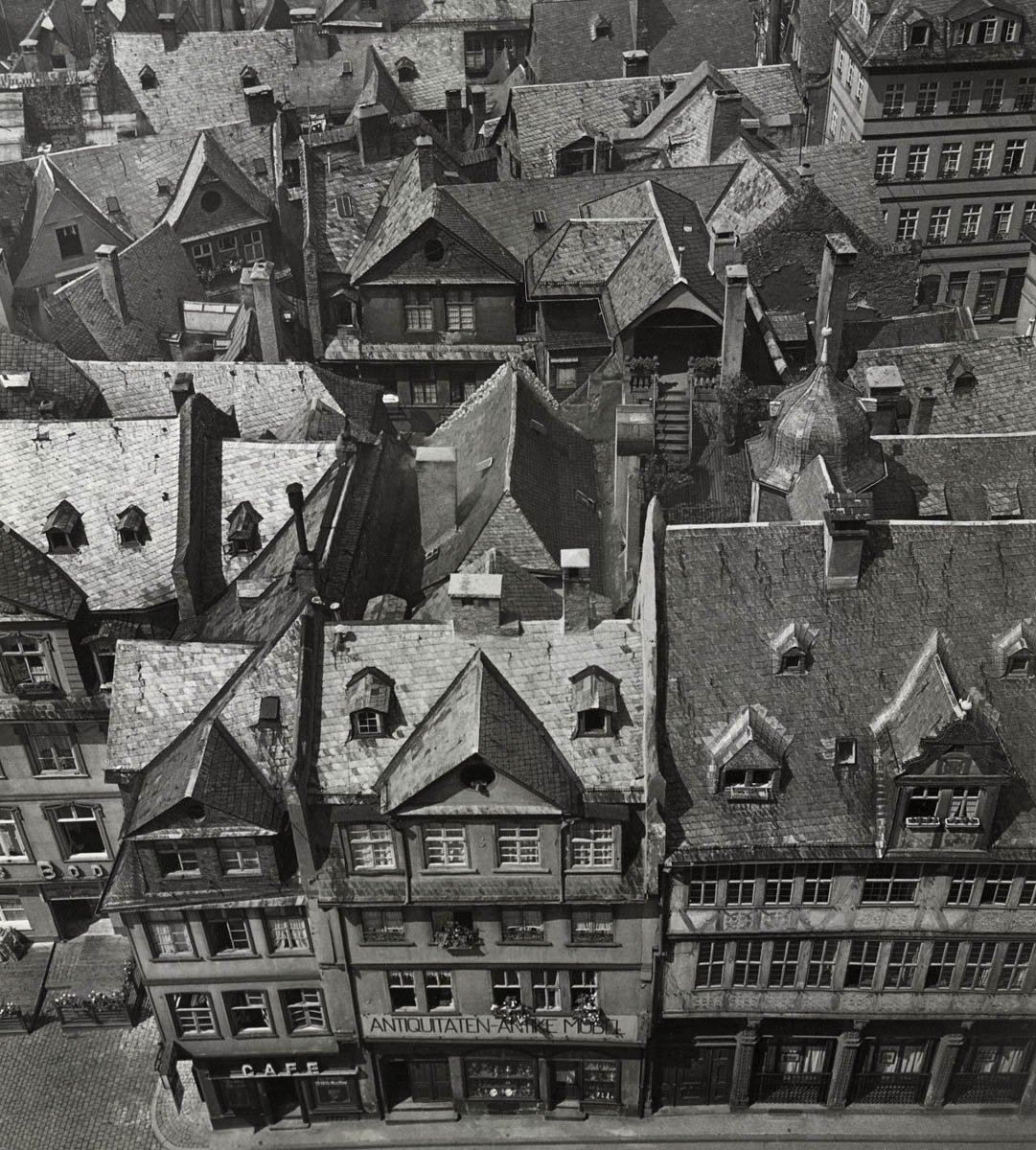
Saturday 11am – 8pm

Solomon R. Guggenheim Museum website

LIKE ART BLART ON FACEBOOK

Back to top

Exhibition: ‘Horizons’ by Bruno Cals at 1500 Gallery, New York

Exhibition dates: 6th May – 31st July 2010


Bruno Cals (Brazilian, b. 1967) 'Avenida Paulista 01' 2009 from the exhibition 'Horizons' by Bruno Cals at 1500 Gallery, New York, May - July, 2010


Bruno Cals (Brazilian, b. 1967)
Avenida Paulista 01
2009


I love these photographs – the perspective, framing and lighting of a subject matter seen in a utterly unique way.

Marcus


Many thankx to Andrew Klug and 1500 Gallery for allowing me publish the photographs in the posting. Please click on the photographs for a larger version of the image.


Bruno Cals (Brazilian, b. 1967) 'Avenida Paulista 02' 2009 from the exhibition 'Horizons' by Bruno Cals at 1500 Gallery, New York, May - July, 2010


Bruno Cals (Brazilian, b. 1967)
Avenida Paulista 02
2009


Bruno Cals (Brazilian, b. 1967) 'Avenida Paulista 03' 2009 from the exhibition 'Horizons' by Bruno Cals at 1500 Gallery, New York, May - July, 2010


Bruno Cals (Brazilian, b. 1967)
Avenida Paulista 03
2009


Bruno Cals (Brazilian, b. 1967) 'Prada' 2009


Bruno Cals (Brazilian, b. 1967)
Prada
2009


Bruno Cals (Brazilian, b. 1967) 'Hermès' 2009


Bruno Cals (Brazilian, b. 1967)
Hermès
2009


Horizons, a series of architectural photographs by Brazilian photographer Bruno Cals, will be on view at 1500 Gallery from May 6 – July 31, 2010. The photographs in the exhibition are part of a personal artistic project that Cals, a well-known fashion / advertising photographer based in Sao Paulo, Brazil, has been working on since 2008. There will be an opening reception at the gallery on May 13 from 6-8 pm.

The photographs in the Horizons series are suggestive of something beyond the record presented. The images of the buildings in São Paulo, Tokyo and Buenos Aires explore the limits of two-dimensionality, and articulate a radically different perspective on a commonplace visual scenario. In expressing this fresh point of view, Bruno Cals has invoked contrasting themes of possibility versus impossibility, presence versus emptiness, and search versus satisfaction.

About Bruno Cals

Bruno Cals was born in Rio de Janeiro in 1967. At age 19, Cals moved to Paris and began a successful career as a fashion model. At age 26, he decided that he wanted to be a photographer and returned to Brazil where he began shooting professionally. Initially a fashion photographer, Cals worked for Vogue and Elle and Visionaire. Since then, he has become a successful advertising photographer, working for the largest advertising agencies in Brazil. He has won several awards, including three at the Cannes Lions International Advertising Festival.

About 1500 Gallery

Alexandre Bueno de Moraes and Andrew S. Klug founded 1500 Gallery in 2010. The gallery specialises in Brazilian photography and is the first gallery in the world with this explicit focus. 1500 interprets the notion of “Brazilian photography” to comprise photography made by Brazilian photographers, as well as images bearing a conceptual or thematic relationship to Brazil. 1500 represents the work of 17 artists, both emerging and established: 6 of 1500’s photographers are represented in the Sao Paulo Museum of Art’s Collection of Photography. 1500’s collection of images includes both contemporary and vintage photography.

Text from the 1500 Gallery website [Online] 05/10/2010 no longer available online


Bruno Cals (Brazilian, b. 1967) 'Palermo 01' 2009


Bruno Cals (Brazilian, b. 1967)
Palermo 01
2009


Bruno Cals (Brazilian, b. 1967) 'Palermo 02' 2009


Bruno Cals (Brazilian, b. 1967)
Palermo 02
2009


Bruno Cals (Brazilian, b. 1967) 'Quartier' 2009


Bruno Cals (Brazilian, b. 1967)
Quartier
2009


Bruno Cals (Brazilian, b. 1967) 'Safra' 2009


Bruno Cals (Brazilian, b. 1967)
Safra
2009


Bruno Cals (Brazilian, b. 1967) 'Tokyo Midtown' 2009


Bruno Cals (Brazilian, b. 1967)
Tokyo Midtown
2009


1500 Gallery

This gallery is permanently closed.

LIKE ART BLACK ON FACEBOOK

Back to top