Around the world, 2025 hasn’t been a great year for photography exhibitions. As a friend of mine said on Facebook it has been a dreary year and I would tend to agree with him.
Curatorially, everything was pretty cut and dried, relying on the usual one artist show or group exhibition on a theme with nobody prepared to take a risk on anything creative, inventive even.
I found little to inspire me in terms of idiosyncratic but illuminating pairings of photographers or unusual insights into the conditions and conceptualisation of photographic production and presentation – other than a few of the exhibitions noted below: costume, gesture and expression – yes! the development of colour photography pre the ubiquitous American artists – yes! and the life in self-portraits of a photobooth operator in Melbourne, part magician, part artist – YES!
Out of the 60 postings on Art Blart in 2025 I’ve picked what I think are the 11 best exhibitions, plus a couple of honourable mentions.
I hope you enjoy the selection and a Happy New Year to you all!
Dr Marcus Bunyan
1/ Marcus Bunyan. “Past present,” on the exhibition Still Performing: Costume, Gesture, and Expression in 19th Century European Photography at the Nelson-Atkins Museum of Art, Kansas City, August 2024 – January 2025
Victor Plumier (Belgian, 1820-1878) Lady in Costume About 1850 Daguerreotype, half plate 5 1/2 × 4 1/2 inches The Nelson-Atkins Museum of Art Gift of the Hall Family Foundation
“The emotions and the sentiments, the gestures and the expressions. The actor and the stage, the photographer and the sitter. The staged photograph and the tableaux vivant. The Self and the Other.” ~ MB
2/ A Long Arc: Photography and the American South since 1845 at the Virginia Museum of Fine Arts, Richmond, October 2024 – January 2025
Andrew Joseph Russell (American, 1829-1902) Slave Pen, Alexandria, Virginia 1863 Albumen silver print High Museum of Art Purchased with funds Lucinda Weill Bunnen Fund and the Donald and Marilyn Keogh Family
“Photographs are containers of, fragments of, memories of, histories of, events – remembrances of events – brought from past into present, informing the future, showing only snippets of the stories of both past and present lives. Parallel to the usual thought that photographs are about death, they are also memory containers for (still) living people.” ~ MB
3/ Marcus Bunyan. “Out in the midday sun,” on the exhibition Martin Parr. Early Works at Fotografie Forum Frankfurt (FFF), September 2024 – February 2025
“I am always fascinated with the early work of an artist. In essence, the photographs tell you what are the primary concerns for the artist and these themes usually remain with them for the rest of their career. These early black and white photographs provide a window into that ongoing investigation, that golden path. They are more subtle in their modulation of British life than in the later colour work – it’s as though the artist had to change gears with the use of colour developing a more ironic way of seeing British life through a different spatial relationship to his subjects – but in these photographs there is still that deprecating humour that is often missing in the work of his contemporaries…” ~ MB
“There are the things that are out in the open, and there are the things that are hidden, and life has more to do, the real world has more to do with what is hidden.” ~ Saul Leiter
5/ True Colors: Color in Photography from 1849 to 1955 at Albertina Modern, Vienna, January – April, 2025
Léon Vidal (French, 1833-1906) Oriental Onyx Sardonyx Cup (16th century) 1876 Photomechanical proof (photochromy using the Léon Vidal process) mounted on cardboard H. 20.8 ; L. 26.2 cm. Don Fondation Kodak-Pathé, 1983
“What a wonderful exhibition. It’s so exciting to see the history and development of colour photography pre the ubiquitous, American artists William Eggleston and Stephen Shore, much as I like both artists.” ~ MB
6/ The basement: photography from Prahran College (1968-1981) at the Museum of Australian Photography, Wheelers Hill, Melbourne, March – May 2025
Julie Millowick (Australian, b. 1948) Mother and child from 46 Blanche Street, St Kilda 1977 Gelatin silver print 15.9 x 23.7cm Museum of Australian Photography, City of Monash Collection donated by Julie Millowick 2024
“Prahran College itself played a critical role in the legitimisation of photography as an art form within Australia. It spearheaded the integration of art photography into tertiary education curricula, fostering an environment where young artists … could experiment formally and conceptually.”
James McArdle. “Epoch,” on the On This Date in Photography website, 25th April, 2025 [Online] Cited 28/04/2025
“The wit, the humour (pigeons sitting outside the racing pigeon shop), the stiff upper lip, the carry on regardless, the working class pantomime of life and death – the public commission flats where people formed caring communities that were destroyed through redevelopment – the integrity of an existence that has largely come and gone pictured with warmth and empathy.” ~ MB
8/ Auto-Photo: A Life in Portraits at RMIT Gallery, Melbourne, June – August 2025
Installation view of the exhibition Auto-Photo: A Life in Portraits at RMIT Gallery, Melbourne, June – August, 2025 Photo: Marcus Bunyan
“Through the strip self-portraits Adler took while servicing and then testing the photobooths that he operated in Melbourne, Australia we become immersed in an archive of his world, the exhibition becoming a joyous ode to a man who devoted his life to photography (not in the traditional sense): in turns humorous and historical, a travelogue, his travelogue, through time and space.’ ~ MB
“Rodríguez’s moody, high contrast photographs of humanity and street scenes pictured from behind the wheel of his taxi in New York proffer an intuitive, empathetic and subjective view of the city and its people at a time of great economic and social upheaval…
Uncertain times, uncertain angles and perspectives, uncertain light give rise to a powerful body of work made certain by the talent of an impressive photographer. Glorious work.” ~ MB
10/ Marcus Bunyan. “Myths of the American West,” on the exhibition Richard Avedon ‘In the American West’ 1979-1984 at the Fondation Henri Cartier-Bresson, Paris, April – October 2025
“Avedon, while undercutting the myth of the American West through his storytelling, doesn’t seek to document, exploit or misrepresent his subjects, but to subjectively present them as on a theatrical set devoid of scenery – where their very appearance becomes scene / seen. As he himself said, “My concern is… the human predicament; only what I consider the human predicament may simply be my own.”” ~ MB
“The Bechers’ typologies and grids, their topographic state, their same same photographs and perspectives of industrial sculptures and landscapes are anything but objective. Their pictorial grammar, underlaid by a conceptual approach to subject matter, continuously reflected in the systematics of capture and display (the juxtaposition of works together), is constantly undermined by the ghost in the machine – those viral codes of mutation and difference which cannot be controlled.” ~ MB
“Weems blends the poetic and conceptual in photographs and bodies of work which investigate history, identity, racism, executive and patriarchal power from the perspectives of female / Black American.
What a fabulous artist, a guide into circumstances seldom seen, now revealed.” ~ MB
Exhibition dates: 6th October, 2024 – 6th April, 2025
Curator: Andrea Nelson, associate curator in the department of photographs, National Gallery of Art
Martha Rosler (American, b. 1943) Cleaning the Drapes 1967-1972, printed 2007 From the series House Beautiful: Bringing the War Home Inkjet print Image: 44.2 x 60.4cm (17 3/8 x 23 3/4 in.) National Gallery of Art Gift of the Collectors Committee and Pepita Milmore Memorial Fund
Martha Rosler originally distributed photocopies from this series, House Beautiful: Bringing the War Home, as flyers at anti – Vietnam War demonstrations. She made the original photomontages by combining gritty news photographs of fighting in Vietnam with homerelated advertisements culled from glossy women’s magazines. Here Rosler paired a woman cleaning patterned drapes with two tired soldiers smoking amid rocks and sandbags. The woman’s vacuum wand points to and echoes the soldiers’ rifles. The jolting collision of war imagery and affluent domestic space gives visual form to the description of the conflict as “the living room war” – so called because it appeared on television news nightly.
Wall text from the exhibition
“Ce n’est pas une pipe mais de la photographie, sous toutes ses formes variables et multivalentes”
“It’s not a pipe but photography, in all its variable and multifaceted forms.”
~ Marcus Bunyan
René Magritte’s 1929 painting Ceci n’est pas une pipe is also known as La Trahison des images … The Treachery of Images.
Treachery – the betrayal of trust – is an apposite word in relation to photography of the 1970s. Finally, once and for all, documentary photography in America broke free of the West Coast fine art photography tradition of mainly white male artists and the “aura” of the fine art print (Walter Benjamin). Photography betrayed the trust placed in the authenticity of the image and its link to the “truth” of reality represented in the photograph to become a medium of variability, in concept, execution and outcome. Photography became whatever you wanted it to be.
Documentary photography and its link to the reality of the referent – its assumed representation of a truth that existed in reality – began to be subsumed into the whole of photography, just part of a conceptual, art, performative, staged, street, cameraless, documentary, fashion, photojournalist, activist, amoebic (from the Greek ἀμοιβή amoibe, meaning “change”), and viral (Paul Virilio) medium.
Photography had always been a medium of communication but now became multi-perspectival – whether that be imaginings of the mind relayed through photographs, conceptual ideas about the world and how we interact with it created and staged through photographs, or new colour photography that challenged the orthodoxy of fine art black and white West Coast American photography.
As Anne-Marie Willis observes on the On This Date In Photography website, “any curator who would challenge the orthodox Beaumont Newhall-style photo history limited to images that are distinctively photographic, aesthetic, and “Straight” … would open a Pandora’s box full of photographs pervasive across so many fields, of such limitless subject matters, and crossing so many disciplines that their histories in photography would be obscured.”1
This is the alleged treachery of multi-perspectival photography, the betraying of photographic histories that stretched back to the beginnings of the medium… but it had to be done for photography to fully open itself up to the imaginings of the human and the media flows of the world. “It was a time when photography challenged the art photography norm: photography should not, could not be restricted to what was considered ‘art’.”2
Thus, it is a great joy to see photographs from this stimulating exhibition, photographs that challenge the established “norm” of what photography should be. But what is surprising to me when looking at the complete list of photographs in this exhibition is the important artists who changed the face of photography in the 1970s who are not represented at all or only have one or two images on show:
Gordon Parks 0 Garry Winogrand 1 Lee Friedlander 2 Diane Arbus 1 Robert Mapplethorpe 0 Robert Heinecken 0 Richard Avedon 0 Andy Warhol 1 Polaroid Cindy Sherman 0 Barbara Kruger 0 Nan Goldin 1 Stephen Shore 1
Diane Arbus, who was instrumental in changing portrait photography at the time, only has one photograph in the exhibition; Barbara Kruger and Robert Heinecken, both “para-photographers” whose work stood “beside” or “beyond” traditional ideas associated with photography have none; Stephen Shore who, along with William Eggleston, was responsible for making colour photography acceptable in art photography has only one photograph.
But most surprisingly of all, Cindy Sherman whose Untitled Film Stills were made predominantly between 1977-1980 and who casts herself as clichés or feminine types, becoming both the artist and subject in the work … is not there at all. Her loss, her evisceration, and the absence of “arguably one of the most significant bodies of work made in the twentieth century and thoroughly canonized by art historians, curators, and critics,”3 is unfathomable.
Dr Marcus Bunyan
1/ Anne-Marie Willis quoted in Dr James McArdle. “DECEMBER 14: CONTEXT,” on the On This Date In Photography website 15/12/2019 [Online] Cited 26/02/2025
2/ Ibid.,
3/ Exhibition Catalogue, New York, Museum of Modern Art, Cindy Sherman, 2012, p. 18 quoted in the “Untitled Film Stills” page on the Wikipedia website
Many thankx to the National Gallery of Art for allowing me to publish the photographs in the posting. Please click on the photographs for a larger version of the image.
Martha Rosler (American, b. 1943) Roadside Ambush 1967-1972, printed 2007 Inkjet print Image/sheet: 50.8 x 61cm (20 x 24 in.) National Gallery of Art Gift of the Artist and Mitchell-Innes and Nash
Rosler originally distributed photocopies of House Beautiful: Bringing the War Home at anti–Vietnam War demonstrations. “I saw House Beautiful not as art,” she later reflected. “I wanted it to be agitational.” The artist created the original photomontages, from which these collages are derived, by combining news photographs of scorched battlefields in Vietnam with glossy advertisements for US homes, layering images of soldiers within cut-out silhouettes of men from polo-shirt advertisements; and splicing pictures of soldiers’ burials with those of military marches. By tying the destruction abroad to untroubled affluence at home, Rosler gave visual form to the description of the conflict as “the living-room war” – so called because it was the first war to be televised.
The exhibition The ’70s Lens: Reimagining Documentary Photography examines how new approaches to documentary photography that emerged during the 1970s reflected a radical shift in American life – and in the medium itself.
The 1970s was a decade of uncertainty in the US – soaring inflation, energy crises, the Watergate scandal, and protests about pressing social issues – and the profound upheaval that rocked the country formed the backdrop for a revolution in documentary photography. Now on view at @ngadc, The ’70s Lens: Reimagining Documentary Photography explores this compelling and contested moment of reinvention when the genre’s association with objectivity and truthfulness came into question. Featuring works from over eighty artists, the exhibition delves into how the camera was used to examine life in the US from a diverse range of perspectives, and in doing so, transformed the practice of documentary photography.
The ’70s Lens: A Conversation with Anthony Hernandez
Artist Anthony Hernandez discusses 50 years of work with curator Andrea Nelson on October 24, 2024. The conversation celebrates the exhibition The ’70s Lens: Reimagining Documentary Photography (October 2024 – April 2025).
Anthony Hernandez (b. 1947, Los Angeles, California) has crafted a richly varied oeuvre, ranging from a distinctive style of black-and-white street photography to colour photographs of abstracted details of his surroundings. Much of Hernandez’s work focuses on his native Los Angeles, revealing a unique insight into the people and landscape of the much-pictured city. Hernandez is a recipient of a Guggenheim Fellowship (2018), the Rome Prize (1999) and has been named a United States Artists Fellow (2009).
Eggleston is celebrated for his use of colour photography, which he began experimenting with in the late 1960s. Eggleston’s 1976 exhibition Colour Photographs, held at the Museum of Modern Art, New York, is considered a pivotal moment in the development of colour photography as a contemporary art form and widely credited with increasing recognition of the medium.
Since first picking up a camera in 1957, Eggleston has photographed his family, friends and the people that he encountered in his everyday life, particularly in his native Memphis. Eggleston is said to find the beauty in the everyday and his work has inspired many present day photographers, artists and filmmakers, including Martin Parr, Sofia Coppola, David Lynch and Juergen Teller.
Anthony Friedkin (American, b. 1949) Young Man, Troupers Hall, Hollywood 1969 From the series The Gay Essay Gelatin silver print National Portrait Gallery Gift of Mary and Dan Solomon
In 1969, Anthony Friedkin was only 19 years old when he set out to document the queer communities of San Francisco and Los Angeles. The resulting project, The Gay Essay, is an expressive and nuanced portrait. Friedkin charts various facets of the culture, from street life and protests to parades and drag performances.
Friedkin’s photographs record the beginnings of the gay liberation movement in California. With a respectful intimacy he pictures individuals living true to themselves while defying prevailing social norms.
Wall text from the exhibition
Mel Bochner (American, 1940-2025) Misunderstandings (A Theory of Photography) (details) 1970 10 offset lithographs on notecards and envelope Sheet (each): 12.7 x 20.32cm (5 x 8 in.) National Gallery of Art, Gift of Mary and Dan Solomon
When Mel Bochner started documenting his works of sculpture with a camera, he realised that his practice had “become about photography without [my] wanting it to.” He studied the history of the medium and found conflicting ideas about what photography is or should be. By illustrating these “misunderstandings” with quotes from notable figures and sources, Bochner underscored the gap between a photograph itself and what it purports to represent. He even fabricated three of the quotations, further playing on photography’s tenuous relationship to truth. The photograph of the artist’s hand and forearm is also a misunderstanding: it is much smaller than the actual body part it depicts. It also appears to be a negative of a Polaroid photograph, but Polaroids exist only as positive prints.
Wall text from the exhibition
Mel Bochner was a key figure in the Conceptual Art movement of the 1960s and 70s. Bochner was part of a group of artists who challenged the traditional notion of art as a physical object to be admired for its aesthetic qualities and instead sought to explore the ideas and concepts behind the object, often using language and text as their medium.
Bochner’s early works were influenced by his interest in mathematics and logic, which he applied to create intricate geometric patterns. As his practice evolved, he incorporated language and words into his artwork, exploring the relationship between language, thought, and perception.
Anthony Barboza (American, b. 1944) New York City 1970s Gelatin silver print Image/sheet: 23.7 × 16.1cm (9 5/16 × 6 1/4 in.) National Gallery of Art Pepita Milmore Memorial Fund
Anthony Barboza’s photography has been integral in shaping the image of Black America. A founding member of the Kamoinge Workshop, a group of Black photographers formed in New York in 1963, Barboza went on to establish a thriving commercial and personal practice focused largely on Black subjects. His affirmative representations of African Americans in daily life – like this photograph of two ultra-stylish men standing in front of a hotel coffee shop in midtown Manhattan – contributed to an empowering narrative for the Black community in the face of inequality and adversity. Describing his approach to making pictures on the street, Barboza commented, “”The photograph finds you, you don’t find the photograph.”
Wall text from the exhibition
Anthony Barboza (American, b. 1944) New York City 1970s Gelatin silver print Image: 23.7 × 15.9cm (9 5/16 × 6 1/4 in.) National Gallery of Art Pepita Milmore Memorial Fund
Lee Friedlander (American, b. 1934) Hillcrest, New York 1970 Gelatin silver print Image: 20.3 x 30.5cm (8 x 12 in.) National Gallery of Art Patrons’ Permanent Fund
The fracturing of the image plane, where multiple, diverse realities are represented within one photograph, deconstructing the reality of fine art photography. ~ Marcus
Lee Friedlander’s layered compositions wittily observe connections between American life and commerce. In this dizzying photograph, Friedlander captures himself, at center, in a sideview mirror while at a filling station. In the reflection behind him we see a strip mall with the stores’ signs reversed. Near and far vie for attention and parts of the composition are blocked from our view.
The photograph with a World War I memorial similarly features vertical elements that break up the composition into separate frames. At left, the memorial’s soldier with rifle – who appears to be on guard – goes completely unnoticed as pedestrians make their way along a street full of storefronts.
Wall text from the exhibition
Kenneth Josephson (American, b. 1932) Wyoming 1971 From the History of Photography series Gelatin silver print Image: 22.8 x 14.1cm (9 x 5 9/16 in.) National Gallery of Art Patrons’ Permanent Fund
Kenneth Josephson’s conceptual photography experiments with playful illusion to explore and question his medium. Josephson was a graduate among the first generation of photography candidates from the Illinois Institute of Design. A student of such masters as Aaron Siskind, Harry Callahan, and Minor White, Josephson went on to teach for 35 years at the Art Institute of Chicago, where he routinely taught the “Introduction to Photography” course as it inspired him to continue experimentation.
“This photograph of a photograph held in space causes the viewer to question assumptions about truthful representation according to size and scale; it also draws attention to the principle that photographic reality is constructed through an artist’s ideas and choices. The subject of the photograph is photography itself, and the ways that life is documented, manipulated, trivialised, and celebrated with photographs.”
Lewis Baltz (American, 1945-2014) Tract House #4 1971 From the portfolio The Tract Houses Gelatin silver print Image/sheet: 14.5 × 22.5cm (5 11/16 × 8 7/8 in.) National Gallery of Art Corcoran Collection (Gift of the artist)
Lewis Baltz’s The Tract Houses captures the austere geometry of the shoddily built homes that sprang up in California’s suburban landscape beginning in the mid-1940s. Straight-edge architectural details, positioned strictly parallel to the picture plane, recall the reductive forms of minimalist art. Entire, recently constructed houses appear forlorn. None of the pictures include shadows, clouds, or people. Baltz’s series is a powerful critique of the transformation of the American landscape into an unending terrain of anonymous architecture. At the same time, the exquisitely rendered tones and textured surfaces emphasise the subtle beauty to be found in this bleak environment.
Wall text from the exhibition
With his iconic, minimalist photographs of suburban landscape, Lewis Baltz was at the forefront of a revolutionary shift in the medium of photography. Baltzs work exemplifies the ways in which photography started to loose the bonds of its isolation within its own segregated history and aesthetics and began to take its place among other media. In the late 1960s and early 1970s Baltz became fascinated by the stark, man-made landscape rolling over Californias then still-agrarian terrain. His earliest portfolio, The Tract Houses (1971), and his preliminary forays into a minimal aesthetic, The Prototype Works (1967-1976), illuminate his drive to capture the reality of a sprawling Western ecology gone wild.
Diane Arbus (American, 1923-1971) A young man and his girlfriend with hot dogs in the park 1971 Gelatin silver print Image: 37.7 x 36.5cm (14 13/16 x 14 3/8 in.) National Gallery of Art, Corcoran Collection Gift of Stephen G. Stein
Diane Arbus prowled New York’s public spaces looking for humor and strangeness in the everyday. Here a young couple walks in Central Park, wearing similar clothes, hairstyles, and dejected expressions. Arbus’s carefully composed but disorienting photograph – the subjects are in crisp focus while the background is blurred – compels us to look anew at the familiar. Is this couple unhappy in love or expressing the uncertainty of the times? Arbus made this photograph the year she died. Her influence on documentary photography would continue through the decade.
Wall text from the exhibition
Eleanor Antin (American, b. 1935) Philip Steinmetz (American, 1944-2013) (photographer) 100 Boots (details) 1971-1973 51 halftone prints (postcards) image/sheet (each): 11.5 x 17.75cm (4 1/2 x 7 in.) National Gallery of Art Pepita Milmore Memorial Fund
In this epic visual narrative, black rubber boots stand in for a fictional hero traveling from California to New York City. Eleanor Antin created temporary installations with the boots, had them photographed (by Philip Steinmetz), and made 51 postcards, copies of which she mailed to approximately 1,000 people and institutions involved in the arts. The journey starts at a Bank of America and ends at Central Park – after a visit to the Museum of Modern Art, where the boots and a set of postcards and photographs were later exhibited. Using the postal service, Antin bypassed the traditional gallery system, which had long overlooked women artists. While many of these scenes are humorous, the empty army boots also recall the Vietnam War and the soldiers who did not come home.
Wall text from the exhibition
100 Boots, 1971-1973
For her 51-piece instalment 100 Boots Eleonor Antin positioned one hundred ordinary black rubber boots on various locations all over Southern California and consequently in New York City. She took photos, printed them on postcards and assembled a mailing list of about a thousand names – mainly artists, writers, critics, galleries, universities and museums – who received the various postcards over a period of two and a half years between 1971 and 1973. The first card, 100 Boots Facing the Sea, was mailed on the Ides of March, 1971, unannounced and without further comment. A few weeks later it was followed by 100 Boots on the Way to Church and three weeks thereafter by the next one.
In a total of 51 photographs, Eleanor Antin documented the travels of the 100 Boots, her so called “hero” – from a beach close to San Diego to a church, to a bank, to the supermarket, trespassing, under the bridge, to a saloon and on their travels eastward. Finally, on May 15th, 1973 100 Boots arrived at the Museum of Modern Art in New York. By this time, 100 Boots had long become an epic visual narrative and a picaresque work of conceptual art.
Henry Wessel (American, 1942-2018) Walapai, Arizona 1971 Gelatin silver print Image: 26.51 x 39.85cm (10 7/16 x 15 11/16 in.) National Gallery of Art Gift of Mary and Dan Solomon and Patrons’ Permanent Fund
In 1975 New Topographics: Photographs of a Man-Altered Landscape opens at the International Museum of Photography in Rochester, N.Y. It includes photographs by Robert Adams, Lewis Baltz, Bernd and Hilla Becher, Joe Deal, Frank Gohlke, Nicholas Nixon, John Schott, Stephen Shore, and Henry Wessel Jr.
“Henry Wessel began taking photographs while majoring in psychology at Pennsylvania State University in the mid-1960s. Travel throughout the United States in subsequent years led him to direct his gaze increasingly to details of human interaction with the natural and man-made environment. Wessel’s move to the West Coast in the early 1970s inspired him to incorporate light and climate into his work. His inclusion in the seminal exhibition New Topographics: Photographs of a Man-Altered Landscape, organised in 1975 by the George Eastman House in Rochester, New York, solidified his reputation as a keen observer of the American topography.”
Text from Pacific Standard Time at the Getty
John Simmons (American, b. 1950) Will on Chevy, Nashville, Tennessee 1971, printed 2024 Gelatin silver print Image: 30.48 x 20.32cm (12 x 8 in.) National Gallery of Art Alfred H. Moses and Fern M. Schad Fund
A fashionably dressed older man crosses the street with his umbrella. A young woman turns to look at the camera while holding hands with a man in uniform. These were people John Simmons encountered while studying art at Fisk University in Nashville. Raised on Chicago’s South Side, Simmons had first published photographs as a teenager in the African American newspaper Chicago Defender. Refuting white-centered media’s failure to show positive imagery of the Black experience, Simmons has focused on people enjoying everyday life.
“I always feel like my subject and I were meant to share that moment together,” he has said. “So many of the pictures I take, it was like our paths were meant to cross.”
Wall text from the exhibition
Simmons began his career at 15 as a photographer for the oldest African American-owned newspaper, The Chicago Daily Defender in 1965. Over his decades long career, he’s photographed icons of the Civil Rights Movement, turbulent protests and demonstrations, famed musicians and poignant intimate moments of everyday life. “I’m glad to see photographs I took back in my teens are still relevant today,” he says.
Helen Levitt frequently made photographs of children on the streets of New York City, exploring their relationships to the urban setting as they played, imagined, and discovered together. After decades of working in black and white, Levitt became an early advocate of color documentary photography. Color allowed her to tell a fuller story of everyday life. Here, the green of the boy’s T-shirt is echoed in the poster and frame behind him. “I thought my photographs would be closer to reality if I got the color of the streets,” she said. “Black and white is an abstraction.”
Wall text from the exhibition
Bill Owens (American, b. 1938) Ronald Reagan 1972 From the series Suburbia Gelatin silver print Image: 16.4 x 21.6cm (6 7/16 x 8 1/2 in.) National Gallery of Art Patrons’ Permanent Fund
Over the course of a year, Bill Owens made photographs of the housing developments that had recently sprung up outside of Oakland and San Francisco. With an eye to humor, he captured the apparent conformity and materialism of the new suburbs. Here, a home is decorated for Christmas. At center, Nativity figures sit atop a television console showing an old film featuring Ronald Reagan, who had been a movie actor before becoming a politician. Owens also respected the liberation that many suburbanites felt, as well as their determination to build better lives. In his book Suburbia (1972), he included quotations from his subjects describing the opportunities and challenges they faced in their new environments.
Wall text from the exhibition
Owens began his photographic career in the late 1960s as a staff photographer for a local newspaper in Livermore, California. During this period, he began his most noteworthy project, “Suburbia,” which would become a major body of work in American documentary photography.
“Suburbia” was published as a book in 1973, featuring Owens’ images and conversations with suburban dwellers. The project’s goal was to investigate the goals, aspirations, and inconsistencies of suburbia life, offering a critical yet sympathetic study of the American Dream.
Owens’ images depicted scenes of backyard barbecues, family gatherings, children at play, and the myriad rituals and social interactions that constituted suburban areas. He highlighted both the humor and the underlying intricacies of suburban life through his good observation and direct attitude.
What distinguished Owens’ work was his ability to see past the surface and capture the soul of his subjects. His images conveyed a sense of realism by portraying suburbanites in their natural settings and enabling their tales to flow through genuine moments captured in time.
Owens’ art struck a chord with a large audience because it highlighted a huge societal transition in America during the 1970s. Owens’ images challenged the idealized image of suburban life by exposing the hardships, wants, and inconsistencies inherent in the pursuit of the American Dream.
Anonymous. “Bill Owens,” on the Photo.com website Nd [Online] Cited 06/20/2025. Used under fair use conditions for the purposes of education and research
See how documentary photography transformed during the 1970s.
The 1970s was a decade of uncertainty in the United States. Americans witnessed soaring inflation, energy crises, and the Watergate scandal, as well as protests about pressing issues such as the Vietnam War, women’s rights, gay liberation, and the environment. The country’s profound upheaval formed the backdrop for a revolution in documentary photography. Activism and a growing awareness and acceptance of diversity opened the field to underrepresented voices. At the same time, artistic experimentation fueled the reimagining of what documentary photographs could look like.
Featuring some 100 works by more than 80 artists, The ’70s Lens examines how photographers reinvented documentary practice during this radical shift in American life. Mikki Ferrill and Frank Espada used the camera to create complex portraits of their communities. Tseng Kwong Chi and Susan Hiller demonstrated photography’s role in the development of performance and conceptual art. With pictures of suburban sprawl, artists like Lewis Baltz and Joe Deal challenged popular ideas of nature as pristine. And Michael Jang and Joanne Leonard made interior views that examine the social landscape of domestic spaces.
The questions these artists explored – about photography’s ethics, truth, and power – continue to be considered today.
Text from the National Gallery of Art
Lee Friedlander (American, b. 1934) Doughboy. Stamford, Connecticut 1973 Gelatin silver print Image: 17.8 x 27cm (7 x 10 5/8 in.) National Gallery of Art Robert B. Menschel Fund
William Eggleston has said that he has “a democratic way of looking around,” where nothing is more important or less important. For him, everyday subjects are not boring but instead offer visual richness. Here, that richness has a pronounced edge. Eggleston directed his lens up to a red ceiling with a single bare lightbulb at center. We glimpse only the top of a doorframe and a fragment of an explicit poster. The saturated, bloodlike color that dominates the composition is shocking, even menacing. It also challenged Eggleston technically as he developed his skills with dye imbibition printing. Commonly known as dye transfer, the process was labor intensive but allowed for customisation and a wide range of colours and tones.
Viewers of a certain age will recognize this setting as the parking lot of a Howard Johnson’s restaurant. HoJos, as they were nicknamed, were once ubiquitous along America’s highways. The cheery saturated colors belie the scene’s subject: a couple having a bad travel day. A man in suit and tie works under the hood of a beat-up Chevy Impala. His partner, wearing a pale pink skirt and top, arms crossed, appears frustrated. The cars zooming by seem to mock their immobility. Part of Mitch Epstein’s Recreation series, which documented Americans engaging in leisure activities, the photograph today evokes melancholy and nostalgia. Explaining his early turn to colour film, the artist said, “The world is in color, so why not photograph in color?”
Wall text from the exhibition
I started to work in colour, which was a radical, and some thought foolish, move in 1973. Colour photography was not yet a medium for serious photography – it was used almost exclusively for slick advertising and illustration. Within a month of shooting in colour, though, I wanted to do nothing else…
As I developed, I learned that a photograph is other than the thing itself photographed, and this freed me to think about how I could use photography to fictional effect, even while my pictures were drawn from the real world…
Photography remains a tool with which I form and sharpen my response to the world around me. Anything and everything is photographable in an infinite number of ways. That excites me.
Mitch Epstein in Lewis Blackwell. PhotoWisdom: Master Photographers on Their Art quoted quoted in “Mitch Epstein – Meet The Master Photographer,” on the Milkbooks website Nd [Online] Cited 06/02/2025. Used under fair use conditions for the purposes of education and research
Adams’ photographic vision is extra ordinary and I cannot fault his individual photographs. I become engrossed in them. I breathe their atmosphere. He has a resolution, both in terms of large format aesthetic, the aesthetic of beauty and of using materials, light and composition… that seems exactly right. He possesses that superlative skill of few great photographers, and by that I mean: sometimes he has true compassion** / parallel to a religious compassion, but not based on something higher / just perfect human. In some of his photographs (such as East from Flagstaff Mountain, Boulder County, Colorado 1975) he possesses real forgiveness, in others there is the perfection of cruel, the perfection of de/composition.
** achieved by Arbus, Atget and sometimes by Clift, Gowin.
And then, each image holds small clues vital to the overall conversation that is the accumulation of his work and it is in their collective accumulation of meaning that Adams’ photographs grow and build to shatter not just the American silence on environmental issues, but the deafening silence of the whole industrialised world. In their holistic nature, Adams’ body of work becomes punctum and because of this his work produces other “things”, things as great as anything the French literary theorist, essayist, philosopher, critic, and semiotician Roland Barthes wrote about. As in Barthes’ seminal work Camera Lucida, Adams’ work reminds us that the “photograph is evidence of ‘what has ceased to be’. Instead of making reality solid, it reminds us of the world’s ever changing nature.”1
Marcus Bunyan. “The quiet of the great beyond,” on the exhibition American Silence: The Photographs of Robert Adams at the National Gallery of Art, Washington, May – October 2022 on Art Blart: art and cultural memory archive website, September 25, 2022 [Online] Cited 06/02/2025
1/ Anonymous. “Roland Barthes,” on the Wikipedia website Nd [Online] Cited 23/09/2022
Michael Jang (American, b. 1951) Study Hall 1973 Gelatin silver print 15.5 × 23.5cm (6 1/8 × 9 1/4 in.) National Gallery of Art Charina Endowment Fund
In Study Hall, Michael Jang’s extended family sits together on a couch reading comics and a television guide, a messy tray of Kraft Teez Dip and potato chips on the table in front of them. The covers of the decidedly not studious publications block their faces, becoming stand-ins for their portraits. In Aunts and Uncles (nearby), relatives are caught joking around while posing for an official family portrait in silly sunglasses.
Jang’s humorous photographs of his Chinese American family and the trappings of their suburban lives offer a refreshing take on the often staid genre of family portraiture. They also debunk the 1970s stereotype – think The Brady Bunch – that the “all-American” family could only be white.
Wall text from the exhibition
In his series The Jangs, Michael Jang photographed family at home. His humorous photographs of their suburban lives expanded the concept of the “all-American” family – the Chinese American Jangs didn’t look like The Brady Bunch.
In Study Hall, Jang’s cousins and aunt sit together on a couch reading comics and a television guide, a messy tray of potato chips and dip on the table in front of them. The covers of decidedly not studious publications block their faces, becoming stand-ins for their portraits.
Jang’s delightful series was almost entirely forgotten. The photographs, which he had first made while a student, sat in a box in the artist’s house for decades while he established a career as a commercial photographer.
In the 2000s, Jang reconsidered this series and shared it with museums, which began adding the photographs to their collections. His photographs took on a new light in the wake of a rise of anti-Asian hate during the COVID-19 pandemic. In 2021, Jang wheat pasted images from The Jangs on buildings in San Francisco’s Chinatown.
Susan Meiselas (American, b. 1948) Lena on the Bally Box, Essex Junction, Vermont 1973 Gelatin silver print Image: 22 x 32.5cm (8 11/16 x 12 13/16 in.) National Gallery of Art Anonymous Gift in honor of Sarah Greenough and Andrea Nelson
The final and most essential selection in this posting – Susan Meiselas’ 1972-1975 Carnival Strippers series – goes behind the “front” to document the lives of women who performed striptease for small-town carnivals in New England, Pennsylvania and South Carolina. “Meiselas’ frank description of these women brought a hidden world to public attention, and explored the complex role the carnival played in their lives: mobility, money and liberation, but also undeniable objectification and exploitation. Produced during the early years of the women’s movement, Carnival Strippers reflects the struggle for identity and self-esteem that characterised a complex era of change.” (Booktopia)
Intense, intimate and revealing, the series proves that we can think we know something (the phenomenal) and yet photography reveals how strange and different each world is – whether that be in trying to understand the mind of the artist and what they intended in a constructed photograph or, in this case, having an impression of someone else’s life, a life we can perceive (through the “presence” of the photograph) but never truly know (the noumenal).
Susan Meiselas (American, b. 1948) Tentful of Marks, Tunbridge, Vermont 1974 Gelatin silver print Image: 19.7 x 29.4cm (7 3/4 x 11 9/16 in.) National Gallery of Art, Corcoran Collection Museum Purchase, Photography Acquisition Fund
In Tentful of Marks, Susan Meiselas trains her camera from backstage on the legs and high heels of a carnival dancer. The all-male audience – the “marks” of the title – are in sharp focus, and they crowd around the small stage, lustfully gawking up at her. Meiselas spent three summers documenting women who performed striptease at small-town carnivals in New England, Pennsylvania, and South Carolina. In addition to making photographs, she recorded audiotapesof conversations with the dancers, giving them agency to describe their experience. Meiselas saw her project as a collaboration. Merging listening and looking, it expanded perspectives on a largely invisible and – from the dancers’ perspective – misunderstood world.
Wall text from the exhibition
Installation view of the exhibition The ’70s Lens: Reimagining Documentary Photography at the National Gallery of Art, Washington showing at left, Milton Rogovin’s photograph Jimmy Webster with His Father, Verne (1973, below); and at right, Jimmy Webster (1985)
Milton Rogovin (American, 1909-2011) Jimmy Webster with His Father, Verne 1973 Gelatin silver print Image: 17.4 x 15.5cm (6 7/8 x 6 1/8 in.) National Gallery of Art Gift of Pierre Cremieux and Denise Jarvinen
Verne Webster, sitting on his front stoop, looks guardedly at the camera while sheltering his toddler son Jimmy in a protective embrace. This is an early work from Milton Rogovin’s 30-year series documenting Buffalo’s Lower West Side. The project focused on a six-block neighbourhood that was among Buffalo’s most diverse and most impoverished. Rogovin asked permission to photograph his subjects, let them choose their poses and settings, and gave them free prints. He returned every decade or so to photograph the same individuals. A nearby picture shows Jimmy 12 years later. Looking back at Rogovin’s photographs in 2003, Jimmy Webster said, “Whenever you look at his photographs, you just see people for who they are.”
Wall text from the exhibition
John Baldessari (American, 1931-2020) Throwing three balls in the air to get a straight line: (best of thirty-six attempts) 1973 Colour offset photolithographs National Gallery of Art Library David K. E. Bruce Fund
West Coast conceptual art has a whimsical air. Artists such as John Baldessari and Ed Ruscha created scenarios that lampoon both the pretense of “high art” and the self-seriousness of conceptual art, particularly as the latter was developing in New York. Beneath the humor, however, their works spoke to more substantive issues like artistic failure and social mores. In 1973 Baldessari photographed his 36 attempts to throw three balls in the air to form a straight line. He never succeeded but included his 12 best attempts in a portfolio.
Wall text from the exhibition
Henry Wessel (American, 1942-2018) Utah 1974 gelatin silver print Image: 26.5 x 39.7cm (10 7/16 x 15 5/8 in.) National Gallery of Art Patrons’ Permanent Fund
Stephen Shore (American, b. 1947) Holden Street July 13, 1974 Chromogenic print Image: 20.5 x 25.4cm (8 1/16 x 10 in.) National Gallery of Art Diana and Mallory Walker Fund
Stephen Shore’s photograph may appear casual, but it is carefully constructed. The vertical of the lamppost draws our attention to the shadowed foreground. Buildings and sidewalks on each side act as perspective lines that meet in the brighter background. Shore was exploring how three-dimensional space is rendered in two dimensions, particularly in a colour photograph. He was also examining where a once-powerful New England industrial town abruptly ended and the verdant countryside began. The lack of people, saturated colours, and clarity of detail – made possible by using a large-format 8 × 10 camera – give the picture an air of timelessness but also hyperreality.
Wall text from the exhibition
Thomas Barrow (American, 1938-2024) Dart 1974, printed 1994 From the series Cancellations Gelatin silver print 23.9 × 34.6cm (9 7/16 × 13 5/8 in.) National Gallery of Art Randi and Bob Fisher Fund
In Dart, Thomas Barrow photographed a huge arrow that appears to have plunged from the threatening clouds above into a parking lot shared by Snappy Photos, a Goodwill drop-off bin, and a K-Mart. The work is part of his series Cancellations, documenting the suburban sprawl overtaking much of the United States. Barrow “cancelled” his images before printing by slashing the negatives with an icepick. (“Cancelling” refers to the practice of defacing a printing plate or negative to ensure no more official prints can he made from it.) This action calls attention to the photograph’s surface and its materiality, which in turn emphasise the choices Barrow made in its production.
Wall text from the exhibition
Thomas F. Barrow is an artist working with photography more than he is a photographer… For Barrow, the ideas are what matter, not the material they are realized with.
Barrow’s Cancellations series is an early expression of this artistic philosophy. Created between 1973-1981, it began when Barrow moved from Rochester, New York to Albuquerque, New Mexico to teach at UNM. Like many photographers of this era (Lewis Baltz, Frank Gohlke, Robert Adams) Barrow was struck by the transformation underway with the (sub)urbanization of the Western landscape. However, he was inspired to do more than document with his camera; he wanted to challenge his viewers while subverting some fundamental truths of photography. Inspired by a cancelled Marcel Duchamp etching (a process where the etching plate is defaced to indicate that no more official prints may be made), he began defacing his negatives with an ice pick and hole punch, “cancelling” them before making the images.
Almost 40 years later, it’s still unclear whether Barrow is canceling the photograph or the scene in the picture. He is certainly calling attention to the matrix that produced the photograph, an unheard of practice at the time and still rare today. By defacing his negatives, he has created photographs that are as much about the physical image as they are about the subject in the photograph.
David Ondrik. “Cancellations by Thomas Barrow,” in Fraction Magazine Issue 49 on the Fraction Magazine website Nd [Online] Cited 07/02/2025. Used under fair use conditions for the purposes of education and research
Blythe Bohnen (American, 1940-2022) Self-Portrait: Triangular Motion, Small 1974 From the series Self-Portraits: Studies in Motion Gelatin silver prints National Gallery of Art Gift of Herbert and Paula Molner
Most self-portraits offer some idea of the artist’s physical appearance and perhaps psychological state. The focus of Blythe Bohnen’s intentionally distorted self-portraits, however, is altogether different. Bohnen was interested in the physical element of artmaking – specifically, the role of her body’s movements or gestures in the creative process. Photographs usually capture an instant, but Bohnen instead used exposures of several seconds and the precise, predetermined gestures identified in her titles to distill the essence of motion. The portraits, blurry and disorienting, become more of a performance in time, condensed into a single image.
For the works in his series Altered Landscape, John Pfahl playfully juxtaposed the organic and natural with the manipulated and constructed. In this picture, he placed six oranges on a path in the woods. Typically, if the fruits were all the same size they would appear to grow smaller the farther from the camera they were located. Here, however, the artist has reversed that expectation, with the smallest orange sitting nearest the camera and the largest in place at the top of the picture. Through his staging, Pfahl makes the viewer aware of how a camera, by recording three-dimensional space onto a two-dimensional surface, actually produces a distorted view.
Wall text from the exhibition
In 1981, Peter C. Bunnell observes in his Introduction to James Alinder’s book Altered Landscapes: The Photographs of John Pfahl, “Our momentary, fragmented and captured vision of disorder and emotion has been replaced by a cool rendering of purposefulness as if to accord another dimension of positivism to the moving force of contemporary human awareness. Pfahl’s work is an attack on the problems of space and, ultimately, existence from a rational point of view.”
Forty years later, these photographs seem not so much rational, or picturesque, as spiritual. The human construction touches the earth lightly, almost reverentially. As Pfahl notes, utmost care is taken not to alter the actual subject in a way he would consider harmful to his positivist respect for nature. In this delicate footprint, these photographs are very prescient of the dangers of our own Anthropocene – of climate change, of raging bushfires, drought, flood and bio-exinction. We are literally destroying this planet and its creatures. Bunnell states, “Pfahl’s imagery is a sure manifestation of the belief that society can produce an art suitable to its nature and, in this case, a specific kind of photographic presence that expresses current societal values.”
Unfortunately, it’s all too late. The lesson has not been learned.
Marcus Bunyan on the exhibition John Pfahl Altered Landscapes at Joseph Bellows Gallery, La Jolla, California, November – December 2019
Anthony Hernandez (American, b. 1947) Washington, DC #11 1975 Gelatin silver print Image: 18.1 × 27.31cm (7 1/8 × 10 3/4 in.) National Gallery of Art Corcoran Collection (Museum Purchase)
Anthony Hernandez cleverly uses the crook of a woman’s raised arm to frame a fruit seller on the street behind her. A Los Angeles – based photographer, Hernandez was invited to Washington, DC, in 1975 to participate in The Nation’s Capital in Photographs, a bicentennial documentary project organized by the Corcoran Gallery of Art. Ignoring the city’s monuments, Hernandez captured life in commercial downtown areas where the architecture and people on the street defined the landscape. This sparsely populated composition evokes urban alienation. Neither figure seems aware of the other, and both look small against the austere modern building and grate-covered sidewalk that fill the background.
Wall text from the exhibition
Anthony Hernandez’s 1970s photographs of urban inhabitants are often focused on odd-looking people staring right at the camera. His subjects often appear surprised and slightly perturbed, as if caught unaware in private moments of thought or conversation.
Following two years of study at East Los Angeles College and two years of service in the United States Army as a medic in the Vietnam War, Hernandez took up photography in earnest around 1970. He walked the streets of his native Los Angeles, observing its inhabitants. In order to work quickly and intuitively, he would pre-focus the camera and then wait for subjects to come into the zone of focus – only briefly bringing the camera to his eye as he walked past them. He repeated this strategy in other cities, including London, Madrid, Saigon, and Washington, D.C.
Joanne Leonard (American, b. 1940) Memo Center with Wall Plaque c. 1975 Gelatin silver print Image: 33.3 × 43.1cm (13 1/8 × 16 15/16 in.) National Gallery of Art Gift of the Artist in honor of her daughter, Julia Marjorie Leonard
Dotted curtains, a flowered light switch plate, and a humorous wall plaque add a personal touch to this carefully framed picture of a so-called memo center – an area near a wall phone where notes could be jotted down that was popular in 1970s homes. A practitioner of what she called “intimate documentary,” feminist artist Joanne Leonard recorded familiar but often overlooked domestic spaces traditionally associated with women. She explained, “Through my work as an artist I’ve discovered that the realms of the personal and the public are rarely as separate as I once imagined.”
Wall text from the exhibition
In the 1970s Leonard began examining how domestic spaces are transformed through the presence of technology by photographing the interiors of her neighbours’ homes in West Oakland, California, later moving on to other locations. She captured personal objects in bedrooms and found repetition in the common appliances present in kitchen after kitchen. She also documented the proliferation of “memo centers” – areas where notes could be jotted down near the location of a telephone, which at this time was still tethered in place by a cord.
Museum of Modern Art (MoMA) Gallery label from 2022
Joanne Leonard (American, b. 1940) Lupe’s Kitchen Window, San Leandro, California c. 1975 Gelatin silver print Image: 41.8 x 43.1cm (16 7/16 x 16 15/16 in.) National Gallery of Art Gift of the Artist in honor of her daughter, Julia Marjorie Leonard
Peter Hujar (American, 1934-1987) Susan Sontag 1975 Gelatin silver print Image: 37.15 x 37.15cm (14 5/8 x 14 5/8 in.) National Gallery of Art Stephen G. Stein Employee Benefit Trust
Robert Cumming (American, 1943-2021) 67-Degree Body Arc Off Circle Center 1975, printed 2022 Inkjet print Image: 148.59 x 185.42cm (58 1/2 x 73 in.) National Gallery of Art Gift of David Knaus
Sometimes Cumming used his own body as an eccentric subject, as in “67-degree body arc off circle center” from 1975. Shown in profile with his hips thrust forward, his torso arched back and his neck and head awkwardly aligned with the angle of his legs, he’s a mathematical or scientific demonstration whose geometry turns the graceful rationality of Leonardo da Vinci’s “Vitruvian Man” on its ear. The title’s geometric forms drawn around his body on the surface of the photograph might have been made with an oversized pen-nib, into which the hand on Cumming’s hip is discreetly hidden.
The artist’s photograph, like a drawing, is an artifice.
His work as a painter, sculptor and performance artist informed his distinctive, often witty approach to images made with a camera, which Cumming began to explore in 1969 and continued for more than a decade. Artists as diverse as Eve Sonneman, Jan Groover, Lew Thomas, Judy Fiskin and Lewis Baltz were blurring traditional boundaries in different but Conceptually cogent ways. Photography would never be the same.
Francesca Woodman (American, 1958-1981) House #3 c. 1975-1976, printed 1997-2004 Gelatin silver print Image: 16.1 x 16.3cm (6 5/16 x 6 7/16 in.) National Gallery of Art Gift of the Heather and Tony Podesta Collection
At the far end of a decrepit room, the phantom-like figure of the photographer appears to be merging with, or emerging from, the wall. In contrast to the sharply rendered interior, she is an ethereal blur whose face can barely be made out. Both the creator and subject of most of her work, Francesca Woodman staged dreamlike performances that explore self-portraiture, the female body, and architectural space. Although sometimes carefully planned, they more often represented her spontaneous, imaginative responses to an environment. Woodman made this photograph in an abandoned house in Providence when she was in her late teens.
Wall text from the exhibition
The 1970s was a decade of uncertainty in the United States. Americans witnessed soaring inflation, energy crises, and the Watergate scandal, as well as protests about the Vietnam War, women’s rights, gay liberation, and the environment. The profound upheaval that rocked the country formed the backdrop for a revolution in documentary photography. Activism and growing support of multiculturalism opened the field to underrepresented voices, while artistic experimentation fuelled the reimagining of what documentary photographs could look like.
The ’70s Lens: Reimagining Documentary Photography examines this compelling and contested moment of reinvention when documentary photography’s automatic association with objectivity and truthfulness came into question. The photographs on view record subjects, communities, and landscapes previously overlooked and expand the boundaries of the genre. During this turbulent decade, documentary practice became more deeply entwined with fine art, while conceptual and performance artists used the medium to preserve their ideas and record their actions. An openness to individual expression and a turn from black and white to color film further transformed a field previously celebrated for accurately representing the world and its social ills.
Drawn primarily from the National Gallery’s collection and featuring some 100 photographs by more than 80 artists, The ’70s Lens is on view from October 6, 2024, through April 6, 2025, in the West Building.
“The profound upheaval in American life during the 1970s inspired artists to question the objective nature of documentary photography,” said Kaywin Feldman, director of the National Gallery. “The extraordinary photographs on view in this exhibition explore their diverse and compelling responses, revealing relevant connections to today’s thinking about community and who gets to represent it, as well as broader concepts including photographic truth, equity, and environmental responsibility.”
The Exhibition
Organised thematically, The ’70s Lens: Reimagining Documentary Photography examines how the many documentary approaches that emerged during the 1970s reflected a radical shift in American life – and in photography itself.
Seeing Community
Spurred by the civil rights movement and a growing recognition of the rich ethnic and cultural diversity within the United States, photographers – especially from the Black, Latinx, and LGBTQ+ communities – reclaimed documentary practice to represent the fullness of their lives. Responding to a history of misrepresentation by outsiders, Anthony Barboza, Frank Espada, Mikki Ferrill, Nan Goldin, Jeanne Moutoussamy-Ashe, John Simmons, among others, focused their cameras on close-knit neighborhoods, often their own, building trusting relationships with the people they photographed. These artists worked collaboratively with their subjects to challenge preconceived notions of their communities.
Experimental Forms
Influenced by the groundbreaking photographs made by Roy DeCarava and Robert Frank beginning in the 1950s, a new generation of documentary photographers used the camera to visualise the world and their place in it. By combining clear-eyed observation with individual expression, artists such as Jim Goldberg, Sophie Rivera, and Shawn Walker revealed the complexity of the human condition from a more personal perspective. Others, such as Diane Arbus, Lee Friedlander, Anthony Hernandez, and Garry Winogrand, focused their attention on the irony and ambivalence rooted in American culture of the time, depicting everyday life with a psychological frankness. Together their revitalization of portraiture and street photography merged documentary practice with fine-art photography.
Conceptual Documents
Documentary photography became central to the practice of many conceptual artists in the 1970s. For them, the idea behind a work was more important than the finished object. John Baldessari, Thomas Barrow, and Robert Cumming interrogated the conventions of photography’s widely assumed objectivity and truthfulness by highlighting the difference between photographic appearance and reality. Others, like Susan Hiller and Dennis Oppenheim, used the camera to record their creative process, often integrating photographs with texts to address larger social issues about gender and the environment.
Performance and the Camera
Documentary photography was also integral to performance-based art during the 1970s. Many artists used the medium to record their otherwise ephemeral actions – including those who made performances specifically for the camera. This photographic documentation became a new form of art inseparable from the overall conception of the performance. Senga Nengudi in collaboration with Maren Hassinger explored the elasticity of the body through choreographed actions. Ana Mendieta and Francesca Woodman examined their identities through interventions in the environment, while Tseng Kwong Chi, Marcia Resnick, and David Wojnarowicz staged journeys and constructed histories that pushed the boundaries between truth and fiction.
Life in Color
The art world’s embrace of color film in the 1970s transformed documentary photography. Commercial color processes had existed for more than 50 years, but serious documentary photography was strictly associated with black-and-white prints. Color photography’s status changed gradually over the decade, and especially in the wake of an exhibition of William Eggleston’s mundane but incisive photographs at the Museum of Modern Art in 1976. Pictures of everyday life made in color by William Christenberry, Mitch Epstein, Richard Misrach, and John Valadez held an immediacy that fascinated viewers and offered a new framework for reflecting on contemporary life.
Alternative Landscapes
The 1970s witnessed a radical shift in how landscapes were understood and photographed. Robert Adams, Lewis Baltz, and Joe Deal challenged popular ideas of nature as pristine and timeless with pictures of environmental destruction and suburban sprawl. From grain elevators to roadside motels, Frank Gohlke and John Schott focused on structures that form the built environment, revealing how humans have shaped their surroundings. The artists in this section documented with an austere eye, and at times subversive wit, a rampant consumer culture and the damage done in the name of progress.
Intimate Documentary
Many photographers in the 1970s turned their cameras on themselves and close family members to analyze the social landscape of domestic spaces. Often informed by second-wave feminism, they prioritized interiors and life at home as topics for artistic examination. Joanne Leonard has described her narrative-rich scenes of everyday life as “intimate documentary,” while Bill Owens observed the rise of suburbia as both a place and a mentality. Concerned that documentary photography was losing its activist force, Martha Rosler and Eleanor Antin engaged with politics – especially the home front during the Vietnam War – more directly.
Sunil Gupta documented the emergence of a gay public space in New York’s Greenwich Village during the 1970s. The India-born Gupta had arrived from his adopted home in Montreal in 1976 to study business, but quickly decided instead to fine-tune his photographic skills. Energized by the overtly gay environment – a result, in part, of LGBTQ+ demonstrations in 1969 known as the Stonewall uprising – he started photographing people on the streets. Not impartial, Gupta was enthralled by those he encountered, including two stylishly dressed men who seem to acknowledge Gupta’s camera. In the Christopher Street series, Gupta recorded the then extraordinary act of being openly gay – a practice both political and deeply personal.
Still moved by this project, the artist has recently started making large-scale prints from his original negatives.
Wall text from the exhibition
This series was shot in New York in 1976 when I spent a year studying photography with Lisette Model in the New School… I spent my weekends cruising with my camera, it was the heady days after Stonewall and before AIDS when we were young and busy creating a gay public space such as hadn’t really been seen before.
Ana Mendieta (Cuban-American, 1948-1985) Untitled 1977-1978 From the Silueta Series Gelatin silver print Image: 33.8 x 49.5cm (13 5/16 x 19 1/2 in.) National Gallery of Art Gift of the Collectors Committee
In her Silueta Series, Cuban American artist Ana Mendieta used the outline of her body to carve and shape silhouettes into the land. Informed by her interest in Afro-Cuban ritual, her fusion of performance and earthworks explored spiritual connections between nature and the female body. Mendieta’s exile with her family from Communist Cuba to the United States in the 1960s left her with a deep sense of loss. She remarked, “I have no motherland; I feel a need to join with the earth.” Photography was crucial in documenting these ephemeral pieces, preserving them before they were lost to the elements. Hauntingly beautiful, the pictures enable Mendieta’s practice to be both transitory and enduring.
Wall text from the exhibition
Larry Fink (American, 1941-2023) Studio 54, New York City May 1977 From the series Social Graces Gelatin silver print 37.2 × 38cm (14 5/8 × 14 15/16 in.) National Gallery of Art Gift of Tony Podesta Collection, Washington, DC
In the photography of Lynne Cohen, you won’t see a single person. But you’ll find their traces everywhere. Her images feel haunted by people, as if the action has just ended or has yet to begin. Despite their absence, however, people are the true subject of the artist’s gaze. Former Gallery curator Ann Thomas explained in her essay for the 2001 National Gallery of Canada exhibition No Man’s Land: The Photography of Lynne Cohen: “While her photographs do not include human beings, they are on occasion more revealing about human behaviour than any group portrait.”
From her earliest photographs in 1971 to her final works before her death in 2014, Cohen made deadpan images of interior spaces, training her lens on the everyday peculiarities of living rooms, offices, banquet halls, social clubs, learning centres, salons, laboratories and shooting ranges. Her signature style used flat lighting, deep focus and symmetrical compositions to lend her works what she termed “a cool, dispassionate edge.” The works can be funny, sinister, maddening, familiar, bizarre and often surreal.
Although in later years Cohen would make prints large enough to envelope the viewer – introducing colour and shifting her choice of subject from domestic interiors and clubhouses to more restricted environments, such as military installations – her conceptual mission never wavered from the start. Her photography investigates how setting makes a simulation of experience, how reality is more engineered than we may care to recognize and how the spaces we design also design us in turn.
Chris Hampton. “Lynne Cohen: Art Surrounds Us,” on the National Gallery of Canada website November 22, 2024 [Online] Cite 07/02/2025. Used under fair use conditions for the purposes of education and research
Joanne Leonard (American, b. 1940) Dining Area and Patterned Wallpaper, Blake Street, Berkeley, California c. 1977 Gelatin silver print Image: 18 x 17.7cm (7 1/16 x 6 15/16 in.) National Gallery of Art Gift of the Artist in honor of her daughter, Julia Marjorie Leonard
David Wojnarowicz (American, 1954-1992) Arthur Rimbaud in New York (Diner) 1978-1979 Gelatin silver print Image: 17.15 x 24.13cm (6 3/4 x 9 1/2 in.) National Gallery of Art Gift of Funds from Heather Muir Johnson
“Transition is always a relief. Destination means death to me. If I could figure out a way to remain forever in transition, in the disconnected and unfamiliar, I could remain in a state of perpetual freedom.”
~ David Wojnarowicz , Close to the Knives: A Memoir of Disintegration
David Wojnarowicz made a series of pictures featuring friends donning a homemade mask of the 19th-century French poet Arthur Rimbaud. Staged at sites around New York that were significant to the photographer, the surrogate self-portraits explore parallels between Wojnarowicz and Rimbaud – both gay artists who rebelled against the social mores of their times. The historical figure with its unchanging expression appears alone or apart from others, a man eerily out of time. The series also documents many of the then vibrant spaces of gay life shortly before the AIDS epidemic ravaged the city’s gay community. Wojnarowicz died from AIDS-related complications at the age of 37.
Wall text from the exhibition
Sophie Rivera (American, 1938-2021) Untitled 1978 Gelatin silver print Image/sheet: 25.4 x 25.4cm (10 x 10 in.) National Gallery of Art Estate of Martin Hurwitz
Bathed in light against a dark background, each sitter in Sophie Rivera’s portrait series of fellow New Yorkers of Puerto Rican descent, known as Nuyoricans, addresses the viewer directly. To find her subjects, Rivera asked passersby in her Harlem neighborhood if theywere Puerto Rican. If so, she invited them to her home to have their pictures taken. The mutual trust between artist and subject is reflected in the sitters’ grace and dignity.
Rivera, who defined herself as “an artist, Latino, and feminist,” sought to make Nuyoricans part of the distinguished history of American portrait photography. As she noted, “I have attempted to integrate my cultural heritage into an artistic continuum.”
Wall text from the exhibition
Rivera’s monumental portraits of Puerto Ricans in New York (or Nuyoricans) counteract the stereotypes that have circulated in the mass media. The artist found her subjects by asking passersby outside her building if they were Puerto Ricans. If they said yes, she invited them to her studio and photographed them against a dark background. Rivera’s subjects remain anonymous but never powerless. Her direct photographs allow the unassuming individuality of everyday people to speak for itself.
Our America: The Latino Presence in American Art, 2013
Multidisciplinary artist John Valadez has long been committed to depicting the lived experiences of Chicanx Angelenos like himself. Using the camera to record the world around him, Valadez first made photographs principally as source material for his drawings and paintings. In 1978 he exchanged black and white for colour film and made a series of powerful full-length portraits. His subjects included people he knew, such as the stylish young couple dressed for a birthday party, as well as people he encountered on the street, like the two men sporting identical clothes. Valadez’s aim, he said, was to capture people who weren’t being seen – by doing so, he has become a key chronicler of Chicanx identity.
Tseng Kwong Chi leaps into the air in front of the Brooklyn Bridge, mimicking the joy of a first time visitor to New York. This work is from Tseng’s series East Meets West, which was inspired in part by the thaw in Chinese – United States relations following President Nixon’s visit to Beijing in 1972. A performance artist and photographer, Tseng made self-portraits as his adopted persona, Ambiguous Ambassador, at popular spots across the country. Assuming the guise of a Chinese official, Tseng – wearing what is now called a Mao suit – mischievously exposed cultural biases and notions of “the other” in American society. He made his selfies with a shutter release cable, which is visible in his right hand.
Wall text from the exhibition
Tseng Kwong Chi, known as Joseph Tseng prior to his professional career (Chinese: 曾廣智; c. 1950 – March 10, 1990), was a Hong Kong-born American photographer who was active in the East Village art scene in the 1980s.
Tseng was part of a circle of artists in the 1980s New York art scene including Keith Haring, Kenny Scharf, and Cindy Sherman. Tseng’s most famous body of work is his self-portrait series, East Meets West, also called the “Expeditionary Series”. In the series, Tseng dressed in what he called his “Mao suit” and sunglasses (dubbed a “wickedly surrealistic persona” by the New York Times), and photographed himself situated, often emotionlessly, in front of iconic tourist sites. These included the Statue of Liberty, Cape Canaveral, Disney Land, Notre Dame de Paris, and the World Trade Center. Tseng also took tens of thousands of photographs of New York graffiti artist Keith Haring throughout the 1980s working on murals, installations and the subway. In 1984, his photographs were shown with Haring’s work at the opening of the Semaphore Gallery’s East Village location in a show titled “Art in Transit”. Tseng photographed the first Concorde landing at Kennedy International Airport, from the tarmac. According to his sister, Tseng drew artistic influence from Brassai and Cartier-Bresson.
In these images Tseng inhabits a persona he referred to as the “Ambiguous Ambassador.” Wearing a Mao suit (the grey uniform associated with the Chinese Communist Party) and mirrored sunglasses, he poses next to landmarks and monuments, many of them emblems of American national identity. Like the Untitled Film Stills of Cindy Sherman – also produced in the late 1970s – East Meets West is a groundbreaking photographic work that illuminates the changeable and socially constructed nature of identity. It is also a rare piece of conceptual art to specifically reflect on the racialised experiences of Asian people in the United States. …
A gay man, Tseng was well-aware of the signifying power of dress, gesture, and posture. His donning of the Mao suit can be understood as racial camp – a playful, self-protective manoeuvre that did not prevent Tseng from being misinterpreted but did allow him to take control of the manner of the misreading. To those who perceived the levity with which Tseng wore the suit, something was revealed about his ironic sensibility. The dissonance of his appearance – the fact that the suit looked both “natural” and “unnatural” on him was not effaced but highlighted, at least to the knowing beholder. But when people were unable to see past type, the misconception did not come at the cost of Tseng’s psychic humiliation.
Tseng went on to create roughly 150 images comprising East Meets West. His performance of “Chineseness” in these photographs reveals his acute awareness of the stereotypes of Euro-American Orientalism. His blank, robotic demeanour in images such as Disneyland, California invite stock associations of the Chinese as “Yellow Peril,” and the repetition of this pose in numerous photographs would seem to tap into White America’s century-long dread of being overrun by Asian immigrants. In other images, Tseng’s stylishness and humor come through – some of the earliest photographs picture him coolly strolling the boardwalk and beaches of the popular gay vacation spot of Provincetown, Massachusetts, appearing more like a character from a French New Wave film than a visitor from the People’s Republic of China. The shutter release Tseng plainly grasps in many pictures reminds us that he is the author of these varied depicted realities; that, even as he presents himself to the Orientalist gaze, he is in command of the means of representation. Given that racial identities circulate and perpetuate via staged images – and that European American assumptions have traditionally driven those images – this is a significant gesture.
Extract from Melissa Ho. “Performing Ambiguity: The Art of Tseng Kwong Chi,” on the Smithsonian American Art Museum website June 23, 2022 [Online] Cited 06/02/2025. Used under fair use conditions for the purposes of education and research
The Gullah Geechee – enslaved people who labored on the Sea Island plantations, and their descendants – built communities all along the eastern coast of the US, from North Carolina to Florida…
From 1977 to 1982, Moutoussamy-Ashe visited Daufuskie, building relationships with the Gullah Geechee people and snapshotting rare pictures of their quotidian life. Born in Chicago, Illinois, the photographer had just returned from a six-month independent study in west Africa before she traveled to the island. At the time of her initial visit, there were only 80 permanent residents left on Daufuskie, a drastic drop from the thousands of Gullah people who had once resided there. Today, just 3% of the island’s population is Black.
Moutoussamy-Ashe’s series of monochrome images include candids of weddings, stills of a church gathering and everyday portraits of the island, showing a way of life that is treasured and fast fading.
Like many historic Black alcoves, Daufuskie has been altered by decades of gentrification. After the American civil war, many Gullah people who were already on Daufuskie made the island their permanent home once the plantation owners had left. They cultivated the land and preserved their rich culture and language, an English-based creole. But development, unfair zoning practices and other challenges have caused a sharp decrease in the Black population on the island.
Moutoussamy-Ashe’s photos offer a more private understanding of Black folks in Daufuskie, one not defined by white developers who have turned Daufuskie into a destination for tourists. The area is a placid haven in Moutoussamy-Ashe’s images. Jake and his Boat Arriving on Daufuskie’s Shore, Daufuskie Island, SC, for instance, features a man paddling a boat across a rippling river. Swooping trees frame either side of the man, who peacefully rows the vessel. The landscape looks expansive, with the scenery appearing to go on for miles. Such scenes of stillness would become rare as residents were largely driven out by the encroachment of others.
Between 1977 and 1981, Jeanne Moutoussamy-Ashe made extended visits to Daufuskie Island in South Carolina. The island’s relative isolation from the mainland allowed its inhabitants, who descended directly from enslaved people, to keep their distinct Gullah language and culture. Moutoussamy Ashe’s landscapes, still lifes, and portraits convey a holistic impression of the community. She captured residents’ dignity and joy – as in this photograph of a bride in fuzzy slippers, sharing a laugh with her maid of honor – but she also recorded their uncertainty in the face of development. Daufuskie’s permanent Gullah population had dwindled to 85 residents by the time Moutoussamy-Ashe published her photographs as a book in 1982.
“I see myself as a fine-arts photographer with a documentary foundation,” Shawn Walker has explained. “I look for the truth within the image, the multi-layers of existence and the ironies in our everyday lives.” Walker grounded his photographic practice in the Harlem community where he was born and raised. He joined the Kamoinge Workshop and learned from a collective of Black photographers. Inspired by Ralph Ellison’s novel Invisible Man (1952), Walker created a series of self-portraits that reveal only his silhouette. Here, the photographer pictures his reflection in a window while looking directly at us: “I look into the intersections of dark and light, into the shadows that grow the seeds of existence.”
Wall text from the exhibition
Jim Goldberg (American, b. 1953) Vickie Figueroa 1981 Gelatin silver print Image/sheet: 35.4 x 27.6cm (13 15/16 x 10 7/8 in.) National Gallery of Art Corcoran Collection, Gift of the Artist
“My dream was to become a schoolteacher. Mrs. Stone is rich. I have talents but not opportunity. I am used to standing behind Mrs. Stone. I have been a servant for 40 years. Vickie Figueroa.”
Jim Goldberg (American, b. 1953) Clyde Norbert 1978 From the series Rich and Poor Gelatin silver print Corcoran Collection Gift of the Artist, 1994
Framed against a tall window, Clyde Norbert appears slight, flanked by his modest but carefully ordered possessions. The caption in Norbert’s own words speaks to his contrasting bold ambition: “I am going to build an empire.” In his series Rich and Poor, Jim Goldberg made portraits of both wealthy and marginalised San Franciscans where they lived. He radically shifted the relationship between photographer and subject by asking the people he photographed to respond to his pictures by writing directly on them. He believed this collaboration, which he referred to as “total documentation,” “would bring an added dimension, a deeper truth” than a photograph alone.
Wall text from the exhibition
The ’70s Lens: Reimagining Documentary Photography poster
National Gallery of Art National Mall between 3rd and 7th Streets Constitution Avenue NW, Washington
Apparently, “the exhibition presents photography by one of Germany’s most important artists.”
Until recently I had never heard of this artist and I have been studying photography for over 35 years.
Allegedly, “many of Klemm’s photographs have become “icons of contemporary history” and have shaped the cultural memory of several generations.”
What does that even mean – “icons of contemporary history” – it’s just art speak that means absolutely nothing!
If we actually look at the work there are some really strong photographs here that form a cohesive body of work which interrogates the reality of a country that was divided for decades, which examine the postwar formation of German culture and identity.
“[The exhibition] includes pictures from every sphere of society: from politics, culture and the economy, photos that capture unique and often tense moments as well as plain everyday life, photos of demonstrations, protests, and of immigrants, of cultural events, mass gatherings, and urban spaces.” (Text from ifa website)
While Klemm’s photographs combine the documentary and the artistic in German press photography, her artistic voice is not a lone voice in the wilderness documenting Germany before and after reunification. Variously (but not exclusively) we have from the 1930s onwards and reaching its social reality apotheosis in the 1970s-1980s artists such as Friedrich Seidenstücker, Benjamin Katz, Chargesheimer, Michael Schmidt, Helga Paris, Günter Zint, Wendelin Bottländer, Andreas Horlitz, Christa Mayer, Sibylle Bergemann, Tata Ronkholz, Thomas Struth, Wilhelm Schürmann, Volker Döhne, Elfriede Mejchar, Hildegard Heise, and Timm Rautert.
At their best Klemm’s photographs are essential – (in the sense ‘in the highest degree’: from late Latin essentialis, from Latin essentia (see essence)) – which is, the intrinsic nature or indispensable quality of something … which determines its character. That is what Klemm so vibrantly and insightfully captures, the true essence of an event which is then marked down in history. “Her sure sense of the true essence of an event allows her to capture moments that tell stories far beyond what the pictures seem to show at first glance.”
In the highest degree, Klemm’s photographs “offer an insight into the most significant aspects of social life in both the Federal Republic of Germany and the GDR”
But she is not alone in this endeavour and to argue that her photographs are “icons of history” and that she is one of Germany’s most important artists is pure hokum. Why curators and/or media people continue to write this stuff is beyond me…
Just let the artist tell her stories and the photographs will speak for themselves.
Strength, insight, essence.
Dr Marcus Bunyan
Many thankx to the Galerie für Zeitgenössische Kunst for allowing me to publish the photographs in the posting. Please click on the photographs for a larger version of the image.
The exhibition presents photography by one of Germany’s most important artists. Barbara Klemm’s work, spanning forty years, bears witness to the historical development and present-day reality of a country that was divided for decades. Many of her pictures have become icons of contemporary history, shaping the cultural memory of several generations.
An exhibition by ifa – Institut für Auslandsbeziehungen e. V. ifa is funded by the German Federal Foreign Office, the state of Baden-Württemberg, and the city of Stuttgart.
Barbara Klemm’s works bear witness to the historical development and present-day reality of a country that was divided for decades. Many of her pictures have become icons of contemporary history, shaping the cultural memory of several generations. It is a body of photographic work that blends documentation and artistic inspiration in a way that is rarely encountered in the German press.
With the exhibition Barbara Klemm: Light and Dark. Photographs from Germany, the ifa – Institut für Auslandsbeziehungen presents photographs by one of Germany’s leading photographers. At GfZK, they will be shown in Germany for the first time in 15 years
Most of the photographs shown in the exhibition were taken for the Frankfurter Allgemeine Zeitung. Starting in 1959, Barbara Klemm began her career at this newspaper working as a laboratory assistant and in plate production. From 1970, she became an editorial photographer focusing primarily on political and feature photography. However, her photographs are far more than coverage photos taken for the moment. They offer an insight into the most significant aspects of social life in both the Federal Republic of Germany and the GDR. A central focus of the exhibition is on photographs taken in East and West Germany before and after reunification. These images portray diverse aspects of social life, including politics, culture, and business. They depict a wide range of social realities – precarious and everyday situations, demonstrations, protests, migrant life, as well as cultural events, mass gatherings and urban space.
With an unerring instinct for the essence of a situation, the photographer captures moments that reveal far more than what is portrayed on the surface. Her photographs, as Barbara Klemm herself describes, reveal the “distillation of an action” – and, in doing so, the distillation of history itself.
Photography as documentation and artistic inspiration
Many of Klemm’s photographs have become “icons of contemporary history” and have shaped the cultural memory of several generations. It is a photographic work that combines documentation and artistic inspiration in a way rarely found in the German press. Barbara Klemm adds her own perspective to the supposedly objective documentary and follows the design rules of art in her image compositions.
Although these photographs were mostly commissioned by the Frankfurter Allgemeine Zeitung – for which Barbara Klemm worked from 1959 as a laboratory assistant and in cliché production, and from 1970 as an editorial photographer specialising in politics and the arts section – they are far more than reportage images made for the day.
Social insights from East and West Germany before and after reunification
The images show the most important areas of social life in the Federal Republic of Germany and the GDR. A clear focus of the exhibition is on photographs taken in East and West Germany before and after reunification. There are pictures from all areas of social life – from politics, culture and the economy – of precarious and everyday situations of social reality, of demonstrations, protests and the lives of immigrants as well as of cultural events, mass events and urban spaces.
About the exhibition
Many of her pictures have become “icons of contemporary history”, shaping the cultural memory of several generations. She has created a body of photographs which combine the documentary and the artistic in a manner seldom encountered in German press photography. She adds her own perspective to the documentary genre, following artistic principles of composition. Although the majority of these photos were commissioned for the daily newspaper Frankfurter Allgemeine Zeitung they represent far more than coverage of the day’s events. Barbara Klemm first joined the newspaper in 1959, working in the photo lab and producing photographic plates, before becoming a photographer on the editorial board for art, culture and politics in 1970. Her commissioned work for the newspaper took her to many of the most important events and places in the Federal Republic of Germany, the German Democratic Republic and in numerous other countries. Photos of East and West Germany before and after unification are clearly the focus of this exhibition. It includes pictures from every sphere of society: from politics, culture and the economy, photos that capture unique and often tense moments as well as plain everyday life, photos of demonstrations, protests, and of immigrants, of cultural events, mass gatherings, and urban spaces. And again and again, Barbara Klemm portrays people in those rare moments of being that make life so special.
Barbara Klemm’s photographs stand for concrete social reality. Her sure sense of the true essence of an event allows her to capture moments that tell stories far beyond what the pictures seem to show at first glance. These photos are “action in condensed form”, as Klemm puts it, and thus also a condensed image of history. Her photos of the fall of the Berlin Wall are a dramatic climax to her own narrative of history, and in retrospect, her earlier photos from both sides of the Wall seem to be tracing the two Germanies on their path towards reunification, while her later photos closely observe the consequences of the new order.
Text from ifa – Institut für Auslandsbeziehungen website
The faces in this series were selected from a group photograph of Australian soldiers taken in 1916 in Melbourne before the volunteer soldiers departed for Flanders and the Battle of Passchendaele.
I do not know how many men returned from the war.
The photograph was behind glass and placed directly on the scanner. The distance between the image and the scanner interface produced the blurred images. Red was added through feeling and intuition. The images were sequenced (as in the slideshow above) as in a piece of music.
The series is meant to be disturbing. You are not meant to like these images. They are anti-war.
Photographs are available from this series for purchase. As a guide, a digital colour 16″ x 20″ print costs $1,000 plus tracked and insured shipping. For more information please see the Store web page.
Marcus Bunyan (Australian, b. 1958) The Shadow Takes Another Form 2024-2025 Digital photographs
Curator: Richard McCabe, Ogden Museum Curator of Photography
Baldwin Lee (Chinese-American, b. 1951) Untitled 1983-1989 Vintage gelatin silver print 16 x 20 inches Collection of the artist, Courtesy of Howard Greenberg Gallery
“A good image is created by a state of grace. Grace expresses itself when it has been freed from conventions, free like a child in his early discovery of reality. The game is then to organise the rectangle.”
Chilean photographer Sergio Larraín Echeñique
figure ground
I have written previously on the excellent work of the Chinese-American photographer Baldwin Lee in his eponymously named exhibition at Joseph Bellows Gallery in 2022. Since then I have spent further time with his photographs, specifically during recent research for my posting on the exhibition A Long Arc: Photography and the American South since 1845 at the Virginia Museum of Fine Arts, Richmond (October 2024 – January 2025) and then again for this posting.
There are more photographs in this posting from Lee’s journey of discovery through the American South in the 1980s photographing Black communities with this 4 x 5 view camera, a journey that was as much a revelation for the people of those communities (literally, shining a light on their existence) as it was for the photographer himself (a self-reflective understanding of what was important to the photographer, discovering his subject).
“The process I adopted in successive road trips during my seven-year project involved splitting time between revisiting places I had previously photographed and seeking out new locations. The families who lived on this street in Rosedale, Mississippi, knew me from prior visits. Children were always thrilled at my arrival, and they delighted in taking turns shrouding their heads under my black focusing cloth that allowed them to peer at the dim image projected on the ground glass of my view camera.” (Text from the Guardian website)
This is what is so important about Baldwin Lee’s photographs. He grounds the figures in his photographs in the glass of his large format camera (standing proud) even as he grounds his figures in the history and culture of the American South, its Black history, its joy and impoverishment. As he himself says, his photographs are “personal stories about events that are momentous”, events in the lives of the participants inflected by how the photographer approaches his subject matter, how he interacts with what is in front of him, influenced by his own history of growing up a Chinese-American and by what he had already thought and felt about the subject, the American South.
Lee’s pictorial compositions, his “photographic seeing” (John Szarkowski’s phrase) is concerned with a felt response to a visual problem… how to conceive a cogent, empathetic picture structure both choreographically and visually. Adapting Szarkowski we could say that in Lee’s photographs the relationship of figure to figure is as centrally important as the relationship of figure to ground and frame.
Here is compassion, here is empathy, here is focus, stillness, culture, humanity. Here is a “state of grace” existing between the mind and feelings of the photographer and the organisation of the people and stories within the image… so much so that there is often a “revelation of spirit” in the subsequent prints by Lee (after Minor White, one of Baldwin Lee’s teachers).
Thus, Lee’s photographs show an impeccable “balance” in the image between figure and ground (touching the earth) – whether that be compositionally, emotionally or historically.
Dr Marcus Bunyan
Many thankx to the Ogden Museum of Southern Art for allowing me to publish the photographs in the posting. Please click on the photographs for a larger version of the image.
Baldwin Lee (Chinese-American, b. 1951) Natchez, Mississippi 1984 Vintage gelatin silver print 16 x 20 inches Collection of the artist Courtesy of Joseph Bellows Gallery
Is there an image of yours that stands out or is a favourite?
“As I rounded a corner several miles north of Natchez, Mississippi, a stunning sight – a brilliant pink stucco house framed by a blooming wisteria arbor caused me to pull over. I was compelled to knock on the door and found myself and Mr. and Mrs. Fulton, an elderly black couple standing in the cramped dimly lit kitchen whose illumination came from a bare-bulb hanging from the ceiling. Pushed up against a tattered refrigerator was a Formica table upon which provided a foundation for structure made of Kellog Cornflakes boxes. Each box bore a photograph of a beaming face. Boneheadedly I asked Mrs. Fulton if she liked cornflakes. With her gaze lowered she replied no. She then told me she disliked taking meals by herself now that her children had grown and gone.”
Anonymous. “Baldwin Lee,” on the PhotoWork Foundation website Nd [Online] Cited 06/01/2025
Curated Conversation with Baldwin Lee
On Saturday, October 5, Ogden Museum of Southern Art celebrated the opening of “Baldwin Lee” with a free Curated Conversation.
Taking place in the Museum’s historic Patrick F. Taylor Library, Prospect New Orleans’ Director of Curatorial Affairs, Andrew Rebatta, and photographer Baldwin Lee engaged in a lively conversation celebrating “Baldwin Lee,” a landmark solo exhibition at Ogden Museum of Southern Art highlighting Lee’s work.
Lee shared stories from his 5 decade career as a student, educator and practicing artist. Topics of discussion include Lee’s formal education with Minor White and Walker Evans (two of the 20th centuries’ most influential photographers) and his 1980s journey of self-discovery photographing the American South – which resulted in making nearly 10,000 photographs and producing one of the most important visual documents of and about the American South in the past half century.
Baldwin Lee (Chinese-American, b. 1951) Columbia, South Carolina 1984 Vintage gelatin silver print 16 x 20 inches Collection of the artist, Courtesy of Howard Greenberg Gallery
‘Dusty streets and bare feet coexist alongside the South Carolina Statehouse on Gervais Street. A short focal length lens emphasised the difference in scale between the foreground and background figures. An archaic flash bulb, a sealed glass orb containing spun magnesium and pure oxygen, ignited during the exposure illuminating the children closest to the camera. It was positioned higher than the camera and to its right’
Text from The Guardian website
Baldwin Lee (Chinese-American, b. 1951) Untitled 1983-1989 Gelatin silver print 16 x 20 inches Collection of the artist
Baldwin Lee (Chinese-American, b. 1951) Montgomery, Alabama 1984 Vintage gelatin silver print 16 x 20 inches Collection of the artist Courtesy of Joseph Bellows Gallery
Baldwin Lee (Chinese-American, b. 1951) Untitled 1983-1989 Gelatin silver print 16 x 20 inches Collection of the artist
Baldwin Lee (Chinese-American, b. 1951) Monroe, Louisiana 1984 Gelatin silver print 16 x 20 inches Collection of the artist
Baldwin Lee (Chinese-American, b. 1951) Monroe, Louisiana 1983 Gelatin silver print 16 x 20 inches Collection of the artist
Baldwin Lee (Chinese-American, b. 1951) Untitled 1983-1989 Gelatin silver print 16 x 20 inches Collection of the artist
Baldwin Lee (Chinese-American, b. 1951) Montgomery, Alabama 1984 Gelatin silver print 16 x 20 inches Collection of the artist
‘Southerners savour the sweetness and solace that comes at the end of searingly hot summer days at twilight. The quiet ushers in a deep peace. The other side of tranquility and beauty is ominousness and menace. The viewers of this photograph are invited to interpret its meaning. If there is an inclination toward wholeness this is a scene of contentment. Southerners approach this image with caution. Black southerners would probably not gather so publicly for fear of retributive reactions. White southerners probably have their own reasons to meet’
Text from The Guardian website
Baldwin Lee (Chinese-American, b. 1951) Untitled 1983-1989 Gelatin silver print 16 x 20 inches Collection of the artist
Baldwin Lee (Chinese-American, b. 1951) Vicksburg, Mississippi 1983 Gelatin silver print 20 x 16 inches Collection of the artist
Baldwin Lee was born in Brooklyn, New York and raised in Manhattan’s Chinatown. He studied photography at the Massachusetts Institute of Technology (M.I.T.) with photographer Minor White. Later, he would receive an MFA from Yale School of Art, where he studied with photographer Walker Evans. In 1982, Lee became the first Director of Photography within the Art department at the University of Tennessee. The following year, he set out from Knoxville with a 4 x 5 view camera on a journey of self-discovery photographing his adopted homeland – the American South.
Lee’s artistic goal was to partially re-trace and re-photograph the 1930s-40s routes made across the South by his mentor Walker Evans. Unlike Evans’ iconic depression-era photographs, Lee would eventually focus on documenting Black Americans, many of whom were living in poverty on the fringes of society. Over the next seven years, Lee traveled thousands of miles crisscrossing the South, making nearly 10,000 photographs – producing one of the most important visual documents of and about the American South in the past half century.
With this work, Lee had found his primary subject, and credits his many years of working within Black communities throughout the South as having a “political” effect on his life and art. The compassion Lee felt for those he photographed resonates within his work. Although, Lee’s 1980s photographs were known and respected by his fellow photographers and collectors, until recently this work has remained largely unknown and under-appreciated by a wider public.
In the fall of 2022, Hunter’s Point Press published “Baldwin Lee,” a book consisting of the artist’s 1980s Southern photographs. The book has since become an instant classic and was shortlisted as one of the best photo books of 2022 by “Aperture Magazine,” “TIME” and the International Center for Photography. The first edition of “Baldwin Lee” sold out in less than a month and is presently on its third edition of publication. The book’s success led to solo exhibitions at Howard Greenberg Gallery, New York City, Joseph Bellows Gallery, La Jolla, California and David Hill Gallery, London, England. After nearly 40 years, Baldwin Lee is finally being recognized for his groundbreaking work.
The exhibition Baldwin Lee will feature a selection of over 50 gelatin silver prints culled from thousands of images Lee made across the South in the 1980s. Many of these photographs will be exhibited for the first time. The exhibition will include compelling portraits of Black Americans, as well as a collection of landscape, cityscape and still-life images that visually encapsulate the Reagan-era American South.
Text from the Ogden Museum of Southern Art website
Baldwin Lee (Chinese-American, b. 1951) Lakeland, Florida 1984 Vintage gelatin silver print 16 x 20 inches Collection of the artist Courtesy of Howard Greenberg Gallery
Baldwin Lee (Chinese-American, b. 1951) Richmond, Virginia 1986 Gelatin silver print 16 x 20 inches Collection of the artist
Baldwin Lee (Chinese-American, b. 1951) Vicksburg, Mississippi 1984 Gelatin silver print 16 x 20 inches, Collection of the artist
Baldwin Lee (Chinese-American, b. 1951) Waterproof, LA 1986 Gelatin silver print 16 x 20 Collection of the artist
Baldwin Lee (Chinese-American, b. 1951) Lula, Mississippi 1984 Vintage gelatin silver print 16 x 20 inches Collection of the artist Courtesy of Joseph Bellows Gallery
Baldwin Lee (Chinese-American, b. 1951) Nashville, Tennessee 1983 Gelatin silver print 16 x 20 inches Collection of the artist
Baldwin Lee (Chinese-American, b. 1951) Untitled 1983-1989 Gelatin silver print 16 x 20 inches Collection of the artist
Baldwin Lee (Chinese-American, b. 1951) Plain Dealing, Louisiana 1984 Gelatin silver print 16 x 20 inches Collection of the artist
Baldwin Lee (Chinese-American, b. 1951) Mobile, Alabama 1985 Gelatin silver print 16 x 20 inches Collection of the artist
Baldwin Lee (Chinese-American, b. 1951) Defuniak Springs, Florida 1984 Gelatin Silver Print 16 x 20 inches Collection of the Artist
Baldwin Lee (Chinese-American, b. 1951) Untitled 1983-1989 Gelatin silver print 16 x 20 inches Collection of the artist
Baldwin Lee (Chinese-American, b. 1951) Rosedale, Mississippi 1984 Archival pigment print 40 x 50 inches Collection of the artist
‘The process I adopted in successive road trips during my seven-year project involved splitting time between revisiting places I had previously photographed and seeking out new locations. The families who lived on this street in Rosedale, Mississippi, knew me from prior visits. Children were always thrilled at my arrival, and they delighted in taking turns shrouding their heads under my black focusing cloth that allowed them to peer at the dim image projected on the ground glass of my view camera. They were more than eager to arrange themselves for this photograph’
Text from The Guardian website
Baldwin Lee (Chinese-American, b. 1951) Valdosta, Georgia 1985 Archival pigment print 40 x 50 inches Collection of the artist
Baldwin Lee (Chinese-American, b. 1951) Chattanooga, Tennessee 1983 Vintage gelatin silver print 16 x 20 inches Collection of the artist
Baldwin Lee (Chinese-American, b. 1951) Untitled 1983-1989 Gelatin silver print 16 x 20 inches Collection of the artist
Baldwin Lee (Chinese-American, b. 1951) Rosedale, Mississippi 1985 Gelatin silver print 16 x 20 inches Museum Purchase with Funds Provided by The Charles D. Urstadt Chairman Emeritus Acquisition Fund
Baldwin Lee (Chinese-American, b. 1951) Walls, Mississippi 1984 Gelatin silver print 16 x 20 inches
Ogden Museum of Southern Art 925 Camp Street, New Orleans, LA
“I am always fascinated with the early work of an artist. In essence, the photographs tell you what are the primary concerns for the artist and these themes usually remain with them for the rest of their career.” Dr Marcus Bunyan
I watch a lot of the TV program Antiques Roadshow and in the early episodes you see British people of a certain age, people who lived through the Second World War and their children, salt of the earth people who inherited objects from their mother-in-law or father-in-law because they couldn’t dust them anymore. These are British people who have a down-to-earthness and ordinariness about them… people who went to church on Sunday, went to working-class seaside resort Butlins with their family for a holiday (as I did as a child) and loved the royal family. These people project a certain consciousness, a wonderful quirky character, sense of humour and regional dialect that is uniquely British.
People such as these have always been pictured in British photography, historically through the lineage of artists such John Thomson (1837-1921) and Richard Jenkins (1890-1964) through Christina Broom (1862-1939) in the 1920s and on to Edith Tudor-Hart (1908-1973) and Bill Brandt (1904-1983) in the 1930s-1940s. These photographers were followed in the 1950s-1990s by a pantheon of strong, gritty and revelatory social documentary photographers. Indeed, this aspect of British photography has been particularly blessed by talented artists whose work focuses on “ordinary people and their surroundings – often in suburban or working-class environments.”
Artists I can mention include, but are not limited to, photographers such as Chris Killip (1946-2020), Brenda Prince (b. 1950), Roger Mayne (1929-2014), Anna Fox (b. 1961), Tony Ray-Jones (1941-1972), Colin Jones (1936-2021), Graham Smith (b. 1947), Paul Graham (b. 1956), Paul Trevor (b. 1947), James Barnor (b. 1929), Colin Jones (1936-2021), Syd Shelton (b. 1947), John Bulmer (b. 1938), Peter Mitchell (b. 1943), Don McCullin (b. 1935), Daniel Meadows (b. 1952), Neil Kenlock (b. 1950), Bandele Ajetunmobi (1921-1994), Dennis Morris (b. 1960) to name but a few: apologies if I have missed anybody for I am still learning about the many and various photographers in this field.
Into this heady mix can be added the name of that legendary British photographer Martin Parr (b. 1952). Better known for his later colour photographs of British rituals and everyday conversations – “candid and often humorous depictions of everyday life” captured with visual deftness and containing a wry sense of humour mirroring the British character – these early black and white photographs proffer the path of development for this artist.
“Shot between 1970 and 1985, the images document the subtleties and eccentricities of everyday British life from that era, spanning local traditions, holiday resorts and of course the weather, among many other things.”1 As Val Williams has insightfully observed, “Martin Parr’s early black and white photographs of the North of England are a remarkable record of an all-but disappeared society.”2
I am always fascinated with the early work of an artist. In essence, the photographs tell you what are the primary concerns for the artist and these themes usually remain with them for the rest of their career. These early black and white photographs provide a window into that ongoing investigation, that golden path. They are more subtle in their modulation of British life than in the later colour work – it’s as though the artist had to change gears with the use of colour developing a more ironic way of seeing British life through a different spatial relationship to his subjects – but in these photographs there is still that deprecating humour that is often missing in the work of his contemporaries: the barren tree emerging from the seemingly abandoned, frost covered, three-wheeler “bubble car” parked on the pavement; the seemingly abandoned Jubilee street party destroyed by rain in a desolate mining town; the contortions and consequences of grasping for food at the mayor’s inaugural banquet; the incongruity of man balancing at the top of a ladder to reach around to clean the outside of his front door window; or the implied racism as a coloured British family observes the “whites” of a different generation from afar, the space between them as wide as an ocean.
Through his beautifully observed and humorous photographs Martin Parr has become a national treasure.
My only wish… why I didn’t have more media images to show you!?
Dr Marcus Bunyan
1/ Text from the Martin Parr Studio Instagram page
Many thankx to Fotografie Forum Frankfurt for allowing me to publish the photographs in the posting. Please click on the photograph for a larger version of the image.
Installation views of the exhibition Martin Parr. Early Works at Fotografie Forum Frankfurt (FFF) showing at left in the bottom image, Parr’s photograph Jubilee street party, Elland, West Yorkshire, England, GB, July 1977
Installation view of the exhibition Martin Parr. Early Works at Fotografie Forum Frankfurt (FFF) showing works from West Yorkshire including at left, Steep Lane Baptist Chapel buffet lunch. Doris Wilson (centre). Sowerby. Calderdale. West Yorkshire. England. GB. 1977; at second left top, Mayor of Todmorden’s inaugural banquet, Todmorden, West Yorkshire, England, 1977; and at right, Steep Lane Baptist Chapel. West Yorkshire. England. GB. 1977
Installation view of the exhibition Martin Parr. Early Works at Fotografie Forum Frankfurt (FFF) showing an enlargement of Parr’s photograph Mayor of Todmorden’s inaugural banquet, Todmorden, West Yorkshire, England, 1977 (detail)
Installation view of the exhibition Martin Parr. Early Works at Fotografie Forum Frankfurt (FFF) showing at left, Parr’s photograph Hebden Bridge, England, 1979; and at top right, the cover of Parr’s book Bad Weather (Zwemmer, 1982)
In 1972, he settled to the north east of Manchester, in the west Yorkshire mill town of Hebden Bridge. Though the mills were rapidly closing, the back-to-back houses and the social fabric of the smaller mill towns remained.
Hebden Bridge was an intricate fabric of social organisation, and Parr was fascinated by the many clubs and societies which flourished there. With some fellow ex-students, he rented a small shop and set up the Albert Street Workshop, which showed photographs, paintings and ceramics. Though he photographed Hebden Bridge life with great enthusiasm (one of his favorite subjects was the Ancient Order of Henpecked Husbands) and produced many memorable images in the town, the great achievement of his Hebden Bridge years was his documentation of Crimsworth Dean Methodist Chapel, high up on the moors above the town. Together with his future partner Susie Mitchell, Parr immersed himself in the life of the chapel, photographing, interviewing and taking part in events there. For him, the chapel was ‘the icon of Hebden Bridge’s dark and gloomy, rather miserable past’ and the photographs he made at Crimsworth Dene and other Methodist chapels were an elegy to a passing way of life, somber and poetic, with an occasional whisper of humour.
With the exhibition Martin Parr. Early Works on view from September 13, 2024 to February 16, 2025 the Fotografie Forum Frankfurt (FFF) shows another highlight in its 40th anniversary year. As an observer of life, the ironic and socially critical eye of Magnum photographer Martin Parr has become an integral part of the history of photography. This exhibition of rarely seen black and white images made by the British photographer between 1970 and 1985 is on view for the first time in Germany.
Bird clubs in Surrey, pilgrimages to see the Pope in Ireland, holiday resorts, sports and village banquets are only a few of the places and social activities which first grasped Martin Parr’s attention. In a special selection of fifty-eight black and white images, this show focuses on the subtleties of the unnoticed episodes found in the everyday: be it in communities draped in local traditions, street life and in the unforgettable fluctuating island weather, Parr makes us always look twice, to cherish the funny sides of life.
Included are some of Parr’s encompassing views such as The Mayor of Todmorden’s inaugural Banquette, from 1977, where hungry guests squeeze shoulder to shoulder, not to miss the best dish; or two devout Catholics anxiously awaiting a glimpse of Pope John Paul II, Dublin, 1979 a-top their kitchen ladder; as well as the animal protagonists, such as a cow posed like a day-tripper on the hillside of Glastonbury Tor.
Martin Parr. Early Works was curated by Celina Lunsford in close collaboration with the photographer and the Martin Parr Foundation. Simultaneously, the Leica Galerie Frankfurt is showing with Martin Parr in Colour (14.09.2024 – 05.01.2025), a selection of photographs in colour made by the British documentary photographer.
Known for his bold colours and everyday scenes, Parr’s famous classics are included such as the image of a woman with her face obscured by an English flag, and the view of a postcard of a crowded beach with a price tag. Equally iconic is the image of the swan looking directly into the camera, as if posing for the photograph.
Martin Parr’s colour photographs also show excerpts from everyday life in an exaggerated and sometimes absurd way. At first glance, nostalgia or romanticism seem to be at the forefront, but his works have a questioning character. As documentations of society, they contribute to its reflection, revealing the complexity and absurdity of modern life in a comical and critical way.
Together, these two exhibitions provide a complementary overview of the wide range of Martin Parr’s work. Exaggeration and hyperbole – his key elements – run like a thread through his early and late photographs, encouraging the viewer to reflect on social and cultural issues and to enjoy more than just the aesthetic aspects of photography.
Martin Parr (b. 1952 in Epsom, Surrey, GB) is a British photographer known for his perceptive and often ironic documentation of everyday life. Parr studied photography at Manchester Polytechnic and began his career in the 1970s. His work is characterised by its humorous depiction of social issues. Initially working in black and white, he switched to colour photography in the mid-1980s. He has been a member of the renowned Magnum photo agency since 1994. Parr has published numerous books and his work is exhibited and collected worldwide. In addition to his work as a photographer, he is active as a curator and a collector. The Martin Parr Foundation was established in 2014 and is based in Bristol since 2017.
“In the cinematic quality of Sternfeld’s photographs lies everlasting revelation into the human condition as we live and die on this, our one Earth.” Dr Marcus Bunyan
Joel Sternfeld – along with artists like William Eggleston, Paul Outerbridge Jr., Stephen Shore and Saul Leiter among others – was a pioneer of colour photography, his large format photographs picturing American contemporary life and identity.
His elegant, luxurious, and slightly twisted if not surreal look at the American landscape and life can be seen as “a darkly funny, bleak, but not unromantic vision of America.” Sternfeld, “peels back layers of familiar landscapes to reveal the ironies, contradictions, and hidden stories that shape the American experience.”
Both utopian and dystopian at one and the same time, Sternfeld’s photographs have both a quiet eloquence and an unsettling kick in the pants within the same image, for example updating the historical lineage of Walker Evans (documentary) and Robert Frank (outsider) in colour photographs framing the uneasy nature of American life.
Sternfeld’s Pendleton, Oregon (1980, below) reformulates in colour the tract housing photographs of Bill Owens, William A. Garnett or Robert Adams. His Domestic Workers Waiting for the Bus, Atlanta, Georgia (April 1983, below) comments sublimely, subliminally, to the ongoing racism in the genteel South. “There’s no need for a “white’s only” sign, it’s implied… The picture speaks to America’s structural racism and its racial wealth gap with a whisper, not a scream. Doing so reveals how it’s not just the racist sheriffs and brutes who poured milkshakes over the head of sit-in protesters at the Woolworth’s counter back in the day who are complicit in those systems.”1
Sternfeld’s photographs are full of felt insecurities and idiosyncrasies.
The crumpled car indicative of the alienated landscape the barefoot youth is growing up in that is Kansas City, Kansas (May 1983, below); the family with their myriad possessions in a battered Ford pickup truck heading who knows where (riffing on the FSA photographs of the 1930s) in Interstate 79, Bridgeport, West Virginia (March 1983, below); the migrant family “existing” in their wooden shack in South Texas (January 1983, below); and the baby protected, isolated, left to its own devices in Glen Canyon Dam, Page, Arizona (August 1983, below) as the family peers over the precipice into the existential depths.
On and on and on we go… from exhausted renegade elephants to realtors in the desert to abandoned uranium mines to limousines and glaciers. The real and the absurd, ludicrous even, living cheek by jowl, on the edge of oblivion.
There is one particular image of Sternfeld’s that is my favourite and that I think sums up the art of this wonderful artist: After a Flash Flood, Rancho Mirage, California (1979, below). To me it perfectly pictures the dichotomy of American life. The have and have nots. The large expensive car and the beautiful, probably gated, community homes – and the desire for money that provides that lifestyle – dashed away by a force of nature, sweeping both the lifestyle, homes and car into the ravine, like Hieronymus Bosch’s Garden of Earthly Delights (c. 1490-1510), the ‘garden of lusts’ (and desires for money, home, possessions) descending into the hell of the chthonic earth. Be careful what you wish for.
Sternfeld’s work is worthy of our kind, calm meditation for in the stillness and cinematic quality of his photographs lies everlasting revelation into the human condition as we live and die on this, our one Earth.
Many thanks to the Bruce Museum for allowing me to publish the photographs in the posting. Please click on the photographs for a larger version of the image.
Joel Sternfeld doesn’t just capture America; he exposes it. With each photograph, he peels back layers of familiar landscapes to reveal the ironies, contradictions, and hidden stories that shape the American experience. A pioneer in colour photography, Sternfeld’s lens turns everyday scenes into striking narratives where beauty meets decay, and hope intersects with abandonment. His images, timeless, yet hauntingly relevant – a cross-country journey that invites us to look deeper and question what lies beneath the surface.
The Bruce Museum’s American Prospects offers a rare encounter with Joel Sternfeld’s profound exploration of the American Dream – its triumphs, fractures, and quiet absurdities. Since its first release in 1987, this series has stood as a seminal work in colour photography, redefining the medium and reshaping our perception of American landscapes. Like his contemporaries William Eggleston and Stephen Shore, Sternfeld used colour to move beyond documentation, crafting layered narratives that invite both reflection and critique. On view through January 5, 2025, Sternfeld’s lens frames America as it is – flawed, resilient, and enduringly hopeful.
In Abandoned Uranium Refinery, Near Tuba City, Arizona, Sternfeld confronts us with a haunting testament to industrial intrusion on sacred land. The muted pinks and warm ochres spread across the landscape, evoking the natural beauty of the Navajo Nation’s desert. Yet, at its heart, the photograph holds a darker, fractured reality – the scars of industry etched deeply into the land, an intrusion upon both the environment and the community’s heritage. Sternfeld’s light is gentle yet harsh, and his careful composition balances the serenity of nature against the unease of contamination. It’s a scene that commands attention, evoking reverence while quietly asking us to grapple with the unsettling impact of human intervention.
Coeburn, Virginia brings Sternfeld’s eye for subtle irony to life within the seemingly serene environment of a small town. Here, the frame captures the tension between the landscape’s lushness and signs of quiet disrepair houses sitting precariously against a verdant backdrop, hinting at lives lived in the margins. Through muted earthy tones and a sparing splash of green, Sternfeld avoids romanticising rural life, instead highlighting the fragile balance between nature’s persistence and the impermanence of human structures. The result is a scene that feels both intimate and detached, inviting us to see Coeburn not as a forgotten place but as a testament to resilience and transience.
In Canyon Country, California, Sternfeld turns his lens to the sublime – a canyon that feels at once vast and void, a sprawling testament to the untouched beauty of the American West. Here, the land stretches endlessly, exuding a calm that contrasts sharply with the bustling, culturally charged image of California we often imagine. Sternfeld’s framing, balanced with a quiet geometry, amplifies the canyon’s emptiness while subtly pointing to the tension between this natural expanse and the human inclination to intrude, consume, and commercialise. It’s a scene that invites introspection, leaving viewers to consider California as both escape and spectacle, a space layered with expectation yet stripped bare.
The Bruce Museum’s American Prospects invites us to traverse Sternfeld’s America – a land as haunting as it is beautiful. With a careful eye for color, geometry, and narrative tension, Sternfeld transforms these landscapes into timeless scenes, at once grounded and surreal. Each photograph holds a sense of melancholic grandeur, inviting viewers not just to observe but to confront the quiet dramas embedded in America’s vast, varied, and vulnerable terrain. In Sternfeld’s vision, America is an open road of paradoxes – where beauty meets desolation, and where each mile reveals a new truth we can’t ignore.
Giuliana Brida. “Oct 30 Joel Sternfeld: American Prospects | The Bruce Museum,” in Musee: Vanguard of Photography Culture on the Bruce Museum website Nd [Online] Cited 28/11/2024
Installation views of the exhibition Joel Sternfeld: American Prospects at the Bruce Museum showing at left, Sternfeld’s Kansas City, Kansas, May 1983 (below); at centre, Putney, Vermont, October 1978; and at right, Canyon Country, California June 1983 (above)
Installation view of the exhibition Joel Sternfeld: American Prospects at the Bruce Museum showing at centre, Sternfeld’s A Bus Stop in Tucson, Arizona (July 1979)
Installation view of the exhibition Joel Sternfeld: American Prospects at the Bruce Museum showing at right, Sternfeld’s The Space Shuttle Columbia Lands at Kelly Lackland Air Force Base, San Antonio, Texas (March 1979, below)
Installation view of the exhibition Joel Sternfeld: American Prospects at the Bruce Museum showing Sternfeld’s The Space Shuttle Columbia Lands at Kelly Lackland Air Force Base, San Antonio, Texas (March 1979, below)
Installation view of the exhibition Joel Sternfeld: American Prospects at the Bruce Museum showing at left, Sternfeld’s Bikini Contest, Fort Lauderdale, Florida (March 1983, below); and at right, The Space Shuttle Columbia Lands at Kelly Lackland Air Force Base, San Antonio, Texas (March 1979, above)
Installation view of the exhibition Joel Sternfeld: American Prospects at the Bruce Museum showing at left, Two punks sit together in Studio City, California (June 1982); and at right, Wet’n Wild Aquatic Theme Park, Orlando, Florida (September 1980, below)
Installation views of the exhibition Joel Sternfeld: American Prospects at the Bruce Museum showing in the bottom photograph at left, Sternfeld’s Interstate 79, Bridgeport, West Virginia (March 1983, below); and at right, Two punks sit together in Studio City, California (June 1982)
Installation view of the exhibition Joel Sternfeld: American Prospects at the Bruce Museum showing at left, Sternfeld’s South Texas (January 1983, below); at second left, Interstate 79, Bridgeport, West Virginia (March 1983, above); and at right, Wet’n Wild Aquatic Theme Park, Orlando, Florida (September 1980, above)
Installation view of the exhibition Joel Sternfeld: American Prospects at the Bruce Museum showing at left, Sternfeld’s McLean, Virginia (December 1978, below)
Installation view of the exhibition Joel Sternfeld: American Prospects at the Bruce Museum showing at right, Sternfeld’s McLean, Virginia (December 1978, below)
Installation view of the exhibition Joel Sternfeld: American Prospects at the Bruce Museum showing at left, Sternfeld’s McLean, Virginia (December 1978, above); at second right, Glen Canyon Dam, Page, Arizona (August 1983, below); and at right, After a Flash Flood, Rancho Mirage, California (1979, below)
Installation view of the exhibition Joel Sternfeld: American Prospects at the Bruce Museum showing in the bottom photograph at left centre, Sternfeld’s Glen Canyon Dam, Page, Arizona (August 1983, below); at centre, After a Flash Flood, Rancho Mirage, California (1979, below); and at right, Exhausted Renegade Elephant, Woodland, Washington (June 1979, below)
Widely acclaimed when it was published in 1987, Joel Sternfeld’s American Prospects has come to be regarded as one of the important early monuments of colour photography. Sternfeld (American, b. 1944) was one of a small cohort of pioneers, including William Eggleston, Helen Levitt, and Stephen Shore, who in the 1960s and 1970s began exploring the potential of colour photography as a fine art.
Sternfeld developed a unique aesthetic for the use of colour and a distinctive personal vision. Inspired by the photographers Walker Evans and Robert Frank, he embarked on an ambitious quest to document America, traversing the continent from 1978 to 1983 with the support of a Guggenheim Fellowship. American Prospects is the result.
Although Sternfeld saw deep fissures and contradictions in the country at the time, he also went on the road with a sense of optimism and discovery. His goal was not to document the failure of the American Dream, but to record what was great, vital, and regenerative about this nation. On one hand, Sternfeld’s imagery includes damaged landscapes and industry in decline. He delights in the curious, bizarre, and accidental in the everyday. Scenes of an elephant collapsed on the road or a firefighter buying a pumpkin while a fire rages in the background convey a sense of absurdity. And yet underlying the series is a vision of a beautiful land and the eternal cycle of the seasons, and of the variety and resiliency of the American people. Even today, Sternfeld is optimistic about the American prospect: “America has a tremendous capacity to right itself,” he noted recently. Sternfeld’s vision is as complicated as the nation. His images are deep, rich, and powerful specifically because they are complex and conflicted, at once both critical and affectionate.
Guest curated by Robert Wolterstorff, Joel Sternfeld: American Prospects will mount more than forty large scale colour prints, among them many of the most iconic images from the series, along with others that have never before been exhibited. It coincides with a new edition of American Prospects published by Steidl Press.
Text from the Bruce Museum website
Installation view of the exhibition Joel Sternfeld: American Prospects at the Bruce Museum showing at left, Sternfeld’s Earl Garvey Realtor, The Mojave Desert, California (July 1979, below); and at right, Wyoming (1994)
Installation views of the exhibition Joel Sternfeld: American Prospects at the Bruce Museum showing at left, Sternfeld’s Abandoned Freighter, Homer Alaska (July 1984, below); and at second right, Matanuska Glacier, Matanuska Valley, Alaska (July 1984)
Installation views of the exhibition Joel Sternfeld: American Prospects at the Bruce Museum showing in the bottom photograph at left, Sternfeld’s Matanuska Glacier, Matanuska Valley, Alaska (July 1984); and at right, Abandoned Uranium Refinery, Near Tuba City, Arizona, Navajo Nation (1982)
Beauty, sadness and humor are woven through complex portraits of America in “Joel Sternfeld: American Prospects.” On view at the Bruce Museum Oct. 3, 2024 – Jan. 5, 2025, the exhibition is an ode to the artist’s 1987 landmark photography book, “American Prospects,” and coincides with a new edition published by Steidl Press. The Bruce mounted more than 40 large-scale color prints, ranging from Sternfeld’s most iconic images to never-before-exhibited photographs.
Sternfeld (American, b. 1944) was an early adopter of color photography as fine art. He explored the medium’s potential in the 1960s and 70s with a small cohort of pioneers, including William Eggleston, Helen Levitt and Stephen Shore. Sternfeld initially focused on New York street photography and was awarded a Guggenheim Fellowship in 1978. Longing to explore beyond the confines of the urban grid, the award supported his purchase of a Volkswagen camper and a wooden 8 x 10 view camera, his tools as he embarked on a multi-year quest to capture scenes across the country.
The work of documentary photographers Walker Evans and Robert Frank inspired Sternfeld to observe people and places across the United States and record what was great, vital and regenerative about the nation. Despite sensing deep fissures and contradictions in the country at the time, he went on the road with a sense of optimism and discovery, delighting in the curious, bizarre and accidental moments in everyday life.
Sternfeld traversed the nation from 1978 to 1987, taking thousands of photographs. His large-format view camera accommodated 8 x 10-inch sheets of color negative film, with a small shutter opening that achieved great depth of field. Ansel Adams and Edward Weston used the same methods in their famous black-and-white photographs, producing razor-sharp detail and an infinite range of tones. Sternfeld’s pictures were composed carefully around color harmonies, often focusing on pastel hues of two or three dominant colors and were guided by a strong sense of geometry and order despite the visual chaos of life they portrayed.
The resulting images revealed beautiful land and the eternal cycle of the seasons, damaged landscapes and industry in decline and the variety and resiliency of the American people. The artist has referred to the underlying theme of his work as the utopian vision of America contrasted with the dystopian one. The first edition of “American Prospects” featured 55 images created from four-colour plates that capture both America’s beauty and its flaws. The book was published to wide acclaim and is regarded as an important early monument of color photography.
“Joel Sternfeld developed a unique aesthetic for the use of color and a distinctive personal vision,” said guest curator Robert Wolterstorff, the former Susan E. Lynch executive director of the Bruce Museum. “His powerful images are imbued with a sense of irony and depict a vision of Americans that is as complicated as the nation, inviting contemplation on ideas of paradise versus reality through modern conceptions of landscape.”
“American Prospects” includes a 1978 photograph of a farm market in McLean, Virginia that depicts a uniformed fireman shopping for pumpkins as a house fire rages in the background, the autumnal colours coordinating with the flames. Published in Life magazine, the absurd image is one of the most recognised scenes of Sternfeld’s career. Other subjects include an elephant collapsed on a road in Washington state, clouds approaching a busy waterpark in Florida and the landing of the space shuttle Columbia at Kelly Lackland Air Force Base in San Antonio, Texas.
Sternfeld’s work captures details of specific moments in time, serving as an archive for the future as well as a caution toward photography’s manipulative power. In a 2004 interview with The Guardian, Sternfeld said, “No individual photo explains anything. That’s what makes photography such a wonderful and problematic medium. It is the photographer’s job to get this medium to say what you need it to say.”
Sternfeld is based in New York and teaches at Sarah Lawrence College. He is the recipient of numerous awards, including two Guggenheim Fellowships and the Rome Prize. His work has been exhibited in institutions worldwide, including the Museum of Modern Art (New York), the Art Institute of Chicago (Chicago), the Albertina Museum (Vienna, Austria) and the San Francisco Museum of Modern Art (San Francisco).
Press release from the Bruce Museum
Joel Sternfeld short biography
Joel Sternfeld is an artist-photographer whose work is concerned with utopic and dystopic possibilities of the American experience.
Ever since the publication of his landmark study, American Prospects in 1987 his work has maintained conceptual and political aspects, while also being steeped in history, art history, landscape theory and attention to seasonal passage. It is a melancholic, spectacular, funny and profound portrait of America. The curator Kevin Moore has claimed that the work embodies the “synthetic culmination of so many photographic styles of the 1970s, incorporating the humor and social perspicacity of street photography with the detached restraint of New Topographics photographs and the pronounced formalism of works by so many late-decade colorists” (Kevin Moore, Starburst: Color Photography in America 1970-1980).
On This Site (1996) examines violence in America while simultaneously raising significant epistemological questions about photographs as objects of knowledge.
Sweet Earth: Experimental Utopias in America (2006) “can be seen as a generous respite from the traumatic history in On This Site… It is a survey of American human socialization, alternative ways of living, of hopeful being” (Elin O’Hara Slavik, 2018).
All his subsequent work has sought to expand the narrative possibilities of still photography primarily through an authored text. All of his books and bodies of work converse with each other and may be read as a collective whole.
His work represents a melding of time and place that serves to elucidate, honor, and warn. The images hold a certain urgency, as their histories survive solely through their photographic representation – they are an archive for the future.
Sternfeld is the recipient of two Guggenheim Fellowships and spent a year in Italy on a Rome Prize. He teaches at Sarah Lawrence College, where he holds the Noble Foundation Chair in Art and Cultural History.
Installation view of the exhibition Joel Sternfeld: American Prospects at the Bruce Museum showing at left, Sternfeld’s Brattleboro, Vermont (October 1978)
Installation views of the exhibition Joel Sternfeld: American Prospects at the Bruce Museum showing in the bottom photograph at left, Sternfeld’s Roadside Rest Area, White Sands, New Mexico (September 1980); and at right, The Eagles of Kayenta, Junior High School at Football Practice, Kayenta, Arizona, Navajo Nation (August 1986)
Installation view of the exhibition Joel Sternfeld: American Prospects at the Bruce Museum showing at left, Sternfeld’s Portage Glacier, Alaska (August 1984, below); and at right, Coeburn, Virginia (April 1981)
Installation view of the exhibition Joel Sternfeld: American Prospects at the Bruce Museum showing at left, Sternfeld’s Coeburn, Virginia (April 1981)
Installation views of the exhibition Joel Sternfeld: American Prospects at the Bruce Museum showing at right, Sternfeld’s After a Tornado, Grand Isle, Nebraska (June 1980, below)
Installation view of the exhibition Joel Sternfeld: American Prospects at the Bruce Museum showing at left, Sternfeld’s Grafton, West Virginia (February 1983); and at right, Prince Manufacturing, Bowmanstown, Pennsylvania (November 1982)
Installation view of the exhibition Joel Sternfeld: American Prospects at the Bruce Museum showing at left, Sternfeld’s Buckingham, Pennsylvania (August 1978); and at right, Pendleton, Oregon (1980)
Installation view of the exhibition Joel Sternfeld: American Prospects at the Bruce Museum showing at left, Sternfeld’s Pendleton, Oregon (1980); and at right, Lake Oswego, Oregon (June 1979)
Installation view of the exhibition Joel Sternfeld: American Prospects at the Bruce Museum showing in the bottom photograph at right, Sternfeld’s Near Interlochen, Michigan (February 1981)
“What did it mean for these women artists, at what level was it a recognition of their undoubted skill as artists, when so many largely vanished without trace?” Dr Marcus Bunyan
Short biography: Aline Meyer Liebman (1879-1966). Born in Los Angeles, Aline Meyer Liebman studied at the Art Students League in New York and received the support of Georgia O’Keeffe and Alfred Stieglitz. By the 1930s she had already become a consolidated artist and was the subject of a solo show at Walker Galleries in 1936. Meyer Liebman was also known for her work as a collector of art and photography. She acquired works by O’Keeffe, Stieglitz, Edward Weston, and Max Ernst, among others. Liebman kept a broad circle of relationships with key people in the New York art world, such as Peggy Guggenheim, who included her work Painted Dream (1935) in Exhibition by 31 Women. Other notable facets include her political and philanthropic work: aside from supporting President Roosevelt, she became a member of the New York League of Women Voters and designed a poster for the organization in 1944.
While it is fantastic to see this “recreation” (many of the original art works are unknown or missing and others have been substituted by the same artist in their place) of Peggy Guggenheim’s 1943 Exhibition by 31 Women “organised in her New York gallery ‘Art of This Century’, one of the first exhibitions in the United States to showcase works exclusively by European and American women,” I am conflicted by this exhibition. Conflicted, conflicted, conflicted.
Wealthy white women uses influence and money to promote women artists when no one else would, a patron reinforcing female participation introducing “well-established figures within the artistic landscape as well as emerging talent.” But I have a feeling that this group of female artists was part of an elite cohort – a privileged, internalist, internationalist, undoubtedly incestuous (in terms of knowing each other) clique of humans that knew the right people, especially through their connections with male artists.
As ever with the art world, it’s not what you know it’s who you know. Which artist has the ear of which curator; which artist is “fashionable” at the moment; and which artist is supported by which patron and gallery. It’s all about connections, and these women, whether emerging or established, had those connections. They were part of an educated elite that was at one and the same time, both exclusive and excluding (no Black American or Asian artists here… think of the times!)
And while the relationship between art and bourgeois life central to an earlier ideal of culture (the artist and their patron) has changed since the Second World War and the playing field has become much more egalitarian, my cynicism and socialism still rails at those with power and how they withhold their largesse. You only have to look at the photograph of Peggy Guggenheim in the entrance hall of her eighteenth century Venetian palace or the naming of so many galleries in art museums after wealthy patrons to understand what I mean.
What did it mean for these women artists, at what level was it a recognition of their undoubted skill as artists, when so many largely vanished without trace?
Dr Marcus Bunyan
Many thankx to Fundación MAPFRE for allowing me to publish the photographs in the posting. Please click on the photographs for a larger version of the image.
The idea of the artist as central member of a spiritual elite embodying an alternative to Philistine commercialism, or even pointing the way to humankind’s salvation, has powered a variety of movements as different as Aestheticism, Realism, Dada, De Stijl, and Russian Constructivism. This was the conception of culture that crystallized in the notion of the avant-garde, whose “function” – in Clement Greenberg’s classic formulation of 1939 – was “to find a path along which it would be possible to keep culture moving in the midst of ideological confusion and violence.”[1]
Greenberg’s text touchingly reveals the double sense of the idea of culture, as both redeeming force of the existing system and as a sort of critique by enactment of an alternative set of values. In this conception, the essence of art, incarnated in the avant-garde, is its alienation from the norms of bourgeois society (hence, in the case of modernist abstraction, its abandonment of going systems of representation). On the other hand, Greenberg acknowledged that “No culture can develop without a social basis, without a source of stable income” and even that “in the case of the avant-garde, this was provided by an elite among the ruling class of that society from which it assumed itself to be cut off, but to which it has always remained attached by an umbilical cord of gold. The paradox is real.”[2]
This paradox is nothing but the place of culture in capitalist society, in its most concentrated form. Given the distinctive social character of art objects, as handmade luxury goods in a world dominated by mechanized mass production, they offer both their producers and their consumers an experience outside the “everyday life” of the market. Expressive, in its very freedom from monetary considerations, of the power of money and of the access to free time made possible by money, art is a token and a perk of social distinction for those who own and even for those who merely appreciate it. The artist, as producer of this token, shares in the distinction, though (for the most part) not in the wealth that supports the social practice of art as a whole. It was the very separation of the world of cultural production from the norm of capitalist investment and production that made it potentially so valuable. By means of critique, culture cleanses modern society of the sin of commercialism, allowing its dominating classes to see themselves as worthy inheritors of the position of the aristocracy they displaced.
The picture I have sketched here, hardly a novel one, evidently owes a great deal to Pierre Bourdieu’s analysis of what he calls “the field of cultural production.” That analysis reveals in particular the close relation between, on the one hand, the social antagonism between the producers of culture and the upper-class consumers from whom they are separated by style of life and self-conception as well as degree of social power, and, on the other, the fact that “the cult of art and the artist… is one of the necessary components of the bourgeois ‘art of living,’ to which it brings a ‘supplément d’âme,’ its spiritualistic point of honor.”[3] This cultural system, evolved during the nineteenth century, survived until well into the twentieth. But the last twenty years have seen the acceleration of a process of change, whose origin is traceable to the end of the Second World War.[4] What changed was not the centrality of the “cult of art” to the bourgeois “art of living” but the felt antipathy between art and bourgeois life central to the earlier ideal of culture.
Paul Mattick. “After the Gold Rush,” on the American Society for Aesthetics website 2010 [Online] Cited 12/12/2024. Used under fair use conditions for the purposes of education and research
1/ C. Greenberg, “Avant-garde and Kitsch,” in idem, Art and Culture (Boston: Beacon Press, 1961), p. 5. 2/ Ibid., p. 8 3/ P. Bourdieu, The Field of Cultural Production (New York: Columbia University Press, 1993), p. 44. 4/ For an in-depth discussion, see Katy Siegel, Since ’45: American Art in the Age of Extremes (London: Reaktion, 2016)
Installation view of the exhibition 31 Women. An Exhibition by Peggy Guggenheim at Fundación MAPFRE showing at left, Milena Pavlovic-Barilli’s Juno and Vulcan (1936, below); at second left, Leonora Carrington’s The Horses of Lord Candlestick (1938, below); and at right, Buffie Johnson’s The Middle Way / The Great Mother Rules the Sky (Astor Mural) (1949-1959, below)
In 1943, the renowned art collector Peggy Guggenheim organised in her New York gallery ‘Art of This Century’, one of the first exhibitions in the United States to showcase works exclusively by European and American women, titled Exhibition by 31 Women. The show was conceived by Guggenheim in collaboration with Marcel Duchamp, and the artists were selected by a jury whose members included André Breton, Max Ernst and Duchamp himself. Guggenheim, as the sole woman on the jury, was in a privileged position to provide a female perspective in the selection process.
These women, many of whom were associated with Surrealism or abstraction, maintained an ambiguous position within both trends. Often, they employed these styles to reformulate and challenge them, preserving their independence and shedding light on the patriarchal assumptions underlying these artistic movements.
31 Women. An Exhibition by Peggy Guggenheim presents a curated selection and reinterpretation of that initiative, including all the artists featured in the original show. With this exhibition, the Foundation aims not only to honor Peggy Guggenheim’s significant role as one of the foremost patrons and collectors of the 20th century, but also shift the narrative away from viewing these women primarily through their connections with male artists. Instead, it highlights the networks of collaboration, solidarity, and friendship they established among themselves.
Short biography: Sonja Sekula (1918-1963). Born in Lucerne from a Hungarian father and a Swiss mother, Sonja Sekula emigrated to New York in 1936, where her father had moved their family business. In 1938 she attempted suicide for the first time and from that point onward began suffering from mental health issues. Through her well-connected family, Sekula was able to meet André Breton and other European Surrealists in the early 1940s. In mid-decade, she travelled to Mexico and came into contact with Frida Kahlo and Leonora Carrington. Later, she traversed the northeastern United States, discovering the imagery of Native American people. The primitivist symbols in her canvases are interwoven with decorative patterns, intense colours, and a juxtaposition of viewpoints. At the time, Sekula’s work was well received by critics, some suggesting that there was a hidden symbolism related to her homosexuality. Aside from including her painting Composition at Exhibition by 31 Women, Peggy Guggenheim dedicated a solo exhibition to Sekula’s work in 1946. Two years later Sonja Sekula joined the Betty Parsons Gallery, which would host five solo exhibitions between 1948 and 1957. In 1951, a day after the opening of her third exhibition, she suffered a nervous breakdown. The artist spent the following years coming in and out of mental health clinics in the United States and Switzerland. In 1963 she committed suicide in her Zurich studio.
Short biography: Louise Nevelson (1899-1988). Born in Ukraine, Louise Nevelson emigrated to the United States with her family at the age of six. After studying in Germany under Hans Hofmann, she settled in New York, where she met Frida Kahlo and Diego Rivera. Nevelson collaborated on one of Rivera’s murals while receiving lessons from George Grosz and Chaim Gross. Her first terracotta works – painted in black and often subject to the application of a form of engraving – reveal the influence of Central American art that she had come to know through Kahlo and Rivera. Furthermore, Louise Nevelson participated in the association American Abstract Artists (AAA) and was often in the company of Frederick Kiesler and Peggy Guggenheim, who selected her work Column for Exhibition by 31 Women. In the 1950s she began to accumulate a large collection of wooden fragments, which would give rise to her most characteristic working method. First, she painted each piece black, white, or gold. Later, she piled and stored the fragments. Finally, she assembled the pieces in large abstract constructions. In 1956 she began to use milk cartons and wood to produce small embedded reliefs, combining them to create increasingly large ensembles. Her work received much critical acclaim after her participation in the Moon Garden Plus exhibition in New York, in 1958.
Highlight
Fundación MAPFRE presents 31 Women. An Exhibition by Peggy Guggenheim, featuring works by thirty-one artists who participated in Exhibition by 31 Women, a show organised in 1943 by Peggy Guggenheim at her Art of This Century gallery in New York. Most of these creators, who came from Europe and the United States, were linked to the Surrealist movement or to abstraction, and included both well-established figures within the artistic landscape as well as emerging talent.
The exhibition highlights Peggy Guggenheim’s important role as a patron, addressing the context in which the artists she became associated with at her New York gallery developed their work, as well as the networks of collaboration that were established between them.
KEYS
Art Also Belongs to Women
In her famous article of 1971, “Why Have There Been No Great Women Artists”, Linda Nochlin stated: “In the field of art history, the white Western male viewpoint, has been unconsciously accepted as the viewpoint of the art historian.” This text finally advocated the role played by many women who had been dismissed on the basis of their gender throughout the history of art and have only recently begun to occupy the place they deserve – along with writers, mathematicians, philosophers, etc. The artists featured in 31 Women. An Exhibition by Peggy Guggenheim, such as Frida Kahlo, Maria Helena Vieira da Silva, Valentine Hugo, and Dorothea Taning, could easily figure in Nochlin’s list, which included figures such as Artemisia Gentileschi, Angelica Kauffmann, Safo, Jane Austen, Virginia Woolf, Gertrude Stein, and Emily Dickinson.
Surrealism
Surrealism, a term coined by Guillaume Apollinaire in 1917, refers to the movement led by André Breton, who defined it as “Psychic automatism in its pure state, by which one proposes to express – verbally, by means of the written word, or in any other manner – the actual functioning of thought.” Rooted in Dadaism and Sigmund Freud’s theories of psychoanalysis, Surrealists expressed themselves through writing, photography, performance, painting, collage, and music. Although Surrealism in principle advocated gender equality and supported the work of women artists, in practice women were considered almost as objects, rather than creative subjects.
Peggy Guggenheim
Patron and art lover, Peggy Guggenheim (New York, 1898 – Padova, 1979) was one of the most important collectors and promoters of avant-garde art of the 20th century. The daughter of Benjamin Guggenheim and Florette Seligman, and niece of Solomon R. Guggenheim, founder of the Guggenheim Museum in New York, she decided to move to Europe in 1921. In Paris she established relationships with Marcel Duchamp, Constantin Brancusi, and Djuna Barnes, among others. Later, she settled in London, where she opened her first gallery in 1938. Under the name Guggenheim Jeune, the gallery featured works by Vasili Kandinsky and Yves Tanguy. Prior to the Nazi occupation of France, Guggenheim returned to Paris and acquired some of the most important works in her collection, which she managed to take with her when she fled to the United States.
In 1942, once she had settled in New York, Guggenheim opened the Art of This Century Gallery on West 57th street. Aside from displaying her own collection, the space became a platform for young artists, among which were the women who took part in Exhibition by 31 Women.
THE EXHIBITION
In 1943 the renowned collector Peggy Guggenheim organised one of the first exhibitions dedicated exclusively to the work of European and North American women artists at her New York gallery Art of This Century. Titled Exhibition by 31 Women, the show was conceived by Guggenheim in collaboration with Marcel Duchamp. The selection of artists was carried out by a jury whose members included André Breton, Max Ernst, and Duchamp himself. As the only woman in the jury, Guggenheim was able to contribute a female perspective to the process. In the press release, the gallerist herself presented the exhibition as a “testimony to the fact that the creative ability of women is by no means restricted to the decorative vein, as could be deduced from the history of art by women throughout the ages.” Her objective was to present the work of these creators as independent artists, distancing them from the traditional roles they had been given as muses or models.
The list of works published for the exhibition did not contain photographs, only titles, which were often quite unspecific, such as “still life” or “composition”. With the exception of a few cases, it is difficult to ascertain which works were on display at 31 Women.
31 Women. An Exhibition by Peggy Guggenheim presents a selection and a reinterpretation of The 31 Women Collection repository; a collection created by the North American producer and collector Jenna Segal in 2020, featuring works by the same artists who participated in the historic exhibition of 1943.
Through this exhibition, Fundación MAPFRE aims to disseminate the work and vision conceived by Peggy Guggenheim at her New York Gallery, further breaking with the narrative that has often valued the contributions of women artists in terms of their relationships with male artists, while focusing more specifically on the networks of collaboration, solidarity, and friendship that were established between them. Associated mostly with Surrealism or abstraction, these women used said languages in an effort to reformulate and question them, maintaining their independence and highlighting the patriarchal precepts such movements were based on.
All of the works on display – close to forty – belong to The 31 Women Collection. Likewise, the exhibition also features photographs, publications, and other pieces; contextualising and complementing the show’s approximation to the scene of North American women artists of the time. Along with the exceptional loan from The 31 Women Collection, the exhibition is also supported by the Vitra Design Museum, the Lafuente Archive, and the Museo Nacional Centro de Arte Reina Sofía Documentation Center.
The exhibition discourse is articulated in different sections, the first of which introduces the viewer to the work carried out by Peggy Guggenheim at her Art of This Century gallery, and in particular her support of women artists of the time. The following sections pose an approximation to some of the main thematic axes and strategies explored by the creators featured in Exhibition by 31 Women, who sought to assert their independence and avoid clichés associated with the label “female artist” that were commonplace in the world of art at the time.
Art of This Century
In 1942 Peggy Guggenheim opened the Art of This Century gallery on the top floor of a building on West 57th Street in New York. Determined to create a space that would generate expectation, she hired the Austrian architect Frederick Kiesler, who designed custom furniture – one piece being featured in this exhibition – and projected a groundbreaking exhibition device to stimulate interactions between viewers and artworks.
The space had a profound impact on the artistic scene through a program of solo exhibitions that Guggenheim dedicated to numerous artists who would later become some of the most renowned creators of their time. The gallery also became an essential meeting point for European and North American avant-gardes. Among the most important initiatives developed by Guggenheim at her gallery were her support and promotion of the work of women artists, not only through group exhibitions, such as Exhibition by 31 Women and later The Women (1945), but also through the solo shows dedicated to some of the participants in said exhibitions, such as Sonja Sekula or Irene Rice Pereira.
The “Self” as Art
The role played by self-representation in the work of these artists was fundamental in their claim for independence and in their efforts to assert their identity versus traditional art historiography, in which women – when mentioned – appeared as secondary figures relegated to the roles of muses, wives, or companions of their male counterparts. Furthermore, in order to construct identities that were different to those assigned to them and escape from the gender roles imposed by the patriarchal society of the time, they adopted a number of languages that included autobiographical components, costumes, performances, and self-portraiture. This can be observed in works such as Woman in Armor I, by Leonor Fini, or Untitled (Self-Portrait), by Dorothea Tanning, for example.
In their quest to escape from social expectations and gender roles, self-representation became one of the creative strategies most widely adopted by women artists in the first half of the 20th century. Through elaborate costumes and extravagant make-up, which they wore in their daily lives or during improvised performances, Elsa von Freytag-Loringhoven and Leonor Fini constructed alternate identities that allowed them to elude the rigid female behavioral models determined by bourgeois ideology. Likewise, Hedda Sterne, Dorothea Tanning, and Meret Oppenheim spoke of their interest in blurring the boundaries of conventionally constructed identities through doubling, masquerades, and the confusion of reality against its reflection, which can be observed in their self-portraits. Similarly, Gypsy Rose Lee reinvented the genre of striptease – traditionally linked to popular culture – by challenging the contemporary understanding of the pose and of female nudes.
Elsa von Freytag-Loringhoven, Gypsy Rose Lee, and Leonora Carrington completed their self-creation work with the writing of their autobiographies, which seamlessly combined reality and invention. Writing novels about themselves allowed these artists to reflect on aspects of their past that might have been considered lurid – for instance, becoming the victim of rape by a group of men in Madrid as Carrington recounted in Down Below – or imagining alternative narratives of their lives. In similar fashion, Leonor Fini frequently took photographs of herself posing in black feather wigs and other props through which she fabricated imaginary personalities. Both Elsa von Freytag-Loringhoven and Gypsy Rose Lee, who had worked as dancers and strippers in burlesque shows and as professional models in art schools, were very aware of the need to take control of their own image, subverting the passive role that muses and female models still played within the avant-garde.
Gypsy Rose Lee (American, 1911-1970) Gypsy Rose Lee images for Tru-Vue stereoscope film: Striptease Stereoview #1306 Burlesque (detail) 1933 Vintage Tru-Vue 16 pictures in film (13 of Gypsy Rose Lee) The 31 Women Collection
Gypsy Rose Lee began performing as a stripper in burlesque shows and went on to appear in Broadway theaters. Her stripteases were greatly successful, allowing her to transform the genre. The fact that she talked while striping was truly groundbreaking and enabled her to draw attention away from the mere act of stripping, while presenting herself as a modern and entertaining woman. Likewise, her enunciation was unlike street slang: she recited with an outlandish high-class accent and incorporated phrases in French.
Short biography: Gypsy Rose Lee (1911-1970). Born under the name Rose Luise Hovick into a working-class family that performed in vaudeville theaters in Seattle, Washington, Gypsy Rose Lee began to work as a stripper in burlesque shows at the age of sixteen and went on to perform at important Broadway theaters. Her acts were enormously popular at the time, granting the genre respect and transforming it into something beyond the act of stripping. She began to collect works of art in the 1940s. Among such purchases were works by Max Ernst. This opened the doors to meetings with Peggy Guggenheim, who at that time was married to the German painter and would host the encounters at her house. In Exhibition by 31 Women, she exhibited a collage titled Self-Portrait. In 1957 Gypsy Rose Lee published her autobiography, culminating the life-long self-promotion and self-invention work that drove her entire career.
In this self-portrait from the early 1940s, Dorothea Tanning experimented with the limits of reality and representation. In a style akin to fashion figurines that often appeared in women’s magazines of the time, the artist portrayed herself in a room full of empty canvases. Her naked legs are reflected onto a framed glass that is pointed at the viewer, creating an impossible interplay of mirrors and altering the relationship between reality and reflection; inside and out.
Short biography: Dorothea Tanning (1910-2012). Born in a small town in Illinois, where she lived a solitary childhood, Dorothea Tanning developed an interest in dreams and fantasy since she was a child. After visiting Fantastic Art, Dada, Surrealism (1936) at MoMA, she felt attracted to Surrealism and travelled to Paris three years later with the objective of coming into contact with said group. Although she was forced to cut her stay short due to the outbreak of the war, the paintings she created upon her return to New York are proof of her strong Surrealist bias. In 1942, following the advice of gallerist Julien Levy, Max Ernst visited her studio and selected the works Birthday and Children’s Game for Exhibition by 31 Women. The visit also signified the beginning of a relationship between Tanning and Ernst, who separated from Peggy Guggenheim and married the artist in 1946. From the 1930s to the late 90s Tanning developed a prolific career. Her paintings, ballet designs, soft sculptures, and literary works reflect some of her recurring obsessions: the subversion of the bourgeoise domestic space, metamorphosis, the power of imagination, the gothic novel, and non-conventional images of girls and feminine figures.
The autobiographical component of this work has been linked to the closed umbrella, which lies uselessly at the center of the image and represents the loneliness felt by Elsa von Freytag-Loringhoven at a point when she had been abandoned by those who supported her both emotionally and financially. The treading foot that appears on the left of the composition symbolizes the passing of the years. The title of the work also expands on this notion, which is a direct interpellation to her friend and patron Berenice Abbott. On the other hand, the silhouette of the urinal alludes to the famous readymade by Marcel Duchamp, a work that a number of recent studies have attributed to Freytag-Loringhoven.
Short biography: Elsa von Freytag-Loringhoven (1874-1927). Born in Germany under the name Else Plötz, she became known as Else Endell, Else Greve, and finally Elsa von Freytag-Loringhoven through her numerous marriages over the course of several decades; evidence of her early interest in constructing herself as a character. At the age of eighteen she settled in Berlin, where she began to study art and worked as a variety artist and model. In 1913 she emigrated to New York and joined the Dadaist circle that gathered around the collectors Louise and Walter Arensberg. Elsa von Freytag’s work spanned several genres: poetry, autobiography, art, and artistic self-representation. Aside from producing sculptures with found elements, she used materials rescued from the streets and objects stolen from department stores to create costumes that she wore at Greenwich Village balls and during her walks through New York, combining them with striking make-up, extravagant hairdos, and other decorations. One of the objects she created with fragments from plumbing materials was on display at Exhibition by 31 Women. In 1923 she returned to Berlin and shortly after settled in Paris, where she scraped a living with the help of friends like Berenice Abbott and Djuna Barnes. She died under uncertain circumstances in 1927. Very few of her performances where documented and her work remained invisible to a great extent until the early 21st century. Some research suggests that she was the author of the famous readymade Fountain, considered one of Marcel Duchamp’s key works.
Strangely Familiar
In 1919 Freud coined the term unheimlich – which roughly translates into English as “ominous” or “uncanny”, and into French as “unsettling strangeness”. This aesthetic category, which is verging on beautiful, was adopted by the Surrealist movement and generally alludes to things that are familiar and attractive, but simultaneously produce a sense of unease and rejection. This is the underlying feeling in Gray Day (Sand Dunes), by Aline Meyer Liebman, or in the still lives by Meraud Guinness Guevara and Meret Oppenheim, which portray decontextualised familiar objects, provoking a sense of unease that is hard to explain. This sensation is accentuated in Spanish Customs by Dorothea Tanning and in Kay Sage’s The Fourteen Daggers, in which two mysterious figures covered in fabric seem to ascend a staircase to the sky.
Hence, Aline Meyer Liebman’s yellowish dunes are striking for their anthropomorphic forms, the Connecticut night sky appears as a fantastic explosion of flowers and stars in Jacqueline Lamba’s painting, and the viewer is unsettled by the incongruent characters and scenes that disrupt the peacefulness in Hazel McKinley and Pegeen Vail’s colourful landscapes. Furthermore, familiar objects seem to have lost their usual meaning in the puzzling dreamlike still lives by Meraud Guinness Guevara, Anne Harvey, Meret Oppenheim, and Gypsy Rose Lee, while Eyre de Lanux and Evelyn Wild’s rug designs combine primitivist and avant-garde elements that question the ideals of purity associated with modern domestic interiors. Kay Sage and Dorothea Tanning’s paintings are particularly unnerving as they transform the bourgeois house into a strange territory inhabited by ghostly figures and elongated shadows.
Produced in 1972, this piece is a reinterpretation of one of Meret Oppenheim’s most renowned works, Déjeuner en Fourrure, which was on display for the first time in 1936 – the year it was produced – at an exhibition dedicated to Surrealist objects. The work garnered much recognition and was selected by Peggy Guggenheim for Exhibition by 31 Women. Dipleased by always seeing her name associated with this work, the artist wanted to make an ironic version of her infamous mug, recreating it with cheap materials: a perfect kitsch souvenir of the iconic work.
Short biography: Meret Oppenheim (1913-1985). Born in Berlin into a family of the liberal bourgeoisie, Meret Oppenheim studied at Rudolf Steiner’s school in Basel. Between 1932 and 1937 she spent much of her time in Paris, where she became close to the Surrealist movement. The photographs in which she posed for Man Ray and the enormous success of her objects – in particular Déjeuner en Fourrure [Breakfast with Furs] from 1936, acquired by MoMA and also on display at Exhibition by 31 Women – make her a Surrealist muse of sorts. Later, she expressed her irritation at seeing her name associated solely to that work and to Surrealism. In 1937 Oppenheim returned to Basel, where she battled depression and produced very little until 1954, when she resumed her artistic work with great impetus. Myths, dreams, literary sources, Jung’s psychoanalysis, gender roles, and social stereotyping were interwoven within her work, which also incorporated magical objects, poems, photographs, theatre costumes, and textile designs.
In the mid-1940s, Jacqueline Lamba and the North American Surrealist artist David Hare took a trip together through the western United States, where they came into contact with the cosmology and art of the indigenous peoples of North America. The typical brown colours of Amerindian fabrics dominate the palette of this canvas, in which Lamba portrayed the surroundings of her house in Roxbury and captured the unexpected reality that lies hidden behind a seemingly mundane landscape.
Short biography: Jacqueline Lamba (1910-1993). Born in France, Jacqueline Lamba spent her early years in Egypt, where her father – an engineer – passed away in a car accident in 1914. She returned to Paris with her mother and attended the École de l’Union Centrale des Arts Décoratifs. After the passing of her mother in 1927 Lamba survived with the meager wages she earned from her design work. Fascinated by André Breton’s Communicating Vessels, she began an intense and difficult romantic relationship with him. The couple married shortly after and had a daughter named Aube. Jacqueline Lamba always lamented being more recognised as Breton’s muse than for her collages, cadavre exquis, objects, and paintings, which would soon be on display at Surrealist exhibitions. In 1938 she travelled to Mexico with her husband. The couple was hosted by Diego Rivera and Frida Kahlo, whom she established a profound relationship with. Thanks to the patronage of Peggy Guggenheim, Lamba and Breton settled in New York in 1941 as they fled from the Nazis. Lamba exhibited her work at the inaugural show of the Art of This Century Gallery and participated in Exhibition by 31 Women. In 1944 she divorced Breton and began a relationship with David Hare. They settled in Connecticut in 1948 and had a son. Lamba lost interest in Surrealism and veered toward abstraction, focusing on the mythologies of indigenous populations from Mexico and the United Sates. In 1954, after separating from Hare, she returned to Paris and destroyed much of her prior work. She later confessed that she had first tried to please Breton and then Hare with her paintings, ensuring that she would only paint to please herself from that point onward. In 1967 the most comprehensive exhibition dedicated to her work in her lifetime was hosted at the Musée Picasso in Antibes.
The conversion of domestic space into unusual territory reached its pinnacle in works such as this one. Sage imagined a bizarre interior space that opens up to a door behind which lies a staircase leading to the sky. The scene is inhabited by two ghostly figures covered in fabric that cast elongated shadows on the ground and accentuate the air of mystery. The motif of the open door reappears in Dorothea Tanning’s oil painting Spanish Customs, also on display in this room.
Short biography: Kay Sage (1898-1963). Born under the name Katherine Linn Sage into a wealth family from Albany, Kay Sage spent most of her childhood travelling through Europe with her mother, who had divorced her father in 1908. Although she never received a formal education, she went on to study at the Corcoran School of Art in Washington D. C. and at the British Academy in Rome, where she settled in 1920. Aside from coming into contact with the local artistic scene, Sage met Prince Ranieri di San Faustino, whom she married in 1925. During their ten years as a married couple, Sage dedicated little time to art. In 1937 she moved to Paris, where she came into contact with the members of the Surrealist group and began a romantic relationship with the painter Yves Tanguy, whom she married in 1941. With the outbreak of World War II, the couple migrated to Connecticut, where they would reside for the following years. During that period Sage developed her own style: uninhabited landscapes intersected by austere architectural forms, shadows, and floating fabrics that are simultaneously recognisable and enigmatic. Peggy Guggenheim selected her painting from 1942 At the Appointed Time – today preserved at the Newark Museum of Art – for Exhibition by 31 Women. In 1955 Tanguy died suddenly. This event led Sage into depression. Coupled with eyesight problems, she drifted away from painting. In the late 1950s she began to produce collages and write poetry. However, in January of 1963 Sage took her own life.
Bestiaries
Many of the artists featured in this exhibition – particularly those whose works are more closely linked with Surrealism – experimented with multiple personalities, which led them to identify themselves with animals that became their alter egos. As noted by Patricia Mayayo, curator of the show, “the animals embodied the search for other mythical or imaginary worlds where they could finally be free”. Hence, the female body is transformed into an eagle, a crow, or a deer in the works of Barbara Poe-Levee Reis, Milena Pavlovic-Barilli, Julia Thecla, and Frida Kahlo, while in Leonora Carrington’s The Horses of Lord Candlestick, the horse simultaneously embodies the dreaded paternal figure and the artist herself.
Women artists close to Surrealism granted particular importance to the representation of animals. Such is the case with works by Barbara Poe-Levee Reis and Milena Pavlovic-Barilli, in which animals often inhabited fictional landscapes or mythical worlds where women could imagine themselves freed from patriarchal norms. Likewise, in works by Julia Thecla, Frida Kahlo, and Leonor Fini, the depiction of women’s bodies being transformed into crows, deer, and cats refers to an alternate reality in which humans and animals are hybridized. Djuna Barnes imagined a collection of grotesque women with animal-like traits that challenged normative understandings of the feminine in an illustrated book of poems published in 1915. Valentine Hugo was inspired by the animals of the zodiac when designing costumes for a theatrical performance that took place at the Théâtre Champs-Elysées in Paris. Lastly, in Leonora Carrington’s painting, the horse appears as a more ambivalent figure that simultaneously embodies patriarchal authority and the liberation of women.
Since the 1930s, women had a growing presence in Surrealist initiatives. For example, in 1936 Leonor Fini, Valentine Hugo, Meret Oppenheim, and Sophie Taeuber-Arp participated in the exhibition Art, Dada, Surrealism hosted at MoMA. Six years later, Leonora Carrington and Kay Sage exhibited their work at First Papers of Surrealism, organised by André Breton and Marcel Duchamp in New York . Women also collaborated on the movement’s publications, either as authors or as illustrators; an example of which includes the series of eighteen drawings that Hugo produced in 1951 for Paul Éluard’s book of poems Le Phénix. Peggy Guggenheim’s work as a patron undoubtedly helped to reinforce female participation. Many of the artists included in the exhibition of 1943 had attended the meetings between North Americans and exiled Europeans organised by the collector at her house in New York. Some of the works on display at 31 Women were reproduced in the double issue of the Surrealist magazine VVV in 1943; an acknowledgement that most likely contributed to the show’s repercussion.
Short biography: Valentine Hugo (1887-1968). Born in Boulogne-sur-Mer under the name Valentine Gross, Valentine Hugo possessed a natural talent for drawing since her childhood. She studied at the École des Beaux-Arts in Paris, produced illustrations for fashion magazines, and frequently attended Diaghilev’s Ballets Russes. Inspired by the subject of dance, her drawings and paintings were on display at the Thèatre des Champs-Elysées in 1913. A friend of Erik Satie and Jean Cocteau, she also collaborated she also collaborated on thaeatrical sets and designs with Jean Hugo, her husband at the time. In 1926 she met André Breton – whom she would establish a short-lived romantic relationship with – and joined the circle of Surrealists. She participated in the exhibition Fantastic Art, Dada, Surrealism (MoMA, 1936), in the development of numerous cadavre exquis, and the illustration of Surrealist books. The influence of Surrealism can be perceived in her constructions, which are based on the unexpected encounter with objects and materials, as well as in the importance she grants to motifs such as dreams, night-time atmospheres, the marvelous, and ghostly apparitions. The drawing that was featured at Exhibition by 31 Women – which has since been lost – was poignantly titled Dream of 17/1/34. Hugo remained in France during the war, after which she focused on illustration, writing books of poems, and the production of theater costumes and sets.
Short biography: Leonor Fini (1907-1996). Born in Argentina into a family marked by a dominant father, Leonor Fini fled with her mother to Trieste, Italy, when she was still a young girl. Fini taught herself art. At the age of seventeen she left the family home and moved to Milan and later to Paris, where her interest in the world of dreams and the unconscious led her to come into contact with the Surrealists. Although she was not officially part of the group, she participated in important Surrealist exhibitions such as Fantastic Art, Dada, Surrealism at MoMA in 1936. Hybrid figures such as the sphynx dominate her paintings, a motif she also explored through costumes and self-representation. The painting that was on display at Exhibition by 31 Women was in fact titled The Shepherdess of the Sphinxes. During the war she remained in Europe. Between 1944 and 1972, aside from continuing to paint, she focused intensely on the design of theatrical costumes and sets.
The painting by Pavlovic draws from various sources: Mannerist art from the 16th century, Magical Realism, and Surrealism. It also incorporates motifs and mythical figures from classical antiquity, such as the Roman goddess Juno and her son Vulcan, protagonists of this canvas. The use of diluted colours, the impression that the characters are floating in space, and the apparently incongruent combination of a wide range of elements (the eagle, the piano, the wheel, the drapery, the bouquet of flowers, and the mirror) grant this painting a dreamlike and mysterious atmosphere.
Short biography: Milena Pavlovic-Barilli (1909-1945). Born in Serbia into a family with artistic inclinations, Milena Pavlovic-Barilli studied art in Munich between 1926 and 1928. There she was introduced to painting, fashion illustration, and drawing, creating an iconography based on stylised figures and wavy lines in which the influence of Art Nouveau is combined with echoes of orient. In 1931 she settled in Paris, where she came into contact with figures of Surrealism, such as André Breton, Jean Cocteau, and Paul Valéry. Regardless, her work drifted into a style that critics considered closer to Magical Realism. Everyday life was fused with fantasy in her paintings, while space was filled with enigmatic symbols: ancient columns that levitate, veiled faces of women, winged youths painted in pale hues, all of which grants her work a supernatural feel. She lived in New York between 1939 and 1945, where she focused on fashion illustration and costume and set designs for the theater. Her paintings, populated with elongated figures in architectural environments that seem rooted in the Renaissance, reflect her admiration for Mannerism. In 1940 she exhibited her work at the Julien Levy Gallery and established ties with the group of Surrealist immigrants. Her work Insomnia (1942) – which has since been lost – was on display at Exhibition by 31 Women. Her premature death in an accident in 1945 cut her career shot. In 1962 the Milena Pavlovic-Barilli Museum opened its doors at the house where she was born. The museum includes a broad selection of her paintings, drawings, letters, and personal objects.
Short biography: Leonora Carrington (1917-2011). Born into a wealthy English family, Leonora Carrington was fascinated by fairy tales and fantasy literature since she was a young girl. She studied art in Florence, Paris, and London under the guidance of Amédée Ozenfant. Her first works recreate legendary worlds populated by hybrid animal species and powerful female figures. In 1936 she discovered Surrealism during a visit to the International Surrealist Exhibition. Two years later she settled in the south of France with Max Ernst – whom she had established a relationship with – in an old house that the couple transformed into a work of total art. Carrington began to publish her first books containing short stories. In 1940, after the outbreak of the war and the arrest of Max Ernst, she fled to Madrid, where she became the victim of rape and was subsequently admitted to a psychiatric hospital in Santander; she would recount this experience in her book Down Below. After managing to migrate to New York in 1941 she participated in a number of initiatives promoted by exiled Surrealists, such as the exhibition First Papers of Surrealism and the magazine VVV. Peggy Guggenheim included two of her works The Horses of Lord Candlestick (1938, above) and the Joy of Skating (1941, below) in Exhibition by 31 Women. In 1943 Carrington settled in Mexico, where she would live until her death. She integrated into the community of exiled artists along with Kati Horna, Remedios Varo, and Benjamin Péret. Her paintings re-elaborated old themes and she delved into new ones: fantasy literature, female divinities, alchemy, magic, and Mexican mythologies.
Djuna Barnes (American, 1892-1982) The Book of Repulsive Women, 4th image in the 1st edition 1915 The 31 Women Collection
In the modern age of Taylorism and Fordism, women played a vital role in the functioning of the American system by efficiently arranging domestic life with a precision similar to that of the nation’s industry. In contrast with this mechanical monotony, Barnes imagined the “repulsive women” that appear in her poems and drawings as the antithesis of the model housewife. Some of these figures, such as the woman with donkey ears and animal-like features that can be observed in one of her illustrations, manage to question the very the boundaries of humanity.
Short biography: Djuna Barnes (1892-1982). Born in a colony of artists north of New York, Djuna Barnes studied art at the Pratt Institute and at the Art Students League. In 1915 she settled in the bohemian neighborhood of Greenwich Village, where she began her career as an artist and a writer. That same year she published The Book of Repulsive Women, a collection of poems that included her own illustrations, and began to work as a journalist. Best known for her experimental novel from 1936, Nightwood, Barnes cultivated all genres: narrative, poetry, theater, and journalism. In 1921 she moved to Paris, where she began a romantic relationship with the sculptor Thelma Wood and began to frequent the avant-garde circles of the Rive Gauche, establishing friendships with Gertrude Stein, Berenice Abbott, Natalie Clifford Barney, Elsa von Freytag-Loringhoven, and Peggy Guggenheim herself. With the outbreak of World War II, she moved back to New York, where her work Portrait of Alice was put on display at Exhibition by 31 Women.
The Middle Way: Languages of Abstraction
Although many of the artists who participated in 31 Women fell within the sphere of influence of Surrealism, some of them were more inclined toward abstract languages. In the 1930s the North American art scene was dominated by social realism and regionalism. In an effort to promote abstraction, the association American Abstract Artists (AAA) was founded, an association which included members such as Suzy Frelinghuysen, Louise Nevelson, Irene Rice Pereira, and Esphyr Slobodkina. Abstraction began to progressively dominate the artistic landscape of North America and was configured in a way that highlighted the ideal of masculinity, whose epitome was Jackson Pollock. In the face of a discourse that hailed the language of expressionism as a reflection of the North American male, many of these artists opted to explore a “middle way” that could account for all of the possibilities afforded by abstraction. A great example of this can be found in The Middle Way / The Great Mother Rules the Sky (Astor Mural) by Buffie Johnson.
The association American Abstract Artists (AAA) was founded in 1936 with the objective of fostering the development of abstraction in the United States. It included members such as Suzy Frelinghuysen, Louise Nevelson, Irene Rice Pereira, and Esphyr Slobodkina. It is no coincidence that Slobodkina was one of the artists included by Ad Reinhardt in his vignette “How to Look at Modern Art in America” (1946), in which he traced the family tree of North American modern art. Other creators participated in key initiatives for the renovation of abstract practice in the United States, such as Gretchen Schoeninger, who attended the experimental art school New Bauhaus, founded by László Moholy-Nagy – a former professor at the historic German Bauhaus – in Chicago in 1947. Regardless, few artists who took part in 31 Women occupy an important place in the dominant narratives of North American abstract art. As Xenia Cage jokingly suggested in a collage produced from one of Jackson Pollock’s action paintings, perhaps the value of these artist’s works is compromised by the strong exaltation of masculinity, which at the time was characteristic of discourse. Buffie Johnson became aware of the marginalisation suffered by women in Abstract Expressionist circles early on. In the 1940s, determined to give value to female legacies, she undertook a research project on the imagery of the goddess mothers of antiquity, culminating in a book published in 1988.
The exhibition concludes with a relationship map detailing the connections established between the thirty-one artists who participated in the exhibition and Peggy Guggenheim. By highlighting the network of professional and personal links they constructed, the chart depicts the important role these artists played as agents in the art scene of the time beyond traditional conceptions of women artists as supporting characters.
Suzy Frelinghuysen (American, 1911-1988) Untitled (Brahms Abstract) 1945 Oil and collage on Masonite
Suzy Frelinghuysen was part of the group of artists known as The Park Avenue Cubists, who proposed a reinterpretation of European Cubist heritage from a North American perspective. In her works, Frelinghuysen combined the influence of Synthetic Cubism, which she expanded on through the use of blue, lavender, and rusty hues, with constant references to the world of music; a field in which the artist also excelled as an opera singer.
Short biography: Suzy Frelinghuysen (1911-1988). Born into a wealthy family from Newark, New Jersey, Suzy Frelinghuysen was part of the group of artists knowns as The Park Avenue Cubists, along with Albert Eugene Gallatin, Charles G. Shaw, and George L. K. Morris – whom she married in 1935 – who advocated for a reinterpretation of European Cubist heritage from a North American perspective. In 1937 Frelinghuysen joined the association American Abstract Artists (AAA), founded in an effort to promote the development of abstract art in the United States, whose members included Louise Nevelson, Irene Rice Pereira, and Esphyr Slobodkina. After the war she temporarily quit art to focus on music, becoming a renowned opera singer. In her work, which was included in important group shows such as Exhibition by 31 Women, the influence of Synthetic Cubism was combined with constant references to the world of music.
Esphyr Slobodkina (American born Russia, 1908-2002) Peacock Garden 1938 Oil on board
From the late 1930s, Slobodkina developed a style of her own based on the poetic combination of curved forms painted in lyrical hues. Along with the influence of Cubism and the technique of collage, the artist also demonstrated her interest in sewing and working with scraps, which she learned from her mother, a professional seamstress. One of the defining traits of her work was its interdisciplinary nature: aside from painting, Slobodkina created assemblages, produced murals, illustrated children’s books, and designed costumes and jewellery.
Short biography: Esphyr Slobodkina (1908-2002). Originally from Siberia, Esphyr Slobodkina moved to Manchuria with her family in order to escape from the Soviet Revolution. Since she was a child, she studied in the fields of art and music. In 1928 she moved to New York on her own, where she continued her studies at the National Academy of Design. From the late 1930s she developed her own style based on a combination of wavy forms in lyrical tones that, along with the influence of Cubism and collage, reflect her interest in the tradition of decorative arts from her native country. Her work stands out for its interdisciplinary nature: aside from painting, Slobodkina focused on assemblage, murals, the illustration of children’s books, and on jewelry and costume design. As one of the founders of the association American Abstract Artists (AAA), which she presided – also acting as treasurer and secretary – Slobodkina played an important role in the promotion of abstraction in the United States. Alfred H. Barr, director of MoMA, recommended her work to Peggy Guggenheim, who decided to include Memories (1942) – which has since been lost – in Exhibition by 31 Women.
Between 1949 and 1959, Buffie Johnson produced what is considered one of her most important works: a great mural intended to decorate the Astor Theater in New York. This project was a true challenge for all those who negated women’s ability to create large format paintings. Thanks to the recovery of the mural by part of the Women’s Caucus prior to the theater’s demolition in 1982, some fragments, such as the one on display in this exhibition, are today part of public and private collections.
Short biography: Buffie Johnson (1912-2006). Born in New York, Buffie Johnson studied art at the University of Los Angeles. She later spent two years in Paris, where she established a friendship with Sonia Delaunay and other painters of the Parisian avant-garde. After completing her studies at the Académie Julian, she settled in New York in 1939. Johnson began to frequent several artistic circles, such as Peggy Guggenheim’s, who invited her to participate in Exhibition by 31 Women with the painting Déjeuner sur mer (1942). Outraged by the response of a Time Magazine critic who refused to review the exhibition arguing that he had never heard of outstanding women creators, Johnson attempted to publish an article on women artists that was rejected by several art magazines. This experience entailed the first awakening of her feminist consciousness. During the 1950s her work pivoted toward Abstract Expressionism. In parallel to her artistic career, she received a grant to study the imagery of the goddess mothers of antiquity, a work she would publish in 1988. Johnson’s early interest in the matriarchal tradition, which would also be reflected in many of her paintings, was embraced by second wave feminism in the late 1960s; a movement the artist would be actively involved in.
Sophie Taeuber-Arp produced works that were marked by the dissolution of artistic hierarchies and were very much her own. She experimented with painting, dance, sculpture, tapestry design, and puppet making. Vertical-Horizontal Composition might be related to the designs that the artist produced for the Café Aubette in Strasbourg. Taeuber-Arp’s protagonism in this work of total art, conceived on the basis of a dialogue between different artistic disciplines, has nevertheless been overshadowed by Jean Arp and Theo Van Doesburg’s participation in the project.
Short biography: Sophie Taeuber-Arp (1889-1943). Born in the Alpine city of Davos, Sophie Taeuber-Arp studied in Munich and Hamburg, where she absorbed the ideals of artistic fusion from the Arts and Crafts movement. She moved to Zurich during the outbreak of World War I and became involved in the Dada movement along with her future husband Hans Arp. She taught arts and crafts at the Zurich School of Commerce – a job that would support the couple for the following years – while attending expressive dance classes under Rudolf von Laban. She developed a style of work very much of her own, marked by the dissolution of artistic hierarchies. Taeuber-Arp experimented with painting, dance, furniture design, tapestries, interior design, and the construction of puppets and assemblages. In 1929 she quit teaching and moved to a house on the outskirts of Paris with her husband. Like other creators linked to non-objective art, she reacted to the push of Surrealism by becoming involved in associations such as Cercle et Carré and Abstraction-Création. In 1941 the couple left Paris fleeing from the arrival of the Nazis. They stayed at Peggy Guggenheim’s house in Veyrier for a few days before heading to the south of France. They decided not to leave Europe and sought refuge in Zurich. In 1943 Taeuber-Arp died in Zurich due to accidental poisoning from a heater.
Catalogue
Along with the reproduction of works on display and other materials within the exhibition, the catalogue includes an essay by Patricia Mayayo, curator of the show and professor of Art History at the Universidad Autónoma in Madrid, and a text by Lekha Hileman Waitoller, curator at the Guggenheim Museum in Bilbao. The publication also includes a succinct biography of each artist and a relationship map depicting the connections between Peggy Guggenheim and the artists featured in Exhibition by 31 Women.
Meret Oppenheim (Swiss born Germany, 1913-1985) Untitled (Helene Mayer) 1936 The 31 Women Collection
Helene Julie Mayer (1910-1953) was a German-born fencer who won the gold medal at the 1928 Olympics in Amsterdam, and the silver medal at the 1936 Olympics in Berlin. She competed for Nazi Germany in Berlin, despite having been forced to leave Germany in 1935 and resettle in the United States because she was of Jewish descent.
Hedda Sterne (American born Romania, 1910-2011) Self Portrait 1936-1939 The 31 Women Collection
Short biography: Hedda Sterne (1910-2011). Born in Bucharest, Romania, under the name Hedwig Lindenberg, Hedda Sterne came into contact with her city’s Dada and Constructivist scenes from a young age. In 1928 she moved to Vienna and later to Paris, where she continued her studies attending the Académie de la Grande Chaumière and the studios of Fernand Léger and André Lhote. The following year she began to study philosophy and art history at the University of Bucharest. In 1932 she married her classmate Frederick Stern, whom she separated from a few years later. She came into contact with Parisian Surrealism through Romanian Surrealist Victor Brauner, which would greatly influence her early work. Thanks to recommendations by Brauner and Jean Arp, Peggy Guggenheim included several of Sterne’s collages in a group exhibition at her Guggenheim Jeune gallery in London. In 1941 she settled in New York, in an apartment close to Guggenheim’s mansion, who invited her to participate in her meetings of “exiled Surrealists” and included her work in Exhibition by 31 Women and The Women. Sterne also participated in important Surrealist exhibitions such as First Papers of Surrealism (1942). After the war she joined the Betty Parsons gallery, taking part in the circles of Abstract Expressionism. She was the only woman present in the famous image of the North American abstraction group “The Irascibles”, published in Life Magazine in 1951. Sterne would later express her discomfort in being more famous for her presence in said photograph than for her extensive career.
Peggy Guggenheim (1898-1979) in the entrance hall of her eighteenth century Venetian palace. Hanging from the ceiling is a 1941 Alexander Calder mobile and behind her is a 1937 painting by Picasso titled On The Beach. The 31 Women Collection Photo: Keystone Features/Getty Images
“in the derivation of the word “autopsy” we may understand that these photos are as much our discontinuous nature (we die) as they are about the pictured bodies.” Dr Marcus Bunyan
I’ve posted on this exhibition once before when it was shown at the Foundation Henri Cartier-Bresson, Paris. While there some photographs that are the same in both postings there are new photographs to admire here. So, let’s have some fun with the text!
I started playing around with ideas in my head… and instead of the “autopsy of the spectacle” – an examination to discover the cause of the spectacle – I inverted that statement to make it the “spectacle of the autopsy”.
What immediately came to mind when I did this was the spectacle, the spectacular, painting that is Rembrandt’s early masterpiece The Anatomy Lesson of Dr. Nicolaes Tulp (1632, below), that tableau – French, late 17th century (in the sense ‘picture’, figuratively ‘picturesque description’) – of figures, spectators, gathered around the corpse of the “criminal Aris Kindt (alias of Adriaan Adriaanszoon), who was convicted for armed robbery and sentenced to death by hanging.”1
Fast forward a few centuries to the “Murder is my business” photographs of Arthur Fellig (alias Weegee) and I again observe spectators gathered around the body of a corpse, either physically examining it or wilfully ignoring it (Drowning victim, Coney Island c. 1940, below), where the men “examine” the drowning victim surrounded by men that stare and the women who smiles for the camera. With the crowd behind, all are physically and metaphorically drawn in to the spectacle of the autopsy and the presence of the camera. “”Spectacle is Capital to such a degree of accumulation that it becomes an image,” explained Guy Debord in 1967. Weegee understood this well.”
In other photographs such as Body of Andrew Izzo, killed by off-duty policeman Elegio Sarro (1942, below) and Body of Dominic Didato (1936, below) Weegee’s camera becomes the spectator, standing in for us as we crane our necks to get a better view of the action. Together, the camera and the viewer, perform what could be seen as a form of “necropsy” – from the Greek words nekros (meaning “corpse”) and opsis (meaning “to view”), and together they mean “to look at the dead body with naked eyes” – that is, a macroscopic examination of a dead body.
Witness, and we do stand witness in Weegee’s photographs looking at dead bodies with naked eyes, the perspectival viewpoint of the bodies of both Andrew Izzo and Dominic Didato similar to the elongated perspective in the painting by Rembrandt, the shading of the face in that painting – the umbra mortis (shadow of death) – now supplanted by the reversed body, head shaded / covered in blood, surmounted with out flung gun and boater.
While these photographs fail “to give shape to feelings of compassion, grief, horror (as if the pictorial repetition of events were a way of understanding these events, being able to live with them)”2 finally, in the derivation of the word “autopsy” – and in the spectacular images of Weegee – we may begin to understand that these photographs are as much about us, the spectator and viewer, and our discontinuous nature (we die) as they are about the pictured bodies. For the meaning of the word autopsy – early 17th century (in the sense ‘personal observation’): from modern Latin autopsia, from Greek, from autoptos ‘self-revealed’, from autos ‘self’ + optos ‘seen’ – reveals as much about ourselves as it does the object of our attention.
Looking at mortality with naked eyes, our self-revealed, our self seen, reflected back to us in the photographs of Weegee.
Many thankx to Fundación MAPFRE for allowing me to publish the photographs in the posting. Please click on the photographs for a larger version of the image.
“Weegee knew the power of imagery to speak to larger truths about human nature and society. He captured New York as it truly was: gritty, raw, and filled with contrasts. His work turned the everyday violence and chaos of the city into art, making the mundane extraordinary. In Weegee’s own words, “I picked a story that meant something.” He had an instinct for identifying moments that held deeper significance, even if they were just snapshots of daily life in a chaotic metropolis.”
Rembrandt Harmenszoon van Rijn (Dutch, 1606-1669) The Anatomy Lesson of Dr. Nicolaes Tulp 1632 Oil on canvas 216.5cm x 169.5cm (85.2 in x 66.7 in) Mauritshuis, The Hague
Installation view of the exhibition Weegee. Autopsy of the Spectacle at Fundación MAPFRE, Madrid showing at right Weegee’s Self-portrait, Distortion (1955, below)
Installation view of the exhibition Weegee. Autopsy of the Spectacle at Fundacion Mapfre, Madrid showing at left Weegee’s Body of Andrew Izzo, killed by off-duty policeman Elegio Sarro (1942, below); at second left, [Outline of a Murder Victim] (1942); and at right, Body of Dominic Didato, (1936, below)
Dominick Didato, aka Terry Burns, who you see above in a photo made by Arthur Fellig, aka Weegee, lies dead on a New York City street where he was gunned down today in 1936. He was killed for interfering with rackets run by Lucky Luciano. It was a low percentage play. Luciano was literally the most powerful mobster in the U.S. at the time, and as the saying goes, you come at the king, you best not miss.
Anonymous. “Urban Decay,” on the Pulp International website August 22, 2024 [Online] Cited 11/11/2024
The work of Arthur H. Fellig, known as Weegee (Zolochiv, Ukraine, 1899 – New York, 1968), is, in a sense, an enigma that this exhibition seeks to unravel. His photographs of the underworld and the fringe circles of New York nightlife in the 1930s and 1940s quickly gained wide international recognition. However, the same cannot be said for the photographs he took after settling in Hollywood in 1948: images of Californian high society and the social life of major film celebrities, whom he often portrayed in a markedly ironic or satirical manner, sometimes (as in the case of the “photocaricatures”) as a result of his later work in the laboratory. At the time, critics emphasised the radical opposition between the two periods, openly praising the former and dismissing the latter. In these photographs of his Californian experience (1948-1951), Weegee expressed his critical vision of society and culture from a perspective that anticipated the well-known cultural and social analyses of ‘the society of the spectacle’ (Guy Debord).
Weegee. Autopsy of the Spectacle aims to show the profound coherence that, beyond their stylistic and thematic differences, links these two stages, as well as to highlight the relevance of the critical perspective from which Weegee’s images expose the features and mechanisms of our time as a ‘society of the spectacle’.
Exhibition organised by the Fondation Henri Cartier-Bresson in collaboration with Fundación MAPFRE.
The above photo shows the murder scene of a mid-level gangster named Joseph “Little Joe” La Cava, and occurred in New York City on Mulberry Street at the Feast of San Gennaro today in 1939. We’ll go out on a limb and say the festive atmosphere took a fatal hit too. Luckily, the celebration usually went for a week, so we suppose it was salvaged. La Cava was gunned down along with Rocco “Chickee” Fagio… Also interesting, cops being cops, the flatfoot closest to La Cava looks incongruously jocular as he chats with a higher-up. If this wasn’t the most unforgettable Feast of San Gennaro in Little Italy’s history it had to be close.
Anonymous. “Urban Decay,” on the Pulp International website August 22, 2024 [Online] Cited 11/11/2024
“Distraught and pale with grief, Irma Twiss Epstein, 32-year-old nurse, whose own baby died 18 months ago, is booked on a homicide charge in the death of a baby whose crying, she said, ‘drove me crazy.’ Miss Epstein, Bronx Maternity Hospital nurse, is accused of giving a powerful drug to the 20 hour-old daughter of Mr. and Mrs. Castro Vallee, whose only other child died after birth 11 years ago. Another infant, 4 days old, was revived by nurses and doctors after Miss Epstein was found in a hallway hysterically sobbing: ‘eyedropper, baby.’ Hospital records showed she entered service there in 1940 and after nine months took a leave of absence to have a baby. Police said she had been in Bellevue’s psychopathic ward two years ago for observation after tasking an overdose of sleeping tablets. She told police at Morrisania Station she expected to be married soon.”
PM Daily, December 23, 1940 quoted on the International Center of Photography website
A pivotal figure of American photography in the first half of the twentieth century, Arthur H. Fellig, known by his pseudonym Weegee (Zolochiv, 1899 – New York, 1968) was an immensely popular artist thanks to the news photographs he took in New York in the 1930s and 1940s. This new exhibition aims to reveal a lesser-known facet of his career: the work he did between 1948 and 1951 in Hollywood, where he focused on the “society of the spectacle”.
Key themes
High-impact photographs
Some of Weegee’s photographs were veritable “visual punches”. This is true of the pictures he took of murders, corpses, fires and prisoners during the years spent covering crimes and accidents in New York, as well as of his later work, like the series showing circus artist Egle Zacchini being fired from a cannon at a speed of 100 metres per second, or his photo-caricatures of Marilyn Monroe, President Kennedy and other prominent personalities. His images almost always had a powerful impact on viewers, making them think not only about the scene they were contemplating but also about how they were looking at it.
The society of the spectacle
First published in 1967, Society of the Spectacle is one of the most important books by the philosopher Guy Debord, founding member of the Situationist International. It paints an incisive portrait of contemporary society, presumably replaced by its represented image. Throughout the work, Debord critically exposes the theory and practice of the spectacle, explaining how it governs our experience of time, history, goods, territory and happiness. In the twenty-first century, when immediacy reigns supreme, Debord’s ideas resound as the severest, most lucid assessment of the meanness and bondage of a society – the society of the spectacle – in which we all live.
Critique of the society of the spectacle
Class consciousness and empathy for the disadvantaged permeate Weegee’s work, as he never forgot his humble beginnings. Yet his most famous images are snapshots of accidents, fires and murders, in which he underscores the idea that bystanders are also spectators of the tragedies they contemplate, watching a scene in much the same way as cinema-goers watch Hollywood films (which are not all that different to the events captured by Weegee’s camera). He also used trick photography to critique the image of actors, singers, broadcasters, politicians and other public figures.
Weegee’s “satires”, as he called them, were visionary, appearing several years before the Situationist International first posited its theories. As Clement Che roux, curator of the exhibition, has pointed out, during his first period in New York, Weegee proved that the tabloids were selling news as a spectacle, and after 1945 he exposed how the media system radically spectacularised celebrities.
Biography
Weegee was born Usher Felig on 12 June 1899 to a Jewish family in Zolochiv, now in western Ukraine. At the age of ten he travelled to the United States to be reunited with his father, and immigration officers on Ellis Island registered him as Arthur Fellig. At 14, having settled into New York’s Lower East Side, a poor neighbourhood at the time, he left school and started working to help support his family. After trying several jobs, he became an itinerant photographer. He subsequently worked for the photographers Duckett & Adler and later in the ACME Newspictures agency laboratories. In 1935, he went into business for himself as a freelance photojournalist. He began using the pseudonym Weegee around 1937, and in 1941, the year he joined the Photo League (a group of freelance photographers who firmly believed in the emancipating power of images and fought for social justice), he started signing his prints as “Weegee the Famous”. In 1943, his work was included in a group exhibition at New York’s Museum of Modern Art (MoMA).
In 1945 he compiled his best photos in a book titled Naked City, which was a huge critical and commercial success. In the spring of 1948 Weegee moved to Hollywood, where he worked in cinema as a technical consultant and occasionally as an actor. In addition to photographing parties, he devised several trick photography techniques and used them to caricature celebrities. After four years on the West Coast, in December 1951 he returned to New York, although he did not resume his former practice. From that moment until his death on 26 December 1968, Weegee mainly capitalised on his fame to publish more books, do lecture tours, and widely circulate his photo-caricatures in the press.
The exhibition
There is a mystery in Weegee’s work which the exhibition now on view at Fundacio n MAPFRE aims to unravel. From very early on, the artist was internationally renowned for his photographs taken in the 1930s and 1940s and printed in the New York tabloids: corpses, fires, detainees in police wagons, etc. But Weegee had another group of works which, at first glance, might seem diametrically opposed to his reportage: the photo-caricatures of public figures created in Hollywood between 1948 and 1951. Critics highlighted the opposition between these two periods, praising the former and rejecting the latter. Weegee: Autopsy of the Spectacle attempts to reconcile both bodies of work by showing that, stylistic differences aside, they are fundamentally consistent in their portrayal of the “society of the spectacle” which was taking shape in the United States at that time.
In his early years, the artist photographed lurid, violent subjects, but those shots were often deeply ironic and exposed the “spectacular” nature of the depicted events. His images were printed in newspapers, and Weegee often included spectators or fellow photographers – individuals gawking at a traffic accident or murder scene – in the fore or background of his compositions. In a consistent manner, during the second part of his career the artist mocked the Hollywood spectacle: the short-lived fame, the adoring crowds who flocked to see “celebrities”, and the banal society scene. Weegee personally edited and altered these ironic, satirical images in the lab, anticipating the theories of the Situationist International and the critique of the society of the spectacle and its commodification, and always acted in consonance with his own political convictions.
The exhibition curated by Clement Che roux, director of Fondation Henri Cartier-Bresson, features over one hundred photographs and a variety of documentary material. With a new perspective on Weegee’s oeuvre, the itinerary is divided into three sections and offers a sweeping overview of his work.
The spectacle of news reportage
In 1935, Weegee went into business for himself as a freelance photojournalist. Thanks to a radio tuned to the police frequency which he installed in his car – basically a mobile office where he kept everything he needed to take photos – Weegee was always one of the first to arrive at the scene of a crime, fire or traffic accident. It was the Prohibition era, and gang violence was rampant in New York. Every night for ten years, Weegee covered the city’s accidents and crimes with flash photographs and, starting in 1940, did the same for the NP Daily, a newspaper with Marxist leanings. As the artist himself confessed, “Murder is my business.”
In addition to fires and crimes, during this period Weegee also took highly expressive portraits of the individuals who emerged from police wagons after a raid. At a time when it was considered criminal for a man to wear women’s clothes, some of those detainees tried to hide their faces while others basked in the attention, exiting the vehicle as if making a stage entrance. With these images, the artist emphasised the idea that social relations and the world in general were becoming pure spectacle.
At the same time, Weegee never forgot his roots as the son of poor Jewish immigrants and was keenly aware of the living conditions of the most destitute. For this reason, he also captured homeless people and acts of racial and everyday discrimination against the underprivileged, making his photographs “genuine social documents”.
The society of spectators
“The Curious Ones” is the title of a chapter in Naked City, the compilation of Weegee’s best photographs that he published in 1945. Thanks to that book, which was a huge critical and commercial success, he began to attend New York’s important society events much more frequently, photographing them exactly as he would a crime or accident scene. This is illustrated by two images taken in New York on 22 November 1943, The Critic and In the Lobby at the Metropolitan Opera, Opening Night. The artist was particularly interested in representing human emotions and tried to prevent his subjects from altering their expressions to pose for the camera. Little by little, he began to portray the witnesses to events that happened after dark in New York City, attempting to reflect the entire range of possible human reactions to a tragedy, from astonishment to nervous laughter or tears. Other photographers who came to the same scenes also caught his interest, prompting him to reflect on the very act of taking photos.
With all this repertoire, Weegee showed how ordinary individuals became voyeurs by treating the scene of the crime as a theatrical stage. Recalling the moment in 1939 when he took the photograph Balcony Seats at a Murder, he explained, “The detectives are all over […]. To me this was drama. This was like a backdrop. I stepped back about a hundred feet. I used flash powder and I got this whole scene. The people on the fire escapes, the body, everything!”
The comedy of the spectacular
In 1967, Guy Debord wrote that “the spectacle is capital to such a degree of accumulation that it becomes an image” in his book Society of the Spectacle. Weegee, who understood this very well, photographed every sight that struck him as out of the ordinary. Fascinated by the makeup of crowds, he portrayed them enjoying a peaceable Sunday afternoon at the beach on Coney Island or celebrating the end of World War II in Chinatown; but he was also drawn to carnival and circus attractions and to cinemas, where he photographed movie-goers in the dark, engrossed in the film on screen.
Tired of murders and crime scenes, in 1948 Weegee moved to Hollywood and traded the direct, documentary-style photography he had practised in New York for manipulated images that required hours in the lab. During his stint in California, he turned his lens upon actors, singers, broadcasters and society figures. His vision of these individuals was not usually very flattering, photographing them from behind or in awkward situations. In some cases he would later distort the images using a kaleidoscope, photomontage or multiple exposure. Weegee created what he called “photo-caricatures”, a tradition that started among amateur photographers in the late nineteenth century and was originally known as “photographic amusements”, although he stated in his autobiography that his photo-caricatures had never been done before. Though a celebrity himself, the artist used photography to criticise the star system.
Catalogue
The exhibition, organised by Fondation Henri Cartier-Bresson in partnership with Fundacion MAPFRE, is accompanied by a publication titled Weegee. Autopsia del espectáculo, in which the majority of the images on display are reproduced. The catalogue contains a text by Clement Che roux, the show’s curator and director of Fondation Henri Cartier-Bresson, and two more essays by Cynthia Young, a curator specialised in photojournalism, and Isabelle Bonnet, a lecturer at the Sorbonne and photography expert. The writer, curator and photography lecturer David Campany has also made an important contribution to the volume, in which he compares Weegee and Stanley Kubrick based on their collaboration on Dr. Strangelove or: How I Learned to Stop Worrying and Love the Bomb.
The original edition in French was published by Éditions Textuel with Fondation Henri Cartier-Bresson, and the Spanish-language edition has been co-published with Fundación MAPFRE.
There’s still a mystery to Weegee. The American photographer’s career seems to be split in two. First are his stories for the New York press from 1935-1945. Then, photo-caricatures of public personalities developed during his Hollywood period, between 1948 and 1951, which he continued to produce for the rest of his career. How can these diametrically opposed bodies of work coexist? Critics have enjoyed highlighting the opposition between the two periods, praising the former and disparaging the latter. This project seeks to reconcile the two parts of Weegee by showing that, beyond formal differences, the photographer’s approach is critically coherent.
The spectacle is omnipresent in Weegee’s work. In the first part of his career, coinciding with the rise of the tabloid press, he was an active participant in transforming news into spectacle. To show this, he often included spectators or other photographers in the foreground of his images. In the second half of his career, Weegee mocked the Hollywood spectacular: its ephemeral glory, adoring crowds, and social scenes. Some years before the Situationist International, his photography presented an incisive critique of the Society of the Spectacle.
The News Spectacle
“News photography is my meat.” After many years as a printer for press agencies, Weegee started his own business as a photojournalist in 1935. In order to be the first to arrive at the site of a murder, fire, or traffic accident, he set up a radio in his car, tuned to the police frequency. For a decade, using a flash, he took photographs of news in New York every night.
Weegee Himself
“I have always been a doer and not a thinker.” Weegee enjoyed putting himself in front of the camera, re-enacting circumstances he was confronted with in his daily work. In the name of pedagogy, and probably a little out of narcissism and self-advertisement, he took pictures of himself writing captions for his photographs in the back of his car, in police wagons and behind bars, never without his camera.
Murder Is My Business
“I used to be an expert on murder.” From 1935 to 1945, Weegee spent his nights roaming the city looking for shocking images. Even after Prohibition, New Yorkers’ dreams were punctuated by explosion sounds caused by rival gangs settling scores. The photographer learned to create expressive images which the booming tabloids were particularly fond of.
Off Road
“Sudden death for one…, sudden shock for the other.” American culture is fascinated by twisted metal. In the 19th century, a railroad company staged public collisions between locomotives destined for the junkyard. Weegee photographed many traffic accidents, introducing the “car crash” genre, later adopted by other figures, such as Andy Warhol, J. G. Ballard, David Cronenberg, etc.
The Tragedy of Fire
“Murders and fires (my two best sellers, my bread and butter).” In the darkness of the city, like a moth to a flame, Weegee took photographs of fires. The urban landscape of New York, with its many substandard buildings, provided him with many such opportunities. The combination of fire, smoke and gushing water offered a particularly photogenic spectacle that the press adored.
On The Spot
“The Parade never ceases as the ‘pie’ Wagons unload.” When he wasn’t in the field, Weegee waited at the entrance of the police station for the prison wagon to return with its load of offenders arrested in the night. At a time when it was a criminal act for a man to dress as a woman, some tried to hide their faces, while others took the opportunity to step out of the wagon as if onto a stage.
In Flagrante Delicto
“When criminals tried to cover their faces, it was a challenge to me. I literally uncovered not only their faces, but their black souls as well.” Faced with Weegee’s scrutinising lens, defendants often tried to conceal their identities. In his autobiography, the photographer recounts the many stratagems he developed to oblige them to reveal themselves. Clearly, they didn’t always work.
Social Documents
“The people in these photographs are real.” Coming from a Jewish family who emigrated to the United States from Ukraine at the beginning of the 20th century, experiencing extreme poverty upon their arrival, Weegee was quite aware of standards of living among the underprivileged. He took photographs of ordinary forms of discrimination, people with small trades, and the homeless. His photographs can be seen, in his own words, as “veritable social documents.”
Society of the Spectators
“The Curious ones” is a chapter title from Weegee’s best-seller: Naked City. The photographer takes an interest in people who, like himself, indulge unreservedly in the act of looking. He often includes them in the scenes he photographs, framing them in close-up to create veritable portraits of on-lookers. His work is a particularly striking testimony to the society of spectators developing in the United States at the time.
Meta Photo Co.
“I have no time for messages in my pictures.” Yet Weegee often included other photographers in his compositions as if, through this mise en abyme, he was inciting people to reflect on what it meant to take a photograph. An image from 1942, published in PM’s Weekly, is a good example. Three reporters and the words “Meta Photo Co.” on a window in the background of the photograph indicate there is something to be learned here about photography itself.
The Critic
“‘What is the best picture you ever took?’ Without hesitation I answer, ‘A picture I took at the opening of the Metropolitan Opera House. I consider this to be my masterpiece.'” The circumstances were contrived. Weegee went to a working-class neighbourhood to pick the woman up, then brought her to the entrance of this gala. The image illustrates the widening gap between the rich and the poor under American capitalism. It also reflects the critical power of a simple look.
Looking at Death
“I stepped back far enough to take in the whole scene: the puzzled detectives examining the body, the people on the fire escape, watching… it was like a stage setting.” Balcony seat at a murder: by including spectators in many of his images, Weegee imagines crime scenes as theatrical scenes, underscoring how American society transforms news into spectacle.
Spectators
“When I take a picture of a fire, I forget all about the burning building and I go out to the human element.” After years of tirelessly documenting events of the New York night, Weegee began taking photographs of the individuals who witnessed them. He was thus able to take portraits of groups expressing the full range of human reactions to tragedy, from surprise and tears to nervous laughter.
Out of Frame
“The curious […] ones always rushing by […] but always finding time to stop and look at.” On July 28, 1945, at 9:40 a.m., as a thick fog enveloped New York, a small plane crashed into the 79th floor of the Empire State Building. Weegee photographed spectators trying to catch a glimpse of it. People discovering his photographs in newspapers found themselves in the same position as these observers, a voyeuristic one.
Seeing in the Dark
“It’s hard to photograph people and get natural expressions. The minute they see the camera, they ‘freeze’ up on you.” Weegee was especially interested in depicting emotions on the faces of observers. Concerned that his presence would change their reaction, he had the ingenious idea of taking their photographs in the darkness of a theatre using infrared film. The result is a series of stunning portraits of wide-eyed spectators.
She Gestures of Art
“I used the same technique […] whether it was a murder, a pickpocket, or a society ball.” Following the success of his book Naked City, Weegee was routinely invited to high society events in New York, which he took pleasure in photographing as news items. In October 1945, at the opening of an exhibition by painter Stuart Davis at the MoMA, he captured the strange gestures of the art world.
The Theatre of the Spectacular
“Spectacle is Capital to such a degree of accumulation that it becomes an image,” explained Guy Debord in 1967. Weegee understood this well. He took photographs of all that was visually uncommon: crowds at Coney Island, fairground attractions, stars, acrobats, clowns… and finally, himself. A few years before the Situationist International, he pioneered a visual form of critique of the Society of the Spectacle.
In the Company of Crowds
“And this is Coney Island on a quiet Sunday afternoon […]. A crowd of over a MILLION is usual and attracts no attention.” On a Brooklyn beach, in Times Square or in Chinatown celebrating victory over Nazi power, Weegee never missed the opportunity to photograph crowds. Beyond “mass ornament,” theorised a few years earlier by Siegfried Kracauer, he was fascinated by the ways in which the people constitute themselves as images.
The Cannonball Woman
“Punch in Pictures.” That’s how one magazine described an article on Weegee. The scoop-hunter knows better than anyone else how to produce hard-hitting images. In 1943, Weegee photographed circus performer Egle Zacchini, nicknamed Miss Victory, or The Cannonball Woman, shot out of a cannon at 360 feet per second. As war was raging in Europe, it was a strange metaphor for the role of women in the conflict.
A Circus Community
“Someday they, too, will be stars.” Weegee especially enjoyed hanging around behind the scenes of fairgrounds in the suburbs. He photographed the way a performer at Sammy’s Bar placed her money in her stocking. Elsewhere, a dwarf with a forced smile, a melancholy clown slumped in his dressing room, what remains of the parade after the crowd passes by. Many of his photographs display the ambiance of a sad party.
Photo-caricatures
“I was tired of gangsters lying dead with their guts spewed in the gutter, of women crying at tenement-house fires, of automobile accidents […]. I was off to Hollywood.” In the City of Angels, Weegee not only photographs the celebrities he meets, he delights in making caricatures of them with what he calls his “elastic lens,” now mocking the star system.
The Spyglass
“I have used the camera to provoke good old-fashioned belly laughs.” In 1963, Weegee was invited to the set of Stanley Kubrick’s Doctor Strangelove. The director was a great fan of Weegee, and had begun his own career as a press photographer. On set, Weegee applied a new technique for the tubular distortion of faces, as if one were looking through the small end of a spyglass.
Trick Inventory
“Their originality was such that they sold like hot cakes.” This is how Weegee described his photo-caricatures, the first of which appeared in papers in 1947. For 20 years and up until his death in 1968, he would regularly publish these works. Around fifty of the publications are known today. There are most likely many more. In his daily work, the photo-caricature came to definitively replace the news item.
Weegee, Ouija
“I’m called Weegee which comes from Ouija.” The pseudonym Weegee refers to the name of a board used in seances to decipher messages from the beyond. Weegee liked to describe himself as a “psychic photographer”, able to predict in advance where a story will take place. On the scene, he said he photographed using his “third eye.” Whether clairvoyant or voyeur, Weegee was able to see, better than anyone else, transformations in American society.
I wrote this philosophical text as a flow of consciousness, a layered exposition of my thoughts on space, photography, identity and belonging. I hope I have done the subject justice… in freedom.
within, bridge and fissure
The struggle for identity, for culture, for nation is a struggle inscribed in space. So observes Wendy Garden.1
The spaces that bodies move in, through and over are fluid spaces, permeable spaces, fragmentary and transitory spaces. They are also spaces of displacement and distance which form a kind of ‘alienation’ which derives from the Latin alienare: to render foreign, other.2
Thus the “border” between one and the other – that fluid penumbra (a peripheral or indeterminate area or group), that oscillation of energy across the line – must be constructed to be legible and fixed by those that seek to control such spaces, through the imposition of a coded representation of space itself.3 The border wall between Mexico and America is one such imposition of a coded representation of space which, seeks to control an/other. It is a “direct translation of ideology and temporality into material and spatial culture”3 which masks as much as it represents, through a selective representation of history and memory.
Through systems of surveillance (e.g. CCTV, aerial surveillance, phone taps) and control (e.g. police, government, the judiciary), in which one reinforces the other in a never ending circle, and in the of naming of the ‘other’ (Foucault) – those with privilege embedded and thus emboldened within colonial and imperial systems seek to confirm hegemonic structures of power: for example, who can travel where, who has access adequate to health care, who is seen as an ill/legal alien. “Although Foucault rarely alludes to it in a clear-cut manner, what he describes in Discipline and Punish is the formation of the discursive regime of surveillance which is a central element in the expression of the modern state.”4
But we can counter this narrative.
In his influential book Thirdspace (Blackwell, 1996), the American postmodern political geographer and urban theorist Edward Soja (1940-2015) proposes the concept of First, Second and Thirdspace to demarcate the various spatial dimensions. Firstspace “is the ‘real’, the concrete materiality of spatial forms of the world, while Secondspace interprets this reality through imagined representations of spatiality.”5 Much early photographic practice is rooted in Firstspace, in the passive representation of an undeniable truth, the veracity of the image and its representation of the referent: this existed because it was captured by the camera.
Thirdspace on the other hand, “contains both real and imagined spaces simultaneously. Thirdspace permits an intermingling of the knowable and the unknowable, the real and the imagined by the experiences, events and political choices that are shaped by the interplay between centres and peripheries (Soja, Thirdspace 1996: 31). According to Soja, Thirdspace is a place where issues of race, class and gender can be addressed simultaneously without privileging one over the other. It is a space which enables an-‘other’ way of understanding and acting to change the spatiality of human life (Soja, Thirdspace 1996: 10). Photographic space, as a Thirdspace, is a site from which to contest the dominant ideologies of Firstspace. This has important ramifications for ‘others,’ especially those disenfranchised by colonialism.”6
Thus photographic Thirdspace is an amorphous space of both the real and imagined and is the vibration of energy, doubled! – the real and imagined spaces of everyday life, and the real and imagined spaces of photography through which we can contest the contexts of becoming, belonging.
These Thirdspaces of the real and imagined are not spaces of universalising totality which then would be constitutive of history or memory, but in-between spaces in which differences, memories and histories are not denied or negated, hidden, forgotten or repressed. It is not the segregation of black and white, either/or, but the grey areas in-between that interest me: those fluid zones of difference – think Tarkovsky’s film Stalker 1979, in which a guide helps a writer and a professor to infiltrate a restricted area, the Zone.
“The Thirdspace – in which “everything comes together… subjectivity and objectivity, the abstract and the concrete, the real and the imagined, the knowable and the unimaginable, the repetitive and the differential, structure and agency, mind and body, consciousness and the unconscious, the disciplined and the trans-disciplinary, everyday life and unending history”a – allows that none of these couples, such as the phenomenal and the noumenal, can be divided by an either/or attitude. “This… does not mean differences are denied, instead, it most of all means the inevitable reciprocity of any pair of definitions. In such a case both leave a mark on the other. It is a question of both-and – how each of the pair influences the other”b.”7
Both leave a mark on each other. And it is in this marking that social and political relations can be reconfigured, “in such a way as to suspect, neutralise, or invert the set of relations that they happen to designate, mirror or reflect.”8 Thus, the physical aspects as well as the attitudes and habitual practices of ‘space’, the arrangements of space and the socialisation of space, “is an order that is itself always undergoing change from within through the actions and innovations of social agents. In short, all ‘space’ is social space ….”9
Following, we can say that social and spatial relationships are dialectically inter-reactive, interdependent (Soja).
“Social and spatial relationships are dialectically inter-reactive and interdependent. Cultural landscapes reflect social relations and institutions, and they shape subsequent social relations. While elites create spatial inequalities and homogeneity simultaneously through their hegemony, non-elites create counter-hegemonic landscapes which reflect their own values. Behavioural resistance to the dominant culture leads to distinctive cultural landscapes: for example, cultural resistance by Maori.
Indeed, dominant ideologies such as those which are religious, political, economic, ethnic or racial, continually define or redefine ‘deviance’ or ‘otherness’ to maintain their power and landscapes of dominance. Space and place are key factors in the definition of deviance and of order and propriety.”10
But as Wael Salah Fahmi insightfully observes, we must not fall into the idea that juxtapositions of social space are just alternating choices of “either/or” or acts of simple resistance: “But “juxtaposition” might imply alternating choices, an “either/or.” Perhaps instead we might think of Lefebvre’s image of interpenetrating spaces, one violating another, yet rising up from within the very “fundament” of the space that wishes to ignore its existence. Here, perhaps, is a spatial dialectic that does not fall into a binary opposition of simple resistance.”11
Spaces that rise up from within each other!
Change that emanates from within through the actions and innovations of social agents… human beings, artists!
Here, the thoughts of that glorious Cuban-American interdisciplinary artist, writer, and curator Coco Fusco (b. 1960) – quoted by Jean Fisher – whose work explores gender, identity, race, and power through performance, video, interactive installations, and critical writing are particularly cogent.
“Two imperatives are set in motion: to alter the perceptions of those with privileged access to hegemonic structures of power, and to change the sense of disempowerment of those deprived of political agency. “What is more fundamentally at stake than freedom,” Fusco argues, “is power – the power to choose, the power to determine value, and the right of the more powerful to consume without guilt”: entitlements that Eurocentric cultures have assumed for themselves at the expense of others. These aims are advanced through an exploration of the relationship between the politics and practices of cultural difference and social inequity, in which intellectual, experiential, and artistic alliances are built across nationalistic and geographical boundaries …””12
As Wael Salah Fahmi notes, “spaces constantly juxtapose themselves one against the other” – in real life, in art, in photography. The media saturated world of the “total flow” of images is resistant to interpretation, yet in real life – and in this exhibition – the juxta/position (mapping of space), juxta/posing (posing for the camera) of one space against another, “of image to image calls to attention a line of conflict, either fissure or bridge.”13
The images in this posting draw our attention to fissures (George Rodriguez, Susan Meiselas, Ada Trillo) and bridges (Graciela Iturbide, Ronald Rael and Virginia San Fratello with Colectivo Chopeke). They also possess a multivalent narrative, allowing the work to be accessible to different interpretations, meanings, and values: a new door or path opens up on the basis of very diverse needs and objectives. These images, untraceable gifts from photography itself, are marks of candour and authenticity, both descriptions of a stable object and the fleeting glance (Firstspace and Thirdspace) interacting upon each other. They are an investigation into our fluid identity and shifting place in our worlds.14
In spatial dialectics and in the nuances of contradictions we proceed onwards, paying no heed to the dangers which lie ahead, journeying on to fulfil our desires: to be seen, to be heard, in our difference and uniqueness, enacting change from within.
Dr Marcus Bunyan
Word count: 1,435
PS. My friend and Melbourne artist Elizabeth Gertsakis insightfully observes, “The philosophical arguments resonate with the vacillation of the photograph meanings/non-meanings. Spaces that implode from within to further generate the unknown which even in definition become dispersed. The photography around the border/wall is beautiful as well as tortuous as well as unspoken.”
Well said Liz 🙂
Footnotes
1/ Wendy Garden. “Photographic Space and the Indian Portrait Studio,” in On Space Issue Seven, Winter 2007
2/ Rob Shields. Lefebvre, Love and Struggle. London: Routledge, 1999, pp. 40-41.
3/ Ibid., pp. 79-80.
4/ Jon Stratton. The Desirable Body. Manchester: Manchester University Press, 1996, p. 19
5/ Garden, Op cit.,
6/ Garden, Op cit.,
7/ A: Edward W. Soja. Thirdspace. Malden (Mass.): Blackwell, 1996, p. 57; B: Mika Hannula. “Third space – a merry-go-round of opportunity,” on the Kiasma Magazine website No. 12, Vol. 4, 2001 [Online] Cited 01/05/2016. No longer available online quoted in Marcus Bunyan. “Thirdspace,” on the Marcus Bunyan website 2021 [Online] Cited 29/11/2024
8/ Michel Foucault. “Of Other Spaces,” in Diacritics Spring 1986, p. 24
9/ Shields, Op cit., pp. 154-155
10/Alexander Trapeznik. “Introduction,” from Public History Review, Vol. 13, 2006, p. 2
11/ Wael Salah Fahmi. “Reading of Post Modern Public Spaces As Layers Of Virtual Images and Real Events,” from The 37th International Planning Congress “HONEY, I SHRUNK THE SPACE” Planning in the Information Age. Utrecht, The Netherlands, 16-20 September, 2001
12/ Jean Fisher. “Witness for the Prosecution: The Writings of Coco Fusco,” in Coco Fusco. The Bodies That Were Not Ours. London: Routledge, 2001, pp. 226-227
13/ Wael Salah Fahmi, op cit.,
14/ Marcus Bunyan. “Thirdspace,” on the Marcus Bunyan website 2021 [Online] Cited 29/11/2024
Many thankx to the Cleveland Museum of Art for allowing me to publish the photographs in the posting. Please click on the photographs for a larger version of the image.
“And do you know what “the world” is to me? Shall I show it to you in my mirror? This world: a monster of energy, without beginning, without end; a firm, iron magnitude of force that does not grow bigger or smaller, that does not expend itself but only transforms itself; as a whole, of unalterable size, a household without expenses or losses, but likewise without increase or income; enclosed by “nothingness” as by a boundary; not something blurry or wasted, not something endlessly extended, but set in a definite space as a definite force, and not a space that might be “empty” here or there, but rather a force throughout, as a play of forces and waves of forces, at the same time one and many, increasing here and at the same time decreasing there […]”
Frederick Nietzsche, The Will to Power
“Edward Soja employs the concept of First, Second and Thirdspace to demarcate the various spatial dimensions. For Soja Firstspace is the ‘real’, the concrete materiality of spatial forms of the world, while Secondspace interprets this reality through imagined representations of spatiality (Soja 1996: 6). Much early photography participated in perpetuating the belief that photographic space was a Firstspace. The camera lens merely passively and objectively recorded all that was placed before it. However even in the nineteenth century, many practitioners acknowledged the ability of photographs to lie or distort reality.
For Soja, Thirdspace contains both real and imagined spaces simultaneously. Thirdspace permits an intermingling of the knowable and the unknowable, the real and the imagined by the experiences, events and political choices that are shaped by the interplay between centres and peripheries (Soja, Thirdspace 1996: 31). According to Soja, Thirdspace is a place where issues of race, class and gender can be addressed simultaneously without privileging one over the other. It is a space which enables an-‘other’ way of understanding and acting to change the spatiality of human life (Soja, Thirdspace 1996: 10). Photographic space, as a Thirdspace, is a site from which to contest the dominant ideologies of Firstspace. This has important ramifications for ‘others,’ especially those disenfranchised by colonialism. It may account for the rise of photography as the preferred medium for many artists today interested in issues of identity and the colonial gaze. …
Photographic space can create a spatial reality which allows those who access it to contest, enlarge or in someway recreate their experiences of Firstspace. It never attempts to close off subjectivity or pin identity down, but rather allows fluid and transitory experiments with other ways of being that can then be carried over and inform experiences of Firstspace.”
Wendy Garden. “Photographic Space and the Indian Portrait Studio,” in On Space Issue Seven, Winter 2007. Used under fair use conditions for the purposes of education and research
Picturing the Border presents photographs of the US-Mexico borderlands from the 1970s to the present taken by both border residents and outsiders. They range in subject matter from intimate domestic portraits, narratives of migration, and proof of political demonstrations to images of border crossings and clashes between migrants and the US Border Patrol. The earliest images in this exhibition form an origin story for the topicality of the US-Mexico border at present, and demonstrate that the issues of the border have been a critical point of inquiry for artists since the 1970s. Many serve as counter-narratives to the derogatory narratives of migration and Latino/as in the US that tend to circulate in the mass media.
Capitalising on the prevalent issues of the border today, Picturing the Border aims to spark vital conversations of what constitutes citizenship, as well as complex negotiations of personal identity as it relates to the border. The exhibition shows through these images that Latinx, Chicano/a, and Mexican photographers have significantly rethought what defines citizenship, nationality, family, migration, and the border beyond traditional frameworks for decades.
Text from the Cleveland Museum of Art website
George Rodriguez (American, b. 1937) Los Angeles police arrest a Chicano student protester in the neighbourhood of Boyle Heights 1970 Gelatin silver print
Photojournalism from the US-Mexico border currently emphasises stark, divisive images: walls, fences, surveillance devices, border patrols, “coyotes,” and crossing migrants. Yet some of the most compelling artwork dealing with this region attests to several generations of cross-border familial relationships, personal identities that carry markers of both countries, and hybrid cultures that meld influences from the United States, Mexico, and farther south in Latin America. This more complex work demonstrates how border residents have resisted being defined by the border and its conflicts, concentrating instead on a deterritorialised notion of home, along with a sense of self that often transcends both nationalism and gender politics.
The photographs and video works included in Picturing the Border offer a more nuanced portrayal of life in the borderlands. The exhibition positions the US-Mexico border as a cultural framework and highlights how Latinx photographers – many of whom are border residents themselves – have instead formulated alternative photographic vocabularies with regard to place, identity, and race. Photographs range in subject matter from intimate domestic portraits, extended family gatherings, and political demonstrations to images of border crossings and clashes between migrants and the US border patrol. The earliest images in this exhibition form an origin story for the topicality of the US-Mexico border at the present moment and demonstrate that the issues of the border have been a critical point of inquiry for artists since the 1970s.
The exhibition is accompanied by an important scholarly publication that brings new insights to the subject of Latinx photography and the history of the US-Mexico border. Picturing the Border has also brought about the opportunity to grow our permanent collection in this area, precipitating recent acquisitions by Laura Aguilar and the donation of an important work by Ada Trillo, who has witnessed firsthand the perils of the unbelievably extensive journey migrants have taken from Central America to the United States.
Although Cleveland is far from the southern border, stories of global migration are woven throughout the CMA’s encyclopeadic collection as well as throughout the community in Northeast Ohio. Picturing the Border puts faces on stories and brings to life the various threads that stitch together an ever-growing understanding of, and empathy for, the migrant experience.
Nadiah Rivera Fellah, Associate Curator of Contemporary Art. “Picturing the Border,” on the Cleveland Museum of Art website June 1, 2024 [Online] Cited 19/07/2024. Used under fair use conditions for the purposes of education and research
Featuring more than four dozen photographs, Picturing the Border aims to spark vital conversations of what constitutes citizenship, as well as complex negotiations of personal identity as it relates to the border. Through these images the exhibition shows that Latinx, Chicano/a, and Mexican photographers have significantly rethought what defines citizenship, nationality, family, migration, and the border beyond traditional frameworks for decades.
Opening on July 21, 2024, in the Mark Schwartz and Bettina Katz Photography Gallery, this free exhibition will be on view through January 5, 2025. From intimate domestic portraits, narratives of migration, and political demonstrations to images of border crossings and clashes between migrants and the US Border Patrol, this one-of-a-kind exhibition presents photographs taken by both border residents and outsiders, many of whom are Latinx, Chicano/a, and Mexican, and tells the story of the US-Mexico borderlands from the 1970s to the present.
“Borders have long been spaces of contention,” says Nadiah Rivera Fellah, curator of contemporary art. “The mainstream media in the United States tends to present nationalistic narratives about imminent threats at the border. This reductive and divisive narrative does not often portray the identities, languages, cultures, and social ties among communities. The photographs featured in this exhibition tell a different story that can serve as a counter-narrative and timely new perspective on life in this region.”
The earliest images in Picturing the Border form an origin story for the topicality of the US-Mexico border at present and demonstrate that the issues of the border have been a critical point of inquiry for artists since the 1970s. In addition, they showcase artists who were ahead of their time in presenting ideas about spaces and exclusion as they relate to issues of the borderlands and Latinx identities in the United States.
Exhibition catalogue
A beautifully illustrated 134-page exhibition catalogue accompanies Picturing the Border by Nadiah Rivera Fellah, curator of contemporary art, with contributions from Natalie Scenters-Zapico.
The US-Mexico border has undergone dramatic changes over the past six decades, becoming increasingly industrialised, urbanised, and militarised, especially in the aftermath of 9/11 and the War on Terror. Mainstream and conservative news coverage has often reinforced or exacerbated such developments, characterising the border as out of control and describing migrants in derogatory terms, in the process fuelling xenophobic sentiment.
A foil to this reductive and dehumanising narrative, this presentation of Latinx photography offers more nuanced portrayals of life in the borderlands. Ranging from the 1970s to the 2020s, images by Louis Carlos Bernal, Graciela Iturbide, and Laura Aguilar, as well as emerging artists such as Ada Trillo, Guadalupe Rosales, and Miguel Fernández de Castro display alternative photographic vocabularies regarding place, identity, and race. With subject matter spanning from intimate domestic portraits and youth counterculture to border crossings and clashes involving the US Border Patrol, this richly illustrated volume also features scholarly essays and new work by fronteriza poet Natalie Scenters-Zapico, providing new insights on this fraught and misunderstood region.
Graciela Iturbide’s Cholo/as series from 1986 Los Angeles is perhaps the best encapsulation of the show’s thesis. The women in Cholos, White Fence, East Los Angeles told Iturbide that they wanted to be photographed under a mural of some mariachis. In fact, these were images of Emiliano Zapata, Benito Juárez and Pancho Villa. We might as well admire their freedom from context. After all, isn’t America all about freedom?
Graciela Iturbide (Mexican, b. 1942) Rosario y Boo Boo en su casa, Los Angeles (Rosario and Boo Boo in their home, Los Angeles) 1986 Gelatin silver print
“Without the camera you see the world one way, with it, you see the world another way. Through the lens you are composing, dreaming even, with that reality, as if through the camera you are synthesising who you are… So you make your own image, interpreting.”
As Los Angeles is located over 100 miles north of Mexico, Iturbide’s work demonstrates that while the border is a physical space, its communities defy any single geographical boundary.
This argument echoes in photos made over 1,500 miles away by photographer Ada Trillo, who grew up on the liminal lands between El Paso, Texas, and Ciudad Juárez, Mexico. In her photobook on view in the exhibition, titled La Caravana del Diablo (2022), the artist documents three journeys: two alongside migrant people in caravans attempting to cross into Mexico on their way to the US border and a third aboard La Bestia, the infamous freight train that hundreds of thousands of Central American migrants ride each year to the north of Mexico – risking injury and death in the process. Trillo’s works are primarily populated by people from Honduras, El Salvador, and Guatemala, representing deep friendships the artist formed over days and weeks of gruelling travel. …
Trillo’s works, like those of other artists in the exhibition, capture how the border forces migrants and other communities to weave their stories within a maddening architecture of violence that is both systematic and capricious. “Many of the photographers in this show were inspired by one another,” Rivera Fellah explained. “And many have used their politically engaged photographic practices as a counter-narrative to derogatory images of the border that have circulated in the media since the 1970s and 1980s.”
Ada Trillo – La Caravana del Diablo Hardcover/Sewn bound 192 pages/30.5 x 24.8cm Language: English ISBN: 978-94-91525-93-3 November 2021
Every day, thousands of people leave in processions from Guatemala, Honduras and El Salvador via Mexico for America because of flaring violence, murder (on women) and poor economic conditions in their own country. A journey covering hundreds of kilometres, often on foot, full of fear of being arrested and sent back. Some people even ‘disappear’. Under the Trump administration, despite fierce opposition, ‘The Wall’ was built to keep these immigrants out of ‘The Northern Triangle’, making their passage into America even more perilous.
Photographer Ada Trillo considers it her mission to portray this distressing situation. In ‘La Caravana del Diablo’ she doesn’t look away but confronts us. Ada shows that each of these thousands of migrants is a human being. A human being with a family, with fear, hope and dreams.
More than three thousand kilometers of border have unified the United States and Mexico since the mid-nineteenth century. Some 8,000,000 people live, sometimes in suspense, on both shores of a division as arbitrary as it is controversial. A dividing line that has changed throughout history, affecting those who have remained on one side or the other.
This same space, mythical, liminal, polemic, has become, in the last half-century, above all, one of the most watched and controlled landscapes of the entire planet. It has also become one of the most vulnerable: millions of Mexicans, Central Americans, and many other nationalities have crossed – or tried to cross – the border.
Picturing the Border, a photographic exhibition curated by Nadiah Rivera Fellah[2] and open to the public from July 21, 2024, to January 5, 2025, at the Cleveland Museum of Art, shows other aspects of those living there. The exhibition gathers images taken between the 1970s and the present by North American and Mexican artists such as Louis Carlos Bernal, Graciela Iturbide, Laura Aguilar, Ada Trillo, Guadalupe Rosales, and Miguel Fernández de Castro. The photographs present alternative proposals for understanding and reading the border by placing the people who inhabit it in the spotlight, thus challenging fixed and stereotypical conceptions of identity and culture.
In this exhibition, as in real life, the border stands as a third space, in the same sense proposed by Homi Bhabha: that intermediate space of cultural encounters and dis-encounters from which a new site of enunciation emerges and in which the binary is deconstructed[3]. Edward Soja, in an approach similar to Bhabha’s, regarding the ‘hybridity’ of the spaces of encounters of cultures, defines the thirdspace as the place where “everything comes together… subjectivity and objectivity, the abstract and the concrete, the real and the imagined, the knowable and the unimaginable, the repetitive and the differential, structure, and agency, mind and body, consciousness and the unconscious, the disciplined and the transdisciplinary, everyday life and unending history.”[4] According to Gloria Anzaldúa, “the convergence [of Mexico and the United States] has created a shock culture, a border culture, a third country, a closed country”[5].
But, what do the exhibited photos tell us about this ‘third space,’ this ‘third hybrid country’ that exists between the United States and Mexico? That third country is occupied not only by illegal migration and drug trafficking – the primary approach from the media – but also by symbols deeply rooted in Mexican and border life, such as the Virgin of Guadalupe, the Cholo culture, the use and appropriation of iconic North American products (such as cars) by Mexican Americans, the Day of the Dead celebrations. These photos open a window for us to look, with respect and wonder, at the life that goes on in private and public spaces, often in a very different way than that imagined by those of us who are not directly associated with that geography. It also reminds us of the student and labor protests and strikes that have taken place in that region.
[3] See: Bhabha, Homi. The Location of Culture. Routledge, New York, 1994. [4] See: Soja, Edward W. Thirdspace. Malden (Mass.): Blackwell, 1996, p. 57. [5] This phrase presides over the exhibition.
Far from being a flash in the proverbial pan, the border has long incarnated questions about the arbitrary nature of insider and outsider dynamics, legality, and citizenship.
Among the works exploring these themes is the late photographer Laura Aguilar’s black-and-white portrait “Yrenia Cervantes” (1990), in which the titular Chicana muralist and artist stares at her reflection in her dresser mirror. Her bedroom is decorated in the elaborate style of an altar: It includes photos, iconography, and handmade objects. Cervantes is simultaneously of the border and beyond it – the viewer can’t easily determine to which side she belongs.

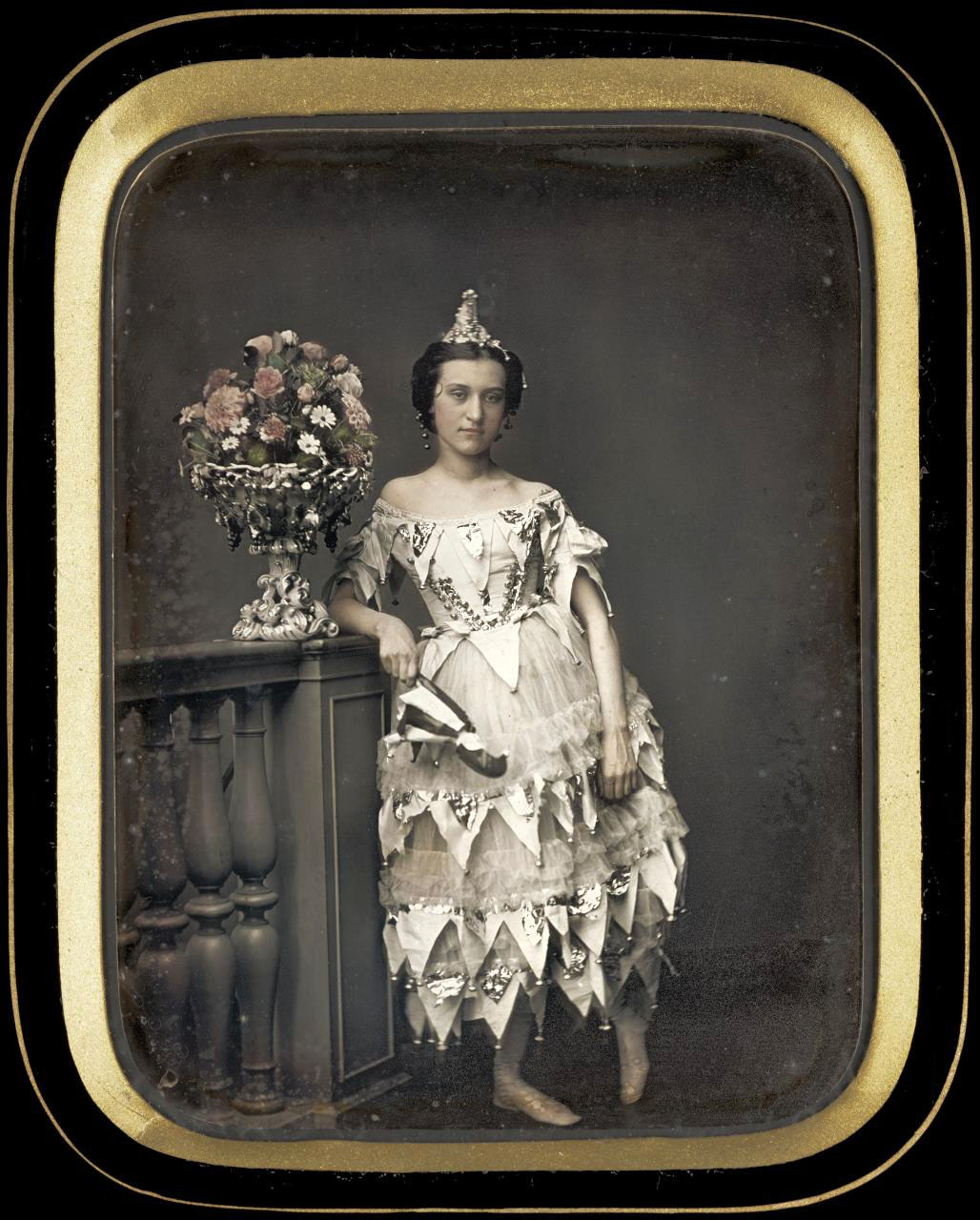

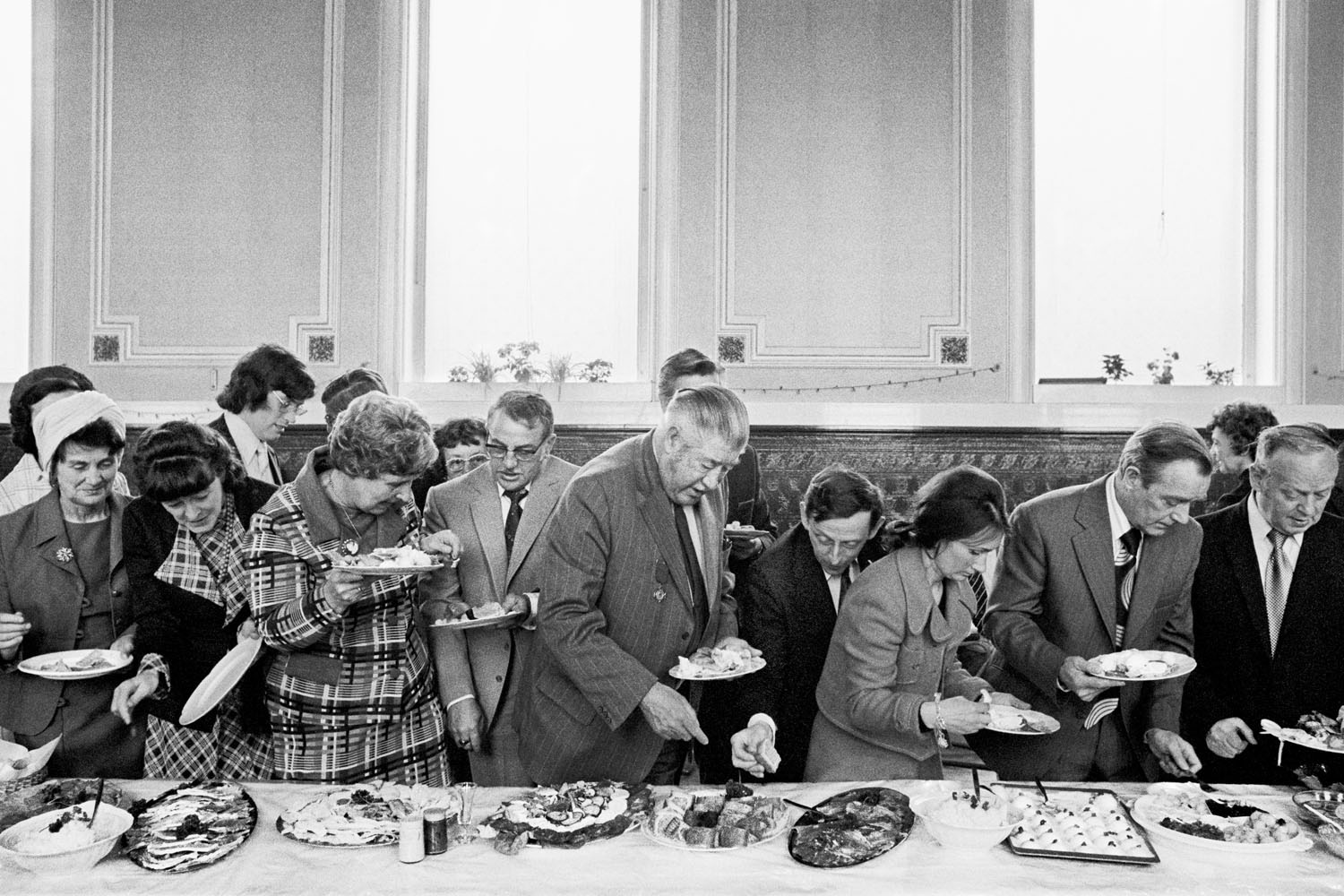

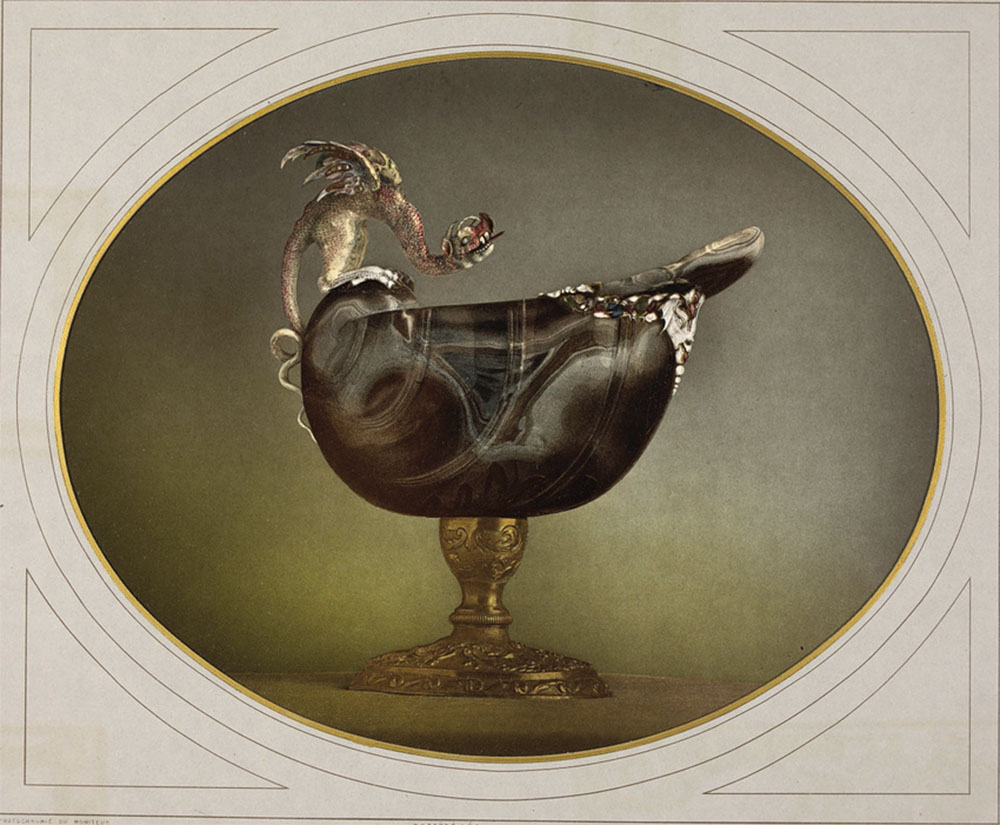


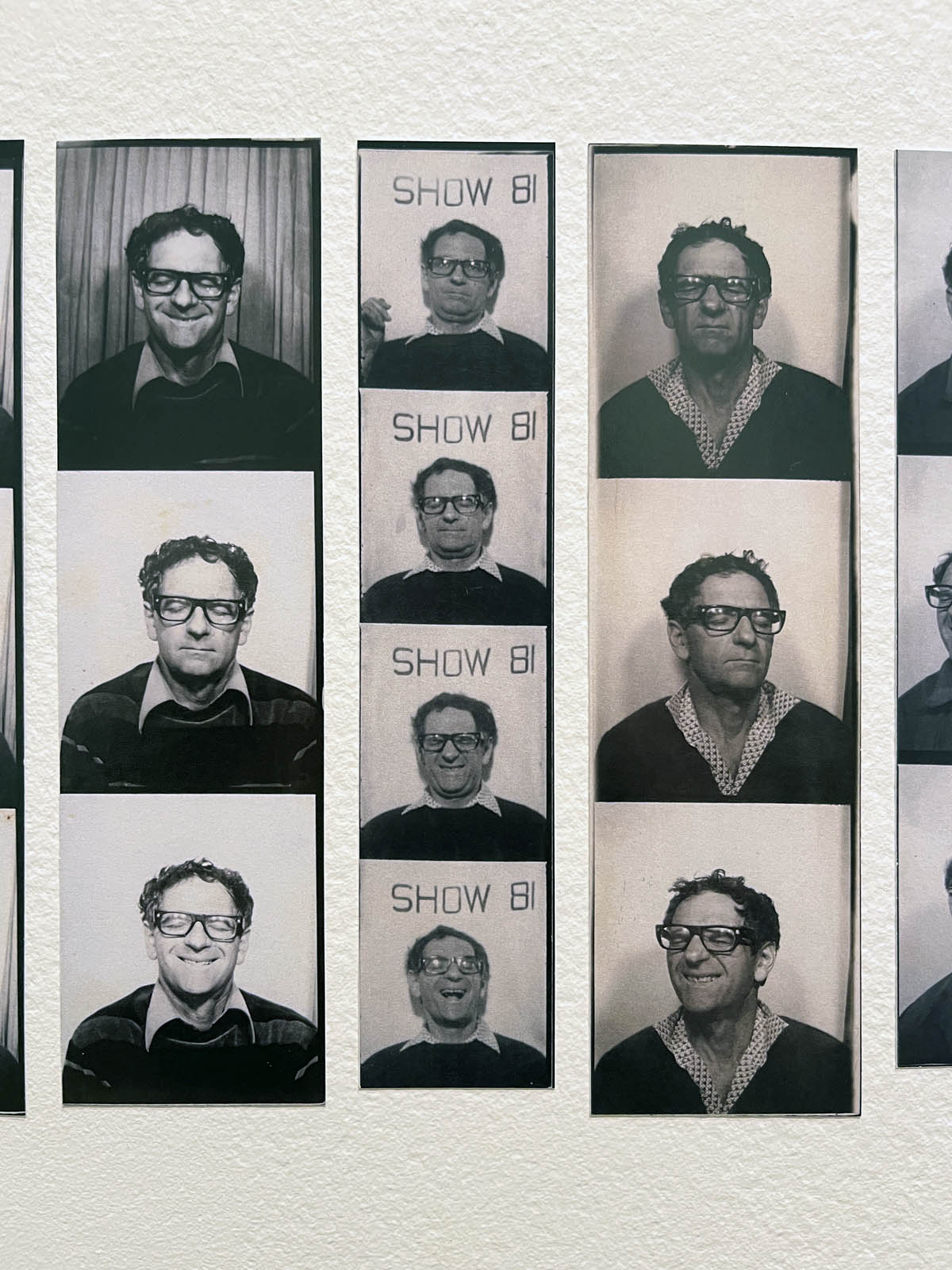
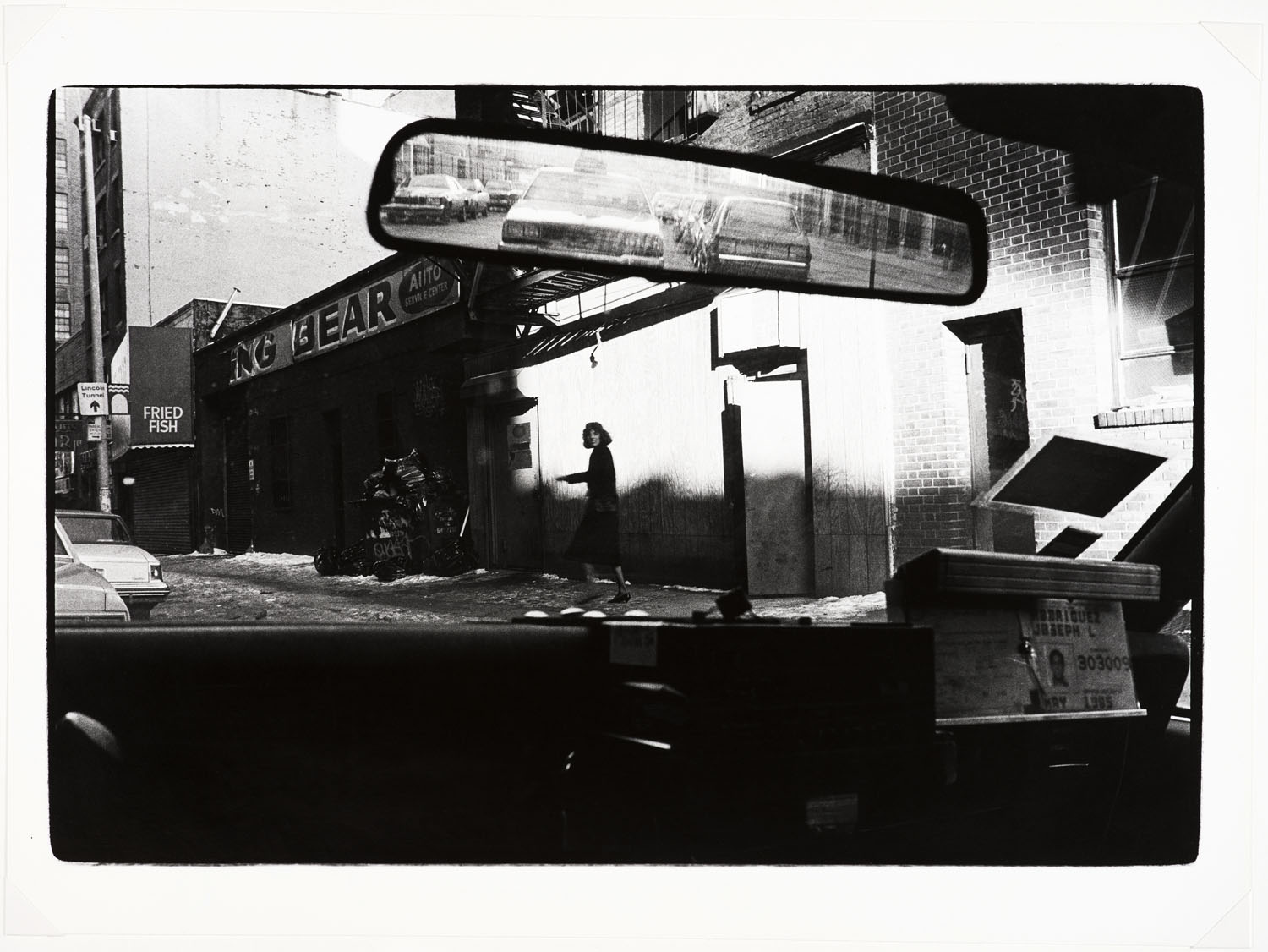

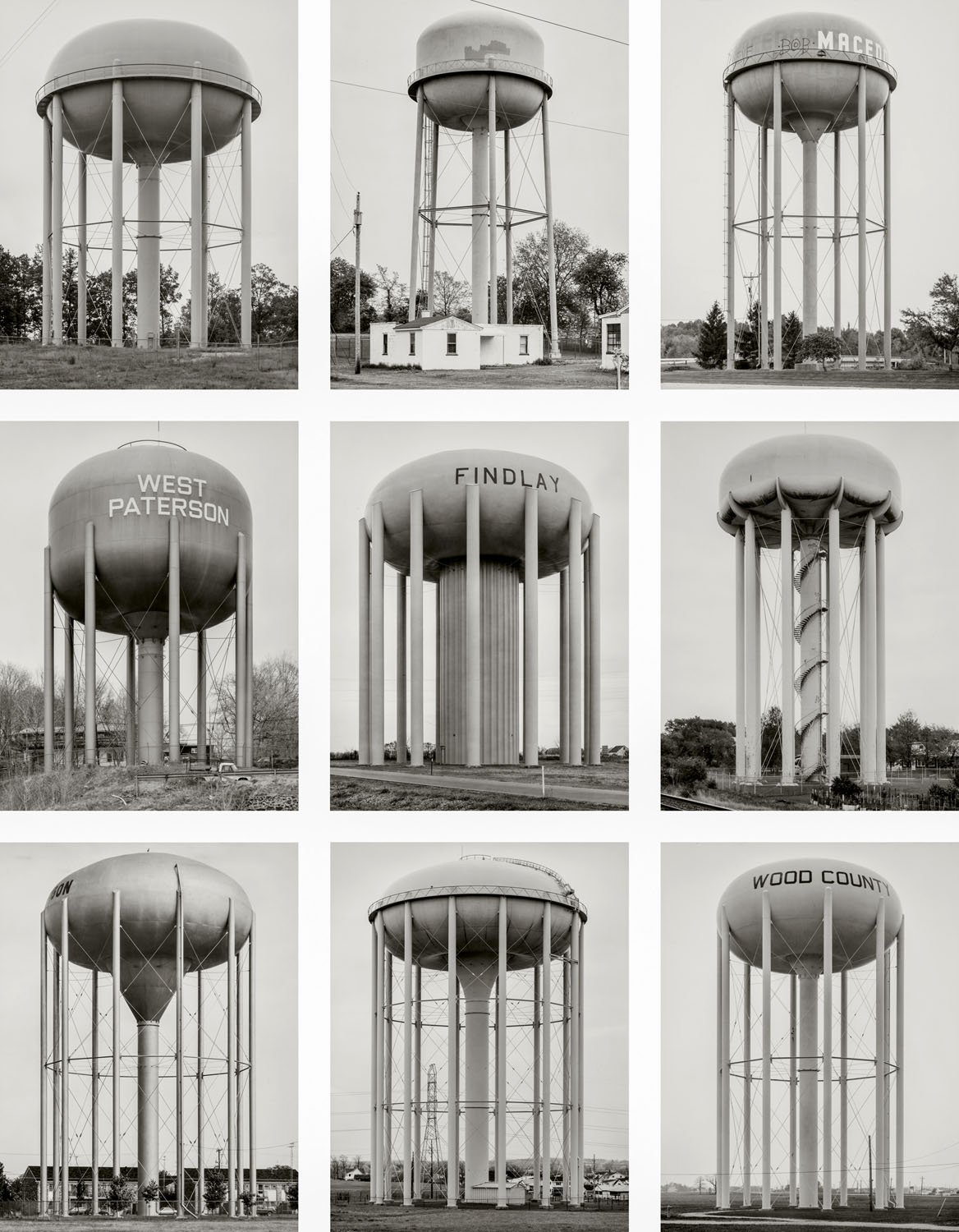
![Heinrich Riebesehl (German, 1938-2010) 'Menschen Im Fahrstuhl, 20.11.1969' [People in the Elevator, 20.11.1969] 1969](https://artblart.com/wp-content/uploads/2025/06/2-typologien_heinrich-riebesehl_siae_sm.jpg "Heinrich Riebesehl (German, 1938-2010) 'Menschen Im Fahrstuhl, 20.11.1969' [People in the Elevator, 20.11.1969] 1969")
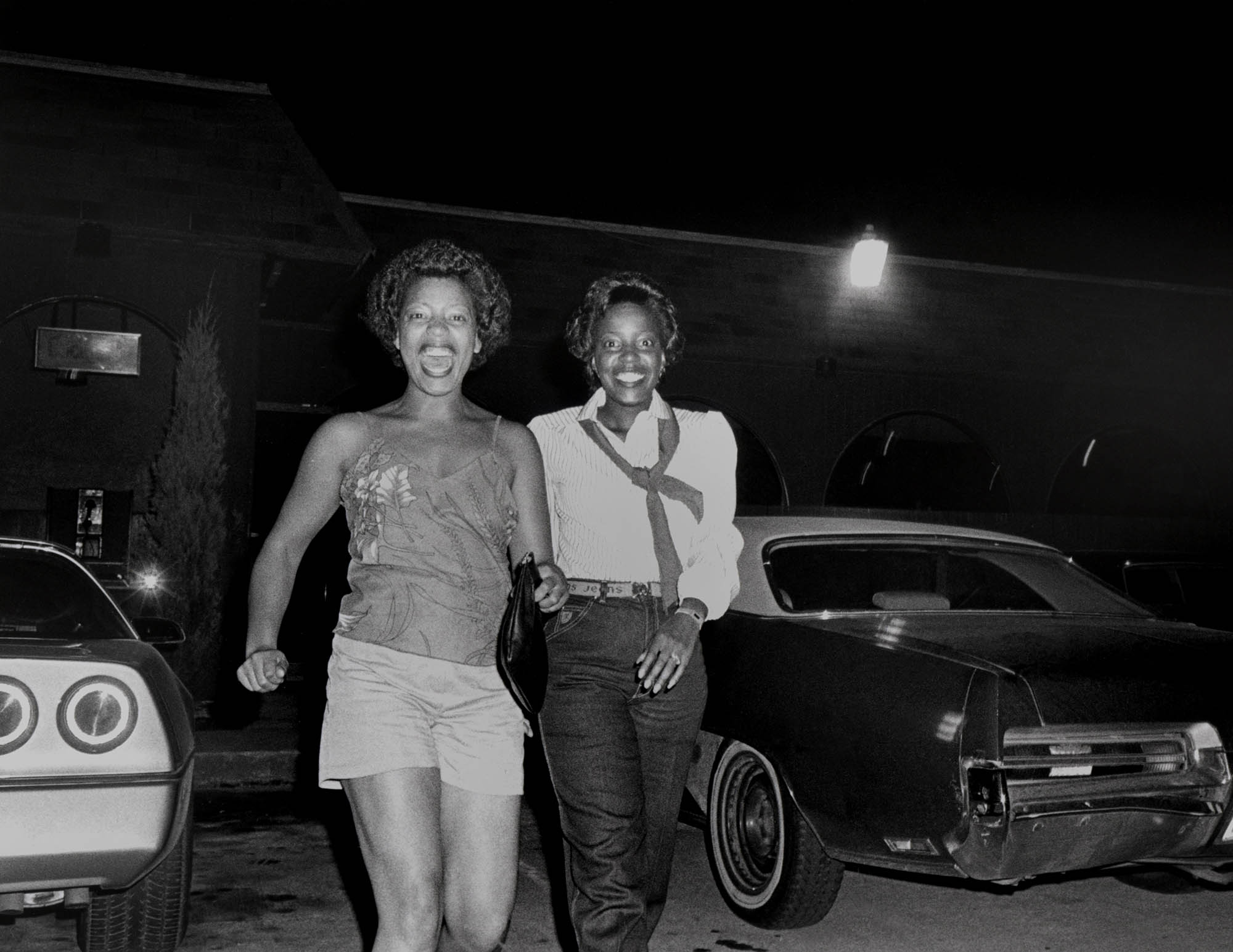
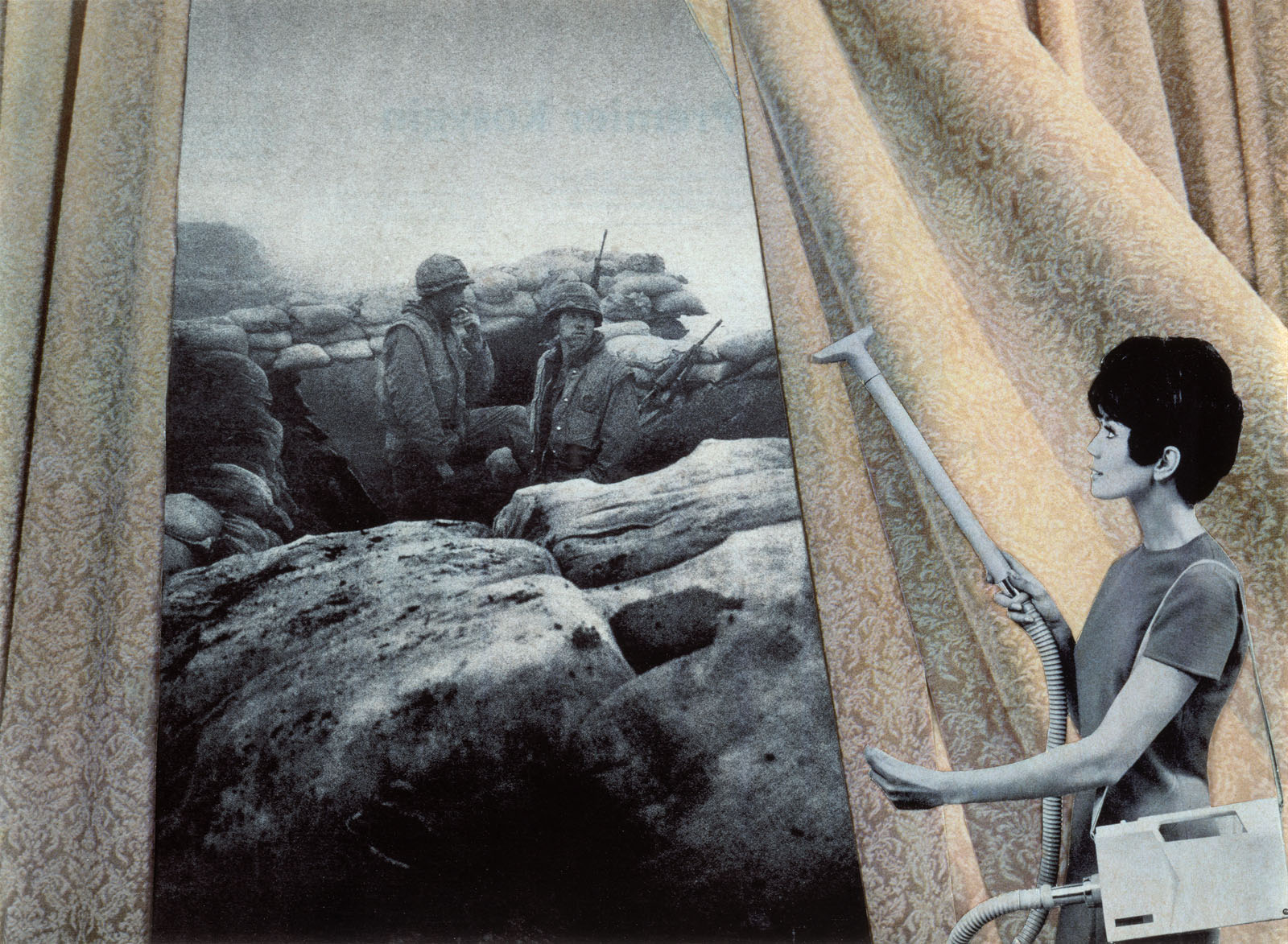


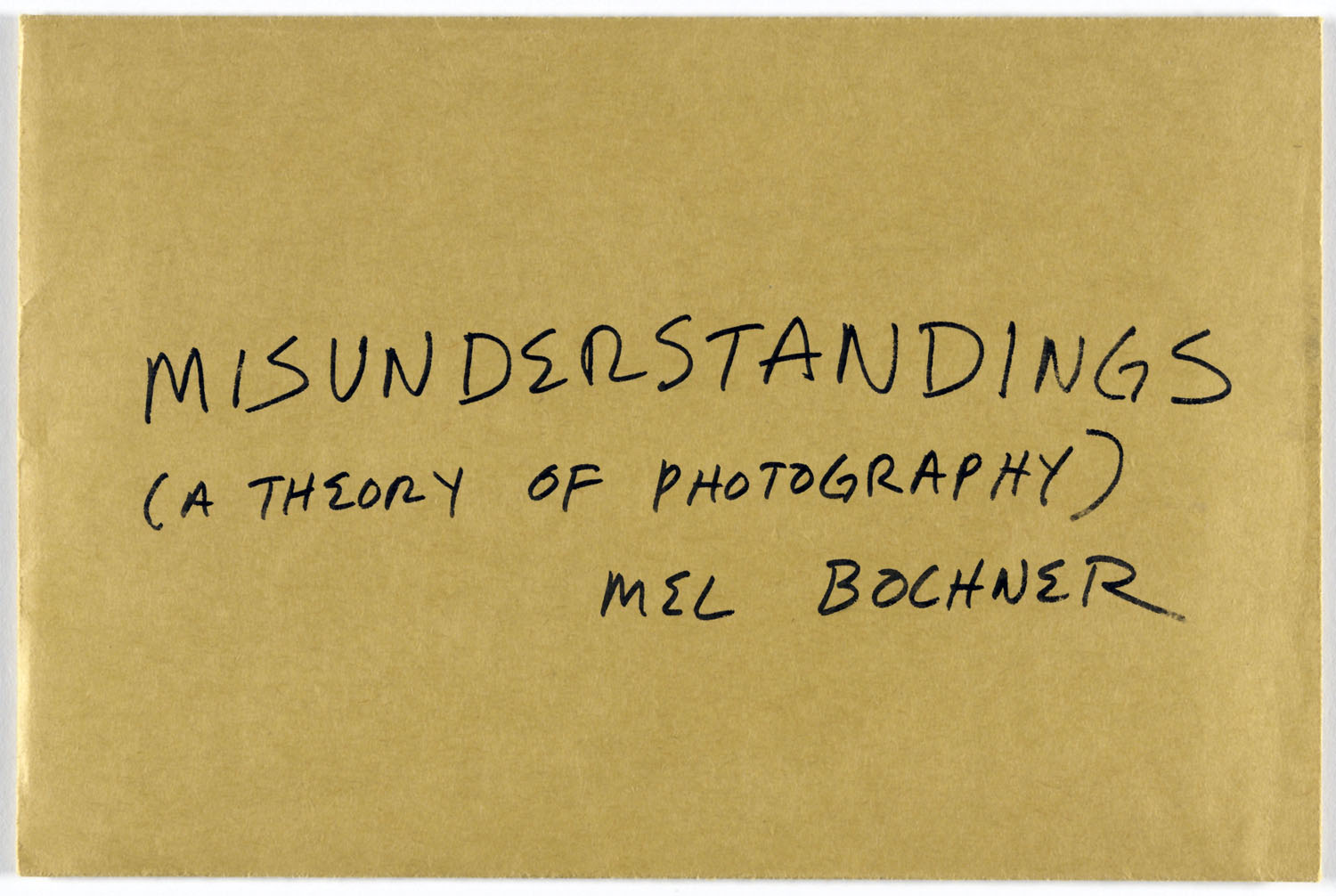


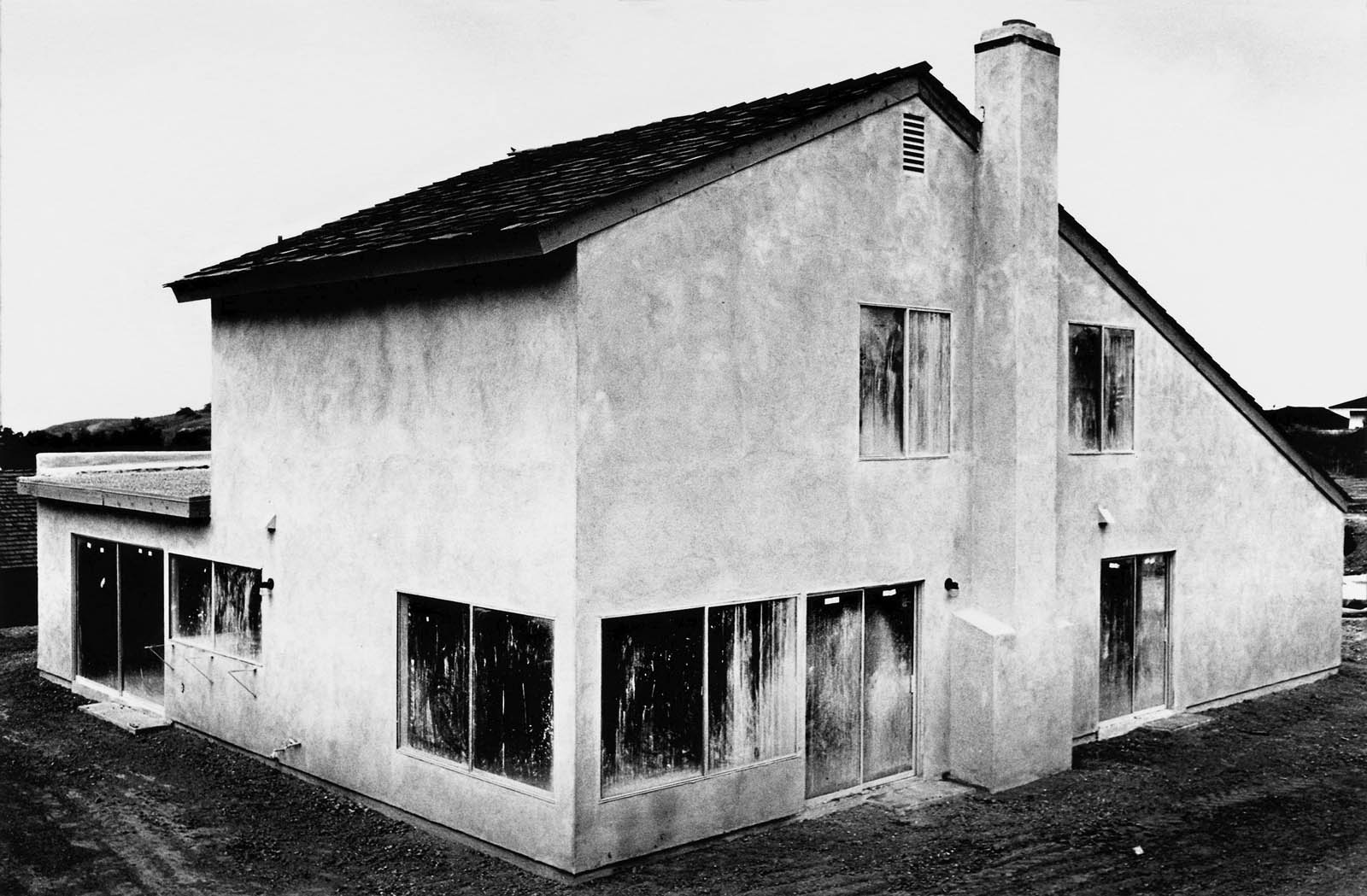


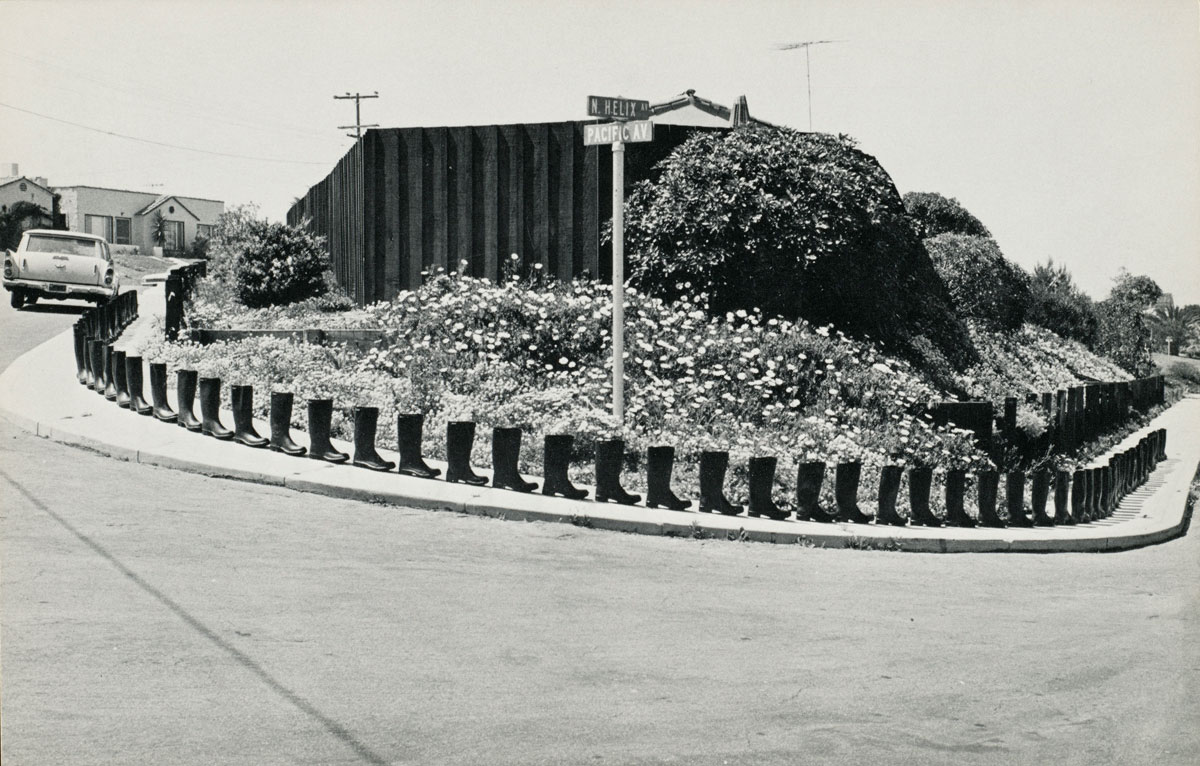
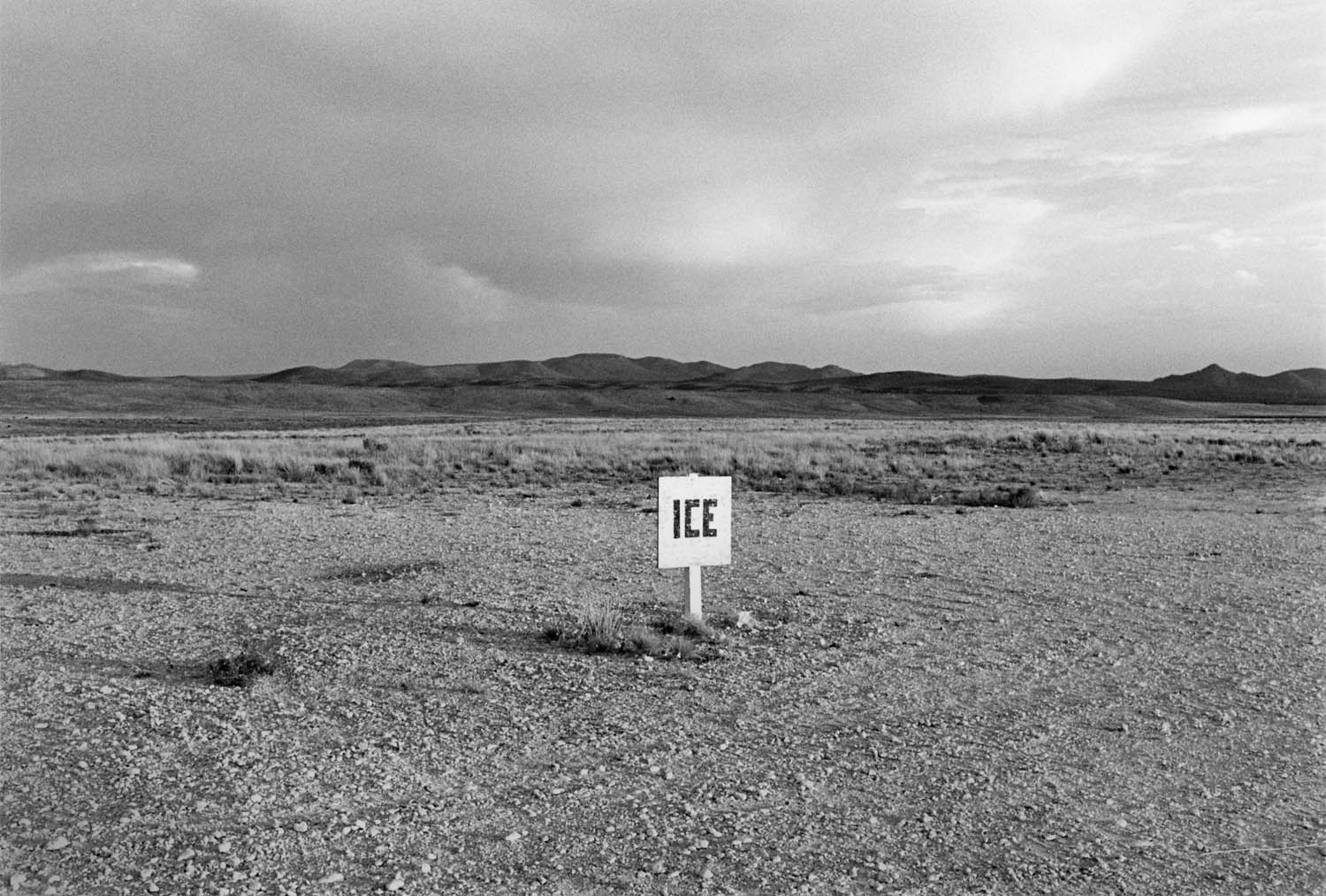

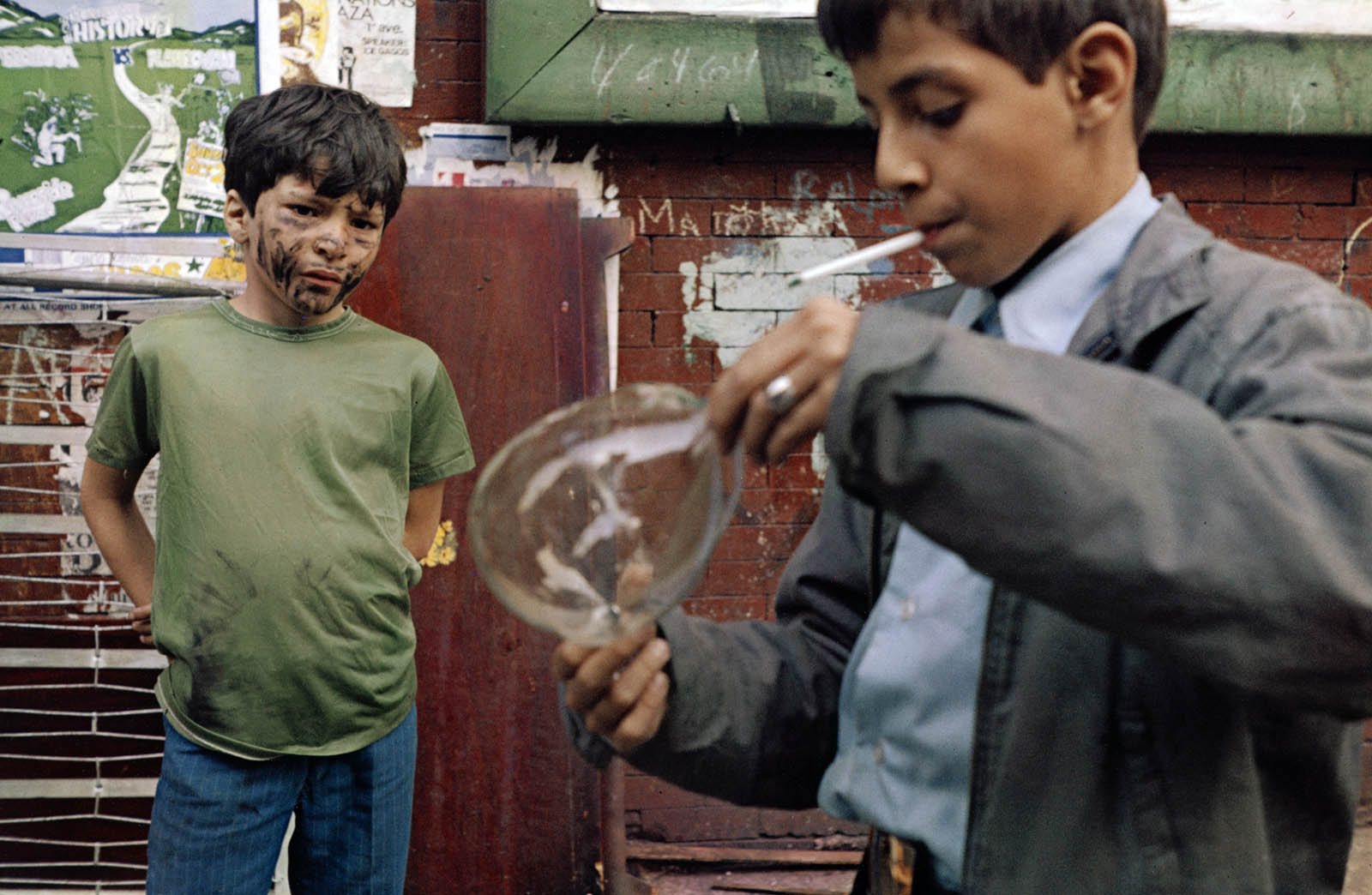


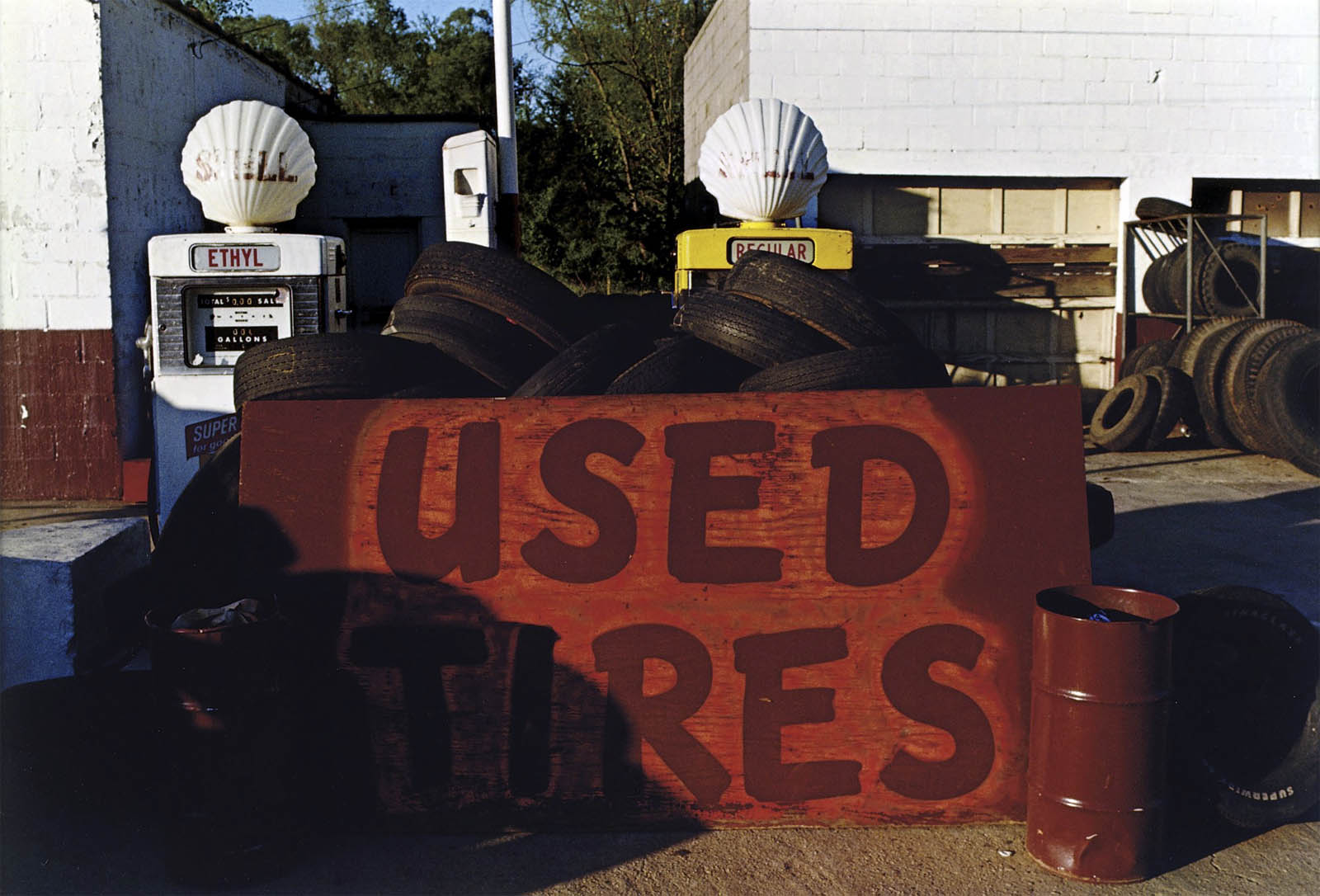
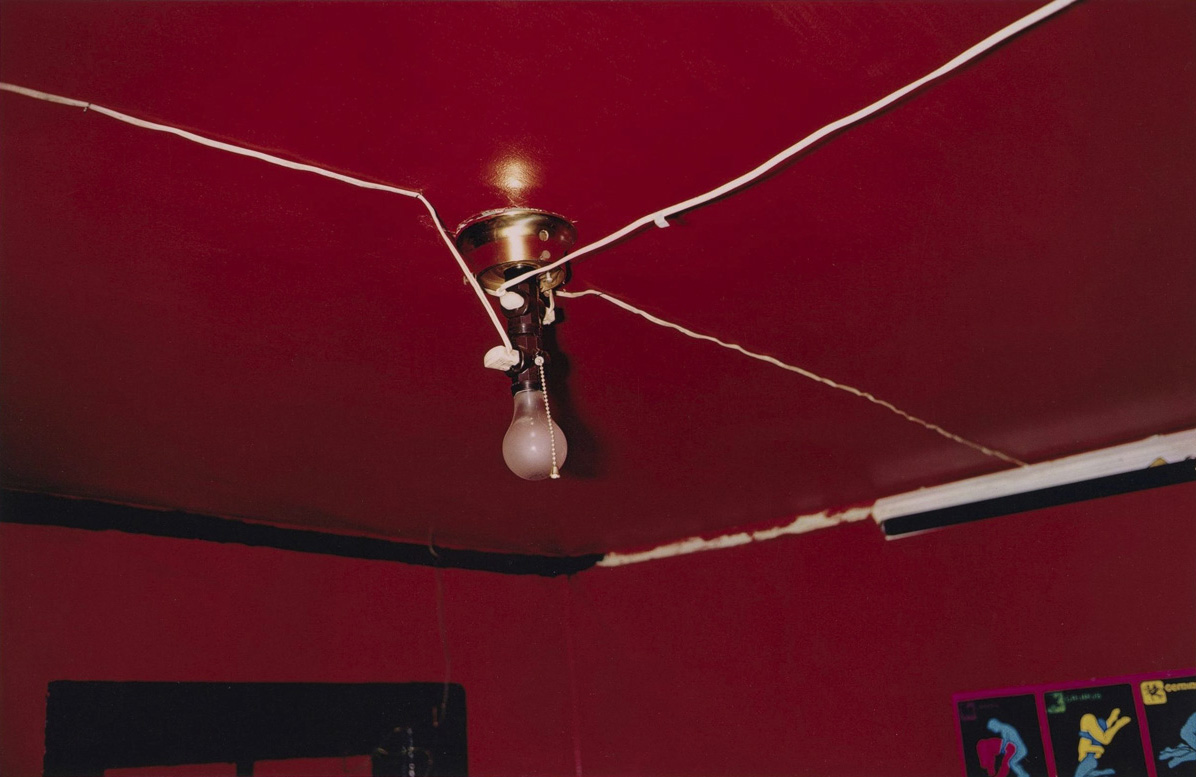

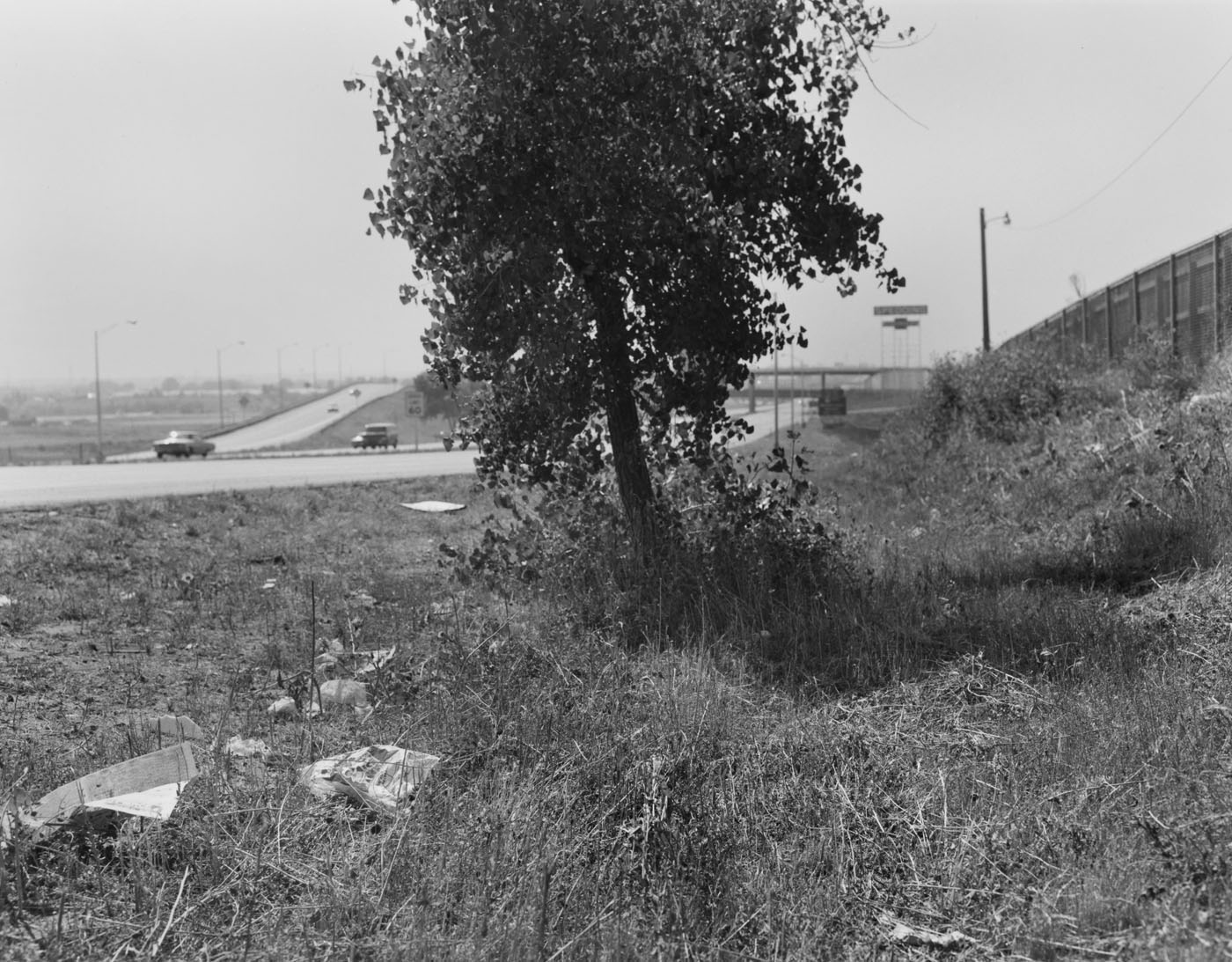

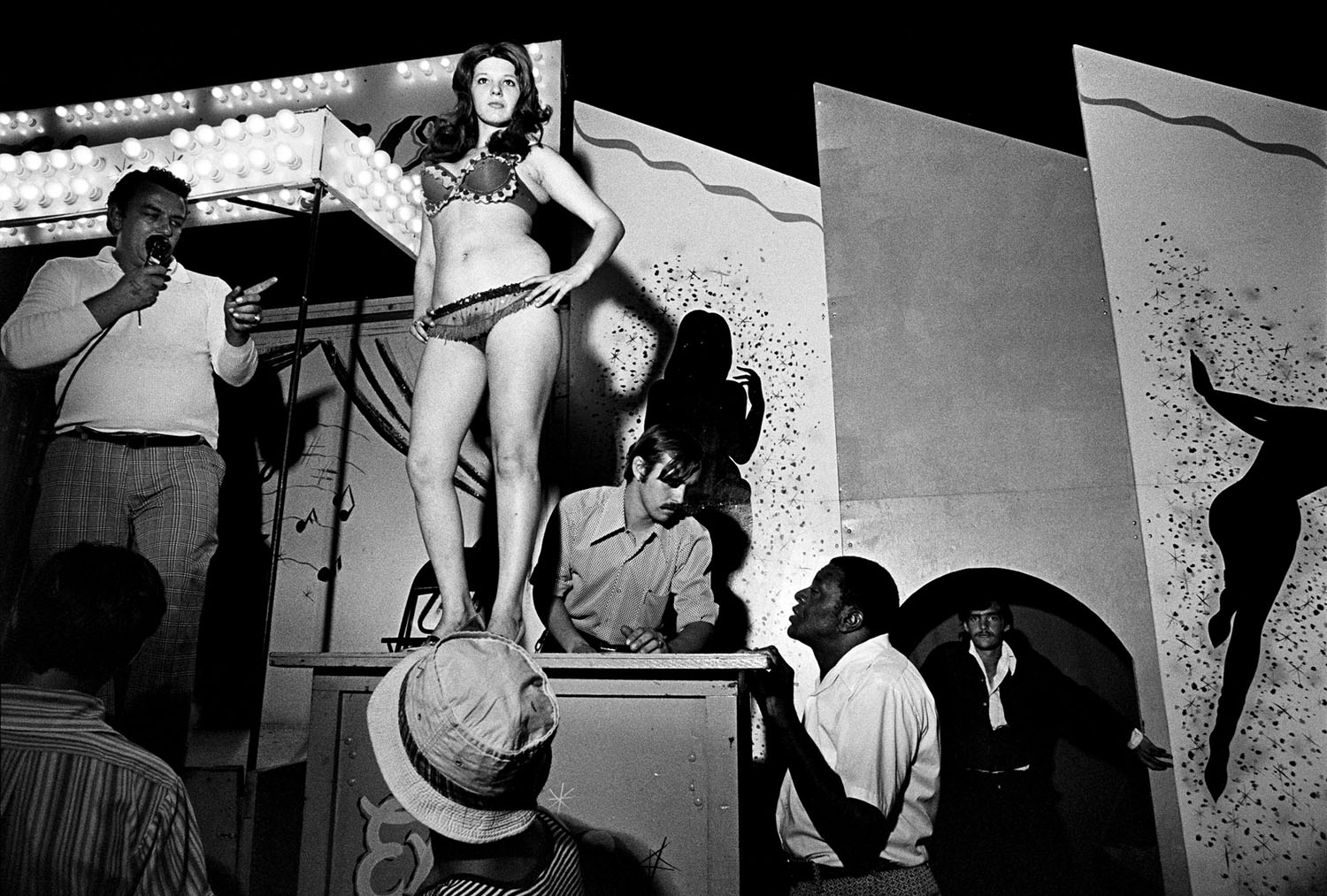


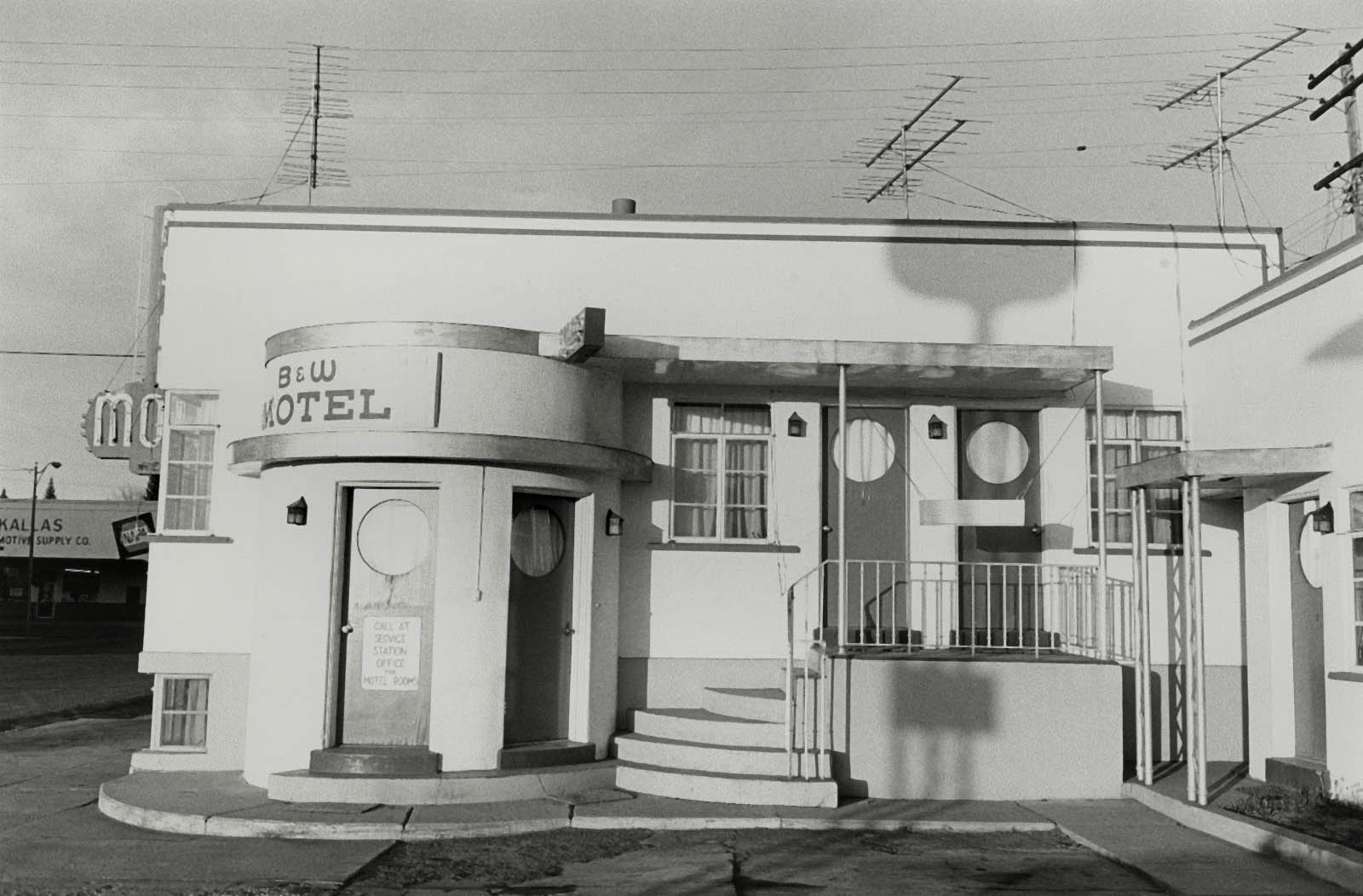

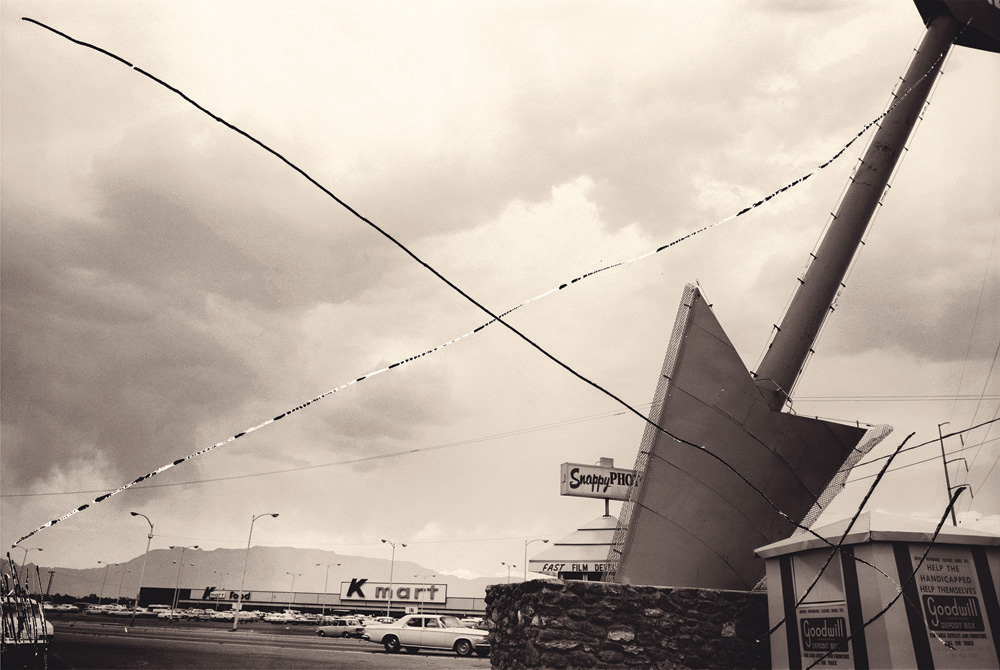
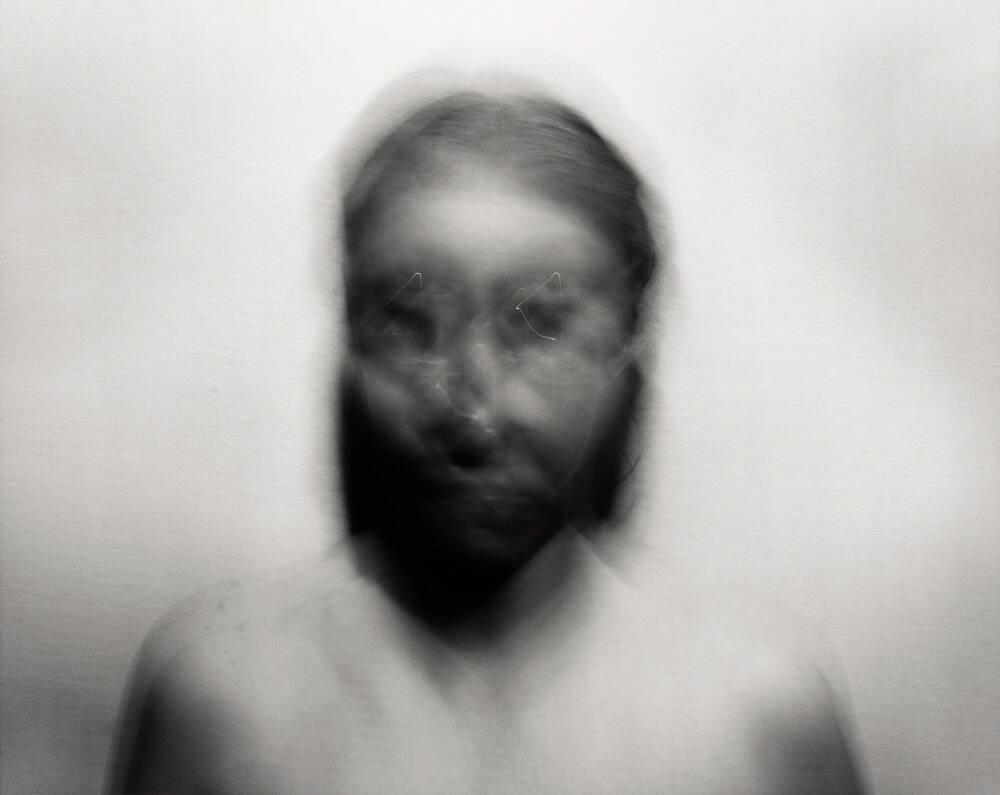
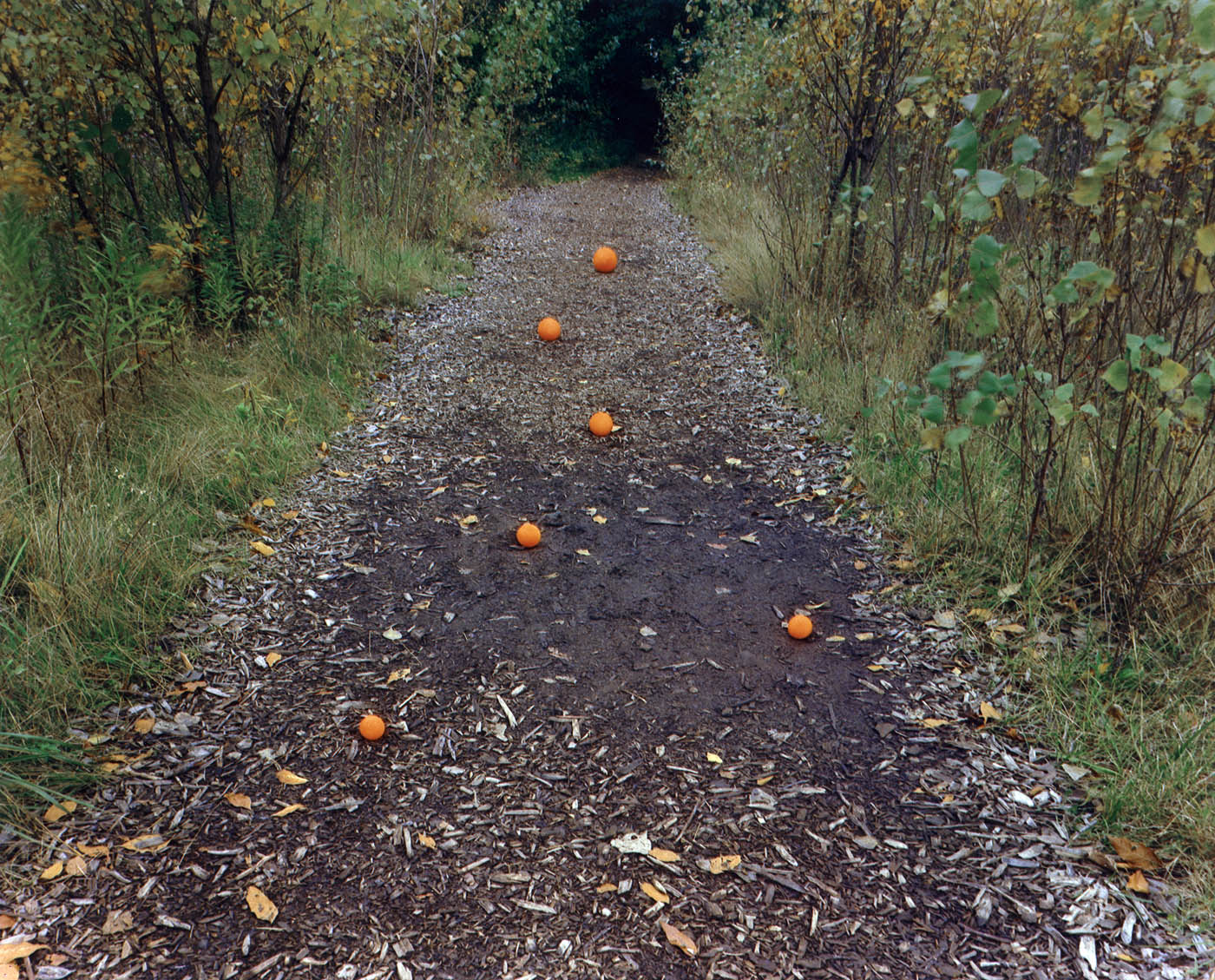
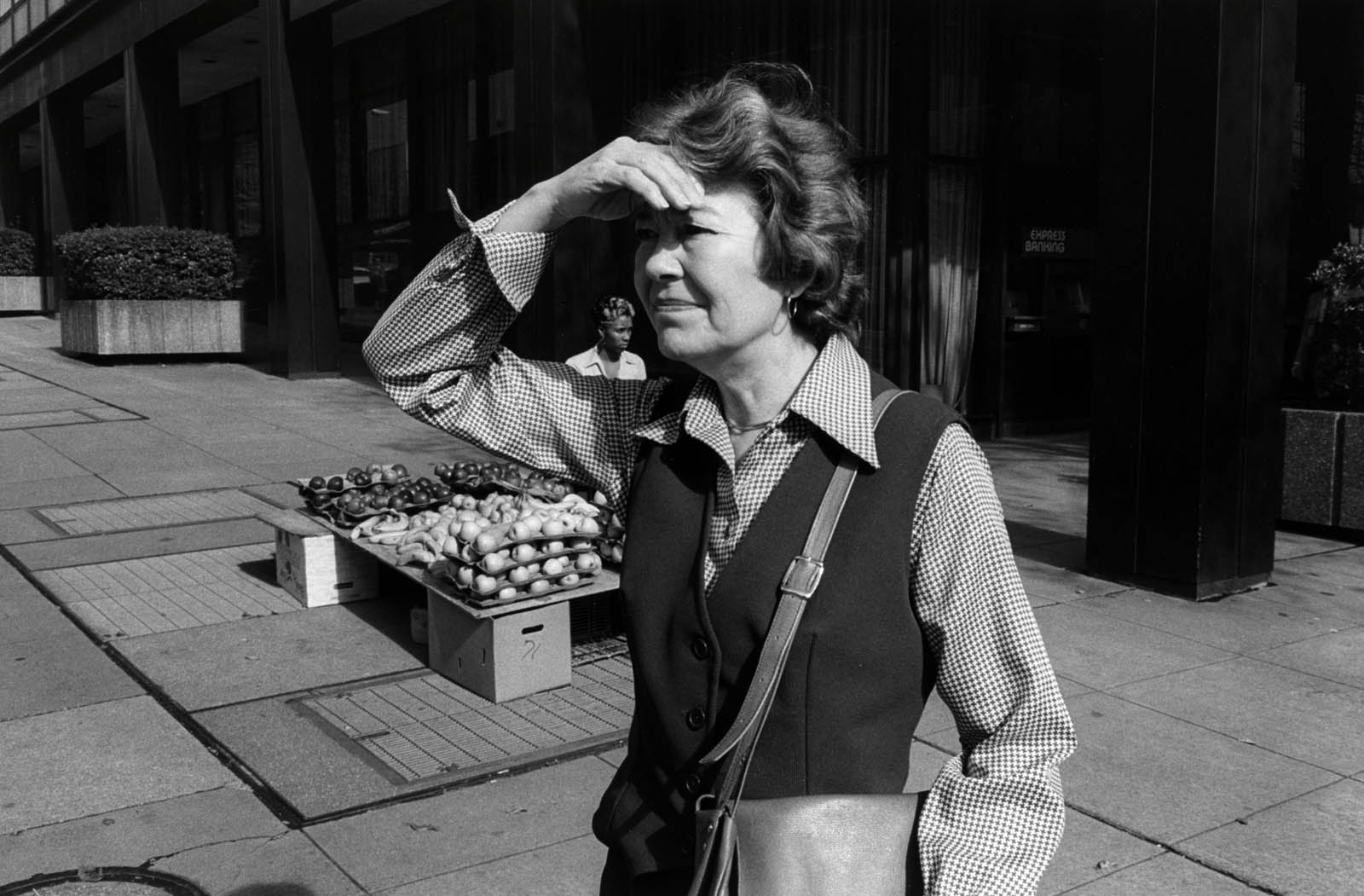


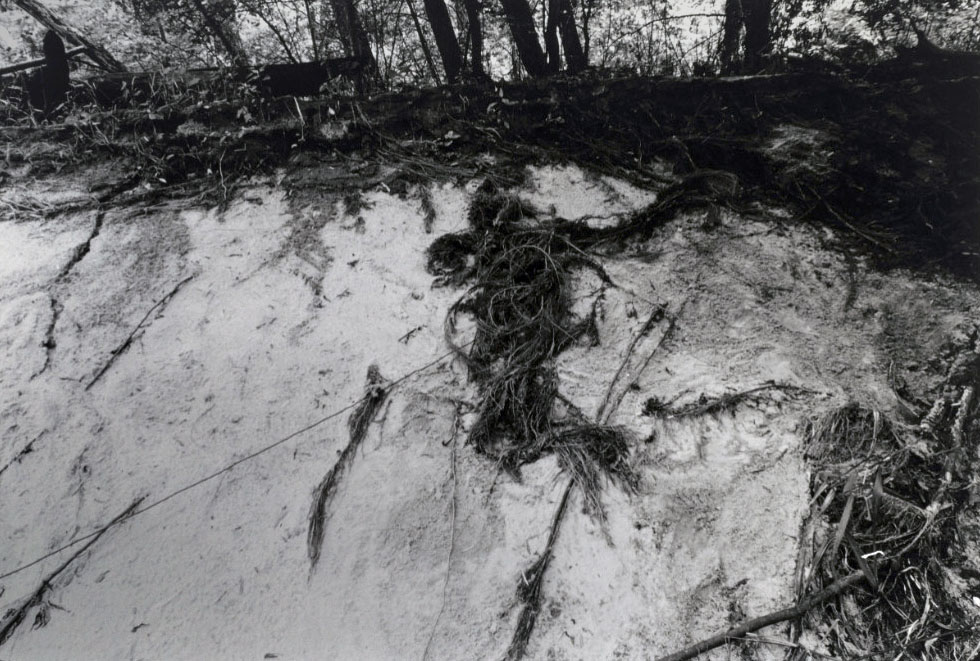

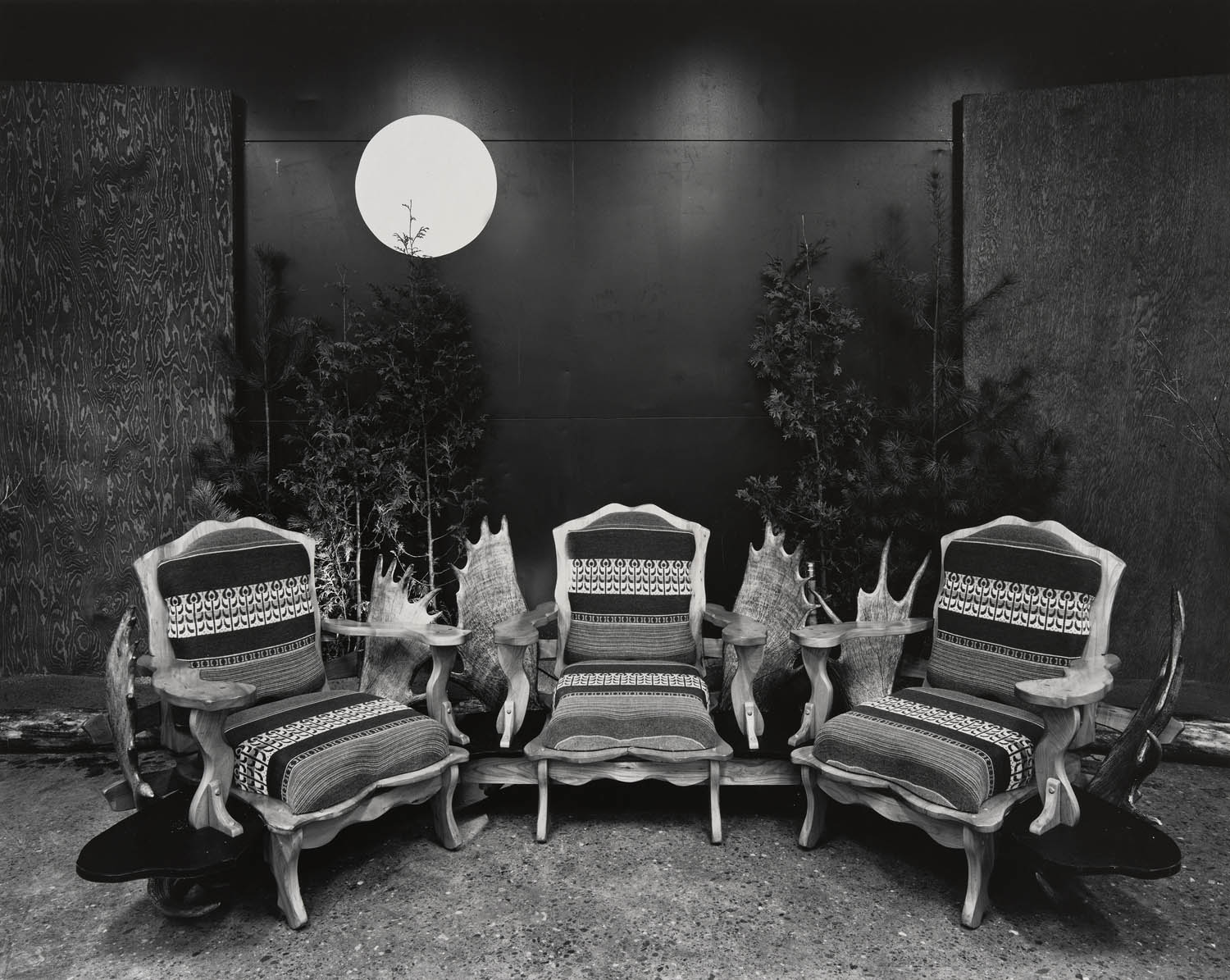

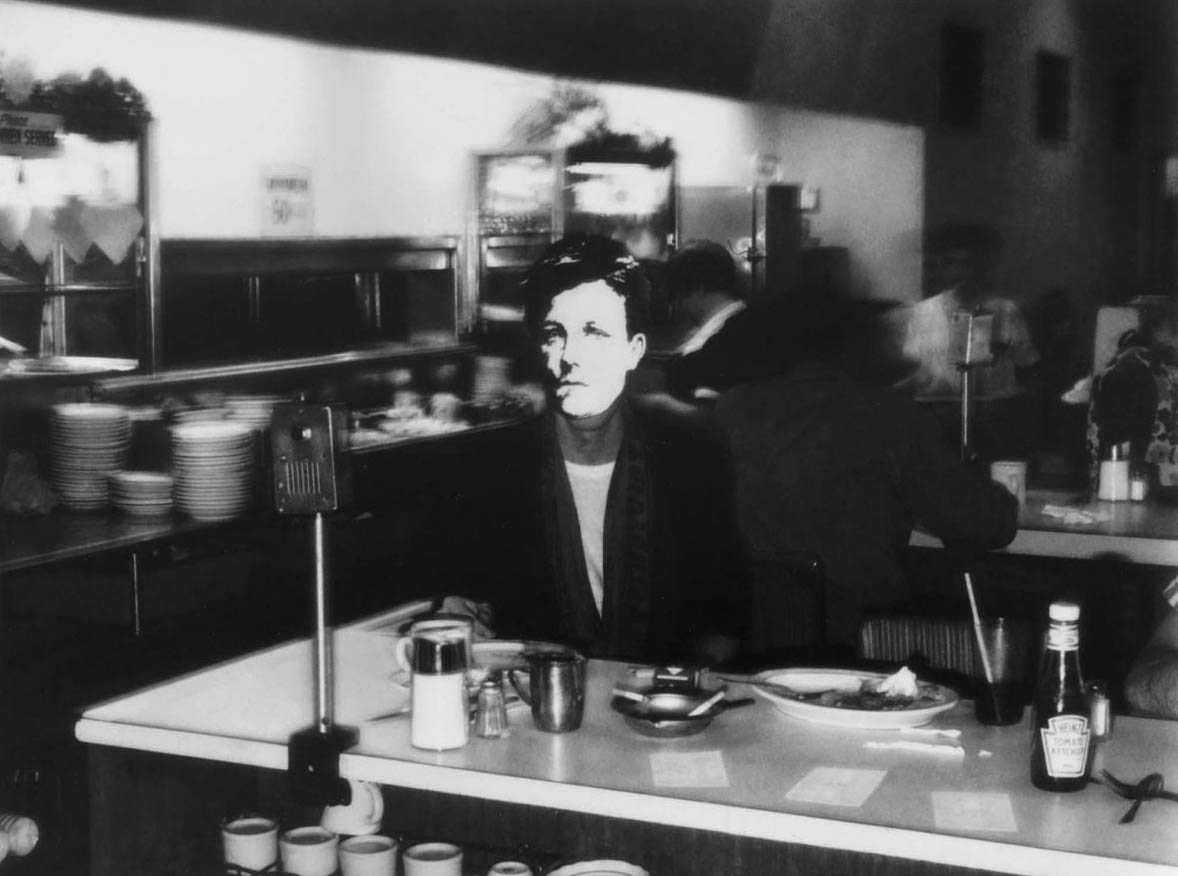


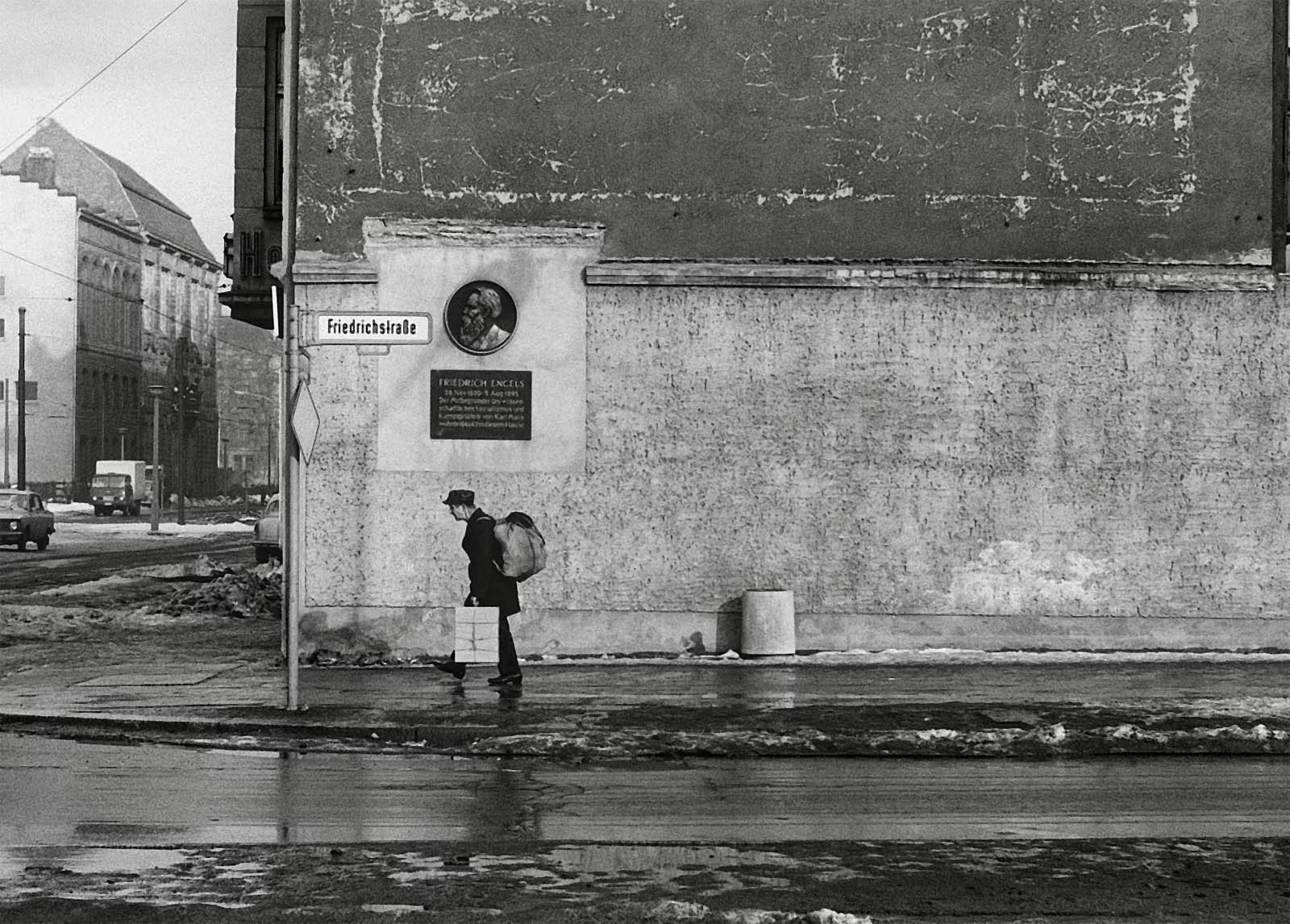

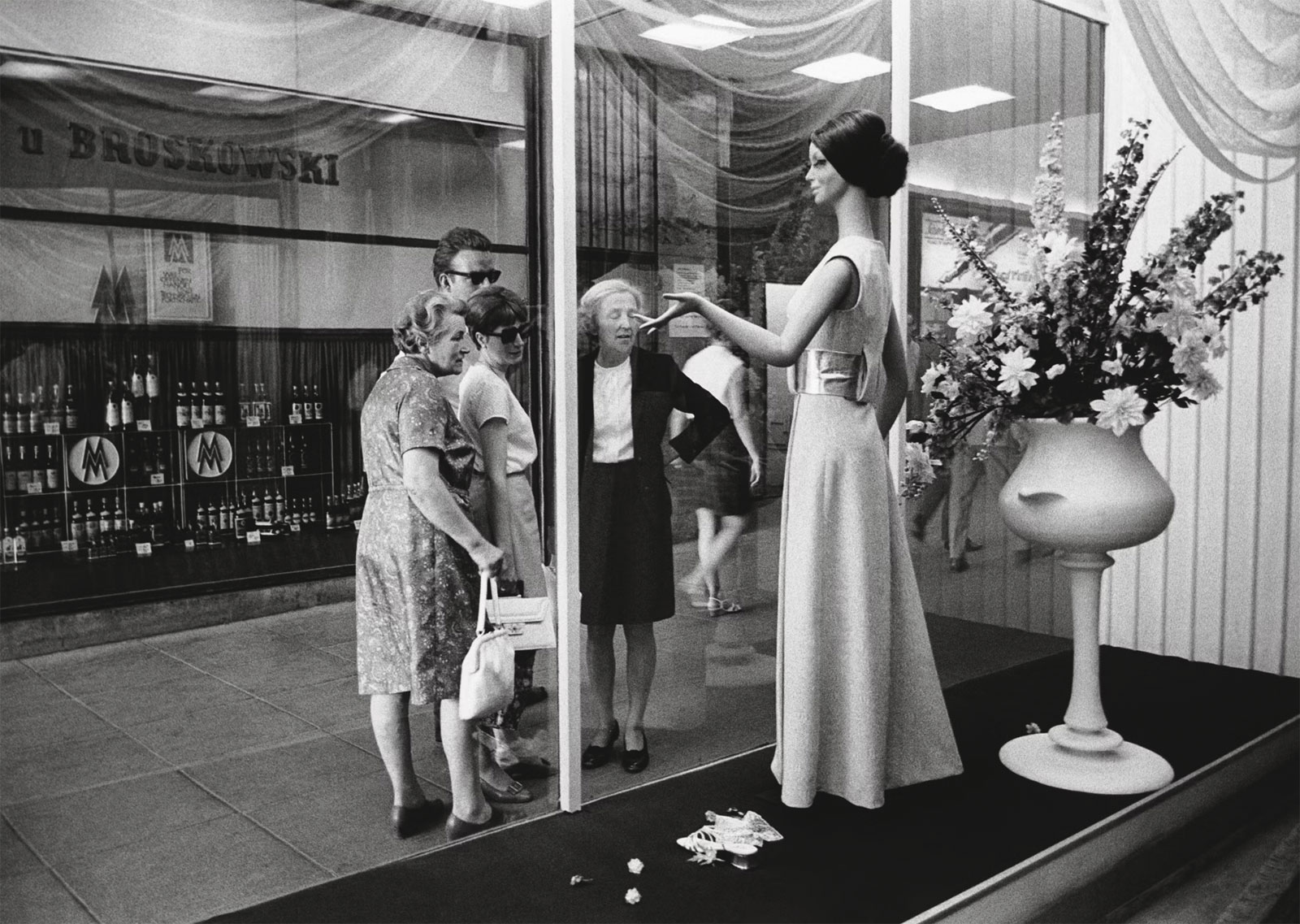
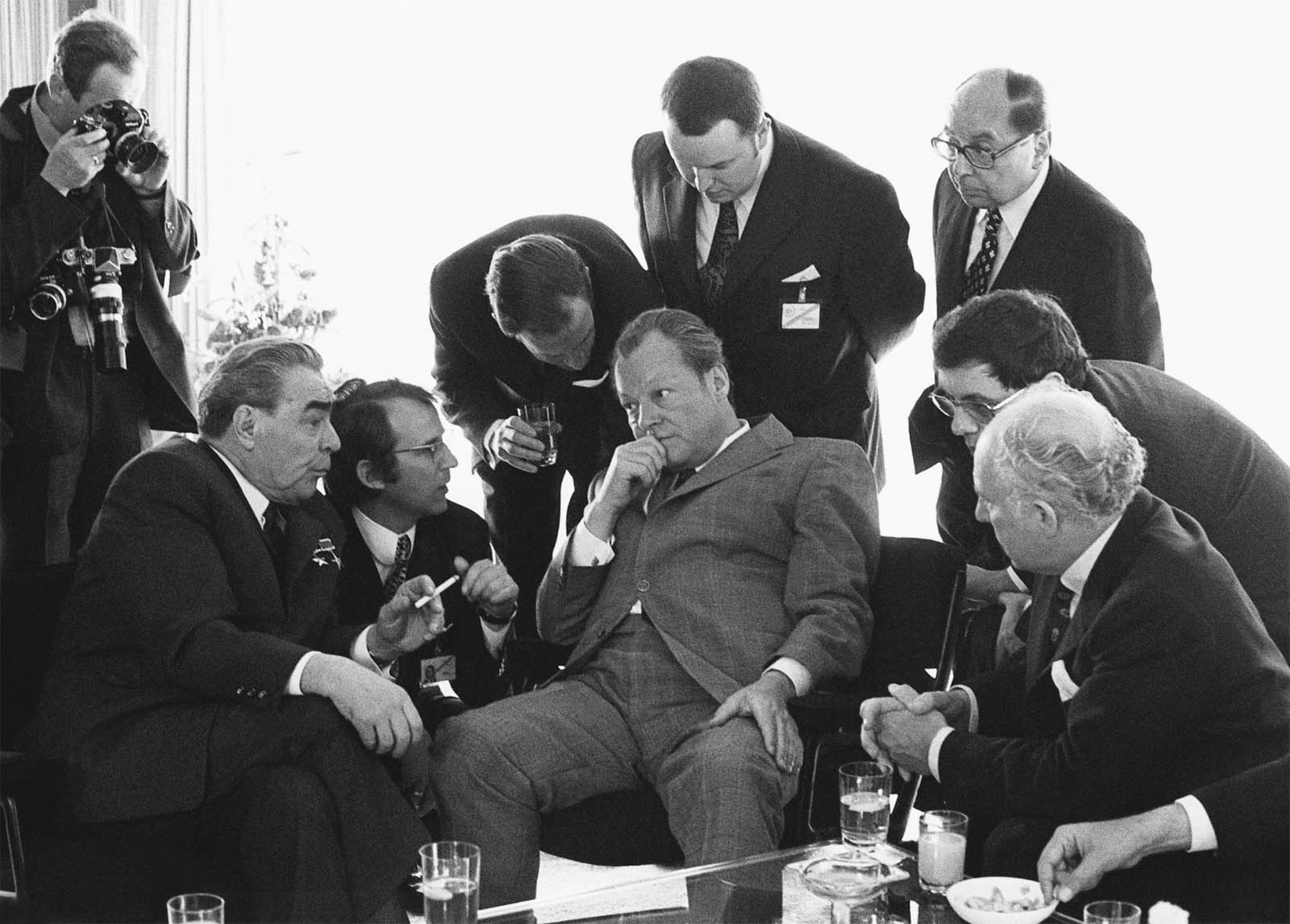


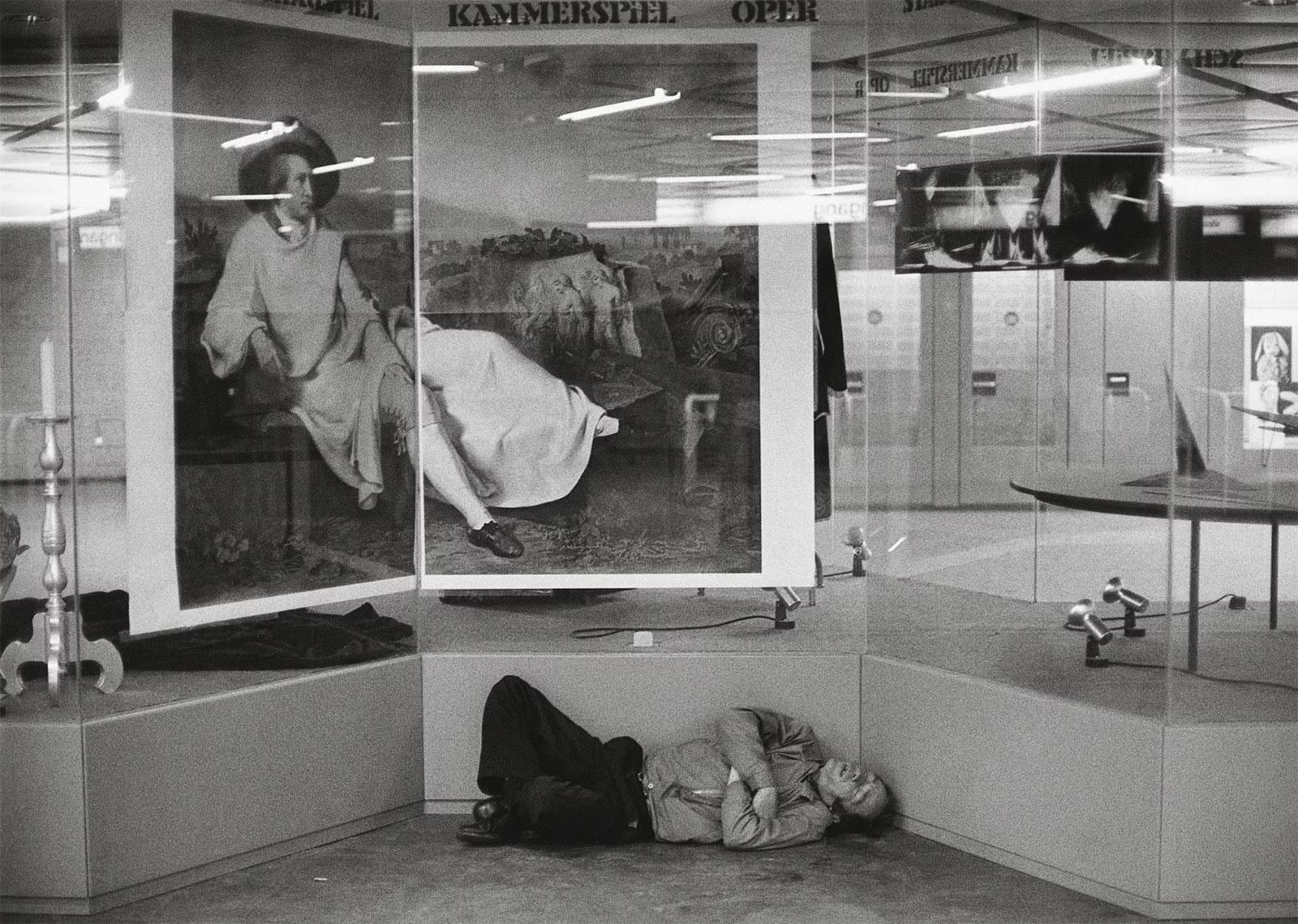

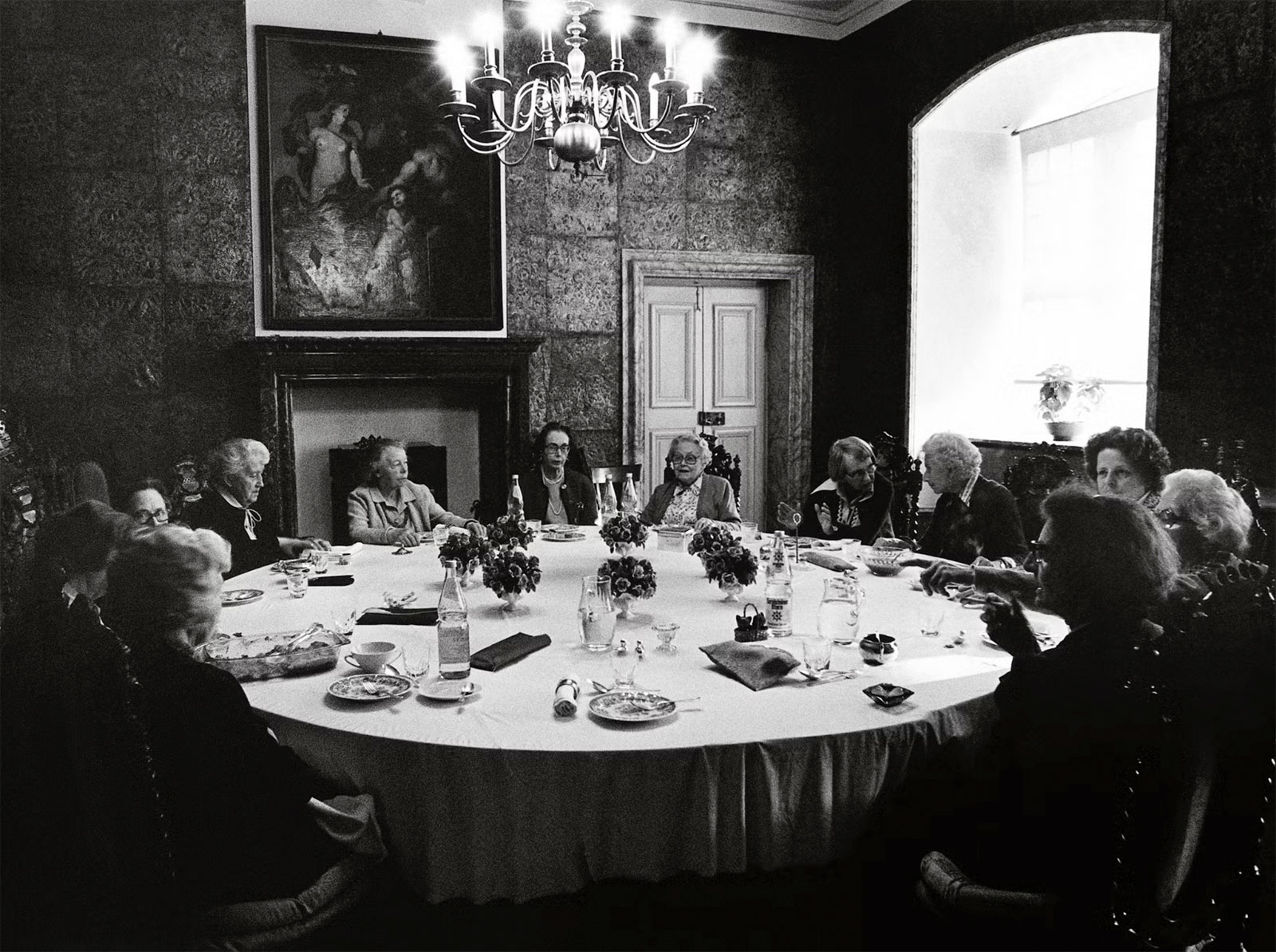
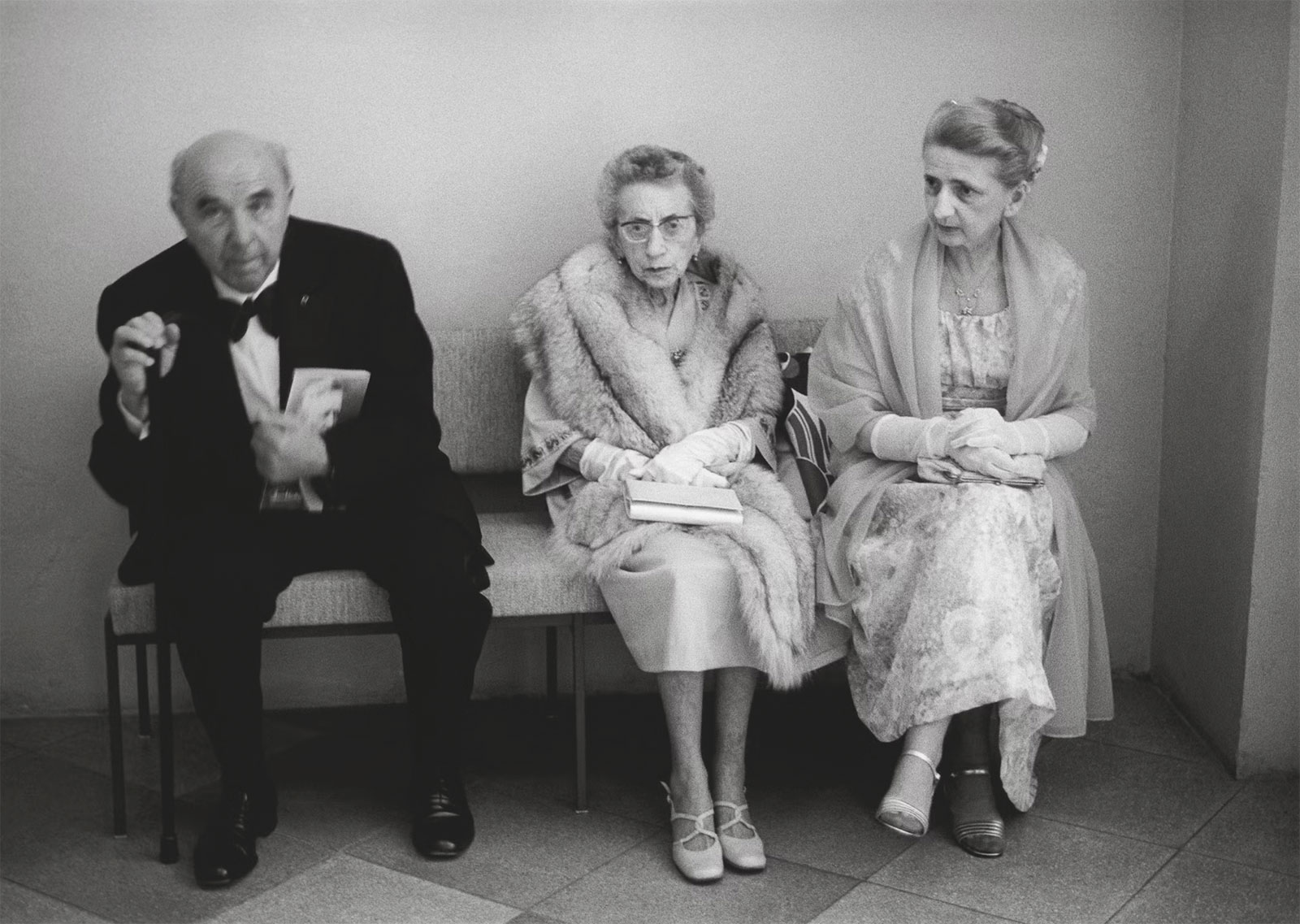
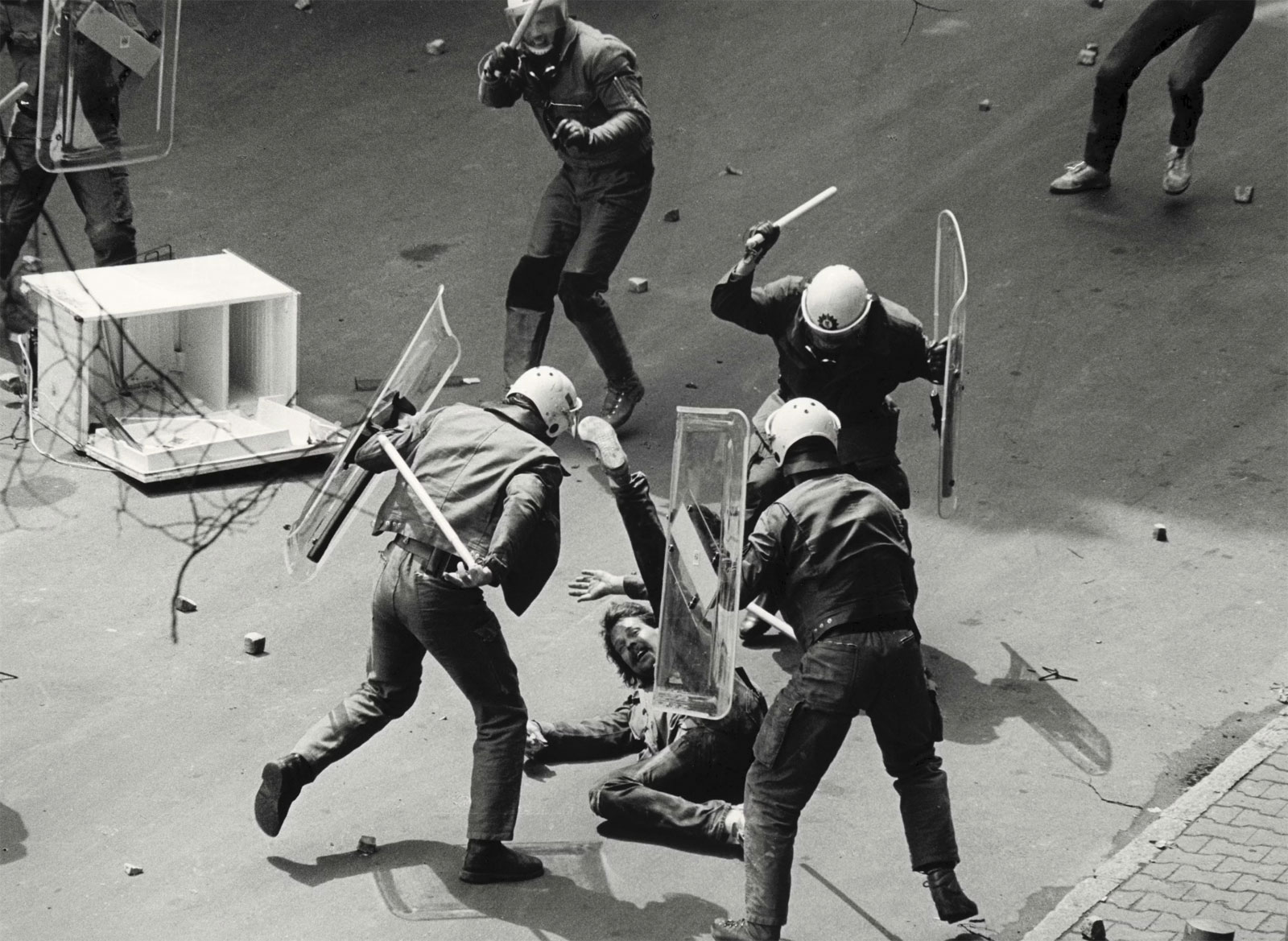
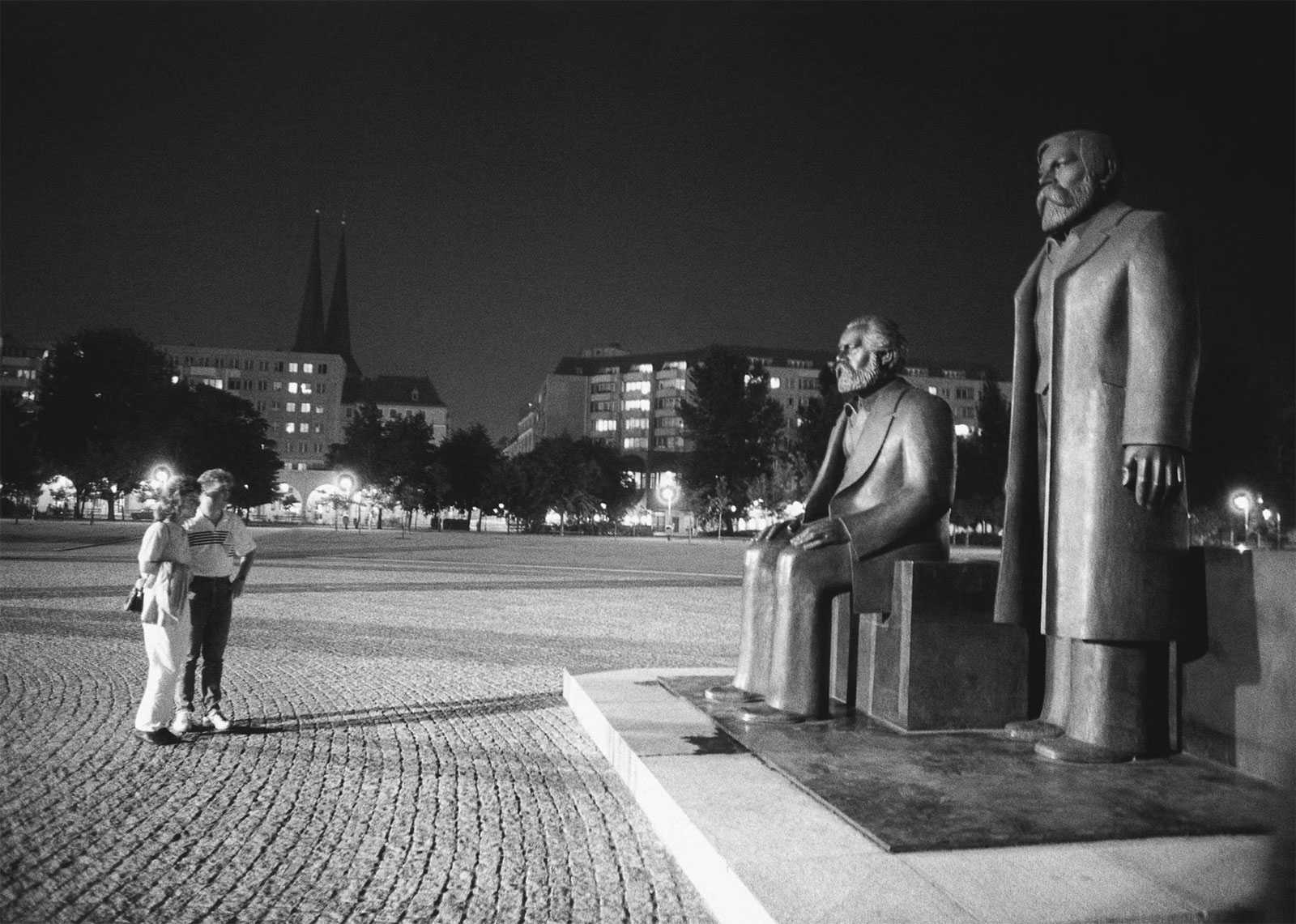

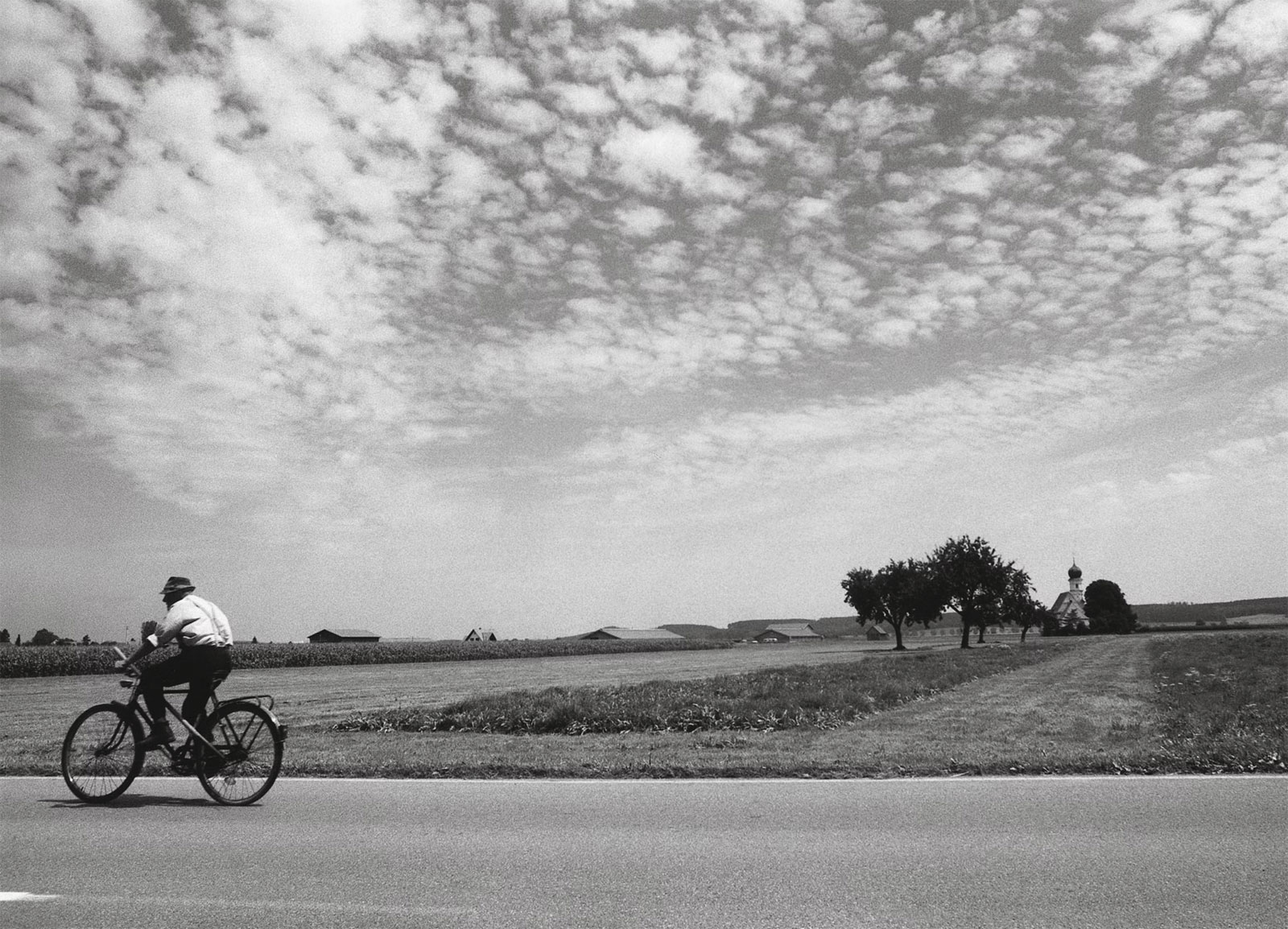
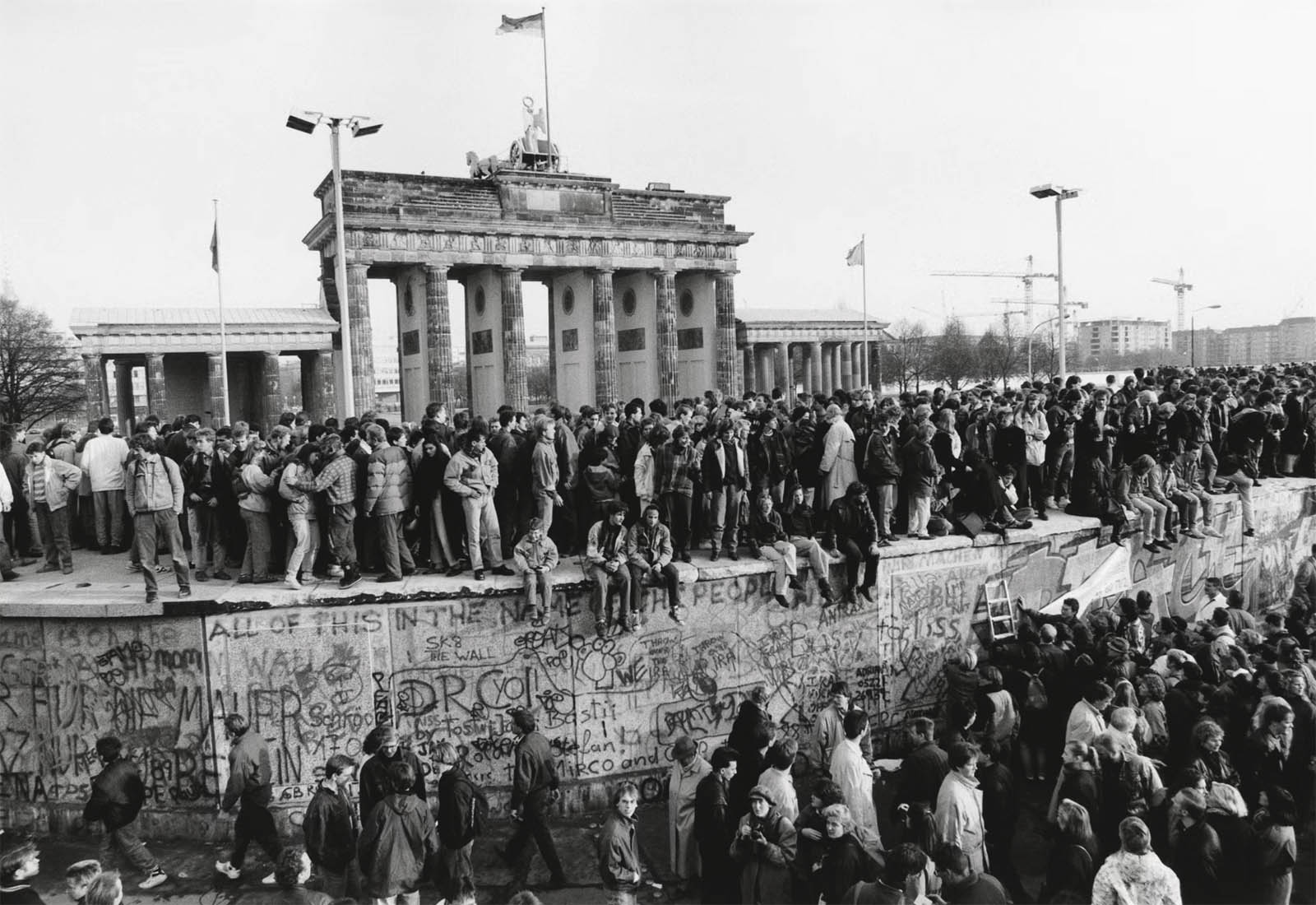

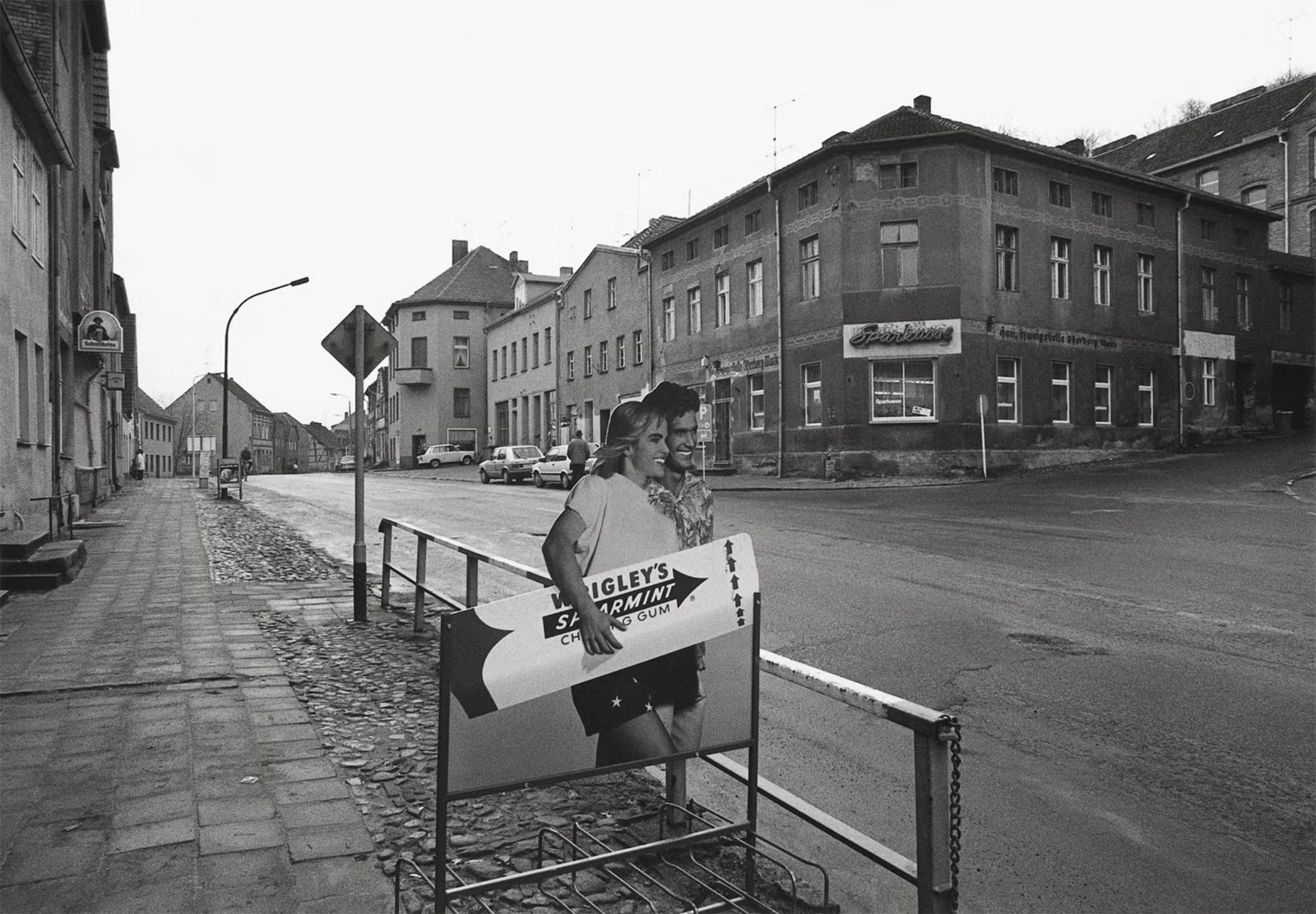


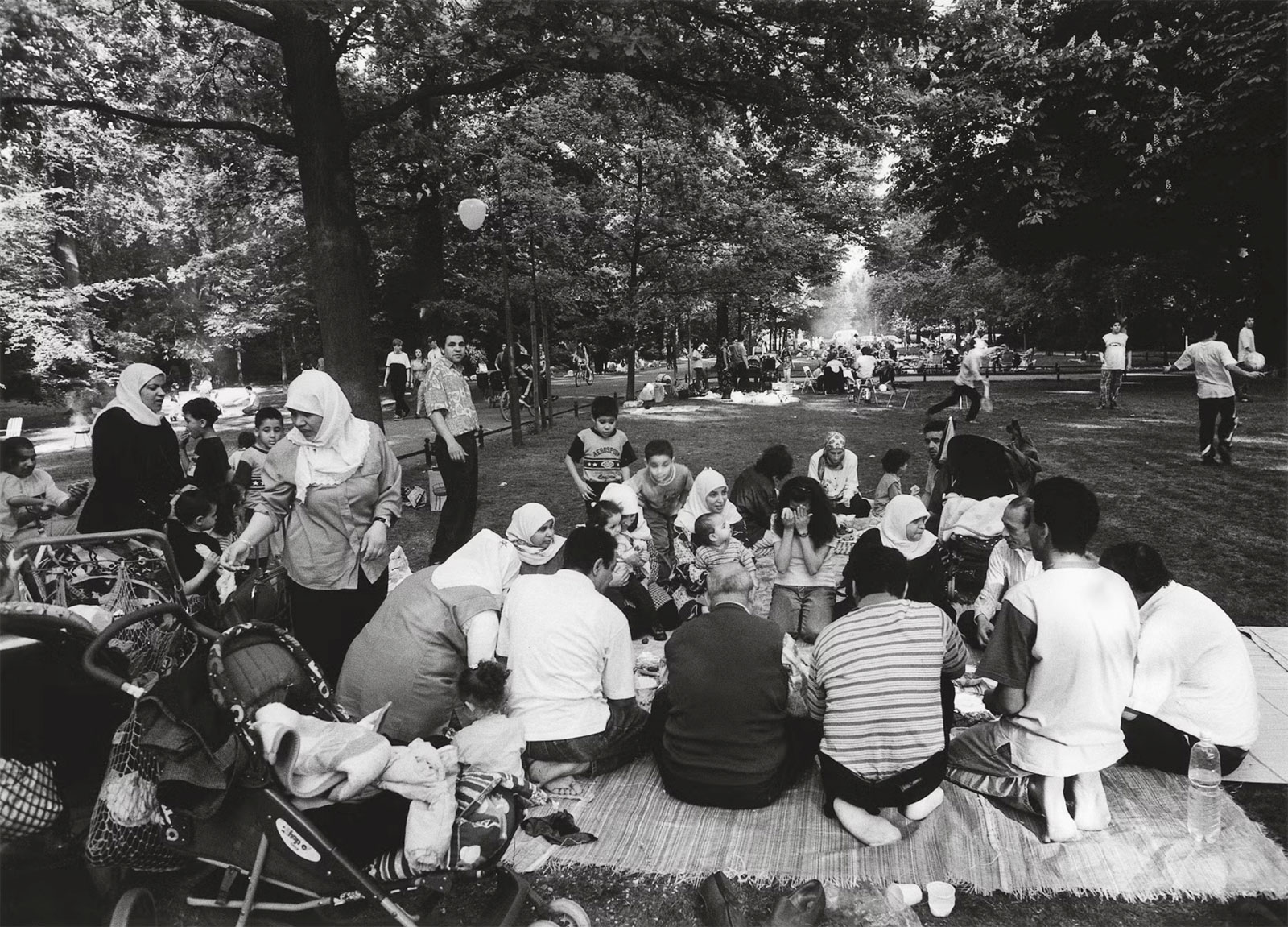















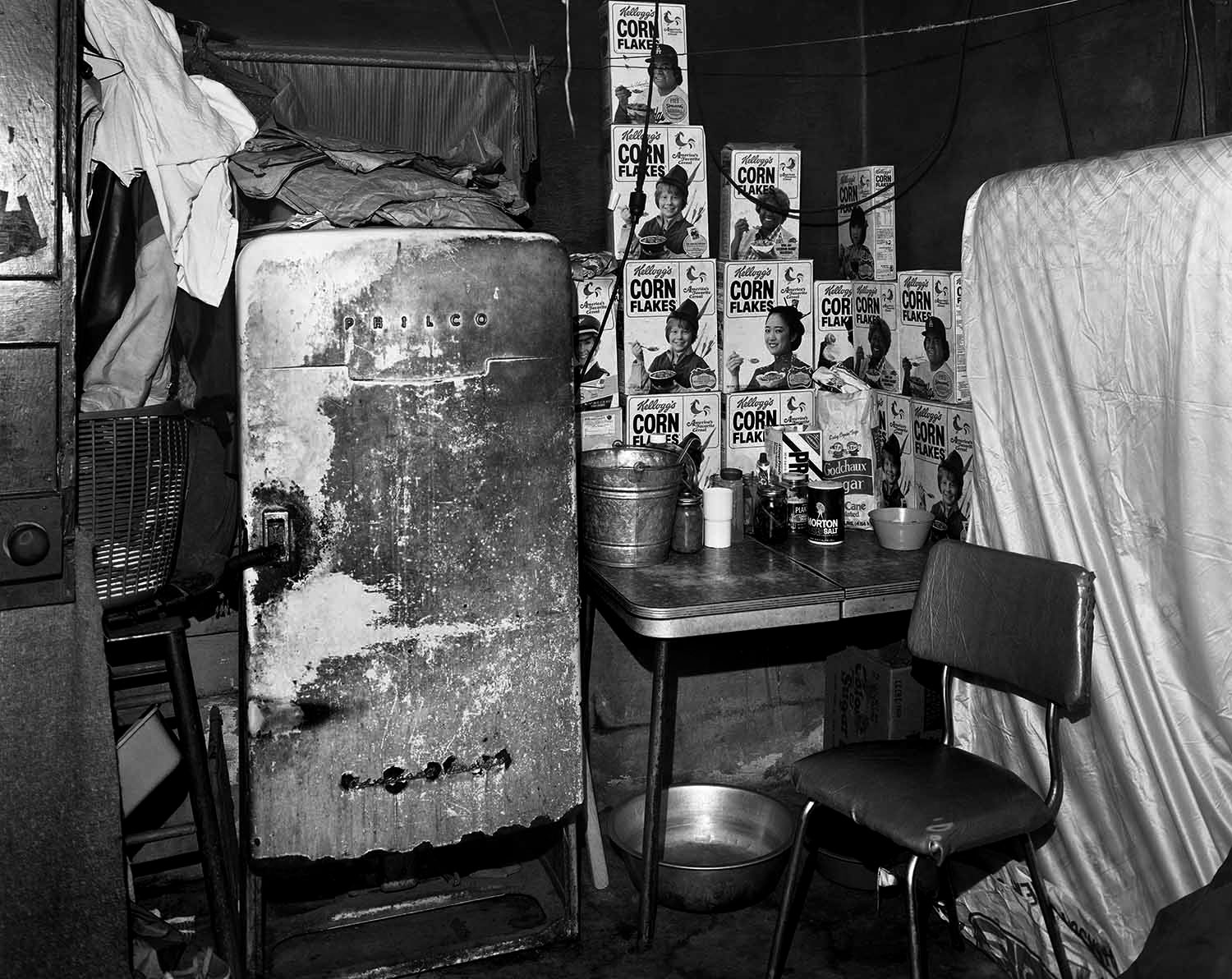
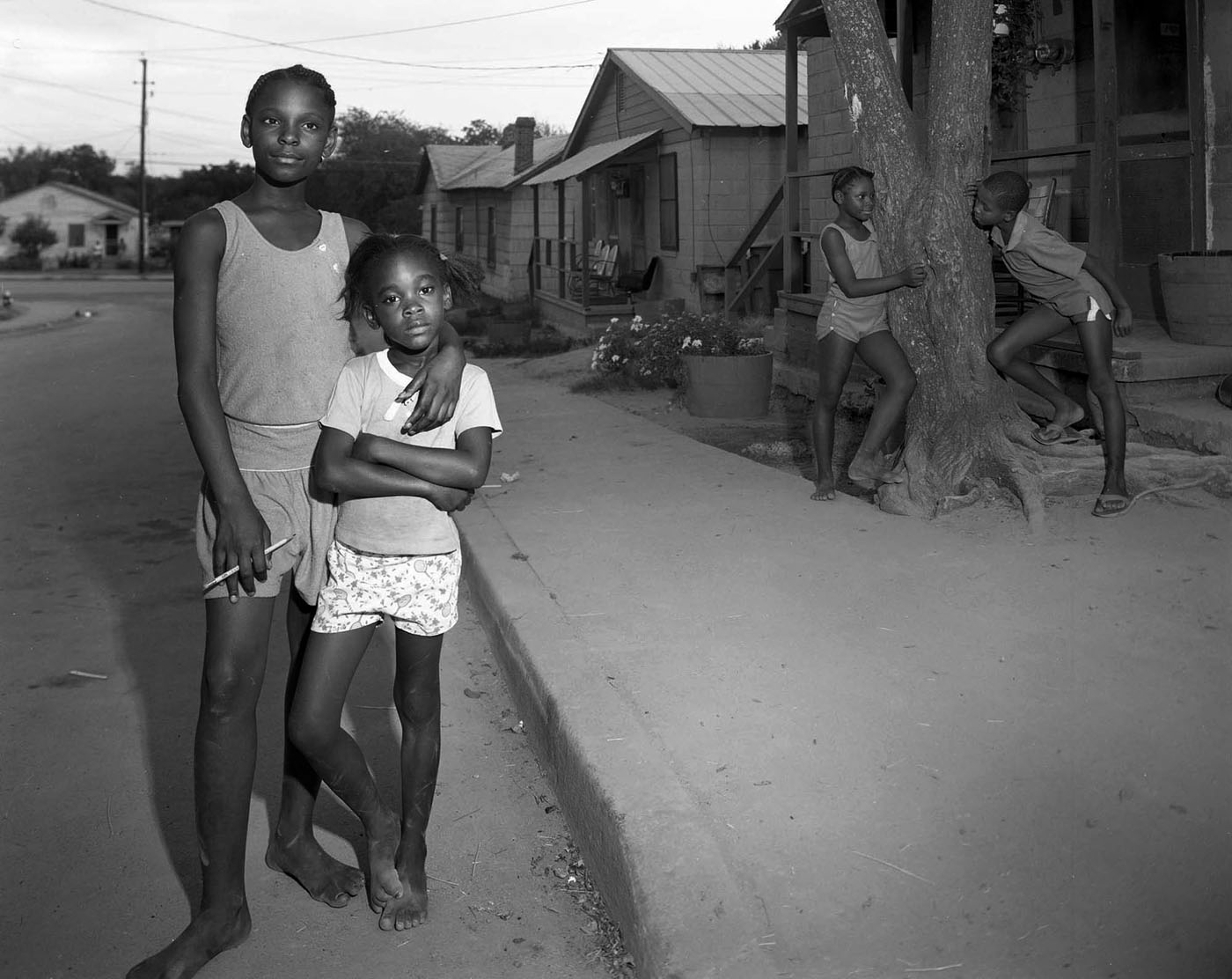
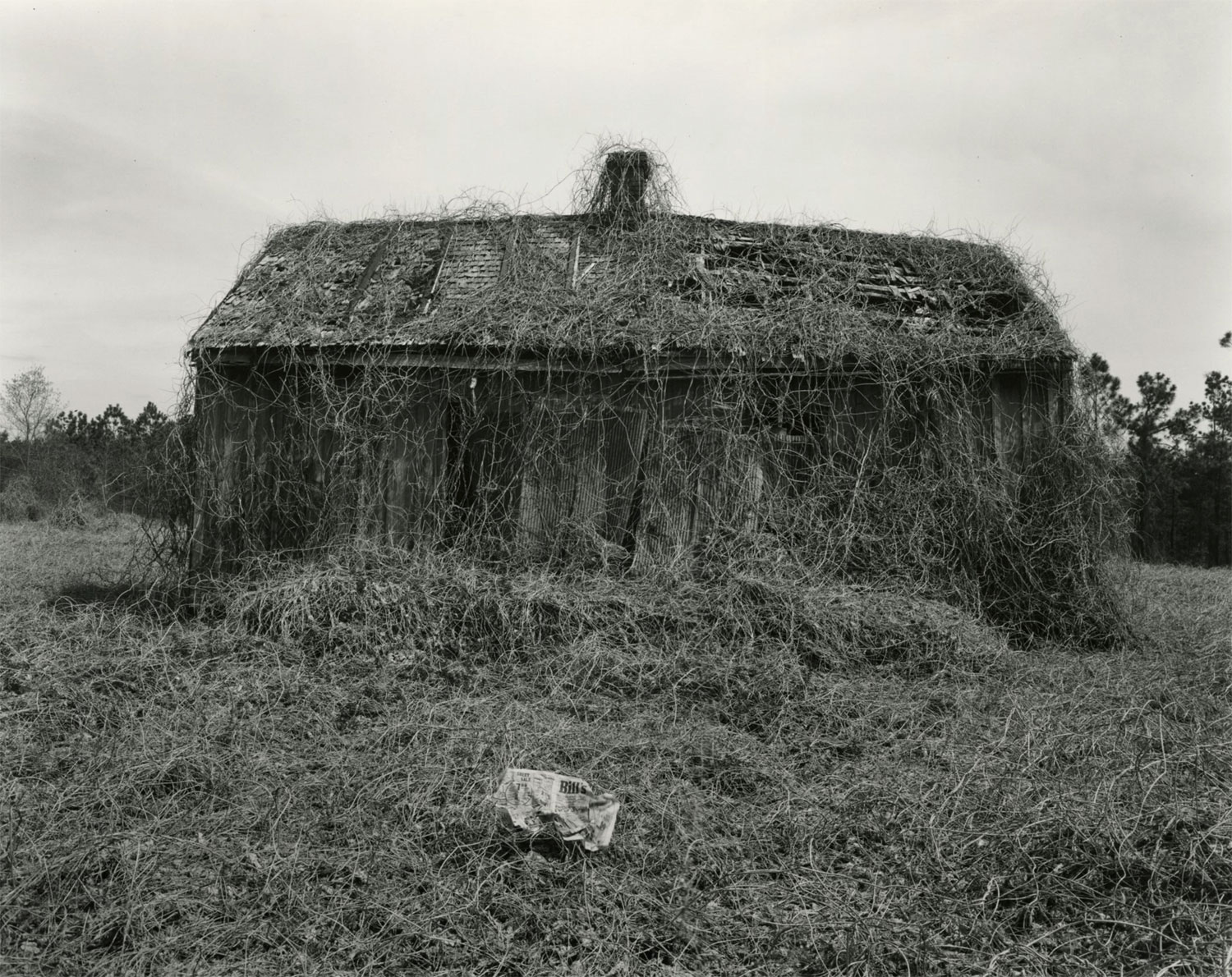
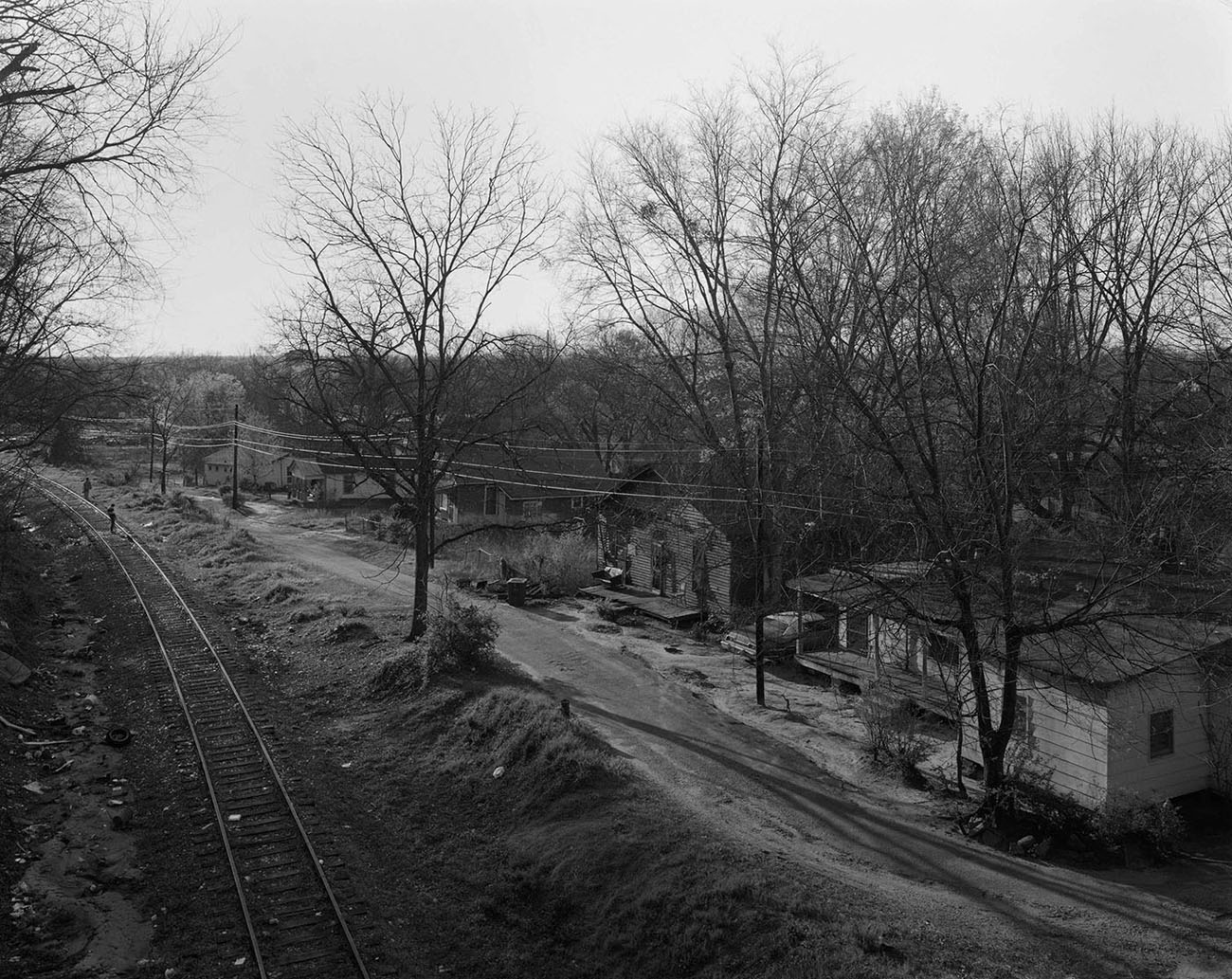

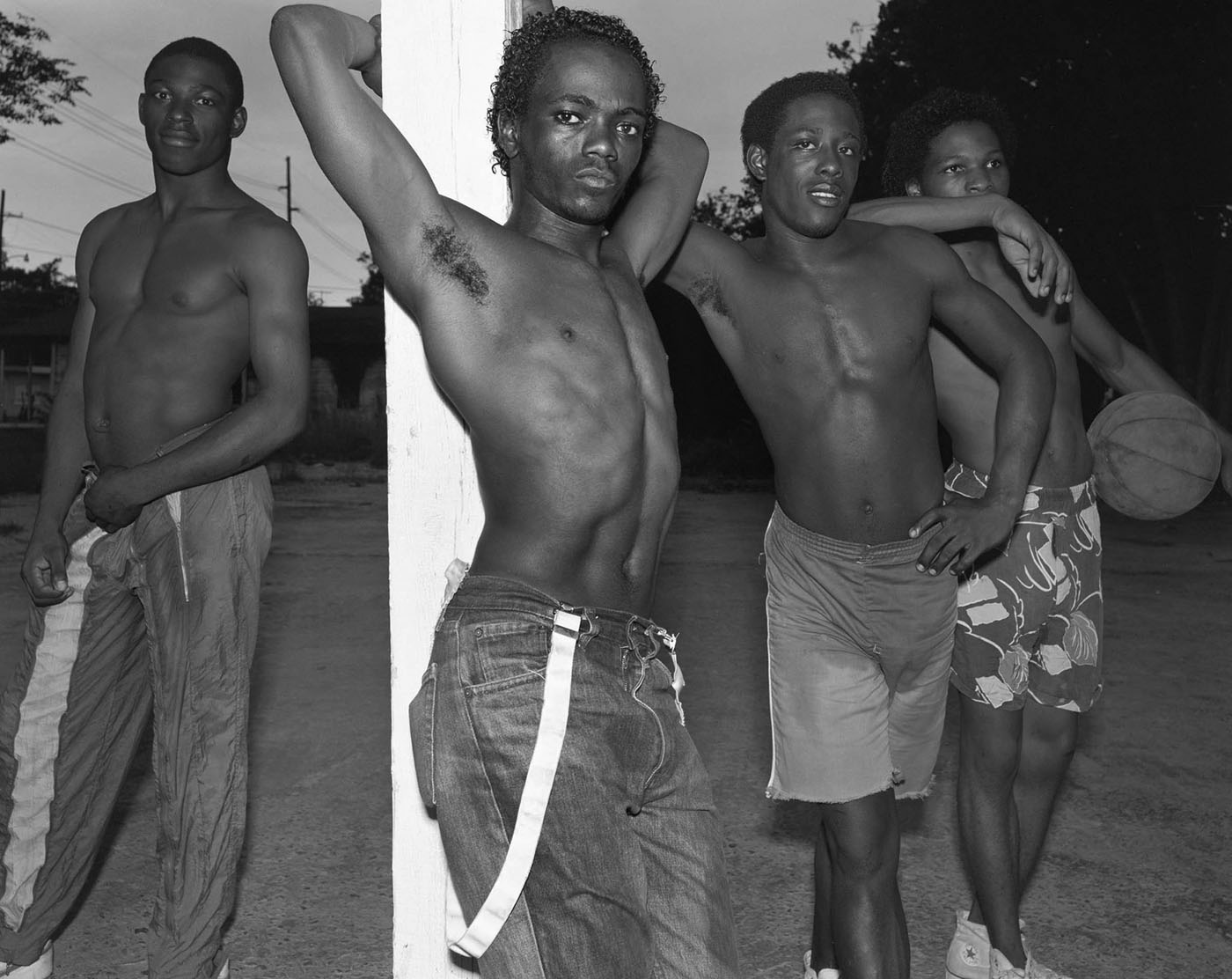
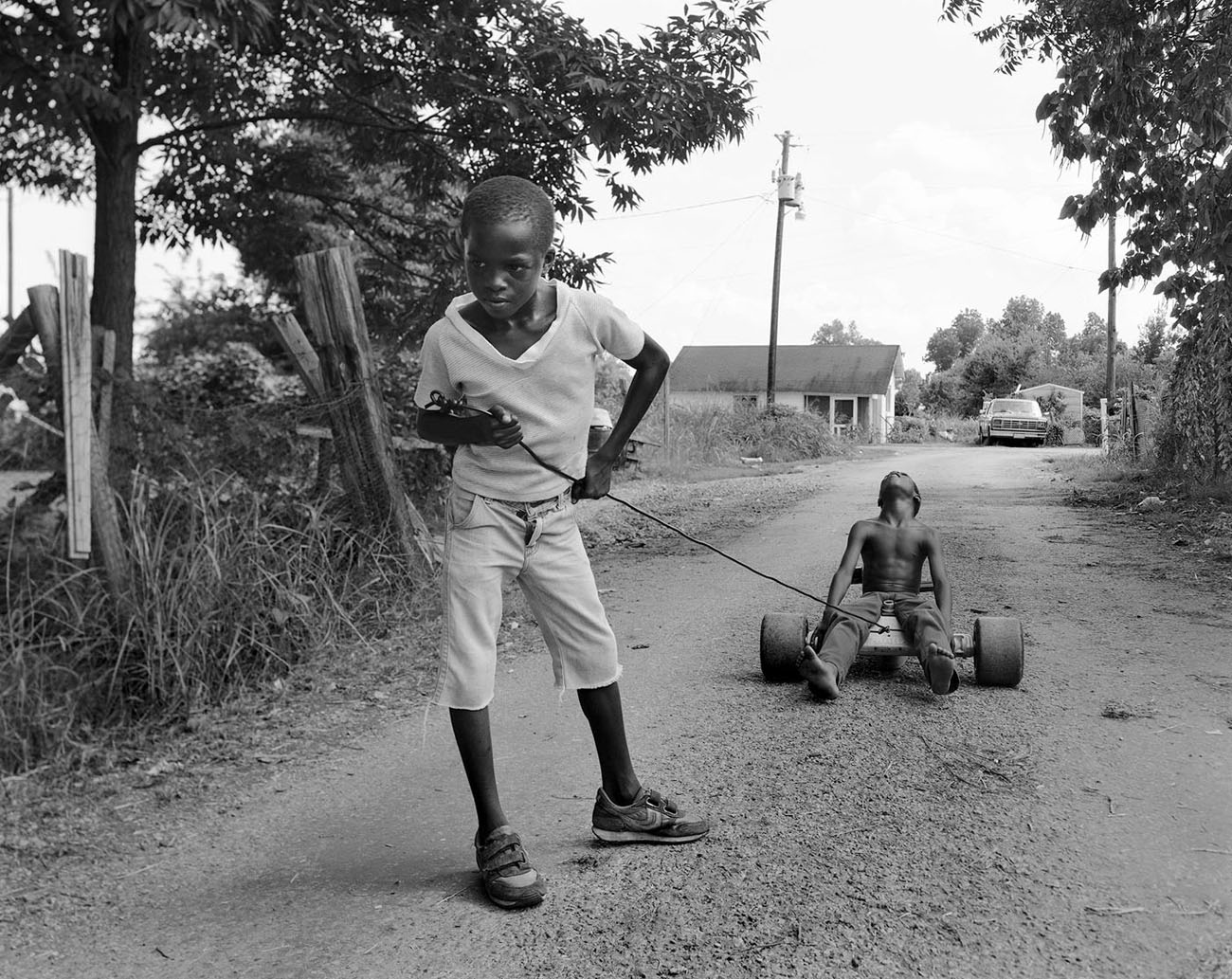
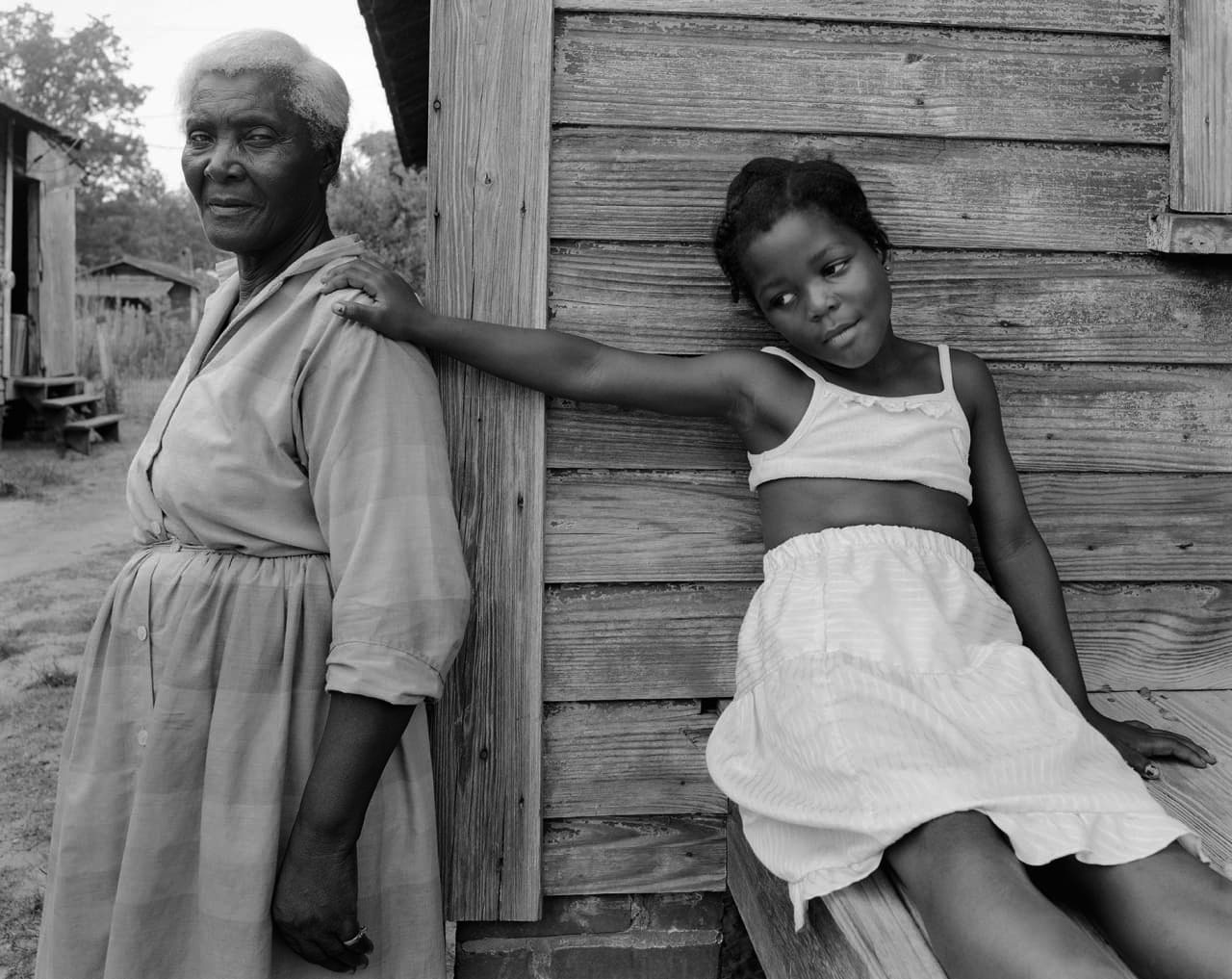
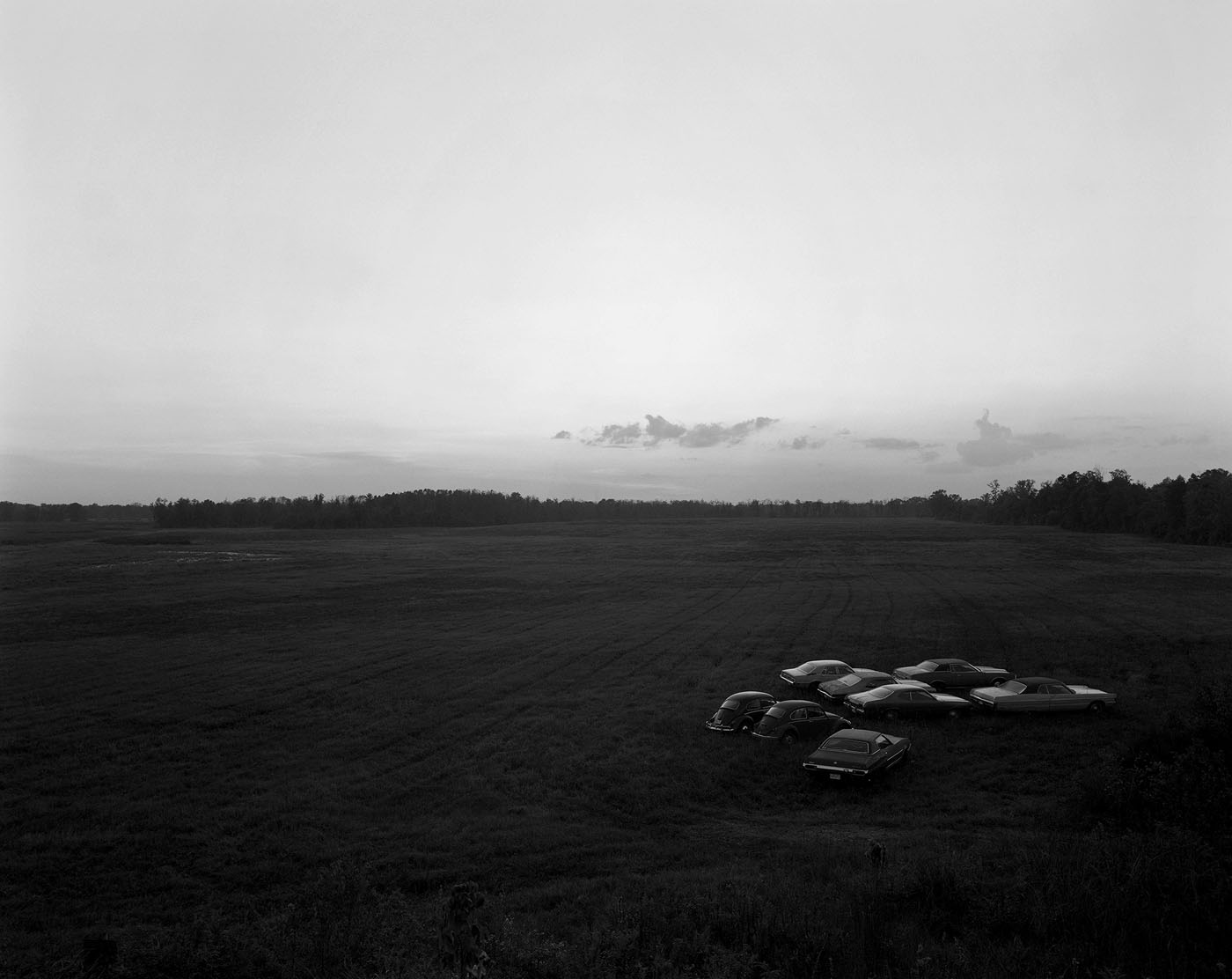
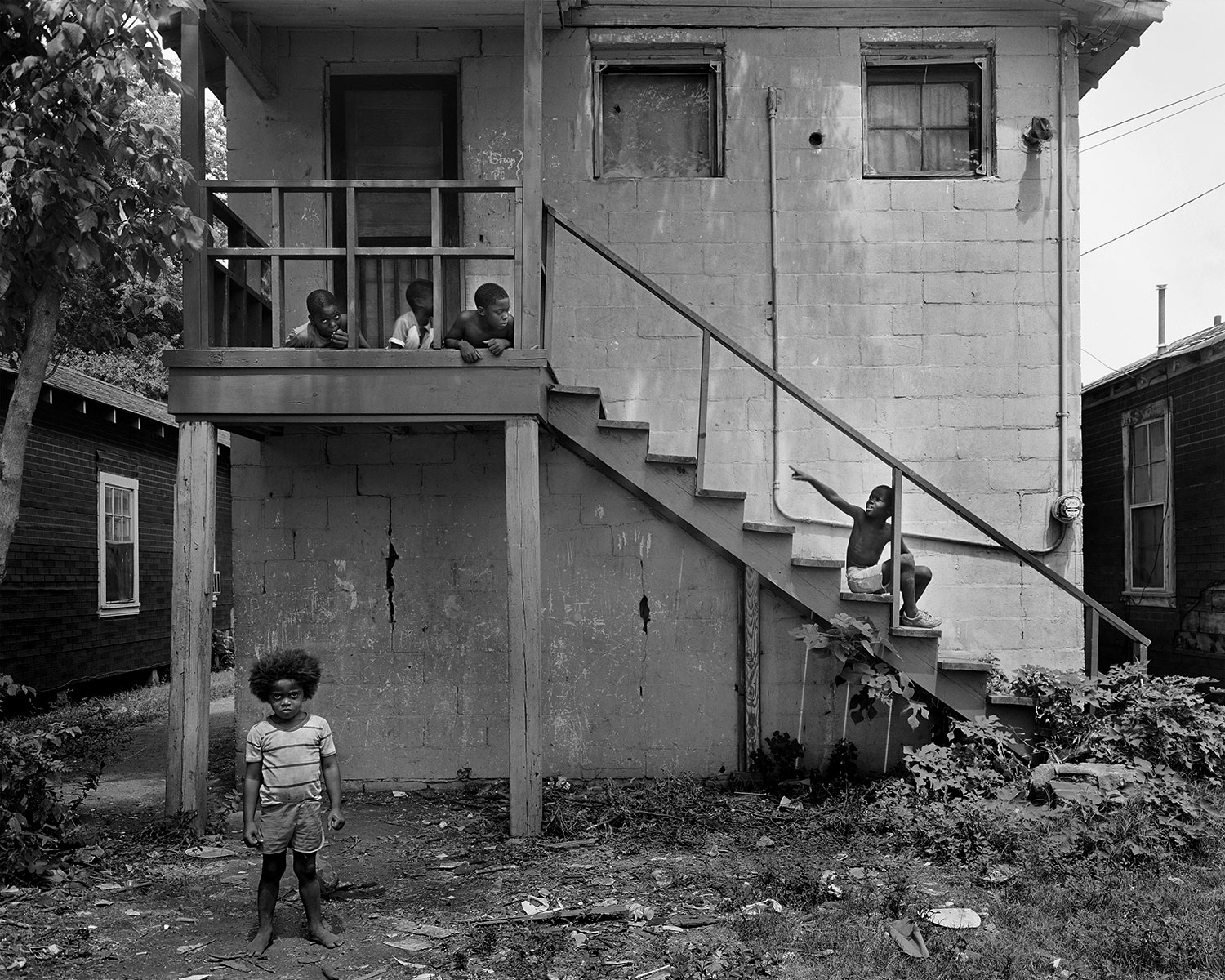
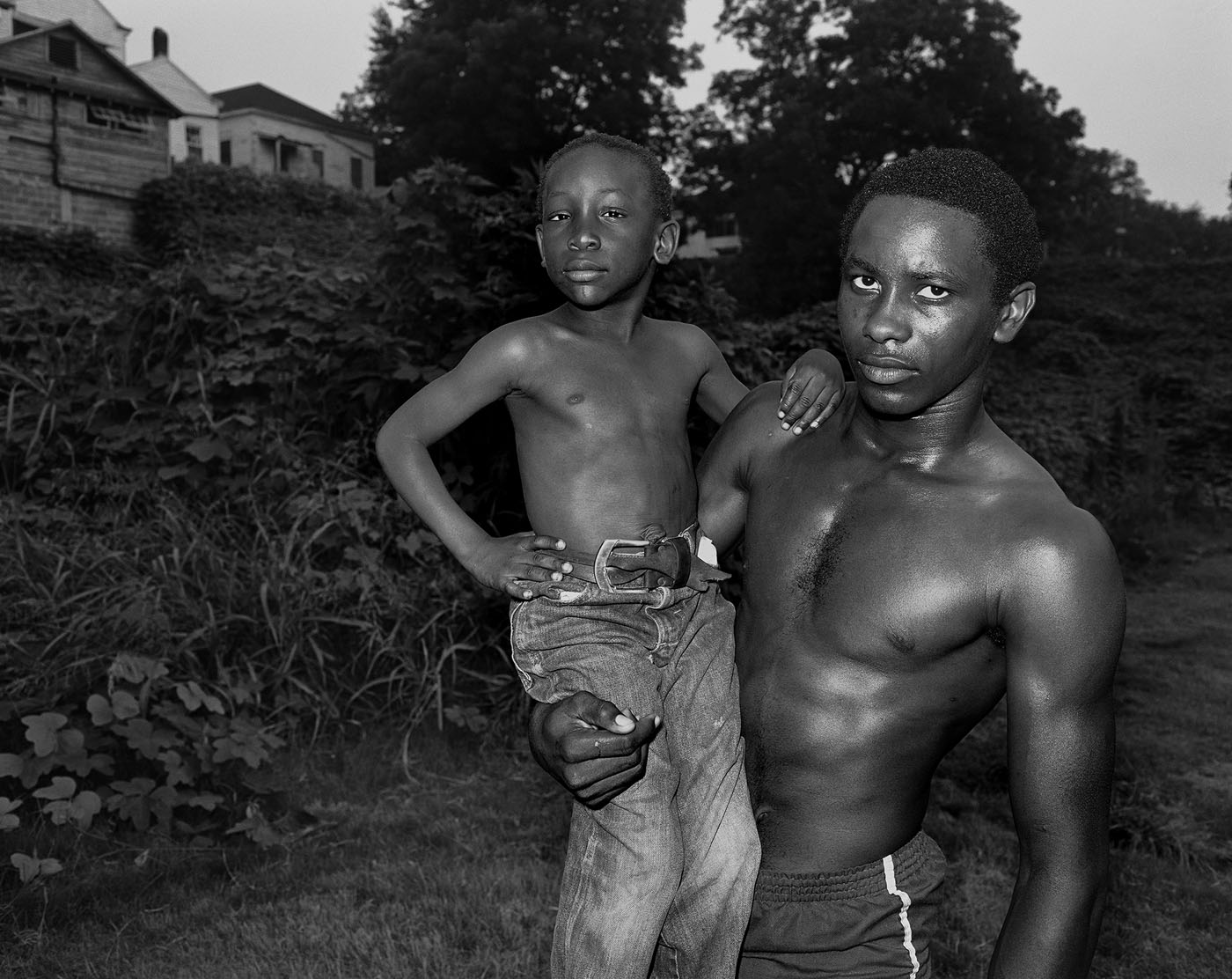
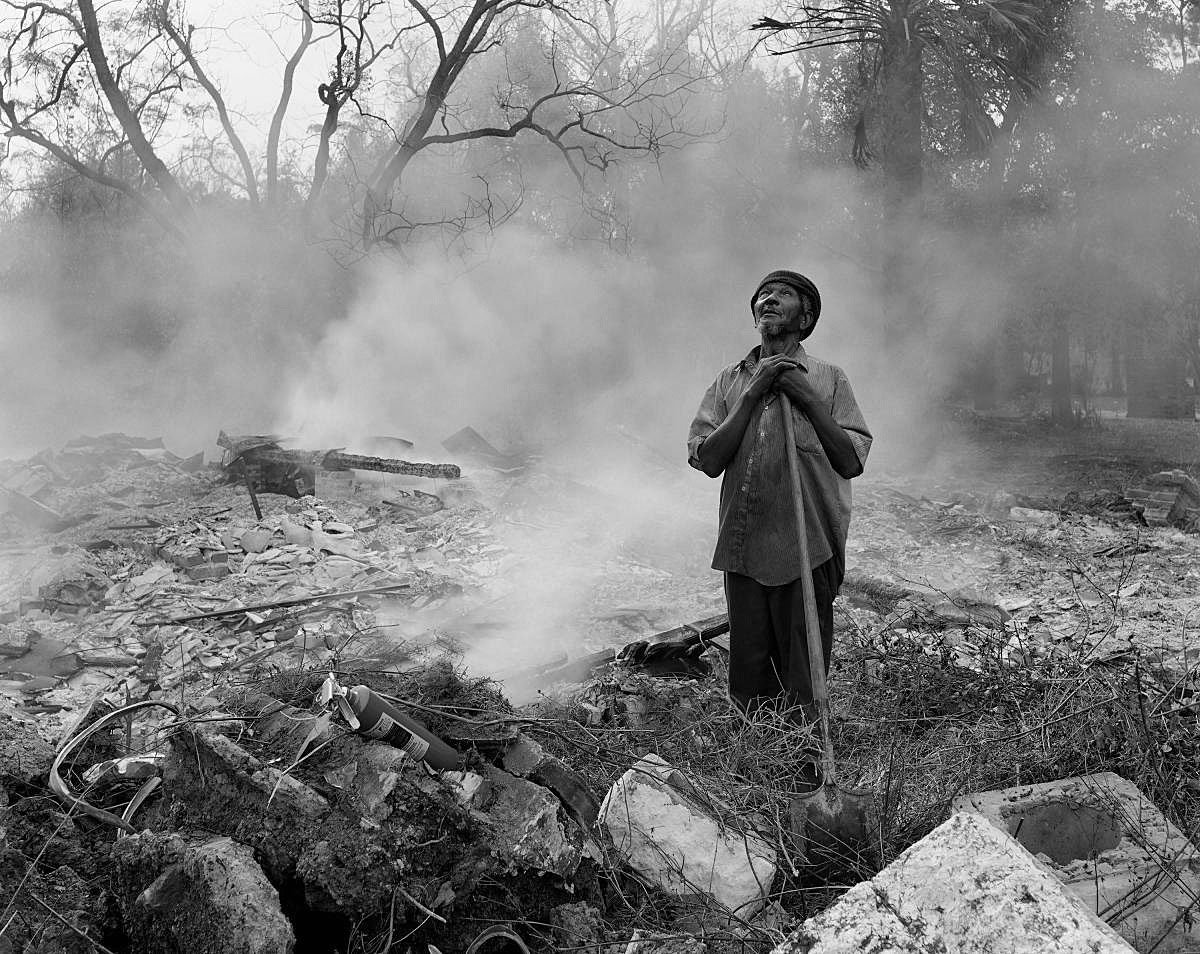

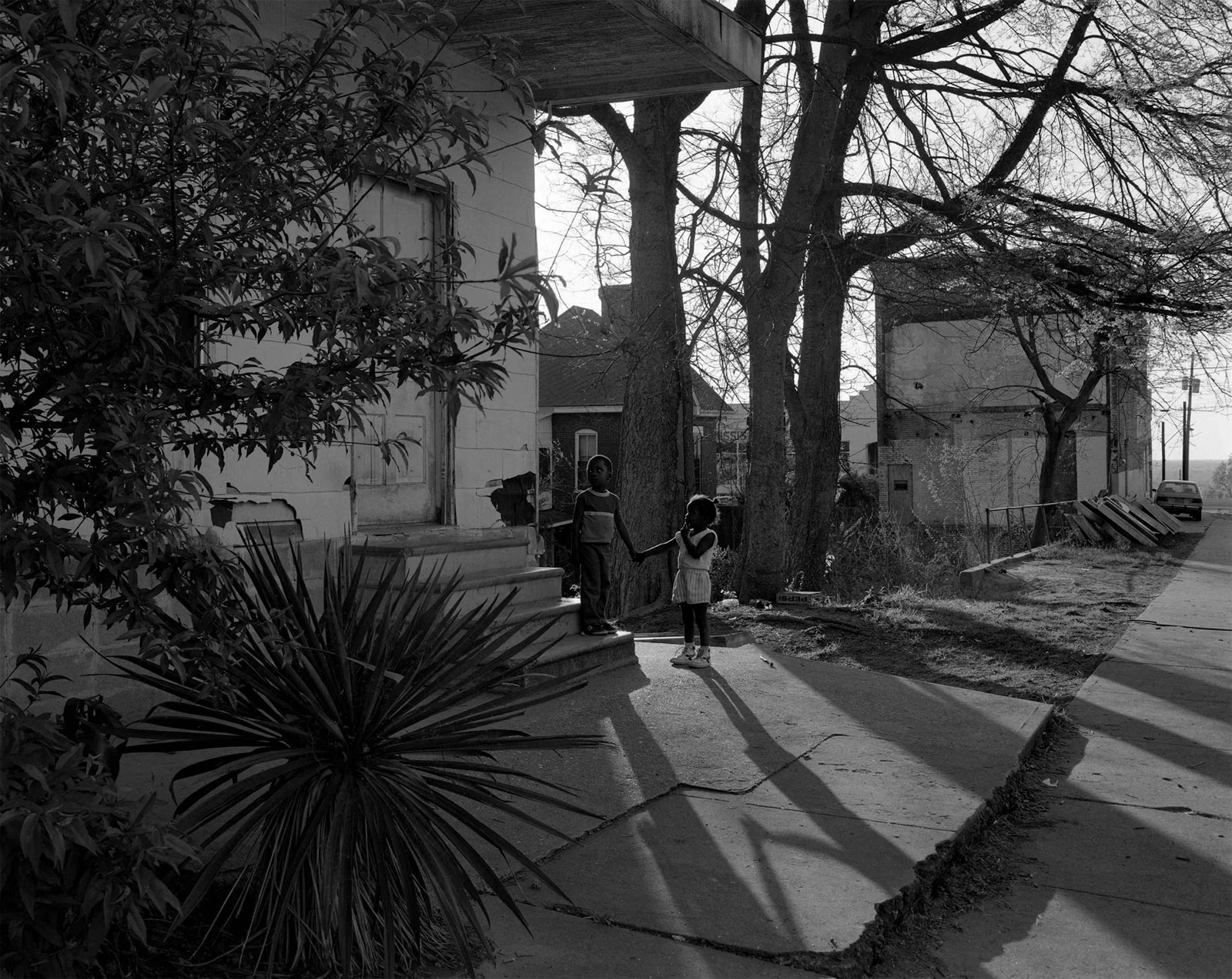
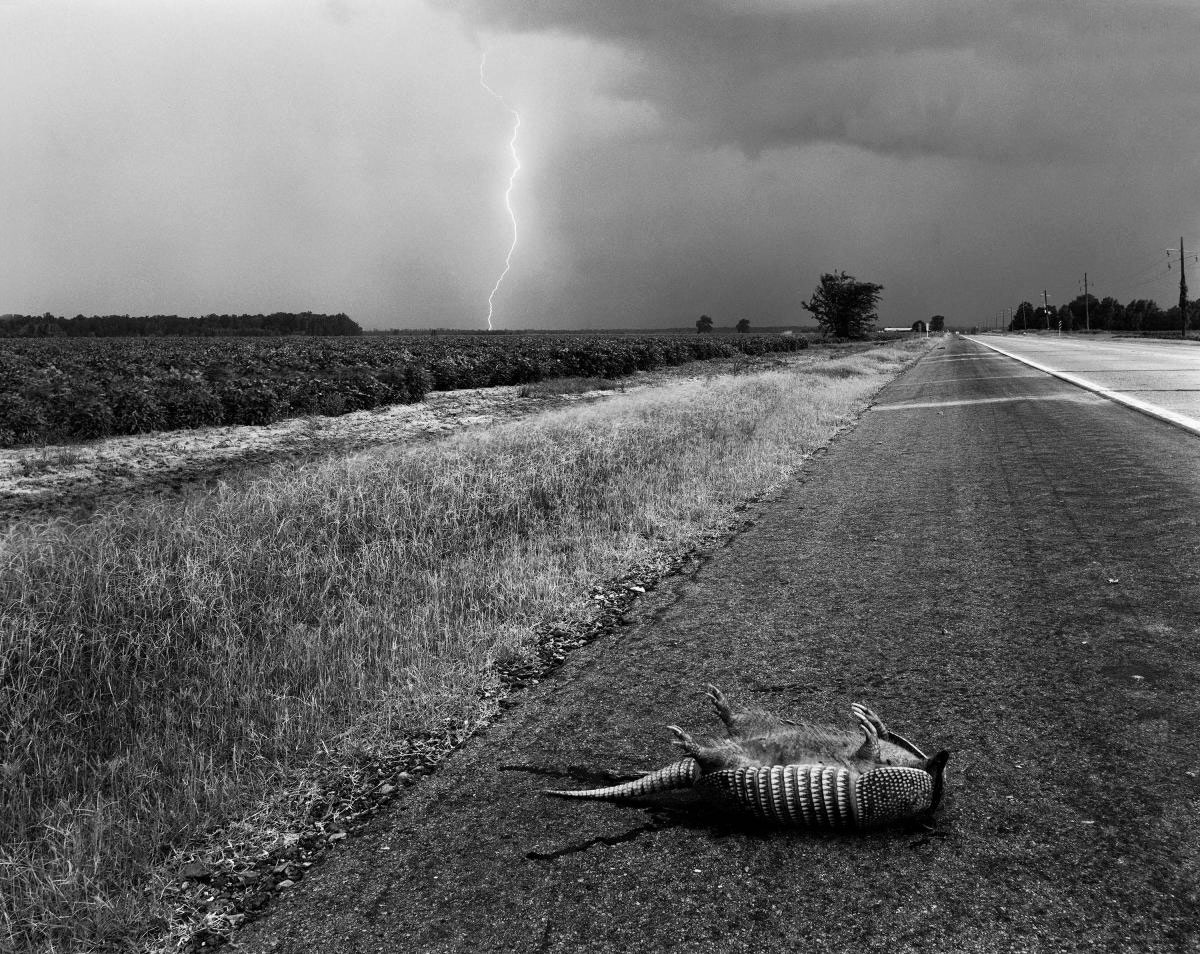
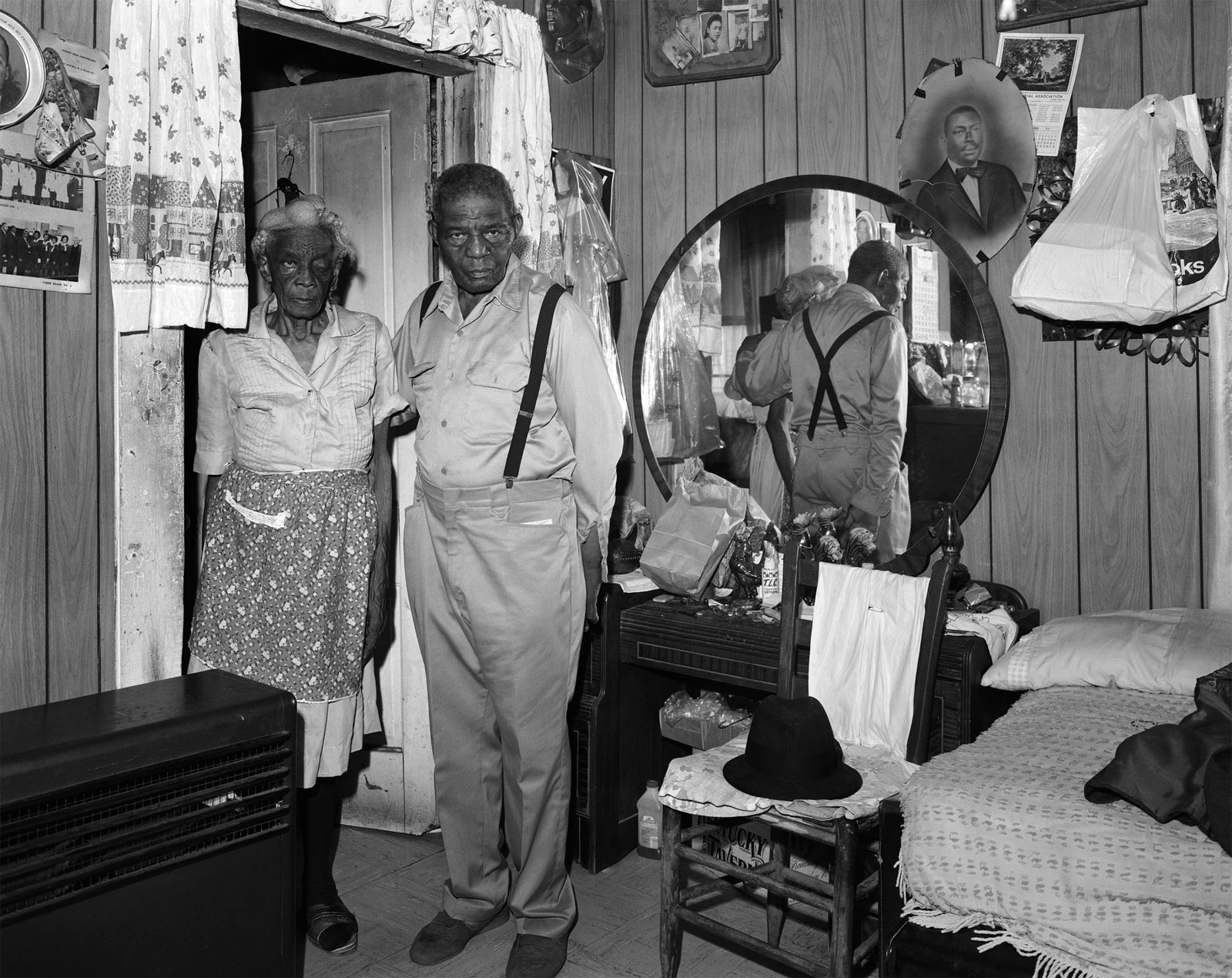
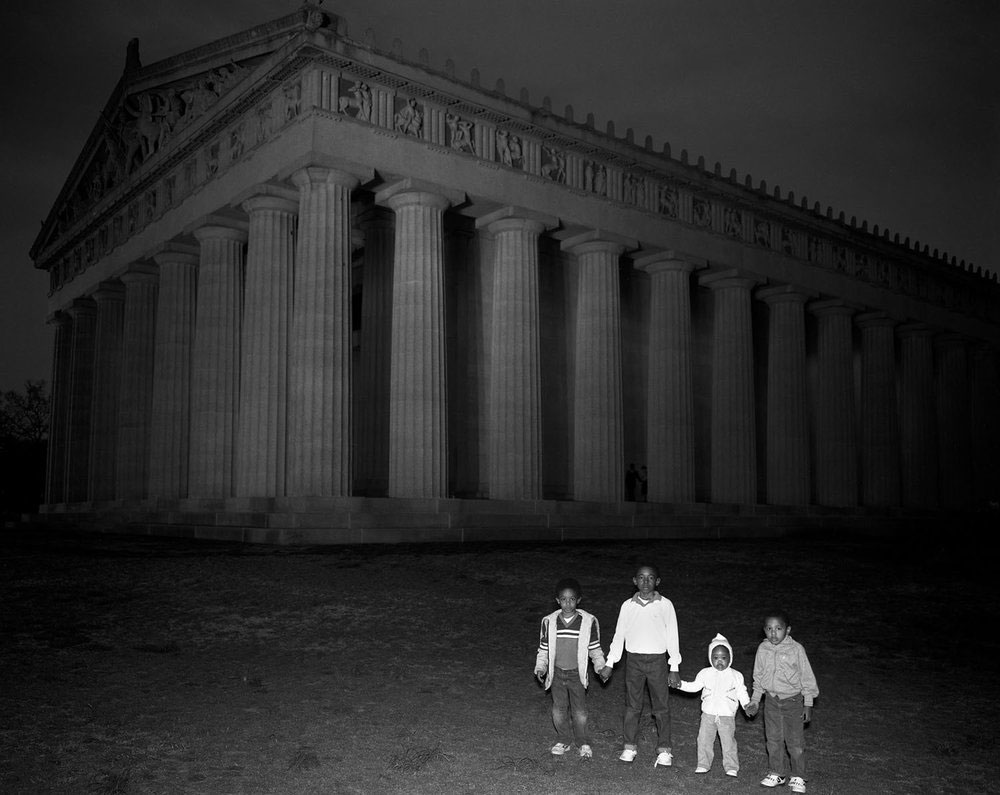
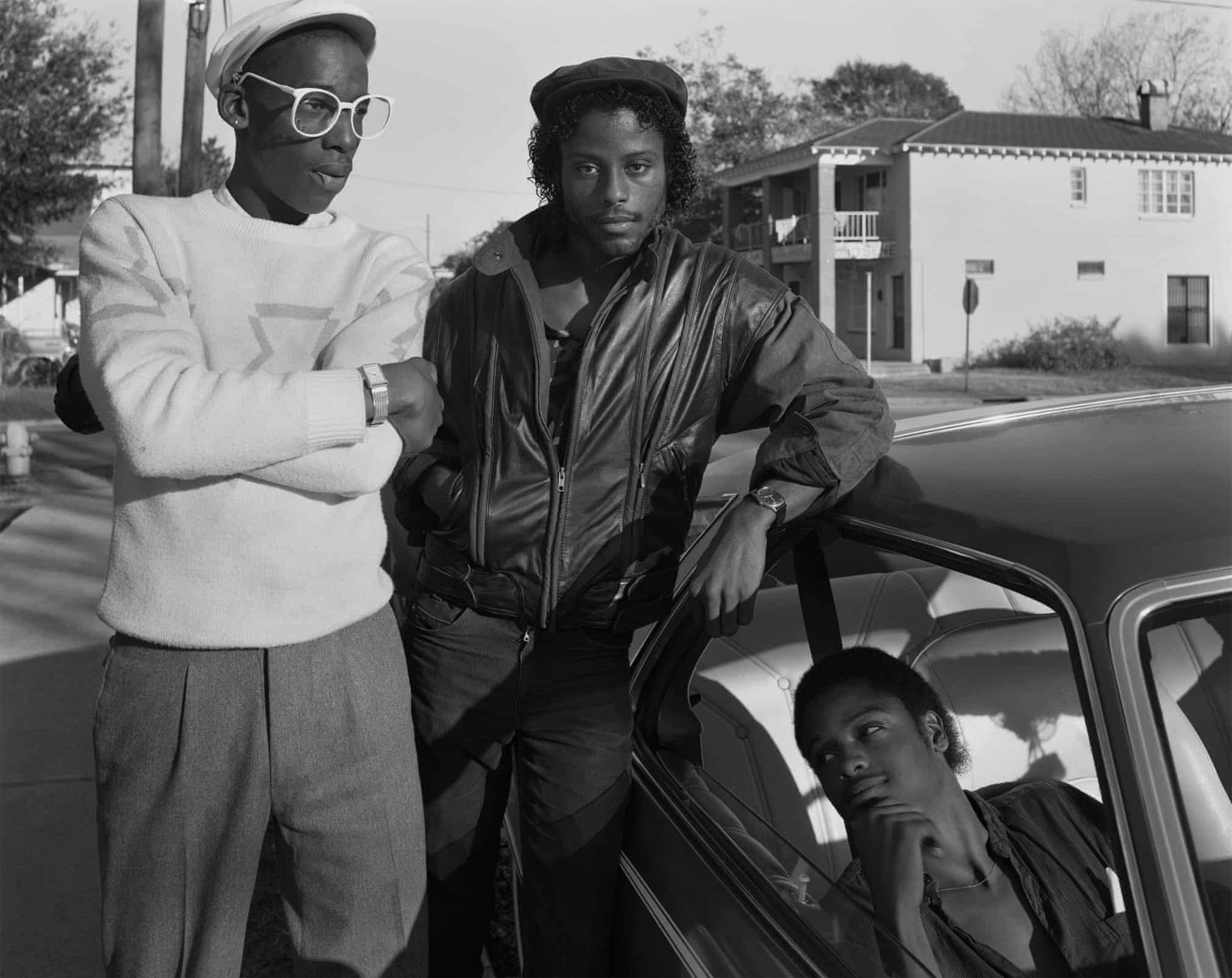
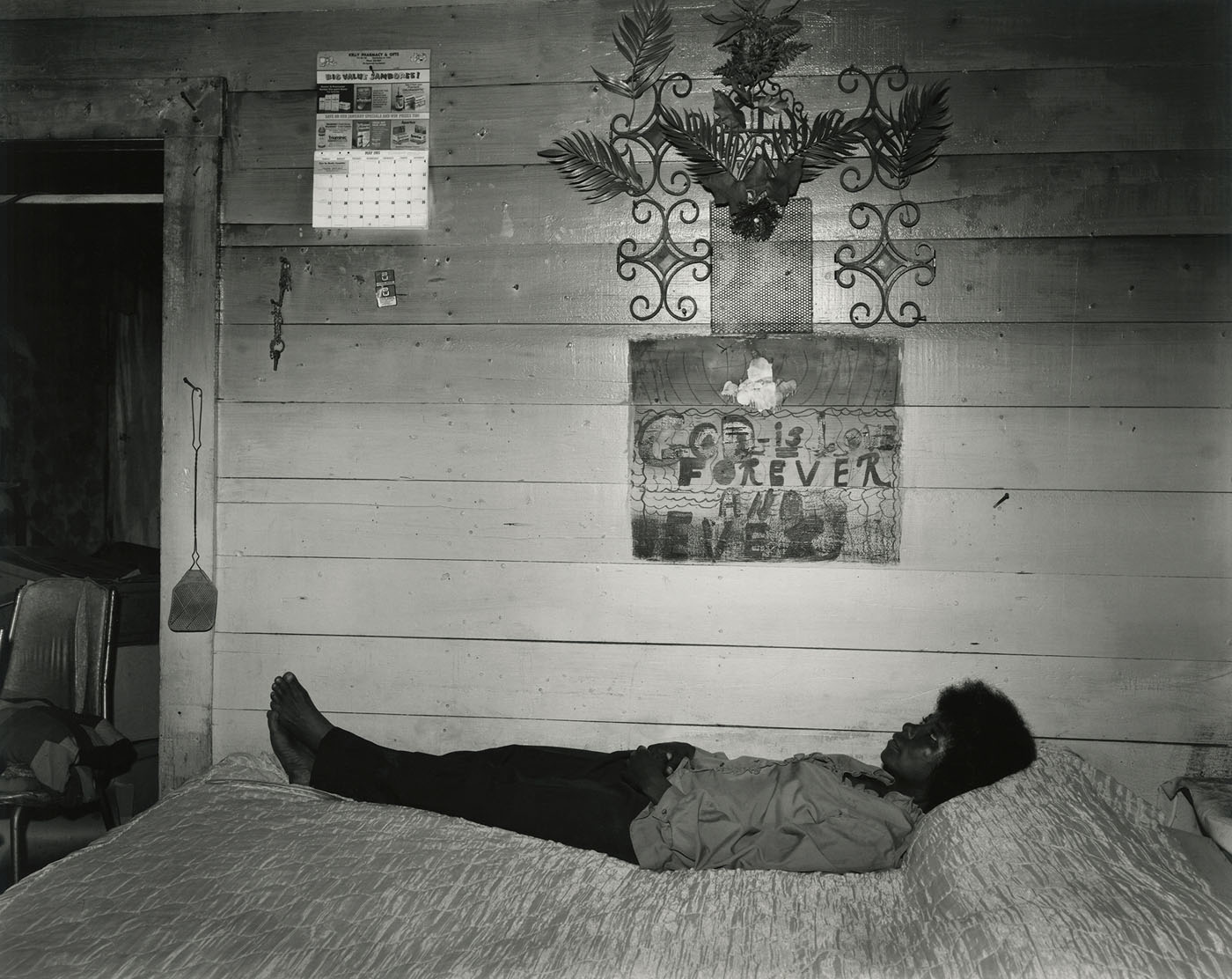
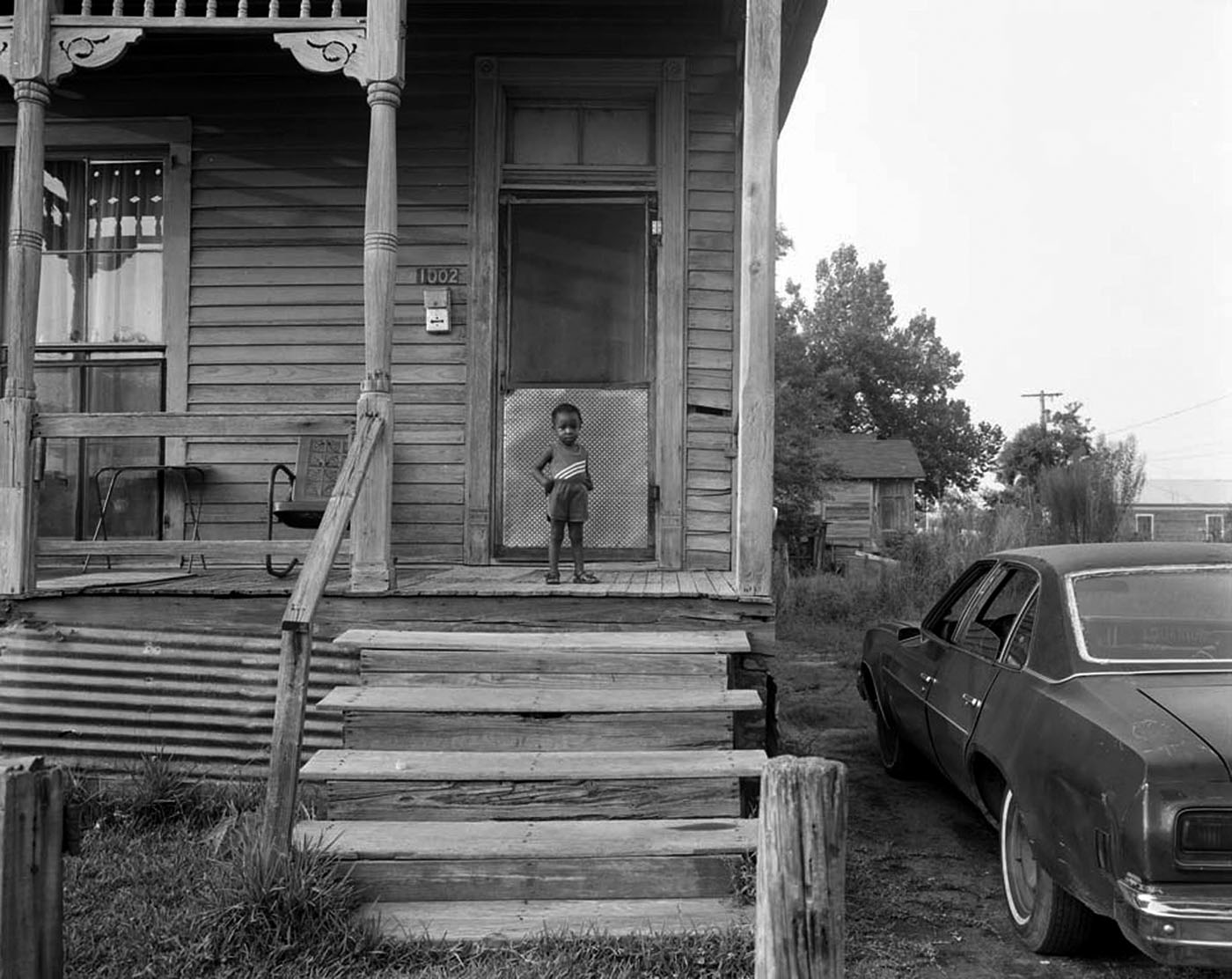
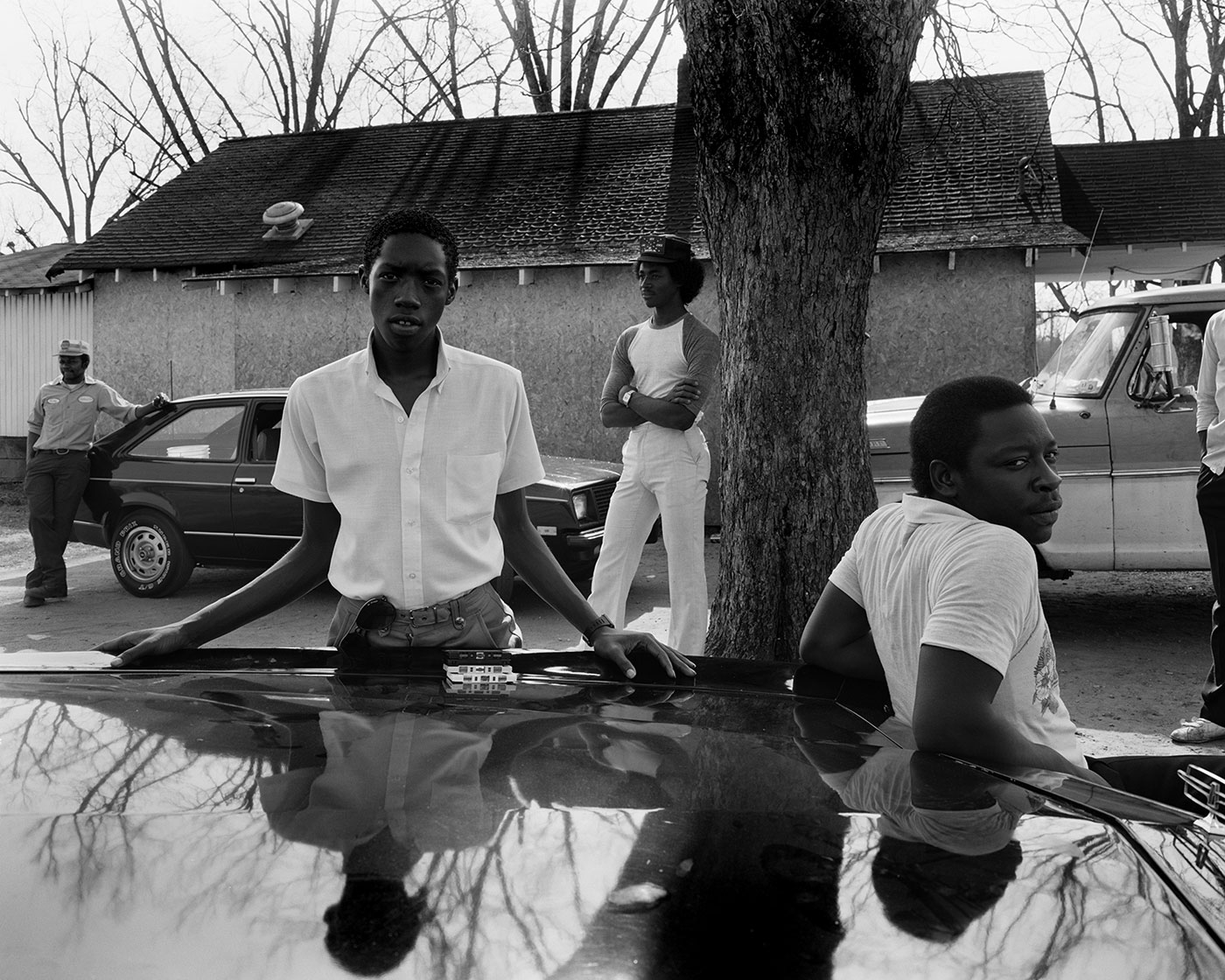

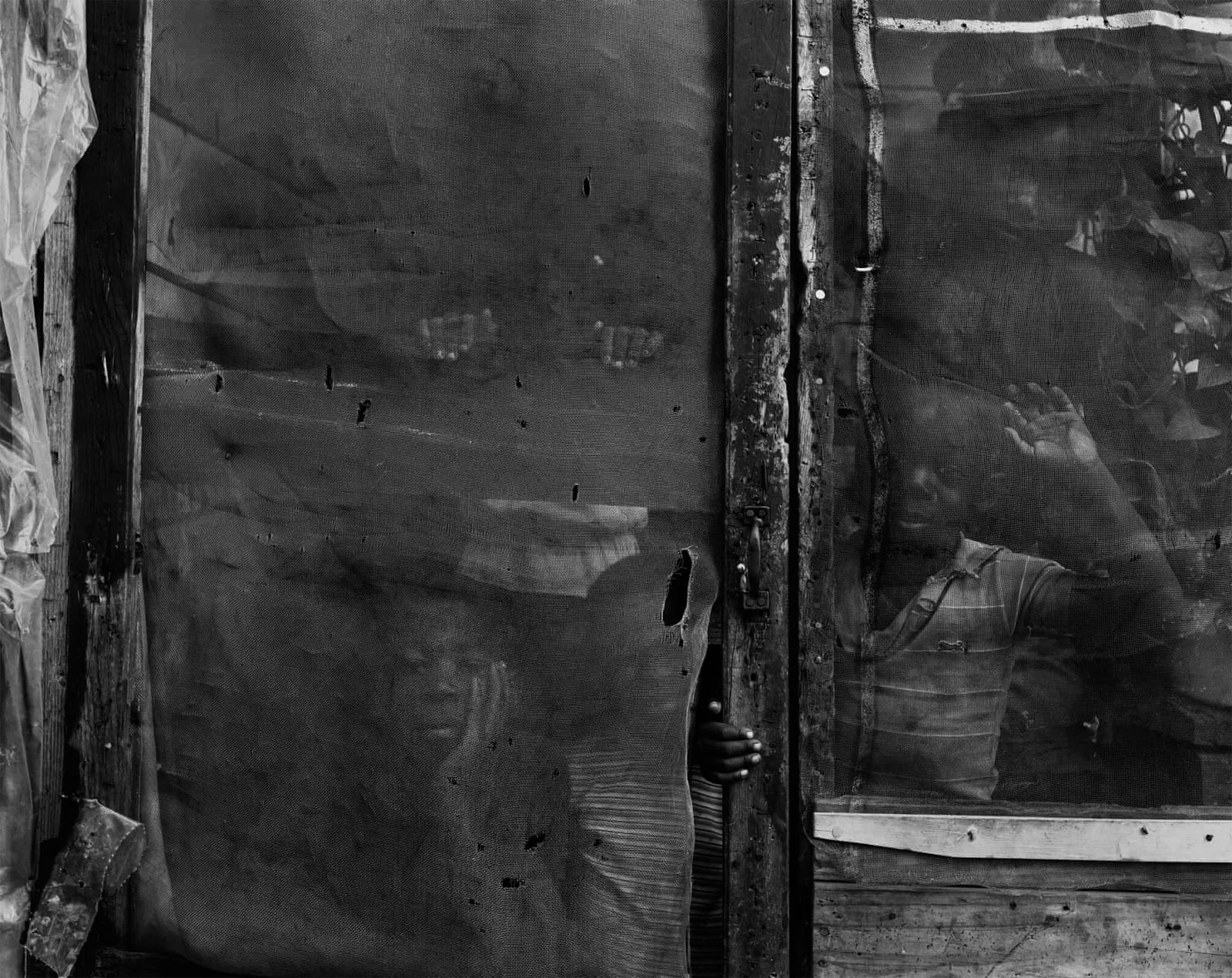
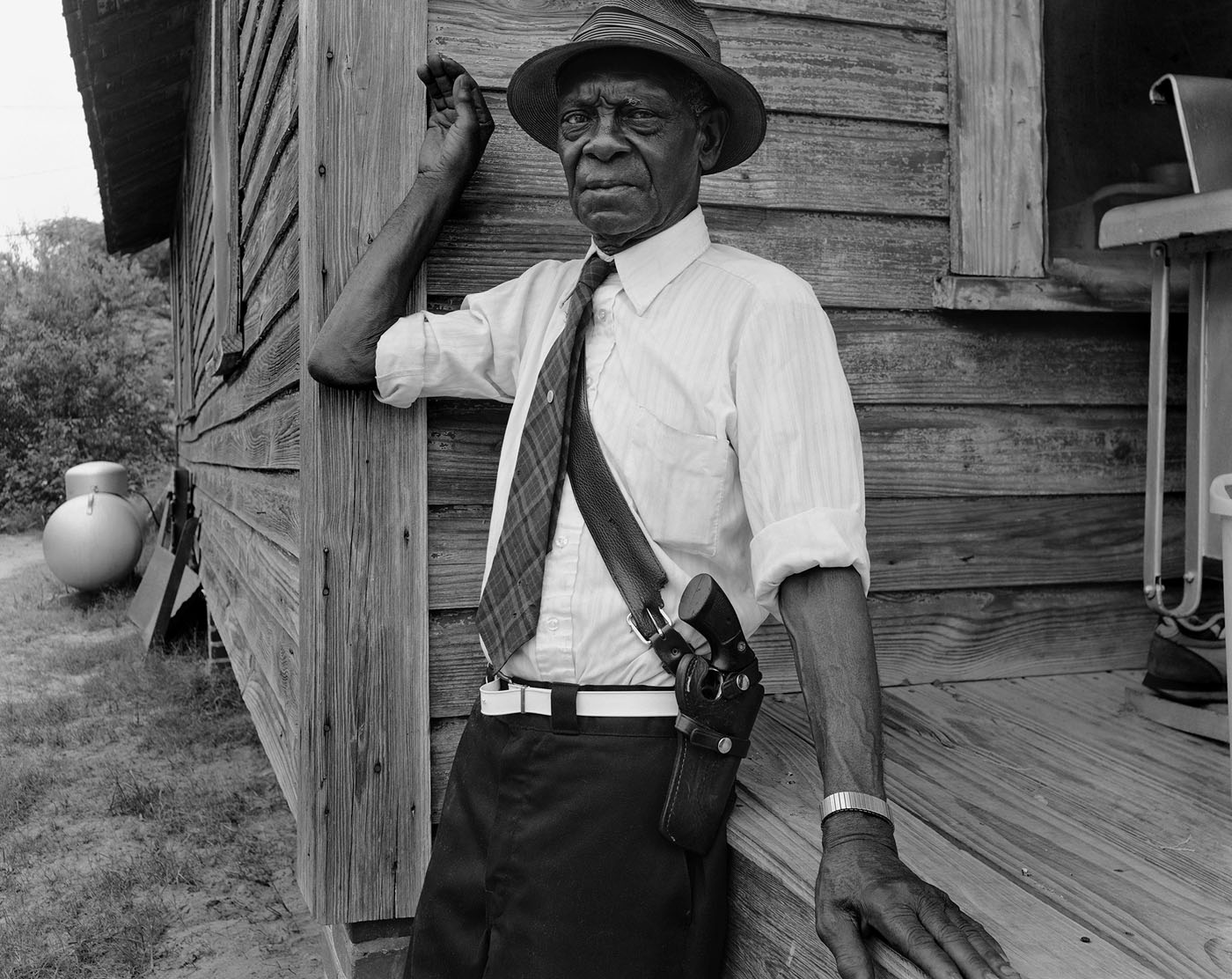
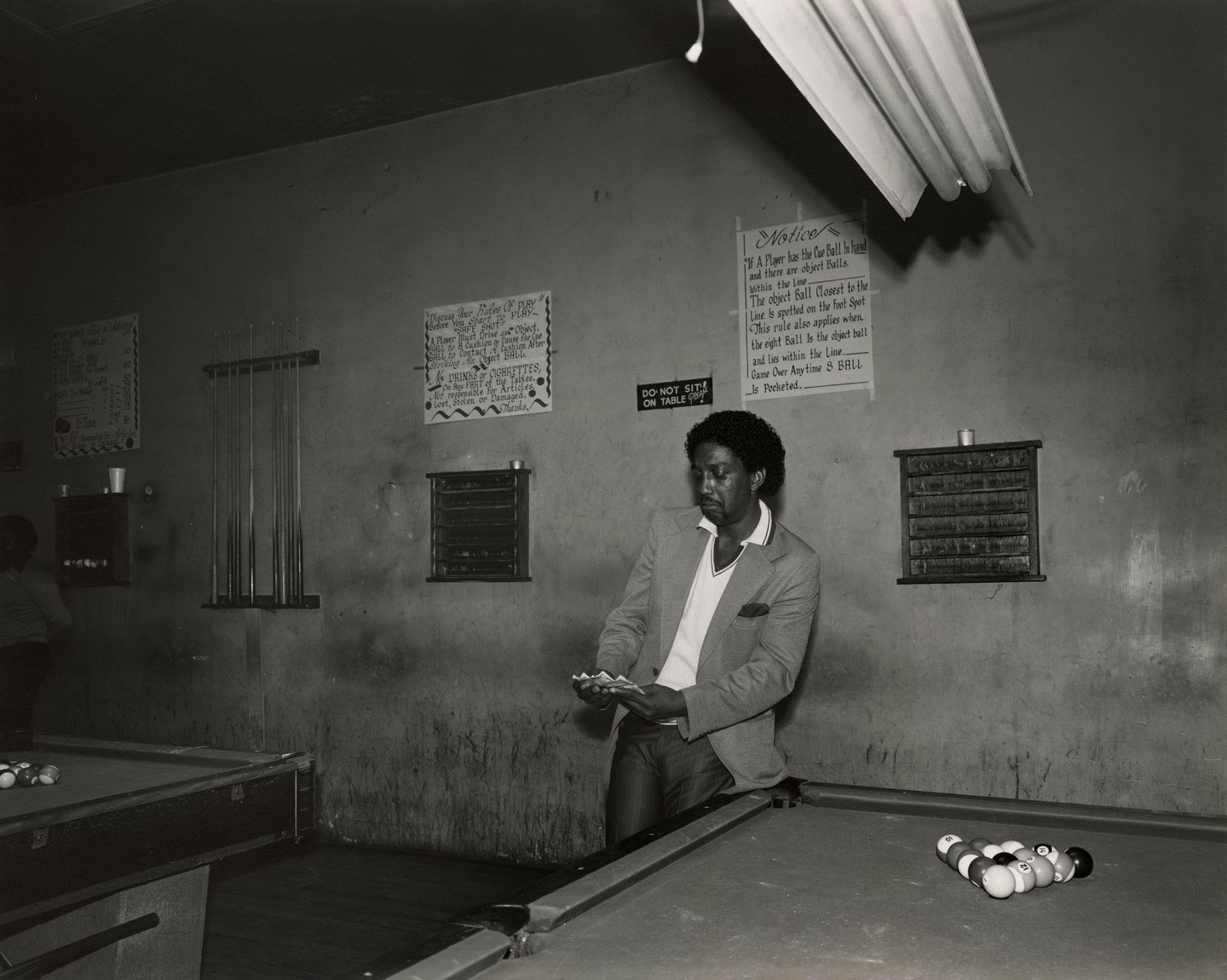
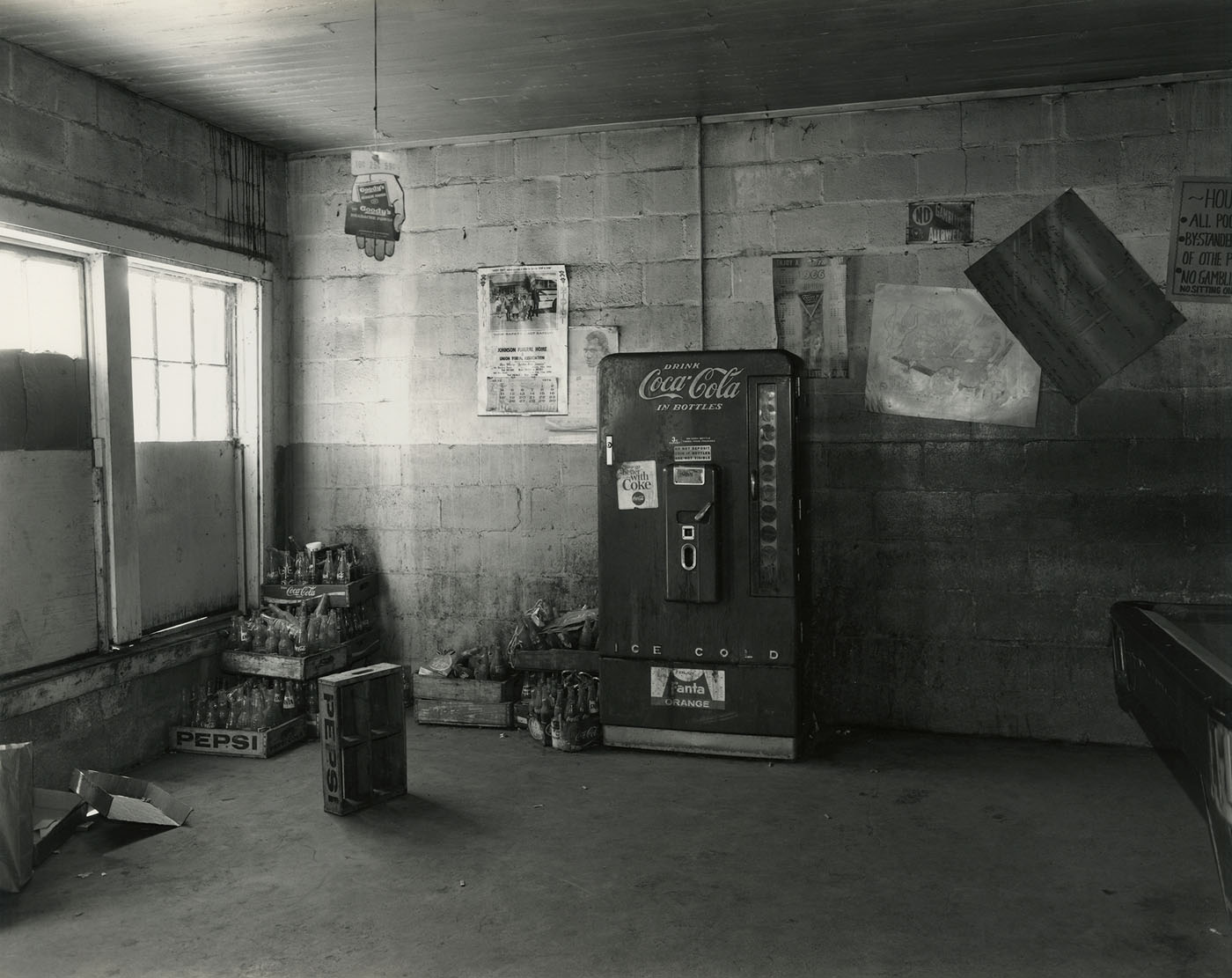
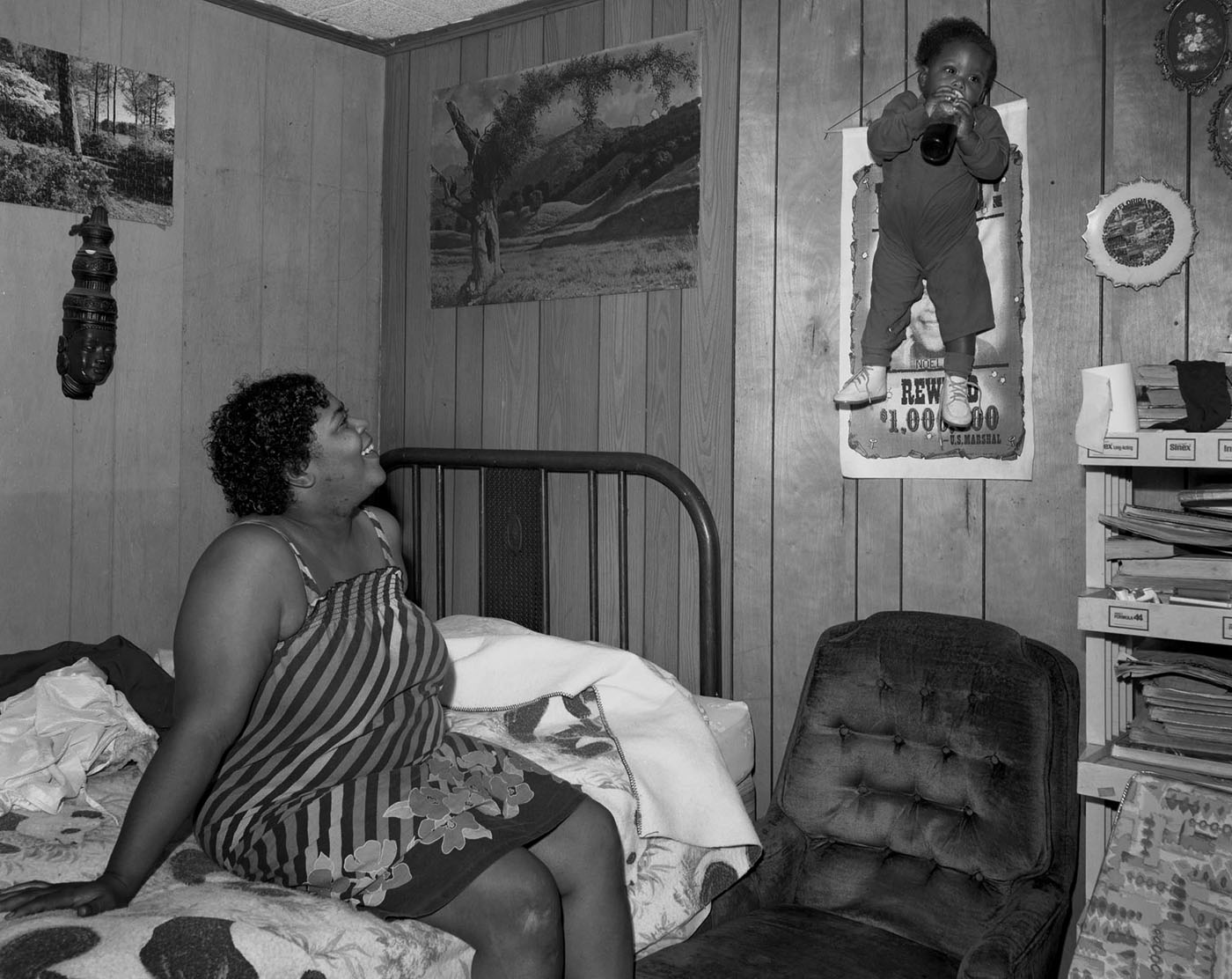
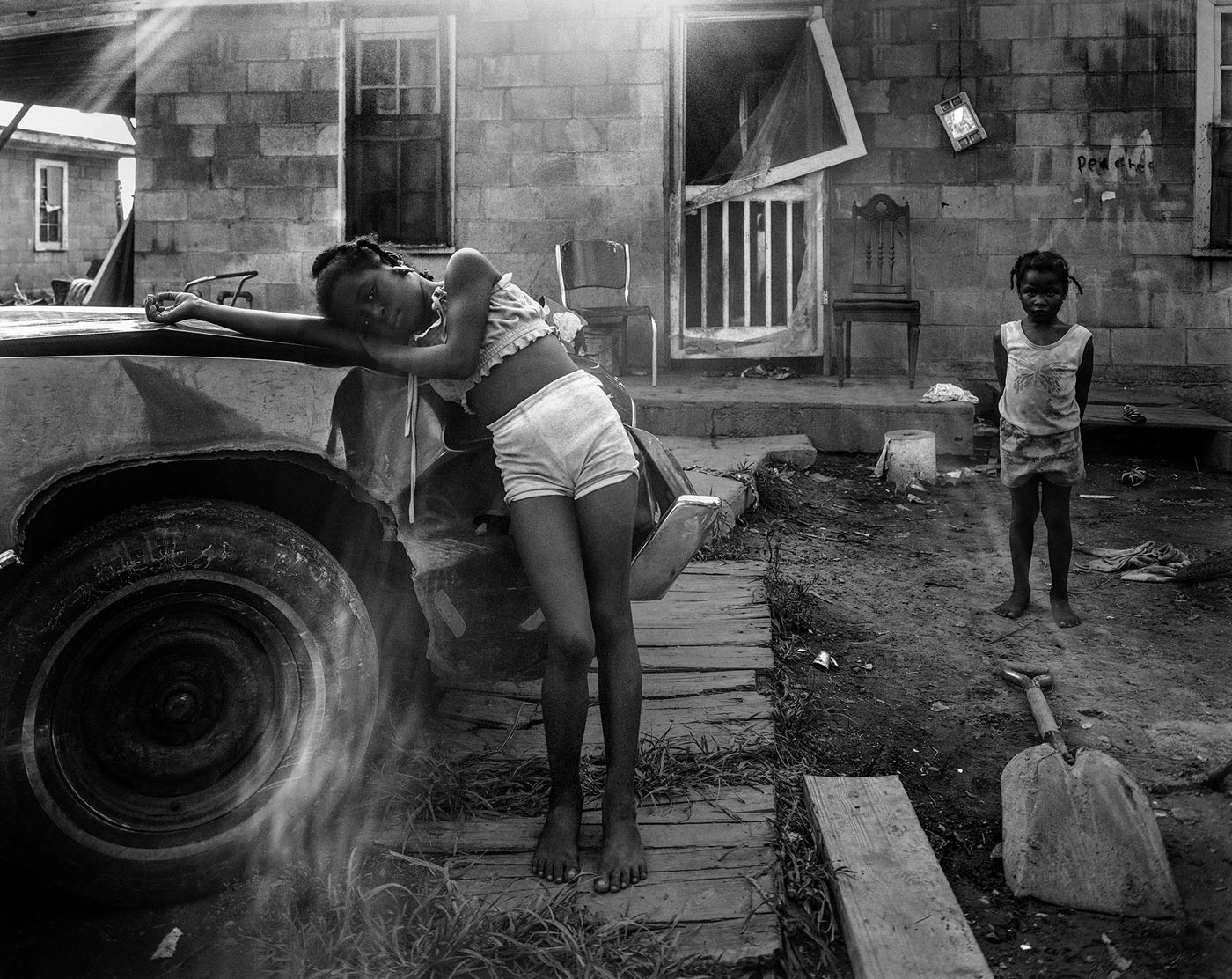

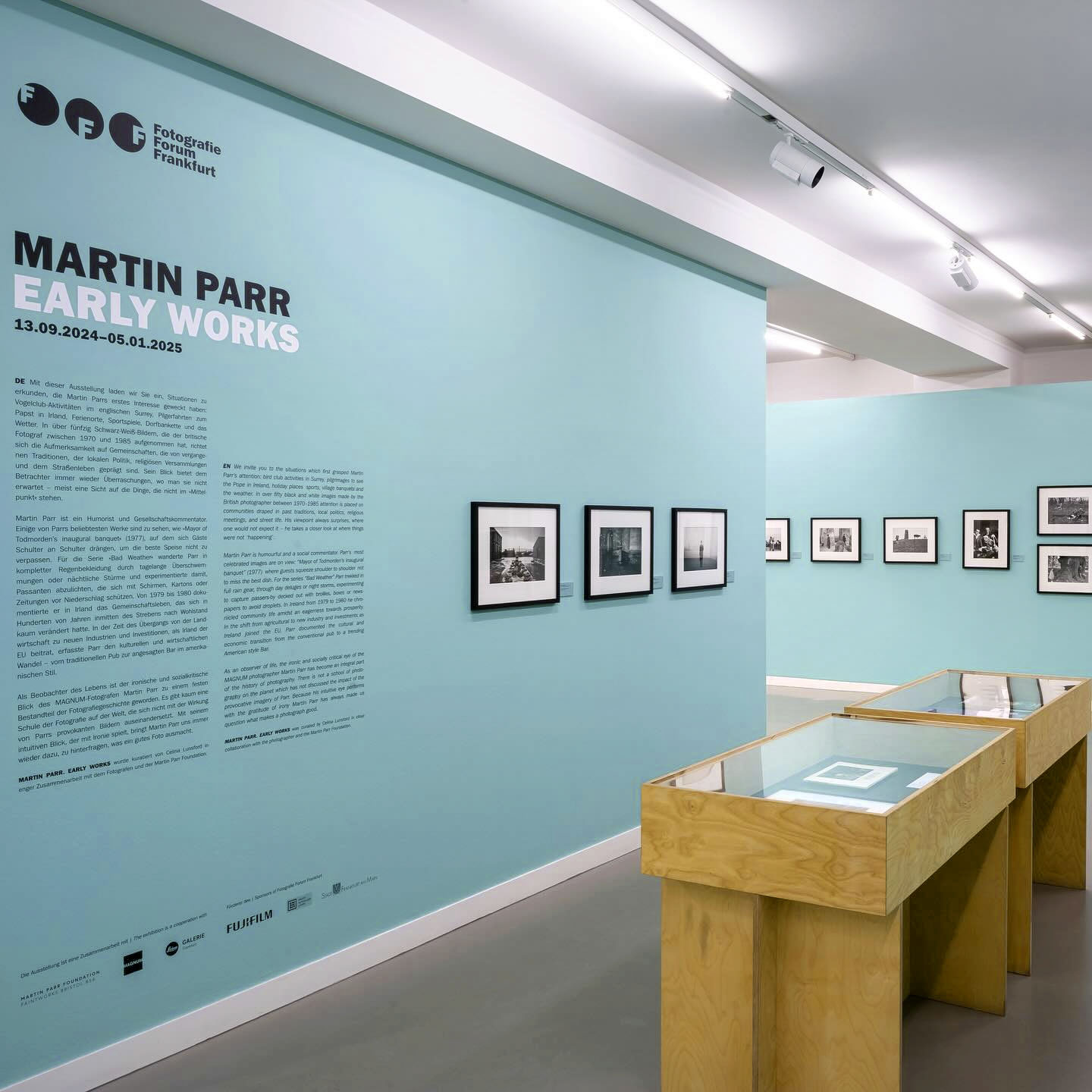
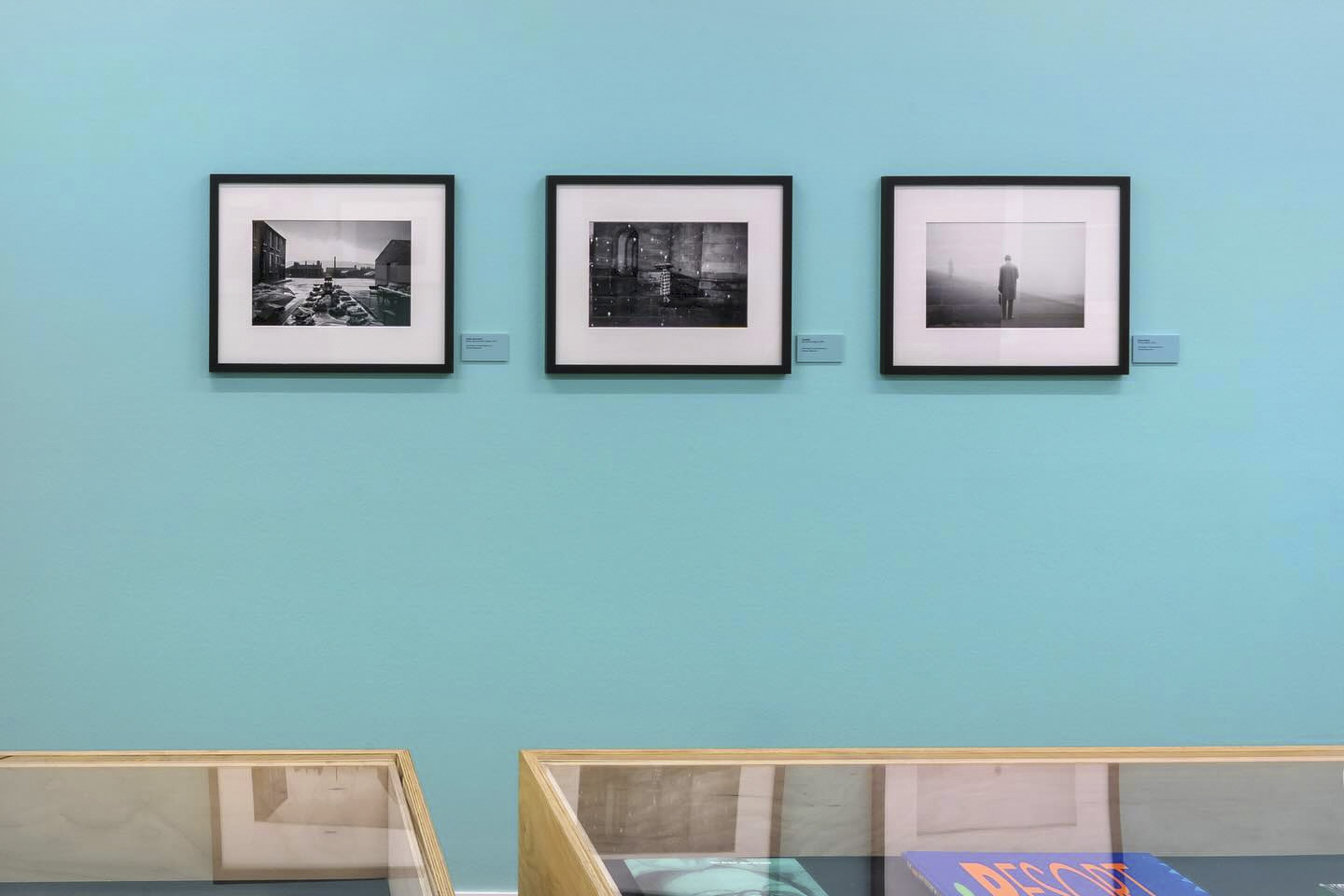
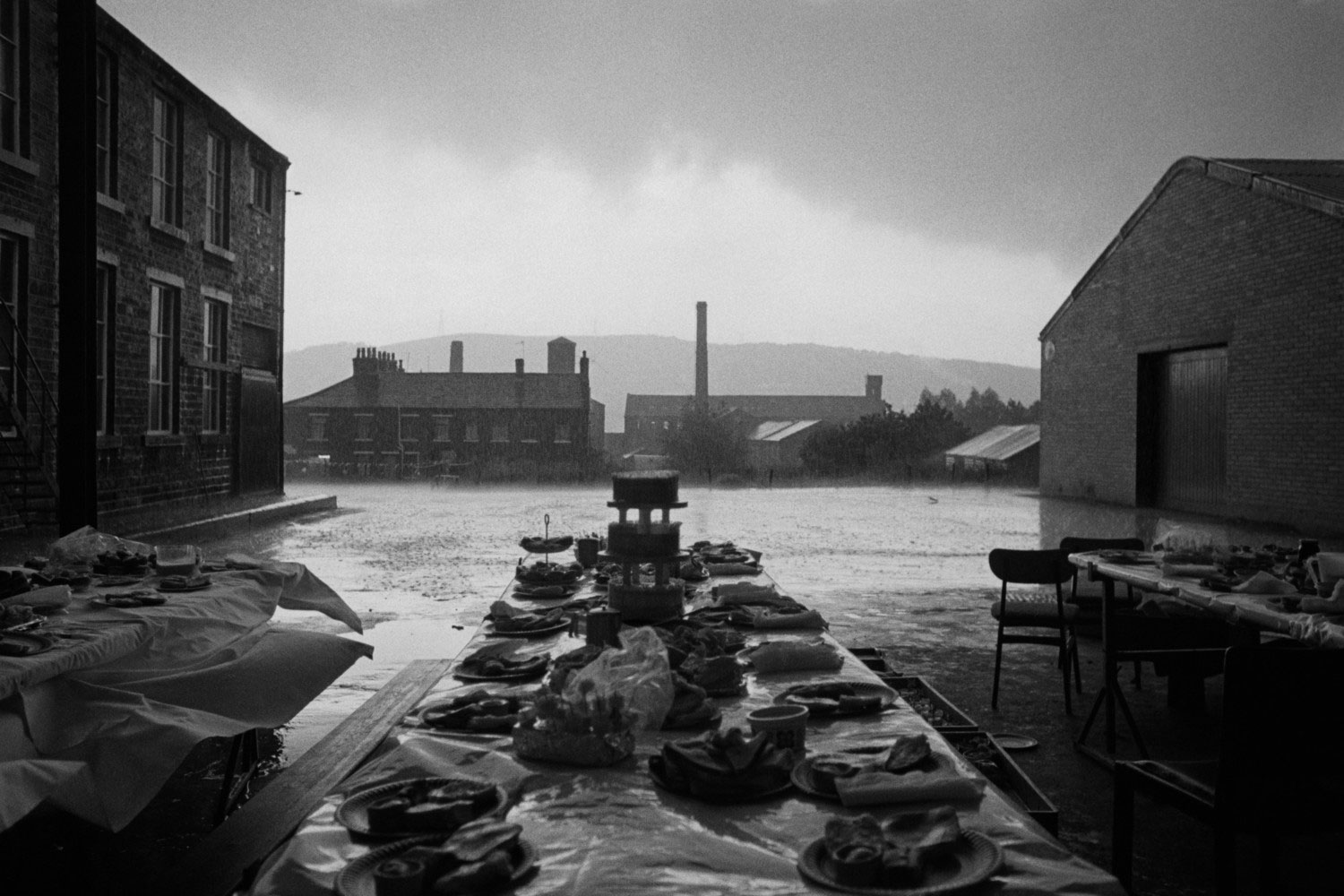
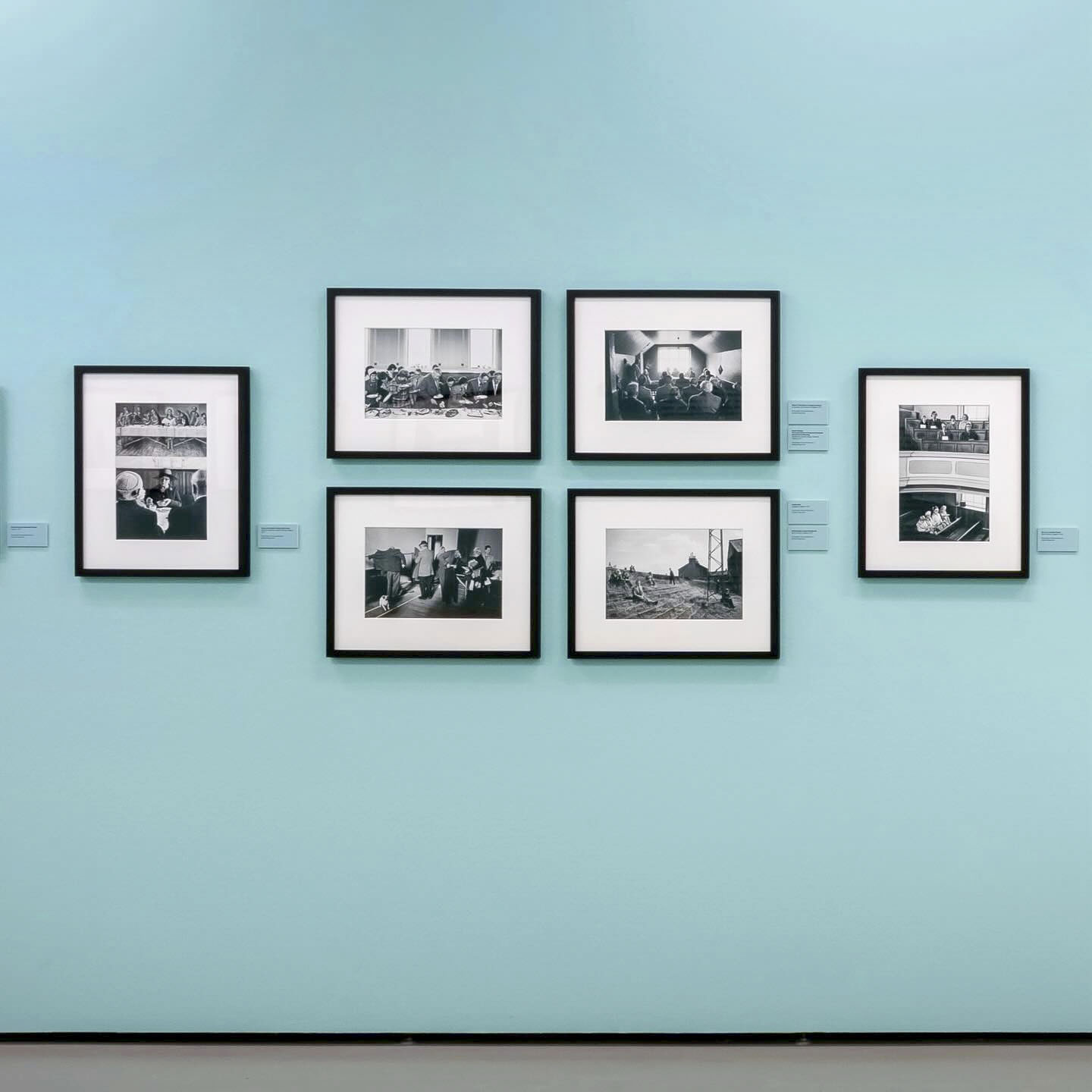

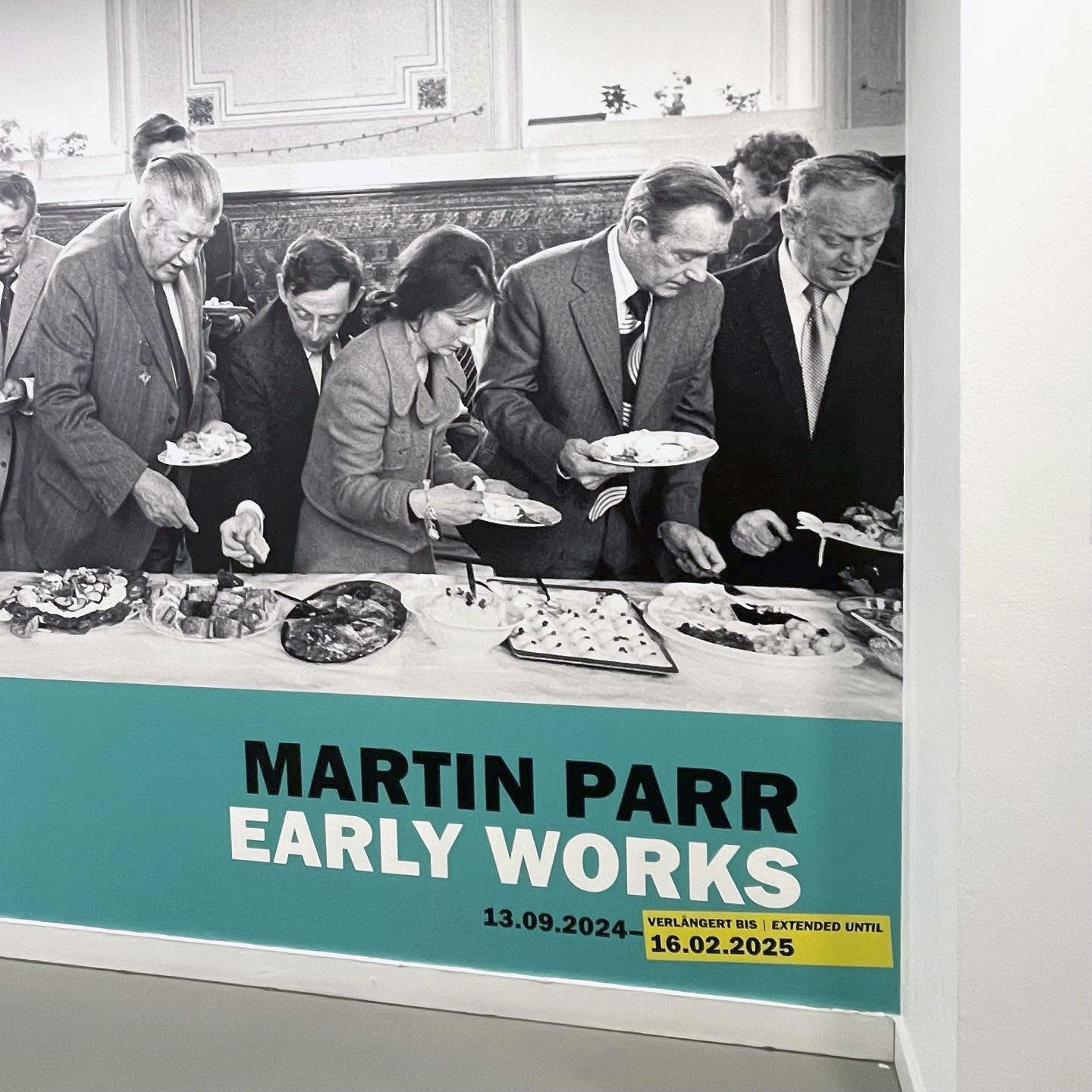


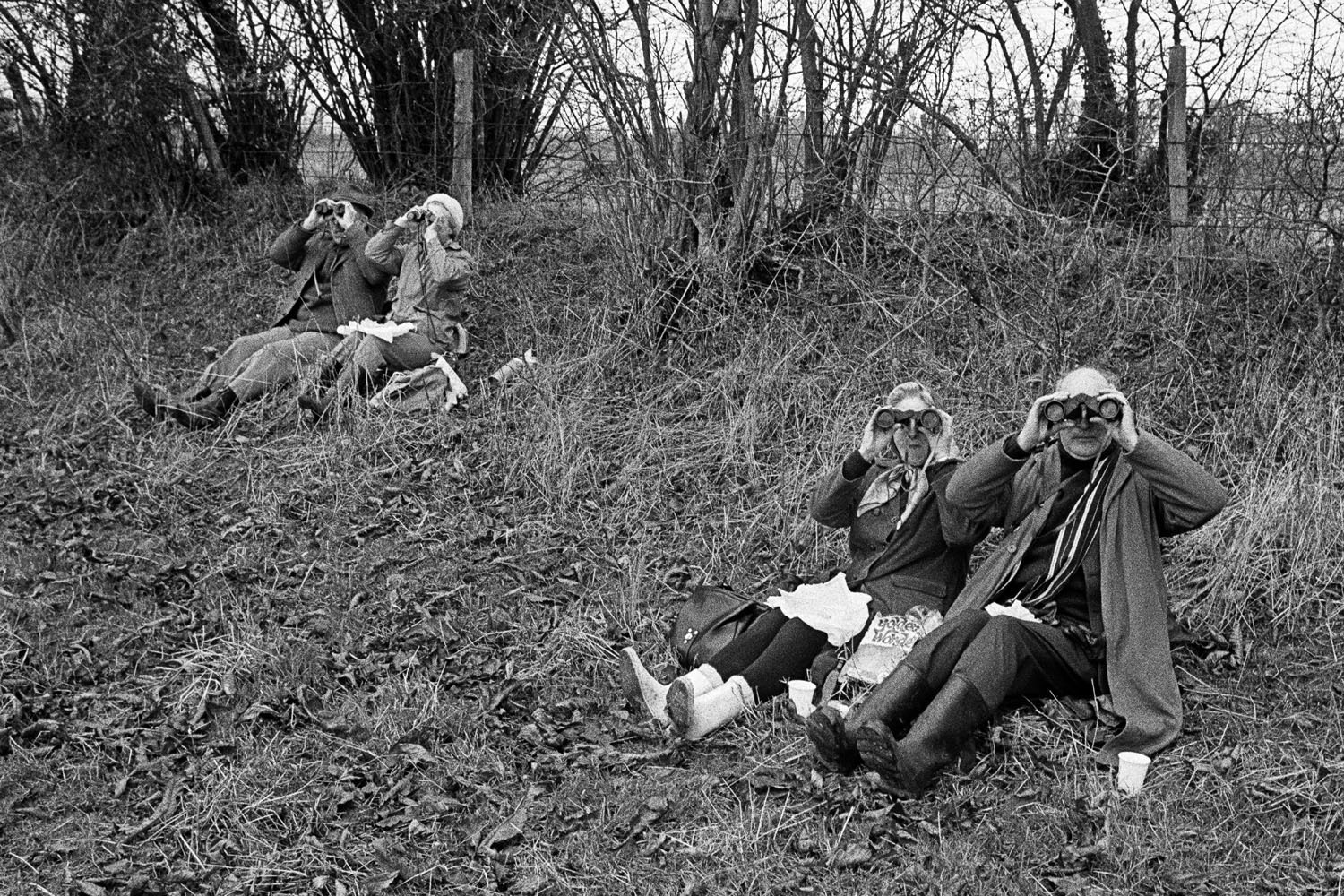
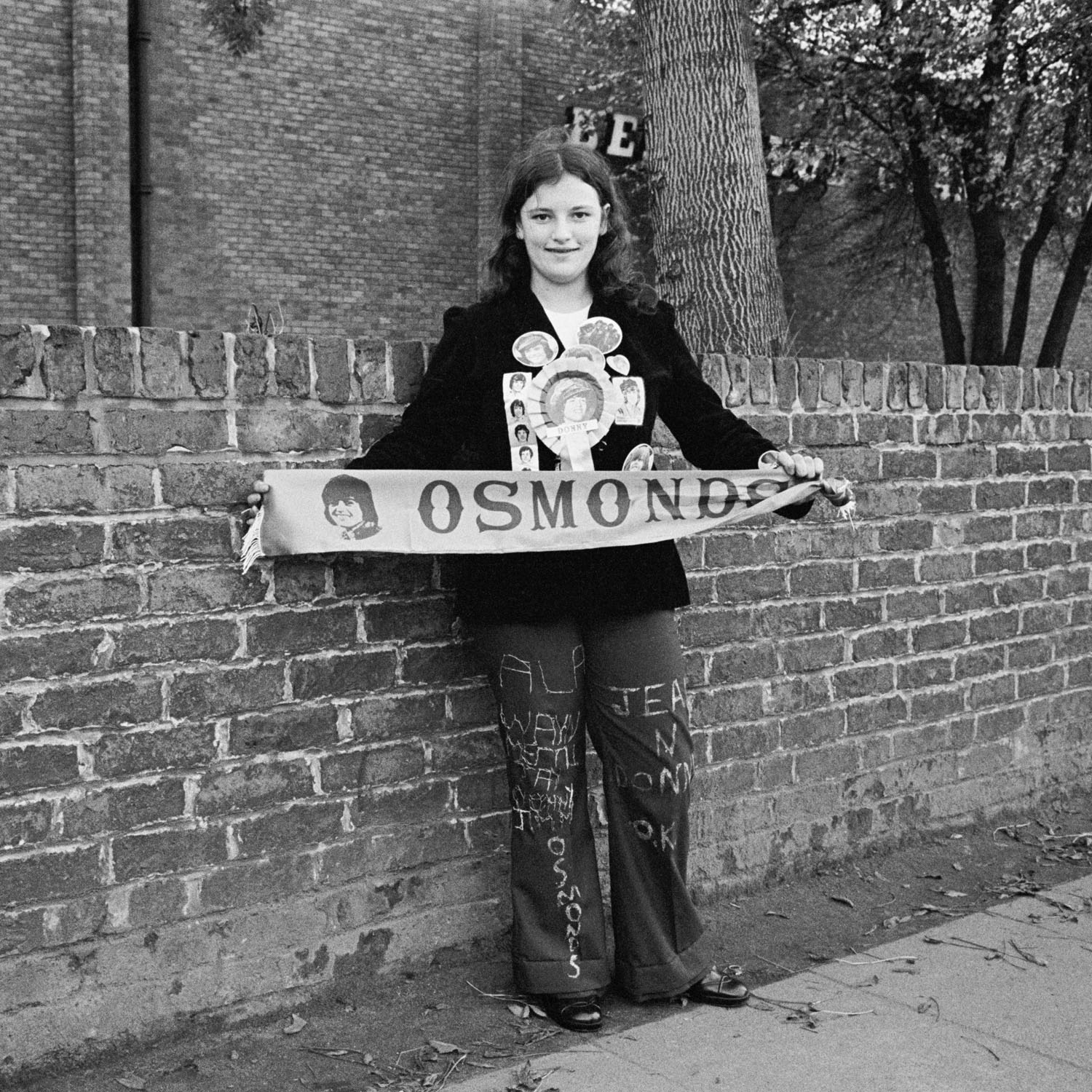

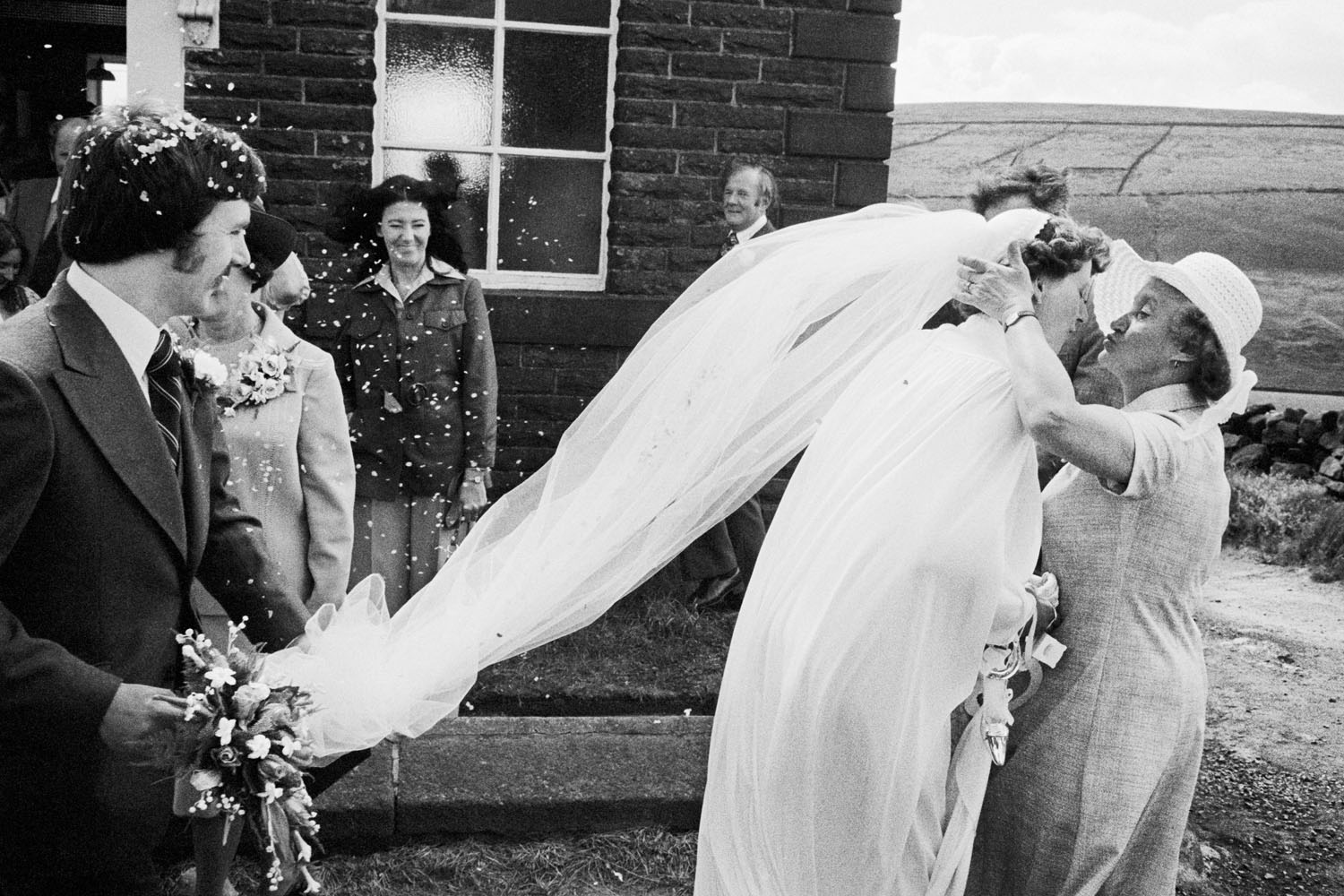
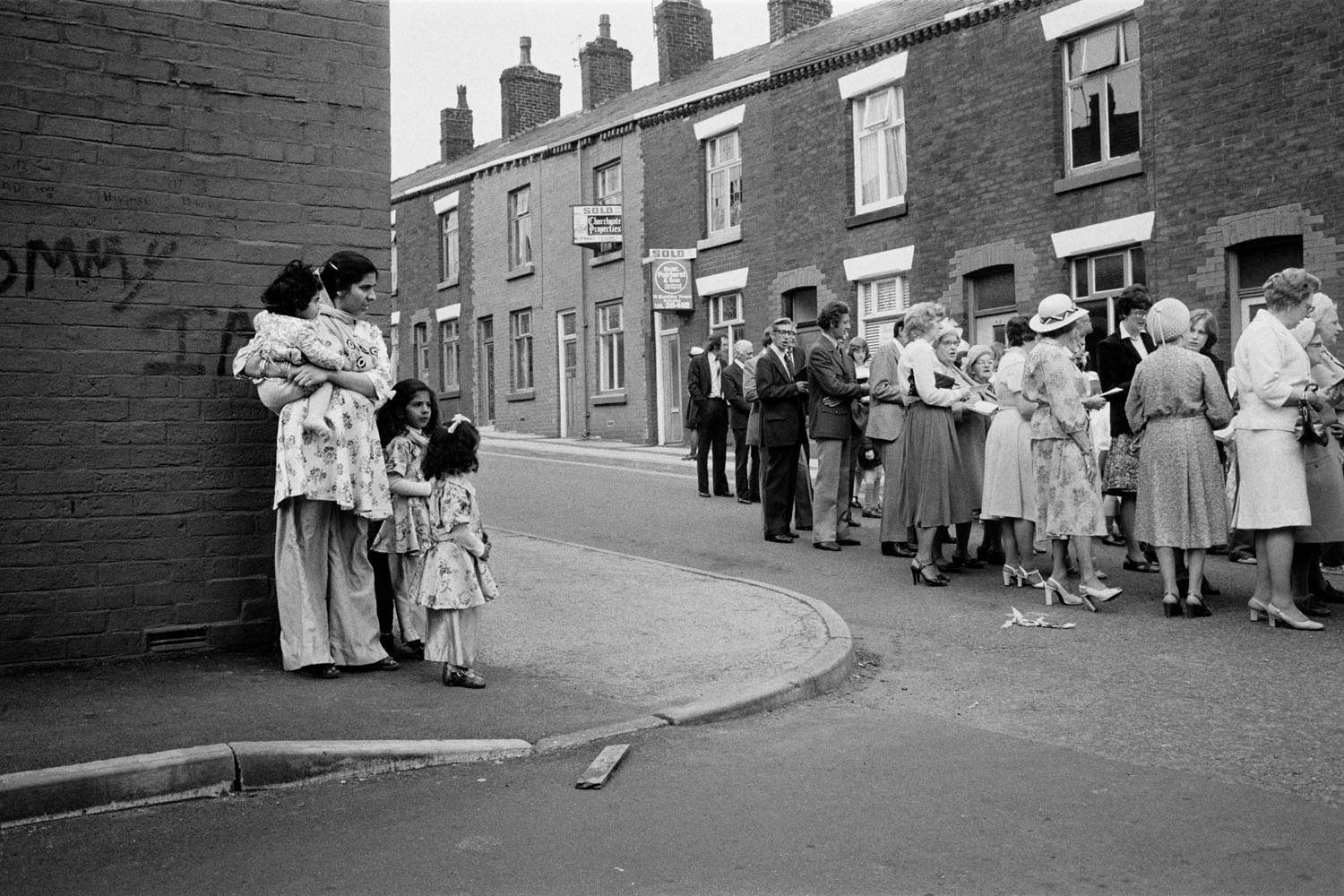
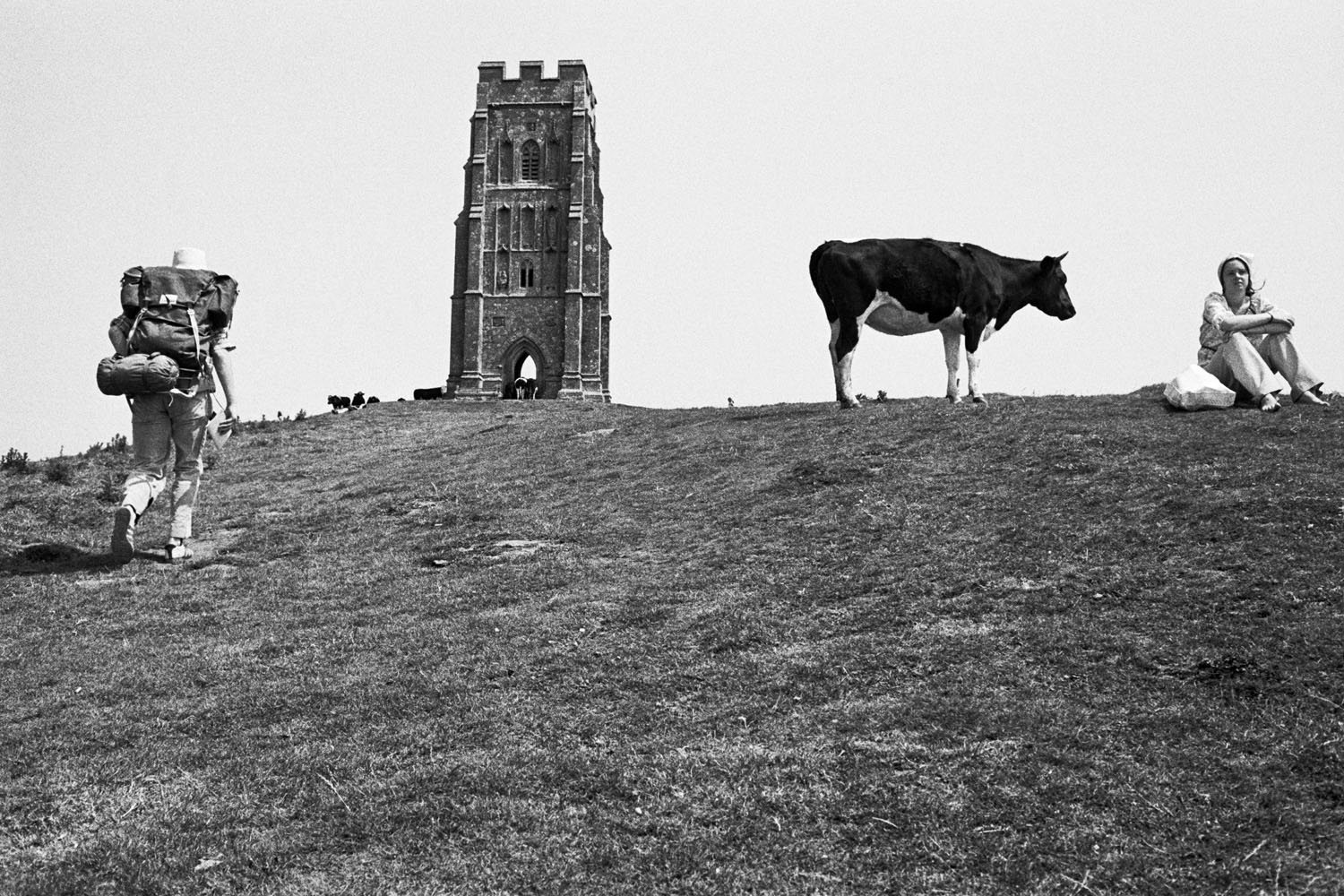


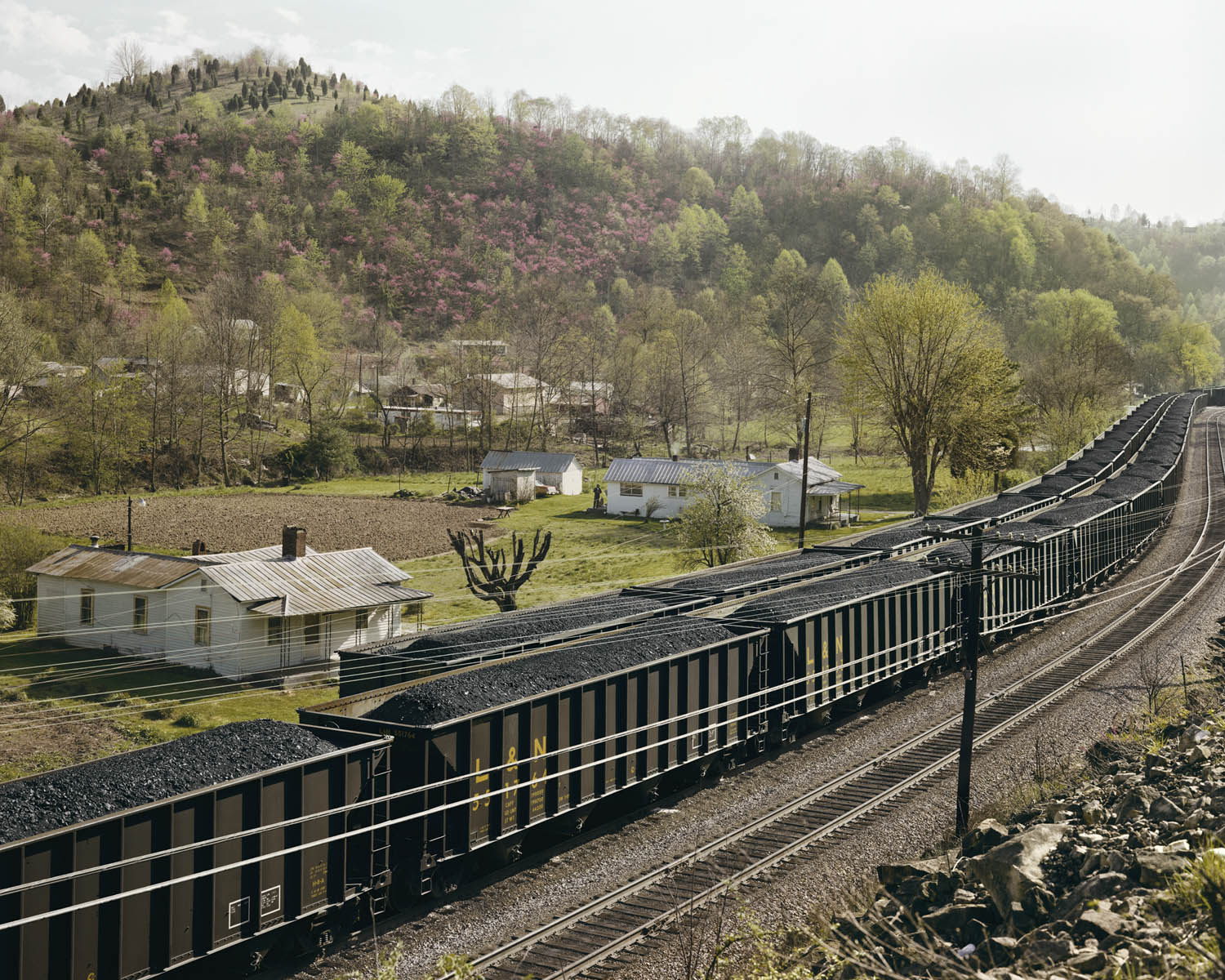
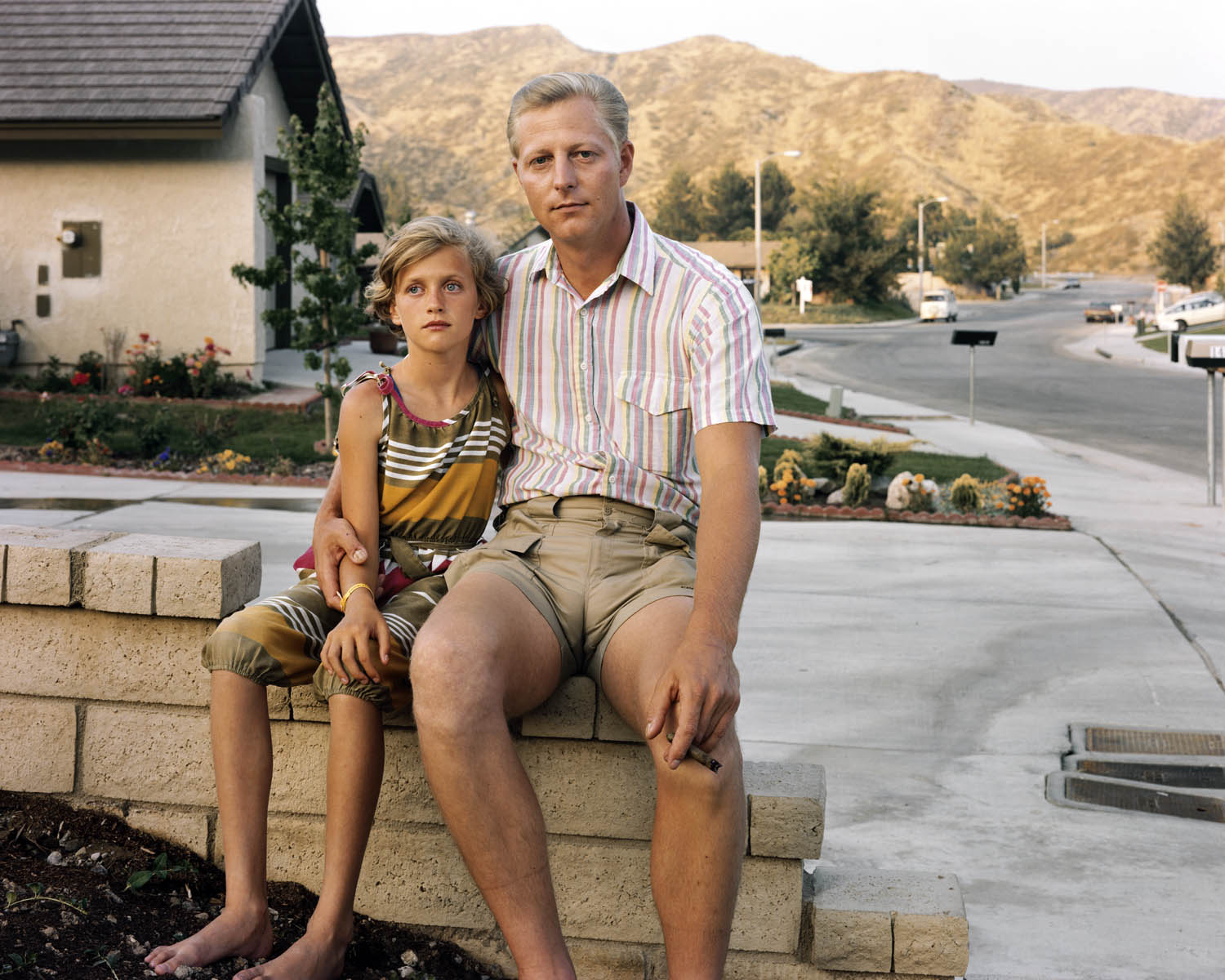
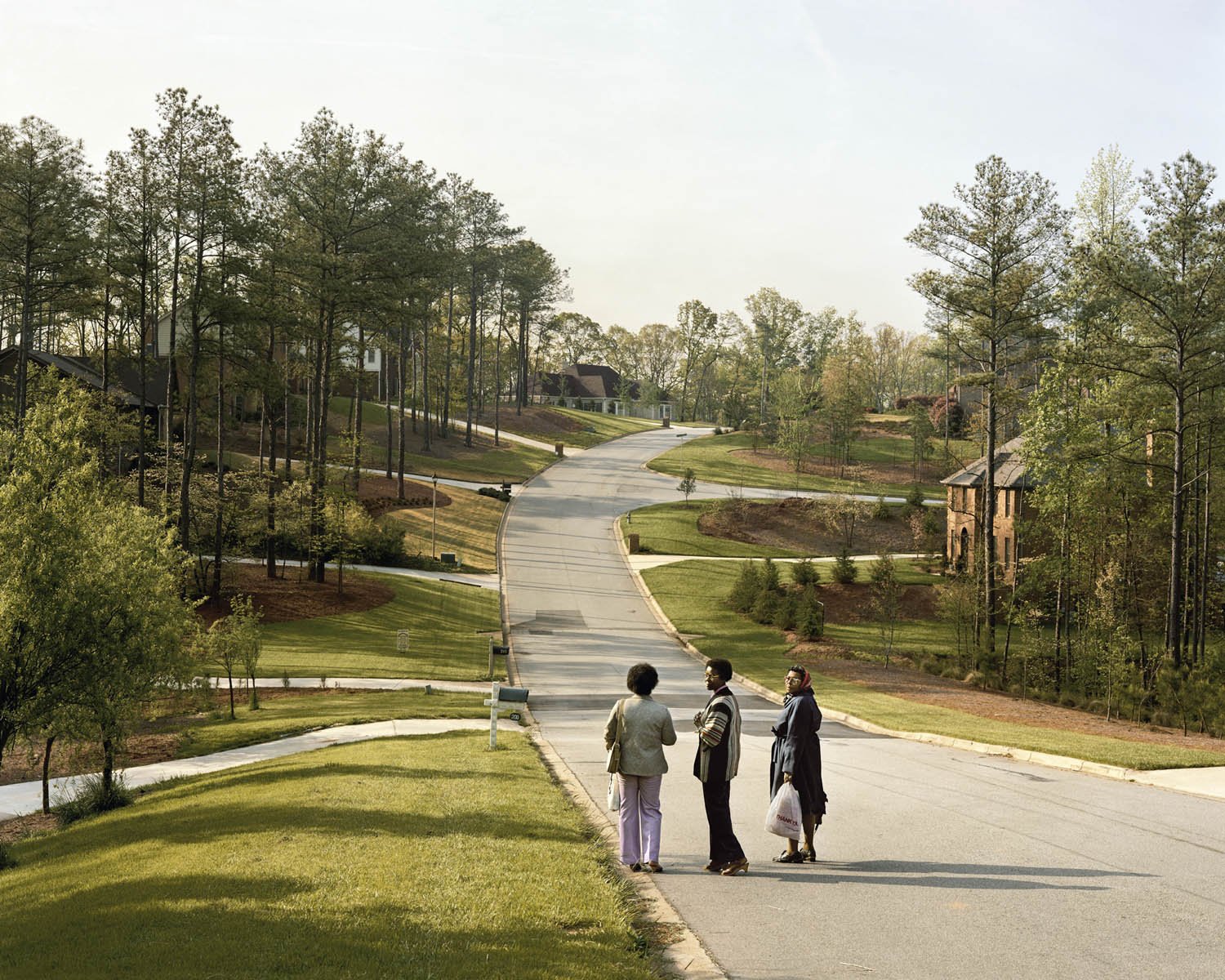
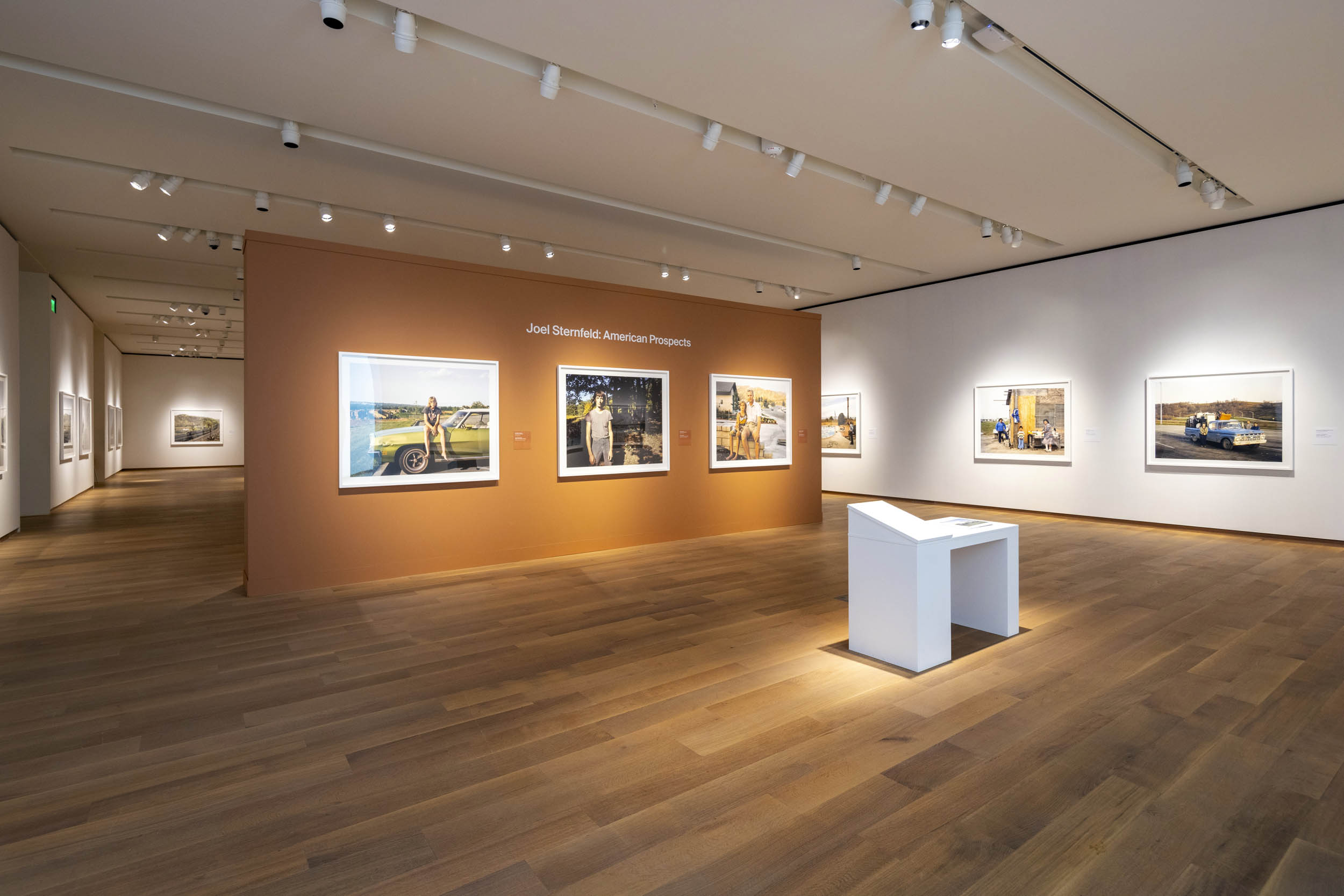
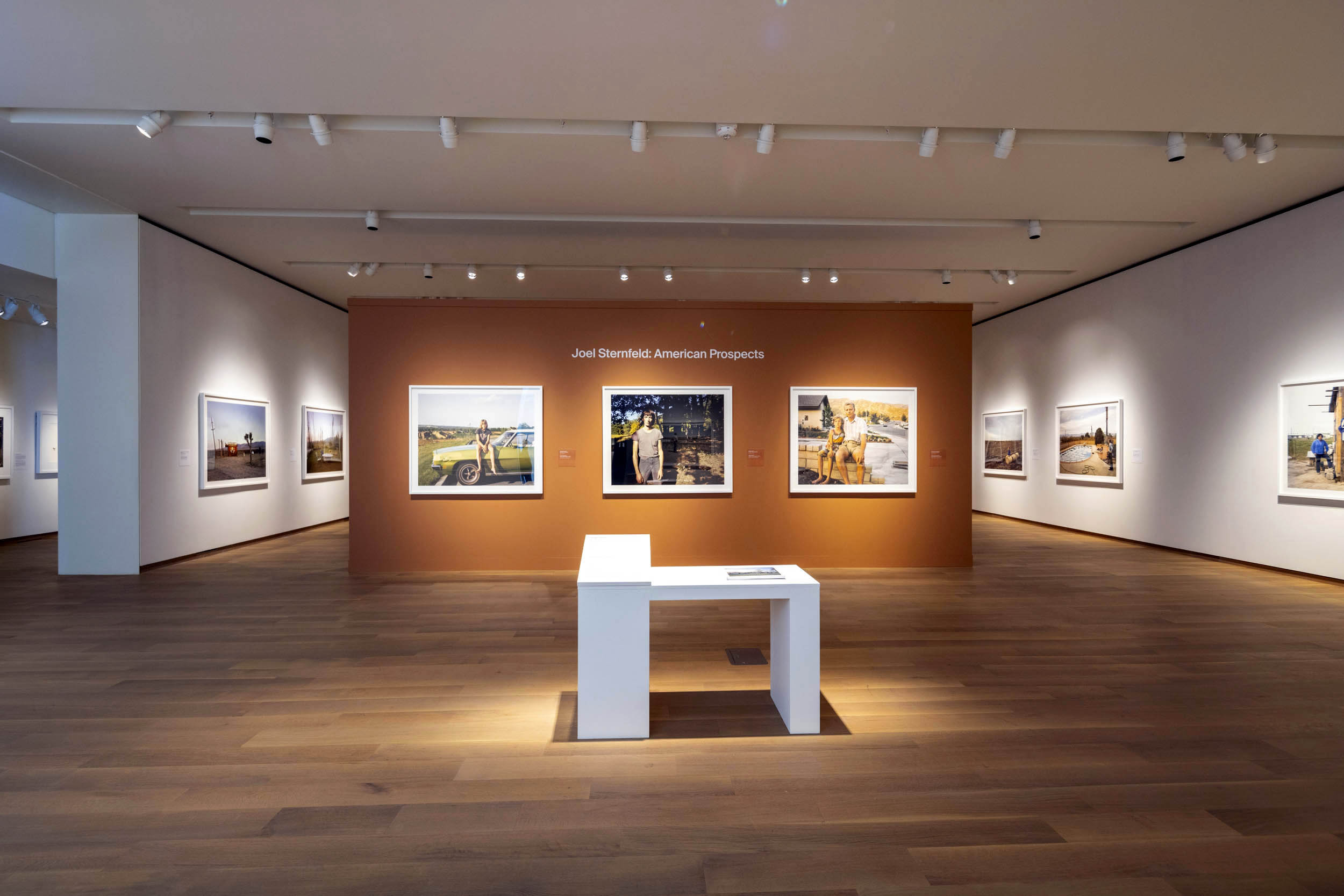

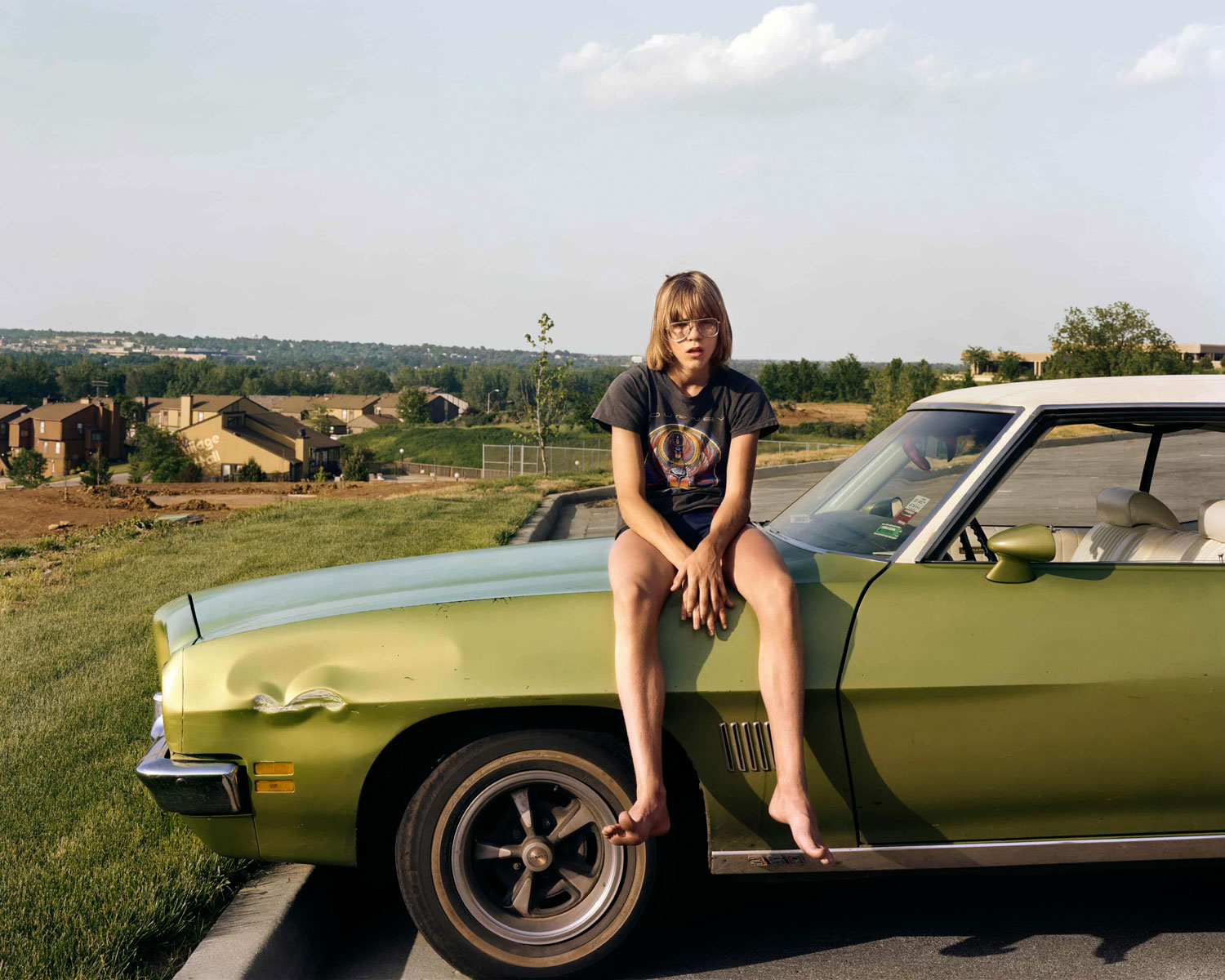

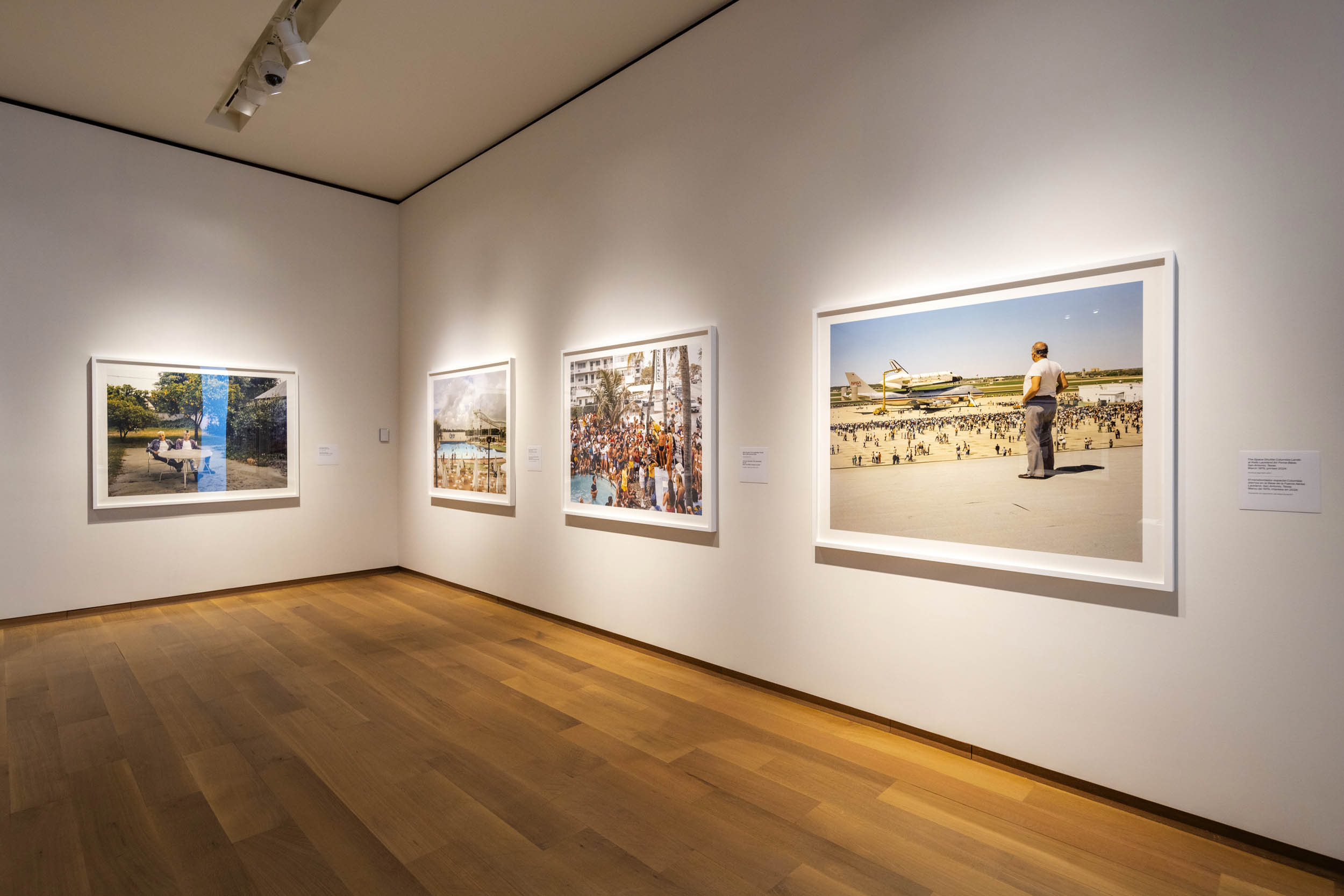


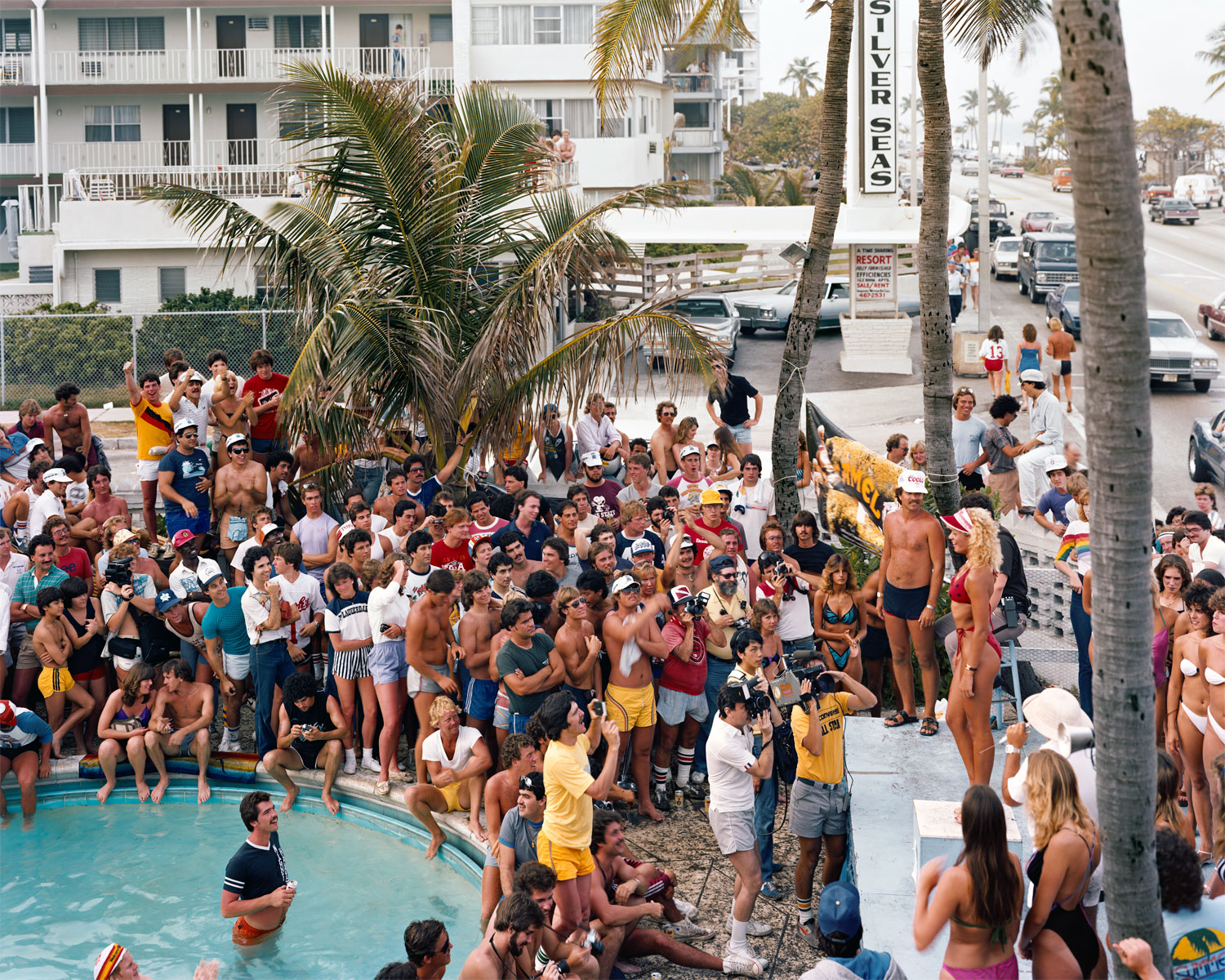

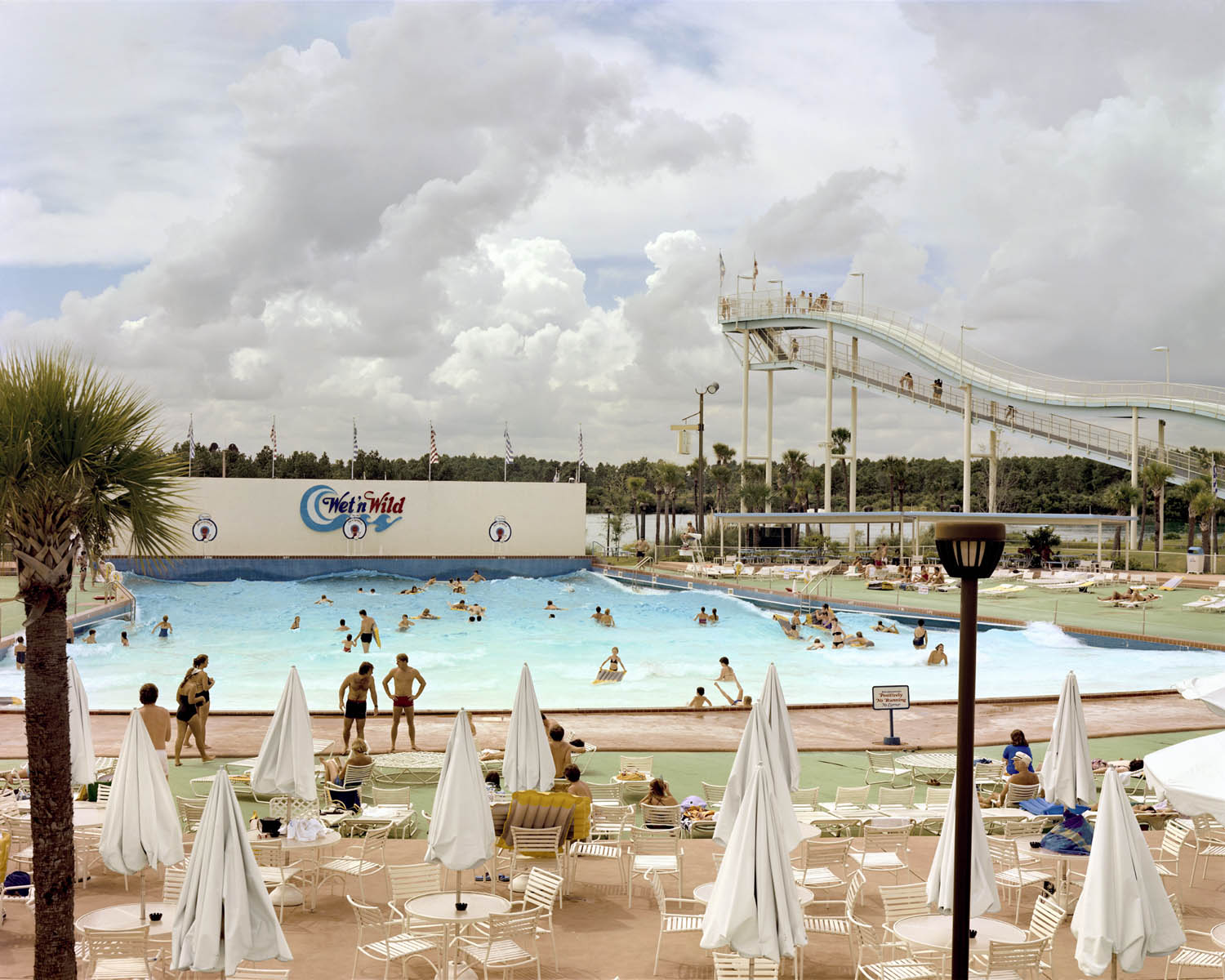
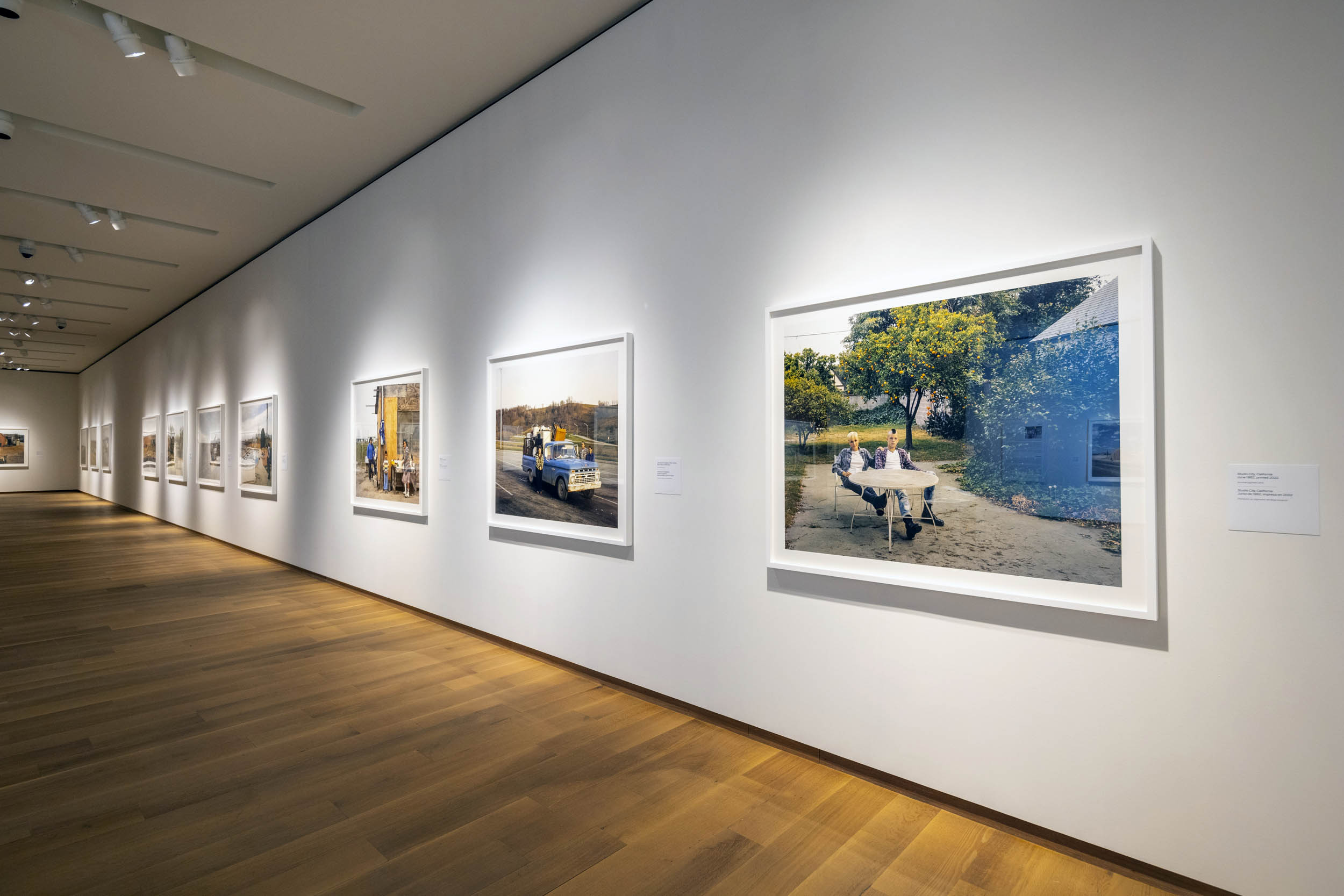
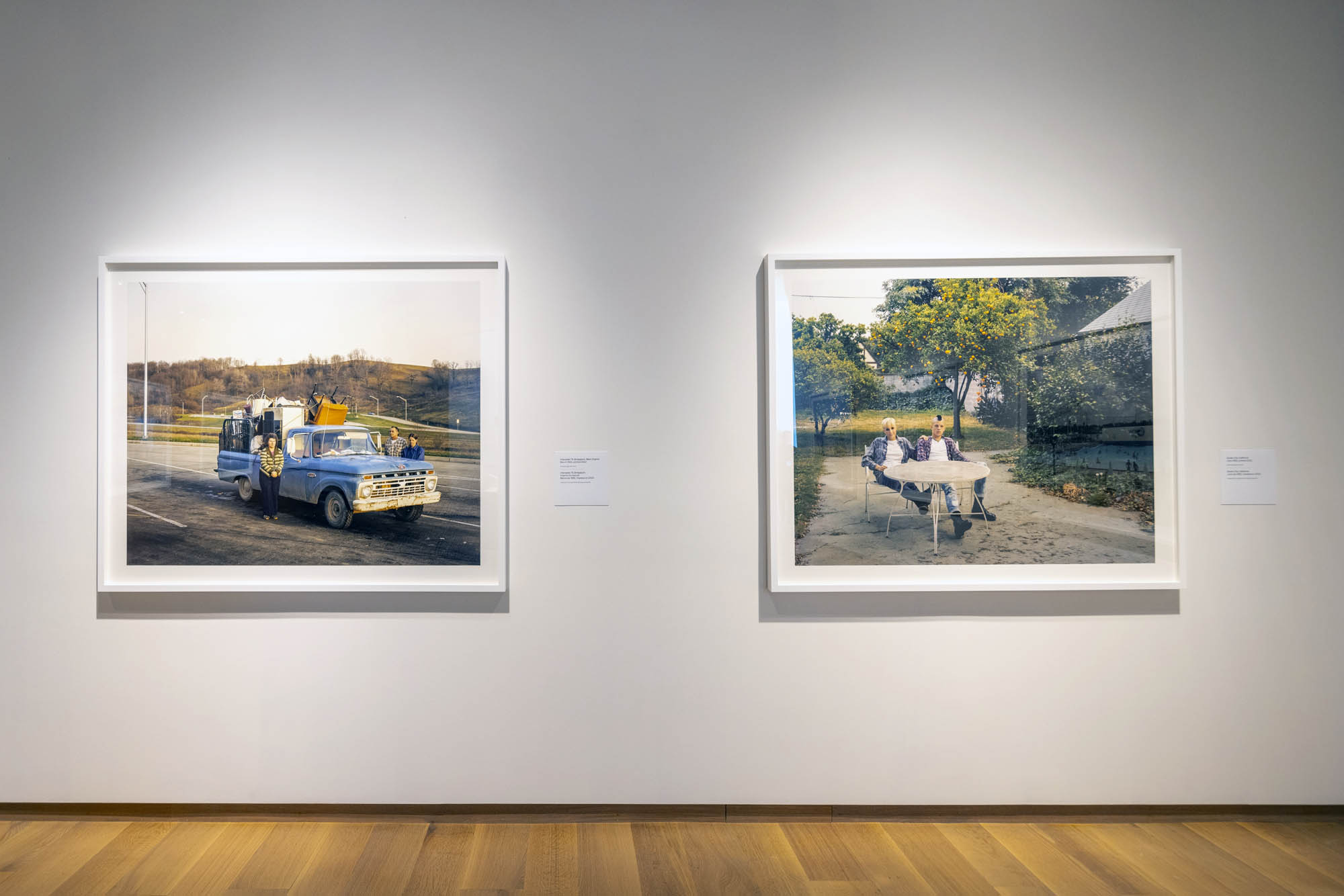
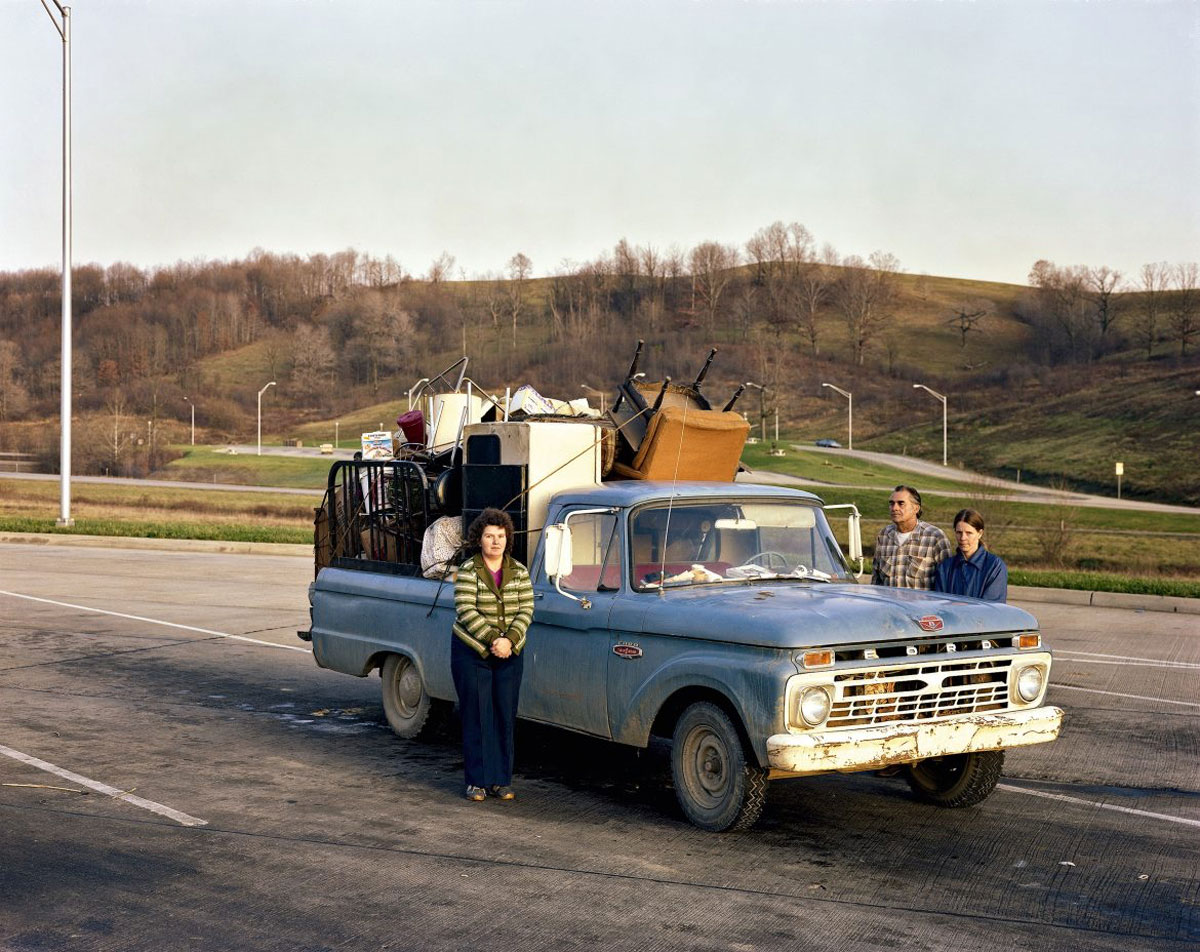
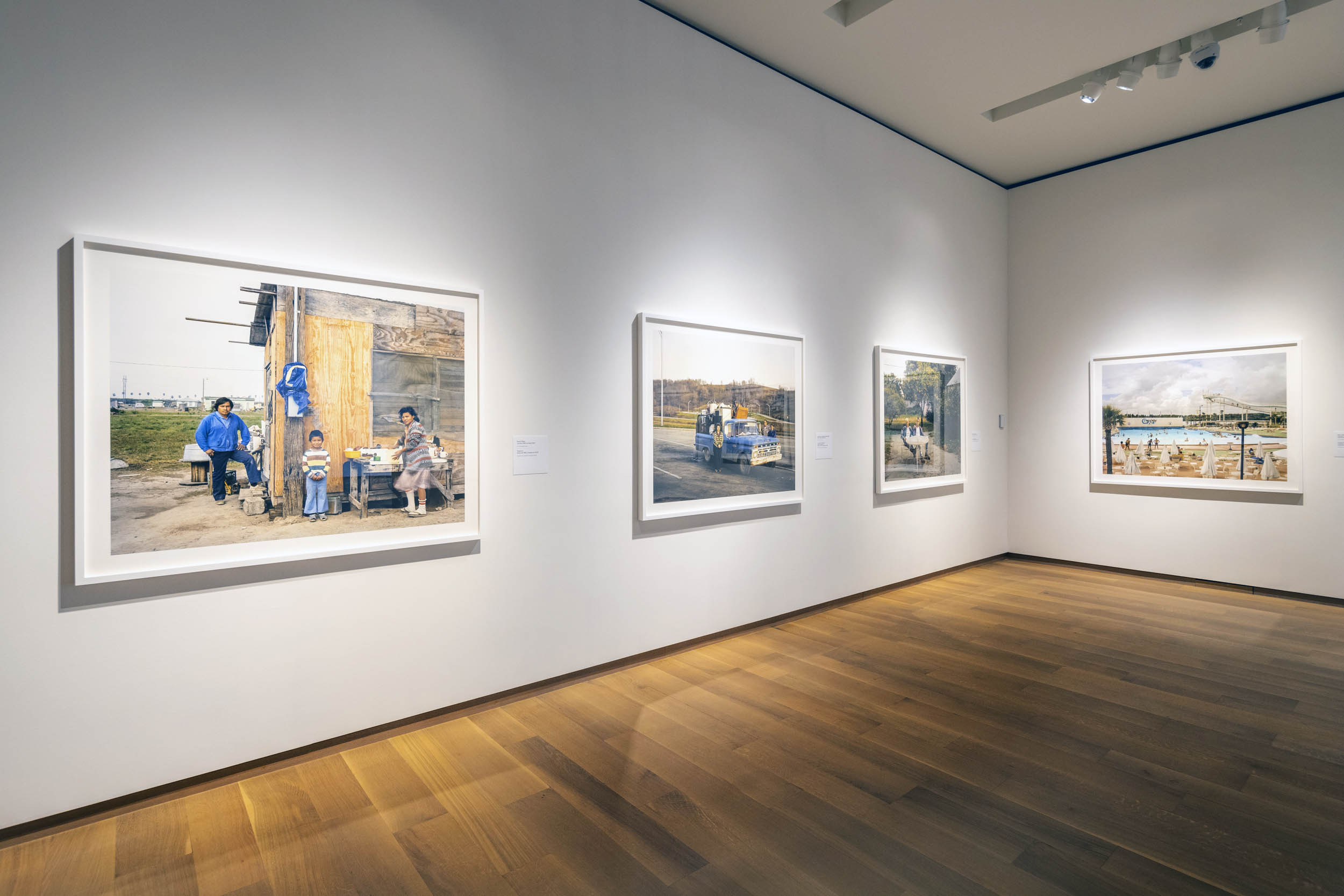
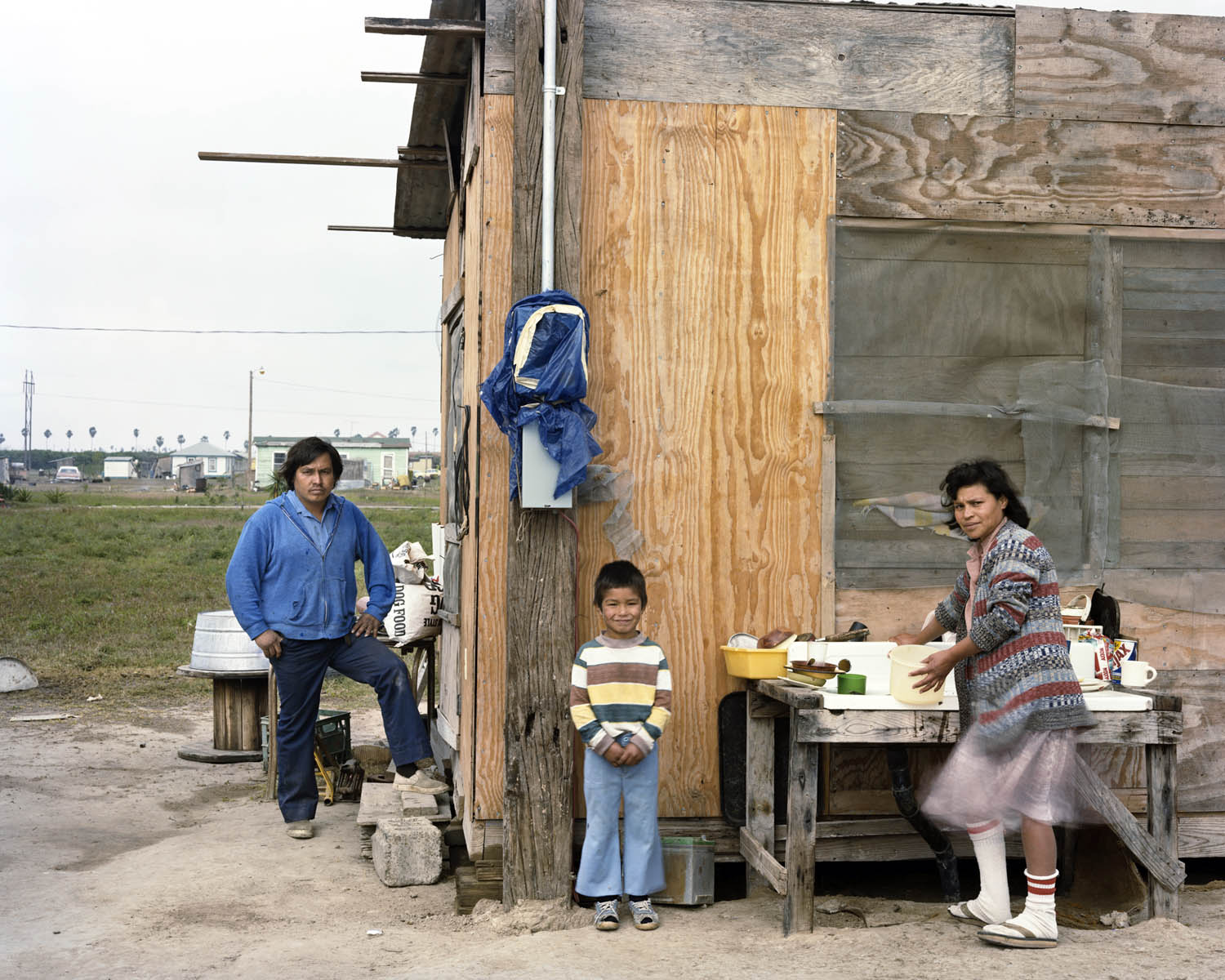
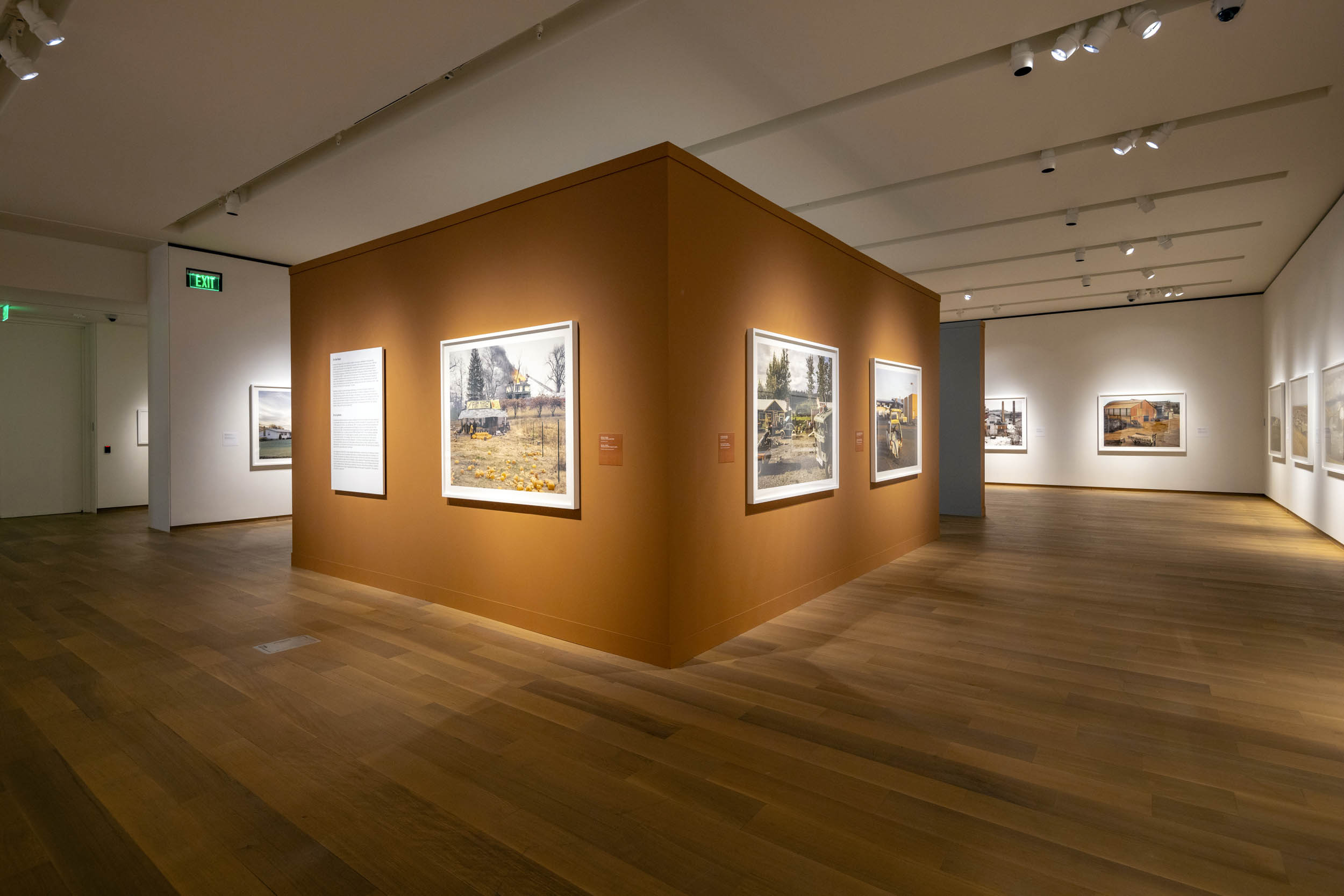


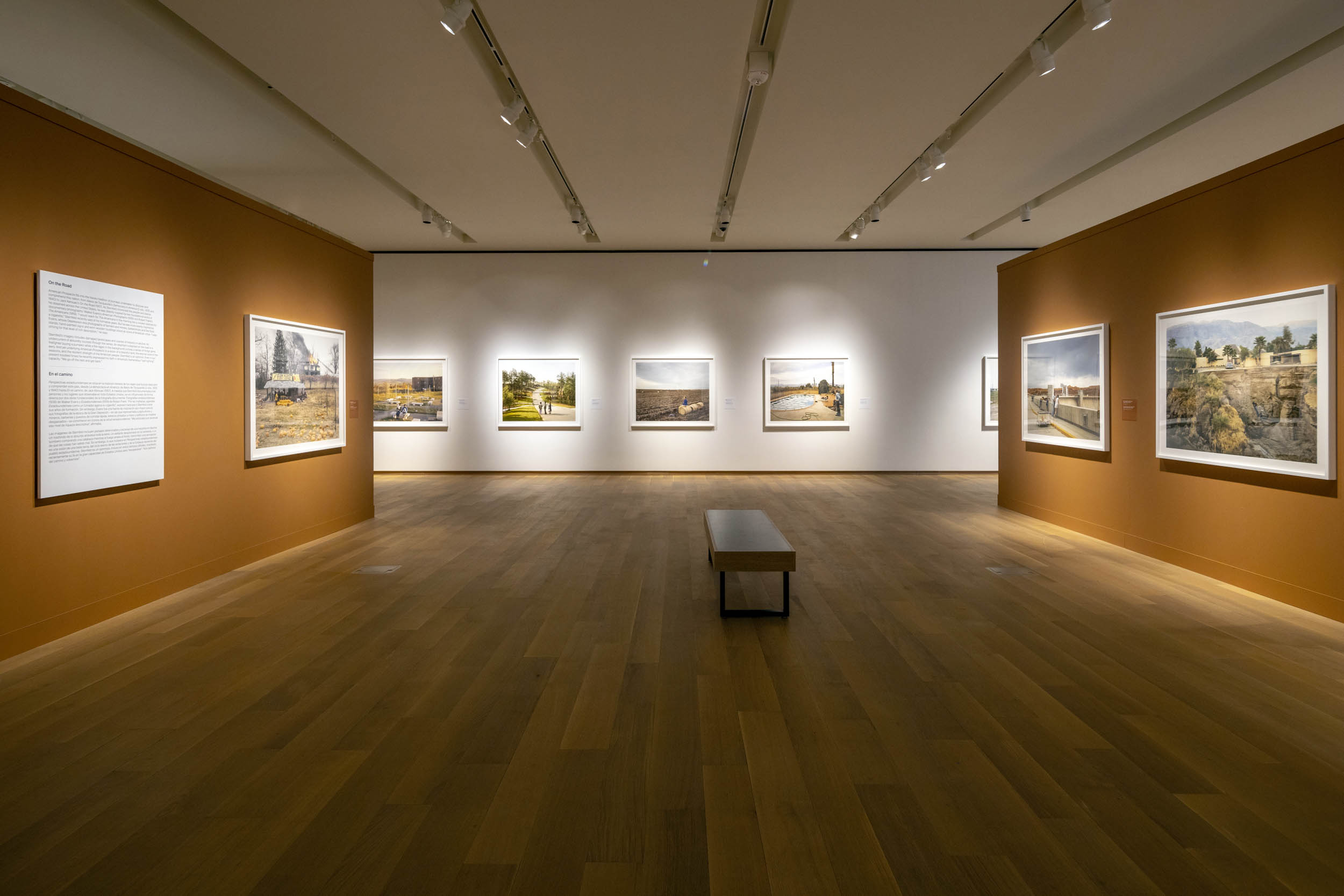

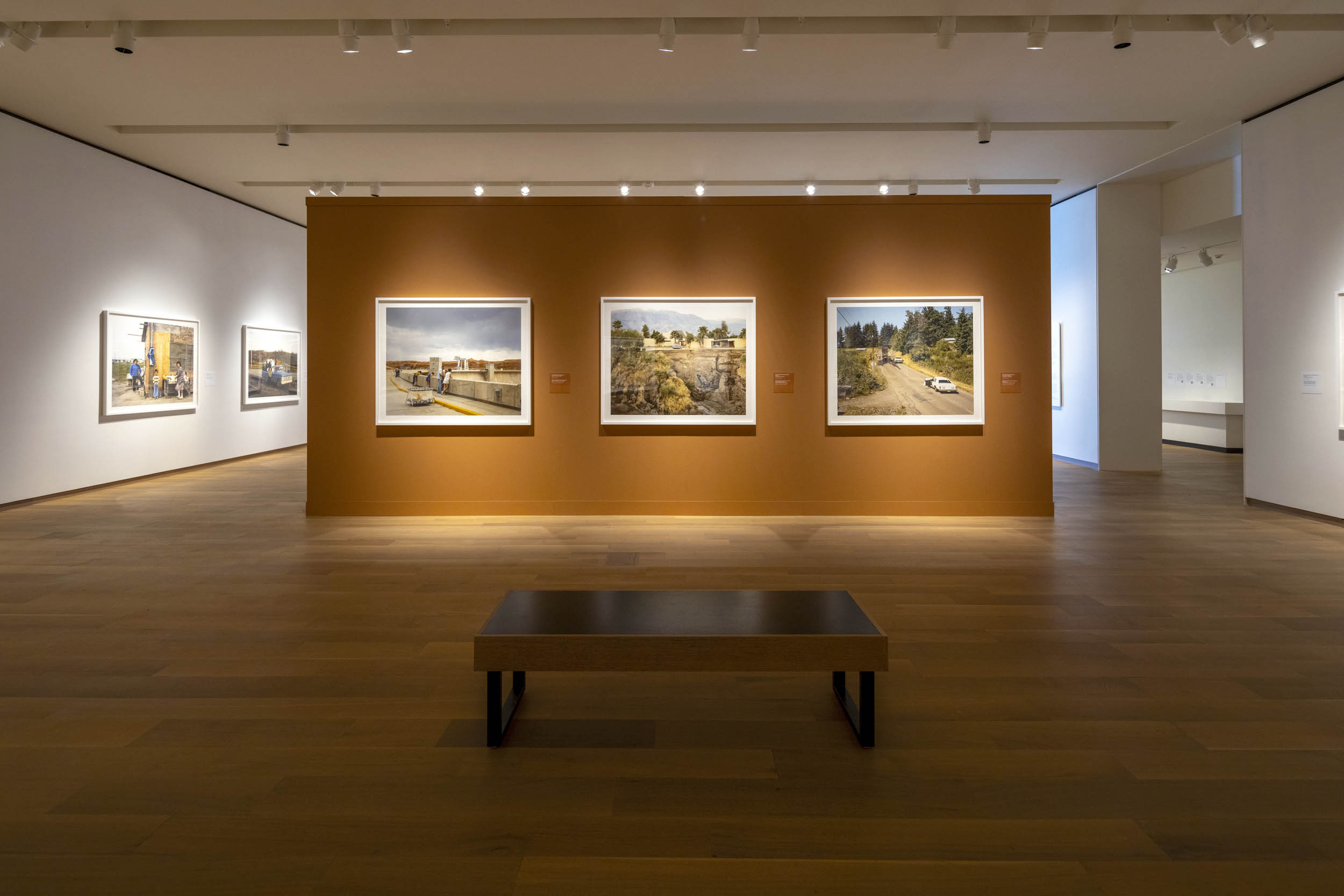
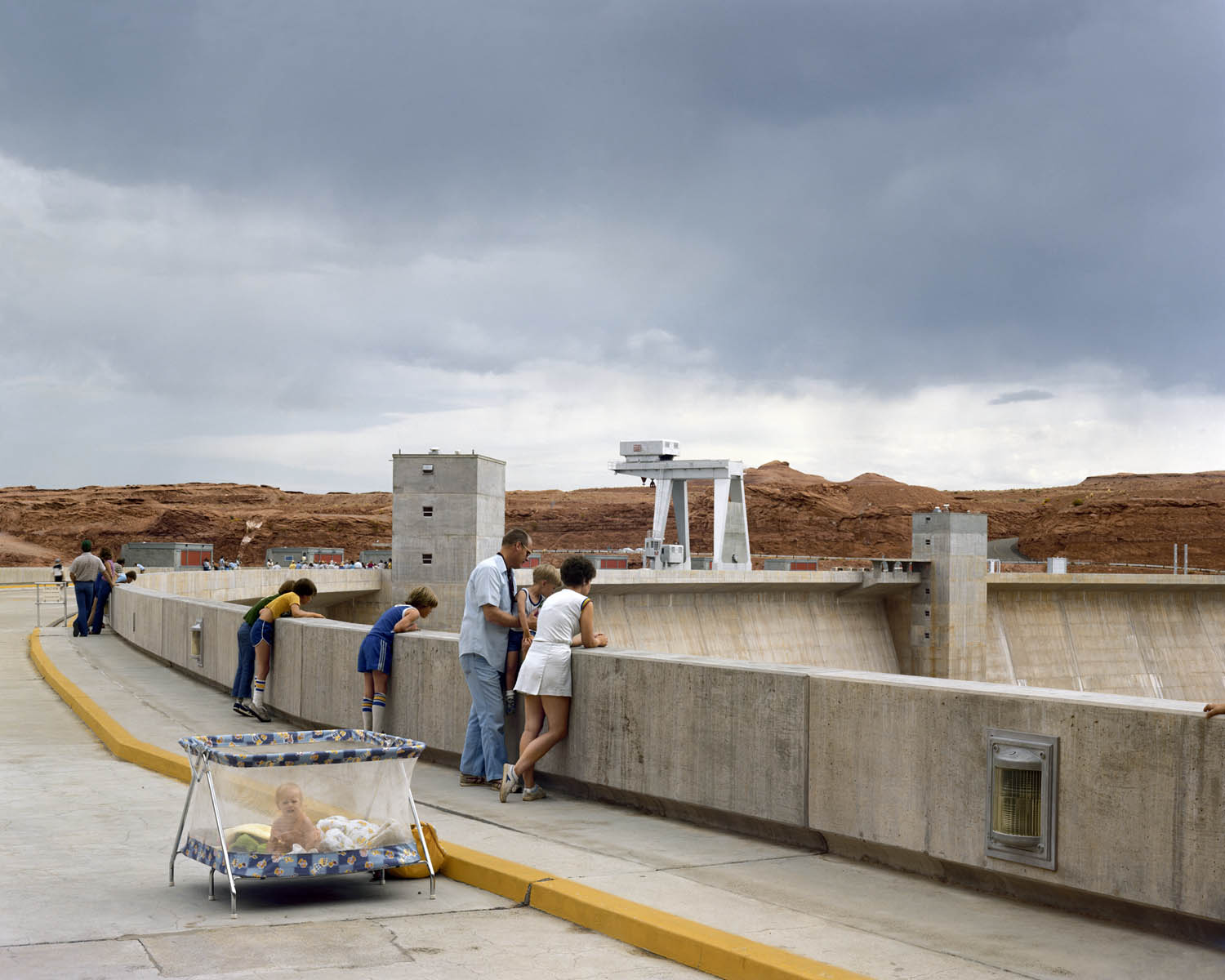

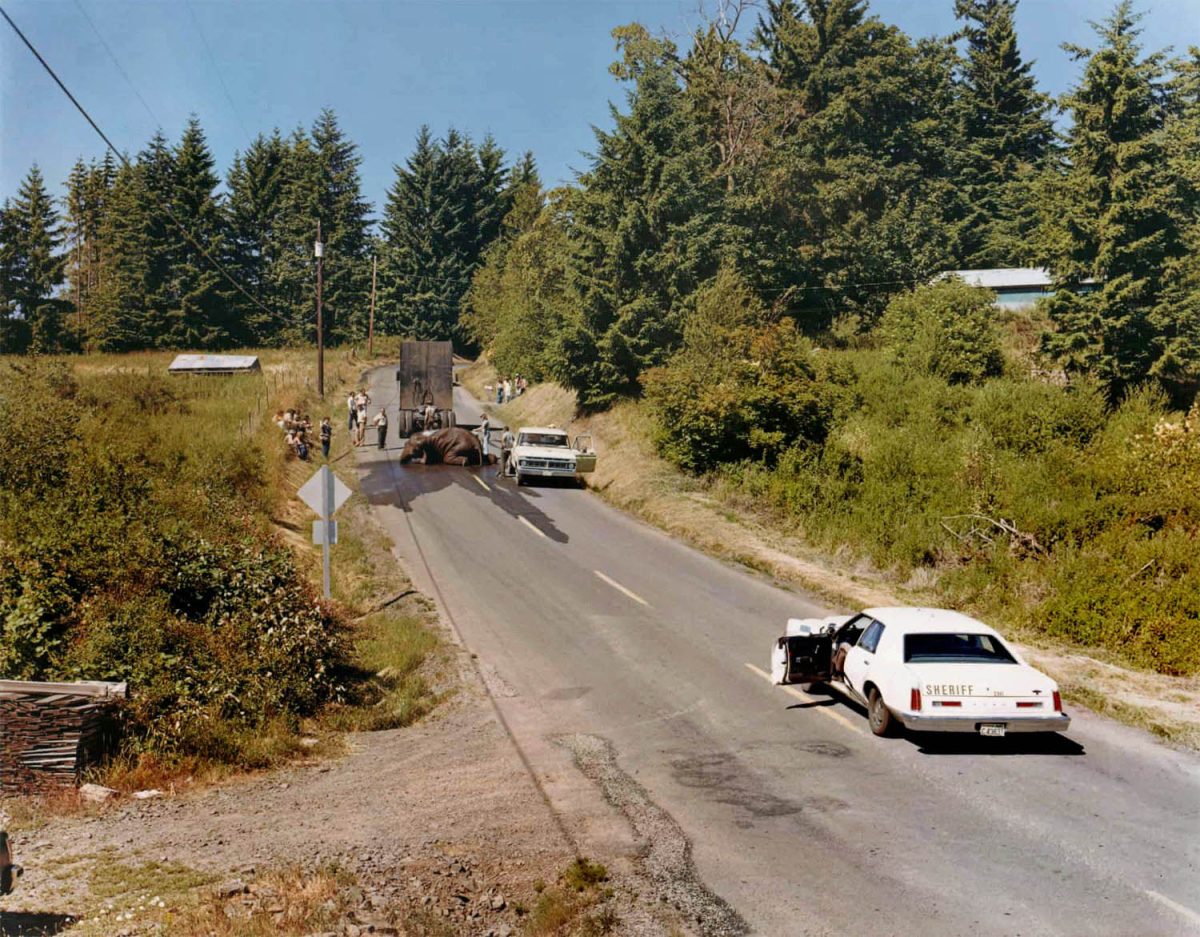

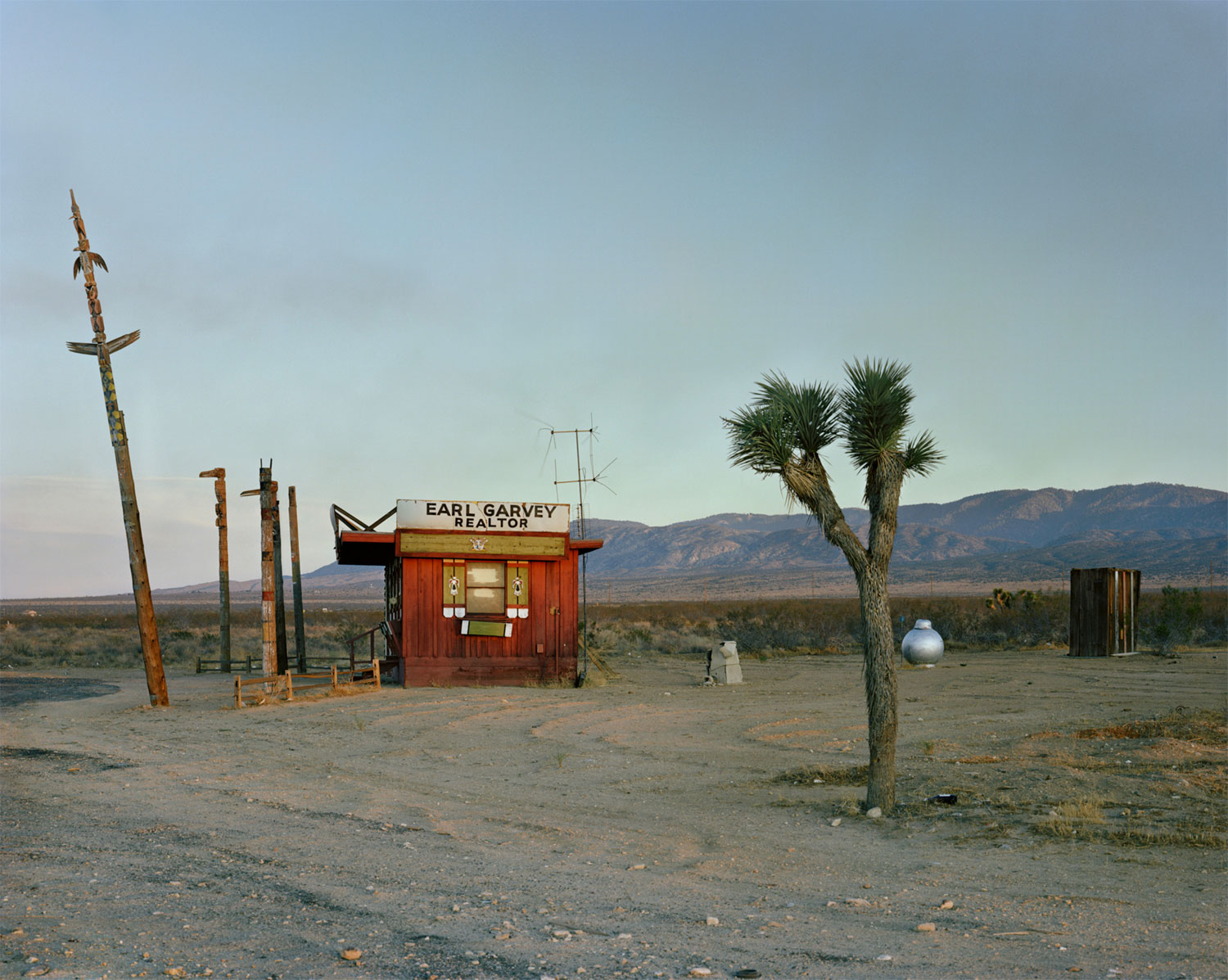
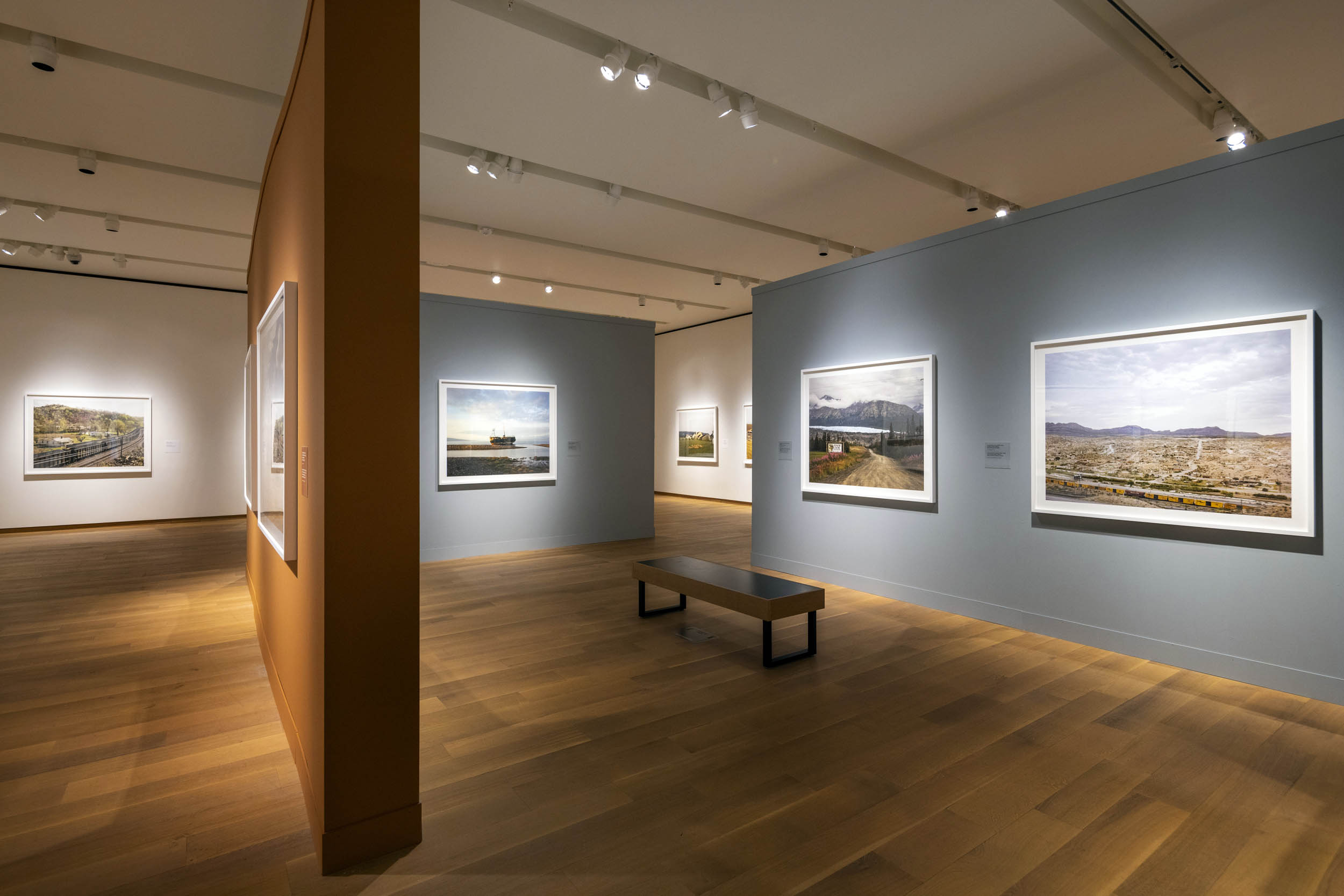

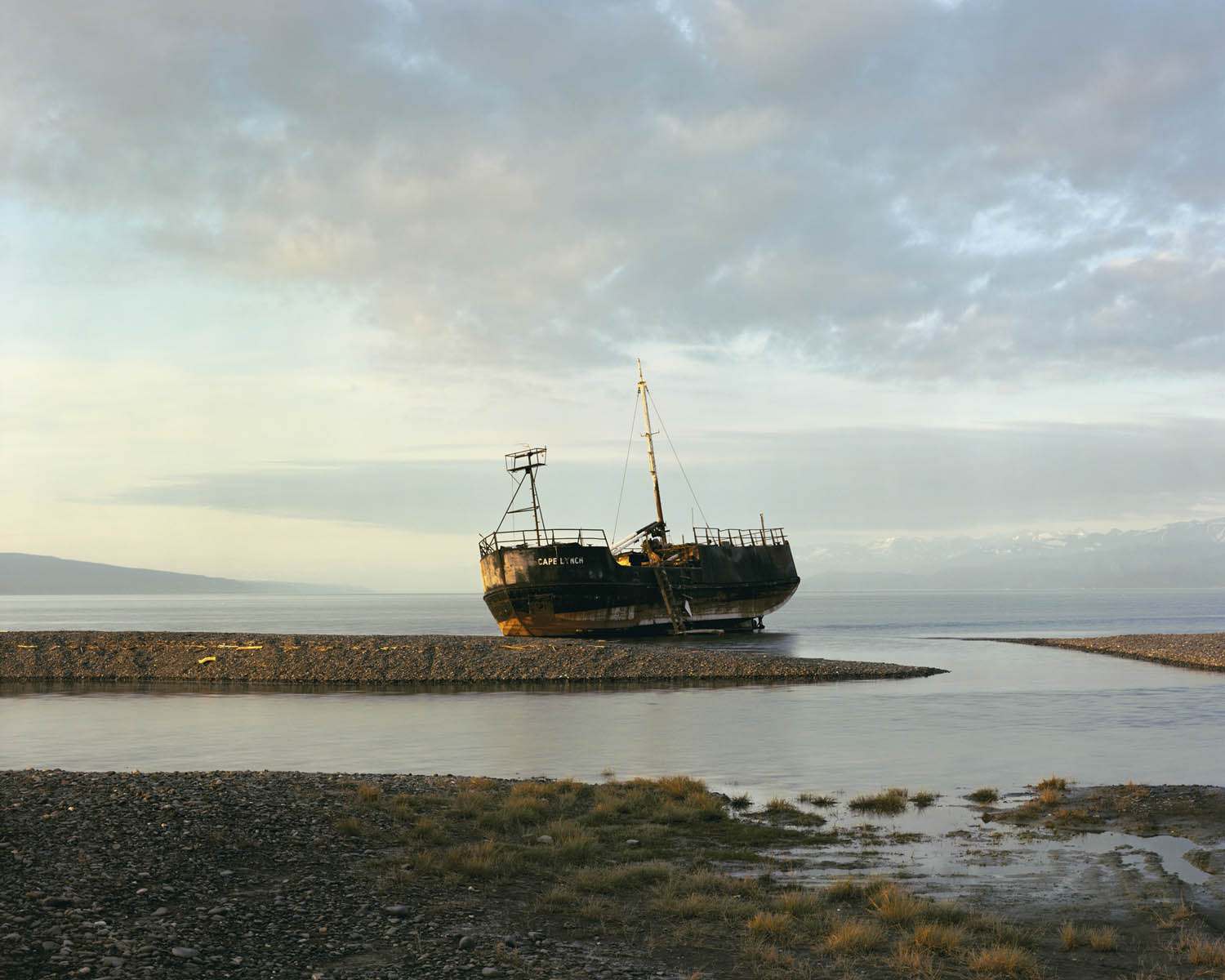

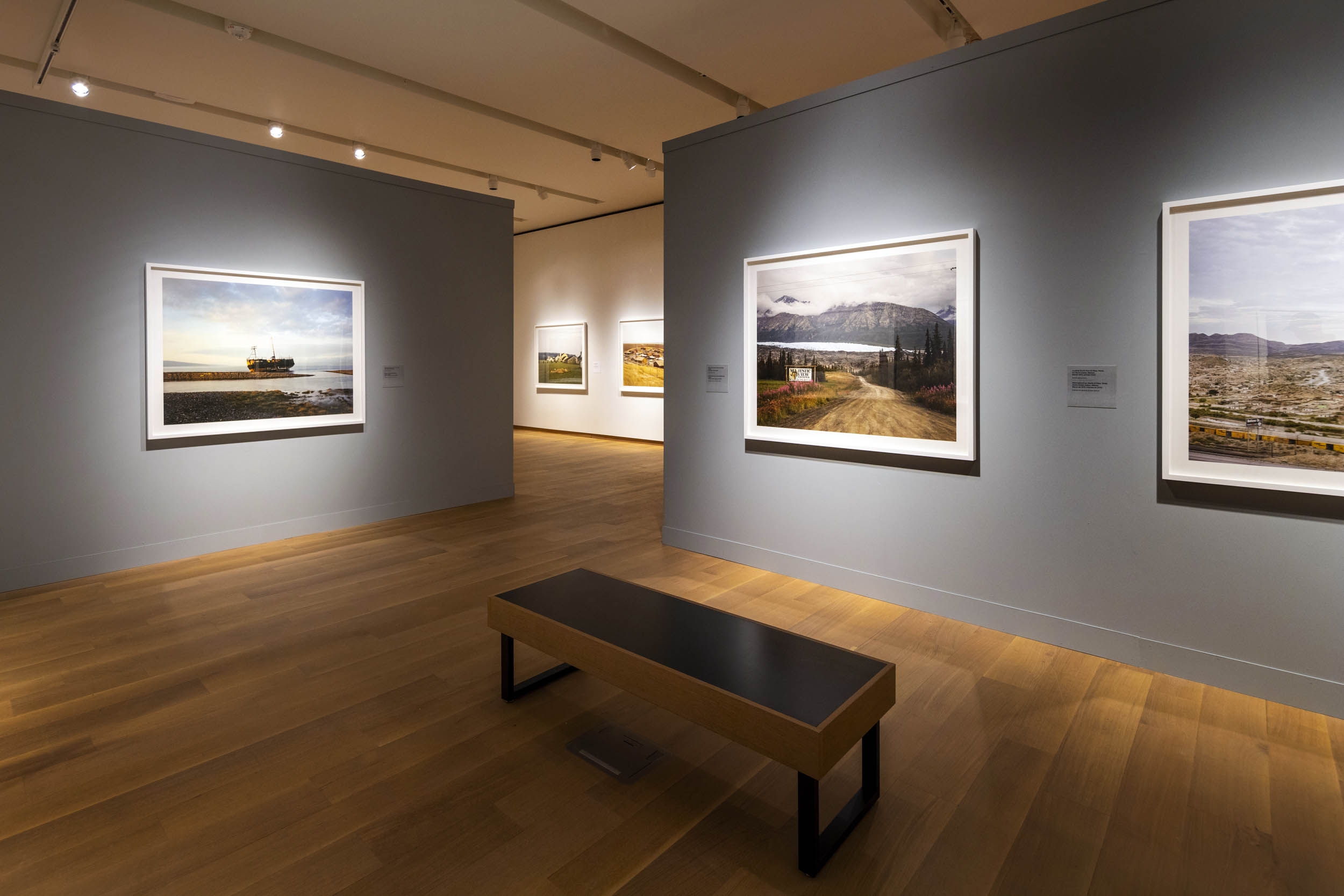
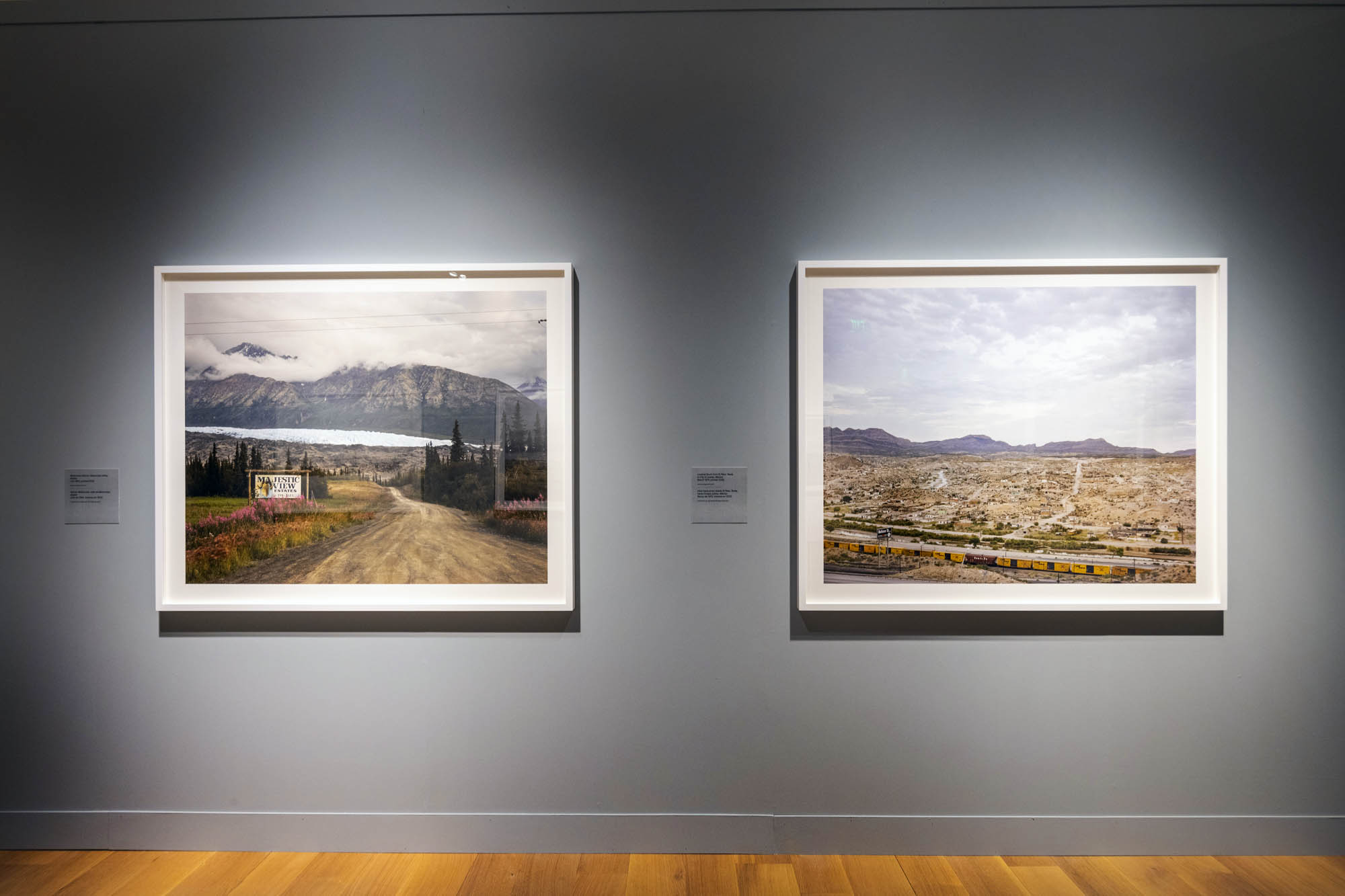


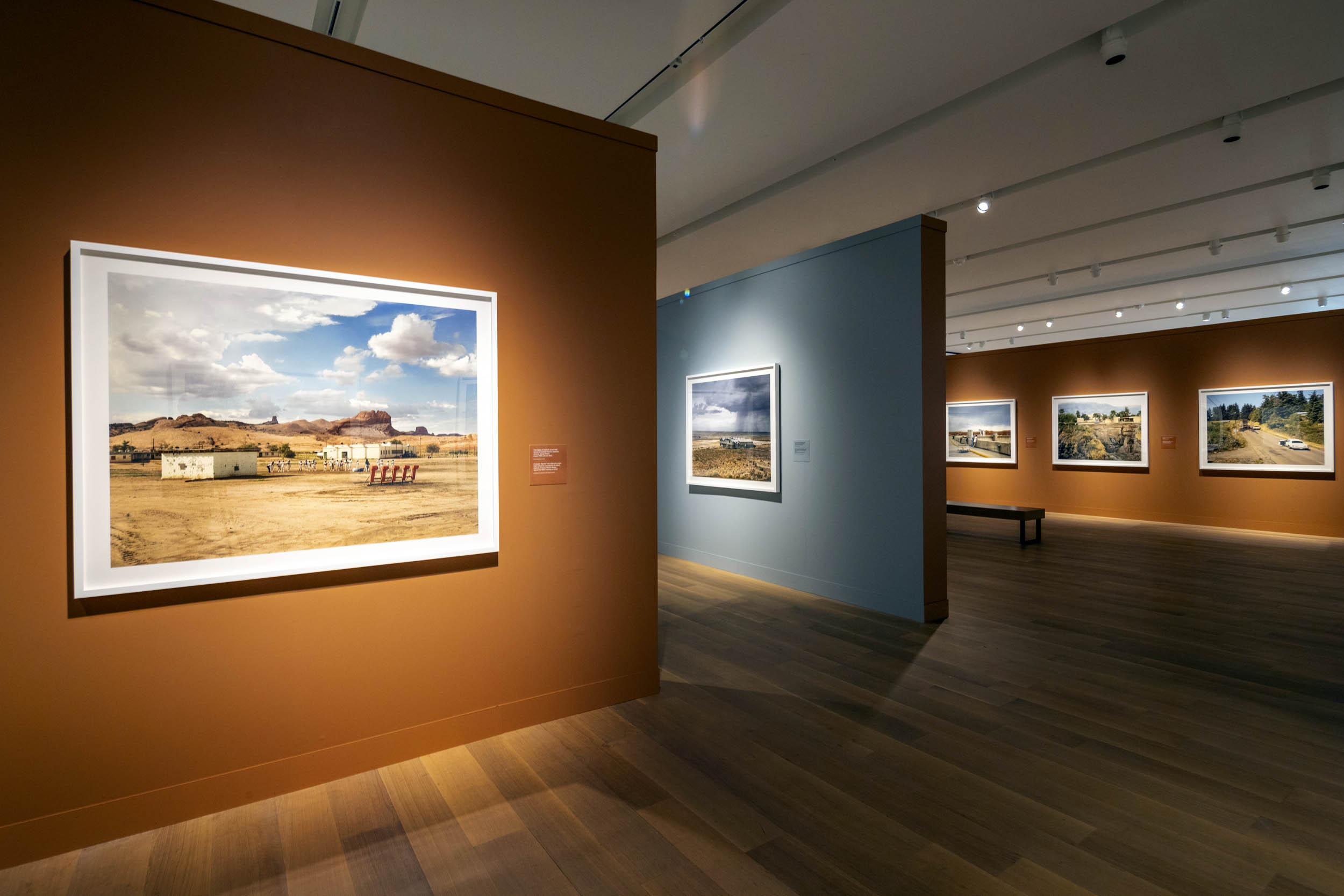
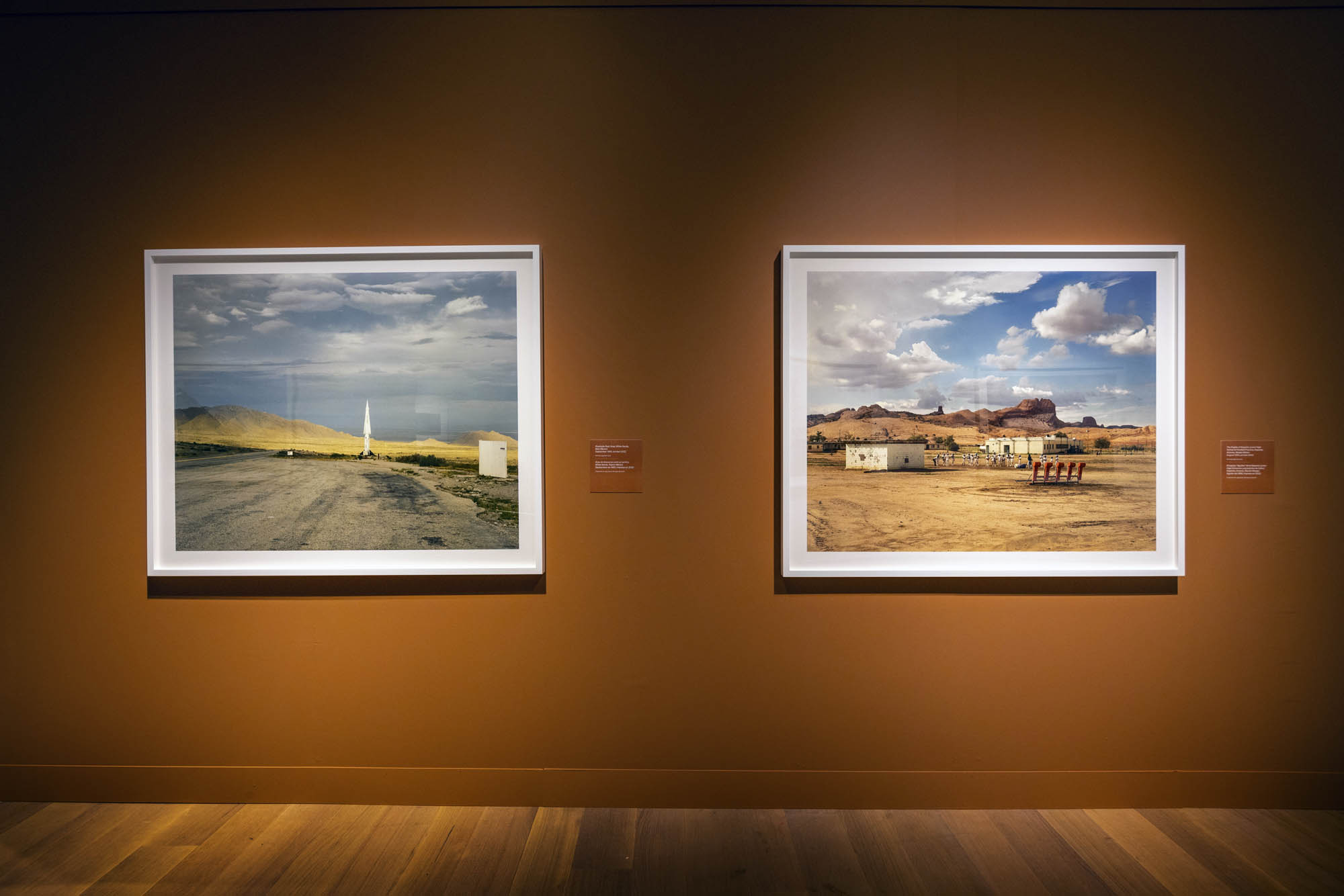

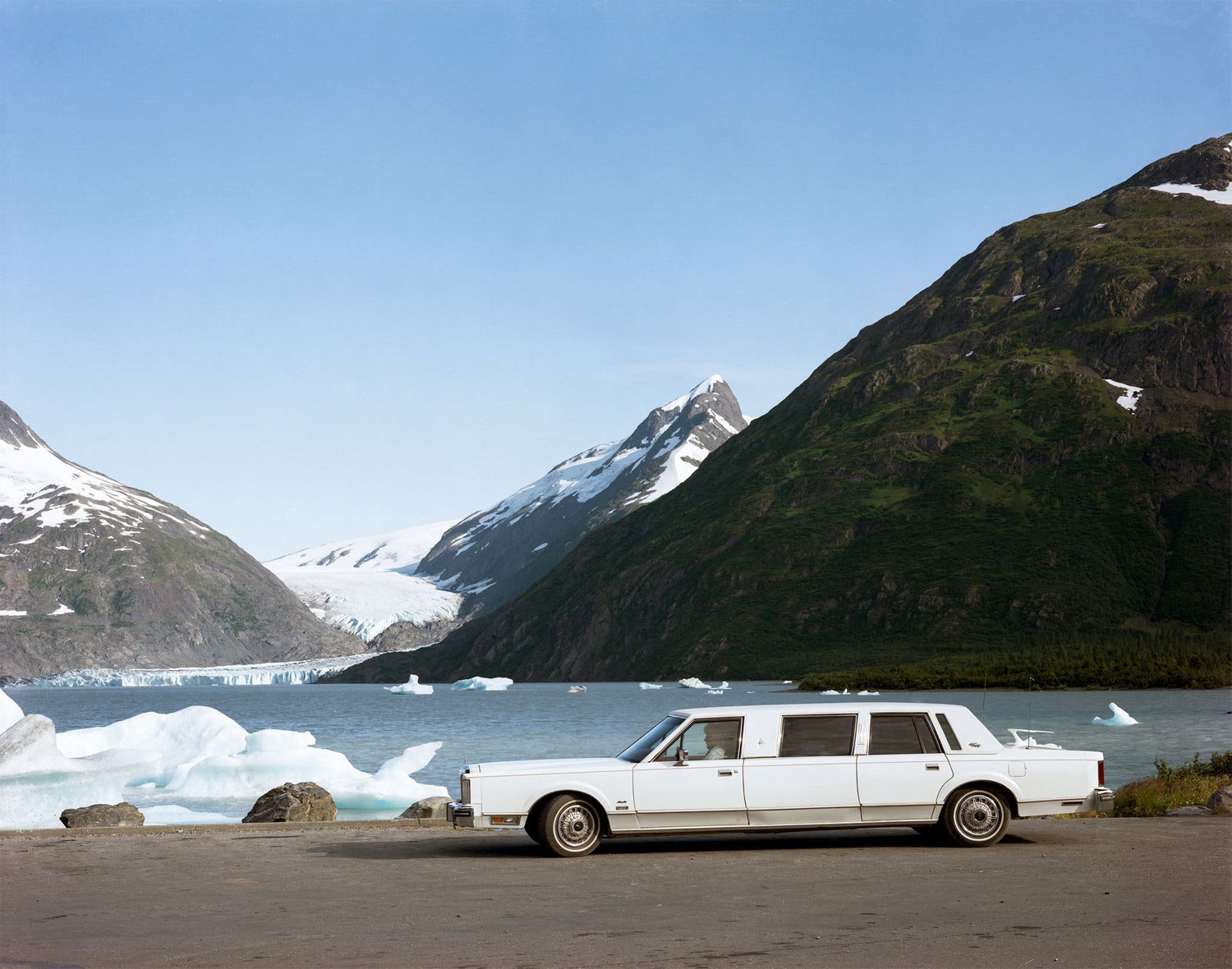

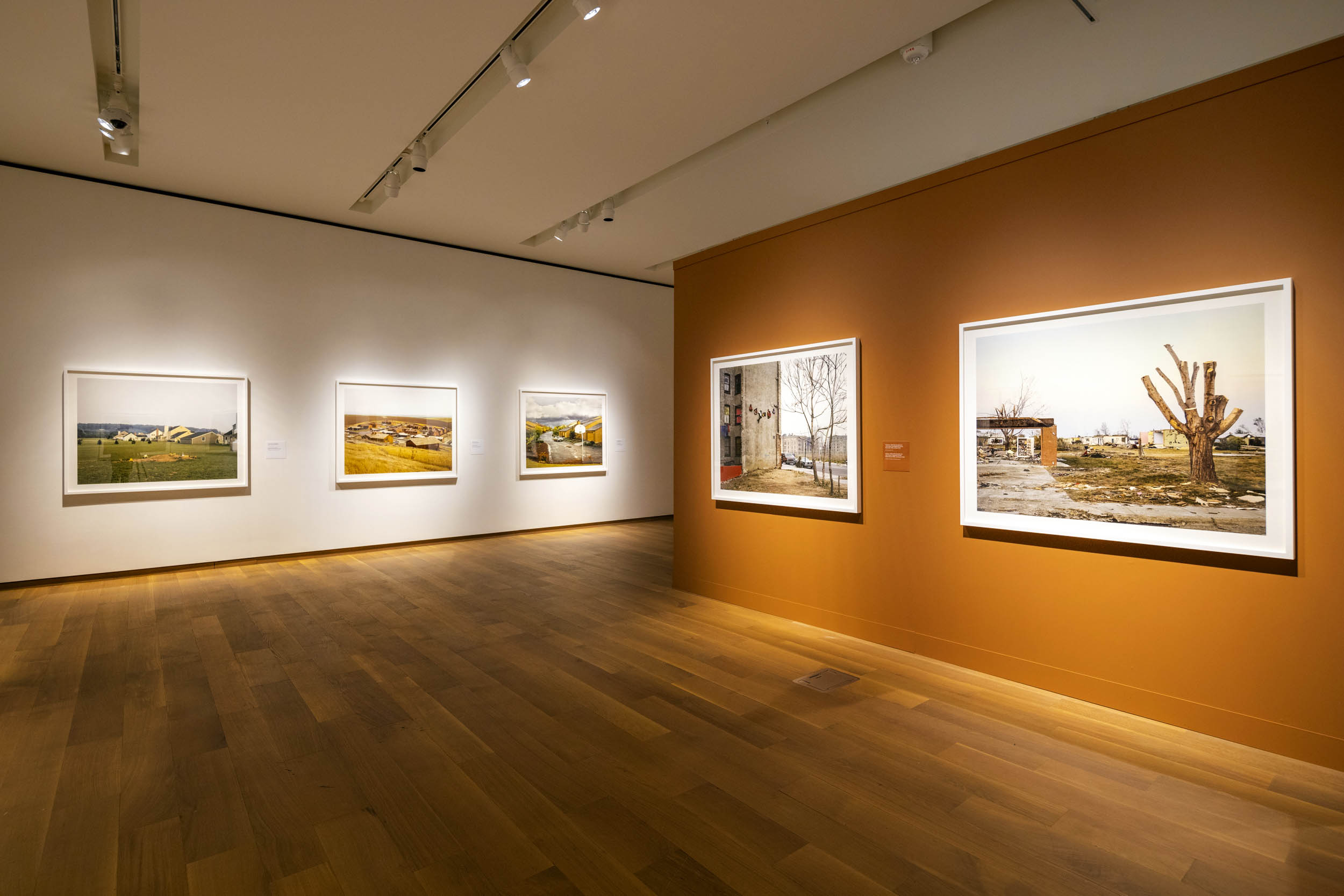


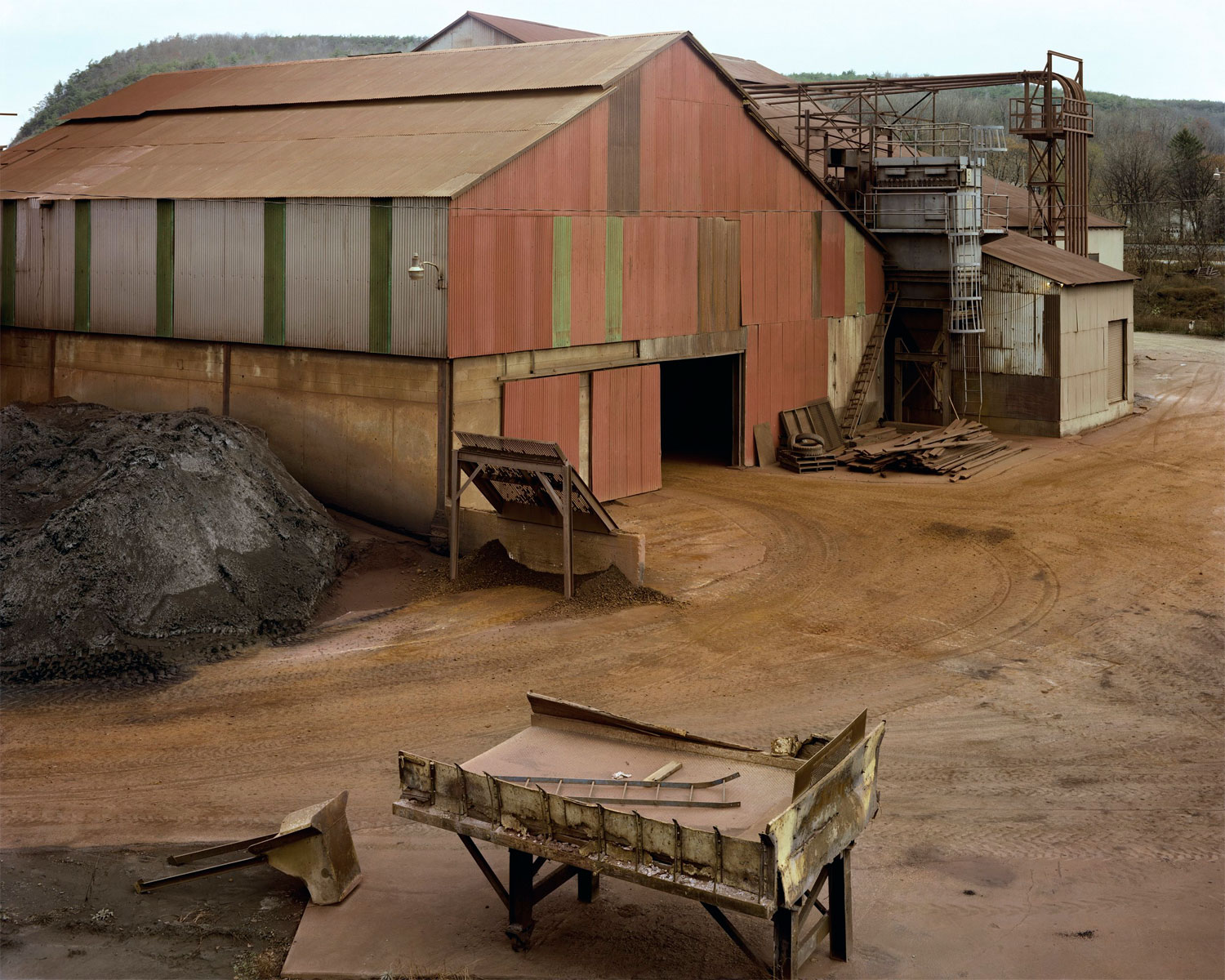
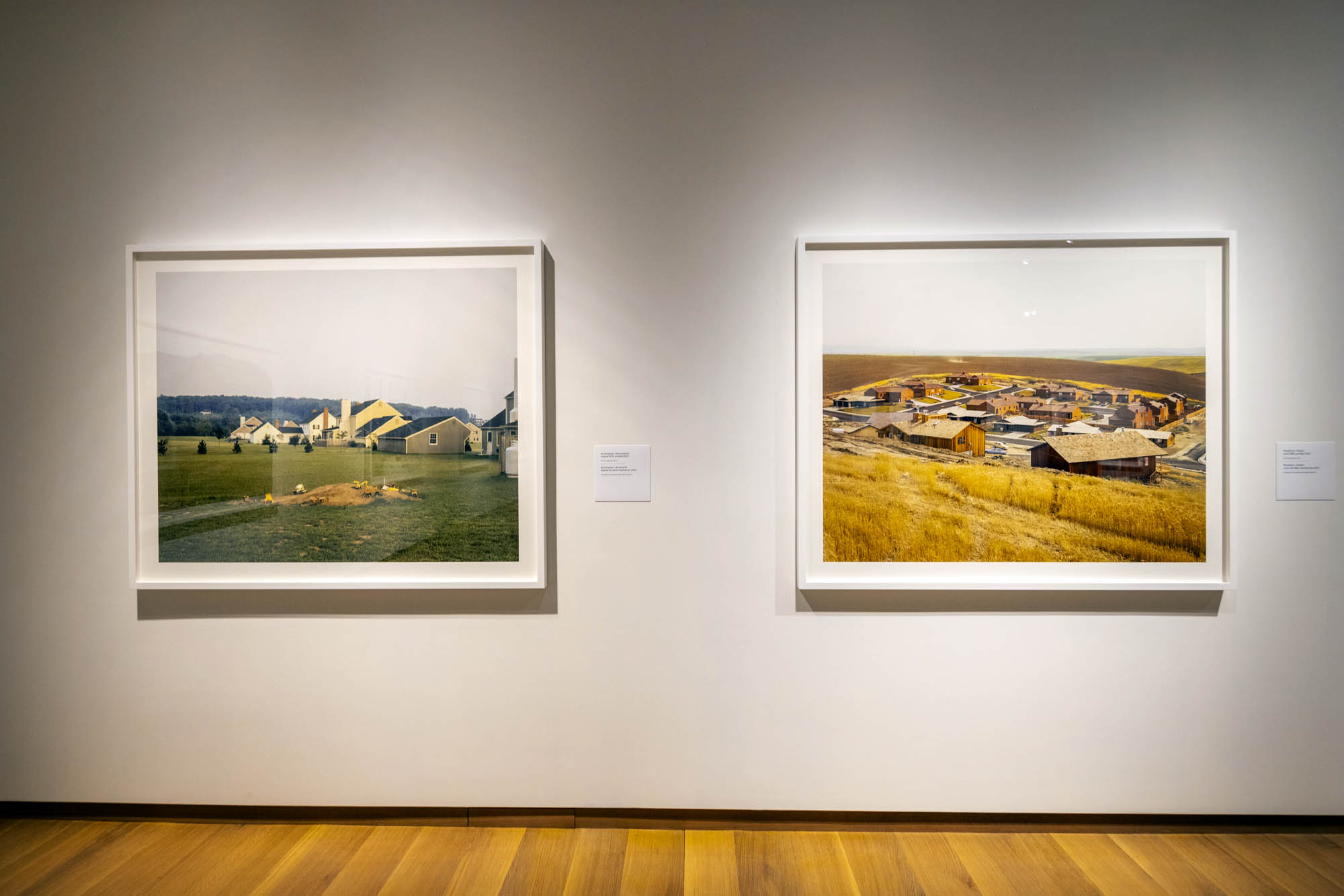

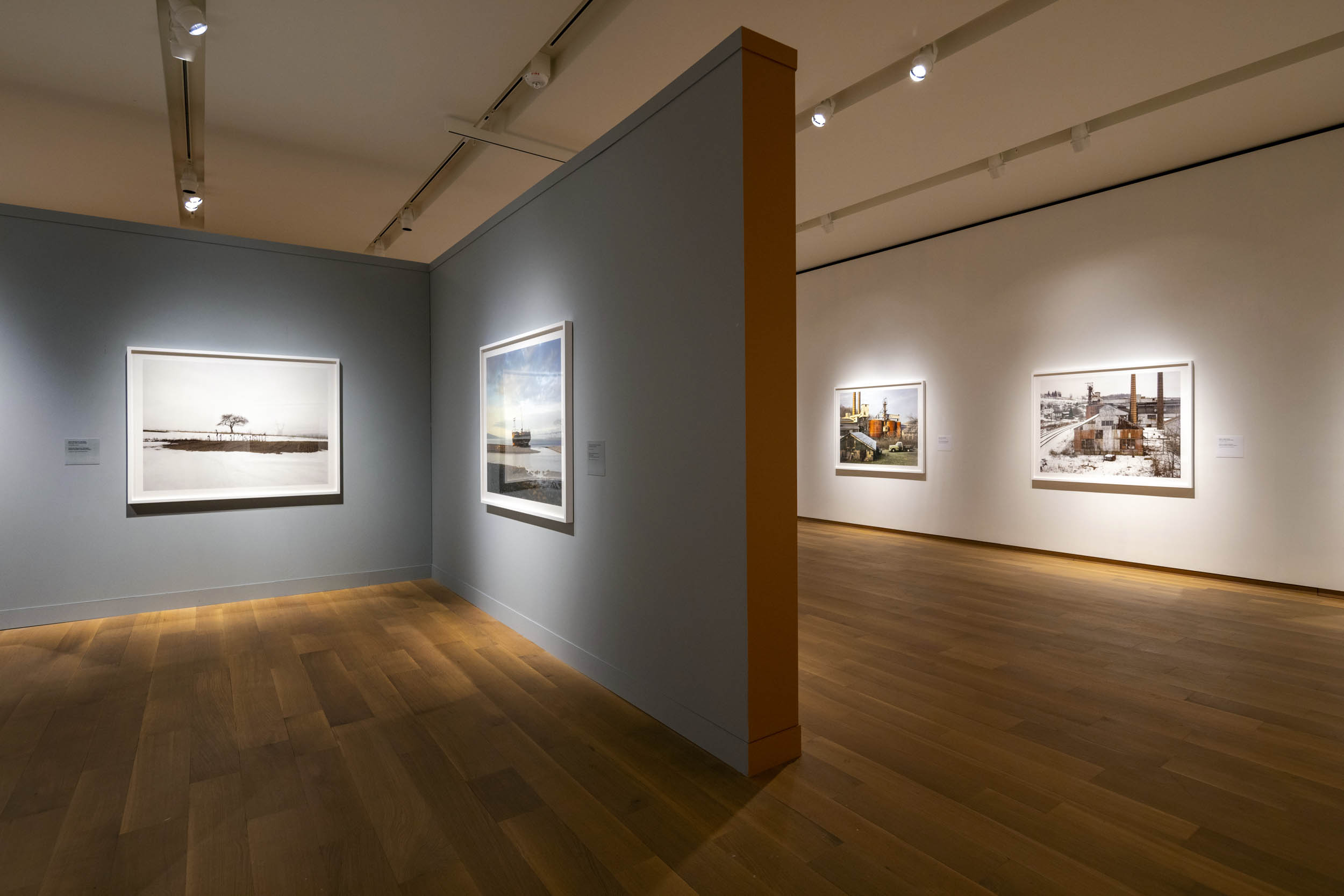
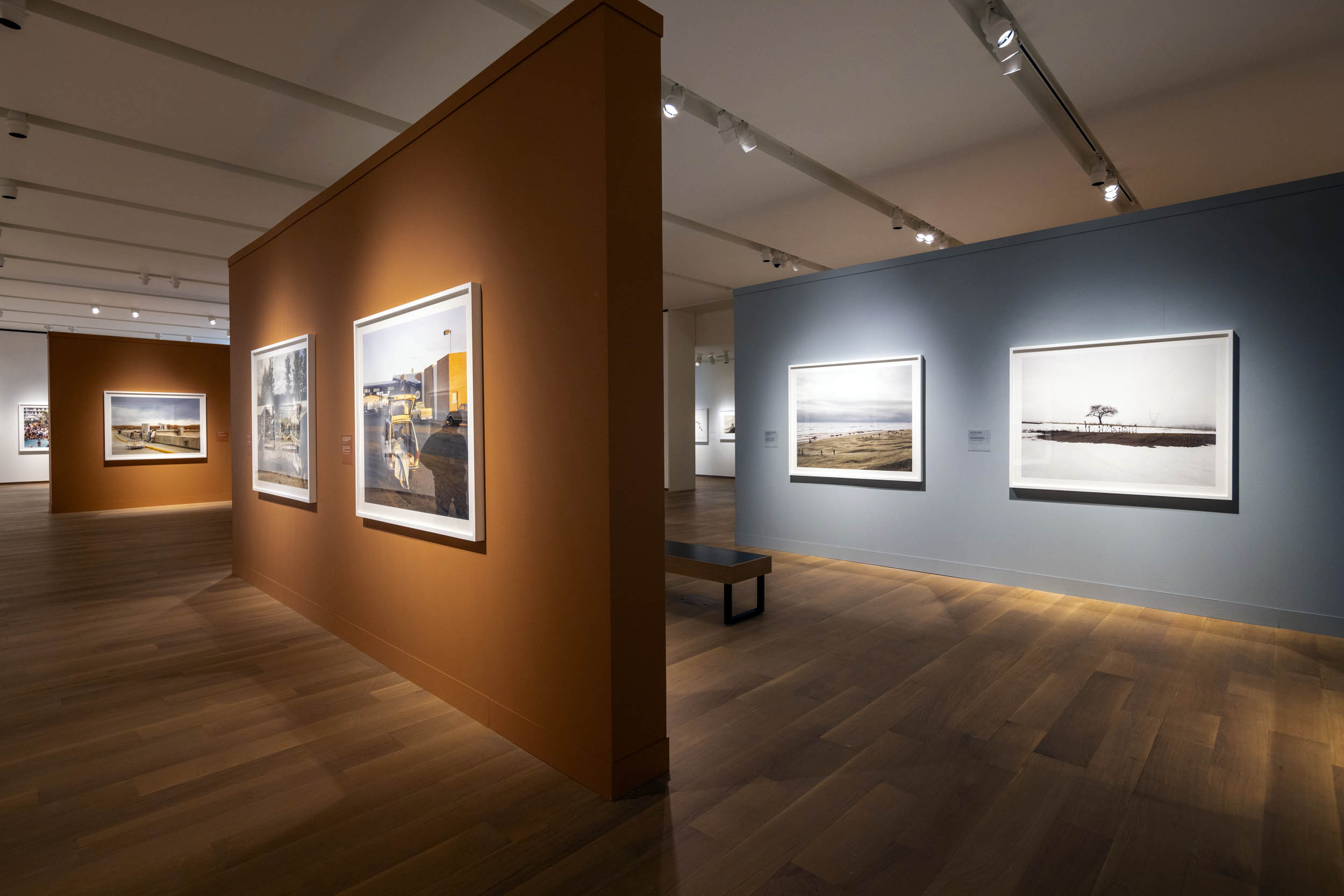
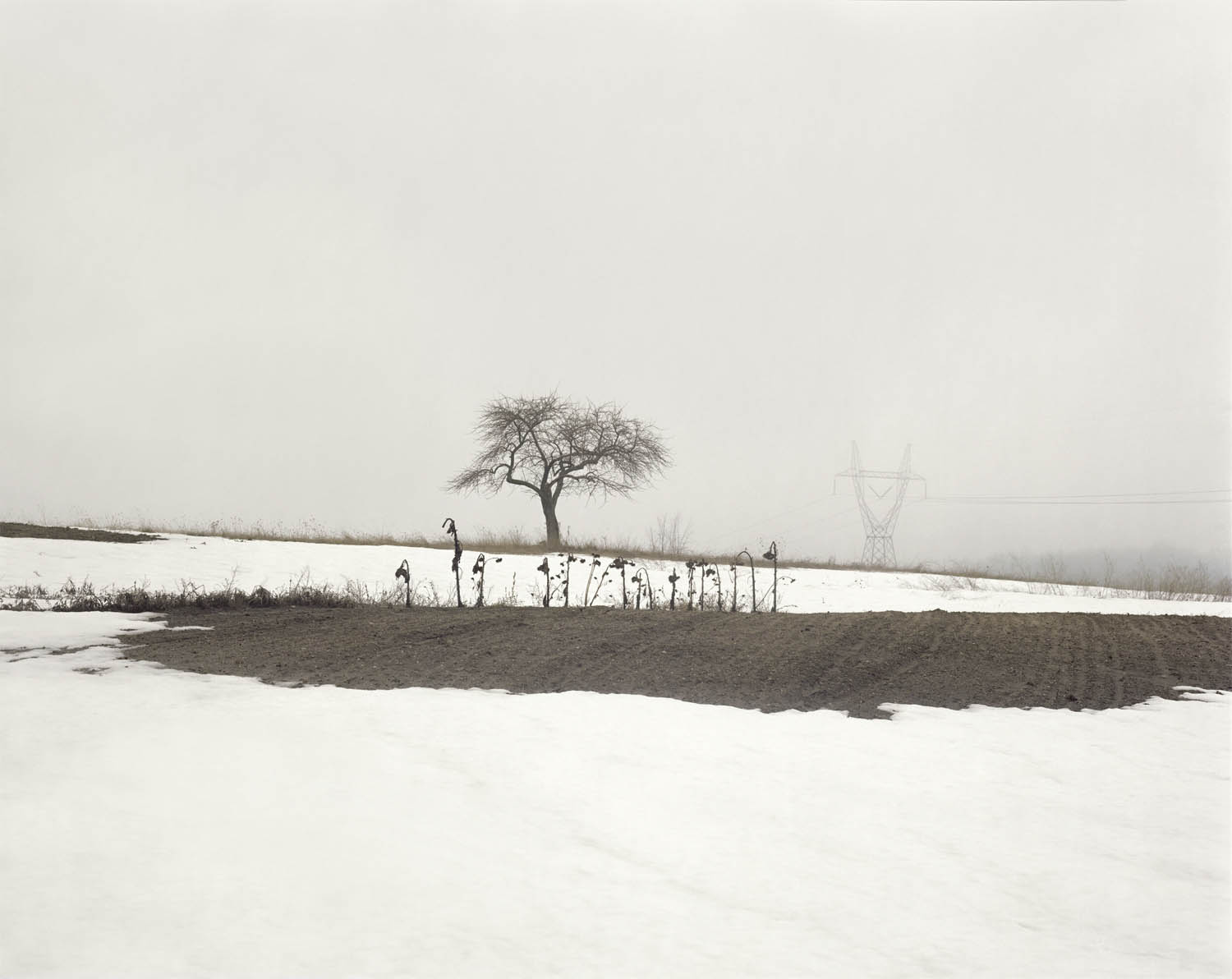
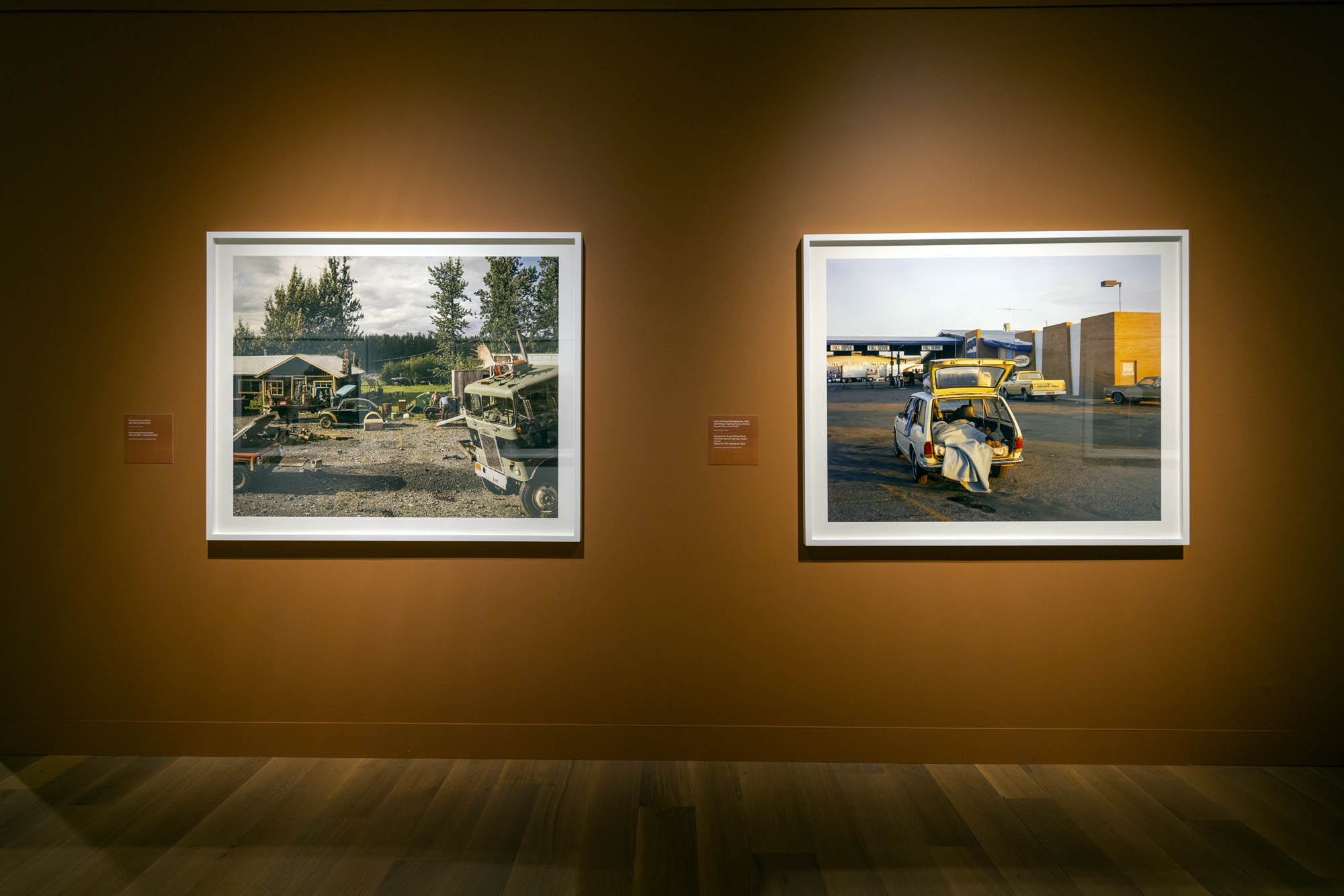


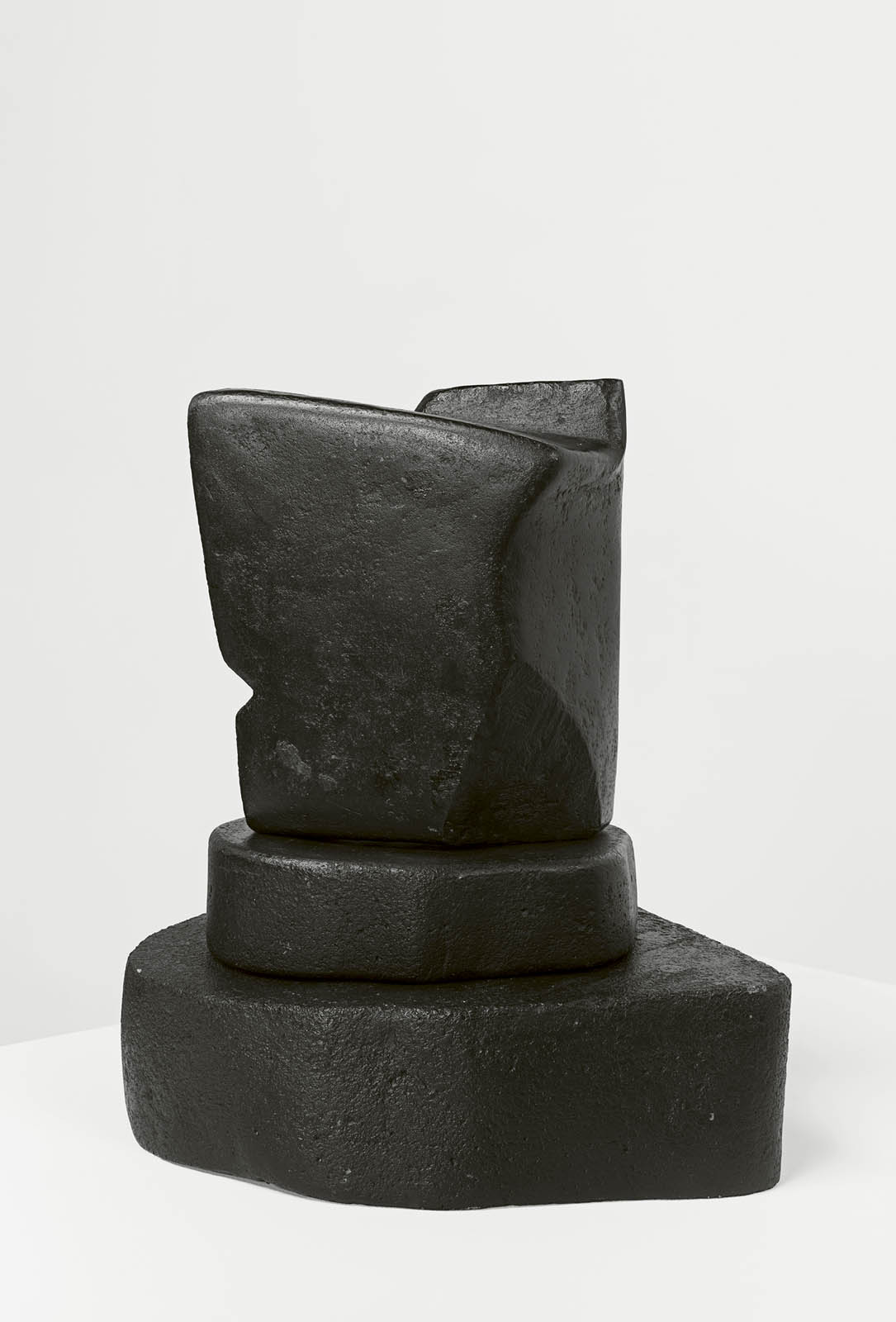



![Sophie Taeuber-Arp (Swiss, 1889-1943) and Jean (Hans) Arp (German-French, 1886-1966) 'Vertical-Horizontal Composition [Conceived by Sophie Taeuber-Arp and executed in relief by Jean Arp]' 1927-1928 / 1943-1956](https://artblart.com/wp-content/uploads/2024/11/13.jpg "Sophie Taeuber-Arp (Swiss, 1889-1943) and Jean (Hans) Arp (German-French, 1886-1966) 'Vertical-Horizontal Composition [Conceived by Sophie Taeuber-Arp and executed in relief by Jean Arp]' 1927-1928 / 1943-1956")

![Berenice Abbott (American, 1898-1991) [attributed to] 'Peggy Guggenheim poses at her Art of This Century Gallery in New York, October 22, 1942'](https://artblart.com/wp-content/uploads/2024/11/16.jpg "Berenice Abbott (American, 1898-1991) [attributed to] 'Peggy Guggenheim poses at her Art of This Century Gallery in New York, October 22, 1942'")

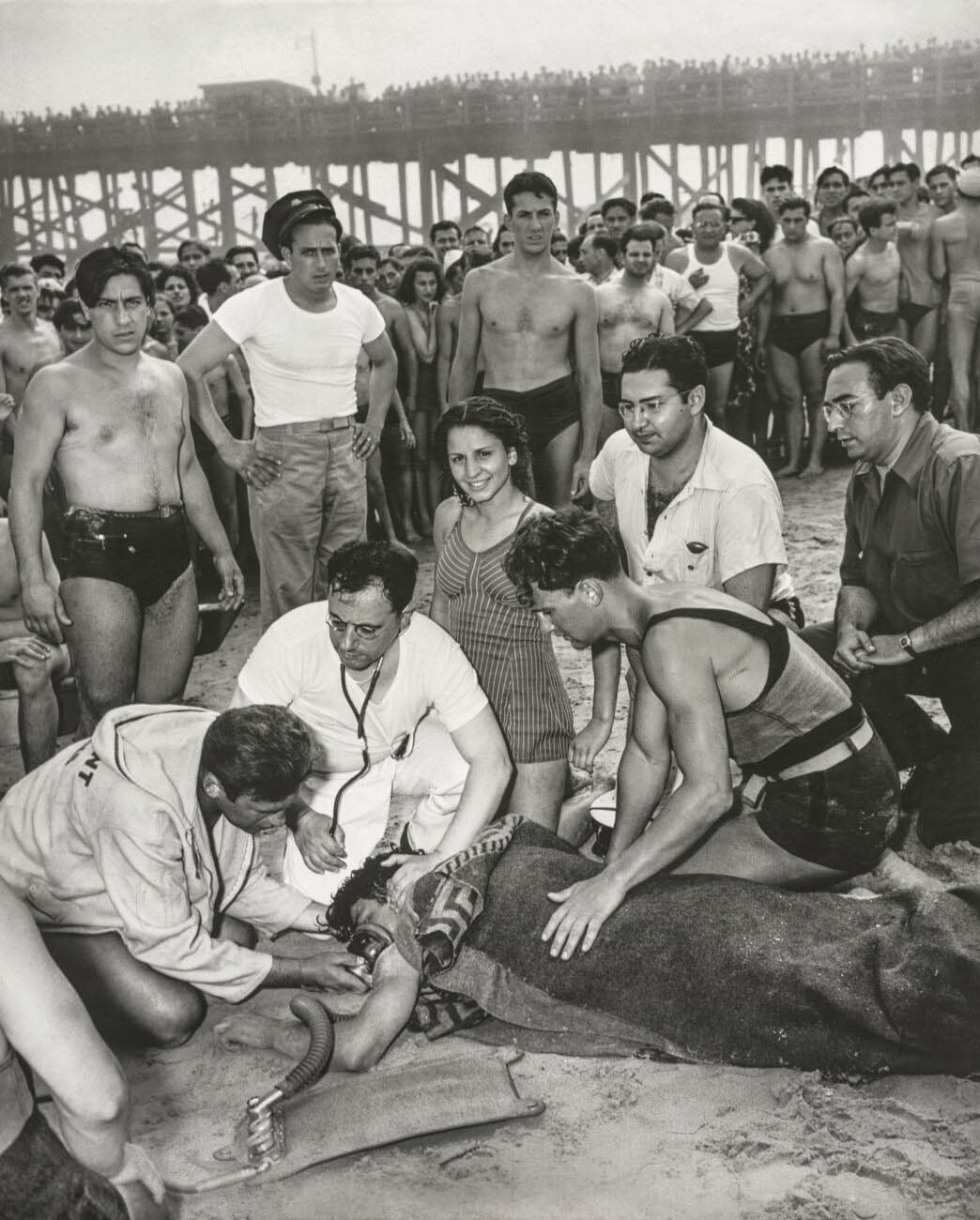

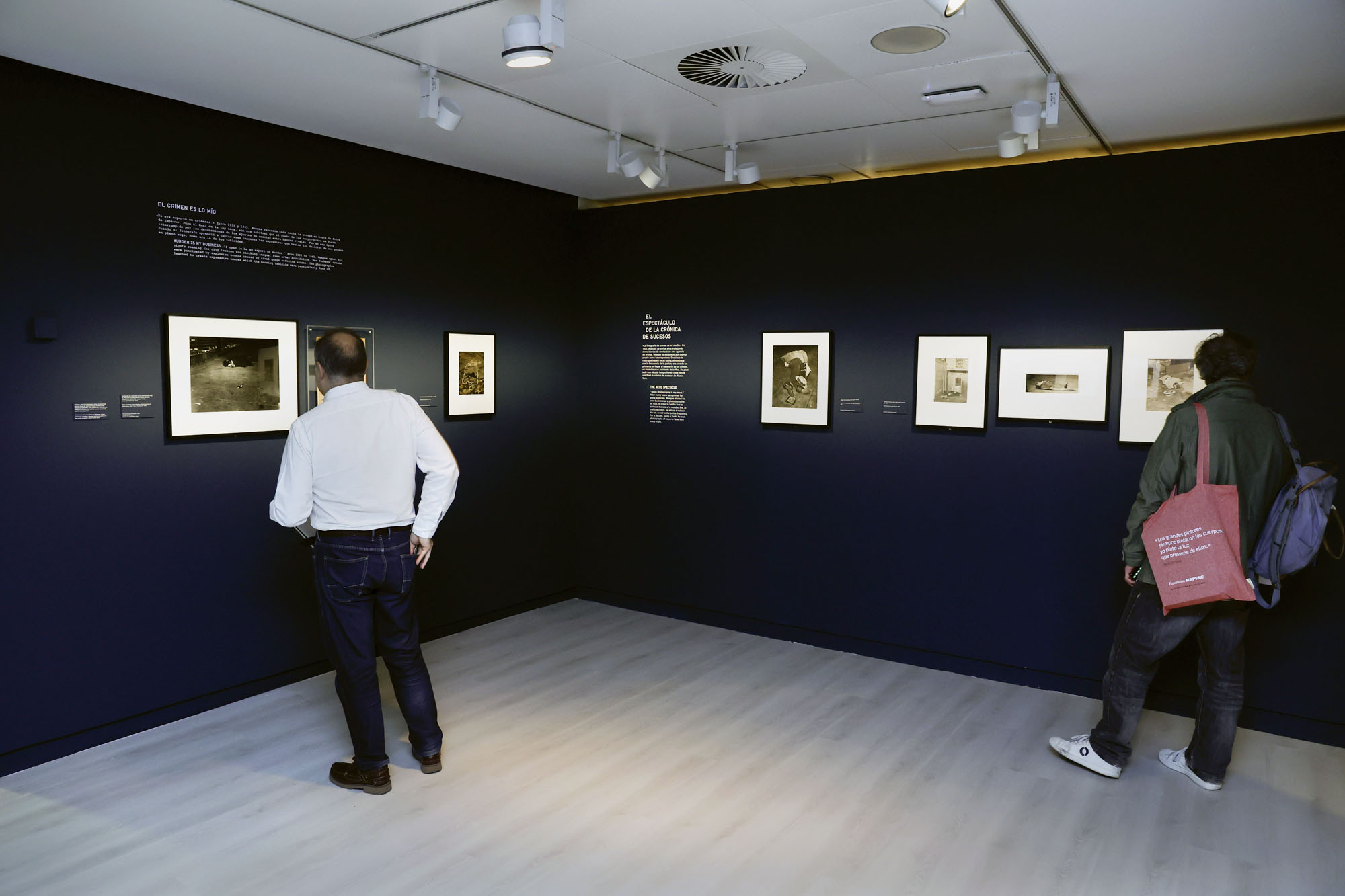
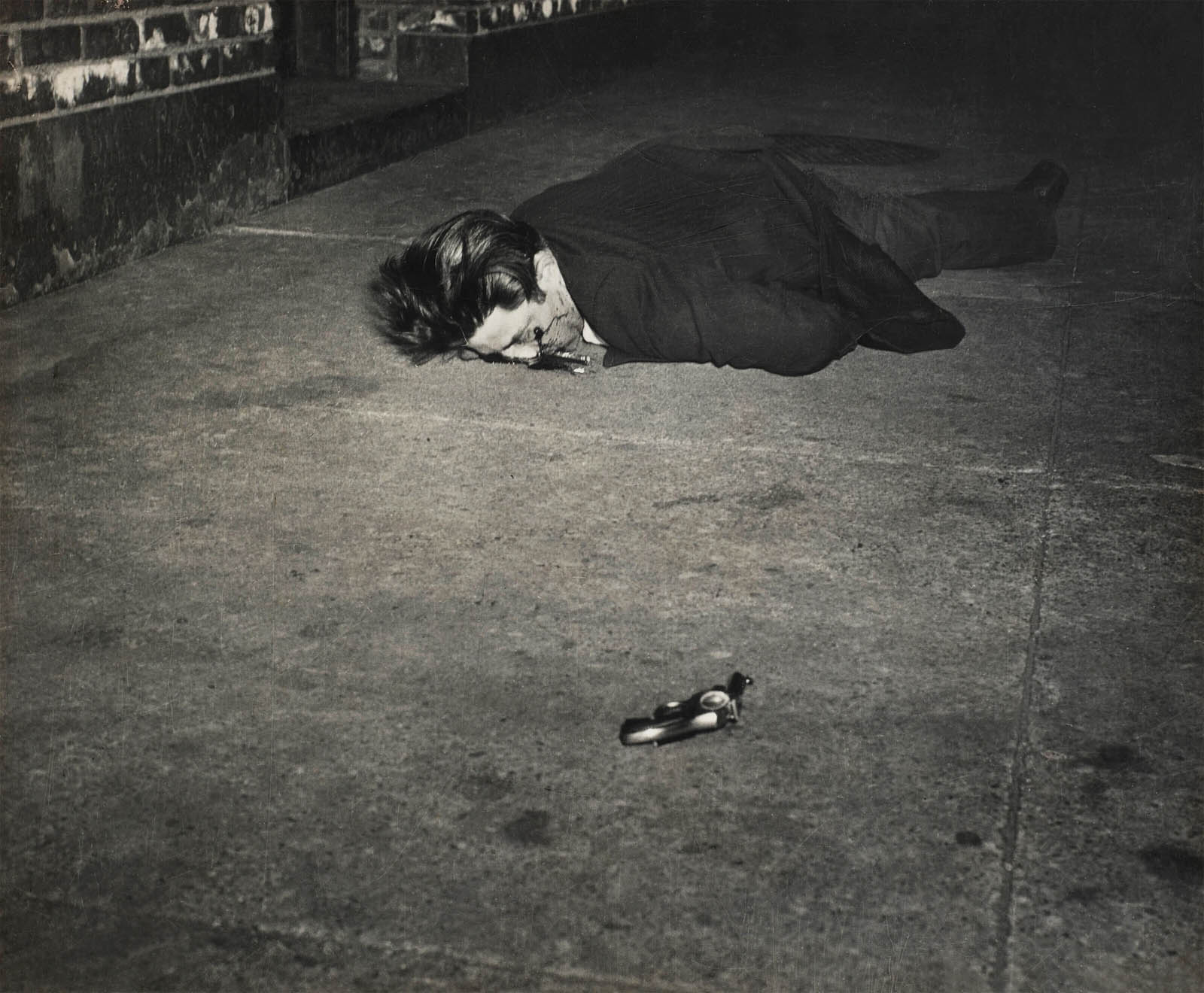


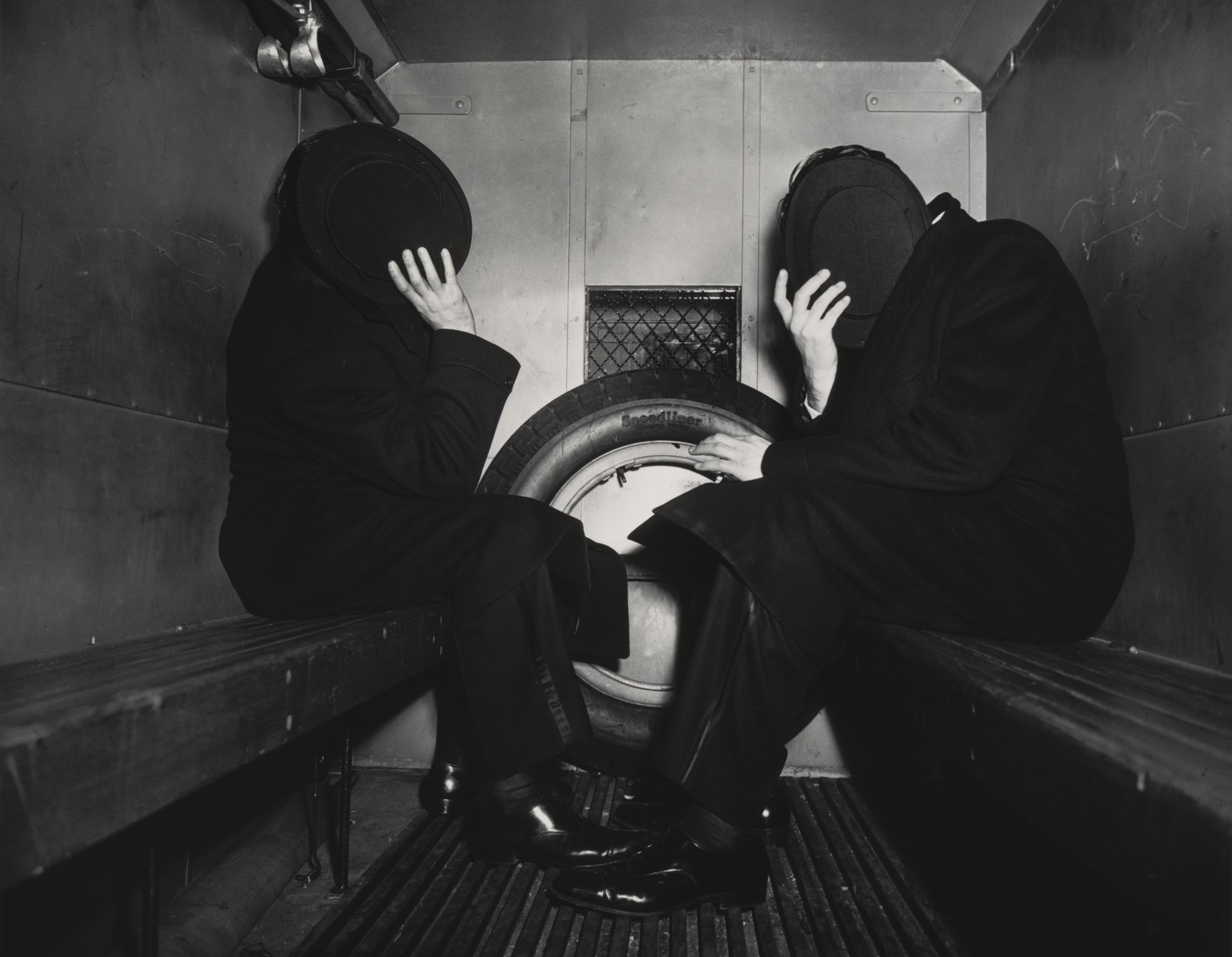

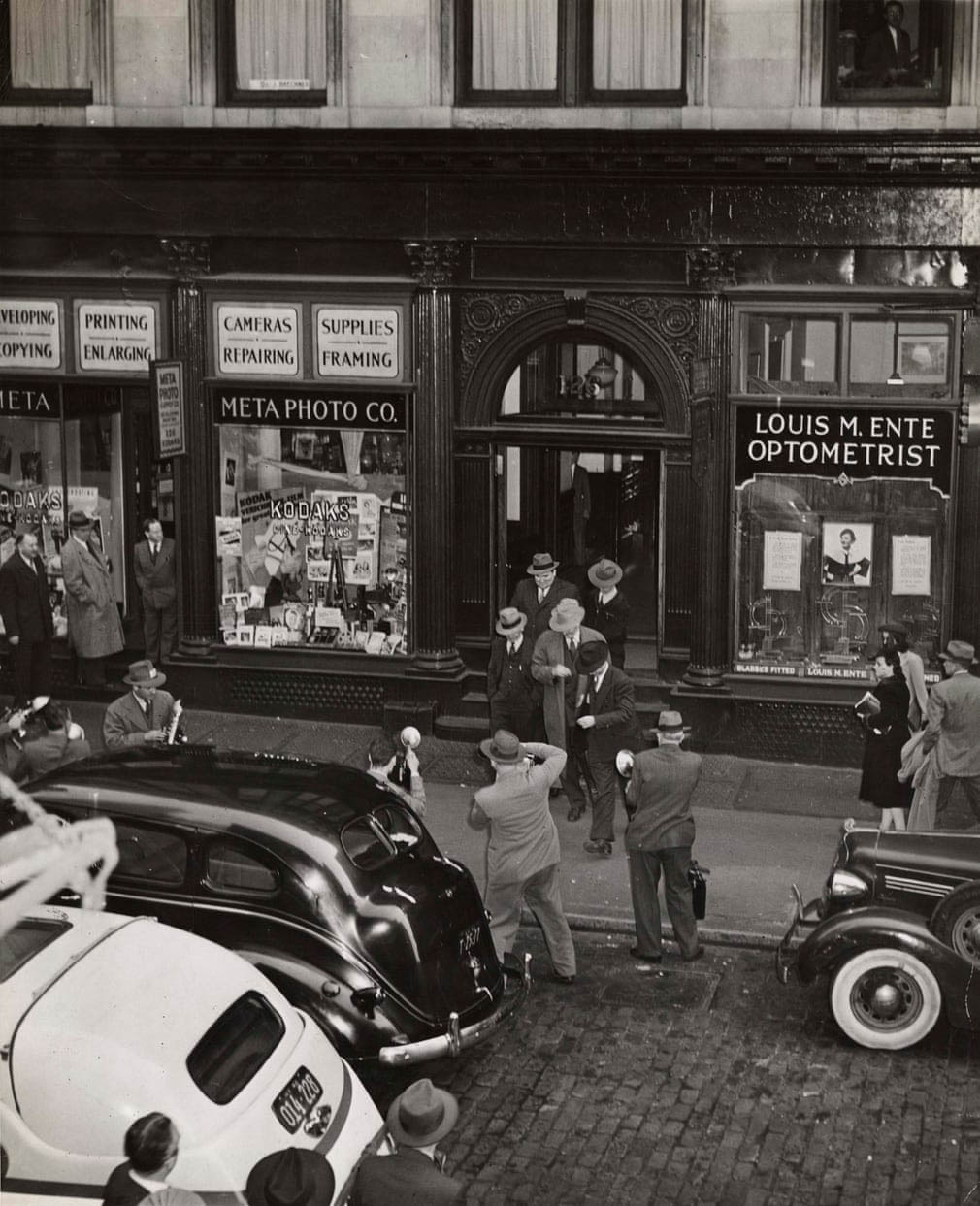

![Weegee (Arthur Fellig) (American born Ukraine, 1899-1968) 'Untitled [Fire in loft building, New York]' 1947](https://artblart.com/wp-content/uploads/2024/04/weegee-fire-in-loft-building.jpg "Weegee (Arthur Fellig) (American born Ukraine, 1899-1968) 'Untitled [Fire in loft building, New York]' 1947")
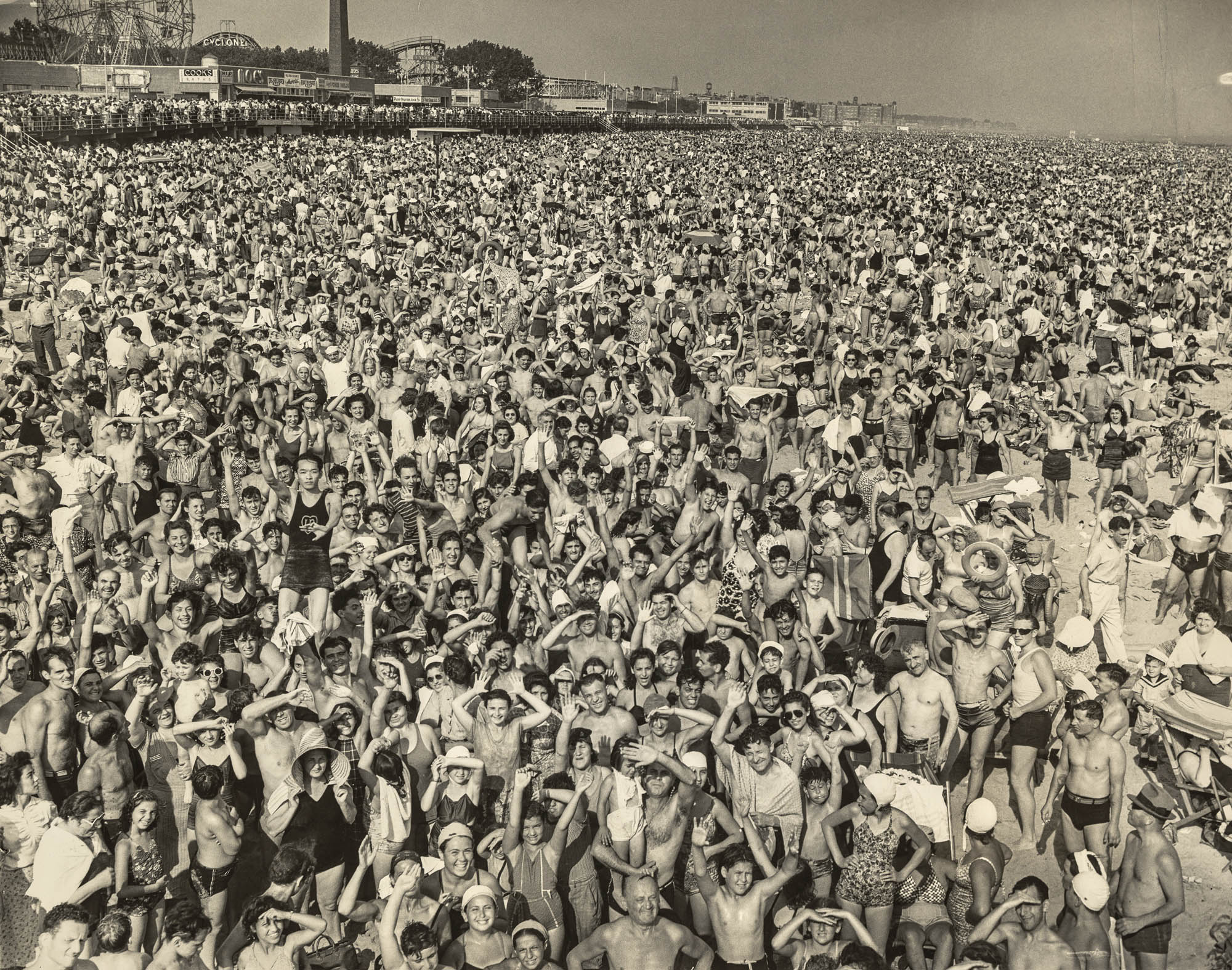

![Weegee (Arthur Fellig) (American born Ukraine, 1899-1968) '[Black Buick with dead passenger pulled out of the Harlem River, New York]' February 23, 1942](https://artblart.com/wp-content/uploads/2024/11/weegee-black-buick.jpg "Weegee (Arthur Fellig) (American born Ukraine, 1899-1968) '[Black Buick with dead passenger pulled out of the Harlem River, New York]' February 23, 1942")
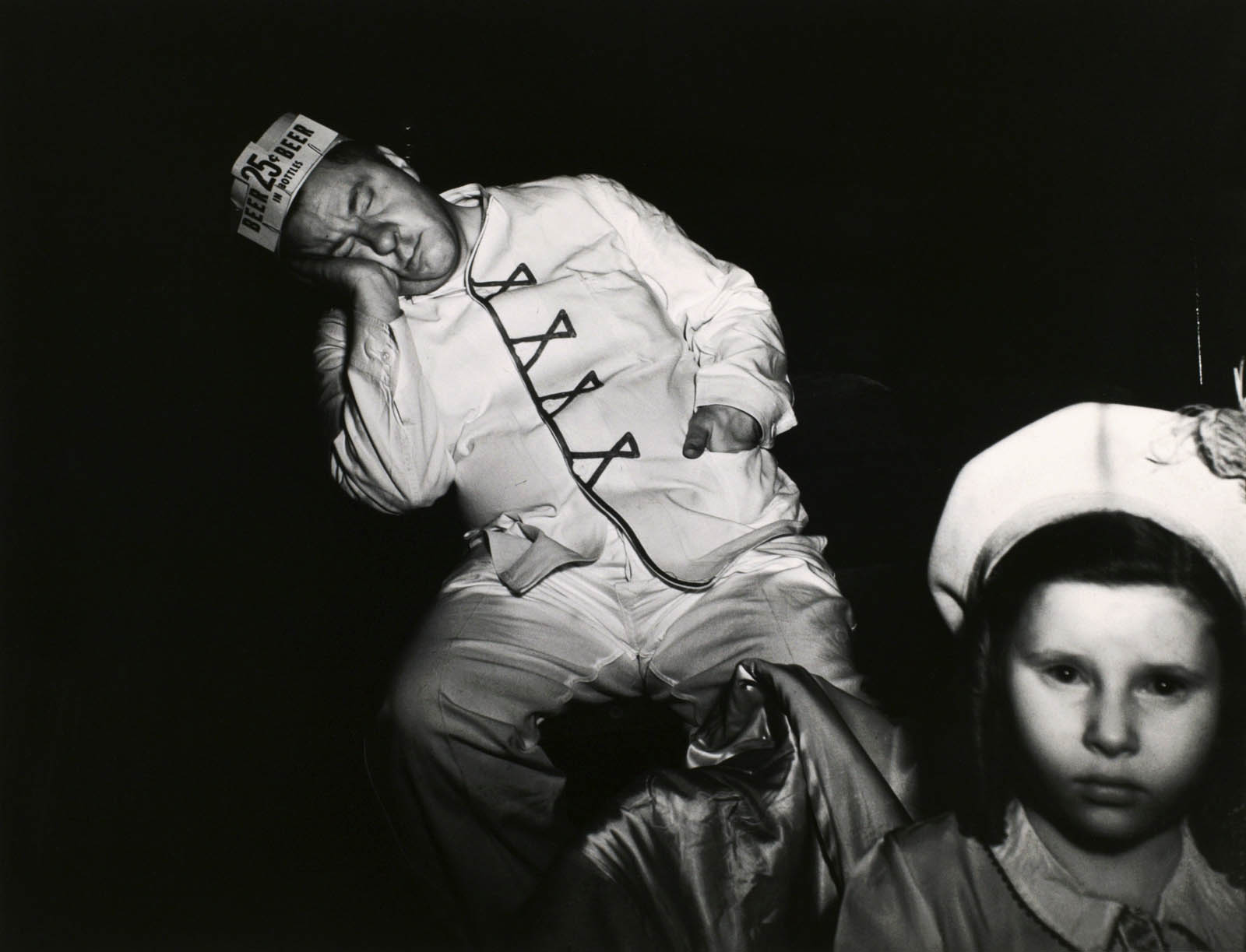

![Weegee (Arthur Fellig) (American born Ukraine, 1899-1968) '[After the opera, Sammy's on the Bowery, New York]' 1943-1945](https://artblart.com/wp-content/uploads/2024/11/weegee-after-the-opera.jpg "Weegee (Arthur Fellig) (American born Ukraine, 1899-1968) '[After the opera, Sammy's on the Bowery, New York]' 1943-1945")




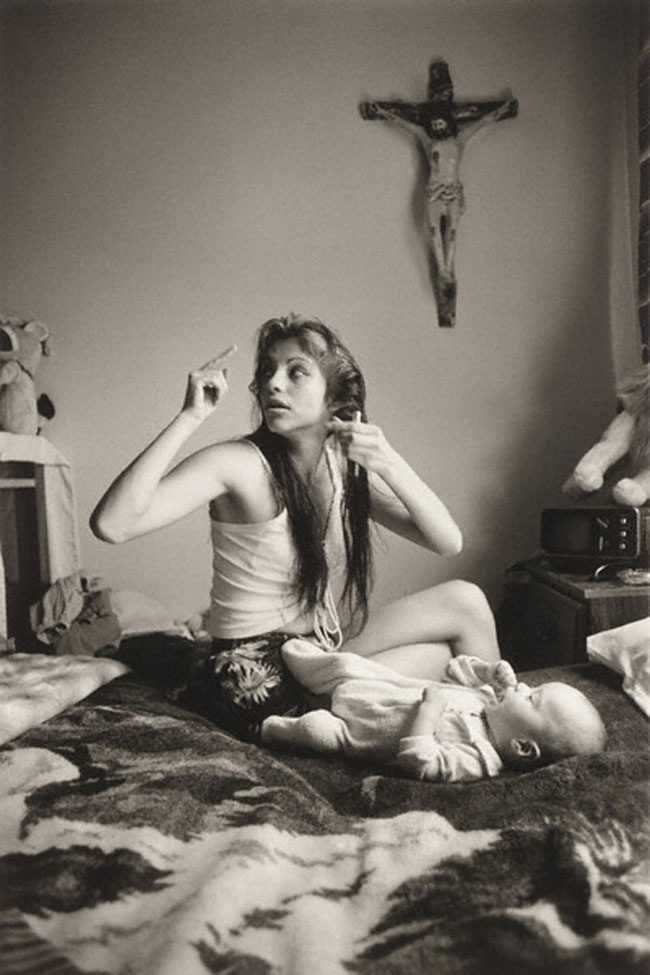
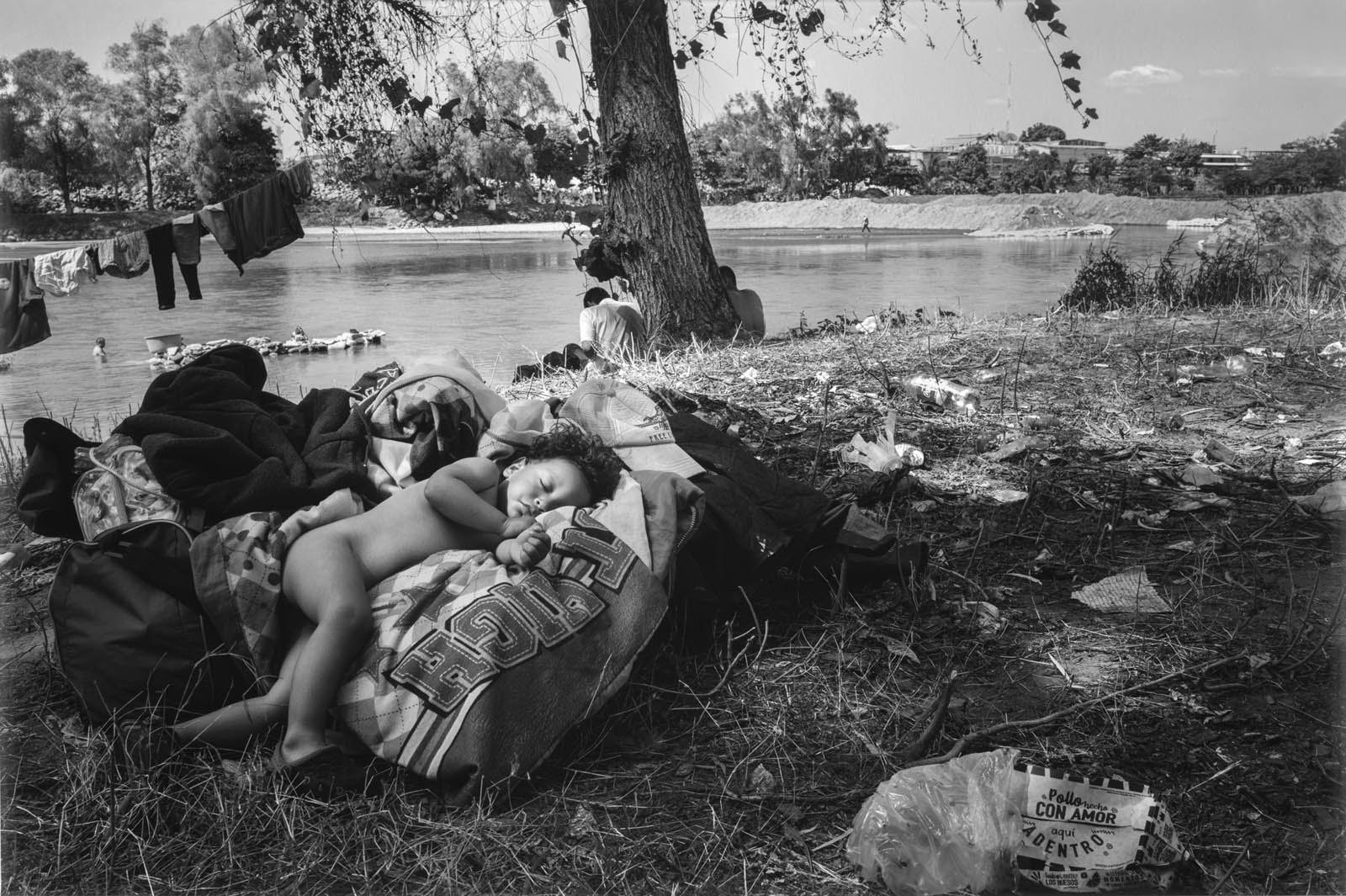


![Louis Carlos Bernal (American, 1941-1993) 'Untitled [Undocumented worker holding Huelga flag at United Farm Workers Demonstration, El Mirage, Arizona]' Negative 1978, printed 2016](https://artblart.com/wp-content/uploads/2024/11/ask-58_ccp_bernal_ag182-20230302-110020.jpg "Louis Carlos Bernal (American, 1941-1993) 'Untitled [Undocumented worker holding Huelga flag at United Farm Workers Demonstration, El Mirage, Arizona]' Negative 1978, printed 2016")



You must be logged in to post a comment.