I wrote this philosophical text as a flow of consciousness, a layered exposition of my thoughts on space, photography, identity and belonging. I hope I have done the subject justice… in freedom.
within, bridge and fissure
The struggle for identity, for culture, for nation is a struggle inscribed in space. So observes Wendy Garden.1
The spaces that bodies move in, through and over are fluid spaces, permeable spaces, fragmentary and transitory spaces. They are also spaces of displacement and distance which form a kind of ‘alienation’ which derives from the Latin alienare: to render foreign, other.2
Thus the “border” between one and the other – that fluid penumbra (a peripheral or indeterminate area or group), that oscillation of energy across the line – must be constructed to be legible and fixed by those that seek to control such spaces, through the imposition of a coded representation of space itself.3 The border wall between Mexico and America is one such imposition of a coded representation of space which, seeks to control an/other. It is a “direct translation of ideology and temporality into material and spatial culture”3 which masks as much as it represents, through a selective representation of history and memory.
Through systems of surveillance (e.g. CCTV, aerial surveillance, phone taps) and control (e.g. police, government, the judiciary), in which one reinforces the other in a never ending circle, and in the of naming of the ‘other’ (Foucault) – those with privilege embedded and thus emboldened within colonial and imperial systems seek to confirm hegemonic structures of power: for example, who can travel where, who has access adequate to health care, who is seen as an ill/legal alien. “Although Foucault rarely alludes to it in a clear-cut manner, what he describes in Discipline and Punish is the formation of the discursive regime of surveillance which is a central element in the expression of the modern state.”4
But we can counter this narrative.
In his influential book Thirdspace (Blackwell, 1996), the American postmodern political geographer and urban theorist Edward Soja (1940-2015) proposes the concept of First, Second and Thirdspace to demarcate the various spatial dimensions. Firstspace “is the ‘real’, the concrete materiality of spatial forms of the world, while Secondspace interprets this reality through imagined representations of spatiality.”5 Much early photographic practice is rooted in Firstspace, in the passive representation of an undeniable truth, the veracity of the image and its representation of the referent: this existed because it was captured by the camera.
Thirdspace on the other hand, “contains both real and imagined spaces simultaneously. Thirdspace permits an intermingling of the knowable and the unknowable, the real and the imagined by the experiences, events and political choices that are shaped by the interplay between centres and peripheries (Soja, Thirdspace 1996: 31). According to Soja, Thirdspace is a place where issues of race, class and gender can be addressed simultaneously without privileging one over the other. It is a space which enables an-‘other’ way of understanding and acting to change the spatiality of human life (Soja, Thirdspace 1996: 10). Photographic space, as a Thirdspace, is a site from which to contest the dominant ideologies of Firstspace. This has important ramifications for ‘others,’ especially those disenfranchised by colonialism.”6
Thus photographic Thirdspace is an amorphous space of both the real and imagined and is the vibration of energy, doubled! – the real and imagined spaces of everyday life, and the real and imagined spaces of photography through which we can contest the contexts of becoming, belonging.
These Thirdspaces of the real and imagined are not spaces of universalising totality which then would be constitutive of history or memory, but in-between spaces in which differences, memories and histories are not denied or negated, hidden, forgotten or repressed. It is not the segregation of black and white, either/or, but the grey areas in-between that interest me: those fluid zones of difference – think Tarkovsky’s film Stalker 1979, in which a guide helps a writer and a professor to infiltrate a restricted area, the Zone.
“The Thirdspace – in which “everything comes together… subjectivity and objectivity, the abstract and the concrete, the real and the imagined, the knowable and the unimaginable, the repetitive and the differential, structure and agency, mind and body, consciousness and the unconscious, the disciplined and the trans-disciplinary, everyday life and unending history”a – allows that none of these couples, such as the phenomenal and the noumenal, can be divided by an either/or attitude. “This… does not mean differences are denied, instead, it most of all means the inevitable reciprocity of any pair of definitions. In such a case both leave a mark on the other. It is a question of both-and – how each of the pair influences the other”b.”7
Both leave a mark on each other. And it is in this marking that social and political relations can be reconfigured, “in such a way as to suspect, neutralise, or invert the set of relations that they happen to designate, mirror or reflect.”8 Thus, the physical aspects as well as the attitudes and habitual practices of ‘space’, the arrangements of space and the socialisation of space, “is an order that is itself always undergoing change from within through the actions and innovations of social agents. In short, all ‘space’ is social space ….”9
Following, we can say that social and spatial relationships are dialectically inter-reactive, interdependent (Soja).
“Social and spatial relationships are dialectically inter-reactive and interdependent. Cultural landscapes reflect social relations and institutions, and they shape subsequent social relations. While elites create spatial inequalities and homogeneity simultaneously through their hegemony, non-elites create counter-hegemonic landscapes which reflect their own values. Behavioural resistance to the dominant culture leads to distinctive cultural landscapes: for example, cultural resistance by Maori.
Indeed, dominant ideologies such as those which are religious, political, economic, ethnic or racial, continually define or redefine ‘deviance’ or ‘otherness’ to maintain their power and landscapes of dominance. Space and place are key factors in the definition of deviance and of order and propriety.”10
But as Wael Salah Fahmi insightfully observes, we must not fall into the idea that juxtapositions of social space are just alternating choices of “either/or” or acts of simple resistance: “But “juxtaposition” might imply alternating choices, an “either/or.” Perhaps instead we might think of Lefebvre’s image of interpenetrating spaces, one violating another, yet rising up from within the very “fundament” of the space that wishes to ignore its existence. Here, perhaps, is a spatial dialectic that does not fall into a binary opposition of simple resistance.”11
Spaces that rise up from within each other!
Change that emanates from within through the actions and innovations of social agents… human beings, artists!
Here, the thoughts of that glorious Cuban-American interdisciplinary artist, writer, and curator Coco Fusco (b. 1960) – quoted by Jean Fisher – whose work explores gender, identity, race, and power through performance, video, interactive installations, and critical writing are particularly cogent.
“Two imperatives are set in motion: to alter the perceptions of those with privileged access to hegemonic structures of power, and to change the sense of disempowerment of those deprived of political agency. “What is more fundamentally at stake than freedom,” Fusco argues, “is power – the power to choose, the power to determine value, and the right of the more powerful to consume without guilt”: entitlements that Eurocentric cultures have assumed for themselves at the expense of others. These aims are advanced through an exploration of the relationship between the politics and practices of cultural difference and social inequity, in which intellectual, experiential, and artistic alliances are built across nationalistic and geographical boundaries …””12
As Wael Salah Fahmi notes, “spaces constantly juxtapose themselves one against the other” – in real life, in art, in photography. The media saturated world of the “total flow” of images is resistant to interpretation, yet in real life – and in this exhibition – the juxta/position (mapping of space), juxta/posing (posing for the camera) of one space against another, “of image to image calls to attention a line of conflict, either fissure or bridge.”13
The images in this posting draw our attention to fissures (George Rodriguez, Susan Meiselas, Ada Trillo) and bridges (Graciela Iturbide, Ronald Rael and Virginia San Fratello with Colectivo Chopeke). They also possess a multivalent narrative, allowing the work to be accessible to different interpretations, meanings, and values: a new door or path opens up on the basis of very diverse needs and objectives. These images, untraceable gifts from photography itself, are marks of candour and authenticity, both descriptions of a stable object and the fleeting glance (Firstspace and Thirdspace) interacting upon each other. They are an investigation into our fluid identity and shifting place in our worlds.14
In spatial dialectics and in the nuances of contradictions we proceed onwards, paying no heed to the dangers which lie ahead, journeying on to fulfil our desires: to be seen, to be heard, in our difference and uniqueness, enacting change from within.
Dr Marcus Bunyan
Word count: 1,435
PS. My friend and Melbourne artist Elizabeth Gertsakis insightfully observes, “The philosophical arguments resonate with the vacillation of the photograph meanings/non-meanings. Spaces that implode from within to further generate the unknown which even in definition become dispersed. The photography around the border/wall is beautiful as well as tortuous as well as unspoken.”
Well said Liz 🙂
Footnotes
1/ Wendy Garden. “Photographic Space and the Indian Portrait Studio,” in On Space Issue Seven, Winter 2007
2/ Rob Shields. Lefebvre, Love and Struggle. London: Routledge, 1999, pp. 40-41.
3/ Ibid., pp. 79-80.
4/ Jon Stratton. The Desirable Body. Manchester: Manchester University Press, 1996, p. 19
5/ Garden, Op cit.,
6/ Garden, Op cit.,
7/ A: Edward W. Soja. Thirdspace. Malden (Mass.): Blackwell, 1996, p. 57; B: Mika Hannula. “Third space – a merry-go-round of opportunity,” on the Kiasma Magazine website No. 12, Vol. 4, 2001 [Online] Cited 01/05/2016. No longer available online quoted in Marcus Bunyan. “Thirdspace,” on the Marcus Bunyan website 2021 [Online] Cited 29/11/2024
8/ Michel Foucault. “Of Other Spaces,” in Diacritics Spring 1986, p. 24
9/ Shields, Op cit., pp. 154-155
10/Alexander Trapeznik. “Introduction,” from Public History Review, Vol. 13, 2006, p. 2
11/ Wael Salah Fahmi. “Reading of Post Modern Public Spaces As Layers Of Virtual Images and Real Events,” from The 37th International Planning Congress “HONEY, I SHRUNK THE SPACE” Planning in the Information Age. Utrecht, The Netherlands, 16-20 September, 2001
12/ Jean Fisher. “Witness for the Prosecution: The Writings of Coco Fusco,” in Coco Fusco. The Bodies That Were Not Ours. London: Routledge, 2001, pp. 226-227
13/ Wael Salah Fahmi, op cit.,
14/ Marcus Bunyan. “Thirdspace,” on the Marcus Bunyan website 2021 [Online] Cited 29/11/2024
Many thankx to the Cleveland Museum of Art for allowing me to publish the photographs in the posting. Please click on the photographs for a larger version of the image.
“And do you know what “the world” is to me? Shall I show it to you in my mirror? This world: a monster of energy, without beginning, without end; a firm, iron magnitude of force that does not grow bigger or smaller, that does not expend itself but only transforms itself; as a whole, of unalterable size, a household without expenses or losses, but likewise without increase or income; enclosed by “nothingness” as by a boundary; not something blurry or wasted, not something endlessly extended, but set in a definite space as a definite force, and not a space that might be “empty” here or there, but rather a force throughout, as a play of forces and waves of forces, at the same time one and many, increasing here and at the same time decreasing there […]”
Frederick Nietzsche, The Will to Power
“Edward Soja employs the concept of First, Second and Thirdspace to demarcate the various spatial dimensions. For Soja Firstspace is the ‘real’, the concrete materiality of spatial forms of the world, while Secondspace interprets this reality through imagined representations of spatiality (Soja 1996: 6). Much early photography participated in perpetuating the belief that photographic space was a Firstspace. The camera lens merely passively and objectively recorded all that was placed before it. However even in the nineteenth century, many practitioners acknowledged the ability of photographs to lie or distort reality.
For Soja, Thirdspace contains both real and imagined spaces simultaneously. Thirdspace permits an intermingling of the knowable and the unknowable, the real and the imagined by the experiences, events and political choices that are shaped by the interplay between centres and peripheries (Soja, Thirdspace 1996: 31). According to Soja, Thirdspace is a place where issues of race, class and gender can be addressed simultaneously without privileging one over the other. It is a space which enables an-‘other’ way of understanding and acting to change the spatiality of human life (Soja, Thirdspace 1996: 10). Photographic space, as a Thirdspace, is a site from which to contest the dominant ideologies of Firstspace. This has important ramifications for ‘others,’ especially those disenfranchised by colonialism. It may account for the rise of photography as the preferred medium for many artists today interested in issues of identity and the colonial gaze. …
Photographic space can create a spatial reality which allows those who access it to contest, enlarge or in someway recreate their experiences of Firstspace. It never attempts to close off subjectivity or pin identity down, but rather allows fluid and transitory experiments with other ways of being that can then be carried over and inform experiences of Firstspace.”
Wendy Garden. “Photographic Space and the Indian Portrait Studio,” in On Space Issue Seven, Winter 2007. Used under fair use conditions for the purposes of education and research
Picturing the Border presents photographs of the US-Mexico borderlands from the 1970s to the present taken by both border residents and outsiders. They range in subject matter from intimate domestic portraits, narratives of migration, and proof of political demonstrations to images of border crossings and clashes between migrants and the US Border Patrol. The earliest images in this exhibition form an origin story for the topicality of the US-Mexico border at present, and demonstrate that the issues of the border have been a critical point of inquiry for artists since the 1970s. Many serve as counter-narratives to the derogatory narratives of migration and Latino/as in the US that tend to circulate in the mass media.
Capitalising on the prevalent issues of the border today, Picturing the Border aims to spark vital conversations of what constitutes citizenship, as well as complex negotiations of personal identity as it relates to the border. The exhibition shows through these images that Latinx, Chicano/a, and Mexican photographers have significantly rethought what defines citizenship, nationality, family, migration, and the border beyond traditional frameworks for decades.
Text from the Cleveland Museum of Art website
George Rodriguez (American, b. 1937) Los Angeles police arrest a Chicano student protester in the neighbourhood of Boyle Heights 1970 Gelatin silver print
Photojournalism from the US-Mexico border currently emphasises stark, divisive images: walls, fences, surveillance devices, border patrols, “coyotes,” and crossing migrants. Yet some of the most compelling artwork dealing with this region attests to several generations of cross-border familial relationships, personal identities that carry markers of both countries, and hybrid cultures that meld influences from the United States, Mexico, and farther south in Latin America. This more complex work demonstrates how border residents have resisted being defined by the border and its conflicts, concentrating instead on a deterritorialised notion of home, along with a sense of self that often transcends both nationalism and gender politics.
The photographs and video works included in Picturing the Border offer a more nuanced portrayal of life in the borderlands. The exhibition positions the US-Mexico border as a cultural framework and highlights how Latinx photographers – many of whom are border residents themselves – have instead formulated alternative photographic vocabularies with regard to place, identity, and race. Photographs range in subject matter from intimate domestic portraits, extended family gatherings, and political demonstrations to images of border crossings and clashes between migrants and the US border patrol. The earliest images in this exhibition form an origin story for the topicality of the US-Mexico border at the present moment and demonstrate that the issues of the border have been a critical point of inquiry for artists since the 1970s.
The exhibition is accompanied by an important scholarly publication that brings new insights to the subject of Latinx photography and the history of the US-Mexico border. Picturing the Border has also brought about the opportunity to grow our permanent collection in this area, precipitating recent acquisitions by Laura Aguilar and the donation of an important work by Ada Trillo, who has witnessed firsthand the perils of the unbelievably extensive journey migrants have taken from Central America to the United States.
Although Cleveland is far from the southern border, stories of global migration are woven throughout the CMA’s encyclopeadic collection as well as throughout the community in Northeast Ohio. Picturing the Border puts faces on stories and brings to life the various threads that stitch together an ever-growing understanding of, and empathy for, the migrant experience.
Nadiah Rivera Fellah, Associate Curator of Contemporary Art. “Picturing the Border,” on the Cleveland Museum of Art website June 1, 2024 [Online] Cited 19/07/2024. Used under fair use conditions for the purposes of education and research
Featuring more than four dozen photographs, Picturing the Border aims to spark vital conversations of what constitutes citizenship, as well as complex negotiations of personal identity as it relates to the border. Through these images the exhibition shows that Latinx, Chicano/a, and Mexican photographers have significantly rethought what defines citizenship, nationality, family, migration, and the border beyond traditional frameworks for decades.
Opening on July 21, 2024, in the Mark Schwartz and Bettina Katz Photography Gallery, this free exhibition will be on view through January 5, 2025. From intimate domestic portraits, narratives of migration, and political demonstrations to images of border crossings and clashes between migrants and the US Border Patrol, this one-of-a-kind exhibition presents photographs taken by both border residents and outsiders, many of whom are Latinx, Chicano/a, and Mexican, and tells the story of the US-Mexico borderlands from the 1970s to the present.
“Borders have long been spaces of contention,” says Nadiah Rivera Fellah, curator of contemporary art. “The mainstream media in the United States tends to present nationalistic narratives about imminent threats at the border. This reductive and divisive narrative does not often portray the identities, languages, cultures, and social ties among communities. The photographs featured in this exhibition tell a different story that can serve as a counter-narrative and timely new perspective on life in this region.”
The earliest images in Picturing the Border form an origin story for the topicality of the US-Mexico border at present and demonstrate that the issues of the border have been a critical point of inquiry for artists since the 1970s. In addition, they showcase artists who were ahead of their time in presenting ideas about spaces and exclusion as they relate to issues of the borderlands and Latinx identities in the United States.
Exhibition catalogue
A beautifully illustrated 134-page exhibition catalogue accompanies Picturing the Border by Nadiah Rivera Fellah, curator of contemporary art, with contributions from Natalie Scenters-Zapico.
The US-Mexico border has undergone dramatic changes over the past six decades, becoming increasingly industrialised, urbanised, and militarised, especially in the aftermath of 9/11 and the War on Terror. Mainstream and conservative news coverage has often reinforced or exacerbated such developments, characterising the border as out of control and describing migrants in derogatory terms, in the process fuelling xenophobic sentiment.
A foil to this reductive and dehumanising narrative, this presentation of Latinx photography offers more nuanced portrayals of life in the borderlands. Ranging from the 1970s to the 2020s, images by Louis Carlos Bernal, Graciela Iturbide, and Laura Aguilar, as well as emerging artists such as Ada Trillo, Guadalupe Rosales, and Miguel Fernández de Castro display alternative photographic vocabularies regarding place, identity, and race. With subject matter spanning from intimate domestic portraits and youth counterculture to border crossings and clashes involving the US Border Patrol, this richly illustrated volume also features scholarly essays and new work by fronteriza poet Natalie Scenters-Zapico, providing new insights on this fraught and misunderstood region.
Graciela Iturbide’s Cholo/as series from 1986 Los Angeles is perhaps the best encapsulation of the show’s thesis. The women in Cholos, White Fence, East Los Angeles told Iturbide that they wanted to be photographed under a mural of some mariachis. In fact, these were images of Emiliano Zapata, Benito Juárez and Pancho Villa. We might as well admire their freedom from context. After all, isn’t America all about freedom?
Graciela Iturbide (Mexican, b. 1942) Rosario y Boo Boo en su casa, Los Angeles (Rosario and Boo Boo in their home, Los Angeles) 1986 Gelatin silver print
“Without the camera you see the world one way, with it, you see the world another way. Through the lens you are composing, dreaming even, with that reality, as if through the camera you are synthesising who you are… So you make your own image, interpreting.”
As Los Angeles is located over 100 miles north of Mexico, Iturbide’s work demonstrates that while the border is a physical space, its communities defy any single geographical boundary.
This argument echoes in photos made over 1,500 miles away by photographer Ada Trillo, who grew up on the liminal lands between El Paso, Texas, and Ciudad Juárez, Mexico. In her photobook on view in the exhibition, titled La Caravana del Diablo (2022), the artist documents three journeys: two alongside migrant people in caravans attempting to cross into Mexico on their way to the US border and a third aboard La Bestia, the infamous freight train that hundreds of thousands of Central American migrants ride each year to the north of Mexico – risking injury and death in the process. Trillo’s works are primarily populated by people from Honduras, El Salvador, and Guatemala, representing deep friendships the artist formed over days and weeks of gruelling travel. …
Trillo’s works, like those of other artists in the exhibition, capture how the border forces migrants and other communities to weave their stories within a maddening architecture of violence that is both systematic and capricious. “Many of the photographers in this show were inspired by one another,” Rivera Fellah explained. “And many have used their politically engaged photographic practices as a counter-narrative to derogatory images of the border that have circulated in the media since the 1970s and 1980s.”
Ada Trillo – La Caravana del Diablo Hardcover/Sewn bound 192 pages/30.5 x 24.8cm Language: English ISBN: 978-94-91525-93-3 November 2021
Every day, thousands of people leave in processions from Guatemala, Honduras and El Salvador via Mexico for America because of flaring violence, murder (on women) and poor economic conditions in their own country. A journey covering hundreds of kilometres, often on foot, full of fear of being arrested and sent back. Some people even ‘disappear’. Under the Trump administration, despite fierce opposition, ‘The Wall’ was built to keep these immigrants out of ‘The Northern Triangle’, making their passage into America even more perilous.
Photographer Ada Trillo considers it her mission to portray this distressing situation. In ‘La Caravana del Diablo’ she doesn’t look away but confronts us. Ada shows that each of these thousands of migrants is a human being. A human being with a family, with fear, hope and dreams.
More than three thousand kilometers of border have unified the United States and Mexico since the mid-nineteenth century. Some 8,000,000 people live, sometimes in suspense, on both shores of a division as arbitrary as it is controversial. A dividing line that has changed throughout history, affecting those who have remained on one side or the other.
This same space, mythical, liminal, polemic, has become, in the last half-century, above all, one of the most watched and controlled landscapes of the entire planet. It has also become one of the most vulnerable: millions of Mexicans, Central Americans, and many other nationalities have crossed – or tried to cross – the border.
Picturing the Border, a photographic exhibition curated by Nadiah Rivera Fellah[2] and open to the public from July 21, 2024, to January 5, 2025, at the Cleveland Museum of Art, shows other aspects of those living there. The exhibition gathers images taken between the 1970s and the present by North American and Mexican artists such as Louis Carlos Bernal, Graciela Iturbide, Laura Aguilar, Ada Trillo, Guadalupe Rosales, and Miguel Fernández de Castro. The photographs present alternative proposals for understanding and reading the border by placing the people who inhabit it in the spotlight, thus challenging fixed and stereotypical conceptions of identity and culture.
In this exhibition, as in real life, the border stands as a third space, in the same sense proposed by Homi Bhabha: that intermediate space of cultural encounters and dis-encounters from which a new site of enunciation emerges and in which the binary is deconstructed[3]. Edward Soja, in an approach similar to Bhabha’s, regarding the ‘hybridity’ of the spaces of encounters of cultures, defines the thirdspace as the place where “everything comes together… subjectivity and objectivity, the abstract and the concrete, the real and the imagined, the knowable and the unimaginable, the repetitive and the differential, structure, and agency, mind and body, consciousness and the unconscious, the disciplined and the transdisciplinary, everyday life and unending history.”[4] According to Gloria Anzaldúa, “the convergence [of Mexico and the United States] has created a shock culture, a border culture, a third country, a closed country”[5].
But, what do the exhibited photos tell us about this ‘third space,’ this ‘third hybrid country’ that exists between the United States and Mexico? That third country is occupied not only by illegal migration and drug trafficking – the primary approach from the media – but also by symbols deeply rooted in Mexican and border life, such as the Virgin of Guadalupe, the Cholo culture, the use and appropriation of iconic North American products (such as cars) by Mexican Americans, the Day of the Dead celebrations. These photos open a window for us to look, with respect and wonder, at the life that goes on in private and public spaces, often in a very different way than that imagined by those of us who are not directly associated with that geography. It also reminds us of the student and labor protests and strikes that have taken place in that region.
[3] See: Bhabha, Homi. The Location of Culture. Routledge, New York, 1994. [4] See: Soja, Edward W. Thirdspace. Malden (Mass.): Blackwell, 1996, p. 57. [5] This phrase presides over the exhibition.
Far from being a flash in the proverbial pan, the border has long incarnated questions about the arbitrary nature of insider and outsider dynamics, legality, and citizenship.
Among the works exploring these themes is the late photographer Laura Aguilar’s black-and-white portrait “Yrenia Cervantes” (1990), in which the titular Chicana muralist and artist stares at her reflection in her dresser mirror. Her bedroom is decorated in the elaborate style of an altar: It includes photos, iconography, and handmade objects. Cervantes is simultaneously of the border and beyond it – the viewer can’t easily determine to which side she belongs.
Exhibition dates: 24th August – 29th December, 2024
Organiser: art2art Circulating Exhibitions
Peter Henry Emerson (British born Cuba, 1856-1936) Poling the Marsh Hay c. 1885 Platinum print on paper
Id est / that is
Voluptuous = relating to or characterised by luxury or sensual pleasure
Sensual = late Middle English (in the sense ‘sensory’): from late Latin sensualis, from sensus (see sense)
Sense = various; including:
~ a reasonable or comprehensible rationale i.e. the latent and emerging Modernism inherent in Photo-Secession photographs
~ the way in which a situation [in this case the “reading” of a photograph] can be interpreted i.e. the interpretation of Photo-Secession photographs as either Pictorialist, Modernist or a combination of both
~ a keen intuitive awareness of or sensitivity to the presence or importance of something i.e. the feeling of the photographer towards the object of their attention, revealed in the print, whether that be a nude, a building, pears and an apple or the side of a white barn
~ to be aware of (something) without being able to define exactly how one knows i.e. to be able to detect, recognise, and feel that ineffable “something” that emanates from the object of (y)our attention… in the act of creativity, in the act of seeing
Bringing something to our senses
Thus, the older I get the more I appreciate the faculty of feeling, thought and meaning that is revealed in these revolutionary photographs.
Dr Marcus Bunyan
Many thankx to the Utah Museum of Fine Arts for allowing me to publish the photographs in the posting. Please click on the photographs for a larger version of the image.
Quotes on Walls
“Why, Mr. Stieglitz, you won’t insist that a photograph can possibly be a work of art – you are a fanatic!”
Luigi Palma de Cesnola, Director of the Metropolitan Museum of Art, reportedly said to Alfred Stieglitz, 1902
“The painter need not always paint with brushes, he can paint with light itself. Modern photography has brought light under control and made it as truly art-material as pigment or clay. … The photographer has demonstrated that his work need not be mechanical imitation. He can control the quality of his lines, the spacing of his masses, the depth of his tones and the harmony of his gradations. He can eliminate detail, keeping only the significant. More than this, he can reveal the secrets of personality. What is this but Art?”
Arthur Wesley Dow, 1921
“The photographer’s problem therefore, is to see clearly the limitations and at the same time the potential qualities of his medium… without tricks of process or manipulation, through the use of straight photographic methods. … Photography is only a new road from a different direction but moving toward the common goal, which is Life.”
Paul Strand, 1917
Pictorial photography owes its birth to the universal dissatisfaction of artist photographers in front of the photographic errors of the straight print. Its false values, its lack of accents, its equal delineation of things important and useless, were universally recognised and deplored by a host of malcontents… I consider that, from an art point of view, the straight print of today is not a whit better than the straight print of fifteen years ago. If it was faulty then it is still faulty now.”
Robert Demachy, 1907
“Gum, diffused lenses, (ultra) glycerining, were of experimental interest once. … Most of these are of more value historically than artistically. The prints are neither painting (or its equivalents) nor photographs. Let the photographer make a perfect photograph. It will be straight and beautiful – a true photograph.”
Alfred Stieglitz, 1919
Photo-Secession: Painterly Masterworks of Turn-of-the-Century Photography celebrates an intrepid group of photographers, led by preeminent photographer Alfred Stieglitz, who fought to establish photography as fine art, coequal with painting and sculpture at the turn of the 20th century. The Photo-Secession movement took cues from European modernists – who seceded from centuries-old academic traditions – to demonstrate photographic pictures’ aesthetic, creative, and skilful value as art. An homage to Stieglitz, Photo-Secession includes some of the very images that established the appreciation of photography’s artistic merits.
The UMFA will present this exhibition concurrently with Blue Grass, Green Skies: American Impressionism and Realism from the Los Angeles County Museum of Art to draw attention to the cyclical dialogue between painting and photography in the late 19th and early 20th centuries. During this period, photographers manipulated their images at various stages of production to imitate painterly effects, while painters worked and reworked their oils to imitate the immediacy of photography, demonstrating a remarkable reciprocity between these two art forms.
Text from the Utah Museum of Fine Arts website
Installation view of the exhibition Photo-Secession: Painterly Masterworks of Turn-of-the-Century Photography at the Utah Museum of Fine Arts showing the work of Heinrich Kühn Image courtesy of the Utah Museum of Fine Arts
Installation view of the exhibition Photo-Secession: Painterly Masterworks of Turn-of-the-Century Photography at the Utah Museum of Fine Arts showing at centre from left to right, Bernard Shea Horne Doorway Abstraction; Drahomir Josef Ruzicka The Arch, Pennysylvannia Station c. 1920; Arnold Genthe Acoma Pueblo, New Mexico c. 1920; William E. Dassonville The Great Highway, San Francisco c. 1905
Installation view of the exhibition Photo-Secession: Painterly Masterworks of Turn-of-the-Century Photography at the Utah Museum of Fine Arts showing from top left to right, Edward Steichen Lotus, Mount Kisco 1915; Edward Steichen Calla Lily c. 1921; Edward Steichen Three pears and an apple c. 1921; Edward Steichen Blossom of White Fingers c. 1923
Installation view of the exhibition Photo-Secession: Painterly Masterworks of Turn-of-the-Century Photography at the Utah Museum of Fine Arts
Installation view of the exhibition Photo-Secession: Painterly Masterworks of Turn-of-the-Century Photography at the Utah Museum of Fine Arts showing in the display cabinet issues of the magazine Camera Work, 1903-1917. Edited by Alfred Stieglitz and Edward Steichen
The Role of Camera Work
One of the key platforms for the Photo-Secession movement was the influential journal Camera Work, edited by Stieglitz and Steichen. Published from 1903 to 1917, Camera Work featured the work of Photo-Secessionists alongside essays and critiques that championed the artistic potential of photography. The journal played a crucial role in shaping public and critical perceptions of photography, providing a space for photographers to showcase their work and engage in intellectual discourse.
This exhibition celebrates 26 intrepid artists at the turn of the 20th century who sought to establish photography as a fine art equal to long-established media like painting, sculpture, drawing, and printmaking. This movement in the United States centred on the group dubbed the Photo-Secession. While each of the Photo-Secessionists had their distinctive approaches, their works are hand-crafted photographic prints of traditional artistic subjects, such as landscape, portraiture, figure study, and still life. This combination of painterly imagery and printmaking is also known as Pictorialism.
The passionate leader and tenacious advocate of the Photo-Secession was Alfred Stieglitz, who advanced the visions of the most ambitious photographers of the time, including Heinrich Kühn, Gertrude Käsebier, Edward Steichen, Paul Strand, and Clarence White. Stieglitz tirelessly promoted art photography through his exhibition space in New York City – the Little Galleries of the Photo-Secession and later called simply 291 – as well as through the journals he edited – Camera Notes (1897-1903) and Camera Work (1903-1917).
This exhibition also covers the breakup of the Photo-Secession, as some photographers rejected Pictorialism while others remained staunchly committed to it. The Photo-Secession itself irrevocably split apart around 1917. Artists led by Stieglitz, Steichen, and Strand switched to Straight Photography, an approach involving sharp focus and direct printing of the original shot. Artists led by Käsebier and White continued to innovate through painterly approaches using soft focus and manipulated prints.
The works in this exhibition represent some of the most influential artists and iconic images of the period as well as superb examples of a variety of photographic printing techniques, including platinum, gum-bichromate, carbon, cyanotype, and bromoil.
All works of art this exhibition are from the private collection of Michael Mattis and Judith Hochberg. This exhibition is organised by art2art Circulating Exhibitions.
The Rebirth of Art Photography in Europe
In the first few decades after the invention of photography in 1839, painters played an instrumental role in the development of this new medium. Artist-photographers like D.O. Hill in Edinburgh and Gustave Le Gray in Paris exhibited their photographs alongside paintings, drawings, and prints. The novelty of the photograph led to the proliferation of portrait studios and mass-produced views of famous monuments or exotic locales for the tourist trade. By the 1860s photography was considered a bourgeois technical profession. The Kodak camera, first issued in 1888, further popularised photography with its roll film, simple controls, and reasonable cost of one dollar (about $33 today).
Even as more and more individuals could access the means to make photos, artist-photographers advocated for the status of their medium and demanded a differentiation between their work and the products of point-and-shoot cameras. In 1889 Peter Henry Emerson published the book Naturalistic Photography for Students of the Art, which proposed a role for landscape photographers equal to esteemed painters like Camille Corot and Jean-François Millet. Emerson’s publication was a clarion call for a new generation of artistic photographers, and Pictorialism was born.
Pictorialist photographers enthusiastically pursued their new movement, pioneering soft-focus lenses and manipulatable printing methods. Soon they were forming regional clubs across Europe and resumed exhibiting their prints as art. The photographers that formed the t in London were particularly active and influential, and Pictorialism spread to other cultural centres like Paris, Berlin, and Vienna.
Alfred Stieglitz and the American Pictorialist Movement
Born in Hoboken, New Jersey, but educated largely in Germany, Alfred Stieglitz (1864-1946) watched the flowering of European Pictorialism with a mixture of aesthetic appreciation and fierce competitiveness, writing in 1892:
“Every unbiased critic will grant that we [American photographers] are still many lengths in the rear, apparently content to remain there, inasmuch as we seem to lack the energy to strive forward – to push ahead with that American will-power which is so greatly admired by the whole civilised world.”
Energised by European Pictorialism, Stieglitz championed juried photographic salons in Boston, New York, and Philadelphia. He also edited a series of increasingly ambitious journals about Pictorialist photography, starting with The American Amateur Photographer in 1893, then Camera Notes in 1897, and finally Camera Work starting in 1903. He inaugurated and named the Photo-Secession movement through the landmark exhibition he curated in 1903 at the National Arts Club in New York, which comprised 162 works by 32 artists. The name “Photo-Secession” referred to European avant-garde artistic movements, and in his own words, “Photo-Secession actually means a seceding from the accepted idea of what constitutes a photograph.” Eventually European artists would also be invited to join the Photo-Secession.
In 1905 Stieglitz opened a space at 291 Fifth Avenue in New York, the Little Galleries of the Photo-Secession, later simply called 291. It was the first retail gallery devoted to photography. He supported the venture with his own resources and generous assistance from others, and Edward Steichen was his steadfast associate. By 1915 Stieglitz was also showing avant-garde painting and sculpture at 291, including works by Pablo Picasso, Henri Matisse, and Constantin Brâncuși. Thus, he sought to demonstrate the idea that all art forms were on par with and informed one another.
Close Collaborations and the Sudden End of the Photo-Secession
From 1907 to 1910 Alfred Stieglitz and Clarence White closely collaborated on photographs and a landmark photography exhibition. In 1907 they made a series of 60 nudes, Stieglitz posing the models and White focusing the camera and making most of the prints. The following year, Stieglitz devoted an entire issue of Camera Work to White. In 1910 Stieglitz and White co-curated the International Exhibition of Pictorial Photography at Buffalo’s Albright Gallery (now Albright Knox Gallery). This historic project that included over 600 prints is now regarded as the apex of the Photo-Secession. It was also the final monument of the movement, as each of the major Pictorialists, White included, broke away from Stieglitz in the years that followed.
Significant reasons for the end of the Photo-Secession were Stieglitz’s authoritarian personality and disdain for photographers who needed to earn a living rather than exclusively pursue art for art’s sake. Philosophical differences also explain the rupture. Stieglitz had come to believe that Pictorialism had run its course. The irony was that the Photo-Secession had established photography as fine art through images that imitated other art forms by manipulation at every stage of the process – from lens to negative to print. Their pictures to varying degrees used methods that denied the very essence of photography. Stieglitz asserted that it was time to abandon the “painterly photograph” and to champion photography as fine art with compelling pictures that were truly photographic.
Late Pictorialism and the Clarence White School
As the artist Georgia O’Keeffe, Alfred Stieglitz’s partner for 30 years, acknowledged, “He was either loved or hated – there wasn’t much in between.” For reasons both personal and professional, most of the leading Photo-Secessionists chose not to follow Stieglitz and Paul Strand into Straight Photography. Many clustered instead around Clarence White, who in his gentle and encouraging manner was the antithesis of Stieglitz. In 1914 White founded the Clarence White School of Photography in New York City. In 1916 White along with Gertrude Käsebier and Alvin Langdon Coburn co-founded Pictorial Photographers of America; this new society welcomed members of all backgrounds and published the new journal Photo-Graphic Art.
The Clarence White School continued to be a locus for the training of new photographers until 1940, under the guidance of White’s widow Jane White after his death in 1925. Among the most prominent students of Clarence White are Karl Struss, Anne Brigman, Laura Gilpin, and Doris Ulmann, all of whom are represented in this exhibition. Other notable pupils of White include Margaret Bourke-White, Anton Bruehl, Paul Outerbridge, and Dorothea Lange.
Straight Photography, Edward Steichen, and Paul Strand
The final section of this exhibition focuses on Straight Photography and two of Alfred Stieglitz’s most notable protégés, Edward Steichen and Paul Strand. Between them, they pioneered leading branches of 20th-century American photography.
With the entry of the United States into World War I, both Steichen and Strand were drafted into the U.S. Army. Steichen was a photographer for the Army Air Service Signal Corps in Europe, and Strand was an X-ray technician in the Army Medical Corps. In the years immediately after WWI, they each turned their attention to photographing the natural world: flowers and fruit in Steichen’s case, and toadstools, grasses, and ferns in Strand’s. Both would return to photographing their gardens in the final years of their lives.
Outside the naturalist realm, Steichen and Strand’s paths diverged.
Steichen, an extrovert, pioneered modern fashion and advertising photography for the Condé Nast magazines Vogue and Vanity Fair. Later he was named Director of the Department of Photography at the Museum of Modern Art in New York, where he organised the landmark exhibition, Family of Man, which traveled to 37 countries on six continents and was seen by an estimated nine million people.
Strand, an introvert, traveled to remote places around the world, documenting the landscape, architecture, and people, his work exuding a respect for the dignity of the labouring class, which he absorbed from his mentor, Lewis Hine. Overall, Strand’s profoundly humanist scenes of everyday life influenced a generation of socially conscious photographers who documented the 20th-century crises of the Dust Bowl, the Great Depression, World War II, and more.
Heinrich Kühn
In the late 19th century, European Pictorialism was divided into two camps. On the one side were the purist photographers who, aside from a softening of the lens, opposed extensive manipulation of the negative or the print for artistic effect. On the other side were those who derided “button-pushers” and viewed the “straight” photograph as merely the raw material from which to create an artistic print through elaborate handiwork.
The leader of this latter camp was Heinrich Kühn (1866-1944). Eschewing Modernist tendencies, he chose traditional subject matter of painting from the 17th through 19th centuries: still life, figural studies, and genre scenes. His preference for gum-bichromate and bromoil printmaking techniques, which allowed for extensive manipulation, were intended to provoke the reaction in the viewer: is that really a photograph?
Born in Dresden, Kühn moved to Innsbruck, Austria, after youthful studies in science and medicine. Thanks to a sizeable inheritance, he could devote himself to artistic photography, joining both the Linked Ring in London and Stieglitz’s Photo-Secession in the United States. A trans-Atlantic correspondence with Stieglitz began in 1899 and lasted three decades. They congratulated one another on their latest triumphs and encouraged each other through professional and personal disappointments. In 1909, with Stieglitz’s assistance, Kühn organised the International Photographic Exhibition in Dresden, one of the high points of Pictorialism.
Later in life, Kühn filed multiple patents in photochemistry and camera technology related to Pictorialist photography, but none earned him any money. Tastes had changed, and the painterly photograph had become a quaint curiosity.
Gertrude Käsebier
Gertrude Käsebier (1852-1934) was 37 years old, married, and had three children by the time she began studying art at the Pratt Institute. She had originally purchased a camera to make portraits of her children, but Pratt encouraged its women students to earn a living in the arts. By 1897 she opened a one-room commercial portrait studio in New York City. Her ambition was to make “not maps of faces, but likenesses that are biographies, to bring out in each photograph the essential personality that is variously called temperament, soul, humanity.”
Recognition for Käsebier’s talent and ability came swiftly. In 1898 the painter William Merritt Chase, judging the Philadelphia Photographic Salon, called her work “as fine as anything that [Anthony] Van Dyck has ever done.” For Stieglitz, who organised her first solo show in 1899 at the Camera Club of New York, Käsebier was “beyond dispute the leading portrait photographer in this country.” That year, she sold one of her photographs for the unheard-of sum of $100 (almost $3,800 today).
However, by the time that the Brooklyn Museum honoured Käsebier with a career retrospective in 1929, Pictorialist photography had fallen so far out of fashion that the exhibition was not even reviewed in major journals.
Clarence Hudson White
Clarence Hudson White (1871-1925) was a modest, soft-spoken, entirely self-taught genius from America’s heartland. Raised in the small town of Newark, Ohio, he eked out a living as a bookkeeper for a wholesale grocer; each week he saved enough to purchase two glass plates for his camera. He specialised in gorgeously back-lit domestic interior scenes featuring his friends and members of his close-knit extended family.
White’s contributions to the 1898 Philadelphia Photographic Salon were so highly praised that, like Gertrude Käsebier, he was appointed a judge for the following year. The annual salons of the Newark Camera Club that he organised featured the nation’s preeminent Pictorialists and were the direct precursor to Stieglitz’s Photo-Secession. Indeed, the 1900 salon featured his friend and latest discovery, Edward Steichen of Milwaukee.
From 1907 onwards, both in New York City and during summers in rural Maine, White was also America’s foremost teacher of photography. Many of the leading American photographers of the 20th century studied at the Clarence White School.
Paul Strand
In 1915 Alfred Stieglitz found in the young Paul Strand (1890-1976) the leader of a remarkable new direction in photography. Strand had been a senior at the Ethical Culture High School in 1907 when he first visited Gallery 291 on a class trip with his photography teacher, Lewis Hine, whose poignant documents of immigrants and child labor were staples of the Progressive Movement. Eight years later, after thousands of hours in the darkroom at the New York Camera Club, Strand returned to 291 with a portfolio of platinum prints that pointed the way to a new era. Stieglitz deemed them “brutally direct, devoid of all flim-flam, devoid of trickery and of any ‘ism’. These photographs are the direct expression of today.” Stieglitz not only offered Strand an exhibition at 291, but also devoted the final two issues of Camera Work exclusively to him.
What was so compelling and inspiring to Stieglitz in Strand’s photography? His portfolio contained pictures of urban street life and architecture, as well as powerful close-ups of weathered New York faces (influenced by Lewis Hine), boldly composed still lifes, and shadow abstractions taken on a porch in Twin Lakes, Connecticut.
As for photography’s future, Strand and Stieglitz saw eye to eye. In his essay in Camera Work, Strand called for the universal adoption of Straight Photography “without tricks of process or manipulation.” In a provocative lecture at the Clarence White School, Strand condemned “this so-called pictorial photography, which is nothing but an evasion of everything photographic.”
Works by Emerson, Post, Evans, and Sutcliffe
Frank Meadow Sutcliffe (British, 1853-1941) The Water Rats 1886 Platinum print on paper
Sutcliffe was a member of the British photographic society the Linked Ring, which sought to make their work recognised as fine art. He operated a portrait studio in the seaside town of Whitby in North Yorkshire but is remembered for his charming, naturalistic depictions of local life. This photograph resulted in his excommunication by local clergy for its “corrupting” effects. Today this is his best-known photograph, regarded as a study of pure childhood joy.
Frederick H. Evans (British, 1853-1943) Poplars on a French River c. 1900 Platinum print on paper
Peter Henry Emerson (British born Cuba, 1856-1936) Gathering Water Lilies c. 1885 Platinum print on paper
In addition to his photographic work, Emerson wrote persuasively that photography could match – and even surpass – painting as an emotive art form. His writings were influential to the young Alfred Stieglitz, with whom he corresponded over four decades.
All from the Collection of Michael Mattis and Judith Hochberg
Works by Thiollier
Félix Thiollier (French, 1842-1914) Landscape in Bugey c. 1885 Carbon print on paper
From the Collection of Michael Mattis and Judith Hochberg
Works by Kühn
Heinrich Kühn (Austrian born Germany, 1866-1944) Nude in Morning Sun c. 1920 Multiple bromoil transfer print on Japanese tissue paper
Heinrich Kühn (Austrian born Germany, 1866-1944) Female torso in sunlight c. 1920
Heinrich Kühn (Austrian born Germany, 1866-1944) Walter at Easel c. 1909 Gum-bichromate print on paper
Heinrich Kühn (Austrian born Germany, 1866-1944) Still Life with Fruit and Pottery c. 1896 Gum-bichromate print on paper with an applied watercolour wash
Kühn’s still lifes deliberately recall paintings from earlier centuries. This scene – his first published image – contains similar elements to 17th-century still-life compositions. He even included insects, which are traditional references to mortality called memento mori (reminders of death). Can you spot the housefly?
All from the Collection of Michael Mattis and Judith Hochberg
Portraits by Steichen
Edward Steichen (American born Luxembourg, 1879-1973) George Frederic Watts, London 1901 Varnished platinum print on paper
This dramatic profile portrait of the English Pre-Raphaelite painter was the first in what Steichen termed his “Great Men” series. Steichen wrote about his approach to portraiture, “I aim for the expression of something psychological. I am not satisfied with the mere reproduction of features and expression.”
Published in Camera Work, 14, 1906
Edward Steichen (American born Luxembourg, 1879-1973) The Photographer’s Best Model: George Bernard Shaw, London 1907 Platinum print on paper
Steichen was elated after his photographic sitting with Shaw, writing to Stieglitz: “Well I’ve seen and done Shaw (photographically of course). He’s the nicest kind of fellow imaginable – genial and boyish – there is a little of the sardonic about him as you see him but when you get the camera at him you are tempted with possibilities in that way. He seems to know a lot about photography and certainly skilfully bluffs you into believing he knows it all.”
Published in Camera Work, 42/43, 1913
All from the Collection of Michael Mattis and Judith Hochberg
Glossary of Photographic Printing Methods and Terms from the History of Photography
Gelatin Silver Print
For over a century, from the 1880s until the digital era, the gelatin silver print was the most common technique for producing black-and-white photographs. The paper is coated with a binder layer of gelatin incorporating light-sensitive silver chloride or silver bromide. The paper is exposed under a negative, either by contact-printing or through an enlarger, then chemically developed, stopped, fixed, and dried. In the process, the silver salts are reduced to metallic silver, which carries the image. The overall color of the print can be altered through toning.
Cyanotype
A sheet of paper is sensitised in a solution of potassium ferricyanide and ferric ammonium citrate. After contact-printing under a negative, the iron compounds form an insoluble blue (“cyan”) dye known as Prussian blue. Apart from its occasional artistic use, the only regular use of the cyanotype was in copying architectural plans, thus called “blueprints.”
Platinum or Palladium Print
A platinum print is produced by sensitising a sheet of paper with platinum and iron salts. The sheet is then contact-printed under a negative until a faint image is visible. The print is developed in a potassium oxalate solution that dissolves unexposed iron salts and transforms the platinum salts into metallic platinum, which intensifies the image. Mercury chloride can be added to the solution to give a warmer tone. Unlike a silver print, where the image lives in a gelatin binder layer on top of the paper (akin to a watercolour), the image in a platinum print is embedded in the paper fibres (akin to an oil painting). The rich mid-tone range and matte surface made the platinum print the favoured medium for the Pictorialist photographers, from P.H. Emerson onward. When the price of platinum spiked during World War I, palladium was introduced as a more affordable (and generally warmer-toned) substitute.
Pigment Prints
The following processes are known as pigment prints, because the photographic image is carried by inks or pigments, rather than by metallic particles like silver, iron, or platinum.
Gum Bichromate Print
A sheet of paper is coated with diluted gum-arabic mixed with coloured pigment and light-sensitive potassium bichromate. During exposure under a negative, the bichromate causes the coloured gum-arabic to harden in proportion to the amount of light received. The areas not exposed to light remain soluble in water, and the print is developed by washing away the soluble areas, leaving a positive image on the paper. The prints can be exposed and reprinted numerous times with different coloured pigments, as well as manipulated by brushing away more pigmented gum during the washing stage.
Bromoil (Transfer) Print
This process does not begin with a negative, but rather with a gelatin silver print that is bleached in a solution of potassium bromide. The bleaching removes the silver-based image and selectively hardens the underlying gelatin in proportion to the image density. The sheet is then hand-coloured with an oil-based ink, which is selectively absorbed depending on the hardness of the gelatin: the softer areas contain more water, which repels the oil-based ink. An inked print is sometimes used as a kind of printing plate for transferring the image to another sheet of paper (a bromoil transfer print).
Photogravure
This is a sophisticated photomechanical process used for reproducing photographs in ink in a large edition. It is a form of intaglio printing, in which a photographic image is acid-etched into a copper plate. The relief image is then inked and printed. Alfred Stieglitz’s magazine Camera Work was largely printed in photogravure.
The Photo-Secession
This was the brief but influential artistic movement led by American Alfred Stieglitz during the years 1902–1915 that championed photography as an art form that was as aesthetic, creative, and skilful as traditional media like painting, drawing, watercolour, and printmaking. The European artistic movement Secessionism inspired the name Photo-Secession, and both movements were committed to Modernism by seceding from centuries-old academic traditions.
Pictorialism / Pictorialist
The approach to photography in which artists sought to make images that imitated the tradition of paintings through photographic prints. Pictorialist photographers used soft focus lenses and manipulated both their negatives and printing media to create their prints.
The Linked Ring
Also known as the Brotherhood of the Linked Ring, this photographic society founded in 1892 in London promoted photography as a form of art and was influential for the American society of the Photo-Secession.
Straight Photography
The approach to photography in which artists use sharp focus and print directly from their negatives with minimal or no manipulation.
Camera Notes
Camera Notes was the journal of the Camera Club of New York, edited by Alfred Stieglitz from 1897 to 1902. Under Stieglitz’s editorship, the purposes of Camera Notes were “to take cognisance also of what is going on in the photographic world at large, to review new processes and consider new instruments and agents as they come into notice; in short to keep our members in touch with everything connected with the progress and elevation of photography.”
Camera Work
Camera Work was the journal about contemporary photography that Alfred Stieglitz edited and published with the assistance of Edward Steichen from 1903 to 1917. The goal of this journal “devoted largely to the interests of pictorial photography” was “to issue quarterly an illustrated publication which will appeal to the ever-increasing ranks of those who have faith in photography as a medium of individual expression, and, in addition, to make converts of many at present ignorant of its possibilities.”
This glossary has been edited from primary sources and text by Ina Schmidt-Runke, Meike Harder, and Andreas Gruber.
The Photo-Secession Movement: Pioneering Artistry in Early Photography
By Adelaide Ryder, head photographer and digital assets manager at the UMFA
The Birth of the Photo-Secession Movement
This fall the Utah Museum of Fine Arts will exhibit Photo-Secession: Painterly Masterworks of Turn-of-the-Century Photography. This exhibition of art photography from the early 20th century will be on view from August 24 to December 29, 2024. Who were the Photo-Secessionists and why was their work so pivotal to the advancement of photography as an art form?
In the mid-19th century photography was regarded as a complex technical field that only a trained professional could do. By the 1880s, however, the hand-held camera had become affordable and easy to use, and the “snapshot” became commonplace. Smaller, easier-to-use cameras and the ability to send the film off to a lab for development gave the public accessibility to the medium in a new way. This technological advancement greatly affected the professional photography business, as people began to question the skills needed to make a photograph when “anyone could push a button.”
How did photographers respond to this shift in aesthetics and business? Many searched for ways to use photography to express abstract ideas or subjective points of view, shifting from using photography to document objective likeness to illustrating subjective conditions or the subject’s inner state. This helped elevate the photographer’s status, as the expressive ability of the person behind the camera became as important as the subject. Photographers embraced symbolism and started printing with complex techniques like gum bichromate to elevate their craft above the basic snapshot. Two significant movements were born from this struggle to gain recognition as a legitimate form of artistic expression rather than simply a means of mechanical documentation: Pictorialism and the Photo-Secession.
The camera was seen as a tool, and many felt that photographs visually lacked the “artist’s hand,” an essential factor in calling something “art.” The Photo-Secession movement, founded by Alfred Stieglitz in 1902, aimed to change this perception. Stieglitz and his contemporaries believed photography deserved the same artistic consideration as painting and sculpture. They aimed to elevate photography to fine art, emphasizing the photographer’s vision and creativity over mere technical skill. Stieglitz said the Photo-Secession was founded “loosely to hold together those Americans devoted to pictorial photography in their endeavour to compel its recognition, not as a handmaiden of art, but as a distinctive medium of individual expression.” (Camera Work, no. 6, April 1904.)
The Photo-Secession movement emerged from the broader Pictorialist movement, which dominated photographic art in the late 19th and early 20th centuries. While both movements sought to establish photography as an art form, the Photo-Secessionists emerged with their own philosophy.
Similarities
Artistic Expression: The Photo-Secession and Pictorialism emphasized the photographer’s role as an artist rather than a mere technician. They believed that photography should convey the photographer’s vision and emotional intent.
Aesthetic Quality: Both movements valued the aesthetic quality of photographs. They often employed techniques like soft focus, manipulation of light, and careful composition to create visually striking images.
Influence of Painting: Both were heavily influenced by the aesthetics of painting, particularly Impressionism and Symbolism. They sought to create images that were painterly in style, blurring the lines between photography and traditional fine arts.
Differences
Philosophical Focus: Pictorialism focused on creating images that looked like paintings, often using elaborate darkroom techniques to achieve a painterly effect. Photo-Secession, while also influenced by painting, emphasised the photographer’s personal expression and the inherent qualities of the photographic medium, sometimes even embracing the “snapshot” aesthetic if it helped to illustrate more hidden ideas and thoughts.
Technical Innovation: The Photo-Secessionists were more open to embracing the amateur artist and experimentation in techniques and technologies, whereas the Pictorialists held on to the traditional hierarchy of the European artistic schools of the time. Photo-Secessionists saw innovation as a means to expand photography’s artistic potential.
Subject Matter: Pictorialists focused on romanticized and idealized subjects, such as landscapes, portraits, and allegorical scenes. The Photo-Secessionists, on the other hand, explored a wider range of subjects, including urban scenes, modern life, and abstract forms. They embraced art movements like Cubism and Futurism, reflecting a broader and more progressive vision of art.
Exhibition and Display: The Photo-Secessionists were disenchanted with the outdated salons and gate-keeping ways of many photo schools commonly practiced in Europe. They began publications like The American Amateur Photographer, Camera Notes, and Camera Work to help give a platform to young photographers and people practicing these new ways of image making.
Alfred Stieglitz was a driving force behind the Photo-Secession movement. His passion for photography galvanized his dedication to promoting it as an art form. He saw photography as a means of personal expression. He helped catapult the idea that image-making can happen in the darkroom, during the printing process, as much as in the camera.
Stieglitz’s photograph The Steerage (1907, below) is one of the most iconic images in the history of photography. This powerful image captures the crowded lower deck of a transatlantic steamer, where people traveled in steerage class, the part of the ship with accommodations for those with the cheapest tickets. The Steerage is celebrated for its striking composition, which combines geometric shapes and human forms to create a dynamic and balanced visual narrative. Stieglitz considered this photograph one of his most outstanding achievements, as it encapsulated his transition to straight photography, which embraced photographs looking like photographs rather than the painterly qualities of Pictorialism. This photograph shows his ability to convey the complexity and depth of human experience through a single image. The photograph is a masterpiece of visual artistry and a compelling social document, reflecting the conditions and aspirations of early 20th century immigrants.
Alfred Stieglitz (American, 1864-1946) The Steerage 1907 Hand-pulled photogravure on paper
This photograph has become the iconic image of the Photo-Secession and has legendary status. In June 1907 he sailed to Europe to visit family and booked a first-class cabin. On a stroll around the ship, he encountered a bustling scene of labourers and their families traveling in steerage class, the part of the ship with accommodations for those with the cheapest tickets. With a single four-by-five-inch glass plate left in his camera, Stieglitz shot what would be regarded as a definitive masterpiece of both photography and Modernism.
About making this picture Stieglitz recalled: “There were men and women and children on the lower deck of the steerage. There was a narrow stairway leading to the upper deck of the steerage, a small deck right on the bow of the steamer. To the left was an inclining funnel and from the upper steerage deck there was fastened a gangway bridge that was glistening in its freshly painted state. It was rather long, white, and during the trip remained untouched by anyone. On the upper deck, looking over the railing, there was a young man with a straw hat. The shape of the hat was round. He was watching the men and women and children on the lower steerage deck. A round straw hat, the funnel leaning left, the stairway leaning right, the white drawbridge with its railing made of circular chains – white suspenders crossing on the back of a man in the steerage below, round shapes of iron machinery, a mast cutting into the sky, making a triangular shape. I saw shapes related to each other. I saw a picture of shapes and underlying that the feeling I had about life.”
Alfred Stieglitz (American, 1864-1946) The Hand of Man 1902 Hand-pulled photogravure on paper
All from the Collection of Michael Mattis and Judith Hochberg
Works by Käsebier
Gertrude Käsebier: The Master of Portraiture
Gertrude Käsebier was known for her compelling portraits and allegorical imagery. Käsebier’s work transcended traditional portrait photography by infusing her images with a deep sense of intimacy and character. She believed that a photograph should reveal the inner essence of its subject, and her portraits are renowned for capturing the personality and spirit of the people she photographed.
Käsebier’s approach to portraiture was both innovative and empathetic. This image from the UMFA’s permanent collection is a perfect example of how she photographed women and children, presenting them with dignity and respect at a time when they were not the usual subjects of portraiture. Her work challenged conventional representations and highlighted her subjects’ emotional depth and individuality.
Gertrude Käsebier (American, 1852-1934) Untitled (Billiard Game) c. 1909 Platinum print on paper
Gertrude Käsebier (American, 1852-1934) Mother and Two Children 1899 Platinum print on paper
Gertrude Käsebier (American, 1852-1934) Serbonne (A Day in France) 1901 Platinum print on paper
Both Pumpkin Pie, Voulangis and Serbonne (A Day in France) were set in France in 1901, when the artist was chaperoning art students. The young man in both scenes is Edward Steichen at age 22, whose interest in photography was then budding.
Serbonne is Käsebier’s chaste reference to Édouard Manet’s famous painting Le Déjeuner sur l’herbe (The Luncheon on the Grass) of 1863. An example of ultra-soft focus, this photo was reproduced in the inaugural issue of Camera Work, which was devoted to Käsebier.
Published in Camera Work, 1, 1903
Gertrude Käsebier (American, 1852-1934) The Heritage of Motherhood 1904 Gum-bichromate print on paper
This portrays the children’s book author Agnes Rand Lee in mourning after the sudden death of her daughter from illness. A contemporary photographer and critic deemed this image “one of the strongest things that Käsebier has ever done, and one of the saddest and most touching that I have ever seen.” Käsebier extensively manipulated the gum-bichromate process to make this print appear like a charcoal drawing.
Gertrude Käsebier (American, 1852-1934) Mother and Child c. 1900 Multiple gum-bichromate print on paper
The subject of mother and child was a frequent one for Pictorialists, especially Käsebier and Clarence White. The contrast between the tiny infant and the mighty tree gives this image additional symbolic meaning.
Gertrude Käsebier (American, 1852-1934) The Picture Book 1903 Platinum print on paper
Alfred Stieglitz had a print of this photograph in his personal collection, which he bequeathed to the Metropolitan Museum of Art in New York.
Published in Camera Work, 10, 1905
All from the Collection of Michael Mattis and Judith Hochberg
Works by Evans
Frederick H. Evans (British, 1853-1943) Aubrey Beardsley 1893 Platinum print on paper
Evans, a member of the British art photography group the Linked Ring, was close friends with prominent authors and artists, such as George Bernard Shaw and Aubrey Beardsley. Portrayed here around age 20, Beardsley was a talented artist, designer, and illustrator, whose promising career was cut short by tuberculosis just five years after this photo was made.
Frederick H. Evans (British, 1853-1943) Alvin Langdon Coburn in Eastern Clothing 1901 Platinum print on paper
Coburn was a precocious young American artist. An eighth birthday gift of a Kodak camera sparked his interest in photography. By age 16 Coburn had moved to London to work with his cousin the photographer F. Holland Day, whose portrait by Gertrude Käsebier is in this exhibition. After being included in a landmark exhibition at the Royal Photographic Society, Coburn returned to New York and apprenticed with Käsebier. By the tender age of 20, he became a founding member of the Photo-Secession and launched an international career dividing his time between New York, London, and Paris.
All from the Collection of Michael Mattis and Judith Hochberg
Works by Dow
Arthur Wesley Dow (American, 1857-1922) Silhouetted Trees c. 1910 Cyanotype print on paper
A painter, printmaker, and photographer, Dow is mainly remembered today as a pioneering educator who taught in New York at the Pratt Institute, Art Students League, and Teacher’s College of Columbia University. Among Dow’s students were Gertrude Käsebier, Alvin Langdon Coburn, Charles Sheeler, and Georgia O’Keeffe. Dow also hired Clarence White to teach photography at Columbia, thereby launching White’s important teaching career.
From the Collection of Michael Mattis and Judith Hochberg
Works by Haviland
Paul Burty Haviland (American, 1880-1950) Ship Deck 1910 Platinum print on paper
Haviland was an amateur photographer from a young age and grew up immersed in the arts. His grandfather was an early photography critic in Paris, and his father owned Haviland porcelain factory in Limoges, France. As the New York representative of the family business, Haviland happened to meet Alfred Stieglitz in 1908. Just two years later he became associate editor of Camera Work and helped financially support Stieglitz’s gallery 291.
All from the Collection of Michael Mattis and Judith Hochberg
Works by Struss
Karl Struss (American, 1886-1981) Cables 1912 Gelatin silver print on paper
Struss was a star pupil of Clarence White and became a favourite of Alfred Stieglitz and the youngest member of the Photo-Secession. He is best known for his compelling cityscapes of New York, including the view of the Singer Building through the cables of the Brooklyn Bridge and the dramatic Flatiron Building, Twilight.
Karl Struss (American, 1886-1981) Flatiron Building, Twilight c. 1915 Gelatin silver print on paper
Struss eventually broke away from Stieglitz and cofounded the society of the Pictorial Photographers of America along with Clarence White and Gertrude Käsebier in 1916. He … accepted a job as a cameraman for filmmaker Cecil B. DeMille. Struss would become one of the most prolific Hollywood cinematographers with 150 films, an Academy Award, and three Academy nominations to his credit.
All from the Collection of Michael Mattis and Judith Hochberg
Nudes by Stieglitz and White
Clarence Hudson White (American, 1871-1925) Reflected Nude 1909 Platinum print on paper
Alfred Stieglitz (American, 1864-1946) and Clarence Hudson White (American, 1871-1925) Nude Posed in Doorway (Miss Thompson) 1907 Platinum print on paper
Alfred Stieglitz (American, 1864-1946) and Clarence Hudson White (American, 1871-1925) The Torso 1907 Palladium print on paper
This is likely the most widely reproduced nude by Photo-Secession artists.
After their personal and professional rupture, Stieglitz wrote White a letter that specifically referred to their collaboration in 1907. Stieglitz insisted “that my name be not mentioned by you in connection with either the prints or the negatives” and further instructed White to erase his name from any prints they had jointly signed. Despite this vitriol, Stieglitz retained in his personal collection two prints of The Torso, one of them jointly signed in pencil.
Published in Camera Work, 27, 1909
All from the Collection of Michael Mattis and Judith Hochberg
Images of O’Keeffe by Stieglitz
Alfred Stieglitz (American, 1864-1946) Georgia O’Keeffe 1918 Palladium print on paper
Alfred Stieglitz (American, 1864-1946) Georgia O’Keeffe (Fixing Hair) 1919-1921 Palladium print on paper
Over two decades, Stieglitz made over 300 photos of O’Keeffe, producing an extraordinary and candid portrait of the artist. She recalled, “I was photographed with a kind of heat and excitement and in a way wondered what it was all about.” The directness and intimacy of this series of photos differ from the idealised nudes that Stieglitz and White made together during the heyday of the Photo-Secession.
All from the Collection of Michael Mattis and Judith Hochberg
Works by White
Clarence Hudson White: The Romantic
Clarence Hudson White was celebrated for his romanticised and intimate approach to photography. His 1904 image The Kiss perfectly illustrates his unique style. This platinum print on paper captures a tender moment with a soft focus and gentle lighting. The Kiss portrays an intimate scene imbued with a sense of emotional depth. White’s use of the platinum printing process, which provides a broad tonal range and exquisite detail, enhances the image’s delicate and dreamlike quality. His work reflects the movement’s early emphasis on creating photographs that evoke the emotional and aesthetic qualities of fine art while also paving the way for future explorations in photographic expression.
Clarence Hudson White (American, 1871-1925) The Bubble 1898 Platinum print on paper
This image was exhibited at the 1898 Philadelphia Photographic Salon to great acclaim. Fellow photographer and critic Joseph Keiley commented, “Like most of Mr. White’s pictures, it is a well nigh perfect piece of composition whose subject with subtle poetry stimulates and leaves much to the imagination.”
Clarence Hudson White (American, 1871-1925) The Mirror 1912 Platinum print on paper
Clarence Hudson White (American, 1871-1925) The Kiss 1904 Platinum print on paper
This is one of White’s best known photographs. Despite his separation from White, Stieglitz kept prints of both The Kiss and The Bubble in his personal collection throughout his life.
All from the Collection of Michael Mattis and Judith Hochberg
Works by followers of White
Anne Brigman: The Feminine Mystic of Photo-Secession
Anne Brigman was known for her evocative and mystical imagery. She often placed herself within her compositions, challenging traditional gender roles and expectations. Her connection to the Photo-Secession movement was cemented through her association with Alfred Stieglitz, who published her work in Camera Work and admired her innovative spirit.
Brigman’s 1911 photograph The Pine Sprite exemplifies her distinctive style. The image features a nude female figure intertwined with the natural landscape, blending the human form seamlessly with the rugged environment. This work reflects Brigman’s themes of femininity, nature, and freedom, aligning with the Photo-Secessionist emphasis on personal expression and artistic experimentation. Brigman’s contributions highlighted the movement’s inclusive spirit, showcasing how female photographers could assert their voices and artistic visions in a male-dominated field.
Anne Brigman (American, 1869-1950) The Shadow on My Door (Self Portrait) 1921 Gelatin silver print on paper
Anne Brigman (American, 1869-1950) The Pine Sprite 1911 Gelatin silver print on paper
Brigman was for a long time the only Californian member of the Photo-Secession. She was a free spirit and pagan whose woodsy nudes inspired by fantasy and folklore were frequently reproduced in Camera Work.
Laura Gilpin (American, 1891-1979) Ghost Rock, Garden of the Gods, Colorado 1919 Palladium print on paper
An amateur photographer from Colorado Springs, Gilpin moved to New York to study with Clarence White in 1916. This photograph was one of Gilpin’s first successes after returning home in 1919, the beginning of her decades-long career as one of the most notable photographers of the West and Southwest.
All from the Collection of Michael Mattis and Judith Hochberg
In 1916 Gilpin enrolled at the Clarence H. White School of Photography in New York. Two years later, she returned to her native Colorado Springs and became one of the few women to pursue landscape photography.
This is her depiction of the Garden of the Gods, a scenic rock formation in Colorado Springs. It captures the stillness and otherworldly quality of the area. The photograph also reflects an emphasis on the evocation of mood rather than on descriptive detail.
Text from the National Gallery of Art Facebook page
Edward Steichen
Edward J. Steichen: The Innovator
Edward J. Steichen, a close associate of Stieglitz, brought a unique perspective to the Photo-Secession movement. Steichen was not only a photographer but also a painter, which influenced his photographic style. He experimented with various techniques, including soft focus and manipulation of light, to create both ethereal and visually striking images.
An avid gardener, Steichen propagated and grew a bountiful garden at his French country house. This image of a calla lily is rendered with exquisite detail and tonal richness. Steichen’s botanical images showcase his ability to find harmony between nature and art. His meticulous composition and sensitivity to light transform a simple flower into a work of art, reflecting his painterly approach to photography. His botanical works contributed to the Photo-Secession movement by highlighting the artistic potential of natural forms.
Edward Steichen (American born Luxembourg, 1879-1973) Lotus, Mount Kisco 1915 Gelatin silver print on paper
Edward Steichen (American born Luxembourg, 1879-1973) Calla Lily c. 1921 Platinum print on paper
Steichen had previously photographed flowers in compositions that placed delicate floral arrangements next to women figured as ideals of feminine beauty. In contrast, here he presents the lotus and calla lily in sharp focus and as singular subjects without overt metaphorical meaning.
Edward Steichen (American born Luxembourg, 1879-1973) Three Pears and an Apple 1921 Gelatin silver print on paper
On making this picture Steichen wrote: “I was particularly interested in a method of representing volume, scale, and a sense of weight. In my small greenhouse I constructed a tent of opaque blankets. From a tiny opening, I directed light against one side of the covering blanket, and this light, reflected from the blanket, was all. I made a series of exposures that lasted more than two days and one night. As the nights were cool, everything, including the camera, contracted and the next day expanded. Instead of producing one meticulously sharp picture, the infinitesimal movement produced a succession of slightly different sharp images, which optically fused as one. Here for the first time in a photograph, I was able to sense volume as well as form.”
Edward Steichen (American born Luxembourg, 1879-1973) Blossom of White Fingers c. 1923 Gold-toned gelatin silver print on paper
This study of the graceful hands of Steichen’s wife with ultra-soft focus and high-key lighting and printed on gold-toned gelatin paper is one of the rare instances of Steichen using Pictorialist methods after the end of the Photo-Secession.
Edward Steichen (American born Luxembourg, 1879-1973) Backbone and Ribs of a Sunflower c. 1920 Gelatin silver print on paper
Steichen was a knowledgeable botanist and spent five decades photographing the life cycle of sunflowers. This is one of his earliest studies of the plant. He became fascinated with spirals in nature, writing, “I found some form of the spiral in most succulent plants and in certain flowers, particularly in the seed pods of the sunflower.”
Edward Steichen (American born Luxembourg, 1879-1973) Advertising Study for Coty Lipstick 1929 Gelatin silver print on paper
Steichen is credited as a founding figure of modern advertising and fashion photography. From 1923 to 1938, he served as chief photographer for the Condé Nast magazines Vogue and Vanity Fair. He had extensive experience in graphic design and advertising from his youth and earlier career. He had designed posters as a young man for a lithographic printer in Milwaukee. As Alfred Stieglitz’s associate on Camera Work from 1903 to 1917, Steichen produced the logo, typeface, and page layouts.
All from the Collection of Michael Mattis and Judith Hochberg
Works by Strand
Paul Strand (American, 1890-1976) Central Park 1915-1916 Platinum print on paper
Urban life preoccupied Strand and in the 1920s would become a central subject of Modernist photographers around the world. From a Central Park overpass Strand identified this interesting composition with the bright, sinuous path dividing the picture plane. The decisive moment to snap the shutter occurred with the appearance of the two advancing figures and their angular shadows.
Paul Strand (American, 1890-1976) Speckled Toadstool, Georgetown, Maine 1927 Waxed platinum print on paper
Strand continued to use platinum printing long after most other photographers adopted gelatin silver papers, which were more efficient and versatile and had a glossier surface. His prints in platinum are highly regarded for capturing minute detail and a wide range of tonal values.
Paul Strand (American, 1890-1976) Cobweb in the Rain, Georgetown, Maine 1928 Gelatin silver print on paper
All from the Collection of Michael Mattis and Judith Hochberg
Works of Straight photography
Charles Sheeler (American, 1883-1965) Side of White Barn, Bucks County 1917 Gelatin silver print on paper
A painter and photographer, Sheeler became a close friend of Alfred Stieglitz as the Photo-Secession dissolved. This photographic study of line, shape, and tone recalls the hard-edged style of Sheeler’s paintings. Only the chickens appearing at the bottom edge give a sense of scale to the barn.
Alvin Langdon Coburn: The Avant-Garde Creator
Alvin Langdon Coburn pushed the boundaries of photography with his innovative Vortographs, created in 1916-1917. These images are considered some of the first abstract photographs, born from Coburn’s desire to create art that combined the physical with the spiritual. By placing a vortoscope, a triangular arrangement of mirrors and prisms, over a camera’s lens, Coburn created complex images of kaleidoscopic and geometric patterns that simplify the photograph to the essential elements of light and form. This technique broke away from traditional photographic representation, emphasising form, structure, and abstraction. The Vortographs were influenced by the Vorticist movement, which celebrated dynamic and abstract art. Coburn’s pioneering work with these images marked a significant departure from Pictorialism, embracing modernist principles and demonstrating the artistic potential of photography beyond mere depiction. The Vortographs stand as a testament to Coburn’s visionary approach and contributions to the evolution of photographic art.
Alvin Langdon Coburn (British American, 1882-1966) Vortograph 1917 Gelatin silver print on paper
Coburn was one of the Photo-Secessionists who rejected Pictorialism. In his 1916 essay “The Future of Pictorial Photography,” he called for abstraction in photography, concluding, “it is my hope that photography may fall in line with all the other arts, and with her infinite possibilities, do things stranger and more fascinating than the most fantastic dreams.” Coburn created vortographs like this by placing a devise with three mirrors between his camera and subject. When he exhibited them to great fanfare in London in 1917, Ezra Pound proclaimed: “The Camera is freed from Reality!”
All from the Collection of Michael Mattis and Judith Hochberg
Utah Museum of Fine Arts University of Utah campus Marcia and John Price Museum Building 410 Campus Center Drive
“It was Link’s ability to capture the spirit and essence of the tableaux vivants, the “living picture”, that brings these static scenes alive.” Dr Marcus Bunyan
Exhibition Dates: 3rd June – 7th December, 2024
Curator: Unknown
O. Winston Link (American, 1914-2001) Swimming pool, Welch, West Virginia 1958, printed c. 1987 Gelatin silver print
What a pleasure it is to present the work of the renowned American photographer O. Winston Link (1914-2001) on this archive. I’ve only ever posted on one exhibition of his work before, way back in 2009.
I’ve always loved steam trains ever since I was denied a Hornby train set as a kid. I love their scale, design, colour, noise, smell … and their muscularity. As a machine emerging from the early days of the Industrial Revolution there is something so essential and raw about them.
Link’s elaborately staged, choreographed even, large format photographs in which he employs large banks of synchronised flash lights to capture the locomotives in action, mainly at night – have a visceral effect on me, stirring up deep passions for this primordial machine.
Link’s previsualisation was strong. As Tom Garver observes, “Winston Link innately possessed what has been called photographic vision, the ability to visualise photographs before they are created and to recognise in the process that what one sees, no matter how interesting, does not necessarily translate into an interesting photograph.”
It was Link’s ability to capture the spirit and essence of the tableaux vivants, the “living picture”, that brings these static scenes alive. You can almost reach out and touch these Jurassic trains, these workhorses trundling through small American communities. Again, Tom Garver insightfully notes that “there was this great intense spirit to really document and record this, to capture it. I think what I didn’t realise is how much we were capturing a whole way of life that was disappearing. Not only steam locomotives versus diesel locomotives but this isolated small town individualised kind of America that was vanishing.”
The spirit of the thing itself.
As Minor White says in one of his ‘Three Canons’:
Be still with yourself Until the object of your attention Affirms your presence
Then you look at magnificent photographs such as Locomotive Driving Wheels (1955, printed 1993?, below) with its low perspective of the enormous wheels and the light falling on the metal; the dark, disturbing creatures in Coaling Locomotives, (Puff of Steam) Shaffers Crossing Yards, Roanoke, Virginia (1955, below) like fire breathing dragons; or the incongruous sight of the train as big as the buildings and running right next to them in Main Line on Main Street, North Fork, West Virginia, August 29, 1958 (1958, printed 1997, below) – and you go… YES!
This artist gets it. He gets he gets it he gets it. And he has the skill and this really great intense spirit and the dedication to apply that skill and spirit… in order to capture the presence of these vanishing machines and worlds.
O. Winston Link … thank you.
Dr Marcus Bunyan
Many thankx to the Jane Lutnick Fine Arts Center, Haverford College for allowing me to publish the photographs in the posting. Please click on the photographs for a larger version of the image.
“I can’t move the sun – and it’s always in the wrong place – and I can’t even move the tracks, so I had to create my own environment through lighting.”
O. Winston Link
“Winston’s spirit so imbued the project that it was never really work. It was such a pleasure, there was also that kind of tingle that this was high adventure. You know, you had to get it. There were times when we would be absolutely exhausted, I remember once, we arrived at a place to tape record in this case, we got there at six and discovered that the train had left at five, we got there the next day at five and discovered it had left at four, we got there at four and that time it didn’t come until midnight. So, we sat there and waited and talked about what we were doing and about life and how it was changing and the many varieties of architecture and construction and the quality of things, how they were disappearing. So, there was this great intense spirit to really document and record this, to capture it. I think what I didn’t realise is how much we were capturing a whole way of life that was disappearing. Not only steam locomotives versus diesel locomotives but this isolated small town individualised kind of America that was vanishing.”
Tom Garver, Curator and Museum Director, a former assistant for Link’s photo projects.
O. Winston Link (American, 1914-2001) Tom Garver at the General Store, Husk (Nella), North Carolina, 1957 1957 Gelatin silver print
O. Winston Link (American, 1914-2001) Haverford Chemistry Lecture 1952 Gelatin silver print
O. Winston Link (American, 1914-2001) Locomotive Driving Wheels 1955, printed 1993? Gelatin silver print
O. Winston Link (American, 1914-2001) J. O. Hayden with His Grease Gun, Bluefield Lubritorium 1955 Gelatin silver print
O. Winston Link (American, 1914-2001) Ralph White, Abingdon Branch Train Conductor, and Laundry on the Line, Damascus 1955 Gelatin silver print
O. Winston Link (American, 1914-2001) Coaling Locomotives, (Puff of Steam) Shaffers Crossing Yards, Roanoke, Virginia 1955 Gelatin silver print
The exhibition consists of photographs by O. Winston Link (1914-2001) of steam locomotion on the Norfolk and Western Railroad from 1955 to 1960 and photographs taken by Link in 1952 of Haverford College for publicity purposes. Thomas “Tom” Haskell Garver (1934-2023) Haverford class of 1956 first met Link in 1952. Garver recalled that first meeting like this. “Link, a New York photographer, created admissions brochure photos at Haverford in 1952. After graduation, I was studying in New York City and worked part time for him for about a year. This included three trips with Winston to work on his documentation of the last years of steam powered railroading.”
Garver, an accomplished museum administrator and curator, stepped in when Link needed a friend and supporter. Forty years after Garver first met Link his life was marred by tragedy. Conchita Mendoza Link, his second wife, who also was her husband’s agent, fabricated a story that Link suffered from Alzheimer’s Disease in an attempt to steal from Link payments for his work. Mrs. Link was also found to have stolen many of Link’s negatives and prints from which she pocketed the money from their sale. Mrs. Link was criminally charged, found guilty, and sentenced to prison in 1996. Garver began to assist again Link by becoming his business agent. After Link’s death Garver became the organising curator of the O. Winston Link Museum in Roanoke, Virginia. The Last Steam Railroad in North America, published in 1995 by Harry N. Abrams, Inc. and authored by Garver is the definitive publication on Link and his photography.
Garver wrote in the book: “These photographs are, in every way, works of art,” … “Winston Link innately possessed what has been called photographic vision, the ability to visualise photographs before they are created and to recognise in the process that what one sees, no matter how interesting, does not necessarily translate into an interesting photograph. The thing photographed and a photograph of it are coequal neither in interest, nor in appearance.” Garver’s efforts were instrumental on so many levels in gaining recognition for Link’s photographs as they are now recognised as some of the greatest photographs of the 20th century.
Tom Garver was a great supporter of Haverford College in all manner of ways. As an active member of the class of 1956 with each reunion cycle he compiled Class of 1956 Collective Biography. Furthermore, in his case, that also meant contributing hundreds of art photographs to the Fine Art Photography Collection. Manuscripts including letters from Paul Strand and George Segal and documentary photographs of American scenes by Charles Currier, who was the subject of Garver’s Master’s thesis to further support Special Collections at Haverford. Among this bounty of collections of photographs are a choice selection of O. Winston Link’s black and white, and colour photographs. This exhibition is a fitting memorial to a loyal and generous alumnus.
Text from the Jane Lutnick Fine Arts Center, Haverford College website
O. Winston Link (American, 1914-2001) Hotshot Eastbound, Iaeger, West Virginia, 1956 1956, printed 2001 Gelatin silver print
O. Winston Link (American, 1914-2001) Archie Stover, Crossing Watchman 1956 Gelatin silver print
O. Winston Link (American, 1914-2001) Winston Link, George Thom and Night Flash Equipment: All Flashbulbs Firing 1956 Gelatin silver print
Preserving the Golden Age of Railroads
In the 1950s, O. Winston Link, a photographer with an astute affinity for technical photography and a fond fascination with trains, set out to record the last steam locomotives operating in the country. After contacting the Norfolk and Western Railway and gaining access to the company’s premises, Link would begin recording the last surviving fleet of locomotives against the night sky, preserving the golden age of railroads and the remaining vestiges of American 20th-century industry. …
Staunton, Virginia
In 1955, O. Winston Link would begin exploring a series of photographs that would have a lasting impact on the medium’s history. After accepting a job that would take him to Staunton, Virginia, Link noticed the Norfolk and Western Railway, the last major steam railroad in the country. The company was ceasing operations as an industry-wide change from steam to diesel was in effect. Link was further impressed by the human connection to the railroad, a thread of sparsely spread communities that lived near the tracks. The photographer noticed not only the facilities and locomotives but the trackside communities that were profoundly immersed with the steam locomotives and rail transportation.
From 1955 to 1960, Winston Link returned to Virginia around 20 times. He photographed the clouds of steam and massive steel bodies of the locomotives passing through the Virginian and Appalachian communities, documenting some of the last days of the steam engine. In this unique quest, Link traveled by night covering a large swath of area, from Virginia and North Carolina to Maryland. With his preference for capturing the locomotives at night and prior experience with highly technical photographs for corporate clients, Link had the aptitude to develop a unique flash photography system. His unique system rigged flashbulbs, sometimes up to 80 of them, to fire simultaneously and allow the camera to capture the high-speed trains moving past his frame at night. As to why he chose to take his pictures at night, the photographer notedly said:
“I can’t move the sun – and it’s always in the wrong place – and I can’t even move the tracks, so I had to create my own environment through lighting.” ~ O. Winston Link
O. Winston Link’s perseverance in recording the nightly locomotives that passed Appalachia made him a pioneer not only for his subject matter but also as a trailblazer in night photography. Most likely inspired by his legendary predecessor, the Hungarian-French photographer Brassai, who captured the underbelly of Paris by night, Winston Link’s contributions to the preservation of American history helped chronicle these once, one-of-a-kind towns. Whether at the drive-in, splashing in the river below a railway bridge, pumping gas trackside by a passing locomotive, or directing a train through the quiet night of the rural countryside, Link’s pictures conserve small towns, whose lives revolved around the coming and going of steam engines. Through the rising pillars of steam, the sounds of bells and whistles announcing the arrival of the steam engines, and the camaraderie of community members in his pictures, Winston Link preserves a romantic, golden age of American railroads. When asked what about steam engines he found so appealing, Link said:
“I guess it’s because of the places they go. They’re always going through some mountains, through the valleys, and through the rivers, and forests, it’s always country. And I’ve lived in New York City, in Manhattan and Brooklyn, where you didn’t have anything like that. So, it’s always great to get on a train and take a long trip. I suppose that’s part of it. And the sounds that it makes, the smells that it has. It has a bell in it, it has air pumps, and it has valves that are releasing shots of steam every now and then. It has a turbo, which has a whine to it. It has a beautiful whistle, the old steam engines had different whistles, all had different characteristics and different sounds. And they had smells from hot grease and oil, the smell of coal smoked, the soft coal, has a nice smell to it as long as you don’t get it blasted in the face, as long as you’re far away from it, its Ok. It’s things like that. The sound of the wheels, the sound of the drivers, you can tell exactly what’s happening to the engine, and how fast its going, if the rods are lose, it makes different sounds. So, it has all these characteristics. The diesel engine is great, it’s very efficient, there’s nothing like them but, it’ll never replace a steam engine.” ~ O. Winston Link, 1980s
O. Winston Link (American, 1914-2001) Main Line on Main Street, North Fork, West Virginia, August 29, 1958 1958, printed 1997 Gelatin silver print
O. Winston Link (American, 1914-2001) Hawksbill Creek Swimming Hole, Luray, Virginia, 1956 1956 Gelatin silver print
Further O. Winston Link photographs from the Norfolk and Western Railroad
O. Winston Link (American, 1914-2001) Y-6 Locomotive on the Turntable, Shaffers Crossing Yards, Roanoke, Virginia 1955, printed 1994 Gelatin silver print
O. Winston Link (American, 1914-2001) Norfolk and Western Railway 1955 Gelatin silver print
O. Winston Link (American, 1914-2001) Locomotive 261 1955 Gelatin silver print
O. Winston Link (American, 1914-2001) Train #2 arrives at the Waynesboro Station, Waynesboro, Virgnia, April 14, 1955 1955, printed 1996 Gelatin silver print
O. Winston Link (American, 1914-2001) Sometimes the Electricity Fails, Vesuvius, Virginia, 1956 1956, printed 1988 Gelatin silver print
O. Winston Link (American, 1914-2001) Maud Bows to the Virginia Creeper 1956 Gelatin silver print
O. Winston Link (American, 1914-2001) Birmingham Special, Rural Retreat, Virginia, 1957 1957, printed 1986 Gelatin silver print
1948 Norfolk and Western Railway – Land of Plenty Norfolk and Western magazine ad with system map 1948 Duke University Libraries Public domain
Haverford College 370 Lancaster Avenue, Haverford, PA 19041
Album Horace Vernet front cover
30 cartes des visite
16cm high x 11cm wide x 3.5cm deep
I purchased this small photo album from an op shop (charity shop) in Melbourne, Australia.
It features 29 carte de visite by the French firm Goupil & Cie of the paintings of the French history painter Horace Vernet (1789-1863) – painter of battles, portraits, and Orientalist and modern national subjects.
“The Universal Exposition of 1855, at which he was represented by twenty-four paintings, crowned his popular and official success. His reputation among artists and critics, on the other hand, was not uncontested. Baudelaire scathingly referred to him as “un militaire qui fait de la peinture,” and while his painstaking factuality and the sheer magnitude of his production commanded respect, the prosy shallowness of his realism, his stylistic banality, and the stridency of his chauvinism were early noted and contributed to the eventual neglect of his work. At the time of his death in 1863, Vernet, a member of thirty academies, was nevertheless France’s most famous artist, admired and imitated throughout Europe and deeply imbedded in popular culture.”1
The only photograph not by Goupil & Cie in the whole album is the second photograph in the album, a portrait of the painter by Bingham (Robert Jefferson Bingham, English 1825-1870). The photograph can be dated to between 1861 when Bingham’s photographic studio in Paris was at Rue de la Rochefoucauld and 1863 when Vernet died. This also helps date the compilation of the whole album.
Dr Marcus Bunyan
1/ Anonymous. “Horace Vernet,” on the National Gallery of Art website Nd [Online] Cited 13/10/2024
Please click on the photographs for a larger version of the image.
PLEASE NOTE: the photographs appear in the posting in the order they appear in the album.
Goupil & Cie (photographer), Paris 19, Boulevard Montmartre
London, La Haye, Berlin, New York
After a painting by Horace Vernet (French, 1789-1863) The Studio of Horace Vernet (Interieur d un Atelier) 1824
c. 1860-1863
Carte de visite
Goupil & Cie was at Boulevard Montmartre between the 1850s-1880s
Bingham (photographer) Robert Jefferson Bingham (English, 1825-1870)
Photographie De S.M. La Reine D’Angleterre
Medaille de 1ere Classe 1855
58 Rue de Larochefoucualt, Paris Portrait of Horace Vernet (French, 1789-1863)
1861-1863
Carte de visite
Operated at Rue de la Rochefoucauld, 58 from 1861 until 1870.
Born in 1825 near Leicester in England, Bingham had a background in chemistry. He was particularly interested in photographic processes, and published a treatise on this subject in 1848. He later became the first writer to outline the possible use of collodion in photographs and the self-proclaimed ‘Inventeur du procédé collodion’. Bingham first exhibited his photographs of landscapes and of copies of paintings in London at The Great Exhibition in 1851. In 1859 he established a photographic portrait studio in Paris, which thrived throughout the 1860s and continued under his name even after his death in Brussels in 1870.
Text from the National Portrait Gallery website
Bingham also made photographs of the Exposition Universelle of 1855 in Paris. His ability to take some 2500 photographs at relatively high speeds on this occasion encouraged other photographers to use the collodion process for their work as well, helping it become the most popular method from 1855 until about 1880. Henry Cole sent him at the same time to the Louvre to photograph the masterpieces of the museum collection. At some point in 1851 1855, or 1859, Bingham moved to Paris to work there as a photographer, at first together with the American Warren T. Thompson until Thompson returned to England in 1856. Bingham not only worked at the 1855 Exposition, but also displayed his own life-size portraits, for which he won a Medal First Class. Due to a lack of commercial success, however, he soon stopped producing these huge photographs and stuck to more standard formats.
His work at the Louvre inspired him to make photographic portraiture a commercial enterprise, and in 1857 he opened his new atelier in the Nouvelle Athènes quarter of Paris, one of the hotspots of artistic activity at the time. He became friends with many artists, photographing them and their works, and started on a new project, a photographic collection of the works of the recently deceased painter Paul Delaroche. Published in 1858, it was the first photographic catalogue raisonné. It was followed over the next few years by similar works about other artists, including one in 1860 on Ary Scheffer and another one with photographs of the major works of the 1860 Salon. Smaller works with only a handful of photographs were produced for particular collections and for the Napoleon Museum in Amiens.
Goupil & Cie (photographer), Paris 19, Boulevard Montmartre
London, La Haye, Berlin, New York After a painting by Horace Vernet (French, 1789-1863) Battle near Vitebsk 1812
c. 1860-1863
Carte de visite
Goupil & Cie (photographer), Paris 19, Boulevard Montmartre
London, La Haye, Berlin, New York After a painting by Horace Vernet (French, 1789-1863) Napoleon Bonaparte leading his troops over the bridge of Arcole 1826
c. 1860-1863
Carte de visite
Goupil & Cie (photographer), Paris 19, Boulevard Montmartre
London, La Haye, Berlin, New York After a painting by Horace Vernet (French, 1789-1863) La Barrière de Clichy. Défense de Paris, March 30, 1814
c. 1860-1863
Carte de visite
Goupil & Cie (photographer), Paris 19, Boulevard Montmartre
London, La Haye, Berlin, New York After a painting by Horace Vernet (French, 1789-1863) Napoleon reviewing the Guard in the place du Carrousel, c. 1841-1842
c. 1860-1863
Carte de visite
Goupil & Cie (photographer), Paris 19, Boulevard Montmartre
London, La Haye, Berlin, New York After a painting by Horace Vernet (French, 1789-1863) Napoleon bids farewell to his Guard at Fontainebleau on 20 April 1814 (1824)
c. 1860-1863
Carte de visite
Goupil & Cie (photographer), Paris 19, Boulevard Montmartre
London, La Haye, Berlin, New York After a painting by Horace Vernet (French, 1789-1863) The Lion Hunt 1836
c. 1860-1863
Carte de visite
Goupil & Cie (photographer), Paris 19, Boulevard Montmartre
London, La Haye, Berlin, New York After a painting by Horace Vernet (French, 1789–1863) Chasse Aux Sangliers dans la Plaine de Sahara (Wild Boar Hunting in the Sahara Plain) 1838
c. 1860-1863
Goupil & Cie (photographer), Paris 19, Boulevard Montmartre
London, La Haye, Berlin, New York After a painting by Horace Vernet (French, 1789-1863) Unknown title Nd
c. 1860-1863
Carte de visite
Goupil & Cie (photographer), Paris 19, Boulevard Montmartre
London, La Haye, Berlin, New York After a painting by Horace Vernet (French, 1789–1863) Le Giaour, vainqueur d’Hassan (The Giaour conquers Hassan) c. 1827
c. 1860-1863
Carte de visite
Horace Vernet (French, 1789-1863) Le Giaour, vainqueur d’Hassan
c. 1827
Oil on canvas
25 5/8 x 21 in. (65 x 54cm)
Public domain
Goupil & Cie (photographer), Paris 19, Boulevard Montmartre
London, La Haye, Berlin, New York After a painting by Horace Vernet (French, 1789-1863) Cavalier arabe, dit aussi ‘La Retraite’ (Arabian horseman, also called ‘The Retreat’) 1839
c. 1860-1863
Carte de visite
Horace Vernet (French, 1789-1863) Cavalier arabe, dit aussi ‘La Retraite’
1839
Oil on panel
40.8 x 33.5cm (16 x 13 1/4 in.)
Purchased or commissioned by Baron Jean-Conrad Hottinguer (1803-1866) and paid by him to Vernet in 1840; then collection of Baroness Hottinguer, in 1874
Public domain
Goupil & Cie (photographer), Paris 19, Boulevard Montmartre
London, La Haye, Berlin, New York After a painting by Horace Vernet (French, 1789-1863) Louis-Philippe, accompagné de ses fils, sortant à cheval du château de Versailles (King Louis-Philippe escorted by his sons leaving Versailles on June 10, 1837) 1846
c. 1860-1863
Carte de visit
Horace Vernet (French, 1789–1863) Louis-Philippe, accompagné de ses fils, sortant à cheval du château de Versailles (King Louis-Philippe escorted by his sons leaving Versailles on June 10, 1837)
1846
Oil on canvas Height: 368cm Width: 397.5cm
Musée national du Château de Versailles
Public domain
Goupil & Cie (photographer), Paris 19, Boulevard Montmartre
London, La Haye, Berlin, New York After a painting by Horace Vernet (French, 1789-1863) Judith and Holofernes 1829
c. 1860-1863
Carte de visite
Goupil & Cie (photographer), Paris 19, Boulevard Montmartre
London, La Haye, Berlin, New York After a painting by Horace Vernet (French, 1789-1863) Judith with the head of Holofernes Nd
c. 1860-1863
Carte de visite
Goupil & Cie (photographer), Paris 19, Boulevard Montmartre
London, La Haye, Berlin, New York After a painting by Horace Vernet (French, 1789-1863) Rebecca and Eleazar at the well (1835, now lost)
c. 1860-1863
Carte de visite
Goupil & Cie (photographer), Paris 19, Boulevard Montmartre
London, La Haye, Berlin, New York After a painting by Horace Vernet (French, 1789-1863) Pie VIII porté dans la basilique de Saint-Pierre à Rome (Pius VIII brought to the Basilica of Saint Peter in Rome) 1829
c. 1860-1863
Carte de visite
Horace Vernet (French, 1789-1863) Pie VIII porté dans la basilique de Saint-Pierre à Rome (Pius VIII brought to the Basilica of Saint Peter in Rome)
1829
Oil on canvas Height: 385cm (12.6 ft) Width: 329cm (10.7 ft)
Museum of the History of France
Public domain
Goupil & Cie (photographer), Paris 19, Boulevard Montmartre
London, La Haye, Berlin, New York After a painting by Horace Vernet (French, 1789-1863) Repudiation Of Hagar 1837
c. 1860-1863
Carte de visite
Goupil & Cie (photographer), Paris 19, Boulevard Montmartre
London, La Haye, Berlin, New York After a painting by Horace Vernet (French, 1789-1863) Le Marché d’esclaves (Slave market) 1836
c. 1860-1863
Carte de visite
Horace Vernet (French, 1789-1863) Le Marché d’esclaves (Slave market)
1836
Oil on canvas Height: 65cm (25.5 in) Width: 54cm (21.2 in)
Alte Nationalgalerie
Public domain
Goupil & Cie (photographer), Paris 19, Boulevard Montmartre
London, La Haye, Berlin, New York After a painting by Horace Vernet (French, 1789-1863) An Algerian Lady Hawking 1839
c. 1860-1863
Carte de visite
Goupil & Cie (photographer), Paris 19, Boulevard Montmartre
London, La Haye, Berlin, New York After a painting by Horace Vernet (French, 1789-1863) Châtelaine partant pour la chasse (Chatelaine leaving for the hunt) 1840
c. 1860-1863
Carte de visite
Goupil & Cie (photographer), Paris 19, Boulevard Montmartre
London, La Haye, Berlin, New York After a painting by Horace Vernet (French, 1789-1863) Bonaparte after the Battle of Bassano 1848
c. 1860-1863
Carte de visite
Goupil & Cie (photographer), Paris 19, Boulevard Montmartre
London, La Haye, Berlin, New York After a painting by Horace Vernet (French, 1789-1863) The Arab Tale-teller 1833
c. 1860-1863
Carte de visite
Goupil & Cie (photographer), Paris 19, Boulevard Montmartre
London, La Haye, Berlin, New York After a painting by Horace Vernet (French, 1789-1863) Joseph’s Coat 1853
c. 1860-1863
Carte de visite
Goupil & Cie (photographer), Paris 19, Boulevard Montmartre
London, La Haye, Berlin, New York After a painting by Horace Vernet (French, 1789-1863) Première messe en Kabylie (First mass in Kabylie) 1854
c. 1860-1863
Carte de visite
Horace Vernet (French, 1789-1863) Première messe en Kabylie (First mass in Kabylie)
1854
Oil on canvas
Cantonal Museum of Fine Arts
Public domain
Goupil & Cie (photographer), Paris 19, Boulevard Montmartre
London, La Haye, Berlin, New York After a painting by Horace Vernet (French, 1789-1863) Daniel dans la fosse aux lions (Daniel in the Lions’ Den) 1857
c. 1860-1863
Carte de visite
Goupil & Cie (photographer), Paris 19, Boulevard Montmartre
London, La Haye, Berlin, New York After a painting by Horace Vernet (French, 1789-1863) Mountain Hunters Nd
c. 1860-1863
Carte de visite
Goupil & Cie (photographer), Paris 19, Boulevard Montmartre
London, La Haye, Berlin, New York After a painting by Horace Vernet (French, 1789-1863) Le Zouave trappiste (The Trappist Zouave) 1856
c. 1860-1863
Carte de visite
Goupil & Cie (photographer), Paris 19, Boulevard Montmartre
London, La Haye, Berlin, New York After a painting by Horace Vernet (French, 1789-1863) Zouaves at the Malakoff 1856
c. 1860-1863
Carte de visite
Horace Vernet (French, 1789-1863) Zouaves at the Malakoff
1856
Oil on canvas Height: 39.7cm (15.6 in) Width: 33.9cm (13.3 in)
Royal Collection
Public domain
Goupil & Cie (photographer), Paris 19, Boulevard Montmartre
London, La Haye, Berlin, New York After a painting by Horace Vernet (French, 1789-1863) The scene of war 1861
c. 1860-1863
Carte de visite
Album Horace Vernet back cover
30 cartes des visite
16cm high x 11cm wide x 3.5cm deep
“Chargesheimer’s images document the immediacy of this world of darkness and light in dystopian and utopian scenes… as though people are dreamt into strange, fractured cities.” Dr Marcus Bunyan
Exhibition dates: 27th April – 10th November, 2024
Presentation in the Photography Room
Curator: Barbara Engelbach
Chargesheimer (Carl-Heinz Hargesheimer, German 1924-1971) 77. Deutscher Katholikentag, Köln (German Catholic Day) 1956 Gelatin silver paper 29.6 x 39.6cm Museum Ludwig, Cologne Reproduction: Rheinisches Bildarchiv Köln
A special event in Cologne was the 77th Catholic Day in 1956. It attracted over 800,000 people to the closing rally. Konrad Adenauer gave a speech at the time as Chancellor of the Federal Republic of Germany. Chargesheimer does not show the reason for the crowd, but the mass that forms an uncanny formation when it raises its right hand in greeting. In other photographs, the crowd appears to consist of individual people in random constellations.
I was born in 1958. Britain was still recovering from the privations of the Second World War with rationing not ending until mid-1954. Germany was a divided country, West and East, with communism an ever present threat across the border. The Iron Curtain.
Chargesheimer’s objective street photographs picture a Germany which remembers (is embedded in) the horrors of the past even as it strives to create a new future. His images document the immediacy of this world of darkness and light in dystopian and utopian scenes… as though people are dreamt into strange, fractured cities.
In dystopian photographs such as Hinterhof, Cologne (Around 1957, below) and Unter Krahnenbäumen, Cologne (Before 1958, below), Chargesheimer “captured the mountains of rubble in expressionistic images; the bombed-out ruins of houses radiate a gloomy blackness. Dark backgrounds and harsh contrasts can also be found in his portrait photos.” Illicit, fleeting intimacies and remembrances stain the photographs.
In seemingly mundane utopian photographs, Chargesheimer’s charged eye observes the conflation of the everyday and the absurd: the conformity of suit, tie, dress and handbag in Cologne (Around 1957, below) or the shredded paper being spread by the woman for the celebration of Corpus Christi in Ohne Titel (Konfetti streuendes Mädchen) (c. 1956-1957, below) in an almost empty street, the vanishing point leading off into an interminable, indeterminate distance.
“Chargesheimer takes an interest in people and their lives. This is reflected in the long series of images of individual people and their situations. He photographs a boisterous woman in a top hat in a bar, a couple with a dog in an inn, people decorating the street with flowers and shredded paper for Corpus Christi. Chargesheimer’s careful selection and editing bring the photographs to life. You can immerse yourself in them like in a neo-realist film from the 1950s.” (Text from Museum Ludwig)
Chargesheimer’s documentary visual style (his everyday language of light and life) has a hard cutting edge, sharpened by Germany’s political and social situation – that macrocosmos reduced and intensified in the microcosmic theatre of the street. His photographs alter both spatial and temporal perceptions through their “topographic immediacy… plung[ing] viewers into the nearly real-time plight of believable and flawed protagonists.”1
The drama of the streets. Dark and light. Such is life.
Dr Marcus Bunyan
1/ Ara H. Merjian, Rhiannon Noel Welch. “It’s a Neorealist World,” on the Art In America website September 22, 2020 [Online] Cited 01/11/2024
Many thankx to Museum Ludwig for allowing me to publish the photographs in the posting. Please click on the photographs for a larger version of the image.
“Durch Straßen wie diese führte mein Schulweg, sieben Jahre lang; viele tausend Male bin ich durch solche Straßen gegangen, aber nie in sie eingedrungen; erst viel später – in der Erinnerung begriff ich, was Straßen wie diese bedeuten, ich begriff es, wie man plötzlich Träume begreift, wenn ich in fremden Städten stundenlang durch Straßen ging und eine wie diese suchte, aber nicht fand.”
“My way to school led through streets like these for seven years; I walked through such streets many thousands of times, but never entered them; only much later – in memory – did I understand what streets like these meant, I understood it in the way one suddenly understands dreams when I walked for hours through streets in strange cities and looked for one like this but did not find it.”
Heinrich Böll Streets Like These (1958) from Unter Krahnenbäumen. Bilder aus einer Straße. Mit einem Text von Heinrich Böll (Unter Krahnenbäumen. Pictures from a street. With a text by Heinrich Böll) (Google Translate of the German)
Intimate moments and the rough Rhineland: under the pseudonym Chargesheimer, Carl-Heinz Hargesheimer became a photography legend in post-war Cologne. The Museum Ludwig celebrates the 100th birthday of the former citizen.
He captured the mountains of rubble in expressionistic images; the bombed-out ruins of houses radiate a gloomy blackness. Dark backgrounds and harsh contrasts can also be found in his portrait photos. For example, on the famous “Spiegel” cover photo from 1956 with a portrait of Chancellor Konrad Adenauer, which for some was all too diabolical and therefore damaging to the election campaign. Romy Schneider and Jean-Paul Belmondo were later better off.
His early death remains a mystery to this day. Chargesheimer died on New Year’s Eve 1971, probably taking his own life. He was only 47 years old.
Installation views of the exhibition Chargesheimer, Museum Ludwig, Köln 27. 4. – 10.11.2024 showing in the bottom image Chargesheimer’s Große Vitrine (Gebetsmühle) (Large display case (prayer wheel)) Nd Photo: Rheinisches Bildarchiv Köln/Marc Weber
On May 19, 2024, Cologne photographer Karl Heinz Hargesheimer, who was known as Chargesheimer (1924-1971), would have turned one hundred. To celebrate the centenary of his birth, Museum Ludwig will display a selection of around fifty of his works in the Photography Room. Chargesheimer rose to fame with his photo books Cologne intime and Unter Krahnenbäumen, both of which focus on everyday life in Cologne. The presentation includes forty-three pictures taken within the context of these two series. Two videos allow visitors to access the contents of the photo books. In addition, the presentation includes three of Chargesheimer’s lesser-known sculptures called Meditationsmühlen (Meditation Wheels) and six of his abstract photographic experiments.
In 1957 Chargesheimer’s photographs were published in Cologne intime, a photo book organised by Hans Schmitt-Rost, the then director of the Nachrichtenamt, or news agency, in Cologne. Chargesheimer was tasked with taking representative images of the reconstruction of the city, which had been reduced to ruins in the war, as well as depicting the “typical” residents of Cologne. The photographs contributed by Chargesheimer reflect his unusual, direct view of everyday life. In his 1958 book, Unter Krahnenbäumen, which he organised himself as an independent project, he juxtaposed similar photographs in starkly contrasting series of motifs. This documentation tells the unvarnished truth while affectionately exploring the street in Cologne whose name is featured in the book’s title. Chargesheimer shows life in the streets and in the bars of a lively Cologne neighbourhood that was still intact. German writer Heinrich Böll wrote in the foreword to this publication, “Streets like this one are perhaps the only places where people really live.”
Chargesheimer pursued many interests. Alongside his documentary studies, he investigated photography as an image-producing medium. In the late 1940s, he began experimenting with light graphics and photochemical processes and creating photographs without a camera. Chargesheimer described his experiments with photographic plates and negatives in a text accompanying his first exhibition in Milan in 1950: “Panning, wiping, scraping, cooling, burning – adding acids, bases, colours, and varnishes.” These experiments resulted in painterly works in the style of Art Informel that was prevalent at the time.
In 1967 Chargesheimer began creating kinetic works called Meditationsmühlen (Meditation Wheels) made of Plexiglas. Three of these works from the collection of the Museum Ludwig will be presented in the exhibition for the first time in thirty years. Consisting of multiple levels of crystalline elements made of Plexiglas, the dome-shaped constructions are put into motion through a complex system of gears. The bewildering variety of light reflexes from Plexiglas prisms creates an unusual contrast to the precise mechanics of the gears. Chaos and control seem to complement one another here.
Chargesheimer
On May 19, 2024, the Cologne photographer Chargesheimer (1924-1971), born Karl Heinz Hargesheimer, would have celebrated his hundredth birthday. To mark the occasion, the Museum Ludwig is showing a selection of around fifty of his works. Chargesheimer rose to fame with his photobooks Cologne intime and Unter Krahnenbäumen, which are dedicated to the city of Cologne. In them, he casts a singular and incisive gaze on everyday events. These images convey the artist’s attentive and empathetic approach to photographing the day-to-day lives of people in the various neighbourhoods he documented.
Chargesheimer explored photography’s diverse possibilities. In addition to his documentary work, he utilised photography’s potential as a pictorial medium. In the late 1940s, he began experimenting with light graphics and photochemical processes to produce cameraless photographs. The resulting images are painterly and abstract. From 1967, Chargesheimer also created kinetic sculptures made of Plexiglas, which he called Meditation Wheels.
Press release from Museum Ludwig
Chargesheimer (Carl-Heinz Hargesheimer, German 1924-1971) Formlose Mitte (Shapeless Center) 1949 Gelatin silver paper, light graphics 59.6 x 47.7cm Museum Ludwig, Cologne Reproduction: Rheinisches Bildarchiv Köln
Chargesheimer (Carl-Heinz Hargesheimer, German 1924-1971) Untitled Around 1950 Gelatin silver paper, light graphics, mixed media 59.8 x 49.7cm Museum Ludwig, Cologne Reproduction: Rheinisches Bildarchiv Köln
Chargesheimer (Karl-Heinz Hargesheimer, German 1924-1971) Ohne Titel (Konfetti streuendes Mädchen) Untitled (girl scattering confetti) c. 1956-1957 Museum Ludwig, Cologne
Chargesheimer (Karl-Heinz Hargesheimer, German 1924-1971) Fußballplatz (Football field) 1957 From: Im Ruhrgebiet (In the Ruhr area) Museum Ludwig, Cologne Reproduction: Rheinisches Bildarchiv, Köln
Cologne intime, 1957
In the mid-1950s, Chargesheimer photographed different views of Cologne for his photobook Cologne intime. Hans Schmitt-Rost, then head of the municipal news agency in Cologne, had commissioned him to document the successful reconstruction of the city. At the same time, he was to capture images of “typical” local residents. Chargesheimer photographed streets with empty properties cleared of rubble and the prominent new buildings in the city centre. His photographs show crowds of people on the main shopping streets, at the 77th Catholic Convention in Deutz in 1956, and at the Federal Garden Show in 1957. Chargesheimer enlarged details to show particular individuals going about their day. He focused on their distinctiveness, the quality that made them stand out in the crowd.
Hans Schmitt-Rost (1901-1978), who designed the book, uses his evaluative comments to dictate how the photographs should be read. He headed the Cologne City Intelligence Office from 1945 to 1966. In this role, he played a key role in shaping Cologne’s self-portrayal as a city removed from contemporary history, whose actual history is rooted in the Middle Ages. He excluded the Nazi era or relativized it as something foreign to the people of Cologne.
Text from Museum Ludwig
Chargesheimer (Carl-Heinz Hargesheimer, German 1924-1971) Schildergasse, Cologne Before 1957 Gelatin silver paper 29.8 x 39.7cm Museum Ludwig, Cologne Reproduction: Rheinisches Bildarchiv, Köln
Chargesheimer (Carl-Heinz Hargesheimer, German 1924-1971) Cologne Before 1957 Gelatin silver paper 29.9 x 39.7cm Museum Ludwig, Cologne Reproduction: Rheinisches Bildarchiv, Köln
Chargesheimer (Carl-Heinz Hargesheimer, German 1924-1971) Hohe Straße, near Große Budengasse, Cologne Before 1957 Gelatin silver paper Museum Ludwig, Cologne Reproduction: Rheinisches Bildarchiv Köln
Chargesheimer captured Hohe Straße from a distance. But he wasn’t concerned with the distance to the action, because he highlighted individual people. They stand out in the crowd because they make eye contact with him or speak to him.
The Hohe Straße in Cologne is an important motif for the publication. The filled shop windows and the streams of passers-by represent the economic boom after the currency reform in 1948… The Hohe Straße was already an important shopping street at the end of the 19th century. The Tietz department store, built in 1895, was also famous. Its owner, Alfred Leonhard Tietz, was forced during the Nazi era to sell the department store chain to Commerzbank, Deutsche Bank and Dresdner Bank for well below market value. He was robbed of his assets and had to flee. The department store was renamed Westdeutsche Kaufhof AG and continued to operate under this name after 1945.
Text from Museum Ludwig
Chargesheimer (Carl-Heinz Hargesheimer, German 1924-1971) Kirmes Unter Krahnenbäumen Before 1957 Gelatin silver paper 26.3 x 39.8 cm Museum Ludwig, Cologne Reproduction: Rheinisches Bildarchiv Köln
Chargesheimer (Carl-Heinz Hargesheimer, German 1924-1971) Kirmes Unter Krahnenbäumen Around 1957 Gelatin silver paper 26.3 x 39.8cm Museum Ludwig, Cologne Reproduction: Rheinisches Bildarchiv, Köln
Chargesheimer (Carl-Heinz Hargesheimer, German 1924-1971) Autobahnzubringer im Rechtsrheinischen (Motorway feeder road on the right bank of the Rhine) Around 1957 Gelatin silver paper 39.7 x 29.8cm Museum Ludwig, Cologne Reproduction: Rheinisches Bildarchiv Köln
Chargesheimer (Carl-Heinz Hargesheimer, German 1924-1971) Hinterhof, Cologne Around 1957 Gelatin silver paper 24.7 x 19.6cm Museum Ludwig, Cologne Reproduction: Rheinisches Bildarchiv Köln
Away from the rebuilt city centre, Chargesheimer photographed intimate neighbourhoods for the photo book Cologne, which were characterised by old buildings, small shops and ruined properties. He also photographed Cologne’s nightlife in bars, workers’ pubs and restaurants with prostitutes without making any judgments.
Chargesheimer (Carl-Heinz Hargesheimer, German 1924-1971) Cologne Around 1957 Gelatin silver paper 30.4 x 23.3cm Museum Ludwig, Cologne Reproduction: Rheinisches Bildarchiv Köln
Chargesheimer (Carl-Heinz Hargesheimer, German 1924-1971) Cologne 1957 Gelatin silver paper 30.4 x 23.3cm Museum Ludwig, Cologne Reproduction: Rheinisches Bildarchiv Köln
Chargesheimer (Carl-Heinz Hargesheimer, German 1924-1971) Unter Krahnenbäumen, Cologne Before 1958 Gelatin silver paper Museum Ludwig, Cologne Reproduction: Rheinisches Bildarchiv Köln
Unter Krahnenbäumen, 1958
A year after Cologne intime was published by Greven Verlag, they invited Chargesheimer to realise another photobook. This time, the selection and arrangement of the photographs were placed firmly in his hands. He dedicated the book to the small street of Unter Krahnenbäumen in Cologne. The opening pages present everyday life on the street, documenting people working or chatting with neighbours. These are followed by images of Carnival, which is celebrated on the street and in pubs until late into the night. Pages dedicated to children and the elderly mark a change in theme, while those devoted to the funfair or preparations for the Corpus Christi procession show a mix of generations. On the final pages, photographs of locals dancing and laughing on Unter Krahnenbäumen and inside its pubs reveal the year-round liveliness of the street.
Chargesheimer takes an interest in people and their lives. This is reflected in the long series of images of individual people and their situations. He photographs a boisterous woman in a top hat in a bar, a couple with a dog in an inn, people decorating the street with flowers and shredded paper for Corpus Christi. Chargesheimer’s careful selection and editing bring the photographs to life. You can immerse yourself in them like in a neo-realist film from the 1950s.
Text from Museum Ludwig
Chargesheimer (Carl-Heinz Hargesheimer, German 1924-1971) Unter Krahnenbäumen, Cologne Before 1958 Gelatin silver paper Museum Ludwig, Cologne Reproduction: Rheinisches Bildarchiv Köln
Chargesheimer (Carl-Heinz Hargesheimer, German 1924-1971) Unter Krahnenbäumen, Cologne Before 1958 Gelatin silver paper Museum Ludwig, Cologne Reproduction: Rheinisches Bildarchiv Köln
Chargesheimer (Carl-Heinz Hargesheimer, German 1924-1971) Unter Krahnenbäumen, Cologne Around 1958 Gelatin silver paper 24.7 x 21.3cm Museum Ludwig, Cologne Reproduction: Rheinisches Bildarchiv Köln
The Eigelsteinviertel was a lively and diverse neighbourhood in the 1920s. That changed under National Socialism, when the SA (Storm Division) and later the Gestapo (Secret State Police) persecuted communists. When the Nazis seized power, Jewish residents were expropriated, deported and murdered; Roma families living in Stavenhof, Unter Krahnenbäumen and on Gereonswall were deported to Auschwitz by the Cologne criminal police in the 1940s. After the war, the construction of the Nord-Süd-Fahrt marked a turning point in urban development. In 1957, the master plan for reconstruction came into force, which formed the basis of urban planning until the 1970s. He envisaged a 34-meter-wide lane for the north-south route across the district, which today also cuts through Unter Krahnenbäumen. The street had already been planned in this form during the National Socialist era. Even before the war began, the Nazi city administration had bought up land on both sides of the planned route.
Text from Museum Ludwig
Chargesheimer (Carl-Heinz Hargesheimer, German 1924-1971) Unter Krahnenbäumen, Cologne Around 1958 Gelatin silver paper 24.8 x 21.3cm Museum Ludwig, Cologne Reproduction: Rheinisches Bildarchiv Köln
Chargesheimer (Carl-Heinz Hargesheimer, German 1924-1971) Unter Krahnenbäumen, Cologne Around 1958 Gelatin silver paper 24.9 x 21.3cm Museum Ludwig, Cologne Reproduction: Rheinisches Bildarchiv Köln
Chargesheimer (Carl-Heinz Hargesheimer, German 1924-1971) Unter Krahnenbäumen, Cologne 1958 Gelatin silver paper 17.9 x 29.8cm Museum Ludwig, Cologne Reproduction: Rheinisches Bildarchiv Köln
Chargesheimer’s work with the unwieldy large format camera Linhof Super Technika meant that he spent a while in each location. He became part of the situation because the residents turned to him and started talking to him. Many of the photos were taken on the Catholic holiday of Corpus Christi. The residents decorated the street with green leaves, house altars and shredded paper for the procession.
Chargesheimer (Carl-Heinz Hargesheimer, German 1924-1971) Kleine runde Meditationsmühle (Small round meditation mill) 1968 /1969 Acrylic, metal, machine part Diameter: 34cm Museum Ludwig, Cologne Photo: Rheinisches Bildarchiv Köln
“In looking through the body of work I feel what is envisioned by the photographer in his images is a wonderful empathy for the miners and their families in the situation of their becoming.” Dr Marcus Bunyan
Russell Lee (American, 1903-1986) Mrs. Manuel Alcala and son in corner of their kitchen. The family lives in company housing project for miners. National Fuel Company, Monarch Mine, Broomfield, Boulder County, Colorado July 2, 1946 National Archives Public domain
The history of today and every day
Continuing Art Blart’s support of photographers with a social conscience, this latest posting complements recent postings on the exhibitions Miners’ Strike 1984-85, and Roger Mayne: Youth. In the United States of America this type of attuned social documentary photography has a long history, both prior to and after Russell Lee’s photographs were taken.
From Danish-American social reformer Jacob Riis’ who used his “photographic and journalistic talents to help the impoverished in New York City” to the famous American sociologist and photographer Lewis Hine whose images “were instrumental in bringing about the passage of the first child labor laws in the United States”, onward to the work of the photographers employed by the Farm Security Administration / Office of War Information (FSA / OWI) between 1935-1944,* (notably Dorothea Lange, Walker Evans, Jack Delano, Russell Lee, Marion Post Wolcott) which “form an extensive pictorial record of American life” … and thus to these photographs taken by Russell Lee just after the end of the Second World War. Lee’s photographs were then followed by Gordon Parks‘ photographs of racial intolerance, Marion Palfi‘s photographs of American injustice, Milton Rogovin‘s photographs of “the forgotten ones” and, more recently, James Nachtwey‘s photographs of drug use in America. Of course, there are many other photographers who could be mentioned.
It has been a fascinating journey to engage with over 1000 of Russell Lee’s Coal Survey photographs that are available in the National Archives Catalog to try to fully understand the vision of this artist during the 1946 project picturing miners in their homes, mines, and communities. “Lee provided the photographs for the study which included 90 communities in 22 states… Over the course of the survey, Lee took over 4000 photographs, more than 200 of which are included in the exhibit.”
As with any large of body of work the quality of the photographs varies incredibly – some poor, others prosaic, some insightful, others powerful portraits, some dynamic, others occasionally revelatory. This is only to be expected. In the selection in this posting I have chosen what I think are the best photographs from the 1000 photographs available online. Please note, these photographs are not necessarily in the exhibition.
In looking through the body of work I feel what is envisioned by the photographer in his images is a wonderful empathy for the miners and their families in the situation of their becoming. What Lee pictures are communities that support each other but which are under stress.
Having worked through the Second World War to aid the American war effort, men and women were hard at work in a dangerous job, the families were living in run down houses owned by the coal mining companies, were buying food at the company store, were borrowing money on their earnings from the company to survive and living a subsistence life – having the minimal resources necessary for survival, having just enough food or money to stay alive. Rickety wooden houses with no running water [The only houses with running water inside in this camp are those in which their tennants [sic] have made the installations at no expense to the company], dead animals in streams where water is gathered, roofs lined with newspaper, children with no shoes, men holding serpents praying to an unseen god.
I believe that Lee’s most powerful photographs in the project are the images of the miners at work. There is an intimate directness to these photographs of working men and women. Nothing extraneous, nothing superfluous, just an honest directness picturing their everyday lives, in tiredness, laughter, and desperation.
In these photographs of miners we can see that Lee loved his diagonals, horizontals and verticals in the construction of the image plane. Right to left diagonals in J. M. Hawkins (left) former pharmacists mate in the U.S. Navy and Wm. Smith, former Marine, read notice on the bulletin board at the mine (July 9, 1946, below) and Women pick foreign matter out of coal (July 9, 1946, below); left to right diagonals in Miners boarding buses which will take them to washhouse from lamp house where they have checked out (August 20, 1946, below) and Miners checking in at the lamp house at completion of morning shift (August 22, 1946, below); and verticals in James Robert Howard has gotten his safety lamp at lamp house (August 13, 1946, below).
My two favourite photographs in the posting are both crackers. Firstly, Miners waiting at drift mouth for the afternoon man trip. Koppers Coal Divison, Kopperston Mines, Kopperston, Wyoming County, West Virginia (August 22, 1946, below) in which the languid easiness of the men’s postures are perfectly assimilated within the structure of the buildings and rocks to form an almost Renaissance tableaux of figures. And secondly, Miners bring in their checks and see the sign that there is no Saturday work. P V & K Coal Company, Clover Gap Mine, Lejunior, Harlan County, Kentucky (September 13, 1946, below) in which the languorous flow of bodies moves as in the stillness of a quietly flowing river, revealing a reversed “N” and misspelt “to-morrow” as if the morrow will bring more heartache.
What clarity of vision, what panache in the execution of that vision. You could only wish to be such an accomplished artist taking pictures of the history of yesterday that still have relevance today and every day.
* FSA photographers: Arthur Rothstein (1935), Theodor Jung (1935), Ben Shahn (1935), Walker Evans (1935), Dorothea Lange (1935), Carl Mydans (1935), Russell Lee (1936), Marion Post Wolcott (1936), John Vachon (1936, photo assignments began in 1938), Jack Delano (1940), John Collier (1941), Marjory Collins (1941), Louise Rosskam (1941), Gordon Parks (1942) and Esther Bubley (1942) * OWI photographers: David Bransby (1942), John Collier (1943), Marjory Collins (1943), Jack Delano (1942-1943), Howard Hollem (1941-1943), Fenno Jacobs (1942), Alfred Palmer (1941-1943), William M. Rittase (1942), John Rous (1941), Mark Sherwood (1942), Arthur Siegel (1942), John Vachon (1942-1943), Miscellaneous photographers (Jack Downey, Andreas Feininger, unidentified)
Many thankx to the National Archives for allowing me to publish the photographs in the posting. Please click on the photographs for a larger version of the image. All photographs have been digitally cleaned and balanced by Marcus Bunyan. Please note the photographs in this posting are not necessarily in the exhibition.
“I’m taking pictures of the history of today.”
Russell Lee
Russell Lee (American, 1903-1986) The Sergent Family on their front porch. Reading from L. to R., Franklin D., Louis, Lucy, Mr. Blaine Sergent, Bobbie Jean, Mrs. Sergent, Wanda Lee and Donald. Mr. and Mrs. Sergent have two married sons living nearby, Rufus, who lives next door and is a coal cutter in the same mine and Junior who lives and works at Verda Mine several miles away. P V & K Coal Company, Clover Gap Mine, Lejunior, Harlan County, Kentucky September 15, 1946 National Archives Public domain
Russell Lee (American, 1903-1986) The Sergent Family on their front porch. Reading from L. to R., Franklin D., Louis, Lucy, Mr. Blaine Sergent, Bobbie Jean, Mrs. Sergent, Wanda Lee and Donald. Mr. and Mrs. Sergent have two married sons living nearby, Rufus, who lives next door and is a coal cutter in the same mine and Junior who lives and works at Verda Mine several miles away. P V & K Coal Company, Clover Gap Mine, Lejunior, Harlan County, Kentucky (detail) September 15, 1946 National Archives Public domain
Russell Lee (American, 1903-1986) The Blaine Sergent family’s house. P V & K Coal Company, Clover Gap Mine, Lejunior, Harlan County, Kentucky September 15, 1946 National Archives Public domain
Power & Light: Russell Lee’s Coal Survey is an exhibition of photographs of coal communities by American documentary photographer Russell Lee. These images tell the story of labourers who helped build the nation, of a moment when the government took stock of their health and safety, and of a photographer who recognised their humanity.
About the Exhibit
Power & Light is free and open to the public. The exhibition features more than 200 of Russell Lee’s photographs of coal miners and their families in the form of large-scale prints, projections, and digital interactives from a nationwide survey of housing and medical and community facilities of bituminous coal mining communities. The survey was conducted by Navy personnel in 1946 as part of a strike-ending agreement negotiated between the Department of the Interior and the United Mine Workers of America. The full series of photographs, which numbers in the thousands, can only be found in the holdings of the National Archives. These images document inhumane living and working conditions but also depict the joy, strength, and resilience of the miners’ families and communities.
Note: All photograph captions are original, as provided by the photographer. Unless otherwise noted, the images are in the holdings of the National Archives, Records of the Solid Fuels Administration for War.
Power & Light features Russell Lee’s 1946 coal survey photographs of miners in their homes, mines, and communities.
About Russell Lee
Russell Werner Lee (1903-1986) was born in Ottawa, Illinois. Originally trained as an engineer, he was methodical in his work, but approached his subjects with warmth and respect. The quiet Midwesterner put people at ease, enabling him to capture scenes of surprising intimacy. Many of his photographs reveal worlds through small details – keepsakes on the mantel, lined and calloused hands. What may be most distinctive about these images is their reflection of the photographer’s compassion for his subjects. Despite their plight, it is their strength, dignity, and humanity that strike the viewer.
If you recognise Lee’s photos – but not his name – you’re not alone.
Although the coal survey photos represent some of Lee’s finest work, his best-known photographs are from an earlier project. Lee was one of several photographers hired by the federal government in the 1930s to document the toll of the Great Depression and drought on rural Americans. While he worked alongside famous colleagues including Walker Evans and Dorothea Lange, Lee eschewed celebrity. His aim was to inspire social change, believing visual evidence of struggle and hardship could generate support for reforms.
Text from the National Archives Museum website
Russell Lee (American, 1903-1986) Miners’ wives and children on the front porch of a typical, fifty year old house. Kentucky Straight Creek Coal Company, Belva Mine, abandoned after explosion [in] Dec. 1945, Four Mile, Bell County, Kentucky (Original Caption) September 4, 1946 National Archives Public domain
Russell Lee: Home
Lee’s photographs of miners at home reflect his respect for their individuality and resourcefulness, his fascination with families, and his meticulous attention to the details of everyday life.
Russell Lee (American, 1903-1986) Gonzalla Sullivan, miner, with his two children and another child who lives in the neighborhood. Koppers Coal Division, Federal #1 Mine, Grant Town, Marion County, West Virginia June 13, 1946 National Archives Public domain
Russell Lee (American, 1903-1986) Quarters of Japanese miner who lives in company housing project. Hudson Coal Company, Hudson Mine, Sweet Mine, Carbon County, Utah July 4, 1946 National Archives Public domain
Russell Lee (American, 1903-1986) The only houses with running water inside in this camp are those in which their tennants [sic] have made the installations at no expense to the company. Gilliam Coal and Coke Company, Gilliam Mine, Gilliam, McDowell County, West Virginia (Original Caption) August 13, 1946 National Archives Public domain
Russell Lee (American, 1903-1986) There are ten children in the Lawson Mayo family, the older taking care of the youngest ones. Three of the daughters are now attending high school in Mullens and have part time jobs during summer months. Mullens Smokeless Coal Company, Mullens Mine, Harmco, Wyoming County, West Virginia (Original Caption) August 23, 1946 National Archives Public domain
Russell Lee (American, 1903-1986) Mrs. John Whitehead, wife of miner, and two of her children (or grandchildren) in the kitchen of her three room house. Mr. and Mrs. John Whitehead, their six children and six grandchildren live here. This house, built on company owned land was built by Mr. Whitehead’s half brother at no expense for materials or labor to the company; the builder (half brother) was to receive the use of the house rent-free for three years and at the end of this period the ownership of the house would revert to the company. The brother moved away at the end of one year, receiving no cash settlement from the company. The house now rents for $6 monthly. It has no running water, no electricity, access is over a mountain trail; there are three rooms. Coleman Fuel Company, Red Bird Mine, Field, Bell County, Kentucky (Original Caption) August 31, 1946 National Archives Public domain
Russell Lee (American, 1903-1986) Mrs. John Whitehead, wife of miner, and two of her children (or grandchildren) in the kitchen of her three room house. Mr. and Mrs. John Whitehead, their six children and six grandchildren live here. This house, built on company owned land was built by Mr. Whitehead’s half brother at no expense for materials or labor to the company; the builder (half brother) was to receive the use of the house rent-free for three years and at the end of this period the ownership of the house would revert to the company. The brother moved away at the end of one year, receiving no cash settlement from the company. The house now rents for $6 monthly. It has no running water, no electricity, access is over a mountain trail; there are three rooms. Coleman Fuel Company, Red Bird Mine, Field, Bell County, Kentucky (Original Caption) (detail) August 31, 1946 National Archives Public domain
Russell Lee (American, 1903-1986) Houses along the railroad tracks. Fox Ridge Mining Company, Inc., Hanby Mine, Arjay, Bell County, Kentucky August 31, 1946 National Archives Public domain
Russell Lee (American, 1903-1986) Mrs. Edna Lingar getting wash water from dirty stream; stock wade this stream, privies drain into it, garbage decay in it, a dead animal was in the stream about fifteen feet above where she was getting water. Kentucky Straight Creek Coal Company, Belva, Mine, abandoned after explosion, Four Mile, Bell County, Kentucky (Original Caption) September 4, 1946 National Archives Public domain
Russell Lee: Mines
Russell Lee was attentive to miners’ issues, documenting deductions to their pay, lost work days, perilous conditions, and the union meetings where they fought for a better deal.
Russell Lee (American, 1903-1986) Telesfro Deluna, miner, walking on crutches. He is recovering from a foot injury in mine a accident. He has received medical care at this company owned hospital. Colorado Fuel & Iron Company, Pueblo, Colorado July 1, 1946 National Archives Public domain
Russell Lee (American, 1903-1986) J. M. Hawkins (left) former pharmacists mate in the U.S. Navy and Wm. Smith, former Marine, read notice on the bulletin board at the mine. Union Pacific Coal Company, Reliance Mine, Reliance, Sweetwater County, Wyoming July 9, 1946 National Archives Public domain
Russell Lee (American, 1903-1986) Women pick foreign matter out of coal as it is carried on conveyor thru tipple. Union Pacific Coal Company, Stansbury Mine, Rock Springs, Sweetwater County, Wyoming (Original Caption) July 10, 1946 National Archives Public domain
Russell Lee (American, 1903-1986) James Robert Howard has gotten his safety lamp at lamp house. Of the 232 employees at this mine, 60% are Negroes. Gilliam Coal and Coke Company, Gilliam Mine, Gilliam, McDowell County, West Virginia (Original Caption) August 13, 1946 National Archives Public domain
Russell Lee (American, 1903-1986) Miners boarding buses which will take them to washhouse from lamp house where they have checked out. Koppers Coal Divison, Kopperston Mine, Kopperston, Wyoming County, West Virginia August 20, 1946 National Archives Public domain
Russell Lee (American, 1903-1986) Miners waiting at drift mouth for the afternoon man trip. Koppers Coal Divison, Kopperston Mines, Kopperston, Wyoming County, West Virginia August 22, 1946 National Archives Public domain
Russell Lee (American, 1903-1986) Miners checking in at the lamp house at completion of morning shift. Koppers Coal Division, Kopperston Mines, Kopperston, Wyoming County, West Virginia August 22, 1946 National Archives Public domain
Russell Lee (American, 1903-1986) Furman Currington and his son, miners. Black Mountain Corporation, 30-31 Mines, Kenvir, Harlan County, Kentucky September 6, 1946 National Archives Public domain
Russell Lee (American, 1903-1986) Miners bring in their checks and see the sign that there is no Saturday work. P V & K Coal Company, Clover Gap Mine, Lejunior, Harlan County, Kentucky (Original Caption) September 13, 1946 National Archives Public domain
Russell Lee (American, 1903-1986) Blaine Sergent, left, comes out of the mine at the end of the day’s work. P V & K Coal Company, Clover Gap Mine, Lejunior, Harlan County, Kentucky September 13, 1946 National Archives Public domain
Russell Lee (American, 1903-1986) Rufus Sergent, married son, who is now coal cutter and general all around miner. Rufus did not like school and quit before finishing grade school. He went to work in the mines ten years ago when he was thirteen years old. P V & K Coal Company, Clover Gap Mine, Lejunior, Harlan County, Kentucky September 15, 1946 National Archives Public domain
Russell Lee (American, 1903-1986) Changing shifts at the mine portal in the afternoon. Inland Steel Company, Wheelwright #1 & 2 Mines, Wheelwright, Floyd County, Kentucky (Original Caption) September 23, 1946 National Archives Public domain
Russell Lee (American, 1903-1986) Harry Fain, coal loader. Inland Steel Company, Wheelwright #1 & 2 Mines, Wheelwright, Floyd County, Kentucky September 23, 1946 National Archives Public domain
Russell Lee (American, 1903-1986) Harry Fain, coal loader, drills coal with hand auger. Powder charges are then placed and ignited. Inland Steel Company, Wheelwright #1 & 2 Mines, Wheelwright, Floyd County, Kentucky September 24, 1946 National Archives Public domain
Mining the Catalog – Exploring records from the Exhibit Power & Light
In March, a new exhibit opened at the National Archives building in Washington, D.C. titled “Power & Light: Russell Lee’s Coal Survey.” The exhibit features over 200 photographs of miners and mining communities in the 1940’s from Record Group 245: Records of the Solid Fuels Administration for War.
Russell Lee began his work for the federal government during the Great Depression when he was one of the photographers hired by the Farm Security Administration to document rural poverty. He later photographed the forced relocation of Japanese Americans to detention camps.
The photographs that are the subject of our exhibit come from Lee’s final project for the federal government. In 1946, he was sent to document the lives of coal miners and their communities by the Truman administration. The United Mine Workers’ 400,000 members had gone on strike demanding safer working conditions, improved health benefits, and better pay. As part of the agreement that ended the strike, the federal government agreed to survey the miners’ living conditions.
The photographs, which are part of the series “Photographs of the Medical Survey of the Bituminous Coal Industry,” show homes with backyard outhouses that were often owned by the mining companies themselves and rented to the miners. We also see miners and their families going about their everyday tasks, having fun in recreation halls, and playing outside.
Lee provided the photographs for the study which included 90 communities in 22 states. The program led to improvements in the mining communities, including the building of 13 new hospitals. Over the course of the survey, Lee took over 4000 photographs, more than 200 of which are included in the exhibit. Over 1000 of the photographs are available in the Catalog. Lee focused on three major themes for the project: home, mines, and community, capturing a moment of mid-century American life. His photographs show not just miners but their families, their homes, and their churches.
Text from the National Archives Catalog email
Russell Lee: Community
To fulfil the mandate of the survey, Lee photographed sanitary, medical, and recreational facilities and services. But he also captured moments of joy and connection that characterised the strong community bonds forged by the miners.
Russell Lee (American, 1903-1986) Some of the members of the baseball team of Exeter-Warwick Mines. Kingston Pocahontas Coal Company, Exeter Mine, Welch, McDowell County, West Virginia (Original Caption) August 10, 1946 National Archives Public domain
Russell Lee (American, 1903-1986) Children of miner living in company housing project. Note the homemade baby buggy made of a powder box. Union Pacific Coal Company, Reliance Mine, Reliance, Sweetwater County, Wyoming (Original Caption) August 10, 1946 National Archives Public domain
Russell Lee (American, 1903-1986) Children of miners on the fence in front of the Howard house. Gilliam Coal and Coke Company, Gilliam Mine, Gilliam, McDowell County, West Virginia (Original Caption) August 13, 1946 National Archives Public domain
Russell Lee (American, 1903-1986) The meat and vegetable and fruit department in the company store. Raven Red Ash Coal Company, No. 2 Mine, Raven, Tazewell County, Virginia August 29, 1946 National Archives Public domain
Russell Lee (American, 1903-1986) Handling serpents at the Pentecostal Church of God. Company funds have not been used in this church and it is not on company property. Most of the members are coal miners and their families. Lejunior, Harlan County, Kentucky September 15, 1946 National Archives Public domain
Russell Lee (American, 1903-1986) Local UMWA union meeting is held on Sunday morning in schoolhouse. Inland Steel Company, Wheelwright #1 & 2 Mines, Wheelwright, Floyd County, Kentucky (Original Caption) September 22, 1946 National Archives Public domain
Lee’s next big project, and the topic of the National Archives Power & Light exhibit, came after the war. It was Lee’s last, large federally funded photo documentation project. In 1946 the Truman administration made a promise to striking coal miners that if they resumed work, the federal government would sponsor a nationwide survey of health and labor conditions in mining camps. Lee became an instrumental member of the survey.
Lee’s survey photos give an unprecedented accounting of medical, health, and housing conditions in coal-mining communities. Located in remote areas, these communities were not normally accessible to outsiders. Lee’s photographs demonstrate the difficult circumstances in which miners and their families lived but also show us the strength and resilience of these mining communities.
The National Archives has the complete series of more than 4,000 images, the bulk of which were taken by Russell Lee. They feature mining communities in several states, including Utah, West Virginia, Colorado, Kentucky, Pennsylvania, and Wyoming.
His photographs cover a complete range of activities in mining communities including: interior and exterior shots of both company-owned and private dispensaries; miners at work; mining grounds, equipment, and wash houses; women in the home; children at play; recreation facilities, churches, schools, and clubs; scenes of mining townspeople in and around company stores and town streets; family portraits; members of the medical survey group inspecting grounds and speaking to mine company administrators; and local mine operators and union officials.
The images are great primary sources, particularly because of the way Lee documented his photographs. In his extensive cataloging, he recorded the elements and details of home, workplace, and community, giving us an even greater glimpse into the daily life of miners and their families.
The Department of the Interior used many of Lee’s photographs when it published the final report in 1947, “A Medical Survey of the Bituminous Coal Industry,” and its supplemental report titled “The Coal Miner and His Family.”
Curators: Curator of Photography, Eric Paddock, in collaboration with Kimberly Roberts, Denver Art Museum Curatorial Associate, and Lauren Thompson, Senior Interpretive Specialist
Fazal Sheikh (American, b. 1965)
From the installation In Place (Utah, Arizona, and New Mexico, Four Corners Region)
There are some stunning photographs in this exhibition but their “formula” is well known – aerial photographs of the blighted landscape etched by both geological and human forces (a la Edward Burtynsky, Richard Woldendorp et al) paired with objective, frontal “dead pan” portrait photographs (a la Thomas Ruff, Rineke Dijkstra et al), both forms of topographical mapping (of the land and of the face) – images which attempt to interrogate “the impact of uranium, coal, oil, and natural-gas extraction on the American Southwest and its Indigenous inhabitants.”
This is strong work but it begs the question: what fresh insight are these photographs giving us into the object of the photographers attention, other than the specifics of “American Southwest” and “Indigenous inhabitants” which turn out to be conceptually and visually generic? Is it necessary for everything to be new again or can work such as this stand in its own right and not just be an echo of what has come before. For the general public the work might seem fresh and new but for the informed observer this is well trodden, indeed trampled ground.
The press release states that “The project reflects on the resilience of Indigenous people in the face of threats to the culture, spirituality, and health.” I don’t feel that with these photographs. Where is the art that expresses through a partnership with the photographer the eloquent, unique voice of the Indigenous inhabitants of this ancestral landscape, its spirit and its fire?
As with any art please make up your own mind.
Dr Marcus Bunyan
Many thankx to the Denver Art Museum for allowing me to publish the photographs in the posting. Please click on the photographs for a larger version of the image.
Installation views of the exhibition Fazal Sheikh: Thirst | Exposure | In Place at the Denver Art Museum showing the opening wall text (below)
Thirst | Exposure | In Place presents photographs from three projects Fazal Sheikh made on the Colorado Plateau from 2017 to 2023. The portraits, landscapes, and testimonies make visible the far-reaching consequences of extractive industry and climate change.
Exposure examines the impact of uranium, coal, oil, and natural-gas extraction on the American Southwest and its Indigenous inhabitants. Sheikh partnered with Utah Dine Bikeyah – a coalition among the Hopi, Navajo, Uintah Ouray Ute, Ute Mountain Ute, and Zuni tribes – and with Indigenous elders and scientists form Princeton University to address the region’s hazardous waste and pollution left by short-sighted development and poorly remediated industrial sites. The project reflects on the resilience of Indigenous people in the face of threats to the culture, spirituality, and health.
In place evokes the enduring landscape of the Bears Ears region in Utah, while Thirst presents a selection from a new series about the Great Salt Lake, which is shrinking due to dwindling rain and snowfall. As the lake dries up, winds may carry clouds of toxic sediment from the lake bed – by-products from mining, agriculture, and urban development – across the valley and beyond.
Opening wall text from the exhibition
Denver Art Museum Talk with Fazal Sheikh March 9, 2024
Photographer Fazal Sheikh speaks about his recent work in the Four Corners region and at the Great Salt Lake, in connection with his exhibition Fazal Sheikh: Thirst | Exposure | In Place. His photographs address the consequences of industrial land use, engage questions about water use and climate change, and reflect on the ongoing relationship between people and nature. Sheikh discusses the origin of each series, his immersion in the landscapes and communities he photographed, and his collaborations with writers, scientists, and Indigenous community members that are woven throughout this work.
Installation view of the exhibition Fazal Sheikh: Thirst | Exposure | In Place at the Denver Art Museum showing work from the series Thirst: Great Salt Lake 2022
Fazal Sheikh: Thirst | Exposure | In Place is an exhibition created from three projects photographer Fazal Sheikh made on the Colorado Plateau from 2017 to early 2023. Sheikh’s portraits and landscapes shed light on the far-reaching consequences of extractive industry and climate change.
Born in 1965 in New York City, Sheikh creates images of displaced communities and marginalised people that prompt awareness of the world beyond the museum. The photographs in Thirst ǀ Exposure ǀ In Place expose indelible marks on the Colorado Plateau and American Southwest landscape that have been etched by both geological and human forces. Through this beautiful and sometimes frightening new work, Sheikh encourages viewers to witness the consequences of the past and imagine the shape of the future.
The exhibition presents Sheikh’s recent work in three interrelated sections: Thirst is a new series of aerial photographs that document the decline of the Great Salt Lake in northeast Utah, which is shrinking due to overconsumption and dwindling rain and snowfall. Exposure examines the impacts of uranium, coal, oil and natural-gas extraction on the American Southwest and on its Indigenous inhabitants. In Place evokes the enduring landscapes of the Bears Ears region in Utah, bringing Sheikh’s photographs together with contributions from scientists and Indigenous communities in and around Bears Ears in southeastern Utah.
Visitors will reflect upon the transformation – and often devastation – of these landscapes in the context of the past, present and future, while considering the juxtaposition of beauty and catastrophe, as well as intimate, human-scale stories and those spanning vast geological eras and changes.
Text from the Denver Art Museum website
Installation view of the exhibition Fazal Sheikh: Thirst | Exposure | In Place at the Denver Art Museum showing work from the series Exposure 2019
“The medicine men told our men not to work in the mines, that it was dangerous, but the men needed to support their families and had no choice … My husband, John Guy, worked in the mines like my father. He would arrive home during his lunch break with his clothes caked in uranium dust, and I cleaned those clothes in our home every day. The children played on the tailings pile, but no one from the company ever told us the dangers they were being exposed to.”
Installation view of the exhibition Fazal Sheikh: Thirst | Exposure | In Place at the Denver Art Museum showing work from the series In Place (Utah, Arizona, and New Mexico, Four Corners Region), 2017-2020
The Denver Art Museum (DAM) presents Fazal Sheikh: Thirst | Exposure | In Place, an exhibition created from three projects photographer Fazal Sheikh made on the Colorado Plateau from 2017 to early 2023. Sheikh’s portraits and landscapes shed light on the far-reaching consequences of extractive industry and climate change. Thirst ǀ Exposure ǀ In Place will open March 10, 2024, and will be on view through October 20, 2024, in the museum’s Photography galleries, located on level 6 of the Martin Building, and will be included with general admission.
Born in 1965 in New York City, Sheikh creates images of displaced communities and marginalised people that prompt awareness of the world beyond the museum. The photographs in Thirst ǀ Exposure ǀ In Place expose indelible marks on the Colorado Plateau and American Southwest landscape that have been etched by both geological and human forces. Through this beautiful and sometimes frightening new work, Sheikh encourages viewers to witness the consequences of the past and imagine the shape of the future.
“Through expansive aerial shots and intimate portraits, Fazal Sheikh documents these regions and their people with solidarity and honesty,” said Christoph Heinrich, Frederick and Jan Mayer Director of the Denver Art Museum. “The Colorado Plateau is a region deeply impacted by climate change and economic development. This exhibition offers a nuanced view into the past, present and future lives of its inhabitants.”
Sheikh is best known for his deeply humane photographs of refugees and migrants displaced by war and famine. Focusing on the United States for the first time, Sheikh explores how Indigenous people and the lands they call home have been affected by industrial growth and government policy.
“The aerial photographs in this exhibition remind us of the great age and natural beauty of the Colorado Plateau,” said Eric Paddock, Curator of Photography at the DAM and curator of this exhibition for Denver. “They create an awareness of deep human and geological time and raise questions about the future of the region. In that context, Sheikh’s portraits and accompanying text affirm local communities’ need to protect their sacred spaces and encourage wider recognition of that need.”
The DAM exhibition presents Sheikh’s recent work in three interrelated sections:
Thirst is a new series of aerial photographs that document the decline of the Great Salt Lake in northeast Utah, which is shrinking due to overconsumption and dwindling rain and snowfall. As the lake dries up, winds carry clouds of toxic sediment – by-products from mining, agriculture and urban development – from the lakebed, across the valley and beyond.
Exposure examines the impacts of uranium, coal, oil and natural-gas extraction on the American Southwest and on its Indigenous inhabitants. Sheikh partnered with Utah Diné Bikéyah – a coalition among the Hopi, Navajo, Uintah Ouray Ute, Ute Mountain Ute and Zuni tribes – and with Indigenous elders and scientists from Princeton University – to address hazardous waste and pollution left across the region by short-sighted development and poorly remediated industrial sites. The project reflects on the resilience of Indigenous people in the face of threats to their culture, spirituality and health.
In Place evokes the enduring landscapes of the Bears Ears region in Utah, bringing Sheikh’s photographs together with contributions from scientists and Indigenous communities in and around Bears Ears in southeastern Utah. Visitors are surrounded by images made at a close distance and from high in the air. Sixty-three large colour photographs show the tremendous geological variety and the long cultural continuities of the Four Corners region.
Visitors will reflect upon the transformation – and often devastation – of these landscapes in the context of the past, present and future, while considering the juxtaposition of beauty and catastrophe, as well as intimate, human-scale stories and those spanning vast geological eras and changes.
Jonah Yellowman, spiritual advisor for the Utah Diné Bikéyah intertribal coalition and one of its founding members, will present an offering that represents his Navajo (Diné) spirituality and a deep connection to the land. This offering will be present in the gallery during the run of the exhibition.
Sound recordings taken from seismometer readings by University of Utah geologist Jeffrey Ralston Moore will resonate throughout the gallery space. They represent the otherwise inaudible vibrations of rock formations on the Colorado Plateau.
Taken together, the photographs and collaborations in Thirst | Exposure | In Place lay bare the indelible marks etched on the landscape by geological and human forces. Sheikh asks us to witness the consequences of what has passed and imagine what is yet to come.
Sheikh will speak about his recent work in the Four Corners region and at the Great Salt Lake, in connection with his exhibition in a lecture event at the DAM on March 9, 11am – 12pm. The lecture will take place in the Sharp Auditorium, in the lower level of the museum’s Hamilton Building. Sheikh will discuss the origin of each series, his immersion in the landscapes and communities he photographed and his collaborations with writers, scientists and Indigenous community members that are woven throughout this work. This exhibition follows the Denver Art Museum’s 2017 presentation of Common Ground: Photographs by Fazal Sheikh, 1989-2013.
Fazal Sheikh: Thirst | Exposure | In Place is organised by the Denver Art Museum. The exhibition is presented by Jane Watkins, with additional support from the donors to the Annual Fund Leadership Campaign and the residents who support the Scientific and Cultural Facilities District (SCFD). Promotional support is provided by 5280 Magazine and CBS Colorado.
The exhibition was curated in Denver by Curator of Photography, Eric Paddock, in collaboration with Kimberly Roberts, Denver Art Museum Curatorial Associate, and Lauren Thompson, Senior Interpretive Specialist.
“A social history that stretched back centuries had been disembowelled, obliterated. This is the great sadness of those times. This cold, freezing winter of our discontent.” Dr Marcus Bunyan
Exhibition dates: 20th September – 19th October, 2024
This is another excellent exhibition with a social conscience from Four Corners, ably supported by the Martin Parr Foundation.
THE LEGACY: “The strike was lost, Scargill defeated. But the greatest losers were not just the miners, but the whole labour movement which soon found itself trampled by the global restructuring of business by Thatcher and her successors on both sides of the Atlantic.
Workers in Britain and the world would soon awake to the reality of the new Thatcher – and Reagan – industrial revolution; a huge rise in ‘compensation’ for a few executives, and gutted workplaces, leading to low-paying McJobs for the rest.”
Audsley Edwards
This freezing winter of our discontent
Pardon my language but, in a guttural English accent, I declare Thatcher and her minions, police and media, bastards … bloody bastards!
Her name still sends shivers down my spine. Vindictive, unbending, inhuman.
Class warfare has never been far from the surface in British society. Upstairs downstairs, the haves and the have nots. New wealth devolved from the British Industrial Revolution 1750-1900 (which produced machine-made, mass produced goods) used man power and child power – in the factories, down the pits.
Trade unions were legalised in 1871 in the UK and sought to reform socio-economic conditions for people in British industries. They were especially strong in the coal mining industry. Coal mining in the UK has a long history dating back to Roman times and this history has long been celebrated, as can be seen in Bill Brandt’s photographs of the tough life of miners and their families (1937, below) and the ACKTON HALL COLLIERY commemorative plate (1985, below).
After the Second World War, “All the coal mines in Britain were purchased by the government in 1947 and put under the control of the National Coal Board (NCB).”1 Pit closures became a regular occurrence in many areas. “Between 1947 and 1994, some 950 mines were closed by UK governments.”1 “In early 1984, the Conservative government of Margaret Thatcher announced plans to close 20 coal pits which led to the year-long miners’ strike which ended in March 1985.”2
“A strike was called by the Yorkshire region of the NUM in protest against proposed pit closures, invoking a regional ballot result from 1981. The National Executive Committee, led by Arthur Scargill, chose not to hold a national ballot on a national strike, as was conventional, but to declare the strike to be a matter for each region of the NUM to enforce. Scargill defied public opinion, a trait Prime Minister Thatcher exploited when she used the Ridley Plan, drafted in 1977, to defeat the strike. Subsequently, over several decades, almost all the mines were shut down.”3
“Scargill stated, “The policies of this government are clear – to destroy the coal industry and the NUM.” … This was denied by the government at the time, although papers released in 2014 under the thirty-year rule suggest that Scargill was right.”4
In the era of anti-Apartheid (in June 1984 Thatcher received a visit from P. W. Botha the South African premier), anti-war, pro abortion, nuclear disarmament, Gay Liberation, Women’s Liberation, Clause 28, anti-fascist marches and student protests – in the era of Thatcherism (“deregulation, privatisation of key national industries, maintaining a flexible labour market, marginalising the trade unions and centralising power from local authorities to central government”),5 Thatcher saw strong trade unions as an obstacle to economic growth through the implementation of neoliberal economic policies.
“Neoliberalism sees competition as the defining characteristic of human relations. It redefines citizens as consumers, whose democratic choices are best exercised by buying and selling, a process that rewards merit and punishes inefficiency…. The organisation of labour and collective bargaining by trade unions are portrayed as market distortions that impede the formation of a natural hierarchy of winners and losers.”5
The losers from the Miners’ Strike were the working class communities and people of the mining villages… and the power of the unions. Thatcher wanted to destroy their power more than anything else and bugger the cost to communities and human beings. Their side of this conflict is portrayed in this exhibition through artefacts and photographs using photography as a tool of resistance.6
The photographs depict the miners struggle for existence through nuance, context and detail and set out to portray the essence of the mining communities identity under duress. There is a wonderful sense of empathy from the photographers towards the people they are photographing, a warts and all approach documenting their class struggle. But we must also be aware that photographs were used by the government and the media to portray the miners as the villains of the conflict, for photography is situated ‘within the reproduction of certain forms of power that can reorganise, map, and penetrate the body’.7 This power is then used in exploitative and controlling ways… as in when the “BBC reversed footage on the Six O’Clock News to suggest the miners had attacked the police, and that the police had simply retaliated. [Despite an Independent Police Complaints Commission report in 2015 confirming the reversal, the BBC has never officially accepted this.]”8 Other examples of the exploitative use of photographs and biased reporting to denigrate the fight and plight of the miners appeared in the tabloid press with newspapers facing allegations that the coverage of the strike amounted to a “propaganda assault on the miners.”9
Photography and film, then, was used to reorganise the truth, map the conflict on tv and in the media, and penetrate the political and social “body” of the United Kingdom, used by the powers that be in controlling and exploitative ways to demonise the miners’ cause in the eyes of the British public.
Susanna Viljanen perceptively, directly and sadly observes that,
“While technically Thatcher was right – most of the mines were unprofitable, many worked at loss and each tonne of coal produced negative cash flow – the aftermath was sad. Thatcher was not only a crank, she was utterly vindictive. The Unions had brought down Edward Heath’s cabinet 1974, and now the Conservatives extracted revenge on the Unions – and on the British working class. Many of the former mine towns fell into bankruptcy, poverty and despair.
It also turned out that her theory of self-correctiveness of the market economy was simply wrong. New businesses did not emerge and the miners did not get relocated on job markets, but mass unemployment ensued. The aftermath also destroyed the social fabric and the networks of the mining towns and the working class, exacerbating the situation even worse. The destruction wasn’t creative, it was merely destructive.”10
While I realise the coal mining industry would have eventually closed with the move to renewables (the United Kingdom has just become the first major country to announce the closure of all coal fired power stations ending its 142-year reliance on the fossil fuel) – there is still a double loss from the British state’s abuse of power and the outcome of the Miners’ Strike, the results of which are still being felt today – namely that Britain lost any form of empathy for the working man, and it lost the history of its working people, its culture and social community.
Men had to move away to find jobs as new industries did not emerge where old ones were closed. Country towns and mining towns were depopulated and became even more impoverished than they were before. Colliery bands and choirs vanished, a sense of community was eviscerated and with the closure of the pits the life energy of the villages was destroyed. Bankruptcy, poverty and despair ensued. A social history that stretched back centuries had been disembowelled, obliterated.
This is the great sadness of those times. This cold, freezing winter of our discontent.
6/ “Photography has long been associated with acts of resistance. It is used to document action, share ideas, inspire change, tell stories, gather evidence and fight against injustice.”
7/ Michael Hayes. “Photography and the Emergence of the Pacific Cruise: Rethinking the representational crisis in colonial photography,” in Eleanor M. Hight and Gary D. Sampson (eds.,). Colonialist Photography: Imag(in)ing Race and Place. Routledge, 2002, pp. 172-87.
“The miners always said the police had brutally attacked them without justifiable provocation, and that the attack felt preplanned. They complained that the BBC had reversed footage, to show miners who threw missiles seemingly before the police charge rather than in retaliation for it…
Far less publicised, a year later, was the unravelling of the police case. Officers had arrested and charged 95 miners with riot, an offence of collective violence carrying a potential life sentence. Yet in July 1985 the prosecution withdrew and all the miners were were acquitted after the evidence of some police officers, including those in command, had been discredited under cross-examination.
In 1991 South Yorkshire police paid £425,000 compensation to 39 miners who had sued the force for assault, unlawful arrest and malicious prosecution. But still the police did not admit any fault, and not a single police officer was ever disciplined or prosecuted.”
9/ “My recent research, which involved analysis of both news language and press photographs of the time, shows that this year-long strike was portrayed by newspapers – on all sides – as a metaphorical war between the government and the National Union of Mineworkers.
It shows how the media used “war framing” words, phrases and photographs while reporting the strike – often drawing on iconic texts and images associated with World War I. This framing presented the miners as “the enemy”, while at the same time, it justified the actions of the government and the police as necessary and even noble.”
“The 1984-1985 miners’ strike was a defining moment in British industrial relations. Shafted, edited by Yorkshire freelance Granville Williams and published by the Campaign for Press and Broadcasting Freedom (CPBF), to which the NUJ is affiliated, has been published to commemorate the 25th anniversary of the start of the strike. It bravely explores the ways in which the media covered the strike and looks into the devastating impact of the pit closure programme on mining communities.
It analyses the pressures on journalists who reported the strike, with accounts from prominent reporters, among them Pete Lazenby of the Yorkshire Evening Post, Nick Jones of the BBC, and Paul Routledge of The Times. But the book also looks at the important contribution from the alternative media and the coverage of the long conflict by freelance photographers and filmmakers.”
Julio Etchart. “Shafted,” on the Freelance website May 2009 [Online] Cited 03/10/2024
Many thankx to Zena Howard for her help, and to the Martin Parr Foundation and Four Corners for allowing me to publish the photographs and art work in the posting. Please click on the photographs for a larger version of the image.
“We face not an employer, but a government aided and abetted by the judiciary, the police and you people in the media.”
Arthur Scargill
“For those who have lived through this strike, its enormity cannot be underestimated. We have brought together some of the best-known photographs – including John Harris’s image of a policeman with a truncheon held from a horse swinging at a cowering woman, and John Sturrock’s photograph of the confrontation between mass pickets and police lines at Bilston Glen – to rarely seen snapshots taken by Philip Winnard, a striking miner himself.”
Martin Parr
“The exhibition is an attempt to commemorate and reflect on the miners’ strike of 1984-85, a seismic, yet often overlooked event in the recent history of Britain. By focusing on the complex role photographs played during the year-long struggle we hope for the show to transcend the purely historical or nostalgic and take the visitor on a journey through a series of timeless images that show the resilience, camaraderie and violence of the strike, to reconnect and consider it again in relation to the present. The ephemera materials show the urgent use of images and the creativity that was deployed in support of the striking miners. Together, the works tell a story of the battle against Margaret Thatcher and the National Coal Board’s pit closures, but what ultimately shines through is the unity and imagination of people coming together in defence of their communities and the basic rights to work and to survive.”
Isaac Blease, Exhibition Curator
ONE YEAR! Photographs from the Miners’ Strike 1984-85 explores the vital role that photography played during this bitter industrial dispute. To commemorate the 40th anniversary of the miners’ strike, Four Corners is delighted to tour this exhibition from the Martin Parr Foundation. One of Britain’s longest and most violent disputes, the repercussions of the miners’ strike continue to be felt today across the country.
The exhibition looks at the central role photographs played during the year-long struggle against pit closures, with many materials drawn from the Martin Parr Foundation collection. Posters, vinyl records, plates, badges and publications are placed in dialogue with images by photographers, investigating the power and the contradictions inherent in using photography as a tool of resistance. They include photographs by Brenda Prince, John Sturrock, John Harris, Jenny Matthews, Roger Tiley, Imogen Young and Chris Killip, as well as Philip Winnard who was himself a striking miner.
The photographs show some familiar imagery – the lines of police and the violence – but also depict the remarkable community support from groups such as Women Against Pit Closures and the Lesbians and Gays Support the Miners. Photography was used both to sway public opinion and to document this transformative period in British history.
The catalyst for the miners’ strike was an attempt to prevent colliery closures through industrial action in 1984-85. The industrial action, which began in Yorkshire, was led by the National Union of Mineworkers (NUM) and its President, Arthur Scargill, against the National Coal Board (NCB). The Conservative government under Margaret Thatcher opposed the strikes and aimed to reduce the power of the trade unions. The dispute was characterised by violence between the flying pickets and the police, most notably at the Battle of Orgreave. The miners’ strike was the largest since the General Strike of 1926 and ended in victory for the government with the closure of a majority of the UK’s collieries.
Text from the Four Corners website
Neoliberalism
Neoliberalism sees competition as the defining characteristic of human relations. It redefines citizens as consumers, whose democratic choices are best exercised by buying and selling, a process that rewards merit and punishes inefficiency. It maintains that “the market” delivers benefits that could never be achieved by planning.
Attempts to limit competition are treated as inimical to liberty. Tax and regulation should be minimised, public services should be privatised. The organisation of labour and collective bargaining by trade unions are portrayed as market distortions that impede the formation of a natural hierarchy of winners and losers. Inequality is recast as virtuous: a reward for utility and a generator of wealth, which trickles down to enrich everyone. Efforts to create a more equal society are both counterproductive and morally corrosive. The market ensures that everyone gets what they deserve.
Bill Brandt (British, born Germany 1904-1983) Unemployed miner returning home from Jarrow 1937 Gelatin silver print
Used under fair use conditions for the purposes of education and research
Installation view of the exhibition ONE YEAR! Photographs from the Miners’ Strike 1984-85 at Four Corners, London showing:
At top left
Unknown maker (British) Dartboard with Margaret Thatcher photograph Nd Martin Parr Foundation Collection
At left,
John Sturrock (British) In the wake of an earthmoving machine, men search for small lumps of coal on an old colliery tip at South Kirby 13th December, 1984
At second left,
Unknown maker (British) When They Close A Pit They Kill A Community Welsh Congress in Support of Mining Communities 1984-1985 1985 Poster
Bill Brandt (British, born Germany 1904-1983) Coal-Miner’s Bath, Chester-le-Street, Durham 1937 Gelatin silver print
Used under fair use conditions for the purposes of education and research
Bill Brandt (British born Germany, 1904-1983) Northumbrian Miner at His Evening Meal 1937 Gelatin silver print
Used under fair use conditions for the purposes of education and research
Installation view of the exhibition ONE YEAR! Photographs from the Miners’ Strike 1984-85 at Four Corners, London showing below the text from the magazine at left:
The Women’s Support Group
“This Time We Didn’t Want To Be On The Outside”
At Lea Hall women came to play a crucial role in the dispute. And the same was true throughout the country. In the past women have often been criticised for putting pressure on their husbands during strikes, pressures that come from the responsibilities of paying the rent or the mortgage, of keeping the house nice and making sure that the children are well clothed and fed. But the Lea Hall women stood by their husbands, their sons and their fathers for the whole twelve months. To being with they set up the Lea Hall Women’s support Group, and organised it along similar lines to the Strike Committee. They appointed their own officials, and they met on a regular basis. At first their main concern was with raising money and making sure that everyone was fed. But later they came to be concerned with the whole running of the strike, and demanded that they should have their own representatives on the Strike Committee. In December four of their members were admitted, and in that way the women came to be unbolted in organising everything from picketing to fundraising to welfare.
“It started one Sunday. We talked about it and walked around the estate trying to find out if women were interested. We got quite a good response. The first meeting was at Chris’ house, 30 women turned up, we chose a Chairwoman, a Secretary and a Treasurer. After that we met at the Social Club. We had weekly meetings where we discussed things like correspondence, what we can afford to buy, food parcels and collections. We organised ourselves as Lea Hall Women’s Support Group; it was something separate from the Strike Committee.”
Installation view of the exhibition ONE YEAR! Photographs from the Miners’ Strike 1984-85 at Four Corners, London showing at left, Jenny Matthews’ quilt commissioned by the Martin Parr Foundation to mark the 40th anniversary of the miners’ strike
Detail from a quilt commissioned by the Martin Parr Foundation to mark the 40th anniversary of the miners’ strike.
Installation view of the exhibition ONE YEAR! Photographs from the Miners’ Strike 1984-85 at Four Corners, London showing at left the wall text below; in the four photographs from top left clockwise, John Sturrock’s Miners’ Strike 1984 mass picket confronting police lines, Bilston Glen. Norman Strike at the front of a mass picket, Scotland, unknown photographer Carcroft NCB Central Store 1984, Howard Sooley’s Rossington Main Colliery 1984, Roger Tiley’s ‘Scabs’ returning to work, Newbridge, South Wales, 1984-1985; and at right, the poster VICTORY TO THE MINERS, VICTORY TO THE WORKING CLASS (below)
To mark the 40th anniversary of the 1984-85 miners’ strike, Four Corners is delighted to present this exhibition from the Martin Parr Foundation, which looks at the vital role that photographs played during the year-long struggle against pit closures.
The miners’ strike was one of Britain’s longest and most bitter industrial disputes, the repercussions of which continue to be felt throughout the country today. This industrial action was led by the National Union of Mineworkers and its president, Arthur Scargill, against planned colliery closures by the National Coal Board which threatened 20,000 job losses.
Margaret Thatcher’s Conservative government strongly opposed the strike and aimed to reduce the power of the trade unions. It was a dispute characterised by weaponised news coverage and visual media created sway public opinion against the strike. Photographs documenting the events in 1984-85 are exhibited here in dialogue with selected ephemera created in support of the miners – including posters, vinyl records, plates, badges and publications.
The exhibited works cover a variety of approaches, from photo-journalism to photo-montage, as well as vernacular photographs taken by Philip Winnard, himself a striking miner. They include some iconic imagery of the lines of police and picket violence – most notably at the infamous Battle of Orgreave. But they also depict the remarkable community solidarity from groups including Women Against Pit Closures and Lesbians and Gays Support the Miners.
The strike ended in defeat for the miners on the 3rd March 1985, with most of Britain’s coal mines shut down. It was a running point in British society, leading to weakened trade unions and loss of workers’ rights, the privatisation of nationalised industries, and today’s insecure jobs market. Forty yeas on, ex-mining communities face a legacy of mass unemployment and social inequality. This exhibition offers a unique account of the strike, but also a space to reflect on power, community and the relationship between photography and societal change.
The exhibition features work by John Harris, Chris Fillip, Jenny Matthews, Brenda Prince, Neville Pyne, Howard Sooley, John Sturrock, Roger Tiley, Philip Winnard, Imogen Young and uncredited photographers of original press prints. It includes many materials drawn from the Martin Parr Foundation collection. The original exhibition was curated by Isaac Blease at Martin Parr Foundation. A book to accompany the exhibition is published by Bluecoat Press.
This exhibition is made possible with the generous support of Alex Sainsbury, Foyle Foundation, Hallett Independent, National union of Mineworkers and the Society for the Study of Labour History. With many thanks to the Martin Parr Foundation, Mary Halpenny-Killip, Matthew Fillip, Ceri Thompson, National Museum of Wales, Craig Oldham, Graham Smith, Bluecoat Press, British Journal of Photography, Isaac Blease, Tom Booth Woodger, Mick Moore and Safia Mirzai.
Wall text from the exhibition
Unknown maker (British) VICTORY TO THE MINERS, VICTORY TO THE WORKING CLASS Nd Poster
Installation view of the exhibition ONE YEAR! Photographs from the Miners’ Strike 1984-85 at Four Corners, London showing closed colliery commemorative plates:
Commemorative Plates
Left, top to bottom
Clayton West NUM Yorkshire Area The Dirty Thirty No Surrender Durham Miners Association
Right, top to bottom
Justice for Mineworkers Littleton Miners’ 1984 Struggle 1985 Loyal to the Last Ollerton Miners
Unknown maker (British) ACKTON HALL COLLIERY commemorative plate 1985
A series of commemorative plates was made for closed collieries. As shaft sinking began in 1873 the year 1877 may indicate when coal production began.
Installation view of the exhibition ONE YEAR! Photographs from the Miners’ Strike 1984-85 at Four Corners, London showing at second left in the bottom image, Brenda Prince’s photograph Women’s’ picket at Bevercotes Colliery, night shift, 11pm. Nottingham, February 1985 (below); and at third right top, Roger Tiley’s photograph NUM union officials, Maerdy Miners’ Hall, Rhondda Fach, South Wales, 1984-1985
We were all documentary photographers who had our own projects and interests. We would work on our own stories and my miners’ strike images came out of that. As a working class woman, I became aware of the inequalities in society; not just between men and women but also relating to race, class, people with disabilities and sexuality. The miners’ strike gave me the opportunity to document working class people who were really struggling to keep their jobs and keep their communities alive.
…on starting to document the miners’ strike
My brother lived in Calverton, a small pit village so I was able to stay with him. I got in touch with Women’s action groups in the area (Hucknall & Linby, Ollerton) and they put me in touch with others (Clipstone, Blidworth). I began by photographing the striking miners’ communal kitchens or soup kitchens and they gradually got to know me. I was accepted by the men because they knew I was on their side and perhaps because I was a woman, they didn’t take me seriously as a ‘Press’ photographer. The more I went up there the more I got to know people. They’d say, ‘oh you should come with us to so and so’. I think that’s how I heard about the night pickets at Blidworth.
…on covering the role played by women in the miners’
strike:
There was so much the women were doing. What I found important about the miners’ strike and women getting involved, is that up till then many hadn’t taken so much interest in what was happening in this country politically, but the strike politicised them – they began to take note and watch the news and realise that a lot of politicians are hypocrites, and you can’t trust them and you still can’t.
Women became more confident as a result of the strike, which I thought was great. It was good for other women and young girls to see their Mums and daughters speaking out at the meetings, doing things they wouldn’t have done before, eg. picketing. Most of them would have been typical mothers and wives, cleaning, cooking, shopping, looking after their children instead of going on the picket line, visiting and supporting other collieries, getting together with other women and planning days of action, e.g., Women Against Pit Closures.
After the strike, as told to me and recorded in interviews about the strike, the saw things differently, so it was a positive experience for some women despite the hardship but hard for the men who lost their jobs.
Extract from ONE YEAR interview with Brenda Prince on the Martin Parr Foundation website [Online] Cited 24/09/2024. Used under fair use conditions for the purposes of education and research
Photographer uncredited Three coaches used to take miners to Hem Heath Colliery, burning fiercely at a depot at Trentham near Stoke-on-Trent 1984 Press print
The last picket line at Darfield Main. Monday morning March 4th 1985.
Houghton Main scabs had been taken in 2 hours early (we called at Darfield on way home)
The last picket line of the strike. This was at Corton Wood waiting for scabs comeing out at dinner time. Mont 4th March 85. The Picket’s were joined by Women from the Support Group.
Text from the photo album pages above
“The media was a very important aspect of the miners’ strike – the photographs were used against the miners in terms of demonising them,” Blease explains. “Images were used to illustrate violence and chaos in quite demonising and weaponised ways, but then on the other hand photographs were used to debase that media bias – through posters, photojournalists working for left-wing and union press, and people like Sturrock, John Harris, Prince and Imogen Young who were photographing the strike in a more holistic way.” …
Many of the photographers featured were part of the communities that they were documenting. Philip Winnard was one such example, as he was on strike himself from the Barnsley Main Colliery. “When he went on strike, he took his camera along and started recording his experiences when he was picketing,” Blease says. “We wanted to focus on how photographs were used in different ways and shared with friends and colleagues. He compiled these really amazing photo albums and they follow the strike chronologically, starting with the first picket lines and finishing with the return to work marches a year later.”
“They feel like family albums and spare no punches in how they record the strike,” he continues. “There’s violence, the intimidation of strike breakers, fundraising community activities, newslettering – there’s everything, and it gives an intimate familiarity with the event.”
Women also feature heavily throughout the exhibition, highlighting the oft-overlooked role they played in supporting – from those making food in the striking miners’ kitchens to all female picket lines at the collieries. Photographers such as Brenda Prince, who was a member of women’s only photography agency Format, documented this.
“Prince was focusing a lot on women’s roles in the strike,” Blease says. “So miners’ wives, community work, fundraising, picketing themselves, gathering food packages, and they played a very important role. These photographers were not just focusing on the sensational battle that was going on, they were showing how communities were coming together, but also how communities were being destroyed by the dispute, and photography was the medium that was catching this.”
Isaac Muk. “In Photos: The miners’ strike, 40 years on,” on the Huck website 6th March, 2024 [Online] Cited 24/09/2024. Used under fair use conditions for the purposes of education and research
ONE YEAR! Photographs from the Miners’ Strike 1984-85 explores the vital role that photography played during this bitter industrial dispute.
To commemorate the 40th anniversary of the miners’ strike, Four Corners is delighted to tour this exhibition from the Martin Parr Foundation. One of Britain’s longest and most violent disputes, the repercussions of the miners’ strike continue to be felt today across the country.
The exhibition looks at the central role photographs played during the year-long struggle against pit closures, with many materials drawn from the Martin Parr Foundation collection. Posters, vinyl records, plates, badges and publications are placed in dialogue with images by photographers, investigating the power and the contradictions inherent in using photography as a tool of resistance. They include photographs by Brenda Prince, John Sturrock, John Harris, Jenny Matthews, Roger Tiley, Imogen Young and Chris Killip, as well as Philip Winnard who was himself a striking miner.
The photographs show some familiar imagery – the lines of police and the violence – but also depict the remarkable community support from groups such as Women Against Pit Closures and the Lesbians and Gays Support the Miners. Photography was used both to sway public opinion and to document this transformative period in British history.
The catalyst for the miners’ strike was an attempt to prevent colliery closures through industrial action in 1984-85. The industrial action, which began in Yorkshire, was led by the National Union of Mineworkers (NUM) and its President, Arthur Scargill, against the National Coal Board (NCB). The Conservative government under Margaret Thatcher opposed the strikes and aimed to reduce the power of the trade unions. The dispute was characterised by violence between the flying pickets and the police, most notably at the Battle of Orgreave. The miners’ strike was the largest since the General Strike of 1926 and ended in victory for the government with the closure of a majority of the UK’s collieries.
Used under fair use conditions for the purposes of education and research
Photographer Lesley Boulton is attacked by a truncheon-wielding policeman at Orgreave. The picture was published by only one of 17 national newspapers in Britain.
On 18 June, miners came from all over the country to picket the coking plant outside Orgreave village, near Rotherham. I arrived at about 9.15am, with my camera – I was documenting life on the picket line. It was a glorious day: miners were sitting in the sun, or playing football, when suddenly police horses charged out in small groups. They did this twice, then there was a massive charge and they started attacking people. I didn’t see any trigger for this.
People tried to escape across the railway line, which led to a lot of injuries. And there were policemen on foot with short shields, laying about people with truncheons. I was numb with shock. This was violence far in excess of anything I’d ever witnessed: they were whacking people about the head and body with impunity. Some men tried to defend themselves. We couldn’t believe it when the BBC reversed footage on the Six O’Clock News to suggest the miners had attacked the police, and that the police had simply retaliated. [Despite an Independent Police Complaints Commission report in 2015 confirming the reversal, the BBC has never officially accepted this.]
It was chaos. I ran back to the village and hid in a car repair yard. After a few minutes, I came out and photographed one man pinned to a car bonnet, being beaten terribly. At the bus stop, a man was lying on the ground with a chest injury. I was calling to a policeman standing in the road, asking him to get an ambulance, when these two mounted police bore down on me. A man pulled me out of the way just as one of them took a full swipe at my head with his truncheon, and missed.
When I look at this photograph, I wonder what was going through his mind. The police claimed the image was doctored; when I tried to press charges for assault, the director of public prosecutions’ office told me there wasn’t enough evidence. How much did they need?
I don’t take this image personally, because it’s not about me; it’s about something much bigger: an expression of arbitrary power, and what can happen when our masters decide to put us in our place. Besides, I didn’t suffer the way the miners and their families did.
The Battle of Orgreave was a violent confrontation on 18 June 1984 between pickets and officers of the South Yorkshire Police (SYP) and other police forces, including the Metropolitan Police, at a British Steel Corporation (BSC) coking plant at Orgreave, in Rotherham, South Yorkshire, England. It was a pivotal event in the 1984–1985 UK miners’ strike, and one of the most violent clashes in British industrial history.
Journalist Alastair Stewart has characterised it as “a defining and ghastly moment” that “changed, forever, the conduct of industrial relations and how this country functions as an economy and as a democracy”. Most media reports at the time depicted it as “an act of self-defence by police who had come under attack”. In 2015, the Independent Police Complaints Commission (IPCC) reported that there was “evidence of excessive violence by police officers, a false narrative from police exaggerating violence by miners, perjury by officers giving evidence to prosecute the arrested men, and an apparent cover-up of that perjury by senior officers”.
Historian Tristram Hunt has described the confrontation as “almost medieval in its choreography … at various stages a siege, a battle, a chase, a rout and, finally, a brutal example of legalised state violence”.
71 picketers were charged with riot and 24 with violent disorder. At the time, riot was punishable by life imprisonment. The trials collapsed when the evidence given by the police was deemed “unreliable”. Gareth Peirce, who acted as solicitor for some of the pickets, said that the charge of riot had been used “to make a public example of people, as a device to assist in breaking the strike”, while Michael Mansfield called it “the worst example of a mass frame-up in this country this century”.
In June 1991, the SYP paid £425,000 in compensation to 39 miners for assault, wrongful arrest, unlawful detention and malicious prosecution.
Poster for the exhibition ONE YEAR! Photographs from the Miners’ Strike 1984-85 at Four Corners, London showing in the background, Brenda Prince’s photograph Riot police await orders in fields surrounding Orgreave coke works, S. Yorkshire, Miners’ dispute, 1984
Poster for the exhibition ONE YEAR! Photographs from the Miners’ Strike 1984-85 outside of Four Corners, London
Martin Parr Foundationsupports emerging, established and overlooked photographers who have made and continue to make work focused on Britain and Ireland. We preserve a growing collection of significant photographic works and strive to make photography engaging and accessible for all. We are committed to making the Martin Parr Foundation a place for everyone and to reflect the diversity of British and Irish culture.
Four Corners
Four Corners centre for film and photography has been based in East London for 50 years. We champion creative expression for social change, connecting communities and image-makers to learn skills and create new work. Drawing on our radical history, our exhibitions explore how photography and film can tell stories from the margins, looking to the past to inspire the future.
Four Corners 121 Roman Road, Bethnal Green, London E2 0QN Nearest tube: Bethnal Green, Central Line
Opening hours: Tuesday to Saturday 11am – 6pm Thursday 11am – 8pm (July and on 31 Aug)
“Art does not live in a bubble isolated from society and society itself is influenced by new ideas, new concepts of art. It’s not the chicken and the egg, it’s the scramble to make sense of living in this world using art as an expression…” Dr Marcus Bunyan
Exhibition dates: 16th May – 13th October, 2024
Curator: Tabitha Barber
Attributed to Levina Teerlinc (Flemish, 1510-1576) Portrait of a Lady holding a Monkey 1560s Watercolour and bodycolour heightened with gold and silver Image: 46 × 46 mm Frame, circular: 62 × 62 mm Victor Reynolds and Richard Chadwick
There have been some mixed reviews of this exhibition – “tremendous show… an archaeological dig into the nation’s cultural past” (Jonathan Jones in The Guardian); “niggardly photography section… Only rarely do women’s art and women’s history spark together in this show… For even the best of the artists here are occasionally represented by the least of their works, quite apart from the mystifying omissions.” (Laura Cumming in The Guardian).
Indeed, Laura Cumming poses an interesting question: “Here is a dilemma straight away: which should take precedence, the painting or the fact? Should the show present art on its own terms, or as instance, evidence, expression of social history? It is an extremely complex remit…”
Having not been to London to see the exhibition I can only make generalised comment, but in my opinion the presentation should be a combination of both – art and social history – recognising that one does not exist, emerge, without the other. Art does not live in a bubble isolated from society and society itself is influenced by new ideas, new concepts of art. It’s not the chicken and the egg, it’s the scramble to make sense of living in this world using art as an expression, a (real, surreal, revolutionary, dream, abstract etc…) vision of the world that surrounds us.
Just from compiling this posting I have been enlightened as to the lives of many artists that I had never heard of before. I have admired their work and learnt about their lives and the conditions under which they worked. The exhibition has brought into my consciousness (and the consciousness of others) artists that I would have never have known about. It tells their stories in however fragmented a way … but at least it tells them. And that is a very good thing.
My particular favourites in the posting are three portraits where the sitter stares directly at you: Joan Carlile’s perceptive Portrait of a Lady Wearing an Oyster Satin Dress (1650s, below) so captivating of gaze, so incisive in its simplicity; Maria Cosway’s beautifully rendered Self Portrait (Nd, below) such a luminous and engaging presence; and Gwen John’s powerful Self-Portrait (1902, below) vibrant of colour, full of self-assurance. Wonderful evocations of humanity.
Scottish artist Dame Ethel Walker observes,
“There is no such thing as a woman artist. There are only two kinds of artist – bad and good.”
Bad or good. We must educate ourselves. We must use our brain, eyes, and heart to make up our own mind about the merit of the work.
I for one are very grateful for that opportunity.
Dr Marcus Bunyan
PS. I have added relevant text from the large print guide and other bibliographic information from accredited sources to illuminate the works presented.
Many thankx to the Tate for allowing me to publish the art work and photographs in the posting. Please click on the photographs for a larger version of the image.
Installation view of the exhibition Now You See Us Women Artists in Britain 1520-1920 at Tate Britain showing at right, Lucy Kemp-Welch’s Colt Hunting in the New Forest 1897
Spanning 400 years, this exhibition follows women on their journeys to becoming professional artists. From Tudor times to the First World War, artists such as Mary Beale, Angelica Kauffman, Elizabeth Butler and Laura Knight paved a new artistic path for generations of women. They challenged what it meant to be a working woman of the time by going against society’s expectations – having commercial careers as artists and taking part in public exhibitions.
Including over 150 works, the show dismantles stereotypes surrounding women artists in history, who were often thought of as amateurs. Determined to succeed and refusing to be boxed in, they daringly painted what were usually thought to be subjects for male artists: history pieces, battle scenes and the nude.
The exhibition sheds light on how these artists championed equal access to art training and academy membership, breaking boundaries and overcoming many obstacles to establish what it meant to be a woman in the art world.
Text from the Tate Britain website
Installation view of the exhibition Now You See Us Women Artists in Britain 1520-1920 at Tate Britain showing Artemisia Gentileschi’s Self-Portrait as the Allegory of Painting (La Pittura) c. 1638-1639 (below)
Gentileschi claimed that ‘all the … Princes’ displayed her self-portrait in their galleries. In addition to this work, Charles I owned another self-portrait, which is now lost. Here, Gentileschi uses her own image to portray the allegorical figure of Pittura (also the Italian feminine noun for painting), who she depicts in a working apron before an easel absorbed in the act of creation.
Text from the exhibition large print guide
As a self-portrait the painting is particularly sophisticated and accomplished. The position in which Artemisia has portrayed herself would have been extremely difficult for the artist to capture, yet the work is economically painted, with very few pentiments. In order to view her own image she may have arranged two mirrors on either side of herself, facing each other. Depicting herself in the act of painting in this challenging pose, the angle and position of her head would have been the hardest to accurately render, requiring skilful visualisation.
Installation view of the exhibition ‘Now You See Us Women Artists in Britain 1520-1920’ at Tate Britain showing Artemisia Gentileschi’s Susanna and the Elders c. 1638-1640 (below)
Likely commissioned by Queen Henrietta Maria, this work was displayed in her Withdrawing Chamber in Whitehall Palace. The subject is an Old Testament narrative on virtue and faith. Susanna, bathing in privacy, is spied on by two elders who attempt to sexually assault her. When she resists them, the men accuse her of adultery. Susanna is arrested and about to be put to death until the men are questioned, and her innocence is revealed. Here, Gentileschi depicts Susanna as vulnerable and fearful, shielding her nakedness. She returned to the subject throughout her career.
Text from the exhibition large print guide
This spring, Tate Britain will present Now You See Us: Women Artists in Britain 1520-1920. This ambitious group show will chart women’s road to being recognised as professional artists, a 400-year journey which paved the way for future generations and established what it meant to be a woman in the British art world. The exhibition covers the period in which women were visibly working as professional artists, but went against societal expectations to do so.
Featuring over 100 artists, the exhibition will celebrate well-known names such as Artemisia Gentileschi, Angelica Kauffman, Julia Margaret Cameron and Gwen John, alongside many others who are only now being rediscovered. Their careers were as varied as the works they produced: some prevailed over genres deemed suitable for women like watercolour landscapes and domestic scenes. Others dared to take on subjects dominated by men like battle scenes and the nude, or campaigned for equal access to training and membership of professional institutions. Tate Britain will showcase over 200 works, including oil painting, watercolour, pastel, sculpture, photography and ‘needlepainting’ to tell the story of these trailblazing artists.
Now You See Us will begin at the Tudor court with Levina Teerlinc, many of whose miniatures will be brought together for the first time in four decades, and Esther Inglis, whose manuscripts contain Britain’s earliest known self-portraits by a woman artist. The exhibition will then look to the 17th century. Focus will be given to one of art history’s most celebrated women artists, Artemisia Gentileschi, who created major works in London at the court of Charles I, including the recently rediscovered Susanna and the Elders 1638-40, on loan from the Royal Collection for the very first time. The exhibition will also look to women such as Mary Beale, Joan Carlile and Maria Verelst who broke new ground as professional portrait painters in oil.
In the 18th century, women artists took part in Britain’s first public art exhibitions, including overlooked figures such as Katherine Read and Mary Black; the sculptor Anne Seymour Damer; and Margaret Sarah Carpenter, a leading figure in her day but little heard of now. The show will look at Angelica Kauffman and Mary Moser, the only women included among the Founder Members of the Royal Academy of Arts; it took 160 years for membership to be granted to another woman. Women artists of this era are often dismissed as amateurs pursuing ‘feminine’ occupations like watercolour and flower painting, but many worked in these genres professionally: needlewoman Mary Linwood, whose gallery was a major tourist attraction; miniaturist Sarah Biffin, who painted with her mouth, having been born without arms and legs; and Augusta Withers, a botanical illustrator employed by the Horticultural Society.
The Victorian period saw a vast expansion in public exhibition venues. Now You See Us will showcase major works by critically appraised artists of this period, including Elizabeth Butler (née Thompson)‘s monumental The Roll Call 1874 (Butler’s work prompted critic John Ruskin to retract his statement that “no women could paint”), and nudes by Henrietta Rae and Annie Swynnerton, which sparked both debate and celebration. The exhibition will also look at women’s connection to activism, including Florence Claxton‘s satirical ‘Woman’s Work’: A Medley 1861 which will be on public display for the first time since it was painted; and an exploration of the life of Barbara Leigh Smith Bodichon, an early member of the Society of Female Artists who is credited with the campaign for women to be admitted to the Royal Academy Schools. On show will be the student work of women finally admitted to art schools, as well as their petitions for equal access to life drawing classes.
The exhibition will end in the early 20th century with women’s suffrage and the First World War. Women artists like Gwen John, Vanessa Bell and Helen Saunders played an important role in the emergence of modernism, abstraction and vorticism, but others, such as Anna Airy, who also worked as a war artist, continued to excel in conventional traditions. The final artists in the show, Laura Knight and Ethel Walker, offer powerful examples of ambitious, independent, confident professionals who achieved critical acclaim and – finally – membership of the Royal Academy.
Press release from Tate Britain
Joan Carlile (English, 1606-1679) The Carlile Family with Sir Justinian Isham in Richmond Park 1650s Oil on canvas Lamport Hall CC BY-NC-ND
Joan Carlile (English, 1600-1679) Portrait of a Lady Wearing an Oyster Satin Dress 1650s Oil on canvas 30.8 x 25.5cm National Portrait Gallery, London Government Art Collection Purchased from Philip Mould Ltd, 2018
Joan Carlile or Carlell or Carliell (c. 1606-1679), was an English portrait painter. She was one of the first British women known to practise painting professionally. Before Carlile, known professional female painters working in Britain were born elsewhere in Europe, principally the Low Countries.
Installation view of the exhibition Now You See Us Women Artists in Britain 1520-1920 at Tate Britain showing at left, Joan Carlile’s Portrait of an Unknown Lady known as Elizabeth Murray, Countess of Dysart and Duchess of Lauderdale 1650s (below); and at right, Portrait of an Unknown Lady 1650-1655 (below)
Joan Carlile (English, 1606-1679) Portrait of an Unknown Lady (installation view) 1650-1655 Oil on canvas Support: 1107 × 900 mm Frame: 1205 × 1012 × 73 mm Photo: Tate
Joan Carlile (English, 1606-1679) Portrait of an Unknown Lady known as Elizabeth Murray, Countess of Dysart and Duchess of Lauderdale 1650s Oil on canvas The Bute Collection at Mount Stuart
Here, Carlile uses the same white satin dress seen in a nearby painting. The pose, with the sitter elegantly gathering a handful of fabric, is taken from works by Charles I’s portrait painter, Flemish artist Anthony van Dyck (1599-1641). The sitter is sometimes identified as Elizabeth Murray, Countess of Dysart and Duchess of Lauderdale. She was Carlile’s near neighbour in Petersham, at Ham House. The broken columns in the background are often used to symbolise loss.
Text from the exhibition large print guide
Joan Carlile (English, 1606-1679) Portrait of an Unknown Lady 1650-1655 Oil on canvas Support: 1107 × 900 mm Frame: 1205 × 1012 × 73 mm Photo: Tate
Portraits by Joan Carlile are rare and this is one of only approximately ten that can be identified. Of these, two are in public collections (Ham House, Surrey, and National Portrait Gallery, London), while others are held in historic house collections and family trusts in the United Kingdom, for example Lamport Hall, Burghley House and Berkeley Castle. Carlile seems to have specialised in small-scale full length portraits of figures, usually female, set in large landscape or garden settings. The composition employed here, in which the figure holds the skirt of her dress with one hand and shawl with another, was most likely a template arrangement. It appears in two other portraits, one showing the figure facing the same way as here, the other in reverse, but with both figures wearing the same white satin dress. This repeated composition adds weight to the proposition that Carlile was a professional artist. The wife of Lodowick Carlile (or Carlell), a minor poet and dramatist who also held the office of Gentleman of the Bows to Charles I, Joan Carlile lived with her husband in Petersham, a suburb of London. However, in 1653 their neighbour, Brian Duppa, recorded that ‘the Mistress of the Family intends for London, where she meanes to make use of her skill to som more Advantage then hitherto she hath don’ (quoted in Toynbee and Isham 1954, p.275). In 1654 Carlile is recorded as living in London’s Covent Garden, then the heart of the artistic community (see Burnett 2004/2010, accessed 2 October 2015).
Joan Carlile challenged societal expectations by becoming one of Britain’s first professional women artists in the 1600s, earning her living as an oil painter. Initially employed in King Charles I’s household, Carlile liked to paint in her spare time. With the outbreak of the Civil War, she began painting to support herself.
Carlile moved to Covent Garden in the 1650s – then the centre of the art world – and set up a successful commercial portrait business. Her template of carefully posed figures in silk gowns against landscape backgrounds, seen here in Portrait of an Unknown Lady (1650-5), proved extremely popular. Admired as a professional artist in her lifetime, only a small number of her portraits still exist, some which have never been seen in public.
In her Portrait of an Unknown Lady (1650-1655) the astonishing nacreous lustre of the sitter’s white silk gown, shown full length, shines against the foil of the dull brown foliage behind her. At this point, the Civil War had ended but the restoration of the monarchy was still in the future, and Carlile’s painting, with its overt celebration of luxury and leisure (the spotless pale fabric speaks of both) seems provocative.
It is possible that Carlile taught Anne Killigrew (1660-1685), an accomplished painter and poet whose family encouraged her creative pursuits, although it’s not clear if she ever painted professionally. Only a handful of Killigrew’s works survive today, including Venus Attired by the Three Graces, which reveals her interest in mythological scenes.
Although she died of smallpox aged just 25, Killigrew stands alongside Beale and Carlile as one of Britain’s first female artists.
Anne Killigrew (English, 1660-1685) Venus Attired by the Three Graces c. 1680 Oil on canvas Support: 1120 × 950 mm Frame: 1282 × 1102 × 63 mm Falmouth Art Gallery Purchased with the assistance of the Victoria and Albert Museum Purchase Grant Fund, Heritage Lottery Fund, the Art Fund, the Beecroft Bequest, Falmouth Decorative and Fine Arts Society, the Estate of Barry Hughes in memory of Grace and Thomas Hughes and generous donations from local supporters Public domain
Anne Killigrew has been described as the most celebrated female English prodigy of the Seventeeth Century. A poet and artist of great beauty and repute, Killigrew died of smallpox at the age of just 25. Anne’s exceptional qualities as an artist and a poet were highly praised in her short lifetime. The poet John Dryden dedicated a poem to her in which he refers directly to this picture: ‘Where nymphs of brightest form appear, and shaggy satyrs standing near’ (from ‘To the Pious Memory of the Accomplished Young Lady Mrs Anne Killigrew Excellent In The Two Sister-Arts of Poesy And Painting: An Ode’). Anne Killigrew worked at the Royal Court of King James II as Lady-in-Waiting to the Queen. Anne’s grandfather, Sir William Killigrew, was the Governor of Pendennis Castle, and his son, Dr Henry Killigrew moved to London to work as chaplain to King Charles I. He later became master of the Savoy Hospital.
Mary Beale (English, 1633-1699) Sketch of the Artist’s Son, Bartholomew Beale, Facing Left c. 1660 Oil on paper Support: 325 × 245 mm Frame: 421 × 340 × 32 mm Tate Purchased 2010 Photo: Tate
In the late 1650s and early 1660s Beale and her family were living on Hind Court, off Fleet Street in London. She painted privately and had a painting room in her home. Her husband had a civil service position as Deputy Clerk of the Patents. Portrait sittings of family and friends were often social occasions, with conversation and dinner afterwards. It is in this period that Beale produced small oil sketches on paper of family members, particularly her two young sons. Whether they relate to larger oil on canvas portraits is unclear.
This oil sketch of a young boy, shown in three-quarter profile, is of Mary Beale’s eldest son Bartholomew, baptised in 1656. His appearance, both in age and costume, is very similar to that in Mary Beale’s Self-portrait with her family (Geffrye Museum, London), painted c. 1659-60, before the birth of her youngest son Charles. It relates closely to another sketch of Bartholomew in oil on paper painted at the same time, Sketch of the Artist’s Son, Bartholomew Beale, in Profile c. 1660 (Tate T13245). Whether these sketches are connected to the production of the Geffrye Museum portrait, or were simply executed at around the same time, is not known. They are painted in oil on paper, which seems to have been a feature of Beale’s working method in the early 1660s but is not known in her later career, when she made preparatory sketches in chalk on paper or in oil on canvas (see, for example, Portrait of a Young Girl c. 1679-81, Tate T06612). When this sketch was made, the Beale family was living in Hind Court, off Fleet Street in London, where Mary Beale’s husband, Charles, was employed as Deputy Clerk of the Patents Office. It is difficult to determine whether Beale had much of a commercial portrait practice at this date, but documents certainly record the production of portraits of family and friends. In her ‘painting room’, Beale had ‘pencills [sic.], brushes, goose & swan fitches’, as well as ‘quantities of primed paper to paint on’ (George Vertue, transcription of Charles Beale’s 1661 notebook, now lost, quoted in Barber 1999, p. 16).
Installation view of the exhibition Now You See Us Women Artists in Britain 1520-1920 at Tate Britain showing Mary Beale’s Anne Sotheby 1676-1677 (below)
Mary Beale (English, 1633-1699) Anne Sotheby 1676-1677 Oil on canvas Tate Purchased with funds provided by the Nicholas Themans Trust 2024
Beale’s husband kept a daily record of her activities in the studio. Two of his over 30 notebooks and a few partial transcripts are still known. They record Beale’s sitters, her painting stages, her painting materials and her prices. For her commissioned works, she borrowed poses from the portraits of the court artist Peter Lely (1618-1680). Anne Sotheby’s pose is taken from his portrait of Lady Essex Finch. Beale charged £10 for paintings of this size. Her sons acted as studio assistants; her youngest, Charles, was paid to paint the drapery in this portrait.
Text from the exhibition large print guide
Mary Beale (English, 1633-1699)
Mary Beale (née Cradock) (1633-1699) was an English portrait painter. She was part of a small band of female professional artists working in London. Beale became the main financial provider for her family through her professional work – a career she maintained from 1670/71 to the 1690s. Beale was also a writer, whose prose Discourse on Friendship of 1666 presents a scholarly, uniquely female take on the subject. Her 1663 manuscript Observations, on the materials and techniques employed “in her painting of Apricots”, though not printed, is the earliest known instructional text in English written by a female painter. Praised first as a “virtuous” practitioner in “Oyl Colours” by Sir William Sanderson in his 1658 book Graphice: Or The use of the Pen and Pensil; In the Excellent Art of PAINTING, Beale’s work was later commended by court painter Sir Peter Lely and, soon after her death, by the author of “An Essay towards an English-School”, his account of the most noteworthy artists of her generation.
Mary Beale (English, 1633-1699) Mary Beale c. 1666 Oil on canvas 109.2 x 87.6cm National Portrait Gallery, London Purchased, 1912 CC BY-NC-ND
Beale is shown holding an unframed canvas on which are sketch portraits of her two sons, Bartholomew (1656-1709) and Charles (1660-1714?)
Mary Beale (English, 1633-1699) Self Portrait c. 1675 Oil on sacking 89 x 73cm West Suffolk Heritage Service Purchased CC BY-NC-ND
The early English portrait painter Mary Beale (1622/1623-1699) had a father who was an amateur artist, miniature painter and a collector of paintings (her family owned work by Peter Paul Rubens and Anthony van Dyck) and her husband, Charles, was also an amateur painter and ran her studio in London’s fashionable Pall Mall.
Unusually, in her case, her talent was matched by her spouse’s high regard of it, and she was allowed to supersede him and establish a professional career. She took on female apprentices, though no records of their subsequent careers survive.
Now You See Us: Women Artists in Britain 1520-1920 celebrates over 100 women who forged public careers as artists. The exhibition begins with the earliest recorded women artists working in Britain. It ends with women’s place in society fundamentally changed by the First World War and the first women gaining the right to vote. Across these 400 years, women were a constant presence in the art world. Now You See Us explores these artists’ careers and asks why so many have been erased from mainstream art histories.
Organised chronologically, the exhibition follows women who practised art as a livelihood rather than an accomplishment. The chosen works were often exhibited at public exhibitions, where these artists sold their art and made their reputations. Most of the women featured belonged to a social class that gave them the time and opportunity to develop their talents. Many were the daughters, sisters or wives of artists. Yet even these women were regarded differently. Now You See Us charts their fight to be accepted as professional artists on equal terms with men.
Many of the exhibited works reflect prejudiced notions of the most appropriate art forms and subjects for women. Others challenge the commonly held belief that women were best suited to ‘imitation’, proving they have always been capable of creative invention. From painting epic battle scenes to campaigning for access to art academies, these women defied society’s limited expectations of them and forged their own paths. Yet so many of their careers have been forgotten and artworks lost. Drawing on the artists’ own writings, art criticism, and new and established research, this exhibition attempts to restore these women to their rightful place in art history. Now You See Us aims to ensure these artists are not only seen but remembered.
Women at the Tudor Courts
There are significant gaps in our knowledge of women’s artistic lives in the sixteenth century. As is the case for many artists in this exhibition, their lives are poorly documented and often hidden behind those of their husbands and fathers. The problems this presents are evident in this room.
Susanna Horenbout (1503-1554) and Levina Teerlinc (c. 1510s-1576) are among the earliest women in Britain to be named as artists. Their reputations are clearly recorded. In 1521, Horenbout’s skill was admired by the German painter and printmaker Albrecht Dürer (1471-1528), and in 1567, both artists were praised by the Italian historian Lodovico Guicciardini (1521-1589). Yet no works by Horenbout have been identified, and those attributed to Teerlinc are not certain.
Horenbout and Teerlinc were both daughters of Flemish manuscript illuminators and were likely trained in their family workshops. Both arrived in England to work at the court of Henry VIII. But as women, they were not employed as artists. While Horenbout’s brother Lucas Horenbout (1490-1544) was Henry VIII’s painter, she served Anne of Cleves as one of her Gentlewomen of the Privy Chamber. Teerlinc served Elizabeth I likewise. This does not mean that they did not paint – at court, their artistic talents would have been a distinguishing skill – but, as is a common feature of this exhibition, written histories have failed to record their activities.
Working in a different context – as a scribe and calligrapher – the works of Esther Inglis (1571-1624) can be identified. Inglis authored more than 60 manuscript books and included her name and self-portrait in many. Raised in Scotland, she may have learnt the art of calligraphy from her mother, Marie Presot (active 1569-1574).
Artemisia Gentileschi
Italian artist Artemisia Gentileschi arrived in London in c. 1638-9 by invitation of Charles I. Like other European rulers, Charles I employed artists of international reputation to signal the cultural sophistication of his court. Gentileschi had prestigious patrons across Europe, including the Grand Duke of Tuscany and Philip IV of Spain. She was the first woman to be a member of the Academy of the Arts of Drawing in Florence, and in Rome, her house had been ‘full of cardinals and princes’. Gentileschi’s fame as an artist was augmented by her status as a woman.
In London, Gentileschi worked for Charles I and Queen Henrietta Maria. Records suggest she produced seven works for the royal collection. These included self-portraits and large history paintings, with subject matter drawn from classical history, mythology, and the Bible. Only the two displayed here are still known. Gentileschi often placed women at the centre of her works, depicting narratives that celebrate their strength and virtue. Susanna and the Elders is an example of the kind of work for which Gentileschi was celebrated.
Gentileschi achieved in her lifetime what many women who came after her had to fight to attain: she was a professional artist who ran her own studio, was a member of an art academy, worked from life models and was ranked as a serious artist alongside men. Despite this, Gentileschi’s status has fluctuated over time, and the artist has faded in and out of art history.
Early accounts of Gentileschi’s work focus on her personal life as much as her painting. Like many of the women artists who came after her, the details of her biography continue to dictate interpretations of her work.
The First Professionals
In 1658, historian William Sanderson (c. 1586-1676) published Graphice. The use of the pen and pensil. Or, The most excellent art of painting. The publication lists contemporary artists practising in England. He includes four women working in oil paint: ‘Mrs Carlile’ (Joan Carlile), ‘Mrs Beale’ (Mary Beale), ‘Mrs Brooman’ (probably Sarah Broman) and ‘Mrs Weimes’ (Anne Wemyss). Carlile and Beale are believed to be two of the earliest British women to have worked as professional artists. Very little is known about Broman or Wemyss beyond snatches of information in archives.
This short list highlights how unusual it was for British women to pursue art as a profession in the seventeenth century. Women had little agency over their own lives and were subject first to their fathers and then their husbands. Limited to the domestic sphere, they were not expected to conduct public lives. Many women painted privately with no thought of turning it into a career. While young men began as apprentices or assistants in the studios of professionals, this route was not open to most women.
In the seventeenth century women writers, poets, playwrights and artists began to give voice to those questioning their secondary status and petitioning for women’s rights. They argued that it was lack of education, not ‘weak minds’ that limited their opportunities. This fight for equality and access to education runs throughout the exhibition.
The First Exhibitors
The first public art exhibition in Britain took place in London in 1760, and art shows soon became an important part of the city’s social calendar. Founded in 1768, the Royal Academy quickly emerged as a driving force in cultural life, with its Summer Exhibition attracting tens of thousands of visitors every year. Other venues, including the Society of Artists and the British Institution also hosted exhibitions.
Women artists played an active part in this competitive world. An estimated 900 women exhibited their work between 1760 and 1830. Angelica Kauffman and Mary Moser were both founding members of the Royal Academy (although, as women, they weren’t awarded full membership and were excluded from the Academy’s council meetings and governance). Despite this precedent, it would take more than 150 years for the next woman to be elected to membership.
Kauffman is one of the few women artists of the eighteenth century whose profile has been sustained. Many others made names for themselves, but their careers are not well documented. Even Moser is less well known, perhaps because she painted flowers while Kauffman pursued the ‘high genre’ of history painting, depicting historical, mythological and biblical narratives.
Art critics of the time often criticised women for their ‘weak’ figurative work, yet they were denied access to life-drawing classes. Women artists also had to battle social expectations. Publishing a private or studio address in an exhibition catalogue was a signal of commercial practice, but painting for money was considered improper. Women artists of higher social rank were listed as ‘honorary’ exhibitors; some exhibited simply as ‘a Lady’, and after marriage, many switched their status from ‘commercial’ to ‘amateur’.
‘Just What Ladies Do For Amusement’
In 1770, the Royal Academy banned ‘Needle-work, artificial Flowers, cut Paper, Shell-work, or any such baubles’ from its exhibitions. They also banned works that were copies. Other categories of art that the Academy considered ‘lower’, such as miniature painting, pastel and watercolour were also treated dismissively. Joshua Reynolds (1723-1792), the Academy’s President, said that working in pastel was unworthy of real artists and was ‘just what ladies do when they paint for their own amusement’.
These ‘lower arts’ were ones that women practised the most. Small in scale and considered less technically challenging than oil painting, they demanded less equipment and could be pursued at home. They were taught to middle and upper-class girls and were the realm of women who pursued art as amateur accomplishment.
Despite this, these art forms offered opportunities for women to earn a living. Many turned miniature painting, needlework and pastel into lucrative professional careers, supplementing their income through tutoring. Their patrons were often women, and some boasted large, fashionable clienteles and even galleries which became tourist attractions.
Founded in 1754, the Society for the Encouragement of Arts, Manufactures and Commerce (the Society of Arts) offered cash prizes and medals in many categories, including the ‘polite arts’. Awards were given for patterns for embroidery, copies of prints, drawings of statues and of ‘beasts, birds, fruit or flowers’, as well as landscapes. Some prizes were specifically intended for young women. The Society was a stepping stone to a career and many of the artists in this exhibition won medals. Yet most of the women recorded as submitting work for competition can no longer be identified beyond their names.
Flowers
In the eighteenth and nineteenth centuries, painting flowers was considered a suitably delicate pursuit for women. Imitating nature (rather than demonstrating creative or imaginative flair) was thought to be an appropriate outlet for women’s artistic skills. Flowers were also at the heart of respectable hobbies like embroidery, botany and gardening. In the 1850s, the women’s periodical the Ladies’ Treasury called flower painting ‘a ladylike and truly feminine accomplishment’. When Mary Moser exhibited Cymon and Iphigenia (based on a poem by John Dryden, 1631-1700) at the Royal Academy in 1789, a reviewer urged her to stick to flowers. She painted flowers ‘transcendently’, he noted, and should do ‘nothing else’.
Many women were employed as professional illustrators, recording plant species for horticulturists and botanical publishers. Some conducted hybrid careers, working as illustrators and drawing tutors while exhibiting flower paintings for a wider market. In the Victorian era, critics applauded several women artists as leaders of the genre. Yet the idea that flower painting, especially in watercolour, was an exclusively amateur pastime has damaged the legacies of many accomplished artists who successfully worked within this genre.
Victorian Spectacle
Grand exhibitions were a defining part of the Victorian art world. The Royal Academy, the leading art institution since 1768, was still Britain’s most prestigious exhibition venue, but was later criticised for its traditional conservatism. New venues, such as London’s Grosvenor Gallery, which opened in 1877, became rival spaces, and exhibitions in Liverpool and Manchester offered fresh opportunities for exhibiting artists. The Victorian era was also the age of World Fairs. Major exhibitions were held in London and Paris, and in 1893, the World’s Exposition in Chicago was visited by over 25 million people.
This room explores the successes of women artists on this public stage. Many of the works on display were shown in these exhibitions. They won international medals, praise from art critics and public recognition. Yet women tackling ‘male’ subjects, such as battle scenes, caused surprise. Opinion was also divided on women painting the nude: some thought it immoral, others brave.
Exhibitions gave women a public platform to build substantial reputations, and some became popular names. Despite this, membership of the Royal Academy, which was a mark of professional recognition, remained out of reach. As a result, women had no automatic exhibiting rights and were reliant on committees of men selecting their works for exhibition. Without institutional support, they had to navigate the commercial art market on their own.
Women artists’ campaigns for access to the Academy joined calls for greater equality in society. From the 1850s, women petitioned for equal rights to education and work, as well as women’s suffrage. These causes are reflected in the works in this room.
Watercolour
Watercolour was considered one of the ‘polite arts’ best suited to women. However, there were few opportunities to practice professionally. The principal watercolour societies – the Old (founded in 1804) and the rival New (founded in 1807 and reconstituted in 1831) – restricted the membership of women. Membership of the Old was limited to six women (in practice, usually four), while the New admitted around ten.
In both societies, women were confined to the category of ‘Lady Members’ until the end of the nineteenth century. They had no say in governance and were denied access to the financial premiums awarded to full members. Since the annual exhibitions of both societies were closed to non-members, most women had limited opportunities to exhibit their work.
Against these odds, many women water colourists achieved significant commercial and critical success. They enjoyed solo shows and developed commercial relationships with dealers, taking control of their careers.
In 1857, a group of women founded the Society of Female Artists (later, the Society of Lady Artists in c. 1869, then the Society of Women Artists in 1899) to promote the work of women artists in Britain.
Photography
The announcement of photography in 1839 marked a major shift in the art world. In its first decades, photography was a laborious practice that required an understanding of chemistry and optics, as well as expensive equipment. It needed more money, specialist instruction and time than most other art forms. For women who had access to these privileges, the medium provided new opportunities.
From its foundation in 1853, the Photographic Society of London welcomed women members. However, they rarely attended meetings, which were scheduled in the evenings when women required a chaperone to leave the house. The atmosphere of the meetings was described as a ‘men’s club’ and it wasn’t until 1898 that the Society belatedly banned smoking ‘in respect of ladies’ attendance’. Meetings often included papers on new techniques and equipment, providing significant benefits to those who were able to join.
Women participated in London’s first public photographic exhibitions at the Royal Society of Arts in 1852-3 and at the Photographic Society in 1854. The Amateur Photographic Association, established in 1861, also welcomed women from its outset. In the 1890s and early 1900s, London’s Photographic Salon became a key venue. Founded by the Linked Ring Brotherhood, who promoted photography as a fine art, Salon exhibitors included women from across Europe and the US. A photograph of British photographer Carine Cadby in silhouette, examining one of her glass plate negatives, featured on the cover of the 1896 Salon catalogue. Despite this, women were not elected as members of the Linked Ring until 1900. By 1909, they numbered just 8 among 63 men.
Art School
Women were excluded from enrolment at the Royal Academy Schools, Britain’s principal art academy, until 1860. Laura Herford (1831-1870) was the first woman admitted. She had submitted her work for consideration using only her initials and was assumed to be a man. Once women gained entry, they were determined to achieve equal access to training.
Women were barred from the Academy’s life-drawing classes until 1893. Their exclusion from this vital component of art education was justified on many grounds. Chiefly, it was to ‘protect’ women’s supposed modesty, but also because they were considered amateurs who lacked the intellectual capacity to practice art at the highest level. Women students marshalled critical support for their cause and submitted petitions. Life drawing was considered essential to the training of men pursuing careers as artists. Why, they argued, was it not also essential for women?
The Female School of Art, founded in 1842, provided another route into art education. Like several regional schools, such as that in Manchester, it encouraged women into vocational careers in design. Women also had access to private academies, including Sass’s and Leigh’s (later Heatherleys) in London, which prepared students for admission to the Royal Academy Schools. And some women artists, such as Louise Jopling, established their own art school.
In 1871, the founding of the Slade School of Fine Art at University College London signalled a fundamental change of attitudes. From the outset, the Slade offered women an education on equal terms with men. Studying from life models was a central focus of teaching and by the turn of the century, women students outnumbered men by three to one. Access to life drawing had been regarded as the last barrier to equal opportunity. Now they could study from life, some critics argued it was up to women to prove they could be successful artists.
Being Modern
The first two decades of the twentieth century saw rapid change for women, with their rights, roles and opportunities evolving at an unprecedented pace. The First World War signalled a decisive change for women’s place in society and in 1918, after decades of campaigning, some women finally gained the right to vote.
At the same time, the art world was also changing. New art groups and exhibiting societies rejected tradition and promoted modernist aesthetics. Instead of figurative realism, they privileged form, colour and experimentation. Many saw modernism as an opportunity for greater artistic freedom. However, despite growing liberalism in art and society, women artists still faced challenges. The New English Art Club became a rival exhibiting venue to the Royal Academy but was slow to admit women. The Camden Town Group labelled itself ‘progressive’ but openly excluded women.
While modernism is often presented as the dominant movement of the early twentieth century, it doesn’t account for all artistic production of the period. Membership of the Royal Academy, an exhibiting venue many now regarded as too traditional, remained a symbolic goal for many women. When Annie Swynnerton was elected an Associate Member in 1922, Laura Knight said she had broken down the ‘barriers of prejudice’. In 1936, Knight was elected a Royal Academician, becoming the first woman to achieve full membership since the eighteenth century.
The artworks in the final room of the exhibition explore this complex period. Their variety reveals women forging their own paths and pursuing professional careers with purpose and confidence. While many chose not to challenge traditional artistic values, they pushed the boundaries of what was expected of them, paving the way for generations of women artists who came after them.
Text from the Tate exhibition guide
Mary Delany (English, 1700-1788) Rubus Odoratus 1772-1782 The British Museum Bequeathed by Augusta Hall, Baroness Llanover in 1897
Delany was not a professional artist. However, she pursued art with a seriousness of purpose, working in a range of artistic and decorative mediums. She was in her early seventies when she turned to botanical collage, which stemmed from the Dutch art known as knipkunst or schaarkunst. Over the course of a decade, Delany created nearly one thousand botanically accurate collages of plants made from intricately cut pieces of coloured paper. In this collage, Delany shows a flowering raspberry, which was introduced to Britain from North America in 1770.
Mary Morris Knowles, born of a Quaker family in Rugeley, Staffordshire, was celebrated as much for her intellect, religious conviction and unusual powers of conversation as for her skill with the needle. A friend of the poetess Anna Seward (‘The Swan of Lichfield’) and of Dr Johnson, she is now regarded as an important early protagonist of the feminist viewpoint in English cultural life. Her support for the abolition of slavery, her investigation into mystical science and her knowledge of garden design, in addition to her accomplishment as a needlewoman, suggest the breadth of her interests. In 1771 she was introduced by her fellow Quaker Benjamin West to Queen Charlotte, who remained on terms of friendship with her over the next thirty years and whose interest in female accomplishments, notably needlework, was well known. Mrs Knowles’s visits to Buckingham House included an occasion in 1778 on which she presented her 5-year-old son George to the King and Queen.
Following the first visit in 1771, the Queen commissioned Mrs Knowles to make a copy of Zoffany’s portrait of George III in needlework or ‘needle painting’ as it was also known. This technique ‘so highly finished, that it has all the softness and Effect of painting’ was achieved with a combination of irregular satin-stitch and long-and-short stitch, worked on hand-woven tammy in an arbitrary pattern and at speed, using fine wool dyed in a wide range of colours under her own supervision. Eight years later Mrs Knowles embroidered the self portrait showing her at work on the Zoffany which, like the earlier piece, she signed with initials and dated. This appears always to have been in the Royal Collection and was presumably also commissioned by Queen Charlotte.
Mary Black (English, c. 1737-1814) Messenger Monsey (1693-1788) 1764 Oil on canvas 127 x 101.6cm Gift from Frederick Walford, 1877 Royal College of Physicians, London CC BY-NC-ND
This portrait of the physician Messenger Monsey (1694-1788) is Black’s only known oil painting. Black likely hoped it was a step towards establishing herself as a professional artist, but the issue of payment caused friction. Black hope to charge her client £25, half the amount charged by leading portraitist Joshua Reynolds, but after Monsey’s complaint offered to drop it to a quarter. Monsey considered Black’s expectation of a fee improper. He claimed it would damage her reputation if word got out, and even referred to her as a ‘slut’ in a letter to his cousin.
Wall text from the exhibition
Little is known of the father-and-daughter artists Thomas and Mary Black. Thomas was mainly employed painting draperies for more successful painters, and Mary usually painted copies of old masters. In a letter from Monsey to Mary Black, the doctor wrote: ‘I was bedevilled to let you make your first attempt upon my gracefull person… drawn like a Hog in armour’.
Black was clearly unfazed by awkward sitters. She built a flourishing artistic practice, painting and teaching the aristocracy, earning enough to live independently (she never married) and keep servants and a horse and carriage at her London home. She died there in old age just as the nineteenth century began.
Mary Moser RA (English, 1744-1819) Standing Female Nude Nd Black and white chalk on grey-green paper 49 x 30.2cm The Fitzwilliam Museum, Cambridge
As women were excluded from life drawing classes, many took their own steps to improve their anatomical knowledge. They sketched from casts and statues and copied from other artists’ drawings and anatomy books. These rare works show that some artists found ways around these restrictions, although little is known about how Moser and Stone accessed life models.
Text from the exhibition large print guide
Mary Moser RA (English, 1744-1819) Flowers in a vase, which stands on a ledge 1765 Watercolour and bodycolour on paper The Syndics of the Fitzwilliam Museum, University of Cambridge
From the same series as the work nearby, this watercolour represents Sagittarius. The vase is filled with a cascade of late flowering plants: asters, chrysanthemums and rare pale nerines, captured in the cold light of winter. In addition to her professional profile as a Royal Academician, Moser acted as a royal tutor. She was part of Queen Charlotte’s circle and taught the princesses botany, embroidery and flower painting. She worked alongside other artists, including Meen and Delany, whose work is also displayed in this room.
Text from the exhibition large print guide
Admired for her striking paintings of flowers, Mary Moser was recognised for her talent from a very young age. She trained with her father, an acclaimed artist and goldsmith, winning her first medal for flower drawing at 14. At just 24, she became one of only two female founders of the Royal Academy, alongside Angelica Kauffman.
Moser painted portraits and historical scenes, but her skilled floral still life works, like Flowers in a vase, which stands on a ledge (1765), were praised by critics. Though still life was traditionally seen as a ‘lesser subject’, her floral works were so widely appreciated she received royal commissions, including one from Queen Charlotte. Despite recognition and the exhibition of many paintings, few of Moser’s works survive today.
Mary Moser RA (English, 1744-1819) Vase of Flowers Between 1758 and 1819 Oil on canvas 72.1 x W 53.6cm The Fitzwilliam Museum Gift from Major the Hon. Henry Rogers Broughton, 1966
The exquisite attention to detail in her painting, with its beads of dew and butterflies on the wing, was perhaps nurtured by seeing her father’s work; as a goldsmith and medallion maker, this was also his talent. But the gorgeous sensuality – seen also in her approach to the nude figure – was entirely her own. She married, aged 53, but also had an affair with the estranged husband of another artist: Maria Hadfield Cosway (1759-1839).
Installation view of the exhibition Now You See Us Women Artists in Britain 1520-1920 at Tate Britain showing Angelica Kauffman’s Colouring 1778-1780 (below)
This painting is part of a set of the four [titled ‘Elements of Art’] commissioned from Kauffman by the Royal Academy to decorate the ceiling of the Royal Academy’s new Council Room in Somerset House which opened in 1780. …
Kauffman represented each of her four Elements of Art as women. Female personifications of abstract concepts and values were commonplace in European art but depicting all four as women was unusual. Design (or Disegno), in particular, was known as ‘the father of all the arts’ and was traditionally depicted as a man, often in contrast to Colour or Painting personified as a woman (see Baumgartel). In Design and Colouring, the women are physically engaged in the act of creating whereas in Composition and Invention they are shown in contemplation. In Invention the figure looks to the sky for inspiration and in Composition she is deep in thought with her head resting on her hand in the traditional gesture of melancholy or reverie.
Installation view of the exhibition Now You See Us Women Artists in Britain 1520-1920 at Tate Britain showing at centre, Maria Cosway’s Georgiana as Cynthia from Spenser’s ‘Faerie Queene’ 1781-1782 (below); and at right, Cosway’s A Persian Lady Worshipping the Rising Sun 1784 (below)
Maria Cosway (Italian-English 1760-1838) Georgiana as Cynthia from Spenser’s ‘Faerie Queene’ 1781-1782 Oil on canvas Chatsworth House Reproduced by permission of Chatsworth Settlement Trustees / Bridgeman Images Public domain
Maria Cosway (Italian-English 1760-1838) A Persian Lady Worshipping the Rising Sun 1784 Oil on canvas 61 x 73.7cm Sir John Soane’s Museum Gift from the artist, 1822 By courtesy of the Trustees of Sir John Soane’s Museum, London CC BY-NC-ND
As well as portraits, Cosway exhibited history paintings. This work was shown at the Royal Academy in 1784. Although only a few of Cosway’s history pictures can be located now, paintings such as this one were well known through reproductions made by leading engravers and print publishers. Cosway’s success was hindered by her husband, who did not like her to paint professionally. She reflected later that had he permitted it, she would have ‘made a better painter, but left to myself by degrees, instead of improving, I lost what I brought from Italy of my early studies.’
Text from the exhibition large print guide
Maria Cosway (Italian-English 1760-1838) Bouquet of Flowers 1780 Watercolour on paper The Courtauld, London (Samuel Courtauld Trust) Bequeathed by Sir Robert Clermont Witt, 1952 CC BY-NC-ND
Maria Cosway (Italian-English 1760-1838) The Judgement of Korah, Dathan and Abiram c. 1801 Pen, ink and oil on canvas 37.5 x 29.2cm Yale Center for British Art Paul Mellon Collection CC BY-NC-ND
Maria Cosway (1759-1838) (after) Self Portrait Nd Oil on canvas 61 x W 50.8cm Temple Newsam House, Leeds Museums and Galleries Bequeathed by Sam Wilson, 1925 CC BY-NC-ND
Sarah Biffin (English, 1784-1850) Self-portrait c. 1821 Watercolour and bodycolour on ivory Private collection
Biffin, whose baptism record notes that she was born ‘without arms or legs’, taught herself to sew, write and paint using her mouth and shoulder. She wrote that, as a child, ‘I was continually practising every invention; till at length I could, with my mouth – thread a needle – tie a knot – do fancy work – cut out and make my own dresses’.
Text from the exhibition large print guide
Installation view of the exhibition Now You See Us Women Artists in Britain 1520-1920 at Tate Britain showing at left, Clara Maria Pope’s Peony 1822 (below); and at right, Pope’s Peony 1821 (below)
Clara Maria Pope (British, 1767-1831) Peony 1822 Bodycolour on card The Trustees of the Natural History Museum, London Courtesy the Natural History Museum
Clara Maria Pope (British, 1767-1831) Peony 1821 Bodycolour on card The Trustees of the Natural History Museum, London Courtesy the Natural History Museum
Pope appears in museum records under many names: Clara Leigh, Clara Wheatley (her first husband was the artist Francis Wheatley, 1747-1801), Clara Maria Pope (she married actor Alexander Pope in 1807) and Mrs Alexander Pope. Her changes of name have obscured her career as an artist. She exhibited watercolour landscapes and portraits, miniatures and genre works, but above all, Pope was an artist of flowers. She worked for the leading botanical publisher Samuel Curtis (1779-1860). The scientifically accurate peonies depicted here are 2 of 11 designs. They may have been intended as plates for a work that was never published.
Text from the exhibition large print guide
Augusta Innes Withers (English, 1792-1877) The Canon Hall Muscat Grape c. 1825 Watercolour on paper 444 × 352 mm RHS Lindley Collections Courtesy the Royal Horticultural Society, Lindley Library
Withers was employed by the Horticultural Society to make official ‘portraits’ of varieties of fruit growing in their orchards. The quality of Withers’s work meant her high fees were not questioned. Here, she paints sunlight glowing through grapes and the translucency of the skin of gooseberries in great detail. Withers drew and handcoloured engraved illustrations in the Horticultural Society’s Transactions and made illustrations of fruit for John Lindley’s Pomological Magazine in 1828 (Lindley was Secretary of the Society). Withers was also regarded as one of the best teachers of botanical illustration.
Text from the exhibition large print guide
Installation view of the exhibition Now You See Us Women Artists in Britain 1520-1920 at Tate Britain showing at left, Rebecca Solomon’s Sherry, Sir? c. 1858-1862 (below); and at right, Solomon’s A Young Teacher 1861 (below)
Rebecca Solomon (English, 1832-1886) Sherry, Sir? c. 1858-1862 Oil on canvas Private collection
Solomon often painted scenes of domestic life and interiors, which were considered more suitable subjects for women artists than history painting. Solomon’s domestic scenes include subtle commentary on social hierarchies. Sherry, Sir? depicts a maid with a silver tray. It reprises a well-known painting of the same title, painted by William Powell Frith (1819-1909) in 1851, but unlike Frith’s painting, Solomon draws attention to domestic labour and the hierarchies of a middle-class home. Solomon was the sister of artists Abraham Solomon (1823-1862) and Simeon Solomon (1840-1905).
Text from the exhibition large print guide
Rebecca Solomon (London 26 September 1832 – 20 November 1886 London) was a 19th-century English Pre-Raphaelite draftsman, illustrator, engraver, and painter of social injustices. She is the second of three children who all became artists, in a prominent Jewish family. …
Solomon’s artistic style was typical of popular 19th-century painting at the time and falls under the category of genre painting. She used her visual images to critique ethnic, gender and class prejudice in Victorian England. When Solomon started painting genre scenes, her work demonstrated an observant eye for class, ethnic and gender discrimination. Solomon’s paintings reflect a combination of interest in the theatre and commitment to social consciousness that is not exist in other artist’s painting in the nineteenth century.
Solomon painted in a more equivocal manner… She [the subject of the painting] is equally attractive and demure, but, by being painted from the side and against the background of a middle-class interior, the viewer is invited to reflect on her social status.
This is framed in a genre painting and by no means a piece with pretensions to social realism, but Solomon seems to be underlining the definite restrictions on this young woman’s position in society.
The pictures hanging behind her may contribute to that interpretation of the artist. They are not yet identified, but it seems that on the left we are shown an allegorical subject later than Gainsborough or Reynolds, depicting a young peasant boy or young peasant girl holding a dog in a landscape. On the right, a more specific engraving of a genre painting from Solomon’s own time showing what appears to be an itinerant family of street vendors. By placing his servant girl between these two paintings, Solomon seems to be asking us to compare.
José Luis Jiménez García. “La otra versión de la ‘Sherry Girl’,” on the Diario de Jerez website 07 June 2023 [Online] Cited 28/08/2024 Translated from the Spanish by Google Translate. Used under fair use conditions for the purposes of education and research
Rebecca Solomon (English, 1832-1886) A Young Teacher 1861 Oil on canvas 61 by 51cm Tate and the Museum of the Home
Rebecca Solomon’s painting is a complex reflection on gender, race, religion and education in mid-nineteenth century London. As with many of her works, it considers women who worked in better-off households as professional carers. In A Young Teacher, Solomon modifies a traditional domestic scene between mother and child, with the surrounding books stressing the theme of learning. The woman at the centre of the image was modelled by Jamaican-born Fanny Eaton, who became a prominent muse for many Victorian artists and featured in some of the most iconic paintings of the Pre-Raphaelite period. …
Believed to be the first Jewish woman to become a professional artist in England, Rebecca Solomon’s work shone a light on inequality and prejudice at a time when these subjects were far from mainstream. She was active in social reform movements, including as part of a group of 38 artists who petitioned the Royal Academy of Arts to open its schools to women.
Emily Osborn (English, 1828-1925) Nameless and Friendless. “The rich man’s wealth is his strong city: the destruction of the poor is their poverty” (Proverbs: 10:15) 1857 Oil on canvas Support: 825 × 1038 mm Frame: 1042 × 1258 × 75 mm Tate Purchased with assistance from Tate Members, the Millwood Legacy and a private donor 2009 Creative Commons CC BY-NC-ND 4.0 DEED
Osborn exhibited widely and was supported by wealthy patrons. She was also part of the ‘rights of woman’ debate, campaigning for more public roles for women. Nameless and Friendless, exhibited at the Royal Academy in 1857, dramatises the difficulties faced by women artists. Osborn shows a young woman offering a painting to a sceptical dealer. With no reputation (‘Nameless’) and no connections (‘Friendless’), she has little chance of a sale. Behind her, two leering men emphasise the impression of her isolation and vulnerability.
Text from the exhibition large print guide
Installation view of the exhibition Now You See Us Women Artists in Britain 1520-1920 at Tate Britain showing Emily Mary Osborn’s Barbara Bodichon (1827-1891)Nd (below)
Emily Mary Osborn (1828-1925) Barbara Bodichon (1827-1891) (installation view) Nd Oil on canvas 120 x 97cm Girton College, University of Cambridge
Martha Darley Mutrie (British, 1824-1885) Wild Flowers at the Corner of a Cornfield 1855-1860 Oil on canvas Support: 821 × 632 mm Frame: 958 × 781 × 65 mm Photo: Tate (Seraphina Neville)
Martha Darley Mutrie is considered one of the leading painters of flowers active in Britain in the nineteenth century. She was born in Ardwick, near Manchester. She trained together with her sister, the painter Annie Feray Mutrie (1826-1893), under George Wallis (1811-1891) at the Manchester School of Design from 1844 to 1846, and also undertook private lessons with him. The sisters began exhibiting at the Royal Manchester Institution from 1845 and at the Royal Academy, London, showing there consistently from the early 1850s. Their work was regularly well received by the critics. Mutrie and her sister moved to London in 1854, where they painted flowers in interior settings, carefully arranged, and also outdoors in mock natural settings.
Despite the prominence of women artists painting still lifes and flowers, the men practitioners of the genre, such as George Lance (1802-1864) and William Henry ‘Birds Nest’ Hunt (1790-1864), received greater critical and institutional attention. Martha and Annie Mutrie achieved success that was otherwise rare for women working as artists at the time.
The art critic John Ruskin admired both artists’ work and wrote about one of Annie’s pictures in his review of the 1855 Royal Academy exhibition. In his review Ruskin suggested that she abandon artificial compositions and paint instead ‘some banks of flowers in wild country, just as they grow’ (John Ruskin, Notes on Some of the Principal Pictures Exhibited at the Royal Academy, London, 1855). This painting might be seen as a response to Ruskin’s insight and the advances in science that in the 1850s brought a new focus to the study of nature, with arguments over beauty and truth.
Florence Claxton (British, 1838-1920) ‘Woman’s Work’: A Medley 1861 Oil on canvas Martin Beisly Fine Art, London
In the 1850s, Claxton became part of the UK’s first organised movement for women’s rights. Woman’s Work satirises women’s opportunities for professional employment. At its centre a group of women fawn at the feet of a man seated below a statue of the Golden Calf – a false idol. Confined by
a surrounding wall, doors to professions such as medicine are shut to the women. Only the artist Rosa Bonheur has managed to scale the wall’s heights. The painting was exhibited at London’s National Institution for Fine Arts in 1861 and received mixed reviews. Some praised its comic strength but others described it as ‘vulgar’.
Text from the exhibition large print guide
Julia Margaret Cameron (British born India, 1815-1879) Mountain Nymph, Sweet Liberty 1865 Albumen print Wilson Centre of Photography
Annie Keene (1842/3-1901) was an artist’s model at the Royal Academy Schools. Cameron showed Keene’s portrait at the 1866 Hampshire and Isle of Wight Loan Exhibition, and it was for sale at her 1868 exhibition at London’s German Gallery. In this photograph, Cameron’s shallow depth-of-field gives a bold effect. Her friend, the scientist and photographic innovator John Herschel (1792-1871), praised the portrait as ‘a most astonishing piece of high relief – She is absolutely alive and thrusting out her head from the paper into the air’.
Butler specialised in battle paintings, challenging society’s expectations of women artists. The exhibition of The Roll Call at the Royal Academy in 1874 was one of the greatest art sensations of the nineteenth century. It was praised by Academicians and hung ‘on the line’ (the most prestigious, eye-level position). The painting proved so popular with the public that a policeman had to be stationed nearby to protect the adjacent paintings. Queen Victoria summoned the work to Buckingham Palace for a private viewing, and the copyright sold for the enormous sum of £1,200.
Text from the exhibition large print guide
The Roll Call captured the imagination of the country when exhibited at the Royal Academy in 1874, turning the artist into a national celebrity. So popular was the painting that a policeman had to be stationed before it to hold back the crowds and it went on to tour the country in triumph. The painting’s focus on the endurance and bravery of ordinary soldiers without reference to the commanders of the army accorded with the mood of the times and the increasing awareness of the need for social and military reforms.
Though the public had been exposed to other images of the Crimean War, primarily prints, photographs and newspaper illustrations, never before had the plight of ordinary soldiers been portrayed with such realism. Butler researched her subject by studying A. W. Kinglake’s seminal history of the Crimean War, as well as by consulting veterans of the Crimea, several of whom served as models for the painting. She also painstakingly sought out uniforms and equipment from the Crimean period in order to be correct in the smallest military details. The sombre mood and simple yet dramatic composition Butler achieved in The Roll Call vividly epitomised the grimness not only of the Crimean War but of all wars.
Installation view of the exhibition Now You See Us Women Artists in Britain 1520-1920 at Tate Britain showing at left, Louise Jopling’s Through the Looking-Glass 1875 (below); and at right, Jopling’s A Modern Cinderella 1875 (below)
Louise Jopling (English, 1843-1933) Through the Looking-Glass 1875 Oil paint on canvas Support: 539 × 437 mm Tate Purchased with funds provided by the Nicholas Themans Trust and Tate Patrons 2024 Photo: Tate (Sonal Bakrania)
This is a self-portrait Jopling made while pregnant with her son, Lindsay, in 1875.
Jopling was one of the most successful and best-known women artists of the late nineteenth century. She exhibited regularly and, from the 1880s, ran her own art school for women. Jopling hosted receptions and established connections with many artists and art dealers. She carefully planned the exhibition of her work by choosing venues appropriate to each painting’s scale and ambition. Jopling sent this self-portrait to the Society of Lady Artists in 1875. In the same year, A Modern Cinderella, hanging nearby, was shown at the Royal Academy. Both works were purchased by the dealer Agnew: this work for £26, but Cinderella for £262.
Text from the exhibition large print guide
Tabitha Barber, curator of the exhibition, said: “What’s happened to Jopling’s legacy is the story of what’s happened to most women artists … They have been regarded, studied and judged differently.”
Jopling, who in 1901 became one of the first women admitted to the Royal Society of British Artists, was a celebrated artist in her day, Barber said. Her patrons included the de Rothschild family, and the Grosvenor Gallery founders Sir Coutts and Lady Lindsay. “At a time when women weren’t allowed to be members of the Royal Academy, her works were exhibited there almost every year and spoken about in the press. She was reviewed by male art critics, and reviewed well.”
Jopling’s paintings were also commercially successful, selling for some of the highest prices that British female artists could command – albeit far less than their male contemporaries.
“She is among a handful of female artists who were society figures and household names – and it just seems so astonishing that they’re so little known now,” said Barber.
Louise Jopling (English, 1843-1933) A Modern Cinderella 1875 Oil on canvas Support: 910 × 700 mm Private collection
Louise Jopling (English, 1843-1933) A Modern Cinderella 1875 Oil on canvas Support: 910 × 700 mm Private collection
A Modern Cinderella shows a model removing her fine clothes at the end of a painting session. A glimpse of Jopling’s easel can be seen in the mirror’s reflection. In 1875, Jopling exhibited this work at the Royal Academy. There, the model’s naked shoulder was cause for criticism. Although one reviewer thought it was ‘quite harmless’, a picture dealer’s wife reportedly said that ‘she could never hang such a thing in her house’. Jopling also showed the painting at the 1878 Exposition Universelle in Paris, where she had also trained.
Text from the exhibition large print guide
If this is, indeed, a self-portrait, Jopling has painted herself as somewhere in the liminal space between the social groups she simultaneously belonged to and was excluded from. Despite Jopling’s notoriety and prominence among high-class Pre-Raphaelite artist circles, she experienced a high degree of discrimination. In 1883, she was commissioned to paint a portrait for 150 guineas but lost her employment in favour of Sir John Everett Millais, who requested 1000 guineas for the same project (Clement). In the traditional circles of high society, Jopling was looked down upon for pursuing a career in the fine arts, which was inherently a masculine task. The woman in the image is either taking the dress off or putting it on, but either way, has turned her back to her easel, which could be interpreted as forfeiting a part of her true identity to fit either end of the accepted spectrum of femininity. The underclothing she portrays herself in fit the Pre-Raphaelite aesthetic style of dress, which fit natural waists and emphasised a woman’s beauty through medieval and Greek-inspired silhouettes (Shrimpton, Jayne. Victorian Fashion. Shire Publications, 2016). The inclusion of this white aesthetic dress, as well as the scandalous drop of the strap is a signal of societal rebellion against traditional beauty norms. The woman in the image could also be read as shedding the skin of the two dresses before her to reveal her true, natural, artistic self below.
Marianne Stokes (Austrian, 1855-1927) The Passing Train 1890 Oil on canvas Support: 600 × 760 mm Frame: 885 × 955 mm Private collection
Marianne Stokes (née Preindlsberger; 1855-1927) was an Austrian painter. She settled in England after her marriage to Adrian Scott Stokes (1854-1935), the landscape painter, whom she had met in Pont-Aven. Stokes was considered one of the leading women artists in Victorian England.
Annie Louisa Swynnerton ARA (British, 1844-1933) Mater Triumphalis 1892 Paris, musée d’Orsay Donated by Edmund Davis, 1915
Swynnerton campaigned for women’s suffrage, access to professional training, and equal opportunities. She rebelled against the belief that ‘women could not paint’. Exhibited at the New Gallery in 1892, Mater Triumphalis was regarded as a bold work. It brought Swynnerton international recognition, winning a medal at the 1893 World Exposition in Chicago. Despite this, Swynnerton received mixed reviews from British critics. They were impressed by the artist’s skill and the painting’s ‘quivering life’ but found the ‘frank realism’ of the woman’s naked body disconcerting.
Text from the exhibition large print guide
Installation view of the exhibition Now You See Us Women Artists in Britain 1520-1920 at Tate Britain showing Henrietta Rae’s Psyche before the throne of Venus 1894 (below)
Henrietta Rae (British, 1859-1928) Psyche before the throne of Venus 1894 Oil paint on canvas Support: 1941 × 3058 × 31 mm Frame: 2525 × 3826 × 270 mm Lent from a private collection, courtesy of Martin Beisly Fine Art
Rae was determined not to be pigeonholed as a ‘woman artist’. She painted classical nude compositions despite the belief that they were not a suitable subject for women artists. Against these odds, Psyche Before the Throne of Venus was a success at the 1894 Royal Academy Exhibition, and Rae received praise from critics as well as members of the Academy. The periodical The Englishwoman’s Review described the painting as ‘the most ambitious and successful woman’s work yet exhibited – one which could not have been executed a few years ago, when we had not the opportunity of studying from the life’.
Text from the exhibition large print guide
Installation view of the exhibition Now You See Us Women Artists in Britain 1520-1920 at Tate Britain showing Lucy Kemp-Welch’s Colt Hunting in the New Forest 1897
One of the most important pieces of art ever inspired by the New Forest was a painting by Lucy Kemp-Welch (1869-1958), entitled ‘Colt Hunting in the New Forest’. This painting was exhibited at the Royal Academy in 1897, when she was only 26 years old. It was an impressive canvas measuring 1537 x 3060 mm (approximately 5ft x 10ft) and was described as depicting ‘a wide glade in the forest, along which race a number of colts unwilling to relinquish their liberty and to fall into the hands of the four mounted lads who try to catch them’.[1] Lucy Kemp-Welch was born in Bournemouth, in 1869, and spent much of her time wandering in the New Forest, where she ‘personally studied the wild ponies in this pleasant part of England’.[2] Her love of horses and wild ponies remained with her all her life. In order to capture the energy and excitement of the pony drifts for ‘Colt Hunting’ she actually had the full-sized canvas transported to the Forest, where she sketched from life, as the commoners galloped their ponies past her. When the painting was exhibited at the Royal Academy it caused a sensation and was promptly purchased for £525.00.[3] The buyers were trustees of the Chantrey Bequest, who administered a large sum of money left in the will of Sir F. L. Chantrey to obtain works of art by British artists, in order to create a national collection. It was only the third time, since its creation in 1875, that the Chantrey Bequest had purchased artwork by a woman. Lucy Kemp-Welch became a celebrity overnight.[4]
In the same year that Lucy Kemp-Welch exhibited ‘Colt Hunting in the New Forest’, the Tate Galley was built and her painting was transferred to this new, public collection. However, ‘Colt Hunting’ was immediately archived and has never been publicly exhibited. Indeed, there are rumours that the Tate Gallery loaned the painting to the Royal Academy during the Blitz ‘in the hope that the Luftwaffe’s friendly bombs might rid them of this monstrous woman’s work for good’.[5] It is difficult to conceive of the prejudice against women in the late Victorian period and early 20th century, particularly women such as Lucy Kemp-Welch, who stepped out of the roles proscribed to them by a patriarchal society.[6] Her sympathies for the suffragette movement certainly didn’t endear her to the male-establishment figures that controlled the art world. She nevertheless continued to paint and made a successful, and award winning (Paris Salon) career as an artist.
newforestcommoner. “Lucy Kemp-Welch: Colt Hunting in the New Forest,” on the New Forest Commoner website November 27, 2016 [Online] Cited 28/08/2024. Used under fair use conditions for the purposes of education and research
Gwen John (Welsh, 1876-1939) Self-Portrait 1902 Oil on canvas Tate Purchased 1942 Photo: Tate (Mark Heathcote and Samuel Cole)
John exhibited this self-portrait at the New English Art Club (NEAC) in 1900. It was her debut as an exhibitor. The NEAC had been founded as a forward-thinking artists’ group, created out of dissatisfaction with the art establishment, exemplified by the conservative Royal Academy. Tutors from the Slade, where John had trained, were on the NEAC committee. Despite its progressive stance, in 1900 John was one of only 16 women exhibitors among 75 men. John’s choice to show a self-portrait was perhaps a deliberate assertion of her presence.
Text from the exhibition large print guide
Here is a dilemma straight away: which should take precedence, the painting or the fact? Should the show present art on its own terms, or as instance, evidence, expression of social history? It is an extremely complex remit…
[Laura] Knight is strongly represented with a sequence of cliff-edge paintings; but what about her near-namesake, Winifred Knights? The Deluge is a shattering masterpiece of British modernism, painted in 1920 and thus eligible, yet not here. And why are the ethereal and supremely original blue cyanotypes of Anna Atkins (1799-1871) missing from the niggardly photography section, along with Christina Broom (1862-1939), pioneering photojournalist, whose stirring portraits of suffragettes would have been so apt?
The show is thick with flowers, descending from Delany right down to Helen Allingham’s twee cottage gardens, all ready for their postcard reproductions. And if Allingham, then why not the visionary genius of Beatrix Potter? Weak pre-Raphaelite schlock fills the largest gallery, along with Victorian pieties such as Emily Osborn’s distressed gentlewoman, eyes downcast, awaiting the verdict of a dealer on her latest canvas, while two male artists leer in the background. Nameless and Friendless is terminally mawkish.
Only rarely do women’s art and women’s history spark together in this show. You see it in Ethel Wright’s fabulous 1912 portrait of the suffragette Una Dugdale Duval, in an arsenical green dress beneath a wallpaper of ludicrous fighting cocks, where Wright’s modern bravado exactly meets that of her sitter. And you see it in Gwen John’s immortal 1902 self-portrait, small and distanced, light catching her eyelashes in an atmosphere of hushed stillness, so direct and yet so self-contained: the momentous assertion of reticence.
That epochal image appears on the exhibition posters, perhaps promising too much. For even the best of the artists here are occasionally represented by the least of their works, quite apart from the mystifying omissions. The theme of Now You See Us is undoubtedly riveting. The captions (and the excellent catalogue) are superbly written. But art is trumped by social history too often in this show, words overshadowing images.
Gwen John (Welsh, 1876-1939) Chloë Boughton-Leigh (1868-1947) 1904-1908 Oil on canvas 58.4 x 38.1cm Tate Purchased 1925
Gwendolen Mary John (Welsh, 1876-1939)
Gwendolen Mary John (22 June 1876 – 18 September 1939) was a Welsh artist who worked in France for most of her career. Her paintings, mainly portraits of anonymous female sitters, are rendered in a range of closely related tones. Although in her lifetime, John’s work was overshadowed by that of her brother Augustus and her mentor and lover Auguste Rodin, awareness and esteem for John’s artistic contributions has grown considerably since her death.
Gwen John trained at the Slade School of Art in London, where her brother Augustus was also a student. She settled in Paris in 1904, working as a model, becoming Rodin’s mistress and immersing herself in the artistic world of the metropolis. She lived in France for the rest of her life, exhibiting on both sides of the Channel. The portrait shown here is of a Paris friend, Chloë Boughton-Leigh. The subdued colouring, short foreground and self-absorption of the sitter create a deeply intense atmosphere. John showed it in London, at the New English Art Club.
Text from the WikiArt website
Minna Keene (née Bergmann, Canadian born Germany, 1861-1943) Decorative Study No. 1, Pomegranates c. 1906 Carbon print
The subject of this photograph is believed to be of Violet Keene, Minna Keene’s daughter.
Installation view of the exhibition Now You See Us Women Artists in Britain 1520-1920 at Tate Britain showing Ethel Wright’s The Music Room, Portrait of Una Dugdale 1912 (below)
Ethel Wright (British, 1866-1939) The Music Room, Portrait of Una Dugdale (installation view) 1912 Oil on canvas Private collection
This portrait of suffragette and women’s rights activist Una Dugdale Duval (1879-1975) was exhibited at the Stafford Gallery in October 1912. Its flat areas of colour and bold outlines represent a stylistic shift for Wright, who had exhibited at the Royal Academy since the 1880s. Wright shows Duval as cultured and sophisticated, dressed in green, a suffrage colour. Wright made the work the same year Duval made national news for her refusal to promise to obey her husband during their marriage vows. In 1913, Duval published a pamphlet, Love and Honour but Not Obey.
Text from the exhibition large print guide
Ethel Wright (British, 1866-1939) The Music Room, Portrait of Una Dugdale 1912 Oil on canvas Private collection
In 1913, Bell left the Friday Club for the short-lived exhibiting society, the Grafton Group. It included artists who were experimenting with post-impressionism. She was also a founding member of the Omega Workshops. Based in Bloomsbury’s Fitzroy Square, the Workshops aimed to remove the false divisions between fine and decorative arts. The mantelpiece in this painting was in Bell’s house at 46 Gordon Square in London. The objects on it include handmade paper flowers from the Omega Workshops. Bell’s use of an unconventional low viewpoint, fractured, abstracted forms and bright colours show her exploring different techniques associated with twentieth-century art movements.
In 1918, Airy received a commission from the Imperial War Museum, thereby becoming Britain’s first official woman war artist. Her 1.7 by 1.8-metre canvases depict munitions production and war-related heavy industry. She later recalled the hot and dangerous conditions in which she worked. A former Slade student, Airy enjoyed a high public profile, won through exhibition and good reviews at the Royal Academy. In 1915, an art critic hailed her as ‘the most accomplished artist of her sex’. Airy was aware, however, of the prejudice women artists still faced. Galleries and buyers, she said, felt ‘safer with a man’.
Text from the exhibition large print guide
Anna Airy (English, 1882-1964) Study for ‘The L Press: Forging the Jacket of an 18-inch Gun, Armstrong-Whitworth Works, Openshaw’ 1918 Oil on canvas Private collection
Olive Edis (British, 1876-1955) War 1919 Carbon print on paper Wilson Centre for Photography
Edis was Britain’s first woman war photographer. She was commissioned by the Imperial War Museum to photograph the activities of servicewomen on duty in France and Flanders. This bleak, blasted landscape captures the impact of the First World War.
Text from the exhibition large print guide
Installation view of the exhibition Now You See Us Women Artists in Britain 1520-1920 at Tate Britain showing Dame Ethel Walker’s Decoration The Excursion of Nausicaa 1920 (below)
Dame Ethel Walker DBE ARA (Scottish, 1861-1951) Decoration: The Excursion of Nausicaa 1920 Oil on canvas 1835 × 3670 mm Tate Purchased 1924 Photo: Tate
Writing to J. B. Manson (Monday, 2 June, no year given, but almost certainly 1924), the artist described her work thus:’… Nausicaa early one lovely summer’s morning goes to her father and mother – the King and Queen – to ask permission to have a waggon and mules given to her to take her and her attendants and to fill it with the clothes of the palace that require washing, also with dainties and wine and good food for a forthcoming picnic – and go down to the river adjoining the sea to wash them – which he gives her. On arriving at the river they unharness the mules and are unpacking or unloading the waggons of the clothes and the food for the picnic, and are beginning to wash them in the river. A little wood divides the sea from the river where the goat girl – kneeling by the tree near her goats – hears the strange voices that are sounding in her usually silent little wood. To show it is the sea a girl, nude, has stepped up on to the bank after bathing….’ The story is based on Book VI of the Odyssey: ‘… they spread/The raiment orderly along the beach/Where dashing tides …/… leaving the garments, stretch’d/ In noon-day fervour of the sun, to dry.’
In her lifetime Scottish artist Ethel Walker was celebrated for her trailblazing paintings of the female form. A teacher before she painted fulltime, she developed her own unique style – large, mural-like paintings, which she called her ‘decorations.’ Walker often painted male and female nudes confidently placing female sensuality at the centre of her work, as seen in Decoration: The Excursion of Nausicaa (1920). Its dream-like vision of a feminist utopia was ahead of its time.
Working steadily for decades, she achieved many professional milestones, exhibiting around the world and representing Britain at the Venice Biennale four times. In 1943, Walker was made a Dame of the British Empire, and after her death The Times called her ‘the most important woman artist of her time.’ Despite this, it is only now that her artistic legacy is finally being recognised.
“The artist derives pleasure from her measured dérive and investigation of the evanescent, posing important questions about seemingly mundane things before they pass out of sight, memory, and existence.” Dr Marcus Bunyan
Exhibition dates: 26th April – 15th September, 2024
In recent weeks Art Blart has posted on social documentary photographers of the urbanscape: David Goldblatt documenting social conditions in South Africa under apartheid and Roger Mayne with his “mixture of reality and unreality” photographs of the communities of Southam Road and surrounds, London.
One could argue that both could be seen as a focused urban male flâneur (or flâneuse in the case of a female), who saunters around the city observing society – the serendipitous Mayne more so than the working in series focused Goldblatt. And here we have another photographer of the urbanscape until recently unknown to me, that of the magnificent Austrian photographer Elfriede Mejchar (1924-2020) who – according to the exhibition text – is another flâneur, “her flaneur-like practice underlying her earlier bodies of work.”
But Mejchar’s was a very concentrated photographic practice, one in which the photographer again and again “explored Vienna’s peripheral zones on the southeast edge of the city” to create photographic series often created over several years. Therefore, rather than being a wandering dilettante photographer, I believe that Mejchar was a focused conceptual artist who used Guy Debord’s “Theory of the Dérive” (1956)1 (or “drift”) to ground her photographic practice.
With its focused flow of acts, its gestures, its strolls, its encounters, one of the goals of the dérive includes studying the terrain of the city (psychogeography), the exploration of urban environments that emphasises interpersonal connections to places. The pyschogeography of the urbanscape.2
A quotation by Grant W. Ray is instructive in this regard:
“Debord’s Dérive is not simple a walk through the streets of the city, of chance encounters. Instead one must move rapidly and decisively through the urban space, with intention… They should be aware of their surroundings, of the “… ecological analysis of the absolute or relative character of fissures in the urban network, of the role of microclimates, of distinct neighborhoods with no relation to administrative boundaries, and above all of the dominating action of centers of attraction…” Thus the most talented photographers who’s oeuvre includes the investigation of the urbanscape. The walk itself, the interaction of operator, camera, and site breaks down the normal relationship we have with public urban spaces. Their activity alone is the Dérive.”3
Working decisively and with intention, at the edge of the city, in spaces with no boundaries, where there were few people, or using different typologies of the city such as hotel rooms in which she stayed during her everyday job, Mejchar focused on the pyschogeography of the urbanscape through her reflective, non-decisive moment photographs, capturing “the complexity of this desolate and yet, in her eyes, beautiful landscape” and the changes that were happening to the urbanscape.
“Elfriede Mejchar consciously broke away from the photographic mainstream and the reportage style that was popular at the time. Rather than searching for the so-called “decisive moment,” she approached her subjects in a strongly conceptual and serial manner. She focused not on the extraordinary but on the unspectacular and the commonplace, the everyday and the banal, repeatedly addressing these in new ways in her photographic series.” (Text from the Wien Museum website)
Working with the periphery, the borders between urban and rural spaces, the non-decisive moment, landscapes subjected to human interventions and photographs in series, Mejchar’s photographs are more than mere representation of these sites: they challenge the viewer to “instigate more than just chance encounters for the viewer looking at the photographs,” through an understanding of the “subtle variations of the daily social realities created and maintained through public works and layout.”4 “The photographers activity of finding these sites is the dérive, the photograph itself is the pyschogeography, the questioning.”4
With her training as a classical photographer in the manner of Sudek, Brassaï or Tudor-Hart (see the first two photographs in the posting On Her Own. The photographer Elfriede Mejchar) grounding her later objective conceptual photographs, Mejchar’s point of departure is the pleasure she derives from the focused dérive and the results of her activity (through the objective and precise eye of a topographer a la Bernd and Hiller Becher) – the questioning photographs – brought to the attention of the viewer.
Mejchar investigates “traces of civilisation that humans leave in nature or along the edges of the urban fabric” and in so doing brings peripheral things (and her ideas about them) to the centre of our attention, making them psychologically valuable for all of us. The artist derives pleasure from her measured dérive and investigation of the evanescent, posing important questions about seemingly mundane things before they pass out of sight, memory, and existence.
1/ “Psychogeography describes the effect of a geographical location on the emotions and behaviour of individuals.
How do different places make us feel and behave? The term psychogeography was invented by the Marxist theorist Guy Debord in 1955 in order to explore this. Inspired by the French nineteenth century poet and writer Charles Baudelaire’s concept of the flâneur – an urban wanderer – Debord suggested playful and inventive ways of navigating the urban environment in order to examine its architecture and spaces.”
Anonymous. “Psychogeography,” on the Tate website Nd [Online] Cited 13/09/2024
2/ Guy Debord (November 1956). “Theory of the Dérive”. Les Lèvres Nues (9). Translated by Ken Knabb.
3/ Guy Debord, “Theory of the Dérive,” 1958 on the Bureau of Public Secrets website Nd quoted in Grant W. Ray. “Dérive,” on the Silverpoetics website 13 July 2009 [Online] Cited 20/08/2024
4/ Ibid.,
Many thankx to the Museum der Moderne Salzburg for allowing me to publish the photographs in the posting. Please click on the photographs for a larger version of the image.
Poesie des Alltäglichen. Fotografien von Elfriede Mejchar / The poetry of the everyday
To mark the centenary of her birth, in 2024 three museums in Austria host exhibitions of works by the photographer Elfriede Mejchar (1924-2020, Vienna, AT). The Museum der Moderne Salzburg presents the artist as a portraitist. Curator Katharina Ehrl guides you through the exhibition in this short film.
In 2024, three museums host exhibitions of works by the Austrian photographer Elfriede Mejchar (1924-2020, Vienna, AT). The Museum der Moderne Salzburg is collaborating with the Landesgalerie Niederösterreich and the Wien Museum to honor the artist’s work at three different locations on the occasion of her 100th birthday, with each location offering a different focus.
Salzburg’s contribution to this collaborative project will present the artist’s portraits. With her series of works entitled “Artists at work” (1954-1961), for example, Mejchar demonstrates impressively how she engages with the artistic personalities of Christa Hauer, Friedensreich Hundertwasser, Josef Mikl and Arnulf Rainer by mapping their working situation in their studios. But she also demonstrated the same precision of perception when encountering the inanimate objects in her surroundings, thereby giving landscapes, flowers and discarded furniture the appearance of animated portraits.
The photo collections at the Museum der Moderne Salzburg hold a total of 665 photographs by Mejchar. Otto Breicha, the first director of the Museum’s predecessor institution, was a long-time colleague of Mejchar who recognised the artistic value of her photographic work and helped to promote it. As early as 1982, one year before the official opening of the Rupertinum, a comprehensive collection of her work was added to the photographic collection that later grew through further purchases and donations and today constitutes a focal point of the Museum’s photographic holdings.
Elfriede Mejchar (Austrian, 1924-2020) Arnulf Rainer 1954-1961 From the series Künstler bei der Arbeit, 1954-1961 (Artists at work, 1954-1961) Silver gelatin print on baryta paper Federal Photography Collection at the Museum der Moderne Salzburg
Arnulf Rainer (Austrian, b. 1929)
Arnulf Rainer (born 8 December 1929) is an Austrian painter noted for his abstract informal art.
Rainer was born in Baden, Austria. During his early years, Rainer was influenced by Surrealism. In 1950, he founded the Hundsgruppe (dog group) together with Ernst Fuchs, Arik Brauer, and Josef Mikl. After 1954, Rainer’s style evolved towards Destruction of Forms, with blackenings, overpaintings, and maskings of illustrations and photographs dominating his later work. He was close to the Vienna Actionism, featuring body art and painting under the influence of drugs. He painted extensively on the subject of Hiroshima such as it relates to the nuclear bombing of the Japanese city and the inherent political and physical fallout.
Elfriede Mejchar (Austrian, 1924-2020) Christa Hauer 1954-1961 From the series Künstler bei der Arbeit, 1954-1961 (Artists at work, 1954–1961) Silver gelatin print on baryta paper Federal Photography Collection at the Museum der Moderne Salzburg
Christa Hauer-Fruhmann (Austrian, 1925-2013)
Christa Hauer-Fruhmann (b. March 13, 1925 in Vienna; d. March 21, 2013 in St. Pölten) was an Austrian painter. …
She was initially under the artistic influence of her father and created representational works such as landscapes, portraits and nude drawings. At the end of her stay in the USA, around 1960, she turned to abstract painting, particularly action painting, color field painting and informal art. Later, cosmic forms and a turn to nature determined her works.
Elfriede Mejchar (Austrian, 1924-2020) Friedensreich Hundertwasser 1954-1961 From the series Künstler bei der Arbeit, 1954-1961 (Artists at work, 1954-1961) Silver gelatin print on baryta paper Federal Photography Collection at the Museum der Moderne Salzburg
Friedensreich Hundertwasser (Austrian, 1928-2000)
Friedensreich Hundertwasser Regentag Dunkelbunt (born Friedrich Stowasser, born December 15, 1928 in Vienna; died February 19, 2000 on board the Queen Elizabeth 2 off Brisbane) was an Austrian artist, who worked primarily as a painter, but also in the fields of architecture and environmental protection. …
Artistically, he was an opponent of the “straight line” and any kind of standardisation throughout his life. This is particularly evident in his work in the field of building design, which is characterised by imaginative liveliness and individuality, but above all by the inclusion of nature in architecture.
Elfriede Mejchar (Austrian, 1924-2020) Aglaia Konrad 1988 From the series Porträts von Künstler-Photographen und Kunstvermittlern (Portraits of Artist Photographers and Art Educators) Silver gelatin print on baryta paper Federal Photography Collection at the Museum der Moderne Salzburg
Aglaia Konrad (Austrian, b. 1960)
Aglaia Konrad (born 1960) is an Austrian photographer and educator living in Brussels. …
Konrad’s photographs explore urban space in large cities. Konrad’s work has been to known to be distinctly international in that it highlights urban elements independent of cultural markers. Her work highlights the ubiquitous elements of urban life through methods like filming a city from the perspective of a moving car or compiling a series of aerial views of skyscrapers.
Elfriede Mejchar (Austrian, 1924-2020) Prof. Dr. Otto Breicha 1988 From the series Porträts von Künstler-Photographen und Kunstvermittlern (Portraits of Artist Photographers and Art Educators) Silver gelatin print on baryta paper Federal Photography Collection at the Museum der Moderne Salzburg
Otto Breicha (Austrian, 1932-2003)
Otto Breicha (b. 26 July 1932 in Vienna; d, 28 December 2003 in Vienna) was an Austrian art historian, publicist and museum director. …
Breicha is considered an important integration figure in the Austrian art and literature scene of the 1960s. As director of the Rupertinum he collected works by Kurt Moldovan, Günter Brus, Fritz Wotruba and Gotthard Muhr, among others. He edited portfolios by Karl Anton Fleck, Gotthard Muhr, Peter Pongratz, Alois Riedl, Karl Rössing, Johannes Wanke, Max Weiler and many others.
Breicha built up an important photo collection in the Rupertinum. He also took photos of authors himself, especially during his time at the Austrian Society for Literature from 1962 to 1972.
Created between 1967 and 1976, the photographic series “Simmeringer Heide und Erdberger Mais” (Simmeringer Heide and Erdberger Mais) is Mejchar’s first long-term cycle, for which she takes hundreds of pictures over the years. The series uses the photographic medium to explore the Viennese periphery. Simmeringer Heide and Erdberger Mais are areas on the southeastern outskirts of Vienna that were altered by humans and gradually taken over by commercial operations which transformed them into an industrial landscape. Mekchav first discovers them at a time when unused parcels of land (locally known as “Gstatten”), derelict market gardens, and scattered industrial structures are still defining features of the scenery. What sets the series apart is the choice of subject and the matter-of-fact manner in which the photographer treats it, compiling a kind of anecdotal inventory. The shots demonstrate that Mejchar’s objective in their art – as in the documentary photography that is her day-to-day work – is to render exactly what the objective and precise eye of a topographer sees. In framing an area in the urban periphery as a landscape, she trains this eye and her lens on a subject that has been largely absent from Austrian photography.
Elfriede Mejchar (Austrian, 1924-2020) From the series Hotel (Fremdenzimmer), 1970-1986 (Hotel (Guest Room), 1970-1986) Silver gelatin print on baryta paper, brown tones Federal Photography Collection at the Museum der Moderne Salzburg
Elfriede Mejchar (Austrian, 1924-2020) From the series Die Monatssesseln, 1986-1988 (The Armchairs of the Month, 1986-1988) Federal Photography Collection at the Museum der Moderne Salzburg
Elfriede Mejchar (Austrian, 1924-2020) From the series Die Monatssesseln, 1986-1988 (The Armchairs of the Month, 1986-1988) Federal Photography Collection at the Museum der Moderne Salzburg
Elfriede Mejchar (Austrian, 1924-2020) From the series Oscillation (Salzburger Landesatelier) (Oscillation (Salzburg State Studio)) 1988 Silver gelatin print on baryta paper Federal Photography Collection at the Museum der Moderne Salzburg
Elfriede Mejchar (1924-2020 Vienna, AT), the grande dame of Austrian photography, was in the employ of the Federal Monuments Office for almost forty years. Meanwhile, she also began her groundbreaking work on the outskirts of Vienna. Harnessing the photographic series as a documentary and investigative medium, she limned an imposing portrait of the urban landscape. Her work, which had a lasting influence on the evolution of photography in Austria, now also stands as an important documentary record of the country in the postwar period.
As a professional photographer, Mejchar traveled to various regions throughout Austria, including in Lower and Upper Austria and Styria, to capture buildings and cultural assets of art-historical significance in photographs. Yet she also used her official trips and her scant free time to pursue her own photographic interests, which focused on the small and seemingly trivial and the traces of civilisation that humans leave in nature or along the edges of the urban fabric and that receive little if any attention. It may seem that the documentary dimension is less important in the resulting works, that it is eclipsed by the narrative element. In fact, Mejchar fuses both, scrutinising her motifs with an attentive eye that picks up on the singular or peculiar and registers it without manipulation.
Elfriede Mejchar was not interested in the so-called “pivotal moment” and did not care for the conventional photojournalistic style of her time. Her work began when people had left, and she approached her themes from a very conceptual angle. Both the documentary series she created under the open sky and the object photographs, still lifes, and collages she made in her studio reflect this approach. She photographed the “evanescent before it evanesces”, in urban and rural landscapes and everyday scenes, capturing the changes that affected the particular scenery and its distinctive atmosphere.
The Creative Element in Documentation
Produced between 1967 and 1976, the photographic series “Simmeringer Heide and Erdberger Mais” is Mejchar’s first long-term cycle, for which she takes hundreds of pictures over the years. The series uses the photographic medium to explore the Viennese periphery. Simmeringer Heide and Erdberger Mais are areas on the southeastern outskirts of Vienna that were altered by humans and gradually taken over by commercial operations which transformed them into an industrial landscape. Mejchar first discovers them at a time when unused parcels of land (locally known as “Gstätten”), derelict market gardens, and scattered industrial structures are still defining features of the scenery. What sets the series apart is the choice of subject and the matter-of-factly manner in which the photographer treats it, compiling a kind of anecdotal inventory – empty lots, paths and roads, utility poles and a select few close-ups. The shots demonstrate that Mejchar’s objective in her art – as in the documentary photography that is her day-to-day work – is to render exactly what the objective and precise eye of a topographer sees. In framing an area in the urban periphery as a landscape, she trains this eye and her lens on a subject that has been largely absent from Austrian photography.
The use of a sulfur-based solution to tone the photographs – which is the cause of the brownish tinge – reflects a recurring concern in Mejchar’s photographs: existence in time and impermanence. In this instance, the technique’s purpose is not to alter the colour, but rather to make it more durable.
Portraiture plays a role early on in Elfriede Mejchar’s work; she receives her professional training in a portrait studio. She subsequently makes a conscious choice to avoid the genre, but then, in the 1950s, returns to it.
“Künstler bei der Arbeit”, 1954-1961 (Artists at Work)
The series “Künstler bei der Arbeit” (Artists at Work) is her first major cycle of portraits, comprising over 340 gelatin silver prints. Mejchar is often brought in to capture exhibitions in installation shots, especially at the Vienna Secession, where she is introduced to many young artists waiting to make a name for themselves as well as some of their older colleagues who have been active since before 1945. The incomprehension with which the visitors gaze at abstract art that does not represent anything with any accuracy prompts the young photographer to record the intensity and seriousness with which the artists dedicate themselves to their craft, often braving considerable hardship. The series accordingly focuses on visualising the real studio and workplace settings of thirty-six artists, including Christa Hauer, Friedensreich Hundertwasser, Josef Mikl, and Arnulf Rainer.
“Porträts von Künstler-Photographen und Kunstvermittlern”, 1988-1994 (Portraits of Artist Photographers and Art Educators)
In the body of work “Porträts von Künstler-Photographen und Kunstvermittlern” (Portraits of Artist Photographers and Art Educators), by contrast, Mejchar undertakes to depict everyone involved in fine art photography in Austria in the late twentieth century. Over the years, the series grows to comprise eighty double portraits, each composed, in accordance with a rigorous conception, of an en face portrait side by with a three-quarter view. The works have a distinctly staged quality, underscored by the unvarying austere setting and the emphasis on the hands, among other aspects. In this respect they recall Mejchar’s final examination, in which she had to realise a portrait both in profile and en face to demonstrate her command of photographic lighting designing and the handling of human sitters.
With these two projects, Mejchar becomes an important chronicler of the Austrian arts scene.
As part of her work for the Federal Monuments Office, Elfriede Mejchar has to travel a great deal, mainly to more rural areas. The photographic series “Hotel (Fremdenzimmer)” (Hotel (Guest Room)) is a kind of lasting documentary record of these trips and perhaps the most significant one. Bed, table, chair, mirror, wardrobe, patterned wallpaper, and sometimes a washbasin: for over fifteen years, the photographer captures her rooms with their often spartan furnishings in the numerous modest hotels and inns that – though it may not look like it at first glance – provide her with accommodation. Here and there one does espy a toothbrush, a pair of shoes, a ruffled bedcover, all traces that reveal the ostensibly absent photographer’s presence. A certain melancholy suffuses these shots of hotel rooms as witnesses to a world that has all but disappeared
“Die Monatssesseln”, 1986-1988 (The Armchairs of the Month)
The same melancholy is also unmistakable in the photographs of objects that have outlived their usefulness and been discarded and, it seems, forgotten. In the series “Die Monatssesseln” (The Armchairs of the Month) Mejchar portrays found motifs such as discarded seating furniture. The series shows a wide variety of such items, from kitchen chairs to living-room armchairs and even car seats, that have become part of the natural or other scene where they were dumped. No less diverse than the pieces of furniture and their environments are the feelings they elicit; as Mejchar puts it, “a mess can be beautiful in its own way.”
“Oszillation (Salzburger Landesatelier)”, 1988
The dreariness of the hotel rooms contrasts with the sober-mindedness and lucidity of the photographs in “Oszillation (Salzburger Landesatelier)” (Oscillation (Salzburger Landesatelier)). Yet although the two series are very different on the surface, both are sustained by a minimalism that is operative on the level of the motifs, in the austere interiors, as well as in Mejchar’s precisely chosen camera angles. These photographs capture the rooms of the State of Salzburg’s studio residence for visiting artists, located, like the Salzburger Kunstverein, in the historic Künstlerhaus. Mejchar herself lives there for a while in 1988, a change of working environment that is reflected in her output from the period.
Nobody Is Perfect
In the late 1980s, Elfriede Mejchar branches out in a fresh creative direction. She has been retired for some years and feels free to take on new challenges. Setting aside the flaneur-like practice underlying her earlier bodies of work, she starts photographing in the studio.
Tapetenbild. Triptychon, 1988 (Wallcover Picture. Tryptic) “Eine Kostümierung der geliehenen Identität”, 1989 (A Costume for the borrowed Identity) “Tagebuch Jänner 1988”, 1988 (Diary January 1988) “Nobody Is Perfect”, 1996
Faces change shapes, snakes coil around heads, open and closed eyes alternate. For the collages in “Tagebücher Jänner 1988,” Mejchar reuses her own photographs; in other series, by contrast, she works with found images such as shots of female models from print advertisements or fuses figural representations with fabric and wallpaper patterns. The works are rapidly composed out of visual fragments that she often only loosely places side by side or in overlapping arrangements, dispelling their aura of perfection. “I build pictures for myself on the wall, from materials that are at hand in the public sphere, that are on public display, but I strip away the ideal of flawless beauty that is constantly rubbed in our faces by dismembering it or covering it up.” It is the temporary and easily mutable that fascinates Mejchar, qualities that had had no place in her professional work.
“Amaryllis”, 1994-1997
Pictures of flowers in fine art, whether painted or photographed, inevitably have a clichéd dimension. Mejchar photographs only a special selection of flowers such as amaryllises, lilies, and tulips that she grows in her own garden. In the studio, rather than recording the flowers with a romantic gesture, she captures their gradual transformations – full blossoms, some full of delicate life, some already wilting and recognisably perishable. Showing them between florescence and decay, in a kind of liminal instant, she revisits a theme that surfaces throughout her oeuvre: the capturing of a state of affairs at a defined point in time.
Elfriede Mejchar: biographical note 1924-2020 Vienna, AT
Elfriede Mejchar is raised in Lower Austria. In 1939, she moves to Germany, where, from 1941 until 1944, she trains as a photographer with Ernst Ley in his small photography studio in Nordenham, completing her education with the official apprenticeship examination.
In light of the political developments, the young photographer and her mother to return to Vienna in 1944. She gets her first job when the Federal Monuments Office (BDA) hires her to document historic architecture with a view to potential bomb damage. She witnesses the turbulent final weeks of the war in Austria, then returns to northern Germany, before settling in Vienna in 1947. From then until her retirement in 1984, Mejchar works as a photographer for the Federal Monuments Office on a steady contract. She buys her first own camera in 1953, and in 1960 she earns a master’s certificate in photography as an external student at the Graphische Lehr- und Versuchsanstalt Wien. Busy with her daytime work for the BDA, she also starts pursuing her own photographic interests in the 1960s, although she does not publicly exhibit her output until 1976, when the Museum of the Twentieth Century in Vienna mounts the fifty-two-year-old photographer’s first solo exhibition. After retiring in 1984, she dedicates herself entirely to freelance and fine art photography.
Elfriede Mejchar does not win the public recognition she merits until old age; in 2002, she is awarded the Honorary Prize for Photography of the Federal Chancellor’s Office, followed in 2004 by the Honorary Prize for Fine Art Photography of the State of Lower Austria and the Prize of the City of Vienna for Fine Art.
Installation view of the exhibition The Poetry of the Everyday. Photographs by Elfriede Mejchar, Museum der Moderne Salzburg 2024 showing photographs of Mejchar’s flower series


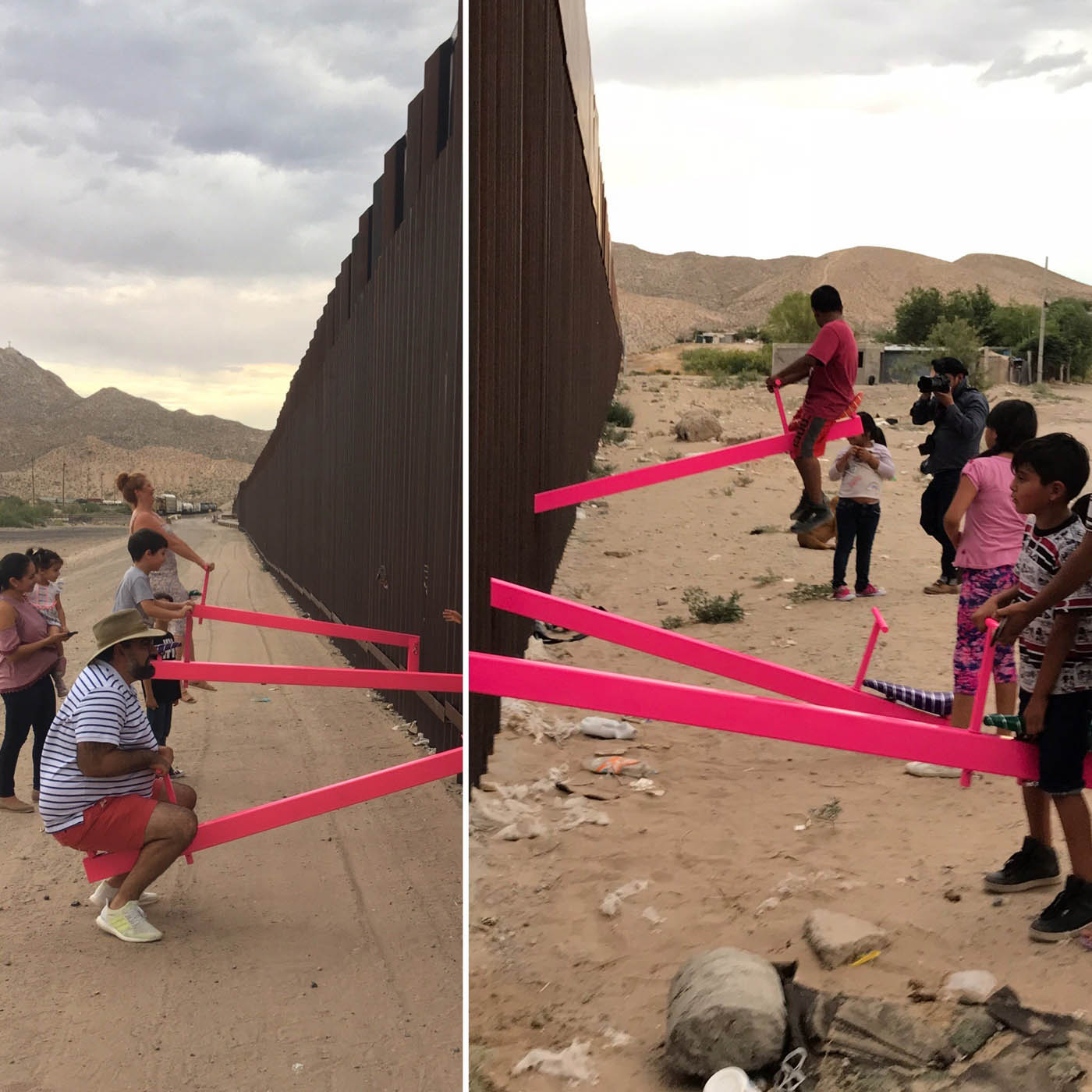

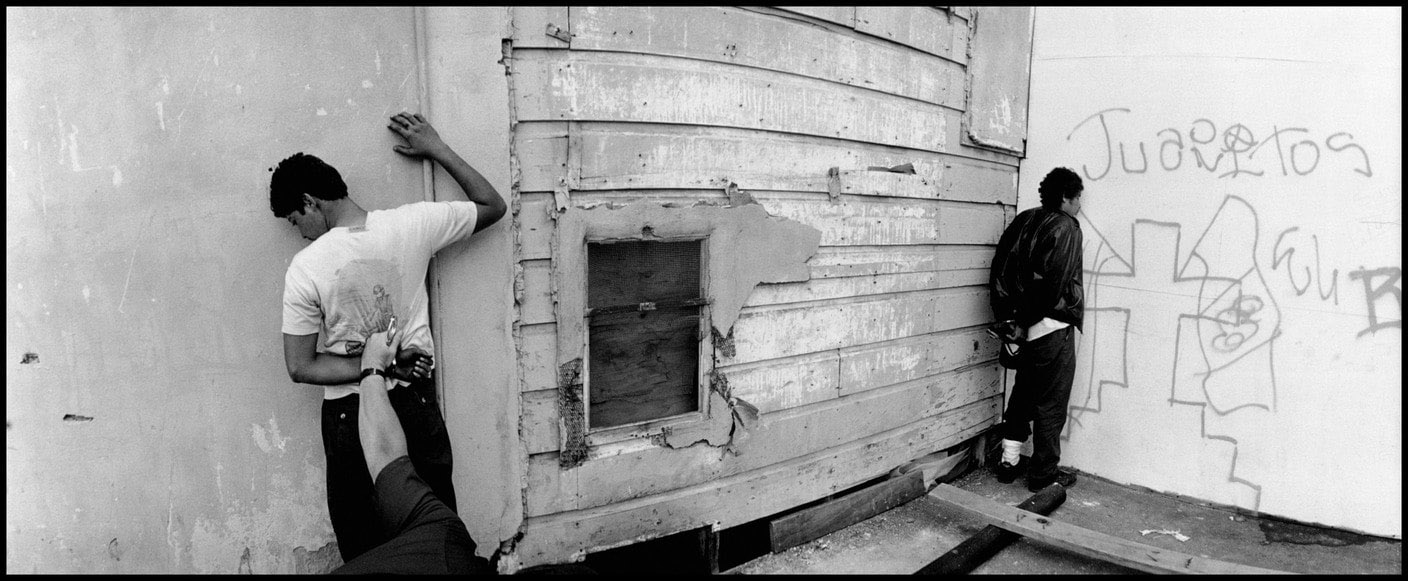
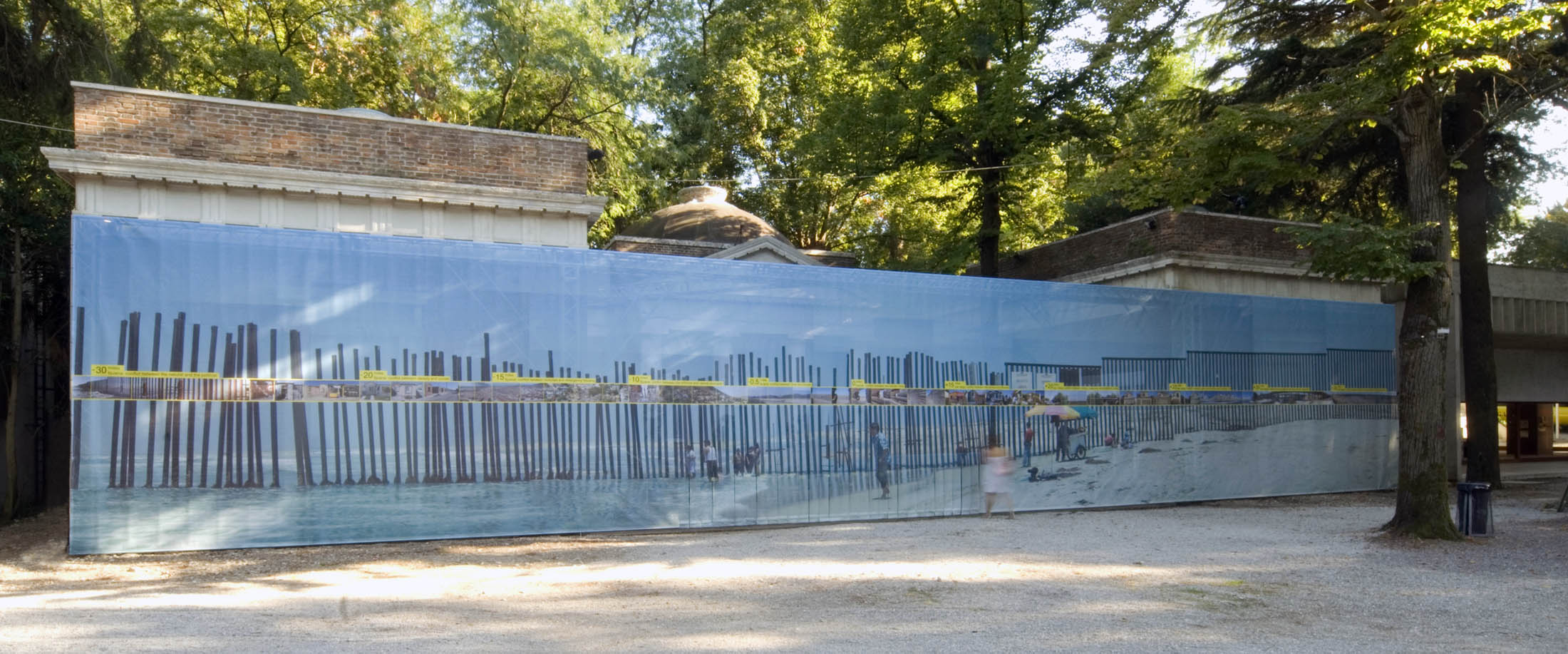
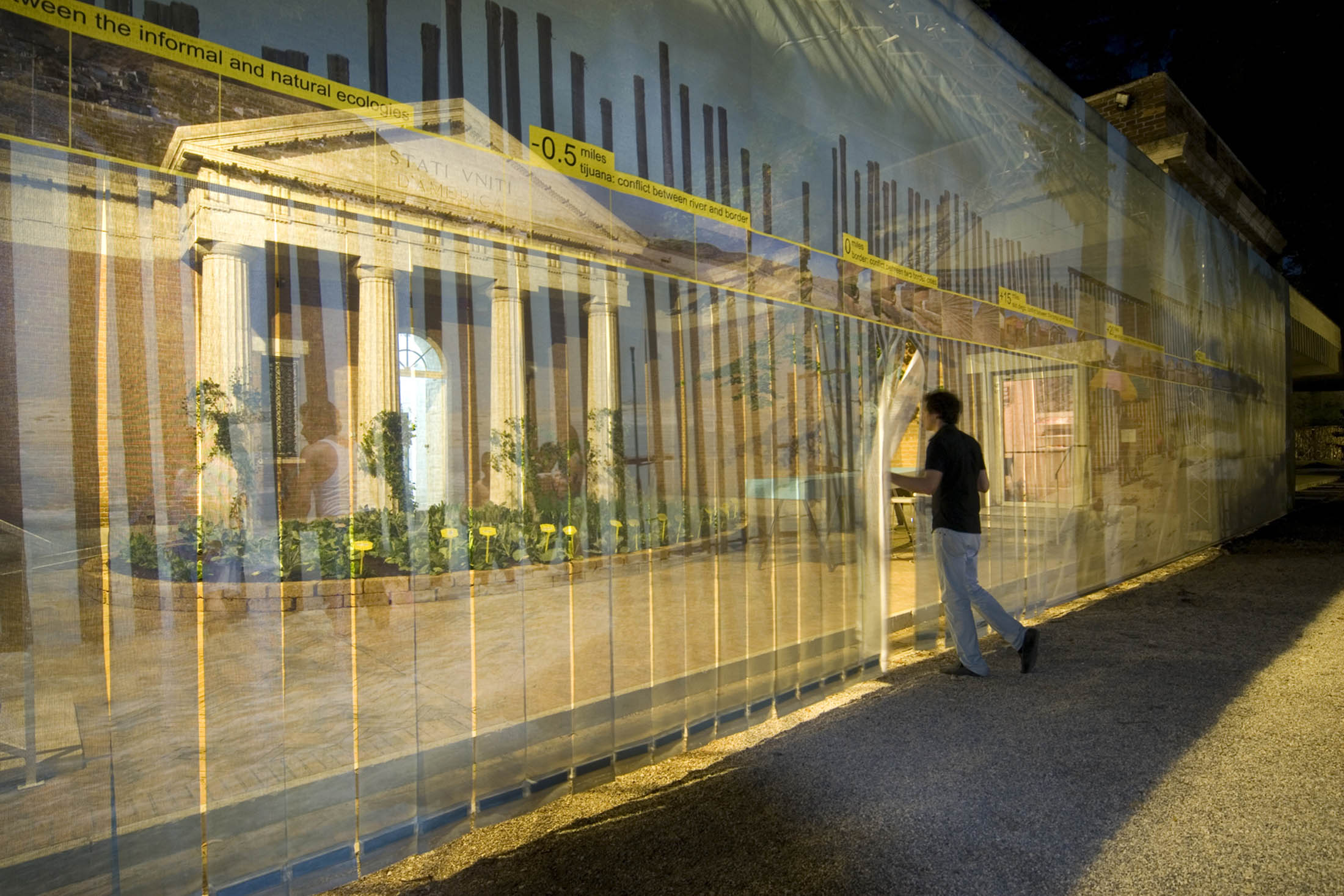


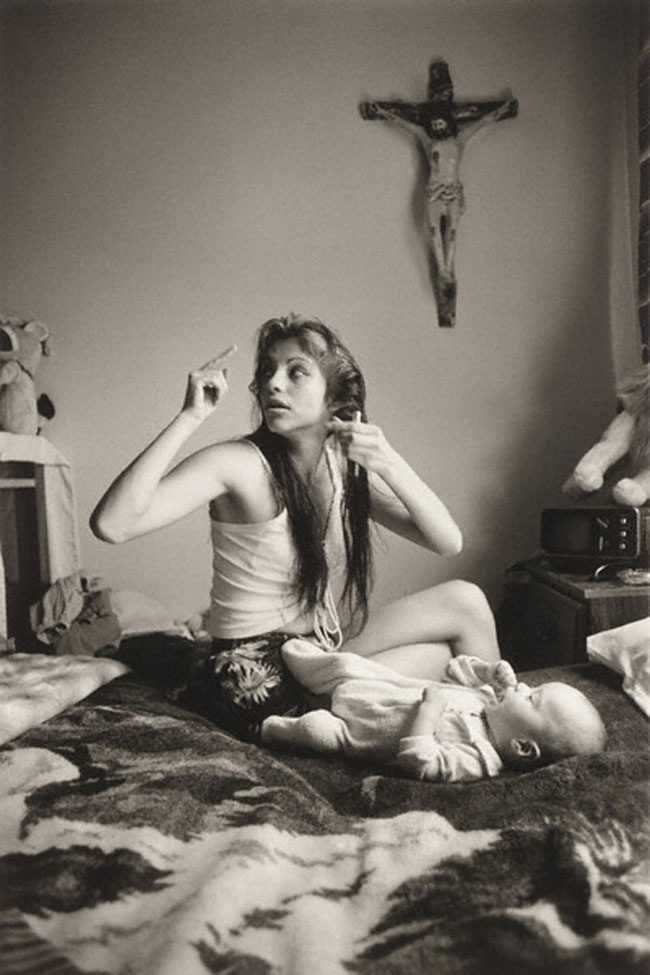
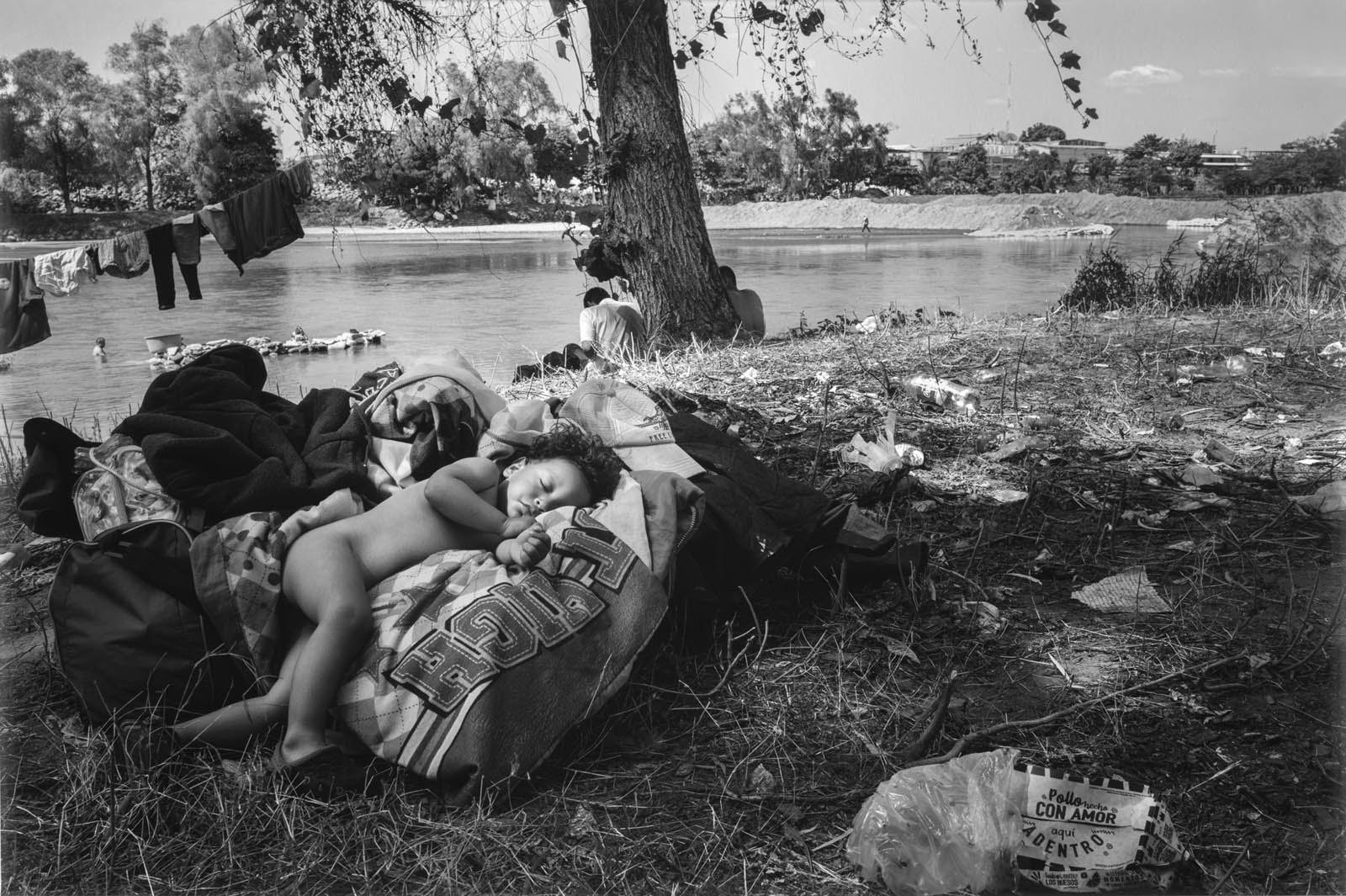


![Louis Carlos Bernal (American, 1941-1993) 'Untitled [Undocumented worker holding Huelga flag at United Farm Workers Demonstration, El Mirage, Arizona]' Negative 1978, printed 2016](https://artblart.com/wp-content/uploads/2024/11/ask-58_ccp_bernal_ag182-20230302-110020.jpg "Louis Carlos Bernal (American, 1941-1993) 'Untitled [Undocumented worker holding Huelga flag at United Farm Workers Demonstration, El Mirage, Arizona]' Negative 1978, printed 2016")



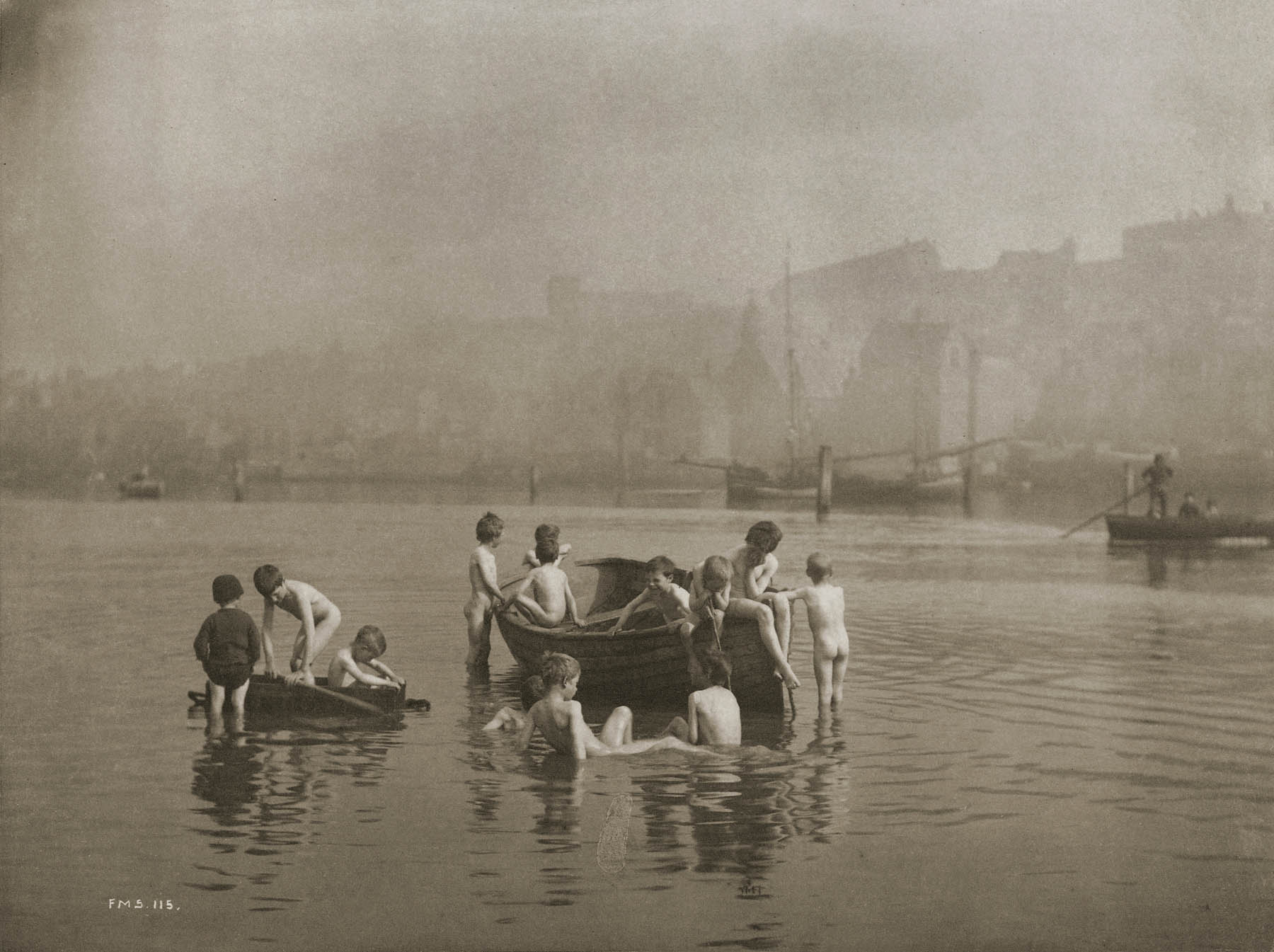
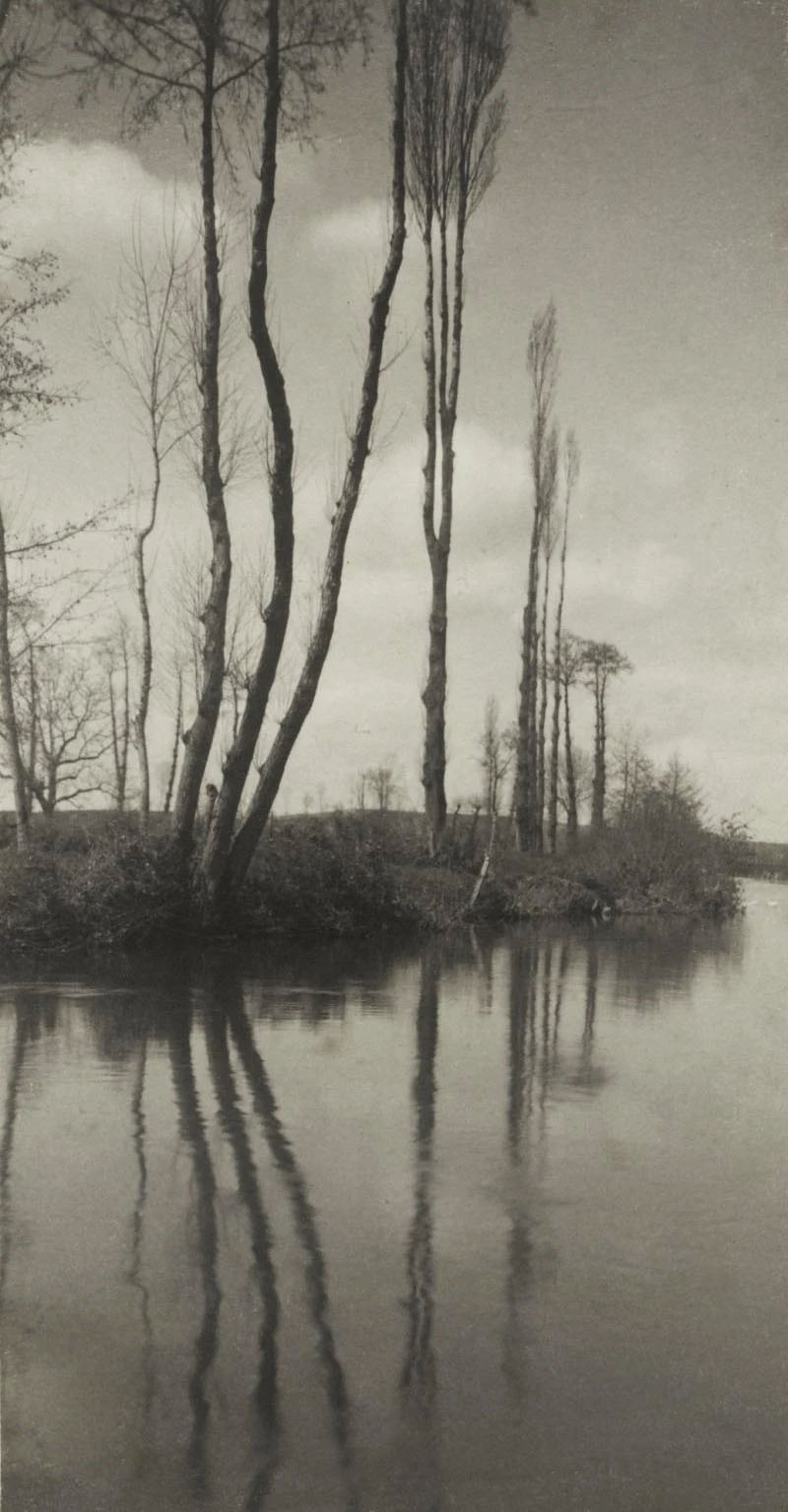
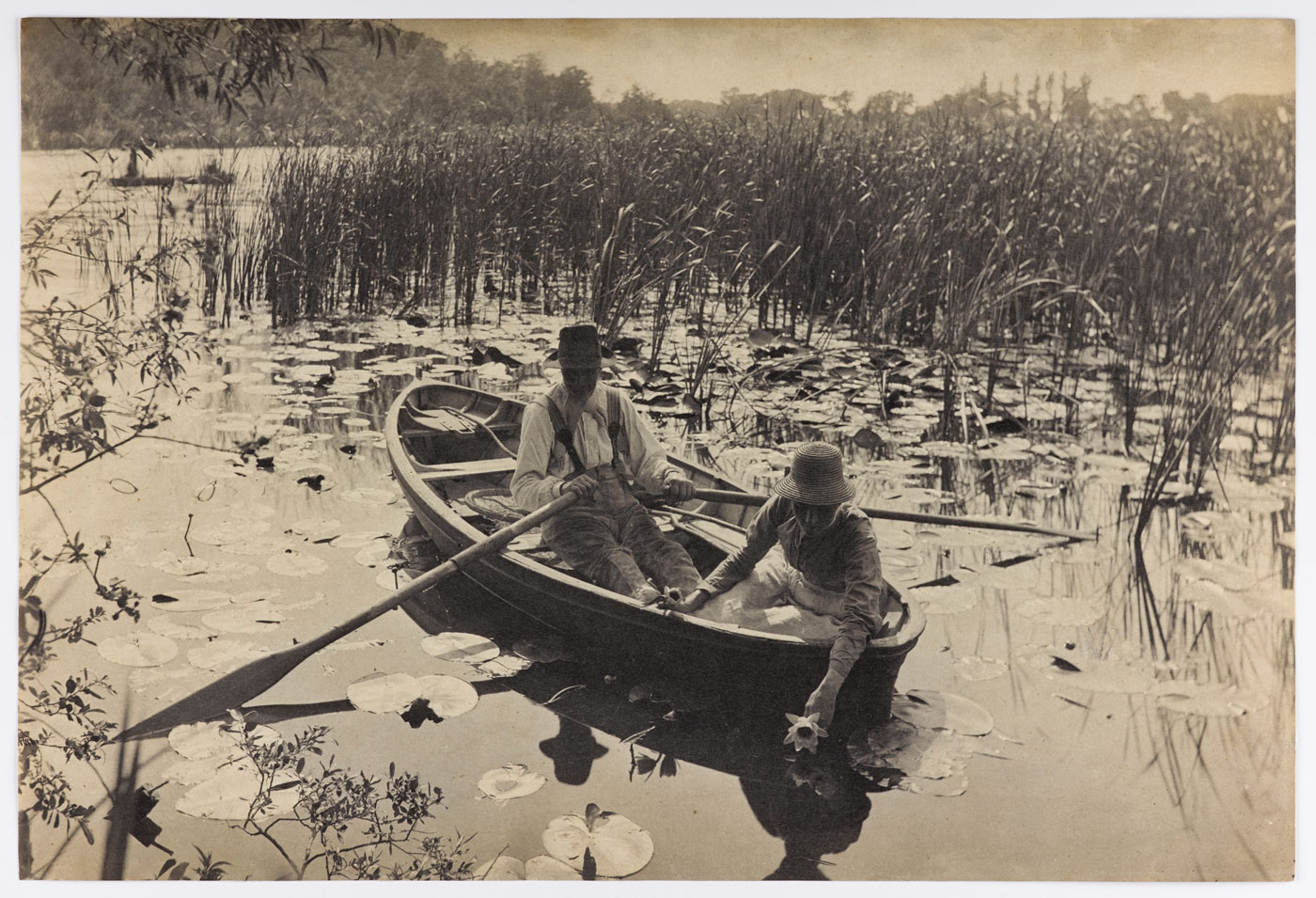
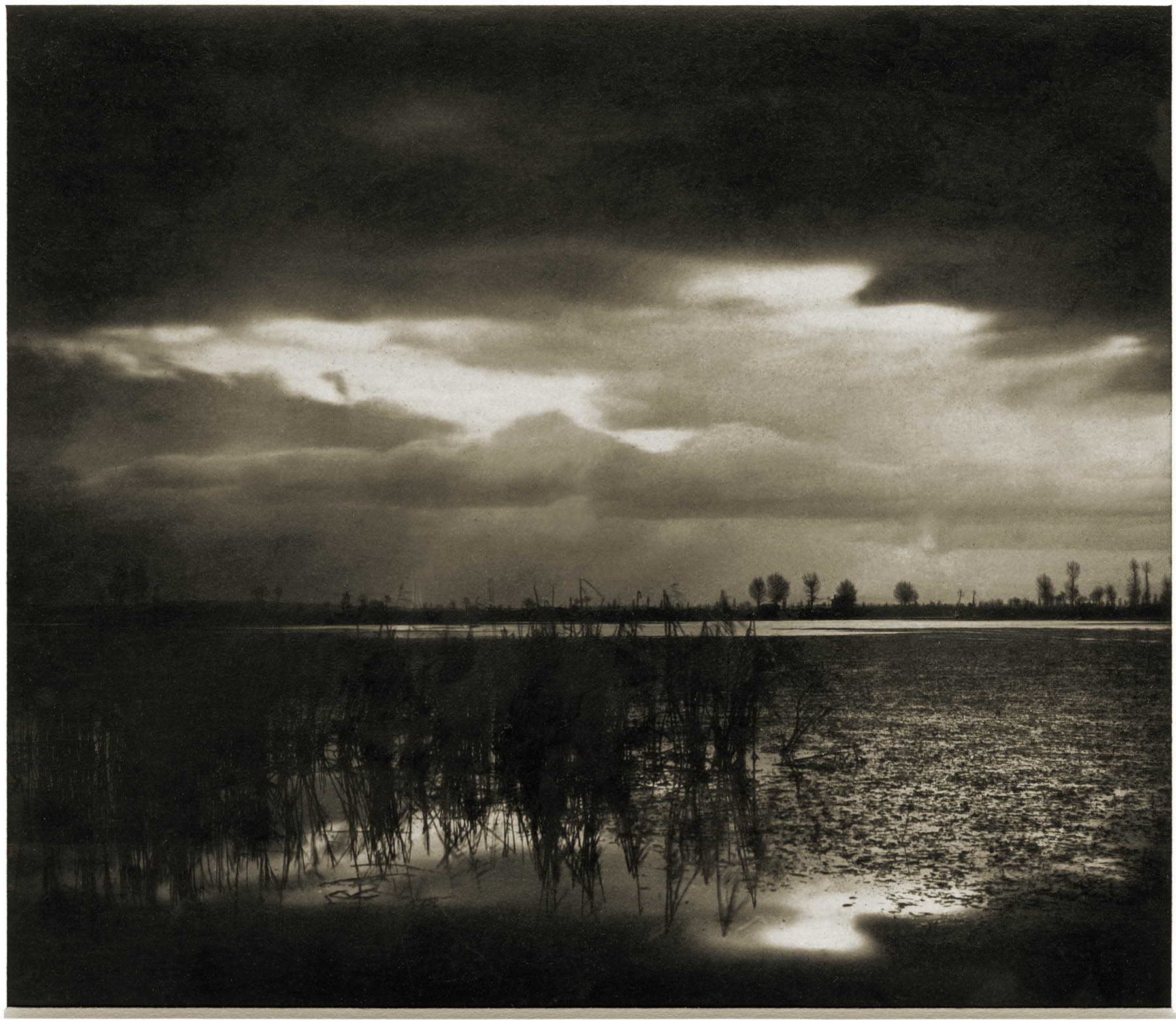


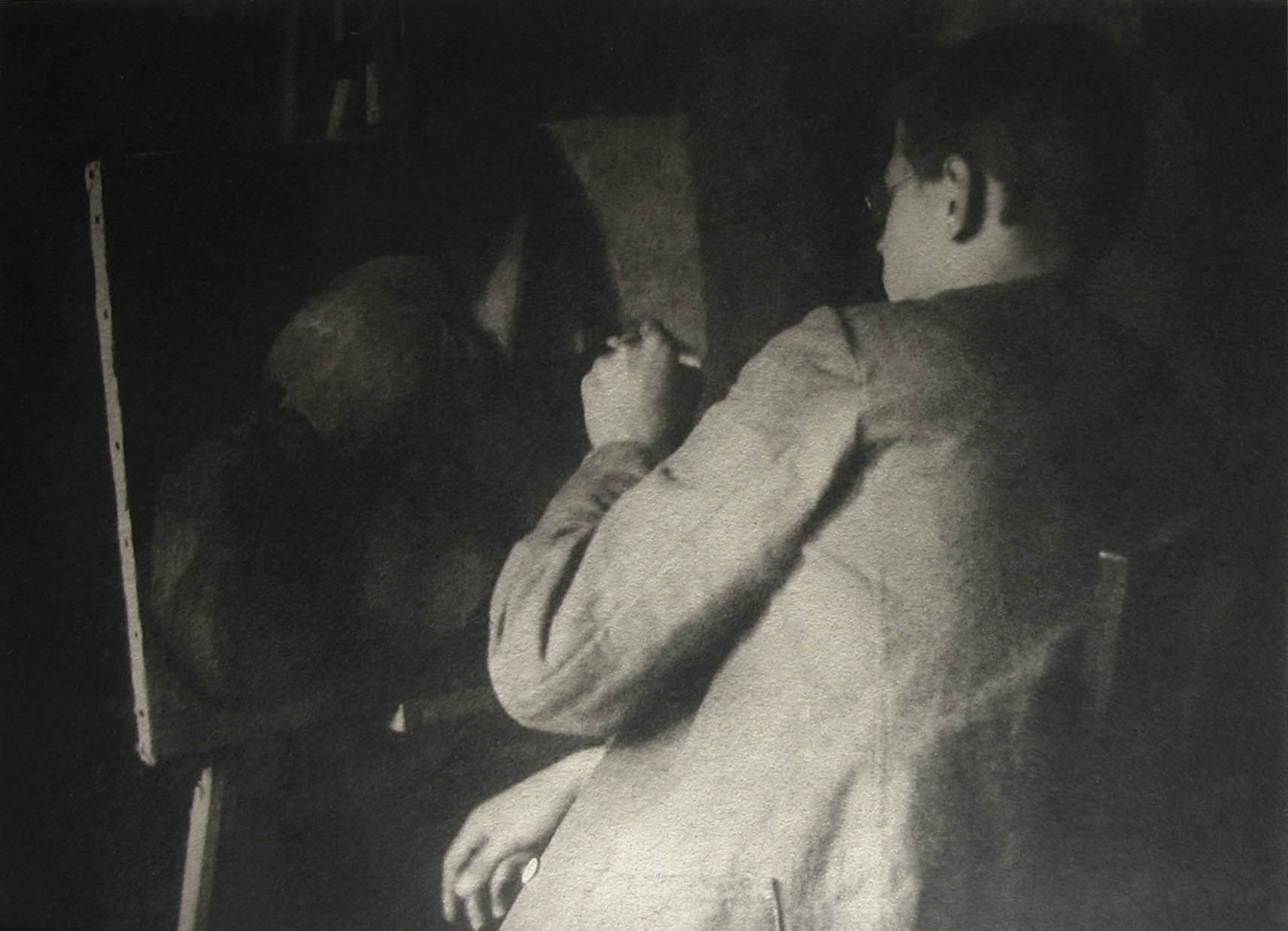


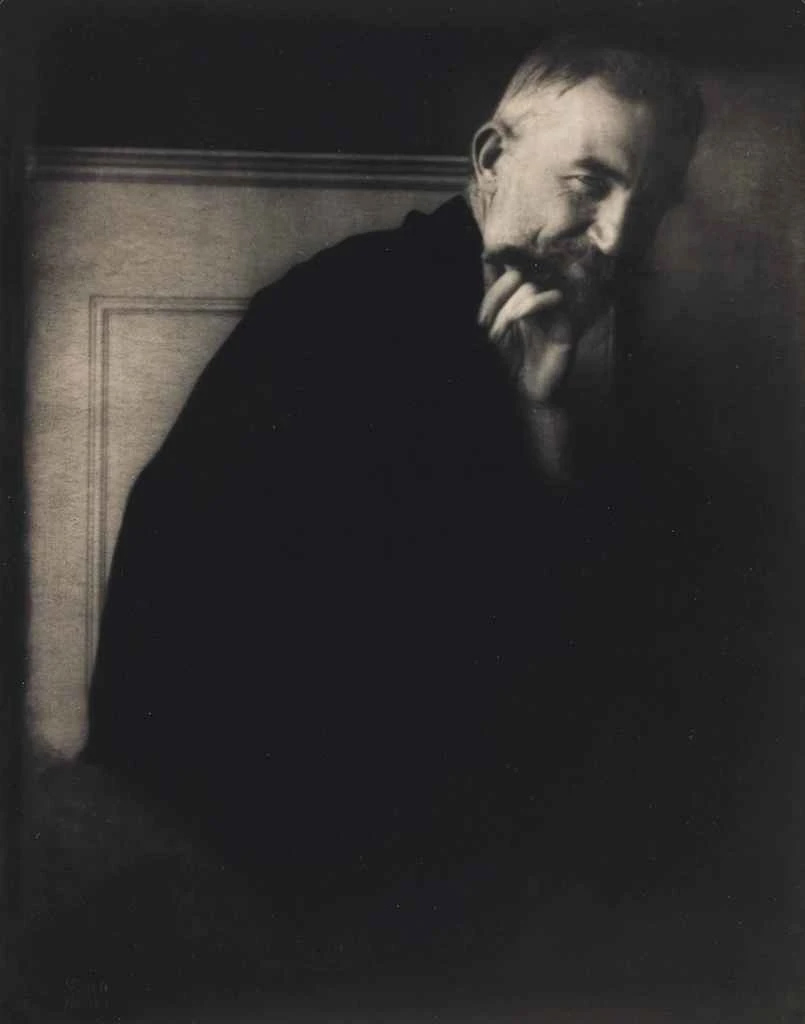
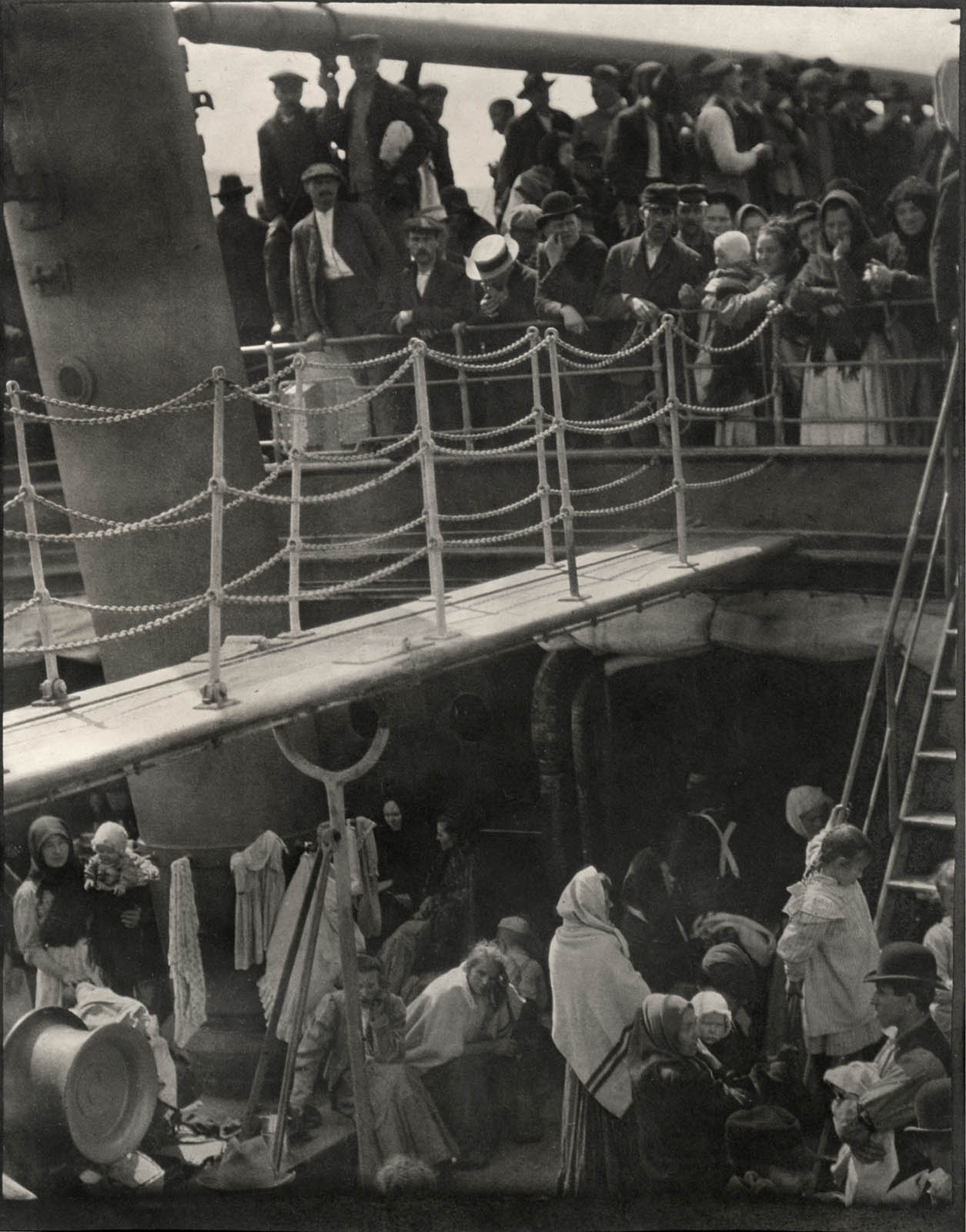

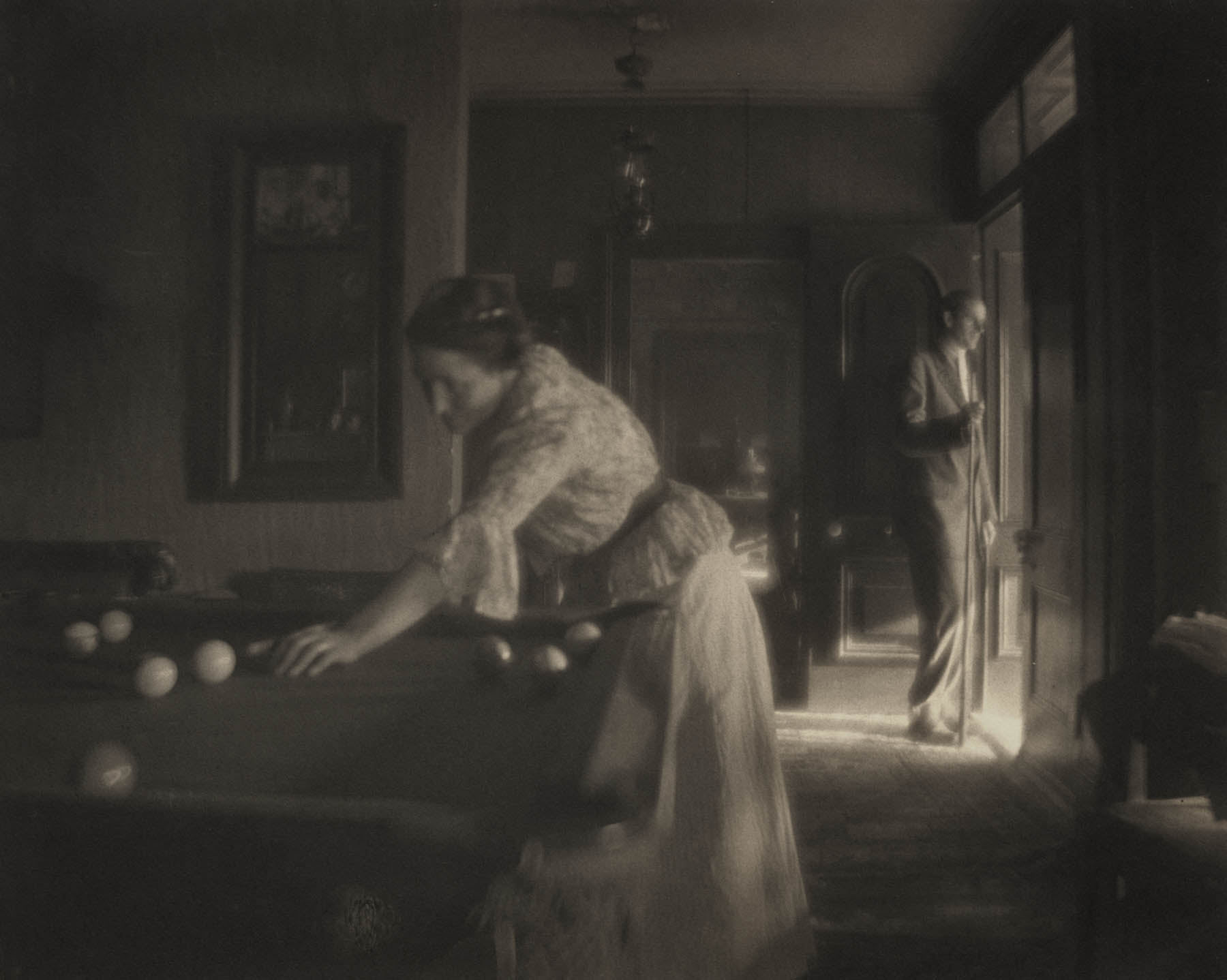
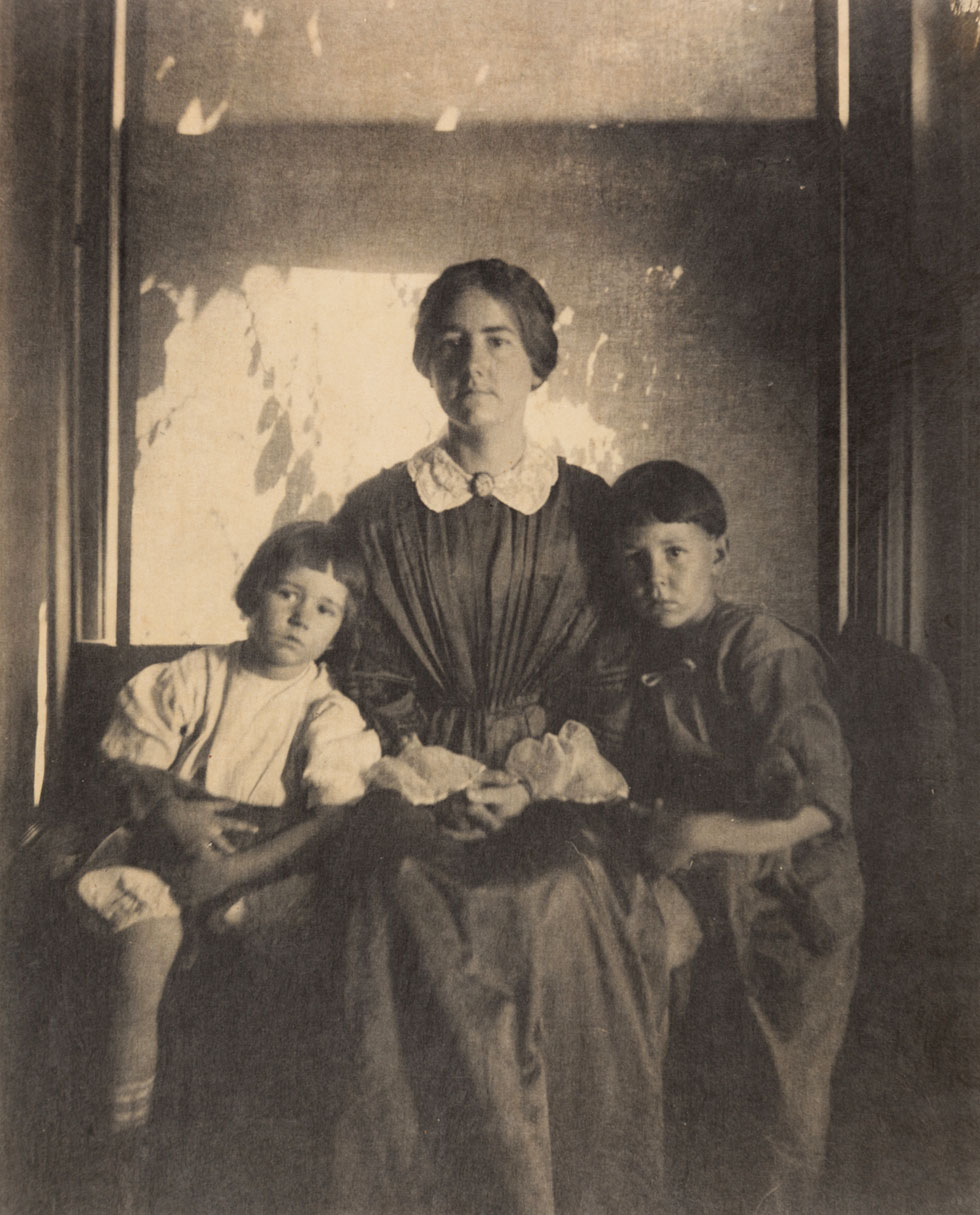

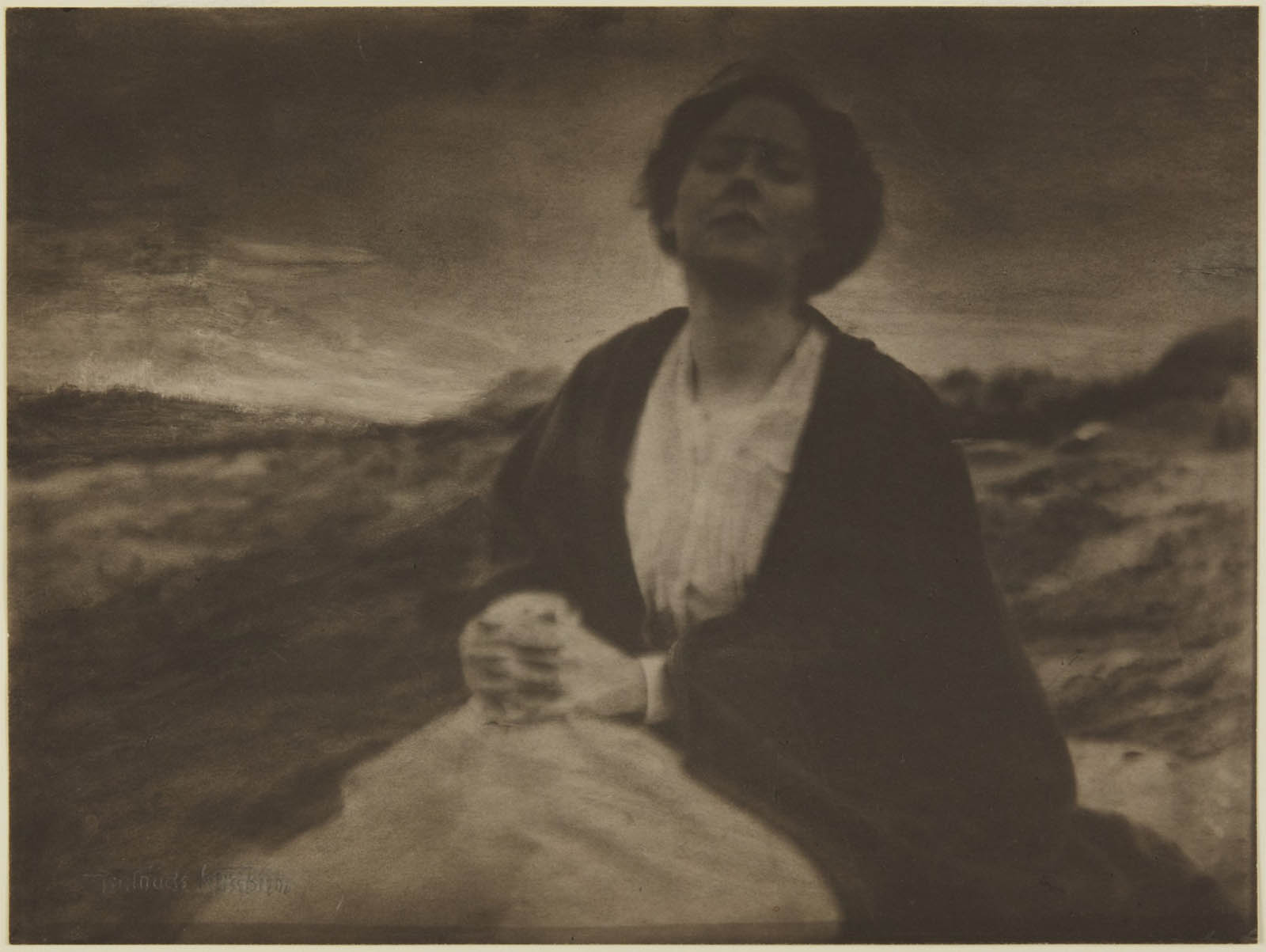
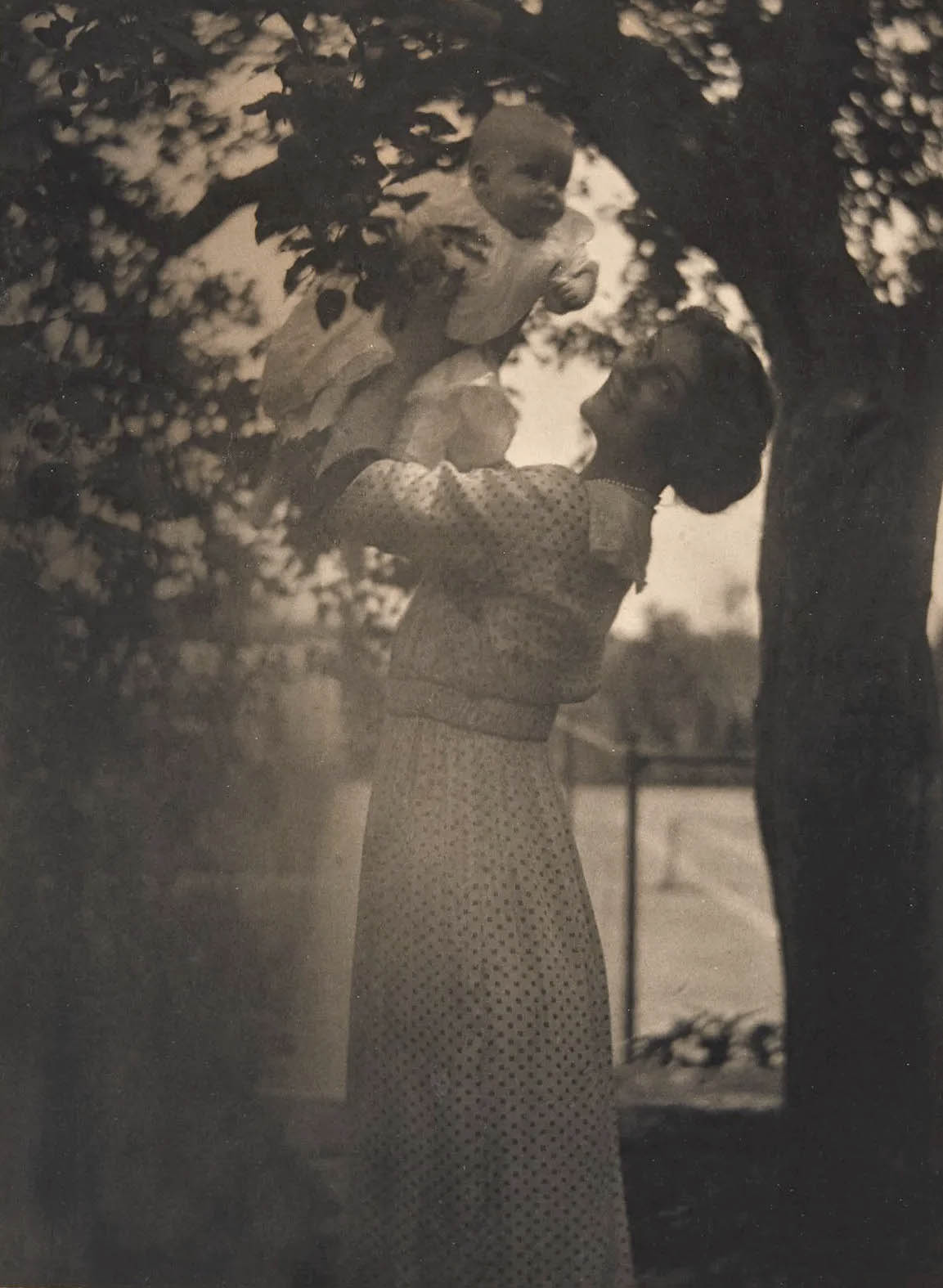


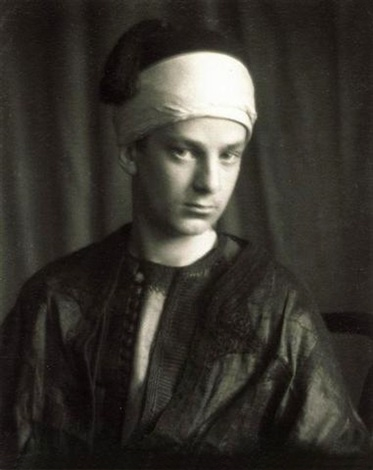

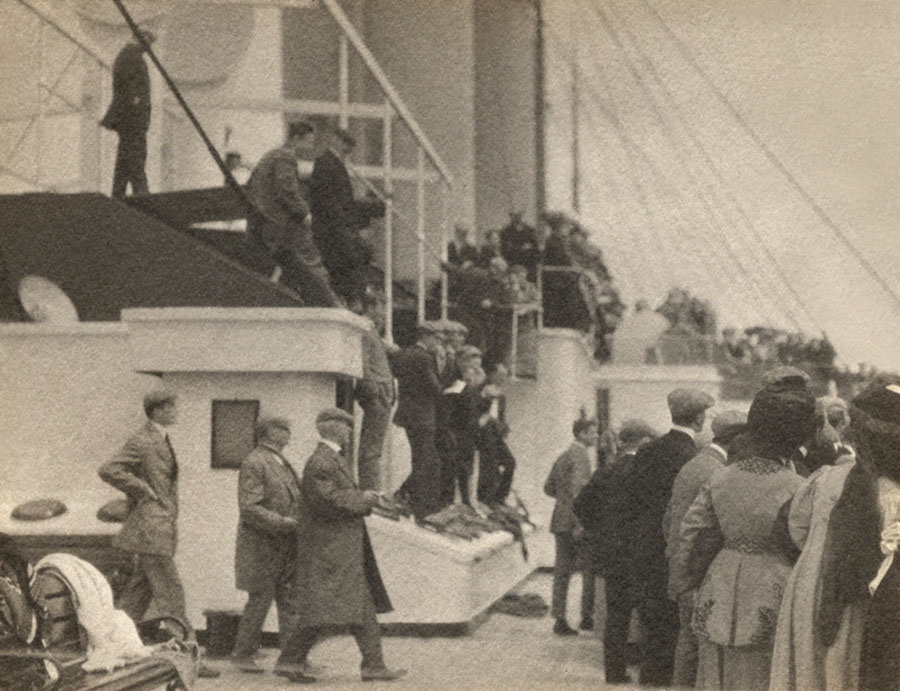
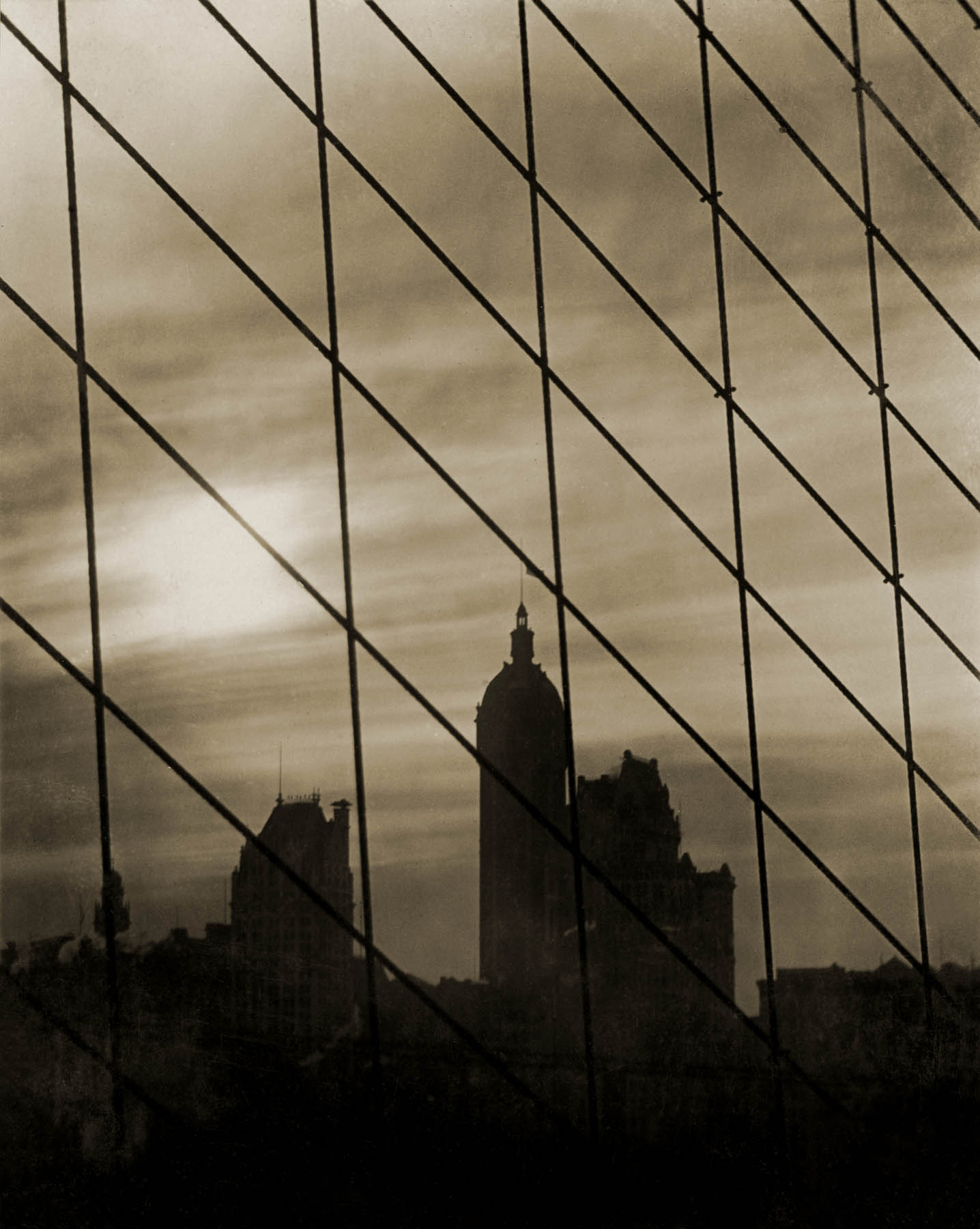


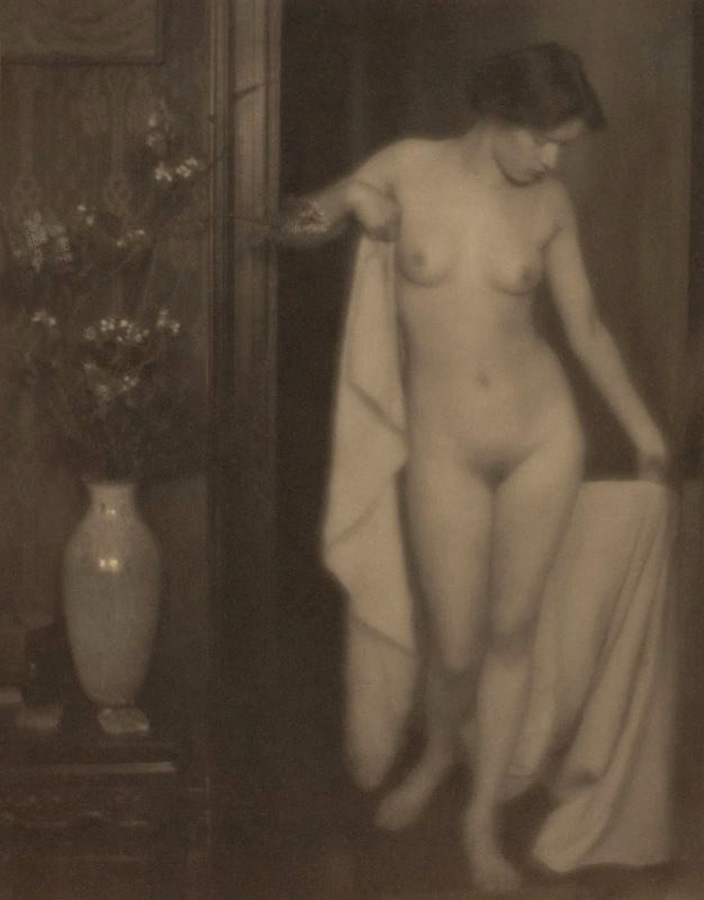

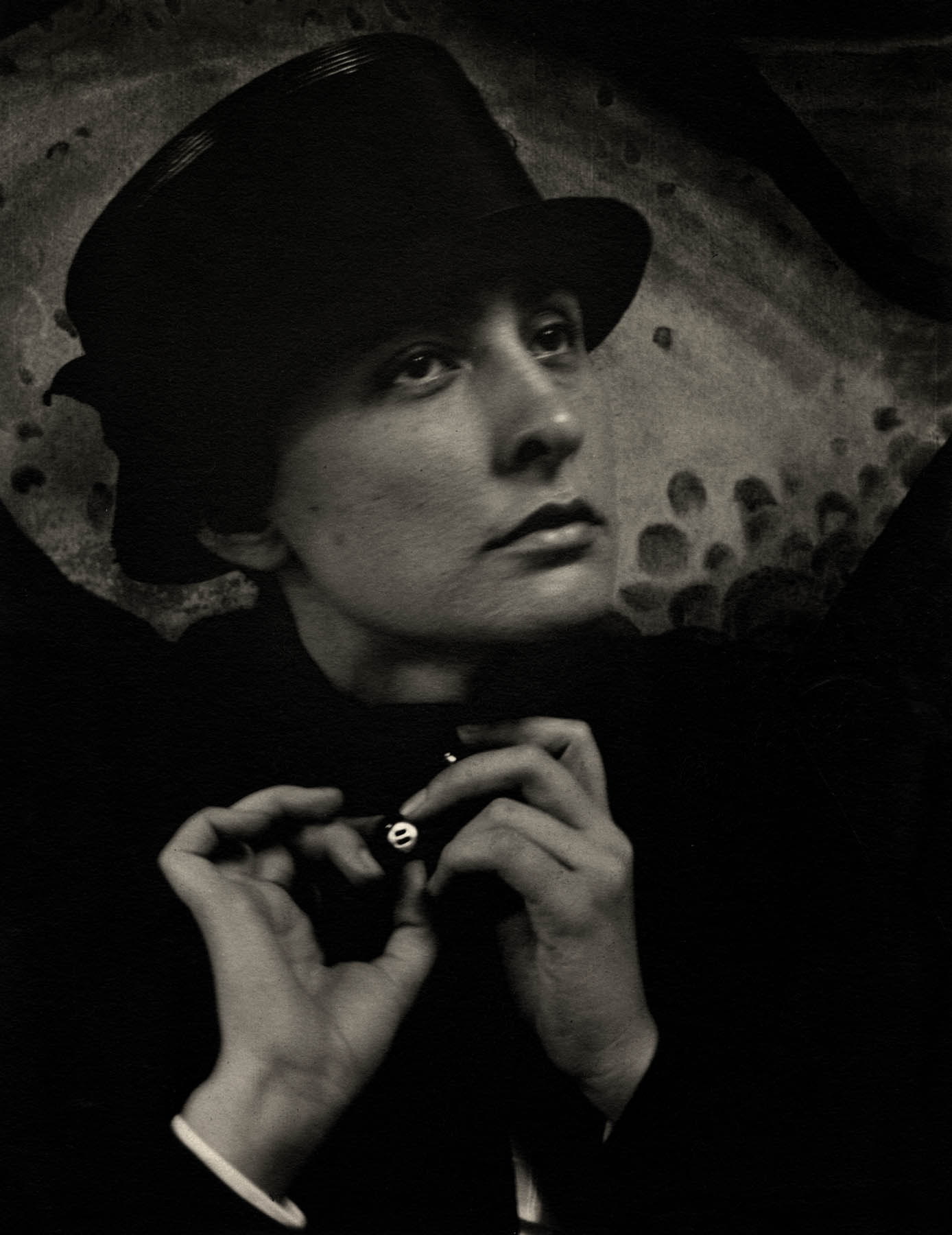
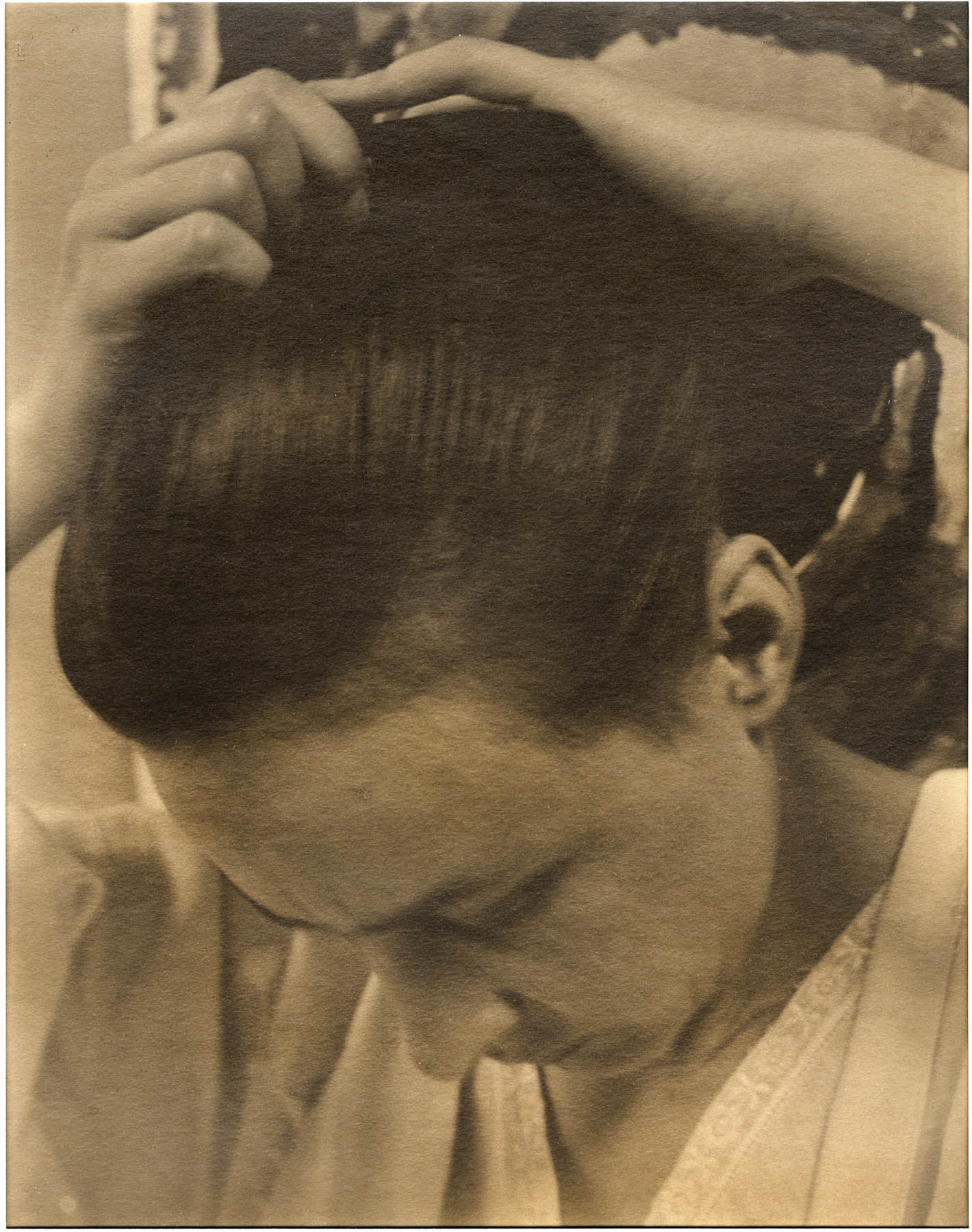


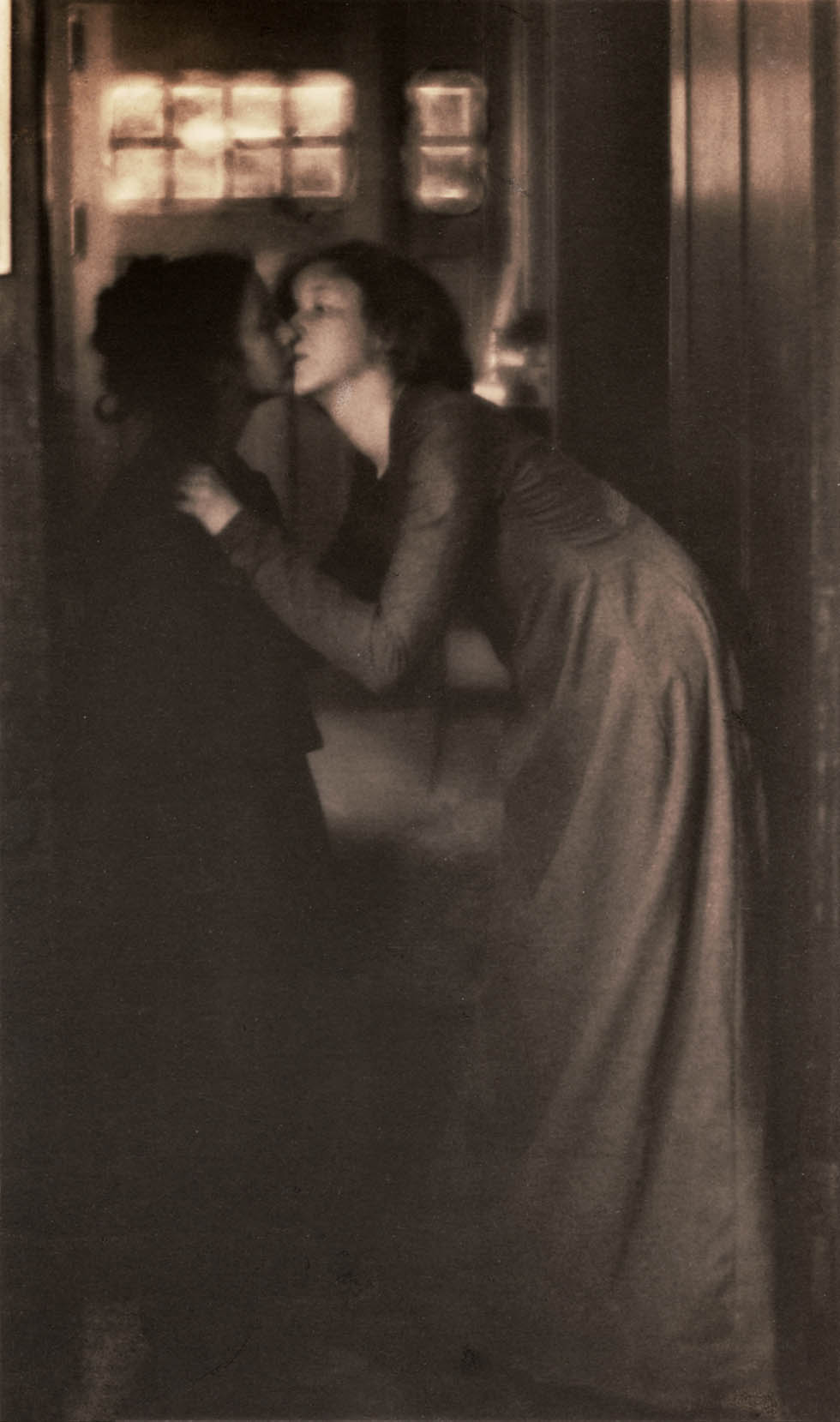
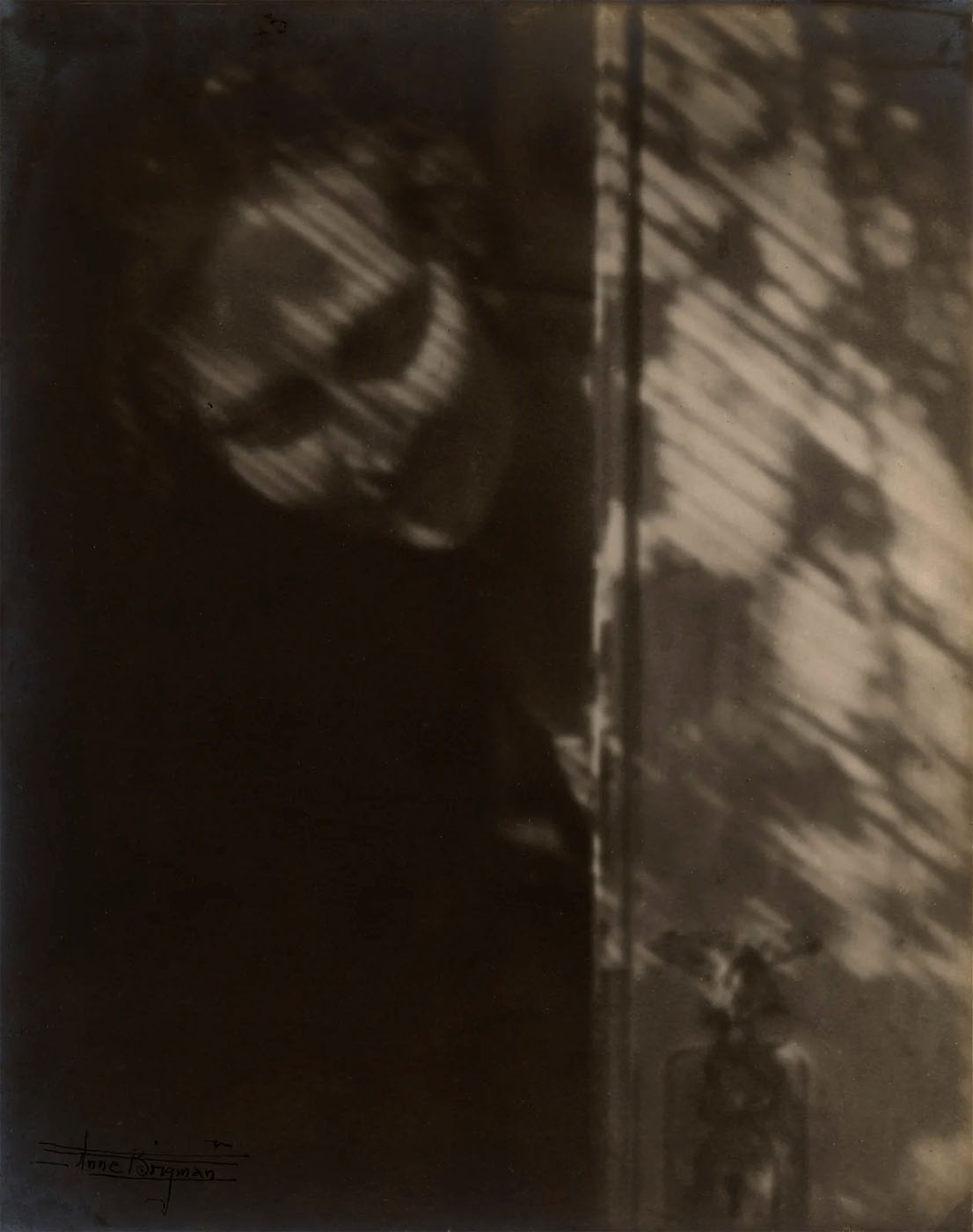
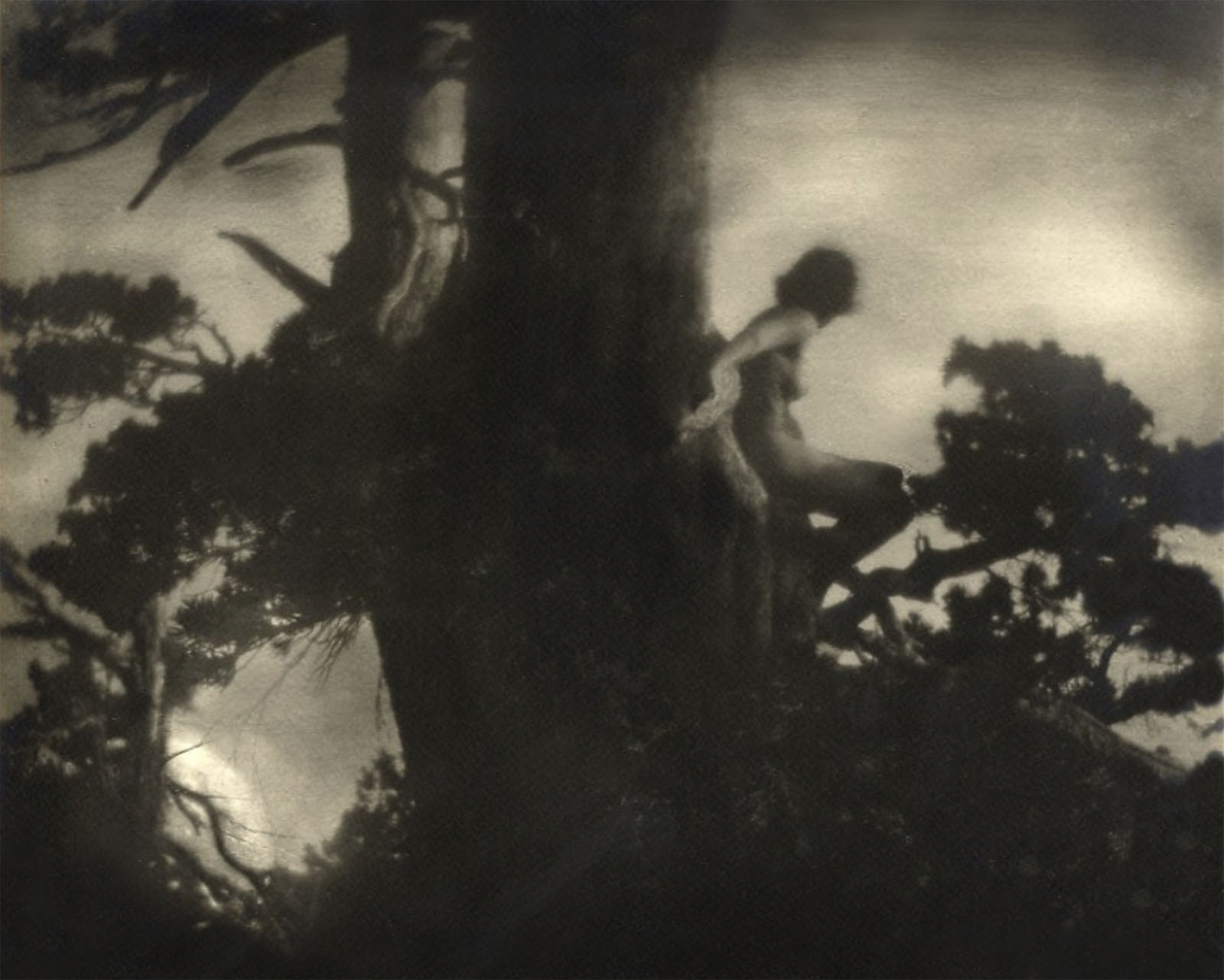

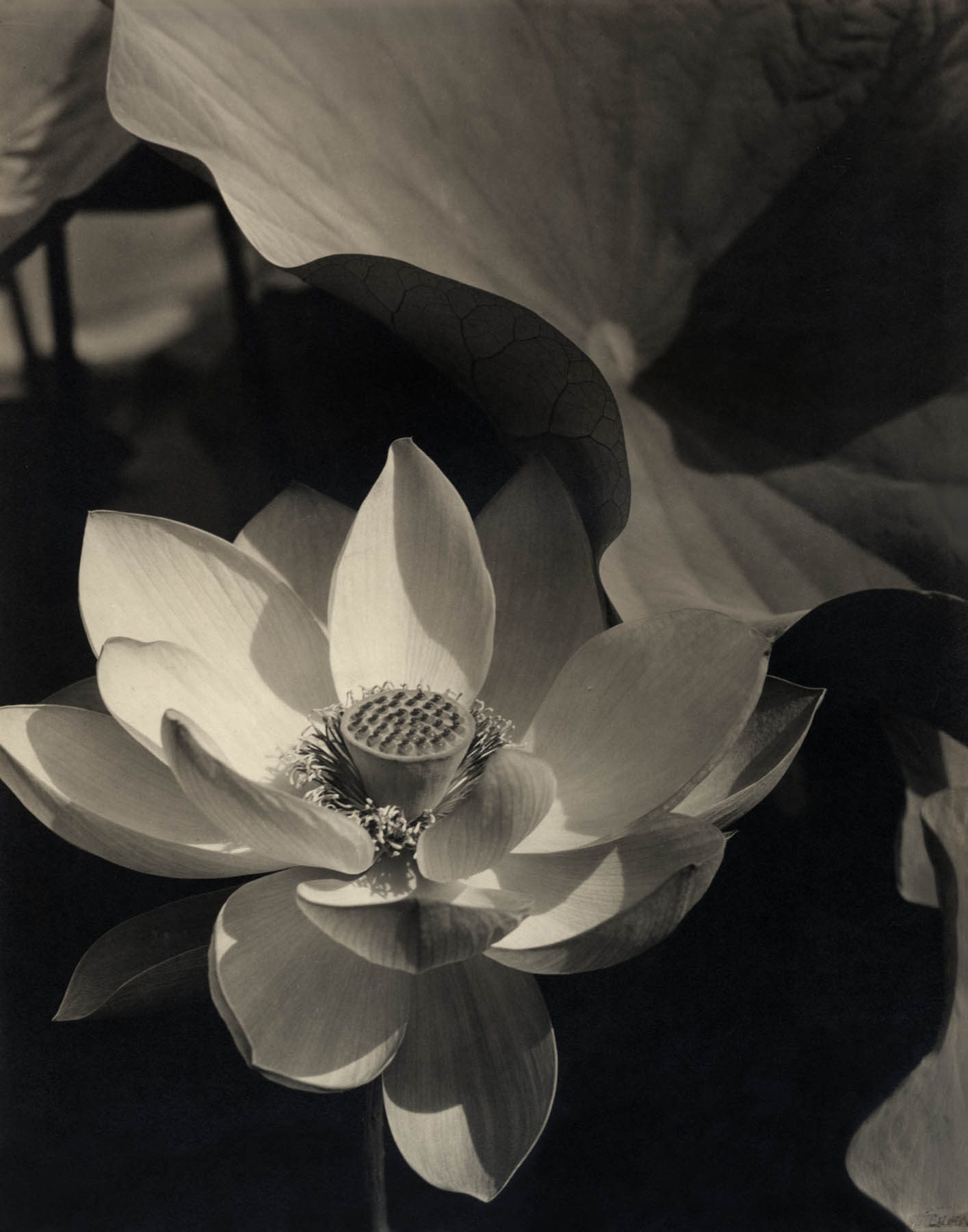


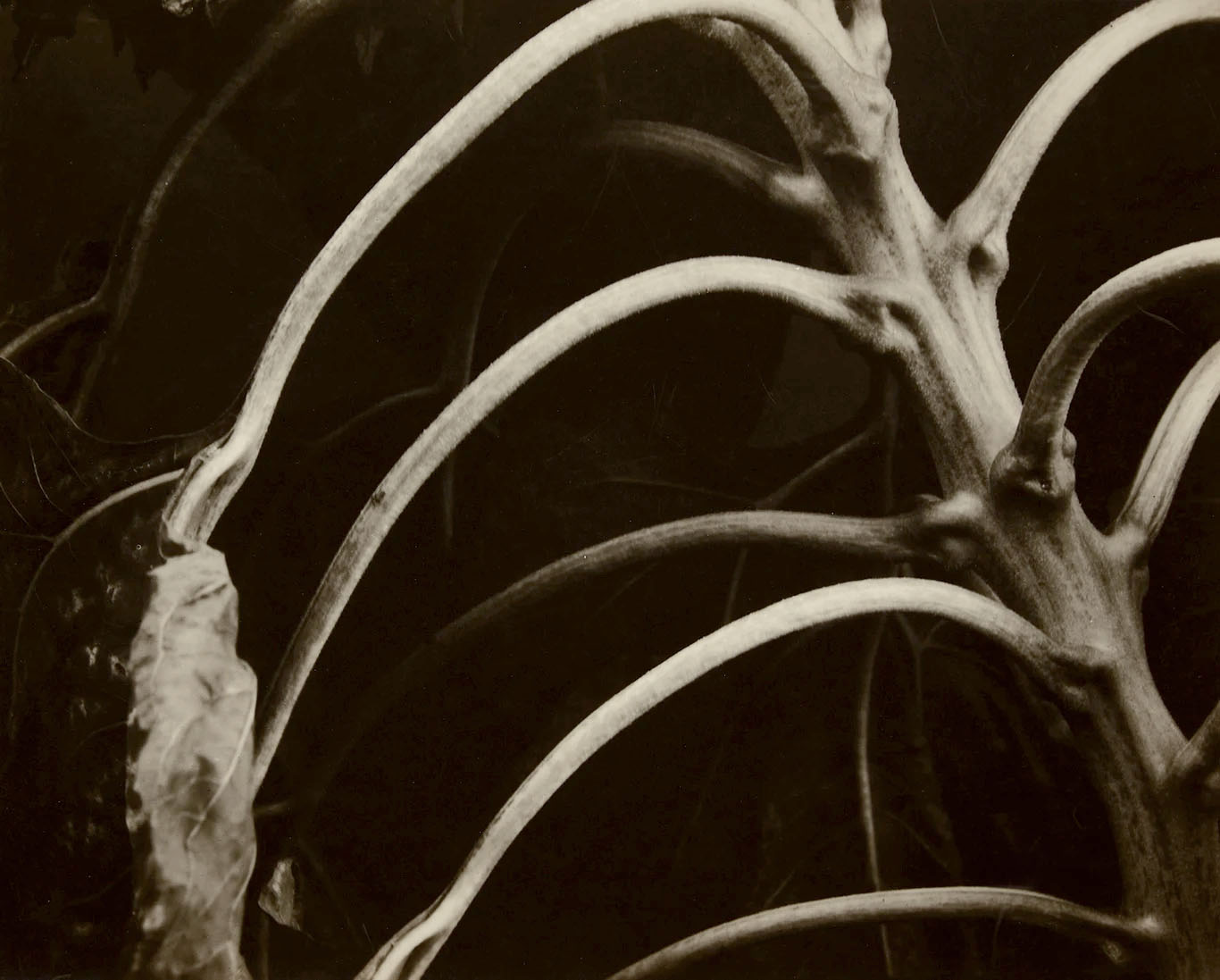

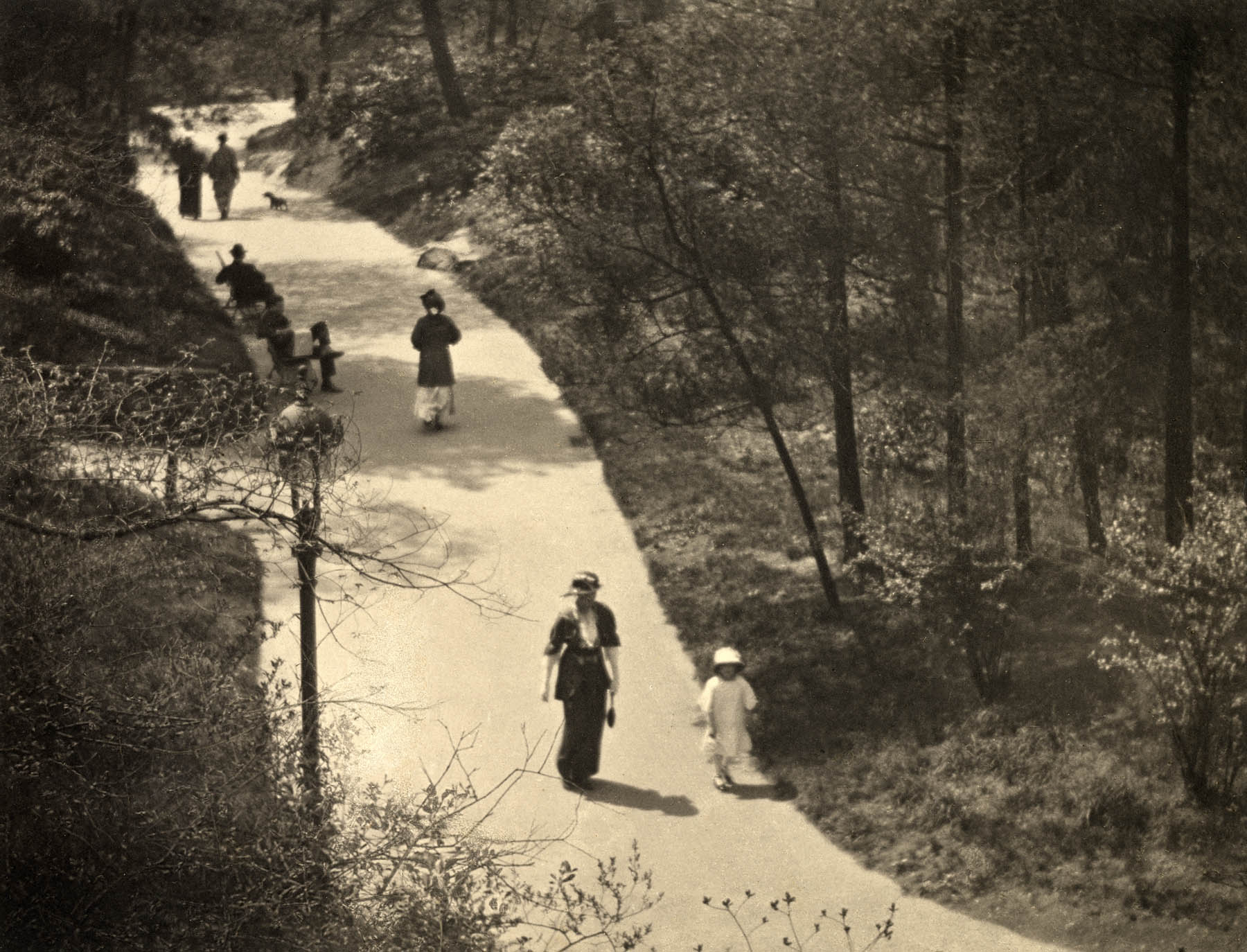
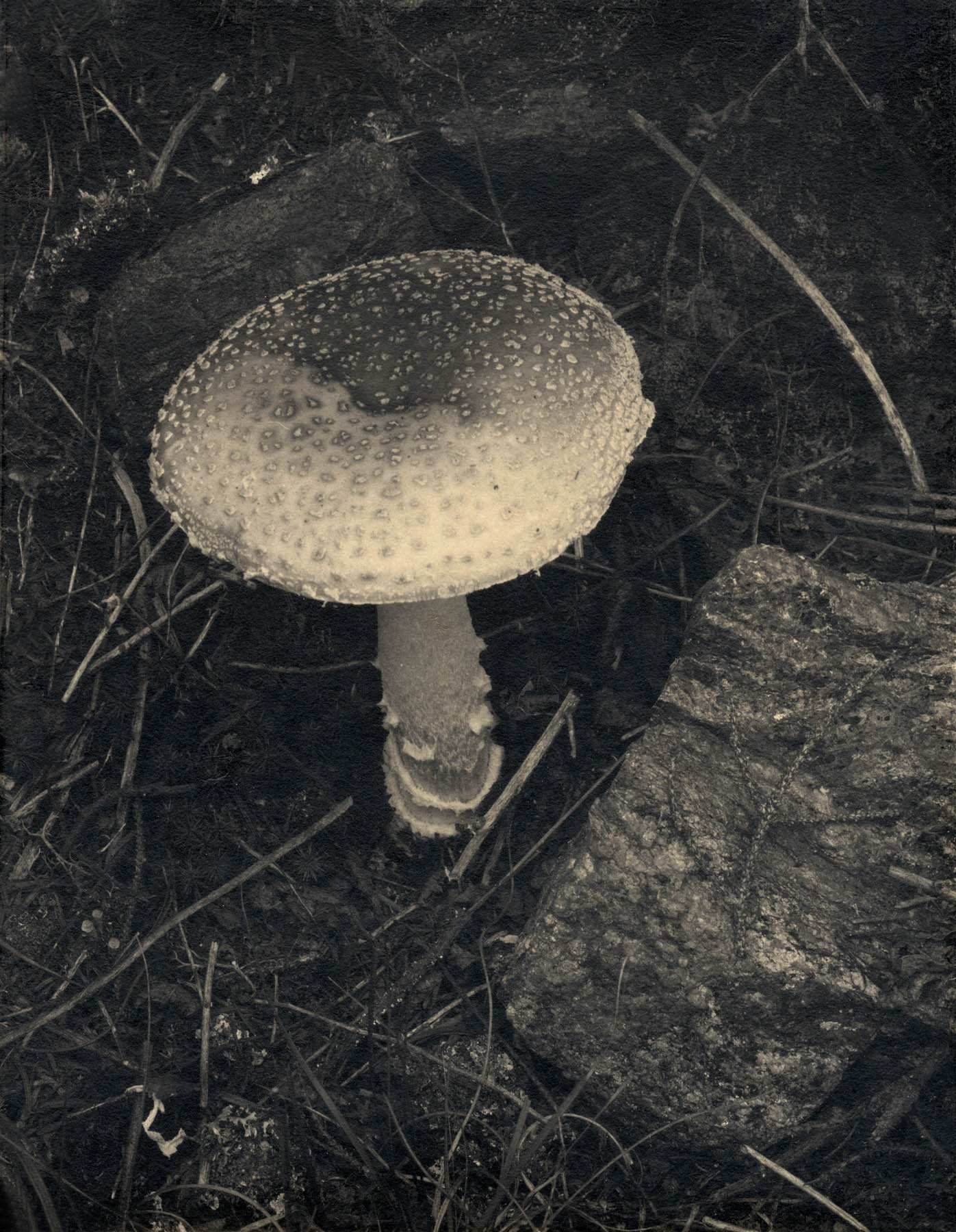
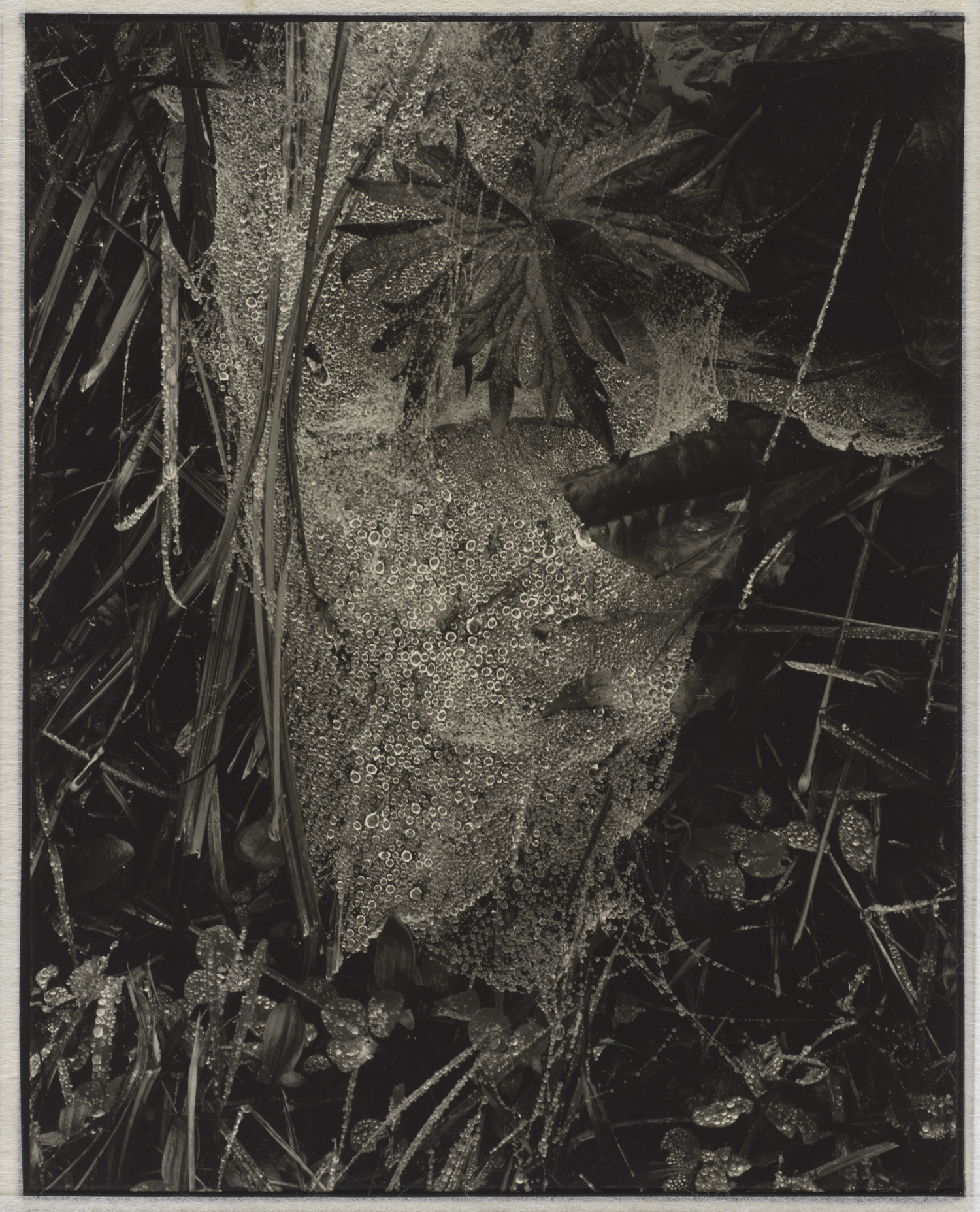
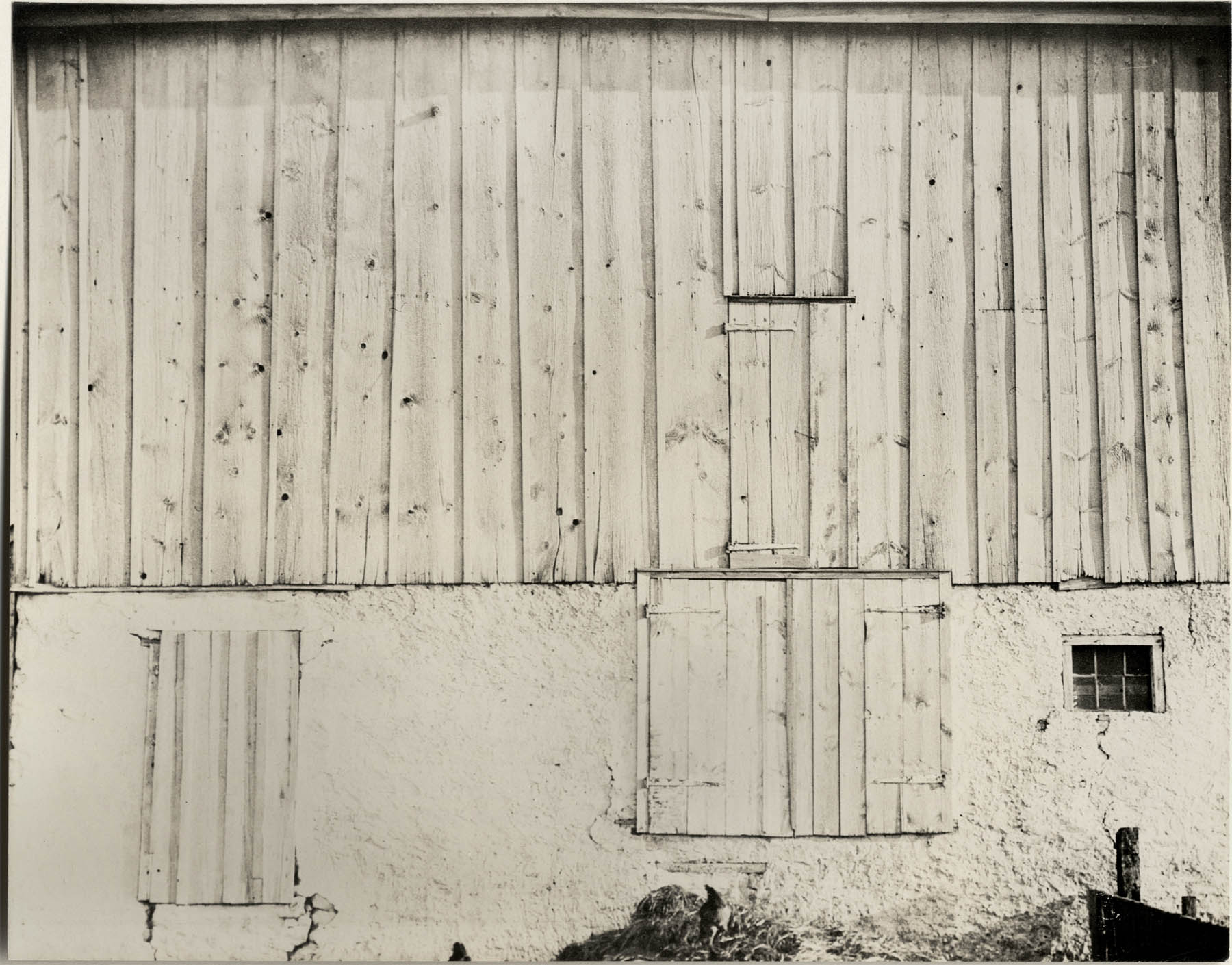
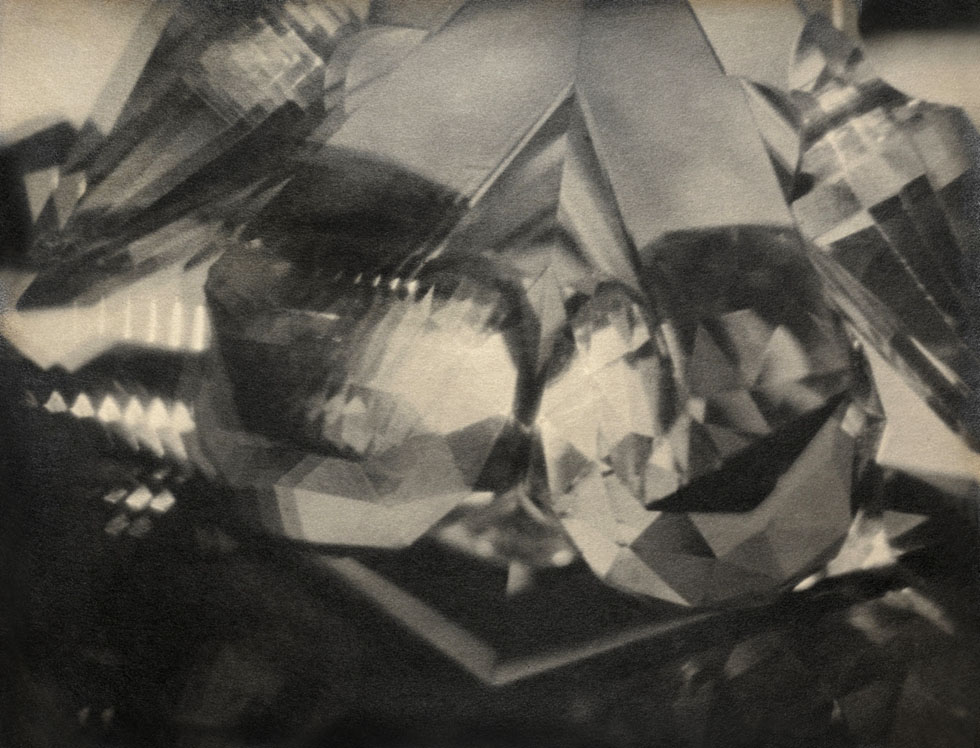



















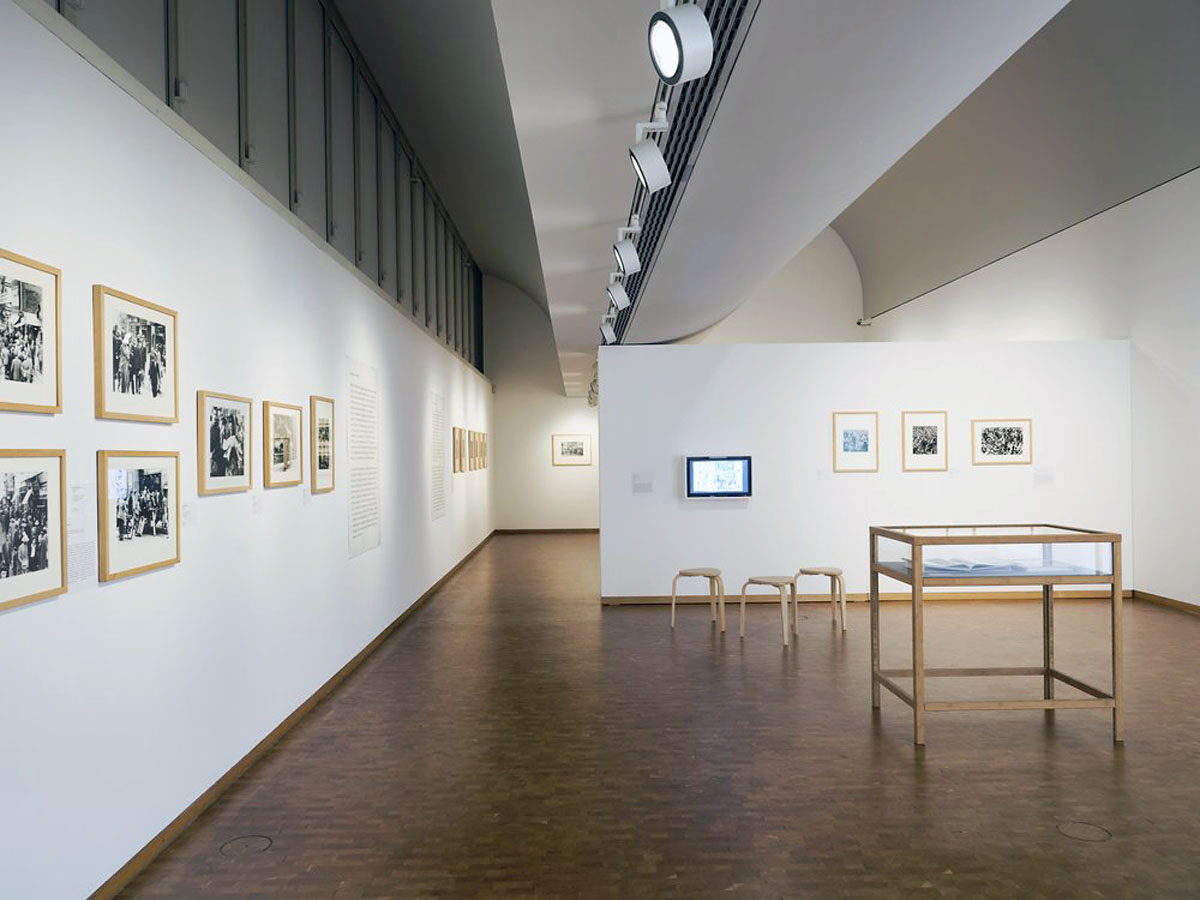
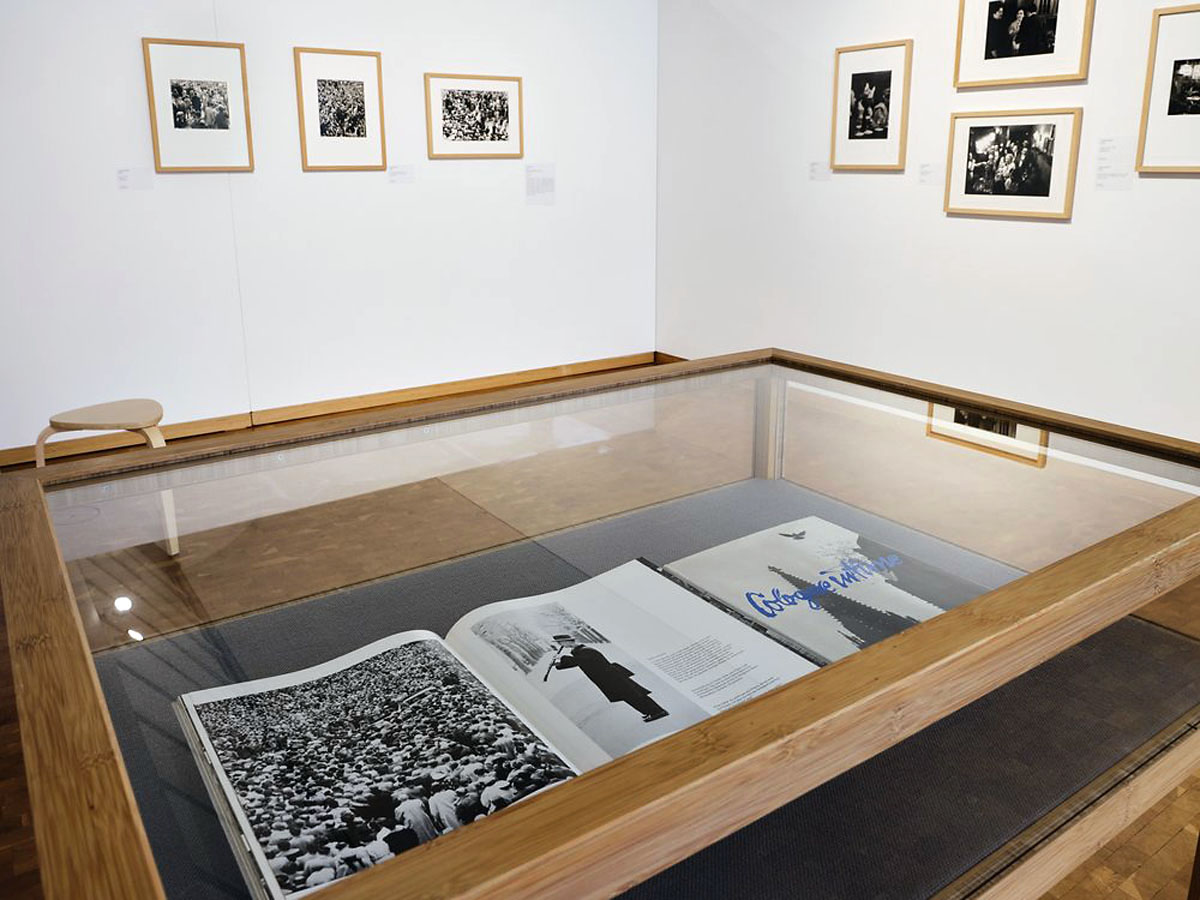





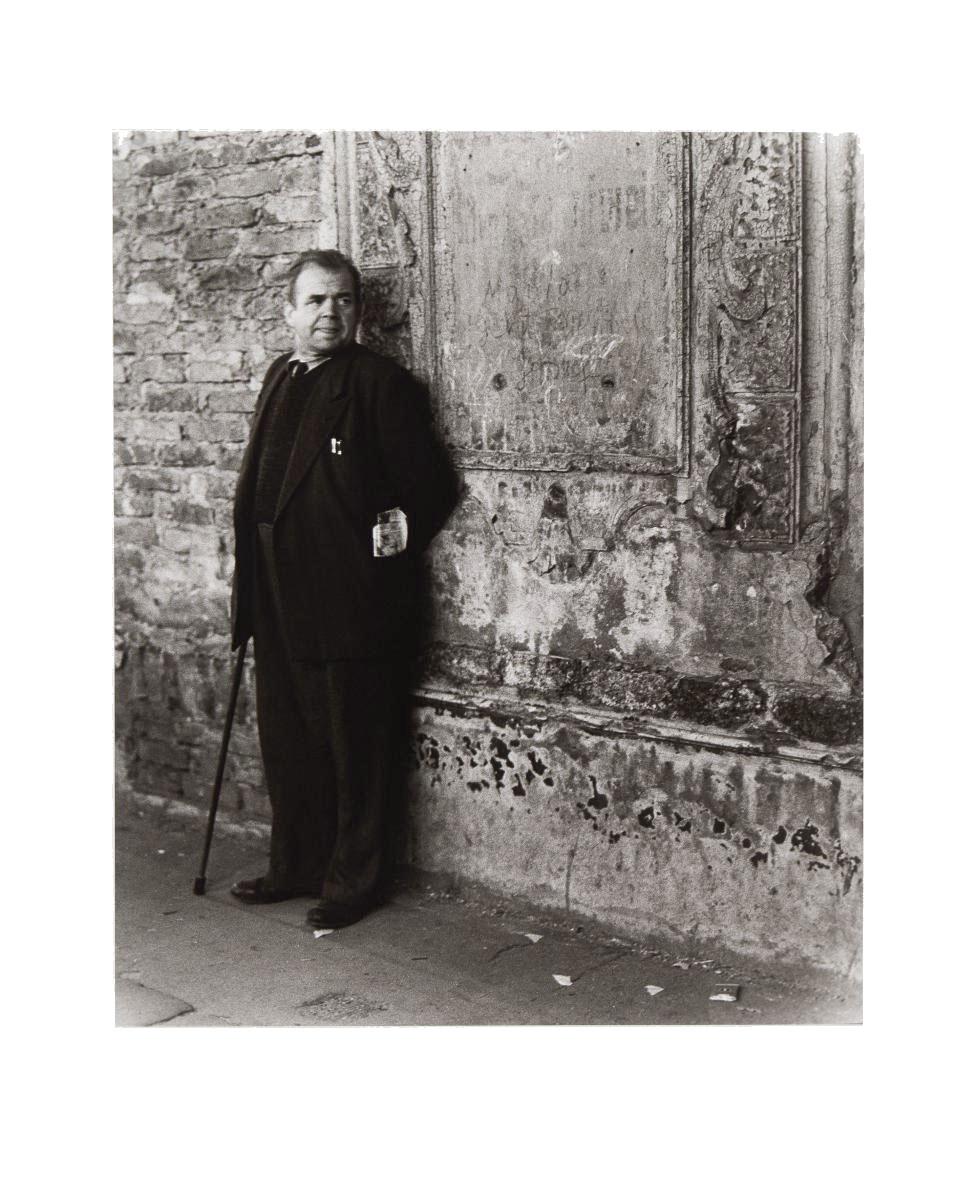
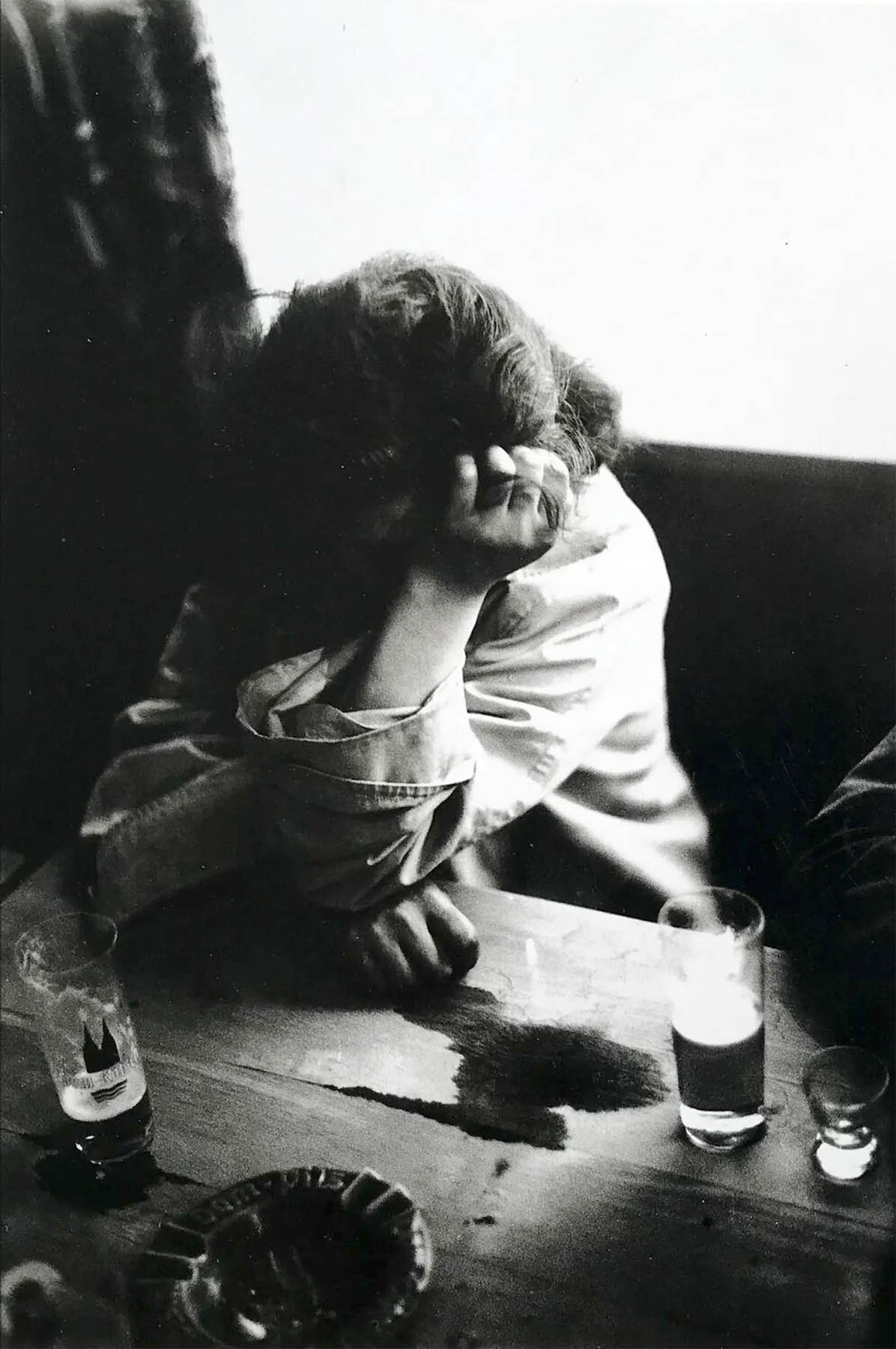
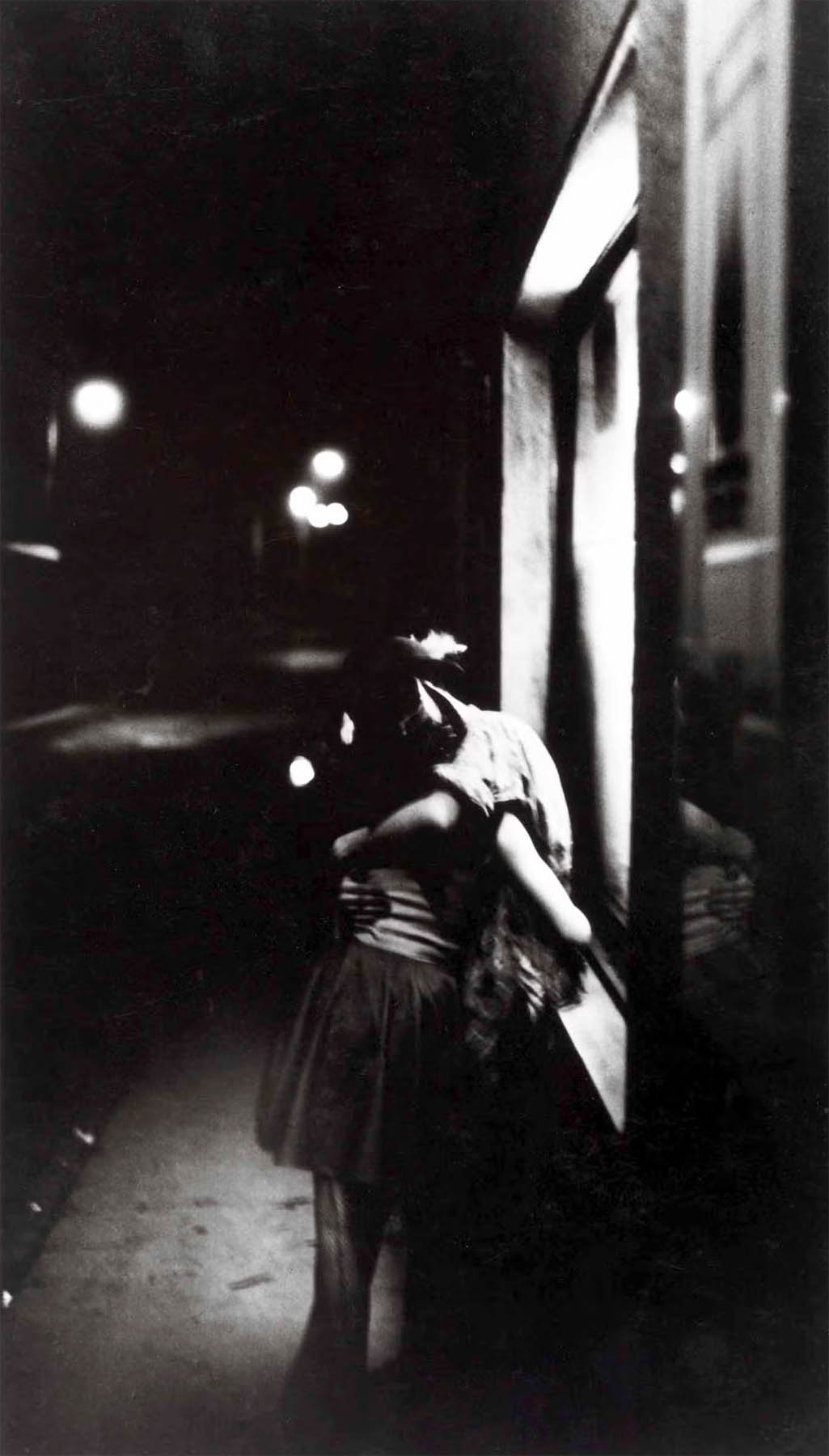

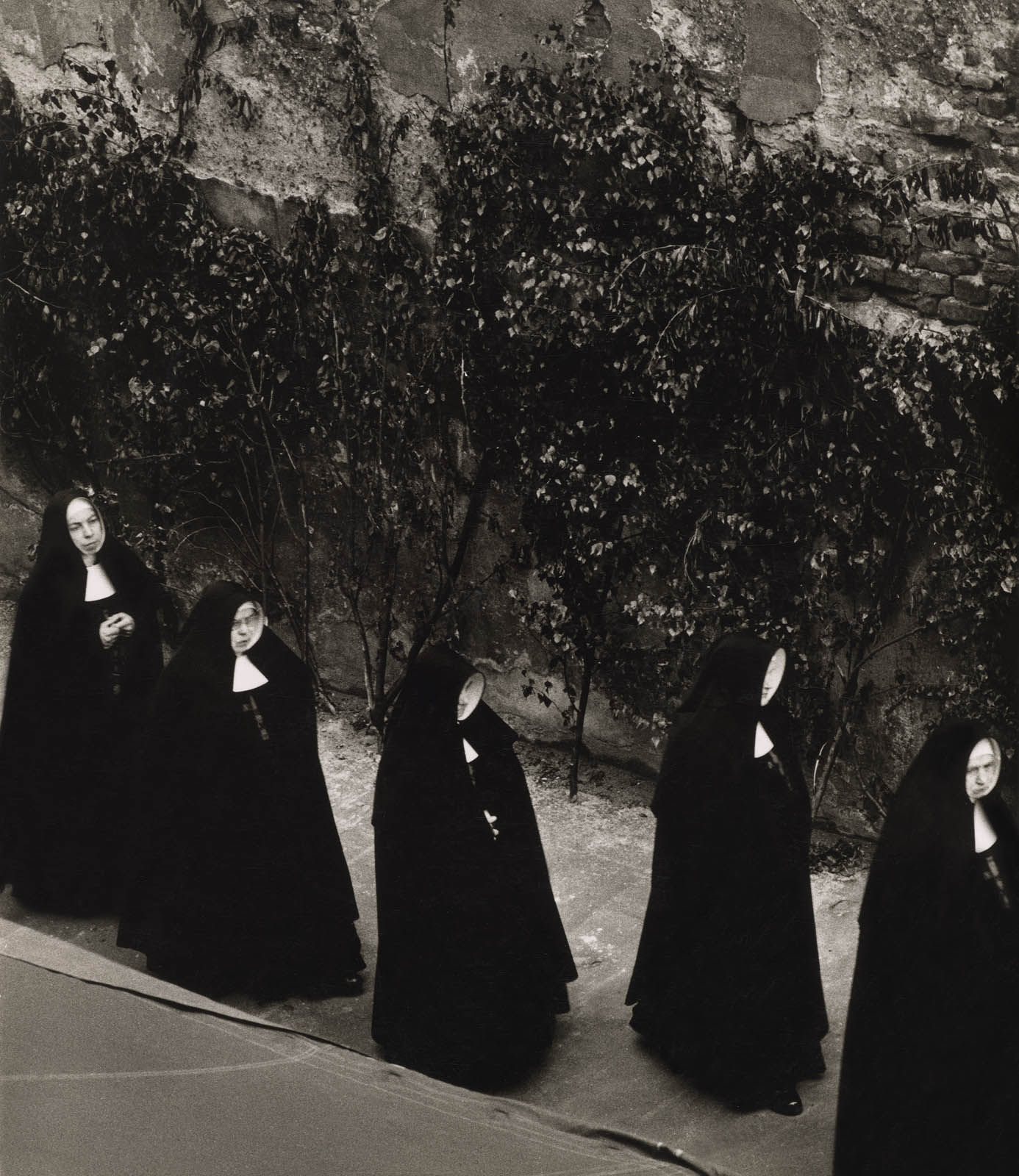


![Russell Lee (American, 1903-1986) 'Miners' wives and children on the front porch of a typical, fifty year old house. Kentucky Straight Creek Coal Company, Belva Mine, abandoned after explosion [in] Dec. 1945, Four Mile, Bell County, Kentucky' (Original Caption) September 4, 1946](https://artblart.com/wp-content/uploads/2024/05/lee-miners-wives-and-children.jpg "Russell Lee (American, 1903-1986) 'Miners' wives and children on the front porch of a typical, fifty year old house. Kentucky Straight Creek Coal Company, Belva Mine, abandoned after explosion [in] Dec. 1945, Four Mile, Bell County, Kentucky' (Original Caption) September 4, 1946")
![Russell Lee (American, 1903-1986) 'The only houses with running water inside in this camp are those in which their tennants [sic] have made the installations at no expense to the company. Gilliam Coal and Coke Company, Gilliam Mine, Gilliam, McDowell County, West Virginia' (Original Caption) August 13, 1946](https://artblart.com/wp-content/uploads/2024/05/lee-the-only-houses-with-running-water.jpg "Russell Lee (American, 1903-1986) 'The only houses with running water inside in this camp are those in which their tennants [sic] have made the installations at no expense to the company. Gilliam Coal and Coke Company, Gilliam Mine, Gilliam, McDowell County, West Virginia' (Original Caption) August 13, 1946")












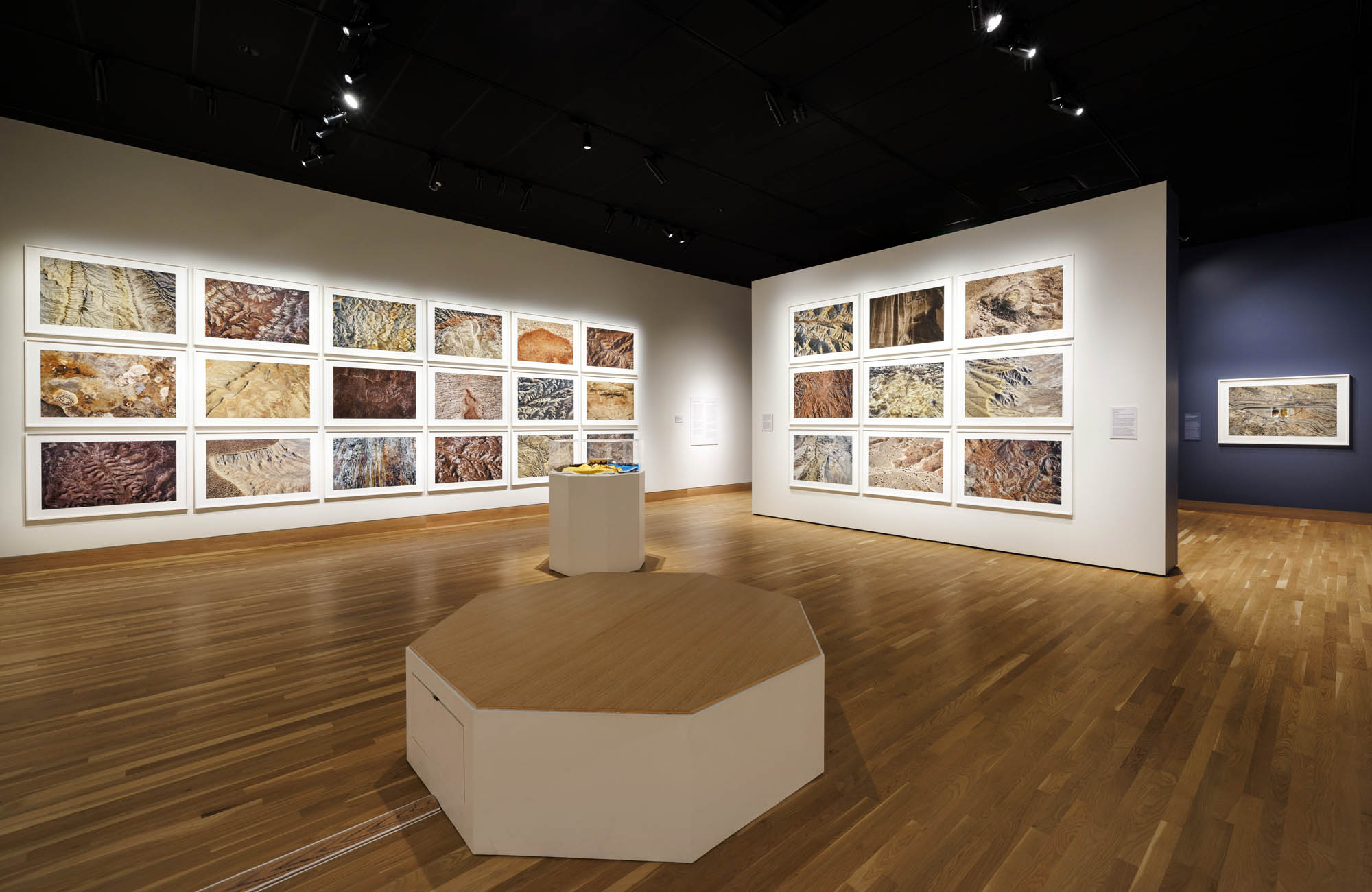
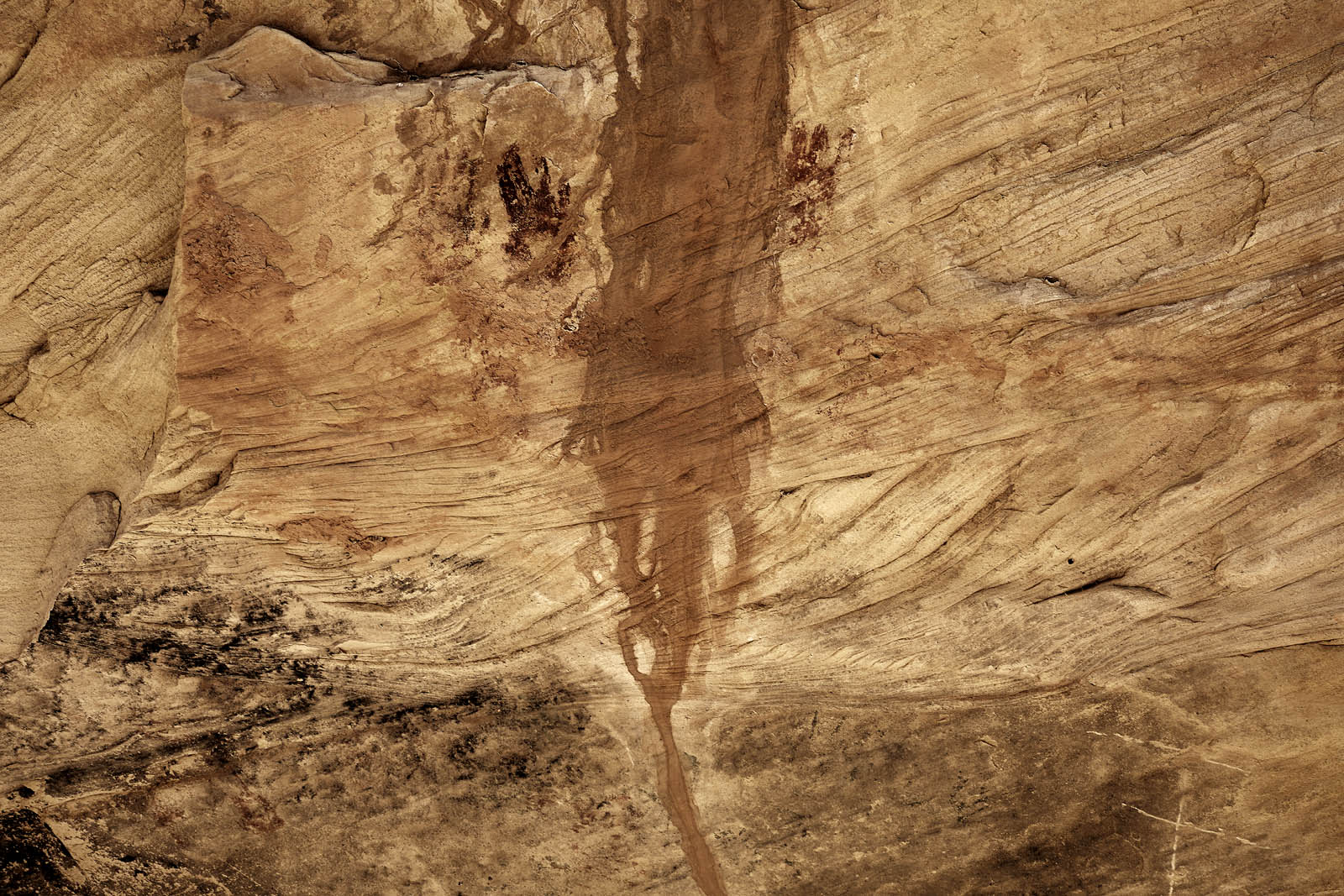
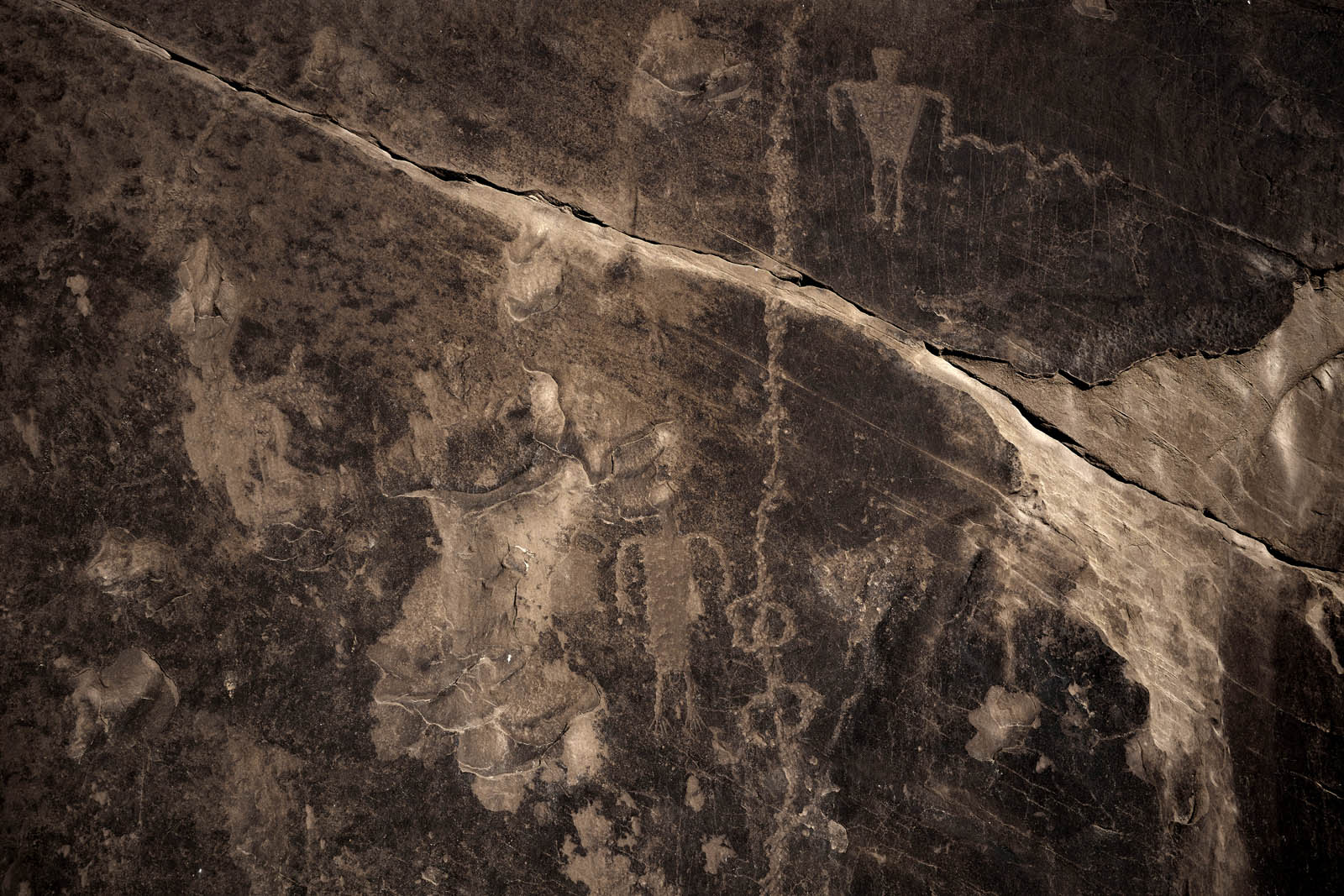
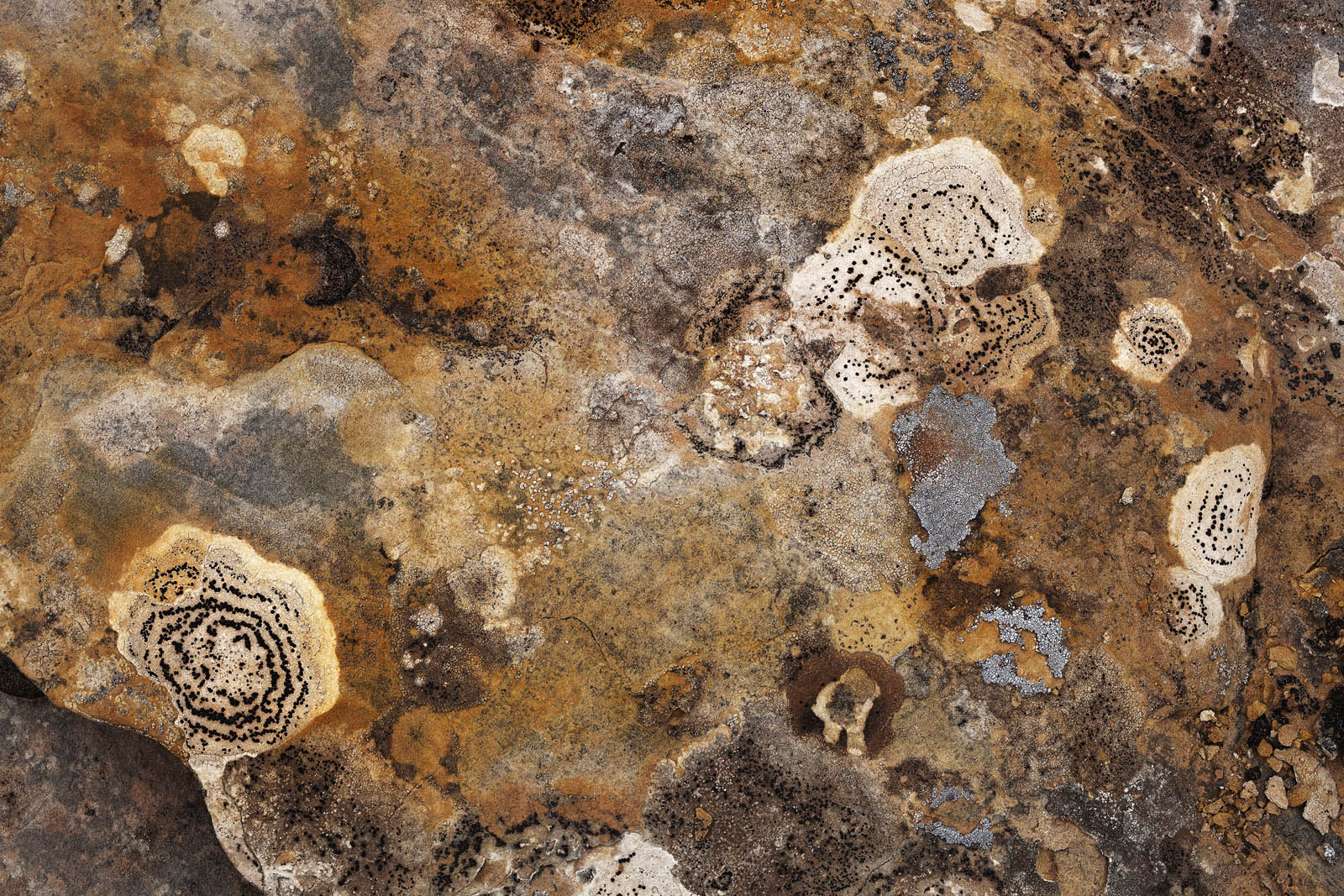































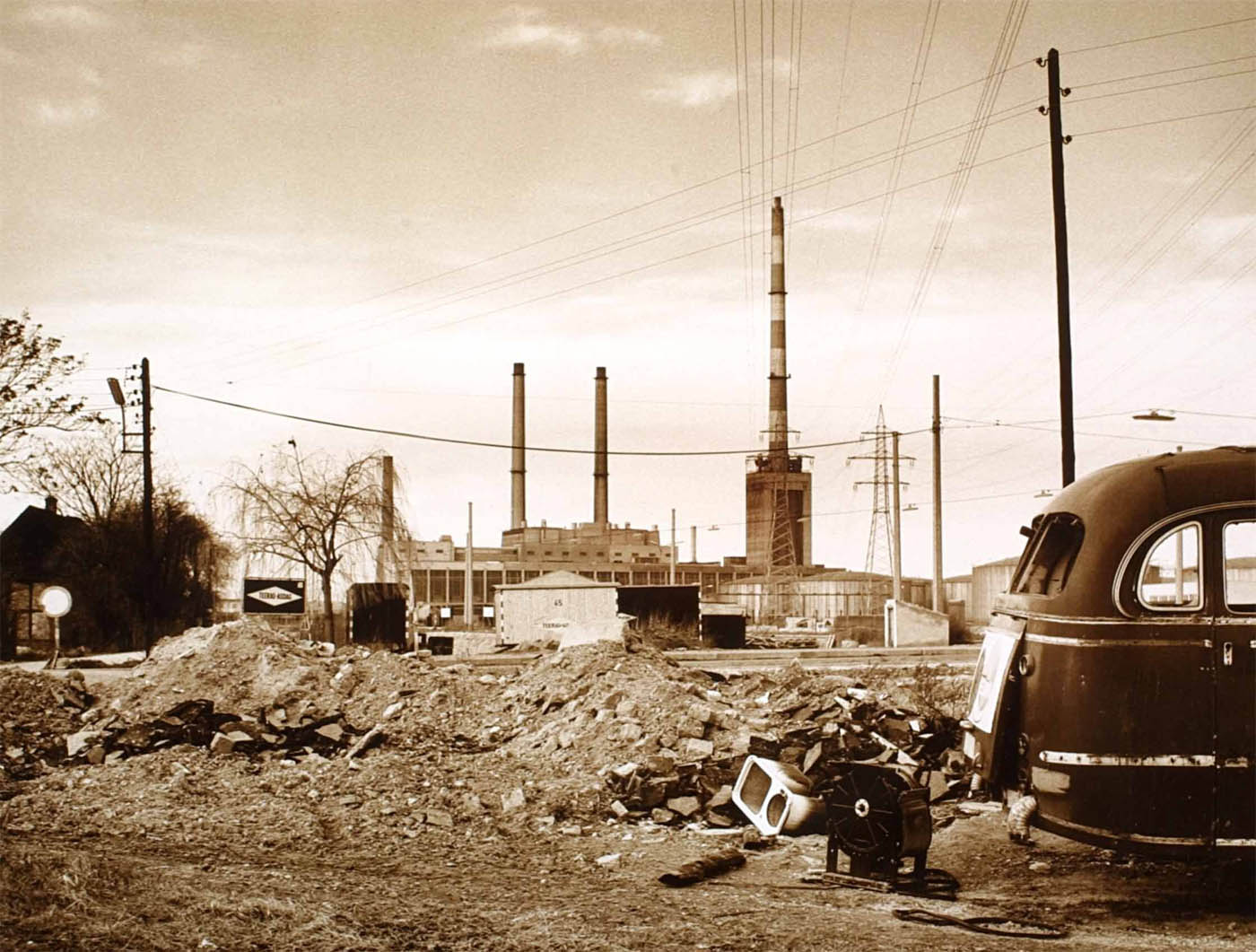
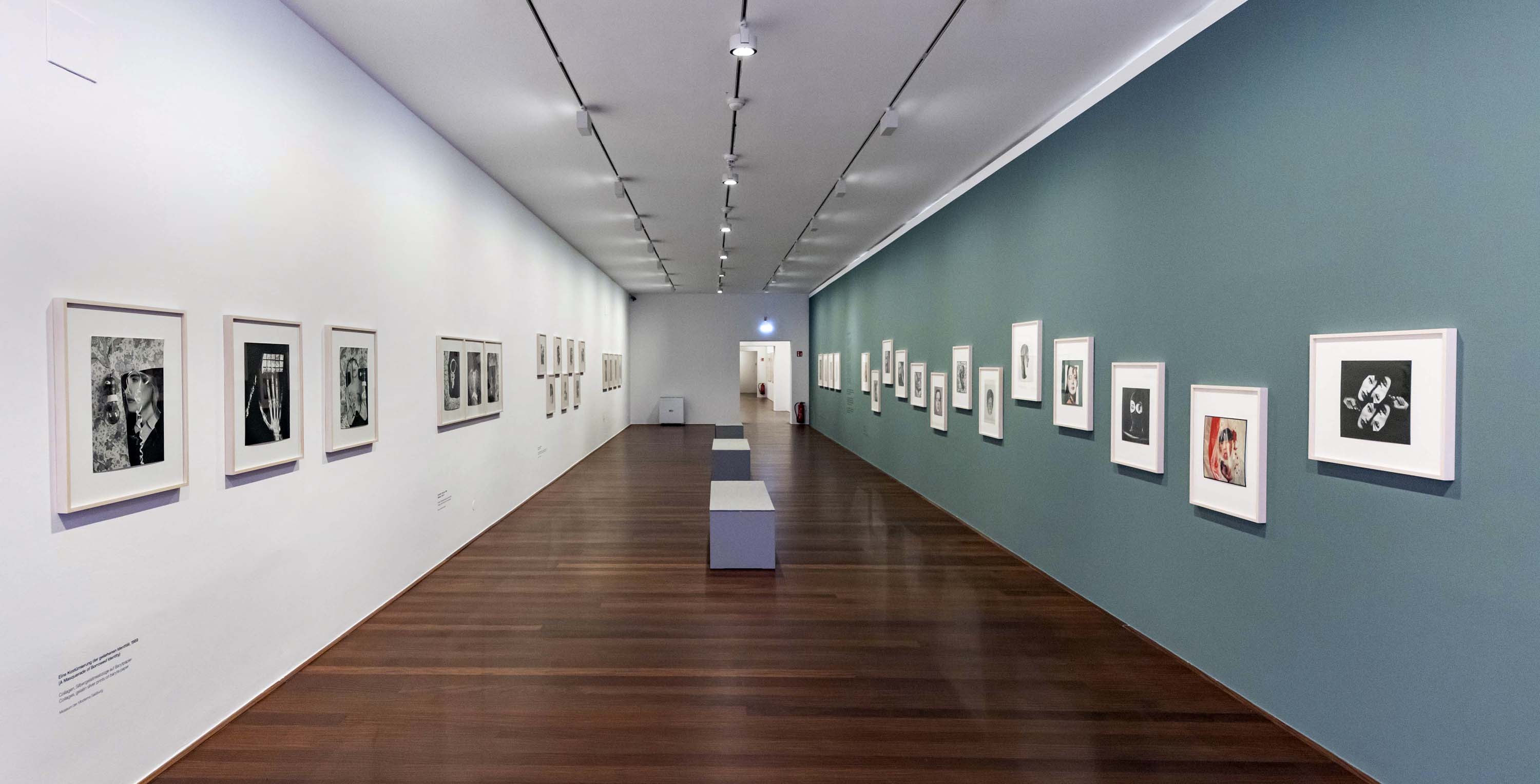
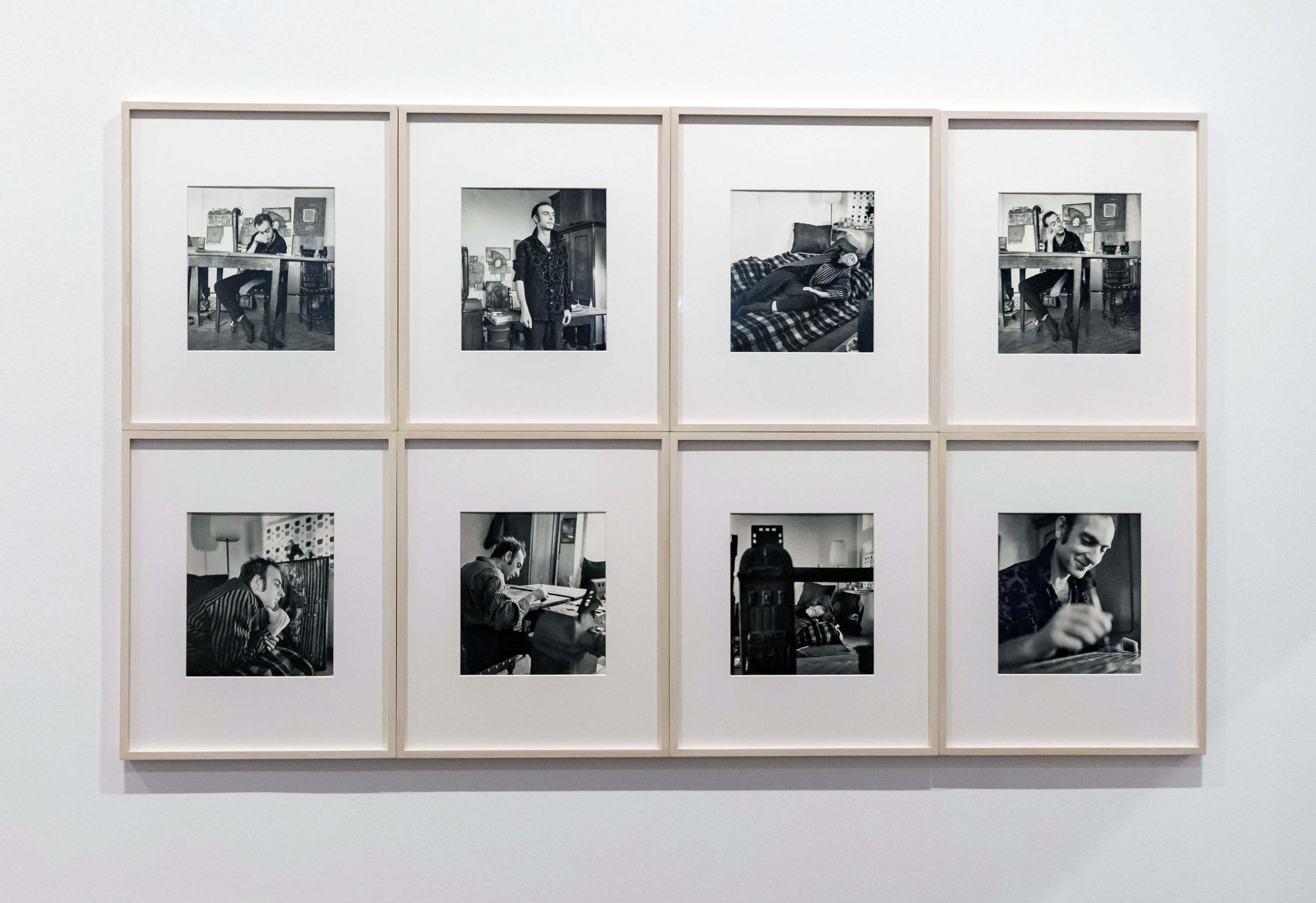









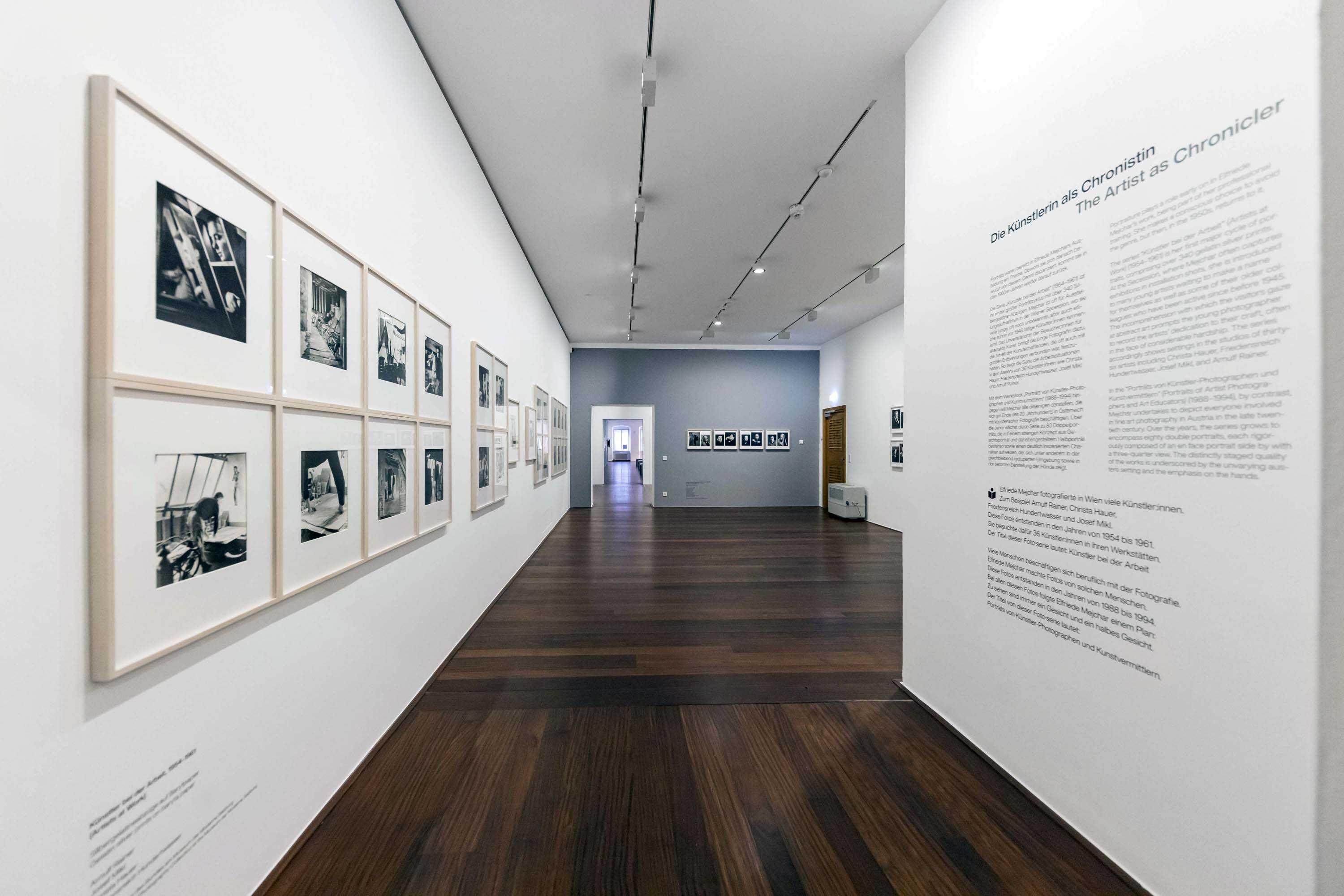
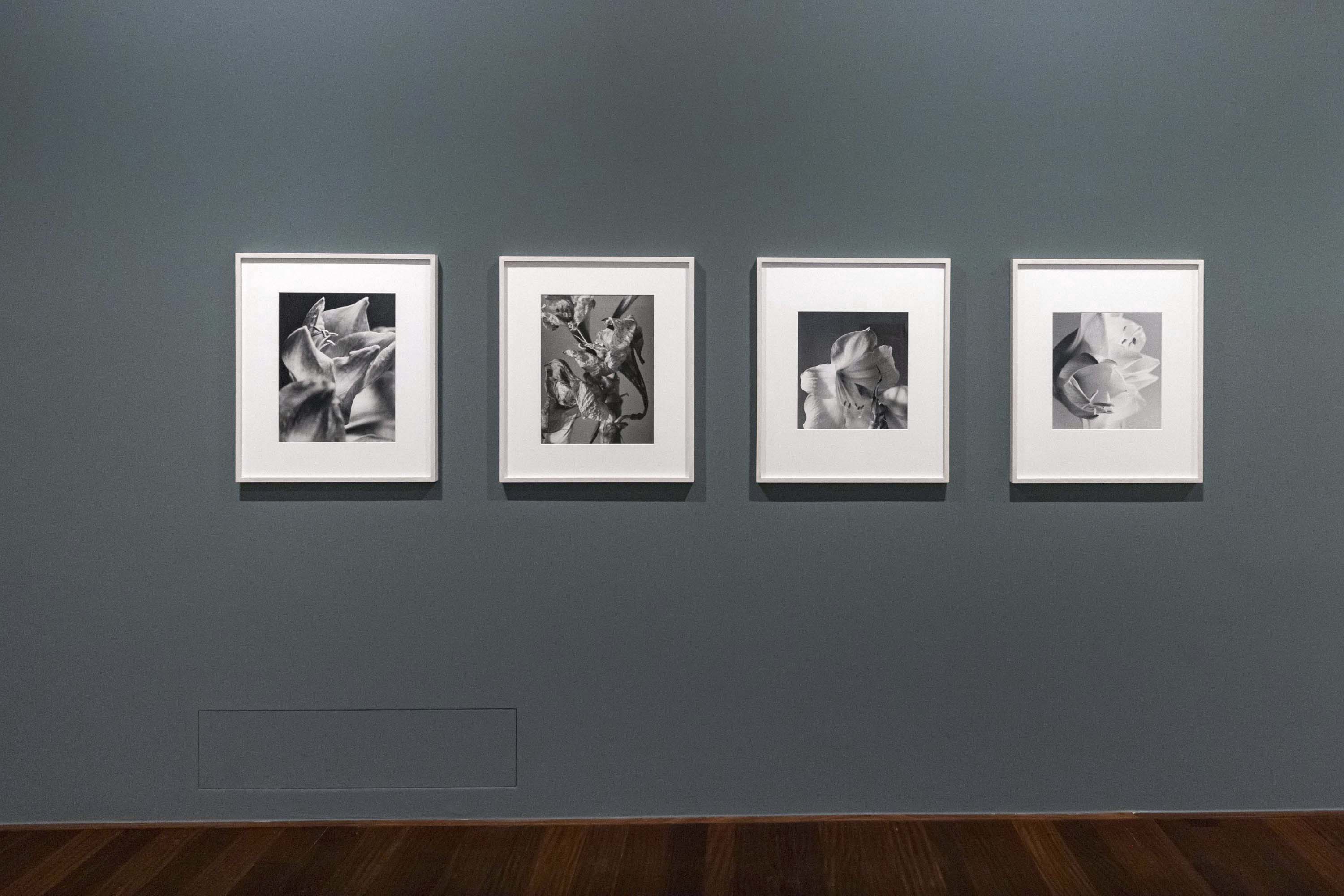



You must be logged in to post a comment.