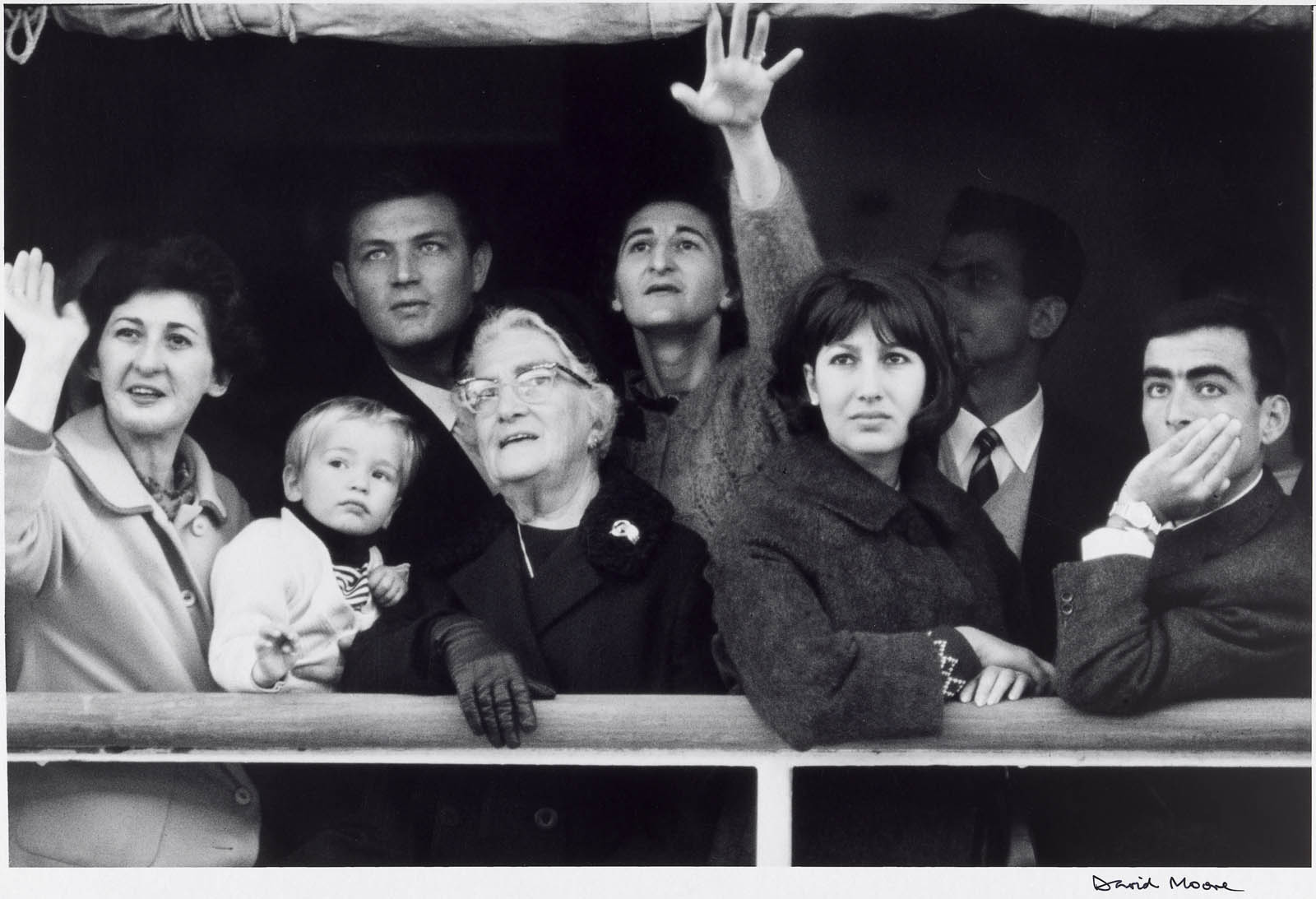
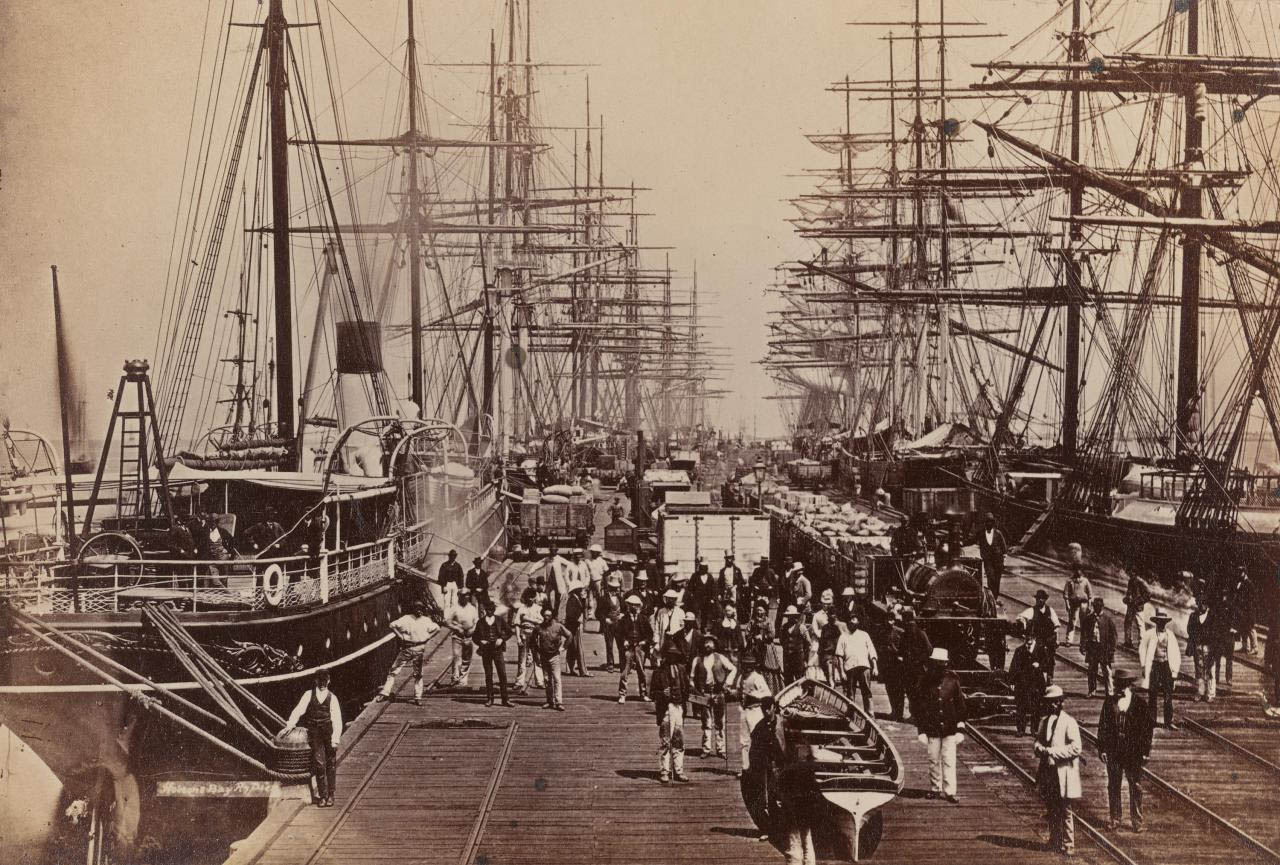
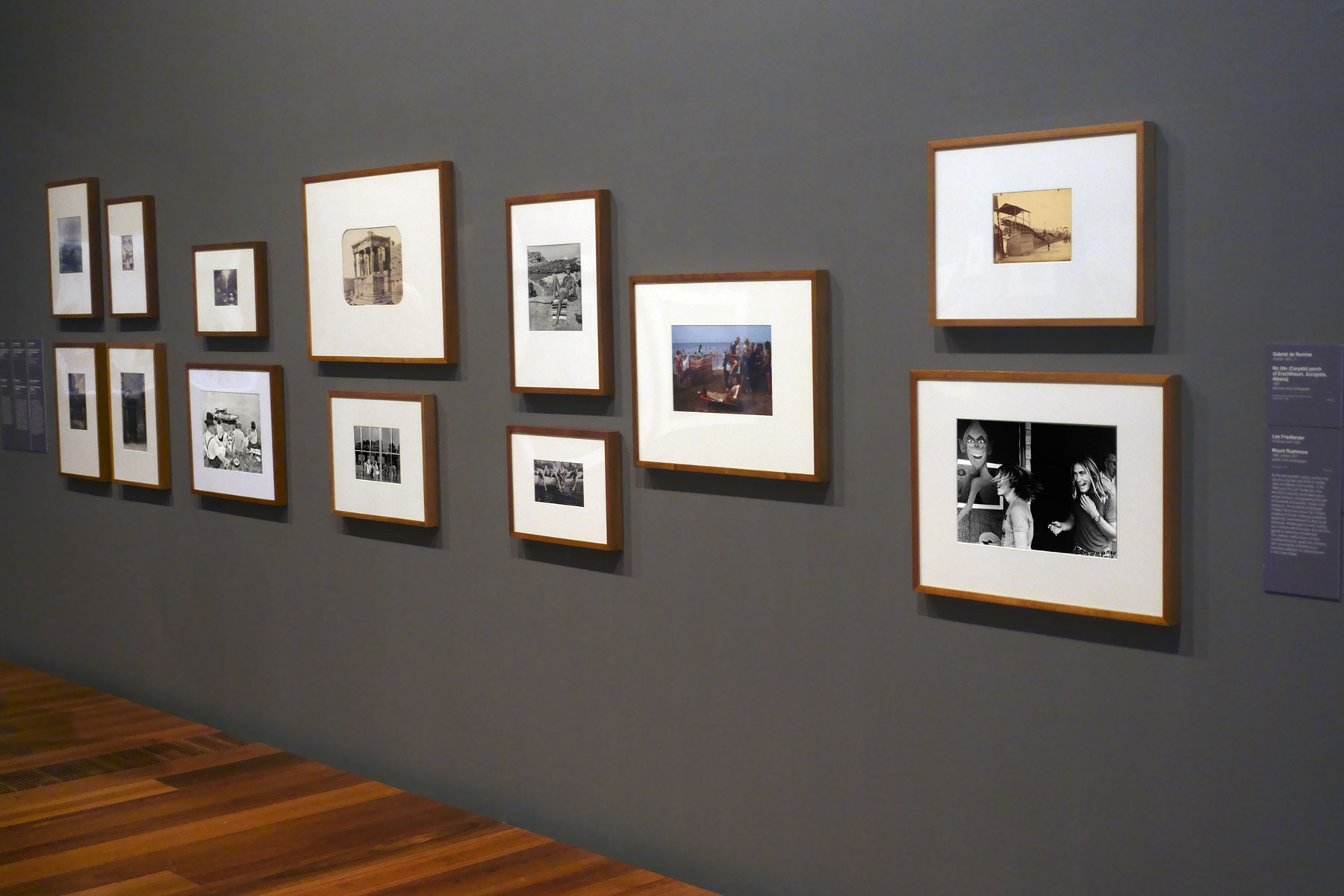
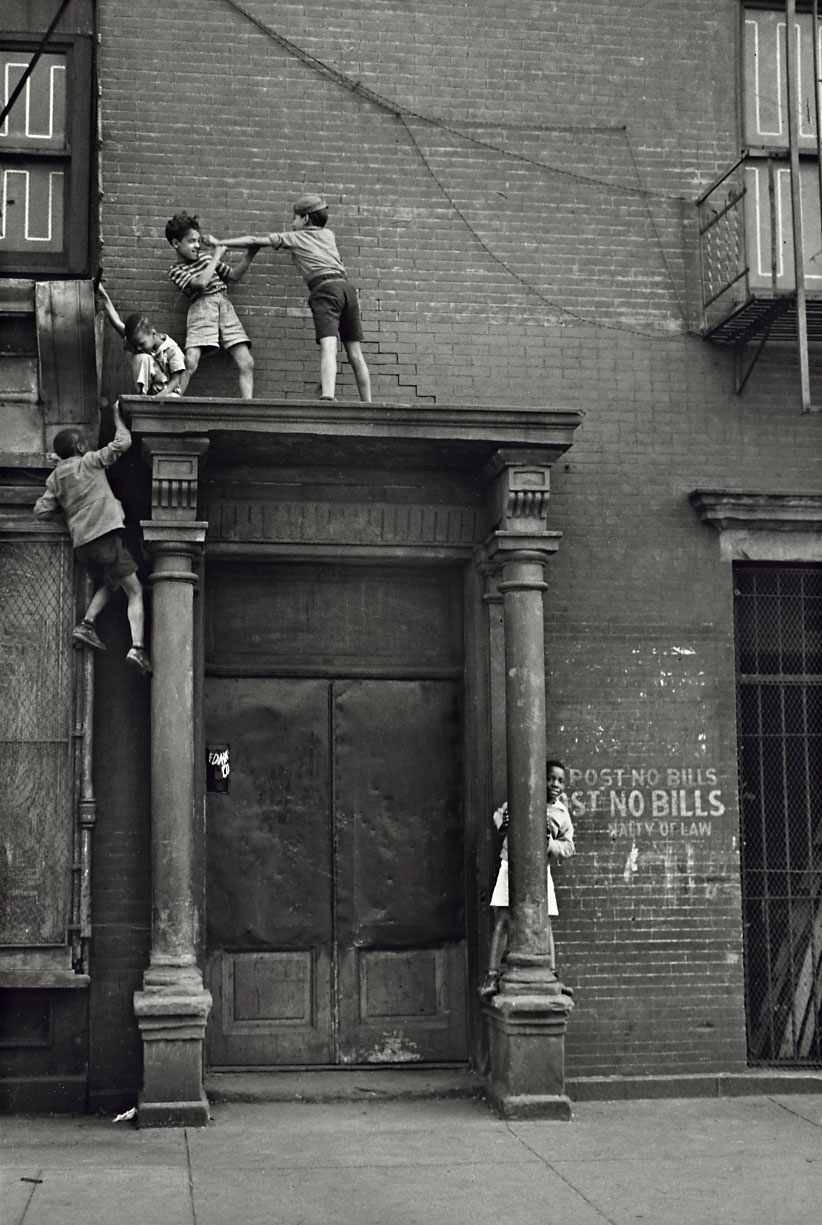
Vale Elliott Erwitt (1928-2023)

December 2023


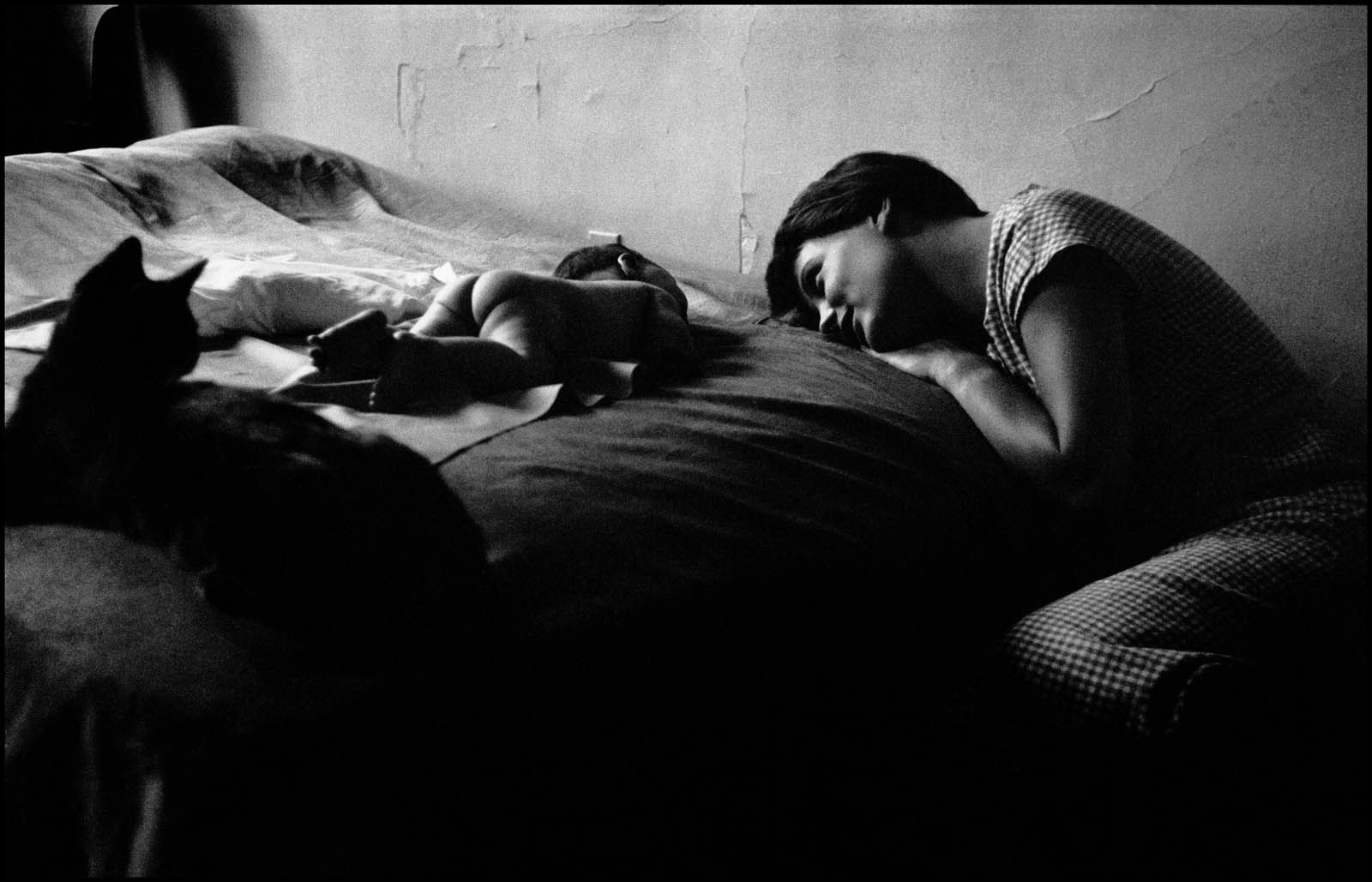
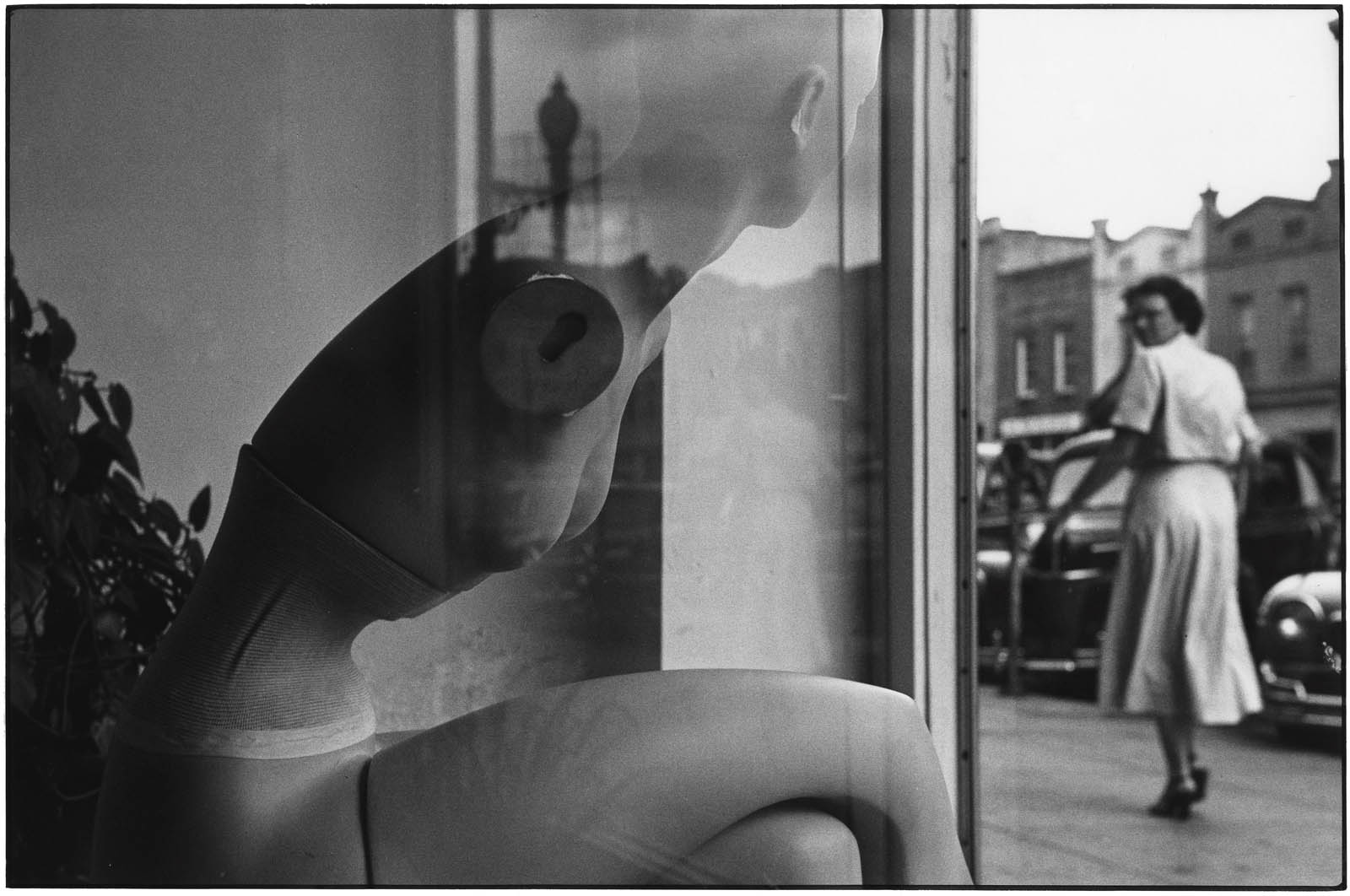
Elliott Erwitt (American born France, 1928-2023) 'New York City' 1955 from Vale Elliott Erwitt (1928-2023)


Elliott Erwitt (American born France, 1928-2023)
New York City
1955
Gelatin silver print


The essence of what happens

Elliott Erwitt’s “art of observation” is a gift of the eye and the mind, where the artist must be truly aware of the world around them in order to capture the mosaic of reality.

Look at the photograph Jackie Kennedy, Arlington, Virginia (1963, below). Observe the split second that particular look of despair was present on Jackie’s face. And there was Erwitt fully aware, in the moment, with his gift of the eye and the mind – and he knew, he absolutely knew that was the moment to take the photograph.

As with much of his work it is the subtle cadences within the image that create their emotional power and magic: sadness, happiness, whimsy, comedy, anger, loneliness, joy – all captured through the reality of the visual language of the image, fully acknowledged in the heart and the mind of the viewer when they imbibe (absorb the ideas) of their spirit.

Dr Marcus Bunyan

Please click on the photographs for a larger version of the image.


“The work I care about is terribly simple … I observe, I try to entertain, but above all I want pictures that are emotion.”


Elliott Erwitt. Personal Exposures. W. W. Norton & Company, 1988


“You either see, or you don’t see.”

“You can take a picture of the most wonderful situation and it’s lifeless, nothing comes through… Then you can take a picture of nothing, of someone scratching his nose, and it turns out to be a great picture.”

“The whole point of taking pictures is so that you don’t have to explain things with words. To me, photography is an art of observation. It’s about finding something interesting in an ordinary place… I’ve found it has little to do with the things you see and everything to do with the way you see them.”

“All the technique in the world doesn’t compensate for the inability to notice.”


Elliott Erwitt


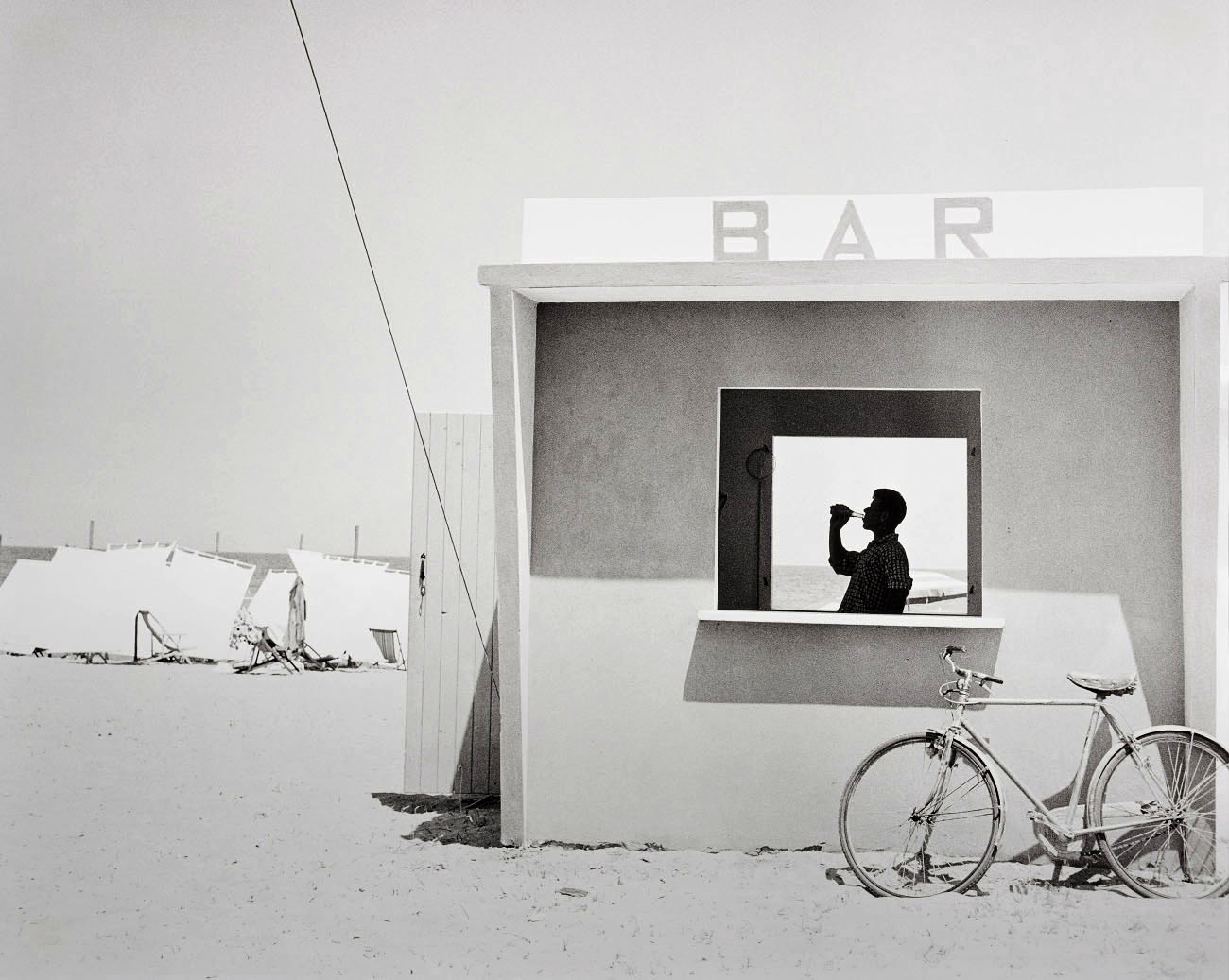
Elliott Erwitt (American born France, 1928-2023) 'Pasadena, California, USA' Nd from Vale Elliott Erwitt (1928-2023)


Elliott Erwitt (American born France, 1928-2023)
Pasadena, California, USA
Nd
Gelatin silver print


Elliott Erwitt (American born France, 1928-2023) 'USA. California. Berkeley' 1956 from Vale Elliott Erwitt (1928-2023)


Elliott Erwitt (American born France, 1928-2023)
USA. California. Berkeley
1956
Gelatin silver print


Photographers with a comic outlook on life seldom win the acclaim granted to exalters of nature or chroniclers of war and squalor. Elliott Erwitt, who died at 95 on Wednesday at his home in Manhattan, was an exception.

For more than six decades he used his camera to tell visual jokes, finding material wherever he strolled. His sharp eye for silly, sometimes telling conjunctions – a dog lying on its back in a cemetery, a glowing Coca-Cola machine amid a public display of missiles in Alabama, a mangy potted plant in a tacky Miami Beach ballroom – earned him constant assignments as well as the affection of a public that shared his sweet, Chaplin-esque sense of the absurd.

Richard B. Woodward. “Elliott Erwitt, Whose Photos Are Famous, and Often Funny, Dies at 95,” on The New York Times website Nov. 30, 2023 [Online] Cited 03/12/2023


Elliott Erwitt (American born France, 1928-2023) 'USA. New York, New York' 1953 from Vale Elliott Erwitt (1928-2023)


Elliott Erwitt (American born France, 1928-2023)
USA. New York, New York
1953
Gelatin silver print


Elliott Erwitt (American born France, 1928-2023) 'Felix, Gladys and Rover (New York, USA)' New York City, 1974


Elliott Erwitt (American born France, 1928-2023)
Felix, Gladys and Rover (New York, USA)
New York City, 1974
Gelatin silver print


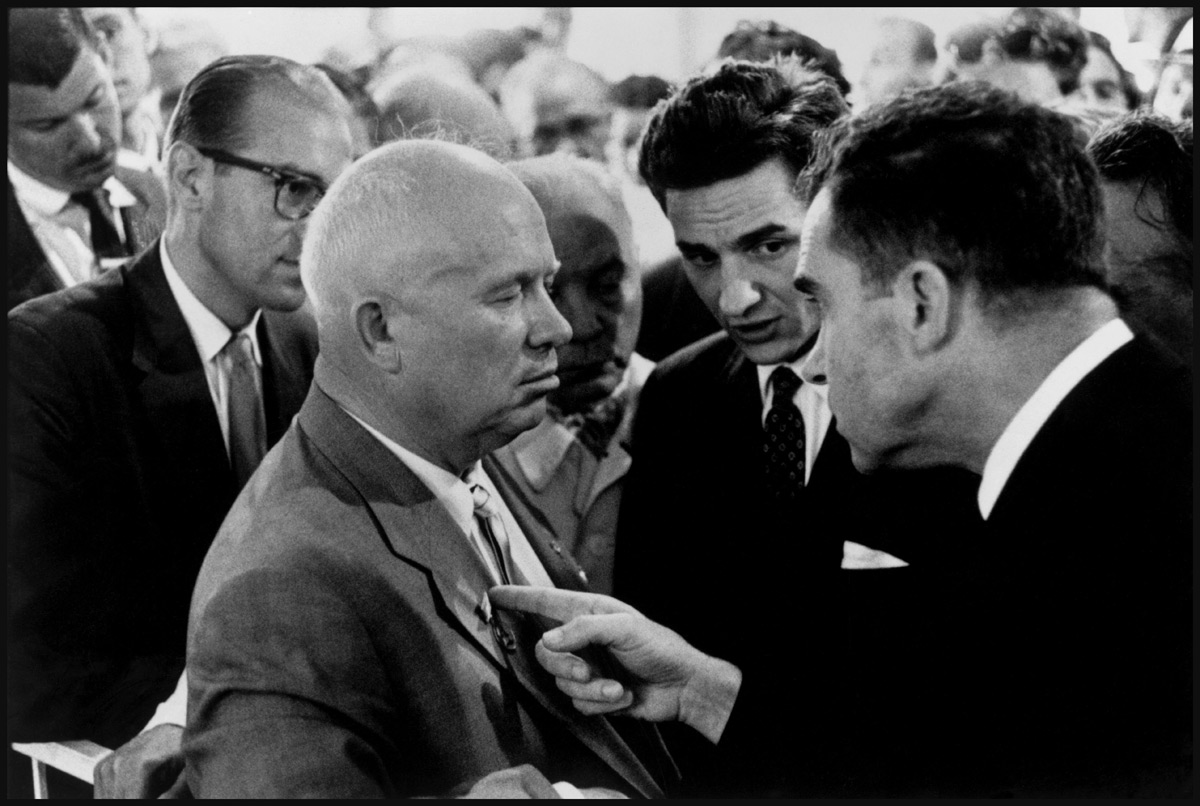
Elliott Erwitt (American born France, 1928-2023) 'Moscow, USSR' 1959


Elliott Erwitt (American born France, 1928-2023)
Moscow, USSR
1959
Gelatin silver print


Elliott Erwitt (American born France, 1928-2023) 'Jackie Kennedy, Arlington, Virginia' 1963. © Elliott Erwitt/MAGNUM PHOTOS


Elliott Erwitt (American born France, 1928-2023)
Jackie Kennedy, Arlington, Virginia
1963
Gelatin silver print


Elliott Erwitt (American born France, 1928-2023) 'Wilmington, North Carolina' 1950


Elliott Erwitt (American born France, 1928-2023)
Wilmington, North Carolina
1950
Gelatin silver print


Elliott Erwitt (American born France, 1928-2023) 'Paris, France' 1989


Elliott Erwitt (American born France, 1928-2023)
Paris, France
1989
Gelatin silver print


Elliott Erwitt (American born France, 1928-2023) 'USA. New York City' 1988


Elliott Erwitt (American born France, 1928-2023)
USA. New York City
1988
Gelatin silver print


Elliott Erwitt (American born France, 1928-2023) 'Pittsburgh, USA' 1950


Elliott Erwitt (American born France, 1928-2023)
Pittsburgh, USA
1950
Gelatin silver print


Elliott Erwitt (American born France, 1928-2023) 'Brazil. Buzios' 1990


Elliott Erwitt (American born France, 1928-2023)
Brazil. Buzios
1990
Gelatin silver print


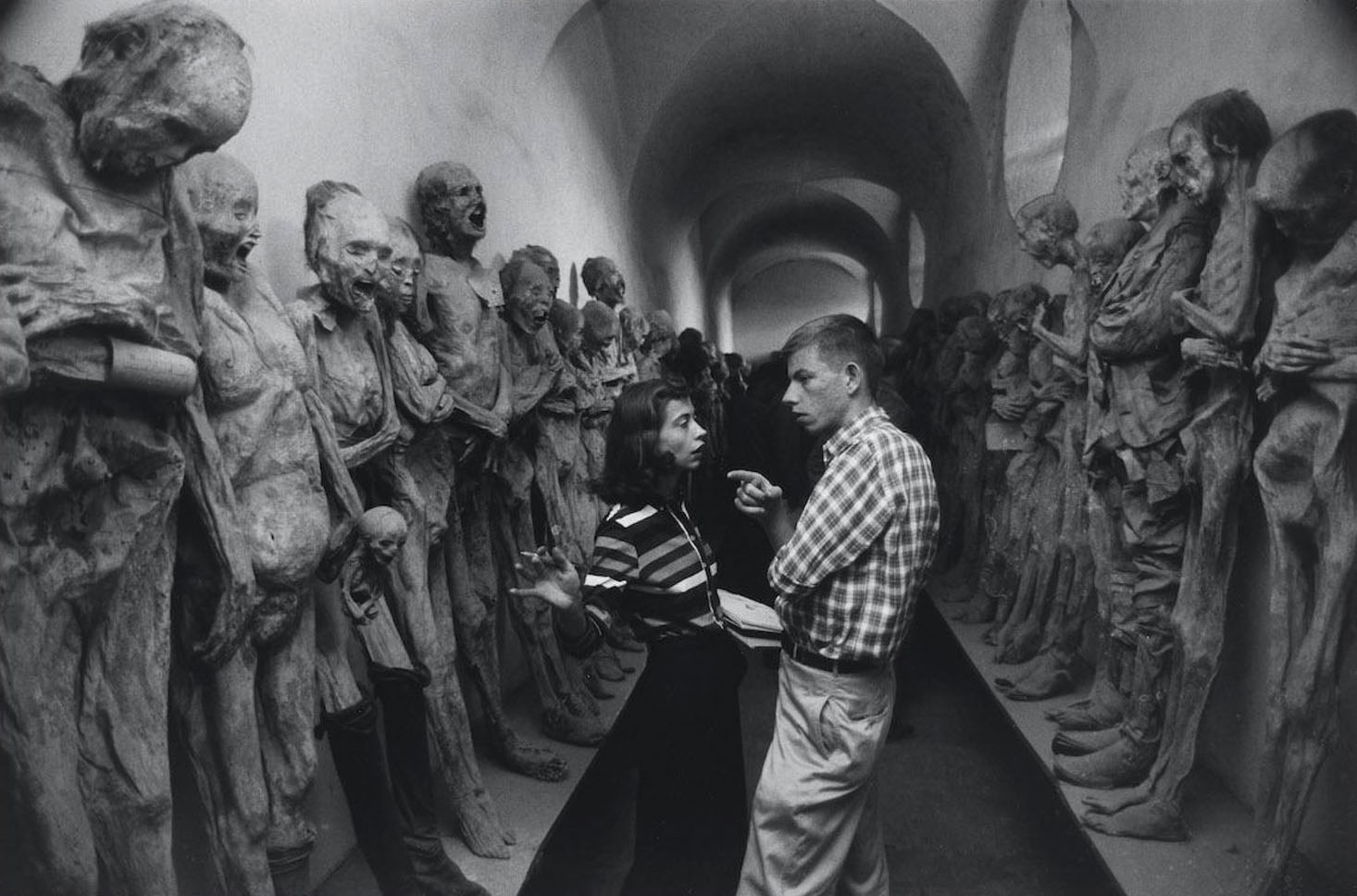
Elliott Erwitt (American born France, 1928-2023) 'Guanajuato, Mexico' 1957


Elliott Erwitt (American born France, 1928-2023)
Guanajuato, Mexico
1957
Gelatin silver print


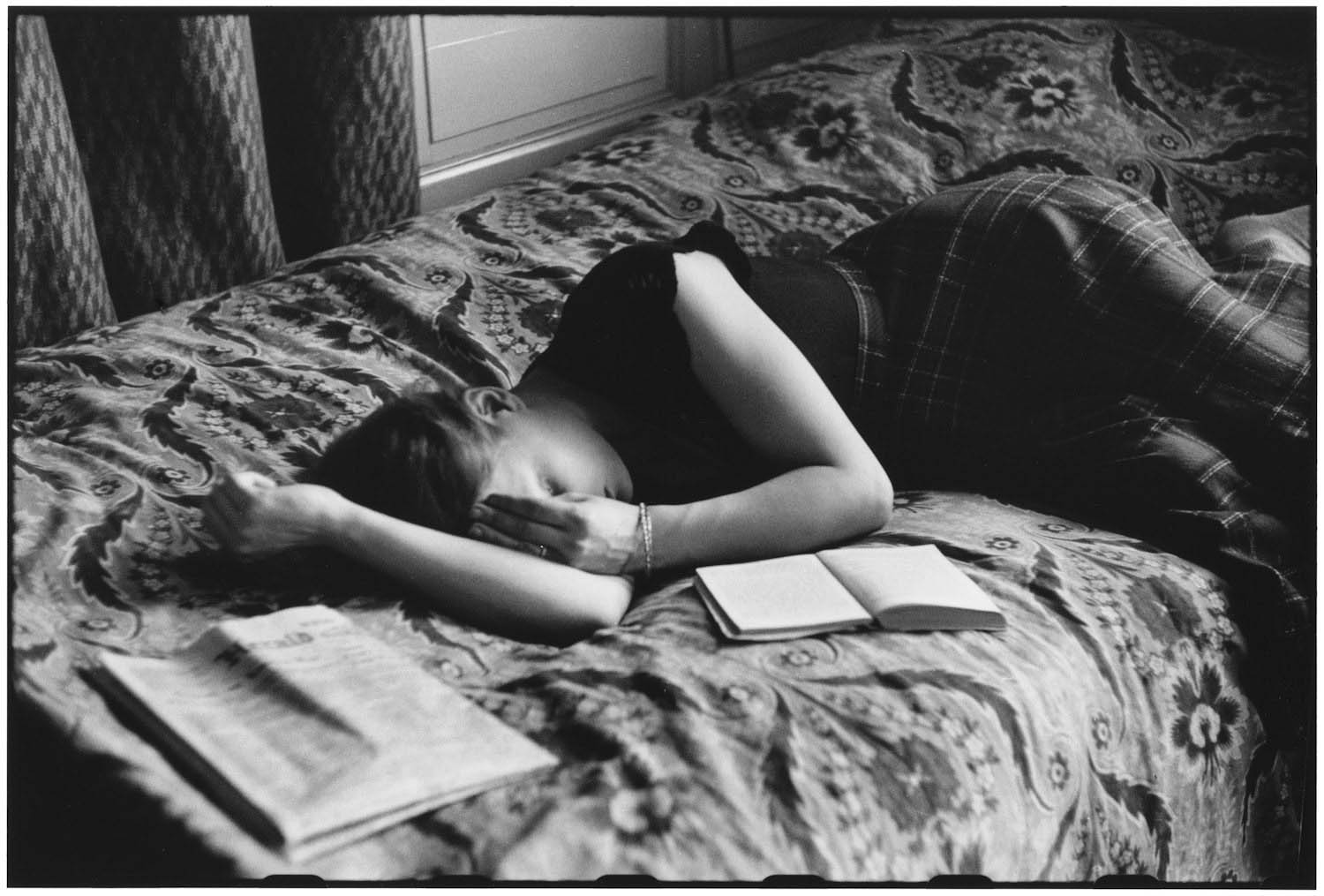
Elliott Erwitt (American born France, 1928-2023) 'France, Paris, Lucienne Van Kan' 1952


Elliott Erwitt (American born France, 1928-2023)
France, Paris, Lucienne Van Kan
1952
Gelatin silver print


Elliott Erwitt (American born France, 1928-2023) 'Fort Dix, USA' 1951


Elliott Erwitt (American born France, 1928-2023)
Fort Dix, USA
1951
Gelatin silver print


Elliott Erwitt (American born France, 1928-2023) 'Bakersfield, USA' 1983


Elliott Erwitt (American born France, 1928-2023)
Bakersfield, USA
1983
Gelatin silver print


Elliott Erwitt (American born France, 1928-2023) 'Bal, Paris, France' 1967


Elliott Erwitt (American born France, 1928-2023)
Bal, Paris, France
1967
Gelatin silver print


Elliott Erwitt (American born France, 1928-2023) 'Spain, Valencia' 1952


Elliott Erwitt (American born France, 1928-2023)
Spain, Valencia
1952
Gelatin silver print


Elliott Erwitt (American born France, 1928-2023) 'Huntsville, Alabama' 1974


Elliott Erwitt (American born France, 1928-2023)
Huntsville, Alabama
1974
Gelatin silver print


LIKE ART BLART ON FACEBOOK

Back to top

Exhibition: ‘1,001 Remarkable Objects’ at Powerhouse Ultimo, Sydney

Exhibition dates: 26th August – 31st December 2023

Curatorium: Leo Schofield AM (curatorium chair), Ronan Sulich (advisor), Mark Sutcliffe (advisor) and Eva Czernis-Ryl (Powerhouse)
Assistant curator: Chloe Appleby (Powerhouse)
Exhibition manager: Anna Gardner (Powerhouse)
Exhibition coordinator: Kerrie Goodwin (Powerhouse)
Exhibition designers: Pip Runciman, Julie Lynch and Ross Wallace
Lighting Designer: Damien Cooper


Wedgwood & Bentley (English, manufacturer) 'Venus' early 1800s


Wedgwood & Bentley (English, manufacturer)
Venus
Early 1800s
Black basalt, stoneware
Height: 350 mm
Width: 210 mm
Depth: 150 mm
Powerhouse Collection
Purchased 1949


Many rooms of wonder

What a visual feast we have for you this week!

Being an inveterate collector of eclectic objects who then puts them together in disparate but sympathetic arrangements (as in a Wunderkammer or ‘Cabinet of Curiosities’), the exhibition 1,001 Remarkable Objects at Powerhouse Ultimo, Sydney was a natural for me to post on.

“… the idea of a Wunderkammer was fully born in the sixteenth century as the princely courts of Europe became less peripatetic and as humanist philosophy spread. It was no longer enough simply to show off one’s wealth; every object should also enhance the virtues of the prince. In Inscriptiones vel tituli theatre amplissimi (1565), Samuel Quiccheberg detailed the ideal formula for the Wunderkammer as including naturalia (items created by the earth and items drawn from nature), mirabilia (unusual natural phenomena), artificialia (items wrought by man), ethnographica (items from the wider world), scientifica (items that brought a great understanding of the universe) and artefacta (items relating to history). Together these works would bring the wider world into the court and provide an understanding of the entire universe.”1


While Wunderkammer were the playthings of princes they brought to wider attention the miracles of the universe both natural and manmade. They made human beings aware of the enormity of the forces of nature and (human) industry that surrounded them … through the history and memory of objects.

John McDonald observes every piece has a story. But it is only through (in my case as a collector) being in the presence of these objects and physically handling them that we begin to understand the difference between one piece of Chinese bronze and another, one from the Ming dynasty and another from the Qing dynasty… and the difference in feeling between the two in terms of quality, casting, detail, aesthetics, form. Only through the physical handling of objects do we begin to understand the difference between an original and a fake, how old they are, how they were constructed, what their patina means, and what aura and power the object possesses. I have several pieces of treen (carved wood) in my collection and through the act of holding these objects I wonder about their history. The process is as much a tactile experience as it is a visual one.

The exhibition curators know their art. It is with great pleasure that I observe in an installation photograph in this posting the conflation of two objects that form what Minor White would call “ice/fire” where two disparate objects play off of each other: in this case a vase by that most famous and radical 19th century British designer Sir Christopher Dresser paired with a plate by the equally radical 20th century Russian designer El Lissitzky. A match made in heaven that plays out across the decades, repeated in numerous quirky juxtapositions and inspired nexus throughout the exhibition.

What further sets this exhibition off for me if the absolutely gorgeous and sympathetic “theatrical environments for these whimsical-but-rational groupings.” Exhibition designers Pip Runciman, Julie Lynch and Ross Wallace evoke a visually ravishing atmosphere in which the exhibition flâneur/flâneuse can stroll and take in the sights. Compare this stunning installation to the execrable rooting of the June 2023 Melbourne Winter Masterpieces exhibition Pierre Bonnard at the National Gallery of Victoria, Melbourne which presented the iridescent paintings of Bonnard within immersive scenography by Paris-based designer India Mahdavi. Here the work of Pierre Bonnard (which was supposed to be the subject of the exhibition not its addendum) was almost completely overwhelmed by the manic graphic design background of the installation. “Immersive scenography” = art speak for a load of no/sense.

Let the objects speak to us directly or not at all.

Dr Marcus Bunyan


1/ Anonymous. “Wunderkammer: Cabinet of Curiosities,” on the Royal Collection Trust website Nd [Online] Cited 01/12/2023


Many thankx to the Powerhouse Ultimo for allowing me to publish the photographs in the posting. Please click on the photographs for a larger version of the image.


“Every piece in this show has a story, but they are best sampled first-hand. Curatorially, 1,001 Remarkable Objects is a cultural pot-pourri, with disparate items clustered together based on a shared motif or theme. In some rooms, it’s as if Schofield, along with Mark Sutcliffe, Ronan Sulich and Eva Czernis-Ryl, simply put a word such as “peacock” or “music” into the collection database and selected the strangest things that popped up.

Ephemeral items of pop culture are juxtaposed with artefacts of ancient civilisations, tiny pieces of jewellery are linked with great clunking pieces of furniture. Viewers see everything from an Arnott’s biscuit to an electric car manufactured in Detroit in 1917. One extraordinary pairing puts a medieval suit of armour alongside the wheel of the plane in which Charles Kingsford-Smith perished when he crashed in November 1935.

The effect is almost hallucinogenic, and here one needs to give credit to exhibition designers Pip Runciman, Julie Lynch and Ross Wallace, who have created appropriately theatrical environments for these whimsical-but-rational groupings.

This approach, so contrary to the usual curatorial processes, harks back to the ancestor of the modern museum: the Wunderkammer, or cabinet of curiosities, in which royal courts and wealthy connoisseurs in the 17th and 18th centuries would display historical treasures, works of art, items of natural history and ingenious mechanisms.


John McDonald. “An irresistible, mind-boggling exhibition awakens sense of wonder,” on The Sydney Morning Herald website November 11, 2023 [Online] Cited 12/11/2023


Johann Joachim Kändler (modeller) Royal Saxon Porcelain Manufactory (manufacturer, Meissen, Germany) 'Portrait bust, 'Baron Schmiedel'' 1739


Johann Joachim Kändler (modeller)
Royal Saxon Porcelain Manufactory (manufacturer, Meissen, Germany)
Portrait bust, ‘Baron Schmiedel’
1739
Hard-paste porcelain
Height: 475 mm
Width: 360 mm
Depth: 260 mm
Powerhouse Collection
Purchased 1951


Baron Schmiedel bust by Joachim Kändler

The satirical portrait bust of the court jester Johann Gottfried Tuscheer (born as Johann Gottfried Graf), better known as Baron Schmiedel or Postmaster Schmiedel, was one of the last royal commissions for the Japanese Palace of Augustus the Strong, King of Poland (ruled 1694-1733) and Elector of Saxony. The Japanese Palace was a lavish structure in Dresden refurbished to house both the fabulous royal collection of East Asian porcelains and the amazing new products of the Royal Saxon Porcelain Manufactory in Meissen near Dresden in Germany. Established in 1710, following re-discovery of secret Chinese porcelain formula by the King’s imprisoned alchemist Johann Joachim Böttger, Meissen was Europe’s first factory to make true or hard-paste porcelain. By the mid 1730s, the factory had been able to make monumental animal sculptures, apostle figures and even architectural elements alongside their exquisitely painted vases and tableware.

The bust was modelled by Johann Joachim Kändler (1706-75), the court ‘Modellmeister’ (master modeller) who worked at the Meissen manufactory from 1731 until his death in 1775. The bust was ordered by Augustus III, Augustus the Strong’s son and successor. The medallion on Schmiedel’s chest is based on one of Augustus’ coronation medals.

A highly talented individual who delighted in dressing in the latest fashions, Schmiedel was one of two most prominent jesters at the Saxon court at the time. His role as a jester involved attending the kings in their dressing rooms, at dinners and even at the most intimate court gatherings. He kept company with the kings on visits and hunting expeditions, always ready to crack a joke, exchange witty badinage or play magic tricks with mice while pretending to have morbid fear of rodents. Schmiedel was rewarded with numerous ‘titles’ and valuable presents including Meissen porcelain.

The Schmiedel bust was discovered in Sydney in 1949 by the noted Sydney antique dealer William Bradshaw at a time when its importance and history had been long forgotten. It was acquired by the Museum in 1951. One of the most important objects in the Powerhouse Museum’s collection of ceramics, it is one of only four surviving the the world.

Eva Czernis-Ryl, Curator

For full story see: E. Czernis-Ryl, ‘The golden years of Meissen porcelain and Saxon jesters: the Schmiedel bust in Australia’, Keramik-Freunde der Schweiz (Bulletin des Amis Suisses de la Ceramique), Mitteilungsblatt nr 104, October 1989, pp. 5-11

Text from the Powerhouse Collection website


Installation view of the exhibition '1,001 Remarkable Objects' at Powerhouse Ultimo, Sydney showing at top, El Lissitzky's 'Plate' (c. 1923); and at bottom, Christopher Dresser's 'Vase' (c. 1888)


Installation view of the exhibition 1,001 Remarkable Objects at Powerhouse Ultimo, Sydney showing at top, El Lissitzky’s Plate (c. 1923, below); and at bottom, Christopher Dresser’s Vase (c. 1888, below)


Lazar Markovich Lissitzky (El Lissitzky, Russian, 1890-1941)(designer and maker, Germany) 'Plate' c. 1923 (installation view)


Lazar Markovich Lissitzky (El Lissitzky, Russian, 1890-1941)(designer and maker, Germany)
Plate (installation view)
c. 1923
Unglazed, earthenware
Depth: 26 mm
Diameter: 190 mm
Powerhouse Collection
Purchased 2002


Plate by Lazar Markovich Lissitzky

A round plate made of heavy unglazed earthenware. Decorated in red enamel, sprayed in a stencil like manner (schablonendecor), with geometric motifs along the rim. Three red circles of differing sizes decorate one side of the plate. Two red curved rectangular bands, one short and one long, decorate the other side of the plate. The text ‘Z 2864’ is impressed on the base of the plate.

An architect and graphic designer, El Lissitzky (1890-1941) was among the most important Russian artists to influence Modernism and one of the great avant-garde figures of the 20th century.

His lifetime involvement with abstract art began in 1919 soon after he met the Suprematist artist Kazimir Malevich (see the ‘Design’ section for a summary of his artistic development and achievements). Between December 1921 and January 1924 he lived and worked in Germany and in 1924 was being treated for tuberculosis in Switzerland. Although initially reluctant to apply his distinctive pictorial vocabulary to utilitarian objects, it is during that time that his abstract pictures known as Prouns began to inform Lissitzky’s designs for a group of ceramics. Soon Prouns were also to become the source of his typography, photography and book, furniture and poster design.

This boldly coloured plate is one of the relatively rare examples of Lissitzky’s ceramics. Examples of plates for the same series comprising plates of different sizes can be found in the Sammlung Ludewig in Berlin, National Museum in Nuremberg, Deutsches Museum in Munich, Australian National Gallery in Canberra and in other collections.

Eva Czernis-Ryl, Curator, 2003

Text from the Powerhouse Collection website


Christopher Dresser (designer, British, 1834-1906) Linthorpe Pottery (manufacturer, Middlesbrough, Yorkshire, England) 'Vase' c. 1888 (installation view)


Christopher Dresser (designer, British, 1834-1906)
Linthorpe Pottery (manufacturer, Middlesbrough, Yorkshire, England)
Vase (installation view)
c. 1888
Earthenware
Powerhouse Collection
Gift of Bob Meyer under the Tax Incentives for the Arts Scheme, 1997


As opposed to John Ruskin and William Morris, Christopher Dresser was an enthusiastic advocate of scientific progress and the machine. The association of simplicity with progress led him to reject the taste for rich decoration of 19th century historical styles and Naturalism which used representational decoration and high-relief ornaments indiscriminately applied to objects. Dresser’s interest in forms based on the structure of plants, his emphasis on function in design and the economic use of materials such as electroplated silver, have no precedent in Western design traditions.The restrained design of this striking vase is a fine example of Dresser’s innovative pottery produced by the Linthrope Pottery.

Eva Czernis-Ryl. Curator

Text from the Powerhouse Collection website


Carlo Scarpa for VSM Paolo Venini & Co (Murano, Venice, Italy) Carlo Scarpa (designer, Italian, 1906-1978) 'Bowl' c. 1940


Carlo Scarpa for VSM Paolo Venini & Co (Murano, Venice, Italy)
Carlo Scarpa (designer, Italian, 1906-1978)
Bowl
c. 1940
Murrine opache
Height: 60 mm
Width: 232 mm
Depth: 365 mm
Powerhouse Collection
Purchased 1984


Before Carlo Scarpa began designing some of Italy’s most celebrated modernist buildings, he spent 15 years with Venini, pushing the boundaries of Venetian glassblowing techniques. He worked for Venini between 1932 and 1947, both pioneering new techniques and reviving traditional Veentian techniques. Franco Deboni, observes: ‘Scarpa’s glass was so radical and innovative for its time. You can see it in the colours, shapes, textures and quality of execution…When you start to analyse the glass, you also realise how extremely complex it was for the master blowers to execute.’ Many of Scarpa’s designs reinterpreted historical designs using modern methods. His murrine romane combined the traditionally round murrina patterns with the square tiles of Roman mosaics. Revealed at the XXII Venice Biennale of 1940, the Murrine Opache technique is amongst the architect’s greatest technical and stylistic achievements.

Text from the Powerhouse Collection website


Installation view of the exhibition '1,001 Remarkable Objects' at Powerhouse Ultimo, Sydney showing at top left, Bowl, murrine opache, Carlo Scarpa for VSM Paolo Venini & Co, Murano, Venice, Italy, c. 1940; at top centre, Bowl form, Untitled, kiln formed fused mosaic glass, designed and made by Klaus Moje, Canberra, Australian Capital Territory, Australia, 1990-1991; at top right, Vase, blown glass with cane inclusions, Lino Tagliapietra, Rozelle, New South Wales, Australia, 1997; and at centre back, Textile length, Mohnkopfe (poppy heads), silk-double weave, Art Nouveau style, woven by Johann Backhausen and Sohne, Vienna, Austria, made by Koloman Moser, Vienna, Austria, 1900-1903


Installation view of the exhibition 1,001 Remarkable Objects at Powerhouse Ultimo, Sydney showing at top left, Bowl, murrine opache, Carlo Scarpa for VSM Paolo Venini & Co, Murano, Venice, Italy, c. 1940; at top centre, Bowl form, Untitled, kiln formed fused mosaic glass, designed and made by Klaus Moje, Canberra, Australian Capital Territory, Australia, 1990-1991; at top right, Vase, blown glass with cane inclusions, Lino Tagliapietra, Rozelle, New South Wales, Australia, 1997; and at centre back, Textile length, Mohnkopfe (poppy heads), silk-double weave, Art Nouveau style, woven by Johann Backhausen and Sohne, Vienna, Austria, made by Koloman Moser, Vienna, Austria, 1900-1903


Installation view detail of the exhibition '1,001 Remarkable Objects' at Powerhouse Ultimo, Sydney showing at top left, Bowl, murrine opache, Carlo Scarpa for VSM Paolo Venini & Co, Murano, Venice, Italy, c. 1940; at top centre, Bowl form, Untitled, kiln formed fused mosaic glass, designed and made by Klaus Moje, Canberra, Australian Capital Territory, Australia, 1990-1991; at top right, Vase, blown glass with cane inclusions, Lino Tagliapietra, Rozelle, New South Wales, Australia, 1997; and at centre back, Textile length, Mohnkopfe (poppy heads), silk-double weave, Art Nouveau style, woven by Johann Backhausen and Sohne, Vienna, Austria, made by Koloman Moser, Vienna, Austria, 1900-1903


Installation view of the exhibition 1,001 Remarkable Objects at Powerhouse Ultimo, Sydney showing at top left, Bowl, murrine opache, Carlo Scarpa for VSM Paolo Venini & Co, Murano, Venice, Italy, c. 1940; at top centre, Bowl form, Untitled, kiln formed fused mosaic glass, designed and made by Klaus Moje, Canberra, Australian Capital Territory, Australia, 1990-1991; at top right, Vase, blown glass with cane inclusions, Lino Tagliapietra, Rozelle, New South Wales, Australia, 1997; and at centre back, Textile length, Mohnkopfe (poppy heads), silk-double weave, Art Nouveau style, woven by Johann Backhausen and Sohne, Vienna, Austria, made by Koloman Moser, Vienna, Austria, 1900-1903


Klaus Moje (Australian born Germany, 1936-2016) (designer and maker, Canberra, Australian Capital Territory, Australia) Bowl form, 'Untitled' 1990-1991


Klaus Moje (Australian born Germany, 1936-2016) (designer and maker, Canberra, Australian Capital Territory, Australia)
Bowl form, Untitled
1990-1991
Kiln formed fused mosaic glass
Height: 75 mm
Diameter: 540 mm
Powerhouse Collection
Purchased 1991


Fused Mosaic Glass Bowl by Klaus Moje

This bowl form, ‘Untitled’, was made from fused mosaic Bullseye glass, in Canberra, Australian Capital Territory, Australia, 1990-1991.

Klaus Moje (1936-2016, born Hamburg, Germany) was one of Australia’s most significant glass artists, and also one of the most influential through his teaching in Canberra for 10 years from 1982. His international connections provided many exhibiting and teaching opportunities for others.

The Bullseye Glass Company had been set up in Portland, Oregon, in 1974 by three young glassblowers, Daniel Schwoerer, Boyce Lundstrom and Ray Ahlgren. Schwoerer had also studied glass as graduate assistant to Harvey Littleton at the University of Wisconsin in the 1960s as well as doing graduate work in engineering. Although they were glass blowers, they wanted to support their art through an income-generating industry and saw a need for a manufacturer of flat glass. Schwoerer explains, ‘In the early ’70s the few American companies making opalescent glass were back-ordered for at least two years and weren’t taking on new customers.’ In the following years Ahlgren and Lundstrom both left to start up other glass-related ventures and Lani McGregor, now artistic director of the Bullseye Connection gallery, joined Schwoerer as partner in 1985.

Bullseye kept closely involved with the needs of the marketplace through direct connections with the art world. In the early 1980s Klaus Moje wanted to make kilnformed mosaic glass and needed colours that fused compatibly. He met Lundstrom at the Pilchuck Glass School and found they had a mutual interest in the development of what became Bullseye’s Tested Compatible sheet glasses. ‘Moje provided a huge further inspiration to continue on this path which really had no justifiable commercial rationale at that time,’ says Lani McGregor. This liaison had far-reaching repercussions, especially for Australians, because Moje moved to teach at the Canberra School of Art in 1982: ‘Bullseye made hand-rolled glass for architectural purposes. They saw the problems I had with compatible glass and a limited colour palette…[and] started to see a serious way of entering the studio glass movement with their product.’

By the 1990s Moje wanted to make vessel forms from his fused mosaic sheets. It required further collaboration to develop a glass working process to enable this to happen. He first tried with Bullseye glass at Pilchuck with glassblower Billy Morris in 1987 and again with Dante Marioni in Portland in 1993. Bullseye provided a compatible blowing glass for these sessions, where the sheets were wrapped around a gather of furnace glass, but ‘what eventually came out of them’ says McGregor, ‘was that Klaus discovered that a blowing glass is not necessary for blowing previously fused forms. What Dante was doing was a variation on the long-known Italian pick-up method. What evolved was the truly amazing Australian Roll-up that – although we do now make a blowing compatible glass – doesn’t need it’. Artists were to discover, however, that the provision of these two compatible glasses allows other processes to take place, where, for example, sections of blown and fused glass can be successfully joined using the encalmo technique.

Bullseye’s connection with Australia was established mainly through Moje’s interest in providing opportunities for graduates and colleagues to travel, study and exhibit elsewhere, that were continued later by his successor Stephen Procter, and Jane Bruce. In turn Bullseye became involved in supporting programs in Australia, the most notable being the Latitudes workshops and exhibitions of 1995 and 1997 organised at the Canberra School of Art by Kirstie Rea, where participants experimented with the many options now possible. Kirstie Rea and Scott Chaseling continued their own explorations of these new possibilities, and became well-known in the 1990s for their international ‘Roll-up’ workshops.

Text from the Powerhouse Collection website


Installation view of the exhibition '1,001 Remarkable Objects' at Powerhouse Ultimo, Sydney showing at top, Carved form, Echidna shape, bean wood / echidna quills, painted, Louie Pwerle, Ngkawenyerre camp, Utopia, Northern Territory, Australia, 1996; and at second top, Figure, dog, Devil Dog, wood, Billy Petyarre, Utopia Station, Northern Territory, Australia, 1991; at second bottom, Coolamon, Bush Tomato Dreaming, wood / acrylic paint, Billy Petyarre, Utopia Station, Northern Territory, 1990-1991


Installation view of the exhibition 1,001 Remarkable Objects at Powerhouse Ultimo, Sydney showing at top, Carved form, Echidna shape, bean wood / echidna quills, painted, Louie Pwerle, Ngkawenyerre camp, Utopia, Northern Territory, Australia, 1996; and at second top, Figure, dog, Devil Dog, wood, Billy Petyarre, Utopia Station, Northern Territory, Australia, 1991; at second bottom, Coolamon, Bush Tomato Dreaming, wood / acrylic paint, Billy Petyarre, Utopia Station, Northern Territory, 1990-1991


Installation view detail of the exhibition '1,001 Remarkable Objects' at Powerhouse Ultimo, Sydney showing at top, Carved form, Echidna shape, bean wood / echidna quills, painted, Louie Pwerle, Ngkawenyerre camp, Utopia, Northern Territory, Australia, 1996; and at second top, Figure, dog, Devil Dog, wood, Billy Petyarre, Utopia Station, Northern Territory, Australia, 1991


Installation view of the exhibition 1,001 Remarkable Objects at Powerhouse Ultimo, Sydney showing at top, Carved form, Echidna shape, bean wood / echidna quills, painted, Louie Pwerle, Ngkawenyerre camp, Utopia, Northern Territory, Australia, 1996; and at second top, Figure, dog, Devil Dog, wood, Billy Petyarre, Utopia Station, Northern Territory, Australia, 1991


Louie Pwerle (Cowboy 'Louie' Pula Pwerle (Australian, c. 1940-2022)(Ngkawenyerre camp, Utopia, Northern Territory, Australia) 'Echidna shape' 1996


Louie Pwerle (Cowboy ‘Louie’ Pula Pwerle (Australian, c. 1940-2022)(Ngkawenyerre camp, Utopia, Northern Territory, Australia)
Carved form, echidna shape
1996
Bean wood/ echidna quills, painted
Height: 160 mm
Width: 170 mm
Powerhouse Collection
Purchased 1996


Carved Echidna by Louie Pwerle

Carved animals and dishes, and painted seed necklaces, are made variously by artists including Queenie Kemarre, Louie Pwerle, Billy Petyarre, Wally Pwerle, Elizabeth Kngwarreye, Angelina Pwerle at the Ngkawenterre camp in the Utopia homelands. This particular camp is known for the carved animals made there.

Goannas, lizards, echidnas and kangaroos are sought after for food, as ‘bush tucker’, while the dogs are ‘devil dogs’. The devil dogs assist the ritual law enforcer, Kwertatye, in the beliefs of this group of Aboriginal people. Carved figures were made in earlier times, but it is not known what these were. The Ngkwarlerlaneme people at Utopia have revived the practice, following the introduction of acrylic painting in the 1980s; the dogs are painted in the manner of acrylic painting. Similalry the silk batiks made by this group often include figures or representations of animals and figures, real or mythological.

Designed and made by Louie Pwerle from a soft wood, locally called beanwood. The echidna is well-known as a form of bush tucker. Louie is part of a family who live at the Ngkawenterre camp in the Utopia homelands, and mostly carves and paints animals. He made three kangaroos in 1989 and none other until 1996, after Rodney Gooch brought back a ‘tree kangaroo’ (squirrel or possum) from Indonesia; following this Louie started to make kangaroos again. Only a few echidnas appear to be made (about 12 in the last 6 years), and only two with real quills seen by the Sydney agent in the last few years. This is (in 1996) the only camp where carved animals, figures and bowls are made, and paintings on canvas are also made at this camp. All the works in this particular collection are made by members of this family at this camp. All are consistent carvers, some like Queenie and Louie since about 1988.

Text from the Powerhouse Collection website


AW Standfield and Co (manufacturer, Mascot, New South Wales, Australia, active 1925-2000) ''Supreme' Mouse Trap Making Machine' 1942-1943


AW Standfield and Co (manufacturer, Mascot, New South Wales, Australia, active 1925-2000)
‘Supreme’ Mouse Trap Making Machine
1942-1943
Metal/wood
1950 mm H x 2470 mm W x 1500 mm D
Weight 830 kg
Powerhouse Collection
Acquired October 2001


‘Supreme’ Mouse Trap Making Machine

This mouse trap making machine is part of the Museum’s Standfield collection of trap-making machines and associated items which are an unusual, indeed curious, ensemble of purpose-built machines and products that defined an Australian industry for sixty years.

The collection exemplifies a ‘making do’ approach to manufacturing in that the machines were built from secondhand parts from a range of sources; it also exemplifies the notion of technological stasis in that the machines were always considered efficient and sophisticated artefacts for the making of rodent traps. Likewise, the organisation, traditional skills, and daily customs of the Standfield firm did not change from the Second World War to the end of the twentieth century, a period when rapid industrial change was the norm.

The nature of production at Standfields was based on a belief that a unique machine would provide a quality product whose market was based upon the natural cycle of rodent population size. According to the Standfields, production was never based upon the traditional economic factors of supply and demand, as these concepts did not seem applicable to a production facility of this nature, size, and scale. Productivity was rarely increased or decreased from the machine’s range, that is, 1,000 traps per hour. Product stockpiling was a normative value that was practised by the firm.

Less demonstrative, but deeply embedded in the Standfield approach to manufacturing, was a belief that a well-made and simple product defined an Australian approach to the making of things.

The mouse trap making machine is made from a variety of metal and electronic components, painted white for framework and left plain for working parts. The machine can be divided into two segments consisting of the mouse trap assembly line and the spring and hammer making mechanism.

The front section of the machine features the assembly line from right to left. This section contains an intricate series of levers, pulleys and gears which feed the wooden mouse trap platforms through the production line. On the right is the platform feeder, filled with wooden platforms. From here the bases are pressed in a stamper, leaving the imprint, ‘Supreme / MOUSE TRAP / MADE IN AUSTRALIA’ on the top. The next phase involves the the catch or baiter and the holding bar both being stapled on to the platform. Once through this process, there is an open section in the centre for a worker to manually attach the spring and hammer device to the mousetrap and then place the traps back in the conveyor channel. The traps then pass through a plane or sander to remove any points on the base, and the process is complete. The power switch for this portion of the machine is positioned just below the sander, with a speed switch also present in the machines centre. On each side of the production line segment are different coils of metal, for each of the components used in constructing the mouse traps. Each of the coils is labelled with different specifications, based on their thickness, with some spare coils placed underneath. A counter, in a red casing, can be seen in the centre of the machine, indicating the number of traps which have been processed. Above the counter are two lamps, plugged into a powerboard at the top of the machine, for providing additional light in the dark workshop.

The back section is designed with the specific purpose of constructing the spring and hammer mechanism for the traps. This section also works like a production line with two sets of metal coils, suspended on metal poles, on the right and left sides of the machine. The wires are fed through a set of gears, pulleys and levers, which bend, coil and shape the wire to create the spring and hammer. The finished product reaches the end of the production line and is released down a slide or ramp, into a white tray at the front of the main production line for the worker to retrieve. A power switch can be found on the right side of this section

At the front of the machine is a black and white image of Arnold Wesley Standfield woking on the machine, with the final mousetrap that the machine made stuck to the front. A number of finished and half finished mousetraps as well plain platforms can be found on a wooden shelf on the machines right.

Formal patent applications were taken by Arnold Wesley Standfield for the ‘Westan’ all metal rodent trap, and the Kyogle cow-tail clip. The patent documents are supplemented with schematic designs, which illustrate the operational requirements of the products. Interestingly, no formal machine design or patent was ever taken on Standfield’s principal item, namely, the mouse-trap machine. The Standfield archives hold the patent applications for the ‘Westan’ mouse trap and Kyogle cow-tail clip, as well as other documentary accounts of these items.

The machines, traps, and the cow-tail clip, were entirely the creations of Arnold Wesley Standfield (1901-1990), the founder of A.W. Standfield and Co., ‘Supreme’ Mouse and Rat Traps. His sons Dave and Ron Standfield assisted their father with the repair and maintenance of the machines, and the sons became the owners and managers of the firm upon the death of their father. Knowledge of the machines and its products was passed to the sons by their father, and in turn they passed on knowledge and skill to long-term employees of the firm.

A.W. Standfield made the machine from wheels, gears and pieces of metal taken from scrapped machines he found in scrap-iron yards around Sydney. Although Standfield had no formal training in machining or associated trades, his accomplishment does suggest that he had an innate ability to build production machines. In a single operation, a mouse trap can be assembled in 1.5 seconds. The standard production rate is “over 1,000 traps per hour” (‘Mouse-Trap Making Machine’, n.d. probably composed by A.W. Standfield, Standfield archives).

The machine was made over a two-year period (1942-1943) and the first traps ‘came off’ the machine on 7 January, 1944. The machine is as it was first made, although broken and worn parts have been replaced over the years.

The machine itself makes all parts, and, as mentioned above, assembles a trap in 1.5 seconds. In operational terms, four strands of staple wire are fed, straightened, cut off, folded and driven into the base of the trap. The machine grounds off protruding staple ends. It feeds, straightens, cuts off, and forms into a trigger, wire of 3″ (76.2mm) length of 17 gauge wire, which was supplied by BHP. The machine staples the trigger wire to the pine base.

The machine makes and assembles the bait holder. The machine selects the length of steel for the bait-holder, cuts it, punches and forms the steel into the bait holder and affixes the holder (under the staple) to the pine base. The machine feeds, straightens, and cuts off 18″ (457.2mm) of 17 gauge spring wire and forms this as the mouse-trap spring. In the process, the wire is turned and bent 23 times at varying degrees to make a spring. The mouse-trap machine pushes the piece of pine along a slot and brands the base. The machine turns the spring ends. The spring is fed through and stapled by hand to the base. This operation completes the assembly of a mouse trap.

Text from the Powerhouse Collection website


Lockheed Aircraft Company (manufacturer, Burbank, California, United States of America) 'Aircraft undercarriage from Lockheed Altair monoplane 'Lady Southern Cross', starboard side' Probably 1933


Lockheed Aircraft Company (manufacturer, Burbank, California, United States of America)
Aircraft undercarriage from Lockheed Altair monoplane ‘Lady Southern Cross’, starboard side
Probably 1933
Metal/rubber
Height: 1420 mm
Width: 480 mm
Diameter/Length: 1000 mm
Powerhouse Collection
Acquired February 1994


Aircraft undercarriage from the Lady Southern Cross

The only surviving fragment of aircraft in which Sir Charles Kingsford Smith died, 8 November 1935

This wheel and oleo strut are part of the starboard undercarriage used by Sir Charles Kingsford Smith (Smithy) in his Lockheed Altair aircraft VH-USB ‘Lady Southern Cross’ for his attempt at a record breaking flight from England to Australia in 1935. On 8 November 1935 ‘Lady Southern Cross’ is estimated to have crashed into the Gulf of Martaban in the vicinity of Aye Island off the coast of Burma, now Myanmarm, at approximately 0216 local time. The undercarriage is the only major component to have been located and preserved after the loss of the aircraft with Smithy and his co-pilot/engineer, Tom Pethybridge, on board.

Sir Charles Kingsford Smith is Australia’s most renowned pioneer aviator. He established a number of records in a variety of aircraft, most notably the Fokker Trimotor, ‘Southern Cross’. His interest in competing in the MacRobertson Air Race of 1934 gave him the impetus to purchase the Lockheed Altair as an aircraft with the capability of achieving first place, but engineering problems and lack of time mean that he had to withdraw from the race. In testing the aircraft in Australia, he established a number of city to city speed records in the Altair. To ‘save face’ for withdrawing from the race he flew the Pacific instead in the west east direction establishing another record. Smithy and Tom Pethybridge, lost their lives endeavouring to break yet another record, the England-Australia speed record.

The single engined Lockheed monoplane aircraft of the late 1920s and 1930, encompassing the Sirius, Orion, Altair, Air Express, Explorer and Vega, were considered to be revolutionary in their time. According the their ‘biographer’, Richard Sanders Allen in ‘Revolution in the Sky’, those fabulous Lockheeds, the pilots who flew them, “…became the most copied, coveted, news making airplanes of their era”. They achieved a number of records in the hands of such famous aviators as Amelia Earhart, Charles Lindbergh, Wiley Post, Hubert Wilkins and Sir Charles Kingsford Smith, to name a few. As well as providing record breaking aircraft the Lockheed Aircraft Corporation, as it became, used the basic designs and manufacturing techniques to produce small airliners such as the Orion, Air Express and Vega. After the completion of the last of this series of designs Lockheed went on to design and manufacture such significant airliners as the Lockheed 10 Electra and the Lockheed 14 Super Electra. During World War II, Lockheed designed the Constellation which became the backbone of many airlines restarting services post-world War II. Qantas based its fleet on the Constellation before converting to the gas turbine powered Boeing 707.

Text from the Powerhouse Collection website


John Lyon Gardiner (maker, Sydney Technical College, Sydney, New South Wales, Australia) 'Model staircase' 1891


John Lyon Gardiner (maker, Sydney Technical College, Sydney, New South Wales, Australia)
Model staircase
1891
Cedar (Toona australis)
Height: 2730 mm
Width: 1390 mm
Depth: 990 mm
Powerhouse Collection
Presented by Sydney Technical College, 11 November 1953


Model staircase

This model staircase is a significant example of the work of Sydney Technical College instructor, John Lyon Gardiner. It was built to demonstrate the principles of stair construction. Almost from its inception the Museum had a close relationship with the Technical College which was its immediate neighbour in Harris Street. At the time there was a new interest in education through observation or ‘learning by looking’. This was thought particularly important in the training of ‘practical men’ and museum’s were an essential part of this process. As the English philanthropist, Thomas Twining, wrote in Science made easy (1876) about the purpose behind his own Museum in Twickenham, outside London:

‘I became more and more impressed with the desirableness of propagating among the working population, sound practical knowledge calculated to secure for steady persevering industry, a well earned mead of Health and Comfort … [through] VISUAL EDUCATION.’

The staircase is made from cedar which is also significant as, at the time, the Museum was actively promoting commercial applications for colonial timbers.

Text from the Powerhouse Collection website


James Brewer (maker, Darlestone, United Kingdom) 'Long case clock' 1690


James Brewer (maker, Darlestone, United Kingdom)
Long case clock
1690
Wood/glass/brass/metal
Height: 2240 mm
Width: 495 mm
Depth: 300 mm
Powerhouse Collection
Purchased 1963


John Dewe (maker, London, England) 'Long case clock' 1733-1764


John Dewe (maker, London, England)
Long case clock
1733-1764
Lapis-blue Japanned case, wood/metal
Height: 2240 mm
Width: 515 mm
Depth: 240 mm
Powerhouse Collection
Purchased 1964


Installation view of the exhibition '1,001 Remarkable Objects' at Powerhouse Ultimo, Sydney showing at top, Man's ceremonial headpiece (lamba), sheet gold alloy, Sumba, Indonesia, 1880-1950; and at second top, Textile length (mens waist cloth), handwoven cotton / shells / beads, maker unknown, East Sumba, Indonesia, 2000-2004


Installation view of the exhibition 1,001 Remarkable Objects at Powerhouse Ultimo, Sydney showing at top, Man’s ceremonial headpiece (lamba), sheet gold alloy, Sumba, Indonesia, 1880-1950; and at second top, Textile length (mens waist cloth), handwoven cotton / shells / beads, maker unknown, East Sumba, Indonesia, 2000-2004


Installation view detail of the exhibition '1,001 Remarkable Objects' at Powerhouse Ultimo, Sydney showing at top, Man's ceremonial headpiece (lamba), sheet gold alloy, Sumba, Indonesia, 1880-1950; and at second top, Textile length (mens waist cloth), handwoven cotton / shells / beads, maker unknown, East Sumba, Indonesia, 2000-2004


Installation view detail of the exhibition 1,001 Remarkable Objects at Powerhouse Ultimo, Sydney showing at top, Man’s ceremonial headpiece (lamba), sheet gold alloy, Sumba, Indonesia, 1880-1950; and at second top, Textile length (mens waist cloth), handwoven cotton / shells / beads, maker unknown, East Sumba, Indonesia, 2000-2004


Maker unknown (East Sumba, Indonesia) 'Textile length (mens waist cloth)' 2000-2004


Maker unknown (East Sumba, Indonesia)
Textile length (mens waist cloth)
2000-2004
Handwoven cotton/shells/beads
Width: 560 mm
Powerhouse Collection
Purchased 2010


Pictorial textile from East Sumba

This exceptionally long and narrow pictorial textile was woven on the island of Sumba in Indonesia. While the textile exemplifies the renowned skills of the Sumbanese women weavers, its design is highly innovative and a distinct departure from tradition. Innovation in textile design was not new to the Sumbanese weavers who certainly embodied strong traditions but who, under Dutch colonial rule, were encouraged to produce textiles specially designed to appeal to the Dutch market.

This long textile was probably produced for the tourist trade and reflects innovative approaches to design and production in several respects.

Supplementary warp patterning, known as pahikung on Sumba, has been used in the central decorative band for the full five metre length of the textile. In accomplishing such an extended length of pahikung, the weaver has produced a masterpiece of intricate and evenly tensioned weaving. This exacting technique was generally used for the short and highly decorative bands around a woman’s tube skirt or sarong whereas here it has been combined with the traditional five metre long men’s waist wraps called rohobanggi. However rohobanggi, which had a ritual function, were always woven with a simple design of stripes and had no additional ornament.

The most dominant motif in the textile, which is repeated in pahikung down the middle of the cloth, is a sailing boat with one person wearing a large hat at the tiller and three passengers. Boat motifs are not part of the traditional iconography of Sumbanese art; they are common in Sumatra however, where ‘ship cloths’ appear in several well-known forms. The ship imagery must have been brought to Sumba in some form, probably from Sumatra, for incorporation into the weavers’ design repertoire. Forming a wide border down each side of the cloth, are motifs traditional to Sumba which depict water creatures such as crocodiles, turtles and crayfish and have been worked in beads and small shells. Traditionally, shell decoration was also restricted to women’s tube skirts or sarongs.

Sumbanese textiles have changed significantly through interaction with the Dutch and other global markets, especially during the last decades during which tourism has grown exponentially in Indonesia. As exemplified in this remarkable example, textiles in Sumba today combine ancient ancestral symbols with contemporary images drawn from other sources. Their designers can pick and choose from a wealth of possibilities while still maintaining non-negotiable traditional design forms, weaving techniques and iconography.

Text from the Powerhouse Collection website


Installation view of the exhibition '1,001 Remarkable Objects' at Powerhouse Ultimo, Sydney showing The Transparent Woman (1950-1953)


Installation view of the exhibition 1,001 Remarkable Objects at Powerhouse Ultimo, Sydney showing The Transparent Woman (1950-1953, below)


Installation view detail of the exhibition '1,001 Remarkable Objects' at Powerhouse Ultimo, Sydney showing a detail of The Transparent Woman (1950-1953)


Installation view detail of the exhibition 1,001 Remarkable Objects at Powerhouse Ultimo, Sydney showing a detail of The Transparent Woman (1950-1953, below)


The German Health Museum (Cologne, Germany) 'Anatomical model, full size, 'The Transparent Woman'' 1950-1953


The German Health Museum (Cologne, Germany)
Anatomical model, full size, ‘The Transparent Woman’
1950-1953
Used by Museum of Applied Arts and Sciences, Sydney, New South Wales, Australia, 1954-2007
Perspex/aluminium/metal/wood/plastic
Height: 1740 mm
Width: 1060 mm
Powerhouse Collection
Purchased 1958


The Transparent Woman

This the first transparent anatomical model of a woman ever to be exhibited in Australia.

In 1939 the director of the Museum, Arthur Penfold, embarked on an international study tour visiting many different museums and galleries overseas. He visited museums in both Chicago and New York and became captivated by their displays of transparent human models and their promotion of healthy living and sanitary practices. Due to lack of funding, the Transparent Woman was not acquired by the Museum until 1954. She was the first electronic scientific anatomical model to be displayed in Australia and was acquired to further the Museum’s mission to shape model citizens.

People have historically been curious about seeing what is inside objects, especially the human body. In the nineteenth century members of the public were able to witness dissections on cadavers; however the sights, and smells must have been overwhelming at times. The technology then became available to preserve human organs and make them semi-transparent by passing light through them. People were able to see what was inside the body without the blood and guts of dissections. Papier mache and wax models were used and, with advancements in plastics technology, clear and flexible plastic became available for model making.

These models were a German innovation, originating in the early 1930s at the Museum of Hygiene in Dresden. They served as a teaching aid for students of anatomy, and promoted a message of health and sanitation to the general public. The models were based on ‘perfect forms’, of young men and women, and symbolised the healthy body that people should strive to achieve. Germany was undergoing rapid industrialisation; thus prompted rapid urban growth accompanied by inadequate sanitation. The German Government promoted the use of these models as a way of educating and preserving a healthy working class. In the early 1950s the Health Museum in Cologne, West Germany, was established and began producing the transparent models and exporting them to America and other countries.

In the late 1930s some thought that the transparent models were symbols of Nazi ideal racial ideology, most who saw them were transfixed by the eugenic ideal of a healthy body. The Powerhouse Museum’s Transparent Woman arrived in 1954 to advocate a message of individual responsibility to maintain a healthy body.

It is hard to imagine being shocked or offended by this model, but the Transparent Woman must have been something of a spectacle in the 1950s. On importation it is recorded that one customs official was so offended by the nature of the exhibit that she almost never made it into the country. To cover some of the huge cost involved in obtaining the model, she was put on displayed in the State Theatre and the public were charged 2 shillings per adult and 9 pence per child to see her. The viewing sessions were segregated by gender and a trained nurse was on standby to assist if anyone was overcome by the experience. To add to the sensationalism she was marketed using images depicting a dark and shadowy ‘sex siren’ type of woman.

After several months at the State Theatre, the Transparent Woman was moved to the Museum where she continued efforts to promote health and hygiene. The accompanying souvenir booklet proclaimed, “The transparent woman will help us to understand the mysteries of our body, nature’s crowning masterpiece. The transparent woman tells us how our body is made and how it works [she] provides us with the means towards greater understanding of ourselves – so necessary to our wellbeing and healthy living, it is the responsibility of the individual to keep his body healthy so that he may live a useful and a successful life.”.

She later assisted in the Museum’s first attempts to discuss the subject of sex. During the 1970s and 1980s the museum utilised the Transparent Woman to provide human anatomy lessons for school groups. Children were allowed to ask questions and teachers were assured that the museum’s education officers would “endeavour to answer each question openly and as scientifically as possible if the subject of reproduction was raised”. The model was a significant public education tool and, as her accompanying booklet declares, “has helped lift the veil of mystery from womanhood”.

The Transparent Woman has a long history of service to Museum. Starting life as a controversial sensation, she then became the iconic symbol of the Museum’s hygienic crusade. In the past 50 years she has been used to demonstrate how the nervous system works, for sex education, and to demonstrate the areas of the body where contraceptive activities take place. The Powerhouse Museum has a collection of over 380,000 objects, only a small amount of which are on display at any one time, yet the Transparent Woman has spent little of her working life in storage.

References:
Correspondence. A. R. Penfold to F.R. Morrison, 27th Oct 1952, museum records.
The Transparent Woman [souvenir booklet]. Sydney, 1954.
Internal Correspondence. A.R. Penfolds overseas trip, 1939, museum records.
Internal Correspondence. Memorandum to the Secretary: Department of Technical Education, Sydney, From A. R. Penfold, Museum Director, 22nd November, 1954, museum records.
Terence Measham, Discovering the Powerhouse Museum, Powerhouse Publishing, Sydney, 1997, pp. 139-147.
Klaus Vogel. Manifesting Medicines, Bodies and Machines: The transparent man- some comments on the history of a symbol, Harwood Academic Publishers, Netherlands, 1999.
Graeme Davidson and Kimberley Webber. Yesterday’s Tomorrows: The Powerhouse Museum and its Precursors 1880-2005. Powerhouse Publishing, Sydney, 2005, pp. 68-81.
The Museum of Applied Arts and Sciences Annual Report, 1954, museum records.

Written by Erika Dicker
Assistant Curator, October 2007


A life-size anatomical model of a woman with transparent plastic casing revealing her internal construction. The skeleton is cast aluminium painted white. The arterial and venous systems are represented by red and blue coloured plastic tubing. The nervous and lymphatic systems are represented by brown and green coloured plastic tubing.

The body organs and brain are made from pink, orange, brown and yellow plastics. The plastic organs consist of the brain, larynx, thyroid gland, lungs, heart, liver, gall bladder, spleen, pancreas, stomach, small intestine, caecum, transverse intestine, large intestine, rectum, kidneys, bladder, ovaries, womb and breasts. The organs and brain are fitted with small pilot lights that are controlled from the console to illuminate during different parts of a pre-recorded presentation.

The figure is standing on a turntable, is raised on a two tier platform, which contains rotating mechanisms and loud speakers. The wooden console contains an automatic operating tape recorder and relay switches to operate lighting of organs and rotation of figure.

Text from the Powerhouse Collection website


Philippe Starck (designer) (French, b. 1949) Daum Crystal (manufacturer, Nancy, France) Table vase, 'Quatre Etrangetes sous un mur' (Four curiosities below a wall) 1988


Philippe Starck (designer) (French, b. 1949)
Daum Crystal (manufacturer, Nancy, France)
Table vase, ‘Quatre Etrangetes sous un mur’ (Four curiosities below a wall)
1988
Glass
Height: 490 mm
Width: 600 mm
Depth: 500 mm
Powerhouse Collection
Purchased 1996


Vivienne Westwood (designer, London, England) (English, 1941-2022) 'Shoes (pair), 'Super Elevated Gillie', 'Anglomania' collection, Autumn / Winter 1993-1994' 1993 Shoes (pair), 'Super Elevated Gillie'


Vivienne Westwood (designer, London, England) (English, 1941-2022)
Shoes (pair), ‘Super Elevated Gillie’, ‘Anglomania’ collection, Autumn / Winter 1993-1994
1993
Leather/cork/silk
Height: 270 mm
Width: 68 mm
Powerhouse Collection
Purchased 1997


Powerhouse today unveiled 1001 Remarkable Objects, a major new exhibition led by Leo Schofield AM.

‘Our vision for 1001 Remarkable Objects was a seemingly simple one: to create an exhibition celebrating the sheer scale, breadth and relevance of the Powerhouse Collection. But how to choose? We rejected the nomenclature of ‘treasures’ or ‘masterpieces’ and instead determined all choices must be in some way ‘remarkable’ – whether by virtue of rarity, visual appeal, social history or an ability to invoke wonder. The result is a cornucopia of eras, styles, form, function, size and colour, to stoke memories that so many have of this iconic institution and signal the beginning of a new phase in its marvellous existence’, said Curatorium Chair Leo Schofield AM.

Leo Schofield AM has a long association with Powerhouse, as a former member of the Board of Trustees and a significant donor. He has worked in collaboration with advisors Ronan Sulich, Mark Sutcliffe and Powerhouse curator Eva Czernis-Ryl to select 1001 objects from the more than half a million objects within the collection. This selection includes objects that have never been exhibited before alongside much loved collection icons.

The Powerhouse Collection will be presented across the applied arts and applied sciences including the decorative arts, jewellery, costume, textiles, furniture, clocks, musical instruments, industrial design and social history.

Exhibition designers Pip Runciman, Julie Lynch and Ross Wallace were invited to respond to underlying themes of nature, power, movement and joy. They have created an exhibition that features more than 25 rooms, presenting an unexpected juxtaposition of objects and leads visitors on a journey across time and memory.

Extraordinary objects include a rare Meissen porcelain satirical portrait bust of the court jester known as Baron Schmiedel, made in 1739; the only surviving fragment of the Lockheed Altair aircraft Lady Southern Cross flown by pioneer aviator Sir Charles Kingsford Smith for his final flight in 1935; an Edo period samurai warrior’s suit of armour; and a Detroit Electric car manufactured in 1917.

Musical instruments include a double bass made in 1856 by John Devereux, one of the oldest surviving bowed string instruments made in Australia by a professional instrument maker; an acoustic guitar decorated with hand painted designs by Harold ‘The Kangaroo’ Thornton; and an upright bookcase grand piano, made in 1809.

Fashion highlights include a 1700s court dress; an evening dress by Gabrielle ‘Coco’ Chanel for her Spring collection of 1939; a pair of Super Elevated Gillie platform shoes by British designer Vivienne Westwood from Anglomania, her Autumn/Winter collection 1993-1994; and Romance Was Born’s 2009 ‘Iced VoVo’ dress.

Costumes include the ‘Showgirl’ costume worn by Kylie Minogue for the Closing Ceremony of the Sydney 2000 Olympic Games; the ‘Pink Diamonds’ dress worn by Nicole Kidman in the Baz Luhrmann film, Moulin Rouge and the ‘Fruity Mambo’ costumes designed by Catherine Martin for Strictly Ballroom the Musical.

More than 100 rare and remarkable pieces of jewellery will highlight a recent major donation by Anne Schofield AM. This includes Egyptian revival designs from the 1800s and mourning jewellery crafted from human hair, which will be on display at Powerhouse for the first time.

French and Venetian glass from the 1800-1900s will be presented, as will an English stained-glass window, ‘The Delphic Sibyl’, based on an 1873 painting by Sir Edward Coley Burne-Jones made by Morris & Co about 1900, alongside key examples of Australian and international studio glass ranging from Dale Chihuly to Canberra-based artist Jennifer Kemarre Martiniello and Sydney-based artist Brian Hirst.

‘Leo Schofield and his collaborators, through this exhibition, shed new light and new perspectives on the Powerhouse Collection. In 1001 Remarkable Objects we continue to extend our commitment to sharing with our communities the Powerhouse Collection and the many insights and connections it makes to both our past and our future’, said Powerhouse Chief Executive Lisa Havilah.

Powerhouse will present two special Powerhouse Late programs presented in collaboration with Liquid Architecture. The first program on 5 October is an exploration of the unusual and remarkable sonics in response to the exhibition with creative practitioners who evoke a range of moods through their work. On 23 November, a range of artists will take inspiration from the designers who have created unique worlds for these objects in conjunction with a celebration to launch companion publication 1001.

Press release from the Powerhouse


J Hubert Newman (photographer, Sydney, New South Wales, Australia) (Australian, c. 1835-1916) 'Untitled [young boy in sailor suit]' Nd


J Hubert Newman (photographer, Sydney, New South Wales, Australia) (Australian, c. 1835-1916)
Untitled [young boy in sailor suit]
Nd
Carte de visite
Paper/card
Height: 165 mm
Width: 107 mm
Powerhouse Collection
Acquired September 1984


Charles Letaille (designer) J Pintard (publisher, Rue Saint-Jacques, Paris, France) 'Toy theatre, 'La Pleine Mer, Scenes Maritimes en Action'' 1836


Charles Letaille (designer)
J Pintard (publisher, Rue Saint-Jacques, Paris, France)
Toy theatre, ‘La Pleine Mer, Scenes Maritimes en Action’
1836
Paper/cardboard/textile/metal/timber
Height: 320 mm
Width: 704 mm
Depth: 85 mm
Powerhouse Collection
Purchased with funds donated by the Patrons of the Powerhouse, 1985


Children’s toy theatre, ‘La Pleine Mer’ (The Open Sea) by Charles Lataille

This extremely rare, hand-coloured, French children’s toy theatre ‘La Pleine Mer, Scenes Maritimes en Action’ (‘The Open Sea, Maritime Scenes in Action’) dates from 1836. The theatre comprises an ocean backdrop, a middle ground of waves and foreground of a South Pacific island reef. Numerous cardboard pieces of French ships, long boats, a drowning sailor and a shark attack can be slid in and out of the scene. By means of a booklet of seven short melodramatic plays (in French), to be read aloud by an adult or teacher, the drama and excitement of maritime adventures in the exotic South Pacific can be performed. The plays cover accounts of Australian aborigines fishing and building canoes, visits by French wayfarers to the Solomon Islands and Tahiti, and Maoris in New Zealand.

Many children’s theatres were made in the early 19th century with their popularity peaking between 1830 and 1860 when adult theatre was enjoying an unprecedented success with melodramas, masques and pantomimes. English toy theatres were the most complex often with a proscenium, stage, trap-doors, machinery for working curtains and trick effects, supports for scenery and a multitude of characters. However, Continental publishers produced simplified versions, although what they lacked in technical complexity was made up in settings and characters. French theatres, such as this one produced by J. Pintard in Paris, were noted for their beautiful hand-colouring.

Toys of the mid to late 19th century were designed to be educational rather than for play. The toy theatre, ‘La Pleine Mer’, would have instructed children in aspects of navigation, maritime life, exploration, geography and the people of the Pacific. The theatre features an unusual and appealing use of maritime pictorial material which is drawn heavily from books, paintings and journals of discovery of the day. It illustrates a popular representation of Australia and the South Pacific at the time. The theatre is one of the earliest graphic representations of Australia and the South Seas in the Museum’s collection. Furthermore, whereas the books, journals and paintings of this period survive in state, national and international libraries and art galleries virtually no toys depicting content related to Australia and the South Pacific in the 1830s are extant worldwide.

Margaret Simpson
Curator, Transport & Toys
August 2011

Mitchell, Louise, ‘La Pleine Mer Sailing over a cardboard sea’, in The Australian Antique Collector, 36th edition, 1988. pp. 37-41.

Publication of La Pleine Mer noted in Bibliographie de la France, 10 December 1836, p. 597, entry No. 6239.


Toy theatre comprising 27 printed and hand-coloured lithographic cardboard pieces, in a South Pacific setting. When assembled the theatre comprises a painted backdrop with two ships under sail flying French colours, a longboat pulling away, more ships in the background and a blue sky with clouds. Between this and the proscenium are five ranks of waves (two of which have wooden runners to support the moving pieces).

The foreground features lush tropical vegetation and a reef battered by breakers. It is in three parts with a base showing the shore and large pieces which are installed at the left and right composed of trees and rocks. There are seven separate lithograph boats, one for each of the plays, with a further six separate pieces to be added in where instructed in the script. The scenes are either fixed into slots in the foreground or locked into a balance placed on wooden runners obscured by the middle waves.

The script comprises a 32-page booklet designed to be read aloud by an adult or older child while the different scenes are activated. The plays depict customs of the Solomon Islands, Natives of New Guinea and Tahiti, whaling activity in the South Pacific and landing in New Zealand.

According to the ‘Bibliographie de la France’, this toy theatre was produced by J. Pintard on 10 December 1836. Pintard’s other toy theatres had titles including ‘Le Theatre Enfantin’, ‘Le Spectacle Asiatique’, ‘Ou Danse et Voltige sur La Corde’ and ‘La Voiere’.

In keeping with most toymakers of the period, Pintard produced a variety of toys and related material aimed at educating children in art, geography, scripture, history and natural history. Advertising his stock at the conclusion of the ‘La Pleine Mer’ script, he claimed “L’enseignement de la moral la plus pure forme la base de tous ces petits ouvrages instructifs” (“The moral teaching in its purest form is the basis of all these little educational works”).

This toy theatre, ‘La Pleine Mer’, includes seven plays written by Charles Letaille, who also produced the lithography. Letaille collaborated with his publisher to produce other children’s material during the 1830s and 1840s. The first play is entitled ‘The Sea, The Birth of Navigation’ and describes the simple craft of the natives of New Holland (Australia) and concludes with an account of the carved and outrigger canoes of New Guinea and Tahiti.

In the more dramatic second play, ‘The Whale’, native canoes are replaced with a spouting whale and a long boat from the whaling ship ‘Albatross’. The narrative begins in a bay of the Chilean coast and concludes with a whale-hunting drama. The play instructs children about the uses of whale products, (whale rib bones for umbrellas and whale fat boiled on board in large vats for oil) and includes a gruesome description of the sailors climbing over the carcass of the whale while tied to the side of the ship to remove the ribs, skin and fat.

The third and fourth plays, entitled ‘Man Overboard’ and ‘The Rescue’, describe an unlucky sailor falling overboard from the ship and being thrown a woven cane life preserver. In the meantime the ship is brought into the wind and the long boat launched for the sailor’s rescue.

The next play ‘The Shark’ begins with the deceptively calm description: “We are aboard the American three-master ‘Oceanic’ the sea breeze was barely enough to cause the waves to break on the nearby beach”. The pace picks up quickly with nail biting anticipation as it is revealed the ship’s master is repeatedly diving from the ship and hauling himself up on a rope to cool off from the heat while a short distance away a shark’s fin creates a “frothing shimmering wake”. Climbing into a small boat, the sailors go to his rescue. Gripped with fear they ‘could all foresee the struggle that was about to take place between themselves and the shark; a terrible struggle with a man as the contest’.

In the final play, ‘Putting in at New Zealand’, native figures are slotted into the foreground and a longboat is set into the waves. The play relates the meeting between French sailors and friendly Maoris. After an exchange of branches, the natives return with the sailors in their canoes and a priestess is invited on board ship. Attempts to rub noses with the ship’s steward end in chaos when he makes a sudden movement dislodging his wig and frightening the priestess into believing that he is a sorcerer.

According to Louise Mitchell in her article ‘La Pleine Mer Sailing over a cardboard sea’ many of the original details in the lithographs seen in this toy theatre can be traced to paintings, books and journals of the period. For example, the lithograph depicting New Holland natives tumbling from their capsized canoe while spearing fish, can be traced to an illustration by the Scottish engraver and miniaturist, John Heaviside Clark (c. 1777-1863). Clark had never seen Australian aborigines but adhered to the popular European imagery of them as being noble and savage sportsmen. The illustration appeared in a book published in London in 1813 with the title ‘Field sports & of the Native Inhabitants of New South Wales’, reprinted a year later as a supplement to ‘Foreign Field Sports, Fisheries, Sporting Anecdotes, etc’.

Several of the script’s plays can be traced to a journal entitled ‘La France Maritime’. The shark attack lithograph was derived from an American romantic horror-painting of 1778 by John Singleton Copley (1738-1815) ‘Watson and the Shark’. In the toy theatre play the man overboard facing a shark’s jaws of death is pulled to safety. Ironically, the victim in the play ends up being the 16-foot shark which is split open by the ship’s cook. In a scene which initially evokes terror the mood is transformed into humour when the sailors discover that a man’s otter-skin hat belonging to the ship’s doctor is inside the shark’s stomach. (Clothes and belongings hung over the side of ships were regularly eaten by sharks).

Other illustrations can be traced to ‘Le Voyage Pittoresque Autour du Monde’ also published in 1836 by the French explorer of the South Pacific renowned for his seamanship, Jules Dumont d’Urville (1790-1842). A canoe from the Solomon Islands and a Tahitian sailing boat are directly derived from d’Urville’s book.

By the 1830s Europeans were familiar with many popular accounts of seamen’s journals of scientific and exploratory maritime expeditions. Suitable pictorial material was also available from the atlases of the Pacific voyages of Cook, La Perouse, d’Urville and others, and were reproduced extensively in all kinds of publications.

Text from the Powerhouse Collection website


Charles Letaille (designer) J Pintard (publisher, Rue Saint-Jacques, Paris, France) 'Toy theatre, 'La Pleine Mer, Scenes Maritimes en Action'' 1836


Charles Letaille (designer)
J Pintard (publisher, Rue Saint-Jacques, Paris, France)
Toy theatre, ‘La Pleine Mer, Scenes Maritimes en Action’
1836
Paper/cardboard/textile/metal/timber
Height: 320 mm
Width: 704 mm
Depth: 85 mm
Powerhouse Collection
Purchased with funds donated by the Patrons of the Powerhouse, 1985


Charles Letaille (designer) J Pintard (publisher, Rue Saint-Jacques, Paris, France) 'Toy theatre, 'La Pleine Mer, Scenes Maritimes en Action'' 1836 (detail)


Charles Letaille (designer)
J Pintard (publisher, Rue Saint-Jacques, Paris, France)
Toy theatre, ‘La Pleine Mer, Scenes Maritimes en Action’ (detail)
1836
Paper/cardboard/textile/metal/timber
Height: 320 mm
Width: 704 mm
Depth: 85 mm
Powerhouse Collection
Purchased with funds donated by the Patrons of the Powerhouse, 1985


Installation view of the exhibition '1,001 Remarkable Objects' at Powerhouse Ultimo, Sydney showing at centre an architectural model of the Macquarie Lighthouse made by the Department of Navigation, Sydney, New South Wales, Australia, c. 1880


Installation view of the exhibition 1,001 Remarkable Objects at Powerhouse Ultimo, Sydney showing at centre an architectural model of the Macquarie Lighthouse made by the Department of Navigation, Sydney, New South Wales, Australia, c. 1880


Installation view detail of the exhibition '1,001 Remarkable Objects' at Powerhouse Ultimo, Sydney showing at centre an architectural model of the Macquarie Lighthouse made by the Department of Navigation, Sydney, New South Wales, Australia, c. 1880


Installation view detail of the exhibition 1,001 Remarkable Objects at Powerhouse Ultimo, Sydney showing at centre an architectural model of the Macquarie Lighthouse made by the Department of Navigation, Sydney, New South Wales, Australia, c. 1880


Architectural model, Macquarie Lighthouse, c. 1880

This lighthouse model is a record of a significant Sydney building and landmark. It shows the design of the second lighthouse built on the sight at Dunbar Head, Vaucluse, lit in 1883, and designed by colonial architect James Barnet. The original lighthouse, designed by convict architect Francis Greenway and lit in 1818 had deteriorated by 1823 due to the soft sandstone used in construction.

Scottish immigrant James Barnet arrived in Sydney in 1854. A trained builder and architect, he became Clerk of Works at the University of Sydney soon after his arrival. in 1860 he joined the Colonial Architect’s Office, and within two years was its Head. Barnet was strongly influenced by the Italian Renaissance, and had no sympathy for new American styles of architecture which were becoming fashionable in Sydney at the end of the century. He was equally critical of domestic architecture cluttered with ornamentation. As colonial architect for twenty-five years he has had a lasting influence the architecture of Sydney. As well as the genesis of the Museum of Applied Arts and Sciences, the 1879 Sydney International Exhibition Garden Palace building, Barnet’s buildings include the 1857 new wing of the Australian Museum, the Sydney General Post Office at Martin Place, Customs House, Medical School Anderson Stuart building at the University of Sydney, Callan Park Lunatic Asylum, East Sydney Technical College, Darlinghurst Court House, Victoria Lodge at the Botanical Gardens, and Mortuary Station, Central Railway.

The Macquarie Lighthouse is Australia’s longest serving lighthouse, and its current state is still well represented by this over-a-century year old model.

Damian McDonald
Curator

Text from the Powerhouse Collection website


Department of Navigation, Sydney, New South Wales, Australia. 'Architectural model, Macquarie Lighthouse' c. 1880


Department of Navigation, Sydney, New South Wales, Australia
Architectural model, Macquarie Lighthouse
c. 1880
Wood / plastic
Height: 1885 mm
Width: 975 mm
Depth: 420 mm
Powerhouse Collection
Gift of Port Authority of New South Wales, 2015


Installation view of the exhibition '1,001 Remarkable Objects' at Powerhouse Ultimo, Sydney showing 1880s Murano glass from Venice, Italy made by the Venice & Murano Glass and Mosaic Co. (except from the very top piece in the first image, which is a vase, 'Ronces' (Thorns), model 946, glass, designed by René Lalique, 1921, made by René Lalique et Cie, Wingen-sur-Moder, France, c. 1950)

Installation view detail of the exhibition '1,001 Remarkable Objects' at Powerhouse Ultimo, Sydney showing 1880s Murano glass from Venice, Italy made by the Venice & Murano Glass and Mosaic Co. (except from the very top piece in the first image, which is a vase, 'Ronces' (Thorns), model 946, glass, designed by René Lalique, 1921, made by René Lalique et Cie, Wingen-sur-Moder, France, c. 1950)


Installation views of the exhibition 1,001 Remarkable Objects at Powerhouse Ultimo, Sydney showing 1880s Murano glass from Venice, Italy made by the Venice & Murano Glass and Mosaic Co. (except from the very top piece in the first image, which is a vase, ‘Ronces’ (Thorns), model 946, glass, designed by René Lalique, 1921, made by René Lalique et Cie, Wingen-sur-Moder, France, c. 1950)


W & M Stodart (maker, London, England) 'Upright grand piano' 1809


W & M Stodart (maker, London, England)
Upright grand piano
1809
Timber, metal/ivory/fabric
Height: 2480 mm
Width: 1100 mm
Depth: 560 mm
Powerhouse Collection
Bequest of Mr William F Bradshaw, 2010


Upright Grand Piano by W & M Stodart

This upright grand bookcase piano is the first of its type to enter the Powerhouse Museum’s collection and the earliest upright piano to be found in it. Dating from 1809 it is made by one of London’s leading piano manufacturers, Matthew and William Stodart, and one of the few examples of this type of piano to be found in Australia. Apart from its rarity it is significant for its construction and design showing the transition from the standard horizontal grand piano to the cabinet piano, which then developed further into the upright piano known today.

This style of upright grand is also unique as it was purposely designed to incorporate a bookcase and therefore had the dual function of musical instrument and drawing room furniture. The style was first patented by William Stodart, one of the makers of this piano, in 1795. Rosamond Harding recounts that Joseph Haydn visited the Stodart shop and “expressed himself delighted with the new possibilities it foreshadowed in case-making and with the quality of tone.” (Harding, p. 63).

Unlike later upright pianos the design is similar to a horizontal grand which has been inverted to the vertical from the keyboard. This accounts for the great height of these instruments, having approximately the same string length as horizontal grand pianos of the time. The bookcase piano was an ornate instrument and expensive to buy as well as produce. This together with their unwieldy height and lack of portability as well as tuning difficulties contributed to bookcase grands only being produced up until about 1825. From this time the upright idea evolved further into the cabinet piano where the string and soundboard section of the piano was dropped to floor level thus reducing the height. This created other problems related to the position the hammers needed to be in to strike the strings to produce an optimum tone. This lead to further developments in piano action design to overcome the problem.

However, the trend to make pianos as ornate pieces of domestic furniture continued well into the 19th century when cabinet pianos would continue to be decorated with ornate fabric fronts or large mirrors, suitable for large domestic rooms.

Michael Lea
Curator, music & musical instruments
March 2010

Text from the Powerhouse Collection website


Installation view of the exhibition '1,001 Remarkable Objects' at Powerhouse Ultimo, Sydney showing John Devereux's Double bass (1856)


Installation view of the exhibition 1,001 Remarkable Objects at Powerhouse Ultimo, Sydney showing John Devereux’s Double bass (1856, below)


John Devereux (Australian born England, (c. 1815-1883)(maker, Melbourne, Victoria, Australia) 'Double bass' 1856


John Devereux (Australian born England, (c. 1815-1883)(maker, Melbourne, Victoria, Australia)
Double bass
1856
Red brown varnish, European Spruce/European Maple/Australian Cedar/brass/paper
Height: 1990 mm
Width: 655 mm
Depth: 385 mm
Powerhouse Collection
Purchased with the assistance of the Australian Government through the National Cultural Heritage Account and supporters of the Powerhouse Museum Foundation and the Pinchgut Opera, 2007


Double Bass made by John Devereux

John Devereux is one of the earliest violin makers known to have been working in Australia and is seen as Australia’s first professional bowed string instrument maker. He had a significant reputation and output from the 1860s to 1880s and was a contemporary of Australia’s other great maker of this period William Dow, also of Melbourne. Born in England in 1810, Devereux arrived in Australia in 1854 from London where he had been working in the workshop of violin maker Bernhard Simon Fendt (1800-1852). He settled in Melbourne and operated a violin making business there until his death in 1883. Apart from double basses he is known to have made violins, violas and cellos. He was apparently an accomplished double bass player and performed regularly at Government House in Melbourne. …

This double bass is possibly Devereux’s earliest instrument made in Australia that still survives. The instrument is made as a 3 string rather than 4 string bass which denotes an early period in bass making generally. Although the label is not original the bass has all the same characteristics of Devereux’s other instruments including two features that typify his work in Australia – his use in his double basses of Australian cedar especially for the back and an internal tension bar running the length of the body of the instrument from top to bottom. Independent assessments of the instrument also confirm this as a Devereux instrument. Most Devereux instruments remaining in original condition contain the tension bar which he devised in Australia to strengthen the instrument and prevent twisting of it in the Australian climate. This rigidity was also a way of keeping his instruments in tune in the local climate. There are only 4 other Australian made Devereux basses known to exist which date from a later period to this one.

In addition to the double bass the Powerhouse Museum also contains 2 violins by Devereux dating from 1869 and 1871 respectively, a viola by Devereux dated 1869, the 1866 gold medallion inter-colonial exhibition award, referred to above, and a separate tension bar and labels.

The exact number of instruments John Devereux made is unknown. Double basses made by Devereux both when he worked in London and in Australia survive, however, only five Australian made basses are currently known. Devereux also made violins, violas and cellos in Australia and examples of his work in general exist. He exhibited in a number of inter-colonial exhibitions and the catalogues of these mention the types of instruments he made. These catalogues also state that he used both European and Australian native timbers for his instruments.

Michael Lea,
Curator, music and musical instruments
May 2007

Text from the Powerhouse Collection website


Lorenzo (maker, Japan) 'Guitar' c. 1975 painted and used by Harold 'The Kangaroo' Thornton, Sydney, New South Wales, Australia, 1980-2000


Lorenzo (maker, Japan)
Guitar
c. 1975
Painted and used by Harold ‘The Kangaroo’ Thornton, Sydney, New South Wales, Australia, 1980-2000
Handpainted, wood/nylon/plastic/metal/paper
Height: 1150 mm
Width: 375 mm
Depth: 97 mm
Powerhouse Collection
Gift of Philip Thornton, 2018


Hand painted Guitar by Harold ‘The Kangaroo’ Thornton

The guitar is part of a collection of extraordinary outfits and objects belonging to artist Harold ‘The Kangaroo’ Thornton (1915-2004), the creator of one of Australia’s rare historically themed art works, ‘Dr Brown and Green Old Time Waltz’. Hand painted by Harold, the guitar beautifully represents Harold’s personality and passion for art which shines through all of his works. In common with the other painted pieces in the collection, the artwork on the guitar is characterised by a sense of exuberant boldness and carefree abandon. The use of kaleidoscopic colours, uninhibited patterns both geometric and organic, mirrors Harold’s sense of playfulness and joy for life.

Largely self taught, Harold began painting at 8 years of age following the traditional art conventions of the times. It wasn’t until the 1980s however that Harold began painting in the style that perfectly matched his personality and philosophy of life. Stylistically, his work has been described as ‘psychedelic, naive or magic realistic’. Harold was never interested in making money or being aligned to a specific genre. His single-minded focus was to paint whatever took his fancy in his own inimitable way.

Several well-known Australian artists including Ken Done, Martin Sharp and body artist, Tim Gratton acknowledge Harold’s influence on their work. Largely denied recognition as a serious artist in life, over time there has been a growing appreciation of Harold’s artistic gift.

Glynis Jones and Wendy Circosta, 2017
Curator and Curatorial Volunteer


This guitar was hand painted by artist, Harold ‘The Kangaroo’ Thornton in Sydney possibly between 1980 and 1995.

Prominent Australian, Dr Bob Brown has described Harold as a ‘very unusual character. He had a little goatee, a wisp of beard coming out of his chin and he had a naked woman enamelled on to one of his teeth.’ Born in Enfield, an inner west suburb of Sydney, in 1915, Harold Leslie Thornton began his art career at the age of 8 when he used to write signs for the local butcher and grocer. Finding school a waste of time, he left at age 14 to work as a sign writer, learning by watching how others worked. In later years he spent some time at the Julian Ashton Art School and Desiderius Orban School of Art (1944-46), though he remained largely self-taught. In 1937, Harold departed Sydney with a friend on a motorbike and ended up settling in Griffith, New South Wales until 1941. Painting and wrestling were sources of income at this time. During the remainder of World War II, he lived in Sydney and worked as a sign painter at several places in the war industry. It wasn’t until after World War II that Harold began painting in earnest.

Harold returned to Griffith in 1947 and ran a sign writing business. In 1950 he began touring the Australian countryside setting up his own mini exhibitions in places such as Condobolin, Leeton, Wagga Wagga, Wollongong and Griffith for the next 10 years. He returned to Sydney in 1963.

He has said in both print and recorded interviews that he didn’t fit the mould of what the established art world considered an artist. From head to toe, he dressed flamboyantly in clothes which he’d fashioned and painted and he revelled in fun, whimsy and theatricality that had the art world questioning, ‘was he an artist or a showman’. Self-styled ‘ The Greatest Genius That Ever Lived’, Harold believed very much tongue in cheek that ‘You are what the public thinks you are so I’m the greatest genius that ever lived!’

Not represented by any local dealers and disenchanted with the power of art critics to make or break an artist, Harold left Australia to live in Papua New Guinea from 1968-1970 before making his way to Amsterdam where he spent many years creating art, writing songs and modelling for art classes. In Amsterdam, Harold received the recognition that the Sydney academic art world denied him. Known for his painted murals on shop windows, he was a well-loved and recognised figure in Amsterdam. His most famous mural was painted in 1975 on ‘The Bulldog’, one of the first establishments where marijuana from around the world could be sampled. It is now a landmark site protected by the Netherlands National Trust.

Harolds’s earlier works followed the more conventional style of realistic portraiture and landscapes. It wasn’t until the 1980s that Harold developed his own ‘magic realistic’ style. Nonconformist and reminiscent of psychedelia describes not only his art but Harold himself. A larger than life figure, he dedicated his life to his art, surrounding himself with objects that had received the ‘genius’ treatment, including clothing, accessories, his van, and a guitar and suitcase which are both included in the Museum’s collection.

Professionally, Harold had three portraits selected as finalists in the prestigious Archibald Prize which is held annually at the Art Gallery of NSW: comic Roy Rene (1948), Al Grassby (1982) Minister for Immigration in the Whitlam Government and Dr Bob Brown (1983), founder and leader of the Greens political party. Dr Brown was the subject of a very important Australian historical work, ‘Dr Brown and Green Old Time Waltz’ which is held in the National Portrait Gallery in Canberra. It documents the story of one of Australia’s most controversial environmental issues – the Gordon-below-Franklin Project. He also held several exhibitions in Sydney, Griffith and Amsterdam and has influenced well known Australian artists, Martin Sharp, Ken Done and Tim Gratton.

Harold died on 7 April 2004, leaving an archive of over 200 paintings. His greatest wish was for all of his paintings to be in the one place on permanent exhibition.

Text from the Powerhouse Collection website


Edward William Godwin (designer) (English, 1833-1886) William Watt (maker, England, 1834-1885) 'Sideboard' 1867-1880


Edward William Godwin (designer) (English, 1833-1886)
William Watt (maker, England, 1834-1885)
Sideboard
1867-1880
Oak/metal
Height: 1810 mm
Width: 2550 mm
Depth: 520 mm
Powerhouse Collection
Purchased 1991


Sideboard designed by Edward William Godwin

Edward William Godwin (1833-1886) was one of the most important designers of the English design reform movement in the second half of the 19th century. He was an active and influential member of the Aesthetic Movement and the first 19th century English furniture designer to turn to Japanese art for inspiration. His emphasis on the need to reconcile function and design, utility and beauty did much to redirect Victorian design and is now believed to have influenced the direction of 20th century design. The Anglo-Japanese sideboard is one of the earliest pieces of furniture by Godwin and expresses his enthusiasm for Japanese design as well as the importance he attached to function, lightness and simplicity. The sideboard remained his most radical Japanese-inspired design and is his best known piece of furniture.

Text from the Powerhouse Collection website


Christopher Dresser (designer, British, 1834-1906) J.W. Hukin and J.T. Heath (maker, London, England) 'Kettle and burner on stand' 1878


Christopher Dresser (designer, British, 1834-1906)
J.W. Hukin and J.T. Heath (maker, London, England)
Kettle and burner on stand
1878
Electroplated silver/wood
Height: 275 mm
Width: 223 mm
Depth: 170 mm
Powerhouse Collection
Purchased 1991


Kettle and burner on stand designed by Christopher Dresser

This kettle was designed by Christopher Dresser for J.W. Hukin and J.T. Heath in London in 1878. A trained botanist and a visionary designer who bridged the gap between art and industry in Victorian England, Dr Christopher Dresser was a leading design reformer of the era. As opposed to John Ruskin and William Morris, Christopher Dresser was an enthusiastic advocate of the machine, believing that household items should be more affordable while being both beautiful and functional. The association of simplicity with progress led him to reject the taste for rich decoration of Victorian historicism and naturalism which used representational, often relief ornaments indiscriminately applied to objects. Dresser’s interest in forms based on the structure of plants, his emphasis on function in design and the economic use of materials such as electroplated silver, have no precedent in Western design traditions.

Dresser had a passion for Japanese art, which was rediscovered by the West in the 1850s, strengthened by his travel to Japan in 1876. The kettle’s chased plum-blossom-and-bamboo decoration, the angular spout and feet, straight wooden handle and exposed rivets reference the Japanese aesthetic. Dresser diverse designs for metal, textiles, glass and ceramics inspired by Japanese art and design are also associated with the Aesthetic movement which has a strong impact on the visual arts, literature and fashionable living in Britain from the 1860s to the 1895 trial of the writer Oscar Wilde, the movement’s best-known advocate and exponent. With its famous credo ‘art for art’s sake’, it highlighted the aesthetic value of the arts, privileging beauty over any moral or didactive purpose.

Eva Czernis-Ryl, Curator

Text from the Powerhouse Collection website


Sir Edward Coley Burne-Jones (English, 1833-1898)(designer) William Morris Workshops (maker, England) 'Stained glass window, 'The Delphic Sibyl'' 1869-1875


Sir Edward Coley Burne-Jones (English, 1833-1898)(designer)
William Morris Workshops (maker, England)
Stained glass window, ‘The Delphic Sibyl’
1869-1875
Glass/lead
Height: 1549 mm
Width: 915 mm
Depth: 140 mm
Powerhouse Collection
Purchased with funds donated by the Patrons of the Powerhouse, 1984


‘The Delphic Sibyl’ window designed by Sir Edward Coley Burne-Jones

This magnificent stained-glass window entitled, ‘Sibylla Delphica’, was produced in about 1900 in the workshops of Morris & Co. at Merton Abbey southwest of London after designs by the pre-Raphaelite painter, Sir Edward Coley Burne-Jones.

The window is an example of work from the Arts and Crafts Movement (1850s-1930s), which was born in industrialised England out of enthusiasm for the ‘morally superior’ work of the medieval craftsman. The movement was led by the great Victorian philosopher and art critic, John Ruskin, and the influential designer, William Morris.

While the Arts and Crafts movement drew on different cultures and periods, its members were united in their opposition to poor design standards and the dehumanising effects of industrialisation. They mostly handcrafted objects in small workshops, explored traditional techniques and materials and intended to make beautiful objects for all.

William Morris set out to produce only the finest quality furnishings for discerning customers including furniture and stained glass. This window is a later version of one made in England for the chapel of Jesus College, Cambridge, in 1872. Morris was most likely responsible for the pale painted botanical patterned background and stylised canopy of vines which frame the figure of Sibyl. (Sibyls were women the Ancient Greeks believed were oracles).

William Morris was a poet, writer, politician and conservationist as well as being an artist, designer and manufacturer, whose products underpinned a successful, long-lasting business. His innate ability to unify form, colour and pattern and his boundless creativity made him the most innovative and outstanding pattern designer of his generation. Even in the 1900s Morris’ wallpaper and textile designs remained popular.

Text from the Powerhouse Collection website


Attributed to the painter of 'Group of Taranto 305', Athens, Greece. Amphora with cover, 'Attic black figure' 530-510 BC


Attributed to the painter of ‘Group of Taranto 305’, Athens, Greece
Amphora with cover, Attic black figure
530-510 BC
Red earthenware
Height: 470 mm
Width: 265 mm
Depth: 270 mm
Powerhouse Collection
Gift of Sir Robert Webster and Sir Norman Rydge, 1952


Attic Black Figure Amphora

The amphora was made in Greece, c. 530-510 BC. The amphora is part of a large group of over 300 vessels (mostly amphorae) which are stylistically very closely related. More than 150 of these vessels have been divided into closely related groups, one called ‘Group of Taranto 305’ to which this amphora belongs, probably painted by one artist.

Terracotta amphora with Attic black figure design on a red ground. The amphora has a pedestalled foot, bulbous body, rounded shoulders and slim neck with flaring rim. Two ribbed strap handles extend from the shoulders to the top of neck. On one side is a female figure holding her cloak around her head and shoulders like a veil, a traditional gesture of modesty, especially associated with a bride. To the left, a satyr approaches with one arm outstretched; another satyr approaches from the right. This scene possibly represents Ariadne about to be conducted to her marriage to Dionysus. On the other side of the amphora are two young naked horsemen, each carrying two spears. The subsidiary decoration includes a double lotus and palmette chain on the neck of the vase; an elaborate palmette cross under the handles; a band of alternately black and red tongues around the base of the neck; a band of rays around the base of the vase and an animal frieze below the figured area. The lid or cover of the amphora is circular and has a knob handle. It features four concentric circles and two rows of small hearts or leaves around the perimeter of the rim.

Text from the Powerhouse Collection website


Jean-Charles Develly (French, 1783-1862)(painter) Sevres Royal Porcelain Manufactory (manufacturer, Sevres, Paris, France) 'Plate, 'Impression sur Etoffes: Teinture', from the 'Service des Arts Industriels' (Industrial Arts Service), with a scene illustrating textile dyeing workshop in the Manufacture Royale de Jouy' 1830


Jean-Charles Develly (French, 1783-1862)(painter)
Sevres Royal Porcelain Manufactory (manufacturer, Sevres, Paris, France)
Plate, ‘Impression sur Etoffes: Teinture’, from the ‘Service des Arts Industriels’ (Industrial Arts Service), with a scene illustrating textile dyeing workshop in the Manufacture Royale de Jouy
1830
Hard paste porcelain
Height: 32 mm
Width: 240 mm
Depth: 240 mm
Powerhouse Collection
Purchased 1993


Sevres plate with painted textile workshop scene

This unique plate belongs to a relatively small group of sumptuous tableware that survive today from the unique 173-piece dessert service known as ‘Service des Arts Industriels’ (industrial arts service). There were 108 plates in the service.

The Sevres Royal Porcelain Manufactory took 15 years to complete the set, which was never replicated. The service was presented by King Louis-Philippe to the Austrian chancellor Prince von Metternich in 1836. Later it belonged to the royal house of Romania.

The service is among the Sèvres factory’s most brilliant technological and artistic achievements. It was made from true (hard-paste) porcelain and its scenes are painted with newly developed pigments that produced colours as richly toned as in oil paintings. These were developed under Alexandre Brongniart (1770-184), the Sèvres factory’s director. The scenes were painted by Jean-Charles Develly who based them on his sketches drawn entirely from life. This was a significant innovation as most services were decorated with subjects copied from engravings or paintings. The service celebrated the progress of technology as applied to different industries in France at the time. The choice of this unusual subject reflected the economic and political importance of a wide range of crafts and industries in France in the early 1800s. The scene decorating the well of this plate is entitled ‘Impression sur etoffes. Teinture.’ and depicts various activities in the textile dyeing workshop at the Manufacture Royale de Jouy in Josas (Yvelines).

The service is a late example of the Empire style in ceramics. The style was developed by the Sèvres factory under the patronage of Napoleon Bonaparte (1805-15) and was widely imitated by other European ceramic factories, remaining popular long after the defeat of Napoleon.

Eva Czernis-Ryl, 1993

References:
Pierre Ennès, ‘Four Plates from the Sèvres “Service des Arts Industriels” (1820 – 1835),’ Journal of the Museum of Fine Arts, Boston 2 (1990): 89-106
Tamara Préaud, ‘Brongniart as Administrator,’ in The Sèvres Porcelain Manufactory: Alexandre Brongniart and the Triumph of Art and Industry, 1800-1847, ed. Derek E.Ostergard (New Haven and London: Yale University Press, 1997), 43-53.

Text from the Powerhouse Collection website


Biagio Barzotti (Italian, 1835-1908)(maker, Rome, Italy) 'Roman Ruins' c. 1876


Biagio Barzotti (Italian, 1835-1908)(maker, Rome, Italy)
Roman Ruins
c. 1876
Mosaic panel, framed
Glass/gilt and stained wood/metal
Height: 1261 mm
Width: 2005 mm
Depth: 170 mm
Weight: 250 kg
Powerhouse Collection
Purchased 1948


This framed mosaic panel is entitled ‘Roman Ruins’. It was created by Biagio Barzotti (1835-1908) in Italy in about 1876 by means of a mosaic of coloured glass ‘tesserae’. Rome’s Forum was not completely excavated until the 1870s. Like the many ancient sites uncovered during the 1800s, its exposure increased interest in the classical past and inspired numerous artistic representations.


Thomas Hope (English born Holland, 1769-1831)(designer) 'Settee, Regency Egyptian Revival style' c. 1802


Thomas Hope (English born Holland, 1769-1831)(designer)
Settee, Regency Egyptian Revival style
c. 1802
Ebonised and gilt beech/bronze and gilt brass mounts/reproduction silk damask and trimmings
Height: 610 mm
Width: 1676 mm
Depth: 660 mm
Powerhouse Collection
Purchased with the funds donated by the Patrons of the Powerhouse, 1987
Bronze lions reproduced courtesy of Lord Faringdon, Buscot Park, England
The assistance of George Levy, H Blairman & sons, London is gratefully acknowledged


Regency Egyptian Revival settee by Thomas Hope

This pair of armchairs and settee in the Egyptian Revival style were designed by the English Regency designer, Thomas Hope, as part of the furnishings for the Egyptian room of his grand Robert Adam-designed residence in Duchess Street, London. The house was created as a showpiece for Hope’s collection of antiquities, and featured themed rooms with suites of furniture designed by Hope to provide a suitable background for his collection of classical and neoclassical statuary and objets d’art. His Egyptian room was located on the first floor, which was intended to be opened ‘museum-like’ to the public.

Thomas Hope was born in Amsterdam in 1769 into a wealthy Dutch banking family of Scottish descent. He settled in England around 1796 after an exhaustive eight-year grand tour of the Mediterranean countries, including Egypt, Turkey, Greece and Italy. His work in the Egyptian style has various sources including inspiration from his own travels and publications such as V. Denon’s “Voyage dans la basse et la haute Egypte” of 1802. The entire suite and its placement within the Egyptian room is illustrated in a meticulous line drawing in Thomas Hope’s “Household Furniture and Interior Decoration” of 1807 (plate VIII), an exceptional publication which established Hope’s reputation as a designer of outstanding vision and influential style. The Museum’s armchairs and couch form half of the suite of seating furniture originally in the Egyptian room; the other half is presently owned by the Faringdon Collection Trust, Buscot Park, England.

The provenance of the Powerhouse Museum’s pieces is interesting. A businessman, Sir Alfred Ashbolt, brought the suite to Australia in 1924 when he returned to Hobart after a term in London as agent-general for Tasmania (1919-1924). The furniture had been sold from the Hope estate to a London antique dealer in 1917. The couch and chairs were sold again at auction in the 1940s by the family of Sir Alfred Ashbolt. From then on, knowledge about their significance and origin appears to have faded until the armchairs were acquired at a Sydney auction by the Powerhouse Museum in 1984, and the couch acquired three years later, in 1987.

Anne Watson, 1984

Text from the Powerhouse Collection website


Unknown maker (Japan, Edo period) 'Suit of armour and horse tack, possibly insignia of samurai officer Koma Kaemon of Bizen clan' Possibly 1775


Unknown maker (Japan, Edo period)
Suit of armour and horse tack, possibly insignia of samurai officer Koma Kaemon of Bizen clan
Possibly 1775
Textile/leather/wood/lacquer/metal/paper/fibre/hair
Height: 1430 mm
Width: 800 mm
Depth: 520 mm
Powerhouse Collection
Purchased by the museum from Lawson’s auctioneers, Sydney, 1948


Unknown maker (Japan, Edo period) 'Suit of armour and horse tack, possibly insignia of samurai officer Koma Kaemon of Bizen clan' Possibly 1775 (detail)


Unknown maker (Japan, Edo period)
Suit of armour and horse tack, possibly insignia of samurai officer Koma Kaemon of Bizen clan (detail)
Possibly 1775
Textile/leather/wood/lacquer/metal/paper/fibre/hair
Height: 1430 mm
Width: 800 mm
Depth: 520 mm
Powerhouse Collection
Purchased by the museum from Lawson’s auctioneers, Sydney, 1948


Gelugpa school (China, Ming dynasty, Yongle reign) 'Figures (2), Sino-Tibetan deities, Brahma and Chandra, from Vajrabhairava group' 1403-1424 or Xuande reign, 1426-1435


Gelugpa school (China, Ming dynasty, Yongle reign)
Figures (2), Sino-Tibetan deities, Brahma and Chandra, from Vajrabhairava group
1403-1424 or Xuande reign, 1426-1435
Gilt copper alloy/wood
Height: 350 mm
Width: 320 mm
Depth: 135 mm
Powerhouse Collection
Presented to the New South Wales Collection of Applied Art by Dame Eadith Campbell Walker, 1927


Sino-Tibetan figures from Vajrabhairava group

Manifestations of Hindu deities (Brahma and Chandra), which would have originally formed part of a Vajrabhairava group.
(-1) Figure, Brahma, seated, single head with 6 faces and four arms.
(-2) Figure, Chandra, similar to (-1) but with single head and two arms.

These two gilt bronze Sino-Tibetan figures are part of a set of eight Hindu gods enshrined in a Tibetan Buddhist temple in Beijing in the 15th century. These two figures would have been fourth and sixth from the left: Brahma and Chandra. These were most likely imperially commissioned, given the scale and quality of the figures, and were made by Newari metal craftsman who moved to China from Kathmandu Valley. The figures would have decorated the base of a monumental image of the cosmic deity Vajrabhairava, the wrathful manifestation of the Buddhisattva Manjusuri, the god of knowledge and wisdom. He is an important meditational deity of the Gelukpas, the largest and most powerful Buddhist order in Tibet. His form is characterised by multiple heads, including a buffalo head, and multiple limbs. The propositions of the present attendant figure suggest that the original sculpture would have stood over five feet high, arguable marking it one of the most important early Buddhist images recorded. A large embroidered silk thangka (Tibetan Buddhist painting) of Vajrabhairava in the Jokhang temple demonstrates the actual convention, showing eight deities in order were Shiva, Vishnu, Indra, Brahma, Katikeya, Chandra, Surya and Gannesha.

Min-Jung Kim
Curator
Feb 2017

Text from the Powerhouse Collection website


Gelugpa school (China, Ming dynasty, Yongle reign) 'Figures (2), Sino-Tibetan deities, Brahma and Chandra, from Vajrabhairava group' 1403-1424 or Xuande reign, 1426-1435 (detail)

Gelugpa school (China, Ming dynasty, Yongle reign) 'Figures (2), Sino-Tibetan deities, Brahma and Chandra, from Vajrabhairava group' 1403-1424 or Xuande reign, 1426-1435 (detail)


Gelugpa school (China, Ming dynasty, Yongle reign)
Figures (2), Sino-Tibetan deities, Brahma and Chandra, from Vajrabhairava group (details)
1403-1424 or Xuande reign, 1426-1435
Gilt copper alloy/wood
Height: 350 mm
Width: 320 mm
Depth: 135 mm
Powerhouse Collection
Presented to the New South Wales Collection of Applied Art by Dame Eadith Campbell Walker, 1927


Charles Rennie Mackintosh (Scottish, 1868-1928)(designer, Glasgow, Scotland) 'Chair, 'Argyle'' 1898-1899


Charles Rennie Mackintosh (Scottish, 1868-1928)(designer, Glasgow, Scotland)
Chair, ‘Argyle’
1898-1899
Designed for the Argyle Street Tearooms, Glasgow, c. 1897
Height: 1370 mm
Width: 505 mm
Depth: 470 mm
Powerhouse Collection
Purchased with funds donated by the Patrons of the Powerhouse, 1984


‘Argyle’ chair by Charles Rennie Mackintosh

This unusually high backed chair was designed by the Scottish architect, Charles Rennie Mackintosh for Catherine Cranston’s Argyle Street Tearooms in Glasgow around 1898-1899. The design for the furniture of the tearooms was the first major private commission of Mackintosh’s career. The Argyle chair was shown at the Eighth Exhibition of the Vienna Secession, Austria in 1900 where Mackintosh’s highly individual style strongly influenced and contributed to the development of work at the Wiener Werkstatte.

The attenuated lines and exaggerated height of its back anticipated many of Mackintosh’s later designs. It is the first of his high back chairs to feature the top rail as an emblematic iconic symbol. The back uprights support an enlarged oval headrest with a fretted stylised flying swallow shape. Mackintosh raised the height of the chairs in order that the furniture make a dramatic statement within the room.

Mackintosh’s concentration on the formal qualities of the furniture within the interior very much anticipated the spirit of 20th century modernism. Although he was not as appreciated at home as he was on the continent (he died in relative poverty in London in 1928), his architecture and design went on to be revered worldwide and is appreciated for forming an important bridge between the 19th and 20th centuries, and between England and continental Europe.

Text from the Powerhouse Collection website


Unknown maker (English) 'Mourning brooch' c. 1870


Unknown maker (English)
Mourning brooch
c. 1870
Metal/human hair
Height: 50 mm
Width: 75 mm
Depth: 25 mm
Powerhouse Collection
Gift of Margaret Vella, 1995


Meticulously crafted from human hair about 1870, this brooch is an example of a practice which flourished in Europe for almost four centuries. Wearing finger-rings as a memento of a deceased relative or friend had been well established by the 1400s, but it was during the late 1700s that mourning jewellery became truly fashionable. Rings, brooches, bracelets and even earrings made from black-enamelled gold, jet and human hair were widely worn particularly in Britain and colonies including Australia.

Alongside a flourishing hair-jewellery industry that sprang up in the 1800s, self-help manuals provided patterns and instructions for braiding and plaiting of hair into jewellery at home. Sometimes seen as macabre, the keeping of the deceased relative’ s hair reflects a different sensibility from the modern sanitised view of death. Although most hair jewellery was intended for mourning, it was also made to celebrate love. Sadly, we don’ t know who wore this brooch. Though it was probably an expression of someone’ s grief, it could also have been intended as a token of love as the hair appears to have belonged to two people. It was made at a time when the fashion for hair jewellery was fading.

Eva Czernis-Ryl, Curator, 2020

Text from the Powerhouse Collection website


Ken + Julia Yonetani (Katoomba, New South Wales, Australia) 'Chandelier, 'USA'' 2013


Ken + Julia Yonetani (Katoomba, New South Wales, Australia)
Chandelier, ‘USA’
2013
From art installation Crystal Palace: The Great Exhibition of the Works of Industry of All Nuclear Nations
Uranium glass/UV lights/metal
Height: 2000 mm
Width: 1600 mm
Weight: 80 kg
Powerhouse Collection
Purchased with funds donated through the annual appeal and from the MAAS Foundation, 2016


‘USA’ Chandelier by Ken + Julia Yonetani

The chandelier is part of an installation created in response to the 2011 Fukushima Daiichi nuclear disaster. There are 31 chandeliers in the installation, each representing a country with nuclear power stations. Their sizes correspond to the nuclear capacity in that country, with the USA chandelier being the largest. All chandeliers are densely covered with specially sourced uranium glass beads and feature uranium glass crystal pendants. When lit in darkness, the ultraviolet light tubes react with the uranium inside the glass to create a fluorescent green effect, reminiscent of the presence of radiation. (Uranium glass contains very small traces of uranium and poses no health risks).

Working with a thrilling variety of conventional and unconventional materials including sugar and salt, Ken (b. 1971, Tokyo) who is Japanese with Australian residency, and his Australian partner Julia (b. 1972, Tokyo) are among the most creative contemporary artists emerging on the international art scene today. They explore environmental concerns through powerful installations such as the ‘Sweet Barrier Reef’ which comments on the effects of climate change and was first shown at the 2009 Venice Biennale. Other international shows include an installation at the 2013 Singapore Biennale and a major solo exhibition at the Abbey de Maubuisson in Paris in 2015.

The Yonetanis divide their time between Australia and Japan. The Fukushima plant accident had a profound effect on the artists and this installation explores their deeply-felt sense of fear associated with the impacts of radiation. Inspired by the world’s first large-scale international expo, the 1851 Great Exhibition of the Works of Industry of All Nations, the artists have created a provocative statement on our accelerating seduction with nuclear technology and power. Eerily beautiful, they mesmerise the viewer with the chandeliers’ magical presence while also posing timely questions. The artists explain: ‘You can’t see, smell or perceive radiation with your senses, but it becomes visible in our works when illuminated with ultraviolet lights… We hope to prompt viewers to react in their own way to this radioactive presence.’ (Interview, National Gallery of Australia, Canberra 2016)

In the MAAS context, this multi-media artwork highlights this Museum’s own history and its interlinked arts, design and technology collections: MAAS was modelled on London’s South Kensington Museum (now The Victoria & Albert Museum), a direct result of the Great Exhibition. This Museum also originated as a response to the 1879 Sydney International Exhibition, the first world’s fair in the southern hemisphere.

Eva Czernis-Ryl, Curator, 2016

Text from the Powerhouse Collection website


Installation view of the exhibition '1,001 Remarkable Objects' at Powerhouse Ultimo, Sydney showing numerous examples of Australian colonial silver in the Powerhouse Collection including at centre, Evan Jones' Inkstand, seated emu form (c. 1875)


Installation view of the exhibition 1,001 Remarkable Objects at Powerhouse Ultimo, Sydney showing numerous examples of Australian colonial silver in the Powerhouse Collection including at centre, Evan Jones’ Inkstand, seated emu form (c. 1875, below)


Installation view of the exhibition '1001 Remarkable Objects' at Powerhouse Ultimo, Sydney (detail)


Evan Jones (Australian born England)(Sydney, New South Wales, Australia)
Inkstand, seated emu form (installation view)
c. 1875
Silver gilt/emu egg shell/glass/wood
Height: 350 mm
Width: 400 mm
Depth: 260 mm
Weight: 6.5 kg
Powerhouse Collection
Purchased 1984


Silver Gilt Emu Inkstand by Evan Jones

This inkstand is the only one of its kind known to have been made in colonial Australia. It is a fine example of Australian-made presentation pieces bought or commissioned from silversmiths working in gold-rush Australia between the late 1850s and the depression of the early 1890s. Before that time, presentation silver was imported, mostly from England. From the late 1850s, newly arrived immigrant silversmiths from England, Ireland and continental Europe could more than satisfactorily meet the growing demand for silver or gold testimonials and sporting trophies. They developed a uniquely Australian style using Australian motifs such as the emu and kangaroo, and incorporating local materials, particularly the vivid-green emu egg and Australian malachite that provided such a striking contrast to polished silver.

This inkstand is one of the most impressive works made by Evan Jones, a leading silversmith in late colonial Sydney. Born in England, Jones worked as silversmith, watchmaker, medallist and jeweller in Sydney between about 1873 and 1917. At the age of twelve Jones became an apprentice at Hardy Brothers, and he later gained experience at the renowned firm of Hogarth, Erichsen & Co, and with Christian L Qwist. His business was first listed in the Sydney Directory in 1873 at 15 Hunter Street, a former address of Qwist. He established several branches in the city in the 1890s, but his principal workshop was in Erskine Street.

Evan Jones frequently exhibited in colonial and international exhibitions. It was reported, for example, that in the Sydney International Exhibition of 1879, Australia’s first, he showed “emu’s eggs …mounted in 101 different ways”. Jones also produced gold and silver racing cups, rowing and sculling trophies, and decorative tableware including spectacular silver epergnes (table centrepieces) with Australian motifs. His modelling skills in silver can be best appreciated in this marvellous sculptural inkstand made about 1875.

Eva Czernis-Ryl, curator, June 2007

Text from the Powerhouse Collection website


Installation view of the exhibition '1,001 Remarkable Objects' at Powerhouse Ultimo, Sydney showing William Kerr's Presentation trowel (c. 1883)


Installation view of the exhibition 1,001 Remarkable Objects at Powerhouse Ultimo, Sydney showing William Kerr’s Presentation trowel (c. 1883, below)


William Kerr (Australian born Ireland, 1838-1896)(maker, Sydney, New South Wales, Australia) 'Presentation trowel' c. 1883 (installation view detail)


William Kerr (Australian born Ireland, 1838-1896)(maker, Sydney, New South Wales, Australia)
Presentation trowel (installation view)
c. 1883
Used by Lizzie Henrietta Harris to lay the foundation stone of the Great Hall of Sydney Town Hall, Sydney, New South Wales, Australia, 1883
Silver/gold/ivory
Width: 97 mm
Depth: 53 mm
Weight: 283.5 g
Powerhouse Collection
Donated through the Australian Government’s Cultural Gifts Program by John Atkinson, 2006


Presentation trowel used in laying the foundation stone of Sydney Town Hall

This trowel was used in laying the foundation stone of the Great Hall of Sydney Town Hall on 13 November 1883.

It relates to the history of a prominent Sydney family. Lizzie Henrietta Harris, to whom the trowel was presented by aldermen of the city, was wife of John Harris, Mayor of Sydney. Their daughter Mary Ann was herself Mayoress of Sydney in 1888 and 1889, during the five terms in which her father was Mayor.

It was made in the workshop of William Kerr (1838-1896), a leading watchmaker, jeweller and silversmith in Sydney in late 19th century. Today, Kerr is mostly remembered for his distinctive silver trophies, three of them receiving an award at Australia’s first International Exhibition which took place in Sydney in 1879. Kerr’s work was commended for ‘tasteful design’ and ‘careful workmanship’.

William Kerr was born in Northern Ireland and came to Australia on board of the ‘New York Packet’ with his family in 1841. Kerr obtained many important commissions for presentation pieces, like this trowel, often from the Sydney City Council. Recognising the importance of sporting life in Australia, Kerr also sponsored clubs which gave him a steady stream of orders. He used Australian motifs, mostly plants and animals, in his distinctive, finely worked pieces.

The striking design and execution as well as the original condition of the trowel, which is applied with Australian flowers crafted in gold, make it an outstanding item of Australian metalwork of the period. It is the only example of its kind known to have been made and survived.

Text from the Powerhouse Collection website


William Edwards (Australian born England, c. 1819 - c. 1889)(maker) Kilpatrick & Co (retailer est. 1853, Melbourne, Victoria, Australia) 'Inkstand with kangaroo and emu motifs, gold and silver, presented to John Todd by Thomas Bibby Guest' 1865


William Edwards (Australian born England, c. 1819 – c. 1889)(maker)
Kilpatrick & Co (retailer est. 1853, Melbourne, Victoria, Australia)
Inkstand with kangaroo and emu motifs, gold and silver, presented to John Todd by Thomas Bibby Guest
1865
Gold and silver
Height: 245 mm
Width: 320 mm
Depth: 190 mm
Powerhouse Collection
Purchased with the assistance of Silvanus Gladstone Evans bequest, 1986


Inkstand with Kangaroo and Emu Motifs by William Edwards

Only twenty four significant examples of Australian-made secular presentation pieces crafted in gold are known to have survived from the colonial period; almost eighty are known to have been made. This unique inkstand is one of the most striking, particularly in its use of sculptural elements and Australian iconography. Fashioned in silver and almost pure gold, it was made in the workshop of William Edwards (c. 1819 -c. 1889) in Melbourne in 1865 and retailed by Kilpatrick & Co (est. 1853). The son of a London silversmith and a manufacturing silversmith, Edwards came to Australia in 1857. Until about 1872 he ran a business in Melbourne which supplied silverware to major retailers; some objects were imported from the family business in London. From about 1873 Edwards was in partnership with Alexander Kaul.

William Edwards’ workshop excelled in the production of silver-mounted emu egg trophies and is credited with making the earliest surviving piece, the covered cup presented in 1859 to a Melbourne University scholar by his students (also in this Museum’s collection). Although silver-mounted emu eggs form the largest surviving body of Edward’s output, his workshop also produced a number of silver and occasionally gold trophies and epergnes, some of which were displayed in international exhibitions. Edwards was also responsible for major commissions such as the gifts for Prince Alfred, Duke of Edinburgh which subsequently brought him an appointment as goldsmith and jeweller the the Duke’s household.

The majority of the firm’s wares were designed in the naturalistic and rococo revival styles. From the early 1860s, classical revival motifs and forms began appearing, often in combination with rococo and sometimes gothic elements. Regency detailing, evident in the design of the base of this inkstand, was rare. Also well known are Edward’s silver claret jugs of the 1860s, which were made in many variations including richly repoussed pieces and even emu and ostrich egg versions.

Thomas Bibby Guest was a steam biscuit manufacturer in William Street in Melbourne who succumbed to the lure of the goldfields in about 1857 and ‘made a considerable sum of money in mining [and] … lost most of it’. John Todd, his English business associate, helped Guest by sending the latest biscuit-making machinery on credit which enabled Guest “to produce such a quality that no one else could & by this means I have got back my lost trade, & my returns… more than trebled & still go on increasing” ( TB Guest & Co, papers, University of Melbourne Archives, 1875). The loan was repaid in full in August 1865, when the inkstand was delivered to Todd in Manchester. Guest’s biscuit works were relocated to North Melbourne in 1897, and in 1900 the business was converted into a proprietary company. Guest died on 3 April 1908 as ‘a man of exceptional business capacity, and his enterprise in starting a new industry so early, earned him the esteem and respect of his fellow colonists.” (‘Age’, 4 April 1908, p. 17). John Todd died in Manchester in 1875, and the fate of his inkstand, until it was located in 1986 in England and purchased by the Powerhouse Museum, is unknown. The original invoice for the inkstand, for 100 pounds, dated 11 April 1865 and made out to TB Guest still survives in the University of Melbourne Archives.

Eva Czernis-Ryl, September 2007

Recommended further reading:
C Thompson, ‘Substantial evidence of your gratitude… A silver and gold presentation inkstand by William Edwards, Melbourne, 1865’, Australiana, August 1987, pp 91-95.

Text from the Powerhouse Collection website


Installation view of the exhibition '1,001 Remarkable Objects' at Powerhouse Ultimo, Sydney showing examples of 19th century Australian gold jewellery in the Powerhouse Collection including at top, a parure comprising necklace, locket and earrings (pair), gold / operculum by F Allerding & Son, Sydney, New South Wales, Australia, 1879-1884; and at second top centre, Bangle, 'Soyons toujours unis / Par un divin amour', 18 carat gold, Henry Steiner, Adelaide, South Australia, c. 1878

Installation view detail of the exhibition '1,001 Remarkable Objects' at Powerhouse Ultimo, Sydney showing examples of 19th century Australian gold jewellery in the Powerhouse Collection including at top, a parure comprising necklace, locket and earrings (pair), gold / operculum by F Allerding & Son, Sydney, New South Wales, Australia, 1879-1884; and at second top centre, Bangle, 'Soyons toujours unis / Par un divin amour', 18 carat gold, Henry Steiner, Adelaide, South Australia, c. 1878


Installation views of the exhibition 1,001 Remarkable Objects at Powerhouse Ultimo, Sydney showing examples of 19th century Australian gold jewellery in the Powerhouse Collection including at top, a parure comprising necklace, locket and earrings (pair), gold/operculum by F Allerding & Son, Sydney, New South Wales, Australia, 1879-1884 (below); and at second top centre, Bangle, ‘Soyons toujours unis / Par un divin amour’, 18 carat gold, Henry Steiner, Adelaide, South Australia, c. 1878 (below)


F Allerding & Son (maker, Sydney, New South Wales, Australia) 'Necklace from a parure which includes locket and earrings (pair)' 1879-1884 (installation view)


F Allerding & Son (maker, Sydney, New South Wales, Australia)
Necklace from a parure which includes locket and earrings (pair) (installation view)
1879-1884
Gold/operculum
Powerhouse Collection
Purchased, 1994


Operculum and Gold Parure by F Allerding & Son

This parure is probably the finest known surviving example of gold-mounted operculum jewellery made (and fully marked) in colonial Australia. Among the more unusual materials used in 19th century jewellery in Australia were shells of many varieties- nautilus, trigonia mother of pearl and operculum, the shell valve of the mouth of a sea-snail shell, which, when polished, resembles a ‘cat’s eye’. A fine necklace of operculum mounted in gold was shown by F Allerding & Son at the Sydney International Exhibition in 1879, alongside some examples by other Sydney jewellers: Evan Jones, William Kerr and Hippoyte Delarue.

F. Allerding & Son were jewellers and scientific instrument retailers who operated from 25 Hunter Street in Sydney. Friederich Allerding had been operating a shop in Hunter Street from as early as 1863 and around 1879 changed the name to incorporate his son Henry into the business. The firm’s name was changed to Allerding F. & Co. around 1892 and Henry continued to operate the business into the early 1900s.

Allerding was obviously well regarded by the local scientists in Sydney as he was invited by H. C. Russell, the Government Astronomer, to participate in the observation of the 1874 Transit of Venus. Allerding viewed the transit from the back-yard of his Hunter Street business and this is recorded in Russell’s book on the Transit observations. This books also refers to the fact that Allerding at this time was listed as a ‘chronometer maker’ although it appears more likely that he was a retailer of imported chronometers. This was not uncommon for the maker whose name is on the instrument typically organised for the parts to be brought together and supervised the final stages of its construction such as ‘springing’ or adjusting the mechanism. However the company also specialised in jewellery making and at the Sydney International Exhibition in 1879 were commended ‘for skilful workmanship and good quality of gold and shell jewellery’. Designed in the style popular in England particularly in the late 1870s and 1880s, this the finest example of Allerding’s parure work known to exist.

Eva Czernis-Ryl and Geoff Barker, Curatorial, 2007-2008

Further reading:
A.Schofield, ‘Materials used in 19th century Australian jewellery’, The Australian Antique Collector, April-October 1996, pp. 157-159.

Text from the Powerhouse Collection website


Henry Steiner (maker, Adelaide, South Australia) 'Bangle, 'Soyons toujours unis / Par un divin amour'' c. 1878 (installation view)


Henry Steiner (Australian born Germany, 1835-1914)(maker, Adelaide, South Australia)
Bangle, ‘Soyons toujours unis / Par un divin amour’ (installation view)
c. 1878
18 carat gold
Height: 32 mm
Width: 59 mm
Depth: 68 mm
Powerhouse Collection
Purchased 1988


Gold Bangle by Henry Steiner

Only a small number of substantial, fully marked gold jewellery crafted in colonial Australia has survived and this rare bangle is one such work. Its significance is further enhanced by its believed association with the Paris Universal Exposition of 1878 where Steiner in known to have exhibited jewellery. This piece is one of Steiner’s finest. Meticulously crafted and decorated with a lavish French inscription, the bangle was most likely made for the Paris Universal Exposition of 1878 where Steiner exhibited.

Born in Bremen, Germany in 1835, Johann Henry Steiner arrived in Australia about 1858 and was first listed in the South Australian Almanac in 1864. While Steiner is best known for his silver presentation pieces (including silver-mounted emu eggs) often decorated with Australian flora and fauna, he also supplied a wide range of gold jewellery in Adelaide between 1864 and 1884, when he sold the business to August Brunkhorst, another German-born jeweller and silversmith. Steiner exhibited at a number of international exhibitions in Australia and overseas, receiving a first degree of merit in Sydney in 1879. Alongside J M Wendt, Henry Steiner was also a leading retailer of other silversmiths’ work in Adelaide.

Text from the Powerhouse Collection website


Unknown maker (English) 'Diamond brooch in the form of a bee with sapphires on his head and in stripes across his body and with ruby eyes' 1860-1870


Unknown maker (English)
Diamond brooch in the form of a bee with sapphires on his head and in stripes across his body and with ruby eyes
1860-1870
Gold/diamonds/sapphires/rubies


Tooth & Co Ltd (Sydney, New South Wales, Australia) 'Advertising signage (1 of 5), white horse rampant' c. 1930s (installation view)


Tooth & Co Ltd (Sydney, New South Wales, Australia)
Advertising signage (1 of 5), white horse rampant (installation view)
c. 1930s
Plaster
Height: 610 mm
Width: 188 mm
Depth: 433 mm
Powerhouse Collection
Acquired 1986


Installation view of the exhibition '1,001 Remarkable Objects' at Powerhouse Ultimo, Sydney showing in the foreground, Figure, 'Peacock', earthenware with majolica glazes, modelled by Paul Comolera, made by Mintons, Stoke-on-Trent, Staffordshire, England, c. 1873-1875

Installation view detail of the exhibition '1,001 Remarkable Objects' at Powerhouse Ultimo, Sydney showing in the foreground, Figure, 'Peacock', earthenware with majolica glazes, modelled by Paul Comolera, made by Mintons, Stoke-on-Trent, Staffordshire, England, c. 1873-1875


Installation views of the exhibition 1,001 Remarkable Objects at Powerhouse Ultimo, Sydney showing in the foreground, Figure, ‘Peacock’, earthenware with majolica glazes, modelled by Paul Comolera, made by Mintons, Stoke-on-Trent, Staffordshire, England, c. 1873-1875


Florence Broadhurst (Australian, 1899-1977)(designer) Florence Broadhurst Wallpapers Pty Ltd (maker, Sydney, New South Wales, Australia) 'Wallpaper roll, 'Peacocks' design' 1969-1977 (installation view)


Florence Broadhurst (Australian, 1899-1977)(designer)
Florence Broadhurst Wallpapers Pty Ltd (maker, Sydney, New South Wales, Australia)
Wallpaper roll, ‘Peacocks’ design (installation view)
1969-1977
Polyester/paper
Width: 758 mm


Wallpaper roll, ‘Peacocks’ design by Florence Broadhurst Wallpapers

Florence Broadhurst perceived her ‘Peacocks’ wallpaper as one of her best mature works. It became a ‘signature’ piece when Florence posed in front of it for her business advertisements in the 1970s. Sydney identities used the design in their homes, including Jill Wran and her husband Neville Wran, former Premier of NSW.

The full set of screens required to print the original ‘Peacocks’ design were acquired into the Museum’s collection in 1997 (97/322/2). Unused lengths or rolls of the ‘Peacocks’ wallpaper are extremely rare. This length was acquired opportunistically by the donor who purchased it from a local St Vincent de Paul outlet.

Florence Broadhurst is most renowned in Australia for her Sydney-based wallpaper business. As well as being a business woman, wallpaper and textile designer, Florence also had earlier careers as an artist (painter), dress consultant/designer and performer (singer and banjolele player). Born in Mt Perry, Queensland in 1899, she died in Sydney during 1977.

She established Australian (Hand Printed) Wallpapers Pty Ltd in St Leonards in 1959 moving to 12-24 Roylston Street, Paddington in 1969. She then changed the name of the business to Florence Broadhurst Wallpapers Pty Ltd advertising it as ‘the only studio of its kind in the world’. With the aid of a small number of production, office and design staff, Florence designed, manufactured and single-handedly marketed, locally-produced high quality, hand-crafted wallpapers with luxurious, oversized patterns in vivid combinations of psychedelic colours. The designs were drawn from, and inspired by, an eclectic range of sources. The colourful peacock, along with bold geometric, stripe and floral designs printed on metallic papers, became hallmark designs.

As well as being renowned for her flamboyant wallpapers, Florence was also a Sydney personality. With her vibrant personality she represented many charitable and fund raising organisations and committees, in particular those associated with the manifestation of memorable public occasions such as grand fund-raising balls for which Florence occasionally prepared elaborate festive decorations. …

Anne-Marie Van de Ven, Curator June 2002


Locally Broadhurst’s reputation hinges on her vibrant personality and her renowned and flamboyant wallpapers. She established Australian (Hand Printed) Wallpapers Pty Ltd in 1959 in premises behind her husband’s trucking business, L. Lewis & Son Pty. Ltd., 466 Pacific Highway, St. Leonards, Sydney. With the aid of a small number of production, office and design staff, she set out to design, manufacture and single-handedly market, locally-produced high quality, hand-crafted wallpapers with luxurious, oversized patterns in vivid combinations of psychedelic colours, often on metallic surfaces – the designs inspired by an eclectic range of sources. Brightly coloured peacocks became a hallmark piece, along with bold geometric, stripe and floral designs. Innovations included printing onto metallic surfaces, developing a washable vinyl coating finish and installing a drying rack system that allowed her wallpapers to be produced in large quantities.

Florence moved Australian (Hand Printed) Wallpapers to 12-24 Roylston Street, Paddington on 1 July, 1969. The company then became known as Florence Broadhurst Wallpapers Pty Ltd, advertising as ‘ the only studio of its kind in the world’ and ‘exporting to America, England, Hawaii, Kuwait, Peru, Norway, Paris, and Oslo’. In 1972, the Australia News and Information Bureau issued a press release titled ‘Australian Designer has international reputation’. By the mid 1970s, Florence Broadhurst Wallpapers reportedly contained around 800 designs in 80 different colour ways. With her eyesight and hearing failing, Florence flew to the United Kingdom to attend a Cell Therapy Clinic in 1973 in the hope of improving her health and rejuvenating her body. Four years later, she was brutally murdered on Saturday, 15 October 1977 in her Paddington premises. Her body was not discovered until the morning of Sunday 16 October. The murderer has never been convicted. Florence was cremated at Sydney’s Northern Suburbs Crematorium.

Text from the Powerhouse Collection website


Installation view of the exhibition '1,001 Remarkable Objects' at Powerhouse Ultimo, Sydney showing in the background, Painting, 'Althouse & Geiger / Sign Writers, Painters, Decorators', glass / oil / gold leaf, designed and made by Althouse and Geiger Pty Ltd, Sydney, New South Wales, Australia, 1895-1905; and in the foreground Chair, reproduction, based on Lucien Henry, 'Lyrebird' or 'staghorn fern' design, jelutong & kauri timber / gesso finish / needlework, made by International Conservation Services Pty Ltd, Australia, 2000

Installation view of the exhibition '1,001 Remarkable Objects' at Powerhouse Ultimo, Sydney showing in the background, Painting, 'Althouse & Geiger / Sign Writers, Painters, Decorators', glass / oil / gold leaf, designed and made by Althouse and Geiger Pty Ltd, Sydney, New South Wales, Australia, 1895-1905; and in the foreground Chair, reproduction, based on Lucien Henry, 'Lyrebird' or 'staghorn fern' design, jelutong & kauri timber / gesso finish / needlework, made by International Conservation Services Pty Ltd, Australia, 2000

Installation view detail of the exhibition '1,001 Remarkable Objects' at Powerhouse Ultimo, Sydney showing in the background, Painting, 'Althouse & Geiger / Sign Writers, Painters, Decorators', glass / oil / gold leaf, designed and made by Althouse and Geiger Pty Ltd, Sydney, New South Wales, Australia, 1895-1905; and in the foreground Chair, reproduction, based on Lucien Henry, 'Lyrebird' or 'staghorn fern' design, jelutong & kauri timber / gesso finish / needlework, made by International Conservation Services Pty Ltd, Australia, 2000


Installation views of the exhibition 1,001 Remarkable Objects at Powerhouse Ultimo, Sydney showing in the background, Painting, ‘Althouse & Geiger / Sign Writers, Painters, Decorators’, glass / oil / gold leaf, designed and made by Althouse and Geiger Pty Ltd, Sydney, New South Wales, Australia, 1895-1905; and in the foreground Chair, reproduction, based on Lucien Henry, ‘Lyrebird’ or ‘staghorn fern’ design, jelutong & kauri timber / gesso finish / needlework, made by International Conservation Services Pty Ltd, Australia, 2000


International Conservation Services Pty Ltd (maker, Australia) 'Chair, reproduction, based on Lucien Henry, 'Lyrebird' or 'staghorn fern' design' 2000 (installation view)


International Conservation Services Pty Ltd (maker, Australia)
Chair, reproduction, based on Lucien Henry, ‘Lyrebird’ or ‘staghorn fern’ design (installation view)
2000
Jelutong & kauri timber/gesso finish/needlework
Height: 979 mm
Width: 500 mm
Depth: 470 mm
Powerhouse Collection
Purchased 2000


Reproduction chair based on ‘Lyrebird’ or ‘Staghorn Fern’ Design by Lucien Henry

Lucien Felix Henry was born in 1850 in Provence, in the south of France. He arrived in Paris to study art in 1867 and was accepted into Gerome’s studio at the Ecoles des Beaux Arts. His studies were disrupted by the Franco-Prussian War and the siege of Paris. He played a leading role in the popular movement to defend the Paris Commune in 1871 as Chef de la Legion, responsible for the defence of the 14th arrondissement. After their defeat, Henry, along with some 4000 other Communards, was incarcerated in the French penal colony of New Caledonia for seven years. In 1879 the Communards were given amnesty and Henry arrived in Sydney.

That year the International Exhibition was held in Sydney, ushering in a decade of prosperous growth for the colony. Henry successfully argued for state involvement in art education and by the end of the decade he had become a widely respected teacher and artist at Sydney Technical College. His Parisian art education had encouraged interdisciplinary work between the arts and industry which he sought to foster locally. Coinciding with the movement towards federation, Henry expressed a strong desire to see the development of an ‘Australian Style’. Henry proposed to reinvigorate the classical language of decoration with stylised versions of Australian flora and fauna as ‘motives for the decoration of any construction from a cottage to a public building’. His major project was to be a book entitled ‘Australian Decorative Arts’ for which he made some one hundred watercolour designs between 1889-91. In 1891 Henry returned to Paris to seek a publisher. The accompanying text, however, remained largely unwritten and the severe economic depression of the 1890s made publication of such a lavish work impossible. Henry died in 1896 before the book could be published.

The watercolour designs from the unpublished book were given to the Museum in 1911 by Elizabeth Catherine Sea. These designs reflect Henry’s intense interest in the use of native motifs, and in particular explore what Henry argued was the artistic potential of the waratah. Henry wrote that the waratah’s ‘rigid lines offer themselves ready for use for constructive ornamentation…it carries qualities of style and a firmness such as very few flowers, if any, could give so abundantly.’ The illustrations were championed at the time of acquisition by the Museum’s director, R T Baker, who shared Henry’s interest in the potential of Australian imagery to define a distinctively Australian school of decorative art. Baker described Henry as ‘an artist possessing real genius, and his originality in design and other fields of fine and Applied Art will live long in the annals of New South Wales technical education’. However, the illustrations were subsequently overlooked for half a century until they were rediscovered in a storeroom in 1977.

In 2000, the Powerhouse Museum commissioned International Conservation Services to realise Lucien Henry’s ‘Lyrebird chair’ from full-size computer designs based on his three elevations. Vladimir Tsourkan carved the lyrebird, rising sun and staghorn fern on the reverse from jelutong timber on a kauri and hoop-pine frame. Tessa Evans made the needlework seat from Henry’s circular design. henry’s designs in their vernacular interpretation of classicism suggest a local version of the Neo-Grec style, popular when he was a student at the Ecole des Beaux-Arts in the late 1860s. As few of his designs were realised the reproduction chair provides an excellent opportunity to display henry’s innovative and witty combination of European style with local materials. Such hybrid forms give expression to the diverse forces that have shaped Australian culture.

Henry relished the possibility of transforming native flora and fauna into decorative forms. As an instructor in art at Sydney Technical College, he championed their use in the decorative arts, design and architecture. His own work draws on the shapes and forms of Australian native plants as the basis of his designs, as reflected in his design for the ‘Lyrebird/staghorn fern’ chair.

Text from the Powerhouse Collection website


Unknown maker (English) 'Court dress, comprising open robe, petticoat, length of fabric and galloon (2)' c. 1760


Unknown maker (English)
Court dress, comprising open robe, petticoat, length of fabric and galloon (2)
c. 1760
Silk brocade
Height: 1650 mm
Width: 1470 mm
Depth: 1220 mm
Powerhouse Collection
Gift of Nadine Turner through the Australian Costume and Textile Society, 1985


Court dress of silk brocade

The robe à la française or sack-back open robe was the most popular and lasting dress style for the fashionable women in the 18th century. So named for its association with the French court at Versailles and for the loose double box pleat of drapery that falls down the back from the shoulders. The gown is slipped on like a coat and is open at the front to reveal a matching petticoat and a triangular shaped bodice piece (which covers the corset) called the stomacher. Stomachers were usually pinned or tied in place and could be in a different fabric or match the rest of the open-robe like this one.

For much of the 18th century women’s fashionable dress featured an exaggerated wide-hipped silhouette which displayed the beautiful and costly silk fabrics to full advantage. This dress features a cream silk fabric which has been brocaded in silver thread with a design of bows, ribbons and flowers. Enhancing its sumptuous appearance is an applied border of metallic bobbin lace. It was probably worn for grand occasions like attendance at court. Although the basic construction of the sack gown remained relatively unchanged, the design of fabrics changed yearly.

The exaggerated shape was achieved by layers of foundation garments including linen stays stiffened with whalebone and a hoop shaped with insertions of cane or whalebone to create a pannier effect at the sides of the garment. At a time when baths were not a daily occurrence layers of washable linen kept the costly silks away from the skin. Accessories were an important part of the total look and would include a fan, high-heeled shoes and a powdered wig.

The sack-back robe was in origin a more informal negligee gown but by the mid 1700s was worn at court and formal occasions. While women’s dress changed dramatically in style in the last quarter of the 18th century these lavish panniered dresses continued to be worn as formal court dress into the early 19th century. The provenance accompanying this dress suggested it may have been worn by Lady Collingwood.

Text from the Powerhouse Collection website


Gabrielle Chanel (French, 1883-1971)(designer, Paris, France) 'Evening dress, womens, spring-summer 1939' 1939


Gabrielle Chanel (French, 1883-1971)(designer, Paris, France)
Evening dress, womens, spring-summer 1939
1939
Silk/ostrich feather
Height: 1550 mm
Width: 500 mm
Powerhouse Collection
Purchased 1996


Chanel Evening Dress with Stole

Over the four decades that Gabrielle Chanel worked in haute couture she created many diverse styles of dress. She was known in the 1920s for her cardigan suits or sheath-like dresses and the 1950s and early 1960s when her braid trimmed, English tweed suits fastened with gilt buttons, became the default uniform for many affluent matrons.

Arguably, Chanel’s designs from the 1930s are less recognisable yet it was a period when the designer produced some of her most interesting work such as this full-length evening dress from the Chanel Spring 1939 collection. This strapless dress, made from a fine lightweight plain silk weave printed with a painterly feather motif in cyclamen, green, blue and yellow on a black ground, features cut-outs of the individual feather designs with meticulously oversewn edges, adorning the surface of the print, bringing the two-dimensional design to life. Chanel’s clothes were not usually known for their wit yet this effect, heightened with the use of dyed ostrich feathers around the bodice is a playful nod to Surrealist art of the 1930s.

Roger Leong, Senior Curator, 2016

Text from the Powerhouse Collection website


Catherine Martin (Australian, b. 1965)(designer) Bazmark workrooms (maker, Sydney, New South Wales, Australia) Headpiece by Rosie Boylan (maker, Sydney, New South Wales, Australia) 'Performance costumes (2), 'Fruity Mambo', mens and womens, for 'Strictly Ballroom The Musical'' 2014


Catherine Martin (Australian, b. 1965)(designer)
Bazmark workrooms (maker, Sydney, New South Wales, Australia)
Headpiece by Rosie Boylan (maker, Sydney, New South Wales, Australia)
Performance costumes (2), ‘Fruity Mambo’, mens and womens, for ‘Strictly Ballroom The Musical’
2014
Lycra/leather/suede/cotton/synthetic/metal/plastic
Powerhouse Collection


Luke Sales and Anna Plunkett of Romance Was Born (designer and maker, Sydney, New South Wales, Australia) 'Outfit, 'Iced Vo Vo', comprising of dress and shoes (pair), womens, Doilies and Pearls, Oysters and Shells collection, spring-summer 2009/2010' 2009


Luke Sales and Anna Plunkett of Romance Was Born (designer and maker, Sydney, New South Wales, Australia)
Outfit, ‘Iced Vo Vo’, comprising of dress and shoes (pair), womens, Doilies and Pearls, Oysters and Shells collection, spring-summer 2009/2010
2009
Textile/metal/leather
Powerhouse Collection
Purchased 2010


‘Iced VoVo’ Outfit by Romance Was Born

The Iced VoVo dress by fashion design label Romance Was Born is an eccentric and cheeky take on an iconic Australian biscuit. Larrikin designers, Anna Plunkett and Luke Sales are famous for their portrayal of Australian kitsch and use of traditional craft techniques. Shown at Rosemount Australian Fashion Week, Spring/Summer 2009/2010 as part of the Doilies and Lace collection it was widely covered by both newspapers and magazine. Flamboyant and whimsical the collection included everything from a crochet dress, octopus hats and a budgie inspired dress. Their clothes have graced the cover of Australian Vogue and in 2009 they won the Woolmark Young Designer Award.

Anna Plunkett and Luke Sales met and became firm friends while studying at The Fashion Design Studio, Sydney Institute of Technology. After graduation they were selected to attend The Fourth International Support Awards in Italy where they famously turned down an invitation to intern with John Galliano designer for fashion house Dior. The pair had other plans for their designs and launched their label, Romance Was Born shortly after. Inspired by iconic 1980’s Australian designers Linda Jackson and Jenny Kee they are in Luke’s own words, ‘obsessed’! This influence can be seen through the use of bright eclectic prints, collaboration with Indigenous Australian artist, Esme Timbery and a recurring Australian theme. The duo have also collaborated with artist Del Kathryn Barton and high street fashion store Sportsgirl. They have dressed musicians Karen O of the Yeah Yeah Yeahs, Cindy Lauper, Bat For Lashes, Debbie Harry, Lilly Allen, MIA, the Presets and Architecture in Helsinki. Australian actress and Academy Award winner, Cate Blanchett has also worn their designs.

This Iced VoVo dress is significant as an example of unique and original contemporary Australian fashion design. It represents Australian themes in a playful manner and was one of the most talked about and acclaimed collections at Rosemount Australian Fashion Week, Spring/Summer 2009/2010. Anna Plunkett and Luke Sales are among the most creative and challenging Australian design teams to emerge in the last decade.

Assistant Curator, Rebecca Evans. March 2010.

Text from the Powerhouse Collection website


Powerhouse Ultimo
500 Harris Street,
Ultimo NSW 2007

Opening hours:
Daily 10am – 5pm

Powerhouse Ultimo website

LIKE ART BLART ON FACEBOOK

Back to top

Festival and exhibitions: ‘What Makes Us Human? Image in the Age of A.I.’ at the PhotoVogue Festival, BASE Milano, Milan

Exhibition dates: 16th – 19th November, 2023


Kriss Munsya (Belgium born Democratic Republic of Congo) 'Dark Paradise' 2022


Kriss Munsya (Belgium born Democratic Republic of Congo)
Dark Paradise
2022
From the series Genetic Bomb
©
Kriss Munsya


It’s all in a label…

Some quotations on beauty which you may find illuminating:


“Beauty changes quickly, much as the landscape constantly changes with the position of the sun.”


Auguste Rodin


“It is certainly not true that there is in the mind of many any universal standard of beauty with respect to the human body.”


Charles Darwin, “The Origin of Species by Means of Natural Selection. The Descent of Man and Selection in Relation to Sex,” in Great Books of the Western World: 49, Darwin, Encyclopedia Britannica, Chicago, 1952 quoted in Elaine Hatfield and Susan Sprecher, Mirror, Mirror: The Importance of Looks in Everyday Life, State University of New York Press, Albany, 1986, p. 4.


“Beauty is not instantly and instinctively recognisable: we must be trained from childhood to make those discriminations. Nor can we assume an objective and quantifiable standard of beauty against which everyone could be judged with equal fairness …”

“Beauty becomes, like money, externalised, a possession, one that, like money, can be lost. But it is different from money, for it must be lost, sooner of later.”


Robin Lakoff and Raquel Scherr, Face Value: The Politics of Beauty, Routledge and Kegan Paul, Boston, 1984, p. 30, p. 34.


“‘Photogeneity’ is the camera’s contribution to the language of beauty. Suddenly, beauty begins to be judged in new terms… Photographic reproduction helped to make beauty big business… The success of photographically reproduced beauty depended primarily on its popular consumption. Beauty became a collective experience. And consumerism and the camera became bedfellows.

Magazines and movies felt the immediate benefits of photographic reproduction. Audiences were captivated by what they saw… Suddenly, places, objects, people, situations that had once seemed inaccessible became familiar. But at the core remained a paradox which would with time become troublesome. Photographic reproduction seemed to make things familiar, yet they remained remote. It promised intimacy, yet kept the images themselves untouchable, impersonal. In short, it offered the impossible under the guise of the possible. And so it was with beauty which, now turned professional found these media as its new arena, the place where it could best advertise itself.”


Robin Lakoff and Raquel Scherr, Face Value: The Politics of Beauty, Routledge and Kegan Paul, Boston, 1984, pp. 74-75.


“It is not so much that we have to develop a ‘new style’ of beauty … We have to transcend, in the first place, dependence on ‘style’: for as long as we worry about the current fashion in beauty, not only must we worry about ourselves as individuals and how well we fare, individual to individual; but we also become dependent upon the whims of tastemakers beyond our acquaintance, forces we cannot see or touch, and that help to create our confusion…”


Robin Lakoff and Raquel Scherr, Face Value: The Politics of Beauty, Routledge and Kegan Paul, Boston, 1984, p. 283.


“Ideal beauty is ideal because it does not exist; the action lies in the gap between desire and gratification… The beauty myth moves for men as a mirage; its power lies in its ever-receding nature. When the gap is closed, the lover embraces his own disillusion. The myth actually undermines sexual attraction. Attraction is a dialogue… that depends on the unique qualities, memories, patterns of desire, of the two people involved; “beauty” is generic. Attraction is about a sexual fit: two people imagining how they will work together.

“Beauty” is only a visual, more real on film or in stone than in three living dimensions. The visual is the sense monopolised by the advertisers, who can manipulate it much better than mere human beings. But with other senses, advertising is at a disadvantage: Humans can smell, taste, touch, and sound far better than in an advertisement. So humans, in order to become dependable, sexually insecure consumers, had to be trained away from these other, more sensual senses. One needs distance, even in the bedroom, to get a really good look … “Beauty” leaves out smell, physical response, sounds, rhythm, chemistry, texture, fit, in favour of a portrait on the pillow.

The shape and weight and texture and feel of bodies is crucial to pleasure but the appealing body will not be identical… The world of attraction grows blander and colder as everyone, first women and soon men, begin to look alike. People loose one another as more masks are assumed.”


Wolf, Naomi. The Beauty Myth. London: Vintage, 1991, pp. 176-177.


Dr Marcus Bunyan


Many thankx to PhotoVogue Festival for allowing me to publish the photographs in the posting. Please click on the photographs for a larger version of the image.


Enrique Leyva (Mexican, b. 1996) 'Madre e hijo' (Mother and son) Nd


Enrique Leyva (Mexican, b. 1996)
Madre e hijo (Mother and son)
Nd
© Enrique Leyva


The PhotoVogue Festival, the first conscious fashion photography festival that focuses on the common ground between ethics and aesthetics, returns for its eighth edition. From November 16 to 19, 2023, BASE Milano will host a series of exhibitions and a three-day symposium examining the profound impact of artificial intelligence (A.I.) on human existence and the creation of images, complemented by satellite events at the city’s finest galleries. Embracing the digital era, the festival also offers online portfolio reviews and panel discussions on the PhotoVogue platform and it will give the opportunity to students from CondéFuture – a program led by Condé Nast community talent that targets high school students from underrepresented communities – to showcase some of their photography and video pieces. Last year’s edition was a great success: about 10 thousand people visited the exhibitions and attended the talks.

At the core of the new edition will be a three-day symposium, featuring a distinguished lineup of experts and thought leaders at the forefront of the A.I. revolution. This symposium aims to comprehensively address all aspects of AI around the creation of images, delving into the legal implications, copyright issues, biases, and the potential threat to the documentary value of photography. Moreover, discussions will extend to exploring how governments should act, gaining insights from big tech’s perspectives, and examining practices in place to mitigate potential threats.

Beyond the technicalities, the symposium will also embark on profound philosophical inquiries about what makes us human. It will explore the marvels of creativity that arise when art is liberated from the constraints of the real. This intellectually enriching journey promises to unveil the complexities and possibilities that AI presents to the world of visual representation, prompting us to reflect on the future of human creativity and expression.

PhotoVogue Festival is a project directed by Alessia Glaviano (Head of Global PhotoVogue) and co-curated by Francesca Marani (Senior Photo Editor, Vogue Italia) Chiara Bardelli Nonino (Editor, Writer and Curator), Daniel Rodríguez Gordillo (Content Operations & Strategy Manager, Condé Nast) and Caterina De Biasio (Visual Editor, PhotoVogue)

Since its inception, the PhotoVogue Festival has been dedicated to exploring ethically and aesthetically crucial themes, ranging from the female gaze to inclusivity and masculinity. Building on last year’s exploration of how the ubiquity of images influences our understanding of experiences and reactions to events, the upcoming PhotoVogue Festival in Milan will take a deep dive into the profound impact of artificial intelligence (A.I.) on human existence and the creation of images.

“Our intention is to address the ethical, aesthetic, and political implications raised by this revolutionary technology. Together, we will explore A.I.’s potential for reshaping our understanding of creativity, human existence, and the very essence of how we communicate and convey our visions to the world” ~ Alessia Glaviano, Head of Global PhotoVogue and Director of PhotoVogue Festival


Exhibitions

What Is Beauty

Throughout its past Open Calls, PhotoVogue festival has celebrated the female gaze, searched for the next great fashion image makers, highlighted diversity behind and in front of the camera, explored masculinity, reframed history, and consistently challenged stereotypes, clichés, and homogeneous representations. Continuing its journey dedicated to shaping a more just and inclusive society through visual literacy, PhotoVogue invited artists from around the world to submit work that challenges the traditional notions of beauty.

As cultural shifts unfold across the globe, so must the very idea of beauty evolve. We break free from the constraints of gender, perfection, and homogeneity, recognising that beauty cannot be confined to pass-fail tests based on antiquated norms. Instead, it becomes a boundless and ever-evolving concept, liberated from the tired stereotypes that once dominated our cultural landscape. Never before has artistic expression been more diversified, and representation more far-reaching.

The exhibition on display at BASE features work by 40 artists from 24 countries, selected by a jury comprising Condé Nast staff from across the globe and experts from the international visual community.

Artists featured: Amy Woodward | Ana María Arévalo Gosen | Andras Ladocsi | Avijit Halder | Avion Pearce | Bettina Pittaluga | Chiron Duong | Clara Belleville | Claudia Revidat | Enrique Leyva | Francesca Bergamini | Gabo Caruso | Hayley Lohn | Imraan Christian | Irina Werning | Jaimy Gail | Jara García Azor and Lucía Lomas | Jean-Claude Moschetti | Jess T. Dugan | Jude Lartey | Julia Cybularz | Kate Biel | Katerina Tsakiri | Kriss Munsya | Kristina Rozhkova | Leslie Fratkin | Luisa Dörr | Lumi Tuomi | Marina Adam | Mauricio Holc | Omar Khaleel | Ruiqi Zhang | Sarfo Emmanuel Annor | Silvana Trevale | Tara Laure Claire | Togo Yeye | Yao Yuan | Yongbin Park | Zahui Yvann | Ziyu Wang


Togo Yeye. 'Simélan (Fish from the water)' 2023


Togo Yeye
Simélan (Fish from the water)
2023
© Togo Yeye


Togo Yeye is a conceptual publication by two friends – London-based photographer and Nataal art director Delali Ayivi and Lomé-based fashion activist Malaika Nabillah. Created for Ayivi’s graduate project at London College of Fashion, she and Nabillah set out to champion Togo’s young fashion creatives, contribute to debates around defining an authentic contemporary identity for the country and dream of its fantastic future.


Amy Woodward (Australian) 'Eb, 25 weeks pregnant, post mastectomy' Nd


Amy Woodward (Australian)
Eb, 25 weeks pregnant, post mastectomy
Nd
© Amy Woodward


Eb proudly shows her post-mastectomy flat closure. She chooses not to wear a prosthesis in everyday life because she feels no less of a woman without breasts. She is proud to model this for her 16-year-old daughter. Eb was told that she and her husband would not be able to conceive without IVF, but much to their surprise, she became pregnant in 2021 with her son, Arlo.


Chiron Duong (Vietnamese, b. 1996) 'If I were a mangrove tree, I will rebirth on the sweet land' Nd


Chiron Duong (Vietnamese, b. 1996)
If I were a mangrove tree, I will rebirth on the sweet land
Nd
© Chiron Duong


Mauricio Holc (Argentinian) "Alex" from the project 'Ser Libre' (Be Free) Nd


Mauricio Holc (Argentinian)
“Alex” from the project Ser Libre (Be Free)
Nd
© Mauricio Holc


Kate Biel (American) 'Jessica and a Dollhouse' 2021


Kate Biel (American)
Jessica and a Dollhouse
2021
© Kate Biel


Luisa Dörr (Brazilian, b. 1988) 'Brenda and Lucia' Nd


Luisa Dörr (Brazilian, b. 1988)
Brenda and Lucia
Nd
© Luisa Dörr


Joselin Brenda Mamani tinta (27) and Lucia Rosmeri tinta Quispe (46) from the series Imilla.

Brenda and her mother are considered Pollera women from a different ethny called Aymara from La Paz. Brenda started skateboarding 6 years ago and felt that this activity could give her direction, something to learn that would stimulate her to drop her fears and get out of her comfort zone. She says – “It makes me feel capable because I can break my own limits and I can dare to do things that I have never thought about, and like this I can get over my daily fear.

For her skateboarding in Pollera outfits means a challenge by itself because it is very hard to skateboard wearing a voluminous skirt but she knows that perseverance and practice will help and she has been improving her skills. For her this activity represents her roots, the place she comes from and who she is.


Silvana Trevale (Venezuelan) 'Las Reinas' (The Queens) Nd


Silvana Trevale (Venezuelan)
Las Reinas (The Queens)
Nd
© Silvana Trevale


Josly, Abril and Elie portray today’s Miss Venezuela beauty pageants on a road in the city of Caracas.


Sarfo Emmanuel Annor (Ghana) 'Serenity' Nd


Sarfo Emmanuel Annor (Ghana)
Serenity
Nd
© Sarfo Emmanuel Annor


The Ghanaian artist explores beauty, fashion and daily life in the African country. He focuses on the dynamic youth and their role in shaping the continent’s future. Through his energetic portraits, Annor challenges conventional beauty standards and emphasises the connections that unite the nation beyond ethnicity and religion. His art captures the essence of Africa’s cultural awakening and showcases the beauty that arises from Ghana’s unique cultural heritage.


Yongbin Park (Korean) 'When was your first kiss?' Nd


Yongbin Park (Korean)
When was your first kiss?
Nd
From the series Girls
© Yongbin Park


Avion Pearce (American, b. 1990) 'Capri and Astro' Nd


Avion Pearce (American, b. 1990)
Capri and Astro
Nd
From the series In the Hours between Dawn
© Avion Pearce


Leslie Fratkin (American, b. 1960) 'Woman Wearing Big White Wig, New York' Nd


Leslie Fratkin (American, b. 1960)
Woman Wearing Big White Wig, New York
Nd
© Leslie Fratkin


‘I encountered this woman, who had the most mesmerising eyes I’d ever seen and a massive, tousled white wig. I asked if I could take her photograph. She hesitated, but eventually, in a barely audible voice, granted permission. I snapped a few shots, noticing a man parked nearby in a car, exuding irritation. After a couple of minutes, he walked up to the camera and declared: “Enough.” Instantly, she averted her gaze. She entered the man’s car and they swiftly departed. I doubt she comprehends the extent of her own beauty’

Leslie Fratkin


Jess T Dugan (American, b. 1986) 'Self-portrait (reaching)' Nd


Jess T Dugan (American, b. 1986)
Self-portrait (reaching)
Nd
© Jess T Dugan


What Is Beauty / A.I.

Featuring 13 artists whose A.I.-generated image submissions earned widespread acclaim from the jury, this exhibition delves into the festival’s overarching theme, “What Makes Us Human? Image in the Age of A.I.” While distinct from traditional photography, these artworks highlight the profound intersection of technology and human creativity, inviting profound contemplation of the boundless possibilities of A.I. in reshaping the artistic landscape and its impact on human expression in the digital era.

Artists featured: Alina Gross | Andrea Baioni | Angelo Formato | Dmytro Levdanski | Guido Castagnoli | Java Jones | Lala Serrano | Lars Nagler | Noah De Costa | Rozemarlin Borkent | Salome Gomis Trezise | Sander Coers | Xinxu Chen


Alina Gross (Ukrainian, b. 1980) 'Femme Orchid' (Orchid Woman) Nd


Alina Gross (Ukrainian, b. 1980)
Femme Orchid (Orchid Woman)
Nd
(Image generated by AI)
© Alina Gross


Rozemarlin Borkent (Dutch, b. 1987) "Ada and Amara" from the project 'I am that I am' Nd


Rozemarlin Borkent (Dutch, b. 1987)
“Ada and Amara” from the project ‘I am that I am’
 Nd
(Image generated by AI)
© Rozemarlin Borkent


Xinxu Chen (Chinese, b. 1992) "Heterochromia" from the project 'What is beauty?' Nd


Xinxu Chen (Chinese, b. 1992)
“Heterochromia” from the project ‘What is beauty?’
Nd
(Image generated by AI)
© Xinxu Chen


Uncanny Atlas: Image In The Age Of A.I.

Curated by Chiara Bardelli Nonino

Photography has long been the lingua franca of our transitional epoch: an era where daily life is exponentially shifting into a virtual dimension, where relationships are consumed online, being beautiful means being photogenic, the proliferation of fake news render any collective discourse precarious and what we once called nature is reduced, at best, to content. The radical ambiguity of the photographic medium, which on the one hand promises adherence to the subject and on the other allows artifice and manipulation, seemed the perfect language to narrate a fluid world in which we moved like tightrope walkers, balancing between the digital and the real.

This exhibition aims to be a principle of cartography of this new world. And it does so through an investigation of how A.I. is changing, along with image production, our idea of photography, and inevitably also that of reality. Above all, the exhibition is an invitation to confrontation, at the intersection of many possible readings of a still largely empty map, where around the small known world there are still large, obscure areas, yet to be explored.

The artists: Alex Huanfa Cheng | Alexey Chernikov | Ali Cha’aban | Alkan Avcıoğlu | Carlijn Jacobs | Chanhee Hong | Charlie Engman | Exhibit A-i | Filippo Venturi | Jonas Bendiksen | Laurie Simmons | Maria Mavropoulou | Michael Christopher Brown | Minne Atairu | Philipp Klak | Prateek Arora | Roope Rainisto | Synchrodogs | Vogue Covers


Ali Cha'aban (Kuwait-based born Lebanon) 'Beirut Dystopia' Nd


Ali Cha’aban (Kuwait-based born Lebanon)
Beirut Dystopia
Nd
(Image generated by AI)
© Ali Cha’aban


Charlie Engman (American, b. 1987) 'Dolphin Lady' Nd


Charlie Engman (American, b. 1987)
Dolphin Lady
Nd
(Image generated by AI)
© Charlie Engman


Prateek Arora (Indian, b. 1990) 'Every family has its demons' Nd


Prateek Arora (Indian, b. 1990)
Every family has its demons
Nd
(Image generated by AI)
© Prateek Arora


Michael Christopher Brown (American, b. 1978) "#266 Stranded" from the project '90 Miles' Nd


Michael Christopher Brown (American, b. 1978)
“#266 Stranded” from the project ’90 Miles’
Nd
(Image generated by AI)
© Michael Christopher Brown


Laurie Simmons (American, b. 1949) 'Red Room/Telephone' 2023


Laurie Simmons (American, b. 1949)
Red Room/Telephone
2023
(Image generated by AI)
© Laurie Simmons


Roope Rainisto (Finnish) 'Cow Master' Nd


Roope Rainisto (Finnish)
Cow Master
Nd
(Image generated by AI)
© Roope Rainisto


BASE Milano
Via Bergognone, 34, 20144
Milano MI, Italy

Opening hours:
November 16: 3 – 9pm
November 17-19: 11am – 9pm

PhotoVogue Festival website

LIKE ART BLART ON FACEBOOK

Back to top

Exhibition: ‘Gerhard Richter. 100 Works for Berlin’ at the Neue Nationalgalerie, Berlin

Exhibition: 1st April 2023 – 2026

Curators: Maike Steinkamp and Joachim Jäger, Neue Nationalgalerie


Gerhard Richter (German, b. 1932) 'Skull' 1983 from the exhibition 'Gerhard Richter. 100 Works for Berlin' at the Neue Nationalgalerie, Berlin, April 2023 - 2026


Gerhard Richter (German, b. 1932)
Skull
1983
Oil on canvas
55 x 50cm


Continuing our Gerhard Richter odyssey travelling through the bodies of his work, from ‘photo-paintings’ to huge abstract squeegee paintings (see the trailer from the excellent film Gerhard Richter Painting below) to different ‘overpainted photographs’ from last week’s posting on the subject.

“The works in this exhibition highlight the tension between abstraction and figuration, between photography and painting, which underlies Richter’s entire oeuvre.”

Enjoy!

Dr Marcus Bunyan


Many thankx to the Neue Nationalgalerie for allowing me to publish the art works in the posting. Please click on the photographs for a larger version of the image.


Gerhard Richter Painting (Trailer)


Installation view of the exhibition 'Gerhard Richter. 100 Works for Berlin', State Museums in Berlin, Neue Nationalgalerie, April 1, 2023 to 2026 showing at centre, 'Tante Marianne' (1965/2019, below); and at right, 'Skull' (1983, above) © Gerhard Richter 2023


Installation view of the exhibition Gerhard Richter. 100 Works for Berlin, State Museums in Berlin, Neue Nationalgalerie, April 1, 2023 to 2026 showing at centre, Tante Marianne (Aunt Marianne) (1965/2019, below); and at right, Skull (1983, above)
© Gerhard Richter 2023
Photo: David von Becker


Installation view of the exhibition 'Gerhard Richter. 100 Works for Berlin', State Museums in Berlin, Neue Nationalgalerie, April 1, 2023 to 2026 showing at left, 'Tante Marianne' (1965/2019, below); and at right, 'Uncle Rudy' (1965/2000, below)


Installation view of the exhibition Gerhard Richter. 100 Works for Berlin, State Museums in Berlin, Neue Nationalgalerie, April 1, 2023 to 2026 showing at left, Tante Marianne (Aunt Marianne)(1965/2019, below); and at right, Uncle Rudy (1965/2000, below)
© Gerhard Richter 2023
Photo: David von Becker


Gerhard Richter (German, b. 1932) 'Uncle Rudy' 1965/2000


Gerhard Richter (German, b. 1932)
Uncle Rudy
1965/2000
Photo-painting
87 x 50cm
Edition 111


… One Always Paints One’s History Gerhard Richter

Richter’s ‘photo-paintings’ are based on photographs, images of celebrities and elements of consumer culture found in magazines and newspapers.

The mechanical process of copying photographic images is tempered by Richter’s characteristic ‘blurring’ of the painted image. Made by lightly brushing the wet pigment with a soft brush, this alteration of the painted surface parallels our actual perception of the world which is always passing, in flux and never fixed and still.

A family photograph album was one of the few items Richter took with him when he fled Dresden for the West and some of these family snapshots provided the basis for early photo-paintings whose muted blue, brown and grey tones, resemble historical photographs. Blurring and other treatments of the painted surface are Richter’s means of maintaining the emotional distance, stillness and banality of such photographs while communicating the weight of historical events and physical reality.

Works such as Aunt Marianne [below] and Uncle Rudi [above] sit at the intersection of personal and national histories yet are treated in a similar manner to found, anonymous images from the media. The truths behind the blurred veil of these family portraits were in some cases only explicit years after their making. For example, Richter was unaware of the tragic life story of his Aunt and her death in a Nazi sanatorium when he painted their double portrait, which includes the artist as a baby in the foreground.

Anonymous. “Gerhard Richter’s Remarkable Command of Style and Genre,” on the QAGOMA website 20 Dec 2017 [Online] Cited 17/10/2023


Gerhard Richter (German, b. 1932) 'Tante Marianne' (Aunt Marianne) 1965/2019 from the exhibition 'Gerhard Richter. 100 Works for Berlin' at the Neue Nationalgalerie, Berlin, April 2023 - 2026


Gerhard Richter (German, b. 1932)
Tante Marianne (Aunt Marianne)
1965/2019
Photo-painting
100 x 115cm


Freedom

Freedom can often require leaving something or someone behind. It comes at a price.

When Gerhard Richter left East Germany in March 1961 he had to do it covertly. He travelled as a tourist alone, first to Moscow and then to Leningrad. On the return the train stopped at West Berlin where Richter stashed additional suitcases he had brought with him, before returning to Dresden to collect his wife, Marianne Eufinger, known as ‘Ema’.

The borders between the Communist, German Democratic Republic and West Germany were being sealed – just months away from the erection of the Berlin Wall that was to divide the two Germanys for 28 years until its demolition in 1989. Trains and subways were still operating between the Soviet-occupied East and West Berlin making it the last remaining link to the free west.

Richter had a friend drive himself and Ema from Dresden to East Berlin where they boarded a train (without suitcases, which drew suspicion) for the western sector of Berlin where they registered as refugees. Between 1958 and 1961, 700,000 people fled East Germany for the West. Richter’s parents were never allowed to leave East Germany or to visit their son. They died in 1967 and 1968.

Richter was nearly thirty years old when he left East Germany. In Dusseldorf, where he studied and eventually taught, he began to number his works and reject almost everything he had done that was associated with his previous life. But your past never leaves you.

Richter has never been defined by a specific style and has used a variety of materials, techniques and methodologies during his career, like many young artists today. This represented a creative freedom for Richter who had spent more than a decade as a student and young apprentice in East Germany painting murals and making art within the narrow socialist confines of the German Democratic Republic. His academic training in Dresden did however, equip him with skills and technical facility that found expression later in still life paintings, portraits and landscapes.

Memory

The late writer, critic and essayist, John Berger once asked the question,

‘What served in place of the photograph; before the camera’s invention? The expected answer is the engraving, the drawing, the painting. The more revealing answer might be: memory’.

Photographs have been central to the art of Gerhard Richter. One of the few things he took with him to West Germany was a family album of photographs – some of which became the basis for later paintings. After arriving in West Germany, Richter began to systematically collect photographs, clippings from magazines and books and eventually took many thousands of his own photographs. This accumulation of photographic and reproduced images became the basis for his vast life-long project called Atlas.

Richter’s Atlas includes an extraordinary range of imagery, from harrowing images of the Holocaust to tender images of his children. It was created at a time before digital photography became so common place – when photographs were understood to be a trace of something or some time. Like footprints, fossils, markings on a tree – traces of what has been. Digital technology has changed photography from something we once looked at and reflected upon to something we Send. Once they were an index of memory, now we distribute them in their millions, and forget them.

David Burnett. “5 Thing to Know About Gerhard Richter,” on the QAGOMA website 20 Dec 2017 [Online] Cited 17/10/2023


Gerhard Richter (German, b. 1932) 'Herr Heyde' 1965/2001 from the exhibition 'Gerhard Richter. 100 Works for Berlin' at the Neue Nationalgalerie, Berlin, April 2023 - 2026


Gerhard Richter (German, b. 1932)
Herr Heyde
1965/2001
Photo-painting
54.8 x 64cm
Edition 119


A special exhibition by Nationalgalerie – Staatliche Museen zu Berlin

“Gerhard Richter. 100 Works for Berlin” shows for the first time the long-term loan of the Gerhard Richter Kunststiftung to the Nationalgalerie. The central work in the exhibition, held in the Grafisches Kabinett of the Neue Nationalgalerie, is the series “Birkenau” (2014), consisting of four large-format, abstract paintings. “Birkenau” is the result of Richter’s long and in-depth engagement with the Holocaust and the possibilities of representing it. Alongside the “Birkenau” series, other works from various phases of Richter’s career will be exhibited, among them “Squatters’ House” (1989), “4900 Colours” (2007), and “Strip” (2013/2016). There is also another large group of works from Richter’s striking series of overpainted photographs, in which he addresses the tension between photography and painting. The exhibition has been realised in close collaboration with the artist.

In an oeuvre spanning six decades, Richter (b. 1932 in Dresden) has repeatedly explored the possibilities and limits of painting. The works in this exhibition highlight the tension between abstraction and figuration, between photography and painting, which underlies Richter’s entire oeuvre. From the 1960s onwards, he addressed the question of whether or not art was still possible after the Holocaust and the terror regime of National Socialism. Since then, Richter, who moved from East Germany to West Germany in 1961, has repeatedly addressed the topic of German history and his own family history. In this exhibition we are displaying photo editions of the paintings “Aunt Marianne”, “Uncle Rudi”, and “Mr. Heyde”, which Richter painted based on photographs and rendered blurry by smudging the oil paints. For him this was a way to avoid direct depiction.

He is also concerned with the refusal of a direct image in his abstract paintings, which he has made since 1976. Richter now paints with intense colour and in several layers. The paint is applied with a squeegee, mixed and at the same time partially scraped off again. Layers of colour tear open and the lower surfaces shine through, which gives the image a pronounced, deep structure. The result is an interplay between chance and conscious decision in which the process of creating the work of art remains visible.

In 1999 Richter made “Black, Red, Gold” (1999) for the entrance hall of the Reichstag building, which houses the German Bundestag, a work made of enamelled glass plates that he intends as a sign of a new beginning. In this exhibition we show the small-format glass work “Black, Red, Gold” (1999), which refers to the Bundestag version. It is presented in combination with two mirror works, the photo editions, and the paintings “Skull” (1983) and “Squatters’ House” (1989).

In the work “4900 Colours”, which is composed of 196 individual square panels, each of which is subdivided into 25 colour squares, Richter returned to the investigation of colour fields that he first undertook from 1966 to 1974. At the time, he was fascinated by industrially produced colour sample cards, their smooth perfection, their accuracy of colour reproduction and the possibilities of variation. The squares were the exact opposite of emotional emphasis, sublimity or expressiveness – that is, of properties that until then had seemed to be characteristic for painting. In 2007 he returned to the topic with two paintings, in the context of his work on the south transept window for the Cologne Cathedral and “4900 Colours”. For “Strip”, Richter divided the “Abstract Picture” (724-4) from 1990 into ever smaller segments by means of a computer-controlled process, stretched them out by mirroring the axes and rearranged the sections. The result is a combination of seemingly randomly-found striped motifs and their deliberate ordering by the artist. Both “Strip” and “4900 Colours” are a radical evolution of abstract painting in which Richter tested the boundaries of the medium once again and took it to its logical conclusion.

The notion of painting’s possibilities and limits also plays a central role in the cycle “Birkenau” from 2014. Richter’s starting point was four photographs from the Auschwitz-Birkenau concentration camp, secretly taken in August 1944 by Jewish prisoners who risked their lives to do so. They are the only known photographs from the extermination camp that were taken by the victims themselves and they were only published after the Second World War. In 1967 Richter had already included one of these photos in his “Atlas”. But it was not until the publication of these images in Georges Didi-Huberman’s book Images Despite Everything (2008), in which the French philosopher used them to analyse how the Holocaust could be represented, that Richter felt the impetus to address the subject again.

Richter transferred the four motifs with charcoal and oil paint to individual canvases and then decided to paint over them abstractly. With each additional layer of paint, the painted photographic originals disappeared a little more until they were finally no longer visible to the viewer. Richter thus carried out a process of abstraction, born of the conviction that he could not do justice to the incomprehensible horror of the Holocaust with a direct depiction. His abstract painting offers moments of form and colour that create a melancholic, thoughtful mood, especially in the many black and grey surfaces. The abstract does not exclude the figurative; instead, the works create a space between showing and not showing, enabling a broad range of open-ended reflection. Opposite the four “Birkenau” paintings is a large, grey, four-part mirror. Almost since the beginning, Richter’s paintings were accompanied by sculptures made of glass and mirrors, with which he explores the boundary between “natural” and “artistic” images in a variety of ways. The mirrors refer to an external reality and enable personal reflection for everyone in the room.

The relationship between abstraction and figuration, photography and painting, appears on a new level in the series “Overpainted Photos”, begun in 1986. These are small-format photographic prints, often 10 x 15 centimetres, which the artist draws from his own private collection: photos of museum visits, trips, walks or his family. Despite their small dimensions, they play an important role in the artist’s development: they embody the interface between abstract painting and the representation of a photographic image as no other group of artworks does.

In 2021 the Gerhard Richter Art Foundation committed a total of 100 artworks to the collection of the Nationalgalerie (National Gallery) as a permanent loan that will be on display at the Museum of the 20th Century upon its completion. From March through October 2021 the “Birkenau” cycle was on display in the Alte Nationalgalerie (Old National Gallery). Beginning in April 2023, the exhibition “Gerhard Richter. 100 Works for Berlin” will be shown in the Neue Nationalgalerie (New National Gallery). In the future, it will be presented with curatorial or artistic interventions in ever-changing contexts. Exhibition catalogues will be available.

In the future, this group of works will be on display in a dedicated room on the upper levels of the Museum of the 20th Century (now under construction). The exhibition in the Grafisches Kabinett (prints and drawings room) of the New National Gallery contains 41 paintings and mirrors, 20 overpainted photographs, and 31 colour sketches in a 500-square-metre space. All are loans from the Gerhard Richter Art Foundation to the Nationalgalerie.

Biography

Gerhard Richter was born on 9 February 1932 in Dresden. Between 1949 and 1950 he worked as a sign and stage painter, and in 1951 he was accepted at the Hochschule für Bildende Künste (Academy of Fine Arts) in Dresden. In 1956 he completed his studies in mural painting. In 1961, Richter moved from the GDR to the Federal Republic of Germany, where he began a second course of study at the Staatliche Kunstakademie Düs-seldorf (Düsseldorf Art Academy). There he began his artistic work on the threshold between painting and photography. Beginning in 1963, he made paintings based on illustrations and private photo albums, the motifs of which he slightly blurred.

From 1971 to 1994 Richter taught painting at the Düsseldorf Art Academy. At the same time he expanded his own spectrum of painting. Various groups of works – paintings, colour panels, landscapes, monochrome grey pictures, objects, mirror and glass – emerged in rapid succession. For his intensely coloured abstract paintings, which he has made since 1976 and which form the most extensive group in his oeuvre, he has used home-made squeegees in addition to paintbrushes since the early 1980s. With these tools he creates completely independent compositions shaped by chance. In between, Richter repeatedly painted smaller groups of realistic landscapes, still lifes, portraits and also history paintings, such as the cycle “18. Oktober 1977” (1988), in which he addressed the death of the RAF terrorists Andreas Baader and Gudrun Ensslin. In the “Overpainted Photographs”, which he has been making since 1986, the artist combines painting and photography in another unique way.

In 1998 Richter was commissioned to design the foyer of the Reichstag building, for which he created the “Black, Red, Gold”, consisting of six large-format enamelled glass panels. In 2007, Richter’s south transept window in the Cologne Cathedral is finished. At the same time, he created the monumental painting “4900 Colours”. From then on Richter focused more on glass, though he had already begun to use it in 1967. He also began to work with digital images. It was not until 2014 that Richter re-turned to painting. He painted the cycle “Birkenau”, in which he revisited his decades-long preoccupation with the Holocaust. In 2019 the artist founded the Gerhard Richter Art Foundation. In 2021 the foundation gave the Nationalgalerie one hundred works, including the “Birkenau” cycle, as a long-term permanent loan.

Text from the Neue Nationalgalerie


Gerhard Richter (German, b. 1932) 'Besetztes Haus (695-3)' 1989 from the exhibition 'Gerhard Richter. 100 Works for Berlin' at the Neue Nationalgalerie, Berlin, April 2023 - 2026


Gerhard Richter (German, b. 1932)
Besetztes Haus (695-3) (Occupied house (695-3))
1989
Oil on canvas
82 x 112cm


Gerhard Richter (German, b. 1932) 'Schwarz, Rot, Gold' (Black, Red, Gold) 1999


Gerhard Richter (German, b. 1932)
Schwarz, Rot, Gold (Black, Red, Gold)
1999
Resin paint on glass
99 x 99cm


Installation view of the exhibition 'Gerhard Richter. 100 Works for Berlin', State Museums in Berlin, Neue Nationalgalerie, April 1, 2023 to 2026


Installation view of the exhibition Gerhard Richter. 100 Works for Berlin, State Museums in Berlin, Neue Nationalgalerie, April 1, 2023 to 2026 showing works from the series Birkenau (2014, below)
© Gerhard Richter 2023
Photo: David von Becker


Gerhard Richter (German, b. 1932) 'Birkenau' 2014


Gerhard Richter (German, b. 1932)
Birkenau
2014
Oil on canvas
260 x 200cm


Gerhard Richter (German, b. 1932) 'Birkenau' 2014


Gerhard Richter (German, b. 1932)
Birkenau
2014
Oil on canvas
260 x 200cm


“Birkenau” by Gerhard Richter

Gerhard Richter, one of today’s most important artists, created an abstract painting entitled Birkenau in 2014. In the four-part work, which consists of large-format paintings of equal size, Richter used as his models authentic photographs that were secretly taken in 1944 by the Sonderkommando (special task force) of the Jewish prisoners in the Auschwitz-Birkenau concentration camp. Among other things, the Sonderkommando was responsible for burning the bodies from the gas chambers.

A Polish resistance group smuggled a camera with a black and white film into the camp, and this was later used to take a total of seven photos. A Polish woman, Helena Datoń, then brought the film out of the camp in a toothpaste tube, thereby enabling the photographs to be published. These photos later became famous because they were used as vital evidence of the unspeakable crimes in Birkenau.

Through the discussion on the creation of Richter’s work Birkenau, these shocking photographs finally have become a special part of public memory. At the same time the artist has completely concealed them in his work, thus making them invisible. This makes his painting a remarkable place of remembrance.

In 2008 Gerhard Richter first saw four reproductions of the photographs taken at that time in the Frankfurter Allgemeine Zeitung, dated 11th February. Fascinated by the impact of the photographs he decided to include them in his collection of photographs and motifs (the famous Atlas), which constitute, as it were, a documentation of his iconographic memory. He finally completed painted copies of the four photographs and hung them in his studio. Soon after that, he decided to use them as models for a work that was to bear the title Birkenau. After numerous considerations and studies he produced the final version in 2014, consisting of four large-format abstract paintings (oil on canvas, each measuring 260 x 200 cm).

Richter, however, made the Birkenau originals completely invisible by painting over them. Birkenau thus became a purely abstract work. However, the title, the documentation provided by the artist and the museum presentation, in which the work was consequently exhibited along with the photographic originals, make the original templates present in a more than subtle way. The knowledge of the original photos is thus constantly present.

Since the first presentation of the work in the Museum Frieder Burda in Baden-Baden in 2016, the creation process, its impact and the manifold contexts of Richter’s Birkenau have been frequently and extensively described, reviewed and interpreted.[8] It is significant, however, “that the work, which is dedicated to the Holocaust, is also a remarkable memorial of the history of Poles in Germany, something that the artist has personally acknowledged.[9] Without the Polish resistance movement Richter’s Birkenau would not have existed.

By covering the visible source of this memory with a painterly gesture, Richter has constructed a place of remembrance and stimulated a debate on the subject.[10] He creates a balance between the memory and the aesthetics of the abstract, which allows a peculiar double existence of both areas. Out of respect for what happened in the Birkenau camp, Richter does not show the harrowing documents, but makes them tangible and tangible in his paintings through artistic means. The artistic work entitled Birkenau contains the camp Birkenau, “present but not visible”.[11]

The artist addresses what is probably the darkest chapter in human history and takes viewers on a tightrope walk between memory and aesthetics, cruelty and beauty, bewilderment and curiosity, leading them to the borderline between what is obvious and what is being repressed. However, in the end aesthetics win out: the painting is what Richter as an artist has to contribute to this theme. It is an “image in spite of everything,” which, as Richter observed, is primarily intended to provide us with solace.[12]


[8] See above all: Gerhard Richter, Birkenau, Museum Frieder Burda, Köln 2016 and Benjamin H.D. Buchloh, Gerhard Richters Birkenau-Bilder, Köln 2016

[9] Jacek Barski: Conversations with Gerhard Richter on 12. and 26. March 2018

[10] Paul Valéry (1871-1945) referred to the paradox of memory in his Cahiers (1921-1922): “Sensitivity is the instantaneous / incessant / phenomenon that charges the ‘memory’ in a certain direction – through quanta; and that discharges it again – again through quanta – in the same direction. If the charge ‘memory’ itself is felt, then we are dealing with the phenomenon of expectation. Waiting means perceiving an upgrowth. However, the discharge not only reduces the charge, but also allows it to grow or at least makes it more suitable for all dischargers… Memory is therefore not accumulation, but construction. The content of memory is an act – a current event”; Paul Valéry, Cahiers, Paris 1973-1974, quoted from the German edition: Frankfurt am Main, 1989, volume 3, p. 441.

[11] “Present but not visible” is part of the postmodern discourse as a dictum at the latest since 2006 (year of publication of Thomas Pynchon’s Against the Day, New York, 2006, German Edition Against the Day, see here p. 593).

[12] In the place indicated

Jacek Barski. “”Birkenau” by Gerhard Richter,” on the Porta Polonica website March 2020 [Online] Cited 24/10/2023


Gerhard Richter (German, b. 1932) 'Birkenau' 2014


Gerhard Richter (German, b. 1932)
Birkenau
2014
Oil on canvas
260 x 200cm


Gerhard Richter (German, b. 1932) 'Birkenau' 2014


Gerhard Richter (German, b. 1932)
Birkenau
2014
Oil on canvas
260 x 200cm


Installation view of the exhibition 'Gerhard Richter. 100 Works for Berlin', State Museums in Berlin, Neue Nationalgalerie, April 1, 2023 to 2026


Installation view of the exhibition Gerhard Richter. 100 Works for Berlin, State Museums in Berlin, Neue Nationalgalerie, April 1, 2023 to 2026 showing at left, Abstract painting (2016); and at right, Abstract painting (2017)
© Gerhard Richter 2023
Photo: David von Becker


Exhibition text

Over decades of artistic production, Gerhard Richter has repeatedly explored the possibilities and limits of painting. His work constantly alternates between figuration and abstraction.

From the very beginning, Richter was concerned with the question of whether or not art was still possible after the Holocaust and the terror regime of National Socialism. Photo editions in the exhibition recall Richter’s early, significant works on this subject. He found a multi-layered and globally acclaimed artistic response in 2014 with the painting cycle “Birkenau.” The four paintings are the central work of this presentation. The starting point is photographs from the Auschwitz-Birkenau concentration camp. Richter transferred the motifs with charcoal onto four canvases and then decided to paint over them abstractly. With each layer of paint, the painted copies of the photographs disappeared a little more until finally they were no longer visible to the viewer. The “Birkenau” series is juxtaposed with a four-part grey mirror, which actively involves us, the viewers, in the work and invites us to reflect.

The exhibition also presents artworks from various creative phases. Above all, Richter’s colour-intensive, abstract pictures, such as the series “Aladdin” (2010), are on display. The monumental paintings “4900 Colours” (2007) and “Strip” (2013/2016) are also shown here. In the case of the latter, 2 x 10 metre work, Richter prepared it with the support of an image-generating computer programme. Two other groups of works created in recent years include the significant series “Overpainted Photographs” and the luminous colour sketches.

The presentation was developed in close collaboration with the artist. In the future, interventions by artists from in various fields will present Gerhard Richter’s art in ever-new contexts.

Text from the Neue Nationalgalerie


Gerhard Richter (German, b. 1932) '16.2.98' 1998


Gerhard Richter (German, b. 1932)
13.2.98
1998
Painted over photograph
10.0 x 14.8cm


Gerhard Richter (German, b. 1932) '25.2.98' 1998


Gerhard Richter (German, b. 1932)
25.2.98
1998
Painted over photograph
10.0 x 14.8cm


Gerhard Richter (German, b. 1932) '28.2.98' 1998


Gerhard Richter (German, b. 1932)
28.2.98
1998
Painted over photograph
10.0 x 14.8cm


When Gerhard Richter first started painting over photographs in the early 1990s he realised that these small works summarised much of what he was trying to achieve on a larger scale. By adding thick paint to the seamless ‘perfect’ surface of a photograph, the integrity of something we take for granted and habitually accept as representing reality, is compromised and thrown into question. Gerhard Richter’s abstract paintings often appear similar at first glance. Only when we have the opportunity to see several together, do we begin to see the subtle nuances and often radical differences between them. Gerhard Richter has said on many occasions that he distrusts the world as it is represented through photographs, the media, religion and ideologies. For him painting provides the means to apprehend the world through a language not made of words but of acts of looking, thinking, gestures, doubt and hope. Painting has a language of its own and can only be understood through resisting the temptation to describe it with words.

Anonymous. “Gerhard Richter’s Remarkable Command of Style and Genre,” on the QAGOMA website 20 Dec 2017 [Online] Cited 17/10/2023


Gerhard Richter (German, b. 1932) '17. Nov 99' 1999


Gerhard Richter (German, b. 1932)
17. Nov 99
1999
Painted over photograph
10.0 x 14.8cm


Gerhard Richter (German, b. 1932) '20.6.05' 2005


Gerhard Richter (German, b. 1932)
20.6.05
2005
Painted over photograph
10.0 x 14.8cm


Gerhard Richter (German, b. 1932) 'Aladdin' 2010


Gerhard Richter (German, b. 1932)
Aladdin
2010
Lacquer behind glass on aluminium Dibond
40 x 50cm


Gerhard Richter (German, b. 1932) 'MV. 133' 2011


Gerhard Richter (German, b. 1932)
MV. 133
2011
Painted over photograph
10.1 x 15.1cm


Gerhard Richter (German, b. 1932) 'MV. 134' 2011


Gerhard Richter (German, b. 1932)
MV. 134
2011
Painted over photograph
10.1 x 15.1cm


Gerhard Richter (German, b. 1932) 'MV. 136' 2011


Gerhard Richter (German, b. 1932)
MV. 136
2011
Painted over photograph
10.1 x 15.1cm


Gerhard Richter (German, b. 1932) 'MV. 140' 2011


Gerhard Richter (German, b. 1932)
MV. 140
2011
Painted over photograph
10.1 x 15.1cm


Gerhard Richter (German, b. 1932) 'MV. 142' 2011


Gerhard Richter (German, b. 1932)
MV. 142
2011
Painted over photograph
10.1 x 15.1cm


Gerhard Richter (German, b. 1932) '19. März 2015' 2015


Gerhard Richter (German, b. 1932)
19. März 2015
2015
Painted over photograph
10.0 x 14.8cm


A common response by many thousands of people following the attacks on the World Trade Centre on September 11 2001 was incomprehension. The ‘reality’ of the situation was almost impossible to accept or understand. The event was immediately and constantly compared to a movie. The French theorist, Jean Baudrillard commented that the repeated broadcasts of the footage served ‘to multiply it to infinity and, at the same time, they are a diversion and a “neutralisation” – the more we see the events, the less comprehensible they become’.

Baudrillard was interested in the way that photographic media affect our perception of reality and the world. He believed that the overwhelming amount of imagery that we consume in the forms of television, film and video, computer games and the internet results in a ‘hyperreality’, a simulation of the real.

Gerhard Richter said that, ‘Photography has almost no reality; it is almost a hundred per cent picture. And painting always has reality: you can touch the paint; it has presence; but it always yields a picture – no matter whether good or bad. … I once took some small photographs and then smeared them with paint. That partly resolved the problem, and it’s really good – better than anything I could ever say on the subject’.

David Burnett. “5 Thing to Know About Gerhard Richter,” on the QAGOMA website 20 Dec 2017 [Online] Cited 17/10/2023


Gerhard Richter (German, b. 1932) '22.6.16' 2016


Gerhard Richter (German, b. 1932)
22.6.16
2016
Painted over photograph
12.6 x 18.8cm


Gerhard Richter (German, b. 1932) '25.6.16 (1)' 2016


Gerhard Richter (German, b. 1932)
25.6.16 (1)
2016
Painted over photograph
12.6 x 18.7cm


Gerhard Richter (German, b. 1932) 'Abstract painting' 2016


Gerhard Richter (German, b. 1932)
Abstract painting
2016
Oil on wood
200 x 250cm


Gerhard Richter (German, b. 1932) 'Abstract painting' 2016


Gerhard Richter (German, b. 1932)
Abstract painting
2016
Oil on wood
175 x 250cm


Many of Richter’s large abstract paintings also derive from an observation of natural phenomena: ‘They do set up associations. They remind you of natural experiences, even rain if you like’.

In his abstract paintings, Richter uses a squeegee to rub and scrape the paint across his canvases to create a blurring of one area of colour into another. Often there’s a feeling that you’re looking at an out of focus photograph.


Gerhard Richter (German, b. 1932) 'Abstract painting' 2016


Gerhard Richter (German, b. 1932)
Abstract painting
2016
Oil on wood
40 x 30cm


Installation view of the exhibition 'Gerhard Richter. 100 Works for Berlin', State Museums in Berlin, Neue Nationalgalerie, April 1, 2023 to 2026 showing Richter's work, '4900 colors' (2007, detail below)


Installation view of the exhibition Gerhard Richter. 100 Works for Berlin, State Museums in Berlin, Neue Nationalgalerie, April 1, 2023 to 2026 showing Richter’s work, 4900 colours (2007, detail below)
© Gerhard Richter 2023
Photo: David von Becker


Gerhard Richter (German, b. 1932) '4900 colours' 2007 (detail)


Gerhard Richter (German, b. 1932)
4900 colours (detail)
2007
680 x 680cm
(196 panels, each 48.5 x 48.5cm)


Installation view of the exhibition 'Gerhard Richter. 100 Works for Berlin', State Museums in Berlin, Neue Nationalgalerie, April 1, 2023 to 2026 showing at left, Richter's work, 'Tante Marianne' (1965/2019, above); and at centre right, 'Strip (930-3)' (2013/2016, below)


Installation view of the exhibition Gerhard Richter. 100 Works for Berlin, State Museums in Berlin, Neue Nationalgalerie, April 1, 2023 to 2026 showing at left, Richter’s work, Tante Marianne (1965/2019, above); and at centre right, Strip (930-3) (2013/2016, below)
© Gerhard Richter 2023
Photo: David von Becker


Installation view of the exhibition 'Gerhard Richter. 100 Works for Berlin', State Museums in Berlin, Neue Nationalgalerie, April 1, 2023 to 2026 showing at left, Richter's work 'Strip (930-3)' (2013/2016, below)


Installation view of the exhibition Gerhard Richter. 100 Works for Berlin, State Museums in Berlin, Neue Nationalgalerie, April 1, 2023 to 2026 showing at centre, Richter’s work Strip (930-3) (2013/2016, below)
© Gerhard Richter 2023
Photo: David von Becker


Installation view of the exhibition 'Gerhard Richter. 100 Works for Berlin', State Museums in Berlin, Neue Nationalgalerie, April 1, 2023 to 2026 showing Richter's work, 'Strip (930-3)' (2013/2016, below)


Installation view of the exhibition Gerhard Richter. 100 Works for Berlin, State Museums in Berlin, Neue Nationalgalerie, April 1, 2023 to 2026 showing Richter’s work, Strip (930-3) (2013/2016, below)
© Gerhard Richter 2023
Photo: David von Becker


Gerhard Richter (German, b. 1932) 'Strip (930-3)' 2013/2016


Gerhard Richter (German, b. 1932)
Strip (930-3)
2013/2016
Digital printing on paper between Alu-Dibond and Perspex
200 x 1000cm


Gerhard Richter (German, b. 1932) 'Strip (930-3)' 2013/2016 (detail)


Gerhard Richter (German, b. 1932)
Strip (930-3) (detail)
2013/2016
Digital printing on paper between Alu-Dibond and Perspex
200 x 1000cm


Kulturforum, Neue Nationalgalerie
Potsdamer Straße 50, 10785 Berlin

Opening hours:
Tue + Wed 10am – 6pm
Thu 10am – 8pm
Fri – Sun 10am – 6pm

Neue Nationalgalerie website

LIKE ART BLART ON FACEBOOK

Back to top

Exhibition: ‘Gerhard Richter. Overpainted Photographs’ Gerhard Richter Archive at Albertinum at the Staatliche Kunstsammlungen Dresden

Exhibition dates: 26th August – 19th November 2023


Gerhard Richter (German, b. 1932) '15. April 2015' 2015 from the exhibition 'Gerhard Richter. Overpainted Photographs' Gerhard Richter Archive at Albertinum at the Staatliche Kunstsammlungen Dresden, Aug - Nov 2023


Gerhard Richter (German, b. 1932)
15. April 2015
2015
Oil on colour photography
11.3 x 16.6cm
On loan from the Gerhard Richter Art Foundation
© Gerhard Richter 2023
Foto: Simon Vogel, Köln


The first of two postings on the work of one of my favourite artists, the great Gerhard Richter – this time on his miraculous overpainted photographs, abstractions which hover between one medium and the next, thither and yon.

“Richter began these works in 1986. All of the formats exhibited are unusually small, each being about 10 x 15cm. The basis for his pictures was ordinary photographs, most of which he took himself and had developed in a conventional photo lab. The photos are not artistic in any way. They are snapshots of family celebrations and trips, people, landscape or architecture, including a view of Dresden. The Overpainted Photographs are intimately linked to Richter’s artistic works. Every day, after working on his large-format paintings in his studio, Richter dragged the photographs through the remaining wet paint on the squeegee. The result depended heavily on chance, and surprising new realities were formed.” (Press release from the Staatliche Kunstsammlungen Dresden)

Creative juxtapositions enlighten these new realities: the smeared stalagmite of green and yellow paint in 8. Juni 2016 (8) (2016, below) echoes the vertiginous mountainous landscape beyond; curtains of paint in 4. March 2003 (2003 ,below) hide sunbathing bodies whilst echoing the breaking waves in the background; and coloured skeins rain down on a tower in 29.1.2000 (Firenze) (2000, below) portending its destruction.

These active interventions, action photo-paintings, gestural abstractions are spontaneous in form and intelligent in conception. They combine elements of both mediums to create interstitial spaces, spaces that promote an evolution in the way in which we conceive of space,1 a world of liquid transformations realised through shifts between photo and picture, reality and presence, memory and awareness – a coexistence between a conscious and unconscious way of perceiving which sustains the mystery of the object… and the world.

Bravo!

Dr Marcus Bunyan


1/ Adapted from Kovac, Tom. “Curve Gallery,” in van Schaik, Leon (ed.,). Architectural Design. Vol. 72. No. 2. (‘Poetics in Architecture’). London: John Wiley and Sons, 2002, p. 60.


Many thankx to the Albertinum at the Staatliche Kunstsammlungen Dresden for allowing me to publish the photographs in the posting. Please click on the photographs for a larger version of the image.


In 1991 Gerhard Richter commented on the creation of these works:

“Photography has almost no reality; it is almost a hundred per cent picture. And painting always has reality: you can touch the paint; it has presence; but it always yields a picture – no matter whether good or bad. That’s all theory. It’s no good. I once took small photographs and then smeared them with paint. That partly resolved the problem, and it’s really good – better than anything I could ever say on the subject.”


Text from the Staatliche Kunstsammlungen Dresden website


“What works for me about the series is the balance between the paint and the photograph beneath it. There are works in the series where the two seem to work together and others where they fight for primacy. The act of adding paint is a simple gesture but somehow Richter uses it to add a layer of complexity to the image. We are left with hints about the photographs and can, to an extent, imagine the gestures used to obscure them – certainly the texture of the paint offers clues – but piecing together the evidence provides a tantalisingly incomplete picture. For me, the work is all the stronger for that.”


Ann Jones. “Veils of abstraction,” on the Image Object Text website 22/09/2012 [Online] Cited 12/10/2023


Installation view of the exhibition 'Gerhard Richter. Overpainted Photographs' at Albertinum at the Staatliche Kunstsammlungen Dresden

Installation view of the exhibition 'Gerhard Richter. Overpainted Photographs' at Albertinum at the Staatliche Kunstsammlungen Dresden showing at left, '8 March 2000 (Firenze)'; at second right bottom, '13.5.07'; at at top right, '14.5.07'


Installation views of the exhibition Gerhard Richter. Overpainted Photographs at Albertinum at the Staatliche Kunstsammlungen Dresden showing in the bottom image at left, 8 March 2000 (Firenze) (below); at second right bottom, 13.5.07 (below); at at top right, 14.5.07 (below)
© Gerhard Richter 2023, Staatliche Kunstsammlungen Dresden
Foto: Klemens Renner


Gerhard Richter (German, b. 1932) '8 March 2000 (Firenze)' 2000 from the exhibition 'Gerhard Richter. Overpainted Photographs' Gerhard Richter Archive at Albertinum at the Staatliche Kunstsammlungen Dresden, Aug - Nov 2023


Gerhard Richter (German, b. 1932)
8 March 2000 (Firenze)
2000
Oil on colour photography
© Gerhard Richter 2023


Gerhard Richter (German, b. 1932) '13.5.07' 2007


Gerhard Richter (German, b. 1932)
13.5.07
2007
Oil on colour photography
© Gerhard Richter 2023


Gerhard Richter (German, b. 1932) '14.5.07' 2007


Gerhard Richter (German, b. 1932)
14.5.07
2007
Oil on colour photography
© Gerhard Richter 2023


The exhibition at Albertinum shows a selection of Gerhard Richter’s Overpainted Photographs for the first time in Dresden. 36 of the selected works come from the holdings of the Gerhard Richter Kunststiftung, founded by the artist in 2019; 36 additional works are loans from private collections.

Gerhard Richter’s oeuvre from the past six decades is shaped by a dialogue and a confrontation between figurative and abstract visual strategies. In no other workseries by the artist do the two styles enter into a symbiosis like the one in the small-format Overpainted Photographs. Richter began these works in 1986. All the formats exhibited are unusually small, each approximately 10 × 15cm.

In 1991 Gerhard Richter commented on the creation of these works:

“Photography has almost no reality; it is almost a hundred per cent picture. And painting always has reality: you can touch the paint; it has presence; but it always yields a picture – no matter whether good or bad. That’s all theory. It’s no good. I once took small photographs and then smeared them with paint. That partly resolved the problem, and it’s really good – better than anything I could ever say on the subject.”

Standard photographs usually taken by the artist himself and developed at an ordinary photo lab serve as the foundation for these works. The shots themselves are entirely lacking in artistic quality. They are snapshot motifs of family celebrations and excursions, people, landscapes, or architectures, including a view of Dresden.

The Overpainted Photographs are closely linked to his painterly oeuvre. After his daily work on the large paintings in the studio, Richter pulled these photographs through the remaining wet paint on the squeegee. In this way, the result of this action is strongly determined by coincidence and surprising new realities emerge. With the declared end of his painterly work in 2017, Gerhard Richter also concluded work on the Overpainted Photographs.

Text from the Staatliche Kunstsammlungen Dresden website


Installation view of the exhibition 'Gerhard Richter. Overpainted Photographs' at Albertinum at the Staatliche Kunstsammlungen Dresden

Installation view of the exhibition 'Gerhard Richter. Overpainted Photographs' at Albertinum at the Staatliche Kunstsammlungen Dresden

Installation view of the exhibition 'Gerhard Richter. Overpainted Photographs' at Albertinum at the Staatliche Kunstsammlungen Dresden

Installation view of the exhibition 'Gerhard Richter. Overpainted Photographs' at Albertinum at the Staatliche Kunstsammlungen Dresden


Installation views of the exhibition Gerhard Richter. Overpainted Photographs at Albertinum at the Staatliche Kunstsammlungen Dresden
© Gerhard Richter 2023, Staatliche Kunstsammlungen Dresden
Foto: Klemens Renner


As a Dresden first, the Gerhard Richter Archiv, run by Staatliche Kunstsammlungen Dresden is exhibiting a selection of Gerhard Richter’s Overpainted Photographs. Of the 72 works on show in the Albertinum, 36 are from the holdings of the Gerhard Richter Kunststiftung, a foundation established by the artist in 2019, and 36 from private collections.

Richter’s oeuvre of the past six decades is marked by interacting and opposing representational and abstract artistic strategies. In his small-format Overpainted Photographs, these two styles develop a symbiosis that is stronger than in any of the artist’s other groups of works.

In 1991, Gerhard Richter described how the works came about: “Photography has almost no reality; it is almost a hundred per cent picture. And painting always has reality: you can touch the paint; it has presence; but it always yields a picture – no matter whether good or bad. That’s all the theory. It’s no good. I once took some small photographs and then smeared them with paint. That partly resolved the problem, and it’s really good – better than anything I could ever say on the subject.”

Richter began these works in 1986. All of the formats exhibited are unusually small, each being about 10 x 15cm. The basis for his pictures was ordinary photographs, most of which he took himself and had developed in a conventional photo lab. The photos are not artistic in any way. They are snapshots of family celebrations and trips, people, landscape or architecture, including a view of Dresden.

The Overpainted Photographs are intimately linked to Richter’s artistic works. Every day, after working on his large-format paintings in his studio, Richter dragged the photographs through the wet paint left on his doctor blade. The result depended heavily on chance, and surprising new realities were formed. In 2017, Gerhard Richter announced his retirement from painting, and at the same time the end of his work on the Overpainted Photographs.

A catalogue is being published to accompany the exhibition. Dietmar Elger: Gerhard Richter. Overpainted Photos, published by Staatliche Kunstsammlungen Dresden, Buchhandlung Walther & Franz König, Cologne, 2023, 120 pages, 77 colour illustrations, 3 b&w illustrations. ISBN 978-3-7533-0538-7

Press release from the Staatliche Kunstsammlungen Dresden


Gerhard Richter (German, b. 1932) '8. Juni 2016 (6)' 2016


Gerhard Richter (German, b. 1932)
8. Juni 2016 (6)
2016
Oil on colour photography
16.9 x 12.7cm
On loan from a private collection
© Gerhard Richter 2023


Gerhard Richter (German, b. 1932) '8. Juni 2016 (8)' 2016


Gerhard Richter (German, b. 1932)
8. Juni 2016 (8)
2016
Oil on colour photography
16.75 x 12.6cm
On loan from the Gerhard Richter Art Foundation
© Gerhard Richter 2023


Installation view of the exhibition 'Gerhard Richter. Overpainted Photographs' at Albertinum at the Staatliche Kunstsammlungen Dresden showing at top left, '26. Nov 2014'; at top second right, '25. Jan 2015'; at top right, '15. April 2015' (top of posting); at bottom second left, '28. Dec 2014'; and at bottom right, '28.7.15 (2)'


Installation view of the exhibition Gerhard Richter. Overpainted Photographs at Albertinum at the Staatliche Kunstsammlungen Dresden showing at top left, 26. Nov 2014 (below); at top second right, 25. Jan 2015 (below); at top right, 15. April 2015 (top of posting); at bottom second left, 28. Dec 2014 (below); and at bottom right, 28.7.15 (2) (below)
© Gerhard Richter 2023, Staatliche Kunstsammlungen Dresden
Foto: Klemens Renner


Gerhard Richter (German, b. 1932) '26. Nov 2014' 2014


Gerhard Richter (German, b. 1932)
26. Nov 2014
2014
Oil on colour photography
© Gerhard Richter 2023


Gerhard Richter (German, b. 1932) '25. Jan 2015' 2015


Gerhard Richter (German, b. 1932)
25. Jan 2015
2015
Oil on colour photography
© Gerhard Richter 2023


Gerhard Richter (German, b. 1932) '28. Dec 2014' 2014


Gerhard Richter (German, b. 1932)
28. Dec 2014
2014
Oil on colour photography
© Gerhard Richter 2023


Gerhard Richter (German, b. 1932) '28.7.15 (2)' 2015


Gerhard Richter (German, b. 1932)
28.7.15 (2)
2015
Oil on colour photography
© Gerhard Richter 2023


Installation view of the exhibition 'Gerhard Richter. Overpainted Photographs' at Albertinum at the Staatliche Kunstsammlungen Dresden showing at left, '4.12.06'; at at right, '21.2.08'


Installation view of the exhibition Gerhard Richter. Overpainted Photographs at Albertinum at the Staatliche Kunstsammlungen Dresden showing at left, 4.12.06 (below); at at right, 21.2.08 (below)
© Gerhard Richter 2023, Staatliche Kunstsammlungen Dresden
Foto: Klemens Renner


Gerhard Richter (German, b. 1932) '4.12.06' 2006


Gerhard Richter (German, b. 1932)
4.12.06
2006
Oil on colour photography
12.5 x 16.6cm
On loan from a private collection
© Gerhard Richter 2023


Gerhard Richter (German, b. 1932) '21.2.08' 2008


Gerhard Richter (German, b. 1932)
21.2.08
2008
Oil on colour photography
© Gerhard Richter 2023


Gerhard Richter (German, b. 1932) '11.2.98' 1998


Gerhard Richter (German, b. 1932)
11.2.98
1998
Oil on colour photography
© Gerhard Richter 2023


Installation view of the exhibition 'Gerhard Richter. Overpainted Photographs' at Albertinum at the Staatliche Kunstsammlungen Dresden showing at left, '28. April 2015'; at second left, '29. April 2015'; and at right, '14.7.15 (3)'


Installation view of the exhibition Gerhard Richter. Overpainted Photographs at Albertinum at the Staatliche Kunstsammlungen Dresden showing at left, 28. April 2015 (below); at second left, 29. April 2015 (below); and at right, 14.7.15 (3) (below)
© Gerhard Richter 2023, Staatliche Kunstsammlungen Dresden
Foto: Klemens Renner


Gerhard Richter (German, b. 1932) '28. April 2015' 2015


Gerhard Richter (German, b. 1932)
28. April 2015
2015
Oil on colour photography
© Gerhard Richter 2023


Gerhard Richter (German, b. 1932) '29. April 2015' 2015


Gerhard Richter (German, b. 1932)
29. April 2015
2015
Oil on colour photography
16.7 x 12.6cm
On loan from the Gerhard Richter Art Foundation
© Gerhard Richter 2023
Foto: Simon Vogel, Köln


Gerhard Richter (German, b. 1932) '14.7.15 (3)' 2015


Gerhard Richter (German, b. 1932)
14.7.15 (3)
2015
Oil on colour photography
© Gerhard Richter 2023


Gerhard Richter (German, b. 1932) '29.1.2000 (Firenze)' 2000


Gerhard Richter (German, b. 1932)
29.1.2000 (Firenze)
2000
Oil on colour photography
© Gerhard Richter 2023


Gerhard Richter (German, b. 1932) '4. March 2003' 2003


Gerhard Richter (German, b. 1932)
4. March 2003
2003
Oil on colour photography
© Gerhard Richter 2023


Gerhard Richter (German, b. 1932) '20.6.05' 2005


Gerhard Richter (German, b. 1932)
20.6.05
2005
Oil on colour photography
© Gerhard Richter 2023


Gerhard Richter (German, b. 1932) 'MV. 92' 2011


Gerhard Richter (German, b. 1932)
MV. 92
2011
Oil on colour photography
© Gerhard Richter 2023


Gerhard Richter (German, b. 1932) 'MV. 98' 2011


Gerhard Richter (German, b. 1932)
MV. 98
2011
Oil on colour photography
© Gerhard Richter 2023


Gerhard Richter (German, b. 1932) 'MV. 133' 2011


Gerhard Richter (German, b. 1932)
MV. 133
2011
Oil on colour photography
10.1 x 15.1 cm
© Gerhard Richter 2023


Albertinum
Tzschirnerplatz 2
01067 Dresden

Opening hours:
Daily 10 – 18, Monday closed

Albertinum website

LIKE ART BLART ON FACEBOOK

Back to top

Exhibition: ‘Fashioning Self: The Photography of Everyday Expression’ at the Phoenix Art Museum

Exhibition dates: 8th March – 12th November 2023

Curator: Rebecca A. Senf, chief curator at CCP and curator of Fashioning Self


Roger Minick (American, b. 1944) 'Young Woman in Black with Pendant, Estrada Courts, Boyle Heights, East Los Angeles, 1978' 1978 from the exhibition 'Fashioning Self: The Photography of Everyday Expression' at the Phoenix Art Museum, March - Nov 2023


Roger Minick (American, b. 1944)
Young Woman in Black with Pendant, Estrada Courts, Boyle Heights, East Los Angeles, 1978
1978
Gelatin silver print
Center for Creative Photography, University of Arizona
Gift of the Mexican American Legal Defense and Educational Fund
© Roger Minick 1978


Freedom of the self

This is a strange group of photographs with which to investigate the “long-intertwined relationship between fashion as a tool for self-expression and photography’s role in chronicling it,” for while the many historical portrait photographs depict a link between fashion and photography of the self (through the need to fit into a regimented cultural norm), many of the vernacular images are not about fashion, are a kind of non-fashion, where the people who “pose” for the photographs are just wearing whatever they are in at the time… thereby undermining the premise of the exhibition, that the performance of self becomes a visual language through the picturing of fashion.

Indeed, despite the assertion that historical genres such as street photography “inform contemporary evolutions, such as selfies and carefully crafted social-media platforms”, most selfies taken today through the ubiquity of the phone camera are not carefully crafted, are the very antithesis of the old purpose of a portrait: that is, to picture how we choose to dress, adorn, and re/present ourselves at a particular moment in time.

In today’s contemporary age self is more about the style and context of the individual (as pictured in a photograph) rather than about the fashion (the latest style; the manner of doing something) of the individual or the collective.

Today, style is casual, informal, ephemeral, temporary… which leads us to pose the questions, are historical photographs evidence of a self-expression of more substance, compared to the rapid self, the throw away self, the narcissistic self of today? Are selfies today just a shallow expression of self or are they intended to be more, can they be more?

Today, there is less a consciousness of fashionability than there is the ability to enact the self without resort to fashion. As Yves Saint Laurent once said, “Fashion fades, style is eternal.”

While visual representations of identity continue to shape our understandings of self and each other “with intimate details that alert viewers to who we are, as filtered through the photographic medium” this is no longer achieved through the definition of self as “fashionable” (as defined on a hierarchical scale of who is fashionable and who isn’t, who is beautiful and who isn’t) – rather, it is through the equivalence of a nonhierarchical expression of self where everything becomes valuable, every selfie and portrait of equal awareness and importance in a collective and individual consciousness of self.

The very non-fashion of contemporary self expression is a non-performance, an anti-ritual if you like (which destroys the ritual of production of consumable fashion), which negates fashion as defining the self, much as photography of the self does not define who we are but is only a very small facet of a multi-layered identity.

All of which makes the premise of this exhibition (that the performance of self becomes a visual language through the picturing of fashion) and the first part of its title – Fashioning Self – highly problematic.

Dr Marcus Bunyan

PS. Many thankx to my friend and artist Elizabeth Gertsakis for her help in providing thoughts and inspiration for this text.


Many thankx to the Phoenix Art Museum for allowing me to publish the photographs in the posting. Please click on the photographs for a larger version of the image.


Louis Carlos Bernal (American, 1941-1993) 'Albert and Lynn Morales, Silver City, New Mexico' 1978 from the exhibition 'Fashioning Self: The Photography of Everyday Expression' at the Phoenix Art Museum, March - Nov 2023


Louis Carlos Bernal (American, 1941-1993)
Albert and Lynn Morales, Silver City, New Mexico
1978
Chromogenic print. Center for Creative Photography, University of Arizona
Gift of the Mexican American Legal Defense and Educational Fund
© Lisa Bernal Brethour and Katrina Berna


Louis Carlos Bernal (1941-1993) was born in Douglas, Arizona, and grew up in Phoenix. After completing his M.F.A. at Arizona State University in 1972, he joined the faculty of Pima Community College in Tucson, where he remained for the duration of his career, developing and heading its photography program. In 1979, Bernal, along with four other photographers – Morrie Camhi, Abigail Heyman, Roger Minick, and Neal Slavin – received funding from the Mexican American Legal Defense and Educational Fund to photograph Chicano culture in the Southwest for an exhibition and a book project entitled ESPEJO: Reflections of the Mexican American. The commission brought him closer to his ethnic roots and fueled a passionate direction for his work that gained him international recognition for championing regional diversity while symbolizing his exploration of identity as a Mexican American.

Following a tradition of Latin American documentary street photography, Bernal photographed in the barrio – a young girl and her grandfather in a corner barber shop, a girl taking her quinceañera, or locals posing in front of colourful wall murals – images that captured the unique character of Chicano life. He wrote, “My images speak of the religious and family ties I have experienced as a Chicano. I have concerned myself with the mysticism of the Southwest and the strength of the spiritual and cultural values of the barrio.”

Bernal also centered on the family and the home, believing these two elements combined to form the most significant structure within the Mexican-American community. As he wandered streets from Texas to Los Angeles, and met people who were soon drawn to charismatic personality, he was often invited into their homes. He asked permission to photograph them surrounded by their treasured possessions, their family portraits and mementos, and their shrines decorated with saints, candles, and flowers. His subjects appear at ease and confident in front of his camera, a product of Bernal’s deep respect for them. Bernal’s interest in what people chose to surround themselves with led him to photograph the interiors of homes without people. These sensitive portraits of both prized and everyday items in living rooms, bedrooms and gardens were perhaps his most significant innovation.

Bernal’s interest in strong compositional design and technical expertise are evident in both his skilfully printed black-and-white images and his colour work that luminously captures the bright pinks, blues, and greens of interior painted adobe walls, window curtains, and religious icons. He felt a particular urgency to document the streets, people, homes, and artefacts in historic neighbourhoods, as many were undergoing rapid changes or being bulldozed to make way for urban renewal. In recording the Mexican- American experience of Southwest towns and barrios, Bernal created a visual document that preserves the specific iconography and reveals many aspects of this distinct culture.

The Louis Carlos Bernal Collection contains 98 fine prints, both black-and-white and colour, and research materials that include project records, correspondence, clippings, writings and publications.

Anonymous. “Louis Carlos Bernal,” on the Centre for Creative Photography website Nd [Online] Cited 28/09/2023


Kozo Miyoshi (Japanese, b. 1947) 'Tucson, Arizona' 1992 from the exhibition 'Fashioning Self: The Photography of Everyday Expression' at the Phoenix Art Museum, March - Nov 2023


Kozo Miyoshi (Japanese, b. 1947)
Tucson, Arizona
1992
Gelatin silver print
Center for Creative Photography, University of Arizona
Gift of the artist, DEP’T CO.,LTD., Tokyo, Nippon Polaroid, Tsudani Oil Co. Ltd.
© Kozo Miyosh


Kozo Miyoshi was born in Chiba, Japan in 1947. He graduated from the Department of Photography at Nihon University College of Art in 1971. He began his photographic career in the 1970s and started shooting an 8 × 10-inch large format camera in 1981. In 2009 he upgraded to an ultra large format 16 × 20-inch camera which he continues to use on his travels. Miyoshi’s photographs have received international acclaim for their unique and sincere approach to his fleeting subjects.


Dennis Feldman (American, b. 1946) 'Man with Reflective Glasses' 1969-1972


Dennis Feldman (American, b. 1946)
Man with Reflective Glasses
1969-1972
Center for Creative Photography, University of Arizona
Gift of the artist
© Dennis Feldman


Dennis Feldman (American, b. 1946) 'White Girl 1970' 1970


Dennis Feldman (American, b. 1946)
White Girl 1970
1970
Gelatin silver print
Center for Creative Photography, University of Arizona
Gift of the artist
© Dennis Feldman


From the seedy streets of Los Angeles to empty living rooms and apartments across the United States, the photographs of Dennis Feldman (b. 1946) explore the ways popular entertainment seeps into American consciousness. Pictures from his most acclaimed series, Hollywood Boulevard, 1969-1972, invite subjects from social parade of Los Angeles’s famed sidewalk to animate their self-styled identities. His American Images series, published in 1977, pursues other disclosures, revealing tensions that have come to define the underside of the American dream. In some pictures, people relish the escape and freedom symbolised by cars and movieland, while others seem to search for more elusive horizons. Like Walker Evans, Robert Frank, and Frederick Sommer – pioneering photographers whom he considers mentors – Feldman carefully crafts compositions that do not judge their subjects. Instead, they pry apart the world of appearances to reflect on fantasy and desire as they intertwine with paths of everyday life.

Anonymous. “Dennis Feldman: Photographs,” on the BAMPFA website 2019 [Online] Cited 28/09/2023


Garry Winogrand (American, 1928-1984) 'Untitled [Liberace with his mother]' New York, 1954


Garry Winogrand (American, 1928-1984)
Untitled [Liberace with his mother]
New York, 1954
Gelatin silver print
Center for Creative Photography, University of Arizona
Garry Winogrand Archive
Gift of the artist
© The Estate of Garry Winogrand, courtesy Fraenkel Gallery, San Francisco


Fashioning Self: The Photography of Everyday Expression examines the role of photography in shaping, sharing, and shifting identity.

About the exhibition

Whether for a selfie or formal portrait, we all craft our appearance and identity for a public audience. We consider cultural and social norms, the emotions we wish to express or hide away, where we’re going and with whom, and the purpose of the photograph when choosing how we dress, adorn, and present ourselves. The resulting images serve as a window into a particular moment of our life, with intimate details that alert viewers to who we are, as filtered through the photographic medium.

Organised by Phoenix Art Museum and the Center for Creative Photography (CCP), Fashioning Self: The Photography of Everyday Expression features 54 works of street, documentary, and self-portrait photography from 1912 to 2015 that explore this long-intertwined relationship between fashion as a tool for self-expression and photography’s role in chronicling it. Iconic views by Dennis Feldman, Laura Volkerding, Linda Rich, John Simmons, David Hume Kennerly, Teenie Harris, and more illuminate the dialogue that occurs between photographer and subject – the give-and-take between self-performance and art making.

Alongside these works drawn from CCP’s outstanding collection, Fashioning Self also features a rotating display of social media images reflecting community members and individuals from across the United States. Throughout the duration of the exhibition, the Museum and CCP will invite visitors, Arizona residents, and our collective social media followings to take their own selfies and portraits in the galleries or in their environments and share them via the hashtag #FashioningSelf for display in Norton Gallery. By placing these contemporary, real-time images in conversation with works by renowned photographers of the Americas, the exhibition interrogates what it means to be an artist or maker in a world where cameras are commonplace and everyone curates a feed.

Text from the Phoenix Art Museum website


Max Yavno (American, 1911-1985) 'Muscle Beach, Los Angeles' 1949


Max Yavno (American, 1911-1985)
Muscle Beach, Los Angeles
1949
Gelatin silver print
Center for Creative Photography, University of Arizona
Purchase
© Center for Creative Photography, The University of Arizona Foundation


Max Yavno (American, 1911-1985) 'Kuniyoshi Portrait' c. 1941


Max Yavno (American, 1911-1985)
Kuniyoshi Portrait
c. 1941
Gelatin silver
Center for Creative Photography, University of Arizona
Max Yavno Archive
© Center for Creative Photography, The University of Arizona Foundation


Yasuo Kuniyoshi (国吉 康雄, Kuniyoshi Yasuo, September 1, 1889 – May 14, 1953) was an eminent 20th-century Japanese-American painter, photographer and printmaker.


Max Yavno (American, 1911-1985) 'Untitled [Opening Night at the San Francisco Opera]' 1947


Max Yavno (American, 1911-1985)
Untitled [Opening Night at the San Francisco Opera]
1947
Gelatin silver print
Center for Creative Photography, University of Arizona
Max Yavno Archive
© Center for Creative Photography, The University of Arizona Foundation


Social documentary photographer Max Yavno (1911-1985) identified the odd charm that constitutes the identity of a place and people. Born in New York, Yavno was a social worker from 1932-1936; this background clearly informed his photographic career. His humanistic sensibility is revealed in his work, which includes street photographs made in New York, San Francisco, and Los Angeles. Yavno is best known for his depictions of these great American cities and the cultural and social detail of their inhabitants, many of which distinctively reflect their era.

In 1936, Yavno began photographing New York street life for the Works Progress Administration’s Federal Theater Project. As his interest in photography burgeoned, Yavno joined the Photo League and served as its President in the late 1930s. Through this organisation he met Aaron Siskind who became his roommate and lifelong friend. During World War II, Yavno served in the United States Army Air Force as a film and photography instructor. Following the war, he relocated to San Francisco and continued teaching. There, Yavno began a freelance career with clients including Vogue and Harper’s Bazaar. During this time Yavno achieved success both as a fine art and a commercial photographer.

Yavno was included in “Seventeen American Photographers,” a 1947 exhibition at the Los Angeles County Museum of Art. This placed him alongside established photographers Berenice Abbott, Ansel Adams, Man Ray, and Edward Weston. Following this pivotal exhibition, Yavno published The San Francisco Book in 1948 and The Los Angeles Book in 1950, both of which chronicled the urban landscape and its population. By 1952, Edward Steichen had purchased Yavno’s prints for The Museum of Modern Art, New York. With recommendations by Edward Weston and Steichen, he was awarded a Guggenheim Fellowship in 1953. From 1954-75, Yavno owned and operated a thriving commercial photography studio in Los Angeles.

In 1975, the sixty four year old photographer closed his studio to allow for more personal pursuits. Yavno continued to photograph California, but also worked in Mexico, Morocco, Israel, and Egypt, securing funds for the later trips from the National Endowment for the Arts. The Photography of Max Yavno was published by University of California press in 1981, to accompany a retrospective at Los Angeles Municipal Art Gallery. Yavno continued to make and exhibit photographic works until his death in 1985.

The Max Yavno Archive contains papers, records of commercial assignments, correspondence, information regarding the Photo League, memorabilia, photographic materials and over 800 fine photographs.

Anonymous. “Max Yavno,” on the Centre for Creative Photography website Nd [Online] Cited 28/09/2023


Max Yavno (American, 1911-1985) 'Air Force Pilot' 1975-1980


Max Yavno (American, 1911-1985)
Air Force Pilot
1975-1980
Gelatin silver print
Center for Creative Photography, University of Arizona
Max Yavno Archive
© Center for Creative Photography, The University of Arizona Foundation


Elliott Erwitt (American born France, b. 1928) 'Pennsylvania Dutch & Adidas, Santa Cruz, U.S.A.' 1975


Elliott Erwitt (American born France, b. 1928)
Pennsylvania Dutch & Adidas, Santa Cruz, U.S.A.
1975
Gelatin silver print
Center for Creative Photography, University of Arizona
Gift of Al Cohen
© Elliott Erwitt


Marion Post Wolcott (American, 1910-1990) 'Jitterbugging in a night club. Memphis, Tennessee, 1939' 1939-11


Marion Post Wolcott (American, 1910-1990)
Jitterbugging in a night club. Memphis, Tennessee, 1939
1939-11
Gelatin silver print
Center for Creative Photography, University of Arizona
Gift of John H. Wolcott
© Courtesy of Linda Wolcott Moore for the Estate of Marion Post Wolcott


Marion Post Wolcott (American, 1910-1990) 'Spectators at the Paddock Fence, Warrenton, West Virginia' 1941


Marion Post Wolcott (American, 1910-1990)
Spectators at the Paddock Fence, Warrenton, West Virginia
1941
Gelatin silver print
Center for Creative Photography, University of Arizona
Gift of Robin Moore
© Courtesy of Linda Wolcott Moore for the Estate of Marion Post Wolcott


Marion Post Wolcott (American, 1910-1990) 'Board of Directors of the Two Rivers Non-stock Cooperative at a Demonstration of Farmall "M" Tractor, Waterloo, Nebraska' 1941


Marion Post Wolcott (American, 1910-1990)
Board of Directors of the Two Rivers Non-stock Cooperative at a Demonstration of Farmall “M” Tractor, Waterloo, Nebraska
1941
Gelatin silver print
Center for Creative Photography, University of Arizona
Gift of Robin Lee Moore
© Courtesy of Linda Wolcott Moore for the Estate of Marion Post Wolcott


Marion Post Wolcott was born in Montclair, New Jersey, and educated at the New School for Social Research, New York University, and at the University of Vienna. Upon graduation in 1932, she returned to New York to pursue a career in photography and attended workshops with Ralph Steiner. By 1936, she was a freelance photographer for Life, Fortune, and other magazines. She became a staff photographer for the Philadelphia Evening Bulletin in 1937 and remained there until Paul Strand recommended her to Roy Stryker at the Farm Security Administration, where she worked from 1938 to 1942. Wolcott suspended her photographic career thereafter in order to raise her family, but continued to photograph periodically as she traveled and taught, in Iran, Pakistan, Egypt, and New Mexico. In 1968 she returned to freelance photography in California and concentrated on colour work, which she had been producing in the early 1940s. Wolcott’s photographs have been included in group and solo exhibitions at the Museum of Modern Art in 1962, ICP, and elsewhere. Among other honours she has received are the Dorothea Lange Award, and the 1991 Society of Photographic Education’s Lifetime Achievement Award. The several books on her life and career include Paul Henrickson’s Looking for the Light: The Hidden Life of Marion Post Wolcott (1992).

Wolcott’s documentary photographs for the FSA are notable for their variation in subject matter. Because she joined the organisation late in its existence, Stryker often gave her assignments intended to complete projects already begun by others. Wolcott’s photographs show wealthy and middle-class subjects in addition to the poor people and migrant workers who appeared in most FSA photographs. Her body of work provides a view into another side of the 1930s in America, among that small percentage of people who could afford to escape the damaging effects of the Depression.

Lisa Hostetler

Handy et al. Reflections in a Glass Eye: Works from the International Center of Photography Collection, New York: Bulfinch Press in association with the International Center of Photography, 1999, p. 232 “Marion Post Wolcott,” on the International Center of Photography website Nd [Online] Cited 28/09/2023


Francis J. Bruguière (American, 1879-1945) 'Self-portrait with Friend' c. 1912


Francis J. Bruguière (American, 1879-1945)
Self-portrait with Friend
c. 1912
Gelatin silver print
Center for Creative Photography, University of Arizona
Gift of James Enyeart


This spring, Phoenix Art Museum (PhxArt) presents Fashioning Self: The Photography of Everyday Expression, a new major photography exhibition organised by PhxArt and the Center for Creative Photography (CCP) in Tucson. It will be on view from March 8 through November 12 in the Doris and John Norton Gallery for the Center for Creative Photography at Phoenix Art Museum.

Spanning the 1910s through the present, Fashioning Self explores the long-intertwined relationship between self-expression, fashion, and the photographic medium, with more than 50 works by Dennis Feldman, Laura Volkerding, Louis Carlos Bernal, Tseng Kwong Chi, David Hume Kennerly, Helen Levitt, Teenie Harris and others drawn from the CCP collection. These fine-art photographs are displayed alongside a social-media feed of community photos and selfies to spark reflection on the dynamic between photographer and subject, particularly as new technologies, self-styling, and the photographic medium continue to shape visual culture and personal and collective identities around the globe.

“Since the mid-1800s, photographers have captured our world and the captivating cast of characters who inhabit it, documenting all the varied and nuanced presentations of style and expression,” said the Sybil Harrington Director and CEO of Phoenix Art Museum, Jeremy Mikolajczak. “Fashioning Self: The Photography of Everyday Expression sparks fascinating conversations around historical photography genres, including street photography, and how they inform contemporary evolutions, such as selfies and carefully crafted social-media platforms, while also exploring the give-and-take between self-performance and art making.”

Fashioning Self showcases 54 works of street, documentary and self-portrait photography that present slices of everyday public life in the United States from 1912 through 2015. Featured works include those by Garry Winogrand, Marion Post Wolcott, Kozo Miyoshi, Laura Volkerding, Tseng Kwong Chi, Joan Liftin and Rosalind Solomon.

The exhibition’s fine-art images are complemented by a rotating display of social-media photos reflecting community members and individuals from across the United States. Throughout the duration of the exhibition, the museum and CCP will invite visitors, Arizona residents and the institutions’ collective social-media followings to snap their own selfies and portraits in the galleries or other environments and share them via the hashtag #FashioningSelf for display in Norton Gallery. By placing these contemporary, real-time images in conversation with works by renowned photographers of the Americas, the exhibition interrogates what it means to be an artist or maker when cameras are commonplace and everyone curates a feed.

“I am excited for visitors to contribute their own photos to Fashioning Self and engage with works from CCP’s collection in a fun and unique way,” said Rebecca A. Senf, chief curator at CCP and curator of Fashioning Self. “By participating in the gallery’s regularly updated social-media feed, they will be included in a century-long history of photographers who have fashioned, captured and distributed visual representations of identity, while considering how technology, digital platforms, and the ubiquity of the camera continue to shape our understandings of self and each other.”

Press release from the Phoenix Art Museum


Laura Volkerding (American, 1939-1996) 'Mrs. Mary Hatchett, Chicago' 1979


Laura Volkerding (American, 1939-1996)
Mrs. Mary Hatchett, Chicago
1979
Gelatin silver print
Center for Creative Photography, University of Arizona
Laura Volkerding Archive
© Center for Creative Photography, The University of Arizona Foundation


Educator and photographer Laura Volkerding (1939-1996) began her artistic career making prints and drawings, and discovered her passion for photography in 1972, at age thirty-three. Volkerding studied fine arts at the University of Louisville and the Institute of Design at the Illinois Institute of Technology where she received a Master’s degree in graphic design. She taught at University of Chicago from 1970 to 1980, and then served as a senior lecturer in photography at Stanford University until her death in 1996.

Citing photographs by Walker Evans and Art Sinsabaugh, as well as Chicago’s modernist architecture as visual influences, Volkerding’s early photographic work depicts quirky vernacular architecture, campgrounds and suggestive landscapes. In the late 1970s, Laura Volkerding, Nicholas Nixon, Stephen Shore, Frank Gohlke, and Lewis Baltz were among twenty-four photographers chosen to participate in an intensive project entitled Court House that documented historic court house architecture across America. Published in 1979, the monograph Court House: A Photographic Document exhibits a diverse and inclusive examination of America’s architectural heritage. In 1980, Volkerding moved to California and embarked on a project documenting the development of the San Francisco and San Pablo Bay waterfronts creating panoramic images by joining continuous frames of 5 x 7 inch negatives into a more expansive view.

Volkerding experimented with multiple photographic formats before settling, in 1984, on the rich clarity of prints produced with a Deardorff 8 x 10 inch view camera. This same year, Volkerding discovered the subject that would drive her work for over a decade: Les Compagnons du Devoir, a French sculpture apprentice community founded in medieval times. Their history of sculptural practice and reverence for craftsmanship resonated for Volkerding. She was attracted to the figurative and architectural forms that populated their work space. Volkerding photographed classrooms and apprentice projects, foundries and workshops, and cathedral restoration projects. The images suggest the presence of the craftsmen, but are devoid of the actual artisans, thus alluding to the longer craft tradition rather than the contemporary individuals. In addition to making many photographs of Les Compagnons in France, Volkerding photographed other sculpture workshops in Quebec, Tunisia, Spain, Greece, Italy, and the United States. This body of work was exhibited at Stanford in 1986; in 1988 she was awarded her second Guggenheim fellowship. The Center for Creative Photography published a related monograph, Solomon’s Temple: the European Building-Crafts Legacy, shortly before Volkerding’s death.

The Laura Volkerding Endowment and the naming of the Laura Volkerding Reading Room at the Center for Creative Photography serve to perpetuate her important role in photography. The Laura Volkerding Archive contains photographic work prints, negatives, personal papers, and a substantial collection of multi-colour intaglio prints and one-colour lithographs, as well as 968 fine prints.

Anonymous. “Laura Volkerding,” on the Centre for Creative Photography Nd [Online] Cited 28/09/2023


Laura Volkerding (American, 1939-1996) 'Easter, Chicago' 1979


Laura Volkerding (American, 1939-1996)
Easter, Chicago
1979
Gelatin silver print
Center for Creative Photography, University of Arizona
Laura Volkerding Archive
© Center for Creative Photography, The University of Arizona Foundation


“Our choices about clothing, makeup, hairstyles and accessories are a component of the way we communicate who we are, what we value, and what is important to us,” says Rebecca A. Senf, Chief Curator at the Center for Creative Photography …

“These prints are not just evidence of the photographer’s process; they are also evidence of the self presentation process of the people who appear in the pictures,” says Senf. “When you have your portrait made, there’s a process that goes behind thinking about what you’ll wear, how you’ll do your hair and what kind of sense of yourself are you trying to convey through the picture.”

Featuring works by Helen Levitt, Tseng Wong Chi, Charles “Teenie” Harris and Dennis Feldman, among others, Fashioning Self considers both the formal and informal ways in which people employ visual signifiers to transit their identities to the world. Whether donning ball gowns and fur wraps, cowboy hats and boots, bandana and chest tattoos, or unironic trucker hats, each subject conveys an intuitive sense of ease and authenticity that comes from being true to who they are.

Senf brings this integrity to the curation of the show, offering a broad array of images sparkling with individual expressions of character and poise that can resonate with the widest possible audience. “One of the most exciting things about photography is that it’s functioning as a visual language and people are using it to communicate ideas,” she says.

Miss Rosen. “Symbiotic relationship between art and identity,” on the Huck website Monday 14 August 2023 [Online] Cited 28/09/2023


John Gutmann (American born Germany, 1905-1998) 'Helene Mayer, Two Time Olympic Fencing Champion' 1935


John Gutmann (American born Germany, 1905-1998)
Helene Mayer, Two Time Olympic Fencing Champion
1935
Gelatin silver print
Center for Creative Photography, University of Arizona
John Gutmann Archive
© Center for Creative Photography, Arizona Board of Regents


John Gutmann received his bachelor’s degree from the State Academy of Arts and Crafts in Breslau, Germany (now Wroclaw, Poland) and studied with master painter Otto Mueller, one of the founding members of the New Realist movement in Germany. Gutmann moved to Berlin in 1927 where he earned his master’s degree at the State Institute for Higher Education. The arts were flourishing in Berlin, and the city’s vibrant social scene provided inspiration for subject matter and aesthetic. Gutmann’s paintings were done in the vein of well-known German painter Otto Dix, who represented Berlin nightlife as both dizzily exciting and darkly isolating. In 1933, due to the rise of the Nazi regime, Gutmann was no longer able to exhibit his paintings or teach and began to experiment with photography as a means of supporting himself. He bought a Rolleiflex camera, shot three rolls of film, and immediately secured a contract with a German agency, Presse-Foto, to photograph in America and send pictures back for German publications. That same year he arrived in San Francisco and started to document America from the detached eye of an anthropologist. By 1936 he had secured a teaching position at San Francisco State College, where a decade later he founded its creative photography program, one of the first in the country. By the end of the thirties, Gutmann switched agencies to Pix, Inc., a New York-based agency, which promoted his work for publication in magazines such as Time, The Saturday Evening Post, Life, and Look. During World War II, he studied at the Signal Corps Motion Picture School in Queens and made still and motion pictures for the United States Army Signal Corps. He focused much of his work during this time on China, Burma, and India. Gutmann retired from teaching in 1973 and began to print and edit his earlier work for exhibition and publication. The San Francisco Museum of Modern Art held a two-man exhibition in 1976 of John Gutmann and Walker Evan’s work focusing on images of the Great Depression and the American culture that emerged from it. Two years later he was awarded a Guggenheim fellowship. In 1984 his first publication titled The Restless Decade was published by Harry N. Abrams, showcasing his work from the 1930s. Beginning in 1989 a major retrospective, Beyond the Document, traveled from San Francisco Museum of Modern Art to the Museum of Modern Art in New York and then to the Los Angeles County Museum of Art. Gutmann died on June 12, 1998 in San Francisco.

Gutmann brings a strong modernist sensibility to his black-and-white documentary photographs. Using a Rolleiflex camera and shooting from the waist, he combines unusual angles, close cropping, and careful – almost classical – framing to create works that are as poetic as they are impactful. Like Walker Evans, he finds beauty in ordinary and everyday subjects such as advertisements, street scenes, and automobiles–subjects he would return to throughout his career. His straight-style depictions of Depression-era America often include an element of humour, capturing quiet moments of human drama, charged with anxiety, but also hope.

Anonymous. “John Gutmann,” on the International Center of Photography website Nd [Online] Cited 28/09/2023


Joan Liftin (American, 1933-2023) 'Drive-in Owners, North Carolina' 1987


Joan Liftin (American, 1933-2023)
Drive-in Owners, North Carolina
1987
Chromogenic print
Center for Creative Photography, University of Arizona
Gift of Helen Levitt
© Joan Liftin


Joan Liftin (American, 1933-2023) 'Marseille' 2008


Joan Liftin (American, 1933-2023)
Marseille
2008
Gelatin silver print
Center for Creative Photography, University of Arizona
Gift of Andrea Stern
© Joan Liftin


Joan Liftin (American, 1933-2023) '70-40, Clairsville, Ohio' 1978


Joan Liftin (American, 1933-2023)
70-40, Clairsville, Ohio
1978
Dye coupler print
Center for Creative Photography, University of Arizona
Gift of artist
© Joan Liftin


Milton Rogovin (American, 1909-2011) 'Untitled' 1973


Milton Rogovin (American, 1909-2011)
Untitled
1973
Gelatin silver print
Center for Creative Photography, University of Arizona
Gift of Dr. and Mrs. John Knaus
© The Rogovin Collection


Milton Rogovin (American, 1909-2011) 'Untitled' 1985


Milton Rogovin (American, 1909-2011)
Untitled
1985
Gelatin silver print
Center for Creative Photography, University of Arizona
Gift of Dr. and Mrs. John Knaus
© The Rogovin Collection


Milton Rogovin (American, 1909-2011) 'Untitled' 1992


Milton Rogovin (American, 1909-2011)
Untitled
1992
Gelatin silver print
Center for Creative Photography, University of Arizona
Gift of Dr. and Mrs. John Knaus
© The Rogovin Collection


Milton Rogovin (American, 1909-2011) 'Untitled' 1963


Milton Rogovin (American, 1909-2011)
Untitled
1963
Gelatin silver print
Center for Creative Photography, University of Arizona
Gift of Dr. J. Patrick Kennedy
© The Rogovin Collection


Rollie McKenna (American, 1918-2003) 'David Jackson and James Merrill, Stonington, Connecticut' 1961


Rollie McKenna (American, 1918-2003)
David Jackson and James Merrill, Stonington, Connecticut
1961
Gelatin silver print
Center for Creative Photography, University of Arizona
Rosalie Thorne McKenna Archive
© Rosalie Thorne McKenna Foundation


David Noyes Jackson (September 16, 1922 – July 13, 2001) was the life partner of poet James Merrill (1926-1995).

A writer and artist, Jackson is remembered today primarily for his literary collaboration with Merrill. The two men met in May 1953 in New York City, after a performance of Merrill’s play, “The Bait.” They shared homes in Stonington, Connecticut, Key West, Florida, and Athens, Greece. “It was, I often thought, the happiest marriage I knew,” wrote Alison Lurie, who got to know both men in the 1950s and thought enough of the relationship to write a memoir about it more than forty years later, Familiar Spirits (2001).

Over the course of decades conducting séances with a Ouija board, Merrill and Jackson took down supernatural transcriptions and messages from otherworldly entities. Merrill’s and Jackson’s ouija transcriptions were first published in verse form in The Book of Ephraim (printed for the first time in Divine Comedies, 1976, which was awarded the Pulitzer Prize in 1977).

Jackson collaborated with James Merrill on much of his most significant poetic output. The Book of Ephraim (1976), Mirabell: Books of Number (1978), and Scripts for the Pageant (1980) were all written with Jackson’s assistance. Together, they constitute the epic trilogy The Changing Light at Sandover, a 560-page apocalyptic poem published in its entirety in 1982.

He and James Merrill are buried side by side at Evergreen Cemetery, Stonington. Jackson’s former wife and Merrill’s friend, Doris Sewell Jackson is buried behind them.

Text from the Wikipedia website


Rollie McKenna (American, 1918-2003) 'Georgia O'Keeffe with René d'Harnoncourt, Director of MoMA, at the Georges Seurat Opening, NYC' 1958


Rollie McKenna (American, 1918-2003)
Georgia O’Keeffe with René d’Harnoncourt, Director of MoMA, at the Georges Seurat Opening, NYC
1958
Gelatin silver print
Center for Creative Photography, University of Arizona
Rosalie Thorne McKenna Archive
© Rosalie Thorne McKenna Foundation


Rosalie Thorne “Rollie” McKenna (November 15, 1918 – June 14, 2003) was an American photographer. Writers photographed by McKenna include Sylvia Plath, Robert Frost, Dylan Thomas, and Truman Capote. McKenna had a long-term friendship with John Malcolm Brinnin, who helped her come in contact with many of the people she photographed. In addition to portraiture, McKenna also had an interest in architecture, particularly the architecture of Stonington, Connecticut.


John Yang (American, 1933-2009) 'Untitled' 1948


John Yang (American, 1933-2009)
Untitled
1948
Gelatin silver print
Center for Creative Photography, University of Arizona
John Yang Archive
© Naomi Yang


John Yang (1933-2009) was an American architect and photographer. Born in China, he settled in the United States with his family in 1939. His interest in photography began as a child and was later developed when he was a student at The Putney School in Vermont where he was classmates with other future photographers such as Tim Asch. In the summer of 1951, he studied with Minor White at The California School of the Fine Arts. He graduated from Harvard College majoring in Philosophy, and in 1957 he earned a MA in Architecture from the University of Pennsylvania studying under Louis Kahn. Before becoming a photographer full-time, Yang worked as an architect and continued in that practice until 1978.

Yang photographed the architecture and streets of New York as well as the surrounding landscape and gardens. Using traditional equipment and alternative darkroom techniques, he produced exquisite large format contact prints, often toned rich magentas: 11″ x 14″, 8″ x 10″, 5″ x 7″ and 10″ x 78″ panoramas. All work was printed by Yang himself.


Larry Fink (American, 1941-2023) 'Ronis Wedding II, Easton Pennslyvania' January 1989


Larry Fink (American, 1941-2023)
Ronis Wedding II, Easton Pennslyvania
January 1989
Gelatin silver print
Center for Creative Photography, University of Arizona
Purchase
© Larry Fink


Larry Fink (American, 1941-2023) 'Melzer Family Picnic, Eastport, Long Island, New York' June 2002


Larry Fink (American, 1941-2023)
Melzer Family Picnic, Eastport, Long Island, New York
June 2002
Gelatin silver print
Center for Creative Photography, University of Arizona
Purchase
© Larry Fink


Harold Jones (American, b. 1940) 'John and Sandy's Wedding' 1980


Harold Jones (American, b. 1940)
John and Sandy’s Wedding
1980
Gelatin silver print
Center for Creative Photography, University of Arizona
Gift of Harold Jones
© Harold Jones


Harold Jones (born 1940) has contributed to photography as an artist, educator, curator and arts administrator. Born in Morristown, New Jersey in 1940, he graduated from the Maryland Institute with a BFA in Painting and Photography, and from the University of New Mexico with an MFA in Art History and Photography. After graduation Jones worked as an assistant curator at the George Eastman House and in 1971 became the first director of LIGHT Gallery in New York City, the first gallery to exclusively represent contemporary photographers, such as Harry Callahan, Aaron Siskind, and Frederick Sommer. In 1975 Jones became the founding director of the Center for Creative Photography and then went on to start the photography program at the University of Arizona where he taught for the next 30 years. Presently he is professor emeritus and volunteer coordinator of the Voices of Photography oral history project at the Center. Jones continues to be a constant student and practitioner of photography.

Harold Jones’s photography is difficult to categorise, and there are no generalisations that satisfactorily describe his varied body of work. His original training in painting and photography led to a practice that Jones referred to as “photodrawings” – gelatin silver prints worked with a variety of hand-coloured surfaces. Over the years, Jones used ink, food colouring, and oil paints as well as a variety of chemical toners to produce effects that range from subtle to direct. The resulting images are unique and cannot be duplicated. Initially he was ambivalent about altering the surfaces of his prints, feeling that it was an impure practice, but ultimately concluded that creating the photograph was the first phase of drawing, and surface treatments and colouring constituted the second phase. Jones’ approach has varied even within his unaltered prints. He has worked with both multiple and long-duration exposures to capture motion. Jones’s subjects are everyday objects arranged in compositions that require viewing and re-viewing. The photographer has described his delight in the process in which a person moves beyond a superficial reading of his work for closer inspection. His images reinforce the idea that a world continues beyond the picture plane; that one is seeing a fragment of a larger whole. Although he often photographs mundane objects, such as a water tower or laundry hanging, his unusual vantage points or unexpected cropping, produce a range of effects from humour to mystery.

The Harold Jones Archive contains over 150 prints, including a number of unique photodrawings, correspondence, biographical materials, teaching and exhibition files, records of the Society for Photographic Education, publications and clippings, and ephemera covering his career. Correspondents include Robert Heinecken, Jim Alinder, Robert Fichter, Beaumont Newhall, Jerry Uelsmann, and many others. An archive highlight is: University: A Photographic Inquiry, 1984-85: a 2-volume maquette from a project titled Universe City, containing 44 gelatin silver prints and 3 colour prints. Jones’s career can also be studied at the Center for Creative Photography through the LIGHT Gallery archive.

Anonymous. “Harold Jones,” on the International Center of Photography website Nd [Online] Cited 28/09/2023


John Simmons (American, b. 1950) 'The Cotillion' 2015


John Simmons (American, b. 1950)
The Cotillion
2015
Inkjet print
Center for Creative Photography, University of Arizona
Gift of the artist
© John Simmons


Miguel A. Gandert (American, b. 1956) 'Juanito with Jesus Tattoo, Albuerquerque, NM' 1986


Miguel A. Gandert (American, b. 1956)
Juanito with Jesus Tattoo, Albuerquerque, NM
1986
Gelatin silver print
Center for Creative Photography, University of Arizona
Gift of Alan Manley
© Miguel Gandert


David Hume Kennerly (American, b. 1947) 'President Barack Obama And First Lady Michelle Obama Attend The Inaugural Balls' 2009


David Hume Kennerly (American, b. 1947)
President Barack Obama And First Lady Michelle Obama Attend The Inaugural Balls
2009
Chromogenic print
Center for Creative Photography, University of Arizona
David Hume Kennerly Archive
© Center for Creative Photography, Arizona Board of Regents


David Hume Kennerly (born March 9, 1947) is an American photographer. He won the 1972 Pulitzer Prize for Feature Photography for his portfolio of photographs of the Vietnam War, Cambodia, East Pakistani refugees near Calcutta, and the Ali-Frazier fight in Madison Square Garden. He has photographed every American president since Lyndon B Johnson. He is the first presidential scholar at the University of Arizona.

Text from the Wikipedia website


Rosalind Solomon (American, b. 1930) 'On the Ranch, Wyoming, USA' 1977


Rosalind Solomon (American, b. 1930)
On the Ranch, Wyoming, USA
1977
Gelatin silver print
Center for Creative Photography, University of Arizona
Rosalind Solomon Archive
© Rosalind Solomon, all rights reserved


The photographer Rosalind Fox Solomon turned her camera on Washington, D.C., between 1977 and 1979. With access to spaces ranging from artist studios to the White House, Solomon made probing portraits, such as this one of First Lady Rosalynn Carter aboard Air Force 2. During her years as first lady, Carter (born in Plains, Georgia, in 1927) expanded the role of the presidential spouse, regularly attending cabinet meetings and representing her husband, Jimmy Carter, in an official capacity at home and abroad.

Carter continues to devote her life to public service. For more than four decades, she has championed the needs of people with mental illness while also advocating on behalf of numerous other causes, including the Equal Rights Amendment, early childhood immunisation, the Cambodian refugee crisis, and homelessness. In 1982, she and her husband co-founded the Carter Center to promote peace and human rights worldwide. They jointly received the Presidential Medal of Freedom in 1999.

Text from the Smithsonian National Portrait Gallery website


Rosalind Solomon (American, b. 1930) 'First Lady Rosalyn Carter, Airforce 2 en route Orlando, USA' 1978


Rosalind Solomon (American, b. 1930)
First Lady Rosalyn Carter, Airforce 2 en route Orlando, USA
1978
Gelatin silver print
Center for Creative Photography, University of Arizona
Rosalind Solomon Archive
© Rosalind Solomon, all rights reserved


Phoenix Art Museum
McDowell Road & Central Avenue
1625 N. Central Avenue
Phoenix, AZ 85004

Opening hours:
Monday and Tuesday Museum closed
Wednesday: 10am – 7pm
Thursday – Sunday: 10am – 5pm

Phoenix Art Museum website

LIKE ART BLART ON FACEBOOK

Back to top

Exhibition: ‘Joyce Evans’ at the National Library of Australia, Canberra

Exhibition dates: 4th April – 5th November 2023

Curators: Dr Grace Blakeley-Carroll and Shelly McGuire


Joyce Evans (Australian, 1929-2019) 'May Day University Labour Club banner, May Day March, Flinders Street, Melbourne' 1951 from the exhibition 'Joyce Evans' at the National Library of Australia, April - Nov 2023


Joyce Evans (Australian, 1929-2019)
Students Protesting during a May Day March on Flinders Street, Melbourne
1951
Photograph
Joyce Evans Archive
National Library of Australia


At far-left, John Clendenin, philosopher and president of University of Melbourne SRC. Banner-bearer Jill Warwick, later a TV Producer, vice-president UniMelb SRC. The Forum Theatre on Flinders Street in the background.


That bohemian force of nature who was Australian artist, curator, teacher, writer, philanthropist, poet, gallery owner and collector Joyce Evans OAM (1929-2019) would have been the first to admit that she was not the most naturally gifted photographer the world has ever known. But Joyce worked assiduously at her craft for over 70 years and became a very fine image maker, picturing her beloved Australia through landscape, documentary and portrait photographs for many a decade.

Her early and historically important photographs of the late 1940s and early 1950s (of which three are in this posting) represent the post Second World War flowering of an Australian civil right movement. Further images from this period can be seen in the book We Had Such High Hopes: Student Activism and the Peace Movement 1949-1952, A Photographic Memoir by Joyce Evans published by Australian Scholarly Publishing in 2019; and you can read my foreword to the book and see more images from it in the Art Blart posting “Nothing emerges from nothing” (2019).

Joyce had an innate knack of putting people at their ease when having their photograph taken. Never without a camera close at hand, she would approach complete strangers anywhere and ask them whether she could take their portrait… and she was never refused. She had the most gracious way about her, as though she was speaking in communion with her subject: whether that be the contemplation of the Australian landscape, Indigenous Australians, or up close and personal portraits of the ordinary or famous. As author Professor Sasha Grishin observes in his book Joyce Evans (National Library of Australia, 2022) she “was an artist who possessed a definite photographic personality… [who] pursued an agenda that shone a light on racism, social inequality and environmental degradation.”

Joyce worked hard at her craft and it rewarded her soul in so many unconditional ways. Her energy for life and photography was full of unbridled enthusiasm. It is therefore a blessing that this passion has now found a permanent home: her complete photographic archive, the Joyce Evans Archive, is now housed at the National Library of Australia in Canberra, an institution for which she did much work over the years. And it is wonderful that they have staged this small exhibition of 27 of her photographs. My only quibble would be the lack of photographs of Indigenous Australians in the exhibition. Other than the portrait of Aboriginal activist Faith Bandler (1951, below) there are no other photographs of her immense engagement with Aboriginal communities and peoples in this exhibition – which is a great shame. Joyce was very proud of her photography of and relationship with remote Aboriginal communities and their people and it would have been nice to see that energy reflected in the photographs in this exhibition.

Dr Marcus Bunyan

Joyce Evans was a cherished friend of Marcus Bunyan.


Many thankx to the National Library of Australia for allowing me to publish the photographs in the posting. Please click on the photographs for a larger version of the image.


The career of Joyce Evans OAM (1929-2019) spans more than six decades of landscape, documentary, and portrait photography. Her work is preserved through the Library’s Joyce Evans Archive, one of our largest collections of images by a contemporary Australian photographer, and contains images which capture essential aspects of Australian life.


“We believed we had an obligation, neither social nor political, to make a difference. We were brought up as children to believe that we had an obligation to make that difference.

If we can find out what we are… that is the artist. This goes to the core element of your being, and the core element of your enquiry remains the same.

If the core part of your life is the search for the truth then that becomes a core part of your identity for the rest of your life. It becomes embedded in your soul.”


Joyce Evans


Joyce Evans (Australian, 1929-2019) 'Richard 'Dicky' Woolcott, delegate to conference, at NUAUS encampment' 1951 from the exhibition 'Joyce Evans' at the National Library of Australia, April - Nov 2023


Joyce Evans (Australian, 1929-2019)
Richard Woolcott AC at NUAUS Conference, Largs Bay, S.A.
1951, printed by David Chisolm and Joyce Evans, 2013
Photograph
Joyce Evans Archive
National Library of Australia


Richard Arthur Woolcott AC (11 June 1927 – 2 February 2023) was an Australian public servant, diplomat, author, and commentator.


The [photographic] form that Joyce found so early in her life was the music and poetry of humanist photographs, images that are subjective, lyrical, and reveal a state-of-mind. Here is passion and belief in the life of human beings, and the exquisiteness, beauty (and death) of the lived moment. You could label them “social documentary photography” if you were so inclined, but labels don’t capture the frisson of the creative process nor the joyous outcome of Joyce’s portraits. It’s as though Joyce, in a mixture of consciousness and unconsciousness, is making love to the world through her images: neither rational nor cerebral they evoke sensations and feelings, of being here and there, in that past space and time, now, all these years later. These were epic days of change and transformation – of nations, of continents, of cultures and of people. There was death and destruction but there was also such happiness, hope and joy.

Further, what her photographs also depict is the rise of an informed Australian social consciousness after the Second World War. Her important historical and personal photographs shine a light on forgotten people, times, places and actions, such as the broad based youth movements opposition to the atomic bomb, associations and friendships which eventually form the basis for the progressive social and political protest movements of the 1960s. The voices raised later in support of feminism, gay liberation, free love and Vietnam anti-war protests did not appear fully formed, for there was a history of activism… a slow build, a groundswell of public opinion that was the basis for such emerging actions. Nothing ever emerges from nothing.

Marcus Bunyan. “Nothing emerges from nothing,” foreword from the book We Had Such High Hopes: Student Activism and the Peace Movement 1949-1952, A Photographic Memoir by Joyce Evans. Melbourne: Australian Scholarly Publishing, 2019

Read the full text and see more early photographic images by Joyce Evans


Joyce Evans (Australian, 1929-2019) 'Faith Bandler' 1951 from the exhibition 'Joyce Evans' at the National Library of Australia, April - Nov 2023


Joyce Evans (Australian, 1929-2019)
Faith Bandler
1951, printed 2012
Photograph
Joyce Evans Archive
National Library of Australia


Faith Bandler AC MBE (27 September 1918 – 13 February 2015; née Ida Lessing Faith Mussing) was an Australian civil rights activist of South Sea Islander and Scottish-Indian heritage. A campaigner for the rights of Indigenous Australians and South Sea Islanders, she was best known for her leadership in the campaign for the 1967 referendum on Aboriginal Australians.


‘I don’t know what sort of photographer I am, but I try to be an honest one.’ ~ Joyce Evans.

The career of Joyce Evans OAM (1929-2019) spans more than six decades of landscape, documentary, and portrait photography. Her work is preserved through the Library’s Joyce Evans Archive, one of our largest collections of images by a contemporary Australian photographer, and contains images which capture essential aspects of Australian life.

This collection-in-focus display contains highlights from the Library’s Joyce Evans Archive, and can be seen in our Treasures Gallery from Tuesday 4 April 2023. Entry to the Gallery is free and no bookings are required.

You can read more about Evans’ life in the NLA Publishing title, Joyce Evans by Sasha Grishin.

Text from the National Library of Australia website.


Joyce Evans (Australian, 1929-2019) 'Cotswold Farm, Menzies Creek, Victoria' 1982


Joyce Evans (Australian, 1929-2019)
Cotswold Farm, Menzies Creek, Victoria
1982
Colour photograph
Joyce Evans Archive
National Library of Australia


Joyce Evans (Australian, 1929-2019) 'Moon over Coober Pedy, South Australia' 1988


Joyce Evans (Australian, 1929-2019)
Moon over Coober Pedy, South Australia
1988, printed by David Chisolm and Joyce Evans, 2013
Colour photograph
35.2 x 35cm
Joyce Evans Archive
National Library of Australia


Joyce Evans (Australian, 1929-2019) 'Windmill on Weerewa/Lake George, New South Wales' c. 1983-2012


Joyce Evans (Australian, 1929-2019)
Windmill on Weerewa/Lake George, New South Wales
c. 1983-2012
Colour photograph
35.6 x 37.2cm
Joyce Evans Archive
National Library of Australia


Joyce Evans (Australian, 1929-2019) 'Desert Car on Gunbarrel Highway, Northern Territory' 1991


Joyce Evans (Australian, 1929-2019)
Desert Car on Gunbarrel Highway, Northern Territory
1991
Colour photograph
21 x 50.6cm
Joyce Evans Archive
National Library of Australia


Joyce Evans (Australian, 1929-2019) 'Mud Football, Derby, Western Australia' 2000, printed 2012


Joyce Evans (Australian, 1929-2019)
Mud Football, Derby, Western Australia
2000, printed 2012
Inkjet on Hahnemuhle photo rag paper
34.3 x 41cm
Joyce Evans Archive
National Library of Australia


Joyce Evans (Australian, 1929-2019) 'The Big Galah and Tourist Gift Shop, Kimba, South Australia' c. 2006-2012


Joyce Evans (Australian, 1929-2019)
The Big Galah and Tourist Gift Shop, Kimba, South Australia
c. 2006-2012
Colour photograph
33.6 x 50.7cm
Joyce Evans Archive
National Library of Australia


Joyce Evans (Australian, 1929-2019) 'Gertrude, Boola Boolka Station, New South Wales' 2006


Joyce Evans (Australian, 1929-2019)
Gertrude, Boola Boolka Station, New South Wales
2006
Colour photograph
33.9 x 50.7cm
Joyce Evans Archive
National Library of Australia


Joyce Evans (Australian, 1929-2019) 'Evidence of Severe Drought at Menindee Dam, Menindee, New South Wales' 2006


Joyce Evans (Australian, 1929-2019)
Evidence of Severe Drought at Menindee Dam, Menindee, New South Wales
2006
Colour photograph
Joyce Evans Archive
National Library of Australia


Joyce Evans (Australian, 1929-2019) 'Uluru, Northern Territory' 1987


Joyce Evans (Australian, 1929-2019)
Uluru, Northern Territory
1987
Colour photograph
Joyce Evans Archive
National Library of Australia


Joyce Evans was an unusual phenomenon in the Australian photography scene. Her conversion to photography did not occur until she was already in her 40s, while her engagement in professional photography had to wait until she was 50. She never developed a signature style, nor had she become a template photographer, but she possessed a definite photographic personality. …

As a documentary photographer, Evans considered herself a hunter and gatherer waiting to find the image. She remarked, “as an artist, you channel the energy of the place – the image comes to you as a gift.”

Her oeuvre is remarkable for its diversity and includes landscapes, roadkill, portraiture, social documentation, brothels and erotica – all brought together through a unifying sensibility, the Evans photographic moment. She was also an artist with a social conscience and pursued an agenda that shone a light on racism, social inequality and environmental degradation.

Many of Evans’s photographs demand slow viewing and open up gradually. Uluru, Northern Territory, 1987 (above), shows the rock as if carved by nature. In one sense, it is a very simple photograph in which two colours meet – the brilliant red ochre of the rock and the fathomless blue of the sky. It is also an immensely complex photograph with the mysterious slit – like the womb of the earth – in the centre of the composition and galvanising the viewer’s attention.

Gradually, as you focus into the image, there are signs of human presence at the top of the rock: two climbers on the chain pathway, contrasted with organic shapes created through centuries of erosion – a contrast between the temporal and the eternal. Despite the sense of stillness and silence, there is also considerable movement as the light plays over the textured surfaces.

The photograph is rare in that it defines a space but also distils the spiritual essence of the place and asserts an atmosphere of mystery and contemplative presence.

In 2016, when I was working on a monograph on Evans’s work, she noted: “As a photographer – I have a voice – it is an Australian voice, as I do not know intimately any other culture. It comes at a time when you say: ‘This is my country’. One of the sub-texts, when I pick up a camera, is that I always try to identify the stereotypical that is always defined by that which is on the edge.”

Sasha Grishin. “Joyce Evans, an unheralded icon of photography, the focus of the National Library of Australia,” on the Riotact website 8 October 2023 [Online] Cited 16/10/2023


Joyce Evans (Australian, 1929-2019) 'Barbara Blackman' 1989


Joyce Evans (Australian, 1929-2019)
Barbara Blackman
1989
Photograph
30 x 40.7cm
Joyce Evans Archive
National Library of Australia


Barbara Blackman AO (née Patterson; born 22 December 1928) is an Australian writer, poet, librettist, broadcaster, model and patron of the arts. In 2004, she donated $1 million to a number of Australian music organisations, including Pro Musica, the Australian Chamber Orchestra, the Australian National University’s School of Music and the Stopera Chamber Opera Company. In 2006, she was awarded the Australian Contemporary Music Award for Patronage. Barbara Blackman was married for 27 years to renowned Australian artist Charles Blackman.


Joyce Evans (Australian, 1929-2019) 'Philanthropist Dame Elisabeth Murdoch, Langwarrin, Victoria' 1995


Joyce Evans (Australian, 1929-2019)
Philanthropist Dame Elisabeth Murdoch, Langwarrin, Victoria
1995
Photograph
24.9 x 37.0cm
Joyce Evans Archive
National Library of Australia


Dame Elisabeth Joy Murdoch, Lady Murdoch AC DBE (née Greene; 8 February 1909 – 5 December 2012), also known as Elisabeth, Lady Murdoch, was an Australian philanthropist and matriarch of the Murdoch family. She was the wife of Australian newspaper publisher Sir Keith Murdoch and the mother of international media proprietor Rupert Murdoch. She was appointed a Dame Commander of the Order of the British Empire (DBE) in 1963 for her charity work in Australia and overseas.


Joyce Evans (Australian, 1929-2019) 'Bernard Smith, Victoria' 2004, printed 2013


Joyce Evans (Australian, 1929-2019)
Bernard Smith, Victoria
2004, printed 2013
Colour photograph
47.5 x 37.5cm
Joyce Evans Archive
National Library of Australia


Bernard William Smith (3 October 1916 – 2 September 2011) was an Australian art historian, art critic and academic, considered the founding father of Australian art history, and one of the country’s most important thinkers. His book Place, Taste and Tradition: a Study of Australian Art Since 1788 (1945) is a key text in Australian art history, and influence on Robert Hughes. Smith was associated with the Communist Party of Australia, and after leaving the party remained a prominent left-wing intellectual and Marxist thinker.


Joyce Evans (Australian, 1929-2019) 'Stephen Dupont' 2009


Joyce Evans (Australian, 1929-2019)
Stephen Dupont
2009, printed by David Chisolm and Joyce Evans, 2013
Photograph
35.6 x 35.6cm
Joyce Evans Archive
National Library of Australia


Stephen Dupont (b. 1967) is an Australian photographer and director working on films, commercials, magazine and newspaper assignments and long term personal projects.


Joyce Evans (Australian, 1929-2019) 'William Yang' 1996


Joyce Evans (Australian, 1929-2019)
William Yang
1996
Photograph
Joyce Evans Archive
National Library of Australia


“William Yang [Aust., b.1943] belongs to a generation of artists who used photography to document alternative lifestyles and celebrate social diversity during the latter decades of the 20th century…Yang is the type of social documentary photographer who carries a camera around his neck, ready to capture things with a certain immediacy, as they happen around him.” ~ Museum of Contemporary Art


Joyce Evans was an unusual phenomenon in the Australian photography scene. Her conversion to photography did not occur until she was already in her forties, while her engagement in professional photography had to wait until she was fifty. She never developed a signature style, nor did she become a template photographer, but she possessed a sensibility that has become characteristic of her work, so that you can quickly recognise a Joyce Evans photograph. She was an artist who possessed a definite photographic personality.

Evans combined documentary photography, social photography, landscape photography and studio practice. She also had a social conscience. Although avoiding didactic images or illustrative propaganda, in her documentary work and in her choice of subjects, she had pursued an agenda that shone a light on racism, social inequality and environmental degradation.

This stylish and generously-illustrated monograph shows how Evans’ photography was about capturing not only the surface appearances, but ultimately the essences, of her subjects. It illustrates the Evans’ belief that in silence and stillness you come to feel the spirit of the subject, and that capturing this spirit was the photographer’s goal.

About the author

Professor Sasha Grishin AM, FAHA established the academic discipline of Art History at the ANU and was the Sir William Dobell Professor of Art History and Head of Art History and Curatorship at the ANU until December 2013. He works internationally as an art historian, art critic and curator. In 2005 he was awarded the Order of Australia (AM) for services to Australian art and art history. He has published over 25 books and over 2,000 articles and catalogue essays dealing with various aspects of art.

Text from the National Library of Australia website.

Purchase the book


Cover of the book 'Joyce Evans' by Sasha Grishin


Cover of the book Joyce Evans by Sasha Grishin


National Library of Australia
Parkes Place
Canberra ACT 2600
Australia

Opening hours:
Daily 9am – 5pm

National Library of Australia website

LIKE ART BLART ON FACEBOOK

Back to top

Exhibition: ‘Peter Hujar: Performance and Portraiture’ at the Art Institute of Chicago

Exhibition dates: 13th May – 9th October 2023

Curators: Grace Deveney, David C. and Sarajean Ruttenberg Associate Curator, Photography and Media


Peter Hujar (American, 1934-1987) 'Nude Self-Portrait Series #5' 1967 from the exhibition 'Peter Hujar: Performance and Portraiture' at the Art Institute of Chicago, May - Oct 2023


Peter Hujar (American, 1934-1987)
Nude Self-Portrait Series #5
1967
Pigmented ink print
© The Peter Hujar Archive / Artists Rights Society (ARS), NY


What can I say … more from that ecstatic photographer Peter Hujar. One of my top ten photographers of all time.

I can’t get enough of his uncomplicated, fleeting photographs of people who have the bravery to be themselves. Photographs that haunt my memory.

A big thank you to Nick Henderson for allowing me to use the photographs that he took of the exhibition in the posting.

Dr Marcus Bunyan


Many thankx to the Art Institute of Chicago for allowing me to publish some of the photographs in the posting. Please click on the photographs for a larger version of the image. All installation images courtesy of and with thankx to Nick Henderson.


Installation view of the exhibition 'Peter Hujar: Performance and Portraiture' at the Art Institute of Chicago


Installation view of the exhibition Peter Hujar: Performance and Portraiture at the Art Institute of Chicago showing Hujar’s Nude Self-Portrait Series #5 (1967, above)
Photo: Nick Henderson


While photography has long been associated with documentation and memory, Peter Hujar (American, 1934-1987) sought to produce images that construct a new reality through subtle exchanges between himself and his subjects. He created direct yet enigmatic portraits of people and animals, pictures of performers, and sexually charged male nudes. These were influenced by various dimensions of his experience, including a childhood spent on his grandparents’ farm, a lifelong interest in dance and theatre, and his identity as a gay man.

In the early 1970s Hujar lived in a loft in downtown Manhattan, amid numerous performers, choreographers, and playwrights who were exploring new approaches to representation. Operating in modes ranging from experimental dance to drag, they challenged the distinction between art and everyday life. Hujar created portraits of many members of these creative communities, and his work embodies the same sense of experimentation that his subjects pursued in their live and performance.

Hujar sought not to document a person or moment but instead to create a reality that exists only within the photograph. This exhibition connects these new realities with the worlds their subjects were making through performance. In keeping with the spirit of collaboration and exchange that typified the downtown New York scene, this exhibition also includes artwork by some of those in his circle.

Wall text from the exhibition


Installation view of the exhibition 'Peter Hujar: Performance and Portraiture' at the Art Institute of Chicago


Installation view of the exhibition Peter Hujar: Performance and Portraiture at the Art Institute of Chicago showing Hujar’s Nude Self-Portrait Series #5 (1967, above)
Photo: Nick Henderson


Installation view of the exhibition 'Peter Hujar: Performance and Portraiture' at the Art Institute of Chicago


Installation view of the exhibition Peter Hujar: Performance and Portraiture at the Art Institute of Chicago showing at left, Gary in Contortion (2) (1979, below), and at second right Gary Indiana Veiled (1981, below)
Photo: Nick Henderson


Peter Hujar (American, 1934-1987) 'Gary in Contortion (2)' 1979 from the exhibition 'Peter Hujar: Performance and Portraiture' at the Art Institute of Chicago, May - Oct 2023


Peter Hujar (American, 1934-1987)
Gary in Contortion (2)
1979
Gelatin silver print
Courtesy of the Peter Hujar Archive and Pace Gallery
© The Peter Hujar Archive / Artists Rights Society (ARS), NY


Peter Hujar (American, 1934-1987) 'Gary Indiana Veiled' 1981 from the exhibition 'Peter Hujar: Performance and Portraiture' at the Art Institute of Chicago, May - Oct 2023


Peter Hujar (American, 1934-1987)
Gary Indiana Veiled
1981
Gelatin silver print
Courtesy of the Peter Hujar Archive and Pace Gallery
© The Peter Hujar Archive / Artists Rights Society (ARS), NY


Installation view of the exhibition 'Peter Hujar: Performance and Portraiture' at the Art Institute of Chicago


Installation view of the exhibition Peter Hujar: Performance and Portraiture at the Art Institute of Chicago showing at fifth from left, Hujar’s John Flowers Backstage at the Palm Casino Revue (1974, below); and at right, Hujar’s Larry Ree Backstage (1974, below) with ‘Experimental and Camp Performance’ exhibition text to the extreme right
Photo: Nick Henderson


'Experimental and Camp Performance' exhibition text


Wall text from the exhibition
Photo: Nick Henderson


Peter Hujar (American, 1934-1987) 'John Flowers Backstage at the Palm Casino Revue' 1974


Peter Hujar (American, 1934-1987)
John Flowers Backstage at the Palm Casino Revue
1974
Courtesy of the Peter Hujar Archive and Pace Gallery
© The Peter Hujar Archive / Artists Rights Society (ARS), NY


Peter Hujar (American, 1934-1987) 'Larry Ree Backstage' 1974 (installation view)


Peter Hujar (American, 1934-1987)
Larry Ree Backstage (installation view)
1974
Collection of Randall Kroszner and David Nelson
© The Peter Hujar Archive / Artists Rights Society (ARS), NY
Photo: Nick Henderson


Peter Hujar (American, 1934-1987) 'Larry Ree Backstage' 1974


Peter Hujar (American, 1934-1987)
Larry Ree Backstage
1974
Collection of Randall Kroszner and David Nelson
© The Peter Hujar Archive / Artists Rights Society (ARS), NY


Peter Hujar (American, 1934-1987) 'Palermo Catacombs #6 (Girl with Gloves)' 1963


Peter Hujar (American, 1934-1987)
Palermo Catacombs #6 (Girl with Gloves)
1963
Gelatin silver print
Image: 37.4 × 37.5cm (14 3/4 × 14 13/16 in.)
Paper: 50.5 × 40.5cm (19 15/16 × 16 in.)
Ruttenberg Curatorial Endowment and Photography and Media Purchase funds
© The Peter Hujar Archive / Artists Rights Society (ARS), NY


Wall text from the exhibition 'Peter Hujar: Performance and Portraiture' at the Art Institute of Chicago


Wall text from the exhibition
Photo: Nick Henderson


While photography has long been associated with documentation and memory, Peter Hujar (American, 1934-1987) sought to produce images that construct a new reality through subtle exchanges between himself and his subjects.

He created direct yet enigmatic portraits of people and animals, pictures of performers, and sexually charged male nudes in close dialogue with the performance and movement study scene emerging in New York’s East Village in the 1970s. His subject matter was influenced by various dimensions of his experience, including a childhood spent on his grandparents’ farm, a lifelong interest in dance and theatre, and his identity as a gay man.

In the early 1970s, Hujar was living in a loft in lower Manhattan as, nearby, Robert Wilson founded the Byrd Hoffman School of Byrds, a performance group dedicated to exploring new approaches to theatre and choreography. Byrd Hoffman is just one of the groups Hujar would go on to photograph extensively, along with the Ridiculous Theatrical Company, an absurdist project founded by Charles Ludlam, and The Cockettes, a psychedelic theatre troupe based in San Francisco. Hujar photographed performances by these companies but often paid more attention to capturing the actors and dancers backstage, in moments of transition – as they put on their costumes and make-up, preparing to embody the characters they would play.

This exhibition connects both the experimentation Hujar and his subjects pursued and the new realities they each created – whether through photographs or performance. The presentation includes over 60 works by Hujar, and in keeping with the spirit of collaboration and exchange that typified the downtown New York scene, also includes artwork by some of the artists and performers in his circle, including works by Greer Lankton, Sheryl Sutton, and David Wojnarowicz.

Text from the Art Institute of Chicago website


Peter Hujar (American, 1934-1987) Nude Self-Portrait Series #1 1967 (installation view)


Peter Hujar (American, 1934-1987)
Nude Self-Portrait Series #1 (installation view)
1967
Pigmented ink print
© The Peter Hujar Archive / Artists Rights Society (ARS), NY
Photo: Nick Henderson


Wall text from the exhibition 'Peter Hujar: Performance and Portraiture' at the Art Institute of Chicago


Wall text from the exhibition
Photo: Nick Henderson


Peter Hujar (American, 1934-1987) 'Nude Self-Portrait Series #3' 1967


Peter Hujar (American, 1934-1987)
Nude Self-Portrait Series #3
1967
Pigmented ink print
© The Peter Hujar Archive / Artists Rights Society (ARS), NY


Peter Hujar (American, 1934-1987) 'Iggy Pop Lying Down' 1969


Peter Hujar (American, 1934-1987)
Iggy Pop Lying Down
1969
Gelatin silver print
Courtesy of the Peter Hujar Archive and Pace Gallery
© The Peter Hujar Archive / Artists Rights Society (ARS), NY


Peter Hujar (American, 1934-1987) 'Orgasmic Man' 1969 (installation view)


Peter Hujar (American, 1934-1987)
Orgasmic Man (installation view)
1969
Gelatin silver print
© The Peter Hujar Archive / Artists Rights Society (ARS), NY
Photo: Nick Henderson


Wall text from the exhibition 'Peter Hujar: Performance and Portraiture' at the Art Institute of Chicago 'Orgasmic man'


Wall text from the exhibition
Photo: Nick Henderson


Peter Hujar. 'Orgasmic Man' 1969


Peter Hujar (American, 1934-1987)
Orgasmic Man
1969
Gelatin silver print
© The Peter Hujar Archive / Artists Rights Society (ARS), NY


Peter Hujar (American, 1934-1987) 'Orgasmic Man (I)' 1969


Peter Hujar (American, 1934-1987)
Orgasmic Man (I)
1969
Gelatin silver print
© The Peter Hujar Archive / Artists Rights Society (ARS), NY


Peter Hujar (American, 1934-1987) 'Orgasmic Man (I)' 1969 (installation view)


Peter Hujar (American, 1934-1987)
Orgasmic Man (I) (installation view)
1969
Gelatin silver print
© The Peter Hujar Archive / Artists Rights Society (ARS), NY
Photo: Nick Henderson


'Transitions' wall text from the exhibition 'Peter Hujar: Performance and Portraiture' at the Art Institute of Chicago


Wall text from the exhibition
Photo: Nick Henderson


Peter Hujar (American, 1934-1987) 'Candy Darling on Her Deathbed' 1973 (installation view)


Peter Hujar (American, 1934-1987)
Candy Darling on Her Deathbed (installation view)
1973
© The Peter Hujar Archive / Artists Rights Society (ARS), NY
Photo: Nick Henderson


'Candy Darling on Her Deathbed' wall text from the exhibition 'Peter Hujar: Performance and Portraiture' at the Art Institute of Chicago


Wall text from the exhibition
Photo: Nick Henderson


Peter Hujar. 'Candy Darling on Her Deathbed' 1973


Peter Hujar (American, 1934-1987)
Candy Darling on Her Deathbed
1973
Courtesy of the Peter Hujar Archive and Pace Gallery
© The Peter Hujar Archive / Artists Rights Society (ARS), NY


Peter Hujar (American, 1934-1987) 'Sheryl Sutton' 1977


Peter Hujar (American, 1934-1987)
Sheryl Sutton
1977
The Art Institute of Chicago, Ruttenberg Curatorial Endowment Fund
© The Peter Hujar Archive / Artists Rights Society (ARS), NY


Peter Hujar (American, 1934-1987) 'Arthur Rimbaud in New York' 1978-1979 (installation view)


Peter Hujar (American, 1934-1987)
Arthur Rimbaud in New York (installation view)
1978-1979
Gelatin silver print
© The Peter Hujar Archive / Artists Rights Society (ARS), NY
Photo: Nick Henderson


Peter Hujar (American, 1934-1987) 'Arthur Rimbaud in New York' 1978-1979


Peter Hujar (American, 1934-1987)
Arthur Rimbaud in New York
1978-1979
Gelatin silver print
© The Peter Hujar Archive / Artists Rights Society (ARS), NY


Peter Hujar (American, 1934-1987) 'David Brintzenhofe Applying Makeup' 1982 (installation view)


Peter Hujar (American, 1934-1987)
David Brintzenhofe Applying Makeup (installation view)
1982
Gelatin silver print
© The Peter Hujar Archive / Artists Rights Society (ARS), NY
Photo: Nick Henderson


Peter Hujar (American, 1934-1987) 'David Brintzenhofe Applying Makeup' 1982


Peter Hujar (American, 1934-1987)
David Brintzenhofe Applying Makeup
1982
Gelatin silver print
© The Peter Hujar Archive / Artists Rights Society (ARS), NY


Peter Hujar (American, 1934-1987) 'Canal Street Piers: Luis Frangella Painting' 1983 (installation view)


Peter Hujar (American, 1934-1987)
Canal Street Piers: Luis Frangella Painting (installation view)
1983
Gelatin silver print
© The Peter Hujar Archive / Artists Rights Society (ARS), NY
Photo: Nick Henderson


'Canal Street Piers: Luis Frangella Painting' wall text from the exhibition 'Peter Hujar: Performance and Portraiture' at the Art Institute of Chicago


Wall text from the exhibition
Photo: Nick Henderson


Peter Hujar (American, 1934-1987) 'Greer Lankton's Legs' 1983 (installation view)


Peter Hujar (American, 1934-1987)
Greer Lankton’s Legs (installation view)
1983
Gelatin silver print
The Art Institute of Chicago, purchased with funds provided by Pamela Phillips Weston
© The Peter Hujar Archive / Artists Rights Society (ARS), NY
Photo: Nick Henderson


'Greet Lankton and the Body Transformed' wall text from the exhibition


Wall text from the exhibition
Photo: Nick Henderson


Peter Hujar (American, 1934-1987) 'Greer Lankton's Legs' 1983


Peter Hujar (American, 1934-1987)
Greer Lankton’s Legs
1983
Gelatin silver print
The Art Institute of Chicago, purchased with funds provided by Pamela Phillips Weston
© The Peter Hujar Archive / Artists Rights Society (ARS), NY


Hujar’s representation of artist Greer Lankton’s legs evokes tropes of feminine glamor and imagery such as fashion photographs and pin-ups, while also recalling the fragmentation of the body Lankton effected in her sculptures.


Peter Hujar (American, 1934-1987) 'Dean Savard Reclining' 1984


Peter Hujar (American, 1934-1987)
Dean Savard Reclining
1984
Courtesy of the Peter Hujar Archive and Pace Gallery
© The Peter Hujar Archive / Artists Rights Society (ARS), NY


Peter Hujar (American, 1934-1987) 'Merce Cunningham and John Cage' 1986 (installation view)


Peter Hujar (American, 1934-1987)
Merce Cunningham and John Cage (installation view)
1986
Gelatin silver print
© The Peter Hujar Archive / Artists Rights Society (ARS), NY
Photo: Nick Henderson


Wall text from the exhibition 'David Wojnarowicz and countercultural cityscapes'


Wall text from the exhibition
Photo: Nick Henderson


Peter Hujar (American, 1934-1987) David Wojnarowicz Reclining (II) 1981 (installation view)


Peter Hujar (American, 1934-1987)
David Wojnarowicz Reclining (II) (installation view)
1981
Pigmented ink print
Collection of Randall Kroszner and David Nelson
© The Peter Hujar Archive / Artists Rights Society (ARS), NY
Photo: Nick Henderson


Peter Hujar (American, 1934-1987) 'David Wojnarowicz Reclining (II)' 1981


Peter Hujar (American, 1934-1987)
David Wojnarowicz Reclining (II)
1981
Pigmented ink print
Collection of Randall Kroszner and David Nelson
© The Peter Hujar Archive / Artists Rights Society (ARS), NY


The Art Institute of Chicago
111 South Michigan Avenue
Chicago, Illinois 60603-6404
Phone: (312) 443-3600

Opening hours:
Thursday – Monday 11am – 5pm
Closed Tuesday and Wednesday
The museum is closed Thanksgiving, Christmas, and New Year’s days

The Art Institute of Chicago website

LIKE ART BLART ON FACEBOOK

Back to top

Exhibition: ‘Golden Valley Faces: The photographs of Richard Jenkins’ at the Café Gallery, Hay Castle, Hay-on-Wye

Exhibition dates: until September 2023

Curator: Hilary Engel


Richard Jenkins (British, 1890-1964) 'Untitled [Husband and wife]' Nd from the exhibition 'Golden Valley Faces: The photographs of Richard Jenkins' at the Café Gallery, Hay Castle, Hay-on-Wye


Richard Jenkins (British, 1890-1964)
Untitled [Husband and wife]
Nd
Digital scan from a glass plate negative


Salt of the Earth

Little is known of the life of photographer Richard Jenkins but that matters little for the images the artist left behind captured on glass-plate negatives give clear insight into the nature of the man. His images are sensitive, full of feeling for the people he is photographing, direct and enigmatic at the same time.

An association can be made between Jenkins’ work and that of German photographer August Sander (1876-1964) as can be seen in the examples I have assembled in this posting. Both artists came from farming stock. Both artists took up photography to escape their proletarian roots. Both artists used an old-fashioned large-format camera with glass negatives. Shooting from a single (face-to-face) perspective both artists work possesses a frontality which places the subject front and centre in the pictorial plane with the background thrown out of focus by the use of low depth of field. Both artists planned compositions pictured their subjects within familiar surroundings and “considered the relationship between location and sitter to be the most essential ingredient for communicating both the status and essence of his or her personality.”1

But while Sander’s portraits tell of an uncertain cultural landscape during the Weimar Republic and the rise of the Nazis during the interwar years through a set of typologies – ‘The Farmer’, ‘The Skilled Tradesman’, ‘The Woman’, ‘Classes and Professions’, ‘The Artists’, ‘The City’ and ‘The Last People’ – based on the tenants of the Neue Sachlichkeit (New Objectivity) movement “which advocated a return to realism and social commentary in art with a respectful and unadorned neutrality, and always within their familiar surroundings”2 rejecting all forms of expressionism and romanticism, Jenkins’ portraits picture the stable cultural landscape of Britain’s farming working class, a class of people that had existed since feudal times in the Britain: in sure and certain hope that hard work will be their salvation.

I grew up belonging to this working class. We were very poor. My mother had to boil a large kettle on the stove and then bathe us boys in a cowper on the floor of the kitchen for we had no hot running water when I was a child, and we only existed on what my father could shoot on the farm… pheasant, pigeon, rabbit, hare, partridge. But what we lacked for in creature comforts we made up in spirit. The energy of the land and its people. The connection to nature, the trees and birds, the crops and earth. In some ways it was a magical childhood amongst the forest, cowslips, fields, granaries – in others, not good at all. This spirit is what you can feel in Jenkins’ photographs. The essentialness of being of the people he photographed. As curator Hilary Engel insightfully observes, “He took photographs of them working, and the beautiful, useful things they made. Although Richard was not interested in farm work himself, he admired the skills that it entailed… You can sense their strength, their resilience – the spirit that has enabled them to survive the hard work and challenges of life in this remote farming community. Richard simply presents them, honestly, as they are: and you sense that they trust him.”

Jenkins’ photographs are not mere facades. They reveal in intimate detail, through every hard earned line on a human face, the triumphs and travails of that person’s existence. Observe if you will Jenkins’ photograph Untitled [Family group] (Nd, below) and note the intimacy of the scene with the two children balanced on the knee of their parents, the daughter held by the mother and the son clasped firmly by one of the stocky, dirty, hardened hands of the father who stares straight at the camera with a slight smile and a twinkle in his eye. Notice his patterned waistcoat peeking out from beneath his thick woollen jacket, thick workman’s trousers surmounting his WWI era puttees and likely army boots with studs. Did he serve during the First World War and survive? Observe also Jenkins’ photograph Untitled [Family group probably at a wedding] (Nd, below) where the family group are all in their Sunday best. What fascinates here is the sitters attitude towards the camera: the aloofness and stiff upper lip of the old gentleman (for that is what he would have been called) at top left, the quizzical look of the man at top right, the contemptuous defiance of the girl at lower left, the inscrutability on the man’s face at bottom right and, dominating them all, the openness and straight forward stare towards the camera of the woman at centre, she clutching a bouquet of flowers, wearing a prominent cross and surmounted by an enormous hat bedecked with blooms. High collars, bowlers hats, stiff upper lips, flowers and finery. It would have been a grand day…

“Sander once said ‘The portrait is your mirror. It’s you’. He believed that, through photography, he could reveal the characteristic traits of people. He used these images to tell each person’s story…”3 Jenkins’ photographs also tell each person’s story but my feeling is that he does it with a more humanist approach than those qualities Sander brought to photographic portraiture. There is a warm and empathy in photographs such as Untitled [Group of men with Romford & Evershed Ltd Pershorf 1885 steam engine] (Nd, below), Untitled [Man and dog] (Nd, below) and Untitled [Three women, sheep and dog] (Nd, below replete with sheep and dog) which Sander’s more Germanic portraits (with their rejection of all forms of expressionism and romanticism) shy away from. If as Sander believed, the portrait is your mirror, it’s you… it’s also a reflection of the soul of the photographer evinced through the portraits of his subjects.

Richard Jenkins must have been one hell of a human being to capture such revealing, intimate, celestial portraits of the people he loved.

Dr Marcus Bunyan


1/ Anonymous. “August Sander,” on The Art Story website Nd [Online] Cited 18/09/2023

2/ Ibid.,

3/ Anonymous. “Five things to know: August Sander,” on the Tate website Nd [Online] Cited 21/09/2023


Many thankx to Hay Castle for allowing me to publish the photographs in the posting. Please click on the photographs for a larger version of the image. © Copyright in Richard Jenkins’ photographs: the Jenkins family 2023. © Copyright in the text: Hilary Engel 2023.


Richard Jenkins (British, 1890-1964) Untitled [Family group] Nd from the exhibition 'Golden Valley Faces: The photographs of Richard Jenkins' at the Café Gallery, Hay Castle, Hay-on-Wye


Richard Jenkins (British, 1890-1964)
Untitled [Family group]
Nd
Digital scan from a glass plate negative


Richard Jenkins was born in 1890 on a farm ten miles from Hay and he became a brilliant pioneering photographer. He longed to escape the drudgery of farming – to go away and study. Instead he had to console himself by learning to wield a cumbersome camera, taking and developing spontaneous and moving portraits of his friends and neighbours going about their everyday lives. He had a gift for capturing his subjects’ personalities, paying tribute to their fortitude and skills. Miraculously, nearly a thousand of his glass-plate images survived decades of neglect and since the publication of Golden Valley Faces in 2020, his work has begun to be recognised as a remarkable record of life in rural Herefordshire at the start of the twentieth century.


August Sander (German, 1876-1964) 'Bauernpaar – Zucht und Harmonie [Peasant couple – breeding and harmony]' 1912


August Sander (German, 1876-1964)
Bauernpaar – Zucht und Harmonie [Peasant couple – breeding and harmony]
1912
Gelatin silver print


August Sander (German, 1876-1964) 'Working-class Mother' 1927


August Sander (German, 1876-1964)
Working-class Mother
1927
Gelatin silver print


Richard Jenkins (British, 1890-1964) 'Untitled' Nd from the exhibition 'Golden Valley Faces: The photographs of Richard Jenkins' at the Café Gallery, Hay Castle, Hay-on-Wye


Richard Jenkins (British, 1890-1964)
Untitled
Nd
Digital scan from a glass plate negative


Richard Jenkins was born in 1890 in south west Herefordshire, close to the Black Mountains of Wales. He grew up to be a bright, curious young man: he longed to go to college to study engineering, to be part of the technological revolution that was going on in the outside world. But because he was the only son of a farmer it was not allowed: he had to stay on the farm. Even in this remote valley, new machinery was beginning to take over tasks that had always been done by hand, or with horses – like the mobile steam engine which travelled from farm to farm. Travel was being transformed, with the opening of railways. And country people were beginning to discover a new freedom with bicycles – or even motorbikes.

Communication was revolutionised during Richard’s childhood, with the invention of wireless and telephones. Electricity was reaching across the country. Any one of these burgeoning industries offered enticing prospects for a would-be engineer in the first decade of the twentieth century. But for Richard, it was not to be. As he grew up, Richard found a way to escape the prison of farming. He acquired a camera, and somehow mastered the art of composing telling images, as well as the science of developing and printing. It was his way of celebrating the world that he saw around him. He photographed every stage in the lives of his Golden Valley neighbours: their weddings, their babies, their graves.

He portrayed their children growing up, at school concerts and at chapel anniversaries. He took photographs of them working, and the beautiful, useful things they made. Although Richard was not interested in farm work himself, he admired the skills that it entailed. Richard’s subjects were not used to being photographed. Some of them look uncomfortable, apprehensive. But Richard was evidently charming, and had a knack for getting people to relax. They have various props to put them at their ease – dogs, cats, even sheep or horses. Or a favourite bicycle or motorbike. Richard saw that these additions helped to express his subjects’ personalities. Many of them stare resolutely into the camera. You can sense their strength, their resilience – the spirit that has enabled them to survive the hard work and challenges of life in this remote farming community. Richard simply presents them, honestly, as they are: and you sense that they trust him.

Richard’s portraits differ markedly from the conventional style of the time. A professional photographer might place his subjects in a studio against an elegant setting, and get them to take up a certain pose, gazing into the distance. Or they would be portrayed with objects representative of their status – splendid horses, or impressive houses. Instead, Richard’s subjects appear in their natural, often very modest, habitat. Richard adored his beautiful sister, Eva, and photographed her repeatedly. Her form lights up many of the pictures. She poses, elegantly composed, amongst the bracken at Quarrelly Farm.

Richard Jenkins died in 1964, having lived at Quarrelly Farm all his life. For decades his glass plate negatives were stored in shoeboxes and cupboards in the farmhouse – never catalogued or published. But in 2010 the Jenkins family generously decided to place the collection in the care of the Herefordshire Archive and Records Centre, where it has since been digitised. Since the publication of Golden Valley Faces in 2020, Richard Jenkins has begun to be recognised as a remarkable photographer. Many of his subjects remain unknown: but their faces speak with all the freshness and vigour they had a hundred years ago. His images of the life around him form a unique portrait of rural Herefordshire at the start of the twentieth century.

Text by Hilary Engel on the Golden Valley Faces website Nd [Online] Cited 02/08/2023


Richard Jenkins (British, 1890-1964) 'Untitled [Child and bull]' Nd from the exhibition 'Golden Valley Faces: The photographs of Richard Jenkins' at the Café Gallery, Hay Castle, Hay-on-Wye


Richard Jenkins (British, 1890-1964)
Untitled [Child and bull]
Nd
Digital scan from a glass plate negative


Richard Jenkins (British, 1890-1964) 'Untitled [Family group probably at a wedding]' Nd


Richard Jenkins (British, 1890-1964)
Untitled [Family group probably at a wedding]
Nd
Digital scan from a glass plate negative


Richard Jenkins (British, 1890-1964) 'Untitled [Family group probably at a wedding]' Nd (detail)


Richard Jenkins (British, 1890-1964)
Untitled [Family group probably at a wedding] (detail)
Nd
Digital scan from a glass plate negative


Richard Jenkins (British, 1890-1964) 'Untitled [Woman lying among the ferns]' Nd


Richard Jenkins (British, 1890-1964)
Untitled [Woman lying among the ferns]
Nd
Digital scan from a glass plate negative


Richard Jenkins (British, 1890-1964) 'Untitled [Woman lying in the grass]' Nd (detail)


Richard Jenkins (British, 1890-1964)
Untitled [Woman lying among the ferns] (detail)
Nd
Digital scan from a glass plate negative


Richard Jenkins (British, 1890-1964) 'Untitled [Loading the hay]' Nd


Richard Jenkins (British, 1890-1964)
Untitled [Loading the hay]
Nd
Digital scan from a glass plate negative


Richard Jenkins (British, 1890-1964) 'Untitled [Group of men with Romford & Evershed Ltd Pershorf 1885 steam engine]' Nd


Richard Jenkins (British, 1890-1964)
Untitled [Group of men with Romford & Evershed Ltd Pershorf 1885 steam engine]
Nd
Digital scan from a glass plate negative


Richard Jenkins (British, 1890-1964) 'Untitled [Three men and a press]' Nd


Richard Jenkins (British, 1890-1964)
Untitled [Three men and a press]
Nd
Digital scan from a glass plate negative


Richard Jenkins (British, 1890-1964) 'Untitled [Man with buttonhole posy]' Nd


Richard Jenkins (British, 1890-1964)
Untitled [Man with buttonhole posy]
Nd
Digital scan from a glass plate negative


August Sander (German, 1876-1964) [Farmer, Westerwald (Bauer, Westerwald)] 1910


August Sander (German, 1876-1964)
[Farmer, Westerwald (Bauer, Westerwald)]
1910
Gelatin silver print


Richard Jenkins (British, 1890-1964) 'Untitled [Couple]' Nd


Richard Jenkins (British, 1890-1964)
Untitled [Couple]
Nd
Digital scan from a glass plate negative


August Sander (German, 1876-1964) 'Mother and Daughter' 1912


August Sander (German, 1876-1964)
Mother and Daughter
1912
Gelatin silver print


Richard Jenkins (British, 1890-1964) 'Untitled [Nurse, group of children and candles]' Nd


Richard Jenkins (British, 1890-1964)
Untitled [Nurse, group of children and candles]
Nd
Digital scan from a glass plate negative


Richard Jenkins (British, 1890-1964) 'Untitled [Man and dog]' Nd


Richard Jenkins (British, 1890-1964)
Untitled [Man and dog]
Nd
Digital scan from a glass plate negative


Richard Jenkins (British, 1890-1964) 'Untitled [Three women, sheep and dog]' Nd


Richard Jenkins (British, 1890-1964)
Untitled [Three women, sheep and dog]
Nd
Digital scan from a glass plate negative


Richard Jenkins (British, 1890-1964) 'Untitled [Two heavy horses, two men and a plough]' Nd


Richard Jenkins (British, 1890-1964)
Untitled [Two heavy horses, two men and a plough]
Nd
Digital scan from a glass plate negative


Richard Jenkins (British, 1890-1964) 'Untitled [Two men with pipes, bicycles and dog]' Nd


Richard Jenkins (British, 1890-1964)
Untitled [Two men with pipes, bicycles and dog]
Nd
Digital scan from a glass plate negative


The first published selection of Richard Jenkins’ work, telling the story of his life and his photography

Author: Hilary Engel
112 pages, 240 x 200 mm
140 black and white photographs
ISBN 978-1-5272-6998-9
Available in bookshops, or order online
Retail price £12
Postage and packing within the UK: £5

Profits from sales of the book will go to the Laurie Engel Fund for Teenage Cancer Trust


Hay Castle
Oxford Road
Hay-on-Wye
HR3 5DG
Phone: 01497 820079

Opening hours:
Daily 10am – 5pm

Hay Castle website

LIKE ART BLACK ON FACEBOOK

Back to top

Exhibition: ‘Berenice Abbott’s New York Album, 1929’ at the Metropolitan Museum of Art, New York

Exhibition dates: 2nd March – 4th September 2023


Walker Evans (American, 1903-1975) [Berenice Abbott] 1929-1930 from the exhibition 'Berenice Abbott's New York Album, 1929' at the Metropolitan Museum of Art, New York, March - Sept 2023
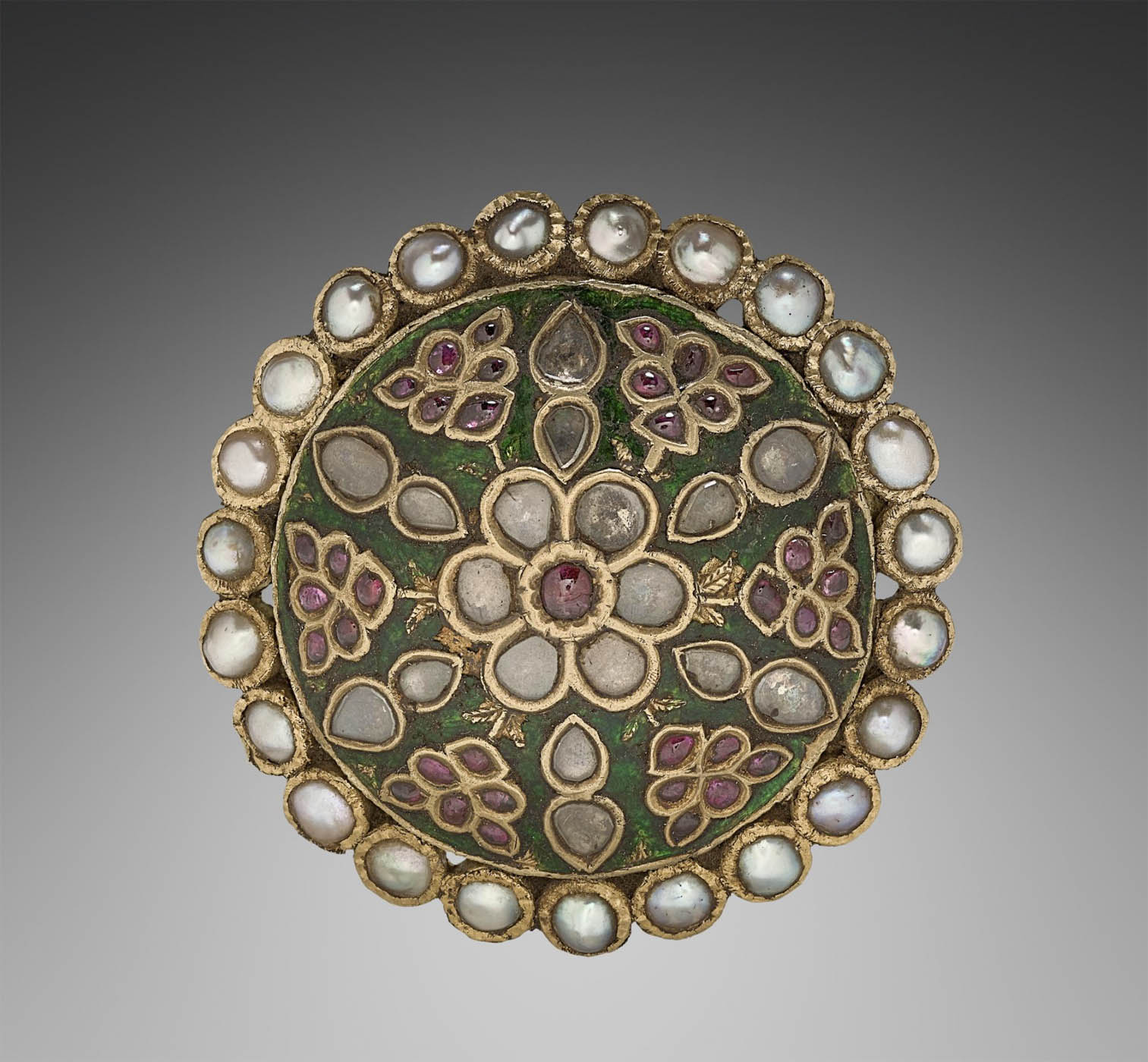
 

Walker Evans (American, 1903-1975)
[Berenice Abbott]
1929-1930
Gelatin silver print
16.9 x 11.8cm (6 5/8 x 4 5/8 in.)
Metropolitan Museum of Art
Purchase, The Horace W. Goldsmith Foundation Gift, through Joyce and Robert Menschel, 1997
© Walker Evans Archive, The Metropolitan Museum of Art


Abbott appraises the camera with cool assurance in this portrait, made just after her return from Paris to New York. Her gamine-short hair and bare face affect a chic nonchalance that intrigued Evans. Describing her to a friend after their first meeting, he wrote: “You would like Berenice Abbott, with her hair brushed forward and her woozy eyes.” Her work likewise impressed the young photographer, then finding his footing in the field. Evans’s picture betrays admiration for his new acquaintance, whose burgeoning career offered a model for his own.


American visionary

What a wonderful photographer Berenice Abbott developed into and what a debt of gratitude we owe her for saving the archive of French photographer Eugène Atget whose photographs initially influenced her urban(e) style.

“Abbott felt the changing city [New York] needed an equivalent to the French photographer Eugène Atget (1857-1927), who had documented Paris during a critical period of transition in the late 19th and early 20th centuries with what Abbott called “the shock of realism unadorned.””

It is interesting to analyse Abbott’s New York photographs in relation to Atget. In photographs such as the grouping on Album Page 9: Fulton Street Fish Market and Lower East Side, Manhattan (1929, below) there is an almost symbiotic relationship between Atget’s photographs of street Petits Métiers (trades and professions) and those of Abbott. “The subjects were not sensational, but nevertheless shocking in their very familiarity,” she said of seeing Atget’s photographs in Man Ray’s studio in 1926. Similarly, we can recognise in Abbott’s grouping in Album Page: City Hall Park and Brooklyn Bridge Vicinity, Manhattan (1929, below) and Pingpank Barbershop, 413 Bleecker Street, Manhattan (1938, below) an affinity with Atget’s photographs of architectural details of door handles and the front of shops.

A step away from Atget’s aesthetic are Abbott’s photographs such as Brooklyn Bridge, With Pier 21, Pennsylvania R.R. (1937, below), West Street (1936, below) and Henry Street from Market, Looking West, Manhattan (1935, below) where the foreground of each photograph mimics Atget’s photographs of Old Paris whilst the soaring background of skyscrapers and bridges is all modernist New York, the near / far of the picture plane becoming old / new. Abbott chronicled “the changing aspect of the world’s great metropolis. … Its hurrying tempo, its congested streets, the past jostling the present.”

Still further away from Atget’s aesthetic are Abbott’s photographs grouped in Album Page 1: Financial District, Broadway and Wall Street Vicinity, Manhattan (1929, below) where the artist uses with the chiaroscuro (the treatment of light and shade) within the canyons of skyscraper New York – and modernist almost constructivist photographs such as Canyon, Broadway and Exchange Place (1936, below) and Manhattan Bridge, Looking Up (1936, below) where the artist plays with pictorial perspective by pointing her camera skywards.

Finally, there are Abbott’s photographs that bear no relation to those of Atget, where Abbott as an artist has stepped out of the older artist’s shadow and developed her own artistic signature. Those wonderfully abstract and enigmatic photographs at lower left and right in Album Page 5: Pier 17, South Street Seaport, Manhattan push the boundaries of 1930s photographic language. In other glorious photographs such as The El at Columbus and Broadway (1929, below) and The El, 2nd and 3rd Avenue Lines, Bowery and Division Street, Manhattan (1936, below) Abbott captured the random disorder of urban activity with a focused intensity of vision that produces magical images… and by that I mean, images that transport you into other spaces, other states of being. Her dadaist poet Tristan Tzara put it this way: “We leave with those leaving arrive with those arriving / leave with those arriving arrive when the others leave.”

Dr Marcus Bunyan


Many thankx to the Metropolitan Museum of Art for allowing me to publish the photographs in the posting. Please click on the photographs for a larger version of the image.


In January 1929, after eight years in Europe, the American photographer Berenice Abbott (1898-1991) boarded an ocean liner to New York City for what was meant to be a short visit. Upon arrival, she found the city transformed and ripe with photographic potential. “When I saw New York again, and stood in the dirty slush, I felt that here was the thing I had been wanting to do all my life,” she recalled. With a handheld camera, Abbott traversed the city, photographing its skyscrapers, bridges, elevated trains, and neighbourhood street life. She pasted these “tiny photographic notes” into a standard black-page album, arranging them by subject and locale.

Consisting of 266 small black-and-white prints arranged on thirty-two pages, Abbott’s New York album marks a key turning point in her career – from her portrait work in Paris to the urban documentation that culminated in her federally funded project, Changing New York (1935-1939). Berenice Abbott’s New York Album, 1929 presents a selection of unbound pages from this unique album, shedding new light on the creative process of one of the great photographic artists of the twentieth century. For context, the exhibition also features views of Paris by Eugène Atget (French, 1857-1927), whose extensive photographic archive Abbott purchased and publicised; views of New York City by her contemporaries Walker Evans, Paul Grotz, and Margaret Bourke-White; and photographs from Changing New York. The exhibition is made possible by The Robert Mapplethorpe Foundation, Inc.

Text from the Metropolitan Museum of Art website


MAP


This map charts some of the locations across Manhattan that Berenice Abbott photographed in her New York Album (1929). As the album bears almost no notations, identifying the exact sites depicted in the photographs had to be done through visual recognition of streets, buildings, and other urban landmarks.

Some of the iconic places Abbott photographed, such as the main branch of the New York Public Library and Trinity Church on Wall Street, haven’t changed much since 1929. Others, such as the city’s four elevated train lines and Harlem’s famed Lafayette Theater, have vanished completely. Several sites have gone through multiple transformations within the past century. The National Winter Garden Theater on Houston Street and Second Avenue opened in 1912 as a cinema and vaudeville theatre. By the time Abbott photographed it in 1929, it had been converted to a burlesque house; today, it’s a Whole Foods. The map is an invitation to explore Abbott’s photographs beyond the confines of the Museum’s galleries, and, like the artist herself, to cherish New York as a vibrant metropolis that is, and always has been, defined by change.

For their invaluable help with the historical research, The Met is grateful to the Jones Family Research Collective: former Manhattan Borough Historian Celedonia “Cal” Jones; his daughter, Diane Jones Randall; and his son, Kenneth Jones. Explore Abbott’s 1929 images of New York here with images of each album page.


Berenice Abbott (American, 1898-1991) 'Eugène Atget' 1927


Berenice Abbott (American, 1898-1991)
Eugène Atget
1927
Gelatin silver print
4 3/8 × 3 5/16 in. (11.1 × 8.4cm)
Metropolitan Museum of Art
Gift of Maria Morris Hambourg, in honour of John Szarkowski, 2020
© Berenice Abbott / Commerce Graphics Ltd. Inc.


Born in Ohio, Berenice Abbott moved to Paris and in 1923 became Man Ray’s darkroom assistant. In 1927 she made this photograph of Atget, the renowned documentarian of the streets of Paris and an unwitting hero of the surrealists; when she returned to his apartment to deliver a print of her portrait, Abbott learned of the elderly artist’s death. The unfortunate circumstance put in motion a process that led to Abbott’s purchase of Atget’s archive of five thousand photographs and one thousand negatives, the first (1930) monograph on Atget (edited by Abbott), and the collection’s eventual acquisition by MoMA in 1968.

In the spring of 1927, Abbott invited Atget to sit for a portrait in her Paris studio. She made only three exposures that day: a standing pose, a frontal view, and this profile view. Unfortunately, Atget never saw the photographs. When Abbott arrived at his apartment a few months later to deliver the proofs, she found that the elderly photographer had died suddenly. This portrait was used as the frontispiece in the first book devoted to his work, Atget, Photographe de Paris (1930), displayed in the case nearby.


Berenice Abbott (American, 1898-1991) 'James Joyce' 1926 from the exhibition 'Berenice Abbott's New York Album, 1929' at the Metropolitan Museum of Art, New York, March - Sept 2023


Berenice Abbott (American, 1898-1991)
James Joyce
1926
Gelatin silver print
23.3 x 17.4cm (9 3/16 x 6 7/8in.)
Metropolitan Museum of Art
Gilman Collection, Purchase, Ann Tenenbaum and Thomas H. Lee Gift, 2005
© Berenice Abbott / Commerce Graphics Ltd. Inc.


Berenice Abbott opened a photographic portrait studio in Paris in 1926 after having worked for three years as an assistant to Man Ray, whom she had met in New York. Although her Paris portraits are indebted stylistically to Man Ray’s, she brought to them a sympathetic eye that was very much her own. Her portraits of women are notable for their empathic understanding of her subjects, but she reached a depth of expression in her photographs of James Joyce (1882-1941). Abbott photographed Joyce on two occasions, the first in 1926 at his home, the second in 1928 at her studio, as was her more customary practice. In spite of Abbott’s annotation on the back of the print, this portrait belongs to the earlier session, when Joyce was photographed both with and without the patch over his eye, worn because of his sadly degenerating sight. For this particular exposure Joyce removed the patch and held it, with his glasses, in his right hand; his forehead still bears the diagonal impression of the ribbon. This intimate portrait, with its softly diffused lighting, suggests the complex, introverted character of Joyce’s imagination. It is with good reason that Abbott’s are considered the definitive portraits of the author of “Ulysses” and “Finnegan’s Wake.”


Berenice Abbott (American, 1898-1991) 'Djuna Barnes' 1925 from the exhibition 'Berenice Abbott's New York Album, 1929' at the Metropolitan Museum of Art, New York, March - Sept 2023


Berenice Abbott (American, 1898-1991)
Djuna Barnes
1925
Gelatin silver print
22.6 x 17.1cm (8 7/8 x 6 3/4 in.)
Purchase, Joyce and Robert Menschel Gift, 1987


Abbott lived with the American writer Djuna Barnes when she moved from Ohio to Greenwich Village in 1918, and the two women remained friends, and occasional romantic rivals, throughout their lives. In this portrait, made in Man Ray’s Paris studio, Barnes is elegantly attired and addresses the camera with a smouldering gaze above a slight smile. A decade later, Barnes would publish Nightwood (1936), a classic of lesbian fiction inspired by her tormented affair with the American artist Thelma Wood (1901-1970), who also had a brief relationship with Abbott.


Berenice Abbott (American, 1898-1991) 'Buddy Gilmore, Paris' 1926-1927 from the exhibition 'Berenice Abbott's New York Album, 1929' at the Metropolitan Museum of Art, New York, March - Sept 2023


Berenice Abbott (American, 1898-1991)
Buddy Gilmore, Paris
1926-1927
Gelatin silver print
23.1 x 17.2cm (9 1/8 x 6 3/4 in.)
Purchase
Gift of the Polaroid Corporation and matching funds from the National Endowment for the Arts, 1981


Gilmore was an American jazz drummer known for his acrobatic dexterity and energetic solos. After seeing him perform at Zelli’s, a nightclub in Paris, Abbott invited him to her studio to pose for this action portrait with his drum set. “I was simply crazy about his playing,” she recalled.


Berenice Abbott (American, 1898-1991) 'Fifth Avenue, Nos. 4, 6, 8, Manhattan' March 20, 1936 from the exhibition 'Berenice Abbott's New York Album, 1929' at the Metropolitan Museum of Art, New York, March - Sept 2023


Berenice Abbott (American, 1898-1991)
Fifth Avenue, Nos. 4, 6, 8
1936
Gelatin silver print
19.2 x 24.4cm (7 9/16 x 9 5/8 in.)
Metropolitan Museum of Art
Ford Motor Company Collection, Gift of Ford Motor Company and John C. Waddell, 1987
© Berenice Abbott / Commerce Graphics Ltd. Inc.


In 1929, after eight years in Paris, Abbott returned to America, bringing with her an immense collection of photographs by Eugène Atget and the ideas of European modernist photographers. Her first pictures of New York show the modernist influence in the sharply angled viewpoints and tendency toward abstraction. By the mid-1930s, however, Atget emerged as the stronger influence, as Abbott’s style became more straightforward and documentary.

In 1935 Abbott embarked on a series documenting New York funded by the Federal Art Project, and during the next four years she made hundreds of images of the city’s monuments and architecture. Ninety-seven of these, including “Fifth Avenue, Nos. 4, 6, 8,” were published in “Changing New York” (1939). The caption for this picture informs us that “No. 8 was once the home of the art collection which formed a part of the original Metropolitan Museum of Art.” It was built in 1856 for John Taylor Johnston, president of the Central Railroad of New Jersey. A leading collector of American art, Johnston was a founder of The Met and was elected its first president in 1870.

The New York Album

Abbott sailed for New York in January 1929, hoping to find an American publisher for a proposed book of Atget’s photographs and to promote her own portrait work. She brought with her a new handheld Curt Bentzin camera, thinking she might make some views of the city to sell to publishers in Europe. Inspired by the towering skyscrapers that had reshaped the American metropolis in the 1920s, Abbott pointed her camera up, down, and at skewed angles, creating dynamic compositions with sharp contrasts of light and shadow. She wandered all over Manhattan, photographing storefronts in Harlem, construction sites in midtown, and street vendors and tenement buildings in Chinatown and on the Lower East Side. She paid special attention to the city’s transportation infrastructure: bridges, elevated train lines, railroad terminals, ships docked on the waterfront.

Without access to a darkroom, Abbott had her negatives processed and printed at local drug stores and commercial labs. She pasted the little prints onto the pages of a standard photo album, creating a kind of sketchbook of subjects and themes. When The Met acquired it between 1978 and 1984, the album had already been disbound. Abbott reconstructed the sequence of the first eleven pages displayed here for a publication in 2013; the order of the remaining pages is unknown.

Changing New York

Abbott’s New York album laid the groundwork for her ambitious documentary project Changing New York (1935-1939). Comprising more than 300 negatives and a wealth of research, the project was funded by the Federal Art Project of the Works Progress Administration, a government program dedicated to supporting unemployed artists during the Great Depression. Aided by a team of researchers, field assistants, and darkroom technicians, Abbott chronicled “the changing aspect of the world’s great metropolis. … Its hurrying tempo, its congested streets, the past jostling the present.” She returned to many of the locations she visited in 1929, but the new photographs, made with a large-format view camera like the one Atget used, are more straightforward and less influenced by the jazzy, sharp-angled style of European modernism. The project culminated in a book, published in 1939, featuring ninety-seven photographs with captions by Abbott’s companion, the art critic Elizabeth McCausland. The photographs were widely exhibited and complete sets of the final images were distributed to high schools, libraries, and other public institutions throughout the New York area.


Berenice Abbott (American, 1898-1991) [Album Page 1: Financial District, Broadway and Wall Street Vicinity, Manhattan] 1929


Berenice Abbott (American, 1898-1991)
[Album Page 1: Financial District, Broadway and Wall Street Vicinity, Manhattan]
1929
Gelatin silver prints
Images: approx. 2 1/4 × 3 1/4 in. (5.7 × 8.2cm), and the reverse
Album Page: 10 × 13 in. (25.4 × 33cm), irregular
Metropolitan Museum of Art
© Berenice Abbott / Commerce Graphics Ltd. Inc.
Gift of Emanuel Gerard, 1984


Berenice Abbott (American, 1898-1991) [Album Page 1: Financial District, Broadway and Wall Street Vicinity, Manhattan] 1929 (detail)


Berenice Abbott (American, 1898-1991)
[Album Page 1: Financial District, Broadway and Wall Street Vicinity, Manhattan] (detail)
1929
Gelatin silver prints
Images: approx. 2 1/4 × 3 1/4 in. (5.7 × 8.2cm), and the reverse
Album Page: 10 × 13 in. (25.4 × 33cm), irregular
Metropolitan Museum of Art
© Berenice Abbott / Commerce Graphics Ltd. Inc.
Gift of Emanuel Gerard, 1984


Berenice Abbott (American, 1898-1991) 'Page from New York Album' 1929-1930 (detail)

Berenice Abbott (American, 1898-1991) 'Page from New York Album' 1929-1930 (detail)

Berenice Abbott (American, 1898-1991) 'Page from New York Album' 1929-1930 (detail)

Berenice Abbott (American, 1898-1991) 'Page from New York Album' 1929-1930 (detail)

Berenice Abbott (American, 1898-1991) 'Page from New York Album' 1929-1930 (detail)


Berenice Abbott (American, 1898-1991)
[Album Page 1: Financial District, Broadway and Wall Street Vicinity, Manhattan] (details)
1929
Gelatin silver prints
Images: approx. 2 1/4 × 3 1/4 in. (5.7 × 8.2cm), and the reverse
Album Page: 10 × 13 in. (25.4 × 33cm), irregular
Metropolitan Museum of Art
© Berenice Abbott / Commerce Graphics Ltd. Inc.
Gift of Emanuel Gerard, 1984


If you were an American artist or writer in the 1920s, Paris was where you wanted to be. Springfield, Ohio-born photographer Berenice Abbott (1898-1991) arrived there in 1921 by way of New York, and by early 1929 she had managed to establish herself in the French capital’s flourishing interwar avant-garde scene – first working as an assistant to Man Ray and later taking her own celebrated portraits of luminaries such as James Joyce and Djuna Barnes. She even changed the spelling of her name from “Bernice” to the more Gallic “Berenice.”

Yet somehow this magnet for culturally minded expatriates lost its hold on Abbott the moment she set foot in Lower Manhattan – on a messy January day, no less – at the beginning of what was supposed to be a short trip back to the United States. She had lived in New York once, just eight years before, but in her absence the city had been scaled up: new skyscrapers were rising, the population was exploding, and every block, it seemed, was abuzz with commerce and construction. (The market crash of October 1929 was still many months away). Suddenly, Paris was passe. “When I saw New York again, and stood in the dirty slush,” she later recalled, “I felt that here was the thing I had been wanting to do all my life.”

“Berenice Abbott’s New York Album, 1929,” a small but inspiring show at the Metropolitan Museum, channels the exhilaration Abbott felt upon arriving in the city. The exhibition’s focus is a disbound scrapbook with seven to nine photographs per page, all taken over the course of that year, as Abbott paced the streets (and piers, bridges and train platforms) with a hand-held camera and a compulsion to capture New York’s unruly, cutthroat modernity.

With its 32 pages of small contact prints processed at drugstores and commercial labs (or as Abbott called them, “tiny photographic notes”), the album can be seen as a rough draft of her well-known Works Progress Administration project of the 1930s, “Changing New York.” (Several examples from this later series are in the Met show, including a disconcertingly ethereal view of Seventh Avenue taken from the top of a 46-story building in the garment district.) But Abbott’s “New York Album” is a fascinating artwork in its own right, an adrenalized and ambitious alignment of artist and subject.

Abbott felt the changing city needed an equivalent to the French photographer Eugène Atget (1857-1927), who had documented Paris during a critical period of transition in the late 19th and early 20th centuries with what Abbott called “the shock of realism unadorned.” She had come to New York as part of an impassioned effort to promote Atget’s oeuvre, one that included purchasing the photographer’s archive after his death and making her own prints from his glass-plate negatives; in the “New York Album” she goes further, becoming, in effect, his heir.

The Met’s exhibition incorporates several Atget photographs from the museum’s collection, including one that Abbott was known to admire; it shows an early automobile garage in the Fifth Arrondissement, with a Renault parked in a cobblestoned courtyard. A similar appreciation for the collision of the newfangled with the outmoded can be seen throughout Abbott’s “New York Album,” in shots of skyscrapers looming over rows of tenements and, in one more subtle and almost surreal case, an overhead view of an equine statue photographed from the Ninth Avenue El.

Although the album is not strictly organized by location, it has a distinct cartography. Abbott gravitated to certain neighborhoods that, for her, showed the face of the new city emerging. Many of them were in lower Manhattan; multiple pages are devoted to the Lower East Side, where she was drawn to storefronts and their simultaneously poetic and transactional signage, and the Financial District, where she often pointed her camera skyward to exaggerate the intimidating height of new corporate towers.

Unlike peers such as Walker Evans, she did not take much of an interest in the human subject – or, at least, in individuals. To her, the city was a human construction and humanity was implicit in every part of it. “You’re photographing people when you’re photographing a city,” she explained in a documentary film about her life. “You don’t have to have a person in it.”

As Abbott’s biographer has noted, she was influenced by the French literary movement of Unanimism, which emphasized collective consciousness and expression. You can sense this especially in her shots of the city’s elevated train system, which revel in the formal modernism of all that interlaced steel and cast iron without losing sight of its function of moving millions of people.

As an extension of the exhibition, the Met has created a helpful digital map that identifies some of the subjects in Abbott’s album and updates them with present-day photographs (a collaboration between the Met curator of photography who organized the exhibition, Mia Fineman, and the Jones Family Research Collective, led by the Manhattan borough historian emeritus, Celedonia Jones, until his death last April). It reveals, for example, that the site of a burlesque theater on Houston Street photographed by Abbott is now a Whole Foods.

Visitors to the exhibition can spend a lot of time testing their own knowledge of the city’s geography, but the pleasures of the show have more to do with the drive and dynamism behind the pictures. “Berenice Abbott’s New York Album, 1929” takes us back to an invigorating moment in the history of the metropolis, captured on the fly by an emergent modern artist.

During her upbringing in Ohio, Abbott had planned to be a journalist – she attended Ohio State University’s School of Journalism before turning to art – and it’s clear from her photography that she never lost that instinct for wanting to be where the story was. In those early months of 1929 she recognized that New York was the big story; looking at her “New York Album” gives us hope that it could be again.

Karen Rosenberg. “Berenice Abbott Captured Manhattan in the Throes of Heady Change,” on the New York Times website August 16, 2023 [Online] Cited 21/08/2023


Unanimism

Unanimism (French: Unanimisme) is a movement in French literature begun by Jules Romains in the early 1900s, with his first book, La vie unanime, published in 1904. It can be dated to a sudden conception Romains had in October 1903 of a ‘communal spirit’ or joint ‘psychic life’ in groups of people. It is based on ideas of collective consciousness and collective emotion, and on crowd behaviour, where members of a group do or think something simultaneously. Unanimism is about an artistic merger with these group phenomena, which transcend the consciousness of the individual. Harry Bergholz writes that “grossly generalising, one might describe its aim as the art of the psychology of human groups”. Because of this collective emphasis, common themes of unanimist writing include politics and friendship.

Text from the Wikipedia website


Berenice Abbott (American, 1898-1991) [Album Page: Madison Square Park, Third Avenue and Ninth Avenue Elevated Train Lines, Manhattan] 1929


Berenice Abbott (American, 1898-1991)
[Album Page: Madison Square Park, Third Avenue and Ninth Avenue Elevated Train Lines, Manhattan]
1929
Gelatin silver prints
Images: 5.3 x 7.8cm (2 1/16 x 3 1/16 in.)
Sheet: 6.4 x 8.7cm (2 1/2 x 3 7/16 in.)
Album Page: 25.4 x 30.3cm (10 x 11 15/16in.)
Metropolitan Museum of Art
© Berenice Abbott / Commerce Graphics Ltd. Inc.
Gift of Emanuel Gerard, 1978


In 1921 Ohio-native Abbott left New York to study in Paris. Returning to the city in 1929, she found it transformed and ripe with photographic potential. Following the model of the French photographer Eugène Atget, whose street views of Paris she admired, Abbott ventured around New York photographing seemingly incidental, but often profound, scenes that captured the city’s changing character. This page of small-scale photographs is one example of many of similar album pages in the Metropolitan’s collection. Assembled by Abbott, the album from which they derive comprised a kind of photographer’s sketchbook for subjects and themes.


Berenice Abbott (American, 1898-1991) [Album Page: City Hall Park and Brooklyn Bridge Vicinity, Manhattan] 1929


Berenice Abbott (American, 1898-1991)
[Album Page: City Hall Park and Brooklyn Bridge Vicinity, Manhattan]
1929
Gelatin silver print
Album Page: 25.4 x 33.2 cm (10 x 13 1/16 in.), irregular
Metropolitan Museum of Art
© Berenice Abbott / Commerce Graphics Ltd. Inc.
Gift of Emanuel Gerard, 1981


Berenice Abbott (American, 1898-1991) [Album Page 5: Pier 17, South Street Seaport, Manhattan] 1929


Berenice Abbott (American, 1898-1991)
[Album Page 5: Pier 17, South Street Seaport, Manhattan]
1929
Gelatin silver prints
Images: approx. 5.6 x 8.2cm (2 1/4 x 3 1/4 in.), and the reverse
Album Page: 25.3 x 30.5cm (9 15/16 x 12 in.), irregular
Metropolitan Museum of Art
© Berenice Abbott / Commerce Graphics Ltd. Inc.
Gift of Emanuel Gerard, 1982


Berenice Abbott (American, 1898-1991) [Album Page 9: Fulton Street Fish Market and Lower East Side, Manhattan] 1929


Berenice Abbott (American, 1898-1991)
[Album Page 9: Fulton Street Fish Market and Lower East Side, Manhattan]
1929
Gelatin silver print
Images: approx. 5.6 x 8.2cm (2 1/4 x 3 1/4 in.), and the reverse
Album Page: 25.3 x 30.5 cm (9 15/16 x 12 in.), irregular
Metropolitan Museum of Art
© Berenice Abbott / Commerce Graphics Ltd. Inc.
Gift of Emanuel Gerard, 1981


Berenice Abbott (American, 1898-1991) [Sumner Healy Antique Shop, 942 3rd Avenue near 57th Street, Manhattan] 1930s, printed 1936


Berenice Abbott (American, 1898-1991)
[Sumner Healy Antique Shop, 942 3rd Avenue near 57th Street, Manhattan]
1930s, printed 1936
Gelatin silver print
8 1/8 × 9 15/16 in. (20.6 × 25.2cm)
Metropolitan Museum of Art
Gift of Phyllis D. Massar, 1971
© Berenice Abbott / Commerce Graphics Ltd. Inc.


In 1935 Abbott embarked on a series of photographs documenting New York City. Funded by the Federal Art Project, during the next four years she made hundreds of images of the city’s monuments and architecture, including this one of Sumner Healey’s shop. Attracted to the “extraordinary montage of antiques” – anchored by a ten-foot-tall figurehead of Mars from an eighteenth-century battleship – Abbott also captured the owner’s cat, seemingly trapped on either side by the decorative dogs flanking the store’s entrance. Healey died soon after Abbott made this photograph, and the shop closed two years later.


Berenice Abbott (American, 1898-1991) 'Pingpank Barbershop, 413 Bleecker Street, Manhattan' 1938


Berenice Abbott (American, 1898-1991)
Pingpank Barbershop, 413 Bleecker Street, Manhattan
1938
Gelatin silver print
24.5 × 19.7cm (9 5/8 × 7 3/4 in.)
Twentieth Century Photography Fund, 2013


With its subtle interplay of reflection and interior, this slightly oblique view of a barbershop window reveals the influence of Atget’s photographs of Parisian storefronts. When Abbott made this image, August Pingpank was eighty-seven and was said to be the oldest barber in New York City. He lamented to Federal Art Project researchers that he would soon have to retire due to the invention of the safety razor: “It’s different now with men shaving themselves every morning at home.”


Berenice Abbott’s New York Album, 1929 presents selections from a unique unbound album of photographs of New York City created by American photographer Berenice Abbott (1898-1991), shedding light on the creative process of one of the great artists of the 20th century. Consisting of 266 small black-and-white prints arranged on 32 pages, the album is a kind of photographic sketchbook that offers a rare glimpse of an artist’s mind at work. In addition to some 25 framed album pages, the exhibition features photographs from The Met collection of Paris streets by Eugène Atget, whose archive Abbott purchased and promoted; views of New York by her contemporaries Walker Evans and Margaret Bourke-White; and selections from Abbott’s grand documentary project, Changing New York (1935-1939).

“Berenice Abbott’s groundbreaking work in photography continues to inspire and captivate audiences today, nearly a century after she first began documenting the world around her,” said Max Hollein, Marina Kellen French Director of The Met. “Abbott’s insightful and powerful images provide a window into the New York of the past, while also reminding us of the city’s enduring vitality and resilience.”

Born in Ohio, Abbott moved to New York City in 1918 and to Paris in 1921. She learned photography as a darkroom assistant in Man Ray’s studio and soon established herself as a prominent portraitist of the Parisian avant-garde. Through Man Ray, Abbott met the ageing French photographer Eugène Atget, whose documentation of Paris and its environs struck her as a model of modern photographic art. Following Atget’s sudden death in 1927, she purchased his archive of some 8,000 prints and 1,500 glass negatives and set about promoting his work through exhibitions and publications.

In January 1929, after eight years in Europe, Abbott boarded an ocean liner to New York City for what was intended to be a short visit. Upon arrival, she found the city transformed and ripe with photographic potential. “When I saw New York again, and stood in the dirty slush, I felt that here was the thing I had been wanting to do all my life,” she recalled. Inspired by Atget, Abbott traversed the city with a handheld camera, photographing its skyscrapers, storefronts, bridges, elevated trains, and neighbourhood street life. She pasted these “notes” into a standard black-page album, arranging them by subject and locale. As the immediate precursor to her 1930s WPA project, Changing New York, Abbott’s New York album marks a key moment of transition in her career: from Europe to America and from studio portraiture to urban documentation. The exhibition will be accompanied by an online feature that identifies, for the first time, the locations of many of the photographs in the album.

Berenice Abbott’s New York Album, 1929 is organised by Mia Fineman, Curator in the Department of Photographs, with assistance from Virginia McBride, Research Assistant in the Department of Photographs, both at The Met.

Press release from the Metropolitan Museum of Art


Berenice Abbott (American, 1898-1991) 'The El at Columbus and Broadway' 1929


Berenice Abbott (American, 1898-1991)
The El at Columbus and Broadway
1929
15.0 x 20.3cm (5 15/16 x 8 in.)
Metropolitan Museum of Art
Ford Motor Company Collection, Gift of Ford Motor Company and John C. Waddell, 1987
© Berenice Abbott / Commerce Graphics Ltd. Inc.


Following her eight years of expatriate life in Paris, Abbott saw New York with European eyes. In this view, made shortly after her return, she captured the random disorder of urban activity as handily as her friend the dadaist poet Tristan Tzara, who put it this way: “We leave with those leaving arrive with those arriving / leave with those arriving arrive when the others leave.”


Berenice Abbott (American, 1898-1991) [The El, 2nd and 3rd Avenue Lines, Bowery and Division Street, Manhattan] 1936


Berenice Abbott (American, 1898-1991)
[The El, 2nd and 3rd Avenue Lines, Bowery and Division Street, Manhattan]
1936
Gelatin silver print
Image: 9 11/16 × 7 5/8 in. (24.6 × 19.3cm)
Sheet: 9 7/8 × 7 15/16 in. (25.1 × 20.1cm)
Metropolitan Museum of Art
© Berenice Abbott / Commerce Graphics Ltd. Inc.
Gift of Phyllis D. Massar, 1971


Manhattan’s elevated (El) train lines fascinated Abbott when she first photographed the city in 1929. Seven years later, she used her large-format camera to capture this shadowed vista beneath the El in Chinatown. “I was right in the middle of the street on a little island,” she recalled. “This was one of the occasions when it was downright dangerous to document New York, with traffic whizzing by on both sides, but it was very important to get in exactly the right position to make the photograph work.”


Berenice Abbott (American, 1898-1991) [Manhattan Bridge] 1936


Berenice Abbott (American, 1898-1991)
[Manhattan Bridge]
1936
Gelatin silver print
Metropolitan Museum of Art
Gift of Phyllis D. Massar, 1971
© Berenice Abbott / Commerce Graphics Ltd. Inc.


The Brooklyn Bridge was New York’s first and most famous, but Abbott favoured the all-steel Manhattan Bridge, completed in 1909. She made this photograph on the southern pedestrian walkway; the vibrations of the suspension bridge required a fast shutter speed to avoid blur. “I seem to veer toward waterfronts,” she later said. “As Melville wrote in Moby Dick, the heart of a port city is around its waterfront, and by nature I seem to head right there. Perhaps I should have been a sailor – boats and bridges have always fascinated me.”


Berenice Abbott (American, 1898-1991) [Seventh Avenue Looking South from Thirty-fifth Street, New York] 1935


Berenice Abbott (American, 1898-1991)
[Seventh Avenue Looking South from Thirty-fifth Street, New York]
1935
Gelatin silver print
Metropolitan Museum of Art
Gift of Phyllis D. Massar, 1971
© Berenice Abbott / Commerce Graphics Ltd. Inc.


Abbott made this overhead view of skyscrapers in the garment district from atop the forty-six-story Nelson Tower on Seventh Avenue. The roof of the original Pennsylvania Station, demolished in 1962, can be seen in the lower right corner.


Berenice Abbott (American, 1898-1991) 'Canyon, Broadway and Exchange Place' 1936


Berenice Abbott (American, 1898-1991)
Canyon, Broadway and Exchange Place
1936
Gelatin silver print
23.8 x 19.3cm (9 3/8 x 7 5/8 in.)
Metropolitan Museum of Art
Gift of Joyce and Robert Menschel, 1991
© Berenice Abbott / Commerce Graphics Ltd. Inc.


Berenice Abbott (American, 1898-1991) 'Manhattan Bridge, Looking Up' 1936


Berenice Abbott (American, 1898-1991)
Manhattan Bridge, Looking Up
1936
Gelatin silver print
24.5 x 19.4cm (9 5/8 x 7 5/8 in.)
Metropolitan Museum of Art
Gift of Phyllis D. Massar, 1971
© Berenice Abbott / Commerce Graphics Ltd. Inc.


Berenice Abbott (American, 1898-1991) 'Brooklyn Bridge, With Pier 21, Pennsylvania R.R.' 1937


Berenice Abbott (American, 1898-1991)
Brooklyn Bridge, With Pier 21, Pennsylvania R.R.
1937
Gelatin silver print
19.4 x 24.4cm (7 5/8 x 9 5/8 in.)
Metropolitan Museum of Art
Gift of Joyce and Robert Menschel, 1991
© Berenice Abbott / Commerce Graphics Ltd. Inc.


Berenice Abbott (American, 1898-1991) 'West Street' 1936


Berenice Abbott (American, 1898-1991)
West Street
1936
Gelatin silver print
19.1 x 24cm (7 1/2 x 9 7/16 in. )
Metropolitan Museum of Art
Gift of Jane and Mark Ciabattari, 2000
© Berenice Abbott / Commerce Graphics Ltd. Inc.


Berenice Abbott (American, 1898-1991) 'Henry Street from Market, Looking West, Manhattan' 1935


Berenice Abbott (American, 1898-1991)
Henry Street from Market, Looking West, Manhattan
1935
Gelatin silver print
19.2 x 24.2cm (7 9/16 x 9 1/2 in.)
Metropolitan Museum of Art
Gift of Joyce F. Menschel, 2012
© Berenice Abbott / Commerce Graphics Ltd. Inc.


Berenice Abbott (American, 1898-1991) 'Automat, 977 Eighth Avenue, Manhattan' 1936


Berenice Abbott (American, 1898-1991)
Automat, 977 Eighth Avenue, Manhattan
1936
Gelatin silver print
Image: 19.4 x 24.6cm (7 5/8 x 9 11/16 in.)
Sheet: 22 x 25.3cm (8 11/16 x 9 15/16 in.)
Metropolitan Museum of Art
Gift of Joyce F. Menschel, 2011
© Berenice Abbott / Commerce Graphics Ltd. Inc.


During the Depression, Horn & Hardart’s chain of “waiterless restaurants” served as many as eight hundred thousand freshly prepared meals a day to customers in New York and Philadelphia. With its clean lines, polished chrome details, and mechanical efficiency, the Automat struck Abbott as “an extremely American artefact.” New York’s first Automat opened in Times Square in 1912, but Abbott chose to document the branch at Columbus Circle, popular as a nighttime gathering spot for musicians and cabaret patrons.


Eugène Atget (French, 1857-1927)


Eugène Atget (French, 1857-1927) Printer: Berenice Abbott (American, 1898-1991) 'Street Musicians' 1898-1999, printed 1956


Eugène Atget (French, 1857-1927)
Printer: Berenice Abbott (American, 1898-1991)
Street Musicians
1898-1999, printed 1956
Title page from the portfolio 20 Photographs by Eugène Atget (1856-1927), 1956
Published by Berenice Abbott, New York Gelatin silver print from glass negatives David Hunter McAlpin Fund, 1956


In 1956 Abbott produced a portfolio of twenty new prints from Atget’s glass-plate negatives and offered it by subscription to museums, libraries, and private collectors. This photograph of an organ grinder and exuberant female singer belongs to a series of photographs devoted to the rapidly vanishing street trades, or petits métiers, of Paris.


Eugène Atget (French, 1857-1927) [Atget's Work Room with Contact Printing Frames] c. 1910


Eugène Atget (French, 1857-1927)
[Atget’s Work Room with Contact Printing Frames]
c. 1910
Albumen silver print from glass negative
20.9 x 17.3cm (8 1/4 x 6 13/16 in.)
Metropolitan Museum of Art
Purchase, The Horace W. Goldsmith Foundation Gift, through Joyce and Robert Menschel, 1990


This straightforward study by Atget of his own work room offers a rare glimpse of the inner sanctum of an auteur éditeur, as he described his profession. On the table are the wooden frames the photographer used to contact print his glass negatives; at right are several bins of negatives stacked vertically; below the table are his chemical trays; on the shelves above are stacks of paper albums – a shelf label reads escaliers et grilles (staircases and grills). Atget used these homemade albums to organise his vast picture collection from which he sold views of old Paris to clients.


Eugène Atget (French, 1857-1927) '15, rue Maître-Albert' 1912


Eugène Atget (French, 1857-1927)
15, rue Maître-Albert
1912
Gelatin silver print from glass negative
23.2 x 17.6 cm (9 1/8 x 6 15/16 in.)
Metropolitan Museum of Art
Rogers Fund, 1991
Creative Commons CC0 1.0


Eloquent testimony to Atget’s keen regard for the expressions of common folk, this photograph was part of a self-assigned survey of storefronts and commercial signs. Atget ennobled the little grocery with its modest façade and rudimentary display (covered for lunch hour against the midday heat) and framed it simply, thus withdrawing it from the predictable realm of the picturesque.


Eugène Atget (French, 1857-1927) 'Courtyard, 7 Rue de Valence, 5th arr.' June 1922


Eugène Atget (French, 1857-1927)
Courtyard, 7 Rue de Valence, 5th arr.
1922
Gelatin silver print from glass negative
Image: 17.2 x 22.7cm (6 3/4 x 8 15/16 in.)
Mount: 36.7 x 28.7cm (14 7/16 x 11 5/16 in.)
Metropolitan Museum of Art
Gilman Collection, Purchase, Ann Tenenbaum and Thomas H. Lee Gift, 2005


Atget found his vocation in photography in 1897, at the age of forty, after having been a merchant seaman, an itinerant actor, and a painter. He became obsessed with making what he termed “documents” of Paris and its environs, and with compiling a visual compendium of the architecture, landscape, and artefacts that distinguish French culture and its history. By the end of his life, Atget had amassed an archive of over 8,000 negatives that he had organised into such categories as Parisian Interiors, Petits Métiers (trades and professions), and Vehicles in Paris.

The subject of this photograph is an early automobile garage occupying a timeworn courtyard near the intersection of rue Mouffetard and rue Monge in the fifth arrondissement. Although Atget’s interest was primarily in the texture of old Paris – not the city’s new promenades and modern monuments – he did make a few studies of automobiles, signs of modern times, beginning in 1922. Beside a pair of motorcycles rests an early-model Renault touring car, probably dating from 1908. It, too, may be a relic: its four-cylinder engine lies beside it.


Eugène Atget (French, 1857-1927) Printer: Berenice Abbott (American, 1898-1991) 'Fête du Trône' 1925, printed c. 1929


Eugène Atget (French, 1857-1927)
Printer: Berenice Abbott (American, 1898-1991)
Fête du Trône
1925, printed c. 1929
Matte gelatin silver print from glass negative
23.4 x 17cm (9 3/16 x 6 11/16 in.)
Metropolitan Museum of Art
Purchase, The Horace W. Goldsmith Foundation Gift, through Joyce and Robert Menschel, 1999


Abbott made new contact prints from Atget’s glass-plate negatives, experimenting with various photographic papers and processes to try to approximate the clarity and detail of Atget’s own prints. Sometime early in 1930, Walker Evans visited Abbott’s studio in New York’s Hotel des Artistes, where she stored her vast Atget archive. Deeply affected by the French photographer’s work, Evans left that day with four of Abbott’s Atget prints: this one, Boutique, Marché aux Halles (displayed to the right), and two others. Although Atget’s work was never exhibited during his lifetime, his soulful documentation of Paris had a profound impact on both Abbott and Evans, and contributed to the emergence of a documentary style in twentieth-century American art photography.

Learning from Atget

When Abbott met Eugène Atget in 1926, he had been photographing Paris for thirty years. Working with a large wooden-view camera, Atget made what he modestly called “documents” of the city, compiling a vast visual archive of Parisian streets, courtyards, gardens, shop windows, architectural details, apartment interiors, and tradespeople. Atget’s studio was on the same street in Montparnasse as that of Man Ray, who purchased several dozen of his photographs, publishing four of them in the journal La Révolution surréaliste. Abbott was instantly captivated by Atget’s photographs when she encountered them in Man Ray’s studio. “Their impact was immediate and tremendous,” she recalled. “There was a sudden flash of recognition – the shock of realism unadorned. The subjects were not sensational, but nevertheless shocking in their very familiarity.” In 1927 Abbott persuaded Atget to sit for a portrait in her own studio on the rue du Bac. Months later, following his sudden death at age seventy, she purchased his archive of some 8,000 prints and 1,500 glass negatives and set about promoting his work through exhibitions, publications, and sales of the prints, a selection of which are on display here. When she moved to New York in 1929, Abbott brought the archive with her, and eventually sold it to the Museum of Modern Art in 1968.


Eugène Atget (French, 1857-1927) Printer: Berenice Abbott (American, 1898-1991) 'Boutique, Marché aux Halles, Paris' 1925, printed c. 1929


Eugène Atget (French, 1857-1927)
Printer: Berenice Abbott (American, 1898-1991)
Boutique, Marché aux Halles, Paris
1925, printed c. 1929
Matte gelatin silver print from glass negative
23.1 x 17cm (9 1/8 x 6 11/16 in. )
Metropolitan Museum of Art
Purchase, The Horace W. Goldsmith Foundation Gift, through Joyce and Robert Menschel, 1999
Creative Commons CC0 1.0


Eugène Atget (French, 1857-1927) 'Rue Laplace and Rue Valette, Paris' 1926


Eugène Atget (French, 1857-1927)
Rue Laplace and Rue Valette, Paris
1926
Gelatin silver print from glass negative
Image: 22 x 17.6cm (8 11/16 x 6 15/16 in.)
Metropolitan Museum of Art
The Elisha Whittelsey Collection, The Elisha Whittelsey Fund, by exchange, 1970
Creative Commons CC0 1.0


Eugène Atget (French, 1857–1927) 'Avenue des Gobelins' 1927


Eugène Atget (French, 1857-1927)
Avenue des Gobelins
1927
Gelatin silver print from glass negative
36.8 x 28.6cm (14 1/2 x 11 1/4 in.)
Metropolitan Museum of Art
Purchase, Rogers Fund, and Joyce and Robert Menschel and Harriette and Noel Levine Gifts, 1994


In this headless mannequin, clothed in a simple white uniform, Atget recognised a modern version of the commedia dell’arte clown Gilles, depicted by the eighteenth-century painter Jean Antoine Watteau, for example. It was for the type of transforming vision seen in this picture, which is among the very last in Atget’s lifelong exploration of Paris, that the artist’s work was so enthusiastically embraced by the Surrealists.


The Metropolitan Museum of Art
1000 Fifth Avenue at 82nd Street
New York, New York 10028-0198
Phone: 212-535-7710

Opening hours:
Thursday – Tuesday 10am – 5pm
Closed Wednesday

The Metropolitan Museum of Art website

LIKE ART BLART ON FACEBOOK

Back to top