Exhibition: ‘Lorna Simpson’ at Jeu de Paume, Paris

Exhibition dates: 28th May – 1st September 2013
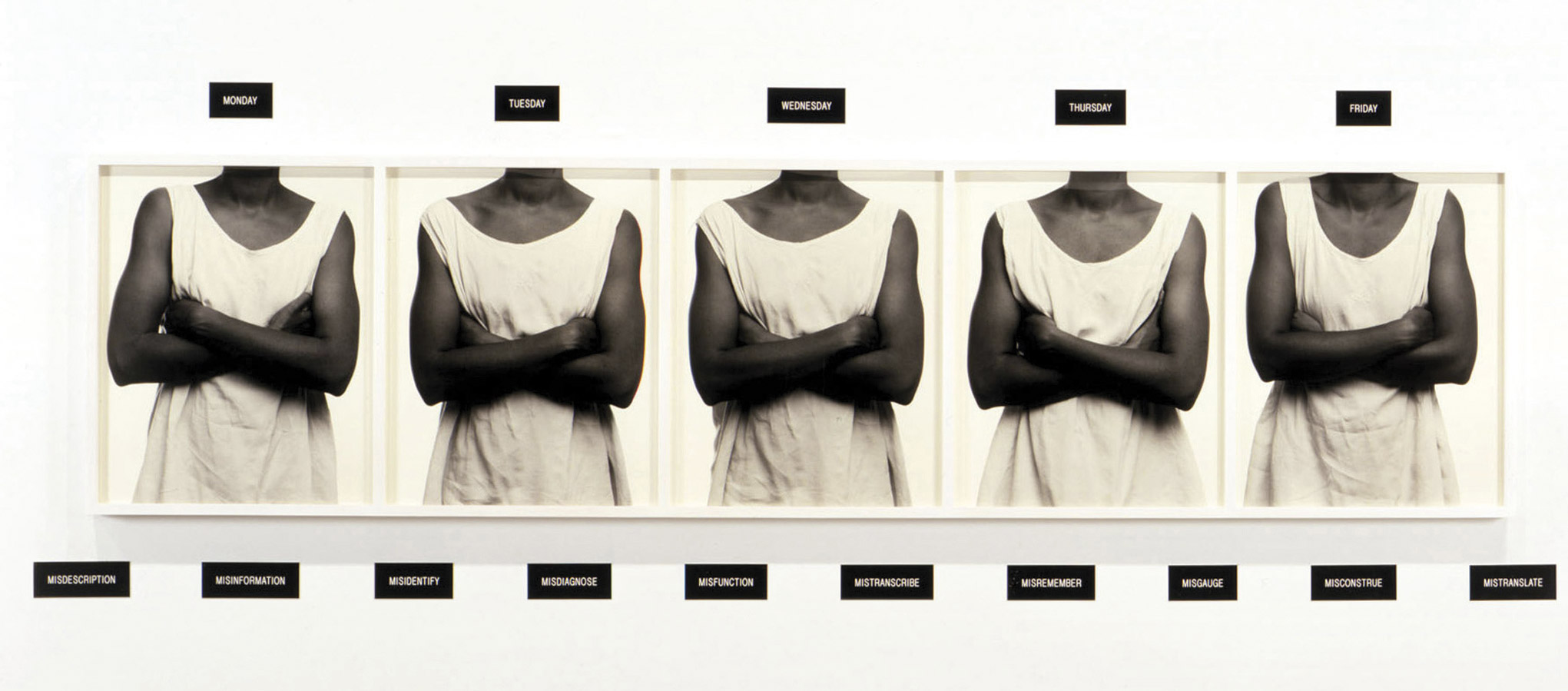
 

Lorna Simpson (American, b. 1960) 'Five Day Forecast (Prévisions à cinq jours)' 1988


Lorna Simpson (American, b. 1960)
Five Day Forecast (Prévisions à cinq jours)
1988
5 gelatin silver prints in a frame, 15 plates engraved plastic
24 1/2 x 97 in (62.2 x 246.4cm) overall
Lillian and Billy Mauer Collection
© Lorna Simpson


A fascinating practice!

Identity, memory, gender, representation, the body, the subject, felt, text, images, video, gesture, reenactment, concept and performance, all woven together seamlessly like a good wig made of human hair…

Dr Marcus Bunyan


Many thankx to Jeu de Paume for allowing me to publish the photographs in the posting. Please click on the photographs for a larger version of the image.
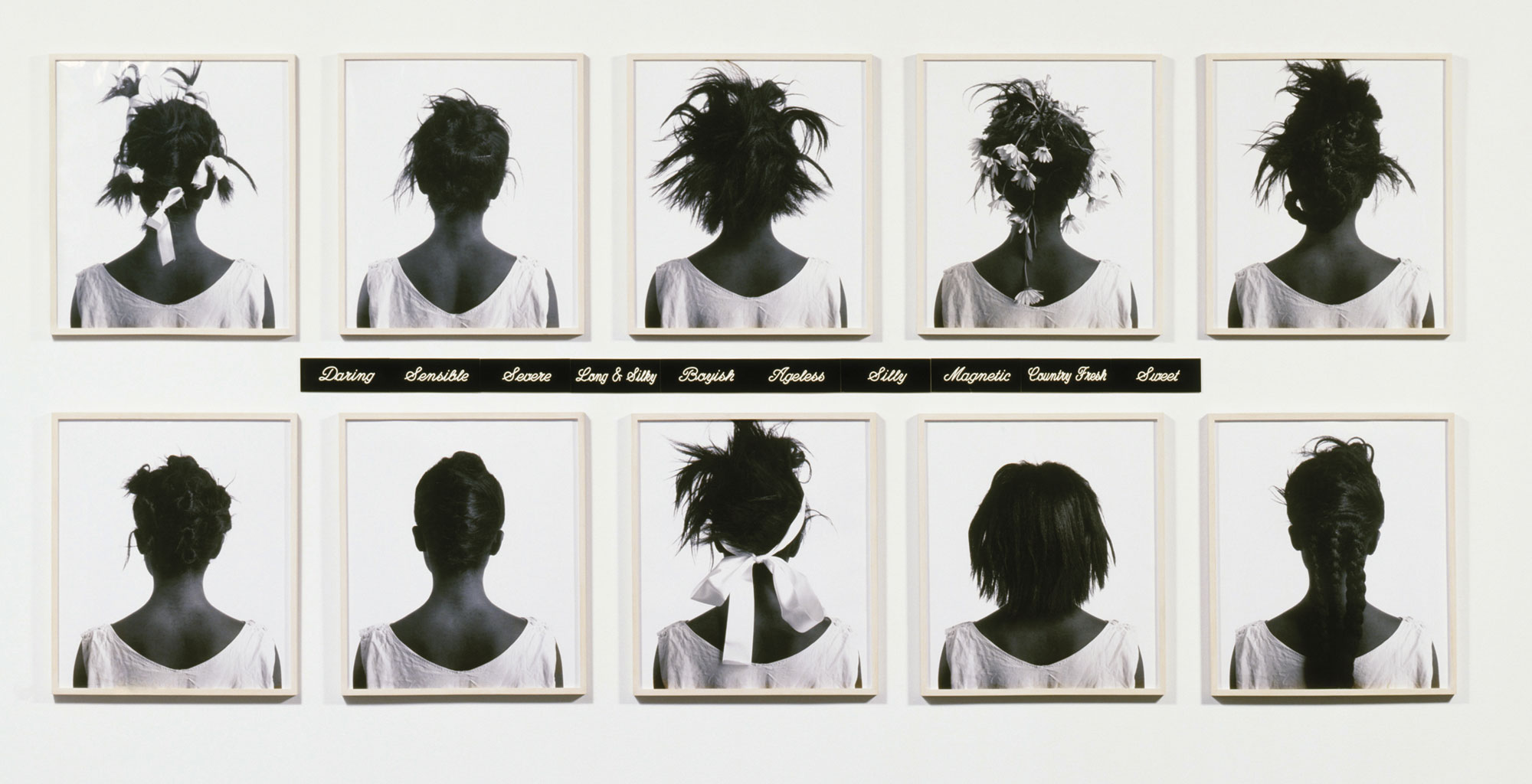


Lorna Simpson (American, b. 1960) 'Stereo Styles (Styles stéréo)' 1988


Lorna Simpson (American, b. 1960)
Stereo Styles (Styles stéréo)
1988
10 dye-diffusion black-and-white Polaroid prints, 10 engraved plastic plaques
57 3/4 x 125 1/4 x 1 3/8 in (146.7 x 318.1 x 3.5cm) overall
Collection of Melva Bucksbaum and Raymond Learsy
© Lorna Simpson
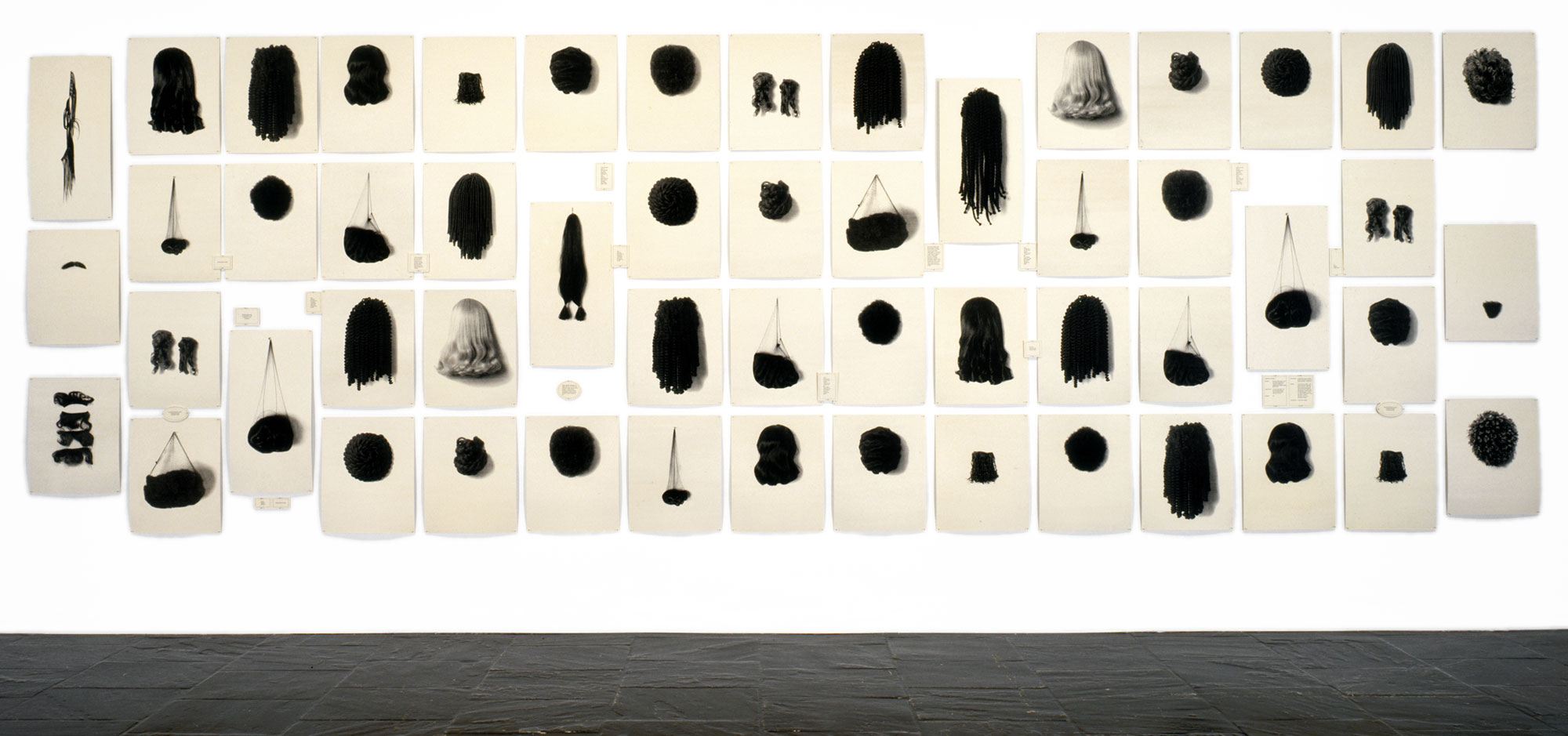
 

Lorna Simpson (American, b. 1960) 'Wigs II' 1994-2006


Lorna Simpson (American, b. 1960)
Wigs II
1994-2006
Serigraph on 71 felt panels (images and text)
98 x 265 in (248.9 x 673.1cm) overall
Courtesy the artist; Salon 94, New York; and Galerie Nathalie Obadia, Paris/Brussels
© Lorna Simpson


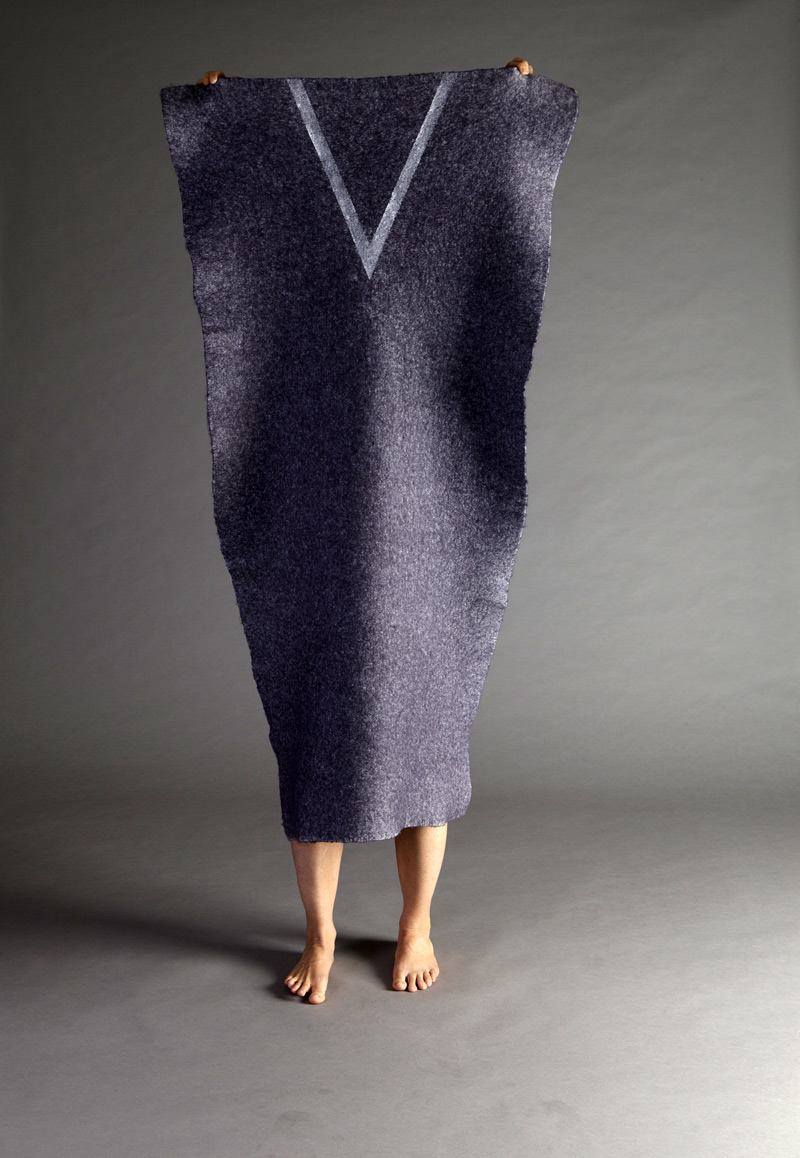
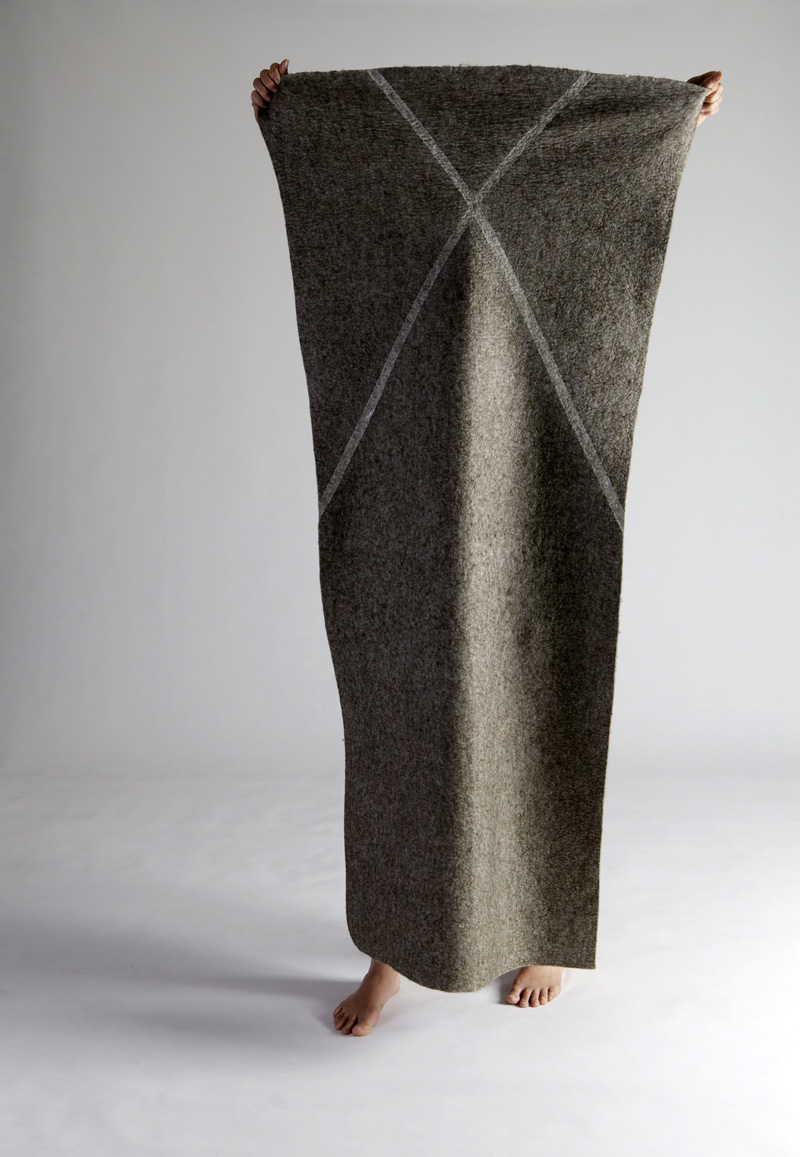
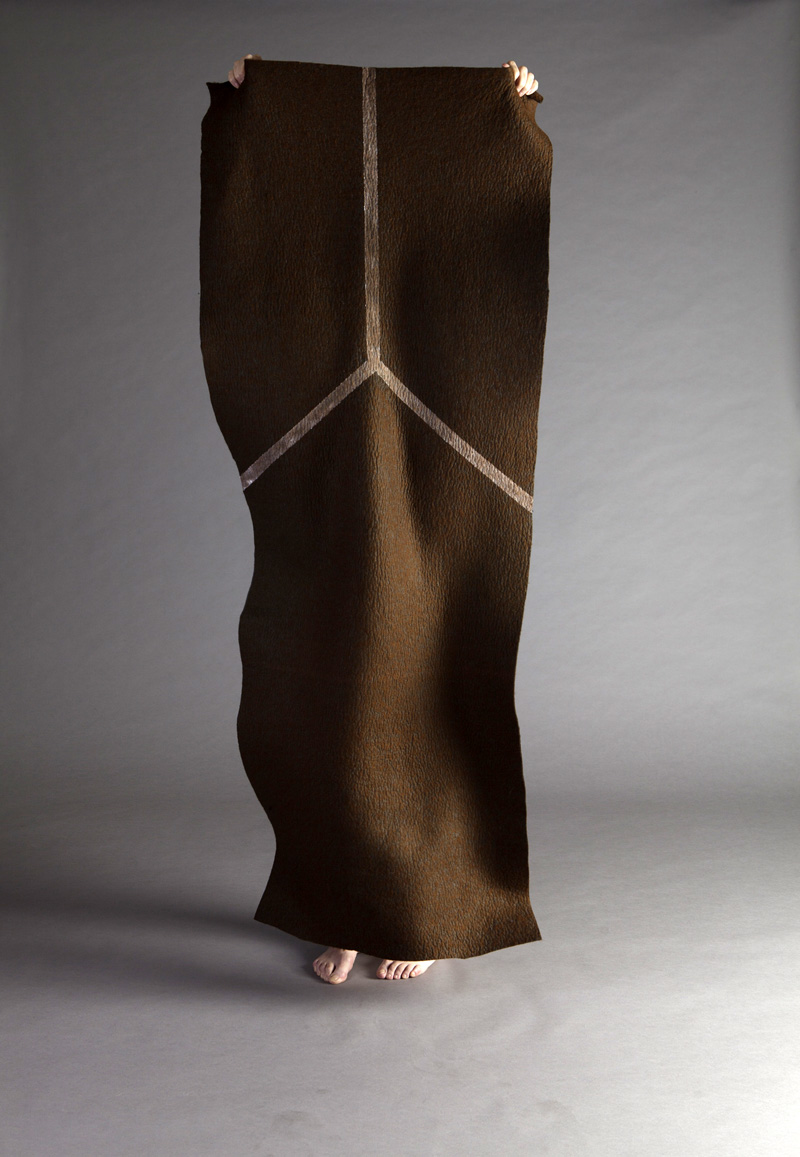
Lorna Simpson surprised her audiences in 1994 when she began to print her photographs on felt, inspired by its materiality after seeing an exhibition of the sculpture of Joseph Beuys in Paris “where the piano and walls were covered for a beautiful installation.” Simpson questioned whether the medium might be appropriate in a far different way for her work given the perspective afforded her by the passage of time. With the felt pieces, Simpson turned away from photography’s traditional paper support, magnified the already larger-than-life-size of the images within her large photo-text pieces to extremely large-scale multi-part works, and, most critically, absented the figure, in particular, the black woman in a white shift facing away from the camera for which she had received critical acclaim.

Ever-present, nevertheless, were her thematic concerns. The first felts offered surrogates for the body in a taxonomy of her own photographs of Wigs, with voicings “in and around gender,” and expanded upon the investigation of the role of coiffure in the construction of identity in Simpson’s photo-texts (such as Stereo Styles, Gallery 1). In the mid-1990s, such felts were succeeded by a series of photographs of interior and exterior scenes that were accompanied by long text passages printed on separate small felts. In these works the figure was replaced, as Okwui Enwezor wrote, “by the rumour of the body.”


Lorna Simpson (American, b. 1960) 'Please remind me of who I am' 2009 (detail)


Lorna Simpson (American, b. 1960)
Please remind me of who I am (detail)
2009
50 found photo booth portraits, 50 ink drawings on paper, 100 bronze elements
Overall installation dimensions variable
Collection of Isabelle and Charles Berkovic
© Lorna Simpson


For each multi-part photo-booth piece, Simpson sets in bronze frames these small inexpensive shots as well as her drawings of selected details of the photographs. Self-styled and performed, these photographs were used for a variety of purposes by their now anonymous sitters, ranging from sober, formal ID photos to glamorous, often theatrically playful mementos. Encompassing photo booth shots of different sizes from the 1920s to the 1970s (a few in colour), Simpson’s constellations of many images for each work offer a collective portrait of self-portraiture (Gather, 2009) and continue her ongoing explorations of identity and memory, explicitly phrased in the title of one of them: Please remind me of who I am (2009).


Lorna Simpson (American, b. 1960) 'Waterbearer [Porteuse d'eau]' 1986


Lorna Simpson (American, b. 1960)
Waterbearer (Porteuse d’eau)
1986
Gelatin silver print, vinyl letters
59 x 80 x 2 1/2 in (149.9 x 203.2 x 5.7cm) overall
Courtesy the artist; Salon 94, New York; and Galerie Nathalie Obadia, Paris / Brussels
© Lorna Simpson


Waterbearer shows a woman from the back, pouring water from an elegant silvery metallic pitcher in one hand and from an inexpensive plastic jug in the other, echoing art historical renderings of women at wells or in the domestic settings of Dutch still-life paintings. As if balancing the scales of justice, this figure also symbolically offers disjunctions of means and class. In the accompanying text, Simpson explicitly addresses memory and the agency of speakers: “She saw him disappear by the river, they asked her to tell what happened, only to discount her memory.”


For her first European retrospective, the Jeu de Paume presents thirty years of Lorna Simpson’s work. For this Afro-American artist, born in Brooklyn, New York, in 1960, the synthesis between image and text is profound and intimate. If one were to consider Lorna Simpson as a writer, the textual element of her works could have an autonomous life as prose poems, very short stories or fragments of scripts. And yet, her texts are inseparable from her images; there is a dynamic between the two that is both fragile and energising, which links them unfailingly. Lorna Simpson became known in the 1980s and 90s for her photographs and films that shook up the conventions of gender, identity, culture and memory.

Throughout her work, the artist tackles the complicated representation of the black body, using different media, while her texts add a significance that always remains open to the spectator’s imagination. In her recent work, Lorna Simpson has integrated archive images, which she reinvents by positioning herself in them as subject. As the artist underlines: “The theme I turn to most often is memory. But beyond this subject, the underlying thread is my relationship to text and ideas about representation.” (Lorna Simpson)

This retrospective reveals the continuity in her conceptual and performative research. In her works linking photography and text, as well as in her video installations, she integrates – while continually shaking them up – the genres of fixed and moving images, using them to ask questions about identity, history, reality and fiction. She introduces complexity through her use of photography and film, in her exploitation of found objects, in the processes she develops to take on the challenges she sets herself and to spectators.

The exhibition gathers her large format photo-texts of the mid 1980s, which brought her to the attention of the critics (Gestures / Reenactments, Waterbearer, Stereo Styles), her work in screenprints on felt panels since the 1990s (Wigs, The Car, The Staircase, Day Time, Day Time (gold), Chandelier), a group of drawings (Gold Headed, 2013), and also her “Photo Booths,” ensembles of found photos and drawings (Gather, Please remind me of who I am…). The exhibition is also an opportunity to discover her video installations: multivalent narratives that question the way in which experience is created and perceived more or less falsely (Cloudscape, 2004, Momentum, 2010), among them, Playing Chess, a new video installation made especially for the occasion.


About the exhibition

Joan Simon

In her critically acclaimed body of work spanning more than thirty years, Lorna Simpson questions identity and memory, gender and history, fact and fiction, playing eye and ear in tandem if not in synchrony to prompt consideration of how meaning is constructed. That she has often described herself as an observer and a listener informs an understanding of both her approach and her subjects. In her earliest black-and-white documentary street photographs (1978-1980), Simpson isolated gestures that bespoke an intimacy between those framed in her viewfinder, recording what was less a decisive moment than one of coming into relation. Some of these photographs seem to capture crossed glances, pauses in an ongoing conversation. Others are glimpses of occasions, transitional events identifiable by a white confirmation or wedding dress, which convey a sense of palpable silence in exchanges between people just out of earshot.

When Simpson began to stage her own photographs in 1985 and to write accompanying texts, she came in closer. She allowed us to see a carefully framed black body, abstracted in gesture and in white clothing, yet also permitted us to read seemingly overheard comments that redirected and recomplicated the view. While her images captured gestures, her narratives imbued these images frozen in a never-changing present with memory, a past. The title of her first photo-text work, made in 1985, and of the exhibition of that year in which it was first exhibited was Gestures / Reenactments, and one can argue that all Simpson’s work is built on the juxtaposition of gestures and reenactments, creating meaning in the resonant gap between the two. It is a gap that invites the viewer / reader to enter, all the while requiring an active reckoning with some inalienable truths: seeing is not necessarily believing, and what we might see is altered not only by our individual experiences and assumptions but also, critically, by what we might hear.

The exhibition

Whether for still or moving picture productions, Lorna Simpson (b. 1960) uses her camera as catalyst to question identity and gender, genres and history, race and class, fact and fiction, memory and meanings. Assumptions of photographic “truth” are challenged and qualified – indeed redirected – by the images she creates that are inseparable from the texts she writes to accompany them, by the soundings she chooses  for videos, or by her pairings of vintage photographs with newly made renderings. The Jeu de Paume presents lorna Simpson’s first large-scale exhibition in Europe beginning with her earliest photo-text pieces of the 1980s through her newest video installation, Chess, 2013, which makes its debut in Paris.

Works in the exhibition show the artist drawing on traditional photo techniques such as gelatin silver prints in an intimate synthesis with speakerly texts (Gallery 1). They also show Simpson’s creation of new combines, among them serigraphs on felt with writings and images invoking film noir (Gallery 2), a video installation of three projections based on historic photographs and her own prior still photos (Gallery 3), constellations of recuperated photo-booth photos with her drawings isolating details from them as well as vintage photographs together with those re-staged by the artist (Gallery 4), and a video focusing on performance as well as time itself and its reversal (Gallery 5).

The exhibition’s parcours [route] reveals turning points in Simpson’s oeuvre as well as thematic continuities. The earliest pieces in the show are Simpson’s performative proto-cinematic photo-texts, beginning with the 1985 Gestures/ Reeactments, a title literally evocative of the work’s visual / verbal aspect while also paradigmatically descriptive of what would be her conceptual practice for the next three decades. Simpson herself makes a rare appearance in her work in two related pieces in the show: the 2009 epic still photo work 1957-2009 (Gallery 4), for which the artist re-enacted scenes from vintage photos, and Chess, 2013, (Gallery 3), which features re-enactments of some of the same photos.

.
Gallery 1 introduces the artist’s signature, indeed iconic early images of the 1980s – a black figure in white clothing, face turned away from the camera or cropped out of the frame – accompanied by precisely crafted, allusive texts that recomplicate what is seen by what is heard in these voicings. The intention to deny a view of a face, as Simpson says, “was related to the idea that the one thing that people gravitate to in photography is the face and reading the expression and what that says about the person pictured, an emotional state, who they are, what they look like, deciphering and measuring. Who is being pictured, what is actually the subject? Photographing from the back was a way to get viewers’ attention as well as to consciously withdraw what they might expect to see.”

The performative photo-text works in Gallery 1 are Gestures / Reenactments, 1985 (created as part of her thesis project for her MFA at the University of California, San Diego), Waterbearer and Twenty Questions (A Sampler) (the first works that Simpson made when she moved to New York in 1986), as well as Five Day Forecast, 1988, and Stereo Styles, 1988. Beginning with Waterbearer, all of these except Gestures / Reenactments (which features a black male) show a black female in a white shift played by artist Alva Rogers, who was often mistaken for Simpson herself.

Gallery 2 marks important changes the artist made during the ’90s, most notably Simpson’s surprising shift to printing her photographs on felt and absenting the human figure. At first she used surrogates for the body, seen in the many and various wigs she photographed and which she accompanied with texts that continued to address ideas of identity and gender (Wigs, 1994-2006). She used photographs taken during her travels for the next series of felt works, which were interior and exterior scenes (The Car, 1995, The Rock, 1995, The Staircase, 1998) that in both imagery and texts invoked film noir. These works led almost inevitably to the start of Simpson’s film and video work in 1997. (Her earliest photo-texts will be recognised by the viewer as proto-cinematic with their multiple frames and conversational voices.)

This gallery also reveals how Simpson continues to use her felt medium and returns to her own archive of images   as well as found objects. Three related works, though no longer using text, nevertheless “comment” on each other:  a video of a performance (Momentum, 2010) inspired by an early 1970s performance at Lincoln Center generated felt works based on vintage photographs of this famous New York theatre – Chandelier, 2011, Daytime, 2011, and Daytime (gold), 2011 – as well as the Gold Headed (2013) drawings, based on the dancers costumed head to foot in gold. Drawings are perhaps the least known medium in Simpson’s practice, and while they reveal the fluid gestures of her hand, visitors will recognise in these gold heads turned from the viewer an echo of the position of the figures  in Gallery 1.

Gallery 3 is devoted to Simpson’s newest video, Chess, 2013, which is based on historic photos as well as her own earlier photographic piece, 1957-2009 (Gallery 4), in which she restaged found vintage photographs. Chess and 1957-2009 mark the rare instances in which Simpson has herself appeared in her work.

Gallery 4 presents reenactments that use quotidian photographic genres to explore constructions of identity and that offer a collective portrait of photographic portraiture over time. All of the works in this gallery are based on found photographs Simpson purchased on eBay and each depicts anonymous subjects performing for the camera. 1957-2009 is based on photographs in a vintage album; Gather and Please remind me of who I am are constellations of bronze-framed found photo-booth images (from the 1920s to the 1970s) accompanied by Simpson’s similarly framed drawings of details from the photographs.

Gallery 5 offers Simpson’s video installation Cloudscape, 2004, which focuses on performance itself and the soundings of a body, that of artist Terry Adkins whistling a hymn. Embodying memory (and the distortions of it) as she did in her earliest photo-works but playing also with the particularities of video, Simpson loops the video to play forward and backward. In this process a new melody is created even as the stationary figure appears same but different.
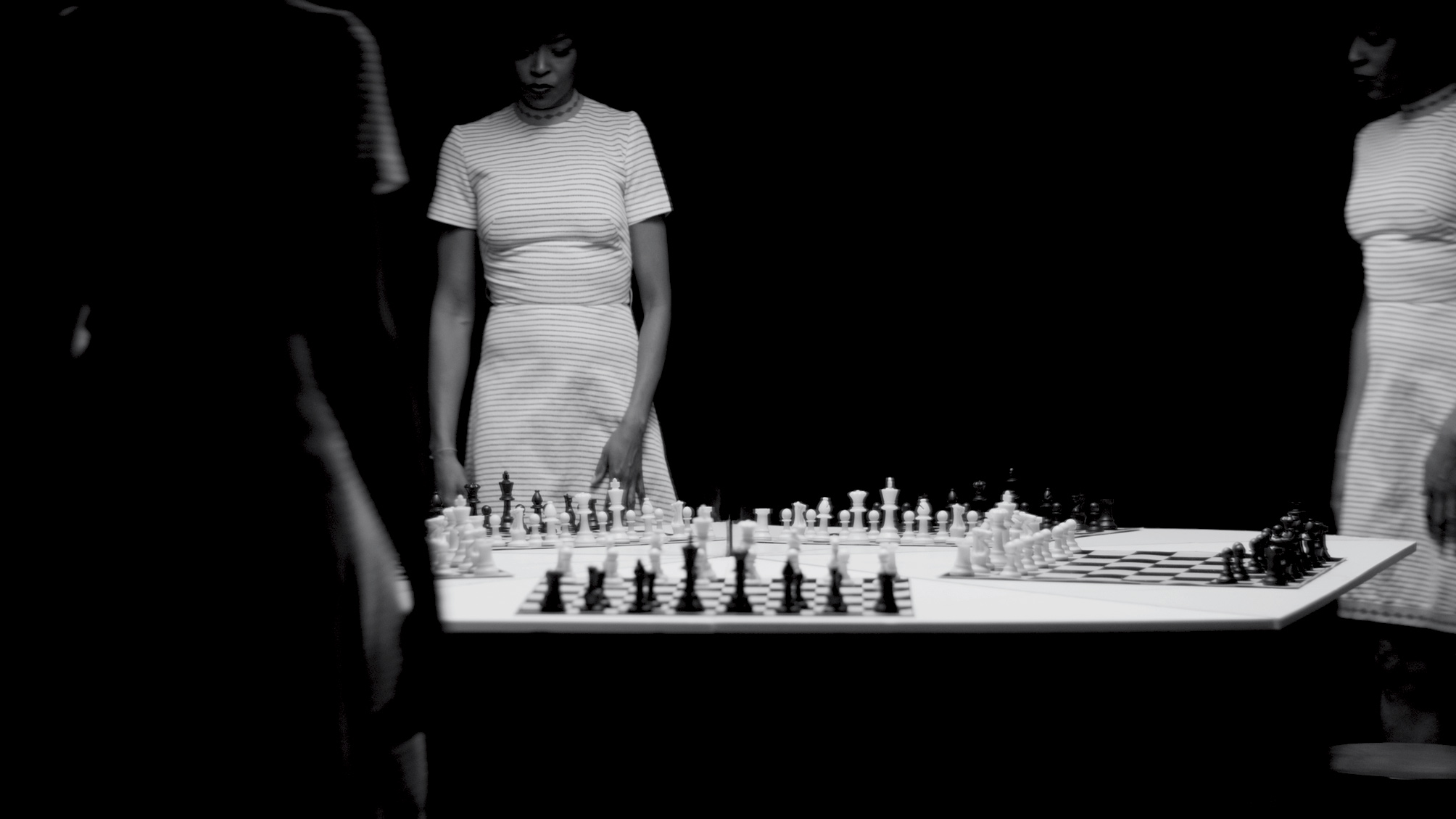
 

Lorna Simpson (American, b. 1960) 'Chess (Échecs)' 2013


Lorna Simpson (American, b. 1960)
Chess (Échecs)
2013
HD video installation with three projections, black & white, sound
10:25 minutes (loop)
Score and performance by Jason Moran
Courtesy the artist; Salon 94, New York; and Galerie Nathalie Obadia, Paris/Brussels
© Lorna Simpson
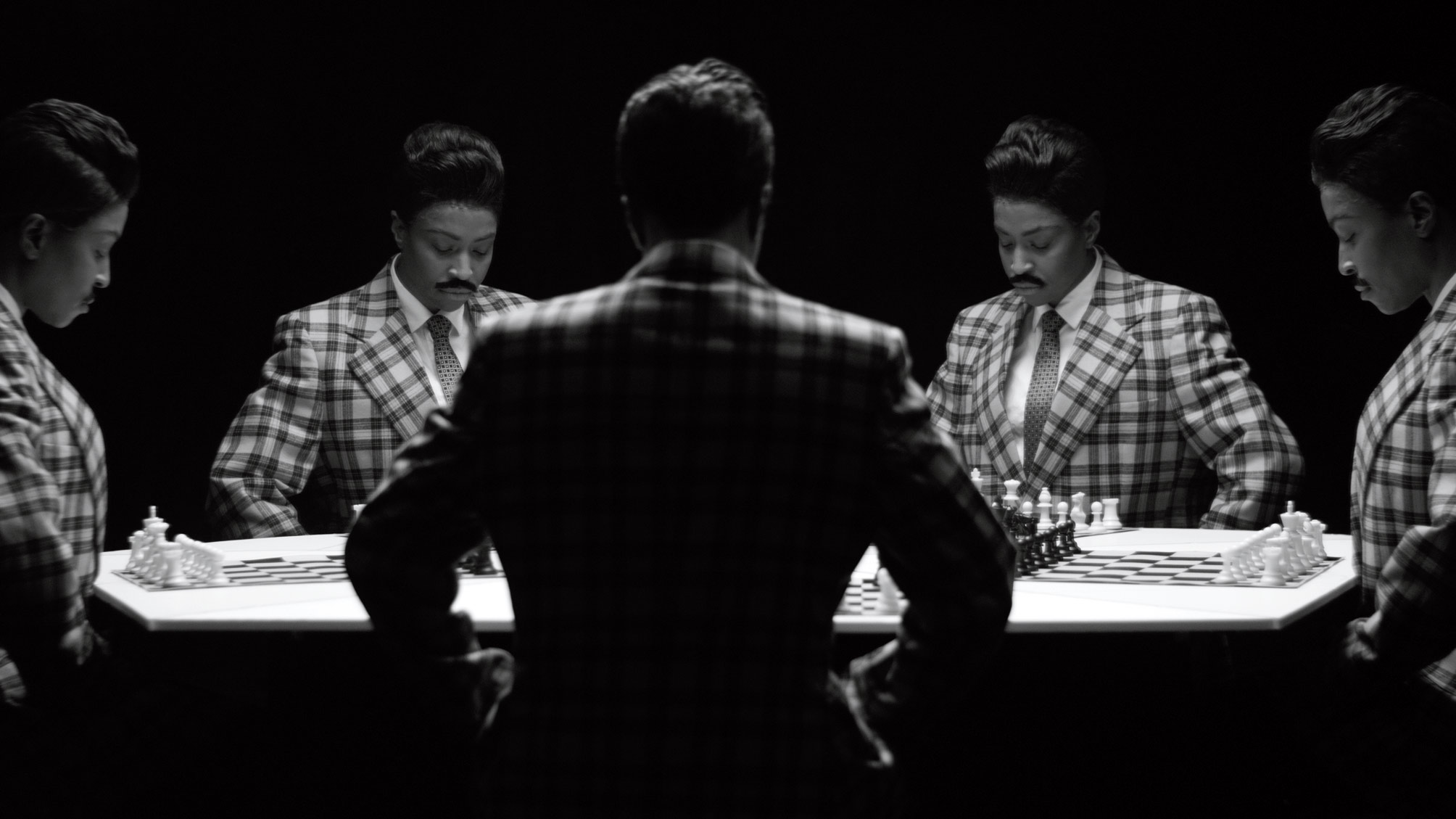
 

Lorna Simpson (American, b. 1960) 'Chess (Échecs)' 2013


Lorna Simpson (American, b. 1960)
Chess (Échecs)
2013
HD video installation with three projections, black & white, sound
10:25 minutes (loop)
Score and performance by Jason Moran
Courtesy the artist; Salon 94, New York; and Galerie Nathalie Obadia, Paris/Brussels
© Lorna Simpson


“Gestures” and “reenactments” could both be described as the underlying methods of Simpson’s practice for the decades to follow. Whether working with photographs she herself staged, found photographs, or archival film footage, her images captured gestures (as in her earliest documentary photographs of 1978-1980) while her series of multiple images, accompanied by texts, proposed simultaneous (if not synchronous) reenactments. This method also applied to works in which she replicated found images, whether turning images from her films into drawings, or using herself to re-play roles depicted by anonymous figures she had discovered in vintage photographs, either for staged still photographs (as in 1957-2009, 2009), or for moving pictures (as in the video Chess, 2013).

Chess, 2013, Simpson’s video installation made expressly for this exhibition, draws on images from 1957-2009, her still photograph ensemble of 2009 (on view in Gallery 4). For both, in a departure from her earlier videos and prior staged photographs, Simpson herself performs. In 1957-2009, by reenacting scenes from found vintage prints with which they are shown, Simpson is “mirroring both the male and  the female character, in dress, pose, expression, and setting. When I would mention the idea of working with mirrors [for the Chess video] people would often mention the famous portraits of Picasso and Picabia taken at a photo studio in New York by an anonymous photographer who placed the subject at a table in front of two mirrored panels at seventy-degree angles. The result is a five-way portrait that includes views that are not symmetrical and that offer slightly different angles: a surrealist trope of trick photography.”

Though the artist first rejected the idea of working with the mirror device used in these historic portraits, which she had seen many times, she decided to take it on fully and reconstruct it in her studio for this new video project after  art historian and sociologist Sarah Thornton sent her “a beautiful image of an unknown man of African descent in a white straw hat, which had been in an exhibition at MoMA [catalogue page 61]. It was a five-way portrait probably taken by the same photographer who had taken the portraits of Picasso and Picabia. I could no longer resist or dismiss this idea. I felt that it was demanding my attention.”

Shot in Simpson’s studio over the weekend of December 8, 2012, Chess is comprised of three video projections. For two of them Simpson again plays both female and male chess-players, and with the help of makeup and hair assistants, she now allows her characters to age. The third projection shows pianist Jason Moran performing his improvised score for this project, which was inspired by discussions between artist and composer about “mirroring in music,” especially “in the work of musician Cecil Taylor, who employs mirroring in his compositions.”
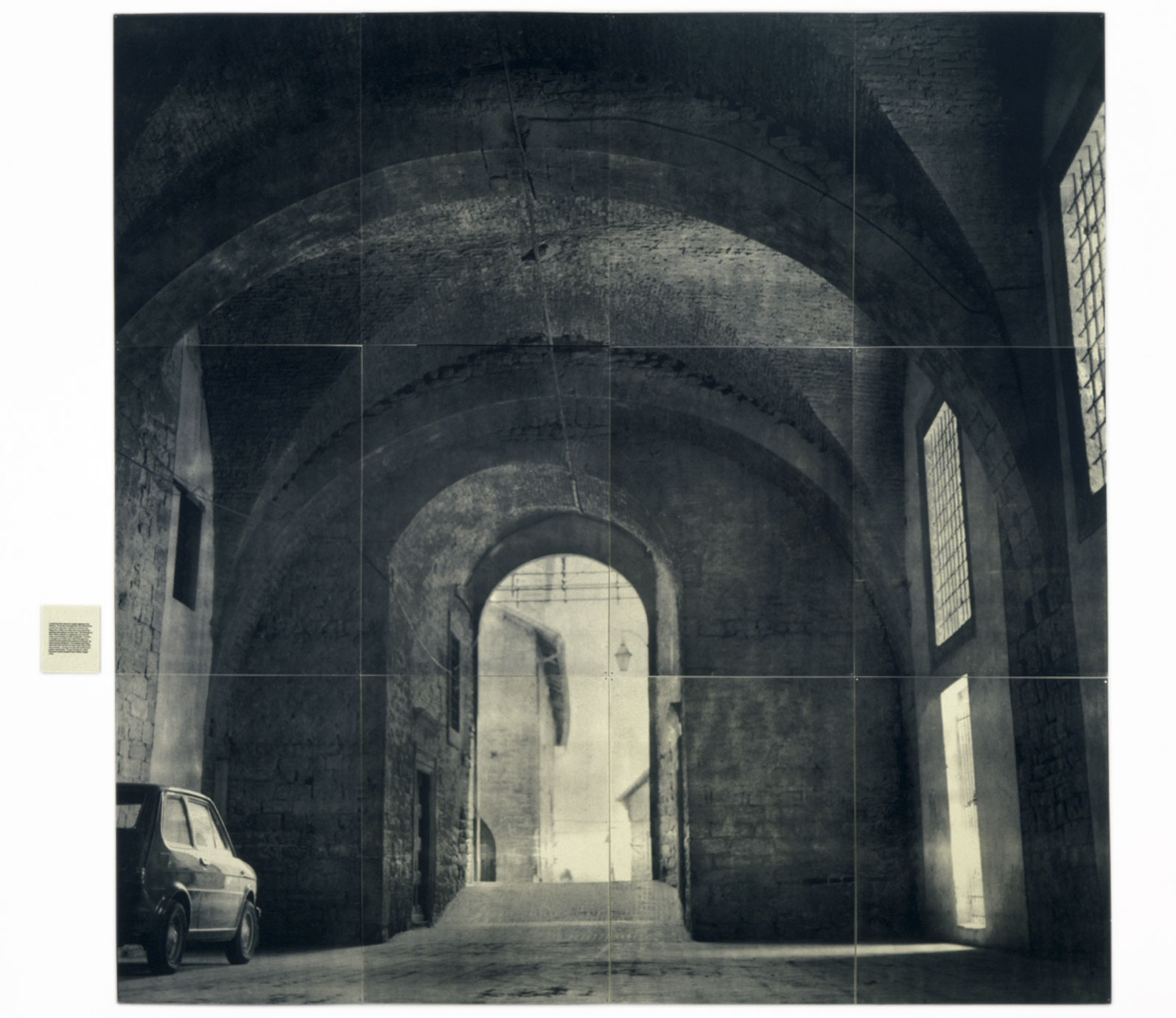
 

Lorna Simpson (American, b. 1960) 'The Car' 1995


Lorna Simpson (American, b. 1960)
The Car
1995
Serigraph on 12 felt panels with felt text panel
102 x 104 in (259.1 x 264.2cm)
Courtesy the artist; Salon 94, New York; and Galerie Nathalie Obadia, Paris/Brussels
© Lorna Simpson
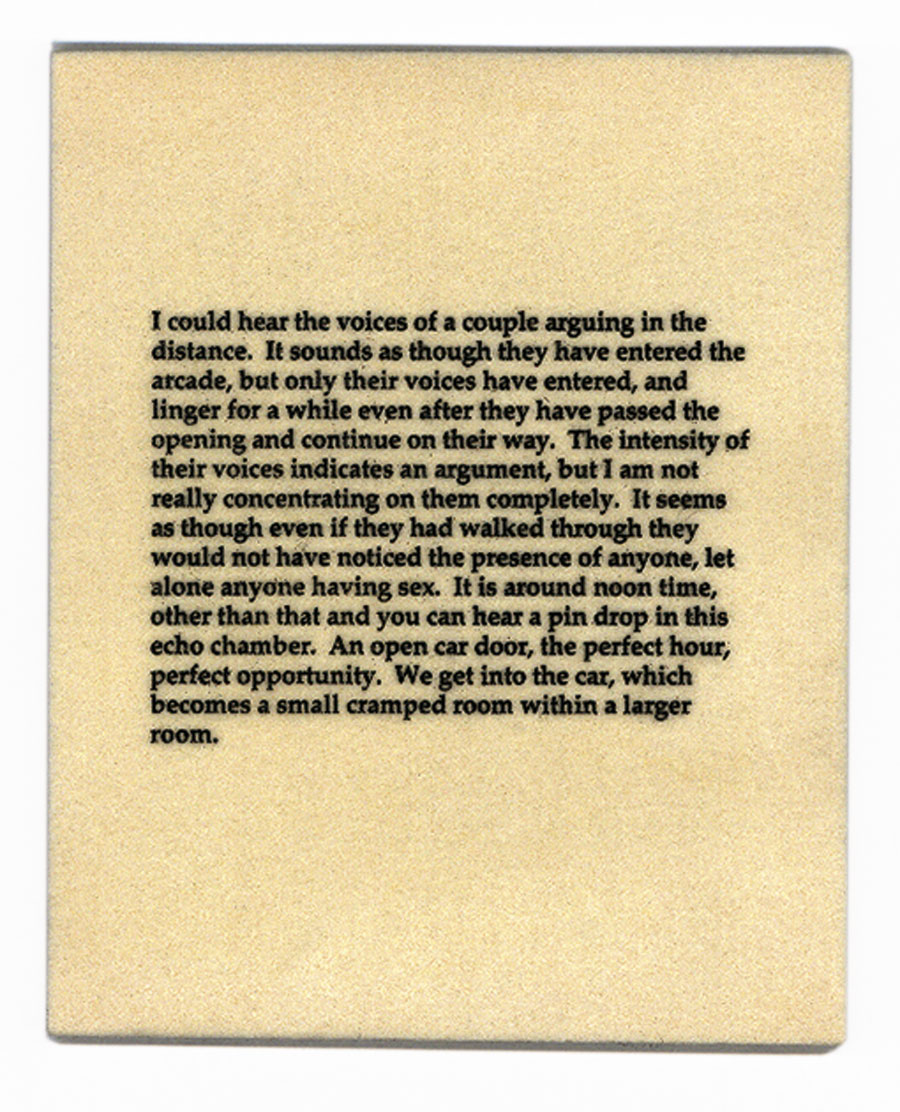
 

Lorna Simpson (American, b. 1960) 'The Car' 1995 (detail)


Lorna Simpson (American, b. 1960)
The Car (detail)
1995
Serigraph on 12 felt panels with felt text panel
102 x 104 in (259.1 x 264.2cm)
Courtesy the artist; Salon 94, New York; and Galerie Nathalie Obadia, Paris/Brussels
© Lorna Simpson
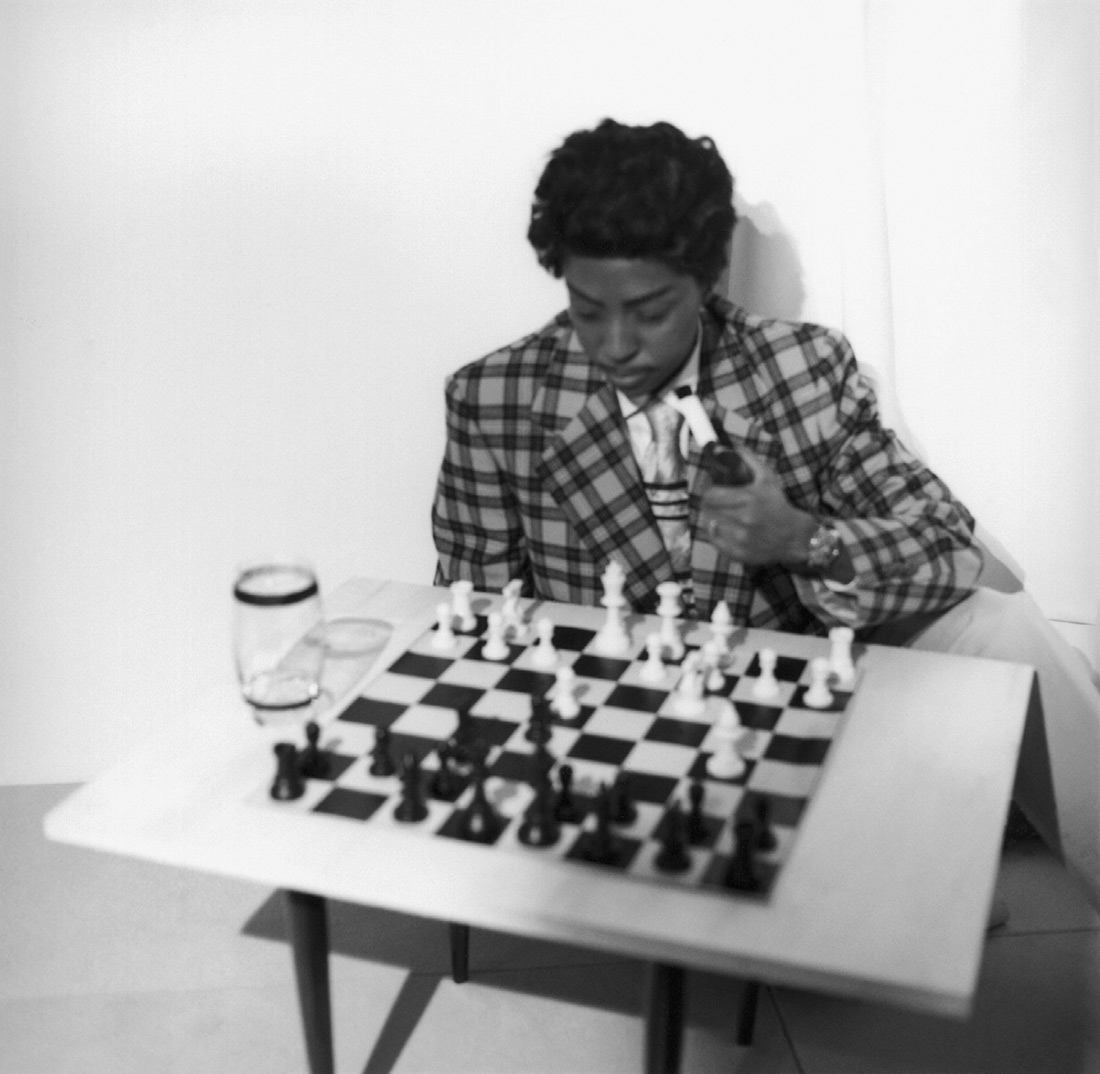
 

Lorna Simpson (American, b. 1960) '1957-2009' 2009 (detail)


Lorna Simpson
1957-2009 (detail)
2009
299 gelatin silver prints, framed
5 x 5 in. (12.7 x 12.7cm) each (image size)
Rennie Collection, Vancouver
© Lorna Simpson


While collecting photo booth images on eBay, Simpson found the first of the vintage photographs – a woman in a tight sweater-dress leaning on a car – that would generate 19572009 (2009). The artist subsequently bought the entire album and in 2009 restaged these photographs of an anonymous black woman and sometimes a man performing for their camera between June and August 1957 in Los Angeles, which they may have done in the hope of gaining movie work in Hollywood or as an independent project of self-invention. For 1957-2009, Simpson reenacted both female and male roles, and the 299 images are comprised of both the 1957 originals and Simpson’s 2009 remakes. Simpson again reenacted a selection of these vignettes for her video installation Chess, 2013.


Lorna Simpson (American, b. 1960) 'Cloudscape (Paysage nuageux)' 2004


Lorna Simpson (American, b. 1960)
Cloudscape (Paysage nuageux)
2004
Video projection, black & white, sound
3:00 minutes (loop)
Centre national des arts plastiques, purchase in 2005
Photo courtesy the artist; Salon 94, New York; and Galerie Nathalie Obadia, Paris/Brussels
© Lorna Simpson/Centre national des arts plastiques


Lorna Simpson’s video installation Cloudscape (2004) isolates one man, Simpson’s friend, the artist and musician Terry Adkins, in a dark room, spotlighted as he whistles a hymn and is enveloped in fog. Focusing on the ephemerality of performance, the artist employs a technique afforded by her medium to play with time as well. Simpson runs the video forward and then also backward in a continuous loop, creating new visual and oral / aural permutations of gesture and reenactment. In the reversal of the time sequence, the image remains somewhat familiar while the tune turns into something else, a different melody.
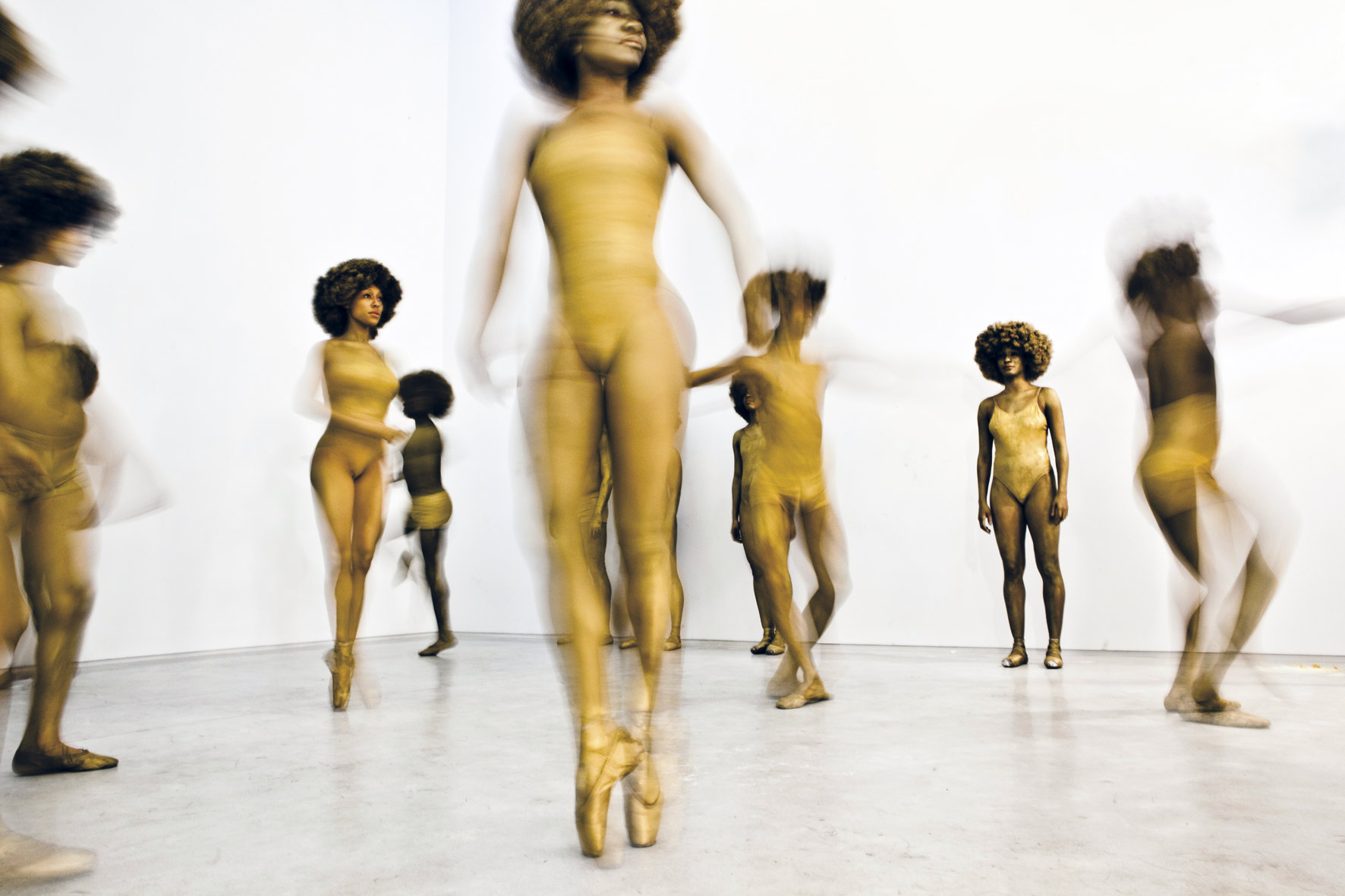
 

Lorna Simpson (American, b. 1960) 'Momentum' 2010


Lorna Simpson (American, b. 1960)
Momentum
2010
HD video, color, sound
6:56 minutes
Courtesy the artist; Salon 94, New York; and Galerie Nathalie Obadia, Paris/Brussels
© Lorna Simpson


As Simpson explored new mediums, such as film and video starting in 1997 or found photographs in  the late 1990s, she continued to work in parallel with her felt serigraphs. In this gallery are three related sets of works that, unlike her earlier photo-text pieces, are all based on a personal memory: performing as a youngster, age 12, in gold costume, wig, and body paint in a ballet recital at New York’s Lincoln Center. Simpson re-staged such a performance for her video Momentum (2010).


Jeu de Paume
1, Place de la Concorde
75008 Paris
métro Concorde
Phone: 01 47 03 12 50

Opening hours:
Tuesday – Friday: 12am – 8pm
Saturday and Sunday: 11am – 7pm
Closed Monday
Jeu de Paume website

Lorna Simpson website

LIKE ART BLART ON FACEBOOK

Back to top

Exhibition: ‘Globelight ’13 [New Light Art + Design]’ at Anita Traverso Gallery, Richmond, Melbourne

Exhibition dates: 30th July – 24th August 2013

Curators: James Tapscott and Sam Mitchell-Fin


The Tam Projects (Tess Hamilton, Adriana Bernado, Melissa Acker) 'Colour box' 2013 (installation view)


The Tam Projects (Tess Hamilton, Adriana Bernado, Melissa Acker)
Colour box (installation view)
2013
Lightbox, A3 print on cotton rag + film slides on acrylic
15 x 14 x 33cm


Although I could not get to the second part of the exhibition at Abbotsford Convent, what I saw of this exhibition of light-based art and design by Australian and international artists at Anita Traverso Gallery in Richmond was fascinating. I love interesting concepts and works constructed with light / space / images and this show is certainly exuberant and inventive.

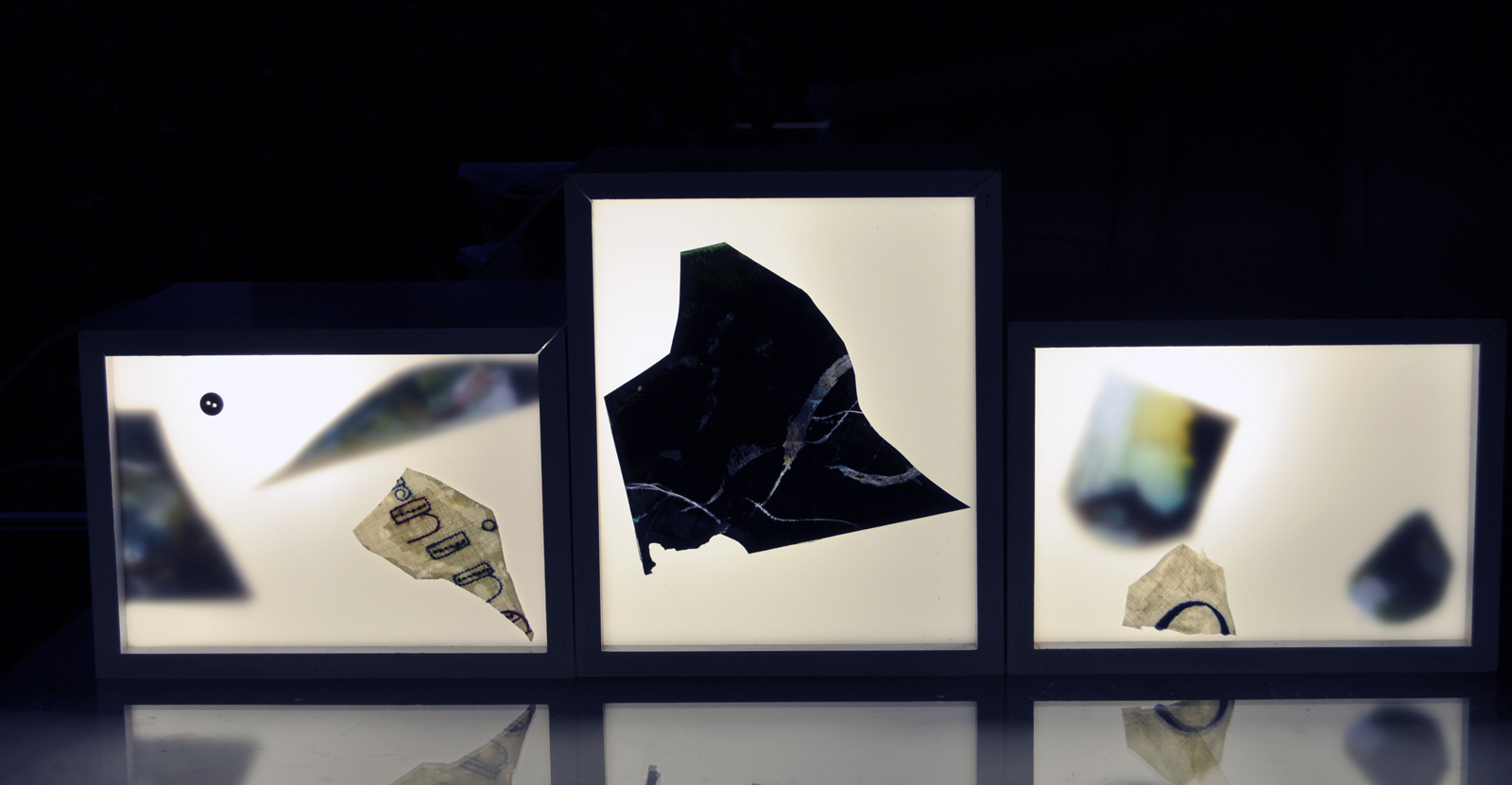
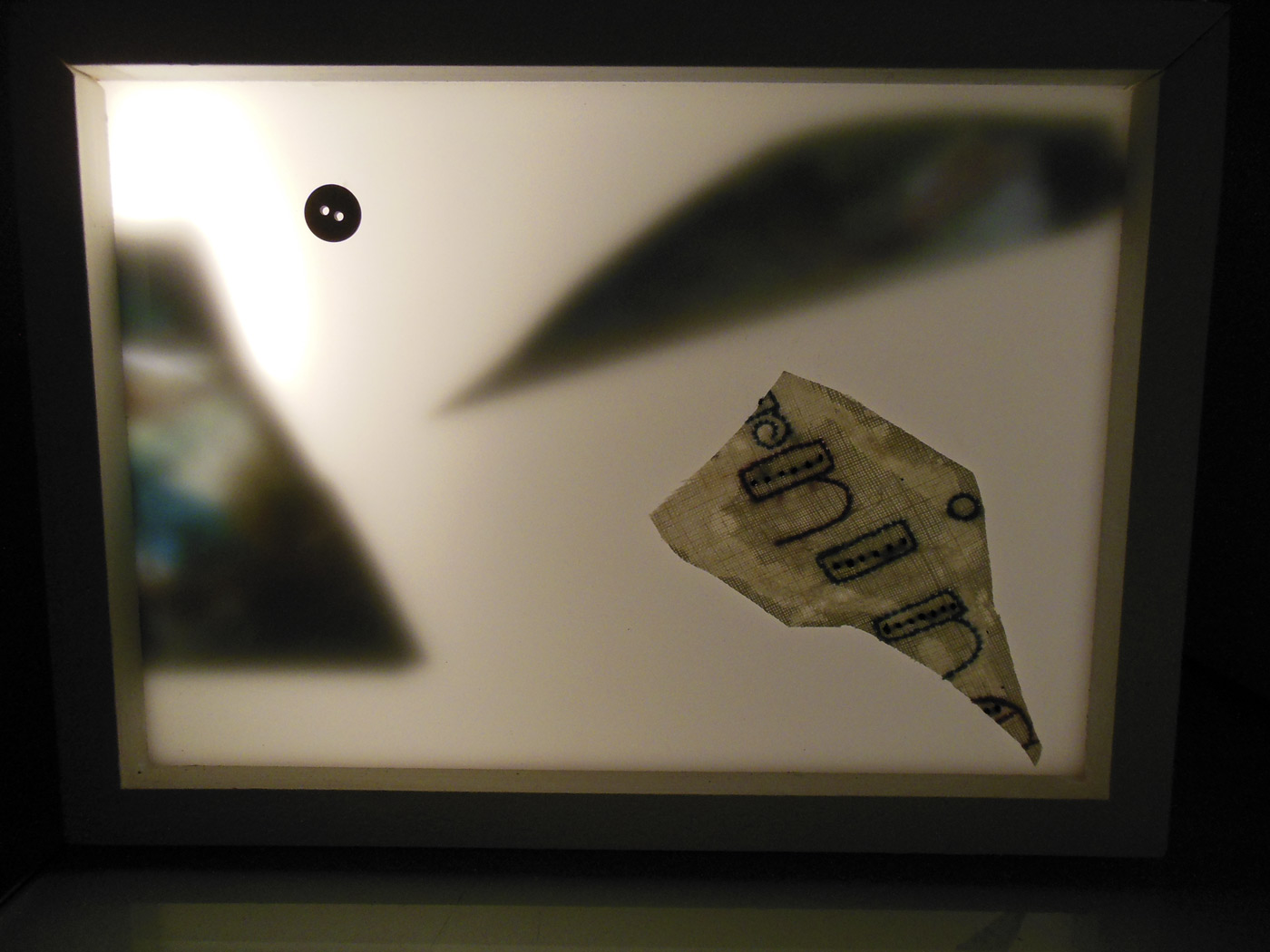
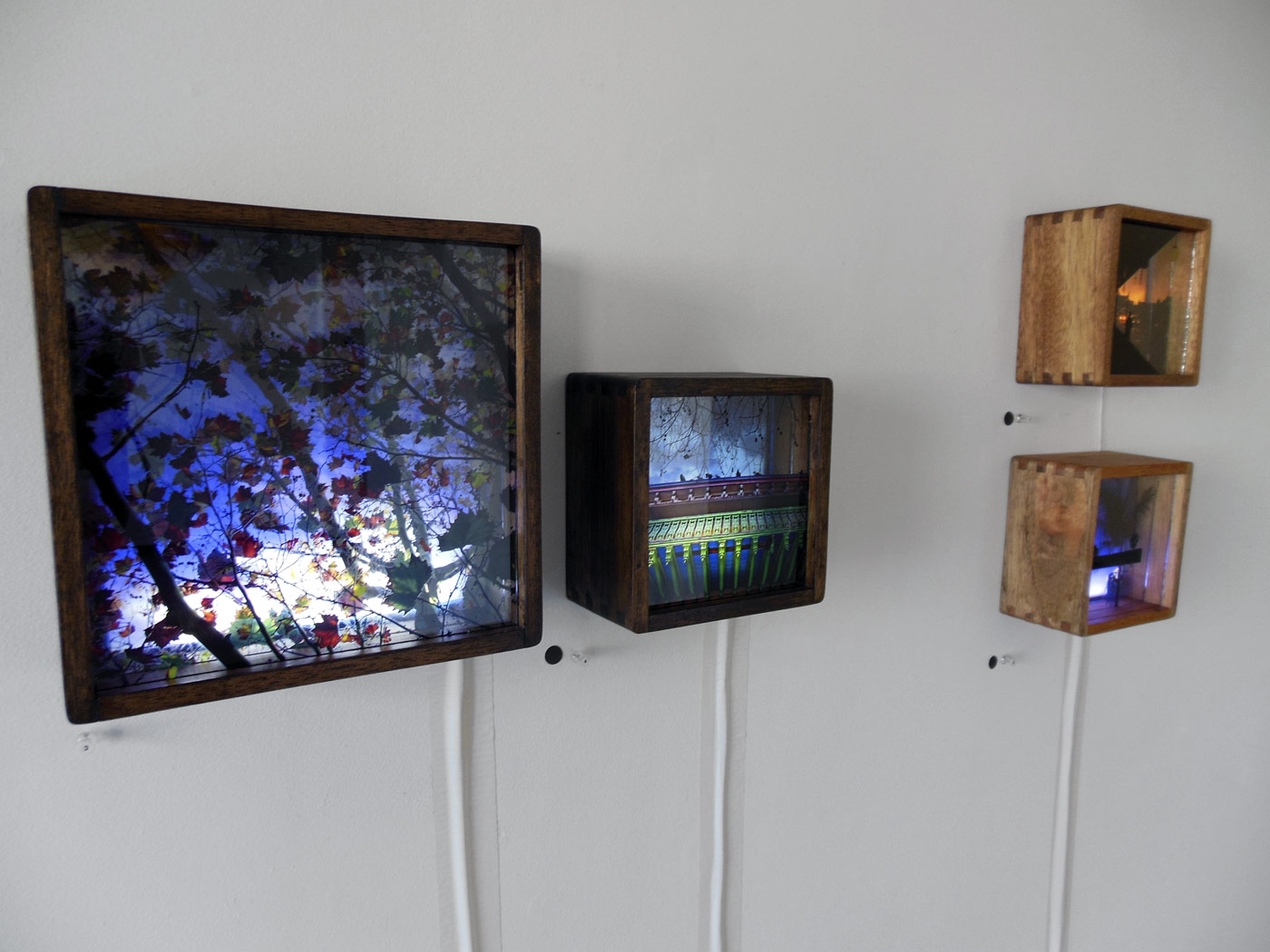
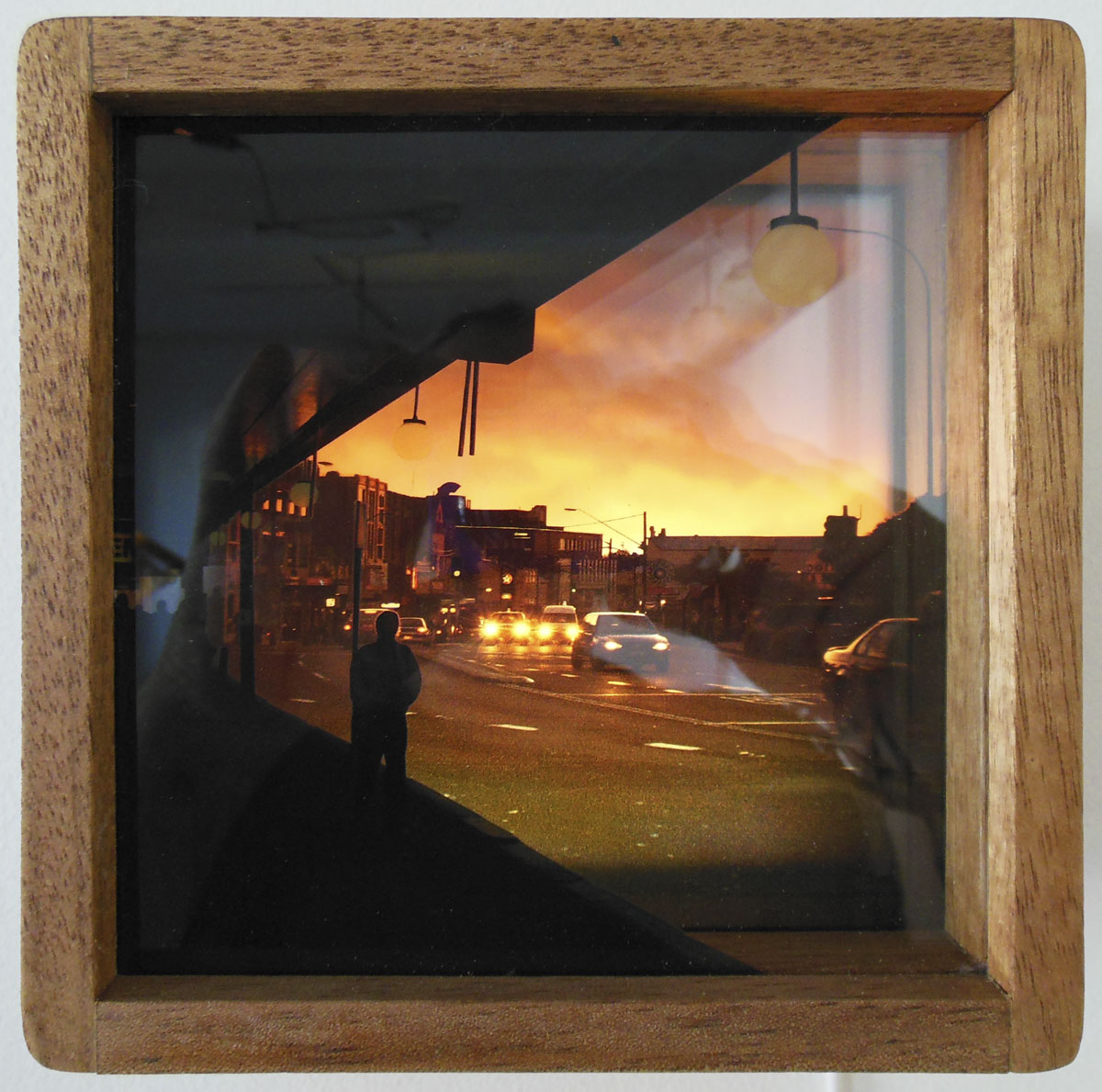
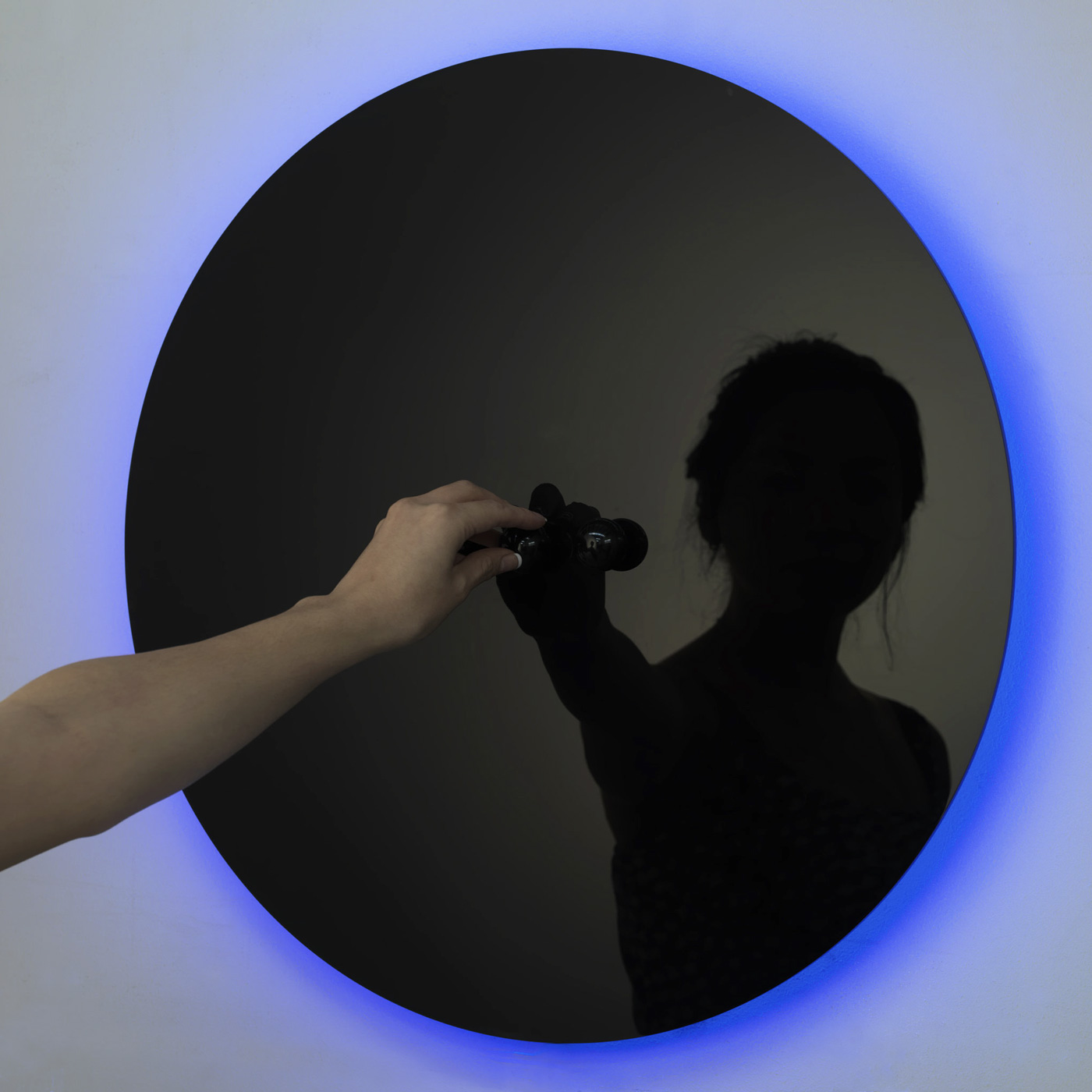
Of particular interest were three artists who use multiple images and objects in boxes to form three-dimensional sculptures, the images inside resembling the spatiality of early stereographs (for- mid- and background). In the work by The Tam Projects the perspex slide at the front of the box with the topographic dots can be removed and replaced with another screen of dots, thus altering the mapping of the image. Catherine Johnstone’s work Grief Keeps Watch 7, 8 + 9 (2012, below) uses collections of bits and pieces, remnants, traces which enable the artist to hold onto the memory of her father who has passed away. Perran Costi’s beautifully made wooden boxes hold Sydney-based scenes in 3D printed on glass and were ravishing in their collective density. Ilan El’s ORA (2011, below) features three black knobs that control the Red, Green and Blue spectrum (RGB), enabling the viewer to create an endless rainbow of colours to match their shifting moods.

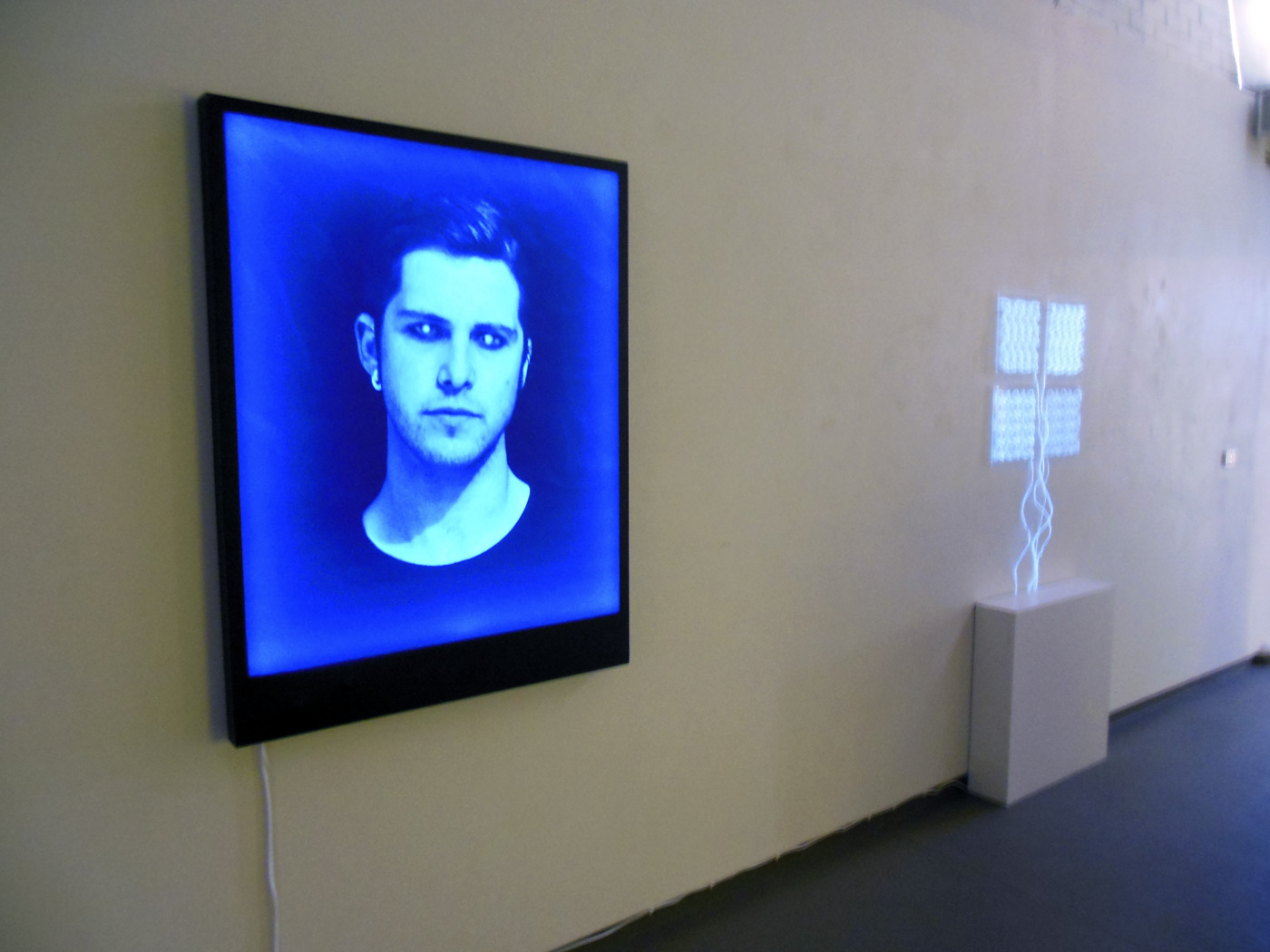
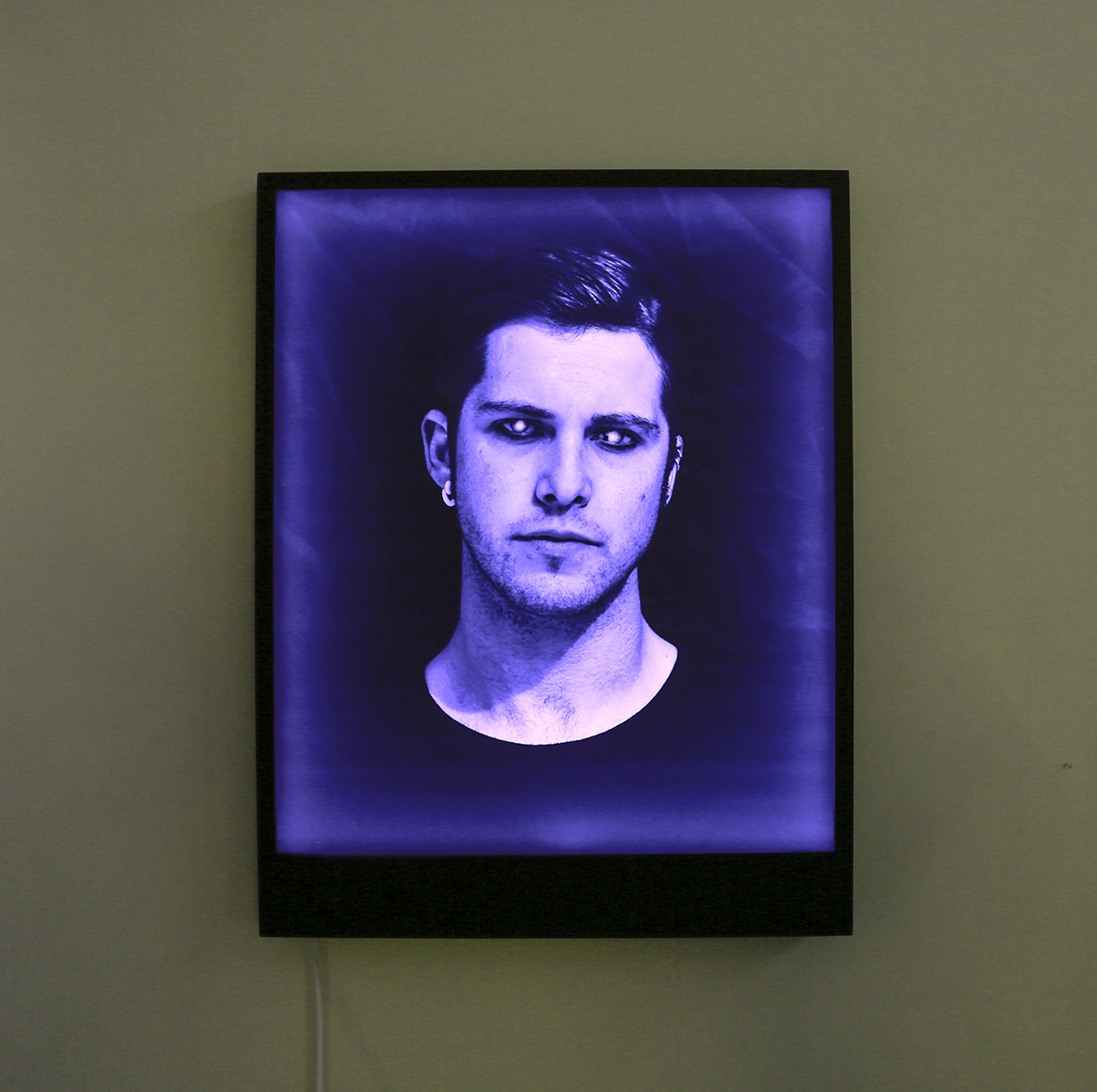
My favourite piece in the exhibition was George Angelovski’s light box LUKAS (2012, below), a portrait which cycles through various colours using remote controlled RGB LEDs which lends the portrait different characters such as threatening or placid, depending on the colour of the moment. This feeling of un/ease is increased because the eyes of LUKAS are white as in a supernova (probably red eye from a flash which has printed white in the black and white image), and in the right eye there is a black spot, an inclusion, a dark star that further disturbs the handsome features of the man. I really loved this beautiful, cerebral work.

Both curators (James Tapscott and Sam Mitchell-Fin) and artists are to be congratulated for this New Light Art + Design initiative. It’s a great idea to have a festival that exhibits a such a wide variety of works across both light art and design in Australia. Let’s hope it is even more successful next year.

Dr Marcus Bunyan


Many thankx to Anita Traverso Gallery for allowing me to publish the photographs in the posting. Please click on the photographs for a larger version of the image.


Catherine Johnstone (Australian) 'Grief Keeps Watch 7, 8 + 9' 2012 (installation view)


Catherine Johnstone (Australian)
Grief Keeps Watch 7, 8 + 9 (installation view)
2012
Pigment on x-ray + found objects on acrylic, light boxes
25.5 x 23 x 17cm


Catherine Johnstone (Australian) 'Grief Keeps Watch 8' 2012 (installation view detail)


Catherine Johnstone (Australian)
Grief Keeps Watch 8 (installation view detail)
2012
Pigment on x-ray + found objects on acrylic, light boxes
25.5 x 23 x 17cm


Perran Costi (Australian) 'Autumn' (nearest), 'Bird House', 'Sunset on King Street' and 'Oasis' 2012 (installation view)


Perran Costi (Australian)
Autumn (nearest), Bird House, Sunset on King Street and Oasis (installation view)
2012
Glass, hardwood + light
Dimensions variable


Perran Costi (Australian) 'Sunset on King Street' 2012 (installation view)


Perran Costi (Australian)
Sunset on King Street (installation view)
2012
Glass, hardwood + light
16 x 16 x 8.7cm


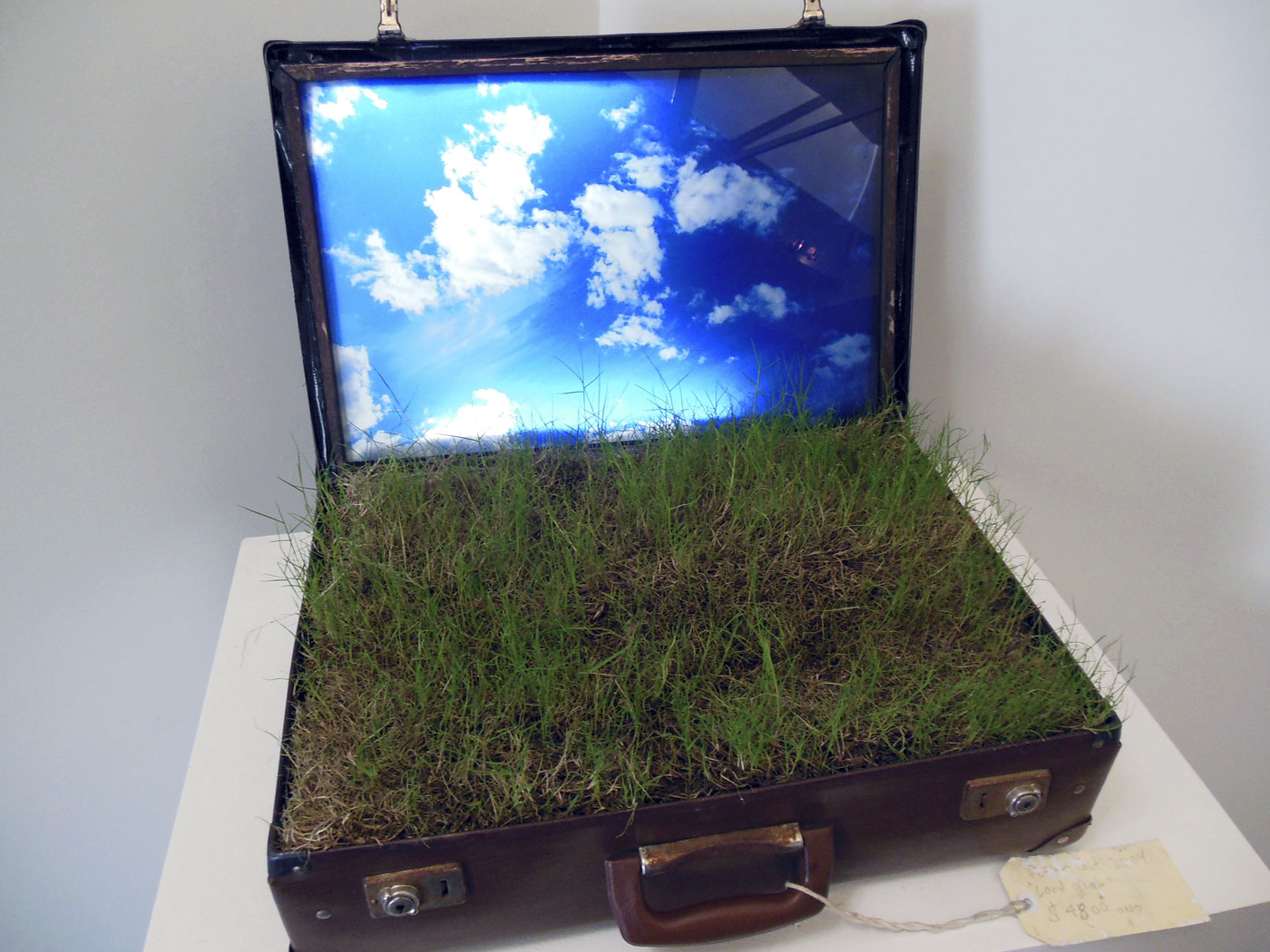
Perran Costi (Australian) 'Landgrab' 2012 (installation view)


Perran Costi (Australian)
Landgrab (installation view)
2012
Suitcase, glass, soil, acrylic + light
57 x 50 x 34cm


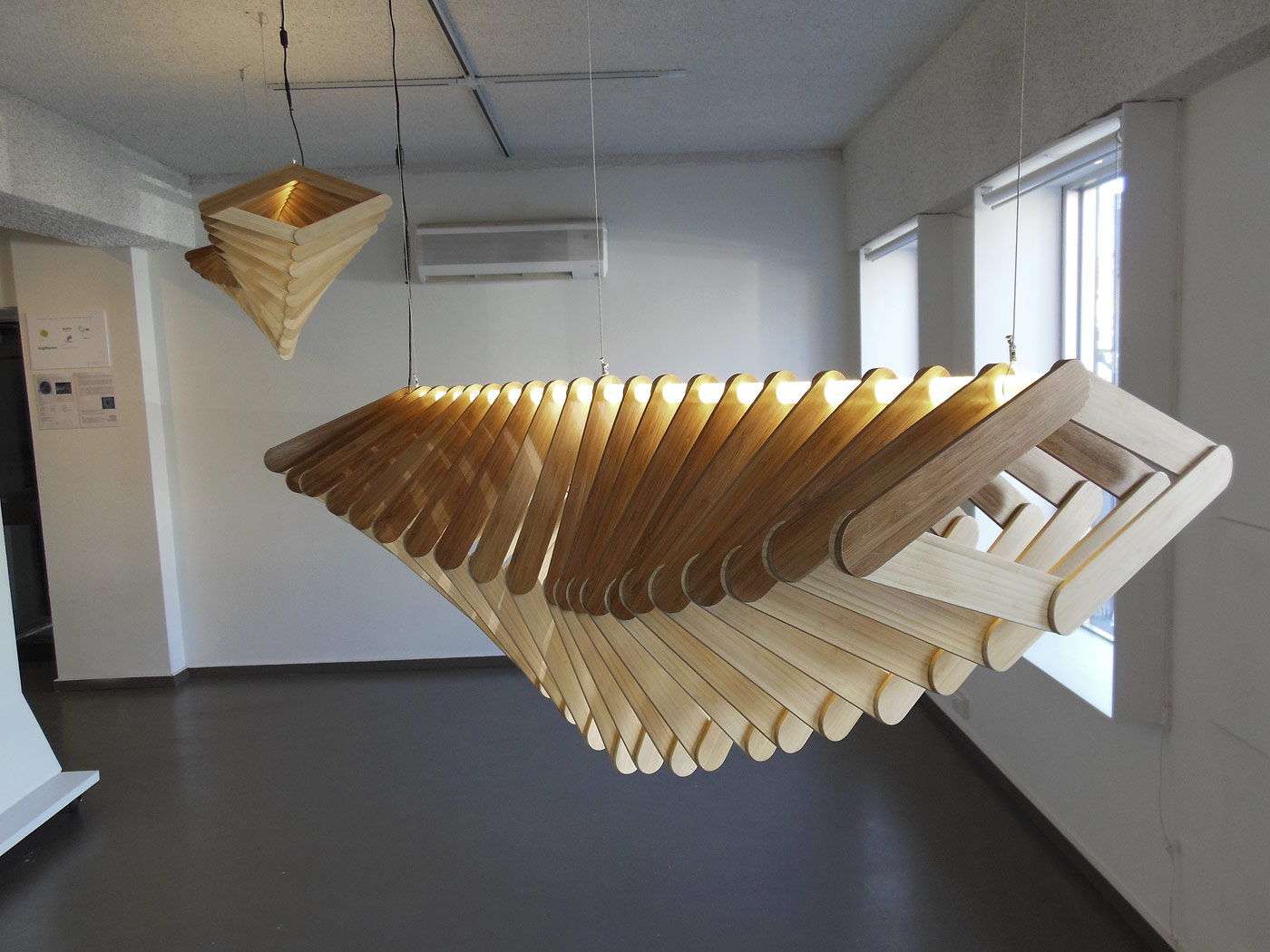
Kent Gration (Australian) 'Leviathan 1 + 2' 2013 (installation view)


Kent Gration (Australian)
Leviathan 1 + 2 (installation view)
2013
Carbonised + natural bamboo, LED lighting
50 x 50 x 125cm each


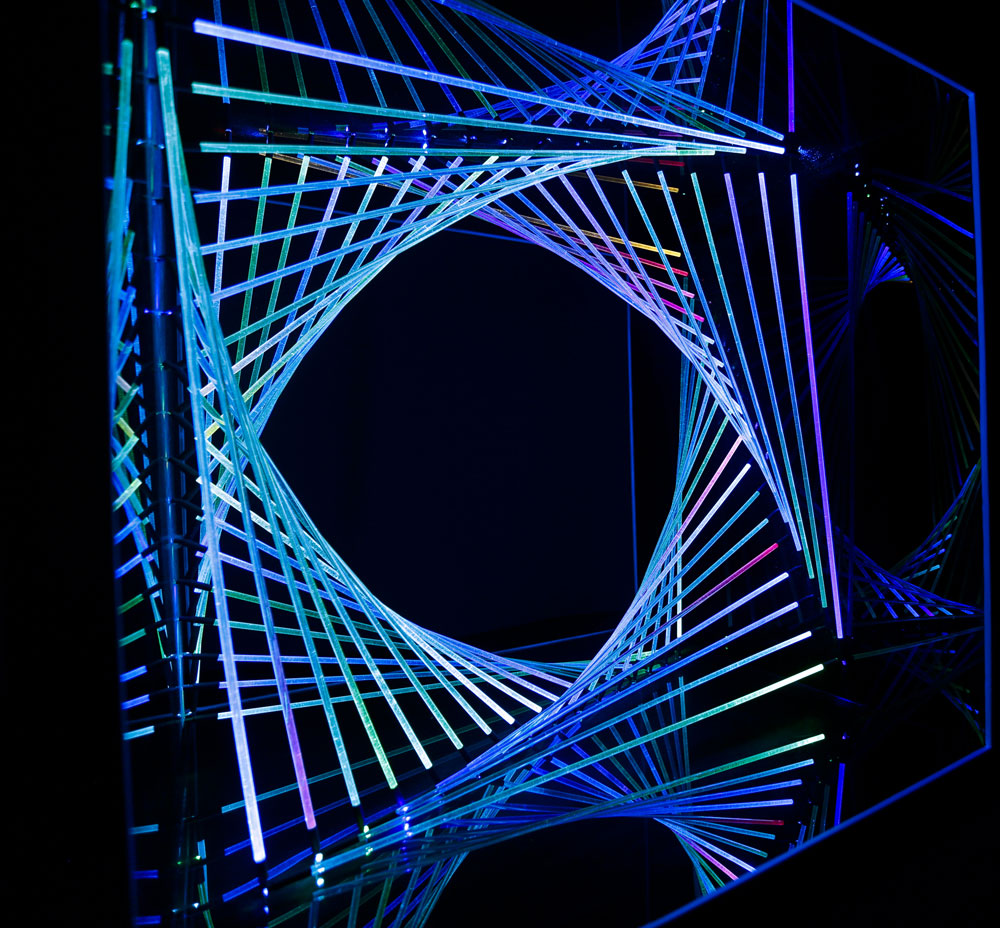
Globelight ’13 is an exhibition of light-based art and design by Australian and international artists. Curated by James Tapscott and Sam Mitchell-Fin, this is the inaugural event of what is to become an annual festival-style event that aims to grow into a significant part of Victoria’s cultural calendar. An exciting cross-section of Australian and international artists and designers will occupy both spaces at Anita Traverso Gallery and the grounds of the Abbotsford Convent with light-based sculpture, installation, design objects and video art throughout the month of August.

The Festival aims to become an important inclusion on the local and international cultural calendar being the only festival of its kind that exhibits a such a wide variety of works across both light art and design in Australia. The festival has already attracted the attention of the lighting community and related industries, thus confirming the need for such an event that supports the growing number of artists and innovative designers working in this medium.”

Text from the Anita Traverso Gallery and Globelight website


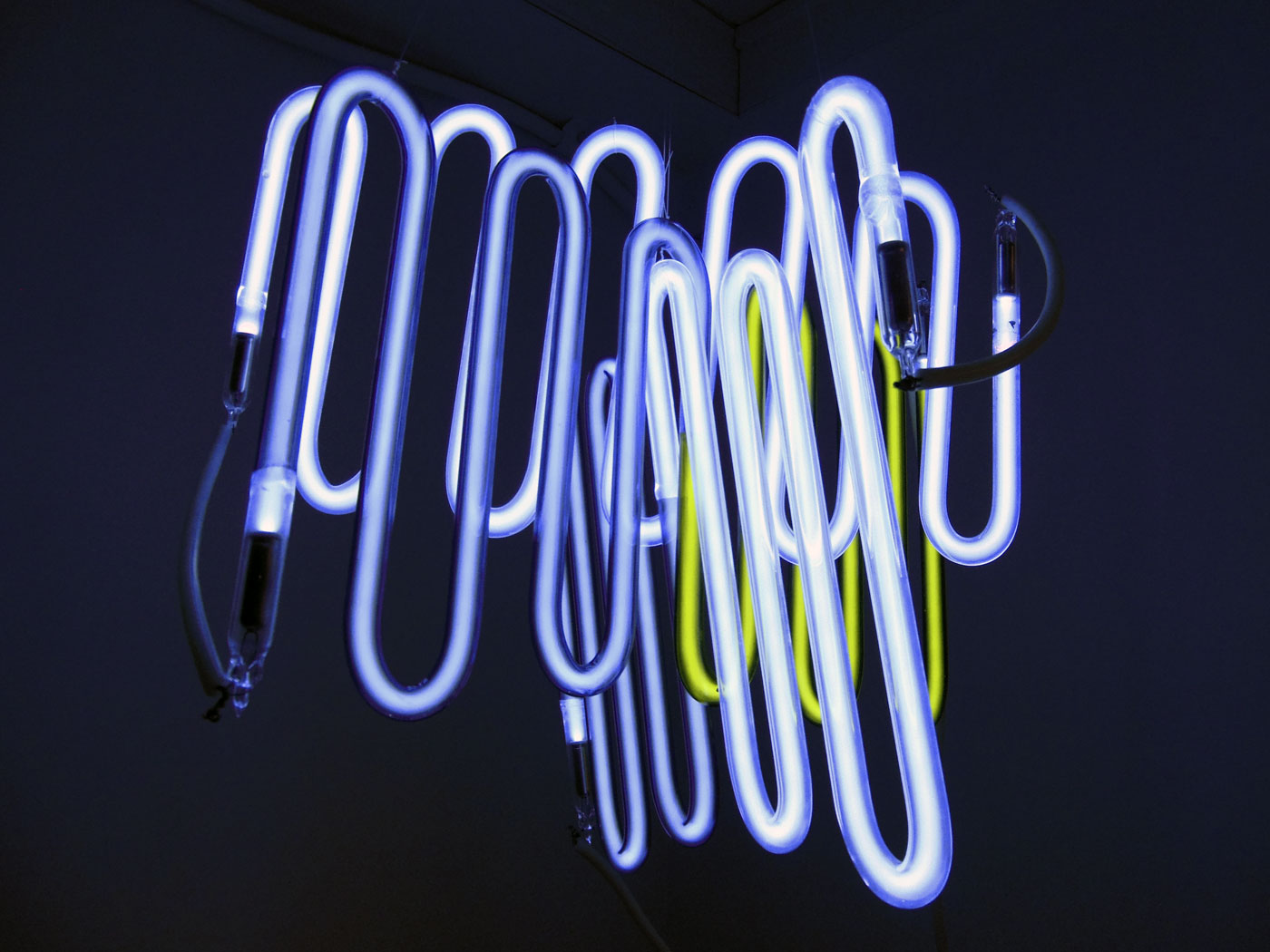
Sam Mitchell-Fin (Australian) 'Open infinity (blue)' 2013 (installation view)


Sam Mitchell-Fin (Australian)
Open infinity (blue) (installation view)
2013
Neon
Size variable


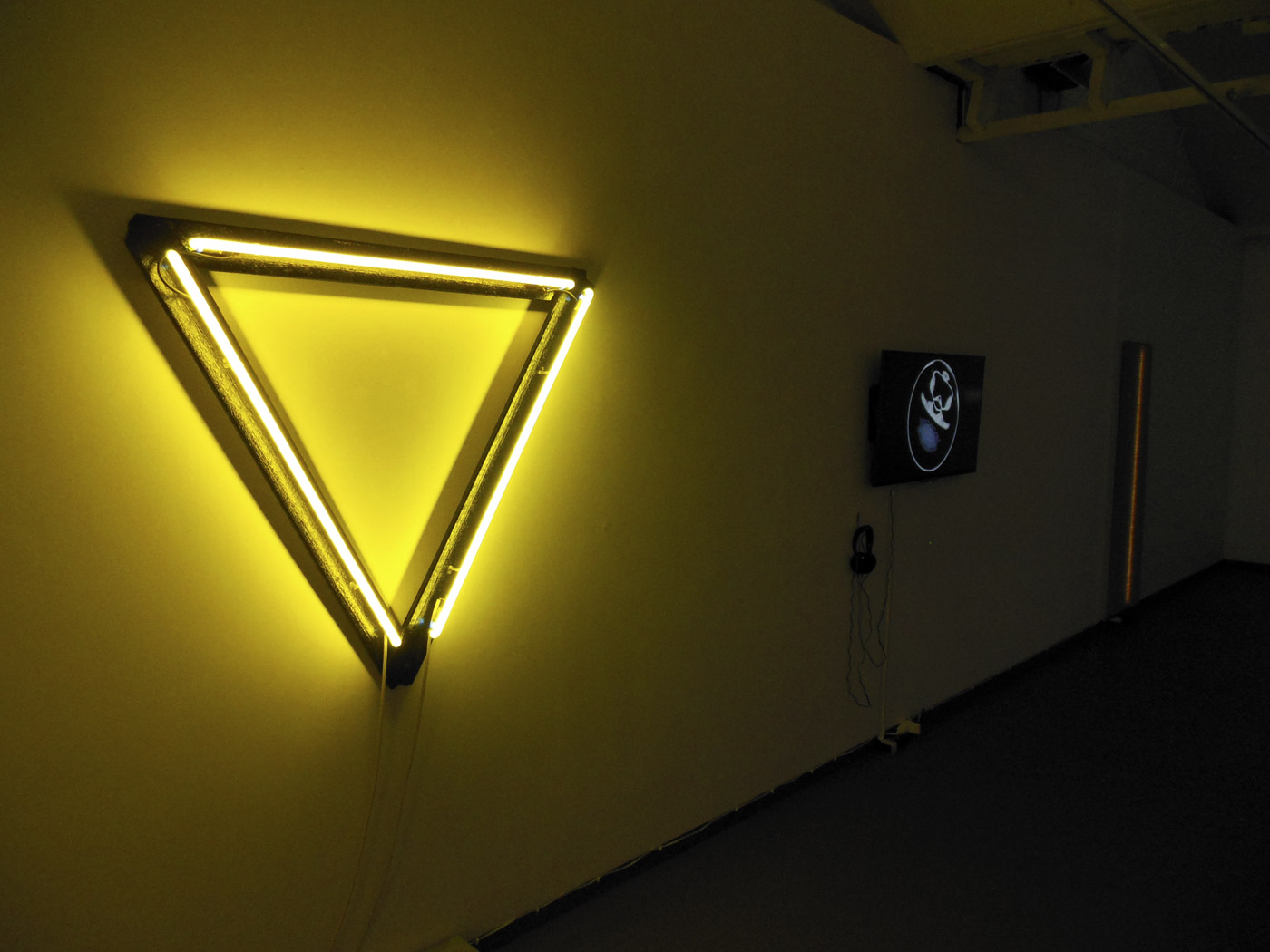
Sam Mitchell-Fin (Australian) 'I Wish I could tell you, but I can't find the words' 2013 (installation view)


Sam Mitchell-Fin (Australian)
I Wish I could tell you, but I can’t find the words (installation view)
2013
Neon + timber
Size variable


Ilan El (Australian born Israel, b. 1971) 'ORA' 2011 (installation view)


Ilan El (Australian born Israel, b. 1971)
ORA (installation view)
2011
Zenolite front face, RGB LEDs + powder coated mild steel body
4 x 60cm (diameter)


James Tapscott (Australian, b. 1980) 'Primaries and Secondaries' 2013 (installation view)


James Tapscott (Australian, b. 1980)
Primaries and Secondaries (installation view)
2013
RGB LEDs, perspex, wood
65 x 65 x 65cm


George Angelovski (Australian, b. 1974) 'LUKAS' 2012 and Laura Lay (Australian) 'The Established Child Series' 2013 (installation view)


George Angelovski (Australian, b. 1974)
LUKAS (installation view)
2012
Remote controlled RGB LEDs + mixed media
100 x 130cm

Laura Lay (Australian)
The Established Child Series (installation view)
2013
Acrylic panels with EL wire threads, 4 inverters + plug in adapters
4 x 30 x 30cm


George Angelovski (Australian, b. 1974) 'LUKAS' 2012 (installation view)


George Angelovski (Australian, b. 1974)
LUKAS (installation view)
2012
Remote controlled RGB LEDs + mixed media
100 x 130cm


Anita Traverso Gallery

This gallery has now closed.

Anita Traverso Gallery website

LIKE ART BLART ON FACEBOOK

Back to top

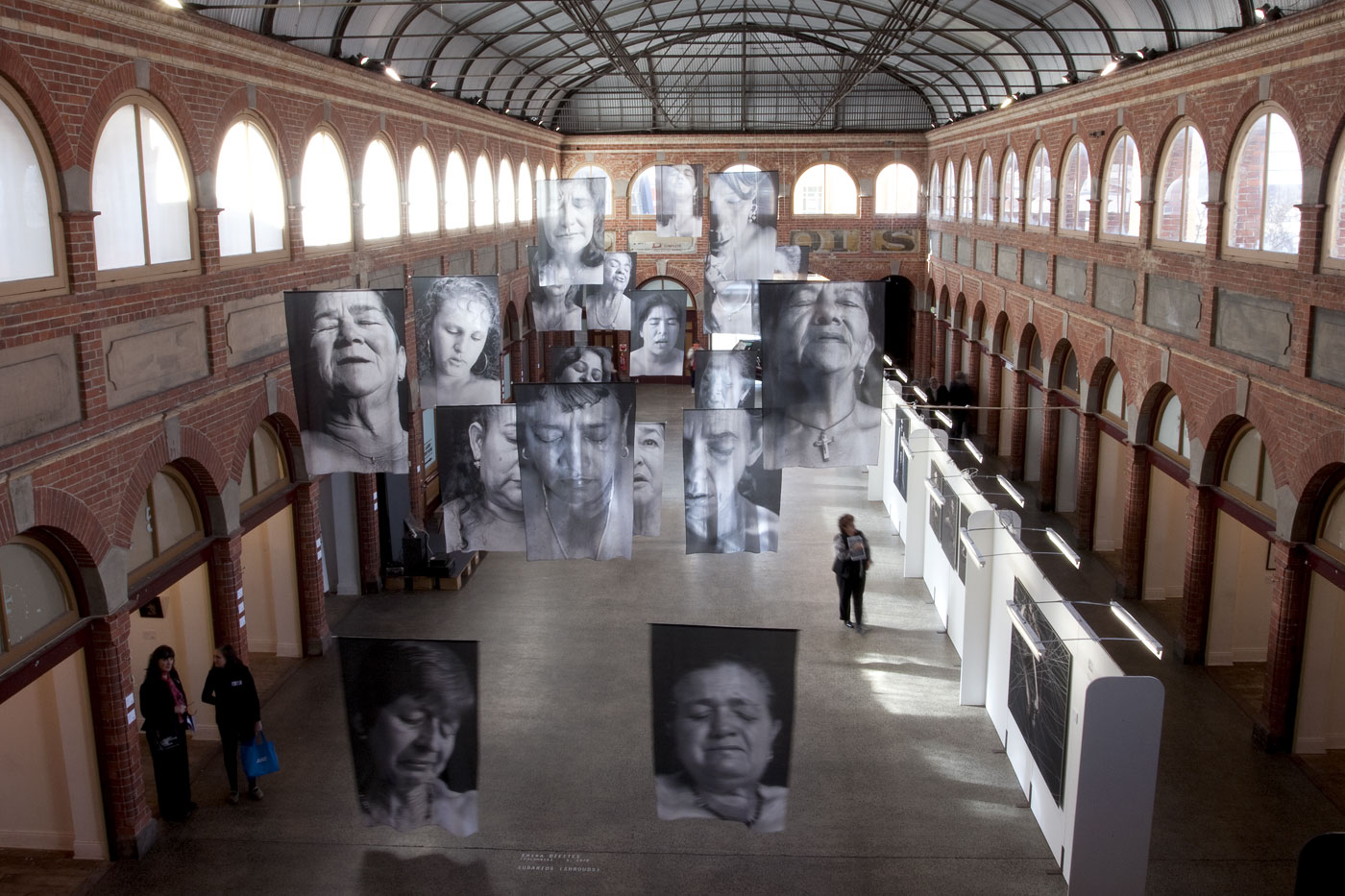
Video: Installation of Erika Diettes ‘Sudarios (Shrouds) at the Ballarat International Foto Biennale 2013

Exhibition dates: 17th August – 15th September 2013


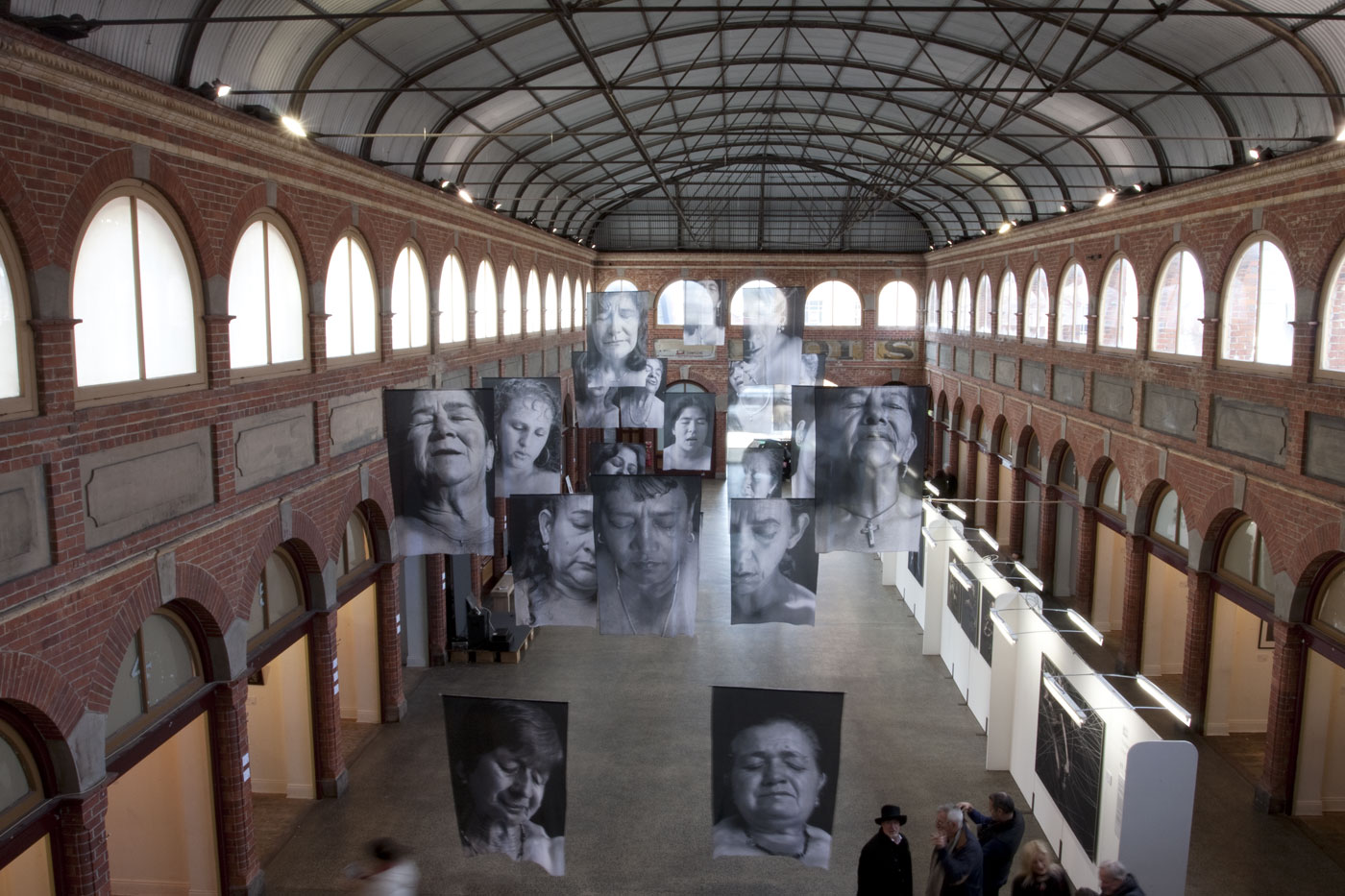
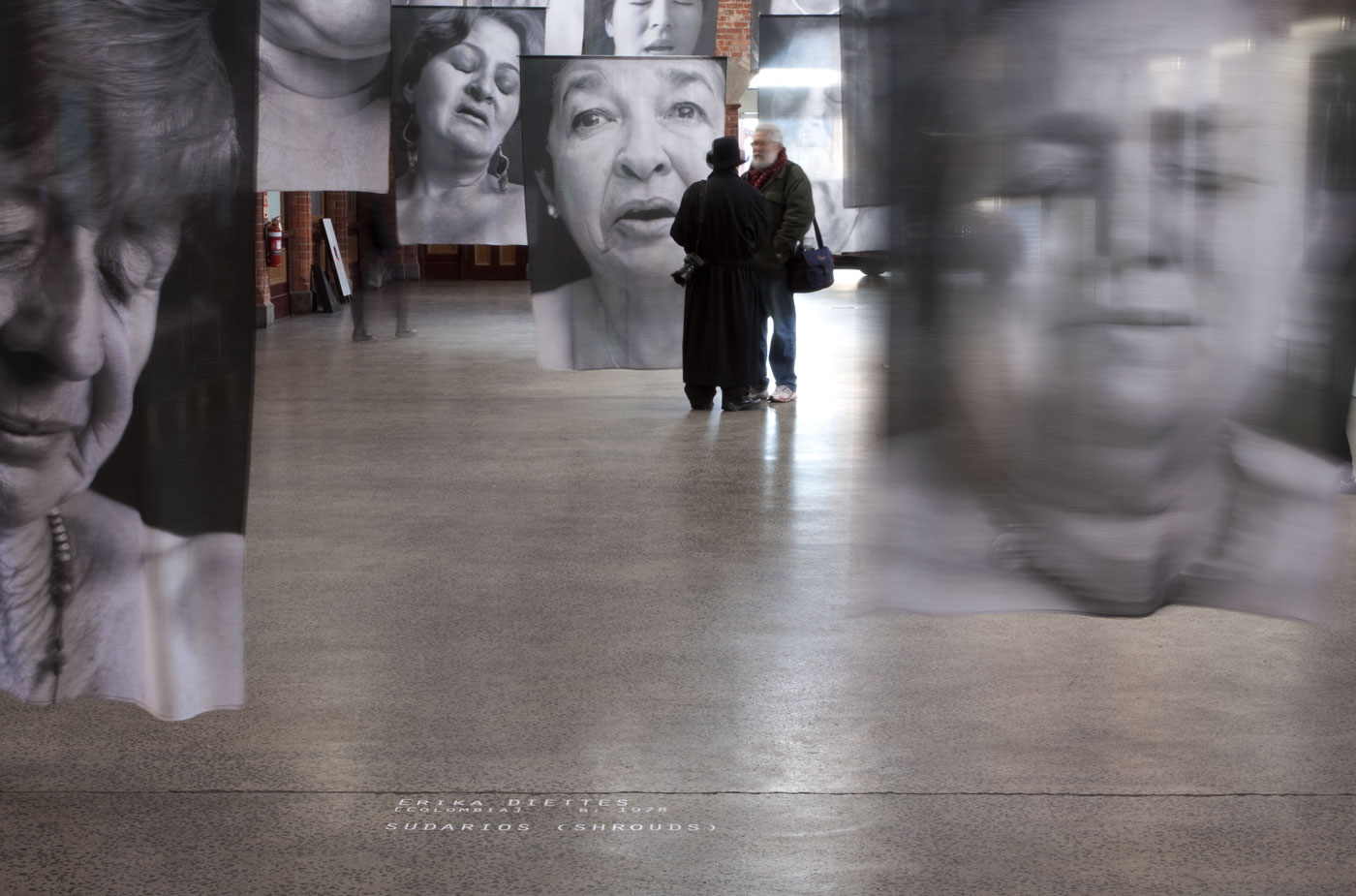
Installation video of Erika Diettes Sudarios (Shrouds) at the Ballarat International Foto Biennale 2013
© Dr Marcus Bunyan


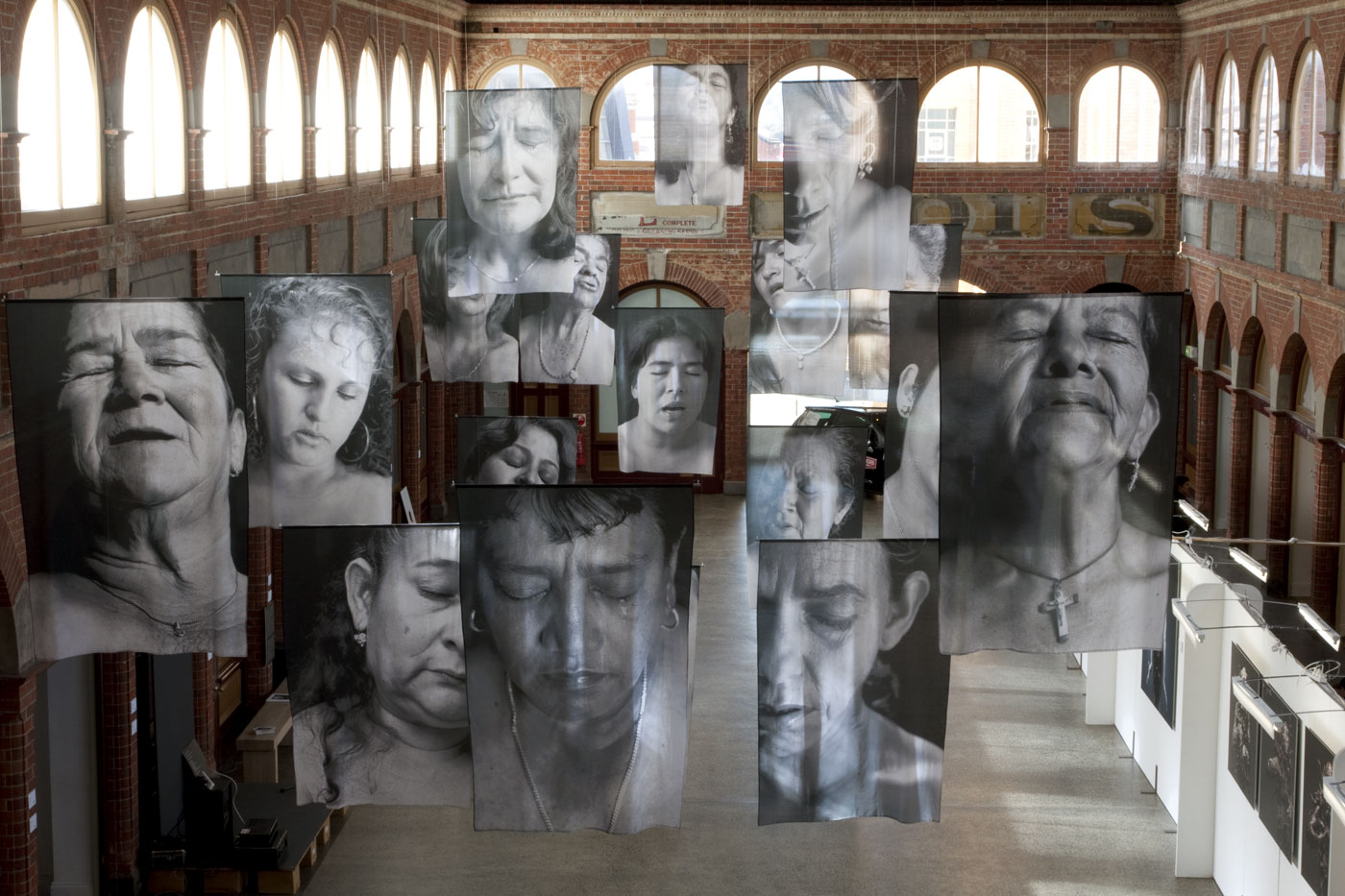
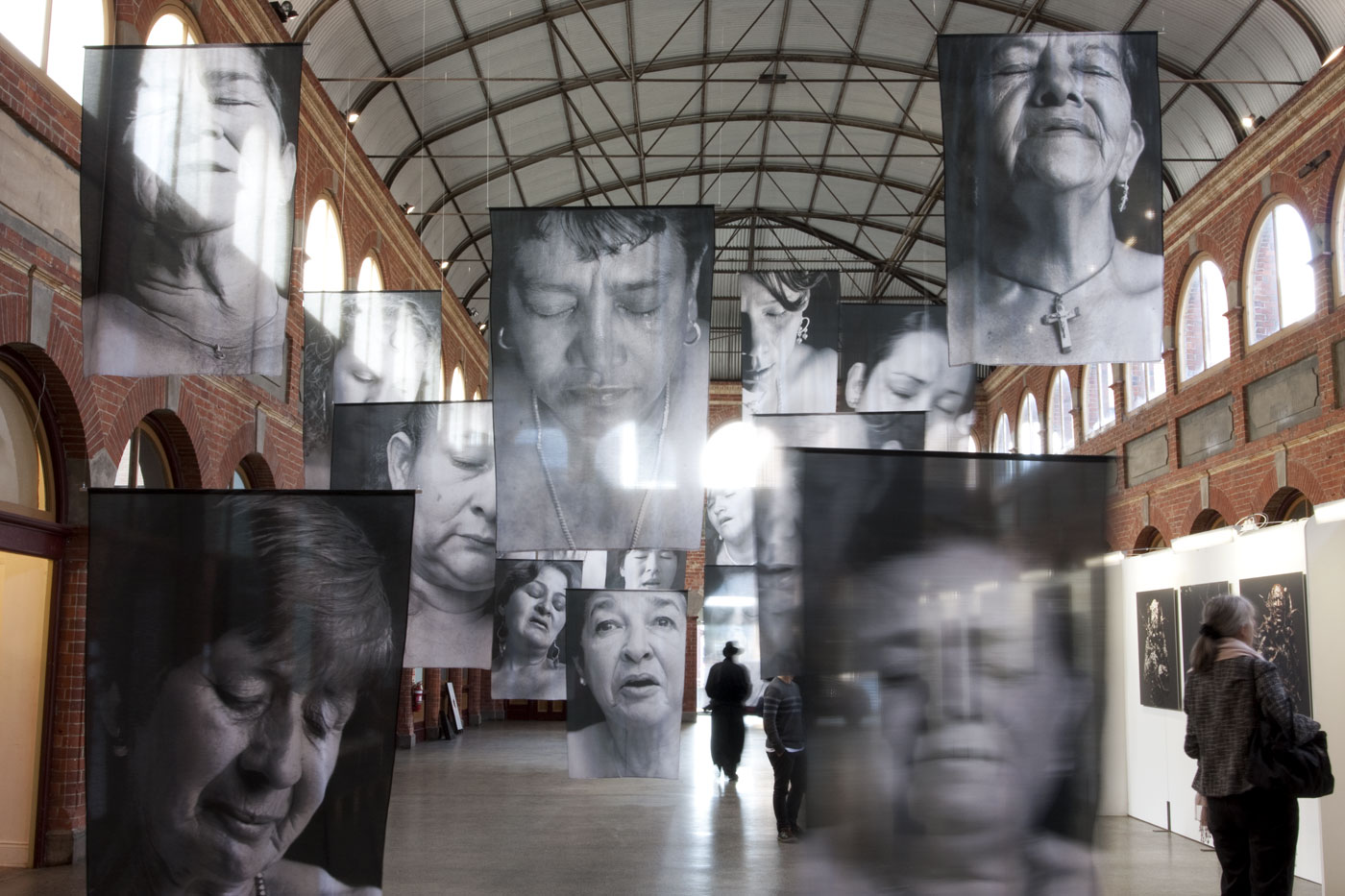
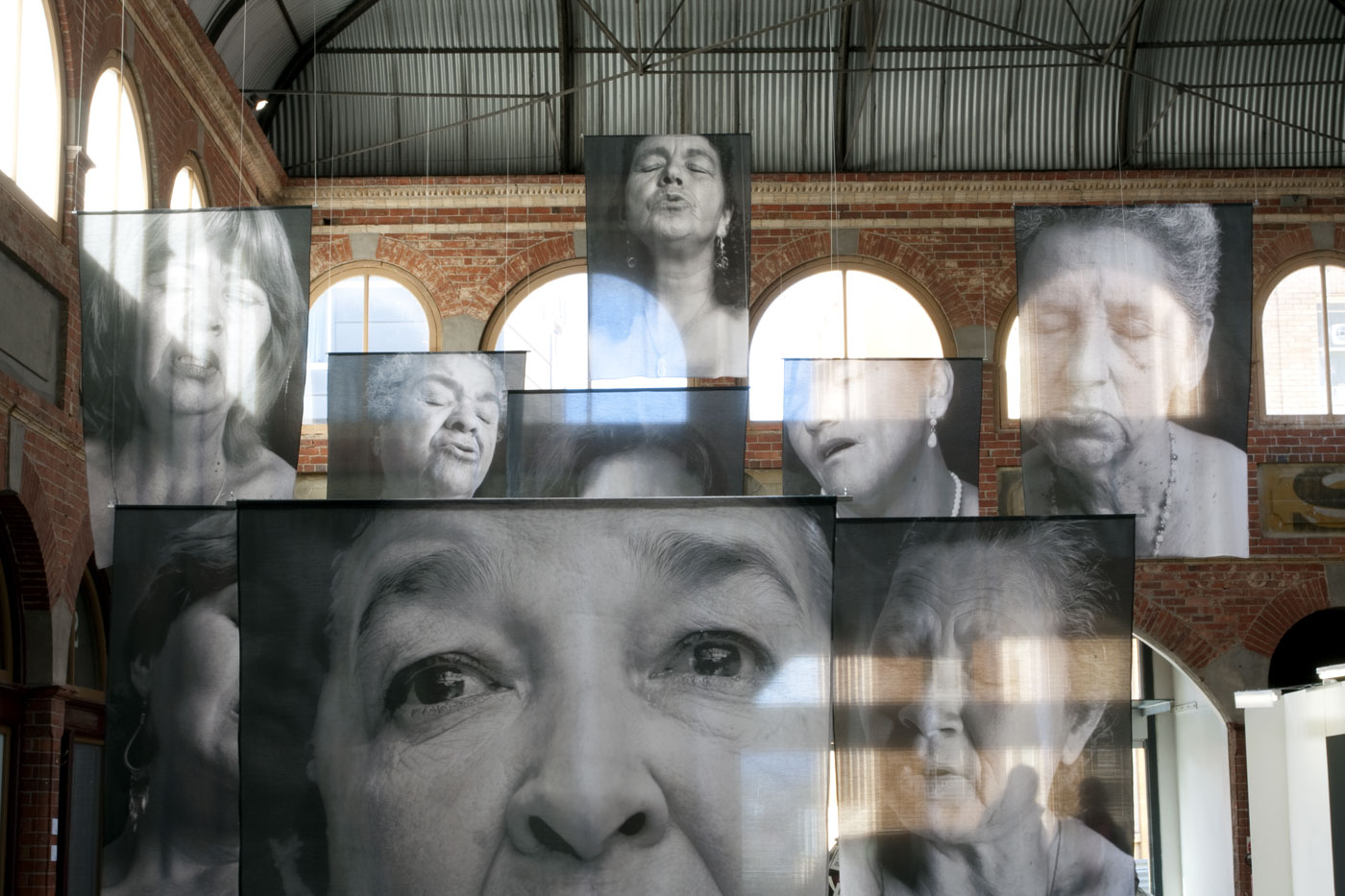
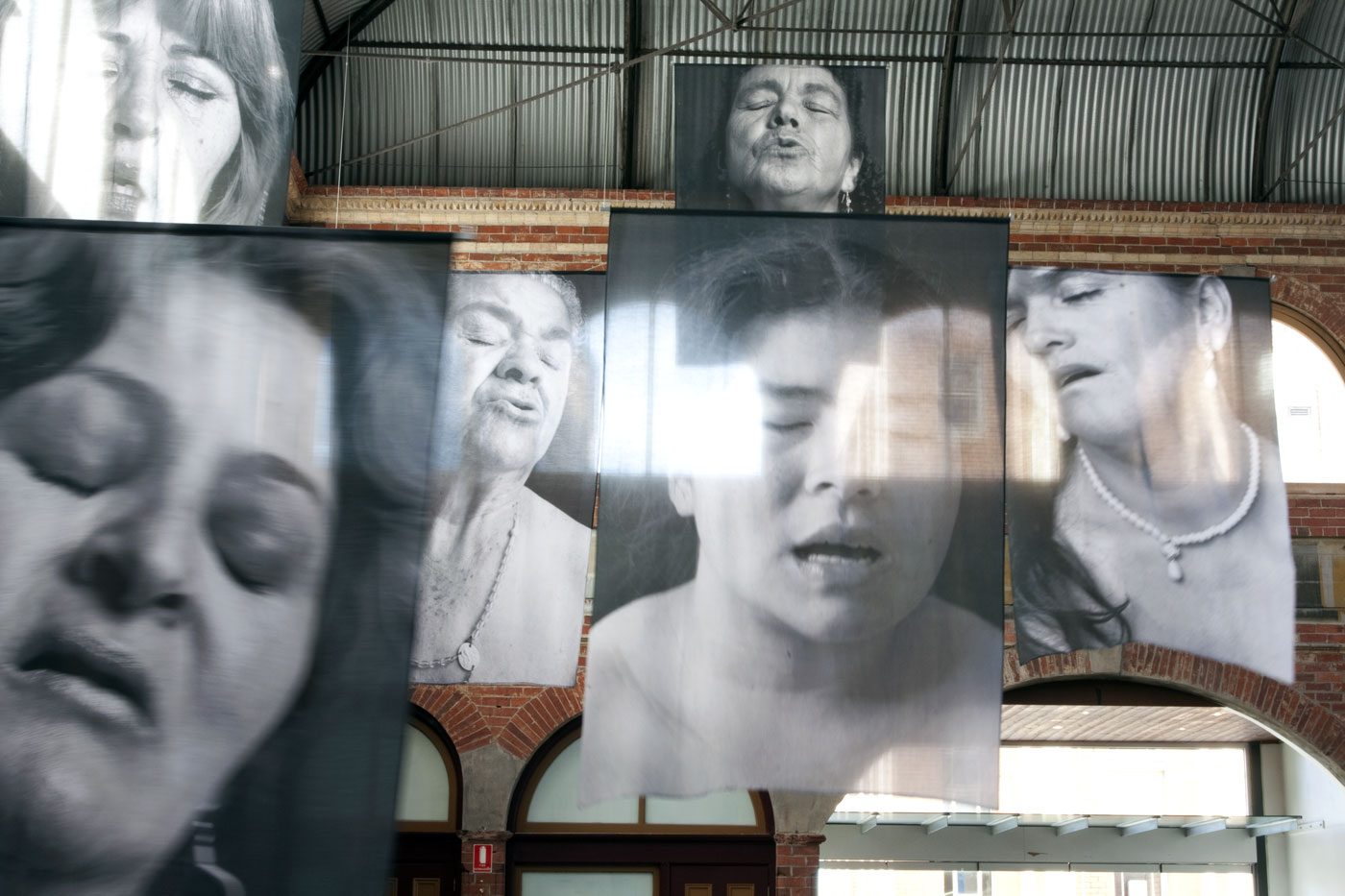
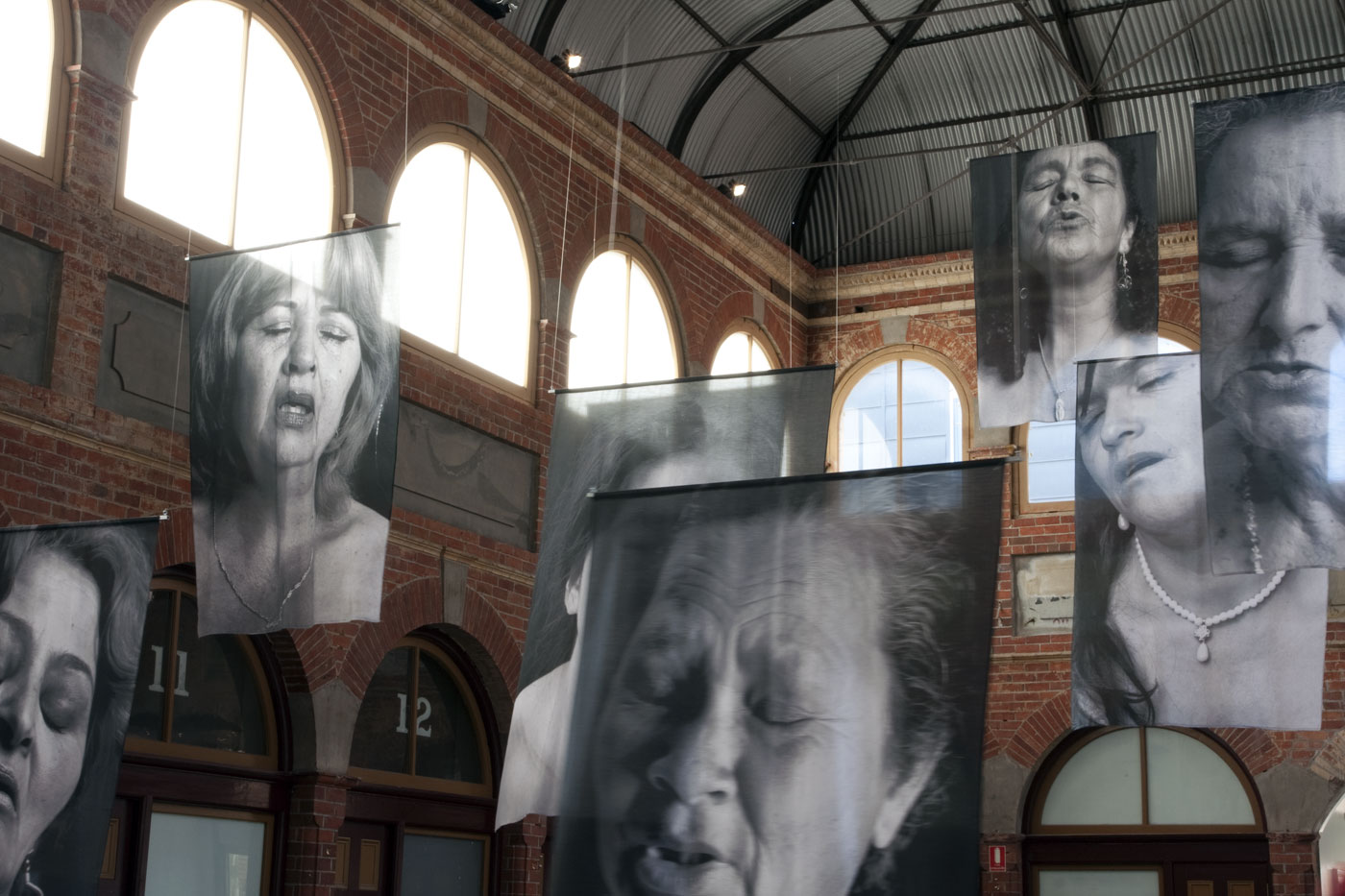
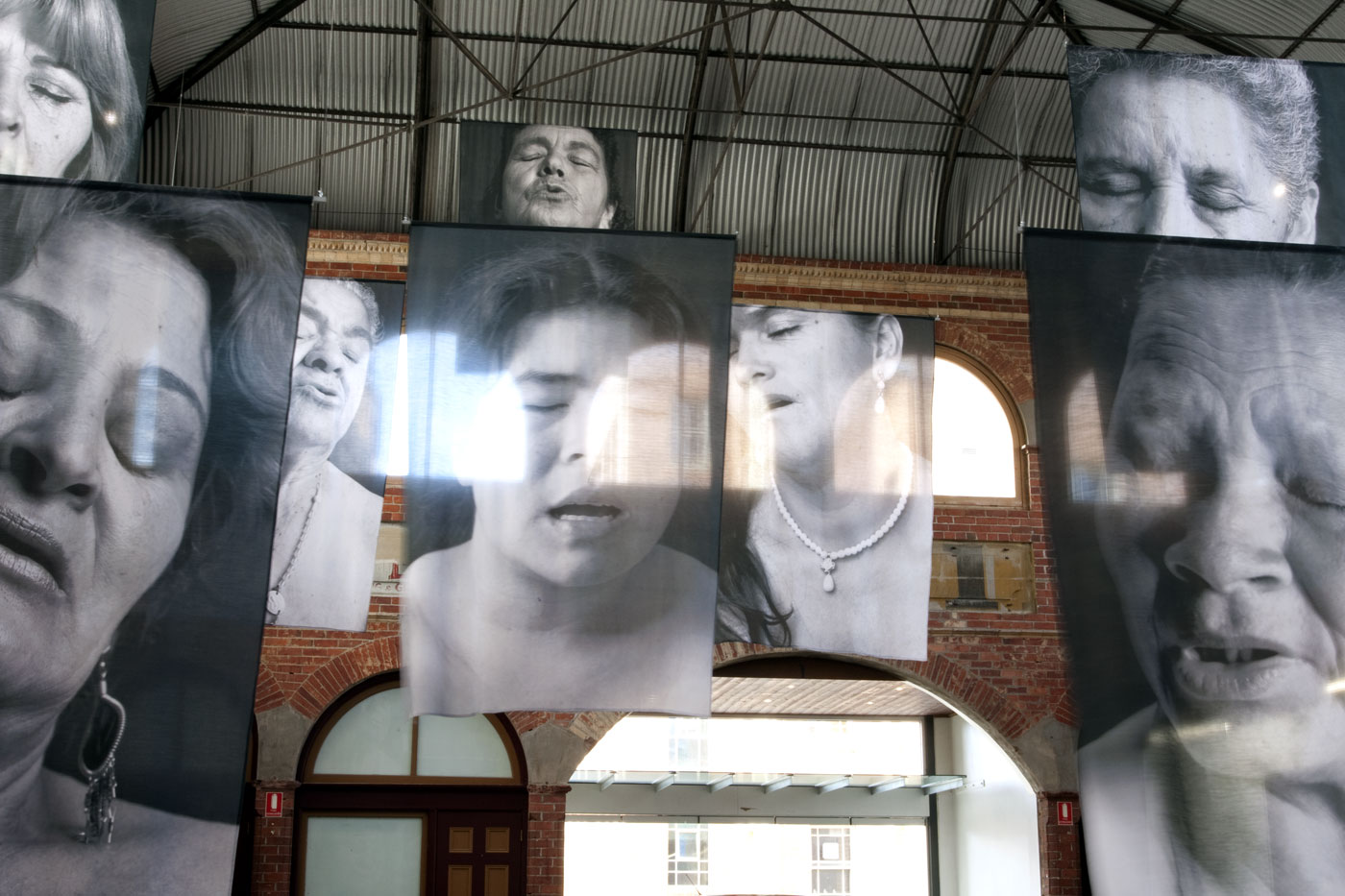
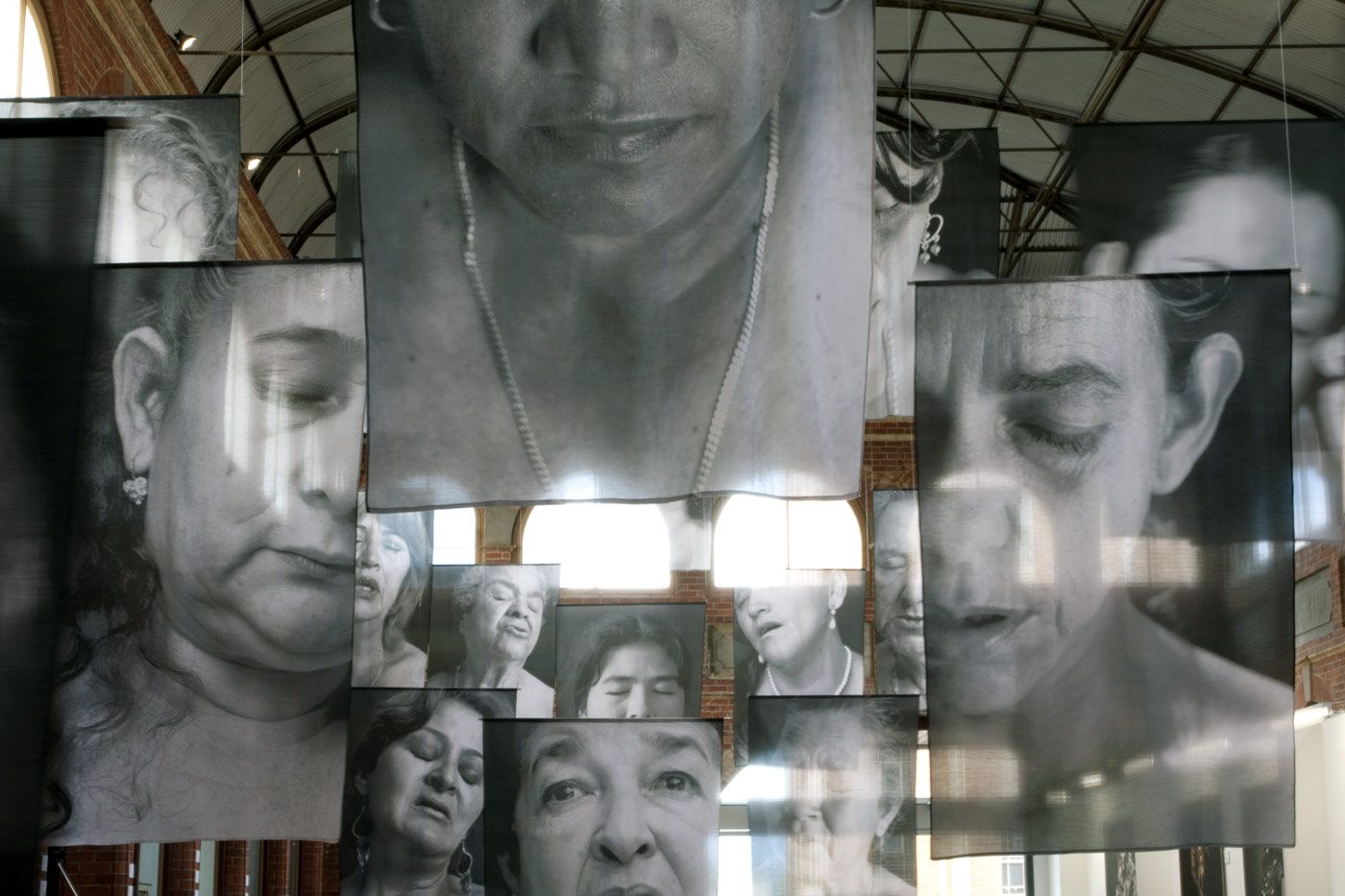
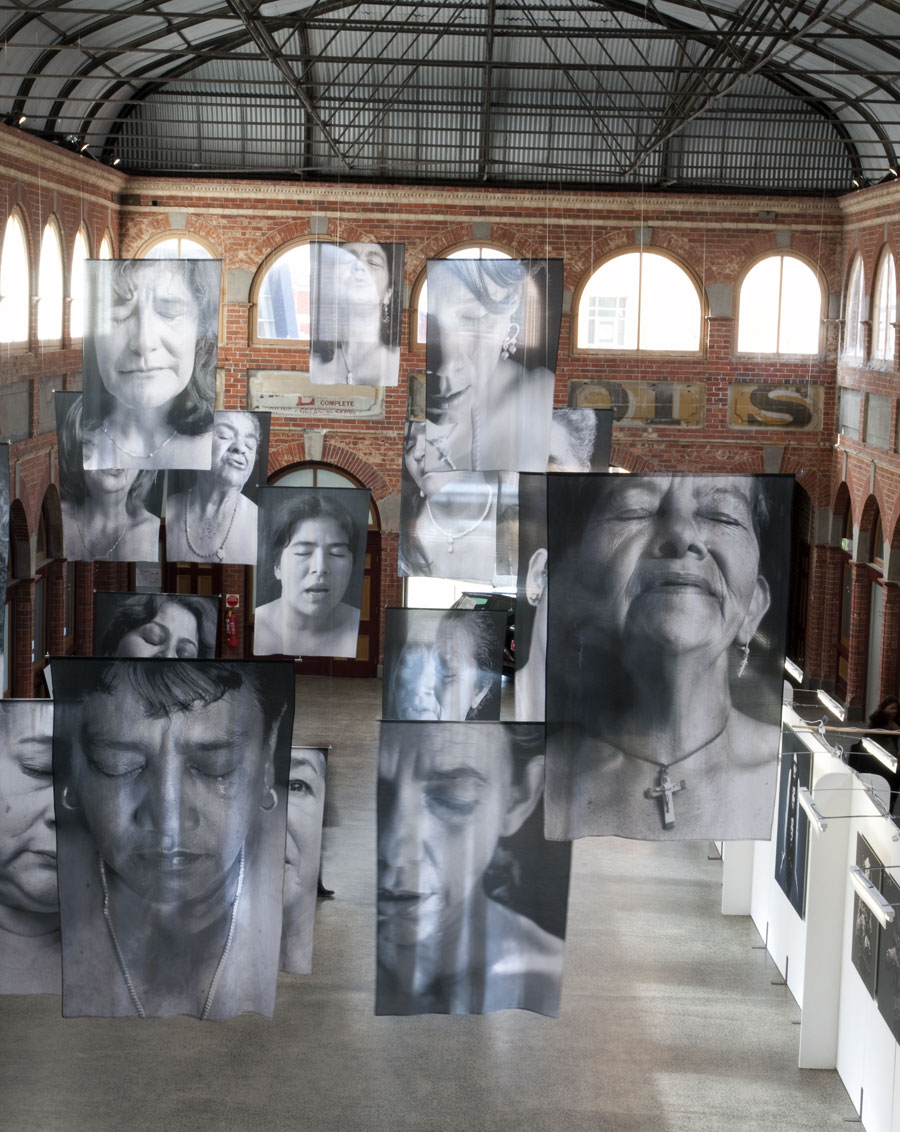
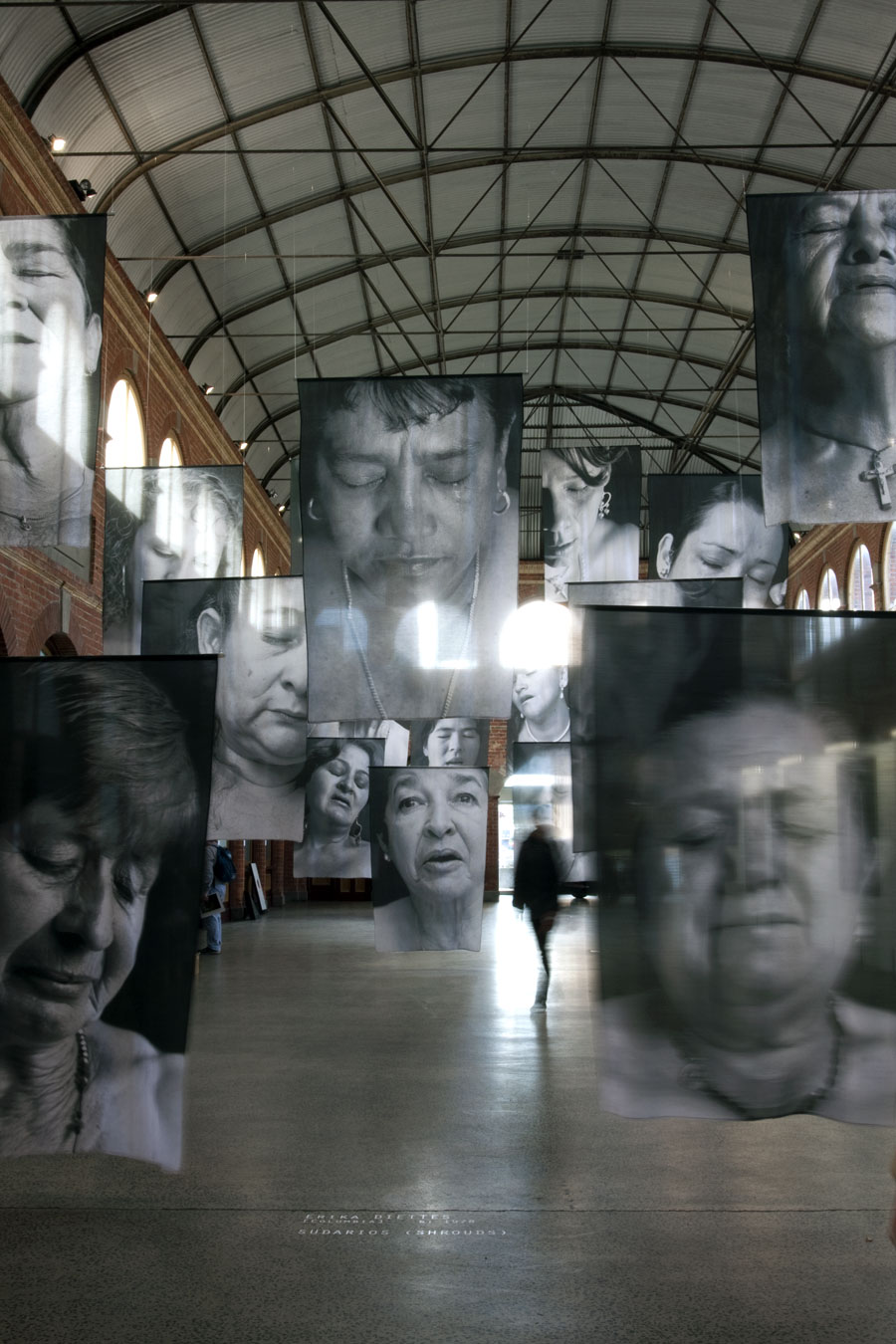
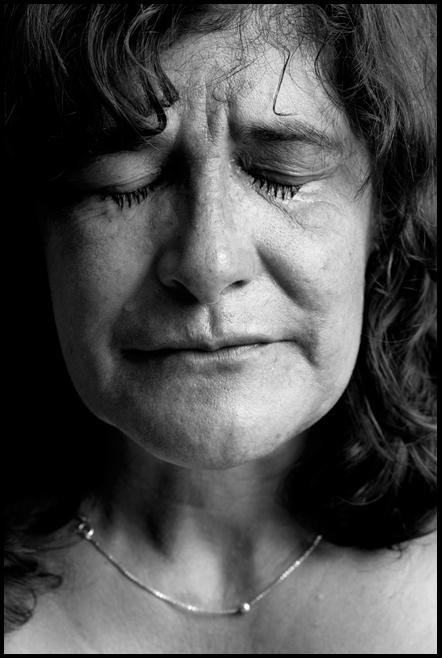
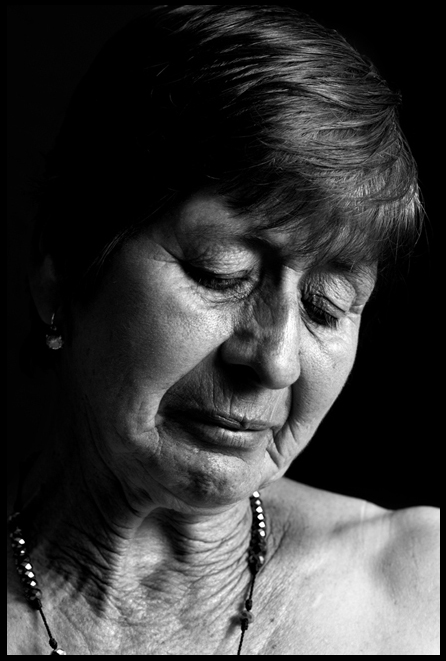
“Erika Diettes travelled to different cities in the department of Antioquia (Colombia) to interview women who had been present at the torture and murder of their loved ones. Diettes photographed the women, closely cropped in black and white, at a moment of great vulnerability – all but one with their eyes closed. The resultant twenty photographs were printed on seven feet tall silk panels and form the work Sudarios (shrouds are a burial cloak, a cloth that shrouds the body of the deceased). The artist always intended for these images to be printed on silk and had the installation in mind before she took the photographs: in other words previsualisation was strong. The work is usually displayed in sacred spaces such as churches and convents with a sound track of a barely audible, sighing female voice; here in Ballarat the work is hung in the former Mining Exchange building, a seat of colonial power and wealth which can be read as appropriate for the presentation of this work, for torture is always about the power of one person over another.”

From the catalogue essay Intimations of Mor(t)ality: Sudarios (Shrouds) by Erika Diettes by Dr Marcus Bunyan.


Ballarat International Foto Biennale
12 Lydiard St North, Ballarat 3350

Ballarat International Foto Biennale website

Erika Diettes website

LIKE ART BLART ON FACEBOOK

Back to top

Catalogue essay: ‘Intimations of Mor(t)ality: Sudarios (Shrouds) by Erika Diettes’ Dr Marcus Bunyan / Exhibition: ‘Sudarios (Shrouds)’ by Erika Diettes at the Ballarat International Foto Biennale

Exhibition dates: 17th August – 15th September 2013


Installation photograph of 'Sudarios (Shrouds)' by Erika Diettes at the Mining Exchange, Ballarat. Photograph by Marcus Bunyan


Installation photograph of Sudarios (Shrouds) by Erika Diettes at the Mining Exchange, Ballarat
Photograph by Marcus Bunyan
© Marcus Bunyan, Erika Diettes and Ballarat International Foto Biennale


This exhibition is one of the core programs for this year’s Ballarat International Foto Biennale and I had the privilege of writing the catalogue essay for the Colombian artist Erika Diettes. I met the delightful Erika and her husband today at the opening of BiFB on their first trip to Australia and I must say the art hangs very well in the Mining Exchange building.
This was one of the most difficult but rewarding pieces that I have ever had to write. In reading, I hope you gather the full import of the text.

Dr Marcus Bunyan

Text © Marcus Bunyan. All images © Marcus Bunyan, Erika Diettes and Ballarat International Foto Biennale.


Intimations of Mor(t)ality: Sudarios (Shrouds) by Erika Diettes

Dr Marcus Bunyan


“There is now a vast repository of images that make it harder to maintain [a] kind of moral defectiveness. Let the atrocious images haunt us. Even if they are only tokens, and cannot possibly encompass most of the reality to which they refer, they still perform a vital function. The images say: This is what human beings are capable of doing – may volunteer to do, enthusiastically, self-righteously. Don’t forget.”


Susan Sontag Regarding the Pain of Others 2003 1


When I was asked to write the catalogue essay on Colombian artist Erika Diettes’ work Sudarios (Shrouds) by editor Esther Gyorki for the Ballarat International Foto Biennale the work gave me pause. What could I say about it that was relevant, insightful and spoke from the heart? I wrote back to Esther saying I needed to do some background research: “This is difficult subject matter and I want to make sure I can do it justice before I commit to writing about it.”2 In a synchronous way that often happens in the world, that is ultimately what this text is about – justice.

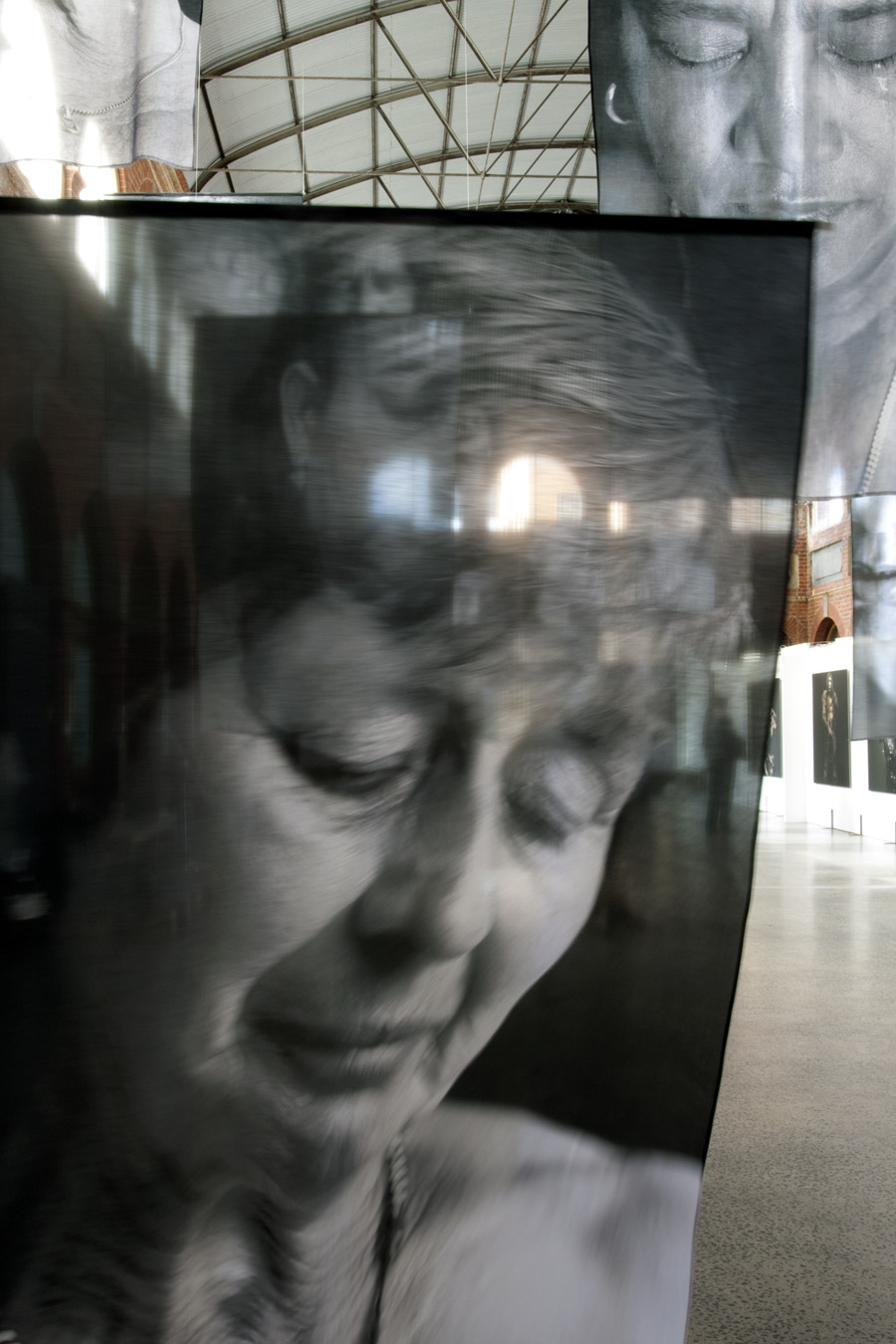
The basics are easily told. Artist and anthropologist Erika Diettes travelled to different cities in the department of Antioquia to interview women who had been present at the torture and murder of their loved ones.3 Diettes photographed the women, closely cropped in black and white, at a moment of great vulnerability – all but one with their eyes closed. The resultant twenty photographs were printed on seven feet tall silk panels and form the work Sudarios (shrouds are a burial cloak, a cloth that shrouds the body of the deceased). The artist always intended for these images to be printed on silk and had the installation in mind before she took the photographs: in other words previsualisation was strong. The work is usually displayed in sacred spaces such as churches and convents with a sound track of a barely audible, sighing female voice; here in Ballarat the work is hung in the former Mining Exchange building, a seat of colonial power and wealth which can be read as appropriate for the presentation of this work, for torture is always about the power of one person over another. The viewer can walk through these floating realities and be enfolded in the aggrieved women’s sorrow as if part of a ceremonial procession, perhaps a funeral cortege.

In her creation of an allegorical space for mourning, Diettes work acts as a funeral rite for both living and dead, acts of mourning placed in a context of splendour. The images evoke the representation of the death of Saint Sebastian, the faces recalling “the exquisite suffering of the Catholic saints and martyrs, but also of refugees and victims of contemporary traumas,”4 while the atrocities perpetrated on the body are hidden by the close cropping of the images. As Diettes observes, “You can’t help being a little pierced by their exhalations,”5 an indirect reference by Diettes to the arrows that pierce Saint Sebastian’s body. Diettes opens a space before the camera for the human ‘being’ in context, a terrain (of) or becoming, where the terrors are written on the countenance of the women, their mouths silently singing their song of mourning. Look at their mouths, each one contorted in agony, each one giving voice to the memory of terror.

These are confronting images about trauma and grief, documenting the ongoing effects of atrocity on the mind of the observer for they are portrayals of the effect of intim(id)ation, where intimations of mortality are evidenced by the removal of an identity, the beloved id, which reveals the intimate – expressed in the adoration/adornment of the women with jewellery which signifies the women’s dignity, comfort, and continuing engagement with the world as an extension of personal self/belief.

The signs of erasure of these murders are rearticulated through Diettes work. The bodies are held in suspended animation, in endless agony, through an act of re-terror-itorialisation. Through the evacuation of loved ones, their discontinuity and deterritorialisation, and the reterritorialisation / re-terroring of that space through memory – portrayed on the faces of the women – the images recast and represent issues of power, domination and abuse. Through suspended sorrow, suspended mourning, the disappearance of some bodies and the speaking of others, the images become a representation of a doubled absence, a doubled momenti mori – for the photographs picture the women (making them dead) as they themselves remember the violence perpetrated before them from behind closed eyes (as the dead have their eyes closed), remembering in their mind’s eye the death of the beloved. The image of the victim has become a ghost, a trace etched upon the face of the relative, a trace of that which “persists and gives testimony of a vanished state” in art, for if art is linked to memory and to what survives, it is from the perspective of its own corpse-oreality, its own ghostly and fragile materiality that these images emerge: the hanged man, the hung woman. Remaking but always recording the past through interaction with the present, the shrouds are a palimpsest in which “personal memories are always interwoven with historical consciousness”6 and are constantly being rewritten.

Of course the photographs elicit our empathy but more than that they make us feel their terrible vulnerability while drawing us into uncomfortable complicity as subsidiary witnesses to the event.7 Normally when looking at a photograph the viewer is a secondary witness but here the viewer becomes a tertiary witness – the actual event, the memory of that event etched on the face of the women captured by the camera and now observed by the viewer. There is an osmotic effect taking place as one as one image is super imposed on another. Even after an event is over, “there’s an after image or an echo that exists… a spirit or a residue, a trace.”8 These visions are like images of the Holocaust. As soon as we see them we are implicated in a narrative – and we are helpless in this process – which is an essential part of history.

Diettes work reframes the subject because there is no traditional frame of reference for the viewer, only a memory of that reference in the form of a ghost-like shroud. The normal definition of a shroud no longer pertains to these images for the cloth is no longer around a dead body but represents / holds a trace of what was once dead.

As spirit photographs in the Victorian era solidified a fractured, unknown reality, so these apparitions of the departed are brought forth and solidified, just for a moment, in the faces of the suffering women. The viewer of these images does not see the (dead) carrier of messages, but only their shadows carried by the grief of their loved ones, shrouded as they are in remembrances of the past. We feel that the women are not looking at us but that the aura of their invisible seeing is directed toward us from outside of its normative context – from behind their eyes. It is this imprint on the Shrouds; the imprint of their memories that travels great distances towards us, that enfolds us in sorrow and shadow.

“It is the special feeling of the ‘presence’ of a work produced not by its remaining where it is but by its moving across boundaries where it reaches us from a distance, looking at us even when it appears not to. It is where the work seems peculiarly meant for us even in its indifference to or difference from us.”9

If photographs really are “experience captured” then Diettes explores this arm of consciousness in its acquisitive mood,10 probing the limitation of the medium, shaping the space within the available conditions. Her images become images of sentience that enable the viewer to live in the world with open eyes (while the victims eyes are closed) – to be made aware of the injustices of this world and not remain silent. Diettes work is not about remembering, it’s about an answerable “not forgetting” for hers… is to remind us of the responsibility to make art in response to mor(t)ality.

As human beings, we must fight for the right to be heard and use art as a visual language to textualise our experience and thereby make it available for interpretation and closure. Powerful, simple questions (and I believe) undeniable questions have to be asked; and in response to those questions (power: it will corrupt you, but if you don’t want it, it will be used against you), intelligence, justice and integrity must be used in the service of art. While human truth may be ephemeral qualities like justice are not; the struggle is to define justice and to live it. And for artists to display it.

You place innocence at the heart of human depravity – and hope it survives.

Dr Marcus Bunyan
Melbourne 2013


Endnotes

1/ Sontag, Susan. Regarding the Pain of Others. London: Hamish Hamilton, 2003, p. 102.

2/ Email to Esther Gyorki. Tue, March 26, 2013

3/ The capital of the department of Antioquia is Medellin. The city is a 35-minute flight from the Colombian capital Bogota and has one of the highest rates of violence concerning drugs in Colombia. Most of the crimes were committed between 2001 and 2008.

4/ Anon. “Berlinde De Bruyckere Into One-Another To P.P.P.” on the Hauser and Wirth website [Online] Cited May 5, 2013. No longer available online

5/ Diettes, Erika quoted in Tobón, Paola Cardona. “The exhalation of sorrow,” in  El Colombiano, November 4, 2012 [Online] Cited Cited May 5, 2013. No longer available online

6/ Garb, Tamar. “A Land of Signs,” in Journal of Contemporary African Art 26, Spring 2010, p. 11.

7/ Op. cit. “Berlinde De Bruyckere Into One-Another To P.P.P.”

8/ Rakes, Rachael and Goldsmith, Leo. “Pasolini’s Body: Cathy Lee Crane with Leo Goldsmith and Rachael Rakes,” on The Brooklyn Rail website. January 13, 2013 [Online] Cited May 5, 2013.
www.brooklynrail.org/2013/02/film/pasolinis-body-cathy-lee-crane-with-leo-goldsmith-rachael-rakes

9/ Butler, Rex. “”Lines”, Leading Out of Sight?: Is Aboriginal Art Losing its Aura?” in Australian Art Collector No. 13, July-September 2000, p. 87.

10/ Campany, David. “Photography and Photographs,” on the Still Searching blog. April 14, 2013 [Online] Cited May 11, 2013.
blog.fotomuseum.ch/2013/04/1-photography-and-photographs/#more-1282


Installation photographs of 'Sudarios (Shrouds)' by Erika Diettes at the Mining Exchange, Ballarat. Photograph by Marcus Bunyan


Installation photograph of 'Sudarios (Shrouds)' by Erika Diettes at the Mining Exchange, Ballarat. Photograph by Marcus Bunyan


Installation photograph of 'Sudarios (Shrouds)' by Erika Diettes at the Mining Exchange, Ballarat. Photograph by Marcus Bunyan


Installation photograph of 'Sudarios (Shrouds)' by Erika Diettes at the Mining Exchange, Ballarat. Photograph by Marcus Bunyan


Installation photograph of 'Sudarios (Shrouds)' by Erika Diettes at the Mining Exchange, Ballarat. Photograph by Marcus Bunyan


Installation photograph of 'Sudarios (Shrouds)' by Erika Diettes at the Mining Exchange, Ballarat. Photograph by Marcus Bunyan


Installation photograph of 'Sudarios (Shrouds)' by Erika Diettes at the Mining Exchange, Ballarat. Photograph by Marcus Bunyan


Installation photograph of 'Sudarios (Shrouds)' by Erika Diettes at the Mining Exchange, Ballarat. Photograph by Marcus Bunyan


Installation photograph of 'Sudarios (Shrouds)' by Erika Diettes at the Mining Exchange, Ballarat. Photograph by Marcus Bunyan


Installation photograph of 'Sudarios (Shrouds)' by Erika Diettes at the Mining Exchange, Ballarat. Photograph by Marcus Bunyan


Installation photograph of 'Sudarios (Shrouds)' by Erika Diettes at the Mining Exchange, Ballarat. Photograph by Marcus Bunyan


Installation photograph of 'Sudarios (Shrouds)' by Erika Diettes at the Mining Exchange, Ballarat. Photograph by Marcus Bunyan


Installation photographs of Sudarios (Shrouds) by Erika Diettes at the Mining Exchange, Ballarat
Photographs by Marcus Bunyan
© Marcus Bunyan, Erika Diettes and Ballarat International Foto Biennale


Please click on the photographs for a larger version of the image.


Ballarat International Foto Biennale
12 Lydiard St North, Ballarat 3350

Ballarat International Foto Biennale website

Erika Diettes website

LIKE ART BLART ON FACEBOOK

Back to top

Exhibition: ‘Pieter Hugo: This Must Be The Place – Selected Works 2003-2012’ at the Ludwig Museum of Contemporary Art, Budapest

Exhibition dates: 24th May – 11th August 2013


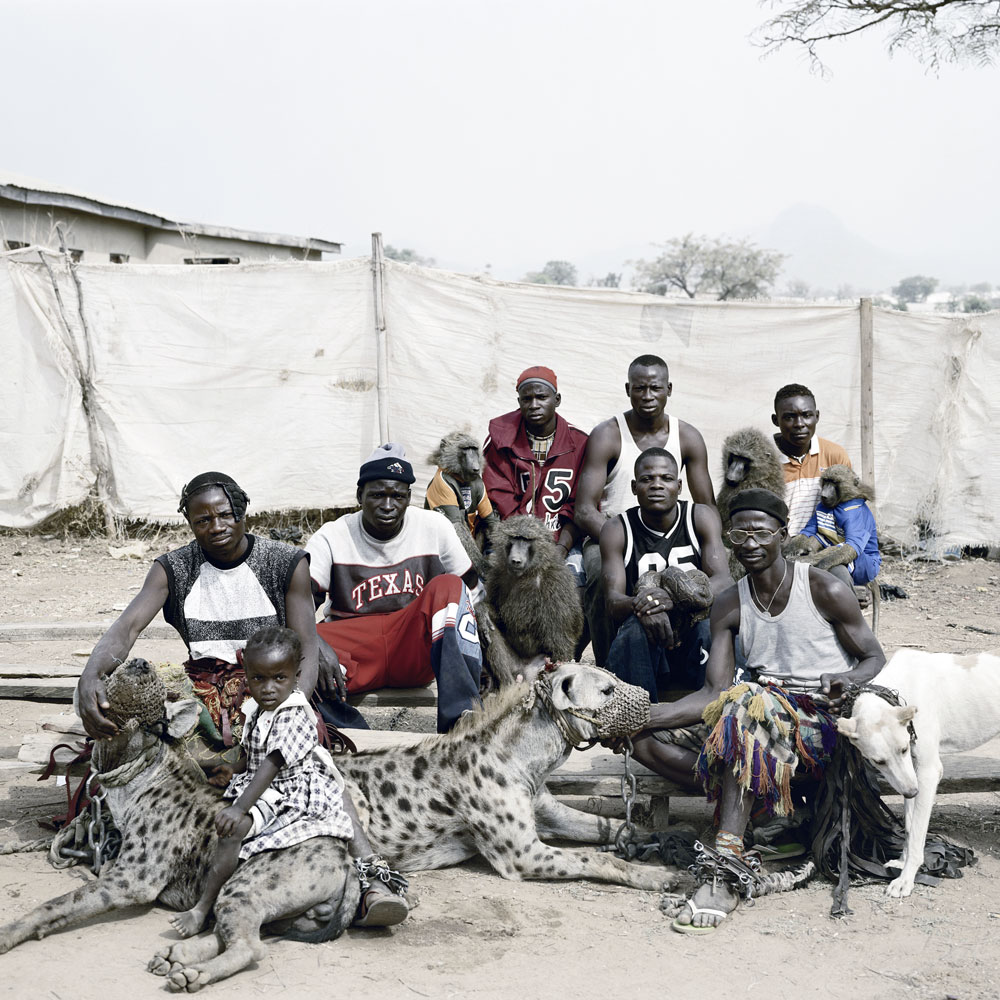
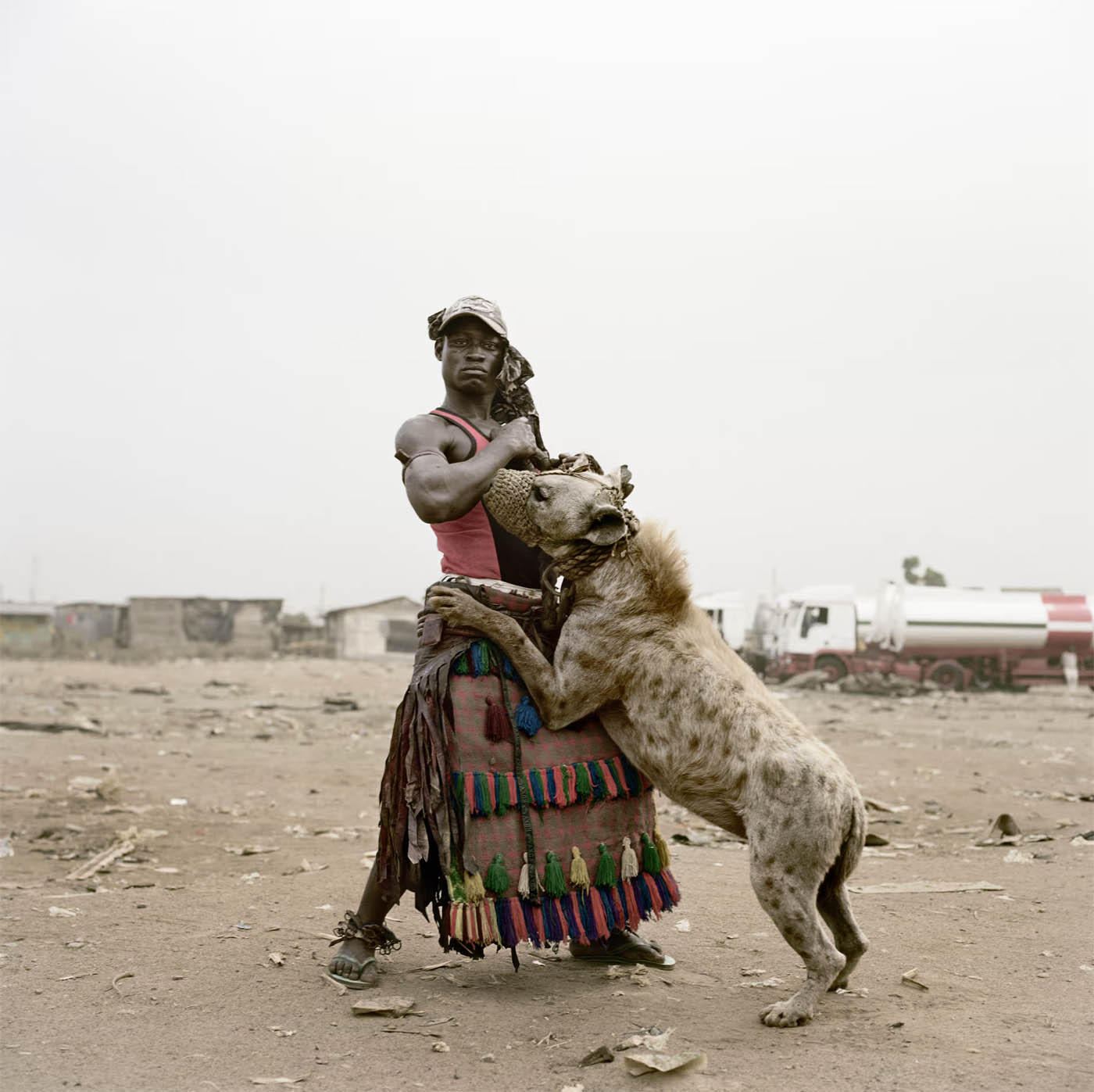
Pieter Hugo (South African, b. 1976) 'The Hyena Men of Abuja, Nigeria' 2005


Pieter Hugo (South African, b. 1976)
The Hyena Men of Abuja, Nigeria
2005
From the series The Hyena & Other Men
© Pieter Hugo
Courtesy of Stevenson, Cape Town/Johannesburg and Yossi Milo, New York


I have not seen enough of the other series of Pieter Hugo to make an informed decision, but work from the The Hyena & Other Men (2005-2007) and Permanent Error (2009-2010) series, the most often reproduced, is certainly strong. Whether I am fully convinced by his singular frontality is another matter…

Dr Marcus Bunyan

Many thankx to the Ludwig Museum of Contemporary Art for allowing me to publish the photographs in the posting. Please click on the photographs for a larger version of the image.


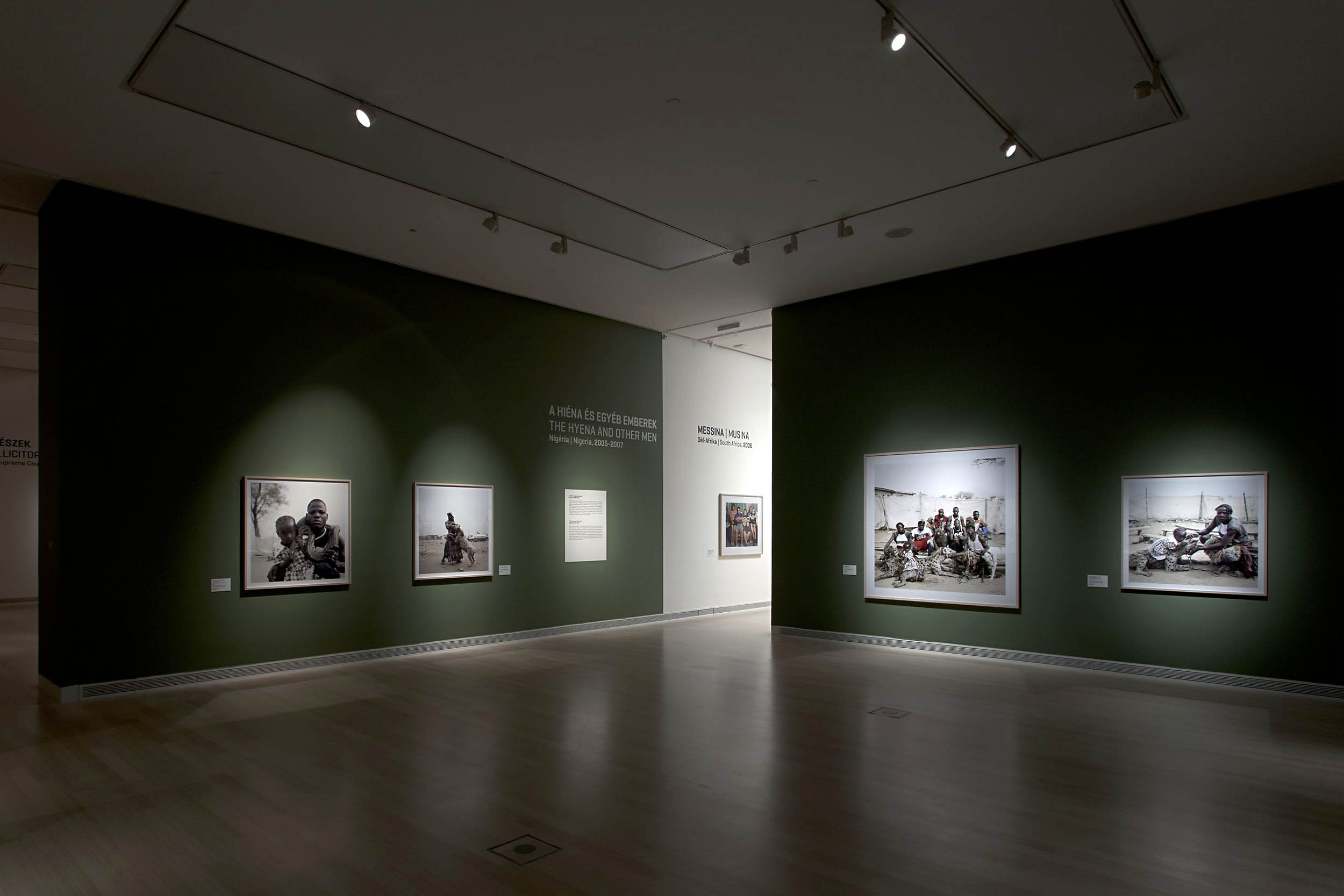
Installation view of the exhibition 'Pieter Hugo: This Must Be The Place – Selected Works 2003-2012' at the Ludwig Museum of Contemporary Art, Budapest showing work from Hugo's 'The Hyena and Other Men' Nigeria, 2005-2007 


Installation view of the exhibition Pieter Hugo: This Must Be The Place – Selected Works 2003-2012 at the Ludwig Museum of Contemporary Art, Budapest showing work from Hugo’s The Hyena and Other Men Nigeria, 2005-2007
Exhibition view © Tamás Bujnovszky / Ludwig Museum – Museum of Contemporary Art, Archives


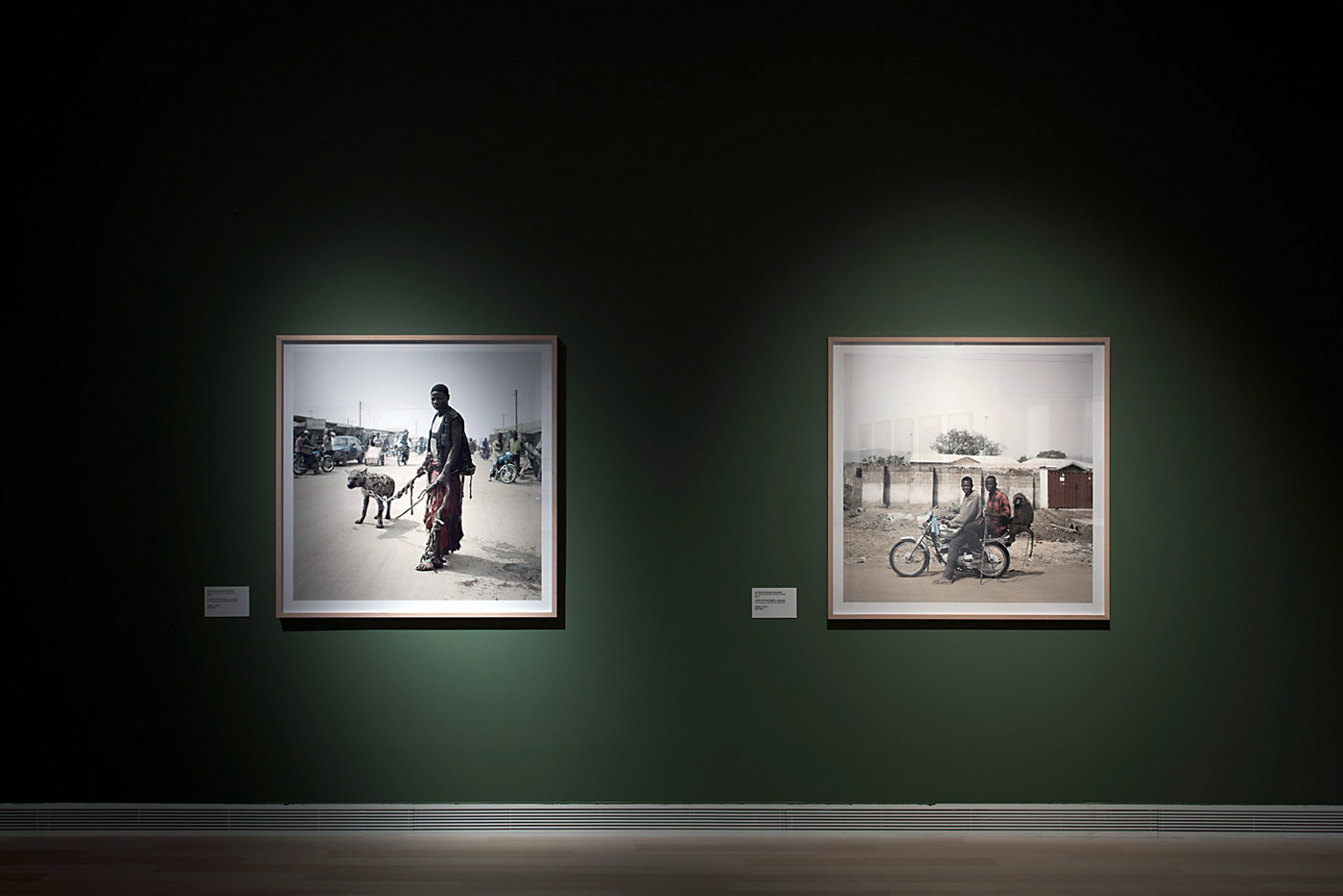
Installation view of the exhibition 'Pieter Hugo: This Must Be The Place – Selected Works 2003-2012' at the Ludwig Museum of Contemporary Art, Budapest showing work from Hugo's 'The Hyena and Other Men' Nigeria, 2005-2007 


Installation view of the exhibition Pieter Hugo: This Must Be The Place – Selected Works 2003-2012 at the Ludwig Museum of Contemporary Art, Budapest showing work from Hugo’s The Hyena and Other Men Nigeria, 2005-2007
Exhibition view © Tamás Bujnovszky / Ludwig Museum – Museum of Contemporary Art, Archives


Pieter Hugo (South African, b. 1976) 'The Hyena Men of Abuja, Nigeria' 2005


Pieter Hugo (South African, b. 1976)
The Hyena Men of Abuja, Nigeria
2005
From the series The Hyena & Other Men
© Pieter Hugo
Courtesy of Stevenson, Cape Town/Johannesburg and Yossi Milo, New York


The hyena men are itinerants: they never spend more than two days anywhere. I found them in a shanty town near Abuja, the capital. Despite the language barrier we got to know each other pretty quickly. Outside of Lagos and Port Harcourt, I didn’t see a single white person in Nigeria. So I probably seemed as odd to them as a guy walking a hyena in the street seemed to me.

We smoked some weed to break the ice. It turned out they weren’t debt collectors – they were more like town criers, traditional storytellers who performed in the streets and sold potions after their shows. It reminded me of stories I’d read about eastern European circus troupes in the 1930s – except instead of bears, these guys had hyenas, baboons and pythons.

Seeing them perform was unforgettable. It was a huge spectacle. They would beat drums to draw in the crowds, then take the muzzles off the hyenas. Next they’d put their arms and even their heads between the animals’ jaws. The aim was to convince the audience they had special powers, and that the audience could acquire them too, if they bought their potions.

At first I tried photographing the street shows, but there was just too much going on. Then I realised that the relationship between man and beast was more interesting than all the fireworks of the performance. There was something very strange going on between the guys and the hyenas, bordering on sadomasochism. These animals had been taken out of the wild as pups. They couldn’t return. They were entirely dependent on these guys for food. And these men were dependent on the animals for their livelihoods. They needed each other, but it wasn’t an easy symbiosis. …

I love how confrontational this shot is. At no point did I tell him how to pose. It’s all him. He flexed his bicep, stared straight at me, while his hyena jumped all over him. Then in the background, there’s this kind of Mad Max landscape strewn with broken-down trucks, though you can hardly see them because of the light. It was Harmattan season, a time between November and March when the sands of the Sahara blow over western Africa creating this murky, diffused lighting, which I love. It’s a simple shot with an incredible economy. I wish I could take more like it.

Interview by Edward Siddons. “Pieter Hugo’s best photograph: the hyena men of Nigeria,” on the Guardian website Thursday 19 Jul 2018 [Online] Cited 09/07/2024


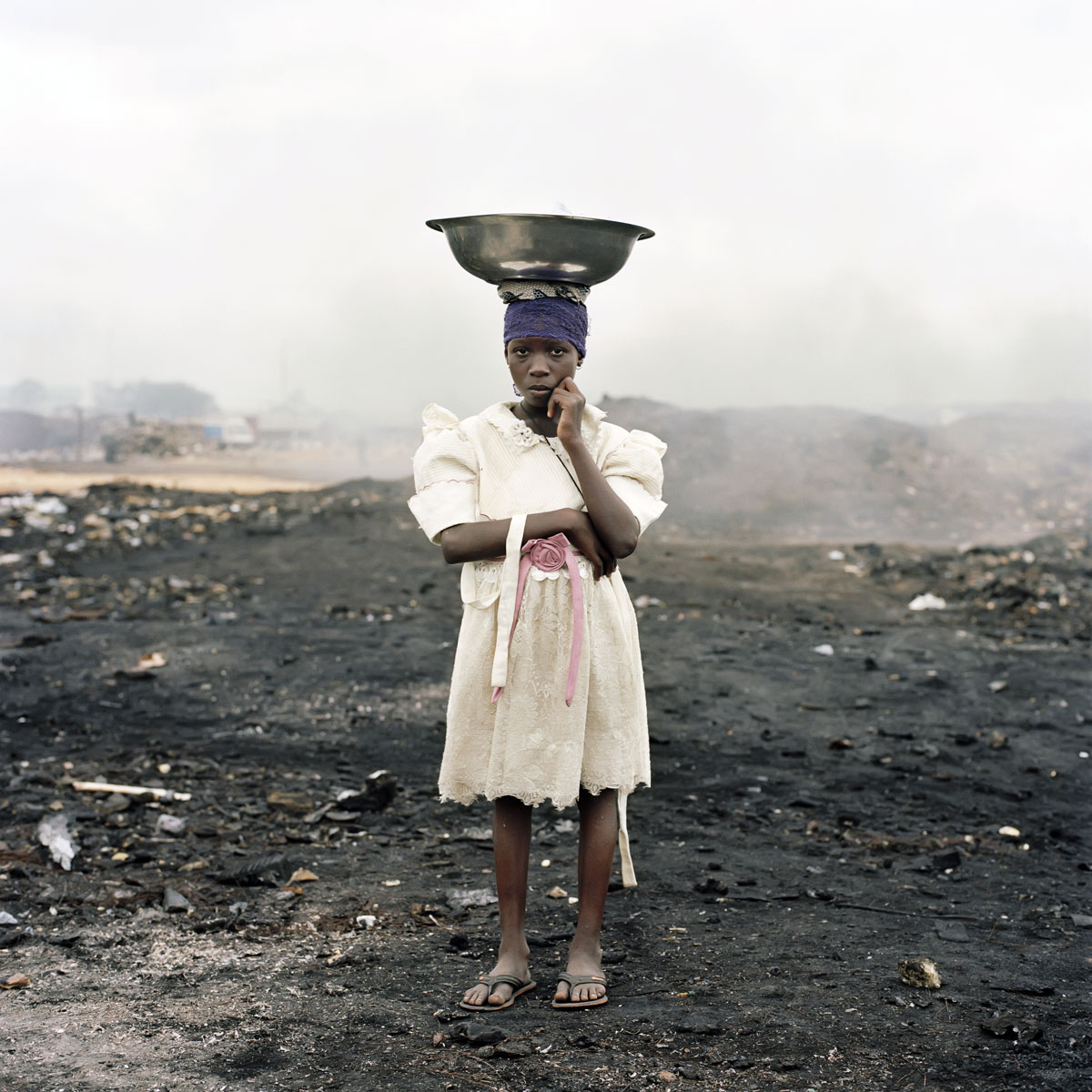
Pieter Hugo (South African, b. 1976) 'Naasra Yeti, Agbogbloshie Market, Accra, Ghana' 2009


Pieter Hugo (South African, b. 1976)
Naasra Yeti, Agbogbloshie Market, Accra, Ghana
2009
From the series Permanent Error (2009-2010)
© Pieter Hugo
Courtesy of Stevenson, Cape Town/Johannesburg and Yossi Milo, New York


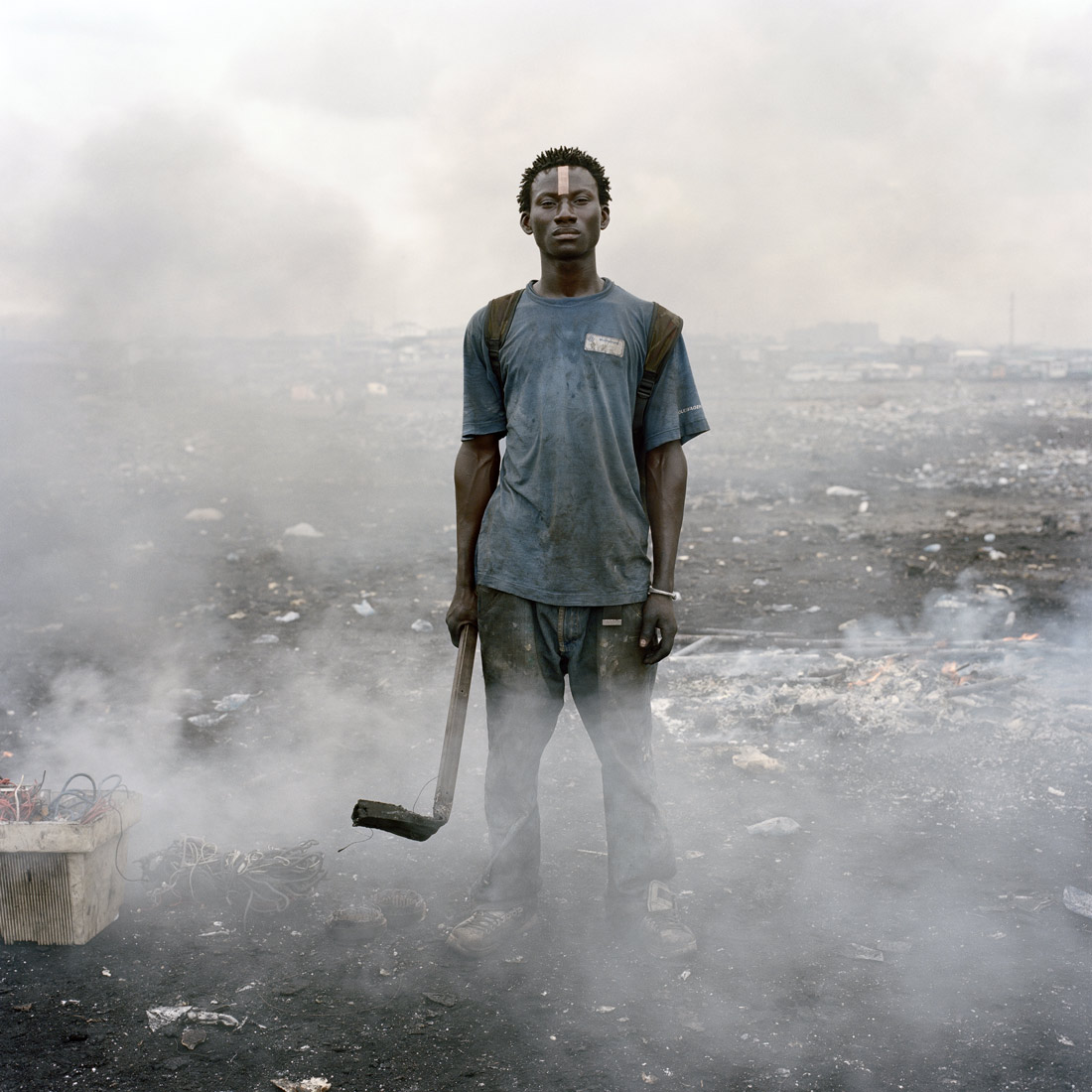
Pieter Hugo (South African, b. 1976) 'Aissah Salifu, Agbogbloshie Market, Accra, Ghana' 2010


Pieter Hugo (South African, b. 1976)
Aissah Salifu, Agbogbloshie Market, Accra, Ghana
2010
From the series Permanent Error (2009-2010)
© Pieter Hugo
Courtesy of Stevenson, Cape Town/Johannesburg and Yossi Milo, New York


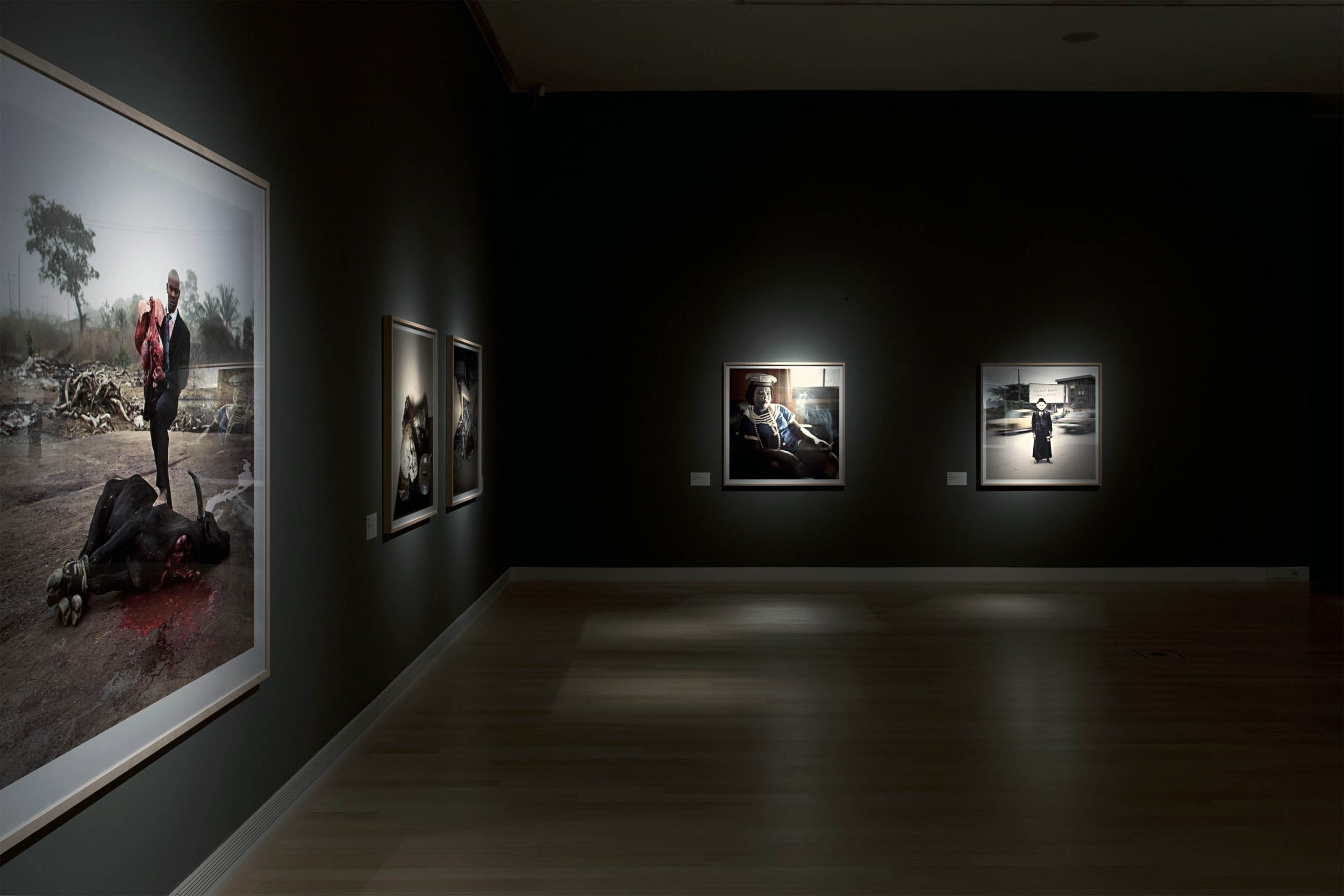
Installation view of the exhibition Pieter Hugo: This Must Be The Place – Selected Works 2003-2012 at the Ludwig Museum of Contemporary Art, Budapest showing at second right, Hugo's 'Obechukwu Nwoye, Enugu' 2008-2009; and at right, 'Escort Kama. Enugu, Nigeria' 2008 (below) both from the series 'Nollywood' (2008-2009)


Installation view of the exhibition Pieter Hugo: This Must Be The Place – Selected Works 2003-2012 at the Ludwig Museum of Contemporary Art, Budapest showing at second right, Hugo’s Obechukwu Nwoye, Enugu 2008-2009; and at right, Escort Kama. Enugu, Nigeria 2008 (below) both from the series Nollywood (2008-2009)
Exhibition view © Tamás Bujnovszky / Ludwig Museum – Museum of Contemporary Art, Archives


Pieter Hugo (South African, b. 1976) 'Escort Kama. Enugu, Nigeria' 2008


Pieter Hugo (South African, b. 1976)
Escort Kama. Enugu, Nigeria
2008
From the series Nollywood (2008-2009)
© Pieter Hugo
Courtesy of Stevenson, Cape Town/Johannesburg and Yossi Milo, New York


Pieter Hugo (South African, b. 1976) 'Chris Nkulo and Patience Umeh. Enugu, Nigeria' 2008


Pieter Hugo (South African, b. 1976)
Chris Nkulo and Patience Umeh. Enugu, Nigeria
2008
From the series Nollywood (2008-2009)
© Pieter Hugo
Courtesy of Stevenson, Cape Town/Johannesburg and Yossi Milo, New York


Pieter Hugo’s (b. Johannesburg, 1976) career is quite young, yet his photography is already so comprehensive that we can rightly speak of a consistent oeuvre. Since 2003 Hugo has photographed people and themes exclusively in sub-Saharan Africa. Daily life in post-colonial Africa, the complex conditions after the end of apartheid in his own land and the impact of global trade and commerce are themes that circulate throughout his intriguing series.

Pieter Hugo spends long periods of time photographing his extensive series in order to capture intimate and often bizarre moments. His use of a large-format camera requires patience and trust between photographer and subject, which is visible in straightforward expressions and candid interactions. There is a moment of calm and even timelessness in these works that allows the viewer to engage more fully with the subject matter.

The political diversity of a continent that is rapidly transforming – some note that Africa will be a global economic power of the future – is portrayed by Pieter Hugo with the clarity of familiar painting genres such as landscape, portraiture, group portraiture and still life. The subjects of his photography: the elderly, the poor, the blind, street artists, soap actors, close family and friends – form a social tableau that is at once personalised while also presenting a more universal image of Africa at the beginning of the twenty first century.

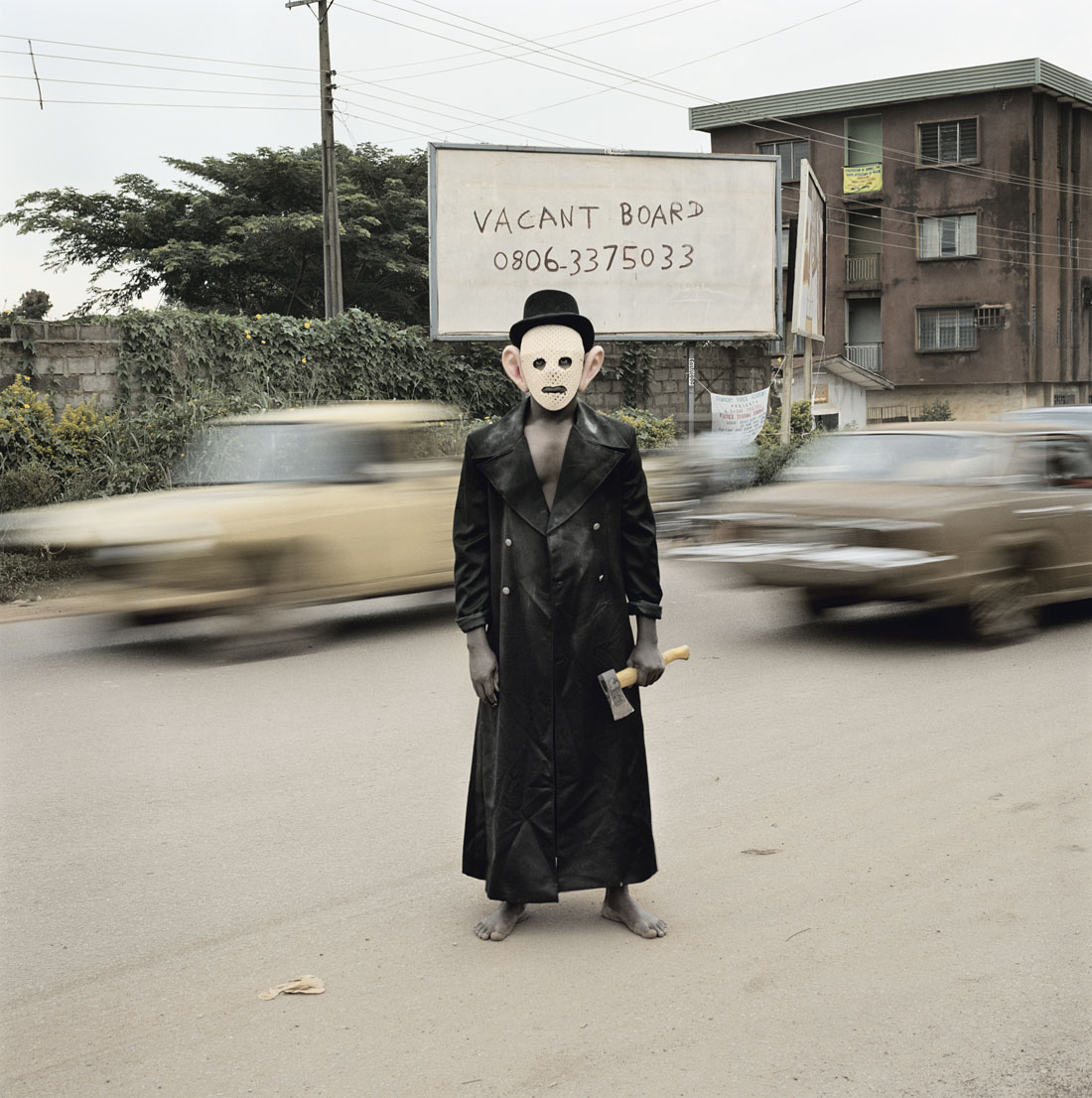
The initial motivation for the series The Hyena & Other Men (2005-2007) comes from a cell phone camera image Pieter Hugo discovered on the internet. The image concerns a group of performers who travel throughout Nigeria with tamed hyenas and other wild animals and collect money from their choreographed public performances. Hugo embarked on two separate trips to document this remarkable nomadic group up close. Hugo presents the complex relationship between animal and owner, capturing moments of calm and tenderness amidst situations full of drama and spectacle.

The Agbogbloshie market on the outskirts of Accra (Ghana) is the thematic of the Permanent Error series (2009-2010), which is mainly a dumping site for the technological waste of the western world. Here computers and other electronic equipment are collected and burned by inhabitants, often children, to extract precious raw materials. These machines formerly representing prosperity and progress are here transformed into only noxious and life threatening vapours. The charred ground, grey sky and scattered groups of foragers and cattle seem isolated from the world, but are in fact one of the last links in a chain of global commerce. Despite the harsh surroundings, the subjects stand tall, identified by full name and framed in the style of classical portraiture.

Nollywood (2008-2009) is the third largest film industry in the world, releasing between 500 and 1,000 movies each year. It produces movies on its own terms, telling stories that appeal to and reflect the lives of its public: it is a rare instance of self-representation on such a scale in Africa. The continent has a rich tradition of story-telling that has been expressed abundantly through oral and written fiction, but has never been conveyed through the popular media before. Stars are local actors; plots confront the public with familiar situations of romance, comedy, witchcraft, bribery, prostitution. The narrative is overdramatic, deprived of happy endings, tragic. The aesthetic is loud, violent, excessive; nothing is said, everything is shouted.

At a morgue in the township of Khayelitsha in Cape Town, Pieter Hugo turns his camera to individuals who have died of AIDS related illnesses. In The Bereaved (2005) as with many of his other series, Hugo gives first and last names of his subjects. Such a personal statement challenges the anonymity of AIDS statistics in South Africa. Ten years after the Rwandan Genocide, Pieter Hugo captures the unimaginable violence of these events through leftover fragments (Vestiges of a Genocide, 2004). The absence of human life is disturbingly present in the images. Bones are preserved with lime so as not to disintegrate. Heavy dust and dirt create an organic seal over the remains. While these substances often signify what is past and forgotten, the items in the photographs are preserved artificially and naturally for all to remember.

The series entitled Messina / Musina (2006) deals with the inhabitants of a small town on the border of Zimbabwe in South Africa’s Limpopo Province. The title reflects the correction of an earlier colonial misspelling of the town’s name (Messina), as well as the transition taking place at this geographical and social periphery.

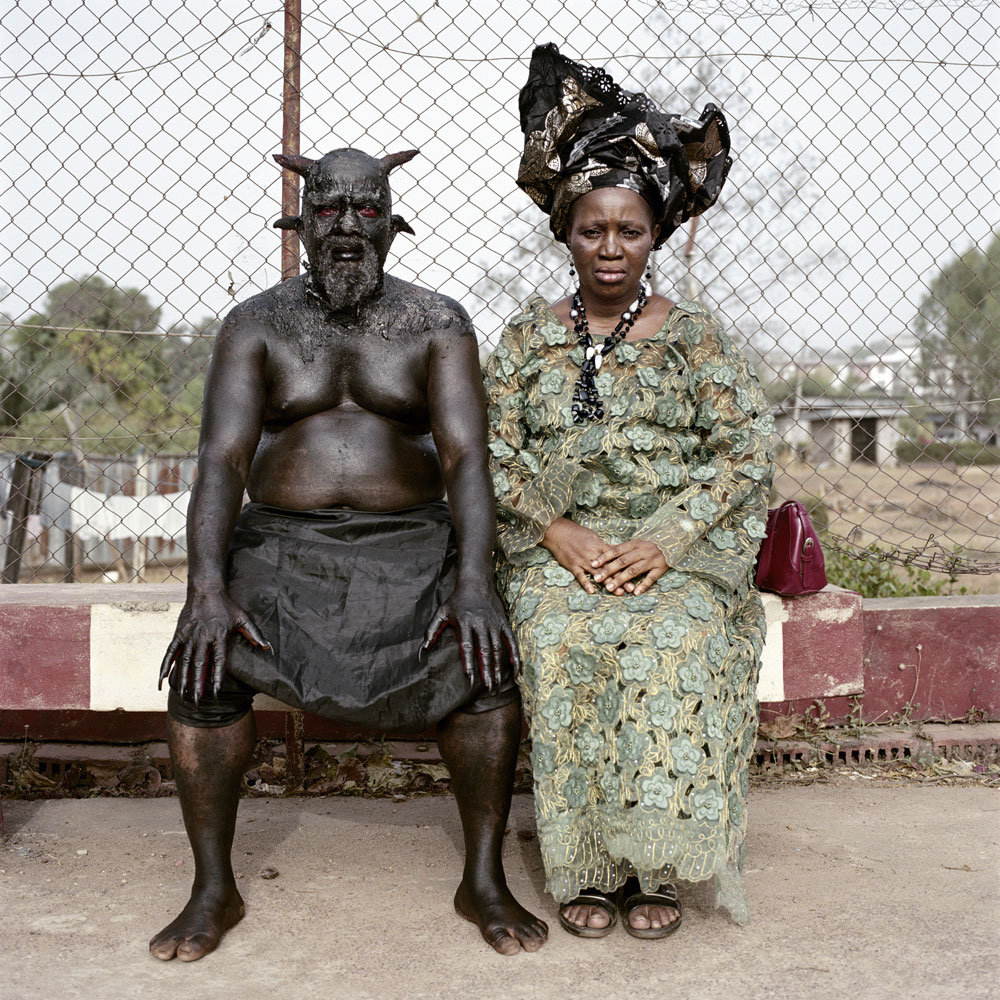
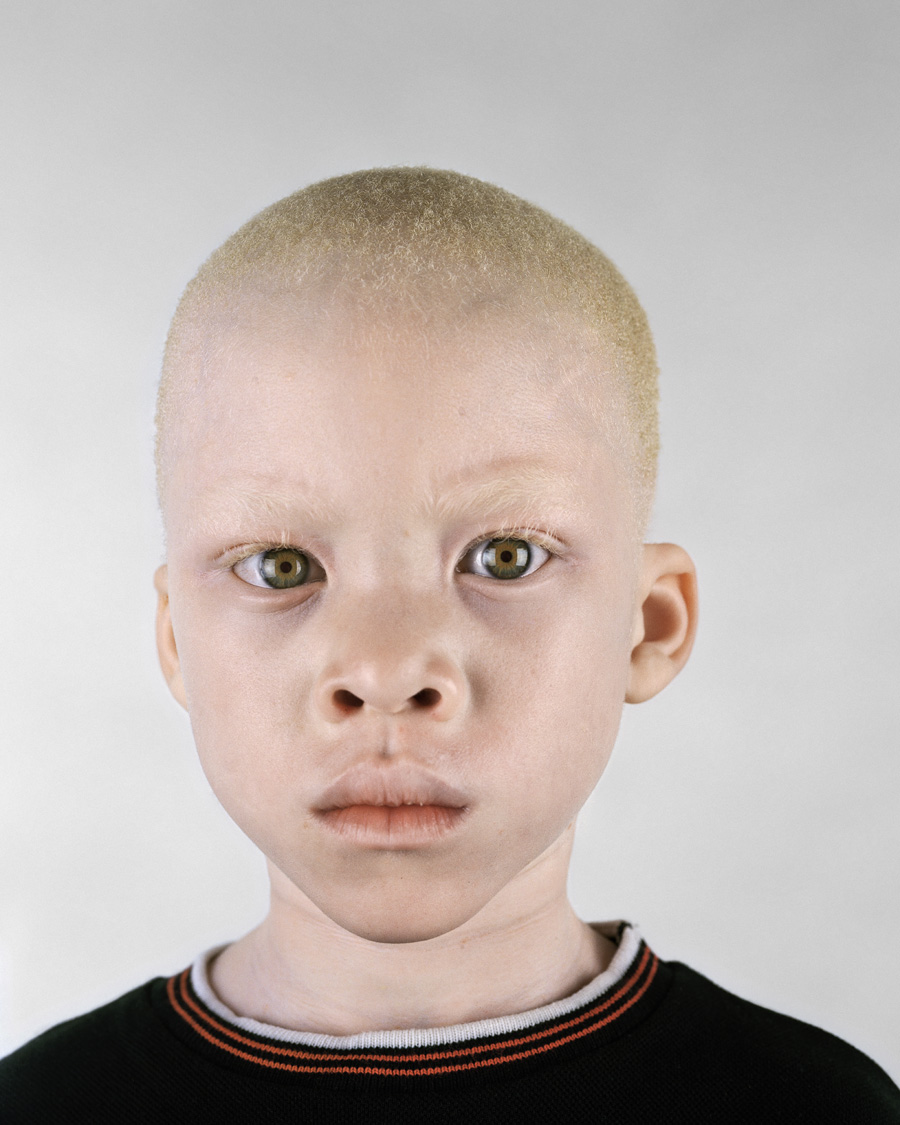
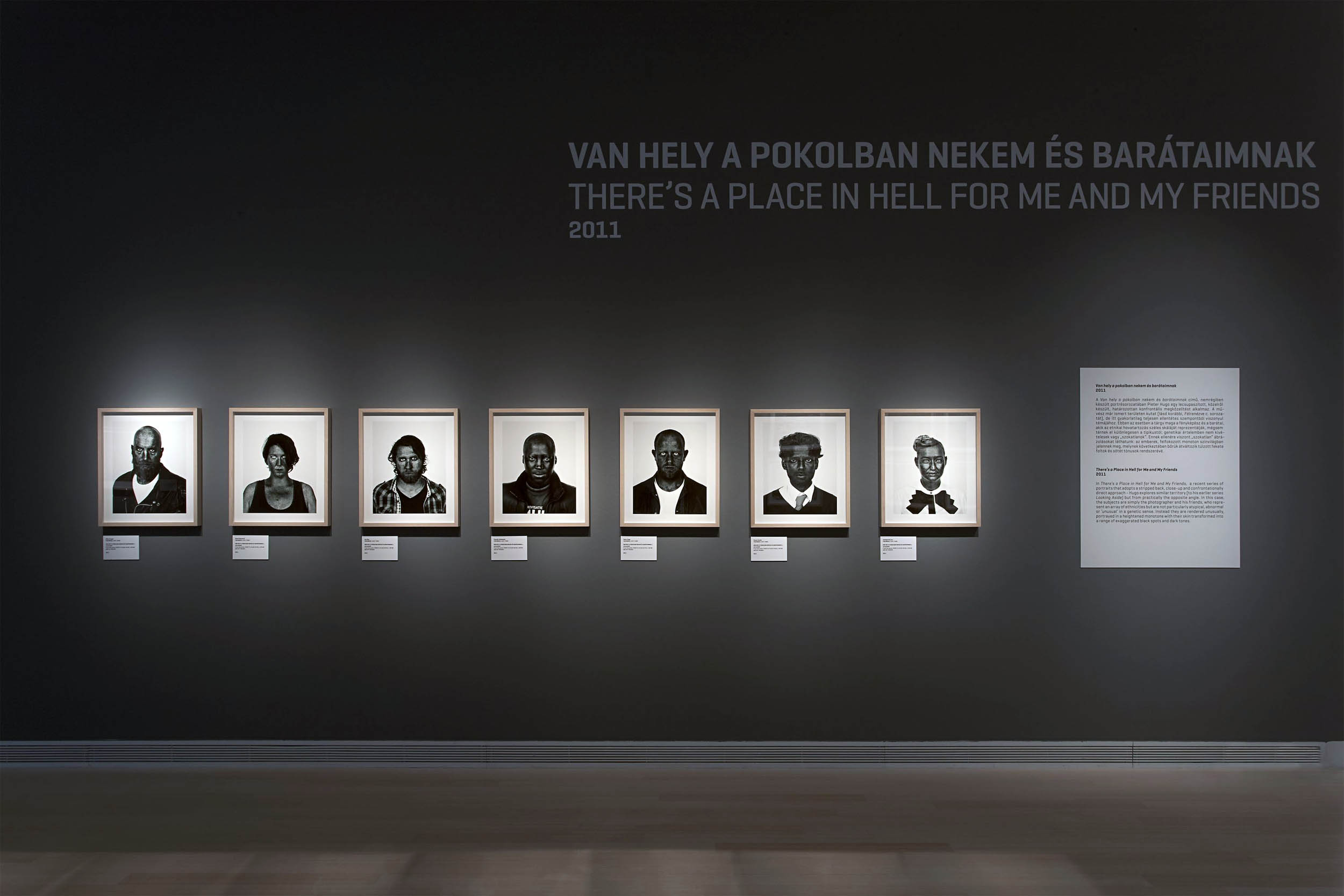
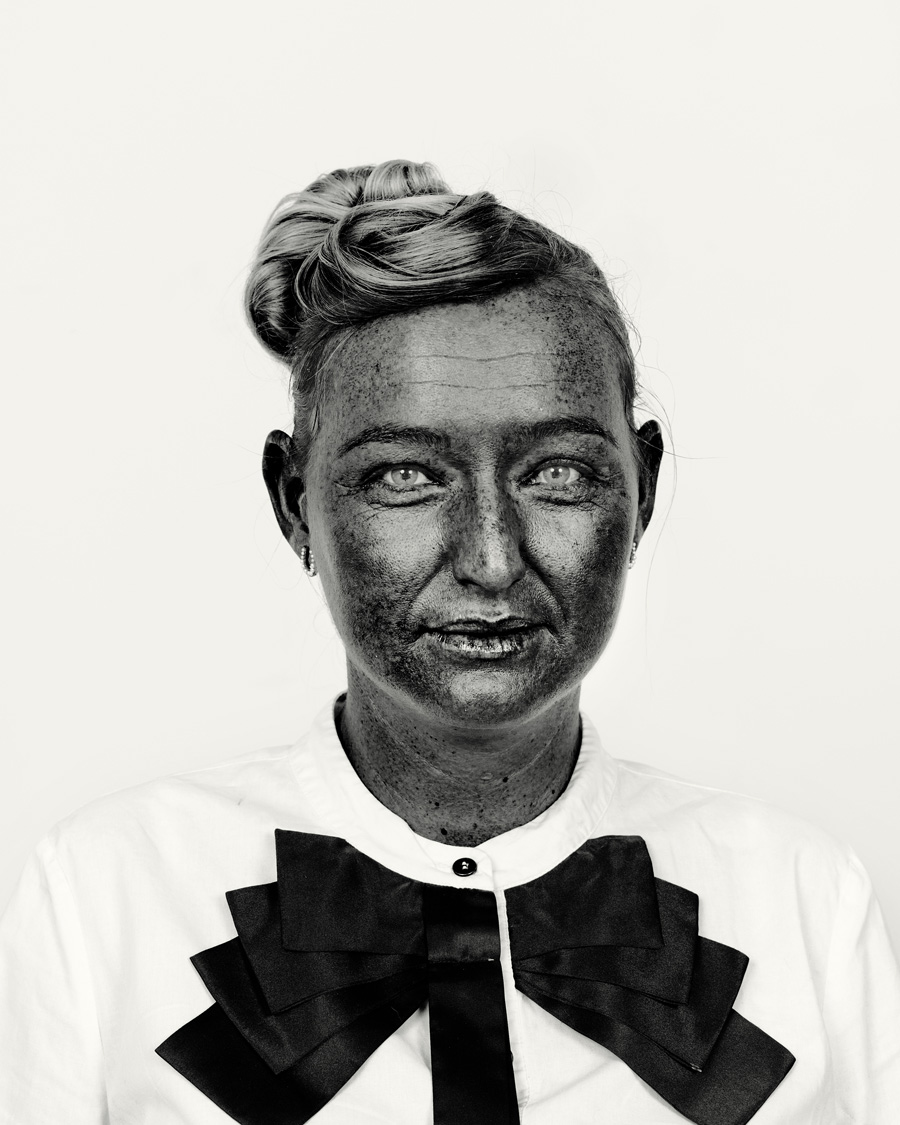
In Pieter Hugo’s studio portraits of the elderly, the blind and people with albinism – Looking Aside, 2003-2006 – there is a direct and confrontational engagement between the viewer and the subjects. The viewer is made to feel uncomfortable and immobilised by the subject’s gaze. In There’s a Place in Hell for Me and My Friends (2011) – a recent series of portraits realised in the same spirit and adopting a stripped back, close-up and confrontationally direct approach – Hugo explores similar territory [to his earlier series Looking Aside] but from practically the opposite angle. In this case, the subjects are simply the photographer and his friends, who represent an array of ethnicities but are not particularly atypical, abnormal or ‘unusual’ in a genetic sense. Instead they are rendered unusually, portrayed in a heightened monotone with their skin transformed into a range of exaggerated black spots and dark tones.

With Kin (2011), his most autobiographical series to date, Pieter Hugo reflects on his own family and deep ambivalence towards the notion of home. Personal moments such as the pregnancy of his wife, the birth of their child and an operation of his mother are interspersed with national icons: open landscapes, anthropological museums and references to historical places and figures in South Africa. The recent and historical, private and public, rich and poor, ugly and beautiful interact closely in this series and represent the social complexities of post-apartheid South Africa.

Press release from the Ludwig Museum of Contemporary Art website


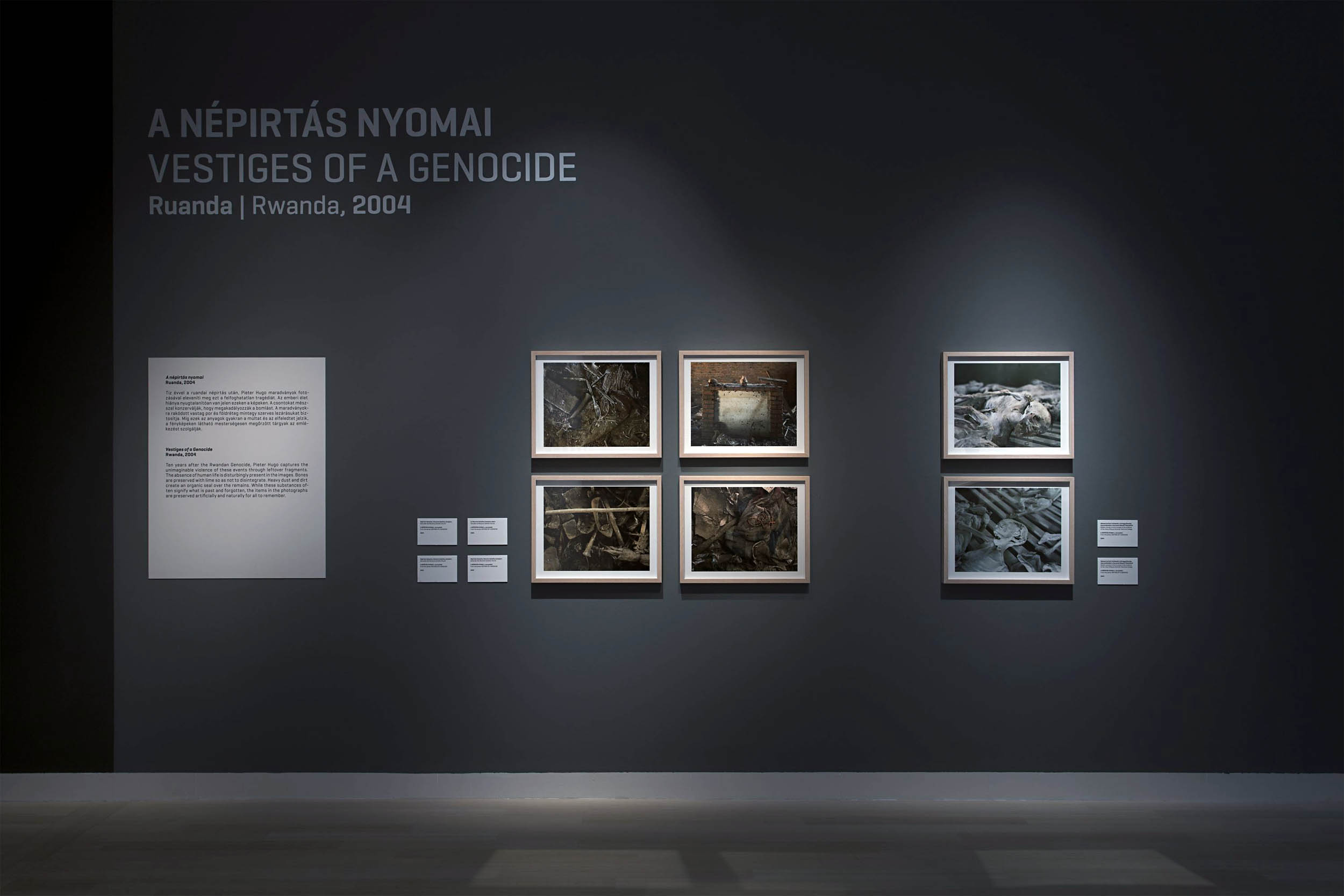
Installation view of the exhibition 'Pieter Hugo: This Must Be The Place – Selected Works 2003-2012' at the Ludwig Museum of Contemporary Art, Budapest showing work from Hugo's 'Vestiges of a Genocide' Rwanda, 2004


Installation view of the exhibition Pieter Hugo: This Must Be The Place – Selected Works 2003-2012 at the Ludwig Museum of Contemporary Art, Budapest showing work from Hugo’s Vestiges of a Genocide Rwanda, 2004
Exhibition view © Tamás Bujnovszky / Ludwig Museum – Museum of Contemporary Art, Archives

Vestiges of a Genocide

Rwanda, 2004

Ten years after the Rwandan Genocide, Pieter Hugo captures the unimaginable violence of these evens through leftover fragments. The absence of human life is disturbingly person in the images. Bones are preserved with lime so as not to disintegrate. Heavy dust and dirt create an organic seal over the remains. While these substances often signify what is past and forgotten, the items in the photographs are preserved artificially and naturally for all to remember.

Wall text from the exhibition


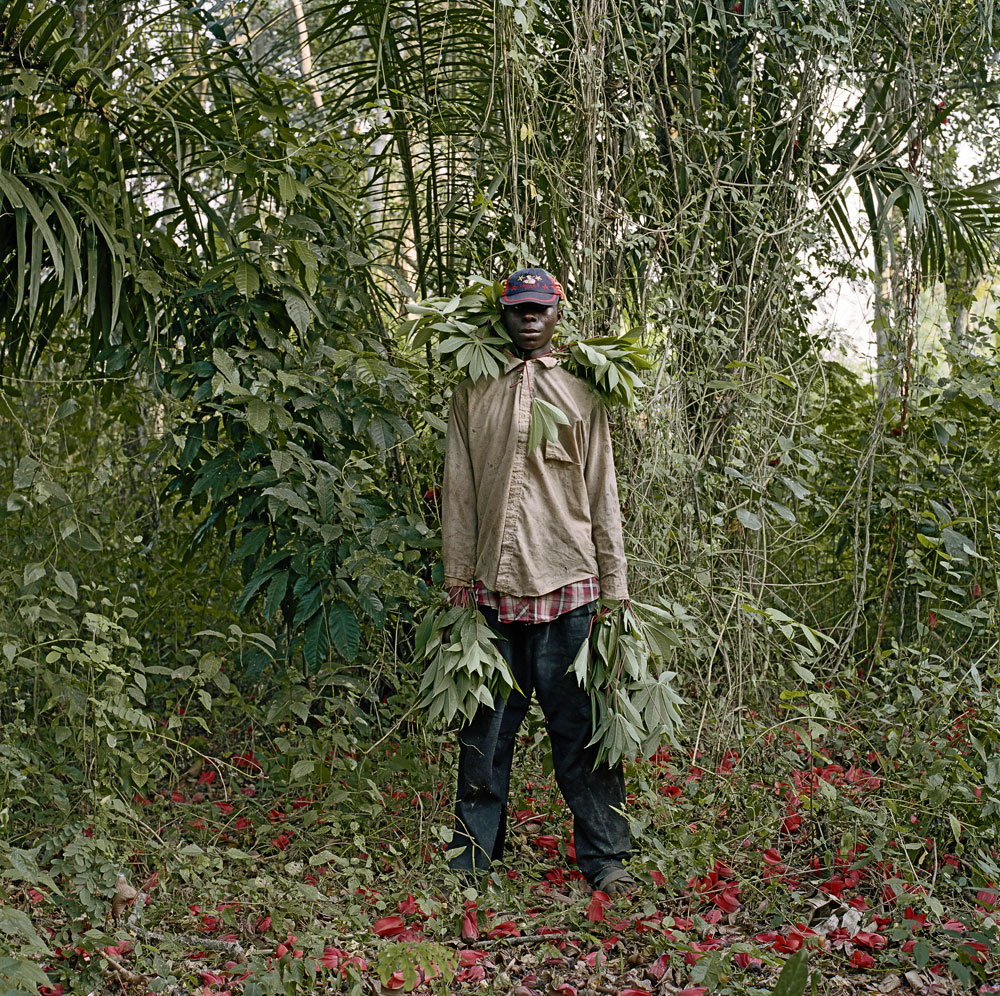
Pieter Hugo (South African, b. 1976) 'John Kwesi, Wild Honey Collector, Techiman District, Ghana' 2005


Pieter Hugo (South African, b. 1976)
John Kwesi, Wild Honey Collector, Techiman District, Ghana
2005
From the series Wild Honey Collectors Ghana 2005
© Pieter Hugo
Courtesy of Stevenson, Cape Town/Johannesburg and Yossi Milo, New York


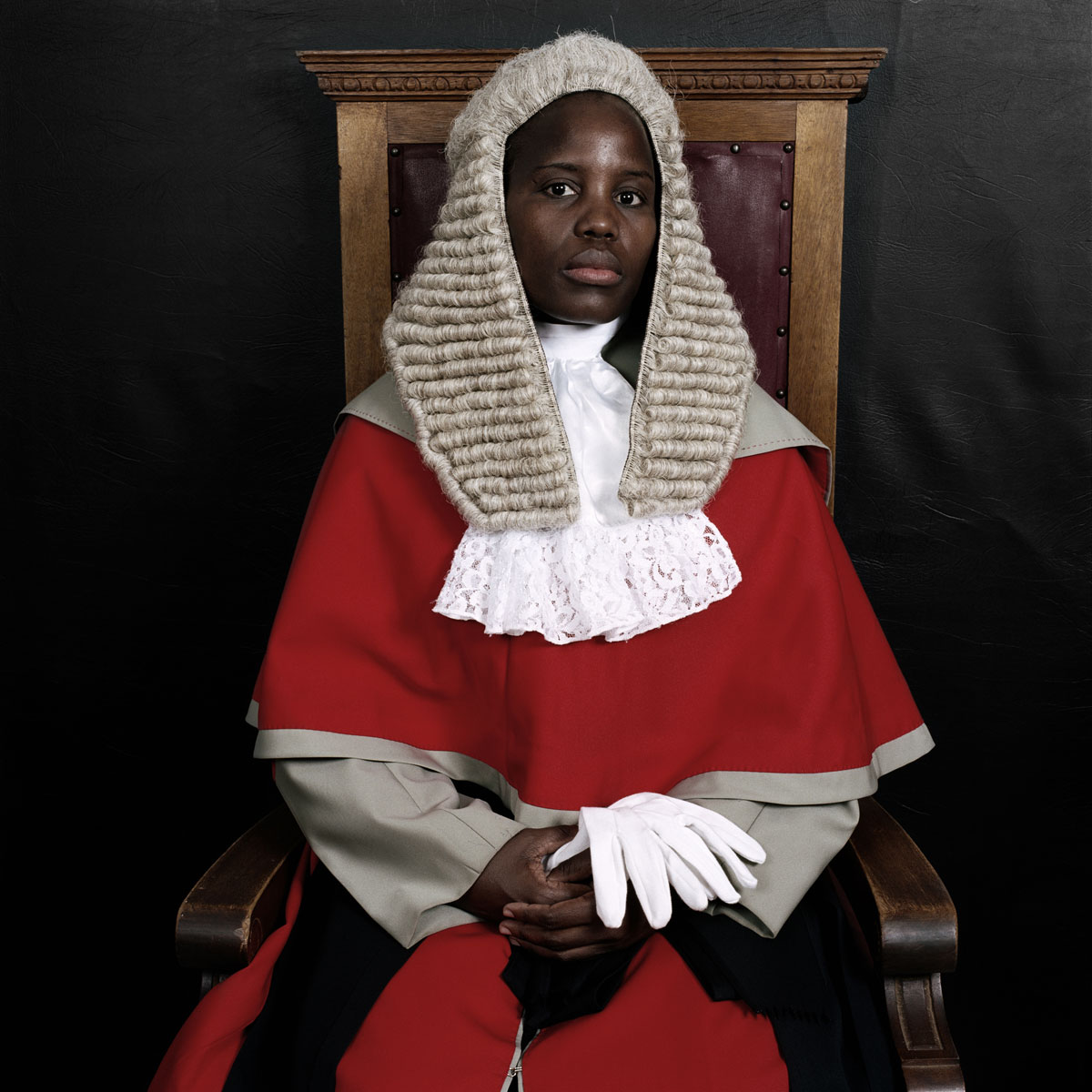
Pieter Hugo (South African, b. 1976) 'The Honourable Justice Unity Dow' 2005


Pieter Hugo (South African, b. 1976)
The Honourable Justice Unity Dow
2005
© Pieter Hugo
Courtesy of Stevenson, Cape Town/Johannesburg and Yossi Milo, New York


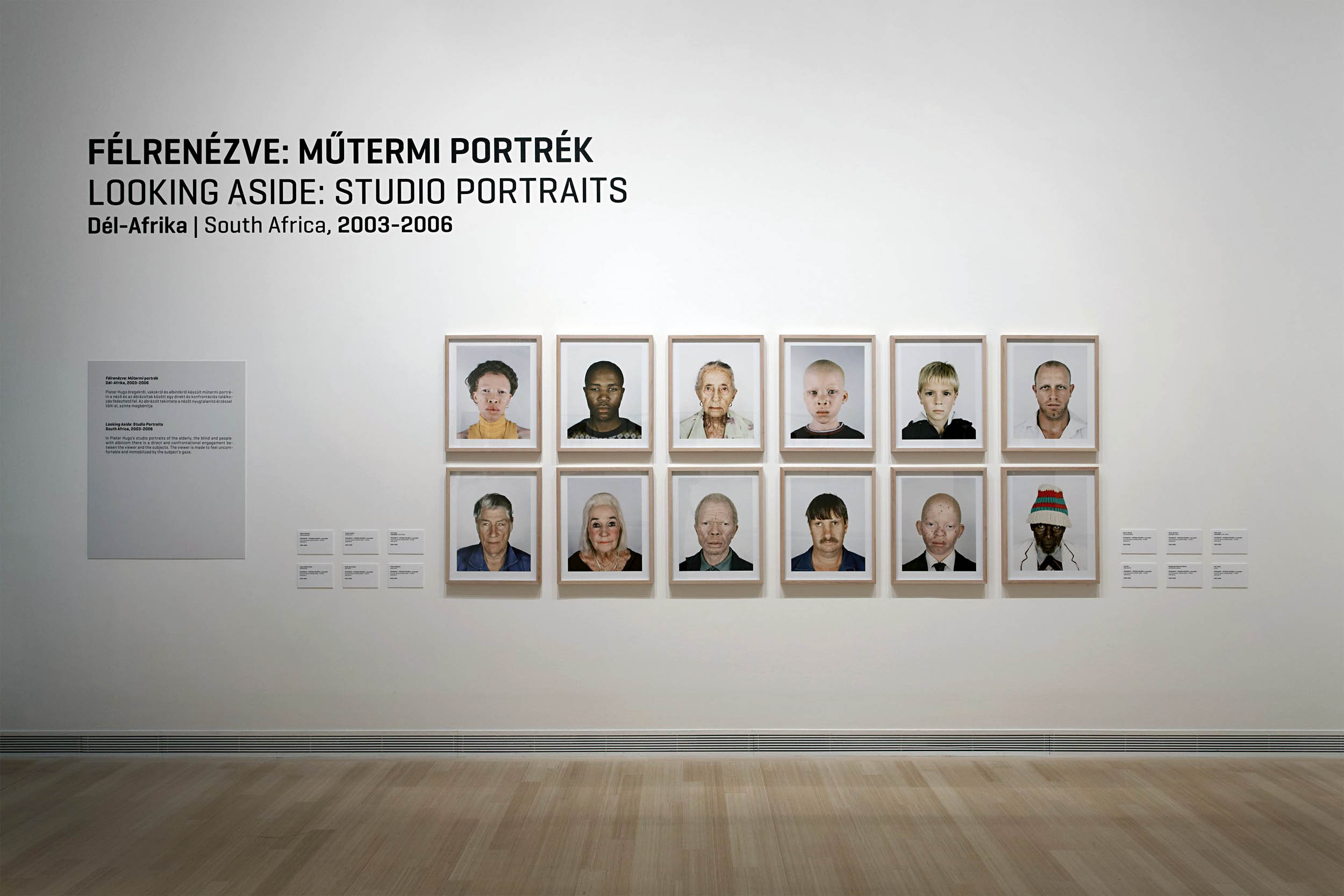
Installation view of the exhibition 'Pieter Hugo: This Must Be The Place – Selected Works 2003-2012' at the Ludwig Museum of Contemporary Art, Budapest showing work from Hugo's 'Looking Aside: Studio Portraits' South Africa, 2003-2006


Installation view of the exhibition Pieter Hugo: This Must Be The Place – Selected Works 2003-2012 at the Ludwig Museum of Contemporary Art, Budapest showing work from Hugo’s Looking Aside: Studio Portraits South Africa, 2003-2006
Exhibition view © Tamás Bujnovszky / Ludwig Museum – Museum of Contemporary Art, Archives


Looking Aside: Studio Portraits

South Africa, 2003-2006

In Pieter Hugo’s studio portraits of the elderly, the blind and people with albinism there is a direct and confrontational engagement between the viewer and the subjects. The viewer is made to feel uncomfortable and immobilised by the subject’s gaze.

Wall text from the exhibition


Pieter Hugo (South African, b. 1976) 'Steven Mohapi, Johannesburg' 2003


Pieter Hugo (South African, b. 1976)
Steven Mohapi, Johannesburg
2003
From the series Looking Aside: Studio Portraits South Africa, 2003-2006
© Pieter Hugo
Courtesy of Stevenson, Cape Town/Johannesburg and Yossi Milo, New York


Pieter Hugo (South African, b. 1976) 'Themba Tshabalala, Cape Town' 2011


Pieter Hugo (South African, b. 1976)
Themba Tshabalala, Cape Town
2011
From the series There’s a Place in Hell for Me and My Friends
© Pieter Hugo
Courtesy of Stevenson, Cape Town/Johannesburg and Yossi Milo, New York


Installation view of the exhibition 'Pieter Hugo: This Must Be The Place – Selected Works 2003-2012' at the Ludwig Museum of Contemporary Art, Budapest showing work from Hugo's 'There's a Place in Hell for Me and My Friends', 2011


Installation view of the exhibition Pieter Hugo: This Must Be The Place – Selected Works 2003-2012 at the Ludwig Museum of Contemporary Art, Budapest showing work from Hugo’s There’s a Place in Hell for Me and My Friends, 2011
Exhibition view © Tamás Bujnovszky / Ludwig Museum – Museum of Contemporary Art, Archives


There’s a Place in Hell for Me and My Friends

2011

In There’s a Place in Hell for Me and My Friends, a recent series of portraits that adopts a stripped back, close-up confrontationally direct approach – Hugo explores similar territory (to his earlier series Looking Aside, above) but from practically the opposite angle. In this case the subjects are simply the photographer and his friends, who represent an array of ethnicities but are not particularly atypical, abnormal or ‘unusual’ in a genetic sense. Instead they are rendered unusually, portrayed in a heightened monotone with their skin transformed into a range of exaggerated black spots and dark tones.

Wall text from the exhibition


Pieter Hugo (South African, b. 1976) 'Ashleigh McLean' 2011


Pieter Hugo (South African, b. 1976)
Ashleigh McLean
2011
From the series There’s a Place in Hell for Me and My Friends
© Pieter Hugo
Courtesy of Stevenson, Cape Town/Johannesburg and Yossi Milo, New York


Pieter Hugo (South African, b. 1976) 'Yasser Booley, Cape Town' 2011


Pieter Hugo (South African, b. 1976)
Yasser Booley, Cape Town
2011
From the series There’s a Place in Hell for Me and My Friends
© Pieter Hugo
Courtesy of Stevenson, Cape Town/Johannesburg and Yossi Milo, New York


Ludwig Museum of Contemporary Art
1095 Budapest Komor Marcell Street 1
Hungary 06 1 555-3444

Opening hours:
Tuesday – Sunday: 10.00 – 18.00
Closed on Mondays

Ludwig Museum of Contemporary Art website

LIKE ART BLART ON FACEBOOK

Back to top

Invitation to opening: ‘Density’ by Andrew Follows, curated by Dr Marcus Bunyan at Anita Traverso Gallery, Richmond, Melbourne

Date: Saturday 31st August 2013, 3.30 – 5pm


Andrew Follows. 'Density' invitation 2013


Andrew Follows (Australian, d. 2019)
Density invitation
2013


I welcome all friends to the opening of the first exhibition I have curated since the completion of my Master of Art Curatorship at the University of Melbourne.


density n.

the degree of optical opacity of a medium or material, as of a photographic negative; thickness of consistency; complexity of structure or content.


You are cordially invited to the opening of Density, a solo exhibition of photographs by Andrew Follows on Saturday 31st  August 3.30 – 5pm at The Anita Traverso Gallery, 7 Albert Street Richmond, Victoria.

The works premiered in this exhibition are the culmination of a mentorship between Dr Marcus Bunyan and Andrew Follows, supported by Arts Access Victoria as part of the Boost Pathways Program.

“Curated by Dr Marcus Bunyan, the concept of Density was envisaged as a point of departure to explore the manifold variations and subsequent ruminations on the term as it relates to Follows’ perspective. As a technical descriptive, density explains the degree of optical opacity within a photographic negative. Portions of film that have been exposed to greater amounts of light yield a greater deposit of reduced silver. This is referred to as having a higher density than areas of shadow. Density also denotes a thickness of consistency and many of Follows’ works exhibit a complexity of compositional structure and content that elucidates the nature of Follows’ perception.”

Anna Briers. “The Mind’s Eye: Density in the Work of Andrew Follows.” Catalogue essay 2013


Curator: Dr Marcus Bunyan
Guest Speaker: 4pm Dr Jondi Keane, Senior Lecturer Deakin University
Artists Floor Talk: 3pm Saturday 7 September
Preview from Tuesday 27 August
Exhibition until Saturday 21 September
Gallery Hours Wed-Sat 11-5 + by appointment

The Opening will be Auslan Interpreted and the exhibition will be Audio Described.

Please click on the images below for a larger version.


Andrew Follows. 'Density' invitation 2013


Andrew Follows (Australian, d. 2019)
Density invitation
2013


Andrew Follows. 'Density' catalogue cover 2013


Andrew Follows (Australian, d. 2019)
Density catalogue cover
2013


Anita Traverso Gallery

This gallery is now closed.

Anita Traverso Gallery website

LIKE ART BLART ON FACEBOOK

Back to top

Exhibition: ‘Herb Ritts: Beauty and Celebrity’ at Oklahoma City Museum of Art, Oklahoma City

Exhibition dates: 9th May – 28th July 2013


Herb Ritts (American, 1952-2002) 'Fred with Tires - Bodyshop Series, Hollywood' 1984


Herb Ritts (American, 1952-2002)
Fred with Tires – Bodyshop Series, Hollywood
1984
Gelatin silver print
24 x 20 in. (60.9 x 50.8cm)
Gift of Herb Ritts. Museum of Fine Arts, Boston
© Herb Ritts Foundation


I admit that I went through a stage of disliking Herb Ritts photographs – no longer!

In contemplation, his formal aestheticism confirms a serene beauty – spare, refined, erotic.

Dr Marcus Bunyan


Fred with Tires became the archetypal photograph of the male body in the 1980s and made the world-wide reputation of its commercial photographer, Herb Ritts. Gay men flocked to buy it, myself included. I was drawn by the powerful, perfectly sculpted body, the butchness of his job, the dirty trousers, the boots and the body placed within a social context. At the time I realised that the image of this man was a constructed fantasy, ie. not the ‘real’ thing, and this feeling of having been deceived has grown ever since. His hair is teased up and beautifully styled, the grease is applied to his body just so, his body twisted to just the right degree to accentuate the muscles of the stomach and around the pelvis. You can just imagine the stylist standing off camera ready to readjust the hair if necessary, the assistants with their reflectors playing more light onto the body. This/he is the seduction of a marketable homoeroticsm, the selling of an image as sex, almost camp in its overt appeal to gay archetypal stereotypes.

Herb Ritts, whether in his commercial work or in his personal images such as those of the gay bodybuilders Bob Paris and Rod Jackson, has helped increase the acceptance of the openly homoerotic photograph in a wider sphere but this has been possible only with an increased acceptance of homosexual visibility within the general population. 
Openly gay bodies such as that of Australian rugby league star Ian Roberts or American diver Greg Luganis can become heroes and role models to young gay men coming out of the closet for the first time, visible evidence that gay men are everywhere in every walk of life. This is fantastic because young gay men do need gay role models to look up to but the bodies they possess only conform to the one type, that of the muscular mesomorph and this reinforces the ideal of a traditional masculinity. Yes, the guy in the shower next to you might be a poofter, might be queer for heavens sake, but my God what a body he’s got!”

Marcus Bunyan. “Historical Pressings,” from Pressing the Flesh: Sex, Body Image and the Gay Male (Phd thesis) 2001


Many thankx to Oklahoma City Museum of Art for allowing me to publish the photographs in the posting. Please click on the photographs for a larger version of the image.


Herb Ritts (American, 1952-2002) 'Djimon with Octopus, Hollywood' 1989


Herb Ritts (American, 1952-2002)
Djimon with Octopus, Hollywood
1989
Gelatin silver print
44.5 x 38.7cm (17 1/2 x 15 1/4 in.)
© Herb Ritts Foundation


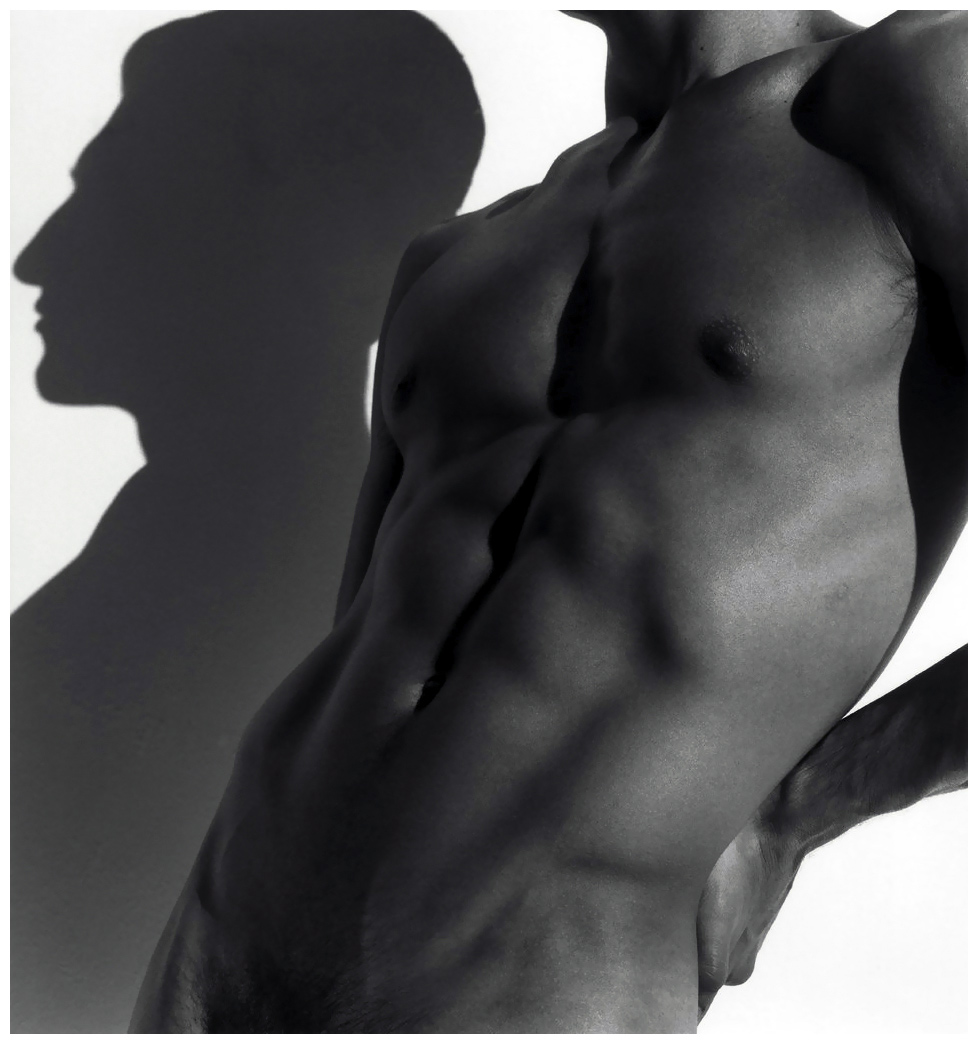
Herb Ritts (American, 1952-2002) 'Tony with shadow, Los Angeles' 1988


Herb Ritts (American, 1952-2002)
Tony with shadow, Los Angeles
1988
Gelatin silver print
© Herb Ritts Foundation


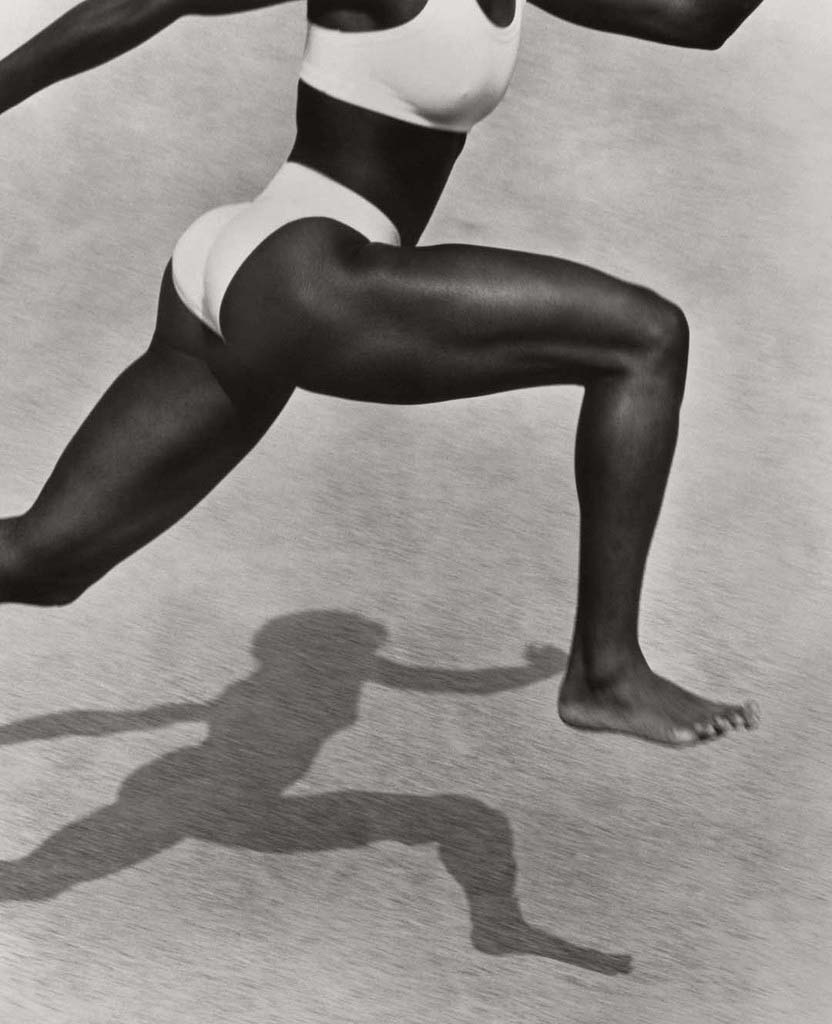
Herb Ritts (American, 1952-2002) 'Jackie Joyner-Kersee, Point Dume' 1987


Herb Ritts (American, 1952-2002)
Jackie Joyner-Kersee, Point Dume
1987
Gelatin silver print
31.9 x 25.4cm (12 9/16 x 10 in.)
Gift of Herb Ritts. Museum of Fine Arts, Boston
© Herb Ritts Foundation


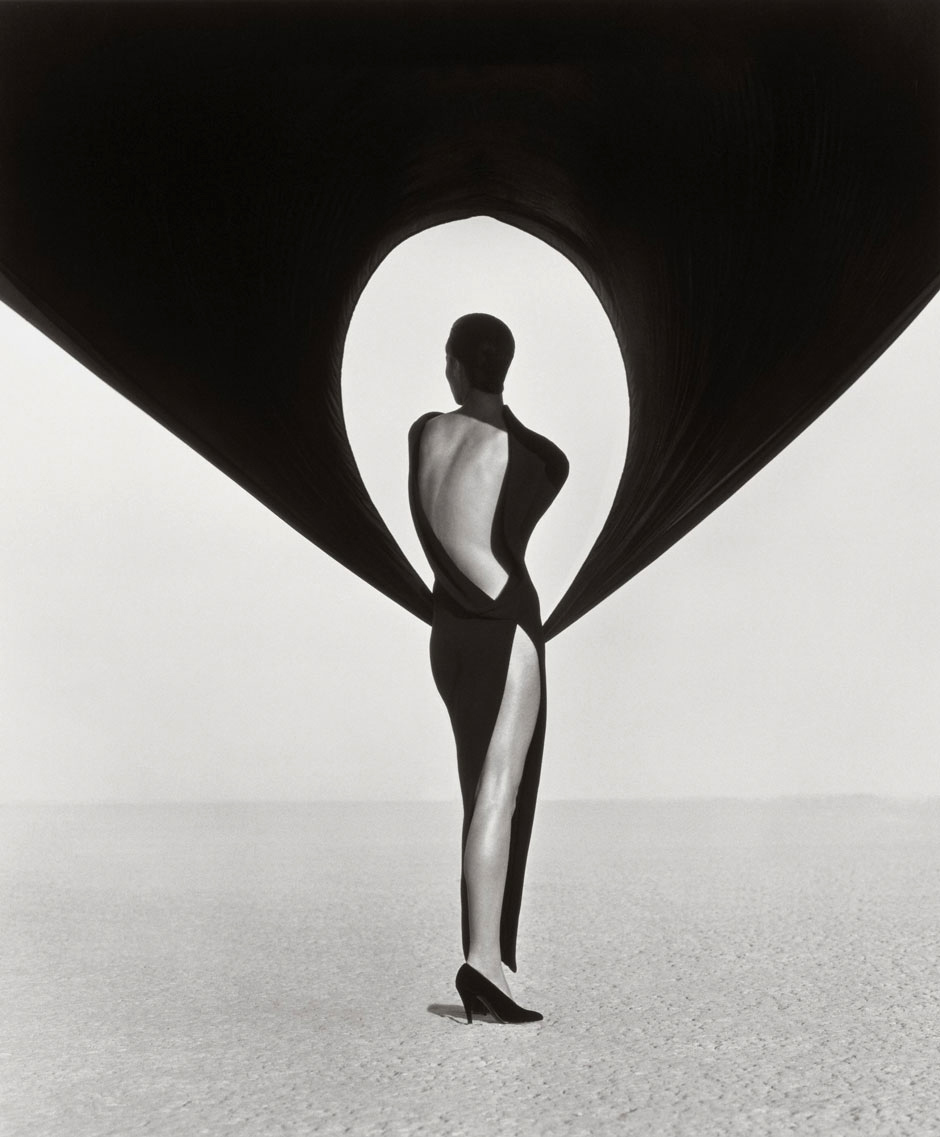
Herb Ritts (American, 1952-2002) 'Versace Dress, Back View, El Mirage' 1990


Herb Ritts (American, 1952-2002)
Versace Dress, Back View, El Mirage
1990
Gelatin silver print
137.2 x 109.2cm (54 x 43 in.)
Gift of Herb Ritts. Museum of Fine Arts, Boston
© Herb Ritts Foundation


The American photographer Herb Ritts produced a body of work in the 1980s and 1990s that seems to embody the outdoor lifestyle and glamour of the southern California beautiful set. This photograph, taken at El Mirage Dry Lake in California, appeared on the cover of Italian designer Gianni Versace’s September 1990 catalogue and incorporates a formalism and contemporary sensuality characteristic of Ritts’s aesthetic. Ritts’s photograph appeals through its boldly contrasting lights and darks.


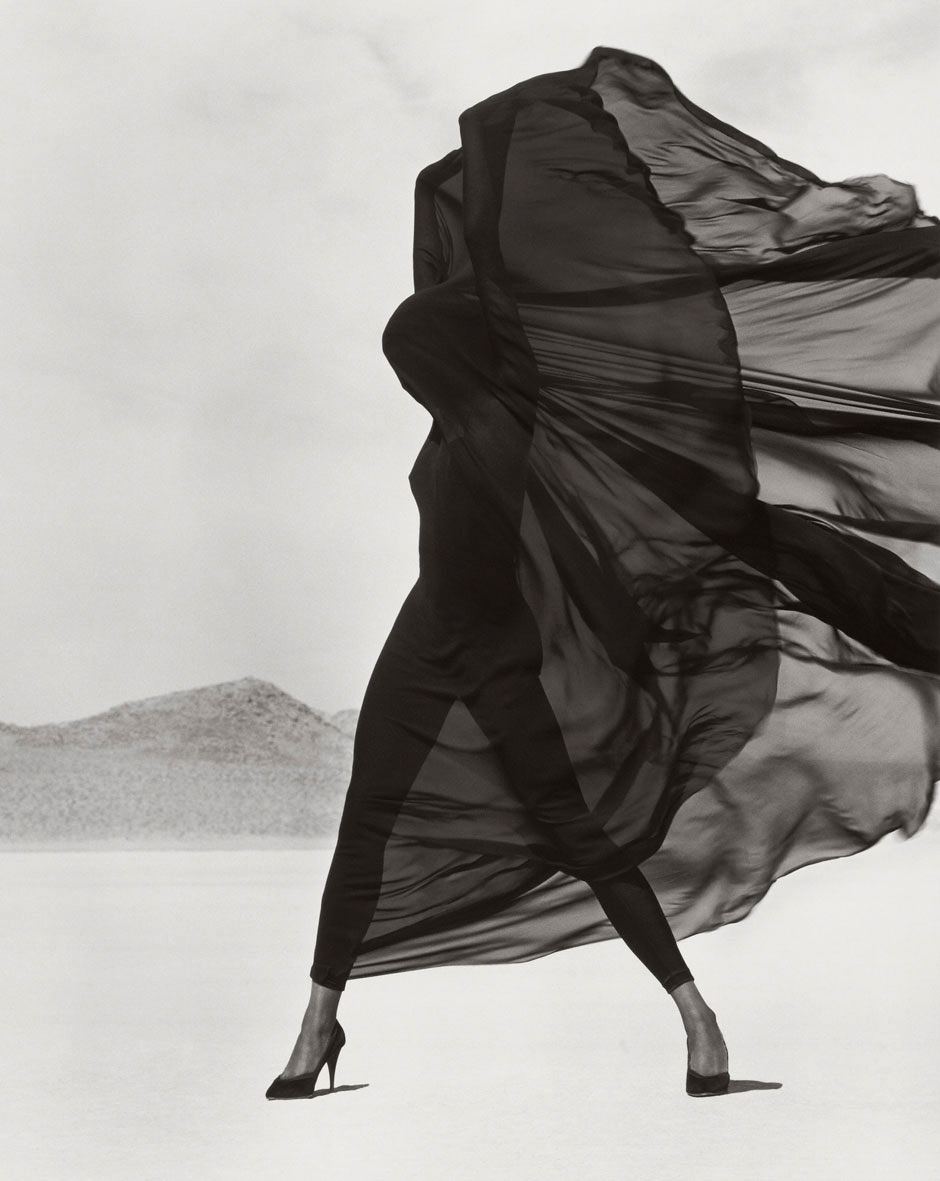
Herb Ritts (American, 1952-2002) 'Versace Veiled Dress, El Mirage' 1990


Herb Ritts (American, 1952-2002)
Versace Veiled Dress, El Mirage
1990
55.8 x 44.6cm (21 15/16 x 17 9/16 in.)
Gift of Herb Ritts. Museum of Fine Arts, Boston
© Herb Ritts Foundation


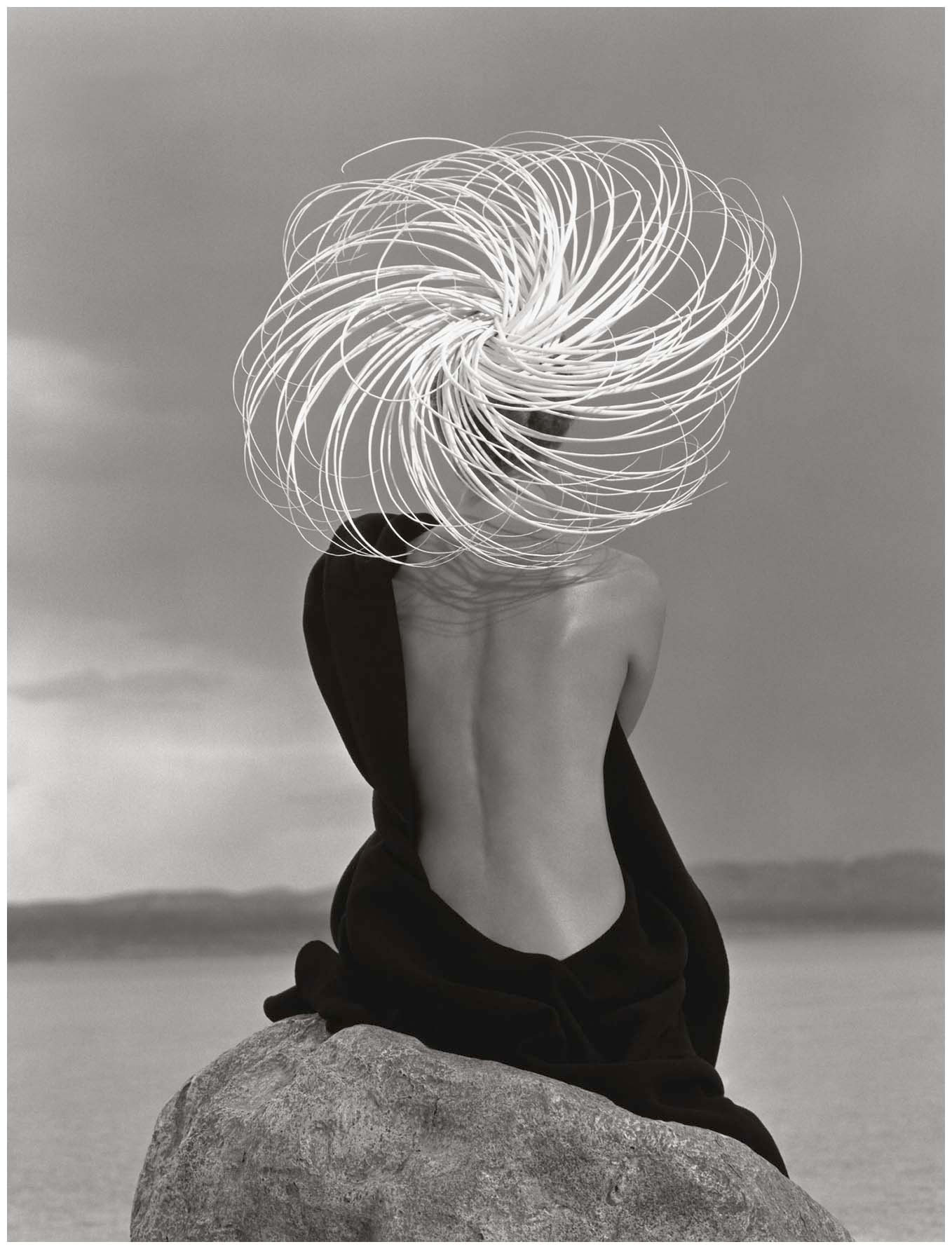
Herb Ritts (American, 1952-2002) 'Now and Zen 1, El Mirage' 1999


Herb Ritts (American, 1952-2002)
Now and Zen 1, El Mirage
1999
Gelatin silver print
© Herb Ritts Foundation


Herb Ritts: Beauty and Celebrity will be on view at the Oklahoma City Museum of Art from May 9 through July 28, 2013. Organised by the Museum of Fine Arts, Boston with the support of the Herb Ritts Foundation and the Oklahoma City Museum of Art, this exhibition will feature over eighty large-scale black-and-white photographs by acclaimed photographer, Herb Ritts (American, 1952-2002). Ranging in scale from intimate portraits to ten foot murals, the exhibition will highlight the diversity of the artist’s work. Known for his innovative approach to fashion, intimate portraiture of celebrities, and the classical treatment of the nude, Ritts emerged in the 1980s to become one of the most successful celebrity and fashion photographers of the late twentieth century and an important part of the history of American photography.

Herb Ritts grew up in Los Angeles and maintained his studio in Hollywood. A self-taught photographer, Ritts first began taking photographs in the late 1970s after studying economics at Bard College. The intimate publicity images that he made of Richard Gere were among his first serious portraits and helped to launch his career. Throughout the 1980s and 1990s, Ritts built his reputation as a leading celebrity portraitist and fashion photographer, contributing regularly to publications such as GQ, Mademoiselle, Vogue, and Vanity Fair. From 1988, he also made music videos and commercials for which he won numerous awards.

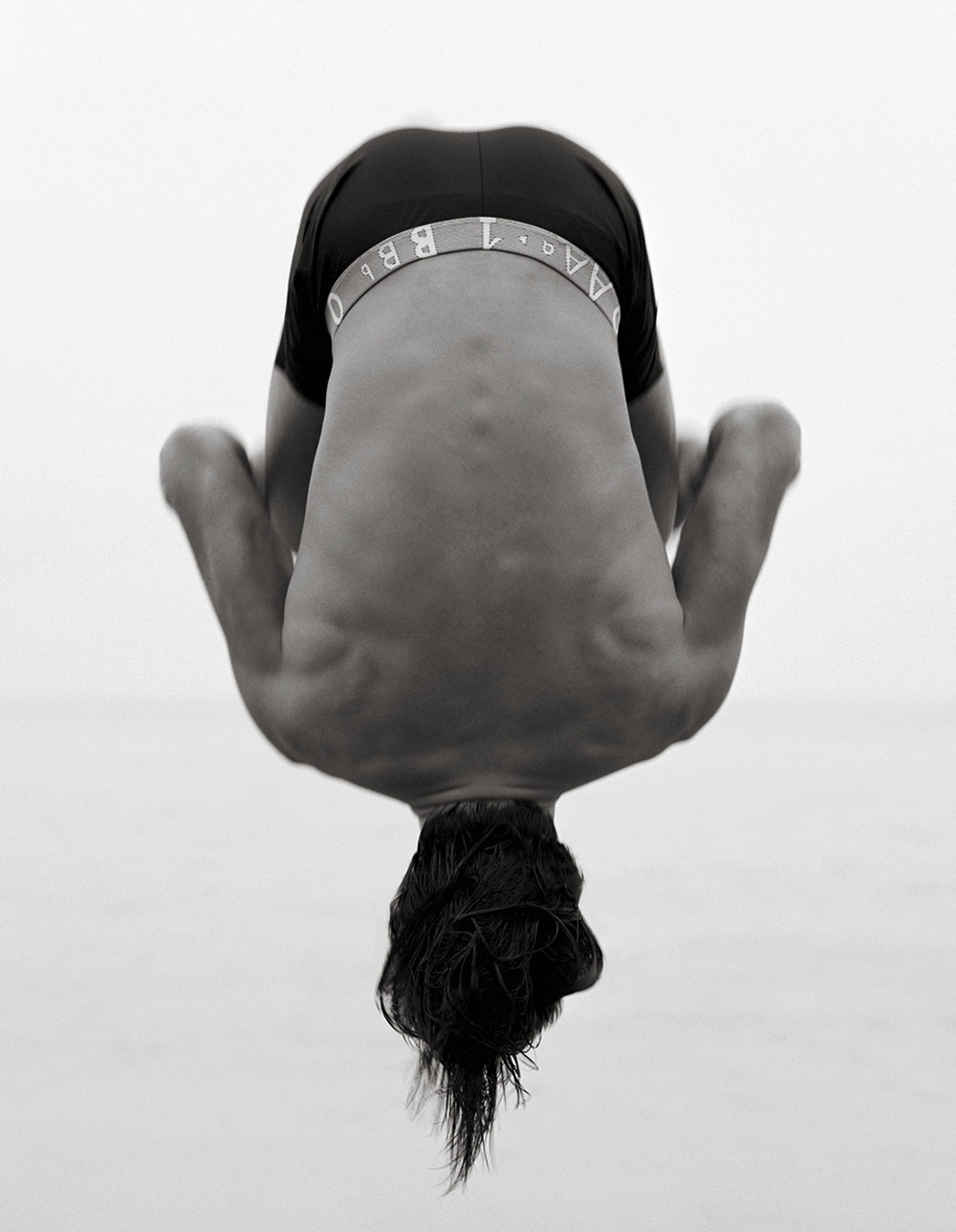
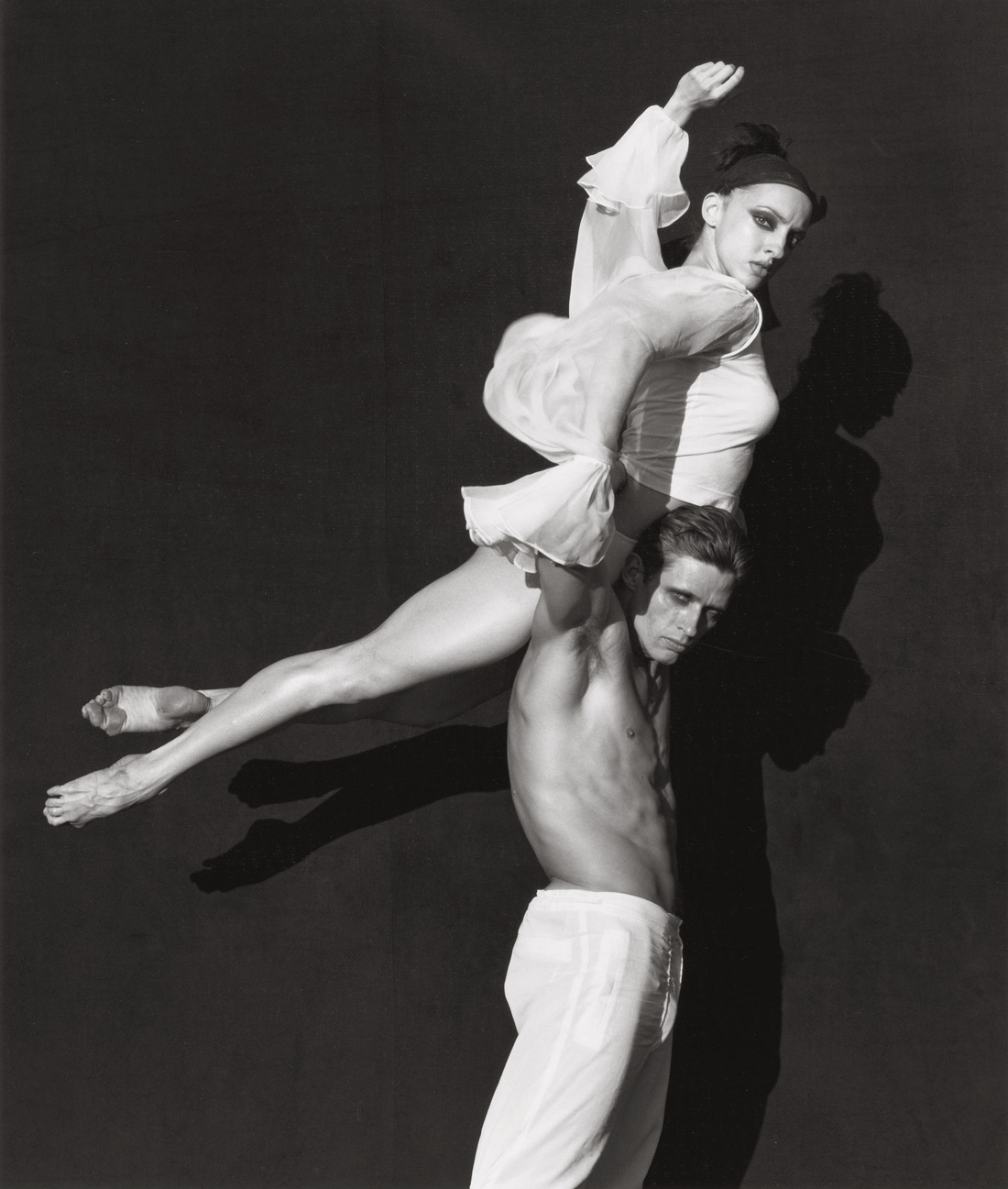
The photographs included in the exhibition represent some of Herb Ritts’s most iconic works which incorporate the natural light of the California sun while emphasising shapes, unusual juxtapositions, and the beauty of the human form. Ritts celebrates nature and the human body in evoking the tactile appeal of surface textures of grains of sand, veiled fabric, drying mud, and cascading water seen in Waterfall 4 (1988), Backflip (1987), and Woman in Sea (1988). Fashion photographs on view include such as Versace Veiled Dress, El Mirage (1990), Stephanie, Cindy, Christy, Tatjana, Naomi, Hollywood (1989), and Djimon with Octopus (1989). Examples of celebrity portraiture include Richard Gere, Jack Nicholson, Madonna, Elizabeth Taylor, Johnny Depp, Bruce Springsteen, Drew Barrymore, David Bowie, Matthew McConaughey, and Mick Jagger. Also included in the exhibition are poetic and eternal images in Ritts’s Africa series, taken in 1993 when he traveled to East Africa, and examples from the rare Corps et Ames (1999) series of photographs, portraying dancers in motion.

This exhibition – drawn from the photography collection at the Museum of Fine Arts, Boston, and the Herb Ritts Foundation – present Herb Ritts’ style and the range of his career.

Press release from the Oklahoma City Museum of Art website


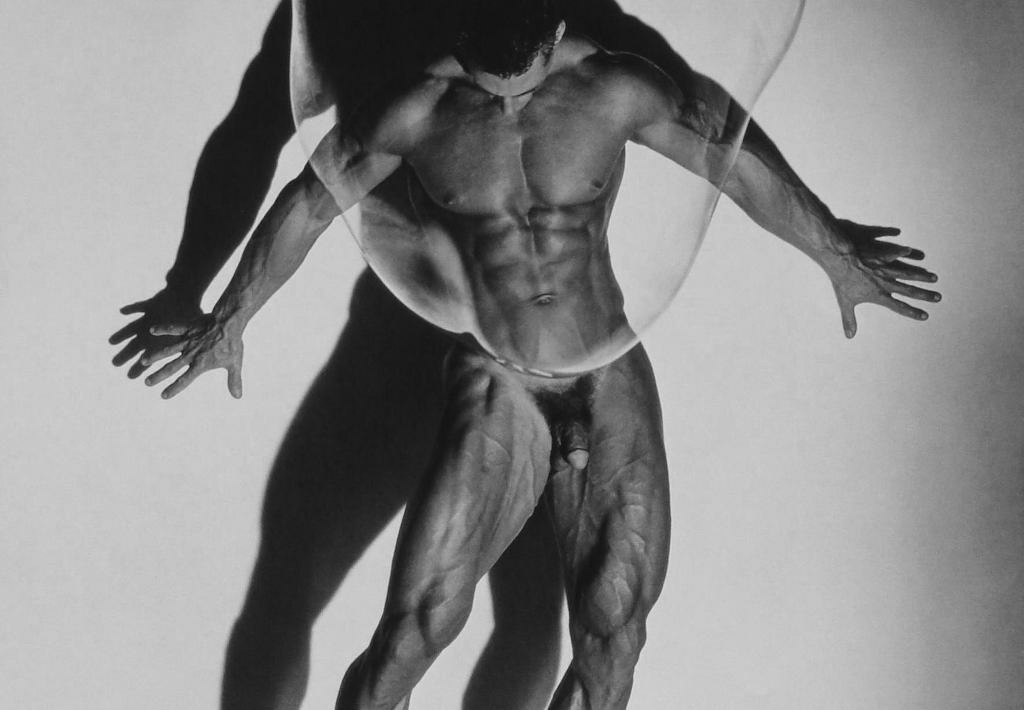
Herb Ritts (American, 1952-2002) 'Male Nude with Bubble, Los Angeles' 1987


Herb Ritts (American, 1952-2002)
Male Nude with Bubble, Los Angeles
1987
Gelatin silver print
© Herb Ritts Foundation


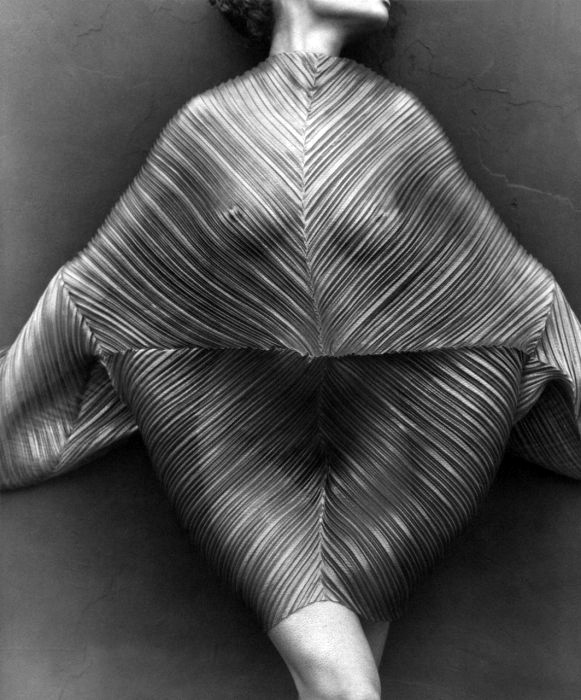
Herb Ritts (American, 1952-2002) 'Wrapped Torso, Los Angeles' 1989


Herb Ritts (American, 1952-2002)
Wrapped Torso, Los Angeles
1989
Platinum print
46.4 x 38.4cm (18 1/4 x 15 1/8 in.)
Gift of Herb Ritts. Museum of Fine Arts, Boston
© Herb Ritts Foundation


Herb Ritts (American, 1952-2002) 'Backflip, Paradise Cove' 1987


Herb Ritts (American, 1952-2002)
Backflip, Paradise Cove
1987
Gelatin silver print
90 x 70 in. (228.6 x 177.8cm)
© Herb Ritts Foundation


Herb Ritts (American, 1952-2002) 'Corp et Âmes - 14, Los Angeles' 1999


Herb Ritts (American, 1952-2002)
Corp et Âmes – 14, Los Angeles
1999
Gelatin silver print
14 x 11 in. (35.5 x 27.9cm)
© Herb Ritts Foundation


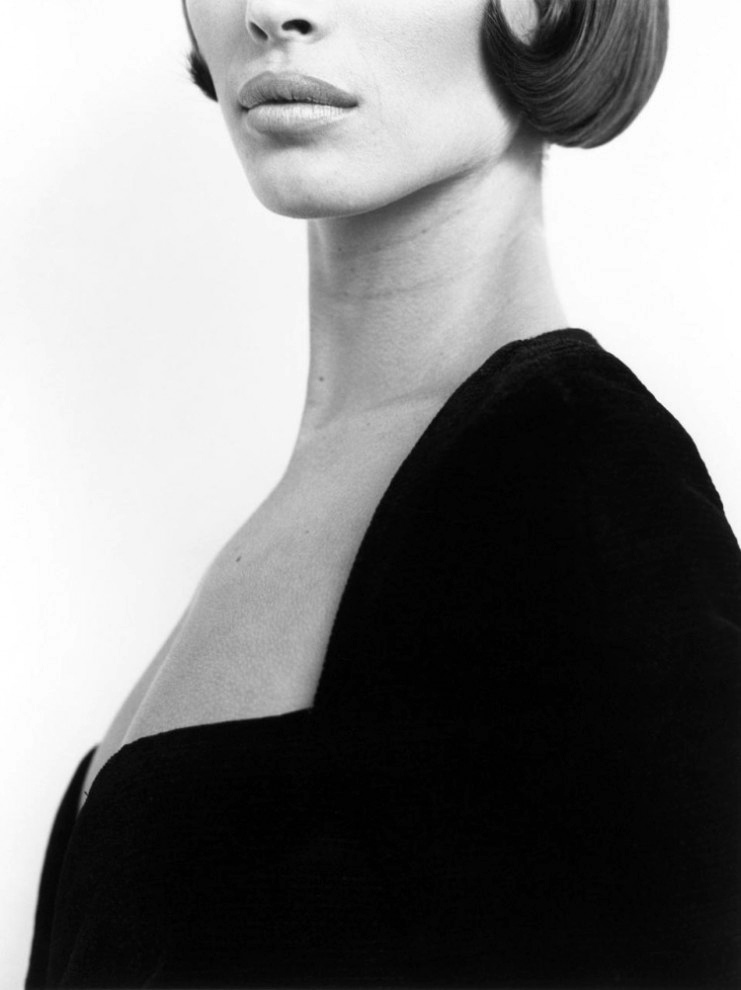
Herb Ritts (American, 1952-2002) 'Chrissy Turlington, Versace 3, Milan' 1991


Herb Ritts (American, 1952-2002)
Chrissy Turlington, Versace 3, Milan
1991
Gelatin silver print
© Herb Ritts Foundation


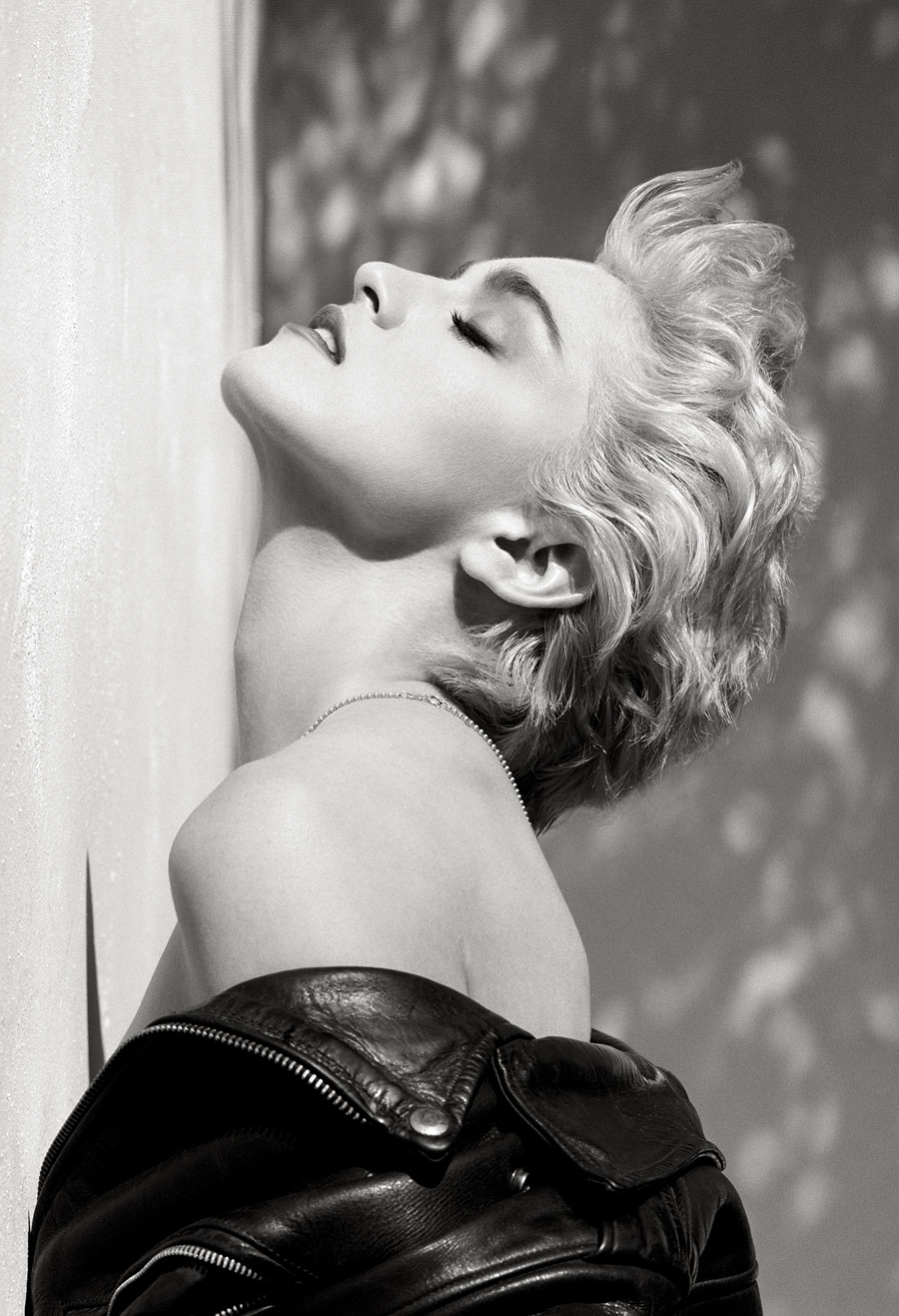
Herb Ritts (American, 1952-2002) 'Madonna (True Blue Profile), Hollywood' 1986


Herb Ritts (American, 1952-2002)
Madonna (True Blue Profile), Hollywood
1986
Gelatin silver print
24 x 20 in. (60.9 x 50.8cm)
Gift of Herb Ritts Foundation. Museum of Fine Arts, Boston
© Herb Ritts Foundation


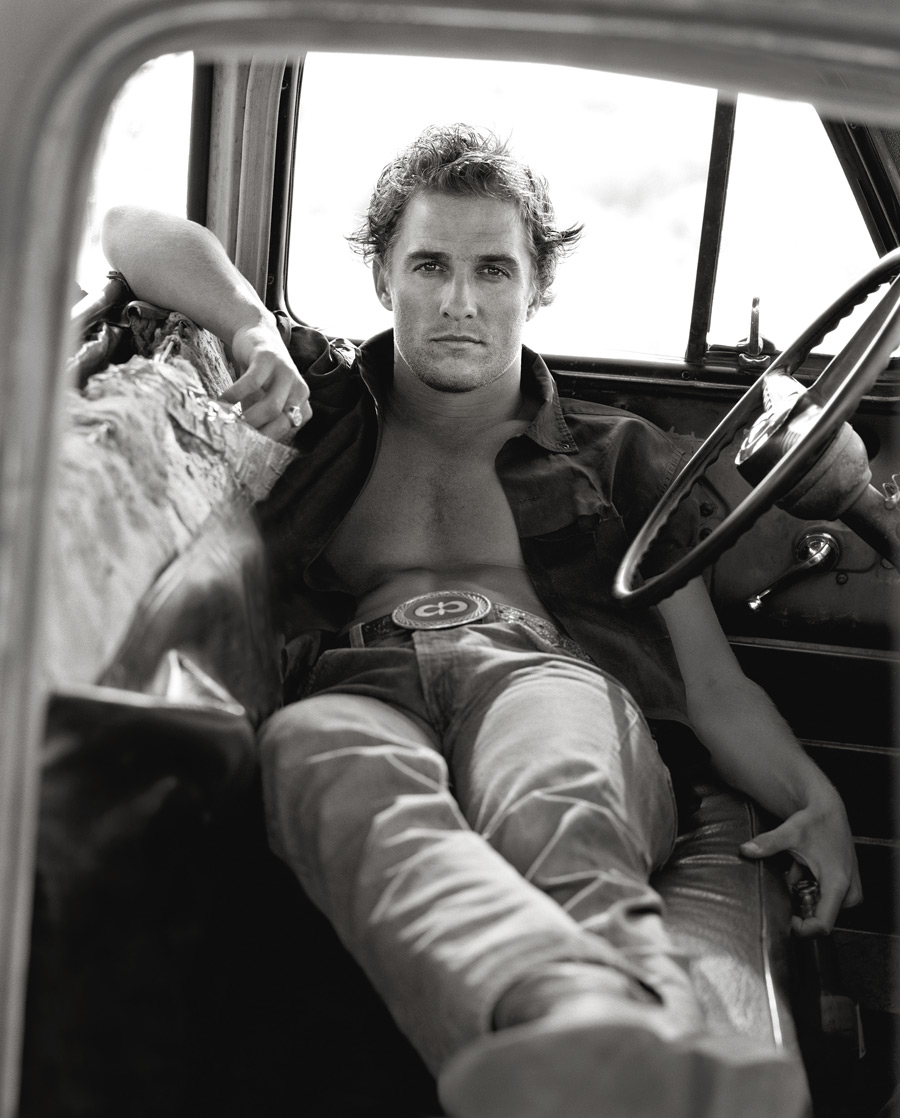
Herb Ritts (American, 1952-2002) 'Matthew McConaughey, Palmdale' 1996


Herb Ritts (American, 1952-2002)
Matthew McConaughey, Palmdale
1996
Gelatin silver print
24 x 20 in. (60.9 x 50.8cm)
Gift of Herb Ritts Foundation. Museum of Fine Arts, Boston
© Herb Ritts Foundation


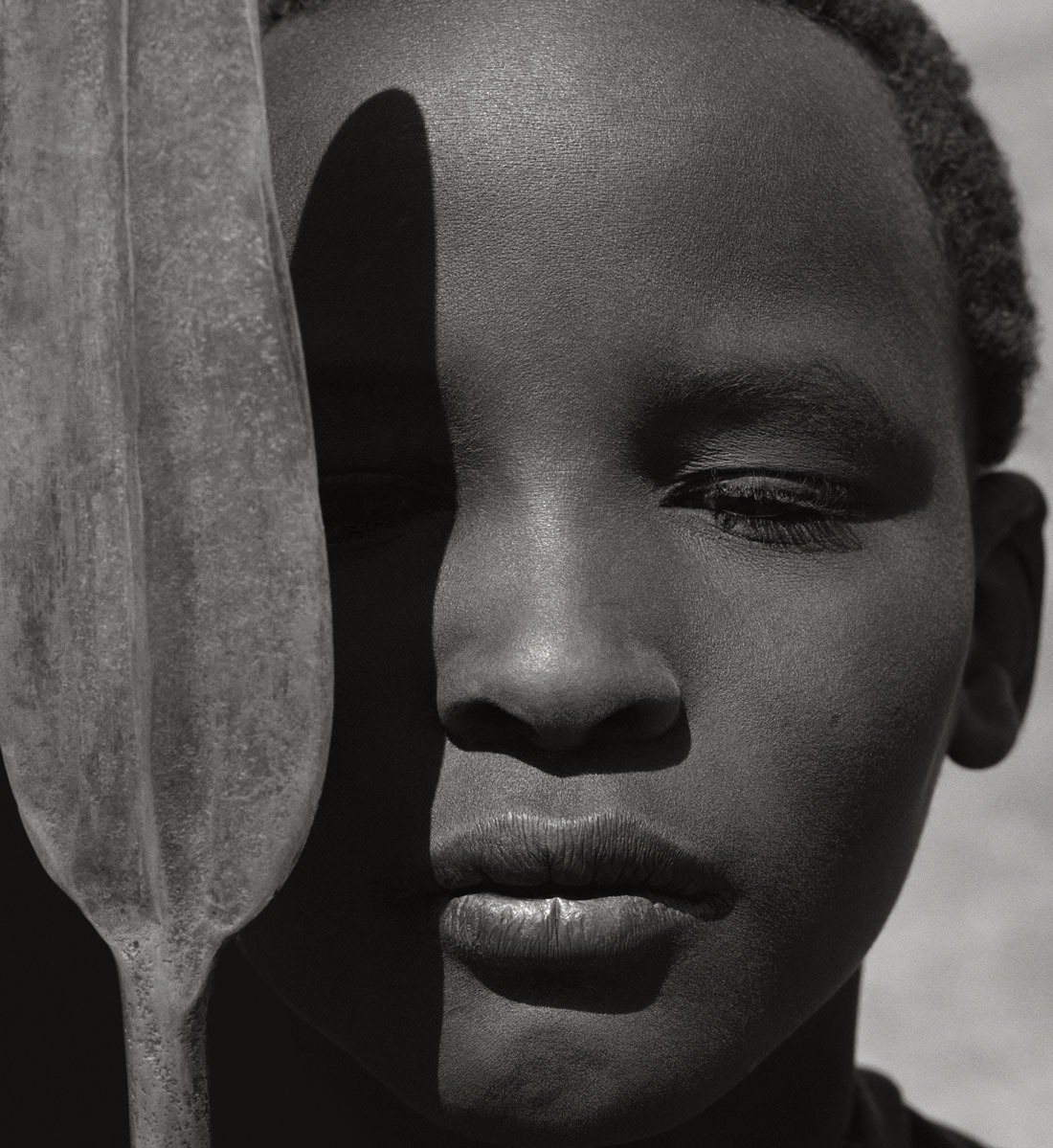
Herb Ritts (American, 1952-2002) 'Loriki with Spear, Africa' 1993


Herb Ritts (American, 1952-2002)
Loriki with Spear, Africa
1993
Gelatin silver print
45 x 41 in. (114.3 x 104.1cm)
© Herb Ritts Foundation


Herb Ritts (American, 1952-2002) 'Tony Ward' 1986


Herb Ritts (American, 1952-2002)
Tony Ward
1986
Gelatin silver print
© Herb Ritts Foundation


Herb Ritts (American, 1952-2002) 'Waterfall IV, Hollywood' 1988


Herb Ritts (American, 1952-2002)
Waterfall IV, Hollywood
1988
Platinum print
20 x 16 in. (50.8 x 40.64cm)
© Herb Ritts Foundation


Herb Ritts (American, 1952-2002) 'Woman in Sea, Hawaii' 1988


Herb Ritts (American, 1952-2002)
Woman in Sea, Hawaii
1988
Gelatin silver print
24 x 20 in. (60.9 x 50.8cm)
Gift of Herb Ritts. Museum of Fine Arts, Boston
© Herb Ritts Foundation


Herb Ritts (American, 1952-2002) 'Bill T. Jones VI, Los Angeles' 1995


Herb Ritts (American, 1952-2002)
Bill T. Jones VI, Los Angeles
1995
Gelatin silver print
© Herb Ritts Foundation


Herb Ritts (American, 1952-2002) 'Man with Chain, Los Angeles' 1985


Herb Ritts (American, 1952-2002)
Man with Chain, Los Angeles
1985
Gelatin silver print
47.8 x 38.4 cm (18 13/16 x 15 1/8 in.)
Gift of Herb Ritts. Museum of Fine Arts, Boston
© Herb Ritts Foundation


Oklahoma City Museum of Art
415 Couch Drive
Oklahoma City, OK 73102

Opening hours:
Tuesday – Saturday: 10am – 5pm
Sunday: noon – 5pm
Closed: Mondays and Major Holidays

Oklahoma City Museum of Art website

LIKE ART BLART ON FACEBOOK

Back to top

Review: ‘As far as I know’ by Katrin Koenning and Jessie Boylan at The Colour Factory Gallery, Fitzroy, Melbourne

Exhibition dates: 4th July – 27th July 2013


Jessie Boylan (Australian, b. 1986) 'Clunes (Cottage)' 2013


Jessie Boylan (Australian, b. 1986)
Clunes (Cottage)
2013
From the series Fourteen Ounces
Hahnemuhle Photo Rag
80cm x 60cm
Edition 10 +2AP


“… the work itself – which describes various traces of industry and built history amid the expanses of rural and outback Australia – is of a much subtler cadence. These works are more a collection of scattered traces and silent armatures that sit within the vastness of the Australian landscape… While Koenning’s spacious works picture the rusted tractors and empty gain silos of dried-out farming communities and desert towns, Boylan’s images of Victorian forests and mining country have a more claustrophobic feel. In each case. the stories and traces prove elusive and assumed. It is a powerful allegory for Australia… As far as I know whispers of tacit, embedded history – of small echoes amid a vast land.”


Dan Rule “In the Galleries,” in The Saturday Age, July 13, 2013, p. 7.


There are some interesting visual elements to this exhibition by Katrin Koenning and Jessie Boylan at The Colour Factory Gallery but ultimately these elements do not add up to a satisfying whole.

Boylan’s images are well seen and the artist makes the environment within the pictorial plane seem much bigger than the space the photograph occupies, almost cinematic in their scope. However, the artist relies too heavily on the single tree or structure to hold the centre of the image, whilst placing the horizon line all to regularly half way up the image (see the 1, 2, 3, 4, and yes 5 images below). Even in the dense bush scenes there is a horizon line in the middle of the image, mentally blocking the viewer from any imaginative engagement with the landscape.

Koenning’s photographs evidence the bleached sunlight of rural Australia with visual elegance, but the artist is much cleverer when she is handling a number of elements within the picture plane (for example, see her series Transit), instead of being out of her environment and then simplifying the pictorial structure. I have seen so many of this type of photograph. They picture the traces of settlement as the detritus of an ailing economy – of a failed negotiation with the land – through a “Tom Roberts” moment. Surely there is more life, more to life in rural Australia than single trees (is there a theme emerging here?), desolate spaces and people in the mid-foreground with their back to the painter / photographer, staring off into the distance. They might have a presence but there are no possible futures intimated here.

But what really puts the nail in the coffin of this exhibition is the quality of the digital printing.

Boylan’s photographs are over saturated in the flesh while Koenning’s photographs are so pale and wane, even in the reproductions, that the print does not HOLD the image. It is one thing to capture the harsh light of rural Australia but when you are printing this light, you must have a STRUCTURE, some base upon which that light can sit in the print. These photographs fail in this regard. It says something when you look at the DL invite to the exhibition and there is the picture of the swimming pool radiant in blue, and then you look at that same photograph in the exhibition which is a pale imitation of the invite. I just wonder what happened in the printing process?

When artist’s used to print their own work in the darkroom they only had themselves to blame for poor printing. Today, photographers are reliant on their relationship with the printer at the digital photo lab, unless they are able to afford thousands of dollars to set up a printing space themselves. To find a good printer and build up a relationship with that person, a person who understands what the artist is trying to achieve in the look and feel of a body of work, takes time and patience. Unfortunately, that chemistry and magic has not happened in this exhibition.

And by the way, none of the photographs in this exhibition were printed at The Colour Factory, just to make that quite clear!

For me, these photographs are not allegories, pictures that can be interpreted to reveal a hidden meaning for what little meaning they have is far to obvious. They are taciturn photographs, reticent, silent of more interesting truths – images that have little new to say which makes me want to look at them less.

Dr Marcus Bunyan


Many thankx to The Colour Factory Gallery for allowing me to publish the photographs in the posting. Please click on the photographs for a larger version of the image.


Jessie Boylan (Australian, b. 1986) 'Clunes (Tree)' 2013


Jessie Boylan (Australian, b. 1986)
Clunes (Tree)
2013
From the series Fourteen Ounces
Hahnemuhle Photo Rag
80cm x 60cm
Edition 10 +2AP


Jessie Boylan (Australian, b. 1986) 'Hepburns Clunes Rd' 2013


Jessie Boylan (Australian, b. 1986)
Hepburns Clunes Rd
2013
From the series Fourteen Ounces
Hahnemuhle Photo Rag
80cm x 60cm
Edition 10 +2AP


Jessie Boylan (Australian, b. 1986) 'Mistletoe Mine #2' 2013


Jessie Boylan (Australian, b. 1986)
Mistletoe Mine #2
2013
From the series Fourteen Ounces
Hahnemuhle Photo Rag
80cm x 60cm
Edition 10 +2AP


Jessie Boylan (Australian, b. 1986) 'Amelia Mine #1' 2013


Jessie Boylan (Australian, b. 1986)
Amelia Mine #1
2013
From the series Fourteen Ounces
Hahnemuhle Photo Rag
80cm x 60cm
Edition 10 +2AP


As far as I know…

“Places don’t just have histories – they also have a presence and possible futures” ~ Daniel Palmer

There are limits to what we can know about a place. Its history and memory, somewhat elusive, are always something slightly out of reach. Influenced by individual experience and expectation, understanding and connection to place will always be personal, and what we bring to a place determines how we see it.

Drawing from two different bodies of work, As far as I know is a story of people and place in regional and rural Australia, tracing remnants left behind by the industrial boom. Almost frozen, these traces of past hover in the land, seemingly waiting to be reused and reworked. As far as I know explores passages of time in manufactured, remembered and imaginary Australian landscapes. Contesting the division between the realm of memory and experience, the images study dynamics of landscape, and what this landscape means to us.

Press release from The Colour Factory Gallery website


Katrin Koenning (Australian born Germany, b. 1978) 'Camp Detail #1, Fowlers Bay' 2013


Katrin Koenning (Australian born Germany, b. 1978)
Camp Detail #1, Fowlers Bay
2013
From the series Loraine and the Illusion of Illoura
Pigment print
80cm x 80cm
Edition 5 +2AP


Katrin Koenning (Australian born Germany, b. 1978) 'Campsite, Coorong National Park' 2013


Katrin Koenning (Australian born Germany, b. 1978)
Campsite, Coorong National Park
2013
From the series Loraine and the Illusion of Illoura
Pigment print
80cm x 80cm
Edition 5 +2AP


Katrin Koenning (Australian born Germany, b. 1978) 'Grain Silo, Loch' 2013


Katrin Koenning (Australian born Germany, b. 1978)
Grain Silo, Loch
2013
From the series Loraine and the Illusion of Illoura
Pigment print
80cm x 80cm
Edition 5 +2AP


Katrin Koenning (Australian born Germany, b. 1978) '15 Port Augusta Bathers' 2013


Katrin Koenning (Australian born Germany, b. 1978)
15 Port Augusta Bathers
2013
From the series Loraine and the Illusion of Illoura
Pigment print
80cm x 80cm
Edition 5 +2AP


Katrin Koenning (Australian born Germany, b. 1978) 'Boy #2, Port Augusta Jetty' 2013


Katrin Koenning (Australian born Germany, b. 1978)
Boy #2, Port Augusta Jetty
2013
From the series Loraine and the Illusion of Illoura
Pigment print
80cm x 80cm
Edition 5 +2AP


Katrin Koenning (Australian born Germany, b. 1978) 'Port Victoria Main Street' 2013


Katrin Koenning (Australian born Germany, b. 1978)
Port Victoria Main Street
2013
From the series Loraine and the Illusion of Illoura
Pigment print
80cm x 80cm
Edition 5 +2AP


Katrin Koenning (Australian born Germany, b. 1978) 'Pool #2, Whyalla Foreshore Motel' 2013


Katrin Koenning (Australian born Germany, b. 1978)
Pool #2, Whyalla Foreshore Motel
2013
From the series Loraine and the Illusion of Illoura
Pigment print
80cm x 80cm
Edition 5 +2AP


The Colour Factory Gallery
409-429 Gore Street
Fitzroy, Victoria 3056
Phone: +61 3 9419 8756

Closed for refurbishment.

Katrin Koenning website

Jessie Boylan website

Colour Factory Gallery website

LIKE ART BLART ON FACEBOOK

Back to top

Openings: ‘John Cato Retrospective’ / Erika Diettes ‘Sudarios (Shrouds)’ at the Ballarat International Foto Biennale

Opening date: 17th August 2013
BiFB dates: 17th August – 15th September 2013

Venue: The Mining Exchange, 12 Lydiard Street North, Ballarat
Opening hours: 9am – 5pm daily


I have the great honour of being guest speaker at the John Cato Retrospective and book launch at the Ballarat International Foto Biennale on the 17th August, 2013. My essay … And His Forms Were Without Number from the 2002 retrospective I co-curated at the Photographers Gallery, has been included in the book. John is one of the most underrated but influential artists in the history of Australian photography and it is wonderful that a book is being published about his work. Finally, the recognition he so strongly deserves.

I have also written the catalogue essay for another core program, Erika Diettes Sudarios (Shrouds) that also opens on the same day. This was one of the most complex writing assignments that I have undertaken for the subject matter is very difficult and I wanted to do the work justice. I will publish the essay in an upcoming posting. The artist is flying over from Colombia for the opening so it will be great to meet her.

I hope you can make the trip to Ballarat for these important events!

Dr Marcus Bunyan


“Probably John Cato was the most philosophical of the lecturers at Prahran. Paul [Cox] was away with the fairies, while John was really into that because of the way he photographed the landscape. It was all symbolic, to draw out a picture of a root or a bit of seaweed, it describes his personality as well. He was a very direct person. There’s no bullshit with John; he’d talk about things in simple emotional terms, nothing intellectual about it, but it wasn’t bullshit, it was his belief and he was passionate about it. I believe he’s the only photographer that’s come to terms with the Australian landscape; and it was hard, because, how do you get the dimension, the size of the space, of the air in a bloody picture? How do you convey that kind of feeling of isolation and vulnerability when there’s a big open sky and the sun’s beating down? He did it all…”


Jim McFarlane quoted in James McArdle. “Élan,” on the On This Date In Photography website 29th February 2024 [Online] Cited 02/03/2024


John Cato Retrospective opening and book launch invite


John Cato Retrospective


“The meeting of land and sea has always held a mystic fascination for me. Through my camera, my experience of it has been heightened, my awareness of its wonder deepened. Above all, I remember its clamourous silence.”


John Cato 1976


John Cato was one of the first photographers in Australia to consider the lyrical and poetic aspects of landscape and to create extended series of photographic essays. He wanted to ‘explore the elements of landscape’ and gave himself 10 years to complete his study, two years for each of the five elements. His practice would take him into the desert for extended periods of time. He would spend 40 days, seeing, observing and waiting for the perfect conditions for the shot, on one occasion exposing 3 rolls of film and being satisfied enough to use only 11 photographs from them. These powerful images, free of manipulation, capture the essential qualities of natural elements and indeed how John Cato saw the world.

This exhibition of work from 1971-1991 honours the achievement of John Cato as mentor and as teacher. It pays homage to his significant contribution of photography in Australia. John Cato was born in Hobart, Tasmania in 1926. From the age of 12 years he was apprenticed to his father the photographer Jack Cato. John Cato had been a press photographer with the Argus newspaper and a commercial photographer in partnership with Athol Shmith for 20 years before experiencing ‘a kind of menopause’. He walked away from a successful career, quietly burned all his commercial work and became an educator and fine art photographer. Cato was involved in the foundation years of the Photography Studies College, still in South Melbourne, and a lecturer there and at Prahran College of Advanced Education becoming Department Head in 1979 until he retired in 1991 by which time it was called Victoria College. He felt ‘duty bound’ to hand on his experience. He loved teaching and he was a much-loved teacher. Many of his past students are now highly regarded photographers, whilst others hold important positions in universities and art institutions around Australia.

Cato exhibited nationally and internationally in solo and group exhibitions and his work is featured in many public collections, including the National Gallery of Australia, the National Gallery of Victoria and the Bibliotheque Nationale, Paris.

Text from the Ballarat International Foto Biennale core special guide.

The exhibition is curated by Paul Cox.


John Cato (Australian, 1926-2011) 'Tree, a journey #1' from the 'Tree, a journey' series 1971-73


John Cato (Australian, 1926-2011)
Tree, a journey #1

From the Tree, a journey series 1971-73
Gelatin silver photograph
45.3 x 35.1cm


John Cato (Australian, 1926-2011) 'Tree, a journey #18' from the 'Tree, a journey' series 1971-73


John Cato (Australian, 1926-2011)
Tree, a journey #18

From the Tree, a journey series 1971-73
Gelatin silver photograph
45.3 x 35.1cm


John Cato (Australian, 1926-2011) 'Double concerto #13' from the 'Double Concerto' series 1985-91


John Cato (Australian, 1926-2011)
Double concerto #13
From the Double Concerto series 1985-91
Gelatin silver photograph
45.5 x 32.8cm


Erika Diettes Sudarios (Shrouds)

Many times, with my camera, I have been a witness of the moment when people have to close their eyes as they recall the event which divided their life into two parts. My decision to create Sudarios (Shrouds) comes from unanswered questions that came out of my pervious series Silencios (Silences), which dealt with survivors of the Second World War who live in Colombia. Similarities are also to be found in Río Abajo (Drifting Away), a series which focuses on the victims of forced disappearance, and A Punta de Sangre (By Force of Blood), a series in which I examine the idea of the search for the bodies of the disappeared by their families, who, in the midst of despair, find a ray of hope in the vultures that might lead them to the remains of their loved ones. To date, I have received the testimonies of more than 300 victims of the violence in Colombia. They have confided intimacies of this violence to me: not only its harrowing details, but the way they rebuild their lives and keep going despite what they have suffered.

The women who serve as the models in Sudarios were first-hand witnesses of acts of horror. The intention of the series is to enable the spectator to observe the moment when these women close their eyes, with no other way to communicate the horror that they witnessed and the intensity of the sorrow they were subjected to. They were forced to feel on their own flesh, or in front of their own eyes, that there is no difference between man and the most savage beasts of nature; but that we are the only species capable of mass murder and the only ones who do not adapt to our own kind (N. Timbergen, 1968). I am convinced that this series speaks of something that is timeless, universal and infinite.

Erika Diettes is a visual artist who lives and works in Bogotá. Her work explores the problems of memory, sorrow, absence and death. She has a Masters in Anthropology from the Universidad de los Andes, Bogotá, with a major in photographic production, and a degree in Social Communication from the Pontificia Universidad de Bogotá.

Text from the Ballarat International Foto Biennale core special guide.

Erika Diettes website


Erika Diettes (Colombian, b. 1978) 'Untitled' 2011 from the series 'Sudarios' (Shrouds)


Erika Diettes (Colombian, b. 1978)
Untitled
2011
From the series Sudarios (Shrouds)
Digital black and white photograph printed on silk
2.28 x 1.34m
© Erika Diettes


Erika Diettes (Colombian, b. 1978) 'Untitled' 2011 from the series 'Sudarios' (Shrouds)


Erika Diettes (Colombian, b. 1978)
Untitled
2011
From the series Sudarios (Shrouds)
Digital black and white photograph printed on silk
2.28 x 1.34m
© Erika Diettes


Installation photograph of Erika Diettes 'Sudarios' (Shrouds) at Iglesia de Chinquinquirá (La Chinca). Santa Fe de Antioquia [COL] December 5-9, 2012

Installation photograph of Erika Diettes 'Sudarios' (Shrouds) at Iglesia de Chinquinquirá (La Chinca). Santa Fe de Antioquia [COL] December 5-9, 2012


Installation photographs of Erika Diettes Sudarios (Shrouds) at Iglesia de Chinquinquirá (La Chinca). Santa Fe de Antioquia [COL] December 5-9, 2012 © Erika Diettes


Installation photograph of Erika Diettes 'Sudarios' (Shrouds) at Ex Teresa Arte Actual. México D.F. [MEX] May-Jun, 2012


Installation photograph of Erika Diettes Sudarios (Shrouds) at Ex Teresa Arte Actual. México D.F. [MEX] May-Jun, 2012 © Erika Diettes


Installation photograph of Erika Diettes 'Sudarios' (Shrouds) at Trinity Episcopal Church. Houston TX [USA] Feb-Apr 2012


Installation photograph of Erika Diettes Sudarios (Shrouds) at Trinity Episcopal Church. Houston TX [USA] Feb-Apr 2012 © Erika Diettes


Ballarat International Foto Biennale
12 Lydiard Street North, Ballarat 3350 Australia
PO Box 41 Ballarat Central 3353 Australia
Email: info[at]ballaratfoto.org

Ballarat International Foto Biennale website

LIKE ART BLART ON FACEBOOK

Back to top

Review: ‘Anne Ferran: Box of Birds’ at Stills Gallery, Sydney

Exhibition dates: 26th June – 27th July 2013


Anne Ferran (Australian, b. 1949) 'Agitated thrush' 2013


Anne Ferran (Australian, b. 1949)
Agitated thrush
2013
From Box of Birds series
Pigment print
72 x 48cm
Editions of 5 + 2AP


tar·ant·ism [tar-uhn-tiz-uhm]
noun
a mania characterised by an uncontrollable impulse to dance, especially as prevalent in southern Italy from the 15th to the 17th century, popularly attributed to the bite of the tarantula.


I have never been a great fan of Anne Ferran’s exhumations. Her digging into the ground of history and restoring, reviving (after neglect or a period of forgetting) traces of life and bringing them into light (through photography) – bringing them back to light – has resulted in images that are paradoxically pretty, lifeless. For example, photographs of patches of grass in Lost to Worlds (2008) are given great import as contemporary evidence of the site of a female convict prison, near the small village of Ross, Tasmania as Ferran, “continues to play with the invisibility of this specific history, using large-scale photographs to show what little remains today, and to collectively reflect on the difficulty of grasping a ruined and fragmented past.”

And… so… what else?

These photographs really mean very little, another example of an artist picking at the scab of history to what end, what purpose, other than to dig up deleted histories that are past their use by date. Move on, move on, nothing to see here!

And there is literally nothing to see, except patches of grass that are given import by the contextualisation of the artist, the “look at this, I think it is important because I have seen it, because I have researched it, because I am an artist, because I am aware” – when the interrogation actually means very little. It is like the prevalence of contemporary photographs of empty, abandoned spaces – abandoned petrol stations, hospitals, insane asylums – that are supposed to impart great poetry and narrative to the spaces. Ruin porn as Dan Rule termed it recently.

Thankfully, these latest photographs are of a different taxonomic order. They are vital, alive, full of swirling tarantism that beautifully expresses the trapped energy that Ferran saw in a 1940s photographic archive of 38 unidentified women who were patients of a Sydney psychiatric hospital. In their formalist abstraction the artist has perfectly captured the unquiet spirit of the women and – here is the crux of the matter for me – these photographs allow me to go further into the subject, they take me to a different place and don’t just leave me on the surface of the image / history. They speak to me, they n/trance in multiple ways like little of Ferran’s work has done before for I feel this work, this hidden narrative, in the artist’s performative shaping of reality. Suddenly these women, trapped in a space (of the photograph, of the archive) and place (of the hospital), can spread their wings and anonymously shake their feathers (their spirit) with declamatory enthusiasm. As an artist friend of mine Julie Clarke observed, “I was captured by the amount of folds in the fabric Ferran has used. Her emphasis on ‘felt’ as felt emotion and the feeling associated with those almost absent bodies is intriguing.” And how that felt emotion relates to the work of Joseph Beuys and his use of felt as insulation, warmth and a kind of comfort, here represented in institutional form (I am reminded by the markings on the felt of the arrows of prison garments).

As the text for the exhibition states, “This new series marks a significant shift in approach, as Ferran harnesses photography and performance in an endeavour to manifest the archive’s continuing power in the present. Ferran’s performers conceal their identities behind lengths and swathes of painted felt, in some cases creating strange and outlandish figures in a disorder of material, bodies and space.”

It is a welcome shift in approach. Ferran’s mental, material dis/order produces significantly more memorable images than what has “passed” before, imaging as they do a conflation of past, present and future rather than relying on the death of the historical archive evidenced in the deathly photograph.

Dr Marcus Bunyan


Many thankx to Stills Gallery for allowing me to publish the photographs in the posting. Please click on the photographs for a larger version of the image.


Anne Ferran (Australian, b. 1949) 'Clamorous shrike' 2013


Anne Ferran (Australian, b. 1949)
Clamorous shrike
2013
From Box of Birds series
Pigment print
72 x 48cm
Editions of 5 + 2AP


Anne Ferran (Australian, b. 1949) 'Conspicuous kite' 2013


Anne Ferran (Australian, b. 1949)
Conspicuous kite
2013
From Box of Birds series
Pigment print
72 x 48cm
Editions of 5 + 2AP


Anne Ferran (Australian, b. 1949) 'Night whistler' 2013


Anne Ferran (Australian, b. 1949)
Night whistler
2013
From Box of Birds series
Pigment print
72 x 48cm
Editions of 5 + 2AP


Anne Ferran (Australian, b. 1949) 'Pale-headed flycatcher' 2013


Anne Ferran (Australian, b. 1949)
Pale-headed flycatcher
2013
From Box of Birds series
Pigment print
72 x 48cm
Editions of 5 + 2AP


Anne Ferran (Australian, b. 1949) 'Slender-throated warbler' 2013


Anne Ferran (Australian, b. 1949)
Slender-throated warbler
2013
From Box of Birds series
Pigment print
72 x 48cm
Editions of 5 + 2AP


Anne Ferran (Australian, b. 1949) 'Stonebird' 2013


Anne Ferran (Australian, b. 1949)
Stonebird
2013
From Box of Birds series
Pigment print
72 x 48cm
Editions of 5 + 2AP


Anne Ferran (Australian, b. 1949) 'Tricoloured sylph' 2013


Anne Ferran (Australian, b. 1949)
Tricoloured sylph
2013
From Box of Birds series
Pigment print
72 x 48cm
Editions of 5 + 2AP


Anne Ferran (Australian, b. 1949) 'Feathered Emissary' 2013


Anne Ferran (Australian, b. 1949)
Feathered Emissary
2013
From Box of Birds series
Pigment print
60 x 80cm
Editions of 5 + 2AP


Over the past 20 years Anne Ferran has worked with the residues of Australia and New Zealand’s colonial histories, probing them for gaps and silences. She has been especially drawn to the lives of anonymous women and children, seeking to shed light on their presence, and absence, in museum collections, photographic archives and historic sites. It is characteristic of Ferran’s images that the subject is not what is seen but rather what haunts it, something only partially visible. Intellectually and emotionally engaging, her photographs have explored episodes of incarceration in prisons, asylums, hospitals and nurseries, giving voice to the spectres of the lost and unseen.

Box of Birds returns to the subject matter of her previous works INSULA and 1-38: 1940s photographs of 38 unidentified women who were patients of a Sydney psychiatric hospital. In a significant shift of approach, rather than exhuming traces of the past, Ferran harnesses photography and performance in an endeavour to manifest its continuing power in the present.

Ferran’s process alternated between the considered and the uncontrollable. Female performers were instructed to hold pieces of felt up to her camera, the 38 lengths of dyed and painted fabric recalling the crumpled clothes worn by the women in the original photographic archive. Other images were wholly improvised, the performers creating strange and outlandish figures out of a disorder of material, bodies and space.

In a deliberate departure from the 1940s archive, Ferran’s performers conceal their identities behind lengths and swathes of fabric, raising ethical questions about photography’s role in recognition, representation and expression.

All the work in Box of Birds aims to elicit the energy Ferran saw trapped in those 1940s photographs, their unquiet spirit.

Press release from the Stills Gallery website


Anne Ferran (Australian, b. 1949) 'Chorus No.1' 2013


Anne Ferran (Australian, b. 1949)
Chorus No.1
2013
From Box of Birds series
38 Pigment prints
60 x 42cm each
Editions of 5 + 2AP


Anne Ferran (Australian, b. 1949) 'Chorus No.2' 2013


Anne Ferran (Australian, b. 1949)
Chorus No.2
2013
From Box of Birds series
38 Pigment prints
60 x 42cm each
Editions of 5 + 2AP


Anne Ferran (Australian, b. 1949) 'Chorus No.3' 2013


Anne Ferran (Australian, b. 1949)
Chorus No.3
2013
From Box of Birds series
38 Pigment prints
60 x 42cm each
Editions of 5 + 2AP


Anne Ferran (Australian, b. 1949) 'Chorus No.4' 2013


Anne Ferran (Australian, b. 1949)
Chorus No.4
2013
From Box of Birds series
38 Pigment prints
60 x 42cm each
Editions of 5 + 2AP


Anne Ferran (Australian, b. 1949) 'Chorus No.5' 2013


Anne Ferran (Australian, b. 1949)
Chorus No.5
2013
From Box of Birds series
38 Pigment prints
60 x 42cm each
Editions of 5 + 2AP


Stills Gallery

This gallery has now closed.

Stills Gallery website

LIKE ART BLART ON FACEBOOK

Back to top