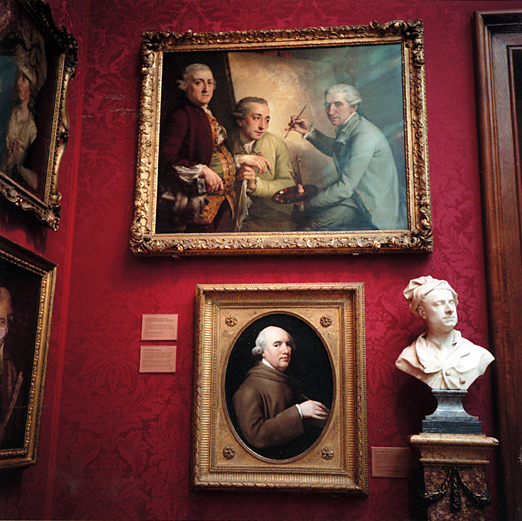
Anne Zahalka (Australian, b. 1957) National Portrait Gallery #1 1992/2010
A patchy exhibition by Anne Zahalka at Arc One Gallery, Melbourne. I can’t help feeling that we have seen this before, and done better, in the work of Candida Hofer and Thomas Struth.
Although the square photographs are taken by a medium format film camera (a Hasselblad I suspect) and printed as C-type prints (hence the lush colours) because the camera was handheld this means that, in some of the photographs, little is actually in focus. While this may add to the immediacy of the images, like a quick snapshot as Zahalka prowls the galleries, it detracts from the clarity of the previsualisation of the artist whilst also detracting from the visual depth of field that the subject matter needed.
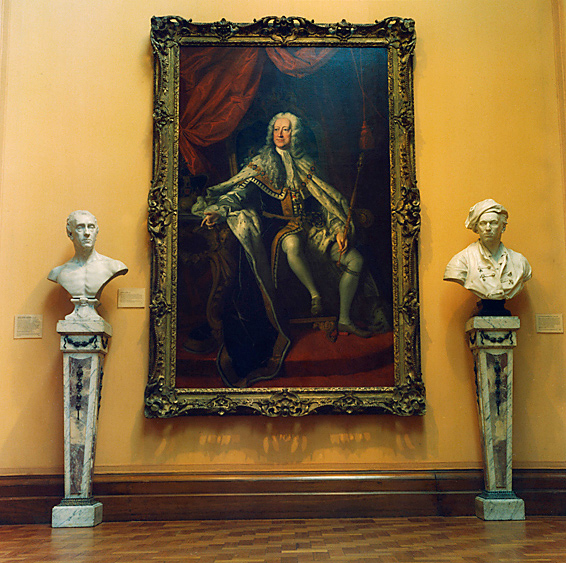
On the positive side there are some lovely spatial relationships between the figures in the paintings and the busts on the pedestals: in one particular photograph (National Portrait Gallery #2, 2010) there is an almost symbiotic relationship between the man in the painting at left, the bust of the man on the pedestal and the man at the very left in the right hand painting. This arrangement is like a triple portrait of the same person. A similar understanding of the spatial relationships within the image frame can be seen in National Portrait Gallery #1 (see photograph above), one of the more successful photographs in the series, with it’s wonderful red flocked wallpaper and gilt frames.
On the right hand side of the gallery there are numerous vertical colour photographs taken on a 35mm camera that feature the back of people looking at a work of art (see National Gallery of Australia, Masters of Paris #5, 2010). These are basic photographs that seek to conceptualise the act of looking at art as a tourist industry to no great affect or insight into the condition being examined.
Dr Marcus Bunyan
Many thankx to Angela Connor and Arc One Gallery for allowing me to publish the photographs in the posting. Please click on the photograph for a larger version of the image.
Anne Zahalka (Australian, b. 1957) National Portrait Gallery #5 2010
Anne Zahalka (Australian, b. 1957) National Portrait Gallery #3 1992/2010
Anne Zahalka (Australian, b. 1957) Prado Museum, Madrid 1992/2010
Arc One Gallery 45 Flinders Lane Melbourne, 3000 Phone: +61 3 9650 0589
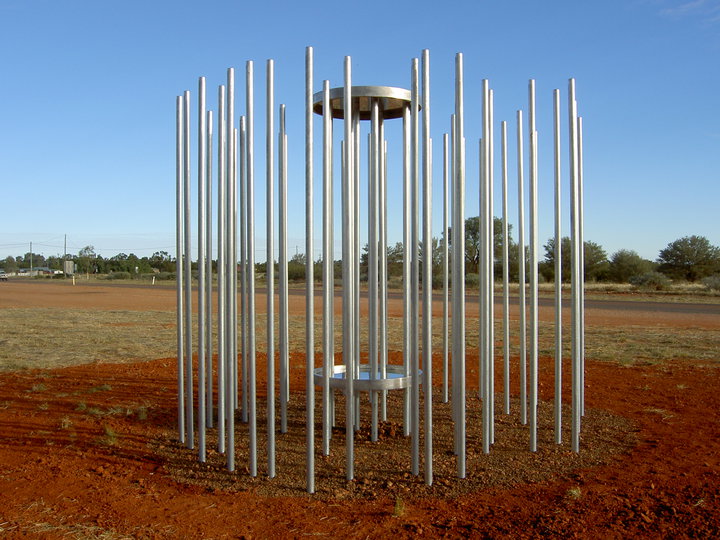
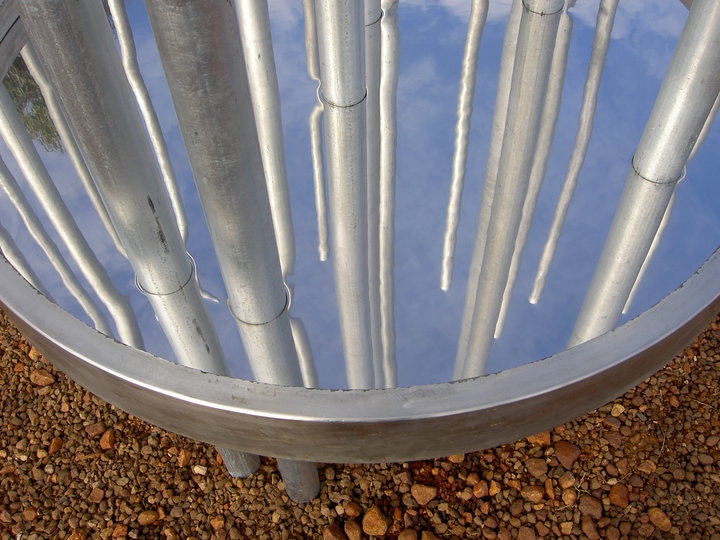
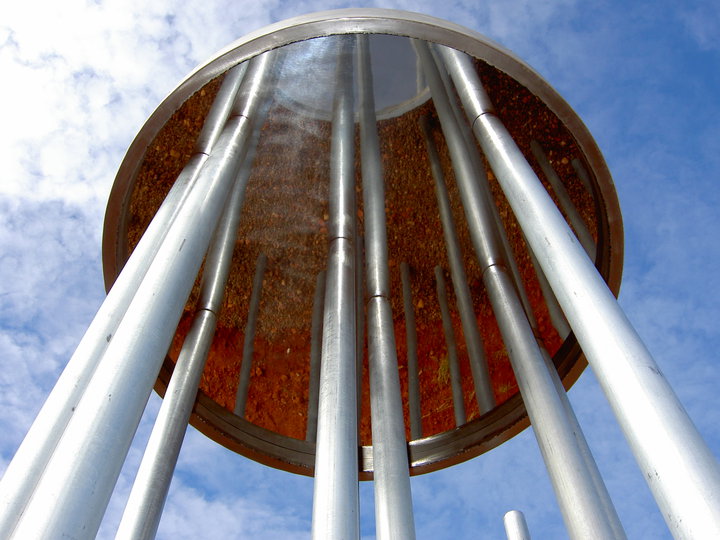
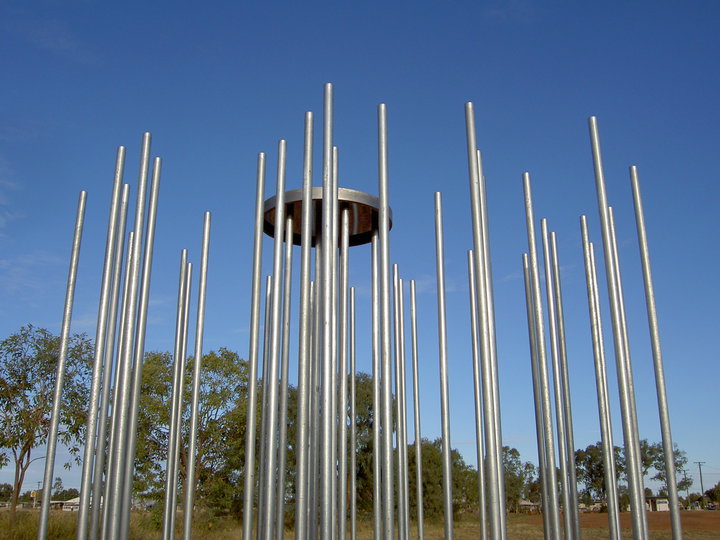
Unknown photographer Drawing Water by Frederick White 2010
Australian sculptor Fredrick White, has been commissioned to create two public sculptures in Western Queensland. The first has been completed at Thargomindah (see Google map), a town located 1014 km west of Brisbane and was commissioned by artplusplace and Thargomindah Regional Council. In a small town of 250 people this is the town’s first public sculpture.
“The town’s one claim to fame is its artesian bore. The bore, which lies 2 km out of town on the Noccundra road, was drilled in 1891 and by 1893, having drilled to a depth of 795 metres, the water came to the surface. It was then that the town successfully attempted a unique experiment. The pressure of the bore water was used drive a generator which supplied the town’s electricity. Enthusiasts have described this as Australia’s first hydro-electricity scheme. The system operated until 1951. Today the bore still provides the town’s water supply. The water reaches the surface at 84°C.”1
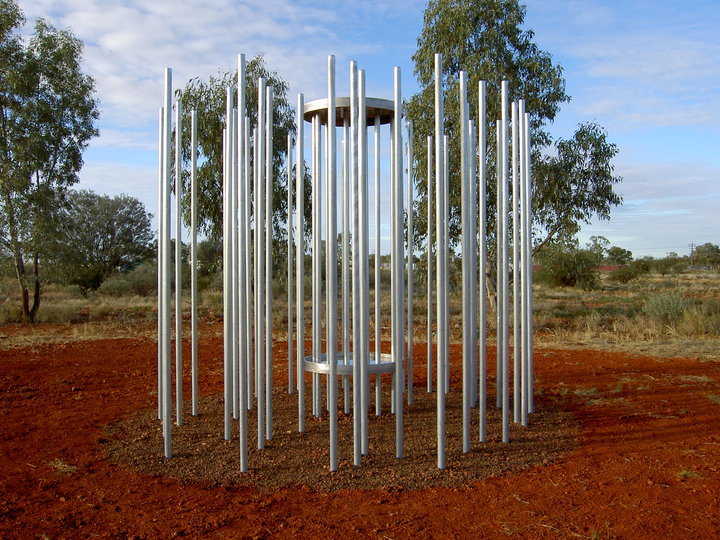
The work Drawing Water (2010) addresses the need for water in such an arid location and the numerous bores that are sunk around the town to draw water to the surface. The earth is reflected in the sky and the sky in the earth in the central polished stainless steel disks (as friend Perry observes, like a tunnel connecting earth and heaven). A forest of bore pipes surround the central platform. Of the work Fred says:
“Drawing Water speaks of our connection to the Earth, specifically the Great Artesian Basin and the bores that provide the only continuous source of water throughout much of inland Australia. The 52 galvanised poles symbolise not only our year round need for water but are also as a reminder of how extensively taped the artesian water is.”
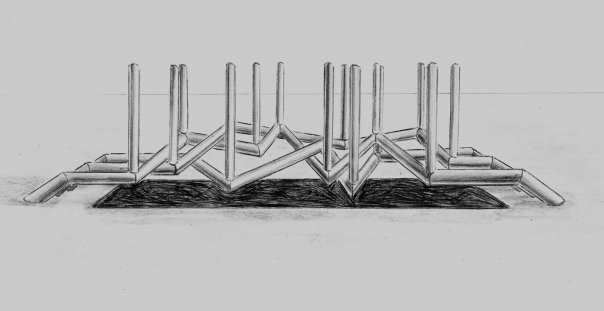
The next commission is at Blackall in Western Queensland (see Google map). A drawing of the work Lifespan (2010), which is 8 metres long, is at the bottom of the posting. Blackall already contains public sculptures by William Eicholtz (Towners Call – Edgar Towner V.C. Memorial (2009)) and Robert Bridgewater (Wool, Water and Wood (2008)).
Exhibition dates: 21st November 2009 – 3rd July, 2010
Harry Callahan (American, 1912-1999) Eleanor, Chicago 1949 Gelatin silver print Courtesy Museum of Fine Arts, Boston
I admire the use of strong horizontals and verticals in the work of Harry Callahan and the exquisite sense of space, stillness and sensuality he creates within the image plane. A true American master. Please click on the photographs for a larger version of the image.
Dr Marcus Bunyan
Many thankx to the Museum of Fine Arts, Boston for allowing me to publish the photographs in the posting. Please click on the photographs for a larger version of the image.
Harry Callahan (American, 1912-1999) Eleanor and Barbara 1953 Gelatin silver print Courtesy Museum of Fine Arts, Boston
Harry Callahan (American, 1912-1999) Eleanor and Barbara, Lake Michigan 1953 Gelatin silver print Courtesy Museum of Fine Arts, Boston
Harry Callahan (American, 1912-1999) Eleanor and Barbara c. 1954 Gelatin silver print Courtesy Museum of Fine Arts, Boston
Harry Callahan (American, 1912-1999) Eleanor, Chicago 1953 Gelatin silver print Courtesy Museum of Fine Arts, Boston
Harry Callahan (American, 1912-1999) Detroit 1943 Gelatin silver print Courtesy Museum of Fine Arts, Boston
The brilliant graphic sensibility of Harry Callahan (1912-1999), a major figure in American photography, is the focus of Harry Callahan: American Photographer at the Museum of Fine Arts, Boston (MFA). Debuting November 21, the exhibition features approximately 40 photographs that survey the major visual themes of the artist’s career. It celebrates the Museum’s important recent acquisitions – by both purchase and gift – of Callahan’s photographs and showcases significant examples of his artistry from the collections of friends of the MFA. The many sensitive pictures that Callahan made of his wife Eleanor, his depictions of passers-by on the street, his carefully composed landscapes and close-ups from nature, and experimental darkroom abstractions reveal a wide-ranging talent that was enormously influential.
“Harry Callahan was one of the most innovative photographers working in America in the mid 20th-century,” said Malcolm Rogers, Ann and Graham Gund Director of the MFA. “His elegantly spare, introspective photographs demonstrate his lyricism and the originality of his sense of design.”
The Detroit-born photographer, whose career spanned six decades, became interested in the camera in the late 1930s while working as a Chrysler Corporation shipping clerk. He was largely self-taught, and attracted admiration early on for his originality. By 1946, Callahan was hired as a photography instructor by the Hungarian-born artist László Moholy-Nagy for the Institute of Design, a Bauhaus-inspired school of art and design in Chicago. In 1961, Callahan was invited to head the photography program at the Rhode Island School of Design (RISD), where he was based until retiring to Atlanta two decades later.
“Harry Callahan’s approach helped shape American photography in the second half of the 20th-century,” said Anne Havinga, Estrellita and Yousuf Karsh Senior Curator of Photographs, who organised the exhibition. “His way of seeing inspired countless followers and continues to feel fresh today.”
Callahan concentrated on a handful of personal subjects in his work, exploring each theme repeatedly throughout his career. These include portraits of his wife Eleanor, depictions of anonymous pedestrians, expressive details of the urban and natural landscape, and experimental darkroom abstractions. The MFA exhibition is organised into five themes: Eleanor, Pedestrians, Architecture, Landscapes, and Darkroom Abstractions …
Press release from the MFA website [Online] Cited 20/06/2010. No long available online
Harry Callahan (American, 1912-1999) Eleanor 1948 Gelatin silver print Courtesy Museum of Fine Arts, Boston
Harry Callahan (American, 1912-1999) Chicago 1950 Gelatin silver print Courtesy Museum of Fine Arts, Boston
Harry Callahan (American, 1912-1999) Eleanor, Chicago 1949 Gelatin silver print Courtesy Museum of Fine Arts, Boston
Harry Callahan (American, 1912-1999) Eleanor and Barbara (baby carriage) 1952 Gelatin silver print Courtesy Museum of Fine Arts, Boston
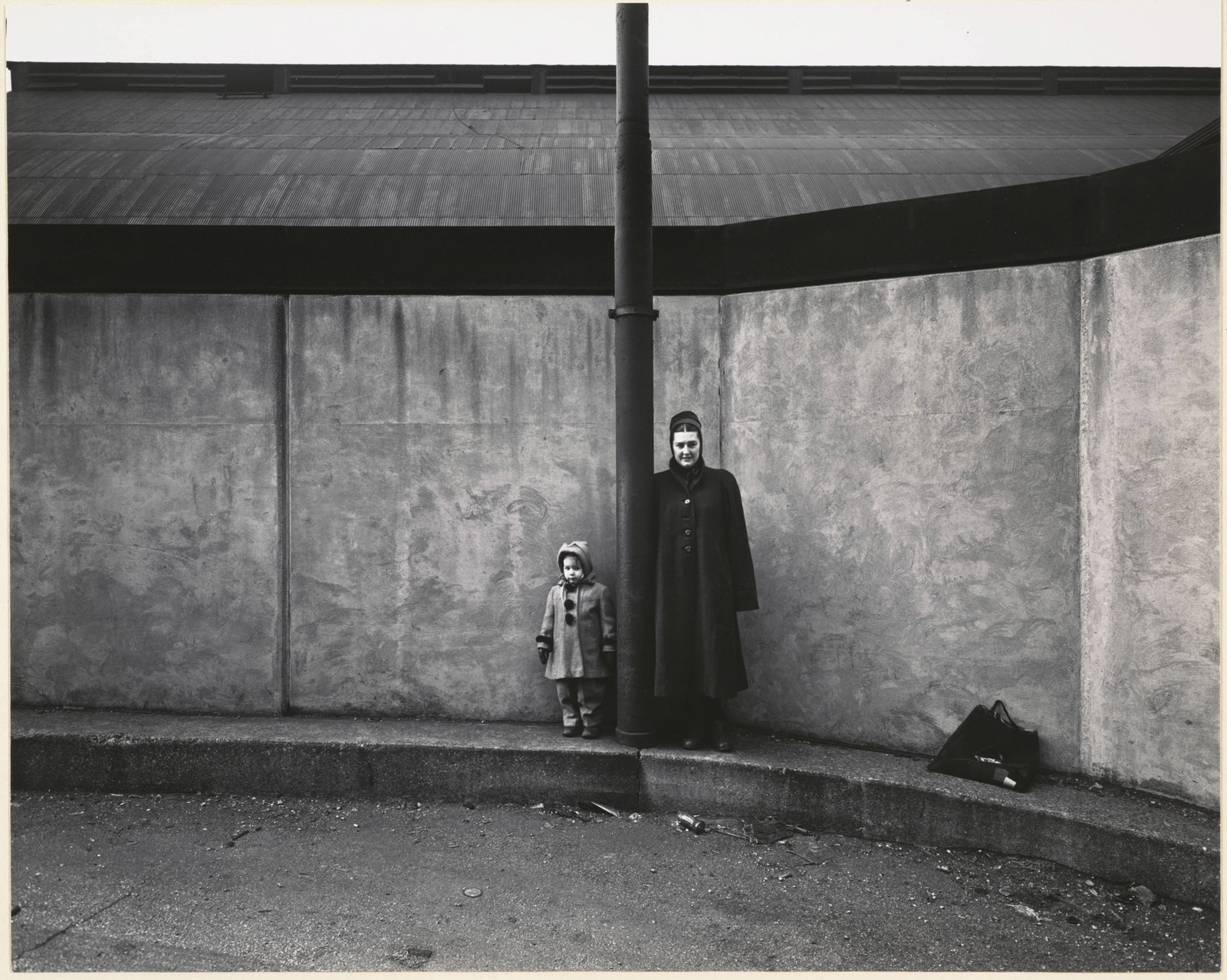
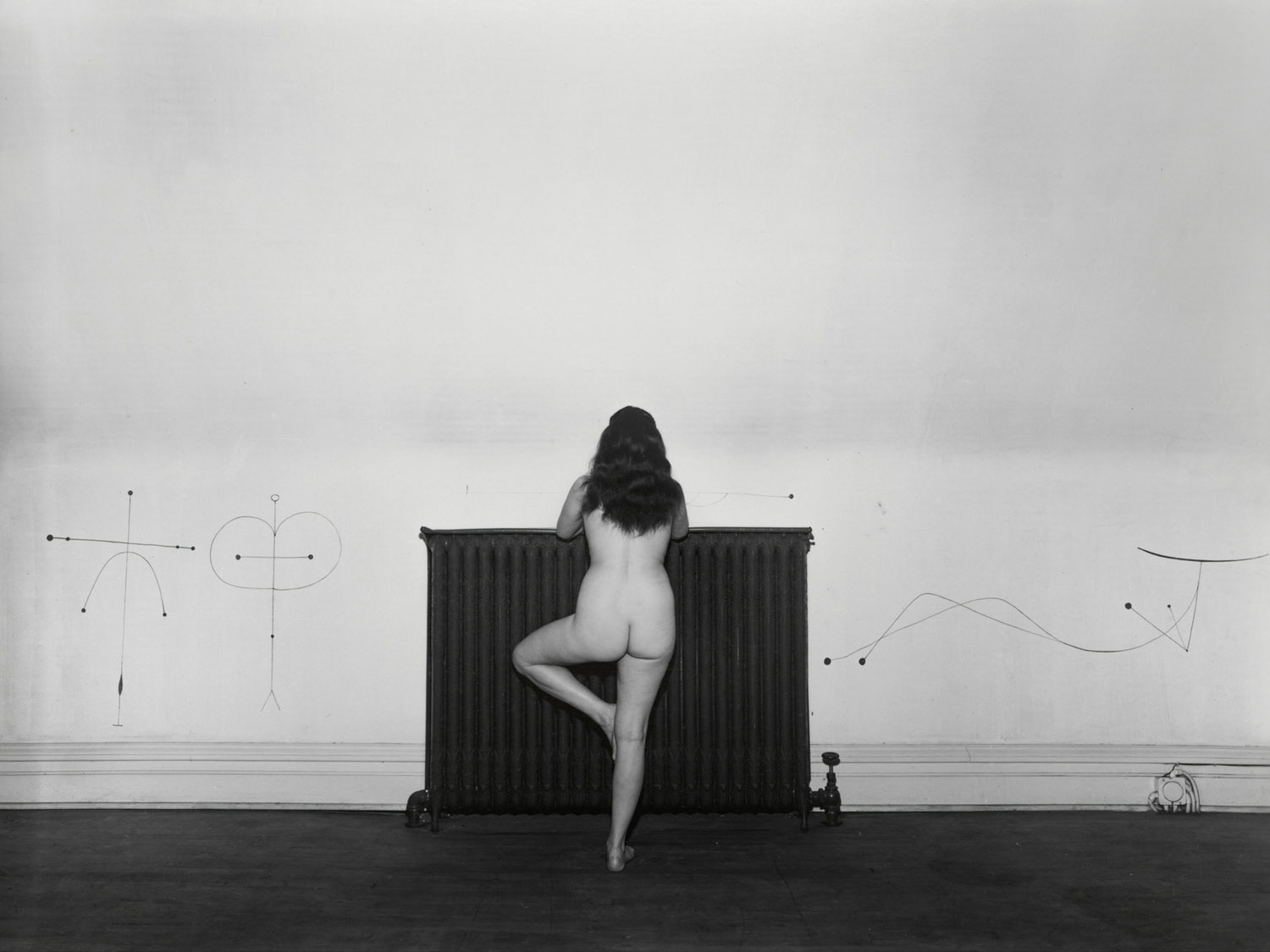
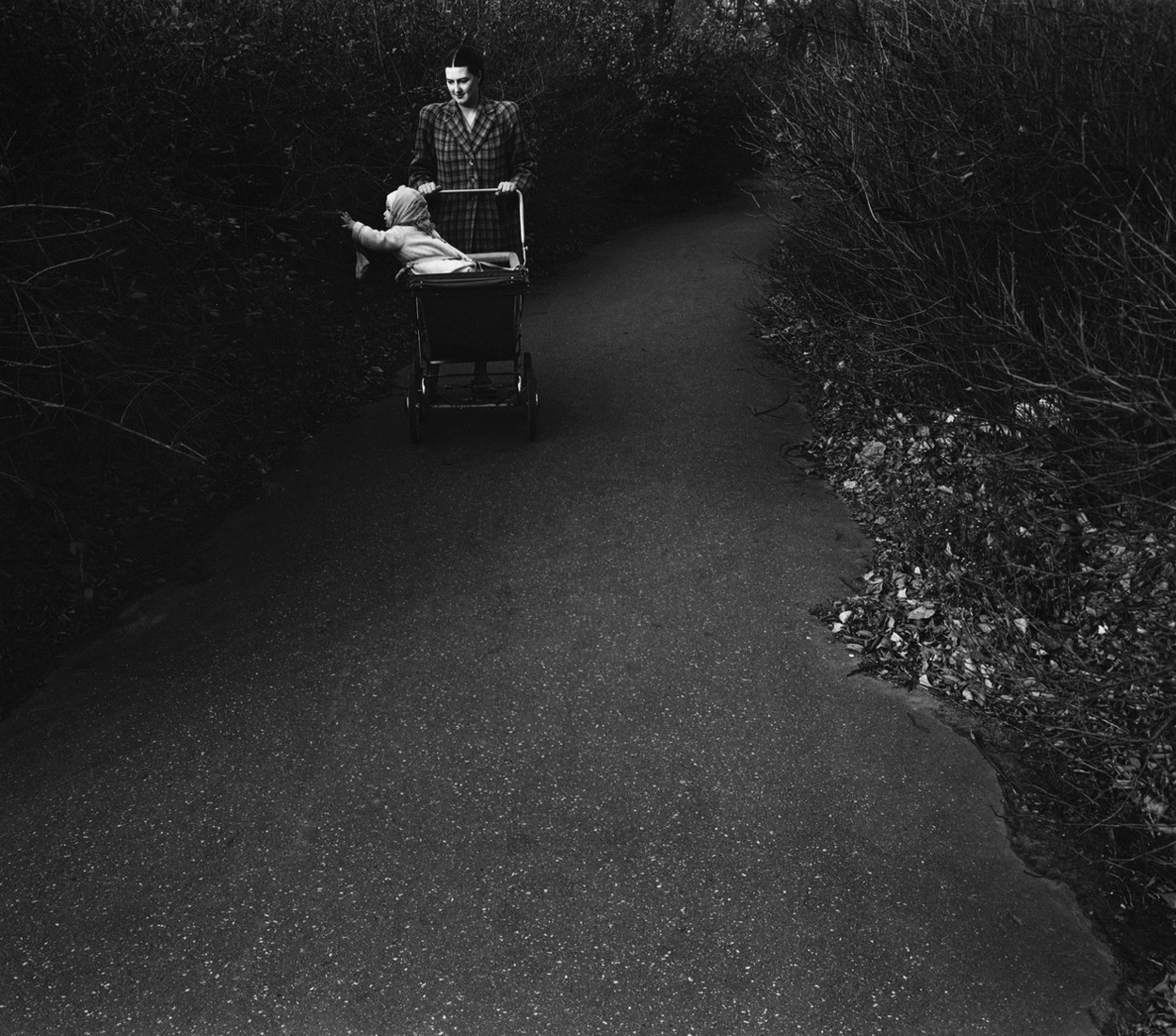
In 1936, around the time that Callahan began to explore photography, he married Eleanor Knapp, who served as one of his first and most frequent subjects. Callahan’s portraits of his wife, characterised by their intimate yet detached poetry, have become a landmark in the history of photography. In the photograph Eleanor (about 1948, see second photograph above), Callahan portrays his wife in a private interior setting, facing away from the camera. After the birth of their daughter Barbara in 1950, she too entered these family pictures, which capture the intimate moments of daily life as seen in the photograph, Eleanor and Barbara (1953, see photograph second from top).
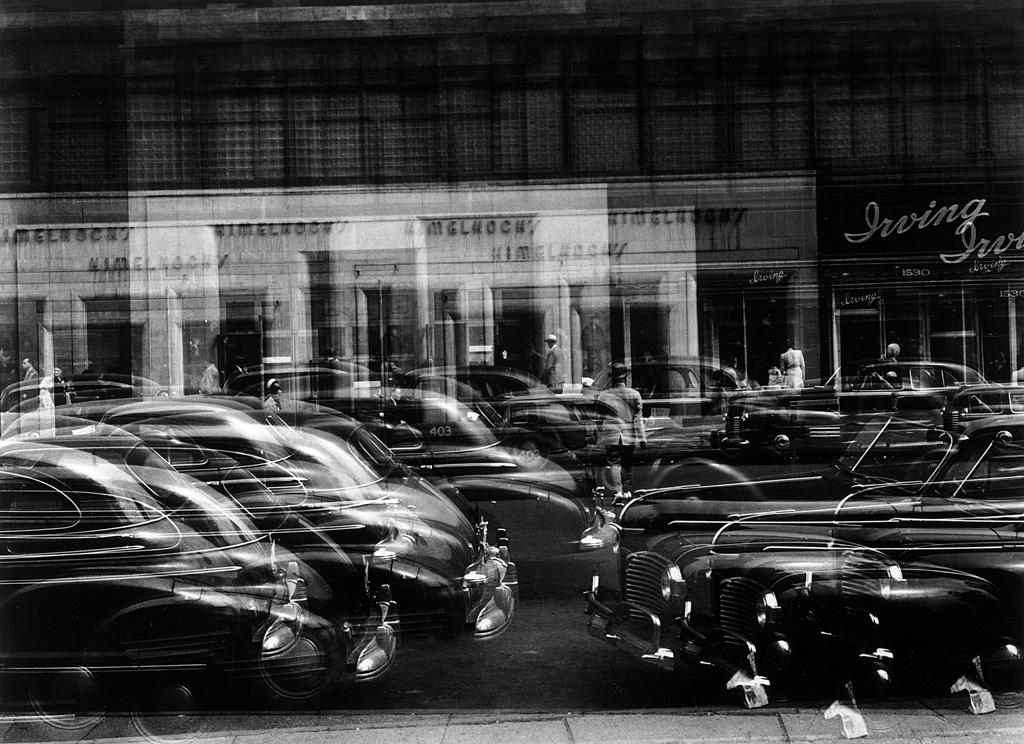
Callahan photographed the natural landscape throughout his career, focusing on its evocative forms and textures. In images such as Aix-en-Provence, France (1957), he explored the visual effects that he could create either through high contrast or closely related tonalities. Callahan also utilised a range of different experimental darkroom techniques – from photographing the beam of a flashlight in a darkened room, to developing one print from multiple negatives. Many of his multi-exposure pictures were made by superimposing images from popular culture onto studies of urban life. Callahan’s openness to experimentation was stimulating for the many students who worked with him.
Callahan made many of his best known images during his 15 years in Chicago, where he also began his role as an influential teacher. During the 1950s, the photographer embarked on a series of close-ups of anonymous pedestrians in the streets of Chicago, most of them women. Using a 35mm camera with a pre-focused telephoto lens, he captured passersby unaware of his presence, resulting in snapshot-like images that record unsuspecting subjects absorbed in private thought or action, such as Chicago (1950, see photograph above), a close-up of a preoccupied woman’s face. Callahan returned to this theme frequently, working in both black and white and colour.
Callahan was repeatedly drawn to architectural and urban subjects. Prior to moving to Chicago, he explored the spaces of Detroit, photographing the formal patterns he discovered there. In Detroit (1943, see photograph above), Callahan depicts a street scene, with the people in transit appearing as a pattern. He experimented with colour in these pictures as early as the 1940s, but he worked more extensively in colour later in his career, from the 1970s onward.
Text from the Art Tatler website [Online] Cited 20/06/2010. No long available online
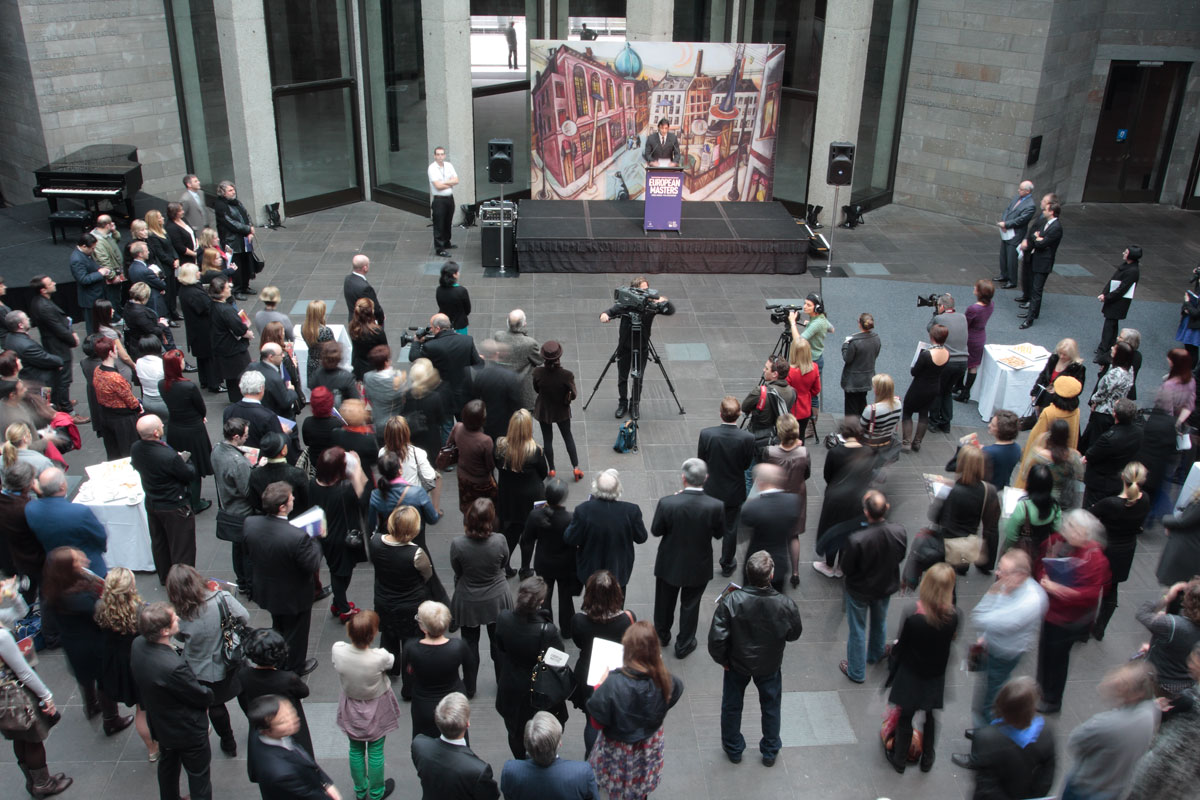
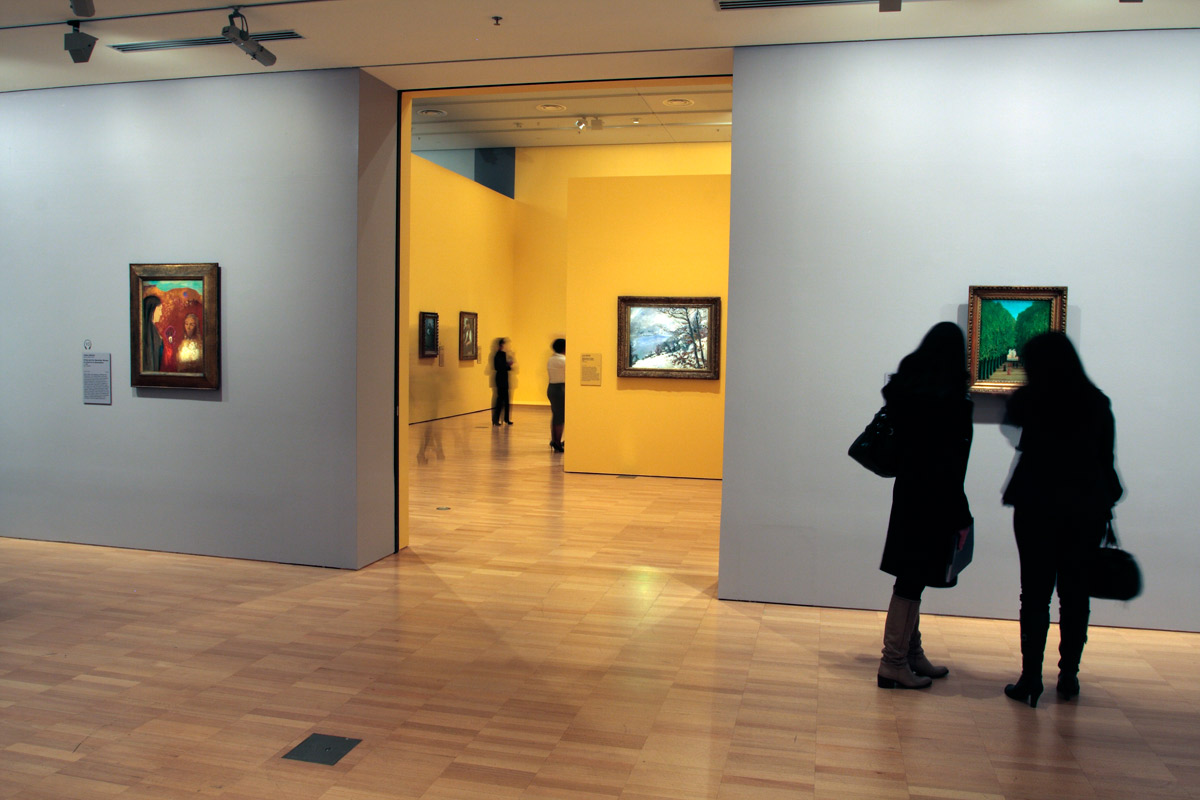
Media opening of European Masters: Städel Museum 19th – 20th Century, Winter Masterpieces at the National Gallery of Victoria Photo: Marcus Bunyan
A huge posting – and another ‘you saw it here first’ on Art Blart!
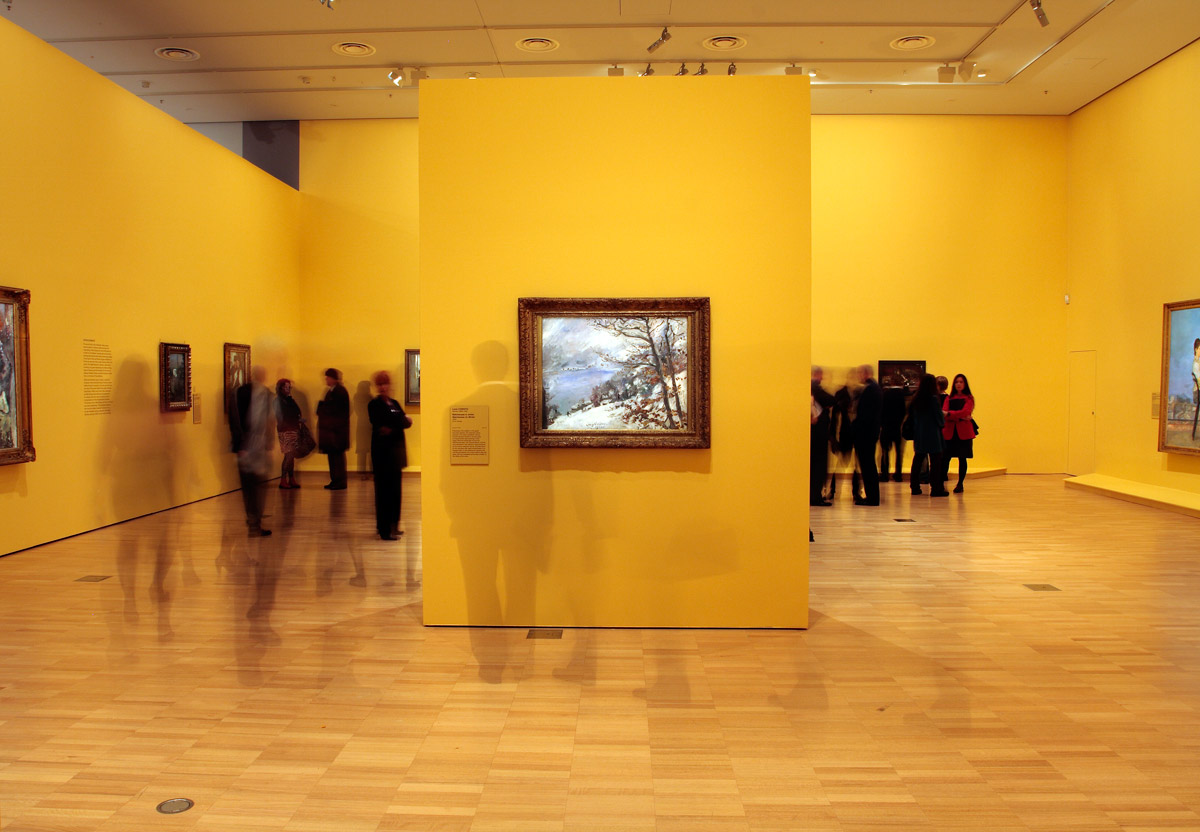
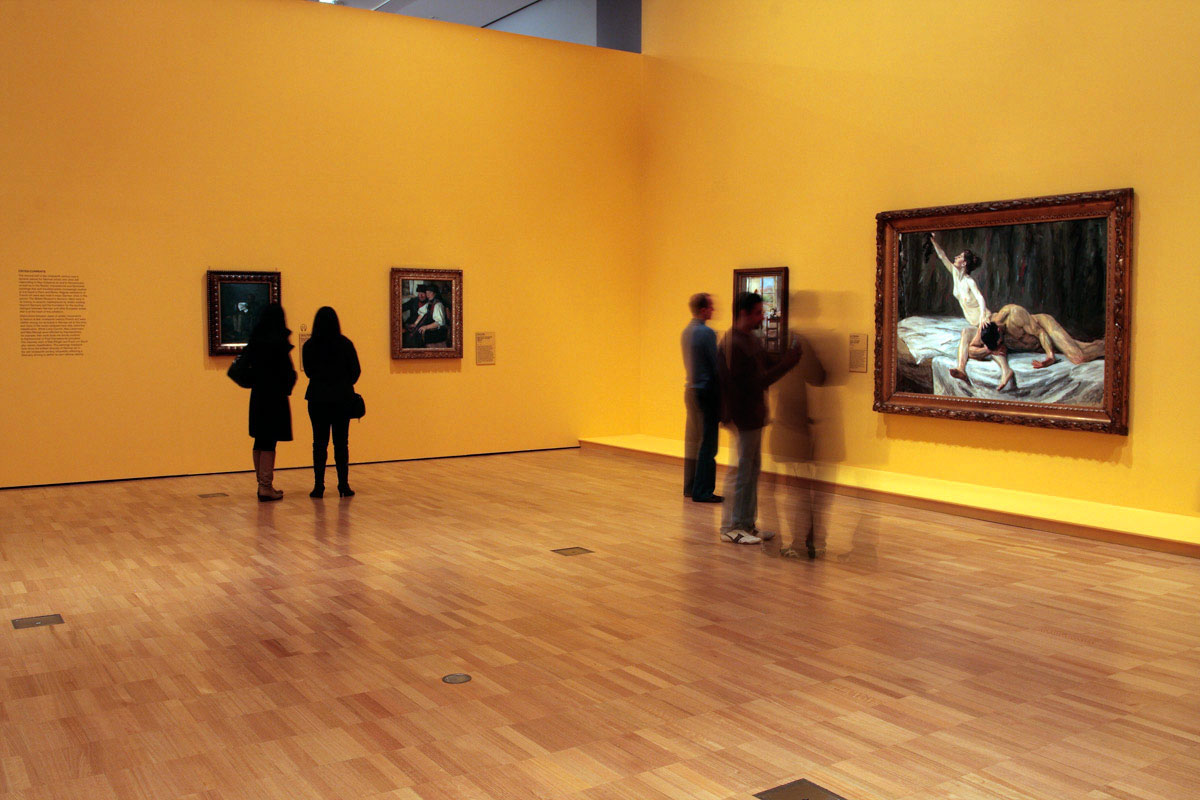
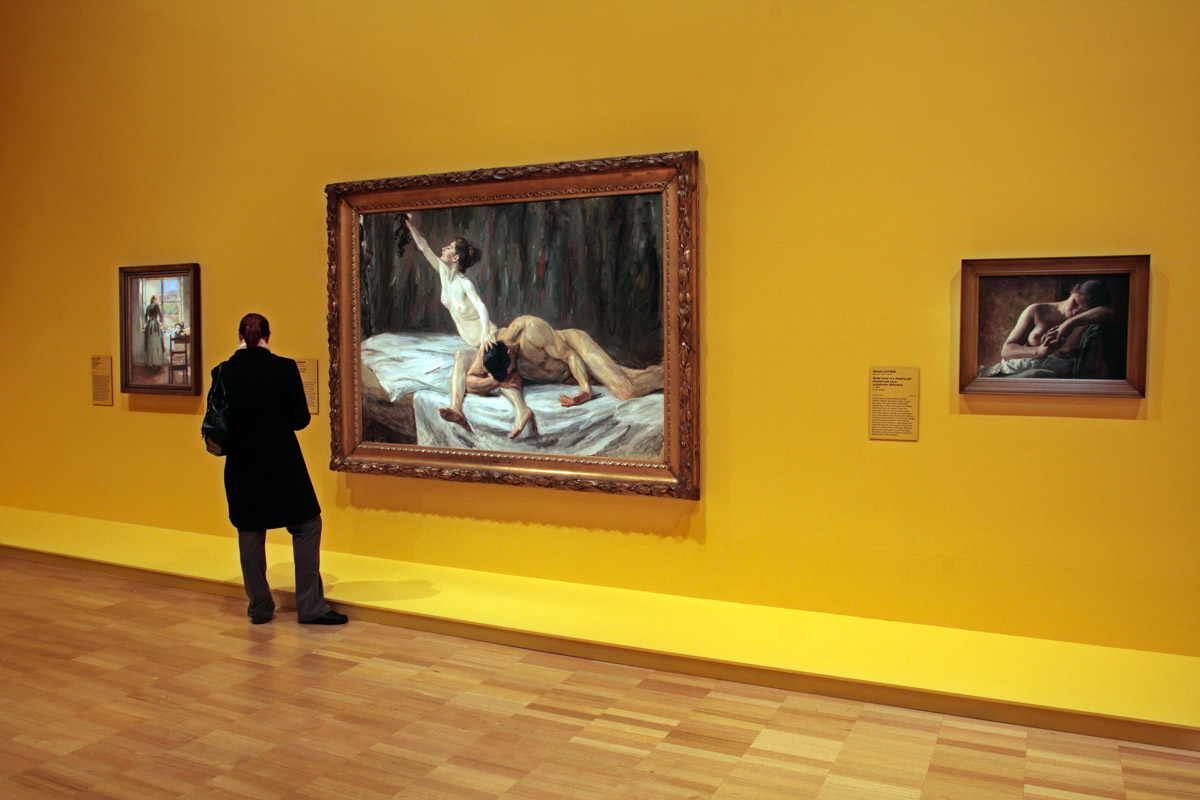
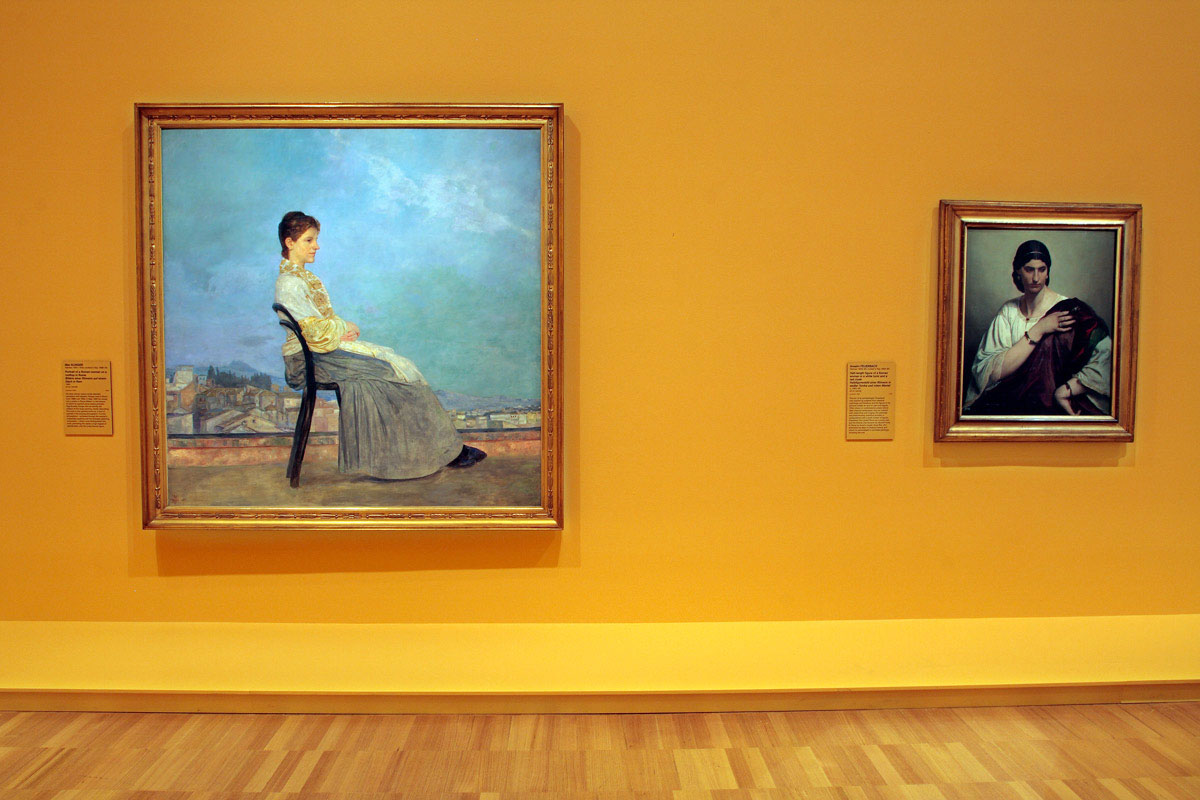
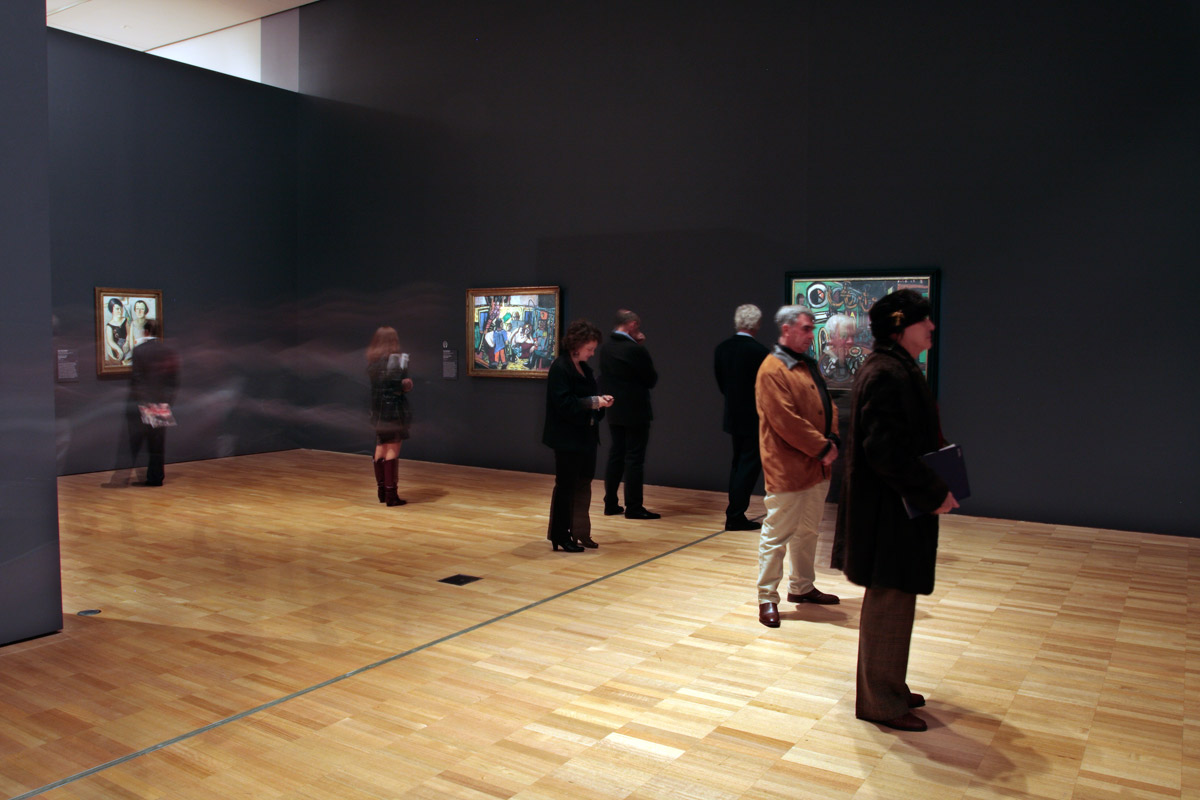
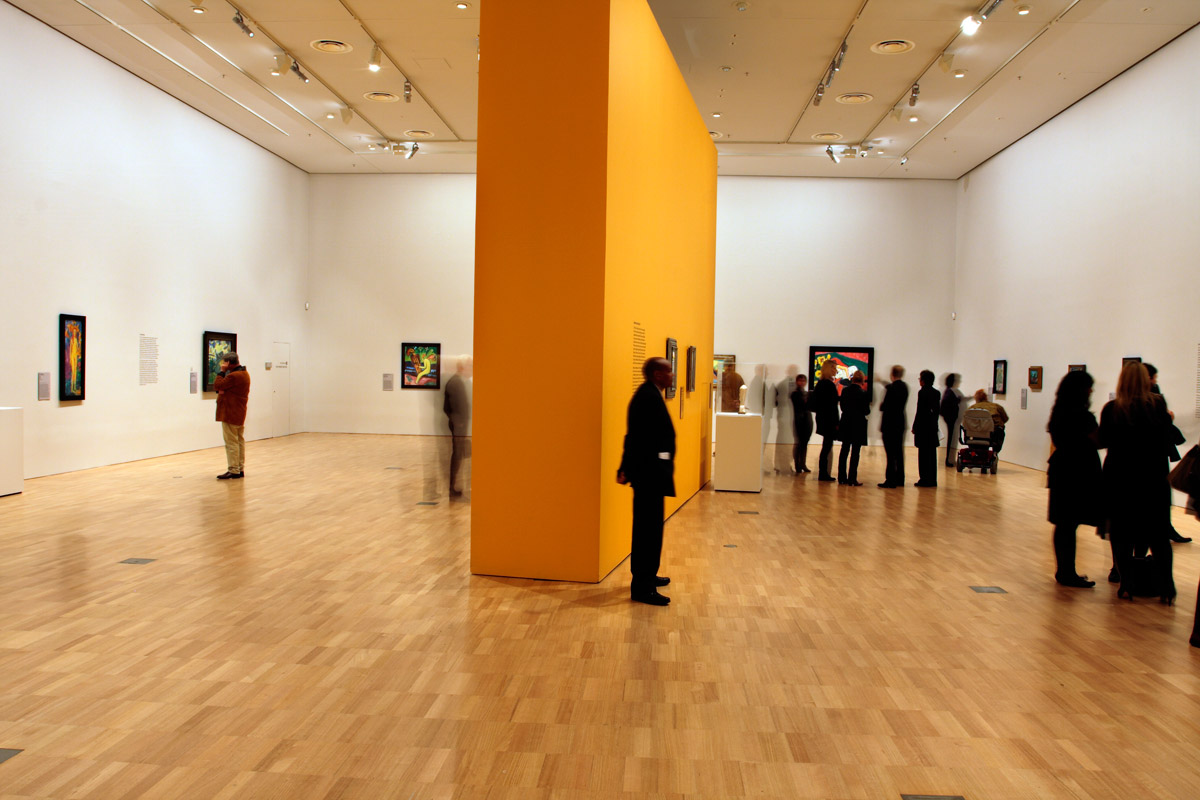
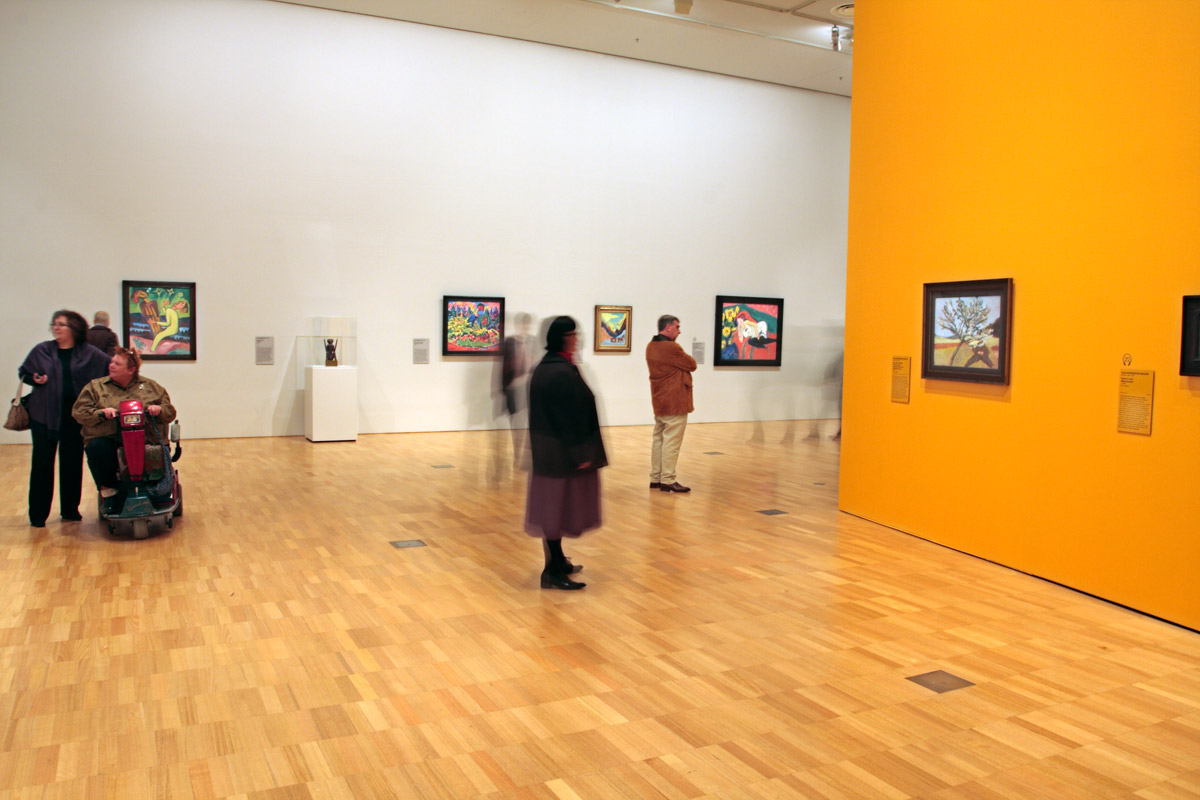
A simple, spacious hang shows off some wonderfully vibrant paintings in the new Winter Masterpieces blockbuster at the NGV. The use of strong yellow and pale grey wall colour compliments the paintings. Conversely, other rooms have a dark brown and very dark grey wall colour. Some people will like the effect but I found the dark grey a little too sombre and heavy in the room dedicated to the work of Max Beckmann. Overall a fantastic range of paintings, especially those by the German Expressionists and a luminous painting by Odilon Redon. To see them in Australia is a joy to behold.
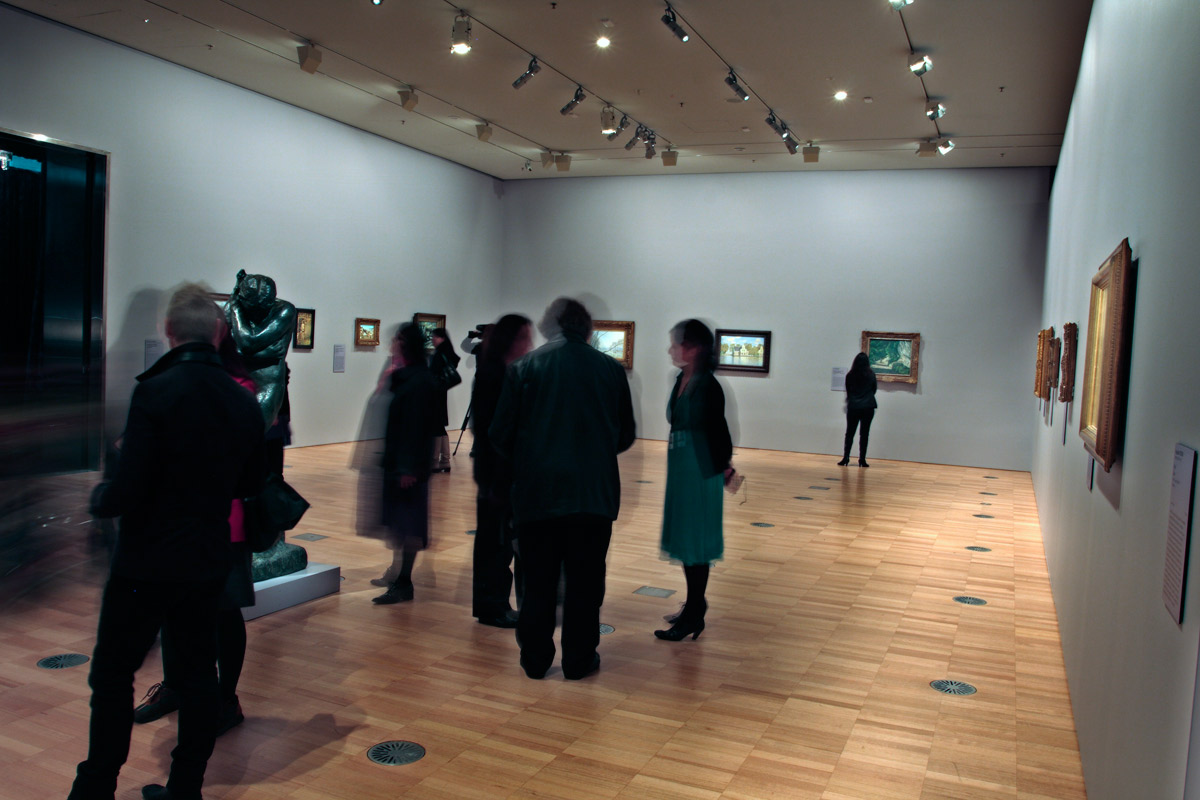
Note on the photographs: All the photographs were taken with a timed exposure with the camera on a tripod. While this leads to ghosting as people walk through the shot it also adds a sense of the exhibition as a living entity. I find it preferable to the use of flash photography as flash destroys any ambience that the rooms possess. The photographs are in chronological order, proceeding from the beginning of the exhibition to the end.
PS. Thankx to the many people who have emailed me saying that they love the photographs, especially to Sue Coffey who said the posting looked superb = it makes it all worthwhile!
Media opening of European Masters: Städel Museum 19th – 20th Century, Winter Masterpieces at the National Gallery of Victoria Photo: Marcus Bunyan
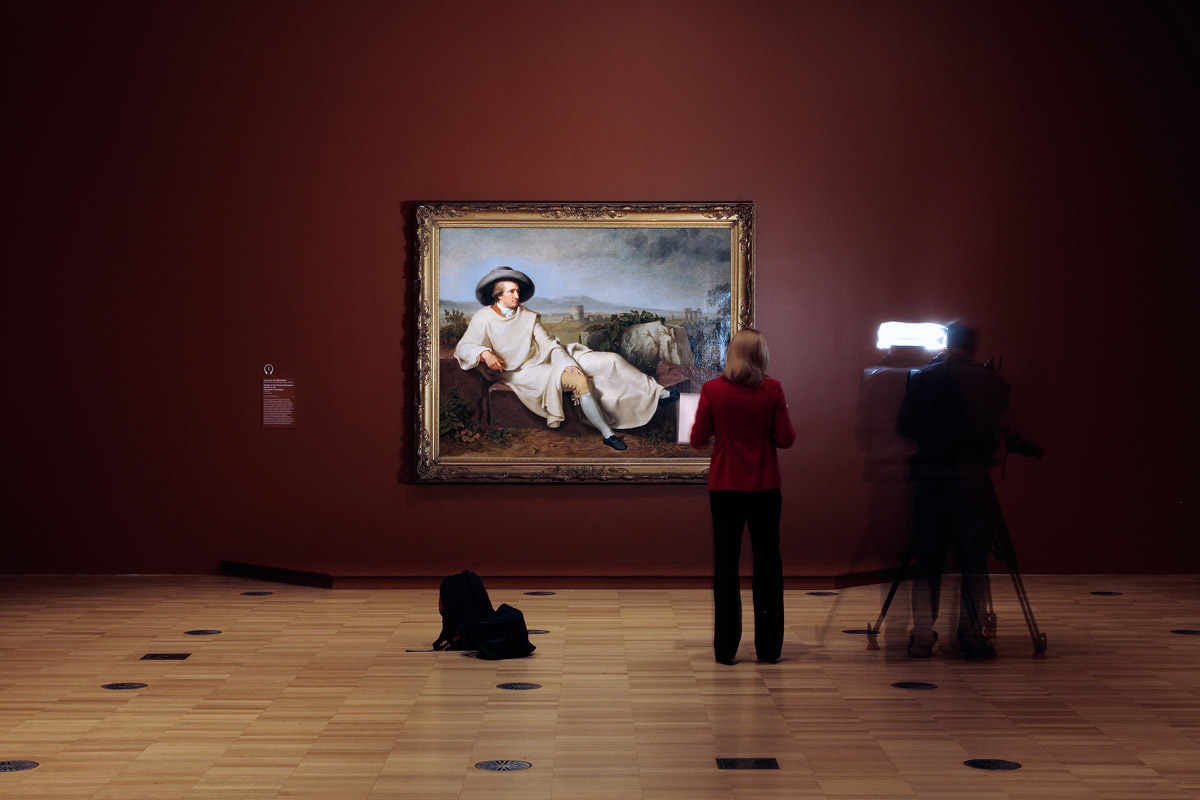
Installation views of Johann Heinrich Wilhelm Tischbei’s panting Goethe in the Roman countryside 1787 at the exhibition European Masters: Städel Museum 19th – 20th Century, Winter Masterpieces at the National Gallery of Victoria Photos: Marcus Bunyan
Johann Heinrich Wilhelm Tischbein (German, 1751-1829) Goethe in the Roman countryside (Goethe in der römischen Campagna) 1787 Oil on canvas 161.0 x 197.5cm Städel Museum, Frankfurt am Main Acquired in 1878 as a gift by Baroness Salomon von Rothschild
Installation view of the exhibition European Masters: Städel Museum 19th – 20th Century, Winter Masterpieces at the National Gallery of Victoria Photo: Marcus Bunyan
Installation views of Johann Heinrich Wilhelm Tischbei’s panting Goethe in the Roman countryside 1787 at the exhibition European Masters: Städel Museum 19th – 20th Century, Winter Masterpieces at the National Gallery of Victoria Photos: Marcus Bunyan
Installation views of the exhibition European Masters: Städel Museum 19th – 20th Century, Winter Masterpieces at the National Gallery of Victoria Photos: Marcus Bunyan
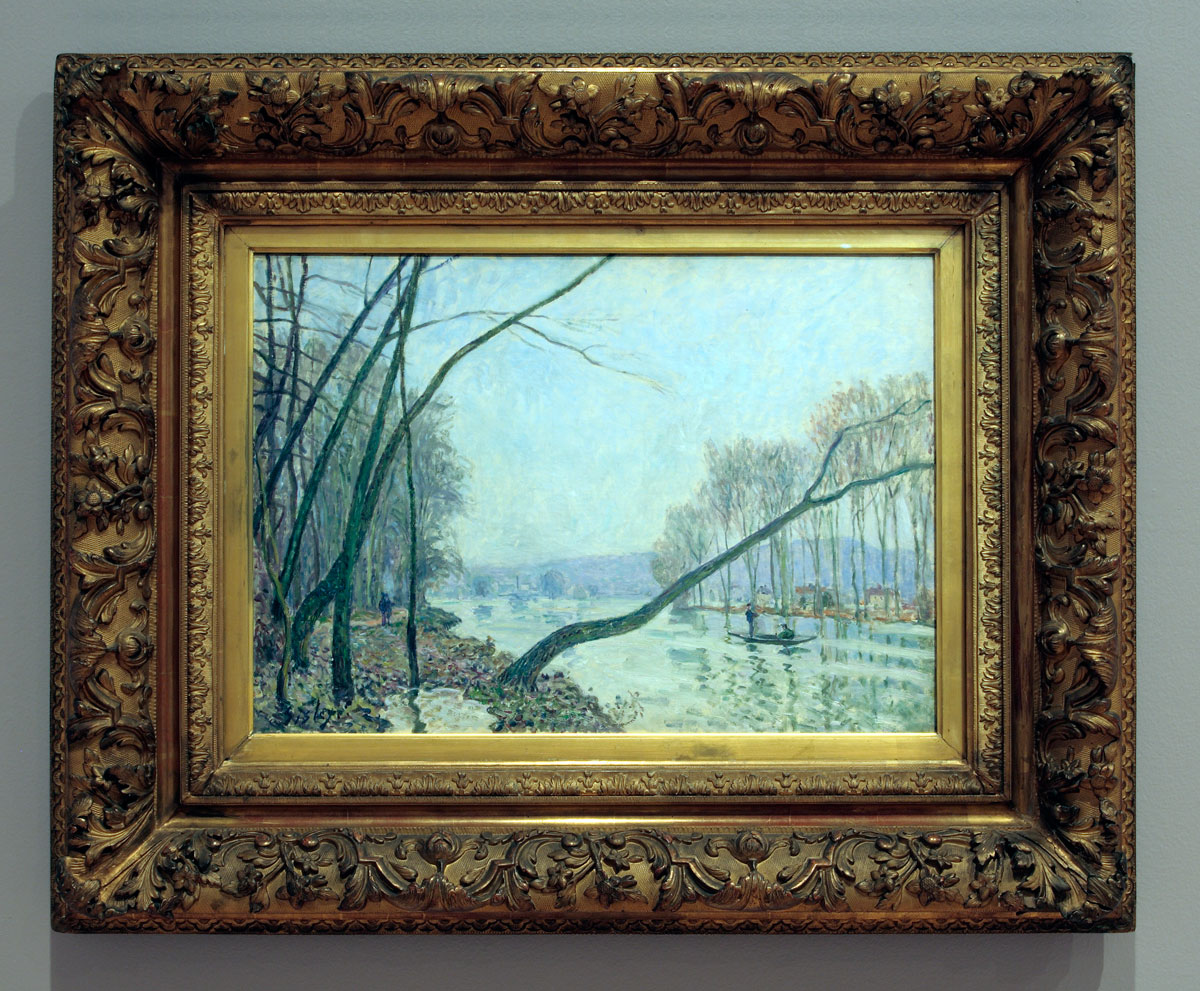
Alfred Sisley (English, 1839-1899) Banks of the Seine in Autumn (installation view) 1879 Oil on canvas Photo: Marcus Bunyan
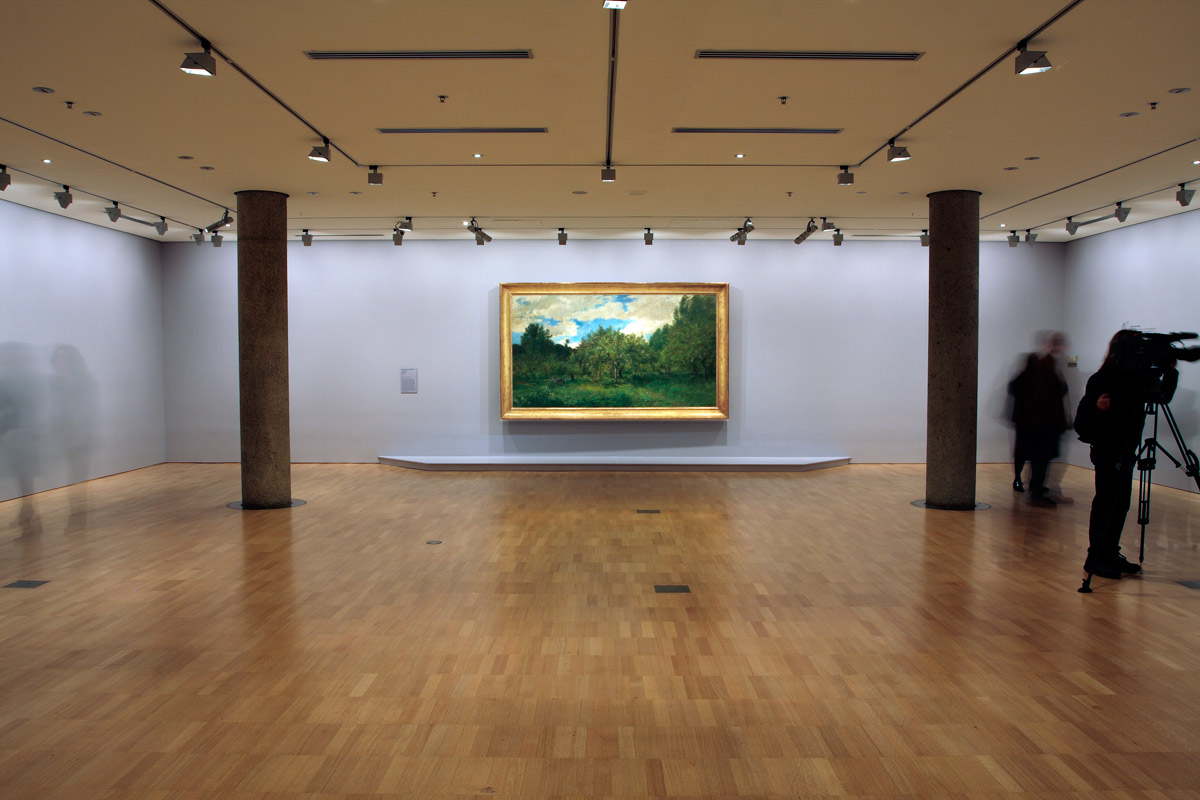
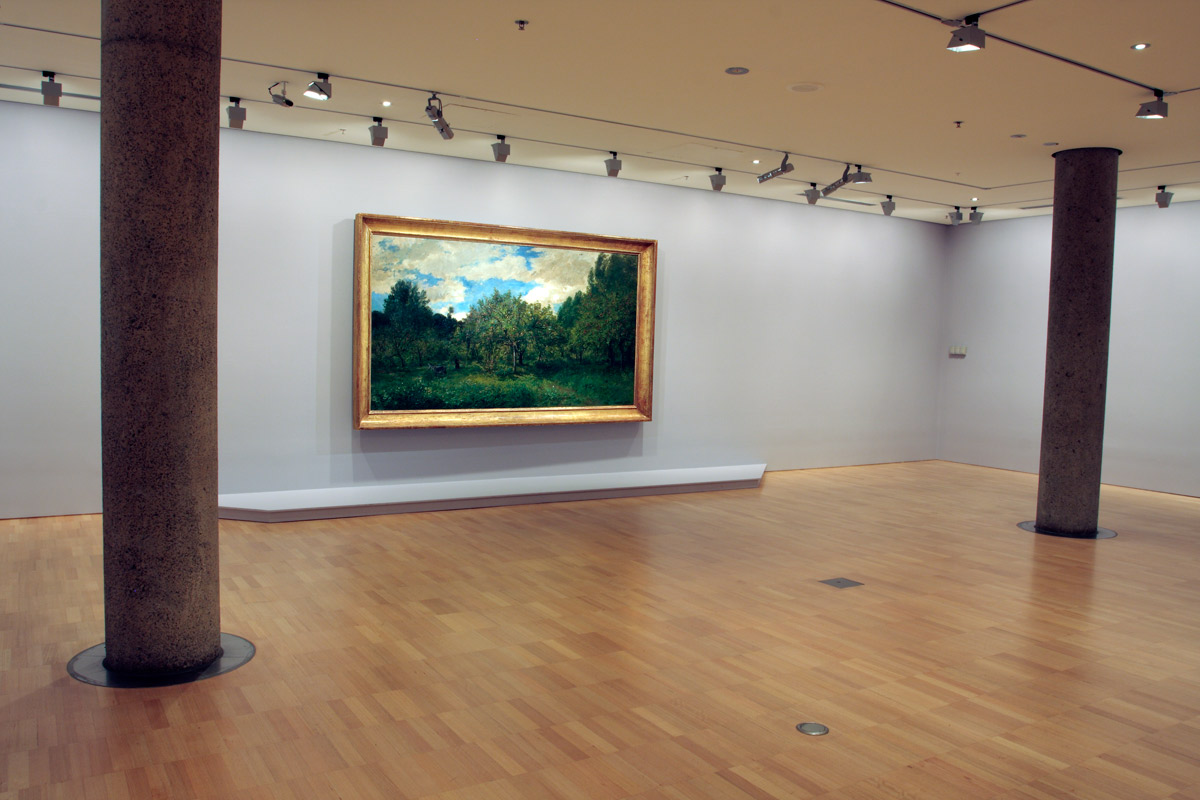
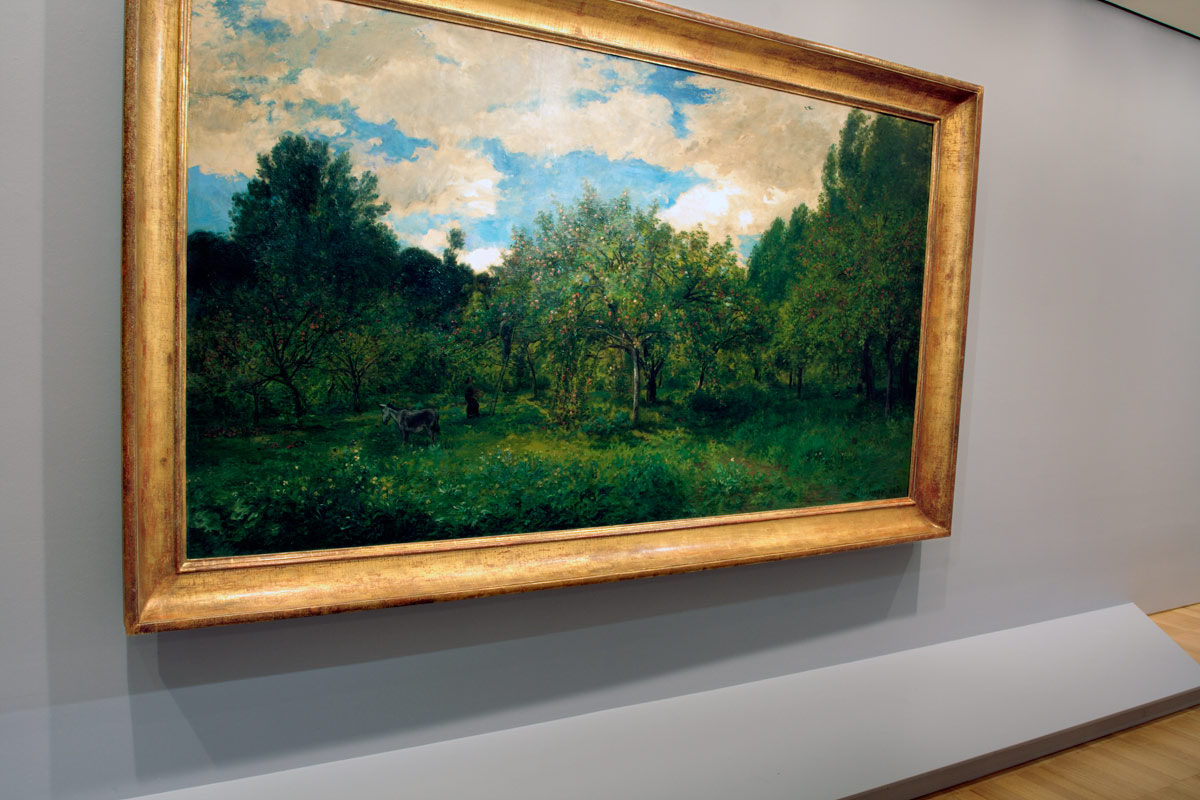
Installation views of Charles-Francois Daubigny (French 1817-1878) French Orchard at Harvest Time (Le verger) 1876 at the exhibition European Masters: Städel Museum 19th – 20th Century, Winter Masterpieces at the National Gallery of Victoria Photos: Marcus Bunyan
Charles-Francois Daubigny (French, 1817-1878) French Orchard at Harvest Time (Le verger) (installation view) 1876 Oil on canvas Photo: Marcus Bunyan
Installation views of Pierre Auguste Renoir (French 1841-1919) After the luncheon (La fin du déjeuner) 1879 at the exhibition European Masters: Städel Museum 19th – 20th Century, Winter Masterpieces at the National Gallery of Victoria Photos: Marcus Bunyan
Pierre Auguste Renoir (French 1841-1919) After the luncheon (La fin du déjeuner) 1879 Oil on canvas 100.5 x 81.3cm Städel Museum, Frankfurt am Main Acquired in 1910
Installation view of Odilon Redon (French 1840-1916) Christ and the Samaritan Woman (Le Christ et la Samaritaine) c. 1895 at the exhibition European Masters: Städel Museum 19th – 20th Century, Winter Masterpieces at the National Gallery of Victoria Photo: Marcus Bunyan
Odilon Redon (French, 1840-1916) Christ and the Samaritan Woman (Le Christ et la Samaritaine) c. 1895 Oil on canvas 64.8 x 50.0cm Städel Museum, Frankfurt am Main Acquired in 1960
Installation view of the exhibition European Masters: Städel Museum 19th – 20th Century, Winter Masterpieces at the National Gallery of Victoria Photo: Marcus Bunyan
“The appeal of the Städel Institute lies in the tremendous energy filling that confined space. Virtually all of the great emotions that have lived in the souls of the peoples of Europe are there, and all in superb works.”
Alfred Lichtwark, Director the Hamburg Museum, 1905
One of the world’s finest collections of 19th and 20th century art is showing exclusively in Melbourne as the seventh exhibition in the hugely popular Melbourne Winter Masterpieces series at the National Gallery of Victoria.
European Masters: Städel Museum, 19th-20th Century brings together almost 100 works by 70 artists from one of Germany’s oldest and most respected museums, the Städel Museum in Frankfurt.
Dr Gerard Vaughan, NGV Director, said: “European Masters presents a comprehensive overview of the Städel Museum’s holdings of painting and sculpture from the last two centuries of European art. This blockbuster exhibition provides a superb survey of the key artistic movements of the time, including Realism, Impressionism and Post Impressionism, German Romanticism, Expressionism and Modernism, and French Symbolism.”
The exhibition opens with a series of large-scale romantic German paintings, including Johann H.W. Tischbein’s iconic Goethe in the Roman Campagna from 1787. Visitors will also be treated to magnificent examples of 19th century French art from Corot and Courbet’s Realist landscapes to well-known beautiful Impressionist works by Monet, Renoir, Degas and Cézanne.
European Masters then traces the development of German art, introducing audiences to rarely seen Realist and Symbolist masterpieces from artists such as Max Liebermann and Franz von Stuck.
A major highlight of the exhibition is a powerful selection of German Expressionist paintings, with ten poignant works by Max Beckmann, including The synagogue in Frankfurt am Main and his powerful Double Portrait, all of which have left the Städel for the first time to be shown outside of Europe.
The exhibition also includes a breathtaking selection of Swiss, Belgian and Dutch works by artists such as Arnold Böcklin, Fernand Khnopff and Vincent Van Gogh.
“Exclusive to Melbourne, European Masters provides an unprecedented opportunity to see a spectacular group of masterpieces spanning the dynamic and transformative years of the 19th and 20th centuries. There is something in this exhibition for everyone, from the beauty and immediacy of French Impressionism to the raw power of German Expressionism. This is a once-in-a-lifetime chance to see superb pictures that rarely travel outside of Europe,” said Dr. Vaughan.
Founded in 1816 by the Frankfurt financier Johann Friedrich Städel, the Städel Museum has one of the world’s finest art collections. The collection boasts 2700 paintings, 600 sculptures and over 100,000 prints and drawings documenting the development of European art and culture.
The Melbourne Winter Masterpieces series began in 2004 with The Impressionists: Masterpieces from the Musée d’Orsay, continued in 2005 with Dutch Masters from the Rijksmuseum, Amsterdam, followed by Picasso in 2006, Guggenheim Collection: 1940s to Now in 2007, Art Deco 1910-1939 in 2008 and Salvador Dalí: Liquid Desire in 2009.
This year Melbourne Winter Masterpieces includes European Masters: Städel Museum, 19th-20th Century at the NGV, and Tim Burton at the Australian Centre for the Moving Image.
Installation views of Max Liebermann (German 1847-1935, lived in France 1874-78) Samson and Delilah (Simson und Delila) 1901 at the exhibition European Masters: Städel Museum 19th – 20th Century, Winter Masterpieces at the National Gallery of Victoria Photos: Marcus Bunyan
Max Liebermann (German, 1847-1935, lived in France 1874-1878) Samson and Delilah (Simson und Delila) 1901 Oil on canvas 151.2 x 212.0cm Städel Museum, Frankfurt am Main Acquired in 1910
Max Klinger (German, 1857-1920) Portrait of a Roman woman on a flat roof (Bildnis einer Römerin auf einem Dach in Rom) 1891 Oil on canvas 182 x 182cm Städel Museum, Frankfurt am Main Acquired in 1926 as a gift in commemoration of Walther Rathenau
Installation view at left of Max Klinger (German 1857-1920) Portrait of a Roman woman on a flat roof (Bildnis einer Römerin auf einem Dach in Rom) 1891 at the exhibition European Masters: Städel Museum 19th – 20th Century, Winter Masterpieces at the National Gallery of Victoria Photo: Marcus Bunyan
Max Beckmann room, installation view of European Masters: Städel Museum 19th – 20th Century, Winter Masterpieces at the National Gallery of Victoria Photos: Marcus Bunyan
Max Beckmann (German 1884-1950, worked in the Netherlands 1937-1947, United States 1947-1950) Female dancer (Tanzerin) (installation view) c. 1935 Bronze Photo: Marcus Bunyan
Installation views of European Masters: Städel Museum 19th – 20th Century, Winter Masterpieces at the National Gallery of Victoria Photos: Marcus Bunyan
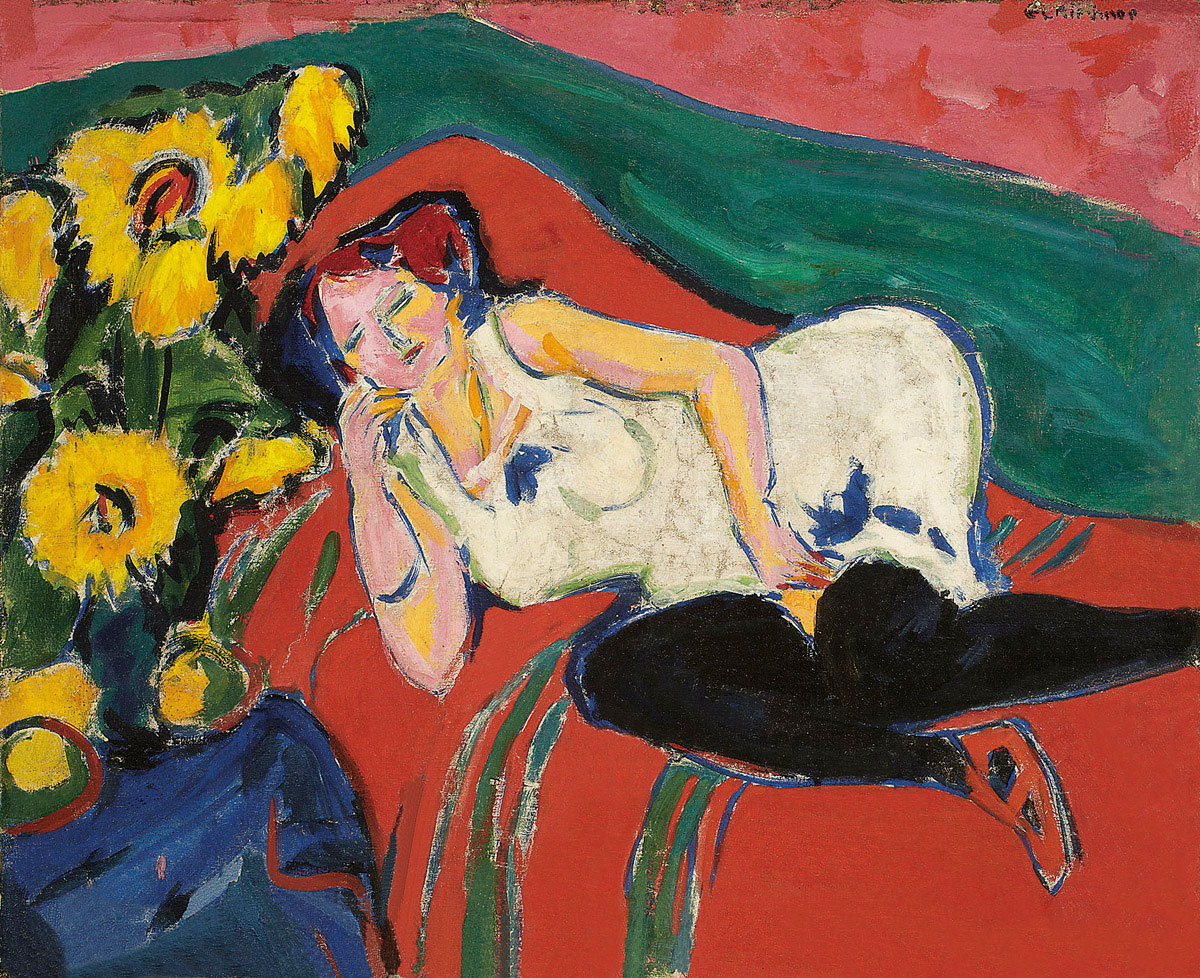
Ernst Ludwig Kirchner (German, 1880-1938) Reclining woman in a white chemise (Liegende Frau im weiβen Hemd) 1909 Oil on canvas 95.0 x 121.0cm Städel Museum, Frankfurt am Main Acquired in 1950
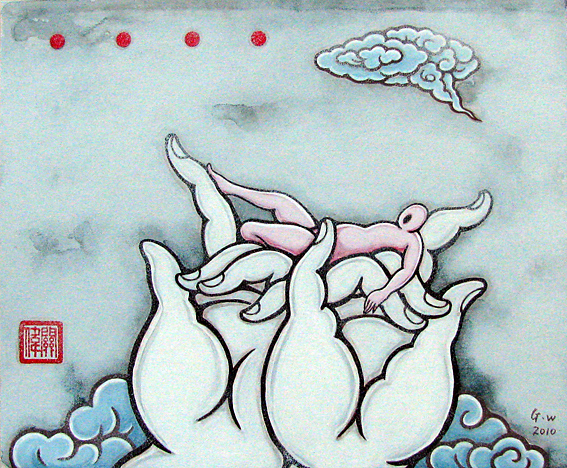
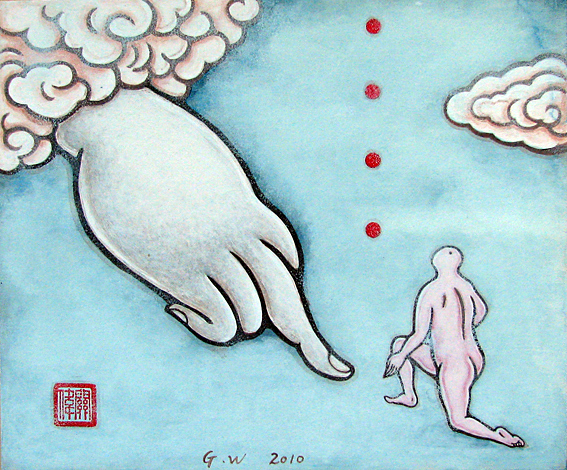
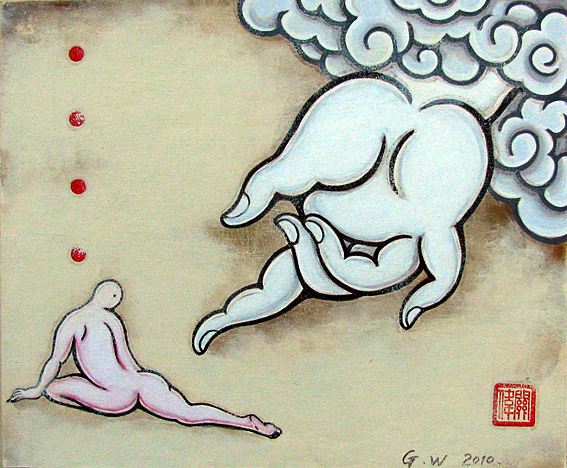
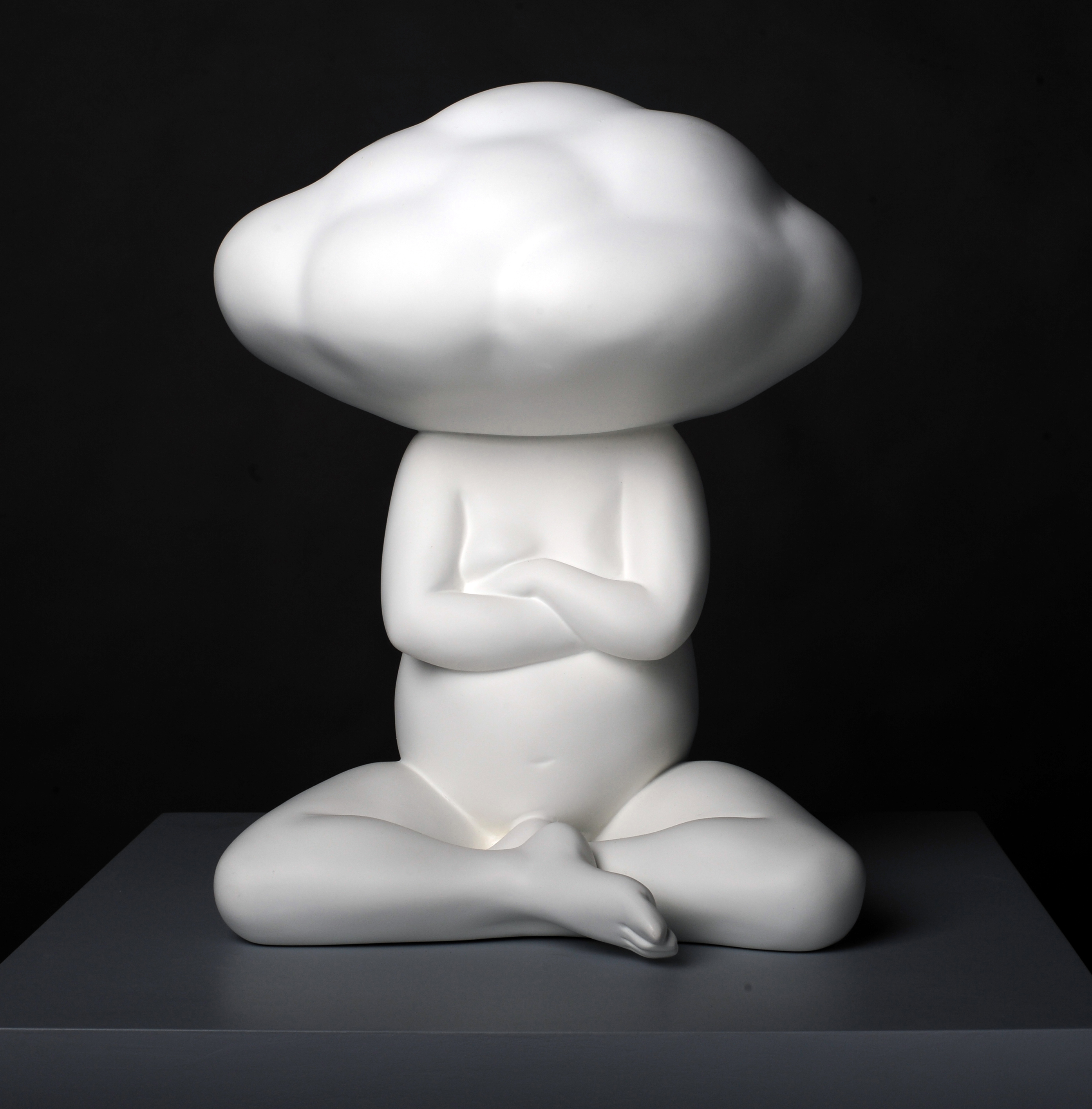
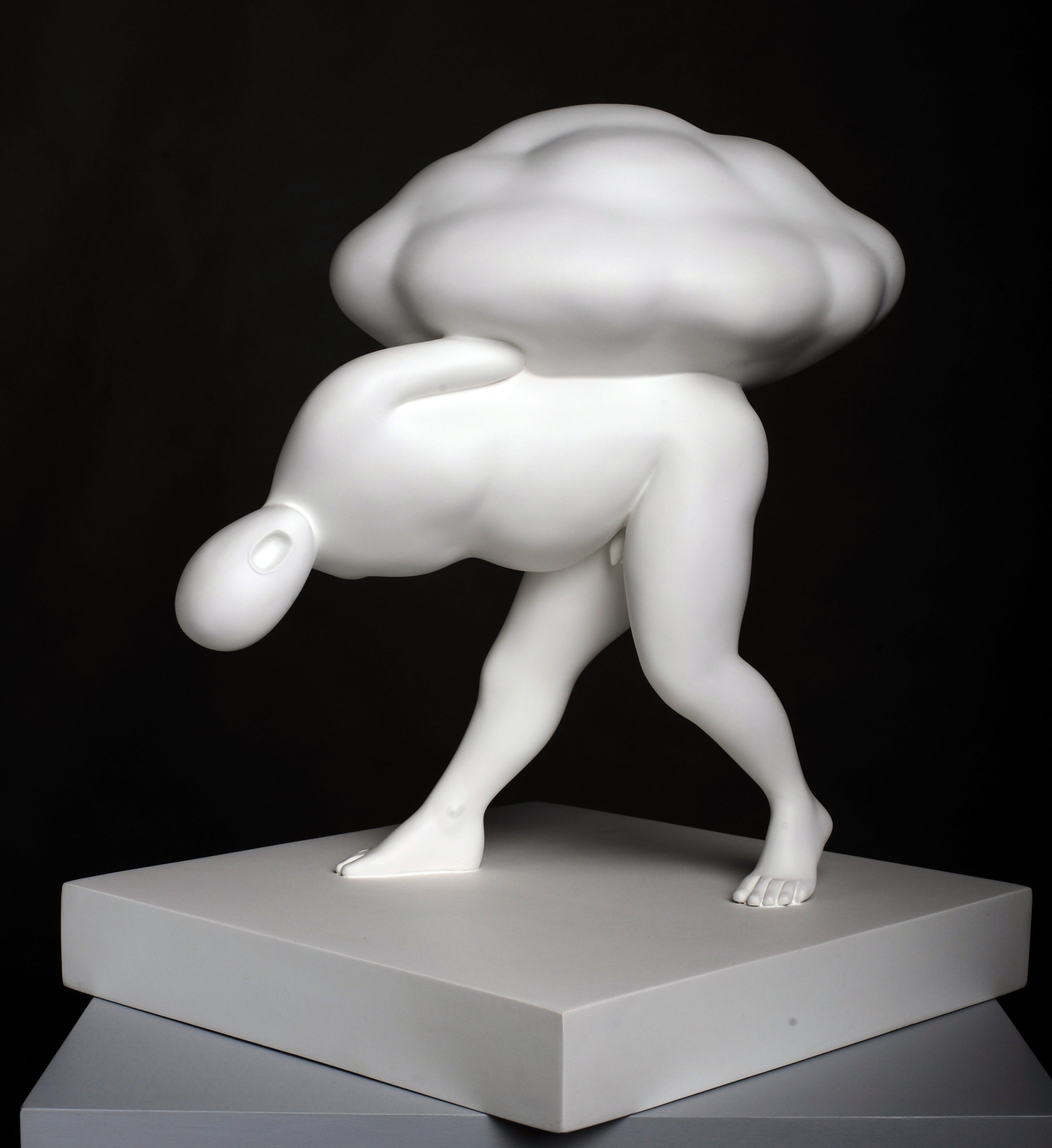
The exhibition Cloud by Australian artist Guan Wei at Arc One Gallery in Melbourne contains two bodies of work that are outstanding: the series of paintings on paper titled Buddha’s Hand and the series of five figurative sculptures titled Cloud. Each body of work compliments and informs the other.
The small Buddha’s Hand paintings (see below) are the most delicate of creatures – sensual, poetic almost fetishistic in their composition and utterly beguiling in their beauty. Referencing the history of cave paintings of the Buddha, Wei updates the ancient allegories expressing his message of harmony and leisure, identity and place through visual symbolic representation. These works are profoundly moving, the figurative compositions balanced masterfully through colour, shape and form, studded with the punctum of red bindi-like energy centres arising from the faceless yogic figures.
Sitting on white pedestals and positioned close to the Buddha’s Hand paintings in the gallery are the series of five Cloud figures (see below). Made of bronze that has been spray painted white these are wonderful sculptures, full of delicious humour and vibrancy. There is a sensuality and delicacy about the figures that is emphasised by their snowy whiteness, a whiteness that subverts the tactility, colour and weight that one usually associates with the metal bronze. Here the figure has, variously, it’s head in the clouds while pensively crossing arms; bearing the weight of the world on the back while the vacant mouth is open; preparing to throw the cloud as Zeus would a thunderbolt; reclining while balancing the cloud on one foot and with one foot stuck in the earth that is cloud. The cloud becomes a metaphor for thought and action in the world, acting on the world. In these sculptures there is no creed nor race, no ideology or nation and I believe that Wei attains his stated aim to redefine our relationship with one another and nature by transcending both. I am not alone in liking these sculptures – they have proved very popular and all five sculptures in editions of five have already sold out!
Other work in the exhibition is more prosaic – a multi-panelled screen, the On Cloud and Zodiac series never seem to breathe the same rarefied air as the above two bodies of work. They are disappointments that only serve to illuminate how brilliant holding the Buddha’s hand and living your life with your head in the clouds can be.
Dr Marcus Bunyan
Many thankx to Angela Connor and Arc One Gallery for allowing me to reproduce the photographs in the posting. Please click on the photographs for a larger version of the image.
Guan Wei (China, b. 1957) Buddha’s hand 2010
Guan Wei (China, b. 1957) Buddha’s hand 2010
“I hope that we will be able to transcend the restrictions imposed on us by such notions as nation, ethnicity, ideology, cultural and history, and redefine our relationship with one another and nature.”
Guan Wei
Guan Wei is an adept storyteller who masterfully engages his audiences. Retaining the humour, wisdom and cross-cultural knowledge that have become characteristics of his ongoing oeuvre, his work breathes an awareness of our current social and environmental dilemmas exploring ideas of immigration, colonisation, identity politics and cultural tolerance.
Flirtatious and aesthetically whimsical, Guan Wei’s works are instantly recognisable. In this latest exhibition, Cloud, Guan Wei fuses sculpture, drawings and paintings to form what is part of his most beguiling trademark – ‘the art of idleness’. For the first time since returning to China, he will present new sculptures that employ his ongoing preoccupation with the figure and the figure in relation to the natural form. These sculptures are Guan Wei’s personal visual symbols of harmony and leisure. They form the thread for the four series of works in this exhibition.
During the past fifteen years, Guan Wei has help change the identity of Australian Art. He draws on his own experience as a Chinese national who migrated to Australia from China in the period following the Tiananmen Square massacre (1989). Guan Wei has spent twenty years living and working as an artist raising the awareness of Australia being a multicultural country. He has had over 40 solo exhibitions, been the recipient of numerous awards and included in every major collection. In 2009, Guan Wei was selected for the prestigious Clemenger Contemporary Art Award at the National Gallery of Victoria.
Press release from the Arc One Gallery website [Online] Cited 10/06/2010 no longer available online
Guan Wei (China, b. 1957) Cloud No.4 2009 Bronze statue edition of 5 39 x 30 x 25cm
Guan Wei (China, b. 1957) Cloud No.5 2009 Bronze statue edition of 5 47 x 35 x 35cm
Arc One Gallery 45 Flinders Lane Melbourne, 3000 Phone: +61 3 9650 0589
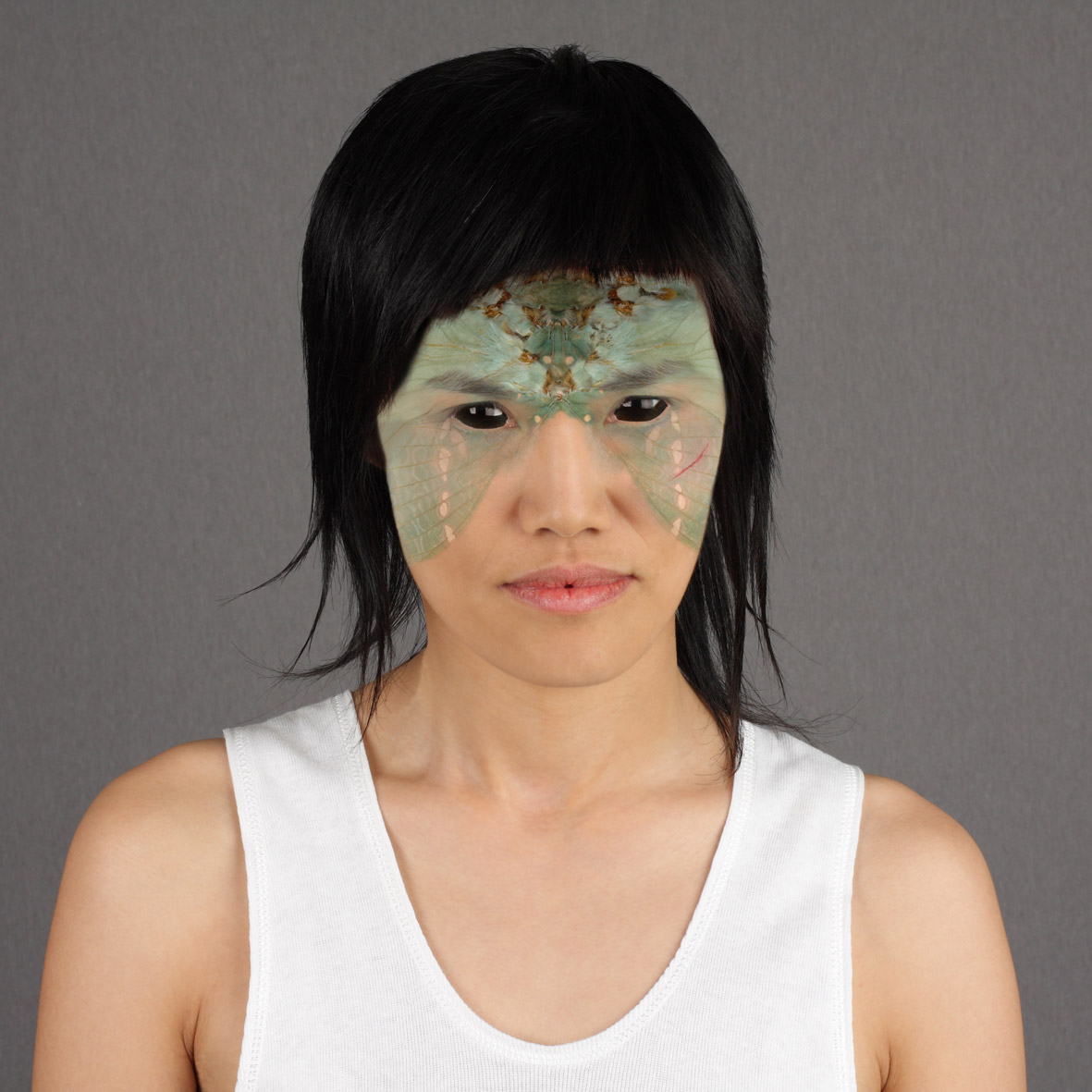
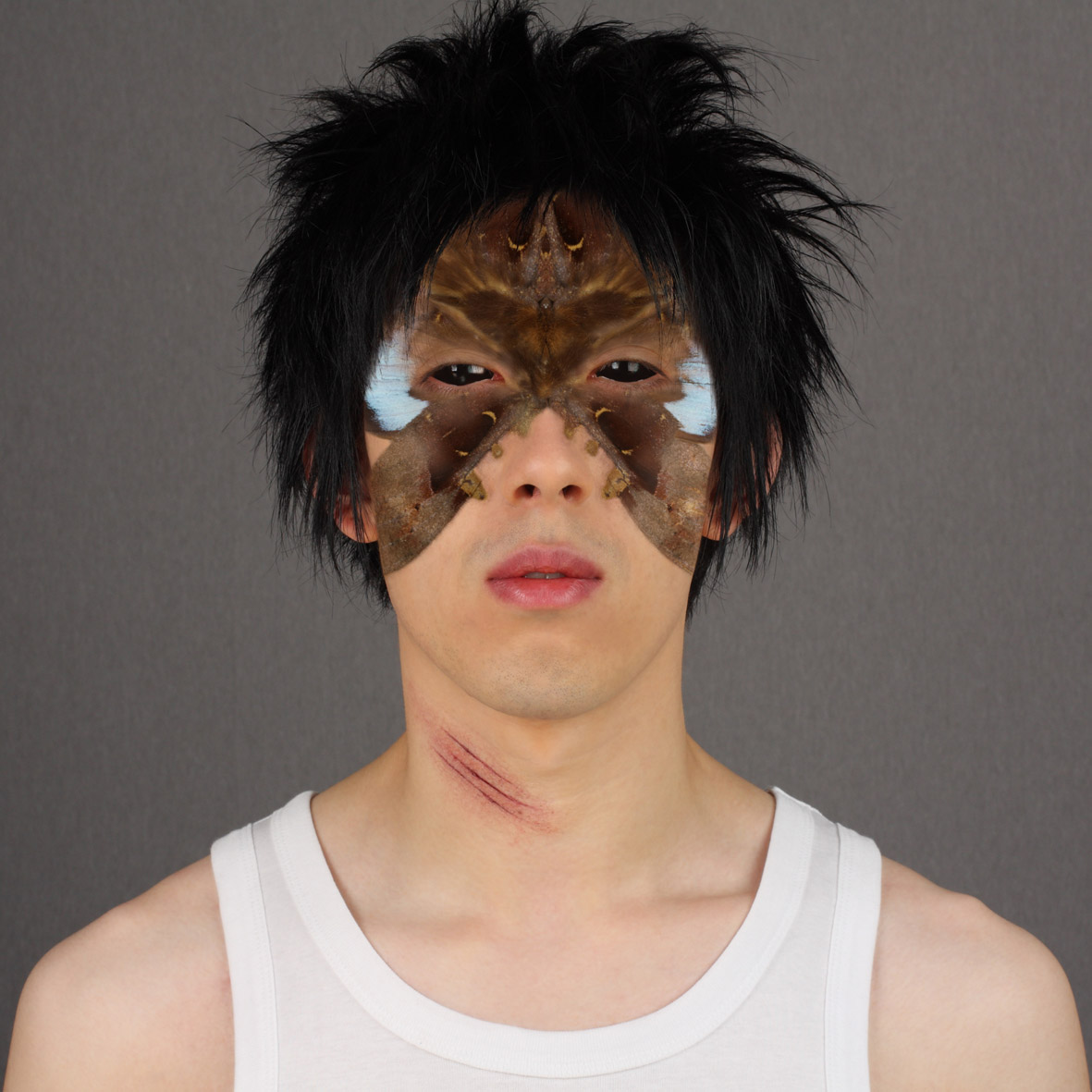
Owen Leong (Australian, b. 1979) Chi 2009-2010 Pigment print on archival paper 73 x 73cm, edition of 5 Courtesy of the artist and Anna Pappas Gallery
Apologies for the late posting on this exhibition but I only received the images for the posting today.
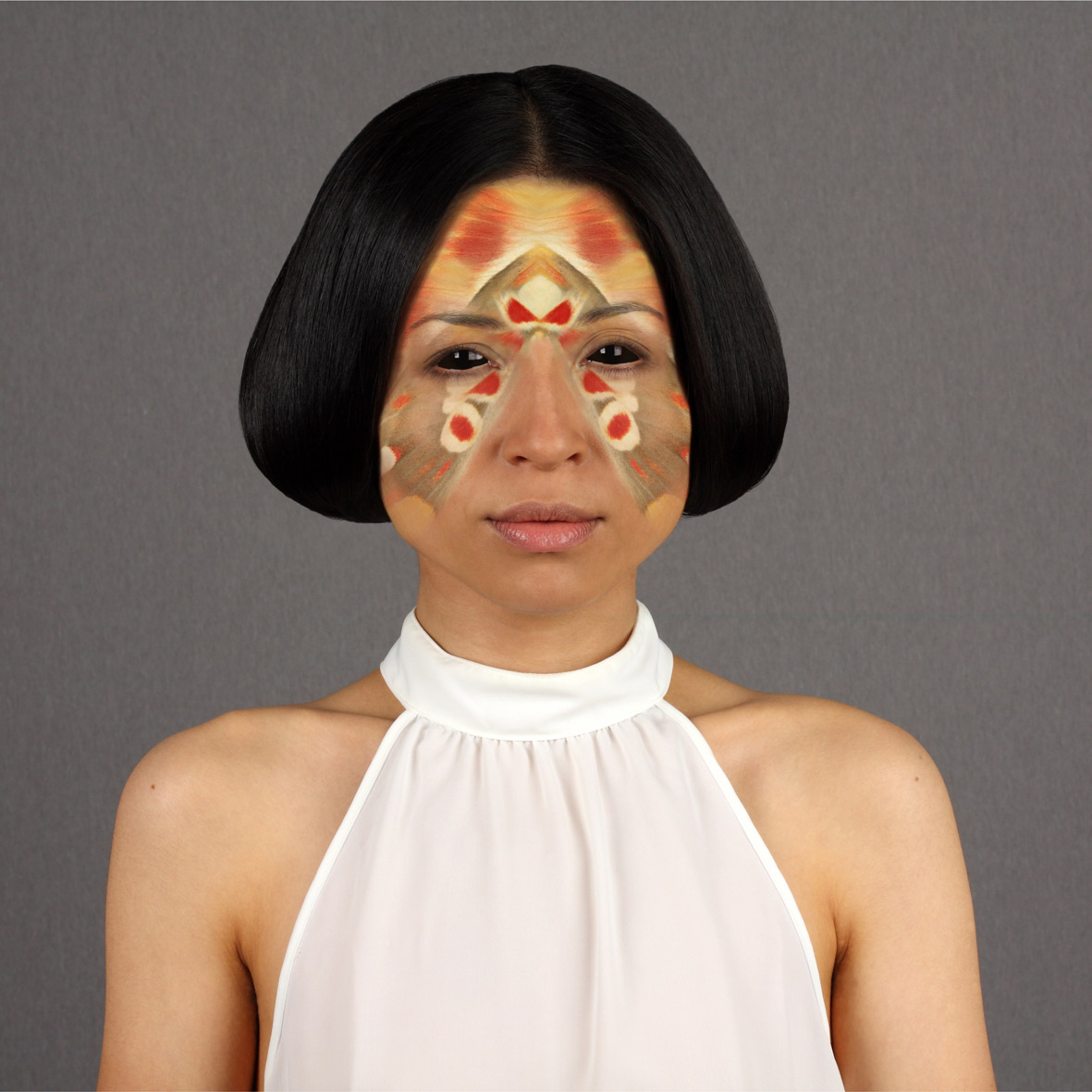
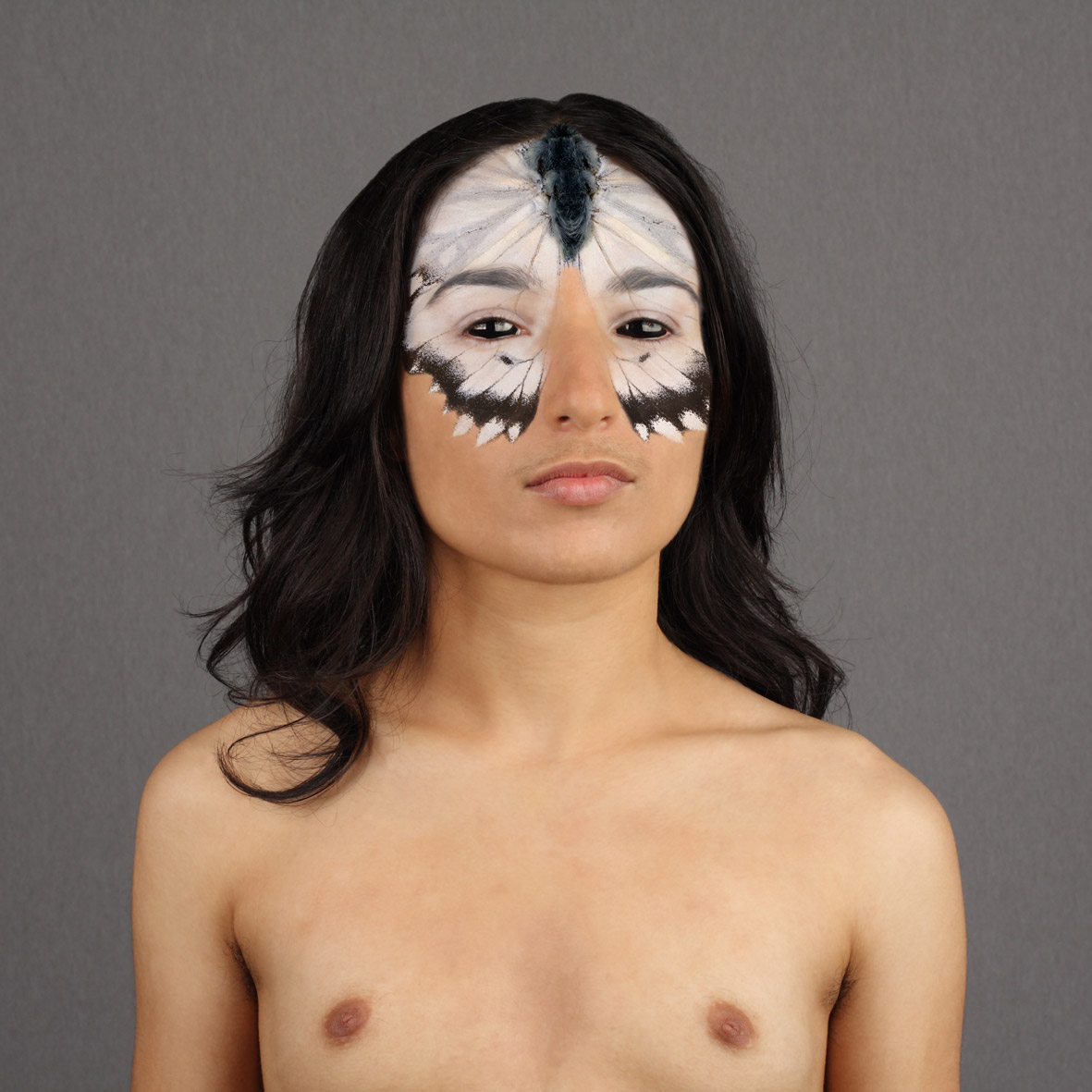
A strong body of work by Owen Leong, twelve portraits of Asian-Australians, their faces digitally overlaid with the unique wing patterns of the Bogong moth, an insect often seen as a pest in Australia. Uniformly lit, of consistent size and presented in modern white frames the series hangs quietly but impressively in the upstairs space of the Anna Pappas Gallery. Here the uniqueness of human physiognomy (and attendant modifications such as scars, piercings and tattoos) is symbiotically paired with that of the moth – it is almost as though one breathes the other – with the eyes of the humans occluded, becoming blackened pits.
The slightly amateurish digital blacking out of some of the eyes is my only point of contention: perhaps this was intentional (?) but sharp shape selections in Photoshop do not make for a good blend between layers of information. Be that as it may, Leong’s practice of selective breeding applied to humans has produced some beautiful, eloquent photographs that promote difference and diversity through a palpable intimacy with the subject matter.
Dr Marcus Bunyan
Many thankx to Anna Pappas, Leah Crossman and the Anna Pappas Gallery for allowing me to use the photographs in the posting. Please click on the photographs for a larger version of the image.
Owen Leong (Australian, b. 1979) Jac 2009-2010 Pigment print on archival paper 73 x 73cm, edition of 5 Courtesy of the artist and Anna Pappas Gallery
Owen Leong (Australian, b. 1979) Justin 2009-2010 Pigment print on archival paper 73 x 73cm, edition of 5 Courtesy of the artist and Anna Pappas Gallery
Owen Leong (Australian, b. 1979) Raina 2009-2010 Pigment print on archival paper 73 x 73cm, edition of 5 Courtesy of the artist and Anna Pappas Gallery
I seen to have become a little smitten by Romy Schneider. What charisma!
Marcus
Many thankx to the Deutsche Kinemathek – Museum for Film and Television for allowing me publish the images in the posting. Please click on the images for a larger version.
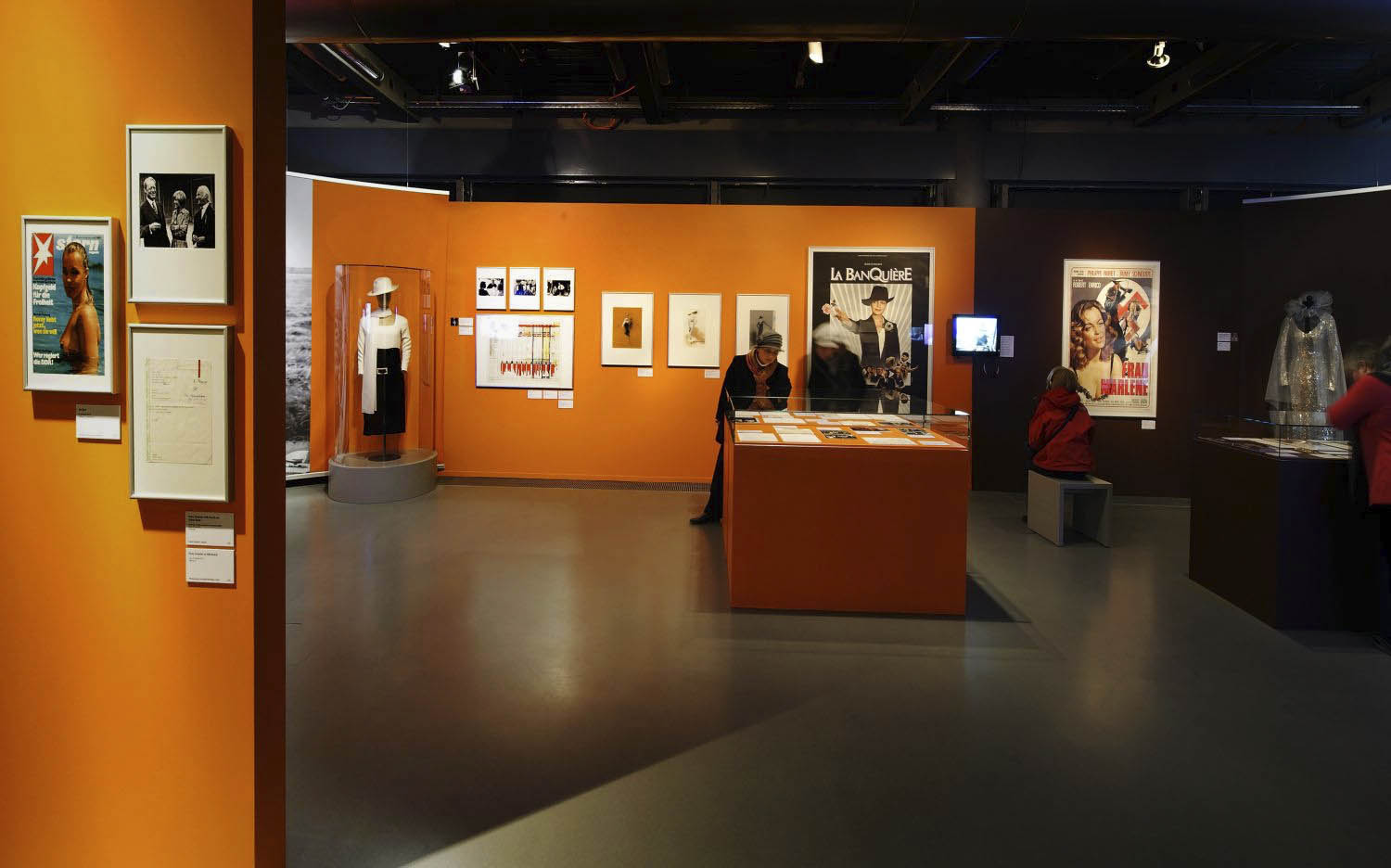
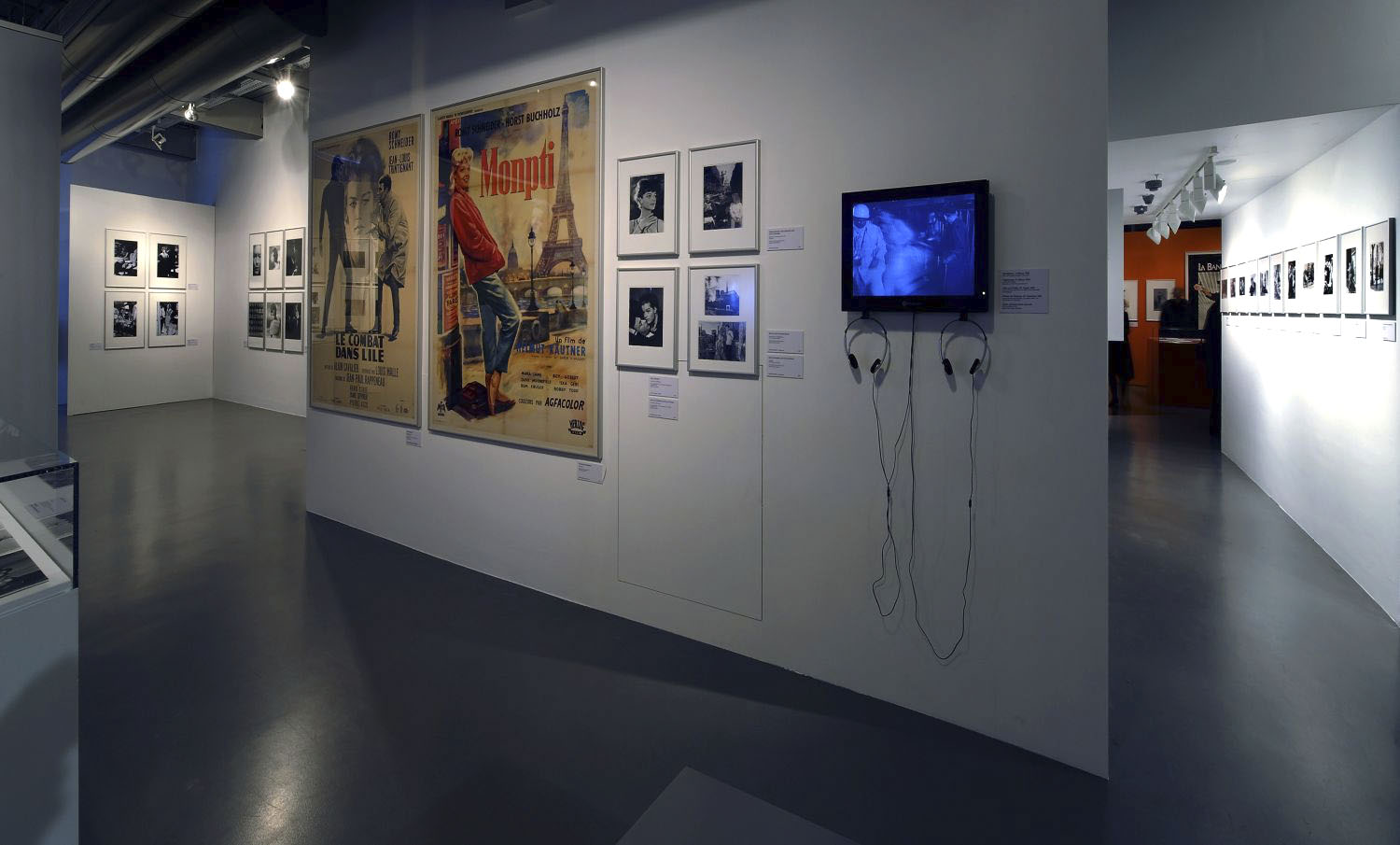
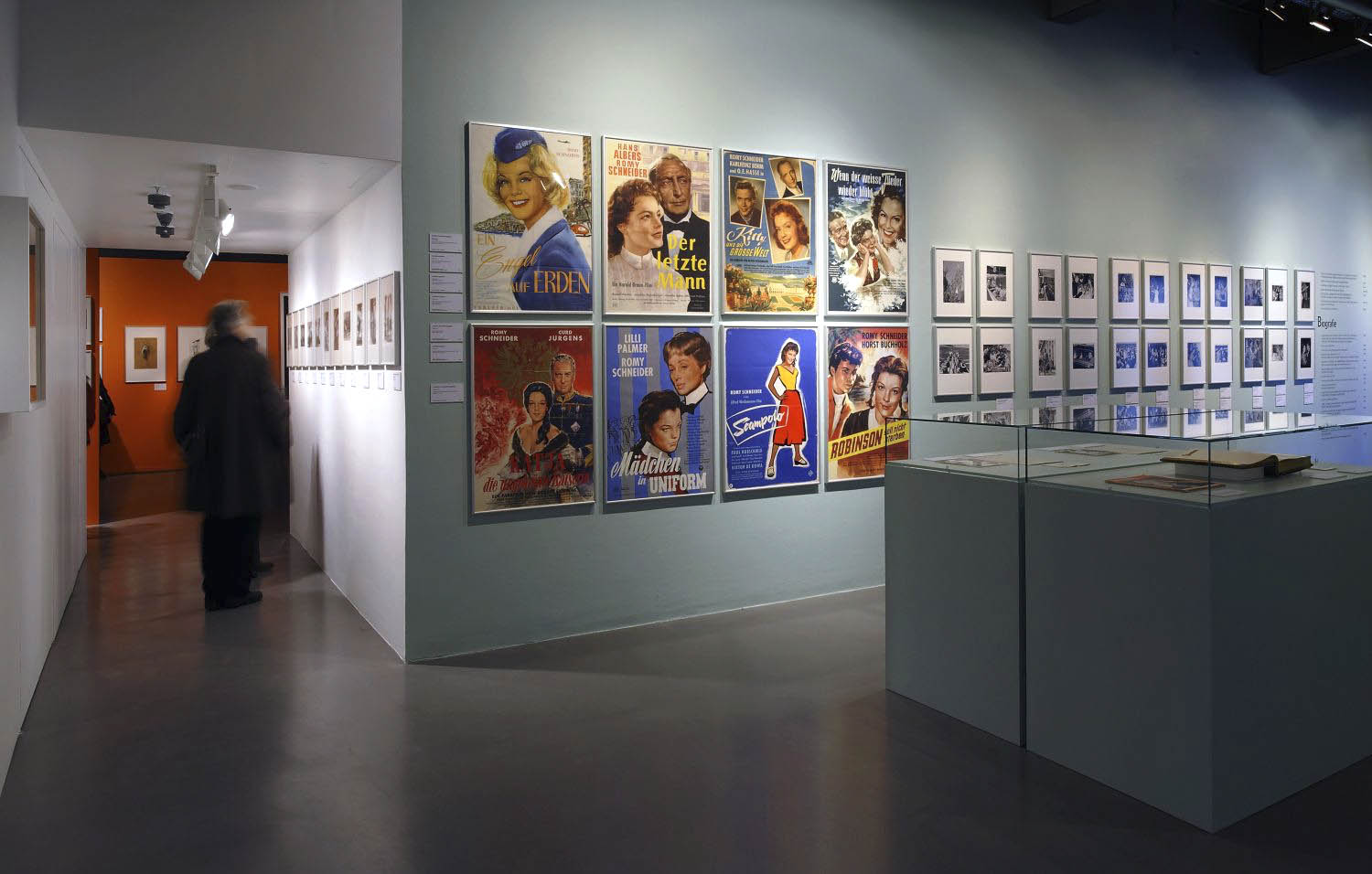
The exhibition documents the eventful career of Romy Schneider, who by the late 1950s no longer wanted to be Sissi, and by the 1970s was a celebrated star of French cinema. A large number of unknown photographs of Romy Schneider, her film partners, and family from the 1950s and 1960s will be on display from the collections of the Deutsche Kinemathek. The exhibition will also present loans from private individuals and institutions from France and Austria …
The exhibition Romy Schneider. Wien – Berlin – Paris, which the Museum für Film und Fernsehen will present beginning on December 5th, documents the varied and wide-ranging career of Romy Schneider, who no longer wanted to be “Sissi” at the end of the 1950s and was celebrated as a star of French cinema in the 1970s.
Romy Schneider publicly bemoaned her roles in Germany and went to Paris to play women who did justice to her acting abilities and her expectations. She settled in France at the beginning of the 1970s, where she advanced to one of the biggest stars of French cinema. She won several awards and made films with nearly all the great directors and actors of that period. The paparazzi followed the actress at every turn, documenting her strokes of fate for the international popular press, and throughout her life Romy Schneider considered herself to be their victim. Romy Schneider died in Paris in May 1982. To this day, she is admired by millions of fans around the world as one of cinema’s international stars.
This homage, which can be seen in 450 sq. m. of exhibition space at the Filmhaus, treats both the diverse roles and changing image of the actress, as well as her representation in the media.
Pictures from films, the press and her private life are grouped according to recurring motifs and combined with film clips. Media installations show the interplay between projection and active self-promotion. Posters, costumes, correspondence and fan souvenirs will augment the presentation.
Numerous photographs from the 1950s and 1960s of Romy Schneider, her film partners and her family, largely unknown until now, originate from the collections of Deutsche Kinemathek. Loans from other institutions and private individuals will also be on view, for instance from the photographers F. C. Gundlach and Robert Lebeck, as well as from the personal archives of the film director Claude Sautet.
Press release from the Museum für Film und Fernsehen website [Online] Cited 25/05/2010 no longer available online
F. C. Gundlach (Franz Christian Gundlach) was a German photographer, gallery owner, collector, curator und founder. In 2000 he created the F.C. Gundlach Foundation, since 2003 he has been founding director of the House of Photography – Deichtorhallen Hamburg.
Alain Delon and Romy Schneider in La Piscine/Der Swimmingpool R- Jacques Deray, F/I 1969 Gelatin silver print Foto/Quelle: Filmarchiv Austria, Wien
Romy Schneider and Alain Delon in La Piscine/Der Swimmingpool R- Jacques Deray, F/I 1969 Gelatin silver print Foto/Quelle: Deutsche Kinemathek
Romy Schneider and Claude Sautet during the shooting of UNE HISTOIRE SIMPLE / A SIMPLE STORY 1978 Gelatin silver print Foto/Quelle: Yves Sautet, Paris
Claude Sautet
Claude Sautet (23 February 1924 – 22 July 2000) was a French author and film director. Born in Montrouge, Hauts-de-Seine, France, Sautet first studied painting and sculpture before attending a film university in Paris where he began his career and later became a television producer. He filmed his first movie, Bonjour Sourire, in 1955.
He earned international attention with Les choses de la vie, which he wrote and directed, like the rest of his later films. It was shown in competition at the 1970 Cannes Festival, where it was well received. The film also revived the career of Romy Schneider; she acted in several of Sautet’s later films. In his next film Max et les Ferrailleurs (1971) she played a prostitute, while in César et Rosalie (1972) she portrayed a married woman who copes with the reappearance of an old flame.
Vincent, Paul, François, et les Autres (1974) is one of Sautet’s most acclaimed films. Four middle-class men meet in the country every weekend mainly to discuss their lives. The film featured a cast of major stars of French cinema: Michel Piccoli, Yves Montand, Gérard Depardieu, and Stéphane Audran. He achieved even further critical success with Mado (1976).
His 1978 film A Simple Story (Une Histoire simple) was nominated for an Academy Award for Best Foreign Language Film. The film featured Schneider again, this time as a dissatisfied working woman in her 40s. She won the César Award for Best Actress for her performance.
Artists: Lionel Bawden, Penny Byrne, Nicholas Folland, Locust Jones, Rhys Lee, Rob McHaffie, Derek O’Connor, Alex Spremberg, Madonna Staunton
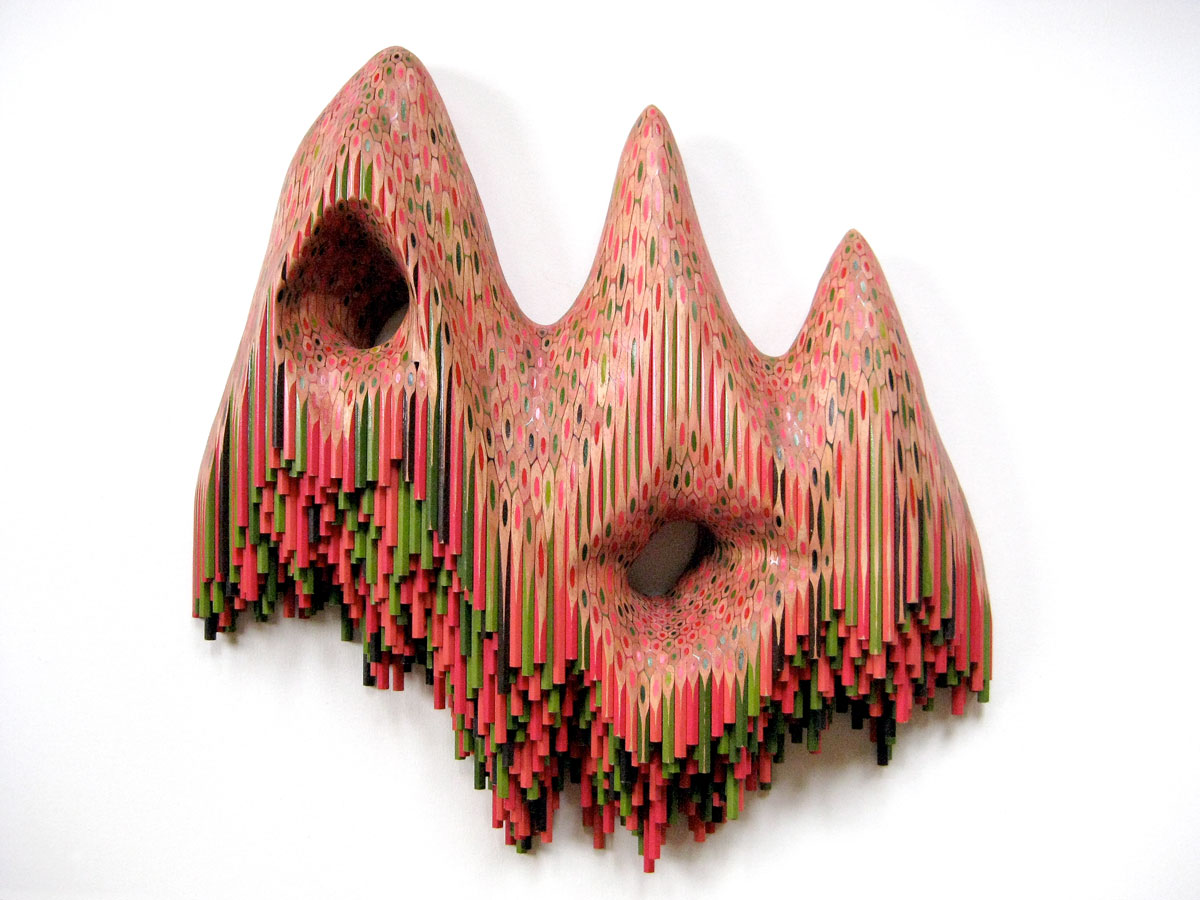
Lionel Bawden (Australian, b. 1974) formless worlds move through me 2010 Coloured Staedtler pencils, epoxy, incralac 51.0 x 51.0 x 9.5cm
Some good work in this exhibition – especially the Staedtler hexagonal coloured pencil constructions by Lionel Bawden. Beautifully crafted by hand they remind me of ghosts, the ‘millefiori’ (thousand flowers) of Italian glass and the inside of caverns with their stalactites.
Dr Marcus Bunyan
Many thankx to the Karen Woodbury Gallery for allowing me to publish the photographs in the posting. Please click on the photographs for a larger version of the image.
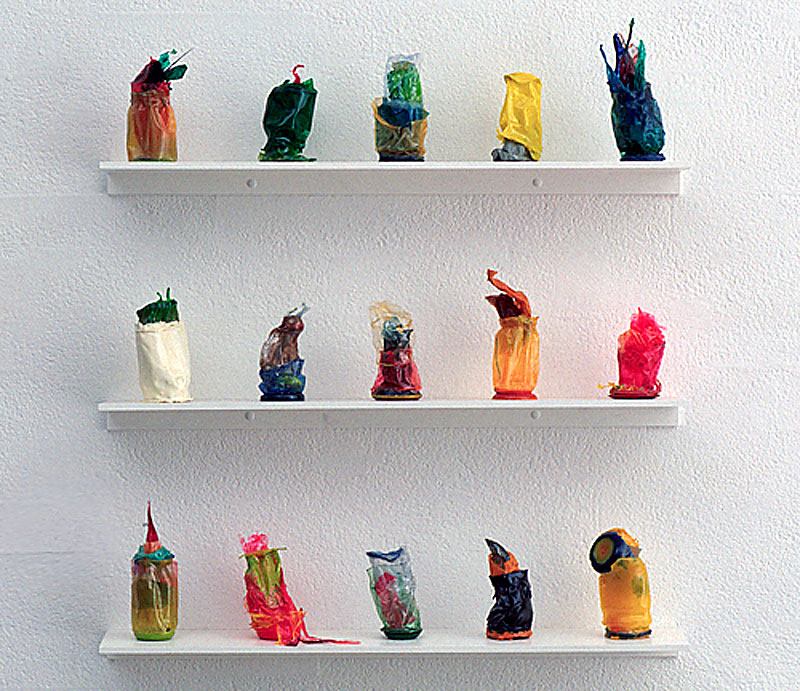
Alex Spremberg (Australian born Germany, b. 1950) Inside skins 2002
These artists have been selected for their interest in ideas of assemblage and re-use of pre-existing materials. Working across a range of media, each artist in the exhibition employs a process of manipulation to create completely different concepts and forms with their finished works. These works comprise of found objects and assembled from disparate elements, scavenged or foraged by the artists and juxtaposed in inventive ways. All works included in The Navigators take on their own form and imbue a new meaning to the original source materials.
Not originally intended as art materials, yet these artists have seen potential for a new idea in the materials; creating a new thought for the object. The original useful element of the preformed material thus comes under more aesthetic and creative significance. The impetus for such artistic practice is located in a desire by these artists to re-use, re-model, reshape and recycle within their practices. Despite an obvious interest and emphasis in the materiality of the works, the conceptual underpinning are the key motivation within these varying works and pose questions regarding the value of the objects within society. The artists included in The Navigators are continuously surveying and navigating their practice, allowing for deeper exploration in their work.
The exhibition will include various two and three-dimensional objects that interact with each other in unique ways. In the example of Lionel Bawden’s sculptures, his work exploits hexagonal coloured pencils as a sculptural material, reconfiguring and carving into amorphous shapes. Here the rich qualities of colour are explored as pencils are carved, shaped and fused together. Bawden explores themes of flux, transformation, rhythm and repetition as preconditions to our experience of the physical world. Bawden’s wall mounted works ‘the caverns of temporal suspension’ explore shapes within and outside the work as they hover ominously, melting, conjoined, growing, in transformation. These works are at the forefront of his current practice.
Penny Byrne’s work makes use of vintage porcelain sculptures that are adorned with a range of materials. Through this process, Byrne makes the base sculptures appear starkly different to that of the original, taking on new connotations that are often humorous and quirky but also convey political and social issues. In her work Mercury Rising. Hunted, Slaughtered, Eaten vintage porcelain dolphins and new plastic Manga figurines are employed to relate to the annual Japanese slaughter of tens of thousands dolphins as highlighted in the documentary ‘The Cove’. The Japanese eat the dolphins and then suffer mercury poisoning due to the high mercury levels in the dolphins flesh, leading to symptoms of madness.
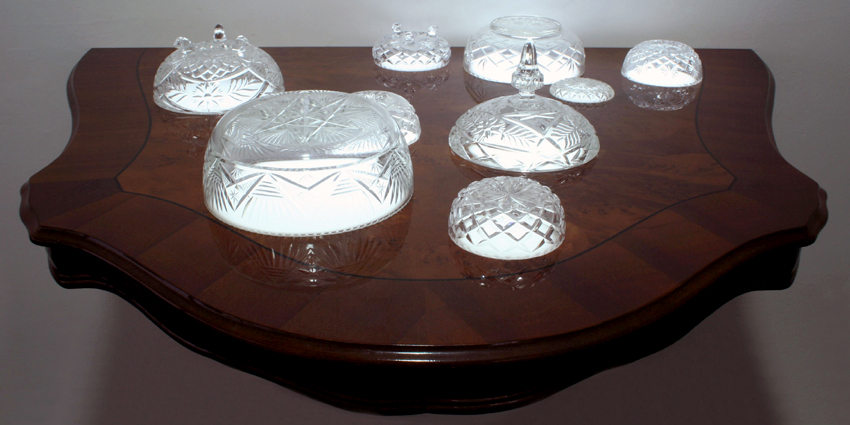
Nicholas Folland’s Navigator sculptures are indicative Folland’s continued interest in utilising, modifying and experimenting with various sourced materials. These sculptures comprise of various upturned intricately detailed crystal objects that sit above a wood panelled shelf. These glass object are lit and act as beacons or floating satellite cities. Folland personifies the intrepid creative explorer via his navigation of various found materials.
Locust Jones’ three-dimensional globes are made from papier mache and pictorially and graphically convey global issues. These works sit on the floor and allow the viewer to orient themselves around the works allowing for a detached, objective perspective on contemporary societal issues. The quickly worked surfaces reflect a stream of consciousness in process. Imagery and themes are taken from various media such as the Internet, photojournalism, film culture and nightly news broadcasts.
The two sculptures in the exhibition by Rhys Lee imbue associations of debris and deal with found objects such as a money box, a dead bird and a clowns face. These trophy-like pieces are decorated by old, worn and found vintage materials that engage with the everyday. The intimate scale of these works do not account for the potency of symbolism and accumulation of collected ideas. The blistered silver patina and bronze sculptures allude to a dark gothic sentiment that extends beyond the morphing forms. The shapes have been smashed, manipulated and stuck back together again resulting in frozen miniature icons that represent a contemporary zest for defiance.
Rob McHaffie’s works comprise a pastiche of painted anonymous unrelated objects and shapes that somehow come together to create unlikely compositions and formations. The highly skilled execution of McHaffie’s paintings attracts the viewer, who is then faced with a banality in subject matter, often of depictions of clothing, crumpled paper, plants and disfigured creatures and figures. These perfectly rendered images of everyday objects are unsettling in their clarity and realism, which are then skewed, moulded and displaced in unlikely relationships. There is a sense of a deliberate haphazard nature to McHaffie’s work that draws upon a range of elements brought together to mimic something else. Humour surfaces through this stylistic creative process.
Derek O’Connor’s re-worked painting collages resemble distorted and fragmented realities and stories via the manipulation and playful technique of alteration and re-use of book covers and record album and EP covers. O’Connor’s characteristic gestural sweeping luscious brushstrokes are employed with precision yet allow for organic spontaneity. The old material takes on new meaning and are given new life via O’Connor’s creations.
Alex Spremberg’s work Inside Skins highlights the artist’s accidental processes at work. This sculptural piece was made as an ancillary to his broader practice – working with acrylic, enamel and varnish on board and canvas. These objects where literally created via chance – an after thought that was noticed to be a finished piece in its own right. Left to dry within their containers these ‘skins’ were extracted and proved to provide aesthetic attraction and conceptual ideas of the ready-made.
The mainstay of Madonna Staunton’s practice surrounds the physicality of assemblage. Essentially she is a collage artist. The components of her two- and three-dimensional assemblages are usually drawn from old, faded and battered discards such as frames and chairs that are carefully put together in new ways and given another life. A play between precision and randomness animates her work. Her sensitivity to tonal and formal arrangement always remains acute during this process and the results are austerely and chaotically beautiful.
Press release from the Karen Woodbury Gallery website [Online] Cited 20/05/2010 no longer available online
Nicholas Folland (Australian, b. 1967) Navigators 1 2008 Glassware, table and lightbox 25.0 x 110.0 x 87.0cm
Nicholas Folland (Australian, b. 1967) Navigators 2 2008 Glassware, table and lightbox 25.0 x 110.0 x 87.0cm
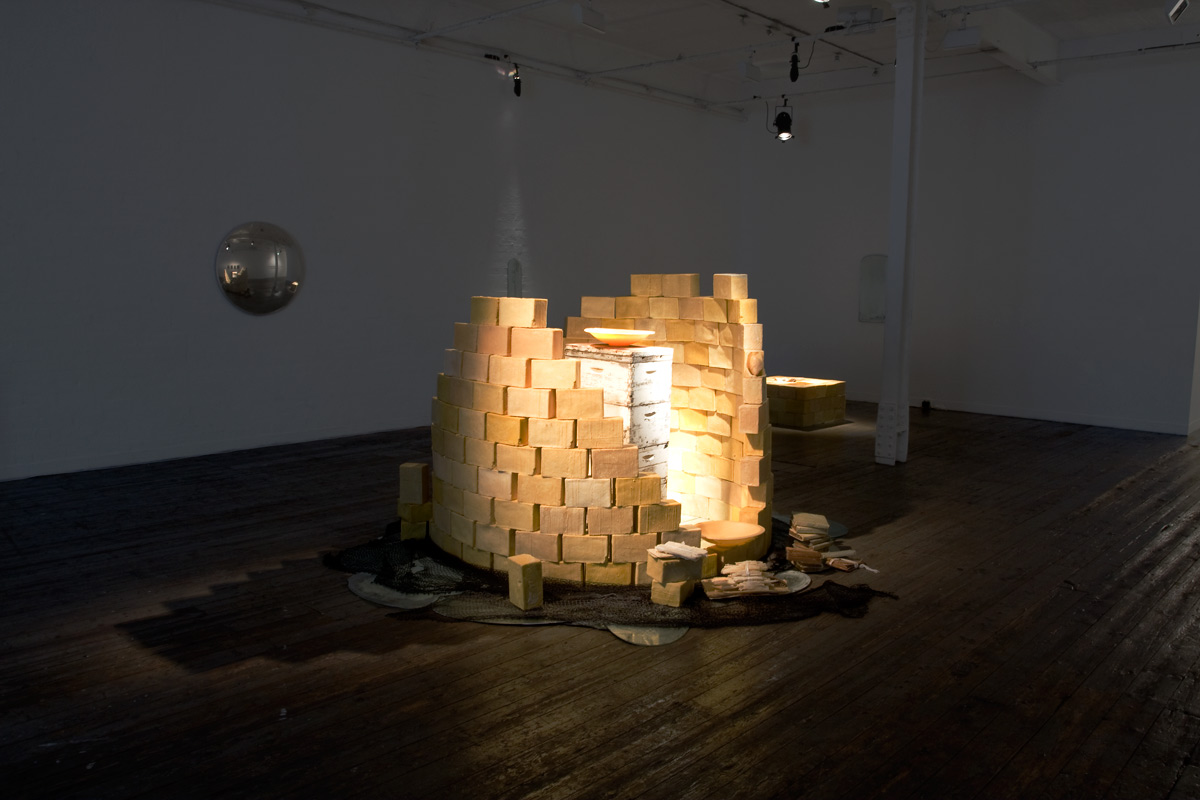
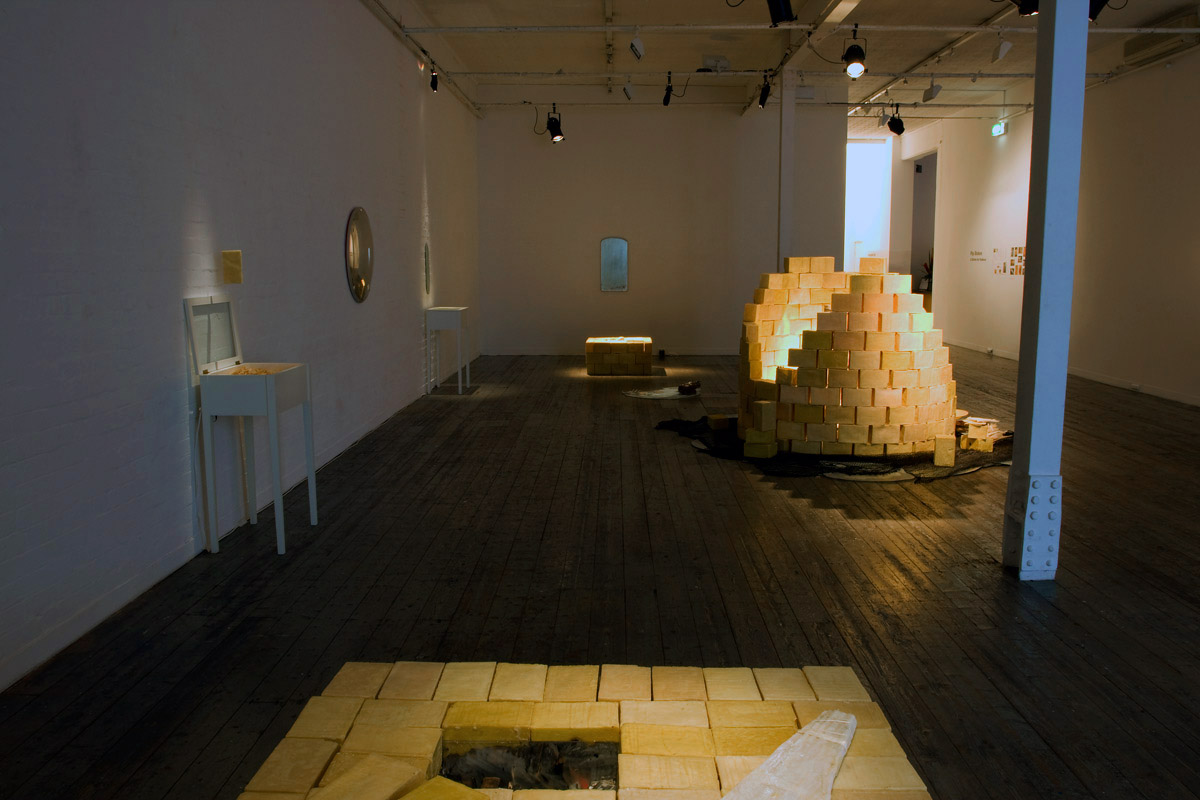
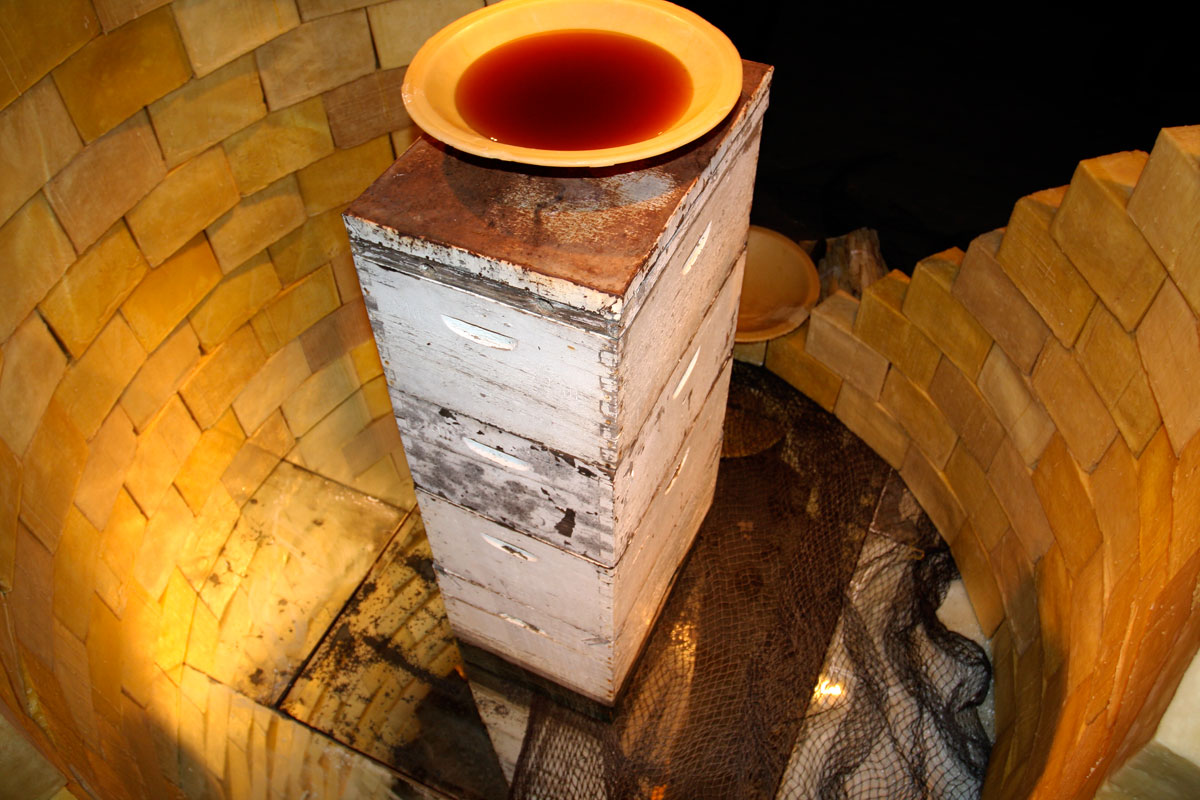
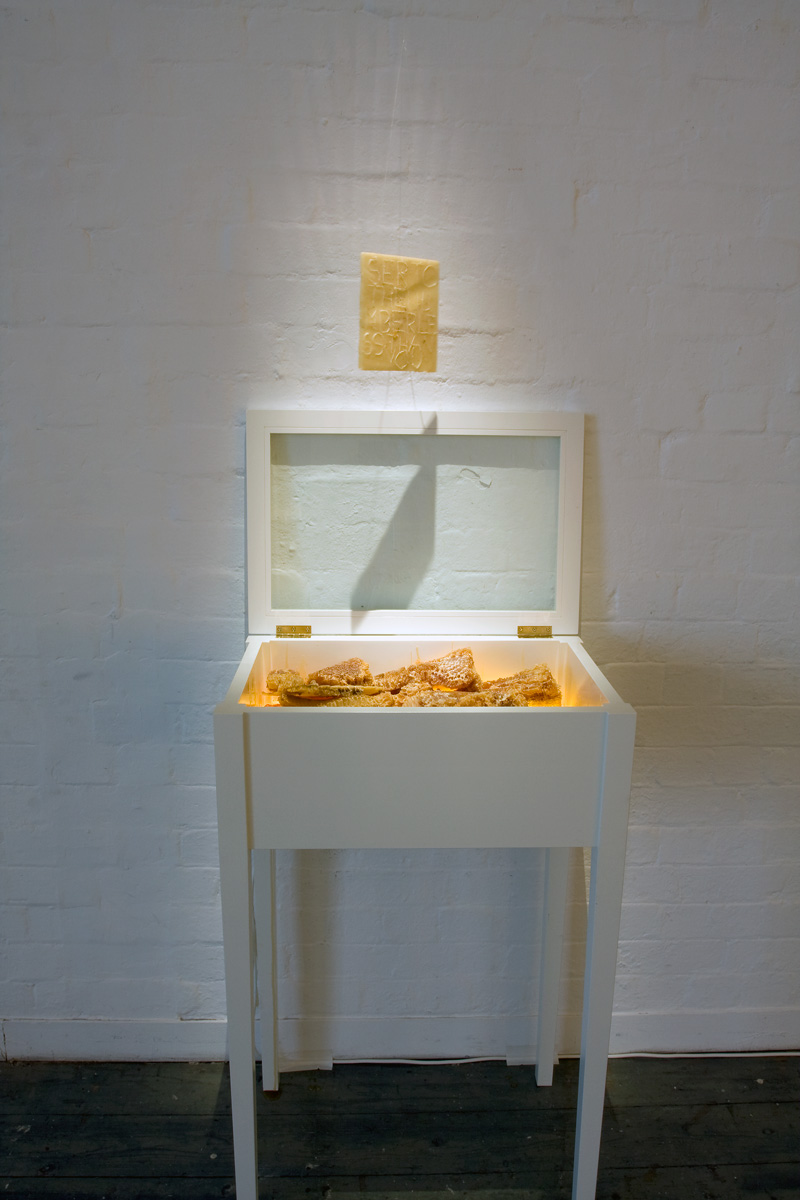
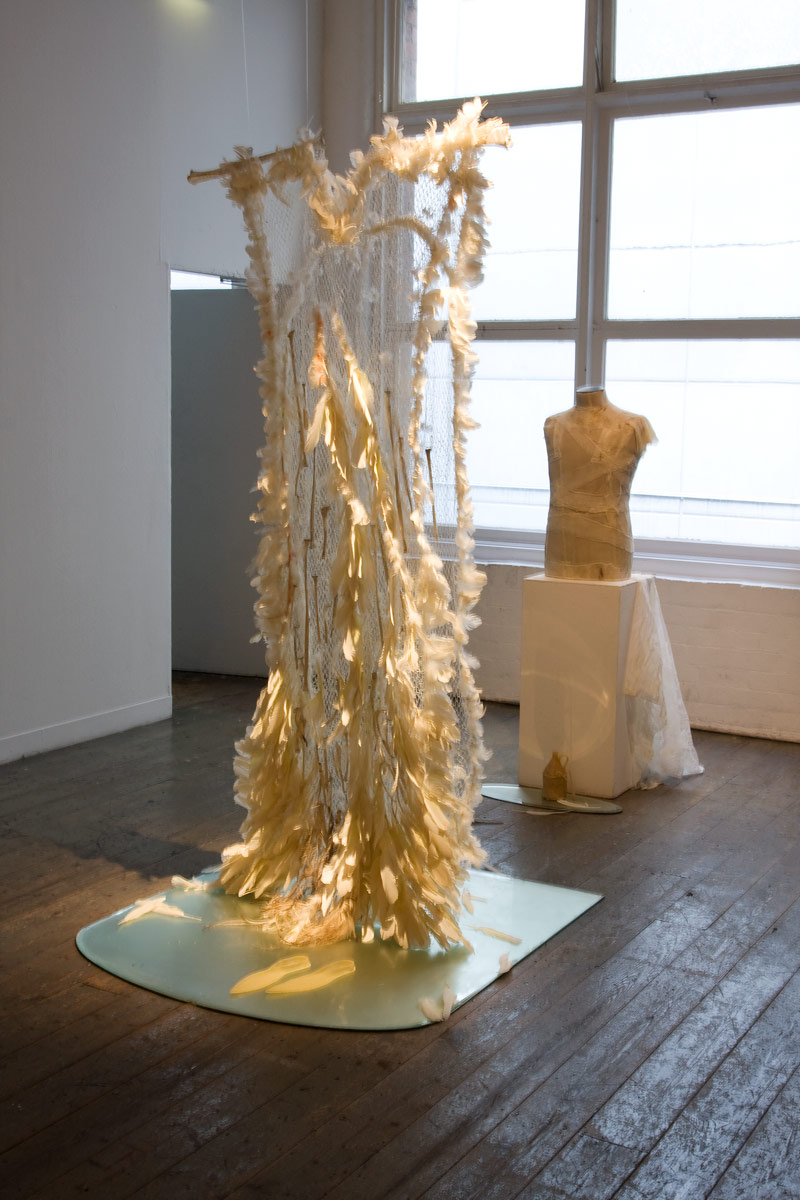
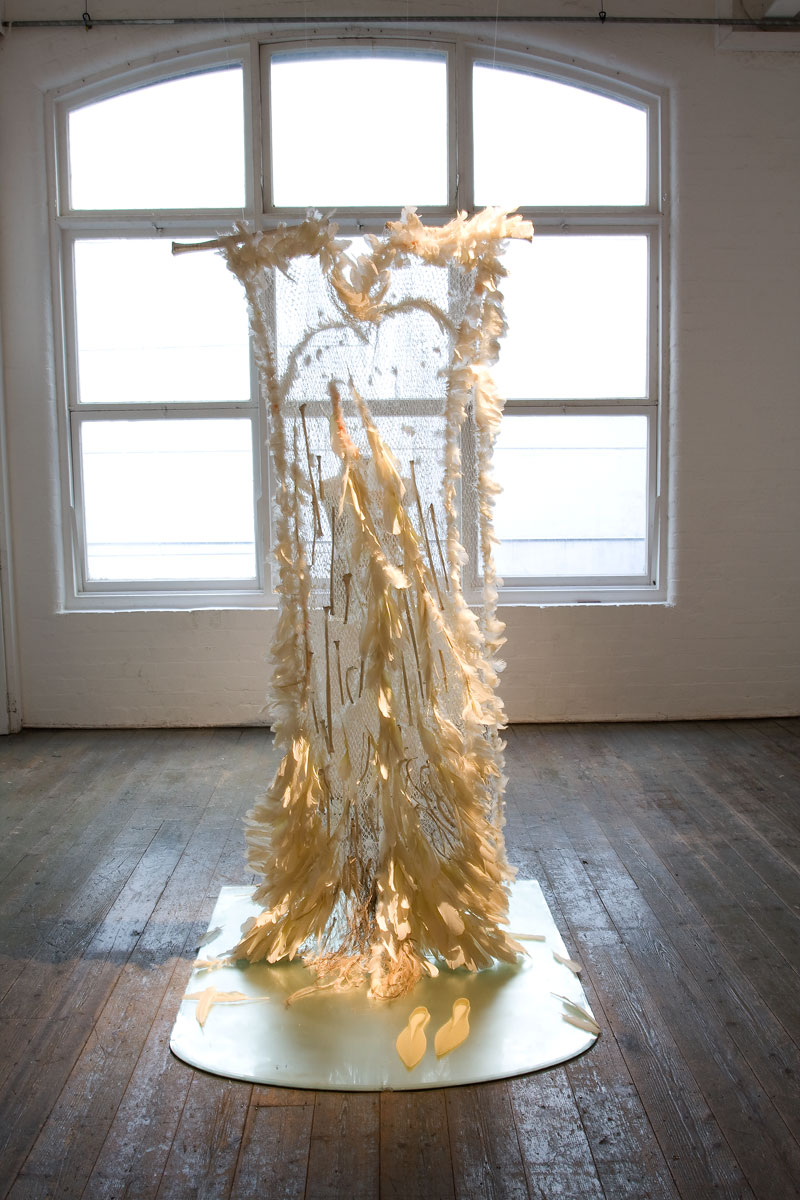
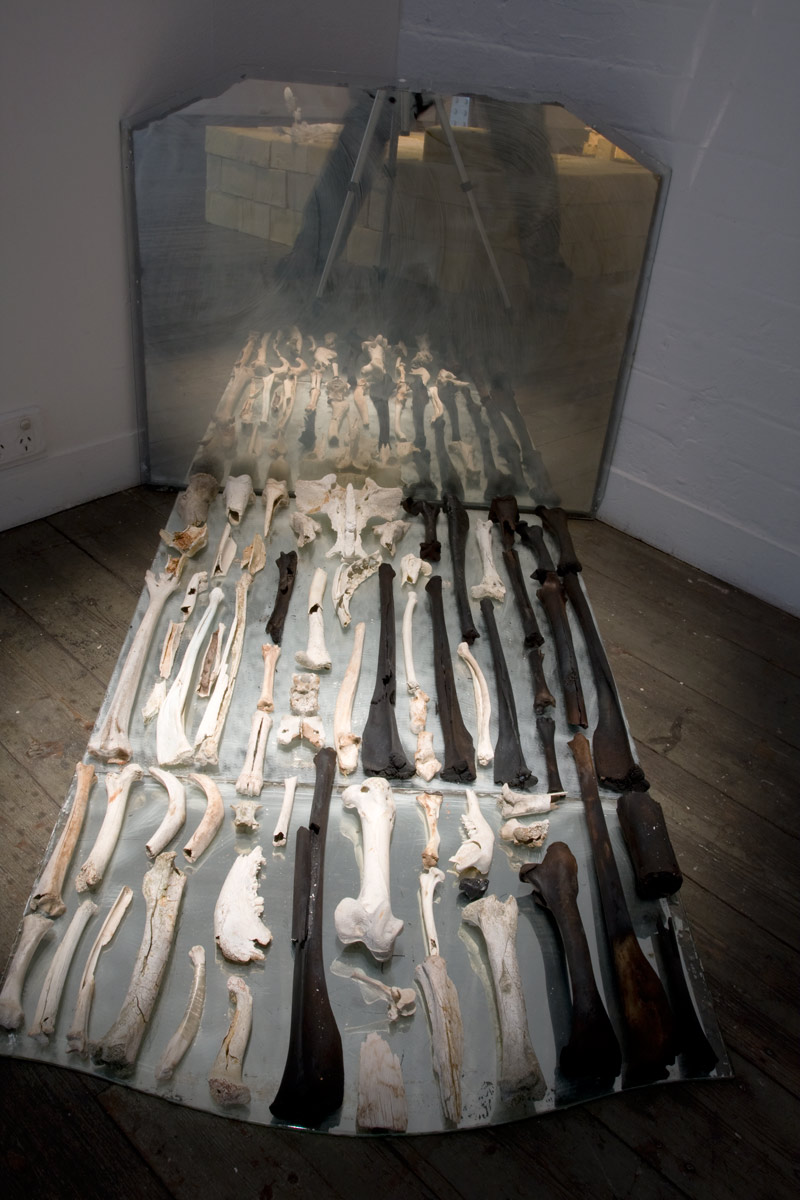
Installation views of the exhibition A Shrine for Orpheus by Pip Stokes at fortyfivedownstairs, Melbourne Photos: Marcus Bunyan
Bees, books, bones… and biding (one’s) time, attaining the receptive state of being needed to contemplate this work.
This is a strong, beautiful installation by Pip Stokes at fortyfivedownstairs that rewards such a process.
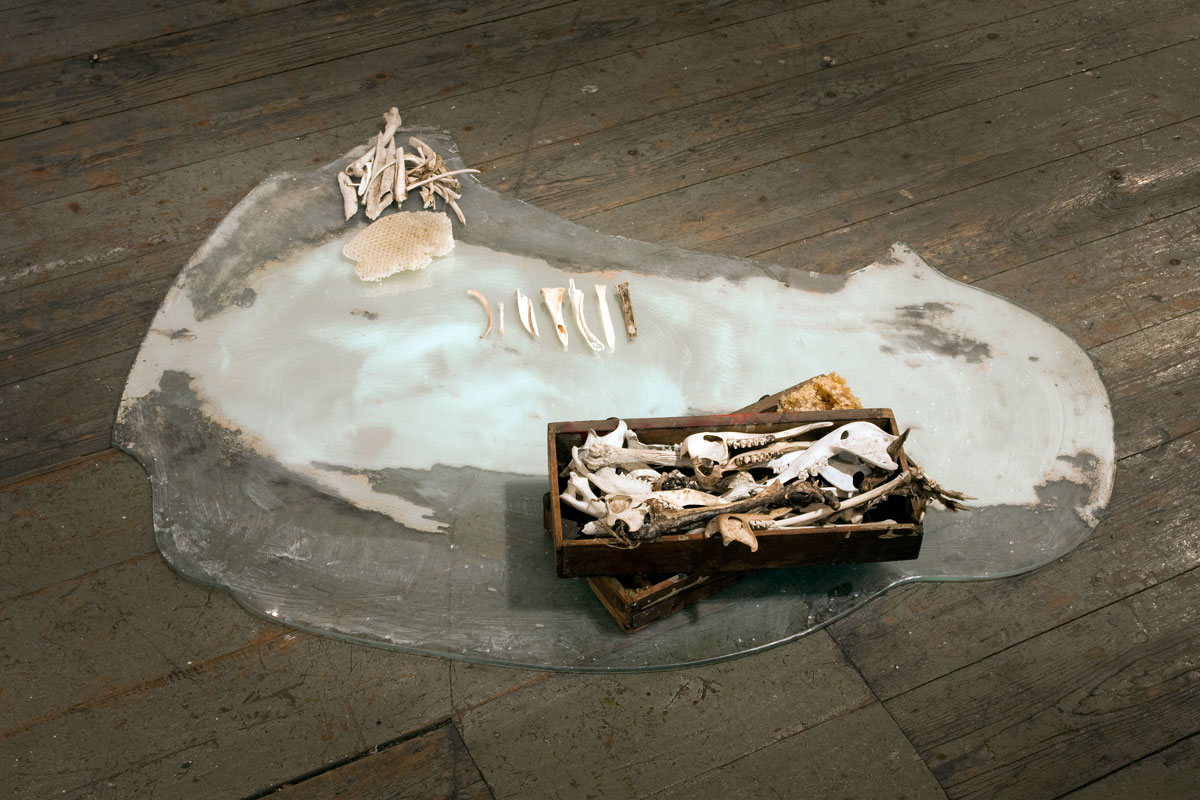
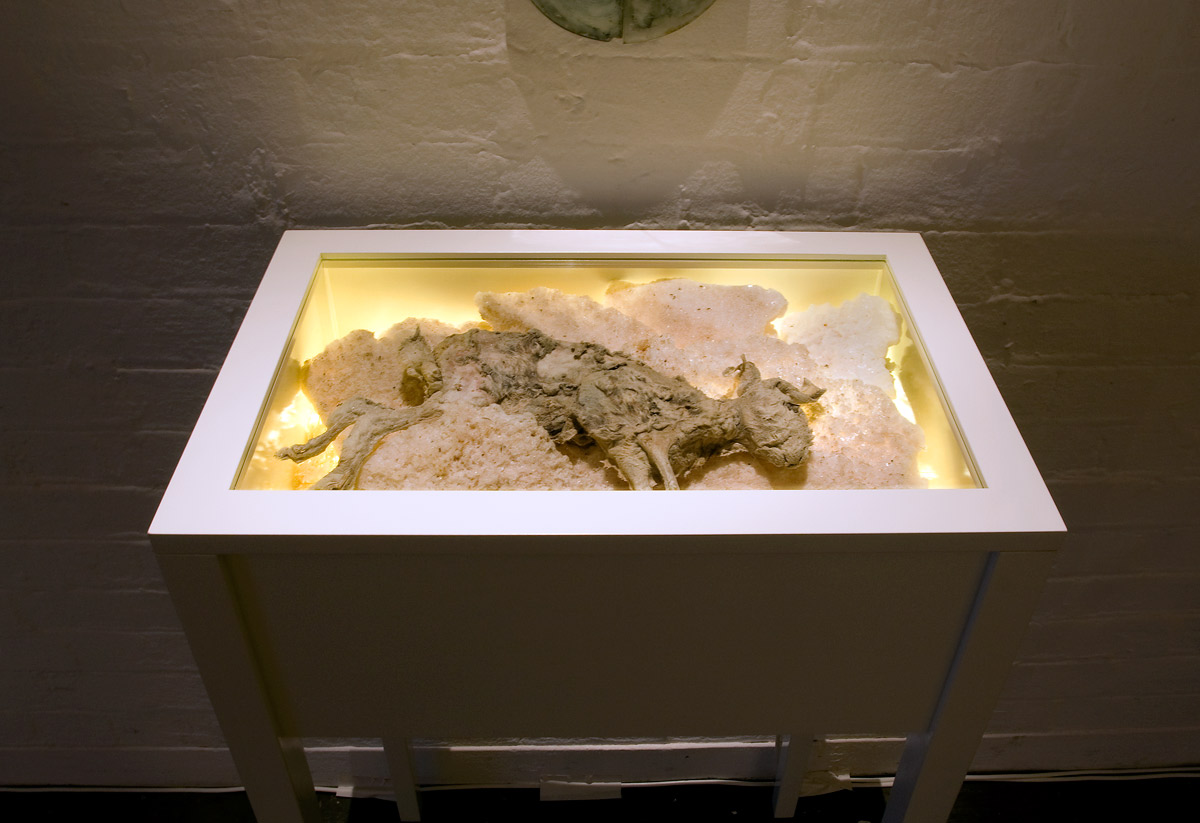
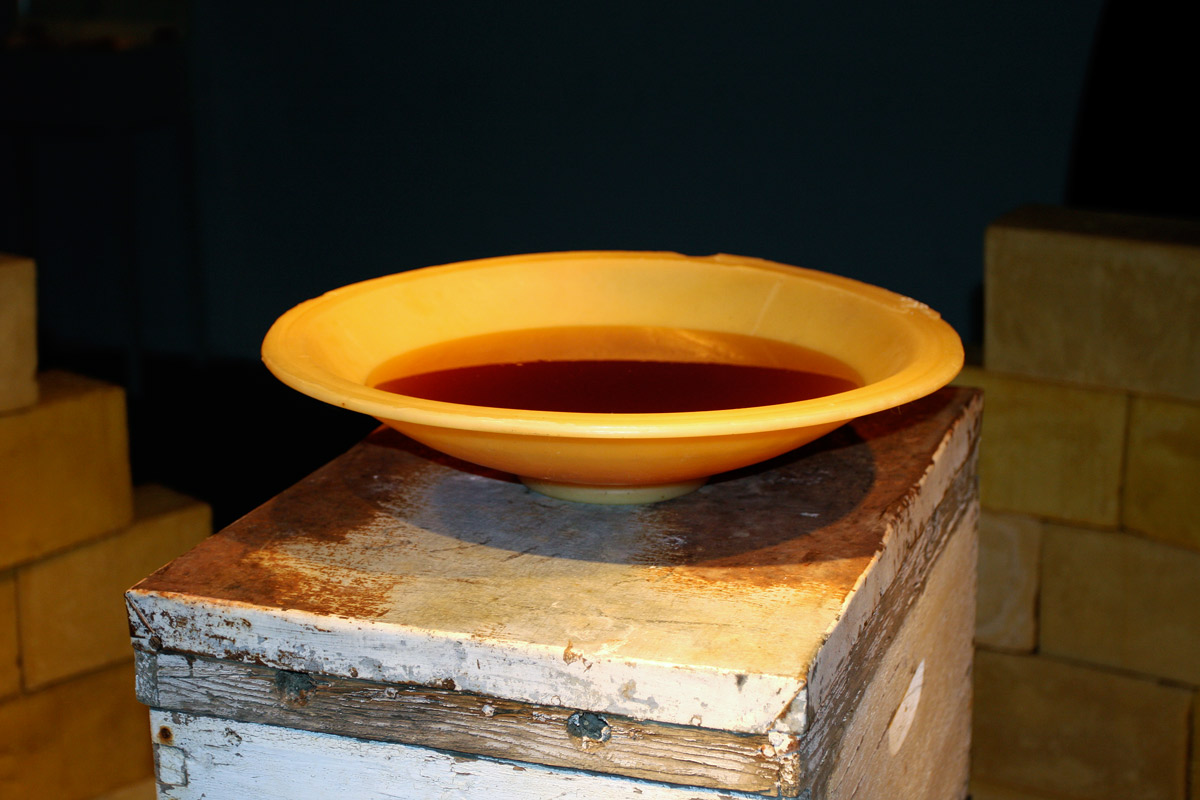
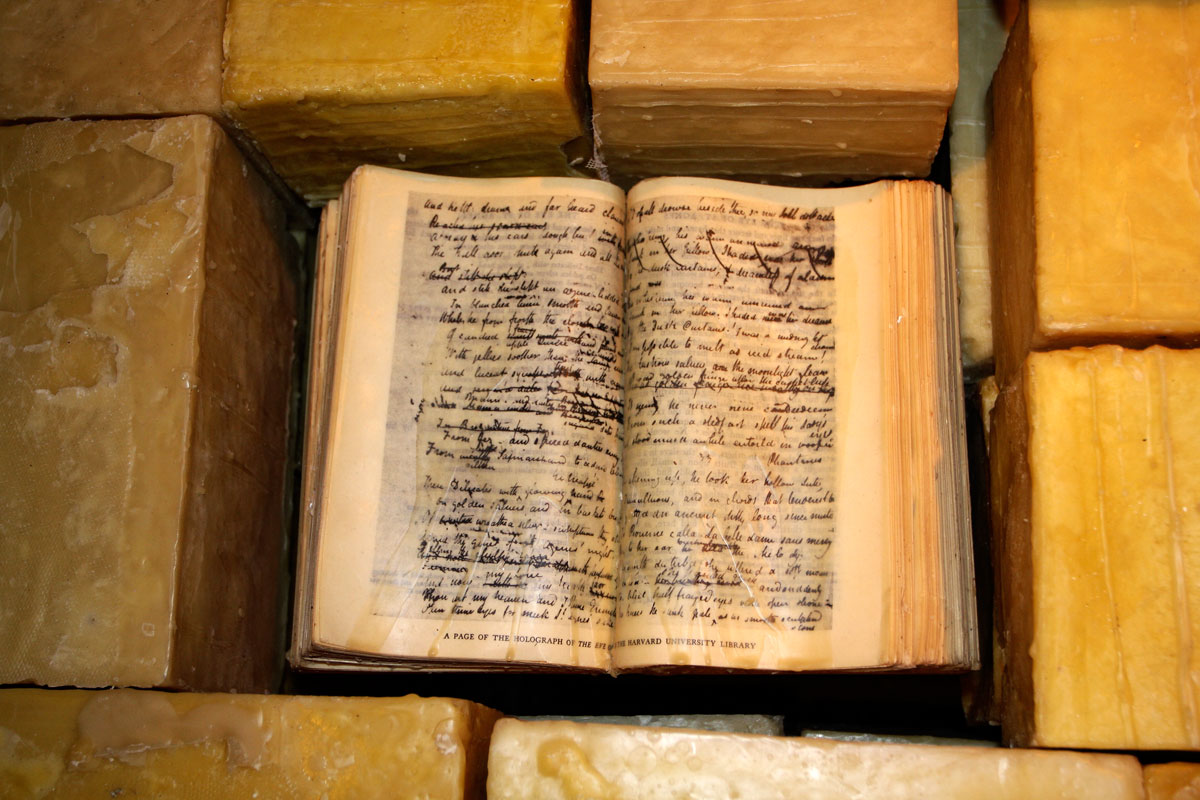
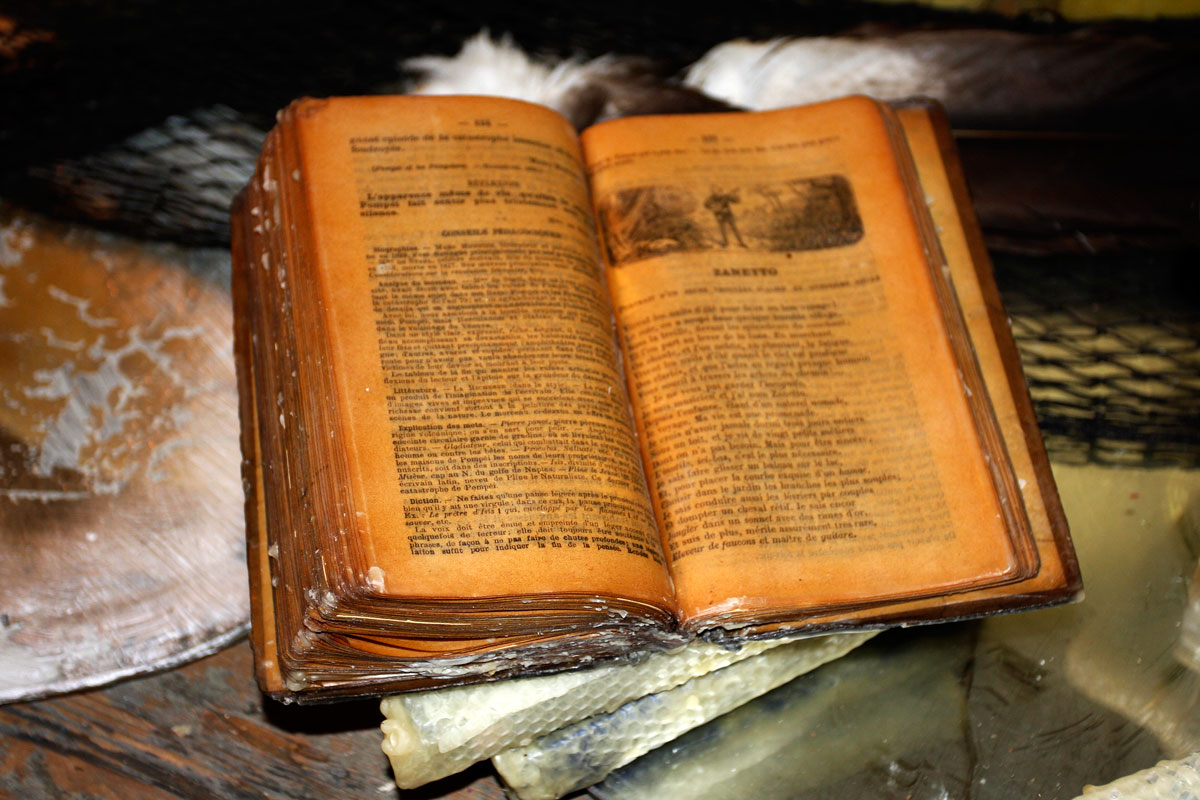
What is memorable about the work is the physicality, the textures: the sound of the bees; the Beuy-esque yellowness and presence of the beeswax blocks; the liquidness of the honey in the bowl atop the beehives; the incinerated bones, books and personal photographs; the tain-less mirrors, the books dipped in beeswax; the votive offering of poems placed into the beehive re-inscribed by the bees themselves – and above all the luscious, warm smell of beeswax that fills the gallery (echoing Beuys concept of warmth, to extend beyond the material to encompass what he described as ‘spiritual warmth or the beginning of an evolution’).
This alchemical installation asks the viewer to free themselves from themselves – “the moment in which he frees himself of himself and… gives the sacred to itself, to the freedom of its essence…” as Maurice Blanchot put its – a process Carl Jung called individuation, a synthesis of the Self which consists of the union of the unconscious with the conscious. Jung saw alchemy as an early form of psychoanalysis in which the alchemist tried to turn lead into gold, a metaphor for the dissolving of the Self into the prima materia and the emergence of a new Self at the end of the process, changing the mind and spirit of the Alchemist. Here the process is the same. We are invited to let go the eidetic memory of shape and form in order to approach the sacred not through ritual but through the reformation of Self.
As Pip Stokes last few paragraphs of her artist statement succinctly observes,
“Maurice Blanchot, has interpreted this myth as the descent of the artist to the realm of death to gain the work of art. Out of the failure of the artist, a necessary failure, emerges the artwork, wounded and bearing the ash of its origins.
The work of mourning, the work of healing.
Reflection, apparition, illusion: what appears as image, disappears evaporatively. As we change our place the space is already gone: the mirror holds a trace. What is veiled, enigmatic, uncertain remains as shadow that casts a light.”
The space in which we stand falls away: the mirror may hold a trace but it is only ever a trace. Our visions elude the senses, slipping between dreaming and waking, between conscious and subconscious realms. As Orpheus turns back to look so Eurydice dissolves, “falling out of the skin into the soul.” We, the viewer, are changed.
So far so good.
Unfortunately what does not facilitate this engagement with change is the combined verbiage of both the artist’s statement and the catalogue essay by Lisa Jacobson. These texts, especially the latter one, with quotations by Blanchot, Rilke, Calasso, Beuys, Cocteau, Neruda, Cobb, Virgil, Rilke again, Cocteau again, Poe and Derrida and meditations on mythos, the sacred, resurrection, mourning et al are mostly unnecessary to support what is strong work – in fact they seem to put a physical, textual wall between the viewer and the work, between the installation and the proposed dissolution of Self into the sacred. The catalogue essay is confusing and needed a judicious edit with the understanding that sometimes less is more! The work needs to speak for itself, not to be didactically spoken for and knowing when to merely suggest an idea is one of the skills of good writing. Perhaps all that was needed was the quotation by Blanchot and the two paragraphs above by Pip Stokes – nothing more.
Approaching the sacred is, I believe, and act of letting go, of aware-less-ness. As we immerse ourselves in that enigma we find that it is our fluid shadow aspect that has cast the light, with all attendant expectations, beliefs, dreams, visions, weaknesses, shortcomings, and instincts. This exhibition asks us to reconcile the journey into darkness with the hope of redemption.
“The Greek myth says: one cannot create a work unless the enormous experience of the depths – an experience which the Greeks recognised as necessary to the work, an experience in which the work is put to the test by that enormousness – is not pursued for its own sake. The depth does not surrender itself face to face; it only reveals itself by concealing itself in the work. But the myth also shows that Orpheus’ destiny is not to submit to that law – and it is certainly true that by turning around to look at Eurydice, Orpheus ruins the work… and Eurydice returns to the shadows; under his gaze, the essence of the night reveals itself to be inessential. He thus betrays the work and Eurydice and the night. But if he did not turn around to look at Eurydice, he still would be betraying,… the boundless and imprudent force of his impulse, which does not demand Eurydice in her diurnal truth and her everyday charm, but in her nocturnal darkness, in her distance, her body closed, her face sealed, which wants to see her not when she is visible, but when she is invisible, and not as the intimacy of a familiar life, but as the strangeness of that which excludes all intimacy; it does not want to make her live, but to have the fullness of her death living in her.”
“The sacred night encloses Eurydice, encloses within the song something which went beyond the song. But it is also enclosed itself: it is bound, it is the attendant, it is the sacred mastered by the power of ritual – that word which means order, rectitude, law, the way of Tao and the axis of Dharma. Orpheus gaze unties it, destroys its limits, breaks the law which contains, which retains the essence. Thus Orpheus’ gaze is … the moment in which he frees himself of himself and…, gives the sacred to itself, to the freedom of its essence…”
Installation views of the exhibition A Shrine for Orpheus by Pip Stokes at fortyfivedownstairs, Melbourne Photos: Marcus Bunyan
A Shrine for Orpheus
Pip Stokes
The first temple was made by the bees with feathers, wax and honey.
~ Calasso
… it is Orpheus. His metamorphosis In this one and this. We should not trouble about other names. Once and for all It’s Orpheus when there’s singing.
~ Rilke. Sonnets to Orpheus
We are the bees of the invisible We frantically plunder the visible of its honey To accumulate it in the great golden hive Of the invisible
~ Rilke
In mythology, honey was regarded as a spiritual substance and the bees were godly… This belief was… influenced by the whole process of honey production as constituting a link between earthly and heavenly levels. The influx of a substance from the whole environment – plants, minerals, and sun – was the essence of the bee-cult… The whole builds a unity, … in a humane, warm way, through principles of cooperation and brotherhood.
~ Beuys
This installation, A Shrine for Orpheus, comprises four hundred hand cast beeswax blocks and a traditional beebox, in use by the bees until recently, accompanied by found objects such as old mirrors as well as ephemera collected from nature including feathers, bones and the salt mummified skeleton of a rabbit. Over the past year I have worked with the living beehive, placing votive offerings associated with poetry, death and renewal into the hive: objects such as books, cast wax pages, vessels, textiles and bones. Melbourne writer, Paul Carter has engraved wax tablets with aphoristic poems to the bees. These objects have been transformed through the bees’ processes of honeycomb- building.
The metaphors of the beehive in this connection to poetry, death and renewal are explored in the materials and structures of the installation. The warm sweet- smelling wax of the bees, cast into six sided blocks, provides the building material for the Shrine and two mausoleums, each with a void space, a space of underworld. The void of the larger mausoleum contains, ashy, burnt books, personal photos from family albums scorched by fire, evoking ‘shades’, the shadowy dead – and porcelain-like bones which have been materially transformed by cremation in a kiln. The second beeswax ‘grave’ has two voids, one of which contains a beeswax- bound and dipped facsimile of handwritten poems by Keats and, in the other opening, a book of insect morphology, also dipped and bound in beeswax.
The traditional beebox in the centre of the ruin of the Shrine is placed on a lake of mirrors. The mirrors have lost their tain and been translucently washed with plaster of Paris to further dim our view into the obscurely reflective world that lies beneath. The Shrine is accompanied by offerings of honey, honeycomb, beeswax bound books and pages cast from beeswax awaiting new poems, laid at its entrance.
Myths of death, dismemberment, transformation and resurrection have haunted the Western imagination from Isis to Dionysus, Orpheus and Christ. In his essay, The Gaze of Orpheus, the French literary theorist, Maurice Blanchot, has interpreted this myth as the descent of the artist to the realm of death to gain the work of art. Out of the failure of the artist, a necessary failure, emerges the artwork, wounded and bearing the ash of its origins.
The work of mourning, the work of healing.
Reflection, apparition, illusion: what appears as image, disappears evaporatively. As we change our place the space is already gone: the mirror holds a trace. What is veiled, enigmatic, uncertain remains as shadow that casts a light.
The temple re admits this invisible.
Pip Stokes. May. 2010 A Shrine for Orpheus
Beeswax, beehive box, mirror. Mixed media, dimensions variable. Original texts by Paul Carter, writer. Sound by Kasimir Burgess, filmmaker.
Installation views of the exhibition A Shrine for Orpheus by Pip Stokes at fortyfivedownstairs, Melbourne Photos: Marcus Bunyan
A Shrine for Orpheus
Lisa Jacobson
If Orpheus is guardian of the sacred arts, then it is possible that never before has there been a century so much in need of his song. This is because the world insists, on a daily basis, that we lose ourselves rather than commune with loss, to be drawn to darkness as logos rather than seek out its mythos. The myth of Orpheus has an integral role today in that it returns us and brings us back into communion with the sacred through poetry, dance, music and art.
Pip Stokes’ most recent exhibition, A Shrine for Orpheus, provides a mythic language for the story of Orpheus. It is a contemplation of myth that reflects back on itself in an endless refraction of associations and images; a visual representation of the myth itself which is never simple or linear but, rather, layered with metaphor and re-imaginings. Stokes’ installation reveals the ways in which myth enters us, but does not belong to us. Rather, we are the conduit through which myth runs and Orpheus, indeed, does run and has run through the dreams of humankind for as long as we have been able to dream.
This is in keeping with the Neo-Platonic notion, in which Orpheus plays no small part, that the figures of myth occupy not only the rooms of the psyche, but the rooms of other houses outside of us. It is not the artist who invents these figures of the psyche, of Orpheus and Eurydice, of Persephone and Hades, but they who reinvent themselves. The zeitgeist or midrash (as the Jewish mystics call the spirit of the times) summons up those gods it needs most. In Stokes’ work, it is Orpheus who answers this call.
Orpheus, playing quietly on his lyre in the middle of the forest, coaxes the animals out to listen, as Rainer Maria Rilke writes in his first sonnet to Orpheus:
“… And where there had been just a makeshift hut to receive the music, a shelter nailed up out of their darkest longing, with an entryway that shuddered in the wind- you built a temple deep inside their hearing.”
Summoning the animals translates, perhaps, into an ecological sensibility; to hear the call of Orpheus is to answer the ecological call, to re-sacralise nature. At a time when the world seems intent on hurtling towards its own demise, A Shrine for Orpheus inclines towards meditation and the transformation of nature, the stillness of catacombs, the quietness of wax, the purposeful industry of bees and silkworms, the potential for flight, the distillation of air, the reflective gaze, the emptying out of all colour until there are only shades of white: bleached bones, wax, ash, silk and paper, feathers in contemplation of flight as if, as the poet Pablo Neruda writes, “we lived falling out of the skin into the soul.” Like the bees which flew in through the open window of Stokes’ studio to busy themselves on the beeswax, even the very act of art-making has summoned and sung up, in its own way, the problematic aspects of creation. As Jean Cocteau observes in his film, Orphée, “Look for a lifetime in mirrors and you will see Death at work, like bees in a hive of glass.”
The music of Orpheus, as Noel Cobb has said, is “the activity of the theologos, the one who spoke with and about the Gods.” His sanctuary also encompasses poetry and art. Orpheus’ lyre has to do with both dismemberment and re-membering, god-like attributes, as Stokes alludes to in her depiction of Orpheus’ wax heart awaiting resurrection. Orpheus’ lyre was said to be strung with human sinews, and the music he plays as he sings nature and animals into being dips, inevitably, into the underworld, into death and decay, dismemberment, a scattering of the psyche into fields not yet dreamt of, in the act of its resounding. The wax which forms the foundation of Stokes’ Shrine for Orpheus, the books on which bees have fed in order to make their own inscriptions (texts by writers from Keats to the contemporary Paul Carter) also hint at resurrection and immortality. At the centre of this ‘temple’ is the beehive, symbol of transformation.
As Virgil notes in The Georgics in a section entitled “The Peculiarly Wonderful Features of Bees”, bee stock is immortal in that the hive itself is passed on from generation to generation, the structure keeps on singing, and never really dies despite the passing of the bees who composed it. In a similar fashion, Orpheus’ own lyre is carried forth, made from the shell of a tortoise whose death made possible the music itself. The heart of Orpheus, like his own severed head in the myth, does not cease its previous musicality, the song of its rhythmic beating. So too might the artist reach down into the darkness of herself, even if she risks being torn apart, knowing that the heart remains intact and can be resurrected.
Rilke again:
Only the man who has also raised his lyre among the darkling shades may be allowed a sense of infinite praise.
Inside the Orphic vision which Pip Stokes’ art immerses itself in, everything is panoramic and ornamented by mythic figures whom we cannot ever really know, but only glimpse via the language of metaphor: the hand that plunges through the earth while one is gathering flowers, the hem of a beekeeper’s shroud-like coat, the thin silken thread of a worm, the trace of words upon wax, or feathers, burnt books or ash. These are the images that translate the emotion of the myth but which remain, nevertheless, untranslatable because should they be hardened into the prosaic everyday language of the world, they would cease to be mythos.
Perhaps it is for this very reason that Eurydice cannot be brought back up to the shining world of which Rilke writes, in a different poem on Orpheus, and that Orpheus himself rises into at the very moment Hermes ushers Eurydice once again below. Eurydice is too far into death to be brought back to life. She has sunk into the “dream within the dream” in which, as Edgar Allan Poe writes, we are all participants. All Orpheus can take with him is the imprint of her, the illicit gaze, the melancholic pathology of the backward glance, that perhaps was not so much hastily stolen as executed too quickly. How long must the artist gaze into the underworld? Is it ever enough? Must she not continually turn back and gaze at what cannot be brought to the surface but that she must, even so, attempt to translate? Is it this that Rilke refers to when he writes in his sonnets, “it is in overstepping that [Orpheus] obeys?” Cocteau, speaking about his film, commented that “Poets, in order to live must often die, and shed not only the red blood of their hearts, but the white blood of their souls, that flows and leaves traces which can be followed.”
There is loss in this of course, great loss, that Stokes’ art both acknowledges and makes a place for. As Orpheus travels along “the path ascending steeply into life” towards “the shining exit-gates,” he cannot help but glance back. In the sonnets Rilke cautions, “Be ahead of all parting as though it already were / behind you.” This has echoes of Jacques Derrida’s The Work of Mourning, in which he argues that mourning begins the moment friendship begins; that we cannot enter into relationship without becoming conscious of the loss that will inevitably come with the other’s death. Indeed, the very idea of this loss precipitates the event itself, leaves us prematurely bereft and continually turning back towards the absent loved one in our grief. And if we are always turning back, is not the artist most required to do so, is not the artist most compelled to incline her head towards the darkness in order to write of what stirs beneath the shining surface of the world, of what calls to be heard? Is this not the invisible that Orpheus calls into being through poetry, music and art? Orpheus rises in Rilke’s poem, and in Pip Stokes’ work. In fact, if we dare to journey with him, he will rise in us all.
Installation views of the exhibition A Shrine for Orpheus by Pip Stokes at fortyfivedownstairs, Melbourne Photos: Marcus Bunyan
fortyfivedownstairs 45, Flinders Lane Melbourne 3000
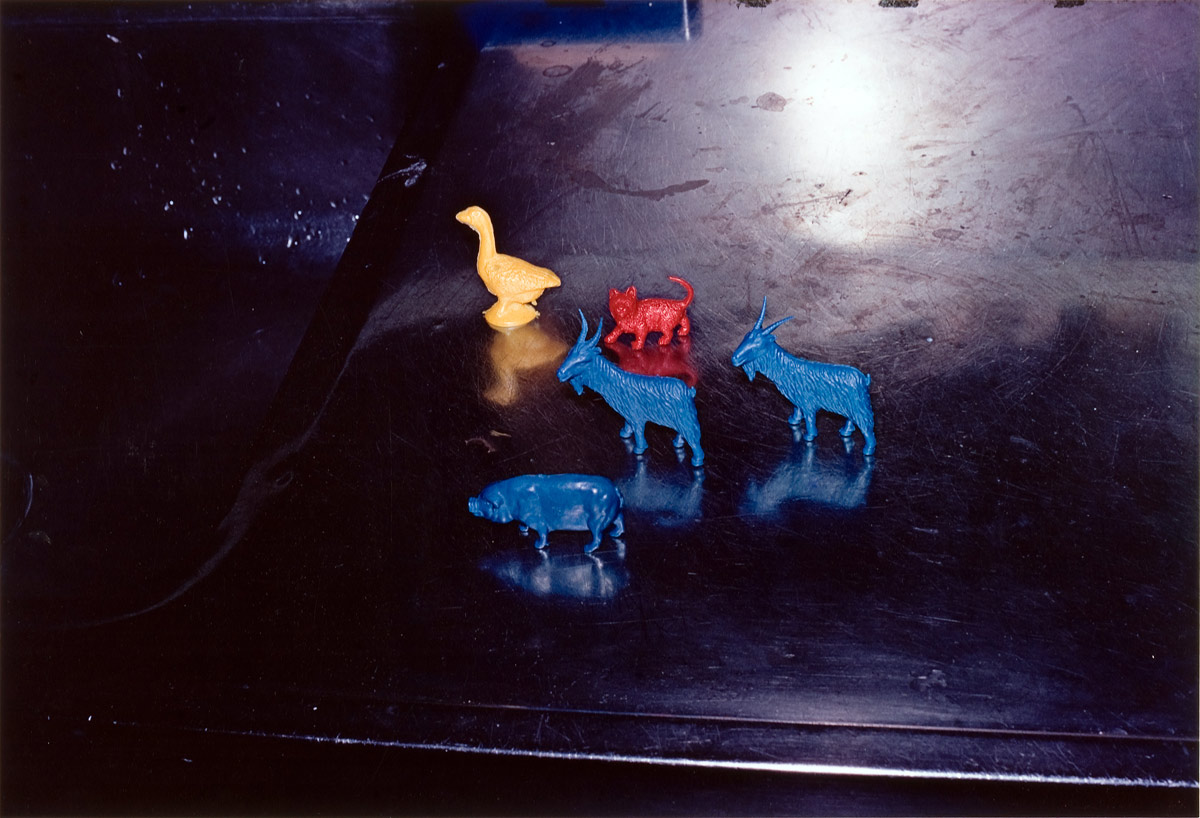
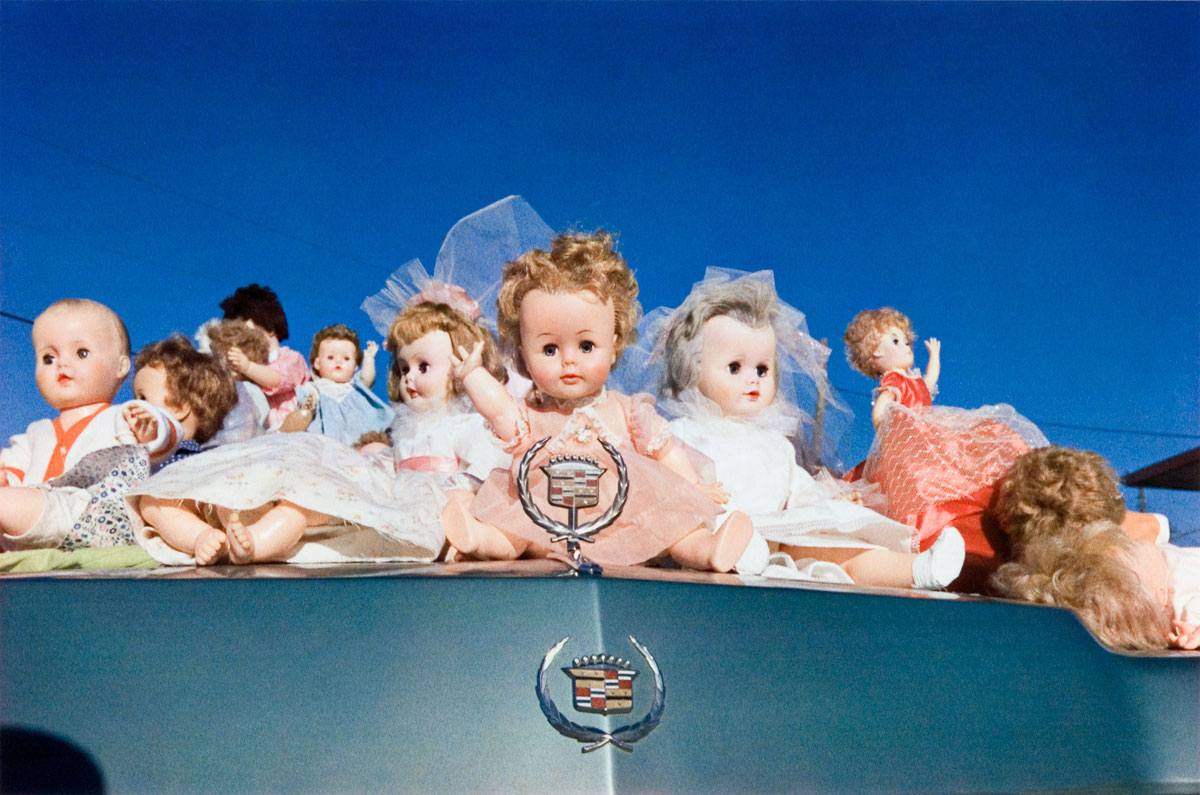
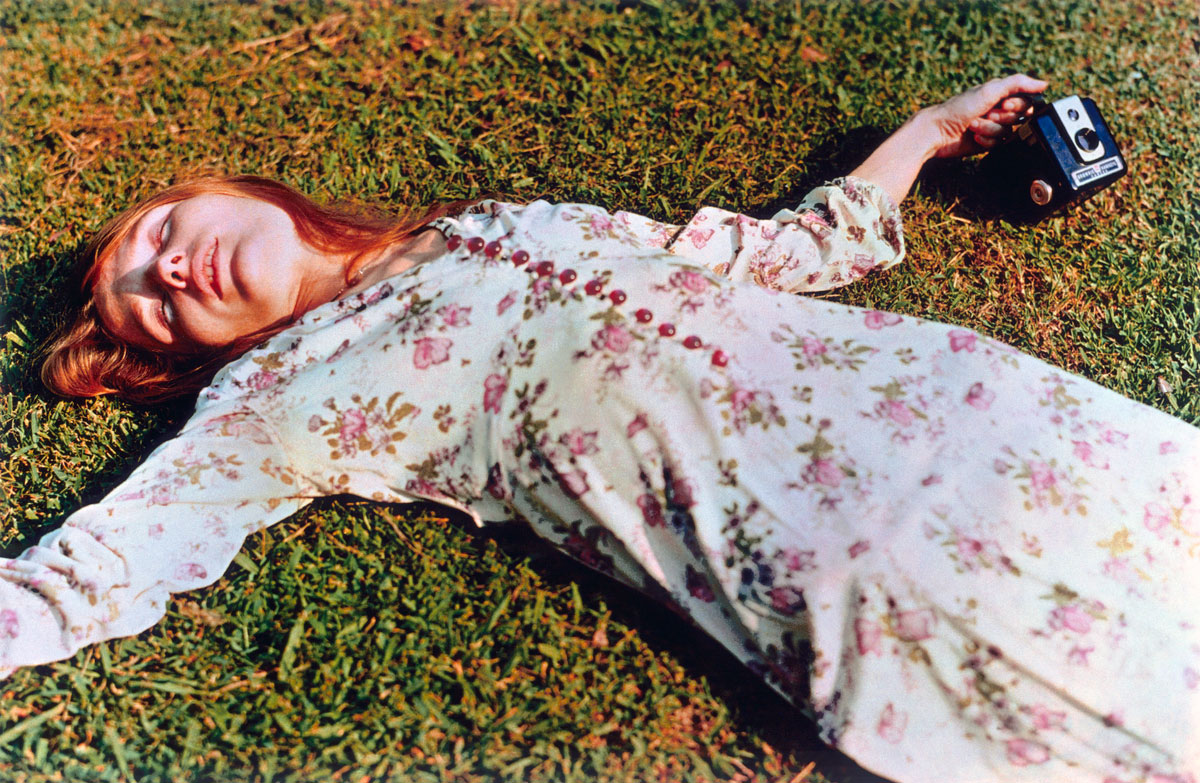
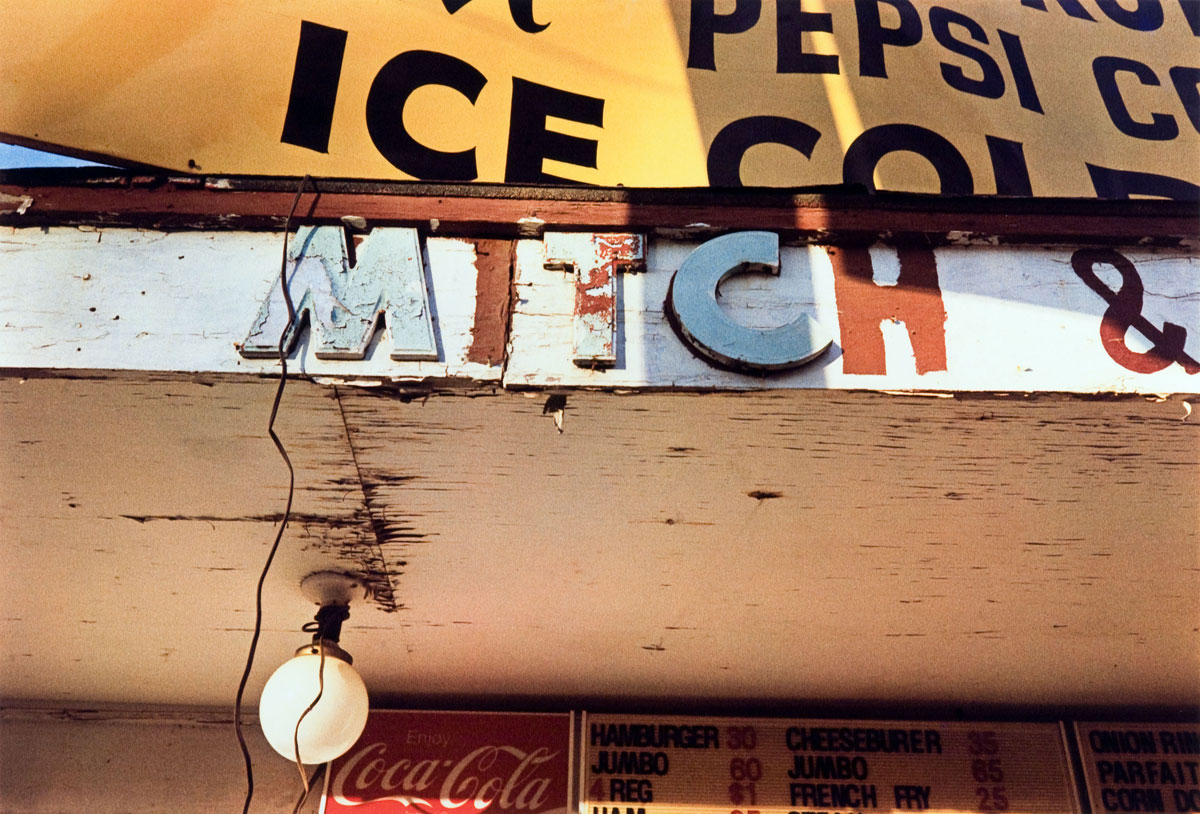
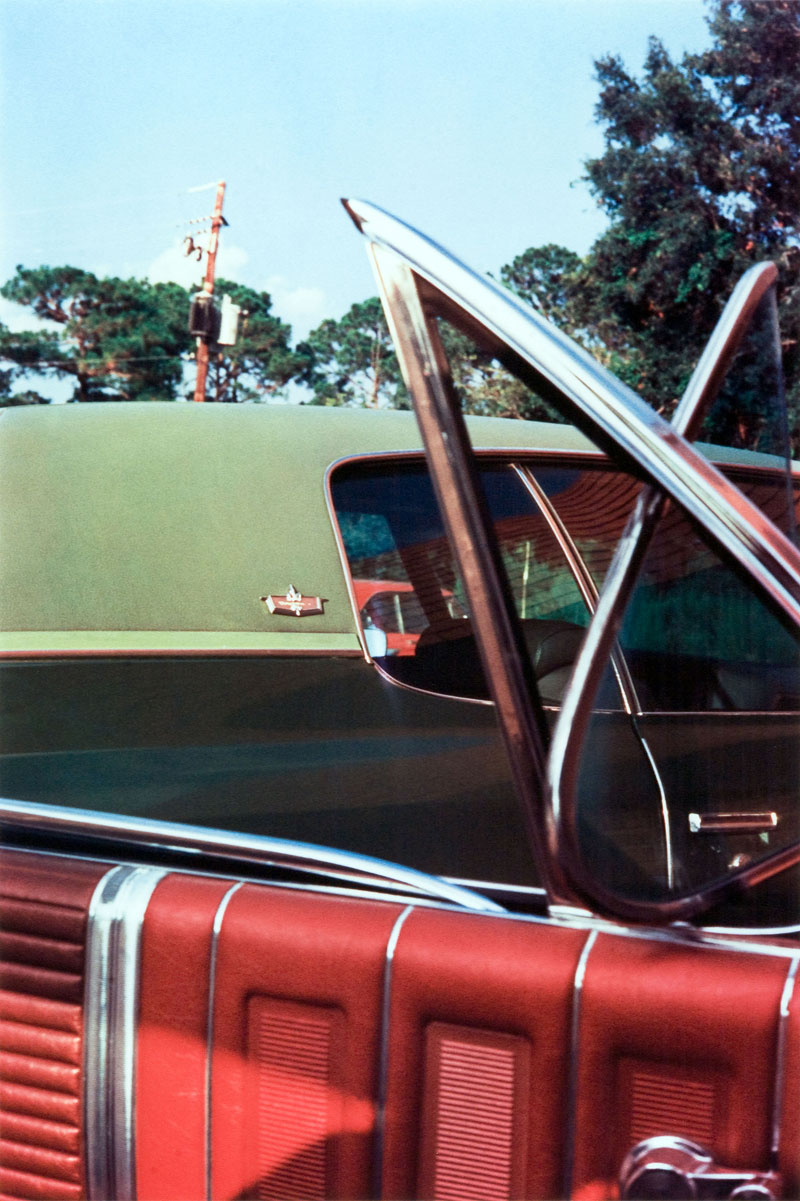
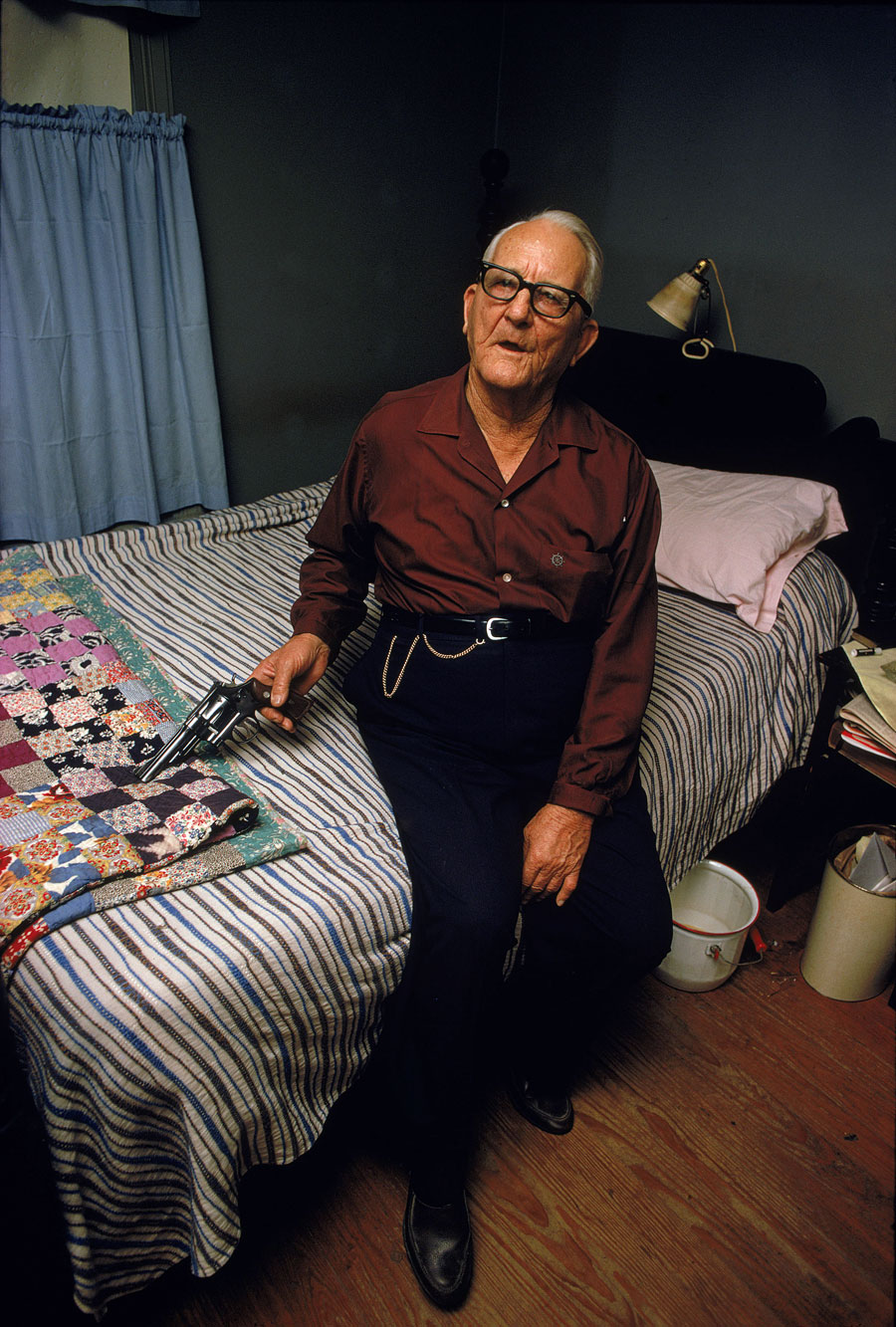
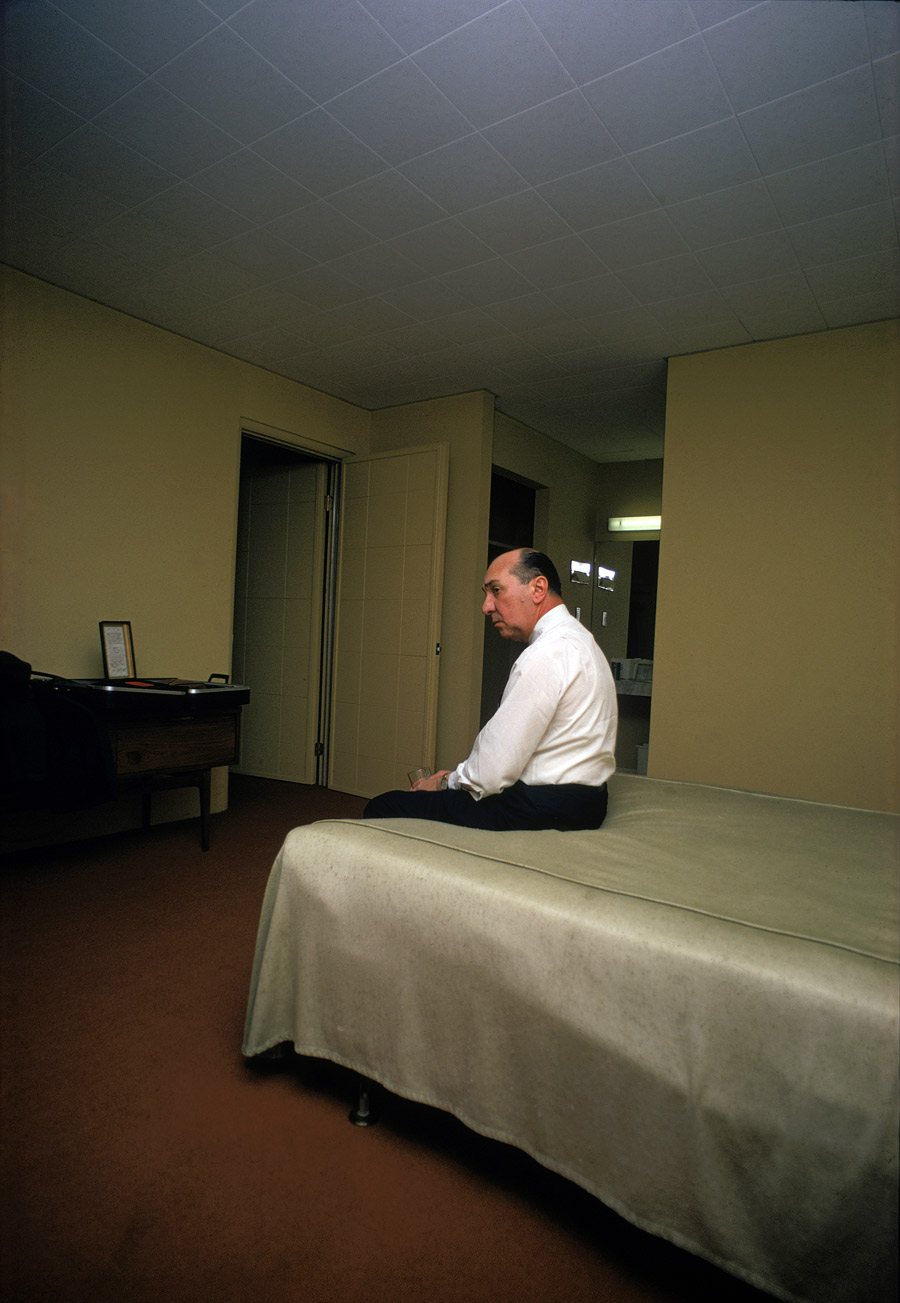
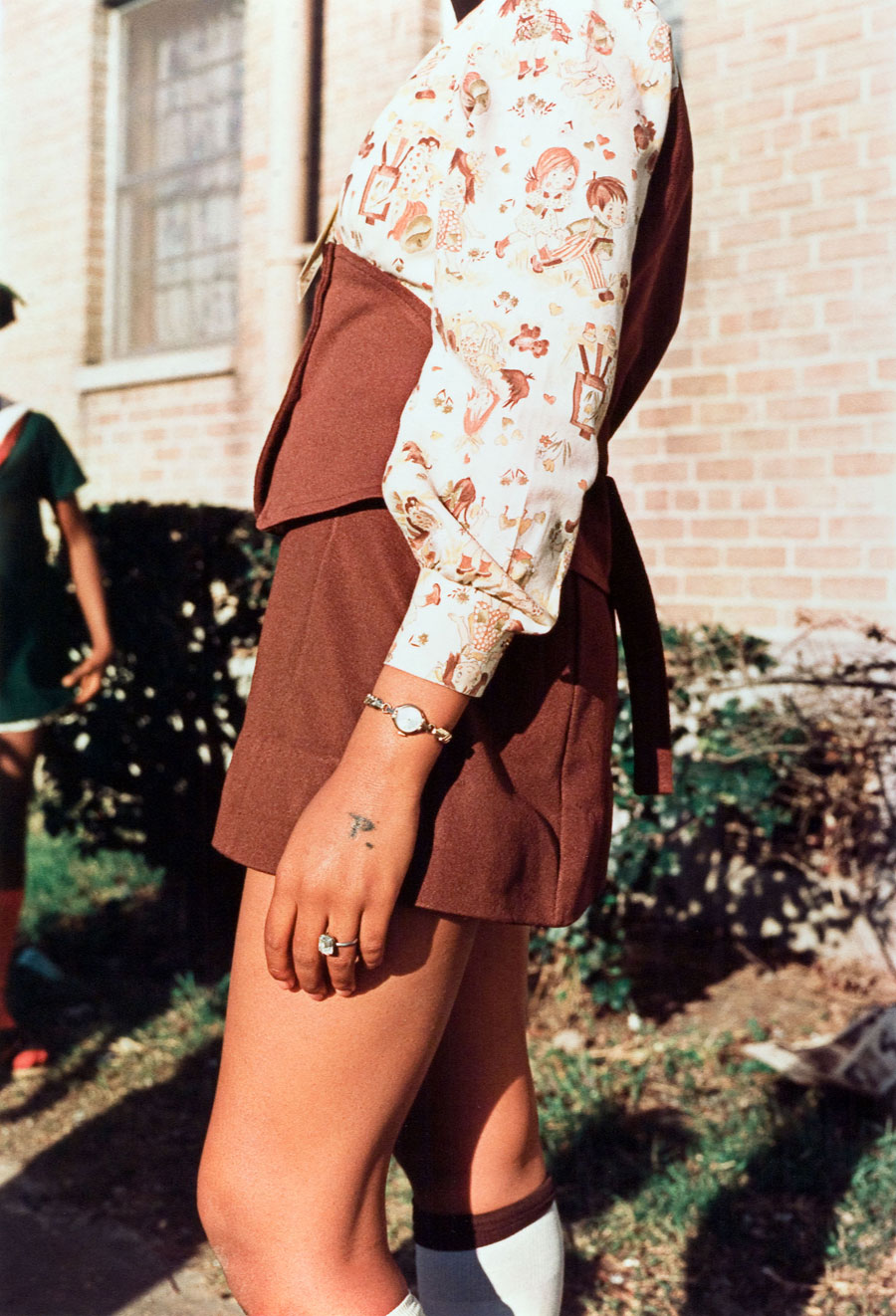
THE classic William Eggleston, the one and only. Feel the heat of sun on body. Look at the construction of the image plane, all angles and fractures. The slight movement of the woman’s hand as she sits on a cracked yellow wall. The distance between her body and the metal pole with wrapped chain and padlock, that ice/fire tension as Minor White would say. Man with gun vs melancholy monochromatic self portrait, the reverie of the lone thinker. Colour and light as emotional sounding board, “colour as a means of discovery and expression, and as a way to highlight aspects of life hidden in plain sight.” This is what Eggleston points his democratic camera at – life hidden in plain sight, revealed in all its intricacies, in all its mundanity and glory.
Dr Marcus Bunyan
Many thankx to Chai Lee and the Art Institute of Chicago for allowing to me reproduce the photographs in this posting. Please click on the photographs for a larger version of the image.
The unconventional beauty and artistry of works by photographer William Eggleston will be showcased in a major exhibition opening at the Art Institute of Chicago this winter. William Eggleston: Democratic Camera, Photographs and Video, 1961-2008 – on view from February 27 through May 23, 2010, in the Modern Wing’s Abbott Galleries (G182, G184) and Carolyn S. and Matthew Bucksbaum Gallery (G188) – is the most comprehensive retrospective to date of the Memphis-based contemporary photographer. The exhibition brings together more than 150 extraordinary images of familiar, everyday subjects with lesser-known, early black-and-white prints and provocative video recordings, all produced over a five-decade period.
Born in 1939 in Memphis, Tennessee, and raised on his family’s cotton plantation in Mississippi, William Eggleston held a casual interest in photography until 1959, when he came across photo books by Henri Cartier-Bresson and Walker Evans. Among his earliest pictures, made during stints at universities in Tennessee and Mississippi, were black-and-white scenes found in his native South, as well as portraits of friends and family members.
By the 1960s and early 1970s he had begun experimenting with colour film, and he eventually produced rich, vivid prints through the dye transfer process – prints that are created through the alignment of three separate matrices (cyan, magenta, and yellow) generated from three separate negatives (red, green, and blue filters). The resulting prints are known for the vividness and permanence of their colours. Hence, Eggleston is often credited for single-handedly ushering in the era of colour art photography.
Eager to show his work to a broader audience, Eggleston traveled to New York with a suitcase of slides and prints to meet with Museum of Modern Art (MoMA) curator John Szarkowski. This visit eventually yielded a controversial but revolutionary exhibition in 1976 – MoMA’s first solo show to feature colour photographs – and a classic accompanying book, William Eggleston’s Guide. At this point in his career, Eggleston had already distinguished himself by treating colour as a means of discovery and expression, and as a way to highlight aspects of life hidden in plain sight.
William Eggleston: Democratic Camera, Photographs and Video, 1961-2008 demonstrates Eggleston’s “democratic” approach to his photographic subjects in both colour and black-and-white. Everything that happens in front of the camera is worthy of becoming a picture for the artist – no matter how seemingly circumstantial or trivial. Eggleston finds his motifs in everyday life, resulting in telling portrayals of American culture. His iconic images such as Elvis’s Graceland, a supermarket clerk corralling grocery carts in the afternoon sunlight, and a freezer stuffed with food proves that the photographer points his “democratic camera” at everything. Eggleston’s quiet, thoughtful pictures have profoundly impacted subsequent generations of photographers, filmmakers, and scholars.
The exhibition also includes Eggleston’s cult video work, Stranded in Canton. In the 1960s, Eggleston used film to document Fred McDowell, a well-known Delta blues musician, but ultimately abandoned the film project. Eggleston later acquired a video camera and began using video to shoot in bars and in people’s homes; sometimes he shot monologues friends delivered for his video camera, most often at night. The result, Stranded in Canton, recently restored and re-edited, is a portrait of a woozy subculture that adds dimension and texture to the world of Eggleston’s colour photographs.
Internationally acclaimed, Eggleston has spent the past four decades photographing around the world, responding intuitively to fleeting configurations of cultural signs and specific expressions of local colour. By not censoring, rarely editing, and always photographing even the seemingly banal, Eggleston convinces us completely of the idea of the democratic camera.
Press release from the Art Institute of Chicago website [Online] Cited 15/05/2010 no longer available online
































 Art Blart _ art and cultural memory archive
You must be logged in to post a comment.