Exhibition: ‘In Focus: Los Angeles, 1945-1980’ at the J. Paul Getty Museum, Los Angeles

Exhibition dates: 20th December 2011 – 6th May 2012


Anthony Friedkin (American, b. 1949) 'Clockwork Malibu' 1978


Anthony Friedkin (American, b. 1949)
Clockwork Malibu
1978
Gelatin silver print
11 15/16 x 18 5/16 in
The J. Paul Getty Museum, Los Angeles
Gift of Sue and Albert Dorskind
© Anthony Friedkin


While Anthony Friedkin has documented subjects as diverse as the marginalised gay community of San Francisco, convicts at Folsom Prison, and brothels in New York, it is the Southern California coastline that has remained a recurrent theme throughout his forty-five-year career. The Los Angeles native took up photography about the same time he learned to surf. His images of waves deftly communicate the primordial power and elusive mysteries that he ascribes to the ocean. This photograph of surfer Rick Dano on an early morning drive up the coast conveys a mood of quiet, anticipatory harmony.

Text from Pacific Standard Time at the Getty


I have never particularly liked Los Angeles as a city. There seems to be something unappealing about the place, some energy lurking just beneath the surface that you can’t quite put your finger on. Maybe it is the comparison with the vivacious San Francisco just up the coast, the awful public transport or, more spookily, the lack of people on the street. People never walk anywhere in LA, it’s a car town. When I did walk on the street I felt vulnerable and surveyed with suspicion by people in cars, like a rabbit caught in the headlights.

These photographs confirm this feeling. Unlike the visual acoustics of the architectural photographs of Julius Shulman (photographs that mythologised this urban metropolis and then exported that idealised presence and Californian mid-century design to the rest of the world) these photographs have an unbelievably desolatory nature to them. They seem to be joyless and sorrowful, devoid of warmth, comfort, or hope – as though the human and the city were separated, as if we are separated from a loved one.

The row after row of tinderbox houses, the ubiquitous cars, the sense of emptiness, hopelessness and menace (see Gary Winogrand Los Angeles 1964, below – if looks could kill this would be it, the bandaged broken nose just perfect for the photograph) all paint a picture of despair. Even the supposedly quiet, anticipatory harmony of the photograph of surfer Rick Dano by Anthony Friedkin (1978, below top) is, to me, full of unresolved tension. The mist in the background hanging over the rocks, blocking out the view, the filthy hands and the bandaged little finger of the right hand, the downcast eyes, the impossibly long cigarette handing from his lips and most importantly the empty distance between the figure and the safety of the automobile. The tension in that distance and the downcast eyes says nothing to me of harmony but of isolation, sadness and regret.

Los Angeles is not my favourite city but it is a fascinating place none the less, as these photographs do attest.

Dr Marcus Bunyan


Many thankx to the J. Paul Getty Museum for allowing me to publish the photographs in the posting. Please click on the photographs for a larger version of the image.
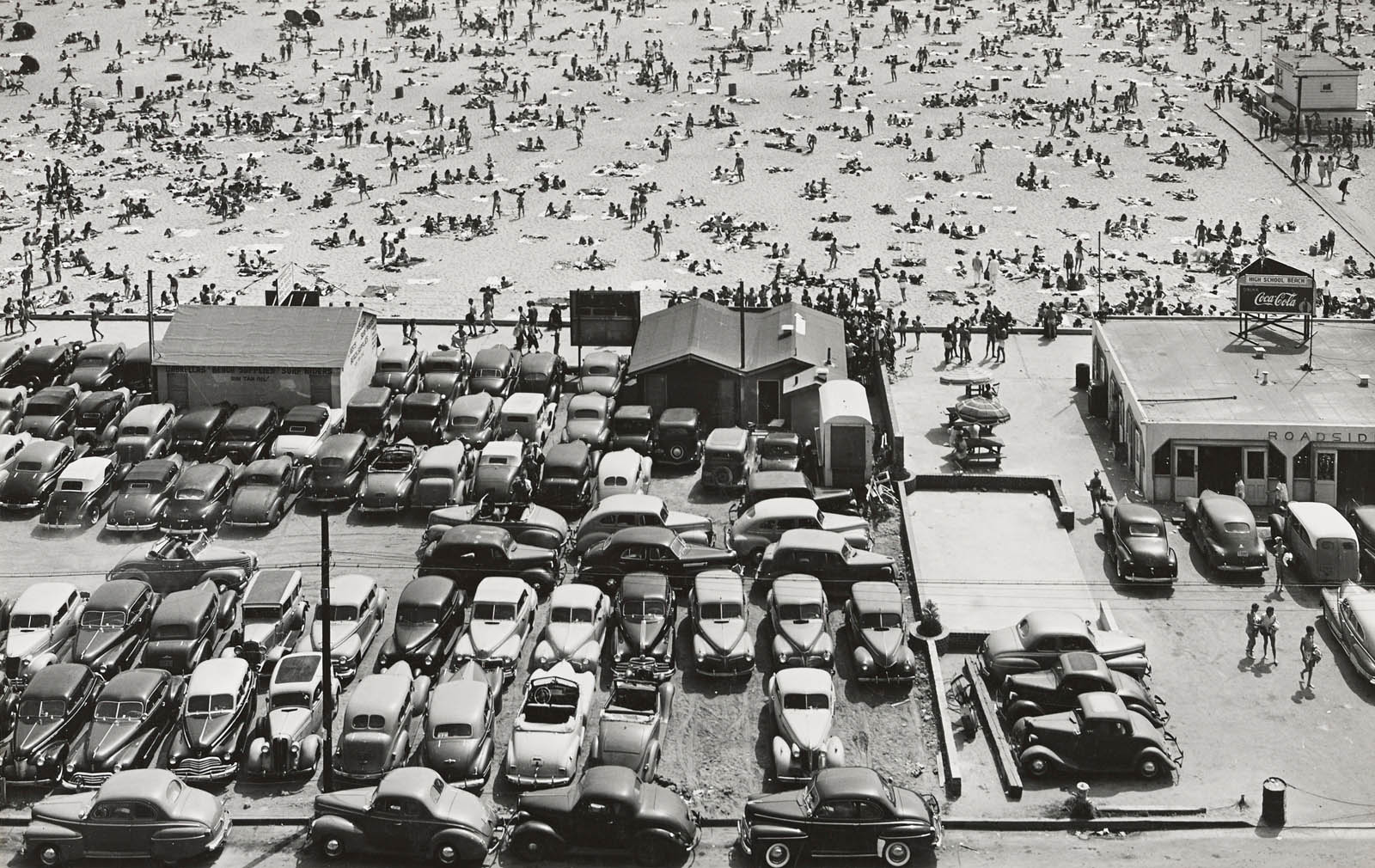


Max Yavno (American, 1911-1985) 'High School Beach' 1945


Max Yavno (American, 1911-1985)
High School Beach
1945
Gelatin silver print
22.1 x 34.4cm
The J. Paul Getty Museum, Los Angeles
Gift of Marjorie and Leonard Vernon
© 1988 Centre for Creative Photography, The University of Arizona Foundation
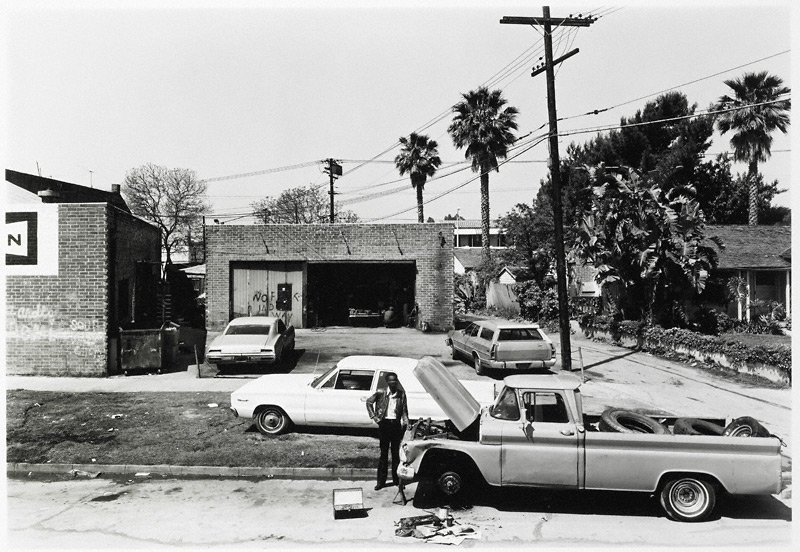
 

Anthony Hernandez (American, b. 1947) 'Automotive Landscapes #5, Los Angeles' 1978


Anthony Hernandez (American, b. 1947)
Automotive Landscapes #5: Los Angeles
1978
Gelatin silver print
11 3/4 x 17 1/8 in
The J. Paul Getty Museum, Los Angeles
Purchased in part with funds provided by the Photographs Council of the J. Paul Getty Museum
© Anthony Hernandez


Hernandez started photographing what he refers to as “automotive landscapes” in 1977, using a 35mm camera until he realised that a large-format camera loaded with 5 x 7-inch negative film would provide the detail he desired. Taken from a slightly elevated vantage point, Hernandez’s image of an immobilised truck and its lone mechanic in front of a repair shop presents a sobering view of Los Angeles’s car-dominant culture.

Text from Pacific Standard Time at the Getty


Gary Winogrand (American, 1928-1984) 'Los Angeles' 1964


Gary Winogrand (American, 1928-1984)
Los Angeles
1964
Gelatin silver print
9 x 13 7/16 in
The J. Paul Getty Museum, Los Angeles
© 1984 The Estate of Gary Winogrand


This image of a couple seated in a parked convertible in front of a nightclub on Sunset Boulevard simultaneously captures the glamour and seediness associated with Hollywood. Evoking a 1940s or ’50s film noir crime drama, a seeming tough guy and femme fatale continue their heated conversation, apparently oblivious to the traffic around them – and to the photographer observing them. A native of New York City, Winogrand studied painting at Columbia University and photography at the New School for Social Research before doing freelance commercial work. He photographed incessantly, using a 35mm camera to create wide-angled or tilted shots that are densely composed and layered with meaning. More than 2,500 rolls of film remained undeveloped at the time of his death in 1984.

Text from Pacific Standard Time at the Getty


As part of the region-wide Pacific Standard Time: Art in L.A., 1945-1980 initiative, The J. Paul Getty Museum presents In Focus: Los Angeles, 1945-1980, an exhibition of photographs from the permanent collection made by artists whose time in Los Angeles inspired them to create memorable images of the city, on view at the Getty Center from December 20, 2011 – May 6, 2012.

This exhibition features both iconic and relatively unknown work by artists whose careers are defined by their association with Los Angeles, who may have lived in the city for a few influential years, or who might have visited only briefly,” said Virginia Heckert, curator, Department of Photographs, the J. Paul Getty Museum, and curator of the exhibition.

The photographs are loosely grouped around the themes of experimentation, street photography, architectural depictions, and the film and entertainment industry. Works featured in the exhibition are from artists such as Jo Ann Callis, Robert Cumming, Joe Deal, Judy Fiskin, Anthony Friedkin, Robert Heinecken, Anthony Hernandez, Man Ray, Edmund Teske, William Wegman, Garry Winogrand, and Max Yavno. Two of the works in the exhibition by Anthony Hernandez and Henry Wessel Jr. were acquired with funds from the Getty Museum Photographs Council. Drawn from the Museum’s permanent collection, including several recent acquisitions inspired by the Pacific Standard Time initiative, the exhibition offers visitors the opportunity to familiarise themselves with a broad range of approaches to the city of Los Angeles as a subject and to the photographic medium itself.

One of the most well-known works in the exhibition is Garry Winogrand’s photograph of two women walking towards the landmark theme building designed by Charles Luckman and William Pereira that has come to symbolise both Los Angeles International Airport and mid-century modern architecture in popular culture. Though a quintessential New Yorker, Winogrand made some of his most memorable photographs in Los Angeles, where he chose to settle in the final years of his life. Also included in the exhibition is Diane Arbus’ dreamily lit photograph of Sleeping Beauty Castle at Disneyland park in Anaheim. Although technically not located in either the city or the county of Los Angeles, Disneyland – and Arbus’ photograph – continues to capture the notion of entertainment and fantasy that has come to be so intrinsically associated with the city.

Other photographers in the In Focus: Los Angeles exhibition who produced the majority of their most creative work in the city include Edmund Teske, with his experimentation in the darkroom and his complex double solarisation process; Robert Heinecken, with images that are equally complex but often incorporate existing printed materials, such as negatives; Anthony Hernandez, whose portraits of Angelenos on the street emphasise the isolation of the individual in an urban environment; and Anthony Friedkin, who combines his passions for surfing and the Southland beaches in his photographs. The inclusion of three photographs from Judy Fiskin’s earliest photographic series, Stucco (1973-1976), provided the impetus for a monographic presentation of the artist’s complete photographic work by Getty Publications. Entitled Some Aesthetic Decisions: The Photographs of Judy Fiskin and featuring an introductory essay by curator Virginia Heckert, the book will be published concurrently with this exhibition.

Press release from the J. Paul Getty Museum website
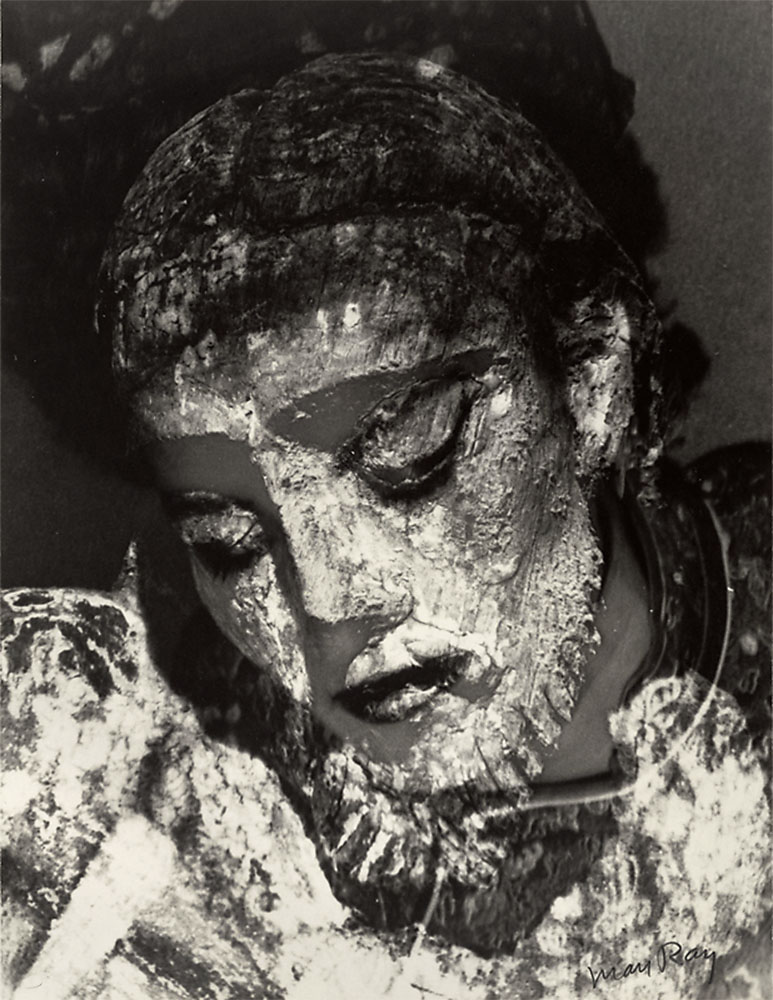
 

Man Ray (Emmanuel Radnitsky)(American, 1890-1976) 'Juliet with Mud Mask' 1945


Man Ray (Emmanuel Radnitsky)(American, 1890-1976)
Juliet with Mud Mask
1945
Gelatin silver print
35.6 x 27.1cm
The J. Paul Getty Museum, Los Angeles
© Man Ray Trust
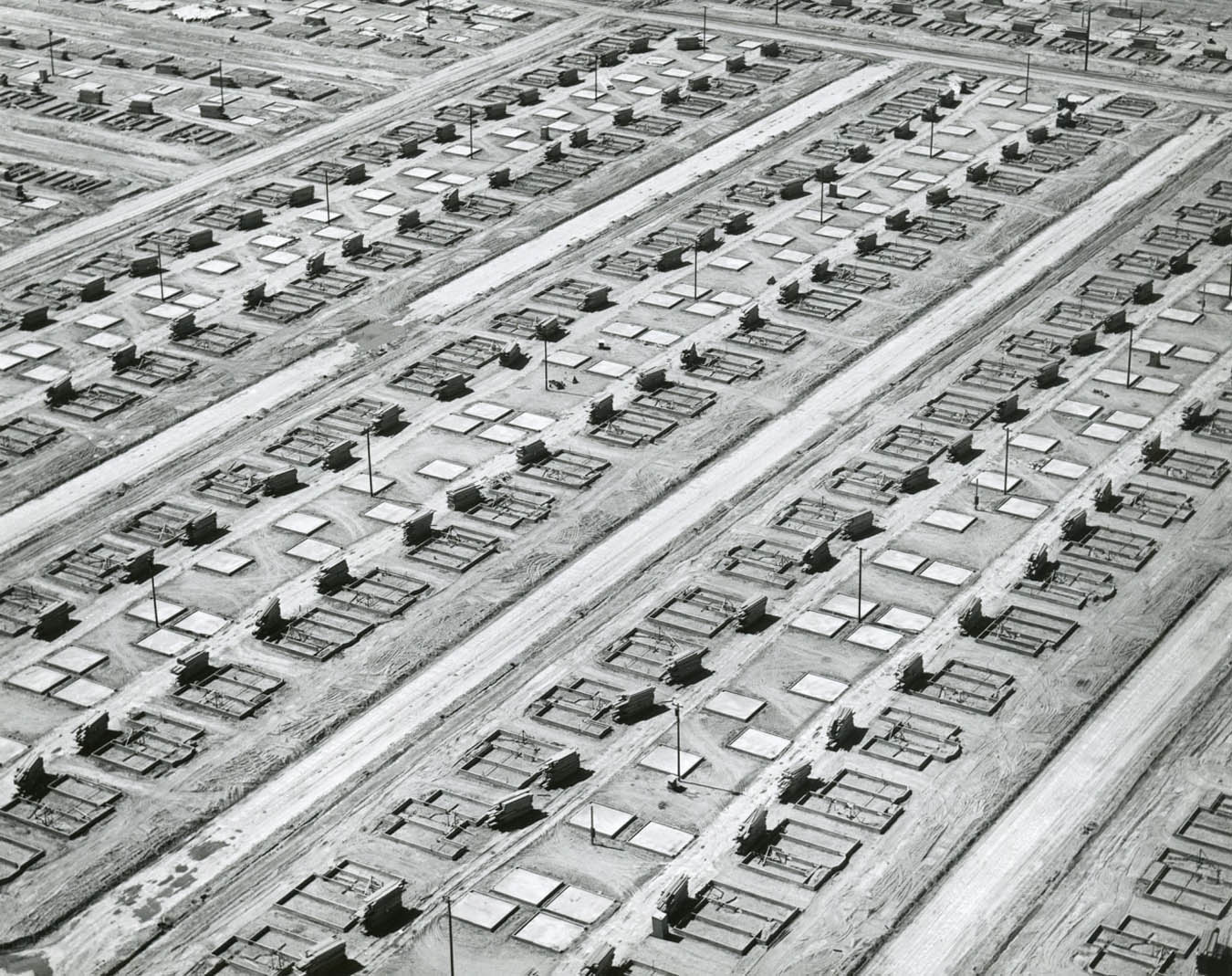
 

William Garnett (American, 1916-2006) 'Foundations and Slabs, Lakewood, California' 1950


William Garnett (American, 1916-2006)
Foundations and Slabs, Lakewood, California
1950
Gelatin silver print
18.9 x 23.8cm
The J. Paul Getty Museum, Los Angeles
© Estate of William A. Garnett
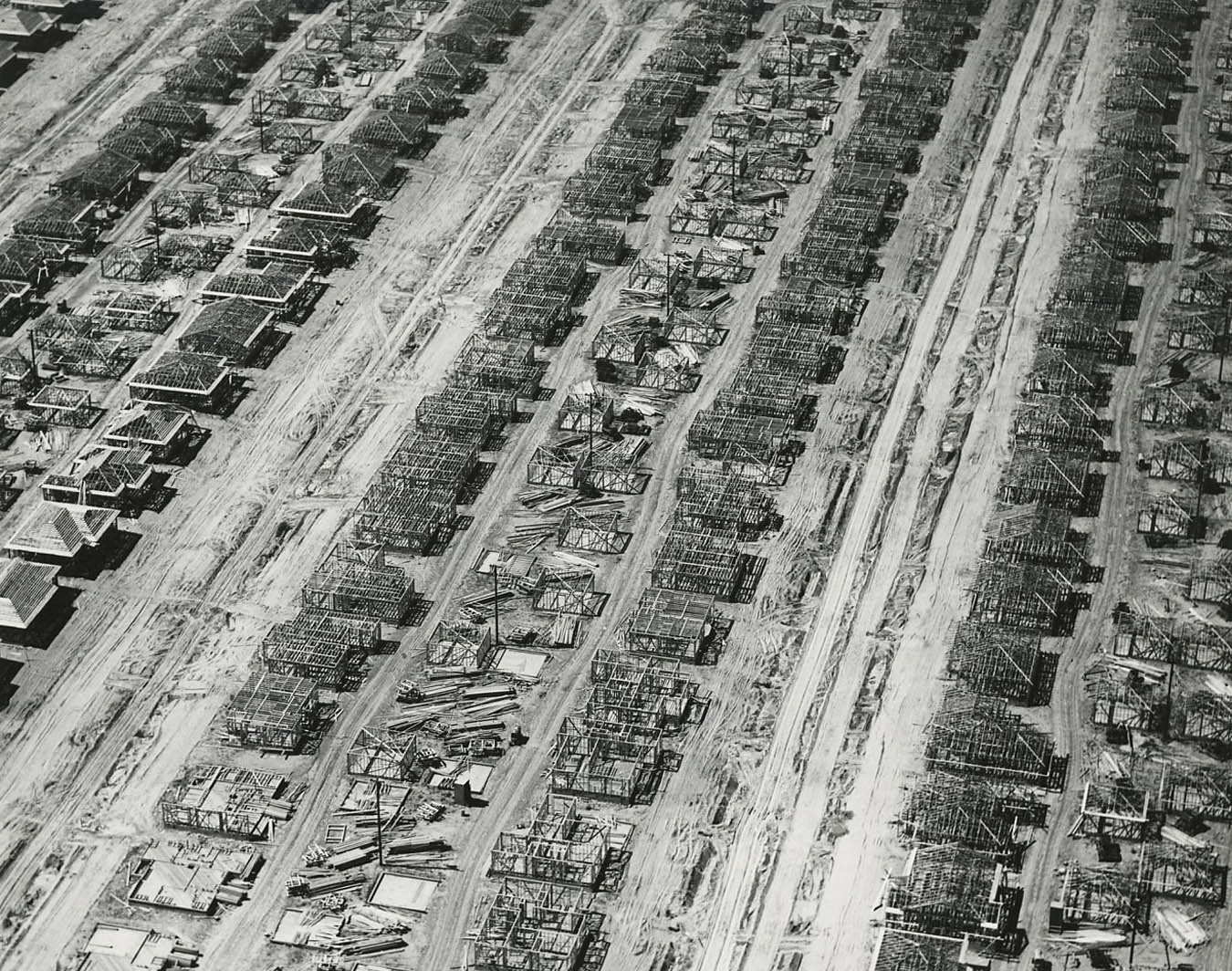
 

William Garnett (American, 1916-2006) 'Framing, Lakewood, California' 1950


William Garnett (American, 1916-2006)
Framing, Lakewood, California
1950
Gelatin silver print
18.4 x 24.1cm
The J. Paul Getty Museum, Los Angeles
© Estate of William A. Garnett
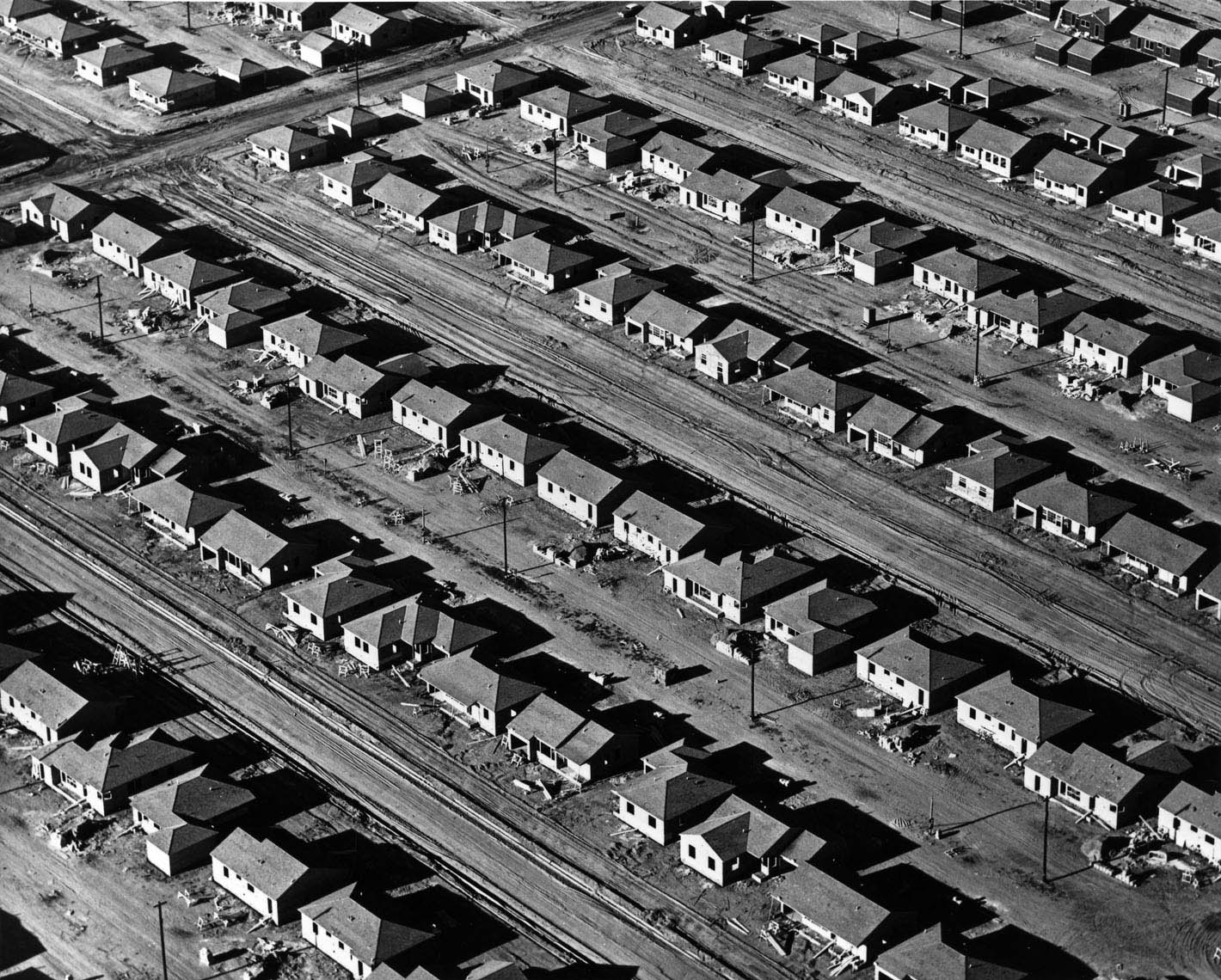
 

William Garnett (American, 1916-2006) 'Plaster and Roofing, Lakewood, California' 1950


William Garnett (American, 1916-2006)
Plaster and Roofing, Lakewood, California
1950
Gelatin silver print
18.4 x 24.1cm
The J. Paul Getty Museum, Los Angeles
© Estate of William A. Garnett
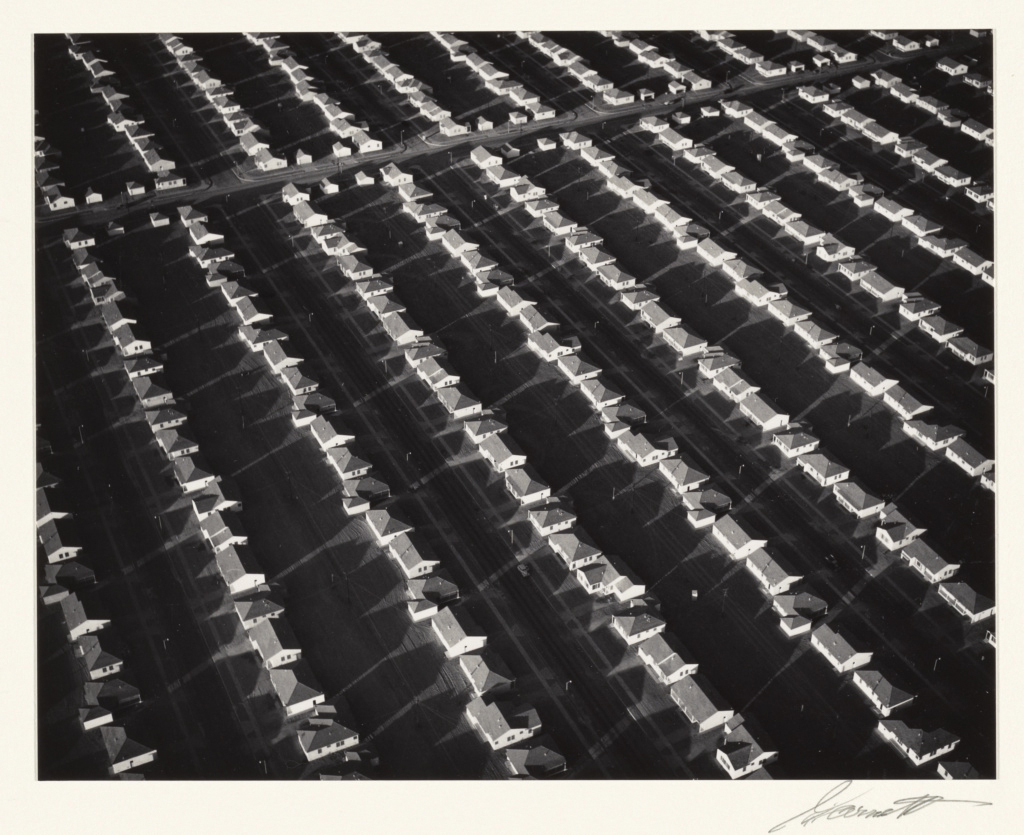
 

William A. Garnett (American, 1916-2006) 'Finished Housing, Lakewood, California' 1950


William A. Garnett (American, 1916-2006)
Finished Housing, Lakewood, California
1950
Gelatin silver print
7 3/8 x 9 7/16 in
The J. Paul Getty Museum, Los Angeles
© Estate of William A. Garnett


The reduced scale and regular spacing of shapes lend a toy-like quality to Garnett’s suite of prints depicting construction phases of tract housing in the Los Angeles County suburb of Lakewood. The deep shadows, overall patterning, and dramatic diagonals that slice through each composition introduce a sophisticated sense of design and abstraction. After studying photography at Art Center College of Design and military service during World War II, William Garnett learned to fly so that he could photograph his subjects from his Cessna 170-B airplane. Although he was hired by developers to document the construction of 17,500 affordable single-family residences in Lakewood, the majority of his aerial photographs depict the beauty of America’s landscape.

Text from Pacific Standard Time at the Getty
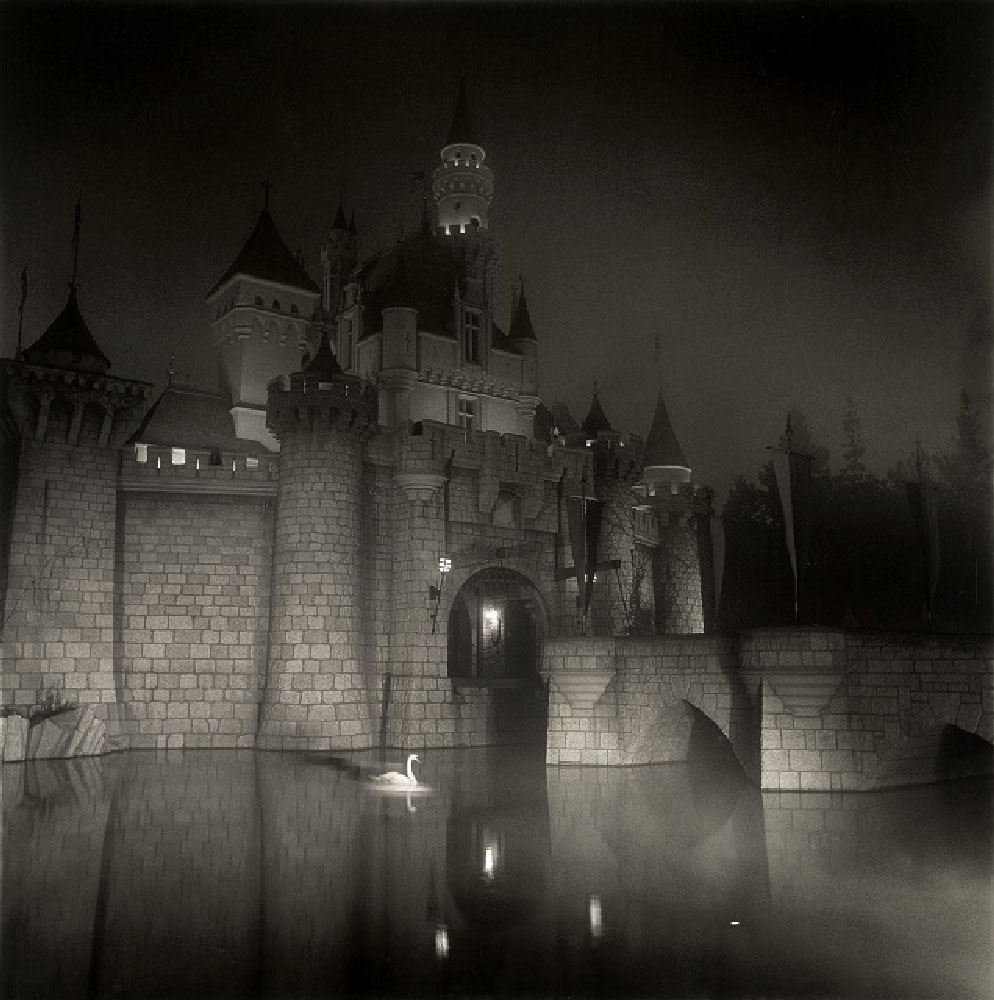
 

Diane Arbus (American, 1923-1971) 'A Castle in Disneyland' Negative, 1962; print, 1973


Diane Arbus (American, 1923-1971)
A Castle in Disneyland
Negative, 1962; print, 1973
Gelatin silver print
24 x 24cm
The J. Paul Getty Museum, Los Angeles
© Estate of Diane Arbus
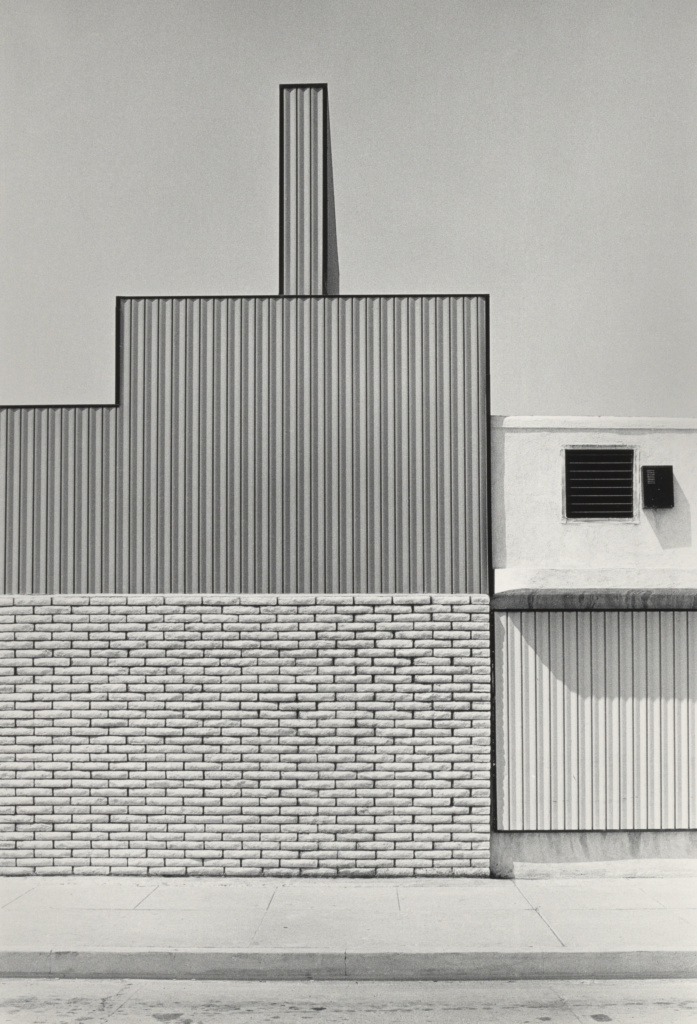
 

Grant Mudford (Australian, b. 1944) 'Los Angeles (US 257/10a)' negative, 1976; print, 1980


Grant Mudford (Australian, b. 1944)
Los Angeles (US 257/10a)
Negative, 1976; print, 1980
Gelatin silver print
19 1/4 x 13 1/8 in
© Grant Mudford


After working for ten years as a commercial photographer, Sydney native Grant Mudford received funding from the Australia Council for the Arts, enabling him to travel throughout the United States to pursue personal work. Mudford’s love of architecture – particularly the vernacular, often anonymous structures of urban America – is evident in the photographs he produced. His head-on depictions of the façades of simple commercial buildings are enlivened by signage, the play of light and shade, the placement of doors and windows, or, as in this image, the rich variety of textures.

Text from Pacific Standard Time at the Getty


Joe Deal (American, 1947-2010) 'Backyard, Diamond Bar, California' 1980


Joe Deal (American, 1947-2010)
Backyard, Diamond Bar, California
1980
Gelatin silver print
11 3/16 x 11 1/4 in
The J. Paul Getty Museum, Los Angeles
© Joe Deal


Joe Deal rose to prominence in the mid-1970s when work he made as a graduate student at the University of New Mexico was included in the exhibition New Topographics: Photographs of a Man-Altered Landscape (1975). From 1976 to 1989, he taught photography at the University of California, Riverside, where he was instrumental in establishing a photography program and developing the university-affiliated California Museum of Photography. His photographs of Diamond Bar feature backyards of this primarily residential suburb located at the junction of the Pomona and Orange freeways in eastern Los Angeles County. Deal’s implementation of a slightly elevated perspective that eliminates the horizon line and provides a view into neighbouring yards effectively conveys the close quarters of life in a master-planned community.

Text from Pacific Standard Time at the Getty
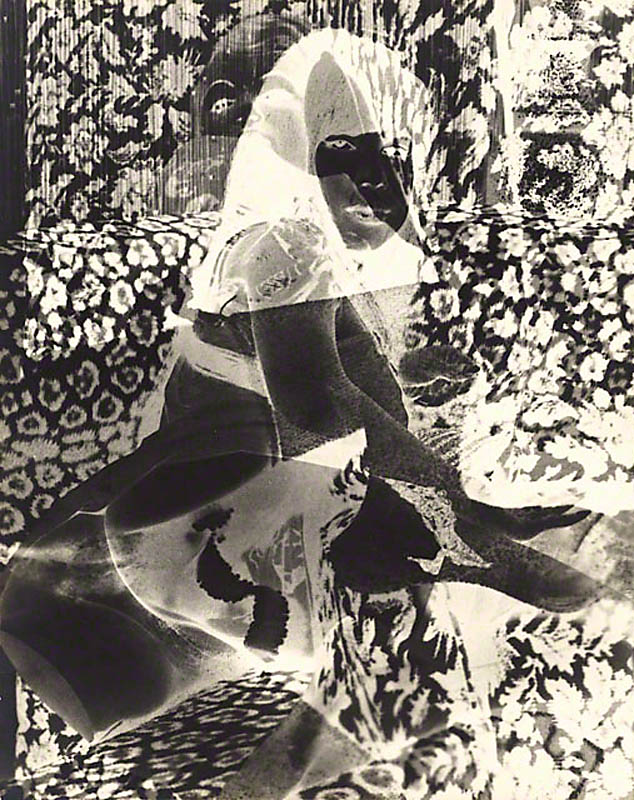
 

Robert Heineken (American, 1931-2006) 'Untitled (Studies #7)' 1970


Robert Heineken (American, 1931-2006)
Untitled (Studies #7)
1970
Gelatin silver print
9 15/16 x 7 15/16 in.
The J. Paul Getty Museum, Los Angeles
© The Estate of Robert Heineken
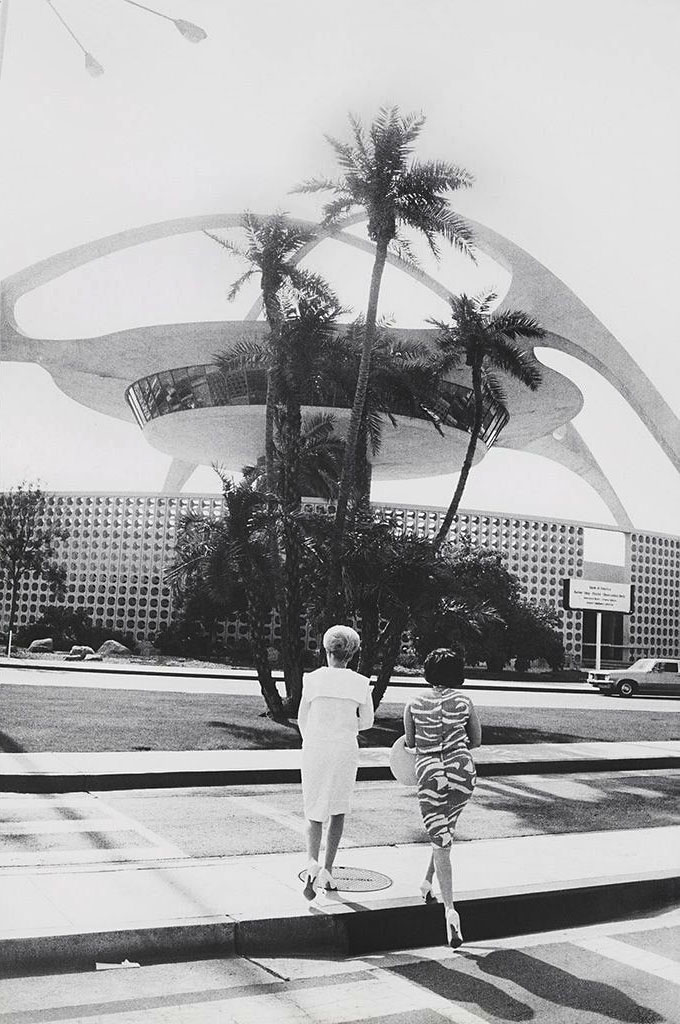
 

Garry Winogrand (American, 1928-1984) 'Los Angeles International Airport' 1964


Garry Winogrand (American, 1928-1984)
Los Angeles International Airport
1964
Gelatin silver print
The J. Paul Getty Museum, Los Angeles
© 1984 The Estate of Garry Winogrand


“It is immediately apparent that no city has ever been produced by such an extraordinary mixture of geography, climate, economics, demography, mechanics and culture; nor is it likely that an even remotely similar mixture will ever occur again.” ~ Reyner Banham, Los Angeles: The Architecture of Four Ecologies, 1971

This exhibition features photographs – made between 1945 and 1980 – from the Museum’s collection that represent diverse responses to the city of Los Angeles as a subject and to photography as a medium for documentary and creative expression. It is loosely grouped around the themes of experimental photography, vernacular architecture, car culture, and fantasy and the film industry.

Both iconic and relatively unknown works are included. One of the best known is Garry Winogrand’s image of two women walking towards the Theme Building at L.A. International Airport (see image above). Though a quintessential New Yorker, Winogrand settled in Los Angeles near the end of his life.

Experimental Photography

With its reclining figure set against a patterned background, Robert Heineken’s image recalls the odalisques of French painter Henri Matisse (see image above). To Heineken, however, traditional subjects and techniques were of little interest. He created this camera-less photograph by using a page torn from a magazine as the negative. This allowed light to pass through and merge depictions on both sides of the page into a single image with reversed tones.

In 1963, Heineken founded the photography program at the University of California, Los Angeles. He forged new directions in photography, utilising strategies of manipulation and appropriation to address themes of consumer culture and sexual politics.

Vernacular Architecture

Judy Fiskin’s propensity to backlight her subjects makes it difficult to read the details in the modest examples of vernacular architecture found in Westside neighbourhoods of Los Angeles that she photographed for her Stucco series. Viewers may be inclined to squint against the harsh light of Southern California that Fiskin makes so palpable. Nevertheless, the small scale of her images, contained by the black edges of the negative, encourages close viewing.

After completing graduate studies in art history at UCLA, Fiskin joined the faculty of the California Institute of Arts in 1977.

Car Culture

A native of Los Angeles, following two years of study at East Los Angeles College and two years of service in the U.S. Army, Anthony Hernandez took up photography in earnest around 1970.

For this image, Hernandez preset his 35mm camera so that objects within a specific range would be in focus. Then, while walking the streets of downtown Los Angeles, he swung the camera to his eye for a fraction of a second to capture fellow pedestrians as well as the ambient mood of a city more typically experienced from the driver’s seat (see image below).

Fantasy and the Film Industry

Los Angeles native Anthony Friedkin took up photography about the same time he learned to surf, and was already an accomplished photographer by age 16. He then studied at Art Center College of Design and the University of California, Los Angeles.

Friedkin began working as a still photographer for motion pictures in 1975. His depiction of row after row of film cans might be viewed as a historical document of a medium that has been replaced by new technology (see image below).

Anonymous. “In Focus: Los Angeles, 1945-1980,” on the J. Paul Getty Museum website Nd [Online] Cited 18/10/2024
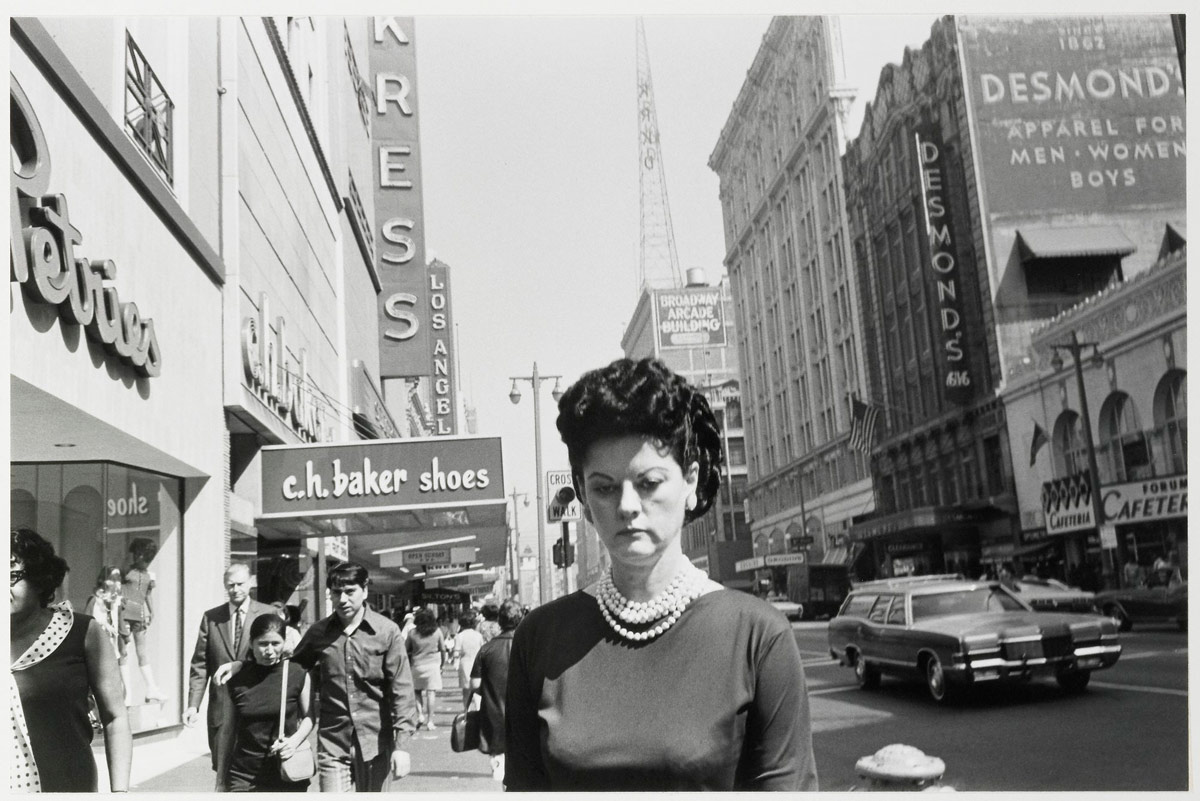
 

Anthony Hernandez (American, b. 1947) 'Los Angeles #3' 1971


Anthony Hernandez (American, b. 1947)
Los Angeles #3
1971
Gelatin silver print
7 3/4 x 11 13/16 in
The J. Paul Getty Museum, Los Angeles
Purchased in part with funds provided by the Photographs Council
© Anthony Hernandez


Following two years of study at East Los Angeles College and two years of service in the U.S. Army, Anthony Hernandez took up photography in earnest around 1970. For this image, he preset his 35mm camera so that objects within a specific range would be in focus. Then, while walking the streets of downtown Los Angeles, he swung the camera to his eye for a fraction of a second to capture fellow pedestrians as well as the ambient mood of a city more typically experienced from the driver’s seat. A native of Los Angeles, Hernandez has continued to photograph the city, addressing issues of community, shelter, and survival in his work.

Text from Pacific Standard Time at the Getty


Anthony Friedkin (American, b. 1949) 'Film Can Library, Universal Studios' 1978


Anthony Friedkin (American, b. 1949)
Film Can Library, Universal Studios
1978
Gelatin silver print
12 x 17 11/16 in
The J. Paul Getty Museum, Los Angeles
Gift of Sue and Albert Dorskind
© Anthony Friedkin


Anthony Friedkin began taking photographs at a young age and had already published his work by the time he was 16. He nonetheless found it important to study photography seriously and did so at Art Center College of Design and the University of California, Los Angeles. Employment as a still photographer for motion pictures beginning in 1975 undoubtedly prepared him to create a portfolio of images of Universal Studios a few years later. His depiction of row after row of film cans might be viewed as a historical document of a medium that has been replaced by new technology. Friedkin’s continued commitment to shooting black-and-white film that he develops and prints in his own darkroom has become increasingly rare.

Text from Pacific Standard Time at the Getty


Darryl J. Curran (American, b. 1935) 'Cocktails with Heinecken' about 1974


Darryl J. Curran (American, b. 1935)
Cocktails with Heinecken
about 1974
Gelatin silver print
9 1/4 x 14 in
The J. Paul Getty Museum, Los Angeles
Gift of Darryl J. Curran
© Darryl J. Curran


After completing his undergraduate degree in design at the University of California, Los Angeles, Darryl Curran entered the school’s newly established photography program, studying with Robert Heinecken, who is positioned toward the center of this image in a black turtleneck. The repeated printing of two frames is typical of Curran’s approach to the photographic medium and the ease with which he employs techniques and strategies derived from his background in printmaking and design. Another form of “mirroring” occurs in the placement of a Heineken beer bottle opposite Heinecken the artist. Curran founded the Department of Photography at California State University, Fullerton, where he taught from 1967 to 2001.

Text from Pacific Standard Time at the Getty
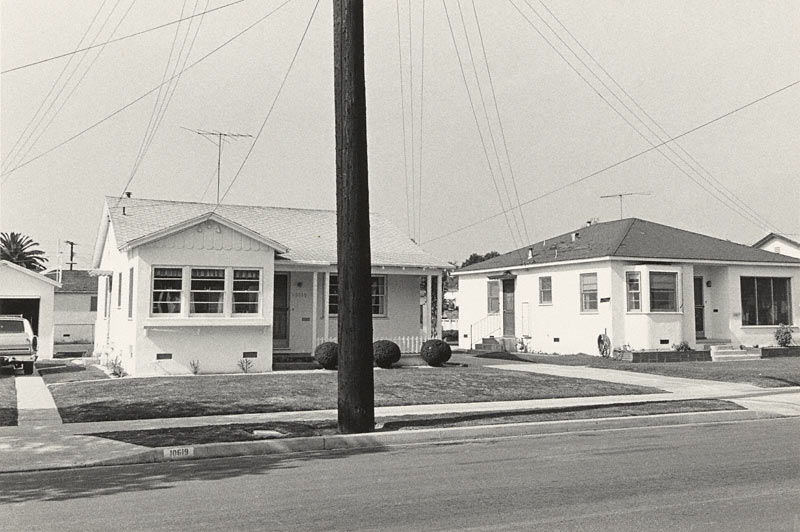
 

Henry Wessel Jr. (American, 1942-2018) 'Los Angeles' 1971


Henry Wessel Jr. (American, 1942-2018)
Los Angeles
1971
Gelatin silver on Dupont Veragam paper print
7 15/16 x 11 7/8 in
The J. Paul Getty Museum, Los Angeles
Purchased with funds provided by the Photographs Council of the J. Paul Getty Museum
© Henry Wessel


Henry Wessel began taking photographs while majoring in psychology at Pennsylvania State University in the mid-1960s. Travel throughout the United States in subsequent years led him to direct his gaze increasingly to details of human interaction with the natural and man-made environment. Wessel’s move to the West Coast in the early 1970s inspired him to incorporate light and climate into his work. His inclusion in the seminal exhibition New Topographics: Photographs of a Man-Altered Landscape, organised in 1975 by the George Eastman House in Rochester, New York, solidified his reputation as a keen observer of the American topography. In this image, electrical and telephone lines tether a row of modest residences to a single utility pole.

Text from Pacific Standard Time at the Getty


The J. Paul Getty Museum
1200 Getty Center Drive
Los Angeles, California 90049

Opening hours:
Daily 10am – 5pm

The J. Paul Getty Museum website

LIKE ART BLART ON FACEBOOK

Back to top

Exhibition: ‘Berenice Abbott (1898-1991), Photographs’ at Jeu de Paume, Paris

Exhibition dates: 21st February – 29th April 2012

Curator: Gaëlle Morel


Berenice Abbott (American, 1898-1991) 'New York Stock Exchange, New York City' 1933


Berenice Abbott (American, 1898-1991)
New York Stock Exchange, New York City
1933
Gelatin silver print
24 x 19cm
Ronald Kurtz / Commerce Graphics
© Berenice Abbott / Commerce Graphics Ltd, Inc.


It is not her portraits or the road trip photographs, nor her scientific work for which Berenice Abbott will be remembered. Firstly, she will always be remembered as the person who photographed Eugene Atget in 1927 just before he died and who bought the remainder of his negatives (after the French government had bought over 2,000 in 1920 and another 2,000 had been sold after his death). She then tirelessly promoted Atget’s work helping him gain international recognition until her sale of the archive to the Museum of Modern Art in 1968. Secondly, she is remembered for her magnificent photographs of New York City and its urban environs, photographs that show the influence of Atget in their attention to detail and understanding of the placement of the camera, and imaging of old and new parts of the city (much as Atget had photographed old Paris before it was destroyed). However, these photographs are uniquely her own, with their modernist New Vision aesthetic, bold perspectives and use of deep chiaroscuro to enhance form within the photograph. Abbott’s best known project, Changing New York (1935-1939) eventually consisted of 305 photographs that document the buildings of Manhattan, some of which are now destroyed. As the text on Wikipedia insightfully notes:

“Abbott’s project was primarily a sociological study imbedded within modernist aesthetic practices. She sought to create a broadly inclusive collection of photographs that together suggest a vital interaction between three aspects of urban life: the diverse people of the city; the places they live, work and play; and their daily activities. It was intended to empower people by making them realise that their environment was a consequence of their collective behaviour (and vice versa). Moreover, she avoided the merely pretty in favour of what she described as “fantastic” contrasts between the old and the new, and chose her camera angles and lenses to create compositions that either stabilised a subject (if she approved of it), or destabilised it (if she scorned it).”


In the text below Gaëlle Morel observes, “Rather than the kind of nostalgic approach often brought to bear on a city’s landmarks and typical sites, this ensemble offers an exploration of the nature of modernity and focuses on the ways in which the past and future are temporarily linked together. Seeking to reinvent the forms and functions of photography in relation to the practice of documentary, Abbott sets out to capture the “disappearance of the moment” by juxtaposing motifs from a city subject to an unprecedented process of demolition and reconstruction.”

While Abbott’s photographs are definitely modernist in nature I believe that today they can also be seen as deeply nostalgic, emerging as they do in the period after the Great Depression when the economy was on the move again, a peaceful time before the oncoming armageddon of the Second World War, closely followed by the fear of nuclear annihilation and the threat of communist indoctrination. They are timeless portraits of a de/reconstructed city. The images seem to float in the air, breathe in the shadows. This is the disappearance of the moment into the enigma of past, present, future – where the photograph becomes eternal, where the best work of both Atget and Abbott resides.

Dr Marcus Bunyan


Many thankx to Jeu de Paume for allowing me to publish the photographs in the posting. Please click on the photographs for a larger version of the image.


Berenice Abbott (American, 1898-1991) 'Treasury Building, New York City' 1933


Berenice Abbott (American, 1898-1991)
Treasury Building, New York City
1933
Gelatin silver print
51 x 40.5cm
Ronald Kurtz / Commerce Graphics
© Berenice Abbott / Commerce Graphics Ltd, Inc.


Architecture

“The tempo of the city is not that of eternity, nor that of time, but that of the ephemeral. That is why recording it is so important, in both documentary and artistic terms.”

“All the photographs of New York took a long time to make, because the camera had to be carefully positioned. There is nothing fortuitous about these photographs.”


The exhibition features a substantial collection from Abbott’s best known project, Changing New York (1935-1939). Commissioned by the Roosevelt administration as part of its response to the nationwide economic crisis, Abbott saw this piece of work as both a way of documenting the City and as a personal work of art. Eighty of the 305 photographs taken by Abbott are on show here, along with various documents providing insight into the background of this major photographic undertaking, including posters and views of the exhibition organised by the Museum of the City of New York in 1937, sketches and historical notes made by the team of journalists working with Abbott on the project, and proofs and dummies of the layout made by the photographer before she started work.

Abbott homes in on the contrasts between old and new elements in the City’s structure. Her images alternate between a New Vision aesthetic, characterised by an emphasis on details and bold perspectives, and a more documentary style that is frontal and neutral. Rather than the kind of nostalgic approach often brought to bear on a city’s landmarks and typical sites, this ensemble offers an exploration of the nature of modernity and focuses on the ways in which the past and future are temporarily linked together. Seeking to reinvent the forms and functions of photography in relation to the practice of documentary, Abbott sets out to capture the “disappearance of the moment” by juxtaposing motifs from a city subject to an unprecedented process of demolition and reconstruction.

In 1938, hoping to take advantage of the fifty million visitors expected at the New York World’s Fair of 1939, the publisher, E.P. Dutton, offered to bring out a selection of one hundred images from the project accompanied by a text by the renowned art critic Elizabeth McCausland, who also happened to be Abbott’s companion and staunch supporter. Going against the women’s original ideas for an art book, Dutton produced a more standard tourist guide, breaking the City down into a series of tours, from south to north and from the centre outwards. The text, too, was shorn of its poetic and pedagogical dimensions, leaving only informative entries about the buildings in the pictures.

In the exhibition, this set of architectural photographs is rounded out by a selection of pictures of vernacular architecture taken by Abbott during a journey in the southern states of the US in the 1930s and when she was travelling along Route 1 in the 1950s. Here, portraits of farmers and wooden houses alternate with pictures of streets and local events.

Berenice Abbott Petit Journal

With over 120 photographs, plus a selection of books and documents never shown before, this is the first exhibition in France to cover the many different facets of the American photographer Berenice Abbott (1898-1991), who is also famous for her international advocacy of Eugène Atget. She came to Paris in 1921 where she learnt her craft from Man Ray before opening her own studio and embarking on a successful career as a portraitist. Returning to New York City in 1929, she conceived what remains her best‑known project, Changing New York (1935-1939). This was financed by the Works Progress Administration as part of its response to the economic crisis sweeping the country. The photographs she took in 1954 when travelling along the US East Coast on Route 1 (the exhibition presents a previously unseen selection of these images) reflect her ambition to represent the whole of what she called the “American scene.” Furthermore, in the 1950s, she also worked on a set of images for the Massachusetts Institute of Technology (MIT) designed to illustrate the principles of mechanics and light for educational purposes.

A committed member of the avant‑garde from the early 1920s, and a staunch opponent of Pictorialism and the school of Alfred Stieglitz, Abbott spent the whole of her career exploring the limits and nature of documentary photography and photographic realism. This exhibition shows the rich array of her interests and conveys both the unity and diversity of her work.

Portraits

Berenice Abbott moved to New York City in the early 1920s and went about becoming a sculptor. Mixing in the bohemian circles of Greenwich Village, she met writers and artists such as Djuna Barnes, Sadakichi Hartmann and Marcel Duchamp. She also posed for Man Ray. Economic hardship at home and the allure of what then seemed the cultural Eldorado of Europe impelled several of these artists to try their luck in Paris, and Abbott herself joined this group of American expatriates in 1921.

In 1923 she became the assistant of Man Ray, who had opened a portrait studio shortly after his arrival in France in 1921. While a fair portion of the studio’s clients were American tourists, Abbott found herself at the heart of the avant-garde scene – especially that of the Surrealists. Between 1923 and 1926 she thus learnt about darkroom techniques and portrait photography while at the same time picking up a broader intellectual and artistic education. She produced her portraits in Man Ray’s studio before opening her own in 1926. Success soon followed. Her clientele was a mixture of French cultural figures and American expatriates, of bourgeois, bohemians and literary types. Her portraits were on occasion manifestly influenced by Surrealism, and more generally show an interest in masquerade, play and disguise, but sometimes even in their use of overprinting and distortion.

The female models express a kind of sexual ambiguity, notably by their masculine haircut or clothes, deliberately exuding a sense of uncertainty with regard to their identity. In composing her portraits, Abbott developed a distinctive aesthetic, far removed from the usual commercial conventions. The absence of a set, with the background usually no more than a plain wall, helped to focus on the sitter and their posture, the position of their body and their facial expression. The use of a tripod and long-focus lenses placed at eye-height allowed her to avoid distortions and thus heighten the physical presence of the models. In early 1929 Abbott left Paris for New York City. Back in America she continued with the same activities, opening a new portrait studio and taking part in exhibitions of modernist photography, while also promoting the work of Eugène Atget, having bought part of his estate in 1928.

New York City

In the early 1930s, Abbott set about her project for a great documentary portrait of the City of New York, but had no luck when she approached institutions such as the Museum of the City of New York and the New York Historical Society for funding. She assembled her first efforts in an album (eight pages of which are exhibited here) in order to convey the scale of her ambitious undertaking, and in 1934 exhibited her photographs of the City at the Museum of the City of New York in the hope of attracting sponsors. In 1935, support was at last forthcoming from the Federal Art Project, a programme set up to aid artists by the Works Progress Administration as part of the New Deal; she now had the support of a team of researchers who produced an information pack with text and drawings to accompany each image. Entitled Changing New York, she conceived this commission as both a vast documentary record of the City and a personal work of art. Eighty of the 305 photographs constituting this project have been selected for the exhibition. These are accompanied by documents – a poster, exhibition views, sketches and historical notes, proofs, pages from the preparatory album and original editions – that help to convey the concerns and ambitions behind this major photographic undertaking.

Abbott focused on the contrasts and links between old and new in the City’s structure. Her images alternate between a New Vision aesthetic, characterised by an emphasis on details and bold perspectives, and a more documentary style that is frontal and neutral. Rather than the kind of nostalgic approach often brought to bear on a city’s landmarks and typical sites, this ensemble offers an exploration of the nature of modernity and focuses on the ways in which the past and future are temporarily linked together. Seeking to reinvent the forms and functions of photography in relation to the practice of documentary, Abbott sets out to capture the “vanishing instant” by juxtaposing motifs from a city subject to an unprecedented process of demolition and reconstruction.

The upshot of all this work was the publication of a book, Changing New York, in 1939. But there was considerable tension between the publisher, whose concerns were commercial, and the photographer, with her artistic ambitions. In 1938, hoping to take advantage of the fifty million visitors expected at the New York World’s Fair of 1939, the publishing house E.P. Dutton proposed to bring out a selection of one hundred images from the project accompanied by a text from the renowned art critic Elizabeth McCausland, who also happened to be Abbott’s companion and unfailing supporter. Straying far from the project originally envisaged by the two women, Dutton changed the presentation of the photographs and produced what was a standard tourist guide, breaking the City down into a series of tours, from south to north and from the centre outwards. The text, too, was shorn of its poetic and pedagogical dimensions, leaving only information about the buildings in the pictures.

The “American scene”

This set of architectural images is completed by a selection of vernacular photographs. In the summer of 1935, Berenice Abbott went on a road trip down to the Southern US in order to create a portrait of a rural world in crisis. Choosing the kind of documentary style that would be the hallmark of the photographic survey launched by the Farm Security Administration (FSA) that same year, she focused on the modest wooden houses and the farmers. Driving around these states with Elizabeth McCausland, Abbott took some two hundred photographs which the two women saw as part of an ambitious photographic portrait of America in book form, although in the end this was never published. A similar fate befell Abbott’s piece on the small towns and villages along Route 1, which she travelled in 1954. Covering approximately 6,500  kilometres as she followed this road along the East Coast of the US, she took some 2,400 photographs, taking in stalls, shops, portraits of farmers, diners and bars and dance halls. Her photography alternated between the documentary aesthetic and Street Photography. With Route 1, Abbott continued to pursue her ambition of representing the whole of the “American scene.”

Science

Abbott started photographing scientific phenomena in 1939. In 1944 she was recruited by the journal Science Illustrated, where she published some of her own pictures, as head of its photography department. Abbott took a committed, pedagogical approach, seeing her images as a vital bridge between modern science and the general public. In 1957, as a result of the anxiety about national science stirred by the Soviet launch of the Sputnik into outer space, at the height of the Cold War, the National Science Foundation set up a Physical Science Study Committee at Massachusetts Institute of Technology. Its role was to develop new textbooks for the teaching of science in schools and to use innovative photographs to illustrate the principles of quantum mechanics. Abbott was hired by MIT to produce photographs for the popularisation and teaching of the sciences. Using abstract forms to visually express complex mechanical concepts and invisible mechanical laws, she used black grounds to reveal principles such as gravity and light waves. The exhibition features a score of Abbott’s scientific and experimental images, as well as some of the books for which they were used. Harking back to the experiments of the avant-gardes, and in particular the Rayogram technique, she was able to produce visually attractive and surprising images that were also rich in discovery, thus combining documentary information with a sense of wonder.”

Text by Gaëlle Morel, curator of the exhibition, on the Jeu de Paume website


Presentation of the exhibition Berenice Abbott

The exhibition “Berenice Abbott (1898-1991), photographies” reveals for the first time in France the different stages of the career of this American photographer. This retrospective offers more than 120 photographs, original works and a series of unpublished documents. By presenting portraits, architectural photographs and scientific shots, the exhibition shows the multiple facets of a work often reduced to a few images.


Berenice Abbott (American, 1898-1991) 'Triborough Bridge, East 125th Street Approach, New York City, June 29, 1937'


Berenice Abbott (American, 1898-1991)
Triborough Bridge, East 125th Street Approach, New York City, June 29, 1937
1937
Gelatin silver print
24.5 x 19cm
Museum of the City of New York. Gift of the Metropolitan Museum of Art
© Berenice Abbott / Commerce Graphics Ltd, Inc.


Berenice Abbott (American, 1898-1991) 'Broadway to the Battery, New York City, May 4, 1938' 1938


Berenice Abbott (American, 1898-1991)
Broadway to the Battery, New York City, May 4, 1938
1938 
Gelatin silver print
17.5 x 24cm
Museum of the City of New York
Museum Purchase with funds from the Mrs. Elon Hooker Acquisition Fund
© Berenice Abbott / Commerce Graphics Ltd, Inc.


Berenice Abbott (American, 1898-1991) 'Flat Iron Building, Broadway and Fifth Avenue, New York City' 1938


Berenice Abbott (American, 1898-1991)
Flat Iron Building, Broadway and Fifth Avenue, New York City
1938
Gelatin silver print
101.5 x 76cm
Ronald Kurtz / Commerce Graphics
© Berenice Abbott / Commerce Graphics Ltd, Inc.


Berenice Abbott (American, 1898-1991) 'Blossom Restaurant, 103 Bowery, New York City, October 24, 1935' 1935


Berenice Abbott (American, 1898-1991)
Blossom Restaurant, 103 Bowery, New York City, October 24, 1935
1935
Gelatin silver print
19 x 24.5cm
Museum of the City of New York
Gift of the Metropolitan Museum of Art
© Berenice Abbott / Commerce Graphics Ltd, Inc.


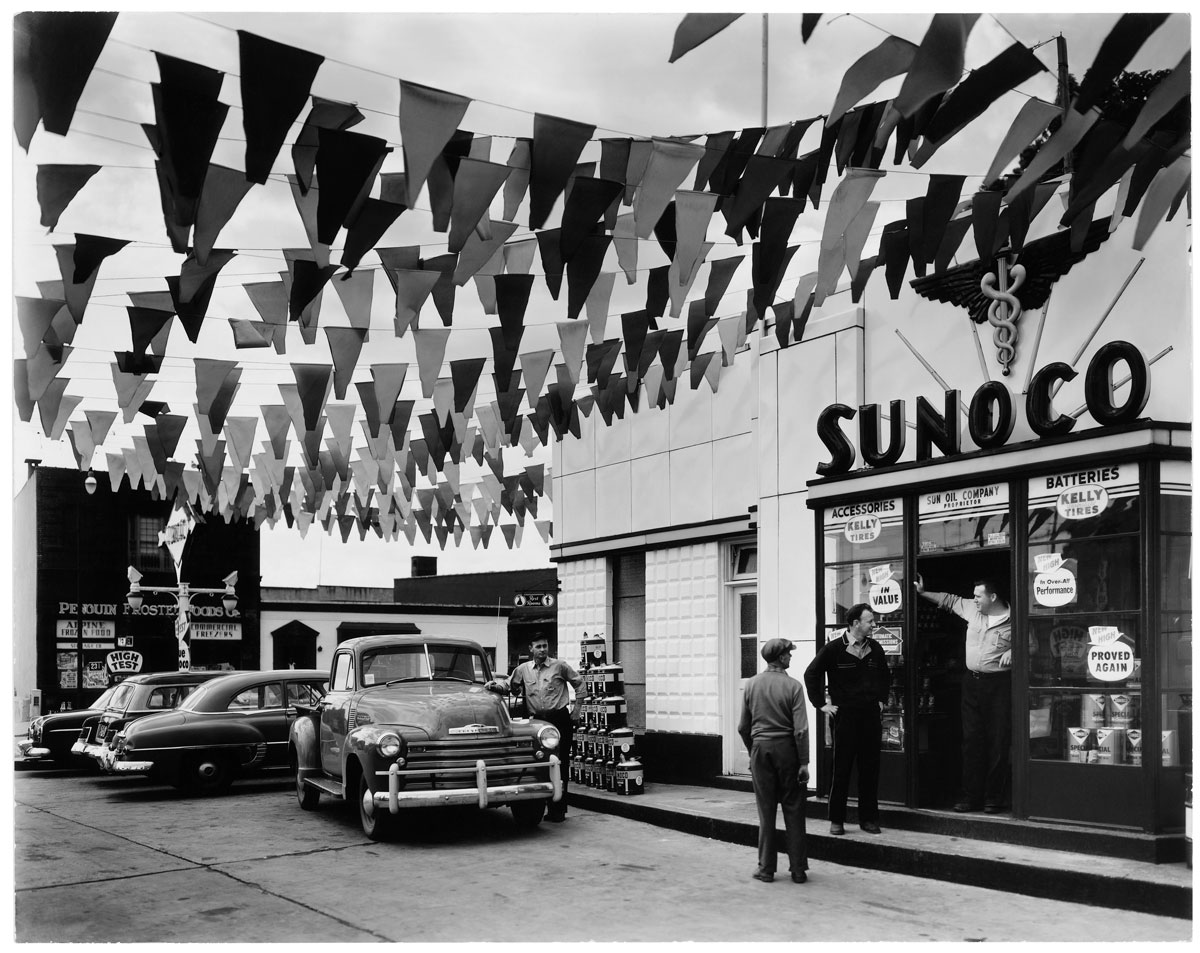
Berenice Abbott (American, 1898-1991) 'Sunoco Station, Trenton, New Jersey' 1954


Berenice Abbott (American, 1898-1991)
Sunoco Station, Trenton, New Jersey
1954
Gelatin silver print
19 x 24.5cm
Ronald Kurtz / Commerce Graphics
© Berenice Abbott / Commerce Graphics Ltd, Inc.


Berenice Abbott (American, 1898-1991) 'Park Avenue and 39th Street, New York' 1936


Berenice Abbott (American, 1898-1991)
Park Avenue and 39th Street, New York
1936
Gelatin silver print
19 x 24.5cm
© Berenice Abbott / Commerce Graphics Ltd, Inc.


Berenice Abbott (American, 1898-1991) 'Gunsmith and Police Department Headquarters, 6 Centre Market Place and 240 Centre Street, New York City, February 4, 1937' 1937


Berenice Abbott (American, 1898-1991)
Gunsmith and Police Department Headquarters, 6 Centre Market Place and 240 Centre Street, New York City, February 4, 1937
1937 
Gelatin silver print
19 x 24.5cm
Museum of the City of New York
Gift of the Metropolitan Museum of Art
© Berenice Abbott / Commerce Graphics Ltd, Inc.


Berenice Abbott (American, 1898-1991) 'Happy's Refreshment Stand, Daytona Beach, Florida' 1954


Berenice Abbott (American, 1898-1991)
Happy’s Refreshment Stand, Daytona Beach, Florida
1954
Gelatin silver print
29.5 x 28cm
Ronald Kurtz / Commerce Graphics
© Berenice Abbott / Commerce Graphics Ltd, Inc.


Berenice Abbott. 'Miner, Greenview, West Virginia' 1935


Berenice Abbott (American, 1898-1991)
Miner, Greenview, West Virginia
1935
Gelatin silver print
25 x 19cm
Ronald Kurtz / Commerce Graphics
© Berenice Abbott / Commerce Graphics Ltd, Inc.


Berenice Abbott (American, 1898-1991) 'Jean Cocteau with a revolver' 1926


Berenice Abbott (American, 1898-1991)
Jean Cocteau with a revolver
1926
Gelatin silver print
35.5 x 28cm
Ronald Kurtz / Commerce Graphics.
© Berenice Abbott / Commerce Graphics Ltd, Inc.


Berenice Abbott (American, 1898-1991) 'Eugène Atget' 1927


Berenice Abbott (American, 1898-1991)
Eugène Atget
Paris, 1927
Gelatin silver print
© Berenice Abbott/Commerce Graphics.


Jeu de Paume
1, place de la Concorde
75008 Paris
métro Concorde
Phone: 01 47 03 12 50

Opening hours:
Tuesday – Friday: 12am – 8pm
Saturday and Sunday: 11am – 7pm
Closed Monday

Jeu de Paume website

LIKE ART BLART ON FACEBOOK

Back to top

Video: New Australian Pavilion for the Venice Biennale by architects Denton Corker Marshall

April 2012


Australian Pavilion Venice Flythrough from Australia Council for the Arts


The outside looks vaguely interesting – the aspect of the building within its surroundings and how it fits into the landscape – but really it is just a safe, unthreatening and conformist structure. The inside is the usual white cube. Says it all really that the inside rates about 5 seconds of the whole video!

Dr Marcus Bunyan


LIKE ART BLART ON FACEBOOK

Back to top

Exhibition: ‘The Photographs of Brett Weston’ at the The Nelson-Atkins Museum of Art, Kansas City

Exhibition dates: 23rd November 2011 – 25th March 25 2012


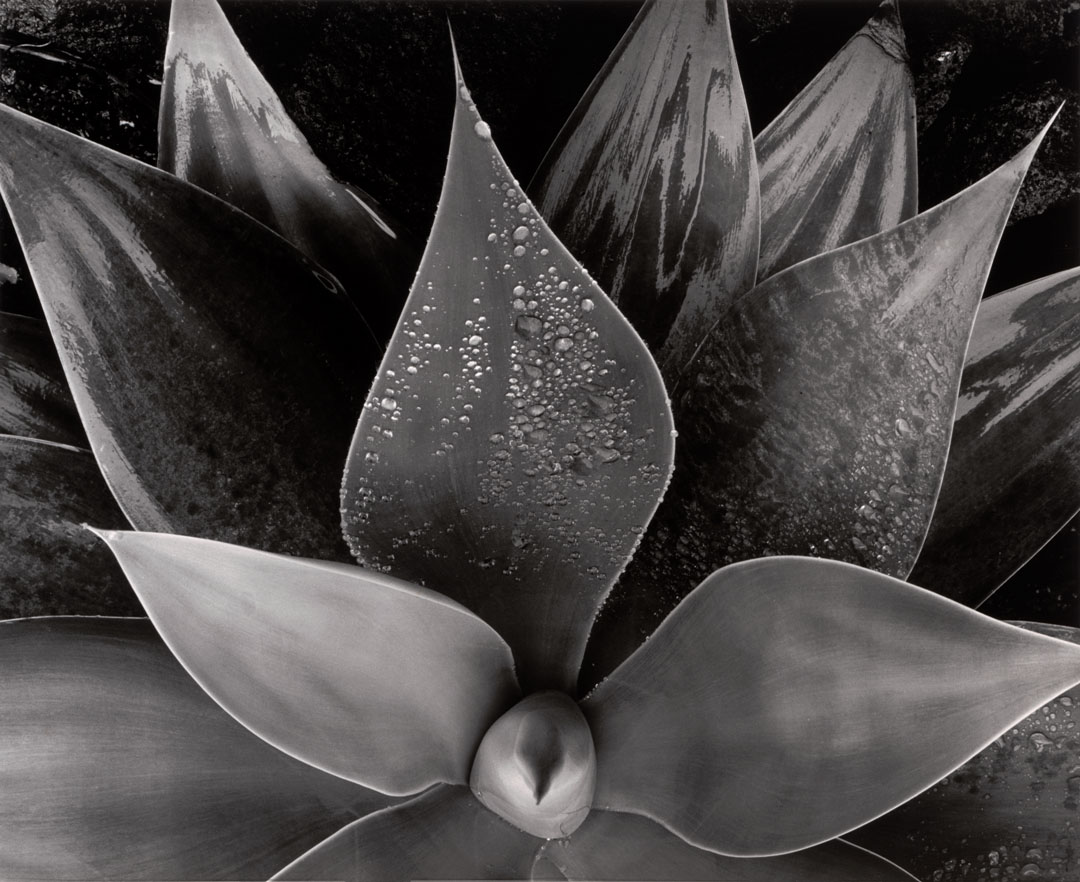
Brett Weston (American, 1911-1993) 'Botanical' c. 1975


Brett Weston (American, 1911-1993)
Botanical
c. 1975
Gelatin silver print
Unframed: 11 x 14 inches (27.94 x 35.56cm)
The Nelson-Atkins Museum of Art
Gift from the Christian K. Keesee Collection
© The Brett Weston Archive


Brett Weston’s pictures are ageing well – the decorative aesthetic seems to have more currency today than previously when the values of his father were predominant. Perhaps this has to do with the continuing influence of the Bechers and the exhibition New Topographics: Photographs of a Man Altered Landscape (1975). Although Weston photographs nature there is a beautiful, reductive minimalism to his photographs, an enticing simplicity of light and form that could be seen as decorative but today has taken on more symbolic weight; man and nature under threat, with hints of Atget and Wynn Bullock in the mix as well. Under that seeming simplicity are sophisticated photographs that take a good eye to capture and bring to life – what seems simple isn’t by any means. The light is beautiful, the sensitivity to subject present beyond doubt. His photographs will only gain greater currency in the future.

Dr Marcus Bunyan


Many thankx to The Nelson-Atkins Museum of Art for allowing me to publish the photographs in the posting. Please click on the photographs for a larger version of the image.


Brett Weston (American, 1911-1993) 'Snow' c. 1970


Brett Weston (American, 1911-1993)
Snow
c. 1970
Gelatin silver print
Unframed: 11 x 14 inches (27.94 x 35.56 cm)
The Nelson-Atkins Museum of Art
Gift from the Christian K. Keesee Collection
© The Brett Weston Archive


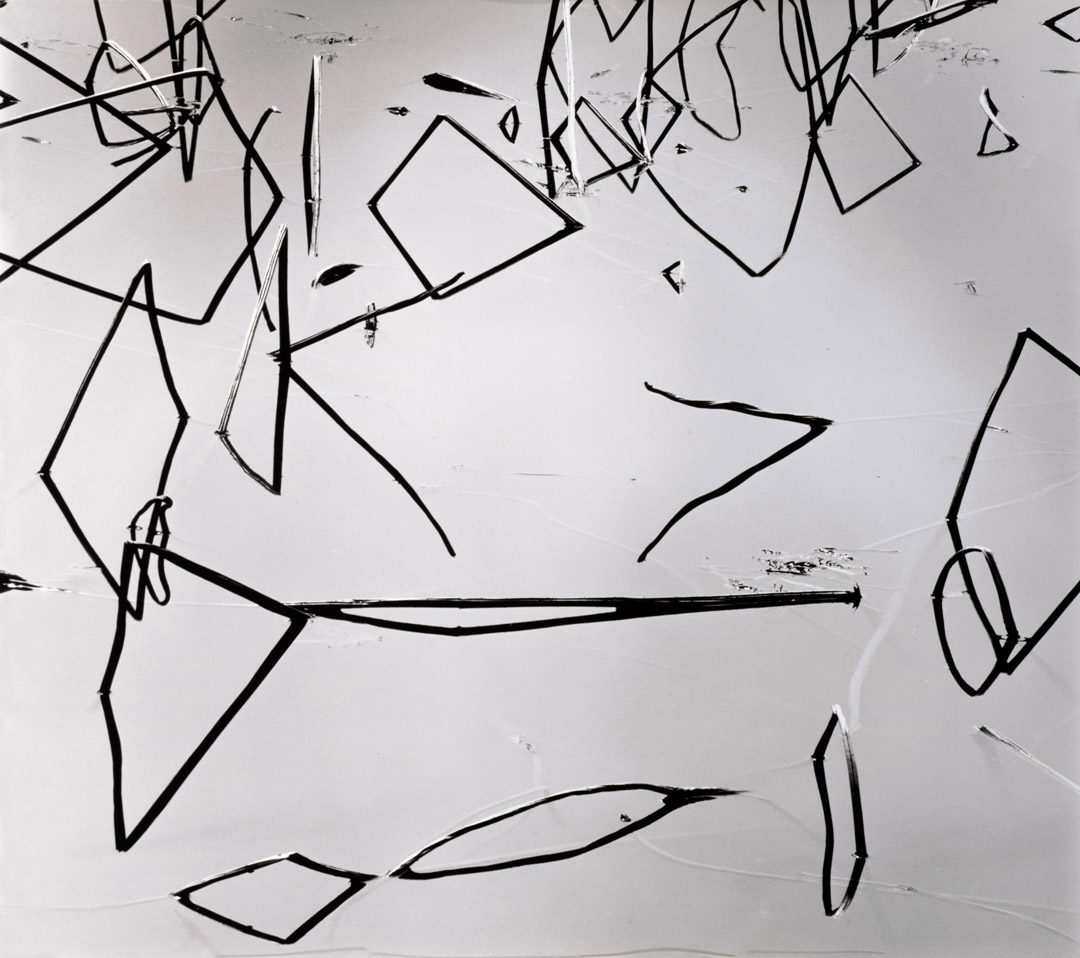
Brett Weston (American, 1911-1993) 'Water' 1970


Brett Weston (American, 1911-1993)
Water
1970
Gelatin silver print
Unframed: 11 x 14 inches (27.94 x 35.56cm)
The Nelson-Atkins Museum of Art
Gift from the Christian K. Keesee Collection
© The Brett Weston Archive


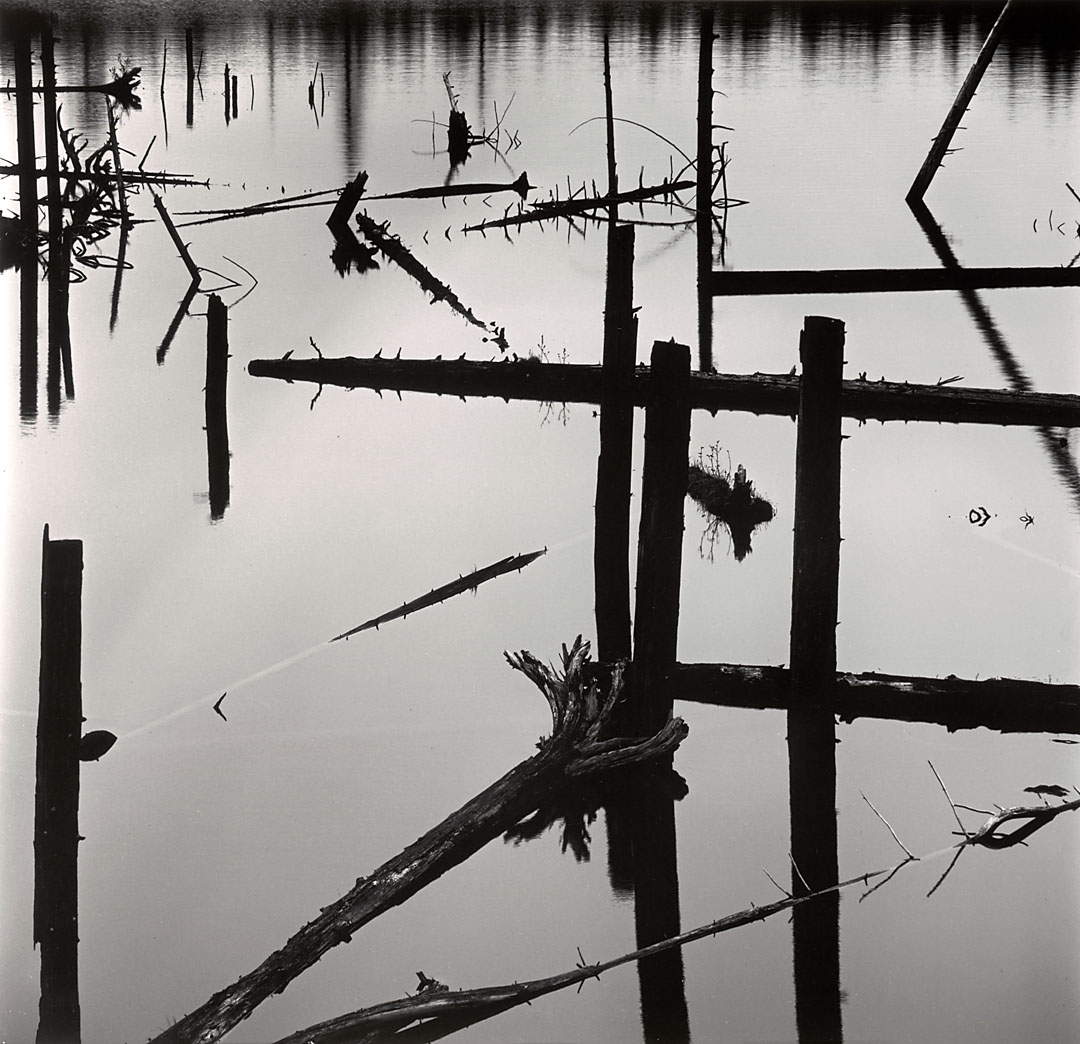
Brett Weston (American, 1911-1993) 'Water Reflection, Logging, Alaska' 1973


Brett Weston (American, 1911-1993)
Water Reflection, Logging, Alaska
1973
Gelatin silver print
Unframed: 11 x 14 inches (27.94 x 35.56cm)
The Nelson-Atkins Museum of Art
Gift from the Christian K. Keesee Collection
© The Brett Weston Archive


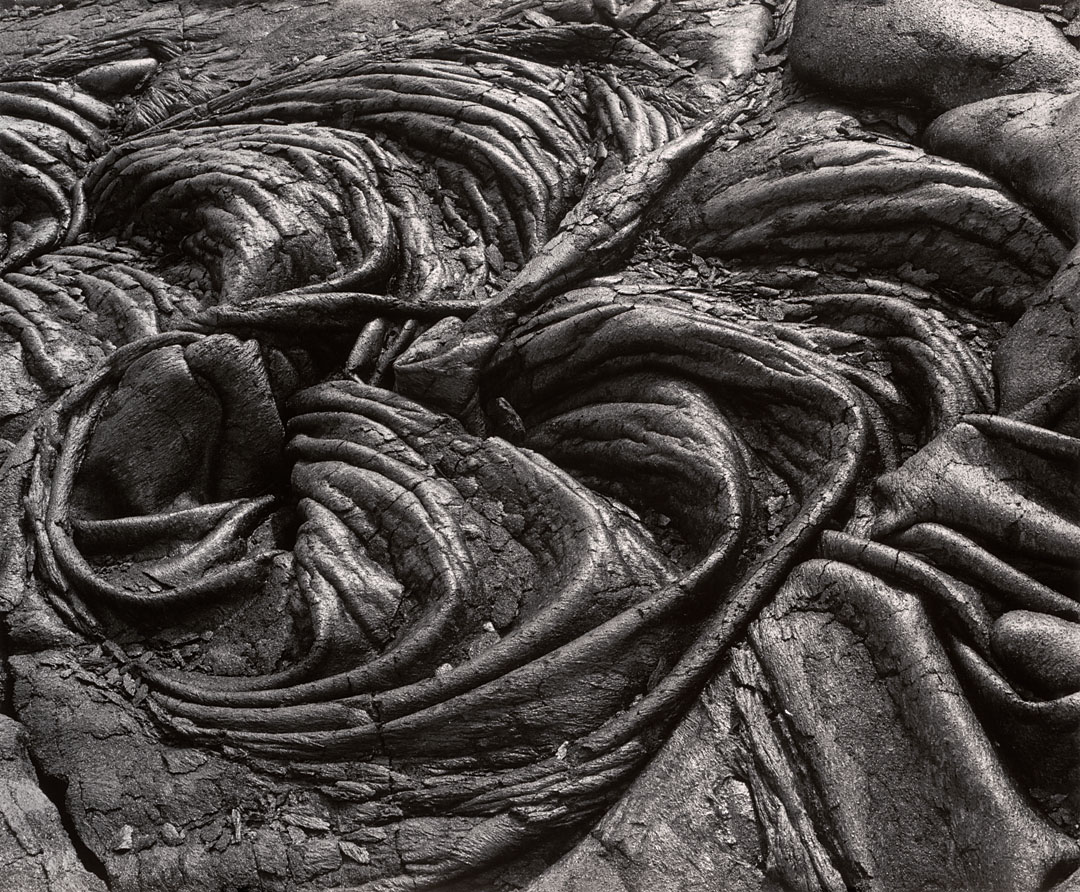
Brett Weston (American, 1911-1993) 'Lava, Hawaii' c. 1985


Brett Weston (American, 1911-1993)
Lava, Hawaii
c. 1985
Gelatin silver print
Unframed: 16 x 20 inches (40.64 x 50.8cm)
The Nelson-Atkins Museum of Art
Gift from the Christian K. Keesee Collection
© The Brett Weston Archive


Over his long and prolific career, photographer Brett Weston (1911-1993) exemplified the modernist aesthetic. The son of famed photographer Edward Weston (1886-1958), Brett Weston was a “natural” with the camera: he was still a teenager when he first received high-level, international recognition as a creative artist.

The Photographs of Brett Weston, Nov. 23, 2011, through April 1, 2012, at The Nelson-Atkins Museum of Art in Kansas City, presents a condensed 40-print survey of his long and prolific career. While rare works from the Museum’s Hallmark Photographic Collection are also included, this exhibition celebrates a gift of 260 Weston prints from Christian K. Keesee, owner of the Brett Weston Archive in Oklahoma City.

“This generous gift from Mr. Keesee exemplifies the deep interest in our program on the part of leading collectors and estates across the nation,” said Keith F. Davis, senior curator of photography. “There is also a wonderful symmetry here: this gift of Brett Weston’s work compliments one of the earliest photography gifts to the Museum, when Mr. and Mrs. Milton McGreevy donated 60 Edward Weston prints in 1958.”

Brett Weston was one of photography’s greatest prodigies. After serving as his father’s apprentice, he achieved international recognition at the age of 17 through inclusion in a landmark exhibition in Stuttgart, Germany in 1929.

“Weston’s images are beautifully modulated, unmanipulated black-and-white prints,” said Davis. “He loved sharp lenses and precision cameras, and he applied this “purist” approach to a sustained exploration of the idea of abstraction.”

Weston always sought an energising balance between fact and form, the objective reality of the world and the purely graphic logic of pictorial shape and structure. In exploring the graphic language of form, Weston aimed to suggest the deeper possibilities, and mysteries, of familiar things.

Press release from The Nelson-Atkins Museum of Art website


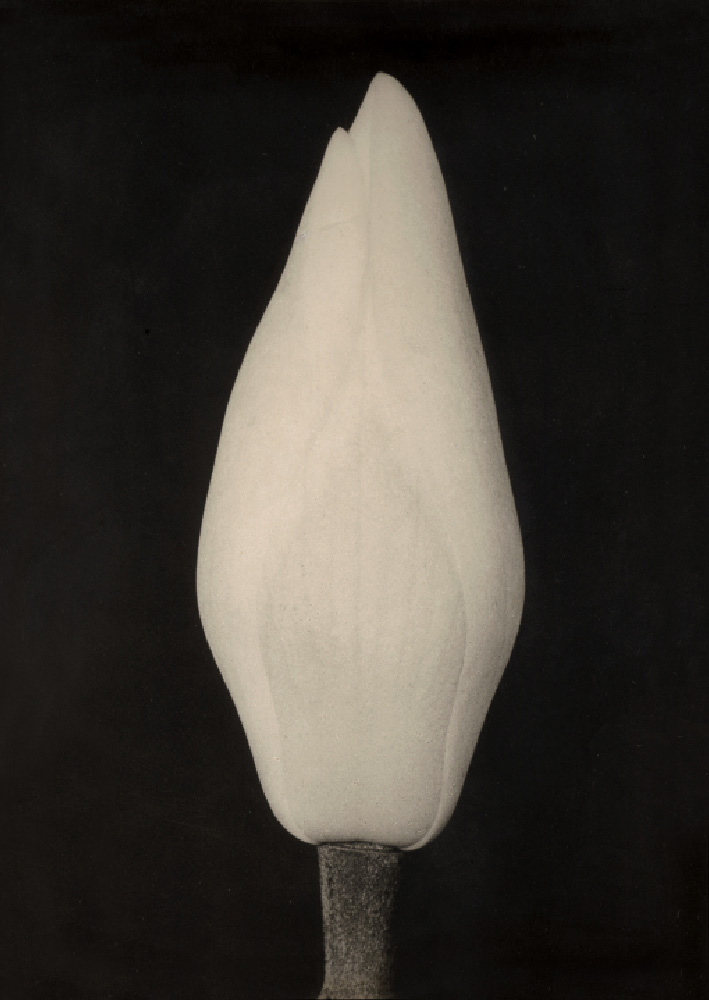
Brett Weston (American, 1911-1993) 'Magnolia Bud' 1927


Brett Weston (American, 1911-1993)
Magnolia Bud
1927
Gelatin silver print
The Nelson-Atkins Museum of Art
Gift of Hallmark Cards, Inc.
© The Brett Weston Archive


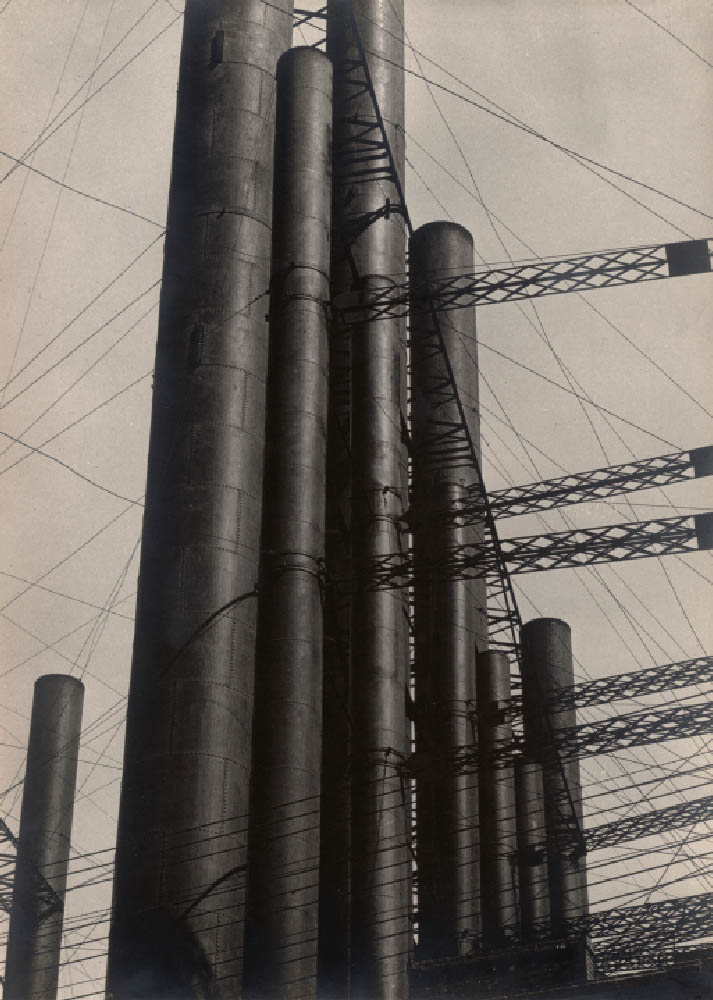
Brett Weston (American, 1911-1993) 'Los Angeles' 1927


Brett Weston (American, 1911-1993)
Los Angeles
1927
Gelatin silver print
Image: 9 5/8 x 6 7/8 inches (24.45 x 17.46cm)
Framed: 21 1/4 x 17 1/4 inches (53.98 x 43.82cm)
The Nelson-Atkins Museum of Art
Gift of Hallmark Cards, Inc.
© The Brett Weston Archive


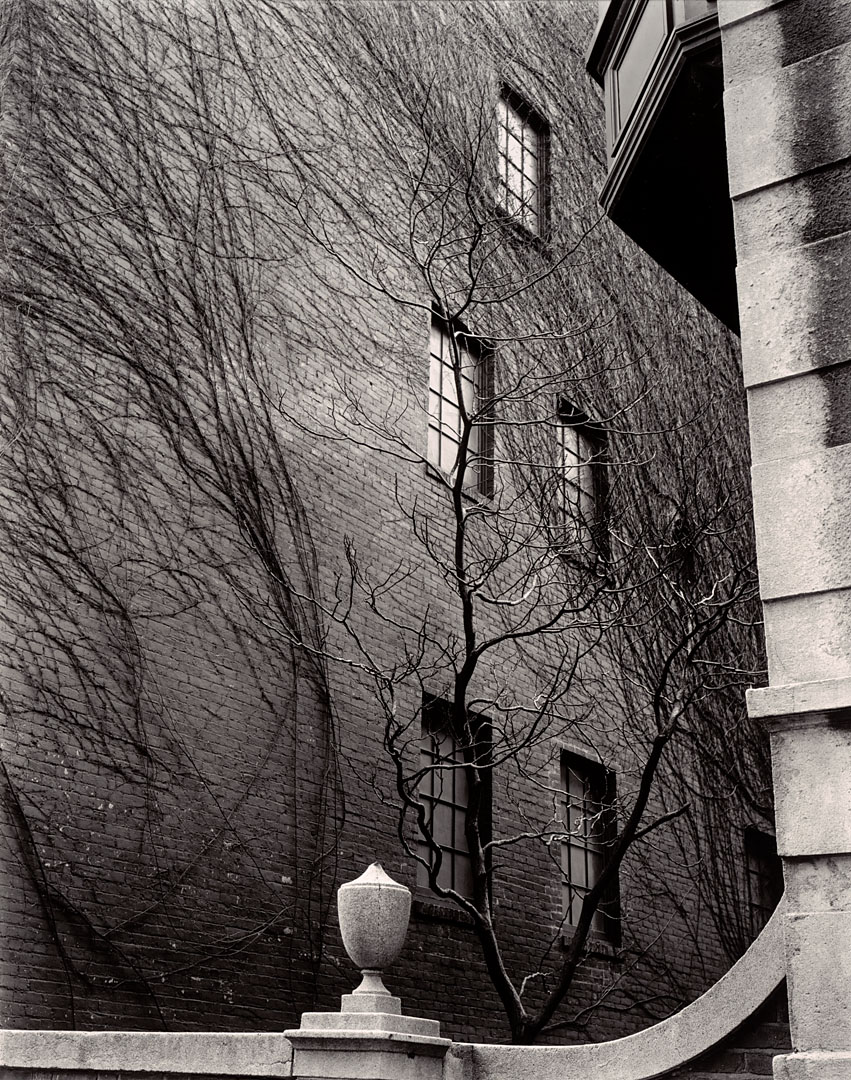
Brett Weston (American, 1911-1993) 'Building, Ivy, Tree, Sutton Place, New York' 1945


Brett Weston (American, 1911-1993)
Building, Ivy, Tree, Sutton Place, New York
1945
Gelatin silver print
Unframed: 10 x 8 inches (25.4 x 20.32cm)
The Nelson-Atkins Museum of Art
Gift from the Christian K. Keesee Collection
© The Brett Weston Archive


Brett Weston (American, 1911-1993) 'Reflections through Window' 1955


Brett Weston (American, 1911-1993)
Reflections through Window
1955
Gelatin silver print
Image and sheet: 9 9/16 × 7 3/16 inches (24.29 × 18.26 cm)
The Nelson-Atkins Museum of Art
Gift of Hallmark Cards, Inc.
© The Brett Weston Archive


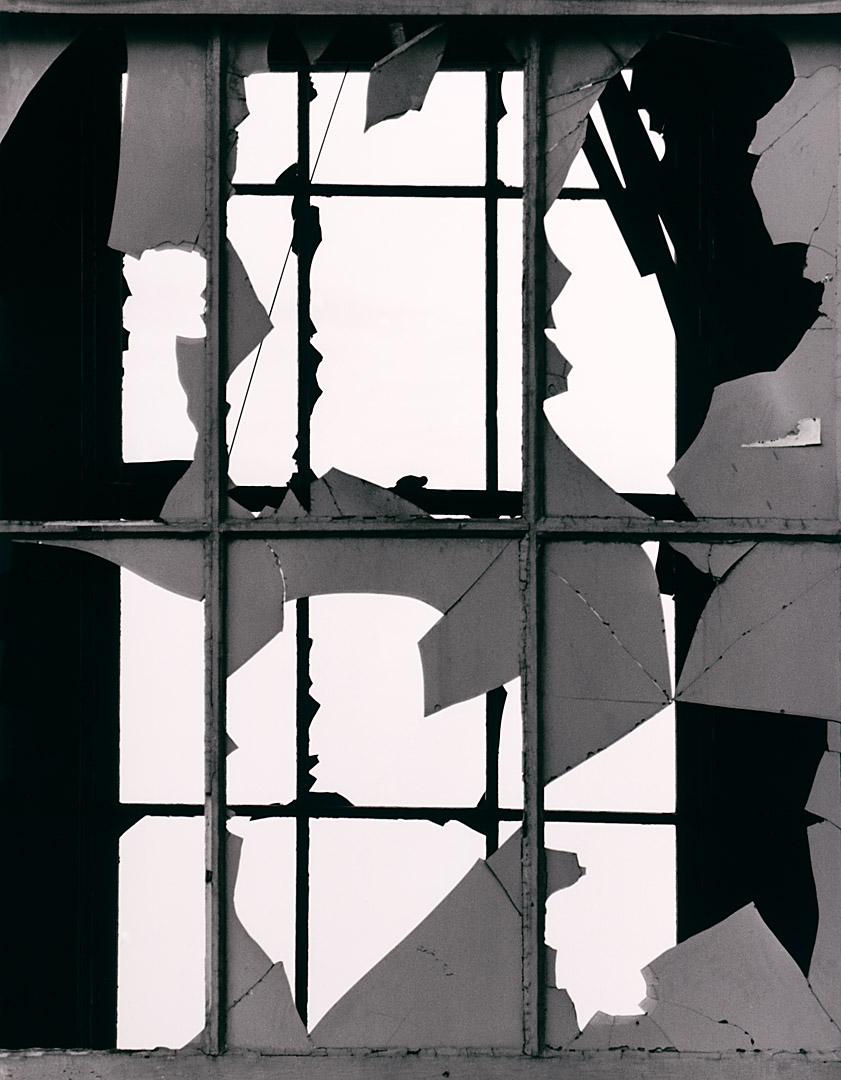
Brett Weston (American, 1911-1993) 'Broken Window' c. 1970


Brett Weston (American, 1911-1993)
Broken Window
c. 1970
Gelatin silver print
Unframed: 11 x 14 inches (27.94 x 35.56cm)
The Nelson-Atkins Museum of Art
Gift from the Christian K. Keesee Collection
© The Brett Weston Archive


Brett Weston (American, 1911-1993) 'Tree Root' c. 1980


Brett Weston (American, 1911-1993)
Tree Root
c. 1980
Gelatin silver print
Unframed: 14 x 11 inches (35.56 x 27.94cm)
The Nelson-Atkins Museum of Art
Gift from the Christian K. Keesee Collection
© The Brett Weston Archive


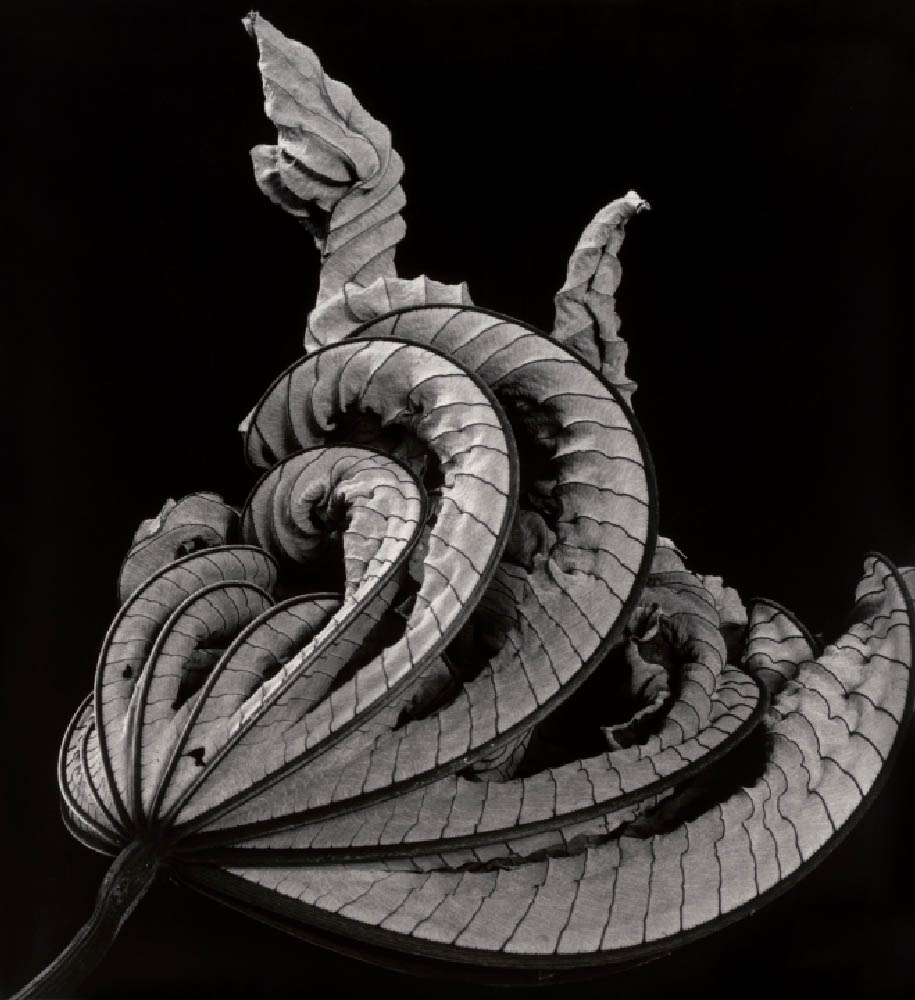
Brett Weston (American, 1911-1993) 'Leaf' 1982


Brett Weston (American, 1911-1993)
Leaf
1982
Gelatin silver print
Unframed: 20 x 16 inches (50.8 x 40.64cm)
The Nelson-Atkins Museum of Art
Gift from the Christian K. Keesee Collection
© The Brett Weston Archive


Brett Weston (American, 1911-1993) 'Rock Wall' c. 1985


Brett Weston (American, 1911-1993)
Rock Wall
c. 1985
Gelatin silver print
Unframed: 14 x 11 inches (35.56 x 27.94cm)
The Nelson-Atkins Museum of Art
Gift from the Christian K. Keesee Collection
© The Brett Weston Archive


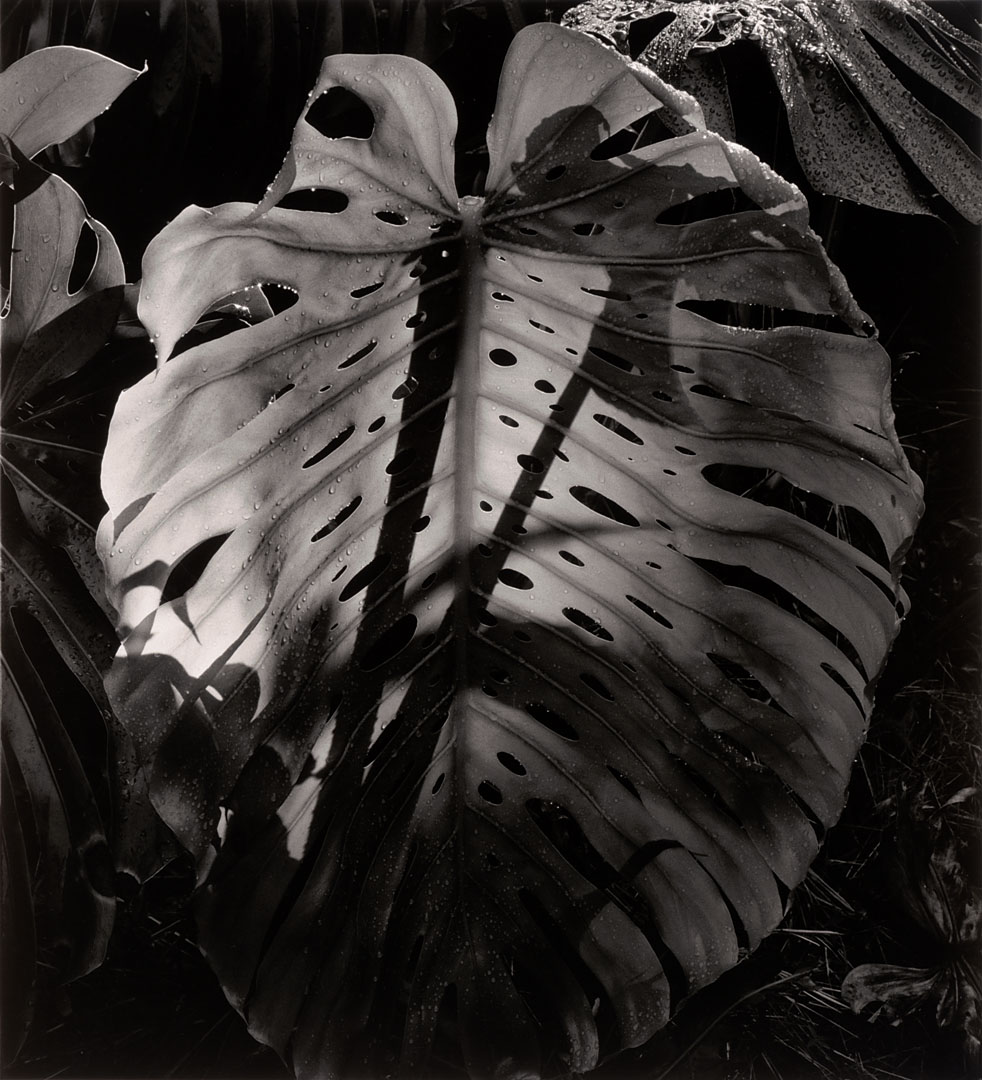
Brett Weston (American, 1911-1993) 'Botanical' c. 1985


Brett Weston (American, 1911-1993)
Botanical
c. 1985
Gelatin silver print
Unframed: 14 x 11 inches (35.56 x 27.94cm)
The Nelson-Atkins Museum of Art
Gift from the Christian K. Keesee Collection
© The Brett Weston Archive


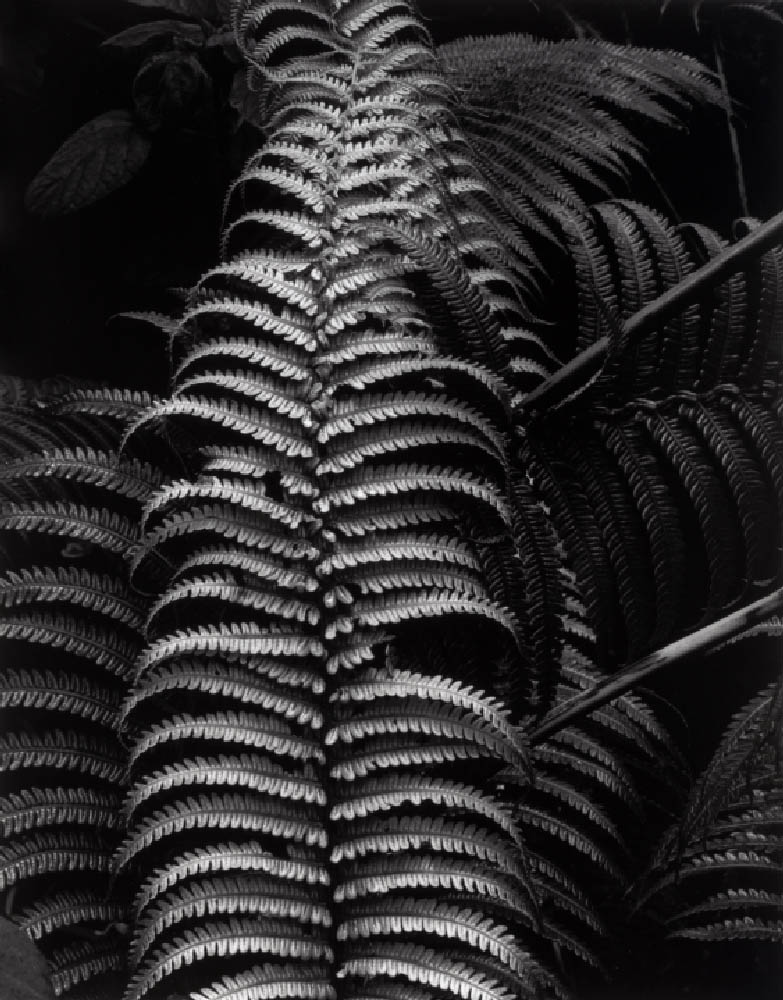
Brett Weston (American, 1911-1993) 'Botanical' c. 1985


Brett Weston (American, 1911-1993)
Botanical
c. 1985
Gelatin silver print
Unframed: 14 x 11 inches (35.56 x 27.94cm)
The Nelson-Atkins Museum of Art
Gift from the Christian K. Keesee Collection
© The Brett Weston Archive


The Nelson-Atkins Museum of Art
4525 Oak Street
Kansas City, MO 64111

Opening hours:
Thursday – Monday 10am – 5pm
Closed Tuesdays and Wednesdays

The Nelson-Atkins Museum of Art website

LIKE ART BLART ON FACEBOOK

Back to top

Exhibition: ‘Light Years: Conceptual Art and the Photograph, 1964-1977’ at the Art Institute of Chicago

Exhibition dates: 13th December 2011 – 11th March 2012


Many thankx to the Art Institute of Chicago for allowing me to publish the photographs in the posting. Please click on the photographs for a larger version of the image.


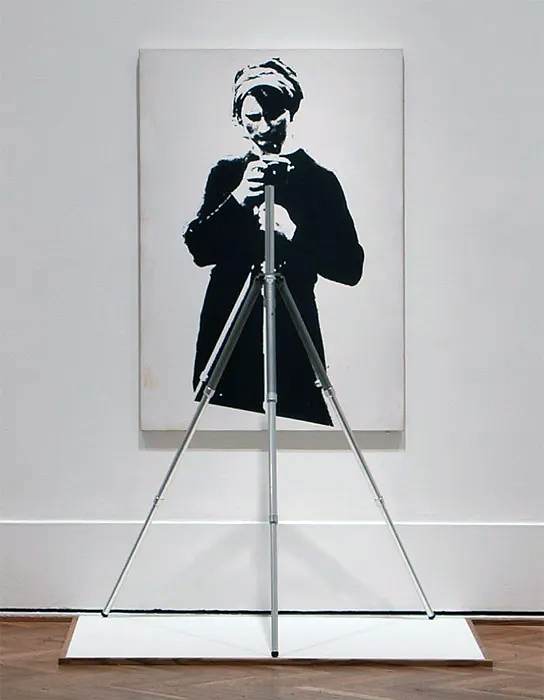
Marcel Broodthaers (Belgian, 1924-1976) 'Portrait of Maria Gilissen with Tripod' 1967


Marcel Broodthaers (Belgian, 1924-1976)
Portrait of Maria Gilissen with Tripod
1967
Gelatin silver emulsion on canvas with tripod
Approx. 66 x 43 x 24 inches


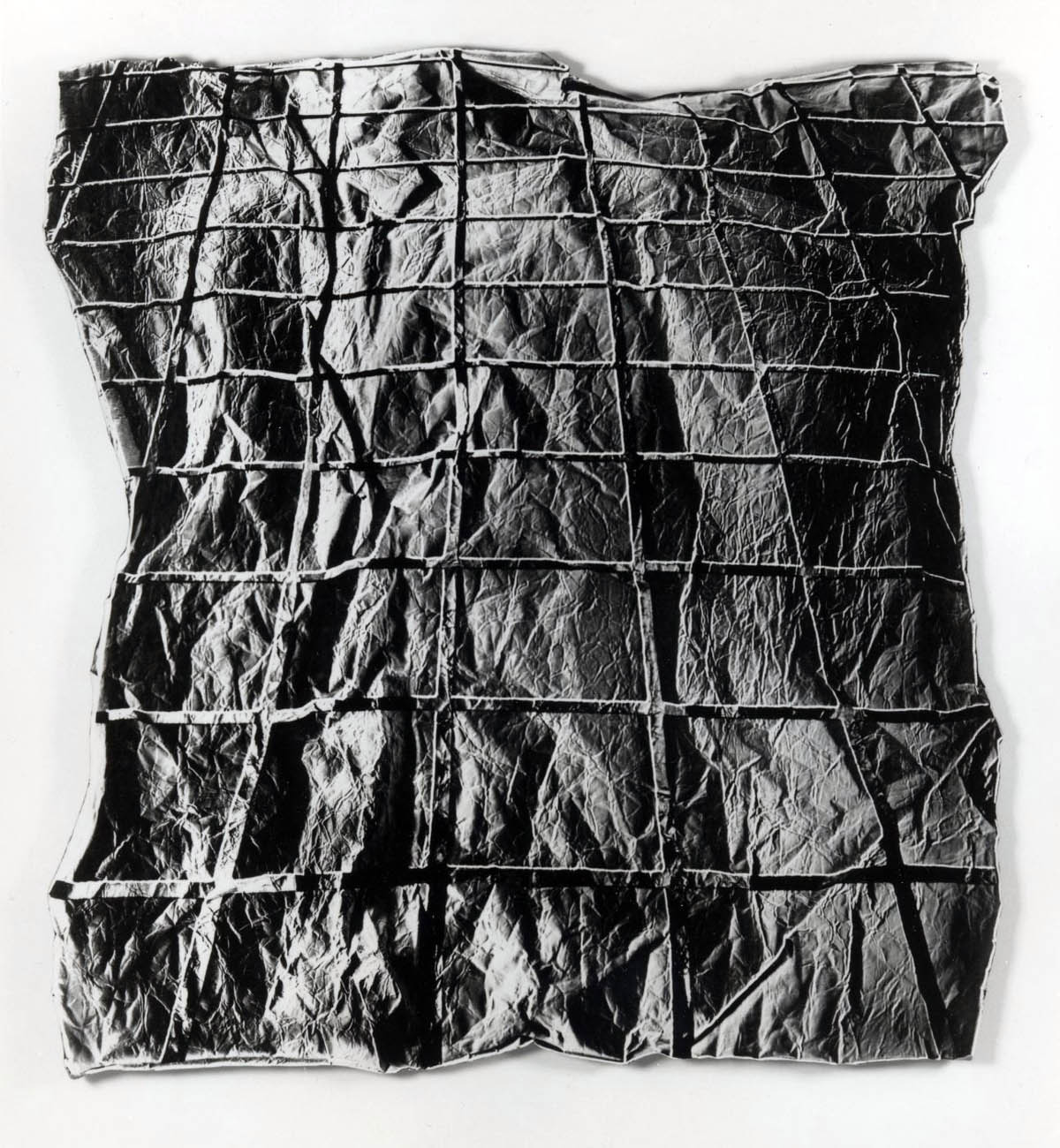
Mel Bochner (American, b. 1940) 'Surface Dis/Tension' 1968


Mel Bochner (American, b. 1940)
Surface Dis/Tension
1968
Gelatin silver print on aluminum mount
48 x 46″


John Baldessari (American, born 1931). 'The California Map Project Part I: California', 1969, exhibition copy 2011


John Baldessari (American, 1931-2020)
The California Map Project Part I: California
1969, exhibition copy 2011
Twelve inkjet prints of images and a typewritten sheet
Each image, 20.3 x 25.4cm (8 x 10 in); sheet, 21.6 x 27.9cm (8 1/2 x 11 in)
Courtesy of the artist and Marian Goodman Gallery, New York and Paris
© John Baldessari


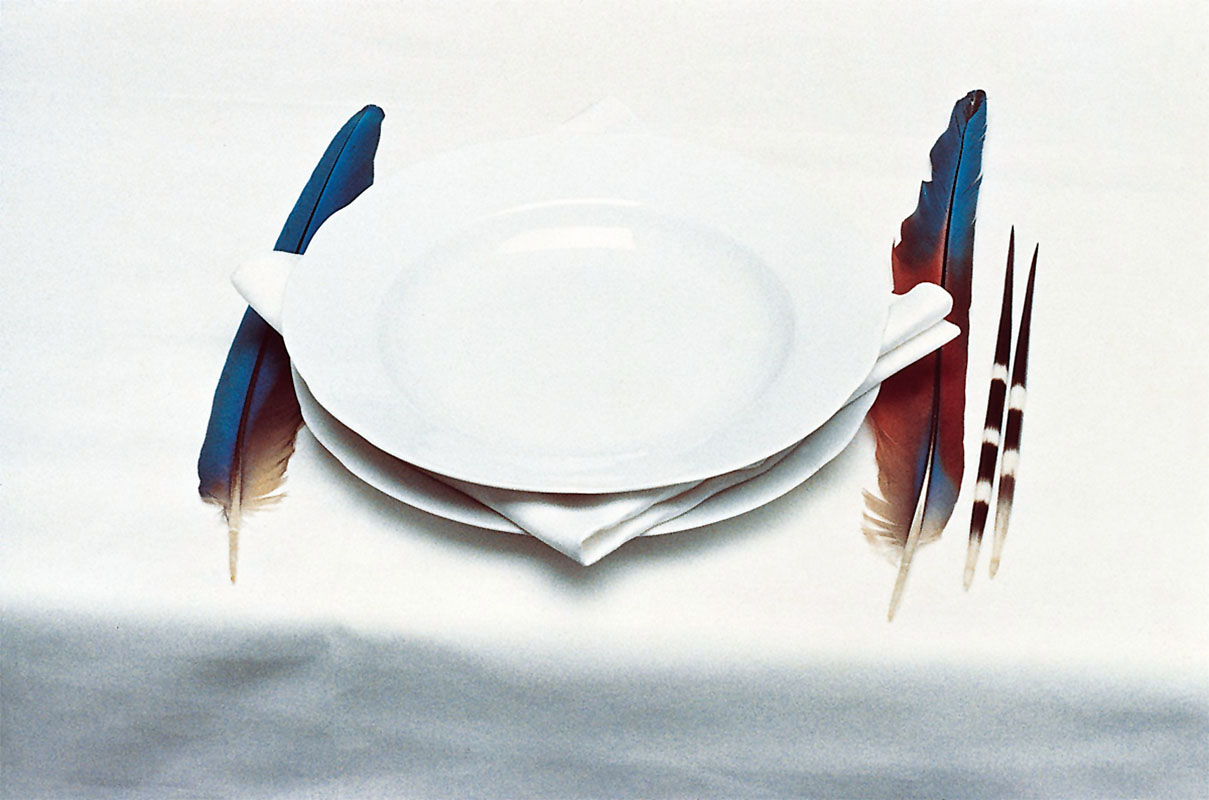
Lothar Baumgarten (German, 1944-2018) 'The Origin of Table Manners' 1971


Lothar Baumgarten (German, 1944-2018)
The Origin of Table Manners
1971
Chromogenic print
45 x 57.5cm
Collection Sanders, Amsterdam


One of Baumgarten’s early works, The Origin of Table Manners is a wry illustration of the way in which colonial conquerors conflated Western notions of civility with notions of the civilised as part of their alibi for domination. Inspired by a text of the same name by the structuralist anthropologist Claude Levi-Strauss, the work consists of a table draped in a crisp, white tablecloth and set with fine china, with porcupine quills and the feathers of large birds standing in for silverware. When it was first shown, it was installed in a tony French restaurant near Baumgarten’s Paris gallery.

Chris Wiley. “Exhibition Review – Lothar Baumgarten at Marian Goodman Gallery” Nd on the Daylight Books website [Online] Cited 07/11/2024


Eleanor Antin (American, born 1935) '100 Boots' 1971-73


Eleanor Antin (American, b. 1935)
100 Boots
1971-1973
Fifty-one photolithographic postcards
Each 11.1 x 17.8cm (4 3/8 x 7 in)
The Art Institute of Chicago, Margaret Fisher Endowment
Courtesy Ronald Fedlman Fine Arts, New York, NY
© Eleanore Antin


Eleanor Antin (American, born 1935) '100 Boots' 1971-1973


Eleanor Antin (American, b. 1935)
100 Boots
1971-1973
Fifty-one photolithographic postcards
Each 11.1 x 17.8cm (4 3/8 x 7 in)
The Art Institute of Chicago, Margaret Fisher Endowment
Courtesy Ronald Fedlman Fine Arts, New York, NY
© Eleanore Antin


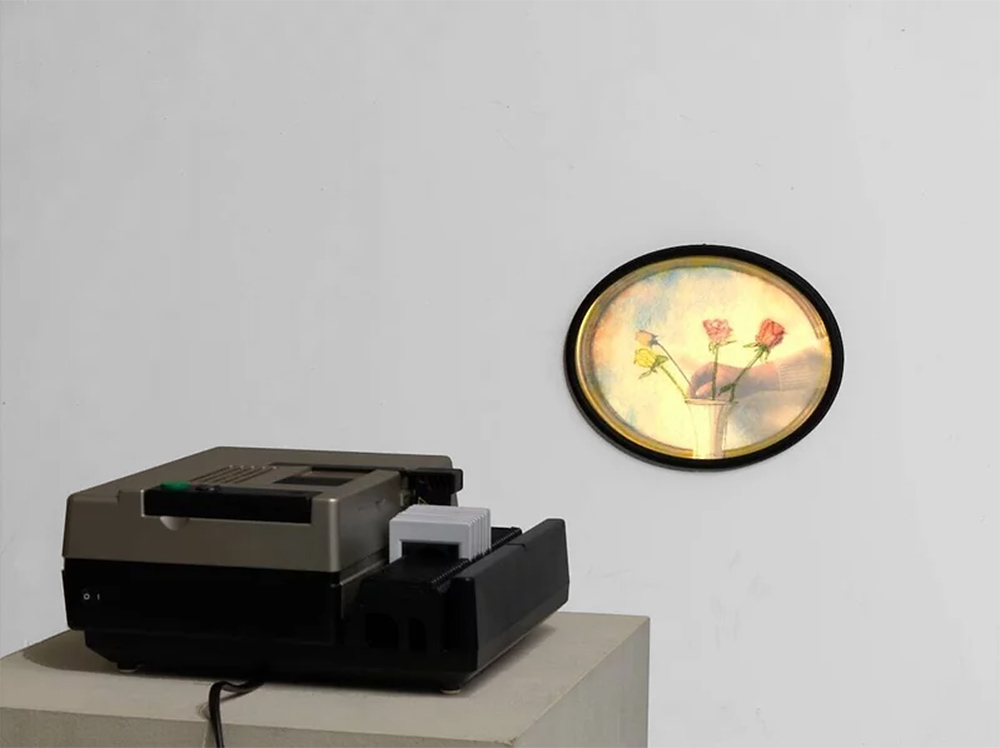
Ger van Elk (Dutch, b. 1941) 'The Rose more Beautiful than Art, but Difficult, therefore Art is Splendid' 1972


Ger van Elk (Dutch, b. 1941)
The Rose more Beautiful than Art, but Difficult, therefore Art is Splendid
1972
Slide projection, elven chromogenic slides projected onto watercolour in wooden frame
9 4/5 × 12 2/5 in | 25 × 31.5cm
Courtesy of the artist


John Baldessari (American, b. 1931) 'Throwing Three Balls in the Air to Get a Straight Line (Best of Thirty-Six Attempts)' 1973


John Baldessari (American, 1931-2020)
Throwing Three Balls in the Air to Get a Straight Line (Best of Thirty-Six Attempts)
1973
Portfolio of fourteen photolithographs
Each 24.7 x 32.7cm (9 11/16 x 12 7/8 in)
Museum of Contemporary Photography at Columbia College Chicago
© John Baldessari


Anselm Kiefer (German, b. 1945) 'Ausbrennen des Landkreises Buchen' (The Burning of the Rural District of Buchen) 1974


Anselm Kiefer (German, b. 1945)
Ausbrennen des Landkreises Buchen (The Burning of the Rural District of Buchen)
1974
Bound gelatin silver prints with ferric oxide and oil on woodchip paper
62 x 45cm
Hall colleciton


The 1960s and 1970s are recognised as the defining era of the Conceptual Art movement, a period in which centuries held assumptions about the nature of art itself were questioned and dissolved. Until now, the pivotal role that photography played in this movement has never been fully examined. The Art Institute of Chicago has organised the first major survey of influential artists of this period who used photography in ways that went far beyond its traditional definitions as a medium – and succeeded thereby in breaking down the boundaries of all mediums in contemporary art. Light Years: Conceptual Art and the Photograph, 1964-1977  on view December 13, 2011 through March 11, 2012 – is the first exhibition to explore how artists of this era used photography as a hybrid image field that navigated among painting and sculpture, film, and book arts as well as between fine art and the mass media. More than 140 works by 57 artists will fill the Art Institute’s Regenstein Hall in this major exhibition that will be seen only in Chicago.

Bringing to the fore work from the Italian group Arte Povera as well as artists from Eastern Europe who are rarely shown in the United States, Light Years also includes many pieces that have not been on public display in decades by such major artists as Mel Bochner, Tony Conrad, Michael Heizer, Gordon Matta-Clark, and Emilio Prini. To open the exhibition, the Art Institute has arranged a special outdoor screening of Andy Warhol’s Empire, an eight-hour film of the Empire State Building. In a first for the United States, Warhol’s Empire will be projected from the Modern Wing’s third floor to be seen on the exterior of the Aon Center on Friday, December 9.

The acceptance of photography as fine art was an evolutionary process. Early 20th-century avant-garde movements such as Dada, Surrealism, and Constructivism articulated a new set of standards for art in which photography played a major role. By the 1930s, modernist photography found a small but influential niche in museum exhibitions and the art market, and vernacular forms such as photojournalism and amateur snapshots became a source of artistic inspiration. Engagement with mass media, exemplified in Pop Art, became prominent in the 1950s. Yet only with the advent of Conceptual Art did artists with training in painting, sculpture, and the graphic arts begin to make and exhibit their own photographs or photographic works as fine art.

Some Conceptual artists, such as Bruce Nauman, Ed Ruscha, and Valie Export took up photography seriously only for a few key months or years; others, like Eleanor Antin, John Baldessari, Jan Dibbets, and Annette Messager have worked in photography their entire careers. Photography showed the way forward from Minimal Art, Pop Art, and other movements in painting and sculpture. But it came with its own set of questions that these artists addressed with tremendous innovation. Questions of perspective, sequence, scale, and captioning which have a rich history in photography, were answered in entirely new ways and made into central concerns for art in general.

Photography in these artists’ hands was the antithesis of a separate and definable “medium.” It became instead “unfixed”: photobooks, photolithographs, photo canvases, photo grids, slide and film pieces, and even single prints all counted as valid creative forms. The variety of work showcased in Light Years is crucial to conveying the greatest contribution of the Conceptual era: to turn contemporary art into a field without a medium.

Light Years showcases a great number of works that have not been seen together – or at all – since the years around 1970. Victor Burgin’s Photopath, a life-size print of a 60-foot stretch of flooring placed directly on top of the floor that it records, has not been shown in more than 20 years and never in the United States. Likewise being shown for the first time in the U.S. are pieces by Italian artists Gilberto Zorio, Emilio Prini, Giulio Paolini, and others associated with the classic postwar movement Arte Povera. Paolini’s early photo-canvas Young Man Looking At Lorenzo Lotto (1967), an icon of European conceptualism, has only rarely been shown at all after entering a private collection in the early 1970s. Mel Bochner’s Surface Dis/Tension: Blowup (1969) has not been seen since its presentation at Marian Goodman Gallery in the now legendary 1970 exhibition Artists and Photographs, from which no visual documentation survives. Equally rare and important early works by Laurie Anderson, Marcel Broodthaers, Francesco Clemente, Tony Conrad, Gilbert & George, Dan Graham, Michael Heizer, and many others make the show a revelation for those interested in key figures of new art in the 1960s and ’70s. A special emphasis is placed on artists from Hungary, a centre for photoconceptual activity that has long been overlooked in Western Europe and the United States.

Press release from the Art Institute of Chicago


Alighiero Boetti (Italian, 1940-1994) 'AW:AB =L:MD (Andy Warhol: Alighiero Boetti = Leonardo: Marcel Duchamp)' 1967


Alighiero Boetti (Italian, 1940-1994)
AW:AB =L:MD (Andy Warhol: Alighiero Boetti = Leonardo: Marcel Duchamp)
1967
Silk screen print with graphite on paper
58.8 x 58.8cm (23 5/16 x 23 5/16 in)
Colombo Collection, Milan
© Artists Rights Society (ARS)


Alighiero Boetti (Italian, 1940-1994) 'Twins (Gemelli)' September 1968


Alighiero Boetti (Italian, 1940-1994)
Twins (Gemelli)
September 1968
Gelatin silver postcard
15.2 x 11.2cm (6 x 4 3/8 in)
Private Collection
© Artists Rights Society (ARS)


Bruce Nauman (American, b. 1941) 'Light Trap for Henry Moore No. 1' 1967


Bruce Nauman (American, b. 1941)
Light Trap for Henry Moore No. 1
1967
Gelatin silver print
157.5 x 105.7cm (62 x 41 5/8 in)
Glenstone
© Artists Rights Society (ARS).


Dennis Oppenheim (American, 1938-2011) 'Stage 1 and 2. Reading Position for 2nd Degree Burn Long Island. N.Y. Material... Solar Energy. Skin Exposure Time. 5 Hours June 1970' 1970


Dennis Oppenheim (American, 1938-2011)
Stage 1 and 2. Reading Position for 2nd Degree Burn Long Island. N.Y. Material… Solar Energy.  Skin Exposure Time. 5 Hours June 1970
1970
Two chromogenic photographic prints, plastic labelling tape, mounted together on green board with graphite annotations
Overall: 81 x 66cm (31 7/8 x 26 in)
Top photo: 20.1 x 25.8cm
Bottom photo: 20.2 x 25.5cm
Image/text area: 41.8 x 25.8cm
Dorothy and Herbert Vogel Collection
© Dennis Oppenheim Estate


The Art Institute of Chicago
111 South Michigan Avenue
Chicago, Illinois 60603-6404
Phone: (312) 443-3600

Opening hours:
Thursday – Monday 11am – 5pm
Closed Tuesdays and Wednesdays

The Art Institute of Chicago website

LIKE ART BLART ON FACEBOOK

Back to top

Exhibition: ‘After the Gold Rush: Contemporary Photographs from the Collection’ at The Metropolitan Museum of Art, New York

Exhibition dates: 22nd March, 2011 – 2nd January, 2012


Many thankx to The Metropolitan Museum of Art, New York for allowing me to publish the photographs in the posting. Please click on the photographs for a larger version of the image.


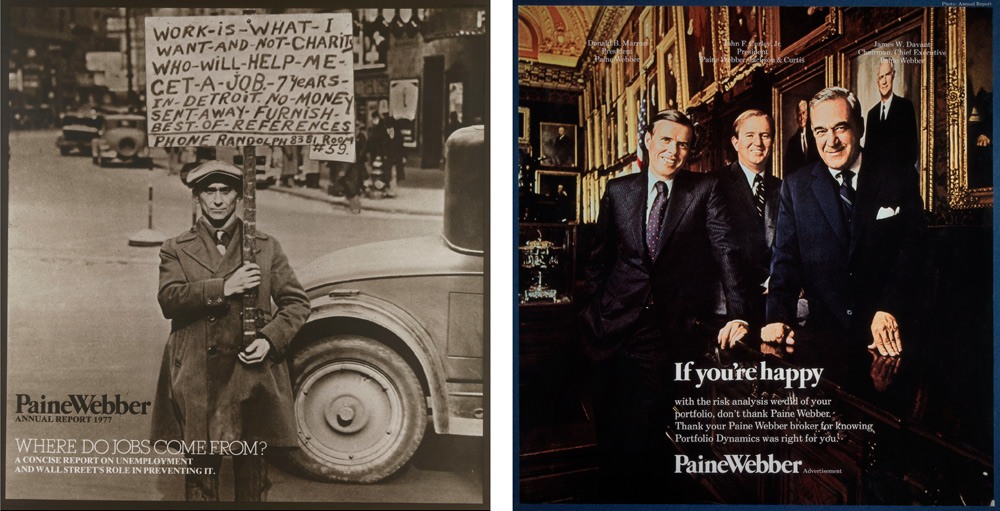
Hans Haacke (German, born 1936). 'Thank You, Paine Webber' 1979


Hans Haacke (German, b. 1936)
Thank You, Paine Webber
1979
Gelatin silver print and chromogenic print
The Metropolitan Museum of Art
Purchase, Vital Projects Fund Inc. Gift, through Joyce and Robert Menschel, 2010
© Hans Haacke


Since the early 1970s Haacke has taken on the intertwined political and corporate forces that use cultural patronage as a smokescreen to advance interests that are often antithetical to the vitality of free speech and expression in democracies. Haacke made this work just as the strategy of appropriation – lifting an image out of its original context and re-presenting it in critical fashion – began to make waves in the New York art world of the late 1970s. Like all effective appropriation, it exposes a prior instance of borrowing – in this case, how the investment firm Paine Webber used a documentary photograph to give its annual report the veneer of social concern. The artist then pointedly contrasted it with an image from the same annual report of a beaming trio of executives in a painting-lined gallery. As a counterpoint to the protestor’s signboard, Haacke dropped in text from a different Paine Webber ad campaign to show on whose backs the “risk management” is taking place – a biting indictment, the relevance of which has only increased since the recent economic downturn.

Wall text


Jeff Wall (Canadian, born 1946). 'The Storyteller' 1986


Jeff Wall (Canadian, b. 1946)
The Storyteller
1986
Silver dye bleach transparency in light box
The Metropolitan Museum of Art
Purchase, Charlene and David Howe, Henry Nias Foundation Inc., Jennifer and Robert Yaffa, Harriet Ames Charitable Trust, and Gary and Sarah Wolkowitz Gifts, 2006
Image courtesy of the artist
© Jeff Wall


Wall’s staged tableaux straddle the worlds of the museum and the street. His subjects are scenes of urban and suburban disarray that he witnessed firsthand – the kinds of things anyone might see while wandering around a city and its outskirts. Working like a movie director, he restages the scene using nonprofessionals as actors and presents his photographs as colour transparencies in light boxes such as those of large-scale public advertisements found at airports and bus stops. The scale and ambition of his pictures – scenes of everyday life shot through with larger intimations of political struggle – equally evoke the Salon paintings of nineteenth century French painters such as Gustave Courbet and Édouard Manet, which were themselves brazen combinations of canonical and contemporary subjects.

The Storyteller is set in a barren, leftover slice of land next to a highway overpass in Vancouver, where the artist lives. Various groupings of modern urban castaways – perhaps descendants of the Native Americans who occupied the land before the arrival of Europeans – are dispersed around the hillside, a mini-catalogue of art-historical reference. Like the upside-down, half-submerged figure of Icarus in the background of Brueghel’s Landscape with the Fall of Icarus, the woman speaking and gesticulating to the two men listening at the lower left becomes the key to unifying the fractured and alienating environment from which Wall’s picture is constructed.

Wall text


Laurie Simmons (American, b. 1949). 'Walking Gun' 1991


Laurie Simmons (American, b. 1949)
Walking Gun
1991
Gelatin silver print
The Metropolitan Museum of Art
Purchase, Anonymous Gift, 1998
© Laurie Simmons


The early 1990s marked the last moment when a wide swath of women artists responded to the sexism they saw as pervasive in the culture – from the rape trial of William Kennedy Smith to the Supreme Court nomination hearings for Clarence Thomas. A pioneer of set-up photography, Simmons dramatically expanded the scale of her constructed tableaux for a series of spotlighted puppet-like objects perched atop doll legs: revolvers, houses, cameras, and cakes. This armed and dangerous example refers to the old-movie cliché where a man carrying a gun is shown in shadow profile. Here, Simmons offers instead the death-dealing seductress – also familiar from film noir – in monumental miniature, a doll capable of turning on its master at a moment’s notice.

Wall text


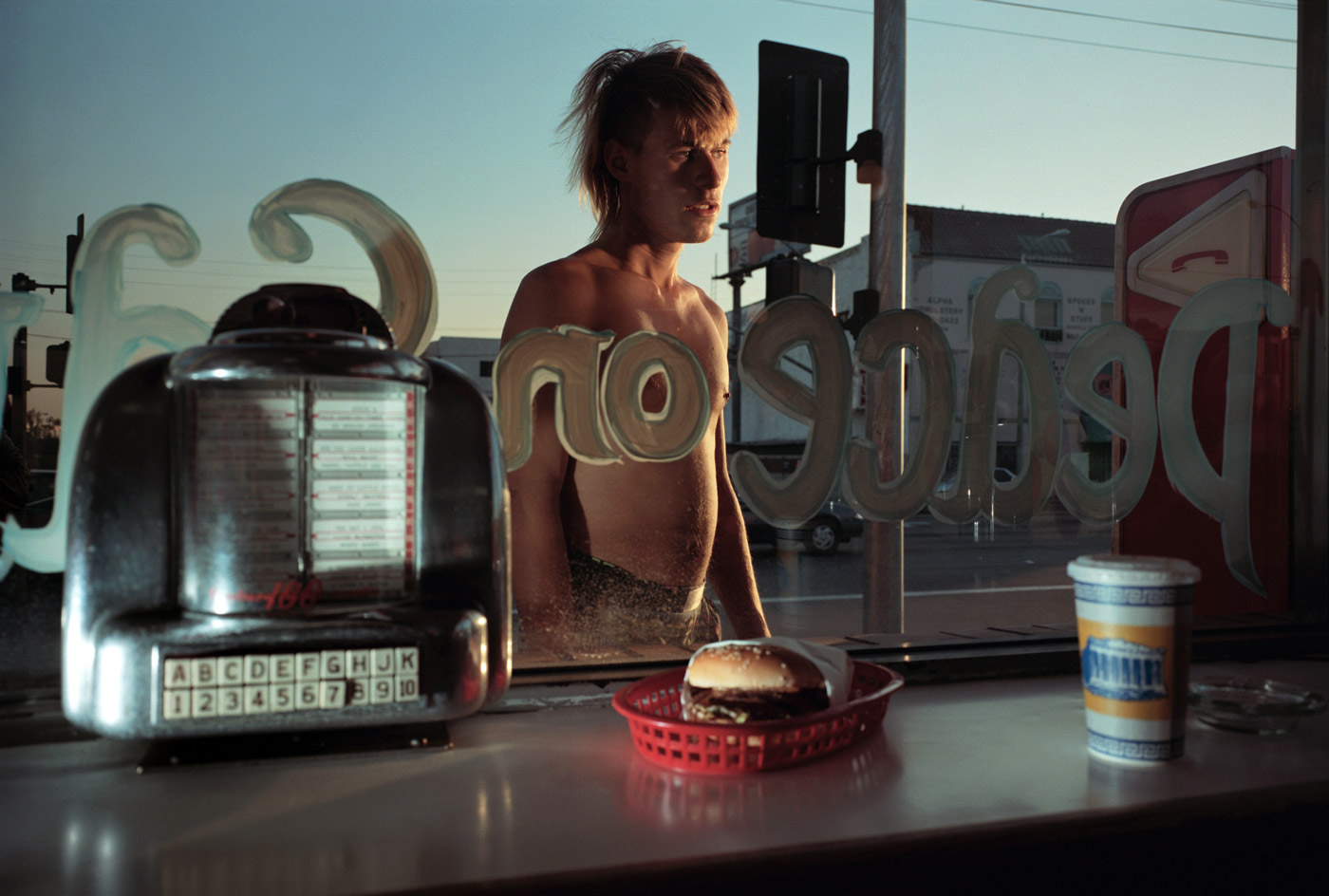
Philip-Lorca diCorcia (American, b. 1953). 'Todd M. Brooks, 22 Years Old, from Denver, Colorado, $40' 1991


Philip-Lorca diCorcia (American, b. 1953)
Todd M. Brooks, 22 Years Old, from Denver, Colorado, $40
1991
Chromogenic print
The Metropolitan Museum of Art
Purchase, The Horace W. Goldsmith Foundation Gift, through Joyce and Robert Menschel, 1991
Image courtesy the artist and David Zwirner, New York
© Philip-Lorca diCorcia


In the middle of the 1990’s, diCorcia gained international recognition for his large color photographs of street scenes and passersby. For an earlier series, he traveled to Los Angeles on a fellowship from the National Endowment for the Arts, and worked on a part of Santa Monica Boulevard frequented by male prostitutes and drug addicts. For each picture he made there, he carefully composed his setting, then asked young men to pose for him, giving them a small fee (from twenty to fifty dollars) that was negotiated each time.

At that time, NEA support of artists such as Robert Mapplethorpe was highly controversial, and diCorcia had to sign a document stating that he would not produce any “obscene” work while on his fellowship. He set up the whole negotiating procedure as a symbolic way of sharing his grant with people whose behavior would surely have been condemned by the censors. The titles always mention the name, the age and the origin of the model, as well as the amount paid. The staged situation interacts with the raw reality of the exchange of money, blurring the boundaries between documentary and fiction, yet preserving an authentic emotional charge.

Text from The Metropolitan Museum of Art website


Philip-Lorca diCorcia (American, b. 1953) 'Eddie Anderson, 21 Years Old, from Houston, Texas, $20' 1991


Philip-Lorca diCorcia (American, b. 1953)
Eddie Anderson, 21 Years Old, from Houston, Texas, $20
1991
Chromogenic print
Image: 39.2 x 57.8 cm (15 7/16 x 22 3/4 in.)
The Metropolitan Museum of Art
Purchase, The Horace W. Goldsmith Foundation Gift, through Joyce and Robert Menschel, 1991
Image courtesy the artist and David Zwirner, New York
© Philip-Lorca diCorcia


The Metropolitan Museum of Art will present After the Gold Rush: Contemporary Photographs from the Collection from March 22, 2011, through January 2, 2012, in the Joyce and Robert Menschel Hall for Modern Photography. Drawn entirely from the Museum’s permanent collection, the exhibition features 25 photographs dating from 1979 to the present by 15 contemporary artists.

The exhibition’s title, After the Gold Rush, is taken from a classic 1970 song by Neil Young, whose verses contrast a romanticised past with a present of squandered plenty and an uncertain future. Inspired by the recent political and economic upheavals in America and abroad, this selection juxtaposes new photographs that take the long view of the world’s current condition with prescient works from the 1980s and 1990s that remain startlingly relevant today.

This is the first occasion for the Museum to present recently acquired works by: Gretchen Bender, James Casebere, Moyra Davey, Katy Grannan, Hans Haacke, An-My Lê, Curtis Mann, Trevor Paglen, and Wolfgang Tillmans. Also featured are photographs by: Philip-Lorca diCorcia, Robert Gober, Adrian Piper, Laurie Simmons, Jeff Wall, and Christopher Williams.

After the Gold Rush begins with Hans Haacke’s Thank You, Paine Webber (1979) – the first work by this legendary provocateur of Conceptual art to enter the Metropolitan’s collection. Haacke’s biting photo-diptych is so pertinent to the recent economic downturn that it seems as if it could have been made yesterday. In this work, the artist appropriated images from the investment firm’s annual report to convey his viewpoint that big business provides a veneer of social concern to mask the brutal effects of the “risk management” they offer their clients.

Other works in After the Gold Rush use varying degrees of artifice and photographic realism to reflect on marginalised and repressed voices. Measuring over 14 feet long and presented as a backlit transparency in a light box, The Storyteller (1986) is Jeff Wall’s signature image and is typical of his method. Working from memory, the artist uses nonprofessional actors and real locations to meticulously restage a scene of urban blight that he witnessed in his native Vancouver. Wall plays this photographic verisimilitude against compositions and figural poses indebted to French painters such as Gustave Courbet, Edouard Manet, and Georges Seurat. A comparison of Wall’s Storyteller with Courbet’s Young Ladies of the Village (1852), on view in the Museum’s galleries for Nineteenth and Early Twentieth-Century European Paintings and Sculpture, reveals parallels: in both, a keenly observed moment of telling social interaction taking place on a sloping landscape. Each artist has combined a daringly modern subject with references to earlier art.

Philip-Lorca diCorcia is another key figure in the development of staged photography. In the early 1990s, the artist created a series of works in response to the political attacks on gays and federal funding of the arts in the U.S. DiCorcia hired male hustlers to pose for their portraits out on the streets – and paid them with grant money he received from the National Endowment for the Arts. At the same moment, a wide swath of women artists addressed issues of sexism and racism: examples of this politically pointed art are represented by Laurie Simmons’ Walking Gun (1991) – a spotlighted puppet of doll legs and a revolver that seems capable of turning on its master at a moment’s notice – and Adrian Piper’s 1992 work Decide Who You Are #24 (A Moving Target), which includes a childhood image of Anita Hill as part of a blistering meditation in word and image on racial politics. Such works are missives from a time not so long ago when artists regularly commented on present-day politics and culture through their art. (Because of light sensitivity, this work by Adrian Piper will be on view through Sunday, September 26.)

Although the recently made photographs in After the Gold Rush seem at first glance to be less overtly political than their predecessors, they nevertheless address vital issues about contemporary society. James Casebere’s epic vision of America, Landscape with Houses (Dutchess County, NY) #1, (2009), is based on a tabletop model that the artist spent 18 months building. The photograph shows a suburban subdivision of the kind recently ravaged by the foreclosure crisis, and its sunny sense of “Morning in America” comments ironically on the country’s future prospects. An-My Lê’s similarly sweeping five-part photographic piece Suez Canal Transit, USS Dwight Eisenhower, Egypt (2009) will also be featured. Lê is interested in the way in which U.S. armed forces come into contact with the rest of the world. This major new work – which seems at first to be a straightforward panorama of military might overseas – subtly undercuts the viewer’s expectations to question the current position of the U.S. on the global stage.

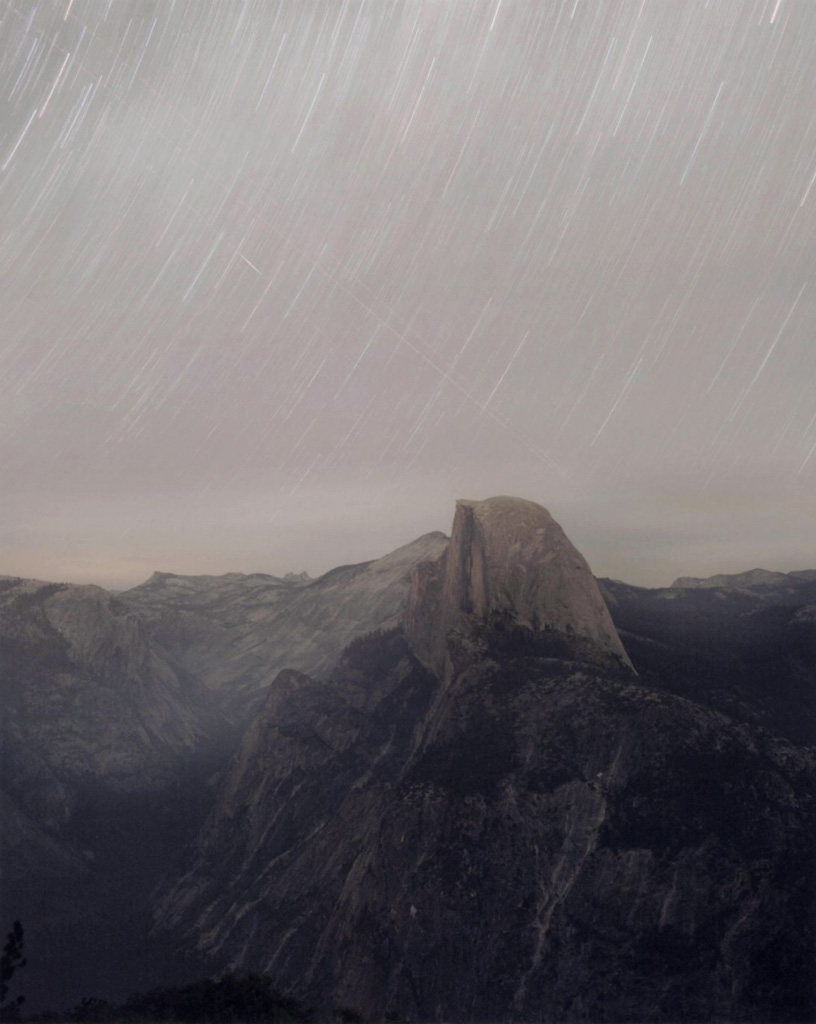
Trevor Paglen is a young artist whose works plot the “black world” of covert military operations, from telephoto images of predator drones taken from miles away, to software that follows planes used for the extraordinary rendition of suspected terrorists. Paglen’s 2008 photograph KEYHOLE IMPROVED CRYSTAL from Glacier Point (Optical Reconnaissance Satellite; USA 186) shows the ghostly white streak of an American reconnaissance satellite bisecting star trails above Yosemite’s Half Dome, a rock formation photographed in the 1860s by artists including Carleton Watkins. To make these and other photographs, Paglen collaborated with amateur astronomers who were originally trained by the U.S. government to look out for Soviet satellites during the Cold War, but turned their attention to American surveillance in recent years.

The final piece in After the Gold Rush is a suite of five recently acquired photographs from 2007-2009 by the celebrated photographer Wolfgang Tillmans. The grouping shifts focus from macro to micro: from expansive aerial views of Shanghai and Dubai to close ups that suggest the smallest increments of sustenance and regeneration. Taken together, they evoke the interconnectedness of all things and a grounding of the political in the personal as a way for an engaged yet expressive art.

Press release from The Metropolitan Museum of Art website


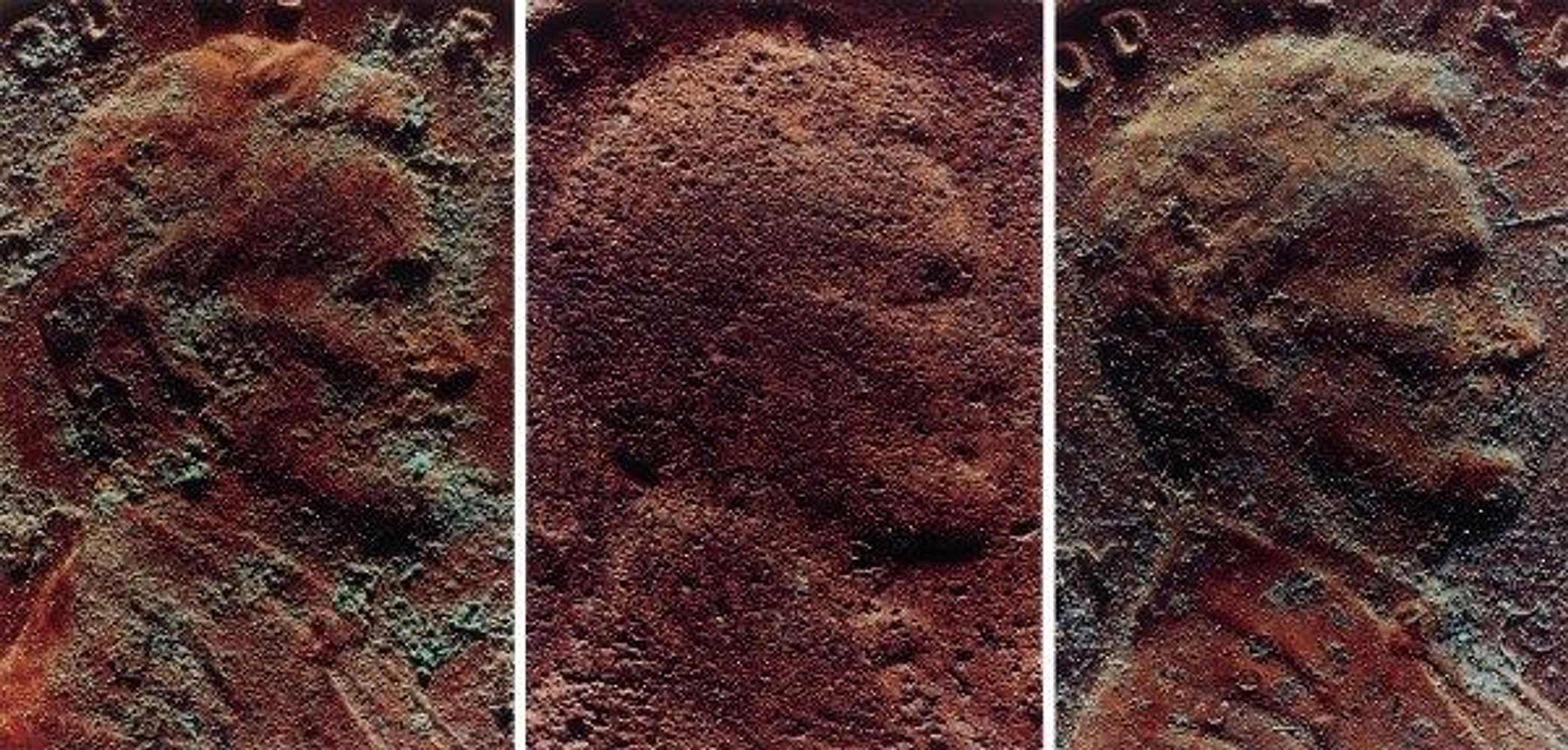
Moyra Davey (American born Canada, b. 1958) 'Copperhead Grid' 1990 (detail)


Moyra Davey (American born Canada, b. 1958)
Copperhead Grid (detail)
1990
Chromogenic prints
Image: 8 3/4 in. × 6 in. (22.3 × 15.3cm) each
Sheet: 10 × 8 in. (25.4 × 20.3cm) each
The Metropolitan Museum of Art
Purchase, Vital Projects Fund Inc. Gift, through Joyce and Robert Menschel, 2011
© Moyra Davey


It was in 1990 – at the height of a worldwide economic recession that also marked the end of the 1980s art bubble – that Davey began photographing the scratched, worn-away surfaces of pennies, the most devalued and lowest form of currency. Her accumulation of one hundred micro-photographic specimens is constructed around the readymade patterns of decay that countless anonymous owners have unconsciously wrought upon their surfaces; their base materiality is incisively contrasted with the most elevated of national symbols. As with all of Davey’s work, there is a melancholic sense of loss that connects subject and form: like pennies, photographs are objects of exchange imprinted by contact with the world around them.

Text from The Metropolitan Museum of Art website


Adrian Piper (American, born 1948). 'Decide Who You Are #24: A Moving Target' 1992


Adrian Piper (American, b. 1948)
Decide Who You Are #24: A Moving Target
1992
Photo-mechanical processes on three panels
The Metropolitan Museum of Art
Gift of Peter Norton Family Foundation, 1994
© Adrian Piper


Piper is an artist and a philosophy professor who works in a variety of media, including performance, video, sound pieces, photography, drawing, and writing. She often explores issues of autobiography, racism, and stereotyping. For her 1992 series Decide Who You Are, the artist used a triptych format in which a different appropriated photograph is flanked by an image of the “three wise monkeys” maxim advocating “See No Evil, Speak No Evil, Hear No Evil” at left, and at right a photograph of a young girl who, though not identified, is Anita Hill – who had recently been thrust into the spotlight for accusing then-nominee for Supreme Court Justice Clarence Thomas of sexual harassment. The verse in the left panel changes in each individual work in the series, while that on the right is unchanging – what the artist once described as “a comprehensive, textbook compendium of commonly invoked litanies of denial and intimidation, from the bland to the vaguely menacing” and “a must for novices and aspiring leaders in business, politics, and culture.”

Wall text


Christopher Williams (American, b. 1956). '3 White (DG's Mr. Postman) Fourth Race, Phoenix Greyhound Park, Phoenix, Arizona, August 22, 1994' 1994


Christopher Williams (American, b. 1956)
3 White (DG’s Mr. Postman) Fourth Race, Phoenix Greyhound Park, Phoenix, Arizona, August 22, 1994
1994
Gelatin silver print
The Metropolitan Museum of Art
Purchase, Charina Foundation Inc. and Jennifer and Joseph Duke Gifts, 2003
© Christopher Williams


Robert Gober (American, b. 1954) 'Page 12 / Untitled (Detail from 1978-2000)' 1978-2000


Robert Gober (American, b. 1954)
Page 12 / Untitled (Detail from 1978-2000)
1978-2000
Gelatin silver print
40.6 x 50.8cm (16 x 20 in.)
The Metropolitan Museum of Art
Purchase, Charina Foundation Inc. Gift, 2002
© Robert Gober


Robert Gober works primarily in sculpture, installations, and photography. He is perhaps best known for his delicate, ghostly hand crafted versions of domestic fixtures, such as drains, beds, doors, and sinks. Through these uncanny replicas, Gober invests mass produced objects with personal meaning – the private, unruly desires and memories of the individual. This image appeared in the book (his first in the genre) that Gober created to accompany his installation representing the United States at the 2000 Venice Biennale. In it, the artist interweaves his own journey to New York in 1978 as a young gay man with the toxic fallout of homophobic recrimination that accompanied the murder of the Wyoming college student Matthew Shepard twenty years later.

Text from The Metropolitan Museum of Art website


Robert Gober superimposes a man’s hand between two newspaper articles, clipped neatly and placed on a shell-strewn beach. Below his hand, the article refers to Matthew Shepard’s death. Above it, a letter to the editor argues that “Orthodox Jews, conservative Christians and others have a right to speak out against homosexuality without being placed in the category of thuggery.” While the piece obviously precedes Jonathan Rauch’s provocative and important piece in the December issue of the Advocate arguing that gay people should tolerate a certain amount of anti-gay sentiment as a sign that they’re legally and socially secure enough to practice tolerance, it’s a useful encapsulation of the dilemma behind that argument. It’s hard to cast off past threats if you’re not entirely sure they’re past.

Alyssa Rosenberg. “Gay Americans, Censorship, And ‘After The Gold Rush’ At The Metropolitan Museum Of Art,” on the Think Progress website November 28, 2011 [Online] Cited 11/12/2024


Robert Gober (American, b. 1954). 'Untitled (Detail from "1978-2000")' 2000


Robert Gober (American, b. 1954)
Untitled (Detail from “1978-2000”)
2000
Gelatin silver print
The Metropolitan Museum of Art
Purchase, Jennifer and Joseph Duke Gift, 2002
© Robert Gober


James Casebere (American, b. 1953). 'Landscape with Houses (Dutchess County, NY) #1' 2009


James Casebere (American, b. 1953)
Landscape with Houses (Dutchess County, NY) #1
2009
Chromogenic print
The Metropolitan Museum of Art
Purchase, Alfred Stieglitz Society Gifts, 2011
© James Casebere


Trevor Paglen (American, b. 1974) 'KEYHOLE IMPROVED CRYSTAL from Glacier Point (Optical Reconnaissance Satelltte; USA 186)' 2008


Trevor Paglen (American, b. 1974)
KEYHOLE IMPROVED CRYSTAL from Glacier Point (Optical Reconnaissance Satelltte; USA 186)
2008
Chromogenic print
Image: 95.3 x 76.2cm (37 1/2 x 30 in.)
Frame: 96.5 × 77.5cm (38 × 30 1/2 in.)
The Metropolitan Museum of Art
Purchase, Vital Projects Fund Inc. Gift, through Joyce and Robert Menschel, 2011
© Trevor Paglen


Trained as a geographer, Paglen is an artist who plots the topography of a new global and celestial space – the “black world” of covert military operations. Examples of his subjects include the supposed sites used for the extraordinary rendition of prisoners, which he shoots with specially designed cameras from up to forty miles away, and the network of private planes used to transport them under the radar. This image shows the ghostly white streak of an American reconnaissance satellite bisecting star trails above Yosemite’s Half Dome, a rock formation photographed in the 1860s by the photographer Carleton Watkins when the West was still being explored. In order to track such spacecraft, Paglen uses a database created by amateur astronomers who were trained by the U.S. government to search the skies for Soviet sputniks but continued their hobby after the end of the Cold War by tracking our own satellites. In this work, the artist brings into one composition two historically disparate moments in geographic and celestial colonisation.

Text from The Metropolitan Museum of Art website


Wolfgang Tillmans (German, b. 1968).' Oriental Pearl' 2009


Wolfgang Tillmans (German, b. 1968)
Oriental Pearl
2009
Inkjet print
The Metropolitan Museum of Art
Purchase, Vital Projects Fund Inc. Gift, through Joyce and Robert Menschel, 2010
Image courtesy the artist and Andrea Rosen Gallery, New York
© Wolfgang Tillmans


The Metropolitan Museum of Art
1000 Fifth Avenue at 82nd Street
New York, New York 10028-0198
Phone: 212-535-7710

Opening hours:
Sunday – Tuesday and Thursday: 10am – 5pm
Friday and Saturday: 10am – 9pm
Closed Wednesday

The Metropolitan Museum of Art website

LIKE ART BLART ON FACEBOOK

Back to top

Exhibition: ‘Hiroshima: Ground Zero 1945’ at the International Center of Photography, New York

Exhibition dates: 20th May – 28th August, 2011


United States Strategic Bombing Survey, Physical Damage Division. '[Ruins of the Hiroshima Prefectural Commercial Exhibition Hall (A-Bomb Dome)]' October 24, 1945


United States Strategic Bombing Survey, Physical Damage Division
[Ruins of the Hiroshima Prefectural Commercial Exhibition Hall (A-Bomb Dome)]
October 24, 1945
Gelatin silver print
© International Center of Photography


The “United States Strategic Bombing Survey, Physical Damage Division”. Don’t you just love the irony in this title? The aim of the military group who took these photographs as part of a survey on “strategic bombing” of Hiroshima was to document the physical damage that took place. As if an atomic bomb is anything other than destructive! As if an atomic bomb is anything other than catastrophic! As if an atomic bomb is anything less than death itself!

Upon this realisation, the father of the atomic bomb, J. Robert Oppenheimer, famously quoted the Bhagavad Gita after the detonation of the first bomb on July 16, 1945 in the Trinity test in New Mexico, “Now, I am become Death, the destroyer of worlds.”

In saying that, military jurisprudence, that disciplinary machine of death, becomes not only the recorder of destruction but also the re-ordering of the world, thus re(c)ording the world under Foucault’s Matrix of Practical Reason:

~ Through the technologies of production, which permit us to produce, transform or manipulate things

~ Through the technologies of power, which determine the conduct of individuals and submit them to certain ends or domination, an objectivising of the subject.1


In short, the military is power; the military subjugates humans; and the military destroys at will.

The strange beauty of the Physical Damage Division photographs is that they simply document what remains. Like the “shadow” of a hand valve wheel on the painted wall of a gas storage tank, Ground Zero is burnt onto the ground glass of the camera.

Like the “shadow” these events are eternally seared into the collective memory never, ever, to be forgotten.

Dr Marcus Bunyan


1/ Foucault, Michel. “Technologies of the Self,” quoted in Martin, Luther and Gutman, Huck and Hutton, Patrick (eds.,). Technologies of the Self: A Seminar with Michel Foucault. London: Tavistock Publications, 1988, p. 18


Many thankx to the International Center of Photography for allowing me to publish the photographs in the posting. Please click on the photographs for a larger version of the image.


United States Strategic Bombing Survey, Physical Damage Division. '[View of burned-over area with Hiroshima Kirin Beer Hall at far right]' October 16, 1945


United States Strategic Bombing Survey, Physical Damage Division
[View of burned-over area with Hiroshima Kirin Beer Hall at far right]
October 16, 1945
Gelatin silver print
3 11/16 x 4 9/16 in. (9.4 x 11.6cm)
© International Center of Photography
Purchase, with funds provided by the ICP Acquisitions Committee, 2006


United States Strategic Bombing Survey, Physical Damage Division. '[Ruins of Shima Surgical Hospital, Hiroshima]' October 24, 1945


United States Strategic Bombing Survey, Physical Damage Division
[Ruins of Shima Surgical Hospital, Hiroshima]
October 24, 1945
Gelatin silver print
4 1/8 x 6 1/16 in. (10.5 x 15.4cm)
© International Center of Photography
Purchase, with funds provided by the ICP Acquisitions Committee, 2006


United States Strategic Bombing Survey, Physical Damage Division. '[Group of people near damaged trolley cars, Hiroshima]' October 31, 1945


United States Strategic Bombing Survey, Physical Damage Division
[Group of people near damaged trolley cars, Hiroshima]
October 31, 1945
Gelatin silver print
3 11/16 x 4 7/16 in. (9.4 x 11.3cm)
© International Center of Photography
Purchase, with funds provided by the ICP Acquisitions Committee, 2006


United States Strategic Bombing Survey, Physical Damage Division. '[Distorted steel-frame structure of Odamasa Store, Hiroshima]' November 20, 1945


United States Strategic Bombing Survey, Physical Damage Division
[Distorted steel-frame structure of Odamasa Store, Hiroshima]
November 20, 1945
Gelatin silver print
© International Center of Photography


United States Strategic Bombing Survey, Physical Damage Division. '[Reinforced-concrete fire shutter in cast wall of Yasuda Life Insurance Company, Hiroshima branch]' November 15, 1945


United States Strategic Bombing Survey, Physical Damage Division
[Reinforced-concrete fire shutter in cast wall of Yasuda Life Insurance Company, Hiroshima branch]
November 15, 1945
Gelatin silver print
3 11/16 x 4 3/4 in. (9.4 x 12.1cm)
© International Center of Photography
Purchase, with funds provided by the ICP Acquisitions Committee, 2006


United States Strategic Bombing Survey, Physical Damage Division. '[Ruins of Chugoku Coal Distribution Company or Hiroshima Gas Company]' November 8, 1945


United States Strategic Bombing Survey, Physical Damage Division
[Ruins of Chugoku Coal Distribution Company or Hiroshima Gas Company]
November 8, 1945
Gelatin silver contact print
© International Center of Photography


United States Strategic Bombing Survey, Physical Damage Division. '[Remains of a school building]' November 17, 1945


United States Strategic Bombing Survey, Physical Damage Division
[Remains of a school building]
November 17, 1945
Gelatin silver contact print
© International Center of Photography


Once-classified images of atomic destruction at Hiroshima will be displayed in a new exhibition Hiroshima: Ground Zero 1945 at the International Center of Photography (1133 Avenue of the Americas at 43rd Street) from May 20 to August 28, 2011. Drawn from ICP’s permanent collection, the Hiroshima archive includes more than 700 images of absence and annihilation, which formed the basis for civil defence architecture in the United States. These images had been mislaid for over forty years before being acquired by ICP in 2006.

This exhibition will include approximately 60 contact prints and photographs as well as the secret 1947 United States Strategic Bombing Survey (USSBS) report, The Effects of the Strategic Bombing on Hiroshima, Japan. It will be accompanied by a catalogue published by ICP/Steidl, with essays by John W. Dower, Adam Harrison Levy, David Monteyne, Philomena Mariani, and Erin Barnett.

After the nuclear attacks in August 1945, President Truman dispatched members of the USSBS to Japan to survey the military, economic, and civilian damage. The Survey’s Physical Damage Division photographed, analysed, and evaluated the atomic bomb’s impact on the structures surrounding the Hiroshima blast site, designated “Ground Zero.” The findings of the USSBS provided essential information to American architects and civil engineers as they debated the merits of bomb shelters, suburbanisation, and revised construction techniques.

The photographs in this exhibition were in the possession of Robert L. Corsbie, an executive officer of the Physical Damage Division who later worked for the Atomic Energy Commission. An architectural engineer and expert on the effects of the atomic bomb, he used what he learned from the structural analyses and these images to promote civil defence architecture in the U.S. The photographs went through a series of unintended moves after Corsbie, his wife and son died in a house fire in 1967.

The U.S., at war with Japan, detonated the world’s first weaponised atomic bomb over Hiroshima, a vast port city of over 350,000 inhabitants, on August 6, 1945. The blast obliterated about 70 percent of the city and caused the deaths of more than 140,000 people. Three days later, the U.S. dropped a second nuclear bomb on Nagasaki, resulting in another 80,000 fatalities. Within a week, Japan announced its surrender to the Allied Powers, effectively ending World War II.

“Once part of a classified cache of government photographs, this archive of haunting images documents the devastating power of the atomic bomb,” said ICP Assistant Curator of Collections Erin Barnett, who organised the exhibition.

Press release from the International Center of Photography website


United States Strategic Bombing Survey, Physical Damage Division. '["Shadow" of a hand valve wheel on the painted wall of a gas storage tank; radiant heat instantly burned paint where the heat rays were not obstructed, Hiroshima]' October 14 - November 26, 1945


United States Strategic Bombing Survey, Physical Damage Division
[“Shadow” of a hand valve wheel on the painted wall of a gas storage tank; radiant heat instantly burned paint where the heat rays were not
obstructed, Hiroshima]
October 14 – November 26, 1945
Gelatin silver print
© International Center of Photography


United States Strategic Bombing Survey, Physical Damage Division. '[Interior of Hiroshima City Hall auditorium with undamaged walls and framing but spalling of plaster and complete destruction of contents by fire]' November 1, 1945


United States Strategic Bombing Survey, Physical Damage Division
[Interior of Hiroshima City Hall auditorium with undamaged walls and framing but spalling of plaster and complete destruction of contents by fire]
November 1, 1945
Gelatin silver print
© International Center of Photography


United States Strategic Bombing Survey, Physical Damage Division. '[Ruins of Sumitomo Fire Insurance Company, Hiroshima branch]' October 24, 1945


United States Strategic Bombing Survey, Physical Damage Division
[Ruins of Sumitomo Fire Insurance Company, Hiroshima branch]
October 24, 1945
Gelatin silver print
3 3/16 x 4 7/16 in. (8.1 x 11.3cm)
© International Center of Photography
Purchase, with funds provided by the ICP Acquisitions Committee, 2006


United States Strategic Bombing Survey, Physical Damage Division. '[Rooftop view of atomic destruction, looking southwest, Hiroshima]' October 31, 1945


United States Strategic Bombing Survey, Physical Damage Division
[Rooftop view of atomic destruction, looking southwest, Hiroshima]
October 31, 1945
Gelatin silver print
© International Center of Photography


United States Strategic Bombing Survey, Physical Damage Division. '[Burned-over landscape north of ground zero in the vicinity of Hiroshima Castle]' October 31, 1945


United States Strategic Bombing Survey, Physical Damage Division
[Burned-over landscape north of ground zero in the vicinity of Hiroshima Castle]
October 31, 1945
Gelatin silver print
3 3/4 x 4 5/8 in. (9.5 x 11.7cm)
© International Center of Photography
Purchase, with funds provided by the ICP Acquisitions Committee, 2006


United States Strategic Bombing Survey, Physical Damage Division. '[Interior with heavy spalling of cement plaster by fire in combustiible floor of Yasuda Life Insurance Company, Hiroshima branch]' November 1, 1945


United States Strategic Bombing Survey, Physical Damage Division
[Interior with heavy spalling of cement plaster by fire in combustiible floor of Yasuda Life Insurance Company, Hiroshima branch]
November 1, 1945
Gelatin silver print
3 11/16 x 4 3/4 in. (9.4 x 12.1cm)
© International Center of Photography
Purchase, with funds provided by the ICP Acquisitions Committee, 2006


United States Strategic Bombing Survey, Physical Damage Division. '[Damaged turbo-generator and electrical panel of Chugoku Electric Company, Minami Sendamachi Substation, Hiroshima]' November 18, 1945


United States Strategic Bombing Survey, Physical Damage Division
[Damaged turbo-generator and electrical panel of Chugoku Electric Company, Minami Sendamachi Substation, Hiroshima]
November 18, 1945
Gelatin silver print
3 13/16 x 4 7/16 in. (9.7 x 11.3cm)
© International Center of Photography
Purchase, with funds provided by the ICP Acquisitions Committee, 2006


United States Strategic Bombing Survey, Physical Damage Division. '[Steel stairs warped by intense heat from burned book stacks of Asano Library, Hiroshima]' November 15, 1945


United States Strategic Bombing Survey, Physical Damage Division
[Steel stairs warped by intense heat from burned book stacks of Asano Library, Hiroshima]
November 15, 1945
Gelatin silver contact print
© International Center of Photography


International Center of Photography
79 Essex Street, New York, NY 10002
between Delancey Street and Broome Street

Opening hours:
Wednesday – Monday 11am – 7pm
Closed: Tuesday

International Center of Photography website

LIKE ART BLART ON FACEBOOK

Back to top

The Museum of Old and New Art (MONA), Hobart

August 2011


MONA exterior, Hobart


MONA exterior, Hobart
Image Courtesy of MONA Museum of Old and New Art


“Lyotard writes,”We must not begin with transgression, we must immediately go to the very end of cruelty, construct the anatomy of polymorphous perversion, unfold the immense membrane of the libidinal ‘body,’ which is quite the inverse of a system of parts.” Lyotard sees this “membrane” as composed of the most heterogeneous items: human bone and writing paper, steel and glass, syntax and the skin on the inside of the thigh. In the libidinal economy, writes Lyotard: “All of these zones are butted end to end … on a Moebius strip … a moebian skin [an] interminable band of variable geometry (a concavity is necessarily a convexity at the next turn) [with but] a single face, and therefore neither exterior nor interior.”


Jean-François Lyotard quoted in Victor Burgin. In/Different Spaces 1


“Taking a walk is also an extremely immediate form of experience. Serge Daney describes the act of perception while taking a walk: ‘Because I am not particularly fond of bravura pieces, I always need a transition from one thing to the next. And I am glad that I can find it through by body and experience of walking…’
The visual memory of the walker / viewer determines the sequence of the pictures. Since the 1960s Marcel Broodthaers has defined the exhibition as a cinematic sequence of pictures and objects, thereby subverting the fixity of the single object through recontextualisation.”


Serge Daney quoted in Hans Obrist. “In the Midst of Things, At the Centre of Nothing.”2


Libidinal, Moebic MONA

My analogy: you are standing in the half-dark, your chest open, squeezing the beating heart with blood coursing between your fingers while the other hand is up your backside playing with your prostrate gland. I think ringmeister David Walsh would approve.

My best friends analogy: a cross between a car park, night club, sex sauna and art gallery.

Weeks later I am still thinking about the wonderful immersive, sensory experience that is MONA. Peter Timms in an insightful article in Meanjin calls it a post-Google Wunderkammer, or wonder chest.3 It can be seen as a mirabilia – a non-historic installation designed primarily to delight, surprise and in this case shock. The body, sex, death and mortality are hot topics in the cultural arena4 and Walsh’s collection covers all bases. The collection and its display are variously hedonistic, voyeuristic, narcissistic, fetishistic pieces of theatre subsumed within the body of the spectacular museum architecture.

The experience starts with the ferry ride from the wharf in Hobart to the museum – the only way to arrive. During the 20 minutes of the journey mental baggage seems to drop away as you look over the water to the industrial zinc works, pass under bridges and then the museum comes into view. Perched on a promontory of land the museum rises like a rusted ancient temple. After disembarking you climb a colossal staircase to the entrance of the museum, all angles and mirrored surfaces. You enter one of two Roy Grounds listed modernist buildings built in the 1950s – beautiful, crisp white spaces that house the shop and a cafe, cloakroom and inquiry desk where you collect your ‘O’, an iPhone-like device that tracks all the artworks that you look at. The are no didactic text panels in the museum freeing the viewer to just experience, all data such as artists names and educational information and the tit-bit Gonzo text being accessed through the ‘O’. Into the large enclosed forecourt space a spiral staircase with a circular lift in the centre descends into the abyss (an inspired piece of design) and your journey proper has begun. Three levels deep into the ground you travel, the space carved out of solid rock. Impressive.

The museum is the body and the artworks are the organs, fragments of the whole exhibition (that of the actual museum). The experience is very kinaesthetic as the body gets lost within the space of the gallery. We wandered like flâneur among the darkened, cinema-like spaces, almost floating from one area to the next, discovering, feeling disorientated, following underground passages, tunnels and stairs, emerging into light and then descending into the abyss again. Hours passed. Like a Moebius strip there seemed to be no interior/exterior to the body. As Lyotard notes the membrane of the libidinal ‘body’ is composed of the most heterogeneous items: here was rock, steel, shit, bestiality, intestines, brain, touch, burial etc… the curating of the collection within the space “creating a safe space for the appreciation and consideration of seemingly extreme and subversive practices.”5

Into this space of controlled transgression, the carnivalesque mise-en-scène allow the artists to delve into the deeper and darker areas of the human condition: “as Anthony Everitt once said of Damien Hirst [to] ‘open up paths for the viewer into areas of experience which are not anti-moral or amoral but extra-moral… a world where bad taste is driven to the point of elegance and disgust is filtered into delight’.”6

While some of the works were spotlit in the darkened galleries, “this dramatic lighting working to decontextualise the art objects, evoking a crepuscular and “timeless” sense of space, out of which the individual pieces emerged,”7 there also seemed to be an affinity between the building itself and the artworks (relating to the concept of affinity in museum curation). The diversity of installation techniques made an acknowledgement of the institutionalising processes part of the viewer’s experience of the show, disrupting a unified, totalising presentation of these objects and their cultures as “exhibition.”8 The intertextual tableaux mixed a Damien Hirst spin painting with Egyptian sculpture, ancient artefacts with Fat Cars. The context of the objects and their relationship to each other and the architecture is how the works are “framed.” This device emphasises the aesthetic rather than information and encourages the viewer to think about the relationship between the artefacts, objects and contemporary works. These inventive arrangements create a meta-narrative that offers the possibility of multiple interpretations to the viewer, multiple truths. All of this undertaken as the body moves through the spaces of the gallery and gets “lost”. As Norman Bryson has observed, “Architecture is sensed primarily through the eye and through bodily movement, and these sensations also play a key role in the way in which the contents of museums make their impact.”9

While the items are not explicitly related in terms of subject, medium or style through unexpected confrontation the works spring to dissonant life. Most of the time. When this process doesn’t work the viewer is left a little flat feeling, and…. so? wandering from piece to piece becoming slightly disenchanted. Little of the work at MONA took me to new spaces; in fact some of it was pretty mediocre, including the very dated Sir Sidney Nolan Snake (1970 to 1972, see below) that is permanent ‘wallpaper’ and takes up a whole, beautiful gallery wall. The tri-screen video by Russian collective AES+F, the works by Anselm Kiefer and the ancient artefacts (most of all) were notable exceptions. The museum is not a place for prolonged concentration and contemplation. This is not really the point of the place. The whole museum is a sensory, immersive surprising experience that cannot be broken down to its parts. David Walsh’s collection does tick all the fashionable boxes: here a Juan Davila, there a Del Kathyrn Barton, now a Howard Arkeley as though his buyers have advised him on just what to buy, but it is his personal vision, his collection. You can’t argue with that.

On of the problems of lumping all of these works together is obvious: “Ancient objects whose meaning is lost to us, medieval utensils, Christian religious images, and art objects made by modern masters were reduced to one meaning – stylistic resemblances providing evidence of the essential nature of humanity.”10 In other words a return to the globalising view of humanity evidenced by Edward Steichen’s MoMA world touring photographic exhibition of the 1950s The Family of Man. Conversely, when this strategy works well it promotes for the viewer different modes and levels of ‘interpretation’ through subtle juxtaposition of ‘experience’. As Emma Barker has observed, “we still need a curator to stimulate readings of the collection and to establish those ‘climatic zones’ which can enrich our appreciation and understanding of art… Our aim must be to generate a condition in which visitors can experience a sense of discovery in looking at particular paintings, sculptures or installations in a particular room at a particular moment, rather than find themselves standing on the conveyer belt of history.”11 Within this plastic space experience is paramount, allowing the viewer to develop their own reading without relying on the curatorial interpretation of history, setting new parameters for the relationship between viewer and object. As Barker notes such juxtapositions are a more natural strategy for a private collector than for a museum curator, with exhibitions and displays according to this dialectical principle happening with more frequency.12 The museum looses its fundamental didactic, educational purpose.

Other problems may also become evident. In a museum whose spectacular architecture was specifically designed for David Walsh’s collection it will be interesting to see how outside, touring exhibitions (such as the recently installed Experimenta Utopia Now exhibition) display in the space, especially given the psychosexual nature of his collection and its relationship to the building. If the quality of the temporary exhibitions is overwhelmed by the architecture, if the labyrinthine, enigmatic and layered nature of the space (all those floating bridges and the huge Void that can be seen in the photographs below) engulfs lesser works then it may well fall very flat.

At the end of the day we emerged into the afternoon light, expelled from the museum in a tidal wave of humanity, exhausted, satiated. Where else in Australia could you spend all day at a museum and not have seen enough? On flying home you can log into the MONA website to retrieve your ‘O’ tour, to see what art you liked and what you didn’t; what pieces you saw and all those that somehow you missed! The physical and its remembrance transported into the virtual.


Since Laura Mulvey’s essay of 1974 “Visual Pleasure and Narrative Cinema,” we have been aware of the voyeuristic and fetishistic character of our psychosexual relation to cinema. Engulfed in the dark cube, that psychosexual panorama, the cinematic labyrinth that is MONA has the viewer absenting themselves in front of the art in favour of the Eye and the Spectator.13 Spectatorship and their attendant erotics has MONA as a form of fetishistic cinema. It is as if what Barthes calls “the eroticism of place” were a modern equivalent of the eighteenth century genius loci, the “genius of the place.”

The place is spectacular, the private collection writ large as public institution, the symbolic power of the institution masked through its edifice. The art become autonomous, cut free from its cultural associations, transnational, globalised, experienced through kinaesthetic means; the viewer meandering through the galleries, the anti-museum, as an international flaneur. Go. Experience!

Dr Marcus Bunyan


Footnotes

1/ Lyotard, Jean-François. Économie Libidinale. Paris: Éditions de Minuit, 1974, pp. 10-11 quoted in Burgin, Victor. In/Different Spaces: Place and Memory in Visual Culture. Berkeley: University of California Press, 1995, p. 150

2/ Obrist, Hans Ulrich. “In the Midst of Things at the Center of Nothing,” in Harding, Anna (ed.,). Curating: The Contemporary Museum and Beyond, (Art & Design Magazine Profile No. 52), London: A.D., 1997, p. 88

3/ Timms, Peter. “A Post-google Wunderkammer: Hobart’s Museum of Old and New Art Redefines the Genre,” in Meanjin, Vol. 70, No. 2, Winter 2011. pp. 31-39

4/ Keidan, Lois. “Showtime: Curating Live Art  in the 90s,” in Harding, Anna (ed.,). Curating: The Contemporary Museum and Beyond, (Art & Design Magazine Profile No. 52), London: A.D., 1997, p. 41

5/ Ibid., p. 41

6/ Ibid., p. 41

7/ Staniszewski, Mary Anne. The power of display: a history of exhibition installations at the Museum of Modern Art. Cambridge, Mass.: MIT Press, 1998, p. 84

8/ Ibid., p. 97

9/ Bryson, Norman. “A Walk for a Walk’s Sake,” in De Zegher, Catherine (ed.,). The Stage of Drawing: Gesture and Act. London: Tate, 2003, pp. 149-58.

10/ Staniszewski, op. cit. p. 129

11/ Barker, Emma. “Exhibiting the Canon: The Blockbuster Show,” in Barker, Emma (ed.,). Contemporary Cultures of Display. New Haven and London: Yale University Press, 1999, p. 55

12/ Ibid., p. 45

13/ O’Neill, Paul. “The Curatorial Turn: From Practice to Discourse,” in Rugg, Judith and Sedgwick, Michèle (eds.,). Issues in Curating Contemporary Art and Performance. Bristol: Intellect, 2007, pp. 13-28


Many thankx to Delia Nicholls for all her help and to MONA for allowing me to publish most of the photographs in the posting (all except the top two and the one of us inside Babylonia that were taken by Fredrick White). Please click on the photographs for a larger version of the image.


Zinc works from the ferry on the way to MONA

Zinc works from the ferry on the way to MONA


Zinc works from the ferry on the way to MONA
Photos: Marcus Bunyan


3d schematic from the O, showing the levels and nodes indicating art works visited, MONA


3d schematic from the O, showing the levels and nodes indicating art works visited, MONA


MONA The Void February 2011


The Void
February 2011
Museum of Old and New Art – interior
Photo credit: MONA/Leigh Carmichael
Image Courtesy of MONA Museum of Old and New Art


MONA B1 walkway overlooking The Void February 2011


B1 walkway overlooking The Void
February 2011
Museum of Old and New Art – interior
Photo credit: MONA/Leigh Carmichael
Image Courtesy of MONA Museum of Old and New Art


MONA Loop System Quintet/Untitled (stool for guard)


Loop System Quintet/Untitled (stool for guard)

Left:
Taiyo Kimura (Japanese, b. 1970)
Untitled (stool for guard)
2007
Mixed media, clothes, cd player, speaker

Right:
Conrad Shawcross (English, b. 1977)
Loop System Quintet

2005
Waxed machined oak, five light bulbs, electric motor and gearbox, drive shafts, cogs, universal joints, flange units, screws, bolts, nuts, washers

Photo credit: MONA/Leigh Carmichael
Image Courtesy of MONA Museum of Old and New Art


Callum Morton (Australian born Canada, b. 1965) 'Babylonia' 2005


Callum Morton (Australian born Canada, b. 1965)
Babylonia
2005
Wood, polystyrene, epoxy resin, acrylic paint, light, carpet, mirror and sound
Photo credit: MONA/Leigh Carmichael
Image Courtesy of MONA Museum of Old and New Art


Sculptor Fredrick White and Marcus Bunyan inside Callum Morton's 'Babylonia' wearing the 'O'


Sculptor Fredrick White and Marcus Bunyan inside Callum Morton’s Babylonia wearing the ‘O’


Portrait gallery. Various artworks by various artists. Museum of Old and New Art - interior


Portrait gallery
Various artworks by various artists
Museum of Old and New Art – interior
Photo credit: MONA/Leigh Carmichael
Image Courtesy of MONA Museum of Old and New Art


Masturbation. It is a source of endless irony to me that when I was young, and desperately in need of endless fucking, no one was interested in helping me out, whereas now, older and slower, I could fill even my desired adolescent quota. What saved me then was my right hand, even though I call myself left-handed. Surely the hand that you wank with (I guess John Holmes was ambidextrous) defines you just as much as the hand you write with? Anyway, who writes anymore? It’s so much easier to type. Mental masturbation allows me to pretend I’m a mental John Holmes, takes both hands. But no brains.

Art. I’m not at all sure that conceptual art and traditional art are the same thing. One can come from muscle memory, from pragma; at its best it’s not at all conscious. The former, though, is so self-aware it’s often targeting its own self-awareness. Check out the Hirst and the Pylypchuk at the other end of the gallery.


David Walsh 2011


MONA Corten Stairwell February 2011


Corten Stairwell
February 2011
Museum of Old and New Art – interior
Photo credit: MONA/Leigh Carmichael
Image Courtesy of MONA Museum of Old and New Art


MONA Corten Stairwell & Surrounding Artworks February 2011


Corten Stairwell & Surrounding Artworks
February 2011
Museum of Old and New Art – interior
Photo credit: MONA/Leigh Carmichael
Image Courtesy of MONA Museum of Old and New Art


MONA The Nolan Gallery February 2011


The Nolan Gallery

Sir Sidney Nolan (Australian, 1917-1992)
Snake
1970 to 1972
Mixed media on paper, 1620 sheets

Jannis Kounellis (Greece, 1936-2017)
Untitled

2002
Jute coffee bags, coal; three parts

Photo credit: MONA/Leigh Carmichael
Image Courtesy of MONA Museum of Old and New Art


Erwin Wurm (Austrian, b. 1954) 'Fat Car' 2006
 at MONA


Erwin Wurm (Austrian, b. 1954)
Fat Car
2006
Steel chassis and body; leather interior, with polystyrene and fibreglass
Photo credit: MONA/Leigh Carmichael
Image Courtesy of MONA Museum of Old and New Art


Museum of Old and New Art
655 Main Road Berriedale
Hobart Tasmania 7011, Australia

Opening hours:
Fridays – Mondays, 10am – 5pm

MONA website

LIKE ART BLART ON FACEBOOK

Back to top

Book: ‘Spomenik’ by Jan Kempenaers

February 2011


'Spomenik' by Jan Kempenaers


Three Canons


Be still with yourself

Until the object of your attention

Affirms your presence


Let the Subject generate its own Composition


When the image mirrors the man

And the man mirrors the subject

Something might take over


Minor White 1968


“Gone is the modernist tenet of authorship in which everything in a photograph depends and can be traced to a single photographer acting in isolation. In its place, White supposes a relationship with subject that is a two way street: by granting the world some role in its own representation we create a photograph that is not so much a product solely of individual actions as it is the result of a negotiation in which the world and all its subjects might participate.”


Vince Leo


These are beautiful photographs; there is no fuss, no histrionics here. The use of light and the framing of subject are wonderful. The photographer has let the subject generate its own composition meaning that the sculptures speak for themselves: something takes over – an ethereal evocation of space and place.

The sculptures occupy a representational space appropriated by the imagination. “Lefebvre writes that it [representational space] “overlays physical space, making symbolic use of its objects” and is predominantly non-verbal in nature.”1 The photographs and their representational space offer the viewer the possibility of drifting (Guy Debord’s dérive) encouraging “an unplanned journey through a landscape… where an individual travels where the subtle aesthetic contours of the surrounding architecture and geography subconsciously direct them with the ultimate goal of encountering an entirely new and authentic experience.”2

I find the photographs truly authentic. I immerse myself in their presence: I embrace them because they are in my imagination, creatures of the deep recesses of the mind.

Dr Marcus Bunyan


1/ Burgin, Victor. In/Different Spaces: Place and Memory in Visual Culture. Berkeley: University of California Press, 1995, p. 27
2/ Anonymous. “Dérive,” on the Wikipedia website [Online] Cited 28/06/2011


Many thankx to Jan Kempenaers for allowing me to publish the photographs and text in the posting. Please click on the photographs for a larger version of the image. All photographs © Jan Kempenaers and courtesy of the artist.


Monument honouring the Battle of Sutjeska from 'Spomenik' by Jan Kempenaers


This monument, authored by sculptor Miodrag Živković, commemorates the Battle of Sutjeska, one of the bloodiest battles of World War II in the former Yugoslavia.


World War II

Since nearly the beginning of Axis powers taking control of the Kingdom of Yugoslavia in April of 1941, the armies of Germany, Italy and their other Axis collaborators had been battling against armed uprisings of local resistance forces, most notably Josip Tito’s communist Partisan Army. As the Partisans in large part relied on guerilla tactics and unconventional warfare, they became a significant force for the Axis leadership to reckon with. As a result, the German Army created a set of targeted operations to take out Tito specifically, which they felt would behead the Partisan’s leadership and destroyed the movement. The first attempt at subduing Tito took place in January of 1943, during what the German’s called Operation Case White, which the Yugoslav’s later referred to as the Battle of Neretva near Makljen. However, this operation ended in Tito dramatically escaping at the last moment.

In May of 1943, Axis powers set upon Tito again with a new operation called Case Black. The operation was initiated with 127,000 Axis forces pursuing 22,000 Yugoslav Partisans across the Durmitor Mountains, then north into the Zelengora Mountains of present-day Bosnia. Then, in early June of 1943, the Partisans were subsequently boxed in and trapped within Axis lines on Vučevo Mountain on the east Sutjeska River valley, near the small village of Tjentište. As a result, a massive battle between the two sides ensued in what today is known as the ‘Battle of Sutjeska’ (Bitka na Sutjesci). Despite this hopeless seeming situation, Tito orchestrated a daring move where, starting on the morning of June 9th, he ordered Partisan units to begin breaking west across the open valley and over the river. Some of the Partisans were surprisingly successful in breaking the German lines, at which point they headed up a steep ravine of Ozren Mountain and were then able to break north through German lines and escape past Goražde through the mountains into eastern Bosnia.

Despite this ambitious and daring escape Tito made during this seemingly hopeless battle, it came at a great cost of life. During the conflict, over 7,000 Partisan soldiers were killed. Tito’s escape at Sutjeska is considered a significant pivotal moment is the Partisan Liberation Struggle against the German-Italian Axis occupiers, as it proved that they were a formidable fighting force which could not easily be destroyed.

Anonymous text. “Tjentište,” on the Spomenik Database website Nd [Online] Cited 22/07/2022


The Petrova Gora monument from 'Spomenik' by Jan Kempenaers


The Petrova Gora monument was designed by Vojin Bakić and built in 1982. It was dedicated to the people of Kordun and Banija who died during World War II. It was dismantled in 2011.


The Kosmaj monument in Serbia from 'Spomenik' by Jan Kempenaers


The Kosmaj monument in Serbia is dedicated to soldiers of the Kosmaj Partisan detachment from World War II.


The Kruševo Makedonium monument in Macedonia from 'Spomenik' by Jan Kempenaers


The Kruševo Makedonium monument in Macedonia was dedicated to the Ilinden Uprising of 1903, when the Bulgarian population revolted against the Ottoman Empire.


Ilinden Uprising

The primary historical event this monument commemorates is the Ilinden Uprising, which was an uprising of Macedonian IMARO rebels initiated against Ottoman rule on August 2nd, 1903. During this time, in the region of present-day Kruševo, resistance fighters proclaimed this newly liberated land to be the land of the Kruševo Republic, under the leadership of then school-teacher turned war-hero Nikola Karev. This separatist territory lasted less than two weeks before it was suppressed by 176,000 Turk soldiers and put back under Ottoman control, with nearly 9000 people being executed at the hands of the Turks in retaliation.

World War II

In addition, this spomenik commemorates the local Kruševo fighters of the People’s Liberation Struggle (WWII) who struggled under the Partisan banner to help free Macedonian from Axis and fascist occupation. On August 19th, 1942, the Kruševo Partisan Detachment was formed as a force of community soldiers who engaged in skirmishes with Axis troops across Macedonia until Kruševo’s liberation by Soviet-backed Bulgarians during the fall of 1944. Macedonia was officially declared a nation-state during the Anti-fascist Assembly for the National Liberation of Macedonia (ASNOM), held at Prohor of Pčinja Monastery, on August 2nd, 1944, which was a date symbolically chosen to align with the date of the Ilinden Uprising, as the ASNOM gathering considered itself the ‘Second Ilinden’. Presently, this date is still celebrated in Macedonia as the Day of the Republic.

Anonymous text. “Kruševo,” on the Spomenik Database website Nd [Online] Cited 22/07/2022


'Spomenik' by Jan Kempenaers

'Spomenik' by Jan Kempenaers

'Spomenik' by Jan Kempenaers

The Susanjar Memorial Complex in Bosnia and Herzegovina from 'Spomenik' by Jan Kempenaers


The Susanjar Memorial Complex in Bosnia and Herzegovina was created in remembrance of the thousands killed by Germans during the Orthodox festival of Ilindan in 1941.


Spomenik Construction

Preliminary plans to construct a memorial complex at the Sanski Most execution site for the commemoration of these tragedies was organised in late 1968. At this point, an official selection board was convened to arrange this memorial’s construction. This board consisted of municipal officials as well as generals and officials of the SR of Bosnia who were from the Sanski Most region. The chairman of the board was Yugoslav WWII hero Petar Dodik, at this time a lawyer from Sarajevo. Funding for the project was raised by this board largely via public voluntary donations from those in the community. Three specific notable designers were considered by the board to create the monument, all who had varying ideas of what the monument should look like. Belgrade architect Bogdan Bogdanović, wanted to construct a ‘Tower of Babel’ themed structure, but the design selection committee found this concept unacceptable. Famous Zagreb sculptor Vanja Radauš suggested a bone-shaped memorial, but this was also rejected, as it was felt it might incite feelings of anger and hatred towards Croats in general, especially as the memorial was intended to be a place of healing and reconciliation… not horror.

The project was eventually awarded to Sarajevo architect Petar Krstić, whose primary composition, completed in 1970, consisted of an aluminium flame-like obelisk set within an open paved courtyard. The complex’s approaching pathways were lined with stone tiles commemorating the victims killed and executed in the uprising. In addition, long crisscrossing concrete tubes are arranged around the monument as seating for visitors and as an outdoor classroom for students. The official commemoration ceremony for the memorial took place on August 2nd, 1971, a date which recognised 30 years since the 1941 St. Elijah’s Day killings. During the memorial’s construction, there was an alleged incident where when workers were digging in the ground to construct the memorial’s crypt, blood started to bubble up from the earth. After an investigation, it was determined to be human blood (presumably left over from the massacres which occurred on the site) which had seeped into the ground and mixed with moist clay, allowing it to remain viscous and suspended. However, I was not able to find definitive corroborating evidence of this event. Also, after the monument’s official opening in 1971, a series of annual poetry reading events called the ‘Šušnjar Literary Festival’ were held at the site every August 2nd during the monument’s remembrance ceremonies.

Symbolism

It has been stated by the creator of this memorial sculpture, Petar Krstić, that its sharply irregular and luminescent form is meant to resemble the shape of a shining leaping flame and that said form is meant to be symbolic of the light of life and the victorious process of overcoming the threat of fascism which caused such sufferings to the people of the Sanski Most region. Such a universally understood image of the flame representing the ‘light of life’ was mostly surely chosen by the memorial’s selection board with the intention that it would be an inclusive and non-incendiary symbol pleasing all members of the town’s ethnically divided population. In addition, Krstić explained that his sculpture was meant to symbolise not only the suffering of people in Sanski Most, but suffering of all people throughout the ages. Such statements reinforce the ‘universalist’ interpretations of this sculpture. Interestingly, Krstić’s original design called for the memorial sculpture to emit sounds and lights from a machine within the structure, which would symbolise the struggle and suffering of the people of Sanski Most – however, this experimental concept became cost prohibitive and was never integrated into the site.

Anonymous text. “Sanski Most,” on the Spomenik Database website Nd [Online] Cited 22/07/2022


'Spomenik' by Jan Kempenaers


Monument in Niš, Serbia from 'Spomenik' by Jan Kempenaers


Built in 1963, this monument in Niš, Serbia commemorates the 10,000 people from the area that were killed during World War II. The three clenched fists are the work of sculptor Ivan Sabolić.


Monument in Korenica from 'Spomenik' by Jan Kempenaers


This monument is in Korenica, on the border of Croatia and Bosnia. It commemorates Yugoslavia’s victory in World War II.


'Spomenik' by Jan Kempenaers


This monument is dedicated to the soldiers who freed the city of Knin, Croatia from the fascists during World War II.


'Spomenik' by Jan Kempenaers

'Spomenik' by Jan Kempenaers


Built in 1949, this monument was designed by Vojin Bakić and is dedicated to the fallen fighters of the Yugoslav front.


The Kadinjača Memorial Complex from 'Spomenik' by Jan Kempenaers


The Kadinjača Memorial Complex commemorates those who died during the Battle of Kadinjača.


Serbia’s most grandiose spomenik (Yugoslav-era memorial), Kadinjača commemorates the Partisans from the Workers’ Battalion who perished on this spot fighting the Germans in November 1941. Rising on a green hill like some futuristic Stonehenge, the arresting series of white granite monoliths of various heights and angles culminates in two 14m-high pillars that together form a symbolic ‘bullet hole’ sculpture. The 15-hectare complex comprises a stone pyramid with a crypt for the fallen soldiers.

There’s a memorial hall with an exhibition about the historic event. The Partisans’ heroic defeat at the battle of Kadinjača marked the end of the short-lived Republic of Užice, the first liberated territory in German-occupied Europe. Proclaimed by Yugoslavia’s legendary resistance movement, it covered an area of about 20,000 sq km in western Serbia and lasted only 67 days.

Anonymous text. “Kadinjača Memorial Complex,” on the Lonely Planet website Nd [Online] Cited 22/07/2022


'Spomenik' by Jan Kempenaers


This sculpture was built in 1973 and designed by Bogdan Bogdanovic. It is dedicated to the long mining tradition in Kosovo.


'Spomenik' by Jan Kempenaers

'Spomenik' by Jan Kempenaers

'Spomenik' by Jan Kempenaers

'Spomenik' by Jan Kempenaers

'Spomenik' by Jan Kempenaers


Jan Kempenaers website

LIKE ART BLART ON FACEBOOK

Back to top

Exhibition: ‘Vienna – Art & Design’ at the National Gallery of Victoria, Melbourne

Exhibition dates: 18th June – 9th October 2011


Media preview for 'Vienna - Art & Design' at the National Gallery of Victoria


Media preview for Vienna – Art & Design at the National Gallery of Victoria
Photo: Marcus Bunyan


A subtle pleasure

The delicate paintings are smaller with a flatness of texture and a sombreness than I had not imagined; magnificent in their subtlety. However, the real stars of this wonderful exhibition are the design pieces.

Whether silver, wood, ceramic, glass or jewellery the designs are balanced by a glorious aesthetic. Never has a tea service looked so ravishing or decadent.

This is not a wham bang show like Dali or that other King of some fame showing elsewhere. This is for a discerning audience – one that can take time (between pots of tea) to study and go ooh and aah!

Dr Marcus Bunyan


Many thankx to the National Gallery of Victoria for inviting me and for allowing me to publish the photographs in the posting. Please click on the photographs for a larger version of the image. All photographs © Marcus Bunyan 2011 except the photographs of the full paintings which come from the NGV press CD ROM.


Installation view of the exhibition 'Vienna - Art & Design' at the National Gallery of Victoria


I just couldn’t help myself!
Photo: Marcus Bunyan


Installation view of first room of the exhibition 'Vienna - Art & Design' at the National Gallery of Victoria


Installation view of first room of the exhibition Vienna – Art & Design at the National Gallery of Victoria
Photo: Marcus Bunyan


Wilhelm Gause (Germany 1853-1916) 'Vienna Municipal Ball' 1904


Installation view of first room of the exhibition Vienna – Art & Design at the National Gallery of Victoria showing at left:

Otto Wagner (architect) (Austrian, 1841-1918)
Alexander Albert (manufacturer) Austria active c. 1904
Chair for Dr Karl Lueger
1904
Rosewood (Dalbergia sp.), mother-of-pearl, leather
98.5 x 63 x 59.5cm
Wien Museum, Vienna
Estate of Karl Lueger, 1910

at right:

Wilhelm Gause (Germany 1853-1916)
Vienna Municipal Ball
1904
Watercolour and oil on cardboard
62 x 88cm
Wien Museum, Vienna
Commissioned by the City of Vienna, 1904
Photo: Marcus Bunyan


Wilhelm Gause (Germany 1853-1916) 'Vienna Municipal Ball' 1904


Wilhelm Gause (Germany 1853-1916)
Vienna Municipal Ball
1904
Watercolour and oil on cardboard
62 x 88cm
Wien Museum, Vienna
Commissioned by the City of Vienna, 1904


Stylish, provocative, rebellious, and unforgettable – the world has seen nothing like Vienna in 1900. A century ago, a group of radical young artists, architects, writers, musicians, designers and thinkers overturned all the rules and created a brave new world. Gustav Klimt, Egon Schiele, Josef Hoffmann and Adolf Loos were central to this artistic revolution which transformed Vienna into a dynamic metropolis at the forefront of ground-breaking modernism.

Vienna at the dawn of the twentieth century was opulent, elegant and daring. Casting aside outmoded social mores and moralities, private life became public spectacle. Cabarets, coffee houses, and nightclubs teemed with radical debate and artistic abandon. Gustav Klimt’s society portraits immortalise the chic women who presided over this creative ferment. Josef Hoffmann and the Vienna Workshops created the bold new interior design and the household objects with which these women furnished their elegant homes, establishing the modern ‘look’. As Sigmund Freud defined sexual fragmentation and erotic obsession for a new millennium, Egon Schiele explored human sexuality in images of unparalleled and startling frankness.

Vienna: Art & Design will explore this extraordinary period of artistic and intellectual genius, bringing together more than 250 works of art, including painting, drawing, graphic and decorative art, furniture, fashion, jewellery and photography, most never before seen in Australia. Visitors will experience the inventiveness and brilliance of a unique generation who laid the foundations for life in the twentieth century – a legacy still vividly alive today.

Text from the National Gallery of Victoria website Nd [Online] Cited 22/07/2022


Otto Wagner (Austrian, 1841-1918)(architect) Alexander Albert (Austria active c. 1904) (manufacturer) 'Chair for Dr Karl Lueger' 1904


Otto Wagner (Austrian, 1841-1918) (architect)
Alexander Albert (Austria active c. 1904) (manufacturer)
Chair for Dr Karl Lueger
1904
Rosewood (Dalbergia sp.), mother-of-pearl, leather
98.5 x 63 x 59.5cm
Wien Museum, Vienna
Estate of Karl Lueger, 1910
Photo: Marcus Bunyan


Josef Hoffmann (Austrian, 1870-1956) (designer) J. & J. Kohn, Vienna (manufacturer) 'Adjustable-back chair' (Sitzmaschine) 1908


Josef Hoffmann (Austrian, 1870-1956) (designer)
J. & J. Kohn, Vienna (manufacturer)
Adjustable-back chair (Sitzmaschine)
1908
Ebonised Beech (Fagus sp.), plywood, steel
(a-b) 110.8 x 68.1 x 83.7cm (overall)
National Gallery of Victoria, Melbourne
Purchased through The Art Foundation of Victoria with the assistance of Jardine Matheson Australia, Fellow, 1983
© Estate of Josef Hoffmann


Josef Hoffmann (Austrian, 1870-1956) (designer) Wiener Werkstätte, Vienna (commissioning workshop) J. Soulek, Vienna (manufacturer) 'Bureau, from the Gallia apartment boudoir' 1913


Josef Hoffmann (Austrian, 1870-1956) (designer)
Wiener Werkstätte, Vienna (commissioning workshop)
J. Soulek, Vienna (manufacturer)
Bureau, from the Gallia apartment boudoir
1913
Painted wood, gilt, glass, silk, brass
(a-m) 179.4 x 110.9 x 64.6cm (overall)
National Gallery of Victoria, Melbourne
Samuel E. Wills Bequest, 1976
© Estate of Josef Hoffmann


Otto Wagner (Austria 1841-1918) (architect) Reconstruction of facade for 'Die Zeit' 1902 designed, 1985 made


Otto Wagner (Austria 1841-1918) (architect)
Reconstruction of facade for Die Zeit (installation view)
1902 designed, 1985 made
Iron, aluminium, nickel-plated iron, glass
450 x 332cm
Wien Museum, Vienna
Commissioned by the Historisches Museum der Stadt Wien, 1985
Photo: Marcus Bunyan


Otto Wagner (Austria 1841-1918) (architect) Reconstruction of facade for 'Die Zeit' 1902 designed, 1985 made (installation detail)


Otto Wagner (Austria 1841-1918) (architect)
Reconstruction of facade for Die Zeit (installation detail)
1902 designed, 1985 made
Iron, aluminium, nickel-plated iron, glass
450 x 332cm
Wien Museum, Vienna
Commissioned by the Historisches Museum der Stadt Wien, 1985
Photo: Marcus Bunyan


Otto Wagner objects including shelving, stool, chair and hot air blower (rear) in the exhibition 'Vienna - Art & Design' at the National Gallery of Victoria


Otto Wagner objects including shelving, stool, chair and hot air blower (rear) in the exhibition Vienna – Art & Design at the National Gallery of Victoria
Photo: Marcus Bunyan


Gustav Klimt (Austria 1862-1918) 'The Park' 1909 (installation detail)


Gustav Klimt (Austria 1862-1918)
The Park (installation detail)
1909
Oil on canvas
Photo: Marcus Bunyan


Gustav Klimt (Austria 1862-1918) The Park' 1909 (installation detail)


Gustav Klimt (Austria 1862-1918)
The Park (installation detail)
1909
Oil on canvas
Photo: Marcus Bunyan


Installation view part of the second room of the exhibition 'Vienna - Art & Design' at the National Gallery of Victoria


Installation view part of the second room of the exhibition Vienna – Art & Design at the National Gallery of Victoria
Photo: Marcus Bunyan


Wilhelm Otto List. 'Young lady in black and white' 1904 (installation detail)


Wilhelm Otto List
Young lady in black and white (installation detail)
1904
Oil on canvas
Photo: Marcus Bunyan


Charles Robert Ashbee (designer) 'Standing cup and cover' 1901 and Josef Hoffmann. 'Sports Trophy' 1902 (installation view)


Charles Robert Ashbee (designer) (British, 1863-1942)
Standing cup and cover (installation view)
1901
Silver, turqoise

Josef Hoffmann (designer) (Austria-Hungary 1870-1956)
Sports Trophy (installation view)
1902
Silver, gilt, malachite
Photo: Marcus Bunyan


Josef Hoffmann (Austria-Hungary 1870-1956) (designer) Wiener Werkstätte, Vienna (manufacturer) (Austria-Hungary 1903-1932) 'Tea service' (c. 1909-1911) (installation view)


Josef Hoffmann (Austria-Hungary 1870-1956) (designer)
Wiener Werkstätte, Vienna (manufacturer) (Austria-Hungary 1903-1932)
Tea service (installation view)
c. 1909-1911
Silver-gilt, wood
(1.A-E) 21.5 x 29.0 x 26.8cm (overall) (kettle, stand and burner)
(2) 10.8 x 15.4 x 20.2cm (teapot)
(3.A-B) 8.7 x 8.8 x 6.8cm (overall) (sugar basin and lid)
(4) 4.8 x 8.5 x 15.6cm (milk jug)
(5) 3.4 x 36.3 x 29.9cm (tray)
National Gallery of Australia, Canberra
Purchased, 1985
Photo: Marcus Bunyan


Installation view of room three of the exhibition 'Vienna - Art & Design' at the National Gallery of Victoria showing part of Gustave Klimt's 'Beethoven Frieze: Central wall' 1901-02 (detail at top)


Installation view of room three of the exhibition Vienna – Art & Design at the National Gallery of Victoria showing part of Gustave Klimt’s Beethoven Frieze: Central wall 1901-1902 (detail at top)
Photo: Marcus Bunyan


Max Klinger (German, 1857-1920) 'Beethoven' c. 1902 (installation view)


Max Klinger (German, 1857-1920)
Beethoven (installation view)
c. 1902
Plaster
Photo: Marcus Bunyan


Installation view of room four of the exhibition 'Vienna - Art & Design' at the National Gallery of Victoria


Installation view of room four of the exhibition Vienna – Art & Design at the National Gallery of Victoria with at right, Gustav Klimt’s painting Emilie Flöge (1902)
Photo: Marcus Bunyan


Gustav Klimt (Austria 1862-1918) 'Emilie Flöge' 1902


Gustav Klimt (Austrian, 1862-1918)
Emilie Flöge
1902
Oil on canvas
178.0 x 80.0cm
Wien Museum, Vienna


Gustav Klimt (Austria 1862-1918) 'Emilie Flöge' 1902 (installation detail)


Gustav Klimt (Austrian, 1862-1918)
Emilie Flöge (installation detail)
1902
Oil on canvas
178.0 x 80.0cm
Wien Museum, Vienna
Photo: Marcus Bunyan


Installation view of room five of the exhibition 'Vienna - Art & Design' at the National Gallery of Victoria


Installation view of room five of the exhibition Vienna – Art & Design at the National Gallery of Victoria
Photo: Marcus Bunyan


Koloman Moser (designer) 'Armchair' 1903 and Josef Hoffmann (designer) 'Collapsible library steps' 1905 (installation view)


Installation view of first room of the exhibition Vienna – Art & Design at the National Gallery of Victoria showing at right:

Koloman Moser (Austrian, 1868-1918) (designer)
Armchair (installation view)
1903
Painted beech

at second right

Josef Hoffmann (Austrian, 1870-1956) (designer)
Collapsible library steps (installation view)
1905
Photo: Marcus Bunyan


Gustav Klimt (Austria 1862-1918) 'Fritza Riedler' 1906 (installation detail)


Gustav Klimt (Austrian, 1862-1918)
Fritza Riedler (installation detail)
1906
Oil on canvas
Photo: Marcus Bunyan


Gustav Klimt (Austria 1862-1918) 'Fritza Riedler' 1906


Gustav Klimt (Austrian, 1862-1918)
Fritza Riedler
1906
Oil on canvas
152.0 x 134.0cm
Belvedere, Vienna


Installation view of room six of the exhibition 'Vienna - Art & Design' at the National Gallery of Victoria

Installation view of room six of the exhibition 'Vienna - Art & Design' at the National Gallery of Victoria


Installation views of room six of the exhibition Vienna – Art & Design at the National Gallery of Victoria
Photos: Marcus Bunyan


Josef Hoffmann (Austrian, 1870-1956) 'Tea and coffee service' 1909 (installation view)


Josef Hoffmann (Austrian, 1870-1956)
Tea and coffee service (installation view)
1909
Silver, ivory
Photo: Marcus Bunyan


Installation view of room seven of the exhibition 'Vienna - Art & Design' at the National Gallery of Victoria showing Adolf Loos (Austrian, 1870-1933) (designer) 'Sideboard, from the Langer apartment' 1903


Installation view of room seven of the exhibition Vienna – Art & Design at the National Gallery of Victoria with, against the wall,

Adolf Loos (Austrian, 1870-1933) (designer)
Sideboard, from the Langer apartment
1903
Mahogany (Swietenia sp.), mirror, brass
Photo: Marcus Bunyan


Adolf Loos (Austrian, 1870-1933) (designer) Johann Heeg (manufacturer) 'Clock' 1906-1907


Adolf Loos (Austrian, 1870-1933) (designer)
Johann Heeg (manufacturer)
Clock
1906-1907
Brass, glass, clock mechanism, enamel paint, steel
(a-b) 42.7 x 43.0 x 32.7cm (overall) (c) 7.4 x 5.5 x 0.8cm (key)
National Gallery of Victoria, Melbourne
Purchased through The Art Foundation of Victoria with the assistance of Waltons Limited, Fellow, 1987


Installation view of room seven of the exhibition 'Vienna - Art & Design' at the National Gallery of Victoria


Installation view of room seven of the exhibition Vienna – Art & Design at the National Gallery of Victoria
Photo: Marcus Bunyan


Ferdinand Andri (Austrian, 1871-1956) 'The Gallia children' 1901 (installation view)


Ferdinand Andri (Austrian, 1871-1956)
The Gallia children (installation view)
1901
Oil on canvas

with Josef Hoffmann furniture in the foreground
Photo: Marcus Bunyan


Ferdinand Andri (Austrian, 1871-1956) 'The Gallia children' 1901


Ferdinand Andri (Austrian, 1871-1956)
The Gallia children
1901
Oil on canvas
100.4 × 130.8cm
National Gallery of Victoria, Melbourne
Presented by the family of Moriz and Hermine Gallia, 1976
© the artist’s estate


Gustave Klimt (Austrian, 1862-1918) 'Portrait of Hermine Gallia' 1904 (installation view detail)


Gustave Klimt (Austrian, 1862-1918)
Portrait of Hermine Gallia (installation view detail)
1904
Oil on canvas
Photo: Marcus Bunyan


Pieces of Josef Hoffmann and Koloman Mosser silver in the exhibition 'Vienna - Art & Design' at the National Gallery of Victoria


Pieces of Josef Hoffmann and Koloman Mosser silver in the exhibition Vienna – Art & Design at the National Gallery of Victoria
Photo: Marcus Bunyan

Love the reflected light!


Installation view of room eight of the exhibition 'Vienna - Art & Design' at the National Gallery of Victoria

Installation view of room eight of the exhibition 'Vienna - Art & Design' at the National Gallery of Victoria


Installation views of room eight of the exhibition Vienna – Art & Design at the National Gallery of Victoria
Photos: Marcus Bunyan


Objects by Dagobert Peche (left, right and second right) and Josef Hoffmann in the exhibition 'Vienna - Art & Design' at the National Gallery of Victoria


Objects by Dagobert Peche (left, right and second right) and Josef Hoffmann in the exhibition Vienna – Art & Design at the National Gallery of Victoria
Photo: Marcus Bunyan


Egon Schiele (Austria 1890-1918) 'Portrait of a boy (Portrait of Herbert Rainer aged approximately six)' 1910 (installation detail)


Egon Schiele (Austrian, 1890-1918)
Portrait of a boy (Portrait of Herbert Rainer aged approximately six (installation detail)
1910
Oil on canvas
Photo: Marcus Bunyan


Egon Schiele (Austria 1890-1918) 'Portrait of a boy (Portrait of Herbert Rainer aged approximately six)' 1910


Egon Schiele (Austrian, 1890-1918)
Portrait of a boy (Portrait of Herbert Rainer aged approximately six)
1910
Oil on canvas
101.0 x 101.5cm
Belvedere, Vienna


NGV International
180 St Kilda Road

Opening hours:
Daily 10am – 5pm
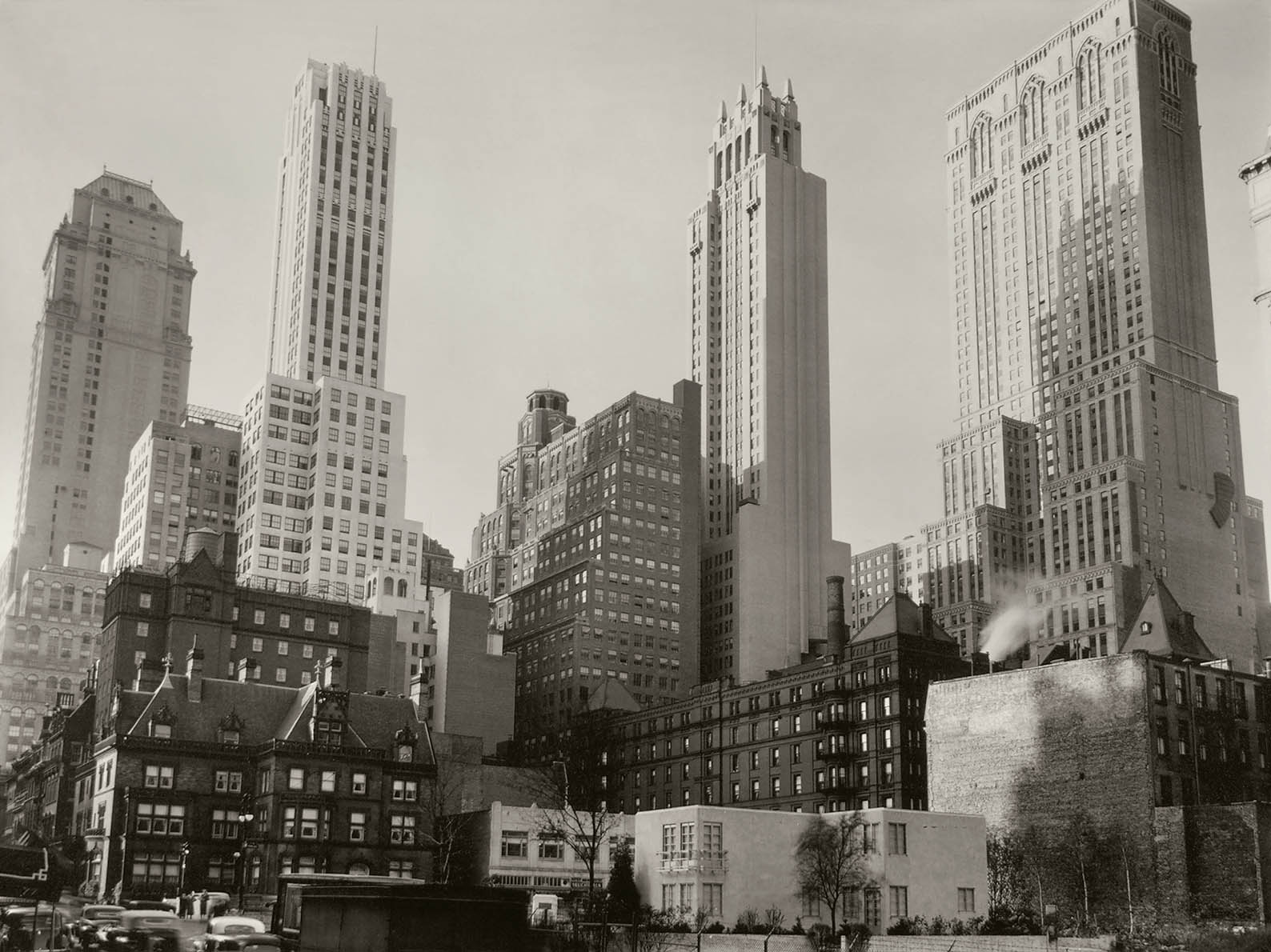
National Gallery of Victoria website

LIKE ART BLART ON FACEBOOK

Back to top