Exhibition: ‘Now You See Us: Women Artists in Britain 1520-1920’ at Tate Britain, London

Exhibition dates: 16th May – 13th October 2024

Curator: Tabitha Barber


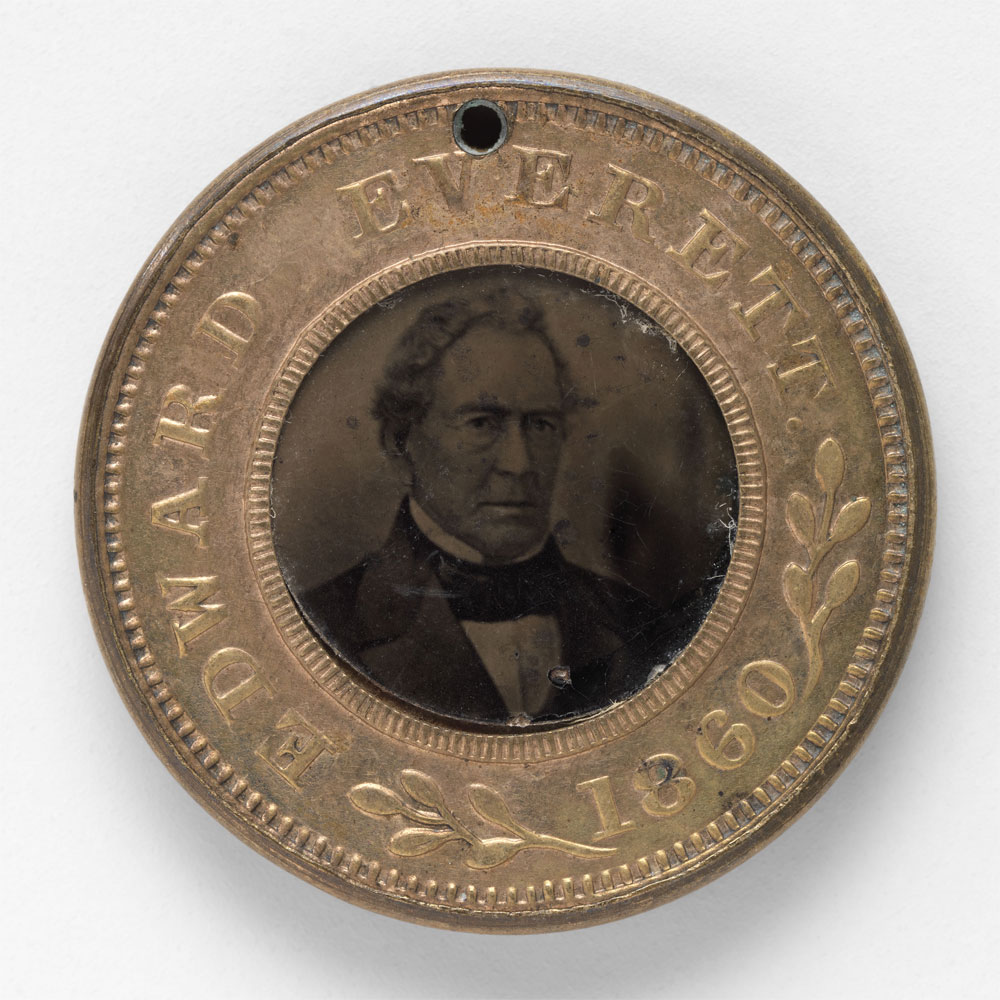
Attributed to Levina Teerlinc (Flemish, 1510-1576) 'Portrait of a Lady holding a Monkey' 1560s


Attributed to Levina Teerlinc (Flemish, 1510-1576)
Portrait of a Lady holding a Monkey
1560s
Watercolour and bodycolour heightened with gold and silver
Image: 46 × 46 mm
Frame, circular: 62 × 62 mm
Victor Reynolds and Richard Chadwick


There have been some mixed reviews of this exhibition – “tremendous show… an archaeological dig into the nation’s cultural past” (Jonathan Jones in The Guardian); “niggardly photography section… Only rarely do women’s art and women’s history spark together in this show… For even the best of the artists here are occasionally represented by the least of their works, quite apart from the mystifying omissions.” (Laura Cumming in The Guardian).

Indeed, Laura Cumming poses an interesting question: “Here is a dilemma straight away: which should take precedence, the painting or the fact? Should the show present art on its own terms, or as instance, evidence, expression of social history? It is an extremely complex remit…”

Having not been to London to see the exhibition I can only make generalised comment, but in my opinion the presentation should be a combination of both – art and social history – recognising that one does not exist, emerge, without the other. Art does not live in a bubble isolated from society and society itself is influenced by new ideas, new concepts of art. It’s not the chicken and the egg, it’s the scramble to make sense of living in this world using art as an expression, a (real, surreal, revolutionary, dream, abstract etc…) vision of the world that surrounds us.

Just from compiling this posting I have been enlightened as to the lives of many artists that I had never heard of before. I have admired their work and learnt about their lives and the conditions under which they worked. The exhibition has brought into my consciousness (and the consciousness of others) artists that I would have never have known about. It tells their stories in however fragmented a way … but at least it tells them. And that is a very good thing.

My particular favourites in the posting are three portraits where the sitter stares directly at you: Joan Carlile’s perceptive Portrait of a Lady Wearing an Oyster Satin Dress (1650s, below) so captivating of gaze, so incisive in its simplicity; Maria Cosway’s beautifully rendered Self Portrait (Nd, below) such a luminous and engaging presence; and Gwen John’s powerful Self-Portrait (1902, below) vibrant of colour, full of self-assurance. Wonderful evocations of humanity.

Scottish artist Dame Ethel Walker observes,

“There is no such thing as a woman artist. There are only two kinds of artist – bad and good.”


And that is what his exhibition gives you the obligation to do: to educate yourself, to make yourself a little more informed, to use your brain, eyes, and heart …and make up your own mind about the merit of the work.

I for one are very grateful for that opportunity.

Dr Marcus Bunyan

PS. I have added relevant text from the large print guide and other bibliographic information from accredited sources to illuminate the works presented.


Many thankx to the Tate for allowing me to publish the art work and photographs in the posting. Please click on the photographs for a larger version of the image.


Installation view of the exhibition 'Now You See Us Women Artists in Britain 1520-1920' at Tate Britain showing at right, Lucy Kemp-Welch's 'Colt Hunting in the New Forest' 1897


Installation view of the exhibition Now You See Us Women Artists in Britain 1520-1920 at Tate Britain showing at right, Lucy Kemp-Welch’s Colt Hunting in the New Forest 1897


Spanning 400 years, this exhibition follows women on their journeys to becoming professional artists. From Tudor times to the First World War, artists such as Mary Beale, Angelica Kauffman, Elizabeth Butler and Laura Knight paved a new artistic path for generations of women. They challenged what it meant to be a working woman of the time by going against society’s expectations – having commercial careers as artists and taking part in public exhibitions.

Including over 150 works, the show dismantles stereotypes surrounding women artists in history, who were often thought of as amateurs. Determined to succeed and refusing to be boxed in, they daringly painted what were usually thought to be subjects for male artists: history pieces, battle scenes and the nude.

The exhibition sheds light on how these artists championed equal access to art training and academy membership, breaking boundaries and overcoming many obstacles to establish what it meant to be a woman in the art world.

Text from the Tate Britain website


Installation view of the exhibition 'Now You See Us Women Artists in Britain 1520-1920' at Tate Britain showing Artemisia Gentileschi's 'Self-Portrait as the Allegory of Painting (La Pittura)' c. 1638-1639


Installation view of the exhibition Now You See Us Women Artists in Britain 1520-1920 at Tate Britain showing Artemisia Gentileschi’s Self-Portrait as the Allegory of Painting (La Pittura) c. 1638-1639 (below)


Artemisia Gentileschi (Italian, 1593-1653) 'Self-Portrait as the Allegory of Painting (La Pittura)' c. 1638-1639 (installation view)


Artemisia Gentileschi (Italian, 1593-1653)
Self-Portrait as the Allegory of Painting (La Pittura)
c. 1638-1639
Oil on canvas
98.6 x 75.2cm (support, canvas/panel/stretcher external)
Royal Collection Trust
© His Majesty King Charles III 2024


Artemisia Gentileschi (Italian, 1593-1653) 'Self-Portrait as the Allegory of Painting (La Pittura)' c. 1638-1639


Artemisia Gentileschi (Italian, 1593-1653)
Self-Portrait as the Allegory of Painting (La Pittura)
c. 1638-1639
Oil on canvas
98.6 x 75.2cm (support, canvas/panel/stretcher external)
Royal Collection Trust
© His Majesty King Charles III 2024


Gentileschi claimed that ‘all the … Princes’ displayed her self-portrait in their galleries. In addition to this work, Charles I owned another self-portrait, which is now lost. Here, Gentileschi uses her own image to portray the allegorical figure of Pittura (also the Italian feminine noun for painting), who she depicts in a working apron before an easel absorbed in the act of creation.

Text from the exhibition large print guide


As a self-portrait the painting is particularly sophisticated and accomplished. The position in which Artemisia has portrayed herself would have been extremely difficult for the artist to capture, yet the work is economically painted, with very few pentiments. In order to view her own image she may have arranged two mirrors on either side of herself, facing each other. Depicting herself in the act of painting in this challenging pose, the angle and position of her head would have been the hardest to accurately render, requiring skilful visualisation.

Text from the Royal Collection Trust website


Installation view of the exhibition 'Now You See Us Women Artists in Britain 1520-1920' at Tate Britain showing Artemisia Gentileschi's 'Susanna and the Elders' c. 1638-1640


Installation view of the exhibition ‘Now You See Us Women Artists in Britain 1520-1920’ at Tate Britain showing Artemisia Gentileschi’s Susanna and the Elders c. 1638-1640 (below)
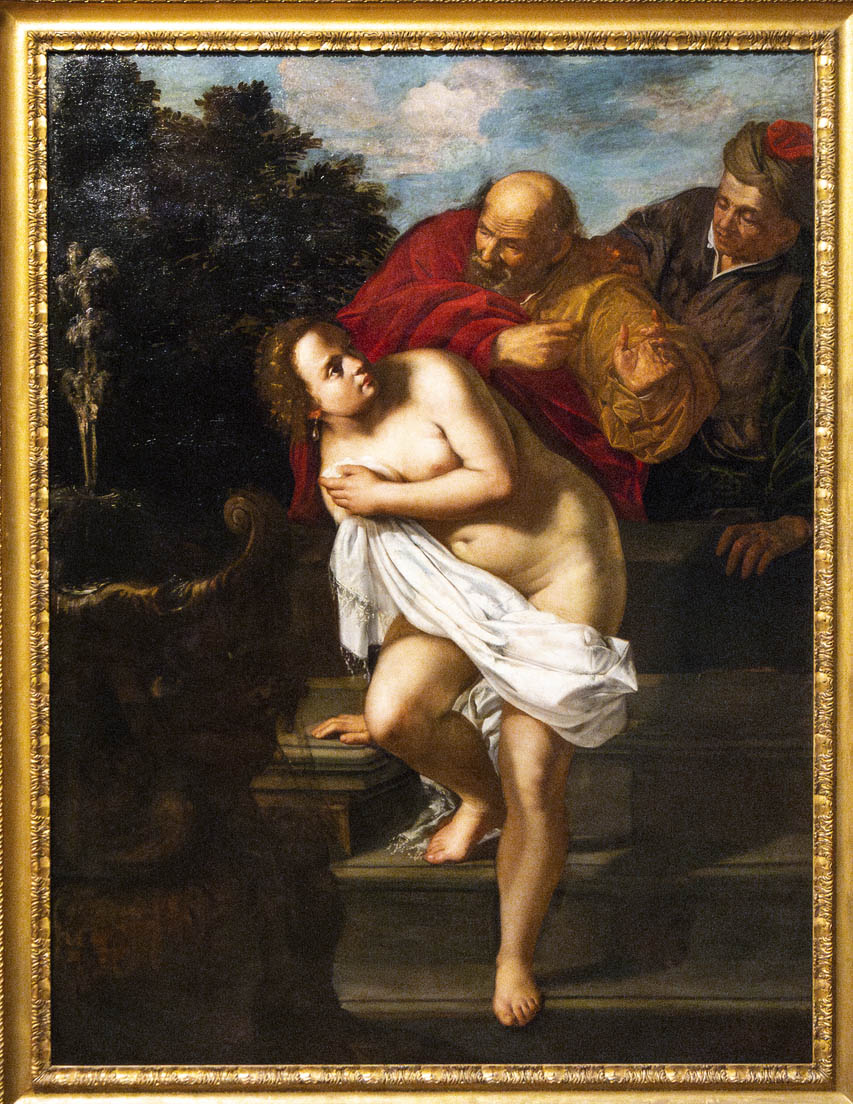
 

Artemisia Gentileschi (Italian, 1593-1653) 'Susanna and the Elders' c. 1638-1640 (installation view)


Artemisia Gentileschi (Italian, 1593-1653)
Susanna and the Elders
c. 1638-1640
Oil on canvas
189.0 x 143.2cm (support, canvas/panel/stretcher external)
Royal Collection Trust / © His Majesty King Charles III 2024


Artemisia Gentileschi (Italian, 1593-1653) 'Susanna and the Elders' c. 1638-1640


Artemisia Gentileschi (Italian, 1593-1653)
Susanna and the Elders
c. 1638-1640
Oil on canvas
189.0 x 143.2cm (support, canvas/panel/stretcher external)
Royal Collection Trust / © His Majesty King Charles III 2024


Likely commissioned by Queen Henrietta Maria, this work was displayed in her Withdrawing Chamber in Whitehall Palace. The subject is an Old Testament narrative on virtue and faith. Susanna, bathing in privacy, is spied on by two elders who attempt to sexually assault her. When she resists them, the men accuse her of adultery. Susanna is arrested and about to be put to death until the men are questioned, and her innocence is revealed. Here, Gentileschi depicts Susanna as vulnerable and fearful, shielding her nakedness. She returned to the subject throughout her career.

Text from the exhibition large print guide


This spring, Tate Britain will present Now You See Us: Women Artists in Britain 1520-1920. This ambitious group show will chart women’s road to being recognised as professional artists, a 400-year journey which paved the way for future generations and established what it meant to be a woman in the British art world. The exhibition covers the period in which women were visibly working as professional artists, but went against societal expectations to do so.

Featuring over 100 artists, the exhibition will celebrate well-known names such as Artemisia GentileschiAngelica Kauffman, Julia Margaret Cameron and Gwen John, alongside many others who are only now being rediscovered. Their careers were as varied as the works they produced: some prevailed over genres deemed suitable for women like watercolour landscapes and domestic scenes. Others dared to take on subjects dominated by men like battle scenes and the nude, or campaigned for equal access to training and membership of professional institutions. Tate Britain will showcase over 200 works, including oil painting, watercolour, pastel, sculpture, photography and ‘needlepainting’ to tell the story of these trailblazing artists.

Now You See Us will begin at the Tudor court with Levina Teerlinc, many of whose miniatures will be brought together for the first time in four decades, and Esther Inglis, whose manuscripts contain Britain’s earliest known self-portraits by a woman artist. The exhibition will then look to the 17th century. Focus will be given to one of art history’s most celebrated women artists, Artemisia Gentileschi, who created major works in London at the court of Charles I, including the recently rediscovered Susanna and the Elders 1638-40, on loan from the Royal Collection for the very first time. The exhibition will also look to women such as Mary BealeJoan Carlile and Maria Verelst who broke new ground as professional portrait painters in oil.

In the 18th century, women artists took part in Britain’s first public art exhibitions, including overlooked figures such as Katherine Read and Mary Black; the sculptor Anne Seymour Damer; and Margaret Sarah Carpenter, a leading figure in her day but little heard of now. The show will look at Angelica Kauffman and Mary Moser, the only women included among the Founder Members of the Royal Academy of Arts; it took 160 years for membership to be granted to another woman. Women artists of this era are often dismissed as amateurs pursuing ‘feminine’ occupations like watercolour and flower painting, but many worked in these genres professionally: needlewoman Mary Linwood, whose gallery was a major tourist attraction; miniaturist Sarah Biffin, who painted with her mouth, having been born without arms and legs; and Augusta Withers, a botanical illustrator employed by the Horticultural Society.

The Victorian period saw a vast expansion in public exhibition venues. Now You See Us will showcase major works by critically appraised artists of this period, including Elizabeth Butler (née Thompson)‘s monumental The Roll Call 1874 (Butler’s work prompted critic John Ruskin to retract his statement that “no women could paint”), and nudes by Henrietta Rae and Annie Swynnerton, which sparked both debate and celebration. The exhibition will also look at women’s connection to activism, including Florence Claxton‘s satirical ‘Woman’s Work’: A Medley 1861 which will be on public display for the first time since it was painted; and an exploration of the life of Barbara Leigh Smith Bodichon, an early member of the Society of Female Artists who is credited with the campaign for women to be admitted to the Royal Academy Schools. On show will be the student work of women finally admitted to art schools, as well as their petitions for equal access to life drawing classes.

The exhibition will end in the early 20th century with women’s suffrage and the First World War. Women artists like Gwen John, Vanessa Bell and Helen Saunders played an important role in the emergence of modernism, abstraction and vorticism, but others, such as Anna Airy, who also worked as a war artist, continued to excel in conventional traditions. The final artists in the show, Laura Knight and Ethel Walker, offer powerful examples of ambitious, independent, confident professionals who achieved critical acclaim and – finally – membership of the Royal Academy.

Press release from Tate Britain
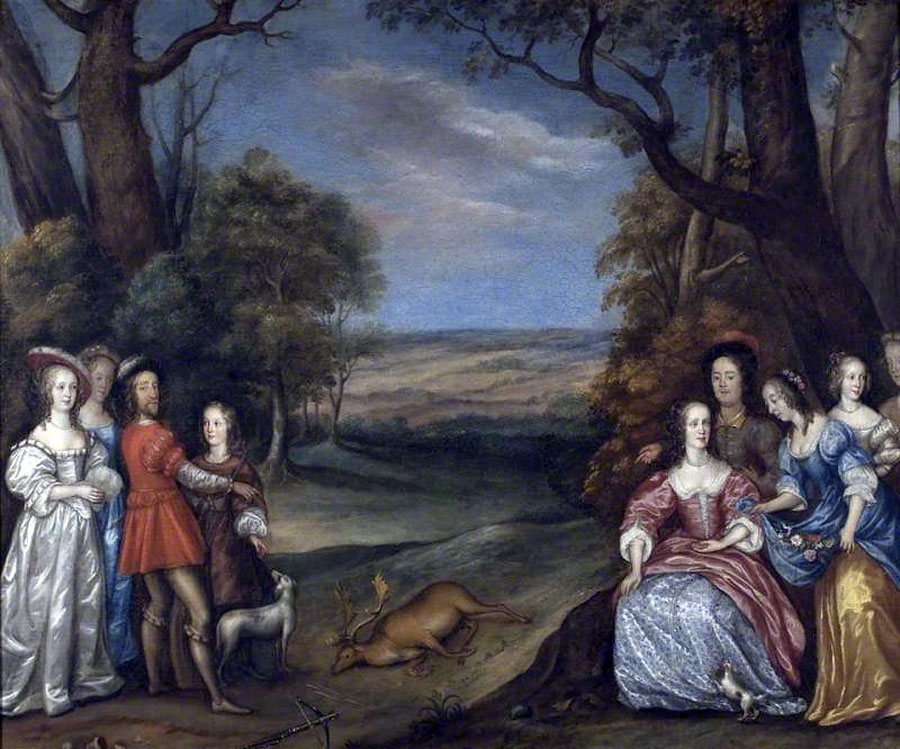
 

Joan Carlile (English, 1606-1679) 'The Carlile Family with Sir Justinian Isham in Richmond Park' 1650s


Joan Carlile (English, 1606-1679)
The Carlile Family with Sir Justinian Isham in Richmond Park
1650s
Oil on canvas
Lamport Hall
CC BY-NC-ND
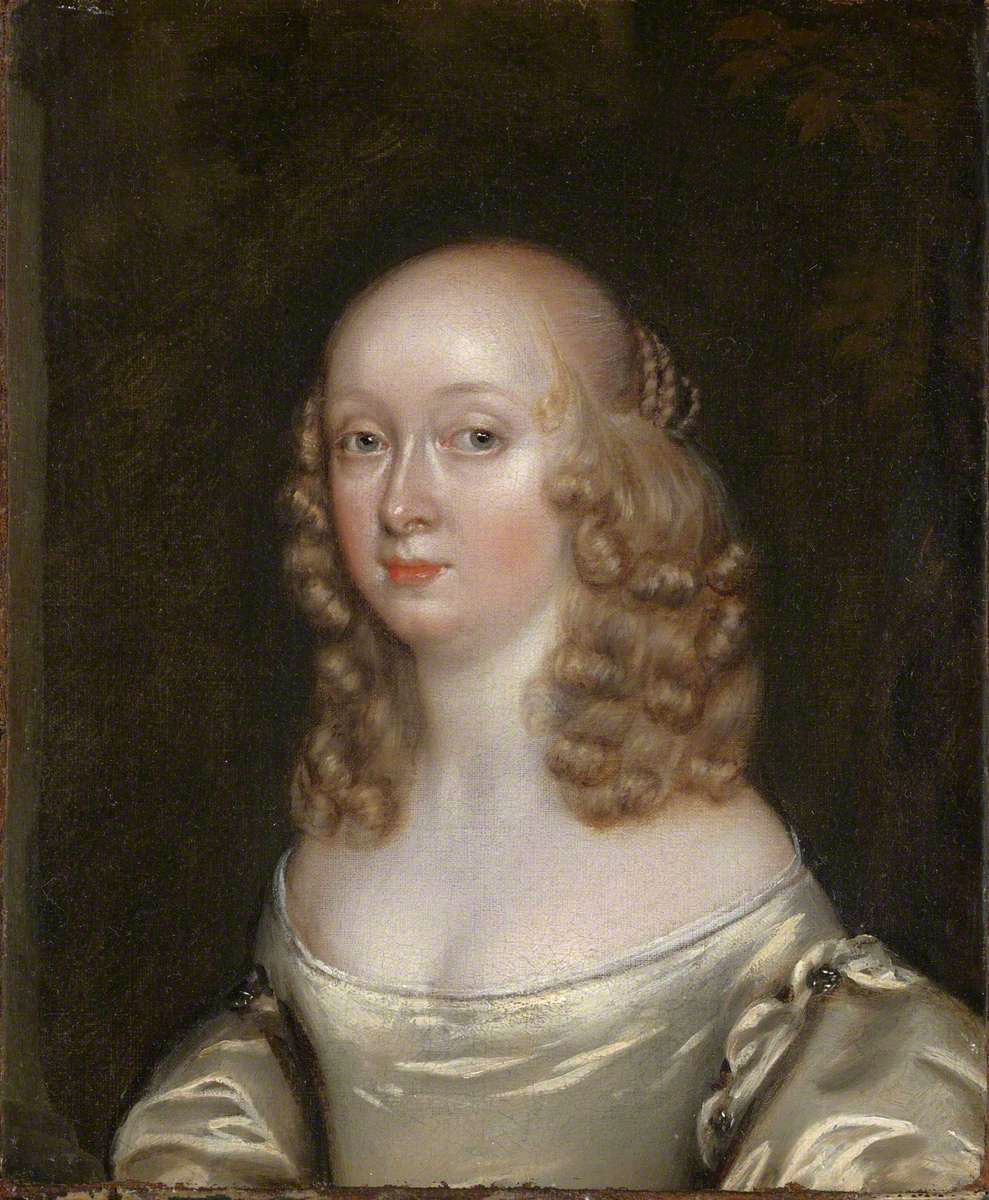
 

Joan Carlile (English, 1600-1679) 'Portrait of a Lady Wearing an Oyster Satin Dress' 1650s


Joan Carlile (English, 1600-1679)
Portrait of a Lady Wearing an Oyster Satin Dress
1650s
Oil on canvas
30.8 x 25.5cm
National Portrait Gallery, London
Government Art Collection
Purchased from Philip Mould Ltd, 2018


Joan Carlile or Carlell or Carliell (c. 1606-1679), was an English portrait painter. She was one of the first British women known to practise painting professionally. Before Carlile, known professional female painters working in Britain were born elsewhere in Europe, principally the Low Countries.


Installation view of the exhibition 'Now You See Us Women Artists in Britain 1520-1920' at Tate Britain showing at left, Joan Carlile's 'Portrait of an Unknown Lady known as Elizabeth Murray, Countess of Dysart and Duchess of Lauderdale' 1650s; and at right, 'Portrait of an Unknown Lady' 1650-1655


Installation view of the exhibition Now You See Us Women Artists in Britain 1520-1920 at Tate Britain showing at left, Joan Carlile’s Portrait of an Unknown Lady known as Elizabeth Murray, Countess of Dysart and Duchess of Lauderdale 1650s (below); and at right, Portrait of an Unknown Lady 1650-1655 (below)
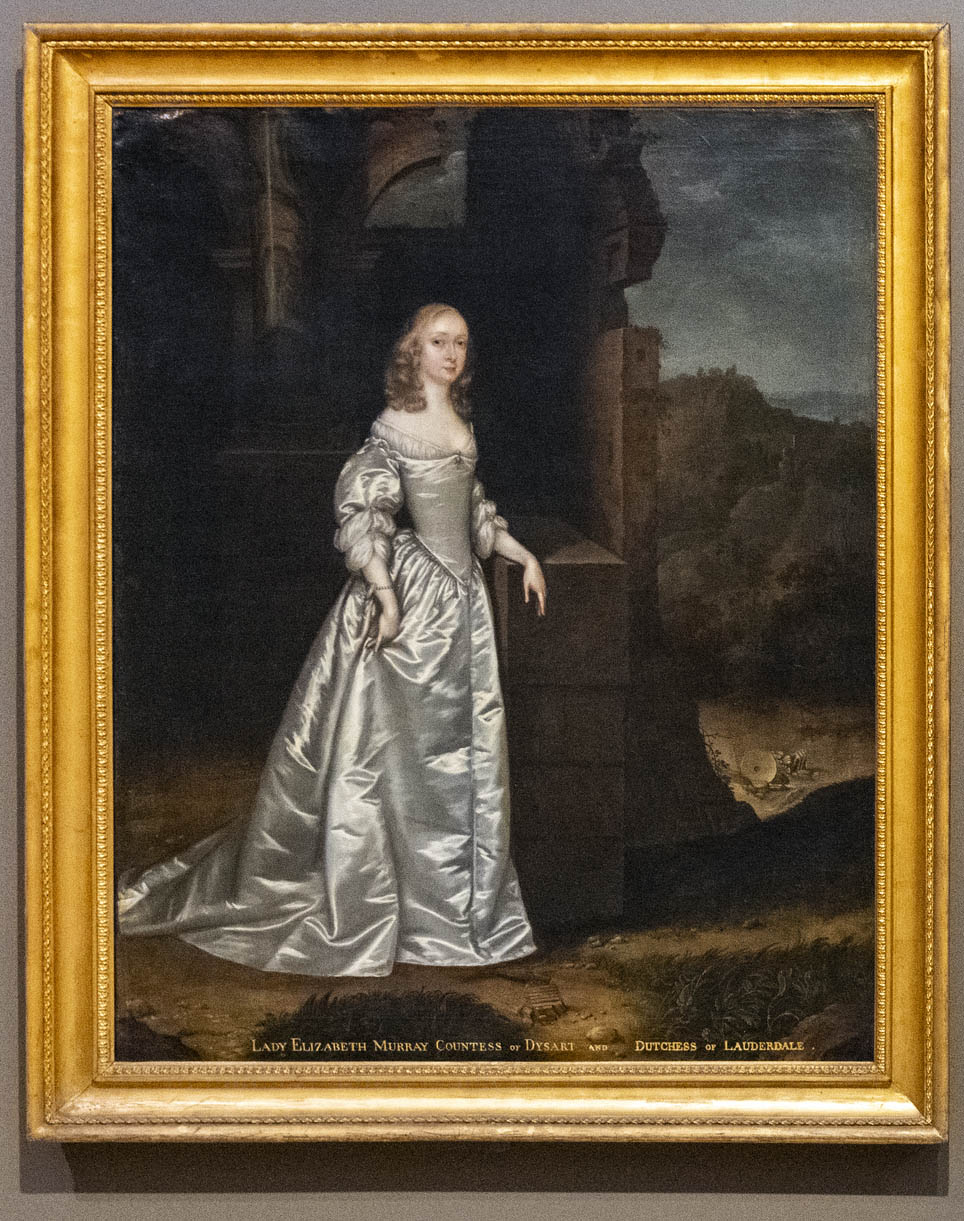
 

Joan Carlile (English, 1606-1679) 'Portrait of an Unknown Lady' 1650-1655 (installation view)


Joan Carlile (English, 1606-1679)
Portrait of an Unknown Lady (installation view)
1650-1655
Oil on canvas
Support: 1107 × 900 mm
Frame: 1205 × 1012 × 73 mm
Photo: Tate
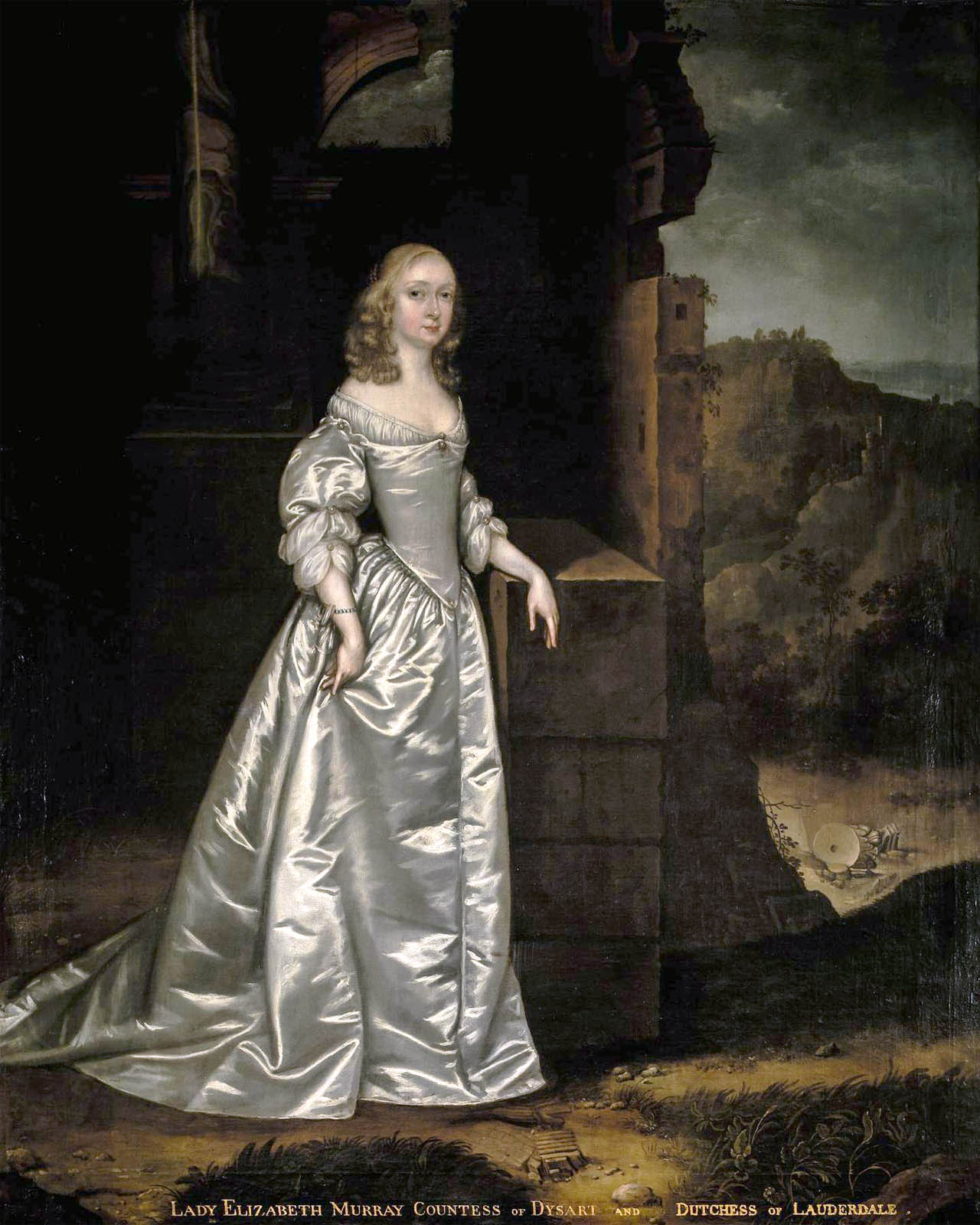
 

Joan Carlile (English, 1606-1679) 'Portrait of an Unknown Lady known as Elizabeth Murray, Countess of Dysart and Duchess of Lauderdale' 1650s


Joan Carlile (English, 1606-1679)
Portrait of an Unknown Lady known as Elizabeth Murray, Countess of Dysart and Duchess of Lauderdale
1650s
Oil on canvas
The Bute Collection at Mount Stuart


Here, Carlile uses the same white satin dress seen in a nearby painting. The pose, with the sitter elegantly gathering a handful of fabric, is taken from works by Charles I’s portrait painter, Flemish artist Anthony van Dyck (1599-1641). The sitter is sometimes identified as Elizabeth Murray, Countess of Dysart and Duchess of Lauderdale. She was Carlile’s near neighbour in Petersham, at Ham House. The broken columns in the background are often used to symbolise loss.

Text from the exhibition large print guide


Joan Carlile (English, 1606-1679) 'Portrait of an Unknown Lady' 1650-1655


Joan Carlile (English, 1606-1679)
Portrait of an Unknown Lady
1650-1655
Oil on canvas
Support: 1107 × 900 mm
Frame: 1205 × 1012 × 73 mm
Photo: Tate


Portraits by Joan Carlile are rare and this is one of only approximately ten that can be identified. Of these, two are in public collections (Ham House, Surrey, and National Portrait Gallery, London), while others are held in historic house collections and family trusts in the United Kingdom, for example Lamport Hall, Burghley House and Berkeley Castle. Carlile seems to have specialised in small-scale full length portraits of figures, usually female, set in large landscape or garden settings. The composition employed here, in which the figure holds the skirt of her dress with one hand and shawl with another, was most likely a template arrangement. It appears in two other portraits, one showing the figure facing the same way as here, the other in reverse, but with both figures wearing the same white satin dress. This repeated composition adds weight to the proposition that Carlile was a professional artist. The wife of Lodowick Carlile (or Carlell), a minor poet and dramatist who also held the office of Gentleman of the Bows to Charles I, Joan Carlile lived with her husband in Petersham, a suburb of London. However, in 1653 their neighbour, Brian Duppa, recorded that ‘the Mistress of the Family intends for London, where she meanes to make use of her skill to som more Advantage then hitherto she hath don’ (quoted in Toynbee and Isham 1954, p.275). In 1654 Carlile is recorded as living in London’s Covent Garden, then the heart of the artistic community (see Burnett 2004/2010, accessed 2 October 2015).

Text from the Tate website


Joan Carlile challenged societal expectations by becoming one of Britain’s first professional women artists in the 1600s, earning her living as an oil painter. Initially employed in King Charles I’s household, Carlile liked to paint in her spare time. With the outbreak of the Civil War, she began painting to support herself.

Carlile moved to Covent Garden in the 1650s – then the centre of the art world – and set up a successful commercial portrait business. Her template of carefully posed figures in silk gowns against landscape backgrounds, seen here in Portrait of an Unknown Lady (1650-5), proved extremely popular. Admired as a professional artist in her lifetime, only a small number of her portraits still exist, some which have never been seen in public.

Text from the Tate website


In her Portrait of an Unknown Lady (1650-1655) the astonishing nacreous lustre of the sitter’s white silk gown, shown full length, shines against the foil of the dull brown foliage behind her. At this point, the Civil War had ended but the restoration of the monarchy was still in the future, and Carlile’s painting, with its overt celebration of luxury and leisure (the spotless pale fabric speaks of both) seems provocative.

It is possible that Carlile taught Anne Killigrew (1660-1685), an accomplished painter and poet whose family encouraged her creative pursuits, although it’s not clear if she ever painted professionally. Only a handful of Killigrew’s works survive today, including Venus Attired by the Three Graces, which reveals her interest in mythological scenes.

Although she died of smallpox aged just 25, Killigrew stands alongside Beale and Carlile as one of Britain’s first female artists.

Alicia Foster. “Blazing a trail: Britain’s first women artists deserve to be better known,” on the Art UK website 13 May 2024 [Online] Cited 03/09/2024
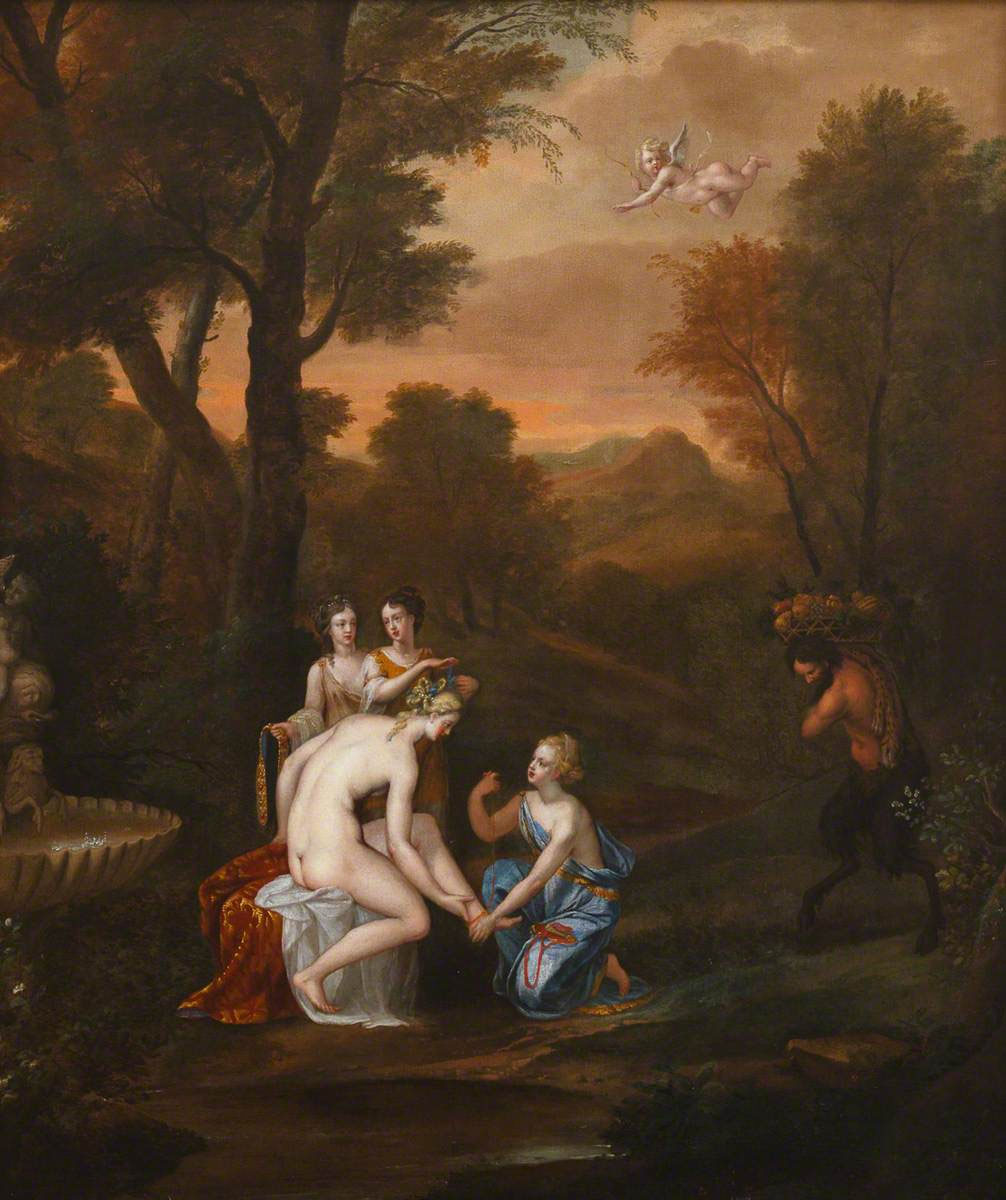
 

Anne Killigrew (English, 1660-1685) 'Venus Attired by the Three Graces' c. 1680


Anne Killigrew (English, 1660-1685)
Venus Attired by the Three Graces
c. 1680
Oil on canvas
Support: 1120 × 950 mm
Frame: 1282 × 1102 × 63 mm
Falmouth Art Gallery
Purchased with the assistance of the Victoria and Albert Museum Purchase Grant Fund, Heritage Lottery Fund, the Art Fund, the Beecroft Bequest, Falmouth Decorative and Fine Arts Society, the Estate of Barry Hughes in memory of Grace and Thomas Hughes and generous donations from local supporters
Public domain


Anne Killigrew has been described as the most celebrated female English prodigy of the Seventeeth Century. A poet and artist of great beauty and repute, Killigrew died of smallpox at the age of just 25. Anne’s exceptional qualities as an artist and a poet were highly praised in her short lifetime. The poet John Dryden dedicated a poem to her in which he refers directly to this picture: ‘Where nymphs of brightest form appear, and shaggy satyrs standing near’ (from ‘To the Pious Memory of the Accomplished Young Lady Mrs Anne Killigrew Excellent In The Two Sister-Arts of Poesy And Painting: An Ode’). Anne Killigrew worked at the Royal Court of King James II as Lady-in-Waiting to the Queen. Anne’s grandfather, Sir William Killigrew, was the Governor of Pendennis Castle, and his son, Dr Henry Killigrew moved to London to work as chaplain to King Charles I. He later became master of the Savoy Hospital.

Text from the Falmouth Art Gallery website
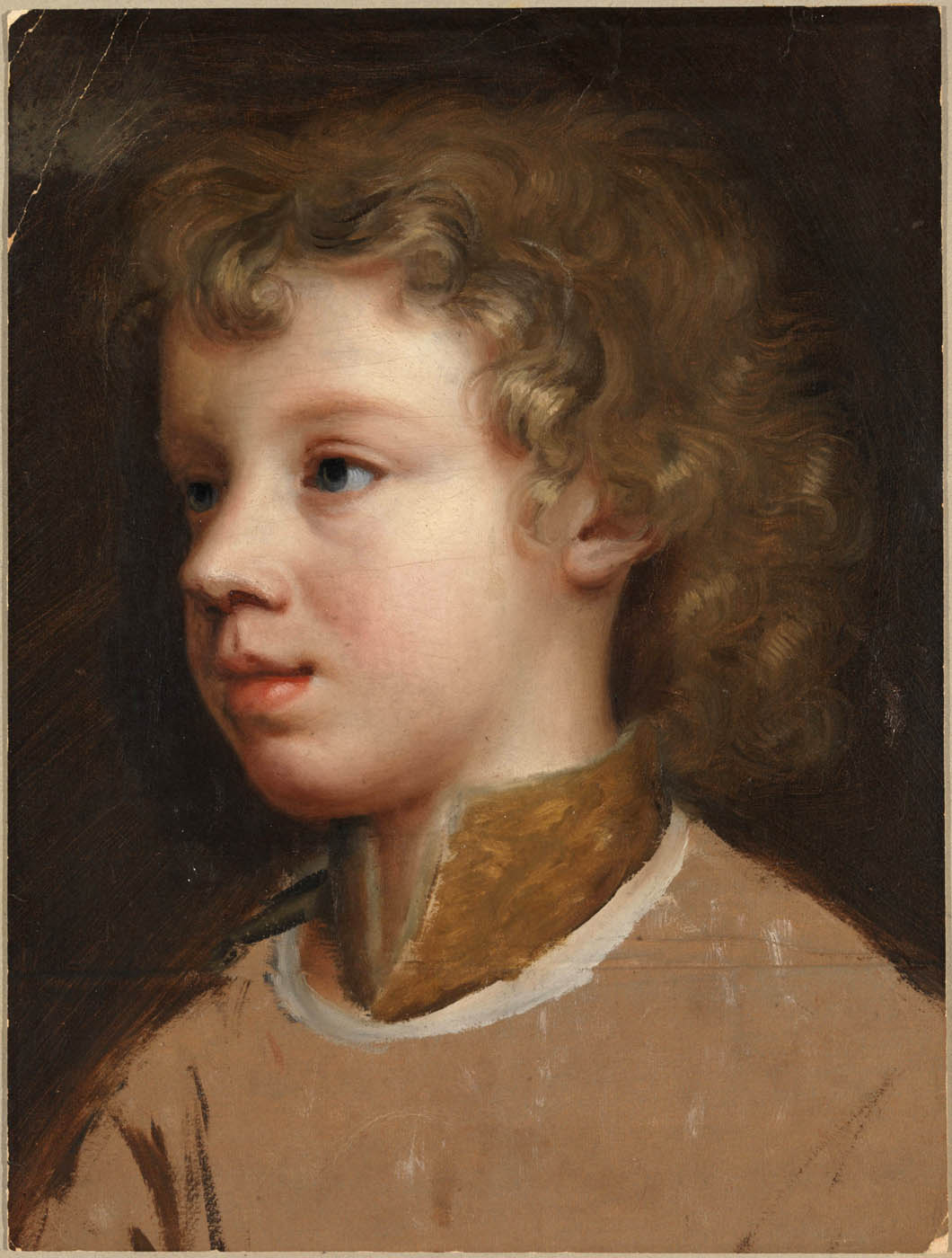
 

Mary Beale (English, 1633-1699) 'Sketch of the Artist's Son, Bartholomew Beale, Facing Left' c. 1660


Mary Beale (English, 1633-1699)
Sketch of the Artist’s Son, Bartholomew Beale, Facing Left
c. 1660
Oil on paper
Support: 325 × 245 mm
Frame: 421 × 340 × 32 mm
Tate
Purchased 2010
Photo: Tate


In the late 1650s and early 1660s Beale and her family were living on Hind Court, off Fleet Street in London. She painted privately and had a painting room in her home. Her husband had a civil service position as Deputy Clerk of the Patents. Portrait sittings of family and friends were often social occasions, with conversation and dinner afterwards. It is in this period that Beale produced small oil sketches on paper of family members, particularly her two young sons. Whether they relate to larger oil on canvas portraits is unclear.

This oil sketch of a young boy, shown in three-quarter profile, is of Mary Beale’s eldest son Bartholomew, baptised in 1656. His appearance, both in age and costume, is very similar to that in Mary Beale’s Self-portrait with her family (Geffrye Museum, London), painted c. 1659-60, before the birth of her youngest son Charles. It relates closely to another sketch of Bartholomew in oil on paper painted at the same time, Sketch of the Artist’s Son, Bartholomew Beale, in Profile c. 1660 (Tate T13245). Whether these sketches are connected to the production of the Geffrye Museum portrait, or were simply executed at around the same time, is not known. They are painted in oil on paper, which seems to have been a feature of Beale’s working method in the early 1660s but is not known in her later career, when she made preparatory sketches in chalk on paper or in oil on canvas (see, for example, Portrait of a Young Girl c. 1679-81, Tate T06612). When this sketch was made, the Beale family was living in Hind Court, off Fleet Street in London, where Mary Beale’s husband, Charles, was employed as Deputy Clerk of the Patents Office. It is difficult to determine whether Beale had much of a commercial portrait practice at this date, but documents certainly record the production of portraits of family and friends. In her ‘painting room’, Beale had ‘pencills [sic.], brushes, goose & swan fitches’, as well as ‘quantities of primed paper to paint on’ (George Vertue, transcription of Charles Beale’s 1661 notebook, now lost, quoted in Barber 1999, p. 16).

Text from the Tate website


Installation view of the exhibition 'Now You See Us Women Artists in Britain 1520-1920' at Tate Britain showing Mary Beale’s 'Anne Sotheby' (1676-1677)


Installation view of the exhibition Now You See Us Women Artists in Britain 1520-1920 at Tate Britain showing Mary Beale’s Anne Sotheby 1676-1677 


Mary Beale (English, 1633-1699) 'Anne Sotheby' 1676-1677


Mary Beale (English, 1633-1699)
Anne Sotheby
1676-1677
Oil on canvas
Tate
Purchased with funds provided by the Nicholas Themans Trust 2024


Beale’s husband kept a daily record of her activities in the studio. Two of his over 30 notebooks and a few partial transcripts are still known. They record Beale’s sitters, her painting stages, her painting materials and her prices. For her commissioned works, she borrowed poses from the portraits of the court artist Peter Lely (1618-1680). Anne Sotheby’s pose is taken from his portrait of Lady Essex Finch. Beale charged £10 for paintings of this size. Her sons acted as studio assistants; her youngest, Charles, was paid to paint the drapery in this portrait.

Text from the exhibition large print guide


Mary Beale (née Cradock) (1633-1699) was an English portrait painter. She was part of a small band of female professional artists working in London. Beale became the main financial provider for her family through her professional work – a career she maintained from 1670/71 to the 1690s. Beale was also a writer, whose prose Discourse on Friendship of 1666 presents a scholarly, uniquely female take on the subject. Her 1663 manuscript Observations, on the materials and techniques employed “in her painting of Apricots”, though not printed, is the earliest known instructional text in English written by a female painter. Praised first as a “virtuous” practitioner in “Oyl Colours” by Sir William Sanderson in his 1658 book Graphice: Or The use of the Pen and Pensil; In the Excellent Art of PAINTING, Beale’s work was later commended by court painter Sir Peter Lely and, soon after her death, by the author of “An Essay towards an English-School”, his account of the most noteworthy artists of her generation.

Text from the Wikipedia website
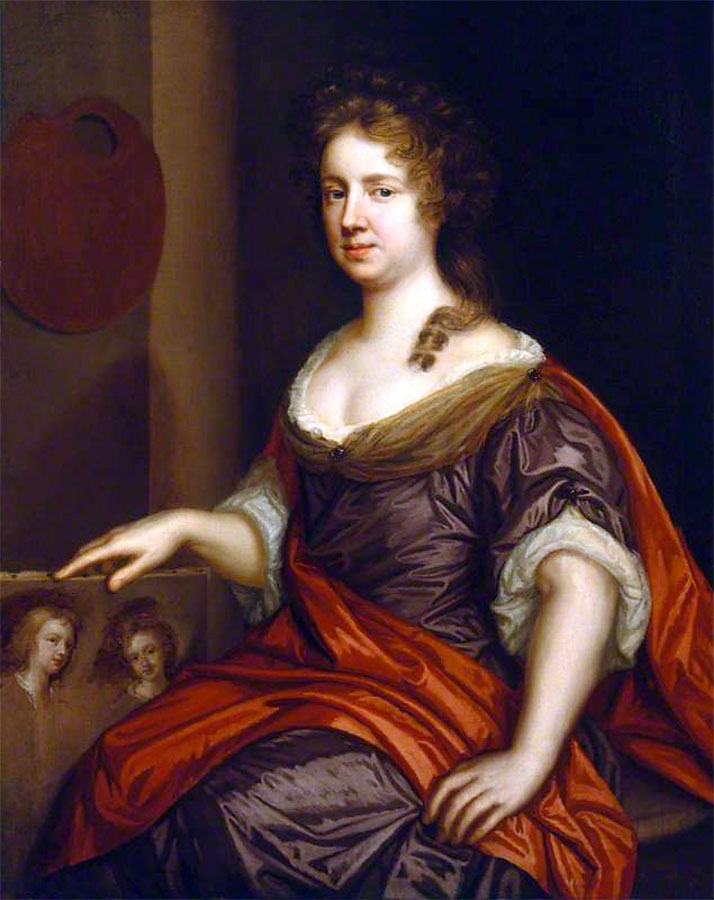
 

Mary Beale (English, 1633-1699) 'Mary Beale' c. 1666


Mary Beale (English, 1633-1699)
Mary Beale
c. 1666
Oil on canvas
109.2 x 87.6cm
National Portrait Gallery, London
Purchased, 1912
CC BY-NC-ND


Beale is shown holding an unframed canvas on which are sketch portraits of her two sons, Bartholomew (1656-1709) and Charles (1660-1714?)


Mary Beale (English, 1633-1699) 'Self Portrait' c. 1675


Mary Beale (English, 1633-1699)
Self Portrait
c. 1675
Oil on sacking
89 x 73cm
West Suffolk Heritage Service
Purchased
CC BY-NC-ND


The early English portrait painter Mary Beale (1622/1623-1699) had a father who was an amateur artist, miniature painter and a collector of paintings (her family owned work by Peter Paul Rubens and Anthony van Dyck) and her husband, Charles, was also an amateur painter and ran her studio in London’s fashionable Pall Mall.

Unusually, in her case, her talent was matched by her spouse’s high regard of it, and she was allowed to supersede him and establish a professional career. She took on female apprentices, though no records of their subsequent careers survive.

Alicia Foster. “Blazing a trail: Britain’s first women artists deserve to be better known,” on the Art UK website 13 May 2024 [Online] Cited 03/09/2024


Exhibition guide

Now You See Us: Women Artists in Britain 1520-1920 celebrates over 100 women who forged public careers as artists. The exhibition begins with the earliest recorded women artists working in Britain. It ends with women’s place in society fundamentally changed by the First World War and the first women gaining the right to vote. Across these 400 years, women were a constant presence in the art world. Now You See Us explores these artists’ careers and asks why so many have been erased from mainstream art histories.

Organised chronologically, the exhibition follows women who practised art as a livelihood rather than an accomplishment. The chosen works were often exhibited at public exhibitions, where these artists sold their art and made their reputations. Most of the women featured belonged to a social class that gave them the time and opportunity to develop their talents. Many were the daughters, sisters or wives of artists. Yet even these women were regarded differently. Now You See Us charts their fight to be accepted as professional artists on equal terms with men.

Many of the exhibited works reflect prejudiced notions of the most appropriate art forms and subjects for women. Others challenge the commonly held belief that women were best suited to ‘imitation’, proving they have always been capable of creative invention. From painting epic battle scenes to campaigning for access to art academies, these women defied society’s limited expectations of them and forged their own paths. Yet so many of their careers have been forgotten and artworks lost. Drawing on the artists’ own writings, art criticism, and new and established research, this exhibition attempts to restore these women to their rightful place in art history. Now You See Us aims to ensure these artists are not only seen but remembered.

Women at the Tudor Courts

There are significant gaps in our knowledge of women’s artistic lives in the sixteenth century. As is the case for many artists in this exhibition, their lives are poorly documented and often hidden behind those of their husbands and fathers. The problems this presents are evident in this room.

Susanna Horenbout (1503-1554) and Levina Teerlinc (c. 1510s-1576) are among the earliest women in Britain to be named as artists. Their reputations are clearly recorded. In 1521, Horenbout’s skill was admired by the German painter and printmaker Albrecht Dürer (1471-1528), and in 1567, both artists were praised by the Italian historian Lodovico Guicciardini (1521-1589). Yet no works by Horenbout have been identified, and those attributed to Teerlinc are not certain.

Horenbout and Teerlinc were both daughters of Flemish manuscript illuminators and were likely trained in their family workshops. Both arrived in England to work at the court of Henry VIII. But as women, they were not employed as artists. While Horenbout’s brother Lucas Horenbout (1490-1544) was Henry VIII’s painter, she served Anne of Cleves as one of her Gentlewomen of the Privy Chamber. Teerlinc served Elizabeth I likewise. This does not mean that they did not paint – at court, their artistic talents would have been a distinguishing skill – but, as is a common feature of this exhibition, written histories have failed to record their activities.

Working in a different context – as a scribe and calligrapher – the works of Esther Inglis (1571-1624) can be identified. Inglis authored more than 60 manuscript books and included her name and self-portrait in many. Raised in Scotland, she may have learnt the art of calligraphy from her mother, Marie Presot (active 1569-1574).

Artemisia Gentileschi

Italian artist Artemisia Gentileschi arrived in London in c. 1638-9 by invitation of Charles I. Like other European rulers, Charles I employed artists of international reputation to signal the cultural sophistication of his court. Gentileschi had prestigious patrons across Europe, including the Grand Duke of Tuscany and Philip IV of Spain. She was the first woman to be a member of the Academy of the Arts of Drawing in Florence, and in Rome, her house had been ‘full of cardinals and princes’. Gentileschi’s fame as an artist was augmented by her status as a woman.

In London, Gentileschi worked for Charles I and Queen Henrietta Maria. Records suggest she produced seven works for the royal collection. These included self-portraits and large history paintings, with subject matter drawn from classical history, mythology, and the Bible. Only the two displayed here are still known. Gentileschi often placed women at the centre of her works, depicting narratives that celebrate their strength and virtue. Susanna and the Elders is an example of the kind of work for which Gentileschi was celebrated.

Gentileschi achieved in her lifetime what many women who came after her had to fight to attain: she was a professional artist who ran her own studio, was a member of an art academy, worked from life models and was ranked as a serious artist alongside men. Despite this, Gentileschi’s status has fluctuated over time, and the artist has faded in and out of art history.

Early accounts of Gentileschi’s work focus on her personal life as much as her painting. Like many of the women artists who came after her, the details of her biography continue to dictate interpretations of her work.

The First Professionals

In 1658, historian William Sanderson (c. 1586-1676) published Graphice. The use of the pen and pensil. Or, The most excellent art of painting. The publication lists contemporary artists practising in England. He includes four women working in oil paint: ‘Mrs Carlile’ (Joan Carlile), ‘Mrs Beale’ (Mary Beale), ‘Mrs Brooman’ (probably Sarah Broman) and ‘Mrs Weimes’ (Anne Wemyss). Carlile and Beale are believed to be two of the earliest British women to have worked as professional artists. Very little is known about Broman or Wemyss beyond snatches of information in archives.

This short list highlights how unusual it was for British women to pursue art as a profession in the seventeenth century. Women had little agency over their own lives and were subject first to their fathers and then their husbands. Limited to the domestic sphere, they were not expected to conduct public lives. Many women painted privately with no thought of turning it into a career. While young men began as apprentices or assistants in the studios of professionals, this route was not open to most women.

In the seventeenth century women writers, poets, playwrights and artists began to give voice to those questioning their secondary status and petitioning for women’s rights. They argued that it was lack of education, not ‘weak minds’ that limited their opportunities. This fight for equality and access to education runs throughout the exhibition.

The First Exhibitors

The first public art exhibition in Britain took place in London in 1760, and art shows soon became an important part of the city’s social calendar. Founded in 1768, the Royal Academy quickly emerged as a driving force in cultural life, with its Summer Exhibition attracting tens of thousands of visitors every year. Other venues, including the Society of Artists and the British Institution also hosted exhibitions.

Women artists played an active part in this competitive world. An estimated 900 women exhibited their work between 1760 and 1830. Angelica Kauffman and Mary Moser were both founding members of the Royal Academy (although, as women, they weren’t awarded full membership and were excluded from the Academy’s council meetings and governance). Despite this precedent, it would take more than 150 years for the next woman to be elected to membership.

Kauffman is one of the few women artists of the eighteenth century whose profile has been sustained. Many others made names for themselves, but their careers are not well documented. Even Moser is less well known, perhaps because she painted flowers while Kauffman pursued the ‘high genre’ of history painting, depicting historical, mythological and biblical narratives.

Art critics of the time often criticised women for their ‘weak’ figurative work, yet they were denied access to life-drawing classes. Women artists also had to battle social expectations. Publishing a private or studio address in an exhibition catalogue was a signal of commercial practice, but painting for money was considered improper. Women artists of higher social rank were listed as ‘honorary’ exhibitors; some exhibited simply as ‘a Lady’, and after marriage, many switched their status from ‘commercial’ to ‘amateur’.

‘Just What Ladies Do For Amusement’

In 1770, the Royal Academy banned ‘Needle-work, artificial Flowers, cut Paper, Shell-work, or any such baubles’ from its exhibitions. They also banned works that were copies. Other categories of art that the Academy considered ‘lower’, such as miniature painting, pastel and watercolour were also treated dismissively. Joshua Reynolds (1723-1792), the Academy’s President, said that working in pastel was unworthy of real artists and was ‘just what ladies do when they paint for their own amusement’.

These ‘lower arts’ were ones that women practised the most. Small in scale and considered less technically challenging than oil painting, they demanded less equipment and could be pursued at home. They were taught to middle and upper-class girls and were the realm of women who pursued art as amateur accomplishment.

Despite this, these art forms offered opportunities for women to earn a living. Many turned miniature painting, needlework and pastel into lucrative professional careers, supplementing their income through tutoring. Their patrons were often women, and some boasted large, fashionable clienteles and even galleries which became tourist attractions.

Founded in 1754, the Society for the Encouragement of Arts, Manufactures and Commerce (the Society of Arts) offered cash prizes and medals in many categories, including the ‘polite arts’. Awards were given for patterns for embroidery, copies of prints, drawings of statues and of ‘beasts, birds, fruit or flowers’, as well as landscapes. Some prizes were specifically intended for young women. The Society was a stepping stone to a career and many of the artists in this exhibition won medals. Yet most of the women recorded as submitting work for competition can no longer be identified beyond their names.

Flowers

In the eighteenth and nineteenth centuries, painting flowers was considered a suitably delicate pursuit for women. Imitating nature (rather than demonstrating creative or imaginative flair) was thought to be an appropriate outlet for women’s artistic skills. Flowers were also at the heart of respectable hobbies like embroidery, botany and gardening. In the 1850s, the women’s periodical the Ladies’ Treasury called flower painting ‘a ladylike and truly feminine accomplishment’. When Mary Moser exhibited Cymon and Iphigenia (based on a poem by John Dryden, 1631-1700) at the Royal Academy in 1789, a reviewer urged her to stick to flowers. She painted flowers ‘transcendently’, he noted, and should do ‘nothing else’.

Many women were employed as professional illustrators, recording plant species for horticulturists and botanical publishers. Some conducted hybrid careers, working as illustrators and drawing tutors while exhibiting flower paintings for a wider market. In the Victorian era, critics applauded several women artists as leaders of the genre. Yet the idea that flower painting, especially in watercolour, was an exclusively amateur pastime has damaged the legacies of many accomplished artists who successfully worked within this genre.

Victorian Spectacle

Grand exhibitions were a defining part of the Victorian art world. The Royal Academy, the leading art institution since 1768, was still Britain’s most prestigious exhibition venue, but was later criticised for its traditional conservatism. New venues, such as London’s Grosvenor Gallery, which opened in 1877, became rival spaces, and exhibitions in Liverpool and Manchester offered fresh opportunities for exhibiting artists. The Victorian era was also the age of World Fairs. Major exhibitions were held in London and Paris, and in 1893, the World’s Exposition in Chicago was visited by over 25 million people.

This room explores the successes of women artists on this public stage. Many of the works on display were shown in these exhibitions. They won international medals, praise from art critics and public recognition. Yet women tackling ‘male’ subjects, such as battle scenes, caused surprise. Opinion was also divided on women painting the nude: some thought it immoral, others brave.

Exhibitions gave women a public platform to build substantial reputations, and some became popular names. Despite this, membership of the Royal Academy, which was a mark of professional recognition, remained out of reach. As a result, women had no automatic exhibiting rights and were reliant on committees of men selecting their works for exhibition. Without institutional support, they had to navigate the commercial art market on their own.

Women artists’ campaigns for access to the Academy joined calls for greater equality in society. From the 1850s, women petitioned for equal rights to education and work, as well as women’s suffrage. These causes are reflected in the works in this room.

Watercolour

Watercolour was considered one of the ‘polite arts’ best suited to women. However, there were few opportunities to practice professionally. The principal watercolour societies – the Old (founded in 1804) and the rival New (founded in 1807 and reconstituted in 1831) – restricted the membership of women. Membership of the Old was limited to six women (in practice, usually four), while the New admitted around ten.

In both societies, women were confined to the category of ‘Lady Members’ until the end of the nineteenth century. They had no say in governance and were denied access to the financial premiums awarded to full members. Since the annual exhibitions of both societies were closed to non-members, most women had limited opportunities to exhibit their work.

Against these odds, many women water colourists achieved significant commercial and critical success. They enjoyed solo shows and developed commercial relationships with dealers, taking control of their careers.

In 1857, a group of women founded the Society of Female Artists (later, the Society of Lady Artists in c. 1869, then the Society of Women Artists in 1899) to promote the work of women artists in Britain.

Photography

The announcement of photography in 1839 marked a major shift in the art world. In its first decades, photography was a laborious practice that required an understanding of chemistry and optics, as well as expensive equipment. It needed more money, specialist instruction and time than most other art forms. For women who had access to these privileges, the medium provided new opportunities.

From its foundation in 1853, the Photographic Society of London welcomed women members. However, they rarely attended meetings, which were scheduled in the evenings when women required a chaperone to leave the house. The atmosphere of the meetings was described as a ‘men’s club’ and it wasn’t until 1898 that the Society belatedly banned smoking ‘in respect of ladies’ attendance’. Meetings often included papers on new techniques and equipment, providing significant benefits to those who were able to join.

Women participated in London’s first public photographic exhibitions at the Royal Society of Arts in 1852-3 and at the Photographic Society in 1854. The Amateur Photographic Association, established in 1861, also welcomed women from its outset. In the 1890s and early 1900s, London’s Photographic Salon became a key venue. Founded by the Linked Ring Brotherhood, who promoted photography as a fine art, Salon exhibitors included women from across Europe and the US. A photograph of British photographer Carine Cadby in silhouette, examining one of her glass plate negatives, featured on the cover of the 1896 Salon catalogue. Despite this, women were not elected as members of the Linked Ring until 1900. By 1909, they numbered just 8 among 63 men.

Art School

Women were excluded from enrolment at the Royal Academy Schools, Britain’s principal art academy, until 1860. Laura Herford (1831-1870) was the first woman admitted. She had submitted her work for consideration using only her initials and was assumed to be a man. Once women gained entry, they were determined to achieve equal access to training.

Women were barred from the Academy’s life-drawing classes until 1893. Their exclusion from this vital component of art education was justified on many grounds. Chiefly, it was to ‘protect’ women’s supposed modesty, but also because they were considered amateurs who lacked the intellectual capacity to practice art at the highest level. Women students marshalled critical support for their cause and submitted petitions. Life drawing was considered essential to the training of men pursuing careers as artists. Why, they argued, was it not also essential for women?

The Female School of Art, founded in 1842, provided another route into art education. Like several regional schools, such as that in Manchester, it encouraged women into vocational careers in design. Women also had access to private academies, including Sass’s and Leigh’s (later Heatherleys) in London, which prepared students for admission to the Royal Academy Schools. And some women artists, such as Louise Jopling, established their own art school.

In 1871, the founding of the Slade School of Fine Art at University College London signalled a fundamental change of attitudes. From the outset, the Slade offered women an education on equal terms with men. Studying from life models was a central focus of teaching and by the turn of the century, women students outnumbered men by three to one. Access to life drawing had been regarded as the last barrier to equal opportunity. Now they could study from life, some critics argued it was up to women to prove they could be successful artists.

Being Modern

The first two decades of the twentieth century saw rapid change for women, with their rights, roles and opportunities evolving at an unprecedented pace. The First World War signalled a decisive change for women’s place in society and in 1918, after decades of campaigning, some women finally gained the right to vote.

At the same time, the art world was also changing. New art groups and exhibiting societies rejected tradition and promoted modernist aesthetics. Instead of figurative realism, they privileged form, colour and experimentation. Many saw modernism as an opportunity for greater artistic freedom. However, despite growing liberalism in art and society, women artists still faced challenges. The New English Art Club became a rival exhibiting venue to the Royal Academy but was slow to admit women. The Camden Town Group labelled itself ‘progressive’ but openly excluded women.

While modernism is often presented as the dominant movement of the early twentieth century, it doesn’t account for all artistic production of the period. Membership of the Royal Academy, an exhibiting venue many now regarded as too traditional, remained a symbolic goal for many women. When Annie Swynnerton was elected an Associate Member in 1922, Laura Knight said she had broken down the ‘barriers of prejudice’. In 1936, Knight was elected a Royal Academician, becoming the first woman to achieve full membership since the eighteenth century.

The artworks in the final room of the exhibition explore this complex period. Their variety reveals women forging their own paths and pursuing professional careers with purpose and confidence. While many chose not to challenge traditional artistic values, they pushed the boundaries of what was expected of them, paving the way for generations of women artists who came after them.

Text from the Tate exhibition guide
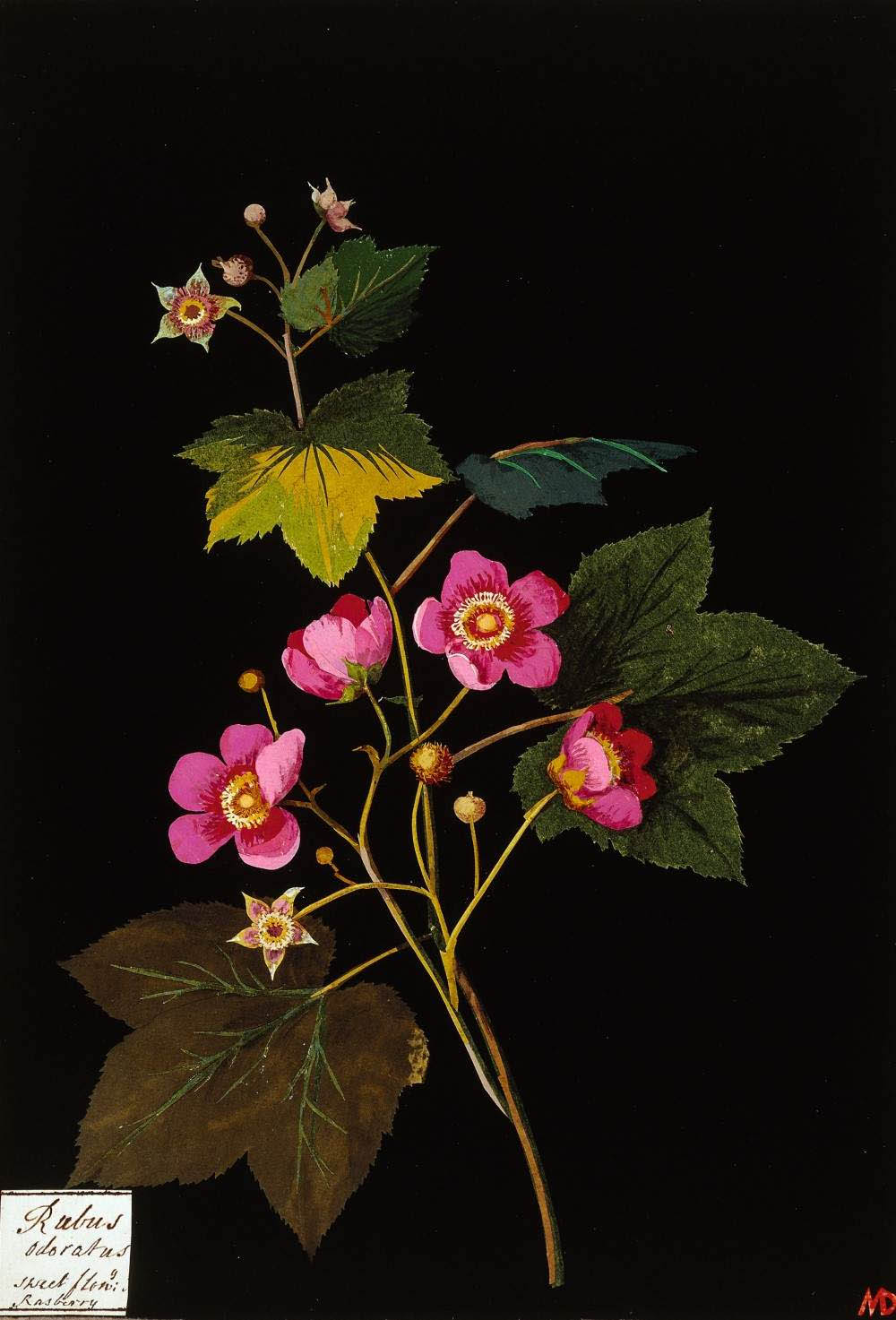
 

Mary Delany (English, 1700-1788) 'Rubus Odoratus' 1772-1782


Mary Delany (English, 1700-1788)
Rubus Odoratus
1772-1782
The British Museum
Bequeathed by Augusta Hall, Baroness Llanover in 1897


Delany was not a professional artist. However, she pursued art with a seriousness of purpose, working in a range of artistic and decorative mediums. She was in her early seventies when she turned to botanical collage, which stemmed from the Dutch art known as knipkunst or schaarkunst. Over the course of a decade, Delany created nearly one thousand botanically accurate collages of plants made from intricately cut pieces of coloured paper. In this collage, Delany shows a flowering raspberry, which was introduced to Britain from North America in 1770.

Text from the exhibition large print guide
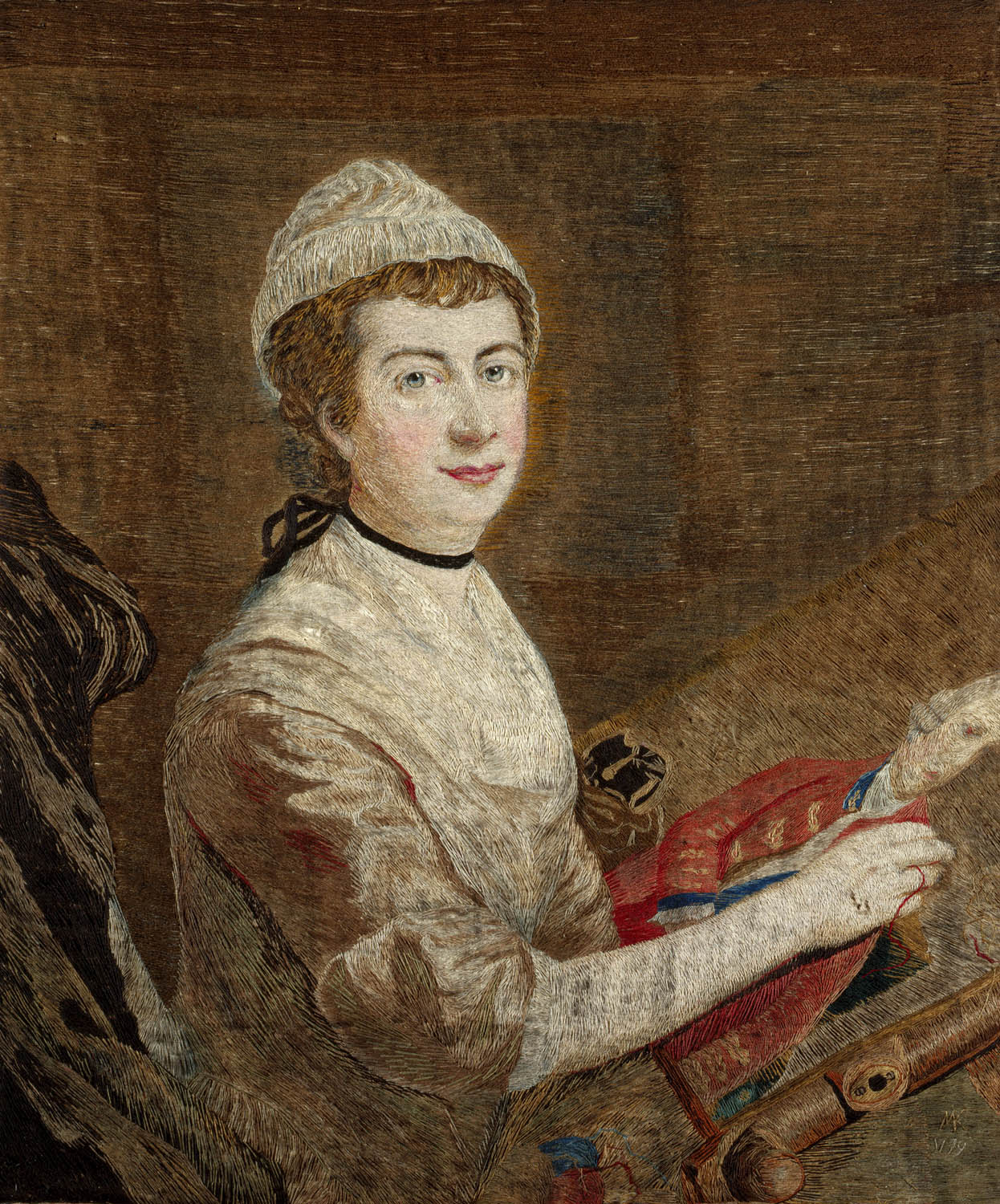
 

Mary Knowles (English, 1733-1807) 'Needlework Picture' 1779


Mary Knowles (English, 1733-1807)
Needlework Picture
1779
Silk (textile), wool, giltwood, glass (material) embroidered, dyeing
89.2 x 84.5cm (frame, external)
Royal Collection Trust / © His Majesty King Charles III 2024


Mary Morris Knowles, born of a Quaker family in Rugeley, Staffordshire, was celebrated as much for her intellect, religious conviction and unusual powers of conversation as for her skill with the needle. A friend of the poetess Anna Seward (‘The Swan of Lichfield’) and of Dr Johnson, she is now regarded as an important early protagonist of the feminist viewpoint in English cultural life. Her support for the abolition of slavery, her investigation into mystical science and her knowledge of garden design, in addition to her accomplishment as a needlewoman, suggest the breadth of her interests. In 1771 she was introduced by her fellow Quaker Benjamin West to Queen Charlotte, who remained on terms of friendship with her over the next thirty years and whose interest in female accomplishments, notably needlework, was well known. Mrs Knowles’s visits to Buckingham House included an occasion in 1778 on which she presented her 5-year-old son George to the King and Queen.

Following the first visit in 1771, the Queen commissioned Mrs Knowles to make a copy of Zoffany’s portrait of George III in needlework or ‘needle painting’ as it was also known. This technique ‘so highly finished, that it has all the softness and Effect of painting’ was achieved with a combination of irregular satin-stitch and long-and-short stitch, worked on hand-woven tammy in an arbitrary pattern and at speed, using fine wool dyed in a wide range of colours under her own supervision. Eight years later Mrs Knowles embroidered the self portrait showing her at work on the Zoffany which, like the earlier piece, she signed with initials and dated. This appears always to have been in the Royal Collection and was presumably also commissioned by Queen Charlotte.

Text from the Royal Collection Trust website
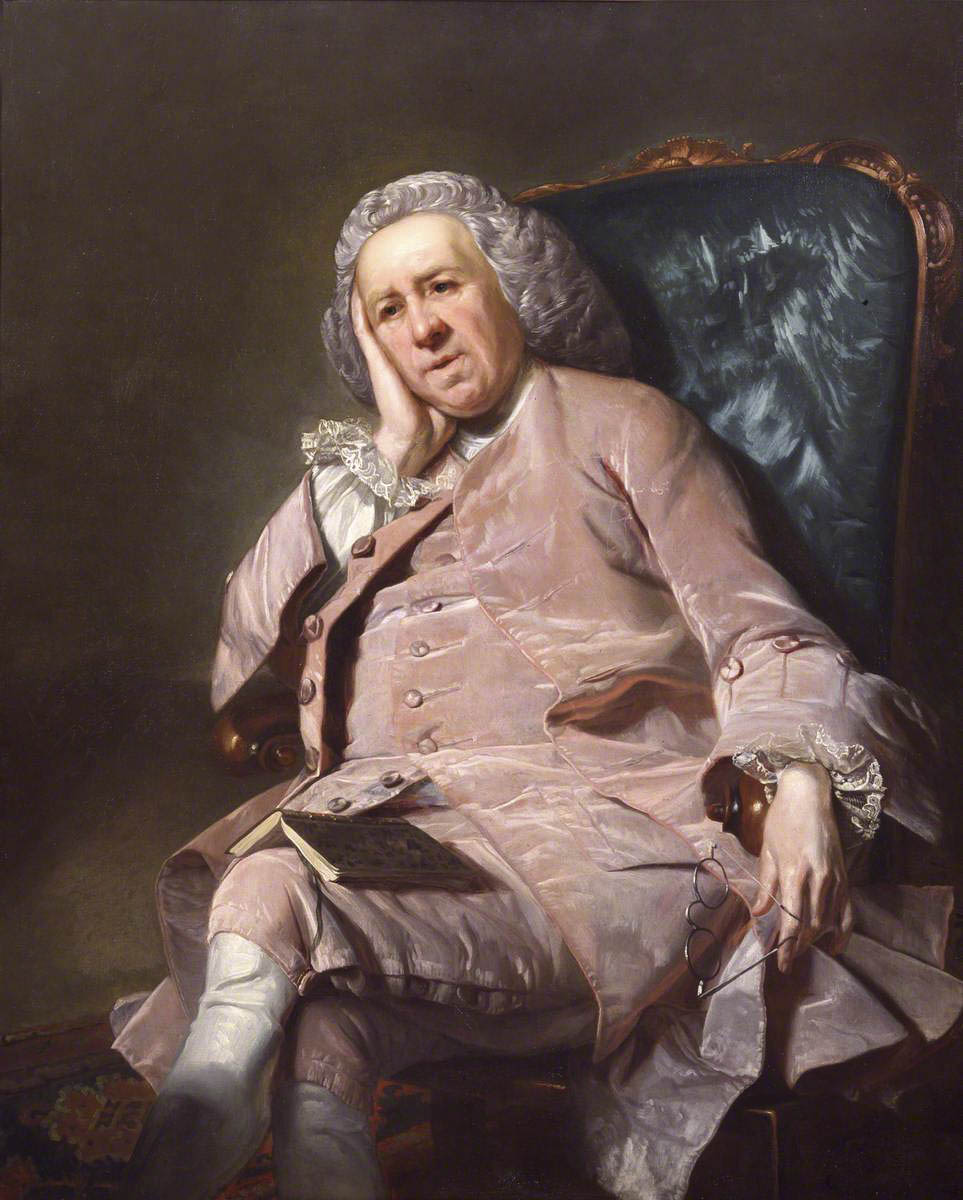
 

Mary Black (English, c. 1737-1814) 'Messenger Monsey (1693-1788)' 1764


Mary Black (English, c. 1737-1814)
Messenger Monsey (1693-1788)
1764
Oil on canvas
127 x 101.6cm
Gift from Frederick Walford, 1877
Royal College of Physicians, London
CC BY-NC-ND


This portrait of the physician Messenger Monsey (1694-1788) is Black’s only known oil painting. Black likely hoped it was a step towards establishing herself as a professional artist, but the issue of payment caused friction. Black hope to charge her client £25, half the amount charged by leading portraitist Joshua Reynolds, but after Monsey’s complaint offered to drop it to a quarter. Monsey considered Black’s expectation of a fee improper. He claimed it would damage her reputation if word got out, and even referred to her as a ‘slut’ in a letter to his cousin.

Wall text from the exhibition


Little is known of the father-and-daughter artists Thomas and Mary Black. Thomas was mainly employed painting draperies for more successful painters, and Mary usually painted copies of old masters. In a letter from Monsey to Mary Black, the doctor wrote: ‘I was bedevilled to let you make your first attempt upon my gracefull person… drawn like a Hog in armour’.

Text from the Art UK website


Black was clearly unfazed by awkward sitters. She built a flourishing artistic practice, painting and teaching the aristocracy, earning enough to live independently (she never married) and keep servants and a horse and carriage at her London home. She died there in old age just as the nineteenth century began.

Alicia Foster. “Blazing a trail: Britain’s first women artists deserve to be better known,” on the Art UK website 13 May 2024 [Online] Cited 03/09/2024


Mary Moser RA (English, 1744-1819) 'Standing Female Nude' Nd


Mary Moser RA (English, 1744-1819)
Standing Female Nude
Nd
Black and white chalk on grey-green paper
49 x W 30.2cm
The Fitzwilliam Museum, Cambridge


As women were excluded from life drawing classes, many took their own steps to improve their anatomical knowledge. They sketched from casts and statues and copied from other artists’ drawings and anatomy books. These rare works show that some artists found ways around these restrictions, although little is known about how Moser and Stone accessed life models.

Text from the exhibition large print guide


Mary Moser RA (English, 1744-1819) 'Flowers in a vase, which stands on a ledge' 1765


Mary Moser RA (English, 1744-1819)
Flowers in a vase, which stands on a ledge
1765
Watercolour and bodycolour on paper
The Syndics of the Fitzwilliam Museum, University of Cambridge


From the same series as the work nearby, this watercolour represents Sagittarius. The vase is filled with a cascade of late flowering plants: asters, chrysanthemums and rare pale nerines, captured in the cold light of winter. In addition to her professional profile as a Royal Academician, Moser acted as a royal tutor. She was part of Queen Charlotte’s circle and taught the princesses botany, embroidery and flower painting. She worked alongside other artists, including Meen and Delany, whose work is also displayed in this room.

Text from the exhibition large print guide


Admired for her striking paintings of flowers, Mary Moser was recognised for her talent from a very young age. She trained with her father, an acclaimed artist and goldsmith, winning her first medal for flower drawing at 14. At just 24, she became one of only two female founders of the Royal Academy, alongside Angelica Kauffman.

Moser painted portraits and historical scenes, but her skilled floral still life works, like Flowers in a vase, which stands on a ledge (1765), were praised by critics. Though still life was traditionally seen as a ‘lesser subject’, her floral works were so widely appreciated she received royal commissions, including one from Queen Charlotte. Despite recognition and the exhibition of many paintings, few of Moser’s works survive today.

Text from the Tate website
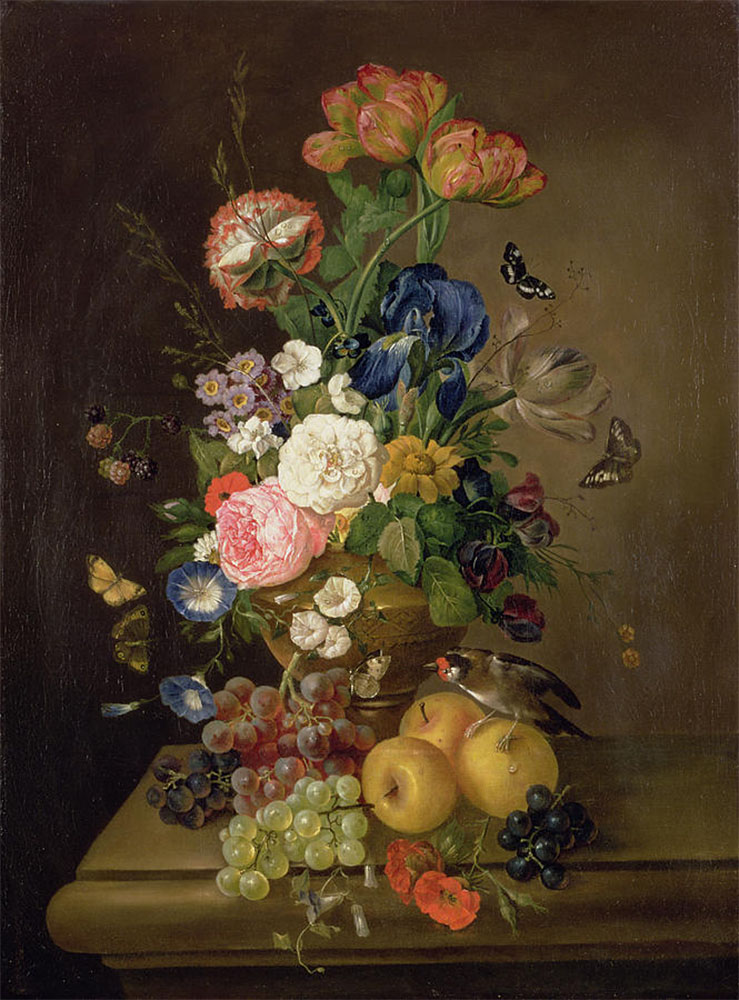
 

Mary Moser RA (English, 1744-1819) 'Vase of Flowers' Between 1758 and 1819


Mary Moser RA (English, 1744-1819)
Vase of Flowers
Between 1758 and 1819
Oil on canvas
72.1 x W 53.6cm
The Fitzwilliam Museum
Gift from Major the Hon. Henry Rogers Broughton, 1966


The exquisite attention to detail in her painting, with its beads of dew and butterflies on the wing, was perhaps nurtured by seeing her father’s work; as a goldsmith and medallion maker, this was also his talent. But the gorgeous sensuality – seen also in her approach to the nude figure – was entirely her own. She married, aged 53, but also had an affair with the estranged husband of another artist: Maria Hadfield Cosway (1759-1839).

Alicia Foster. “Blazing a trail: Britain’s first women artists deserve to be better known,” on the Art UK website 13 May 2024 [Online] Cited 03/09/2024


Installation view of the exhibition 'Now You See Us Women Artists in Britain 1520-1920' at Tate Britain showing Angelica Kauffman's 'Colouring' 1778-1780


Installation view of the exhibition Now You See Us Women Artists in Britain 1520-1920 at Tate Britain showing Angelica Kauffman’s Colouring 1778-1780 (below)
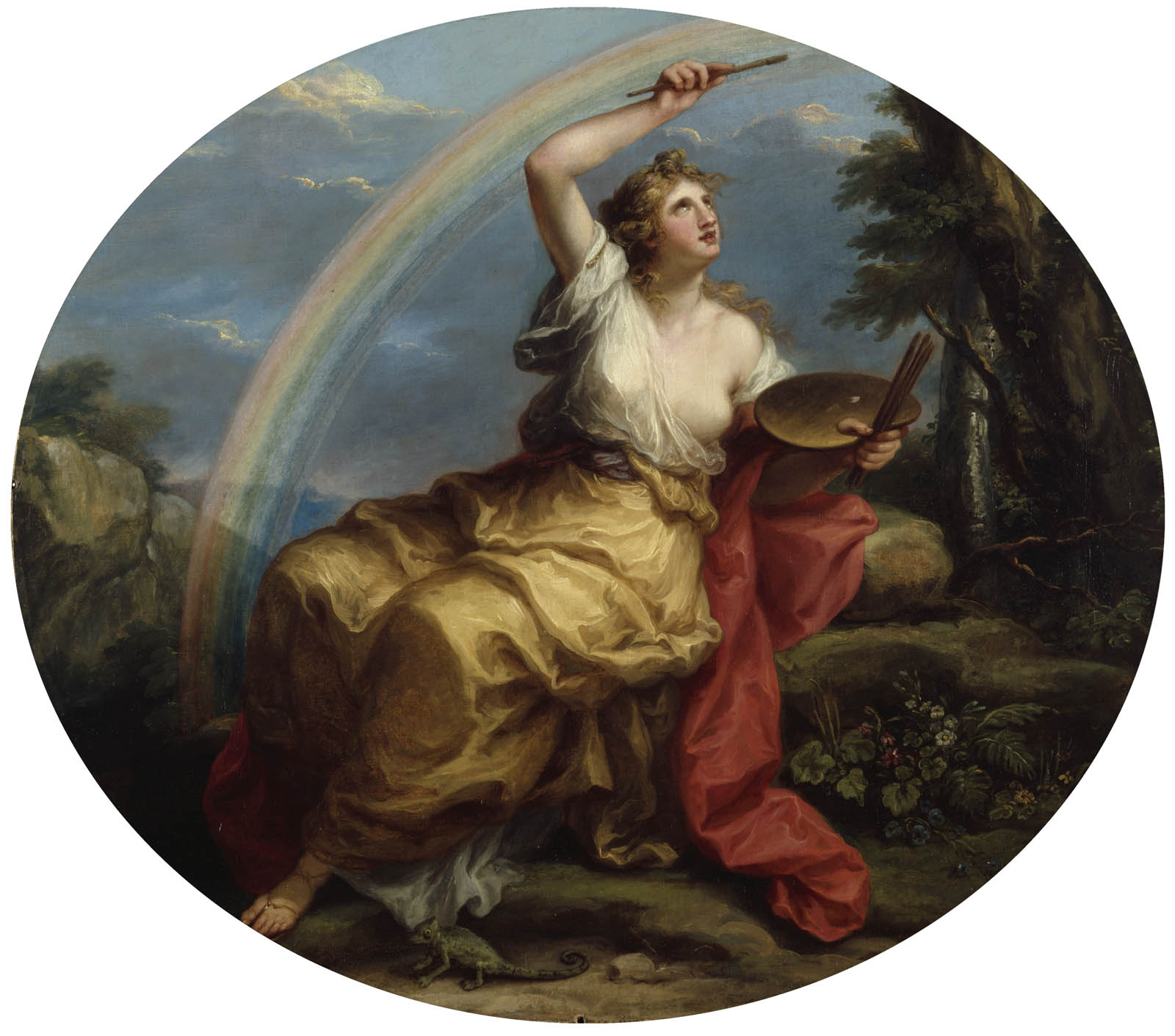
 

Angelica Kauffman RA (Swiss, 1741-1807) 'Colouring' 1778-1780


Angelica Kauffman RA (Swiss, 1741-1807)
Colouring
1778-1780
Oil on canvas
1260 x 1485 x 25 mm
© Royal Academy of Arts, London
Photo: John Hammond


This painting is part of a set of the four [titled ‘Elements of Art’] commissioned from Kauffman by the Royal Academy to decorate the ceiling of the Royal Academy’s new Council Room in Somerset House which opened in 1780. …

Kauffman represented each of her four Elements of Art as women. Female personifications of abstract concepts and values were commonplace in European art but depicting all four as women was unusual. Design (or Disegno), in particular, was known as ‘the father of all the arts’ and was traditionally depicted as a man, often in contrast to Colour or Painting personified as a woman (see Baumgartel). In Design and Colouring, the women are physically engaged in the act of creating whereas in Composition and Invention they are shown in contemplation. In Invention the figure looks to the sky for inspiration and in Composition she is deep in thought with her head resting on her hand in the traditional gesture of melancholy or reverie.

Text from the Royal Academy website


Installation view of the exhibition 'Now You See Us Women Artists in Britain 1520-1920' at Tate Britain showing at centre, Maria Cosway's 'Georgiana as Cynthia from Spenser's 'Faerie Queene'' 1781-1882; and at right, Cosway's 'A Persian Lady Worshipping the Rising Sun' 1784


Installation view of the exhibition Now You See Us Women Artists in Britain 1520-1920 at Tate Britain showing at centre, Maria Cosway’s Georgiana as Cynthia from Spenser’s ‘Faerie Queene’ 1781-1782 (below); and at right, Cosway’s A Persian Lady Worshipping the Rising Sun 1784 (below)
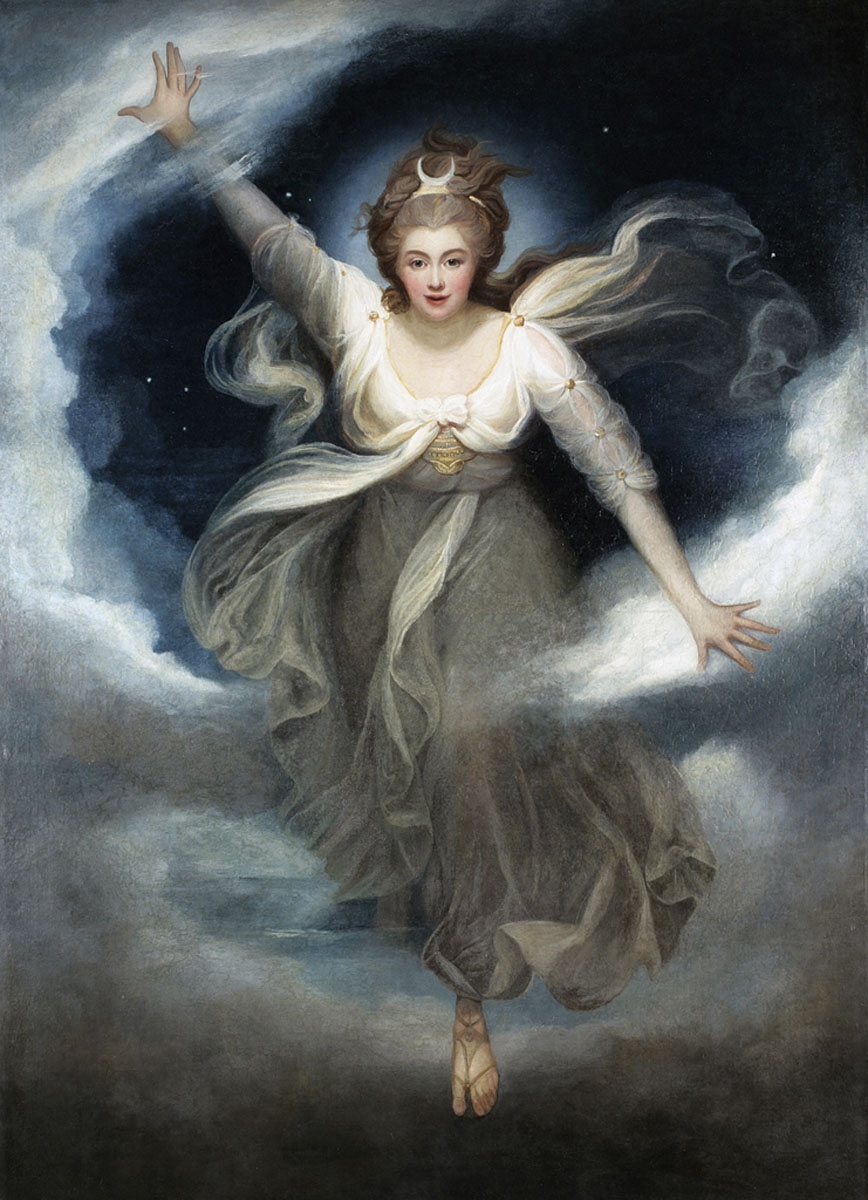
 

Maria Cosway (Italian-English 1760-1838) 'Georgiana as Cynthia from Spenser's 'Faerie Queene'' 1781-1782


Maria Cosway (Italian-English 1760-1838)
Georgiana as Cynthia from Spenser’s ‘Faerie Queene’
1781-1782
Oil on canvas
Chatsworth House
Reproduced by permission of Chatsworth Settlement Trustees / Bridgeman Images
Public domain
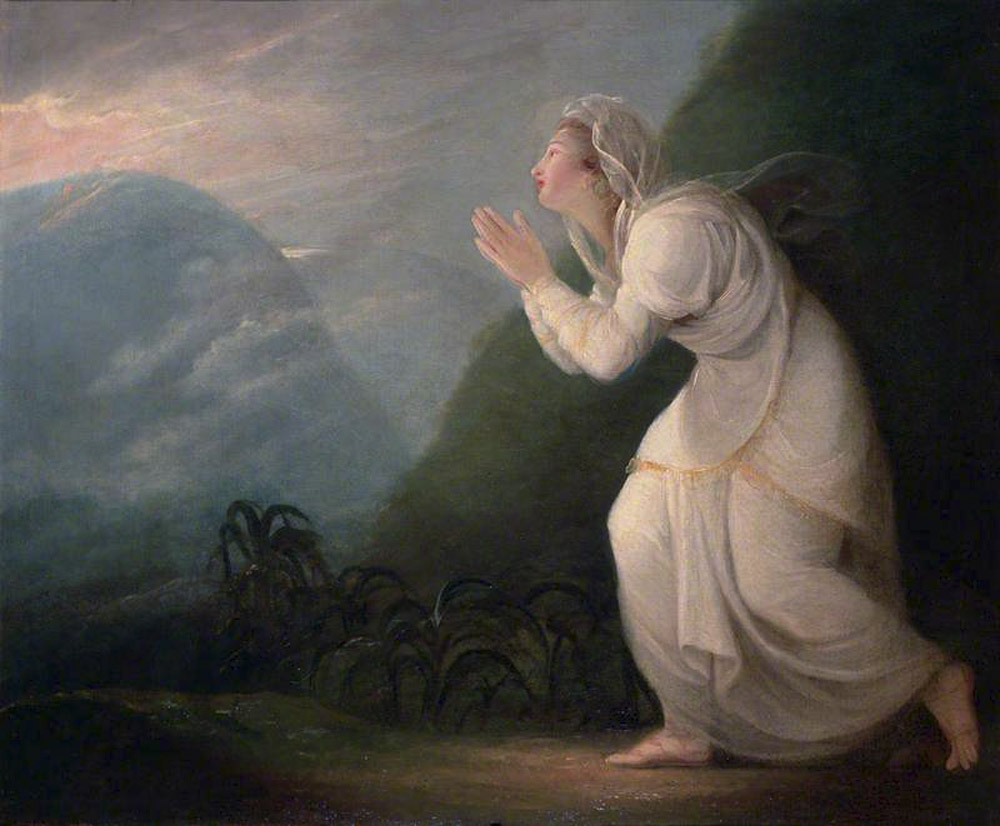
 

Maria Cosway (Italian-English 1760-1838) 'A Persian Lady Worshipping the Rising Sun' 1784


Maria Cosway (Italian-English 1760-1838)
A Persian Lady Worshipping the Rising Sun
1784
Oil on canvas
61 x 73.7cm
Sir John Soane’s Museum
Gift from the artist, 1822
By courtesy of the Trustees of Sir John Soane’s Museum, London
CC BY-NC-ND


As well as portraits, Cosway exhibited history paintings. This work was shown at the Royal Academy in 1784. Although only a few of Cosway’s history pictures can be located now, paintings such as this one were well known through reproductions made by leading engravers and print publishers. Cosway’s success was hindered by her husband, who did not like her to paint professionally. She reflected later that had he permitted it, she would have ‘made a better painter, but left to myself by degrees, instead of improving, I lost what I brought from Italy of my early studies.’

Text from the exhibition large print guide
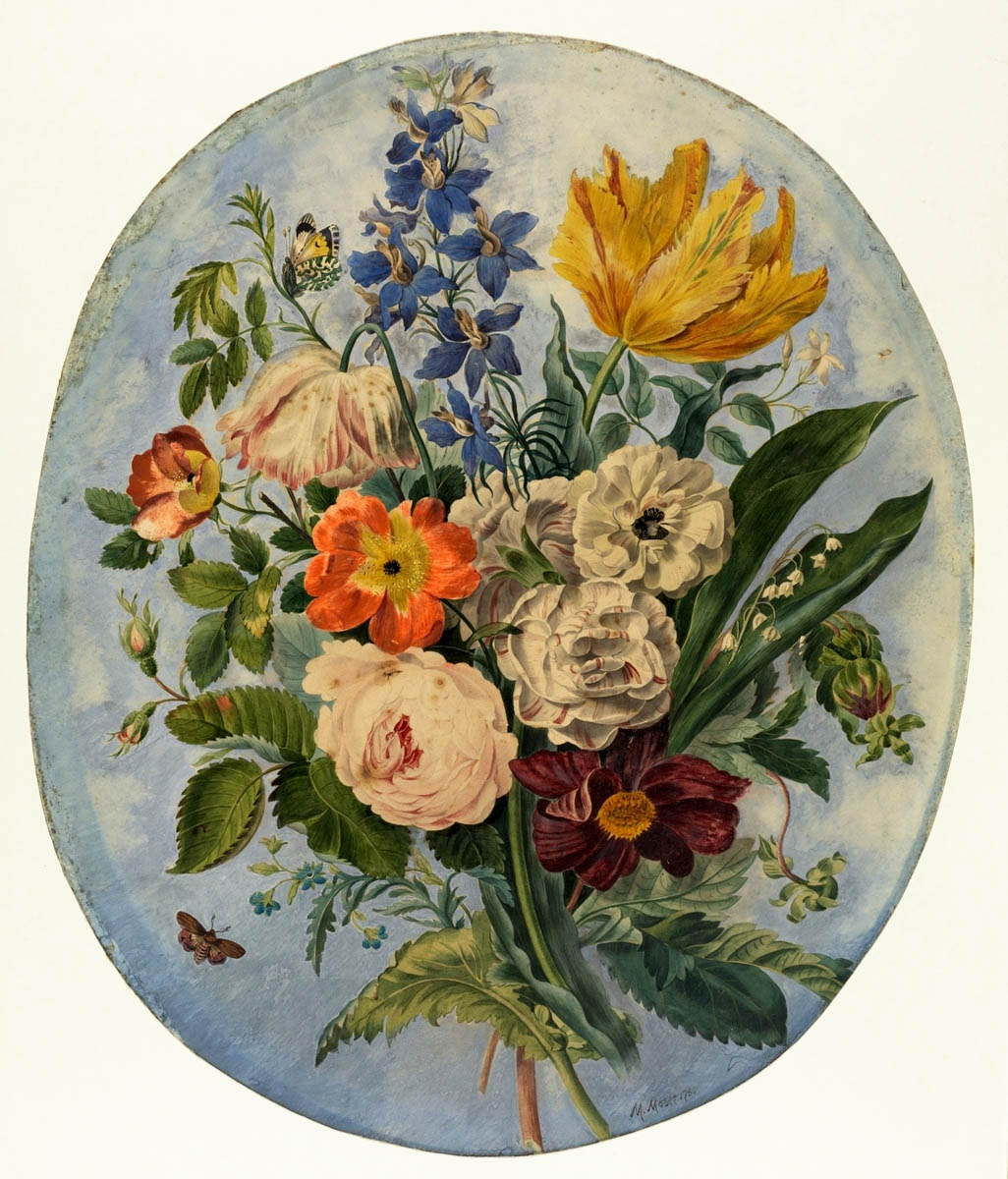
 

Maria Cosway (Italian-English 1760-1838) 'Bouquet of Flowers' 1780


Maria Cosway (Italian-English 1760-1838)
Bouquet of Flowers
1780
Watercolour on paper
The Courtauld, London (Samuel Courtauld Trust)
Bequeathed by Sir Robert Clermont Witt, 1952
CC BY-NC-ND
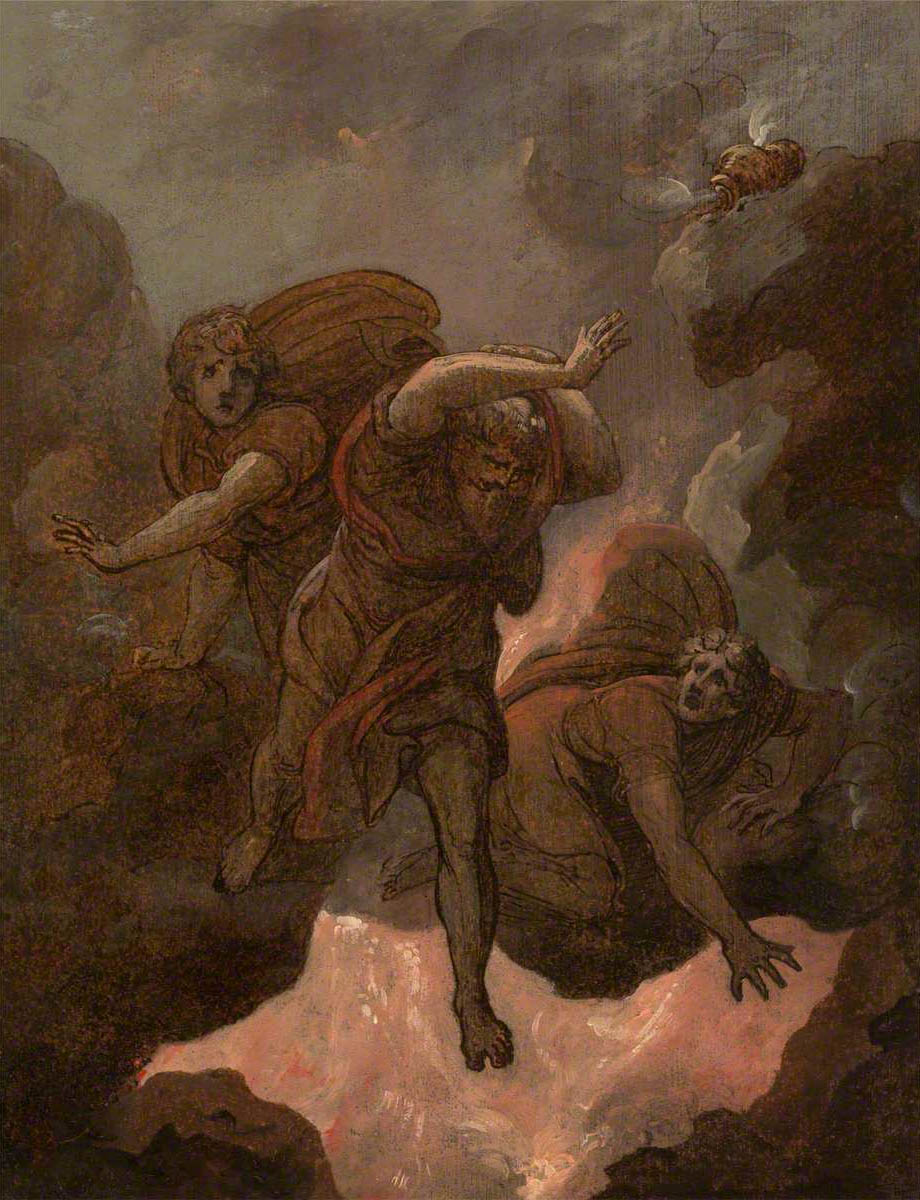
 

Maria Cosway (Italian-English 1760-1838) 'The Judgement of Korah, Dathan and Abiram' c. 1801


Maria Cosway (Italian-English 1760-1838)
The Judgement of Korah, Dathan and Abiram
c. 1801
Pen, ink and oil on canvas
37.5 x 29.2cm
Yale Center for British Art
Paul Mellon Collection
CC BY-NC-ND
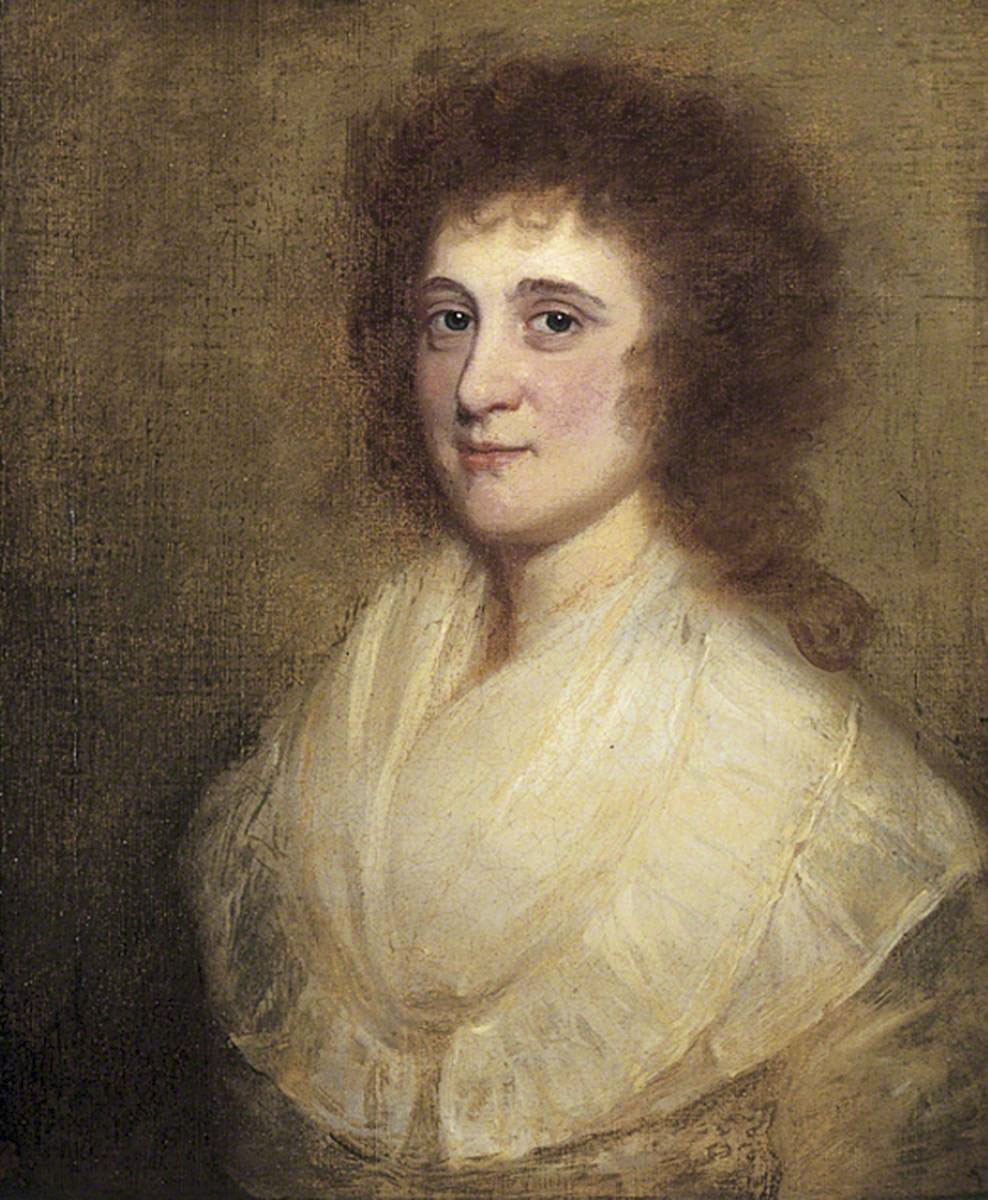
 

Maria Cosway (1759-1838) (after) 'Self Portrait' Nd


Maria Cosway (1759-1838) (after)
Self Portrait
Nd
Oil on canvas
61 x W 50.8cm
Temple Newsam House, Leeds Museums and Galleries
Bequeathed by Sam Wilson, 1925
CC BY-NC-ND
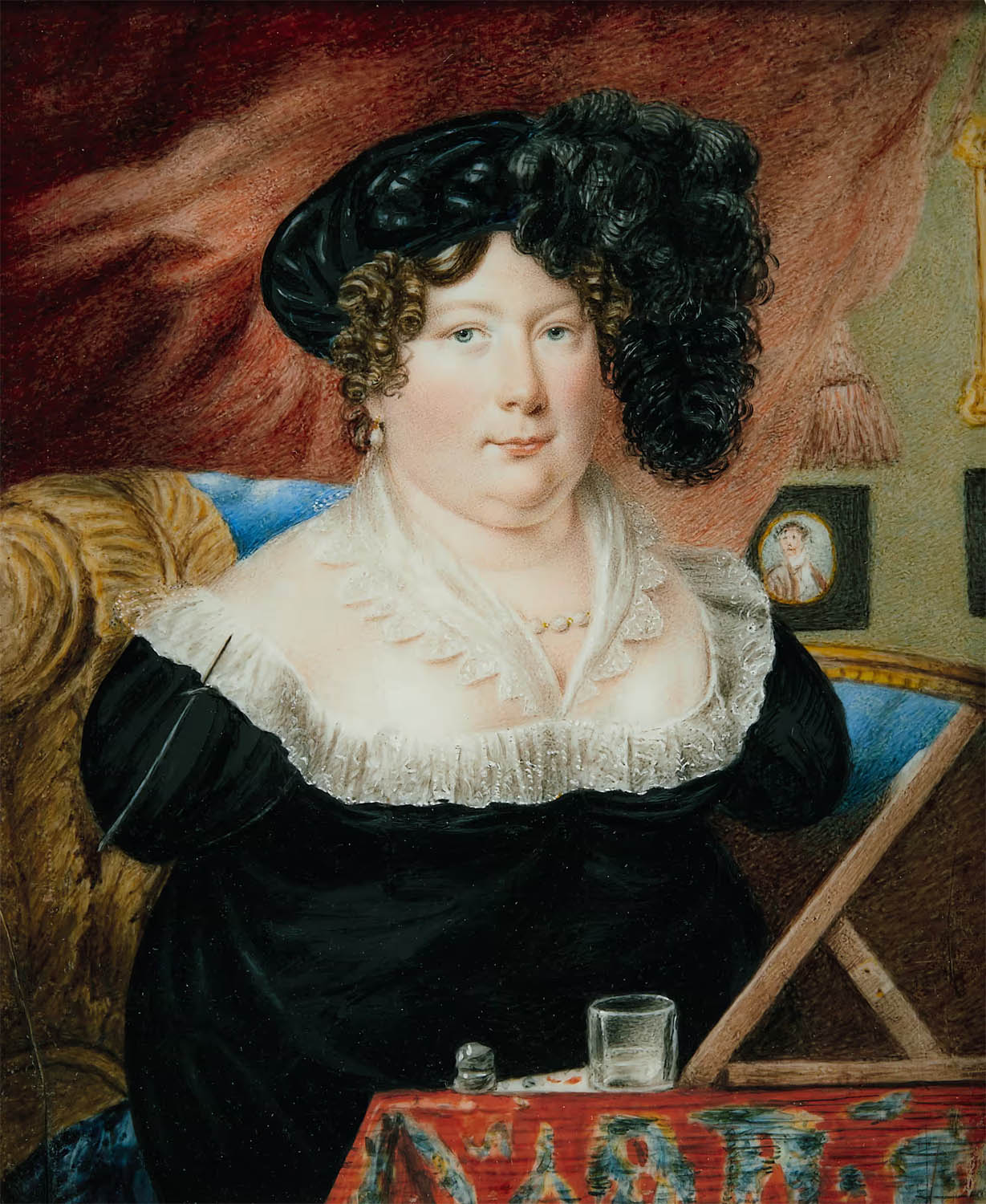
 

Sarah Biffin (English, 1784-1850) 'Self-portrait' c. 1821


Sarah Biffin (English, 1784-1850)
Self-portrait
c. 1821
Watercolour and bodycolour on ivory
Private collection


Biffin, whose baptism record notes that she was born ‘without arms or legs’, taught herself to sew, write and paint using her mouth and shoulder. She wrote that, as a child, ‘I was continually practising every invention; till at length I could, with my mouth – thread a needle – tie a knot – do fancy work – cut out and make my own dresses’.

Text from the exhibition large print guide
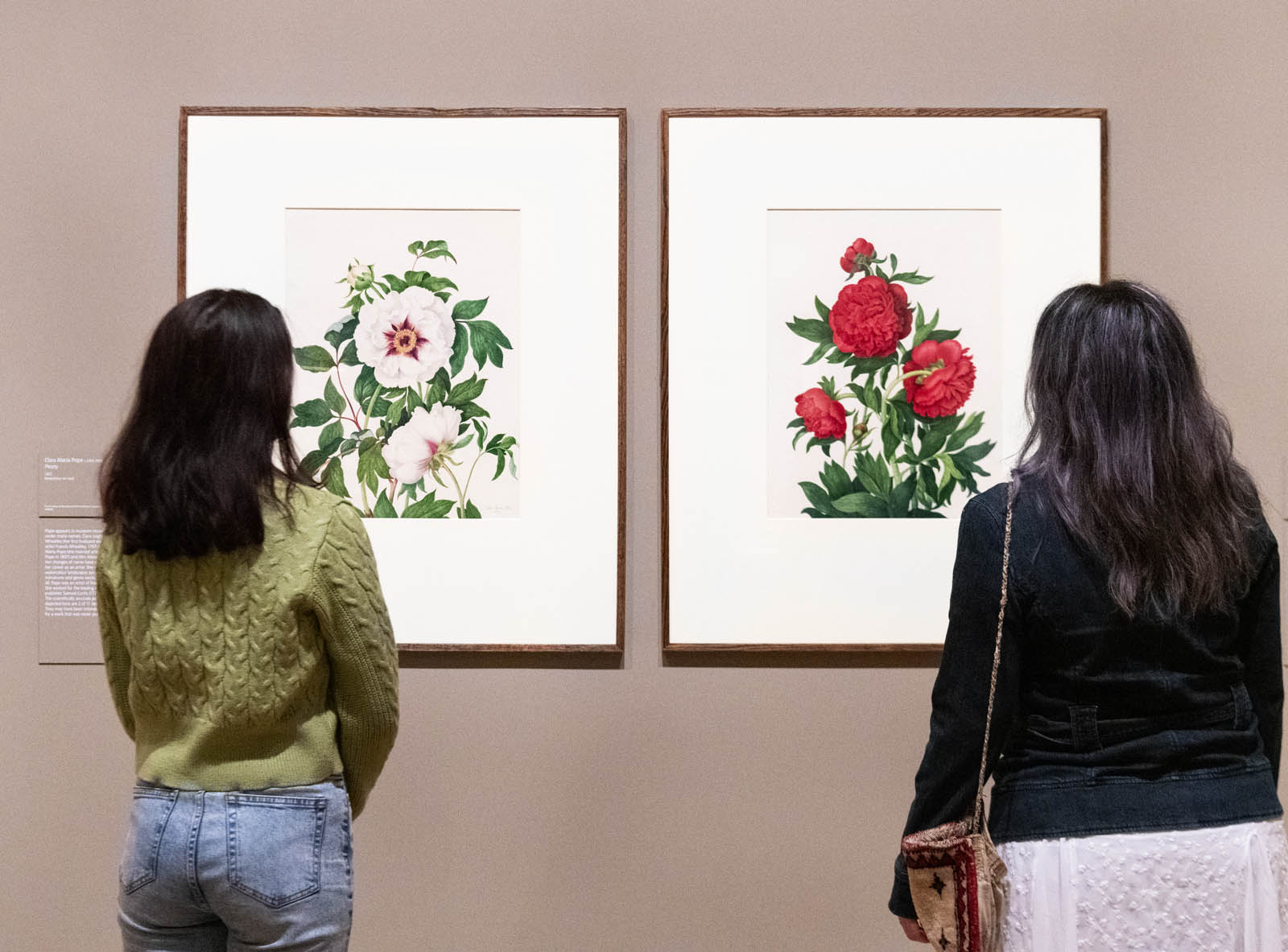
 

Installation view of the exhibition 'Now You See Us Women Artists in Britain 1520-1920' at Tate Britain showing at left, Clara Maria Pope's 'Peony' 1822; and at right, Pope's 'Peony' 1821


Installation view of the exhibition Now You See Us Women Artists in Britain 1520-1920 at Tate Britain showing at left, Clara Maria Pope’s Peony 1822 (below); and at right, Pope’s Peony 1821 (below)
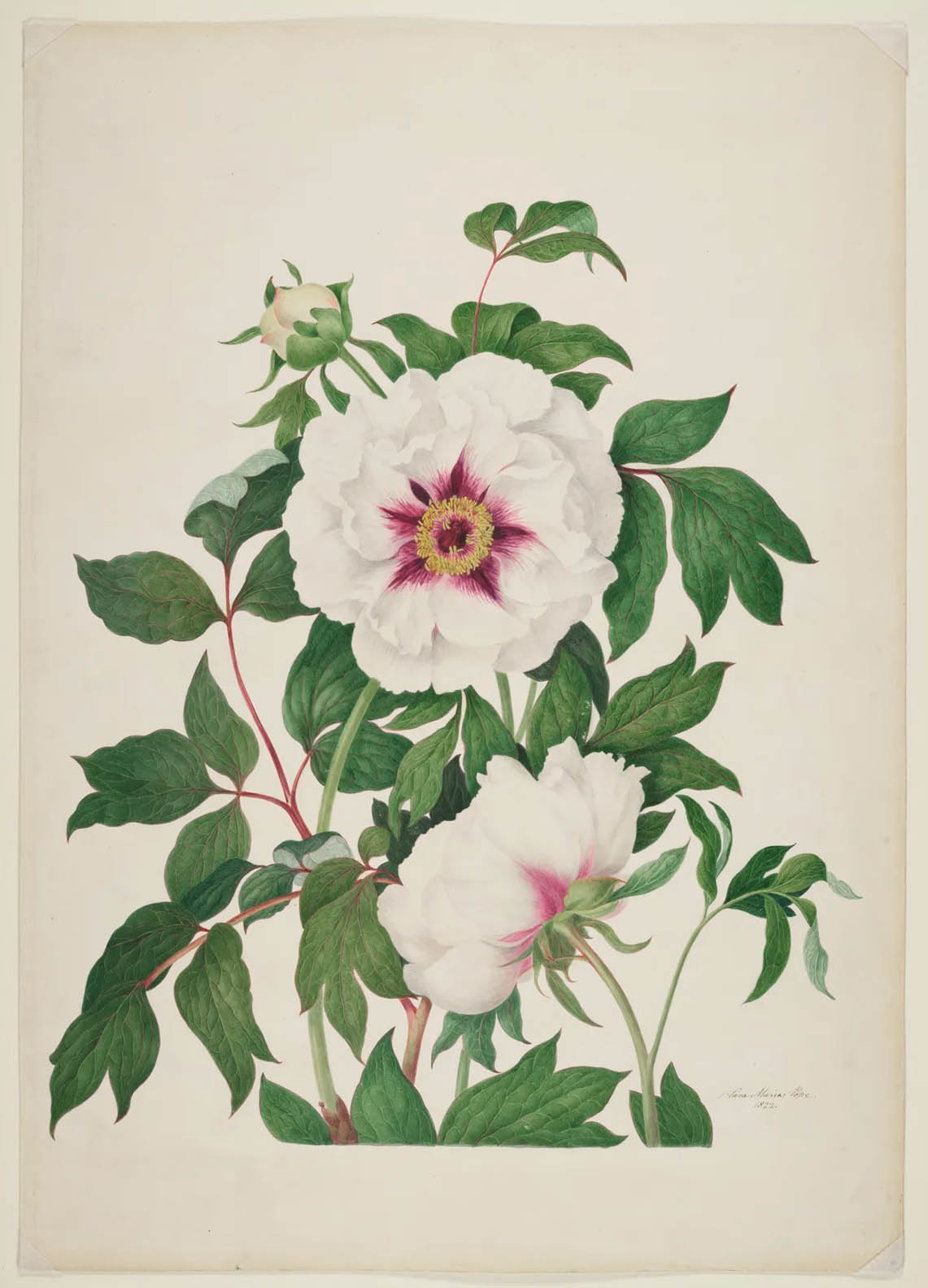
 

Clara Maria Pope (British, 1767-1831) 'Peony' 1822


Clara Maria Pope (British, 1767-1831)
Peony
1822
Bodycolour on card
The Trustees of the Natural History Museum, London
Courtesy the Natural History Museum
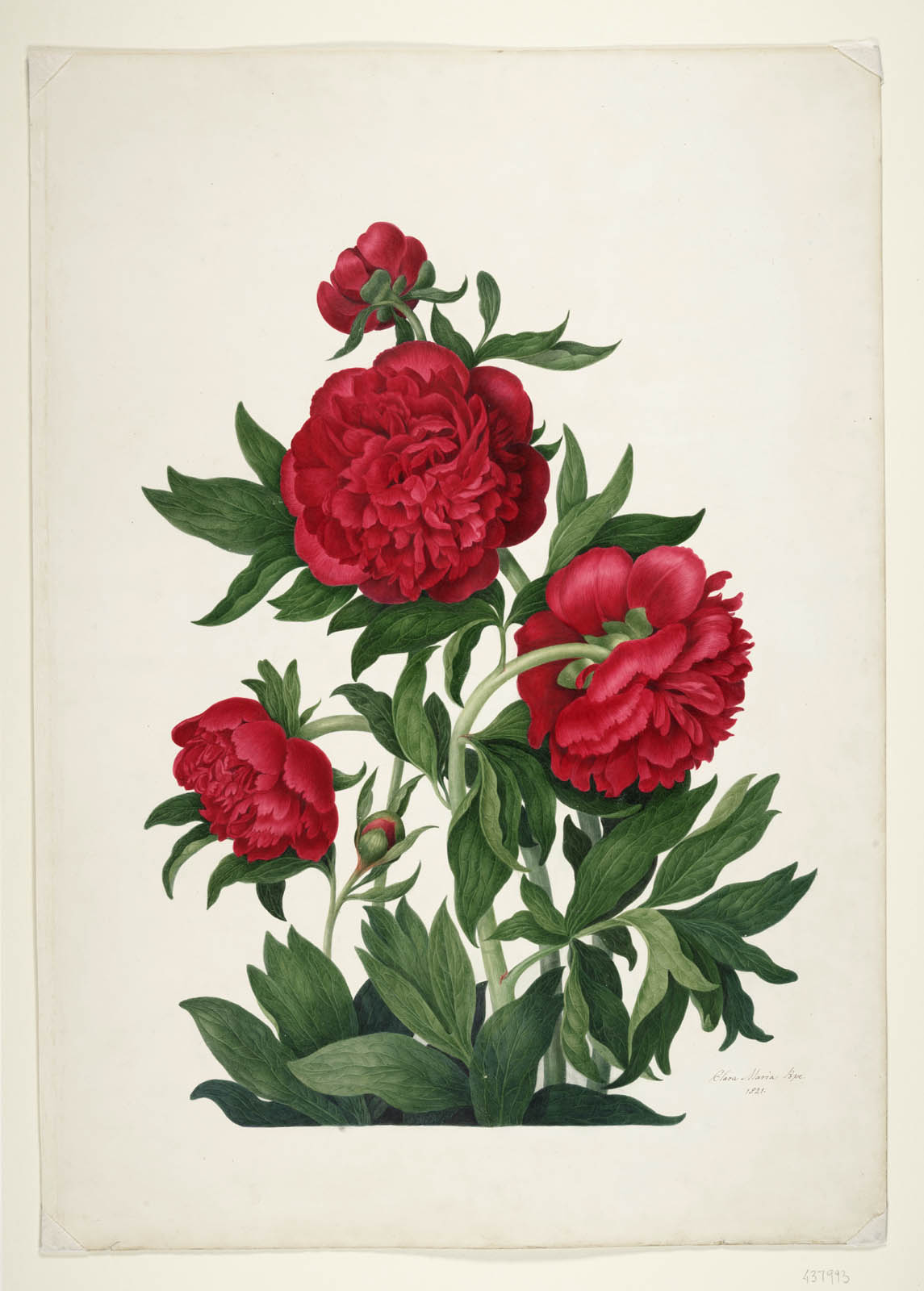
 

Clara Maria Pope (British, 1767-1831) 'Peony' 1821


Clara Maria Pope (British, 1767-1831)
Peony
1821
Bodycolour on card
The Trustees of the Natural History Museum, London
Courtesy the Natural History Museum


Pope appears in museum records under many names: Clara Leigh, Clara Wheatley (her first husband was the artist Francis Wheatley, 1747-1801), Clara Maria Pope (she married actor Alexander Pope in 1807) and Mrs Alexander Pope. Her changes of name have obscured her career as an artist. She exhibited watercolour landscapes and portraits, miniatures and genre works, but above all, Pope was an artist of flowers. She worked for the leading botanical publisher Samuel Curtis (1779-1860). The scientifically accurate peonies depicted here are 2 of 11 designs. They may have been intended as plates for a work that was never published.

Text from the exhibition large print guide
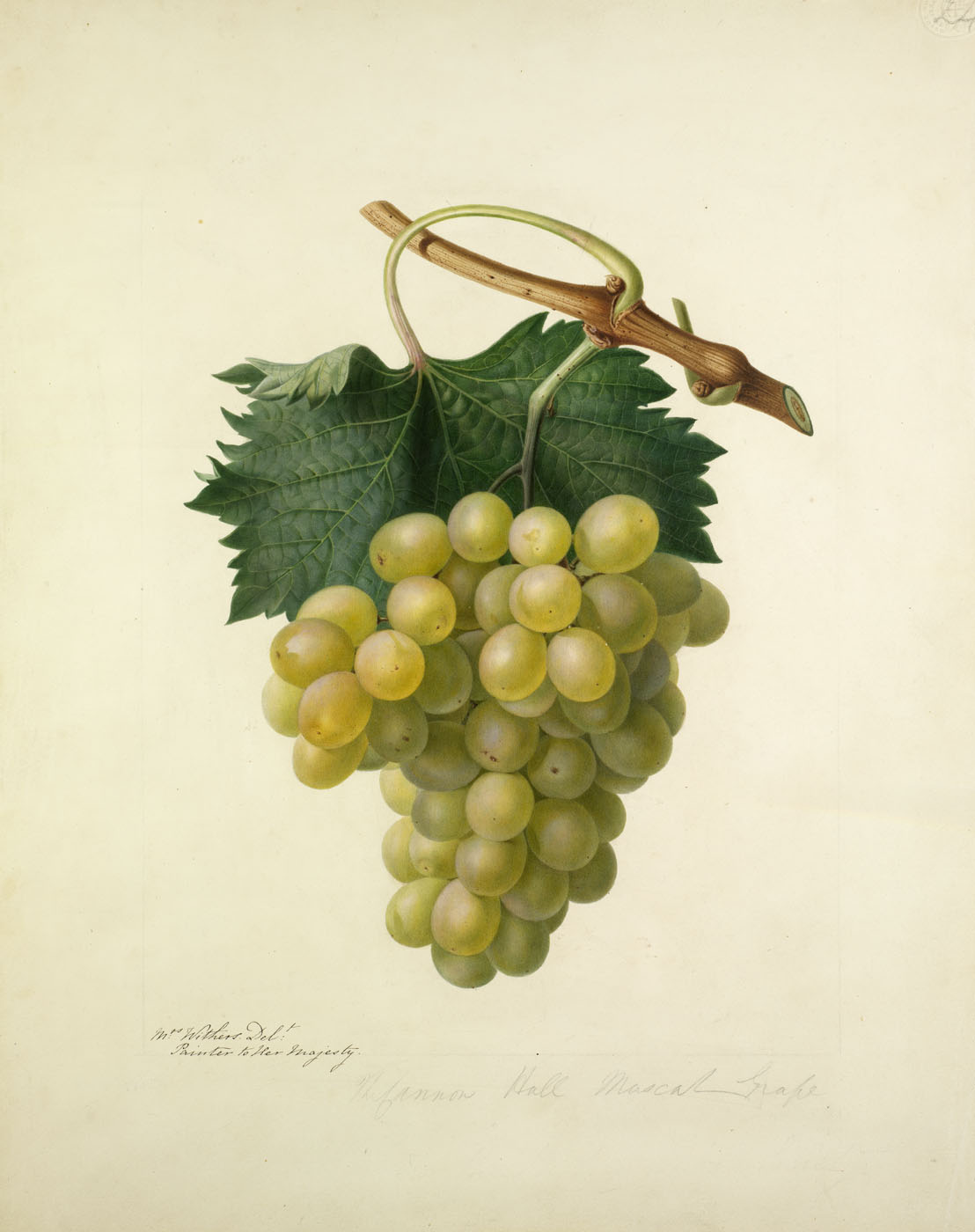
 

Augusta Innes Withers (English, 1792-1877) 'The Canon Hall Muscat Grape' c. 1825


Augusta Innes Withers (English, 1792-1877)
The Canon Hall Muscat Grape
c. 1825
Watercolour on paper
444 × 352 mm
RHS Lindley Collections
Courtesy the Royal Horticultural Society, Lindley Library


Withers was employed by the Horticultural Society to make official ‘portraits’ of varieties of fruit growing in their orchards. The quality of Withers’s work meant her high fees were not questioned. Here, she paints sunlight glowing through grapes and the translucency of the skin of gooseberries in great detail. Withers drew and handcoloured engraved illustrations in the Horticultural Society’s Transactions and made illustrations of fruit for John Lindley’s Pomological Magazine in 1828 (Lindley was Secretary of the Society). Withers was also regarded as one of the best teachers of botanical illustration.

Text from the exhibition large print guide
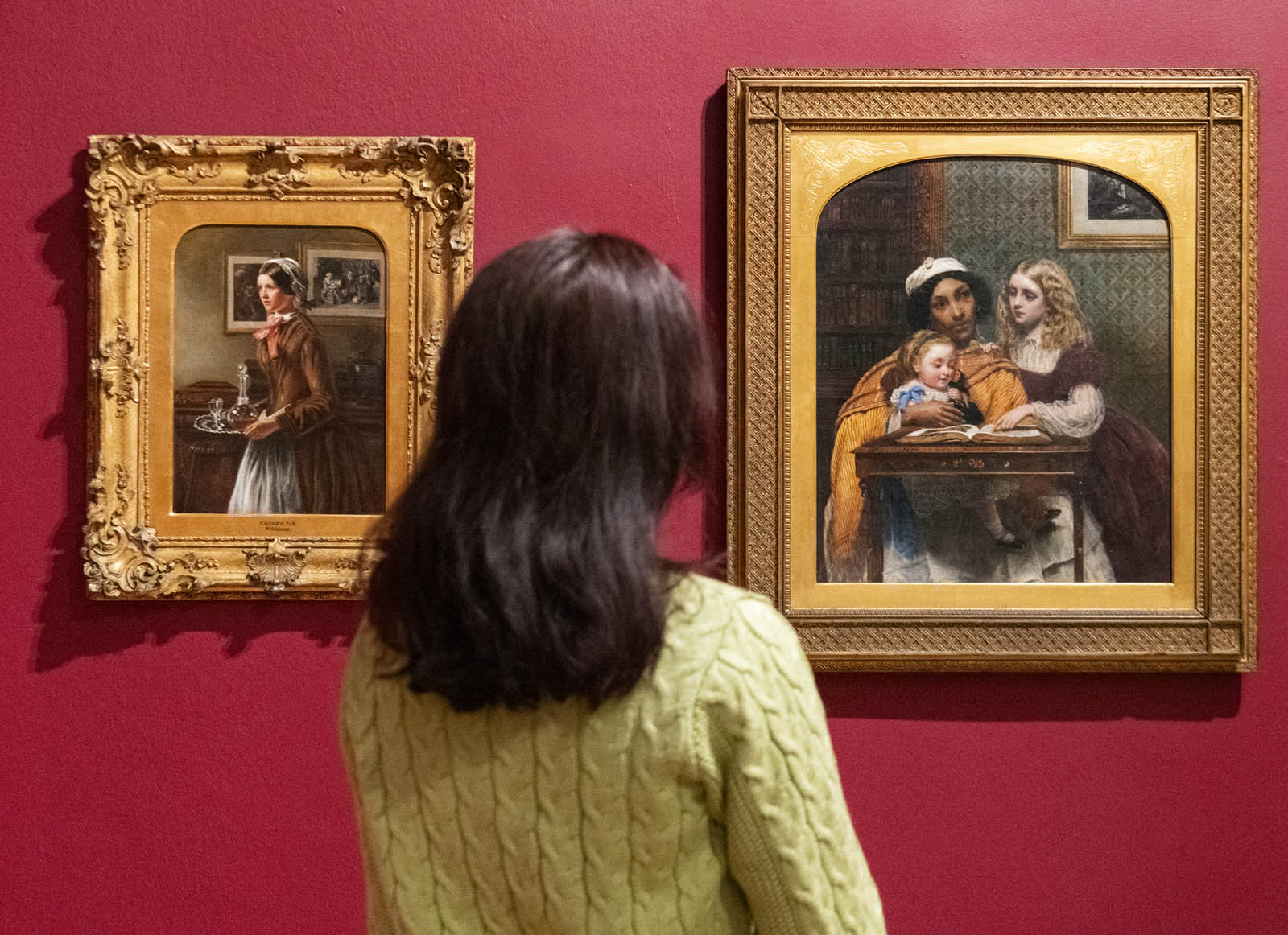
 

Installation view of the exhibition 'Now You See Us Women Artists in Britain 1520-1920' at Tate Britain showing at left, Rebecca Solomon's 'Sherry, Sir?' c. 1858-1862; and at right, Solomon's 'A Young Teacher' 1861


Installation view of the exhibition Now You See Us Women Artists in Britain 1520-1920 at Tate Britain showing at left, Rebecca Solomon’s Sherry, Sir?
c. 1858-1862 (below); and at right, Solomon’s A Young Teacher 1861 (below)
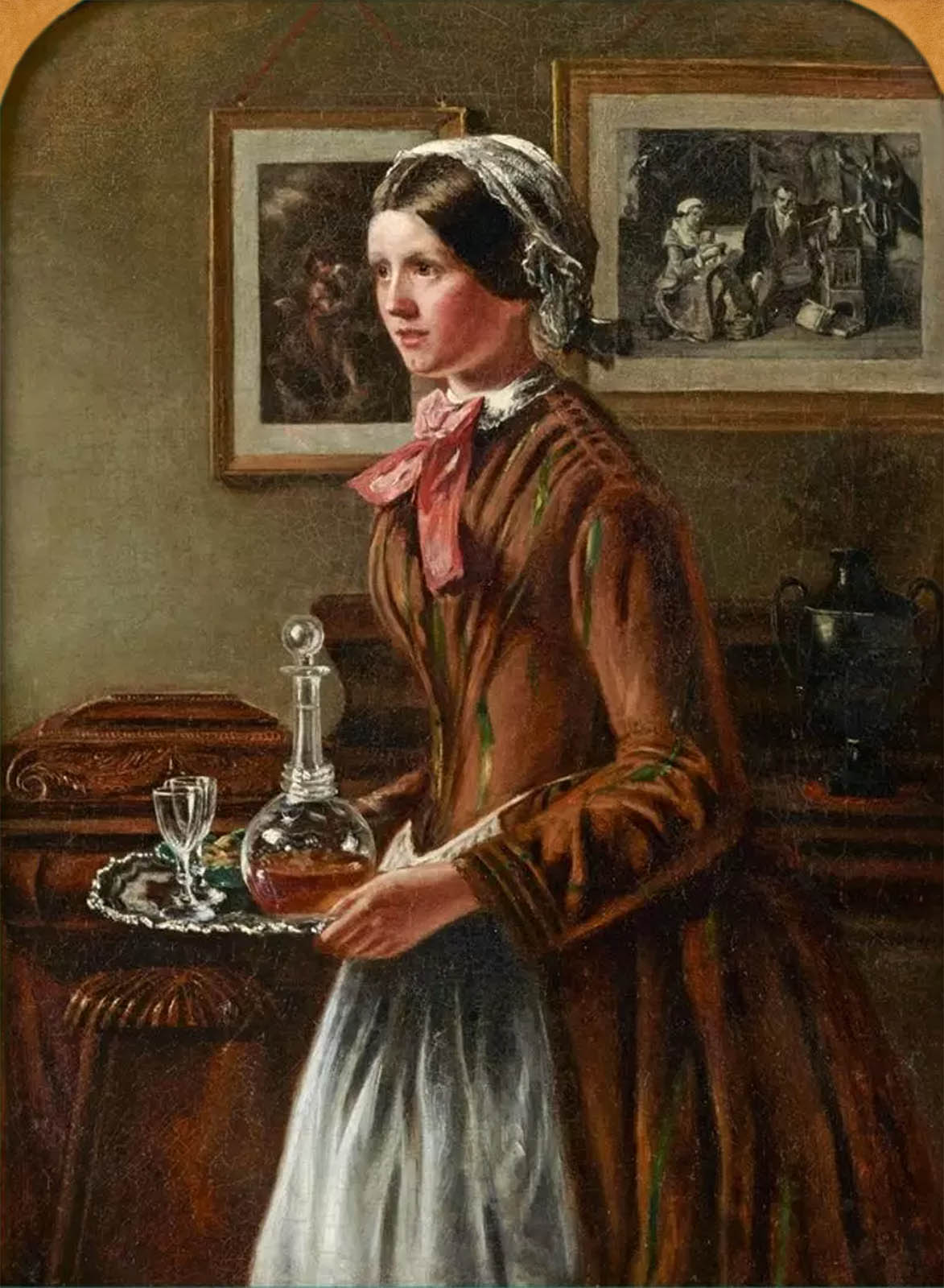
 

Rebecca Solomon (English, 1832-1886) 'Sherry, Sir?' c. 1858-1862


Rebecca Solomon (English, 1832-1886)
Sherry, Sir?
c. 1858-1862
Oil on canvas
Private collection


Solomon often painted scenes of domestic life and interiors, which were considered more suitable subjects for women artists than history painting. Solomon’s domestic scenes include subtle commentary on social hierarchies. Sherry, Sir? depicts a maid with a silver tray. It reprises a well-known painting of the same title, painted by William Powell Frith (1819-1909) in 1851, but unlike Frith’s painting, Solomon draws attention to domestic labour and the hierarchies of a middle-class home. Solomon was the sister of artists Abraham Solomon (1823-1862) and Simeon Solomon (1840-1905).

Text from the exhibition large print guide


Rebecca Solomon (London 26 September 1832 – 20 November 1886 London) was a 19th-century English Pre-Raphaelite draftsman, illustrator, engraver, and painter of social injustices. She is the second of three children who all became artists, in a prominent Jewish family. …

Solomon’s artistic style was typical of popular 19th-century painting at the time and falls under the category of genre painting. She used her visual images to critique ethnic, gender and class prejudice in Victorian England. When Solomon started painting genre scenes, her work demonstrated an observant eye for class, ethnic and gender discrimination. Solomon’s paintings reflect a combination of interest in the theatre and commitment to social consciousness that is not exist in other artist’s painting in the nineteenth century.

Text from the Wikipedia website


Solomon painted in a more equivocal manner… She [the subject of the painting] is equally attractive and demure, but, by being painted from the side and against the background of a middle-class interior, the viewer is invited to reflect on her social status.

This is framed in a genre painting and by no means a piece with pretensions to social realism, but Solomon seems to be underlining the definite restrictions on this young woman’s position in society.

The pictures hanging behind her may contribute to that interpretation of the artist. They are not yet identified, but it seems that on the left we are shown an allegorical subject later than Gainsborough or Reynolds, depicting a young peasant boy or young peasant girl holding a dog in a landscape. On the right, a more specific engraving of a genre painting from Solomon’s own time showing what appears to be an itinerant family of street vendors. By placing his servant girl between these two paintings, Solomon seems to be asking us to compare.

José Luis Jiménez García. “La otra versión de la ‘Sherry Girl’,” on the Diario de Jerez website 07 June 2023 [Online] Cited 28/08/2024 Translated from the Spanish by Google Translate
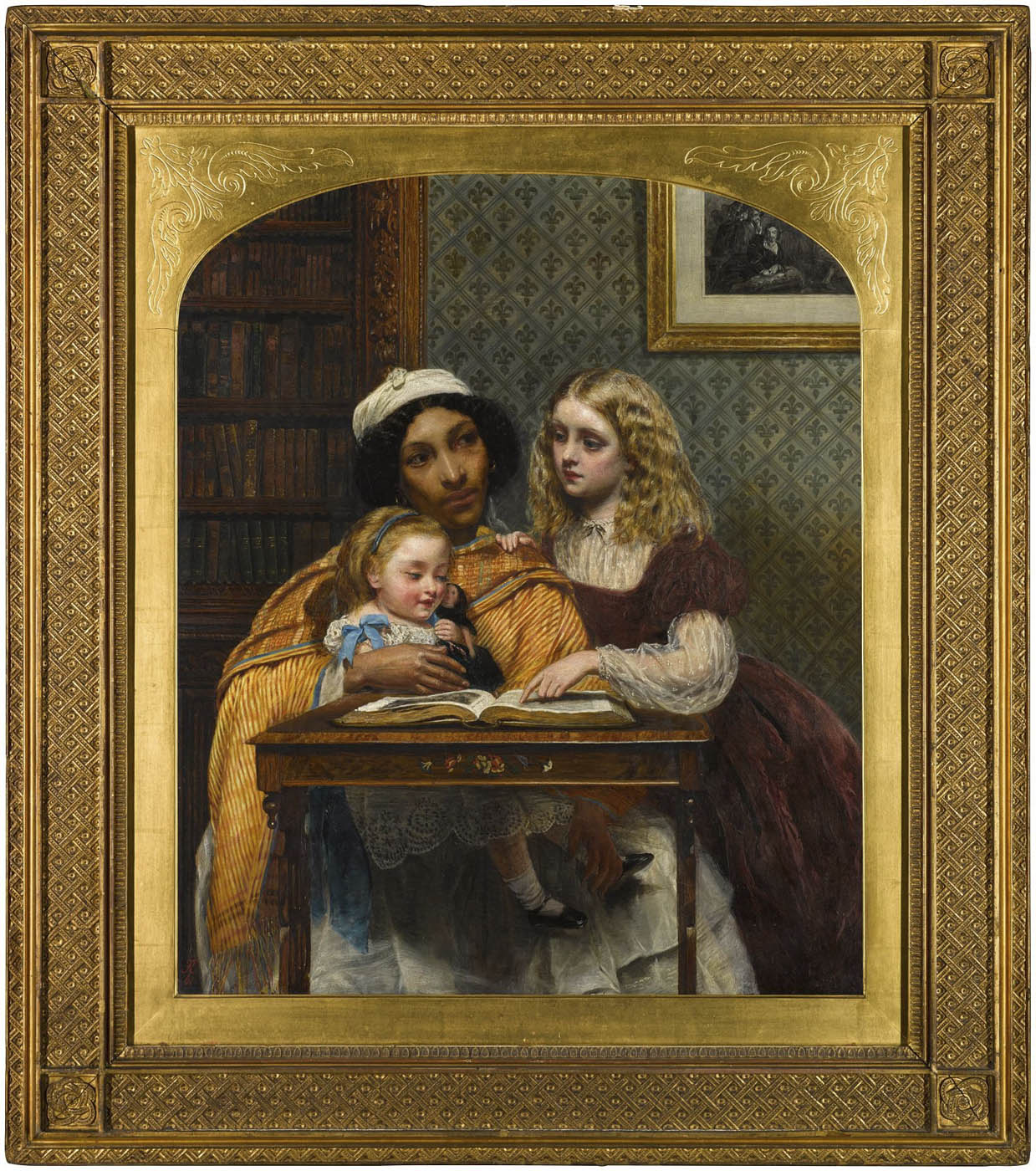
 

Rebecca Solomon (English, 1832-1886) 'A Young Teacher' 1861


Rebecca Solomon (English, 1832-1886)
A Young Teacher
1861
Oil on canvas
61 by 51cm
Tate and the Museum of the Home


Rebecca Solomon’s painting is a complex reflection on gender, race, religion and education in mid-nineteenth century London. As with many of her works, it considers women who worked in better-off households as professional carers. In A Young Teacher, Solomon modifies a traditional domestic scene between mother and child, with the surrounding books stressing the theme of learning. The woman at the centre of the image was modelled by Jamaican-born Fanny Eaton, who became a prominent muse for many Victorian artists and featured in some of the most iconic paintings of the Pre-Raphaelite period. …

Believed to be the first Jewish woman to become a professional artist in England, Rebecca Solomon’s work shone a light on inequality and prejudice at a time when these subjects were far from mainstream. She was active in social reform movements, including as part of a group of 38 artists who petitioned the Royal Academy of Arts to open its schools to women.

Text from the Tate website
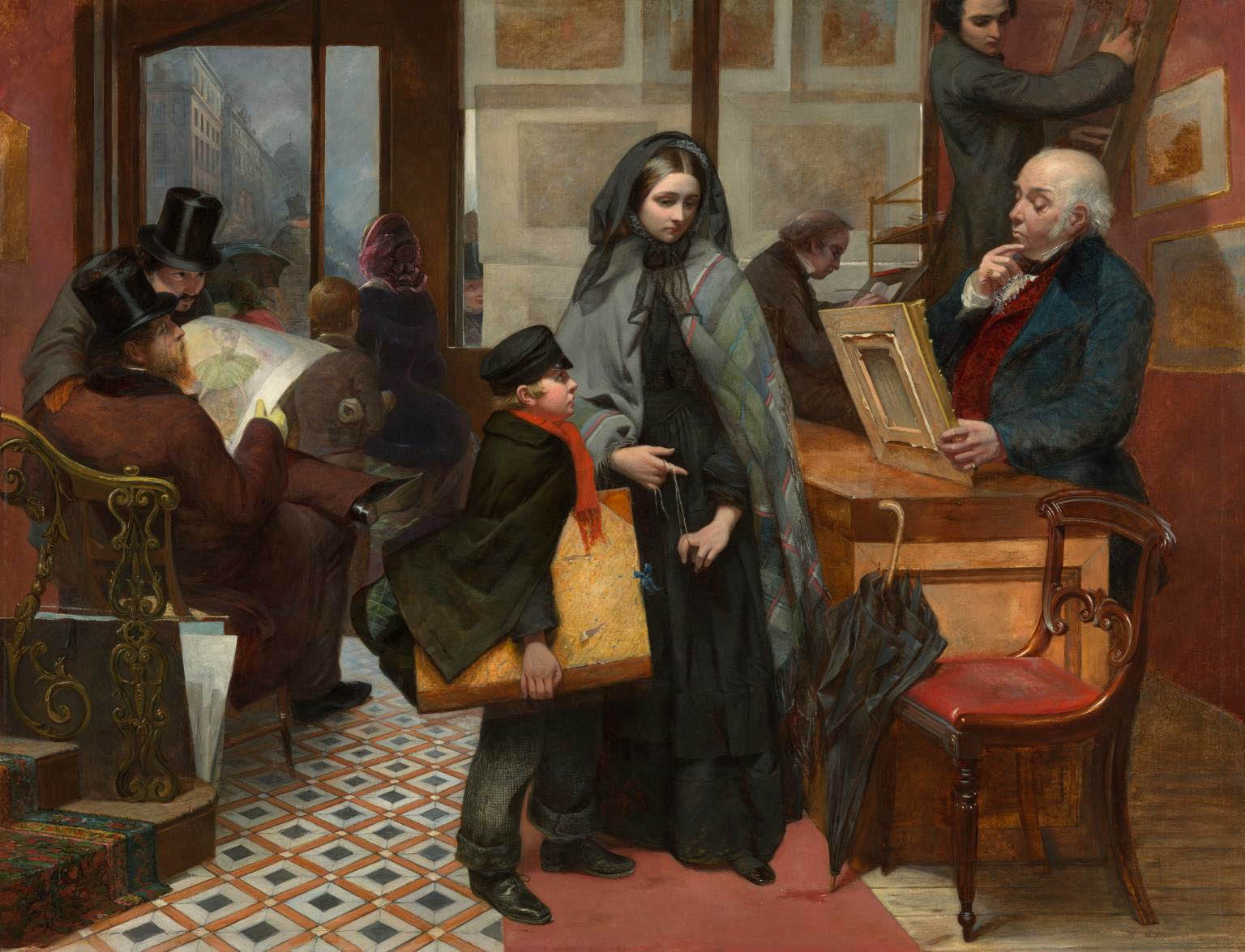
 

Emily Osborn (English, 1828-1925) 'Nameless and Friendless. "The rich man's wealth is his strong city: the destruction of the poor is their poverty (Proverbs: 10:15)' 1857


Emily Osborn (English, 1828-1925)
Nameless and Friendless.
“The rich man’s wealth is his strong city: the destruction of the poor is their poverty” (Proverbs: 10:15)
1857
Oil on canvas
Support: 825 × 1038 mm
Frame: 1042 × 1258 × 75 mm
Tate
Purchased with assistance from Tate Members, the Millwood Legacy and a private donor 2009
Creative Commons CC BY-NC-ND 4.0 DEED


Osborn exhibited widely and was supported by wealthy patrons. She was also part of the ‘rights of woman’ debate, campaigning for more public roles for women. Nameless and Friendless, exhibited at the Royal Academy in 1857, dramatises the difficulties faced by women artists. Osborn shows a young woman offering a painting to a sceptical dealer. With no reputation (‘Nameless’) and no connections (‘Friendless’), she has little chance of a sale. Behind her, two leering men emphasise the impression of her isolation and vulnerability.

Text from the exhibition large print guide


Installation view of the exhibition 'Now You See Us Women Artists in Britain 1520-1920' at Tate Britain showing Emily Mary Osborn's 'Barbara Bodichon (1827-1891)' Nd (below)


Installation view of the exhibition Now You See Us Women Artists in Britain 1520-1920 at Tate Britain showing Emily Mary Osborn’s Barbara Bodichon (1827-1891) Nd (below)
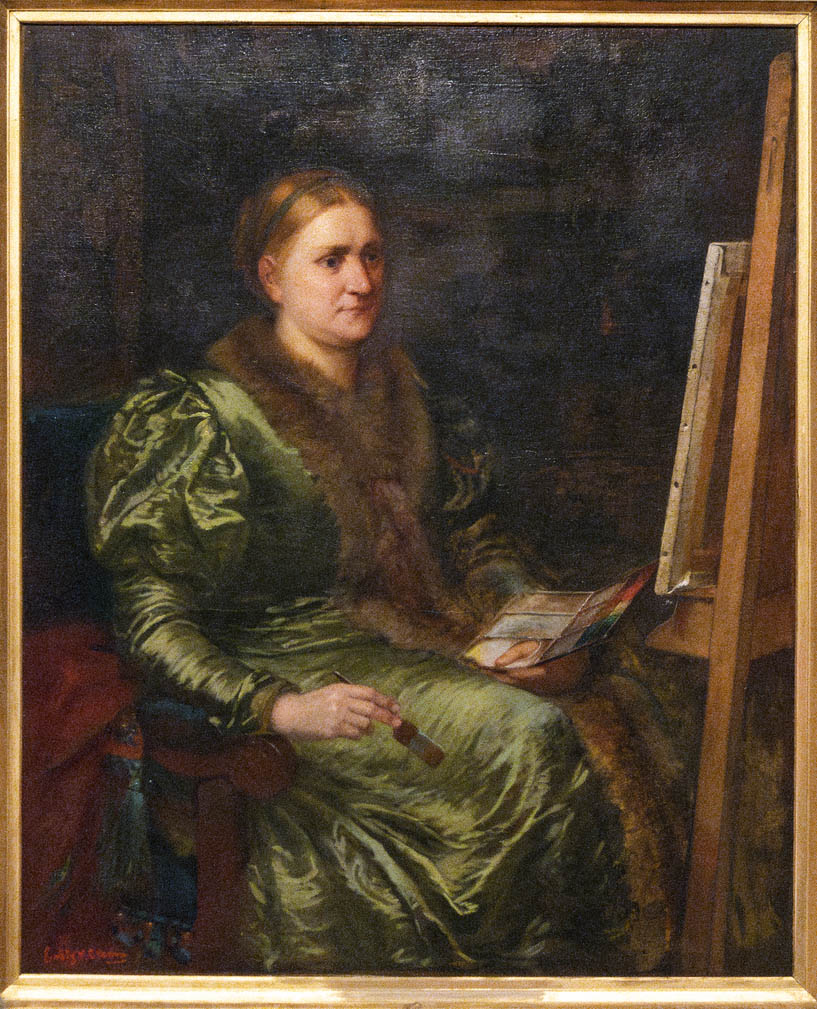
 

Emily Mary Osborn (1828-1925) 'Barbara Bodichon (1827-1891)' Nd (installation view)


Emily Mary Osborn (1828-1925)
Barbara Bodichon (1827-1891) (installation view)
Nd
Oil on canvas
120 x 97cm
Girton College, University of Cambridge


Martha Darley Mutrie (British, 1824-1885) 'Wild Flowers at the Corner of a Cornfield' 1855-1860


Martha Darley Mutrie (British, 1824-1885)
Wild Flowers at the Corner of a Cornfield
1855-1860
Oil on canvas
Support: 821 × 632 mm
Frame: 958 × 781 × 65 mm
Photo: Tate (Seraphina Neville)


Martha Darley Mutrie is considered one of the leading painters of flowers active in Britain in the nineteenth century. She was born in Ardwick, near Manchester. She trained together with her sister, the painter Annie Feray Mutrie (1826-1893), under George Wallis (1811-1891) at the Manchester School of Design from 1844 to 1846, and also undertook private lessons with him. The sisters began exhibiting at the Royal Manchester Institution from 1845 and at the Royal Academy, London, showing there consistently from the early 1850s. Their work was regularly well received by the critics. Mutrie and her sister moved to London in 1854, where they painted flowers in interior settings, carefully arranged, and also outdoors in mock natural settings.

Despite the prominence of women artists painting still lifes and flowers, the men practitioners of the genre, such as George Lance (1802-1864) and William Henry ‘Birds Nest’ Hunt (1790-1864), received greater critical and institutional attention. Martha and Annie Mutrie achieved success that was otherwise rare for women working as artists at the time.

The art critic John Ruskin admired both artists’ work and wrote about one of Annie’s pictures in his review of the 1855 Royal Academy exhibition. In his review Ruskin suggested that she abandon artificial compositions and paint instead ‘some banks of flowers in wild country, just as they grow’ (John Ruskin, Notes on Some of the Principal Pictures Exhibited at the Royal Academy, London, 1855). This painting might be seen as a response to Ruskin’s insight and the advances in science that in the 1850s brought a new focus to the study of nature, with arguments over beauty and truth.

Text from the Tate website
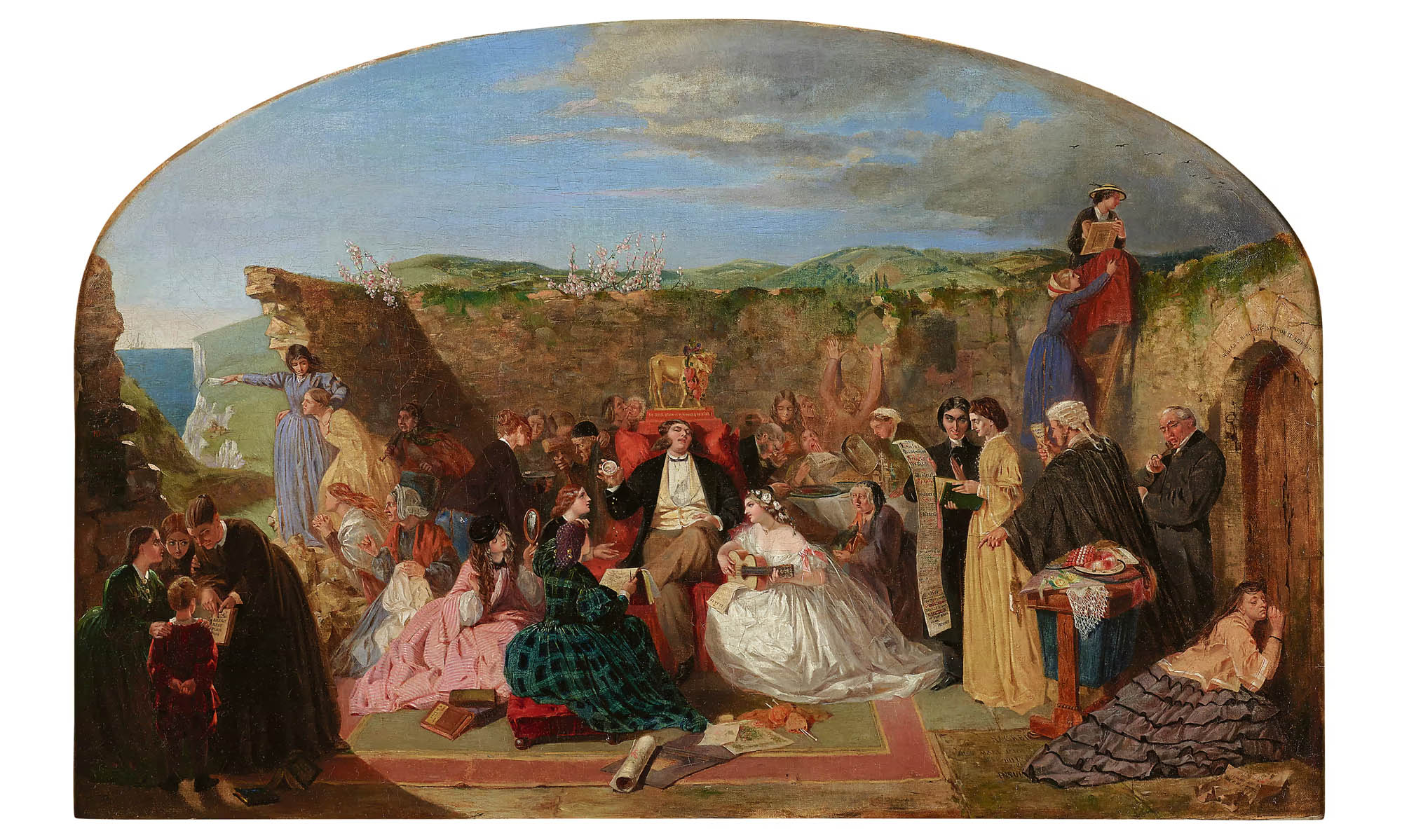
 

Florence Claxton (British, 1838-1920) ''Woman's Work': A Medley' 1861


Florence Claxton (British, 1838-1920)
‘Woman’s Work’: A Medley
1861
Oil on canvas
Martin Beisly Fine Art, London


In the 1850s, Claxton became part of the UK’s first organised movement for women’s rights. Woman’s Work satirises women’s opportunities for professional employment. At its centre a group of women fawn at the feet of a man seated below a statue of the Golden Calf – a false idol. Confined by
a surrounding wall, doors to professions such as medicine are shut to the women. Only the artist Rosa Bonheur has managed to scale the wall’s heights. The painting was exhibited at London’s National Institution for Fine Arts in 1861 and received mixed reviews. Some praised its comic strength but others described it as ‘vulgar’.

Text from the exhibition large print guide
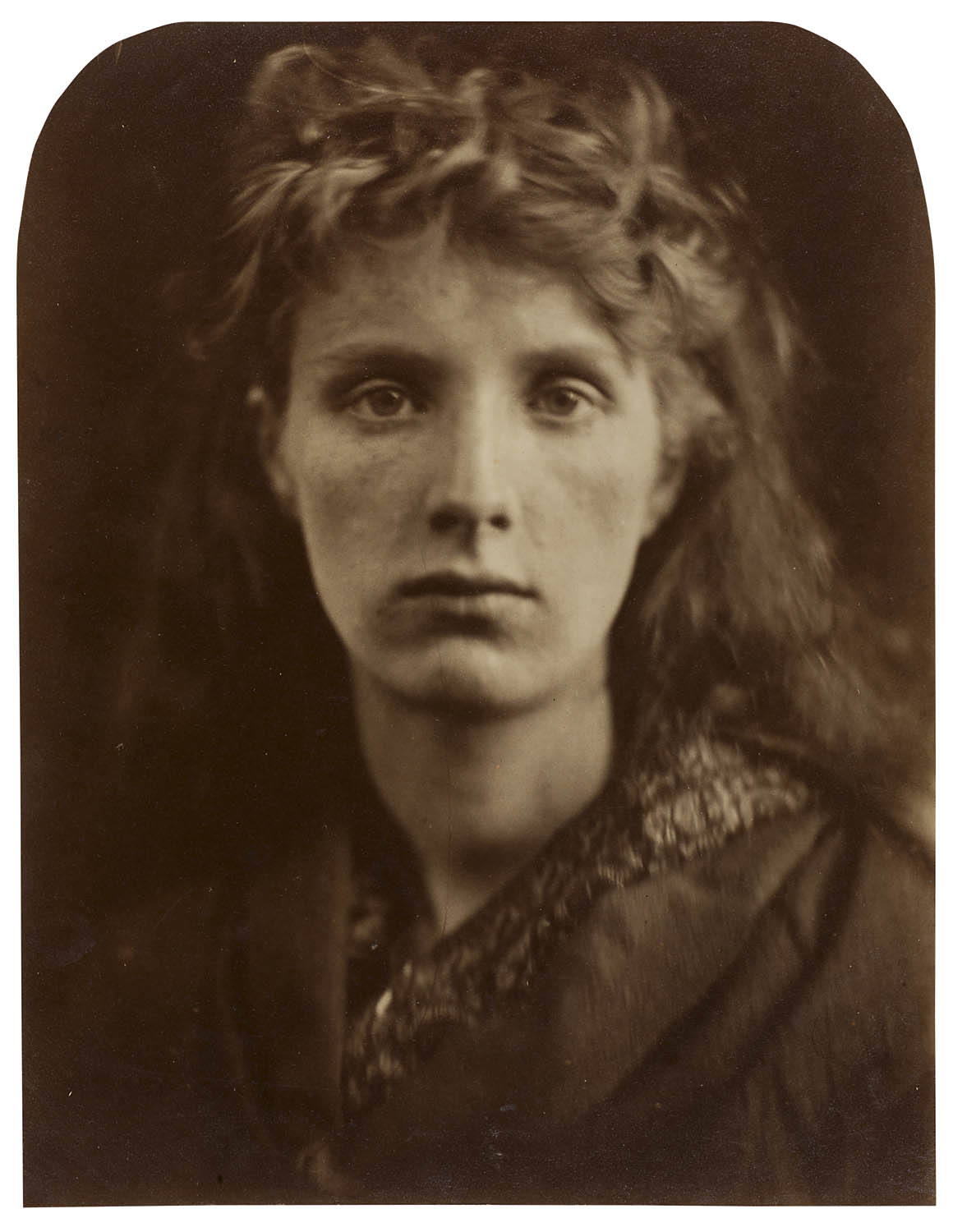
 

Julia Margaret Cameron (British born India, 1815-1879) 'Mountain Nymph, Sweet Liberty' 1865


Julia Margaret Cameron (British born India, 1815-1879)
Mountain Nymph, Sweet Liberty
1865
Albumen print
Wilson Centre of Photography


Annie Keene (1842/3-1901) was an artist’s model at the Royal Academy Schools. Cameron showed Keene’s portrait at the 1866 Hampshire and Isle of Wight Loan Exhibition, and it was for sale at her 1868 exhibition at London’s German Gallery. In this photograph, Cameron’s shallow depth-of-field gives a bold effect. Her friend, the scientist and photographic innovator John Herschel (1792-1871), praised the portrait as ‘a most astonishing piece of high relief – She is absolutely alive and thrusting out her head from the paper into the air’.

Text from the exhibition large print guide
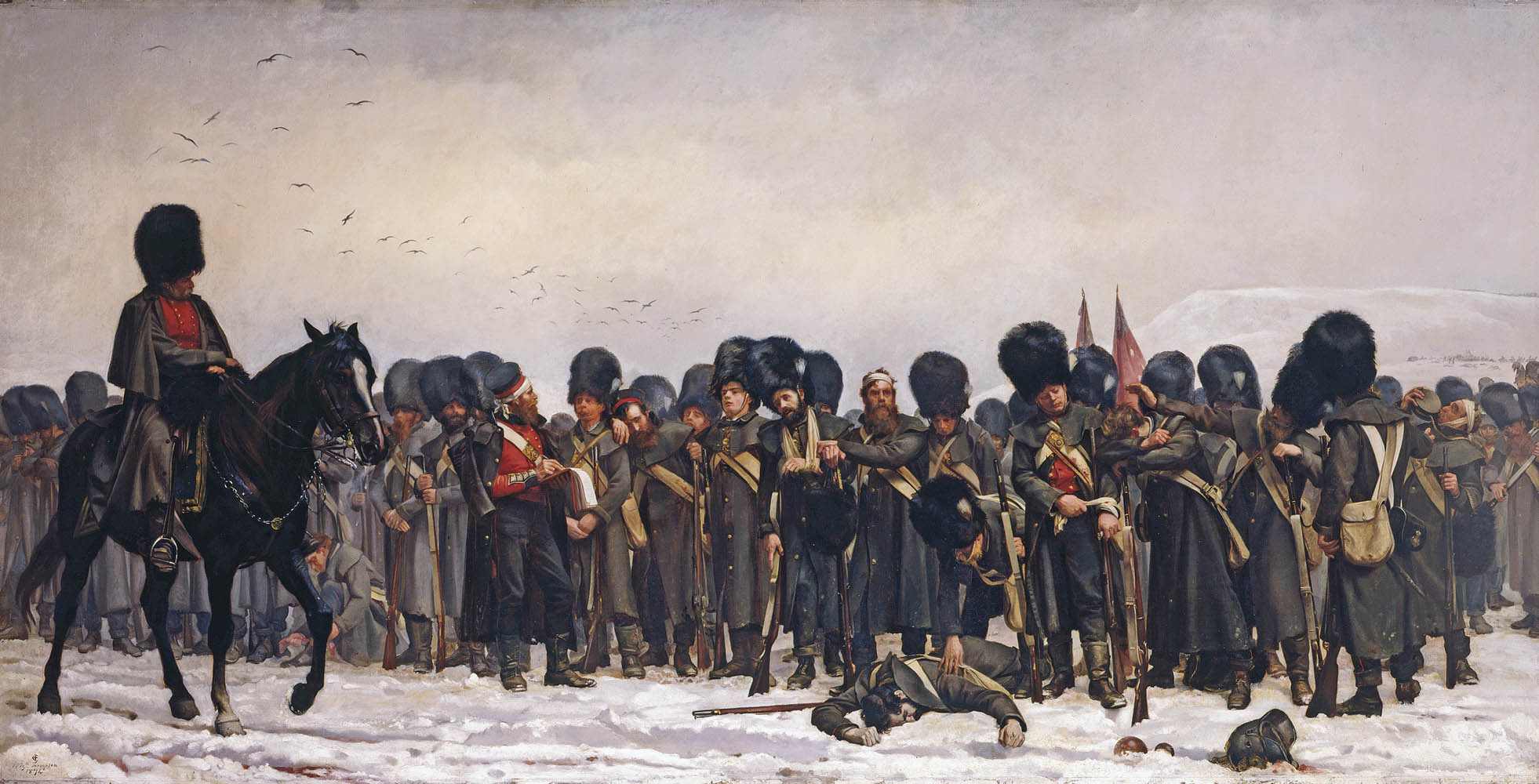
 

Elizabeth Butler (British, 1846-1933) 'The Roll Call' 1874


Elizabeth Butler (British, 1846-1933)
The Roll Call
1874
Oil on canvas
93.3 x 183.5cm (support, canvas/panel/stretcher external)
Royal Collection Trust
© Royal Collection Trust / His Majesty King Charles III 2024


Butler specialised in battle paintings, challenging society’s expectations of women artists. The exhibition of The Roll Call at the Royal Academy in 1874 was one of the greatest art sensations of the nineteenth century. It was praised by Academicians and hung ‘on the line’ (the most prestigious, eye-level position). The painting proved so popular with the public that a policeman had to be stationed nearby to protect the adjacent paintings. Queen Victoria summoned the work to Buckingham Palace for a private viewing, and the copyright sold for the enormous sum of £1,200.

Text from the exhibition large print guide


The Roll Call captured the imagination of the country when exhibited at the Royal Academy in 1874, turning the artist into a national celebrity. So popular was the painting that a policeman had to be stationed before it to hold back the crowds and it went on to tour the country in triumph. The painting’s focus on the endurance and bravery of ordinary soldiers without reference to the commanders of the army accorded with the mood of the times and the increasing awareness of the need for social and military reforms.

Though the public had been exposed to other images of the Crimean War, primarily prints, photographs and newspaper illustrations, never before had the plight of ordinary soldiers been portrayed with such realism. Butler researched her subject by studying A. W. Kinglake’s seminal history of the Crimean War, as well as by consulting veterans of the Crimea, several of whom served as models for the painting. She also painstakingly sought out uniforms and equipment from the Crimean period in order to be correct in the smallest military details. The sombre mood and simple yet dramatic composition Butler achieved in The Roll Call vividly epitomised the grimness not only of the Crimean War but of all wars.

Text from the Royal Collection Trust website


Installation view of the exhibition 'Now You See Us Women Artists in Britain 1520-1920' at Tate Britain showing at left, Louise Jopling's 'Through the Looking-Glass' 1875; and at right, Jopling's 'A Modern Cinderella' 1875


Installation view of the exhibition Now You See Us Women Artists in Britain 1520-1920 at Tate Britain showing at left, Louise Jopling’s Through the Looking-Glass 1875 (below); and at right, Jopling’s A Modern Cinderella 1875 (below)


Louise Jopling (English, 1843-1933) 'Through the Looking-Glass' 1875


Louise Jopling (English, 1843-1933)
Through the Looking-Glass
1875
Oil paint on canvas
Support: 539 × 437 mm
Tate
Purchased with funds provided by the Nicholas Themans Trust and Tate Patrons 2024
Photo: Tate (Sonal Bakrania)


This is a self-portrait Jopling made while pregnant with her son, Lindsay, in 1875.

Jopling was one of the most successful and best-known women artists of the late nineteenth century. She exhibited regularly and, from the 1880s, ran her own art school for women. Jopling hosted receptions and established connections with many artists and art dealers. She carefully planned the exhibition of her work by choosing venues appropriate to each painting’s scale and ambition. Jopling sent this self-portrait to the Society of Lady Artists in 1875. In the same year, A Modern Cinderella, hanging nearby, was shown at the Royal Academy. Both works were purchased by the dealer Agnew: this work for £26, but Cinderella for £262.

Text from the exhibition large print guide


Tabitha Barber, curator of the exhibition, said: “What’s happened to Jopling’s legacy is the story of what’s happened to most women artists … They have been regarded, studied and judged differently.”

Jopling, who in 1901 became one of the first women admitted to the Royal Society of British Artists, was a celebrated artist in her day, Barber said. Her patrons included the de Rothschild family, and the Grosvenor Gallery founders Sir Coutts and Lady Lindsay. “At a time when women weren’t allowed to be members of the Royal Academy, her works were exhibited there almost every year and spoken about in the press. She was reviewed by male art critics, and reviewed well.”

Jopling’s paintings were also commercially successful, selling for some of the highest prices that British female artists could command – albeit far less than their male contemporaries.

“She is among a handful of female artists who were society figures and household names – and it just seems so astonishing that they’re so little known now,” said Barber.

Donna Ferguson. “Tate Britain acquires first painting by pioneering English female artist overlooked for a century,” on The Guardian website 12 May 2024 [Online] Cited 02/09/2024


Louise Jopling (English, 1843-1933) 'A Modern Cinderella' 1875 (installation view)


Louise Jopling (English, 1843-1933)
A Modern Cinderella
1875
Oil on canvas
Support: 910 × 700 mm
Private collection


Louise Jopling (English, 1843-1933) 'A Modern Cinderella' 1875


Louise Jopling (English, 1843-1933)
A Modern Cinderella
1875
Oil on canvas
Support: 910 × 700 mm
Private collection


A Modern Cinderella shows a model removing her fine clothes at the end of a painting session. A glimpse of Jopling’s easel can be seen in the mirror’s reflection. In 1875, Jopling exhibited this work at the Royal Academy. There, the model’s naked shoulder was cause for criticism. Although one reviewer thought it was ‘quite harmless’, a picture dealer’s wife reportedly said that ‘she could never hang such a thing in her house’. Jopling also showed the painting at the 1878 Exposition Universelle in Paris, where she had also trained.

Text from the exhibition large print guide


If this is, indeed, a self-portrait, Jopling has painted herself as somewhere in the liminal space between the social groups she simultaneously belonged to and was excluded from. Despite Jopling’s notoriety and prominence among high-class Pre-Raphaelite artist circles, she experienced a high degree of discrimination. In 1883, she was commissioned to paint a portrait for 150 guineas but lost her employment in favour of Sir John Everett Millais, who requested 1000 guineas for the same project (Clement). In the traditional circles of high society, Jopling was looked down upon for pursuing a career in the fine arts, which was inherently a masculine task. The woman in the image is either taking the dress off or putting it on, but either way, has turned her back to her easel, which could be interpreted as forfeiting a part of her true identity to fit either end of the accepted spectrum of femininity. The underclothing she portrays herself in fit the Pre-Raphaelite aesthetic style of dress, which fit natural waists and emphasised a woman’s beauty through medieval and Greek-inspired silhouettes (Shrimpton, Jayne. Victorian Fashion. Shire Publications, 2016). The inclusion of this white aesthetic dress, as well as the scandalous drop of the strap is a signal of societal rebellion against traditional beauty norms. The woman in the image could also be read as shedding the skin of the two dresses before her to reveal her true, natural, artistic self below.

Emily Goldstein. “‘A modern Cinderella, 1875. Oil on Canvas’ by Louise Jopling,” on the COVE Studio website 23/10/2020 [Online] Cited 02/09/2024


Marianne Stokes (Austrian, 1855-1927) 'The Passing Train' 1890


Marianne Stokes (Austrian, 1855-1927)
The Passing Train
1890
Oil on canvas
Support: 600 × 760 mm
Frame: 885 × 955 mm
Private collection


Marianne Stokes (née Preindlsberger; 1855-1927) was an Austrian painter. She settled in England after her marriage to Adrian Scott Stokes (1854-1935), the landscape painter, whom she had met in Pont-Aven. Stokes was considered one of the leading women artists in Victorian England.


Annie Louisa Swynnerton ARA (British, 1844-1933) 'Mater Triumphalis' 1892


Annie Louisa Swynnerton ARA (British, 1844-1933)
Mater Triumphalis
1892
Paris, musée d’Orsay
Donated by Edmund Davis, 1915


Swynnerton campaigned for women’s suffrage, access to professional training, and equal opportunities. She rebelled against the belief that ‘women could not paint’. Exhibited at the New Gallery in 1892, Mater Triumphalis was regarded as a bold work. It brought Swynnerton international recognition, winning a medal at the 1893 World Exposition in Chicago. Despite this, Swynnerton received mixed reviews from British critics. They were impressed by the artist’s skill and the painting’s ‘quivering life’ but found the ‘frank realism’ of the woman’s naked body disconcerting.

Text from the exhibition large print guide
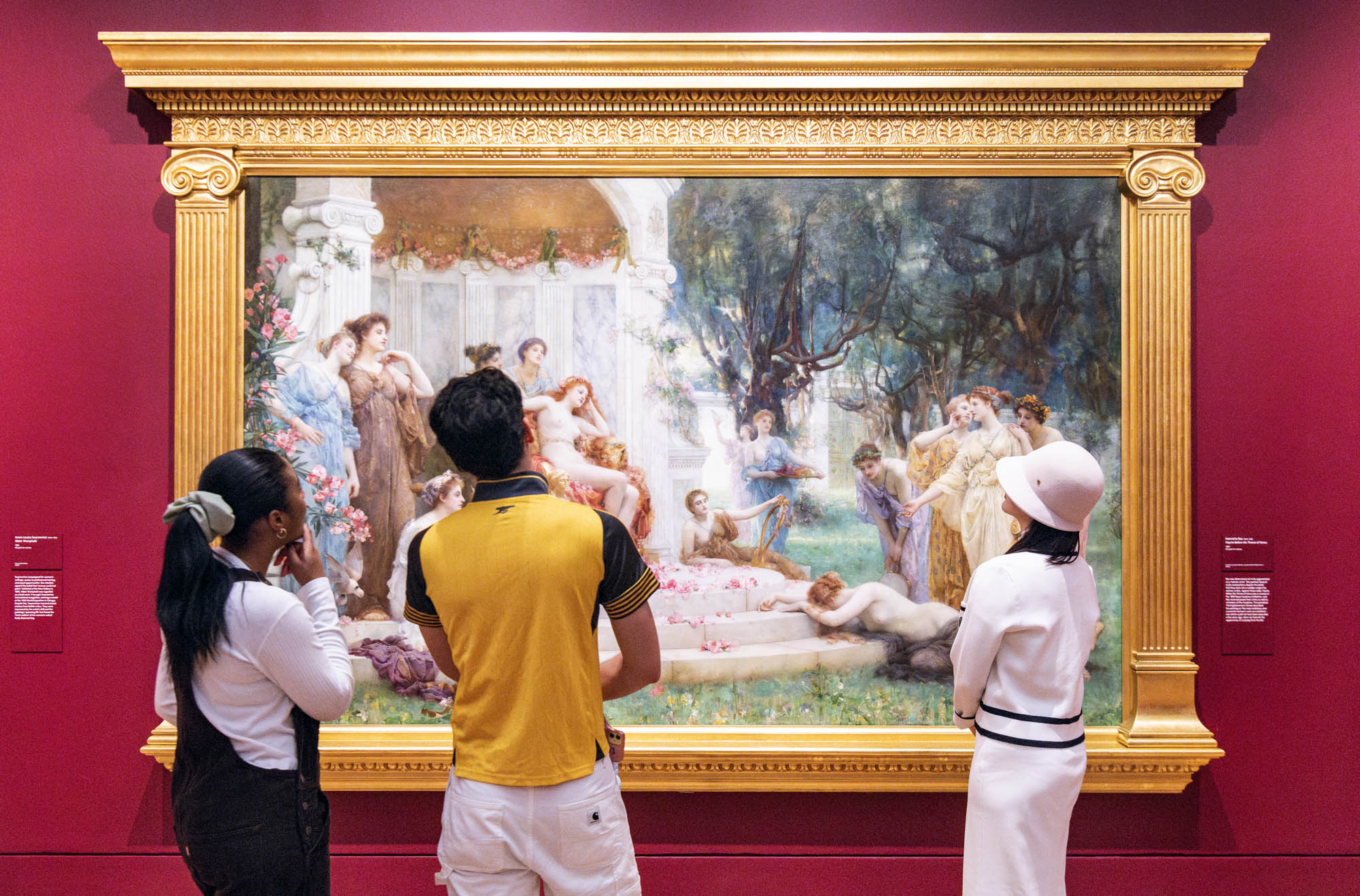
 

Installation view of the exhibition 'Now You See Us Women Artists in Britain 1520-1920' at Tate Britain showing Henrietta Rae's 'Psyche before the throne of Venus' 1894


Installation view of the exhibition Now You See Us Women Artists in Britain 1520-1920 at Tate Britain showing Henrietta Rae’s Psyche before the throne of Venus 1894 (below)
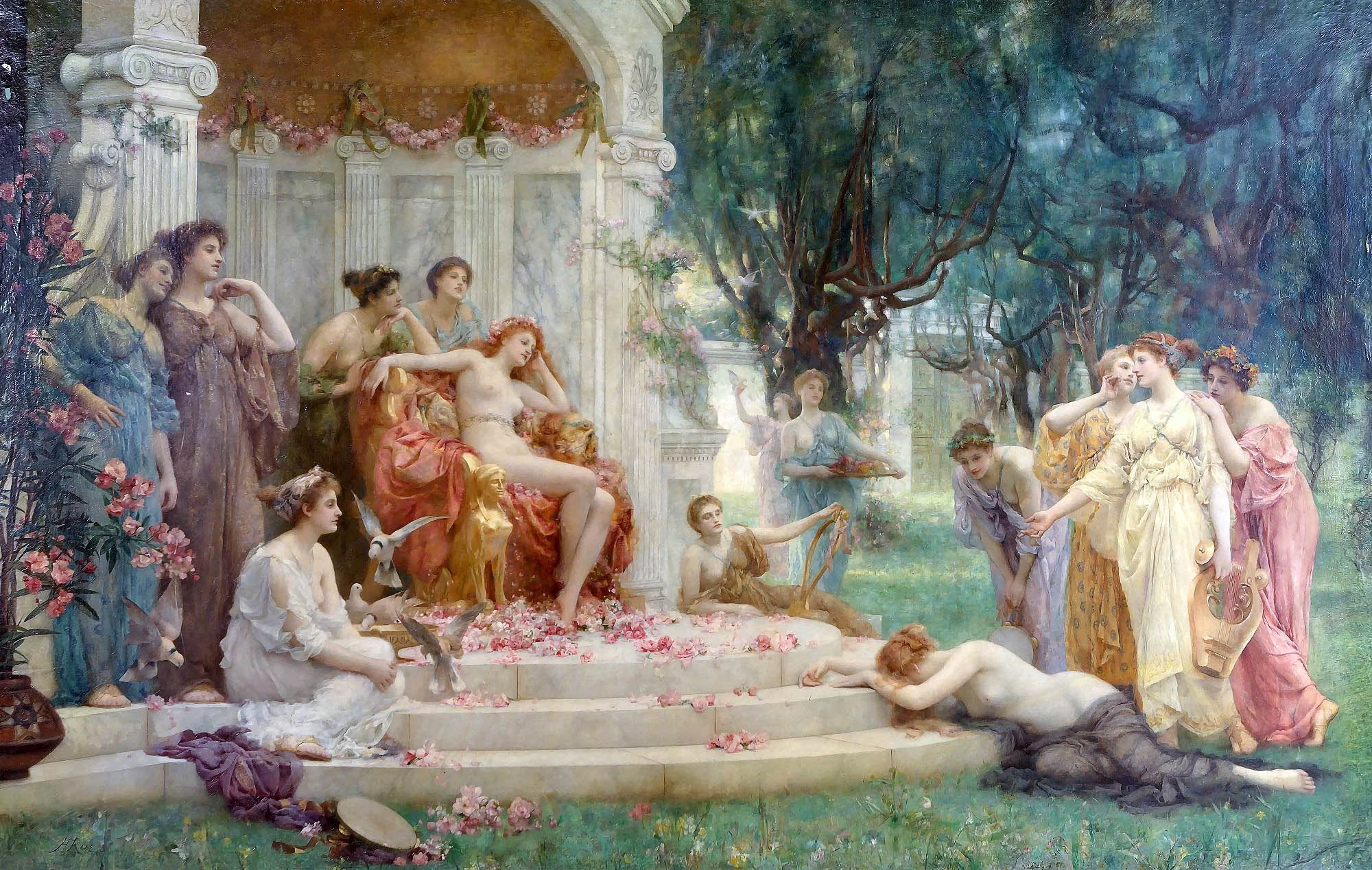
 

Henrietta Rae (British, 1859-1928) 'Psyche before the throne of Venus' 1894


Henrietta Rae (British, 1859-1928)
Psyche before the throne of Venus
1894
Oil paint on canvas
Support: 1941 × 3058 × 31 mm
Frame: 2525 × 3826 × 270 mm
Lent from a private collection, courtesy of Martin Beisly Fine Art


Rae was determined not to be pigeonholed as a ‘woman artist’. She painted classical nude compositions despite the belief that they were not a suitable subject for women artists. Against these odds, Psyche Before the Throne of Venus was a success at the 1894 Royal Academy Exhibition, and Rae received praise from critics as well as members of the Academy. The periodical The Englishwoman’s Review described the painting as ‘the most ambitious and successful woman’s work yet exhibited – one which could not have been executed a few years ago, when we had not the opportunity of studying from the life’.

Text from the exhibition large print guide


Installation view of the exhibition 'Now You See Us Women Artists in Britain 1520-1920' at Tate Britain showing Lucy Kemp-Welch's 'Colt Hunting in the New Forest' 1897


Installation view of the exhibition Now You See Us Women Artists in Britain 1520-1920 at Tate Britain showing Lucy Kemp-Welch’s Colt Hunting in the New Forest 1897


One of the most important pieces of art ever inspired by the New Forest was a painting by Lucy Kemp-Welch (1869-1958), entitled ‘Colt Hunting in the New Forest’. This painting was exhibited at the Royal Academy in 1897, when she was only 26 years old. It was an impressive canvas measuring 1537 x 3060 mm (approximately 5ft x 10ft) and was described as depicting ‘a wide glade in the forest, along which race a number of colts unwilling to relinquish their liberty and to fall into the hands of the four mounted lads who try to catch them’.[1] Lucy Kemp-Welch was born in Bournemouth, in 1869, and spent much of her time wandering in the New Forest, where she ‘personally studied the wild ponies in this pleasant part of England’.[2] Her love of horses and wild ponies remained with her all her life. In order to capture the energy and excitement of the pony drifts for ‘Colt Hunting’ she actually had the full-sized canvas transported to the Forest, where she sketched from life, as the commoners galloped their ponies past her. When the painting was exhibited at the Royal Academy it caused a sensation and was promptly purchased for £525.00.[3] The buyers were trustees of the Chantrey Bequest, who administered a large sum of money left in the will of Sir F. L. Chantrey to obtain works of art by British artists, in order to create a national collection. It was only the third time, since its creation in 1875, that the Chantrey Bequest had purchased artwork by a woman. Lucy Kemp-Welch became a celebrity overnight.[4]

In the same year that Lucy Kemp-Welch exhibited ‘Colt Hunting in the New Forest’, the Tate Galley was built and her painting was transferred to this new, public collection. However, ‘Colt Hunting’ was immediately archived and has never been publicly exhibited. Indeed, there are rumours that the Tate Gallery loaned the painting to the Royal Academy during the Blitz ‘in the hope that the Luftwaffe’s friendly bombs might rid them of this monstrous woman’s work for good’.[5] It is difficult to conceive of the prejudice against women in the late Victorian period and early 20th century, particularly women such as Lucy Kemp-Welch, who stepped out of the roles proscribed to them by a patriarchal society.[6] Her sympathies for the suffragette movement certainly didn’t endear her to the male-establishment figures that controlled the art world. She nevertheless continued to paint and made a successful, and award winning (Paris Salon) career as an artist.

newforestcommoner. “Lucy Kemp-Welch: Colt Hunting in the New Forest,” on the New Forest Commoner website November 27, 2016 [Online] Cited 28/08/2024
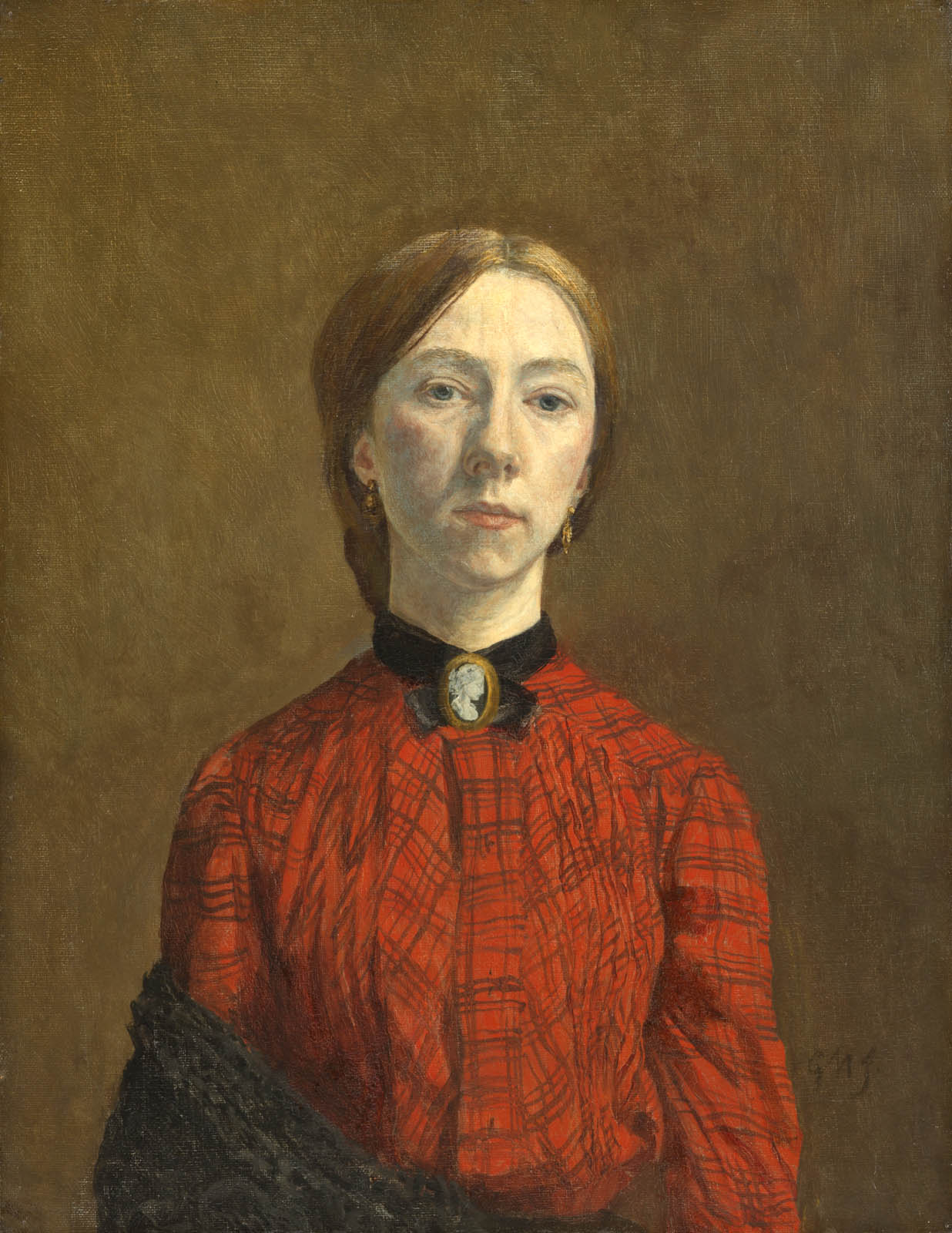
 

Gwen John (Welsh, 1876-1939) 'Self-Portrait' 1902


Gwen John (Welsh, 1876-1939)
Self-Portrait
1902
Oil on canvas
Tate
Purchased 1942
Photo: Tate (Mark Heathcote and Samuel Cole)


John exhibited this self-portrait at the New English Art Club (NEAC) in 1900. It was her debut as an exhibitor. The NEAC had been founded as a forward-thinking artists’ group, created out of dissatisfaction with the art establishment, exemplified by the conservative Royal Academy. Tutors from the Slade, where John had trained, were on the NEAC committee. Despite its progressive stance, in 1900 John was one of only 16 women exhibitors among 75 men. John’s choice to show a self-portrait was perhaps a deliberate assertion of her presence.

Text from the exhibition large print guide


Here is a dilemma straight away: which should take precedence, the painting or the fact? Should the show present art on its own terms, or as instance, evidence, expression of social history? It is an extremely complex remit…

[Laura] Knight is strongly represented with a sequence of cliff-edge paintings; but what about her near-namesake, Winifred Knights? The Deluge is a shattering masterpiece of British modernism, painted in 1920 and thus eligible, yet not here. And why are the ethereal and supremely original blue cyanotypes of Anna Atkins (1799-1871) missing from the niggardly photography section, along with Christina Broom (1862-1939), pioneering photojournalist, whose stirring portraits of suffragettes would have been so apt?

The show is thick with flowers, descending from Delany right down to Helen Allingham’s twee cottage gardens, all ready for their postcard reproductions. And if Allingham, then why not the visionary genius of Beatrix Potter? Weak pre-Raphaelite schlock fills the largest gallery, along with Victorian pieties such as Emily Osborn’s distressed gentlewoman, eyes downcast, awaiting the verdict of a dealer on her latest canvas, while two male artists leer in the background. Nameless and Friendless is terminally mawkish.

Only rarely do women’s art and women’s history spark together in this show. You see it in Ethel Wright’s fabulous 1912 portrait of the suffragette Una Dugdale Duval, in an arsenical green dress beneath a wallpaper of ludicrous fighting cocks, where Wright’s modern bravado exactly meets that of her sitter. And you see it in Gwen John’s immortal 1902 self-portrait, small and distanced, light catching her eyelashes in an atmosphere of hushed stillness, so direct and yet so self-contained: the momentous assertion of reticence.

That epochal image appears on the exhibition posters, perhaps promising too much. For even the best of the artists here are occasionally represented by the least of their works, quite apart from the mystifying omissions. The theme of Now You See Us is undoubtedly riveting. The captions (and the excellent catalogue) are superbly written. But art is trumped by social history too often in this show, words overshadowing images.

Laura Cumming. “Now You See Us: Women Artists in Britain 1520-1920 review – revelations and mystifying omissions,” on The Guardian website 19 May 2024 [Online] Cited 02/09/2024


Gwen John (Welsh, 1876-1939) 'Chloë Boughton-Leigh (1868-1947)' 1904-1908


Gwen John (Welsh, 1876-1939)
Chloë Boughton-Leigh (1868-1947)
1904-1908
Oil on canvas
58.4 x 38.1cm
Tate
Purchased 1925


Gwendolen Mary John (22 June 1876 – 18 September 1939) was a Welsh artist who worked in France for most of her career. Her paintings, mainly portraits of anonymous female sitters, are rendered in a range of closely related tones. Although in her lifetime, John’s work was overshadowed by that of her brother Augustus and her mentor and lover Auguste Rodin, awareness and esteem for John’s artistic contributions has grown considerably since her death.

Gwen John trained at the Slade School of Art in London, where her brother Augustus was also a student. She settled in Paris in 1904, working as a model, becoming Rodin’s mistress and immersing herself in the artistic world of the metropolis. She lived in France for the rest of her life, exhibiting on both sides of the Channel. The portrait shown here is of a Paris friend, Chloë Boughton-Leigh. The subdued colouring, short foreground and self-absorption of the sitter create a deeply intense atmosphere. John showed it in London, at the New English Art Club.

Text from the WikiArt website


Minna Keene (née Bergmann, Canadian born Germany, 1861-1943) 'Decorative Study No. 1, Pomegranates' c. 1906


Minna Keene (née Bergmann, Canadian born Germany, 1861-1943)
Decorative Study No. 1, Pomegranates
c. 1906
Carbon print


The subject of this photograph is believed to be of Violet Keene, Minna Keene’s daughter.
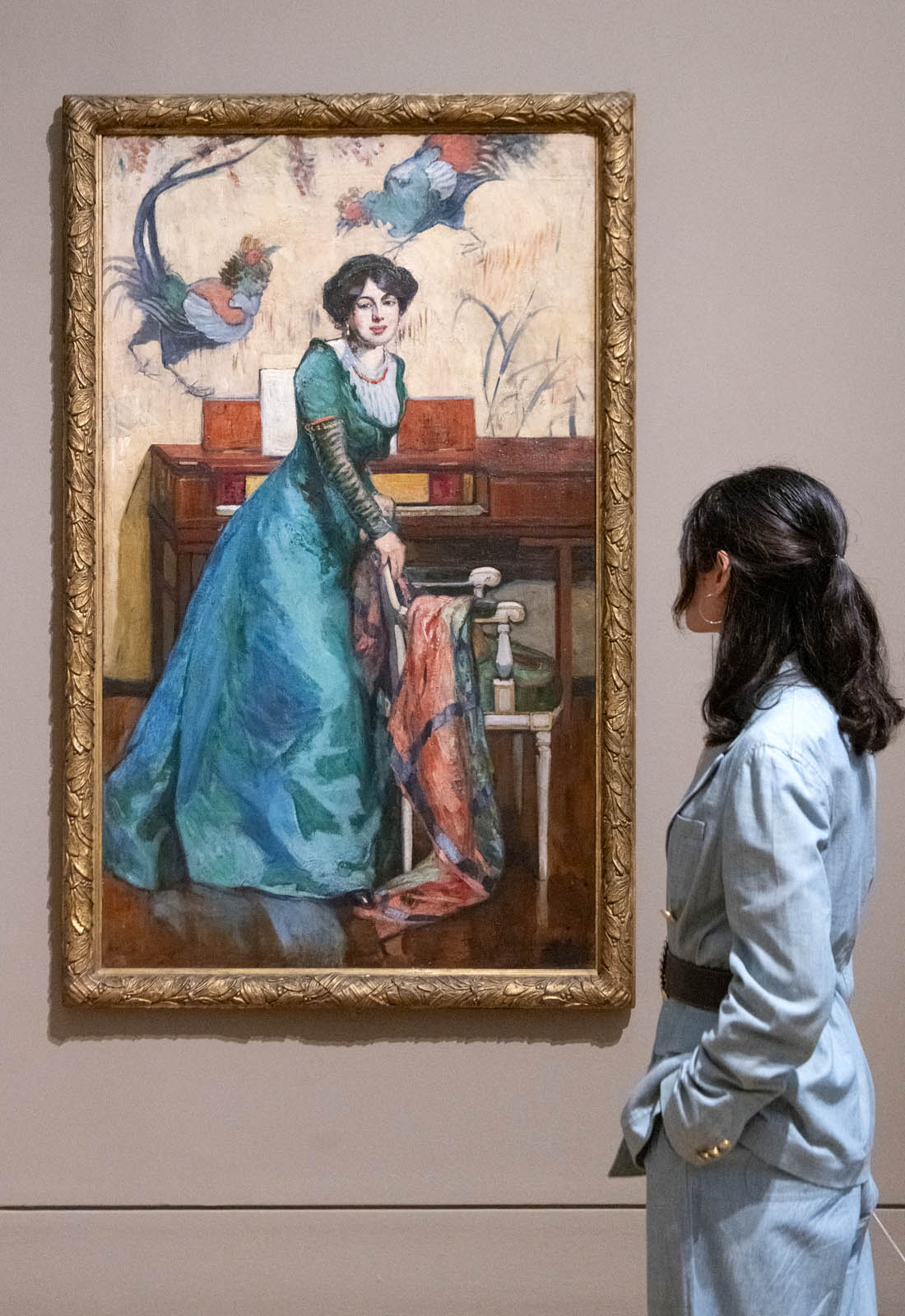
 

Installation view of the exhibition 'Now You See Us Women Artists in Britain 1520-1920' at Tate Britain showing Ethel Wright's 'The Music Room, Portrait of Una Dugdale' 1912


Installation view of the exhibition Now You See Us Women Artists in Britain 1520-1920 at Tate Britain showing Ethel Wright’s The Music Room, Portrait of Una Dugdale 1912 (below)


Ethel Wright (British, 1866-1939) 'The Music Room, Portrait of Una Dugdale' 1912 (installation view)


Ethel Wright (British, 1866-1939)
The Music Room, Portrait of Una Dugdale (installation view)
1912
Oil on canvas
Private collection


This portrait of suffragette and women’s rights activist Una Dugdale Duval (1879-1975) was exhibited at the Stafford Gallery in October 1912. Its flat areas of colour and bold outlines represent a stylistic shift for Wright, who had exhibited at the Royal Academy since the 1880s. Wright shows Duval as cultured and sophisticated, dressed in green, a suffrage colour. Wright made the work the same year Duval made national news for her refusal to promise to obey her husband during their marriage vows. In 1913, Duval published a pamphlet, Love and Honour but Not Obey.

Text from the exhibition large print guide
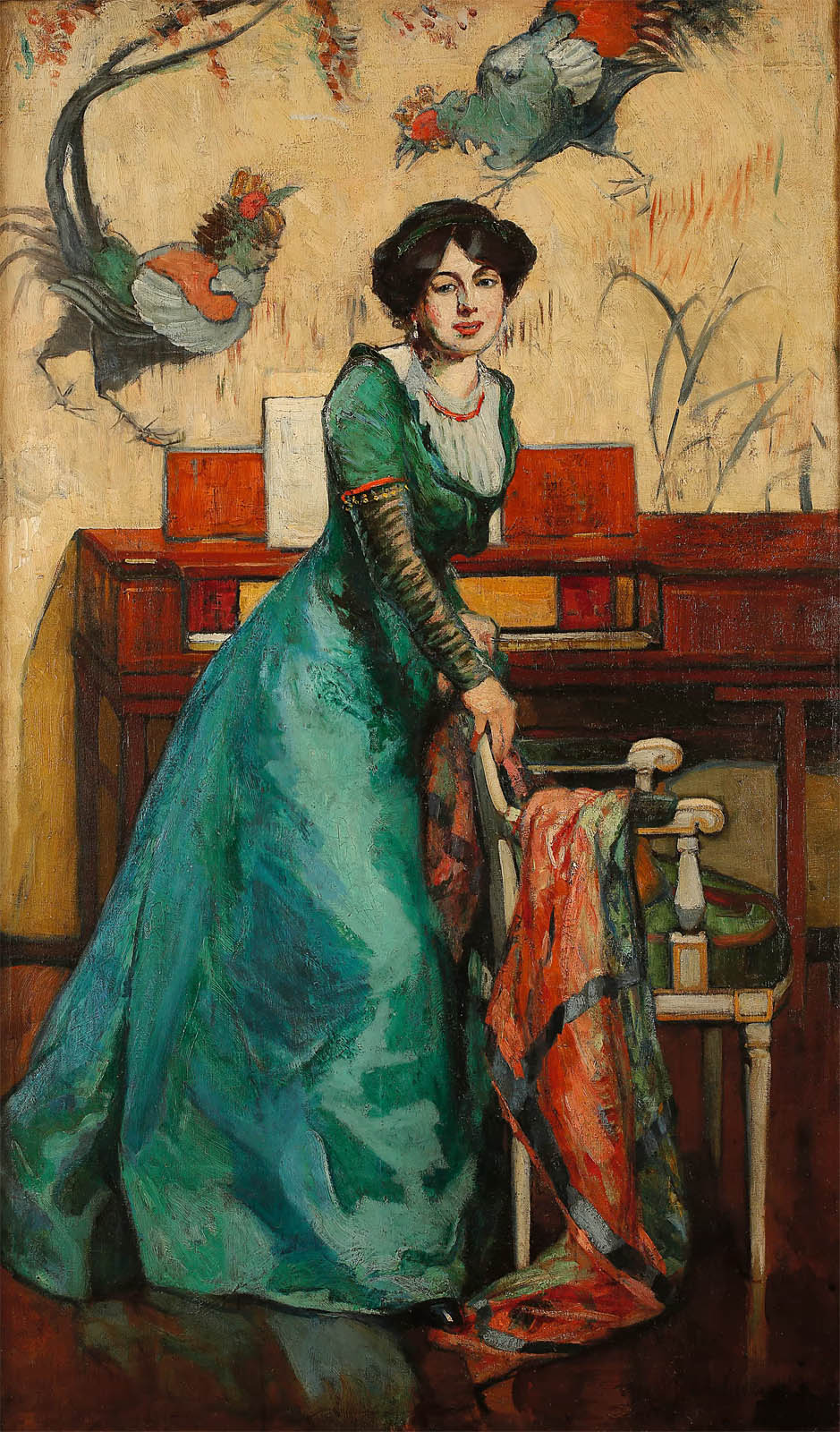
 

Ethel Wright (British, 1866-1939) 'The Music Room, Portrait of Una Dugdale' 1912


Ethel Wright (British, 1866-1939)
The Music Room, Portrait of Una Dugdale
1912
Oil on canvas
Private collection


Vanessa Bell (English, 1879-1961) 'Still Life on Corner of a Mantelpiece' 1914


Vanessa Bell (English, 1879-1961)
Still Life on Corner of a Mantelpiece
1914
Oil on canvas
Support: 559 × 457 mm
Frame: 614 × 512 × 49 mm
Tate
Purchased 1969
© Estate of Vanessa Bell


In 1913, Bell left the Friday Club for the short-lived exhibiting society, the Grafton Group. It included artists who were experimenting with post-impressionism. She was also a founding member of the Omega Workshops. Based in Bloomsbury’s Fitzroy Square, the Workshops aimed to remove the false divisions between fine and decorative arts. The mantelpiece in this painting was in Bell’s house at 46 Gordon Square in London. The objects on it include handmade paper flowers from the Omega Workshops. Bell’s use of an unconventional low viewpoint, fractured, abstracted forms and bright colours show her exploring different techniques associated with twentieth-century art movements.

Text from the exhibition large print guide


Dame Laura Knight DBE RA RWS (English, 1877-1970) 'A Dark Pool' 1917


Dame Laura Knight DBE RA RWS (English, 1877-1970)
A Dark Pool
1917
Oil on canvas
460 × 458 mm
Tyne & Wear Archives & Museums, Laing Art Gallery, Newcastle upon Tyne
© Estate of Dame Laura Knight. All rights reserved 2024 / Bridgeman Images
Image credit: Laing Art Gallery


Anna Airy (English, 1882-1964) 'Shop for Machining 15-inch Shells: Singer Manufacturing Company, Clydebank, Glasgow' 1918


Anna Airy (English, 1882-1964)
Shop for Machining 15-inch Shells: Singer Manufacturing Company, Clydebank, Glasgow
1918
Oil on canvas
Support: Height 1828 mm., Width 2133 mm
© Imperial War Museum


In 1918, Airy received a commission from the Imperial War Museum, thereby becoming Britain’s first official woman war artist. Her 1.7 by 1.8-metre canvases depict munitions production and war-related heavy industry. She later recalled the hot and dangerous conditions in which she worked. A former Slade student, Airy enjoyed a high public profile, won through exhibition and good reviews at the Royal Academy. In 1915, an art critic hailed her as ‘the most accomplished artist of her sex’. Airy was aware, however, of the prejudice women artists still faced. Galleries and buyers, she said, felt ‘safer with a man’.

Text from the exhibition large print guide
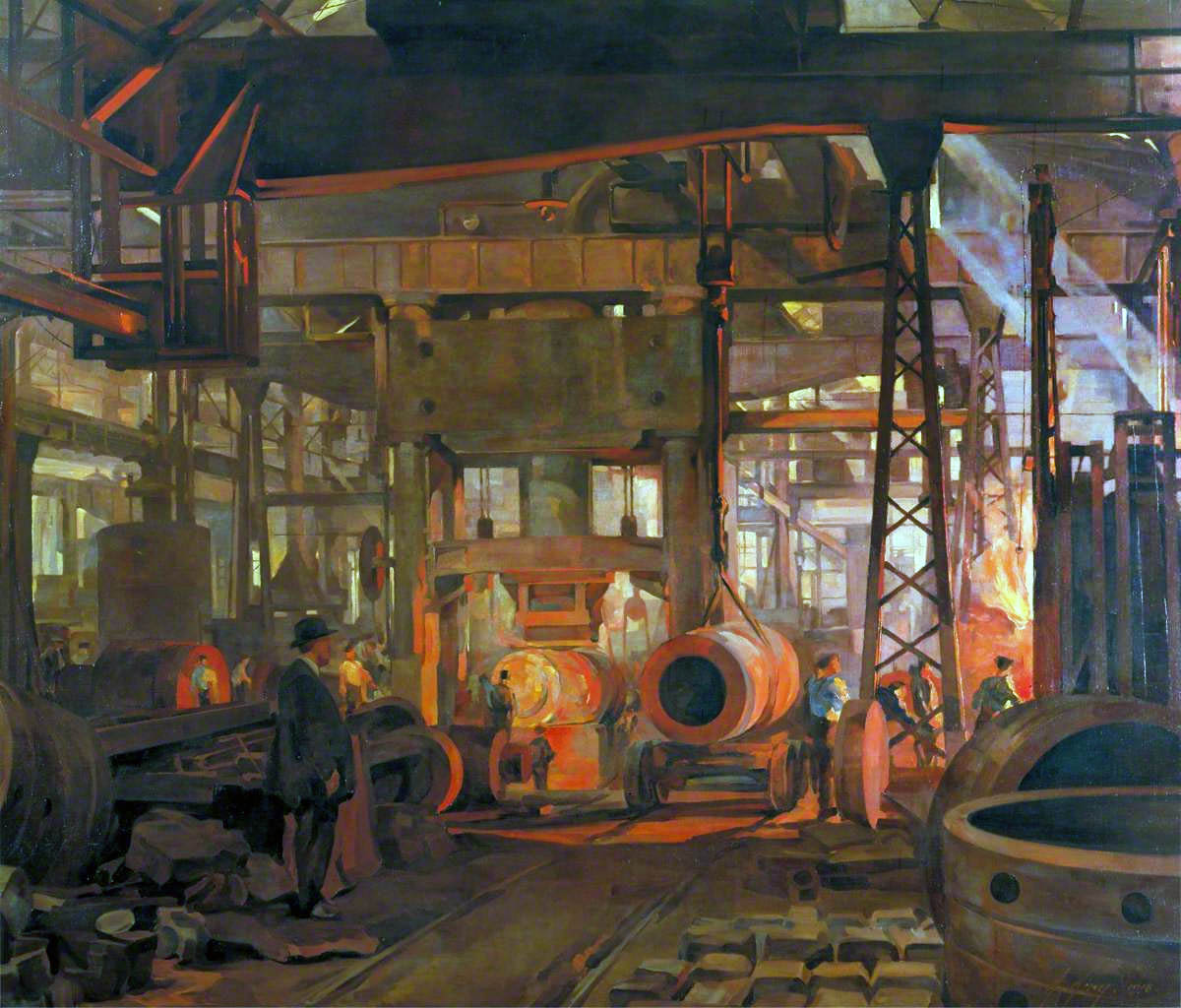
 

Anna Airy (English, 1882-1964) 'Study for 'The L Press: Forging the Jacket of an 18-inch Gun, Armstrong-Whitworth Works, Openshaw'' 1918


Anna Airy (English, 1882-1964)
Study for ‘The L Press: Forging the Jacket of an 18-inch Gun, Armstrong-Whitworth Works, Openshaw’
1918
Oil on canvas
Private collection
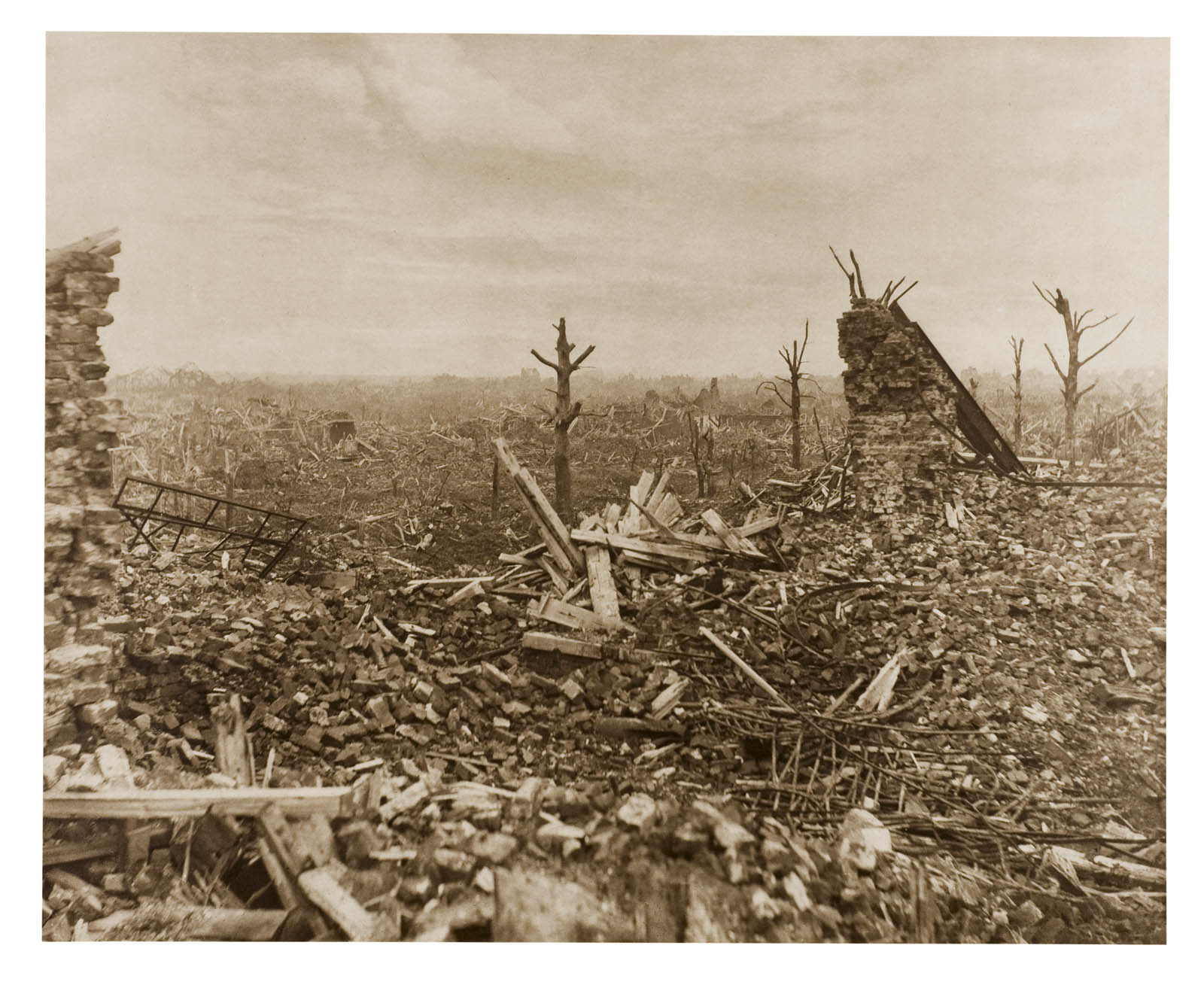
 

Olive Edis (British, 1876-1955) 'War' 1919


Olive Edis (British, 1876-1955)
War
1919
Carbon print on paper
Wilson Centre for Photography


Edis was Britain’s first woman war photographer. She was commissioned by the Imperial War Museum to photograph the activities of servicewomen on duty in France and Flanders. This bleak, blasted landscape captures the impact of the First World War.

Text from the exhibition large print guide


Installation view of the exhibition 'Now You See Us Women Artists in Britain 1520-1920' at Tate Britain


Installation view of the exhibition Now You See Us Women Artists in Britain 1520-1920 at Tate Britain showing Dame Ethel Walker’s Decoration The Excursion of Nausicaa 1920 (below)
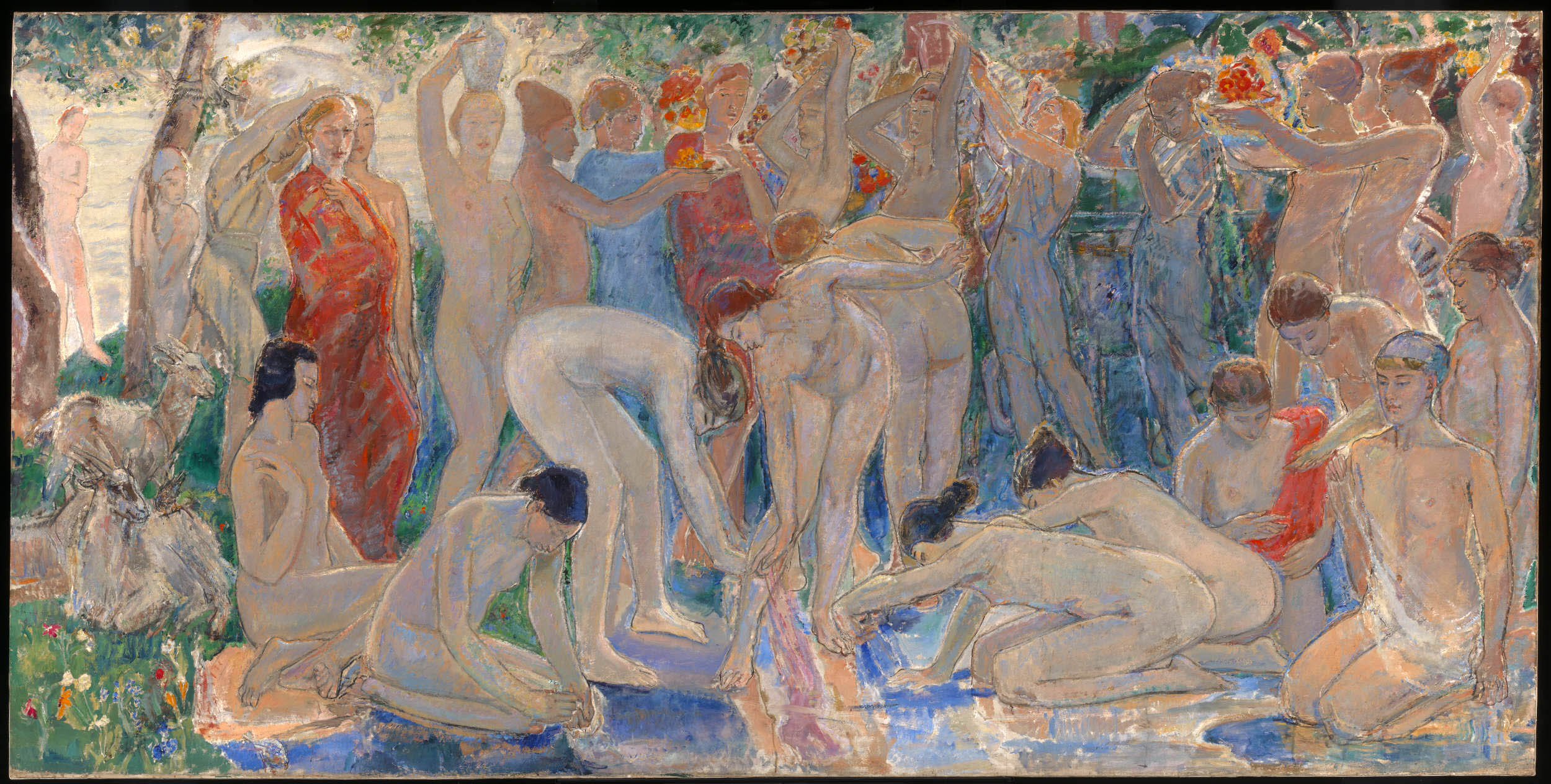
 

Dame Ethel Walker DBE ARA (Scottish, 1861-1951) 'Decoration: The Excursion of Nausicaa' 1920


Dame Ethel Walker DBE ARA (Scottish, 1861-1951)
Decoration: The Excursion of Nausicaa
1920
Oil on canvas
1835 × 3670 mm
Tate
Purchased 1924
Photo: Tate


Writing to J. B. Manson (Monday, 2 June, no year given, but almost certainly 1924), the artist described her work thus:’… Nausicaa early one lovely summer’s morning goes to her father and mother – the King and Queen – to ask permission to have a waggon and mules given to her to take her and her attendants and to fill it with the clothes of the palace that require washing, also with dainties and wine and good food for a forthcoming picnic – and go down to the river adjoining the sea to wash them – which he gives her. On arriving at the river they unharness the mules and are unpacking or unloading the waggons of the clothes and the food for the picnic, and are beginning to wash them in the river. A little wood divides the sea from the river where the goat girl – kneeling by the tree near her goats – hears the strange voices that are sounding in her usually silent little wood. To show it is the sea a girl, nude, has stepped up on to the bank after bathing….’ The story is based on Book VI of the Odyssey: ‘… they spread/The raiment orderly along the beach/Where dashing tides …/… leaving the garments, stretch’d/ In noon-day fervour of the sun, to dry.’

Text from the Tate website


In her lifetime Scottish artist Ethel Walker was celebrated for her trailblazing paintings of the female form. A teacher before she painted fulltime, she developed her own unique style – large, mural-like paintings, which she called her ‘decorations.’ Walker often painted male and female nudes confidently placing female sensuality at the centre of her work, as seen in Decoration: The Excursion of Nausicaa (1920). Its dream-like vision of a feminist utopia was ahead of its time.

Working steadily for decades, she achieved many professional milestones, exhibiting around the world and representing Britain at the Venice Biennale four times. In 1943, Walker was made a Dame of the British Empire, and after her death The Times called her ‘the most important woman artist of her time.’ Despite this, it is only now that her artistic legacy is finally being recognised.

Text from the Tate website


‘There is no such thing as a woman artist. There are only two kinds of artist – bad and good.’

– Ethel Walker


Tate Britain
Millbank, London SW1P 4RG
United Kingdom
Phone: +44 20 7887 8888

Opening hours:
10.00am – 18.00pm daily
Tate Britain website

LIKE ART BLART ON FACEBOOK

Back to top

Exhibition: ‘Berlin in the revolution 1918/19’ at the Museum für Fotografie, Berlin

Exhibition dates: 9th November, 2018 – 3rd March, 2019


Otto Haeckel (German, 1872-1945) and Georg Haeckel (German, 1873-1942) 'Soldiers with weapons Unter den Linden, corner Charlottenstraße' November 1918 from the exhibition 'Berlin in the revolution 1918/19' at the Museum für Fotografie, Berlin, Nov 2018 - March 2019
 

Otto Haeckel (German, 1872-1945) and Georg Haeckel (German, 1873-1942)
Soldiers with weapons Unter den Linden, corner Charlottenstraße
November 1918
Gelatin silver print
© Staatliche Museen zu Berlin, Art Library – Photothek Willy Römer / Gebrüder Haeckel


Today, revolution is in the air around the world, just like it was in 1968 (a posting on this year to follow soon) and in 1918. I hope this wonderful posting of photographs, posters, films, murders, bombings, funerals, detailed close ups of the barricades and the people manning them gives you some of the flavour of the times. This was the order of the day in Berlin in 1918/19. Revolution.

What we must not forget is out of this revolution, out of this ferment of creativity, uncertainty, “liberal” democracy and militaristic society emerged the seeds of its downfall: the beginnings of the National Socialist Party (the Nazis).

“In July 1919 Hitler was appointed Verbindungsmann (intelligence agent) of an Aufklärungskommando (reconnaissance unit) of the Reichswehr, assigned to influence other soldiers and to infiltrate the German Workers’ Party (DAP). At a DAP meeting on 12 September 1919, Party Chairman Anton Drexler was impressed with Hitler’s oratorical skills. He gave him a copy of his pamphlet My Political Awakening, which contained anti-Semitic, nationalist, anti-capitalist, and anti-Marxist ideas. On the orders of his army superiors, Hitler applied to join the party, and within a week was accepted as party member 555 (the party began counting membership at 500 to give the impression they were a much larger party). …

At the DAP, Hitler met Dietrich Eckart, one of the party’s founders and a member of the occult Thule Society. Eckart became Hitler’s mentor, exchanging ideas with him and introducing him to a wide range of Munich society. To increase its appeal, the DAP changed its name to the Nationalsozialistische Deutsche Arbeiterpartei (National Socialist German Workers Party; NSDAP). Hitler designed the party’s banner of a swastika in a white circle on a red background.” (Text from the Wikipedia website)

Rising to prominence through his demagogic beer hall speeches on populist themes, Hitler would attempt a coup known as the “Beer Hall Putsch” in 1923, a stepping stone on his rise to becoming the dictator of Nazi Germany.

The flowering of German Expressionism (modern art labelled by Hitler Entartete Kunst or “Degenerate Art” in the 1920s) and a society which proposed the first advocacy for homosexual and transgender rights, were both positives of the interwar period. A prominent advocate for sexual minorities was the German sexologist Magnus Hirschfeld.

“In 1920, Hirschfeld was very badly beaten up by a group of völkisch activists who attacked him on the street; he was initially declared dead when the police arrived. In 1921, Hirschfeld organised the First Congress for Sexual Reform, which led to the formation of the World League for Sexual Reform. Congresses were held in Copenhagen (1928), London (1929), Vienna (1930), and Brno (1932)… Hirschfeld co-wrote and acted in the 1919 film Anders als die Andern (“Different From the Others”) [see below], in which Conrad Veidt played one of the first homosexual characters ever written for cinema. The film had a specific gay rights law reform agenda; after Veidt’s character is blackmailed by a male prostitute, he eventually comes out rather than continuing to make the blackmail payments. His career is destroyed and he is driven to suicide.” (Text from the Wikipedia website)

Of course these small, hard won freedoms, this cabaret of life, and the more liberal atmosphere of the newly founded Weimar Republic were all swept away by the Nazis in the 1930s.

How quickly it can turn. Today, as then, we must be ever vigilant to guard our freedom against the power of conservative forces that seek to do us harm. Brothers, never again!

Dr Marcus Bunyan


Many thankx to the Museum of Photography, Berlin for allowing me to publish the photographs in the posting. All the photographs have been digitally cleaned. Please click on the photographs for a larger version of the image.


In November 1918, exactly 100 years ago, the old regime of Kaiser Wilhelm II was swept away by a revolution. It ended the First World War and led to the establishment of democracy in Germany. The Weimar Republic was born out of the struggle for a new social order and political system. The upheavals that occurred in 1918/19 were captured on camera, sometimes by renowned press photographers such as Willy Römer; their works are crucial for historians today. For the first time ever, this book investigates the role of film and entertainment in the Weimar Republic and includes it in the historical analysis. What do the street fights in the first months following the First World War have in common with the people’s recreational pleasures? How did photographers record the political turmoil, the demonstrations, strikes, shootings, and fights for control of the palace and the newspaper district? And, at the same time, what distractions were offered in Berlin’s cinemas and revue shows? How did the entertainment industry react to the revolution? Examining photos, films, and poster art, this book presents a dense and previously unseen portrait of German history.

Text from the catalogue


“So ends this first day of the revolution, which in just a few hours has witnessed the downfall of the House of Hohenzollern, the dissolution of the German army, and the demise of the old German social order. One of the most memorable and dreadful days in German history.”


Harry Graf Kessler, diary entry from November 9, 1918


“The Christmas fair carries on blithely throughout all of these bloody events. Hurdy-gurdies play on Friedrichstraße, street vendors peddle indoor fireworks, gingerbread, and silver tinsel, the jewellery shops on Unter den Linden remain unheedingly open, their brightly lit display windows glittering. On Leipziger Strasse, the usual Christmas crowds throng toward Wertheim, Kayser, and the other big stores. It is safe to say that in thousands of homes, Christmas trees are lit and children are playing around them with presents from Daddy, Mummy and dear Aunty. The dead lie in the royal stables, and on Holy Night, the wounds freshly inflicted on the palace and on Germany gape wide.”


Harry Graf Kessler, diary entry, December 24, 1918


“I cannot get out of head the execution of 24 sailors on Französische Strasse, where during all of these days, there has been no trouble. It is one of the most abominable civil war crimes I know of in history. This evening I tried to watch Reinhardt’s production of ‘As You Like It’, but was not in the mood. I cannot stop thinking about these murders and shootings, which are the order of the day in Berlin.”


Harry Graf Kessler: diary entry, March 14, 1919


Otto Haeckel (German, 1872-1945) and Georg Haeckel (German, 1873-1942) 'Soldiers with weapons Unter den Linden, corner Charlottenstraße' November 1918 (detail)


Otto Haeckel (German, 1872-1945) and Georg Haeckel (German, 1873-1942)
Soldiers with weapons, Unter den Linden, corner Charlottenstraße (detail)
November 1918
Gelatin silver print
© Staatliche Museen zu Berlin, Art Library – Photothek Willy Römer / Gebrüder Haeckel


Willy Römer (German, 1887-1979) '"The Guards Ranger Battalion marching past General Lequis"; on the left, next to the Brandenburg Gate, the photographer Walter Gircke with camera' 10/11 December 1918 from the exhibition 'Berlin in the revolution 1918/19' at the Museum für Fotografie, Berlin, Nov 2018 - March 2019


Willy Römer (German, 1887-1979)
“The Guards Ranger Battalion marching past General Lequis”; on the left, next to the Brandenburg Gate, the photographer Walter Gircke with camera
10/11 December 1918, old contact print
Gelatin silver print
Kunstbibliothek
© Staatliche Museen zu Berlin, Art Library – Photothek Willy Römer / Willy Römer


Willy Römer (German, 1887-1979) 'Street battles on Christmas Eve in Berlin. Naval ratings in front of the ruined Palace entrance after bombardment by artillery' 24.12.1918


Willy Römer (German, 1887-1979)
Street battles on Christmas Eve in Berlin. Naval ratings in front of the ruined Palace entrance after bombardment by artillery
24.12.1918, old contact print
Gelatin silver print
Kunstbibliothek
© Staatliche Museen zu Berlin, Art Library – Photothek Willy Römer / Willy Römer


Willy Römer (German, 1887-1979) 'Street battles on Christmas Eve in Berlin. Naval ratings in front of the ruined Palace entrance after bombardment by artillery' 24.12.1918 (detail)


Willy Römer (German, 1887-1979)
Street battles on Christmas Eve in Berlin. Naval ratings in front of the ruined Palace entrance after bombardment by artillery (detail)
24.12.1918, old contact print
Gelatin silver print
Kunstbibliothek
© Staatliche Museen zu Berlin, Art Library – Photothek Willy Römer / Willy Römer


Willy Römer (German, 1887-1979) 'Street battles on Christmas Eve in Berlin. Naval ratings in front of the ruined Palace entrance after bombardment by artillery' 24.12.1918 (detail)


Willy Römer (German, 1887-1979)
Street battles on Christmas Eve in Berlin. Naval ratings in front of the ruined Palace entrance after bombardment by artillery (detail)
24.12.1918, old contact print
Gelatin silver print
Kunstbibliothek
© Staatliche Museen zu Berlin, Art Library – Photothek Willy Römer / Willy Römer


The revolution in winter and spring 1918/19 was decided in the streets of the imperial capital, Berlin. Berliners celebrated the abdication of the German Emperor with demonstrations in front of the Reichstag and the palace on November 9th, 1918, in the newspaper quarter in January 1919 rolls of printing paper were used by the Spartacists to erect barricades against approaching government troops, after fighting had ceased, a large funeral procession crossed Frankfurter Allee to the cemetery in Friedrichsfelde. Press photographers were omnipresent with their big plate cameras, taking shots of orators in the crowd, soldiers behind machine-guns, vehicles carrying party posters in the National Assembly election campaign, and destroyed buildings and ravaged squares. At the same time, everyday life in the city went on. People went to the numerous cinemas with their expanding repertoire of films, enjoyed themselves at revues and cabarets, and danced the two-step and the foxtrot. The exhibition in the Museum für Fotografie shows both a photographic visual history of the revolution in Berlin and a panorama of the entertainment culture of those months.

The brothers Otto and Georg Haeckel were the most important press photographers during the first days of the revolution. As experienced war reporters, they reacted quickly to cover the spontaneous rallies on Unter den Linden and in front of the palace. The photographers worked without assignment and offered their images to publishers like Mosse or Ullstein. There are few visual records of the fighting itself. Rather, photographers took advantage of breaks in the fighting to recreate scenes on the barricades or with soldiers with readied weapons. The largest group of photos of the revolution of which the original contact prints survive is by Willy Römer. One of his photographs was even taken immediately before his own arrest by a troop of Spartacists.

Weekly newsreels in cinemas across Germany reported on the rallies and demonstrations in Berlin, showed film portraits of the ministers of the new imperial government, and confirmed the restoration of order by showing scenes from everyday life in the streets of the capital. At the same time, they solicited votes for the National Assembly. Given lengthy production times, the feature films of winter 1918/19 do not yet reflect the revolution in any way. But the suspension of censorship enabled the production of new, more daring films, which, for example, opposed the criminal persecution of homosexuals.

As a reaction to the end of the war and without as yet reckoning with the dangers of the revolution and its fighting, an unprecedented desire for pleasure-seeking reigned in Berlin during the winter and spring of 1918/19. Besides opera houses and straight theatres, Berliners frequented the popular operetta and revue theatres, as well as cinemas; they also went to ballrooms and drinking holes to dance. Some revues reacted to current issues like the housing shortage and the strikes. The poverty of war invalids was also a subject of popular music. The song ‘Bein ist Trumpf’ from 1919 alludes to the fate of four men maimed in the war: the dance with a wooden leg or prosthesis amid the workings of a world-apparatus that turns and turns without end.

Anonymous text from the Museum of Photography, Berlin website [Online] Cited 08/02/2019


Josef Steiner (German, 1899-1977) 'Senta Söneland in her sketch "Pst! Pst!"'


Josef Steiner (German, 1899-1977)
Senta Söneland in her sketch “Pst! Pst!”
Nd
Poster for the performance in the Metropolitan Cabaret
Kunstbibliothek
© Staatliche Museen zu Berlin, Kunstbibliothek


Willy Römer (German, 1887-1979) 'Demonstration of the soldiers for immediate demobilisation: Karl Liebknecht speaks in front of the Ministry of the Interior on Unter den Linden' 4.1.1919


Willy Römer (German, 1887-1979)
Demonstration of the soldiers for immediate demobilisation: Karl Liebknecht speaks in front of the Ministry of the Interior on Unter den Linden
4.1.1919
Gelatin silver print
© Staatliche Museen zu Berlin, Art Library – Photothek Willy Römer / Willy Römer


Karl Liebknecht

Karl Paul August Friedrich Liebknecht (German 13 August 1871 – 15 January 1919) was a German socialist, originally in the Social Democrat (SPD) and later a co-founder with Rosa Luxemburg of the Spartacist League and the Communist Party of Germany which split way from the SPD. He is best known for his opposition to World War I in the Reichstag and his role in the Spartacist uprising of 1919. The uprising was crushed by the Social Democrat government and the Freikorps (paramilitary units formed of World War I veterans). Liebknecht and Luxemburg were executed.

After their deaths, Karl Liebknecht and Rosa Luxemburg became martyrs for Socialists. According to the Federal Office for the Protection of the Constitution, commemoration of Liebknecht and Luxemburg continues to play an important role among the German left, including Die Linke (The Left). …

Revolution and death

Liebknecht was released again in October 1918, when Prince Maximilian of Baden granted an amnesty to all political prisoners. Upon his return to Berlin on 23 October he was escorted to the Soviet embassy by a crowd of workers. Following the outbreak of the German Revolution, Liebknecht carried on his activities in the Spartacist League. He resumed leadership of the group together with Luxemburg and published its party organ, Die Rote Fahne (The Red Flag).

On 9 November, Liebknecht declared the formation of a Freie Sozialistische Republik (Free Socialist Republic) from a balcony of the Berliner Stadtschloss, two hours after Philipp Scheidemann’s declaration of a German Republic from a balcony of the Reichstag. On 31 December 1918/1 January 1919, Liebknecht was involved in the founding of the Communist Party of Germany (KPD). Together with Luxemburg, Jogiches and Zetkin, Liebknecht was also instrumental in the January 1919 Spartacist uprising in Berlin. Initially he and Luxemburg opposed the revolt, but they joined it after it had begun. The uprising was brutally opposed by the new German government under Friedrich Ebert with the help of the remnants of the Imperial German Army and militias called the Freikorps. By 13 January, the uprising had been extinguished. Liebknecht and Luxemburg were captured by Freikorps troops on 15 January 1919 and brought to the Eden Hotel in Berlin, where they were tortured and interrogated for several hours. Following this, Luxemburg was beaten with rifle butts and afterwards shot, and her corpse thrown into the Landwehr Canal, while Liebknecht was forced to step out of the car in which he was being transported, and he was then shot in the back. Official declarations said he had been shot in an attempt to escape. Although the circumstances were disputed by the perpetrators at the time, the Freikorps commander, Captain Waldemar Pabst, later claimed, “I had them executed”.

Text from the Wikipedia website


Willy Römer (German, 1887-1979) 'Election propaganda with car, flags and posters "Vote List 4"' [Election propaganda automobile of the German National Party on the streets of Berlin] January 1919


Willy Römer (German, 1887-1979)
Election propaganda with car, flags [red] and posters “Vote List 4” [Election propaganda automobile of the German National Party on the streets of Berlin]
January 1919, later contact print
Gelatin silver print
Kunstbibliothek
© Staatliche Museen zu Berlin, Art Library Willy Römer / Willy Römer


Paul Telemann (German, 1883-1968) 'Mariposa. Fox-trot (Fuchs Dance)' 1919


Paul Telemann (German, 1883-1968)
Mariposa. Fox-trot (Fuchs Dance)
Music by Ernest Tompa
Berlin 1919
Sheet music, private collection
© Drei Masken-Verlag, Berlin-Munich


Fox Trot

“The new flu is here – and it is not Spanish, but English in origin, and it is known as “the new popular dance” […]. In Berlin, “Fox Trot steps” are applied to any old melody […]. Outside, they are banging away at the Palace […]. Machine-gun fire rattles around the advertising pillars, whose colourful posters bear invitations to Fox Trot teas.”

F.W. Koebner, in: Der Roland von Berlin, 1919

Film

In the years 1918 and 1919, the German film industry experienced pronounced growth tendencies. Among the most successful production firms of the era alongside Universum Film AG (Ufa), established in 1917 as a propaganda establishment by the Supreme Army Command, were the Projektions-AG Union (PAGU), the Decla-Film-Gesellschaft-Holz & Co. (later Decla-Bioskop), and the Deutsche Lichtspiel-Gesellschaft (Deulig, DLG). Alongside new, advantageous financing possibilities, it was the announcement of the abolition of film censorship in November of 1918 that inaugurated rising production figures. At the same time, lowered admission prices allowed cinema to become a leisure activity for broad social strata.

More than in any other German city, these developments were observable in Berlin: the greater part of the film industry was headquartered here, and accordingly, this continuously growing metropolis, with approximately 200 cinemas, became a centre of attraction for representatives of all cinematic branches.

Immediately after November 9, 1918, the revolution played virtually no role in the city’s multifarious cinematic program – primarily responsible for this was production scheduling for most films, which usually entailed intervals of many months. In the course of 1919, the film industry responded emphatically to current political events, releasing a series of feature films that either thematised the revolutionary goings-on explicitly or at least alluded to them.

Newsreel 1918/19

With their compilations of up-to-date documentary film footage, the Wochenschauen (weekly newsreels) were able to convey impressions of revolutionary events in Berlin to a contemporary public more quickly than other film genres. Launched during World War I, this format – which was screened in cinemas before main features – soon became the most important medium of information for large segments of the population.

Only a portion of the newsreel editions produced by German firms and pertaining to the revolutionary events of 1918-19 in Berlin have survived, and in many instances only as fragments. Among them are numbered editions of the Messter-Woche, named for their initiator, the film pioneer Oskar Messter. With the aid of these 5-15-minute short films, produced under time pressure and with minimal technical expenditures or design features, it becomes possible to reconstruct central stages of the revolution – and the perspectives of contemporary film journalists of these events.

Joe May

Among the most productive directors in Berlin at the time was the Austrian Joe May, who – like the majority of participants in Berlin’s film world – observed the revolutionary events in the city only from a distance. In his monumental films, his wife Mia May played the main role. Veritas vincit, premiered in April of 1919, is an elaborately outfitted historical film whose episodic plot revolves around the transmigration of souls. During 1919, Joe May intensified his cinematic approach, oriented toward spectacular entertainments, with the production of an eight-part adventure film entitled The Mistress of the World, outfitted with an exotic flair.

Wall texts


Willy Römer (German, 1887-1979) 'Spartacists behind barricades made from rolled newspaper in front of the Mosse building (Berliner Tageblatt) on Schützenstraße at the corner of Jerusalemerstraße' 11.1.1919


Willy Römer (German, 1887-1979)
Spartacists behind barricades made from rolled newspaper in front of the Mosse building (Berliner Tageblatt) on Schützenstraße at the corner of Jerusalemerstraße
11.1.1919, later contact print
Gelatin silver print
© Staatliche Museen zu Berlin, Art Library – Photothek Willy Römer / Willy Römer


The Spartacists

A member of a group of German radical socialists formed in 1916 and in 1919 becoming the German Communist Party, led by Karl Liebknecht and Rosa Luxemburg. In December 1918, some of the Spartacists – including Luxemburg and Liebknecht – founded the German Communist Party. Luxemburg had written numerous pamphlets about Lenin and how his leadership of theRussian Revolution would be of such great value to Russia.

While her political philosophy may well have merited such pamphlets, many Germans (and Europeans in general) were terrified of the ‘Red Plague’ in Russia and the adoption of the name ‘communist’ was fraught with danger. Many soldiers had returned from the war fronts massively disillusioned with the German government and hugely suspicious of anything that smacked of left-wing political beliefs. Many who had quit the German Army joined the right wing Free Corps (Freikorps). These would have been battle-hardened men who had been subjected to military discipline.

In January 1919, the Communists rose up in revolt in Berlin. In every sense it was a futile gesture against the government. Ebert withdrew his government to the safety of Weimar and allowed the Freikorps and what remained of the regular army to bring peace and stability back to Berlin once again. No mercy was shown to the Spartacists / Communists whose leaders were murdered after being arrested. The Freikorps was better organised and armed – they also had a military background. The majority of the Spartacists were civilians. No-one doubted who would win.

C. N. Trueman. “The Spartacists,” on The History Learning Site, 22 May 2015 [Online] Cited 09/02/2019


Spartacist uprising

The Spartacist uprising (German: Spartakusaufstand), also known as the January uprising (Januaraufstand), was a general strike (and the armed battles accompanying it) in Germany from 5 to 12 January 1919. Germany was in the middle of a post-war revolution, and two of the perceived paths forward were either social democracy or a council republic similar to the one which had been established by the Bolsheviks in Russia. The uprising was primarily a power struggle between the moderate Social Democratic Party of Germany (SPD) led by Friedrich Ebert, and the radical communists of the Communist Party of Germany (KPD), led by Karl Liebknecht and Rosa Luxemburg, who had previously founded and led the Spartacist League (Spartakusbund). This power struggle was the result of the abdication of Kaiser Wilhelm II and the resignation of Chancellor Max von Baden, who had passed power to Ebert, as the leader of the largest party in the German parliament. Similar uprisings occurred and were suppressed in Bremen, the Ruhr, Rhineland, Saxony, Hamburg, Thuringia and Bavaria, and another round of even bloodier street battles occurred in Berlin in March, which led to popular disillusionment with the Weimar Government.

Text from the Wikipedia website


Willy Römer (German, 1887-1979) 'Machine-gun post behind barricades consisting of rolled newspaper in front of the Mosse building on Schützenstraße' 11.1.1919


Willy Römer (German, 1887-1979)
Machine-gun post behind barricades consisting of rolled newspaper in front of the Mosse building on Schützenstraße
11.1.1919, old contact print
Gelatin silver print
13 x 18cm
Ullstein picture
© Staatliche Museen zu Berlin, Art Library Willy Römer / Willy Römer


Willy Römer (German, 1887-1979) 'Machine-gun post behind barricades consisting of rolled newspaper in front of the Mosse building on Schützenstraße' 11.1.1919 (detail)


Willy Römer (German, 1887-1979)
Machine-gun post behind barricades consisting of rolled newspaper in front of the Mosse building on Schützenstraße (detail)
11.1.1919, old contact print
Gelatin silver print
13 x 18cm
Ullstein picture
© Staatliche Museen zu Berlin, Art Library Willy Römer / Willy Römer


Wolfgang Ortmann (German, 1885-1967) 'Song from the Strike from Halloh! Halloh!' Berlin 1919


Wolfgang Ortmann (German, 1885-1967)
Song from the Strike from Halloh! Halloh!
Berlin 1919
Cabaret pieces by Fritz Grünbaum. Music by Rudolf Nelson
Sheet Music with Portrait of Käthe
Erlholz, Staatsbibliothek zu Berlin, Music Department
© Wolfgang Ortmann / Kollo-Verlag GmbH, Berlin


With more than 300 photographs, postcards, posters, sheet music, newspapers and magazines, film clips, newsreels and audio stations, the exhibition at the Museum of Photography shows a photographic picture of the 1918-19 revolution in Berlin as a panorama of the entertainment culture of these troubled months.

The revolution in the winter and spring of 1918-1919 and thus the struggle for the construction of the first German republic decided in the streets of the capital Berlin. Berliners celebrated the abdication of the Emperor on November 9, 2018 with demonstrations in front of the Reichstag and the castle. In January 1919, in the newspaper district, barricades of the Spartacists were erected from printing paper rolls against the advancing government troops. After the end of the fighting, the great funeral procession moved to the cemetery in Friedrichsfelde via Frankfurter Allee.

There were always press photographers recording the speakers in the crowd, the soldiers behind the machine guns, the parties’ party wagons for the National Assembly elections and the ruined houses and devastated squares. But at the same time, everyday life in the city continued, people visited the many cinemas with their expanding film offering, amused themselves in revues and cabarets, danced One-Step, Two-Step and Foxtrot.

The photographers did not provide an objective picture of the story. They could not work all focal points, so their cameras judged the events according to subjective criteria and they determined with the image what should be handed down. And yet their recordings bring the events back to life. For example, the photographs help with the reconstruction of dramatic episodes such as the Christmas battles for the castle and the stables between the Volksmarine Division and government troops.

They show the huge number of mourners around Karl Liebknecht and Rosa Luxemburg and exemplify the involvement of actress Senta Söneland as election campaign speaker for the National Assembly. The press photos also allow critical inquiries into the history of the revolution: the clothes of the demonstrators and the fighters suggest that by no means only workers and soldiers, but also employees and commoners engaged politically.

In the first days of the revolution, the brothers Otto and Georg Haeckel were the most important press photographers. As experienced war reporters, they were quick to accompany the spontaneous rallies at Unter den Linden and in front of the castle. They worked without a commission and offered publishers such as Mosse or Ullstein their photographs as contact prints in the format 13 x 18 cm for the weekly picture supplements of the daily newspapers (eg for the “Zeitbilder” of the “Vossische Zeitung”) or magazines (eg the “Berliner Illustrirte Newspaper”).

There are few photographs as evidence of the fighting itself. Rather, the photographers used the breaks in fighting to recreate scenes of soldiers with shot-guns or at the barricades. From Willy Römer most of the images of the revolution in original contact prints are handed down. One of his photographs was even made immediately before his own arrest by a squad of Spartacists. Romans had a keen eye for the special situations of everyday life, when he photographed the unusual means of transportation of the Berliners during the general strike in January.

In the cinemas, the newsreels throughout Germany reported on the rallies and demonstrations in Berlin, produced film portraits of the ministers of the new Reich government and, as proof of the restored order, showed everyday scenes from the streets of the capital. At the same time, they campaigned for the National Assembly. The humorous short film “Anna Müller-Lincke kandidiert” (“Anna Müller-Lincke is a candidate”) presented the colourful range of candidates and challenged the population to make their own electoral decision. Due to the longer production processes, the feature films offered no reflection on the revolution in the winter of 1918-1919. However, the lifting of censorship enabled the production of new, daring films that were directed against the criminal prosecution of homosexuals. Immediately after the revolutionary event in Berlin, Richard Oswald‘s work “Anders als die Andern” (“Different from the Others”) began, the first film explicitly referring to Paragraph 175.

One of the most significant feature films on the revolution and at the same time a representative example of the socio-democratic values supported by the film industry is “Die entfesselte Menschheit” (“Unleashed humanity”) by Joseph Delmont, which was released in cinemas in 1920. Willy Römer was a press photographer during filming of barricades in Kreuzberg in autumn. His photographs are more dramatic than many photographs of the revolution the year before.

In response to the end of the war and without first taking into account the dangers of the revolutionary struggles, an unprecedented desire for pleasure prevailed in Berlin during the winter and spring of 1918-1919. In addition to opera houses and straight theatres, the Berliners frequented the more popular operetta and revue theatres, the cinemas, as well as ballrooms and Kaschemmen (bars) to dance there. Operettas like “Schwarzwaldmädel” (“Black forest girl”) in the Komische Oper (Comic Opera) were supposed to transport the audience into an ideal world and distract them from the everyday life of war and revolution.

But there were also revues that responded daily to topics such as the housing problem and the strikes like “Halloh! Halloh!” by Rudolf Nelson (music) and Fritz Grünbaum (text). The misery of war invalids was also a subject of popular music. In the song “Bein ist Trumpf” from the year 1919, the fate of many war-injured men is addressed: the dance with the wooden leg or the prosthesis in the transmission of an ever-rotating world structure. At the same time, the footage of the press photographers showed them with crutches and tied to wheelchairs and their protests against the insufficient supply.

The exhibition in the Museum of Photography is essentially based on the archive of Willy Römers, which is preserved in the Photography Collection of the Art Library – National Museums in Berlin. The comprehensive holdings of the bpk-Bildagentur and ullstein bild offer valuable additions. For the field of film and entertainment culture, exhibits from the graphic design collection of the Art Library have be used. Important loans come from the Music Department of the National Museums in Berlin, from the Deutsche Kinemathek Foundation, the Falkensee Museum and Gallery, and from private collections.

Press release from the Museum of Photography, Berlin translated from the German by Google Translate Cited 08/02/2019


With more than 300 photographs, postcards, posters, sheet music, newspapers and magazines, film clips, newsreels and audio stations, the exhibition at Museum für Fotografie shows both a photographic history of the 1918-19 revolution in Berlin as a panorama of the entertainment culture of these troubled months.

The revolution in winter and spring 1918/19 was decided in the streets of the imperial capital, Berlin. Berliners celebrated the abdication of the German Emperor with demonstrations in front of the Reichstag and the palace on November 9th, 1918, in the newspaper quarter in January 1919 rolls of printing paper were used by the Spartacists to erect barricades against approaching government troops, after fighting had ceased, a large funeral procession crossed Frankfurter Allee to the cemetery in Friedrichsfelde. Press photographers were omnipresent with their big plate cameras, taking shots of orators in the crowd, soldiers behind machine-guns, vehicles carrying party posters in the National Assembly election campaign, and destroyed buildings and ravaged squares. At the same time, everyday life in the city went on. People went to the numerous cinemas with their expanding repertoire of films, enjoyed themselves at revues and cabarets, and danced the two-step and the foxtrot. The exhibition in the Museum für Fotografie shows both a photographic visual history of the revolution in Berlin and a panorama of the entertainment culture of those months.

The brothers Otto and Georg Haeckel were the most important press photographers during the first days of the revolution. As experienced war reporters, they reacted quickly to cover the spontaneous rallies on Unter den Linden and in front of the palace. The photographers worked without assignment and offered their images to publishers like Mosse or Ullstein. There are few visual records of the fighting itself. Rather, photographers took advantage of breaks in the fighting to recreate scenes on the barricades or with soldiers with readied weapons. The largest group of photos of the revolution of which the original contact prints survive is by Willy Römer. One of his photographs was even taken immediately before his own arrest by a troop of Spartacists.

Weekly newsreels in cinemas across Germany reported on the rallies and demonstrations in Berlin, showed film portraits of the ministers of the new imperial government, and confirmed the restoration of order by showing scenes from everyday life in the streets of the capital. At the same time, they solicited votes for the National Assembly. Given lengthy production times, the feature films of winter 1918/19 do not yet reflect the revolution in any way. But the suspension of censorship enabled the production of new, more daring films, which, for example, opposed the criminal persecution of homosexuals.

As a reaction to the end of the war and without as yet reckoning with the dangers of the revolution and its fighting, an unprecedented desire for pleasure-seeking reigned in Berlin during the winter and spring of 1918/19. Besides opera houses and straight theatres, Berliners frequent-ed the popular operetta and revue theatres, as well as cinemas; they also went to ballrooms and drinking holes to dance. Some revues reacted to current issues like the housing shortage and the strikes. The poverty of war invalids was also a subject of popular music. The song ‘Bein ist Trumpf’ from 1919 alludes to the fate of four men maimed in the war: the dance with a wooden leg or prosthesis amid the workings of a world-apparatus that turns and turns without end.

Press release from the Museum of Photography, Berlin in English [Online] Cited 08/02/2019


Walter Gircke (German, 1885-1974) 'Elections to the National Assembly in Berlin. Agitation by the actress Senta Söneland in front of the Zoologischer Garten station' [National Assembly in Berlin: agitation by the actress Senta Söneland] January 1919


Walter Gircke (German, 1885-1974)
Elections to the National Assembly in Berlin. Agitation by the actress Senta Söneland in front of the Zoologischer Garten station [National Assembly in Berlin: agitation by the actress Senta Söneland]
January 1919
Postcard
© bpk / Walter Gircke


Senta Söneland

Senta Söneland (née Werder) was born in 1882 the daughter of a Prussian officer. She attended a higher girls’ school and then a teacher seminar, but also took additional training courses at the Berlin Schiller Theater.

In 1910 she received her first engagement at the Hoftheater Meiningen. In 1912 she returned to Berlin and in the following years appeared on various stages such as the Komödienhaus, the Theater am Kurfürstendamm and the Metropol-Theater. As at the beginning of the war in 1914, when theatre life was severely impaired, she sought like many other actors of the time their chance in film.

Söneland was known primarily as a comedian in film comedies. After a long absence from the screen in the 1920s, she had many performances as a supporting actress at the beginning of the sound film era after 1930. She also participated in entertainment evenings on the radio. So she was heard in the program Kunterbunt with the Berlin Radio Chapel.

The artist was politically involved in women’s suffrage, and her fiery speech on 19 January 1919 at the Berlin Zoo Station on the occasion of the election to the National Assembly (see photograph above) is remembered above all.

After the sudden death of her husband, Söneland said goodbye in 1934 and took her own life a little later. She was buried in the cemetery Wilmersdorf in Berlin.

Text from the Wikipedia website translated from the German


Unknown photographer. 'Hoardings with SPD election posters' before 19.1.1919


Unknown photographer
Hoardings with SPD election posters
before 19.1.1919
Old contact print
Gelatin silver print
bpk


Anders als die Andern (Different from the Others) 1919 Homosexuality Advocacy Film

Different from the Others (German: Anders als die Andern, literally ‘Other than the Others’) is a German film produced during the Weimar Republic. It was first released in 1919 and stars Conrad Veidt and Reinhold Schünzel. The story was co-written by Richard Oswald and Magnus Hirschfeld, who also had a small part in the film and partially funded the production through his Institute for Sexual Science. The film was intended as a polemic against the then-current laws under Germany’s Paragraph 175, which made homosexuality a criminal offence. It is believed to be the first pro-gay film in the world.

The cinematography was by Max Fassbender, who two years previously had worked on Das Bildnis des Dorian Gray, one of the earliest cinematic treatments of Oscar Wilde’s The Picture of Dorian Gray. Director Richard Oswald later became a director of more mainstream films, as did his son Gerd. Veidt became a major film star the year after Anders was released, in The Cabinet of Dr. Caligari.

Anders als die Andern is one of the first sympathetic portrayals of homosexuals in the cinema. The film’s basic plot was used again in the 1961 UK film, Victim, starring Dirk Bogarde. Censorship laws enacted in reaction to films like Anders als die Andern eventually restricted viewing of this movie to doctors and medical researchers, and prints of the film were among the many “decadent” works burned by the Nazis after they came to power in 1933.

Text from the Wikipedia website


Paragraph 175

Paragraph 175 (known formally as §175 StGB; also known as Section 175 in English) was a provision of the German Criminal Code from 15 May 1871 to 10 March 1994. It made homosexual acts between males a crime, and in early revisions the provision also criminalised bestiality as well as forms of prostitution and underage sexual abuse. All in all, around 140,000 men were convicted under the law.

The statute drew legal influence from previous measures, including those undertaken by the Holy Roman Empire and Prussian states. It was amended several times. The Nazis broadened the law in 1935; in the prosecutions that followed, thousands died in concentration camps as a widespread social persecution of homosexuals took place.

Text from the Wikipedia website

Different from the Others

The director and producer Richard Oswald (1880-1863) is regarded as the founder of the so-called Sitten – or Aufklärungsfilm (i.e. a film concerned with public morals or sex education) – a genre that took up socially taboo themes such as the spread of sexually transmitted diseases, drug consumption, or topics such as abortion and homosexuality, activities still subject to criminal prosecution at that time. The production of such films, propelled by an educational impetus, was intimately bound up with the abolition of censor-ship in Germany, announced in November of 1918. For Anders als die Andern (Different from the Others), the first film to take an explicit stand against Paragraph 175, which made homosexual acts between males a crime, Oswald called upon the expertise of the sexologist Magnus Hirschfeld as his advisor.

The film narrates the story of the violinist Paul Körner, who is blackmailed by a male prostitute who threatens to reveal his homosexuality, and is finally charged with violating Paragraph 175. In a central scene of the film, Magnus Hirschfeld – who plays himself – delivers a plea for tolerance of homosexuals. To be sure, the blackmailer is condemned, but so too is Körner, found guilty of infringing Paragraph 175. In despair over the social ruin brought about by the verdict, he commits suicide.

Folkets Ven, Die entfesselte Menschheit, and Irrwahn (Mania)

The Danish film Folkets Ven arrived in German cinemas in December of 1918 under the distribution title Söhne des Volkes (Sons of the People). In Berlin, the production of films about the political upheavals had just be-gun, necessitating a recourse to import films in order to entertain – and to influence – Berlin cinema-goers. In the magazine Der Kinematograph, the film was promoted as “a new film for a new time” with the message: “For the unification of the socialist groups, against Bolshevism.”

One of the most important feature films dating from around the time of the revolution, and at the same time a typical document of the (social) democratic values reinforced by the film industry, is Die entfesselte Menschheit (Humanity Unchained). Narrated in this “key work of anti-Bolshevist film” is the story of a group of German prisoners of war who return to a Berlin that has been convulsed by Spartacist battles, and are steered toward participation in a bloody civil war by the Bolshevist fanatic Karenow. Approximately 17,000 extras took part in this ambitious undertaking, part of it filmed on Am Tempelhofer Berg, a street in Kreuzberg.

Along with their anti-Bolshevist tendencies, the principal characteristic of the “political problem films” produced around 1919 and 1922, with their references to the revolution, was a deliberate renunciation of any explicit identification of the location of the events. In Irrwahn (Mania), filmed in Berlin in 1919 and heralded in the press as a “socialist-revolutionary drama,” the director Hans Werckmeister maintains a certain ambiguity about whether the events are taking place in Germany, Russia, or in some imaginary fantasy land.

Nerven (Nerves)

Robert Reinert’s influential silent film drama Nerven (Nerves) had only a brief reception among the contemporary cinema public: after its premiere in December of 1919, a number of spectators are said to have developed symptoms of madness. As a consequence, the censors resolved upon radical interventions which left the film in an utterly mutilated state. The story of Roloff, a wealthy factory owner who loses his faith in technological progress during the revolutionary turmoil occurring at the end of World War I, his sister Marja, who is committed to armed struggle against the ruling powers, and the teacher Johannes, who calls for social reforms at the people’s assembly, offers a multifaceted description of the traumatic impact of war and revolution on the psychological states of human individuals. Observable in Nerven are design elements that are immediately reminiscent of Expressionism: close-up shots of faces registering intense emotion, gloomy, oversized buildings, dissolves suggestive of menace, as well as striking effects of light and shadow. This fateful historic document has now been successfully reconstructed from fragments.

Wall texts


Nerves (Germany, 1919)

The films tells the political disputes of an ultraconservative factory owner Herr Roloff and Teacher John, who feels a compulsive but secret love for Roloff’s sister, a left-wing radical. They are all driven psychologically and morally to the borderline, tormented souls living their lives in a tormented country.

Duration: 110 Minutes
Director, Producer, Screenplay: Robert Reinert
Starring: Eduard von Winterstein, Lia Borré, Erna Morena, Paul Bender, Lili Dominici, Rio Ellbon, Margarete Tondeur, Paul Burgen Reconstruction
Producer: Stefan Drössler
Cinematography: Helmar Lerski


Willy Römer (German, 1887-1979) 'Fighting in the Berlin newspaper district. The Vorwärts building after being bombarded by government troops' [The Spartacist had barricaded themselves inside the Vorwärts building. The photo shows the Vorwärts building after an artillery assault by government troops] 11.1.1919


Willy Römer (German, 1887-1979)
Fighting in the Berlin newspaper district. The Vorwärts building after being bombarded by government troops [The Spartacist had barricaded themselves inside the Vorwärts building. The photo shows the Vorwärts building after an artillery assault by government troops]
11.1.1919, old contact print
Gelatin silver print
Kunstbibliothek
© Staatliche Museen zu Berlin, Art Library – Photothek Willy Römer / Willy Römer


Willy Römer (German, 1887-1979) 'General strike in Berlin. Moving van as barricade on Prenzlauer Straße' 7.3.1919


Willy Römer (German, 1887-1979)
General strike in Berlin. Moving van as barricade on Prenzlauer Straße
7.3.1919, old contact print
Gelatin silver print
Kunstbibliothek
© Staatliche Museen zu Berlin, Art Library – Photothek Willy Römer / Willy Römer


Willy Römer (German, 1887-1979) 'Street battles in Berlin. Battleplace Alexanderplatz with the downed lines of the tram' 8.3.1919


Willy Römer (German, 1887-1979)
Street battles in Berlin. Battleplace Alexanderplatz with the downed lines of the tram
8.3.1919, old contact print
Gelatin silver print
Kunstbibliothek
© Staatliche Museen zu Berlin, Art Library Willy Römer / Willy Römer


Willy Römer (German, 1887-1979) 'View of the funeral procession in the Frankfurter Allee on the occasion of the funeral of Rosa Luxemburg' [Funeral of Liebknecht and Rosa Luxemburg. Funeral procession on Große Frankfurter Strasse] 13.6.1919


Willy Römer (German, 1887-1979)
View of the funeral procession in the Frankfurter Allee on the occasion of the funeral of Rosa Luxemburg [Funeral of Liebknecht and Rosa Luxemburg. Funeral procession on Große Frankfurter Strasse]
13.6.1919
Gelatin silver print
© Staatliche Museen zu Berlin, Art Library Willy Römer / Willy Römer


Artistic Dance

During the revolutionary period of 1918-19, artistic or expressive dance – whose best-known exponent, Mary Wigman, was accorded considerable acclaim even before World War I – was characterised by heightened variety and intensity. The aim of the tendency was to generate a new conception of humanity through the unity of music, movement, costume, and stage design. Expressive rhythm and a natural approach to bodily experience harmonised well with the expressive forms of the artistic avant-gardes, in particular Expressionist painting. The search for modern expressive resources that were remote from classical balletic conventions was spearheaded by renowned dance reformers. Among them were Valeska Gert, with her grotesque caricature dances, Anita Berber, with her eccentric and erotic performances, and Gret Palucca, with her powerful leaps. But Hannelore Ziegler – no longer a familiar figure today – too numbered among the representatives of these new, contemporary dance forms.

Erna Offeney

Erna Offeney (1888-1977), one of the less-known erotic dancers and ballet mistresses, who is presented here in a larger context for the first time, headed her own touring ballet company, with up to 150 ensemble members, which made acclaimed guest performances throughout Germany and Switzerland, as well as Vienna. In a way that is characteristic of the pre-revolutionary era, she wrote in her diary: “It was 1918, the final year of the war, the theatre was full of soldiers on leave who wanted to forget the miseries of war during this brief intermezzo, and were delighted with every diversion and pleasure. Most were invalids, cripples who had been obliged to sacrifice arms or legs for the Fatherland. They were scattered throughout every town, and nearly every family lamented the presence of a member in such a state, and depending upon temperament, those affected – or those who were more foreseeing – were suffused with hate or gloomy resignation […] And then came the applause, which never seemed to end. In the orchestra area, I saw two soldiers, each one-armed, slapping their single hands together in order to applaud. Seeing this, I nearly wept.”

‘Nude’ and Erotic Dance

During the revolutionary period of 1918/1919, ‘nude’ dance, erotic ballet, and erotic dance enjoyed a decided popularity. At the same time, the war wounded and war cripples filled the streets of Berlin. “The sheer profusion of erotic dance performances – appearing in every cabaret, in every better dance club, in every bar that offered the public music and entertainment, were nude dancers or groups of dancers – this mass phenomenon only became possible after the war,” wrote Hans Ostwald in 1931. “Favouring the movement was a lust for life that sprang from sheer misery, and the greater general freedom.” But the abolition of censorship also promoted the proliferation of such offerings. Although the dancers were for the most part clad in gossamer fabrics, with breasts and privates veiled, they appeared to be naked. Performances by dancers such as Olga Desmond and Celly de Rheydt belonged in the context of the movement toward naturism and nudism.

Ballroom Dancing

The great dance wave, the dance frenzy, the dance craze – all referred to the mass phenomenon of dance as a form of participatory entertainment among the populace of Berlin after World War I. This form of enjoyment was ubiquitous, with each dancer dancing for a different reason: for one, dancing compensated for the general misery. Another enjoyed the license to dance when and where it pleased – a freedom that accompanied the demise of the Wilhelminian moral codex. Depending upon the financial resources available, people met in the elegant dance clubs in the city centre, or instead shook a leg in dives found in the northern and eastern districts of Berlin. The new popular dances – ragtime, jazz, the Boston waltz, the shimmy, but first and foremost the foxtrot – found their ways into dance clubs, dance halls and ballrooms, dance floors, and hotel lobbies, and were an essential component of the amusement and entertainment industry that expanded explosively after the war. The rapidly growing number of performances of operettas and revues meant that a public hungry for diversion was continuously exposed to new hit tunes. Thus primed, they spread out onto the dance floor, with dance bands providing the requisite atmosphere of exuberance.

Sheet Music Cover Pages

Originally, sheet music cover pages were little more than decorative ‘accessories’ accompanying printed music. At the same time, they mirror contemporary social and political life. Observable around 1918/19 are topical foci such as emancipation and the pleasures of dance, eroticism, fashion, beauty, and film. In some instances, sheet music cover pages were furnished with portraits of interpreters whose names were familiar through the advertisements that appeared in the daily press. Like the artist’s postcards so widely disseminated at the time, these images allowed the public to see the stars at least in picture form – not everyone could afford tickets to live operetta or revue appearances.

Domestic music-making, including light music, was widespread. Inseparable from such activities were the countless popular dance forms. And all of this required accessible sheet music. With the growing vogue for revues, operettas, film operettas, and burlesques after the end of World War I, the circulation figures of printed music rose quickly. After the recent horrors, there title motifs satisfied a yearning for togetherness, harmony, happiness, and a peaceful life.

Places of Entertainment and Amusement

In 1918/19, entertainment was of paramount importance. As much can be gathered from numerous travel guides intended for visitors to Berlin, such as those by Grieben. These supplied tips for performances of operettas, burlesques, revues, promoted information on which cabarets and coffee-houses provide live music, recommended dance halls, and offered general information on other entertainment options. Providing guidance is well were the advertising pages of daily newspapers such as the Vossische Zeitung, the Berliner Tageblatt, and the Berliner Volkszeitung. Found in particular on Friedrichstraße, Behrensstraße, and Jägerstraße alongside theatres and operetta stages were ballrooms, dance clubs, dance cafés, concert houses, cabarets, and coffeehouses. Advertised as well were summer theatre performances and garden concerts where military bands supplied the music. With seating for up to 3000 people, they were frequented by numerous visitors. In the working class district of Prenzlauer Berg, there was the Prater Summer Garden; in Treptow, the Zenner Beer Garden – every urban district had its entertainment establishments featuring concert and dance. And all promoted themselves through specially printed postcards, so that today, we have a detailed picture of the sheer variety that prevailed at the time.

Wall texts from the exhibition


Robert L. Leonard (German, 1879-1943) '"Strindberg's intoxication" with Asta Nielsen' 1.8.1919


Robert L. Leonard (German, 1879-1943)
“Strindberg’s intoxication” with Asta Nielsen
1.8.1919
Poster for the premiere of the film in UT Kurfürstendamm
Actors: Alfred Abel, Carl Meinhard
Director: Ernst Lubitsch
Kunstbibliothek
© Staatliche Museen zu Berlin, Art Library


Willy Römer (German, 1887-1979) 'Dismissed soldiers and unemployed. The gaming tables in front of the employment office in Gormannstraße' [Gambling den in front of the employment agency on Gormannstraße. For strengthening during the game, there is coffee and cake at the next table] 24.11.1919


Willy Römer (German, 1887-1979)
Dismissed soldiers and unemployed. The gaming tables in front of the employment office in Gormannstraße [Gambling den in front of the employment agency on Gormannstraße. For strengthening during the game, there is coffee and cake at the next table]
24.11.1919, later contact print
Gelatin silver print
Kunstbibliothek
© Staatliche Museen zu Berlin, Art Library – Photothek Willy Römer / Willy Römer


'Berlin in the revolution 1918/19' catalogue cover


Berlin in the revolution 1918/19 catalogue cover


Museum für Fotografie
Jebensstraße 2, 10623 Berlin, Germany
Phone: +49 30 266424242

Opening hours:
Tues – Sunday 11am – 7pm

Museum für Fotografie website

LIKE ART BLART ON FACEBOOK

Back to top

Review: ‘The sculpture of Bronwyn Oliver’ at TarraWarra Museum of Art, Healesville, Victoria

Exhibition dates: 19th November, 2016 – 5th February, 2017

Curator: Julie Ewington


Bronwyn Oliver (Australian, 1959-2006) 'Mantle' 1985 from the exhibition 'The sculpture of Bronwyn Oliver' at TarraWarra Museum of Art, Healesville, Victoria, Nov 2016 - Feb 2017


Bronwyn Oliver (Australian, 1959-2006)
Mantle
1985
Paper, fibreglass, dye
45.7 × 101.6 × 45.7cm
© Estate of Bronwyn Oliver. Courtesy Roslyn Oxley9 Gallery, Sydney
Photo: © TarraWarra Museum of Art and Dr Marcus Bunyan


Reading either side of the sign

Bronwyn Oliver and the invitation to imagine

John Berger once said, “The Renaissance artist imitated nature. The Mannerist and Classic artist reconstructed examples from nature in order to transcend nature. The Cubist realised that his awareness of nature was part of nature.”

And the postmodernist?

The postmodern artist regarded nature as a series of multiplicities that were impossibly complex to define, so were at once irrelevant but also beyond any new mythologizing. Nature was the green screen background used to mask (and transform) lives into any new series of narratives.


Thinking about the sculpture of Bronwyn Oliver in this magnificent retrospective of her work, I was struck by the classical beauty of form, attention to detail and delicacy of their construction. I noted their monochromatic palette and the self contained nature of all the works (with one word titles such as Wrap, Husk, Flare and Siren), as though they could not exist outside of themselves. And yet they do.

I thought long and hard about how Oliver’s biomorphic sculptures transcend time and space, how intractable metal becomes mutable object, metal into cosmos, nature. How they become a “form” (in energy terms) of transmitted, transmuted reality. And how you access that energy through their punctum, the shadows that they cast on the wall. And I had this feeling, of a lump in the throat, of a most visceral experience which made me have a tear in my eye for most of the time I was walking around the gallery.

For Oliver has created a new mythology through her imagination and in her nature through a series of multiplicities which is anything but irrelevant.

These objects from another time have an ancient feeling, slipping and slithering through the mud of evolution, nursing their young in enclosed spirals, or waiting for prey – open mouthed like pitcher plants – waiting for prey to drop into their interior. There is a darker side to these sculptures that is usually unacknowledged. Order and chaos, a formal, sculptural logic and poetic logic, always go hand in hand. In both dark light (ying yang), the complexity and simplicity of everything presented here vibrates and hums with energy. I imagine much like the artist herself.

When work is inspired like this, the sculptures seem to attain another temporal dimension. They take the viewer out of themselves and into another world. How does the artist make this happen?

Oliver makes this happen through reading either side of the sign. While there are obvious references to shell, heart, calligraphy, text, wrap, cloak, cell, flower, comet, spiral, sphere, ring and more in her work, she never didactically forces these signs on the viewer. She invites them to reimagine, to see the world and its land / marks in unfamiliar ways by shaping, twisting, and reinterpreting the sign. Individually and collectively, the nexus of the work (the series of connections linking two or more things) creates, “A presence, energy in my objects that a human being can respond to on the level of soul or spirit.”

This is the strength and beauty and energy of her work.

While the works look absolutely stunning in TarraWarra Museum of Art galleries, not everything is sunshine and light. Some of the shadows cast on the wall were unfocussed and lacked definition, inhibiting access to the appearance and disappearance of form and the multiplying physicality of the works. Stronger and more focused lighting was needed in these instances. Perhaps another curatorial opportunity was lost in not bringing together the numerous forms of sculpture such as Eddy 1993 and Swathe 1997 in one grouping within the gallery. On their own the forms became slightly repetitious; together, as Oliver notes of her circular works being in a series, “They each have the same format, but very different energies. Different lives.” I would have liked to have had the opportunity to compare and feel those different energies in a group, side by side. These are minor quibbles, however, as this is one of the most memorable exhibitions I have seen in years.

I cannot recommend this exhibition highly enough: not to be missed!

Dr Marcus Bunyan


Many thankx to the TarraWarra Museum of Art for allowing me to publish the photographs in the posting. Please click on the photograph for a larger version of the image. All images unless stated underneath © Dr Marcus Bunyan and TarraWarra Museum of Art.


“I am trying to create life. Not in the sense of beings, or animals, or plants, or machines, but ‘life’ in the sense of a kind of force. A presence, energy in my objects that a human being can respond to on the level of soul or spirit.”


Bronwyn Oliver, 1991


Bronwyn Oliver (Australian, 1959-2006) 'Siren' 1986 from the exhibition 'The sculpture of Bronwyn Oliver' at TarraWarra Museum of Art, Healesville, Victoria, Nov 2016 - Feb 2017


Bronwyn Oliver (Australian, 1959-2006)
Siren
1986
Paper, fibreglass, dye
71 × 91.5 × 76.2cm
© Estate of Bronwyn Oliver. Courtesy Roslyn Oxley9 Gallery, Sydney
Photo: © TarraWarra Museum of Art and Dr Marcus Bunyan


Bronwyn Oliver (Australian, 1959-2006) 'Home of a Curling Bird' 1988


Bronwyn Oliver (Australian, 1959-2006)
Home of a Curling Bird
1988
© Estate of Bronwyn Oliver. Courtesy Roslyn Oxley9 Gallery, Sydney
Photo: Andrew Curtis


Bronwyn Oliver (Australian, 1959-2006) 'Apostrophe' 1987


Bronwyn Oliver (Australian, 1959-2006)
Apostrophe
1987
Copper and lead
100 × 100 × 60cm
© Estate of Bronwyn Oliver. Courtesy Roslyn Oxley9 Gallery, Sydney
Photo: Andrew Curtis


Bronwyn Oliver (Australian, 1959-2006) 'Curlicue' 1991 (detail)


Bronwyn Oliver (Australian, 1959-2006)
Curlicue (detail)
1991
Copper wire
250 × 45 × 15cm
© Estate of Bronwyn Oliver. Courtesy Roslyn Oxley9 Gallery, Sydney
Photo: © TarraWarra Museum of Art and Dr Marcus Bunyan


Curlicue definition: A decorative curl or twist in calligraphy or in the design of an object.


Sonia Payes (Australian, b. 1956) 'Bronwyn Oliver' 2006


Sonia Payes (Australian, b. 1956)
Bronwyn Oliver
2006
C-type photograph, edition of 10
127 x 127cm
Courtesy of the artist


Bronwyn Oliver (Australian, 1959-2006) 'Ring II' 1994


Bronwyn Oliver (Australian, 1959-2006)
Ring II
1994
Copper
Private collection
© Estate of Bronwyn Oliver. Courtesy Roslyn Oxley9 Gallery, Sydney
Photo: © TarraWarra Museum of Art and Dr Marcus Bunyan


“I am quite please about the circular works being in a series. I have not worked through an idea like this before. I think they will look quite strong together. They each have the same format, but very different energies. Different lives.”

~ Bronwyn Oliver, 1994


Bronwyn Oliver (Australian, 1959-2006) 'Wrap' 1997


Bronwyn Oliver (Australian, 1959-2006)
Wrap
1997
Copper
45 × 35 × 12cm
© Estate of Bronwyn Oliver. Courtesy Roslyn Oxley9 Gallery, Sydney
Photo: © TarraWarra Museum of Art and Dr Marcus Bunyan


Bronwyn Oliver (Australian, 1959-2006) 'Husk' 1994


Bronwyn Oliver (Australian, 1959-2006)
Husk
1994
Copper
Collection of Vivienne Sharpe
© Estate of Bronwyn Oliver. Courtesy Roslyn Oxley9 Gallery, Sydney
Photo: © TarraWarra Museum of Art and Dr Marcus Bunyan


Bronwyn Oliver (Australian, 1959-2006) 'Flare' 1997


Bronwyn Oliver (Australian, 1959-2006)
Flare
1997
Copper
50 × 50 × 14cm
© Estate of Bronwyn Oliver. Courtesy Roslyn Oxley9 Gallery, Sydney
Photo: © TarraWarra Museum of Art and Dr Marcus Bunyan


Bronwyn Oliver (Australian, 1959-2006) 'Iris' 1989


Bronwyn Oliver (1959-2006)
Iris
1989
Copper
© Estate of Bronwyn Oliver. Courtesy Roslyn Oxley9 Gallery, Sydney
Photo: © TarraWarra Museum of Art and Dr Marcus Bunyan


Bronwyn Oliver (Australian, 1959-2006) 'Iris' 1989 (detail)


Bronwyn Oliver (Australian, 1959-2006)
Iris (detail)
1989
Copper
© Estate of Bronwyn Oliver. Courtesy Roslyn Oxley9 Gallery, Sydney
Photo: © TarraWarra Museum of Art and Dr Marcus Bunyan


Bronwyn Oliver (Australian, 1959-2006) 'Hatchery' 1991


Bronwyn Oliver (Australian, 1959-2006)
Hatchery
1991
Copper, lead and wood
50 × 70 × 60cm
Artbank collection, purchased 1991
© Estate of Bronwyn Oliver. Courtesy Roslyn Oxley9 Gallery, Sydney
Photo: © TarraWarra Museum of Art and Dr Marcus Bunyan


Bronwyn Oliver (Australian, 1959-2006) 'Hatchery' 1991


Bronwyn Oliver (Australian, 1959-2006)
Hatchery
1991
Copper, lead and wood
50 × 70 × 60cm
Artbank collection, purchased 1991
© Estate of Bronwyn Oliver. Courtesy Roslyn Oxley9 Gallery, Sydney
Photo: © TarraWarra Museum of Art and Dr Marcus Bunyan


Bronwyn Oliver (Australian, 1959-2006) 'Hatchery' (1991) with 'Heart' (1988) beyond


Bronwyn Oliver (Australian, 1959-2006)
Hatchery (1991) with Heart (1988) beyond
© Estate of Bronwyn Oliver. Courtesy Roslyn Oxley9 Gallery, Sydney
Photo: © TarraWarra Museum of Art and Dr Marcus Bunyan


Installation view, 'The Sculpture of Bronwyn Oliver', TarraWarra Museum of Art, 2016


Installation view (main gallery space), The Sculpture of Bronwyn Oliver, TarraWarra Museum of Art, 2016
L to R: Slip 1998, Anthozoa 2006, Unity 2001, Blossom 2004-05, Tress 1992
© Estate of Bronwyn Oliver. Courtesy Roslyn Oxley9 Gallery, Sydney
Photo: Andrew Curtis


Bronwyn Oliver (Australian, 1959-2006) 'Slip' 1998


Bronwyn Oliver (Australian, 1959-2006)
Slip
1998
Copper
Private collection
© Estate of Bronwyn Oliver. Courtesy Roslyn Oxley9 Gallery, Sydney
Photo: © TarraWarra Museum of Art and Dr Marcus Bunyan


Bronwyn Oliver (Australian, 1959-2006) 'Clef' 1993


Bronwyn Oliver (Australian, 1959-2006)
Clef
1993
Copper
110 × 45 × 40 cm
© Estate of Bronwyn Oliver. Courtesy Roslyn Oxley9 Gallery, Sydney
Photo: © TarraWarra Museum of Art and Dr Marcus Bunyan


“The ideas relate to the effect of the shadow as a drawing, and the appearance and disappearance of form.”

~ Bronwyn Oliver, 2006


Bronwyn Oliver (Australian, 1959-2006) 'Clef' 1993 (detail)


Bronwyn Oliver (Australian, 1959-2006)
Clef (detail)
1993
Copper
110 × 45 × 40cm
© Estate of Bronwyn Oliver. Courtesy Roslyn Oxley9 Gallery, Sydney
Photo: © TarraWarra Museum of Art and Dr Marcus Bunyan


Bronwyn Oliver (Australian, 1959-2006) 'Anthozoa' 2006 (detail)


Bronwyn Oliver (Australian, 1959-2006)
Anthozoa (detail)
2006
Private collection
© Estate of Bronwyn Oliver. Courtesy Roslyn Oxley9 Gallery, Sydney
Photo: © TarraWarra Museum of Art and Dr Marcus Bunyan


Bronwyn Oliver (1959-2006) was one of the most significant Australian sculptors of recent decades. This first comprehensive survey of 50 key works, from the mid-1980s to the final solo exhibition in 2006, includes early works made in paper, major sculptures from public collections, and maquettes for many of her much-loved public sculptures.

Emerging in the early 1980s when many artists were turning to installation, video and other ephemeral art forms, Oliver resolutely pursued making complex and substantial works in a variety of materials, eventually exclusively in metal. Studying in the UK and working in Europe, Oliver came to artistic maturity at the time of an international resurgence of sculpture; having attained a Masters degree at Chelsea School of Art in 1982-83, she witnessed the nascent years of the ‘New British Sculpture’.

This exhibition reveals Bronwyn Oliver’s lyrical sensibility and inventiveness. She developed an original, distinctive and enduring vocabulary that expressed her fascination with the inner life and language of form, and she tenaciously followed the beguiling demands of her chosen materials.

‘My work is about structure and order. It is a pursuit of a kind of logic: a formal, sculptural logic and poetic logic. It is a conceptual and physical process of building and taking away at the same time. I set out to strip the ideas and associations down to (physically and metaphorically) just the bones, exposing the life still held inside.’1


Oliver brought poetic brevity and decision to her sculpture. Many works suggest aspects of the natural world and its metaphorical potential, and a number of the public works are located in gardens. Yet works such as Home of a Curling Bird and Eddy evoke associations with shelter or natural movement or, as with Curlicue,conjure human mark-making with studied panache. Oliver’s work encompasses what appear to be archetypal forms, like shells, spirals, circles, and spheres; their delicate shapes trace shadows that become spectral drawings on the gallery wall, multiplying the physicality of the works.

Between 1986 and her death in 2006, Oliver presented 18 solo exhibitions and from 1983 participated in numerous group exhibitions in Australia and in Japan, the United Kingdom, France, Spain, Germany, New Zealand, Korea and China. At the same time, she undertook many commissions where she worked closely with clients and stakeholders, and for 19 years taught art to primary school students at Sydney’s Cranbrook School. Prodigiously hardworking, Oliver devised exquisite sculptures for the public domain, in locations as various as the Royal Botanic Gardens, Hilton Hotel and Quay Restaurant in inner-city Sydney, and at the University of New South Wales, as well as in Brisbane, Adelaide and Orange in regional NSW. Her work is held in most major Australian public collections, and in numerous collections in New Zealand, the United Kingdom, Europe and the USA.

As writer Hannah Fink memorably observed in 2006, ‘Bronwyn Oliver had that rarest of all skills: she knew how to create beauty.’ This exhibition is a tribute to that power.

Text from the TarraWarra Museum of Art website


1/ Bronwyn Oliver quoted in Hannah Fink, ‘Strange things: on Bronwyn Oliver’, in Burnt Ground, (ed. Ivor Indyk), Heat 4. New series, Newcastle: Giramondo Publishing Co, 2002, pp. 177-187.


Installation view, 'The Sculpture of Bronwyn Oliver', TarraWarra Museum of Art, 2016


Installation view (main gallery space), The Sculpture of Bronwyn Oliver, TarraWarra Museum of Art, 2016
L to R: Eddy 1993, Shield 1995, Wand 1991, Blossom 2004-05, Lily 1995
© Estate of Bronwyn Oliver. Courtesy Roslyn Oxley9 Gallery, Sydney
Photo: Andrew Curtis


Bronwyn Oliver (Australian, 1959-2006) 'Eddy' 1993 (detail)


Bronwyn Oliver (Australian, 1959-2006)
Eddy (detail)
1993
Copper
Art Gallery of South Australia
Gift of the Moët and Chandon Australian Art Foundation Fellow Collection 2000
© Estate of Bronwyn Oliver. Courtesy Roslyn Oxley9 Gallery, Sydney
Photo: © TarraWarra Museum of Art and Dr Marcus Bunyan


“‘… the act of fabrication’ [is essential] … A couple of pairs of pliers, a wire-cutter, hand-drill, rivet gun and a Stanley knife is my usual kit. That’s what I’ll be taking to France. I’m compulsive. I’ll start work within 24 hours.” ~ Bronwyn Oliver, 1994


Bronwyn Oliver (Australian, 1959-2006) 'Swathe' 1997


Bronwyn Oliver (Australian, 1959-2006)
Swathe
1997
Copper
180 × 300 × 300cm
© Estate of Bronwyn Oliver. Courtesy Roslyn Oxley9 Gallery, Sydney
Photo: © TarraWarra Museum of Art and Dr Marcus Bunyan


Bronwyn Oliver (Australian, 1959-2006) 'Swathe' 1997 (detail)


Bronwyn Oliver (Australian, 1959-2006)
Swathe (detail)
1997
Copper
180 × 300 × 300cm
© Estate of Bronwyn Oliver. Courtesy Roslyn Oxley9 Gallery, Sydney
Photo: © TarraWarra Museum of Art and Dr Marcus Bunyan


Bronwyn Oliver (Australian, 1959-2006) 'Swathe' 1997 (detail)


Bronwyn Oliver (Australian, 1959-2006)
Swathe (detail)
1997
Copper
180 × 300 × 300cm
© Estate of Bronwyn Oliver. Courtesy Roslyn Oxley9 Gallery, Sydney
Photo: © TarraWarra Museum of Art and Dr Marcus Bunyan


Sonia Payes (Australian, b. 1956) 'Bronwyn Oliver' 2006


Sonia Payes (Australian, b. 1956)
Bronwyn Oliver
2006
Courtesy of the artist


Bronwyn Oliver (Australian, 1959-2006) 'Shield' 1995


Bronwyn Oliver (Australian, 1959-2006)
Shield
1995
Copper
McClelland Gallery + Sculpture Park collection
Purchased with funds from the Elisabeth Murdoch Sculpture Foundation, 1995
© Estate of Bronwyn Oliver. Courtesy Roslyn Oxley9 Gallery, Sydney
Photo: © TarraWarra Museum of Art and Dr Marcus Bunyan


“All in this series have a ‘ruched’ copper surface in common, and the idea of a swelling / breathing form beneath the surface. (Idea began with a (dreadful) sculpture seen in the Musée d’Orsay in 1990-91. Sculpture of a gladiator, in bronze, wearing ‘ruched’ leggings, with musculature taut beneath the surface of the cloth). Final work completed in Hautvillers studio.”

~ Bronwyn Oliver, 2006


Bronwyn Oliver (Australian, 1959-2006) 'Lily' 1995 (detail)


Bronwyn Oliver (Australian, 1959-2006)
Lily (detail)
1995
Copper
Newcastle Art Gallery collection
Gift of Ann Lewis AO 2011
© Estate of Bronwyn Oliver. Courtesy Roslyn Oxley9 Gallery, Sydney
Photo: © TarraWarra Museum of Art and Dr Marcus Bunyan


Installation view, 'The Sculpture of Bronwyn Oliver', TarraWarra Museum of Art, 2016


Installation view (farther gallery space), The Sculpture of Bronwyn Oliver, TarraWarra Museum of Art, 2016
L to R: Striation 2004, Grandiflora (Bud) 2005, Rose 2006, Grandiflora (Bloom) 2005
© Estate of Bronwyn Oliver. Courtesy Roslyn Oxley9 Gallery, Sydney
Photo: Andrew Curtis


Bronwyn Oliver (Australian, 1959-2006) 'Rose' 2006


Bronwyn Oliver (Australian, 1959-2006)
Rose
2006
Copper
Collection © Estate of Bronwyn Oliver. Courtesy Roslyn Oxley9 Gallery, Sydney
Photo: © TarraWarra Museum of Art and Dr Marcus Bunyan


Bronwyn Oliver (Australian, 1959-2006) 'Rose' 2006 (detail)


Bronwyn Oliver (Australian, 1959-2006)
Rose (detail)
2006
Copper
Collection © Estate of Bronwyn Oliver. Courtesy Roslyn Oxley9 Gallery, Sydney
Photo: © TarraWarra Museum of Art and Dr Marcus Bunyan


Bronwyn Oliver (Australian, 1959-2006) 'Umbra' 2003


Bronwyn Oliver (Australian, 1959-2006)
Umbra
2003
Copper
Private collection
© Estate of Bronwyn Oliver. Courtesy Roslyn Oxley9 Gallery, Sydney
Photo: © TarraWarra Museum of Art and Dr Marcus Bunyan


Bronwyn Oliver (Australian, 1959-2006) 'Umbra' 2003 (detail)


Bronwyn Oliver (Australian, 1959-2006)
Umbra (detail)
2003
Copper
Private collection
© Estate of Bronwyn Oliver. Courtesy Roslyn Oxley9 Gallery, Sydney
Photo: © TarraWarra Museum of Art and Dr Marcus Bunyan


Bronwyn Oliver (Australian, 1959-2006) 'Umbra' 2003 (detail)


Bronwyn Oliver (Australian, 1959-2006)
Umbra (detail)
2003
Copper
Private collection
© Estate of Bronwyn Oliver. Courtesy Roslyn Oxley9 Gallery, Sydney
Photo: © TarraWarra Museum of Art and Dr Marcus Bunyan


Bronwyn Oliver (Australian, 1959-2006) 'Lock' 2002


Bronwyn Oliver (Australian, 1959-2006)
Lock
2002
Copper
125 x 125 x 14cm
© Estate of Bronwyn Oliver. Courtesy Roslyn Oxley9 Gallery, Sydney
Photo: © TarraWarra Museum of Art and Dr Marcus Bunyan


Bronwyn Oliver (Australian, 1959-2006 'Lock' 2002 (detail)


Bronwyn Oliver (Australian, 1959-2006)
Lock (detail)
2002
Copper
125 x 125 x 14cm
© Estate of Bronwyn Oliver. Courtesy Roslyn Oxley9 Gallery, Sydney
Photo: © TarraWarra Museum of Art and Dr Marcus Bunyan


Bronwyn Oliver (Australian, 1959-2006) 'Sakura' 2006


Bronwyn Oliver (Australian, 1959-2006)
Sakura
2006
Copper
48 × 48 × 20cm
© Estate of Bronwyn Oliver. Courtesy Roslyn Oxley9 Gallery, Sydney
Photo: © TarraWarra Museum of Art and Dr Marcus Bunyan


Bronwyn Oliver (Australian, 1959-2006) 'Ammonite' 2005


Bronwyn Oliver (Australian, 1959-2006)
Ammonite
2005
Copper
95 × 90 × 90cm
© Estate of Bronwyn Oliver. Courtesy Roslyn Oxley9 Gallery, Sydney
Photo: © TarraWarra Museum of Art and Dr Marcus Bunyan


Oliver developed an original, distinctive and enduring vocabulary that expressed her fascination with the inner life and language of form and the strict but beguiling demands of her chosen materials.

Above all, she brought an almost poetic brevity and decision to her sculpture. Many works suggest aspects of the natural world and its metaphorical potential, and some of the most successful public works are located in gardens. Yet Oliver always tenaciously followed the logic of her material, making works such as Eyrie or Eddy that evoke associations with shelter or natural movement or, as with Curlicue, conjure human mark-making with deliberate panache.

TarraWarra Director, Victoria Lynn, described the exhibition as a testament to the short but poignant contribution made by Oliver to Australian sculpture – a vision that remains exceptional in the history of Australian contemporary art.

“Oliver’s unique and labour-intensive approach involved joining threads of copper wire to create what appear to be woven forms that allow light to pass through their surface and cast shadows on the walls and floors. Her works resonate with the force of archetypes, and their green and brown patinas suggest an enduring presence that remains as relevant now as when they were first created. Some appear to be rescued from an archaeological past, while others resemble the quintessential forms found in nature: spirals, spheres, rings and loops,” Ms Lynn said.

Oliver was renowned for sensitive and inventive sculptures placed in the public domain, and she worked closely with clients, stakeholders and architects in their installation. This exhibition will include maquettes of some of Oliver’s much-loved public works, accompanied by working documents and images. Exhibition curator Julie Ewington said the exhibition, located within the museum building in TarraWarra’s magnificent grounds, will be the perfect setting for appreciating Oliver’s work.

Bronwyn Oliver (1959-2006)

Bronwyn Oliver was one of the outstanding Australian artists of her generation, and perhaps its leading sculptor. Originally working in cane and paper, by 1988 Oliver began working in metal, especially copper, and in the next two decades achieved a distinctive and enduring body of work. As writer Hannah Fink memorably observed in 2006, ‘Bronwyn Oliver had that rarest of all skills: she knew how to create beauty’.

Raised near Inverell in country New South Wales, in 1959, Bronwyn Oliver first studied sculpture in Sydney at Alexander Mackie College of Advanced Education from 1977-80. She said of her arrival at the College sculpture department, ‘I knew straight away I was in the right place’. After gaining the NSW Travelling Art Scholarship, Oliver completed a Masters’ degree in London at the Chelsea School of Arts in 1982-3. The recipient of numerous awards and fellowships, in 1988 Oliver was artist-in-residence in the French coastal city of Brest, where she studied Celtic metalworking; in 1994 she won the prestigious Moët & Chandon Award, which allowed her to spend a year living and working in France.

Oliver emerged in the 1980s at the same time as an international resurgence of contemporary sculpture. In response to the Conceptual and Minimal art of the prior decade, artists returned to the fabrication of sculptural form. Having attained a Masters of Sculpture at Chelsea School of Art in 1982-83, Oliver was witness to the nascent years of this celebration of form in British art, where it was known as ‘New British Sculpture’.

Between 1986, with her first solo show at Sydney’s Roslyn Oxley9 Gallery, and her death in 2006, Oliver presented 19 solo exhibitions, including a number at Christine Abrahams Gallery, Melbourne; in 2005-6, McClelland Gallery, at Langwarrin in Victoria, presented a selected survey of her work; and from 1983 onwards Oliver participated in numerous group exhibitions in Australia and internationally, including in Japan, the United Kingdom, France, Spain, Germany, New Zealand, Korea and China (her final solo exhibition was posthumous). At the same time, she undertook many commissions where she worked closely with clients and stakeholders, and for 19 years taught art to primary school students at Sydney’s Cranbrook School.

Prodigiously hardworking, Oliver was renowned for devising exquisite sculptures for the public domain, installed in locations as various as the Royal Botanic Gardens, the Hilton Hotel and Quay Restaurant in inner-city Sydney, and on the Kensington campus of the University of New South Wales. Other noted public works are in the Queen Street Mall, Brisbane, Hyatt Hotel, Adelaide and Orange Regional Gallery in regional NSW. Her work is also held in most major Australian public collections, and in numerous important public and private collections in New Zealand, the United Kingdom, Europe and the USA.

The Estate of Bronwyn Oliver is represented by Roslyn Oxley9 Gallery, Sydney.

Press release from the TarraWarra Museum of Art


Installation view, 'The Sculpture of Bronwyn Oliver', TarraWarra Museum of Art, 2016


Installation view (side gallery space), The Sculpture of Bronwyn Oliver, TarraWarra Museum of Art, 2016
Spiral IV 1993 and in case Women’s suffrage maquette 2002
© Estate of Bronwyn Oliver. Courtesy Roslyn Oxley9 Gallery, Sydney
Photo: © TarraWarra Museum of Art and Dr Marcus Bunyan


Bronwyn Oliver (Australian, 1959-2006) 'Spiral IV' 2003 (detail)


Bronwyn Oliver (Australian, 1959-2006)
Spiral IV (detail)
2003
Copper
Private collection
© Estate of Bronwyn Oliver. Courtesy Roslyn Oxley9 Gallery, Sydney
Photo: © TarraWarra Museum of Art and Dr Marcus Bunyan


Bronwyn Oliver (Australian, 1959-2006) 'Spiral IV' 2003 (detail)


Bronwyn Oliver (Australian, 1959-2006)
Spiral IV (detail)
2003
Copper
Private collection
© Estate of Bronwyn Oliver. Courtesy Roslyn Oxley9 Gallery, Sydney
Photo: © TarraWarra Museum of Art and Dr Marcus Bunyan


Bronwyn Oliver (Australian, 1959-2006) 'Women's Suffrage maquette' 2002 (detail)


Bronwyn Oliver (Australian, 1959-2006)
Women’s Suffrage maquette (detail)
2002
Copper, nickel
Collection © Estate of Bronwyn Oliver. Courtesy Roslyn Oxley9 Gallery, Sydney
Photo: © TarraWarra Museum of Art and Dr Marcus Bunyan


Bronwyn Oliver (Australian, 1959-2006) 'Women's Suffrage maquette' 2002 (detail)


Bronwyn Oliver (Australian, 1959-2006)
Women’s Suffrage maquette (detail)
2002
Copper, nickel
Collection © Estate of Bronwyn Oliver. Courtesy Roslyn Oxley9 Gallery, Sydney
Photo: © TarraWarra Museum of Art and Dr Marcus Bunyan


TarraWarra Museum of Art
311 Healesville-Yarra Glen Road,
Healesville, Victoria, Australia
Melway reference: 277 B2
Phone: +61 (0)3 5957 3100

Opening hours:
Open daily 11am to 5pm
Open all public holidays except Christmas day

Summer Season – open 7 days
Open 7 days per week from Boxing Day to the Australia Day public holiday

TarraWarra Museum of Art website

LIKE ART BLART ON FACEBOOK

Back to top

Exhibition: ‘Photography and the American Civil War’ at the New Orleans Museum of Art (NOMA)

Exhibition dates: 31st January – 4th May 2014


Alexander Gardner (American, Glasgow, Scotland 1821 - 1882 Washington, D.C.) 'What Do I Want, John Henry? Warrenton, Virginia' November 1862


Alexander Gardner (American, Glasgow, Scotland 1821 – 1882 Washington, D.C.)
What Do I Want, John Henry? Warrenton, Virginia
November 1862
Albumen photograph from the album Incidents of the War
Photography collection, Miriam and Ira D. Wallach Division of Art, Prints and Photographs
The New York Public Library Astor, Lennox and Tilden Foundations


This posting continues my fascination with the American Civil War, with new photographs from the exhibition to compliment the posting I did when it was staged at the Metropolitan Museum of Art, New York, April – September 2013.

I have included fascinating close-up details: the collar of African-American Union soldier John Henry flapping in the breeze during the long time exposure (What Do I Want, John Henry? Warrenton, Virginia November 1862, below); the pale grey/blue eyes of George Patillo which have been added to the plate afterwards1 (The Pattillo Brothers (Benjamin, George, James, and John) etc… 1861-1863, below); the horrific branding of the slave Wilson Chinn who had the initials of his owner burned into his head (Emancipated Slaves Brought from Louisiana by Colonel George H. Banks, December 1863, below); and the crumpled coat of Allan Pinkerton, Chief of the Secret Service of the United States, as he poses with his president (President Abraham Lincoln et al, October 4, 1862, below).

Dr Marcus Bunyan


1/ “The daguerreotype, like all photographic processes before 1873 [including Ambrotypes], was sensitive to blue light only, so that red dresses registered black and people with blue eyes appeared to have no irises and looked quite strange.”

Davies, Alan. An Eye for Photography: The camera in Australia. Melbourne: The Miegunyah Press / State Library of New South Wales, 2002, p. 8.


Many thankx to the New Orleans Museum of Art for allowing me to publish the photographs in the posting. Please click on the photographs for a larger version of the image.


Alexander Gardner (American, Glasgow, Scotland 1821 - 1882 Washington, D.C.) 'What Do I Want, John Henry? Warrenton, Virginia' November 1862 (detail)


Alexander Gardner (American, Glasgow, Scotland 1821 – 1882 Washington, D.C.)
What Do I Want, John Henry? Warrenton, Virginia (detail)
November 1862
Albumen photograph from the album Incidents of the War
Photography collection, Miriam and Ira D. Wallach Division of Art, Prints and Photographs
The New York Public Library Astor, Lennox and Tilden Foundations


Andrew Joseph Russell (American, 1830-1902) 'Confederate Method of Destroying Rail Roads at McCloud Mill, Virginia' 1863


Andrew Joseph Russell (American, 1830-1902)
Confederate Method of Destroying Rail Roads at McCloud Mill, Virginia
1863
Albumen silver print from glass negative
The Metropolitan Museum of Art, Harris Brisbane Dick Fund, 1933
Image © The Metropolitan Museum of Art


Russell made several photographs of the discovery by the Union army of the simple but effective method developed by the Confederates to destroy Union railroad track. Using the ties as fuel, the soldiers stacked the iron rails in X formations and burned them until they could be twisted and made unusable. Federal engineers employed similar tactics to destroy Southern railroads, and this photograph has been published, inaccurately, as “Sherman’s Neckties.” The title refers to Union General William Tecumseh Sherman, who during the Atlanta Campaign on July 18, 1864, gave the following explicit order to his corps: “Officers should be instructed that bars simply bent may be used again, but if when red hot they are twisted out of line they cannot be used again. Pile the ties into shape for a bonfire, put the rails across and when red hot in the middle, let a man at each end twist the bar so that its surface becomes spiral.”

Anonymous. “Confederate Method of Destroying Rail Roads at McCloud Mill, Virginia 1863,” on the Metropolitan Museum of Art website [Online] Cited 05/03/2021


Unknown photographer. 'Captain Charles A. and Sergeant John M. Hawkins, Company E, "Tom Cobb Infantry," Thirty-eighth Regiment, Georgia Volunteer Infantry' 1861-1862


Unknown photographer
Captain Charles A. and Sergeant John M. Hawkins, Company E, “Tom Cobb Infantry,” Thirty-eighth Regiment, Georgia Volunteer Infantry
1861-1862
Quarter-plate ambrotype with applied colour
David Wynn Vaughan Collection
Photo: Jack Melton


The vast majority of war portraits, either cased images or cartes de visite, are of individual soldiers. Group portraits in smaller formats are more rare and challenged the field photographer (as well as the studio gallerist) to conceive and execute an image that would honour the occasion and be desirable – saleable – to multiple sitters. For the patient photographer, this created interesting compositional problems and an excellent opportunity to make memorable group portraits of brothers, friends, and even members of different regiments.

In this quarter-plate ambrotype, Confederate Captain Charles Hawkins of the Thirty-eighth Regiment, Georgia Volunteer Infantry, on the left, sits for his portrait with his brother John, a sergeant in the same regiment. They address the camera and draw their fighting knives from scabbards. Charles would die on June 13, 1863, in the Shenandoah Valley during General Robert E. Lee’s second invasion of the North. John, wounded at the Battle of Gaines’s Mill in June 1862, would survive the war, fighting with his company until its surrender at Appomattox.


Unknown photographer '[The Pattillo Brothers (Benjamin, George, James, and John), Company K, "Henry Volunteers," Twenty-second Regiment, Georgia Volunteer Infantry]' 1861-1863


Unknown photographer
[The Pattillo Brothers (Benjamin, George, James, and John), Company K, “Henry Volunteers,” Twenty-second Regiment, Georgia Volunteer Infantry]
1861-1863
Ambrotype
Plate: 8.3 x 10.8cm (3 1/4 x 4 1/4 in.)
David Wynn Vaughan Collection
Image © The Metropolitan Museum of Art


The four Pattillo boys of Henry County were brothers who all enlisted together in Company K of the 22nd Regiment of the GA Volunteer Infantry on August 31, 1861.

Benjamin, seated on the left holding a Confederate hand-grenade, made a 50-dollar bounty during his tenure from April 5 to June 20, 1862. He was shot in the stomach at 2nd Manassas on August 30, 1862, and died in the General Hospital in Warrenton, VA, the next day.

George, second from the left, was detailed for shoemaking at Augusta, GA in November of 1862 until the close of the war. He was the only Pattillo to make it out of the Civil War without an injury. He made 35 cents per shoe and made 106 shoes in February 29, for $37.10. The pay for a soldier was 3 dollars per day.

James, second from the right, was discharged in March of 1862 but reenlisted afterwards. He was shot in the foot in the Battle of Second Deep Bottom on August 16, 1864. The injury resulted in the amputation of his third toe. Pension records show he was at home on wounded furlough to close of the war.

John, seated on the right, was admitted to Chimborazo Hospital #2 in Richmond on May 31, 1862, because of a case of Dysentery. He returned to duty on June 14, 1862, but was wounded at the Seven Days’ battles near Richmond on June 28,1862. He was admitted to C. S. A. General Hospital at Charlottesville on November 20, 1862, and again on December 16, 1862. He returned to duty on December 17, 1862, but pension records show he was discharged on account of wounds in March of 1863.

David Wynn Vaughan. “Patillo Brothers,” on the Historynet.com website [Online] Cited 04/03/2021


Unknown photographer '[The Pattillo Brothers (Benjamin, George, James, and John), Company K, "Henry Volunteers," Twenty-second Regiment, Georgia Volunteer Infantry]' (detail) 1861-1863


Unknown photographer
[The Pattillo Brothers (Benjamin, George, James, and John), Company K, “Henry Volunteers,” Twenty-second Regiment, Georgia Volunteer Infantry] (detail)
1861-1863
Ambrotype
Plate: 8.3 x 10.8cm (3 1/4 x 4 1/4 in.)
David Wynn Vaughan Collection
Image © The Metropolitan Museum of Art


Myron H. Kimball (American, active 1860s) 'Emancipated Slaves Brought from Louisiana by Colonel George H. Banks' December 1863


Myron H. Kimball (American, active 1860s)
Emancipated Slaves Brought from Louisiana by Colonel George H. Banks
December 1863
Albumen silver print from glass negative
13.2 x 18.3cm (5 3/16 x 7 3/16in.), oblong oval
The Metropolitan Museum of Art, Gilman Collection, Purchase, The Horace W. Goldsmith Foundation Gift, through Joyce and Robert Menschel, 2005
Image © The Metropolitan Museum of Art


In December 1863, Colonel George Hanks of the 18th Infantry, Corps d’Afrique (a Union corps composed entirely of African-Americans), accompanied eight emancipated slaves from New Orleans to New York and Philadelphia expressly to visit photographic studios. A publicity campaign promoted by Major General Nathaniel Banks of the Department of the Gulf, and by the Freedman’s Relief Association of New York, its sole purpose was to raise money to educate former slaves in Louisiana, a state still partially held by the Confederacy. One group portrait, several cartes de visite of pairs of students, and numerous portraits of each student were made.

When this photograph was published as a woodcut in “Harper’s Weekly” of January 30, 1864, it was accompanied by the biographies of the eight emancipated slaves, which served successfully to fan the abolitionist cause. Two are quoted below.

AUGUSTA BROUJEY is nine years old. Her mother, who is almost white, was owned by her half-brother, named Solamon, who still retains two of her children.

WILSON CHINN is about 60 years old. He was “raised” by Isaac Howard of Woodford County, Kentucky. When 21 years old he was taken down the river and sold to Volsey B. Marmillion, a sugar planter about 45 miles above New Orleans. This man was accustomed to brand his negroes, and Wilson has on his forehead the letters “V. B. M.” Of the 210 slaves on this plantation 105 left at one time and came into the Union camp. Thirty of them had been branded like cattle with a hot iron, four of them on the forehead, and the others on the breast or arm.

In his negative, Kimball retouched the brand on Wilson Chinn’s forehead to make the initials appear more visible on the print.

Anonymous. “Emancipated Slaves Brought from Louisiana by Colonel George H. Banks December 1863,” on the Metropolitan Museum of Art website [Online] Cited 05/03/2021


Myron H. Kimball (American, active 1860s) 'Emancipated Slaves Brought from Louisiana by Colonel George H. Banks' December 1863 (detail)


Myron H. Kimball (American, active 1860s)
Emancipated Slaves Brought from Louisiana by Colonel George H. Banks (detail)
December 1863
Albumen silver print from glass negative
13.2 x 18.3cm (5 3/16 x 7 3/16in.), oblong oval
The Metropolitan Museum of Art, Gilman Collection, Purchase, The Horace W. Goldsmith Foundation Gift, through Joyce and Robert Menschel, 2005
Image © The Metropolitan Museum of Art


The slave (at back left) with those letters was Wilson Chinn, who was about 60 years old at the time. When he was 21 years old he was sold to Volsey B. Marmillion, a sugar planter about 45 miles above New Orleans. Marmillion branded his slaves, including Wilson. Those are Marmillion’s initials, horrifically burned into Wilson’s forehead in the image.

Russell Lord, photography curator at NOMA


Andrew Joseph Russell (American, 1830-1902) 'Slave Pen, Alexandria, Virginia' 1863


Andrew Joseph Russell (American, 1830-1902)
Slave Pen, Alexandria, Virginia
1863
Albumen silver print from glass negative
25.6 x 36.5cm (10 1/16 x 14 3/8 in.)
Gilman Collection, Purchase, The Horace W. Goldsmith Foundation Gift, through Joyce and Robert Menschel, 2005
Image © The Metropolitan Museum of Art


Better known for his later views commissioned by the Union Pacific Railroad, A. J. Russell, a captain in the 141st New York Infantry Volunteers, was one of the few Civil War photographers who was also a soldier. As a photographer-engineer for the U.S. Military Railroad Construction Corps, Russell’s duty was to make a historical record of both the technical accomplishments of General Herman Haupt’s engineers and the battlefields and camp sites in Virginia. This view of a slave pen in Alexandria guarded, ironically, by Union officers shows Russell at his most insightful; the pen had been converted by the Union Army into a prison for captured Confederate soldiers.

Between 1830 and 1836, at the height of the American cotton market, the District of Columbia, which at that time included Alexandria, Virginia, was considered the seat of the slave trade. The most infamous and successful firm in the capital was Franklin & Armfield, whose slave pen is shown here under a later owner’s name. Three to four hundred slaves were regularly kept on the premises in large, heavily locked cells for sale to Southern plantation owners. According to a note by Alexander Gardner, who published a similar view, “Before the war, a child three years old, would sell in Alexandria, for about fifty dollars, and an able-bodied man at from one thousand to eighteen hundred dollars. A woman would bring from five hundred to fifteen hundred dollars, according to her age and personal attractions.”

Late in the 1830s Franklin and Armfield, already millionaires from the profits they had made, sold out to George Kephart, one of their former agents. Although slavery was outlawed in the District in 1850, it flourished across the Potomac in Alexandria. In 1859, Kephart joined William Birch, J. C. Cook, and C. M. Price and conducted business under the name of Price, Birch & Co. The partnership was dissolved in 1859, but Kephart continued operating his slave pen until Union troops seized the city in the spring of 1861.


Alexander Gardner (American, Glasgow, Scotland 1821 - 1882 Washington, D.C.) 'Ruins of Gallego Flour Mills, Richmond' 1865


Alexander Gardner (American, Glasgow, Scotland 1821 – 1882 Washington, D.C.)
Ruins of Gallego Flour Mills, Richmond
1865
Albumen silver prints from glass negatives
16.3 x 36.9cm (6 7/16 x 14 1/2 in.)
The Metropolitan Museum of Art, Harris Brisbane Dick Fund, 1933
Image © The Metropolitan Museum of Art


In 1861, at the outset of the Civil War, the Confederate government moved its capital from Montgomery, Alabama, to Richmond, Virginia, to be closer to the front and to protect Richmond’s ironworks and flour mills. On April 2, 1865, as the Union army advanced on Richmond, General Robert E. Lee gave the orders to evacuate the city. A massive fire broke out the following day, the result of a Confederate attempt to destroy anything that could be of use to the invading Union army. In addition to consuming twenty square blocks, including nearly every building in Richmond’s commercial district, it destroyed the massive Gallego Flour Mills, situated on the James River and seen here. Alexander Gardner, Mathew B. Brady’s former gallery manager, then his rival, made numerous photographs of the “Burnt District” as well as this dramatic panorama from two glass negatives. The charred remains have become over time an iconic image of the fall of the Confederacy and the utter devastation of war.

Anonymous. “Ruins of Gallego Flour Mills, Richmond December 1865,” on the Metropolitan Museum of Art website [Online] Cited 05/03/2021


George N. Barnard (American, 1819-1902) 'Ruins of Mrs. Henry's House, Battlefield of Bull Run; Bull Run, Mrs. Henry's House, 21 July 1861' March 1862


George N. Barnard (American, 1819-1902)
Ruins of Mrs. Henry’s House, Battlefield of Bull Run; Bull Run, Mrs. Henry’s House, 21 July 1861
March 1862
Albumen silver print from glass negative
The Metropolitan Museum of Art, Harris Brisbane Dick Fund, 1933
Image © The Metropolitan Museum of Art


Despite their preparations, Mathew B. Brady and his corps of field photographers did not return with a single photograph from the war’s first land battle, at Bull Run, Virginia, in July 1861. And no Southern photographers are known to have attempted to photograph the battle preparations or aftermath. Won by Confederate General Robert E. Lee, the Battle of First Manassas (as it is still known in the South) was fought along a creek near the farmhouse in this photograph. Made eight months after the battle, this landscape by Brady operative George N. Barnard shows the ruins of Judith Henry’s house.

According to contemporary reports, Mrs. Henry was an invalid octogenarian widow who, because of her infirmities, was unable to leave the site of the battle that took place surrounding her home along Bull Run Creek. By removing her to a gully nearby, her children helped her survive the first charge. But when the fighting increased in ferocity, they returned her to her residence, where she was later found dead of bullet wounds.

Anonymous. “Ruins of Mrs. Henry’s House, Battlefield of Bull Run March 1862,” on the Metropolitan Museum of Art website [Online] Cited 05/03/2021


Unknown maker. '[Civil War Portrait Lockets]' 1860s


Unknown maker
[Civil War Portrait Lockets]
1860s
Tintypes and albumen silver prints in brass, glass, and shell enclosures
Brian D. Caplan Collection
Image © The Metropolitan Museum of Art


Unknown maker. '[Civil War Portrait Lockets]' (detail) 1860s (detail)


Unknown maker
[Civil War Portrait Lockets] (detail)
1860s
Tintypes and albumen silver prints in brass, glass, and shell enclosures
Brian D. Caplan Collection
Image © The Metropolitan Museum of Art


More than 200 of the finest and most poignant photographs of the American Civil War have been brought together for the landmark exhibition Photography and the American Civil War, opening January 31 at New Orleans Museum of Art. Organised by The Metropolitan Museum of Art, the exhibition will examine the evolving role of the camera during the nation’s bloodiest war. The “War between the States” was the great test of the young Republic’s commitment to its founding precepts; it was also a watershed in photographic history. The camera recorded from beginning to end the heartbreaking narrative of the epic four-year war (1861-1865) in which 750,000 lives were lost. This exhibition will explore, through photography, the full pathos of the brutal conflict that, after 150 years, still looms large in the American public’s imagination.

“This extraordinary exhibition transcends geographic divisions in its intense focus on the participants in the Civil War,” said Susan M. Taylor, Director of New Orleans Museum of Art. “It becomes an exploration of shared human traits: hope, resolution, stoicism, fear, and sadness. We are delighted to share this important statement about American history and identity with the people of New Orleans and the Gulf region.”

Exhibition overview

Photography and the American Civil War will include: intimate studio portraits of armed Union and Confederate soldiers preparing to meet their destiny; battlefield landscapes strewn with human remains; rare multi-panel panoramas of the killing fields of Gettysburg and destruction of Richmond; diagnostic medical studies of wounded soldiers who survived the war’s last bloody battles; and portraits of Abraham Lincoln as well as his assassin John Wilkes Booth. The exhibition features groundbreaking works by Mathew B. Brady, George N. Barnard, Alexander Gardner, and Timothy O’Sullivan, among many others. It also examines in-depth the important, if generally misunderstood, role played by Brady, perhaps the most famous of all wartime photographers, in conceiving the first extended photographic coverage of any war. The exhibition addresses the widely held, but inaccurate, belief that Brady produced most of the surviving Civil War images, although he actually made very few field photographs during the conflict. Instead, he commissioned and published, over his own name and imprint, negatives made by an ever-expanding team of field operators, including Gardner, O’Sullivan, and Barnard.

Approximately 1,000 photographers worked separately and in teams to produce hundreds of thousands of photographs – portraits and views – that were actively collected during the period (and over the past century and a half) by Americans of all ages and social classes. In a direct expression of the nation’s changing vision of itself, the camera documented the war and also mediated it by memorialising the events of the battlefield as well as the consequent toll on the home front.

“The massive scope of this exhibition mirrors the tremendous role that photography played in describing, defining, and documenting the Civil War,” said Russell Lord, Freeman Family Curator of Photography. “The technical, cultural and even discursive functions of photography during the Civil War are critically traced in this exhibition, as is the powerful human story, a story of the personal hopes and sacrifices and the deep and tragic losses on both sides of the conflict.

Press release from the New Orleans Museum of Art website


This slideshow requires JavaScript.


Unknown maker
[Presidential Campaign Medals with Portraits of John C. Breckinridge, Stephen A. Douglas and Edward Everett]
1860
Tintype
Brian D. Caplan Collection
Image © The Metropolitan Museum of Art


Alexander Gardner (American, Glasgow, Scotland 1821 - 1882 Washington, D.C.) '[President Abraham Lincoln, Major General John A. McClernand (right), and E. J. Allen (Allan Pinkerton, left), Chief of the Secret Service of the United States, at Secret Service Department, Headquarters Army of the Potomac, near Antietam, Maryland]' October 4, 1862


Alexander Gardner (American, Glasgow, Scotland 1821 – 1882 Washington, D.C.)
[President Abraham Lincoln, Major General John A. McClernand (right), and E. J. Allen (Allan Pinkerton, left), Chief of the Secret Service of the United States, at Secret Service Department, Headquarters Army of the Potomac, near Antietam, Maryland]
October 4, 1862
Albumen silver print from glass negative
22.4 x 18cm (8 13/16 x 7 1/16 in.)
The Metropolitan Museum of Art, Gilman Collection, Gift of The Howard Gilman Foundation, 2005
Copy Photograph © The Metropolitan Museum of Art


Two weeks after he recorded the carnage at Antietam, Alexander Gardner returned to the battlefield to photograph the visit of President Abraham Lincoln. The president made the seventy-mile journey to Maryland to pay his respects to the wounded on both sides and to confer with his field generals. Gardner made about twenty-five photographs, mostly portraits of a strained meeting between Lincoln and General George B. McClellan, commander of the Union Army of the Potomac. He also made this formal field portrait of Lincoln posed with Allan Pinkerton, his diminutive Secret Service chief (left), and General John McClernand. Founder in 1850 of the eponymous detective agency, Pinkerton proved to be a particularly poor gatherer of military intelligence in his advisory role as a spy for the army. Many believe he significantly overestimated the strength of Robert E. Lee’s forces – an error that dramatically prolonged the war by contributing to McClellan’s extreme caution at attacking the enemy.

Anonymous. “President Abraham Lincoln October 4, 1862,” on the Metropolitan Museum of Art website [Online] Cited 05/03/2021


Alexander Gardner (American, Glasgow, Scotland 1821 - 1882 Washington, D.C.) '[President Abraham Lincoln, Major General John A. McClernand (right), and E. J. Allen (Allan Pinkerton, left), Chief of the Secret Service of the United States, at Secret Service Department, Headquarters Army of the Potomac, near Antietam, Maryland]' October 4, 1862 (detail)


Alexander Gardner (American, Glasgow, Scotland 1821 – 1882 Washington, D.C.)
[President Abraham Lincoln, Major General John A. McClernand (right), and E. J. Allen (Allan Pinkerton, left), Chief of the Secret Service of the United States, at Secret Service Department, Headquarters Army of the Potomac, near Antietam, Maryland] (detail)
October 4, 1862
Albumen silver print from glass negative
22.4 x 18cm (8 13/16 x 7 1/16 in.)
The Metropolitan Museum of Art, Gilman Collection, Gift of The Howard Gilman Foundation, 2005
Copy Photograph © The Metropolitan Museum of Art


Unknown maker (American); Photography Studio: After, Brady & Co., American, active 1840s - 1880s '[Mourning Corsage with Portrait of Abraham Lincoln]' (detail) Photograph, corsage April 1865


Unknown maker (American)
Photography Studio: After, Brady & Co., American, active 1840s – 1880s
[Mourning Corsage with Portrait of Abraham Lincoln]
Photograph, corsage
April 1865
Black and white silk with tintype set inside brass button
20 x 9cm (7 7/8 x 3 9/16 in.)
Image: 2 x 2cm (13/16 x 13/16 in.)
Purchase, Alfred Stieglitz Society Gifts, 2013
Image © The Metropolitan Museum of Art
Public domain


Unknown maker (American); Photography Studio: After, Brady & Co., American, active 1840s–1880s '[Mourning Corsage with Portrait of Abraham Lincoln]' Photograph, corsage April 1865 (detail)


Unknown maker (American)
Photography Studio: After, Brady & Co., American, active 1840s – 1880s
[Mourning Corsage with Portrait of Abraham Lincoln] (detail)
Photograph, corsage
April 1865
Black and white silk with tintype set inside brass button
20 x 9cm (7 7/8 x 3 9/16 in.)
Image: 2 x 2cm (13/16 x 13/16 in.)
Purchase, Alfred Stieglitz Society Gifts, 2013
Image © The Metropolitan Museum of Art
Public domain


About the time of Abraham Lincoln’s long funeral tour, April 21 to May 3, 1865, enterprising vendors produced mourning corsages featuring black silk ribbons adorned with small circular photographs of the president. The likeness is a tintype copy of a portrait from February 9, 1864, that Anthony Berger had made of President Lincoln in Mathew B. Brady’s Washington gallery. The corsage would have been worn on one’s lapel and then carefully preserved as a memento mori of the war’s final casualty.


George N. Barnard (American, 1819-1902) 'Bonaventure Cemetery, Four Miles from Savannah' 1866


George N. Barnard (American, 1819-1902)
Bonaventure Cemetery, Four Miles from Savannah
1866
Albumen silver print from glass negative
34 x 26.4cm (13 3/8 x 10 3/8 in.)
The Metropolitan Museum of Art, Gilman Collection, Purchase, Ann Tenenbaum and Thomas H. Lee Gift, 2005
Photograph © The Metropolitan Museum of Art


Unknown maker '[Game Board with Portraits of President Abraham Lincoln and Union Generals]' 1862


Unknown maker
[Game Board with Portraits of President Abraham Lincoln and Union Generals]
1862
Albumen silver prints from glass negatives
Brian D. Caplan Collection
Image © The Metropolitan Museum of Art


Unknown maker '[Game Board with Portraits of President Abraham Lincoln and Union Generals]' 1862 (detail)


Unknown maker
[Game Board with Portraits of President Abraham Lincoln and Union Generals] (detail)
1862
Albumen silver prints from glass negatives
Brian D. Caplan Collection
Image © The Metropolitan Museum of Art


Unknown photographer (American) '[Confederate Sergeant in Slouch Hat]' 1861-1862


Unknown photographer (American)
[Confederate Sergeant in Slouch Hat]
1861-1862
Ambrotype
David Wynn Vaughan, Jr. Collection
Image © The Metropolitan Museum of Art


Attributed to, Oliver H. Willard (American, active 1850s-70s, died 1875) 'Ordnance, Private' 1866


Attributed to, Oliver H. Willard (American, active 1850s-70s, died 1875)
Ordnance, Private
1866
Albumen silver print from glass negative
The Metropolitan Museum of Art, The Horace W. Goldsmith Foundation Fund, through Joyce and Robert Menschel, 2010
Image © The Metropolitan Museum of Art


This hand-coloured portrait provides a good look at the colours of war – at least as worn by the Union army. It comes from a set of photographs commissioned in 1866 by Montgomery Meigs, Quartermaster General of the United States Army during and after the Civil War. Known as “the army behind the army,” the Quartermaster Corps is the army’s oldest logistical branch. Then and now it is charged with clothing, transporting, and sustaining large field armies far away from their base camps. Meigs understood the historical value of permanently recording the clothing (with accurate colours) and personal accoutrements worn by soldiers and officers during the war. The portraits by Oliver H. Willard, still a relatively obscure photographer, all show the same soldier / actor wearing a wide variety of uniforms and posing with the tools and emblems of his service and rank.

Anonymous. “Ordnance, Private 1866,” on the Metropolitan Museum of Art website [Online] Cited 05/03/2021


Unknown photographer (American) '[James A. Holeman, Company A, "Roxboro Grays," Twenty-fourth North Carolina Infantry Regiment, Army of Northern Virginia]' 1861-1862


Unknown photographer (American)
[James A. Holeman, Company A, “Roxboro Grays,” Twenty-fourth North Carolina Infantry Regiment, Army of Northern Virginia]
1861-1862
Ambrotype
David Wynn Vaughan Collection
Image © The Metropolitan Museum of Art


Captain James A. Holeman of Person County, Roxboro lost his life during the Civil War.


Unknown photographer (American). 'Sojourner Truth, "I Sell the Shadow to Support the Substance"' 1864


Unknown photographer (American)
Sojourner Truth, “I Sell the Shadow to Support the Substance”
1864
Albumen silver print from glass negative
Carte-de-visite
The Metropolitan Museum of Art, Purchase, Alfred Stieglitz Society Gifts, 2013
© The Metropolitan Museum of Art, New York


Born Isabella Baumfree to a family of slaves in Ulster County, New York, Sojourner Truth sits for one of the war’s most iconic portraits in an anonymous photographer’s studio, likely in Detroit. The sixty-seven-year-old abolitionist, who never learned to read or write, pauses from her knitting and looks pensively at the camera. She was not only an antislavery activist and colleague of Frederick Douglass but also a memoirist and committed feminist, who shows herself engaged in the dignity of women’s work. More than most sitters, Sojourner Truth is both the actor in the picture’s drama and its author, and she used the card mount to promote and raise money for her many causes: I Sell the Shadow to Support the Substance. SOJOURNER TRUTH.

The imprint on the verso features the sitter’s statement in bright red ink as well as a Michigan 1864 copyright in her name. By owning control of her image, her “shadow,” Sojourner Truth could sell it. In so doing she became one of the era’s most progressive advocates for slaves and freedmen after Emancipation, for women’s suffrage, and for the medium of photography. At a human-rights convention, Sojourner Truth commented that she “used to be sold for other people’s benefit, but now she sold herself for her own.”

Anonymous. “Sojourner Truth, “I Sell the Shadow to Support the Substance” 1864,” on the Metropolitan Museum of Art website [Online] Cited 05/03/2021


Sojourner Truth (c.  1797 – November 26, 1883) was the self-given name, from 1843 onward, of Isabella Baumfree, an African-American abolitionist and women’s rights activist. Truth was born into slavery in Swartekill, Ulster County, New York, but escaped with her infant daughter to freedom in 1826. After going to court to recover her son, she became the first black woman to win such a case against a white man. Her best-known extemporaneous speech on gender inequalities, “Ain’t I a Woman?”, was delivered in 1851 at the Ohio Women’s Rights Convention in Akron, Ohio. During the Civil War, Truth helped recruit black troops for the Union Army; after the war, she tried unsuccessfully to secure land grants from the federal government for former slaves.

Text from the Wikipedia website


Unknown maker (American; Alexander Gardner, American, Glasgow, Scotland 1821-1882 Washington, D.C.; Photography Studio: Silsbee, Case & Company, American, active Boston) '[Broadside for the Capture of John Wilkes Booth, John Surratt, and David Herold]' April 20, 1865


Unknown maker (American; Alexander Gardner, American, Glasgow, Scotland 1821-1882 Washington, D.C.; Photography Studio: Silsbee, Case & Company, American, active Boston)
[Broadside for the Capture of John Wilkes Booth, John Surratt, and David Herold]
April 20, 1865
Ink on paper with three albumen silver prints from glass negatives
The Metropolitan Museum of Art, Gilman Collection, Purchase, The Horace W. Goldsmith Foundation Gift, through Joyce and Robert Menschel, 2005
Image © The Metropolitan Museum of Art


On the night of April 14, 1865, just five days after Lee’s surrender to Grant at Appomattox, John Wilkes Booth shot Lincoln at the Ford Theatre in Washington, D.C. Within twenty-four hours, Secret Service director Colonel Lafayette Baker had already acquired photographs of Booth and two of his accomplices. Booth’s photograph was secured by a standard police search of the actor’s room at the National Hotel; a photograph of John Surratt, a suspect in the plot to kill Secretary of State William Seward, was obtained from his mother, Mary (soon to be indicted as a fellow conspirator), and David Herold’s photograph was found in a search of his mother’s carte-de-visite album. The three photographs were taken to Alexander Gardner’s studio for immediate reproduction. This bill was issued on April 20, the first such broadside in America illustrated with photographs tipped onto the sheet.

The descriptions of the alleged conspirators combined with their photographic portraits proved invaluable to the militia. Six days after the poster was released Booth and Herold were recognised by a division of the 16th New York Cavalry. The commanding officer, Lieutenant Edward Doherty, demanded their unconditional surrender when he cornered the two men in a barn near Port Royal, Virginia. Herold complied; Booth refused. Two Secret Service detectives accompanying the cavalry, then set fire to the barn. Booth was shot as he attempted to escape; he died three hours later. After a military trial Herold was hanged on July 7 at the Old Arsenal Prison in Washington, D.C.

Surratt escaped to England via Canada, eventually settling in Rome. Two years later a former schoolmate from Maryland recognised Surratt, then a member of the Papal Guard, and he was returned to Washington to stand trial. In September 1868 the charges against him were nol-prossed after the trial ended in a hung jury. Surratt retired to Maryland, worked as a clerk, and lived until 1916.

Anonymous. “Broadside for the Capture of John Wilkes Booth, John Surratt, and David Herold April 20, 1865,” on the Metropolitan Museum of Art website [Online] Cited 05/03/2021


The New Orleans Museum of Art
One Collins Diboll Circle, City Park
New Orleans, LA 70124
Phone: (504) 658-4100

Opening hours:
Tuesday – Sunday 10am – 5pm
Closed Mondays

The New Orleans Museum of Art website

LIKE ART BLART ON FACEBOOK

Back to top