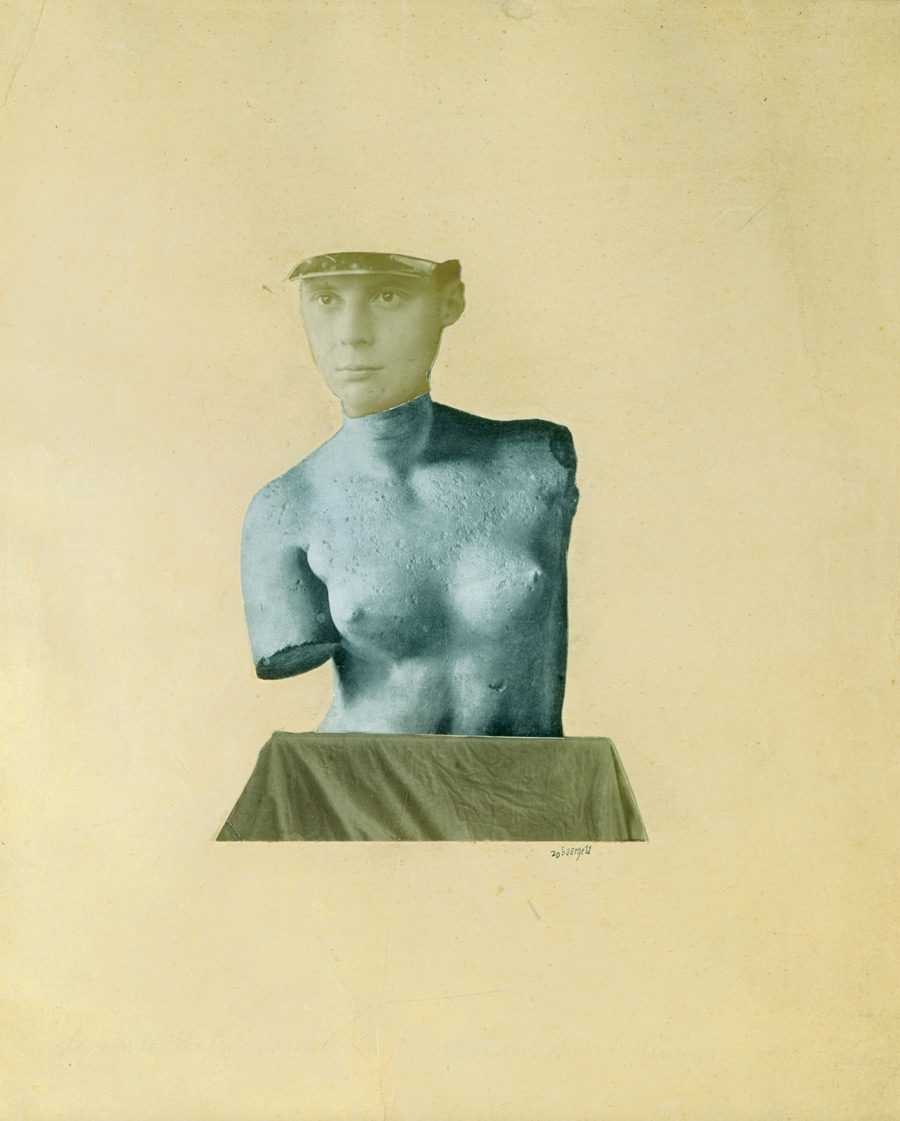
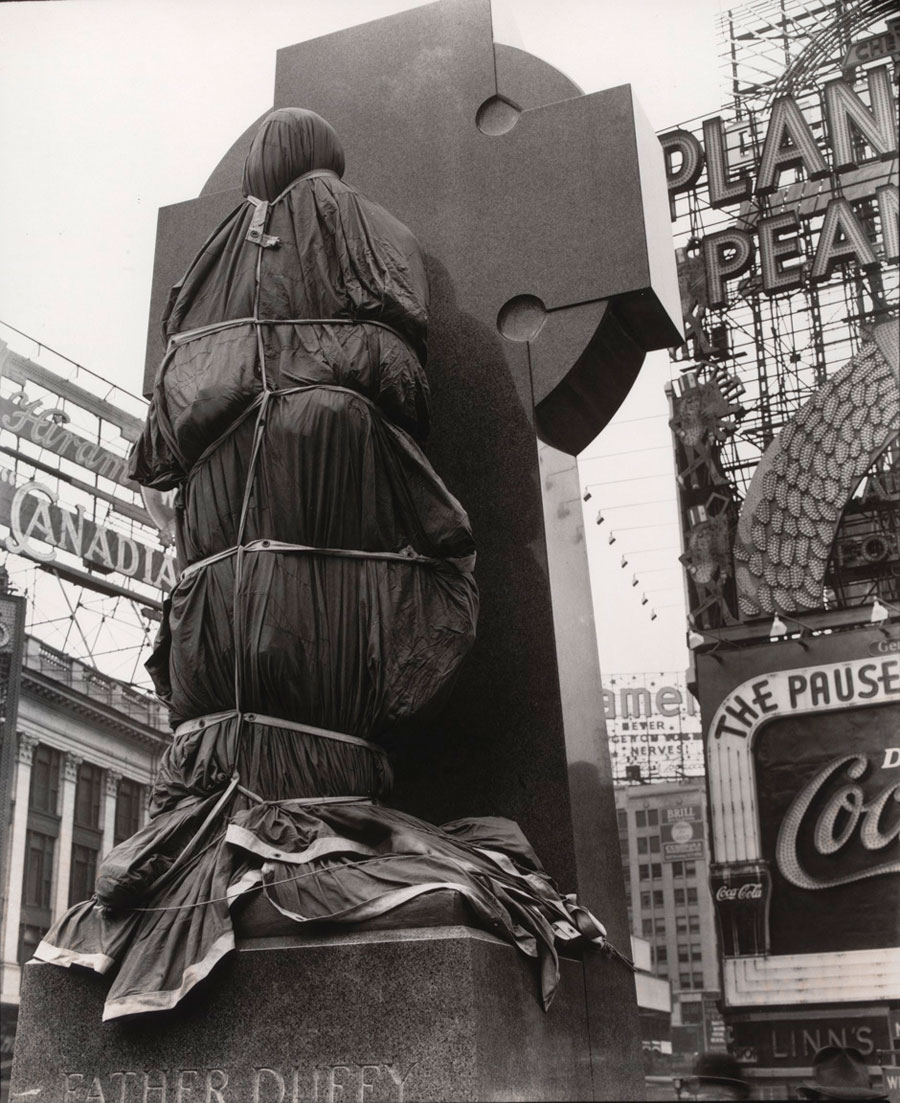
Exhibition: ‘FOTOGAGA: Max Ernst and Photography. A Visit from the Würth Collection’ at Museum für Fotografie, Staatliche Museen zu Berlin

Exhibition dates: 18th October, 2024 – 27th May, 2025

Curators: Katja Böhlau and Ludger Derenthal, Kunstbibliothek – Staatliche Museen zu Berlin


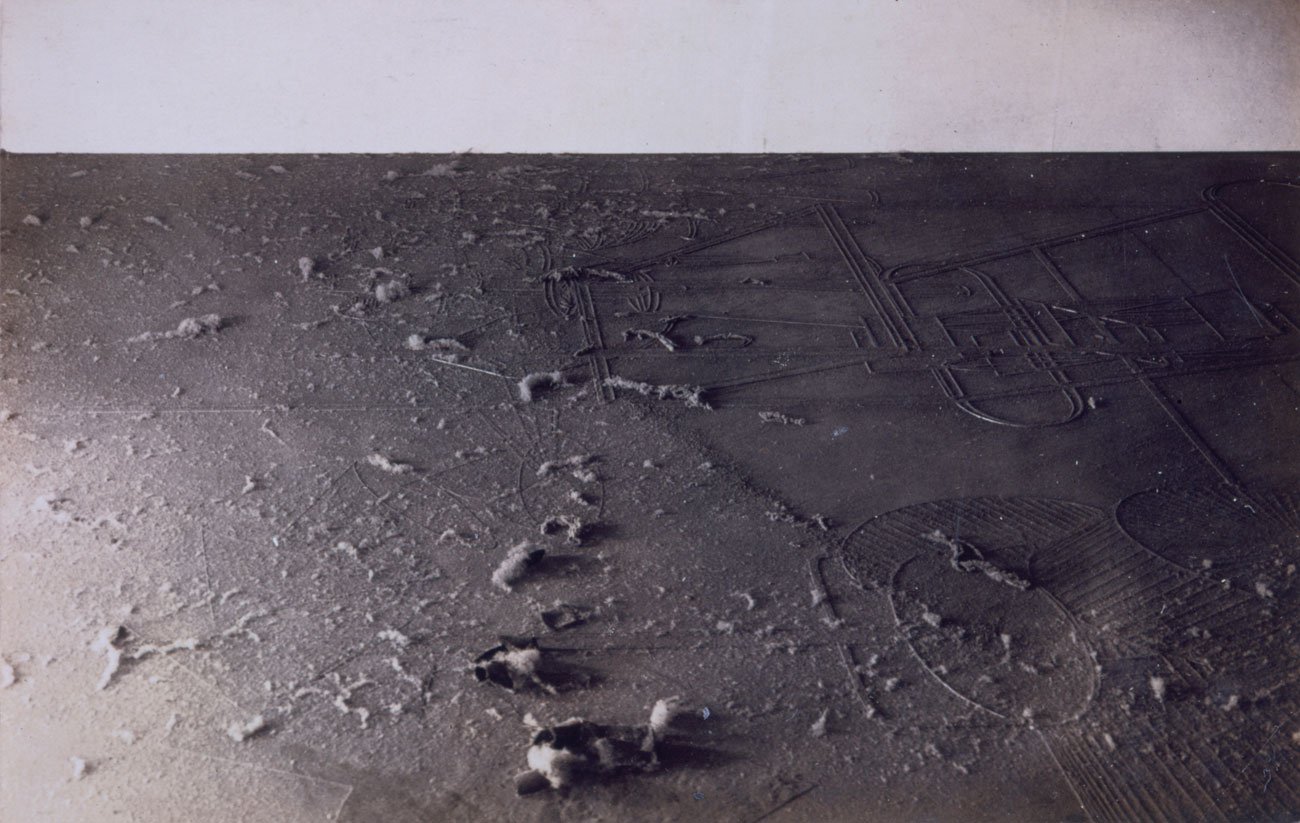
Max Ernst (German, 1891-1976) 'Frontispiece' 1921 From 'Paul Éluard: Répétitions' from the exhibition 'FOTOGAGA: Max Ernst and Photography. A Visit from the Würth Collection' at Museum für Fotografie, Oct 2024 - May 2025


Max Ernst (German, 1891-1976)
Frontispiece
1921
From Paul Éluard: Répétitions
Print from collage
5.5 x 10.3cm
Sammlung Würth
© VG Bild-Kunst, Bonn 2024


“Although these artists were explicitly not dealing with mundane reality but instead with what lies beneath, behind and in-between, the still relatively new medium of photography was of great importance for many. Last but not least, they also used it to make visible what remains hidden to the naked eye without technical means: the distant, the tiny, the moving.” (Press release)

Expressing the unconscious mind through illogical, dreamlike imagery and ideas, exploring the irrational, challenging notions of reality through a technical instrument – the camera – to create “a rich and multifarious cosmos of idiosyncratic realities that radically transcended traditional aesthetics.”

In the dream of the mind and the camera’s eye. Over and above the real.

Dr Marcus Bunyan


Many thankx to the Museum für Fotografie for allowing me to publish the photographs in the posting. Please click on the photographs for a larger version of the image.


“The invention of modern photomontage in the early twentieth century by Max Ernst with his Dada colleagues Hannah Höch, John Heartfield, George Grosz and Raoul Hausmann established new history in a variety of ways. Expanding modern art with multimedia as well as placing found photographs into art cut from printed magazines, rather than chemical made prints from the darkroom. Redefining final works of art without the paint brush or canvas. Ernst freed imagery into the unconscious by self-made combinations of drawing with torn and pasted photographic fragments, evoking memories and other responses by viewers that continue today.”


Steve Yates, Fulbright scholar, photographic artist, author and curator


Max Ernst (German, 1891-1976)
Die chinesische Nachtigall / Le rossignol chinois / The Chinese Nightingale 1920 from the exhibition 'FOTOGAGA: Max Ernst and Photography. A Visit from the Würth Collection' at Museum für Fotografie, Oct 2024 - May 2025


Max Ernst (German, 1891-1976)
Die chinesische Nachtigall / Le rossignol chinois / The Chinese Nightingale
1920
Collage and ink on paper
15.5 x 9cm
Musée de Grenoble
© VG Bild-Kunst, Bonn 2024
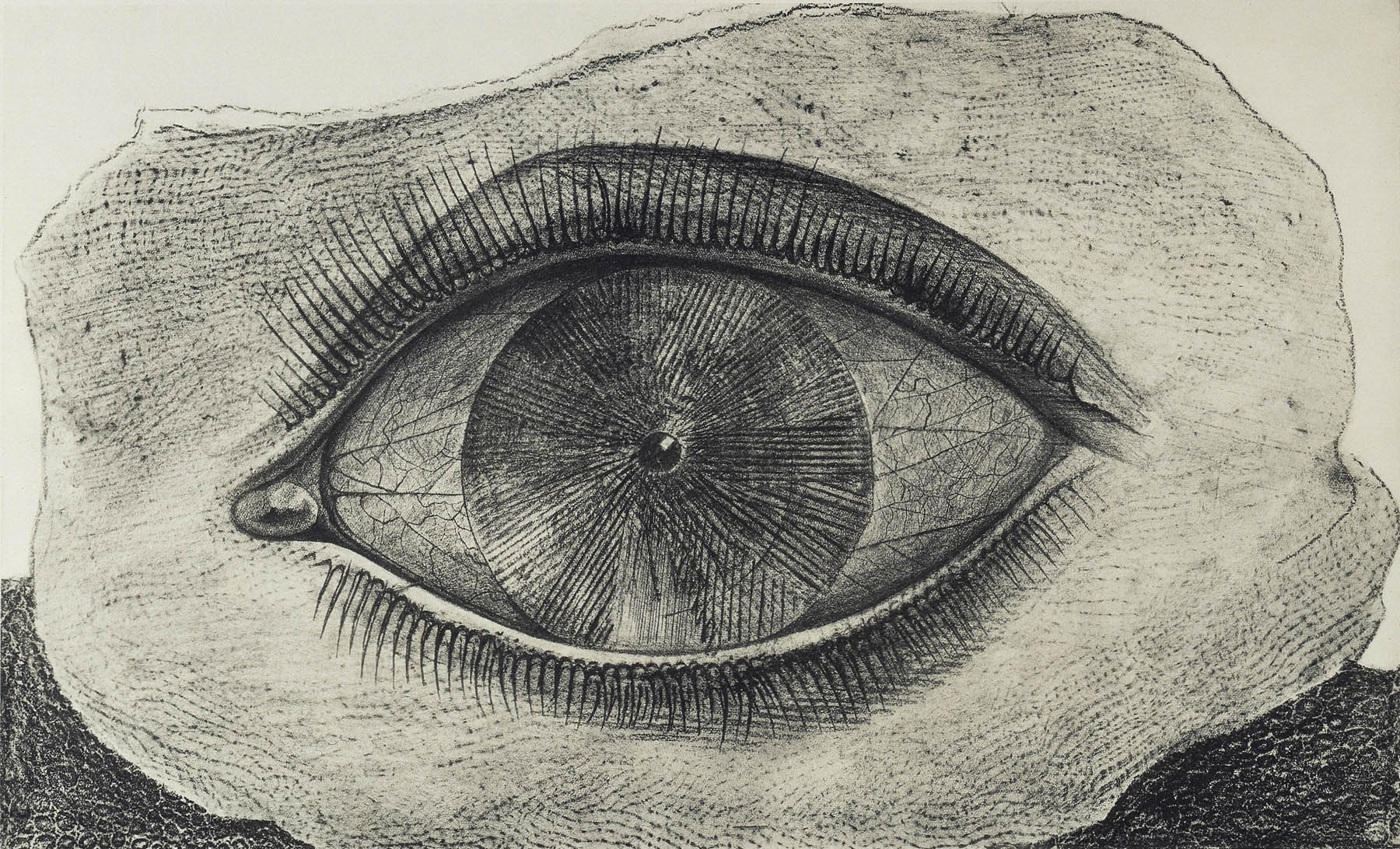
 

Max Ernst (German, 1891-1976) Lichtrad / la roue de la lumière / The wheel of light 1926 from the exhibition 'FOTOGAGA: Max Ernst and Photography. A Visit from the Würth Collection' at Museum für Fotografie, Oct 2024 - May 2025


Max Ernst (German, 1891-1976)
Lichtrad / la roue de la lumière / The wheel of light
1926
From Histoire Naturelle, sheet 29
Photogravure after frottage
32.5 x 50cm
Sammlung Würth
© VG Bild-Kunst, Bonn 2024


Max Ernst (German, 1891-1976) Max Ernst, Marie-Berthe Aurenche und Jean Aurenche / Max Ernst, Marie-Berthe Aurenche and Jean Aurenche, Photomaton c. 1929


Max Ernst (German, 1891-1976)
Max Ernst, Marie-Berthe Aurenche und Jean Aurenche / Max Ernst, Marie-Berthe Aurenche and Jean Aurenche, Photomaton
c. 1929
Silver gelatin paper
20.9 x 3.7cm
Sammlung Würth
© VG Bild-Kunst, Bonn 2024


Max Ernst (German, 1891-1976) "…unter meinem weißen Gewand, in meinem Taubenhaus, werdet ihr nicht mehr arm sein, ihr tonsurierten Tauben. Ich werde euch zwölf Tonnen Zucker bringen. Aber berührt nicht mein Haar“ / "…sous mon blanc vêtement, dans mon colombodrôme, vous ne serez plus pauvres, pigeons tonsurés. Je vous apporterai douze tonnes de sucre. Mais ne touchez pas à mes cheveux!" / "…you won't be poor anymore, head-shaven pigeons, under my white dress, in my columbarium. I'll bring you a dozen tons of sugar. But don't you touch my hair!" 1930


Max Ernst (German, 1891-1976)
“…unter meinem weißen Gewand, in meinem Taubenhaus, werdet ihr nicht mehr arm sein, ihr tonsurierten Tauben. Ich werde euch zwölf Tonnen Zucker bringen. Aber berührt nicht mein Haar“ / “…sous mon blanc vêtement, dans mon colombodrôme, vous ne serez plus pauvres, pigeons tonsurés. Je vous apporterai douze tonnes de sucre. Mais ne touchez pas à mes cheveux!” / “…you won’t be poor anymore, head-shaven pigeons, under my white dress, in my columbarium. I’ll bring you a dozen tons of sugar. But don’t you touch my hair!”
1930
From Das Karmelienmädchen. Ein Traum / Rêve d’une petite fille qui voulut entrer au Carmel / Dream of a little girl who wanted to enter Carmel
Print from collage
7.7 x 11.3cm
Sammlung Würth
© VG Bild-Kunst, Bonn 2024


Max Ernst (German, 1891-1976) Das Innere der Sicht 3 / A l'intérieur de la vue 3 / Inside View 3 1931/1947


Max Ernst (German, 1891-1976)
Das Innere der Sicht 3 / A l’intérieur de la vue 3 / Inside View 3
1931/1947
From Paul Éluard : A l’intérieur de la vue. 8 Poèmes visibles
Collage
22.3 x 15.5cm
Sammlung Würth
© VG Bild-Kunst, Bonn 2024


Max Ernst (German, 1891–1976) …des vollständig auf sie beschränkten, des vom Rest der Welt isolierten / … d'absolument limité à eux, d'isolant du reste du monde / of the one who is completely confined to them, isolated from the rest of the world 1936


Max Ernst (German, 1891–1976)
…des vollständig auf sie beschränkten, des vom Rest der Welt isolierten / … d’absolument limité à eux, d’isolant du reste du monde / of the one who is completely confined to them, isolated from the rest of the world
1936
From André Breton: Le château étoilé
Photogram after frottage
25 x 20cm
Sammlung Würt
© VG Bild-Kunst, Bonn 2024


Max Ernst (German, 1891-1976) Eine weitere Laune der Venus / Un autre caprice de Venus / Another whim of Venus 1961


Max Ernst (German, 1891-1976)
Eine weitere Laune der Venus / Un autre caprice de Venus / Another whim of Venus
1961
Oil on canvas
27 x 22cm
Sammlung Würth
© VG Bild-Kunst, Bonn 2024


Max Ernst holds a prominent position within Dada and Surrealist Art. His name stands for genre-bending works that combine dream and reality. The exhibition FOTOGAGA: Max Ernst and Photography. A Visit from the Würth Collection is the first to search for points of intersection between his work and photography. Commemorating Surrealism’s centenary, the Museum für Fotografie (Museum of Photography) is showing a representative overview of Max Ernst’s artworks from the Würth Collection. These are complemented by works from the Kunstbibliothek, Kupferstichkabinett, Sammlung Scharf-Gerstenberg and the Staatsbibliothek zu Berlin, and other exceptional loans from museums and private collections in France and Germany.

Max Ernst and Photography – A Special Connection

The art of Max Ernst (1891-1976) was created at a time characterised by a new, creative approach to photography. Snapshots, scientific photographs and images of war machinery inspired him and served as working materials, especially for his collages. Technical and artistic developments in the medium of photography significantly influenced his work. He used photographic reproduction techniques to increase the visual impact of his works: enlargements allowed his small-format collages to hold their own alongside paintings in exhibitions; the production of photo postcards of the collages ensured that the works could be distributed quickly and easily; and the inversion of the tonal values in a photogram enhanced the effect of his frottages.

Max Ernst himself never used a camera for his art, but he liked to pose for the camera, whether for images taken by well-known photographers or made in photo booths. At times serious, at times a little “gaga”, the portraits illustrate not just the artist’s love for playfulness but also an occasionally strategic use of photography to promote his artistic agenda. The title of the exhibition – “FOTOGAGA” – is derived from a group of works by Hans Arp and Max Ernst, which they called “FATAGAGA”: the “FAbrication de TAbleaux GAsométriques Garantis (Fabrication of Guaranteed Gasometric Images)”. One of these photocollages, in which the two artists address their relationship as friends, can be seen in the exhibition.

A Century of Surrealism

Some 270 works will be exhibited, primarily works on paper but also paintings by Max Ernst and photographs, photograms, collages, and illustrated books by his Surrealist contemporaries. Although these artists were explicitly not dealing with mundane reality but instead with what lies beneath, behind and in-between, the still relatively new medium of photography was of great importance for many. Last but not least, they also used it to make visible what remains hidden to the naked eye without technical means: the distant, the tiny, the moving.

Max Ernst’s works are framed within the context of both contemporary and historical references. There are numerous and surprising parallels to photographs by other artists. An avid delight in experimentation and a creative game played with chance characterise the works selected for the exhibition. Their originators reflected on forgotten photographic processes from the 19th century and developed new techniques using light-sensitive materials. Semi-automatic methods, working with found objects, unusual combinations, and the blurring of traces have equally shaped the work of Max Ernst and the photographic oeuvres of many of his contemporaries and other artists that followed. Even a century after André Breton published the first Surrealist Manifesto on 15 October 1924, they have not lost any of their fascination.

A cooperation with tradition

The Staatliche Museen zu Berlin look back on a longstanding cooperation with the Würth Collection. FOTOGAGA: Max Ernst and Photography is the fourth exhibition in a series that began in 2019‒2020 with Anthony Caro: The Last Judgement Sculpture from the Würth Collection at the Gemä-ldegalerie. It was followed in 2021‒2022 by Illustrious Guests: Treasures from the Kunstkammer Würth in the Kunstgewerbemuseum and David Hockney – Landscapes in Dialogue. “The Four Seasons” from the Würth Collection in 2022, also shown at the Gemäldegalerie. The exhibition at the Museum für Fotografie draws on the Würth Collection’s extensive holdings, especially of Max Ernst’s graphic works, which are now being shown in Berlin for the first time.

Press release from the Museum für Fotografie


Max Ernst (German, 1891-1976) 'Above the Clouds Midnight Passes' 1920


Max Ernst (German, 1891-1976)
Above the Clouds Midnight Passes
1920
Photographic enlargement of a collage and ink, facsimile, 2024
73 x 55cm
Kunsthaus Zürich
Public domain


László Moholy-Nagy (Hungarian, 1895-1946) 'The broken marriage' 1925


László Moholy-Nagy (Hungarian, 1895-1946)
The broken marriage
1925
Photomontage
16.5 x 12.2cm
Sammlung Siegert, München
Public domain


Max Ernst (German, 1891-1976) 'The Stall of the Sphinx' 1925


Max Ernst (German, 1891-1976)
The Stall of the Sphinx
1925
Pencil on paper
16.4 x 15.2cm
Sammlung Ulla und Heiner Pietzsch, Berlin


Max Ernst (German, 1891-1976) 'Little Tables around the Earth' (Petites tables autour de la terre) 1926


Max Ernst (German, 1891-1976)
Little Tables around the Earth (Petites tables autour de la terre)
1926
From Natural History (Histoire naturelle)
Collotype of a frottage
50 x 32.5 cm (sheet)
Paris: Éditions Jeanne Bucher
Portfolio with 34 collotypes of frottages
51.7 x 35 x 1cm


Jean Painlevé (French, 1902-1989)
Hummerschere / Pince d'homard, Port-Blanc, Bretagne / Lobster claw, Port-Blanc, Brittany 1929


Jean Painlevé (French, 1902-1989)
Hummerschere / Pince d’homard, Port-Blanc, Bretagne / Lobster claw, Port-Blanc, Brittany
1929
Silver gelatin paper
23 x 16.7cm
Sammlung Dietmar Siegert
© Archives Jean Painlevé/Les Documents cinématographiques, Paris
Repro: Christian Schmieder


Aenne Biermann (German, 1898-1933) 'Cactus' 1929


Aenne Biermann (German, 1898-1933)
Cactus
1929
Silver gelatin paper
12.4 x 17.3cm


“The object, which, in its surroundings, is never seen other than in its most mundane aspect, is given new life when isolated in the lens of the viewfinder. […] It seemed to me that the clarity of a constructed form, when removed from its overly distracting surroundings, could be depicted convincingly through the use of photography.”

~ Aenne Biermann


Max Ernst (German, 1891–1976) 'Quiétude' from 'The Hundred-Headless Woman' 1929


Max Ernst (1891–1976)
Quiétude from The Hundred-Headless Woman
1929
Collage novel with 147 reproductions of collages
Paris: Éditions du Carrefour
25 x 19cm


The Hundred Headless Woman is Ernst’s first collage novel. It features a loosely narrative sequence of uncanny Surrealist collages, made by cutting up and reassembling nineteenth-century illustrations, accompanied by Ernst’s equally strange captions. Ernst’s French title, La Femme 100 têtes, is a double entendre; when read aloud it can be understood as either “the hundred-headed woman” or “the headless woman.” Along with this enigmatic title character, the book marks the introduction of Ernst’s favourite alter ego, Loplop, “the Bird Superior.” Ernst was deeply engaged with illustrated books during the 1930s; in addition to collage novels, he created many etchings and lithographs to complement the poems and stories of Surrealist writers with whom he was closely associated.

Gallery label from Max Ernst: Beyond Painting, September 23, 2017-January 1, 2018 on the MoMA website Nd [online] Cited 31/03/2025


Max Ernst (German, 1891-1976) 'Loplop presents the members of the Surrealist group' 1931


Max Ernst (German, 1891-1976)
Loplop presents the members of the Surrealist group
1931
Reproduction of a collage in Le Surréalisme au service de la revolution, No. 4
27.4 x 19.9cm
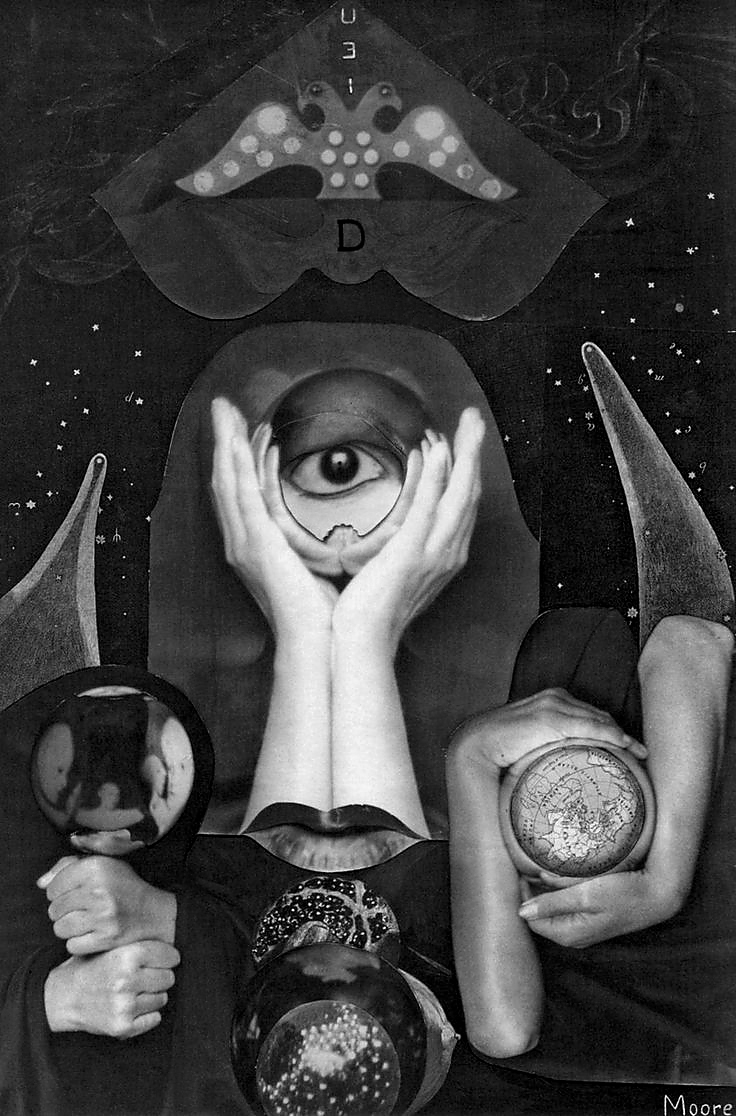
 

Claude Cahun (French, 1894-1954) / Marcel Moore (French, 1892-1972)
'Aveux non avenus' / Disavowals (frontispiece) 1930 Paris: Éditions du Carrefour


Claude Cahun (French, 1894-1954) / Marcel Moore (French, 1892-1972)
Aveux non avenus / Disavowals (frontispiece)
1930
Paris: Éditions du Carrefour
Book with 11 heliogravures of collages
22 x 17 x 2.8cm
Sammlung Siegert, München


Man Ray (American, 1890-1976) 'Untitled'
1931 from 'Électricité. Dix rayogrammes de Man Ray et un texte de Pierre'


Man Ray (American, 1890-1976)
Untitled
1931
From Électricité. Dix rayogrammes de Man Ray et un texte de Pierre
Bost, Paris: La Compagnie Parisienne de Distribution d’Électricité
Heliogravure after photogram
Collotype
38.8 x 29.3cm
Kunstbibliothek – Staatliche Museen zu Berlin
© Man Ray Trust / VG Bild-Kunst, Bonn 2024
Repro: Dietmar Katz
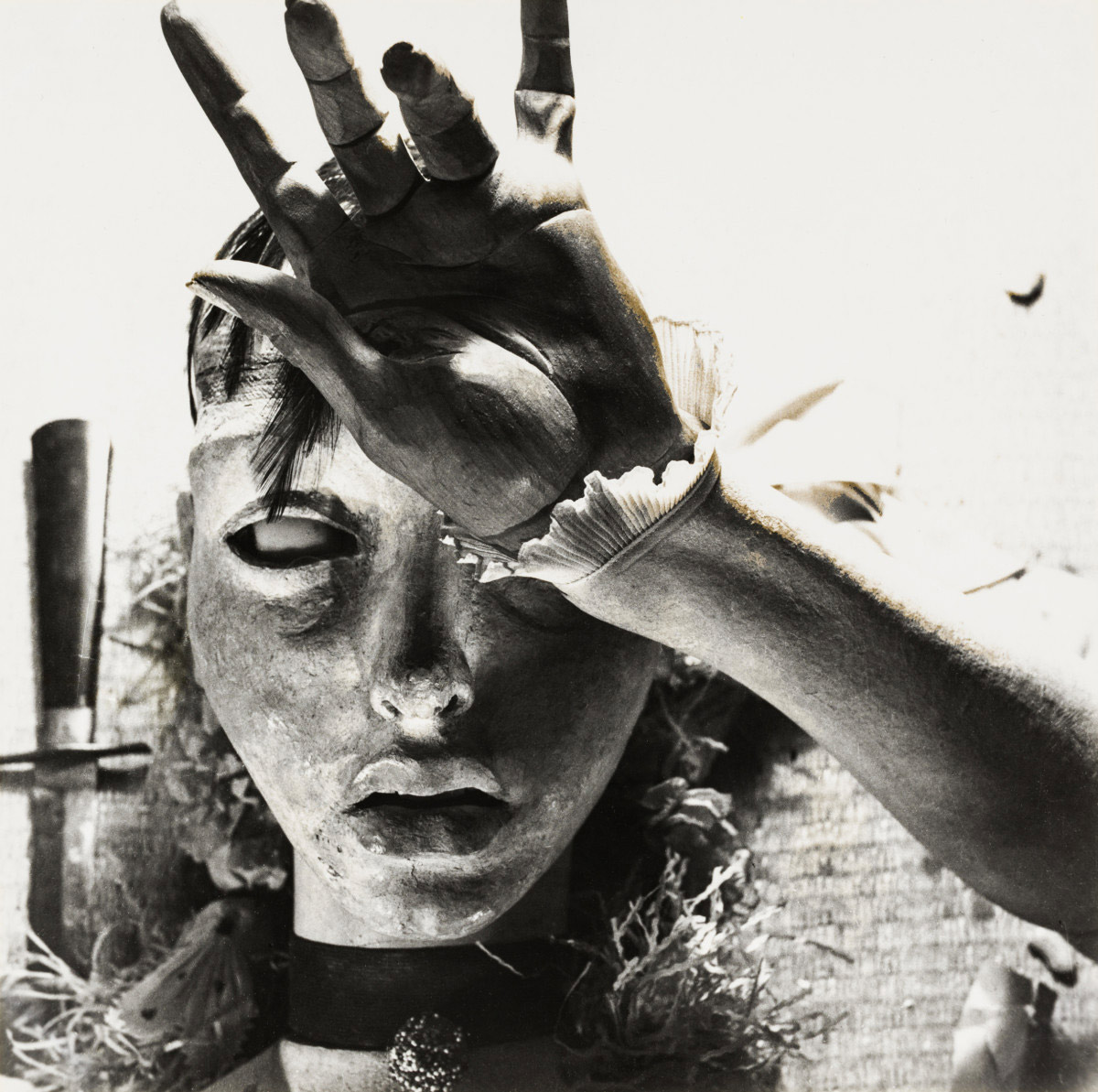
 

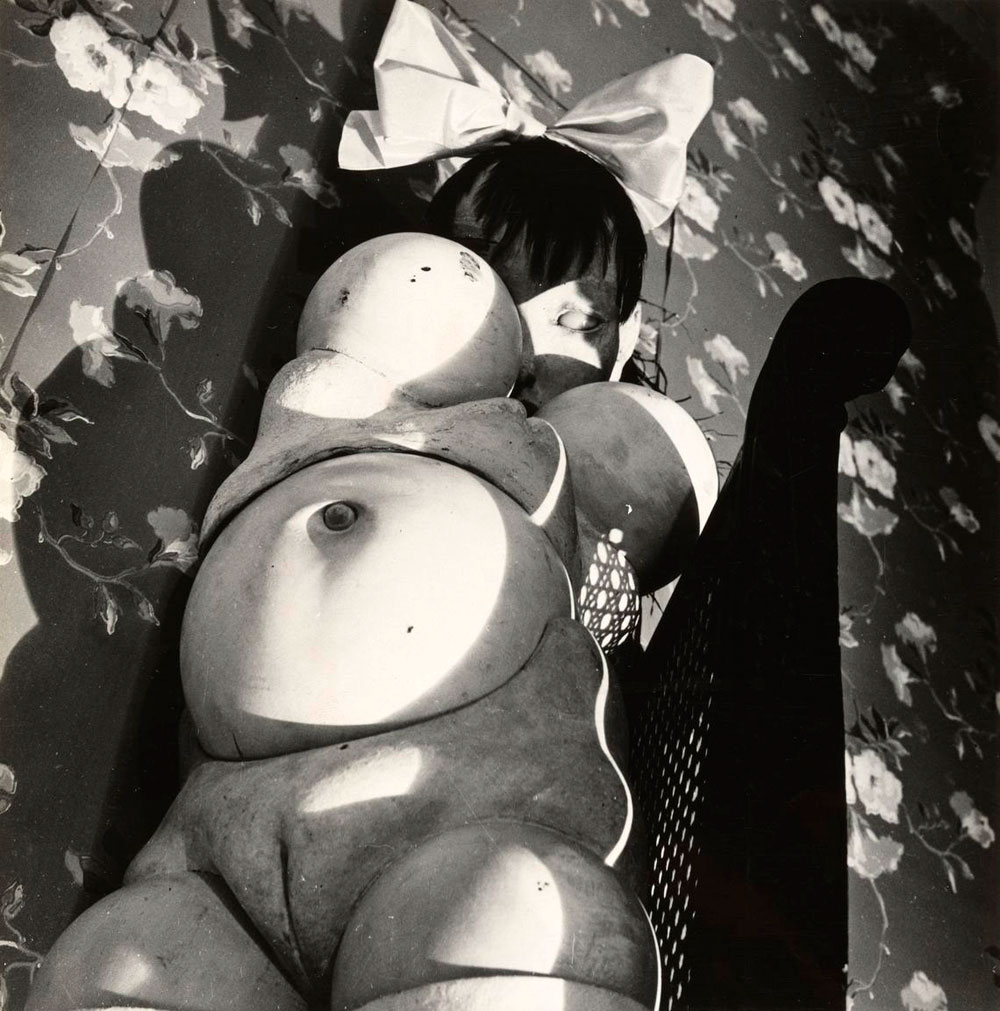
Hans Bellmer (German, 1902-1975) 'The Doll' 1935


Hans Bellmer (German, 1902-1975)
The Doll
1935
Silver gelatin paper
17.5 x 16 cm
Sammlung Siegert, München


Brassaï (British born Germany, 1899-1984) 'Night Moth' 1935


Brassaï (British born Germany, 1899-1984)
Night Moth
1935
Reproduction in Minotaure No. 7
31.6 x 24.8cm
Kunstbibliothek


Joseph Breitenbach (German, 1896-1984) 'Max Ernst, Paris' 1936


Joseph Breitenbach (German, 1896-1984)
Max Ernst, Paris
1936
Silver gelatin paper
35.3 x 27.8cm
Sammlung Würth
© The Josef and Yaye Breitenbach Charitable Foundation


Raoul Ubac (Belgian, 1910-1985) 'The Battle of the Penthesilea II' 1937


Raoul Ubac (Belgian, 1910-1985)
The Battle of the Penthesilea II
1937
Photomontage, silver gelatin paper
18 x 24.2cm
Sammlung Siegert, München


Max Ernst (1891-1976) is one of the most important representatives of Dadaism and Surrealism, two artistic movements that turned traditional norms on their head from the 1920s onwards. His boundary-crossing works combine dream and reality. His art also was created at a time characterized by a new, creative approach to photography. Snapshots, scientific photographs and images of war machinery inspired him and served as working materials, especially for his collages. Although he never used a camera for his art himself, technical and artistic developments in the medium of photography significantly influenced his work. Last but not least, Max Ernst liked to pose for the camera, whether for images taken by well-known photographers or made in photo booths. 

Some 270 works will be exhibited, primarily works on paper but also paintings by Max Ernst and photographs, photograms, collages, and illustrated books by his Surrealist contemporaries. Although these artists were explicitly not dealing with mundane reality but instead with what lies beneath, behind and in-between, the still relatively new medium of photography was of great importance for many. Last but not least, they also used it to make visible what remains hidden to the naked eye without technical means: the distant, the tiny, the moving. 

Max Ernst’s works are framed within the context of both contemporary and historical references. There are numerous and surprising parallels to photographs by other artists. Semi-automatic methods, working with found objects, unusual combinations, and the blurring of traces have equally shaped the work of Max Ernst and the photographic oeuvres of many of his contemporaries and other artists that followed. Even a century after André Breton published the first Surrealist Manifesto on 15 October 1924, they have not lost any of their fascination.

Gazes and Visions 

The Motif of the Eye as a Surrealist Symbol

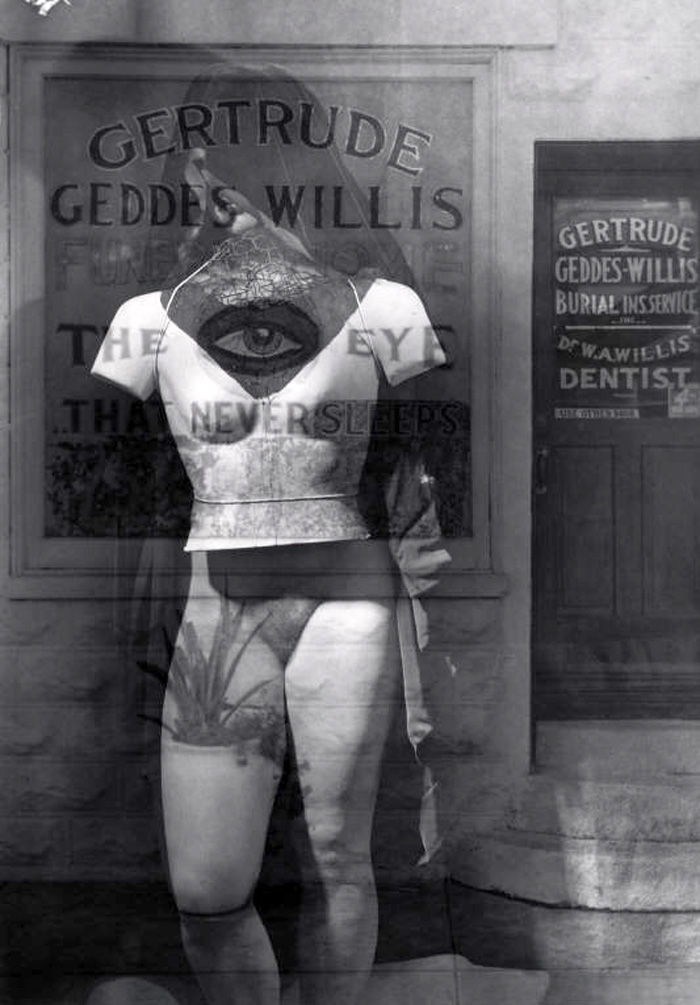
For the Surrealists, free, wild seeing opened up perspectives on an untamed world beyond reality – provided that the eyes were used in the right way or equipped with appropriate devices. Thus the motif of the eye symbolizes the translation of visions into perceptible images. Max Ernst’s frottages show radically enlarged, wide-open eyes hovering over a flat horizon. Visionary seeing can also be assisted by various instruments. In a coloured collage for Les malheurs des immortels, a young man gazes through two pipes, cheeks flushed with excitement: what might he be looking at? 

The focus on inner vision becomes the theme of a 1929 collage, in which the portrait photos of the Surrealists, all shown with eyes closed, are arranged around the reproduction of a nude painting by René Magritte. In so doing, a very masculinely connoted group activity is simulated in which sexual desire makes possible the liberation of thought. A violent variation – a blinding, likewise understood as liberation – appears in the famous eyeball-slicing scene in the prologue of the 1928 film Un chien andalou by Luis Buñuel and Salvador Dalí. 

Flora, fauna, firmament 

Frottage, Nature Printing, and Plant Photography

Plantlike animals, seashell flowers, fishbone forests, crocheted stars – the visual world of Max Ernst is full of fantastic forms. For him, nature served as both inspiration and material. In his frottages, he used wood, leaves and much more for rubbings on paper. This is how the portfolio Histoire naturelle (Natural History) was created in 1926. The frottages were reproduced as collotype prints, photomechanically produced prints using an exposed glass plate as a printing block. 

With Histoire Naturelle, Max Ernst drew on natural history encyclopaedias, but reworked the originals to create his own natural history. In so doing he dissected nature, showed the tiny and the distant, and created planar structures rather than views. This interest in the formal language of nature also resonates in the photography of the New Objectivity from around the same time, which reveal the aesthetic power of natural forms. That also made them interesting to the Surrealist movement. 

In his artist’s book Maximiliana or the Illegal Practice of Astronomy from 1964, Max Ernst devoted himself entirely to celestial phenomena. As in photograms, Ernst used objects here like spirals or gears as stencils to evoke comets and nebulas.

Between Positive and Negative 

Photogram, Cliché Verre, and Other Darkroom Experiments

The play of positive and negative effects is a recurring theme in Max Ernst’s oeuvre. Early works created using fine lines incised on a black ground show motifs that appear fragile and vague. He also used photographic techniques for some of his works and transformed his frottages into negative forms in Man Ray’s studio. In 1931, for example, he created dark photograms as illustrations for René Crevel’s text Mr. Knife, Miss Fork

Max Ernst’s use of manually produced prototypes relates to a technique borrowed from the early days of photography: cliché verre, or glass printing. In this hybrid process, an etching is created on a glass plate coated with paint or ink, which then serves as a negative for the print. The twentieth century witnessed a rediscovery of cliché verre and the further amalgamation of photographic and drawing processes. The growing interest in camera-less photography led to a wide range of experiments using light and unconventional materials in various avant-garde circles.

Invisible Cuts 

(Photo-) Collages, Collage Novels, and Surrealist Photography

For Max Ernst, collage is the fundamental mode of artistic production. It encompasses a colorful variety of methods for combining materials of all kinds, initiating an open-ended artistic process. Max Ernst had already experimented with collages of printed photographs during his Dada years. The combination of the most diverse illustrations and their fusion into a new image by painting and drawing over them all took place within the working process. 

For his wood engraving collages, Max Ernst made use of old-fashioned illustrations from popular scientific magazines of the nineteenth century. Many of these images were also based on photographs; at that time, however, photos could not yet be reproduced and thus had to be rendered as wood engravings. His three collage novels featured visions and hallucinations alongside blasphemy, the critique of bourgeois morals, and the glorification of free love and revolution. 

Photographers of the Surrealist movement from Claude Cahun to Karel Teige, from Georges Hugnet to Emila Medková created with the help of camera and darkroom as well as scissors and glue, a rich and multifarious cosmos of idiosyncratic realities that radically transcended traditional aesthetics. 

Max Ernst in Front of the Camera 

From Studio Portrait to Photo Booth

Max Ernst is one of the most frequently photographed artists of the twentieth century. He posed for the cameras of important photographers such as Berenice Abbott, Arnold Newman, Lee Miller, Irving Penn, and Man Ray. Their portraits demonstrate just how individual the view of a person can be. A whole series of photographs shows the artist at work, with his art, or in the studio. Whether in focused concentration wearing his painter’s smock, in the midst of creative chaos, or in intimate relation to his sculptures – such photographs reinforce or even create the iconic conception of the artist. 

Another group of images shows Max Ernst with female companions such as the artists Leonora Carrington or Dorothea Tanning, which convey the intensity of their relations. As a member of the Surrealists Max Ernst frequently appears in group portraits. These images bear witness to the various stations of the movement – its beginnings in Paris or exile in America – as well as to constellations of fashion and gender. Whether individually or in a group, pensive, playful, joyful or serious, the photographs tell of Max Ernst’s delight in self-representation and in theatrical play.

Text from the Museum für Fotografie


George Platt Lynes (American, 1907-1955) 'Max Ernst, New York' 1941


George Platt Lynes (American, 1907-1955)
Max Ernst, New York
1941
Silver gelatin paper, new print
25.1 x 20.1cm


Josef Breitenbach (German, 1896-1984) 'Max Ernst and the seahorse, New York' 1942


Josef Breitenbach (German, 1896-1984)
Max Ernst and the seahorse, New York
1942
Silver gelatin paper
24 x 19cm


Arnold Newman (American, 1918-2006) 'Max Ernst, New York' 1942


Arnold Newman (American, 1918-2006)
Max Ernst, New York
1942
Silver gelatin paper
24.2 x 18.6cm
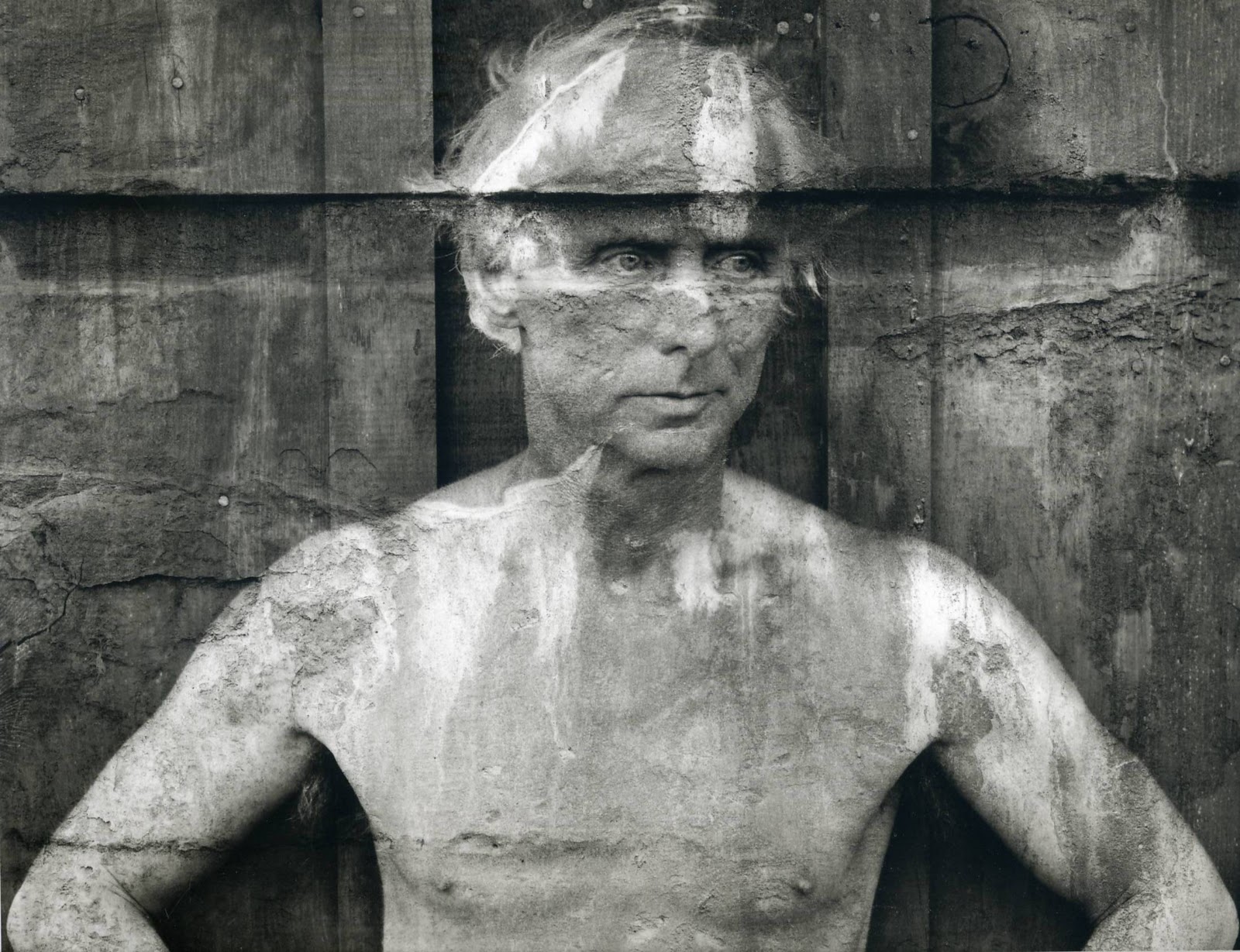
 

Frederick Sommer (American, 1905-1999) 'Max Ernst' 1946


Frederick Sommer (American, 1905-1999)
Max Ernst
1946
Gelatin silver print

A reproduction of this image on postcard for the Max Ernst retrospective: 30 Years of his Work – A Survey, Copley Galleries, Beverly Hills 1949 is included in the exhibition.


John Kasnetzis. 'Dorothea Tanning and Max Ernst with the sculpture Capricorne, Arizona' 1948


John Kasnetzis
Dorothea Tanning and Max Ernst with the sculpture Capricorne, Arizona
1948
Silver gelatin print, later print
23.6 x 18.8cm


In the summer of 1947, Max Ernst, exuberant and inspired by the arrival of water piped to our house (up to then we had hauled it daily from a well 5 miles away), began playing with cement and scrap iron with assists from box tops, eggshells, car springs, milk cartons and other detritus, The result: Capricorn, a monumental sculpture of regal but benign deities that consecrated our “garden” and watched over its inhabitants. Years later, when we had gone, a sculptor friend made molds and sent them to their creator in Huismes, France where he reassembled his Capricorn for casting in bronze. The above photo is a one-shot, spur-of-the-moment caper made after taking a people-less documentary photo.

Dorothea Tanning from Birthday, Santa Monica: The Lapis Press, 1986


Emila Medková (Czech, 1928-1985)
Schwarz / Black 1949


Emila Medková (Czech, 1928-1985)
Schwarz / Black
1949
Silver gelatin paper
17.7 x 23cm
Sammlung Dietmar Siegert
© Eva Kosakova Medkova
Repro: Christian Schmieder


Denise Colomb (French, 1902-2004) 'Max Ernst on the roof terrace on the Quai Saint-Michel in Paris' 1953


Denise Colomb (French, 1902-2004)
Max Ernst on the roof terrace on the Quai Saint-Michel in Paris
1953
Silver gelatin paper, later print
28 x 22cm


Fritz Kempe (German, 1909-1988) 'Max Ernst, Hamburg' 1964


Fritz Kempe (German, 1909-1988)
Max Ernst, Hamburg
1964
Silver gelatin print
12.8 x 17.7cm


Max Ernst (German, 1891-1976) 'Seen at the Neuilly fair' 1971


Max Ernst (German, 1891-1976)
Seen at the Neuilly fair
1971
Colour reproduction of a collage, sheet 3 from the portfolio: Commonplaces. Eleven Poems and Twelve Collages
49 x 34.5cm


Museum für Fotografie
Jebensstraße 2, 10623 Berlin

Opening hours:
Tuesday + Wednesday 11am – 7pm
Thursday 11am – 8pm
Friday – Sunday 11am – 7pm

Museum für Fotografie website

LIKE ART BLART ON FACEBOOK

Back to top

Exhibition: ‘RealSurreal. Masterpieces of Avant-Garde Photography’ at Museum Bellerive, Zurich

Exhibition dates: 1st April – 24th July, 2016


Albert Renger-Patzsch (German, 1897-1966) 'Self portrait' 1926/1927 from the exhibition 'RealSurreal. Masterpieces of Avant-Garde Photography' at Museum Bellerive, Zurich, April - July, 2016


Albert Renger-Patzsch (German, 1897-1966)
Self portrait
1926/1927
Gelatin silver paper
16.9 x 22.8cm
Foto: Christian P. Schmieder, München
© Albert Renger Patzsch Archiv / Ann und Jürgen Wilde, Köln / 2015, ProLitteris, Zurich


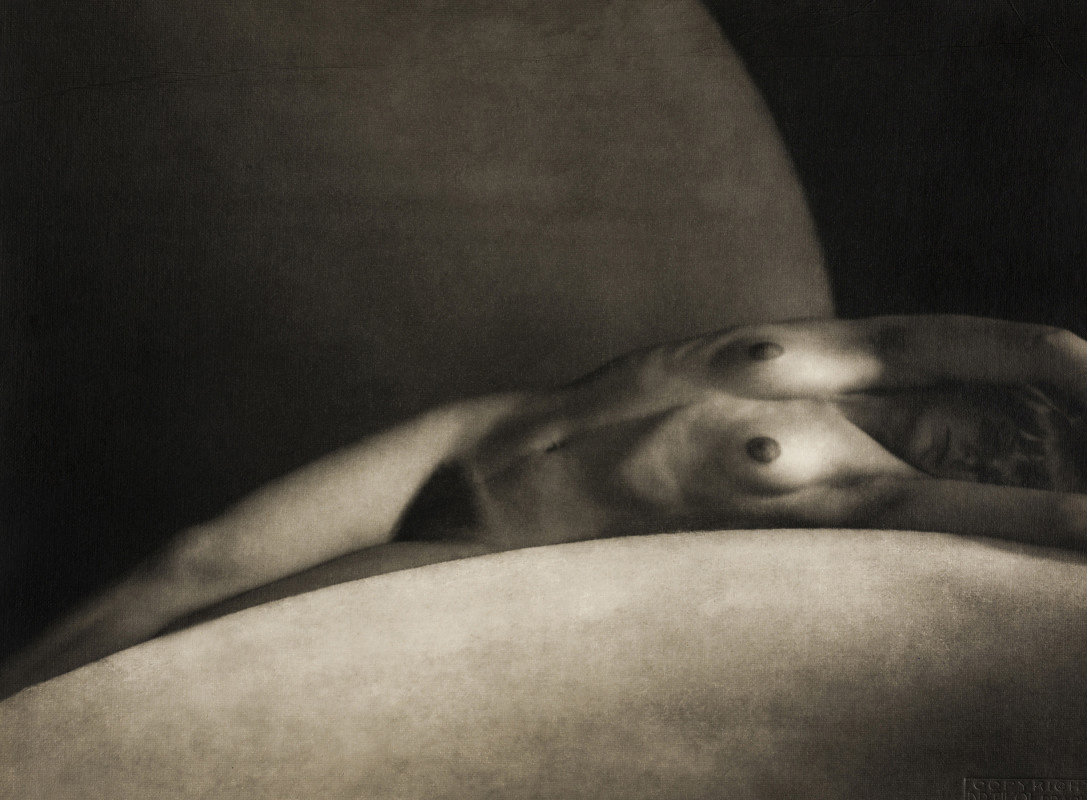
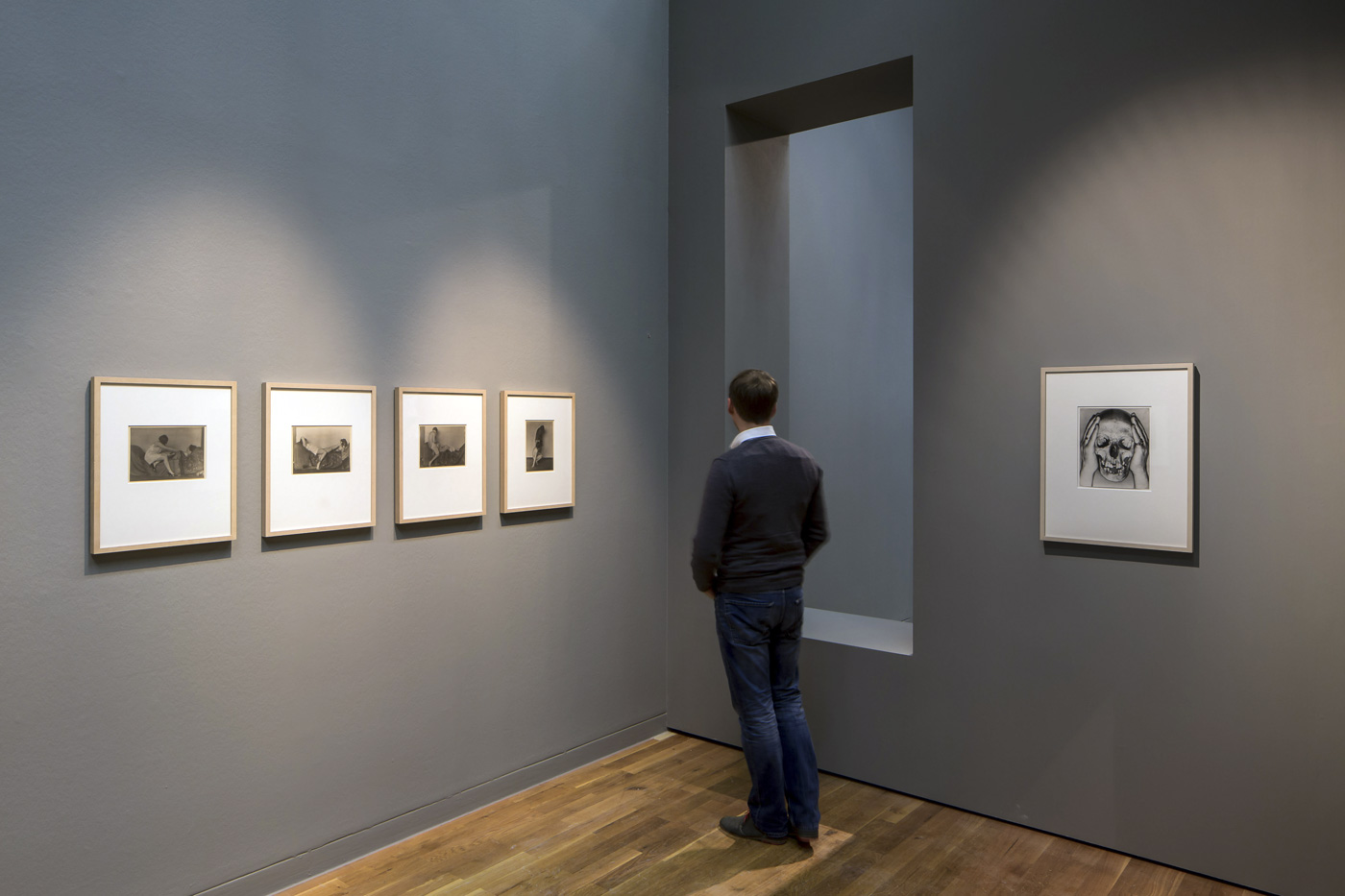
I loved putting the Florence Henri and the skull together. Too exhausted after a long day at work to say much else!

Marcus


Many thankx to Museum Bellerive for allowing me to publish the photographs in the posting. Please click on the photographs for a larger version of the image.


“I believe in the future resolution of these two states, dream and reality, which are seemingly so contradictory, into a kind of absolute reality, a surreality, if one may so speak.”


André Breton


František Drtikol (Czech, 1883-1961) 'Circular segment (arch)' 1928 from the exhibition 'RealSurreal. Masterpieces of Avant-Garde Photography' at Museum Bellerive, Zurich, April - July, 2016


František Drtikol (Czech, 1883-1961)
Kreissegment [Bogen] / Circular segment (arch)
1928
Pigment print
21.3 x 28.7cm
Foto: Christian P. Schmieder, München
© František Drtikol – heirs, 2015


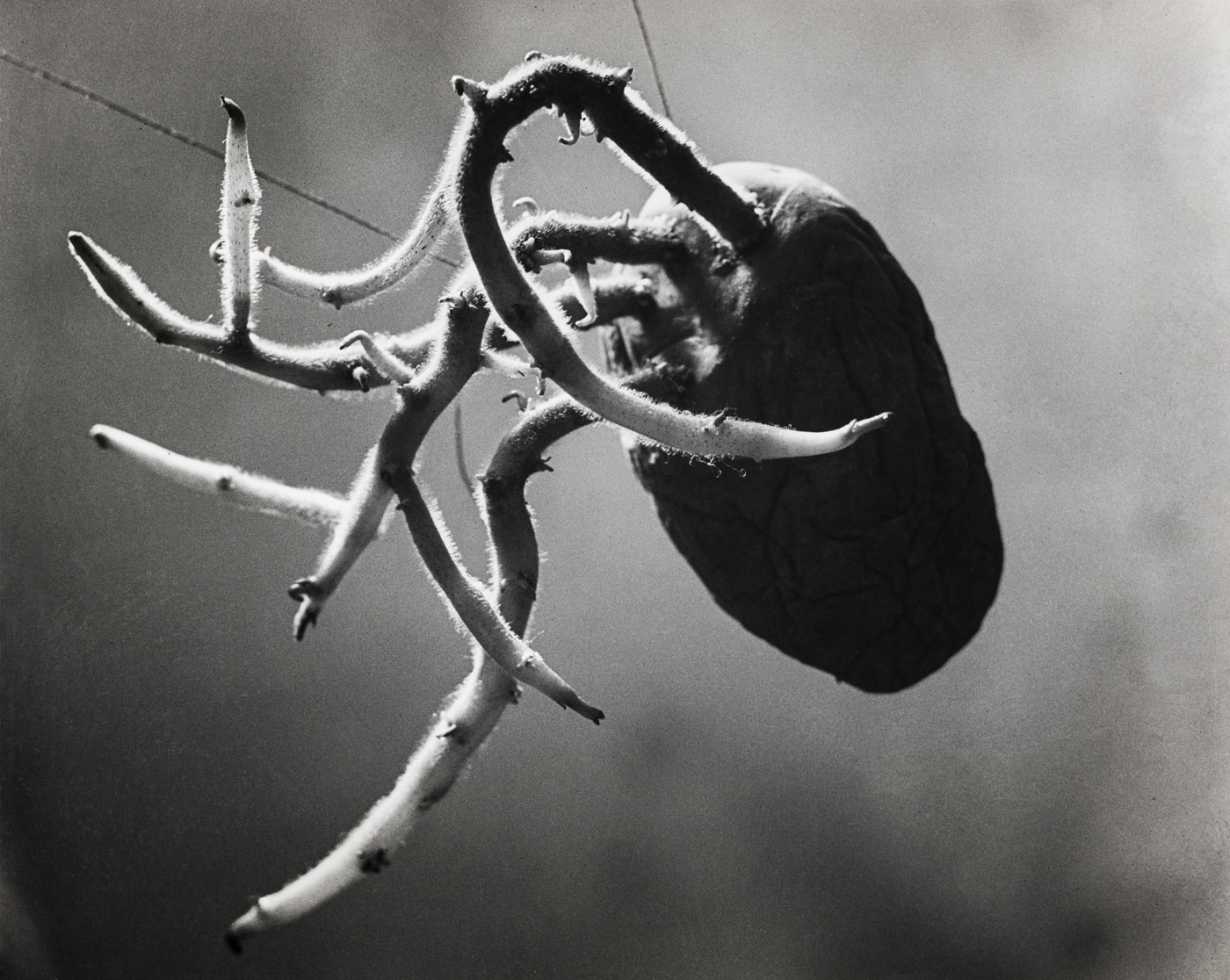
Brassaï (Hungarian-French, 1899-1984) 'Occasional magic (Germinating potato)' 1931


Brassaï (Hungarian-French, 1899-1984)
Gelegenheitsmagie (Keimende Kartoffel) / Occasional magic (Germinating potato)
1931
Gelatin silver print
Foto: © ESTATE BRASSAÏ – RMN


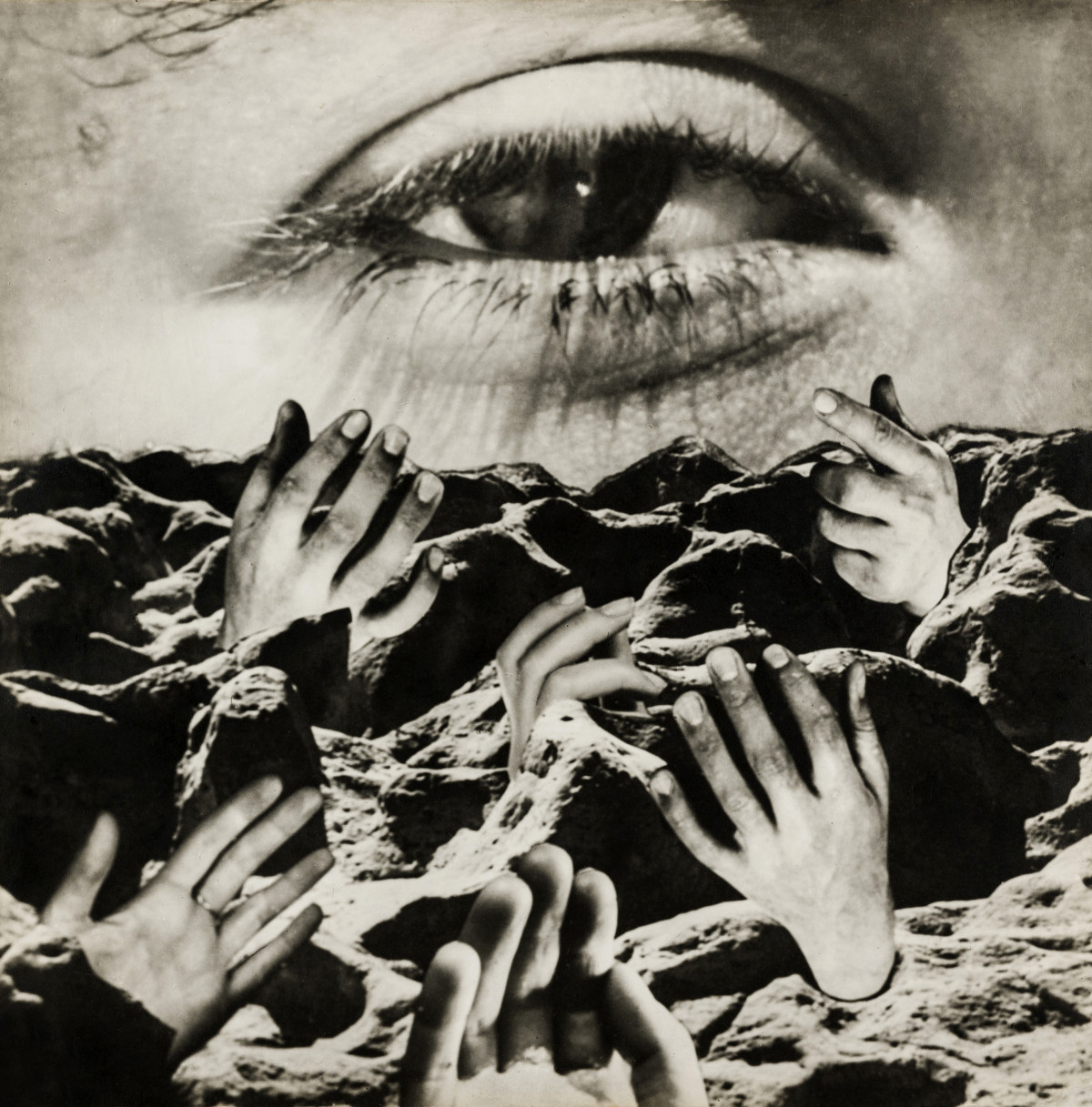
Grete Stern (Argentinian born Germany, 1904-1999) 'The Eternal eye / Das Ewige Auge' c. 1950


Grete Stern (Argentinian born Germany, 1904-1999)
The Eternal eye / Das Ewige Auge
c. 1950
Photomontage
Gelatin silver paper
39.5 x 39.5cm
Foto: Christian P. Schmieder, München
© Estate of Grete Stern Courtesy Galeria Jorge Mara – La Ruche, Buenos Aires, 2015


Grete Stern (Argentinian born Germany, 1904-1999)

In 1930 Stern and Ellen Rosenberg Auerbach founded ringl+pit, a critically acclaimed, prize-winning Berlin based photography and design studio. They used equipment purchased from Peterhans and became well known for innovative work in advertising. The name ringl+pit is from their childhood nicknames (Ringl for Grete, Pit for Ellen).

Intermittently between April 1930 and March 1933, Stern continued her studies with Peterhans at the Bauhaus photography workshop in Dessau, where she met the Argentinian photographer Horacio Coppola. In 1933 the political climate of Nazi Germany led her to emigrate with her brother to England, where Stern set up a new studio, soon to resume her collaboration there with Auerbach.

Stern first traveled to Argentina in the company of her new husband, Horacio Coppola in 1935. The newlyweds mounted an exhibition in Buenos Aires at Sur magazine, which according to the magazine, was the first modern photography exhibition in Argentina. In 1958, she became a citizen of Argentina.

In 1948 Stern began working for Idilio, an illustrated women’s magazine, targeted specifically at lower / lower-middle class women. In the late 1940s and early 1950s, Stern created Los Sueños as illustrations for the woman’s magazine Idilio and its column “El psicoanálisis te ayudará” (Psychoanalysis Will Help You). Readers were encouraged to submit their dreams to be analysed by the ‘experts’ as an aid for its readers to find “self-knowledge and self-aid that would help them succeed in love, family and work”. Each week, one dream would be selected, analysed in depth by the expert, Richard Rest, and then illustrated by Stern through photomontage. Stern created about 150 of these photomontages, of which only 46 survive in negatives. Stern’s photomontages are surreal interpretations of the readers’ dreams that often subtly pushed back on the traditional values and concepts in Idilio magazine by inserting feminist critique of Argentinian gender roles and the psychoanalytic project in her images. The Idilio series has often been compared to Francisco Goya’s Sueños drawings, a series of preliminary drawings for his later body of work, Los Caprichos; they have also been directly compared to Los Caprichos themselves.

Stern provided photographs for the magazine and served for a stint as a photography teacher in Resistencia at the National University of the Northeast in 1959 and continued to teach until 1985.

In 1985, she retired from photography, but lived another 14 years until 1999, dying in Buenos Aires on 24 December at the age of 95.

Text from the Wikipedia website


Hans Bellmer (German, 1902-1975) 'The Doll / Die Puppe' 1935


Hans Bellmer (German, 1902-1975)
The Doll / Die Puppe
1935
Gelatin silver paper
17.4 x 17.9cm
Foto: Christian P. Schmieder, München
© 2015, ProLitteris, Zurich


Avant-garde photographs seem like pictures from a dream world. From new kinds of compositions and perspectives to photomontage, technical experiments, and staged scenes, Real Surreal offers a chance to rediscover the range and multifacetedness of photography between the real and the surreal. The exhibition leads the visitor through the Neues Sehen (New Vision) movement in Germany, Surrealism in France, and the avant-garde in Prague. Thanks to rare original prints from renowned photographers between 1920 and 1950, this exhibition offers a chance to see these works in a new light. In addition to some 220 photographs, a selection of historical photography books and magazines as well as rare artists’ books allow visitors to immerse themselves in this new view of the world. Furthermore, examples of films attest to the fruitful exchanges between avant-garde photography and cinema during this time.

An exhibition in cooperation with the Kunstmuseum Wolfsburg


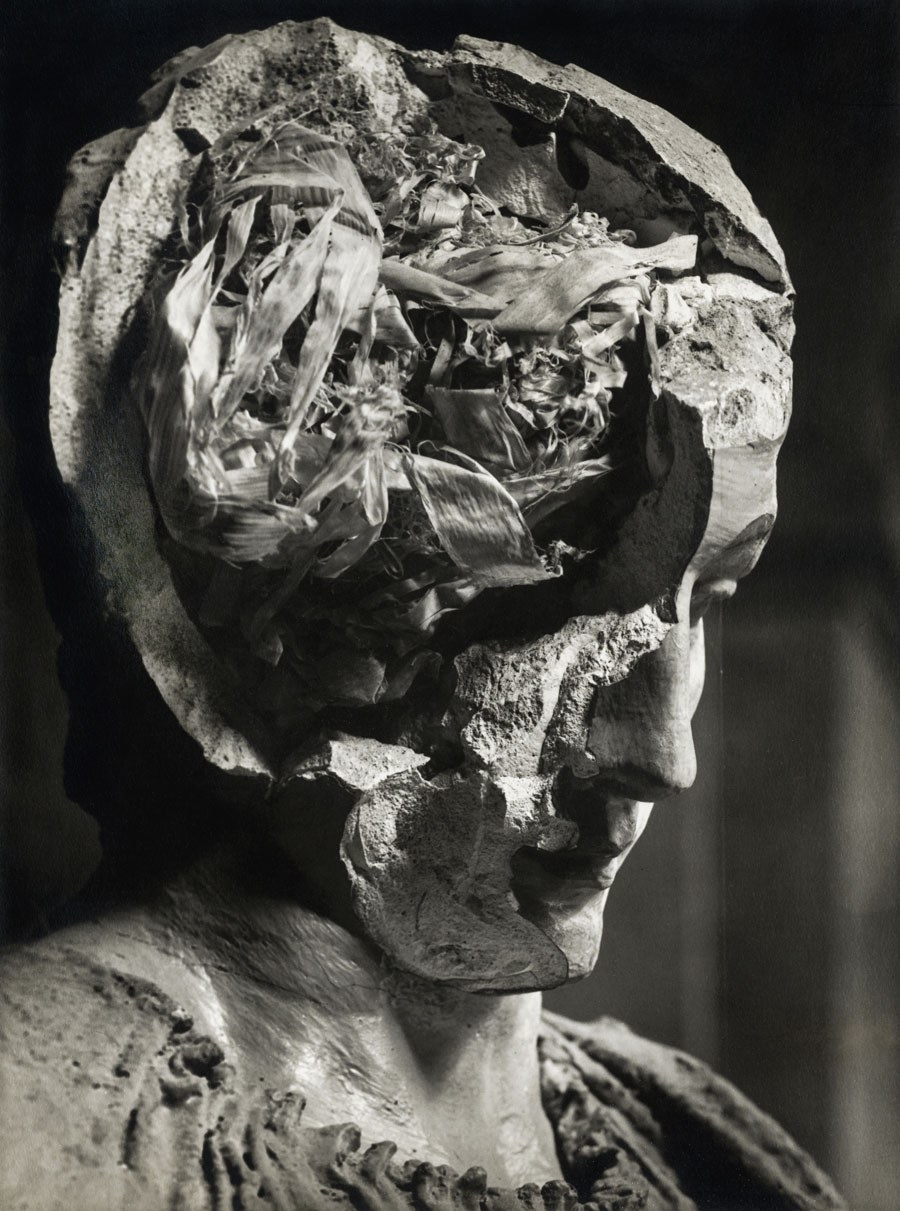
Josef Sudek (Czech, 1896-1976) 'Gipskopf / Plaster head' c. 1947


Josef Sudek (Czech, 1896-1976)
Gipskopf / Plaster head
c. 1947
Gelatin silver print
Foto: © Estate of Josef Sudek


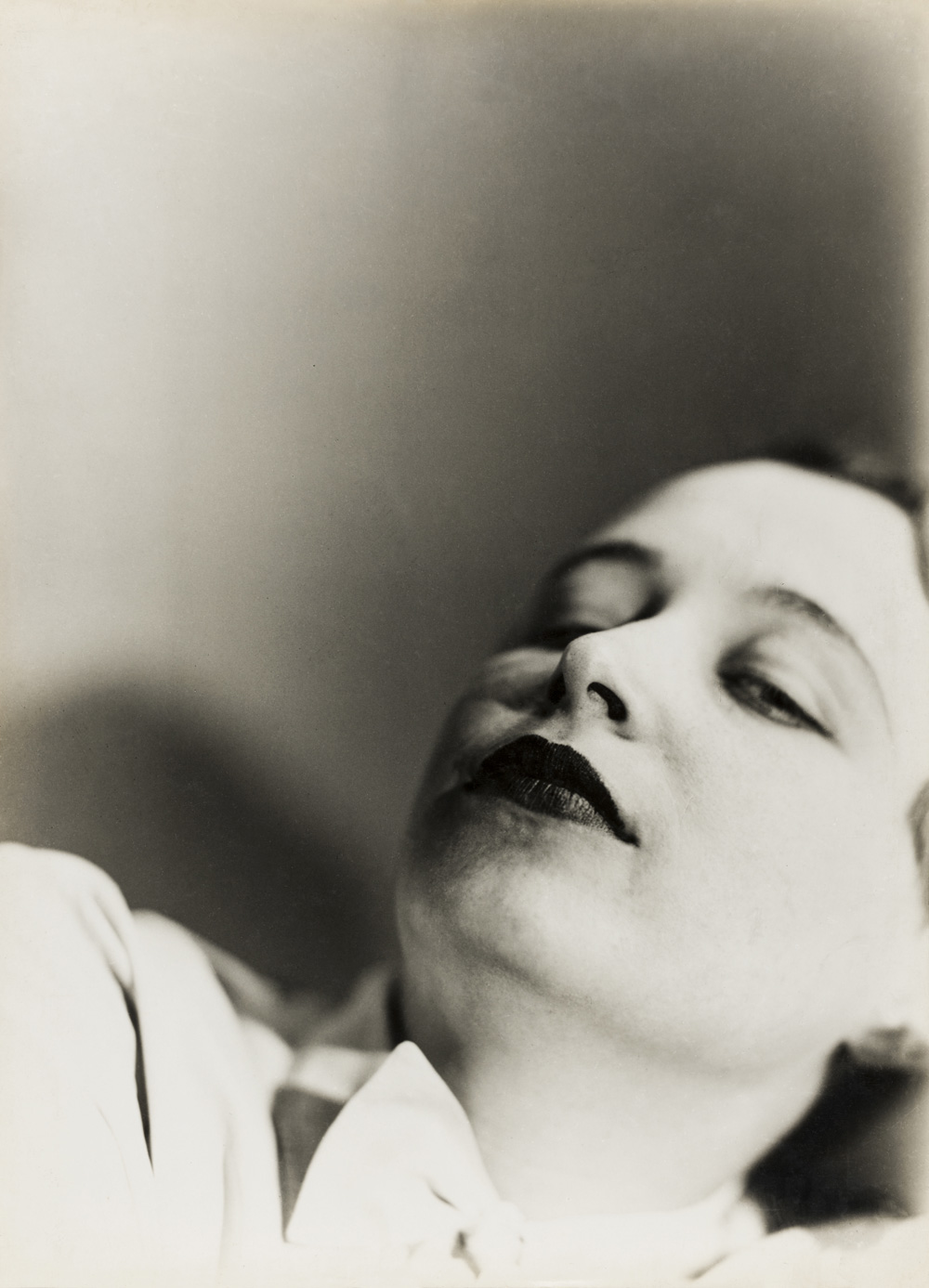
Florence Henri (Swiss born United States, 1893-1982) 'Porträtkomposition (Erica Brausen)' 1931


Florence Henri (Swiss born United States, 1893-1982)
Porträtkomposition (Erica Brausen)
1931
Foto: © Galleria Martini and Ronchetti, Genova, Italy


Erwin Blumenfeld (American born Germany, 1897-1969) 'Totenschädel / Skull' 1932/1933


Erwin Blumenfeld (American born Germany, 1897-1969)
Totenschädel / Skull
1932/1933
Foto: © The Estate of Erwin Blumenfeld


Man Ray (American, 1890-1976) 'Electricity' 1931


Man Ray (American, 1890-1976)
Electricity
1931
Photoengraving
26 x 20.6cm
Foto: Christian P. Schmieder, München
© Man Ray Trust / 2015, ProLitteris, Zurich


Man Ray (American, 1890-1976) 'Rayograph (spiral)' 1923


Man Ray (American, 1890-1976)
Rayograph (spiral)
1923
Photogram
Gelatin silver paper
26.6 x 21.4cm
Foto: Christian P. Schmieder, München
© Man Ray Trust / 2015, ProLitteris, Zurich


Herbert Bayer (American born Austria, 1900-1985) 'Einsamer Grossstädter / Lonely city slickers' 1932/1969


Herbert Bayer (American born Austria, 1900-1985)
Einsamer Grossstädter / Lonely city slickers
1932/1969
Photomontage
Gelatin silver paper
35.3 x 28cm
Foto: Christian P. Schmieder, München
© 2015, ProLitteris, Zurich


Artistic polymath Herbert Bayer was one of the Bauhaus’s most influential students, teachers, and proponents, advocating the integration of all arts throughout his career. Bayer began his studies as an architect in 1919 in Darmstadt. From 1921 to 1923 he attended the Bauhaus in Weimar, studying mural painting with Vasily Kandinsky and typography, creating the Universal alphabet, a typeface consisting of only lowercase letters that would become the signature font of the Bauhaus. Bayer returned to the Bauhaus from 1925 to 1928 (moving in 1926 to Dessau, its second location), working as a teacher of advertising, design, and typography, integrating photographs into graphic compositions.

He began making his own photographs in 1928, after leaving the Bauhaus; however, in his years as a teacher the school was a fertile ground for the New Vision photography passionately promoted by his close colleague László Moholy-Nagy, Moholy-Nagy’s students, and his Bauhaus publication Malerei, Photographie, Film (Painting, photography, film). Most of Bayer’s photographs come from the decade 1928-38, when he was based in Berlin working as a commercial artist. They represent his broad approach to art, including graphic views of architecture and carefully crafted montages.

In 1938 Bayer emigrated to the United States with an invitation from Alfred H. Barr, Jr., founding director of The Museum of Modern Art, to apply his theories of display to the installation of the exhibition Bauhaus: 1919-28 (1938) at MoMA. Bayer developed this role through close collaboration with Edward Steichen, head of the young Department of Photography, designing the show Road to Victory (1942), which would set the course for Steichen’s influential approach to photography exhibition. Bayer remained in America working as a graphic designer for the remainder of his career.

Introduction by Mitra Abbaspour, Associate Curator, Department of Photography, 2014 on the MoMA website [Online] Cited 01/10/2021.


Herbert Bayer (American born Austria, 1900-1985) 'Self portrait' 1932


Herbert Bayer (American born Austria, 1900-1985)
Self portrait
1932
Photomontage
Gelatin silver paper
35.3 x 27.9cm
Foto: Christian P. Schmieder, München
© 2015, ProLitteris, Zurich


Genia Rubin (Russian, 1906-2001) 'Lisa Fonssagrives. Robe: Alix (Madame Grès)' 1937


Genia Rubin (Russian, 1906-2001)
Lisa Fonssagrives. Robe: Alix (Madame Grès)
1937
Gelatin silver paper
30.3 x 21.5cm
Foto: Christian P. Schmieder / Sammlung Siegert, München
© Sheherazade Ter-Abramoff, Paris


Genia Rubin (Russian, 1906-2001)

Genia Rubin (actually Jewgeni Germanowitsch Rubin, 1906-2001) was a Russian fashion and portrait photographer and painter .

Rubin left Russia in 1927 and initially assisted the cameraman Karl Freund in Berlin. He then studied photography at AGFA IG Farben. In 1929 Rubin went to Paris, where he worked as a still photographer in the Pathé film studios and as a portrait photographer. In 1931 he returned to Berlin, met the photographer Rolf Mahrenholz and opened his own photo studio on Berlin’s splendid boulevard, the Kurfürstendamm. It was soon discovered and launched by Franz Wolfgang Koebner, editor-in-chief of the popular magazines Das Magazin and Elegante Welt. In 1935 Rubin moved back to Paris, where he met Harry Ossip Meerson; after his departure for America Meerrson took over his studio. During this time Rubin photographed fashion for “Femina”, Harper’s Bazaar and Australian “The Home”. After the war he met the English court photographer Baron (Stirling Henry Nahum); until 1956 he worked alternately as a “fashion guest photographer” in “Baron’s Studios” in London and as a Parisian photo correspondent for the Daily Express.

Rubin had started to paint in Paris at this time. Through his acquaintance with André Breton, for example, he came into contact with contemporary painting in Paris and was among other things. In 1947 he took part in the international surrealist exhibition at the Maeght Gallery .

In 1957 Rubin stopped photographing fashion and took pictures of parks, gardens, palaces and art objects in France, England and Italy for “Maison et Jardin” (“House and Garden”, Condé-Nast ). From 1959 he devoted himself again to modern painting, also as a collector.

Text translated from the German Wikipedia website


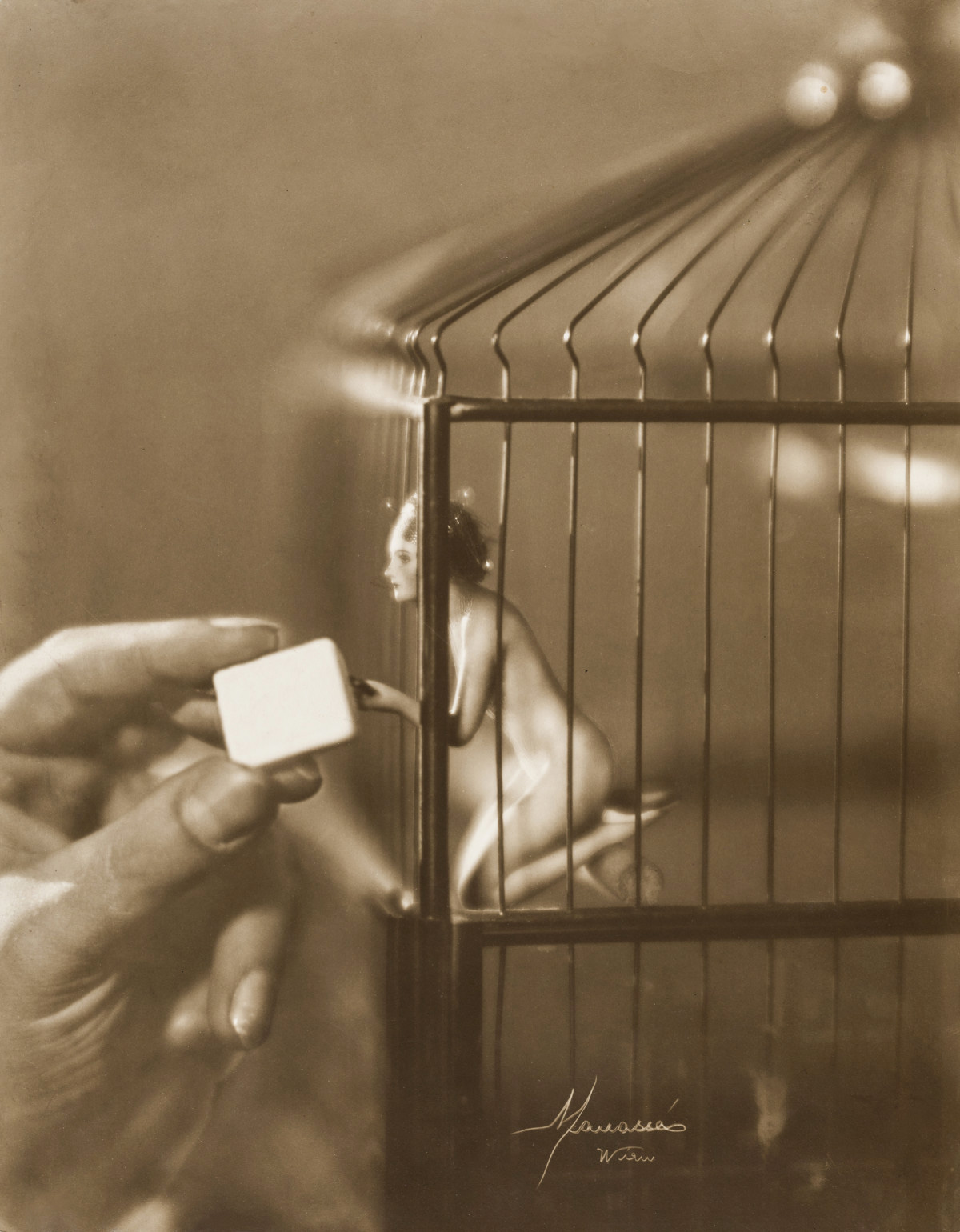
Atelier Manassé. 'Mein Vogerl / My bird' c. 1928


Atelier Manassé
Mein Vogerl / My bird
c. 1928
Gelatin silver print
Foto: © IMAGNO/Austrian Archives


Studio Manasse

“… Olga Solarics (1896-1969) and her husband Adorjan von Wlassics (1893-1946) ran the Manasse’ Foto-Salon in Vienna from 1922-1938. Olga seems to have been the one interested in the photographic nude. She (or they) exhibited at the 1st International Salon of Nude Photography in Paris in 1933…”

“… Studio Manasse, which flourished in the 1930s in Vienna, captured more than just portrait photography bursting with erotic charge; it immortalised the fluid state of beauty and the ‘new woman’: confident in her own sexuality as she struggled to redefine her position in the modern world. Each picture offers a conflict of concepts, as provocative poses are presented in such traditional roles that the cynicism intended renders them humorously absurd. Adorjan and Olga Wlassics, a husband-and-wife team, founded Studio Manasse in the early 1920s. The first Manasse illustrations appeared in magazines in 1924, a booming industry at the time, as the movie industry skyrocketed and publications aimed to satisfy a public obsessed with glimpses into the world of glamour. Attracting some of the leading ladies of the time from film, theatre, opera, and vaudeville, Studio Manasse created masterpieces, employing all the techniques of makeup, retouching, and overpainting to keep their subjects happy while upholding an uncompromised artistic vision. Moulded bodies were dreams with alabaster or marble-like skin; backgrounds were staged so that the photographer could control each environment. And as their art found a home, the Wlassics found themselves able to afford a style of life similar to those reflected in their photographs. Their clients ran the gamut, from the advertising agencies to private buyers. When the Wlassics opened a new studio in Berlin, their business in Vienna was managed more and more by associates, until 1937, when the firm’s name was sold to another photographer. Adorjan passed away just 10 years later; Olga remarried and died in 1969… “

Text from the Historical Ziegfeld Group website Nd [Online] Cited 20/06/2016, No longer available online


Zentrum Architektur Zürich ZAZ Bellerive
Höschgasse 3, CH-8008 Zürich
Phone: 044 545 80 01

Opening hours:
Wednesday – Sunday 2pm – 6pm
Closed Monday and Tuesday

Museum Bellerive website

LIKE ART BLART ON FACEBOOK

Back to top

Exhibition: ‘Forbidden Games: Surrealist and Modernist Photography’ at the Cleveland Museum of Art

Exhibition dates: 19th October 2014 – 11th January 2015

The Kelvin and Eleanor Smith Foundation Exhibition Hall


Anton Stankowski (German, 1906-1998) 'Photo Eye' (Foto-Auge) 1927, printed 1938-1940


Anton Stankowski (German, 1906-1998)
Photo Eye (Foto-Auge)
1927, printed 1938-1940
Gelatin silver print, montage, from negatives with handwork
10.9 x 14.5cm
The Cleveland Museum of Art, John L. Severance Fund
© Stankowski-Stiftung


Love this period in photographic history and this type of work, love them all. Dora Maar your a star!

Marcus


Many thankx to the Cleveland Museum of Art for allowing me to publish the photographs in the posting. Please click on the photographs for a larger version of the image.


“Often wild and recalcitrant, the images presented in Forbidden Games have been somewhat bridled by the curators who present them in broadly structured theme-based spaces. These categories include Advertising and the Picture Magazine, Collage, City, Natural World, Body, Mannequin, Night Life, and Abstraction. The curatorial rubrics guide the visitor through the exhibition and ease the appreciation of “the eye in its wild state” (l’oeil à l’état sauvage), the museum’s declared leitmotif for the show. Three additional spaces highlight the work of individual artists Marcel Lefranq (1916-1974), Georges Hugnet (1906-1974), and Dora Maar (1907-1997) …

It is not difficult to engage in a personal way with a number of photographs in this exhibition. In sharp contrast to the monumental scale of many late twentieth-century and millennial museum photographs, which often seem designed to engulf and visually overwhelm the viewer, these comparatively ‘small scale’ works radiate a quiet integrity often lacking in the former. The photographs on view are powerful, yet neither dominate the room nor repel the viewer. Instead, and refreshingly so, they are the whispered testimonial of artists who practiced unhurried looking and seeing. These images must be approached without haste; only then, do they yield their subtle beauty and secrets.”


Julie Nero, from her excellent review “Forbidden Games: Surrealist and Modern Photography” on the ArtHopper website [Online] Cited 02/01/2015. No longer available online


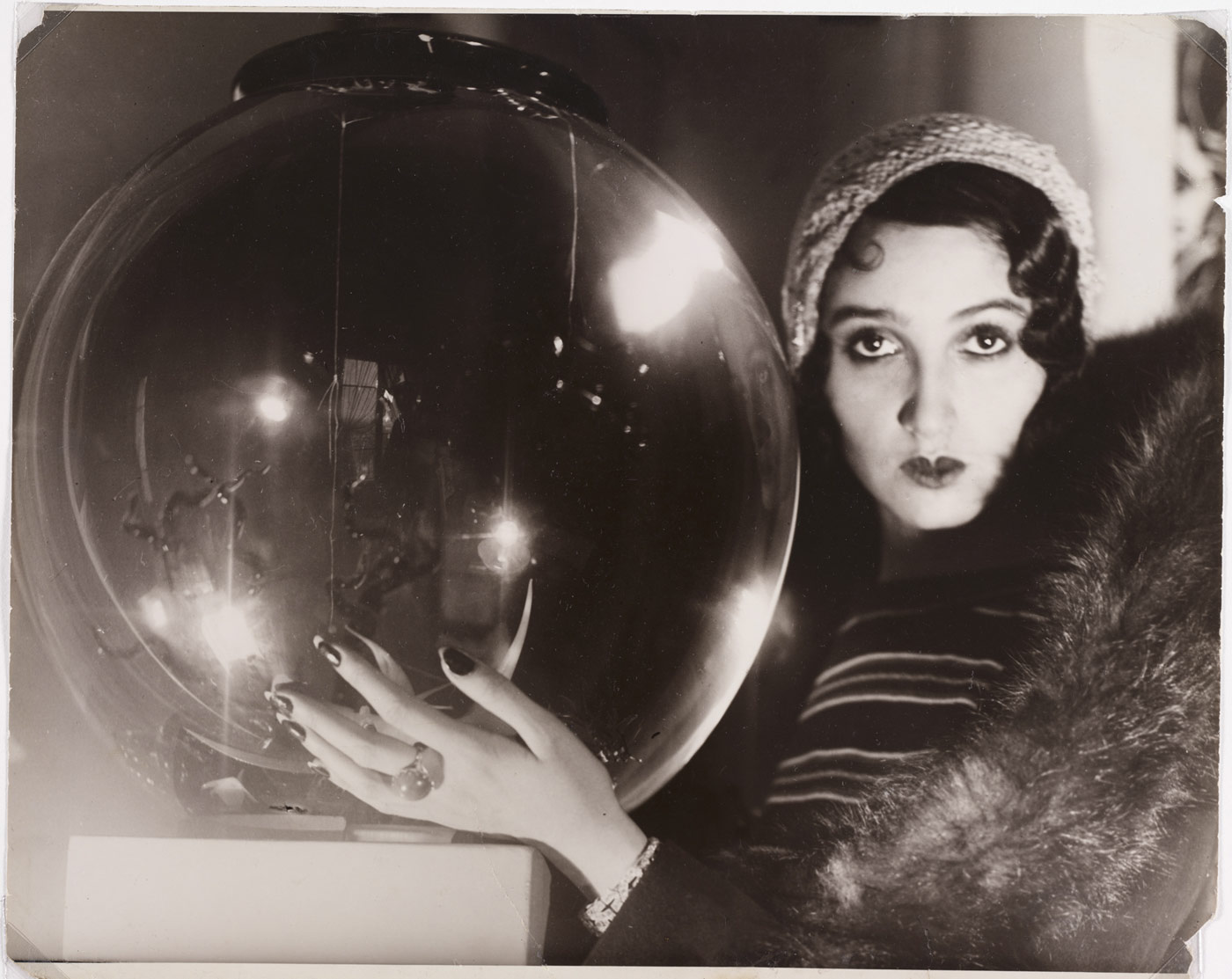
Jacques-Henri Lartigue (French, 1894-1986) 'The Crystal Ball' (La Boule de Verre) 1931


Jacques-Henri Lartigue (French, 1894-1986)
The Crystal Ball (La Boule de Verre)
1931
Gelatin silver print, toned
23.7 x 29.9cm
The Cleveland Museum of Art, John L. Severance Fund
© Ministère de la Culture – France / AAJHL


Raoul Ubac (Belgian, 1910-1985) 'The Battle of the Penthesilea' (Le Combat des Penthésiliées) 1937


Raoul Ubac (Belgian, 1910-1985)
The Battle of the Penthesilea (Le Combat des Penthésiliées)
1937
Gelatin silver print
16.9 x 22.8cm
The Cleveland Museum of Art, John L. Severance Fund
© 2013 Artists Rights Society (ARS), New York / ADAGP, Paris


Man Ray
Emak Bakia
1926


Photo of collector, David Raymond


Photo of collector, David Raymond
Photo credit: Elena Dorfman


The Cleveland Museum of Art presents Forbidden Games: Surrealist and Modernist Photography, a fascinatingly varied group of over 160 surrealist and modernist photographs from the 1920s through the 1940s. The exhibition and accompanying catalogue of the extraordinary vintage prints, acquired by the museum in 2007-2008 from the renowned collection of filmmaker David Raymond, represent the collection’s first appearance in print or at a museum. The exhibition will also include six short films and two books. Forbidden Games will be on view at the Cleveland Museum of Art from October 19, 2014, through January 11, 2015.

Through 167 photographs and illustrated books, the Raymond collection tells two stories: one of a radical moment in early twentieth-century art and the other of an impassioned collector whose adventurous spirit and vision harmonised perfectly with his subject. Beginning in the 1990s, art collector and filmmaker David Raymond judiciously sought out vintage prints from the 1920s through the 1940s that reflect “the eye in its wild state” (l’oeil a l’état sauvage), remaining true to the spirit of André Breton, a founder of surrealism. Raymond’s holdings of surrealist and modernist photography were distinguished by their quality, breadth, and rarity of subject matter. In 2007, the Cleveland Museum of Art made a major, transformative acquisition by procuring that collection, one of the most important holdings of twentieth-century surrealist photography that remained in private hands.

Vertiginous camera angles, odd croppings, and exaggerated tones and perspectives are hallmarks of the two principal photographic movements of the period, surrealism and modernism. As with surrealist efforts in other media, artists making photographs also aimed to explore the irrational and the chance encounter – magic and the mundane – filtered through the unconscious defined by Sigmund Freud. Eventually, photography became a preeminent tool of surrealist visual culture.

Artists from fourteen countries, representing diverse artistic pathways and divergent attitudes toward photography, come together in this collection. Many of the photographs reflect Parisian circles, with masterful works by Man Ray, Brassaï, Maurice Tabard, and Roger Parry. Soviet Russia is represented by Alexander Rodchenko and El Lissitzky; Germany by László Moholy-Nagy and Erwin Blumenfeld, among others. In addition to these notable artists, the collection features many photographers whose work is not as well known in the United States, including Horacio Coppola of Argentina, Emiel van Moerkerken of Holland, and Marcel-G. Lefrancq of Belgium. A highlight of the collection is a grouping of 23 works by Dora Maar, a female photographer with a strong voice in surrealist Paris.

“We are proud to celebrate this important acquisition with the first in-depth examination of a segment of our increasingly important collection of photography,” said Dr. William M. Griswold, museum director. “David Raymond is a judicious and passionate collector who assembled his collection with astute judgment and connoisseurship, seeking out works that reflect l’oeil à l’état sauvage – the eye in its wild state, a tenet of surrealism supplied by André Breton, founder of the first surrealist group in Paris.”

“The Cleveland Museum of Art made a major, transformative acquisition by procuring the David Raymond collection, one of the most important holdings of twentieth-century surrealist photography that remained in private hands,” said Barbara Tannenbaum, the museum’s curator of photography. “Forbidden Games offers the public its first chance to view Raymond’s collection and through it, to vicariously experience an exhilarating, sometimes harrowing period of revolutionary social and cultural change.”

Forbidden Games is accompanied by a 240-page catalogue by Tom Hinson, curator emeritus, who tells the story of how the collection came to the museum and discusses the philosophy and the psychology behind Raymond’s collecting style; photo historian Ian Walker of the University of South Wales, who sets the photographs into historical and historiographic contexts; and independent curator Lisa Kurzner, who delves into topics of special interest ranging from examinations of techniques such as photograms and photo collage to explications of the symbolism of the mannequin and biographical studies of Maar and Hugnet. The catalogue, distributed by Yale University Press (Hard cover / $39.95, soft cover / $29.95.)

This exhibition is supported by a grant from the Robert Mapplethorpe Foundation and was developed in part through the generosity of Mark Schwartz and Bettina Katz. The Cleveland Museum of Art is generously funded by Cuyahoga County residents through Cuyahoga Arts and Culture. The Ohio Arts Council helped fund this exhibition with state tax dollars to encourage economic growth, educational excellence, and cultural enrichment for all Ohioans.

Text from the Cleveland Museum of Art website


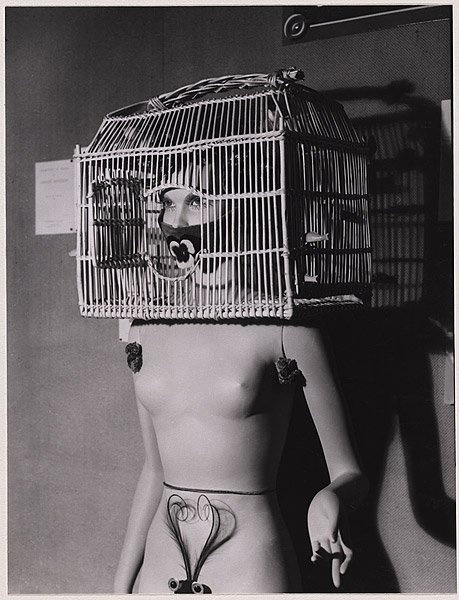
Raoul Ubac (French, 1910-1985) 'Mannequin d'Andre Masson' 1938


Raoul Ubac (French, 1910-1985)
Mannequin d’Andre Masson
1938


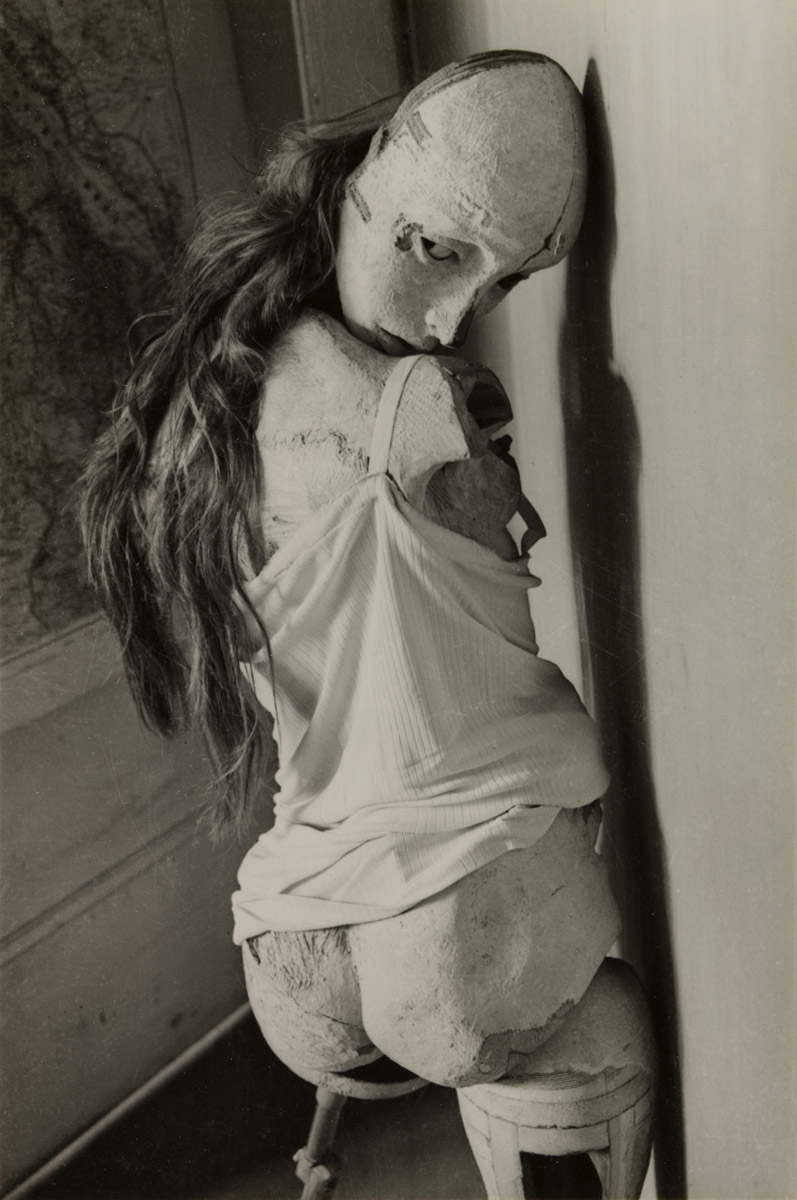
Photographed by Raoul Ubac, André Masson’s Mannequin (1938) was one of sixteen artist-decorated dress-shop dummies on view at the 1938 Paris Exposition Internationale du Surréalisme. Probably the most well-known mannequin of the infamous installation, the head of Masson’s dummy is framed in a wicker bird-cage. Nearby, in the same area devoted to the “Mannequin,” a theme addressed ubiquitously in countless surrealist works, Hans Bellmer’s dismembered Poupée (1936, below) is on view. While both works symbolically objectify and victimise the female ‘body,’ Bellmer’s disturbing Poupée, unlike Masson’s somewhat playful Mannequin, darkly insinuates sexual torture and murder.

Text by Julie Nero


Hans Bellmer (German, 1902-1975) 'The Doll' (La Poupée) 1936


Hans Bellmer (German, 1902-1975)
The Doll (La Poupée)
1936
Gelatin silver print
11.7 x 7.8 cm
The Cleveland Museum of Art,  John L. Severance Fund
© 2013 Artists Rights Society (ARS), New York / ADAGP, Paris


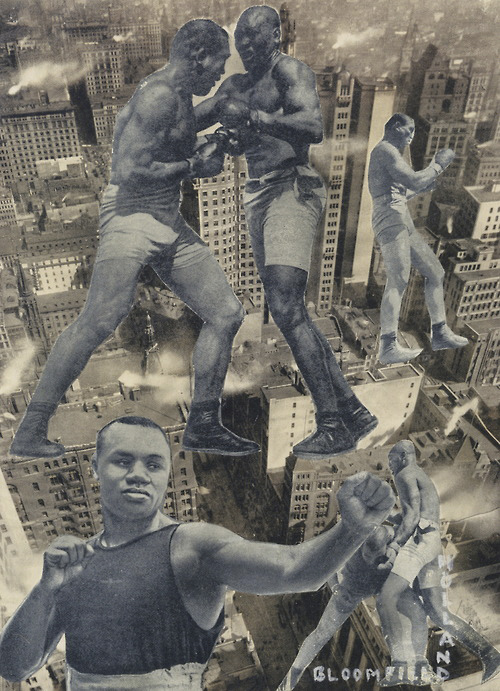
Erwin Blumenfeld (American, 1897-1969) 'Boxers over New York' 1920


Erwin Blumenfeld (American, 1897-1969)
Boxers over New York
1920
Photomontage


A 1920 photo-collage of boxers fighting over New York, an aerial shot of the city overlaid with silver print cut-outs of Jack Johnson and Jim Jeffries, the Great White Hope, duking it out like gods in the sky. It was made by Erwin Blumenfeld, who signed the work Blumenfeldada. (Many of these artists cut and pasted their names as readily as they cut and pasted images.)

Text by Sarah Boxer (NY Times)


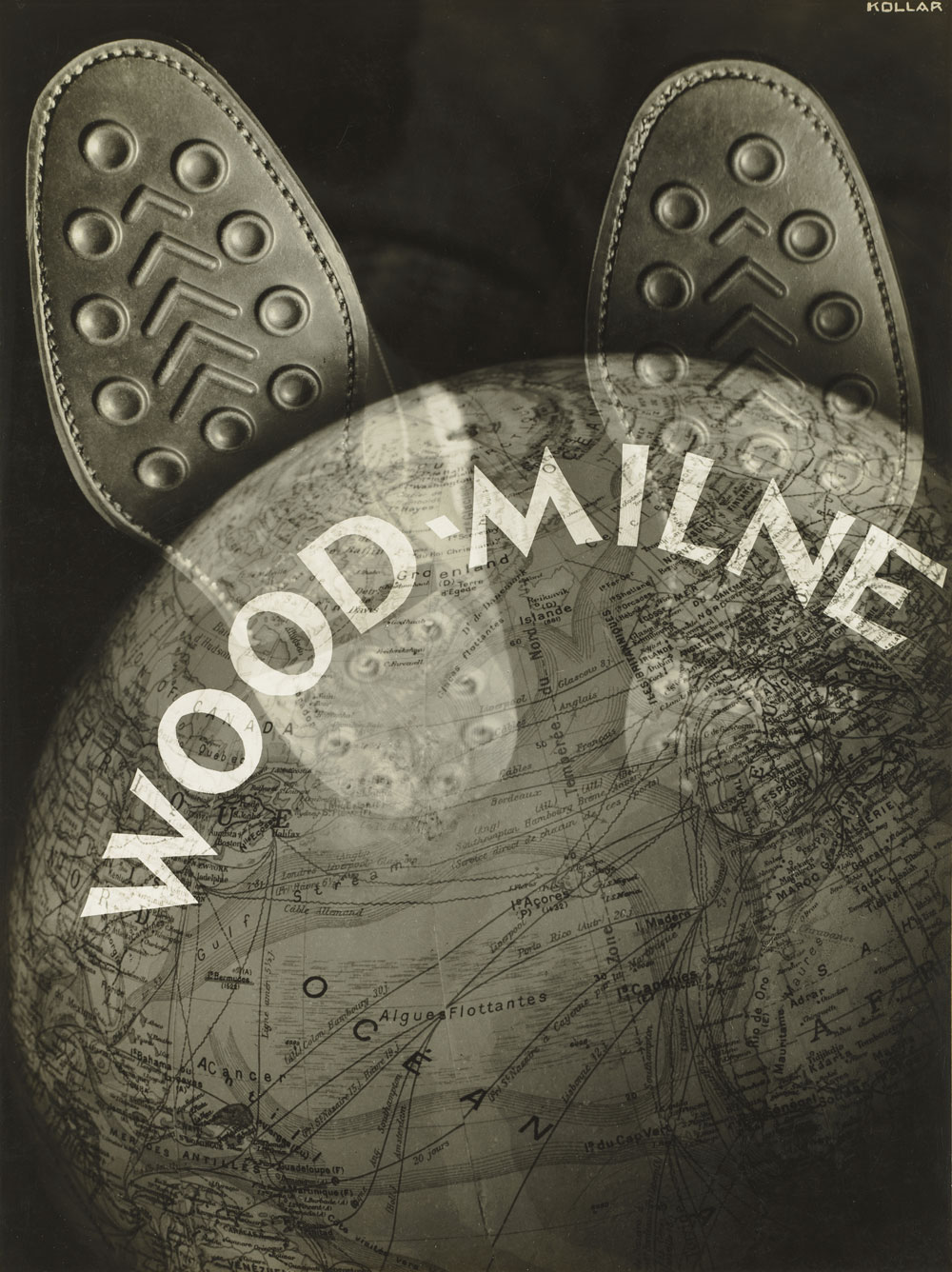
François Kollar (Slovak, 1904-1979) 'Wood-Milne' 1930


François Kollar (Slovak, 1904-1979)
Wood-Milne
1930
Gelatin silver print, montage
37.5 x 28.1cm
The Cleveland Museum of Art, John L. Severance Fund
© Ministère de la Culture / Médiathèque du Patrimoine, Dist. RMN


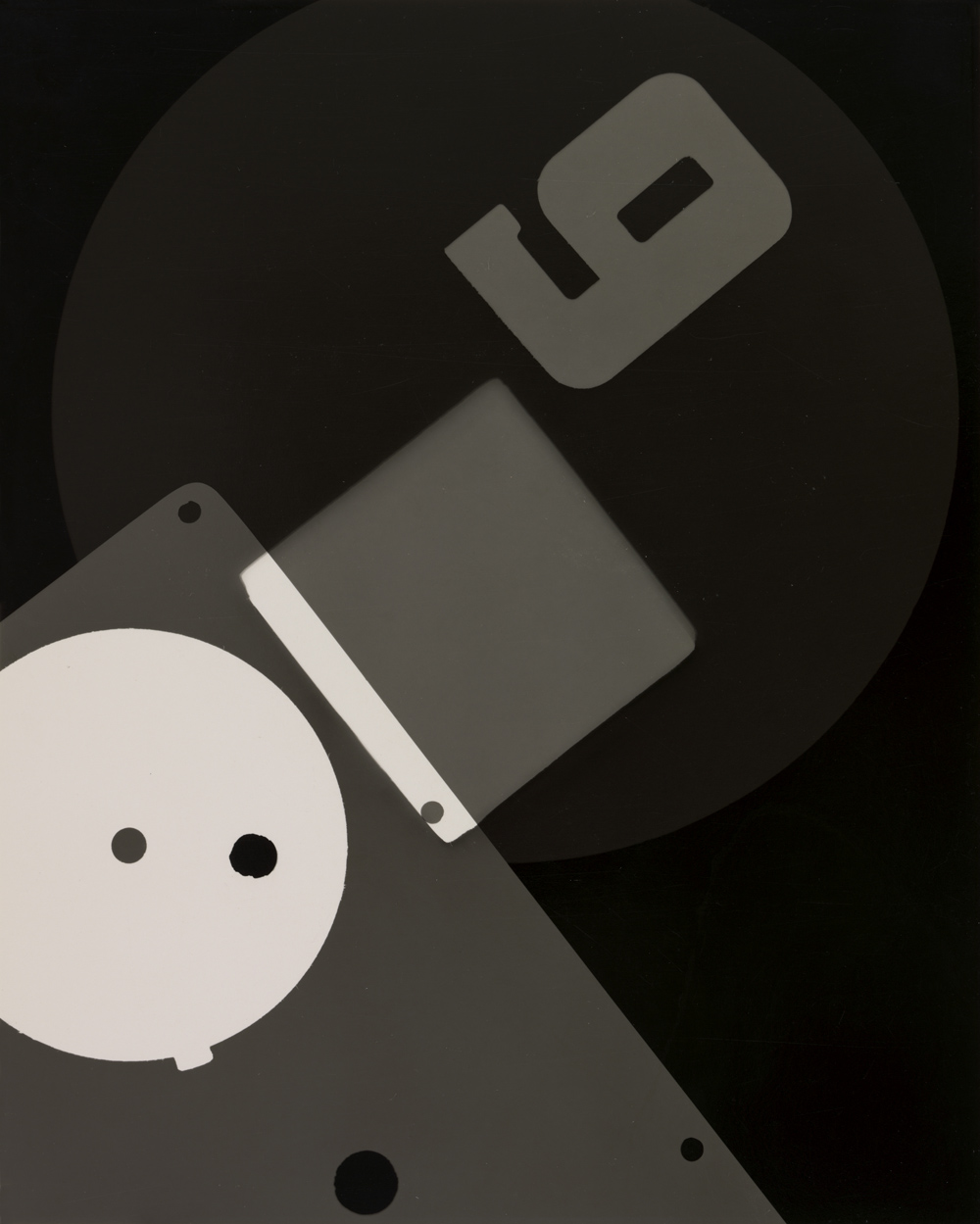
Edward Quigley (American, 1898-1977) 'Photogram (Number 9)' 1931


Edward Quigley (American, 1898-1977)
Photogram (Number 9)
1931
Gelatin silver print, photogram
20.7 x 16.6cm
The Cleveland Museum of Art, John L. Severance Fund


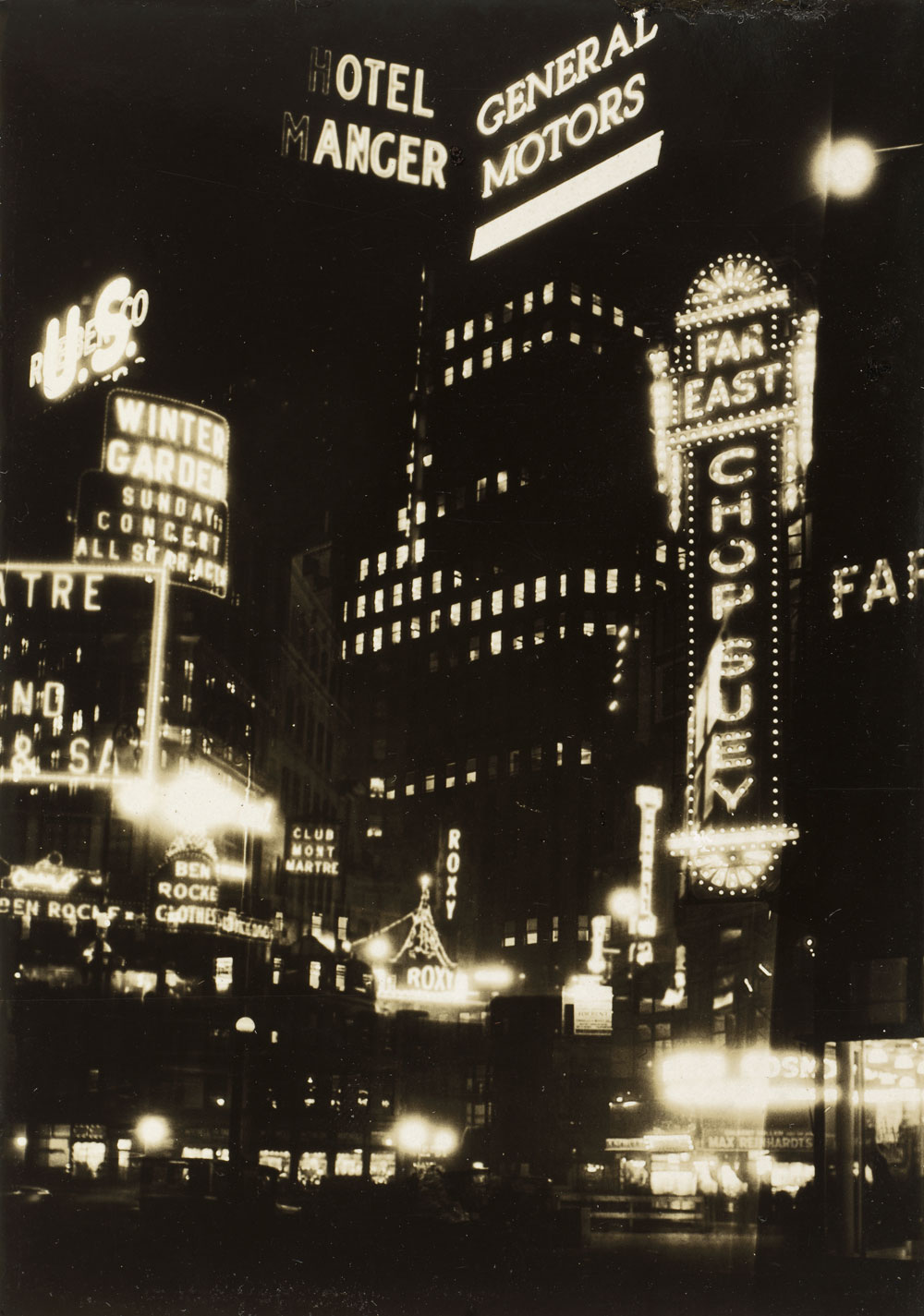
Thurman Rotan (American, 1903-1991) 'New York Montage' 1928


Thurman Rotan (American, 1903-1991)
New York Montage
1928
Gelatin silver print, montage
11.5 x 8.2cm
The Cleveland Museum of Art, John L. Severance Fund


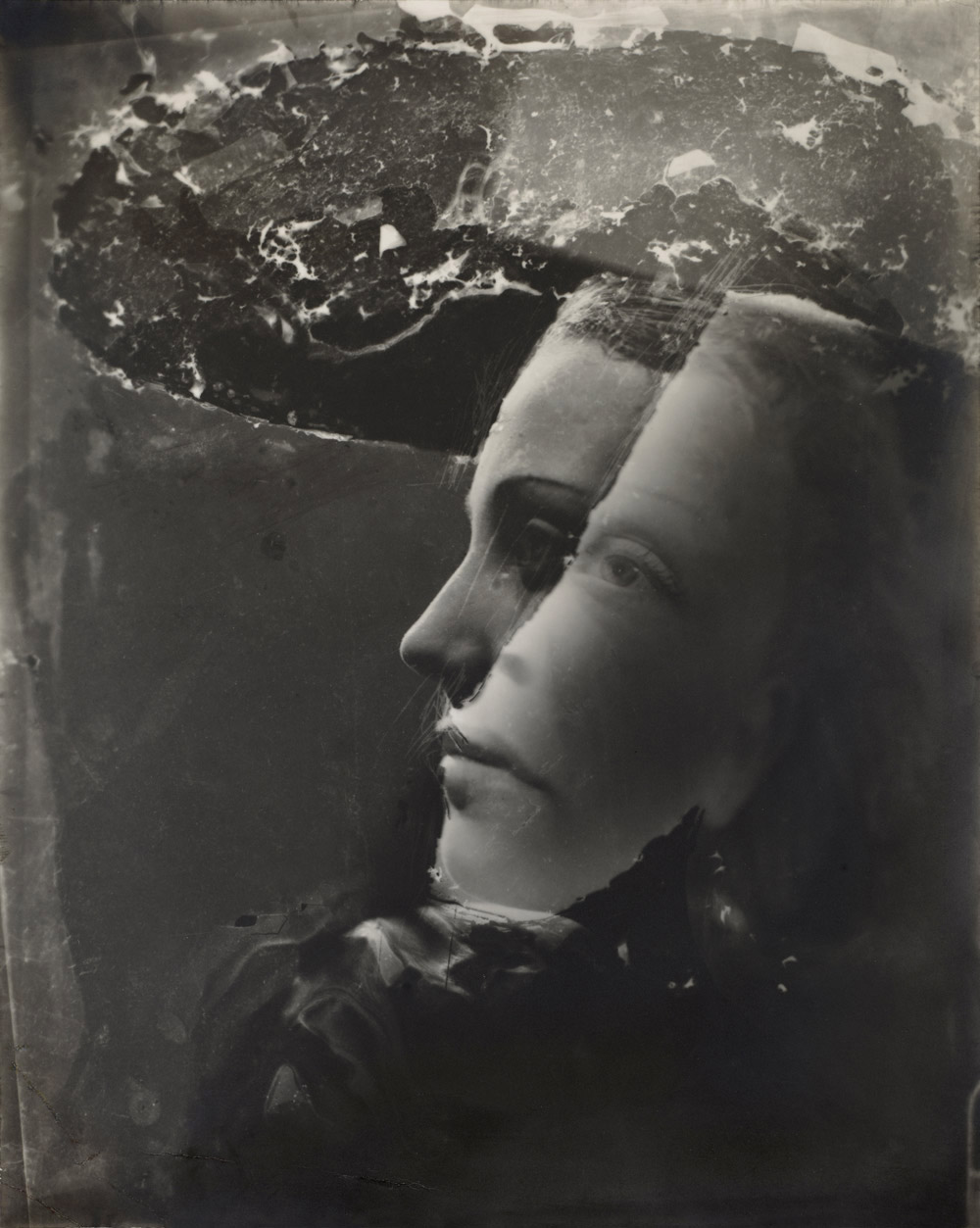
Dora Maar (French, 1907-1997) 'Double Portrait with Hat' c. 1936-1937


Dora Maar (French, 1907-1997)
Double Portrait with Hat
c. 1936-1937
Gelatin silver print, montage, from negatives with handwork
29.7 x 23.8cm
The Cleveland Museum of Art, Gift of David Raymond
© 2013 Artists Rights Society (ARS), New York/ADAGP


In Double Portrait with Hat (1936-1937), Dora Maar radically altered and reconfigured photographic materials to generate an image. In her quietly gripping self-portrait, Maar cut and scraped directly into two negatives to create a heavy and forbidding halo above a torn and divided self. Works such as these… explore the formal definition and limits of photographic ‘content’ and anticipate the experiments of non-narrative filmmakers Stan Brakhage and Jonas Mekas of the 1960s and 1970s.

Text by Julie Nero


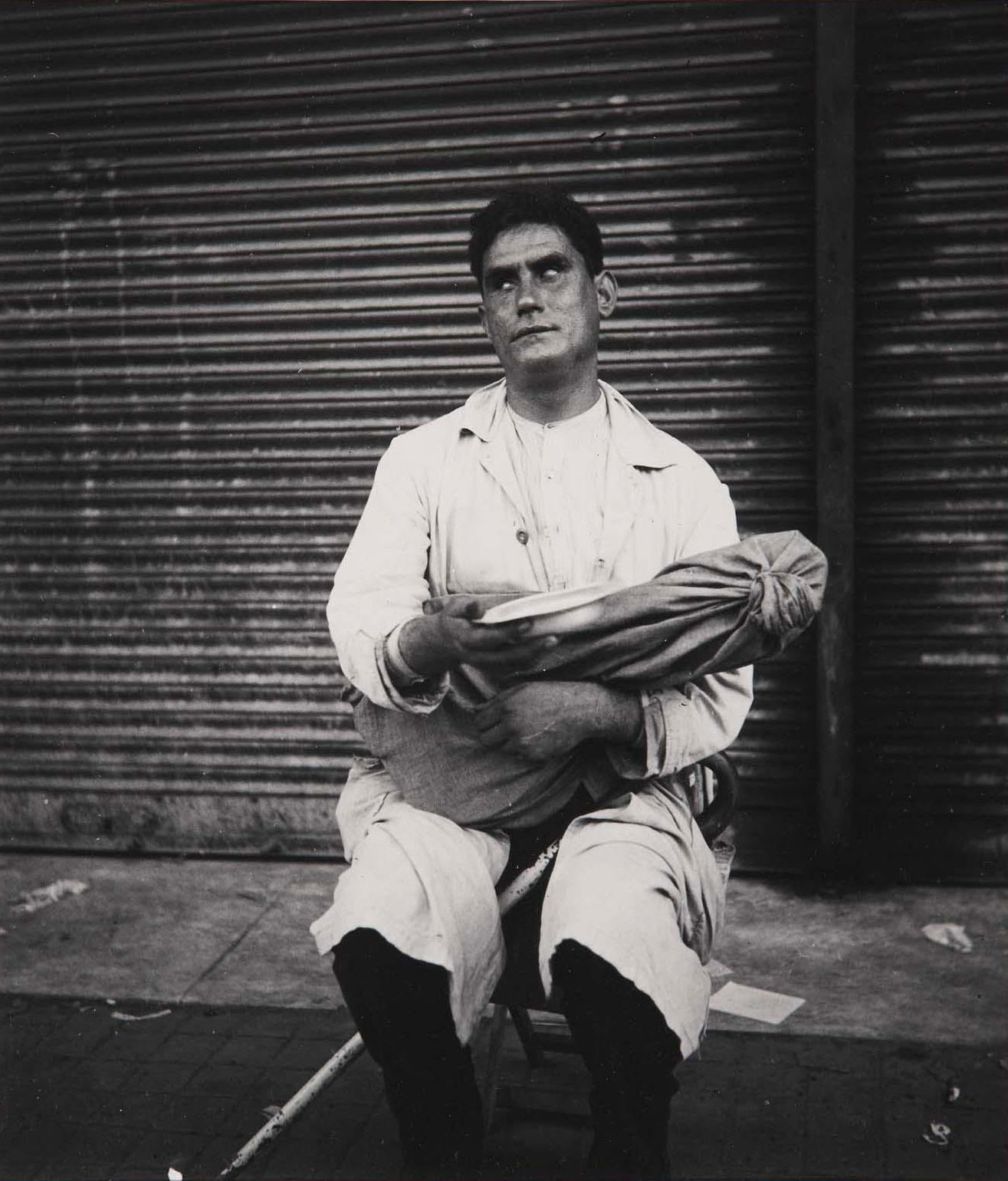
Dora Maar (French, 1907-1997) 'Mendiant aveugle' (Blind Beggar) 1934


Dora Maar (French, 1907-1997)
Mendiant aveugle (Blind Beggar)
1934
Vintage gelatin silver print
30 x 23.9cm


The Second Spanish Republic fascinated many of the photographers active in the international context during the first half of the 20th century, such as Henri Cartier-Bresson, Man Ray and Dora Maar. The latter travelled to Barcelona in the summer of 1933; there, imbued with the spirit of the flâneur (Baudelaire’s stroller looking for chance encounters), she wandered through the city taking photographs of anonymous characters. In Mendiant aveugle (Blind Beggar), Dora Maar felt drawn to blindness, a motif that had been recurrent in photography from its very beginnings, because of the paradox of capturing the image of someone who cannot see. Dora Maar plays a game that is both conceptual and aesthetic, by combining elements that seek symbolic efficacy, in harmony with the interests of Surrealism: the subject’s open eyes, which preserve the gesture of seeing but not the sense of sight, the mysterious wrapped object the beggar is holding in his lap (probably a stringed instrument) and the lowered metallic blinds that serve as a backdrop to the character’s drama. This image is evidence of the affinity that Dora Maar felt with the surrealist group; in the opinion of its early theorists, André Breton and Paul Éluard, artists should “train one’s eyes by closing them” in order to shape their gaze and direct it towards the alternative reality associated with the unconscious mind.

Text by Almudena Cruz Yábar


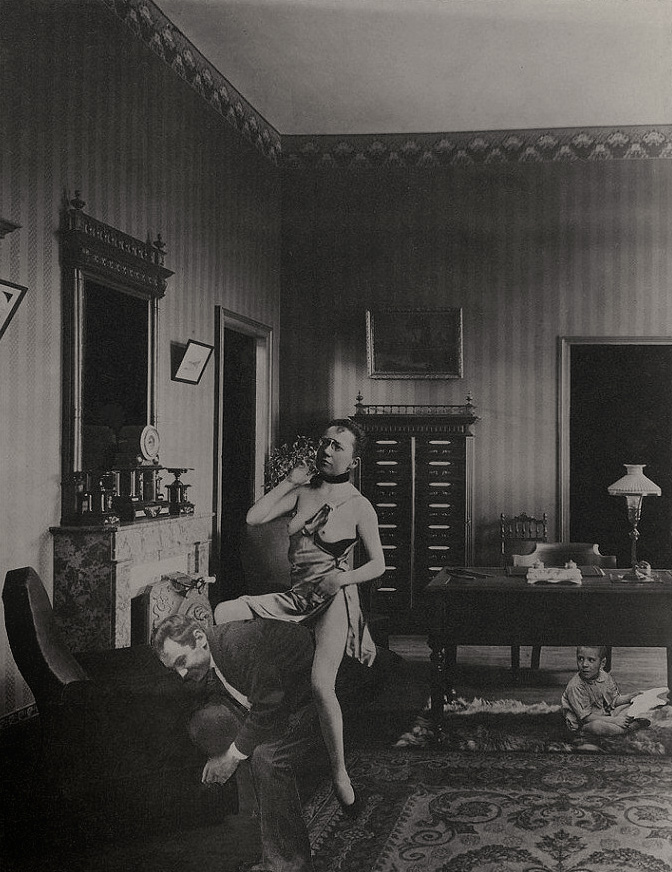
Dora Maar (French, 1907-1997) 'Jeux interdits' (Forbidden Games) 1935


Dora Maar (French, 1907-1997)
Jeux interdits (Forbidden Games)
1935
Photomontage


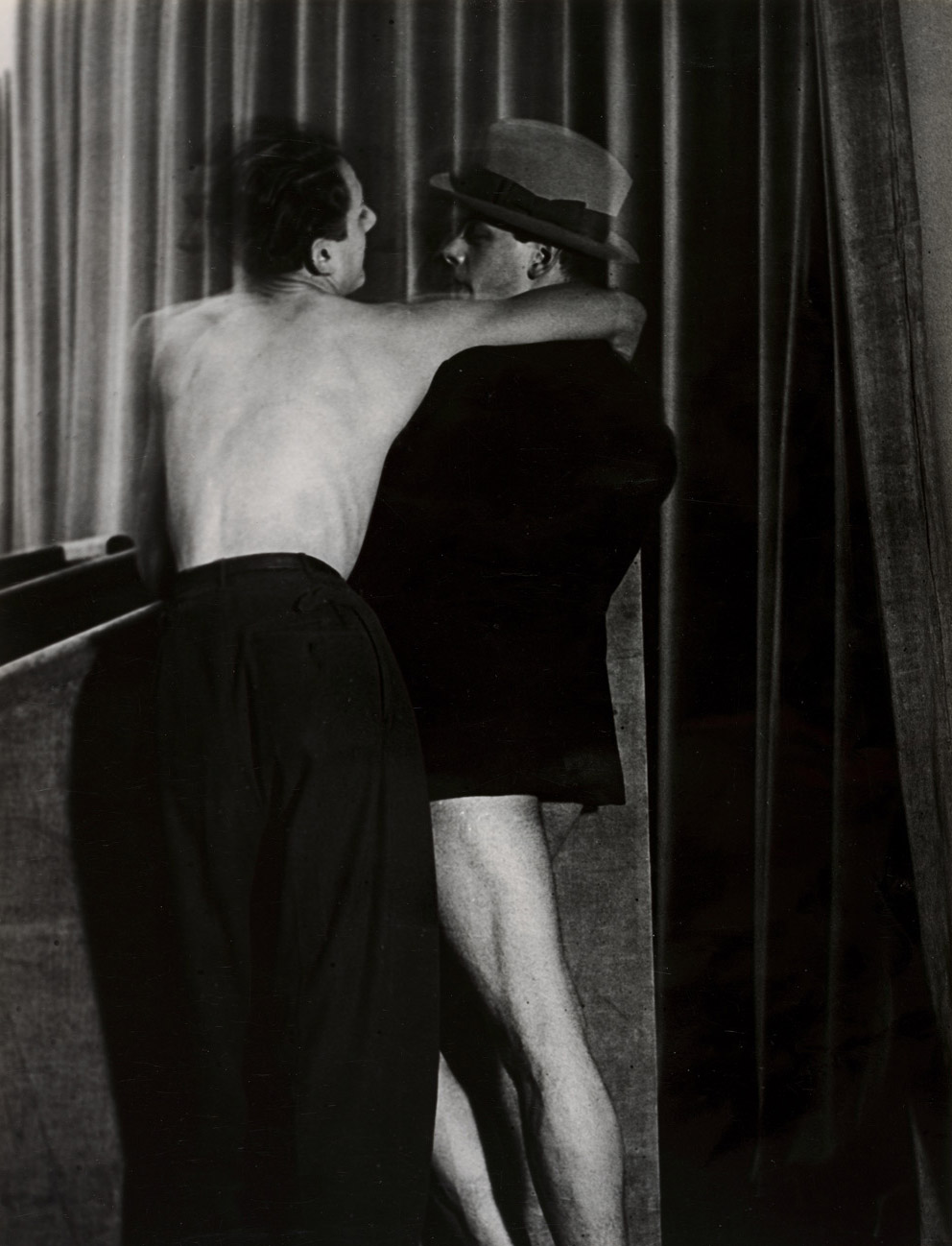
Brassaï (French, 1899-1984) 'Young Couple Wearing a Two-in-One Suit at the Bal de la Montagne Sainte-Geneviève' 1931


Brassaï (French, 1899-1984)
Young Couple Wearing a Two-in-One Suit at the Bal de la Montagne Sainte-Geneviève
1931
Gelatin silver print, ferrotyped
29.8 x 22cm
The Cleveland Museum of Art, John L. Severance Fund
© The Brassaï Estate – RMN


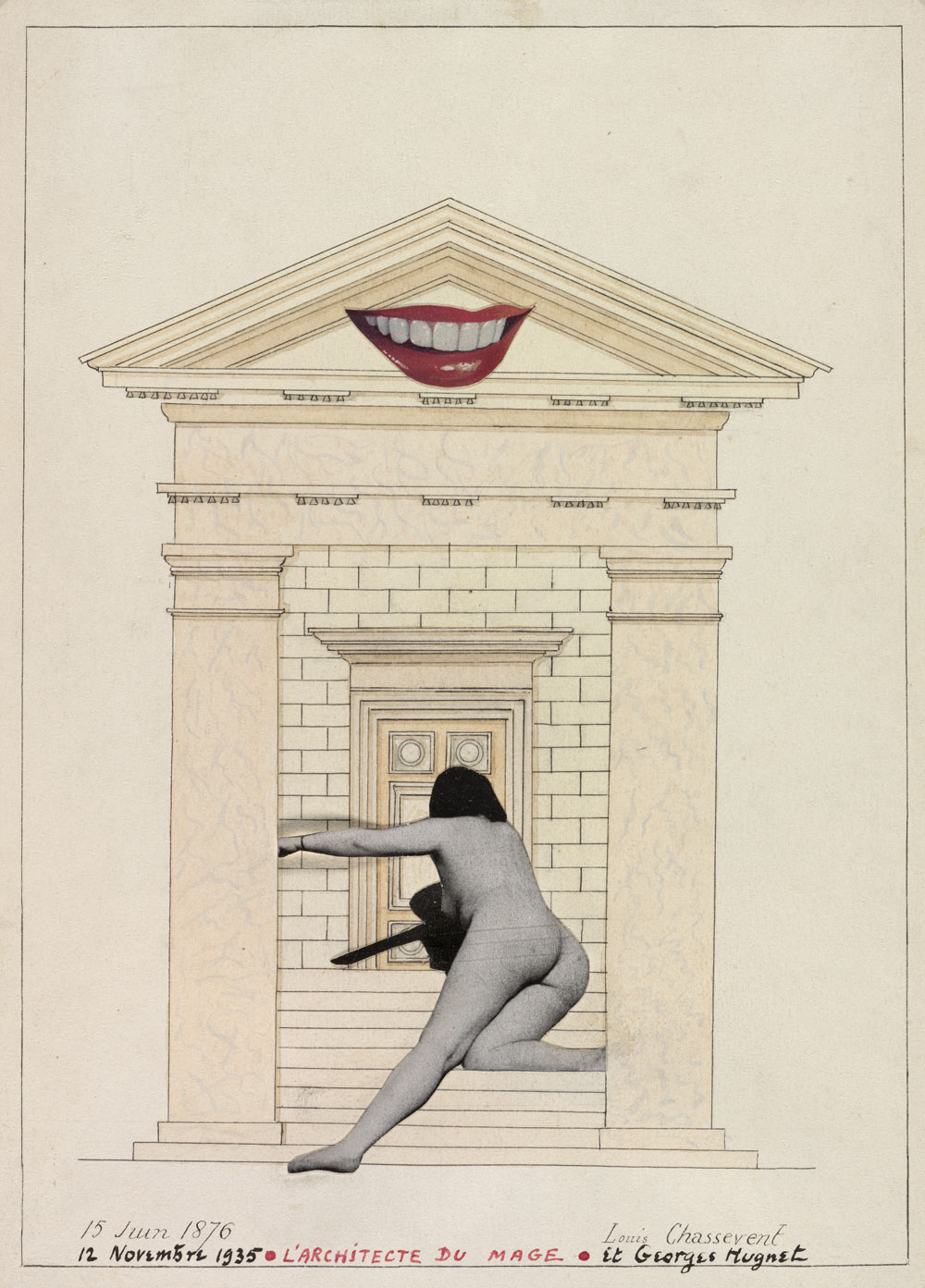
Georges Hugnet (French, 1906-1974) 'The Architect of Magus' 1935


Georges Hugnet (French, 1906-1974)
The Architect of Magus
1935
Collage; photomechanical reproductions on drawing (graphite, watercolour, black pen, and ink)
31.3 x 22.7cm
The Cleveland Museum of Art, John L. Severance Fund
© 2013 Artists Rights Society (ARS), New York / ADAGP, Paris


Cleveland Museum of Art
11150 East Boulevard
Cleveland, Ohio 44106

Opening hours:
Tuesdays, Thursdays, Saturdays, Sundays 10.00am – 5.00pm
Wednesdays, Fridays 10.00am – 9.00pm
Closed Mondays

Cleveland Museum of Art website

LIKE ART BLART ON FACEBOOK

Back to top

Exhibition: ‘RealSurreal. Masterpieces of Avant-Garde Photography Das Neue Sehen 1920-1950. Siegert Collection’ at the Kunstmuseum Wolfsburg

Exhibition dates: 15th November 2014 – 6th April 2015

The artists: Eugène Atget – Herbert Bayer – Hans Bellmer – Aenne Biermann – Brassaï – František Drtikol – Jaromír Funke – Florence Henri – André Kertész – Germaine Krull – Herbert List – Man Ray – László Moholy-Nagy – Albert Renger-Patzsch – August Sander – Josef Sudek – Maurice Tabard – Raoul Ubac – Umbo – Wols – and others


Albert Renger-Patzsch (German, 1897-1966) 'Self-Portrait' 1926/1927


Albert Renger-Patzsch (German, 1897-1966)
Self-Portrait
1926/1927
Gelatin silver paper
16.9 x 22.8cm
Photo: Christian P. Schmider, Munich
© Albert Renger-Patzsch Archiv / Ann and Jürgen Wilde / VG Bild-Kunst, Bonn 2014


Thought photography

Here are some names to conjure with (above). And what an appropriate word “conjure” is to illuminate these images:

: to charge or entreat earnestly or solemnly

: to summon by or as if by invocation or incantation

: to affect or effect by or as if by magic

: to practice magical arts

: to use a conjurer’s tricks

: to make you think of (something)

: to create or imagine (something)


For what is photography, if not magic?

These images are conjured from both the imagination of the artist… and reality itself. One cannot live, be magical, without the other. “Beneath the surface of visible things the irrational, the magical, and the contradictory could be discovered and explored.”

Still waters run deep.

Dr Marcus Bunyan


Many thankx to the Kunstmuseum Wolfsburg for allowing me to publish the photographs in the posting. Please click on the photographs for a larger version of the image.


Brassaï (Hungarian-French, 1899-1984) 'Occasional Magic (Sprouting Potato)' 1931


Brassaï (Hungarian-French, 1899-1984)
Occasional Magic (Sprouting Potato)
1931
Gelatin silver paper
28.8 x 23cm
Photo: Christian P. Schmider, Munich
© ESTATE BRASSAÏ – RMN


František Drtikol (Czech, 1883-1961) 'Circular Segment (Arc)' 1928


František Drtikol (Czech, 1883-1961)
Circular Segment (Arc)
1928
Carbon print
21.3 x 28.7cm
Photo: Christian P. Schmieder, Munich
© František Drtikol – heirs, 2014


Hans Bellmer (German, 1902-1975) 'The Doll' 1935


Hans Bellmer (German, 1902-1975)
The Doll
1935
Gelatin silver paper
17.4 x 17.9cm
Photo: Christian P. Schmieder, Munich
© VG Bild-Kunst, Bonn 2014


Grete Stern (German-Argentine, 1904-1999) 'The Eternal Eye' c. 1950


Grete Stern (German-Argentine, 1904-1999)
The Eternal Eye
c. 1950
Photomontage on gelatin silver paper
39.5 x 39.5cm
Photo: Christian P. Schmieder, Munich
© Estate of Grete Stern courtesy Galería Jorge Mara – La Ruche, Buenos Aires, 2014


Installation view of the exhibition 'RealSurreal' at the Kunstmuseum Wolfsburg

Installation view of the exhibition 'RealSurreal' at the Kunstmuseum Wolfsburg

Installation view of the exhibition 'RealSurreal' at the Kunstmuseum Wolfsburg

Installation view of the exhibition 'RealSurreal' at the Kunstmuseum Wolfsburg


Installation views of the exhibition RealSurreal at the Kunstmuseum Wolfsburg showing at bottom right in the bottom image, Erwin Blumenfeld’s Skull 1932/1933


Is a photograph a true-to-life reproduction of reality, or is it merely a staged image? This year – the 175th anniversary of the invention of photography – the Kunstmuseum Wolfsburg responds to this question with a comprehensive survey of avant-garde photography between 1920 and 1950. The exhibition RealSurreal presents around 200 masterpieces from the eminent Siegert Collection in Munich. This collection, which has never been shown in its entirety, contains photographs from the Neues Sehen (New Vision) movement, covering everything from New Objectivity to Surrealism in Germany, France, and Czechoslovakia.

Das Neue Sehen (New Vision)

Notions about photography’s visual veracity are as old as the art itself. As early as the nineteenth century there were arguments as to whether or not photography – with its mechanical ability to record ‘reality’ – was better suited to portray life more comprehensively and truthfully than other visual arts of the period. An inevitable reaction to what were considered photography’s shortcomings was Pictorialism, which approached photography according to the conventions of painting, in an attempt to lend it more artistic credibility. But around 1920 a new generation of international photographers began reconsidering the specific characteristics of photography as tools for developing it into a more modern method of appropriating reality. Rapid progress in technologising modern society affected the adoption of and attitudes toward photography: convenient cameras that used rolls of film came onto the market in greater numbers, making it easy for even the greenest of amateurs to take photographs. Photographs were increasingly used as illustrations in mass media, and in advertising, leading to a rising demand for accomplished images and professional image makers. These developments also changed the public’s visual habits, so that the New Vision arose as an expression of the perception of this new media-fabricated reality. Positions ranged from the precise recordings of what was seen in portrait and industrial photography, via the use of new framings and perspectives at the Bauhaus, all the way to the photomontage and technical experiments such as the photogram and solarisation, as well as Surrealism’s staged images.

The Mechanical Eye

Photographers of the Neue Sachlichkeit (New Objectivity) movement wanted to show the world as it was. For Albert Renger-Patzsch, photography was the “most dependable tool” for objectively reproducing the visible things of this world, especially the results of modern technology, and in this respect, it was superior to the subjective perception of the human eye. László Moholy-Nagy went a step further, with his famous verdict that “the illiterate of the future will be the person ignorant of the use of the camera as well as the pen.” To the camera he attributed the crucial function of technically expanding human perception. Whilst adequately depicting machines, mass society, and modern metropolitan life: “the photographic apparatus can perfect or supplement our Photographs were increasingly used as illustrations in mass media.” Unusual aspects and viewpoints led to striking images. From a bird’s-eye perspective, buildings and streets became compositions made up of lines and planes, while a low-angle shot could create an unforeseen dynamic and greatly enlarging an object resulted in magical dissociations.

The Real and the Surreal

Ultimately, the Surrealists identified in the “realistic” recording tool of photography yet another artistic means of “écriture automatique,” which André Breton also described as “thought photography.” Beneath the surface of visible things the irrational, the magical, and the contradictory could be discovered and explored. Documentary photographers such as Eugène Atget and Karl Blossfeldt became inspirational figures in this movement. Their work was printed in the Surrealist magazines, because a plant, staged and isolated in a photograph, could trigger all kinds of magical associations beyond its botanical context. Meanwhile manipulated and staged photographs benefitted from the truthfulness of “this is the way it was,” since they could only reinforce their mysterious statements. One of Surrealism’s most important artistic means – the combinatory creation (including, of course, the photomontage) – was particularly effective because heterogeneous visual elements were joined to form new, surprising contexts of meaning. Like Brassaï’s photographs of a nocturnal Paris, Karel Teige’s collages have a surreal quality which can also be found in a different form in Man Ray’s dreamlike photograms. Both staged photography and – with many experiments with photographic techniques, such as multiple exposures, negative printing, and solarisation – strove to achieve the melding of dream and reality, a goal postulated by Breton in his first Surrealist manifesto. In New Vision photography this could generally result in images that could “go either way,” depending on the viewpoint of the real/surreal photographer and observer; they could be seen as sober, objective reproductions of the visible world, or as imaginary, subjective reflections of reality.

The exhibition RealSurreal leads the visitor through Neues Sehen in Germany, Surrealism in Paris, and the avant-garde in Prague, alongside themes such as portraits, nudes, objects, architecture, and experimental. Opening with a prologue of exemplary nineteenth-century photographs which are compared and contrasted with Neues Sehen, one can literally experience the Neues Sehen in the Kunstmuseum Wolfsburg via rare original prints by notable photographers, while rediscovering the broad spectrum and complexity of photographs from real to surreal. Besides approximately 200 photographs, the exhibition contains historical photography books and magazines, as well as rare artists’ books and examples of avant-garde cover design, making it possible to experience this new view of the world.

RealSurreal also features several famous clips from key films by Luis Buñuel, László Moholy-Nagy, Hans Richter, and others, shown continuously in a 45-minute loop, which highlight the fruitful interplay between avant-garde photography and the-then contemporary cinema. Important photographs and photo installations by Nobuyoshi Araki, Gilbert & George, Paul Graham, Andreas Gursky, Cindy Sherman, Jeff Wall, and James Welling, from the Kunstmuseum Wolfsburg’s collection, will also demonstrate that the artistic questions posed by Neues Sehen are still relevant today.

Press release from the Kunstmuseum Wolfsburg website


Erwin Blumenfeld (American born Germany, 1897-1969) 'Skull' 1932/33


Erwin Blumenfeld (American born Germany, 1897-1969)
Skull
1932/1933
Solarisation on gelatin silver paper
29.6 x 24cm
Photo: Christian P. Schmieder, Munich
© The Estate of Erwin Blumenfeld


Josef Sudek (Czech. 1896-1976) 'Plaster Head' c. 1947


Josef Sudek (Czech. 1896-1976)
Plaster Head
c. 1947
Gelatin silver paper
23.5 x 17.5cm
Photo: Christian P. Schmieder, Munich
© Estate of Josef Sudek


Herbert Bayer (Austrian, 1900-1985) 'Lonely Metropolitan' 1932/1969


Herbert Bayer (Austrian, 1900-1985)
Lonely Metropolitan
1932/1969
Photomontage on gelatin silver paper
35.3 x 28cm
Photo: Christian P. Schmieder, Munich
© VG Bild-Kunst, Bonn 2014


Herbert Bayer (Austrian, 1900-1985) 'Self-Portrait' 1932


Herbert Bayer (Austrian, 1900-1985)
Self-Portrait
1932
Photomontage on gelatin silver paper
35.3 x 27.9cm
Photo: Christian P. Schmieder, Munich
© VG Bild-Kunst, Bonn, 2014


Man Ray (American, 1890-1976) 'Electricity' 1931


Man Ray (American, 1890-1976)
Electricity
1931
Photogravure
26 x 20.6cm
Photo: Christian P. Schmieder, Munich
© Man Ray Trust, Paris/ VG Bild-Kunst, Bonn 2014


Man Ray (American, 1890-1976) 'Rayography (spiral)' 1923


Man Ray (American, 1890-1976)
Rayography (spiral)
1923
Photogram on gelatin silver paper
26.6. x 21.4cm
Photo: Christian P. Schmieder, München
© Man Ray Trust, Paris/ VG Bild-Kunst, Bonn 2014


Florence Henri (European born America, 1893-1982) 'Portrait Composition (Erica Brausen)' 1931


Florence Henri (European born America, 1893-1982)
Portrait Composition (Erica Brausen)
1931
Gelatin silver paper
39.9 x 29cm
Photo: Christian P. Schmieder, Munich
© Galleria Martini & Ronchetti, Genova, Italy


Atelier Manassé. 'My Little Bird' c. 1928


Atelier Manassé
My Little Bird
c. 1928
Gelatin silver paper
21 x 16cm
Photo: Christian P. Schmieder, Munich
© IMAGNO/Austrian Archives


Genia Rubin (Russian, 1906-2001) 'Lisa Fonssagives. Gown: Alix (Madame Grès)' 1937


Genia Rubin (Russian, 1906-2001)
Lisa Fonssagives. Gown: Alix (Madame Grès)
1937
Gelatin silver paper
30.3 x 21.5cm
Photo: Christian P. Schmieder / Siegert Collection, Munich
© Sheherazade Ter-Abramoff, Paris


Kunstmuseum Wolfsburg
Abteilung Kommunikation
Hollerplatz 1 38440
Wolfsburg
Phone: +49 (0)5361 2669 69

Opening hours:
Tuesday – Sunday 11am – 6pm
Monday closed

Kunstmuseum Wolfsburg website

LIKE ART BLART ON FACEBOOK

Back to top

Exhibition: ‘The Original Copy: Photography of Sculpture, 1839 to Today’ at The Museum of Modern Art (MoMA), New York

Exhibition dates: 1st August – 1st November 2010


A huge posting of wonderful photographs!

Many thankx to the Museum of Modern Art for allowing me to publish the photographs in the posting. Please click on the photographs for a larger version of the image.


Edward Weston (American, 1886-1958) 'Rubber Dummies, Metro Goldwyn Mayer Studios, Hollywood' 1939 from the exhibition 'The Original Copy: Photography of Sculpture, 1839 to Today' at MoMA, New York, Aug - Nov 2010


Edward Weston (American, 1886-1958)
Rubber Dummies, Metro Goldwyn Mayer Studios, Hollywood
1939
Gelatin silver print
7 9/16 x 9 5/8″ (19.3 x 24.4cm)
The Museum of Modern Art, New York. Gift of Edward Steichen
© 1981 Collection Center for Creative Photography, Arizona Board of Regents


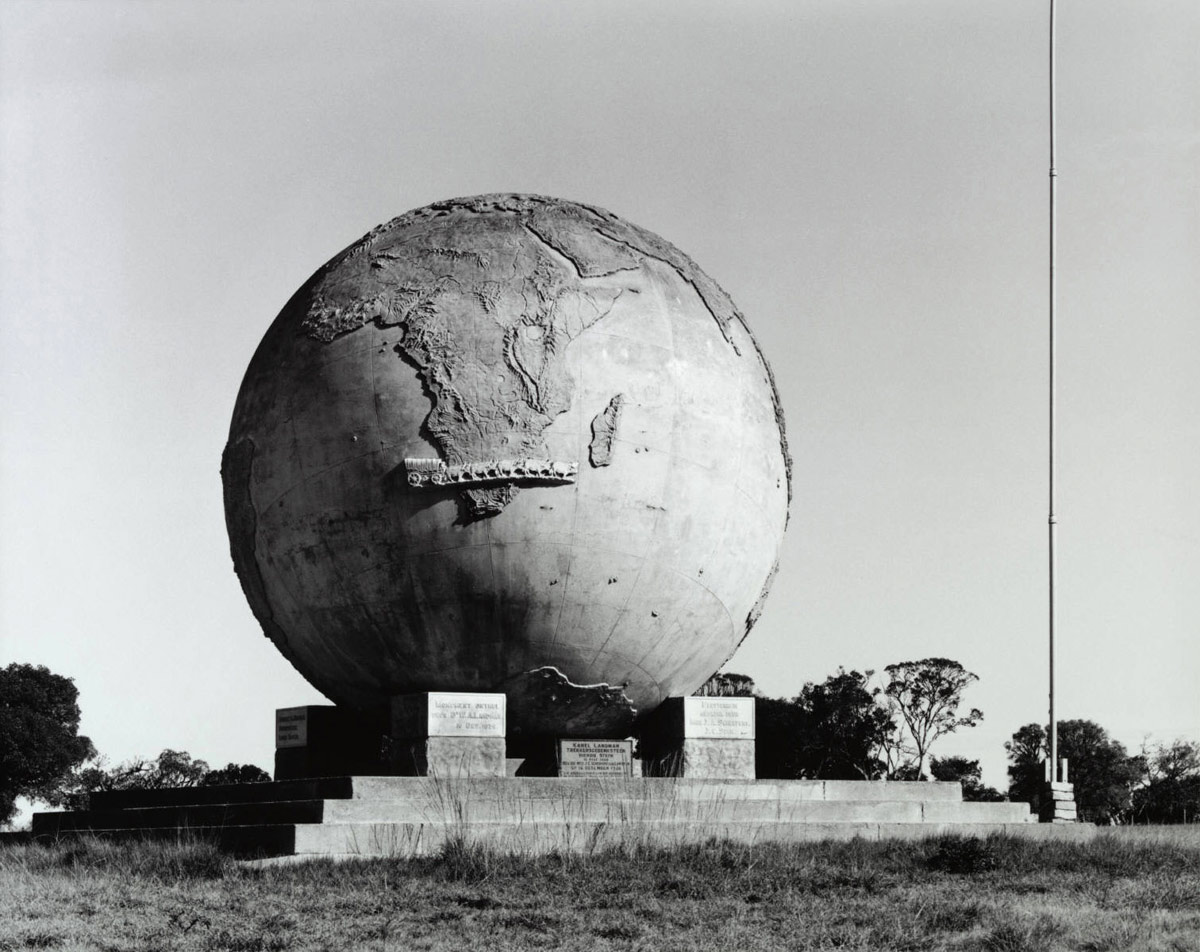
David Goldblatt (South African, 1930-2018) 'Monument to Karel Landman, Voortrekker Leader, De Kol, Eastern Cape' April 10, 1993 from the exhibition 'The Original Copy: Photography of Sculpture, 1839 to Today' at MoMA, New York, Aug - Nov 2010


David Goldblatt (South African, 1930-2018)
Monument to Karel Landman, Voortrekker Leader, De Kol, Eastern Cape
April 10, 1993
Gelatin silver print
10 15/16 x 13 11/16″ (27.9 x 34.8cm)
The Museum of Modern Art, New York. Purchase
© 2010 David Goldblatt. Courtesy David Goldblatt and the Goodman Gallery


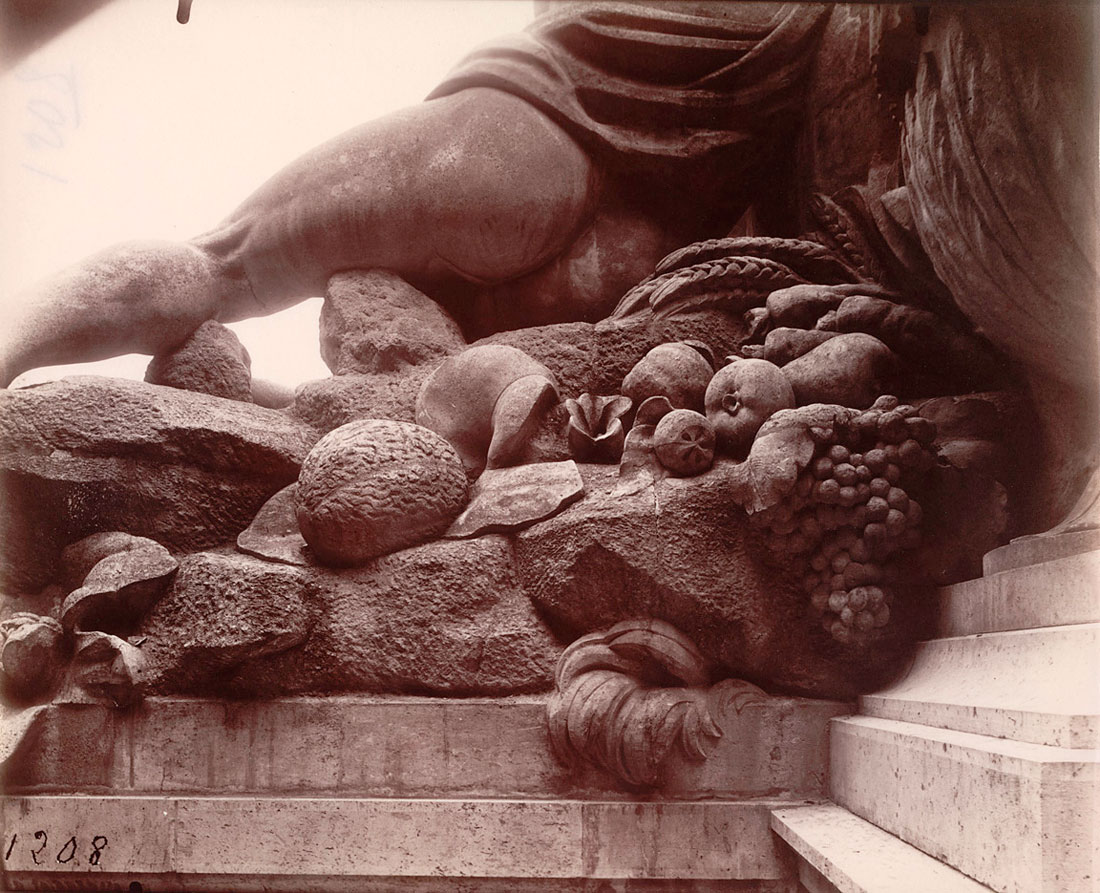
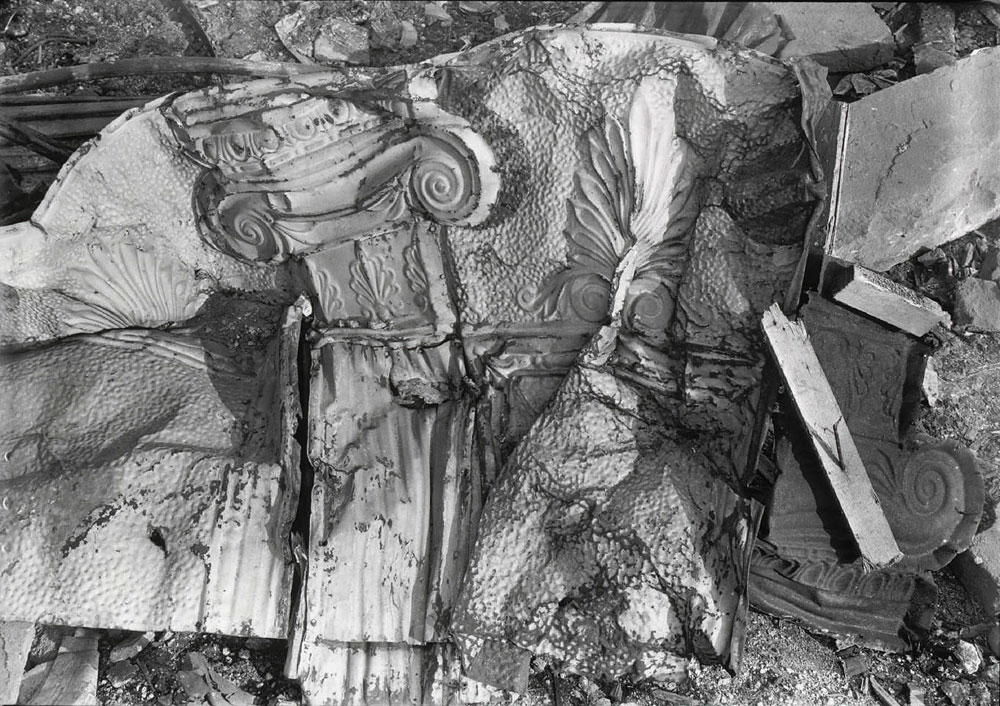
Eugène Atget (French, 1857-1927) 'Saint-Cloud' 1923 from the exhibition 'The Original Copy: Photography of Sculpture, 1839 to Today' at MoMA, New York, Aug - Nov 2010


Eugène Atget (French, 1857-1927)
Saint-Cloud
1923
Albumen silver print
6 7/8 x 8 3/8″ (17.5 x 21.3cm)
The Museum of Modern Art, New York. Anonymous gift


Edward Steichen (American born Luxembourg, 1879-1973) 'Midnight - Rodin’s Balzac'. 1908 from the exhibition 'The Original Copy: Photography of Sculpture, 1839 to Today' at MoMA, New York, Aug - Nov 2010


Edward Steichen (American born Luxembourg, 1879-1973)
Midnight – Rodin’s Balzac
1908
Pigment print
12 1/8 x 14 5/8″ (30.8 x 37.1cm)
The Museum of Modern Art, New York. Gift of the photographer
Permission of Joanna T. Steichen


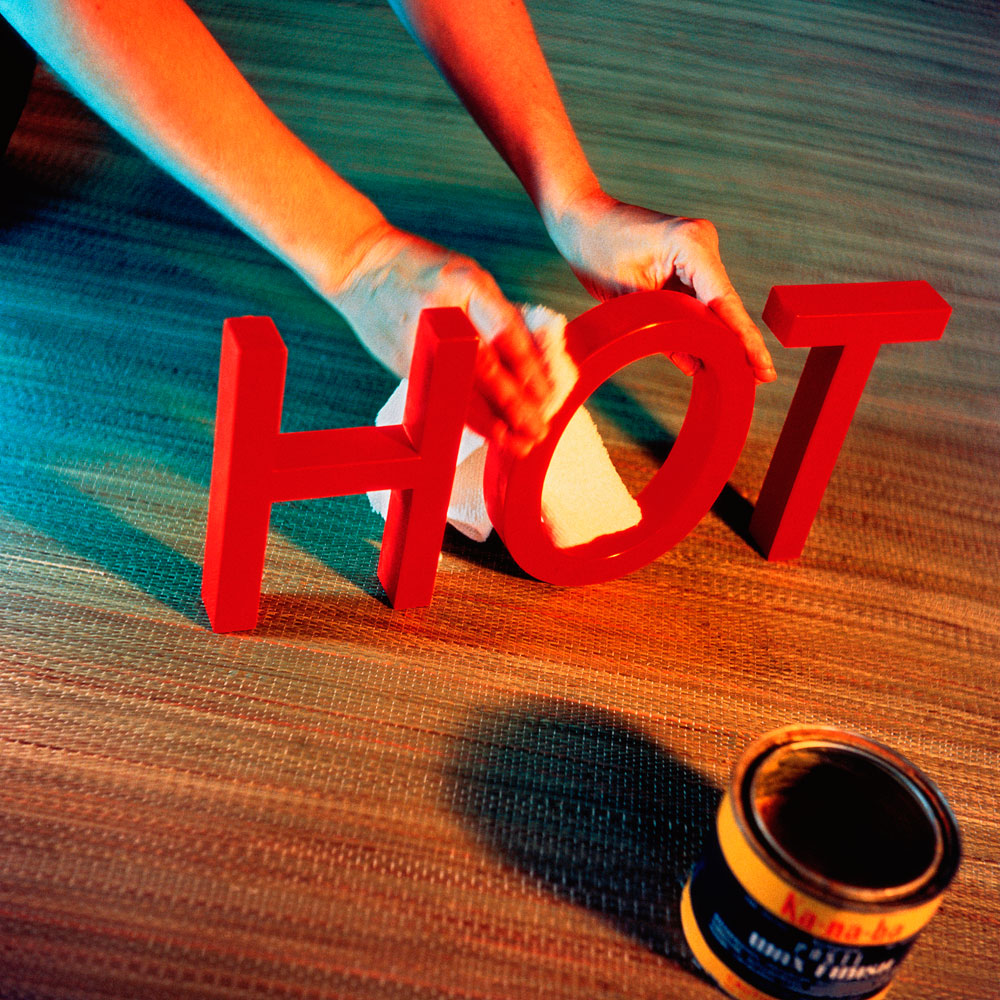
Bruce Nauman. 'Waxing Hot' from the portfolio 'Eleven Color Photographs' 1966–67/1970/2007


Bruce Nauman (American, b. 1941)
Waxing Hot from the portfolio Eleven Color Photographs
1966-1967/1970/2007
Inkjet print (originally chromogenic colour print)
19 15/16 x 19 15/16″ (50.6 x 50.6cm)
Museum of Contemporary Art, Chicago. Gerald S. Elliott Collection
© 2010 Bruce Nauman/Artists Rights Society (ARS), New York


Gilbert & George (Gilbert Proesch. British, b. Italy 1943. George Passmore. British, b. 1942) 'Great Expectations'. 1972


Gilbert & George (Gilbert Proesch. British, b. Italy 1943. George Passmore. British, b. 1942)
Great Expectations
1972
Dye transfer print
11 9/16 x 11 1/2″ (29.4 x 29.2cm)
The Museum of Modern Art, New York. Art & Project/Depot VBVR
© 2010 Gilbert & George


Hans Bellmer (German, 1902-1975) 'The Doll' 1935-1937


Hans Bellmer (German, 1902-1975)
The Doll
1935-1937
Gelatin silver print
9 1/2 x 9 5/16″ (24.1 x 23.7cm)
The Museum of Modern Art, New York. Samuel J. Wagstaff, Jr. Fund
© 2010 Artists Rights Society (ARS), New York/ADAGP, Paris


The Original Copy: Photography of Sculpture, 1839 to Today presents a critical examination of the intersections between photography and sculpture, exploring how one medium informs the analysis and creative redefinition of the other. On view at The Museum of Modern Art from August 1 through November 1, 2010, the exhibition brings together over 300 photographs, magazines, and journals, by more than 100 artists, from the dawn of modernism to the present, to look at the ways in which photography at once informs and challenges the meaning of what sculpture is. The Original Copy is organised by Roxana Marcoci, Curator, Department of Photography, The Museum of Modern Art. Following the exhibition’s presentation at MoMA, it will travel to Kunsthaus Zürich, where it will be on view from February 25 through May 15, 2011.

When photography was introduced in 1839, aesthetic experience was firmly rooted in Romanticist tenets of originality. In a radical way, photography brought into focus the critical role that the copy plays in art and in its perception. While the reproducibility of the photograph challenged the aura attributed to the original, it also reflected a very personal form of study and offered a model of dissemination that would transform the entire nature of art.

“In his 1947 book Le Musée Imaginaire, the novelist and politician André Malraux famously advocated for a pancultural ‘museum without walls,’ postulating that art history, and the history of sculpture in particular, had become ‘the history of that which can be photographed,'” said Ms. Marcoci.

Sculpture was among the first subjects to be treated in photography. There were many reasons for this, including the desire to document, collect, publicise, and circulate objects that were not always portable. Through crop, focus, angle of view, degree of close-up, and lighting, as well as through ex post facto techniques of dark room manipulation, collage, montage, and assemblage, photographers have not only interpreted sculpture but have created stunning reinventions of it.

Conceived around ten conceptual modules, the exhibition examines the rich historical legacy of photography and the aesthetic shifts that have taken place in the medium over the last 170 years through a superb selection of pictures by key modern, avant-garde, and contemporary artists. Some, like Eugène Atget, Walker Evans, Lee Friedlander, and David Goldblatt, are best known as photographers; others, such as Auguste Rodin, Constantin Brancusi, and David Smith, are best known as sculptors; and others, from Hannah Höch and Sophie Taeuber-Arp to such contemporaries as Bruce Nauman, Fischli/Weiss, Rachel Harrison, and Cyprien Gaillard, are too various to categorise but exemplify how fruitfully and unpredictably photography and sculpture have combined.

The Original Copy begins with Sculpture in the Age of Photography, a section comprising early photographs of sculptures in French cathedrals by Charles Nègre and in the British Museum by Roger Fenton and Stephen Thompson; a selection of André Kertész’s photographs from the 1920s showing art amid common objects in the studios of artist friends; and pictures by Barbara Kruger and Louise Lawler that foreground issues of representation to underscore photography’s engagement in the analysis of virtually every aspect of art. Eugène Atget: The Marvelous in the Everyday presents an impressive selection of Atget’s photographs, dating from the early 1900s to the mid 1920s, of classical statues, reliefs, fountains, and other decorative fragments in Paris, Versailles, Saint-Cloud, and Sceaux, which together amount to a visual compendium of the heritage of French civilisation at the time.

Auguste Rodin: The Sculptor and the Photographic Enterprise includes some of the most memorable pictures of Rodin’s sculptures by various photographers, including Edward Steichen’s Rodin – The Thinker (1902), a work made by combining two negatives: one depicting Rodin in silhouetted profile, contemplating The Thinker (1880-82), his alter ego; and one of the artist’s luminous Monument to Victor Hugo (1901). Constantin Brancusi: The Studio as Groupe Mobile focuses on Brancusi’s uniquely nontraditional techniques in photographing his studio, which was articulated around hybrid, transitory configurations known as groupe mobiles (mobile groups), each comprising several pieces of sculpture, bases, and pedestals grouped in proximity. In search of transparency, kineticism, and infinity, Brancusi used photography to dematerialise the static, monolithic materiality of traditional sculpture. His so-called photos radieuses (radiant photos) are characterised by flashes of light that explode the sculptural gestalt.

Marcel Duchamp: The Readymade as Reproduction examines Box in a Valise (1935-41), a catalogue of his oeuvre featuring 69 reproductions, including minute replicas of several readymades and one original work that Duchamp “copyrighted” in the name of his female alter ego, Rrose Sélavy. Using collotype printing and pochoir – in which colour is applied by hand with the use of stencils – Duchamp produced “authorised ‘original’ copies” of his work, blurring the boundaries between unique object, readymade, and multiple. Cultural and Political Icons includes selections focusing on some of the most significant photographic essays of the twentieth century – Walker Evans’s American Photographs (1938), Robert Franks’s The Americans (1958), Lee Friedlander’s The American Monument (1976), and David Goldblatt’s The Structure of Things Then (1998) – many of which have never before been shown in a thematic context as they are here.

The Studio without Walls: Sculpture in the Expanded Field explores the radical changes that occurred in the definition of sculpture when a number of artists who did not consider themselves photographers in the traditional sense, such as Robert Smithson, Robert Barry, and Gordon Matta-Clark, began using the camera to document remote sites as sculpture rather than the traditional three-dimensional object. Daguerre’s Soup: What Is Sculpture? includes photographs of found objects or assemblages created specifically for the camera by artists, such as Brassaï’s Involuntary Sculptures (c. 1930s), Alina Szapocznikow’s Photosculptures (1970-1971), and Marcel Broodthaers’s Daguerre’s Soup (1974), the last work being a tongue-in-cheek picture which hints at the various fluid and chemical processes used by Louis Daguerre to invent photography in the nineteenth century, bringing into play experimental ideas about the realm of everyday objects.

The Pygmalion Complex: Animate and Inanimate Figures looks at Dada and Surrealist pictures and photo-collages by artists, including Man Ray, Herbert Bayer, Hans Bellmer, Hannah Höch, and Johannes Theodor Baargeld, who focused their lenses on mannequins, dummies, and automata to reveal the tension between living figure and sculpture. The Performing Body as Sculptural Object explores the key role of photography in the intersection of performance and sculpture. Bruce Nauman, Charles Ray, and Dennis Oppenheim, placing a premium on their training as sculptors, articulated the body as a sculptural prop to be picked up, bent, or deployed instead of traditional materials. Eleanor Antin, Ana Mendieta, VALIE EXPORT, and Hannah Wilke engaged with the “rhetoric of the pose,” using the camera as an agency that itself generates actions through its presence.

Press release from the Museum of Modern Art website


Man Ray (Emmanuel Radnitzky) (American, 1890-1976) 'Noire et blanche' (Black and white) 1926


Man Ray (Emmanuel Radnitzky) (American, 1890-1976)
Noire et blanche (Black and white)
1926
Gelatin silver print
6 3/4 x 8 7/8″ (17.1 x 22.5cm)
The Museum of Modern Art, New York. Gift of James Thrall Soby
2010 Man Ray Trust/Artists Rights Society (ARS), New York/ADAGP, Paris


Walker Evans (American, 1903-1975) 'Stamped Tin Relic' 1929 (printed c. 1970)


Walker Evans (American, 1903-1975)
Stamped Tin Relic
1929 (printed c. 1970)
Gelatin silver print
4 11/16 x 6 5/8″ (11.9 x 16.9cm)
The Museum of Modern Art, New York. Lily Auchincloss Fund
© 2010 Estate of Walker Evans


Lee Friedlander (American, b. 1934) 'Mount Rushmore, South Dakota' 1969


Lee Friedlander (American, b. 1934)
Mount Rushmore, South Dakota
1969
Gelatin silver print
8 1/16 x 12 1/8″ (20.5 x 30.8cm)
The Museum of Modern Art, New York. Gift of the photographer
© 2010 Lee Friedlander


Sibylle Bergemann (German, 1941-2010) 'Das Denkmal, East Berlin' (The monument, East Berlin)


Sibylle Bergemann (German, 1941-2010)
Das Denkmal, East Berlin (The monument, East Berlin)
1986
Gelatin silver print
19 11/16 x 23 5/8″ (50 x 60cm)
Sibylle Bergemann/Ostkreuz Agentur der Fotografen, Berlin
© 2010 Sibylle Bergemann/Ostkreuz Agentur der Fotografen, Berlin


Marcel Duchamp (American, born France, 1887-1968) and Man Ray (Emmanuel Radnitzky) (American, 1890-1976) 'Élevage de poussière (Dust breeding)' 1920


Marcel Duchamp (American, born France, 1887-1968)
Man Ray (Emmanuel Radnitzky) (American, 1890-1976)
Élevage de poussière (Dust breeding)
1920
Gelatin silver contact print
2 13/16 x 4 5/16″ (7.1 x 11cm)
The Bluff Collection, LP
© 2010 Man Ray Trust/Artists Rights Society (ARS), New York/ADAGP, Paris


Guy Tillim (South African, b. 1962) 'Bust of Agostinho Neto, Quibala, Angola' 2008


Guy Tillim (South African, b. 1962)
Bust of Agostinho Neto, Quibala, Angola
2008
Pigmented inkjet print
17 3/16 x 25 3/4″ (43.6 x 65.4cm)
The Museum of Modern Art, New York
Acquired through the generosity of the Contemporary Arts Council of The Museum of Modern Art
© 2010 Guy Tillim. Courtesy Michael Stevenson Gallery


Selected wall text from the exhibition

“The advent of photography in 1839, when aesthetic experience was firmly rooted in Romanticist tenets of originality, brought into focus the critical role that the copy plays in the perception of art. The medium’s reproducibility challenged the aura attributed to the original, but it also reflected a new way of looking and offered a model for dissemination that would transform the entire nature of art. The aesthetic singularity of the photograph, the archival value of a document bearing the trace of history, and the combinatory capacity of the image, open to be edited into sequences in which it mixes with others – all these contribute to the status of photography as both an art form and a medium of communication.

Sculpture was among the first subjects to be treated in photography. In his 1947 book Le Musée imaginaire, the novelist and politician André Malraux famously advocated for a pancultural “museum without walls,” postulating that art history, and the history of sculpture in particular, had become “the history of that which can be photographed.” There were many reasons for this, including the immobility of sculpture, which suited the long exposure times needed with the early photographic processes, and the desire to document, collect, publicise and circulate objects that were not always portable. Through crop, focus, angle of view, degree of close-up, and lighting, as well as through ex post facto techniques of dark room manipulation, collage, montage, and assemblage, photographers not only interpret sculpture but create stunning reinventions of it.

The Original Copy presents a critical examination of the intersections between photography and sculpture, exploring how the one medium has been implicated in the analysis and creative redefinition of the other. Bringing together 300 pictures, magazines and journals by more than 100 artists from the dawn of modernism to the present, this exhibition looks at the ways in which photography at once informs and challenges our understanding of what sculpture is within specific historic contexts.

Sculpture in the Age of Photography

If we consider photography a child of the industrial era – a medium that came of age alongside the steam engine and the railroad – it is not surprising that one of its critical functions was to bring physically inaccessible worlds closer by means of reproduction. Among its early practitioners, Charles Nègre photographed sculpture in the cathedrals of Chartres, Amiens, and, in Paris, Notre Dame, circling them at different levels to capture perspectives of rarely seen sculptural details, while in London Roger Fenton and Stephen Thompson documented the ancient statuary in the British Museum, making visible the new power of collecting institutions.

With the advent of the handheld portable camera in the early 1920s, photographers had the flexibility to capture contingent sculptural arrangements taken from elliptical viewpoints. André Kertész, for instance, recorded unexpected juxtapositions between art and common objects in the studios of artist friends, including Fernand Léger and Ossip Zadkine. His ability to forge heterogeneous materials and objects into visual unity inspired the novelist Pierre Mac Orlan to confer on him the title of “photographer-poet.”

Focusing on details in this way, photographers have interpreted not only sculpture itself, as an autonomous object, but also the context of its display. The results often show that the meaning of art is not fixed within the work but open to the beholder’s reception of it at any given moment. Taking a place in the tradition of institutional critique, Barbara Kruger’s and Louise Lawler’s pictures foreground issues of representation to underscore photography’s engagement in the analysis of virtually every aspect of art.

Eugène Atget
The Marvelous in the Everyday

During the first quarter of the twentieth century, Atget took hundreds of photographs of sculptures – classical statues, reliefs, fountains, door knockers, and other finely wrought decorative fragments – in Paris and its outlying parks and gardens, especially at Versailles, Saint-Cloud, and Sceaux. These images amount to a visual compendium of the heritage of French civilisation at that time.

At Versailles, most intensely between 1901 and 1906 and again between 1921 and 1926, Atget photographed the gardens that André Le Nôtre, the landscape architect of King Louis XIV, had designed in the second half of the seventeenth century. In a series of pictures of allegorical statues punctuating the garden’s vistas, Atget focused on the scenic organisation of the sculptures, treating them as characters in a historical play. The pantomimic effect of the statues’ postures clearly appealed to Atget, who in 1880, before turning to photography, had taken acting classes at the Conservatory of the Théâtre national de France. Depicting the white marble statues from low viewpoints, in full length, and against the dark, unified tones of hedges and trees, Atget brought them into dramatic relief, highlighting the theatrical possibilities of sculpture.

Among the pictures taken at Saint-Cloud is a series centred on a melancholy pool surrounded by statues whose tiny silhouettes can be seen from a distance. Atget’s interest in the variable play between nature and art through minute changes in the camera’s angle, or as functions of the effects of light and time of day, is underscored in his notations of the exact month and sometimes even the hour when the pictures were taken.

Auguste Rodin
The Sculptor and the Photographic Enterprise

Rodin never took pictures of his sculptures but reserved the creative act for himself, actively directing the enterprise of photographing his work. He controlled staging, lighting and background, and he was probably the first sculptor to enlist the camera to record the changing stages through which his work passed from conception to realisation. The photographers working with Rodin were diverse and their images of his work varied greatly, partly through each individual’s artistic sensibility and partly through changes in the photographic medium. The radical viewing angles that Eugène Druet, for instance, adopted in his pictures of hands, in around 1898, inspired the poet Rainer Maria Rilke to write: “There are among the works of Rodin hands, single small hands which without belonging to a body, are alive. Hands that rise, irritated and in wrath; hands whose five bristling fingers seem to bark like the five jaws of a dog of Hell.”

Among the most memorable pictures of Rodin’s sculptures is Edward Steichen’s Rodin – The Thinker (1902), a work made by combining two negatives: Rodin in dark silhouetted profile contemplating The Thinker (1880-1882), his alter ego, is set against the luminous Monument to Victor Hugo (1901), a source of poetic creativity. Steichen also photographed Rodin’s Balzac, installed outdoors in the sculptor’s garden at Meudon, spending a whole night taking varying exposures from fifteen minutes to an hour to secure a number of dramatic negatives. The three major pictures of the sculpture against the nocturnal landscape taken at 11 p.m., midnight, and 4 a.m. form a temporal series. 

Constantin Brancusi
The Studio as Groupe Mobile

“Why write?” Brancusi once queried. “Why not just show the photographs?” The sculptor included many great photographers among his friends – Edward Steichen was one of his early champions in the United States; Alfred Stieglitz organised in 1914 his first solo exhibition in New York; Man Ray helped him buy photographic equipment; Berenice Abbott studied sculpture under him; and he was on close terms with Brassaï, André Kertész, and László Moholy-Nagy. Yet he declined to have his work photographed by others, preferring instead to take, develop, and print his own pictures.

Pushing photography against its grain, Brancusi developed an aesthetic antithetical to the usual photographic standards. His so-called photos radieuses (radiant photos) are characterised by flashes of light that explode the sculptural gestalt. In search of transparency, kineticism, and infinity, Brancusi used photography and polishing techniques to dematerialise the static, monolithic materiality of traditional sculpture, visualising what Moholy-Nagy called “the new culture of light.”

Brancusi’s pictures of his studio underscore his scenographic approach. The artist articulated the studio around hybrid, transitory configurations known as groupes mobiles (mobile groups), each comprising several pieces of sculpture, bases, and pedestals grouped in proximity. Assembling and reassembling his sculptures for the camera, Brancusi used photography as a diary of his sculptural permutations. If, as it is often said, Brancusi “invented” modern sculpture, his use of photography belongs to a reevaluation of sculpture’s modernity.

Cultural and Political Icons

How do we remember the past? What role do photographs play in mediating history and memory? In an era resonating with the consequences of two world wars, the construction and then dismantling of the Berlin Wall, the Vietnam War, and the after effects of the colonialist legacy in South Africa, commemoration has provided a rich subject for photographic investigation.

Some of the most significant photographic essays of the twentieth century – Walker Evans’s American Photographs (1938), Robert Frank’s The Americans (1958), Lee Friedlander’s The American Monument (1976), and David Goldblatt’s The Structure of Things Then (1998) – articulate to different degrees the particular value of photography as a means of defining the cultural and political role of monuments.

Evans’s emblematic image of a crushed Ionic column made of cheap sheet metal; Frank’s picture of a statue of St. Francis preaching, cross and Bible in hands, to the bleak vista of a gas station; Friedlander’s photograph of World War I hero Father Duffy, engulfed in the cacophony of Times Square’s billboards and neon, which threaten to jeopardise the sculpture’s patriotic message; and Goldblatt’s pictures of monuments to some of the most potent symbols of Afrikaner triumphalism – all take a critical look at the world that public statues inhabit.

The Studio without Walls
Sculpture in the Expanded Field

In the late 1960s a radical aesthetic change altered both the definition of the sculptural object and the ways in which that object was experienced. A number of artists who did not consider themselves photographers in the traditional sense began using the camera to rework the idea of what sculpture is, dispensing with the immobile object in favour of an altered site: the built environment, the remote landscape, or the studio or museum space in which the artist intervened.

This engagement with site and architecture – undoubtedly a function of early critiques of art’s institutional status – meant that sculpture no longer had to be a permanent three-dimensional object; it could, for instance, be a configuration of debris on the studio floor, a dematerialised vapour released into the landscape, a dissected home reconfigured as gravity-defying walk-through sculpture, or a wrapped-up building. Bruce Nauman, Robert Barry, Gordon Matta-Clark, and Christo respectively, as well as Michael Heizer, Richard Long, Dennis Oppenheim, and Robert Smithson made extensive use of photography, collecting and taking hundreds of pictures as raw material for other pieces, such as collages and photomontages.

In the first decade of the twenty-first century, artists such as Zhang Dali, Cyprien Gaillard, and Rachel Whiteread have continued this dialogue through photographs contemplating examples of architecture and sculpture in states of dilapidation and entropy, remnants of a society in demise.

Daguerre’s Soup
What Is Sculpture?

In 1932, Brassaï challenged the established notions of what is or is not sculpture when he photographed a series of found objects – tiny castoff scraps of paper that had been unconsciously rolled, folded, or twisted by restless hands, strangely shaped bits of bread, smudged pieces of soap, and accidental blobs of toothpaste, which he titled Involuntary Sculptures. In the 1960s and ’70s artists engaging with various forms of reproduction, replication, and repetition used the camera to explore the limits of sculpture. The word “sculpture” itself was somewhat modified, no longer signifying something specific but rather indicating a polymorphous objecthood. For instance, in 1971 Alina Szapocznikow produced Photosculptures, pictures of a new kind of sculptural object made of stretched, formless and distended pieces of chewing gum.

At the same time, Marcel Broodthaers concocted absurdist taxonomies in photographic works. In Daguerre’s Soup (1975), Broothaers hinted at the various fluids and chemical processes used by Louis Daguerre to invent photography in the nineteenth century by bringing into play experimental ideas about language and the realm of everyday objects. A decade later, the duo Fischli/Weiss combined photography with wacky, ingeniously choreographed assemblages of objects. Their tongue-in-cheek pictures of assemblages shot on the verge of collapse convey a sense of animated suspension and deadpan comedy.

In 2007, Rachel Harrison drew on Broodthaers’s illogical systems of classification and parodic collections of objects to produce Voyage of the Beagle, a series of pictures that collectively raise the question “What is sculpture?” Ranging from images of prehistoric standing stones to mass-produced Pop mannequins, and from topiaries to sculptures made by modernist masters, Harrison’s work constitutes an oblique quest for the origins and contemporary manifestations of sculpture.

The Pygmalion Complex
Animate and Inanimate Figures

The subject of the animated statue spans the history of avant-garde photography. Artists interested in Surrealist tactics used the camera to tap the uncanniness of puppets, wax dummies, mannequins, and automata, producing pictures that both transcribe and alter appearances. Laura Gilpin explored this perturbing mix of stillness and living, alluring lifelikeness in her mysterious portrait George William Eggers (1926), in which Eggers, the director of the Denver Art Museum, keeps company with a fifteenth-century bust whose polychrome charm is enhanced by the glow of the candle he holds next to her face. So does Edward Weston, in his whimsical Rubber Dummies, Metro Goldwyn Mayer Studios, Hollywood (1939), showing two elastic dolls caught in a pas de deux on a movie-studio storage lot; and Clarence John Laughlin, in his eerie photomontage The Eye That Never Sleeps (1946), in which the negative of an image taken in a New Orleans funeral parlour has been overlaid with an image of a mannequin – one of whose legs, however, is that of a flesh-and-blood model.

The tension between animate object and inanimate female form lies at the crux of many of Man Ray’s photographs, including Black and White (1926), which provocatively couples the head of the legendary model, artist, and cabaret singer Alice Prin, a.k.a. Kiki of Montparnasse, with an African ceremonial mask. Hans Bellmer’s photographs of dismembered dolls, and the critical photomontages of Herbert Bayer, Hannah Höch, and Johannes Theodor Baargeld, probe the relationship between living figure and sculpture by invoking the unstable subjectivity and breakdown of anatomic boundaries in the aftermath of the Great War.

The Performing Body as Sculptural Object

In 1969, Gilbert & George covered their heads and hands in metallic powders to sing Flanagan and Allen’s vaudeville number “Underneath the Arches” in live performance. Declaring themselves living sculptures, they claimed the status of an artwork, a role they used photography to express. Charles Ray and Dennis Oppenheim, placing a premium on their training as sculptors, articulated the body as a prop that could be picked up, bent, or deployed instead of more traditional materials as a system of weight, mass, and balance.

In the radicalised climate of the 1970s, artists such as Eleanor Antin, Ana Mendieta, VALIE EXPORT, and Hannah Wilke engaged with the “rhetoric of the pose,” underscoring the key role of photography in the intersection of performance, sculpture and portraiture.

Other artists as diverse as Robert Morris, Claes Oldenburg, Otto Muehl, Bas Jan Ader, and Bruce Nauman, experimented with the plasticity of the body as sculptural material. Several of Nauman’s pictures from his portfolio Eleven Color Photographs (1966-1967 / 1970) spoof the classic tradition of sculpture. Yet the signature image of the group – Self-Portrait as a Fountain, in which a stripped-to-the-waist Nauman spews water from his mouth like a medieval gargoyle – is a deadpan salute to Marcel Duchamp’s Fountain (1917). In this spirit, Erwin Wurm’s series of One Minute Sculptures (1997-98) evoke gestural articulations in which the artist’s body is turned into a sculptural form. Wurm, like the other artists presented in this exhibition, focuses attention on what one can do with and through photography, using the camera not to document actions that precede the impulse to record them but as an agency that itself generates actions through its own presence.


Clarence John Laughlin (American, 1905-1985) 'The Eye That Never Sleeps' 1946


Clarence John Laughlin (American, 1905-1985)
The Eye That Never Sleeps
1946
Gelatin silver print
12 3/8 x 8 3/4″ (31.4 x 22.2cm)
The Museum of Modern Art, New York. Purchase
© Clarence John Laughlin


Fischli/Weiss (Peter Fischli. Swiss, born 1952. David Weiss. Swiss, born 1946) 'Outlaws' 1984


Fischli/Weiss (Peter Fischli. Swiss, b. 1952. David Weiss. Swiss, b. 1946)
Outlaws
1984
Chromogenic colour print
15 ¾ x 11 13/16″ (40 x 30cm)
Courtesy the artists and Matthew Marks Gallery, New York
© Peter Fischli and David Weiss. Courtesy Matthew Marks Gallery, New York


Claes Oldenburg (American born Sweden. b. 1929) 'Claes Oldenburg - Projects for Monuments'. 1967


Claes Oldenburg (American born Sweden. b. 1929)
Claes Oldenburg: Projects for Monuments
1967
Offset lithograph
34 11/16 x 22 1/2″ (88.0 x 57.2 cm)
The Museum of Modern Art, New York. Gift of Barbara Pine
© 2010 Claes Oldenburg


Man Ray (Emmanuel Radnitzky) (American, 1890-1976) 'L'Homme' (Man) 1918


Man Ray (Emmanuel Radnitzky) (American, 1890-1976)
L’Homme (Man)
1918
Gelatin silver print
19 x 14 1/2″ (48.3 x 36.8cm)
Private collection, New York
© 2010 Man Ray Trust/Artists Rights Society (ARS), New York/ADAGP, Paris


Herbert Bayer (American born Austria, 1900-1985) 'Humanly impossible' 1932


Herbert Bayer (American born Austria, 1900-1985)
Humanly impossible
1932
Gelatin silver print
15 3/8 x 11 9/16″ (39 x 29.3cm)
The Museum of Modern Art, New York. Thomas Walther Collection. Purchase
© 2010 Artists Rights Society (ARS), New York/VG Bild-Kunst, Bonn


Constantin Brancusi (French born Romania, 1876-1957) 'L'Oiseau' (Golden Bird). c. 1919


Constantin Brancusi (French born Romania, 1876-1957)
L’Oiseau (Golden Bird)
c. 1919
Gelatin silver print
9 x 6 11/16″ (22.8 x 17cm)
The Museum of Modern Art, New York. Thomas Walther Collection. Purchase
© 2010 Artists Rights Society (ARS), New York/ADAGP, Paris


Gillian Wearing (British, b. 1963) 'Self-Portrait at 17 Years Old' 2003


Gillian Wearing (British, b. 1963)
Self-Portrait at 17 Years Old
2003
Chromogenic color print
41 x 32″ (104.1 x 81.3cm)
The Museum of Modern Art, New York
Acquired through the generosity of The Contemporary Arts Council of The Museum of Modern Art
© 2010 Gillian Wearing. Courtesy the artist, Tanya Bonakdar Gallery, New York, and Maureen Paley, London


Johannes Theodor Baargeld (Alfred Emanuel Ferdinand Gruenwald) (German, 1892-1927) 'Typische Vertikalklitterung als Darstellung des Dada Baargeld' (Typical vertical mess as depiction of the Dada Baargeld). 1920


Johannes Theodor Baargeld (Alfred Emanuel Ferdinand Gruenwald) (German, 1892-1927)
Typische Vertikalklitterung als Darstellung des Dada Baargeld (Typical vertical mess as depiction of the Dada Baargeld)
1920
Photomontage
14 5/8 x 12 3/16″ (37.1 x 31cm)
Kunsthaus Zürich, Grafische Sammlung


Berenice Abbott (American, 1898-1991) 'Father Duffy, Times Square' April 14, 1937


Berenice Abbott (American, 1898-1991)
Father Duffy, Times Square
April 14, 1937
Gelatin silver print
9 5/16 x 7 5/8″ (23.7 x 19.4cm)
The Museum of Modern Art, New York. Gift of Ronald A. Kurtz
© 2010 Berenice Abbott/Commerce Graphics, Ltd., New York


The Museum of Modern Art (MoMA)
11, West Fifty-Third Street, New York

Opening hours:
Daily 10am – 5.30pm

MoMA website

LIKE ART BLART ON FACEBOOK

Back to top