Exhibition: ‘Candid Camera: Australian Photography 1950s-1970s’ at the Art Gallery of South Australia, Adelaide

Exhibition dates: 28th May – 1st August, 2010


Robert McFarlane (Australia, b. 1942) 'Charles Perkins going home from University' c. 1963 from the exhibition 'Candid Camera: Australian Photography 1950s-1970s' at the Art Gallery of South Australia, Adelaide, May - August, 2010


Robert McFarlane (Australia, b. 1942)
Charles Perkins going home from University
c. 1963, Sydney
Pigment print on paper
Image: 23 x 15cm
South Australian Government Grant 2009
Art Gallery of South Australia, Adelaide
© Robert McFarlane, Courtesy of Josef Lebovic Gallery, Sydney


There are some great photographs below, including one of my favourite photographs by an Australian artist of all time – At Newport (1952) by Max Dupain. There is something about this photograph that to me, makes it even more iconic than Sunbaker (1934). Perhaps it is the modernist rendering of space, the tensional placement of the figures: the curve of the boys back, the slope of the young man’s torso and attendant shadow on the wall, the girl at bottom right caught looking at the poised figure about to dive in – coupled with the receding pylons floating into the distance and the dark cliff face at right.

To have the previsualisation in the mind’s eye, that understanding of what was about to happen placed before the camera and then to capture it takes a truly great photographer. Being a naturalised Australian this is, to me, is one of the most iconic of all Australian photographs. What a beautiful photograph.

Dr Marcus Bunyan


Many thankx to Miranda Young and the Art Gallery of South Australia for allowing me to publish the photographs in the posting. Please click on the photographs for a larger version of the image.


Rennie Ellis (Australia, 1940-2003) 'Auntie Mame, Kings Cross, Sydney' 1970-1971 from the exhibition 'Candid Camera: Australian Photography 1950s-1970s' at the Art Gallery of South Australia, Adelaide, May - August, 2010


Rennie Ellis (Australia, 1940-2003)
Auntie Mame, Kings Cross, Sydney
1970-1971, Sydney
Gelatin silver photograph
Image: 37 x 24cm
South Australian Government Grant 2009
Art Gallery of South Australia, Adelaide
© Rennie Ellis Photographic Archive


Jeff Carter (Australia, 1928-2010) 'Tobacco Road' 1956 from the exhibition 'Candid Camera: Australian Photography 1950s-1970s' at the Art Gallery of South Australia, Adelaide, May - August, 2010


Jeff Carter (Australia, 1928-2010)
Tobacco Road
1956, Ovens Valley, Victoria
Gelatin silver photograph
Image: 28.8 x 27.1cm
South Australian Government Grant 2003
Art Gallery of South Australia, Adelaide
© Jeff Carter


Candid moments of Australian life from the 1950s, 60s and 70s, captured by some of Australia’s most renowned photographers, go on display in Candid Camera – a fascinating new photographic exhibition at the Art Gallery of South Australia.

Curated by Julie Robinson, the Art Gallery’s Senior Curator of Prints, Drawings & Photographs, Candid Camera: Australian Photography 1950s-1970s includes more than 80 documentary images by photographers including Max Dupain, David Moore, Jeff Carter, Robert McFarlane, Mervyn Bishop, Rennie Ellis, Carol Jerrems and Roger Scott.

These photographers have been great observers, capturing memorable images in Australia and abroad of people at leisure or engaged in everyday activities – images which appear unposed, spontaneous, or with their subjects captured unaware.

The photographs on display encompass social rituals, beach culture, protest movements, Indigenous issues, migration, youth subcultures, work, leisure, music, people, travel and humour. They range from images of the famous – such as Prime Ministers, boxing champion Lionel Rose, musicians Bon Scott and Daddy Cool – to those of ordinary people.

Says Julie Robinson, “The photographs in Candid Camera epitomise life during the 50s, 60s and 70s and resonate with spontaneity, humour and humanity.”

Robinson explains, “Even the anonymous people seem familiar to us as a result of these photographs, like David Moore’s European migrants arriving in Sydney, Rennie Ellis’s Cosmetics salesgirl, Toorak Rd, the two youths exiting ghost train ride in Roger Scott’s photograph or the unidentified women waiting at an Adelaide bus stop, in Robert McFarlane’s photograph.”

Many of these photographs have only been recently acquired by the Art Gallery of South Australia and this exhibition will provide the first opportunity for audiences to view them displayed together.

Press release from the Art Gallery of South Australia website [Online] Cited 20/10/2010 no longer available online
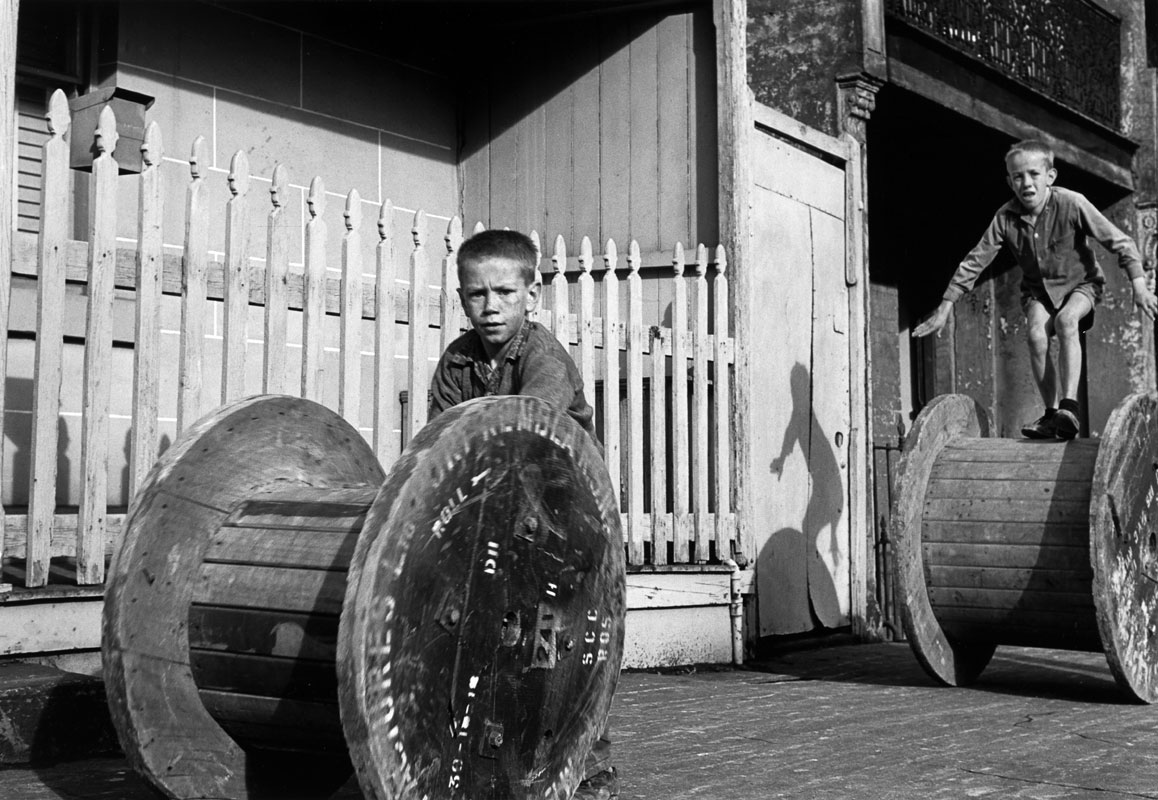
 

Jeff Carter (Australia, 1928-2010) 'Saturday arvo, Chippendale' 1960


Jeff Carter (Australia, 1928-2010)
Saturday arvo, Chippendale
1960, Chippendale, New South Wales
Gelatin silver photograph
Image: 30.5 x 36.1cm
South Australian Government Grant 2003
Art Gallery of South Australia, Adelaide
© Jeff Carter


Max Dupain (Australia, 1911-1992) 'At Newport' 1952


Max Dupain (Australia, 1911-1992)
At Newport
1952, Sydney
Gelatin silver photograph
Image: 31.5 x 34.0cm
D’Auvergne Boxall Bequest Fund 2009
Art Gallery of South Australia, Adelaide


Rennie Ellis (Australia, 1940-2003) 'Cosmetics salesgirl, Toorak Road' c. 1970


Rennie Ellis (Australia, 1940-2003)
Cosmetics salesgirl, Toorak Road
c. 1970, Melbourne
Gelatin silver photograph
Image: 29.0 x 43.5cm
South Australian Government Grant 2009
Art Gallery of South Australia, Adelaide
© Rennie Ellis Photographic Archive


Rennie Ellis (Australia, 1940-2003) 'Union Jack, Lorne' c. 1968


Rennie Ellis (Australia, 1940-2003)
Union Jack, Lorne
c. 1968, Victoria
Gelatin silver photograph
Image: 29.4 x 44.0cm
South Australian Government Grant 2009
Art Gallery of South Australia, Adelaide
© Rennie Ellis Photographic Archive


Roger Scott (Australia, b. 1944) 'Ghost train' 1972


Roger Scott (Australia, b. 1944)
Ghost train
1972, Sydney
Gelatin silver photograph
Image: 27.0 x 40.0cm
South Australian Government Grant 2009
Art Gallery of South Australia, Adelaide
© Roger Scott, Courtesy of Josef Lebovic Gallery, Sydney


Art Gallery of South Australia
North Terrace
Adelaide SA 5000
Phone: 61 8 8207 7000

Opening hours:
Daily 10am – 5pm

Art Gallery of South Australia website

LIKE ART BLART ON FACEBOOK

Back to top

Exhibition: ‘Walker Evans’ retrospective at Fotomuseum Winterthur, Zurich

Exhibition dates: 30th May – 23rd August, 2009

Curators: Jeff L. Rosenheim and Carlos Gollonet


Walker Evans (American, 1903-1975) 'West Virginia Living Room' 1935 from the exhibition 'Walker Evans' retrospective at Fotomuseum Winterthur, Zurich, May - Aug, 2009


Walker Evans (American, 1903-1975)
West Virginia Living Room
1935
Gelatin silver print
© Walker Evans archive


Many thankx to the Fotomuseum Winterthur for allowing me to publish the photographs in the posting. Please click on the photographs for a larger version of the image.


With this retrospective of the work of Walker Evans (1903-1975) Fotomuseum Winterthur presents one of the twentieth century’s pre-eminent photographers. His lucid and detailed portrayals of American life, especially his images of rural poverty during the Great Depression, made photographic history and went on to influence countless photographers. Walker Evans took an extremely innovative approach, capturing the very essence of the American way of life.

The exhibition, featuring some 120 works (the majority of which are from the most important private collection of Walker Evans’ works) represents every phase of his career: his early street photographs of the 1920s, his poignant documentation of 1930s America and pre-revolutionary Cuba, his landscapes and architectural photography, his subway portraits, storefronts, signage, the later colour Polaroids and more besides. As early as the 1930s, Walker Evans, in a departure from conventional notions of art and style, sought a new direct approach to reality. It is this that makes him a truly modern photographer.

The exhibition was curated by Jeff L. Rosenheim and Carlos Gollonet. Realisation in Winterthur: Urs Stahel. A cooperation with the Fundación MAPFRE, Madrid.

Text from the Fotomuseum Winterthur website


Walker Evans (American, 1903-1975) 'Negro Barbershop Interior, Atlanta' 1936 from the exhibition 'Walker Evans' retrospective at Fotomuseum Winterthur, Zurich, May - Aug, 2009


Walker Evans (American, 1903-1975)
Negro Barbershop Interior, Atlanta
1936
Gelatin silver print
7 7/16 x 9 1/8″ (18.9 x 23.2cm)
© Walker Evans archive


With this major retrospective of the work of Walker Evans (1903-1975) Fotomuseum Winterthur pays homage to one of the twentieth century’s pre-eminent photographers. His insightful and detailed portrayals of American life, especially his images of rural poverty during the Great Depression, made photographic history and went on to influence countless photographers. The 130 works in this retrospective exhibition represent every phase of his career: his early street photographs of the 1920s, his poignant documentation of 1930s America and pre-revolutionary Cuba, his landscapes and architectural photography, his subway portraits, storefronts, signage, and more besides.

On his return from France, where he had tried unsuccessfully to launch a literary career inspired by his love of Flaubert and Baudelaire, Walker Evans turned to photography. From the very start, with his keen eye for street life and the visual freshness of his unexpected slant on what he saw, his work spoke the language of European Modernism. But it was not long before Evans found his true voice – and it was at once profoundly personal and unequivocally American.

Some years before, the direct, undistorted and innovative gaze of Eugène Atget (1857-1927), whose work Evans knew and admired, had quietly paved the way for the split between documentary auteur photography and the purely descriptive photographic tradition. Atget’s unconventional angles, his de-centralised view and his focus on the seemingly trivial all had a major impact on Evans.

Walker Evans’ work is a far remove from what had, until then, been accepted as art photography. He was not interested in superficial beauty, but in a new objectivity. He subscribed to a style that observed undistorted facts and sought to capture things precisely as they were, seemingly without intervention, emotion or idealisation. For the first time in art photography, there were such unusual subjects as a pair of old boots or a subway passenger lost in thought. The artistic quality was based solely on the clarity, intelligence and authenticity of the photographer’s gaze. In this, Walker Evans’ oeuvre represents both a high point and a turning point in the formal and visual evolution of photography.

As the creator of this new, direct style, often referred to as straight photography, which drew upon scenes of sometimes blatant banality and rolled back the boundaries between the ‘important’ and the ‘trivial’, Walker Evans introduced the aesthetics of Modernism into American photography. This seemingly cold detachment spawned a style rich in expressive substance that was not only capable of embracing the lyricism and complexity of the American tradition, but of doing so without a trace of false romanticism, sentimentality or nostalgia. At long last, there was a forward-looking and enduring alternative to the traditional conventions of photography.

Press release from the Fotomuseum Winterthur website [Online] Cited 05/06/2009. No longer available online


Walker Evans (American, 1903-1975) 'Traffic Arrow' between 1973-1974


Walker Evans (American, 1903-1975)
Traffic Arrow
between 1973-1974
Polaroid
7.9 x 7.9cm (3 1/8 x 3 1/8 in.)
© Walker Evans archive


Walker Evans (American, 1903-1975) '[Detail of Stencilled Lettering on Yellow Railroad Car: "DO NOT HUMP"]' September 16, 1974


Walker Evans (American, 1903-1975)
[Detail of Stencilled Lettering on Yellow Railroad Car: “DO NOT HUMP”]
September 16, 1974
Polaroid
7.9 x 7.9cm (3 1/8 x 3 1/8 in.)
© Walker Evans archive


Installation view of the exhibition 'Walker Evans' at Fotomuseum Winterthur, Zurich showing some of his Polaroid photographs


Installation view of the exhibition Walker Evans at Fotomuseum Winterthur, Zurich showing some of his Polaroid photographs


Installation view of the exhibition 'Walker Evans' at Fotomuseum Winterthur, Zurich

Installation view of the exhibition Walker Evans at Fotomuseum Winterthur, Zurich

Installation view of the exhibition Walker Evans at Fotomuseum Winterthur, Zurich

Installation view of the exhibition Walker Evans at Fotomuseum Winterthur, Zurich


Installation views of the exhibition Walker Evans at Fotomuseum Winterthur, Zurich


Walker Evans (1903-1975) 'Penny Picture Display, Savannah' 1936


Walker Evans (American, 1903-1975)
Penny Picture Display, Savannah
1936
Gelatin silver print
© Walker Evans archive


Walker Evans (American, 1903-1975) 'Subway Passengers, New York' 1938


Walker Evans (American, 1903-1975)
Subway Passengers, New York
1938
Gelatin silver print
© Walker Evans archive


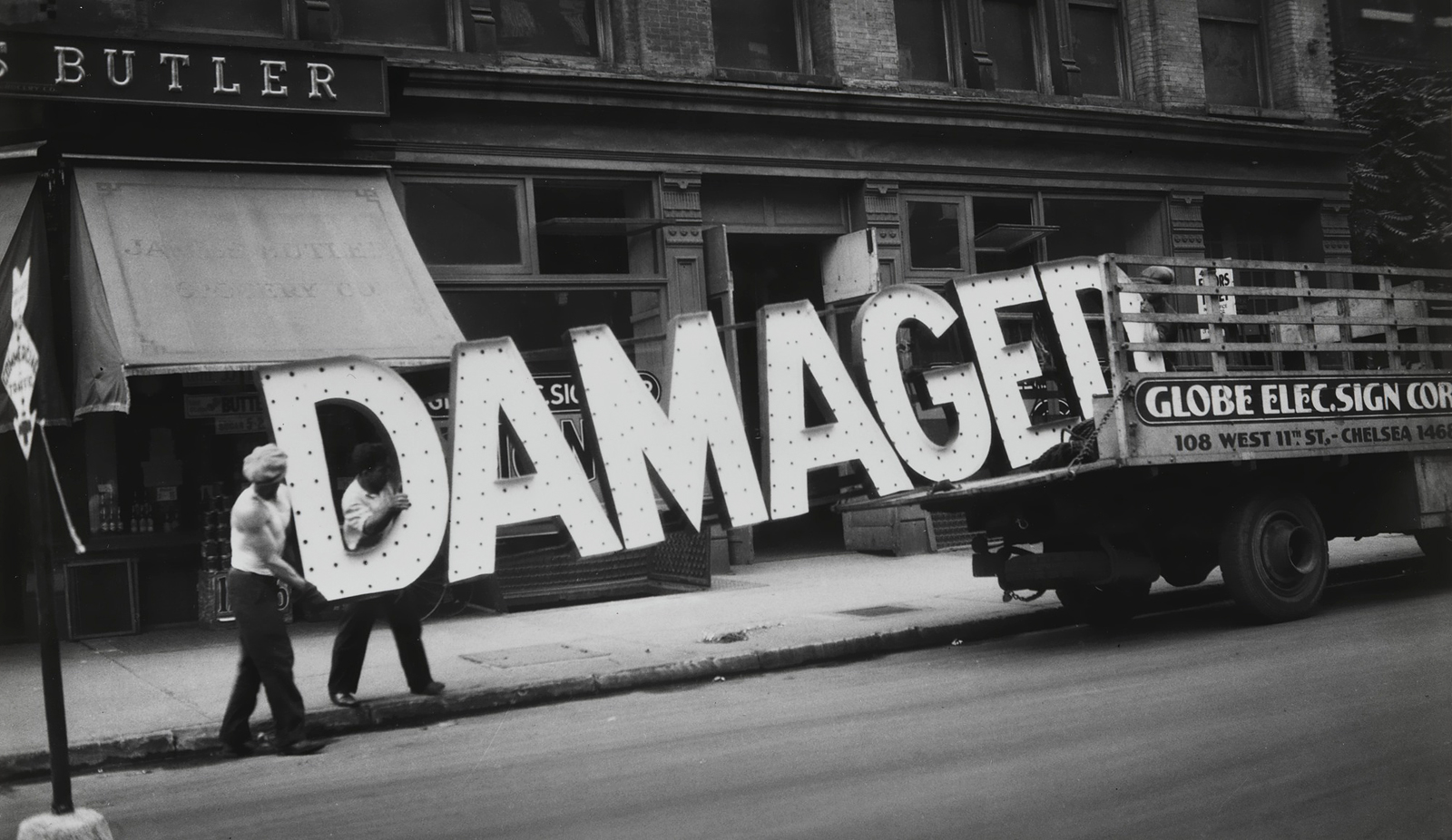
Walker Evans (American, 1903-1975) 'Truck and Sign' 1928-1930


Walker Evans (American, 1903-1975)
Truck and Sign
1928-1930
Gelatin silver print
© Walker Evans archive


Walker Evans (American, 1903-1975) 'Excavation for Lincoln Building, East 42nd Street and Park Avenue' 1929


Walker Evans (American, 1903-1975)
Excavation for Lincoln Building, East 42nd Street and Park Avenue
1929
Gelatin silver print
© Walker Evans archive


Walker Evans (American, 1903-1975) '[Fireplace in Floyd Burrroughs's Bedroom with Bedpost in Foreground, Hale County, Alabama]' 1936


Walker Evans (American, 1903-1975)
[Fireplace in Floyd Burrroughs’s Bedroom with Bedpost in Foreground, Hale County, Alabama]
1936
Gelatin silver print
8 x 10 in.
© Walker Evans archive


Walker Evans (American, 1903-1975) 'Main Street, Saratoga Springs, New York' 1931


Walker Evans (American, 1903-1975)
Main Street, Saratoga Springs, New York
1931
Gelatin silver print
© Walker Evans archive


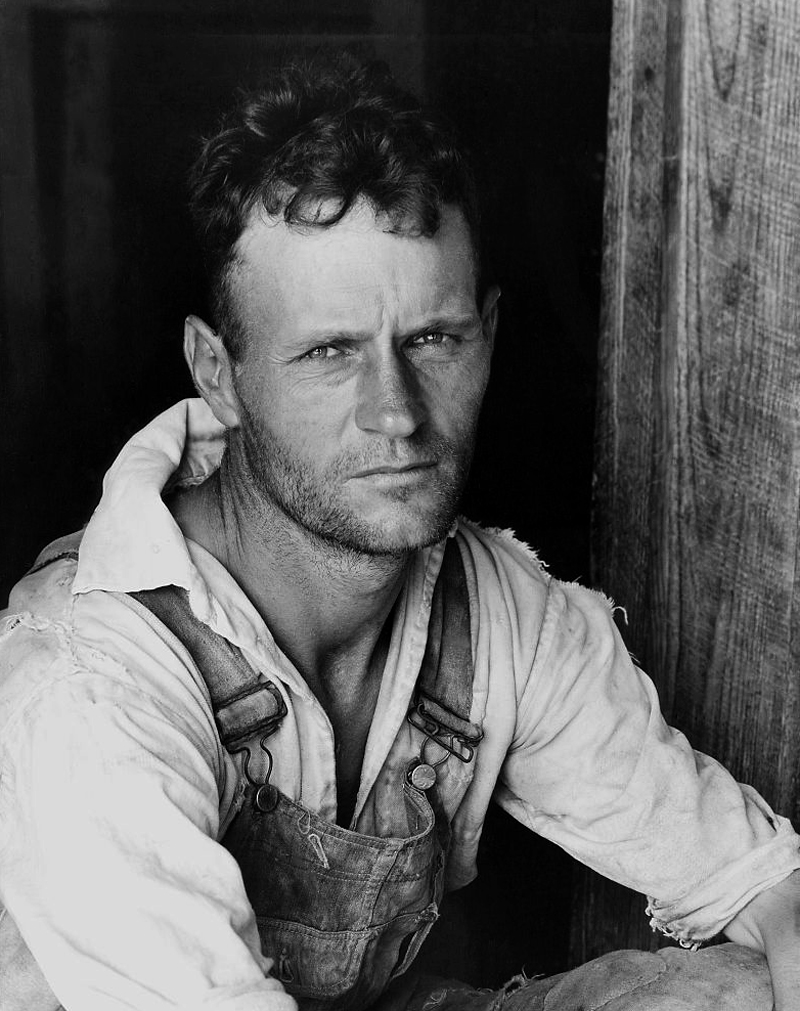
Walker Evans (American, 1903-1975) 'Floyde Burroughs, a cotton sharecropper, Hale County, Alabama' 1936


Walker Evans (American, 1903-1975)
Floyde Burroughs, a cotton sharecropper, Hale County, Alabama
1936
Gelatin silver print
© Walker Evans archive


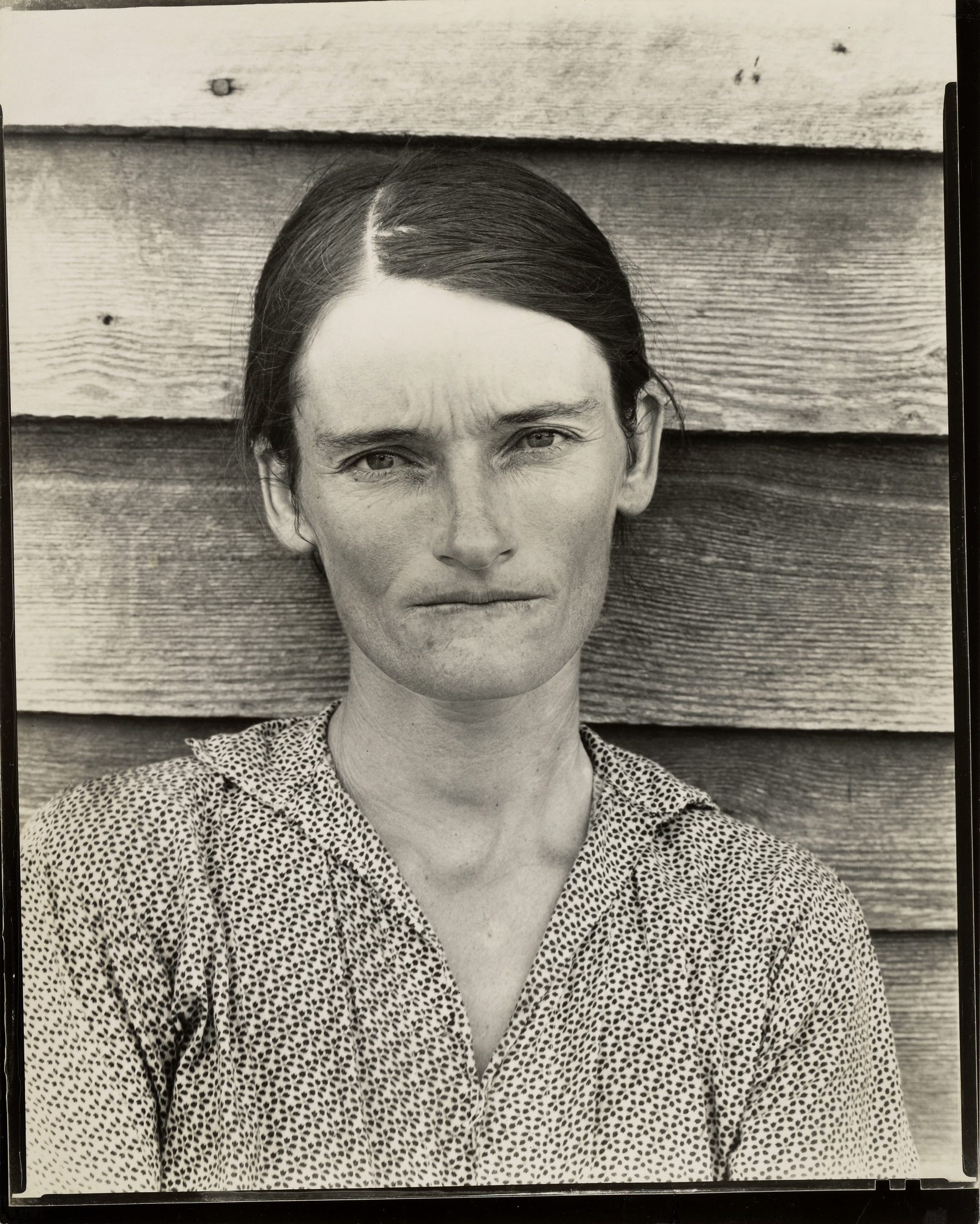
Walker Evans (American, 1903-1975) 'Allie Mae Burroughs, Hale County, Alabama' 1936


Walker Evans (American, 1903-1975)
Allie Mae Burroughs, Hale County, Alabama
1936
Gelatin silver print
© Walker Evans archive


Fotomuseum Winterthur
Grüzenstrasse 44 + 45
CH-8400
Winterthur (Zürich)
Phone: +41 52 234 10 60

Opening hours:
Tuesday – Sunday 11.00 – 18.00
Wednesday 11.00 – 20.00
Monday closed

Fotomuseum Winterthur website

LIKE ART BLART ON FACEBOOK

Back to top