Exhibition: ‘Nan Goldin’ at the National Gallery of Australia, Canberra

Exhibition dates: 8th July 2023 – 28th January 2024

Curator: Anne O’Hehir, Curator, Photography


Nan Goldin (American, b. 1953) 'Cookie at Tin Pan Alley, New York City' 1983


Nan Goldin (American, b. 1953)
Cookie at Tin Pan Alley, New York City
1983
From the series The ballad of sexual dependency, 1973-1986
Cibachrome print
National Gallery of Australia, Kamberri/Canberra
Purchased 2021 in celebration of the National Gallery of Australia’s 40th anniversary, 2022
© Nan Goldin


Putting a spell on you

In a February 2017 posting on Art Blart on Goldin’s The ballad of sexual dependency I commented:

“There is little love and tenderness here, little magic or generosity of spirit. Goldin’s attitude to the world at the time seems to be one of hostility and resentment. It’s all very well portraying the underbelly of society – the depravity, violence and degradation – but if your point of departure is one of anger and animosity, this is always going to be reflected in your art. I remember going out with my friends partying in the 1980s, the drugs, the sex, the pushing it to the edge, but you know what – we cared about each other. Nothing could be further from the truth in Goldin’s hedonistic (not heuristic) approach to her aura. …”


Over six years later it was time to reevaluate my feelings towards the work by looking again. Had my feelings changed in the intervening years? Or was I just being an obtuse human at the time who couldn’t see what everyone else could see, the genius of the work?

I have reflected long and hard on my feelings in relation to these photographs. Perhaps I was too close to the subject matter, that the series cut too close to the bone: many years of partying in London taking drugs, so many friends and lovers lost to HIV/AIDS. But that is not the case.

The problem for me with this work is its rather sad detachment from life and a pervading sadness attached to each of these photographs. While Goldin announces that “For me it is not a detachment to take a picture” I feel the opposite is true: Goldin seems uber detached when taking these photographs. The artist goes “diving for pearls” hoping to create some magical, random psychological subtexts where the subconscious is made visible, but she doesn’t ever know whether it’s her or the camera’s subconscious that is revealed or who (the camera or the artist) is doing the work. So much for knowing thyself, being responsible to the world, to others, and to oneself, intellectually, morally, and practically.

While the diaristic photographs of this “seminal” body of work feature intimate moments of love and loss, moments of bohemian sex, transgression, beauty, spontaneity, and suffering captured in photographs of “unflinching candour, rich hues, and a keen sense of empathy and lyricism” where is the real Goldin in all of this observational performance (Goldin says her photographs ‘come out of relationships, not observation’.) I’ll just leave that one there…

What I would really like to see is the full 700 slide sequence, live, with the music that was supposed to go with these slides. I want to feel the context of these photographs and their intimacies in the flesh with the freshness and passion of what was happening at the time in New York:

Images and words and music

the real memory
the real experience

HIV/AIDS
death
life
bitterness
love
anger
immediacy

Mark Morrisroe
David Wojnarowicz
Peter Hujar
Cookie Mueller
Keith Haring
Kiki Smith

addiction
music with the ballad of sexual dependency = I put a spell on you
witness… to life, to the hurt
conformity and denial
rebellion


Each period reframes issues surrounding gender, sex, drug use and death … and what it means to be free. These images would feel totally different in 1980s New York but today, they feel cold, desperate and sad and I can’t identify with them or their photographic pathology, their study of suffering.

Have my feelings changed towards this work six years on. Yes they have. I more fully appreciate their photographic snapshot composition, their colour, their diaristic bravado. But I still don’t like their energy…. nor their masochistic indulgence.

Perhaps I just want to feel the real memory, the real experience (the energy and atmosphere of being in New York at the time) not viewed through the prism of this distanced, distancing monologue.

Dr Marcus Bunyan


Many thankx to the National Gallery of Australia for allowing me to publish the photographs in the posting. Please click on the photographs for a larger version of the image.


The photographs in Nan Goldin’s The ballad of sexual dependency depict the everyday lives, often in intimate detail, of people in Goldin’s immediate community during the late 1970s and early 1980s. Please be advised that works of art in this exhibition depict explicit nudity, sexual acts, drug use, and the impacts of violence against women. Viewer discretion is advised. This exhibition is not suitable for children under the age of 15.


‘For me it is not a detachment to take a picture. It’s a way of touching somebody – it’s a caress, I think that you can actually give people access to their own soul.’


Nan Goldin


‘The people who have been photographed extensively by me feel that my camera is as much a part of their life as any other aspect of their life with me. It then becomes perfectly natural to be photographed. It ceases to be an external experience and becomes a part of the relationship, which is heightened by the camera, not distanced. The camera connects me to the experience and clarifies what is going on between me and the subject.’


Nan Goldin, wall text from the exhibition


“Since David Armstrong and I were young he always referred to photography as “diving for pearls.” If you took a million pictures you were lucky to come out with one or two gems. … I never learned control over my machines. I made every mistake in the book. But the technical mistakes allowed for magic. … Random psychological subtexts that I never would have thought to intentionally create. The subconscious made visible – though whether mine or the camera’s I don’t know …”

Nan Goldin. “Diving for Pearls,” quoted in Hilton Als. “Nan Goldin’s Life in Progress,” on The New Yorker website, July 4, 2016 [Online] Cited 18/11/2021


‘Nan Goldin’s nostalgic snapshots depict intimate moments of bohemian sex, transgression, beauty, spontaneity, and suffering. Her frames are marked by unflinching candour, rich hues, and a keen sense of empathy and lyricism. Goldin’s most famous work, ‘The Ballad of Sexual Dependency’ (1985), is a slideshow that presents nearly 700 images from her life in New York [and around the world] during the 1970s and ’80s; throughout the reel, the artist lies in bed with her lover, drag queens kiss in bars, and the AIDS epidemic ravages the photographer’s community.’


Anonymous text from the Artsy website


All The Beauty And The Bloodshed Official Trailer

Directed by Academy Award-winning filmmaker Laura Poitras, All the Beauty And The Bloodshed is an epic, emotional and interconnected story about internationally renowned artist and activist Nan Goldin told through her slideshows, intimate interviews, ground-breaking photography, and rare footage of her personal fight to hold the Sackler family accountable for the overdose crisis.


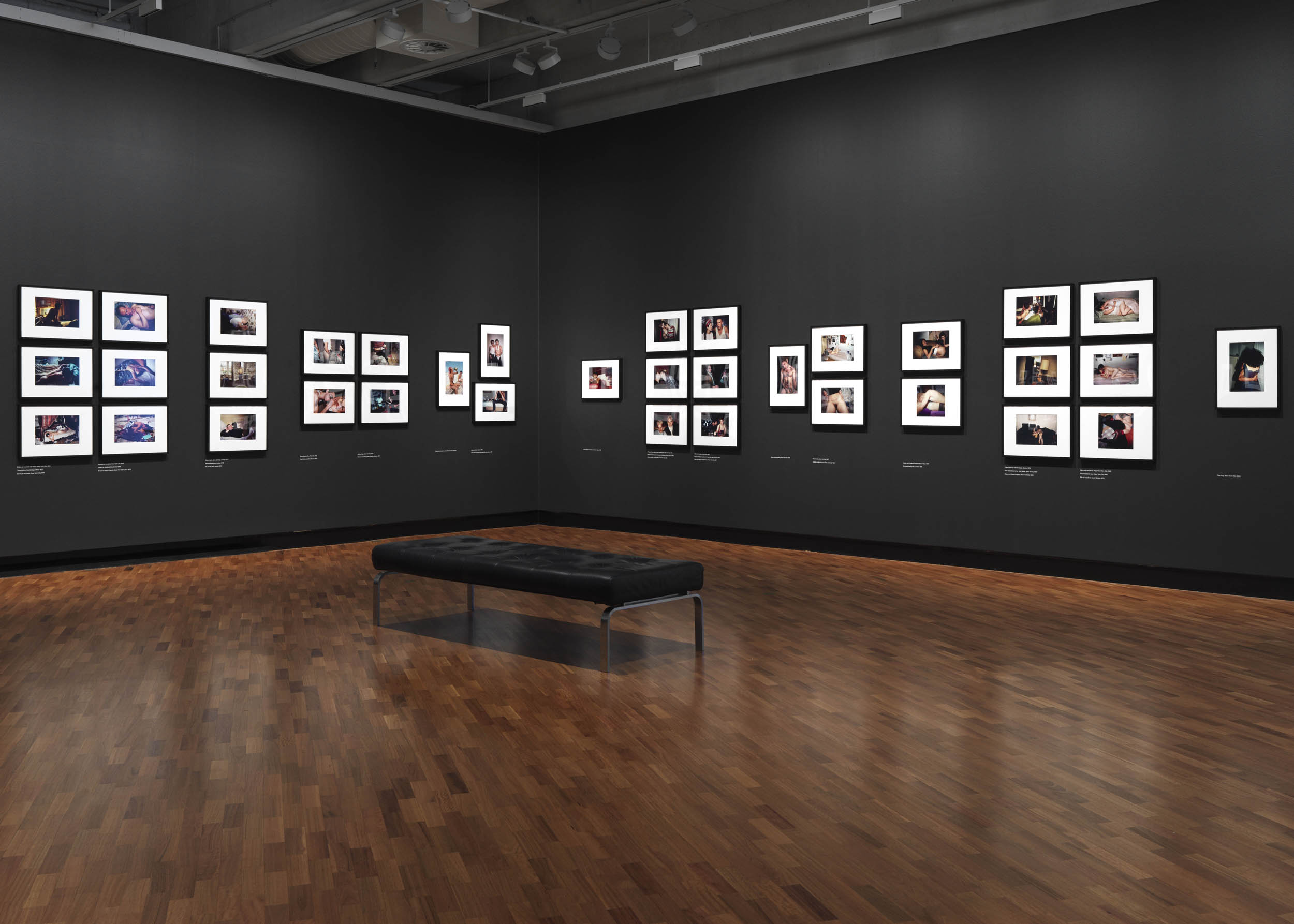
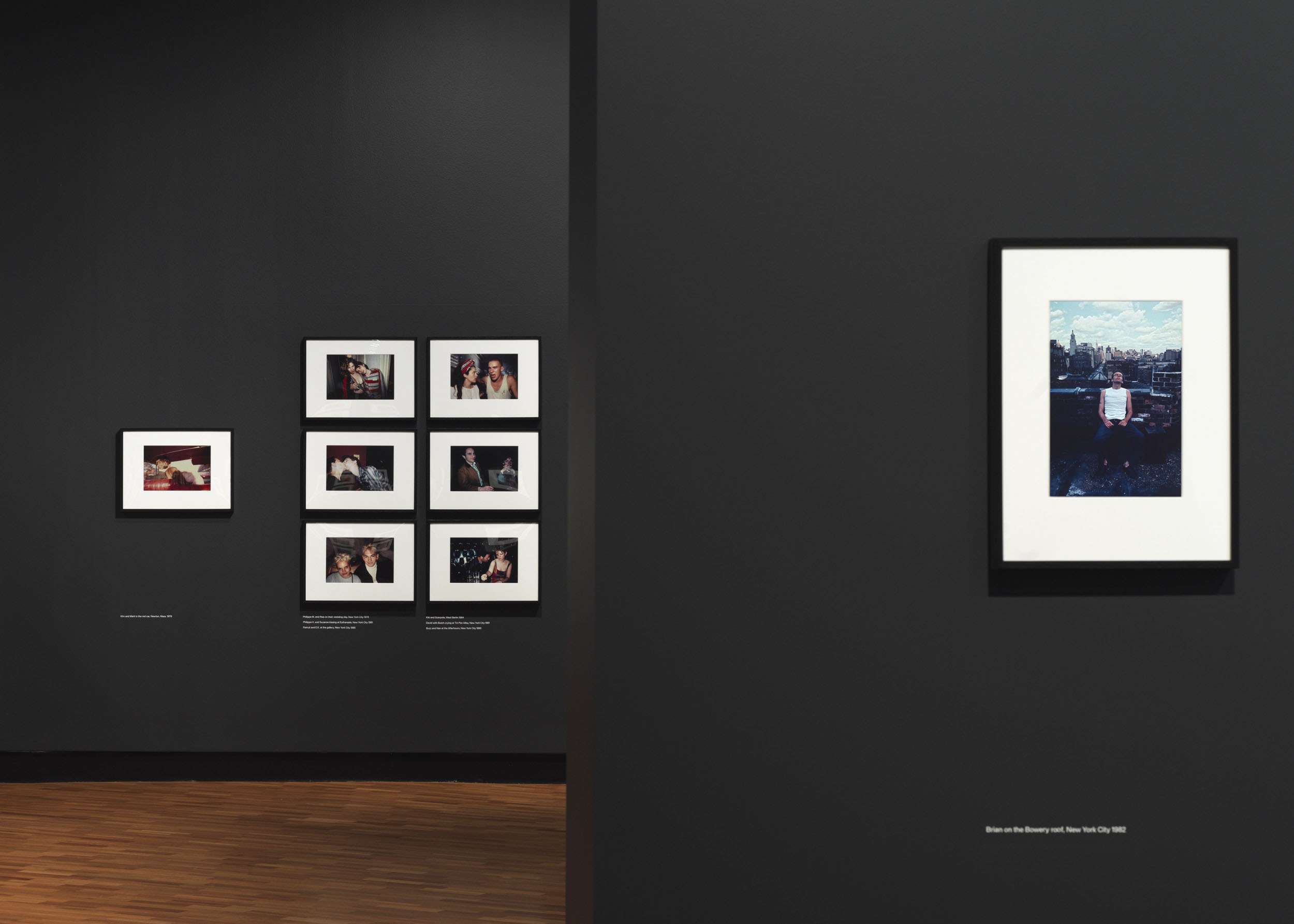
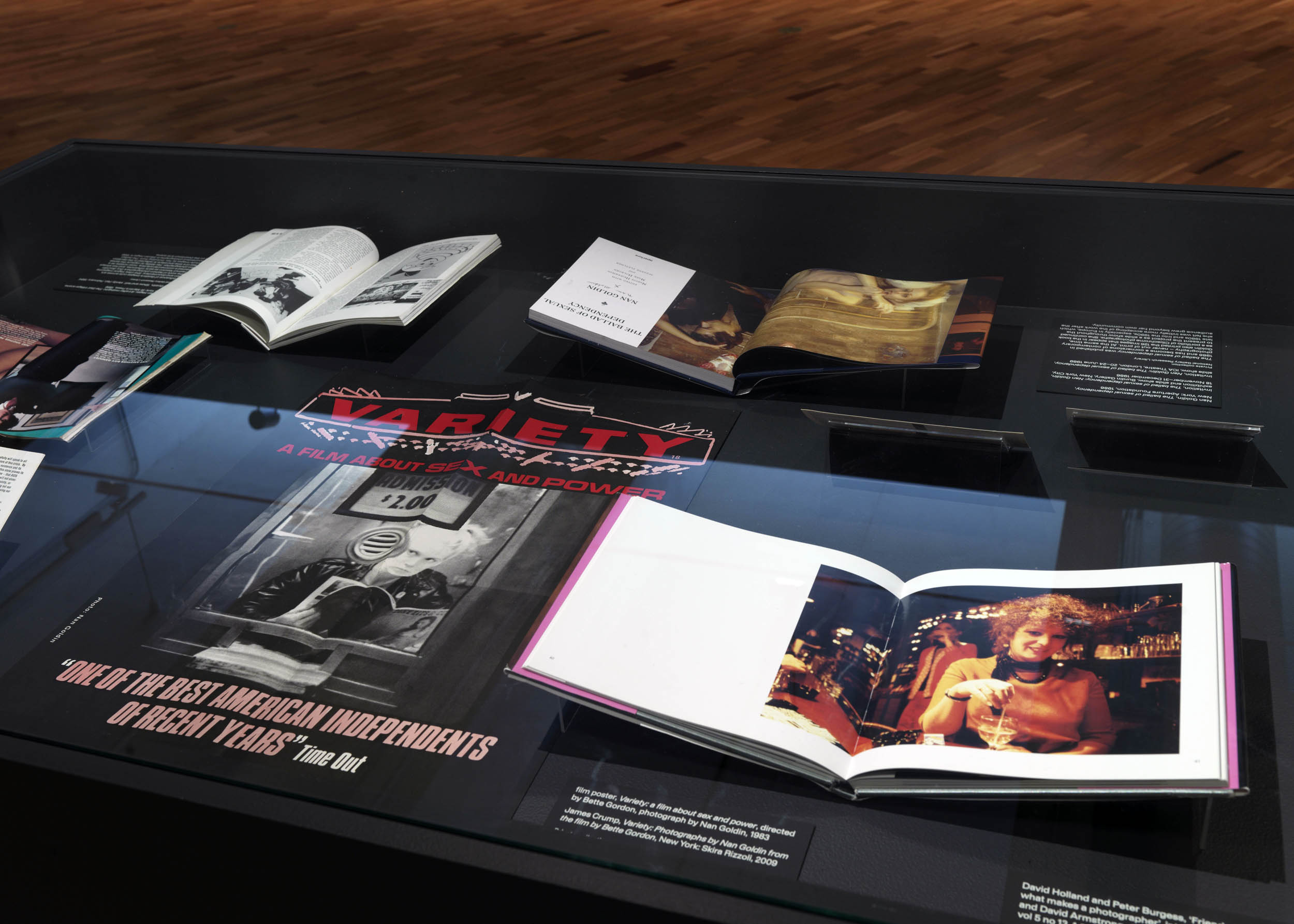
Installation view, 'Nan Goldin: the ballad of sexual dependency', National Gallery of Australia, Kamberri/Canberra, 2023

Installation view, 'Nan Goldin: the ballad of sexual dependency', National Gallery of Australia, Kamberri/Canberra, 2023

Installation view, 'Nan Goldin: the ballad of sexual dependency', National Gallery of Australia, Kamberri/Canberra, 2023

Installation view, 'Nan Goldin: the ballad of sexual dependency', National Gallery of Australia, Kamberri/Canberra, 2023

Installation view, 'Nan Goldin: the ballad of sexual dependency', National Gallery of Australia, Kamberri/Canberra, 2023

Installation view, 'Nan Goldin: the ballad of sexual dependency', National Gallery of Australia, Kamberri/Canberra, 2023

Installation view, 'Nan Goldin: the ballad of sexual dependency', National Gallery of Australia, Kamberri/Canberra, 2023

Installation view, 'Nan Goldin: the ballad of sexual dependency', National Gallery of Australia, Kamberri/Canberra, 2023


Installation views, Nan Goldin: the ballad of sexual dependency, National Gallery of Australia, Kamberri / Canberra, 2023
Photos: Karlee Holland


The ballad of sexual dependency is a defining artwork of the 1980s. Nan Goldin’s extended photographic study of her chosen family – her ‘tribe’ – began life as a slide show screened in the clubs and bars of New York where Goldin and her friends worked and played. The slide show was then distilled to a series of 126 photographs, which has recently become part of the National Gallery’s collection.

Goldin takes photographs to connect, to keep the people she loves in her memory. She is committed to the idea that photography can faithfully record a time and place, and do so in a way that has real social purpose. Using a documentary, snapshot style, she lays bare her life in the manner of a family album. We see her alongside her friends and lovers as they live their lives – hanging out, falling in and out of love, having children. But this is a community that would be decimated by HIV / AIDS and drug-related deaths. The ballad has become as much a testament to how much Goldin and her community have lost, as it is a record of the look and feel of a past time.

Goldin refers to The ballad as her ‘public diary’, stating that her photographs ‘come out of relationships, not observation’. The work’s overriding themes, she has stated, are those of love and empathy and the tension between autonomy and interdependence in relationships—relationships in which all genders struggle to find a common language.

Text from the NGA website


Nan Goldin (American, b. 1953) 'Mark tattooing Mark, Boston' 1978


Nan Goldin (American, b. 1953)
Mark tattooing Mark, Boston
1978
From the series The ballad of sexual dependency, 1973-1986
Cibachrome print
National Gallery of Australia, Kamberri/Canberra
Purchased 2021 in celebration of the National Gallery of Australia’s 40th anniversary, 2022
© Nan Goldin


Nan Goldin (American, b. 1953) 'Couple in Bed, Chicago' 1977


Nan Goldin (American, b. 1953)
Couple in Bed, Chicago
1977
From the series The ballad of sexual dependency, 1973-1986
Cibachrome print
National Gallery of Australia, Kamberri/Canberra
Purchased 2021 in celebration of the National Gallery of Australia’s 40th anniversary, 2022
© Nan Goldin


Nan Goldin (American, born 1953) 'Buzz and Nan at the Afterhours, New York City' 1980


Nan Goldin (American, b. 1953)
Buzz and Nan at the Afterhours, New York City
1980
From the series The ballad of sexual dependency, 1973-1986
Cibachrome print
National Gallery of Australia, Kamberri/Canberra
Purchased 2021 in celebration of the National Gallery of Australia’s 40th anniversary, 2022
© Nan Goldin


Nan Goldin (American, b. 1953) 'Flaming car, Salisbury Beach, N.H.' 1979


Nan Goldin (American, b. 1953)
Flaming car, Salisbury Beach, N.H.
1979
From the series The ballad of sexual dependency, 1973-1986
Cibachrome print
National Gallery of Australia, Kamberri/Canberra
Purchased 2021 in celebration of the National Gallery of Australia’s 40th anniversary, 2022
© Nan Goldin
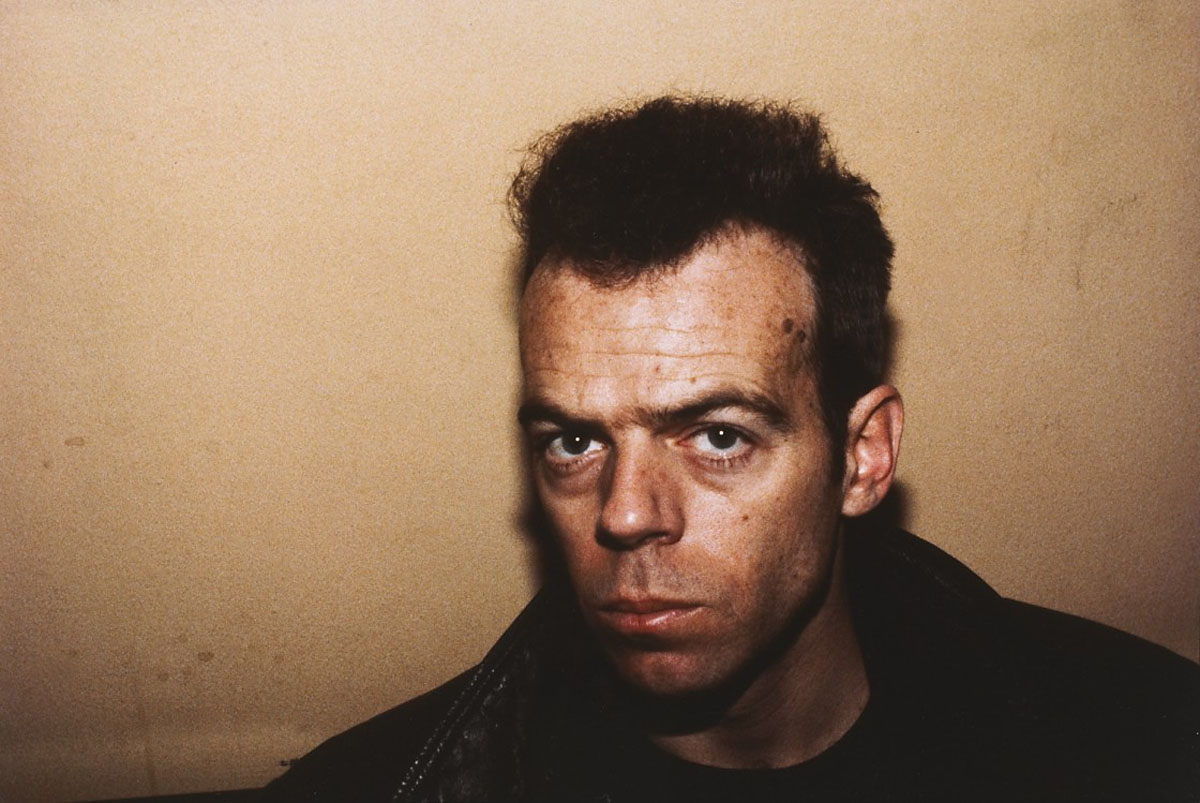
 

Nan Goldin (American, b. 1953) 'Brian's face, West Berlin' 1984


Nan Goldin (American, b. 1953)
Brian’s face, West Berlin
1984
From the series The ballad of sexual dependency, 1973-1986
Cibachrome print
National Gallery of Australia, Kamberri/Canberra
Purchased 2021 in celebration of the National Gallery of Australia’s 40th anniversary, 2022
© Nan Goldin


Nan Goldin (American, born 1953) 'Nan and Brian in Bed, New York City' 1983


Nan Goldin (American, b. 1953)
Nan and Brian in bed, New York City
1983
From the series The ballad of sexual dependency, 1973-1986
Cibachrome print
National Gallery of Australia, Kamberri/Canberra
Purchased 2021 in celebration of the National Gallery of Australia’s 40th anniversary, 2022
© Nan Goldin


Nan Goldin (American, b. 1953) 'Suzanne in the green bathroom, Pergamon Museum, East Berlin' 1984


Nan Goldin (American, b. 1953)
Suzanne in the green bathroom, Pergamon Museum, East Berlin
1984
From the series The ballad of sexual dependency, 1973-1986
Cibachrome print
National Gallery of Australia, Kamberri/Canberra
Purchased 2021 in celebration of the National Gallery of Australia’s 40th anniversary, 2022
© Nan Goldin
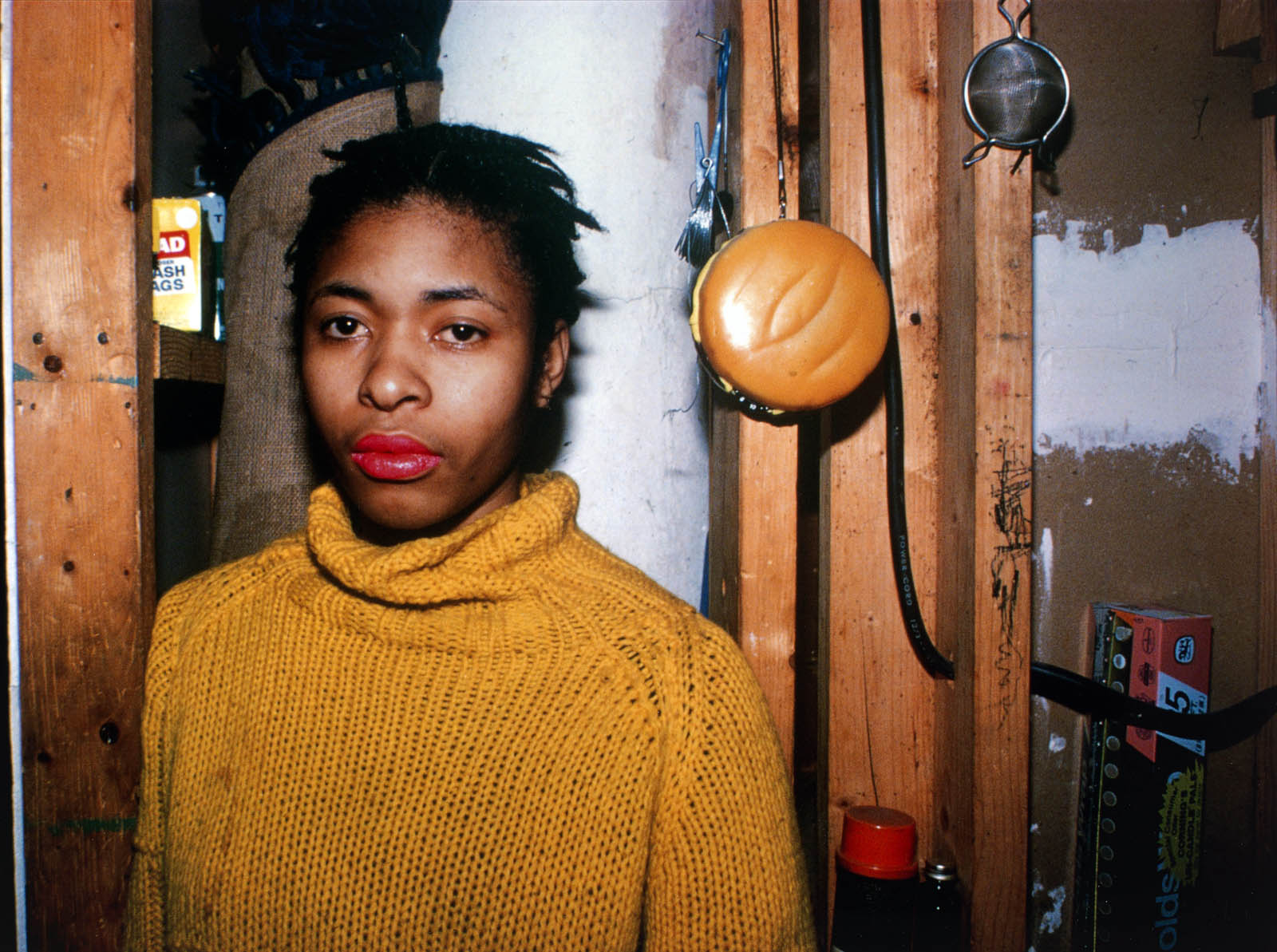
 

Nan Goldin (American, b. 1953) 'Millie with the cheeseburger radio at home, New York City' 1980


Nan Goldin (American, b. 1953)
Millie with the cheeseburger radio at home, New York City
1980
From the series The ballad of sexual dependency, 1973-1986
Cibachrome print
National Gallery of Australia, Kamberri/Canberra
Purchased 2021 in celebration of the National Gallery of Australia’s 40th anniversary, 2022
© Nan Goldin


Nan Goldin (American, b. 1953) 'Edwidge behind the bar at Evelyne's, New York City' 1985


Nan Goldin (American, b. 1953)
Edwidge behind the bar at Evelyne’s, New York City
1985
From the series The ballad of sexual dependency, 1973-1986
National Gallery of Australia, Kamberri/Canberra
Purchased 2021 in celebration of the National Gallery of Australia’s 40th anniversary, 2022
© Nan Goldin
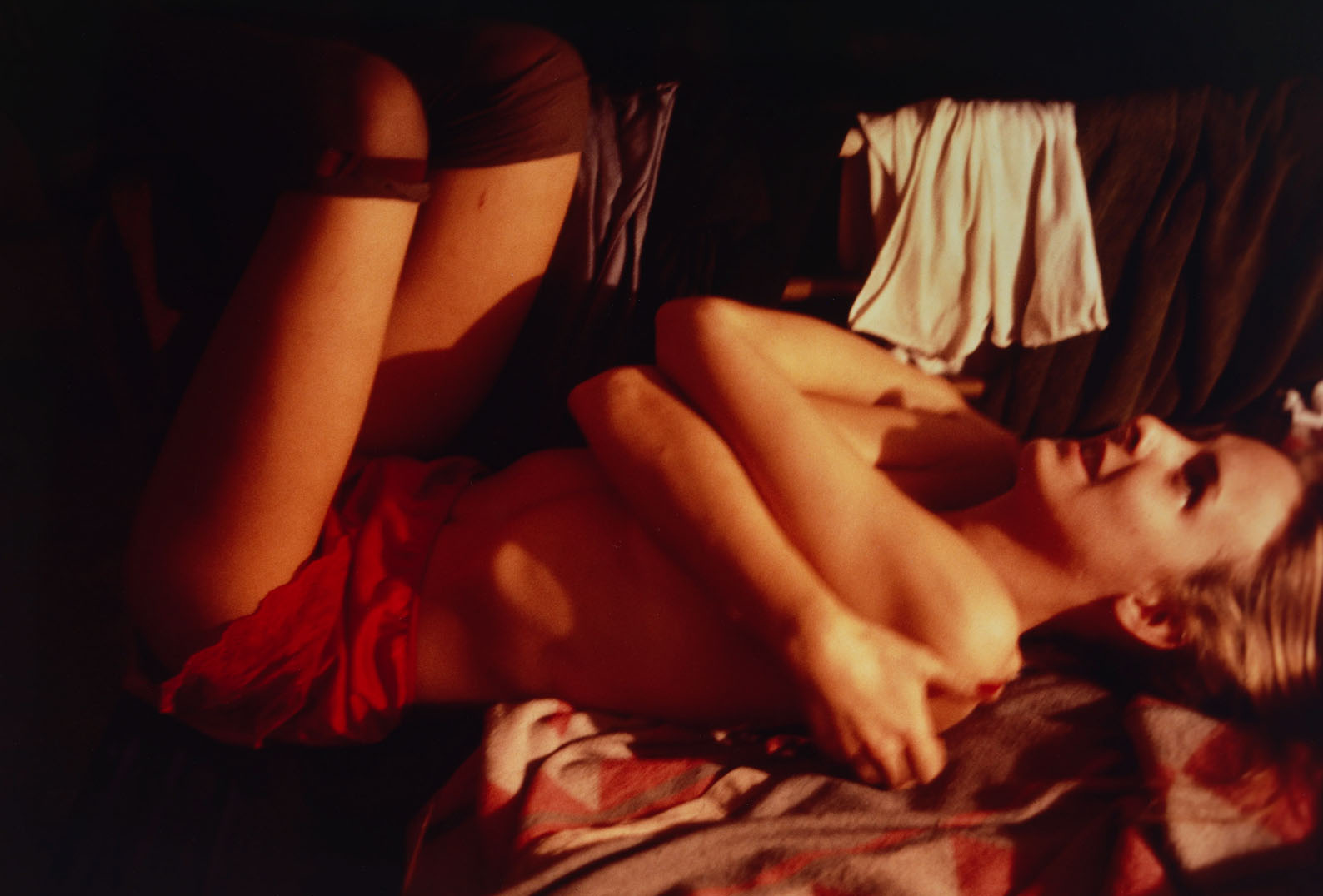
 

Nan Goldin (American, b. 1953) 'Greer on the bed, New York City' 1983


Nan Goldin (American, b. 1953)
Greer on the bed, New York City
1983
From the series The ballad of sexual dependency, 1973-1986
Cibachrome print
National Gallery of Australia, Kamberri/Canberra
Purchased 2021 in celebration of the National Gallery of Australia’s 40th anniversary, 2022
© Nan Goldin


Nan Goldin (American, b. 1953) 'Dieter on the train, Sweden' 1984


Nan Goldin (American, b. 1953)
Dieter on the train, Sweden
1984
From the series The ballad of sexual dependency, 1973-1986
Cibachrome print
National Gallery of Australia, Kamberri/Canberra
Purchased 2021 in celebration of the National Gallery of Australia’s 40th anniversary, 2022
© Nan Goldin


Nan Goldin (American, b. 1953) 'Brian with the Flintstones, New York City' 1981


Nan Goldin (American, b. 1953)
Brian with the Flintstones, New York City
1981
From the series The ballad of sexual dependency, 1973-1986
Cibachrome print
National Gallery of Australia, Kamberri/Canberra
Purchased 2021 in celebration of the National Gallery of Australia’s 40th anniversary, 2022
© Nan Goldin


Nan Goldin (American, b. 1953) 'Cookie and Vittorio's wedding, New York City' 1986


Nan Goldin (American, b. 1953)
Cookie and Vittorio’s wedding, New York City
1986
From the series The ballad of sexual dependency, 1973-1986
Cibachrome print
National Gallery of Australia, Kamberri/Canberra
Purchased 2021 in celebration of the National Gallery of Australia’s 40th anniversary, 2022
© Nan Goldin


Nan Goldin (American, b. 1953) 'Twisting at my birthday party, New York City' 1980


Nan Goldin (American, b. 1953)
Twisting at my birthday party, New York City
1980
From the series The ballad of sexual dependency, 1973-1986
Cibachrome print
National Gallery of Australia, Kamberri/Canberra
Purchased 2021 in celebration of the National Gallery of Australia’s 40th anniversary, 2022
© Nan Goldin
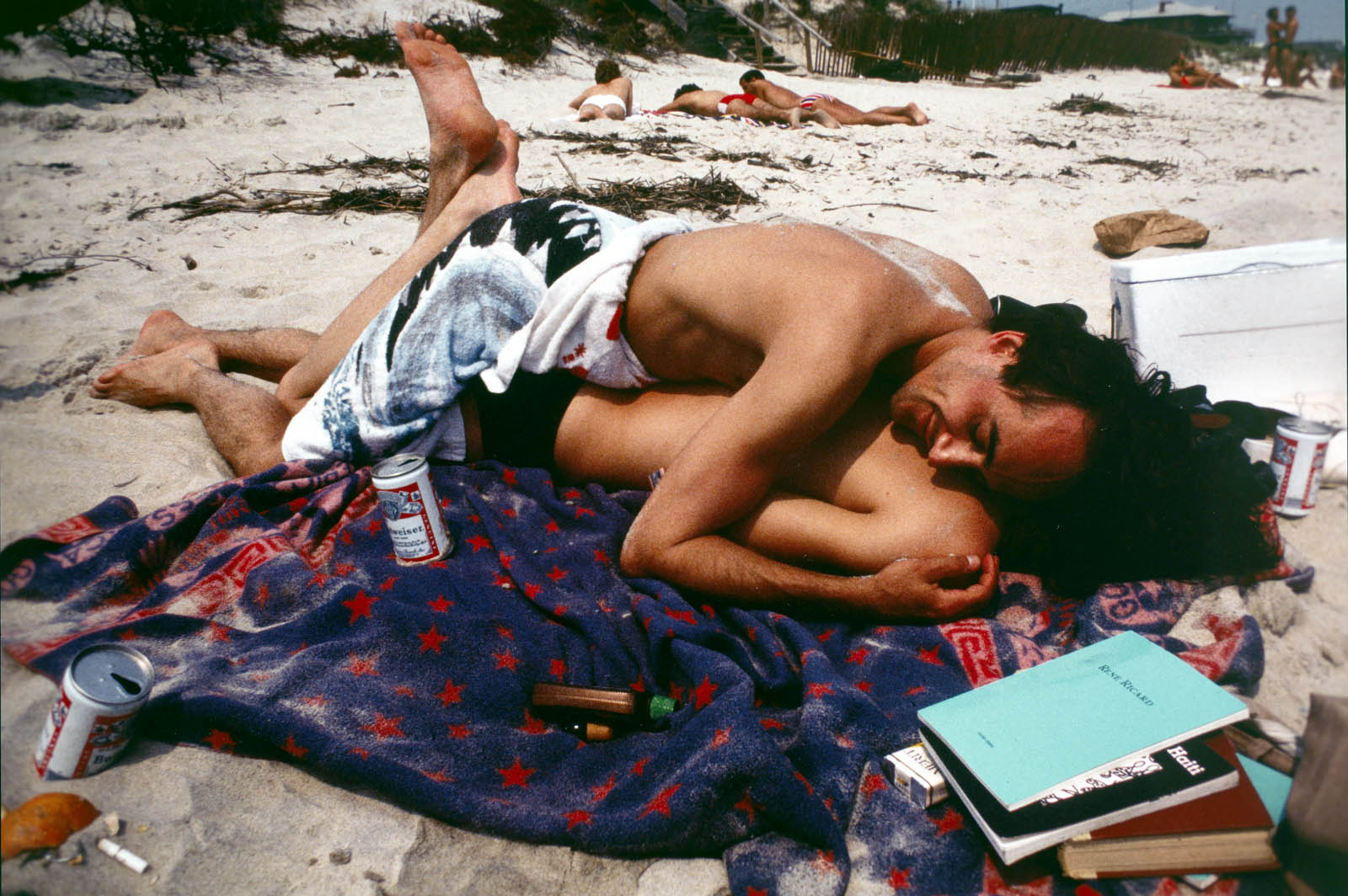
 

Nan Goldin (American, b. 1953) 'Bruce on top of French Chris, Fire Island, N.Y.' 1979


Nan Goldin (American, b. 1953)
Bruce on top of French Chris, Fire Island, N.Y.
1979
From the series The ballad of sexual dependency, 1973-1986
Cibachrome print
National Gallery of Australia, Kamberri/Canberra
Purchased 2021 in celebration of the National Gallery of Australia’s 40th anniversary, 2022
© Nan Goldin
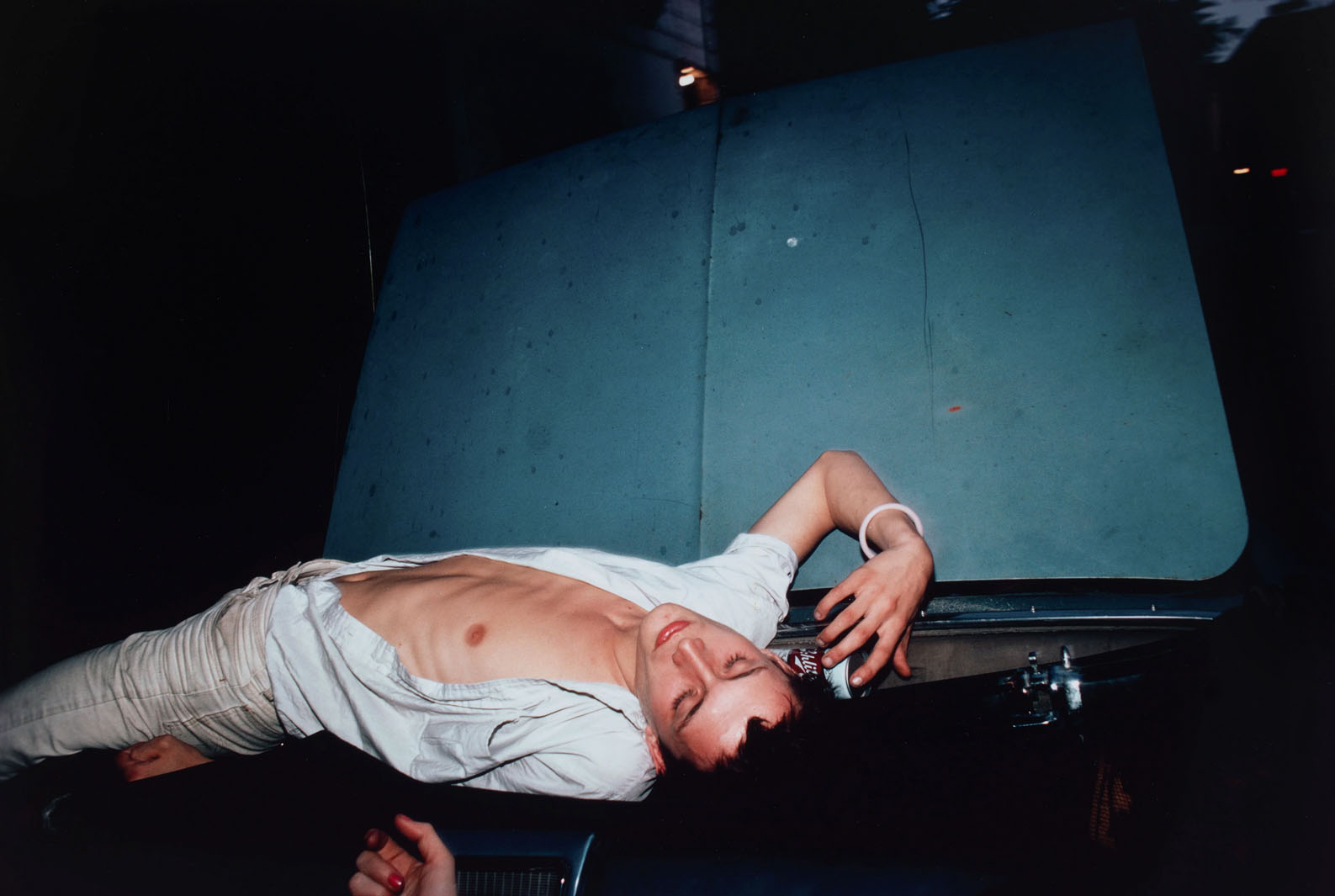
 

Nan Goldin (American, b. 1953) 'French Chris on the convertible, New York City' 1979


Nan Goldin (American, b. 1953)
French Chris on the convertible, New York City
1979
From the series The ballad of sexual dependency, 1973-1986
Cibachrome print
National Gallery of Australia, Kamberri/Canberra
Purchased 2021 in celebration of the National Gallery of Australia’s 40th anniversary, 2022
© Nan Goldin
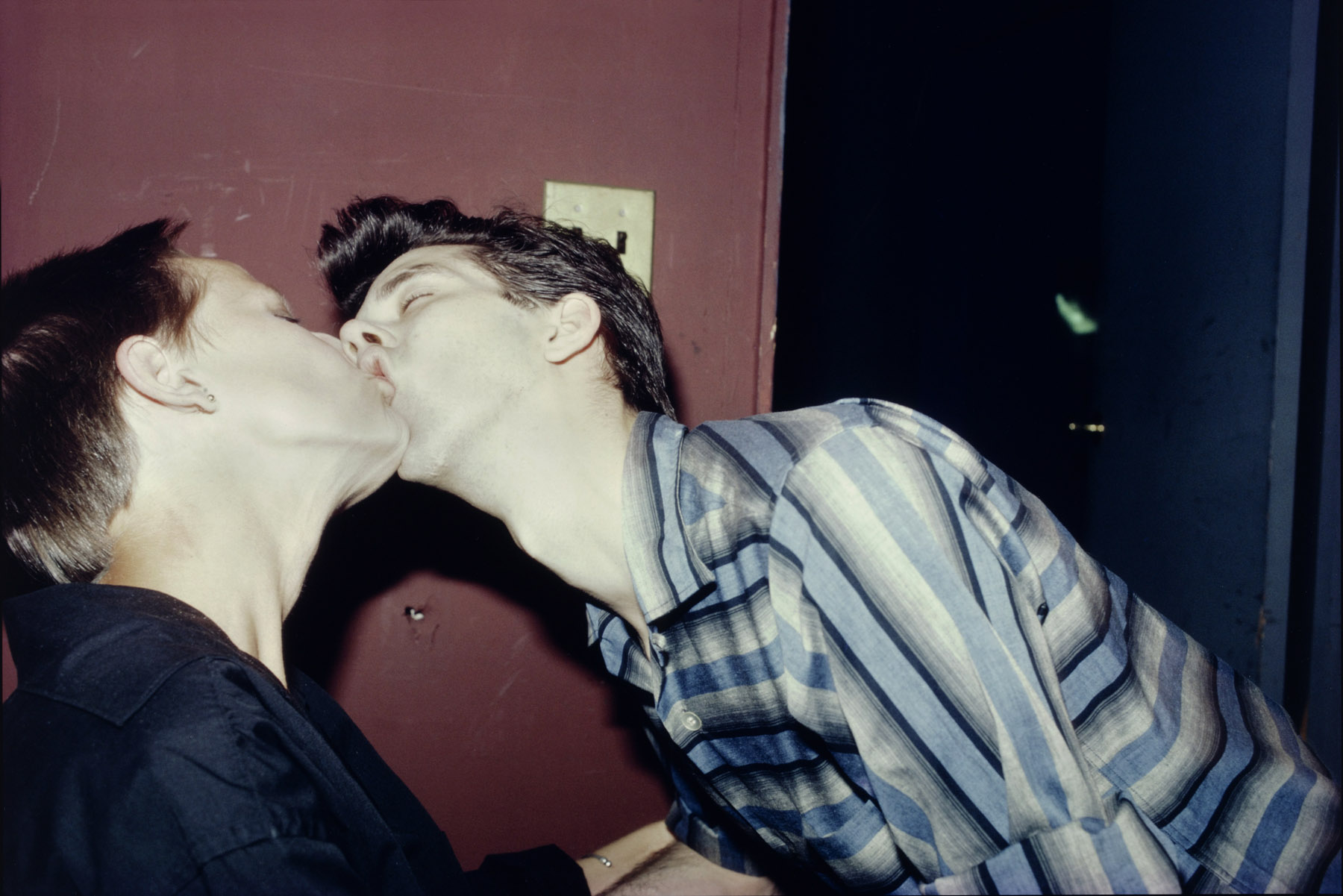
 

Nan Goldin (American, born 1953) 'Philippe H. and Suzanne Kissing at Euthanasia, New York City' 1981


Nan Goldin (American, b. 1953)
Philippe H. and Suzanne Kissing at Euthanasia, New York City
1981
From the series The ballad of sexual dependency, 1973-1986
Cibachrome print
National Gallery of Australia, Kamberri/Canberra
Purchased 2021 in celebration of the National Gallery of Australia’s 40th anniversary, 2022
© Nan Goldin


Nan Goldin (American, born 1953) 'Rise and Monty Kissing, New York City' 1980


Nan Goldin (American, b. 1953)
Rise and Monty Kissing, New York City
1980
From the series The ballad of sexual dependency, 1973-1986
Cibachrome print
National Gallery of Australia, Kamberri/Canberra
Purchased 2021 in celebration of the National Gallery of Australia’s 40th anniversary, 2022
© Nan Goldin
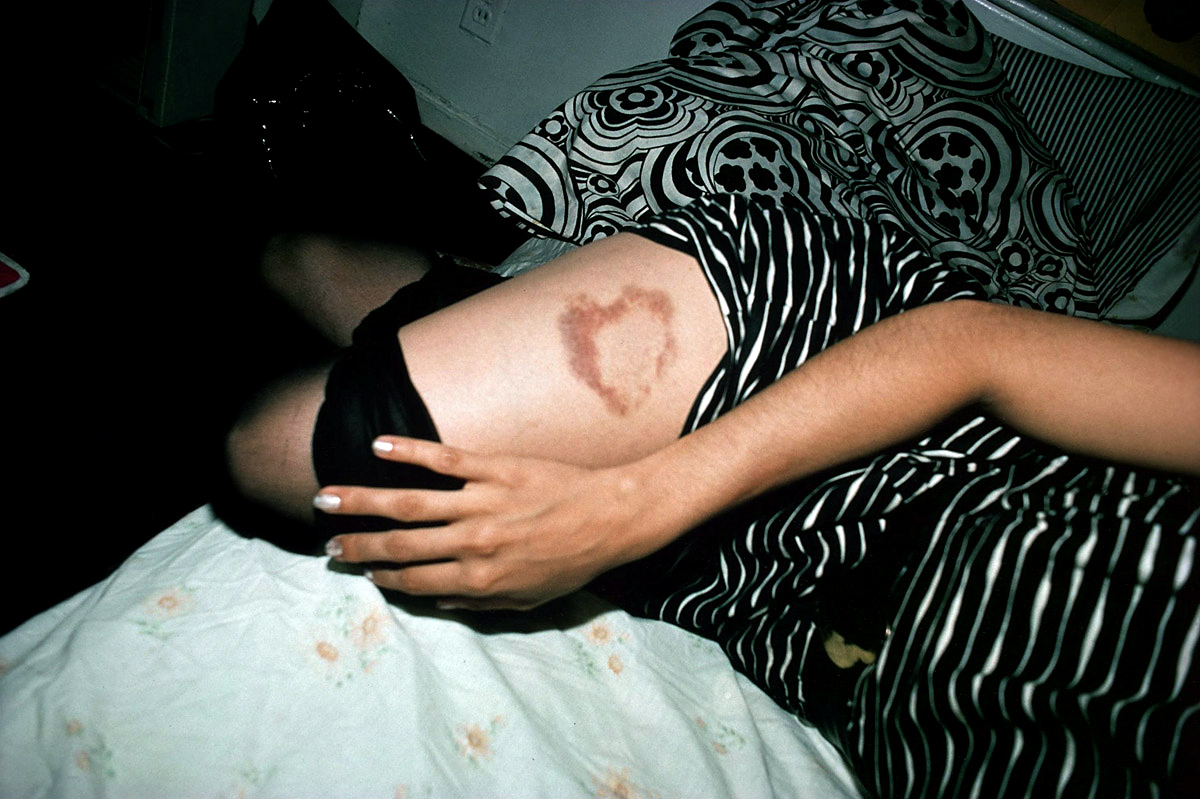
 

Nan Goldin (American, born 1953) 'Heart-Shaped Bruise, New York City' 1980


Nan Goldin (American, b. 1953)
Heart-Shaped Bruise, New York City
1980
From the series The ballad of sexual dependency, 1973-1986
Cibachrome print
National Gallery of Australia, Kamberri/Canberra
Purchased 2021 in celebration of the National Gallery of Australia’s 40th anniversary, 2022
© Nan Goldin
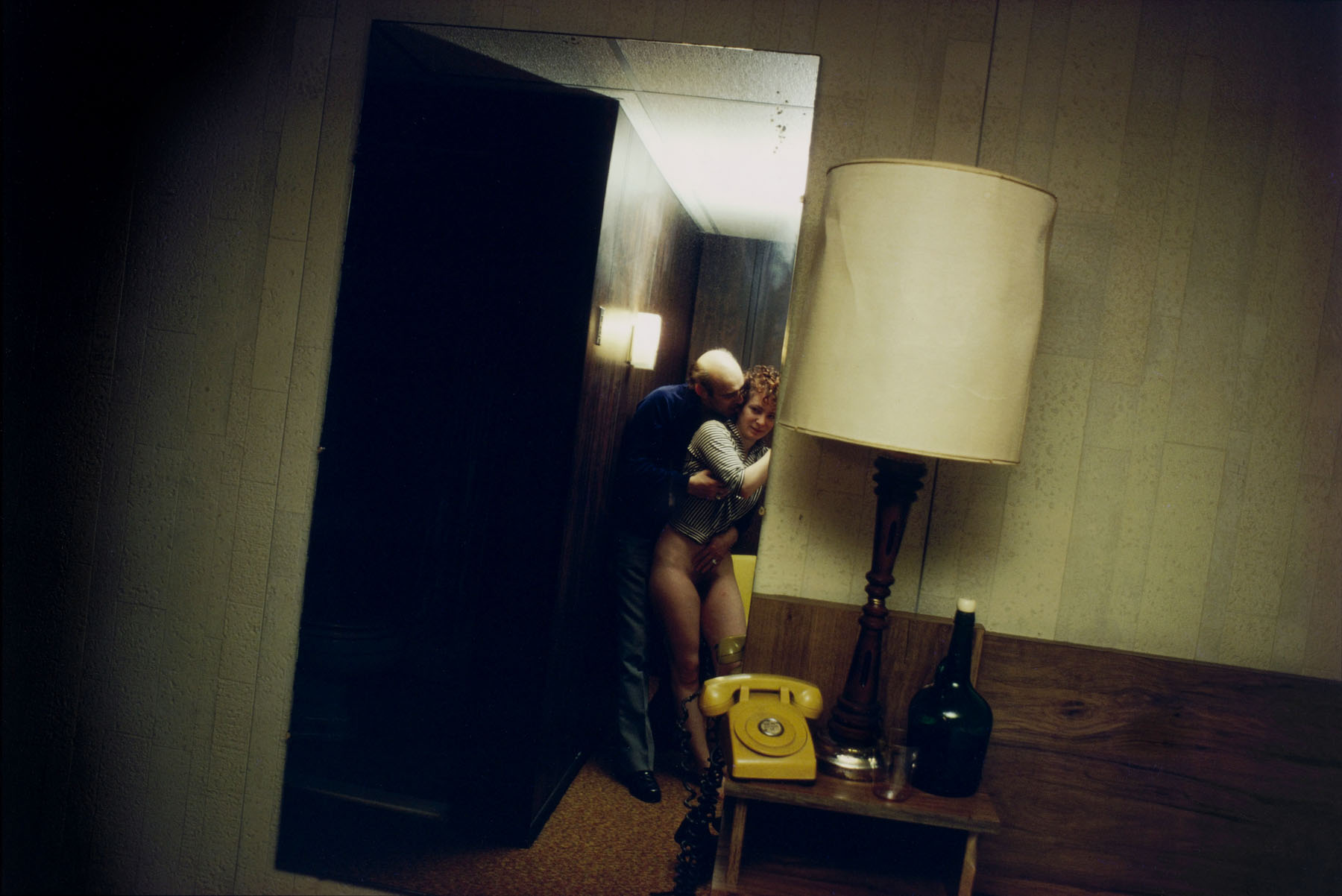
 

Nan Goldin (American, born 1953) 'Nan and Dickie in the York Motel, New Jersey' 1980


Nan Goldin (American, b. 1953)
Nan and Dickie in the York Motel, New Jersey
1980
From the series The ballad of sexual dependency, 1973-1986
Cibachrome print
National Gallery of Australia, Kamberri/Canberra
Purchased 2021 in celebration of the National Gallery of Australia’s 40th anniversary, 2022
© Nan Goldin


Nan Goldin is one of the world’s most influential photographers and her iconic series of 126 photographs The ballad of sexual dependency is a defining artwork of the 1980s. The National Gallery recently acquired the last, complete edition of this cornerstone work, which will be shown at the Gallery from 8 July.

Decades in the making, Goldin’s extended photographic study of her chosen family – her ‘tribe’ – is a deeply moving portrayal of life in the 1970s and 1980s, as the artist and her loved ones navigate a time of unrelenting energy and extremes.

National Gallery Curator of Photography Anne O’Hehir said Goldin’s rich and evocative series explores themes of sexual identity, community, and love and loss against the backdrop of New York City and has shaped a generation who’ve fallen in love with the unvarnished intimacy of her storytelling.

‘Goldin takes photographs to connect, to keep the people she loves in her memory. She is committed to the idea that photography can faithfully record a time and place and do so in a way that has real social purpose,’ O’Hehir said.

‘Using a documentary, snapshot style, she lays bare her life in the manner of a family album. We see her alongside her friends and lovers as they live their lives – hanging out, falling in and out of love, having children. But this is a community that would soon be decimated by HIV / AIDS and drug-related deaths.

The ballad of sexual dependency has become as much a testament to how much Goldin and her community have lost, as it is a record of the look and feel of a past time.’

O’Hehir said this engaged and at times moving series urges you to empathise with stories and experiences that are rarely depicted. ‘Goldin is committed to making public that which is usually hidden and private, and to the truthful recording of her life,’ O’Hehir said.

Goldin refers to The ballad of sexual dependency as her ‘public diary’, stating that her photographs ‘come out of relationships, not observation’. The work’s overriding themes, she has stated, are those of love and empathy and the tension between autonomy and interdependence in relationships – relationships in which all genders struggle to find a common language.

The ballad of sexual dependency began its life as a slideshow presented by Goldin at parties and in clubs and bars in New York City’s downtown art scene. The slide show was then distilled to a series of 126 photographs, which are now part of the national collection.

The opening of The ballad of sexual dependency at the National Gallery coincides with the release of Goldin’s acclaimed documentary All The Beauty And The Bloodshed on DocPlay. Directed by Academy Award®-winning filmmaker Laura Poitras, All The Beauty And The Bloodshed is an epic, emotional and interconnected story about Goldin’s life, work and activism, focussing on her recent fight to hold the Sackler family accountable for the opioid crisis. The biographical film will also be screened at the National Gallery on Saturday 22 July.

Nan Goldin’s The ballad of sexual dependency is free and will be on display at the National Gallery in Kamberri / Canberra from 8 July 2023 – 28 Jan 2024. This exhibition is part of the National Gallery of Australia’s 40th Anniversary celebrations and continues the Know My Name gender equity initiative. Nan Goldin’s exhibition The ballad of sexual dependency is supported by DocPlay, the streaming home of the world’s best documentaries.

Curator: Anne O’Hehir, Curator, Photography

Press release from the National Gallery of Australia


Nan Goldin (American, b. 1953) 'The Hug, New York City' 1980


Nan Goldin (American, b. 1953)
The Hug, New York City
1980
From the series The ballad of sexual dependency, 1973-1986
Cibachrome print
National Gallery of Australia, Kamberri/Canberra
Purchased 2021 in celebration of the National Gallery of Australia’s 40th anniversary, 2022
© Nan Goldin


Nan Goldin (American, b. 1953) 'Mark Dirt, New York City' 1981


Nan Goldin (American, b. 1953)
Mark Dirt, New York City
1981
From the series The ballad of sexual dependency, 1973-1986
Cibachrome print
National Gallery of Australia, Kamberri/Canberra
Purchased 2021 in celebration of the National Gallery of Australia’s 40th anniversary, 2022
© Nan Goldin
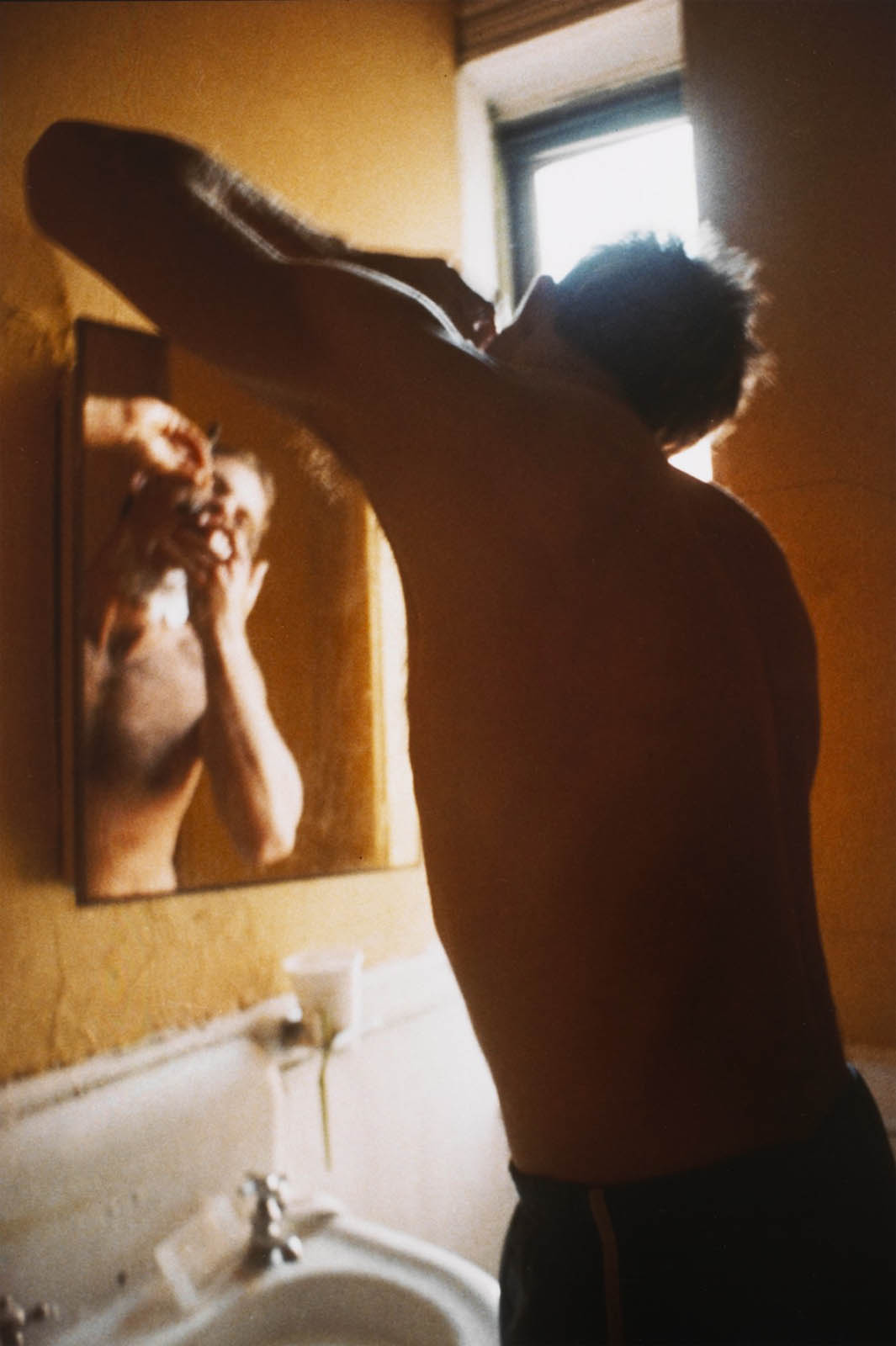
 

Nan Goldin (American, b. 1953) 'Thomas shaving, Boston' 1977


Nan Goldin (American, b. 1953)
Thomas shaving, Boston
1977
From the series The ballad of sexual dependency, 1973-1986
Cibachrome print
National Gallery of Australia, Kamberri/Canberra
Purchased 2021 in celebration of the National Gallery of Australia’s 40th anniversary, 2022
© Nan Goldin


Nan Goldin (American, b. 1953) 'Scarpota at the Knox bar, West Berlin' 1984


Nan Goldin (American, b. 1953)
Scarpota at the Knox bar, West Berlin
1984
From the series The ballad of sexual dependency, 1973-1986
Cibachrome print
National Gallery of Australia, Kamberri/Canberra
Purchased 2021 in celebration of the National Gallery of Australia’s 40th anniversary, 2022
© Nan Goldin


Nan Goldin (American, b. 1953) 'Brian on the Bowery roof, New York City' 1982


Nan Goldin (American, b. 1953)
Brian on the Bowery roof, New York City
1982
From the series The ballad of sexual dependency, 1973-1986
Cibachrome print
National Gallery of Australia, Kamberri/Canberra
Purchased 2021 in celebration of the National Gallery of Australia’s 40th anniversary, 2022
© Nan Goldin


Nan Goldin (American, b. 1953) 'C.Z. and Max on the beach, Truro, Mass.' 1976


Nan Goldin (American, b. 1953)
C.Z. and Max on the beach, Truro, Mass.
1976
From the series The ballad of sexual dependency, 1973-1986
Cibachrome print
National Gallery of Australia, Kamberri/Canberra
Purchased 2021 in celebration of the National Gallery of Australia’s 40th anniversary, 2022
© Nan Goldin


Nan Goldin (American, b. 1953) 'Vivienne in the green dress, New York City' 1980


Nan Goldin (American, b. 1953)
Vivienne in the green dress, New York City
1980
From the series The ballad of sexual dependency, 1973-1986
Cibachrome print
National Gallery of Australia, Kamberri/Canberra
Purchased 2021 in celebration of the National Gallery of Australia’s 40th anniversary, 2022
© Nan Goldin


Nan Goldin (American, b. 1953) 'Bruce with his portrait, New York City' 1981


Nan Goldin (American, b. 1953)
Bruce with his portrait, New York City
1981
From the series The ballad of sexual dependency, 1973-1986
Cibachrome print
National Gallery of Australia, Kamberri/Canberra
Purchased 2021 in celebration of the National Gallery of Australia’s 40th anniversary, 2022
© Nan Goldin


"Ballads of Sexual Dependency" Nan Goldin poster


“Ballads of Sexual Dependency” Nan Goldin poster


"Ballads of Sexual Dependency" Nan Goldin poster


“Ballads of Sexual Dependency” Nan Goldin poster


'The Ballad of Sexual Dependency' Slide Show by Nan Goldin poster


The Ballad of Sexual Dependency Slide Show by Nan Goldin poster


National Gallery of Australia
Parkes Place, Canberra
Australian Capital Territory 2600
Phone: (02) 6240 6411

Opening hours:
Open daily 10.00am – 5.00pm
(closed Christmas day)

National Gallery of Australia website

LIKE ART BLART ON FACEBOOK

Back to top

Vale Robert Frank ‘The American’

September 2019


Robert Frank (American-Swiss, 1924-2019) 'Parade – Hoboken, New Jersey' 1955


Robert Frank (American-Swiss, 1924-2019)
Parade – Hoboken, New Jersey
1955
Gelatin silver print


The flags will be all askew.
The jukeboxes will be playing.
And the light will never falter from his incandescent images.

Vale.

Dr Marcus Bunyan


Please click on the photographs for a larger version of the image.


Robert Frank (American-Swiss, 1924-2019) 'Bar, New York City' 1955-1956


Robert Frank (American-Swiss, 1924-2019)
Bar, New York City
1955-1956
Gelatin silver print


LIKE ART BLART ON FACEBOOK

Back to top

Exhibition: ‘Film Stills: Photography between Advertising, Art and the Cinema’ at Albertina, Vienna

Exhibition dates: 4th November, 2016 – 26th February, 2017


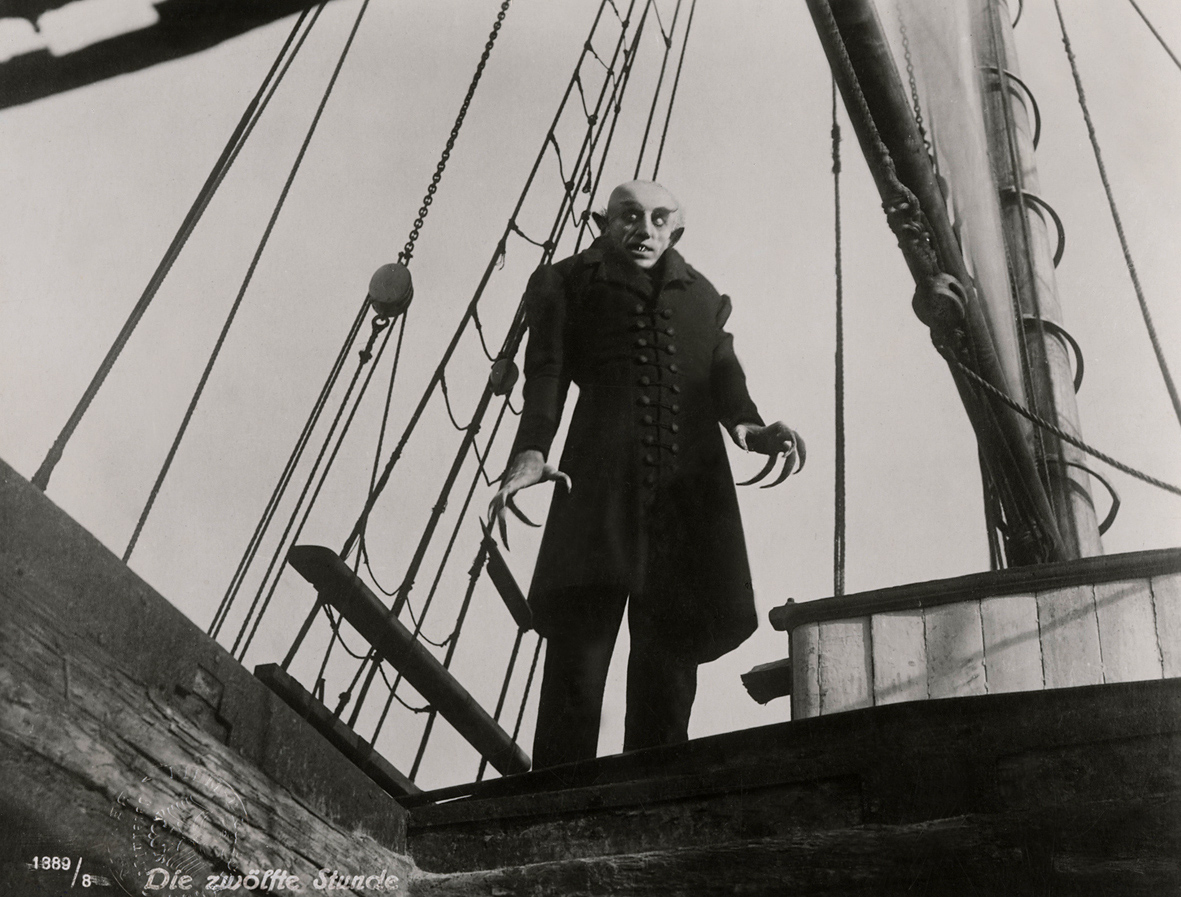
Anonymous photographer. Still from 'Nosferatu, a Symphony of Horror' 1922 from the exhibition 'Film Stills: Photography between Advertising, Art and the Cinema' at Albertina, Vienna, Nov 2016 - Feb 2017


Anonymous photographer
Still from Nosferatu, a Symphony of Horror
1922
Director: Friedrich Wilhelm Murnau (German, 1888-1931)
Gelatin silver print
© Deutsche Kinemathek


I seem to have a bit of a thing for film and photography at the moment!

More delicious film fascination, this time for the still camera. German Expressionism, film noir, science-fiction, horror, murder and mayhem – photographers using all manner of artistic techniques to get their message across. Now often found in fine art auction houses.

I love the heading “Intermediality and Self-Reflexivity” … “intermediate images” that unite aspects of both media (film and photography) and self-reflexive images that take on a life of their own, developing “a filmic work further in an independent manner, thereby allowing it to be regarded from new perspectives. Such stills often contain self-reflexive commentary on the work’s specifically “filmic” aspects.”

Sensitive, sensual, snapshot; stars and auteurism; murder and mayhem; avant-garde, beauty and sex – it has it all. Great stuff.

Dr Marcus Bunyan

PS. Look at the amazing colours in Horst von Harbou’s stills for Metropolis (1927) which were produced as transparent foils and elaborately coloured by hand. Never heard of such a thing before, coloured transparent foils.


Many thankx to the Albertina for allowing me to publish the photographs in the posting. Please click on the photographs for a larger version of the image.


Anonymous photographer. 'La Passion de Jeanne d'Arc' 1927 from the exhibition 'Film Stills: Photography between Advertising, Art and the Cinema' at Albertina, Vienna, Nov 2016 - Feb 2017


Anonymous photographer
La Passion de Jeanne d’Arc
1927
Karl Theodor Dreyer (Danish, 1889-1968) (director)


Carl Theodor Dreyer (3 February 1889 – 20 March 1968), commonly known as Carl Th. Dreyer, was a Danish film director. He is regarded by many critics and filmmakers as one of the greatest directors in cinema. His best known films include The Passion of Joan of Arc (1928), Vampyr (1932), Day of Wrath (1943), Ordet (1955), and Gertrud (1964) …

As a young man, Dreyer worked as a journalist, but he eventually joined the film industry as a writer of title cards for silent films and subsequently of screenplays. He was initially hired by Nordisk Film in 1913.

His first attempts at film direction had limited success, and he left Denmark to work in the French film industry. While living in France he met Jean Cocteau, Jean Hugo and other members of the French artistic scene and in 1928 he made his first classic film, The Passion of Joan of Arc. Working from the transcripts of Joan’s trial, he created a masterpiece of emotion that drew equally on realism and expressionism.

Text from the Wikipedia website


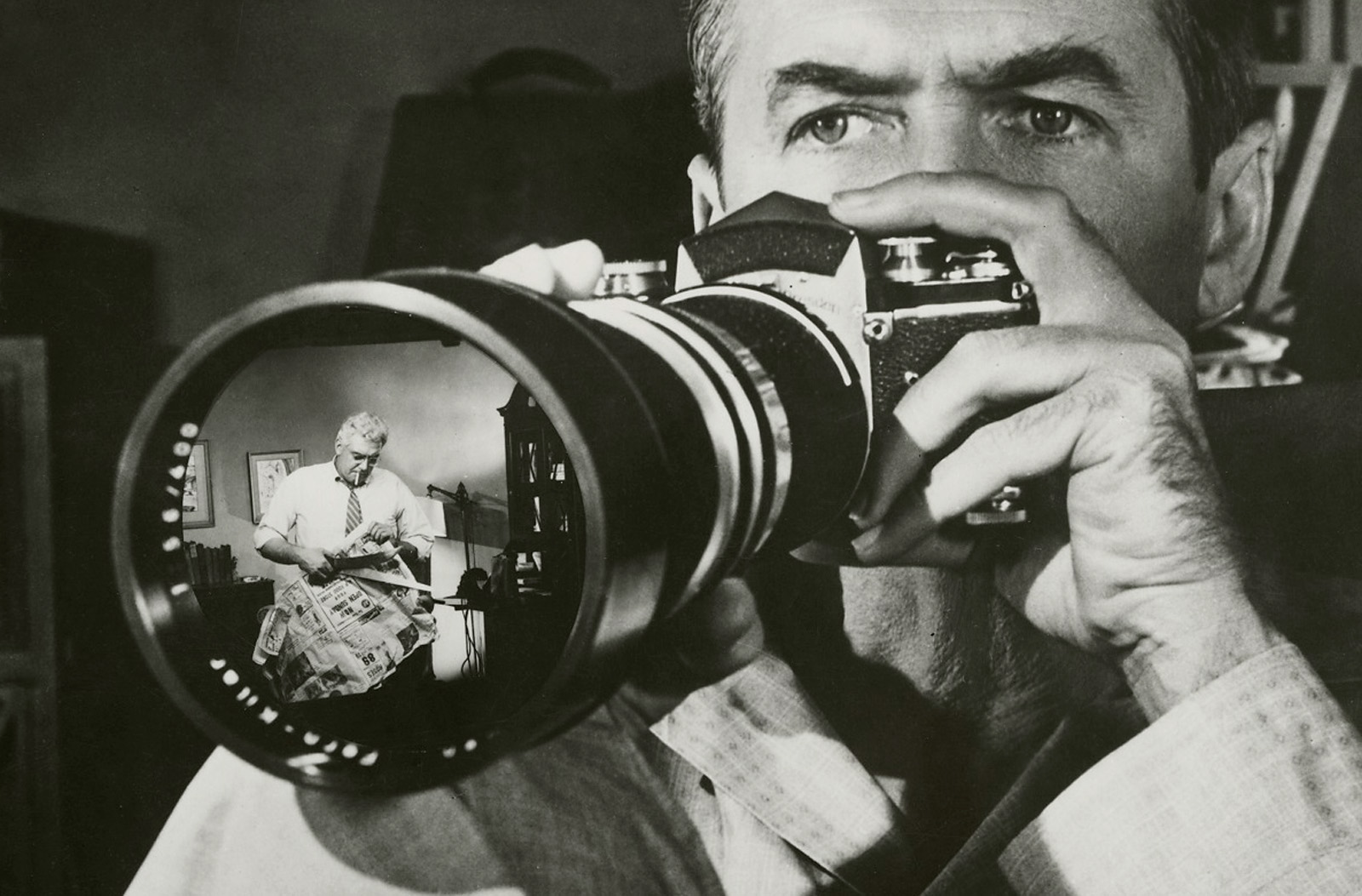
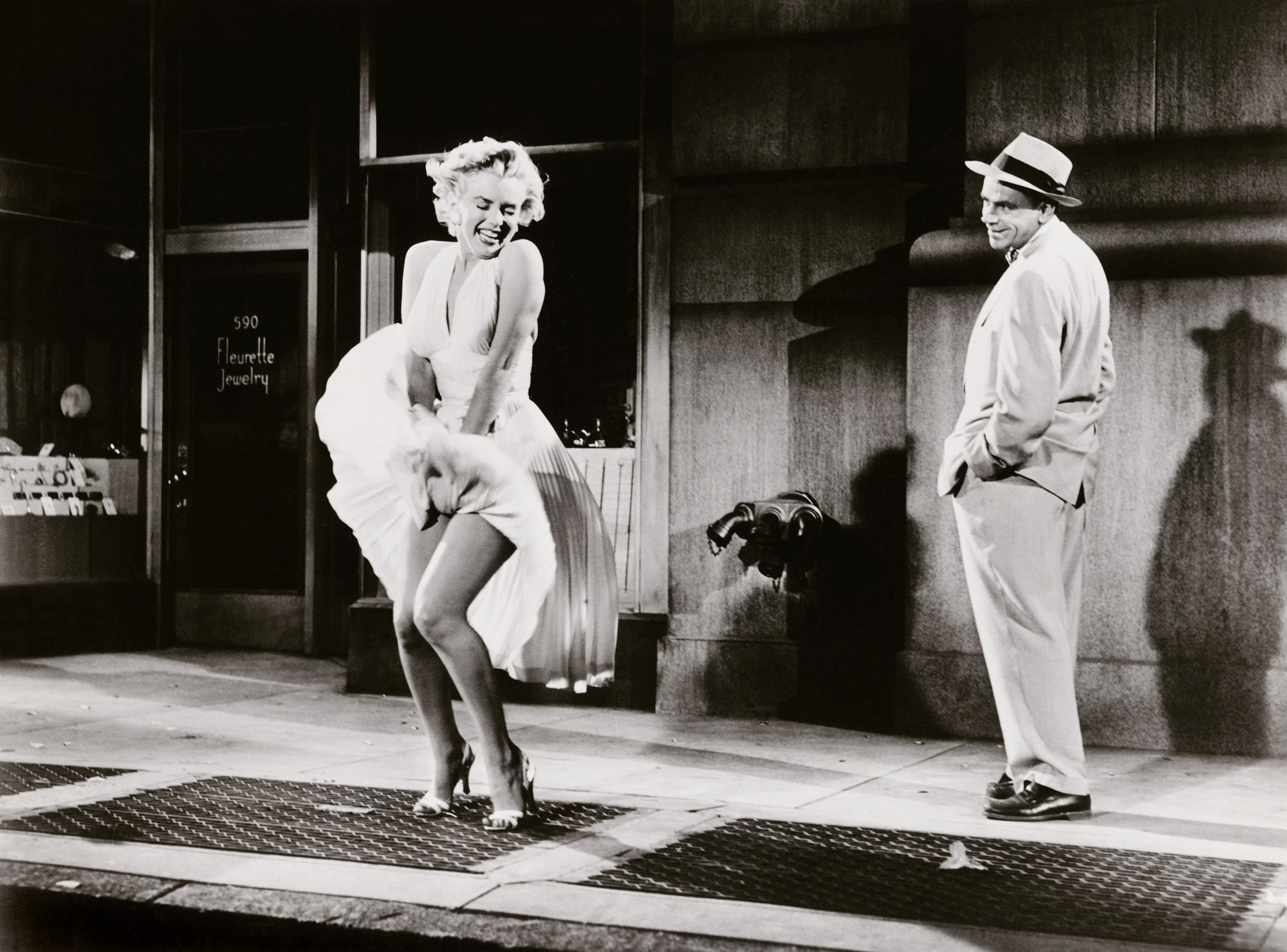
Who doesn’t know them: that picture from The Seven-Year Itch of a smiling Marilyn Monroe with her white dress blown upward by the air from a subway grate, or the photo of a conspiratorial James Stewart in Rear Window? Regardless of whether one has seen the actual movies, such images are familiar. It’s film stills like these that have burnt themselves into the collective memory and had a major impact on how their films are perceived.

Film stills embody visual traces of films as well as independent photographic images. Taken on set during production, they are based on an elaborate process in which film photographers re-stage film scenes for the still camera.

In the first-ever major exhibition devoted to this hybrid genre, the Albertina is showing 130 film stills taken between 1902 and 1975 in cooperation with the Austrian Film Museum. That was the period during which black-and-white film stills reached their highest level of technical and aesthetic quality, simultaneously covering a sweeping cross-section of various artistic movements from photographic and cinematic history such as Pictorialism and Expressionism. Employing pictures by Deborah Imogen Beer, Horst von Harbou, Pierluigi Praturlon, Karl Struss, and others, three aspects of this genre’s intermedial relationships are highlighted: the functions performed by film stills, the interfaces between photography and film with their breaks and couplings, and the additional artistic value of still photographs as such.

For the Media and the Press

The purpose of film stills is clearly defined: as material for the press and various types of advertising, they help to market films. And alongside their use in trailers, film journalism, and other marketing tools such as posters, film stills also represent a key ingredient of audience expectations pertaining to a film upon its release. Even so, it is the production of visually appealing images – rather than authentic reproduction of the film itself – that is important, here. In display windows and the media, still images visualise different aspects of a production ranging from key scenes to the actual filming work. This motivic variety corresponds to various film still categories: portrait photos of the actors and actresses taken by in-house studio photographers, as well as scene photos and making-of photos, are used in these contexts. And fed into numerous distribution processes, such photos also serve as models for posters, lobby cards, photo books, and press materials.

Intermediality and Self-Reflexivity

Film stills unite functional requirements with photographic and filmic intentions. And in fact, still photography is the only way in which to show visual traces of a production outside of the filmic event – the screening – itself. The challenges that photographers face in taking such shots lie in the difference between the media of moving (projected) film images and static (material) photography. In a complex and laborious process, they work on set to restage film scenes specifically for the still camera, thus transforming the film from a moving to a static medium.

The employment of various photographic strategies makes possible film stills’ “filmic” reception, with momentary photos that evoke a film’s dynamics being just as exemplary here as panoramic shots that require a longer look. Still photos thus repeat a film’s constituent elements, inscribing them onto a photographic medium in various ways and thus functioning as “intermediate images” that unite aspects of both media. They can be read not only as static views of a filmic reality, but also as independent types of photographic image. This quality is reinforced by the fact that stills frequently develop a filmic work further in an independent manner, thereby allowing it to be regarded from new perspectives. Such stills often contain self-reflexive commentary on the work’s specifically “filmic” aspects.

Film Stills at the Interface to Fine Art

Being situated between film and photography, many film stills also possess artistic qualities that are clearly photographic in nature. Here, composition plays a major role as it bears witness to a pictorial conception that differs from that of a filmic image. For while moving images are designed as horizontal arrangements, with the pictorial elements sequenced one after the other to effect their visual continuation, still photographers stage still photos according to the (static) central perspective governed by the camera’s vanishing point. This positions observers at that place which has been assigned them since the Renaissance – that is, looking straight down the picture’s central axis. Correspondingly, many stills exhibit reminiscences of the proscenium stage from traditional live theatre, favouring views that render scenes more immediate and thus more easily legible.

Photographers, in composing their images, often borrow iconographic and stylistic elements from various artistic movements: Expressionism, Art Nouveau, and Pictorialism are examples of these.

And in this way, still photographers depart from the original filmic work and realise their own pictorial ideas. Their photos thus refrain from “authentic” reproduction of a film’s various aspects, instead using these aspects to realise subjective artistic practices, thereby implying a reversal of the classic hierarchy between photography and film.

Press release from the Albertina


Paul Ronald (French, 1924-2015) Edra Gale in 'Otto e mezzo' (Edra Gale in '8½') 1963


Paul Ronald (French, 1924-2015)
Edra Gale in Otto e mezzo (Edra Gale in )
1963
Director: Federico Fellini, 1963
Ekatchrome
© Archivio Storico del Cinema / AFE


(Italian title: Otto e mezzo) is a 1963 comedy-drama film directed by Federico Fellini. Co-scripted by Fellini, Tullio Pinelli, Ennio Flaiano, and Brunello Rondi, it stars Marcello Mastroianni as Guido Anselmi, a famous Italian film director. Shot in black-and-white by cinematographer Gianni di Venanzo, the film features a soundtrack by Nino Rota with costume and set designs by Piero Gherardi.


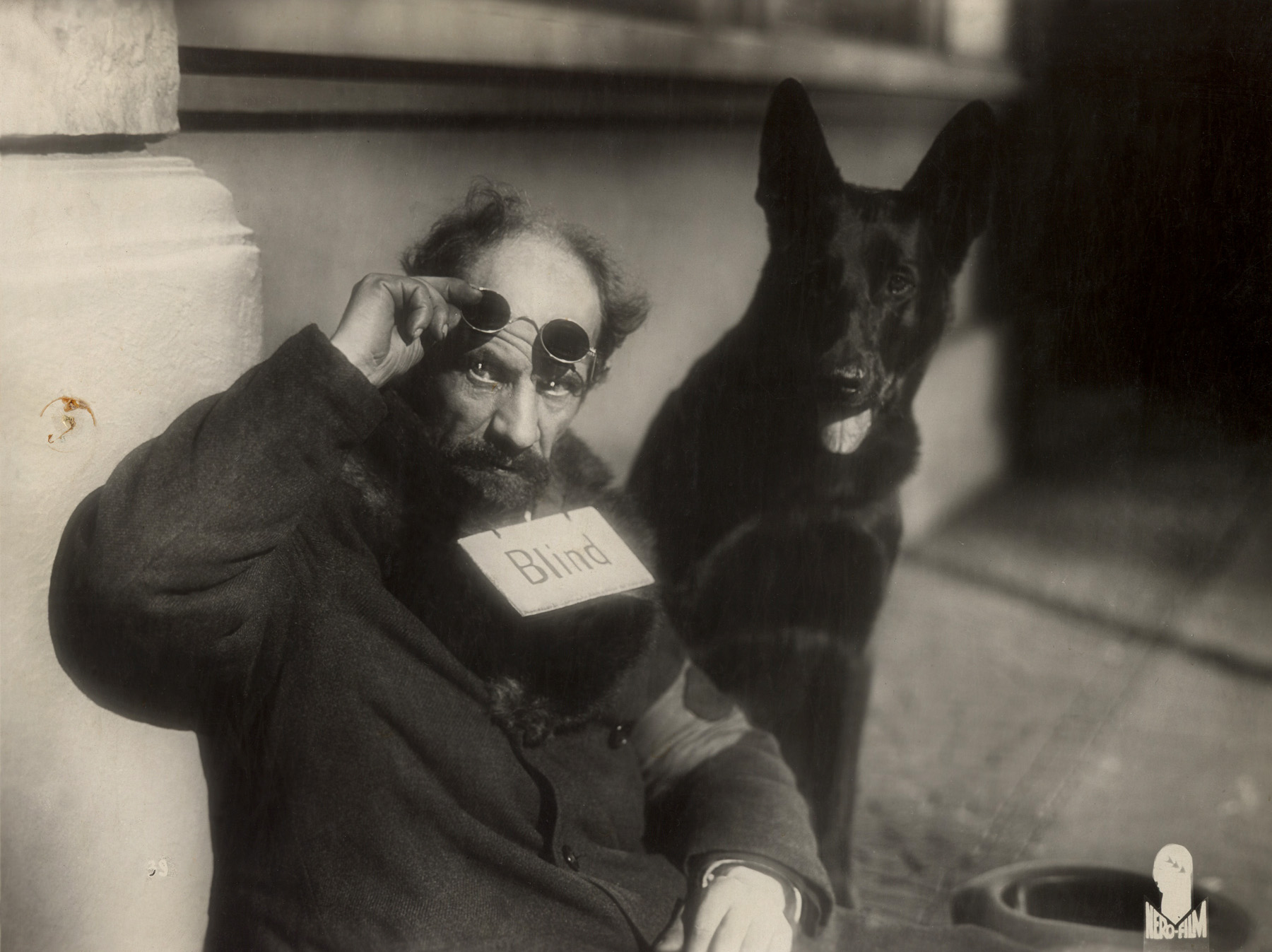
Horst von Harbou (German, 1879-1953) Georg John in 'M - A City searches for a Murderer' 1931


Horst von Harbou (German, 1879-1953)
Georg John in M – A City searches for a Murderer
1931
Gelatin silver print
Austrian Theatre Museum
© Horst von Harbou – Deutsche Kinemathek


M (German: M – Eine Stadt sucht einen Mörder – “M – A city looks for a murderer”) is a 1931 German drama-thriller film directed by Fritz Lang and starring Peter Lorre. It was written by Lang and his wife Thea von Harbou and was the director’s first sound film. It concerns the manhunt for a serial killer of children, conducted by both the police and the criminal underworld. Now considered a classic, the film was deemed by Fritz Lang as his finest work.

Little Elsie Beckmann leaves school, bouncing a ball on her way home. She is approached by Hans Beckert, who is whistling “In the Hall of the Mountain King” by Edvard Grieg. He offers to buy her a balloon from a blind street-vendor [above] and walks and talks with her. Elsie’s place at the dinner table remains empty, her ball is shown rolling away across a patch of grass and her balloon is lost in the telephone lines overhead.


M – A City Searches for a Murderer (M – Eine Stadt sucht einen Mörder) 1931 – Public Domain Movies

M (German: M – Eine Stadt sucht einen Mörder, lit. M – A City Searches for a Murderer) is a 1931 German thriller film directed by Fritz Lang and starring Peter Lorre in his breakthrough role as Hans Beckert, a serial killer of children. An early example of a procedural drama, the film centers on the manhunt for Lorre’s character, conducted by both the police and the criminal underworld.

The film’s screenplay was written by Lang and his wife Thea von Harbou and was the director’s first sound film. It features many cinematic innovations, including the use of long, fluid tracking shots, and a musical leitmotif in the form of “In the Hall of the Mountain King” whistled by Lorre’s character. Now considered a timeless classic, the film was deemed by Lang to be his magnum opus. It is widely considered one of the greatest films of all time, and an indispensable influence on modern crime and thriller fiction.

Anonymous text from the YouTube website [Online] Cited 20/02/2017. No longer available online.


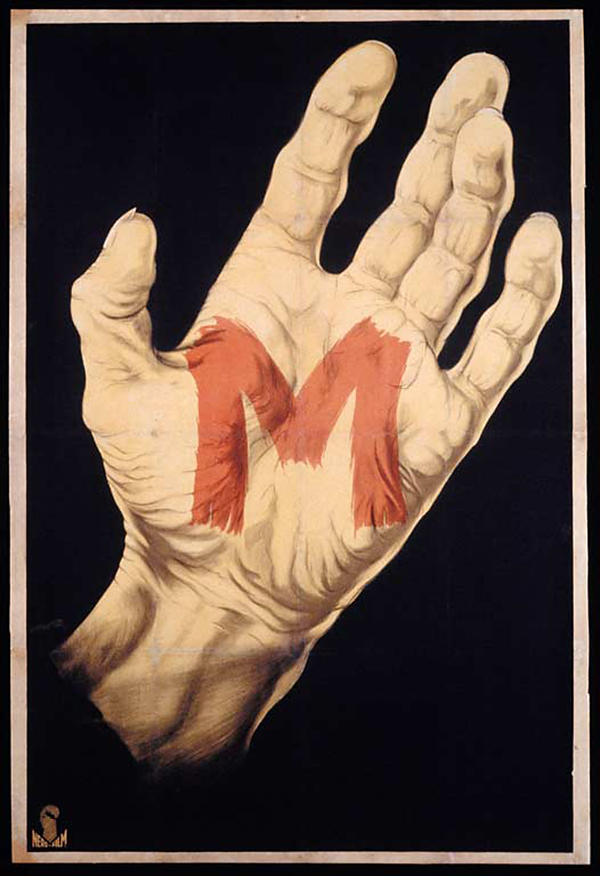
Unknown artist. 'Poster for "M"' 1931


Unknown artist
Poster for “M”
1931
Director: Fritz Lang (Austria, 1890-1976)
Collection of La Cinémathèque française


Wall texts

Advertising pictures

Aimed at inviting the public to buy a ticket, film stills were used as advertising photographs in cinema lobbies and as press material for the media. Directors and production companies depended on them for promoting their movies, because the film as a projected moving image is immaterial and does not exist beyond the screen. Stills comprise various types of pictures that show different aspects of a movie’s production: scenes, portraits of its actresses and actors, as well as production photographs capturing its shooting.

The production of stills was based on a division of labor. In major production companies like those of Hollywood, still photographers were assigned to the companies’ advertising or publicity departments. Sometimes involving the director, these departments selected the photographs intended for publication. The promotion photographs for the movie palaces’ lobbies were published in sets of twenty to forty pictures each, which visualised characteristic aspects of the film. A wider selection of stills was used for the press. Picture editors adapted the photographs according to their purposes. We find instructions for the material’s reproduction and cropping marks indicating new image areas; retouches deleted undesired elements and changed the motif in line with the planned layout.


Anonymous photographer. Still from 'The Night of the Hunter' 1954


Anonymous photographer
Still from The Night of the Hunter
1954
Silver gelatin print


Anonymous photographer. Robert Mitchum in 'The Night of the Hunter' 1955


Anonymous photographer
Robert Mitchum in The Night of the Hunter
1955
Director: Charles Laughton (English, 1899-1962)
Gelatin silver print
© The John Kobal Collection


The Night of the Hunter is a 1955 American film noir directed by Charles Laughton and starring Robert Mitchum, Shelley Winters and Lillian Gish. The screenplay by James Agee was based on the 1953 novel of the same name by Davis Grubb. The plot focuses on a corrupt reverend-turned-serial killer who attempts to charm an unsuspecting widow and steal $10,000 hidden by her executed husband.

The novel and film draw on the true story of Harry Powers, hanged in 1932 for the murder of two widows and three children in Clarksburg, West Virginia. The film’s lyrical and expressionistic style with its leaning on the silent era sets it apart from other Hollywood films of the 1940s and 1950s, and it has influenced later directors such as David Lynch, Martin Scorsese, Terrence Malick, Jim Jarmusch, Spike Lee, and the Coen brothers.

In 1992, The Night of the Hunter was deemed “culturally, historically, or aesthetically significant” by the United States Library of Congress and was selected for preservation in the National Film Registry. The influential film magazine Cahiers du cinéma selected The Night of the Hunter in 2008 as the second-best film of all time, behind Citizen Kane.

Text from the Wikipedia website


'The Night of the Hunter' film poster 1955


The Night of the Hunter film poster 1955


Anonymous photographer. Still from the film 'Vertigo, Judy behind Madeleine' 1957/1958


Anonymous photographer
Still from the film Vertigo, Judy behind Madeleine
1957/1958
Director: Alfred Hitchcock (English, 1899-1980)
Silver gelatin print


'Vertigo' film poster 1957/1958


Vertigo film poster 1957/1958


Bud Fraker (attributed to) (American, 1916-2002) 'Janet Leigh, Vera Miles and John Gavin in 'Psycho'' 1960


Bud Fraker (attributed to) (American, 1916-2002)
Janet Leigh, Vera Miles and John Gavin in Psycho
1960
Director: Alfred Hitchcock (English, 1899-1980)
Gelatin silver print
© Berlin, Deutsche Kinemathek – Paramount Pictures


Star portraits

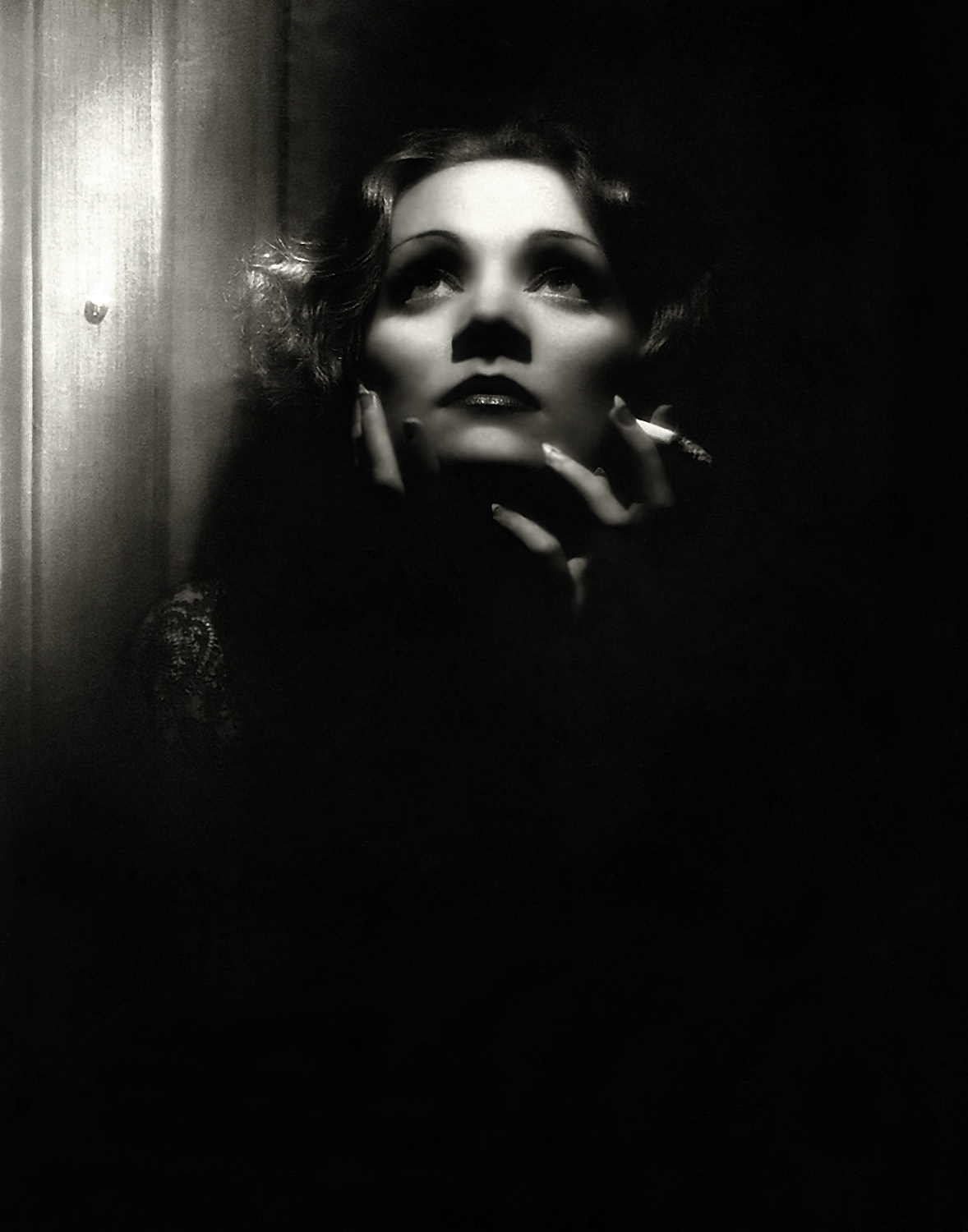
Regarded as the supreme discipline of still photography, the portraiture of stars was an integral part of the film industry’s elaborate promotion campaigns. Productions could be effectively marketed by using actresses and actors to project their image. With the emergence of the studio system, Hollywood perfected this business strategy from the 1920s on by employing specialised portrait photographers. These photographers worked in company-owned studios and – unlike set photographers who mostly remained anonymous – were known by name. Relying on sophisticated lighting and drastic retouching, they created the aesthetic of the glamour portrait. Don English perfectly translated the lighting as it had been exactly planned by Josef von Sternberg, the director, for his film in his portrait of Marlene Dietrich for Shanghai Express (1932). Generally, domestic production companies could not afford to run their own portrait studios and were thus unable to exercise any influence on photographic products from outside. This offered both the stars and the studios a certain degree of freedom when it came to the representation and interpretation of a certain look. The photograph taken of Hedy Kiesler (later Lamarr) in her role in Gustav Machatý’s Ecstasy (1933) by the renowned studio Manassé in Vienna is one of the rare portrait stills taken on the set at that time.


Karl Struss (American, 1886-1981) 'Gloria Swanson in 'Male and Female'' 1919


Karl Struss (American, 1886-1981)
Gloria Swanson in Male and Female
1919
Director: Cecil B. DeMille (American, 1881-1959)
Gelatin silver print
© The John Kobal Foundation


Don English (American, 1901-1964) 'Marlene Dietrich in 'Shanghai Express'' 1932


Don English (American, 1901-1964)
Marlene Dietrich in Shanghai Express
1932
Director: Josef von Sternberg (American born Austria, 1894-1969)
Silver gelatin print


Raymond Cauchetier (French, born 1920) 'Jean Paul Belmondo & Jean Seberg, Paris, 1959' 1959


Raymond Cauchetier (French, 1920-2021)
Jean Paul Belmondo & Jean Seberg, Paris, 1959
1959
Still from the film Breathless
Director: Jean-Luc Godard (French-Swiss, 1930-2022)
Gelatin silver print


'Breathless' film poster 1960


Breathless film poster 1960


Anonymous photographer. 'Still from the film 'Breathless'' 1959


Anonymous photographer
Still from the film Breathless
1959
Director: Jean-Luc Godard (French-Swiss, 1930-2022)
Gelatin silver print


Georges Pierre (French, 1921-2003) 'Delphine Seyrig in 'Last Year in Marienbad'' 1961


Georges Pierre (French, 1921-2003)
Delphine Seyrig in Last Year in Marienbad
1961
Director: Alain Resnais (French, 1922-2014)
Astor Pictures Corporation / Photofest
© Astor Pictures Corporation


Delphine Claire Beltiane Seyrig (10 April 1932 – 15 October 1990) was a Lebanese-born French stage and film actress, a film director and a feminist.

As a young woman, Seyrig studied acting at the Comédie de Saint-Étienne, training under Jean Dasté, and at Centre Dramatique de l’Est. She appeared briefly in small roles in the 1954 TV series Sherlock Holmes. In 1956, she returned to New York and studied at the Actors Studio. In 1958 she appeared in her first film, Pull My Daisy. In New York she met director Alain Resnais, who asked her to star in his film Last Year at Marienbad. Her performance brought her international recognition and she moved to Paris. Among her roles of this period is the older married woman in François Truffaut’s Baisers volés (1968).

During the 1960s and 1970s, Seyrig worked with directors including Truffaut, Luis Buñuel, Marguerite Duras, and Fred Zinnemann, as well as Resnais. She achieved recognition for both her stage and film work, and was named best actress at the Venice Film Festival for her role in Resnais’ Muriel ou Le temps d’un retour (1963). She played many diverse roles, and because she was fluent in French, English and German, she appeared in films in all three languages, including a number of Hollywood productions.

Text from the Wikipedia website


L’Année dernière à Marienbad (released in the US as Last Year at Marienbad and in the UK as Last Year in Marienbad) is a 1961 French-Italian film directed by Alain Resnais from a screenplay by Alain Robbe-Grillet.

Last Year at Marienbad is famous for its enigmatic narrative structure, in which truth and fiction are difficult to distinguish, and the temporal and spatial relationship of the events is open to question, even if it never quite ventures into surrealism. The film’s dreamlike nature has both fascinated and baffled viewers; many have hailed the work as a masterpiece, while others consider it incomprehensible.

At a social gathering at a château or baroque hotel, a man approaches a woman. He claims they met the year before at Marienbad and is convinced that she is waiting there for him. The woman insists they have never met. A second man, who may be the woman’s husband, repeatedly asserts his dominance over the first man, including beating him several times at a mathematical game (a version of Nim). Through ambiguous flashbacks and disorienting shifts of time and location, the film explores the relationships among the characters. Conversations and events are repeated in several places in the château and grounds, and there are numerous tracking shots of the château’s corridors, with ambiguous voiceovers. The characters are unnamed in the film; in the published screenplay, the woman is referred to as “A”, the first man is “X”, and the man who may be her husband is “M”.

Text from the Wikipedia website


'L'Année dernière à Marienbad' Japanese film poster 1961


L’Année dernière à Marienbad Japanese film poster 1961


Artistic pictures

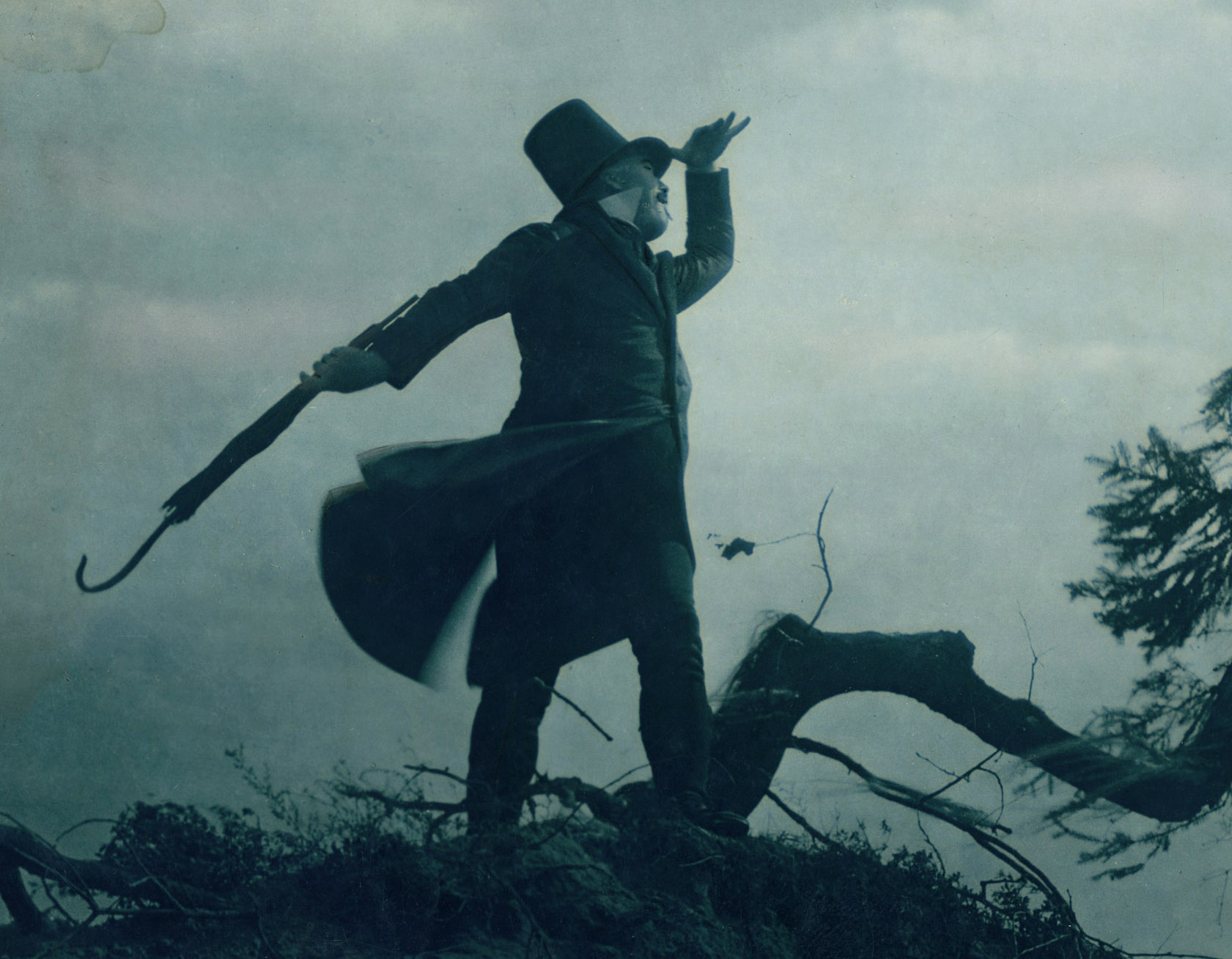
Until the 1950s still photographers used large-format plate cameras, which projected an inverted image onto the focusing screen at the back of the body. These cameras produced technically brilliant pictures, yet were complicated to handle because of their size and comparatively long exposure times. The staging of stills had to be meticulously planned and was fundamentally different from the shooting of a film. While the film camera is geared to the story in motion and its visual continuation in the pictures to follow, actresses and actors posed for the photographer in tableaux-vivants-like arrangements using additional light. The resultant static and apparently artificial compositions mirroring the performative staging process are typical of this kind of photographs. Still photographers drew inspiration from works of art for their mise-en-scène. The anonymous photographer in charge of the stills for Henrik Galeen’s The Student of Prague (1926) quotes the Romantic painter Caspar David Friedrich’s works in his theatrical presentation of an atmospheric landscape. Horst von Harbou, who frequently worked with the director Fritz Lang, drew on Carl Otto Czeschka’s Jugendstil [Art Noveau] illustrations from 1908 for his stills accompanying the first part of Die Nibelungen (1924). Harbou translated ornamental motifs into two-dimensional pictures, as Czeschka had done before him. Presenting their pictures in exhibitions and providing fine-art prints, still photographers positioned their works as artistically independent achievements.


Anonymous photographer. 'Werner Krauss in 'The Student of Prague'' 1926


Anonymous photographer
Werner Krauss in The Student of Prague
1926
Gelatin silver print
Austrian Theatre Museum


Anonymous photographer. 'Werner Krauss in 'The Student of Prague'' 1926 (detail)


Anonymous photographer
Werner Krauss in The Student of Prague (detail)
1926
Gelatin silver print
Austrian Theatre Museum


Intermediate pictures

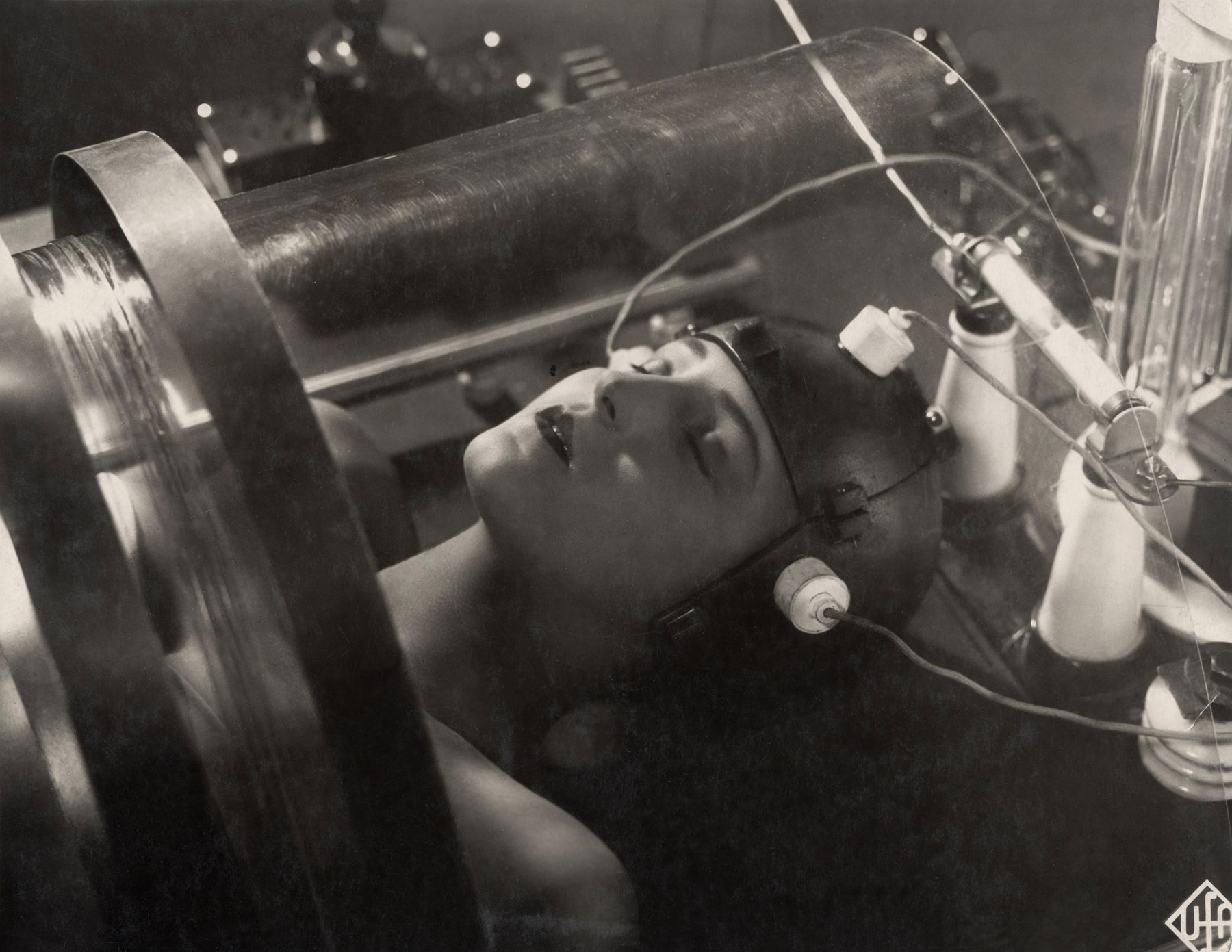
The difficulty in capturing the scene of a movie in a still lies in the difference between the two media of (moving) film and (static) photograph. Still photographers employ intermedia strategies which facilitate a reading of the still in analogy to the experience of the film. Snapshots evoking the dynamics of the movie are as exemplary of this approach as are series of pictures rendering a sequence in the form of the movement’s individual phases captured at short intervals. Panorama pictures are also related to the film’s spatial and temporal dimensions, since a series of motifs resembling the chronological order of films successively “unwinds” in reading them. Informed by the interwar avant-garde, the photo montages for Walter Ruttmann’s experimental film Berlin – Symphony of a Great City (1927) show an extraordinary solution. They congenially transform the subjective modern filmic point of view by relating the motifs of the film to each other through illogical perspectives and proportions. Some of Horst von Harbou’s stills for Metropolis (1927) were produced as transparent foils and elaborately coloured by hand. Presented in backlight illumination, they established a self-reflexive reference to the cinema as films also reveal their ephemeral quality in their projection.


Anonymous photographer. 'Berlin – Symphony of a Great City' 1927


Anonymous photographer
Berlin – Symphony of a Great City
1927
Director: Walther Ruttmann (German, 1887-1941)
Gelatin silver print
© Deutsche Kinemathek, Berlin


Berlin: Symphony of a Metropolis (German: Berlin: Die Sinfonie der Großstadt) is a 1927 German film directed by Walter Ruttmann, co-written by Carl Mayer and Karl Freund.

The film is an example of the city symphony film genre. A musical score for an orchestra to accompany the silent film was written by Edmund Meisel. As a “city symphony” film, it portrays the life of a city, mainly through visual impressions in a semi-documentary style, without the narrative content of more mainstream films, though the sequencing of events can imply a kind of loose theme or impression of the city’s daily life…

The film displays the filmmaker’s knowledge of Soviet montage theory. Some socialist political sympathies, or identification with the underclass can be inferred from a few of the edits in the film, though critics have suggested that either Ruttmann avoided a strong position, or else he pursued his aesthetic interests to the extent that they diminished the potential for political content. Ruttmann’s own description of the film suggests that his motives were predominantly aesthetic: “Since I began in the cinema, I had the idea of making something out of life, of creating a symphonic film out of the millions of energies that comprise the life of a big city.”

Text from the Wikipedia website


'Berlin: Symphony of a Metropolis' poster


Berlin: Symphony of a Metropolis poster


Horst von Harbou (German, 1879-1953) 'Brigitte Helm in 'Metropolis'' 1927


Horst von Harbou (German, 1879-1953)
Brigitte Helm in Metropolis
1927
Director: Fritz Lang (Austrian-German-American, 1890-1976)
Gelatin silver print
Austrian Theatre Museum
© Horst von Harbou – Deutsche Kinemathek


Horst von Harbou (German, 1879-1953) 'Metropolis' 1927


Horst von Harbou (German, 1879-1953)
Metropolis
1927
Director: Fritz Lang (Austrian-German-American, 1890-1976)
Coloured transparent nitrocellulose film
Austrian Theatre Museum
© Horst von Harbou – Deutsche Kinemathek


Meta-pictures

Some directors supported the production of stills that put characteristic aspects of their films into a new perspective. In his masterpiece Persona (1966) Ingmar Bergman reflects the support material of film by showing the film strip crack and burn up during the projection. This self-referentiality of the medium was visualised by adding perforations to the photographs so that they resembled film frames. The perforations only served to quote the film as a medium; the motifs were actually mounted in black frames afterwards. Elaborate montages not to be seen in the film were also produced for Alfred Hitchcock’s movies. Rear Window (1954) confronts us with a photographer who watches a man whom he suspects of having committed a murder with binoculars and through a long-focus lens. By mounting pictures of the persons in the lens whom Stewart watches from his window in the film, the still photographer emphasised the issue of voyeurism as a central subject of the movie. The Austrian silent movie director Erich von Stroheim used film stills for visualising contents of his films that were regarded as problematic. Because of their length and supposedly questionable sexual passages Stroheim’s movies were regularly cut down by censorship authorities and production companies. This is why stills continuing the movie were planned in advance. The sexual allusions in a scene of Foolish Wives (1922) in which Stroheim embodies a Don Juan figure about to indecently assault a sleeping woman, for example, manifested themselves in a still in which we see him kissing the sleeping woman’s foot.


Anonymous photographer. 'James Stewart in 'Rear Window'' 1954


Anonymous photographer
James Stewart in Rear Window
1954
Director: Alfred Hitchcock (English, 1899-1980)
Gelatin silver print
© BFI National Archive: London


Anonymous photographer. 'James Stewart in 'Rear Window'' 1954 (detail)


Anonymous photographer
James Stewart in Rear Window (detail)
1954
Director: Alfred Hitchcock (English, 1899-1980)
Gelatin silver print
© BFI National Archive: London


Anonymous photographer. 'Liv Ullman in 'Persona'' 1966 (detail)


Anonymous photographer
Liv Ullman in Persona (detail)
1966
Director: Ingmar Bergman
Silver gelatin print


Persona is a 1966 Swedish psychological drama film written and directed by Ingmar Bergman and starring Bibi Andersson and Liv Ullmann. Persona’s story revolves around a young nurse named Alma (Andersson) and her patient, a well-known stage actress named Elisabet Vogler (Ullmann), who has suddenly ceased to speak. The two move to a cottage, where Alma cares for and talks to Elisabet about intimate secrets, and becomes troubled distinguishing herself from her.

Bergman wrote the film with Ullmann and Andersson in mind for the lead parts, and some idea of exploring their identities, and shot the film in Stockholm and Fårö. Often categorised as a psychological horror, Persona deals with themes of duality, insanity, and personal identity…

Persona has lent itself to a variety of interpretations, with Professor Thomas Elsaesser remarking it “has been for film critics and scholars what climbing Everest is for mountaineers: the ultimate professional challenge. Besides Citizen Kane, it is probably the most written-about film in the canon.” Much of the focus has been on the resemblance of the characters, demonstrated in shots of overlapping faces, and the possibility that the two characters are one. If they are one person, there is a question if Alma is fantasising about the actress she admires, or if Elisabet is examining her psyche, or if the boy is trying to understand who his mother is. In a question of duality, Alma represents soul while Elisabet represents a stern goddess. Susan Sontag suggests that Persona is constructed as a series of variations on a theme of “doubling”. The subject of the film, Sontag proposes, is “violence of the spirit”.

Text from the Wikipedia website


'Persona' 1966 Swedish B1 Poster


Persona 1966 Swedish B1 Poster


Anonymous photographer. 'Bibi Andersson and Liv Ullman in 'Persona'' 1966 (detail)


Anonymous photographer
Bibi Andersson and Liv Ullman in Persona (detail)
1966
Director: Ingmar Bergman (Swedish, 1918-2007)
Silver gelatin print


Key pictures

Stills precede the presentation of a film, decisively informing the expectations held by the public at the time of its release. What is important for a movie’s later success (or failure) is presenting visually enticing pictures rather than conveying an authentic picture of the movie. The most famous example in this regard is Sam Shaw’s still showing a scene of Billy Wilder’s The Seven Year Itch (1955). Shaw highlighted the moment in which Marilyn Monroe stands on a subway grating far more pointedly than Wilder in the film, which neither shows the actress’s whole figure nor the dress billowing so clearly above her waist. The production company did its best for the promotion of the scene in the media: launching an elaborate publicity campaign, it fixed a special date for reporters and journalists to capture the sequence themselves. Such key images become characteristic signatures of a film with their dissemination by the media, sometimes inscribing themselves more deeply into the collective memory than the actual film scenes because of their iconic recognition value.


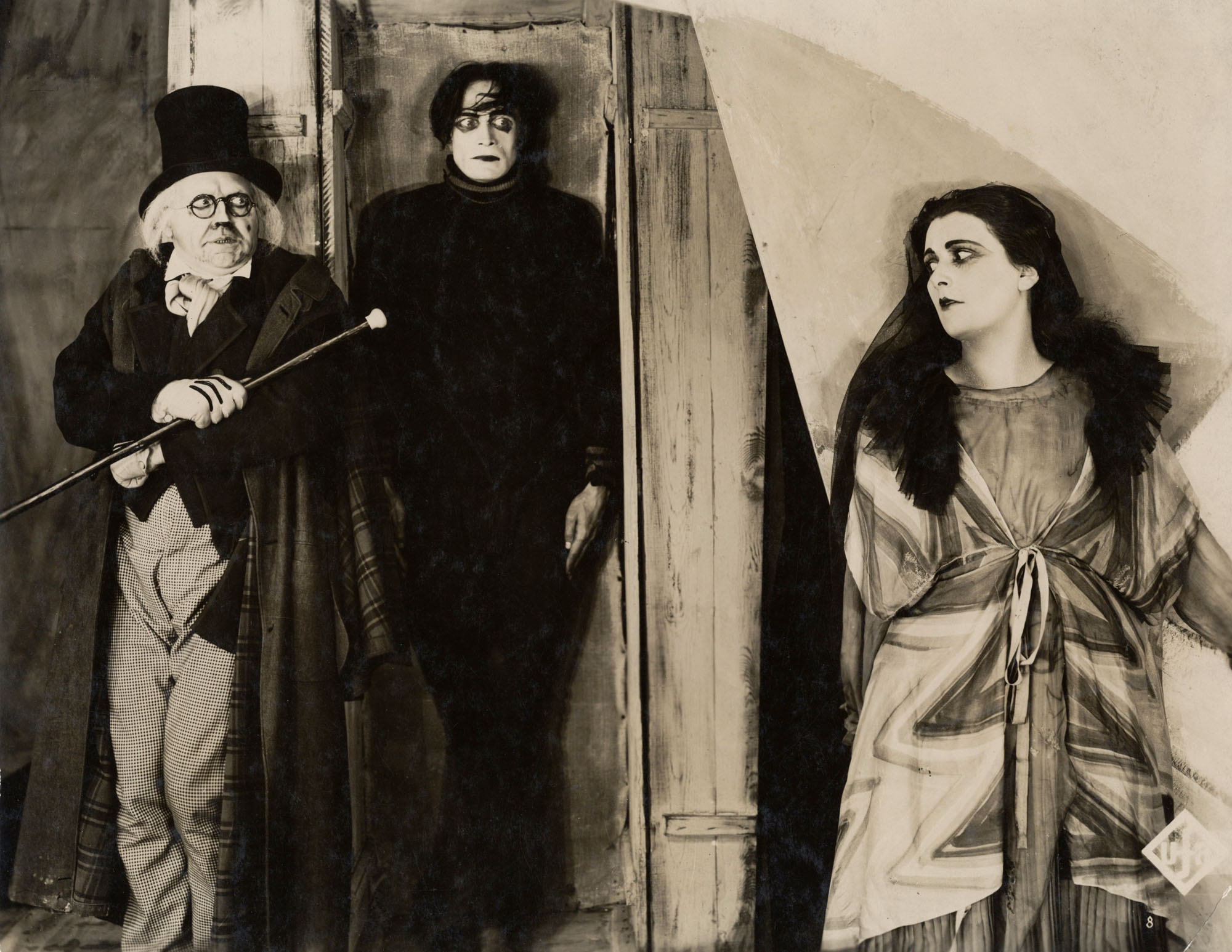
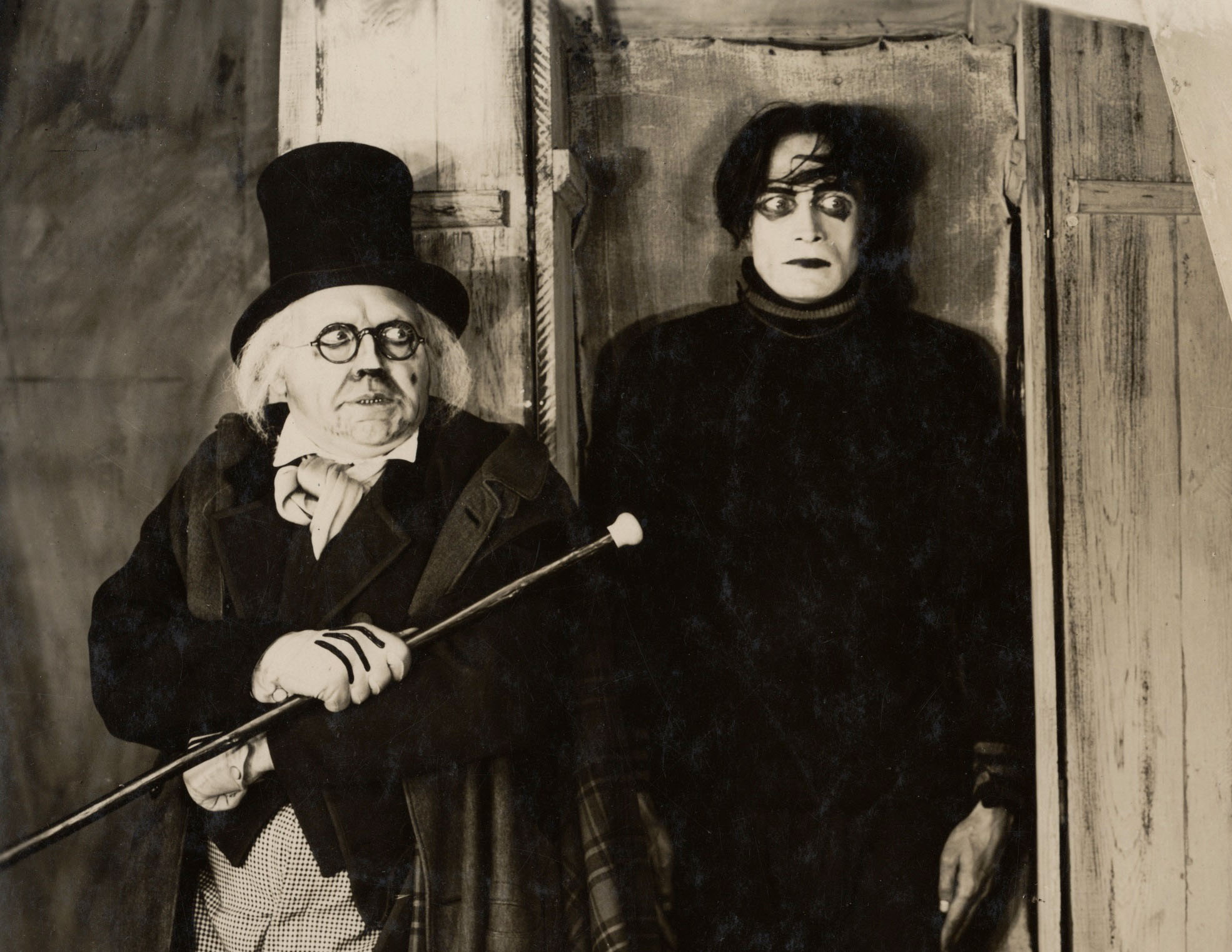
Anonymous photographer. 'Werner Krauss, Conrad Veidt and Lil Dagover in 'The Cabinet of Dr. Caligari'' 1919


Anonymous photographer
Werner Krauss, Conrad Veidt and Lil Dagover in The Cabinet of Dr. Caligari
1919
Director: Robert Wiene (German, 1873-1938)
Gelatin silver print
Austrian Theatre Museum


Anonymous photographer. Werner Krauss, Conrad Veidt and Lil Dagover in 'The Cabinet of Dr. Caligari' 1919 (detail)


Anonymous photographer
Werner Krauss, Conrad Veidt and Lil Dagover in The Cabinet of Dr. Caligari (detail)
1919
Director: Robert Wiene (German, 1873-1938)
Gelatin silver print
Austrian Theatre Museum


The Cabinet of Dr. Caligari (German: Das Cabinet des Dr. Caligari) is a 1920 German silent horror film, directed by Robert Wiene and written by Hans Janowitz and Carl Mayer. Considered the quintessential work of German Expressionist cinema, it tells the story of an insane hypnotist (Werner Krauss) who uses a somnambulist (Conrad Veidt) to commit murders. The film features a dark and twisted visual style, with sharp-pointed forms, oblique and curving lines, structures and landscapes that lean and twist in unusual angles, and shadows and streaks of light painted directly onto the sets…

The film presents themes on brutal and irrational authority; Dr. Caligari represents the German war government, and Cesare is symbolic of the common man conditioned, like soldiers, to kill. In his influential book From Caligari to Hitler, Siegfried Kracauer says the film reflects a subconscious need in German society for a tyrant, and it is an example of Germany’s obedience to authority and unwillingness to rebel against deranged authority. He says the film is a premonition of the rise of Adolf Hitler and the Nazi Party, and says the addition of the frame story turns an otherwise “revolutionary” film into a “conformist” one. Other themes of the film include the destabilised contrast between insanity and sanity, the subjective perception of reality, and the duality of human nature.

Text from the Wikipedia website


'Das Cabinet des Dr. Caligari' poster (1919)


Das Cabinet des Dr. Caligari poster (1919)


Sam Shaw (American, 1912-1999) 'Marilyn Monroe and Tom Ewell in 'The Seven Year Itch'' 1954


Sam Shaw (American, 1912-1999)
Marilyn Monroe and Tom Ewell in The Seven Year Itch
1954
Director: Billy Wilder (Austrian-American, 1906-2002)
Gelatin silver print
© Sam Shaw Inc. – licensed by Shaw Family Archives
Private collection


Sam Shaw (American, 1912-1999) 'Marilyn Monroe and Tom Ewell in 'The Seven Year Itch'' 1954 (detail)


Sam Shaw (American, 1912-1999)
Marilyn Monroe and Tom Ewell in The Seven Year Itch (detail)
1954
Director: Billy Wilder (Austrian-American, 1906-2002)
Gelatin silver print
© Sam Shaw Inc.- licensed by Shaw Family Archives, Private collection


Auteur pictures

The European auteur cinema of the 1950s and 1960s produced films outside the rigid studio system that had been the rule until then. Formal means such as editing and montage were used in an experimental way, and handy cameras made the shooting process more spontaneous. The changes in the production of films went hand in hand with new conditions for still photographers. As the photographers did not belong to the staff of the companies’ promotion departments like their US colleagues, most of their names are known. Whereas Hollywood photographers relied on large-format plate cameras, small-format cameras were used in Europe during the shooting of the film or directly before or after it. This resulted in spontaneous snapshots alongside traditional tableau-like stills. In the wake of Henri Cartier-Bresson’s decisive moment, the constitutive act lay in the choice of the right moment. Still photographers such as Raymond Cauchetier and Angelo Novi had already tested this approach as photojournalists in reportages and documentaries before they started working on the set.


Georges Pierre (French, 1921-2003) 'Anna Karina in 'Pierrot le fou'' 1965


Georges Pierre (French, 1921-2003)
Anna Karina in Pierrot le fou
1965
Director: Jean-Luc Godard (French-Swiss, b. 1930)
Gelatin silver print
Private collection
© Georges Pierre


Poster for 'La Dolce Vita' (The Sweet Life) 1959


Poster for La Dolce Vita (The Sweet Life) 1959


Pierluigi Praturlon (Italian, 1924-1999) 'Anita Ekberg as Sylvia in 'La Dolce Vita' (The Sweet Life)' 1959


Pierluigi Praturlon (Italian, 1924-1999)
Anita Ekberg as Sylvia in La Dolce Vita (The Sweet Life)
1959
Director: Federico Fellini (Italian, 1920-1993)
Gelatin silver print
Private Collection


La Dolce Vita (Italian for “the sweet life” or “the good life”) is a 1960 Italian comedy-drama film directed and co-written by Federico Fellini. The film follows Marcello Rubini, a journalist writing for gossip magazines, over seven days and nights on his journey through the “sweet life” of Rome in a fruitless search for love and happiness. La Dolce Vita won the Palme d’Or (Golden Palm) at the 1960 Cannes Film Festival and the Oscar for Best Costumes, and remains one of the most critically acclaimed films of all time.

Based on the most common interpretation of the storyline, the film can be divided into a prologue, seven major episodes interrupted by an intermezzo, and an epilogue. If the evenings of each episode were joined with the morning of the respective preceding episode together as a day, they would form seven consecutive days, which may not necessarily be the case.

Text from the Wikipedia website


Hans Natge

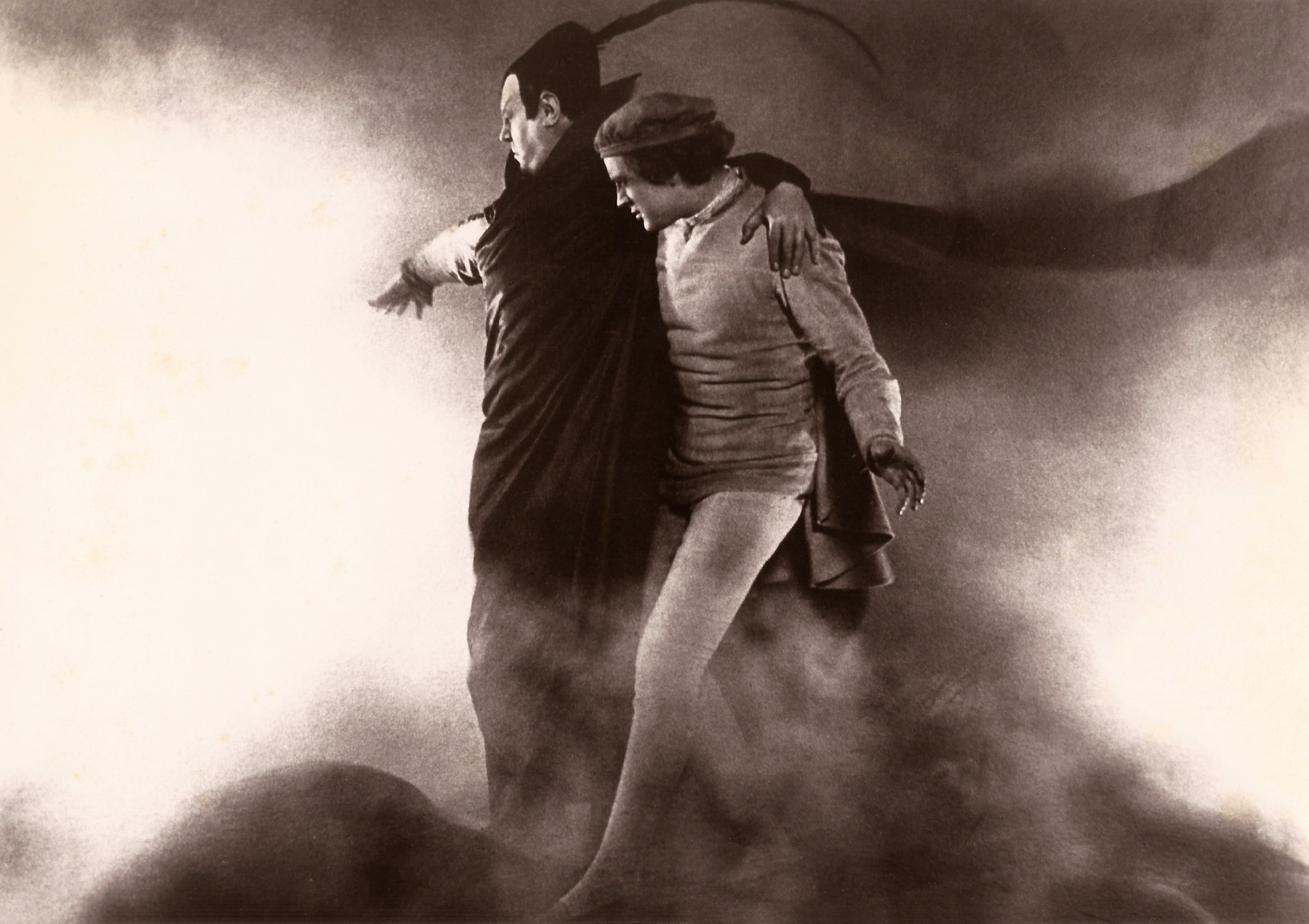
Born in Berlin, Hans Natge began his career as a theatre photographer. In the 1920s, he turned to still photography. Taking pictures of Friedrich Wilhelm Murnau’s Faust (1926), he came to test a new photographic approach which he called “snapshot photography,” which was to revolutionise the tradition of static and artificial film stills. Using small-format cameras and doing without additional light, Natge photographed during the shooting of the film right next to the cameraman, which permitted him to produce spontaneous and dynamic pictures. As this form of still photography still resulted in blurred pictures and sometimes captured the actors to their disadvantage at that time, Natge also took conventional stills in the case of Faust.


Hans Natge (Germany, b. 1893) 'Still from the film 'Faust'' 1926


Hans Natge (Germany, b. 1893)
Still from the film Faust
1926
Director: Friedrich Wilhelm Murnau (German, 1888-1931)
Gelatin silver print


Albertina
Albertinaplatz 1
1010 Vienna, Austria
Phone: +43 (0)1 534 83-0

Opening hours:
Daily 10am – 6pm
Wednesday and Friday 10am – 9pm

Albertina website

LIKE ART BLART ON FACEBOOK

Back to top

Exhibition: ‘The Younger Generation: Contemporary Japanese Photography’ at the Getty Centre, Los Angeles

Exhibition dates: 6th October 2015 – 21st February 2016

Curator: Amanda Maddox, assistant curator in the Museum’s Department of Photographs


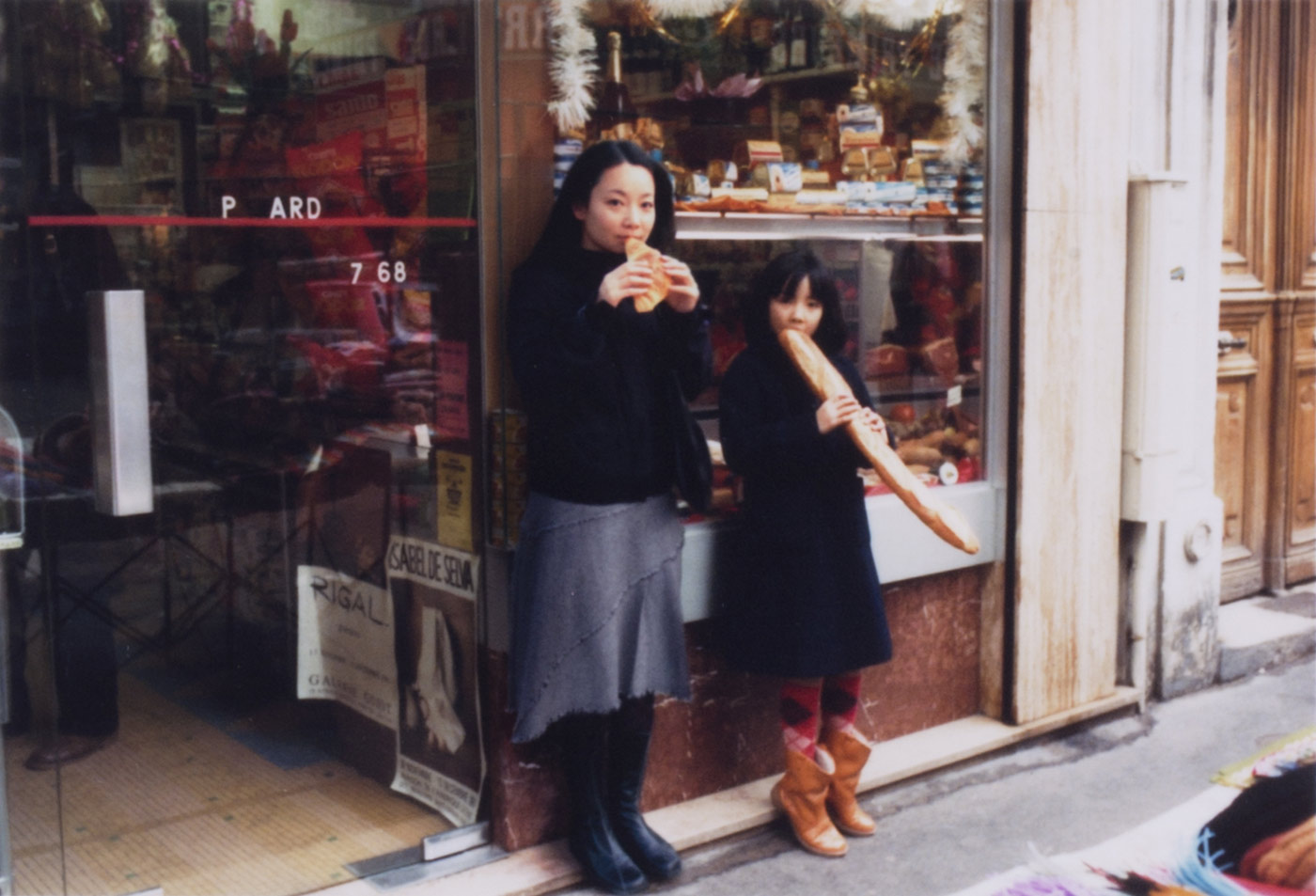
Otsuka Chino (Japanese, b. 1972) ‘1976 and 2005, Kamakura, Japan’ 2005


Otsuka Chino (Japanese, b. 1972)
1976 and 2005, Kamakura, Japan
2005
From the series Imagine Finding Me
Chromogenic print
12.7 x 18.1cm (5 x 7 1/8 in.)
Wilson Centre for Photography
© Otsuka Chino


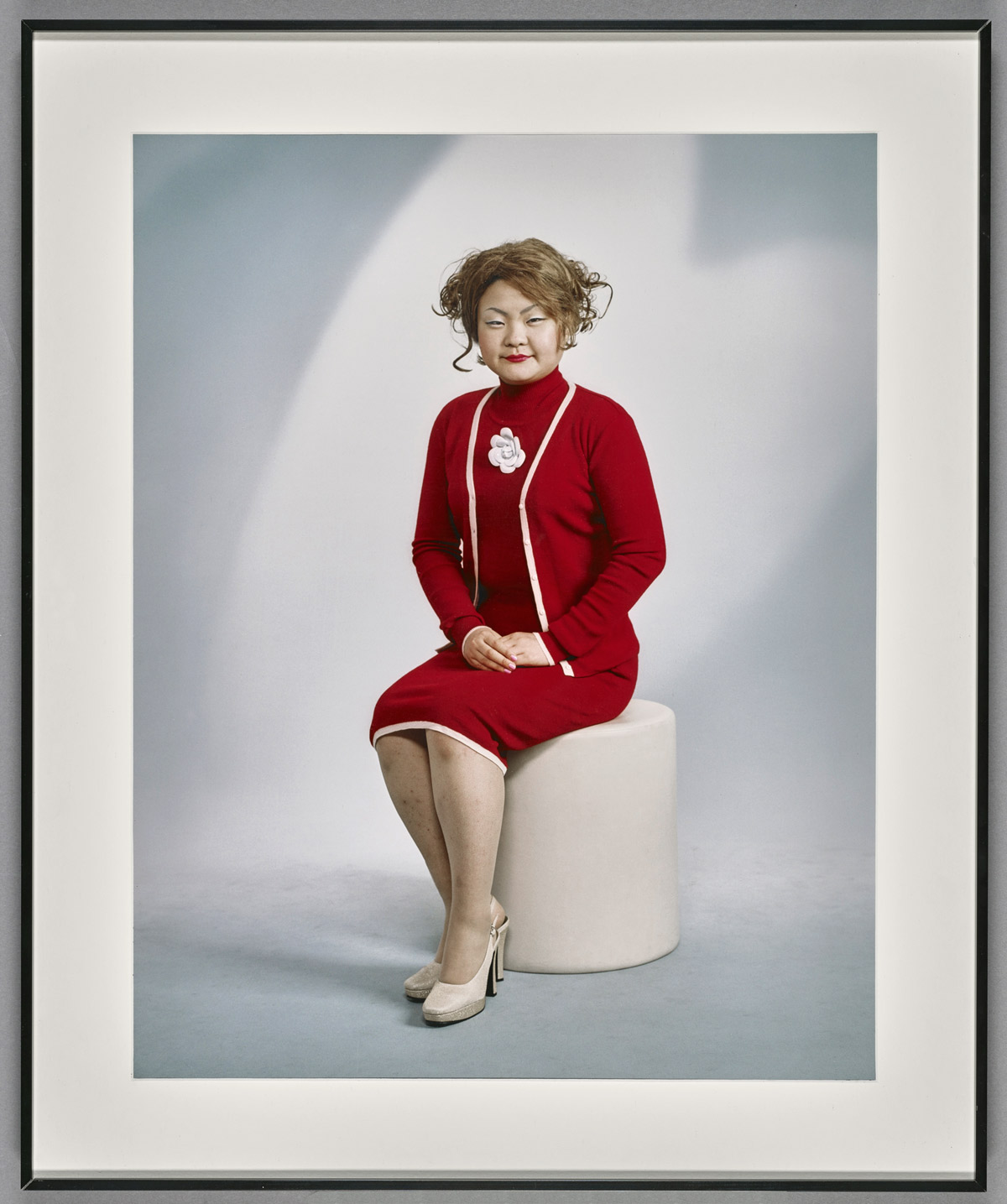
I’ll leave you to make up your own mind about these works by contemporary Japanese photographers. I particularly like Sawada Tomoko’s OMIAI ♡ (2001, below). The J. Paul Getty Museum recently acquired the series for their collection.

Marcus


Many thankx to the J. Paul Getty Museum for allowing me to publish the photographs in the posting. Please click on the photographs for a larger version of the image.


The history of Japanese photography, long dominated by men, experienced a dramatic change at the turn of the 21st century. Challenging the tradition that relegated women to the role of photographic subject, a number of young women photographers rose to prominence during this period by turning their cameras on themselves. The resulting domestic, private scenes and provocative self-portraits changed the landscape of the Japanese art world. The Younger Generation: Contemporary Japanese Photography, on view at the Getty Center October 6, 2015 – February 21, 2016, features works by five contemporary photographers born in Japan who emerged in the 1990s and 2000s: Kawauchi Rinko, Onodera Yuki, Otsuka Chino, Sawada Tomoko, and Shiga Lieko.

“These photographers bring a variety of approaches to their explorations of living in contemporary Japan and how they observe and respond to their country’s deep cultural traditions,” says Timothy Potts, director of the J. Paul Getty Museum. “From quiet morning rituals to scenes of matchmaking and marriage, this body of work provides a rich perspective on Japan’s ongoing examination of its cultural uniqueness and place in the wider world.”

As these younger photographers began to emerge at the end of the 20th century they were often viewed collectively and their work labelled onnanoko shashin, or “girl photographs,” despite their wide-ranging aesthetics and interests. This term, coined by critic Iizawa Kōtarō, was largely perceived as derisive, though some considered it a celebration of these women’s achievements. Countering the idea that “girl photography” could define a generation of practitioners, The Younger Generation showcases the breadth of work made by five mid-career photographers during the past twenty years. Selected images from one series by each of the five photographers will be featured in the exhibition, including recent acquisitions of photographs by Sawada Tomoko and Shiga Lieko made possible by the support of the Getty Museum Photographs Council.


The Photographers


Kawauchi Rinko (Japanese, b. 1972) ‘Untitled’ 2005


Kawauchi Rinko (Japanese, b. 1972)
Untitled
2005
From the series Cui Cui
Chromogenic print
24.5 x 24.5cm (9 5/8 x 9 5/8 in.)
Courtesy of and © Kawauchi Rinko


Kawauchi Rinko (Japanese, b. 1972) ‘Untitled’ 2005


Kawauchi Rinko (Japanese, b. 1972)
Untitled
2005
From the series Cui Cui
Chromogenic print
24.5 x 24.5cm (9 5/8 x 9 5/8 in.)
Courtesy of and © Kawauchi Rinko


Kawauchi Rinko (Japanese, b. 1972) ‘Untitled’ 2005


Kawauchi Rinko (Japanese, b. 1972)
Untitled
2005
From the series Cui Cui
Chromogenic print
24.5 x 24.5cm (9 5/8 x 9 5/8 in.)
Courtesy of and © Kawauchi Rinko


Kawauchi Rinko (Japanese, b. 1972) ‘Untitled’ 2005


Kawauchi Rinko (Japanese, b. 1972)
Untitled
2005
From the series Cui Cui
Chromogenic print
24.5 x 24.5cm (9 5/8 x 9 5/8 in.)
Courtesy of and © Kawauchi Rinko


In 2001, Kawauchi Rinko burst onto the Japanese photography scene with her signature snapshot style of photographing moments of everyday life that frequently escape notice. Using color film and often employing a 6×6 cm Rolleiflex camera, she presents the world around her in quiet, fragmentary scenes, as if suspended in a dreamlike state. In the featured project Cui Cui, named after the French onomatopoeia for the twitter sound made by birds, Kawauchi concentrated on the passage of time as it relates to her family and hometown. Some photographs feature ordinary objects and everyday rituals such as meals and prayer, while other images record significant events that constitute turning points in Kawauchi’s life.


Otsuka Chino (Japanese, b. 1972) ‘1982 and 2005, Paris, France’ 2005


Otsuka Chino (Japanese, b. 1972)
1982 and 2005, Paris, France
2005
From the series Imagine Finding Me
Chromogenic print
9.5 x 14cm (3 3/4 x 5 1/2 in.)
Wilson Centre for Photography
© Otsuka Chino


Otsuka Chino (Japanese, b. 1972) ‘1979 and 2006, Kitakamakura, Japan’ 2006


Otsuka Chino (Japanese, b. 1972)
1979 and 2006, Kitakamakura, Japan
2006
From the series Imagine Finding Me
Chromogenic print
14 x 9.8cm (5 1/2 x 3 7/8 in.)
Wilson Centre for Photography
© Otsuka Chino


Otsuka Chino (Japanese, b. 1972) ‘1980 and 2009, Nagayama, Japan’ 2009


Otsuka Chino (Japanese, b. 1972)
1980 and 2009, Nagayama, Japan
2009
From the series Imagine Finding Me
Chromogenic print
14 x 9.5cm (5 1/2 x 3 3/4 in.)
Wilson Centre for Photography
© Otsuka Chino


Caught between two cultures for much of her life after leaving Japan to study in England at the age of ten, Otsuka Chino draws upon the intersection of her Japanese and British identities for many of her photographic projects. The “double self-portraits” from Otsuka’s series Imagine Finding Me, a selection of which will be featured in The Younger Generation, were motivated by her curiosity about the prospect of speaking with her younger self. With the help of a digital retoucher, Otsuka seamlessly inserts contemporary self-portraits into old photographs of herself from a family photo album. The results combine pictures from different ages and moments in her life. In this context, the photograph acts as a portal to the past, a time machine that allows the artist to become a tourist in her own memory.


Shiga Lieko (Japanese, b. 1980) ‘Rasen Kaigan 21’ 2012


Shiga Lieko (Japanese, b. 1980)
Rasen Kaigan 21
2012
From the series Rasen Kaigan (Spiral Shore)
Chromogenic print
60 x 90cm (23 5/8 x 35 7/16 in.)
The J. Paul Getty Museum, Los Angeles, Purchased with funds provided by the Photographs Council
© Shiga Lieko


Shiga Lieko (Japanese, b. 1980) ‘Rasen Kaigan 39’ 2009


Shiga Lieko (Japanese, b. 1980)
Rasen Kaigan 39
2009
From the series Rasen Kaigan (Spiral Shore)
Chromogenic print
60 x 90cm (23 5/8 x 35 7/16 in.)
The J. Paul Getty Museum, Los Angeles, Purchased with funds provided by the Photographs Council
© Shiga Lieko


Shiga Lieko (Japanese, b. 1980) ‘Portrait of Cultivation’ 2009


Shiga Lieko (Japanese, b. 1980)
Portrait of Cultivation
2009
From the series Rasen Kaigan (Spiral Shore)
Chromogenic print
120 x 180cm (47 1/4 x 70 7/8 in.)
The J. Paul Getty Museum, Los Angeles, Purchased with funds provided by the Photographs Council
© Shiga Lieko


Shiga Lieko (Japanese, b. 1980) ‘Candy Castle’ 2011


Shiga Lieko (Japanese, b. 1980)
Candy Castle
2011
From the series Rasen Kaigan (Spiral Shore)
Chromogenic print
90 x 60cm (35 7/16 x 23 5/8 in.)
The J. Paul Getty Museum, Los Angeles, Purchased with funds provided by the Photographs Council
© Shiga Lieko


Shiga Lieko (Japanese, b. 1980) ‘Mother’s Gentle Hands’ 2009


Shiga Lieko (Japanese, b. 1980)
Mother’s Gentle Hands
2009
From the series Rasen Kaigan (Spiral Shore)
Chromogenic print
90 x 60cm (35 7/16 x 23 5/8 in.)
The J. Paul Getty Museum, Los Angeles, Purchased with funds provided by the Photographs Council
© Shiga Lieko


In her practice, Shiga Lieko works with local communities, immersing herself in them and incorporating their histories and myths into her photographs. In 2008 Shiga moved to the Tōhoku region in northern Japan, a largely rural area known for its association with Japanese folklore. Working out of a small studio in Kitakama, she became the official photographer of the town, documenting local events, festivals, and residents. After much of Kitakama was devastated by the 2011 Tōhoku earthquake and tsunami, Shiga continued to photograph, recording the impact on the land and people. Made between 2008 and 2012, the series Rasen Kaigan (Spiral Shore) showcases the chaos and mysteriousness of this strange place. With a history associated with mythology, natural disaster, and trauma, Kitakama resembles an otherworldly, post-apocalyptic site. Six works from Rasen Kaigan will be on display, including photographs made after the disaster in Tōhoku, during which Shiga was forced to flee her home.”


Onodera Yuki (Japanese, b. 1962) ‘Portrait of Second-hand Clothes No. 1’ 1994


Onodera Yuki (Japanese, b. 1962)
Portrait of Second-hand Clothes No. 1
1994
Gelatin silver print
41.9 x 40.6cm (16 1/2 x 16 in.)
Courtesy of the artist and Yossi Milo Gallery, New York
© Onodera Yuki, Courtesy Yossi Milo Gallery, New York


Onodera Yuki (Japanese, b. 1962) ‘Portrait of Second-hand Clothes No. 42’ 1997


Onodera Yuki (Japanese, b. 1962)
Portrait of Second-hand Clothes No. 52
1997
Gelatin silver print
41.9 x 41.3 cm (16 1/2 x 16 1/4 in.)
Courtesy of the artist and Yossi Milo Gallery, New York
© Onodera Yuki, Courtesy Yossi Milo Gallery, New York


Onodera Yuki (Japanese, b. 1962) ‘Portrait of Second-hand Clothes No. 52’ 1997


Onodera Yuki (Japanese, b. 1962)
Portrait of Second-hand Clothes No. 42
1997
Gelatin silver print
41.9 x 41.3cm (16 1/2 x 16 1/4 in.)
Courtesy of the artist and Yossi Milo Gallery, New York
© Onodera Yuki, Courtesy Yossi Milo Gallery, New York


Onodera Yuki (Japanese, b. 1962) ‘Portrait of Second-hand Clothes No. 8’ 1994


Onodera Yuki (Japanese, b. 1962)
Portrait of Second-hand Clothes No. 8
1994
Gelatin silver print
41.9 x 41.9cm (16 1/2 x 16 1/2 in.)
Courtesy of the artist and Yossi Milo Gallery, New York
© Onodera Yuki, Courtesy Yossi Milo Gallery, New York


Born in Tokyo, but based in France, Onodera Yuki pursued photography after her disenchantment with the fashion industry. Interested in subverting the notion that photography represents the world accurately – the Japanese word for photography, shashin, translates as “to copy reality” – Onodera uses the medium to generate surrealistic images that defy reality. On view in the exhibition will be photographs from her series Portrait of Second-hand Clothes, wherein Onodera repurposes garments she collected from Dispersion, an installation by the artist Christian Boltanski that contained large piles of clothing for visitors to take home and “disperse.” Onodera photographed each piece against an open window in her apartment in Montmartre, and her use of flash enhances the ghostlike quality of the garments.


Sawada Tomoko (Japanese, b. 1977) ‘OMIAI ♡’ 2001


Sawada Tomoko (Japanese, b. 1977)
OMIAI
2001
Chromogenic print
12.2 x 9.7cm (4 13/16 x 3 13/16 in.)
The J. Paul Getty Museum, Los Angeles, Purchased with funds provided by the Photographs Council
© Sawada Tomoko


Sawada Tomoko (Japanese, b. 1977) ‘OMIAI ♡’ 2001


Sawada Tomoko (Japanese, b. 1977)
OMIAI 
2001
Chromogenic print
31.7 x 25.1cm (12 1/2 x 9 7/8 in.)
The J. Paul Getty Museum, Los Angeles, Purchased with funds provided by the Photographs Council
© Sawada Tomoko


Sawada Tomoko (Japanese, b. 1977) ‘OMIAI ♡’ 2001


Sawada Tomoko (Japanese, b. 1977)
OMIAI 
2001
Chromogenic print
46.4 x 36.7cm (18 1/4 x 14 7/16 in.)
The J. Paul Getty Museum, Los Angeles, Purchased with funds provided by the Photographs Council
© Sawada Tomoko


Sawada Tomoko (Japanese, b. 1977) ‘OMIAI ♡’ 2001


Sawada Tomoko (Japanese, b. 1977)
OMIAI 
2001
Chromogenic print
46.4 x 36.7cm (18 1/4 x 14 7/16 in.)
The J. Paul Getty Museum, Los Angeles, Purchased with funds provided by the Photographs Council
© Sawada Tomoko


Sawada Tomoko (Japanese, b. 1977) ‘OMIAI ♡’ 2001


Sawada Tomoko (Japanese, b. 1977)
OMIAI 
2001
Chromogenic print
46.4 x 36.7cm (18 1/4 x 14 7/16 in.)
The J. Paul Getty Museum, Los Angeles, Purchased with funds provided by the Photographs Council
© Sawada Tomoko


Sawada Tomoko (Japanese, b. 1977) ‘OMIAI ♡’ 2001


Sawada Tomoko (Japanese, b. 1977)
OMIAI 
2001
Chromogenic print
46.4 x 36.7cm (18 1/4 x 14 7/16 in.)
The J. Paul Getty Museum, Los Angeles, Purchased with funds provided by the Photographs Council
© Sawada Tomoko


Sawada Tomoko (Japanese, b. 1977) ‘OMIAI ♡’ 2001


Sawada Tomoko (Japanese, b. 1977)
OMIAI 
2001
Chromogenic print
70.6 x 56cm (27 13/16 x 22 1/16 in.)
The J. Paul Getty Museum, Los Angeles, Purchased with funds provided by the Photographs Council
© Sawada Tomoko


Sawada Tomoko (Japanese, b. 1977) ‘OMIAI ♡’ 2001


Sawada Tomoko (Japanese, b. 1977)
OMIAI 
2001
Chromogenic print
70.8 x 56cm (27 13/16 x 22 1/16 in.)
The J. Paul Getty Museum, Los Angeles, Purchased with funds provided by the Photographs Council
© Sawada Tomoko


Sawada Tomoko (Japanese, b. 1977) ‘OMIAI ♡’ 2001


Sawada Tomoko (Japanese, b. 1977)
OMIAI 
2001
Chromogenic print
70.8 x 56cm (27 13/16 x 22 1/16 in.)
The J. Paul Getty Museum, Los Angeles, Purchased with funds provided by the Photographs Council
© Sawada Tomoko


Sawada Tomoko (Japanese, b. 1977) ‘OMIAI ♡’ 2001


Sawada Tomoko (Japanese, b. 1977)
OMIAI 
2001
Chromogenic print
83 x 65.6cm (32 11/16 x 25 13/16 in.)
The J. Paul Getty Museum, Los Angeles, Purchased with funds provided by the Photographs Council
© Sawada Tomoko


Born and raised in Kobe, Japan, Sawada Tomoko has used self-portraiture to explore identity. She transforms into various characters with the help of costumes, wigs, props, makeup, and weight gain, all of which drastically alter her appearance. Her work – a cross between portraiture and performance – plays upon stereotypes and cultural traditions in order to showcase modes of individuality and self-expression. Her project OMIAI♡, recently acquired by the J. Paul Getty Museum, includes thirty self-portraits, each one made in the same photo studio but intended to represent a different kind of woman. These images mimic photographs traditionally produced as part of the Japanese custom of omiai, or a formal meeting that occurs as part of the arranged marriage tradition. This unique set of OMIAI♡ includes vintage frames selected by Sawada to represent how such portraits would traditionally be displayed in the windows of local photo studios in Japan.

“Sawada’s playful, charming self-portraits belie a deeper commentary on her culture,” says Amanda Maddox, assistant curator in the Department of Photographs at the J. Paul Getty Museum and curator of the exhibition. “With OMIAI♡ she reminds us how such traditions still play a significant role in Japanese society.”

Press release from the J. Getty Museum website


The J. Paul Getty Museum
1200 Getty Center Drive
Los Angeles, California 90049

Opening hours:
Daily 10am – 5am

The J. Paul Getty Museum website

LIKE ART BLART ON FACEBOOK

Back to top