Exhibition: ‘Underexposed: Women Photographers from the Collection’ at the High Museum of Art, Atlanta

Exhibition dates: 17th April – 1st August, 2021

Curator: Sarah Kennel with Maria Kelly, curatorial assistant for photography


Paula Chamlee (American, b. 1944) 'Nude Collage #1' 1998 from the exhibition 'Underexposed: Women Photographers from the Collection' at the High Museum of Art, Atlanta, April - August, 2021


Paula Chamlee (American, b. 1944)
Nude Collage #1
1998
Gelatin silver print
7 3/4 x 9 1/2 inches
Gift of Lucinda W. Bunnen for the Bunnen Collection
© Paula Chamlee


Paula Chamlee’s work stretches beyond the realm of straight photography and into assemblage, painting, and drawing. This collage was inspired by photocopies of prints that her husband, the late photographer Michael A. Smith, intended to share with a prospective collector. Because the photographs’ dimensions did not match with that of the copy machine, the images required cropping and taping. Intrigued by the nature of these cast-off bits piled together and the relationship of the parts to the whole, Chamlee created this collage by piecing together images of her body that Smith had taken.


Out of energy this weekend with all that is going on with being made redundant at the University. Physically and emotionally drained. Apologies.

So just two words… more please!

Marcus


Many thankx to the High Museum of Art for allowing me to publish the photographs in the posting. Please click on the photographs for a larger version of the image.


For nearly all of photography’s one hundred eighty-year history, women have shaped the development of the art form and experimented with every aspect of the medium.

Conceived in conjunction with the centennial of the passage of the Nineteenth Amendment, which granted suffrage for some women, this exhibition showcases more than one hundred photographs from the High’s collection, many of them never before on view, and charts the medium’s history from the dawn of the modern period to the present through the work of women photographers.

Organised roughly chronologically, each section emphasises a distinct arena in which women contributed and often led the way. Among the artists featured are pioneers of the medium such as Anna Atkins as well as more recent innovators and avid experimenters, including Betty Hahn, Barbara Kasten, and Meghann Riepenhoff. The exhibition also celebrates the achievements of numerous professional photographers, including Berenice Abbott, Margaret Bourke-White, and Marion Post Wolcott, who worked in photojournalism, advertising, and documentary modes and promoted photography as a discipline.

The exhibition also highlights photographers who photograph other women, children, and families, among them Sally Mann, Nan Goldin, and Diane Arbus, and those who interrogate ideals of femininity through self-portraiture. Also on view will be works by contemporary photographers who challenge social constructions of gender, sexuality, and identity, including Zanele Muholi, Sheila Pree Bright, Cindy Sherman, Mickalene Thomas, and Carrie Mae Weems.


Underexposed B roll
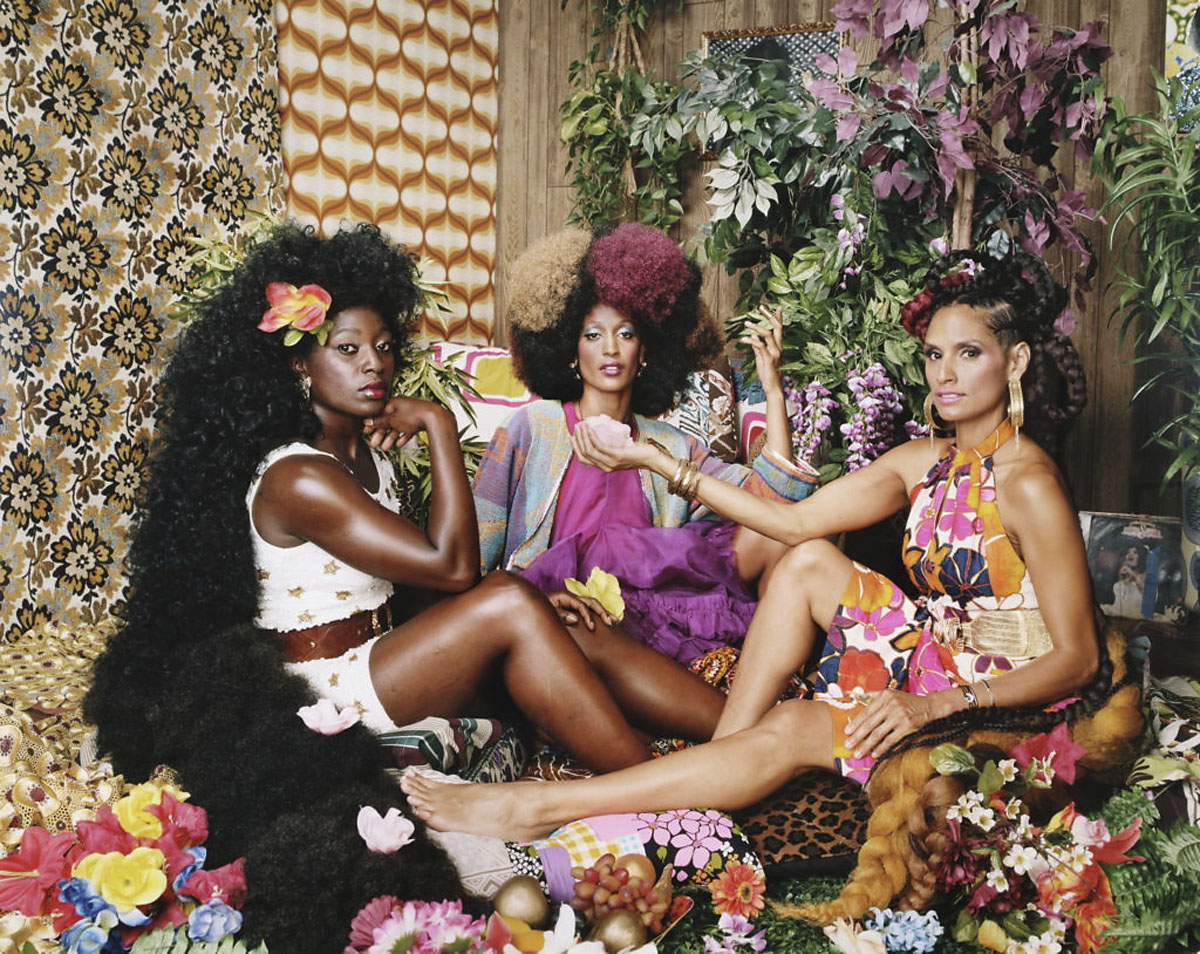
 

Mickalene Thomas (American, b. 1971) 'Les Trois Femmes Deux' 2018 from the exhibition 'Underexposed: Women Photographers from the Collection' at the High Museum of Art, Atlanta, April - August, 2021


Mickalene Thomas (American, b. 1971)
Les Trois Femmes Deux
2018
Dye coupler print
High Museum of Art, Atlanta. purchase with funds from the Friends of Photography


Mickalene Thomas creates vibrantly layered artworks that reclaim iconic images to centre Black female subjectivity in the history of art. A direct response to Edouard Manet’s Luncheon on the Grass, this photograph transposes the scene of three White figures having a picnic in a park to an interior view of three exquisitely coiffed and adorned Black women (including Thomas’s partner at right) gazing directly and confidently at the viewer. The colourful, wood-panelled living room, complete with fake plants and mismatched African textiles, evokes Thomas’s 1970s childhood and the aesthetics of Blaxploitation cinema, known for its audacious, dangerous, and sexually confident gun-toting heroines.


This spring, the High Museum of Art will present “Underexposed: Women Photographers from the Collection” (April 17 – August 1), an exhibition featuring more than 100 photographs from the Museum’s collection, including many that have never before been exhibited. The artworks demonstrate the notable contributions of women throughout the history of photography, spanning from innovators of the medium to contemporary practitioners who investigate the intersections of photography, representation and identity.

Originally conceived in conjunction with the centennial of the passage of the 19th Amendment, “Underexposed” pays homage to the work of women who have pioneered and championed the art of photography, from its earliest days through today. The exhibition is arranged roughly chronologically and showcases distinct arenas in which women photographers flourished and often led the way: as professionals working across multiple genres; as avid experimenters pushing photography into new directions; as teachers and patrons who supported the growth of the medium; and as creative, critically engaged artists exploring such issues as gender, identity and politics.

“With this exhibition’s focus on women photographers, ‘Underexposed’ highlights a trajectory of participation and influence extending from the earliest days of photography to a leading role in defining the medium today,” said Rand Suffolk, the High’s Nancy and Holcombe T. Green, Jr., director.

Sarah Kennel, the High’s Donald and Marilyn Keough Family curator of photography, added, “Focusing on the last 100 years, this exhibition highlights how women have embraced photography as a powerful form of professional and creative expression. In bringing together pioneers of the medium with artists who reflect critically on photography’s capacity to shape and challenge concepts of gender and identity, we have an extraordinary opportunity to expand the history of photography and bring greater recognition to the many women who have contributed to and led the field.”

The exhibition opens with a selection of work by artists who transformed the practice of photography from the 1920s through the 1950s. Coinciding with the global rise of the feminist ideal of the “New Woman” in the late 1900s, practitioners including Ilse Bing, Margaret Bourke White, Dorothea Lange and Imogen Cunningham emerged as savvy leaders in the fields of  documentary, fashion and fine art photography. The exhibition continues with a section focused on artists who have experimented with photographic technologies and alternative processes to redefine the expressive and material limits of the medium. Works made in the 1970s and 1980s by artists including Barbara Kasten, Olivia Parker and Sheila Pinkel join pieces by contemporary makers, such as Meghann Riepenhoff and Elizabeth Turk, who continue to expand the language of photography.

The second half of the exhibition explores how women photographers have used photography to reflect on and interrogate the personal, social and cultural dimensions of gender and identity. Works by Diane Arbus, Nan Goldin, Susan Meiselas, Anne Noggle and Clarissa Sligh reveal different ways women have looked at and photographed other women. Similarly, works by Sheila Pree Bright, Sandy Skoglund and Susan Worsham deconstruct ideas around domesticity and feminine ideals. The exhibition closes with a selection of portraits and self-portraits by Judy Dater, Zaneli Muholi, Cindy Sherman, Mickalene Thomas and Carrie Mae Weems, among others, that explore the intersections of photography, representation and identity.

“Underexposed: Women Photographers from the Collection” will be presented on the lower level of the High’s Wieland Pavilion. This exhibition is curated by Sarah Kennel with Maria Kelly, curatorial assistant for photography.

Press release from the High Museum of Art


Anna Atkins (British, 1799-1871) 'Mauritius, from Cyanotypes of British and Foreign Flowering Plants and Fern' 1851-1854


Anna Atkins (British, 1799-1871)
Mauritius, from Cyanotypes of British and Foreign Flowering Plants and Fern
1851-1854
Cyanotype
10 1/8 x 7 15/15 inches
Gift in honour of Edward Anthony Hill
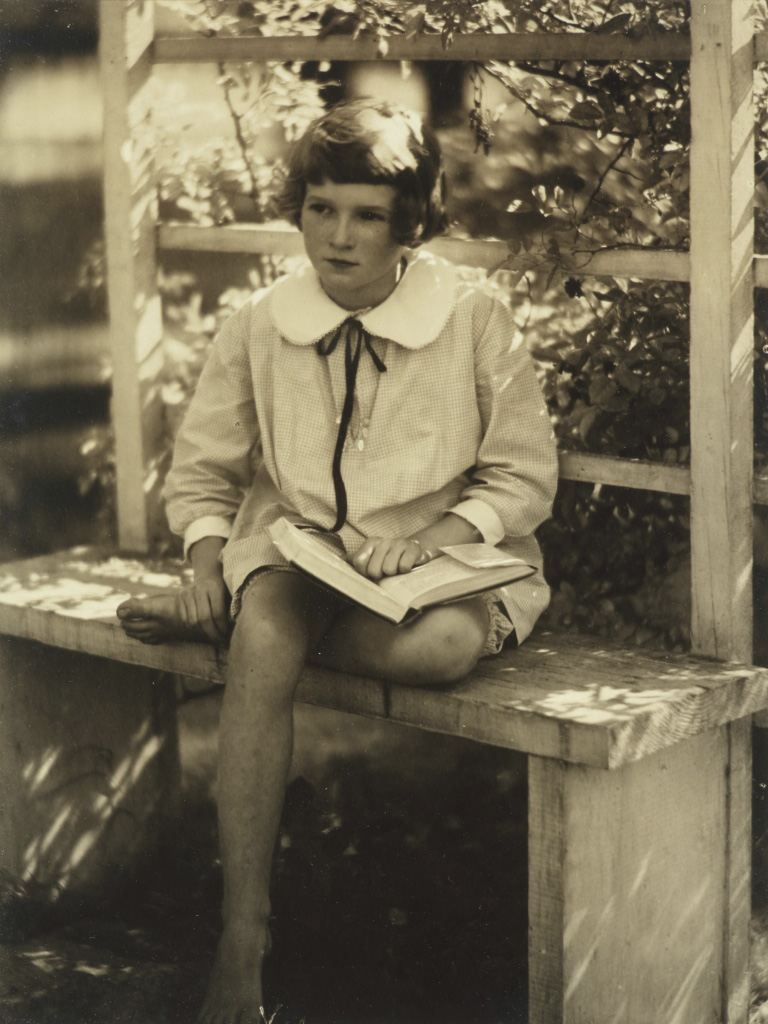
 

Doris Ulmann (American, 1884-1934) 'Studious Girl, Fleischman Relative' before 1931


Doris Ulmann (American, 1884-1934)
Studious Girl, Fleischman Relative
before 1931
Platinum print
Purchase


Doris Ulmann began her photographic career while attending the Clarence H. White School of Photography in New York – the first art photography school in the United States. There she worked in the Pictorialist tradition, embraced the “painterly” qualities of soft focus, and manipulated surfaces. After undergoing a major surgery, Ulmann decided to pursue her interest in people “for whom life had not been a dance.” She began traveling throughout the southeastern United States documenting the folk traditions and people of the Appalachian Mountains. She made several sun-dappled portraits of this young girl (identified on other prints as “Kreiger girl”) in and around Berea, Kentucky.
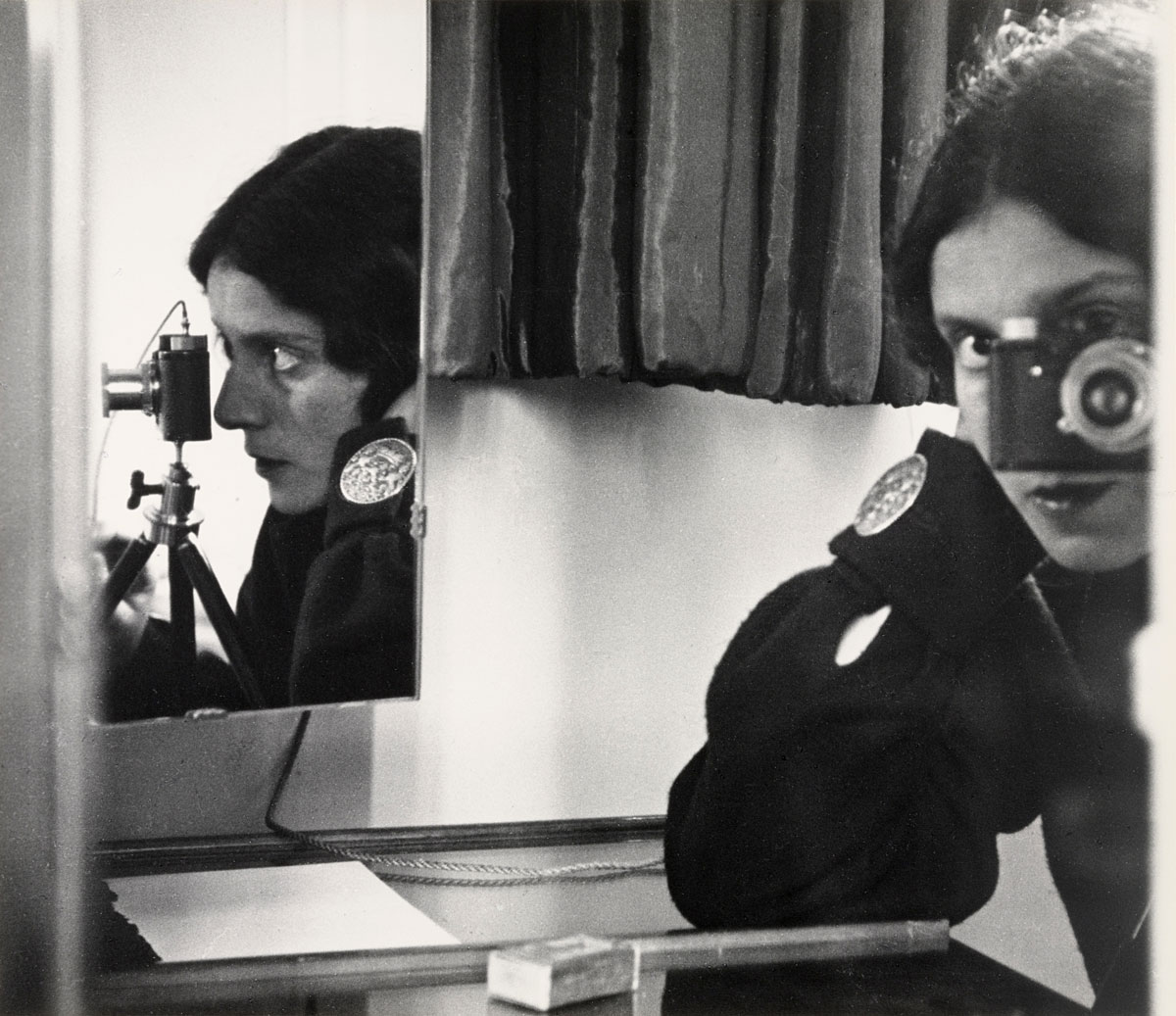
 

Ilse Bing (American, born Germany, 1899-1998) 'Self-Portrait in Mirrors' Paris, 1931


Ilse Bing (American born Germany, 1899-1998)
Self-Portrait in Mirrors
Paris, 1931, printed c. 1941
Gelatin silver print
High Museum of Art, Atlanta
Purchase with funds from Georgia-Pacific Corporation
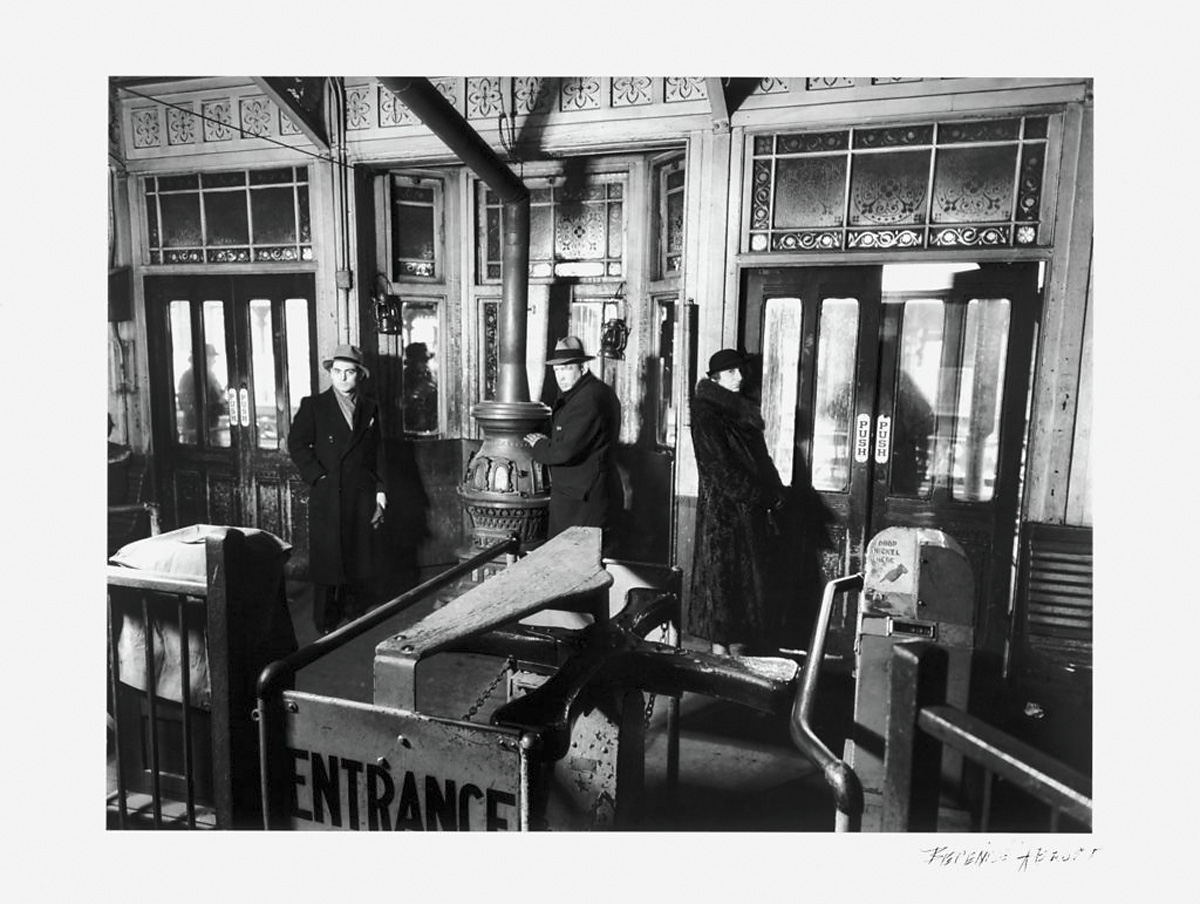
 

Berenice Abbott (American, 1898-1991) '"El" Station Interior, Sixth and Ninth Avenue Lines, Downtown Side' 1936


Berenice Abbott (American, 1898-1991)
“El” Station Interior, Sixth and Ninth Avenue Lines, Downtown Side
1936
Gelatin silver print
10 3/8 x 13 3/8
Purchase with funds from a Friend of the Museum


A towering figure of photography, Berenice Abbott learned the craft while assisting artist Man Ray in Paris. By 1926, she had established her own portrait studio, capturing the leading cultural icons of the day. She also befriended French photographer Eugène Atget and became his tireless champion, even rescuing many of his negatives after his death. After returning to New York in 1929, Abbott spent the next decade working on a major project documenting the rapidly transforming cityscape, which she published in the 1939 book Changing New York, produced with her partner, art critic Elizabeth McCausland. Although known for her urban views, in the 1950s, Abbott started working with Massachusetts Institute of Technology to explore the potential for photography to illustrate scientific principles and phenomena, as shown in this picture.
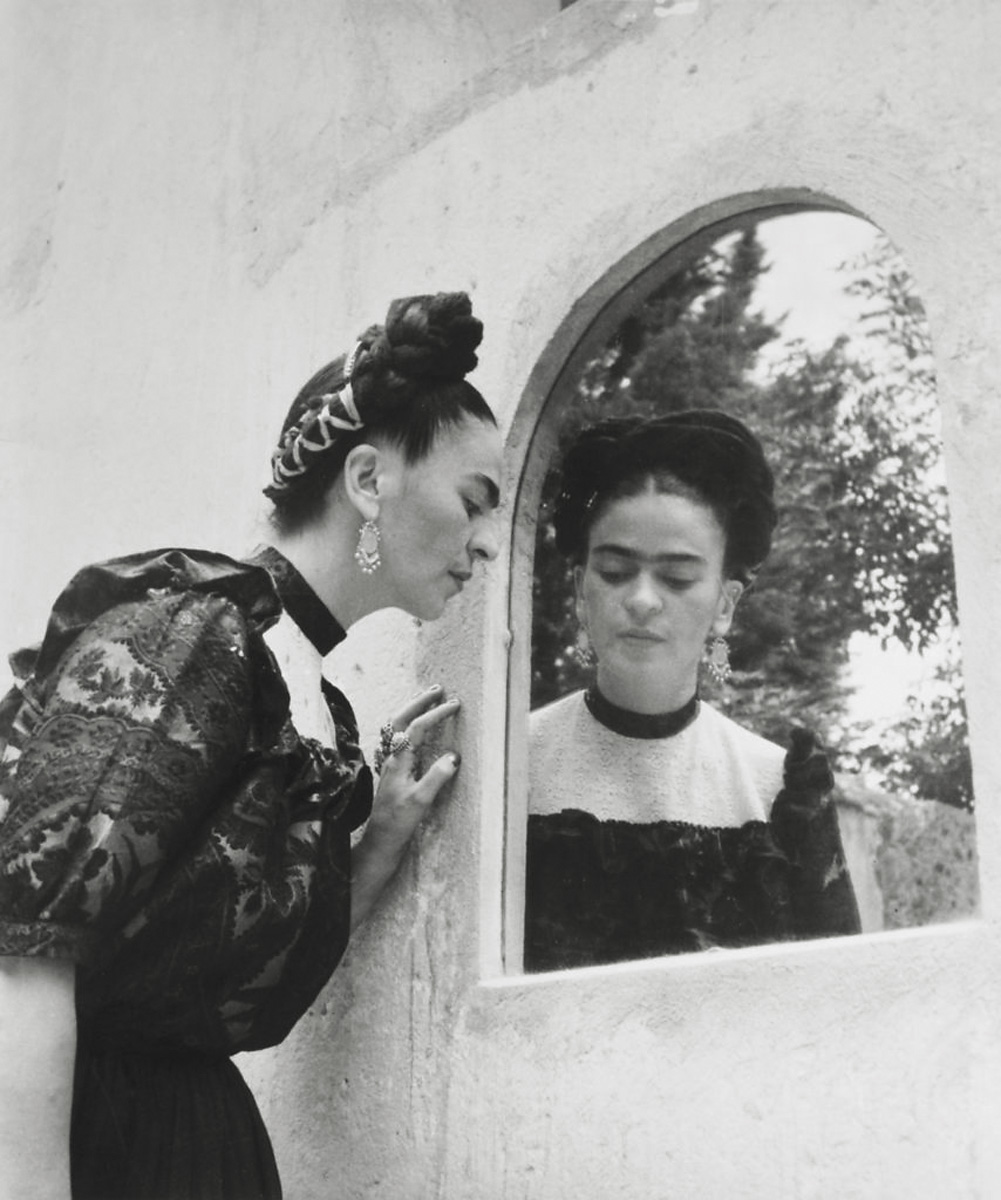
 

Lola Alvarez Bravo (Mexican, 1903-1993) 'Frida looking into mirror' 1944


Lola Alvarez Bravo (Mexican, 1903-1993)
Frida looking into mirror
1944
Gelatin silver print
8 3/4 x 7 1/4 inches
Purchase with funds from Margaretta J. Taylor
© Lola Alvarez Bravo/Artists Rights Society (ARS), New York


Doris Derby (American, b. 1939) 'Grass Roots Organizer, Mississippi' 1968


Doris Derby (American, b. 1939)
Grass Roots Organizer, Mississippi
1968
Gelatin silver print
Purchase with funds from Jeff and Valerie Levy


Dr. Doris Derby is an educator, anthropologist, and photojournalist based in Atlanta. In the 1960s and 1970s, she was an active member of the Student Nonviolent Coordinating Committee (SNCC), the Mississippi Freedom Democratic Party, and the Adult Literacy Project. Derby’s photographs reflect her interest in and concern for the role of poor, disenfranchised women during the movement. Many women had been fired from their jobs for registering to vote; in response, they built skill-based cooperatives and community groups that kept their families and communities together in very difficult times.


Diane Arbus. 'A family on their lawn one Sunday in Westchester, N.Y.,' 1968


Diane Arbus (American, 1923-1971)
A Family on the Lawn One Sunday in Westchester in June, 1968
1968, printed 1970
Gelatin silver print
14 3/4 x 15 inches
Purchase with funds from a friend of the Museum


Imogen Cunningham (American, 1883-1976) 'Magnolia Blossom' 1975


Imogen Cunningham (American, 1883-1976)
Magnolia Blossom
1975
Gelatin silver print
10 1/4 x 13 inches
Purchase with funds from a Friend of the Museum
© The Imogen Cunningham Trust


Joyce Neimanas (American, b. 1944) 'Daytime Fantasies' 1976


Joyce Neimanas (American, b. 1944)
Daytime Fantasies
1976
Gelatin silver print with applied colour
Gift of Lucinda W. Bunnen for the Bunnen Collection


For most of her career, Joyce Neimanas has created photographic images without directly using a camera, choosing instead to make complex collages and photograms of found imagery derived primarily from mass culture. In this work, Neimanas enlarged and printed a still from a 16 mm pornographic film to which she applied colour and annotated with text drawn from the controversial Kinsey Report on Sexual Behavior in the Human Female (1953). Made at a time of expanded conversation around gender, feminism, and sexual liberation, this work explores and challenges conventional representations of women’s sexuality.
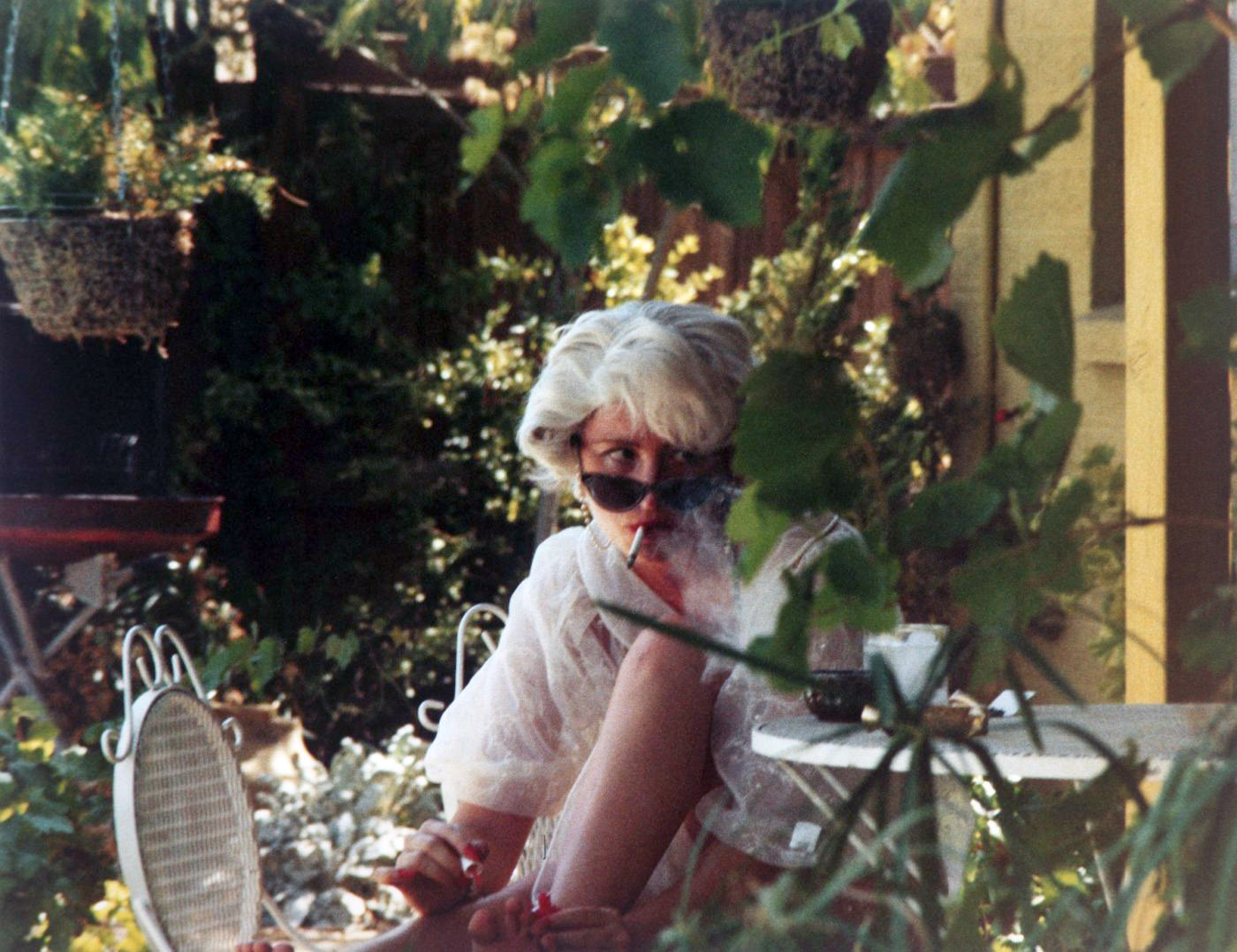
 

Cindy Sherman (American, b. 1954) 'Untitled' 1979


Cindy Sherman (American, b. 1954)
Untitled
1979, printed 1989
From the Untitled Film Stills series
Chromogenic print
Gift of Lucinda W. Bunnen for the Bunnen Collection


Cindy Sherman has used self-portraiture as a strategy to interrogate representations of identity, gender, and mass culture. In her breakout Untitled Film Stills series, she photographed herself in varied guises inspired by generic Hollywood depictions of female characters: the bereft housewife, the sultry vamp, the wide-eyed ingénue. She challenges traditional understandings of photography and self-portraiture and exposes mass media’s constructed norms and ideas about femininity. Although she shot the original series in black and white as a nod to mid-twentieth-century B-grade black and white films, she also reprised the themes in colour works like this one.


Graciela Iturbide (Mexican, b. 1942) 'Magnolia, Juchitán, México' 1986


Graciela Iturbide (Mexican, b. 1942)
Magnolia, Juchitán, México
1986
Gelatin silver print
20 x 16 inches


Nan Goldin (American, b. 1953) 'Cookie and Sharon on the Bed, Provincetown, MA, Sept. 1989' 1989


Nan Goldin (American, b. 1953)
Cookie and Sharon on the Bed, Provincetown, MA, Sept. 1989
1989
Dye destruction print
Gift of Lucinda W. Bunnen for the Bunnen Collection


One of the most important photographers of her generation, Nan Goldin is an artist whose personal life is at the centre of her art. Her Cookie Portfolio documents her intimate friendship with Cookie Mueller. This photograph strikes a somber note as we see Cookie’s friend and lover Sharon sitting at the front of her bed, disconnected from a frail-appearing Cookie, who lies underneath her wedding picture. Cookie’s husband, Vittorio, died from AIDS the month this picture was made, and Cookie would die two months later. Despite the palpable loss sensed in the distance between the earlier and later works in the portfolio, Goldin conveys the steadfastness and tenderness of female friendship and support, which also infused her process: “I’m looking with a warm eye, not a cold eye. I’m not analysing what’s going on – I just get inspired to take a picture by the beauty and vulnerability of my friends.”


Sandy Skoglund (American, born 1946) 'Gathering Paradise' 1991


Sandy Skoglund (American, b. 1946)
Gathering Paradise
1991
Dye coupler print
47 x 60 1/2 inches
Gift of Mr. and Mrs. James L. Henderson, III


Like many of installation artist and photographer Sandy Skoglund’s surrealist views of domestic spaces, this macabre, pink-tinged scene of squirrels running riot across a patio suggests the frenetic anxiety that bubbles beneath the placid appearance of suburban life. Eschewing digital manipulation, Skoglund meticulously constructs room-size theatrical sets – in this case, complete with sculpted squirrels – which she then photographs. At once funny and unsettling, her photographs of everyday spaces invaded by a menagerie of fantastical animals reveal the nightmarish aspects of the American dream.


Judy Dater (American, born 1941) 'Self-Portrait on Deserted Road' 1982


Judy Dater (American, b. 1941)
Self-Portrait on Deserted Road
1982
Gelatin silver print
14 1/4 x 18 1/4
Gift of Lucinda W. Bunnen for the Bunnen Collection


Over the course of her career, Judy Dater has primarily photographed women, including herself. This work is from a series she made during ten trips to national parks in the West between 1980 and 1983, where she photographed herself nude amidst the grandeur of nature. Seemingly stranded on an empty, endless road, she appears vulnerable and lost, but across the larger series, her photographs veer from savage self-examination to carefully constructed performances that explore identity, subjectivity, and femininity. One of the key influences on Dater’s photography is the work of Imogen Cunningham, who was also a close friend.


Barbara Kasten (American, b. 1936) 'Architectural Site 17' 1988


Barbara Kasten (American, b. 1936)
Architectural Site 17
1988
Dye destruction print
Support/Overall: 50 x 60 inches
Purchase


Sheila Pree Bright (American, born 1967) 'Untitled 13' 2006


Sheila Pree Bright (American, b. 1967)
Untitled 13
2006
From the Suburbia series
Dye coupler print
49 1/2 inches
Gift of Sandra Anderson Baccus in loving memory of Lloyd Tevis Baccus, M.D.
© Sheila Pree Bright


Sheila Pree Bright (American, b. 1967) '#1960Now Ferguson protest: National March in Ferguson, "We Can't Stop" Mike Brown, Ferguson, MO, March 2015' 2015


Sheila Pree Bright (American, b. 1967)
#1960Now Ferguson protest: National March in Ferguson, “We Can’t Stop” Mike Brown, Ferguson, MO, March 2015
2015
From the series #1960Now
Gelatin silver print
Purchase with funds from the Friends of Photography


Sheila Pree Bright is one of Atlanta’s most prominent photographers working today. For the ongoing series #1960Now, she travels with and photographs the civic actions and protests of the Black Lives Matter movement. The title refers to the similarities between these contemporary protests and the civil rights movement and photography of the 1960s. The hashtag in the title refers to social media’s growing role in circulating images and defining current events. Here, two young girls and a little boy are at the forefront of a march in Ferguson, emphasising how the youth of today can be change makers for tomorrow.


Xaviera Simmons (American, born 1974) '10A Untitled' 2010


Xaviera Simmons (American, b. 1974)
10A Untitled
2010
From the Utah series
Dye coupler print
30 x 40 inches
Purchase with David C. Driskell African American Art Acquisition Fund
© Xaviera Simmons


Zanele Muholi (South African, b. 1972) 'Zibuyile I (Syracuse)' 2015


Zanele Muholi (South African, b. 1972)
Zibuyile I (Syracuse)
2015
Gelatin silver print
25 5/8 x 17 inches
Purchase with funds from the Donald and Marilyn Keough Family and the H. B. and Doris Massey Charitable Trust


Visual activist Zanele Muholi, whose personal gender pronoun is they, uses self-portraiture to address the politics of gender and race in the ongoing body of work Somnyama Ngonyama (which translates to “Hail, The Dark Lioness” from their mother tongue, Zulu). Muholi poses in locations around the world and incorporates everyday found objects such as props, costumes, and set dressing to build images that draw on their personal family history, consumer culture, and art history. In this photograph, Muholi addresses the viewer with a forceful, piercing gaze, challenging the conventional exoticised, othered, and sexualised depictions of Black female bodies.


Jill Frank (American, born 1978) 'everyone who woke up at the yellow house' 2016


Jill Frank (American, b. 1978)
everyone who woke up at the yellow house
2016
Double sided inkjet print
High Museum of Art, gift of Louis Corrigan


V. Elizabeth Turk (American, b. 1945) 'Calaeno' 2018


V. Elizabeth Turk (American, born 1945)
Calaeno
2018
Van Dyke print
High Museum of Art, Atlanta, purchase with funds from Lucinda W. Bunnen for the Bunnen Collection
© Elizabeth Turk


The High Museum of Art
1280 Peachtree St NE
Atlanta, GA
30309

Opening hours:
Tuesday – Saturday 10am – 5pm
Sunday 12 – 5pm
Monday closed
The High Museum of Art website

LIKE ART BLART ON FACEBOOK

Back to top

Exhibition: ‘In Focus: Animalia’ at the J. Paul Getty Museum, Getty Center, Los Angeles

Exhibition dates: 26th May – 18th October 2015


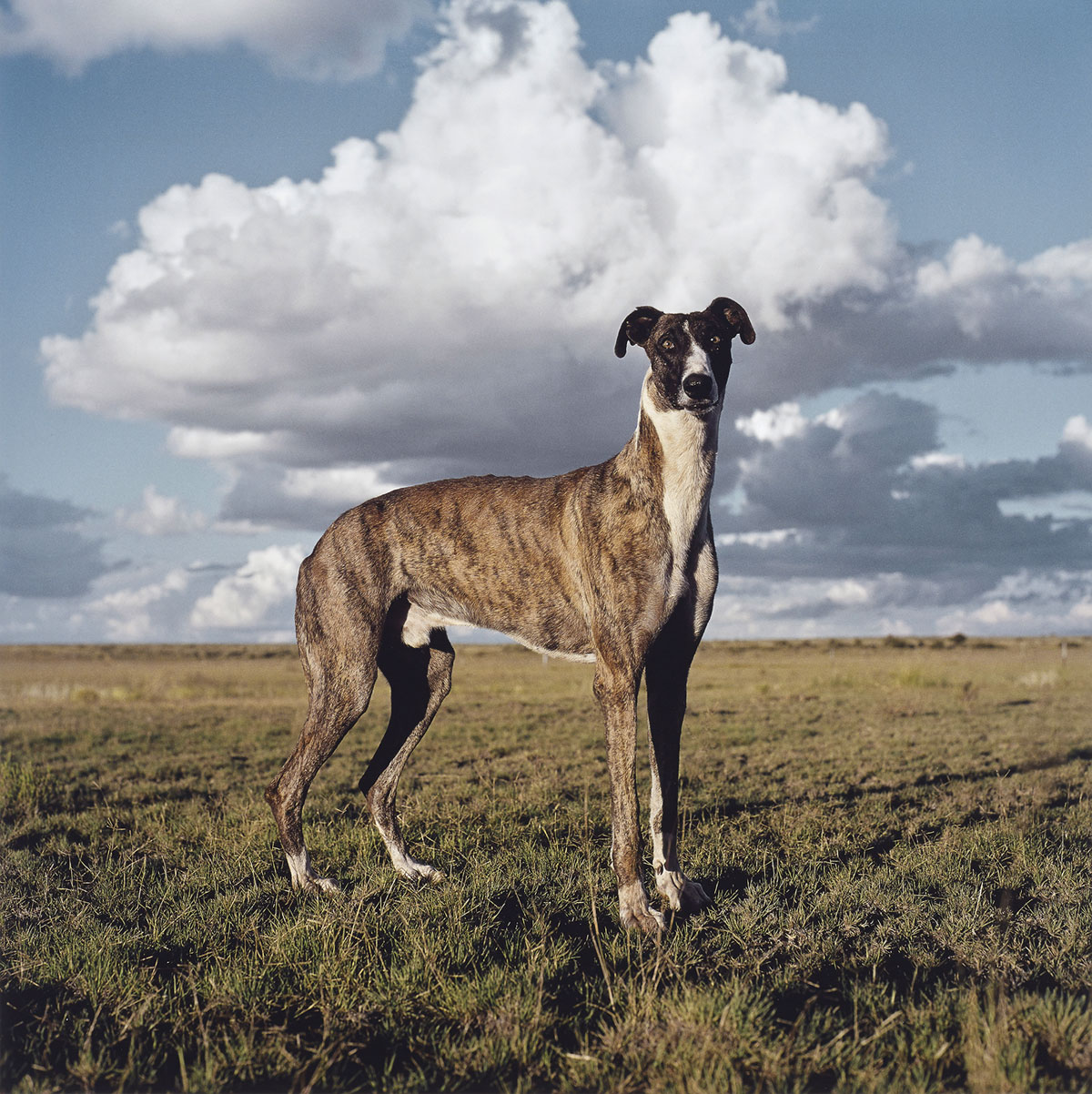
Daniel Naudé (South African, b. 1984) 'Africanis 17. Danielskuil, Northern Cape, 25 February 2010' 2010


Daniel Naudé (South African, b. 1984)
Africanis 17. Danielskuil, Northern Cape, 25 February 2010
2010
Chromogenic print
60 x 60cm (23 5/8 x 23 5/8 in.)
The J. Paul Getty Museum, Los Angeles
© Daniel Naudé


Some of the photographs in this postings are sad, others are just gruesome.

One animal’s in/humanity to many others.

Marcus


Many thankx to the J. Paul Getty Museum for allowing me to publish the photographs in the posting. Please click on the photographs for a larger version of the image.


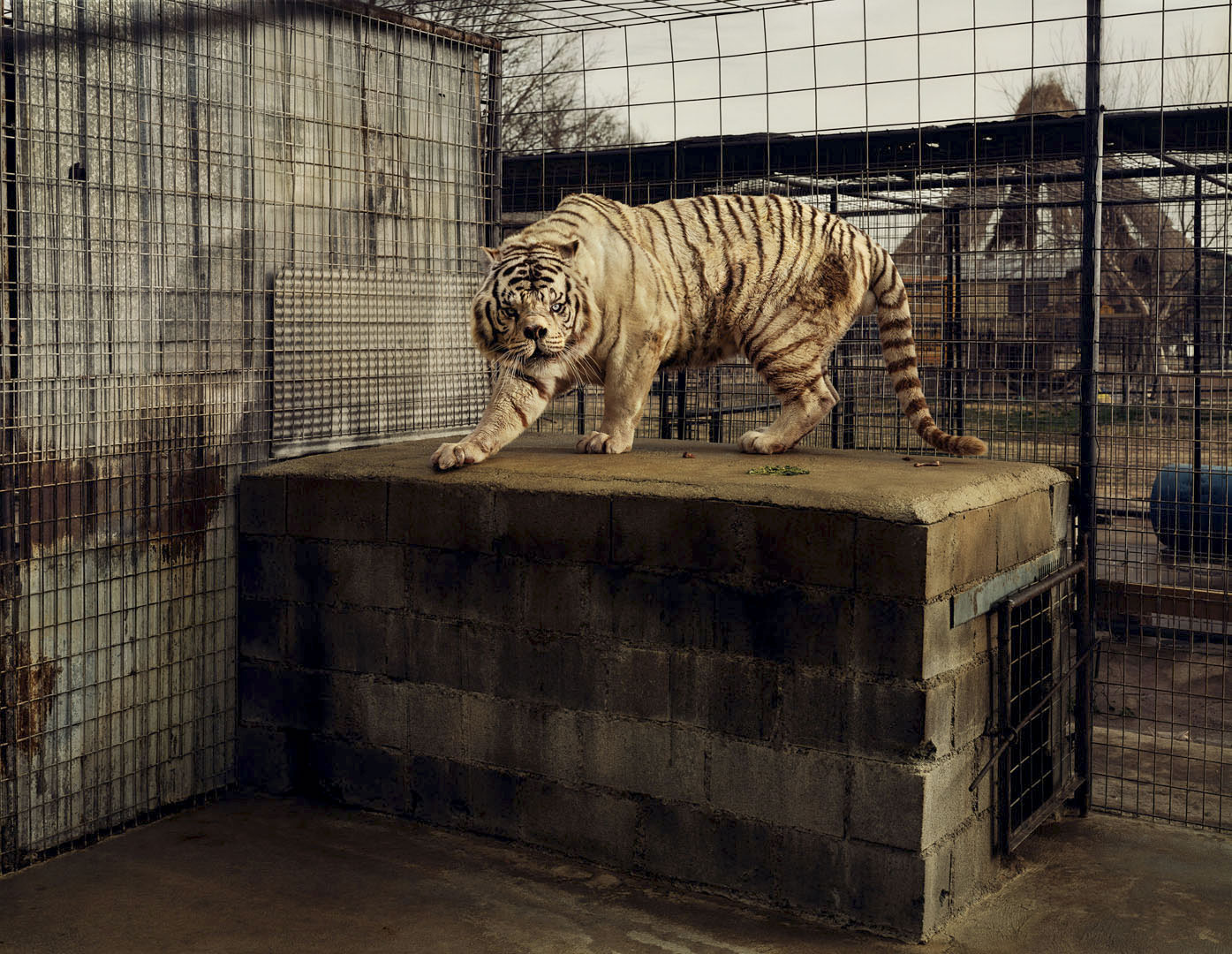
Taryn Simon (American, b. 1975) 'White Tiger (Kenny)' 2007


Taryn Simon (American, b. 1975)
White Tiger (Kenny), Selective Inbreeding Turpentine Creek Wildlife Refuge and Foundation Eureka Springs, Arkansas
2007
The J. Paul Getty Museum, Los Angeles
© Taryn Simon


In the United States, all living white tigers are the result of selective inbreeding to artificially create the genetic conditions that lead to white fur, ice-blue eyes and a pink nose. Kenny was born to a breeder in Bentonville, Arkansas on February 3, 1999. As a result of inbreeding, Kenny is mentally retarded and has significant physical limitations. Due to his deep-set nose, he has difficulty breathing and closing his jaw, his teeth are severely malformed and he limps from abnormal bone structure in his forearms. The three other tigers in Kenny’s litter are not considered to be quality white tigers as they are yellow-coated, crosseyed, and knock-kneed.


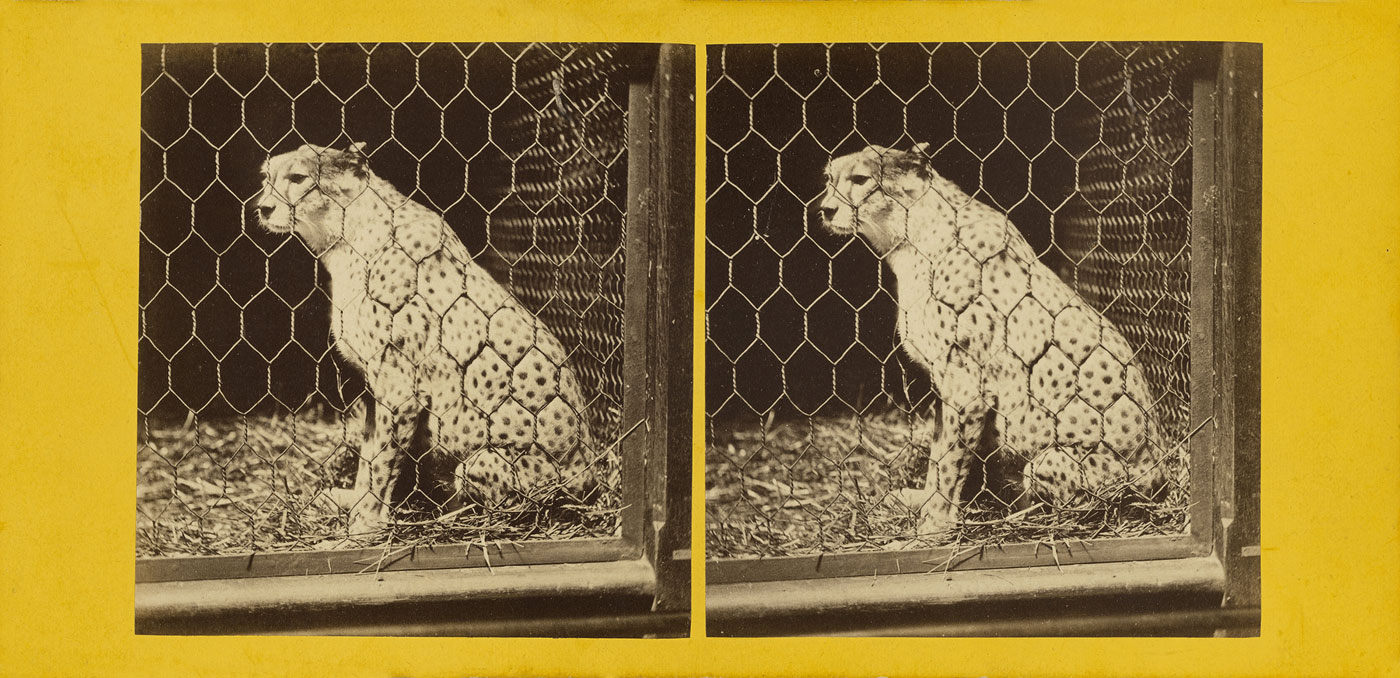
Frank Haes (British, 1832-1916) 'The South African Cheetah (Felis Jubata.)' c. 1865


Frank Haes (British, 1832-1916)
The South African Cheetah (Felis Jubata.)
c. 1865
Albumen silver print
8.2 x 17.2cm (3 1/4 x 6 3/4 in.)
The J. Paul Getty Museum, Los Angeles


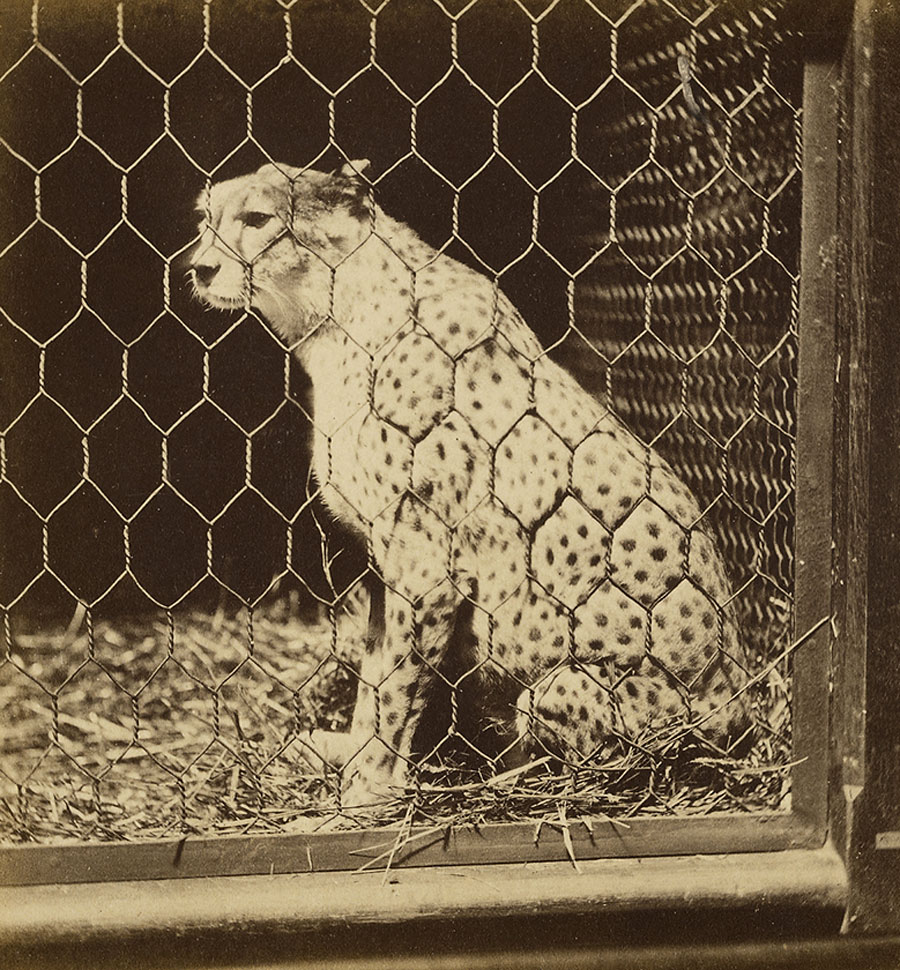
Frank Haes (British, 1832-1916) 'The South African Cheetah (Felis Jubata.)' c. 1865 (detail)


Frank Haes (British, 1832-1916)
The South African Cheetah (Felis Jubata.) (detail)
c. 1865
Albumen silver print
8.2 x 17.2cm (3 1/4 x 6 3/4 in.)
The J. Paul Getty Museum, Los Angeles


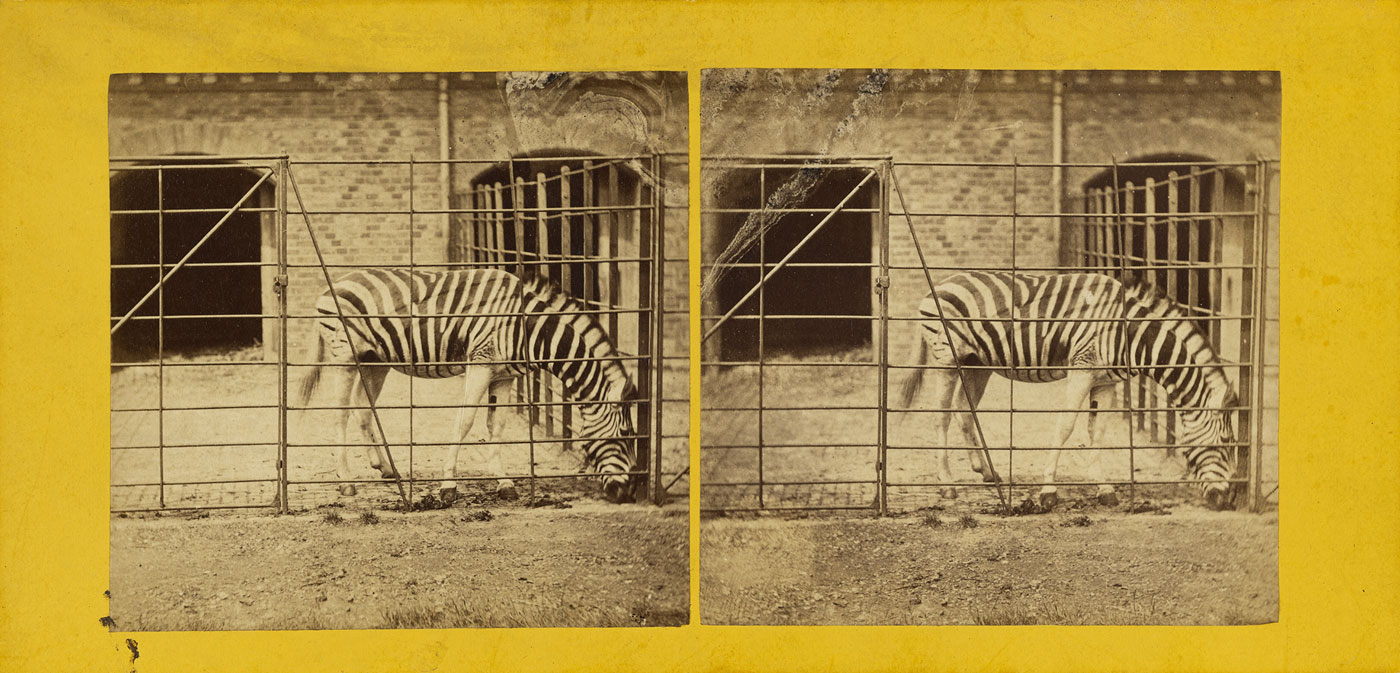
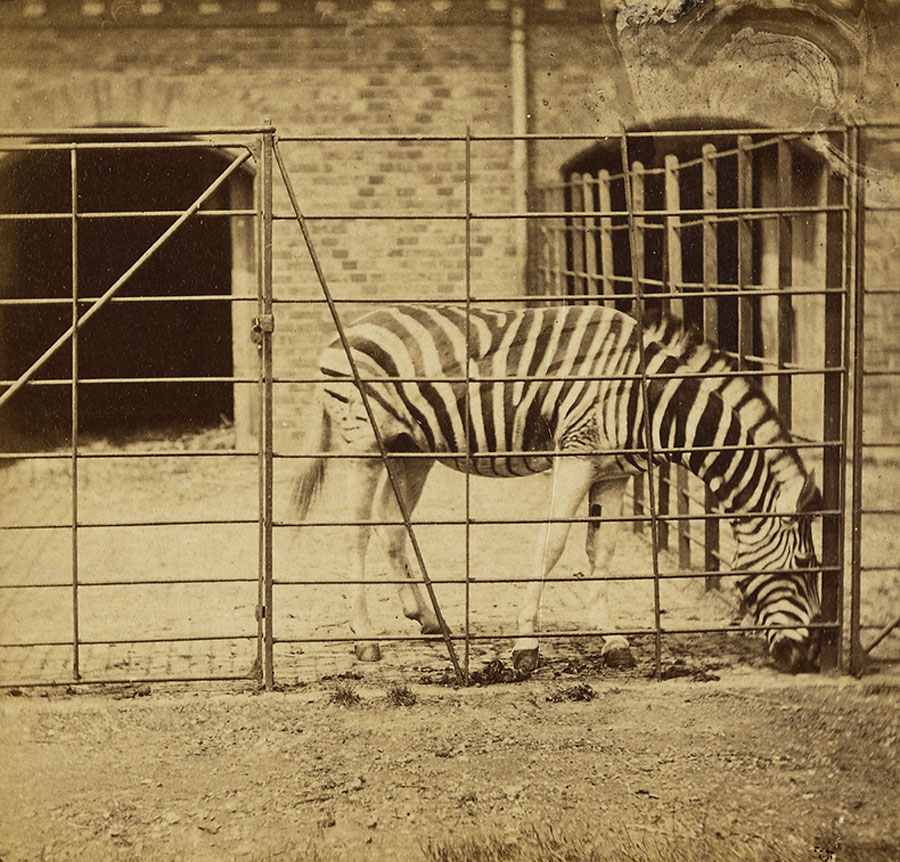
Frank Haes (British, 1832-1916) 'The Zebra, Burchell's, or Dauw. (Asinus Burchellii.)' c. 1865


Frank Haes (British, 1832-1916)
The Zebra, Burchell’s, or Dauw. (Asinus Burchellii.)
c. 1865
Albumen silver print
8.3 x 17.2cm (3 1/4 x 6 3/4 in.)
The J. Paul Getty Museum, Los Angeles


Frank Haes (British, 1832-1916) 'The Zebra, Burchell's, or Dauw. (Asinus Burchellii.)' c. 1865 (detail)


Frank Haes (British, 1832-1916)
The Zebra, Burchell’s, or Dauw. (Asinus Burchellii.) (detail)
c. 1865
Albumen silver print
8.3 x 17.2cm (3 1/4 x 6 3/4 in.)
The J. Paul Getty Museum, Los Angeles


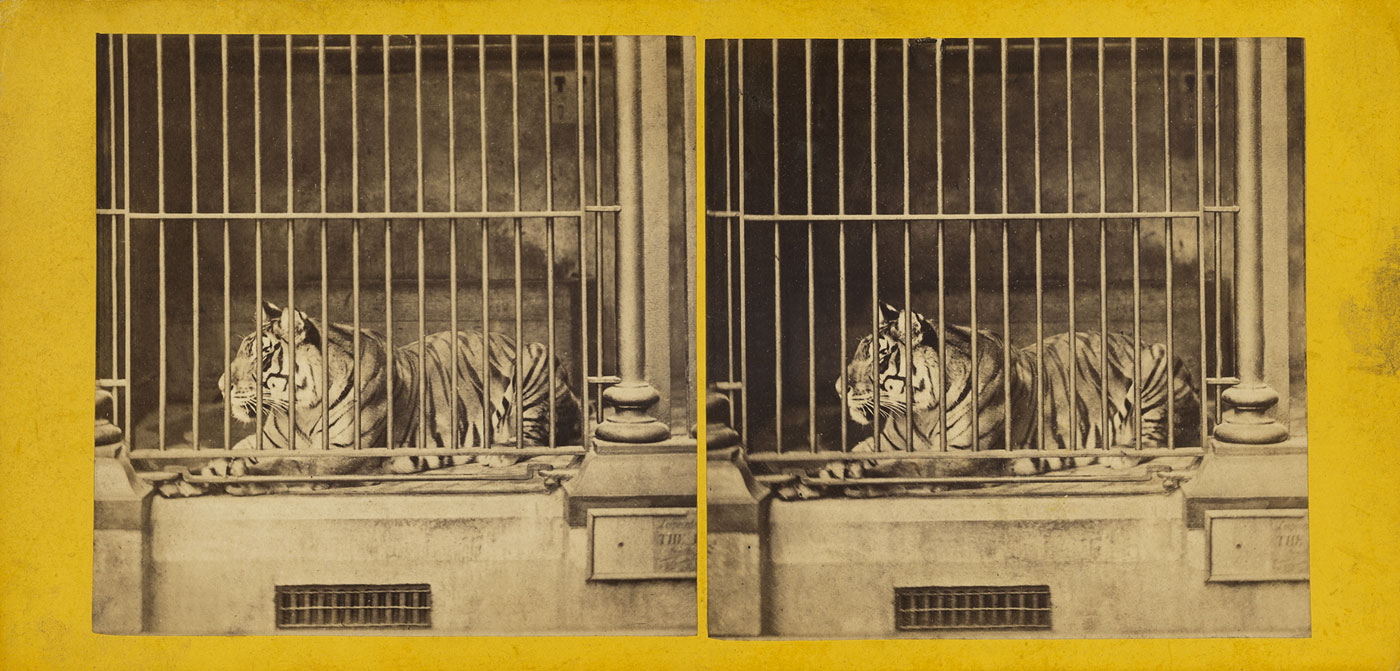
Frank Haes (British, 1832-1916) 'The Tiger. (Felis Tigris.)' c. 1865


Frank Haes (British, 1832-1916)
The Tiger. (Felis Tigris.)
c. 1865
Albumen silver print
8.2 x 17.1cm (3 1/4 x 6 3/4 in.)
The J. Paul Getty Museum, Los Angeles


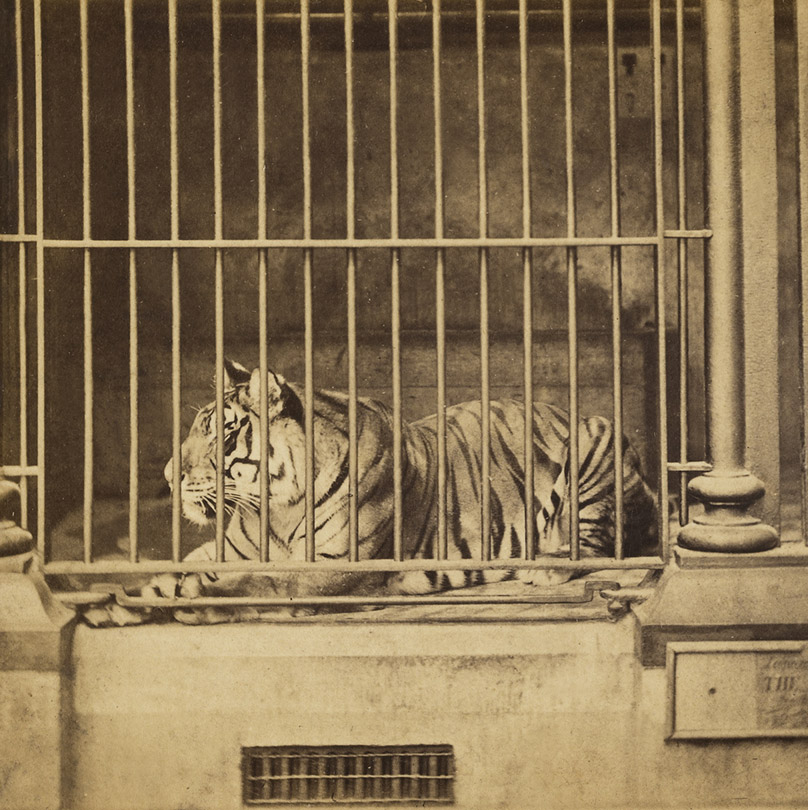
Frank Haes (British, 1832-1916) 'The Tiger. (Felis Tigris.)' c. 1865 (detail)


Frank Haes (British, 1832-1916)
The Tiger. (Felis Tigris.) (detail)
c. 1865
Albumen silver print
8.2 x 17.1cm (3 1/4 x 6 3/4 in.)
The J. Paul Getty Museum, Los Angeles


Capt. Horatio Ross (British, 1801-1886) '[Dead stag in a sling]' c. 1850s - 1860s


Capt. Horatio Ross (British, 1801-1886)
[Dead stag in a sling]
c. 1850s – 1860s
Albumen silver print
27.9 x 33.2cm (11 x 13 1/16 in.)
The J. Paul Getty Museum, Los Angeles


Capt. Horatio Ross (British, 1801-1886) '[Dead stag in a sling]' c. 1850s - 1860s (detail)


Capt. Horatio Ross (British, 1801-1886)
[Dead stag in a sling] (detail)
c. 1850s – 1860s
Albumen silver print
27.9 x 33.2cm (11 x 13 1/16 in.)
The J. Paul Getty Museum, Los Angeles


Animals have never been camera shy – almost since the introduction of the medium in 1839, they have appeared in photographs. While early photographs typically depicted animals that were tame, captive, or dead, modern and contemporary artists have delved into the interdependent relationship between man and beast.

Drawn entirely from the J. Paul Getty Museum’s photographs collection, In Focus: Animalia, on view May 26-October 18, 2015 at the Getty Center, illustrates some of the complex relationships between people and animals. From an intimate studio portrait with dog and owner to the calculated cruelty of inbreeding practices, these photographs offer nuanced views of the animal kingdom.

“It is easy to understand why artists choose animals for their subject matter – their lives are profoundly intertwined with our own, often eliciting powerful emotions,” says Timothy Potts, Director of the J. Paul Getty Museum. “Whether seen as beloved pets, kept in zoos, or threatened by human activity, animals continue to fascinate and act as catalysts for artistic creativity. This exhibition highlights the many different ways in which animals as subject matter have served as an endearing theme for photographers throughout history right up to the present day.”

Photographs of pets, working animals, taxidermied game, and exotic beasts in newly opened zoos circulated widely during the second half of the 19th century. Early daguerreotypes required a subject to remain still for several minutes to ensure that the image would not blur, so photographing moving animals posed a problem. In Study of a White Foal (about 1845) the Swiss nobleman and amateur daguerreotypist Jean-Gabriel Eynard (1775-1863), focused the lens of his camera on a foal at rest, a moment when its movements were limited, in order to make a successful picture.

By the early 1850s most major cities in Europe and America could boast studios specialising in daguerreotype photography. Customers sat for portraits in order to preserve their own images, and also commissioned photographs of their family members and loved ones, including pets. In Dog Sitting on a Table (about 1854; artist unknown) an eager dog is photographed sitting on a tasseled pedestal. The slight blurring of the head, indicating movement during exposure, betrays the barely contained energy of this otherwise well-trained animal.

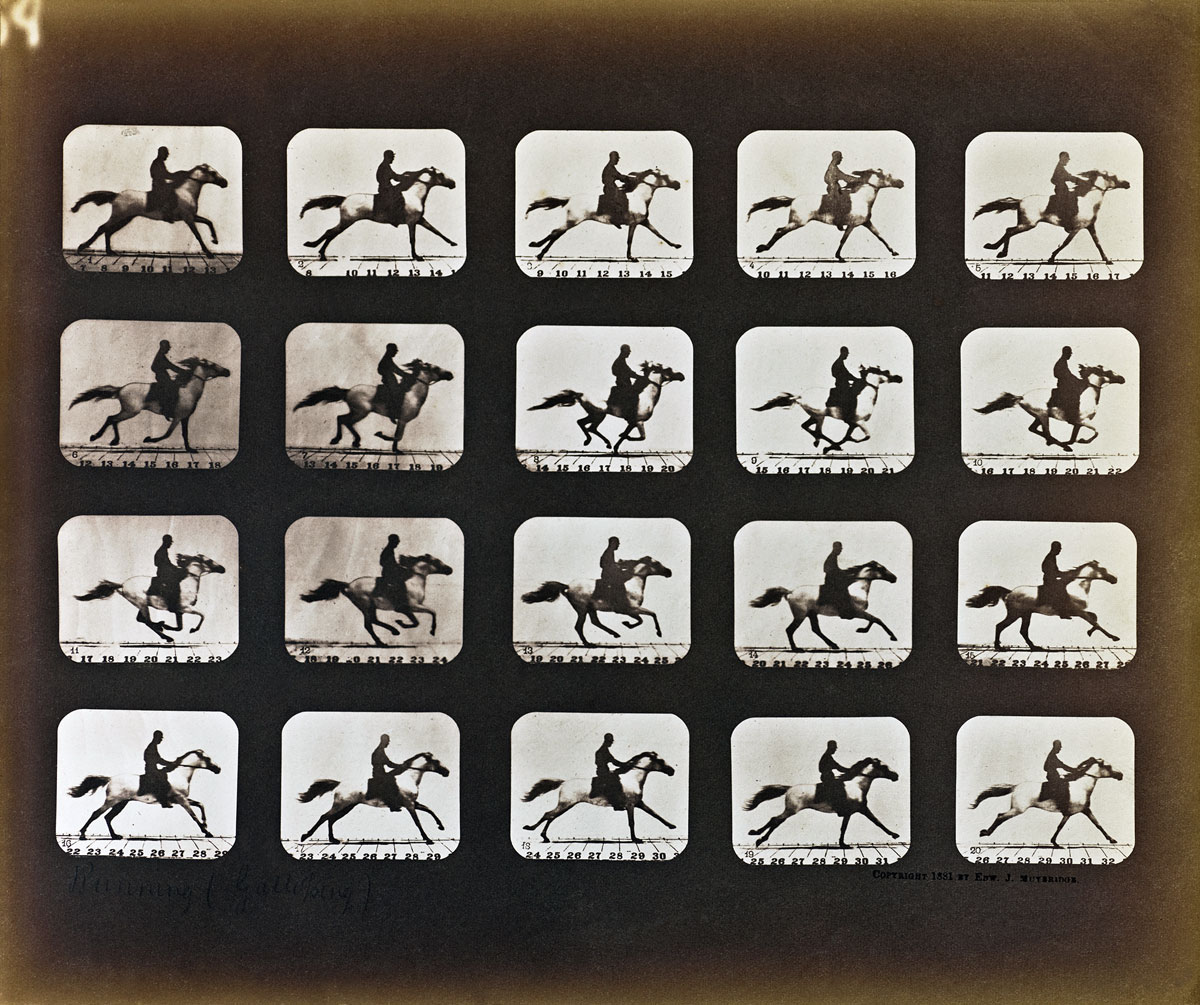
The mid-19th century saw increasing demand for stereoscopic photographs – two nearly identical prints made with a double lens camera that created a three-dimensional image when viewed in a stereoscope viewer. Frank Haes (British, 1832-1916) made a reputation for himself by photographing animals at the London Zoo, much to the delight of those fascinated by hippos, lions, zebras, and other exotic beasts. Eadweard J. Muybridge’s (American, born England, 1830-1904) pioneering work in motion studies are best remembered for his depictions of animals. Devising a system for successively tripping the shutters of up to 24 cameras, Muybridge created the illusion of movement in a galloping horse.

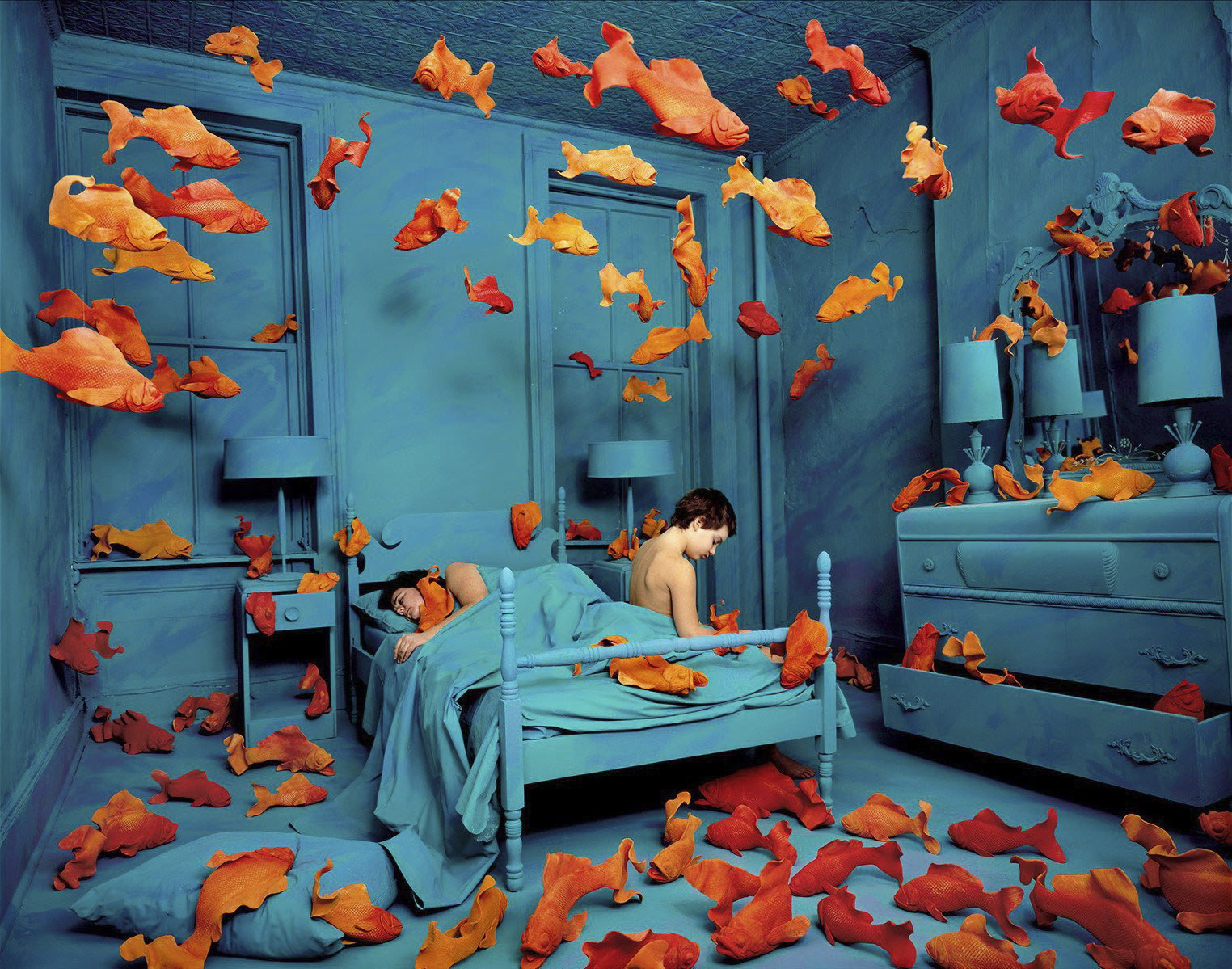
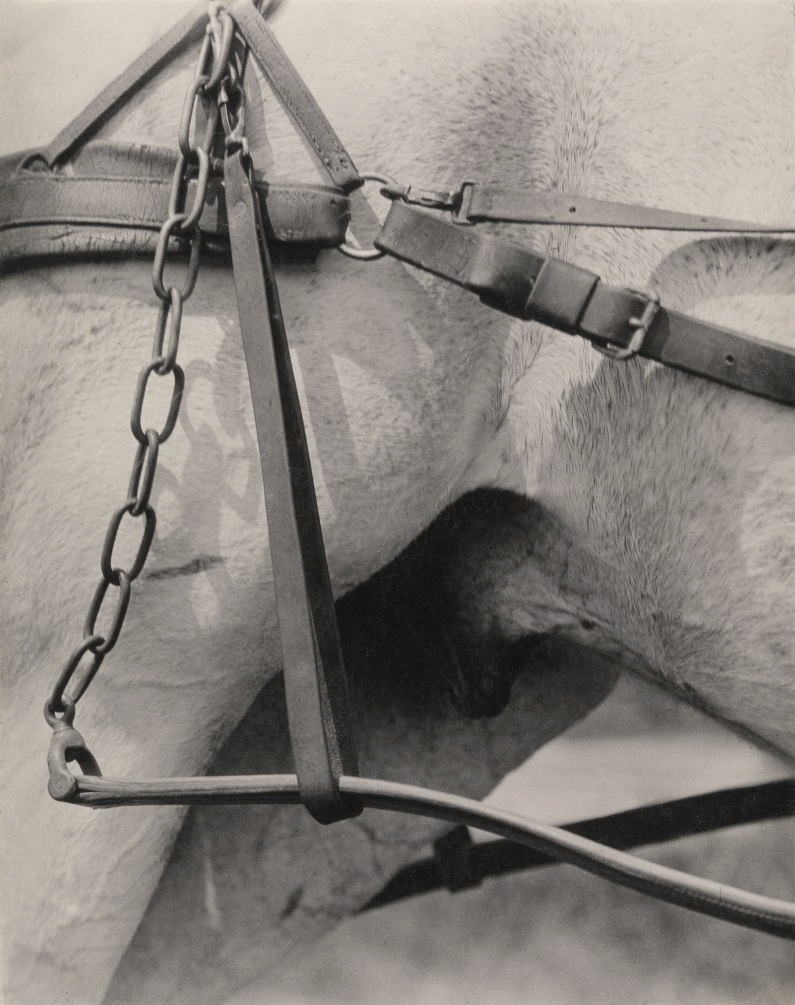
Artists have also relied on animals to convey symbolism and to represent fantastical worlds. A photograph by Alfred Stieglitz (American, 1864-1946) of a harnessed and castrated horse serves as a critical metaphor for American identity in the early 1920s, which Stieglitz viewed as materialist and culturally bankrupt. An elaborately staged photograph by Sandy Skoglund (American, b. 1946) presents a dreamlike atmosphere filled with handmade, larger-than-life sculptures of goldfish that create a scene at once playful and disturbing. Recently-acquired works by Daniel Naudé (South African, b. 1984) depict portraits of wild dogs the photographer found on the arid plains of South Africa. Made from a low vantage point, individual dogs are cast against broad views of the landscape, and the photographs harken back to the equestrian portrait tradition popular during the 17th century. Taryn Simon’s photograph of a caged white tiger (American, b. 1975) demonstrates the oftentimes debilitating results of the inbreeding practices utilised to obtain highly desired traits such as a white coat. This work illuminates the mistakes and failures of human intervention into a territory governed by natural selection.

In Focus: Animalia is on view May 26 – October 18, 2015 at the J. Paul Getty Museum, Getty Center. The exhibition will be accompanied by the publication of Animals in Photographs (Getty Publications) by Arpad Kovacs.

Press release from the J. Paul Getty Museum website


Sandy Skoglund (American, b. 1946) 'Revenge of the Goldfish' 1981


Sandy Skoglund (American, b. 1946)
Revenge of the Goldfish
1981
Color photograph
27 1/2″ x 35″
Individually hand-made ceramic goldfish by the artist, with live models in painted set
The J. Paul Getty Museum, Los Angeles
© 1981 Sandy Skoglund


Like many of her other works, such as Radioactive Cats and Fox Games, the piece is a set composed of props and human models, which Skoglund poses and then photographs. In the piece, a child sits on the edge of a bed while an adult sleeps next to him. The set of the scene is a monochromatic blue, with contrasting bright orange goldfish floating through the room. The goldfish in the piece were sculpted by Skoglund out of terracotta and bring an element of fantasy to an otherwise normal scene. According to Skoglund, “If the fish are eliminated the image shows nothing unusual; just a room with two people in bed.” The piece was first on display at the Saint Louis Art Museum in 1981. Since then, the piece has been in several collections at various museums, including Smith College Museum of Art, Dallas Museum of Art, Akron Art Museum, and Amon Carter Museum of American Art. Smith College Museum of Art also owns the original installation.

Text from the Wikipedia website


Eadweard J. Muybridge (American born England, 1830-1904) 'Running (Galloping)' 1878-1881


Eadweard J. Muybridge (American born England, 1830-1904)
Running (Galloping)
1878-1881
Iron salt process
18.9 x 22.6cm (7 7/16 x 8 7/8 in.)
The J. Paul Getty Museum, Los Angeles


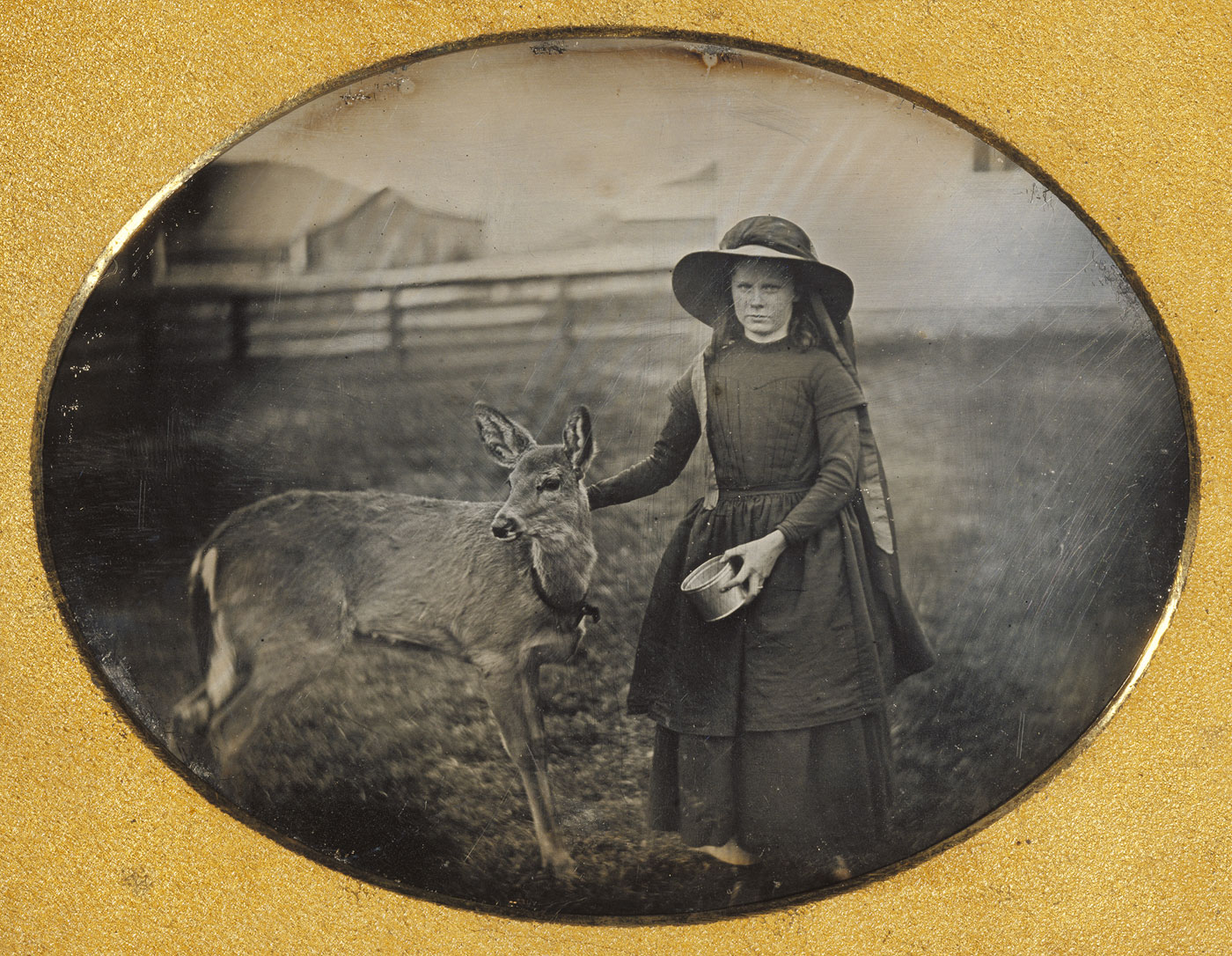
Unknown maker (American) 'Portrait of a Girl with her Deer' c. 1854


Unknown maker (American)
Portrait of a Girl with her Deer
c. 1854
Daguerreotype 1/4 plate
Image: 6.9 x 9cm (2 11/16 x 3 9/16 in.)
Plate: 8.1 x 10.7cm (3 3/16 x 4 3/16 in.)
Mat: 8.2 x 10.6cm (3 3/16 x 4 3/16 in.)
The J. Paul Getty Museum, Los Angeles


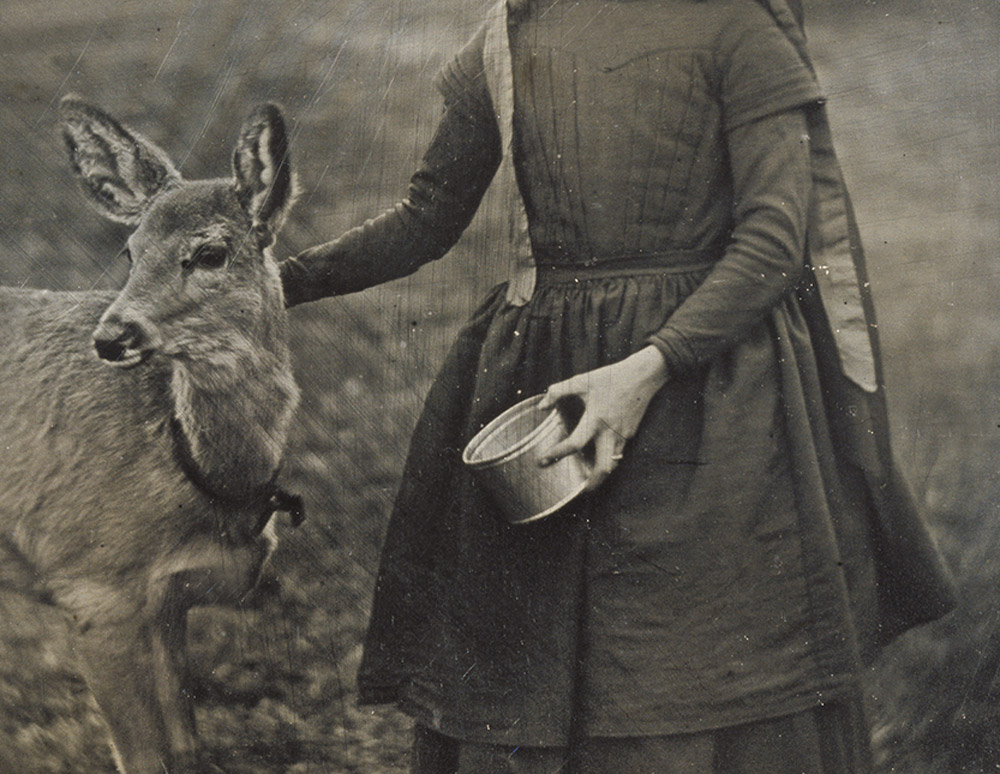
Unknown maker (American) 'Portrait of a Girl with her Deer' c. 1854 (detail)


Unknown maker (American)
Portrait of a Girl with her Deer (detail)
c. 1854
Daguerreotype 1/4 plate
Image: 6.9 x 9cm (2 11/16 x 3 9/16 in.)
Plate: 8.1 x 10.7cm (3 3/16 x 4 3/16 in.)
Mat: 8.2 x 10.6cm (3 3/16 x 4 3/16 in.)
The J. Paul Getty Museum, Los Angeles


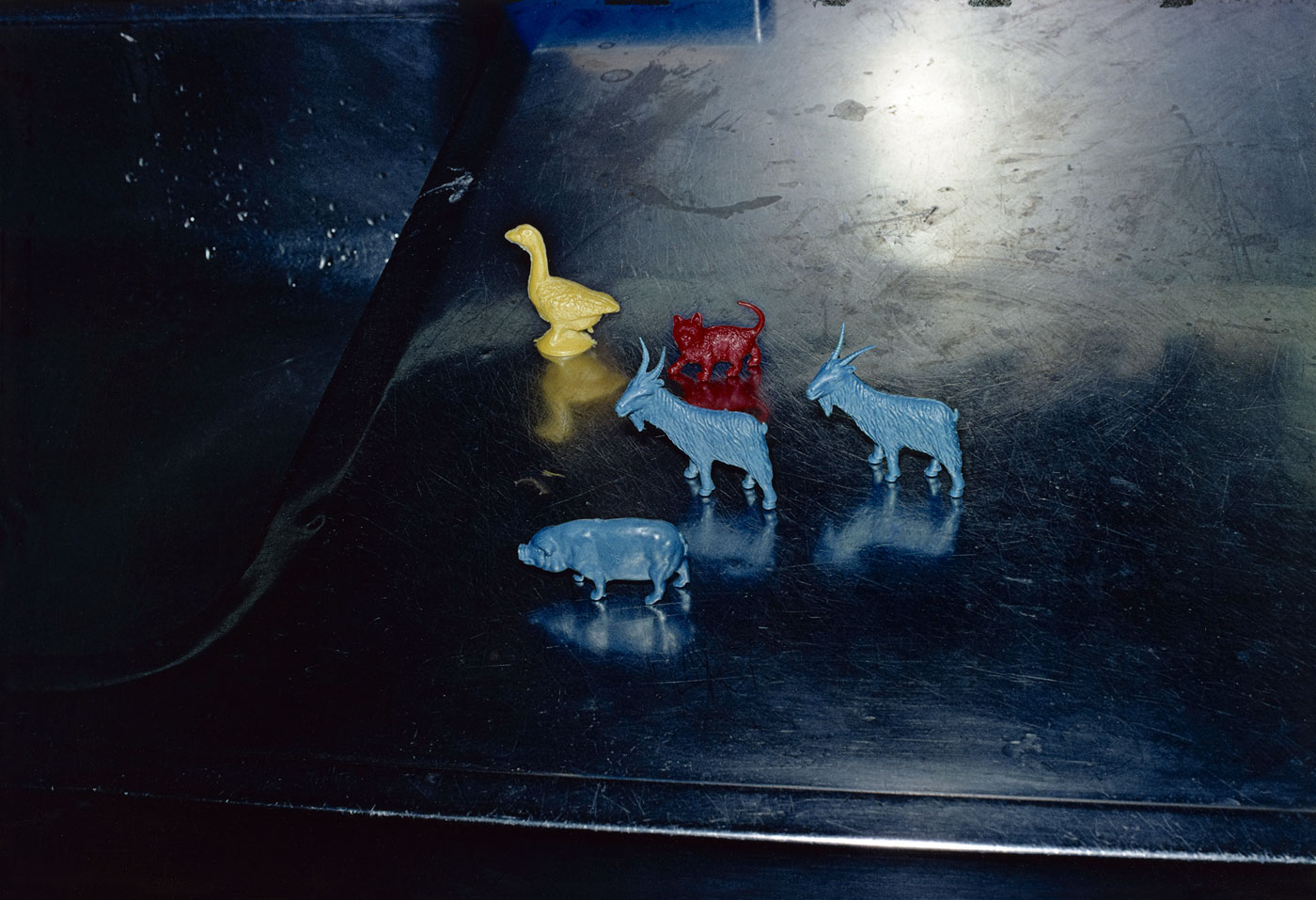
William Eggleston (American, b. 1939) 'Memphis' Negative 1971; print 1974


William Eggleston (American, b. 1939)
Memphis
Negative 1971; print 1974
Dye imbibition print
32.9 x 47.9cm (12 15/16 x 18 7/8 in.)
The J. Paul Getty Museum, Los Angeles
© Eggleston Artistic Trust


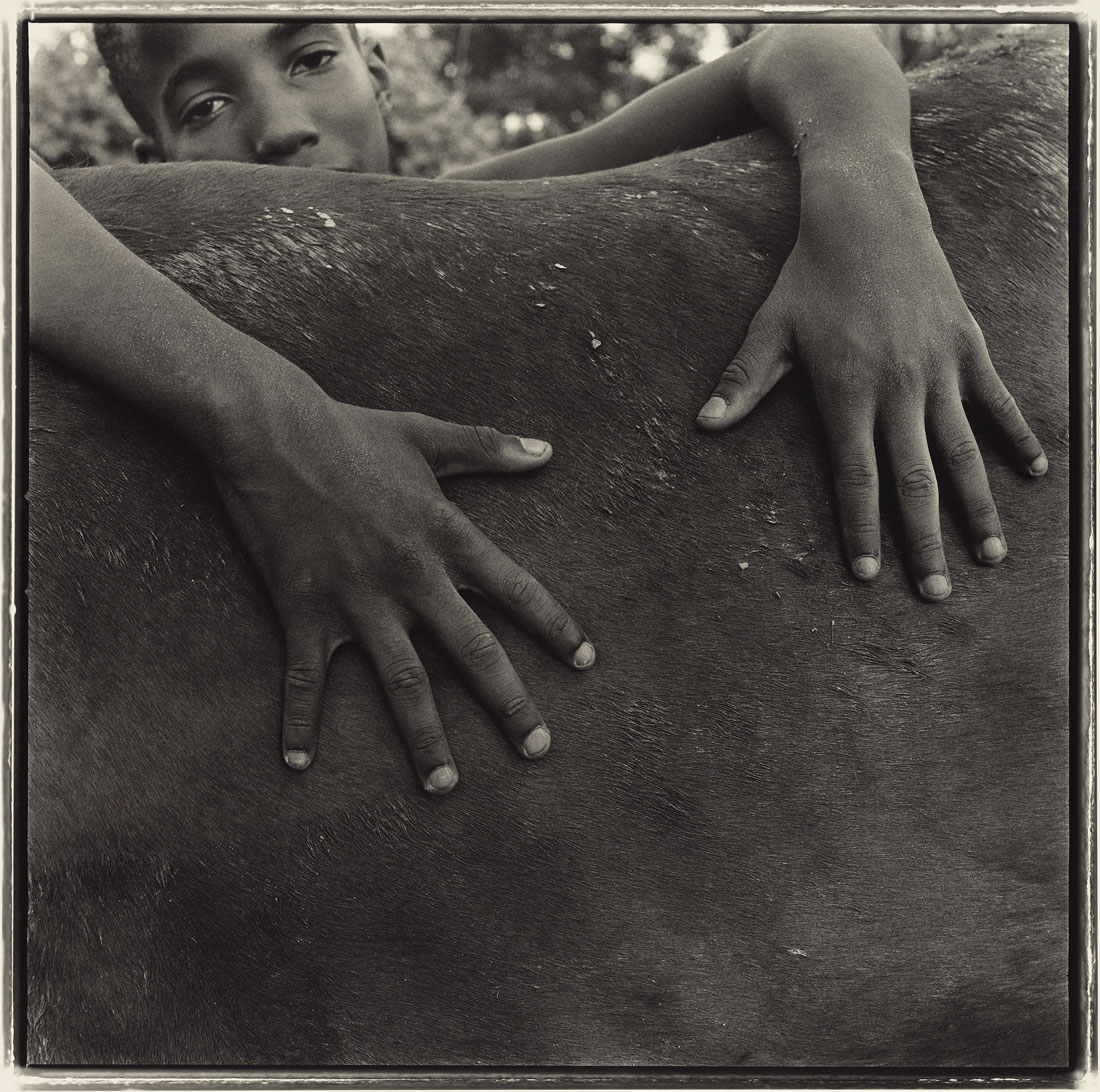
Keith Carter (American, b. 1948) 'Goodbye to a Horse' 1993


Keith Carter (American, b. 1948)
Goodbye to a Horse
1993
Gelatin silver print
39 x 39.2cm (15 3/8 x 15 7/16 in.)
The J. Paul Getty Museum, Los Angeles, Gift of Daniel Greenberg and Susan Steinhauser
© Keith Carter


André Kertész (American born Hungary, 1894-1985) '[Wooden Mouse and Duck]' 1929


André Kertész (American born Hungary, 1894-1985)
[Wooden Mouse and Duck]
1929
Gelatin silver print
20.9 x 16.7cm (8 1/4 x 6 9/16 in.)
The J. Paul Getty Museum, Los Angeles
© Estate of André Kertész


Alfred Stieglitz (American, 1864-1946) 'Spiritual America'
 1923


Alfred Stieglitz (American, 1864-1946)
Spiritual America

1923
Gelatin silver print
The J. Paul Getty Museum, Los Angeles


Unknown maker (American) '[Dog sitting on a table]' c. 1854


Unknown maker (American)
[Dog sitting on a table]
c. 1854
Hand-coloured daguerreotype 1/6 plate
Image: 6.8 x 5.7cm (2 11/16 x 2 1/4 in.)
Mat: 8.3 x 7cm (3 1/4 x 2 3/4 in.)
The J. Paul Getty Museum, Los Angeles


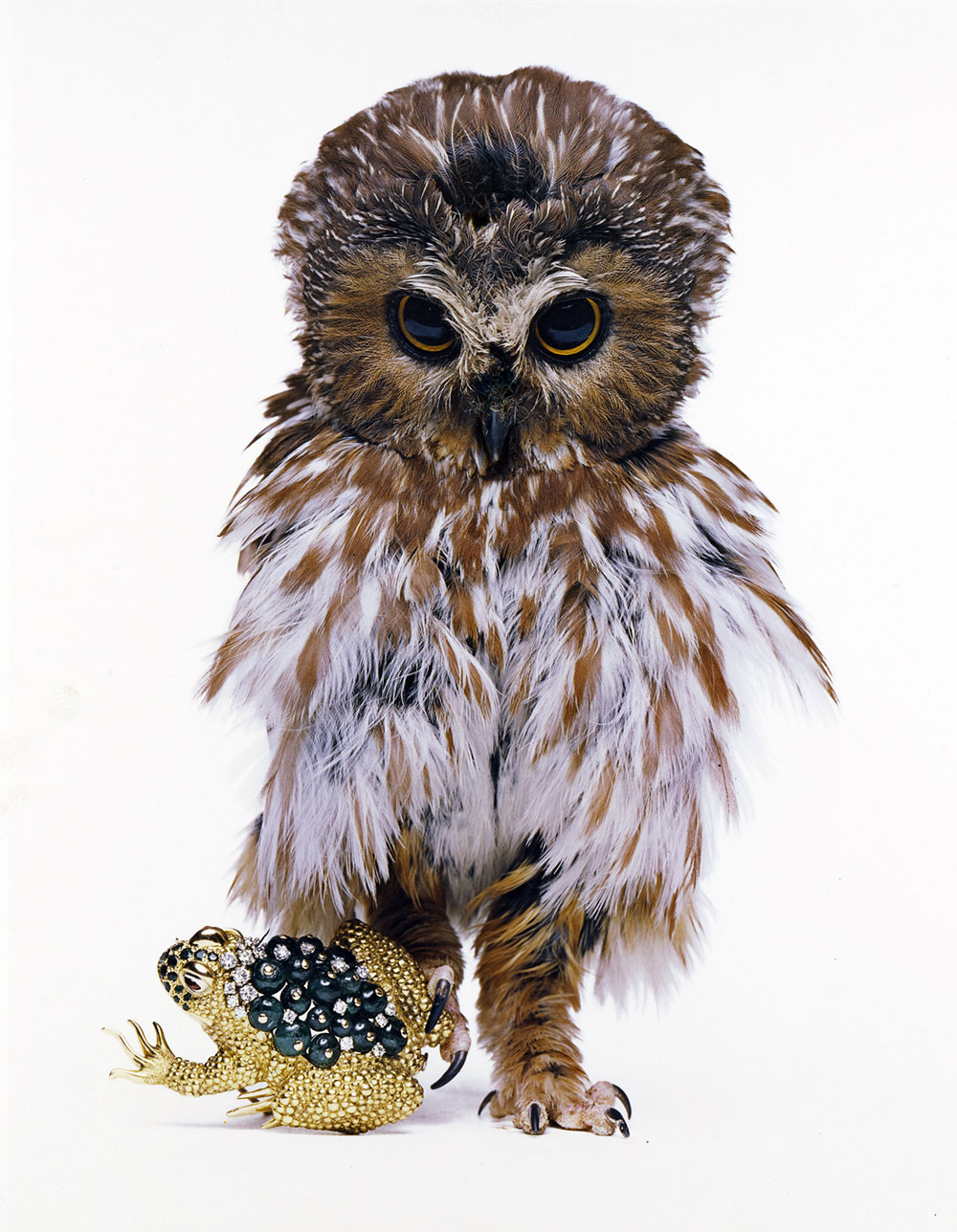
Hiro (American born China, 1930-2021) 'David Webb, Jeweled Toad, New York, 1963' 1963


Hiro (American born China, 1930-2021)
David Webb, Jeweled Toad, New York, 1963
1963
Dye imbibition print
50.2 x 39.1cm (19 3/4 x 15 3/8 in.)
The J. Paul Getty Museum, Los Angeles, Purchased with funds provided by the Photographs Council
© Hiro


Legendary photographer Yasuhiro Wakabayashi, known as “Hiro,” the man whose fashion photography revolutionized the medium as an art form and defined the aesthetic of a generation, died this week at the age of 90.

Though the son of Japanese parents, Hiro was born in Shanghai, China, in 1930, one year before the outbreak of the Sino-Japanese War. He and his family eventually repatriated to Japan in 1946, but it wasn’t long after that he relocated to New York City. There, Hiro became an apprentice to Richard Avedon, whose iconic and exclusively black-and-white photography brought a new facet to fashion photography: stark portraiture that bordered on the surreal and often showed celebrities and other high-profile figures as they were, not gilded by fashion editors.

By 1956, Hiro had become a staff photographer for the fashion magazine Harper’s Bazaar, where he remained until the mid-1970s. He opened his own New York studio in 1958, just months after the untimely death of fashion icon Christian Dior. A decade earlier, Dior had debuted his “New Look,” which was a strikingly architectural approach to fashion that emphasized the female figure by casting it in dresses designed to accentuate a “figure eight,” with pronounced shoulders and hips and a tiny waist. Dior’s simple silhouettes dominated the fashion and art world just as Hiro was coming of age into it.

Hiro, similar to his mentor Avedon, dealt in stark, clean images with elements of the surreal. One collector described his work as a “simple but elegant design with sophisticated technique and striking color.”

“A diamond-and-ruby Harry Winston necklace draped on the hoof of a Black Angus steer. A pyramid of Cartier watches set in a luminous lunar landscape of vivid green and shocking blue. A mysterious woman in the dunes at twilight, floating like a ghost off the ground in a windblown black nightgown,” wrote the New York Times’s Robert D. McFadden in a description of Hiro’s most famous images. His work was more “brilliant and infinitely more beautiful than reality.”

Beyond simply beautiful, Hiro’s photography is known for its precision: light, lines, objects all precisely placed and measured to create works reminiscent of surrealist artists such as Salvador Dali and Renee Magritte. The effect was something phantasmagorical but adamantly, elegantly real.

His life itself was surreal. His father was a Japanese linguist living in Shanghai putatively for the purpose of creating a Japanese-Chinese dictionary. However, the New York Times noted in Hiro’s obituary, his father might have actually been a spy. Following the end of World War II, Hiro and his family returned home to a changed, and occupied, Japan reeling in the aftermath of Hiroshima and Nagasaki. Amid that chaos, Hiro became “fascinated with Jeeps, Red Fox beer cans and other artifacts of American culture.” He collected fashion magazines and saved for a camera, honing his skills until he could travel to the United States, where he worked entry-level jobs until he was able to score the coveted New York apprenticeship with Avedon.

He became an American citizen in 1990.

Hiro eventually became so influential in fashion photography that American Photographer dedicated an issue entirely devoted to Hiro’s work, provocatively asking, “Is this man America’s greatest photographer?”

“Hiro stands as one of the pre-eminent photographers of his adopted country,” the 1982 magazine said. “With the pragmatic brilliance of a Renaissance master, Hiro has changed the way photographs look, and with an endlessly inventive technique has changed the way photographers work.”

Yasuhiro Wakabayashi is survived by his wife, designer Elizabeth Clark, two sons, and several grandchildren, as well as a remarkable body of work that will continue to live on far after.

Emily Zanotti. “Hiro Wakabayashi, 1930-2021,” on the Yahoo News! website August 20, 2021 [Online] Cited 25/12/2022. No longer available online


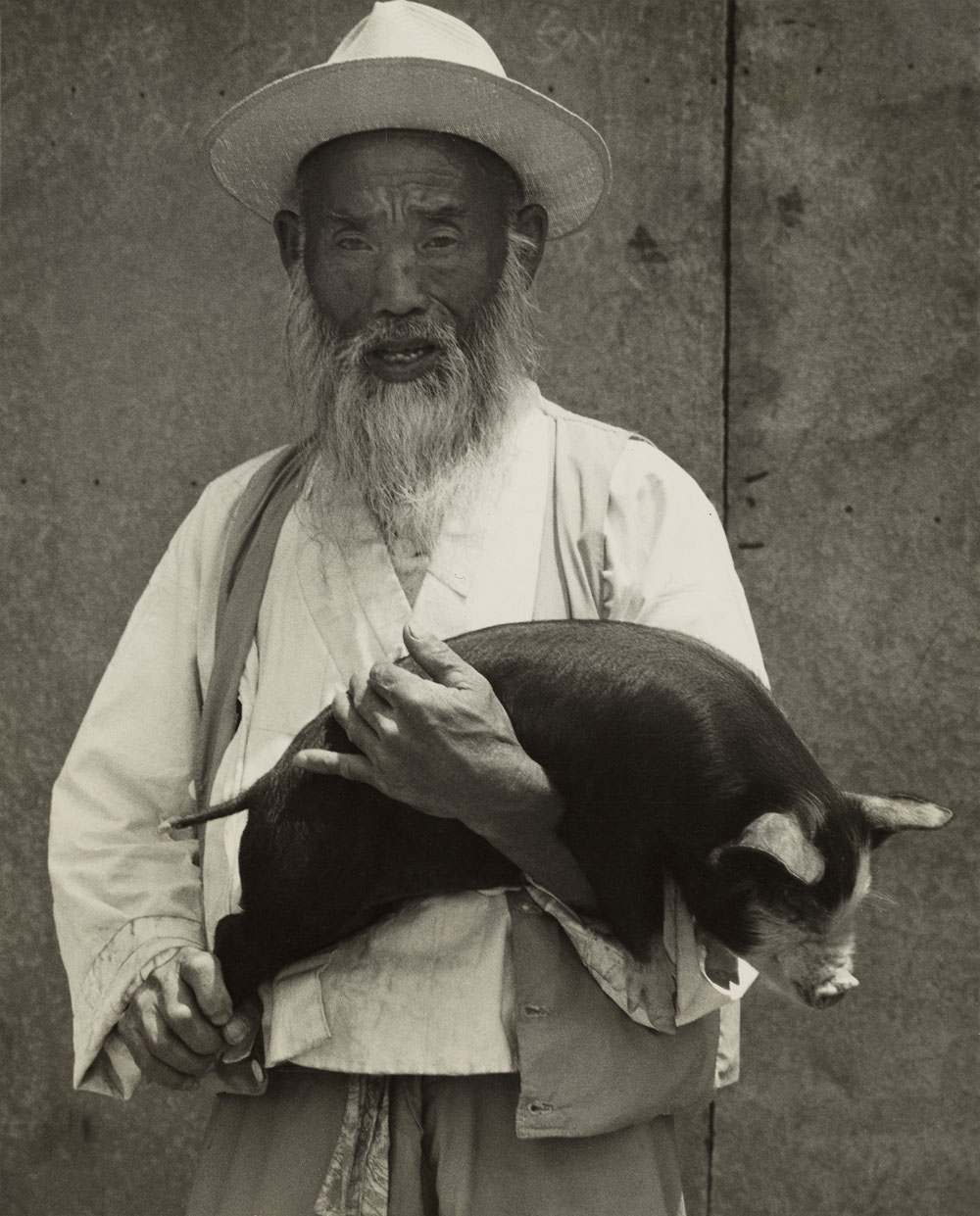
Soon Tae (Tai) Hong (South Korean, b. 1934) 'Chong Ju' 1970


Soon Tae (Tai) Hong (South Korean, b. 1934)
Chong Ju
1970
Gelatin silver print
24.8 x 20cm (9 3/4 x 7 7/8 in.)
The J. Paul Getty Museum, Los Angeles
© Hong Soon Tae (Tai)


William Wegman (American, b. 1943) 'In the Box/Out of the Box [right]' 1971


William Wegman (American, b. 1943)
In the Box/Out of the Box [right]
1971
Gelatin silver print
35.4 x 27.7cm (13 15/16 x 10 7/8 in.)
The J. Paul Getty Museum, Los Angeles
© William Wegman


William Wegman (American, b. 1943) 'In the Box/Out of the Box [left]' 1971


William Wegman (American, b. 1943)
In the Box/Out of the Box [left]
1971
Gelatin silver print
35.5 x 27.7cm (14 x 10 7/8 in.)
The J. Paul Getty Museum, Los Angeles
© William Wegman


The J. Paul Getty Museum
1200 Getty Center Drive
Los Angeles, California 90049

Opening hours:
Daily 10am – 5pm

The J. Paul Getty Museum website

LIKE ART BLART ON FACEBOOK

Back to top

Exhibition: ‘Color! American Photography Transformed’ at the Amon Carter Museum of American Art, Fort Worth, Texas

Exhibition dates: 5th October 2013 – 5th January, 2014


Alex Prager (American, b. 1979) 'Crowd #1 (Stan Douglas)' 2010


Alex Prager (American, b. 1979)
Crowd #1 (Stan Douglas)
2010
Dye coupler print
© Alex Prager, courtesy of the artist and Yancey Richardson Gallery


A very big subject to cover in one exhibition.

Marcus


Many thankx to the Amon Carter Museum of American Art for allowing me to publish the photographs in the posting. Please click on the photographs for a larger version of the image.


Jack Delano (American, 1914-1997) 'Chopping cotton on rented land near White Plains, Greene County, Georgia, 1941' 1941


Jack Delano (American, 1914-1997)
Chopping cotton on rented land near White Plains, Greene County, Georgia, 1941
1941
Inkjet print, 2013
Courtesy the Library of Congress


Laura Gilpin (American, 1891-1979) 'Still Life with Peaches' 1912


Laura Gilpin (American, 1891-1979)
Still Life with Peaches
1912
Lumière Autochrome
© 1979 Amon Carter Museum of American Art, Fort Worth, Texas


Jan Groover (American, 1943-2012) 'Untitled' 1978


Jan Groover (American, 1943-2012)
Untitled
1978
Dye coupler print
Amon Carter Museum of American Art, Fort Worth, Texas
© 1978 Jan Groover


Unknown photographer. 'Untitled (Woman with two daughters)' c. 1850s


Unknown photographer 
Untitled (Woman with two daughters)
c. 1850s
Salted paper print with applied color
Amon Carter Museum of American Art


Gregory Crewdson (American, b. 1962) 'Untitled (Dylan on the Floor)' from the 'Twilight Series' 1998-2002


Gregory Crewdson (American, b. 1962)
Untitled (Dylan on the Floor) from the Twilight Series
1998-2002
Dye coupler print
© Gregory Crewdson, Courtesy Gagosian Gallery


On October 5, the Amon Carter Museum of American Art opens Color! American Photography Transformed, a compelling examination of how colour has changed the very nature of photography, transforming it into today’s dominant artistic medium. Color! includes more than 70 exceptional photographs by as many photographers and is on view through January 5, 2014.

“Colour is so integral to photography today that it is difficult to remember how new it is or realise how much it has changed the medium,” says John Rohrbach, senior curator of photographs.

The exhibition covers the full history of photography, from 1839, when Frenchman Louis-Jacques-Mandé Daguerre (1787-1851) introduced his daguerreotype process, to the present. From the start, disappointed that photographs could only be made in black and white, photographers and scientists alike sought with great energy to achieve colour. Color! begins with a rare direct-colour photograph made in 1851 by Levi L. Hill (1816-1865), but explains how Hill could neither capture a full range of colour nor replicate his achievement. It then shows finely rendered hand-coloured photographs to share how photographers initially compensated for the lack of colour.

When producing colour photographs became commercially feasible in 1907 in the form of the glass-plate Autochrome, leading artists like Alfred Stieglitz (1864-1946) were initially overjoyed, according to Rohrbach. Color! offers exquisite examples of their work even as it explains their ultimate rejection of the process because it was too difficult to display and especially because they felt it mirrored human sight too closely to be truly creative.

“Although many commercial photographers embraced colour photography over succeeding decades, artists continued to puzzle over the medium,” Rohrbach explains. Color! reveals that many artists from Richard Avedon (1923-2004) to Henry Holmes Smith (1909-1986) tried their hand at making colour photographs through the middle decades of the 20th century, and it shows the wide range of approaches they took to colour. It also shares the background debates among artists and photography critics over how to employ colour and even whether colour photographs could have the emotional force of their black-and-white counterparts.

Only in 1976, when curator John Szarkowski at the Museum of Modern Art in New York heralded the young Memphis photographer William Eggleston’s (b. 1939) snapshot-like colour photographs as the solution to artful colour, did fine art colour photography gain full acceptance.

“Eggleston revealed how colour can simultaneously describe objects and stand apart from those objects as pure hue,” Rohrbach says. “In so doing, he successfully challenged the longstanding conception of photography as a medium that found its calling on close description.”

Color! illustrates through landmark works by Jan Groover (1943-2012), Joel Meyerowitz (b. 1938) and others the blossoming of artists’ use of colour photography that followed in the wake of Szarkowski’s celebration of Eggleston. It also reveals artists’ gradual absorption of the notion that colour could be used flexibly to critique cultural mores and to shape stories. In this new colour world, recording the look of things was important, but it was less important than conveying a message about life. In this important shift, led by artists as diverse as Andres Serrano (b. 1950) and Laurie Simmons (b. 1949), the exhibition explains, photography aligned itself far more closely with painting.

Color! shows how the rise of digital technologies furthered this transformation, as photographers such as Gregory Crewdson (b. 1962), Richard Misrach (b. 1949) and Alex Prager (b. 1979) have explicitly embraced the hues, scale, and even subjects of painting and cinema.

“Photography still gains its power and wide popularity today from its ability to closely reflect the world,” explains Rohrbach, “but Color! reveals how contemporary artists have been using reality not as an end unto itself, but as a jumping off point for exploring the emotional and cultural power of colour, even blurring of line between record and fiction to make their points. These practices, founded on colour, have transformed photography into the dominant art form of today even as they have opened new questions about the very nature of the medium.”

The exhibition will include an interactive photography timeline enabling visitors to contribute to the visual dialogue by sharing their own colour images. The photographs will be displayed along the timeline and on digital screens in the museum during the exhibition to illustrate how quantity, format and colour quality have evolved over time.

“By telling the full story of colour photography’s evolution, the exhibition innovatively uncovers the fundamental change that colour has brought to how photographers think about their medium,” says Andrew J. Walker, museum director. “The story is fascinating and the works are equally captivating. Photography fans and art enthusiasts in general will revel in the opportunity to see works by this country’s great photographers.

Press release from the Amon Carter Museum of American Art website


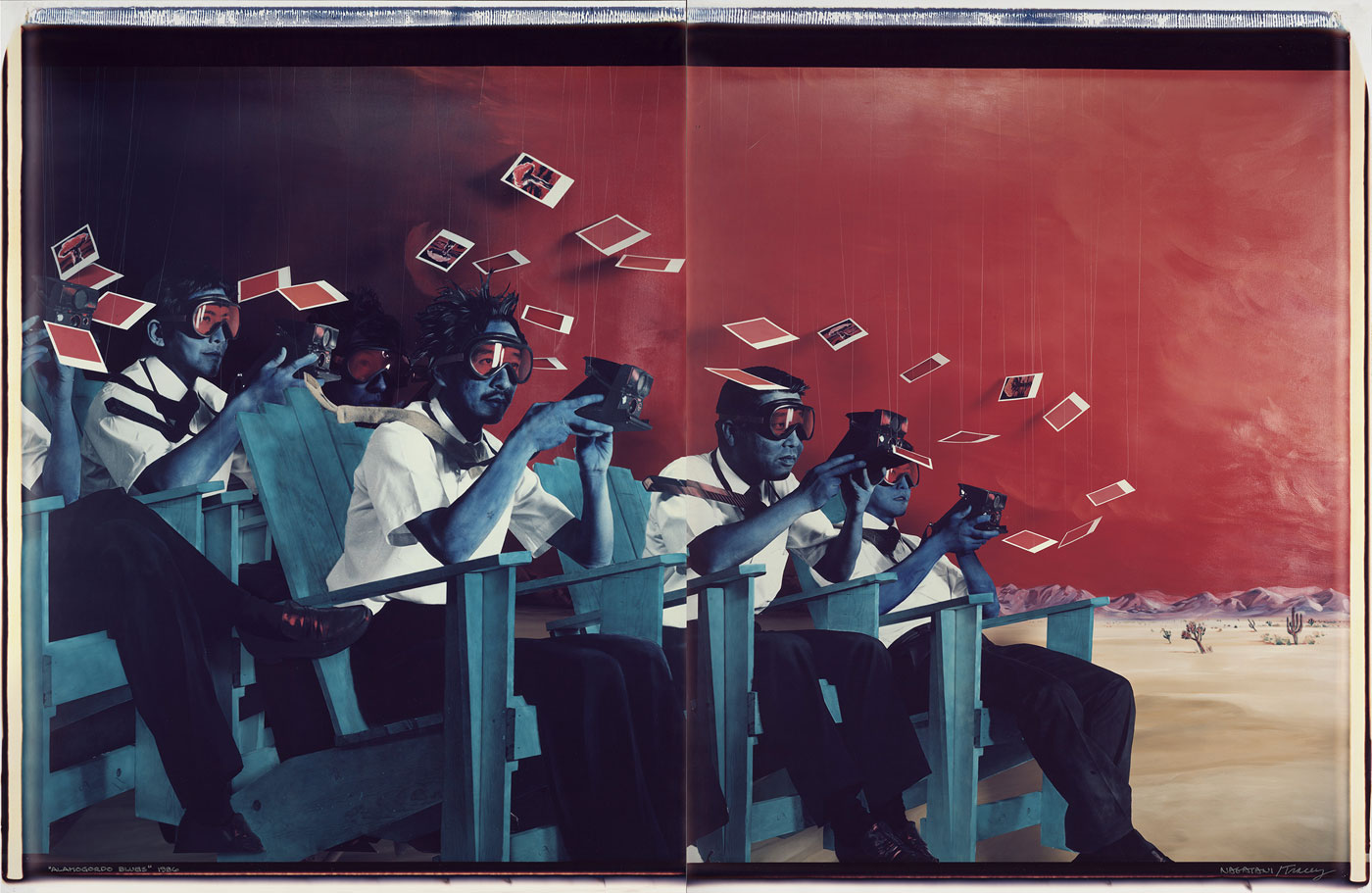
Patrick Nagatani (American, b. 1945) and Andree Tracey (American, b. 1948) 'Alamogordo Blues' 1986


Patrick Nagatani (American, b. 1945)
Andree Tracey (American, b. 1948)
Alamogordo Blues
1986
Dye diffusion print
Center for Creative Photography, University of Arizona
© Patrick Nagatani and Andree Tracey


Laurie Simmons (American, b. 1949) 'Woman/Red Couch/Newspaper' 1978


Laurie Simmons (American, b. 1949)
Woman/Red Couch/Newspaper
1978
Silver dye-bleach print
Los Angeles County Museum of Art, Ralph M. Parsons Fund
© Laurie Simmons


Sandy Skoglund (American, b. 1946) 'Revenge of the Goldfish, 1980' 1980


Sandy Skoglund (American, b. 1946)
Revenge of the Goldfish, 1980
1980
Silver dye-bleach print
St. Louis Art Museum, Gift of Mr. and Mrs. Fielding Lewis Holmes
© 1981 Sandy Skoglund


Mark Cohen (American, b. 1943) 'Boy in Yellow Shirt Smoking' 1977


Mark Cohen (American, b. 1943)
Boy in Yellow Shirt Smoking
1977
Dye coupler print
Courtesy the artist and ROSEGALLERY
© Mark Cohen


John F. Collins (American, 1888?-1988) 'Tire' 1938


John F. Collins (American, 1888?-1988)
Tire
1938
Silver dye-bleach print
Courtesy Howard Greenberg Gallery


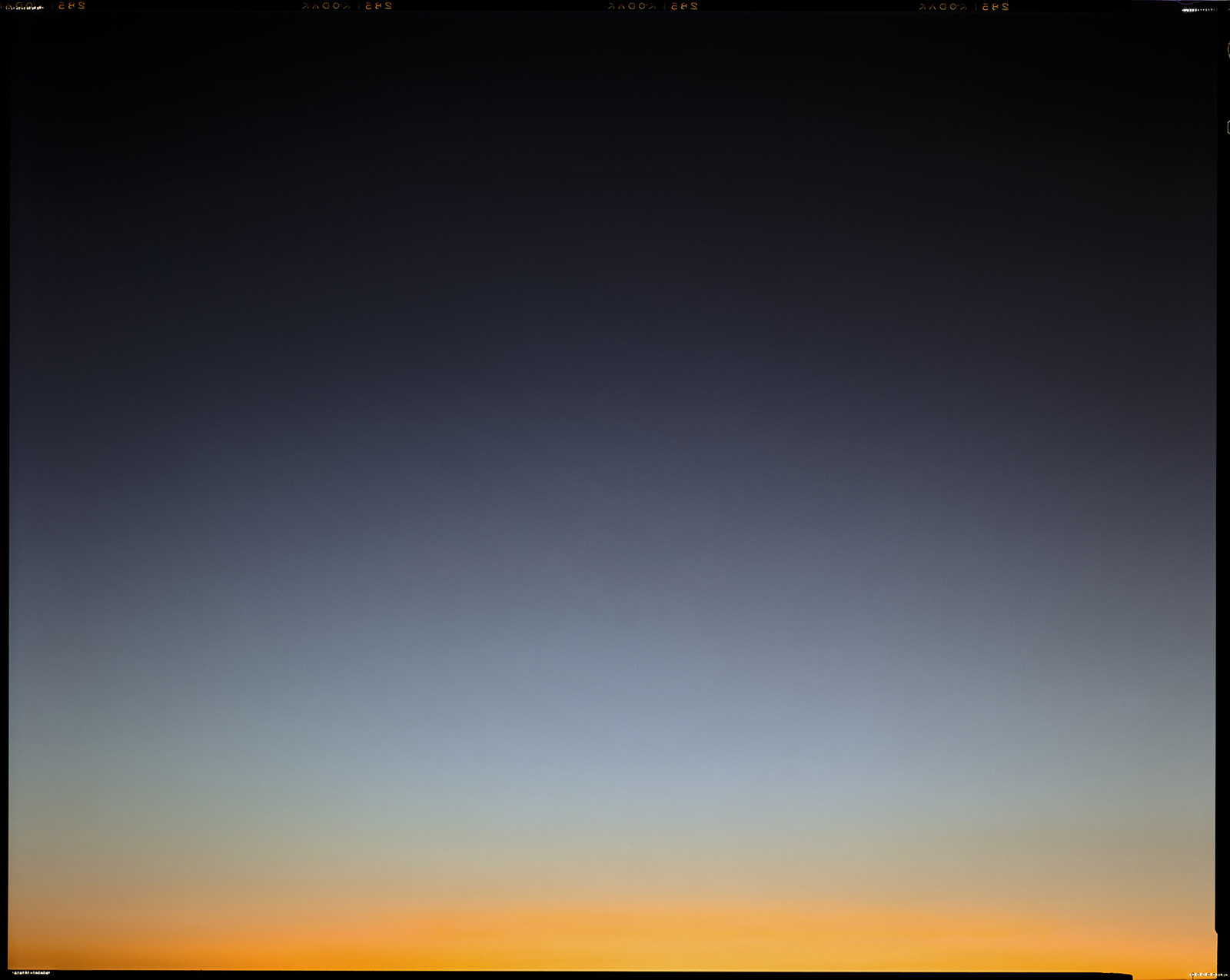
Richard Misrach (American, b. 1949) 'Paradise Valley (Arizona), 3.22.95, 7:05 P.M.' 1995


Richard Misrach (American, b. 1949)
Paradise Valley (Arizona), 3.22.95, 7:05 P.M.
1995
Dye coupler print
© Richard Misrach, courtesy Fraenkel Gallery, San Francisco, Marc Selwyn Fine Art, Los Angeles and Pace/MacGill Gallery, NY


Henry Holmes Smith (American, 1909-1986) 'Tricolor Collage on Black' 1946


Henry Holmes Smith (American, 1909-1986)
Tricolor Collage on Black
1946
Dye imbibition print over gelatin silver print
Indiana University Art Museum, Henry Holmes Smith Archive
© Smith Family Trust


Mitch Epstein (American, b. 1952) 'Flag' 2000


Mitch Epstein (American, b. 1952)
Flag
2000
Dye coupler print
Private collection
© Black River Productions


Trevor Paglen (American, b. 1974) 'The Fence (Lake Kickapoo, Texas)' 2010


Trevor Paglen (American, b. 1974)
The Fence (Lake Kickapoo, Texas)
2010
Dye coupler print, 2011
Amon Carter Museum of American Art, Fort Worth, Texas
© Trevor Paglen


Joaquin Trujillo (American, b. 1976) 'Jacky' 2003


Joaquin Trujillo (American, b. 1976)
Jacky
2003
From the series Los Niños
Inkjet print, 2011
Amon Carter Museum of American art, purchase with funds provided by the Stieglitz Circle of the Amon Carter Museum of American Art
© Joaquin Trujillo 2013


James N. Doolittle (American, 1889-1954) 'Ann Harding' c. 1932


James N. Doolittle (American, 1889-1954)
Ann Harding
c. 1932
Tricolor carbro print
Nelson-Atkins Museum of Art, Kansas City, MO


Amon Carter Museum
3501 Camp Bowie Boulevard
Fort Worth, TX 76107-2695

Opening hours:
Tuesday, Wednesday, Friday, Saturday:
 10am – 5pm
Thursday: 10am – 8pm
Sunday: 12am – 5pm
Closed Mondays and major holidays.

Amon Carter Museum of American Art website

LIKE ART BLART ON FACEBOOK

Back to top