Exhibition: ‘Roger Mayne: Youth’ at the Courtauld Gallery, London

Exhibition dates: 14th June – 1st September, 2024

Denise Coates Exhibition Galleries


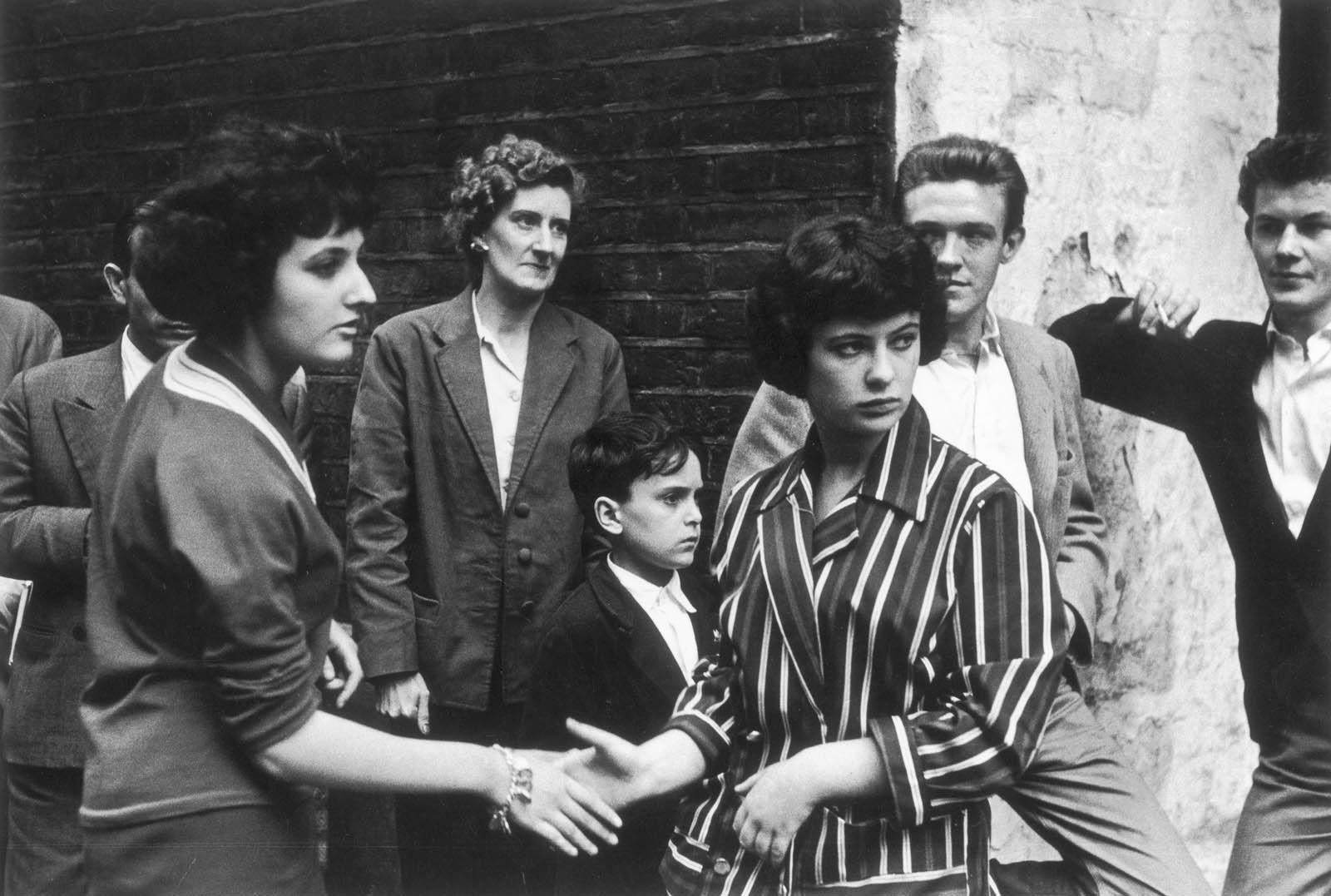
Roger Mayne (British, 1929-2014) 'Southam Street Group, North Kensington, London' 1956


Roger Mayne (British, 1929-2014)
Southam Street Group, North Kensington, London
1956
Vintage gelatin silver print
55.5 x 80.4cm
Courtesy Victoria & Albert Museum


In vivid and completely natural un/reality

As readers of Art Blart over the years will know, I love a committed social documentary photographer, an artist with a heart and an informed social consciousness, one who is aware of the right or wrong actions (conscience).

Roger Mayne is one such photographer. Others in the pantheon include Helen Levitt, Chris Killip, Don McCullin, Edith Tudor-Hart, Bill Brandt, Tony Ray-Jones, Syd Shelton, Neil Kenlock, Lewis Hine, Jacob Riis, Daniel Meadows, Gordon Parks, Milton Rogovin, Teenie Harris, and Dave Heath to name just a few.

Mayne’s portrait of the working class areas of London life, his gritty black and white images of a “crumbling post-war Britain” and the “modernisation of working class neighbourhoods after the war” picture  – as Colin MacInnes author of the “cult 1959 novel Absolute Beginners, a lively account of the emergence of teen culture and attitude in the late 1950s” (wall text) states – “a rotting slum of a sharp, horrible vivacity.”1

What a turn of phrase!

But what MacInnes forgets is that there was community in those very slums, that there was a culture of supporting each other through the tough times, especially after the deprivations of the Second World War and the ongoing rationing which lasted until mid-1954 in the United Kingdom. I vividly remember as a child visiting my grandmother in a small town in suburban Hertfordshire in the 1960s and recall the drabness of the identical houses cheek by jowl, the washing hung in the backyard and the outdoor loo, and the dampness, darkness of the house. And the cold and the rain. But then there were the children playing in the streets, the smiles and the joy of freedom despite the poverty.

Mayne’s photographs push further than mere documentary reportage on these communities. As he himself says, photography becomes art through a “particular mixture of reality and unreality” and the photographers power to select what they are photographing. They become art through the photographers consciousness.

Here I believe that the mixture of reality and unreality and previsualisation (selection of what to photograph and how to frame the image) in Mayne’s photographs can be seen as a form of “magic realism” which is “a style or genre of fiction and art that presents a realistic view of the world while incorporating magical elements, often blurring the lines between fantasy and reality.”2 Matthew Strecher (1999) defines it as “what happens when a highly detailed, realistic setting is invaded by something too strange to believe.”3

Indeed, if we look at Mayne’s photograph Southam Street Group, North Kensington, London (1956, above) there is something so magical and strange about the atmosphere of this image – the out of focus girl in the foreground, boy with his hand to his neck, self absorbed girl on the steps looking out, peeling paint of the building, young children watching the man holding the bicycle and a second, orphaned larger wheel (what is it doing there?), the small child being propped on the too large bicycle, bulky pram lurking, hunkering at the side of the image – it is as though the image was part of a fable, a story about mythical characters and streetscapes that can never happen again.

This magic realism is repeated again and again in Mayne’s images: that sense of the extra/ordinary, of the super/natural – the spacing of the figures in Southam Street Corner, North Kensington, London (1957, below); the zoomorphic characteristics of the figures in Girls doing a Handstand, Southam Street (1956, below); the contrast between the stiff-legged boy and arms folded screaming girl in Screaming Child, Southam St. (North Kensington) (1956, below); and the lean of the whole photograph … the women, reaching out to touch the man child in Nottingham, St Ann’s (1969, below). And on we could go, each image taking us out of ourselves into strange new (old) worlds.

Roger Mayne was truly a magnificent, poetic artist. His subjects, though never appearing “posed,” confront the spectator in vivid and completely natural un/reality.4 Spirits who still inhabit London’s deliquescent urban spaces.

Dr Marcus Bunyan


1/ Colin MacInnes (British, 1914-1976) Poverty and poetry in W.10 c. 1961

2/“Magic realism,” on the Wikipedia website

3/ Strecher, Matthew C. 1999. “Magical Realism and the Search for Identity in the Fiction of Murakami Haruki.” Journal of Japanese Studies 25(2): 263–98. p. 267 quoted in “Magic realism,” on the Wikipedia website

4/ Adapted from Colin MacInnes Op. cit.,


Many thankx to the Courtauld Gallery for allowing me to publish the photographs in the posting. Please click on the photographs for a larger version of the image.
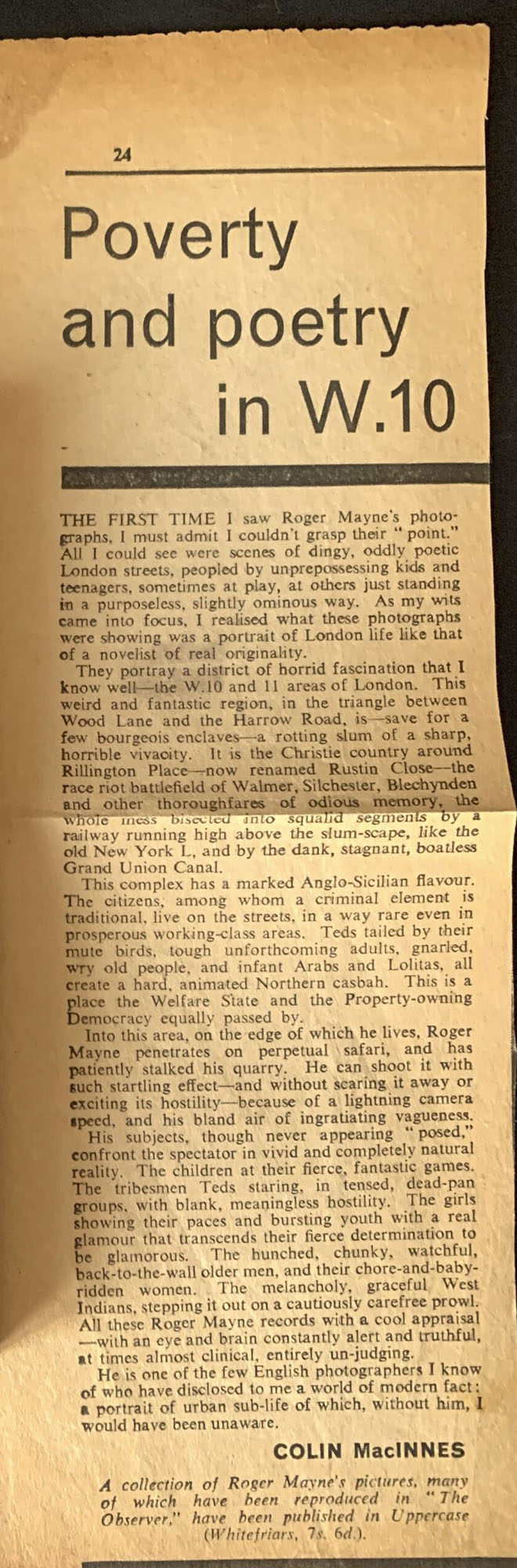


Colin MacInnes 'Poverty and poetry in W.10' c. 1961


Colin MacInnes (British, 1914-1976)
Poverty and poetry in W.10
c. 1961

Used under fair use for the purposes of education and research


“Photography involves two main distortions – the simplification into black and white and the seizing of an instant in time. It is this mixture of reality and unreality, and the photographer’s power to select, that makes it possible for photography to be an art.”


Roger Mayne


“[Mayne] understood how to compose images in the camera to create what he described to Peace News in 1960 as a “particular mixture of reality and unreality.”

“The photographer’s power to select…makes it possible for photography to be an art,” Mayne continued. “Whether it is good art depends on the power and truth of the artist’s statement.””


Miss Rosen. “Joyful photos of London youth culture in the 50s and 60s,” on the Huck Magazine website Monday 13 February, 2023 [Online] Cited 23/07/2024
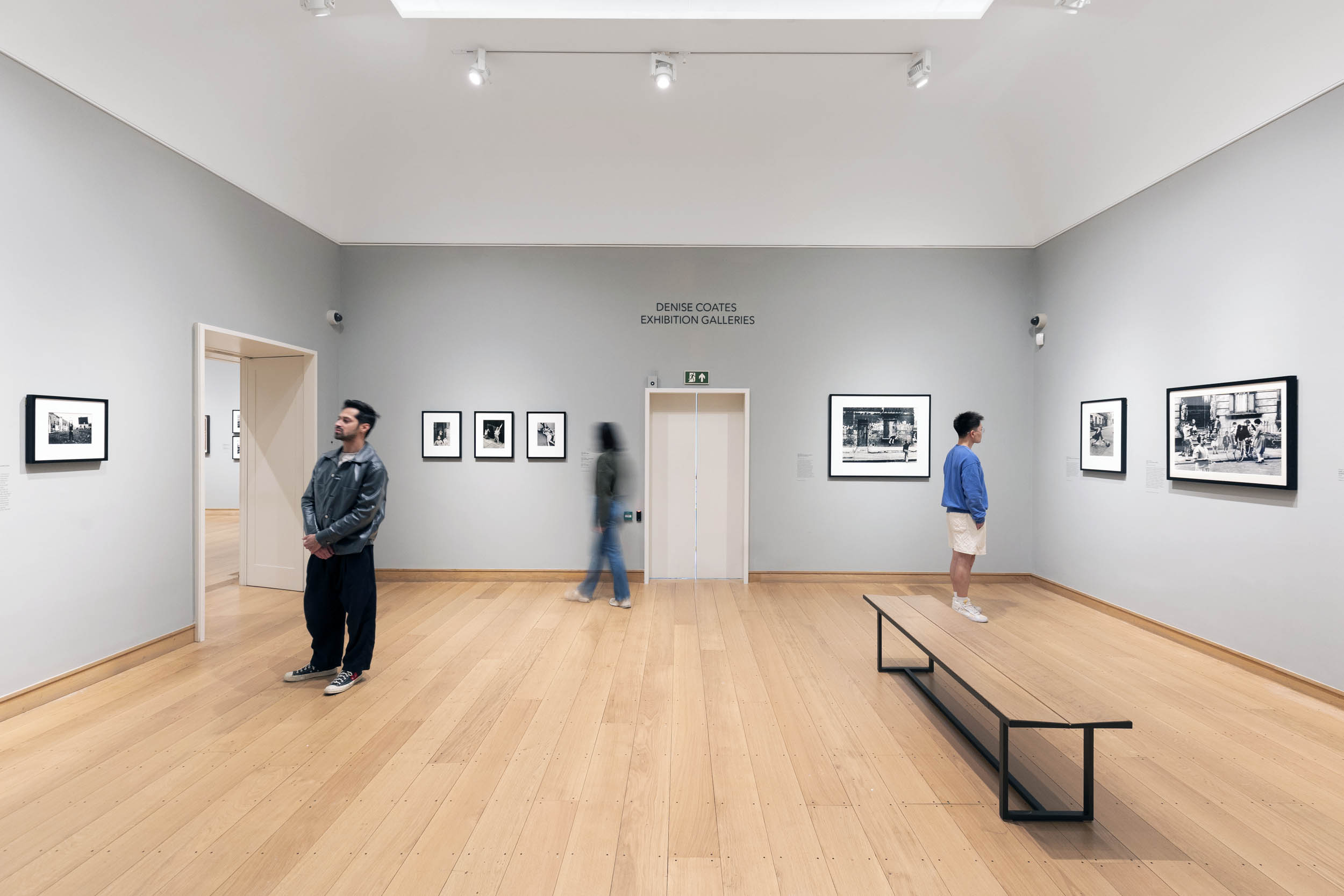


Installation view of the exhibition 'Roger Mayne: Youth' at the Courtauld Gallery, London 

Installation view of the exhibition 'Roger Mayne: Youth' at the Courtauld Gallery, London 


Installation views of the exhibition Roger Mayne: Youth at the Courtauld Gallery, London


Acclaimed British photographer Roger Mayne (1929-2014) was famous for his evocative documentary images of young people growing-up in Britain in the mid-1950s and ’60s.

This exhibition, of around 60 almost exclusively vintage photographs, includes many of his iconic street images of children and teenagers, alongside an almost entirely unknown selection of intimate and moving later images of his own family at home in Dorset, as well as those taken on his honeymoon in Spain in 1962.

Self-taught and influential in the acceptance of photography as an art form, Mayne was passionate about photographing human life as he found it. This is the first exhibition of his work since 2017.

Text from the Courtauld website


Playing in the Street
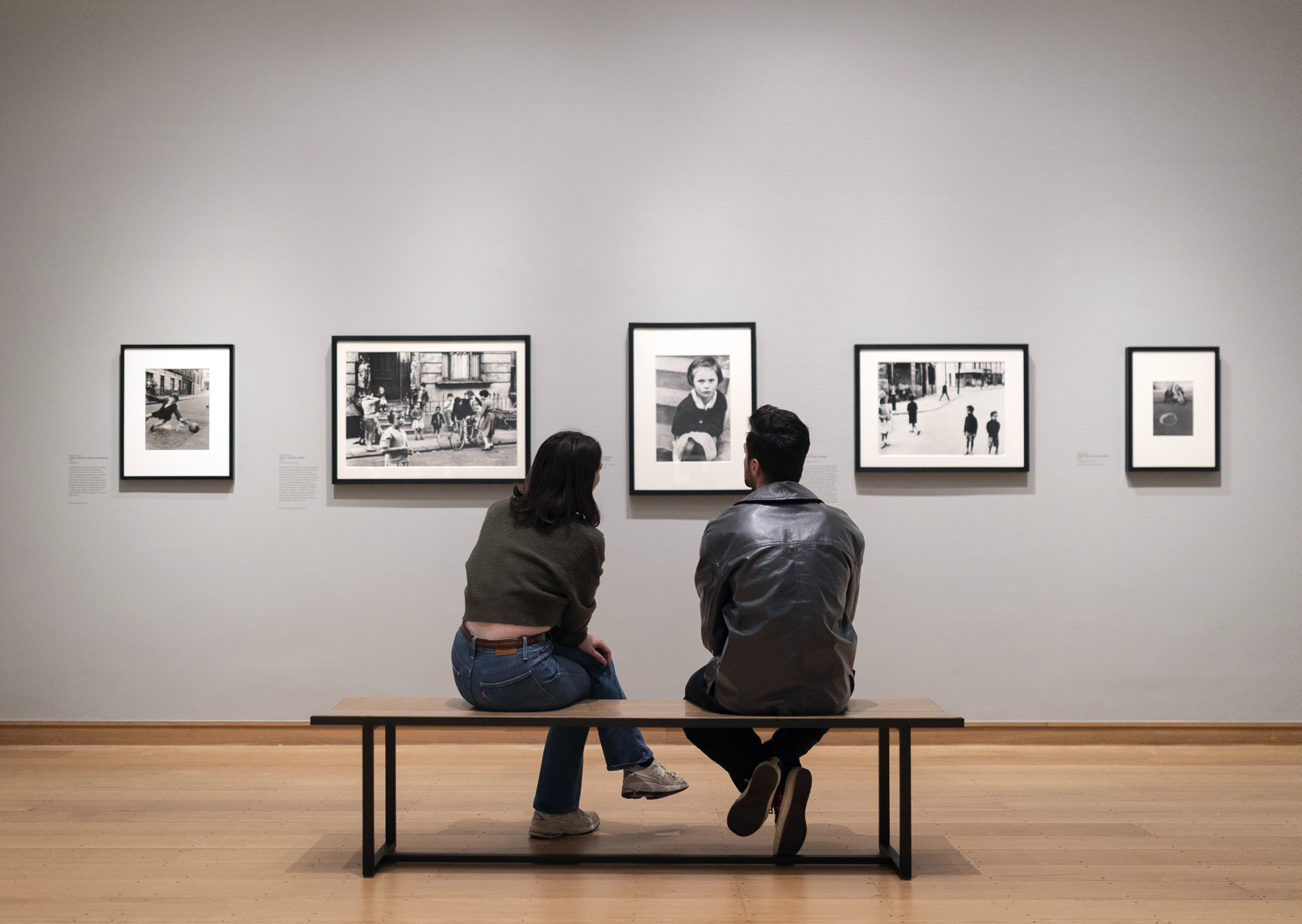
 

Installation view of the exhibition 'Roger Mayne: Youth' at the Courtauld Gallery, London showing at left, Mayne's 'Goalie, Brindley Road, Paddington, London' (1956); at second left, 'Southam Street Group, North Kensington, London' (1956); at centre, 'Girl on the steps, St. Stephen's Gardens' (1957); and at second from right, 'Southam Street Corner, North Kensington, London' (1957)


Installation view of the exhibition Roger Mayne: Youth at the Courtauld Gallery, London showing at left, Mayne’s Goalie, Brindley Road, Paddington, London (1956, below); at second left, Southam Street Group, North Kensington, London (1956, above); at centre, Girl on the steps, St. Stephen’s Gardens (1957, below); and at second from right, Southam Street Corner, North Kensington, London (1957, below)
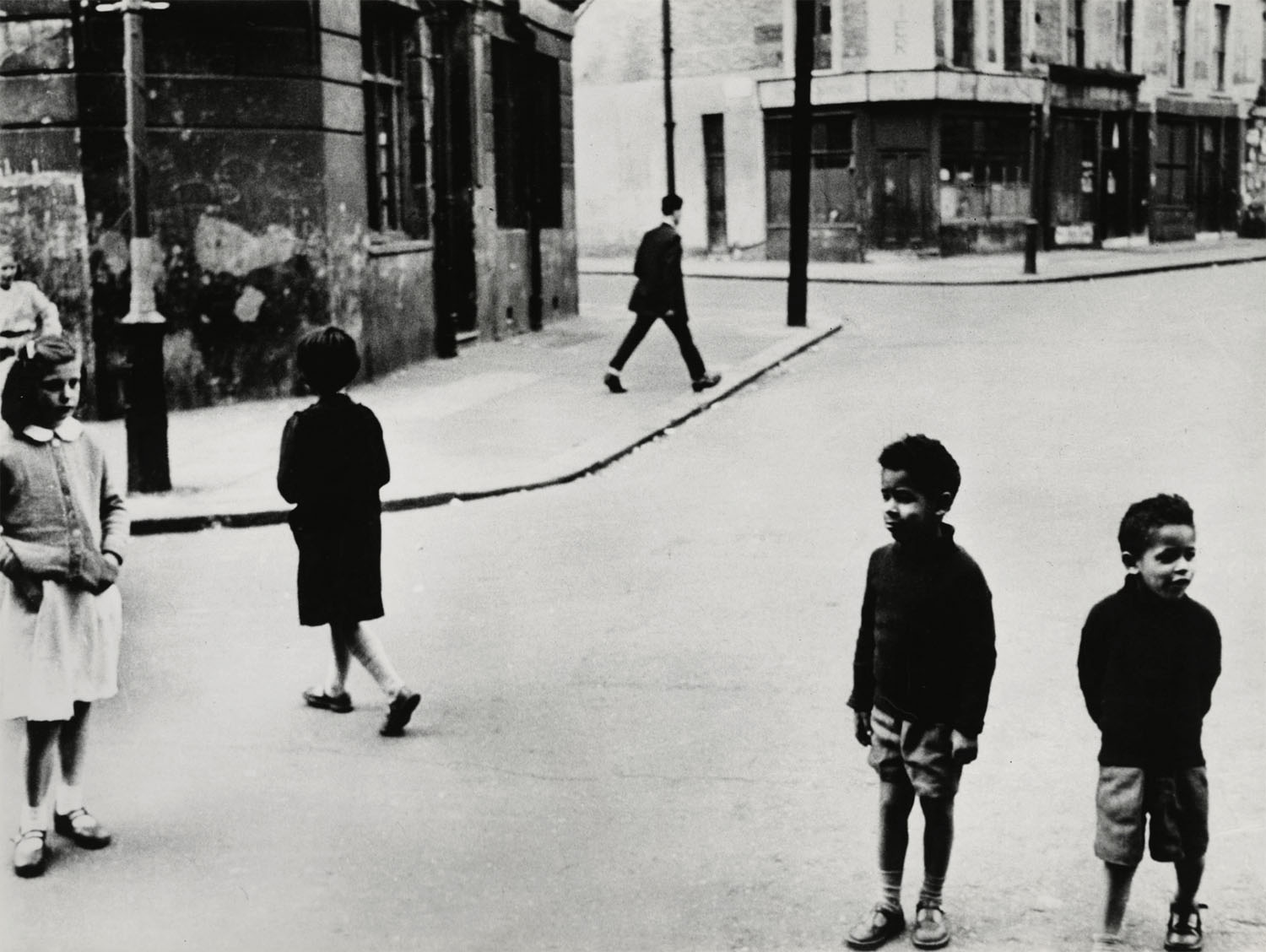
 

Roger Mayne (British, 1929-2014) 'Southam Street Corner, North Kensington, London' 1957


Roger Mayne (British, 1929-2014)
Southam Street Corner, North Kensington, London
1957
Vintage gelatin silver print mounted on board
43 x 58cm
Courtesy Victoria & Albert Museum
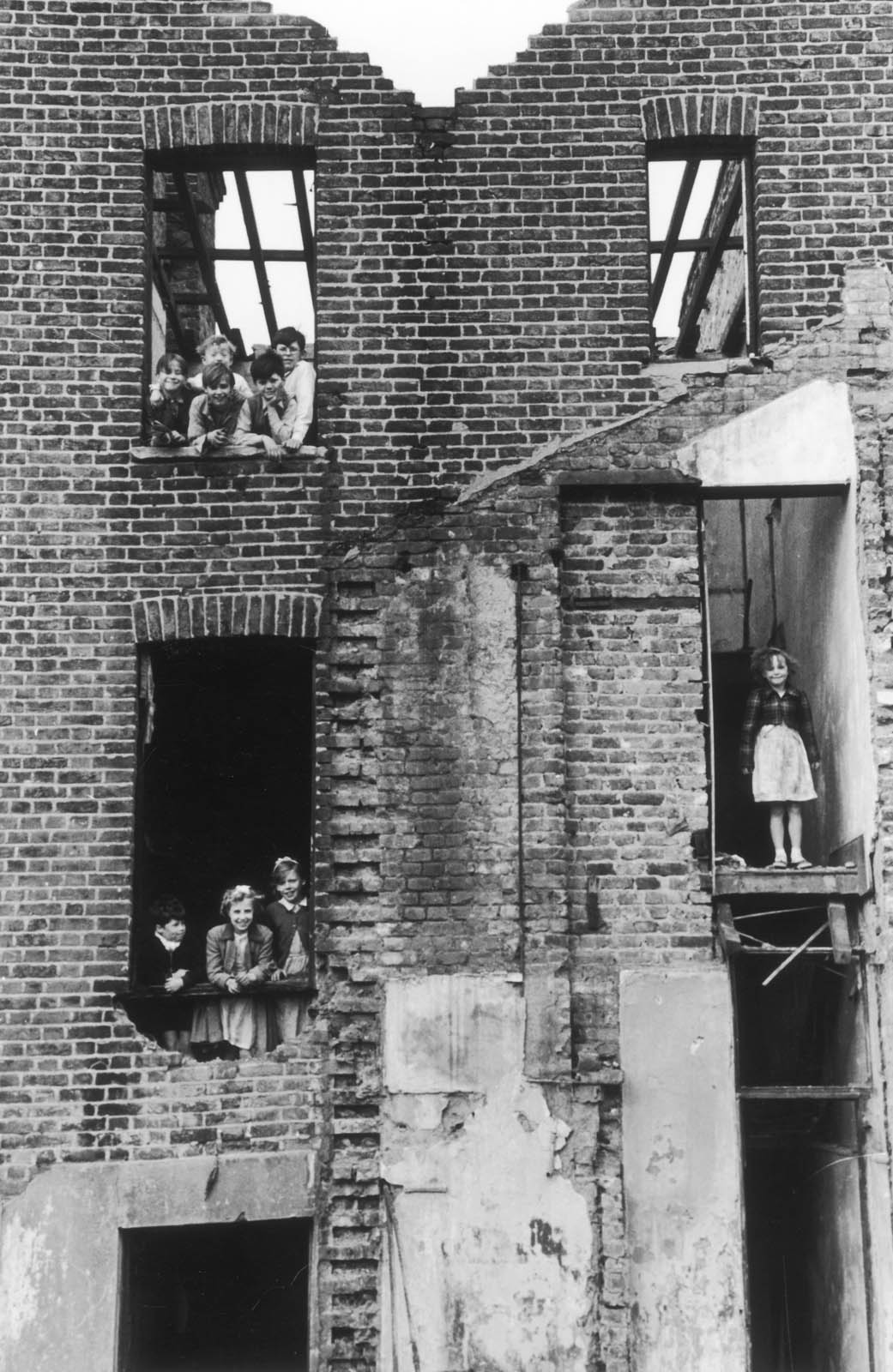
 

Roger Mayne (British, 1929-2014) 'Children in a Bombed Building, Bermondsey, London' 1954


Roger Mayne (British, 1929-2014)
Children in a Bombed Building, Bermondsey, London
1954
Vintage gelatin silver print
28 x 19.5cm
Courtesy the Roger Mayne Archive


Don McCullin (British, b. 1935) 'The Guv'nors, Finsbury Park, London' 1958


Don McCullin (British, b. 1935)
The Guv’nors, Finsbury Park, London
1958
Gelatin silver print
Used under fair use for the purposes of education and research

This photograph is not in the exhibition
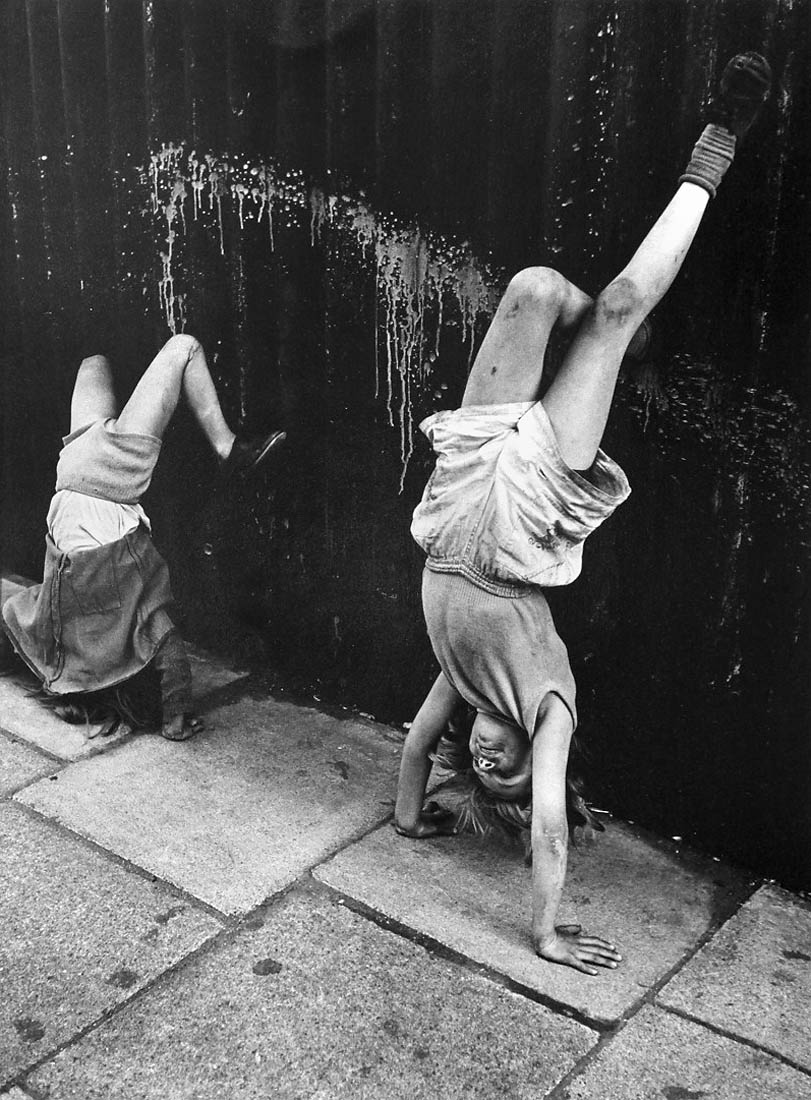
 

Roger Mayne (British, 1929-2014) 'Girls doing a Handstand, Southam Street' 1956


Roger Mayne (British, 1929-2014)
Girls doing a Handstand, Southam Street
1956
Modern print (printed in 1987)
30 x 23cm
Courtesy the Roger Mayne Archive
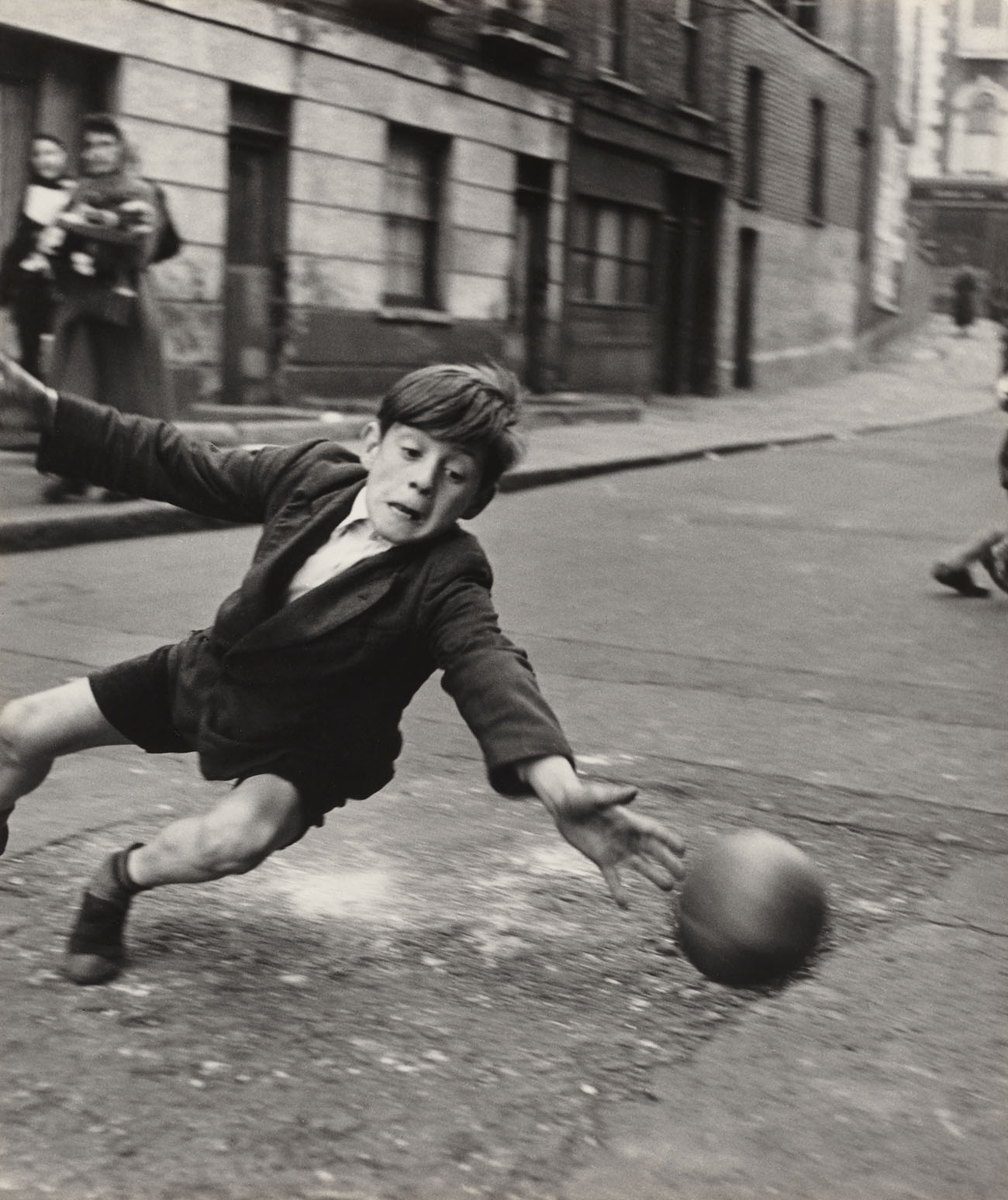
 

Roger Mayne (British, 1929-2014) 'Goalie, Brindley Road, Paddington, London' 1956


Roger Mayne (British, 1929-2014)
Goalie, Brindley Road, Paddington, London
1956
Modern print (printed in 2002)
38 x 30cm
Courtesy the Roger Mayne Archive


Roger Mayne (British, 1929-2014) 'Girl on the steps, St. Stephen's Gardens' 1957


Roger Mayne (British, 1929-2014)
Girl on the steps, St. Stephen’s Gardens
1957
Vintage gelatin silver print mounted on board
49.3 x 34.5cm
Courtesy Victoria & Albert Museum


In the case:
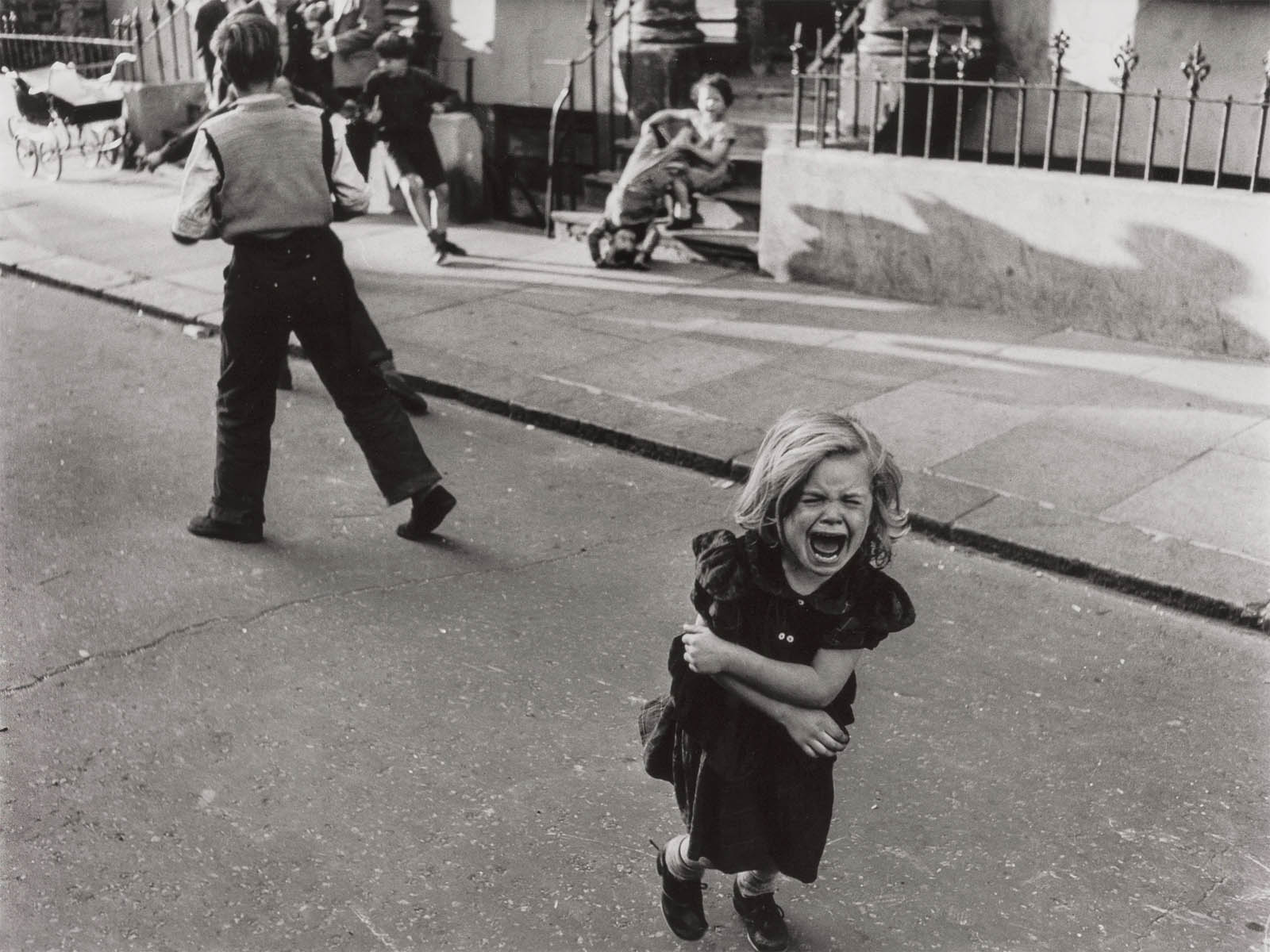
 

Roger Mayne (British, 1929-2014) 'Screaming Child, Southam St. (North Kensington)' 1956


Roger Mayne (British, 1929-2014)
Screaming Child, Southam St. (North Kensington)
1956
From the ‘Southam Street’ Album 1956-1961, 5 May 1956
Vintage gelatin silver print mounted in an album
36.4 x 54.8cm
Courtesy Victoria & Albert Museum
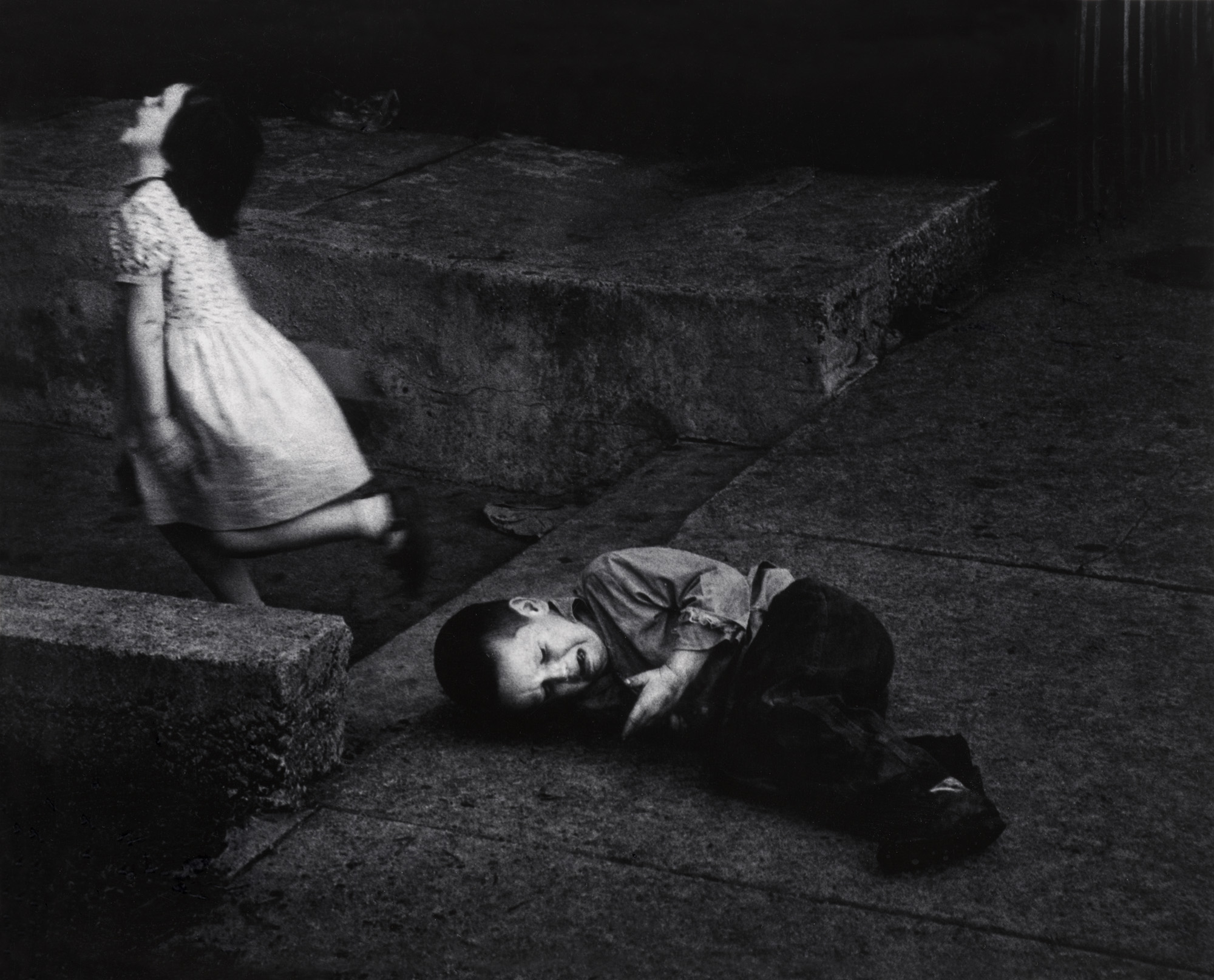
 

Dave Heath, (Canadian born United States, 1931-2016) 'Vengeful Sister, Chicago' 1956


Dave Heath (Canadian born United States, 1931-2016)
Vengeful Sister, Chicago
1956
Gelatin silver print
7 3/16 x 8 7/8 inches
The Nelson-Atkins Museum of Art, Kansas City, Missouri
Gift of the Hall Family Foundation
Used under fair use for the purposes of education and research

This photograph is not in the exhibition


The summer season at The Courtauld Gallery in London has opened with a major exhibition of photographs by the acclaimed post-war photographer, Roger Mayne.

The first-ever photography exhibition at The Courtauld, Roger Mayne: Youth (14 June – 1 September 2024) reassesses the importance of Roger Mayne (1929-2014), through the lens of his evocative black and white images of young people. The exhibition brings together the works of the 1950s and early 1960s for which he is famous, alongside lesser-known images of his own children. The exhibition and accompanying catalogue positions Mayne as crucially important in the emergence of documentary photography as an art form in Britain in the years after the war.

A self-taught photographer, having discovered the medium while studying chemistry at Balliol College, Oxford, Mayne moved to London in 1953. Inspired by the work of the artist Nigel Henderson, among others, he became passionate about photographing human life as he found it. He quickly achieved widespread recognition for his powerful images of communities struggling with poverty against a backdrop of dereliction in London and across the UK. Renowned for his sustained portrayal of Southam Street, now long gone but then located on the northern fringes of Notting Hill, Mayne’s dedication to photographing this one locale over a six-year period – from 1956 to 1961 – was, and still is, extraordinary in the history of photography.

Mayne’s photography in the 1950s and early ’60s captured an exuberance and an uneasiness that embodied both the scars and hopes of post-war Britain. In documenting the lives of young people growing up in Britain, his images highlight the significance of children’s play and the identity formation of the teenager in the post-war years, revealing the tectonic shifts in society at that time. Highlights include Children in a Bombed Building, Bermondsey, London (1954) and one of his most famous images, A Girl Jiving in Southam Street (Eileen Sheekey), London (1957).

In 1962 a new chapter opened in Roger Mayne’s personal life, when he married Ann Jellicoe, a pioneering and well-established playwright. Their honeymoon in Spain left Mayne feeling creatively nourished by the vitality of the people he encountered there. With children and young people still at the forefront of this fresh strand of image-making, he judged the photographs from this trip to be ‘the best series of photographs I have yet done.’ Following the birth of his own children and a move to the Dorset countryside in the mid-1960s, family life and the local bucolic landscape became a new backdrop for Mayne’s lens. The imagery of the street was replaced by that of a growing and adored family.

This exhibition, curated by Jane Alison in close collaboration with Mayne’s daughter, Katkin Tremayne, features over 60 vintage photographs, some never exhibited before. While the two bodies of work, street and family, have a different tenor, they are united by Mayne’s radical empathy with his youthful subjects and his desire to create photographic images that enjoy a lasting impact, produced with great sensitivity and artistic integrity. With Mayne’s post-war subjects now in their more senior years, and today’s younger generation facing a myriad crises, Mayne’s deliberations on growing up, childhood, adolescence and family feel especially poignant and timely.

Press release from the Courtauld


Society at Large
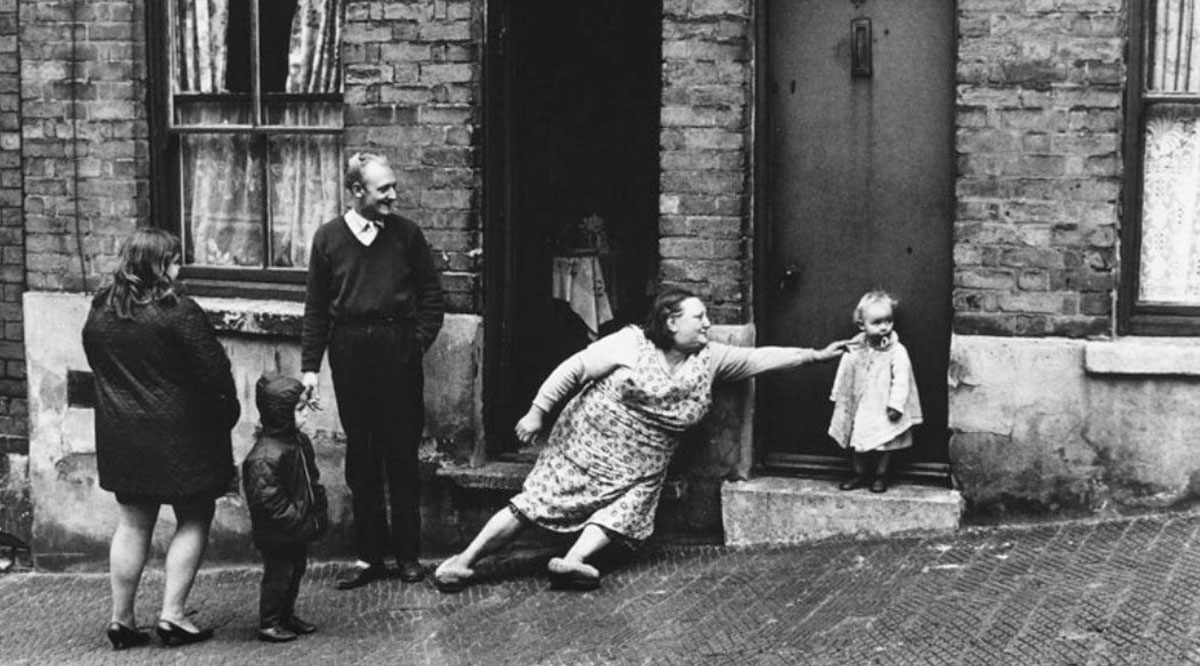
 

Roger Mayne (British, 1929-2014) 'Nottingham, St Ann's' 1969


Roger Mayne (British, 1929-2014)
Nottingham, St Ann’s
1969
Modern print
16 x 23cm
Courtesy the Roger Mayne Archive


In the case

Nine Pelican and Penguin paperback books including:
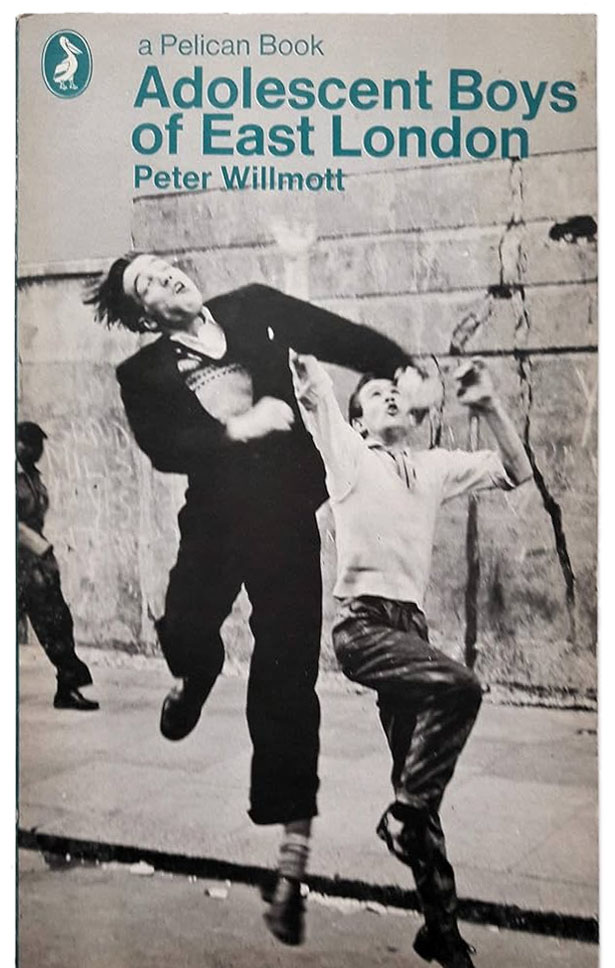
 

'Adolescent Boys of East London', by Peter Willmott, Pelican, 1969


Adolescent Boys of East London, by Peter Willmott, Pelican, 1969 with Roger Mayne’s Street football, Southam St., North Kensington, 1958 (detail) on the cover
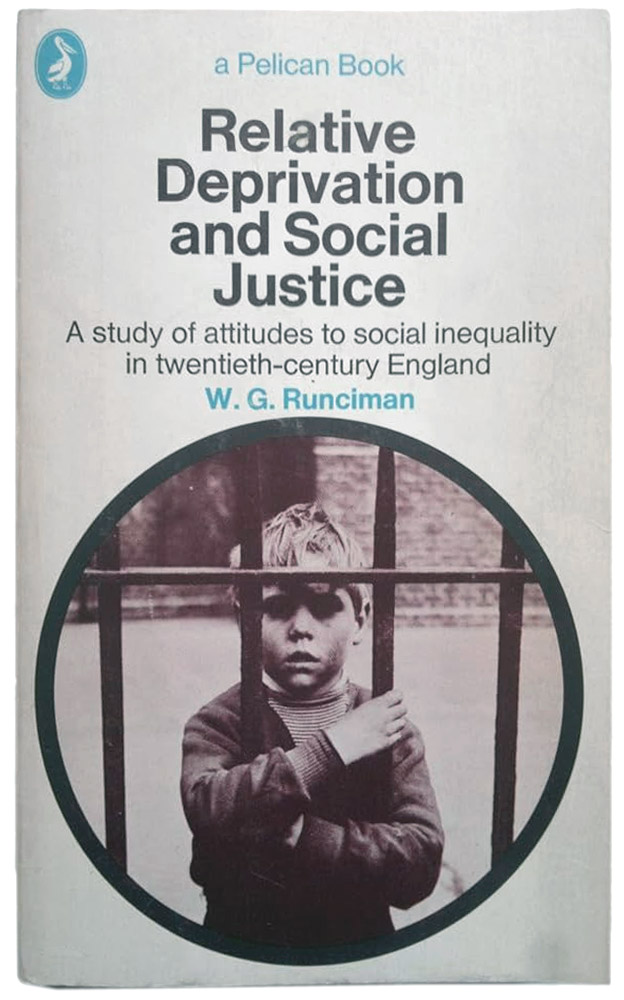
 

'Relative Deprivation and Social Justice: A study of attitudes to social inequality in twentieth-century England', W. G. Runciman, Pelican, 1972 book cover


Relative Deprivation and Social Justice: A study of attitudes to social inequality in twentieth-century England, W. G. Runciman, Pelican, 1972 book cover
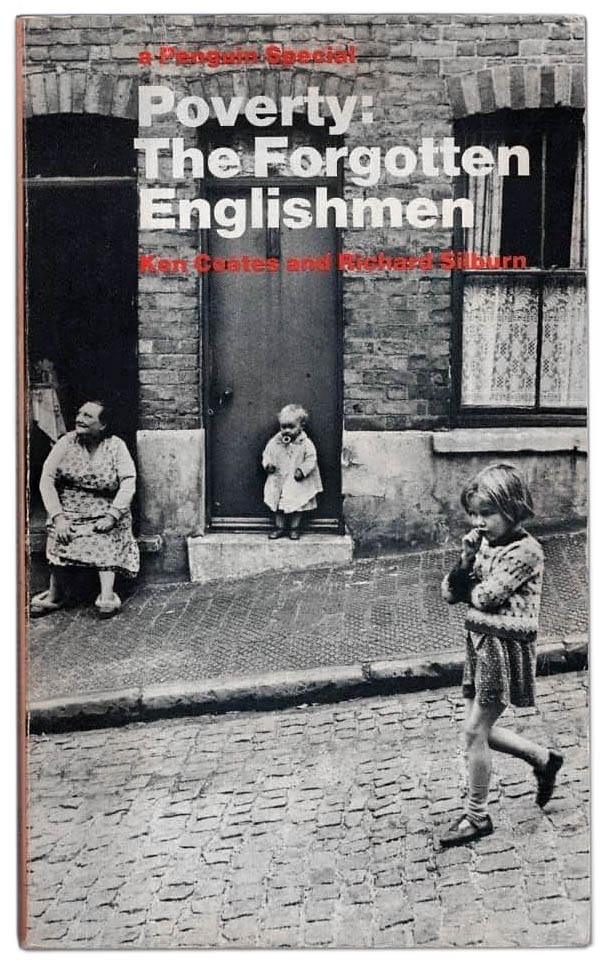
 

'Poverty: The Forgotten Englishman', Ken Coates and Richard Silburn, Pelican, 1970


Poverty: The Forgotten Englishman, Ken Coates and Richard Silburn, Pelican, 1970 book cover


The Spanish Honeymoon
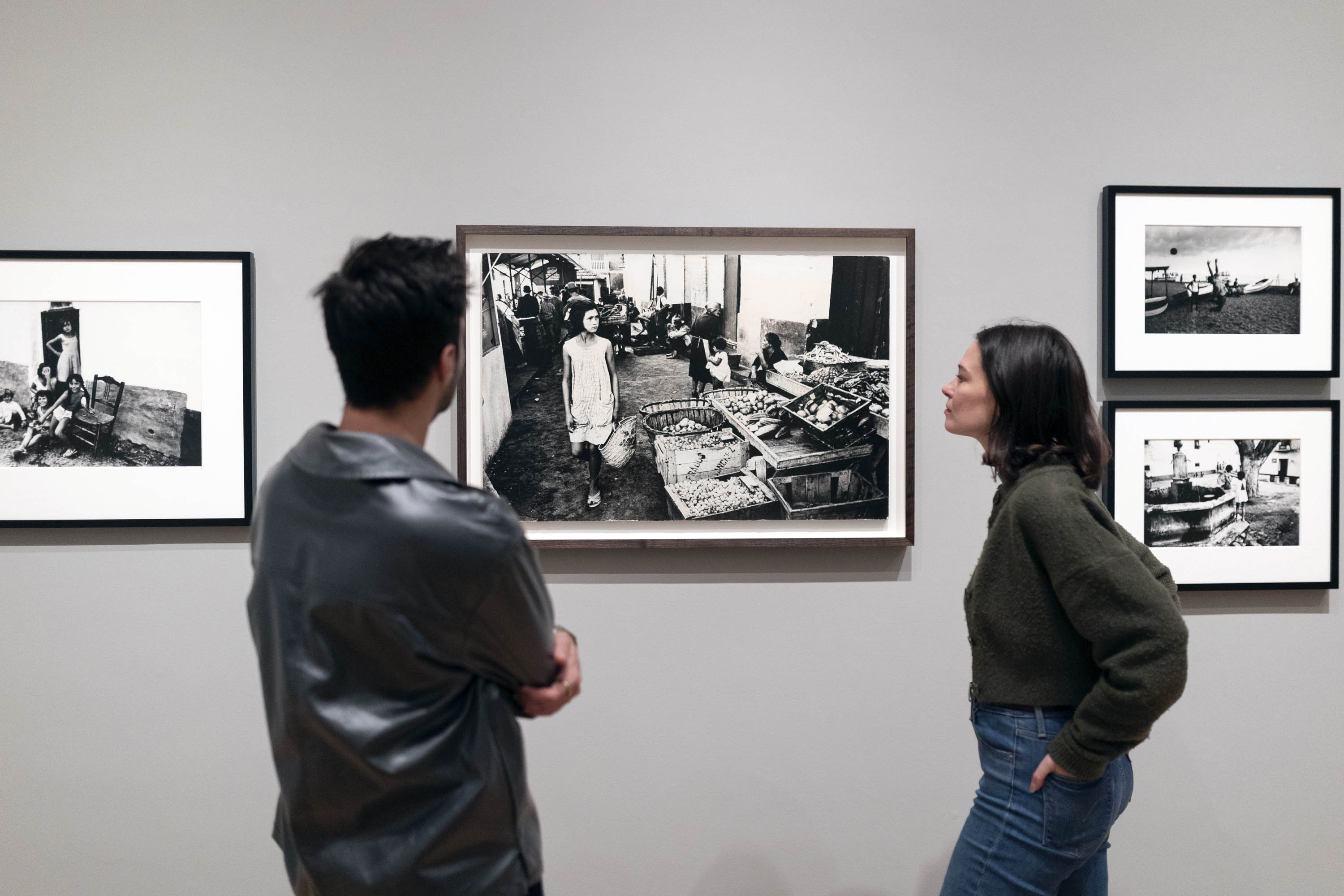
 

Installation view of the exhibition 'Roger Mayne: Youth' at the Courtauld Gallery, London showing at left, Mayne's 'Costa del Sol' (1962); at centre, 'Girl in a Market, Almunecar, Costa del Sol' (1962, below); at top right, 'Footballer Jumping, Almuneca, Costa del Sol' (1962); and at bottom right, 'Girls by a Fountain, Almunecar, Costa del Sol' (1962)


Installation view of the exhibition Roger Mayne: Youth at the Courtauld Gallery, London showing at left, Mayne’s Costa del Sol (1962); at centre, Girl in a Market, Almunecar, Costa del Sol (1962, below); at top right, Footballer Jumping, Almuneca, Costa del Sol (1962); and at bottom right, Girls by a Fountain, Almunecar, Costa del Sol (1962)
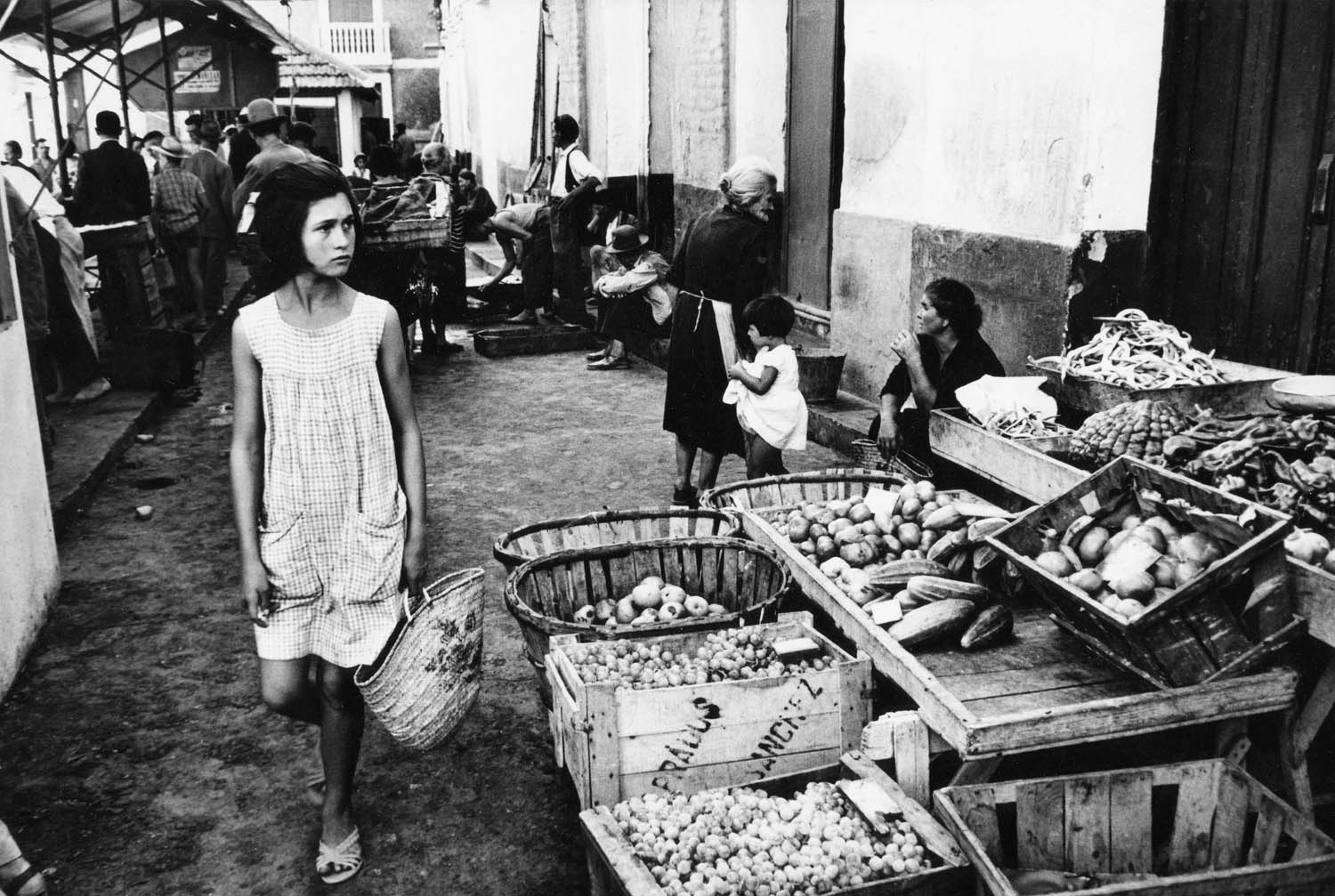
 

Roger Mayne (British, 1929-2014) 'Girl in a Market, Almunecar, Costa del Sol' 1962


Roger Mayne (British, 1929-2014)
Girl in a Market, Almunecar, Costa del Sol
1962
Vintage gelatin silver print mounted on board
59.5 x 91.5cm
Gelatin silver print


Teenage Takeover
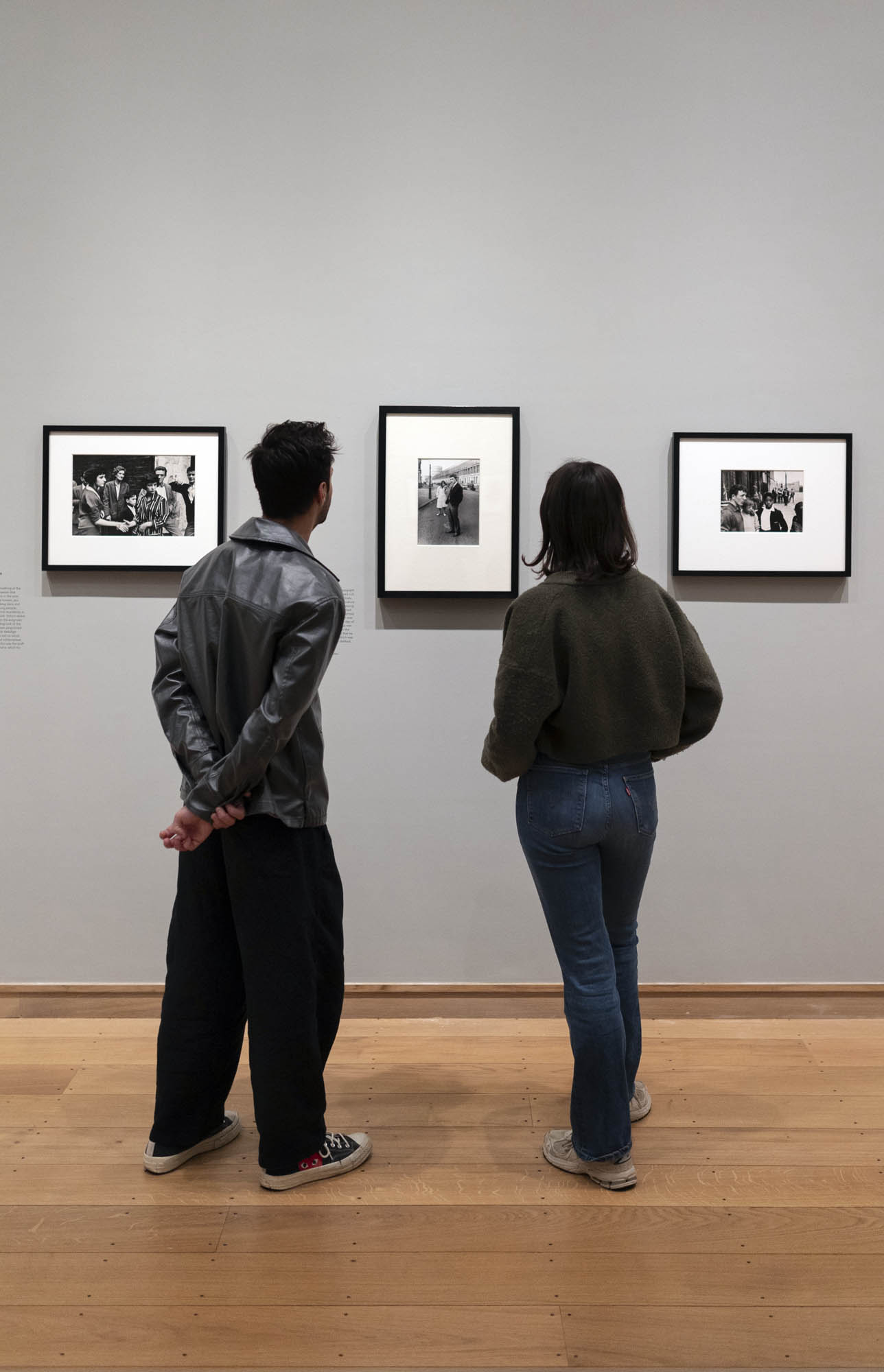
 

Installation view of the exhibition 'Roger Mayne: Youth' at the Courtauld Gallery, London showing at left, Mayne's 'Teenagers, Soho Fair, London' (17 July 1958); at centre, 'Teenage Couple, Absolute Beginners photo-shoot' (26 April 1959); and at right, 'Men and boys, Southam Street, London' (1959)


Installation view of the exhibition Roger Mayne: Youth at the Courtauld Gallery, London showing at left, Mayne’s Teenagers, Soho Fair, London (17 July 1958, below); at centre, Teenage Couple, Absolute Beginners photo-shoot (26 April 1959, below); and at right, Men and boys, Southam Street, London (1959, below)
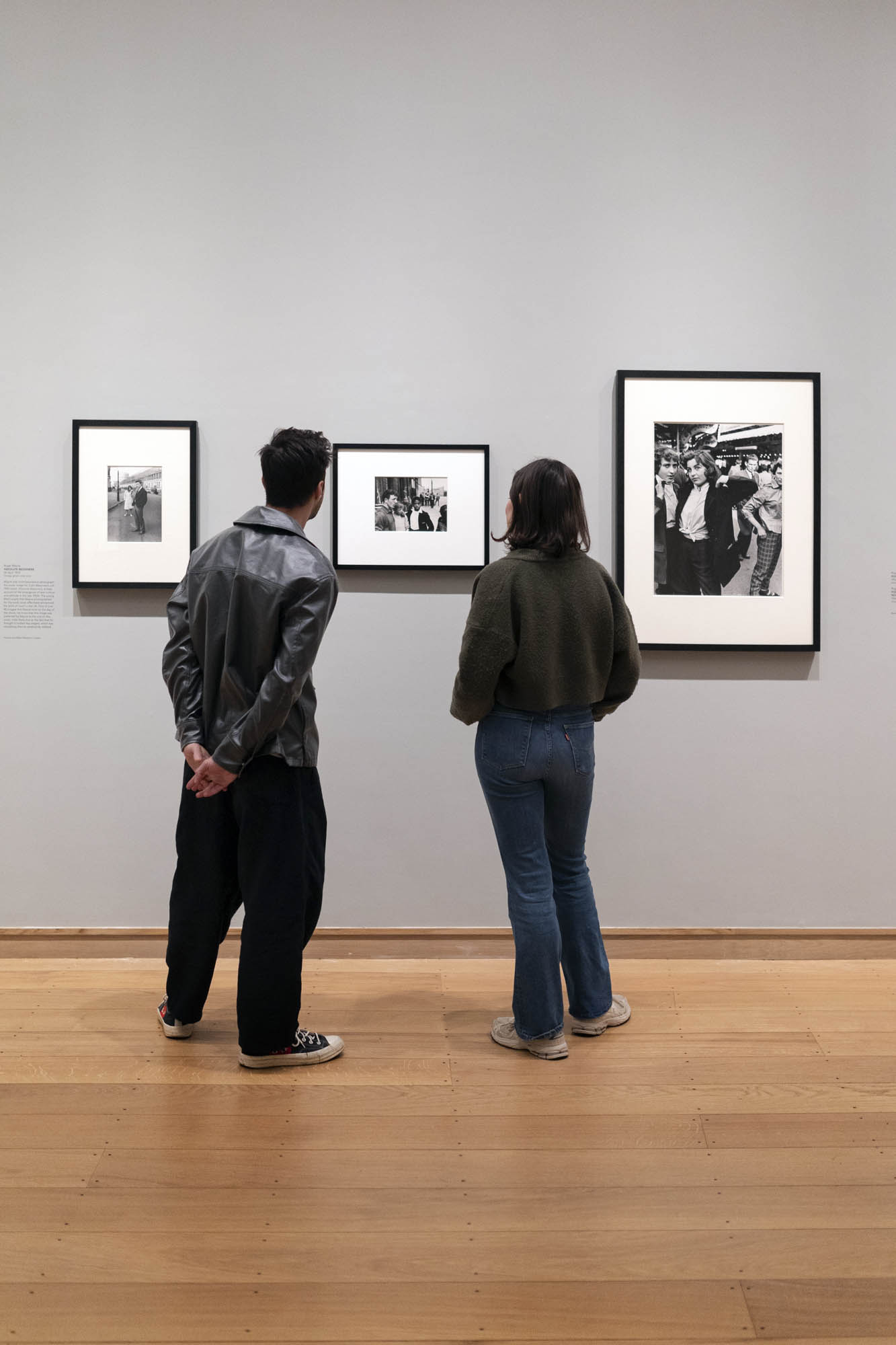
 

Installation view of the exhibition 'Roger Mayne: Youth' at the Courtauld Gallery, London showing at left, Mayne's 'Teenage Couple, Absolute Beginners photo-shoot' (26 April 1959); at centre, 'Men and boys, Southam Street, London' (1959); and at right, 'Teddy Girls, Battersea Funfair' (1956)


Installation view of the exhibition Roger Mayne: Youth at the Courtauld Gallery, London showing at left, Mayne’s Teenage Couple, Absolute Beginners photo-shoot (26 April 1959, below); at centre, Men and boys, Southam Street, London (1959, below); and at right, Teddy Girls, Battersea Funfair (1956, below)
 

Roger Mayne (British, 1929-2014) 'Teenagers, Soho Fair, London' 17 July 1958


Roger Mayne (British, 1929-2014)
Teenagers, Soho Fair, London
17 July 1958
Vintage gelatin silver print
24 x 36cm
Courtesy Wilson Centre for Photography
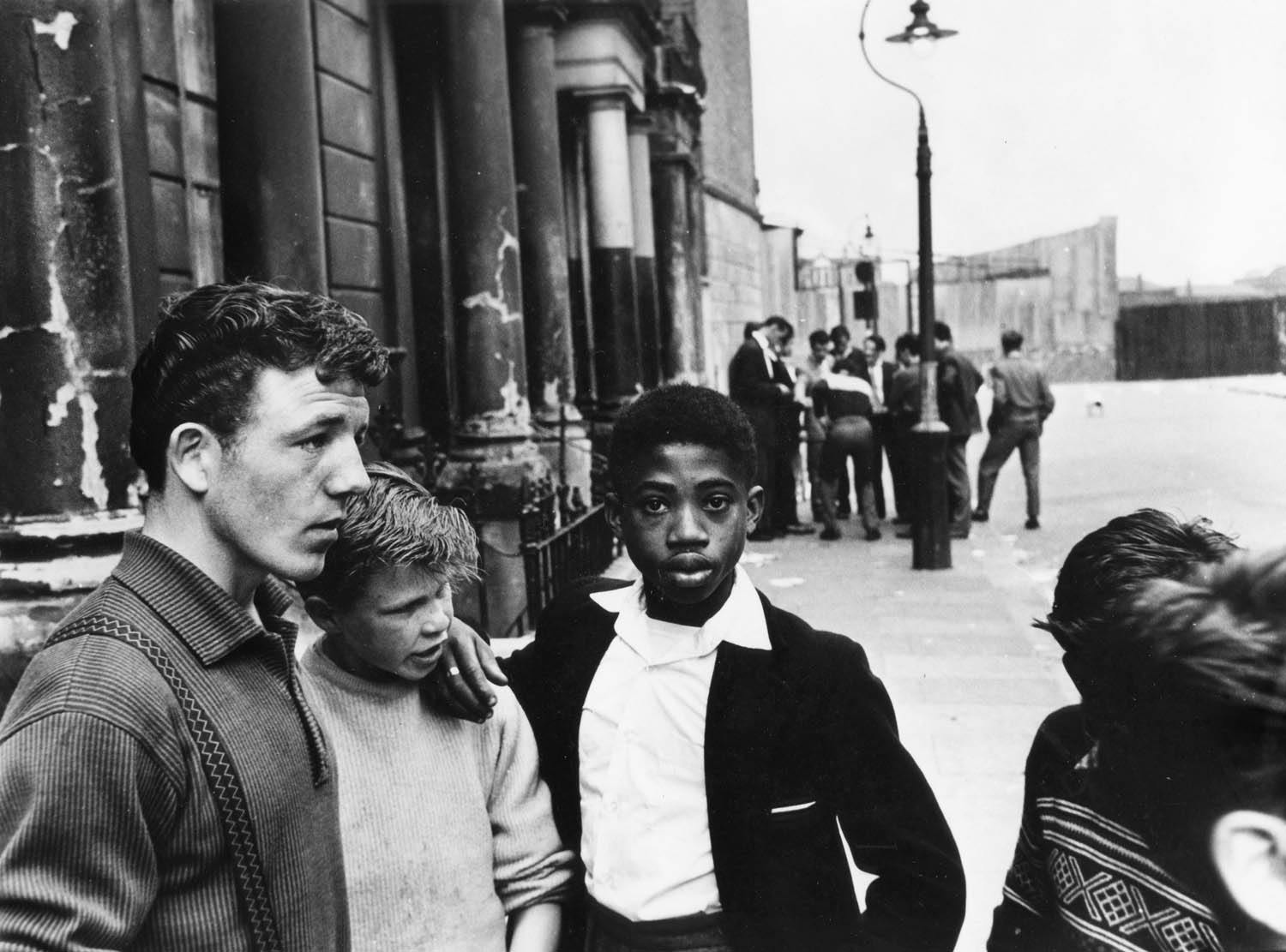
 

Roger Mayne (British, 1929-2014) 'Men and boys, Southam Street, London' 1959


Roger Mayne (British, 1929-2014)
Men and boys, Southam Street, London
1959
Vintage gelatin silver print
18.5 x 27cm
Courtesy the Roger Mayne Archive
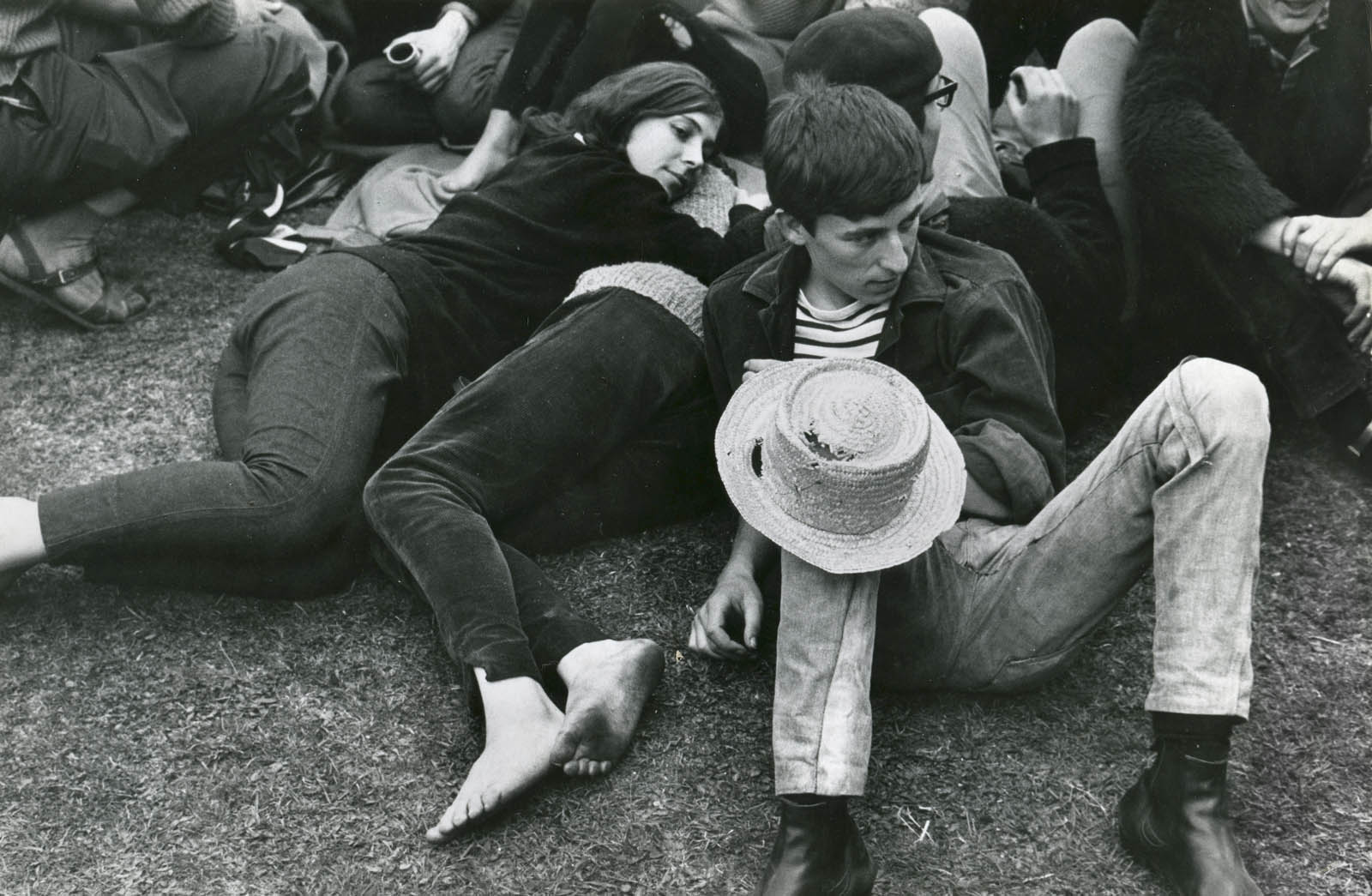
 

Roger Mayne (British, 1929-2014) 'Beaulieu Jazz Festival' 1961


Roger Mayne (British, 1929-2014)
Beaulieu Jazz Festival
1961
Vintage gelatin silver print
18 x 27cm
Courtesy the Roger Mayne Archive


Roger Mayne (British, 1929-2014) 'A Girl Jiving in Southam Street (Eileen Sheekey)' London, 1957


Roger Mayne (British, 1929-2014)
A Girl Jiving in Southam Street (Eileen Sheekey)
London, 1957
Vintage gelatin silver print
36.5 x 25.2cm
Courtesy Victoria & Albert Museum


The moving girl may have been living her best life, but this wasn’t peak prosperity for her. The street she lived on was the most densely populated street in London (according to a 1961 survey), a place where children played in the streets because there were no green spaces available….

Roger Mayne didn’t foreground this poverty. He photographed Southam Street in a way that was in some ways nostalgic. He wrote, “Empty, the streets have their own kind of beauty, a kind of decaying always great atmosphere… My reason for photographing the love on them, and the life on them. … [I]t may be warm and friendly on a sunny spring weekend when the street is swarming with children playing.”

At the same time, he doesn’t avoid the signs of poverty, the indicators of decay, and not does he romanticism them. When brickwork crumbles, you know it is a sing of neglect and not some kind of shabby working-class chic. His pictures also show the changes these communities are going through. Stephen Brooke wrote that the immediacy of Mayne’s images helped him “capture the dynamism of working-class life and chronicle new actors on the urban stage such as teenagers and African and West Indian immigrants.” …

It’s a world that is nostalgic in some ways, but is also a reminder of what we have lost. The public sites Mayne photographed, the spaces of the street, have been taken over by cars or commodified and securitized. And when we wonder at the nostalgia of it all, it might be a nostalgia tinged with mourning, not at what we have lost in our striving for affluence but at what has been taken from us.”

Colin Pantall. “West London’s Working-Class,” on the Blind Magazine website February 27, 2023 [Online] Cited 23/07/2024
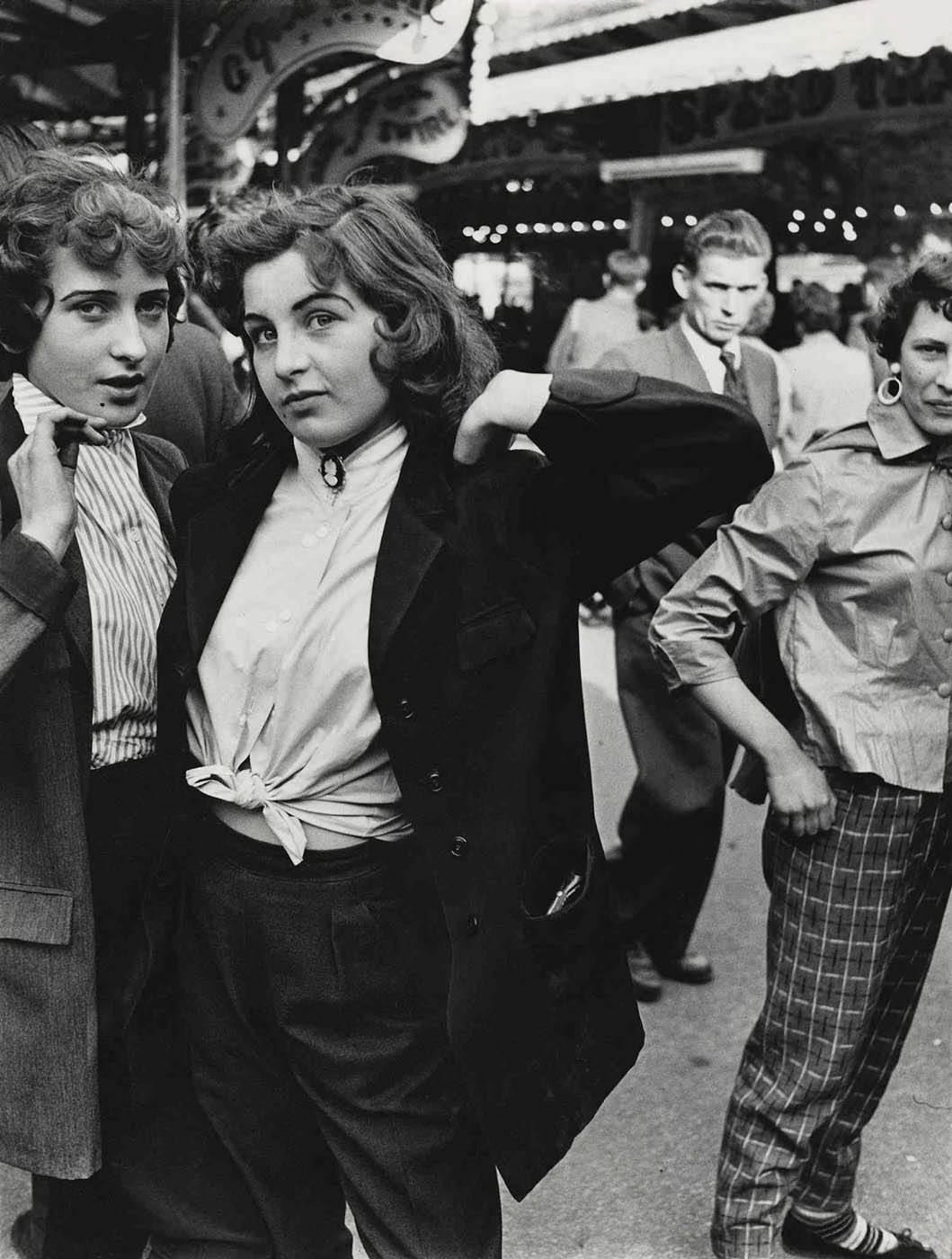
 

Roger Mayne (British, 1929-2014) 'Teddy Girls, Battersea Funfair' 1956


Roger Mayne (British, 1929-2014)
Teddy Girls, Battersea Funfair
1956
Vintage gelatin silver print
58.3 x 43.8cm
Courtesy Victoria & Albert Museum
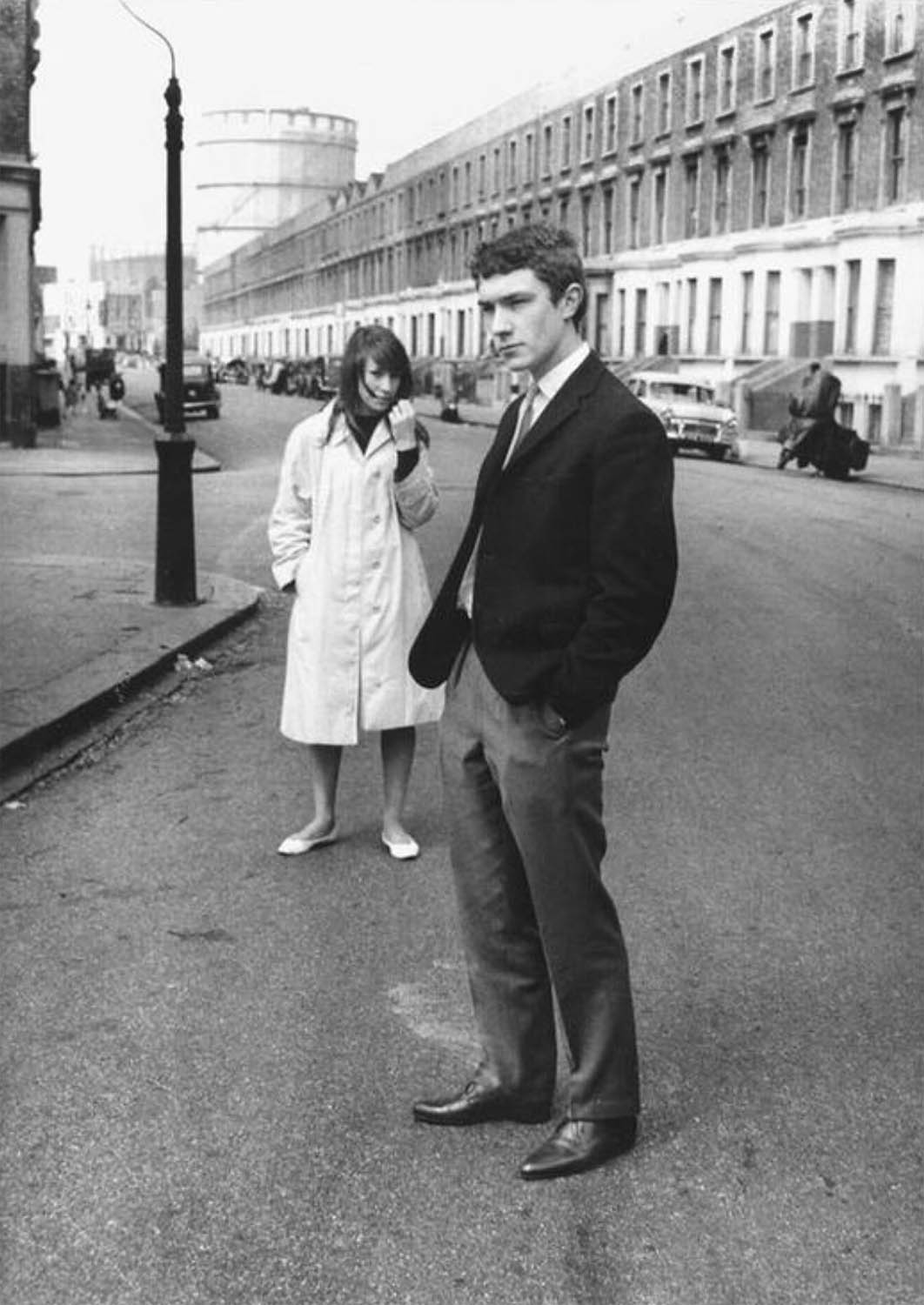
 

Roger Mayne (British, 1929-2014) 'Teenage Couple, Absolute Beginners photo-shoot' 26 April 1959


Roger Mayne (British, 1929-2014)
Teenage Couple, Absolute Beginners photo-shoot
26 April 1959
Vintage gelatin silver print
25.6 x 18.2cm
Courtesy Victoria & Albert Museum


Absolute beginners

26 April 1959

Mayne was commissioned to photograph the cover image for Colin MacInnes cult 1959 novel Absolute Beginners, a lively account of the emergence of teen culture and attitude in the late 1950s. The young Mod couple that Mayne photographed for the book cover effectively announced the birth of “cool” in the UK. One of over 80 images that Mayne took on the day of the shoot, we know that this image was preferred by Mayne to the one on the cover, most likely due to the fact that he thought it looked less staged, which was something that he vehemently disliked.

Victoria and Albert Museum, London

Wall text from the exhibition


In the case
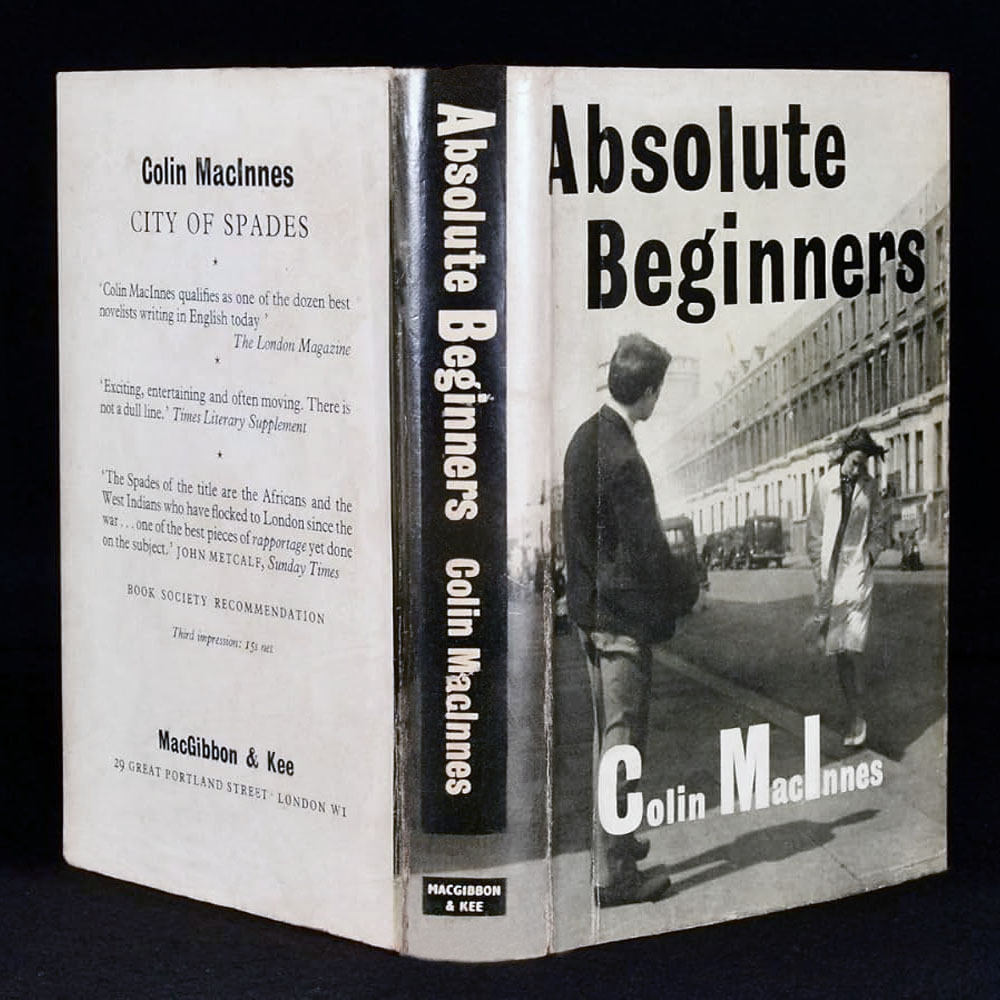
 

Colin MacInnes's 'Absolute Beginners' 1959 book cover


Colin MacInnes’s Absolute Beginners 1959 book cover


Soho, Notting Hill… a world of smoky jazz clubs, coffee bars and hip hang-outs in the center of London’s emerging youth culture. The young and restless – the Absolute Beginners – were creating a world as different as they dared from the traditional image of England’s green and pleasant land. Follow our young photographer as he records the moments of a young teenager’s life in the capital – sex, drugs and rock ‘n’ roll, the era of the first race riots and the lead-up to the swinging sixties.

A twentieth-century cult classic, Absolute Beginners remains the style bible for anyone interested in Mod culture and paints a vivid picture of a changing society with insight and sensitivity.

Text from the Goodreads website


Introduction

The novel is written from the first-person perspective of a teenage freelance photographer, who lives in a rundown yet vibrant part of West London he calls Napoli. The area is home to a large number of Caribbean immigrants, as well as English people on the margins of society, such as homosexuals and drug addicts.

The themes of the novel are the narrator’s opinions on the newly formed youth culture and its fixation on clothes and jazz music, his love for his ex-girlfriend Crêpe Suzette, the illness of his father, and simmering racial tensions in the summer of the Notting Hill race riots.

Plot summary

The novel is divided into four sections. Each details a particular day in the four months that spanned the summer of 1958.

In June takes up half of the book and shows the narrator meeting up with various teenaged friends and some adults in various parts of London and discussing his outlook on life and the new concept of being a teenager. He also learns that his ex-girlfriend, Suzette, is to enter a marriage of convenience with her boss, a middle-aged gay fashion designer called Henley.

In July has the narrator taking photographs by the river Thames, seeing the musical operetta H.M.S. Pinafore with his father, has a violent encounter with Ed the Ted and watches Hoplite’s appearance on Call-Me-Cobber’s TV show.

In August has the narrator and his father take a cruise along the Thames towards Windsor Castle. His father is taken ill on the trip and has to be taken to a doctor. The narrator also finds Suzette at her husband’s cottage in Cookham.

In September is set on the narrator’s 19th birthday. He sees this, symbolically, as the beginning of his last year as a teenager. He witnesses several incidents of racial violence, which disgust him. His father also dies, leaving him four envelopes stuffed with money. Suzette has separated from Henley, but still seems uncertain as to whether she should resume her relationship with the narrator. The narrator decides to leave the country and find a place where racism doesn’t exist. At the airport, he sees Africans arriving and gives them a warm welcome.

Text from the Wikipedia website


Roger Mayne (British, 1929-2014) 'Girls Dancing at Richmond Jazz Festival' 1962


Roger Mayne (British, 1929-2014)
Girls Dancing at Richmond Jazz Festival
1962
Vintage gelatin silver print mounted on board
61 x 91.5cm
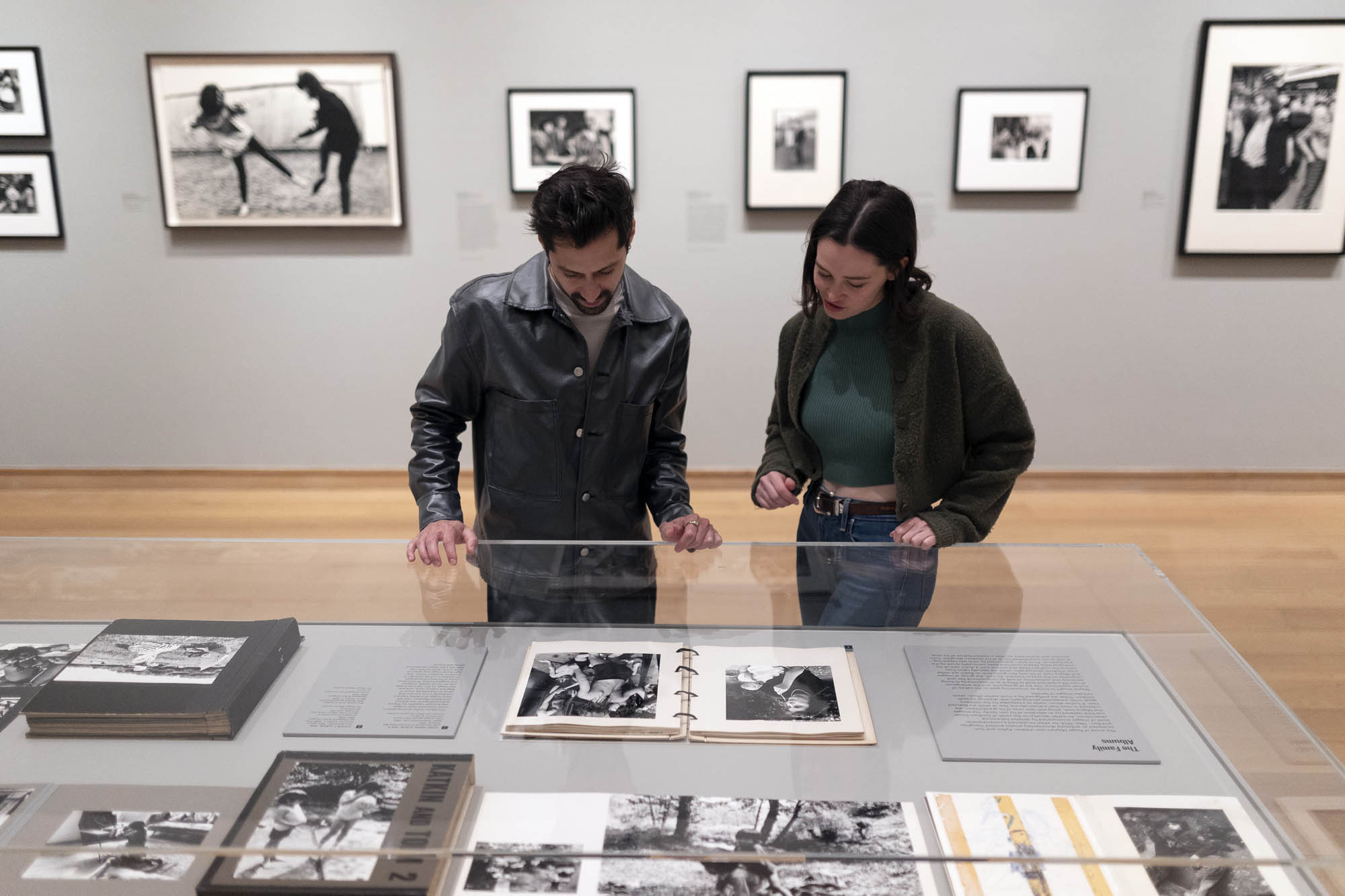
 

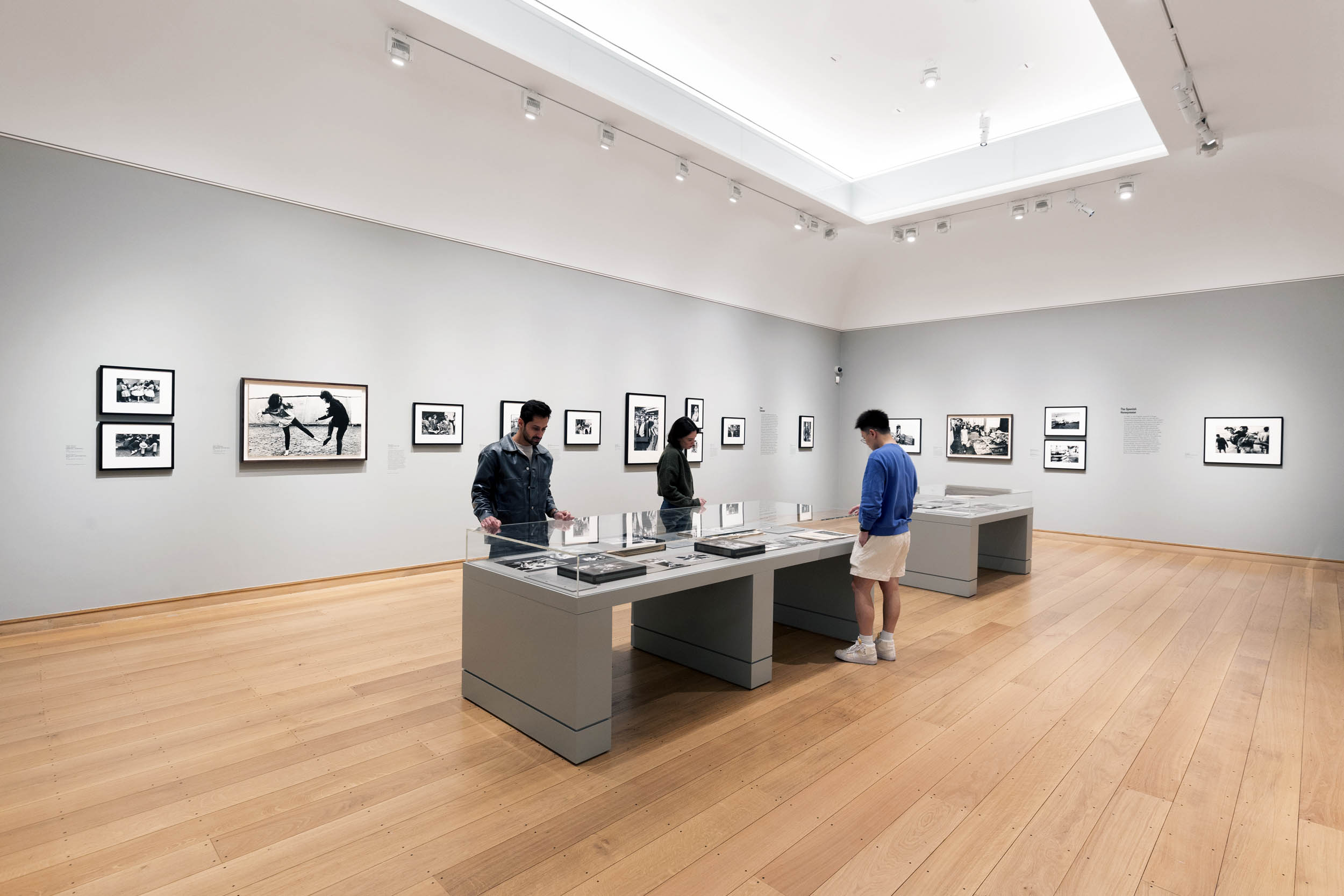
Installation view of the exhibition 'Roger Mayne: Youth' at the Courtauld Gallery, London


Installation view of the exhibition Roger Mayne: Youth at the Courtauld Gallery, London showing in the background at left, Girls Dancing at Richmond Jazz Festival (1962, above); and in the case the texts below


The Family Albums

The arrival of Roger Mayne’s own children, Katkin and Tom, prompted an ambitious documentary project entitled ‘Daughter and Son’, 1966-1974, for which he planned a comprehensive book of images accompanied by detailed behavioural observations. An earlier devotion to the youth of Southam Street was here replaced by an adoration of his own family. The images that Mayne took, along with later ones of his grandchildren, are collected in more than a dozen albums, four of which are featured here. A further album, made as a keepsake for the children’s great uncle, juxtaposed photographs with drawings by both children. These are prefigured by a much earlier album, which includes images of families.

Mayne sought to bring an unwavering gaze to the nature of human’s experiences. The act of giving birth and the emergence of new life presented itself to Mayne as an opportunity to bring sensitivity and authenticity as well as compositional flair and originality to these unique moments. As such, the group of images that Mayne took of his wife Ann giving birth to Katkin are unlike other childbirth photographs, which are typically taken from behind the mother’s head and without such a direct view of the emerging baby.

Cabinet display text from the exhibition

Early Work Album Vol II

This album of the photographer’s most important early images was brought together by Mayne and presented tot he Victoria and Albert Museum. The left-hand image of a family friend is marked by a wry humour that came to characterise much of Mayne’s mature work, whereas the image on the right-hand side, with the riot of closely, cropped and tangled bodies, foreshadows some of his best photographs of children in unruly abandon in London’s Southam Street. The right-hand image was taken on a trip to Victoria Park Lido with the artist Nigel Henderson’s family and friends.

Cabinet display text from the exhibition
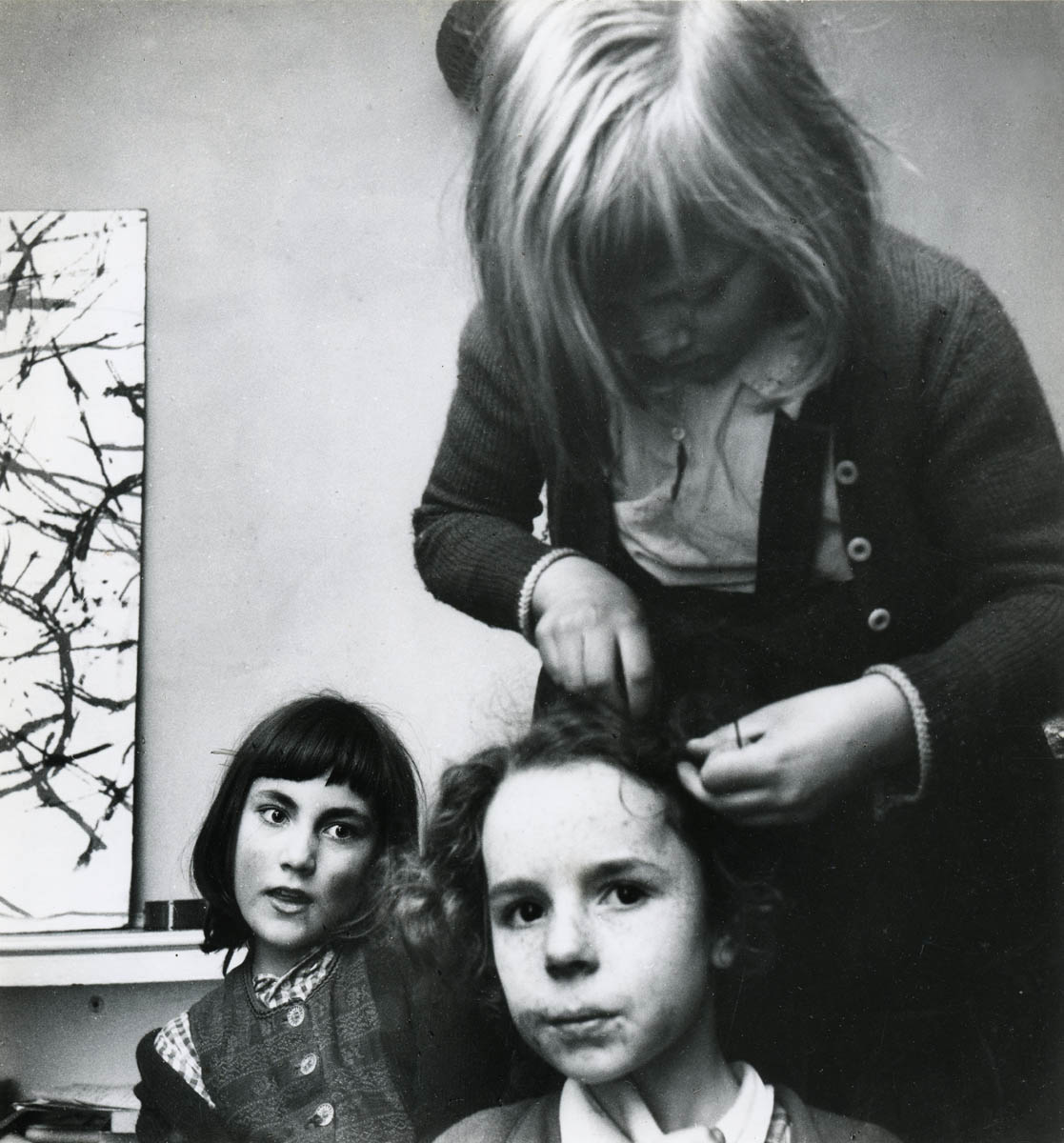
 

Roger Mayne (British, 1929-2014) 'Three children at Nigel Henderson's: Drusilla (Jo) and Justin Henderson, with a friend, Bethnal Green' 1953


Roger Mayne (British, 1929-2014)
Three children at Nigel Henderson’s: Drusilla (Jo) and Justin Henderson, with a friend, Bethnal Green
1953
Vintage gelatin silver print
21 x 20cm
Courtesy the Roger Mayne Archive
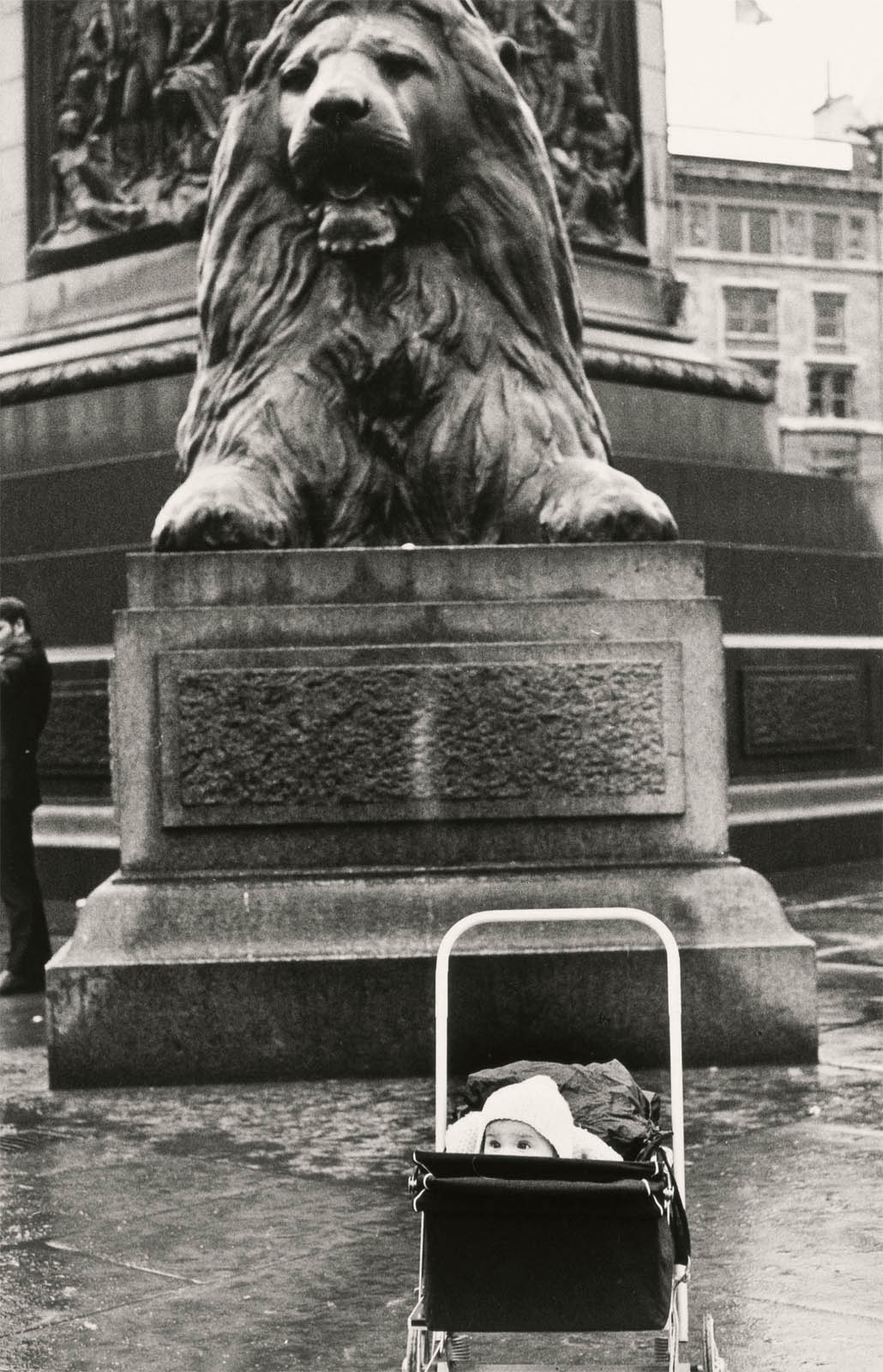
 

Roger Mayne (British, 1929-2014) 'Tom, Trafalgar Square' 1970


Roger Mayne (British, 1929-2014)
Tom, Trafalgar Square
1970
Vintage gelatin silver print
27 x 17cm
Courtesy the Roger Mayne Archive


The Courtauld Gallery
Somerset House, Strand,
London WC2R 0RN

Opening hours:
Monday to Sunday 10.00 – 18.00

The Courtauld Gallery website

LIKE ART BLART ON FACEBOOK

Back to top

Exhibition: ‘Intersections: Photographs and Videos from the National Gallery of Art and the Corcoran Gallery of Art’ at the National Gallery of Art, Washington

Exhibition dates: 29th May, 2016 – 2nd January, 2017

Curators: Sarah Greenough, senior curator, department of photographs, and Philip Brookman, consulting curator, department of photographs, both National Gallery of Art, are the exhibition curators.


Louis Stettner (American, 1922-2016) 'Times Square, New York City' 1952-1954 from the exhibition Exhibition: 'Intersections: Photographs and Videos from the National Gallery of Art and the Corcoran Gallery of Art' at the National Gallery of Art, Washington, May 2016 - Jan 2017


Louis Stettner (American, 1922-2016)
Times Square, New York City
1952-1954
Gelatin silver print
Sheet (trimmed to image): 42.1 x 27.5cm (16 9/16 x 10 13/16 in.)
National Gallery of Art, Washington, Patrons’ Permanent Fund


The last posting of a fruitful year for Art Blart. I wish all the readers of Art Blart a happy and safe New Year!

The exhibition is organised around five themes – movement, sequence, narrative, studio, and identity – found in the work of Muybridge and Stieglitz, themes then developed in the work of other artists. While there is some interesting work in the posting, the conceptual rationale and stand alone nature of the themes and the work within them is a curatorial ordering of ideas that, in reality, cannot be contained within any one boundary, the single point of view.

Movement can be contained in sequences; narrative can be unfolded in a sequence (as in the work of Duane Michals); narrative and identity have a complex association which can also be told through studio work (eg. Gregory Crewdson), etc… What does Roger Mayne’s Goalie, Street Football, Brindley Road (1956, below) not have to do with identity, the young lad with his dirty hands, playing in his socks, in a poverty stricken area of London; why has Hiroshi Sugimoto’s Oscar Wilde (1999, below) been included in the studio section when it has much more to do with the construction of identity through photography – “Triply removing his portrait from reality – from Oscar Wilde himself to a portrait photograph to a wax sculpture and back to a photograph” – which confounds our expectations of the nature of photography. Photography is nefariously unstable in its depiction of an always, constructed reality, through representation(s) which reject simple causality.

To isolate and embolden the centre is to disclaim and disavow the periphery, work which crosses boundaries, is multifaceted and multitudinous; work which forms a nexus for networks of association beyond borders, beyond de/lineation – the line from here to there. The self-contained themes within this exhibition are purely illusory.

Dr Marcus Bunyan


Many thankx to the National Gallery of Art for allowing me to publish the photographs in the posting. Please click on the photographs for a larger version of the image.


“We can no longer accept that the identity of a man can be adequately established by preserving and fixing what he looks like from a single viewpoint in one place.”


John Berger. “No More Portraits,” in New Society August 1967


“Intersections: Photographs and Videos from the National Gallery of Art and the Corcoran Gallery of Art explores the connections between the two newly joined photography collections. On view from May 29, 2016, through January 2, 2017, the exhibition is organised around themes found in the work of the two pioneers of each collection: Eadweard Muybridge (1830-1904) and Alfred Stieglitz (1864-1946). Inspired by these two seminal artists, Intersections brings together more than 100 highlights of the recently merged collections by a range of artists from the 1840s to today.
Just as the nearly 700 photographs from Muybridge’s groundbreaking publication Animal Locomotion, acquired by the Corcoran Gallery of Art in 1887, became the foundation for the institution’s early interest in photography, the Key Set of more than 1,600 works by Stieglitz, donated by Georgia O’Keeffe and the Alfred Stieglitz Estate, launched the photography collection at the National Gallery of Art in 1949.”
Press release from the National Gallery of Art


Exhibition highlights

The exhibition is organised around five themes – movement, sequence, narrative, studio, and identity – found in the work of Muybridge and Stieglitz.

Movement

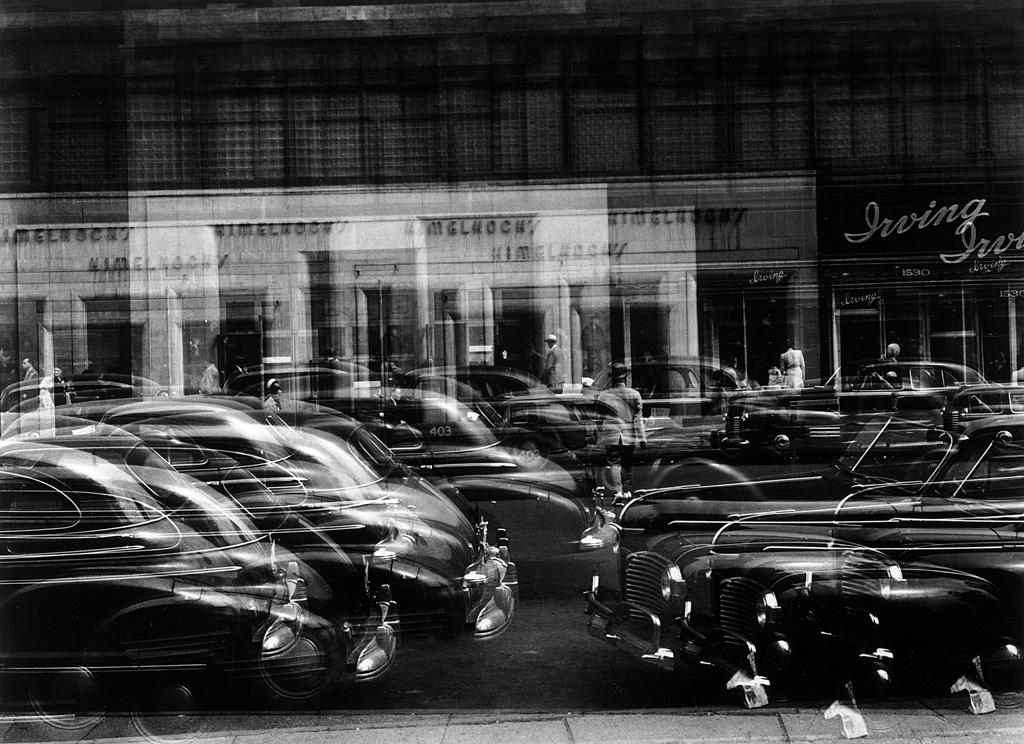
Works by Muybridge, who is best known for creating photographic technologies to stop and record motion, anchor the opening section devoted to movement. Photographs by Berenice Abbott and Harold Eugene Edgerton, which study how objects move through space, are included, as are works by Roger Mayne, Alexey Brodovitch, and other who employed the camera to isolate an instant from the flux of time.

Wall text

Intersections wall text


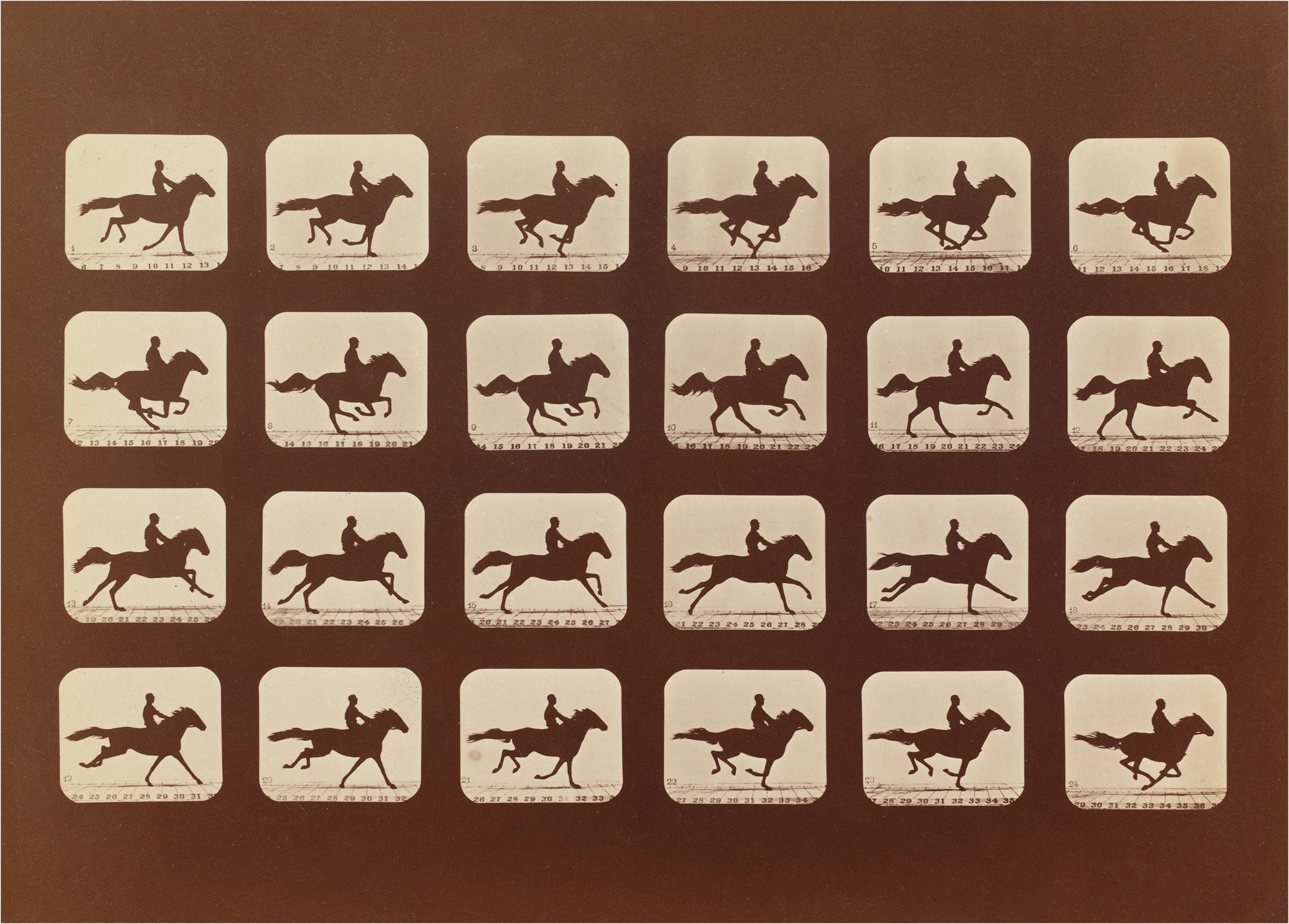
Eadweard Muybridge (English, 1830-1904) 'Horses. Running. Phyrne L. No. 40, from The Attitudes of Animals in Motion' 1879 from the National Gallery of Art and the Corcoran Gallery of Art' at the National Gallery of Art, Washington, May 2016 - Jan 2017


Eadweard Muybridge (English, 1830-1904)
Horses. Running. Phyrne L. No. 40, from The Attitudes of Animals in Motion
1879
Albumen print
Image: 16 x 22.4cm (6 5/16 x 8 13/16 in.)
Sheet: 25.7 x 32.4cm (10 1/8 x 12 3/4 in.)
National Gallery of Art, Washington, Gift of Mary and Dan Solomon


In order to analyse the movement of racehorses, farm animals, and acrobats, Muybridge pioneered new and innovative ways to stop motion with photography. In 1878, he started making pictures at railroad magnate Leland Stanford’s horse farm in Palo Alto, California, where he developed an electronic shutter that enabled exposures as fast as one-thousandth of a second. In this print from Muybridge’s 1881 album The Attitudes of Animals in Motion, Stanford’s prized racehorse Phryne L is shown running in a sequential grid of pictures made by 24 different cameras with electromagnetic shutters tripped by wires as the animal ran across the track. These pictures are now considered a critical step in the development of cinema.


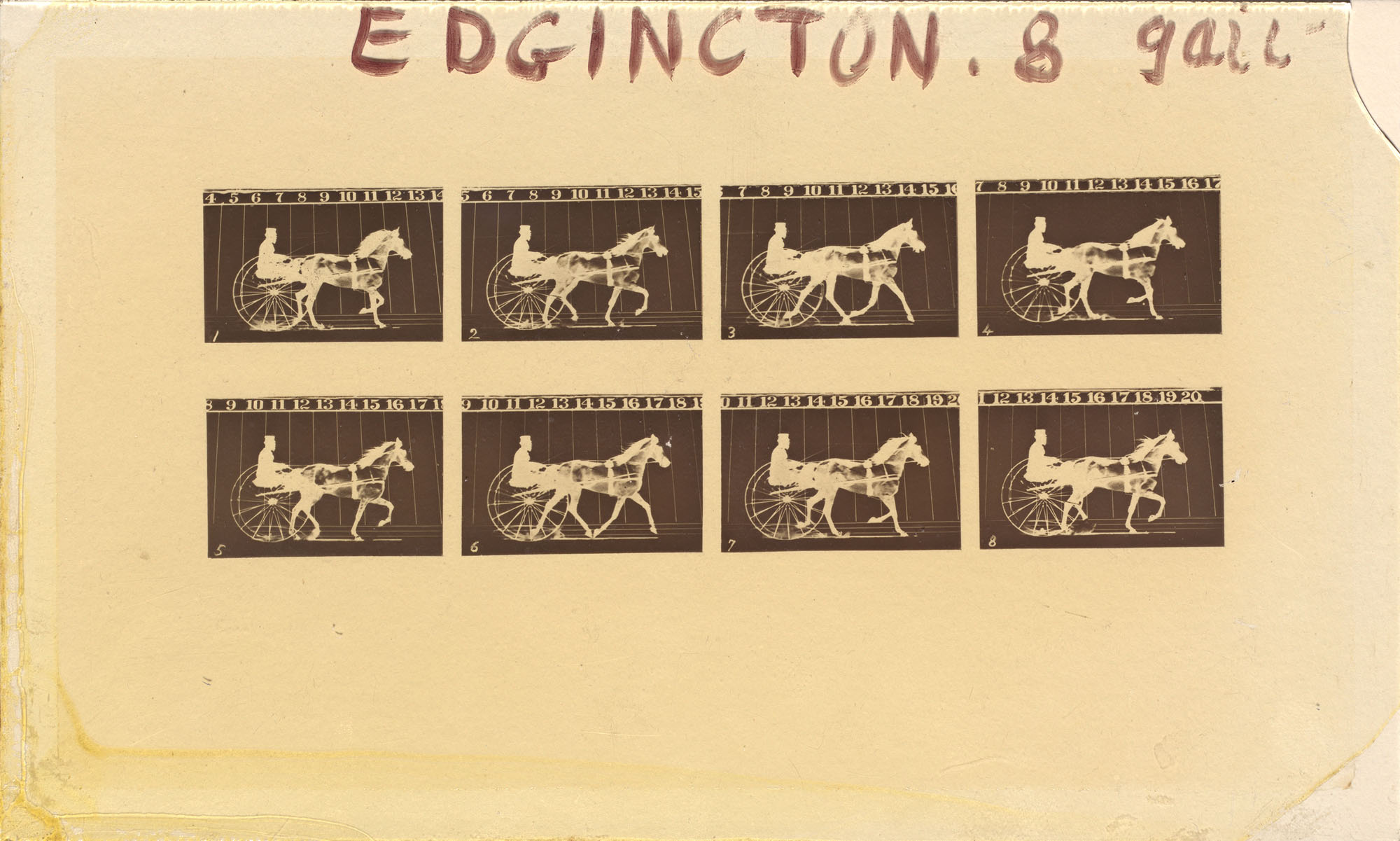
Eadweard Muybridge (English, 1830-1904) 'Internegative for Horses. Trotting. Abe Edgington. No. 28, from The Attitudes of Animals in Motion' 1878


Eadweard Muybridge (English, 1830-1904)
Internegative for Horses. Trotting. Abe Edgington. No. 28, from The Attitudes of Animals in Motion
1878
Collodion negative
Overall (glass plate): 15.3 x 25.4cm (6 x 10 in.)
National Gallery of Art, Washington, Gift of Mary and Dan Solomon and Patrons’ Permanent Fund


This glass negative shows the sequence of Leland Stanford’s horse Abe Edgington trotting across a racetrack in Palo Alto, California – a revolutionary record of the changes in the horse’s gait in about one second. Muybridge composed the negative from photographs made by eight different cameras lined up to capture the horse’s movements. Used to print the whole sequence together onto albumen paper, this internegative served as an intermediary step in the production of Muybridge’s 1881 album The Attitudes of Animals in Motion.


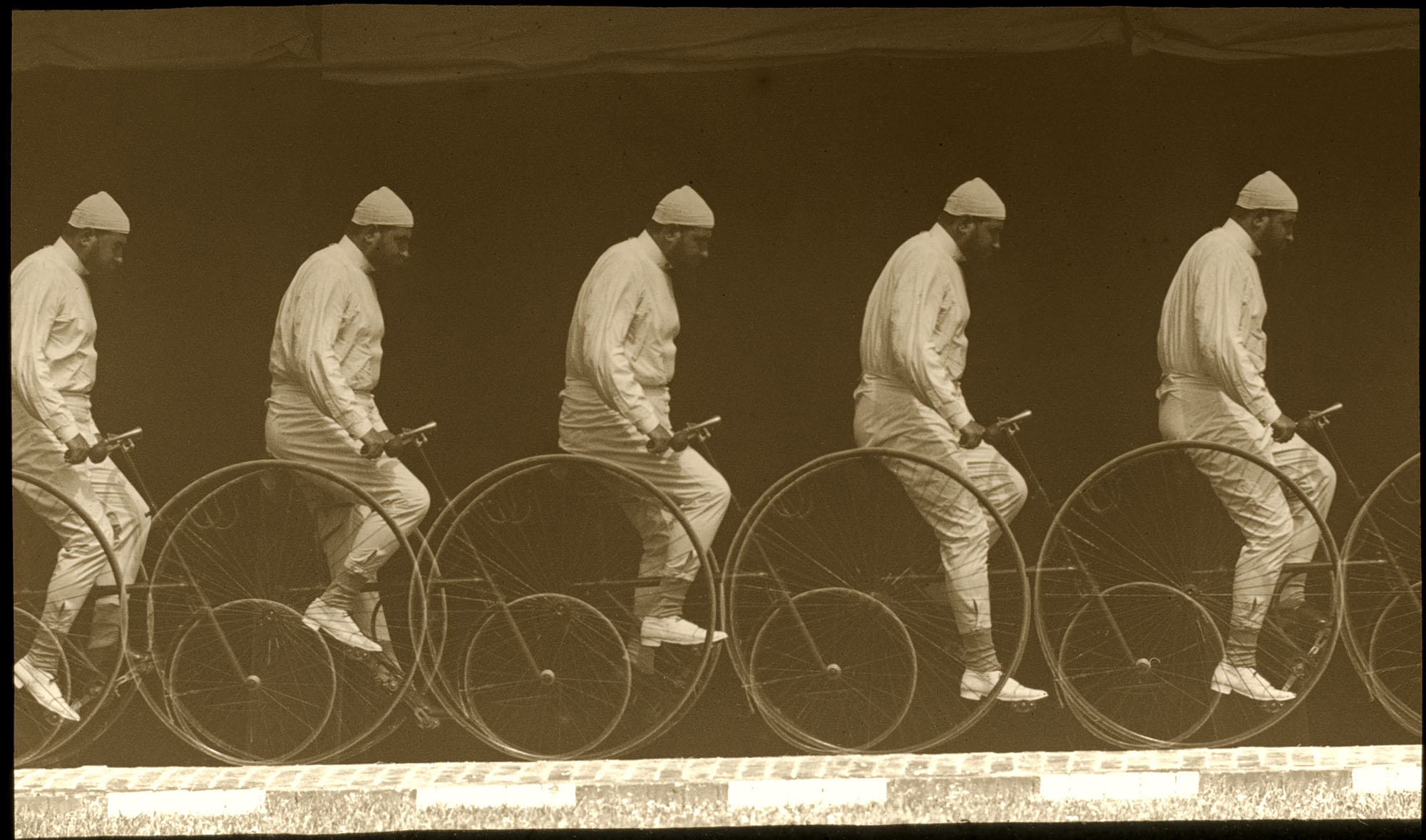
Étienne Jules Marey (French, 1830-1904) 'Chronophotograph of a Man on a Bicycle' c. 1885-1890


Étienne Jules Marey (French, 1830-1904)
Chronophotograph of a Man on a Bicycle
c. 1885-1890
Glass lantern slide
Image: 4 x 7.5cm (1 9/16 x 2 15/16 in.)
Plate: 8.8 x 10.2cm (3 7/16 x 4 in.)
National Gallery of Art, Washington, Gift of Mary and David Robinson


A scientist and physiologist, Marey became fascinated with movement in the 1870s. Unlike Muybridge, who had already made separate pictures of animals in motion, Marey developed in 1882 a means to record several phases of movement onto one photographic plate using a rotating shutter with slots cut into it. He called this process “chronophotography,” meaning photography of time. His photographs, which he published in books and showed in lantern slide presentations, influenced 20th-century cubist, futurist, and Dada artists who examined the interdependence of time and space.


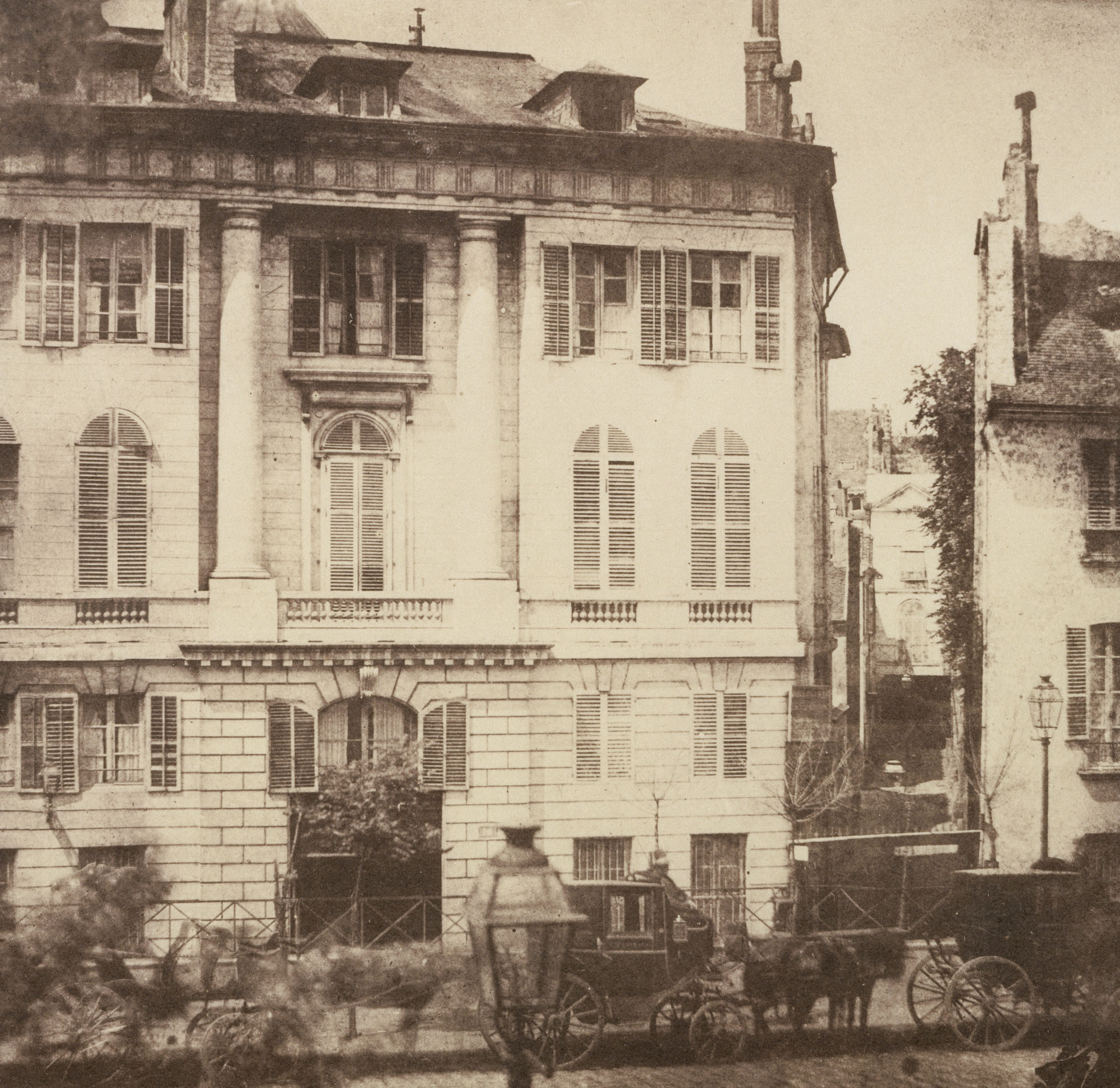
William Henry Fox Talbot (English, 1800-1877) 'The Boulevards of Paris' 1843


William Henry Fox Talbot (English, 1800-1877)
The Boulevards of Paris
1843
Salted paper print
Image: 16.6 × 17.1cm (6 9/16 × 6 3/4 in.)
Sheet: 19 × 23.2cm (7 1/2 × 9 1/8 in.)
National Gallery of Art, Washington, New Century Fund


As soon as Talbot announced his invention of photography in 1839, he realised that its ability to freeze time enabled him to present the visual spectacle of the world in an entirely new way. By capturing something as mundane as a fleeting moment on a busy street, he could transform life into art, creating a picture that could be savoured long after the event had transpired.


David Octavius Hill (Scottish, 1802-1870) and Robert Adamson (Scottish, 1821-1848) 'Colinton Manse and weir, with part of the old mill on the right' 1843-1847


David Octavius Hill (Scottish, 1802-1870) and Robert Adamson (Scottish, 1821-1848)
Colinton Manse and weir, with part of the old mill on the right
1843-1847
Salted paper print
Image: 20.7 x 14.6cm (8 1/8 x 5 3/4 in.)
National Gallery of Art, Washington, Paul Mellon Fund


In 1843, only four years after Talbot announced his negative / positive process of photography, painter David Octavius Hill teamed up with engineer Robert Adamson. Working in Scotland, they created important early portraits of the local populace and photographed Scottish architecture, rustic landscapes, and city scenes. Today a suburb southwest of Edinburgh, 19th-century Colinton was a mill town beside a river known as the Water of Leith. Because of the long exposure time required to make this photograph, the water rushing over a small dam appears as a glassy blur.


Thomas Annan (Scottish, 1829-1887) 'Old Vennel, Off High Street' 1868-1871


Thomas Annan (Scottish, 1829-1887)
Old Vennel, Off High Street
1868-1871
Carbon print
Image: 26.9 x 22.3cm (10 9/16 x 8 3/4 in.)
Sheet: 50.8 x 37.9cm (20 x 14 15/16 in.)
National Gallery of Art, Washington, Patrons’ Permanent Fund


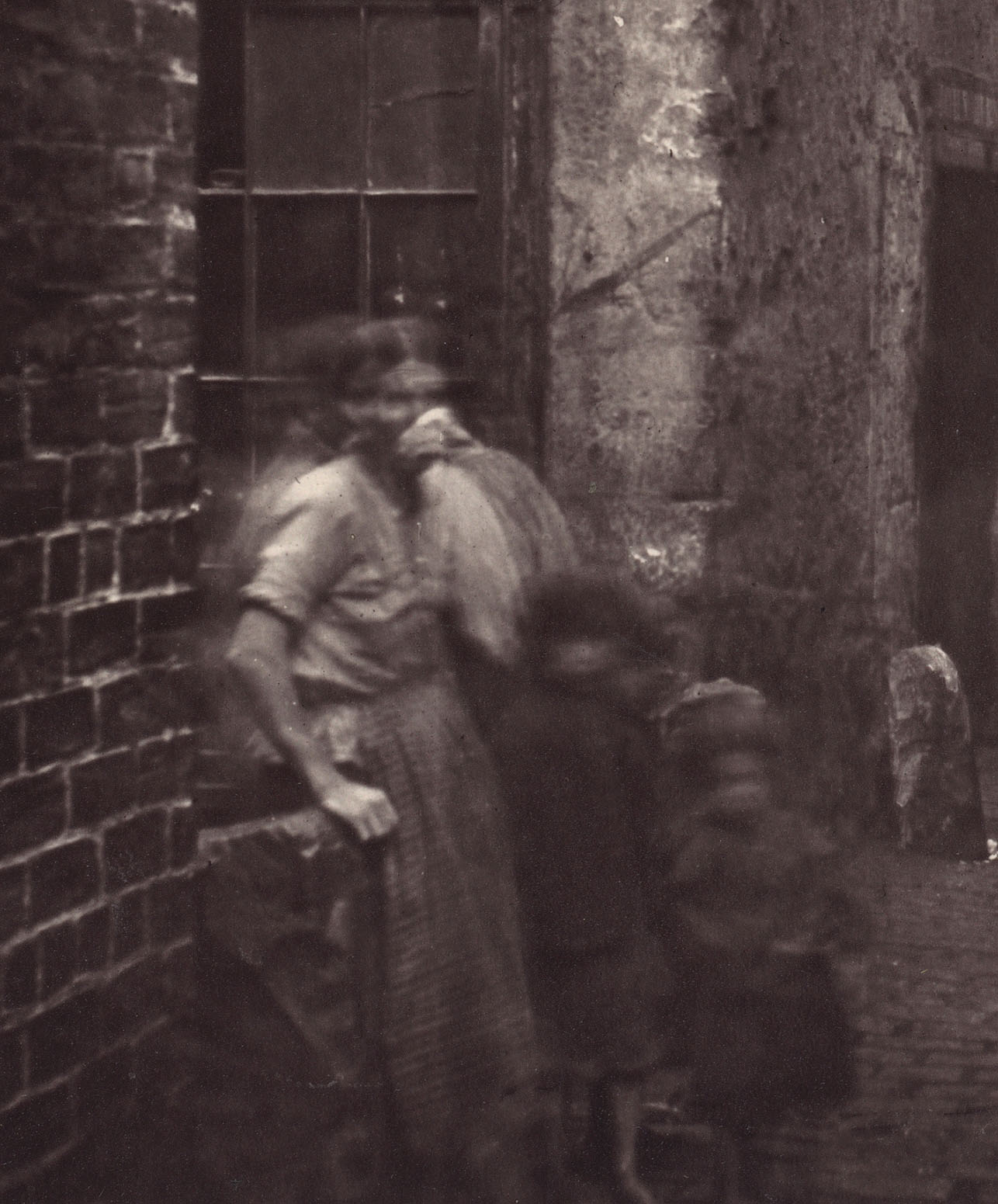
In 1868, Glasgow’s City Improvements Trust hired Annan to photograph the “old closes and streets of Glasgow” before the city’s tenements were demolished. Annan’s pictures constitute one of the first commissioned photographic records of living conditions in urban slums. The collodion process Annan used to make his large, glass negatives required a long exposure time. In the dim light of this narrow passage, it was impossible for the photographer to stop the motion of the restless children, who appear as ghostly blurs moving barefoot across the cobblestones.


Thomas Annan (Scottish, 1829-1887) 'Old Vennel, Off High Street' 1868-1871 (detail)


Thomas Annan (Scottish, 1829-1887)
Old Vennel, Off High Street (detail)
1868-1871
Carbon print
Image: 26.9 x 22.3cm (10 9/16 x 8 3/4 in.)
Sheet: 50.8 x 37.9cm (20 x 14 15/16 in.)
National Gallery of Art, Washington, Patrons’ Permanent Fund


Alfred Stieglitz (American, 1864-1946) 'Going to the Post, Morris Park' 1904


Alfred Stieglitz (American, 1864-1946)
Going to the Post, Morris Park
1904
Photogravure
Image: 30.8 x 26.4cm (12 1/8 x 10 3/8 in.)
Sheet: 38.5 x 30.3cm (15 3/16 x 11 15/16 in.)
National Gallery of Art, Washington, Alfred Stieglitz Collection


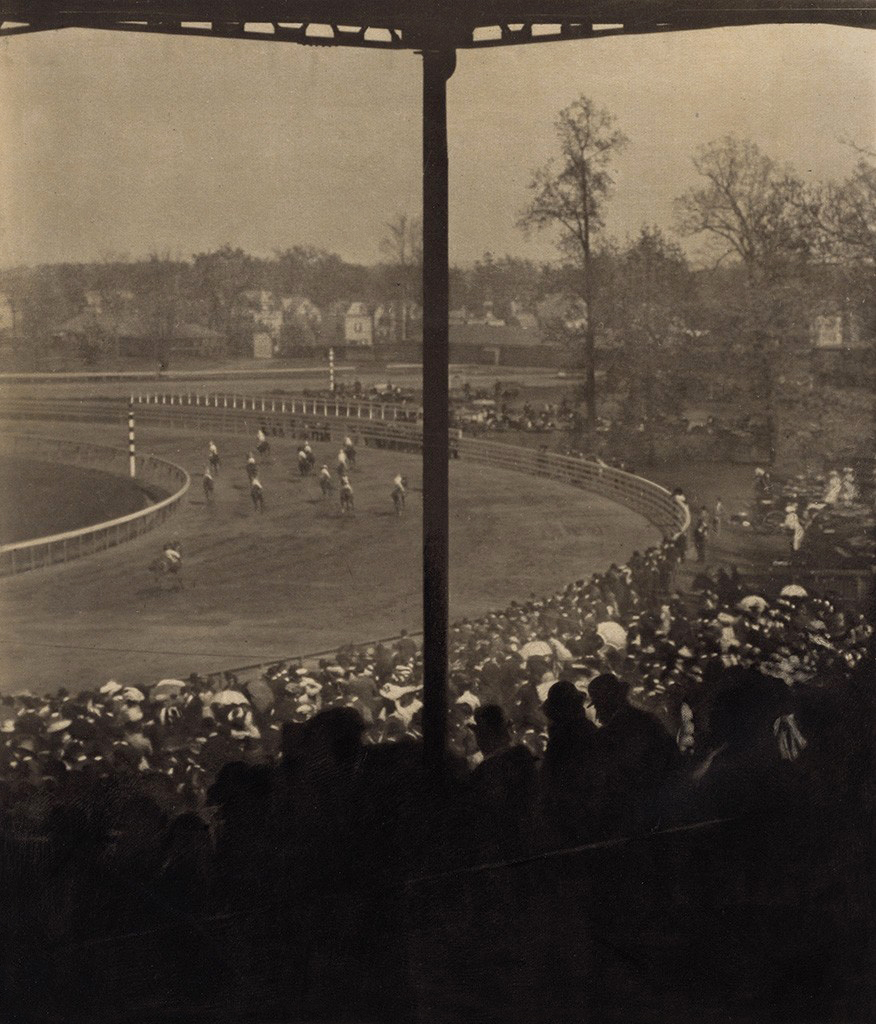
In the 1880s and 1890s, improvements in photographic processes enabled manufacturers to produce small, handheld cameras that did not need to be mounted on tripods. Faster film and shutter speeds also allowed practitioners to capture rapidly moving objects. Stieglitz was one of the first fine art photographers to exploit the aesthetic potential of these new cameras and films. Around the turn of the century, he made many photographs of rapidly moving trains, horse-drawn carriages, and racetracks that capture the pace of the increasingly modern city.


Harold Eugene Edgerton (American, 1903-1990) 'Wes Fesler Kicking a Football' 1934


Harold Eugene Edgerton (American, 1903-1990)
Wes Fesler Kicking a Football
1934
Gelatin silver print
Image: 11 1/2 x 9 5/8 in.
Sheet: 13 15/16 x 11 in.
National Gallery of Art, Washington, Corcoran Collection (Museum Purchase with the aid of funds from the National Endowment for the Arts, Washington, D.C., a Federal Agency, and The Polaroid Corporation)


A professor of electrical engineering at the Massachusetts Institute of Technology, Edgerton in the early 1930s invited the stroboscope, a tube filled with gas that produced high-intensity bursts of light at regular and very brief intervals. He used it to illuminate objects in motion so that they could be captured by a camera. At first he was hired by industrial clients to reveal flaws in their production of materials, but by the mid-1930s he began to photography everyday events… Edgerton captured phenomena moving too fast for the naked eye to see, and revealed the beauty of people and objects in motion.


Alexey Brodovitch (American born Russia, 1898-1971) 'Untitled from "Ballet" series' 1938


Alexey Brodovitch (American born Russia, 1898-1971)
Untitled from “Ballet” series
1938
Gelatin silver print
Overall: 20.4 x 27.5cm (8 1/16 x 10 13/16 in.)
National Gallery of Art, Washington, Diana and Mallory Walker Fund


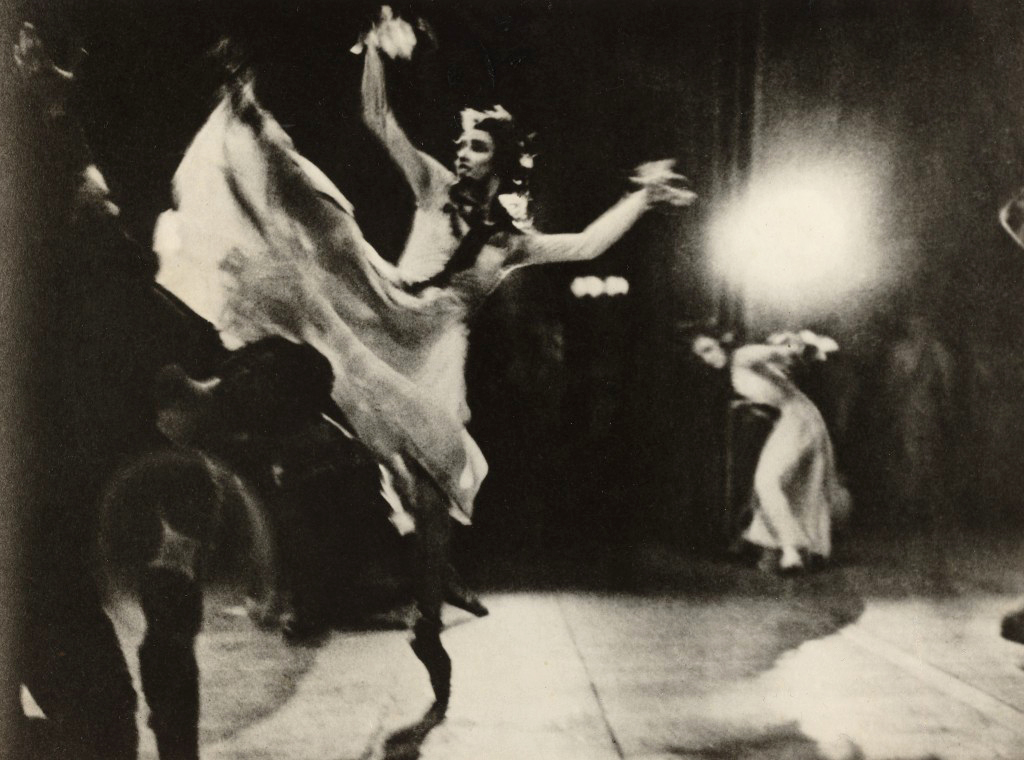
A graphic artist, Russian-born Brodovitch moved to the United States from Paris in 1930. Known for his innovative use of photographs, illustrations, and type on the printed page, he became art director for Harper’s Bazaar in 1934, and photographed the Ballets Russes de Monte Carlo during their American tours from 1935 to 1939. Using a small-format, 35 mm camera, Brodovitch worked in the backstage shadows and glaring light of the theatre to produce a series of rough, grainy pictures that convey the drama and action of the performance. This photograph employs figures in motion, a narrow field of focus, and high-contrast effects to express the stylised movements of Léonide Massine’s 1938 choreography for Beethoven’s Seventh Symphony.


Harry Callahan (American, 1912-1999) 'Detroit' 1943


Harry Callahan (American, 1912-1999)
Detroit
c. 1943
Dye imbibition print, printed c. 1980
Overall (image): 18 x 26.7cm (7 1/16 x 10 1/2 in.)
Sheet: 27.31 x 36.83cm (10 3/4 x 14 1/2 in.)
National Gallery of Art, Washington, Gift of the Callahan Family


Harry Callahan (American, 1912-1999) 'Camera Movement on Neon Lights at Night' 1946


Harry Callahan (American, 1912-1999)
Camera Movement on Neon Lights at Night
1946
Dye imbibition print, printed 1979
Image: 8 3/4 x 13 5/8 in.
Sheet: 10 3/8 x 13 15/16 in.
National Gallery of Art, Washington, Corcoran Collection (Gift of Richard W. and Susan R. Gessner)


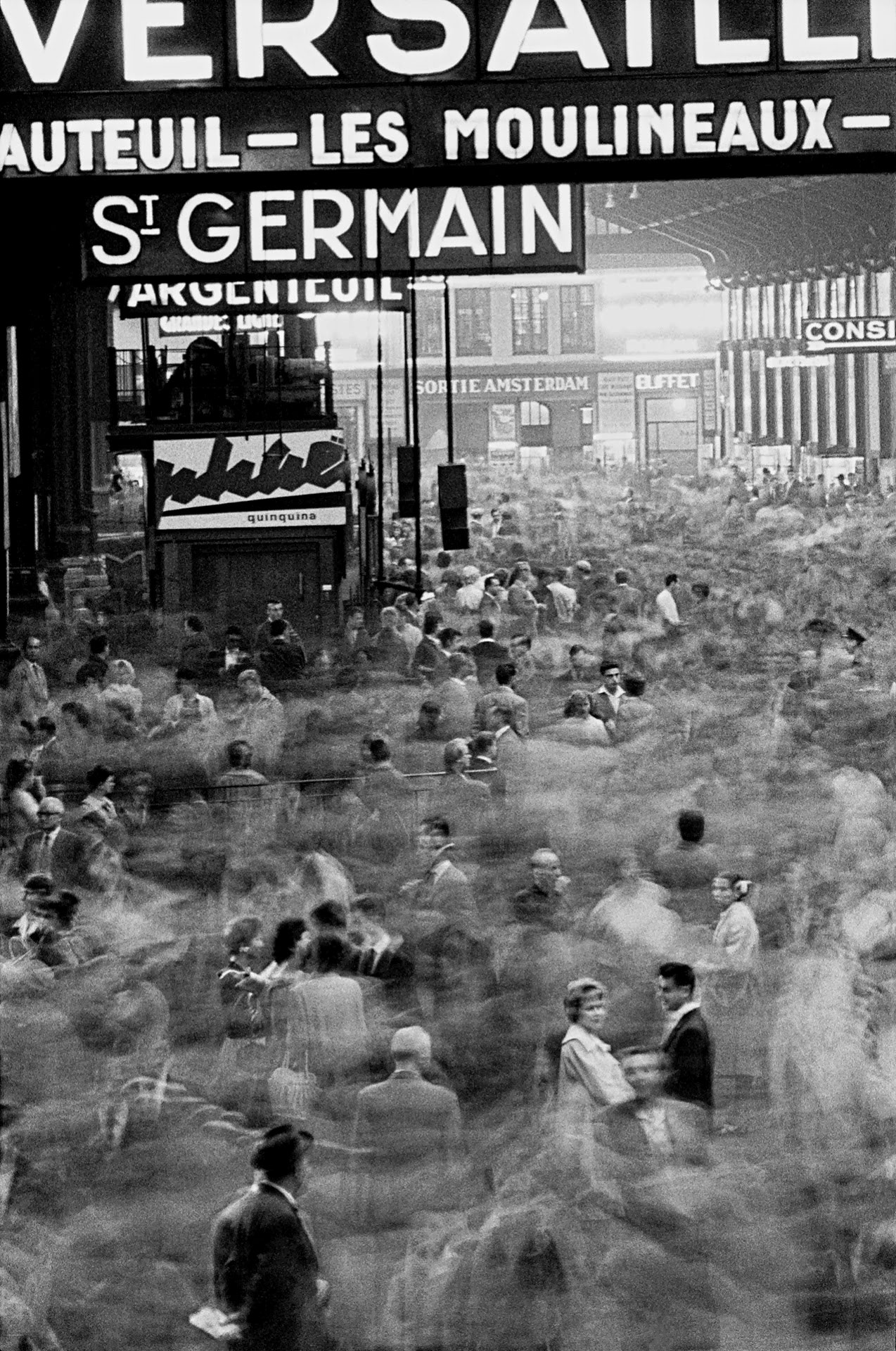
Frank Horvat (Italian, 1928-2020) 'Paris, Gare Saint-Lazare' 1959


Frank Horvat (Italian, 1928-2020)
Paris, Gare Saint-Lazare
1959
Gelatin silver print
Overall: 39.3 x 26.2cm (15 1/2 x 10 5/16 in.)
National Gallery of Art, Washington, Patrons’ Permanent Fund


Gare Saint-Lazare is one of the principal railway stations in Paris. Because of its industrial appearance, steaming locomotives, and teeming crowds, it was a frequent subject for 19th-century French painters – including Claude Monet, Édouard Manet, and Gustave Caillebotte – who used it to express the vitality of modern life. 20th-century artists such as Horvat also depicted it to address the pace and anonymity that defined their time. Using a telephoto lens and long exposure, he captured the rushing movement of travellers scattered beneath giant destination signs.


Roger Mayne (English, 1929-2014) 'Goalie, Street Football, Brindley Road' 1956


Roger Mayne (English, 1929-2014)
Goalie, Street Football, Brindley Road
1956
Gelatin silver print
Image: 34.7 × 29.1cm (13 11/16 × 11 7/16 in.)
National Gallery of Art, Washington, Patrons’ Permanent Fund


From 1956 to 1961, Mayne photographed London’s North Kensington neighbourhood to record its emergence from the devastation and poverty caused by World War II. This dramatic photograph of a young goalie lunging for the ball during an after-school soccer game relies on the camera’s ability to freeze the fast-paced and unpredictable action. Because the boy’s daring lunge is forever suspended in time, we will never know its outcome.


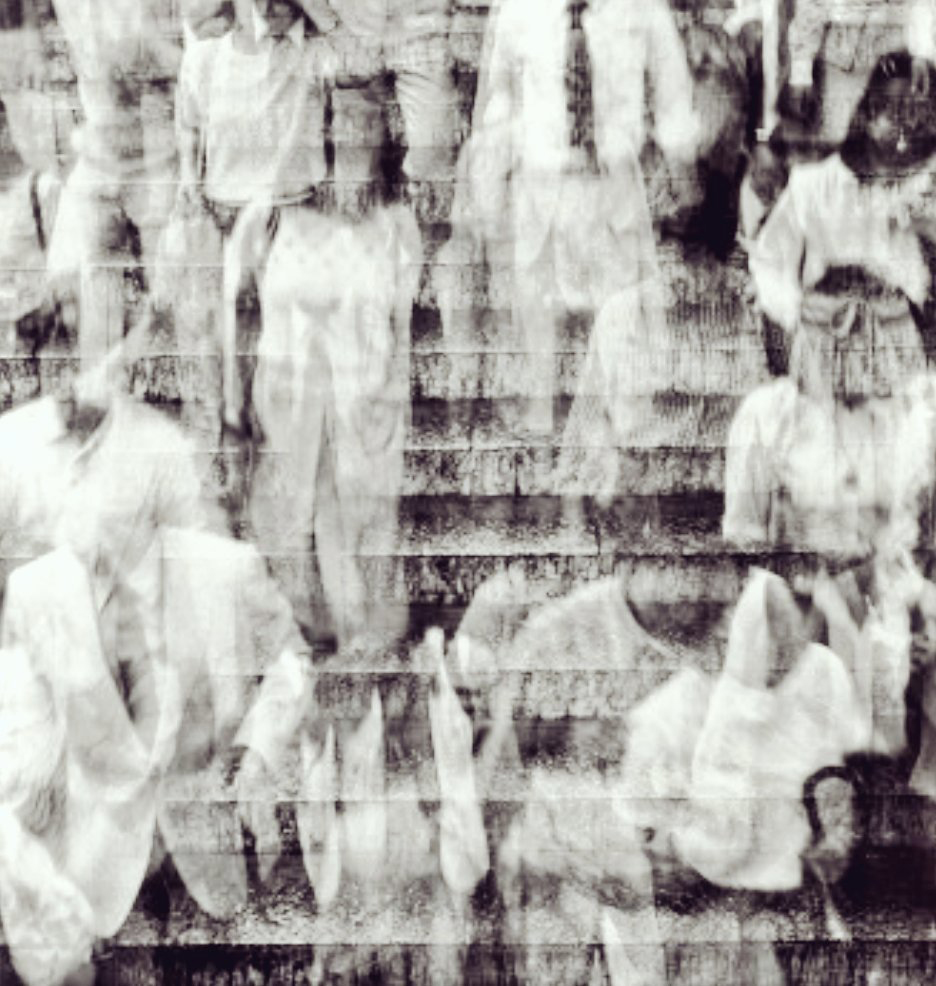
Shōmei Tōmatsu (Japanese, 1930-2012) 'Rush Hour, Tokyo' 1981 (detail)


Shōmei Tōmatsu (Japanese, 1930-2012)
Rush Hour, Tokyo (detail)
1981
Gelatin silver print
Sheet: 11 5/16 x 9 7/16 in. (28.73 x 23.97 cm)
National Gallery of Art, Washington, Corcoran Collection (Gift of Michael D. Abrams)


Best known for his expressive documentation of World War II’s impact on Japanese culture, Tomatsu was one of Japan’s most creative and influential photographers. Starting in the early 1960s, he documented the country’s dramatic economic, political, and cultural transformation. This photograph – a long exposure made with his camera mounted on a tripod – conveys the chaotic rush of commuters on their way through downtown Tokyo. Tomatsu used this graphic description of movement, which distorts the faceless bodies of commuters dashing down a flight of stairs, to symbolise the dehumanising nature of work in the fast-paced city of the early 1980s.


Sequence

Muybridge set up banks of cameras and used electronic shutters triggered in sequence to analyse the motion of people and animals. Like a storyteller, he sometimes adjusted the order of images for visual and sequential impact. Other photographers have also investigated the medium’s capacity to record change over time, express variations on a theme, or connect seemingly disparate pictures. In the early 1920s, Stieglitz began to create poetic sequences of cloud photographs meant to evoke distinct emotional experiences. These works (later known as Equivalents) influenced Ansel Adams and Minor White – both artists created specific sequences to evoke the rhythms of nature or the poetry of time passing.

Wall text

Intersections wall text


Alfred Stieglitz (American, 1864-1946) 'From My Window at An American Place, Southwest' March 1932


Alfred Stieglitz (American, 1864-1946)
From My Window at An American Place, Southwest
March 1932
Gelatin silver print
Sheet (trimmed to image): 23.8 x 18.4cm (9 3/8 x 7 1/4 in.)
National Gallery of Art, Washington, Alfred Stieglitz Collection


Alfred Stieglitz (American, 1864-1946) 'From My Window at An American Place, Southwest' April 1932


Alfred Stieglitz (American, 1864-1946)
From My Window at An American Place, Southwest
April 1932
Gelatin silver print
Sheet (trimmed to image): 23.8 x 18.8cm (9 3/8 x 7 3/8 in.)
National Gallery of Art, Washington, Alfred Stieglitz Collection


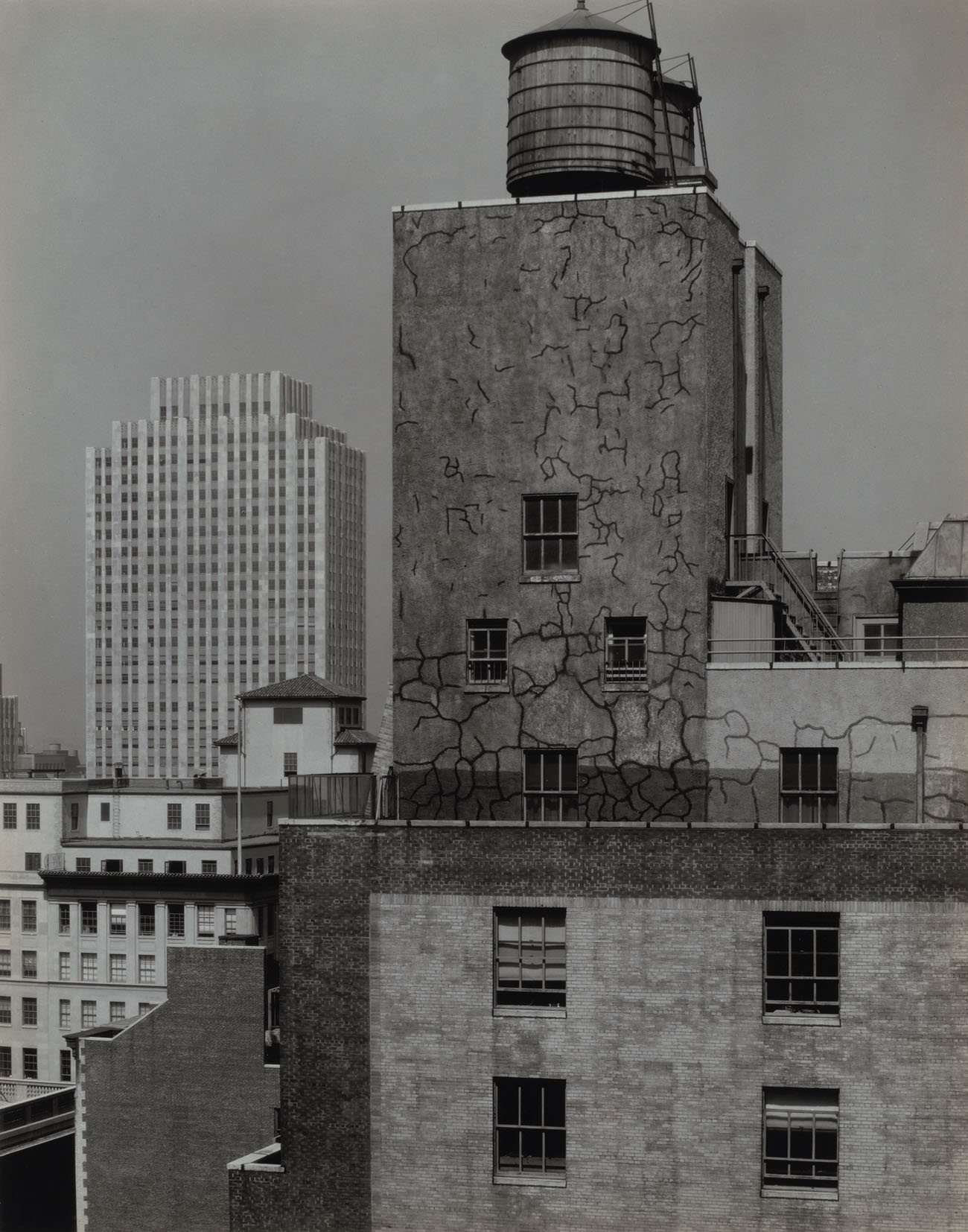
Alfred Stieglitz (American, 1864-1946) 'Water Tower and Radio City, New York' 1933


Alfred Stieglitz (American, 1864-1946)
Water Tower and Radio City, New York
1933
Gelatin silver print
Sheet: 23.7 x 18.6cm (9 5/16 x 7 5/16 in.)
National Gallery of Art, Washington, Alfred Stieglitz Collection


Whenever Stieglitz exhibited his photographs of New York City made in the late 1920s and early 1930s, he grouped them into series that record views from the windows of his gallery, An American Place, or his apartment at the Shelton Hotel, showing the gradual growth of the buildings under construction in the background. Although he delighted in the formal beauty of the visual spectacle, he lamented that these buildings, planned in the exuberance of the late 1920s, continued to be built in the depths of the Depression, while “artists starved,” as he said at the time, and museums were “threatened with closure.”


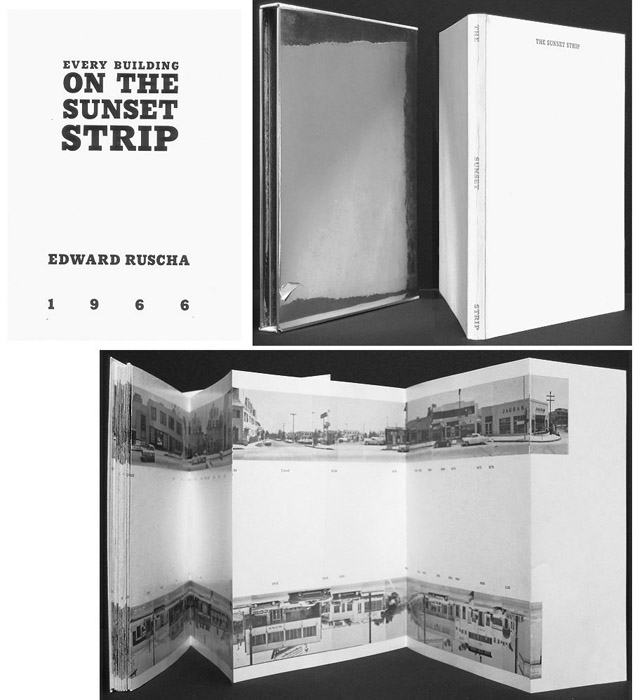
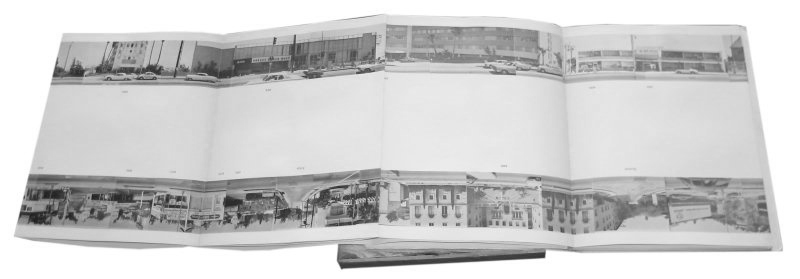
Ed Ruscha (American, b. 1937) 'Every Building on Sunset Strip' 1966

Ed Ruscha (American, b. 1937) 'Every Building on Sunset Strip' 1966

Ed Ruscha (American, b. 1937) 'Every Building on Sunset Strip' 1966


Ed Ruscha (American, b. 1937)
Every Building on the Sunset Strip
1966
Offset lithography book: 7 x 5 3/4 in. (17.78 x 14.61cm)
Unfolded (open flat): 7 x 276 in.
National Gallery of Art, Washington, Corcoran Collection (Gift of Philip Brookman and Amy Brookman)


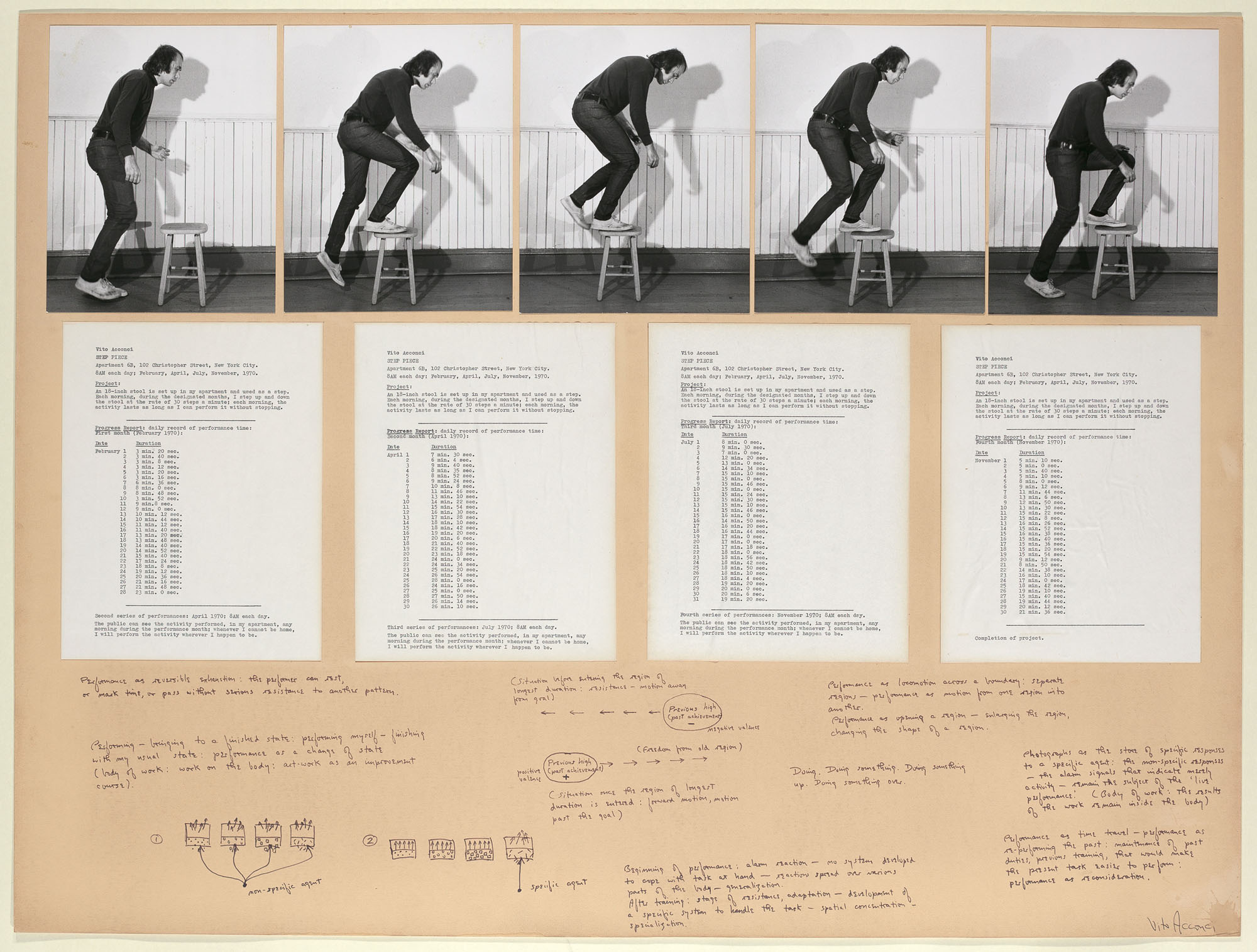
Vito Acconci (American, 1940-2017) 'Step Piece' 1970


Vito Acconci (American, 1940-2017)
Step Piece
1970
Five gelatin silver prints and four sheets of type-written paper, mounted on board with annotations in black ink
Sheet: 76.2 x 101.6cm (30 x 40 in.)
National Gallery of Art, Washington, Dorothy and Herbert Vogel Collection


Acconci’s Step Piece is made up of equal parts photography, drawing, performance, and quantitative analysis. It documents a test of endurance: stepping on and off a stool for as long as possible every day. This performance-based conceptual work is rooted in the idea that the body itself can be a medium for making art. To record his activity, Acconci made a series of five photographs spanning one complete action. Like the background grid in many of Muybridge’s motion studies, vertical panels in Acconci’s studio help delineate the space. His handwritten notes and sketches suggest the patterns of order and chaos associated with the performance, while typewritten sheets, which record his daily progress, were given to people who were invited to observe.


Narrative

The exhibition also explores the narrative possibilities of photography found in the interplay of image and text in the work of Robert Frank, Larry Sultan, and Jim Goldberg; the emotional drama of personal crisis in Nan Goldin’s image grids; or the expansion of photographic description into experimental video and film by Victor Burgin and Judy Fiskin.

Wall text

Intersections wall text


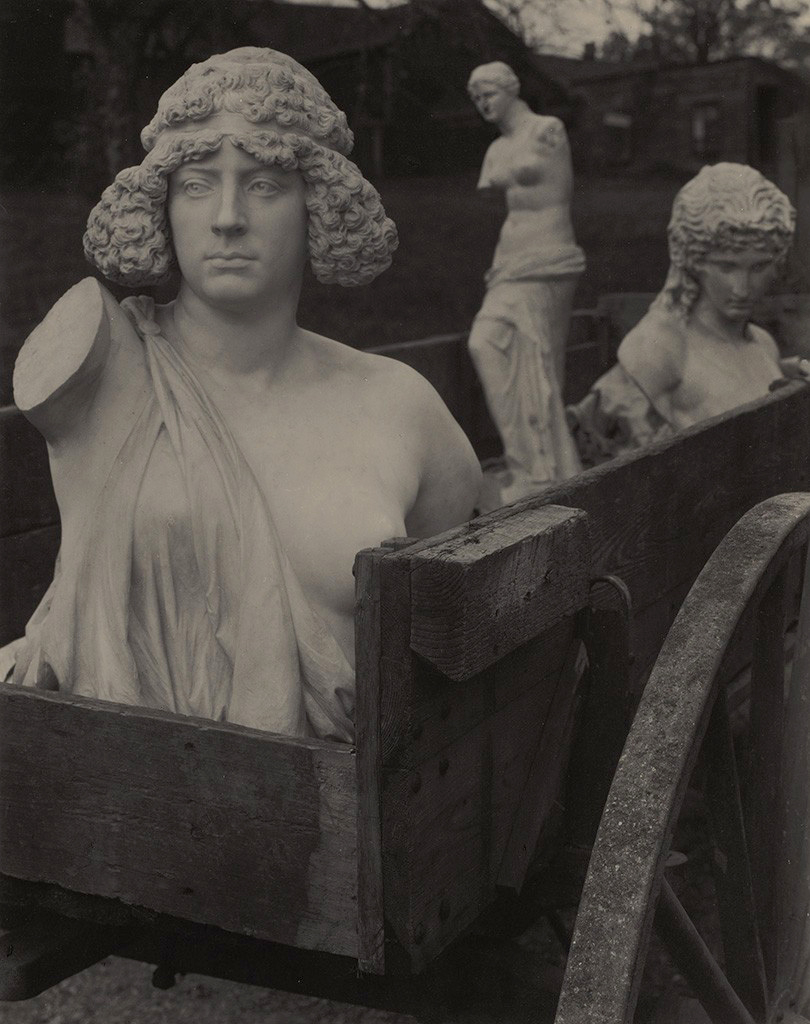
Alfred Stieglitz (American, 1864-1946) 'Judith Being Carted from Oaklawn to the Hill. The Way Art Moves' 1920


Alfred Stieglitz (American, 1864-1946)
Judith Being Carted from Oaklawn to the Hill. The Way Art Moves
1920
Gelatin silver print
Image: 24.1 x 18.8cm (9 1/2 x 7 3/8 in.)
Sheet: 25.2 x 20.1cm (9 15/16 x 7 15/16 in.)
National Gallery of Art, Washington, Alfred Stieglitz Collection


In 1920, Stieglitz’s family sold their Victorian summerhouse on the shore of Lake George, New York, and moved to a farmhouse on a hill above it. This photograph shows three sculptures his father had collected – two 19th-century replicas of ancient statues and a circa 1880 bust by Moses Ezekiel depicting the Old Testament heroine Judith – as they were being moved in a wooden cart from one house to another. Stieglitz titled it The Way Art Moves, wryly commenting on the low status of art in American society. With her masculine face and bared breast, Judith was much maligned by Georgia O’Keeffe and other younger family members. In a playful summer prank, they later buried her somewhere near the farmhouse, where she remained lost, despite many subsequent efforts by the perpetrators themselves to find her.


Dan Graham (American, 1942-2022) 'Homes for America' 1966-1967


Dan Graham (American, 1942-2022)
Homes for America
1966-1967
Two chromogenic prints
Image (top): 23 x 34cm (9 1/16 x 13 3/8 in.)
Image (bottom): 27.8 x 34cm (10 15/16 x 13 3/8 in.)
Mount: 101 x 75cm (39 3/4 x 29 1/2 in.)
Framed: 102 x 76.2 x 2.8cm (40 3/16 x 30 x 1 1/8 in.)
National Gallery of Art, Washington, Glenstone in honour of Eileen and Michael Cohen


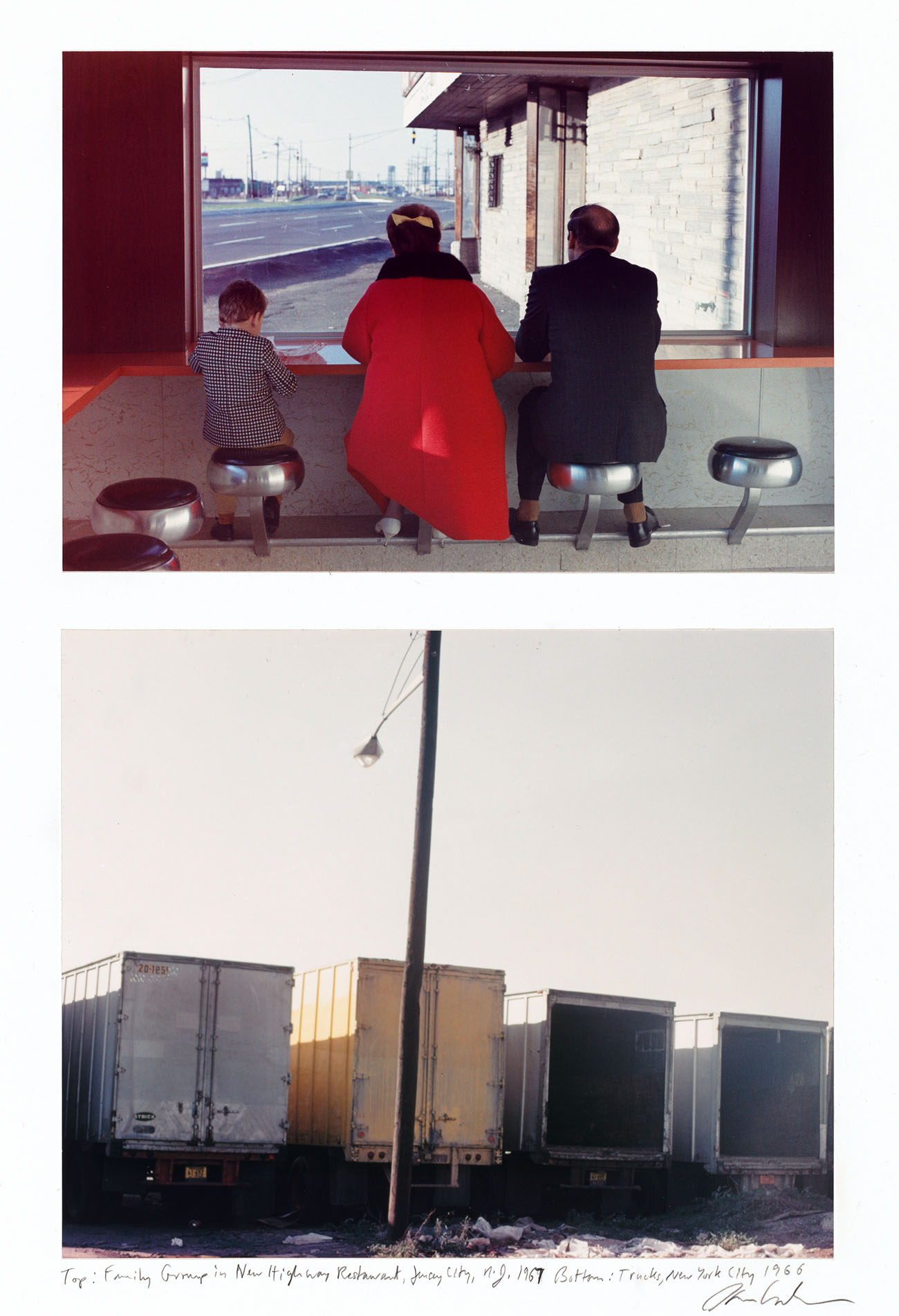
Beginning in the mid-1960s, conceptual artist Dan Graham created several works of art for magazine pages and slide shows. When Homes for America was designed for Arts magazine in 1966, his accompanying text critiqued the mass production of cookie-cutter homes, while his photographs – made with an inexpensive Kodak Instamatic camera – described a suburban world of offices, houses, restaurants, highways, and truck stops. With their haphazard composition and amateur technique, Graham’s pictures ironically scrutinised the aesthetics of America’s postwar housing and inspired other conceptual artists to incorporate photographs into their work. Together, these two photographs link a middle-class family at the opening of a Jersey City highway restaurant with the soulless industrial landscape seen through the window.


Larry Sultan (American, 1946-2009) 'Thanksgiving Turkey' 1985

Larry Sultan (American, 1946-2009) 'Business Page' from the series 'Pictures from Home' 1985


Larry Sultan (American, 1946-2009)
Thanksgiving Turkey/Newspaper (detail)
1985-1992
Two plexiglass panels with screen printing
Framed (Thanksgiving Turkey): 76 × 91cm (29 15/16 × 35 13/16 in.)
Framed (Newspaper): 76 × 91cm (29 15/16 × 35 13/16 in.)
Other (2 text panels): 50.8 × 76.2cm (20 × 30 in.)
Overall: 30 x 117 in.
National Gallery of Art, Washington, Corcoran Collection (Gift of the FRIENDS of the Corcoran Gallery of Art)


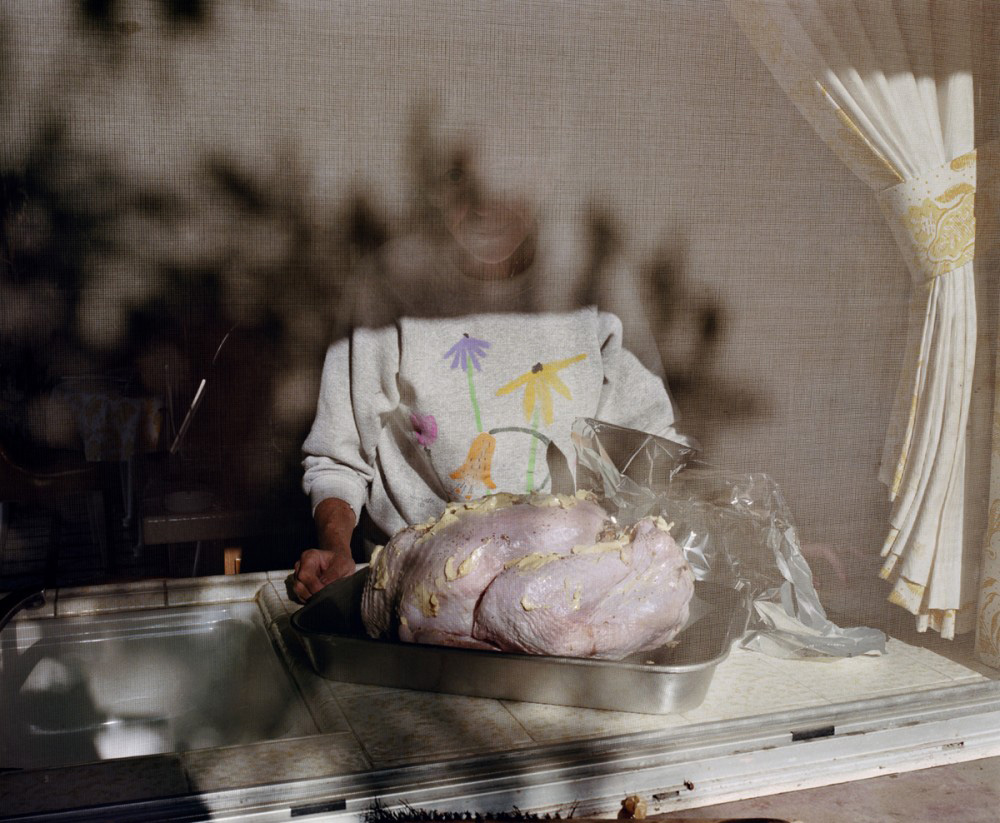
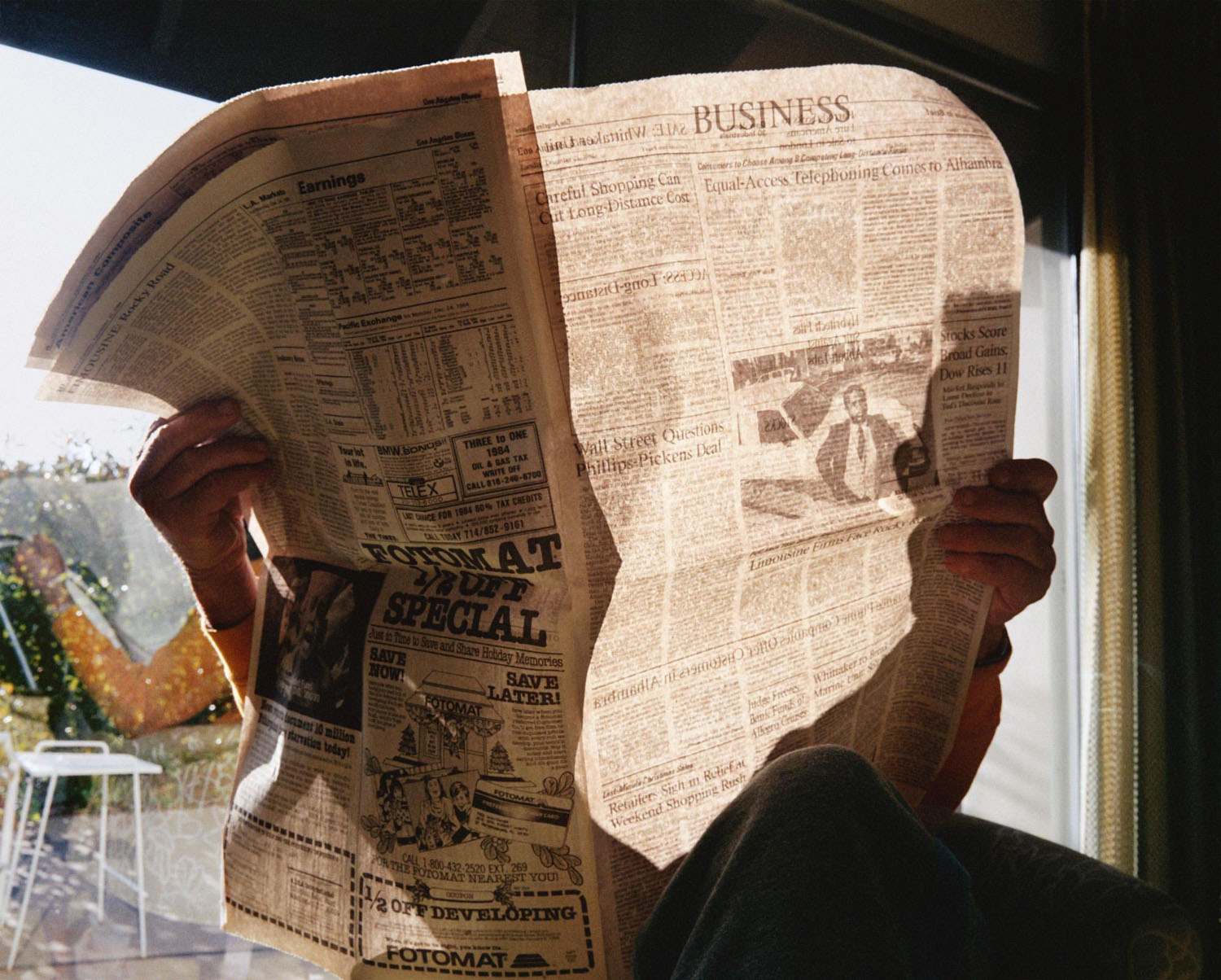
From 1983 to 1992, Sultan photographed his parents in retirement at their Southern California house. His innovative book, Pictures from Home, combines his photographs and text with family album snapshots and stills from home movies, mining the family’s memories and archives to create a universal narrative about the American dream of work, home, and family. Thanksgiving Turkey/Newspaper juxtaposes photographs of his mother and father, each with their face hidden and with adjacent texts where they complain about each other’s shortcomings. “I realise that beyond the rolls of film and the few good pictures … is the wish to take photography literally,” Sultan wrote. “To stop time. I want my parents to live forever.”


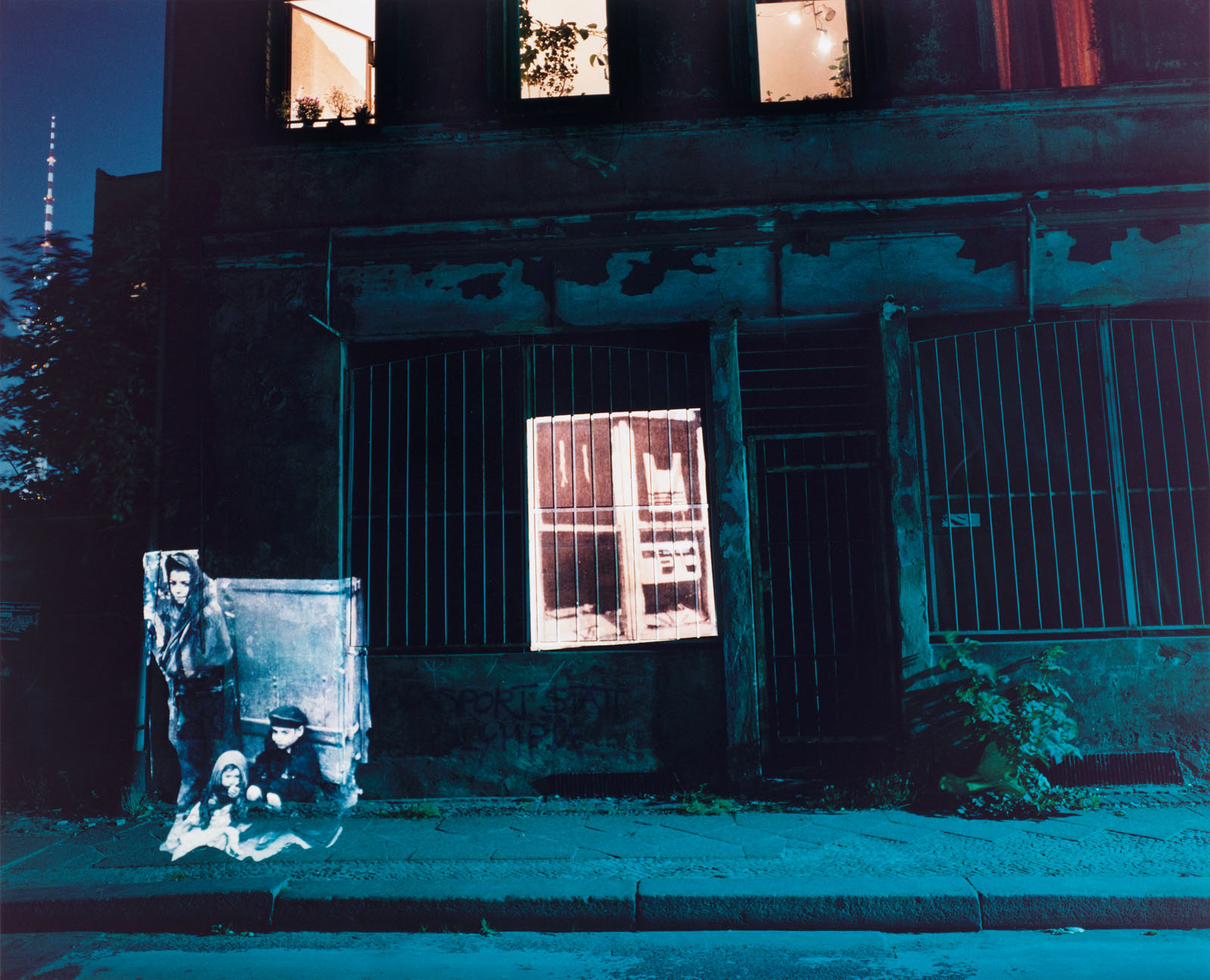
Shimon Attie (American, b. 1957) 'Mulackstrasse 32: Slide Projections of Former Jewish Residents and Hebrew Reading Room, 1932, Berlin' 1992


Shimon Attie (American, b. 1957)
Mulackstrasse 32: Slide Projections of Former Jewish Residents and Hebrew Reading Room, 1932, Berlin
1992
Chromogenic print
Unframed: 20 x 24 in. (50.8 x 60.96cm)
National Gallery of Art, Washington, Corcoran Collection (Gift of Julia J. Norrell in honor of Hilary Allard and Lauren Harry)


Attie projected historical photographs made in 1932 onto the sides of a building at Mulackstrasse 32, the site of a Hebrew reading room in a Jewish neighbourhood in Berlin during the 1930s. Fusing pictures made before Jews were removed from their homes and killed during World War II with photographs of the same dark, empty street made in 1992, Attie has created a haunting picture of wartime loss.


Nan Goldin (American, b. 1953) 'Relapse/Detox Grid' 1998-2000


Nan Goldin (American, b. 1953)
Relapse/Detox Grid
1998-2000
Nine silver dye bleach prints
Overall: 42 1/2 x 62 1/8 in. (107.95 x 157.8cm)
National Gallery of Art, Washington, Corcoran Collection (Museum Purchase with funds donated by the FRIENDS of the Corcoran Gallery of Art)


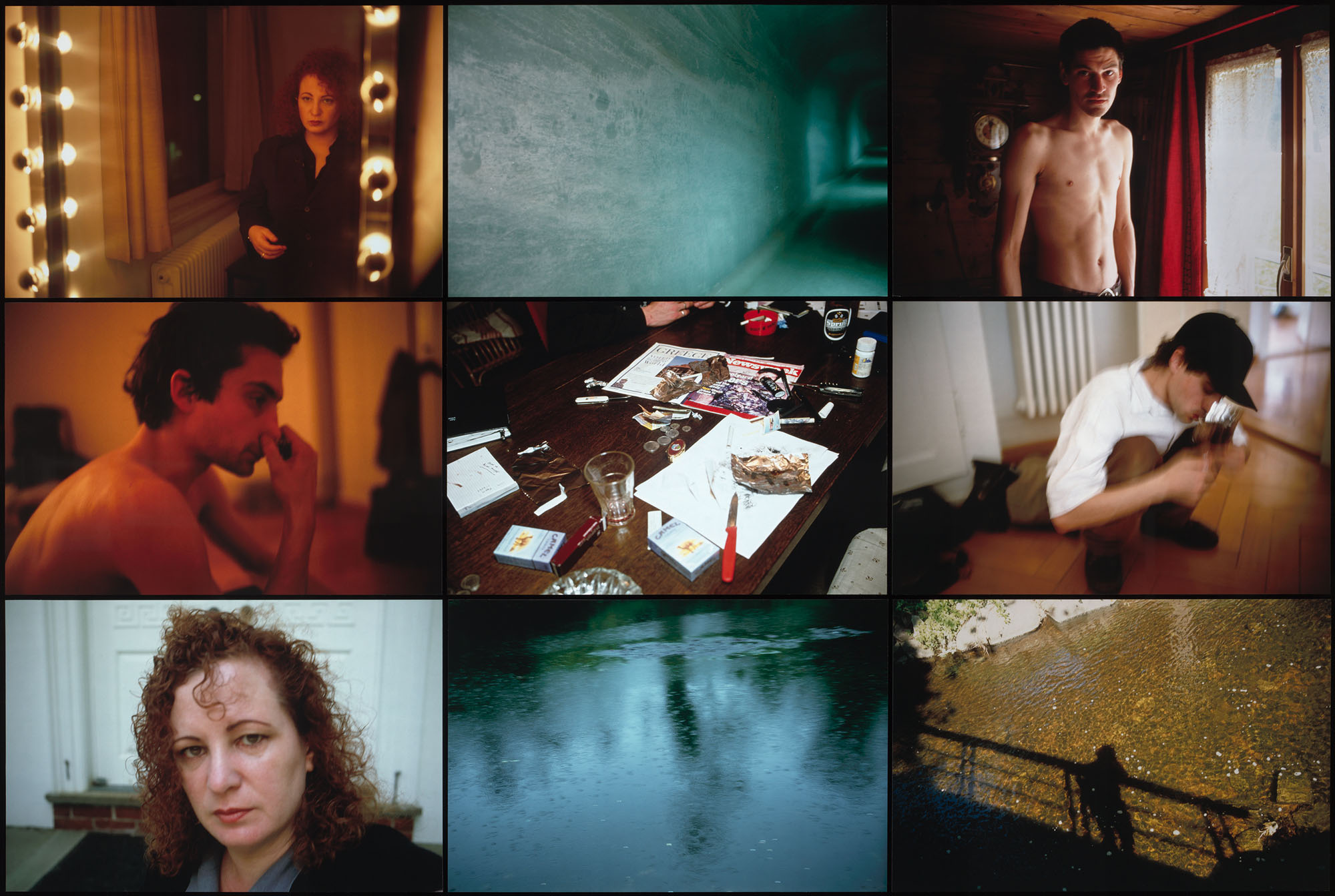
Goldin has unsparingly chronicled her own community of friends by photographing their struggles, hopes, and dreams through years of camaraderie, abuse, addiction, illness, loss, and redemption. Relapse/Detox Grid presents nine colourful yet plaintive pictures in a slide show-like narrative, offering glimpses of a life rooted in struggle, along with Goldin’s own recovery at a detox center, seen in the bottom row.


Nan Goldin (American, b. 1953) 'Relapse/Detox Grid' 1998-2000 (detail)


Nan Goldin (American, b. 1953)
Relapse/Detox Grid (detail)
1998-2000
Nine silver dye bleach prints
Overall: 42 1/2 x 62 1/8 in. (107.95 x 157.8cm)
National Gallery of Art, Washington, Corcoran Collection (Museum Purchase with funds donated by the FRIENDS of the Corcoran Gallery of Art)


Victor Burgin (British, b. 1941) 'Watergate' 2000


Victor Burgin (British, b. 1941)
Watergate
2000
Video with sound, 9:58 minutes
National Gallery of Art, Washington, Corcoran Collection (Museum Purchase, with funds from the bequest of Betty Battle to the Women’s Committee of the Corcoran Gallery of Art)


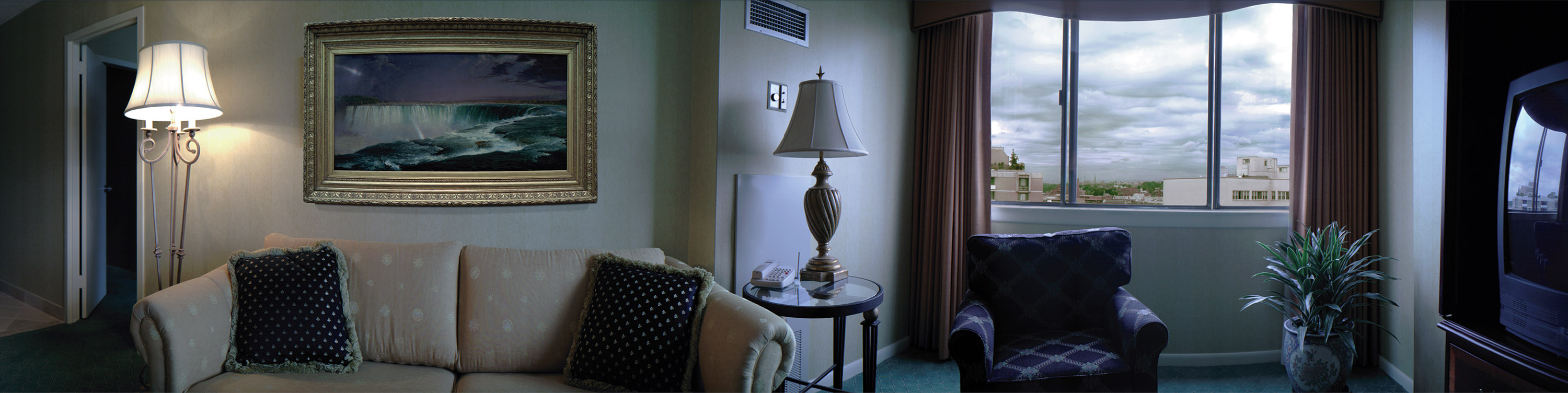
An early advocate of conceptual art, Burgin is an artist and writer whose work spans photographs, text, and video. Watergate shows how the meaning of art can change depending on the context in which it is seen. Burgin animated digital, 160-degree panoramic photographs of nineteenth-century American art hanging in the Corcoran Gallery of Art and in a hotel room. While the camera circles the gallery, an actor reads from Jean-Paul Satre’s Being and Nothingness, which questions the relationship between presence and absence. Then a dreamlike pan around a hotel room overlooking the nearby Watergate complex mysteriously reveals Niagara, the Corcoran’s 1859 landscape by Frederic Church, having on the wall. In 1859, Niagara Falls was seen as a symbol of the glory and promise of the American nation, yet when Church’s painting is placed in the context of the Watergate, an icon of the scandal that led to Richard Nixon’s resignation, it assumes a different meaning and suggests an ominous sense of disillusionment.


Studio

Intersections also examines the studio as a locus of creativity, from Stieglitz’s photographs of his gallery, 291, and James Van Der Zee’s commercial studio portraits, to the manipulated images of Wallace Berman, Robert Heinecken, and Martha Rosler. Works by Laurie Simmons, David Levinthal, and Vik Muniz also highlight the postmodern strategy of staging images created in the studio.

Wall text

Intersections wall text


Nadar (Gaspard-Félix Tournachon) (French, 1820-1910) 'Self-Portrait with Wife Ernestine in a Balloon Gondola' c. 1865


Nadar (Gaspard-Félix Tournachon) (French, 1820-1910)
Self-Portrait with Wife Ernestine in a Balloon Gondola
c. 1865
Gelatin silver print, printed c. 1890
8.6 × 7.7cm (3 3/8 × 3 1/16 in.)
National Gallery of Art, Washington, Horace W. Goldsmith Foundation through Robert and Joyce Menschel


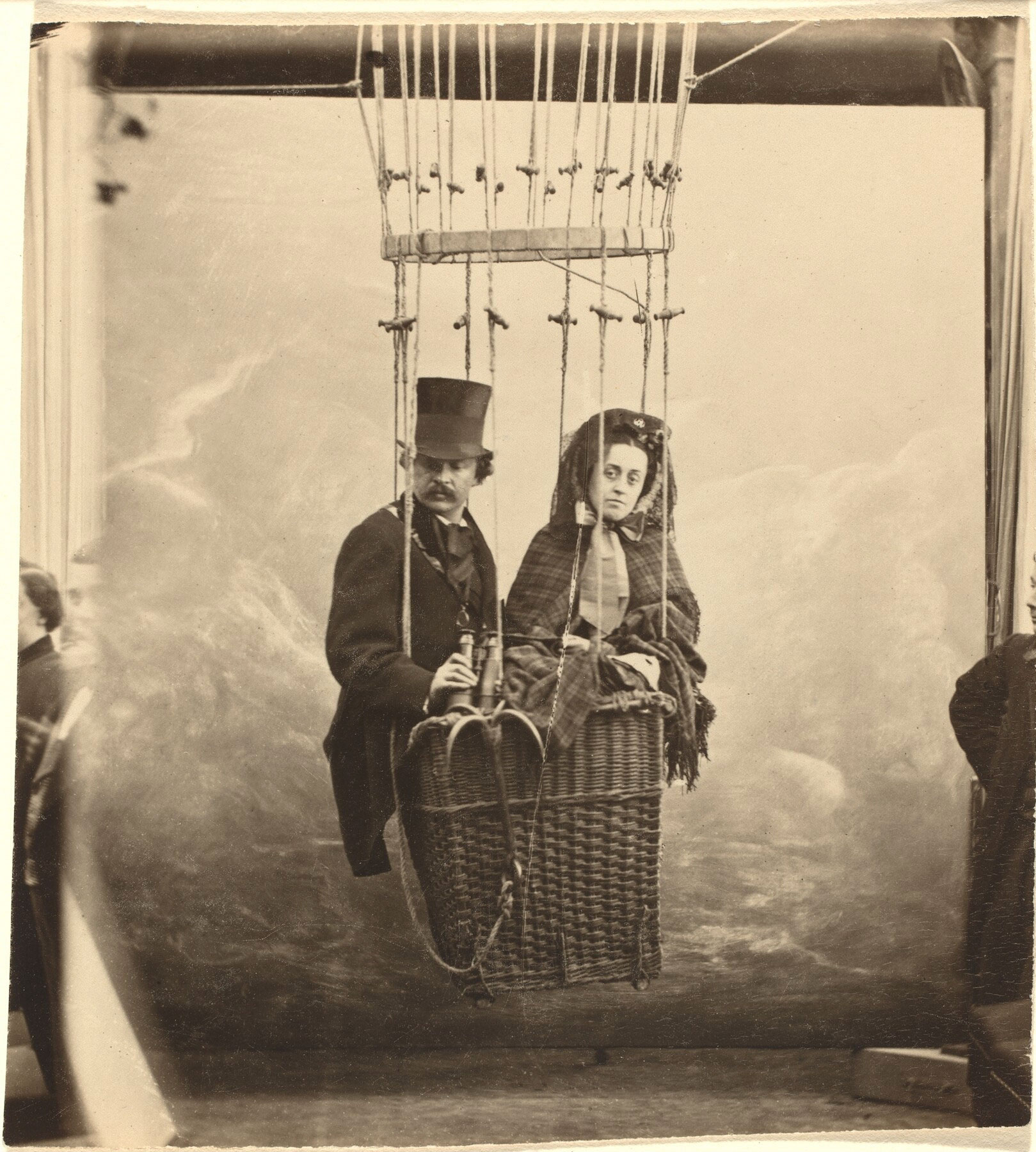
Nadar (a pseudonym for Gaspard-Félix Tournachon) was not only a celebrated portrait photographer, but also a journalist, caricaturist, and early proponent of manned flight. In 1863, he commissioned a prominent balloonist to build an enormous balloon 196 feet high, which he named The Giant. The ascents he made from 1863 to 1867 were widely covered in the press and celebrated by the cartoonist Honoré Daumier, who depicted Nadar soaring above Paris, its buildings festooned with signs for photography studios. Nadar made and sold small prints like this self-portrait to promote his ballooning ventures. The obviously artificial construction of this picture – Nadar and his wife sit in a basket far too small for a real ascent and are posed in front of a painted backdrop – and its untrimmed edges showing assistants at either side make it less of the self-aggrandising statement that Nadar wished and more of an amusing behind-the-scenes look at studio practice.


Alfred Stieglitz (American, 1864-1946) 'Self-portrait' 1907, printed 1930


Alfred Stieglitz (American, 1864-1946)
Self-Portrait
probably 1911
Platinum print
Image: 24.2 x 19.3cm (9 1/2 x 7 5/8 in.)
Sheet: 25.3 x 20.3cm (9 15/16 x 8 in.)
National Gallery of Art, Washington, Alfred Stieglitz Collection


Unlike many other photographers, Stieglitz made few self-portraits. He created this one shortly before he embarked on a series of portraits of the artists who frequented his New York gallery, 291. Focusing only on his face and leaving all else in shadow, he presents himself not as an artist at work or play, but as a charismatic leader who would guide American art and culture into the 20th century.


Alfred Stieglitz (American, 1864-1946) '291 – Picasso-Braque Exhibition' 1915


Alfred Stieglitz (American, 1864-1946)
291 – Picasso-Braque Exhibition
1915
Platinum print
Image: 18.5 x 23.6 cm (7 5/16 x 9 5/16 in.)
Sheet: 20.1 x 25.3 cm (7 15/16 x 9 15/16 in.)
National Gallery of Art, Washington, Alfred Stieglitz Collection


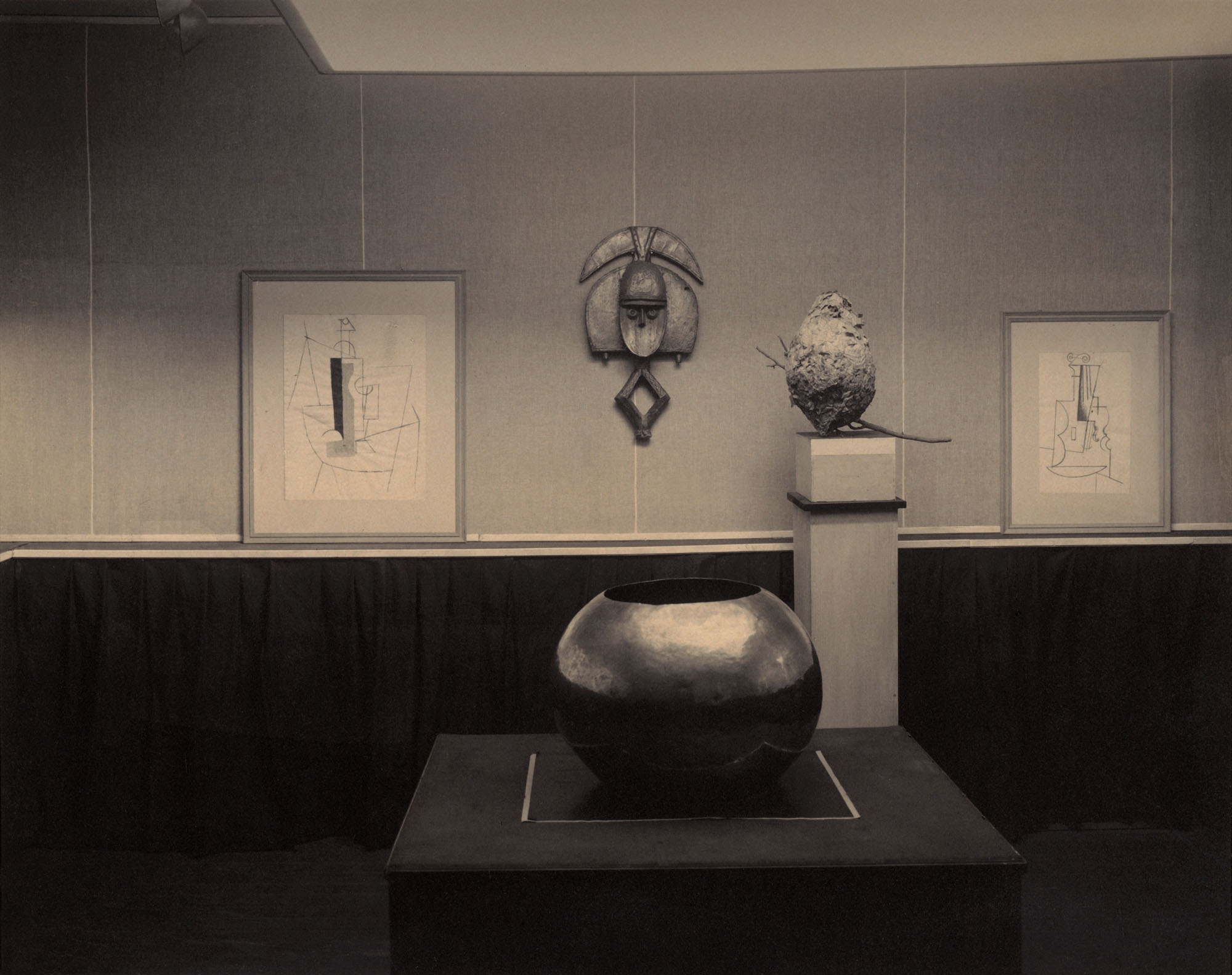
291 was Stieglitz’s legendary gallery in New York City (its name derived from its address on Fifth Avenue), where he introduced modern European and American art and photography to the American public. He also used 291 as a studio, frequently photographing friends and colleagues there, as well as the views from its windows. This picture records what Stieglitz called a “demonstration” – a short display of no more than a few days designed to prompt a focused discussion. Including two works by Picasso, an African mask from the Kota people, a wasps’ nest, and 291’s signature brass bowl, the photograph calls into question the relationship between nature and culture, Western and African art.


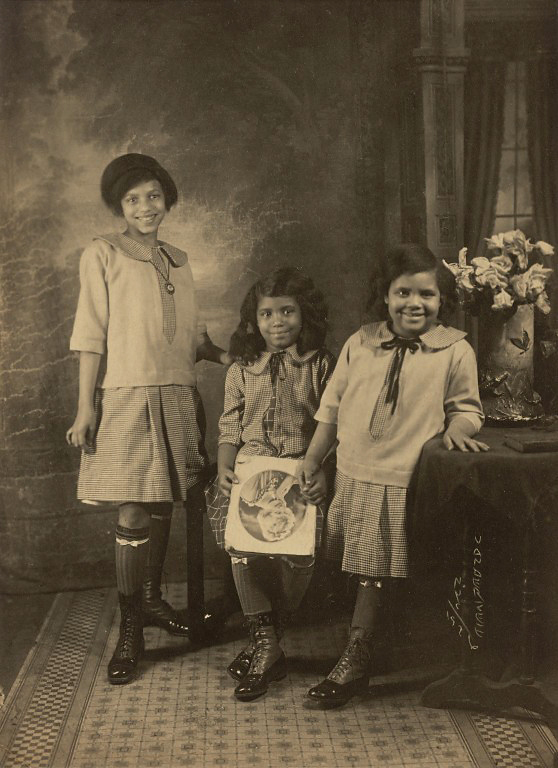
James Van Der Zee (American, 1886-1983) 'Sisters' 1926


James Van Der Zee (American, 1886-1983)
Sisters
1926
Gelatin silver print
Sheet (trimmed to image): 17.6 x 12.5cm (6 15/16 x 4 15/16 in.)
National Gallery of Art, Washington, Horace W. Goldsmith Foundation through Robert and Joyce Menschel


James Van Der Zee was a prolific studio photographer in Harlem during a period known as the Harlem Renaissance, from the end of World War I to the middle of the 1930s. He photographed many of Harlem’s celebrities, middle-class residents, and community organisations, establishing a visual archive that remains one of the best records of the era. He stands out for his playful use of props and retouching, thereby personalising each picture and enhancing the sitter’s appearance. In this portrait of three sisters, clasped hands show the tender bond of the two youngest, one of whom holds a celebrity portrait, revealing her enthusiasm for popular culture.


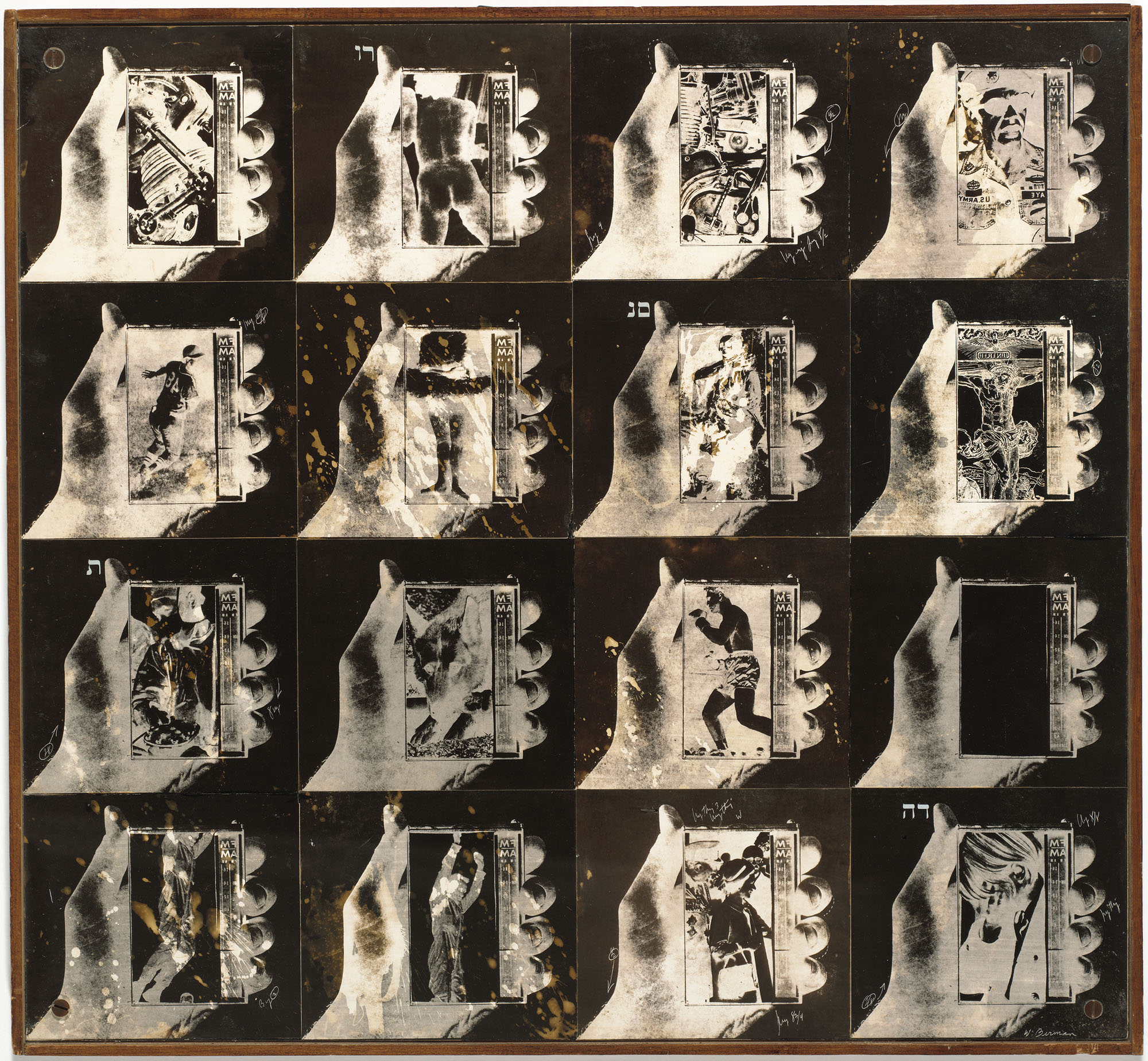
Wallace Berman (American, 1926-1976) 'Silence Series #7' 1965-1968


Wallace Berman (American, 1926-1976)
Silence Series #7
1965-1968
Verifax (wet process photocopy) collage
Actual: 24 1/2 x 26 1/2 in. (62.23 x 67.31cm)
National Gallery of Art, Washington, Corcoran Collection (Museum Purchase, William A. Clark Fund)


An influential artist of California’s Beat Generation during the 1950s and 1960s, Berman was a visionary thinker and publisher of the underground magazine Semina. His mysterious and playful juxtapositions of divers objects, images, and texts were often inspired by Dada and surrealist art. Silence Series #7 presents a cinematic sequence of his trademark transistor radios, each displaying military, religious, or mechanical images along with those of athletes and cultural icons, such as Andy Warhol. Appropriated from mass media, reversed in tone, and printed backward using an early version of a photocopy machine, these found images, pieced together and recopied as photomontages, replace then ew transmitted through the radios. Beat poet Robert Duncan once called Berman’s Verify collages a “series of magic ‘TV’ lantern shows.”


Doug and Mike Starn (American) 'Double Rembrandt with Steps' 1987-1991


Doug and Mike Starn (American)
Double Rembrandt (with steps)
1987-1991
Gelatin silver prints, ortho film, tape, wood, plexiglass, glue and silicone
2 interlocking parts:
Part 1 overall: 26 1/2 x 13 7/8 in.
Part  2 overall: 26 3/8 x 13 3/4 in.
Overall: 26 1/2 x 27 3/4 in.
National Gallery of Art, Washington, Gift of Susan and Peter MacGill


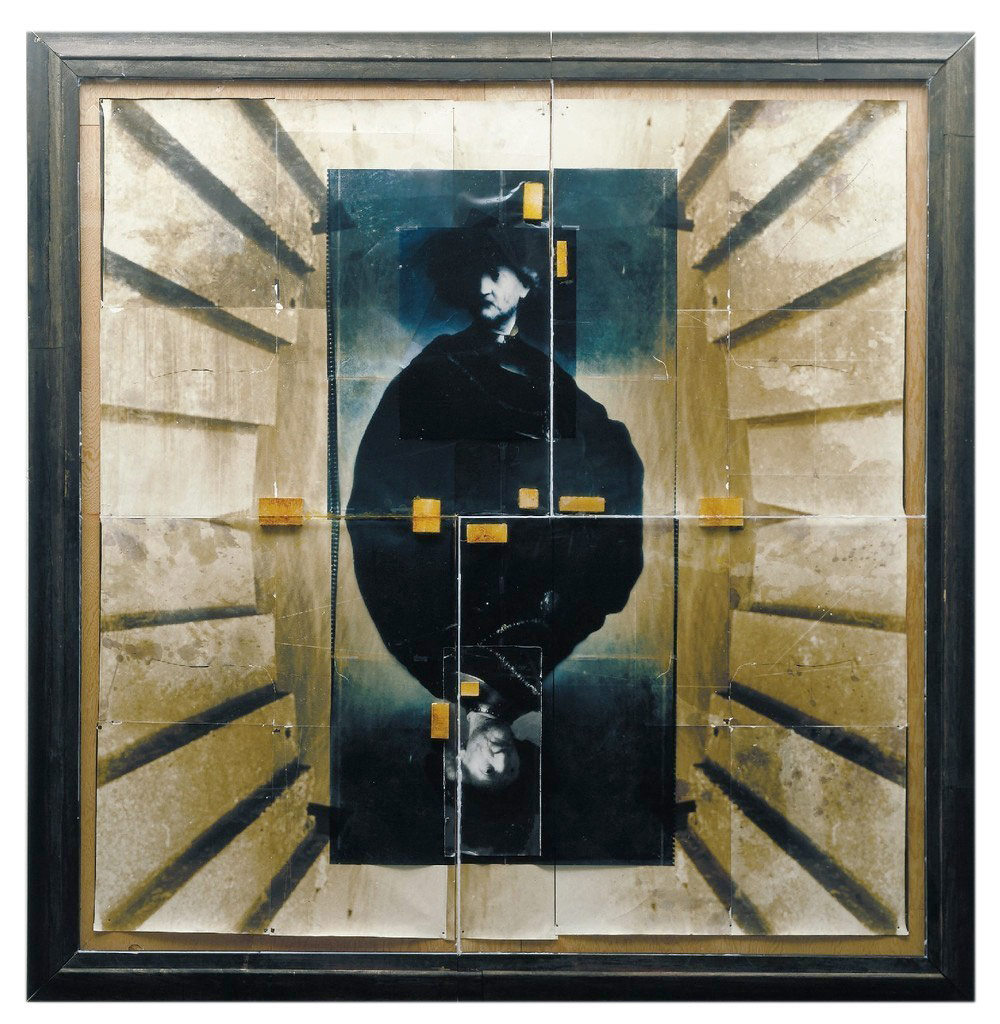
Doug and Mike Starn, identical twins who have worked collaboratively since they were thirteen, have a reputation for creating unorthodox works. Using take, wood, and glue, the brothers assembles sheets of photographic film and paper to create a dynamic composition that includes an appropriated image of Rembrandt van Rijn’s Old Man with a Gold Chain (1631). Double Rembrandt (with steps) challenges the authority of the austere fine art print, as well as the aura of the original painting, while playfully invoking the twins’ own double identity.


Martha Rosler (American, b. 1943) 'Cleaning the Drapes', from the series, 'House Beautiful: Bringing the War Home' 1967-1972


Martha Rosler (American, b. 1943)
Cleaning the Drapes, from the series, House Beautiful: Bringing the War Home
1967-1972
Inkjet print, printed 2007
Framed: 53.5 × 63.3cm (21 1/16 × 24 15/16 in.)
National Gallery of Art, Washington, Gift of the Collectors Committee and the Pepita Milmore Memorial Fund


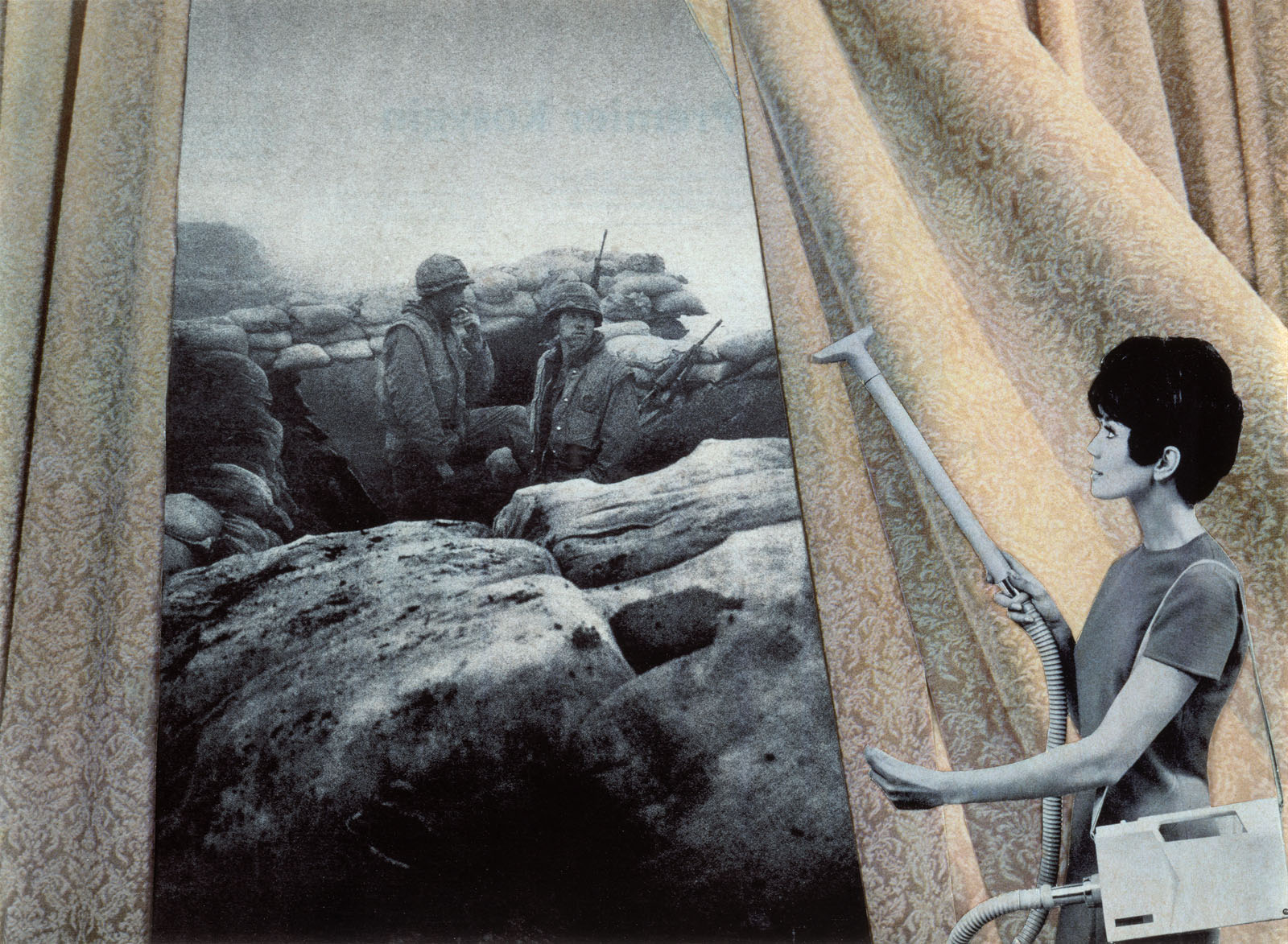
A painter, photographer, video artist, feminist, activist writer, and teacher, Martha Rosler made this photomontage while she was a graduate student in the late 1960s and early 1970s. Frustrated by the portrayal of the Vietnam War on television and in other media, she wrote: “The images were always very far away and of a place we couldn’t imagine.” To bring “the war home,” as she announced in her title, she cut out images from Life magazine and House Beautiful to make powerfully layered collages that contrast American middle-class life with the realities of the war. She selected colour pictures of the idealised American life rich in the trappings of consumer society, and used black-and-white pictures of troops in Vietnam to heighten the contrast between here and there, while also calling attention to stereotypical views of men and women.


Sally Mann (American, b. 1951) 'Self-Portrait' 1974


Sally Mann (American, b. 1951)
Self-Portrait
1974
Gelatin silver print
Image: 17 × 14.9cm (6 11/16 × 5 7/8 in.)
Sheet: 35 × 27.2cm (13 3/4 × 10 11/16 in.)
National Gallery of Art, Washington, Corcoran Collection (Gift of Olga Hirshhorn)


Sally Mann, who is best known for the pictures of her children she made in the 1980s and 1990s, began to photograph when she was a teenager. In this rare, early, and intimate self-portrait, the artist is reflected in a mirror, clasping her loose shirt as she stands in a friend’s bathroom. Her thoughtful, expectant expression, coupled with her finger pointing directly at the lens of the large view camera that towers above her, foreshadows the commanding presence photography would have in her life.


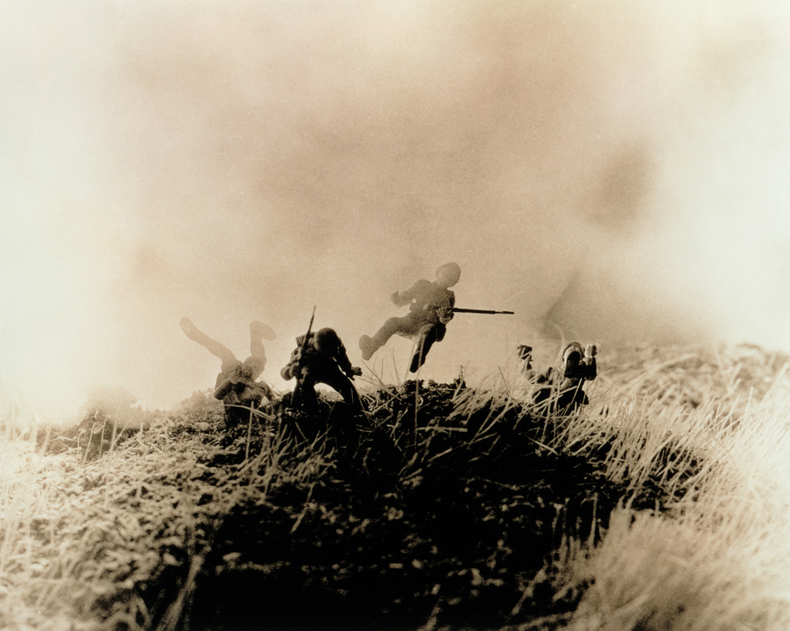
David Levinthal (American, b. 1949) 'Untitled (from the series Hitler Moves East)' 1975


David Levinthal (American, b. 1949)
Untitled (from the series Hitler Moves East)
1975
Gelatin silver print
Sheet: 15 15/16 x 20 in. (40.48 x 50.8cm)
Image: 10 9/16 x 13 7/16 in. (26.83 x 34.13cm)
National Gallery of Art, Washington, Corcoran Collection (Gift of the artist)


Levinthal’s series of photographs Hitler Moves East was made not during World War II, but in 1975, when the news media was saturated with images of the end of America’s involvement in the Vietnam War. In this series, he appropriates the grainy look of photojournalism and uses toy soldiers and fabricated environments to stage scenes from Germany’s brutal campaign on the Eastern Front during World War II. His pictures are often based on scenes found in television and movies, further distancing them from the actual events. A small stick was used to prop up the falling soldier and the explosion was made with puffs of flour. Hitler Moves East casts doubt on the implied authenticity of photojournalism and calls attention to the power of the media to define public understanding of events.


Hiroshi Sugimoto (Japanese, b. 1948) 'Oscar Wilde' 1999


Hiroshi Sugimoto (Japanese, b. 1948)
Oscar Wilde
1999
Gelatin silver print
Image: 148.59 × 119.6cm (58 1/2 × 47 1/16 in.)
Framed: 182.25 × 152.4cm (71 3/4 × 60 in.)
National Gallery of Art, Washington, Corcoran Collection (Gift of The Heather and Tony Podesta Collection)


Hiroshi Sugimoto (Japanese, b. 1948) 'Oscar Wilde' 1999 (detail)


Hiroshi Sugimoto (Japanese, b. 1948)
Oscar Wilde (detail)
1999
Gelatin silver print
Image: 148.59 × 119.6cm (58 1/2 × 47 1/16 in.)
Framed: 182.25 × 152.4cm (71 3/4 × 60 in.)
National Gallery of Art, Washington, Corcoran Collection (Gift of The Heather and Tony Podesta Collection)


While most traditional portrait photographers worked in studios, Sugimoto upended this practice in a series of pictures he made at Madame Tussaud’s wax museums in London and Amsterdam, where lifelike wax figures, based on paintings or photographs, as is the case with Oscar Wilde, are displayed in staged vignettes. By isolating the figure from its setting, posing it in a three-quarter-length view, illuminating it to convey the impression of a carefully lit studio portrait, and making his final print almost six feet tall, Sugimoto renders the artificial as real. Triply removing his portrait from reality – from Oscar Wilde himself to a portrait photograph to a wax sculpture and back to a photograph – Sugimoto collapses time and confounds our expectations of the nature of photography.


Vik Muniz (Brazilian, b. 1961) 'Alfred Stieglitz (from the series Pictures of Ink)' 2000


Vik Muniz (Brazilian, b. 1961)
Alfred Stieglitz (from the series Pictures of Ink)
2000
Silver dye bleach print
Image: 152.4 × 121.92cm (60 × 48 in.)
Framed: 161.29 × 130.81 × 5.08cm (63 1/2 × 51 1/2 × 2 in.)
National Gallery of Art, Washington, Corcoran Collection (Museum Purchase with funds provided by the FRIENDS of the Corcoran Gallery of Art)


Muniz has spent his career remaking works of art by artists as varied as Botticelli and Warhol using unusual materials – sugar, diamonds, and even junk. He has been especially interested in Stieglitz and has re-created his photographs using chocolate syrup and cotton. Here, he refashioned Stieglitz’s celebrated self-portrait using wet ink and mimicking the dot matrix of a halftone reproduction. He then photographed his drawing and greatly enlarged it so that the dot matrix itself becomes as important as the picture it replicates.


Identity

Historic and contemporary works by August Sander, Diane Arbus, Lorna Simpson, and Hank Willis Thomas, among others, make up the final section, which explores the role of photography in the construction of identity.”

Wall text

Intersections wall text


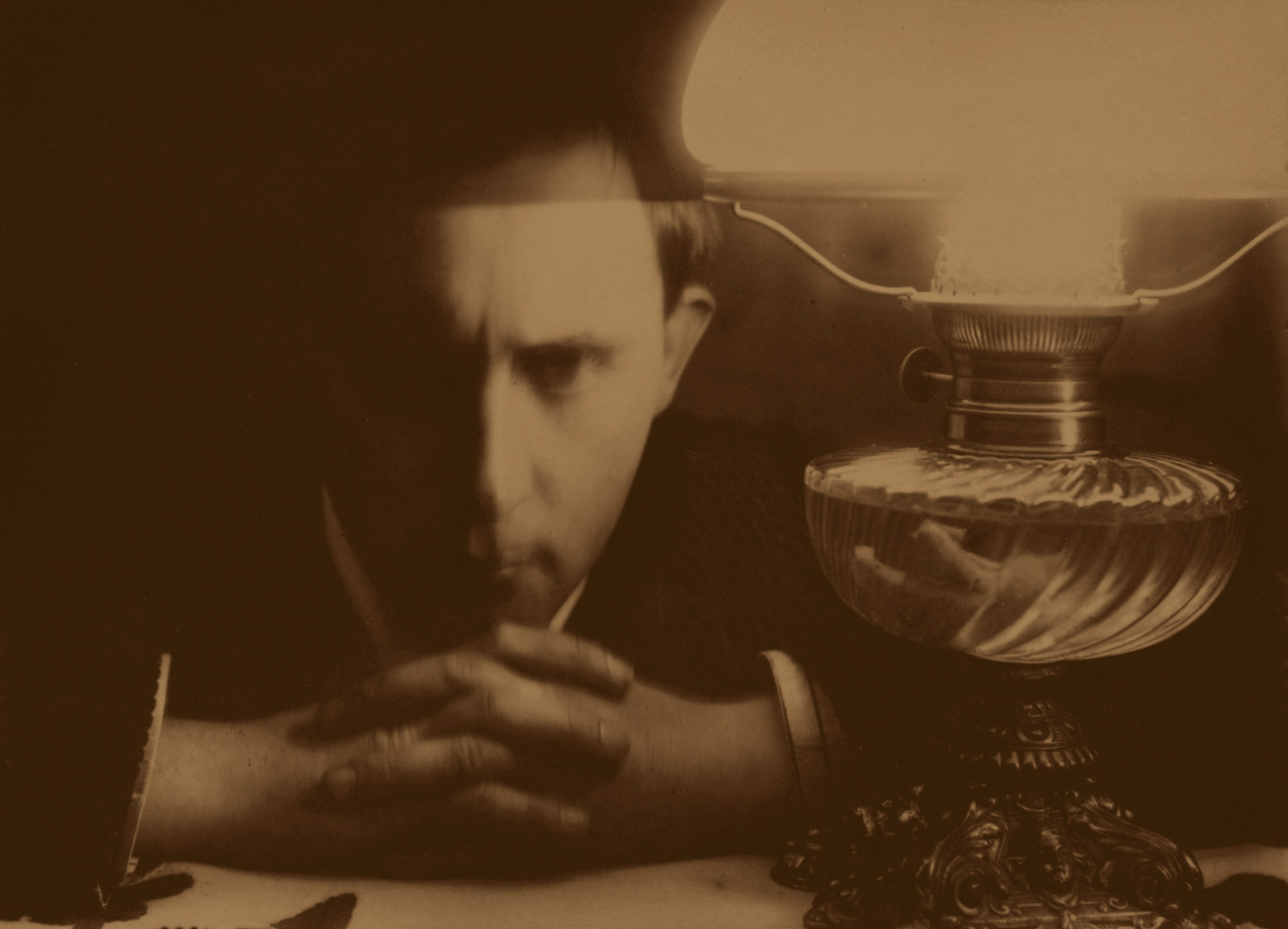
Witkacy (Stanislaw Ignacy Witkiewicz) (Polish, 1885-1939) 'Self-Portrait (Collapse by the Lamp/Kolaps przy lampie)' c. 1913


Witkacy (Stanislaw Ignacy Witkiewicz) (Polish, 1885-1939)
Self-Portrait (Collapse by the Lamp/Kolaps przy lampie)
c. 1913
Gelatin silver print
12.86 x 17.78cm (5 1/16 x 7 in.)
National Gallery of Art, Washington, Foto Fund and Robert Menschel and the Vital Projects Fund


A writer, painter, and philosopher, Witkiewicz began to photograph while he was a teenager. From 1911 to 1914, while undergoing psychoanalysis and involved in two tumultuous relationships (one ending when his pregnant fiancée killed herself in 1914), he made a series of startling self-portraits. Close-up, confrontational, and searching, they are pictures in which the artist seems to seek understanding of himself by scrutinising his visage.


August Sander (German, 1876-1964) 'The Bricklayer' 1929


August Sander (German, 1876-1964)
The Bricklayer
1929, printed c. 1950
Gelatin silver print
Sheet (trimmed to image): 50.4 x 37.5cm (19 13/16 x 14 3/4 in.)
National Gallery of Art, Washington, Gift of Gerhard and Christine Sander, in honour of the 50th Anniversary of the National Gallery of Art


In 1911, Sander began a massive project to document “people of the twentieth century.” Identifying them by their professions, not their names, he aimed to create a typological record of citizens of the Weimar Republic. He photographed people from all walks of life – from bakers, bankers, and businessmen to soldiers, students, and tradesmen, as well as gypsies, the unemployed, and the homeless. The Nazis banned his project in the 1930s because his pictures did not conform to the ideal Aryan type. Although he stopped working after World War II, he made this rare enlargement of a bricklayer for an exhibition of his photographs in the early 1950s.


Walker Evans (American, 1903-1975) 'Photographer's Display Window, Birmingham, Alabama' 1936


Walker Evans (American, 1903-1975)
Photographer’s Display Window, Birmingham, Alabama
1936
Gelatin silver print
Image: 24.1 x 19.3cm (9 1/2 x 7 5/8 in.)
Sheet: 25.2 x 20.3cm (9 15/16 x 8 in.)
National Gallery of Art, Washington, Gift of Mr. and Mrs. Harry H. Lunn, Jr. in honor of Jacob Kainen and in Honor of the 50th Anniversary of the National Gallery of Art


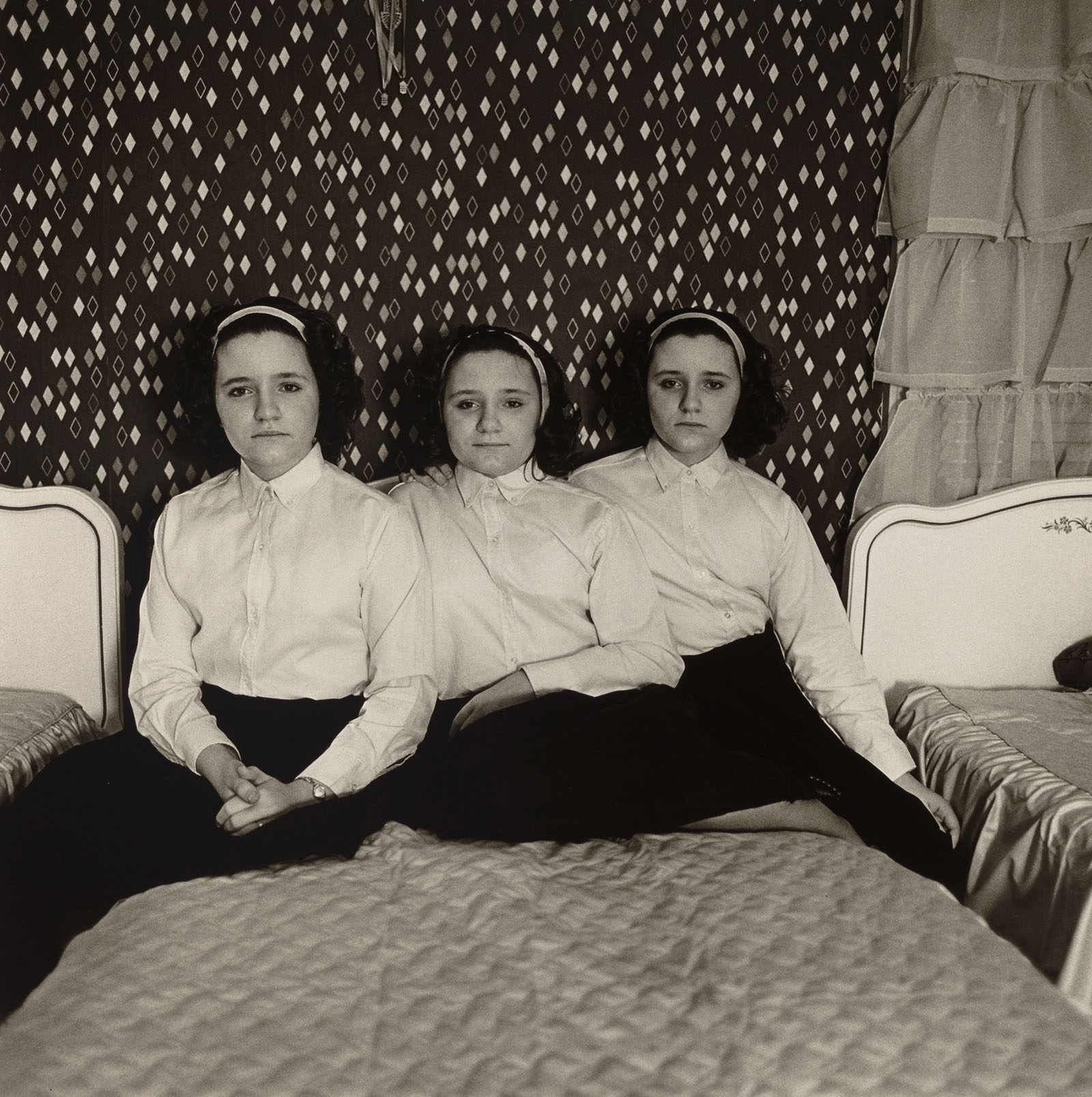
Diane Arbus (American, 1923-1971) 'Triplets in their Bedroom, N.J.,' 1963


Diane Arbus (American, 1923-1971)
Triplets in their Bedroom, N.J.,
1963
Gelatin silver print
Image: 37.7 x 37.8cm (14 13/16 x 14 7/8 in.)
Sheet: 50.4 x 40.4cm (19 13/16 x 15 7/8 in.)
National Gallery of Art, Washington, R. K. Mellon Family Foundation


Celebrated for her portraits of people traditionally on the margins of society – dwarfs and giants – as well as those on the inside – society matrons and crying babies – Arbus was fascinated with the relationship between appearance and identity. Many of her subjects, such as these triplets, face the camera, tacitly aware of their collaboration in her art. Rendering the familiar strange and the strange familiar, her carefully composed pictures compel us to look at the world in new ways. “We’ve all got an identity,” she said. “You can’t avoid it. It’s what’s left when you take away everything else.”


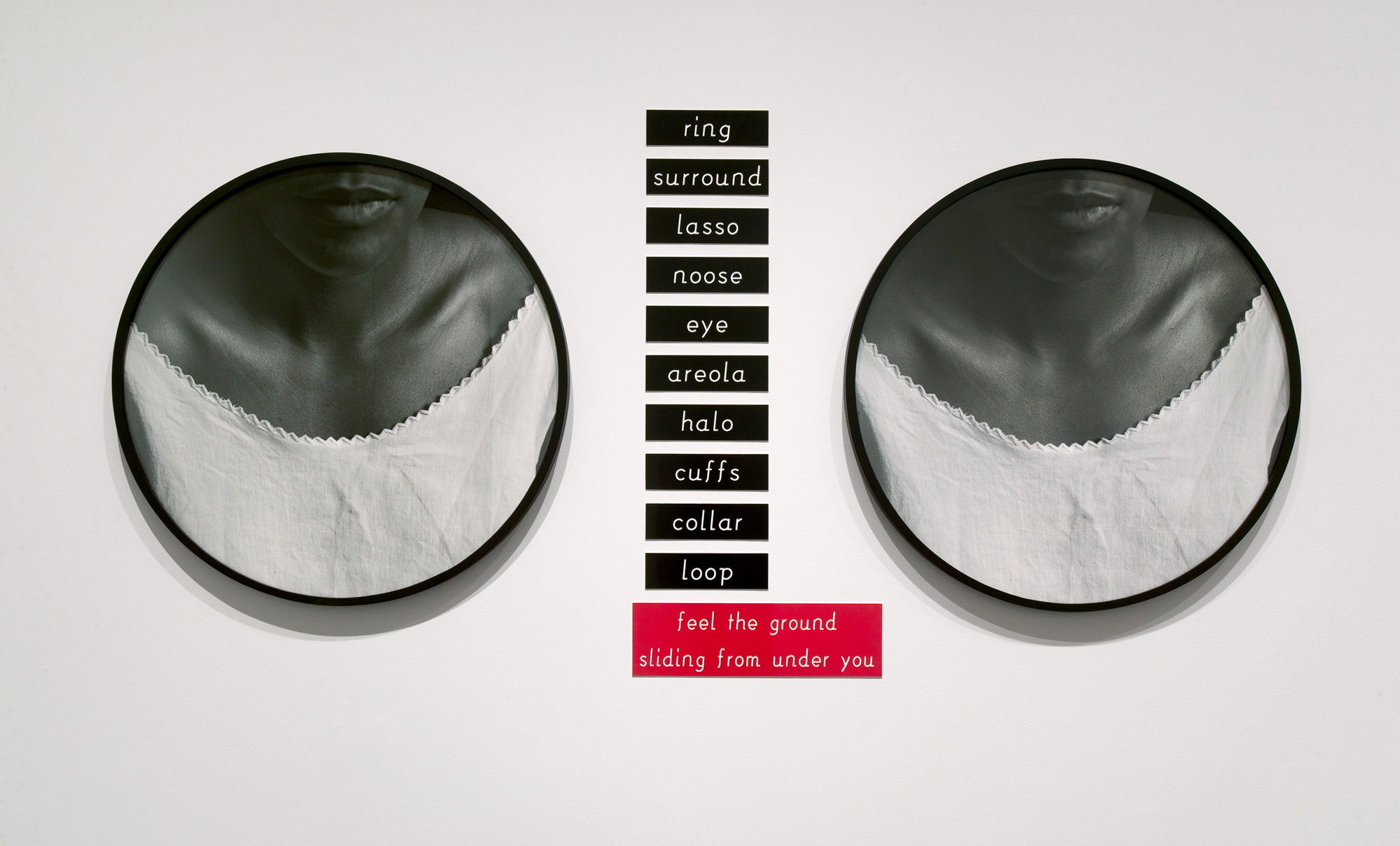
Lorna Simpson (American, b. 1960) 'Untitled (Two Necklines)' 1989


Lorna Simpson (American, b. 1960)
Untitled (Two Necklines)
1989
Two gelatin silver prints with 11 plastic plaques
Overall: 101.6 x 254 cm (40 x 100 in.)
National Gallery of Art, Washington, Gift of the Collectors Committee


From the mid-1980s to the present, Simpson has created provocative works that question stereotypes of gender, identity, history, and culture, often by combining photographs and words. Two Necklines shows two circular and identical photographs of an African American woman’s mouth, chin, neck, and collarbone, as well as the bodice of her simple shift. Set in between are black plaques, each inscribed with a single word: “ring, surround, lasso, noose, eye, areola, halo, cuffs, collar, loop.” The words connote things that bind and conjure a sense of menace, yet when placed between the two calm, elegant photographs, their meaning is at first uncertain. But when we read the red plaque inscribed “feel the ground sliding from under you” and note the location of the word “noose” adjacent to the two necklines, we realise that Simpson is quietly but chillingly referring to the act of lynching.


Hank Willis Thomas (American, b. 1976) 'And One' 2011


Hank Willis Thomas (American, b. 1976)
And One
2011
Digital chromogenic print
Framed: 248.29 × 125.73 × 6.35cm (97 3/4 × 49 1/2 × 2 1/2 in.)
National Gallery of Art, Washington, Corcoran Collection (Gift of the artist and Jack Shainman Gallery, New York)


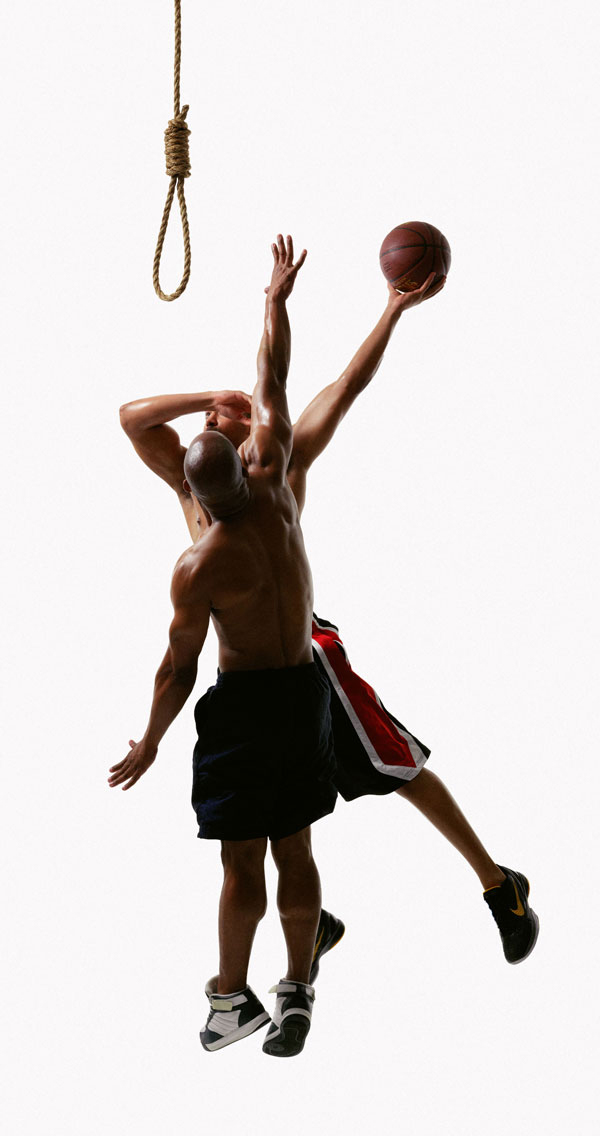
And One is from Thomas’s Strange Fruit series, which explores the concepts of spectacle and display as they relate to modern African American identity. Popularised by singer Billie Holiday, the series title Strange Fruit comes from a poem by Abel Meeropol, who wrote the infamous words “Black bodies swinging in the southern breeze; Strange fruit hanging from the poplar trees” after seeing a photograph of a lynching in 1936. In And One, a contemporary African American artist reflects on how black bodies have been represented in two different contexts: lynching and professional sports. Thomas ponders the connections between these disparate forms through his dramatic photograph of two basketball players frozen in midair, one dunking a ball through a hanging noose.


National Gallery of Art
National Mall between 3rd and 7th Streets
Constitution Avenue NW, Washington

Opening hours:
Daily 10.00am – 5.00pm

National Gallery of Art website

LIKE ART BLART ON FACEBOOK

Back to top