William Clift (American, b. 1944) Somebody’s House, Baltimore, Maryland, 1964 1964
from the book
Certain Places Photographs and Introduction by William Clift. William Clift Editions, Santa Fe, 1987. 44 pp., twenty-two tritone illustrations.
One of the most ravishing photographic books ever produced. Sensitive photography, luminous images, wonderful reproductions on quality stock. Nothing more need be said. My favourite of so many great images is above.
Dr Marcus Bunyan
All photographs are used under fair use conditions for the purpose of education and research. Please click on the photographs for a larger version of the image.
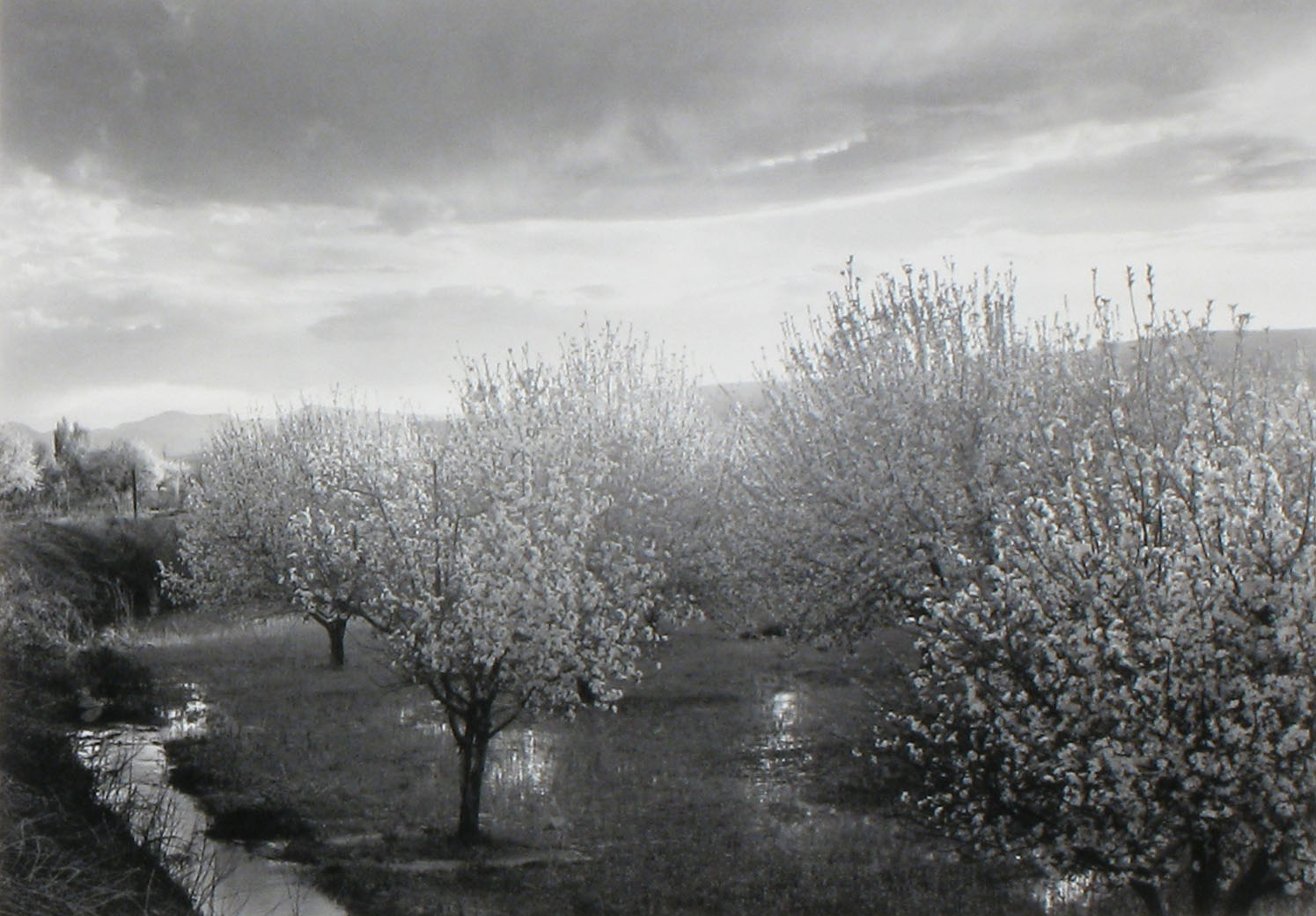
William Clift (American, b. 1944) Apple Blossoms, Velarde, New Mexico, 1973 1973
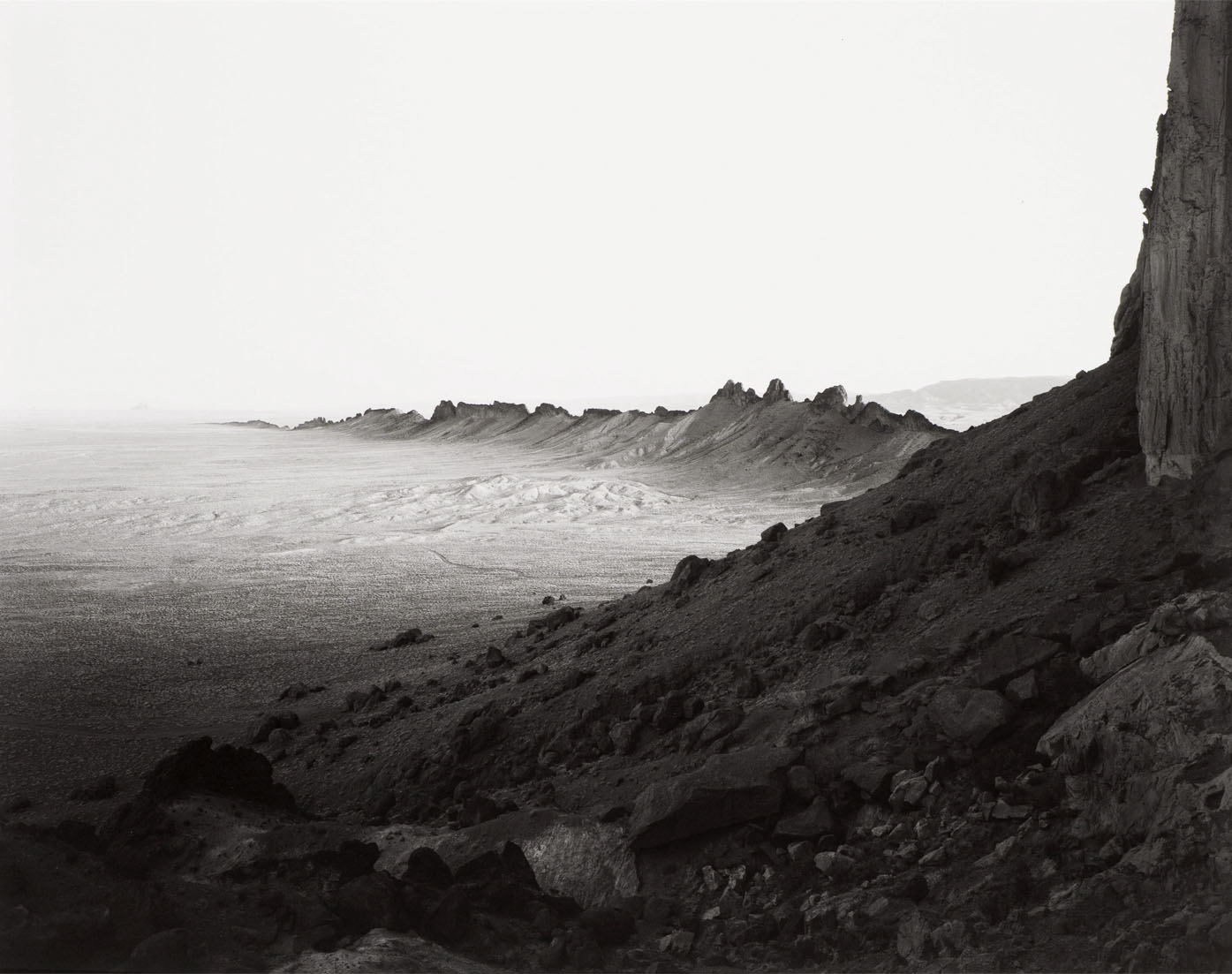
William Clift (American, b. 1944) Desert Form No. 1, New Mexico, 1984 1984
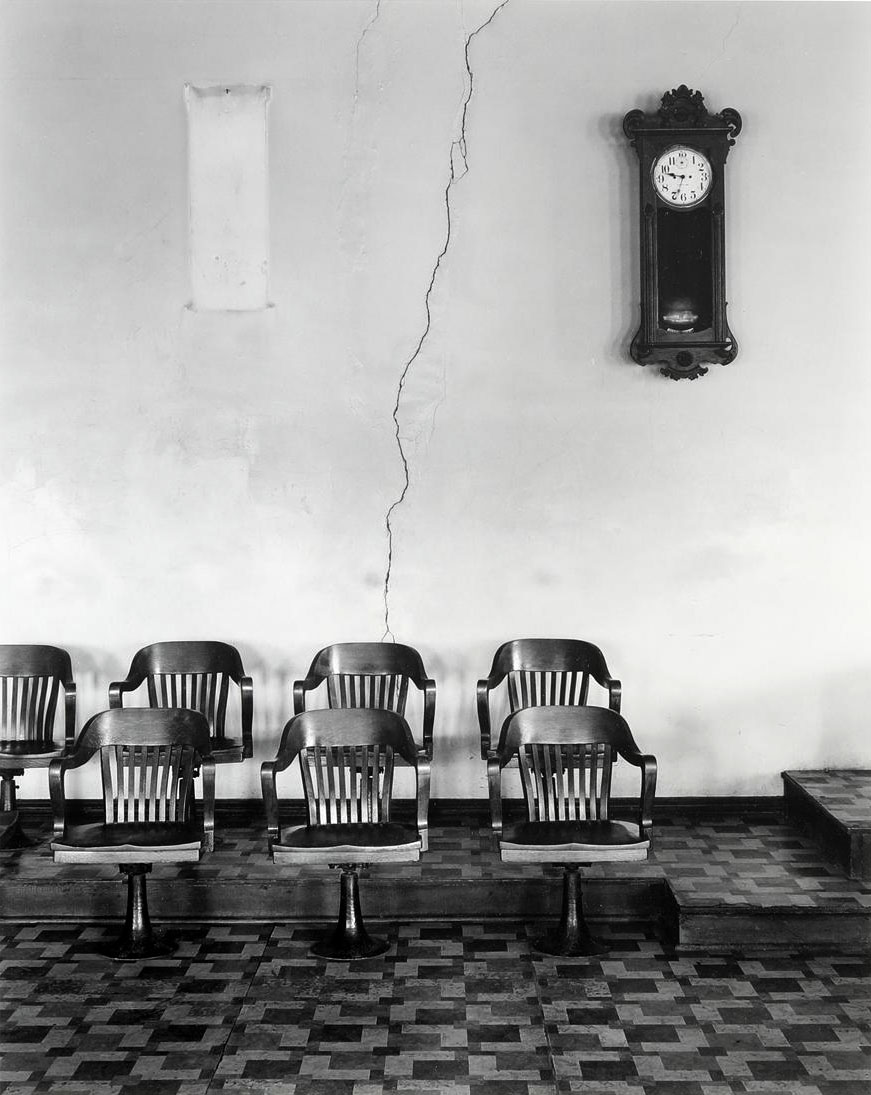
William Clift (American, b. 1944) Untitled 1976 From the County Courthouse series Gelatin silver print 16.5 h x 13 w inches
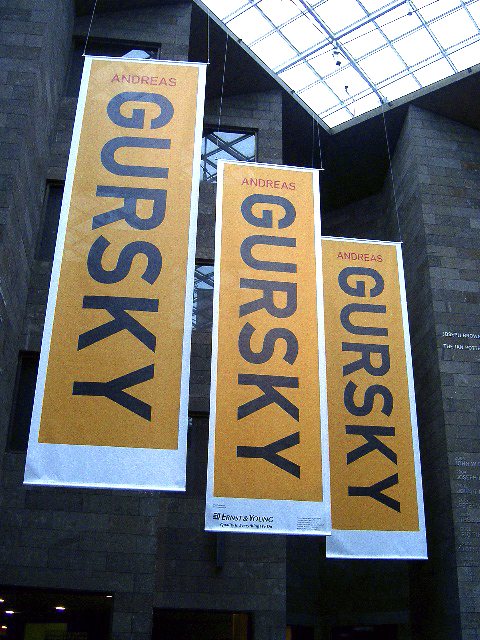
Andreas Gursky banner at NGV International exhibition, Melbourne
A large but plain crowd assembled for the opening of the first exhibition by world renowned German photographer Andreas Gursky at the National Gallery of Victoria in St Kilda Road, Melbourne. After some lively conversation with friends and following the opening speeches we wandered into a large clean gallery space with minimal design elements. The use of space within the gallery allowed the work to speak for itself. It is a minimal hang and the exhibition works all the better for this.
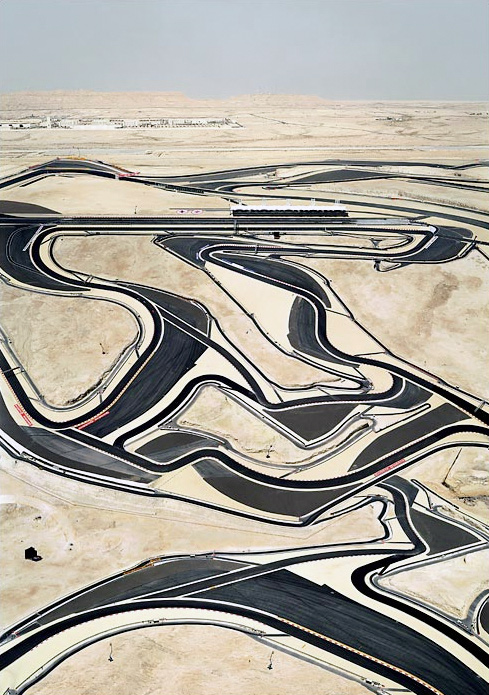
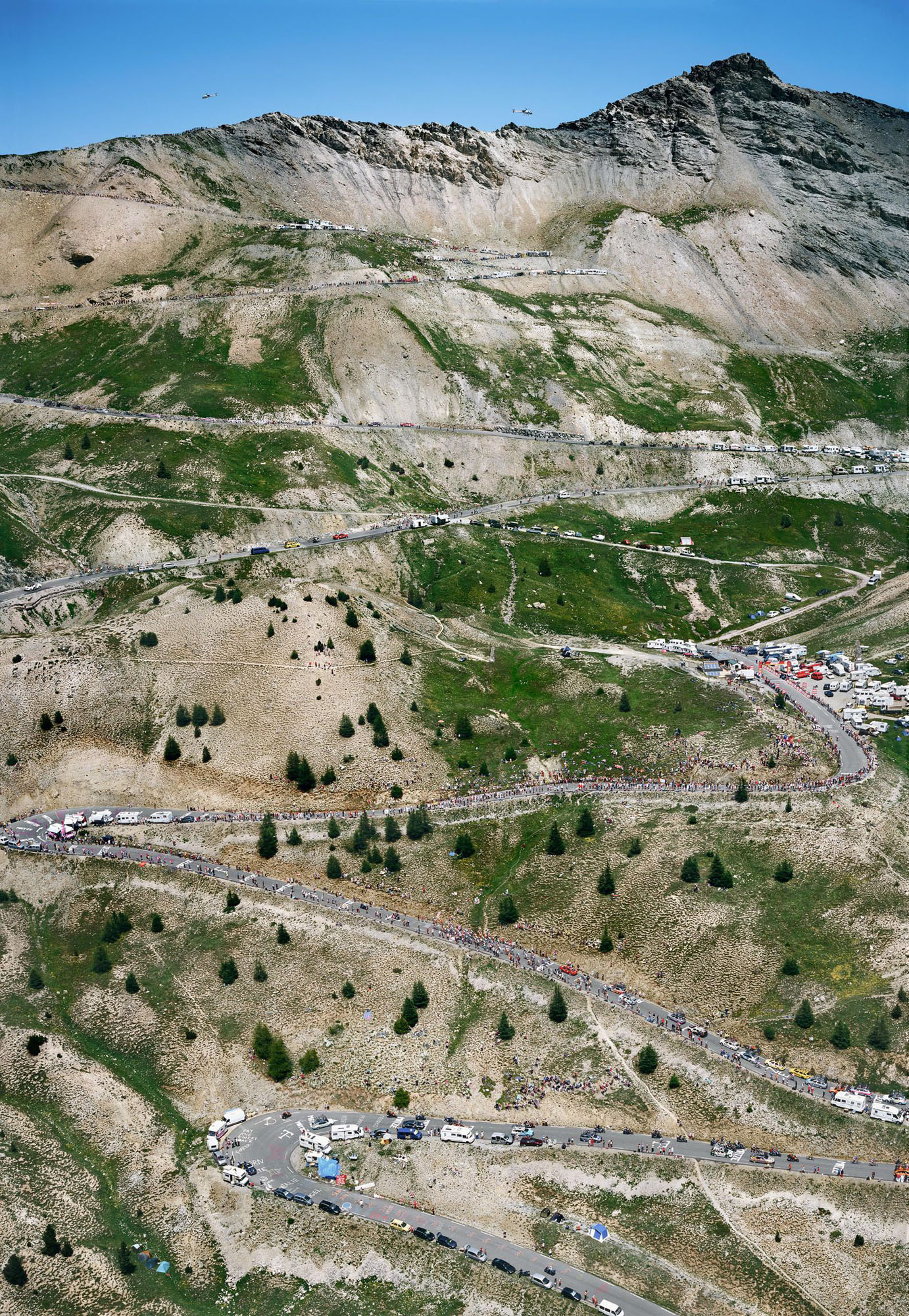
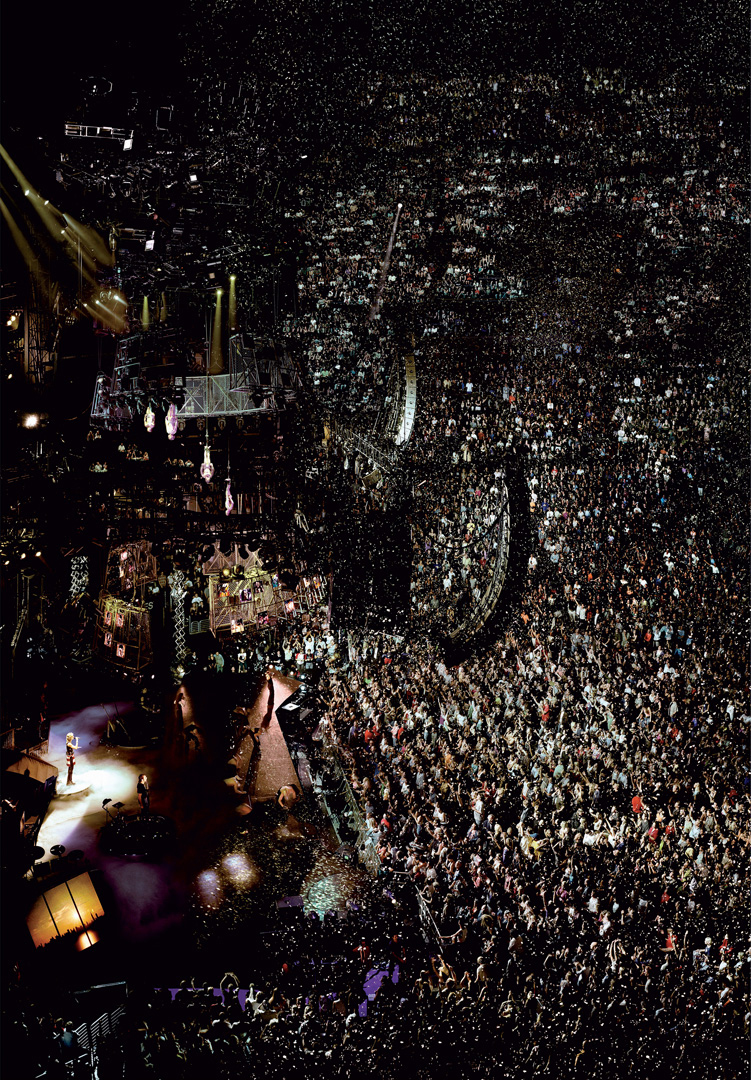
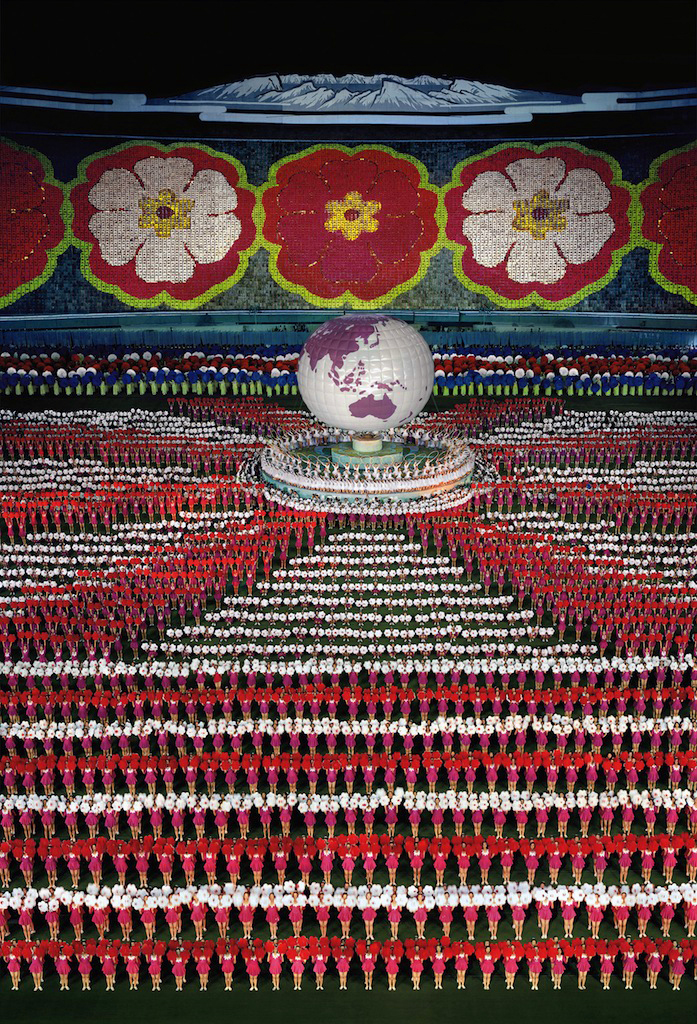
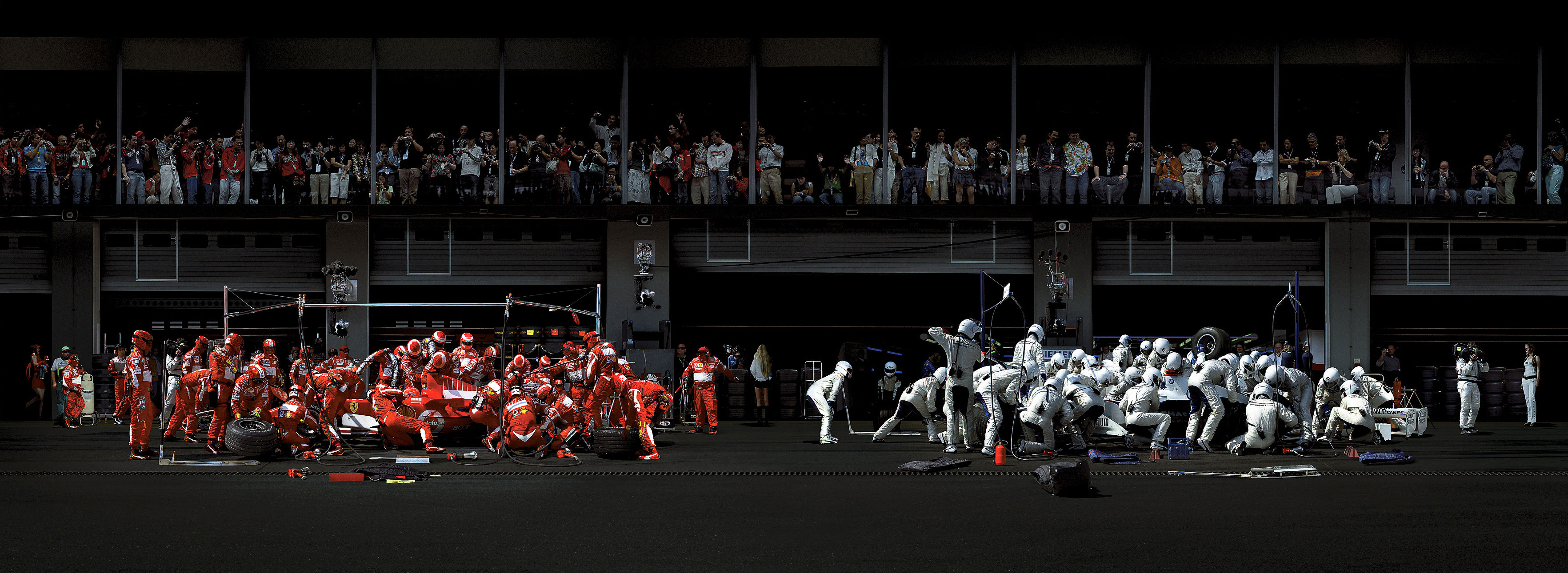
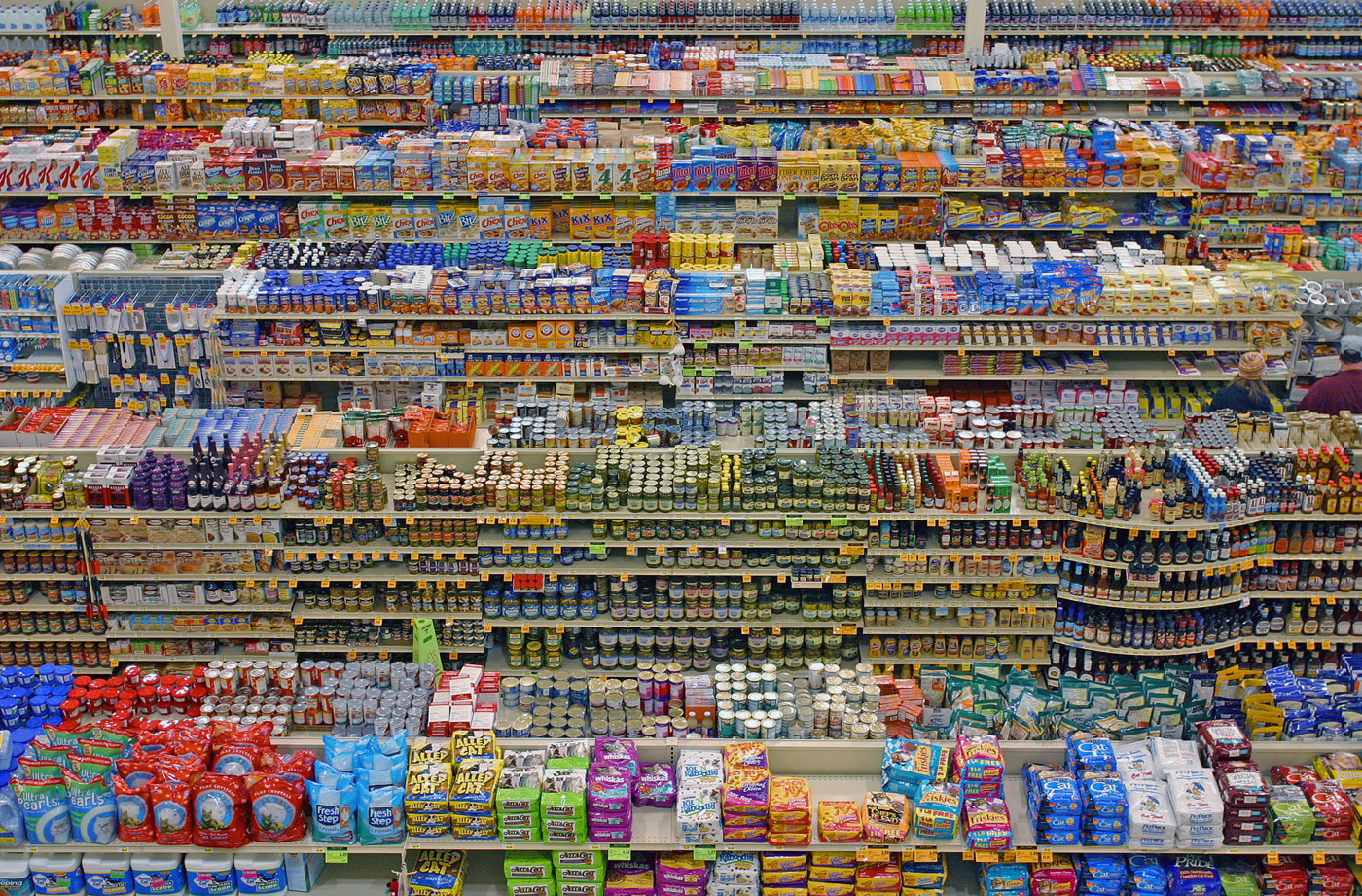
As for the work itself 21 large photographs are presented ranging from landscapes to buildings, race tracks to formula 1 pits, Madonna concerts to the Tour de France. Most work successfully in building a hyperreal vision of the world. We are not sure what is ‘real’ or hyperreal, what is a straight photograph or what has been digitally manipulated and woven together. The colour and sharpness of the images is often intensified: in reproductions of the famous photograph of the 99c supermarket in America the colours seem flat but ‘in the flesh’ the colours are almost fluoro in their saturation and brightness.
Having said that the photographs are nearly always unemotional – as though seen from above in the third person, they observe with detachment. The intrigue for the viewer is in the detail, in working out what is going on, but these are not passionate photographs on the surface. It is beneath the surface that the photographs have their psychological effect: the best of the images work on the subconscious of the viewer. Like a fantastical dance the three very wide images of the Formula 1 pits feature pit crews practicing tyre changes, frozen in a choreographed ballet. People in the galleries above stare down; pit lane girls seem to have been inserted digitally into the images, standing at side or behind the pit crews in a seemingly surreal comment on these worlds. These are theatrical tableaux vivant, splashed with teams colours. Fantastic photographs.
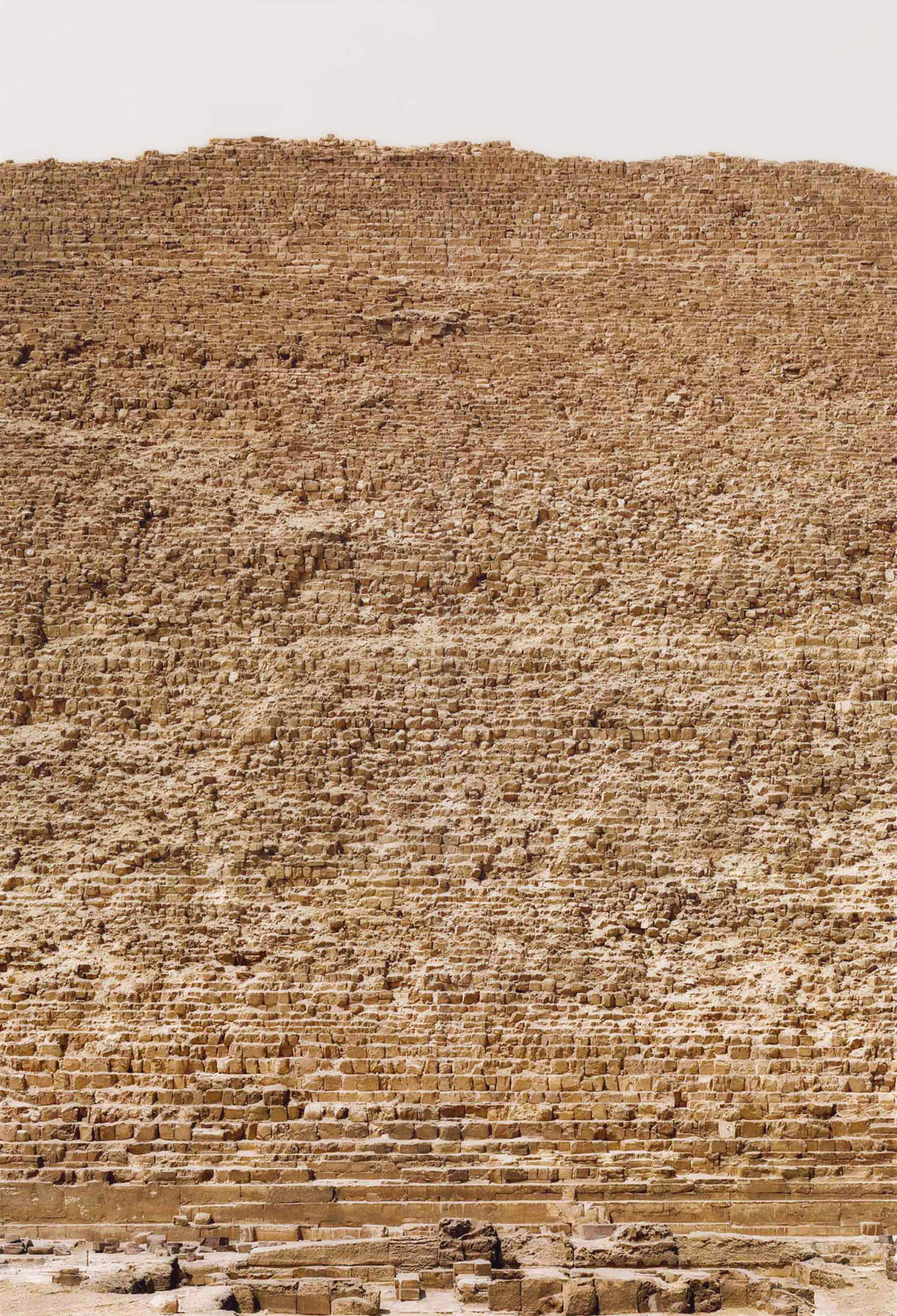
In some of the images, such as the Madonna concert or the photograph of the Bahrain Formula 1 racetrack, space seems to have folded in on itself and the viewer is unsure of the structure of the image and of their vantage point in looking at them. Space also collapses in the photograph of the pyramid of Cheops (2006, below), where the depth of field from foreground to background of the image is negligible. Less successful are images of a Jackson Pollock painting and a green grass bank with running river (Rhein II 1996, below), intensified beyond belief so that the river seems almost to be made of liquid silver.
A wonderful exhibition in many aspects, well worth a visit to see one the worlds best photographers at work. The photographs tell detached but psychologically emotional stories about what human beings are doing to the world in which they live. These images are a commentary on the state of this relationship – images of repetition, pattern, construction, use, abuse and fantasy woven into hyperreal visions of an unnatural world.
Dr Marcus Bunyan
Many thankx to the National Gallery of Victoria for inviting me to the opening and for allowing me to publish the photographs in the posting. Please click on the photographs for a larger version of the image.
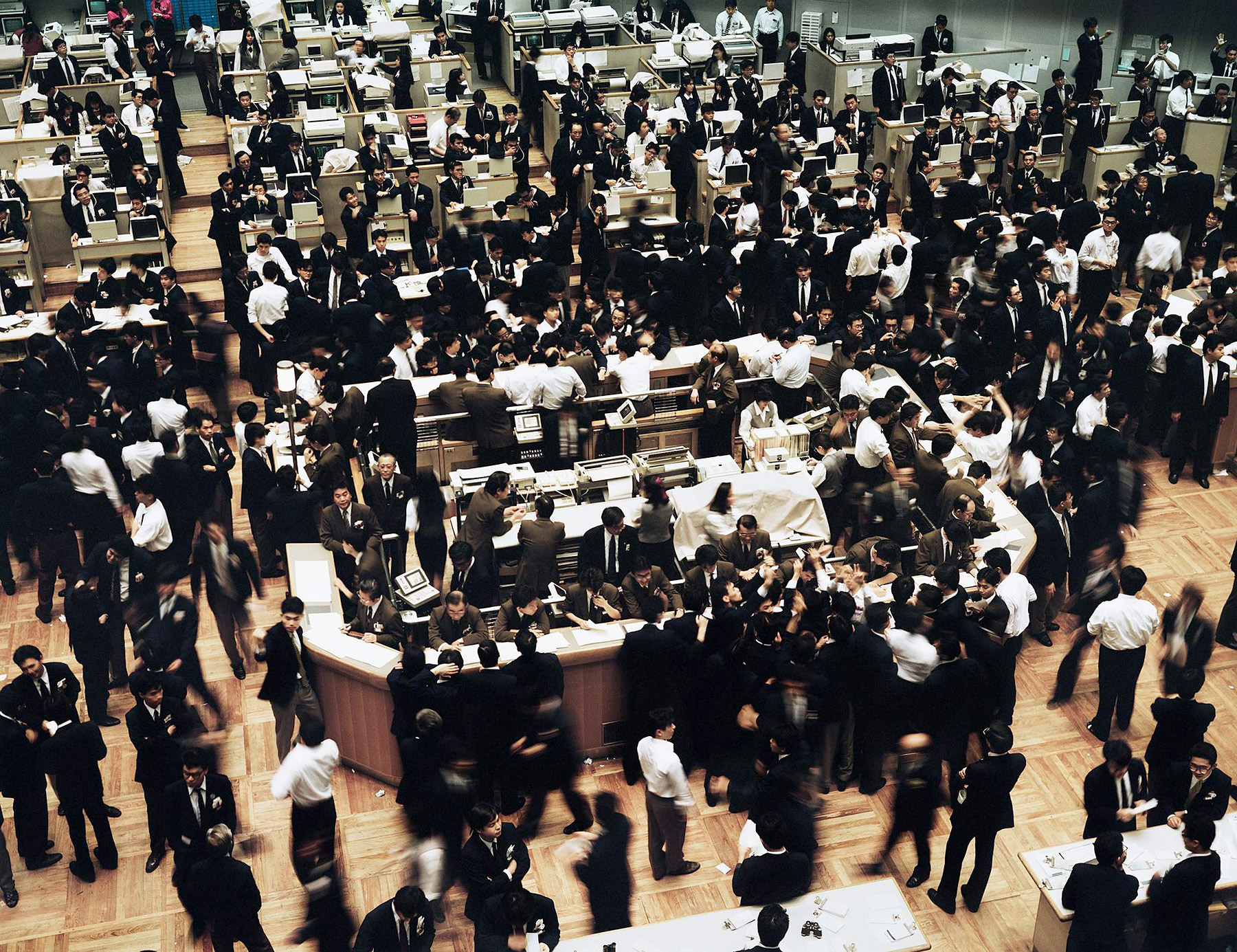
For the first time in Australia, an exhibition by German contemporary photographer Andreas Gursky opened at the National Gallery of Victoria. From the Haus der Kunst in Munich, Andreas Gursky presents 21 major works for which the artist is internationally acclaimed. The photographs range from 1989 to 2007 and include seminal works such as Tokyo Stock Exchange and the diptych 99 cent store. Andreas Gursky is recognised as one of the world’s leading contemporary artists. On view through 22 February, 2009.
Well known for his large-scale (generally measuring an astounding four to five metres) and extraordinarily detailed photographs of contemporary life, Gursky continues the lineage of ‘new objectivity’ in German photography which was brought to contemporary attention by Bernd and Hilla Becher.
In the 1990s, Gursky became inspired by the various manifestations of global capitalism. His interest was piqued looking at a newspaper photograph of the crowded floor of the Tokyo Stock Exchange and he began to photograph its flurry of suited traders, somehow moving according to some inbuilt order.
Dr Gerard Vaughan, Director, NGV said the Andreas Gursky exhibition represented a significant coup for Melbourne: “The National Gallery of Victoria is the only Australian venue for this extraordinary show – the first major exhibition of Gursky’s work ever to be seen in this country. Generously organised by the Haus der Kunst Museum in Munich we are extremely fortunate to have had the works in this show selected for us by Andreas Gursky himself.”
Andreas Gursky was born in 1955 and grew up in Düsseldorf, Germany. In the early 1980s, he studied at the Kunstakademie Düsseldorf, Germany’s State Art Academy. Whilst there he was heavily influenced by his teachers Bernd and Hilla Becher, who were well known for their methodical black and white photographs of industrial machinery.
In 1984 Gursky began to move away from the Becher style, choosing instead to work in colour. Since then he has travelled across the world to cities such as Tokyo, Cairo, Hong Kong, Stockholm, Singapore and Los Angeles photographing factories, hotels and office buildings – places he considered to be symbols of contemporary culture. His world-view photographs during this period are considered amongst the most original achievements in contemporary photography.
Gursky has been the subject of numerous international exhibitions including the Internationale Foto-Triennale in Esslingen, Germany in 1989 and 1995, the Venice Biennale in 1990, and the Biennale of Sydney in 1996 and 2000. In 2001, Gursky was the subject of an exhibition at the Museum of Modern Art in New York.
Press release from the National Gallery of Victoria website
“Sciagraphy: the art of depicting an object through its shadow.”
(William Henry Fox Talbot’s private name for photography)
Schaaf, Larry. “The Paper Multiple: Talbot’s Invention and Early Photographic Books,” in Foster, S., Heiting, M. and Stuhlman, R. Imagining Paradise. Rochester NY: George Eastman House, 2007, p. 45.
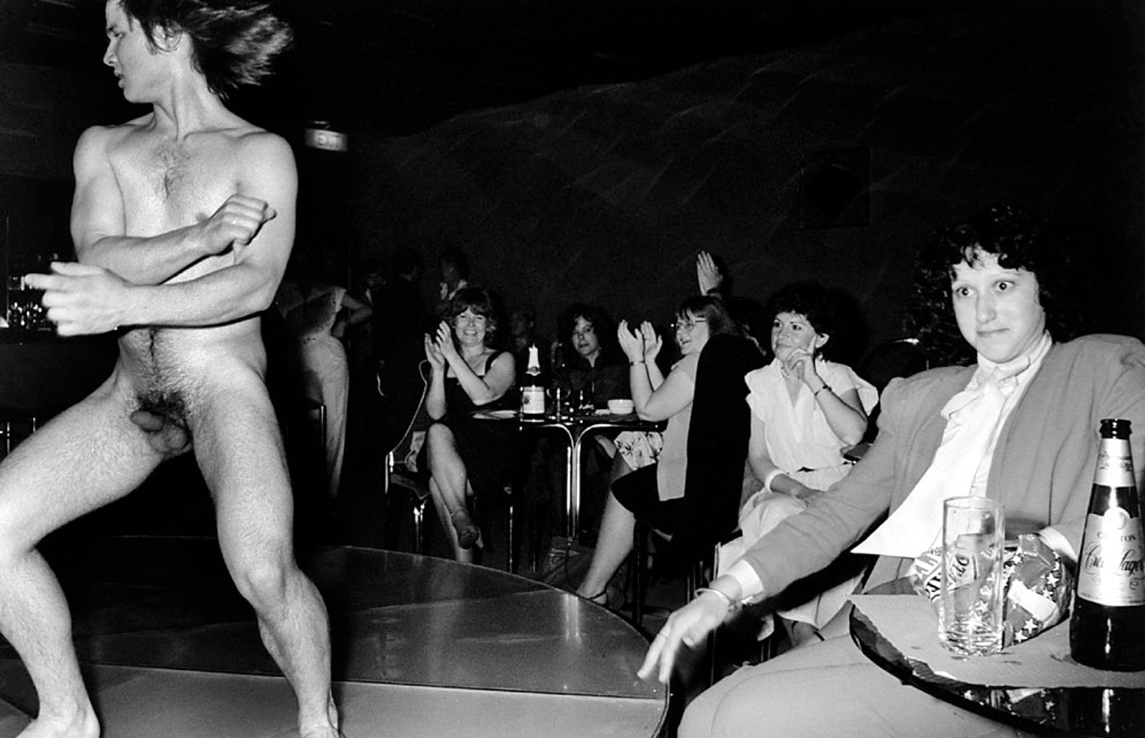
Rennie Ellis (Australian, 1940-2003) Girls’ Night Out, Prahran 1980 Silver gelatin, selenium toned fibre based print
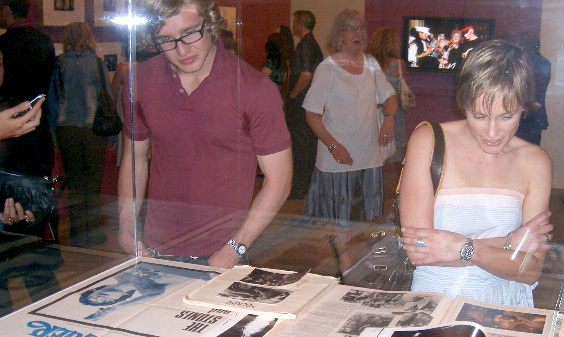
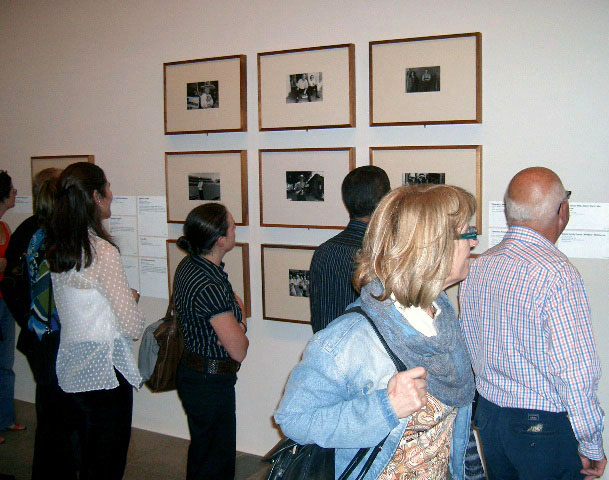
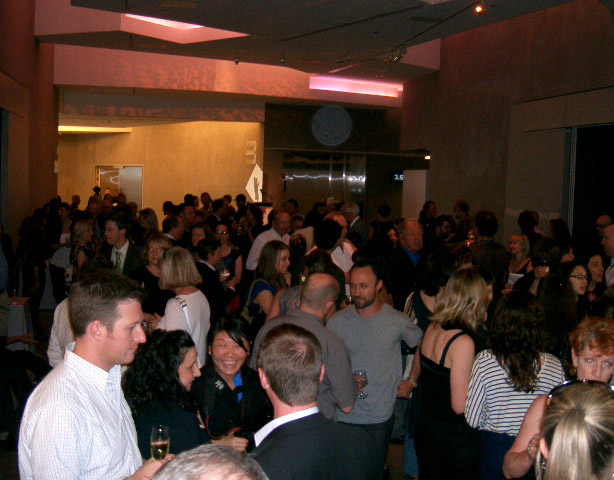
A very social and lively crowd gathered at The Ian Potter Centre: NGV Australia at Federation Square on the evening of 30th October to celebrate the life and work of the Australian social photographer Rennie Ellis.
After opening comments by the NGV Director Dr Gerard Vaughan there was a funny and erudite speech by Phillip Adams AO who had flown down from Sydney to open the exhibition. The crowd enjoyed the anecdotes about his relationship with Rennie and said he thought that dying was a good career move on Rennie’s behalf and that he would have loved the fact that he had a retrospective at the NGV. Adams observed that Ellis used to be everywhere, at every party and opening, using his astute eye to record and never to judge. Applause all round for a life well lived.
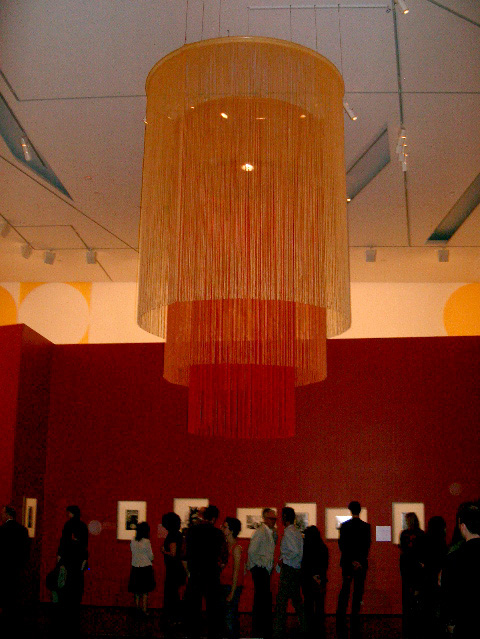
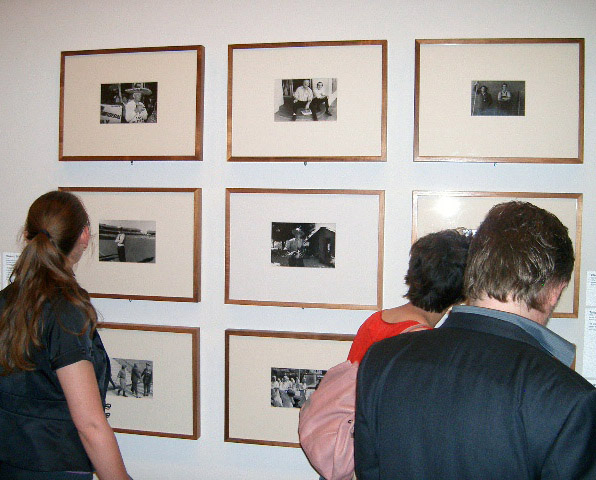
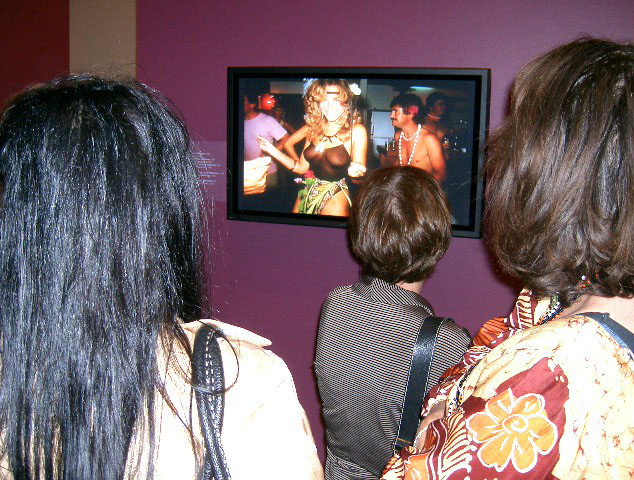
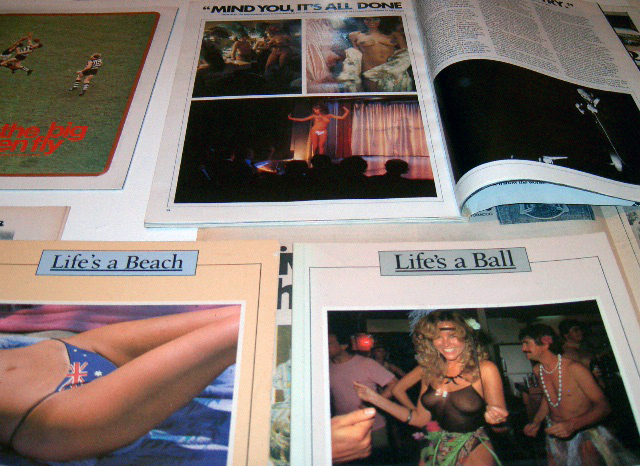
On entering the exhibition space viewers were treated to a simple but effective installation of his work, with overtones of the 1970’s-1980s interior decor with yellow and white circle graphics and hanging fabric chandelier. The curatorial staff at the NGV (notably Susan van Wyk) have chosen over 200 works from an archive of over half a million images for the exhibition in a process that has taken over two and a half years.
As an immigrant arriving in Australia in 1986 I remember 397 Club that used to be at 397 Swanston Street. After every other place had closed this club attracted people from every walk of life: pimps, prostitutes, drag queens, faggots, lesbians, straights and druggies. Rennie was probably there recording the scene. We were there just for a good time. It was fun and this is what Ellis’ photography is. Not burdened by overarching conceptual ideas Ellis recorded what he saw insightfully, balancing social commentary and spatial organisation in the construction of his images. The image Girls’ Night Out, Prahran 1980 (above) is a pearler (with the look on the woman’s face) and neatly encapsulates the magic of his image making.
“5. In a modern society, images made by cameras are the principal access to realities of which we have no direct experience. And we are expected to receive and to register an unlimited number of images of what we don’t directly experience. The camera defines for us what we allow to be “real” – and it continually pushes forward the boundary of the real. Photographers are particularly admired if they reveal hidden truths about themselves or less than fully reported social conflicts in societies both near and far from where the viewer lives.”
Sontag, Susan. “Photography: A Little Summa,” in Sontag, Susan. At the Same Time: Essays and Speeches. London: Hamish Hamilton, 2007, p. 125.



 Art Blart _ art and cultural memory archive
You must be logged in to post a comment.