Exhibition: ‘The Poetry of the Everyday. Photographs by Elfriede Mejchar’ at Museum der Moderne Salzburg

Exhibition dates: 26th April – 15th September 2024

Altstadt (Rupertinum)

Curator: Katharina Ehrl
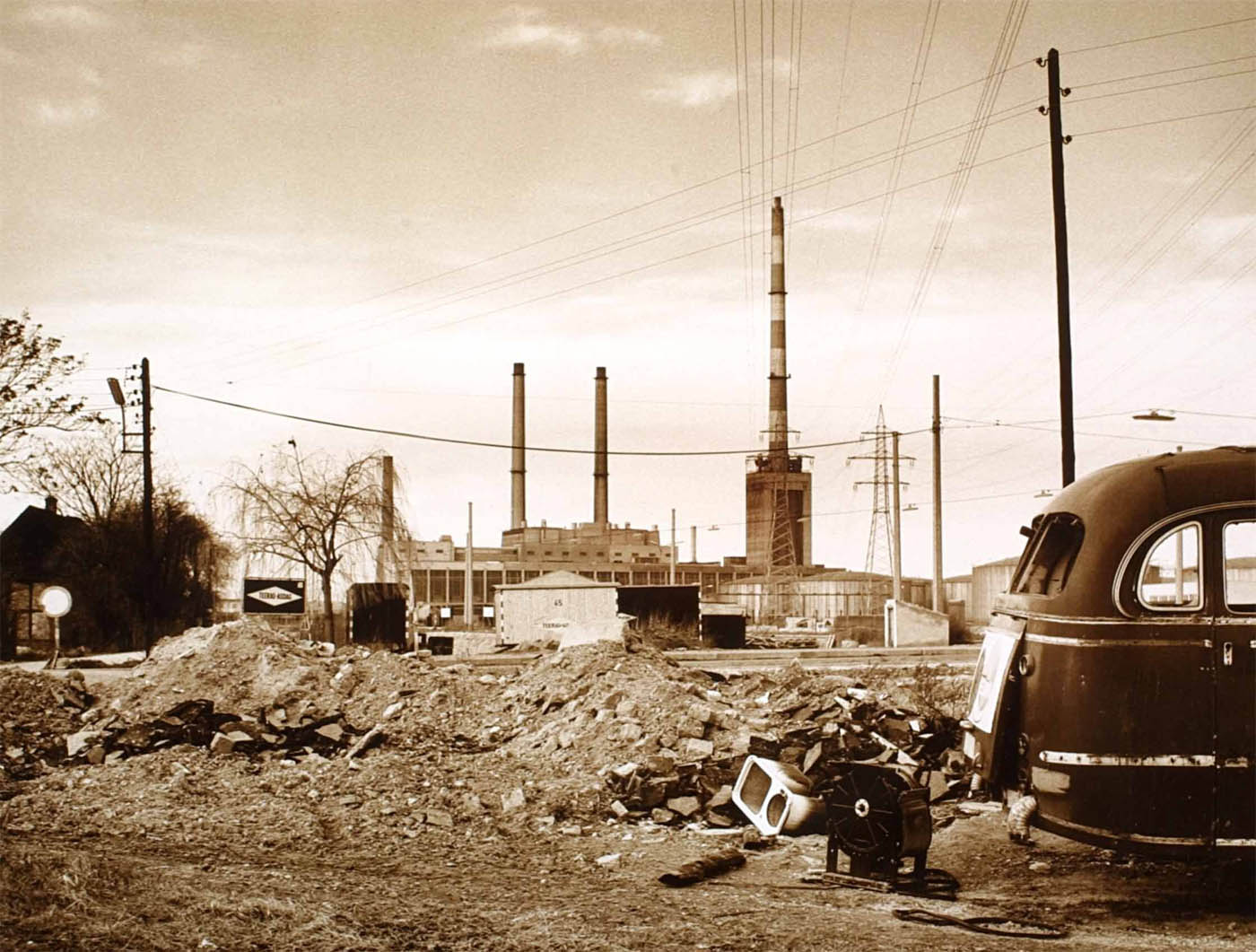
 

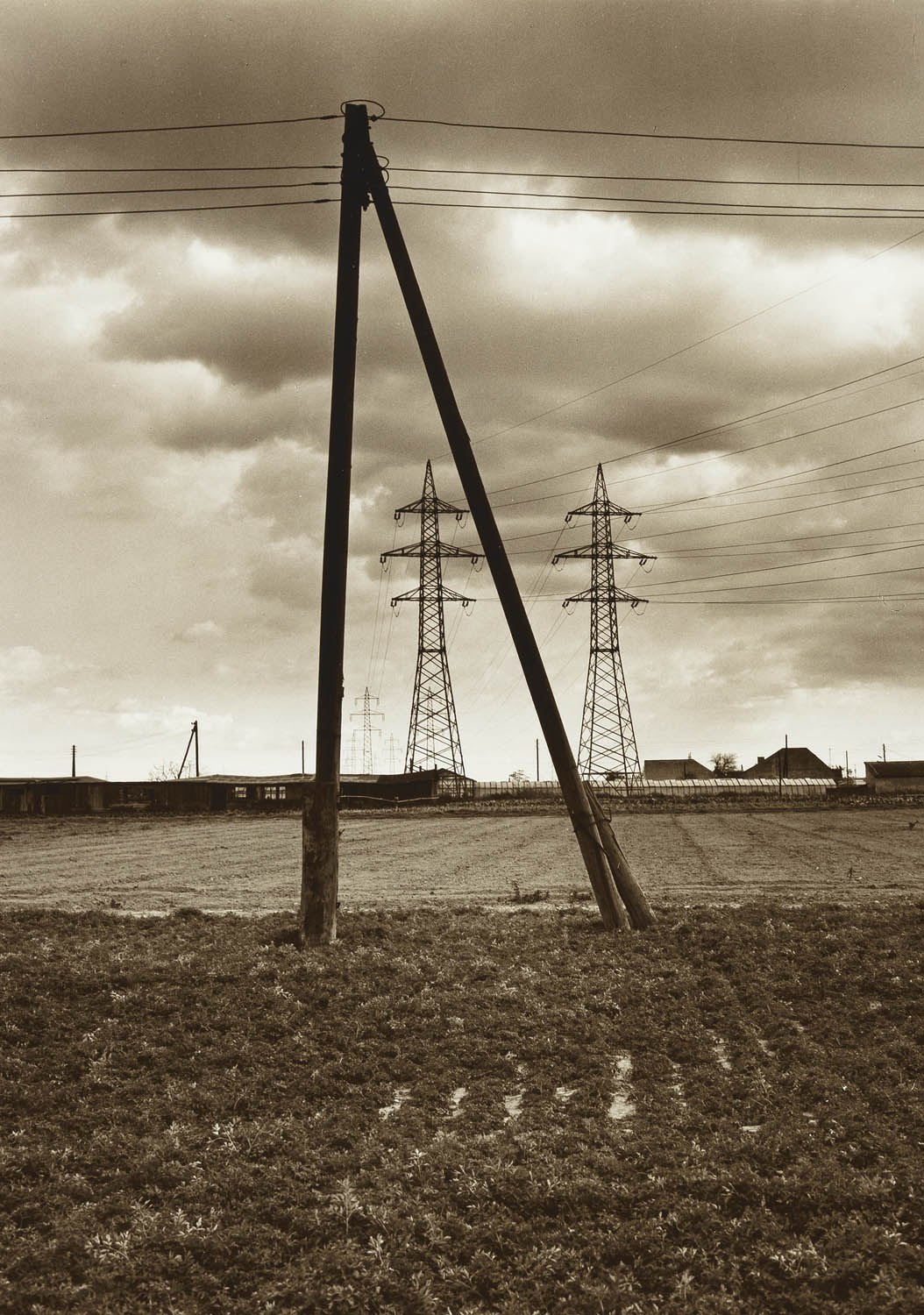
Elfriede Mejchar (Austrian, 1924-2020) From the series 'Simmeringer Heide und Erdberger Mais', 1967-1976


Elfriede Mejchar (Austrian, 1924-2020)
From the series Simmeringer Heide und Erdberger Mais, 1967-1976
Silver gelatine print on baryta paper, brown toned
Museum der Moderne Salzburg
© Bildrecht, Vienna 2024


Deriving pleasure from the dérive

In recent weeks Art Blart has posted on social documentary photographers of the urbanscape: David Goldblatt documenting social conditions in South Africa under apartheid and Roger Mayne with his “mixture of reality and unreality” photographs of the communities of Southam Road and surrounds, London.

One could argue that both could be seen as a focused urban male flâneur (or flâneuse in the case of a female), who saunters around the city observing society – the serendipitous Mayne more so than the working in series focused Goldblatt. And here we have another photographer of the urbanscape until recently unknown to me, that of the magnificent Austrian photographer Elfriede Mejchar (1924-2020) who – according to the exhibition text – is another flâneur, “her flaneur-like practice underlying her earlier bodies of work.”

But Mejchar’s was a very concentrated photographic practice, one in which the photographer again and again “explored Vienna’s peripheral zones on the southeast edge of the city” to create photographic series often created over several years. Therefore, rather than being a wandering dilettante photographer, I believe that Mejchar was a focused conceptual artist who used Guy Debord’s “Theory of the Dérive” (1956)1 (or “drift”) to ground her photographic practice.

With its focused flow of acts, its gestures, its strolls, its encounters, one of the goals of the dérive includes studying the terrain of the city (psychogeography), the exploration of urban environments that emphasises interpersonal connections to places. The pyschogeography of the urbanscape.2

A quotation by Grant W. Ray is instructive in this regard:

“Debord’s Dérive is not simple a walk through the streets of the city, of chance encounters. Instead one must move rapidly and decisively through the urban space, with intention… They should be aware of their surroundings, of the “… ecological analysis of the absolute or relative character of fissures in the urban network, of the role of microclimates, of distinct neighborhoods with no relation to administrative boundaries, and above all of the dominating action of centers of attraction…” Thus the most talented photographers who’s oeuvre includes the investigation of the urbanscape. The walk itself, the interaction of operator, camera, and site breaks down the normal relationship we have with public urban spaces. Their activity alone is the Dérive.”3


Working decisively and with intention, at the edge of the city, in spaces with no boundaries, where there were few people, or using different typologies of the city such as hotel rooms in which she stayed during her everyday job, Mejchar focused on the pyschogeography of the urbanscape through her reflective, non-decisive moment photographs, capturing “the complexity of this desolate and yet, in her eyes, beautiful landscape” and the changes that were happening to the urbanscape.

“Elfriede Mejchar consciously broke away from the photographic mainstream and the reportage style that was popular at the time. Rather than searching for the so-called “decisive moment,” she approached her subjects in a strongly conceptual and serial manner. She focused not on the extraordinary but on the unspectacular and the commonplace, the everyday and the banal, repeatedly addressing these in new ways in her photographic series.” (Text from the Wien Museum website)

Working with the periphery, the borders between urban and rural spaces, the non-decisive moment, landscapes subjected to human interventions and photographs in series, Mejchar’s photographs are more than mere representation of these sites: they challenge the viewer to “instigate more than just chance encounters for the viewer looking at the photographs,” through an understanding of the “subtle variations of the daily social realities created and maintained through public works and layout.”4 “The photographers activity of finding these sites is the dérive, the photograph itself is the pyschogeography, the questioning.”4

With her training as a classical photographer in the manner of Sudek, Brassaï or Tudor-Hart (see the first two photographs in the posting On Her Own. The photographer Elfriede Mejchar) grounding her later objective conceptual photographs, Mejchar’s point of departure is the pleasure she derives from the focused dérive and the results of her activity (through the objective and precise eye of a topographer a la Bernd and Hiller Becher) – the questioning photographs – brought to the attention of the viewer.

Mejchar investigates “traces of civilisation that humans leave in nature or along the edges of the urban fabric” and in so doing brings peripheral things (and her ideas about them) to the centre of our attention, making them psychologically valuable for all of us. The artist derives pleasure from her measured dérive and investigation of the evanescent, posing important questions about seemingly mundane things before they pass out of sight, memory, and existence.

And in her pleasure, is ours.

Dr Marcus Bunyan

See another posting about the artist’s work: On Her Own. The photographer Elfriede Mejchar at Wien Museum MUSA, Vienna, 18th April – 1st September, 2024


1/ “Psychogeography describes the effect of a geographical location on the emotions and behaviour of individuals.

How do different places make us feel and behave? The term psychogeography was invented by the Marxist theorist Guy Debord in 1955 in order to explore this. Inspired by the French nineteenth century poet and writer Charles Baudelaire’s concept of the flâneur – an urban wanderer – Debord suggested playful and inventive ways of navigating the urban environment in order to examine its architecture and spaces.”

Anonymous. “Psychogeography,” on the Tate website Nd [Online] Cited 13/09/2024

2/ Guy Debord (November 1956). “Theory of the Dérive”. Les Lèvres Nues (9). Translated by Ken Knabb.

3/ Guy Debord, “Theory of the Dérive,” 1958 on the Bureau of Public Secrets website Nd quoted in Grant W. Ray. “Dérive,” on the Silverpoetics website 13 July 2009 [Online] Cited 20/08/2024

4/ Ibid.,


Many thankx to the Museum der Moderne Salzburg for allowing me to publish the photographs in the posting. Please click on the photographs for a larger version of the image.


Poesie des Alltäglichen. Fotografien von Elfriede Mejchar / The poetry of the everyday

To mark the centenary of her birth, in 2024 three museums in Austria host exhibitions of works by the photographer Elfriede Mejchar (1924-2020, Vienna, AT). The Museum der Moderne Salzburg presents the artist as a portraitist. Curator Katharina Ehrl guides you through the exhibition in this short film.


In 2024, three museums host exhibitions of works by the Austrian photographer Elfriede Mejchar (1924-2020, Vienna, AT). The Museum der Moderne Salzburg is collaborating with the Landesgalerie Niederösterreich and the Wien Museum to honor the artist’s work at three different locations on the occasion of her 100th birthday, with each location offering a different focus.

Salzburg’s contribution to this collaborative project will present the artist’s portraits. With her series of works entitled “Artists at work” (1954-1961), for example, Mejchar demonstrates impressively how she engages with the artistic personalities of Christa Hauer, Friedensreich Hundertwasser, Josef Mikl and Arnulf Rainer by mapping their working situation in their studios. But she also demonstrated the same precision of perception when encountering the inanimate objects in her surroundings, thereby giving landscapes, flowers and discarded furniture the appearance of animated portraits.

The photo collections at the Museum der Moderne Salzburg hold a total of 665 photographs by Mejchar. Otto Breicha, the first director of the Museum’s predecessor institution, was a long-time colleague of Mejchar who recognised the artistic value of her photographic work and helped to promote it. As early as 1982, one year before the official opening of the Rupertinum, a comprehensive collection of her work was added to the photographic collection that later grew through further purchases and donations and today constitutes a focal point of the Museum’s photographic holdings.

Text from the Museum der Moderne Salzburg website
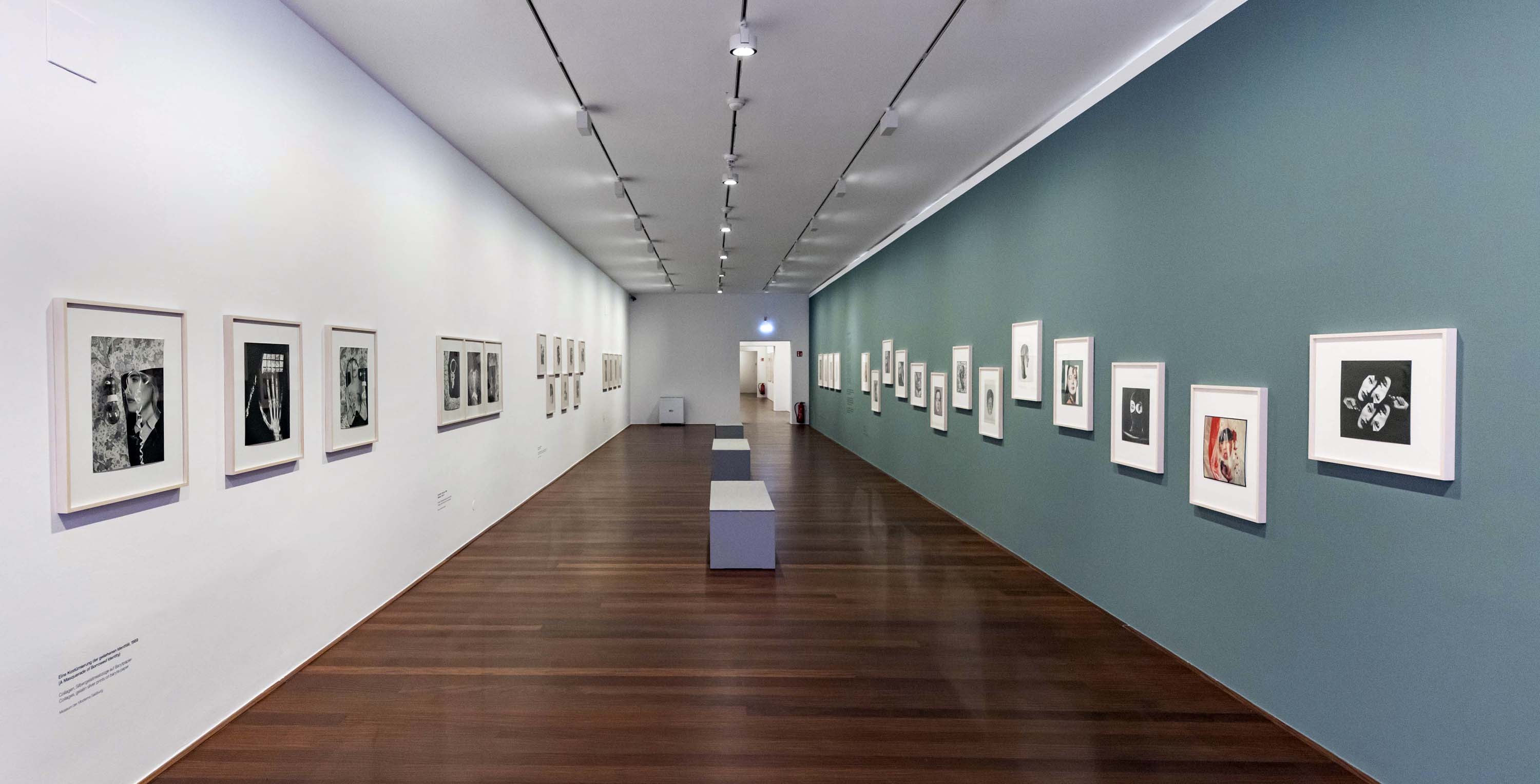
 

Installation view of the exhibition 'The Poetry of the Everyday. Photographs by Elfriede Mejchar', Museum der Moderne Salzburg 2024


Installation view of the exhibition The Poetry of the Everyday. Photographs by Elfriede Mejchar, Museum der Moderne Salzburg 2024 showing at left, work from Mejchar’s series Eine Kostümierung der geliehenen Identität (A Masquerade of Borrowed Identity) (below); and at right, photographs from the series Nobody is Perfect (below)
© Museum der Moderne Salzburg
Photo: wildbild/Günter Freund
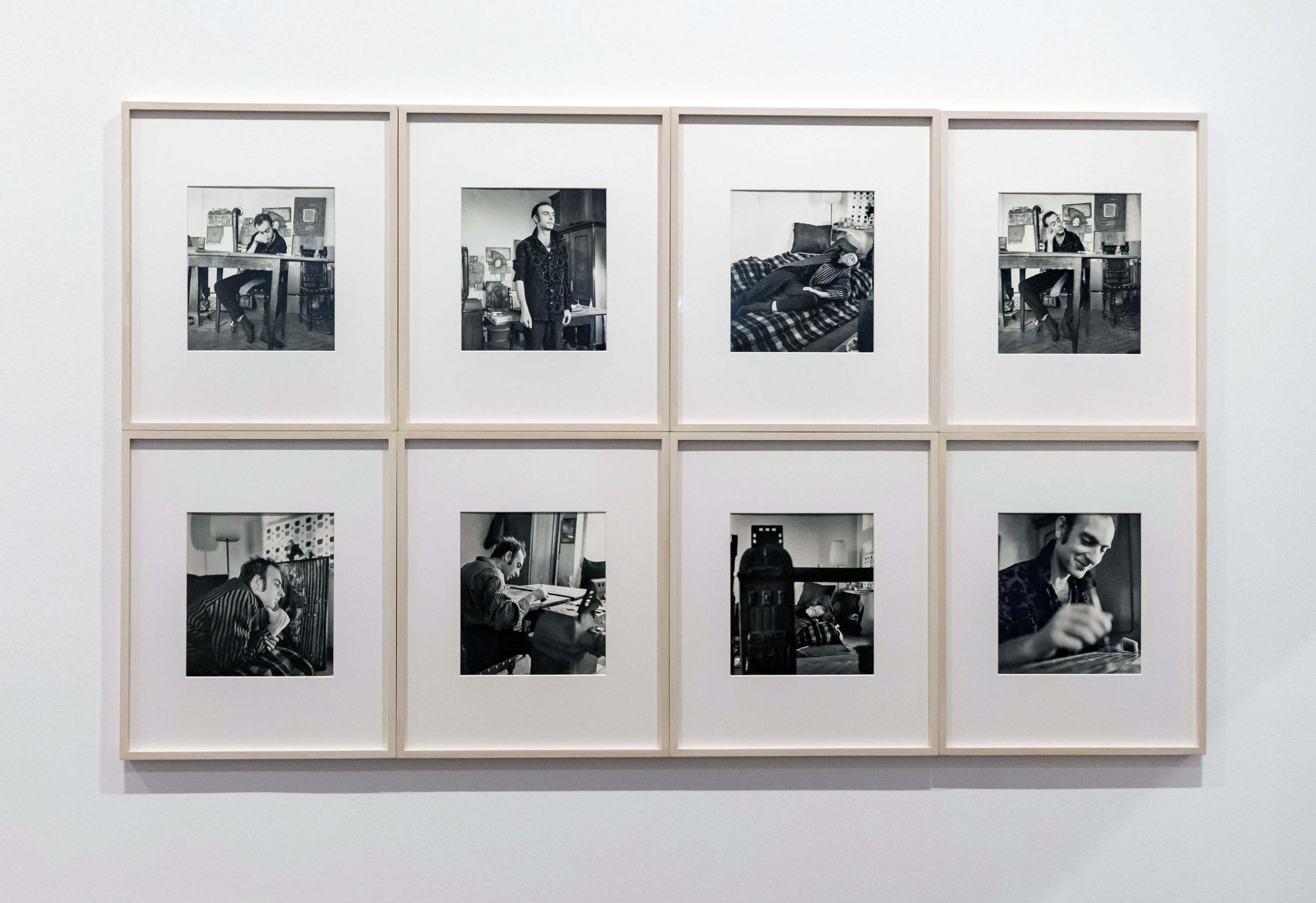
 

Installation view of the exhibition 'The Poetry of the Everyday. Photographs by Elfriede Mejchar', Museum der Moderne Salzburg 2024 showing work from Mejchar's series 'Künstler bei der Arbeit, 1954-1961' (Artists at work, 1954–1961)


Installation view of the exhibition The Poetry of the Everyday. Photographs by Elfriede Mejchar, Museum der Moderne Salzburg 2024 showing work from Mejchar’s series Künstler bei der Arbeit, 1954-1961 (Artists at work, 1954-1961) (below)
© Museum der Moderne Salzburg
Photo: wildbild/Günter Freund


Elfriede Mejchar (Austrian, 1924-2020) 'Arnulf Rainer' 1954-1961


Elfriede Mejchar (Austrian, 1924-2020)
Arnulf Rainer
1954-1961
From the series Künstler bei der Arbeit, 1954-1961 (Artists at work, 1954-1961)
Silver gelatin print on baryta paper
Federal Photography Collection at the Museum der Moderne Salzburg


Arnulf Rainer (Austrian, b. 1929)

Arnulf Rainer (born 8 December 1929) is an Austrian painter noted for his abstract informal art.

Rainer was born in Baden, Austria. During his early years, Rainer was influenced by Surrealism. In 1950, he founded the Hundsgruppe (dog group) together with Ernst Fuchs, Arik Brauer, and Josef Mikl. After 1954, Rainer’s style evolved towards Destruction of Forms, with blackenings, overpaintings, and maskings of illustrations and photographs dominating his later work. He was close to the Vienna Actionism, featuring body art and painting under the influence of drugs. He painted extensively on the subject of Hiroshima such as it relates to the nuclear bombing of the Japanese city and the inherent political and physical fallout.

Text from the Wikipedia website 
 

Elfriede Mejchar (Austrian, 1924-2020) 'Christa Hauer' 1954-1961


Elfriede Mejchar (Austrian, 1924-2020)
Christa Hauer
1954-1961
From the series Künstler bei der Arbeit, 1954-1961 (Artists at work, 1954–1961)
Silver gelatin print on baryta paper
Federal Photography Collection at the Museum der Moderne Salzburg


Christa Hauer-Fruhmann (Austrian, 1925-2013)

Christa Hauer-Fruhmann (b. March 13, 1925 in Vienna; d. March 21, 2013 in St. Pölten) was an Austrian painter. …

She was initially under the artistic influence of her father and created representational works such as landscapes, portraits and nude drawings. At the end of her stay in the USA, around 1960, she turned to abstract painting, particularly action painting, color field painting and informal art. Later, cosmic forms and a turn to nature determined her works.

Text from the German Wikipedia website translated by Google Translate
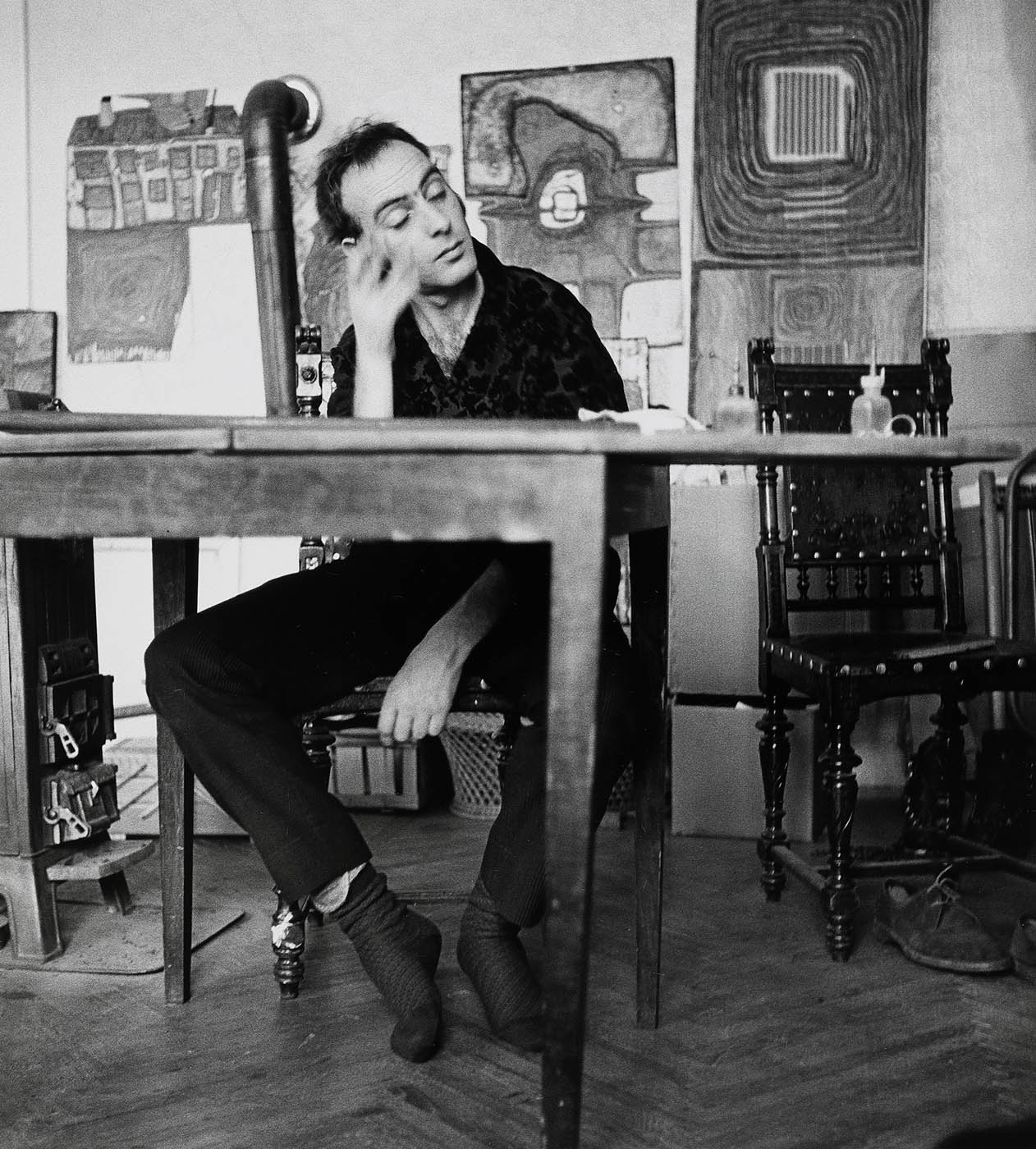
 

Elfriede Mejchar (Austrian, 1924-2020) 'Friedensreich Hundertwasser' 1954-1961


Elfriede Mejchar (Austrian, 1924-2020)
Friedensreich Hundertwasser
1954-1961
From the series Künstler bei der Arbeit, 1954-1961 (Artists at work, 1954-1961)
Silver gelatin print on baryta paper
Federal Photography Collection at the Museum der Moderne Salzburg


Friedensreich Hundertwasser (Austrian, 1928-2000)

Friedensreich Hundertwasser Regentag Dunkelbunt (born Friedrich Stowasser, born December 15, 1928 in Vienna; died February 19, 2000 on board the Queen Elizabeth 2 off Brisbane) was an Austrian artist, who worked primarily as a painter, but also in the fields of architecture and environmental protection. …

Artistically, he was an opponent of the “straight line” and any kind of standardisation throughout his life. This is particularly evident in his work in the field of building design, which is characterised by imaginative liveliness and individuality, but above all by the inclusion of nature in architecture.

Text from the German Wikipedia website translated by Google Translate


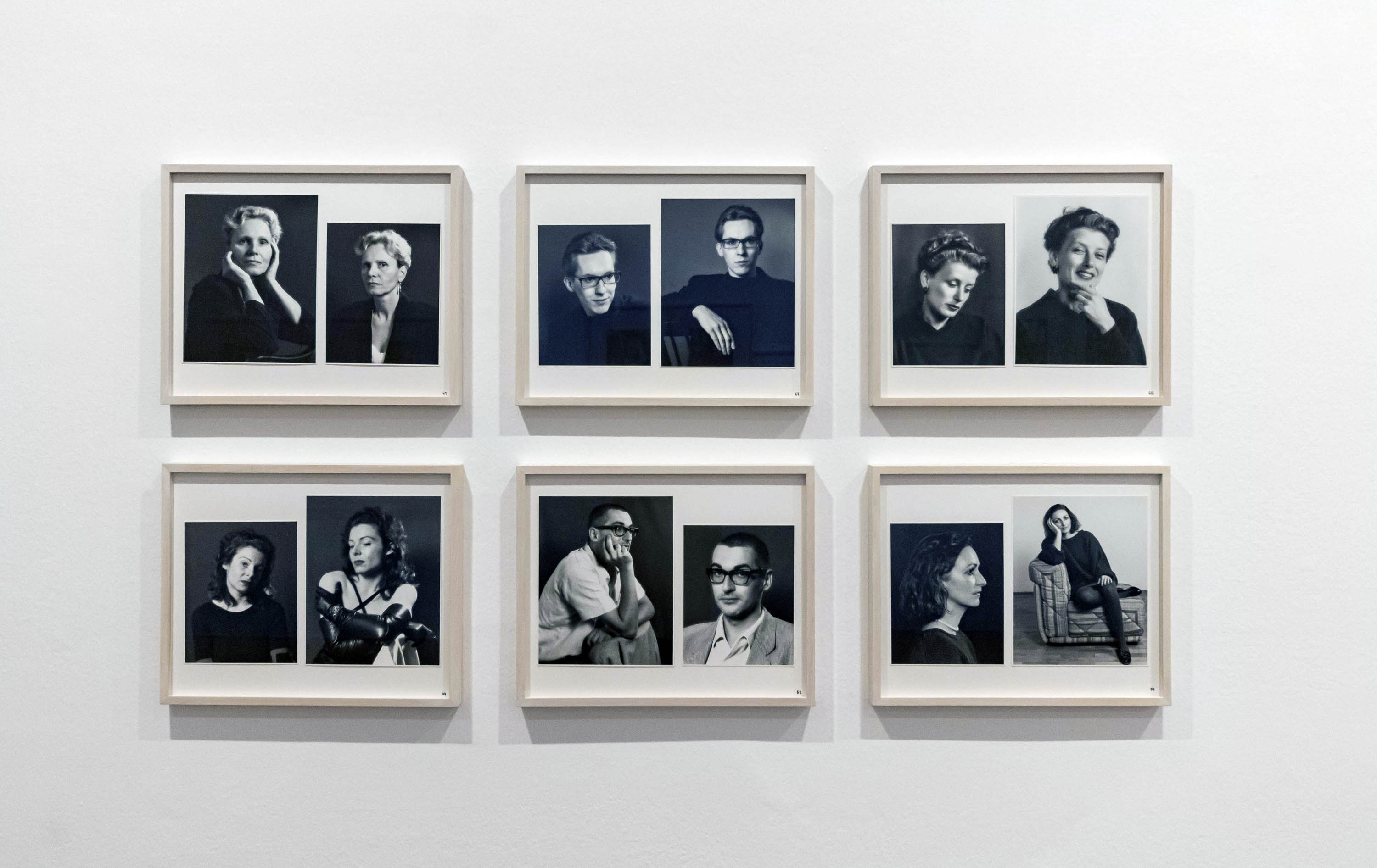
Installation view of the exhibition 'The Poetry of the Everyday. Photographs by Elfriede Mejchar', Museum der Moderne Salzburg 2024 showing photographs from Mejchar's series 'Porträts von Künstler-Photographen und Kunstvermittlern' (Portraits of Artist Photographers and Art Educators)

Installation view of the exhibition 'The Poetry of the Everyday. Photographs by Elfriede Mejchar', Museum der Moderne Salzburg 2024 showing photographs from Mejchar's series 'Porträts von Künstler-Photographen und Kunstvermittlern' (Portraits of Artist Photographers and Art Educators)


Installation view of the exhibition The Poetry of the Everyday. Photographs by Elfriede Mejchar, Museum der Moderne Salzburg 2024 showing photographs from Mejchar’s series Porträts von Künstler-Photographen und Kunstvermittlern (Portraits of Artist Photographers and Art Educators) (below)
© Museum der Moderne Salzburg, photo: wildbild/Günter Freund


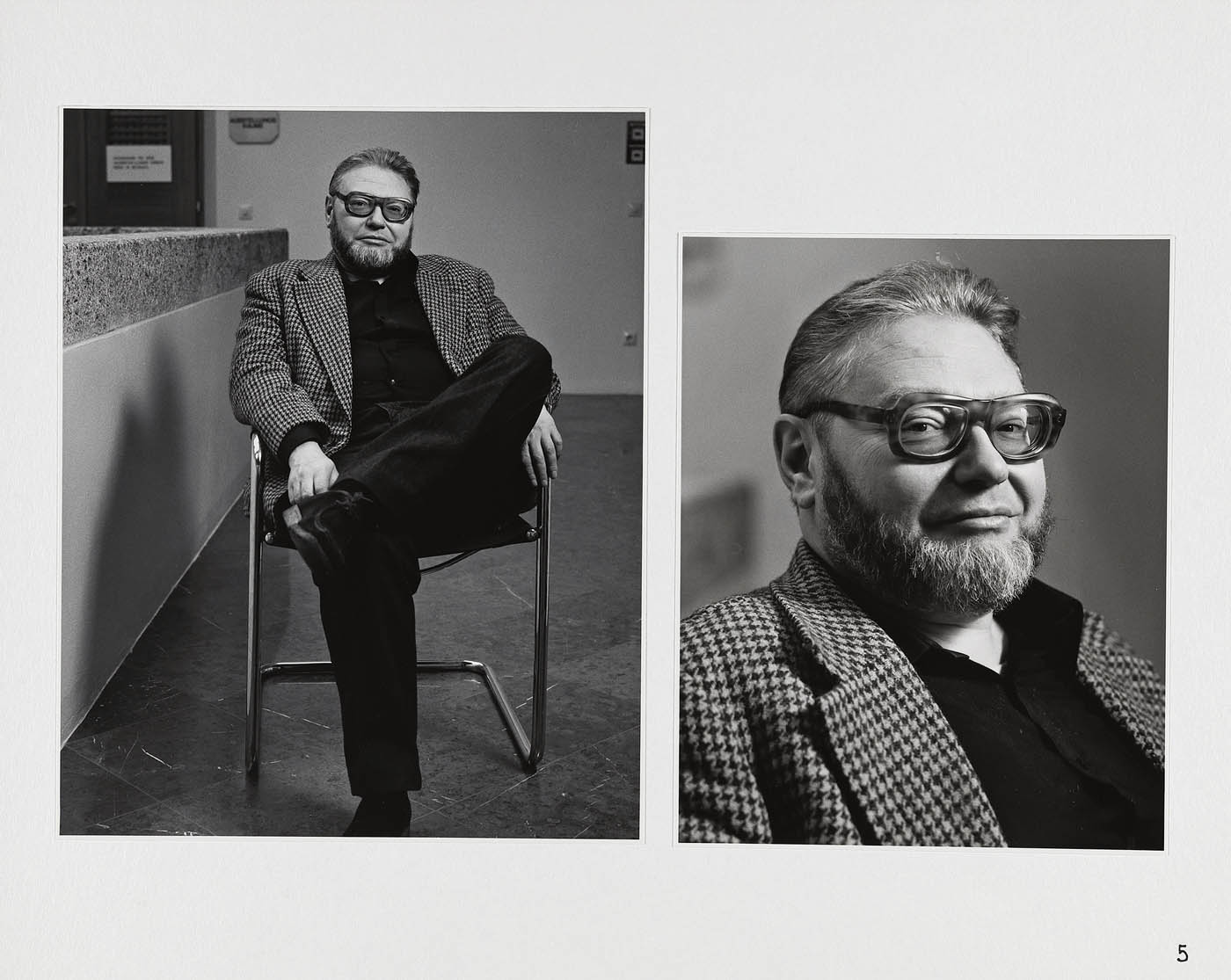
Elfriede Mejchar (Austrian, 1924-2020) 'Aglaia Konrad' 1988


Elfriede Mejchar (Austrian, 1924-2020)
Aglaia Konrad
1988
From the series Porträts von Künstler-Photographen und Kunstvermittlern (Portraits of Artist Photographers and Art Educators)
Silver gelatin print on baryta paper
Federal Photography Collection at the Museum der Moderne Salzburg


Aglaia Konrad (Austrian, b. 1960)

Aglaia Konrad (born 1960) is an Austrian photographer and educator living in Brussels. …

Konrad’s photographs explore urban space in large cities. Konrad’s work has been to known to be distinctly international in that it highlights urban elements independent of cultural markers. Her work highlights the ubiquitous elements of urban life through methods like filming a city from the perspective of a moving car or compiling a series of aerial views of skyscrapers.

Text from the Wikipedia website


Elfriede Mejchar (Austrian, 1924-2020) 'Prof. Dr. Otto Breicha' 1988


Elfriede Mejchar (Austrian, 1924-2020)
Prof. Dr. Otto Breicha
1988
From the series Porträts von Künstler-Photographen und Kunstvermittlern (Portraits of Artist Photographers and Art Educators)
Silver gelatin print on baryta paper
Federal Photography Collection at the Museum der Moderne Salzburg


Otto Breicha (Austrian, 1932-2003)

Otto Breicha (b. 26 July 1932 in Vienna; d, 28 December 2003 in Vienna) was an Austrian art historian, publicist and museum director. …

Breicha is considered an important integration figure in the Austrian art and literature scene of the 1960s. As director of the Rupertinum he collected works by Kurt Moldovan, Günter Brus, Fritz Wotruba and Gotthard Muhr, among others. He edited portfolios by Karl Anton Fleck, Gotthard Muhr, Peter Pongratz, Alois Riedl, Karl Rössing, Johannes Wanke, Max Weiler and many others.

Breicha built up an important photo collection in the Rupertinum. He also took photos of authors himself, especially during his time at the Austrian Society for Literature from 1962 to 1972.

Text from the German Wikipedia website translated by Google Translate
 

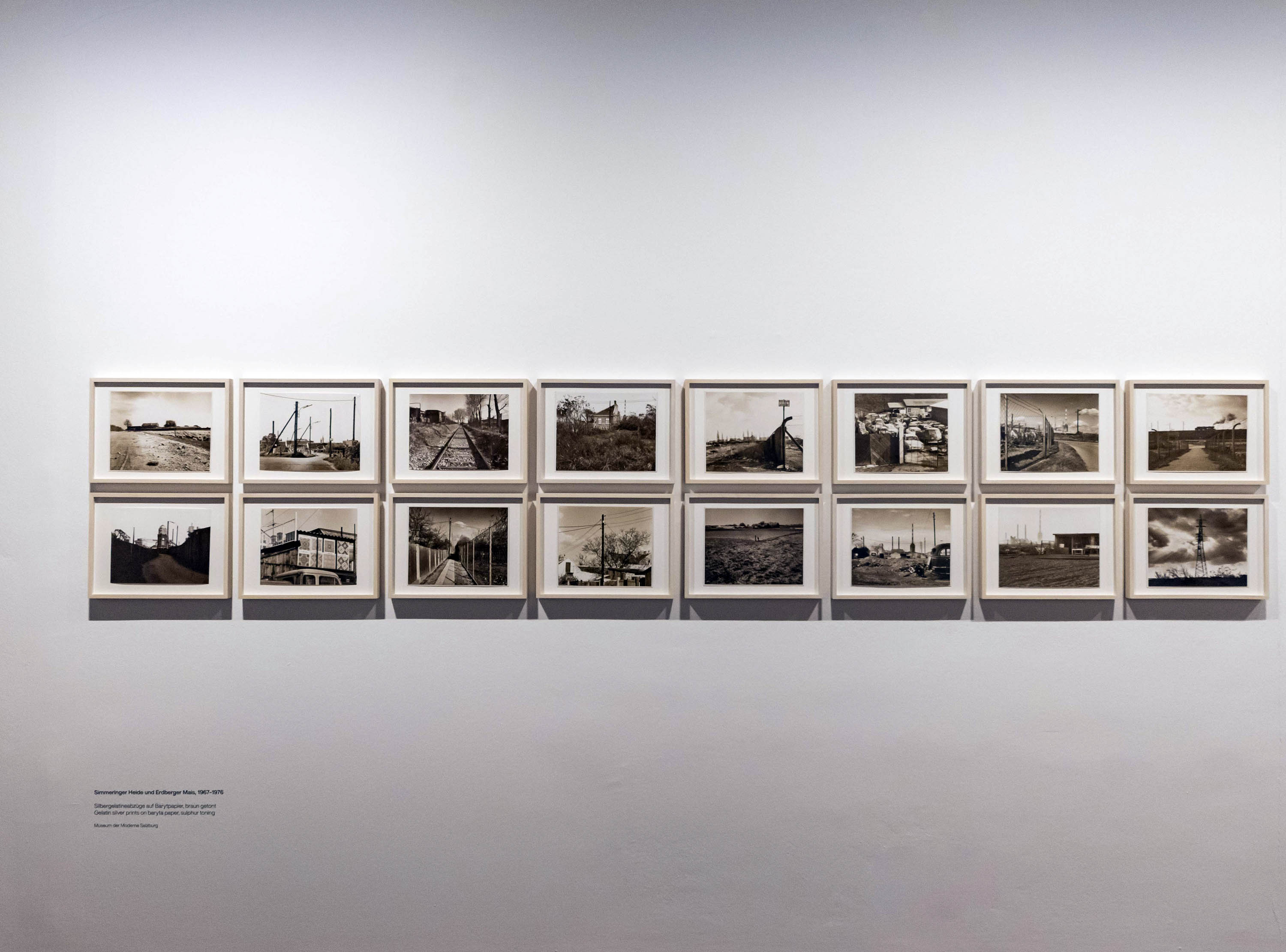
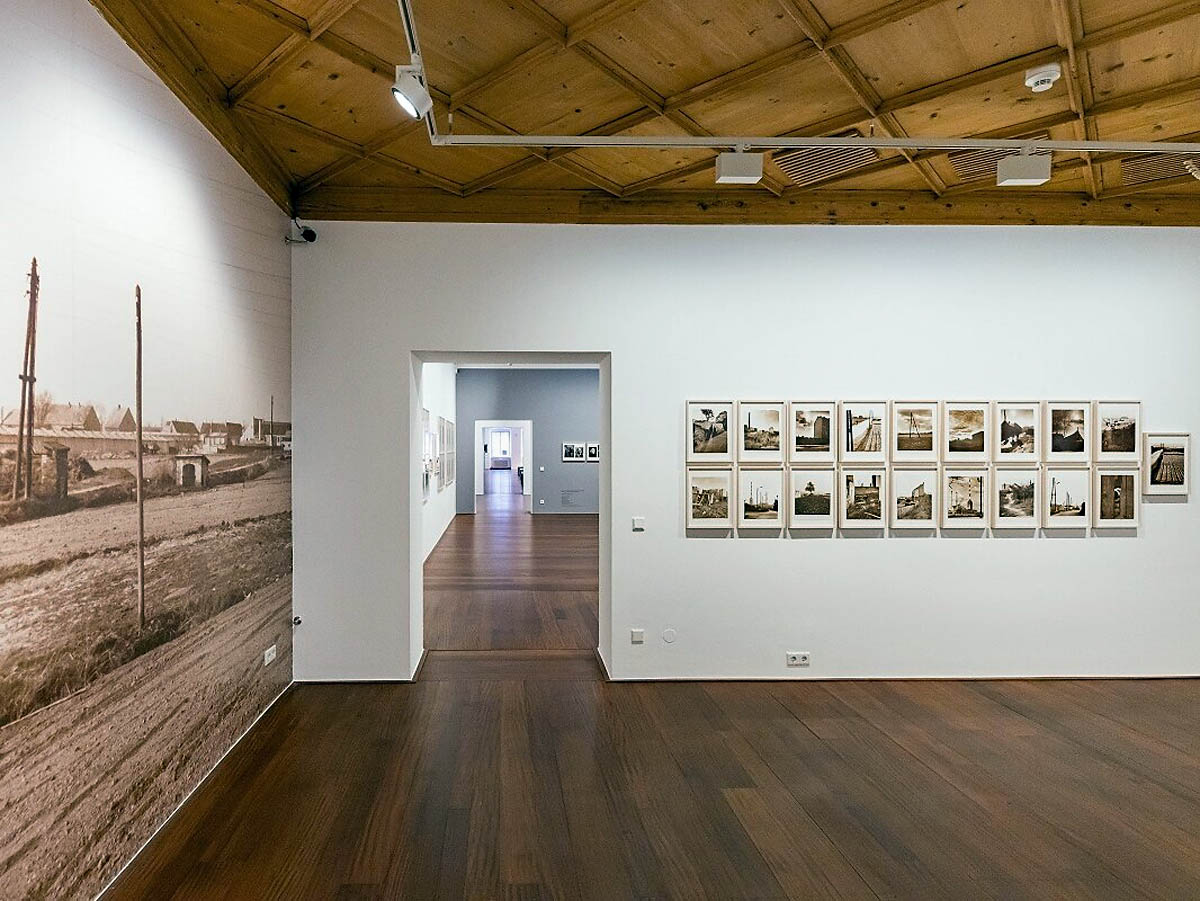
Installation view of the exhibition 'The Poetry of the Everyday. Photographs by Elfriede Mejchar', Museum der Moderne Salzburg 2024 showing photographs from Mejchar's series 'Simmeringer Heide und Erdberger Mais, 1967-1976'

Installation view of the exhibition 'The Poetry of the Everyday. Photographs by Elfriede Mejchar', Museum der Moderne Salzburg 2024 showing photographs from Mejchar's series 'Simmeringer Heide und Erdberger Mais, 1967-1976'

Installation view of the exhibition 'The Poetry of the Everyday. Photographs by Elfriede Mejchar', Museum der Moderne Salzburg 2024 showing photographs from Mejchar's series 'Simmeringer Heide und Erdberger Mais, 1967-1976'

Installation view of the exhibition 'The Poetry of the Everyday. Photographs by Elfriede Mejchar', Museum der Moderne Salzburg 2024 showing photographs from Mejchar's series 'Simmeringer Heide und Erdberger Mais, 1967-1976'


Installation view of the exhibition The Poetry of the Everyday. Photographs by Elfriede Mejchar, Museum der Moderne Salzburg 2024 showing photographs from Mejchar’s series Simmeringer Heide und Erdberger Mais, 1967-1976 (below)
© Museum der Moderne Salzburg, photo: wildbild/Günter Freund
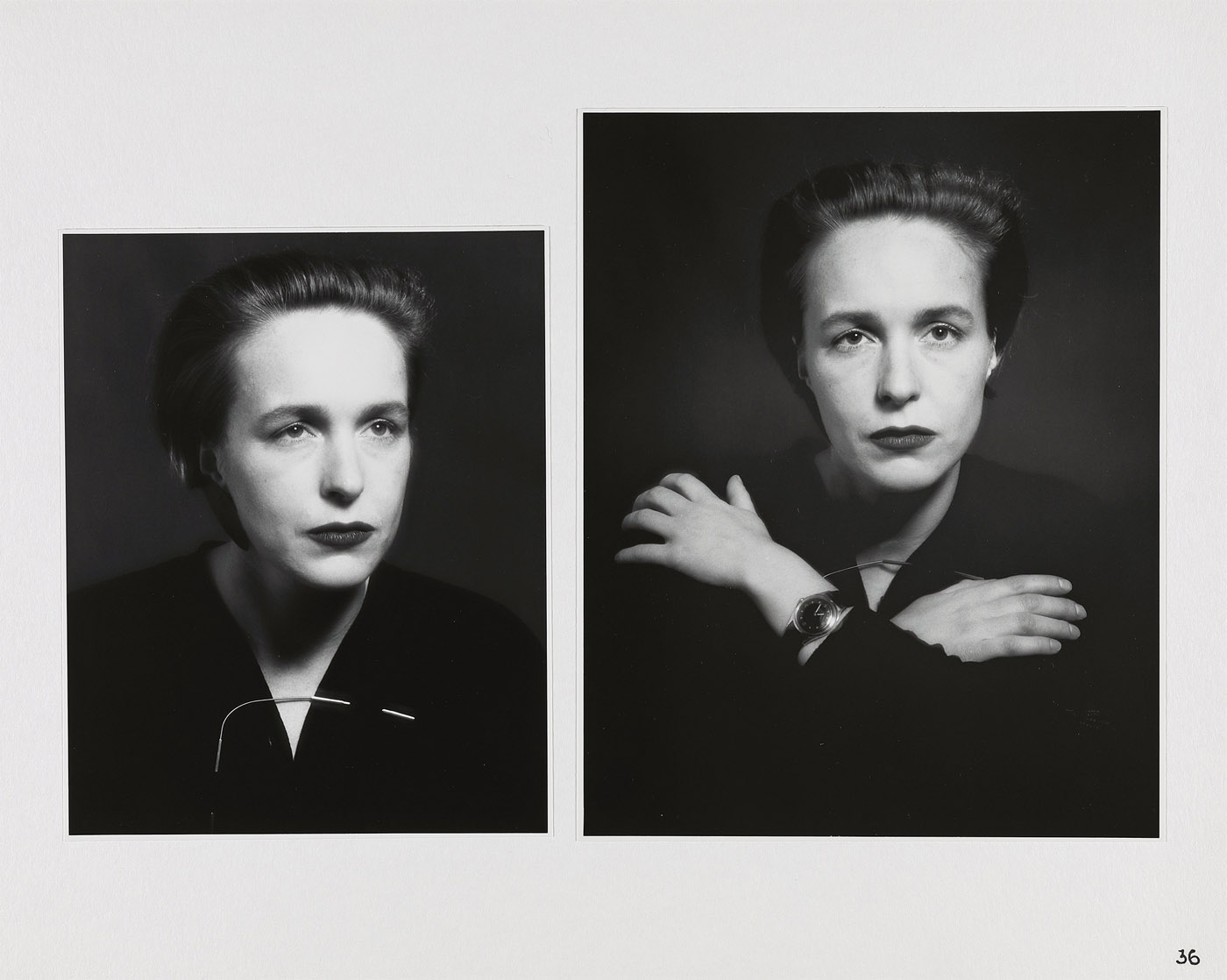
 

Elfriede Mejchar (Austrian, 1924-2020) From the series 'Simmeringer Heide und Erdberger Mais', 1967-1976


Elfriede Mejchar (Austrian, 1924-2020)
From the series Simmeringer Heide und Erdberger Mais, 1967-1976
Silver gelatine print on baryta paper, brown toned
Museum der Moderne Salzburg
© Bildrecht, Vienna 2024


Elfriede Mejchar (Austrian, 1924-2020) From the series 'Simmeringer Heide und Erdberger Mais, 1967-1976'


Elfriede Mejchar (Austrian, 1924-2020)
From the series Simmeringer Heide und Erdberger Mais, 1967-1976
Silver gelatine print on baryta paper, brown toned
Museum der Moderne Salzburg
© Bildrecht, Vienna 2024


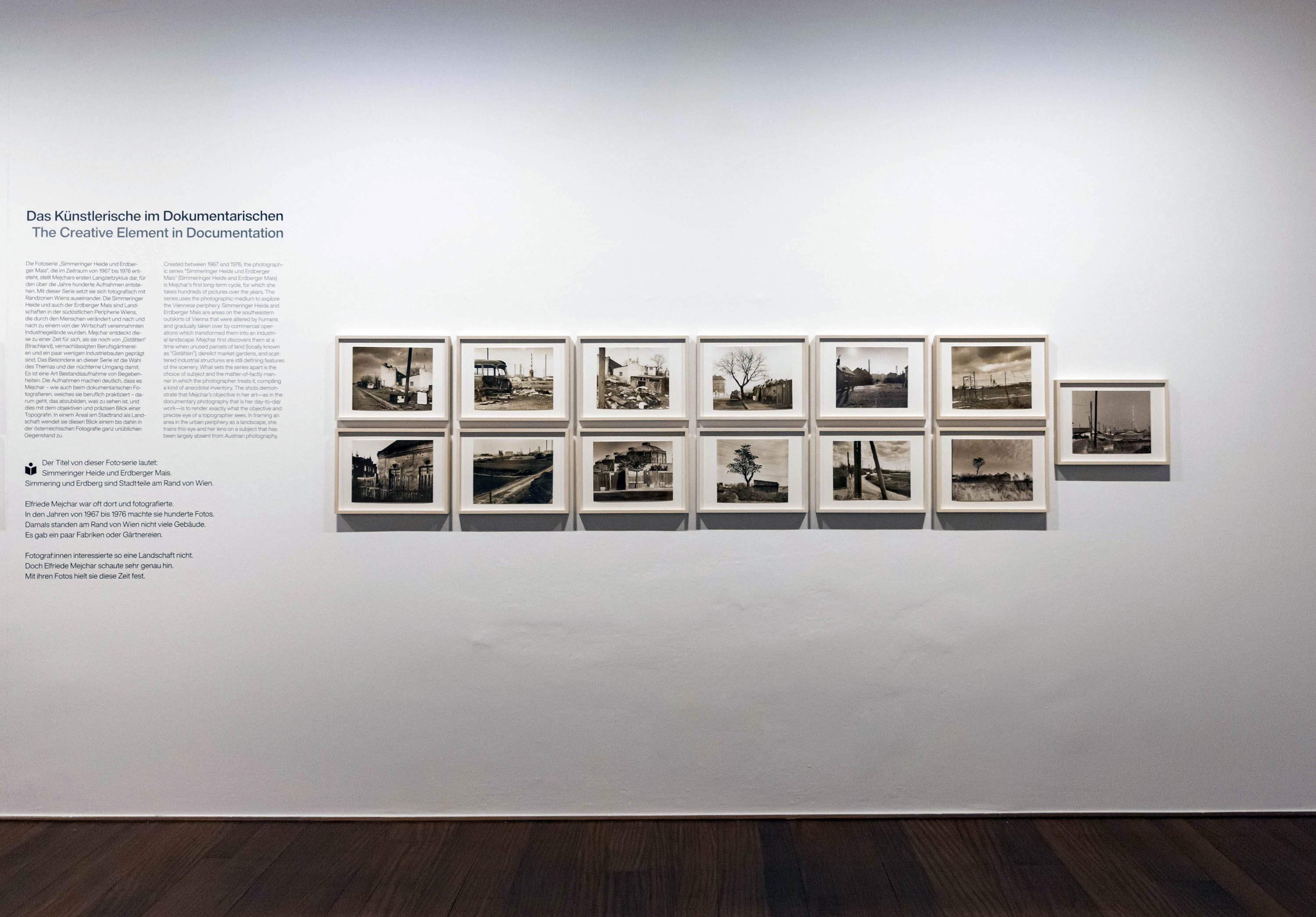
The Creative Element in Documentation

Created between 1967 and 1976, the photographic series “Simmeringer Heide und Erdberger Mais” (Simmeringer Heide and Erdberger Mais) is Mejchar’s first long-term cycle, for which she takes hundreds of pictures over the years. The series uses the photographic medium to explore the Viennese periphery. Simmeringer Heide and Erdberger Mais are areas on the southeastern outskirts of Vienna that were altered by humans and gradually taken over by commercial operations which transformed them into an industrial landscape. Mekchav first discovers them at a time when unused parcels of land (locally known as “Gstatten”), derelict market gardens, and scattered industrial structures are still defining features of the scenery. What sets the series apart is the choice of subject and the matter-of-fact manner in which the photographer treats it, compiling a kind of anecdotal inventory. The shots demonstrate that Mejchar’s objective in there art – as in the documentary photography that is her day-to-day work – is to render exactly what the objective and precise eye of a topographer sees. In framing an area in the urban periphery as a landscape, she trains this eye and her lens on a subject that has been largely absent from Austrian photography.

Wall text from the exhibition


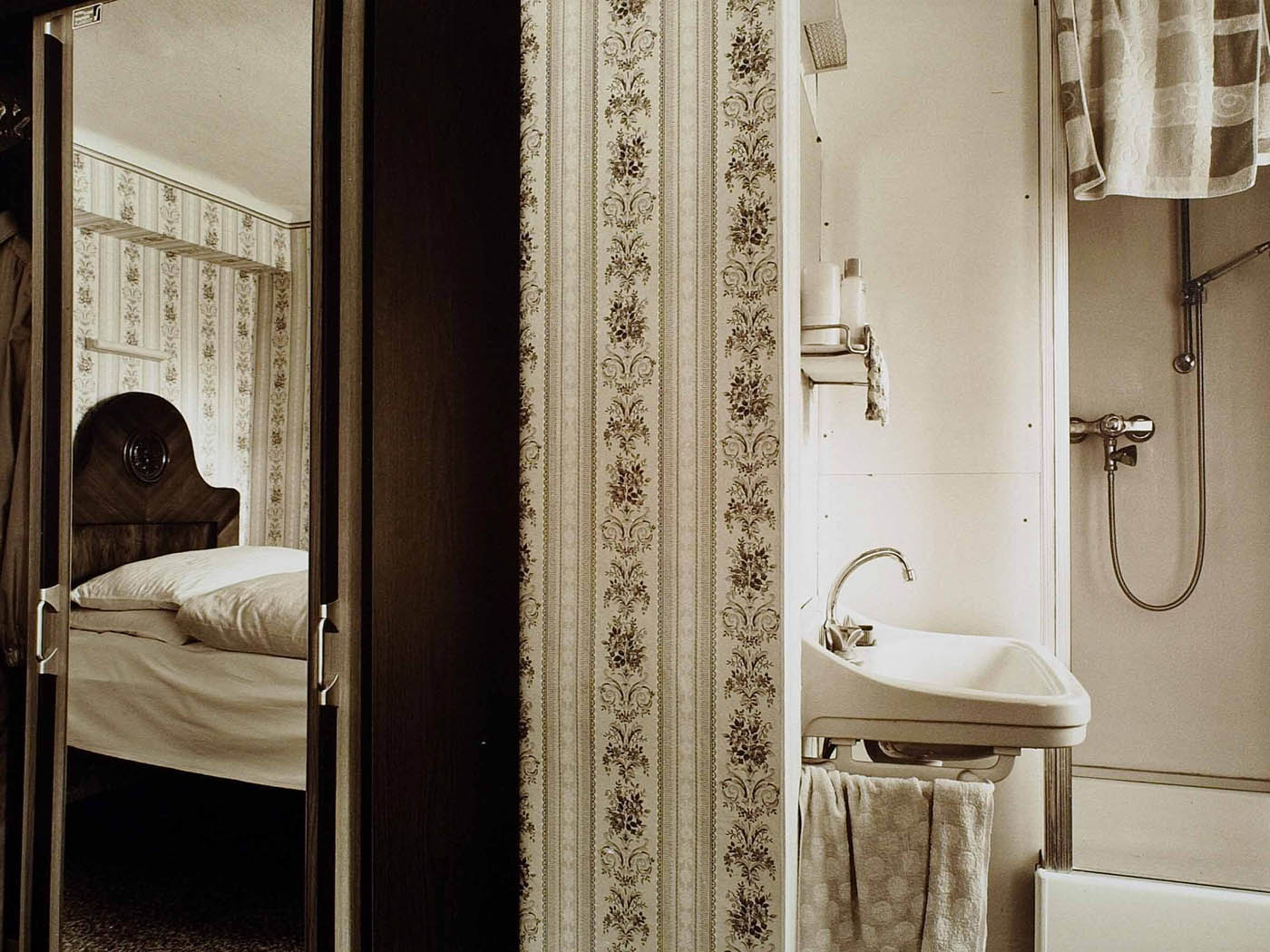
Installation view of the exhibition 'The Poetry of the Everyday. Photographs by Elfriede Mejchar', Museum der Moderne Salzburg 2024 showing work from Mejchar's series 'Hotel (Fremdenzimmer), 1970-1986' (Hotel (Guest Room), 1970-1986)


Installation view of the exhibition The Poetry of the Everyday. Photographs by Elfriede Mejchar, Museum der Moderne Salzburg 2024 showing work from Mejchar’s series Hotel (Fremdenzimmer), 1970-1986 (Hotel (Guest Room), 1970-1986) (below)
© Museum der Moderne Salzburg, photo: wildbild/Günter Freund


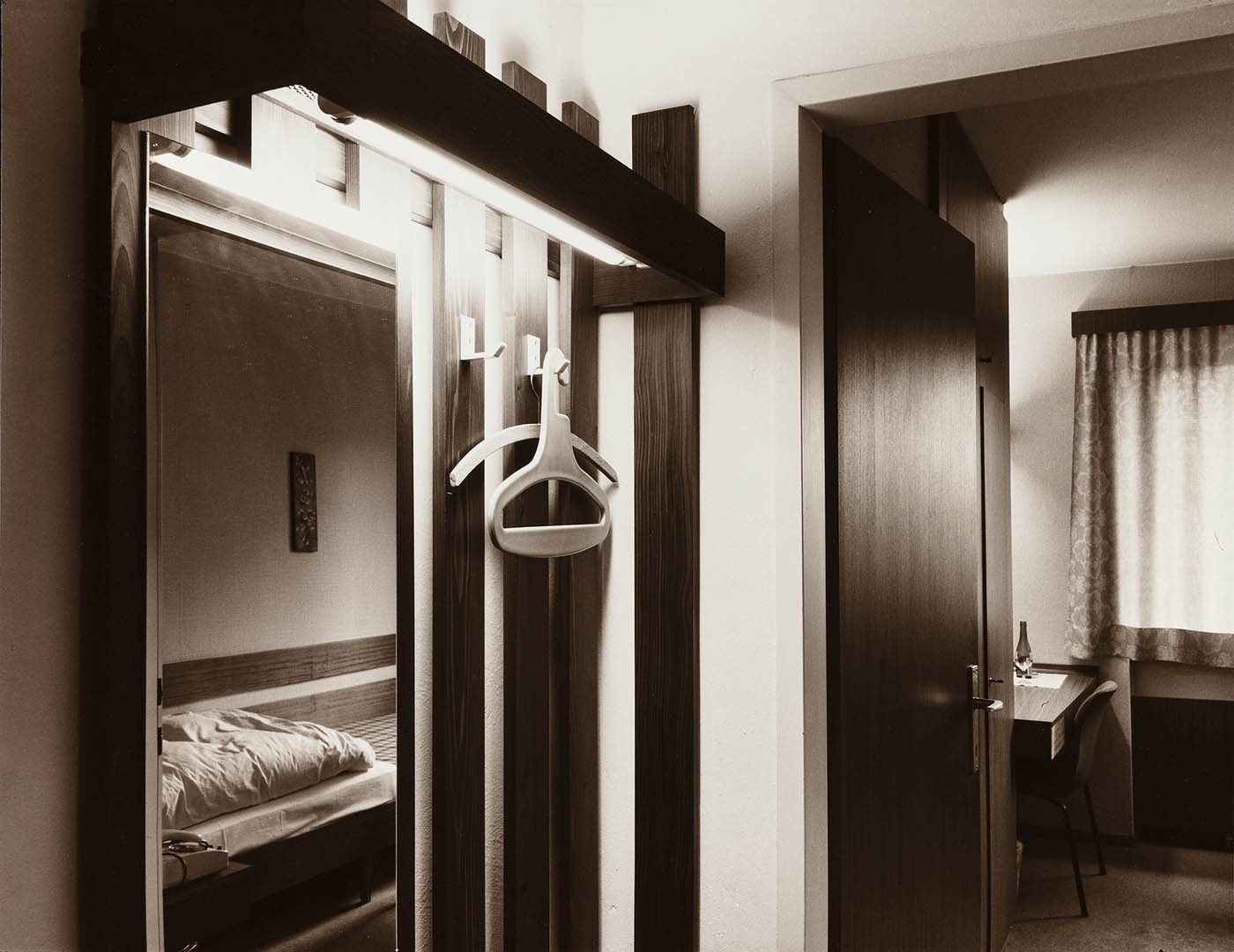
Elfriede Mejchar (Austrian, 1924-2020) From the series 'Hotel (Fremdenzimmer)', 1970-1986 (Hotel (Guest Room), 1970-1986)


Elfriede Mejchar (Austrian, 1924-2020)
From the series Hotel (Fremdenzimmer), 1970-1986 (Hotel (Guest Room), 1970-1986)
Silver gelatin print on baryta paper, brown tones
Federal Photography Collection at the Museum der Moderne Salzburg


Elfriede Mejchar (Austrian, 1924-2020) From the series 'Hotel (Fremdenzimmer)', 1970-1986 (Hotel (Guest Room), 1970-1986)


Elfriede Mejchar (Austrian, 1924-2020)
From the series Hotel (Fremdenzimmer), 1970-1986 (Hotel (Guest Room), 1970-1986)
Silver gelatin print on baryta paper, brown tones
Federal Photography Collection at the Museum der Moderne Salzburg
© Bildrecht, Vienna, 2024
Photo: Andrew Phelps


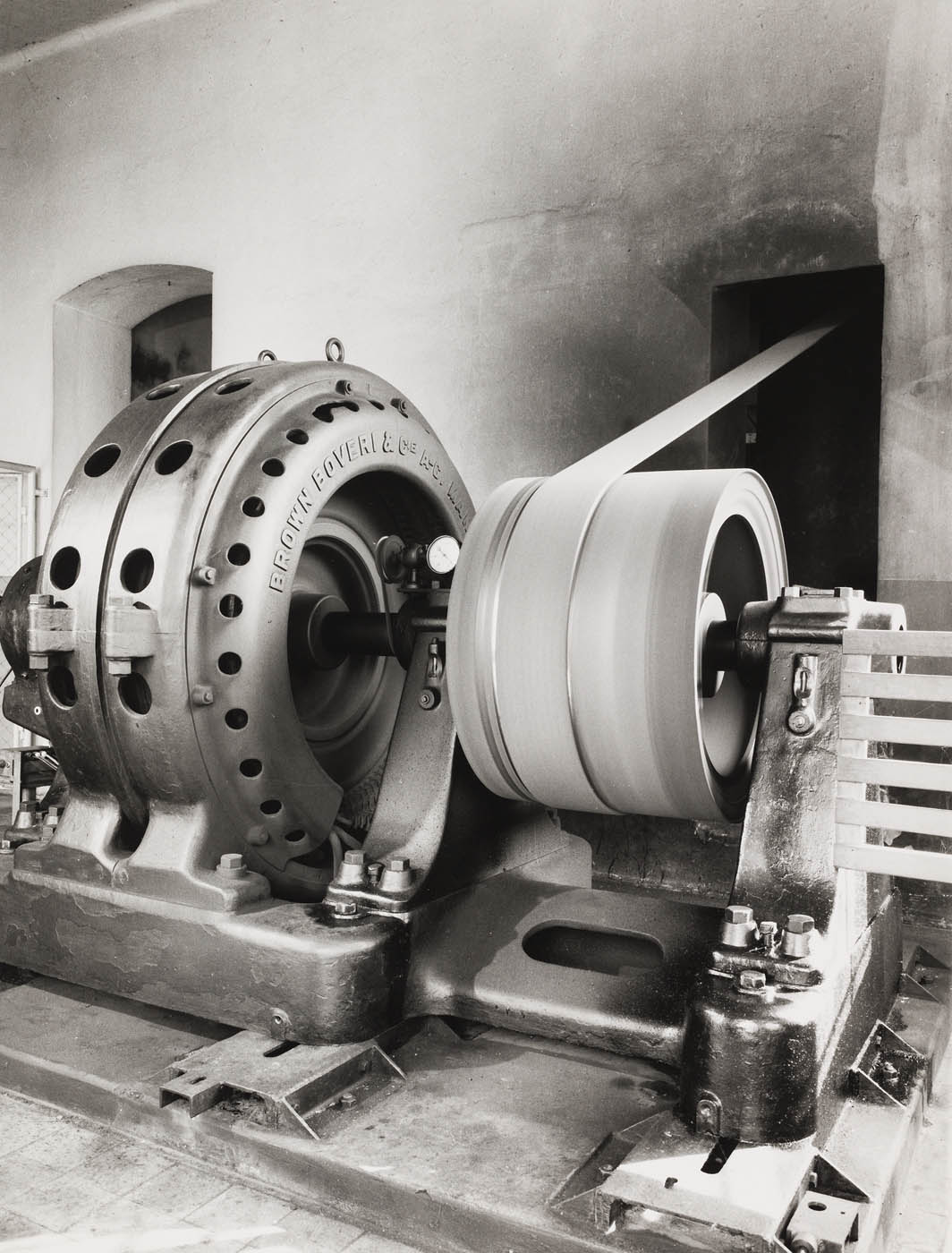
Elfriede Mejchar (Austrian, 1924-2020) 'Flachsspinnerei in Stadl-Paura' (Flax spinning mill in Stadl-Paura) 1986


Elfriede Mejchar (Austrian, 1924-2020)
Flachsspinnerei in Stadl-Paura (Flax spinning mill in Stadl-Paura)
1986
© Elfriede Mejchar/Landessammlungen NÖ


Installation view of the exhibition 'The Poetry of the Everyday. Photographs by Elfriede Mejchar', Museum der Moderne Salzburg 2024 showing work from Mejchar's series 'Die Monatssesseln, 1986-1988' (The Armchairs of the Month, 1986-1988)

Installation view of the exhibition 'The Poetry of the Everyday. Photographs by Elfriede Mejchar', Museum der Moderne Salzburg 2024 showing work from Mejchar's series 'Die Monatssesseln, 1986-1988' (The Armchairs of the Month, 1986-1988)


Installation view of the exhibition The Poetry of the Everyday. Photographs by Elfriede Mejchar, Museum der Moderne Salzburg 2024 showing work from Mejchar’s series Die Monatssesseln, 1986-1988 (The Armchairs of the Month, 1986-1988) (below)
© Museum der Moderne Salzburg, photo: wildbild/Günter Freund
 

Elfriede Mejchar (Austrian, 1924-2020) From the series 'Die Monatssesseln, 1986-1988' (The Armchairs of the Month, 1986-1988)


Elfriede Mejchar (Austrian, 1924-2020)
From the series Die Monatssesseln, 1986-1988 (The Armchairs of the Month, 1986-1988)
Federal Photography Collection at the Museum der Moderne Salzburg
 

Elfriede Mejchar (Austrian, 1924-2020) From the series 'Die Monatssesseln, 1986-1988' (The Armchairs of the Month, 1986-1988)


Elfriede Mejchar (Austrian, 1924-2020)
From the series Die Monatssesseln, 1986-1988 (The Armchairs of the Month, 1986-1988)
Federal Photography Collection at the Museum der Moderne Salzburg


Elfriede Mejchar (Austrian, 1924-2020) From the series 'Oscillation (Salzburger Landesatelier)' (Oscillation (Salzburg State Studio)) 1988


Elfriede Mejchar (Austrian, 1924-2020)
From the series Oscillation (Salzburger Landesatelier) (Oscillation (Salzburg State Studio))
1988
Silver gelatin print on baryta paper
Federal Photography Collection at the Museum der Moderne Salzburg


Installation view of the exhibition 'The Poetry of the Everyday. Photographs by Elfriede Mejchar', Museum der Moderne Salzburg 2024 showing work from the Mejchar's series 'Eine Kostümierung der geliehenen Identität' (A Masquerade of Borrowed Identity)


Installation view of the exhibition The Poetry of the Everyday. Photographs by Elfriede Mejchar, Museum der Moderne Salzburg 2024 showing work from the Mejchar’s series Eine Kostümierung der geliehenen Identität (A Masquerade of Borrowed Identity) (below)
© Museum der Moderne Salzburg, photo: wildbild/Günter Freund


Elfriede Mejchar (Austrian, 1924-2020) From the series 'Eine Kostümierung der geliehenen Identität' (A Masquerade of Borrowed Identity) 1989


Elfriede Mejchar (Austrian, 1924-2020)
From the series Eine Kostümierung der geliehenen Identität (A Masquerade of Borrowed Identity)
1989
Gelatin silver print on baryta paper
Museum der Moderne Salzburg
© Bildrecht, Vienna, 2024
Photo: Andrew Phelps


Introduction

Elfriede Mejchar (1924-2020 Vienna, AT), the grande dame of Austrian photography, was in the employ of the Federal Monuments Office for almost forty years. Meanwhile, she also began her groundbreaking work on the outskirts of Vienna. Harnessing the photographic series as a documentary and investigative medium, she limned an imposing portrait of the urban landscape. Her work, which had a lasting influence on the evolution of photography in Austria, now also stands as an important documentary record of the country in the postwar period.

As a professional photographer, Mejchar traveled to various regions throughout Austria, including in Lower and Upper Austria and Styria, to capture buildings and cultural assets of art-historical significance in photographs. Yet she also used her official trips and her scant free time to pursue her own photographic interests, which focused on the small and seemingly trivial and the traces of civilisation that humans leave in nature or along the edges of the urban fabric and that receive little if any attention. It may seem that the documentary dimension is less important in the resulting works, that it is eclipsed by the narrative element. In fact, Mejchar fuses both, scrutinising her motifs with an attentive eye that picks up on the singular or peculiar and registers it without manipulation.

Elfriede Mejchar was not interested in the so-called “pivotal moment” and did not care for the conventional photojournalistic style of her time. Her work began when people had left, and she approached her themes from a very conceptual angle. Both the documentary series she created under the open sky and the object photographs, still lifes, and collages she made in her studio reflect this approach. She photographed the “evanescent before it evanesces”, in urban and rural landscapes and everyday scenes, capturing the changes that affected the particular scenery and its distinctive atmosphere.

The Creative Element in Documentation

Produced between 1967 and 1976, the photographic series “Simmeringer Heide and Erdberger Mais” is Mejchar’s first long-term cycle, for which she takes hundreds of pictures over the years. The series uses the photographic medium to explore the Viennese periphery. Simmeringer Heide and Erdberger Mais are areas on the southeastern outskirts of Vienna that were altered by humans and gradually taken over by commercial operations which transformed them into an industrial landscape. Mejchar first discovers them at a time when unused parcels of land (locally known as “Gstätten”), derelict market gardens, and scattered industrial structures are still defining features of the scenery. What sets the series apart is the choice of subject and the matter-of-factly manner in which the photographer treats it, compiling a kind of anecdotal inventory – empty lots, paths and roads, utility poles and a select few close-ups. The shots demonstrate that Mejchar’s objective in her art – as in the documentary photography that is her day-to-day work – is to render exactly what the objective and precise eye of a topographer sees. In framing an area in the urban periphery as a landscape, she trains this eye and her lens on a subject that has been largely absent from Austrian photography.

The use of a sulfur-based solution to tone the photographs – which is the cause of the brownish tinge – reflects a recurring concern in Mejchar’s photographs: existence in time and impermanence. In this instance, the technique’s purpose is not to alter the colour, but rather to make it more durable.


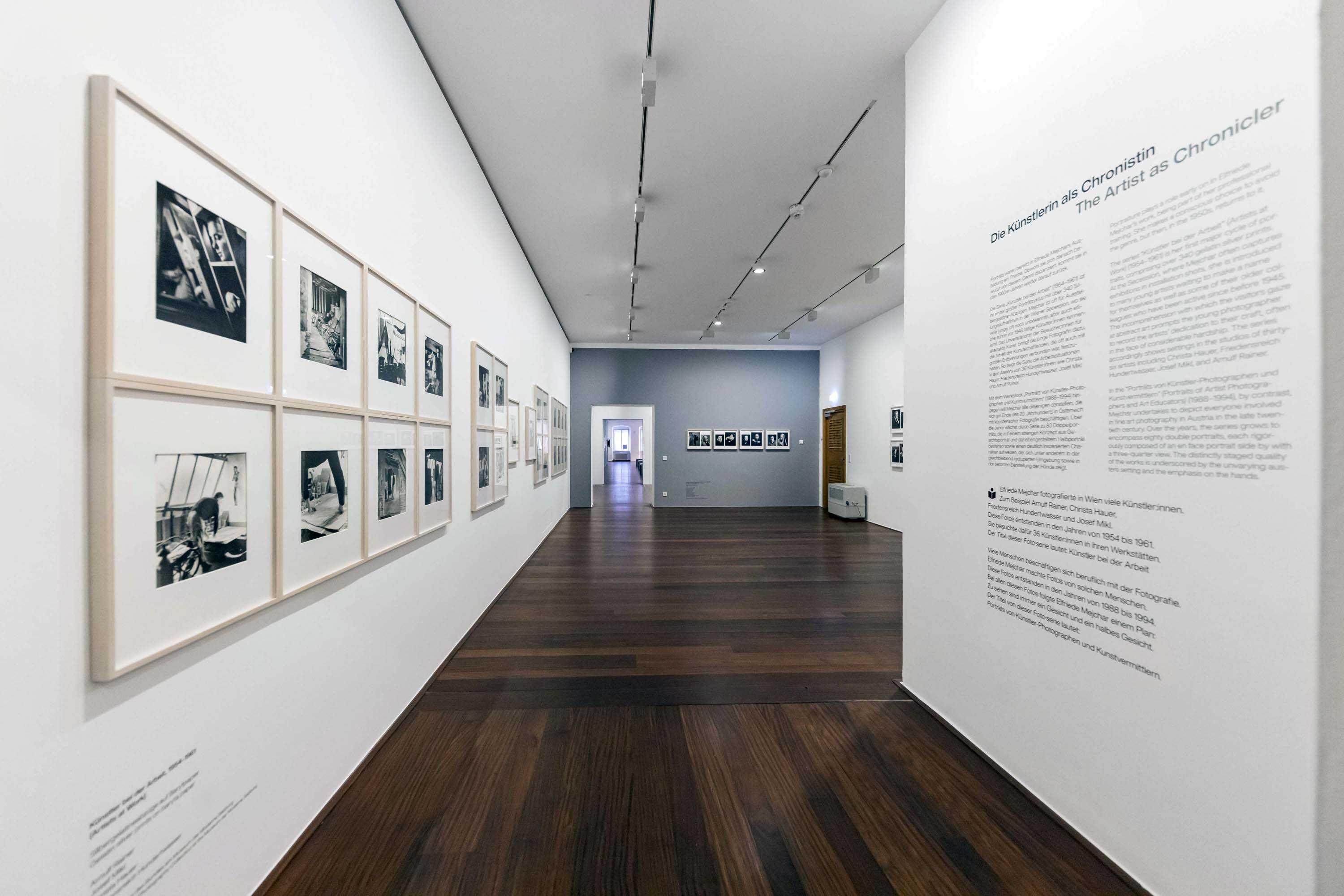
Installation view of the exhibition 'The Poetry of the Everyday. Photographs by Elfriede Mejchar', Museum der Moderne Salzburg 2024 showing at left, work from Mejchar's series 'Künstler bei der Arbeit, 1954-1961' (Artists at work, 1954-1961); and at right, the wall text 'The Artist as Chronicler'


Installation view of the exhibition The Poetry of the Everyday. Photographs by Elfriede Mejchar, Museum der Moderne Salzburg 2024 showing at left, work from Mejchar’s series Künstler bei der Arbeit, 1954-1961 (Artists at work, 1954-1961); and at right, the wall text ‘The Artist as Chronicler’
© Museum der Moderne Salzburg, photo: wildbild/Günter Freund


The Artist as Chronicler

Portraiture plays a role early on in Elfriede Mejchar’s work; she receives her professional training in a portrait studio. She subsequently makes a conscious choice to avoid the genre, but then, in the 1950s, returns to it.

“Künstler bei der Arbeit”, 1954-1961 (Artists at Work)

The series “Künstler bei der Arbeit” (Artists at Work) is her first major cycle of portraits, comprising over 340 gelatin silver prints. Mejchar is often brought in to capture exhibitions in installation shots, especially at the Vienna Secession, where she is introduced to many young artists waiting to make a name for themselves as well as some of their older colleagues who have been active since before 1945. The incomprehension with which the visitors gaze at abstract art that does not represent anything with any accuracy prompts the young photographer to record the intensity and seriousness with which the artists dedicate themselves to their craft, often braving considerable hardship. The series accordingly focuses on visualising the real studio and workplace settings of thirty-six artists, including Christa Hauer, Friedensreich Hundertwasser, Josef Mikl, and Arnulf Rainer.

“Porträts von Künstler-Photographen und Kunstvermittlern”, 1988-1994 (Portraits of Artist Photographers and Art Educators)

In the body of work “Porträts von Künstler-Photographen und Kunstvermittlern” (Portraits of Artist Photographers and Art Educators), by contrast, Mejchar undertakes to depict everyone involved in fine art photography in Austria in the late twentieth century. Over the years, the series grows to comprise eighty double portraits, each composed, in accordance with a rigorous conception, of an en face portrait side by with a three-quarter view. The works have a distinctly staged quality, underscored by the unvarying austere setting and the emphasis on the hands, among other aspects. In this respect they recall Mejchar’s final examination, in which she had to realise a portrait both in profile and en face to demonstrate her command of photographic lighting designing and the handling of human sitters.

With these two projects, Mejchar becomes an important chronicler of the Austrian arts scene.


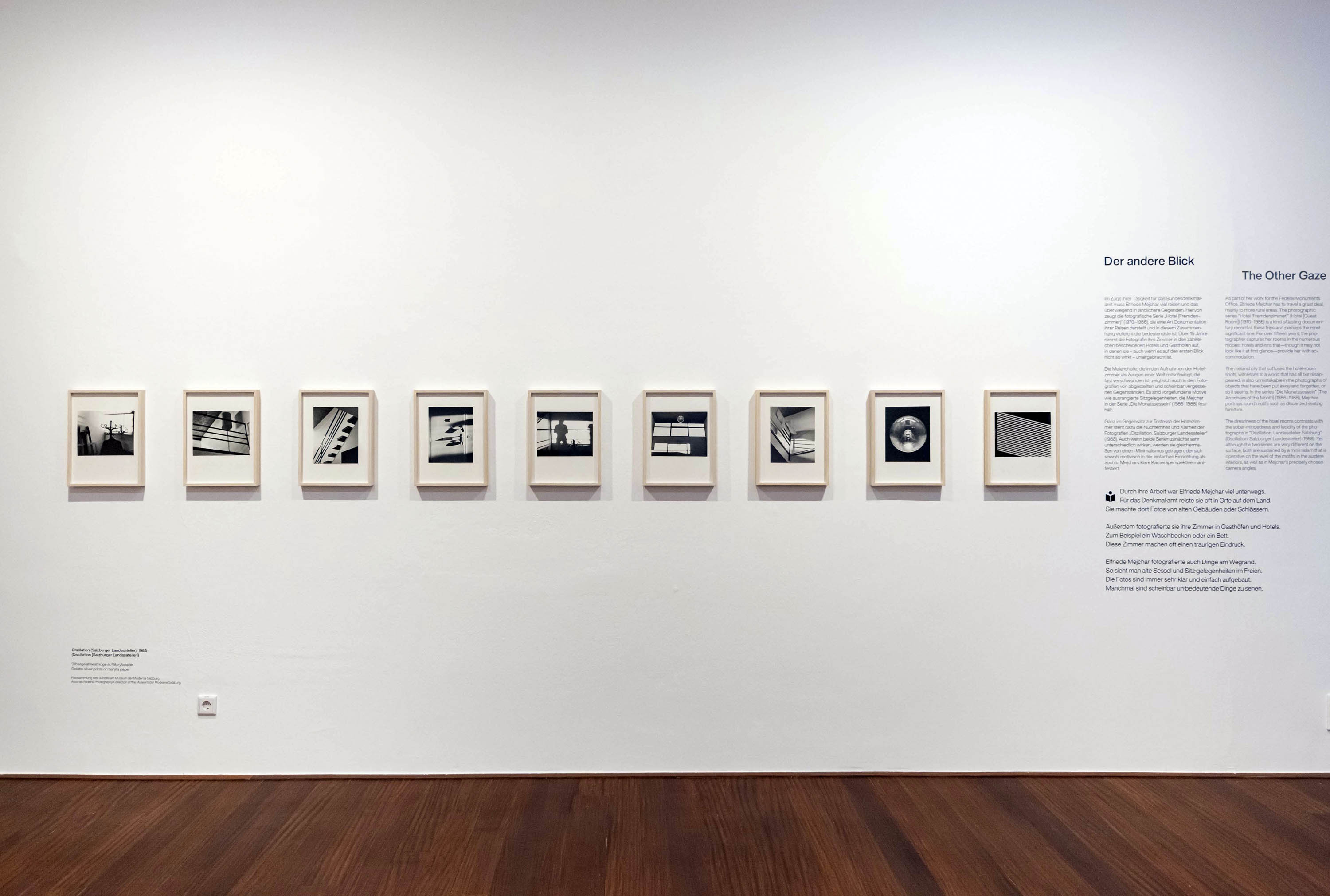
Installation view of the exhibition 'The Poetry of the Everyday. Photographs by Elfriede Mejchar', Museum der Moderne Salzburg 2024 showing at left, work from Mejchar's series 'Oscillation (Salzburger Landesatelier)' (Oscillation (Salzburg State Studio)) (above); and at right, the wall text 'The Other Gaze' (below)


Installation view of the exhibition The Poetry of the Everyday. Photographs by Elfriede Mejchar, Museum der Moderne Salzburg 2024 showing at left, work from Mejchar’s series Oscillation (Salzburger Landesatelier) (Oscillation (Salzburg State Studio)) (above); and at right, the wall text ‘The Other Gaze’ (below)
© Museum der Moderne Salzburg, photo: wildbild/Günter Freund


The Other Gaze

“Hotel (Fremdenzimmer)”, 1970-1986 (Hotel (Guest Room))

As part of her work for the Federal Monuments Office, Elfriede Mejchar has to travel a great deal, mainly to more rural areas. The photographic series “Hotel (Fremdenzimmer)” (Hotel (Guest Room)) is a kind of lasting documentary record of these trips and perhaps the most significant one. Bed, table, chair, mirror, wardrobe, patterned wallpaper, and sometimes a washbasin: for over fifteen years, the photographer captures her rooms with their often spartan furnishings in the numerous modest hotels and inns that – though it may not look like it at first glance – provide her with accommodation. Here and there one does espy a toothbrush, a pair of shoes, a ruffled bedcover, all traces that reveal the ostensibly absent photographer’s presence. A certain melancholy suffuses these shots of hotel rooms as witnesses to a world that has all but disappeared

“Die Monatssesseln”, 1986-1988 (The Armchairs of the Month)

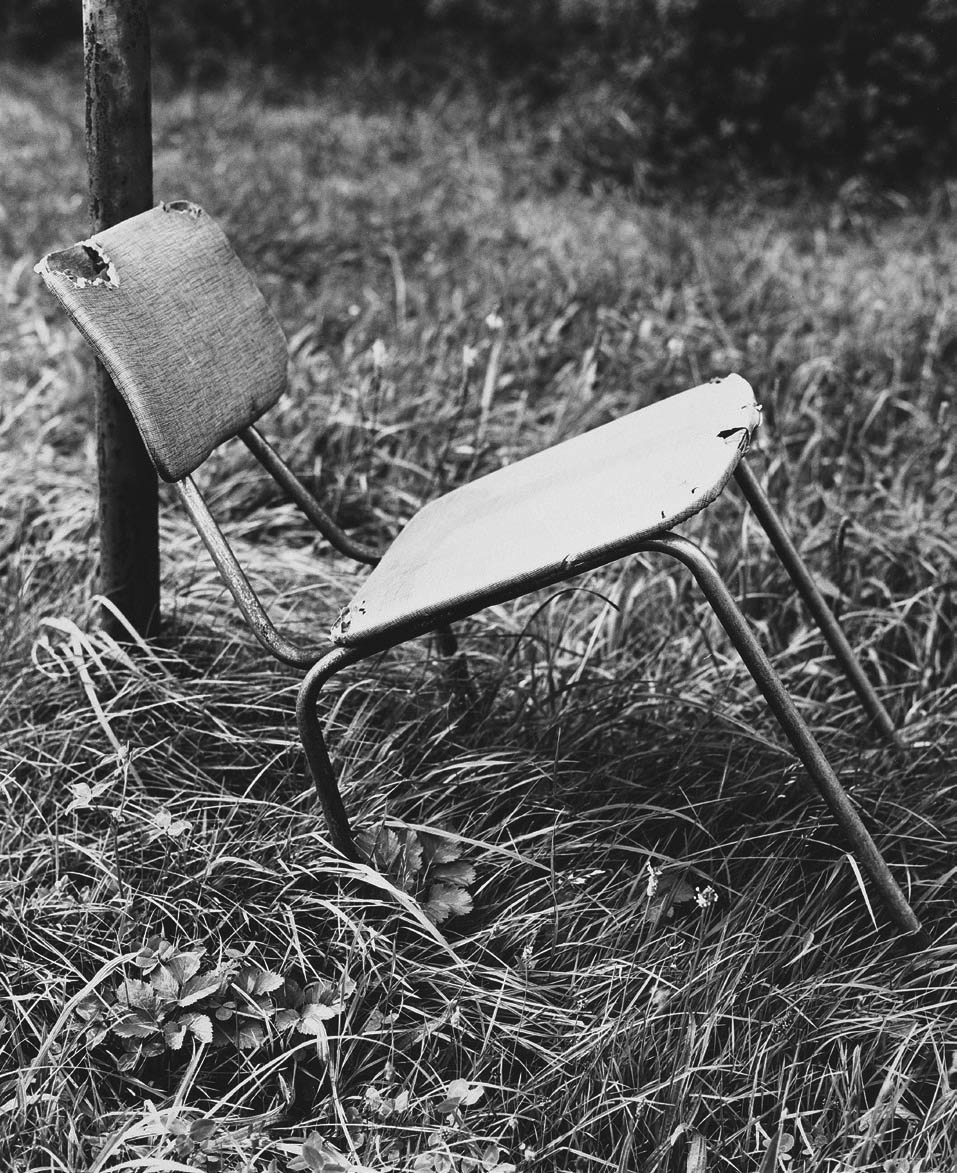
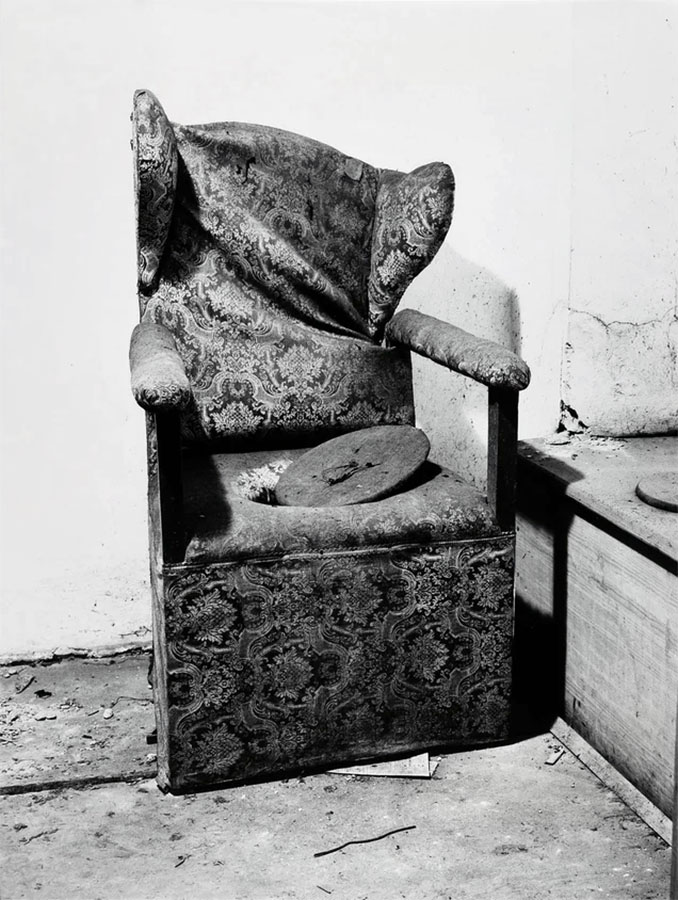
The same melancholy is also unmistakable in the photographs of objects that have outlived their usefulness and been discarded and, it seems, forgotten. In the series “Die Monatssesseln” (The Armchairs of the Month) Mejchar portrays found motifs such as discarded seating furniture. The series shows a wide variety of such items, from kitchen chairs to living-room armchairs and even car seats, that have become part of the natural or other scene where they were dumped. No less diverse than the pieces of furniture and their environments are the feelings they elicit; as Mejchar puts it, “a mess can be beautiful in its own way.”

“Oszillation (Salzburger Landesatelier)”, 1988

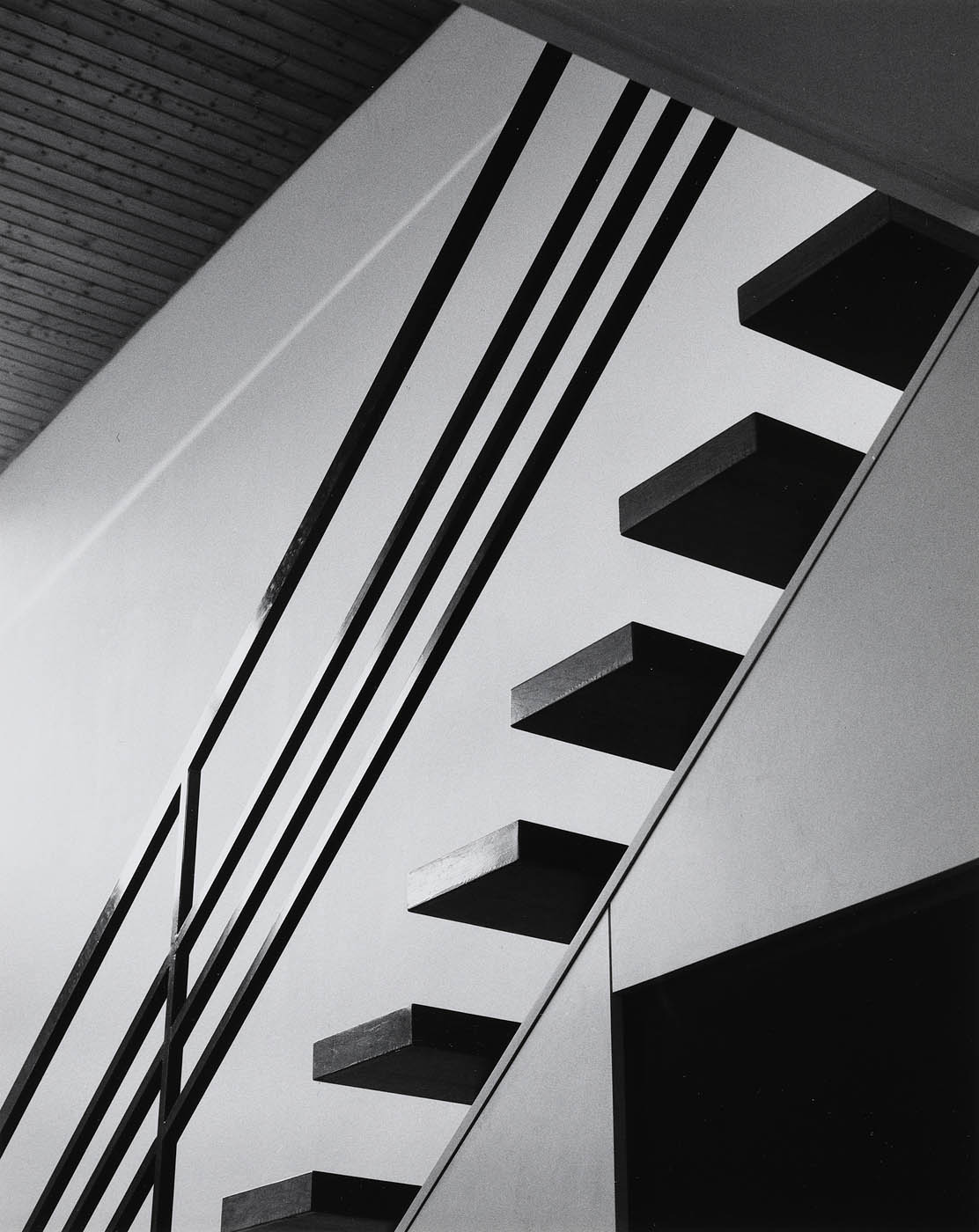
The dreariness of the hotel rooms contrasts with the sober-mindedness and lucidity of the photographs in “Oszillation (Salzburger Landesatelier)” (Oscillation (Salzburger Landesatelier)). Yet although the two series are very different on the surface, both are sustained by a minimalism that is operative on the level of the motifs, in the austere interiors, as well as in Mejchar’s precisely chosen camera angles. These photographs capture the rooms of the State of Salzburg’s studio residence for visiting artists, located, like the Salzburger Kunstverein, in the historic Künstlerhaus. Mejchar herself lives there for a while in 1988, a change of working environment that is reflected in her output from the period.

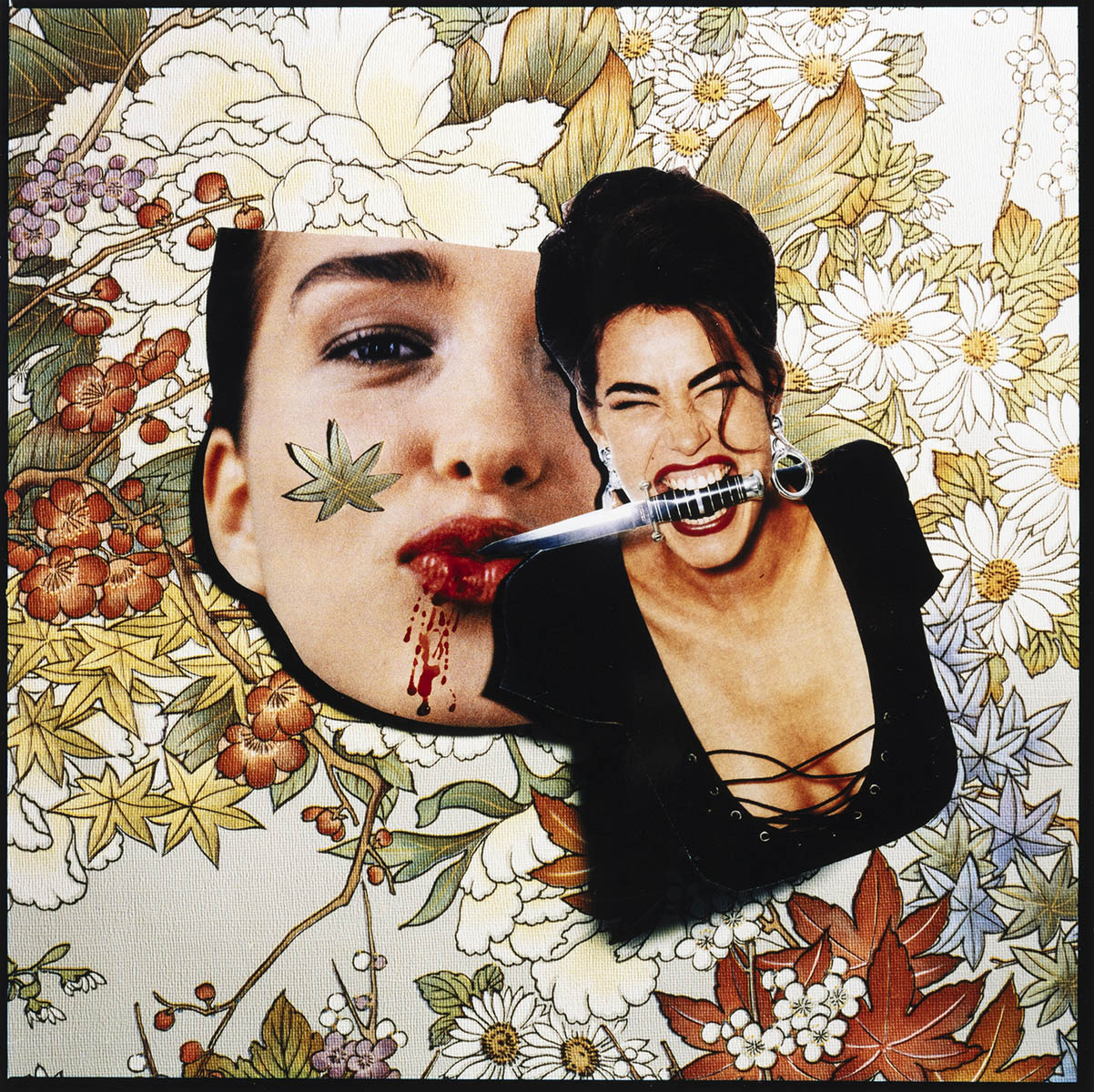
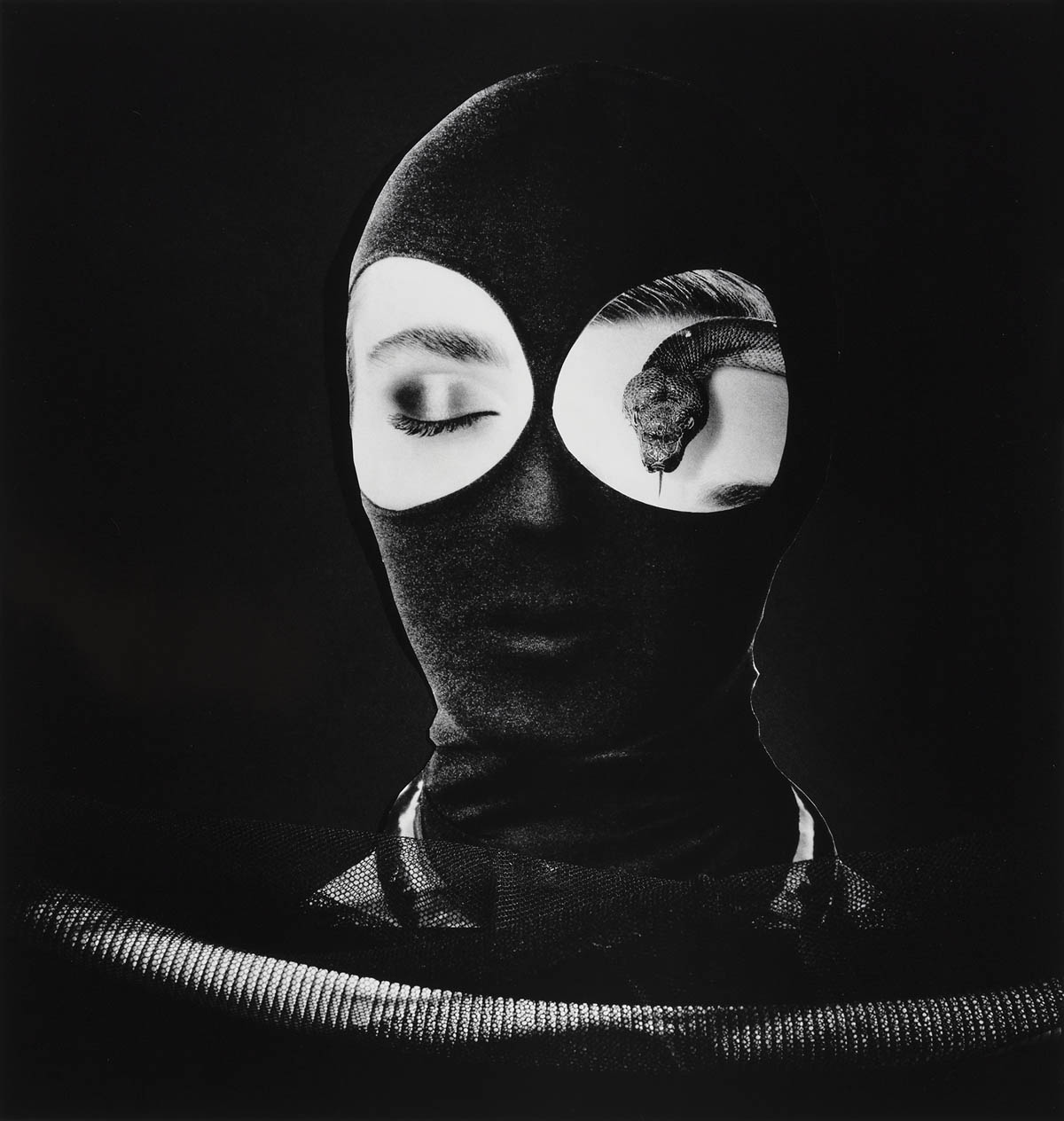
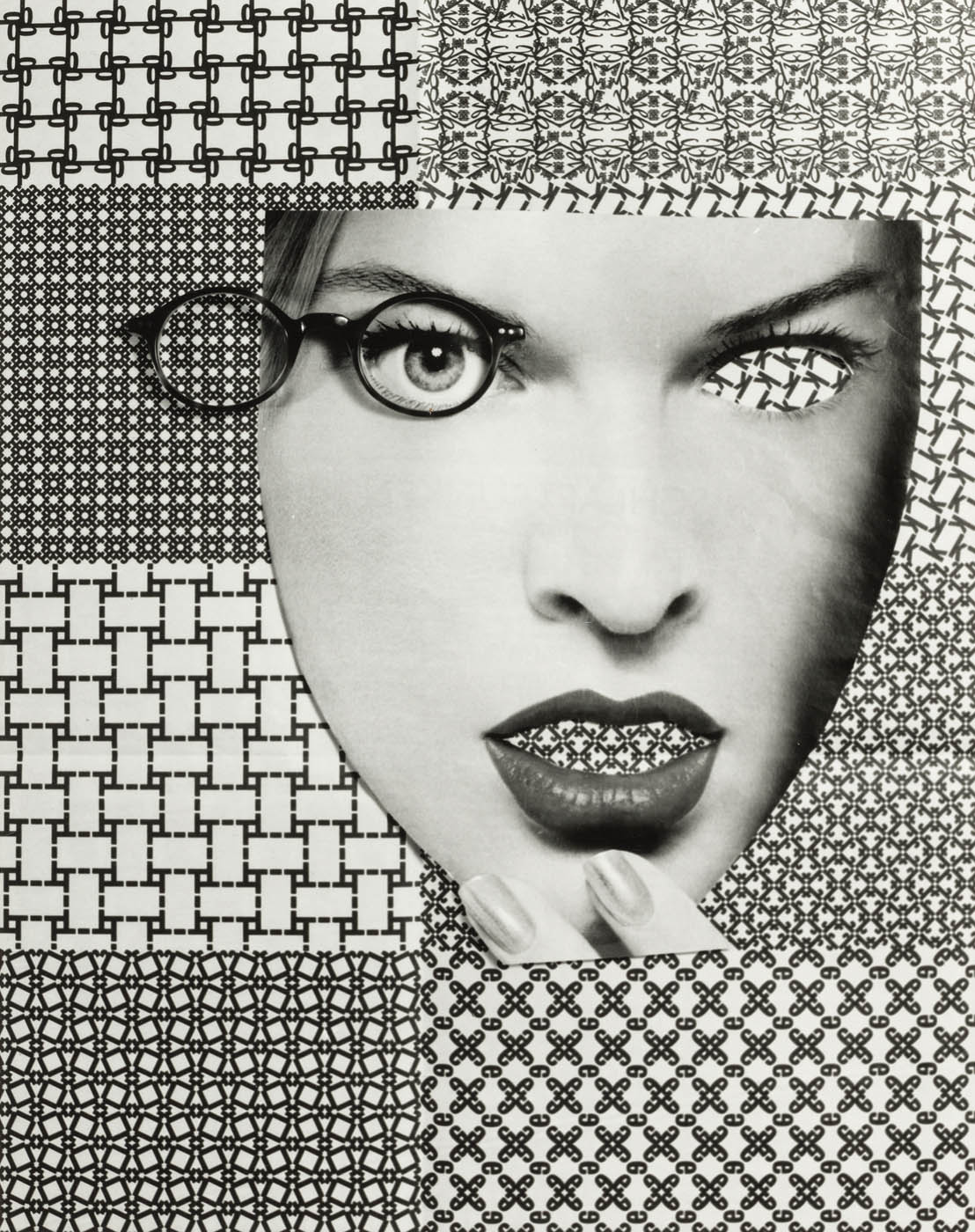
Nobody Is Perfect

In the late 1980s, Elfriede Mejchar branches out in a fresh creative direction. She has been retired for some years and feels free to take on new challenges. Setting aside the flaneur-like practice underlying her earlier bodies of work, she starts photographing in the studio.

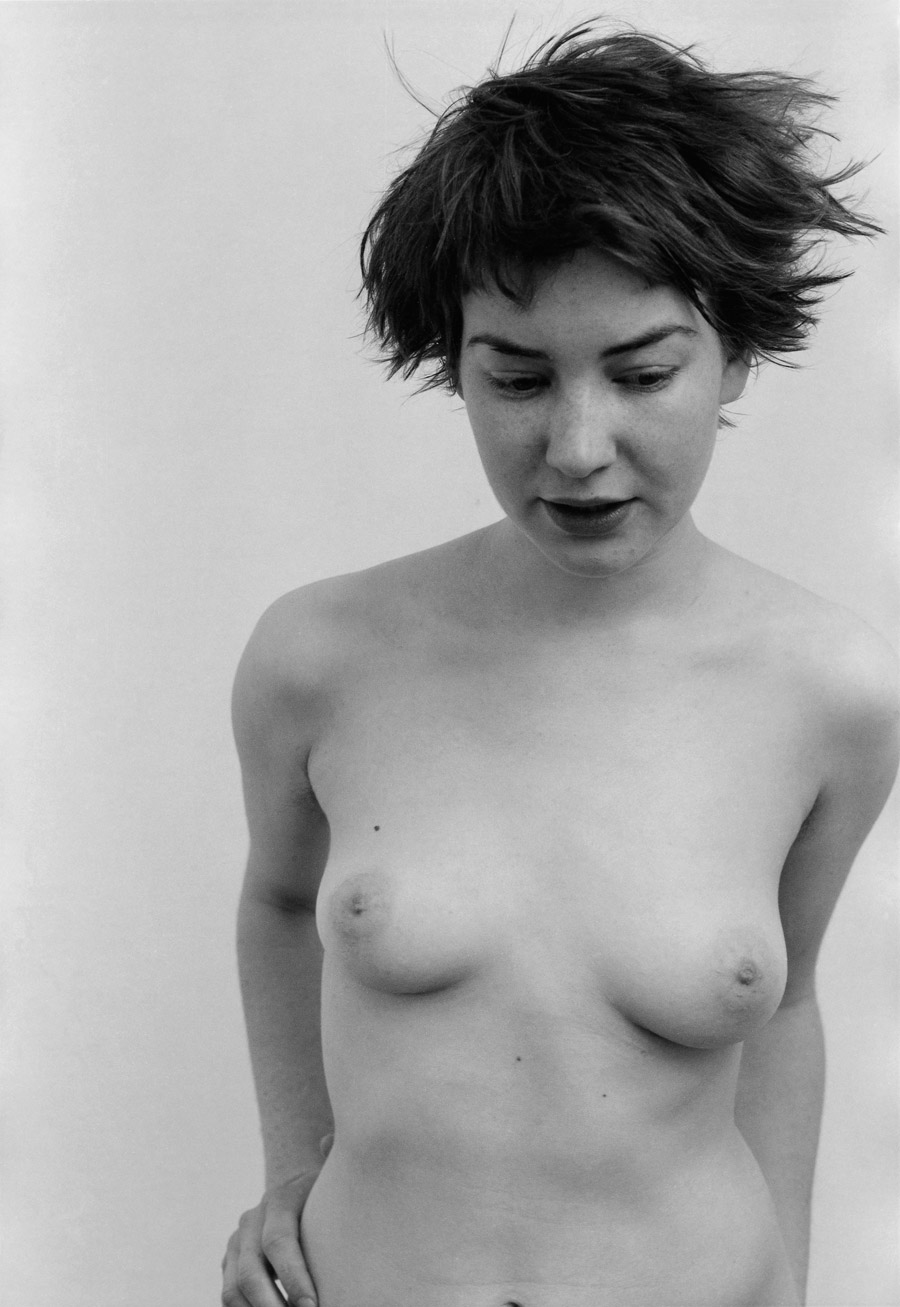
Tapetenbild. Triptychon, 1988 (Wallcover Picture. Tryptic) “Eine Kostümierung der geliehenen Identität”, 1989 (A Costume for the borrowed Identity) “Tagebuch Jänner 1988”, 1988 (Diary January 1988) “Nobody Is Perfect”, 1996

Faces change shapes, snakes coil around heads, open and closed eyes alternate. For the collages in “Tagebücher Jänner 1988,” Mejchar reuses her own photographs; in other series, by contrast, she works with found images such as shots of female models from print advertisements or fuses figural representations with fabric and wallpaper patterns. The works are rapidly composed out of visual fragments that she often only loosely places side by side or in overlapping arrangements, dispelling their aura of perfection. “I build pictures for myself on the wall, from materials that are at hand in the public sphere, that are on public display, but I strip away the ideal of flawless beauty that is constantly rubbed in our faces by dismembering it or covering it up.” It is the temporary and easily mutable that fascinates Mejchar, qualities that had had no place in her professional work.

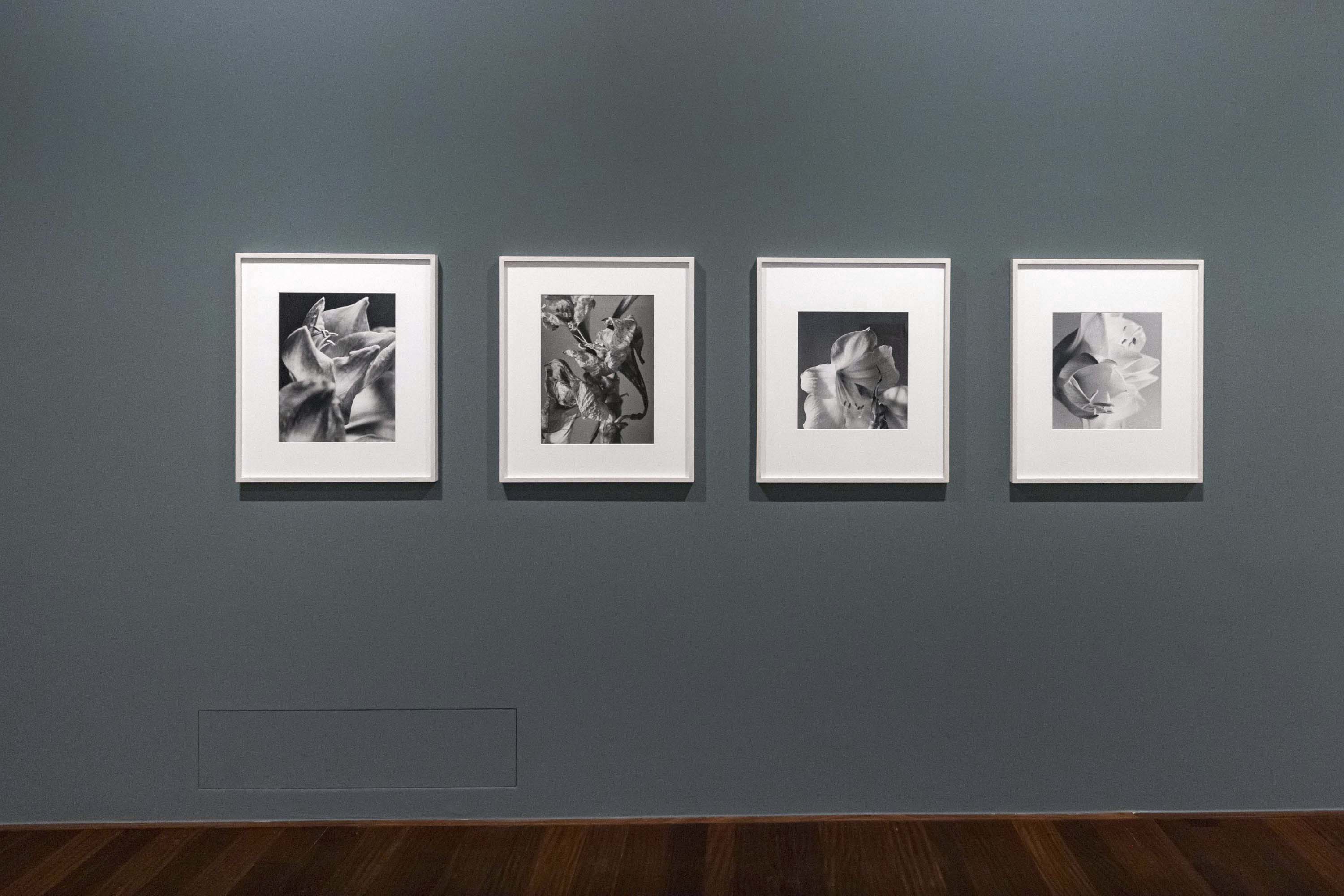
“Amaryllis”, 1994-1997

Pictures of flowers in fine art, whether painted or photographed, inevitably have a clichéd dimension. Mejchar photographs only a special selection of flowers such as amaryllises, lilies, and tulips that she grows in her own garden. In the studio, rather than recording the flowers with a romantic gesture, she captures their gradual transformations – full blossoms, some full of delicate life, some already wilting and recognisably perishable. Showing them between florescence and decay, in a kind of liminal instant, she revisits a theme that surfaces throughout her oeuvre: the capturing of a state of affairs at a defined point in time.


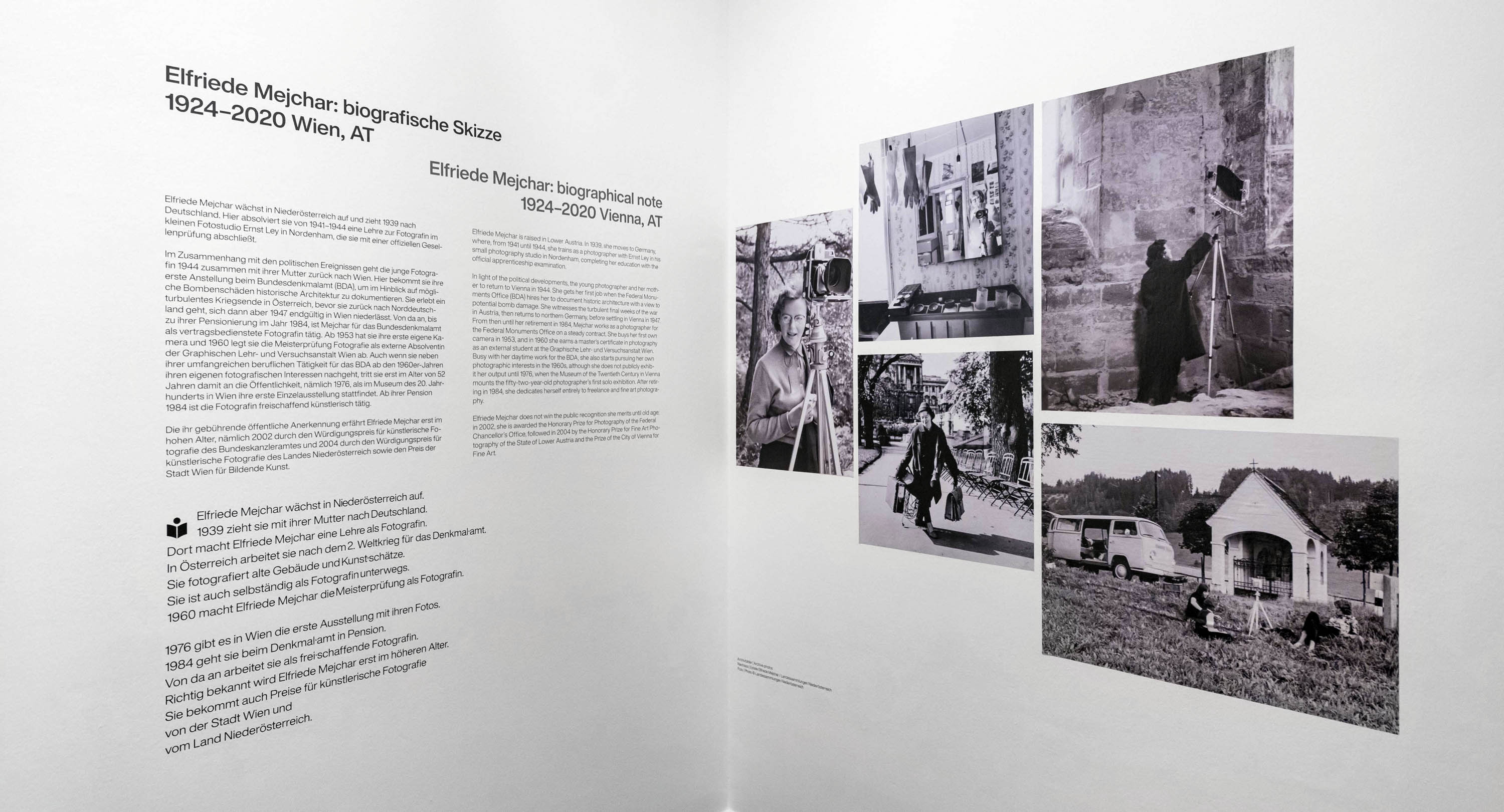
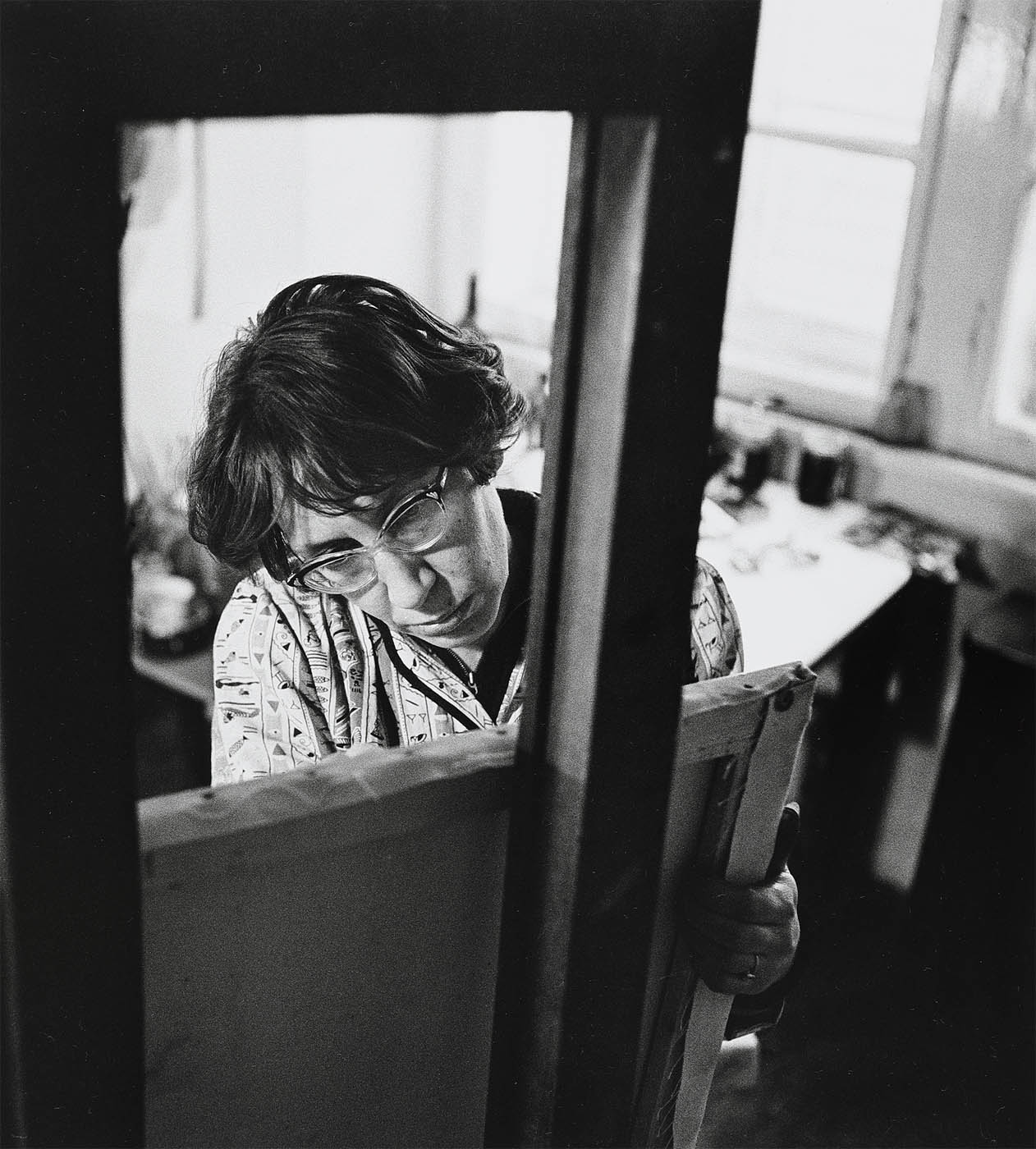
Installation view of the exhibition 'The Poetry of the Everyday. Photographs by Elfriede Mejchar', Museum der Moderne Salzburg 2024 showing the wall text 'Elfriede Mejchar: biographical note 1924-2020 Vienna, AT'; and some photographs of Elfriede Mejchar working


Installation view of the exhibition The Poetry of the Everyday. Photographs by Elfriede Mejchar, Museum der Moderne Salzburg 2024 showing the wall text Elfriede Mejchar: biographical note 1924-2020 Vienna, AT; and some photographs of Elfriede Mejchar working
© Museum der Moderne Salzburg, photo: wildbild/Günter Freund


Elfriede Mejchar: biographical note 1924-2020 Vienna, AT

Elfriede Mejchar is raised in Lower Austria. In 1939, she moves to Germany, where, from 1941 until 1944, she trains as a photographer with Ernst Ley in his small photography studio in Nordenham, completing her education with the official apprenticeship examination.

In light of the political developments, the young photographer and her mother to return to Vienna in 1944. She gets her first job when the Federal Monuments Office (BDA) hires her to document historic architecture with a view to potential bomb damage. She witnesses the turbulent final weeks of the war in Austria, then returns to northern Germany, before settling in Vienna in 1947. From then until her retirement in 1984, Mejchar works as a photographer for the Federal Monuments Office on a steady contract. She buys her first own camera in 1953, and in 1960 she earns a master’s certificate in photography as an external student at the Graphische Lehr- und Versuchsanstalt Wien. Busy with her daytime work for the BDA, she also starts pursuing her own photographic interests in the 1960s, although she does not publicly exhibit her output until 1976, when the Museum of the Twentieth Century in Vienna mounts the fifty-two-year-old photographer’s first solo exhibition. After retiring in 1984, she dedicates herself entirely to freelance and fine art photography.

Elfriede Mejchar does not win the public recognition she merits until old age; in 2002, she is awarded the Honorary Prize for Photography of the Federal Chancellor’s Office, followed in 2004 by the Honorary Prize for Fine Art Photography of the State of Lower Austria and the Prize of the City of Vienna for Fine Art.

Text from the exhibition


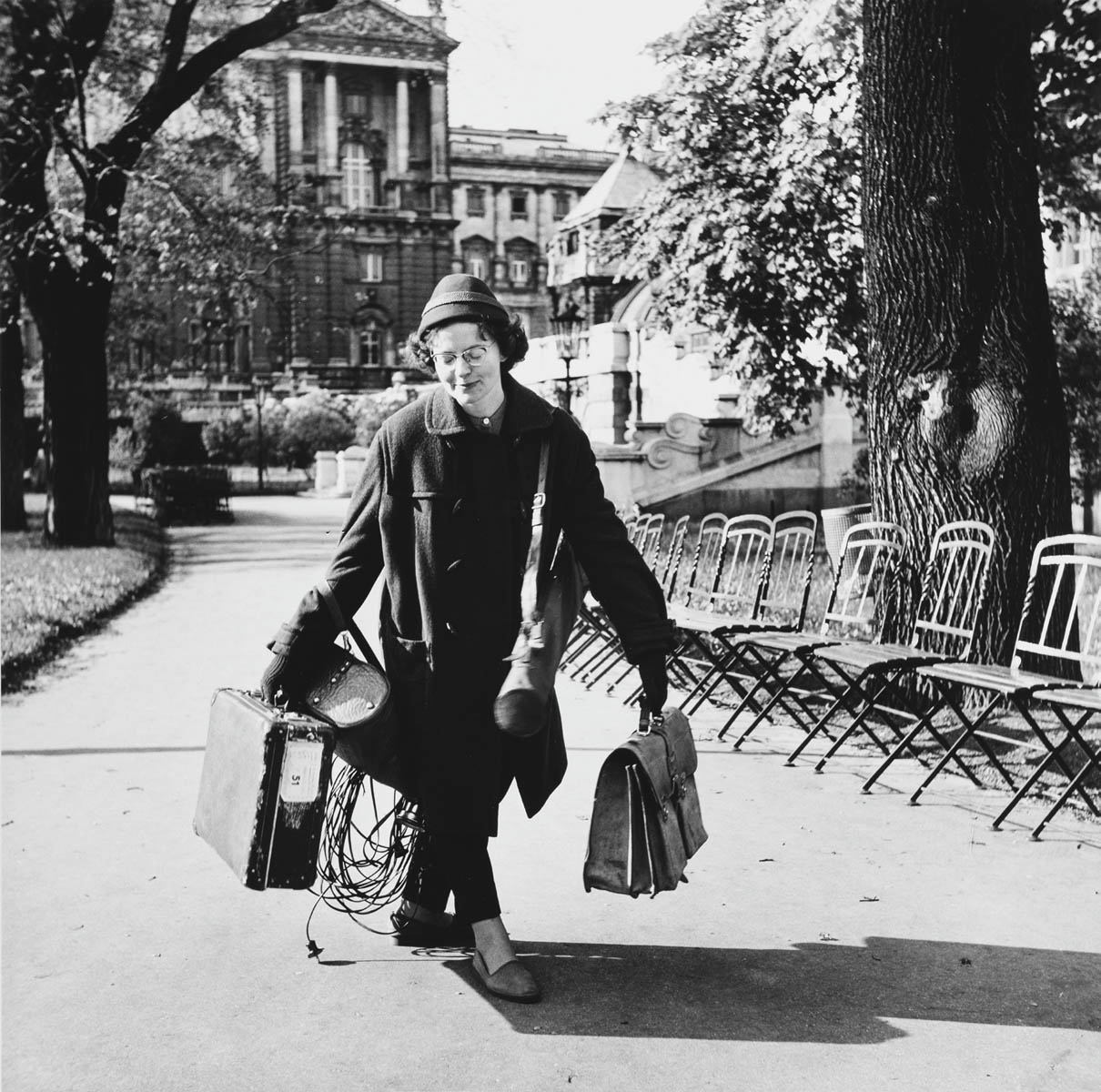
Anonymous photographer. 'Elfriede Mejchar' Nd


Anonymous photographer
Elfriede Mejchar
Nd
Gelatin silver print


Installation view of the exhibition 'The Poetry of the Everyday. Photographs by Elfriede Mejchar', Museum der Moderne Salzburg 2024 showing photographs of Mejchar's flower series


Installation view of the exhibition The Poetry of the Everyday. Photographs by Elfriede Mejchar, Museum der Moderne Salzburg 2024 showing photographs of Mejchar’s flower series


Elfriede Mejchar (Austrian, 1924-2020) 'Amaryllis' 1997


Elfriede Mejchar (Austrian, 1924-2020)
Amaryllis
1997
© Elfriede Mejchar/Landessammlungen NÖ


Elfriede Mejchar (Austrian, 1924-2020) From the series 'Nobody is perfect' 1996


Elfriede Mejchar (Austrian, 1924-2020)
From the series Nobody is perfect
1996
Chromogenic print
Federal Photography Collection at the Museum der Moderne Salzburg
© Bildrecht, Vienna, 2024
Photo: Andrew Phelps
 

Elfriede Mejchar (Austrian, 1924-2020) From the series 'Nobody is perfect' 1996


Elfriede Mejchar (Austrian, 1924-2020)
From the series Nobody is perfect
1996
Chromogenic print
Federal Photography Collection at the Museum der Moderne Salzburg
© Bildrecht, Vienna, 2024
Photo: Andrew Phelps


Elfriede Mejchar (Austrian, 1924-2020) From the series 'Nobody is perfect' 2003


Elfriede Mejchar (Austrian, 1924-2020)
From the series Nobody is perfect
2003
© Elfriede Mejchar/Landessammlungen NÖ


Museum der Moderne Salzburg
Altstadt (Rupertinum)

Wiener-Philharmoniker-Gasse 9
5020 Salzburg
Austria

Opening hours:
Daily 10am – 6pm

Museum der Moderne Salzburg website

LIKE ART BLART ON FACEBOOK

Back to top

Exhibition: ‘Once. Again. Photographs in Series’ at the J. Paul Getty Museum, Getty Center, Los Angeles

Exhibition dates: 9th July – 10th November, 2019

Curator: Mazie Harris


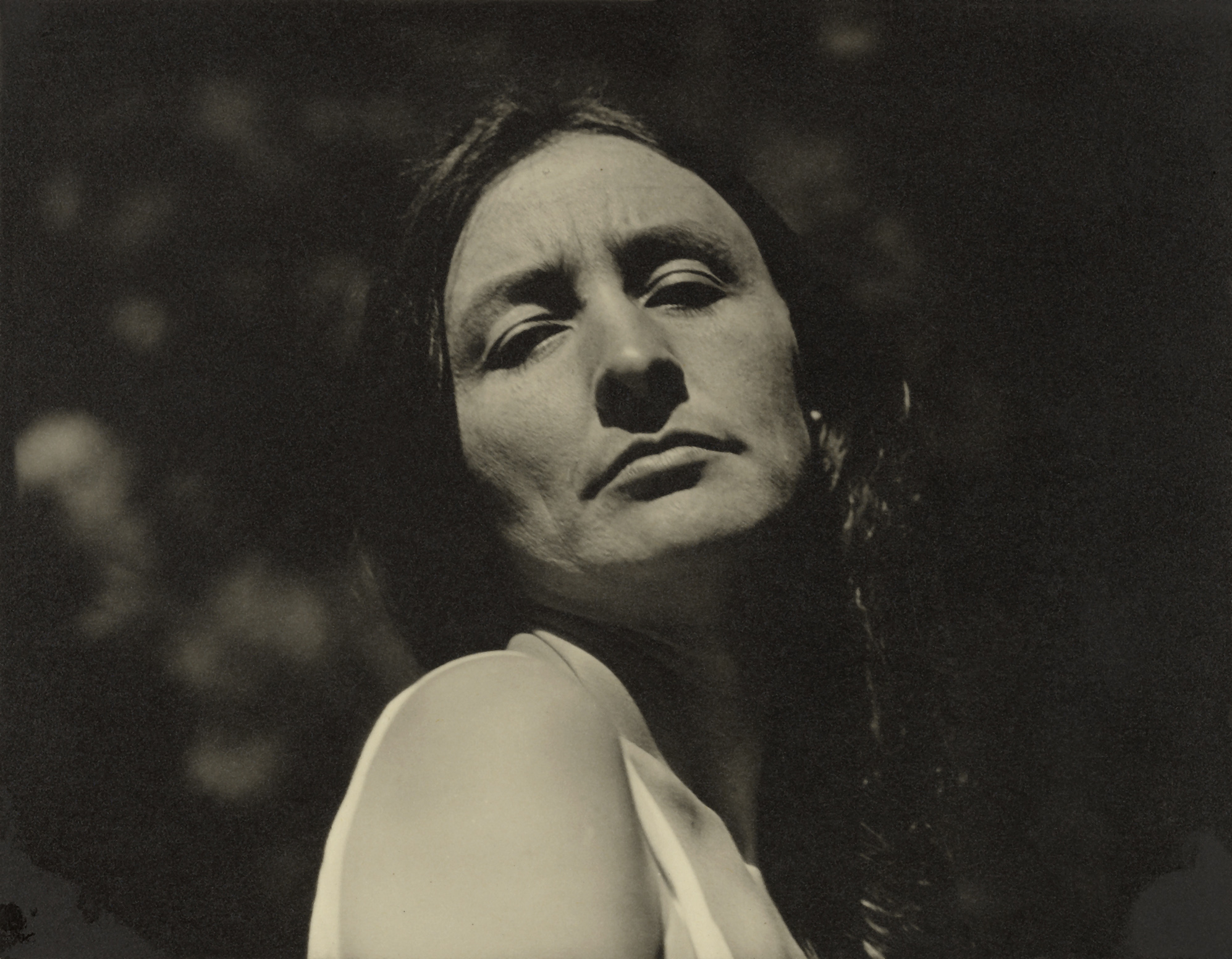
Alfred Stieglitz (American, 1864-1946) 'Georgia O'Keeffe: A Portrait' 1918 from the exhibition 'Once. Again. Photographs in Series' at the J. Paul Getty Museum, Getty Center, Los Angeles, July - Nov, 2019


Alfred Stieglitz (American, 1864-1946)
Georgia O’Keeffe: A Portrait
1918
Gelatin silver print
Image: 11.4 × 8.6cm (4 1/2 × 3 3/8 in.)
The J. Paul Getty Museum, Los Angeles


Some fabulous photographs in series in this posting, which document transformations in landscapes or intimate portraits of people at different times in their lives… and some challenging ones as well. My favourite photographs in series are not represented: Duane Michals narrative fairytales; Cindy Sherman’s Untitled Film Stills; and Nicholas Nixon’s The Brown Sisters.

Dr Marcus Bunyan


Many thanks to the J. Paul Getty Museum for allowing me to publish the photographs in the posting. Please click on the photographs for a larger version of the image.


Photographers often record change through images in series, registering transformations in the world around them. Artists featured in the exhibition photographed faces and places over minutes, months, or years. Historical and contemporary photographs prompt reflection on the ways the passage of time impacts how we see people and spaces.


Alfred Stieglitz (American, 1864-1946) 'Georgia O'Keeffe: A Portrait' 1923


Alfred Stieglitz (American, 1864-1946)
Georgia O’Keeffe: A Portrait
1923
Gelatin silver print
Image: 8.9 × 11.7cm (3 1/2 × 4 5/8 in.)
The J. Paul Getty Museum, Los Angeles


Alfred Stieglitz (American, 1864-1946) 'Georgia O'Keeffe: A Portrait' 1933


Alfred Stieglitz (American, 1864-1946)
Georgia O’Keeffe: A Portrait
1933
Gelatin silver print
Image: 8.9 × 11.4cm (3 1/2 × 4 1/2 in.)
The J. Paul Getty Museum, Los Angeles


Artists have long used cameras to record change, documenting transformations in landscapes or intimate portraits of people at different times in their lives. Once. Again. Photographs in Series, on view July 9 – November 10, 2019 at the J. Paul Getty Museum, Getty Center, features historical and contemporary artists who have revisited people and places to make extended photographic series, prompting reflection on the impact of the passage of time – on photographers as well as their subjects.

The exhibition, drawn primarily from the collection of the Getty Museum, takes its cue from artist Gordon Parks’ trips to Brazil over several decades to document the life of Flávio da Silva. Parks’ photographs are on view in Gordon Parks: The Flávio Story, installed in the adjacent galleries of the Center for Photographs.

Photographing friends and family is a familiar pastime for many, and the exhibition includes the work of several artists who made masterful portraits of loved ones over the course of many years. Alfred Stieglitz photographed artist Georgia O’Keeffe frequently during their tumultuous 30 year relationship, and the photographs on view expose shifts in their rapport as well as changes in Stieglitz’s photographic style over time. Series by Harry Callahan of his wife Eleanor, Paul Strand of his wife, artist Rebecca Salsbury, and Julia Margaret Cameron of her niece Julia Jackson similarly offer fascinating reflections on the changes in relationships over time.

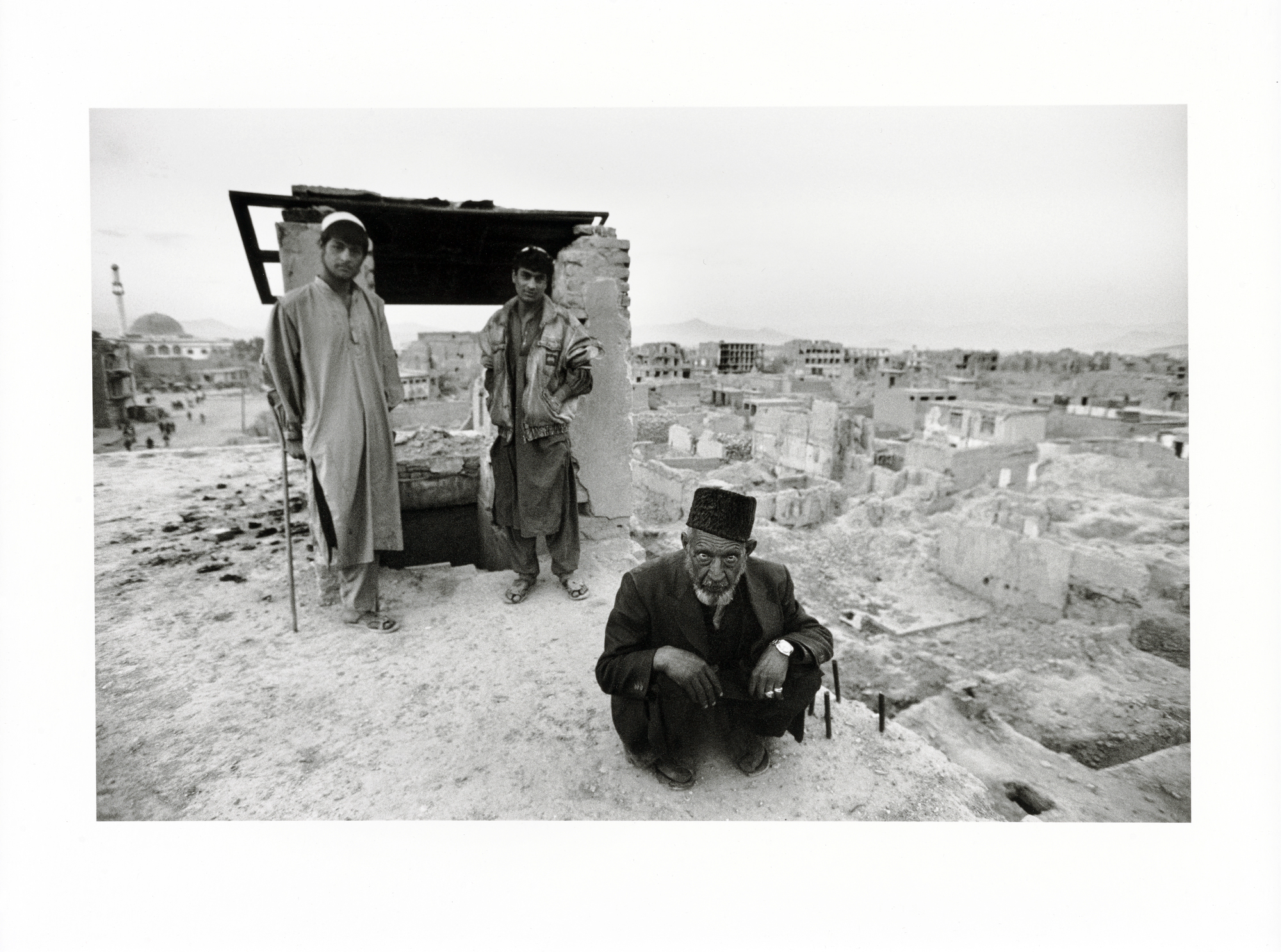
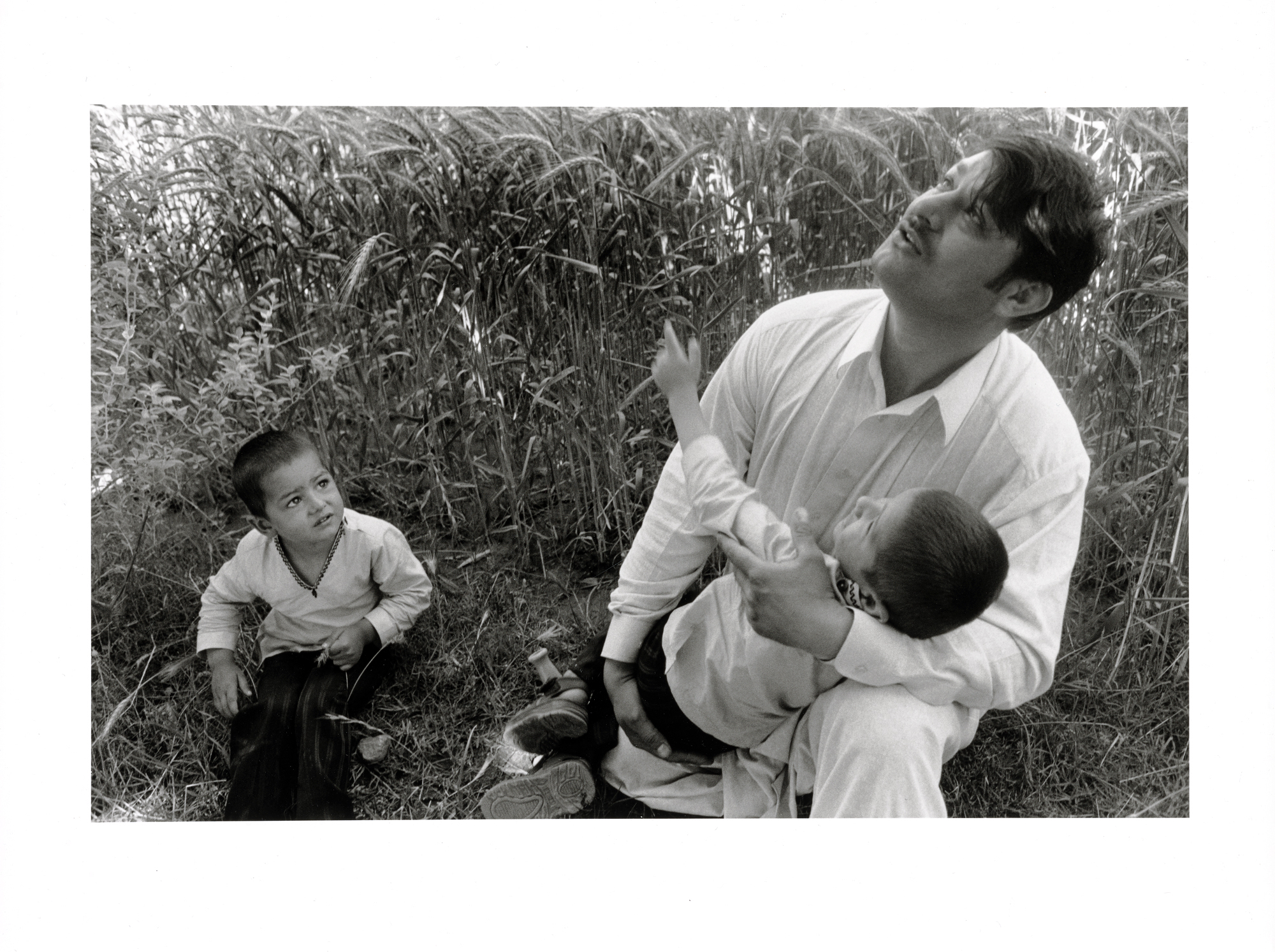
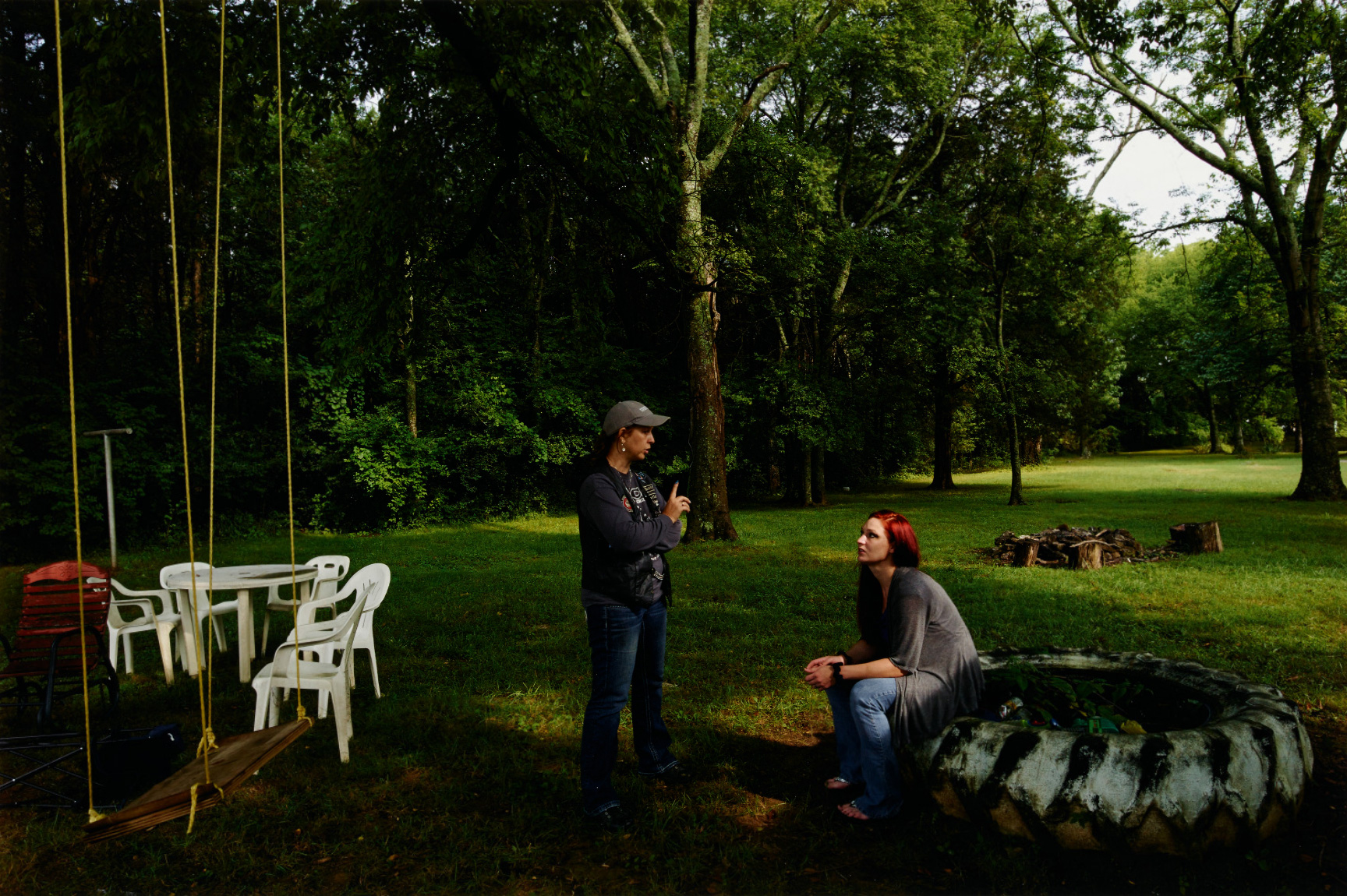
The exhibition also includes compelling contemporary portraits, including photojournalist Seamus Murphy’s record of the physical and emotional toll inflicted upon a family living in Afghanistan under rule of the Taliban, and Donna Ferrato’s documentation of a woman who fled an abusive relationship. Both series register the struggles as well as triumphs.

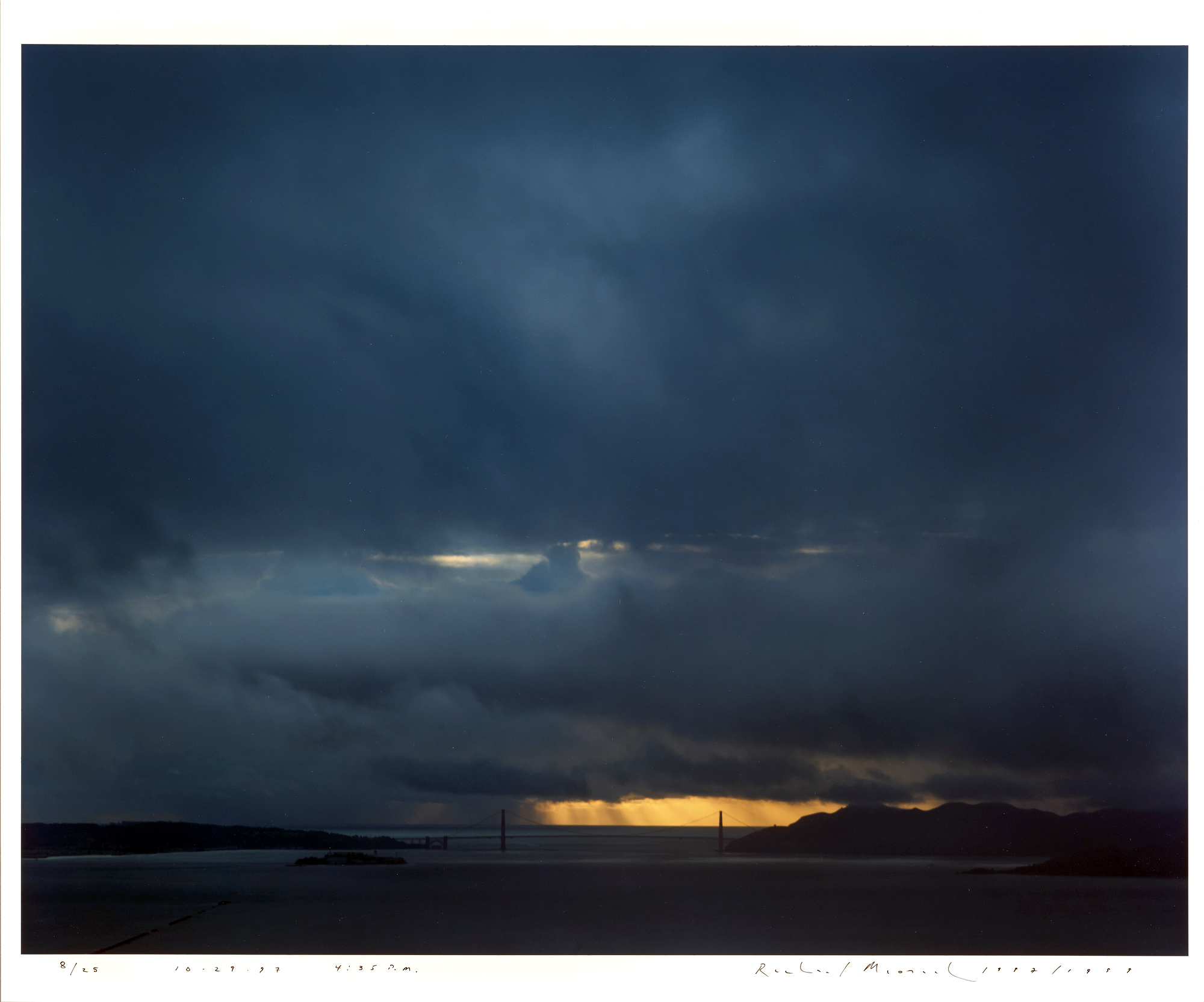
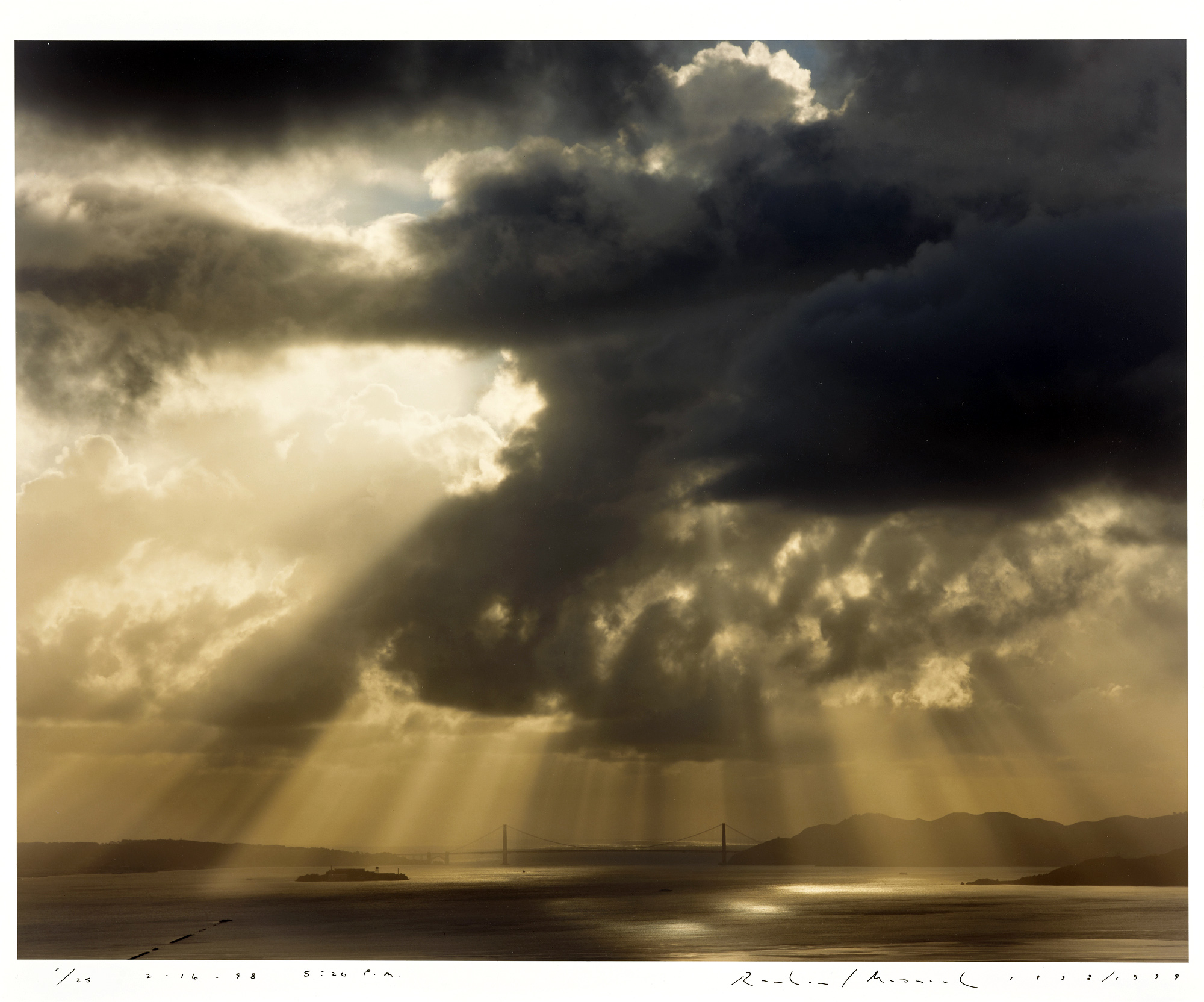
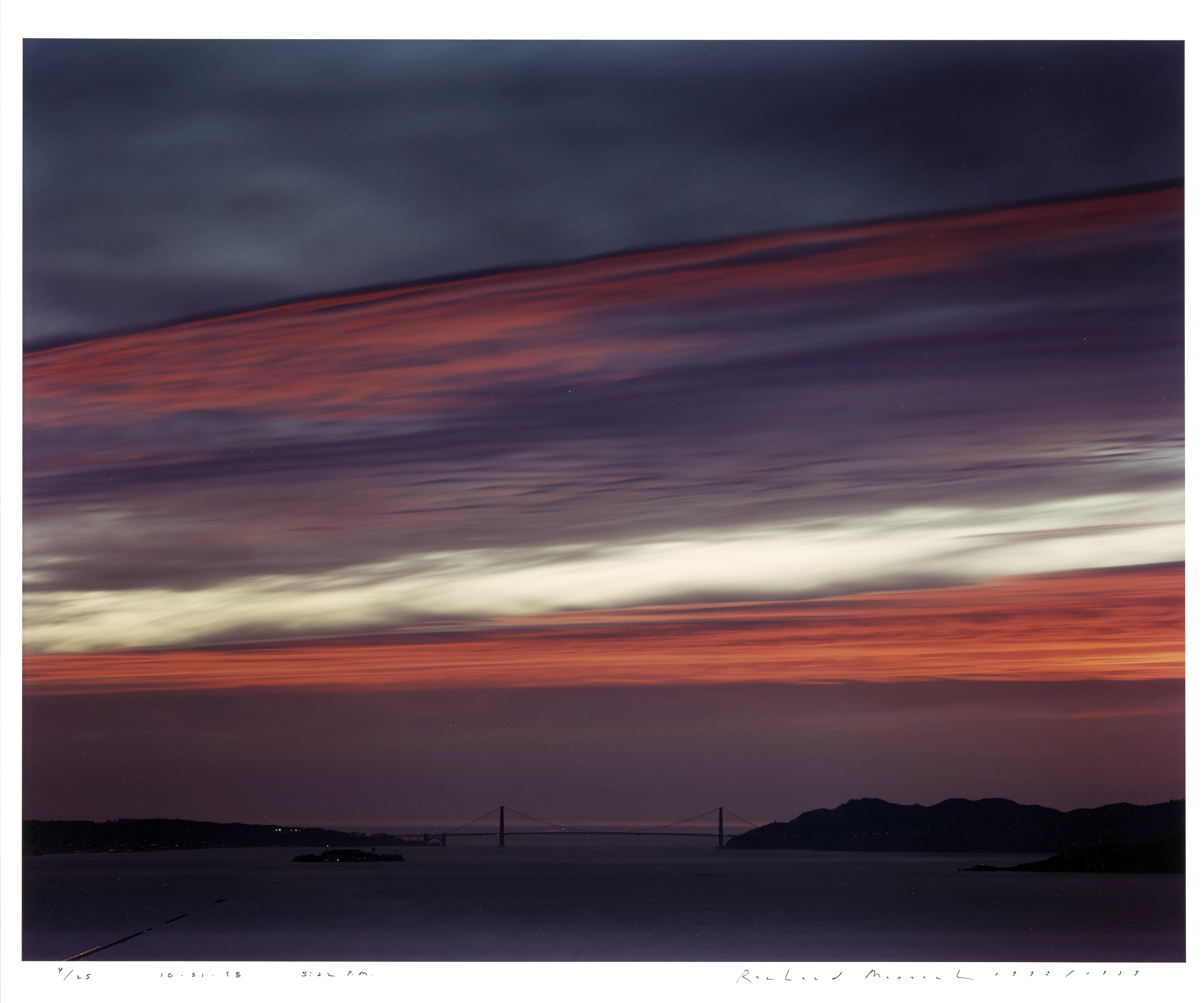
A number of artists in the exhibition document seasonal and man-made changes in the landscape. In a 1953 series by William A. Garnett, aerial photography is used to capture a walnut grove before and after the trees were felled to make way for a housing development. The startling perspective of Garnett’s images came to play an important role in the burgeoning environmental movement. Richard Misrach used his move to a new home in the hills above Berkeley, California, as an opportunity to take hundreds of photographs of the astonishing range of colours and atmospheric conditions surrounding the Golden Gate Bridge at sunset each evening. Several of his richly saturated sunset images are featured in the exhibition. Works by Roni Horn, Jem Southam, and Josef Sudek also trace changes in the natural world, to both political and poetic effect.

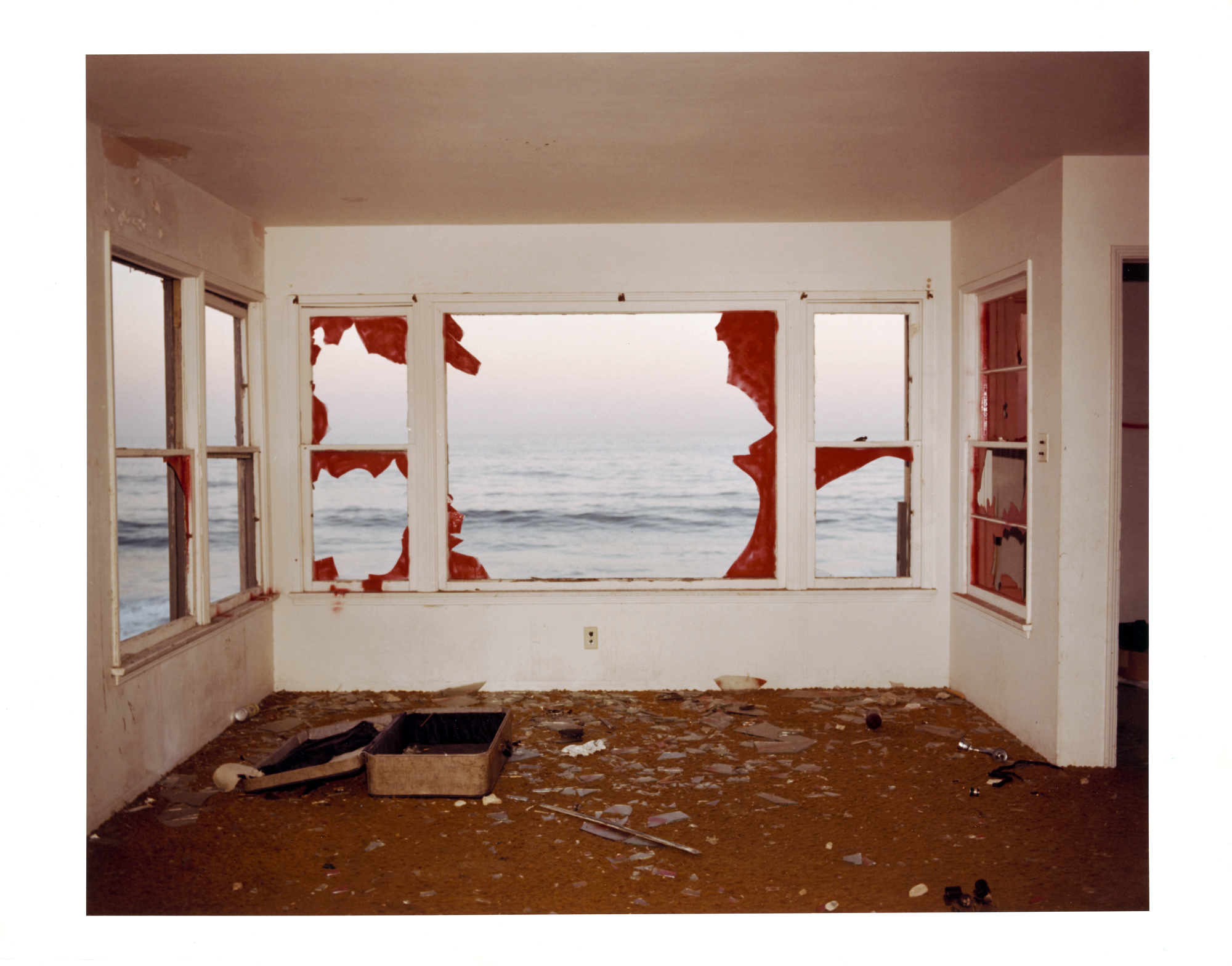
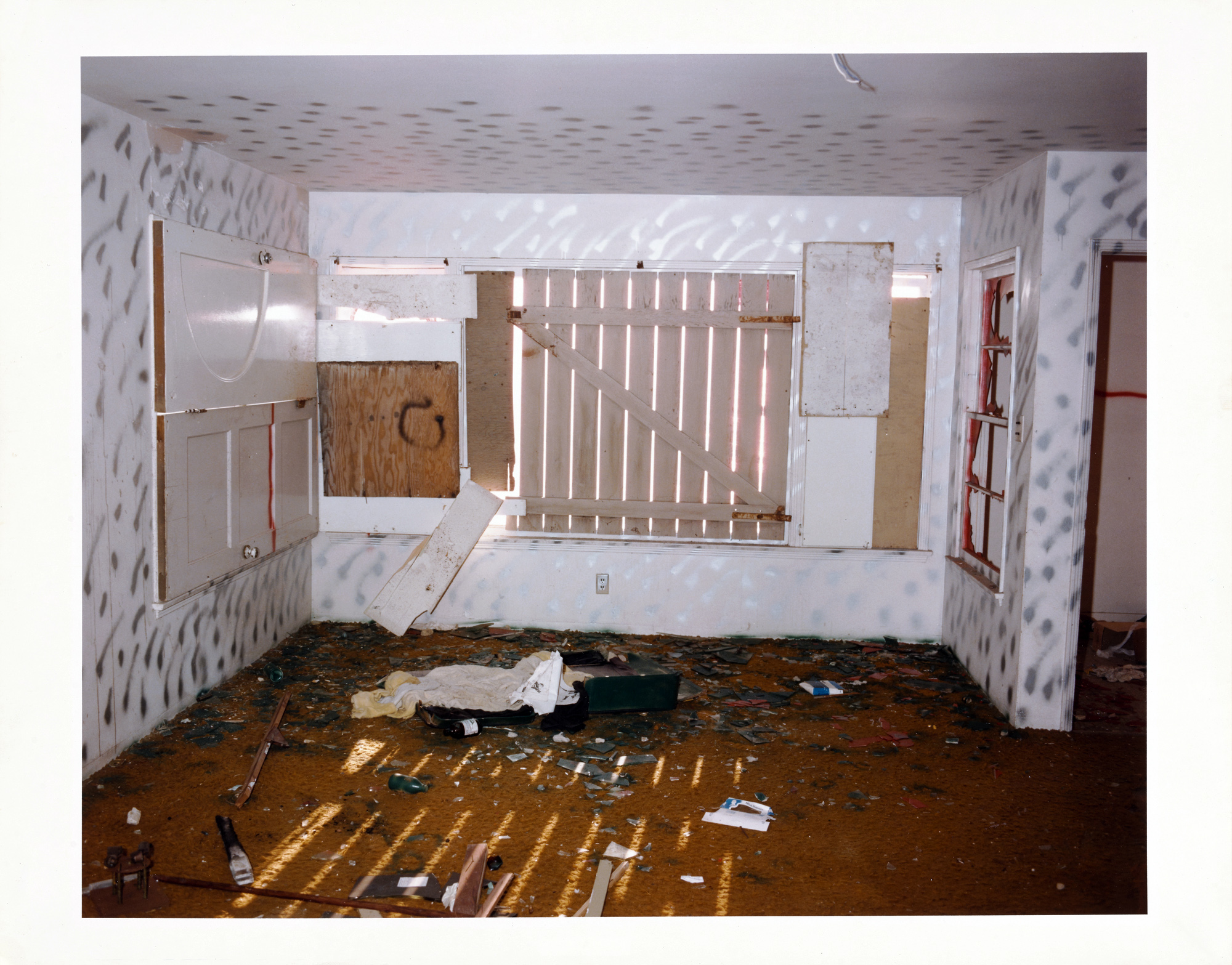
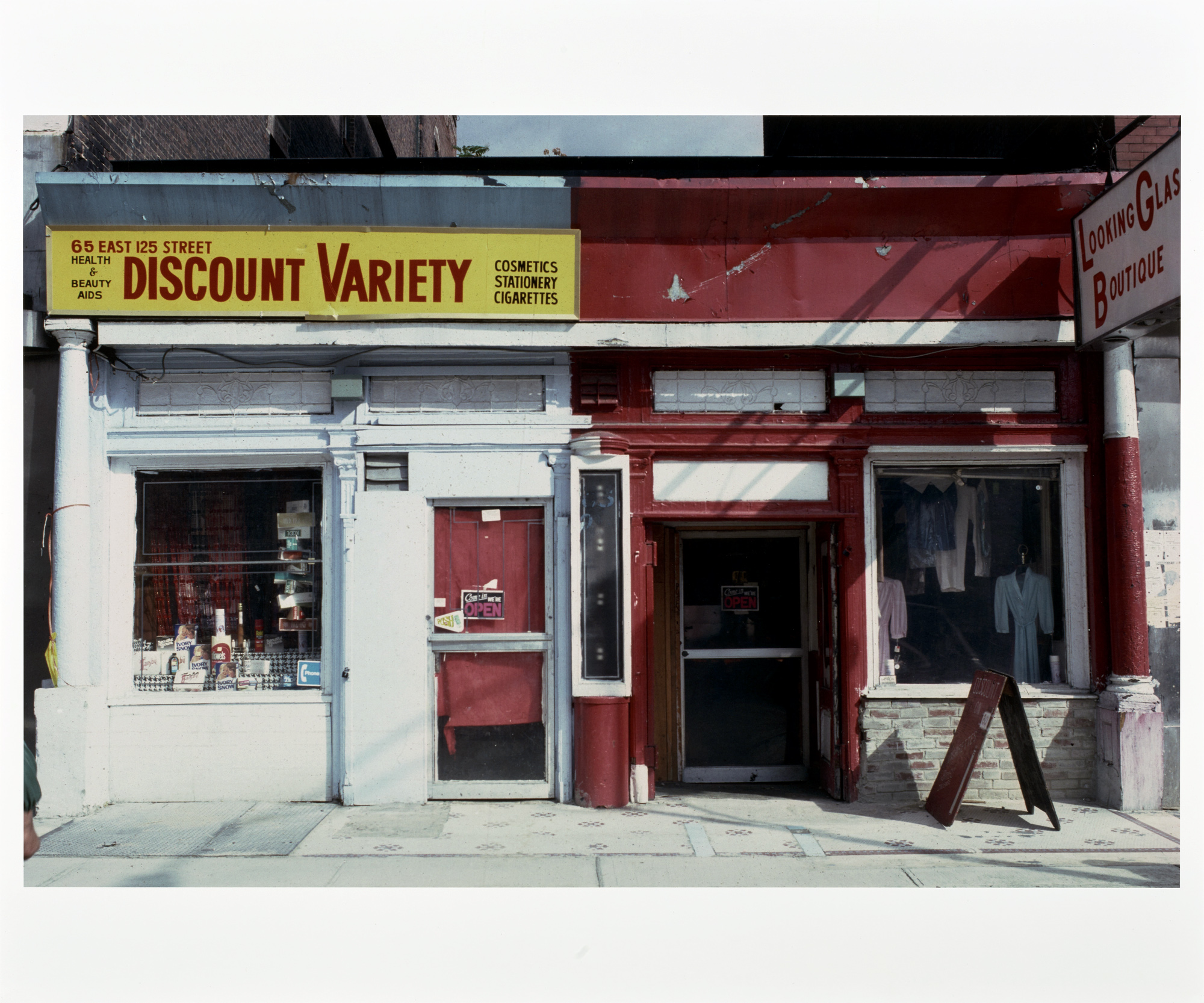
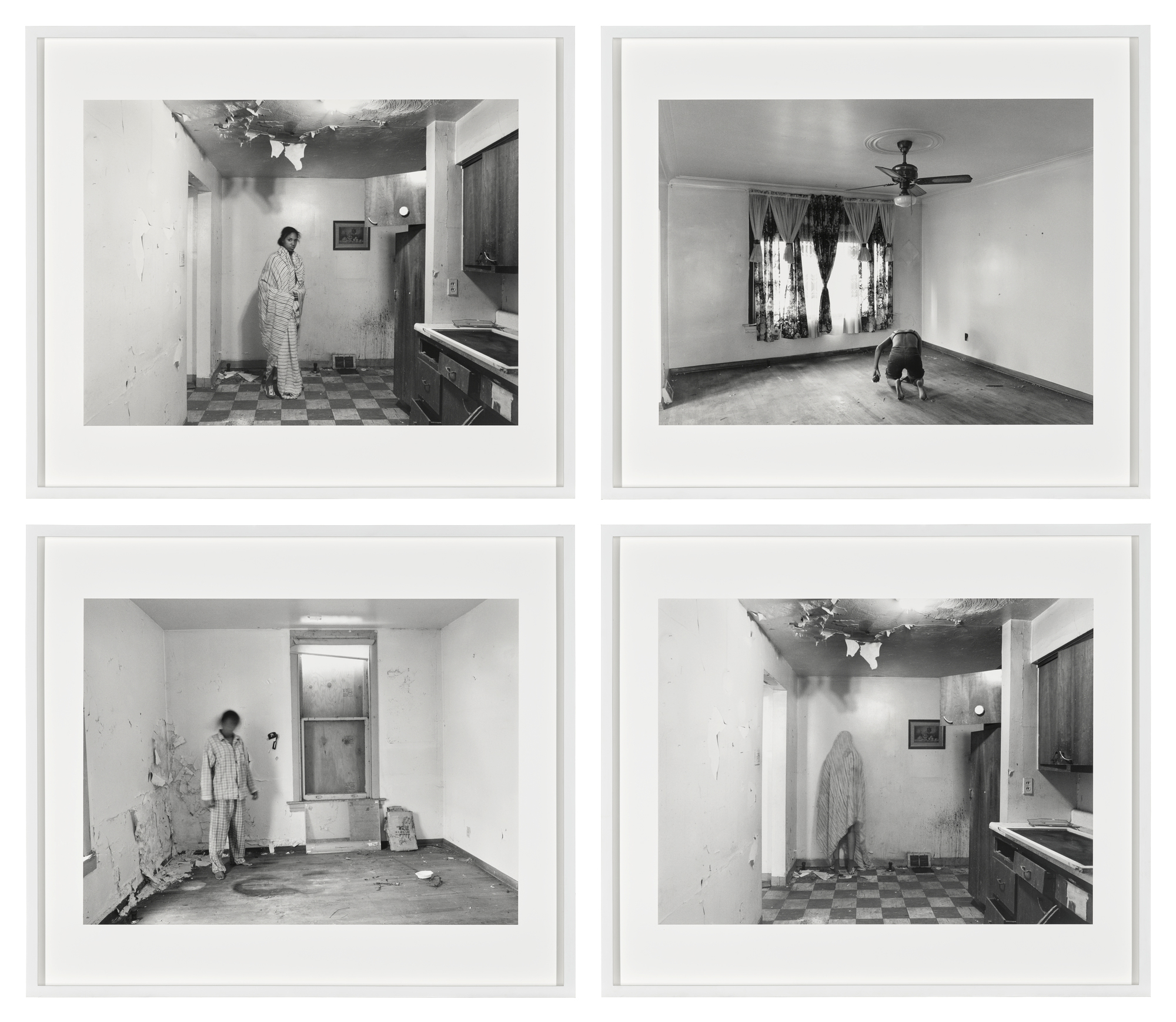
Transformations in the built environment also reveal the profound effects of the passage of time. LaToya Ruby Frazier documented the painful process of clearing the rooms of her family home in a series of self-portraits in which she cloaked herself in the familiar belongings of her loved ones. In order to spotlight socioeconomic changes in American neighbourhoods, Camilo José Vergara photographed the dramatic transformation of a single Harlem storefront over 40 years, as it changed hands, changed facades, and split into two establishments. Other artists in the exhibition, including John Divola and William Christenberry, chronicle the disintegration of architecture over time, creating evocative meditations on deterioration.

“‘Once again’ is a phrase repeated in a poem by William Wordsworth,” says Mazie Harris, assistant curator of photographs at the Getty Museum and curator of the exhibition. “He was fascinated by the powerful feeling that arises when revisiting a familiar place. He’s experiencing his surroundings in real time and yet is constantly aware of his memories of being there before. The photographers in this exhibition conjure that same sensation. They offer us the opportunity to see people and places afresh, even as we track the powerful changes wrought by time.”

Once. Again. Photographs in Series, is on view July 9-November 10, 2019 at the J. Paul Getty Museum, Getty Center. The exhibition is curated by Mazie Harris, assistant curator of photographs at the Getty Museum.

Press release from the J. Paul Getty Museum website [Online] Cited 11/08/2019


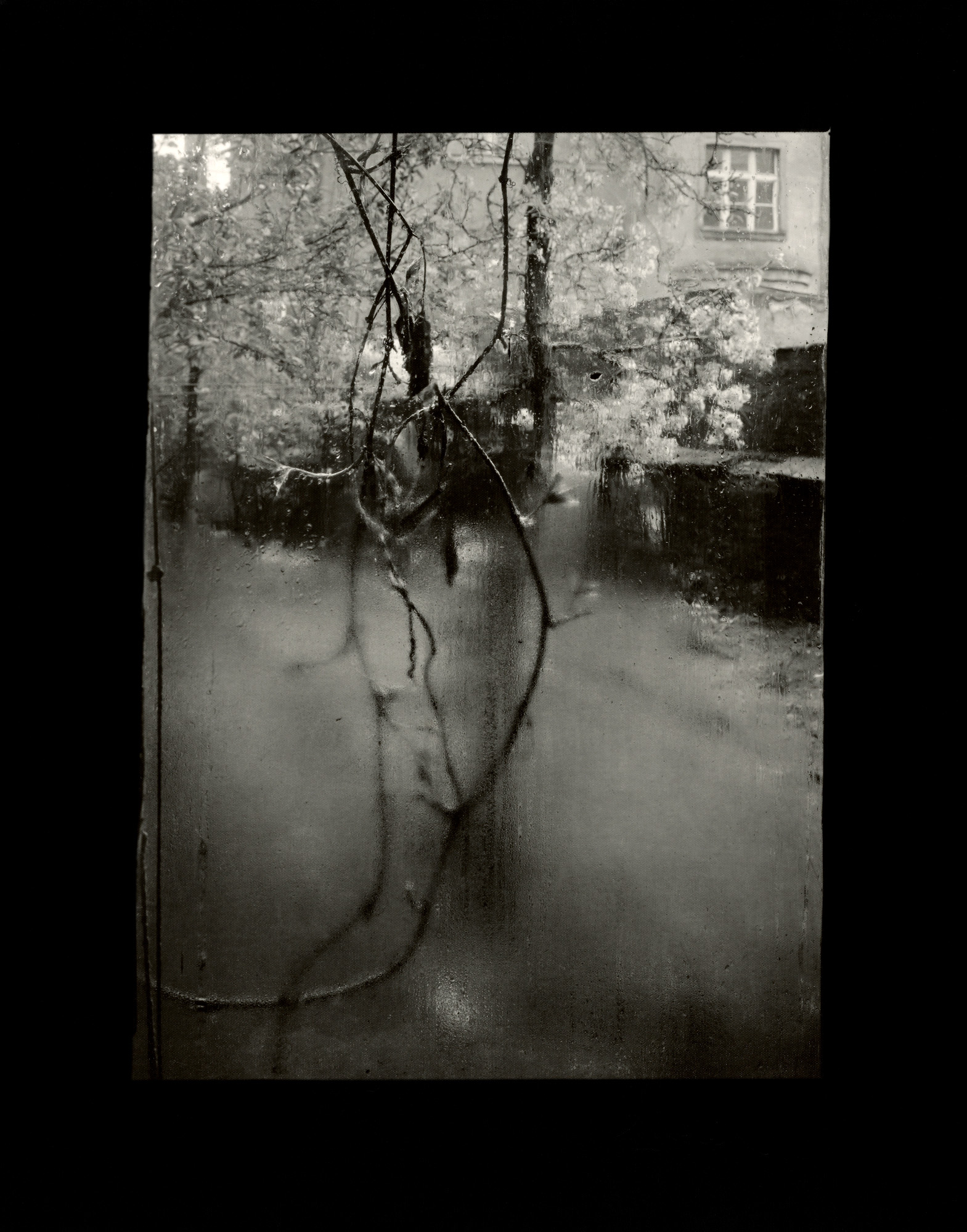
Josef Sudek (Czech, 1896-1976) 'The Window of My Studio' 1940-1954


Josef Sudek (Czech, 1896-1976)
The Window of My Studio
1940-1954
Gelatin silver print
Image: 22.1 × 14.1cm (8 11/16 × 5 9/16 in.)
The J. Paul Getty Museum, Los Angeles
© I&G Fárová Heirs


Josef Sudek (Czech, 1896-1976) 'The Window of My Studio' 1940-1954


Josef Sudek (Czech, 1896-1976)
The Window of My Studio
1940-1954
Gelatin silver print
Image: 17.1 × 10.3cm (6 3/4 × 4 1/16 in.)
The J. Paul Getty Museum, Los Angeles
© I&G Fárová Heirs


Josef Sudek (Czech, 1896-1976) 'The Window of My Studio' 1940-1954


Josef Sudek (Czech, 1896-1976)
The Window of My Studio
1940-1954
Gelatin silver print
Image: 23.5 × 16.5cm (9 1/4 × 6 1/2 in.)
The J. Paul Getty Museum, Los Angeles
© I&G Fárová Heirs


William A. Garnett (American, 1916-2006) 'Walnut Grove Standing' March 21, 1953


William A. Garnett (American, 1916-2006)
Walnut Grove Standing
March 21, 1953
Gelatin silver print
Image: 34.3 × 26.7cm (13 1/2 × 10 1/2 in.)
The J. Paul Getty Museum, Los Angeles
© Estate of William A. Garnett


William A. Garnett (American, 1916-2006) 'Walnut Grove Bulldozed' March 21, 1953


William A. Garnett (American, 1916-2006)
Walnut Grove Bulldozed
March 21, 1953
Gelatin silver print
Image: 26.5 × 34.3cm (10 7/16 × 13 1/2 in.)
The J. Paul Getty Museum, Los Angeles
© Estate of William A. Garnett


William A. Garnett (American, 1916-2006) 'Walnut Grove Uprooted by Bulldozers' March 22, 1953


William A. Garnett (American, 1916-2006)
Walnut Grove Uprooted by Bulldozers
March 22, 1953
Gelatin silver print
Image (trimmed to mount): 34.1 × 26.5cm (13 7/16 × 10 7/16 in.)
The J. Paul Getty Museum, Los Angeles
© Estate of William A. Garnett


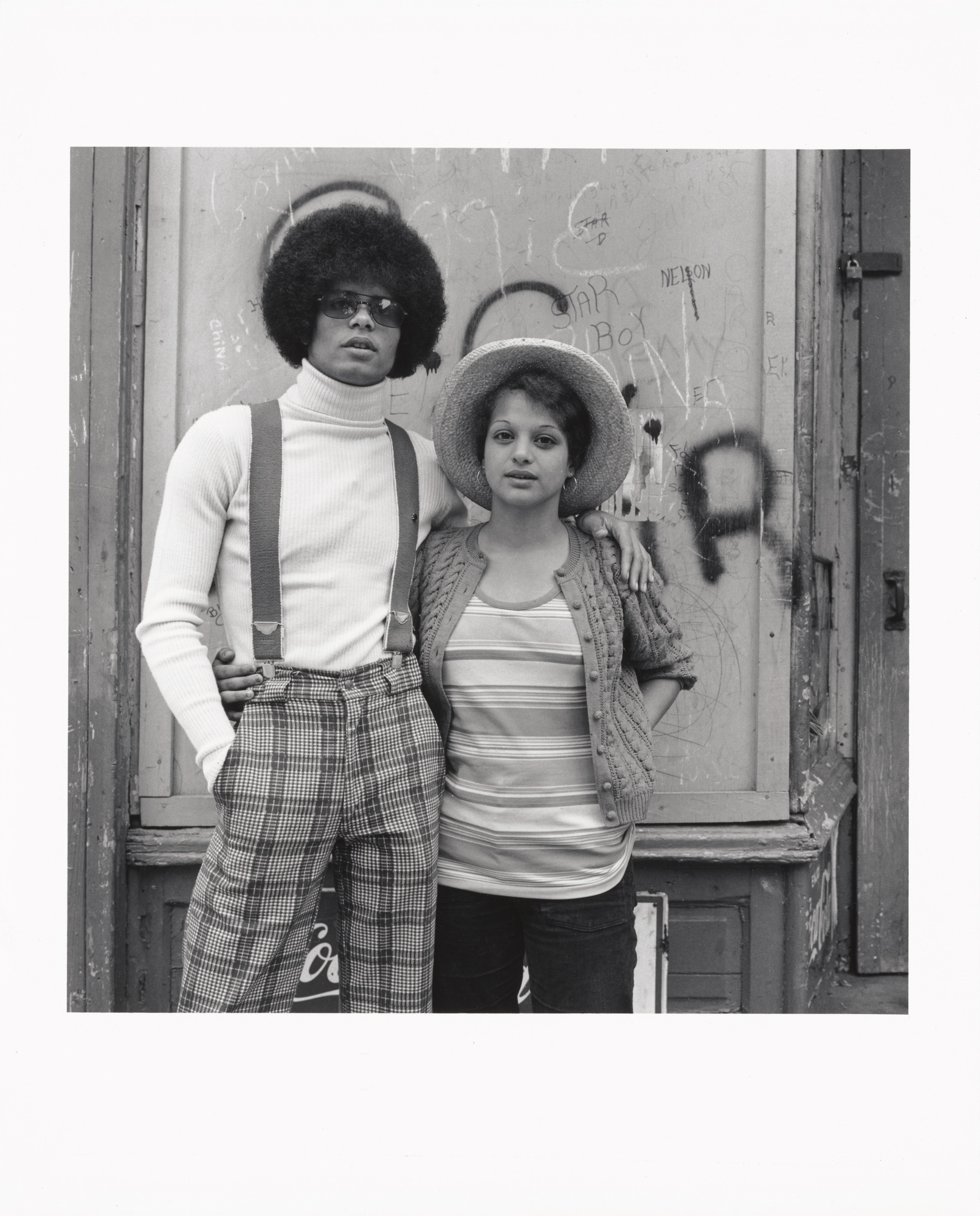
Milton Rogovin (American, 1909-2011) 'Michael and Pam' 1973


Milton Rogovin (American, 1909-2011)
Michael and Pam
1973
Gelatin silver print
Image: 17.9 × 17.4cm (7 1/16 × 6 7/8 in.)
The J. Paul Getty Museum, Los Angeles
© Milton Rogovin


Milton Rogovin (American, 1909-2011) 'Michael and Pam' 1973


Milton Rogovin (American, 1909-2011)
Michael and Pam
1973
Gelatin silver print
Image: 17.9 × 17.4cm (7 1/16 × 6 7/8 in.)
The J. Paul Getty Museum, Los Angeles
© Milton Rogovin


Milton Rogovin (American, 1909-2011) 'Michael and Pam' 1973


Milton Rogovin (American, 1909-2011)
Michael and Pam
1973
Gelatin silver print
Image: 17.9 × 17.4cm (7 1/16 × 6 7/8 in.)
The J. Paul Getty Museum, Los Angeles
© Milton Rogovin


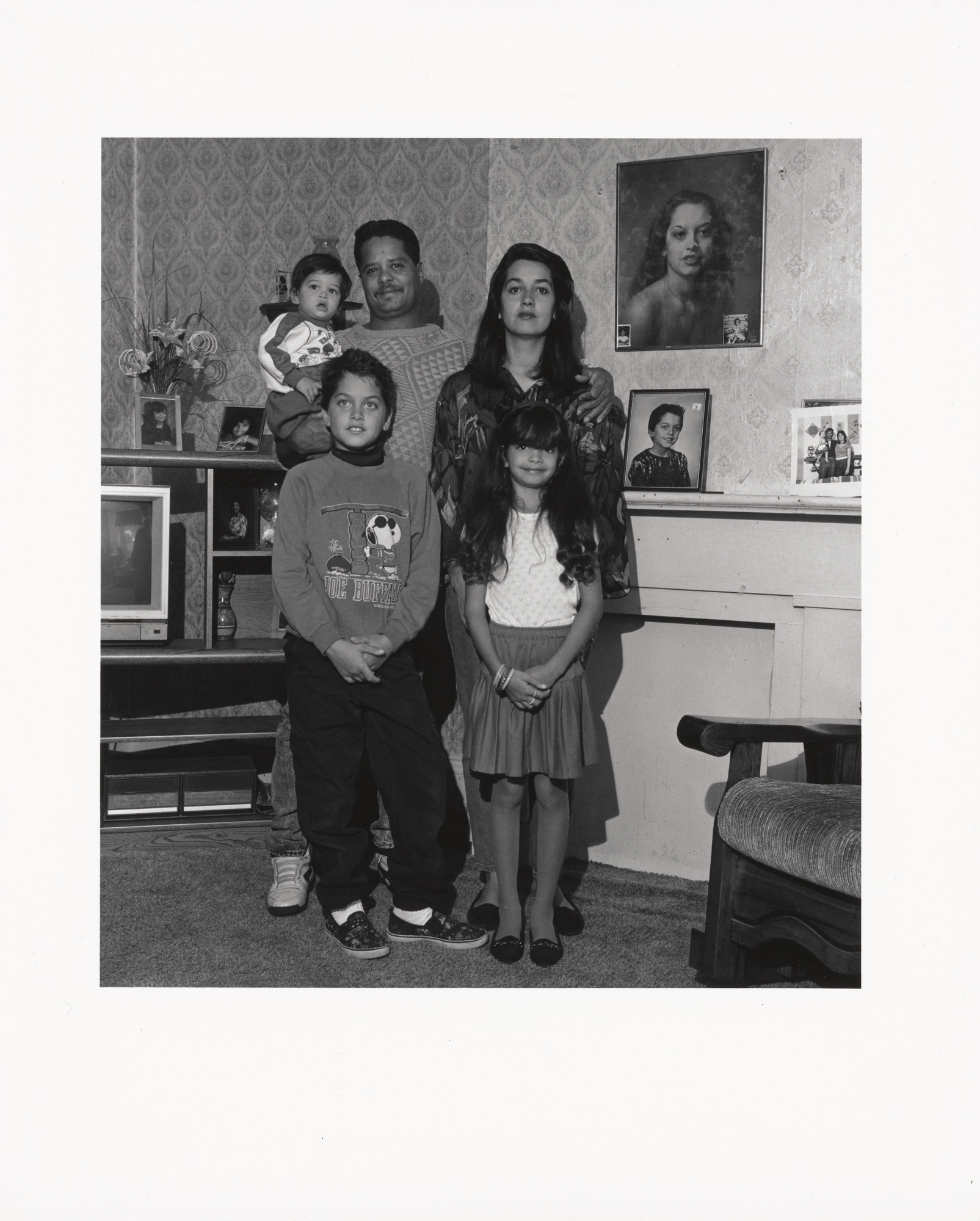
Milton Rogovin (American, 1909-2011) 'Yvonne and Daughter Sonya' 1974


Milton Rogovin (American, 1909-2011)
Yvonne and Daughter Sonya
1974
Gelatin silver print
Image: 18 × 17.3cm (7 1/16 × 6 13/16 in.)
The J. Paul Getty Museum, Los Angeles
© Milton Rogovin


Milton Rogovin (American, 1909-2011) 'Yvonne and Daughter Sonya' 1974


Milton Rogovin (American, 1909-2011)
Yvonne and Daughter Sonya
1974
Gelatin silver print
Image: 17.2 × 17.2cm (6 3/4 × 6 3/4 in.)
The J. Paul Getty Museum, Los Angeles
© Milton Rogovin


Milton Rogovin (American, 1909-2011) 'Yvonne and Daughter Sonya' 1974


Milton Rogovin (American, 1909-2011)
Yvonne and Daughter Sonya
1974
Gelatin silver print
Image: 18.1 × 16.8cm (7 1/8 × 6 5/8 in.)
The J. Paul Getty Museum, Los Angeles
© Milton Rogovin


John Divola (American, born 1949) 'Zuma' 1977


John Divola (American, b. 1949)
Zuma
1977
Chromogenic print
Image: 24.7 × 30.4cm (9 3/4 × 11 15/16 in.)
The J. Paul Getty Museum, Los Angeles
Gift of the Wilson Centre for Photography
© John Divola


John Divola (American, born 1949) 'Zuma' 1977


John Divola (American, b. 1949)
Zuma
1977
Chromogenic print
Image: 24.8 × 30.6cm (9 3/4 × 12 1/16 in.)
The J. Paul Getty Museum, Los Angeles
Gift of the Wilson Centre for Photography
© John Divola


John Divola (American, born 1949) 'Zuma' 1977


John Divola (American, b. 1949)
Zuma
1977
Chromogenic print
Image: 24.7 × 30.5cm (9 3/4 × 12 in.)
The J. Paul Getty Museum, Los Angeles
Gift of the Wilson Centre for Photography
© John Divola


John Divola (American, born 1949) 'Zuma' 1977


John Divola (American, b. 1949)
Zuma
1977
Chromogenic print
Image: 24.8 × 30.6cm (9 3/4 × 12 1/16 in.)
The J. Paul Getty Museum, Los Angeles
Gift of the Wilson Centre for Photography
© John Divola


Camilo José Vergara (American, born Chile, 1944) '65 East 125th Street, Harlem' December 1977


Camilo José Vergara (American born Chile, b. 1944)
65 East 125th Street, Harlem
December 1977
Chromogenic print
Image: 38.7 × 58.4cm (15 1/4 × 23 in.)
The J. Paul Getty Museum, Los Angeles
Gift of Bruce Berman and Lea Russo
© Camilo José Vergara


Camilo José Vergara (American, born Chile, 1944) '65 East 125th Street, Harlem' October 1980


Camilo José Vergara (American born Chile, b. 1944)
65 East 125th Street, Harlem
October 1980
Chromogenic print
Image: 37.8 × 58.5cm (14 7/8 × 23 1/16 in.)
The J. Paul Getty Museum, Los Angeles
Gift of Bruce Berman and Lea Russo
© Camilo José Vergara


Camilo José Vergara (American, born Chile, 1944) '65 East 125th Street, Harlem' October 1981


Camilo José Vergara (American born Chile, b. 1944)
65 East 125th Street, Harlem
October 1981
Chromogenic print
Image: 38.7 × 58.4cm (15 1/4 × 23 in.)
The J. Paul Getty Museum, Los Angeles
Gift of Bruce Berman and Lea Russo
© Camilo José Vergara


Seamus Murphy (Irish, b. 1959) 'Kabul: November 1994' 1994, print 2015


Seamus Murphy (Irish, b. 1959)
Kabul: November 1994
1994, print 2015
Gelatin silver print
Image: 22.6 × 34.2cm (8 7/8 × 13 7/16 in.)
The J. Paul Getty Museum, Los Angeles
Gift of David Knaus
© Seamus Murphy


Seamus Murphy (Irish, b. 1959) 'Ba Deli Family, Kabul: November 1996' 1996, print 2015


Seamus Murphy (Irish, b. 1959)
Ba Deli Family, Kabul: November 1996
1996, print 2015
Gelatin silver print
Image: 22.4 × 34.5cm (8 13/16 × 13 9/16 in.)
The J. Paul Getty Museum, Los Angeles
Gift of David Knaus
© Seamus Murphy


Seamus Murphy (Irish, b. 1959) 'Gulbahar, Kapisa Province: June 2003' 2003, print 2015


Seamus Murphy (Irish, b. 1959)
Gulbahar, Kapisa Province: June 2003
2003, print 2015
Gelatin silver print
Image: 34.6 × 22.6cm (13 5/8 × 8 7/8 in.)
The J. Paul Getty Museum, Los Angeles
Gift of David Knaus
© Seamus Murphy


Seamus Murphy (Irish, b. 1959) 'Gulbahar, Kapisa Province: May 2009' 2009, print 2015


Seamus Murphy (Irish, b. 1959)
Gulbahar, Kapisa Province: May 2009
2009, print 2015
Gelatin silver print
Image: 22.5 × 34.4cm (8 7/8 × 13 9/16 in.)
The J. Paul Getty Museum, Los Angeles
Gift of David Knaus
© Seamus Murphy


Seamus Murphy (Irish, b. 1959) 'Kabul: July 2010' 2010, print 2015


Seamus Murphy (Irish, b. 1959)
Kabul: July 2010
2010, print 2015
Gelatin silver print
Image: 22.6 × 34.7cm (8 7/8 × 13 11/16 in.)
The J. Paul Getty Museum, Los Angeles
Gift of David Knaus
© Seamus Murphy


Seamus Murphy (Irish, b. 1959) 'Kabul: July 2010' 2010, print 2015


Seamus Murphy (Irish, b. 1959)
Kabul: July 2010
2010, print 2015
Gelatin silver print
Image: 22.6 × 34.7cm (8 7/8 × 13 11/16 in.)
The J. Paul Getty Museum, Los Angeles
Gift of David Knaus
© Seamus Murphy


Richard Misrach (American, b. 1949) '10.29.97, 4:35 PM' 1997, print 1999


Richard Misrach (American, b. 1949)
10.29.97, 4:35 PM
1997, print 1999
Chromogenic print
Image: 45.8 × 59cm (18 1/16 × 23 1/4 in.)
The J. Paul Getty Museum, Los Angeles
Gift of Daniel Greenberg and Susan Steinhauser
© Richard Misrach, courtesy Fraenkel Gallery, San Francisco, Pace/ MacGill Gallery, New York and Marc Selwyn Fine Art, Los Angeles


Richard Misrach (American, b. 1949) '2.21.98, 4:45 PM' 1998, print 2016


Richard Misrach (American, b. 1949)
2.21.98, 4:45 PM
1998, print 2016
Chromogenic print
Image: 152.4 × 188cm (60 × 74 in.)
The J. Paul Getty Museum, Los Angeles
Gift of Sharyn and Bruce Charnas
© Richard Misrach, courtesy Fraenkel Gallery, San Francisco, Pace/MacGill Gallery, New York and Marc Selwyn Fine Art, Los Angeles


Richard Misrach (American, b. 1949) '2.16.98, 5:20 PM' 1998, print 1999


Richard Misrach (American, b. 1949)
2.16.98, 5:20 PM
1998, print 1999
Chromogenic print
Image: 46.2 × 58.9cm (18 3/16 × 23 3/16 in.)
The J. Paul Getty Museum, Los Angeles
Gift of Daniel Greenberg and Susan Steinhauser
© Richard Misrach, courtesy Fraenkel Gallery, San Francisco, Pace/ MacGill Gallery, New York and Marc Selwyn Fine Art, Los Angeles


Richard Misrach (American, b. 1949) '10.31.98, 5:22 PM' 1998, print 1999


Richard Misrach (American, b. 1949)
10.31.98, 5:22 PM
1998, print 1999
Chromogenic print
Image: 46.3 × 58.9cm (18 1/4 × 23 3/16 in.)
The J. Paul Getty Museum, Los Angeles
Gift of Daniel Greenberg and Susan Steinhauser
© Richard Misrach, courtesy Fraenkel Gallery, San Francisco, Pace/ MacGill Gallery, New York and Marc Selwyn Fine Art, Los Angeles


LaToya Ruby Frazier (American, b. 1982) 'Four photographs' 2010


LaToya Ruby Frazier (American, b. 1982)
Clockwise from top left: Wrapped in Gramps’ Blanket, 2010; In Grandma Ruby’s Velour Bottoms, 2010; Covered in Gramps’ Blanket, 2010; In Gramps’ Pajamas, 2010
Gelatin silver prints
Image (each): 43.5 × 58.4cm (17 1/8 × 23 in.)
The J. Paul Getty Museum, Los Angeles
Purchased with funds provided by the Photographs Council
© LaToya Ruby Frazier


Jem Southam (British, b. 1950) 'December 1996'


Jem Southam (British, b. 1950)
December 1996
1996
Chromogenic print
68.6 × 85.7cm (27 × 33 3/4 in.)
Gift of The Michael G. and C. Jane Wilson 2007 Trust
© Jem Southam


Jem Southam (British, b. 1950) 'March 1998'


Jem Southam (British, b. 1950)
March 1998
1998
Chromogenic print
68.6 × 85.7cm (27 × 33 3/4 in.)
Gift of The Michael G. and C. Jane Wilson 2007 Trust
© Jem Southam


Jem Southam (British, b. 1950) 'January 2000'


Jem Southam (British, b. 1950)
January 2000
2000
Chromogenic print
68.6 × 85.7cm (27 × 33 3/4 in.)
Gift of The Michael G. and C. Jane Wilson 2007 Trust
© Jem Southam


Donna Ferrato (American, b. 1949) 'Sarah Augusta' 2012


Donna Ferrato (American, b. 1949)
Sarah Augusta
2012
Pigment print
28.6 × 50.8cm (11 1/4 × 20 in.)
Gift of The Kevin & Delia Willsey Collection
© Donna Ferrato


Donna Ferrato (American, b. 1949) 'Sarah Augusta Learning Self Defense' 2013


Donna Ferrato (American, b. 1949)
Sarah Augusta Learning Self Defense
2013
Pigment print
33.9 × 50.9cm (13 3/8 × 20 1/16 in.)
Gift of The Kevin & Delia Willsey Collection
© Donna Ferrato


Donna Ferrato (American, b. 1949) 'Sarah after a Court Hearing' 2014


Donna Ferrato (American, b. 1949)
Sarah after a Court Hearing
2014
Pigment print
33.9 × 50.8cm (13 3/8 × 20 in.)
Gift of The Kevin & Delia Willsey Collection
© Donna Ferrato


Donna Ferrato (American, b. 1949) 'Sarah and a member of B.A.C.A. discussing a strategy to protect the boys' 2014


Donna Ferrato (American, b. 1949)
Sarah and a member of B.A.C.A. discussing a strategy to protect the boys
2014
Pigment print
33.9 × 50.8cm (13 3/8 × 20 in.)
Gift of The Kevin & Delia Willsey Collection
© Donna Ferrato


Donna Ferrato (American, b. 1949) 'Sarah' 2013


Donna Ferrato (American, b. 1949)
Sarah
2013
Pigment print
50.8 x 33.9cm (20 in. x 13 3/8)
Gift of The Kevin & Delia Willsey Collection
© Donna Ferrato


The J. Paul Getty Museum
1200 Getty Center Drive
Los Angeles, California 90049

Opening hours:
Daily 10am – 5.30pm

The J. Paul Getty Museum website

LIKE ART BLACK ON FACEBOOK

Back to top

Exhibition: ‘Nicholas Nixon: Forty Years of The Brown Sisters’ at the Museum of Modern Art (MoMA), New York

Exhibition dates: 22nd November 2014 – 4th January 2015

Organised by Sarah Hermanson Meister, Curator, Department of Photography


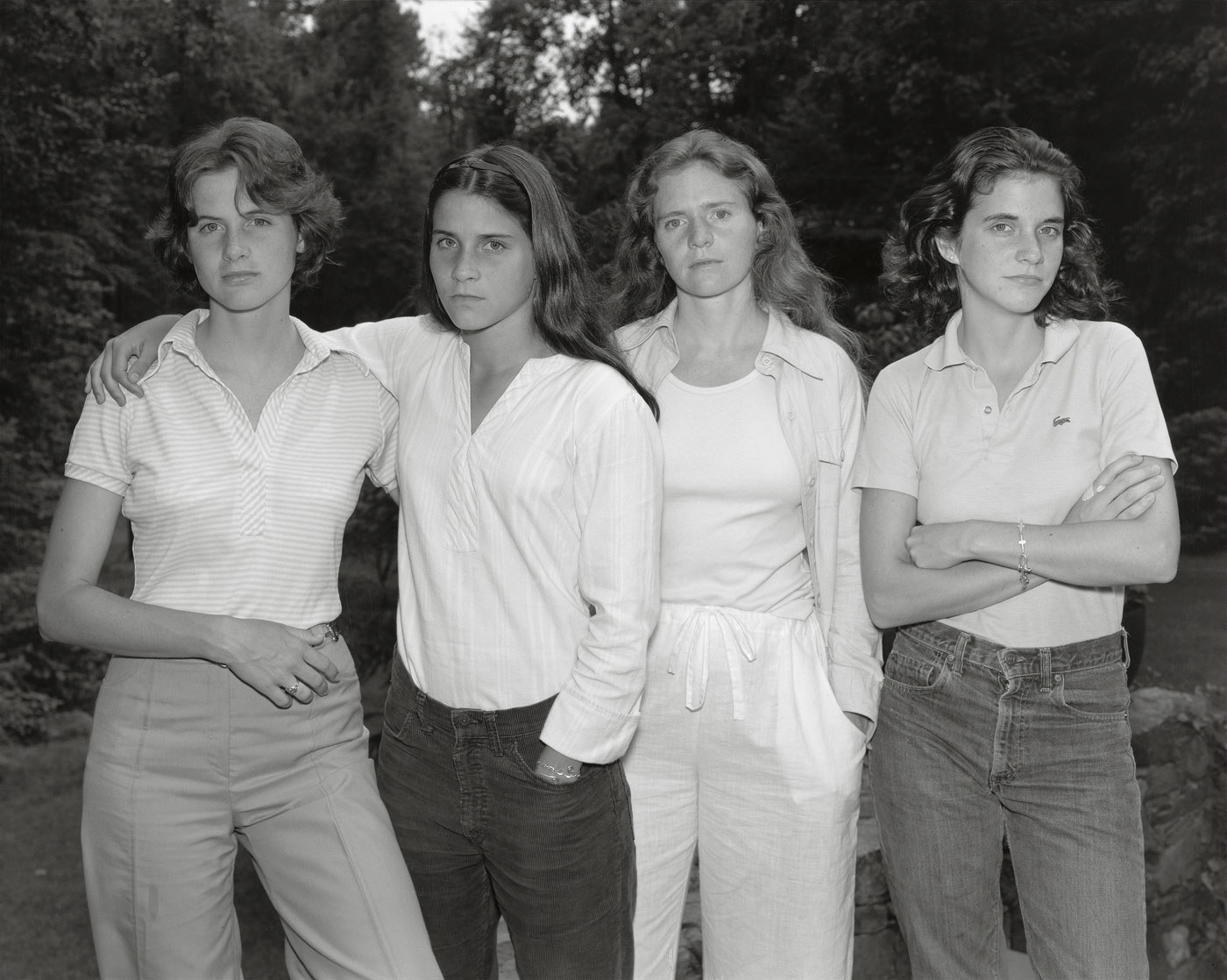
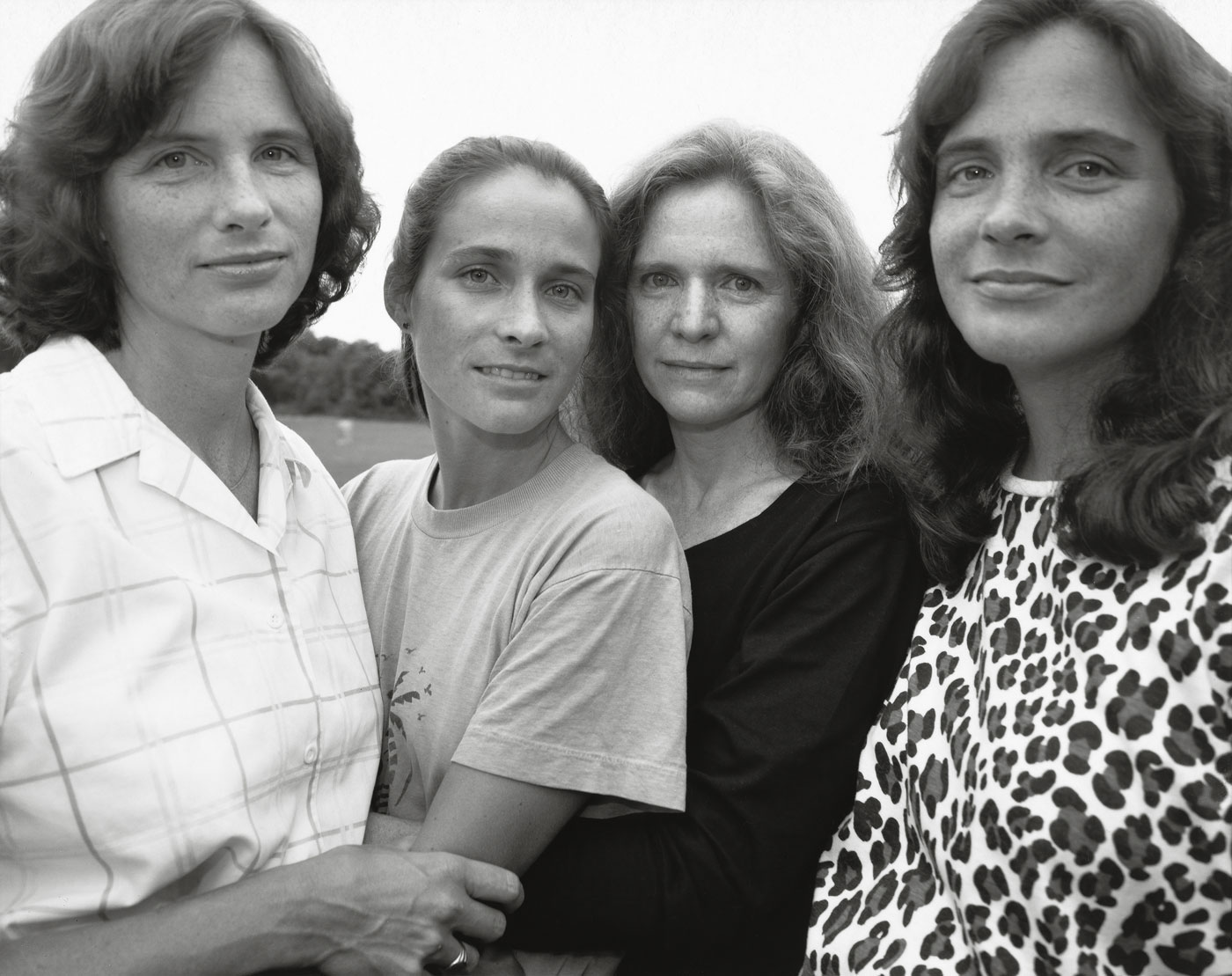
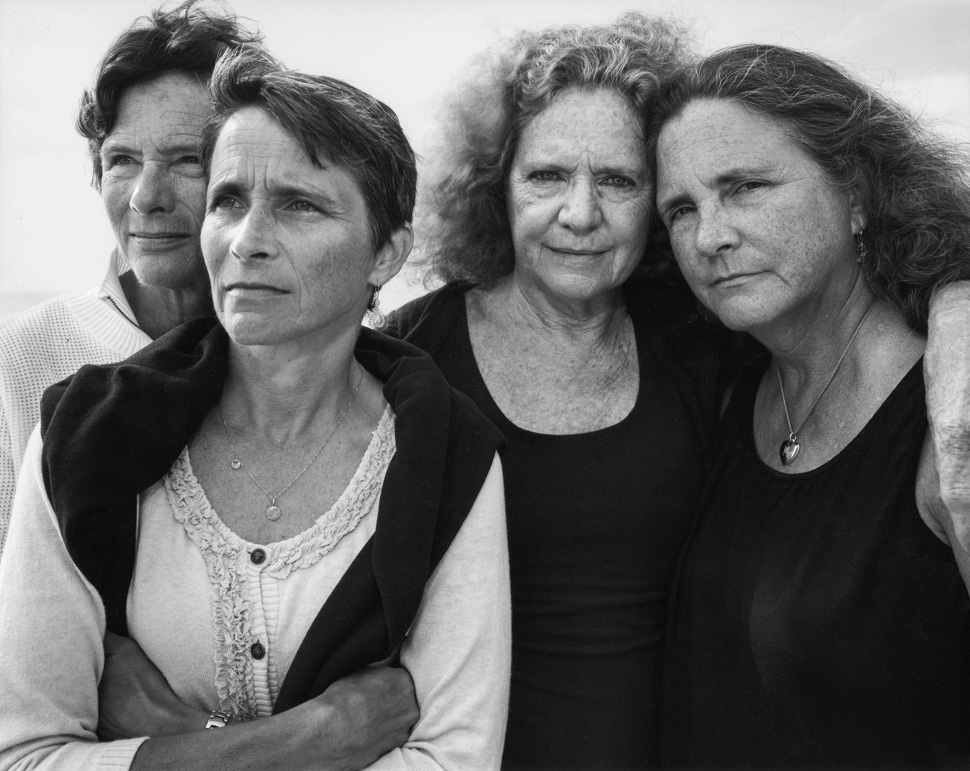
Nicholas Nixon (American, b. 1947) 'The Brown Sisters, New Canaan, Connecticut' 1975


Nicholas Nixon (American, b. 1947)
The Brown Sisters, New Canaan, Connecticut
1975
The Museum of Modern Art, New York. John Parkinson III Fund
© 2014 Nicholas Nixon


This is the most successful, long running group portrait series in the history of photography. I have always liked the images because of their stunning clarity, delicate tonality and wonderful arrangement of the figures. Much as they shield their privacy, as a viewer I feel like I have grown up with these women, the sisters I never had. Some images are more successful than others, but as a body of work that focuses on the “face” we present to the world, they are without peer.

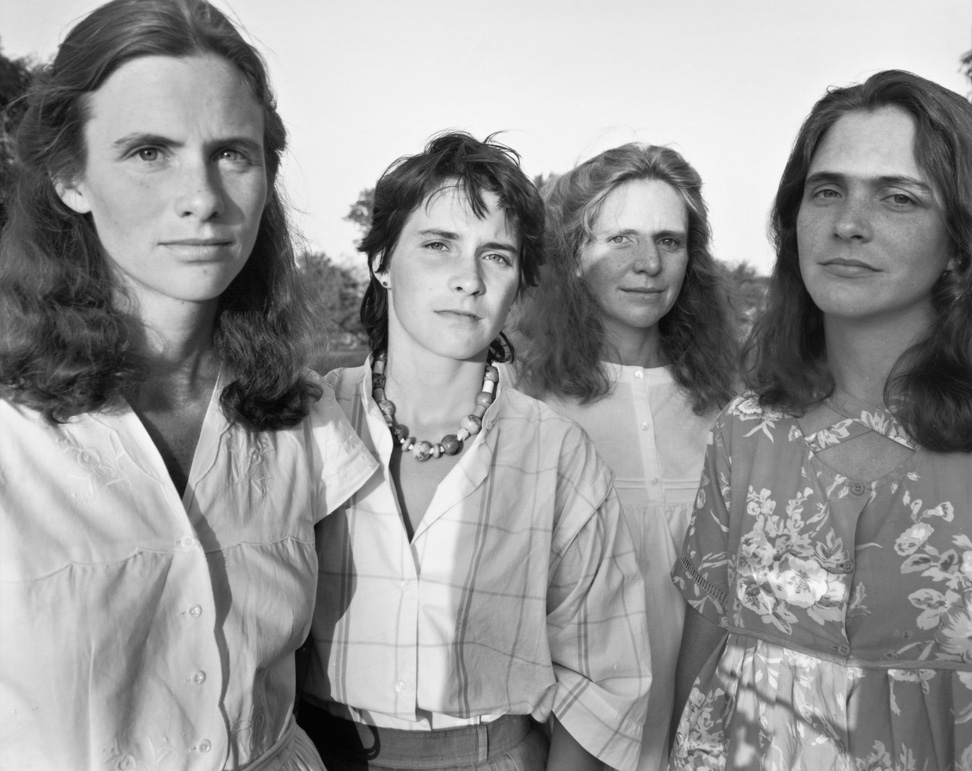
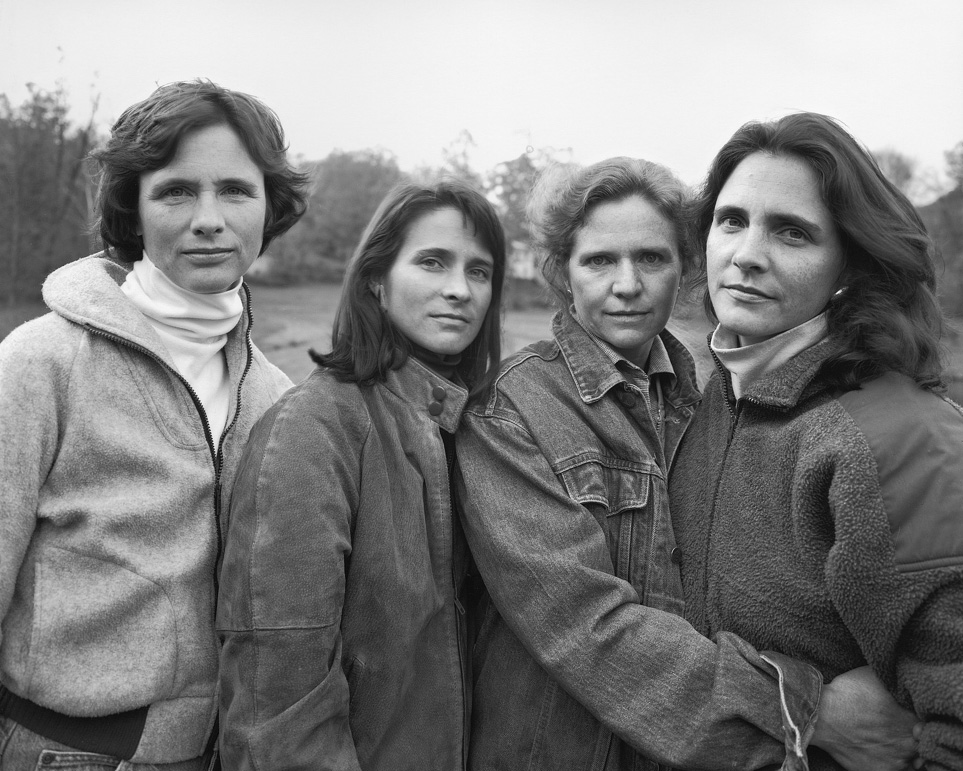
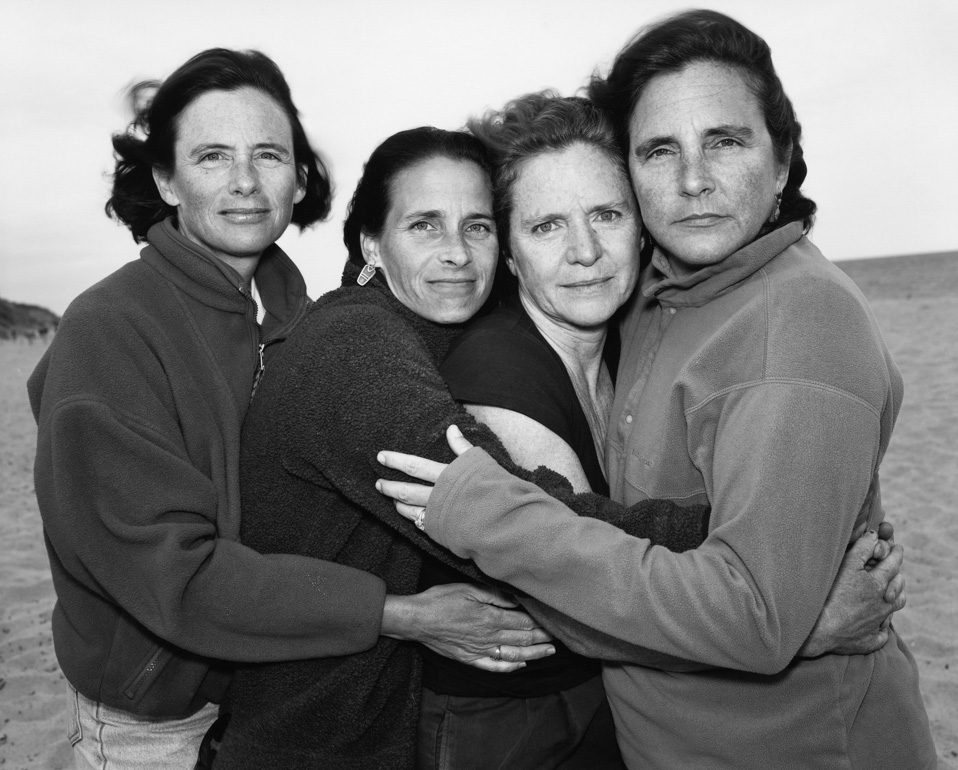
Just imagine being these women (and being the photographer), taking on this project and not knowing where it would lead, still not knowing where it will lead. There is a fascinating period in the photographs between 1986 and 1990, as we see the flush of youth waning, transitioning towards the beginning of middle age. As they grow older and closer I feel that I know their characters. I look for that inflection and nuance of presentation that make them more than just faces, more than just photographic representation. The lines on their faces are the handwriting of their travails and I love them all for that.

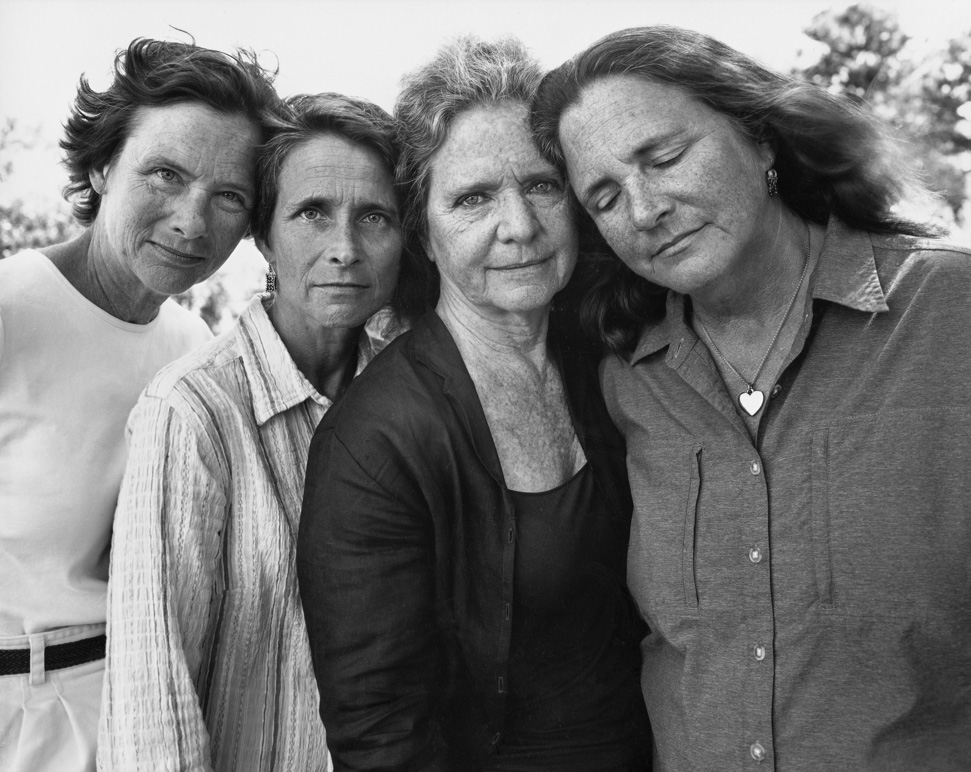
In each photograph they are as beautiful as the next, not in a Western sense, but in the sense of archetypal beauty, the Platonic form of all beauty – the beauty of women separated from the individuality of the object and considered by itself. In each of these images you can contemplate that form through the faces of these women – they are transcendent and pure. It is as if they live beyond space and time, that the photographs capture this sense of the sublime. Usually the sublime is regarded as beyond time… but not here. A simply magnificent series.

Dr Marcus Bunyan

PS. Let’s hope that there are more images from the series that we can eventually see and that there are some platinum prints being produced. The images deserve such a printing.


Many thankx to MoMA for allowing me to publish the photographs in the posting. Please click on the photographs for a larger version of the image.


“Throughout this series, we watch these women age, undergoing life’s most humbling experience. While many of us can, when pressed, name things we are grateful to Time for bestowing upon us, the lines bracketing our mouths and the loosening of our skin are not among them. So while a part of the spirit sinks at the slow appearance of these women’s jowls, another part is lifted: They are not undone by it. We detect more sorrow, perhaps, in the eyes, more weight in the once-fresh brows. But the more we study the images, the more we see that ageing does not define these women. Even as the images tell us, in no uncertain terms, that this is what it looks like to grow old, this is the irrefutable truth, we also learn: This is what endurance looks like. …

These subjects are not after attention, a rare quality in this age when everyone is not only a photographer but often his own favourite subject. In this, Nixon has pulled off a paradox: The creation of photographs in which privacy is also the subject. The sisters’ privacy has remained of utmost concern to the artist, and it shows in the work. Year after year, up to the last stunning shot with its triumphant shadowy mood, their faces and stances say, Yes, we will give you our image, but nothing else.”


Susan Minot. “Forty Portraits in Forty Years: Photographs by Nicholas Nixon,” on the ‘New York Times’ website, October 2014 [Online] Cited 01/01/2015. No longer available online


Nicholas Nixon (American, b. 1947) 'The Brown Sisters, Harwich Port, Massachusetts' 1978


Nicholas Nixon (American, b. 1947)
The Brown Sisters, Harwich Port, Massachusetts
1978
The Museum of Modern Art, New York. John Parkinson III Fund
© 2014 Nicholas Nixon


Nicholas Nixon (American, b. 1947) 'The Brown Sisters, East Greenwich, R.I.' 1980


Nicholas Nixon (American, b. 1947)
The Brown Sisters, East Greenwich, R.I.
1980
The Museum of Modern Art, New York. John Parkinson III Fund
© 2014 Nicholas Nixon


Nicholas Nixon (American, b. 1947) 'The Brown Sisters, Allston, Mass' 1983


Nicholas Nixon (American, b. 1947)
The Brown Sisters, Allston, Mass.
1983
The Museum of Modern Art, New York. John Parkinson III Fund
© 2014 Nicholas Nixon


Nicholas Nixon (American, b. 1947) 'The Brown Sisters, Cambridge, Mass.' 1986


Nicholas Nixon (American, b. 1947)
The Brown Sisters, Cambridge, Mass.
1986
The Museum of Modern Art, New York. John Parkinson III Fund
© 2014 Nicholas Nixon


Nicholas Nixon (American, b. 1947) 'The Brown Sisters, Wellesley, Massachusetts.' 1988


Nicholas Nixon (American, b. 1947)
The Brown Sisters, Wellesley, Massachusetts
1988
The Museum of Modern Art, New York. John Parkinson III Fund
© 2014 Nicholas Nixon


Nicholas Nixon (American, b. 1947) 'The Brown Sisters, Woodstock, Vt.' 1990


Nicholas Nixon (American, b. 1947)
The Brown Sisters, Woodstock, Vt.
1990
The Museum of Modern Art, New York. John Parkinson III Fund
© 2014 Nicholas Nixon


Nicholas Nixon (American, b. 1947) 'The Brown Sisters, Grantham, N.H.' 1994


Nicholas Nixon (American, b. 1947)
The Brown Sisters, Grantham, N.H.
1994
The Museum of Modern Art, New York. John Parkinson III Fund
© 2014 Nicholas Nixon


In August 1974, Nicholas Nixon made a photograph of his wife, Bebe, and her three sisters. He wasn’t pleased with the result and discarded the negative. In July 1975 he made one that seemed promising enough to keep. At the time, the Brown sisters were 15 (Mimi), 21 (Laurie), 23 (Heather), and 25 (Bebe). The following June, Laurie Brown graduated from college, and Nick made another picture of the four sisters. It was after this second successful picture that the group agreed to gather annually for a portrait, and settled on the series’ two constants: the sisters would always appear in the same order – from left to right, Heather, Mimi, Bebe, and Laurie – and they would jointly agree on a single image to represent a given year. Also significant, and unchanging, is the fact that each portrait is made with an 8 x 10″ view camera on a tripod and is captured on a black-and-white film negative.

The Museum has exhibited and collected the Brown Sisters from the beginning; since 2006, acquiring the series both as lusciously tactile contact prints and as striking 20 x 24″ enlargements (a new scale for Nixon). This installation – featuring all 40 images – marks the first time the Museum has displayed these larger prints.

In his first published statement about photography, written the year he made the first of the Brown Sisters portraits, Nixon remarked, “The world is infinitely more interesting than any of my opinions about it.” If he was modest about his opinions, though, his photographs clearly show how the camera can capture that infinitely interesting world. And to the attentive viewer, these silent records, with their countless shades of visual and emotional grey, can promote a new appreciation of an intangible part of it: the world of time and age, of commitment and love.

Text from the MoMA website


Nicholas Nixon (American, b. 1947) 'The Brown Sisters, Marblehead, Mass.' 1995


Nicholas Nixon (American, b. 1947)
The Brown Sisters, Marblehead, Mass.
1995
The Museum of Modern Art, New York. John Parkinson III Fund
© 2014 Nicholas Nixon


Nicholas Nixon (American, b. 1947) 'The Brown Sisters, Brookline, Massachusetts' 1999


Nicholas Nixon (American, b. 1947)
The Brown Sisters, Brookline, Massachusetts
1999
The Museum of Modern Art, New York. John Parkinson III Fund
© 2014 Nicholas Nixon


Nicholas Nixon (American, b. 1947) 'The Brown Sisters, Eastham, Mass.' 2000


Nicholas Nixon (American, b. 1947)
The Brown Sisters, Eastham, Mass.
2000
The Museum of Modern Art, New York. John Parkinson III Fund
© 2014 Nicholas Nixon


Nicholas Nixon (American, b. 1947) 'The Brown Sisters, Cataumet, Mass.' 2004


Nicholas Nixon (American, b. 1947)
The Brown Sisters, Cataumet, Mass.
2004
The Museum of Modern Art, New York. John Parkinson III Fund
© 2014 Nicholas Nixon


Nicholas Nixon (American, b. 1947) 'The Brown Sisters, Dallas' 2008


Nicholas Nixon (American, b. 1947)
The Brown Sisters, Dallas
2008
The Museum of Modern Art, New York. John Parkinson III Fund
© 2014 Nicholas Nixon


Nicholas Nixon (American, b. 1947) 'The Brown Sisters, Truro, Mass.' 2010


Nicholas Nixon (American, b. 1947)
The Brown Sisters, Truro, Mass.
2010
The Museum of Modern Art, New York. John Parkinson III Fund
© 2014 Nicholas Nixon


Nicholas Nixon (American, b. 1947) 'The Brown Sisters, Truro, Mass.' 2011


Nicholas Nixon (American, b. 1947)
The Brown Sisters, Truro, Mass.
2011
The Museum of Modern Art, New York. John Parkinson III Fund
© 2014 Nicholas Nixon


Nicholas Nixon (American, b. 1947) 'The Brown Sisters, Boston' 2012


Nicholas Nixon (American, b. 1947)
The Brown Sisters, Boston
2012
The Museum of Modern Art, New York. John Parkinson III Fund
© 2014 Nicholas Nixon


Nicholas Nixon (American, b. 1947) 'The Brown Sisters, Wellfleet, Massachusetts' 2014


Nicholas Nixon (American, b. 1947)
The Brown Sisters, Wellfleet, Massachusetts
2014
The Museum of Modern Art, New York. John Parkinson III Fund
© 2014 Nicholas Nixon


The Museum of Modern Art
11 West 53 Street
New York, NY 10019
Phone: (212) 708-9400

Opening hours:
10.30am – 5.30pm
Open seven days a week

MoMA website

LIKE ART BLART ON FACEBOOK

Back to top

Exhibition: ‘Series of Portraits. A century of photographs’ at Museum für Kunst und Gewerbe, Hamburg

Exhibition dates: 1st April – 17th July 2011


Many thankx to Michaela Hille for her help and to Museum für Kunst und Gewerbe, Hamburg for allowing me to publish the photographs in the posting. Please click on the photographs to view a larger version of the image.


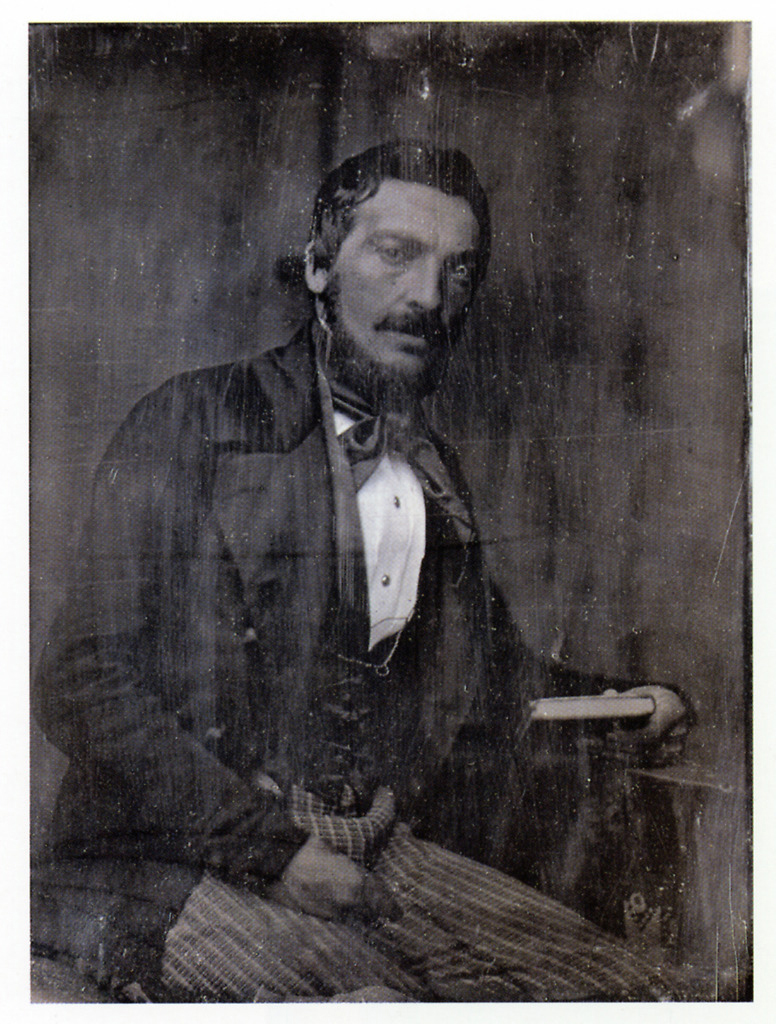
Hermann Biow (German, 1804-1850) 'Heinrich Jakob Venedey' 1848


Hermann Biow (German, 1804-1850)
Heinrich Jakob Venedey
1848
Daguerreotype
20.8 x 15.4cm
Museum für Kunst und Gewerbe, Hamburg


Hermann Biow was an important German daguerreotypist in the early days of photography. Biow became known through his portrait photography during his lifetime. He portrayed politicians, celebrities and wealthy citizens, including Franz Liszt, Alexander von Humboldt and Friedrich Wilhelm IV. He is also known for his parliamentarian portraits of the first German National Assembly in the Paulskirche in Frankfurt in 1848/1849. Today Biow is primarily seen as the founder of German documentary photography.

A daguerreotype of Heinrich Jakob Venedey from 1848 made by Hermann Biow in Frankfurt. Venedey (1805-1871) was a member of the German National Assembly in Frankfurt’s Paulskirche in 1848/1849 as a deputy for Hessen-Homburg. The lawyer belonged to the factions Deutscher Hof and Westendhall of the National Assembly.

Text translated by Google Translate from the German Wikipedia website


Hermann Biow (German, 1804-1850) 'Heinrich Joseph Gerhard Compes' 1848


Hermann Biow (German, 1804-1850)
Heinrich Joseph Gerhard Compes
1848
Daguerreotype
20.4 x 14.8cm
Museum für Kunst und Gewerbe, Hamburg


A daguerreotype of Heinrich Joseph Gerhard Compes (that’s Gerhard Compes) from 1848 by Hermann Biow in Frankfurt. Compes was a member of the German National Assembly in Frankfurt’s Paulskirche in 1848/1849 as a deputy for the 19th province of Rhineland (Siegburg). The Cologne lawyer belonged to the Württemberger Hof faction of the National Assembly.

Text translated by Google Translate from the German Wikipedia website


August Sander (German, 1876-1964) [Farmer, Westerwald (Bauer, Westerwald)] 1910


August Sander (German, 1876-1964)
[Farmer, Westerwald (Bauer, Westerwald)]
1910
Gelatin silver print
© Photograph. Samml./SK Stiftung Kultur – A. Sander Archiv, Köln/VG Bild-Kunst, Bonn 2011
Foto: Jorg Arend/Harald Dubau/Maria Thrun, Museum fur Kunst und Gewerbe Hamburg
Museum fur Kunst und Gewerbe Hamburg


The first section of People of the Twentieth Century is dedicated to the farmer. It begins with a Stammappe, or portfolio of archetypes. Usually three-quarter-length portraits, the photographs depict old farming men, women, and couples seated in their homes or against a natural backdrop. Each is captioned to suggest the fundamental role played by the individual in a balanced society. Sander referred to this farmer as the “earthbound man.” Other archetypes include the “philosopher,” the “fighter or revolutionary,” and the “sage.” All had female counterparts, while couples were labeled as “propriety and harmony.”

Identifying this figure as the “earthbound man,” Sander forged an implicit reference to the soil as a source of livelihood. The farmer’s hands grasp the cane, which keeps him upright and connected to the earth.

Text from the J. Paul Getty Museum website [Online] Cited 04/02/2020


August Sander (German, 1876-1964) 'Jungbauern' (Young Farmers) 1914


August Sander (German, 1876-1964)
Jungbauern, Westerwald, 1914
1914, printed 1962
Gelatin silver print
28.5 x 21.9cm
© Photograph. Samml./SK Stiftung Kultur – A. Sander Archiv, Köln/VG Bild-Kunst, Bonn 2011
Foto: Jorg Arend/Harald Dubau/Maria Thrun, Museum fur Kunst und Gewerbe Hamburg
Museum fur Kunst und Gewerbe Hamburg


August Sander (German, 1876-1964) 'Notar, Köln, 1924' 1924


August Sander (German, 1876-1964)
Notar, Köln, 1924
1924, printed 1962
Gelatin silver print
29.1 x 20.5cm
© Photograph. Samml./SK Stiftung Kultur – A. Sander Archiv, Köln/VG Bild-Kunst, Bonn 2011
Foto: Jorg Arend/Harald Dubau/Maria Thrun, Museum fur Kunst und Gewerbe Hamburg
Museum fur Kunst und Gewerbe Hamburg


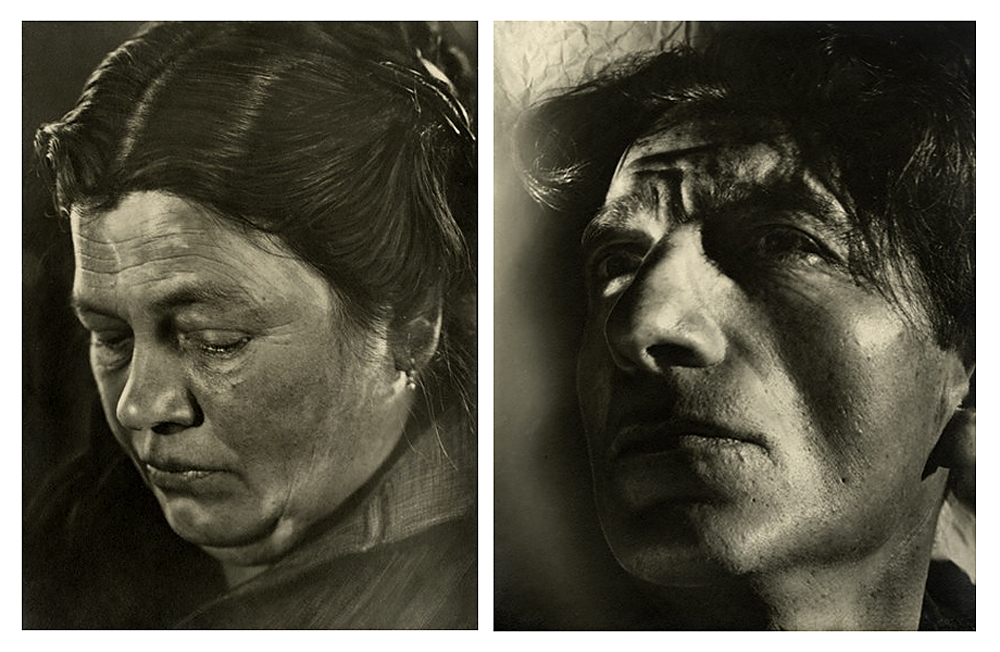
Helmar Lerski (Swiss, 1871-1956) 'Old Working Woman from Germany' (left) and 'Beggar from Saxony' (right) both 1928-1931


Helmar Lerski (Swiss, 1871-1956)
Old Working Woman from Germany (left)
1928-1931
Gelatin silver print

Helmar Lerski (Swiss, 1871-1956)
Beggar from Saxony (right)
1928-1931
Gelatin silver print


The portraits in Lerski’s Everyday Heads show unemployed workers whom the photographer met at a Berlin job centre where he hired them to sit for him. Old Working Woman from Germany 1928-1931 is a close-up shot of a woman’s face, eyes down and mouth shut as though she is quietly contemplating something outside of the picture’s frame (left, above). It is impossible to tell whether this meditative look, a common feature of his portraits, was suggested by Lerski but it is evident that he was in control of nearly every aspect of his pictures. An experienced movie cameraman, he used artificial light reflected by mirrors and screens to give his models an aura and monumentality that people would be familiar with from expressionist feature films. Oblique angles, in line with modernist sensibilities, helped to reinforce the impression of grandeur. He also cropped the images and introduced extra screens so as to eliminate the space around his models heads, and any details from what remained of the background. This also served on occasions to compromise the integrity of the subject’s face though, in other cases, he preferred to blur the contours of the face using strong shadows, as can be seen in Beggar from Saxony 1928-1931 (right, above). The results produced a general notion of everyday people rather than an endorsement of individuality as praised in traditional portraiture. Like Sander and Retzlaff, Lerski only gave the individuals’ professions in the captions, and was keen not to exemplify their class affiliation or social rank. The pictures provide no information about either, focusing instead on the face. In this way Lerski enhanced the common human dignity normally ignored in ‘everyday’ faces, and more especially in those humiliated by unemployment during the post-1929 economic crisis.

Wolfgang Brückle. “Face-Off in Weimar Culture: The Physiognomic Paradigm, Competing Portrait Anthologies, and August Sander’s Face of Our Time,” in Tate Papers No.19 Spring 2013 [Online] Cited 04/20/2020


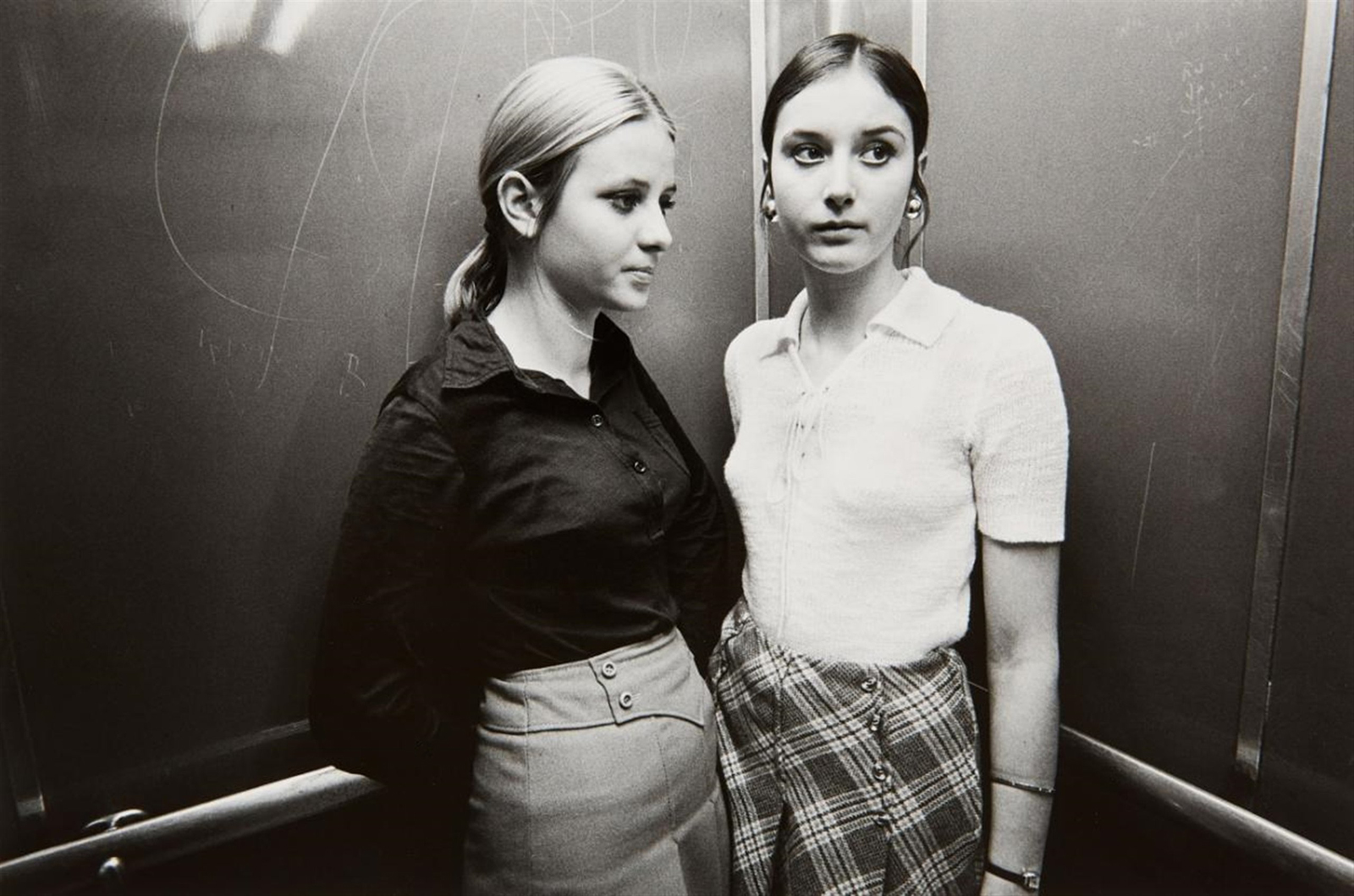
Heinrich Riebesehl (German, 1938-2010) 'Menschen im Fahrstuhl (People in the elevator)' 1969


Heinrich Riebesehl (German, 1938-2010)
Menschen im Fahrstuhl (People in the elevator)
1969
Gelatin silver print


Heinrich Riebesehl (German, 1938-2010) 'Menschen im Fahrstuhl (People in the elevator)' 1969


Heinrich Riebesehl (German, 1938-2010)
Menschen im Fahrstuhl (People in the elevator)
1969
Gelatin silver print


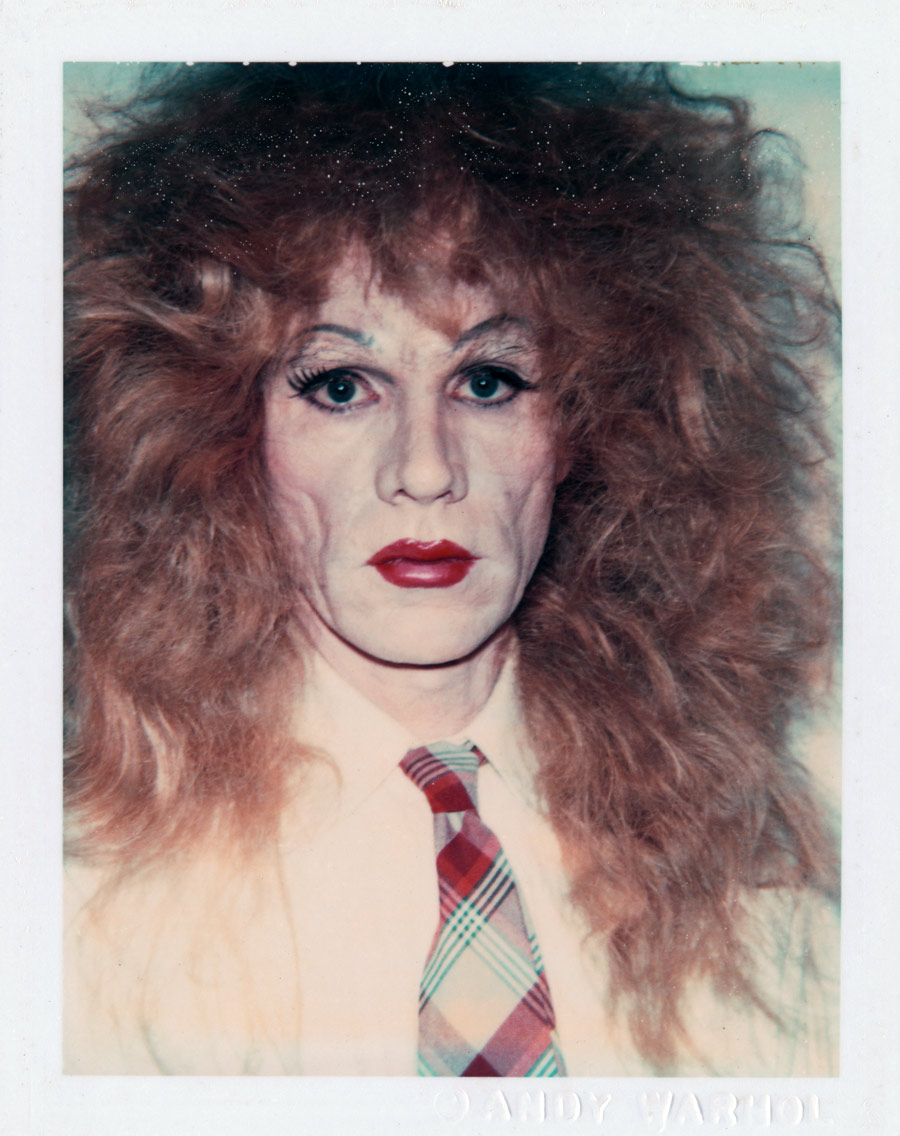
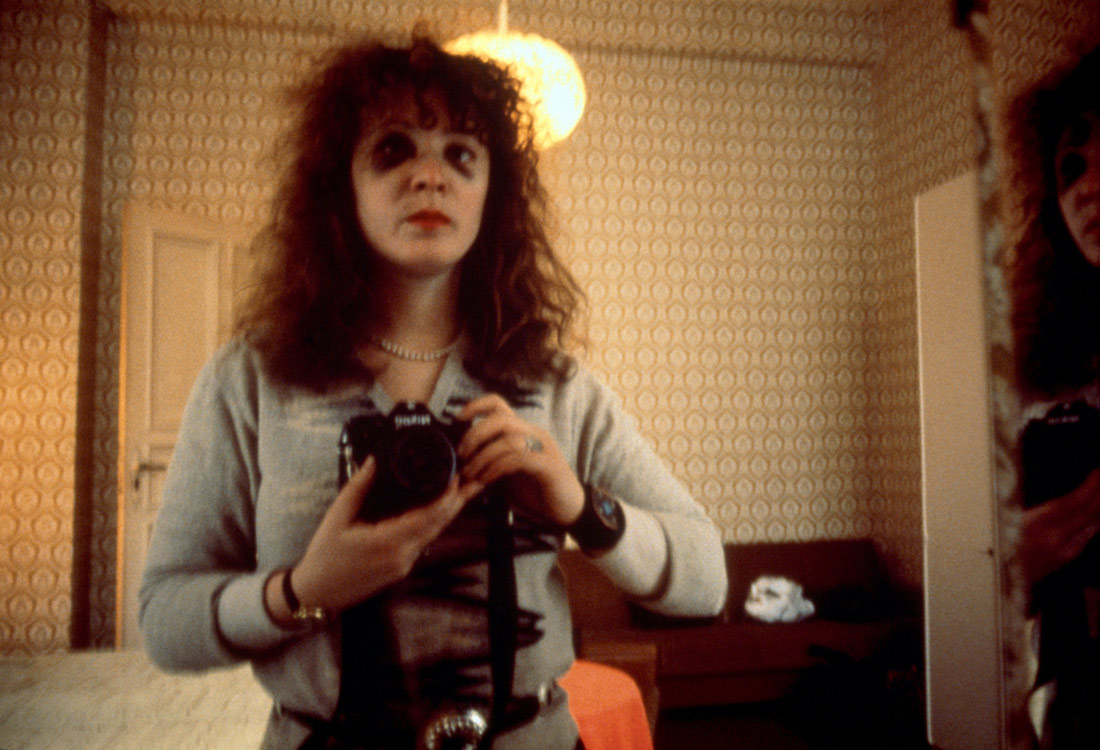
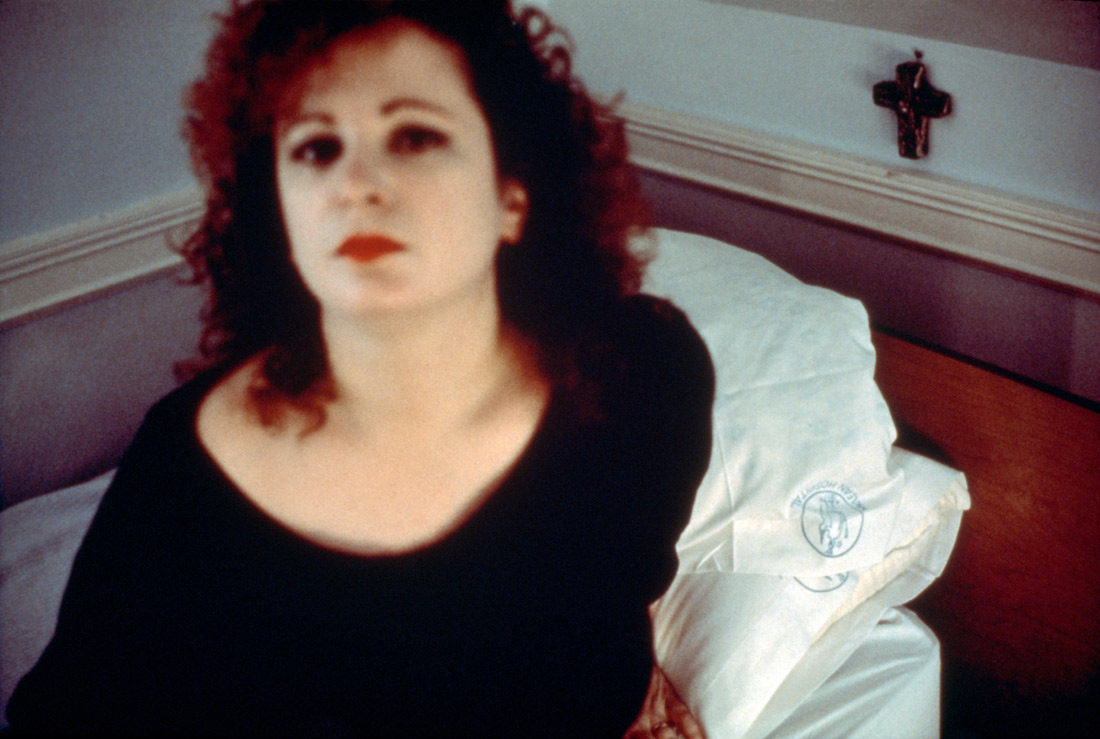
The exhibition comprises 400 exhibits and reflects on important artistic positions in photographic portraiture. During the eventful 20th century portrait photography continually redefines itself, between dissolution of the traditional concept of the subject in the masses and the pursuit of individuality and identity – culturally, socially and in terms of gender. Portraiture is one of the traditional genres in art and was one of the driving forces behind the invention of photography in the 19th century. The image of the human being is subject to constant change, which is also reflected in photography. In postmodern society mass media create ever-changing ideals according to various requirements in tune with a quick succession of trends. Art photography responds to the changes and reflects the development sometimes with spectacular results while it questions the medium of photography itself. The exhibition presents 35 carefully chosen international artists, who through history have opened up a dialogue among themselves; they are referencing each other’s work, and are received and interpreted in ever new contexts. On show are works by Diane Arbus, Hans-Peter Feldmann, Lee Friedlander, Nan Goldin, Roni Horn, Jurgen Klauke, Annie Leibovitz, Helmar Lerski, Irving Penn, Judith Joy Ross, Thomas Ruff, August Sander, Cindy Sherman, Andy Warhol and others. An exhibition in cooperation with the Sammlung Niedersächsische Sparkassenstiftung on the occasion of the 5th Photography Triennial in Hamburg.

“The PORTRAIT-PHOTOGRAPH is a closed field of forces. Four image-repertoires intersect here, oppose and distort each other. In front of the lens, I am at the same time: the one I think I am, the one I want others to think I am, the one the photographer thinks I am, and the one he makes use of to exhibit his art.” (Roland Barthes, Camera Lucida, London, 1984, p. 13). The photographic portrait does indeed combine contrary interests. The relationship between photographer and sitter is crucial. The third factor is the viewer, who is already being considered during the process of photographing. In the knowledge of the particular psychological situation resulting from the presence of a camera, Richard Avedon laconically stated: A photographic portrait is a picture of someone who knows he is being photographed.” The sitters’ reactions to the camera differ, depending on how experienced they are. Fact is: It is not possible to not communicate, as Paul Watzlawick’s research on communication shows. People demean themselves, even if they withdraw or turn away.

The confrontation climaxes in the principle of frontality, which remains valid today although it is constantly being tried and questioned. The project Serial Portraits invites the visitor on a journey through time starting from the beginnings with Hermann Biow’s (1804-1850) daguerreotypes, David Octavius Hill’s (1802-1870) and Robert Adamson’s (1821-1848) talbotypes up to the digital present with Michael Najjar’s (b. 1966) cyborgs, and wondering whether classical portraiture has come to its end.

The beginning includes a model case, where due to the long exposure necessary the models do not live out of the moment but into the moment, as Walter Benjamin said (Little History of Photography, 1931). Thirty-Minute Dialogue by Kyungwoo Chun (b. 1969) from 2000 is examining the synthesis of expression, which is necessitated by the models’ keeping still for so long. An exposure time of half an hour allows the work to penetrate the depths of the pictorial space.

The creativity of the 1920s and the New Vision inspires a “visual vocabulary” appropriate for modernity. Its different forms can be seen in the individual responses of photographers such as August Sander (1876-1964). Being a typical studio photographer, he works on a typology of “man of the 20th century”, beginning with the agricultural type, his Stammappe (engl.: Germinal Portfolio) being a memorial to the latter. Helmar Lerski (1871-1956) takes a different stance; having originally worked in film, he is photographing his Everyday Heads in extreme close-ups. Making use of effective lighting in his studio, he invites unknown sitters from the street and fashions characteristic heads.

Sander’s oeuvre represents a turning point for comparative vision as a genuine principle in series. Considering photography of the 1920s and questioning the photographer’s position as well as the medium itself, author-photography in the 1970s is developing a new idea of documentary. Thomas Ruff (b. 1958) is testing the limits, when he presupposes that photography can merely reflect the surface of things. Bernhard Fuchs is adding a personal touch when he is seeking out the places of his own past. The great portrait photographer Irving Penn is cornering his celebrities in a corner of his studio and allows them to find their place, according to their inclinations and abilities to self-represent.

Diane Arbus (1923-1971) is holding a one-sided dialog, certainly not giving equal weight to the photographer’s interests and that of her models. While the frontality signals the conventionally due deference, the complex composition of her pictures is dominated by the superior gaze directed at the supposedly others, the freaks of bourgeois society. Until now Arbus is misinterpreted as a documentary photographer. It is being ignored that photography inevitably presents a specific view of reality and that the viewer’s position has been carefully constructed within the picture.

Only pictures that have been taken without the awareness of those represented document a found situation at the same time as they present a monologue. Heinrich Riebesehl (1938-2010) chose this method for his series Menschen im Fahrstuhl (engl.: People in an Elevator), which he completed in just one day. In a moment of pause people can reflect and are not forced to react to being observed. In his pictures the photographer respects their individuality without judging social differences.

Examples for comparability as principle in a series can be found early on. Hermann Biow’s (1804-1850) daguerreotypes as unique copies of the members of parliament in the Paulskirche in Frankfurt from 1848/1849 were later reproduced as lithographs and distributed in portfolios. These politicians were the direct successors to the galleries of ancestral portraits in stately homes, whereby the new medium was democratic. Rudolph Duhrkoop’s Hamburgische Männer und Frauen amAnfang des XX. Jahrhunderts (engl.: Men and Women of Hamburg in the Early XXth Century) represent the citizens in this tradition.

Since 1975 Nicholas Nixon (b. 1974) is extending the series The Brown Sisters every year. His study is observing changes, while Hans-Peter Feldmann (b. 1941) is representing a century through 101 average people in his sequence 100 Jahre (engl.: 100 Years). It is fascinating, how the uniqueness of each person even if they remain anonymous is transported in the photographic portrait. Judith Joy Ross’ (b. 1946) series Protesting the U. S. War in Iraq documents a seriousness in the sitters’ faces, the political dimension of which can only be fully grasped with the information on the context. As with every photograph the title or accompanying text is part of the message.

Press release from the Museum für Kunst und Gewerbe, Hamburg website


Andy Warhol (American, 1928-1987) 'Self-Portrait in Drag (Platinum Pageboy Wig)' 1981


Andy Warhol (American, 1928-1987)
Self-Portrait in Drag (Platinum Pageboy Wig)
1981
Foto: Christoph Irrgang, Hamburg
© 2011 The Andy Warhol Foundation for the Visual Arts, Inc./Artists Rights Society (ARS), New York
Hamburger Kunsthalle


Andy Warhol (American, 1928-1987) 'Self-Portrait in Drag' 1981


Andy Warhol (American, 1928-1987)
Self-Portrait in Drag
1981
Foto: Christoph Irrgang, Hamburg
© 2011 The Andy Warhol Foundation for the Visual Arts, Inc./Artists Rights Society (ARS), New York
Hamburger Kunsthalle


Andy Warhol (American, 1928-1987) 'Self-Portrait in Drag (Long Reddish-Brown Wig and Plaid Tie)' 1981/82


Andy Warhol (American, 1928-1987)
Self-Portrait in Drag (Long Reddish-Brown Wig and Plaid Tie)
1981/1982
Foto: Christoph Irrgang, Hamburg
© 2011 The Andy Warhol Foundation for the Visual Arts, Inc. / Artists Rights Society (ARS), New York
Hamburger Kunsthalle


Thomas Ruff (German, b. 1958) 'Portrait (T. Ruff)' 1983


Thomas Ruff (German, b. 1958)
Portrait (T. Ruff)
1983
Colour Print
24 x 18cm
Thomas Ruff/VG Bild-Kunst, Bonn 2011
Niedersachsische Sparkassenstiftung, Hannover


Thomas Ruff (German, b. 1958) 'Portrait (C. Bernhard)' 1985


Thomas Ruff (German, b. 1958)
Portrait (C. Bernhard)
1985
Colour Print
24 x 18cm
© Thomas Ruff/VG Bild-Kunst, Bonn 2011
Niedersachsische Sparkassenstiftung, Hannover


Nan Goldin (American, b. 1953) 'All by Myself' 1993-1996 (detail)


Nan Goldin (American, b. 1953)
All by Myself (detail)
1993-1996
Project installation with 89 colour slides and programmed soundtrack, running time: 5 min. 33 sec
© Nan Goldin/Courtesy Matthew Marks Gallery, New York
Foto: Christoph Irrgang, Hamburg
Hamburger Kunsthalle, Dauerleihgabe F. und W. Stiftung fur zeitgenossische Kunst in der Hamburger Kunsthalle


Nan Goldin (American, b. 1953) 'All by Myself' 1993-1996 (detail)


Nan Goldin (American, b. 1953)
All by Myself (detail)
1993-1996
Project installation with 89 colour slides and programmed soundtrack, running time: 5 min. 33 sec
© Nan Goldin/Courtesy Matthew Marks Gallery, New York
Foto: Christoph Irrgang, Hamburg
Hamburger Kunsthalle, Dauerleihgabe F. und W. Stiftung fur zeitgenossische Kunst in der Hamburger Kunsthalle


Rineke Dijkstra (Dutch, b. 1959) 'Montemor, Portugal, May 1, 1994' 1994


Rineke Dijkstra (Dutch, b. 1959)
Montemor, Portugal, May 1, 1994
1994
C-Print
35.2 x 27.8 cm
© Rineke Dijkstra
Foto/Photo: Jorg Arend/Harald Dubau/Maria Thrun, Museum fur Kunst und Gewerbe Hamburg
Haus der Photographie/Sammlung F. C. Gundlach, Hamburg


Michael Schmidt (German, 1945-2014) From the 81-part series 'Women' 1997-1999


Michael Schmidt (German, 1945-2014)
Aus der 81-teiligen serie Frauen
From the 81-part series Women
1997-1999
Gelatin silver print
44.1 x 29.9cm
© Michael Schmidt
Niedersachsische Sparkassenstiftung, Hannover


Michael Najjar (German, b. 1966) 'Stephan_2.0' from the 'nexus project part I' 1999


Michael Najjar (German, b. 1966)
Stephan_2.0 from the nexus project part I
1999
Hybrid photography, archival pigment print, aludibond, diasec
140 x 100cm / 56 x 40 in, edition of 6


Nexus Project

The series “nexus project part I” investigates the implications of the future enhancement of the human brain with miniaturised computer chips, infiltrated in the neuronal structures of the human organism.

Such a development will give birth to a new form of life – the cyborg, a hybrid compound of human and machine. A new set of questions are raised concerning issues of difference and identification between biologically correct beings and technically or genetically enhanced humans.

This development brings with it a host of new concerns: What impact will neuro-implants have on human consciousness? How will society cope with this kind of being, and what implications will they have for our social and cultural interaction?

“nexus project part I” consists of eight photographic portraits. These have undergone a digital modification of the iris, which gives the portrait faces an intimidating, almost inhuman look whilst at the same time it exerts a strong direct fascination on the viewer.

The highly charged poles of tensions and cross-tensions between fascination and intimidation also shape the para-meters in which the future development of human being to hybrid organism will take place.

Text from the Michael Najjar website [Online] Cited 04/02/2020


Kyungwoo Chun (Korean, b. 1969) 'Thirty-Minute Dialogue #1' 2000


Kyungwoo Chun (Korean, b. 1969)
Thirty-Minute Dialogue #1
2000
Gelatin silver print
40 x 50cm
© Kyungwoo Chun


Roni Horn (American, b. 1955) 'Portrait of an Image (with Isabelle Huppert)' 2005


Roni Horn (American, b. 1955)
Portrait of an Image (with Isabelle Huppert)
2005
50 Fotografien (Version 1)
Colour Print
38.1 x 31.8cm
© Courtesy the artist and Hauser & Wirth


Judith Joy Ross (American, b. 1946) 'Jane C. Keller, Protesting the U.S. War in Iraq, Williamsport, Pennsylvania' from the series 'Protest the War' 2006


Judith Joy Ross (American, b. 1946)
Jane C. Keller, Protesting the U.S. War in Iraq, Williamsport, Pennsylvania, from the series Protest the War
2006
Gelatin silver print


Judith Joy Ross (American, b. 1946) 'Lynn Estomin, Protesting the U.S. War in Iraq, Williamsport, Pennsylvania' from the series 'Protest the War' 2006


Judith Joy Ross (American, b. 1946)
Lynn Estomin, Protesting the U.S. War in Iraq, Williamsport, Pennsylvania, from the series Protest the War
2006
Gelatin silver print


Nicholas Nixon (American, b. 1947) 'The Brown Sisters, East Greenwich, R.I.' 1980


Nicholas Nixon (American, b. 1947)
The Brown Sisters, East Greenwich, R.I.
1980
Gelatin silver print


Nicholas Nixon (American, b. 1947) 'The Brown Sisters, Boston' 2012


Nicholas Nixon (American, b. 1947)
The Brown Sisters, Boston
2012
Gelatin silver print


Museum für Kunst und Gewerbe Hamburg
Steintorplatz, 20099 Hamburg

Opening hours:
Tuesday – Sunday 10am – 6pm
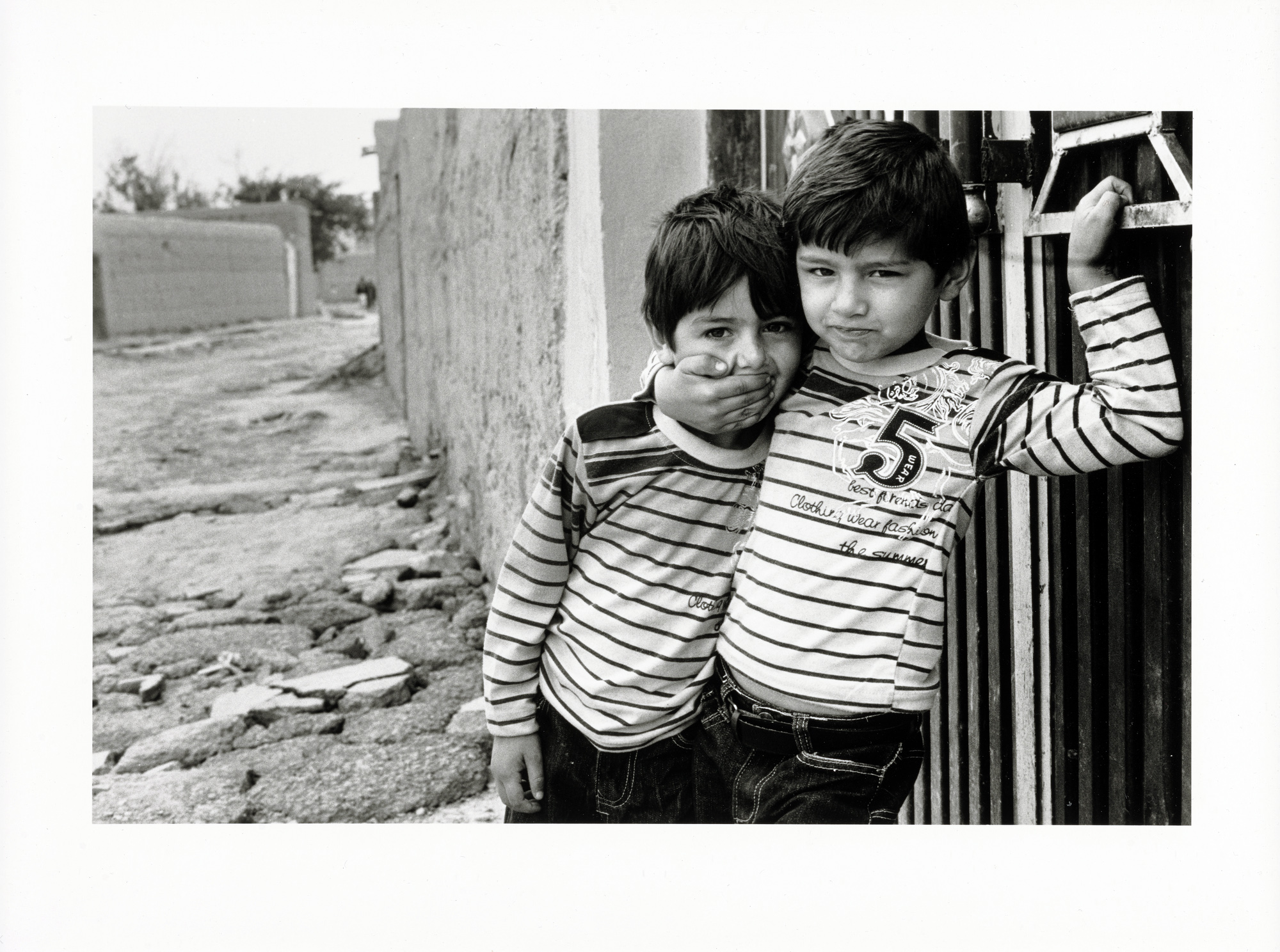
Thursday until 9 pm
Closed Mondays

Museum fur Kunst und Gewerbe Hamburg website
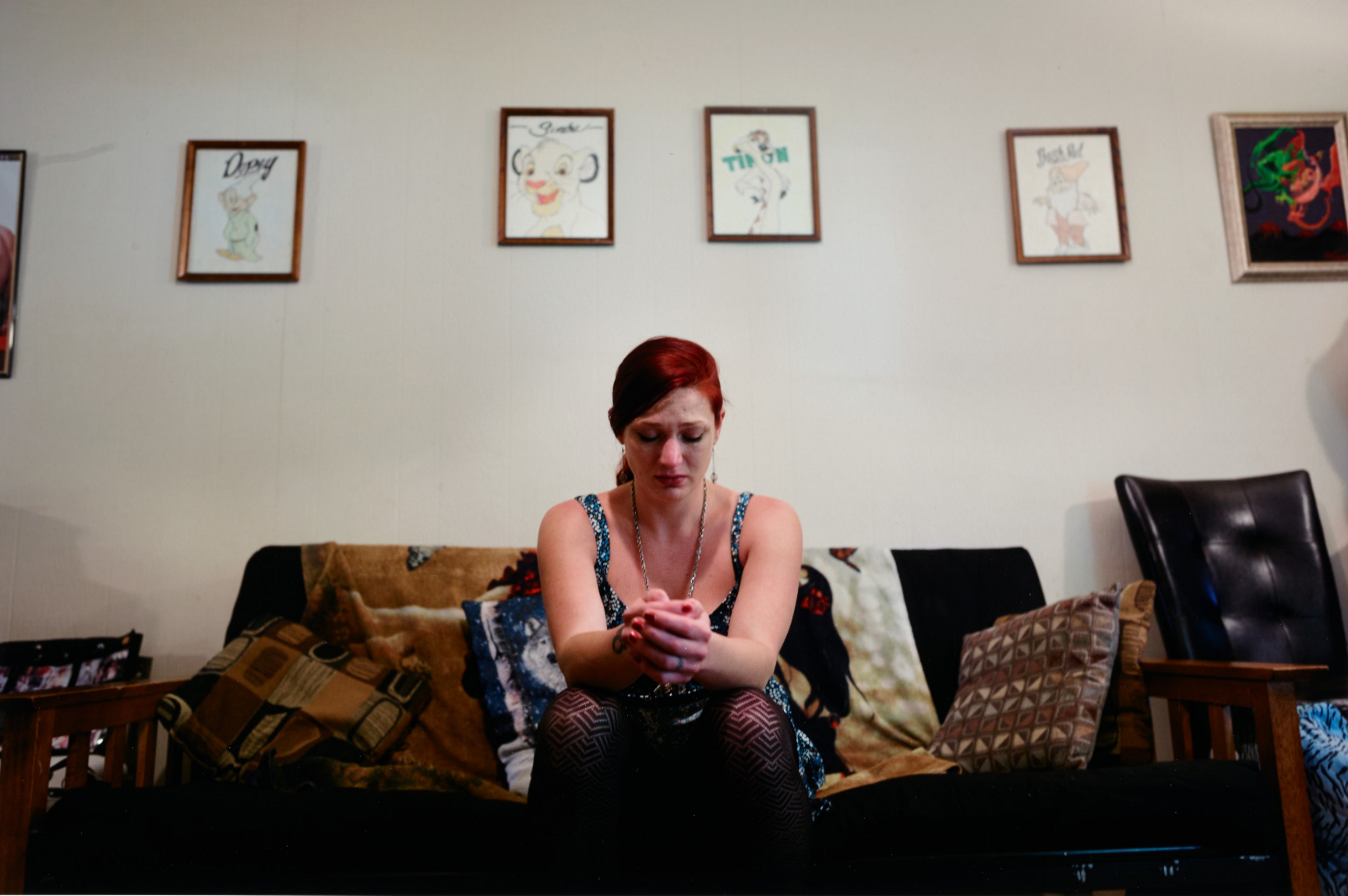
LIKE ART BLART ON FACEBOOK

Back to top