Exhibition: ‘WAR/PHOTOGRAPHY: Images of Armed Conflict and Its Aftermath’ at the Museum of Fine Arts, Houston – Posting Part 4

Exhibition dates: 11th November 2012 – 3rd February 2013
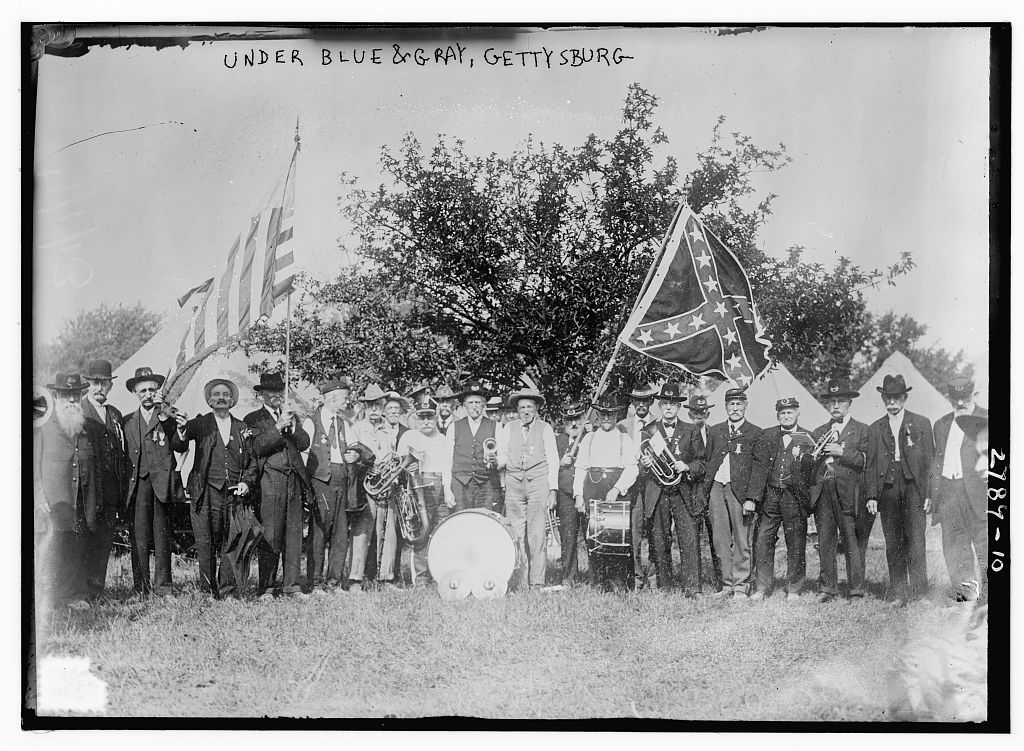
 

Anonymous photographer. 'Under blue & gray – Gettysburg' July 1913


Anonymous photographer
Under blue & gray – Gettysburg
July 1913
Photo shows the Gettysburg Reunion (the Great Reunion) of July 1913, which commemorated the 50th anniversary of the Battle of Gettysburg
Library of Congress Prints and Photographs Division Washington, D.C.


Part 4 of the biggest posting on one exhibition that I have ever undertaken on Art Blart!

As befits the gravity of the subject matter this posting is so humongous that I have had to split it into 4 separate postings. This is how to research and stage a contemporary photography exhibition that fully explores its theme. The curators reviewed more than one million photographs in 17 countries, locating pictures in archives, military libraries, museums, private collections, historical societies and news agencies; in the personal files of photographers and service personnel; and at two annual photojournalism festivals producing an exhibition that features 26 sections (an inspired and thoughtful selection) that includes nearly 500 objects that illuminate all aspects of WAR / PHOTOGRAPHY.

I have spent hours researching and finding photographs on the Internet to support the posting. It has been a great learning experience and my admiration for photographers of all types has increased. I have discovered the photographs and stories of new image makers that I did not know and some enlightenment along the way. I despise war, I detest the state and the military that propagate it and I surely hate the power, the money and the ethics of big business that support such a disciplinarian structure for their own ends. I hope you meditate on the images in this monster posting, an exhibition on a subject matter that should be consigned to the history books of human evolution.

**Please be aware that there are graphic photographs in all of these postings.** Part 1Part 2Part 3

Dr Marcus Bunyan


Many thankx to the Museum of Fine Arts, Houston for allowing me to publish some of the photographs in the posting. Please click on the photographs for a larger version of the image.


Memorials

25. Photographs in the “Memorials” section range from the tomb of an unknown World War I soldier in England, by Horace Nicholls; and a landscape of black German crosses throughout a World War II burial site, by Bertrand Carrière; to an anonymous photograph of a reunion scene in Gettysburg of the opposing sides in the Civil War; and Joel Sternfeld’s picture of a woman and her daughter at the Vietnam Veterans Memorial in Washington, DC, in 1986. (8 images)


Horace Nicholls (English, 1867-1941) 'The Unknown Warrior at Westminster Abbey, London, November 1920' 1920


Horace Nicholls (English, 1867-1941)
The Unknown Warrior at Westminster Abbey, London, November 1920
1920
Silver gelatin print
© IWM (Q 31514)


In order to commemorate the many soldiers with no known grave, it was decided to bury an ‘Unknown Warrior’ with all due ceremony in Westminster Abbey on Armistice Day in 1920. The photograph shows the coffin resting on a cloth in the nave of Westminster Abbey before the ceremony at the Cenotaph and its final burial.
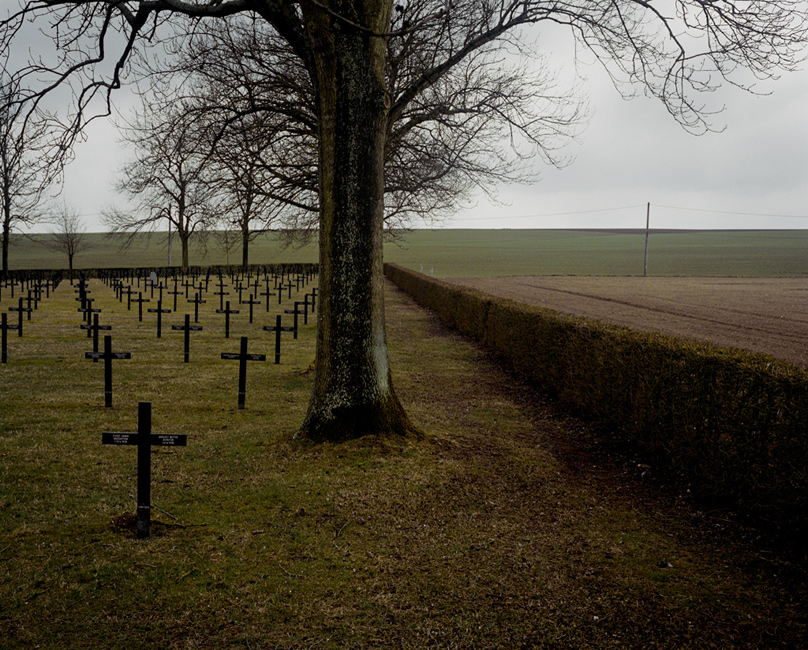
 

Bertrand Carrière (Canadian, b. 1957) 'Untitled' 2005-2009


Bertrand Carrière (Canadian, b. 1957)
Untitled
2005-2009
From the series Lieux Mêmes [Same Places]


Joel Sternfeld (American, b. 1944) 'Vietnam Veterans Memorial, Washington, D.C.,' May 1986


Joel Sternfeld (American, b. 1944)
Vietnam Veterans Memorial, Washington, D.C.,
May 1986
Chromogenic print, ed. #1/25 (printed October 1986)
The Museum of Fine Arts, Houston, the Target Collection of American Photography, gift of the artist
© 1986 Joel Sternfeld


Remembrance

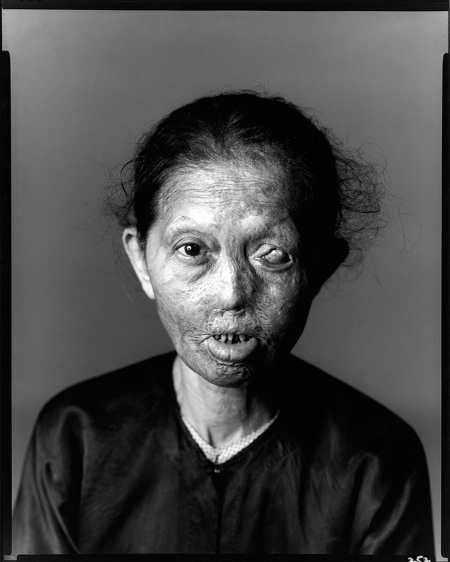
26. The last gallery in the exhibition is “Remembrance.” Most of these images were taken by artists seeking to come to terms with a conflict after fighting had ceased. Included are Richard Avedon’s picture of a Vietnamese napalm victim; a survivor of a machete attack in a Rwandan death camp, by James Nachtwey; a 1986 portrait of a hero who rescued Jews during the Holocaust, by Houston native Gay Block; and Suzanne Opton’s 2004 portrait of a soldier who survived the Iraq War and returned to the United States to work as a police officer, only to be murdered on duty by a fellow veteran. The final wall features photographs by Simon Norfolk of sunrises at the five D-Day beaches in 2004. The only reference to war is the title of the series: The Normandy Beaches: We Are Making a New World(33 images)


Richard Avedon (American, 1923-2004) 'Napalm Victim #1, Saigon, South Vietnam, April 29, 1971' 1971


Richard Avedon (American, 1923-2004)
Napalm Victim #1, Saigon, South Vietnam, April 29, 1971
1971
Silver gelatin print
© Richard Avedon


Gay Block (American, b.1942) 'Zofia Baniecka, Poland' 1986


Gay Block (American, b. 1942)
Zofia Baniecka, Poland
1986
From the series Rescuers: Portraits of Moral Courage in the Holocaust, a record of non-Jewish citizens from European countries who risked their lives helping to hide Jews from the Nazis
Chromogenic print, printed 1994
Courtesy of Museum of Fine Arts, Houston, gift of Clinton T. Wilour in honour of Eve France


Zofia Baniecka (born 1917 in Warsaw – 1993) was a Polish member of the Resistance during World War II. In addition to relaying guns and other materials to resistance fighters, Baniecka and her mother rescued over 50 Jews in their home between 1941 and 1944.
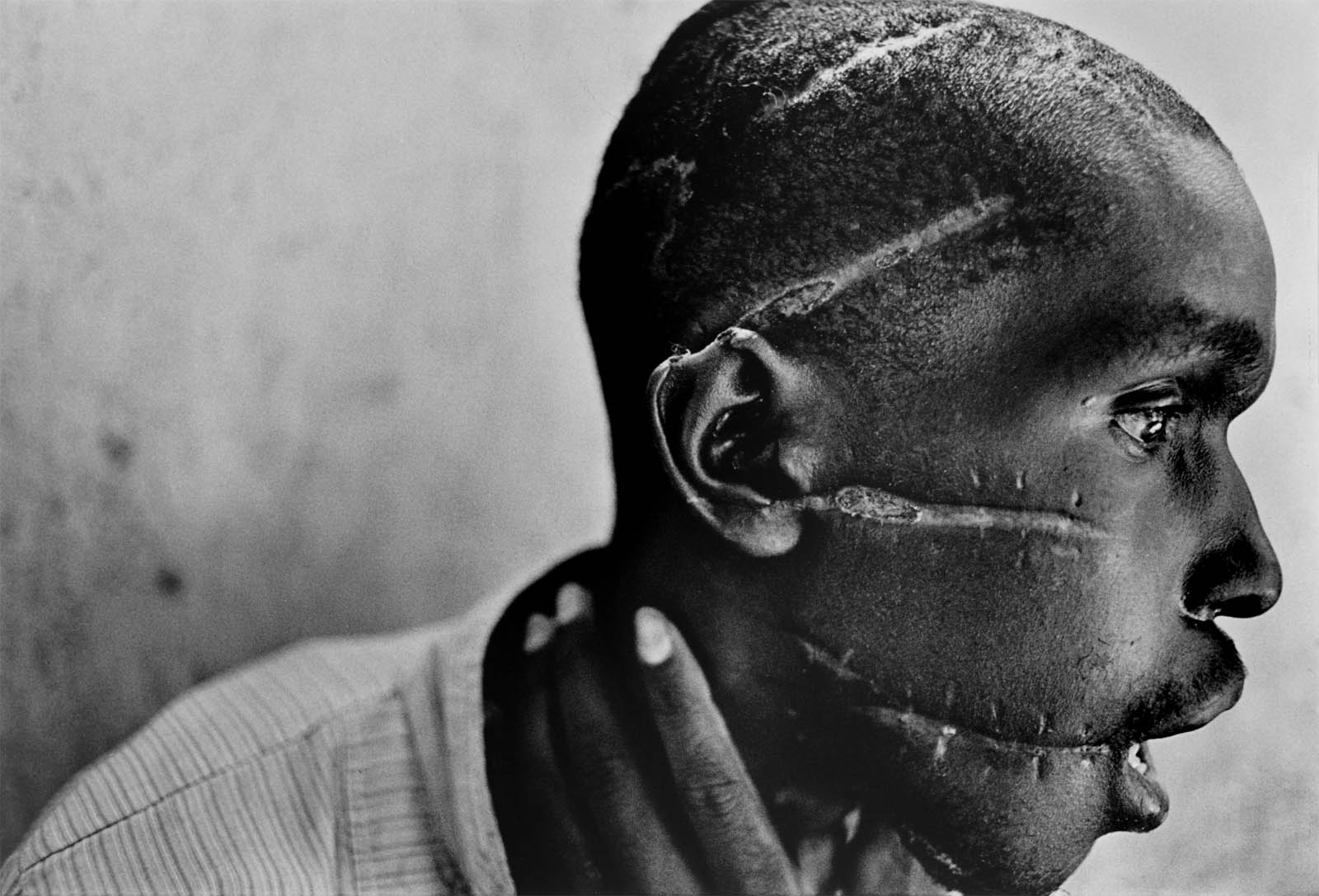
 

James Nachtwey (American, b. 1948) 'A Hutu man who did not support the genocide had been imprisoned in the concentration camp, was starved and attacked with machetes. He managed to survive after he was freed and was placed in the care of the Red Cross, Rwanda, 1994' 1994


James Nachtwey (American, b. 1948)
A Hutu man who did not support the genocide had been imprisoned in the concentration camp, was starved and attacked with machetes. He managed to survive after he was freed and was placed in the care of the Red Cross, Rwanda, 1994
1994
Silver gelatin print
© James Nachtwey / TIME

World Press Photo of the Year, prize singles


A Hutu man at a Red Cross hospital in Nyanza, Rwanda. His face was mutilated by the Hutu ‘Interahamwe’ militia, who suspected him of sympathising with the Tutsi rebels.

Liberated from a nearby Hutu camp, where mainly Tutsis were incarcerated, starved, beaten, and killed, this man did not support the genocide and was thus subjected to the same treatment. Starved and attacked with machetes, he had managed to survive, though he was unable to speak and could barely walk or swallow when this photo was made.

Jibran Abbasi. “Mutilated By The Hutu ‘Interahamwe’ by James Nachtwey,” on the Business Recorder website April 5, 2017 [Online] Cited 27/07/2024
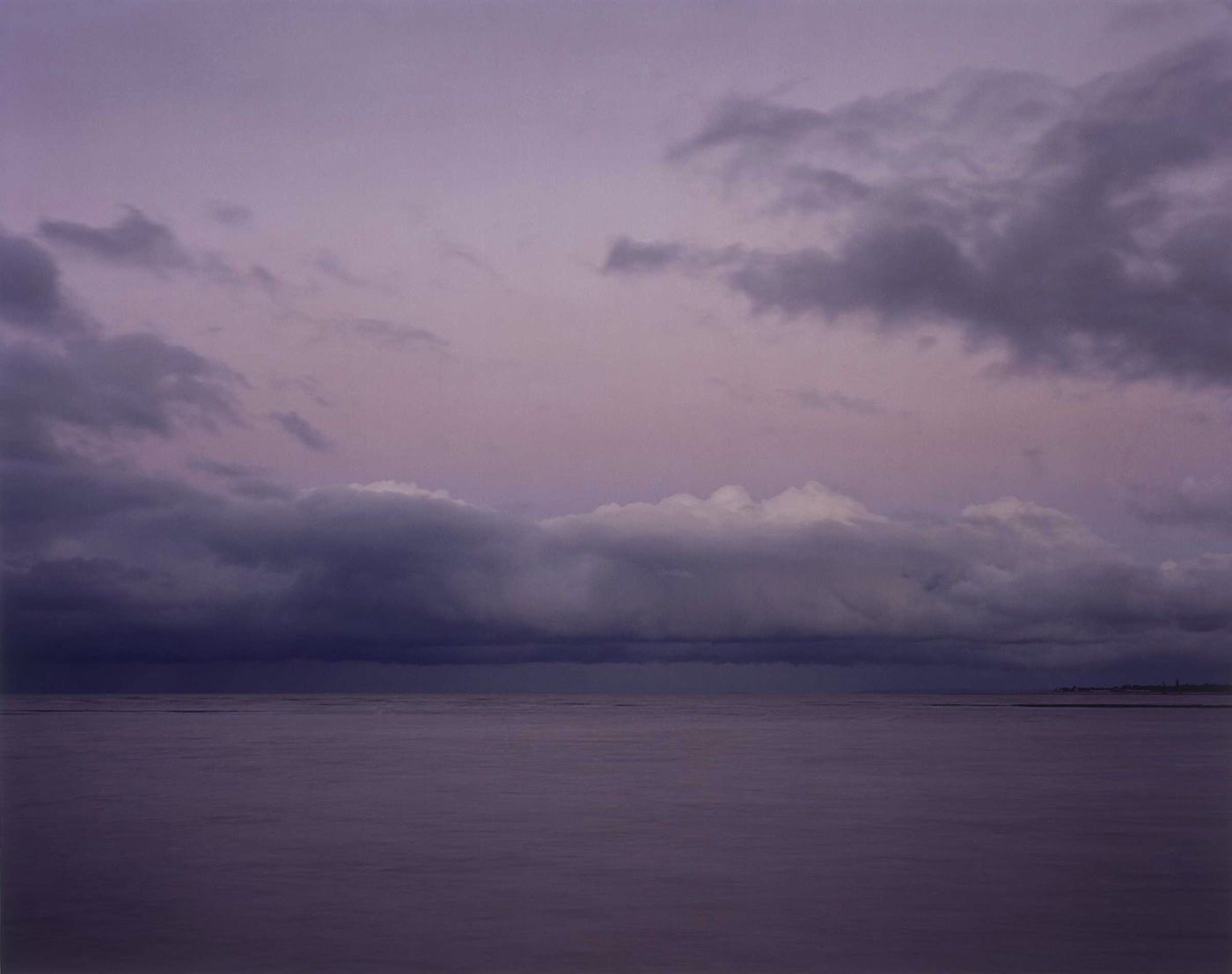
 

Simon Norfolk (British, b. Nigeria, 1963) 'Sword Beach' 2004


Simon Norfolk (British born Nigeria, b. 1963)
Sword Beach
2004
From the series The Normandy Beaches: We Are Making a New World
Chromogenic print, ed. #1/10 (printed 2006)
The Museum of Fine Arts, Houston
Gift of Bari and David Fishel, Brooke and Dan Feather and Hayley Herzstein in honor of Max Herzstein and a partial gift of the artist and Gallery Luisotti, Santa Monica
© Simon Norfolk / Gallery Luisotti


WAR/PHOTOGRAPHY Extended Info


Other photographs from the exhibition


Alexander Gardner (1821-1882) 'Scouts and Guides to the Army of the Potomac, Berlin, MD, October, 1862' October 1862 (detail)


Alexander Gardner (American, 1821-1882)
Scouts and Guides to the Army of the Potomac, Berlin, MD, October, 1862
October 1862
Albumen silver print
Photograph by Alexander Gardner, from “Incidents of the War. Guide to the Army of the Potomac,” from Gardner’s Photographic Sketch Book of the War, Washington
Records of the War Department General and Special Staffs, Record Group 165, National Archives Still Picture Branch, College Park, Maryland
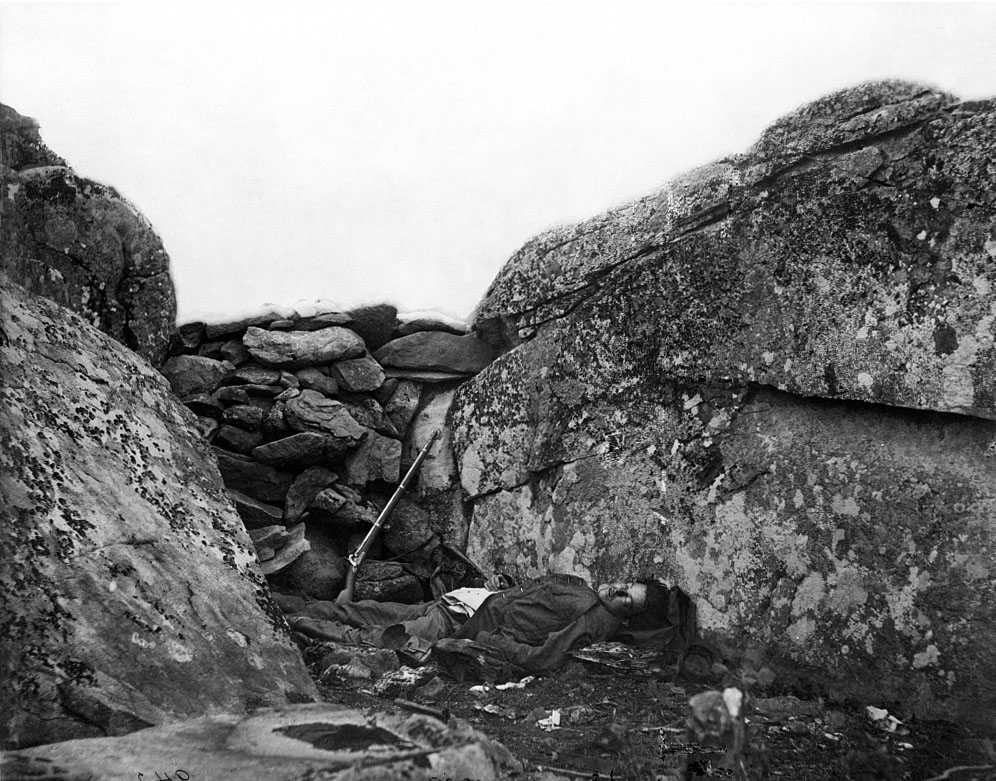
 

Alexander Gardner (American, 1821-1882) ‘The Home of a Rebel Sharpshooter, Gettysburg, Pennsylvania’. Albumen paper print


Alexander Gardner (American, 1821-1882)
The Home of a Rebel Sharpshooter / Dead Confederate soldier in the devil’s den, Gettysburg, Pennsylvania
July 1863
Albumen paper print copied from glass, wet collodion negative
Library of Congress, Prints and Photographs Division
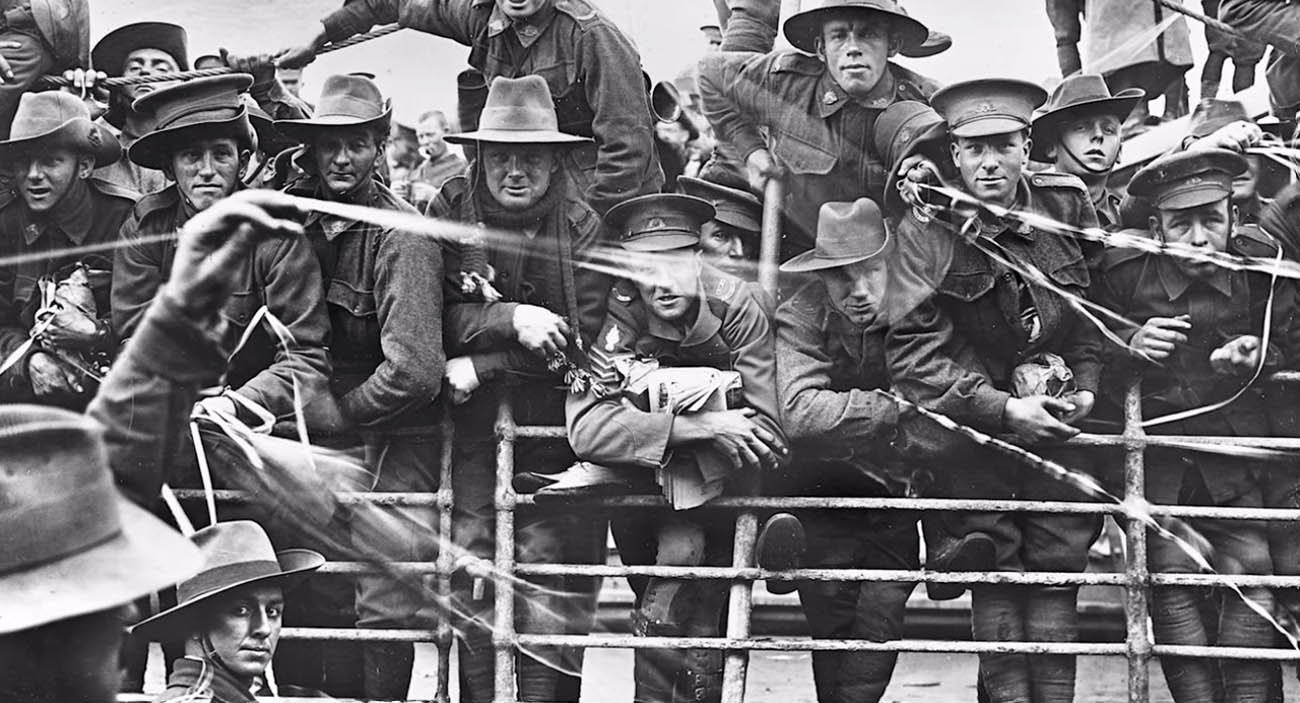
 

Josiah Barnes (Australian, 1858-1921) 'Embarkation of HMAT Ajana, Melbourne, July 8, 1916' 1916


Josiah Barnes (Australian, 1858-1921)
Embarkation of HMAT Ajana, Melbourne, July 8, 1916
1916
Gelatin silver print from original glass half-plate negative (printed 2012)
On loan from the Australian War Memorial
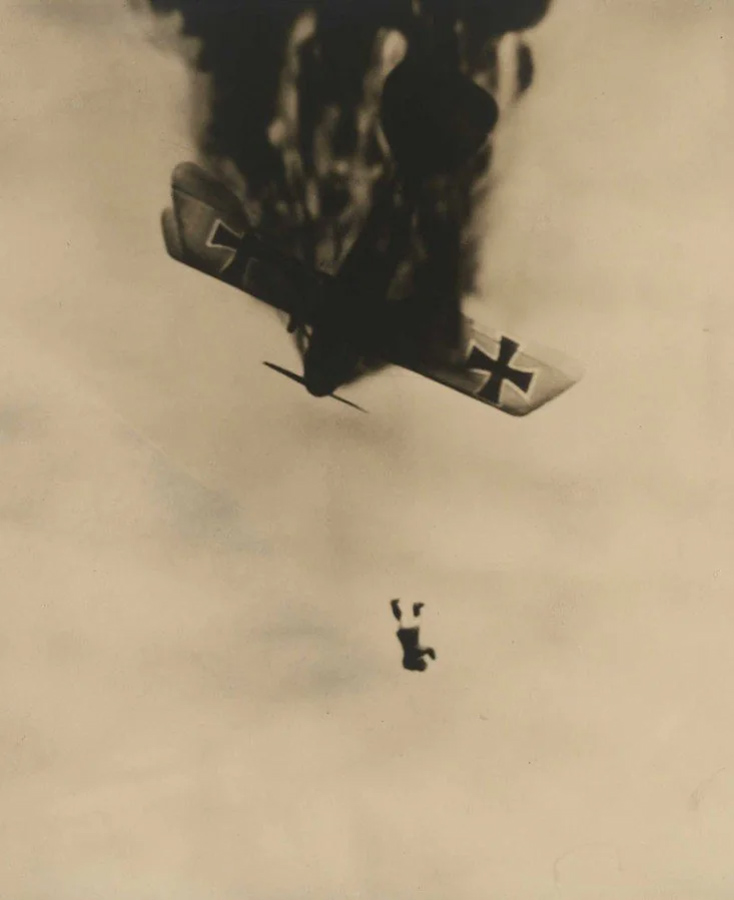
 

Wesley D. Archer (American, d. 1952) 'Just as he left the burning plane' 1933


Wesley D. Archer (American, d. 1952)
Just as he left the burning plane
1933
From the publication Death in the Air: The War Diary and Photographs of a Flying Corps Pilot


The typewritten script of a First World War pilot’s diary with a large number of photographs was submitted to the publishers William Heinemann and published by them in 1933. Heinemann stated on the book’s jacket that the diary contained no names, dates, or anything that could reveal the identity of the writer or the squadron in which he served. The publishers understood that the diarist was killed in action in 1918 and that it was in deference to the wishes of those who were close to him that his diary should be published.

So remarkable were the photographs that their veracity was immediately questioned, but no proof of their authenticity or otherwise could be ascertained. It was not until 1983 that a collection of documents, photographs and artifacts was presented to the Smithsonian’s National Air and Space Museum. Some of the photographs were recognized as being those of the mystery diarist and the truth was soon revealed.

The author was Wesley Archer, an American with Canadian parents who served with the RFC in the First World War, and the photographs and diary had been faked.

Text from the Google Books website

For more information on the faked photographs see the article “How dramatic images of WWI dogfights in the skies of Europe were FAKED by a conman who was just looking to make some money”.
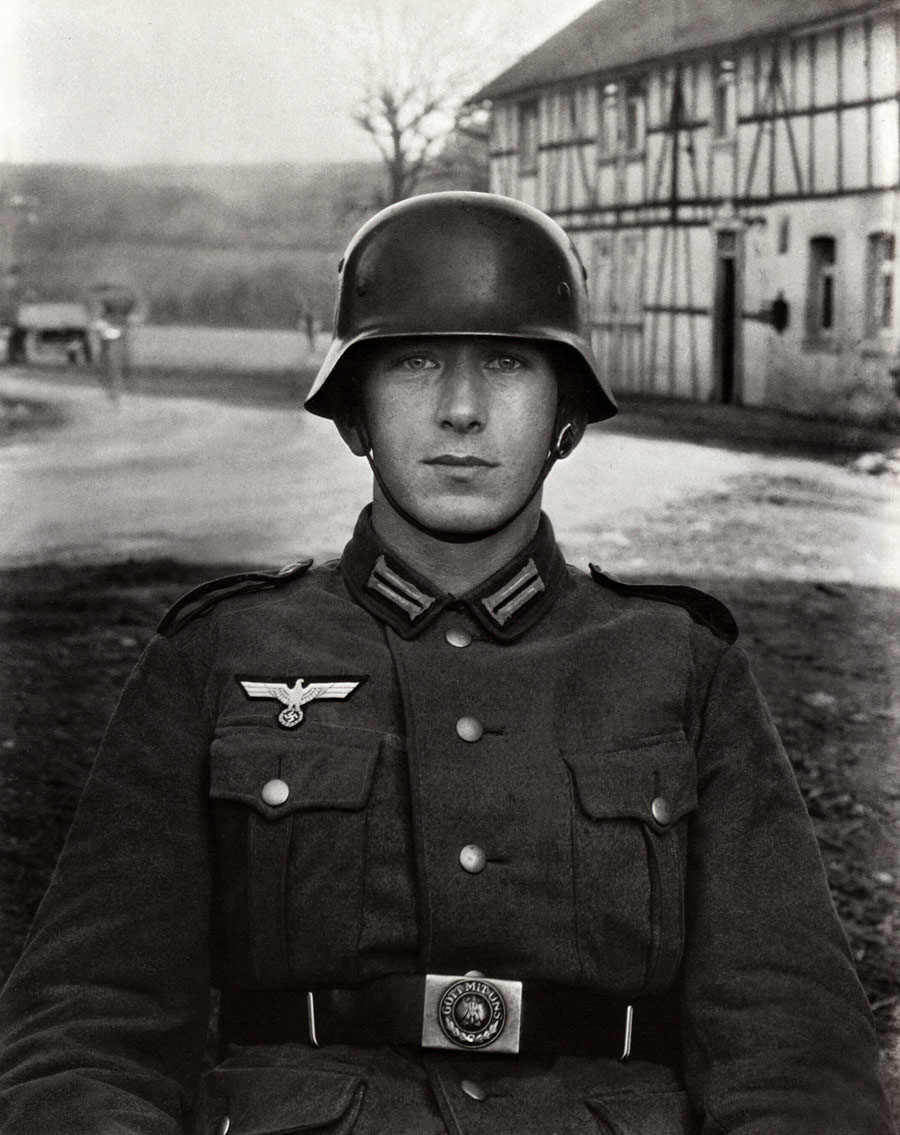
 

August Sander (German, 1876-1964) 'Soldier' c. 1940


August Sander (German, 1876-1964)
Soldier
c. 1940
Gelatin silver print, printed by Gunther Sander, 1960s
The Museum of Fine Arts, Houston
Gift of John S. and Nancy Nolan Parsley in honour of the 65th birthday of Anne Wilkes Tucker
© Die Photographische Sammlung/SK StiftungKultur – August Sander Archiv, Cologne; DACS, London 2012
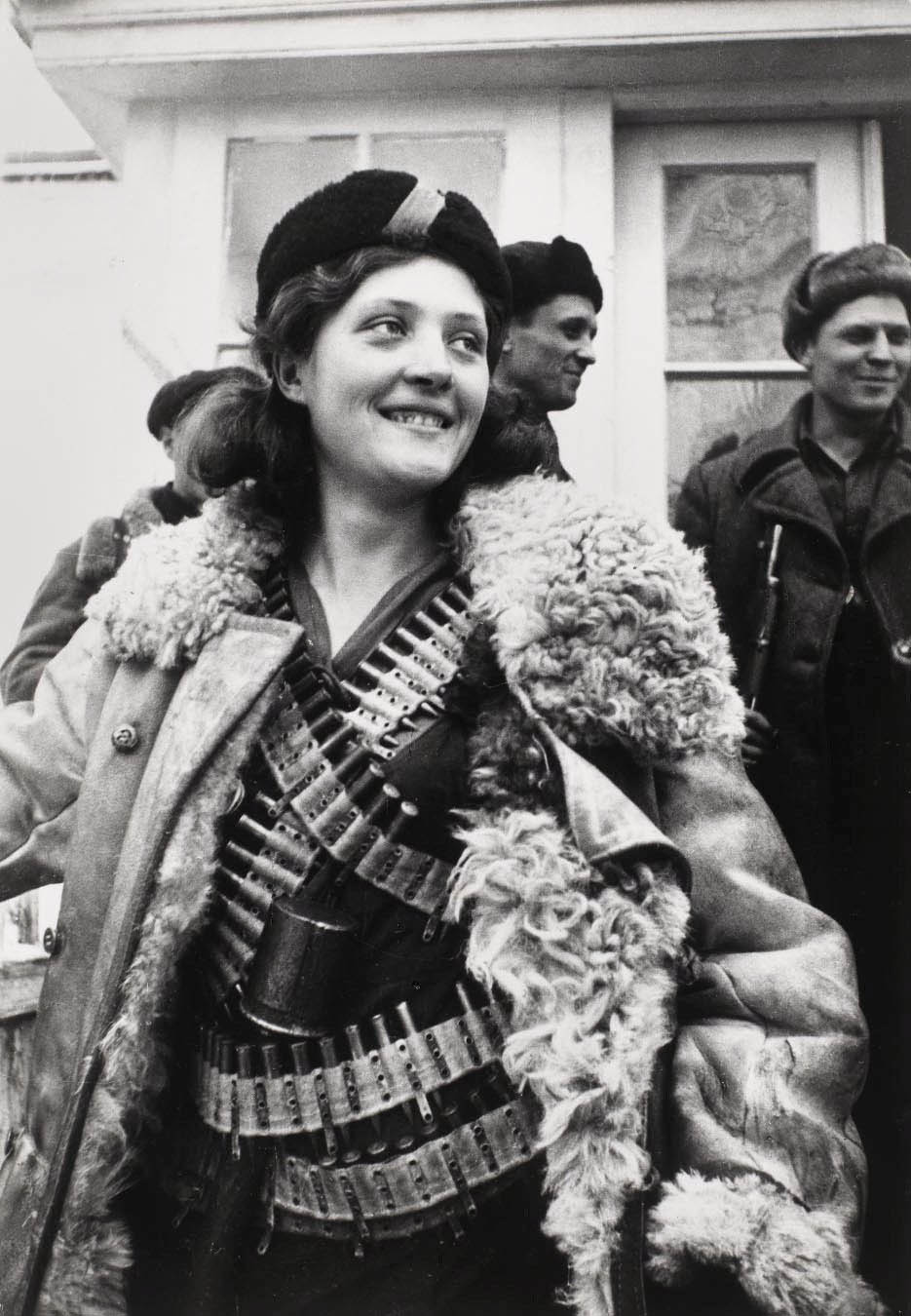
 

Arkady Shaikhet (Soviet, 1898-1959) 'Partisan Girl' 1942


Arkady Shaikhet (Soviet, 1898-1959)
Partisan Girl
1942
Gelatin silver print
Gift of Marion Mundy
© Arkady Shaikhet Estate, Moscow
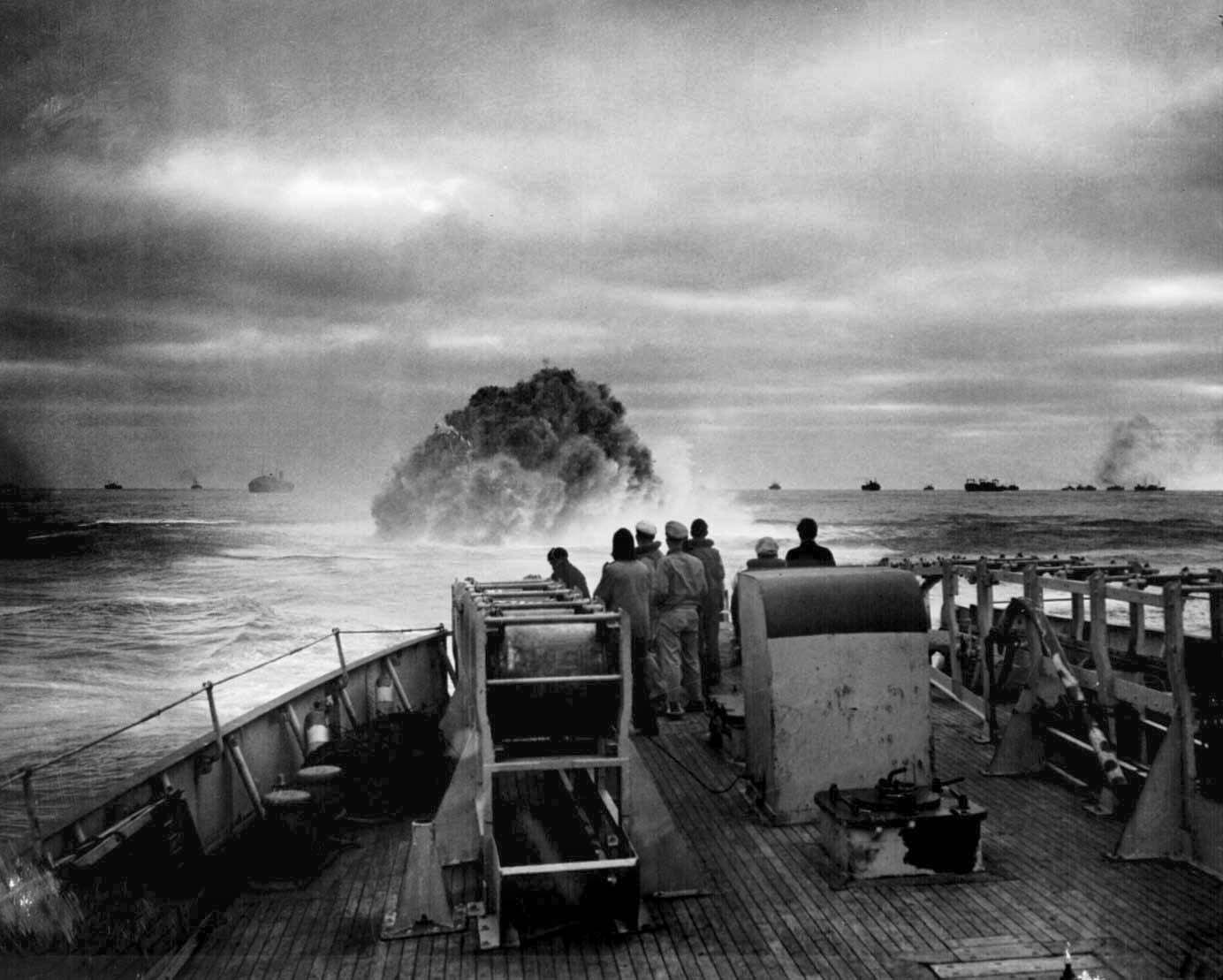
 

Anonymous photographer / U.S. Department of Defense. 'US Coast Guard crew of cutter Spencer watched as a depth charge exploded near U-175, North Atlantic, 500nm WSW of Ireland, 17 Apr 1943'


Anonymous photographer
U.S. Department of Defense
US Coast Guard crew of cutter Spencer watched as a depth charge exploded near U-175, North Atlantic, 500nm WSW of Ireland, 17 Apr 1943
17 April 1943
Public domain


W. Eugene Smith (American, 1918-1978) 'Wounded, dying infant found by American soldier in Saipan Mountains' June 1944


W. Eugene Smith (American, 1918-1978)
Wounded, dying infant found by American soldier in Saipan Mountains
June 1944
Gelatin silver print
© W. Eugene Smith
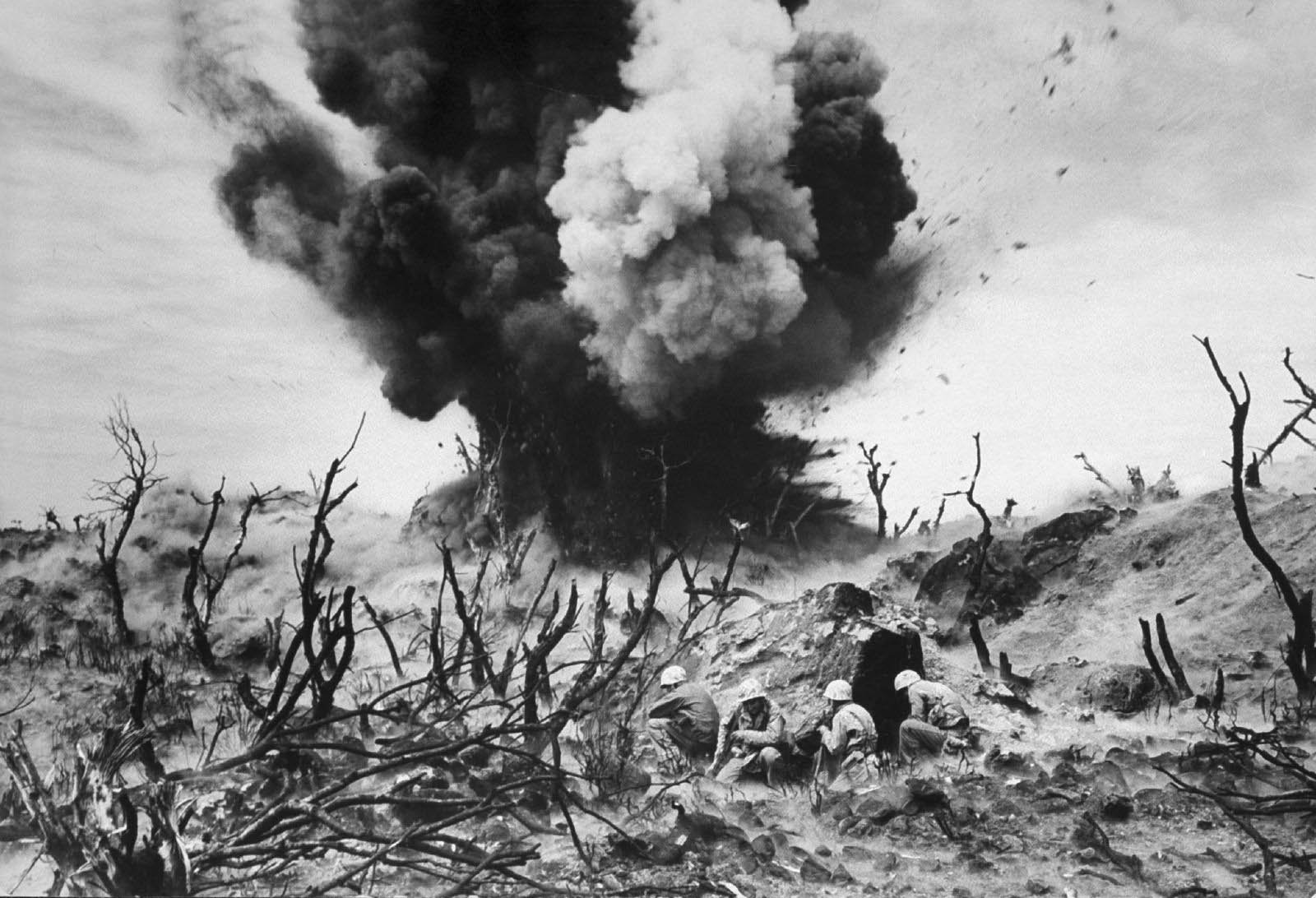
 

W. Eugene Smith (American, 1918-1978) 'World War II. The Pacific Campaign. The Battle of Iwo Jima (Japanese island). US Marine demolition team blasting out a cave on Hill 382. Iwo Jima. February, 1945' 1945


W. Eugene Smith (American, 1918-1978)
World War II. The Pacific Campaign. The Battle of Iwo Jima (Japanese island). US Marine demolition team blasting out a cave on Hill 382. Iwo Jima. February, 1945
1945
Gelatin silver print
© W. Eugene Smith
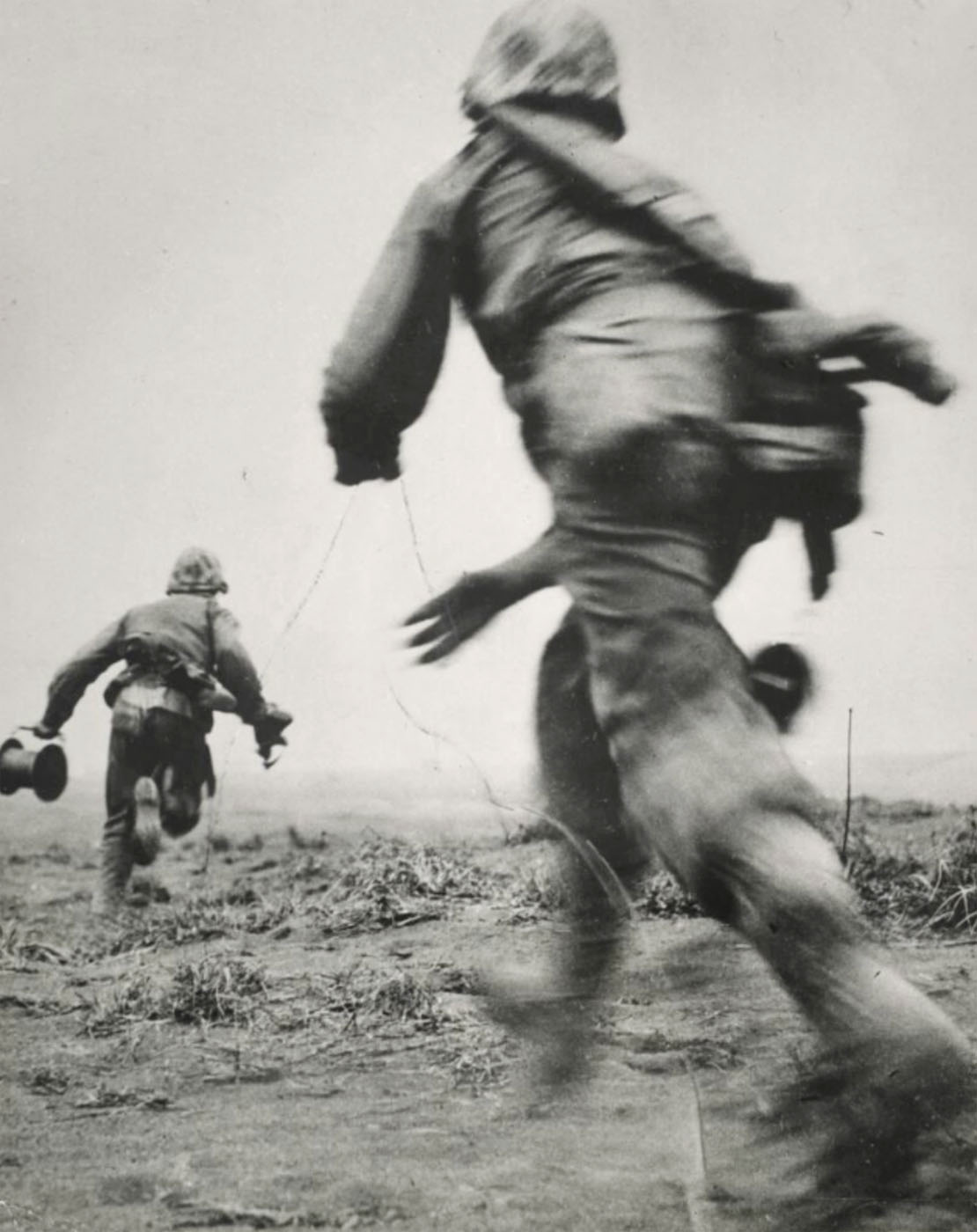
 

Joseph Schwartz (American, 1913–2013) 'Hold the Phone - Two Marine wiremen on Iwo Jima race across an open field, under heavy enemy fire to establish field telephone contact with the front lines' February 19, 1945, printed early 1950s


Joseph Schwartz (American, 1913–2013)
Hold the Phone – Two Marine wiremen on Iwo Jima race across an open field, under heavy enemy fire to establish field telephone contact with the front lines
February 19, 1945, printed early 1950s
Gelatin silver print mounted on board
18 13/16 × 14 15/16 in. (47.8 × 37.9cm)
The Museum of Fine Arts, Houston
Museum purchase funded by Knox Nunnally at “One Great Night in November, 2009,” in honor of Houston trial lawyer Joe Reynolds, a U.S. Marine who fought on Iwo Jima
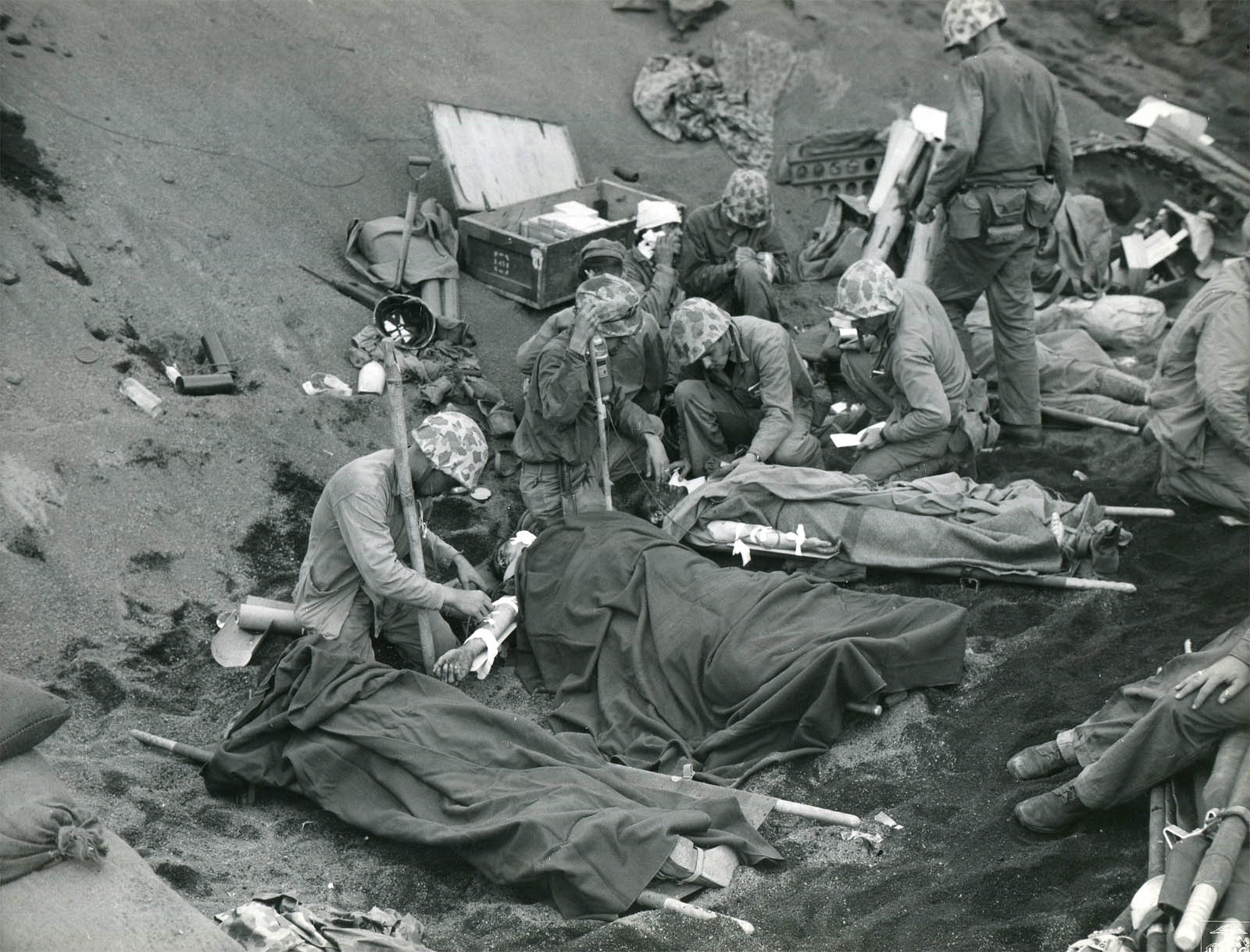
 

Anonymous photographer. U.S. Department of Defense / USMC Official Photograph 'PLASMA WARD – Navy doctors and corpsmen administer to wounded Marines at an aid station established in a gully on Iwo Jima. The high casualty rate in this operation required the use of gallons of plasma and whole blood sent by air from the West Coast' 1945


Anonymous photographer
U.S. Department of Defense / USMC Official Photograph
PLASMA WARD – Navy doctors and corpsmen administer to wounded Marines at an aid station established in a gully on Iwo Jima. The high casualty rate in this operation required the use of gallons of plasma and whole blood sent by air from the West Coast
1945
Gelatin silver print
Creative Commons Attribution 2.0 Generic
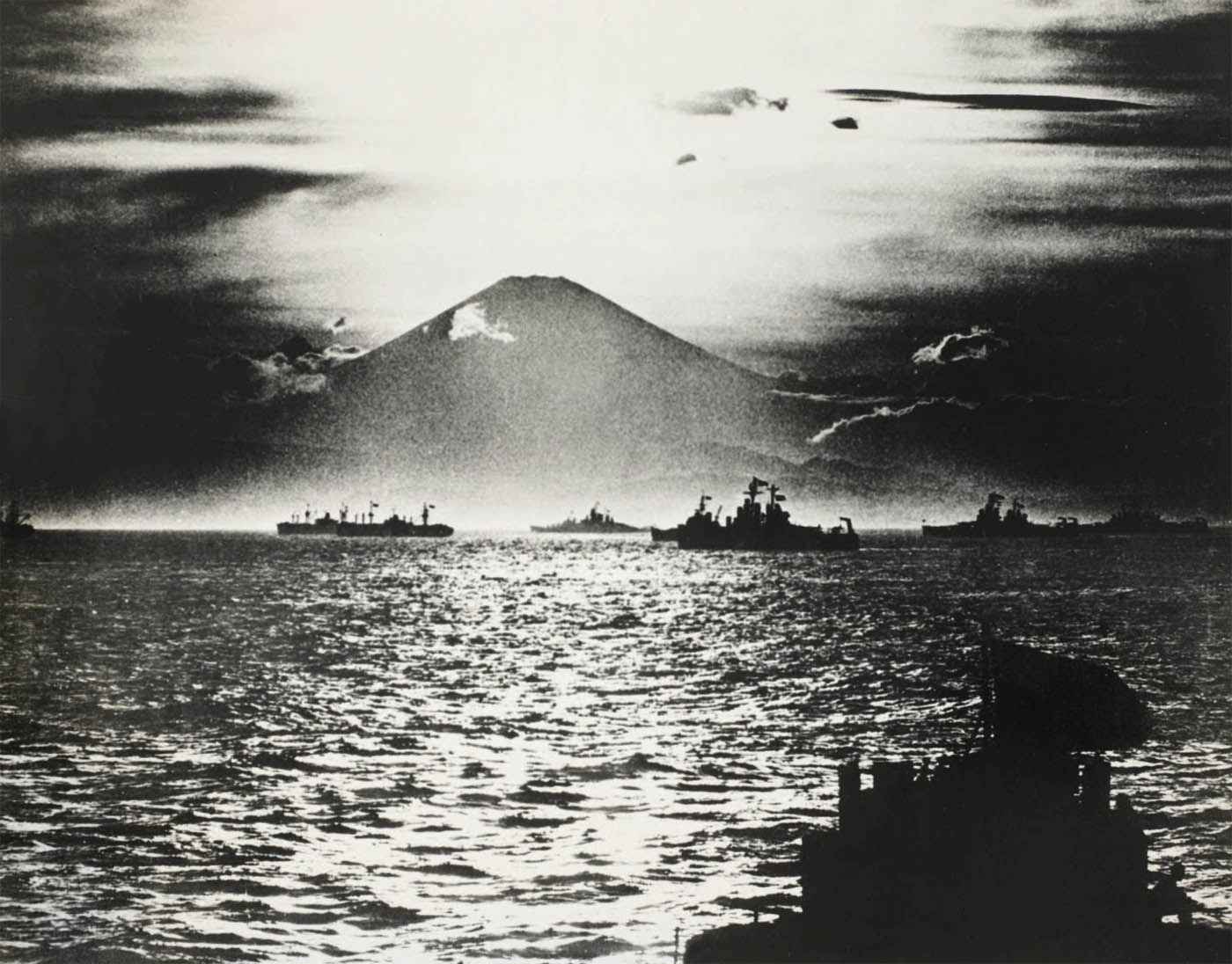
 

U.S. Navy Photographic Team. 'U.S. and British Warships Anchored in Sagami Wan, Outside of Tokyo Bay, Japan, on the Day the Allied Ships Entered Japanese Waters' 27th August 1945


U.S. Navy Photographic Team
U.S. and British Warships Anchored in Sagami Wan, Outside of Tokyo Bay, Japan, on the Day the Allied Ships Entered Japanese Waters
27th August 1945
Gelatin silver print
The Museum of Fine Arts, Houston, museum purchase funded by Laura and Tony Visage in honor and memory of William A. Visage and his fellow soldiers in Battery “E” of the 2nd Battalion, 131st Field Artillery, U.S. Army Air Corps
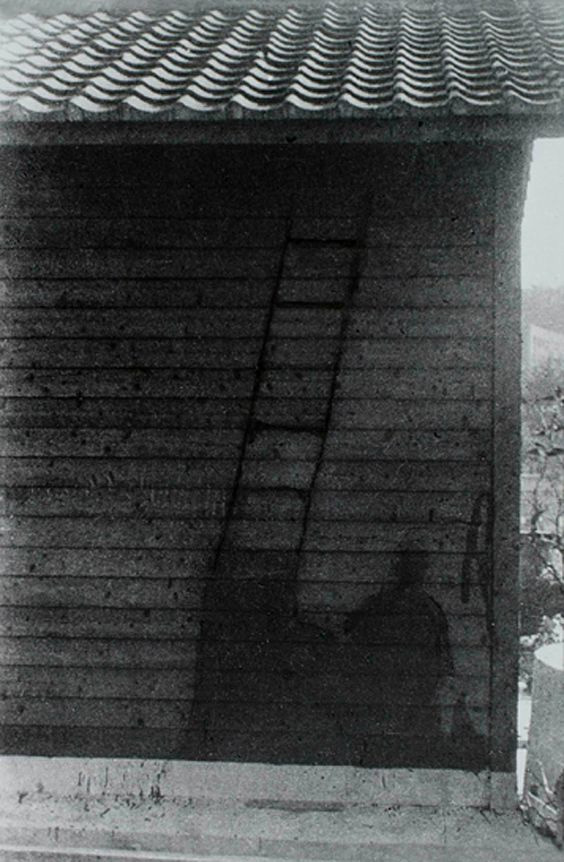
 

Matsumoto Eiichi (Japanese, 1915-2004) 'Shadow of a soldier remaining on the wooden wall of the Nagasaki military headquarters (Minami-Yamate machi, 4.5km from Ground Zero)' 1945


Matsumoto Eiichi (Japanese, 1915-2004)
Shadow of a soldier remaining on the wooden wall of the Nagasaki military headquarters (Minami-Yamate machi, 4.5km from Ground Zero)
1945
Gelatin silver print
Collection of the Tokyo Metropolitan Museum of Photography
© Matsumoto Eiichi
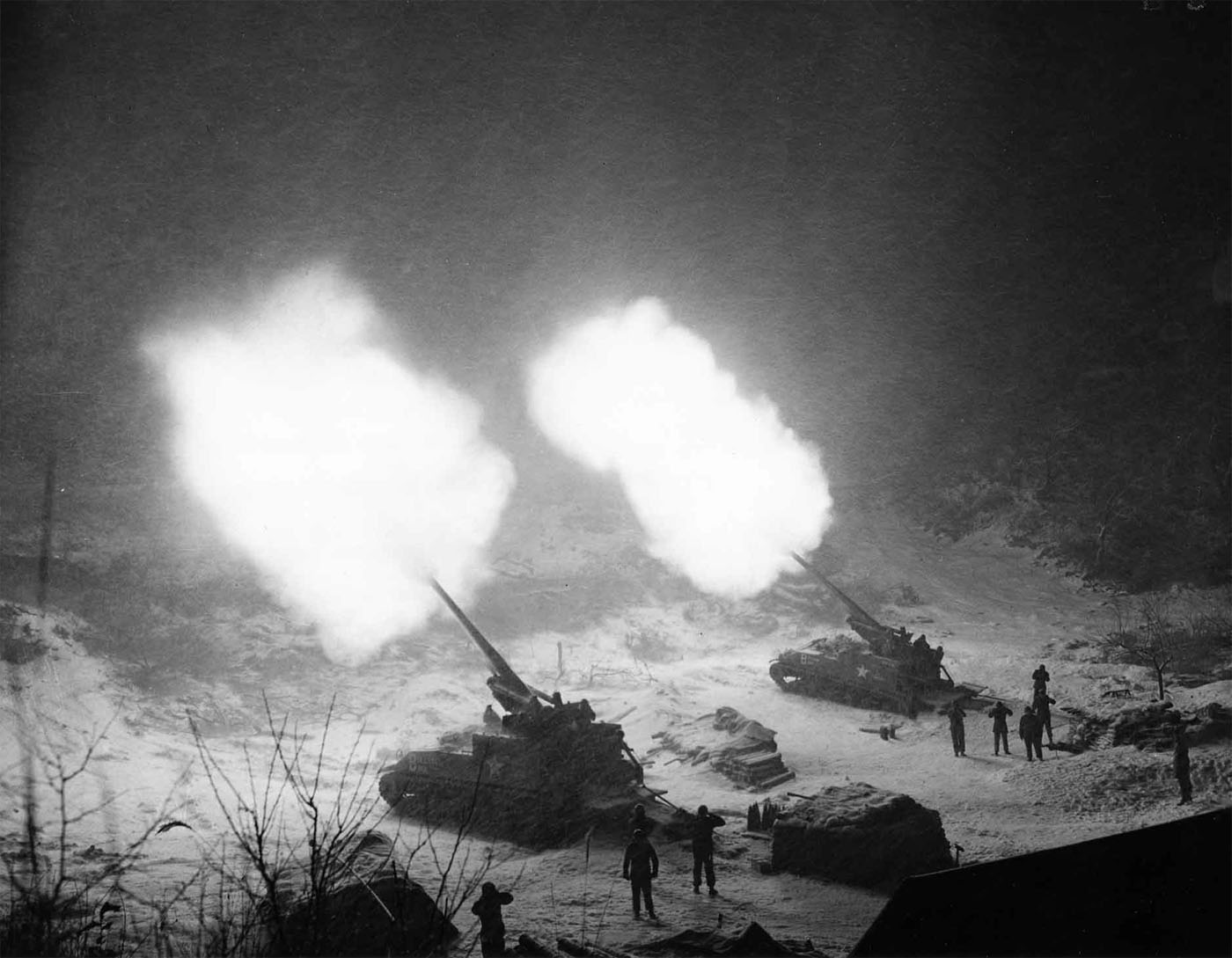
 

Unknown photographer. 'A pair of M-40 155mm Gun Motor Carriages of Battery B, 937th Field Artillery Battalion, providing fire support to U.S. Army 25th Infantry Division, Munema, Korea' 26 November 1951


Unknown photographer
A pair of M-40 155mm Gun Motor Carriages of Battery B, 937th Field Artillery Battalion, providing fire support to U.S. Army 25th Infantry Division, Munema, Korea
26 November 1951
Gelatin silver print
U.S. Department of Defense


Cathy LeRoy (French, 1944-2006) 'Corpsman In Anguish' 1967


Cathy LeRoy (French, 1944-2006)
Corpsman In Anguish
1967
Gelatin silver print


Her pictures from Vietnam were stunning. Her photos from Battle of Hill 881 evoked “ghosts of Iwo Jima and Pork Chop Hill,” Time magazine wrote in May 1967. Her photos of corpsman Vernon Wike during the battle was a triptych of an all-too-familiar scene: in the first, Wike has two hands on his friend’s chest, trying to staunch the wound; in the second, he tries to find a heartbeat; in the third frame, “Corpsman In Anguish”, he realised the man is dead.

LeRoy herself came very close to death two weeks later. Her Nikon barely stopped a piece of mortar shrapnel that ripped open her chest. She said that she thought the last words she would ever hear were, “I think she’s dead, sarge.” During the Tet offensive in 1968, LeRoy was briefly captured by the North Vietnamese during the battle for Hue. LeRoy’s photos of her captivity later made the cover of Life, ‘A Remarkable Day in Hue: the Enemy Lets Me Take His Picture’. She was the first person to take photos of North Vietnamese Army Regulars behind their lines.

Anonymous. “Corpsman In Anguish | Cathy LeRoy,” on the Iconic Photos website January 13, 2014 [Online] Cited 27/07/2024


A licensed parachutist, Leroy jumped with the U.S. 173rd Airborne Brigade into combat during Operation Junction City in February of 1967. It was in this action, the battle for Hill 881, that Leroy photographed U.S. Navy Corpsman Vernon Wike as he rushed to the aid of a fallen comrade. “Corpsman in anguish” is the third frame of a series that Leroy shot, capturing the unimaginable grief of war. Later, in an interview for the documentary “The Hill Fights”, Wike recounted the moment that Leroy photographed.

“I know there was chaos going on around me, but there was no sound,” she says. “… I knew he didn’t have a chance, but I still got p—–d off when he died.” Leroy describes the aftermath as the corpsman “lost in this nightmare landscape” grabbed the fallen marine’s M16 and charged a Viet bunker alone in a hail of obscenities. The fallen marine was a man called “Rock”, a New Yorker from Puerto Rico. Earlier that day he had told Wike that he only had 60 days left “in country” – his deployment in Vietnam.

Anonymous. “Giving War a Face: Catherine Leroy,” on the Dismal Nitch website September 04, 2020 [Online] Cited 27/07/2024
 

Arkady Shaikhet (Soviet, 1898-1959) 'Partisan Girl' 1942


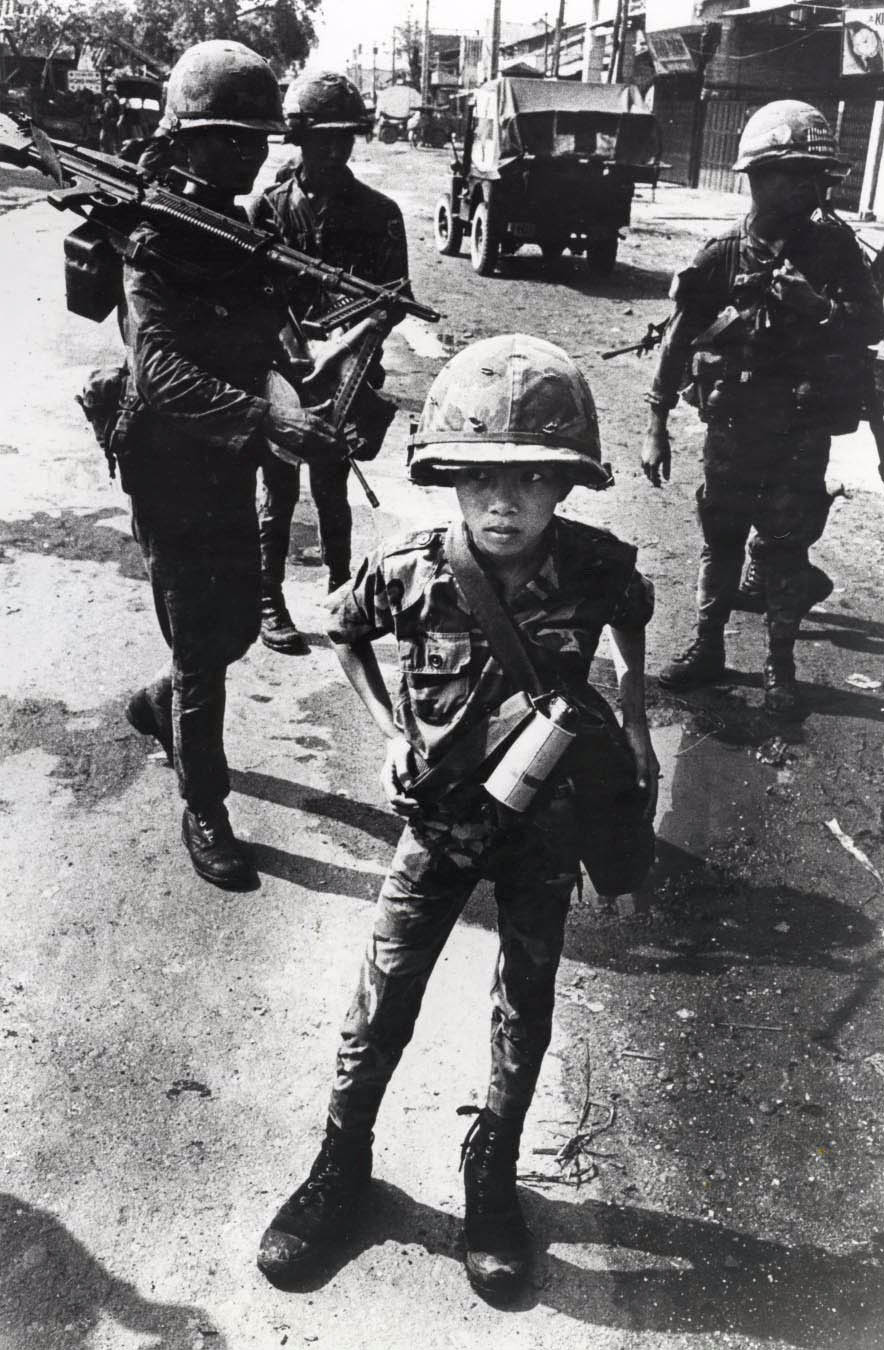
Philip Jones Griffiths (Welsh, 1936-2008)
​Called “Little Tiger” for killing two “Viet Cong women cadre” – his mother and teacher, it was rumored, Vietnam​
1968
Gelatin silver print
The Philip Jones Griffiths Foundation, courtesy of Howard Greenberg Gallery
© Philip Jones Griffiths / Magnum Photos
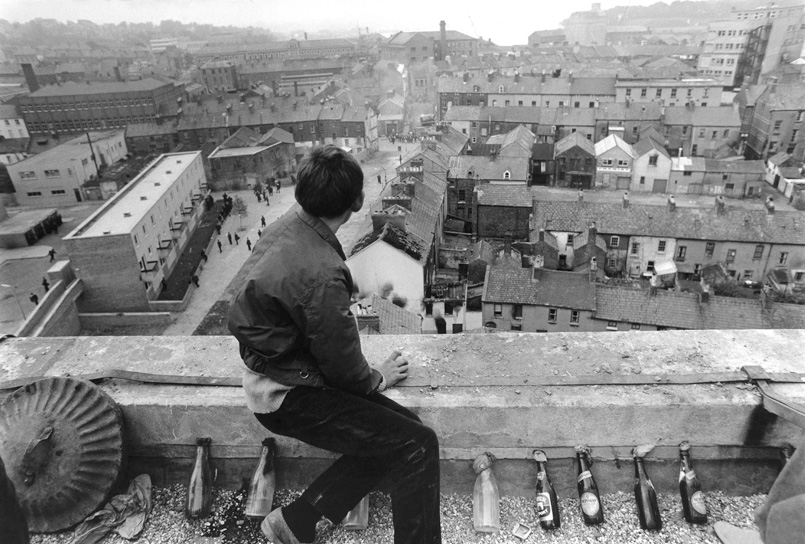
 

Gilles Caron (French, 1939-1970) 'Young Catholic demonstrator on Londonderry Wall, Northern Ireland' 1969


Gilles Caron (French, 1939-1970)
Young Catholic demonstrator on Londonderry Wall, Northern Ireland
1969
Gelatin silver print
Courtesy of Foundation Gilles Caron and Contact Press Images
© Gilles Caron
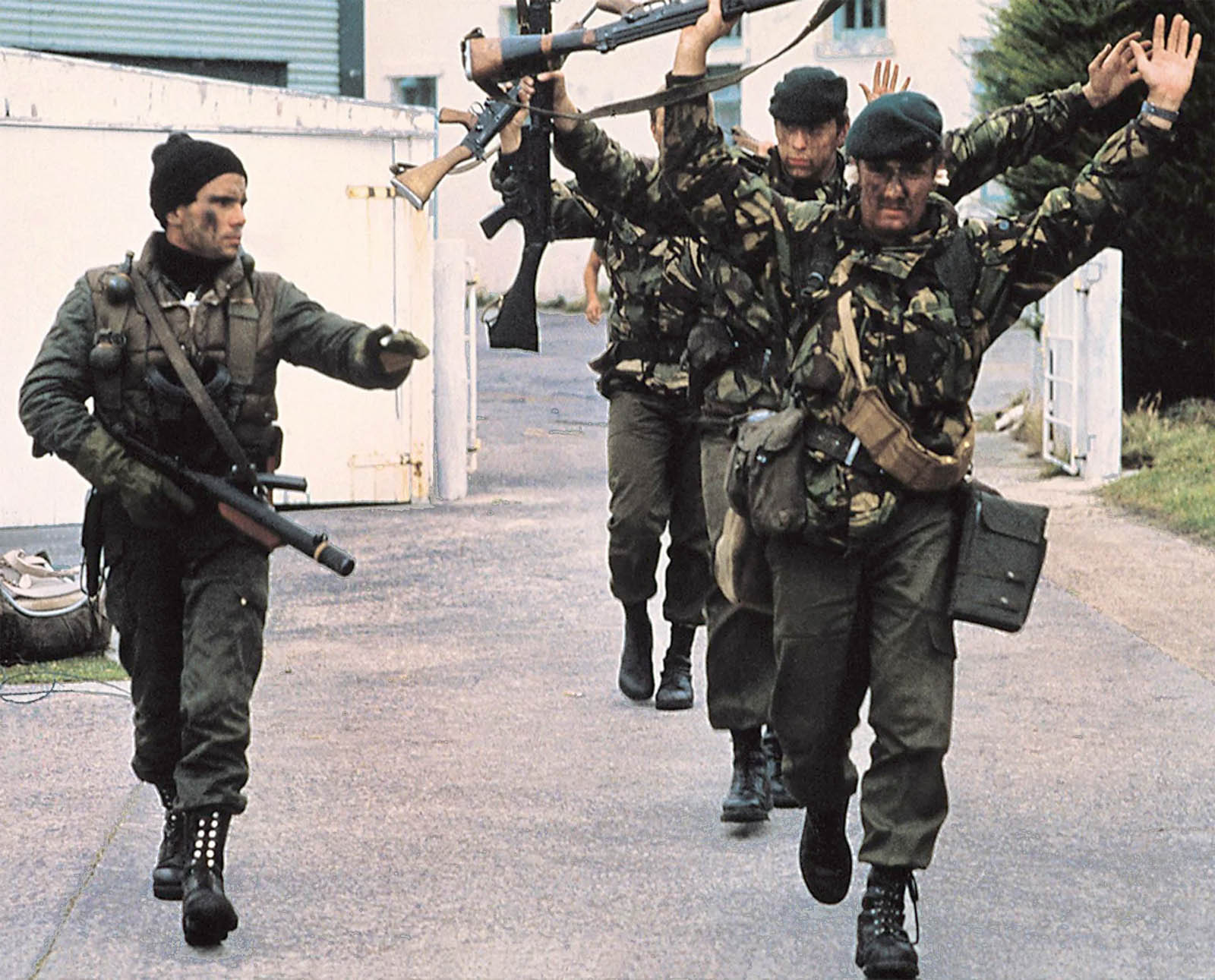
 

Rafael Wollmann (Argentinian, b. 1958) 'British Marines surrender to Argentinean troops in Malvinas/Falklands' April 2, 1982, printed 2012


Rafael Wollmann (Argentinian, b. 1958)
British Marines surrender to Argentinean troops in Malvinas/Falklands
April 2, 1982, printed 2012
Inkjet print
15 7/8 × 20 in. (40.4 × 50.8cm)
The Museum of Fine Arts, Houston
Gift of Rafael Wollmann


David Leeson (American, b. 1957) 'Death of a Soldier, Iraq' March 24, 2003


David Leeson (American, b. 1957)
Death of a Soldier, Iraq
March 24, 2003
Inkjet print, printed 2012
Courtesy of the artist


Ziv Koren (Israeli, b. 1970) 'A sniper’s-eye view of Rafah, in the Southern Gaza strip, during an Israeli military sweep' 2006


Ziv Koren (Israeli, b. 1970)
A sniper’s-eye view of Rafah, in the Southern Gaza strip, during an Israeli military sweep
2006
Inkjet print, printed 2012
© Ziv Koren/Polaris Images
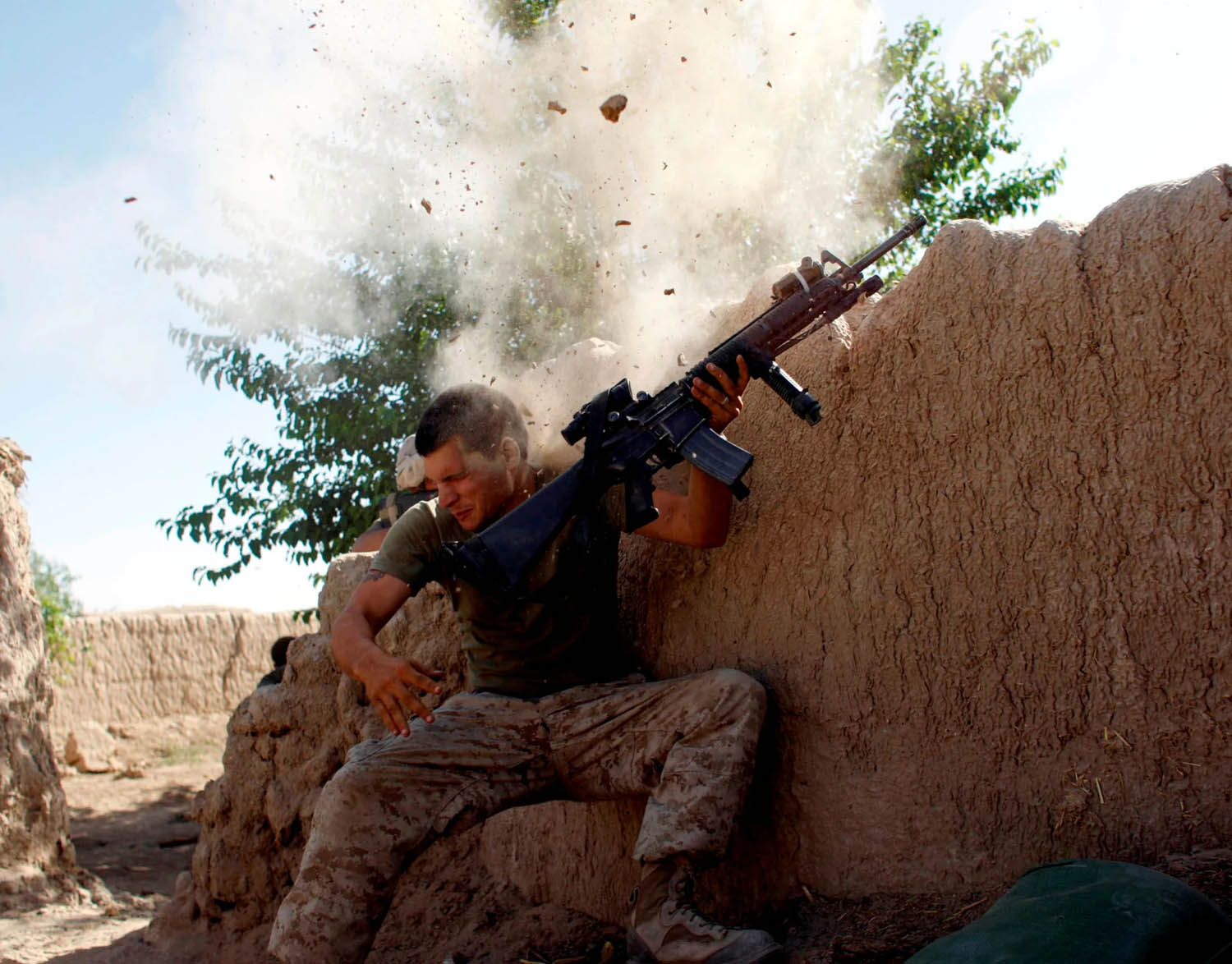
 

Goran Tomasevic (Serbian, b. 1959) /Reuters. 'SHOOTING. Sgt. William Olas Bee, a US Marine from the 24th Marine Expeditionary Unit, has a close call after Taliban fighters opened fire near Garmser in Helmand Province of Afghanistan May 18, 2008. The Marine was not injured.' 2008


Goran Tomasevic (Serbian, b. 1959) /Reuters
SHOOTING. Sgt. William Olas Bee, a US Marine from the 24th Marine Expeditionary Unit, has a close call after Taliban fighters opened fire near Garmser in Helmand Province of Afghanistan May 18, 2008. The Marine was not injured.
2008


Tomašević began photographing the war that followed the breakup of Yugoslavia from 1991 for daily newspaper Politika. In 1996 he joined the world’s largest news agency, Reuters, covering the simmering political tensions in Kosovo and the anti-Milošević demonstrations in his hometown of Belgrade since mid-1990s. During three-month NATO bombing of Yugoslavia in 1999, Tomašević was the only photographer working for foreign press to spend the duration of the conflict in Kosovo.

Tomašević moved to Jerusalem in 2002, covering the second Palestinian intifada. During the U.S. led invasions of Iraq in 2003, his picture of a U.S. Marine watching the toppling of a Saddam Hussein statue became one of the most memorable images of the war. He often returned to Iraq as sectarian violence escalated and regularly photographed America’s other war in Afghanistan. His sequence of photographs of U.S. Marine Sergeant Bee narrowly escaping Taliban bullets became an iconic image in U.S. war history.

Tomašević moved to Cairo in 2006 and was at the heart of Reuters’ coverage of the Arab Springs. In Libya, his image of a fireball that spewed up after an air strike on pro-Gaddafi fighters became an iconic image of the Libyan war, gracing the front pages of more than 100 newspapers around the globe. He stayed in Cairo until 2012. His raw pictures of rebel fighters battling pro-Assad forces among the ruins of Aleppo and Damascus during the Syrian Civil War have won international acclaim, as did his coverage of the bloody siege on a Nairobi shopping mall in Kenya. Tomašević worked for Reuters until 2022.

Text from the Wikipedia website


Museum of Fine Arts, Houston
1001 Bissonnet Street
Houston, TX 77005

Opening hours:
Wednesday 11am – 5pm
Thursday 11am – 9pm
Friday 11am – 6pm
Saturday 11am – 6pm
Sunday 12.30pm – 6pm
Closed Monday and Tuesday, except Monday holidays
Closed Thanksgiving Day and Christmas Day

Museum of Fine Arts, Boston website

LIKE ART BLART ON FACEBOOK

Back to top

Exhibition: ‘WAR/PHOTOGRAPHY: Images of Armed Conflict and Its Aftermath’ at the Museum of Fine Arts, Houston – Posting Part 3

Exhibition dates: 11th November 2012 – 3rd February 2013


Walter Astrada, (Argentinean, b. 1974) 'Congolese women fleeing to Goma' 2008


Walter Astrada, (Argentinean, b. 1974)
Congolese women fleeing to Goma
2008
From the series Violence against women in Congo, Rape as weapon of war in DRC
Chromogenic print (printed 2010)
The Museum of Fine Arts, Houston, museum purchase with funds provided by Photo Forum 2010
© Walter Astrada


“War is, above all, grief.”

Dmitri Baltermants


“Violence is the last refuge of the incompetent”


Salvor Hardin in Isaac Asimov’s ‘Foundation’ series


Part three of the biggest posting on one exhibition that I have ever undertaken on Art Blart!

As befits the gravity of the subject matter this posting is so humongous that I have had to split it into 4 separate postings. This is how to research and stage a contemporary photography exhibition that fully explores its theme. The curators reviewed more than one million photographs in 17 countries, locating pictures in archives, military libraries, museums, private collections, historical societies and news agencies; in the personal files of photographers and service personnel; and at two annual photojournalism festivals producing an exhibition that features 26 sections (an inspired and thoughtful selection) that includes nearly 500 objects that illuminate all aspects of WAR/PHOTOGRAPHY.

I have spent hours researching and finding photographs on the Internet to support the posting. It has been a great learning experience and my admiration for photographers of all types has increased. I have discovered the photographs and stories of new image makers that I did not know and some enlightenment along the way. I despise war, I detest the state and the military that propagate it and I surely hate the power, the money and the ethics of big business that support such a disciplinarian structure for their own ends. I hope you meditate on the images in this monster posting, an exhibition on a subject matter that should be consigned to the history books of human evolution.

**Please be aware that there are graphic photographs in all of these postings.** Part 1Part 2Part 4

Dr Marcus Bunyan


Many thankx to the Museum of Fine Arts, Houston for allowing me to publish some of the photographs in the posting. Please click on the photographs for a larger version of the image.


Civilians

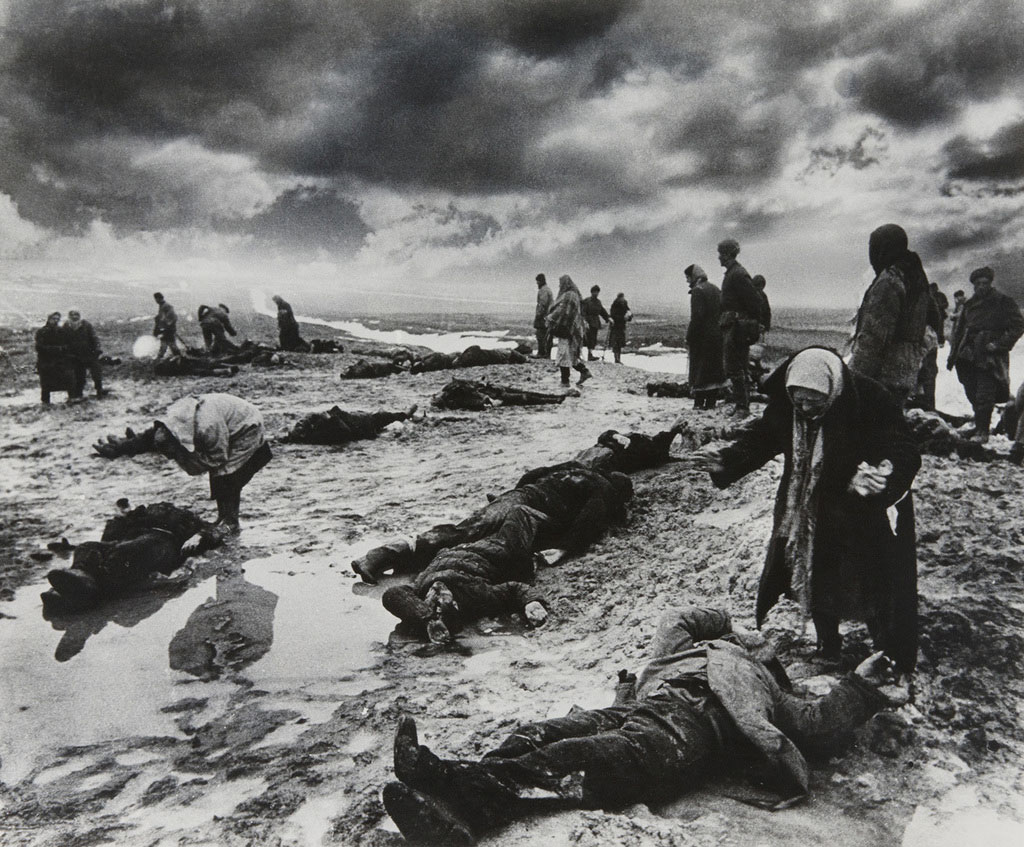
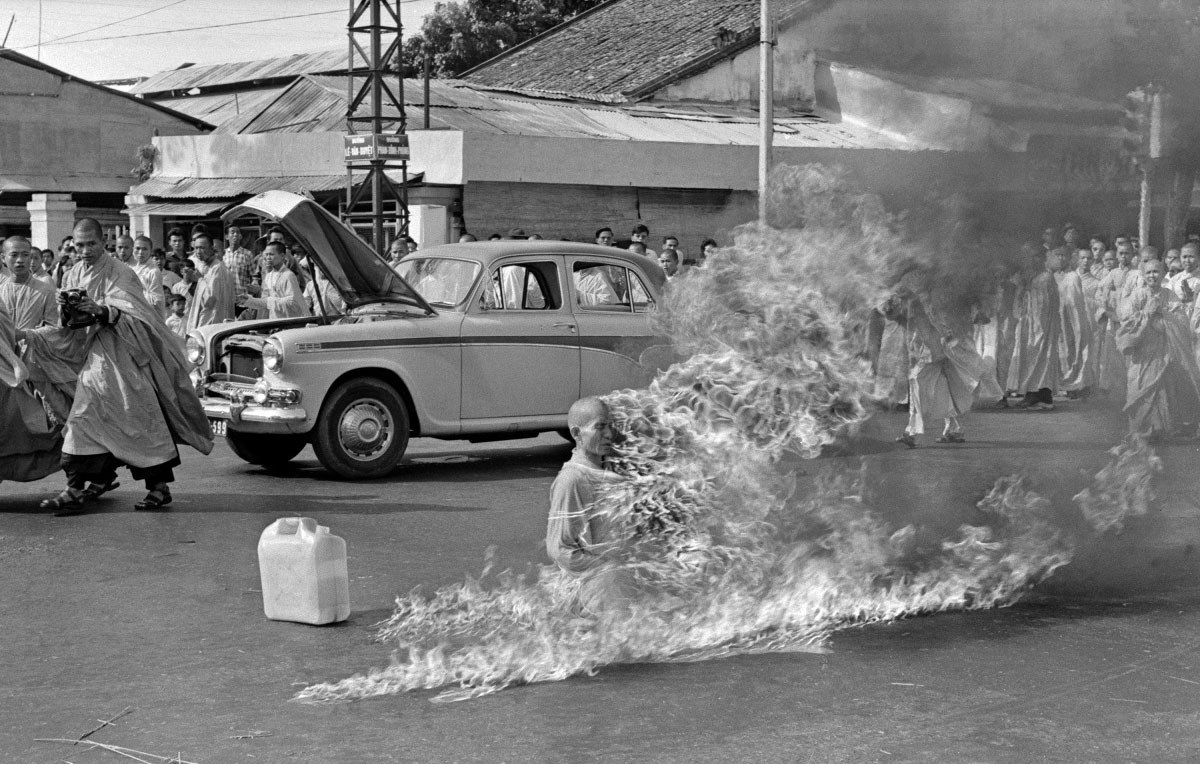
21. Civilians spans World War II through 2008. The subsection “Dead and Wounded” includes Grief, Kerch, Crimea, by Dmitri Baltermants, of civilians in 1942 searching the bodies of Russian Jewish family members who had been executed by Germans soldiers as they retreated. A 2003 photograph, taken by Ahmed Jadallah for the news agency Reuters while he lay wounded from shrapnel, shows bodies in the street in the largest refugee camp in the Gaza Strip. “Daily Life” shows a Congolese woman breastfeeding as a tank rolls by, in a 2008 image by Walter Astrada; Londoners sleeping in an underground train station in 1940, by Bill Brandt; a woman eating bread in Amsterdam during the Hongerwinter famine of 1944, by Cas Oorthuys; a 1940/1941 meeting in New York of members of the Bund, an American Nazi party, by Otto Hagel; a monk burning himself in Saigon in 1963, in protest against alleged religious persecution by the South Vietnamese government, by Malcolm Browne; and a man uncovering an anti-personnel land mine in Angola in 2004, by Sean Sutton. Pictures of civilian “Grief” are common, and the images here include a woman in Tehran inspecting photographs of the missing, by Gilles Peress; a man at an airport, grieving alone and holding a folded American flag, by Harry Benson; a father digging a grave for his daughter in a soccer field in Somalia, by Howard Castleberry; and a woman mourning in Afghanistan in 1996, at the grave of her brother who was killed by a Taliban rocket, by James Nachtwey. (46 images)


Otto Hagel (American born Germany, 1909-1973) 'German-Americans at a meeting in New Jersey of the Deutsche Bund' 1940-41


Otto Hagel (American born Germany, 1909-1973)
German-Americans at a meeting in New Jersey of the Deutsche Bund
1940-1941
Silver gelatin print


Dmitri Baltermants (Russian born Poland, 1912-1990) 'Grief, Kerch, Crimea' Spring 1942


Dmitri Baltermants (Russian born Poland, 1912-1990)
Grief, Kerch, Crimea
Spring 1942
Silver gelatin print


“War, is, above all, grief. I photographed non-stop for years and I know that in all that time I produced only five or six real photographs. War is not for photography. If, heaven forbid, I had to photograph war again, I would do it quite differently. I agonise now at the thought of all the things that I did not photograph.”

Dmitri Baltermants quoted in “The Russian War, 1941-1945” (J. Cape, London, 1978)


Cas Oorthuys (Dutch, 1908-1975) 'Portrait of starving woman in the hunger winter, Amsterdam' 1944-1945


Cas Oorthuys (Dutch, 1908-1975)
Portrait of starving woman in the hunger winter, Amsterdam
1944-1945
Silver gelatin print


Malcolm Browne (American, 1931-2012) 'Burning Monk - The Self-Immolation' 1963


Malcolm Browne (American, 1931-2012)
Burning Monk – The Self-Immolation
1963
Gelatin silver print


Harry Benson (Scottish, b. 1929) 'Grieving man, holding flag' 1971


Harry Benson (Scottish, b. 1929)
Grieving man, holding flag
1971
Gelatin silver print


Children

22. Children have been consistently photographed during wartime as both victims and soldiers. Images in this section include Sir Cecil Beaton’s Three-year-old Eileen Dunne in Hospital for Sick Children, England (1940); children viewing the bodies of other children who were hanged as collaborators in Russia in the 1940s, by Mark Redkin; Philip Jones Griffiths’ image of a young boy, Called “Little Tiger” for killing two “Vietcong women cadre” – his mother and teacher, it was rumored (1968); children playing “execution” in Italy, by Enzo Sellerio; two orphaned boys smoking cigarettes in post-World War II Japan, by Hayashi Tadahiko; a father home on leave reading the newspaper with his son, who wears his dad’s helmet, by Andrea Bruce; and the 2005 photograph, by Chris Hondros, of a blood-splattered Iraqi girl whose family was mistakenly ambushed by U.S. troops. (13 images) 


Cecil Beaton (British, 1904-1980) 'Eileen Dunne, aged three, sits in bed with her doll at Great Ormond Street Hospital for Sick Children, after being injured during an air raid on London in September 1940' 1940


Cecil Beaton (British, 1904-1980)
Eileen Dunne, aged three, sits in bed with her doll at Great Ormond Street Hospital for Sick Children, after being injured during an air raid on London in September 1940
1940
Gelatin silver print
© IWM (MH 26395)


Philip Jones Griffiths (Welsh, 1936-2008) 'Called "Little Tiger” for killing two "Vietcong women cadre” - his mother and teacher, it was rumored, Vietnam' 1968


Philip Jones Griffiths (Welsh, 1936-2008)
Called “Little Tiger” for killing two “Vietcong women cadre” – his mother and teacher, it was rumored, Vietnam
1968
Gelatin silver print
The Philip Jones Griffiths Foundation, courtesy of Howard Greenberg Gallery
© Philip Jones Griffiths / Magnum Photos


Andrea Bruce (American, b. 1973) 'Untitled [A father home on leave reading the newspaper with his son, who wears his dad’s helmet]' 2006


Andrea Bruce (American, b. 1973)
Untitled [A father home on leave reading the newspaper with his son, who wears his dad’s helmet]
2006
From the series When the War Comes Home
Gelatin silver print


Portraits

23. Portraits are the most common type of photograph made during conflicts. Dispersed throughout the exhibition, lining the main walkway through the galleries, are the faces of leaders, the enlisted, heroes and war criminals, as well as group portraits. One of the earliest prints in the exhibition is a daguerreotype from the Mexican-American War of a high-ranking officer. Matthew Brady, one of the most famous photographers of the 19th century, was renowned for coverage of the Civil War; his MajorGeneral Joseph Hooker, c. 1863, is on view. Among the most recent is a self-portrait by American Cpl. Reynaldo Leal USMC. Leal – who was born and grew up in Edinburg, Texas, and now lives in El Paso – served in Iraq conducting combat patrols through the villages along the Euphrates. (40 images)


Matthew B. Brady (American, 1823-1896) 'Colonel William Gates, believed to have been taken upon his return from the Mexican War' c. 1848


Matthew B. Brady (American, 1823-1896)
Colonel William Gates, believed to have been taken upon his return from the Mexican War
c. 1848
Half plate daguerreotype, gold toned
Library of Congress


Mathew B. Brady (American, 1823-1896) 'Major-General Joseph Hooker' c. 1863


Mathew B. Brady (American, 1823-1896)
Major-General Joseph Hooker
c. 1863
Salted paper print, hand coloured
The Museum of Fine Arts, Houston, museum purchase with funds provided by the S. I. Morris Photography Endowment


Corporal Reynaldo Leal USMC (American, b. 1983) 'Self‑portrait after a Patrol' c. 2004-2006


Corporal Reynaldo Leal USMC (American, b. 1983)
Self‑portrait after a Patrol
c. 2004-2006
Inkjet print
13 1/2 × 9 in. (34.3 × 22.9cm)
The Museum of Fine Arts, Houston
Museum purchase with funds provided by Will Michels and Clinton T. Willour
© Reynaldo Leal


War’s End

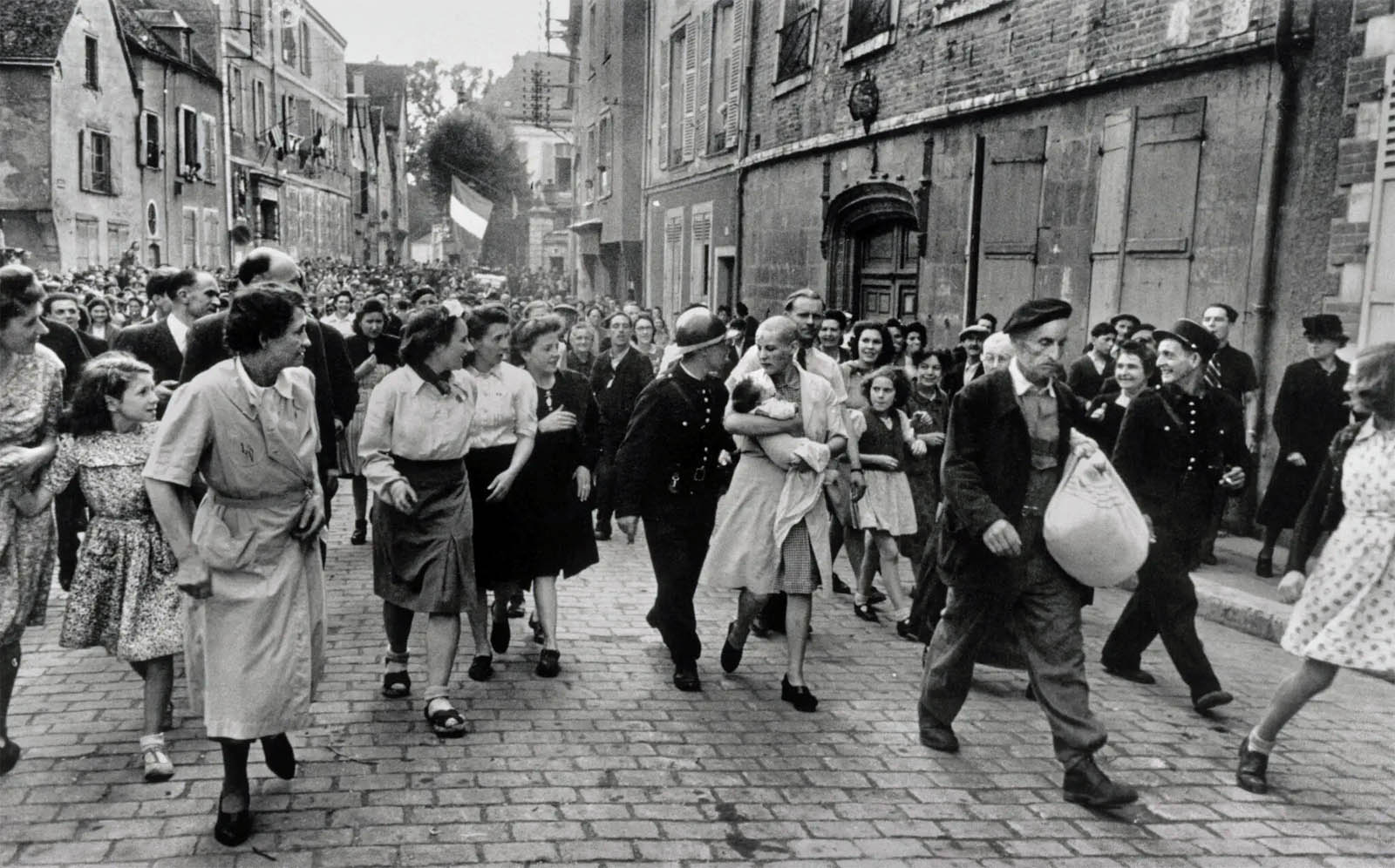
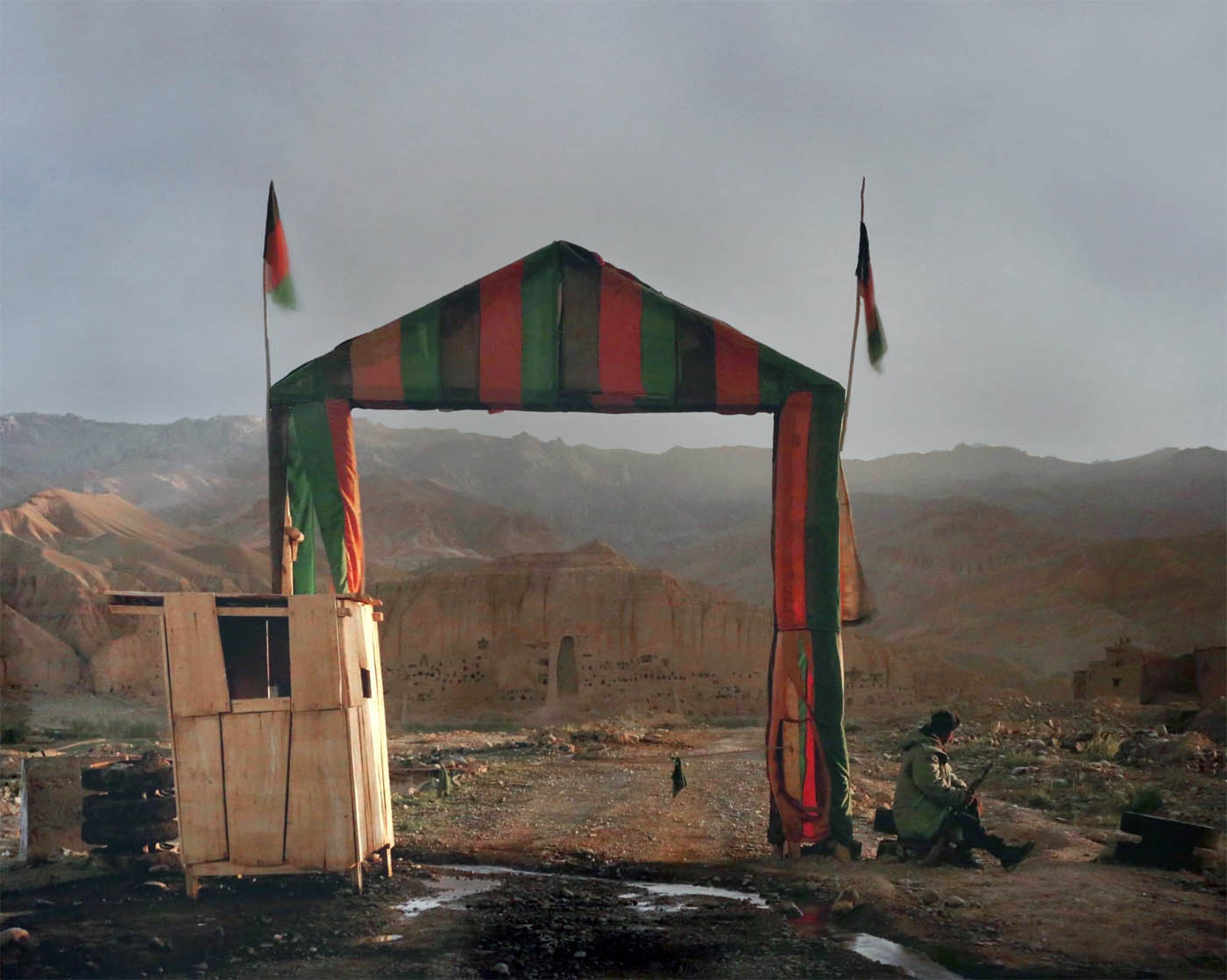
24. War’s End is identifiable at the moment a photograph is taken. The subsection “Victory/Defeat” is the visual manifest of the outcome of war, from the Japanese signing peace documents on board the USS Missouri, by Carl Mydans; to German generals discussing terms of surrender in the woods just four days after Adolf Hitler committed suicide in 1945, by E. G. Malindine; and the raising of the Hammer and Sickle over the Reichstag in Berlin in 1945, by Evgeny Khaldey. Also included is Simon Norfolk’s Victory arch built by the Northern Alliance at the entrance to a local commander’s headquarters in Bamiyan. The empty niche housed the smaller of the two Buddhas, destroyed by the Taliban in 2001, from the series Afghanistan: Chronotopia. “Retribution” contains a 1945 image, by Lee Miller, of a concentration-camp guard who was beaten by prisoners after their liberation; and a photograph by Robert Capa of a Frenchwoman who had been impregnated by a German soldier, as she walks through a jeering crowd with her head shaved in punishment and carrying her baby. The photographs in “Homecoming” establish an emotive connection: a family reunion on the tarmac at an Air Force base in California in 1973, by Sal Veder; a mother and son embracing at the Ben-Gurion Airport in Israel in 1976, by Micha Bar-Am; and a man who has returned from duty in Bosnia in 1995 to discover that his home and everyone in it is gone, by Ron Haviv. (23 images)


Robert Capa (Hungarian-American, 1913-1954) 'Collaborator woman who had a German soldier's child, Chartres, 18 August 1944' 1944


Robert Capa (Hungarian-American, 1913-1954)
Collaborator woman who had a German soldier’s child, Chartres, 18 August 1944
1944
Gelatin silver print
33 x 49cm


Evgeny Khaldey (Russian, 1917-1997) 'The Flag of Victory' 1945


Evgeny Khaldey (Russian, 1917-1997)
The Flag of Victory
1945
Gelatin silver print


E. G. Malindine (British, 1906-1970) 'German Military Forces Seek Surrender Terms, May 1945'


E. G. Malindine (British, 1906-1970)
No 5 Army Film & Photographic Unit, Malindine E G (Capt), Morris (Sgt)
German Military Forces Seek Surrender Terms, May 1945
1945
Gelatin silver print
Public domain


Field Marshal Sir Bernard Montgomery with the German delegates outside his headquarters at 21st Army Group


Carl Mydans (American, 1907-2004) 'Japanese signing peace documents on board the USS Missouri' 1945


Carl Mydans (American, 1907-2004)
Japanese signing peace documents on board the ‘USS Missouri’
1945
Gelatin silver print


Sal Velder (American, b. 1926) 'Released prisoner of war Lt. Col. Robert L. Stirm is greeted by his family at Travis Air Force Base in Fairfield, California on March 17, 1973, as he returns home from the Vietnam War' 1973


Sal Velder (American, b. 1926)
Released prisoner of war Lt. Col. Robert L. Stirm is greeted by his family at Travis Air Force Base in Fairfield, California on March 17, 1973, as he returns home from the Vietnam War
1973
Silver gelatin print
© Sal Velder


Micha Bar-Am (Israeli born Germany, 1930-2022) 'The return from Entebbe, Ben-Gurion Airport, Israel' 1976


Micha Bar-Am (Israeli born Germany, 1930)
The return from Entebbe, Ben-Gurion Airport, Israel
1976
From the series Promised Land
Inkjet print
Courtesy of the artist and Andrea Meislin Gallery, New York
© Micha Bar-Am / Magnum Photos


Ron Haviv (American, b.1965) 'A Bosnian soldier stands on what is believed to be a mass grave outside his destroyed home. He was the sole survivor of 69 people' 1995


Ron Haviv (American, b. 1965)
A Bosnian soldier stands on what is believed to be a mass grave outside his destroyed home. He was the sole survivor of 69 people
1995
Inkjet print
Courtesy of Ron Haviv/VII
© Ron Haviv


Simon Norfolk (British born Nigeria, b. 1963)
'Victory arch built by the Northern Alliance at the entrance to a local commander’s headquarters in Bamiyan. The empty niche housed the smaller of the two Buddhas, destroyed by the Taliban in 2001' 2001


Simon Norfolk (British born Nigeria, b. 1963)
Victory arch built by the Northern Alliance at the entrance to a local commander’s headquarters in Bamiyan. The empty niche housed the smaller of the two Buddhas, destroyed by the Taliban in 2001
2001
From the series Afghanistan: Chronotopia


Museum of Fine Arts, Houston
1001 Bissonnet Street
Houston, TX 77005

Opening hours:
Wednesday 11am – 5pm
Thursday 11am – 9pm
Friday 11am – 6pm
Saturday 11am – 6pm
Sunday 12.30pm – 6pm
Monday Closed
Tuesday Closed

Museum of Fine Arts, Boston website

LIKE ART BLART ON FACEBOOK

Back to top

Exhibition: ‘Engaged Observers: Documentary Photography since the Sixties’ at The J. Paul Getty Museum, Los Angeles

Exhibition dates: 29th June – 14th November 2010


Many thankx to the The J. Paul Getty Museum for allowing me to publish the photographs in the posting.


Leonard Freed (American, 1929-2006) 'New York City' 1963


Leonard Freed (American, 1929-2006)
New York City
1963
Gelatin silver print
24.6 x 16.4cm (9 11/16 x 6 7/16 in.)
The J. Paul Getty Museum, Los Angeles
© Leonard Freed / Magnum Photos, Inc.


W. Eugene Smith (American, 1918-1978) 'Industrial Waste from the Chisso Chemical Company' 1972


W. Eugene Smith (American, 1918-1978)
Industrial Waste from the Chisso Chemical Company
1972
Gelatin silver print
24.4 x 34cm (9 5/8 x 13 3/8 in.)
Minamata photographs by W. Eugene Smith & Aileen M. Smith
Courtesy of Robert Mann Gallery, New York, New York
© Aileen Smith H. Christopher Luce


In the decades following World War II, an independently minded and critically engaged form of photography began to gather momentum. Situated between journalism and art, its practitioners created extended photographic essays that delved deeply into topics of social concern and presented distinct personal visions of the world. On view at the J. Paul Getty Museum, the Getty Center, June 29 – November 14, 2010, Engaged Observers: Documentary Photography since the Sixties looks in depth at projects by a selection of the most vital photographers who have contributed to the development of this documentary approach. Passionately committed to their subjects, these photographers have captured both meditative and searing images, from the deep south in the civil rights era to the war in Iraq in 2006. Their powerful visual reports, often published extensively as books, explore aspects of life that are sometimes difficult and troubling but are worthy of attention.

“This exhibition focuses on the tradition of socially engaged photographic essays since the 1960s,” explains Brett Abbott, associate curator of photographs and curator of the exhibition. “Working beyond traditional media outlets, these photographers have authored evocative bodies of work that transcend the realm of traditional photojournalism.”

Engaged Observers is structured around suites of photographs from the following projects: “Girl Culture” by Lauren Greenfield, “The Mennonites” by Larry Towell, “Streetwise” by Mary Ellen Mark, “Black in White America” by Leonard Freed, “Nicaragua, June 1978 – July 1979” by Susan Meiselas, “Vietnam Inc.” by Philip Jones Griffiths, “The Sacrifice” by James Nachtwey, “Migrations: Humanity in Transition” by Sebastião Salgado, and “Minamata” by W. Eugene and Aileen M. Smith.

Although one does not always associate style with photojournalism, where objectivity and neutrality are traditionally valued, aesthetics have been an important consideration for all of the photographers represented in the exhibition. One of the strengths of this tradition has been its ability to harness artistic decisions in reporting on the world. Meiselas chose colour film for her Nicaragua project because she felt it better conveyed the spirit of the revolution as she experienced it. Salgado noted that the solemn beauty so characteristic of his approach is important in conjuring a persistent grace among his migrant subjects, allowing him to present them in a dignified way while calling attention to their plight. Nachtwey used tight framing of messy conglomerations of tubes, instruments, and arms in The Sacrifice as a way of conjuring the atmosphere of controlled chaos that he experienced in trauma centres in Iraq. In this kind of work, subject and style, message and delivery, are deliberately intertwined.

All of the photographers in this exhibition use a series of images to address conceptual issues. For instance, Freed was concerned with bridging cultural divides to engender support of basic civil rights, while Griffiths denounced violent commercialisation; Salgado pointed to the effects of globalisation, while the Smiths addressed the related issue of industrial pollution; Meiselas engaged and countered the fragmented process by which we receive news and understand history, while Towell challenged the meaning of “newsworthy” and explored, as did Greenfield, how cultural values affect life; Nachtwey found the human toll of war unacceptable, and Mark, the idea of homeless street kids in one of the wealthiest nations in the world.

Many of the photographers have published books to further convey their socially engaged messages. Books allow for a greater depth of reporting than magazine articles since their length can be tailored to the needs of a particular project. And because they can be read in private, books are conducive to extended contemplation and the slow absorption of ideas, both of which are important to understanding projects that are broad in scope and have layers of meaning that, in many cases, were developed over the course of years. Moreover, they provide photographers authorial control over the presentation of their work. Each artist has the ability to decide how pictures are captioned and with what information.

A final section of the exhibition is devoted to tracing the origins of the documentary photography tradition, touching on American Civil War photographs by Alexander Gardner, turn-of-the-century activism by Lewis Hine, Depression-era photography, and photojournalism in pre-World War II picture magazines. This section also looks closely at the formation of Magnum Photos. Founded in 1947 by Robert Capa, Henri Cartier-Besson, and several other photographers, Magnum provided a new platform for an independent documentary approach to photojournalism and became one of the world’s most prestigious photographic organisations. Magnum was structured to allow its members to pursue stories of their own choosing, spend as much time as they wanted on a particular topic, and be as involved as they desired in the editing, captioning, and publication of their work. The organisation was meant to harness commercial assignments as a base from which to pursue independent work, and the concept has given rise to generations of independent photographers, including many of those in Engaged Observers.

Press release from The J. Paul Getty Museum website [Online] Cited 28/12/2019


Lewis W. Hine (American, 1874-1940)
'[Crowd of Newsies, Including One Girl]' 1910


Lewis W. Hine (American, 1874-1940)
[Crowd of Newsies, Including One Girl]
1910
Gelatin silver print
Sheet: 11.4 × 16.5cm (4 1/2 × 6 1/2 in.)
The J. Paul Getty Museum


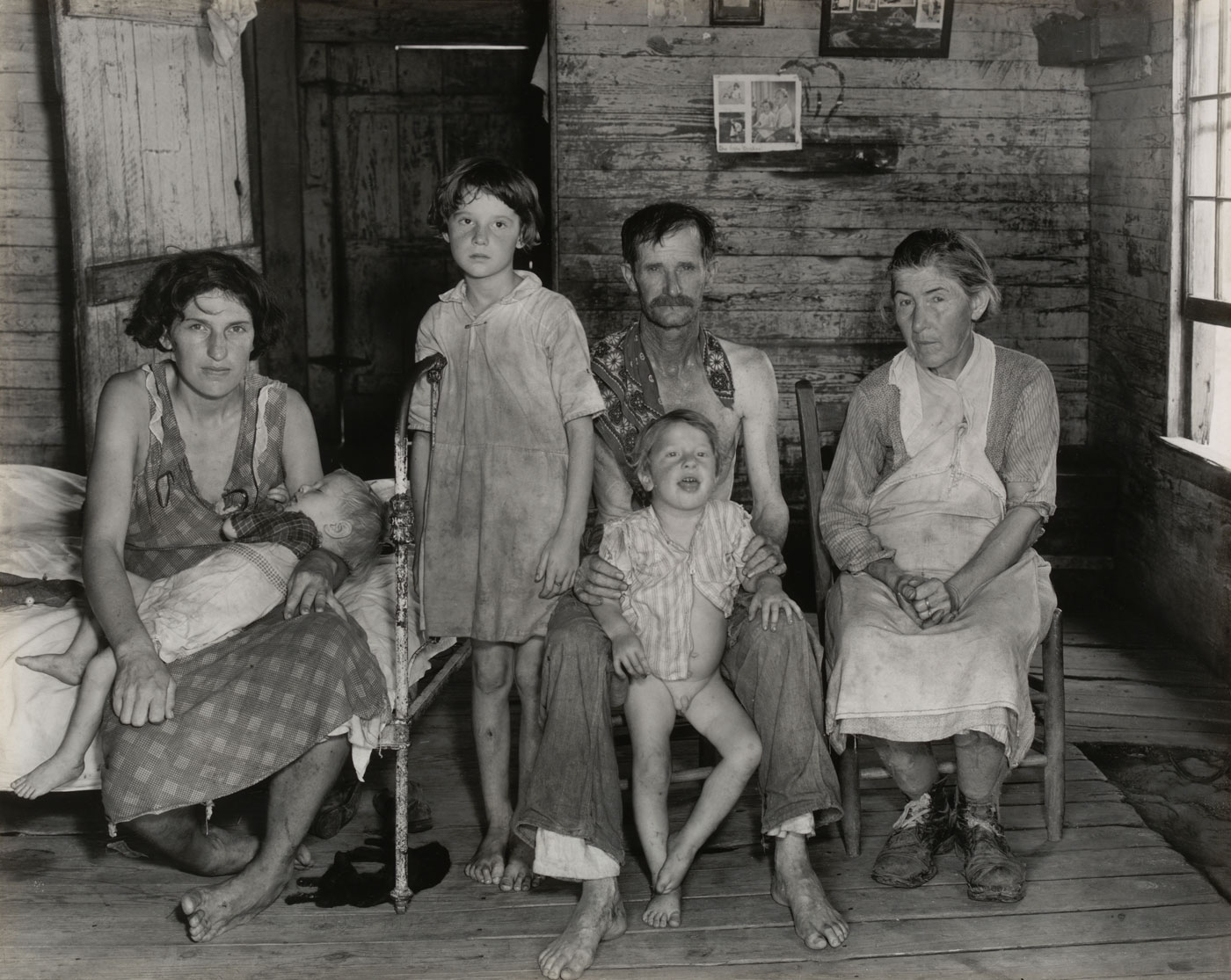
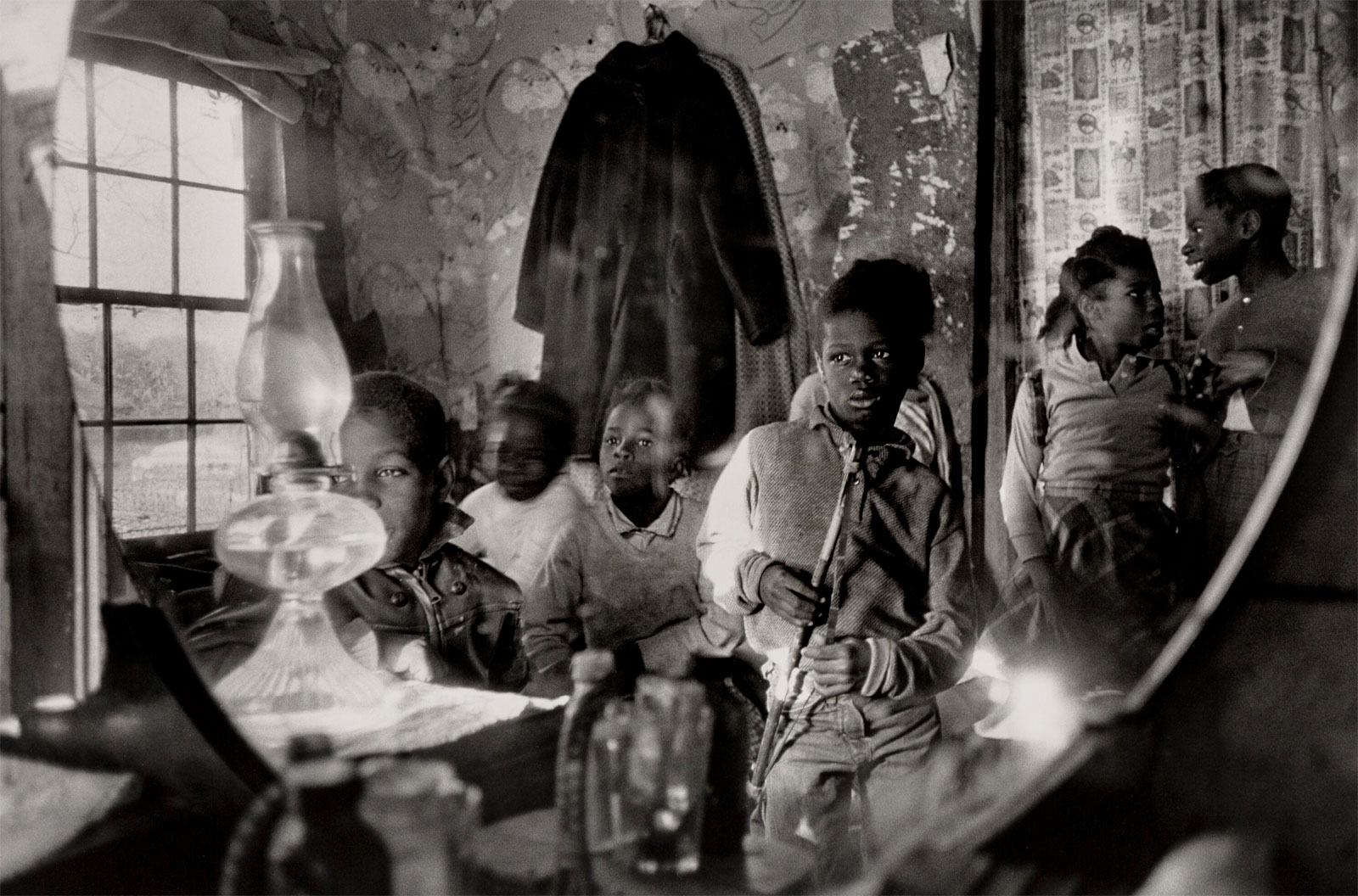
Walker Evans (American, 1903-1975) 'Sharecropper's Family, Hale County, Alabama / Bud Fields and His Family, Hale County, Alabama / Bud Woods and His Family' 1936


Walker Evans (American, 1903-1975)
Sharecropper’s Family, Hale County, Alabama / Bud Fields and His Family, Hale County, Alabama / Bud Woods and His Family
1936
Gelatin silver print
19.4 x 24.3cm (7 5/8 x 9 9/16 in.)
© The J. Paul Getty Museum, Los Angeles


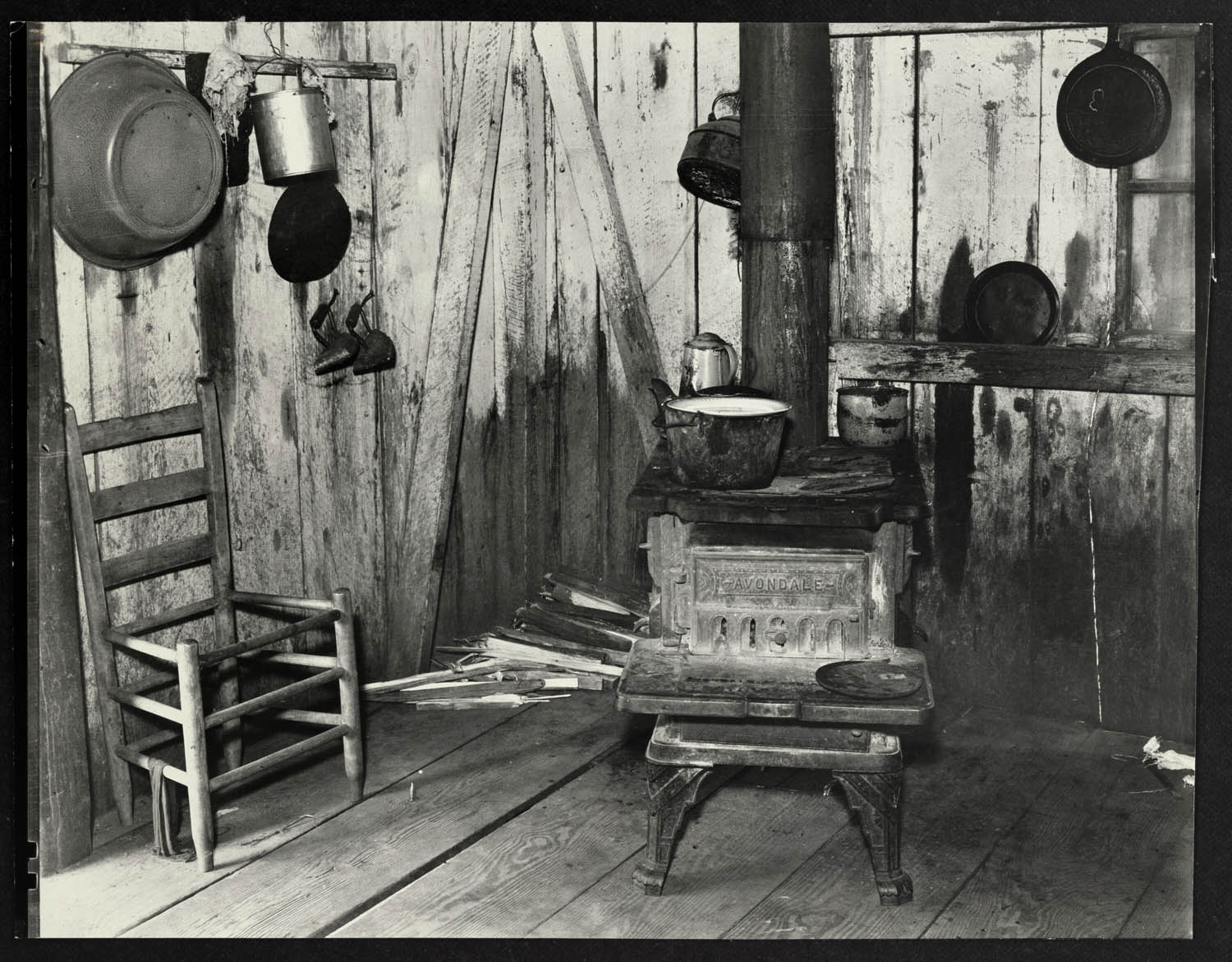
Walker Evans (American, 1903-1975) 'Alabama Tenant Farmer's Kitchen Near Moundville' 1936


Walker Evans (American, 1903-1975)
Alabama Tenant Farmer’s Kitchen Near Moundville
1936
Gelatin silver print
21.7 × 24.1cm (8 9/16 × 9 1/2 in.)
The J. Paul Getty Museum, Los Angeles


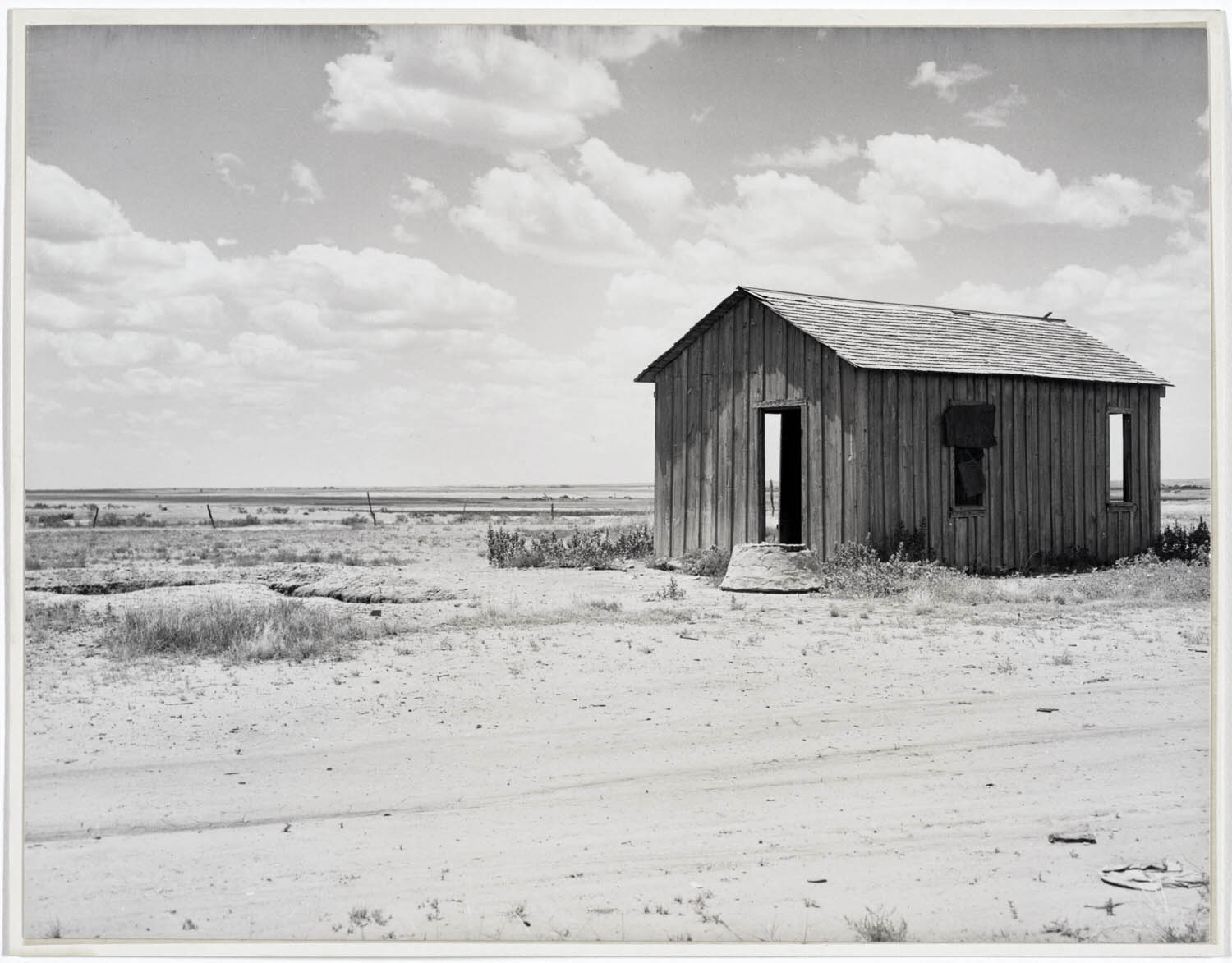
Dorothea Lange (American, 1895-1965) 'Abandoned Dust Bowl Home'
About 1935-1940


Dorothea Lange (American, 1895-1965)
Abandoned Dust Bowl Home
About 1935-1940
Gelatin silver print
18.9 × 24.4cm (7 7/16 × 9 5/8 in.)
The J. Paul Getty Museum, Los Angeles


Leonard Freed (American, 1929-2006) 'Johns Island, South Carolina' 1964


Leonard Freed (American, 1929-2006)
Johns Island, South Carolina
1964, printed later
Gelatin silver print
16 × 24 cm (6 5/16 × 9 7/16 in.)
The J. Paul Getty Museum, Los Angeles
© Leonard Freed / Magnum Photos


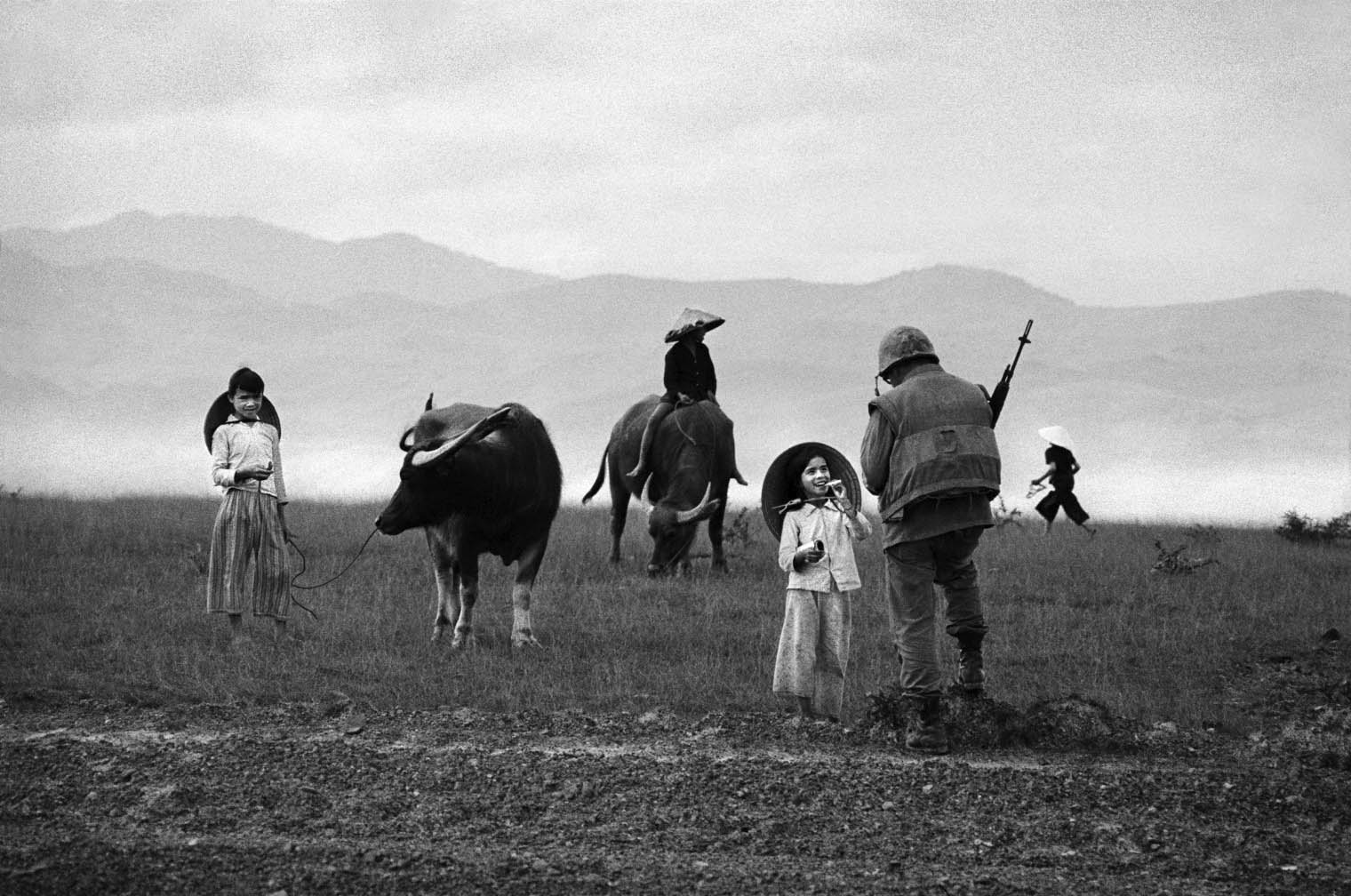
Philip Jones Griffiths (Welsh, 1936-2008) 'Vietnam' 1967


Philip Jones Griffiths (Welsh, 1936-2008)
Vietnam
1967
Gelatin silver print
21.3 x 31.8cm (8 3/8 x 12 1/2 in.)
The J. Paul Getty Museum, Los Angeles
© The Philip Jones Griffiths Foundation / Magnum Photos


Limits of friendship. A Marine introduces a peasant girl to king-sized filter-tips. Of all the U.S. forces in Vietnam, it was the Marines that approached Civic Action with gusto. From their barrage of handouts, one discovers that, in the month of January1967 alone, they gave away to the Vietnamese 101,535 pounds of food, 4,810 pounds of soap, 14,662 books and magazines, 106 pounds of candy, 1,215 toys, and 1 midwifery kit. In the same month they gave the Vietnamese 530 free haircuts.


James Nachtwey (American, b. 1948) "The Sacrifice" negative 2006-2007; print 2010


James Nachtwey (American, b. 1948)
The Sacrifice
negative 2006-2007; print 2010
Inkjet print
111.8 x 983cm (44 x 387 in.)
James Nachtwey, New York, New York
© James Nachtwey


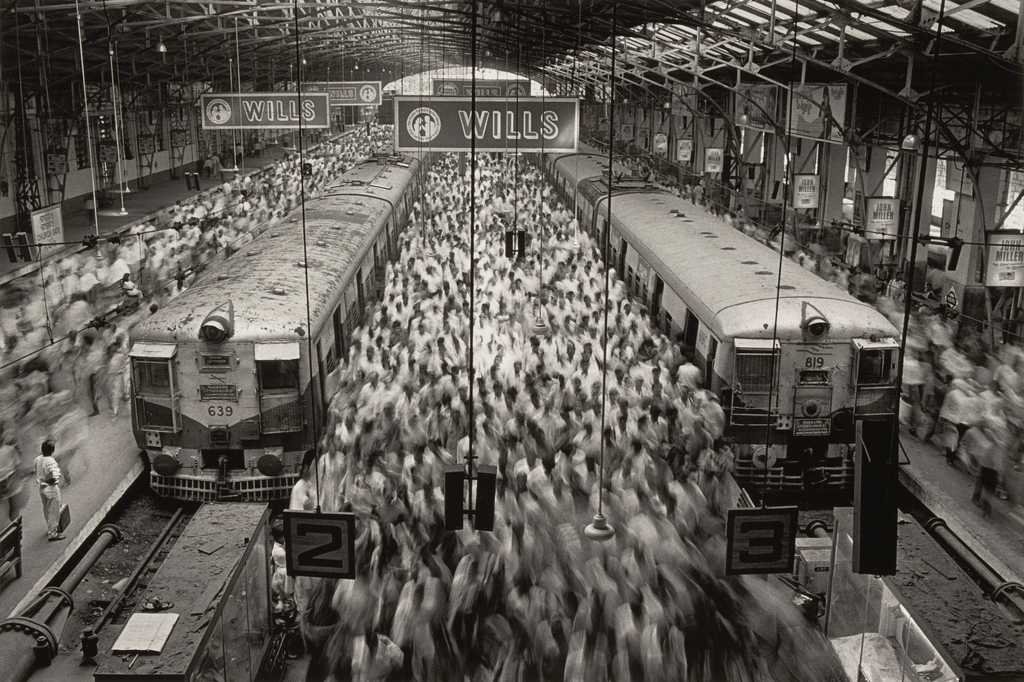
Sebastião Salgado (Brazilian, b. 1944) "Church Gate Station, Western Railroad Line, Bombay, India" negative 1995; print 2009


Sebastião Salgado (Brazilian, b. 1944)
Church Gate Station, Western Railroad Line, Bombay, India
negative 1995; print 2009
Gelatin silver print
34.3 x 51.4cm (13 1/2 x 20 1/4 in.)
The J. Paul Getty Museum, Los Angeles
© Sebastião Salgado


Photographic essays

Leonard Freed

BLACK IN WHITE AMERICA

“Photography shows the connection between things, how they relate. Photography is not entertaining, this is not decoration, this is not advertising. Photographing is an emotional thing, a graceful thing. Photography allows me to wander with a purpose.”

Leonard Freed (American, 1923-2006), interview in Worldview, 2007


While working in Germany in 1962, photographer Leonard Freed happened to notice a black American soldier guarding the divide between East and West as the Berlin Wall was being erected. It was not the partition between the forces of Communism and Capitalism that captured Freed’s imagination, however. Instead, he was haunted by the idea of a man standing in defence of a country in which his own rights were in question. The experience ignited the young photographer’s interest in the American civil rights movement raging on the other side of the globe. In June 1963 Freed headed back to the United States to embark on a multiyear documentary project, published in about 1968 as Black in White America, that would become the signature work of his career.

The Black in White America series is a kind of visual diary with a moralising purpose. It is highly personal and socially engaged with an implicit goal of effecting change through communication. While Freed made pictures of important events in the civil rights struggle, including the 1963 March on Washington, he quickly found that his interests lay not in recording the progress of the civil rights movement per se but in exploring the diverse, everyday lives of a community that had been marginalised for so long. Penetrating the fabric of daily existence, his work portrays the common humanity of a people persevering in unjust circumstances. His sensitive and empathetic approach sought not to stimulate outrage but to foster understanding and bridge cultural divides as a means of transcending racial antipathy.

Lauren Greenfield

FAST FORWARD and GIRL CULTURE

“Girl Culture has been my journey as a photographer, as an observer of culture, as part of the media, as a media critic, as a woman, as a girl… I was… thinking about my chronic teenage dieting, my gravitation toward good-looking and thin friends for as long as I can remember, and the importance of clothes and status symbols in the highly materialistic, image-oriented Los Angeles milieu in which I grew up.”

Lauren Greenfield (American, born 1966), Girl Culture, 2002


Photographer and documentary filmmaker Lauren Greenfield has built her reputation as a chronicler of mainstream American culture. In 2002 she published a photographic project, Girl Culture, that delves into the ways consumer society affects the lives of women in America. Of central concern to Greenfield was the exhibitionist tendencies of contemporary American femininity. Visiting girls of all ages at home, in doctors’ offices, and out with friends,

Greenfield examined personal issues of public consequence, providing an intense and intimate exploration of girls’ relationships to their bodies and the effects of popular culture on self-image.

Many of her pictures and accompanying interviews focus on what she refers to as “body projects,” the daily grooming rituals undertaken in an effort to express identity through appearance. Others look at the social and consumerist influences from which these young women take their cues as well as the difficulty of living up to such expectations.

Girl Culture grew out of an earlier study, Fast Forward, that critically surveyed what life is like for children growing up in Los Angeles. The work revolves around her perception of an early loss of innocence among her young subjects and traces Hollywood’s role as a homogenising force in their lives.

Greenfield’s lens becomes a mirror in which to reflect upon ourselves. Together Fast Forward and Girl Culture sensitively explore how culture leaves its imprint on individuals.

Philip Jones Griffiths

VIETNAM INC.

“The “bang-bang” aspect of any war is the least likely to offer any explanation of the underlying causes. My task is to discover the why, so it’s the actions surrounding the battlefields that present the best clues.”

Philip Jones Griffiths (Welsh, 1936-2008), Aperture, spring 2008


A lifelong desire to leave the world a better place drove Philip Jones Griffiths, whose work is marked by a fiercely independent approach, deep engagement with his subjects, and a skeptical view of authority. Vietnam Inc., the photographer’s critical 1971 account of America’s armed intervention in Southeast Asia, is one of the most detailed photographic stories of a war published by a single photographer. The project’s exploration of the why, and not just the what, behind the war’s failures made it a particularly engaging and ambitious work of advocacy journalism and a model to which many photographers still aspire.

Griffiths’s independent approach is remarkable because of its sensitivity to the people of Vietnam and its eschewing of a Western point of view. In Vietnam Inc. there are few photographs documenting American troops and the might of their military prowess. Instead, his primary focus was on Vietnamese civilians and a culture in crisis. His book put the conflict in the context of Vietnam’s history and culture, showing the ways in which the Capitalist values that America promoted in its efforts to contain the spread of Communism were out of sync with Vietnam’s predominantly communal and agrarian way of life.

Vietnam, for Griffiths, became a “goldfish bowl where the values of Americans and Vietnamese can be observed, studied, and, because of their contrasting nature, more easily appraised.” And in Griffiths’s appraisal, it was America’s “misplaced confidence in the universal goodness” of its own values that would ultimately lead to an imperialist failure and, more importantly, the unjust devastation of a people.

Mary Ellen Mark

STREETWISE

“One of the reasons we chose Seattle was because it is known as “America’s most liveable city.” Los Angeles, San Francisco, and New York were well known for their street kids. By choosing America’s ideal city we were making the point “If street kids exist in a city like Seattle then they can be found everywhere in America, and we are therefore facing a major social problem of runaways in this country.””

Mary Ellen Mark (American, 1940-2015), Streetwise, 1988


Mary Ellen Mark has reported on the state of our social environment for more than four decades. Far removed from the immediacy of war and conflict, her work plumbs the basic commonality of human experience.

In 1983 Mark traveled to Seattle to do an article for Life magazine on runaway children. Focusing on a set of streets in the city’s downtown area, she began building a sense of trust with the community of runaways and learning about their survival methods. Her pictures showed teenagers who managed to survive on the tough streets through petty crime, prostitution, foraging in dumpsters, and panhandling. She presented the abandoned buildings and underpasses they inhabited and the bonds they built with one another in the absence of family. Mark’s compositions are striking and uncomfortable, emphasising her subjects’ youth while capturing them engaged in activities beyond their years.

Following publication of an article in Life, she continued to develop the story as both a documentary film and still photographic project with her husband, filmmaker Martin Bell, and reporter Cheryl McCall. The film, titled Streetwise, was released the following year and was nominated for an Academy Award. Mark published her still photographs from the project in a book of the same title in 1988.

The Streetwise project provided dimension to an important issue of its day. In giving specific shape, individuality, and visibility to the problem of runaway children, it called for greater social and political commitment to addressing America’s epidemic of broken families.

Susan Meiselas

NICARAGUA, JUNE 1978 – JULY 1979

“We all cross histories, and the ones that we cross shape us as much as we shape them.”

Susan Meiselas (American, born 1948), in conversation with the curator, 2010


In 1978 Magnum photographer Susan Meiselas traveled to Nicaragua. Tensions were high following the assassination of Pedro Joaquín Chamorro, the editor of an opposition newspaper critical of the repressive, hard-line government. Meiselas witnessed the eruption of a full-scale revolution in August of that year. Aware that a momentous process was taking place, she stayed to record its unfolding, including the celebration of the revolutionaries’ victory in the central plaza of Managua in July 1979.

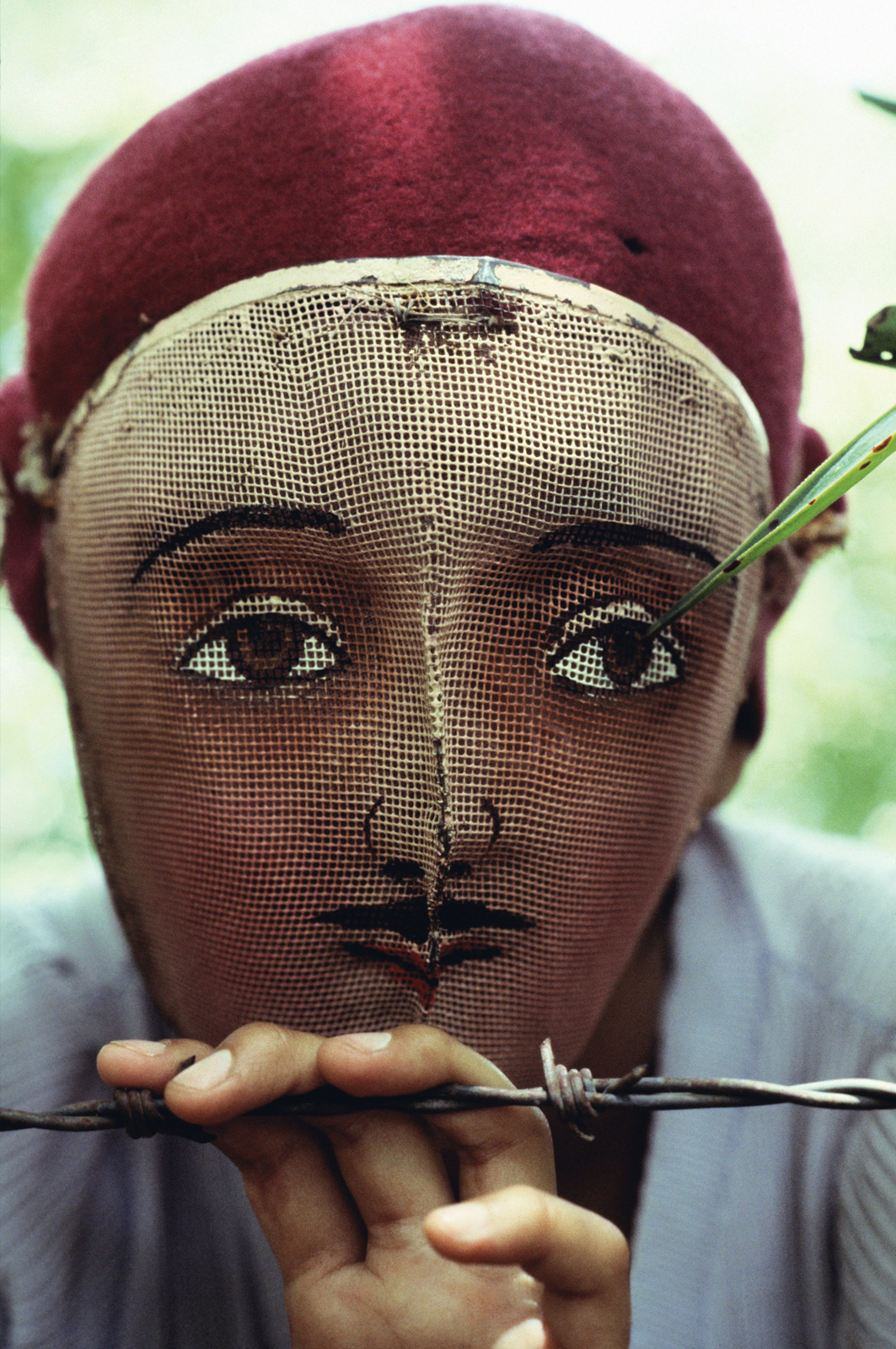
Meiselas was taken by the bravery of those who were willing to risk their lives against the dictatorship for the promise of a better future, and she took pains to photograph the action from the perspective of those involved in it. The record of her movements around the country formed a narrative about the progress of their insurrection. She made a decision, which at the time was still considered somewhat unusual in serious war reportage, to record the revolution on colour film, seeing it as a more appropriate medium for capturing the vibrancy and optimism of the resistance.

The photographer’s compelling pictures were picked up by major newspapers and magazines around the world, giving individual images a public life, but one that was beyond her immediate control with regard to captioning and that was fragmented from the context of her larger body of pictures. In collecting seventy-one of her photo-graphs into a book, first published in 1981 as Nicaragua, June 1978 – July 1979, Meiselas reasserted the narrative of the revolution as she experienced it and gave greater permanence and coherence to her documentary endeavour.

James Nachtwey

THE SACRIFICE

“For me, the strength of photography lies in its ability to evoke a sense of humanity. If war is an attempt to negate humanity, then photography can be perceived as the opposite of war. And if it is used well, it can be a powerful ingredient in the antidote to war.”

James Nachtwey (American, born 1948), from the film The War Photographer, 2001


For nearly thirty years James Nachtwey has dedicated himself to delivering an antiwar message by documenting those around the world affected by conflict. Traveling with emergency medical units in Iraq in 2006, the photographer began a photo essay, The Sacrifice, that documents the struggle to save and rebuild lives. The series depicts the helicopter transfers from battle sites to treatment centers, the emergency rooms where lives hang in the balance, and the difficult process of recovery.

In anticipation of showing the work, Nachtwey created a monumental installation print, consisting of sixty individual trauma-center images, tightly framed and digitally collaged into a grid. The work stands as a grim reminder of the human costs of war. The object’s sheer size, in which one picture gives way to the next in a seemingly endless stream of torn flesh, metal instruments, snaking tubes, and bloodied hands, effectively conveys a sense of the controlled chaos that permeates these medical centres as well as the overwhelming volume of casualties flowing through the medics’ hands on a daily basis.

While it may be easy to contemplate and even support war in abstract, strategic terms, it is difficult to face Nachtwey’s portrayal of its inevitable results. In its aggressive scale, his intentionally unsettling work demands that we reconcile the goals and achievements of armed conflict with its human costs, that we be prepared to acknowledge in particular visual terms the sacrifice it entails and the valiant work of those who do their best to mend its path of destruction.

Sebastião Salgado

MIGRATIONS: HUMANITY IN TRANSITION

“My hope is that, as individuals, as groups, as societies, we can pause and reflect on the human condition at the turn of the millennium. Can we claim “compassion fatigue” when we show no sign of consumption fatigue?”

Sebastião Salgado (Brazilian, born 1944), Migrations, 2000


Trained in economics before taking up photography, Sebastião Salgado has used his camera to raise awareness of the world’s economic disparities and provoke discussion about the state of our international social environment. Between 1994 and 1999 Salgado pursued an enormous project to document migrant populations around the world. Published in 2000 as Migrations: Humanity in Transition, this epic work of twentieth-century photojournalism documents people across forty-three countries who have been uprooted by globalisation, persecution, or war. The pictures in this exhibition represent several themes in Salgado’s study, including the effects of population surges in cities of developing countries, the conditions of refugees fleeing war in Africa, and the process of migration from Latin America to the United States.

Salgado’s work is marked by a heightened attention to aesthetic grace that attempts to endow his subjects with dignity even as it communicates the discomfort of their circumstances. His photographs are constructed with careful attention to dramatic lighting, elegant contours, and striking visual impact. Ultimately, Salgado sees himself as a storyteller and a communicator, a bridge between the fortunate and the unfortunate, the developed and the undeveloped, the stable and the uprooted. Portrayed lyrically and sensitively, his subjects are transformed into metaphors for complex inequities that exist in the world – problems that must be recognised and acknowledged before they can be addressed.

W. Eugene Smith and Aileen M. Smith

MINAMATA

“[Pollution] is closing more tightly upon us each day… After reflecting on the rights and wrongs of the situation in Minamata, we hope through this book to raise our small voices of words and photographs in a warning to the world. To cause awareness is our only strength.”

W. Eugene Smith (American, 1918-1978) and Aileen M. Smith (American, born 1950), Minamata, 1975


In 1971 W. Eugene Smith, a major figure in the history of socially concerned photography, and his wife, Aileen M. Smith, were told of a controversy over industrial pollution taking place in the small Japanese fishing village of Minamata. Beginning in the 1950s, thousands of people in the area were severely affected by mercury poisoning, brought about by eating fish contaminated with chemical waste dumped in the bay by the Chisso Corporation. Victims were afflicted with brain damage, paralysis, and convulsions. The ailment, which came to be known as Minamata Disease, is not reversible.

When the Smiths arrived in Minamata, lawsuits had already begun, and the couple set out to document the progress of the claims. They spent three years on the project, calling attention to the victims’ cause. Aileen acted as an equal collaborator, making pictures and writing texts with W. Eugene. The work resulted in numerous magazine publications, exhibitions, and a coauthored book, Minamata, published in 1975.

The Smiths’ study records the course of the trial through the court’s ruling in favour of the plaintiffs in 1973. The essay relates the importance of the sea and fishing to the town’s culture, reports on the company’s drainage pipes into the sea, chronicles the lives transformed by the disease, and depicts the demonstrations that took place in opposition to Chisso. As a tale of the dangers of industrial pollution, the project gained traction within the political atmosphere of the 1970s, when the environmental movement was taking off.

Larry Towell

THE MENNONITES

“When a Mennonite loses his land, a bit of his human dignity is forfeited; so is his financial solvency. He becomes a migrant worker, an exile who will spend the rest of his life drifting among fruit trees and vegetable vines, dreaming of owning his own farm some day. But for these who struggle with God at the end of a hoe, the refuge of land, Church, and community may be at least a generation away.”

Larry Towell (Canadian, born 1953), The Mennonites, 2000


Wary of the media’s commitment to speed, photographer Larry Towell insists on the integrity of extended-coverage reporting. In 1989 he came into contact with members of a Mennonite community near his home in Canada. The Old Colony Mennonites are a nonconformist Protestant sect related to the Amish that originated in Europe in the 1500s.

Over the centuries, they have migrated between countries to preserve their way of life, living in colonies where faith and tradition are intertwined and modern amenities, such as cars, rubber tires, and electricity, are not welcome.

The Mennonites Towell befriended had migrated to Canada from colonies in Mexico in search of seasonal work. Due to shrinking water tables in Mexico, the effects of international trade, and a rising population in the colonies, many Mennonites have found themselves landless and economically marginalised, forced to compromise their beliefs in order to survive. Towell was eventually invited to join them in their treks back to Mexico for the winter. With his unique and intimate access, he spent the next ten years photographing their activities, capturing their struggle to preserve a lifestyle incongruent with the larger world on which they have become interdependent.

Towell’s work documented the Mennonites’ way of life for the historical record and inspires greater understanding today for a group whose attempts to embrace life could be easily overlooked. In spending a decade on a subject that would be of only passing interest to mainstream media, he asserts a form of visual reporting in which reflection takes precedence over profitability and immediacy.

Text from the J. Paul Getty Museum


Sebastião Salgado (Brazilian, b. 1944) 'Mexico Border, desert of San Ysidro, California' negative 1997; print 2009


Sebastião Salgado (Brazilian, b. 1944)
U.S. – Mexico Border, desert of San Ysidro, California
Negative 1997; print 2009
Gelatin silver print
34.4 x 51.4cm (13 9/16 x 20 1/4 in.)
The J. Paul Getty Museum, Los Angeles
© Sebastião Salgado


Mary Ellen Mark (American, 1940-2015) 'Lillie with Her Rag Doll, Seattle' 1983


Mary Ellen Mark (American, 1940-2015)
Lillie with Her Rag Doll, Seattle
1983
Gelatin silver print
22.6 x 34cm (8 7/8 x 13 3/8 in.)
The J. Paul Getty Museum, Los Angeles
© Mary Ellen Mark


Mary Ellen Mark (American, 1940-2015) '"Rat" and Mike with a Gun, Seattle' 1983


Mary Ellen Mark (American, 1940-2015)
“Rat” and Mike with a Gun, Seattle
1983
Gelatin silver print
22.8 x 34.2cm (9 x 13 7/16 in.)
The J. Paul Getty Museum, Los Angeles
© Mary Ellen Mark


Susan Meiselas (American, b. 1948)
'Muchachos attendant la riposte de la Garde nationale, Matagalpa, Nicaragua' (Awaiting counterattack by the Guard in Matagalpa, Nicaragua) 1978, printed 1980s


Susan Meiselas (American, b. 1948)
Muchachos attendant la riposte de la Garde nationale, Matagalpa, Nicaragua (Awaiting counterattack by the Guard in Matagalpa, Nicaragua)
1978, printed 1980s
Silver-dyer bleach print
22.4 × 34.3cm (8 13/16 × 13 1/2 in.)
The J. Paul Getty Museum, Los Angeles
© Susan Meiselas / Magnum Photos


Susan Meiselas (American, b. 1948)
'Traditional Indian dance mask adopted by the rebels during the fight against Somoza, Nicaragua'
1978, printed 1980s


Susan Meiselas (American, b. 1948)
Traditional Indian dance mask adopted by the rebels during the fight against Somoza, Nicaragua
1978, printed 1980s
Silver-dye bleach print
49.5 × 33cm (19 1/2 × 13 in.)
The J. Paul Getty Museum, Los Angeles
© Susan Meiselas / Magnum Photos


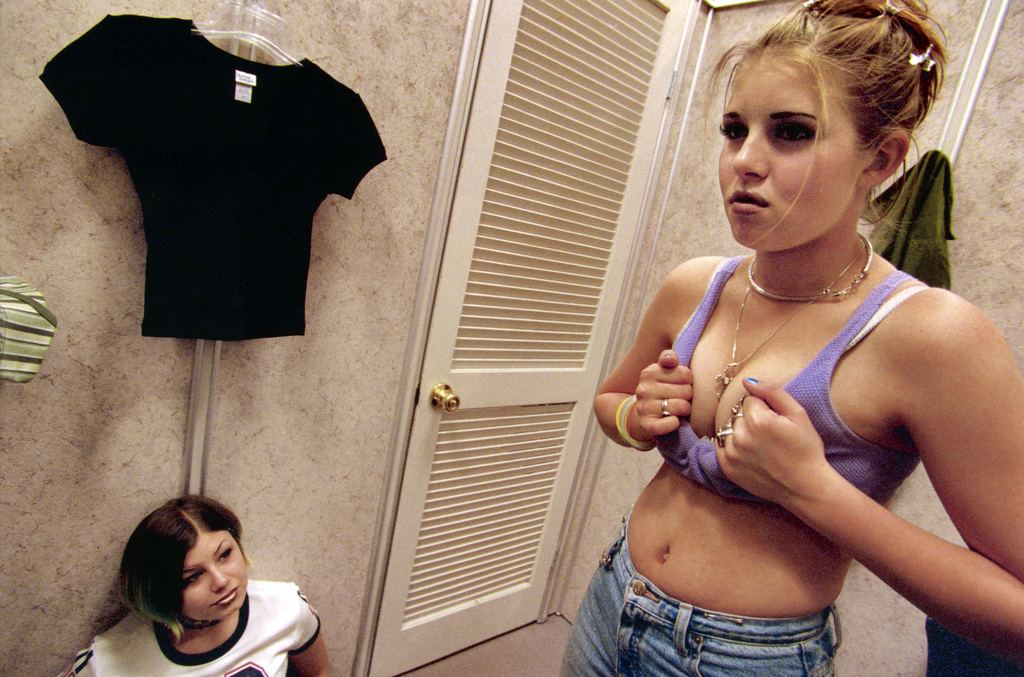
Lauren Greenfield (American, b. 1966) 'Sheena tries on clothes with Amber, 15, in a department store dressing room, San Jose, California' negative 1999; print 2002


Lauren Greenfield (American, b. 1966)
Sheena tries on clothes with Amber, 15, in a department store dressing room, San Jose, California
Negative 1999; print 2002
Dye destruction print
32.5 x 49.1cm (12 13/16 x 19 5/16 in.)
The J. Paul Getty Museum, Los Angeles
© Lauren Greenfield/INSTITUTE


Lauren Greenfield (American, b. 1966) 'Erin, 24, is blind-weighed at an eating-disorder clinic, Coconut Creek, Florida. She has asked to mount the scale backward so as not to see her weight gain' negative 2001; print 2002


Lauren Greenfield (American, b. 1966)
Erin, 24, is blind-weighed at an eating-disorder clinic, Coconut Creek, Florida. She has asked to mount the scale backward so as not to see her weight gain
Negative 2001; print 2002
Dye destruction print
32.5 x 49.1cm (12 13/16 x 19 5/16 in.)
The J. Paul Getty Museum, Los Angeles
© Lauren Greenfield/INSTITUTE


The J. Paul Getty Museum
1200 Getty Center Drive
Los Angeles, California 90049

Opening hours:
Open 10am – 5.30pm
Saturday 10am – 8pm
Closed Mondays

The J. Paul Getty Museum website

LIKE ART BLART ON FACEBOOK

Back to top