I am opening the exhibitions Movement and Emotion and Jodie Noble Solo at Arts Project Australia, Northcote on Wednesday 19th October 2011 from 6 – 8pm. All welcome, would be great to see you there. Details on the flyer!
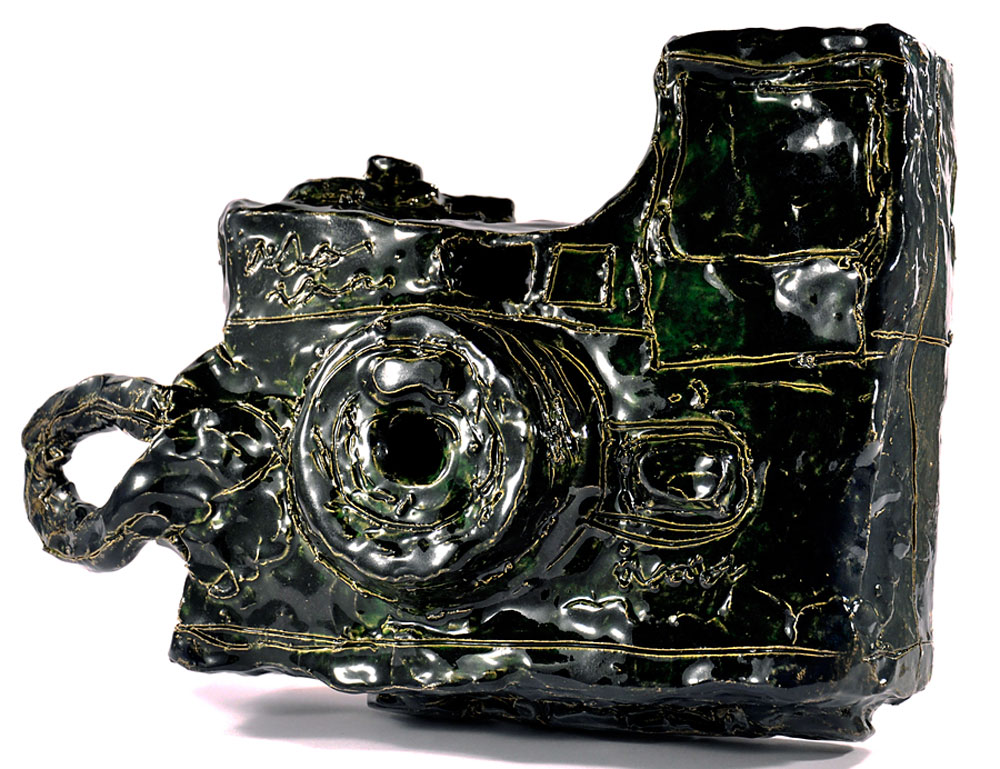
Alan Constable (Australian, b. 1956) Konica Pop 2009 Ceramic 21 x 32 x 10cm
“For me, art is what is most animal in us … It is the most noble thing because it’s a celebration precisely of the forces of the body and the forces of life.”
Elizabeth Grosz
This Saturday, after a journey around the galleries of Albert Street, Richmond (underwhelming) and a visit to Sutton Gallery to see Simon Terrill’s photographic exhibition Phantom (an exhibition that I was going to review but when I saw it I changed my mind: two excellent photographs, Balfron Tower 2010-2011 and Rivoli #2 2010-2011, let down by three “empty” long exposure photographs allegedly showing traces of humanity, residues of presence) had left me a little deflated, I ventured to the opening of Alan Constable’s twenty-year retrospective Viewfinder curated by Dr Cheryl Daye at Arts Project Australia.
What a breath of fresh air this exhibition is!
The exhibition shows beautifully in the gallery space. Hung chronologically, the more tightly controlled early series feature luminous pastels that investigate themes: landscapes, birds (rarely figures) – the rubbed and layered medium building up an almost translucent surface that reminded me of the pastel work of Odilon Redon. Later work, such as the two paintings Not titled (person with binoculars) 2009 and Not titled (figure with camera) 2006 (both below) show a greater engagement with the world and a freeing up of technique – running figures, Barak Obama, Dr. Who, suited men with headdresses, football players: happenings – with exaggerated form (hands for example), wonderful spontaneity and an essential simplicity that engages the viewer directly. All the paintings evidence a spatial flatness that brings everything onto the same plane, gives everything equal importance within the image (denying Renaissance perspective; as Cliff Burtt notes in the catalogue the converging lines and horizons act as elements of design, forming the scaffolding of composition). This technique is one of the most powerful elements of Constable’s work. A wonderful understanding of light and use of colour are other essential elements. The transformational, rough hewn, playful clay cameras (such as Konica Pop, 2009, below) are a particular favourite of mine. The glazes on the cameras, their tactility, the colours – are luscious. To hold them, to pick them up and feel them in your hands is a very special experience for me. Outstanding.
Constable has a unique way of seeing and imaging the world; his working method is unique. After carefully selecting source images from journals, magazines (for example National Geographic) and newspapers, Constable visually scans the photograph from a few inches, holding it up to his eyes and carefully manoeuvring his way across the surface of the image, then making what he sees – a direct pointing to reality. Without a concept to worry about, through an enabled fluidity and freedom of expression, the artist cuts to the essential form of what he wants to make and because of this directness his work contains absolute kernels of wisdom. His observation is fantastic.
These are exuberant works that are a celebration of the body and of life. They have great spontaneity. What Constable sees, he feels and makes: the mark of the maker writ bold. They made me feel so alive. After the disappointment of earlier exhibitions in the day, this work made me laugh and smile!
You really can’t ask for more. It made my day.
Dr Marcus Bunyan
Many thankx to Sue Roff, Melissa Petty, Sim Lutin and everyone at Arts Project Australia for their help and for allowing me to publish the photographs in the posting. Please click on the photographs for a larger version of the image.
Alan Constable (Australian, b. 1956) Untitled (three-lens camera) 2011 Ceramic
Alan Constable (Australian, b. 1956) Not titled (person with binoculars) 2009 acrylic on canvas 71 x 71.5cm
Alan Constable (Australian, b. 1956) Not titled (figure with camera) 2006 gouache on paper 65.5 x 45cm
Alan Constable is both a painter and a ceramicist. Alan Constable: Viewfinder is a major survey exhibition that will include paintings, drawings and ceramics, opening Saturday 30 April until Wednesday 1 June 2011.
Showcasing more than 60 works selected from over a 20 year period, Viewfinder offers new and rich insights into the unique art of Alan Constable. Legally blind, Constable has been able to create a body of work that is highly regarded. He is been a finalist in numerous Australian Art Awards and his ceramic cameras are highly collectable.
‘Often when a painter is faced with a scene, there’s simply so much that’s appealing it’s hard to choose what to focus on’, says Dr Cheryl Daye, founding director, Arts Project Australia. ‘This is where a viewfinder comes in useful; as it helps you focus on particular parts of the scene, enabling you to decide what will make the best composition, both in terms of focus and format’. Daye has worked closely with Constable from the time he joined the Arts Project studio in 1987.
Viewfinder the title of his survey suggests the artist’s process and methodology as well as the composition and subject matter of his work.
In Constable’s two-dimensional works this can be traced from very early self-portraits (1992), through to carefully observed depictions of birds and animals to the series based on silhouettes framed in industrial or stormy landscapes, a fascination with light and energy and, more recently with colourful interpretations of political and cultural figures, all of which are sourced from photographic images carefully and sometimes painstakingly selected by the artist.
Based on imagery from newspapers and magazines, Constables recent paintings are notable for their vibrant kaleidoscopic effects and strong sense colour and patterning. Though Constable’s works are often centred on political events and global figures, his thematic concerns are frequently subjugated by the pure visual experience of colour and form.
His three-dimensional works, most notably the cameras, also sit well within this theme and given the fact that Constable is legally blind is also obliquely referenced. Constable’s ceramic works reflect a life-long fascination with old cameras, which began with his making replicas from cardboard cereal boxes at the age of eight. The sculptures are lyrical interpretations of technical instruments, and the artist’s finger marks can be seen clearly on the clay surface like traces of humanity. In this way, Constable’s cameras can be viewed as extensions of the body, as much as sculptural representations of an object.
Arts Project Australia supports people with disabilities to become practitioners in the visual arts. The studio and gallery nurtures and promotes artists with an intellectual disability as they develop their body of work.
Press release from Arts Project Australia
Arts Project Australia Artist Profile: David Hurlston on Alan Constable
Alan Constable’s ceramic cameras have seen international acclaim for their tactile, poetic resonances. In this video David Hurlston, Senior Curator of Australian Art at the National Gallery of Victoria, talks through Constable’s process, Constable’s highly idiosyncratic practice and why he believes Constable is one of the most important contemporary artists working today.
Alan Constable (Australian, b. 1956) Red NEK SLR 2011 Ceramic 5.5 x 12.25 x 4.75 inches
Alan Constable (Australian, b. 1956) Orange AKI SLR 2011 Ceramic 6 x 10 x 4 inches
Alan Constable (Australian, b. 1956) Not titled (explosion II) 1996 pastel on paper 50 x 66cm
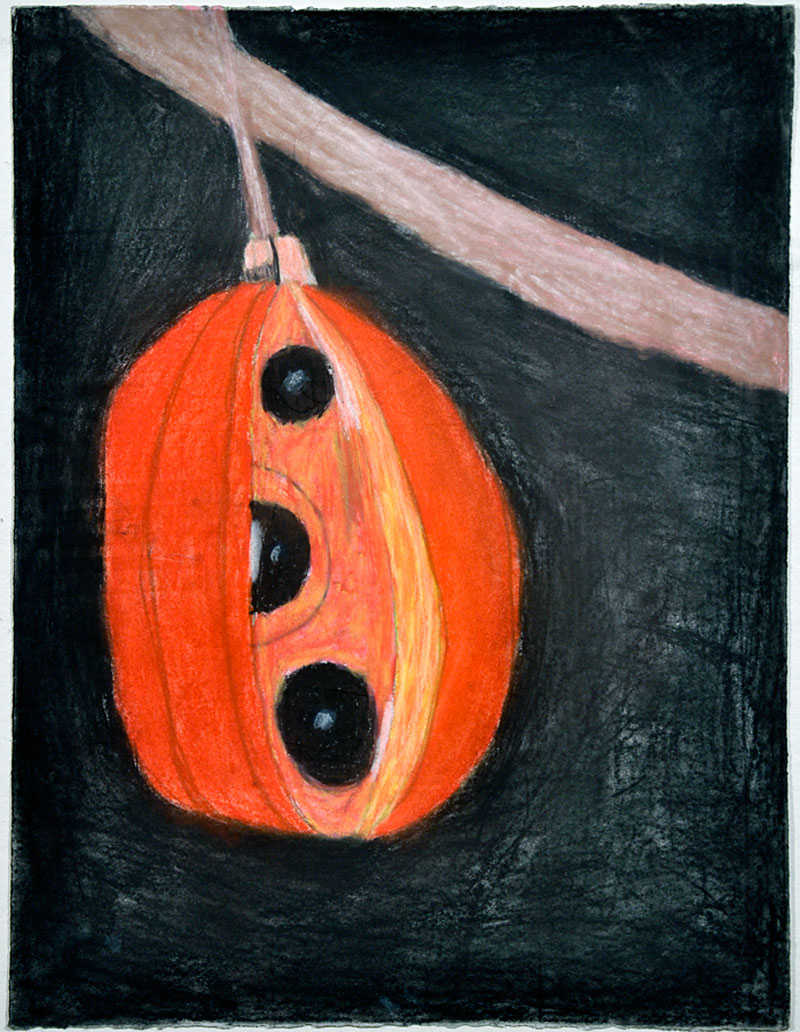
Alan Constable (Australian, b. 1956) Not titled (fruit) 1993 pastel on paper 66 x 50cm Arts Project Australia Permanent Collection
Arts Project Australia
Studio 24 High Street Northcote Victoria 3070 Phone: + 61 3 9482 4484
Gallery Level 1 Perry Street building Collingwood Yards Enter via 35 Johnson Street or 30 Perry Street, Collingwood Phone: +61 477 211 699
Kate Knight (Australian) Not titled (blue and green bird) 2009 ceramic 7 x 30 x 7cm Image courtesy the artist and Arts Project Australia
One of the most – no, the most vibrant and exciting place to visit at last year’s Melbourne Art Fair was the Arts Project Australia stand. What a buzz the place had! They have an interesting gallery in Northcote that is well worth a visit. Coming up at the end of April is a retrospective of the work of Alan Constable that spans twenty years – including the wonderful cameras he makes. Posting about this exhibition to follow.
Dr Marcus Bunyan
Many thankx to Arts Project Australia for allowing me to publish the photographs in the posting. Please click on the photographs for a larger version of the image.
Valerio Ciccone (Australian, b. 1970) Fish 2010 ceramic 3.5 x 24 x 15cm Image courtesy the artist and Arts Project Australia
Bold in form and colour to the intricate and subtle, Subterranean is an exhibition that celebrates the possibilities of the ceramic form at Arts Project Australia from Saturday 19 March until Wednesday 27 April 2011.
From domestic and functional forms to work referencing popular culture and narrative fiction, this exhibition showcases the possibilities of ceramics.
The imitative nature of clay has inspired many Arts Project artists. Popular culture, narrative fiction and two-dimensional images from National Geographic magazines provide the foundation for new sculptures by Rebecca Scibilia, Tim Noble and Ruth Howard.
Several of the featured artists are also interested in the functional potential of ceramics, specifically that of domestic ceramic objects such as vases and teapots. Fiona Longhurst and Kaye McDonald are inspired by existing ceramic items to create their own exquisite versions with intricate detailed surface drawings and colourful glaze patterns.
The artistic process is one of technical experimentation, investigation and discovery, seen in the ceramic work of Valerio Ciccone, Alan Constable, Kelvin Heffernan, Paul Hodges, Ruth Howard, Thomas Iacono, Kate Knight, Fiona Longhurst, Chris Mason, Karen McCullough, Kaye McDonald, Cameron Noble, Jodie Noble, Tim Noble, Chris O’Brien, Lisa Reid, Rebecca Scibilia, Malcolm Sturrock and Terry Williams.
Subterranean has been curated by Katie Jacobs.
Arts Project Australia is a not for profit organisation that has been supporting artists with intellectual disabilities since 1974. Our inner city studio and gallery exist to nurture and promote artists as they develop their body of work. We rely on government funds, personal and philanthropic donations and commissions from artwork sales to continue our work.
Text from Arts Project Australia
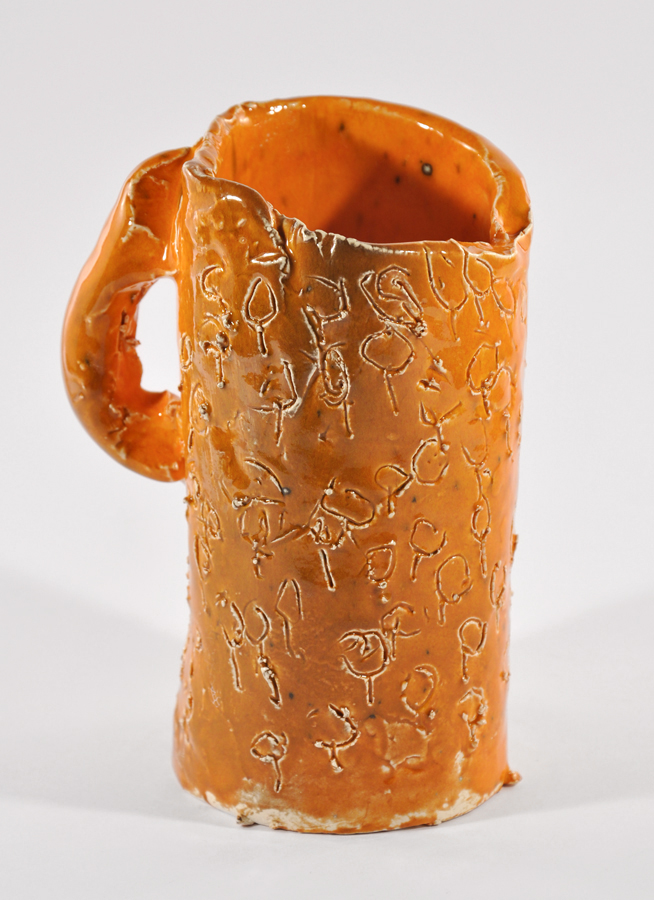
Kaye McDonald (Australian, b. 1946) Not titled (orange mug) 2010 ceramic 16 x 11 x 9cm Image courtesy the artist and Arts Project Australia
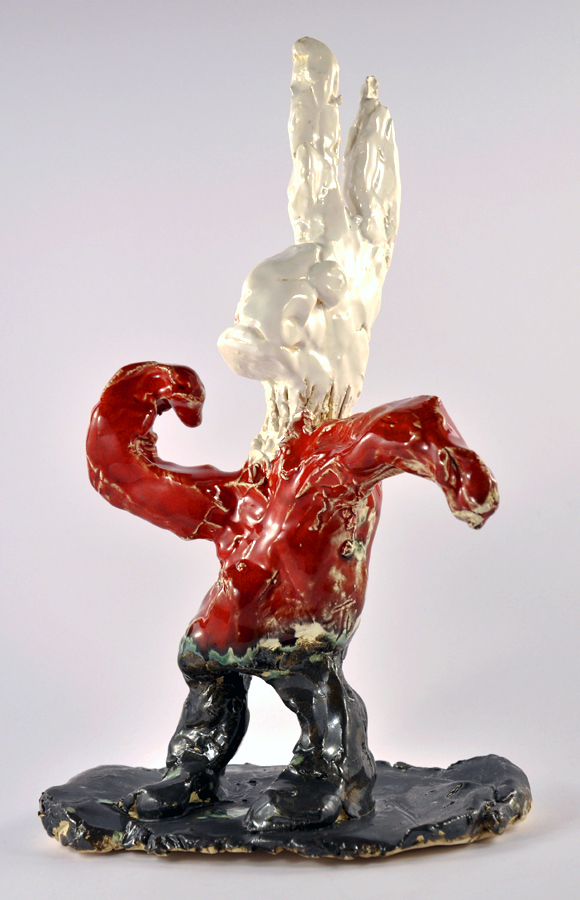
Malcolm Sturrock (Australian, b. 1944) Not titled (rabbit in red jumper) 2010 ceramic 29 x 19 x 12cm Image courtesy the artist and Arts Project Australia
Arts Project Australia
Studio 24 High Street Northcote Victoria 3070 Phone: + 61 3 9482 4484
Gallery Level 1 Perry Street building Collingwood Yards Enter via 35 Johnson Street or 30 Perry Street, Collingwood Phone: +61 477 211 699
Mark Strizic (Australian, 1908-2012) Eastern Market Destruction – 1 1960, printed 1996 Silver gelatin photograph 19 x 22.5cm
Social Fact and Urban Vision
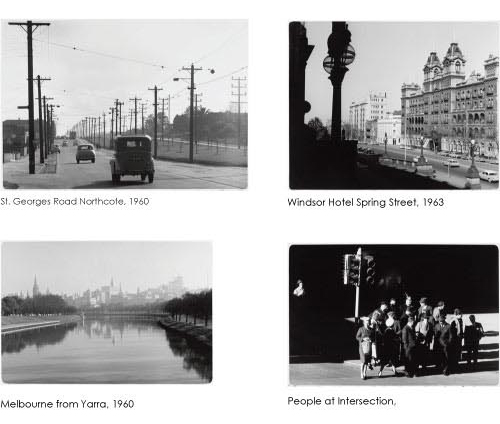
This is an exhibition by the veteran Australian photographer Mark Strizic that plays like the coda at the end of a piece of music, the pensive full stop at the end of a well read book. There are some stunning highlight photographs among the 139 black and white silver gelatin prints on display, some good photographs and some fairly mundane images and prints. With some judicious editing of the photographs (perhaps by a third), the exhibition could have had a stronger artistic aesthetic and carried the voice of the photographer with greater projection. As it is the exhibition will be popular drawing in the crowds because of the photographs subject matter and their appeal to both an individual and collective nostalgia.
Examining Strizic’s photographs we note a traditional structure to the picture plane. Unlike the photographs of Eugene Atget who photographed Paris in the early 20th century there is little sublime spatial representation in Strizics photographs, that different angle of alignment that Atget achieved with the positioning of his camera. Further, we observe that unlike an immigrant to another country at around the same time, Robert Frank and America, the photographs follow traditional format: none of the revolutionary experimentation in handheld, grainy images of jukeboxes, cut up people or images of flags appear in this work. We can also say that unlike Helen Levitt’s early black and white images of New York from around the same period there is little ‘joie de vivre’, little engagement with the actual nitty gritty stuff of living in Strizic’s work. The quote below articulates what Strizic’s photographs both address and dismiss:
“To walk in the city is to experience the disjuncture of partial vision/partial consciousness. The narrativity of this walking is belied by a simultaneity we know and yet cannot experience. As we turn a corner, our object disappears around the next corner. The sides of the street conspire against us; each attention suppresses a field of possibilities. The discourse of the city is a syncretic discourse, political in its untranslatability. Hence the language of the state elides. Unable to speak all the city’s languages, unable to speak all at once, the state’s language become monumental, the silence of headquarters, the silence of the bank. In this transcendent and anonymous silence is the miming of corporate relations. Between the night workers and the day workers lies the interface of light; in the rotating shift, the disembodiment of lived time. The walkers of the city travel at different speeds, their steps like handwriting of a personal mobility. In the milling of the crowd is the choking of class relations, the interruption of speed, and the machine. Hence the barbarism of police on horses, the sudden terror of the risen animal.”1
We observe in the photographs an emphasis on surfaces, on a supreme understanding of light and shade coupled with a certain distance and emotional remoteness from the frenetic hubbub of city life. Empty streets and isolated people fall into shadow and their is little evidence of ‘play’ in the photographs. This is observation not interaction or integration as an immigrant observing Melbourne life. There is no up front presence of disembodied people as in Robert Franks photographs in The Americans. Here the alienation that pervades the photographs is the alienation of the photographer from the people as much as it is the alienation of the people from themselves. People are shot in silhouette against the sun or shop windows or peering in at unobtainable goods; desolate streets and working class suburbs all express the isolation of city life but at a structured distance from them.
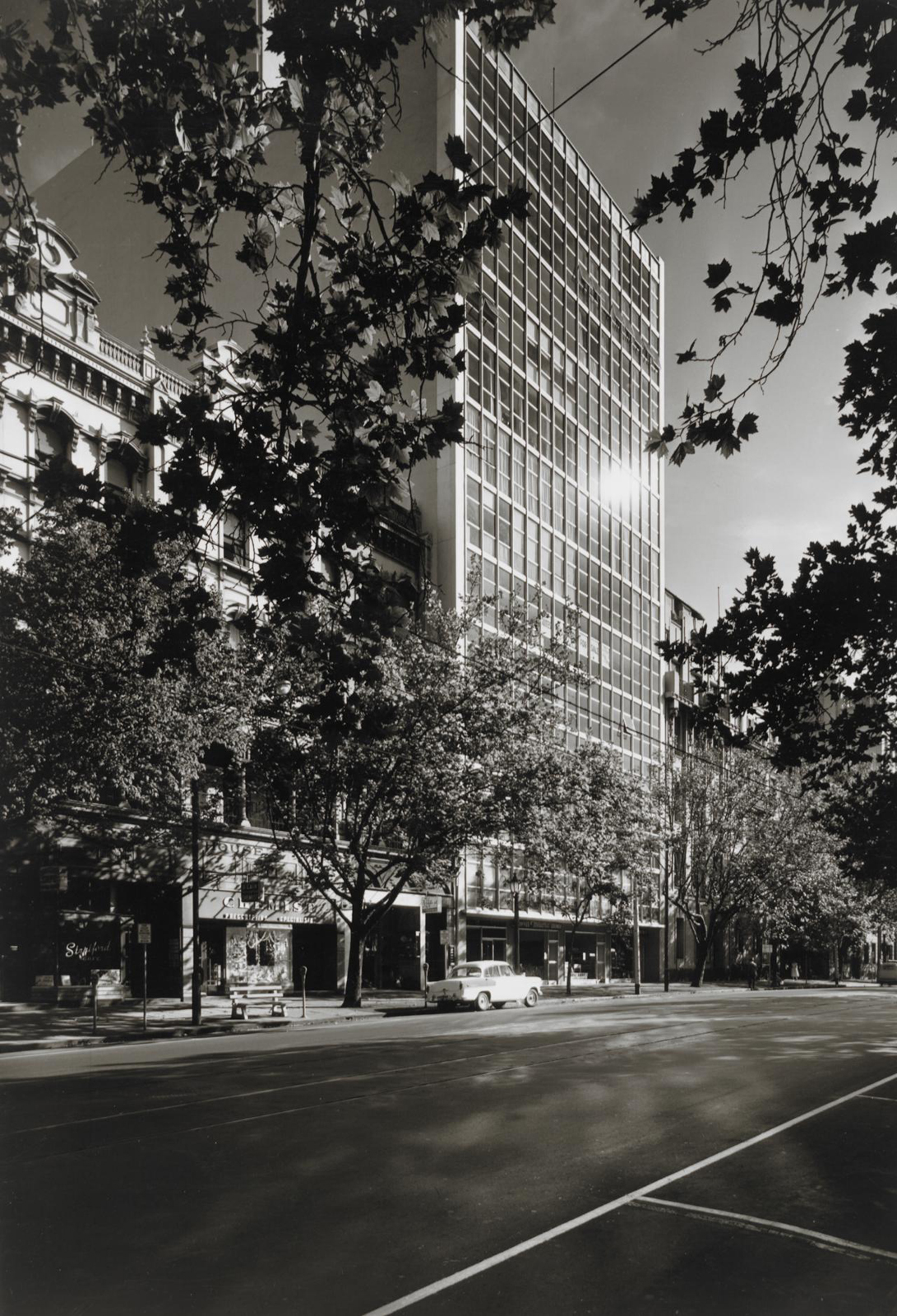
When Strizic’s photographs are good they are very good. His understanding of light is magnificent: light reflects off water, hazes and shimmers off city buildings. The mixing of shadows and sun and his use of the technique of ‘contre jour’ (shooting into the sun) the one thing Strizic does against traditional conventions works to good effect in some of the best photographs. His 1968 night time long exposure photograph of the old Gas and Fuel Building is rewarding for the black bulk of the end of the building looming over Flinders Street and the striations of car headlamps. The photograph Flinders Lane (1967, below) shows a delicate use of depth of field where the foreground of cars and person are out of focus, the light bouncing off the edges of the woman, the focus of the image in the far distance. The photograph McPhersons Building (1958, below) is one of my personal favourites in the exhibition and is a stunning photograph for the atmosphere the photographer has captured.
After a while the use of the ‘contre jour’ technique becomes tiresome. Other photographs simply document a city in transition. These photographs appeal both to an individual nostalgia (‘I used to work in that building’; ‘My grandmother used to live in that street’) and a collective nostalgia where people experience things collectively, “in the sense that [collective] nostalgia occurs when we are with others who shared the event(s) being recalled, and also in the sense that one’s nostalgia is often for the collective – the characteristics and activities of a group or institution in which the individual was a participant.”2
Collective nostalgia refers to that condition in which the symbolic objects are of a highly public, widely shared and familiar character, i.e. those symbolic resources from the past which can under proper conditions trigger off wave upon wave of nostalgic feeling in millions of persons at the same time3 and in this exhibition it is the photographs of a city in transition that trigger this nostalgia, a city now lost to the mists of time. Through these photographs we remember what Melbourne was like at this time collectively.
As Harper has observed
“Nostalgia combines bitterness and sweetness, the lost and the found, the far and near, the new and the familiar, absence and presence. The past which is over and gone, from which we have been or are being removed, by some magic becomes present again for a short while. But its realness seems even more familiar, because renewed, than it ever was, more enchanting and more lovely …”4
Does this collective nostalgia make the photographs good? This is a pertinent question.
Today, nostalgia has become a cultural phenomenon one centred on a longing for home (home is where you are happy to be!) in a collective sense and promoted through commercialisation and the realisation that nostalgia sells. The use of the value seeking word ‘rare’ in the exhibition title is instructive in this regard. Only about 25% of the photographs in this exhibition are “vintage” prints, in other words photographs printed within 3 years of the negative being taken. All other photographs have been printed within the last 15 years. Some are ‘Unique state’ gelatin photographs while others are not. What does this mean. Are they are unique state only in this size? What about the common or garden silver gelatin prints in the show? What does the status word “rare” imply for them?
I remember seeing an exhibition of the photographs of Henri Cartier-Bresson in Scotland about ten years ago. Three rooms had large prints of his work. One room just had vintage prints. The contrast was astounding. The room full of vintage prints had an intensity of vision, of his vision at the time he took the photographs evidenced in small jewel like photographs that the three other rooms photographs simply did not possess – through scale, printing and aesthetics. The same question, without any need for an answer, can be posed here. Only the word ‘rare’ demands that answer for the modern prints are just what they are and nothing more.
In conclusion this is a strong show by Strizic that could have been edited and focused in a more rewarding way. Strizic is one of Australia’s best photographers for understanding the significance of place. His use of light is superb but there always seems to be an emotional distance to his photographs. An element of collective nostalgia adds to their documentary appeal but the best photographs do not just record, they challenge and transcend the subject matter taking the work to an altogether different plane of existence.
Dr Marcus Bunyan
1/ Stewart, Susan. On Longing: Narratives of the Miniature, the Gigantic, the Souvenir, the Collection. Durham: Duke University Press, 1993, p. 2. Prologue
2/ Wilson, Janelle. “”Remember when …” a consideration of the concept of nostalgia,” in et Cetera. Concord: Fall 1999. Vol. 56, Iss. 3; pg. 296, 9 pgs
3/ Davis, F. Yearning For Yesterday: A Sociology of Nostalgia. New York: The Free Press, 1979, p. 222
4/ Harper, R. Nostalgia: An Existential Exploration of Longing and Fulfilment in the Modern Age. The Press of Western Reserve University, 1966, p. 120 quoted in Wilson, Janelle. “”Remember when …” a consideration of the concept of nostalgia,” in et Cetera. Concord: Fall 1999. Vol. 56, Iss. 3; pg. 296, 9 pgs
Many thankx to Gallery 101 for allowing me to publish the photographs in the posting. Please click on some of the photographs for a larger version of the image.
Installation views of the exhibition Mark Strizic: Melbourne – A City in Transition exhibition at Gallery 101, Melbourne Photos: Marcus Bunyan
Mark Strizic, one of Australia’s eminent photographic artists presents us with nostalgic views of Melbourne and the changing face of the city in rare silver gelatin photographs. The exhibition, Melbourne – A City in Transition will be held at Gallery 101 from 8th April – 2nd May. There will be an evening artist reception on Thursday 9th April to celebrate the opening of the exhibition. Strizic’s oeuvre represents a collection of iconic images of architecture and of life – a record of the changing face of a migrating society of new prosperity, youth and popular culture – taken with a sympathetic eye for humanistic detail.
The exhibition will coincide with the announcement of the forthcoming publication, Mark Strizic, Melbourne: Marvellous to Modern, published by Thames & Hudson in association with the State Library of Victoria. In 2007, the State Library of Victoria acquired Mark Strizic’s entire archive of approximately 5000 negatives, colour transparencies and slides. In addition, the Library holds a fine collection of Strizic photographs, including examples of all types of photographic print, from gelatin silver to digital, produced by the photographer during his long career.
Press release from Gallery 101
“‘Melbourne – A City in Transition’ is a collection of iconic images of Melbourne city life taken with a sympathetic eye for humanist detail. Strizic accurately depicts the joys and hardships experienced in everyday life with a fresh and living memory. He successfully captures the vicarious essence of suburban life. His portrait of Melbourne includes the city, harbour and river banks – streets and trams, pavements, arcades and lanes, stations and bridges, billboards and facades and public sculpture. We see people going about their daily activities – commuting, shopping at leisure, trading, embracing, conversing, reading the newspaper and visiting the beach. Other works record the demolition and construction of building sites and the changing face of Melbourne, both in society and the urban landscape.”
Text from the exhibition flyer
“In these eloquent studies of light and shadow, Strizic finds beauty in the commonplace – Melbourne’s desolate lanes, street paving, derelict ferries – adopting interesting camera angles, viewpoints and cropping. Through his images, this visual humanist teaches us to observe, to see our surroundings, perhaps with the intention of stimulating us to a higher level of civilisation.”
Emma Matthews. Mark Strizic, Melbourne: Marvellous to Modern. Thames & Hudson in association with the State Library of Victoria, September, 2009.
“This magnificent collection of photographs arose from the creativity of a young photographer and his adoption of his new home town, Melbourne. His pictures were taken at a time when the Victorian elegance of the city once known as ‘Marvellous Melbourne’ was being punctuated by a wave of development and the modern architectural movement. Today Mark Strizic is renowned as a photographer. In the 1950s he was a young science student from Europe playing with the possibilities of the camera. As he gained work as a professional his commercial success was accompanied by the instincts and eye of an artist. His solid technicality was accompanied by the whimsy and wit that made him the ‘poet of the fleeting movement’. The versatility of his work shows us many aspects of Melbourne – its magnificent architectural heritage, its intimate and vibrant laneways, its grand arcades counter-posed against the sudden spaces of the wrecker, the brash intrusion of the glass and concrete skyscrapers, the poignancy of poverty in the rundown inner suburbs. We see the people, on grand occasions such as the 1954 Royal Visit, or just caught in their own world of travelling, shopping, resting, walking, working.”
Mark Strizic, Melbourne: Marvellous to Modern book cover
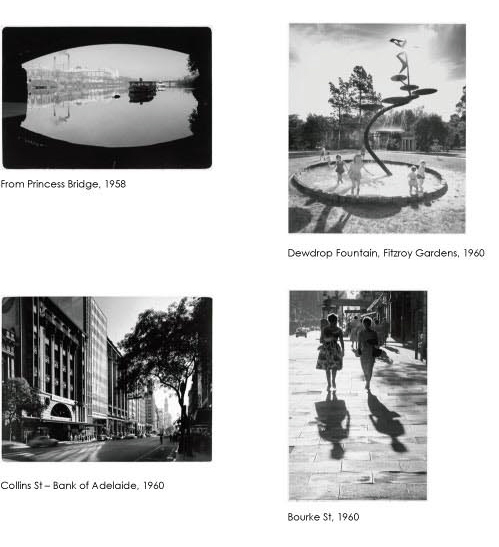
Mark Strizic (Australian, 1908-2012) From Princes Bridge 1958, printed 2006 Silver gelatin photograph 58 x 39cm
Mark Strizic (Australian, 1908-2012) Near Spencer Street – 1 1950 Silver gelatin photograph 27.5 x 38.5cm
Mark Strizic (Australian, 1908-2012) At St. Pauls (St Paul’s Cathedral steps) 1954, printed 1999 Silver gelatin photograph 17.8 × 24.5cm
Mark Strizic (Australian, 1908-2012) St Paul’s Cathedral steps 1954, printed 1999 Silver gelatin photograph 17.8 × 24.5cm
Mark Strizic (Australian, 1908-2012) Collins Street at Russell Street 1957, printed 1997 Unique silver gelatin photograph 39 x 56cm
Mark Strizic (Australian, 1908-2012) St Georges Road, Northcote at Summer Av. 1958, printed 1998 Silver gelatin photograph
Mark Strizic (Australian, 1908-2012) St. Patrick’s Cathedral January 1967, printed 1998 Unique silver gelatin photograph 27 x 41cm
Mark Strizic (Australian, 1908-2012) Bourke Street from the Parliament – 2 1967, printed 1998 Silver gelatin photograph 38 x 27cm
Mark Strizic (Australian, 1908-2012) Russell Street Pawn Shop 1958 Silver gelatin photograph
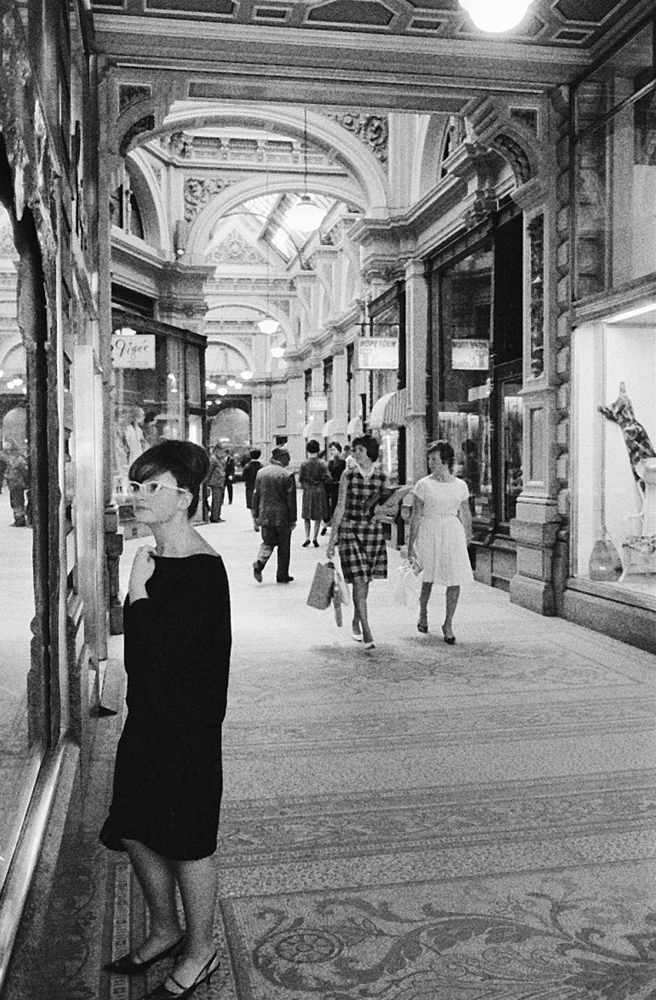
Mark Strizic (Australian, 1908-2012) Block Arcade 1967, printed February 2008 Unique silver gelatin photograph 53.5 x 37cm
Mark Strizic (Australian, 1908-2012) From Princes Bridge (Winter moorings from Princes Bridge) 1955, printed 2006 Silver gelatin photograph 58 x 39cm
Mark Strizic (Australian, 1908-2012) Flinders Lane 1967, printed 1998 Unique silver gelatin photograph 41 x 41cm
Mark Strizic (Australian, 1908-2012) Swan Street, Richmond, at Church Street 1963 Silver gelatin photograph
Mark Strizic (Australian, 1908-2012) Queensberry Street at Errol Street, North Melbourne 1963 Silver gelatin photograph
Mark Strizic (Australian, 1908-2012) Swan Street at Church Street 1963, printed 1998 Silver gelatin photograph
Mark Strizic (Australian, 1908-2012) Coates Building 1960, printed 1961 Vintage silver gelatin photograph 23.5 x 15cm
Mark Strizic (Australian, 1908-2012) Macphersons Building – 1 1958 Silver gelatin photograph
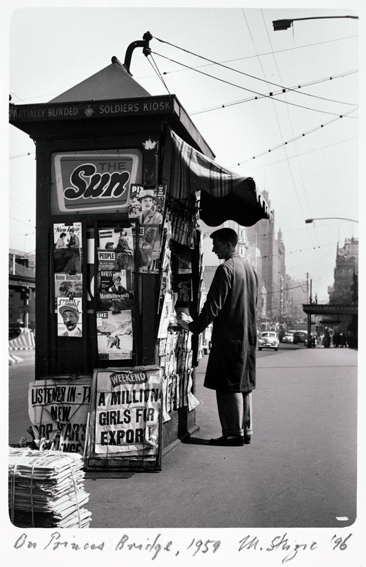
Mark Strizic (Australian, 1908-2012) On Princes Bridge 1959, printed 1996 Silver gelatin photograph 17 x 24cm














 Art Blart _ art and cultural memory archive
You must be logged in to post a comment.